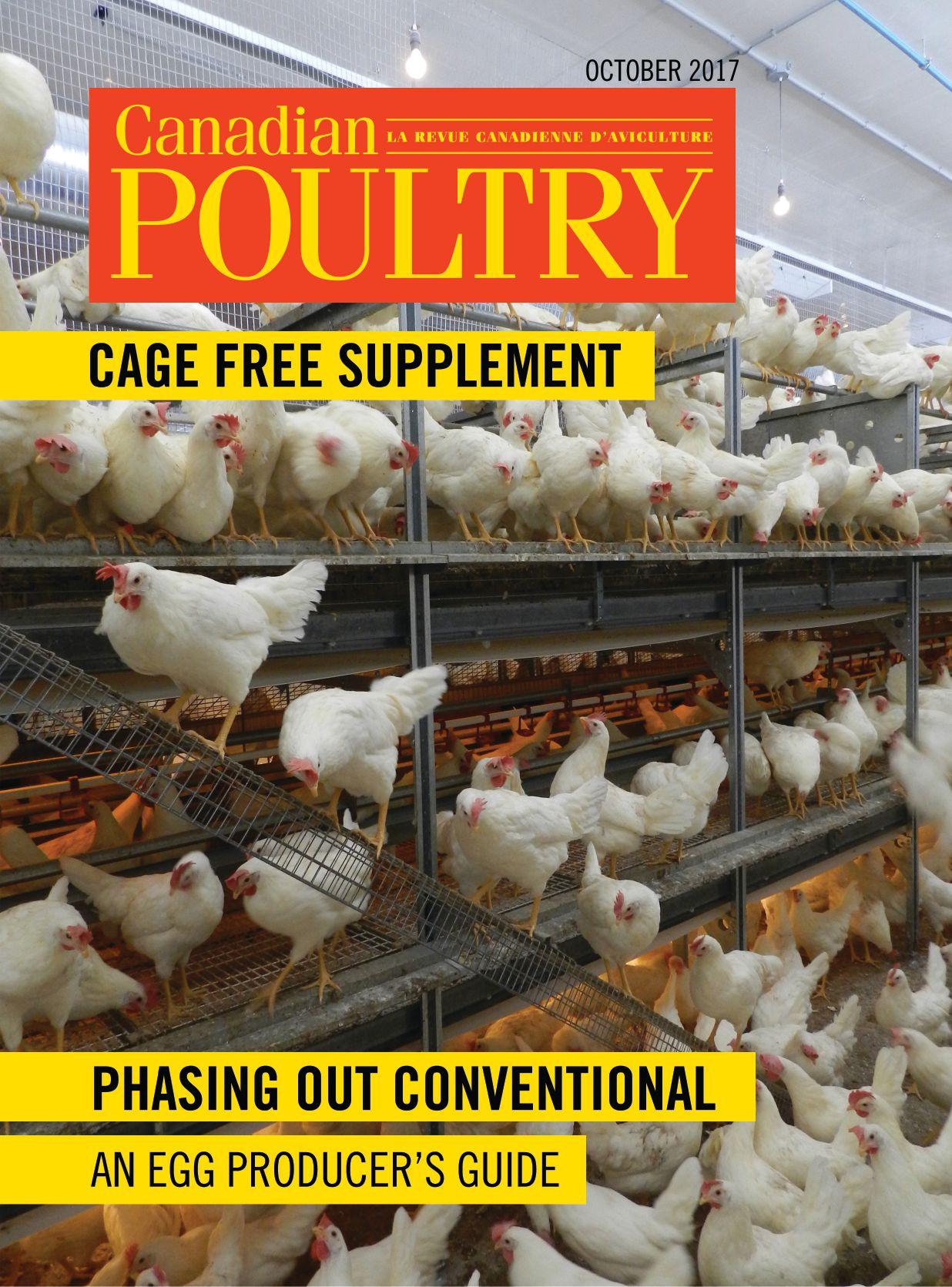
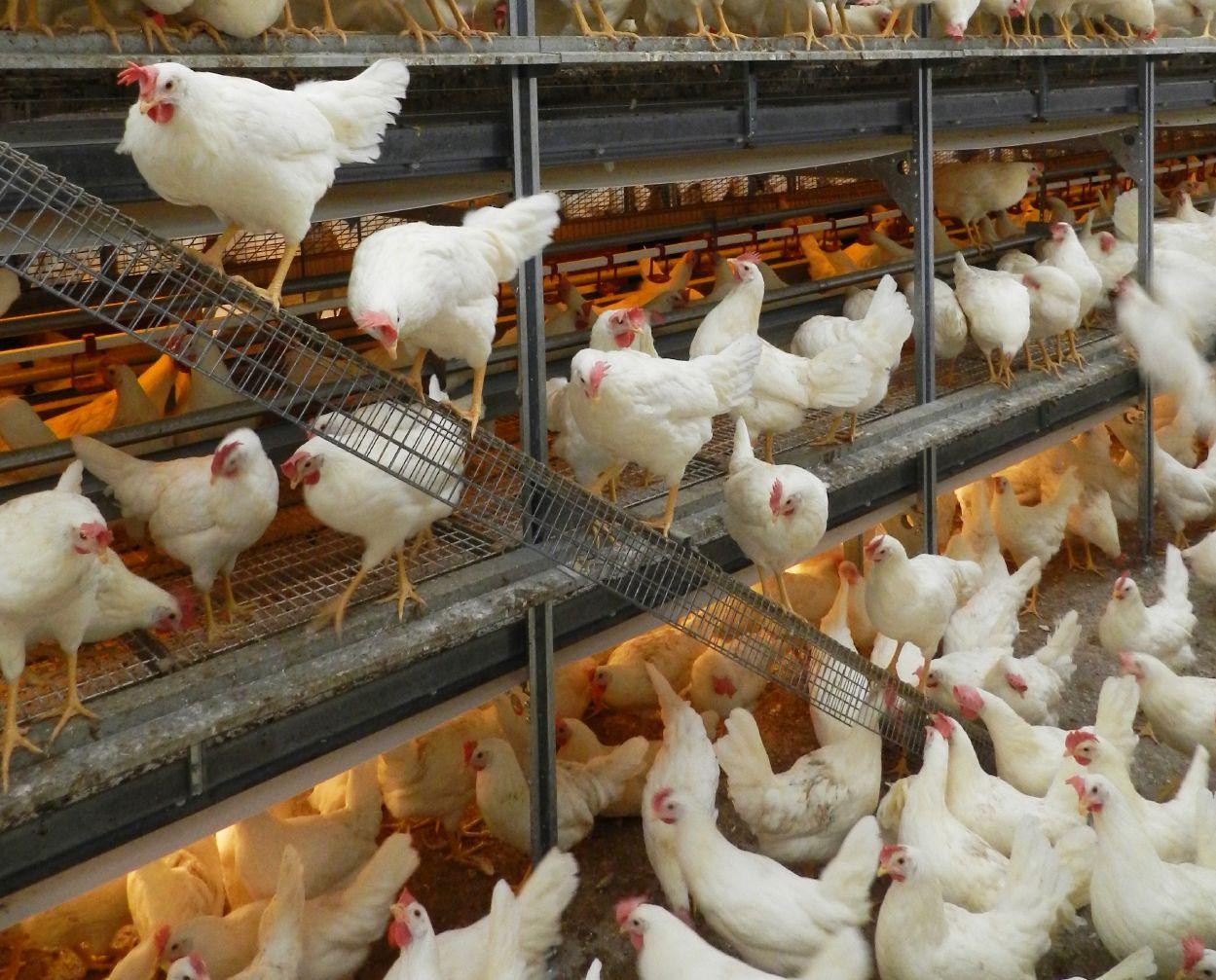
In March of this year, the National Farm Animal Care Council (NFACC) released its new code of practice for layers. The code calls for producers to phase out conventional cage systems over the next 15 years. For many producers, this will mean big change at the farm level. In preparation, Canadian Poultry has gathered the stories of three Canadian egg producers who’ve already made the transition.
ENRICHED CAGE SYSTEM
GLEN JENNINGS, NOVA SCOTIA
Glen Jennings is an egg producer based in Masstown, N.S. The fourth-generation producer has been farming since he gradated from Nova Scotia Agricultural College in 1989. Jennings raises 14,000 hens, 7,000 of which are replacement pullets. His farm
AHEAD OF THE CURVE
Three egg producers share their transition stories.
also produces 40 acres of pumpkins and squash for the fall market. Jennings represents Atlantic Canada on the Egg Farmers of Canada Board, where he has served as second vice chair for two years now. Jennings has two children: Amy, 11, and Blake, 22, who works full time on the farm.
It was 2012 when he first thought about making the transition from conventional cages to enriched housing. One of his two barns was nearing the end of its lifespan and desperately needed replacing. That’s when he started looking into alternative systems, specifically fully furnished enriched housing.
“It was quite beneficial at that point to be on the national board because you get to go to meetings across the country and meet producers from every province,” Jennings says. “Some of these producers would already have transitioned into alternative
Four years later, it is still such a pleasure to walk into that barn compared to our other conventional barn
- Glen Jennings
housing. Whatever our knowledge is, we’ll share.”
In 2014, Jennings toured operations in the U.S. and in Ontario, after which time he made his decision, ordered the necessary equipment and built a new barn with a fully enriched system. The first flock went in mid-May of 2014. Jennings is currently in his fourth flock.
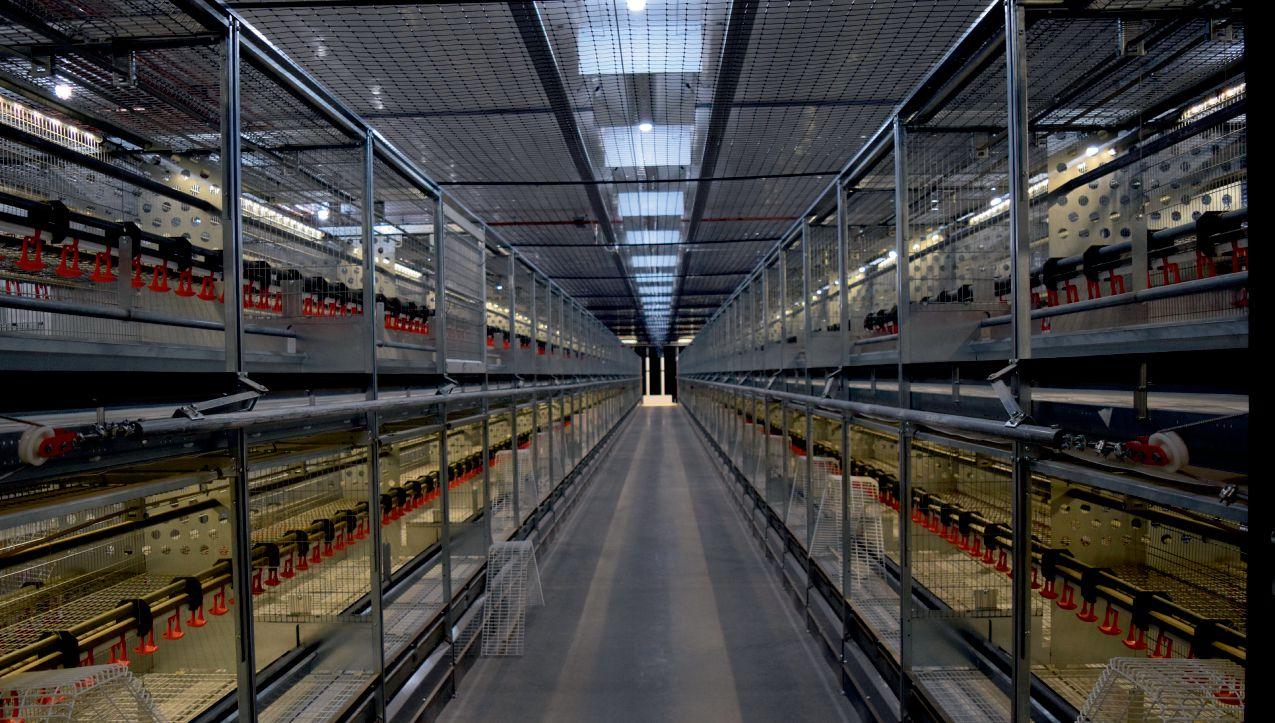
In the old conventional system, Jennings’ birds were housed at 67-square-inches. The new system, designed by Big Dutchman, offers considerably more space at 116.25-square-inches. The birds are also provided with a nesting box, perching space and a scratch pad area where they can dust bathe and scratch.
The result, Jennings says, is that everything is much cleaner. The air quality is better and overall mortality is lower. He also sees better feed conversion, which, in turn, leads to higher production.
The Bouchard family went free-run in response to a growing consumer demand. The new system has meant a change in management style.
but one that he enjoys.
“Four years later, it is still such a pleasure to walk into that barn compared to our other conventional barn,” he says.
FREE-RUN SYSTEM
CHARLES-ÉRIC BOUCHARD, QUEBEC Charles-Éric Bouchard, 21, is a fourth-generation poultry farmer from St-Gédéon-deBeauce, Que. Last year, his family doubled the size of their flock. With Bouchard near graduation, his parents, Paulin and Michèle, felt it was a good way to introduce him to the farm. Today, they have 26,000 birds in a free-run system, with another 21,000 in conventional housing. Bouchard is currently studying agribusiness at Laval University. He will graduate in December of this year.
The move to free-run was an obvious one for the family. “We knew that the market was expanding into free-run,” Bouchard says. “The consumers decide what they want to buy, and at that time there was increasing demand for free-run eggs. For us, it was more natural to go where the consumers are actually going.”
After exploring his options, Bouchard chose an aviary system designed by Hellmann Poultry Equipment. The new system proved challenging and meant a change in management style.
“The big difference, I’d say, is to understand how the bird moves; how it reacts; how it
We have to understand how the birds behave more now, compared to when they are in a caged system
- Charles- Éric Bouchard
You have to be much more observant and aware and have an understanding of what’s going on around you
- Scott Janzen
behaves,” he says. “We have to pay attention to what the birds do. If it stays on the ground; if it lays an egg on the floor – these are all signs that help us work with them. We have to understand how the birds behave more now, compared to when they are in a caged system.”
In the next few years, the family plans to upgrade the conventional barn, which currently houses 21,000 hens. At this point, though, they’re not sure what type of housing system they will go with.
“It’s a great challenge for me, since I’m a new egg producer,” Bouchard says. “I’m just finishing my degree now, and I was thrilled to try and do something different – something that we have never done before,” he concludes.
FREE-RANGE SYSTEM
SCOTT JANZEN, BRITISH COLUMBIA
Third-generation poultry farmer Scott Janzen is located in the B.C.’s Fraser Valley near Abbotsford. He raises layers, 12,000 of which are in conventional housing and 9,000 in free-range production. Janzen also custom raises 50,000 pullets each year. After working off-farm for 20 years, Janzen bought the family farm when his father was ready to retire in 2007. He brought with him 20 years worth business experience, which he says has helped him to build more success.
In 2014, when the opportunity to move to free-range came up, Janzen decided to make the leap. He knew the market was moving towards cage-free production, and thought the transition made good sense.
The transition wasn’t easy, though. Janzen describes it as challenging, although he admits that it’s a challenge he loves. “Free-range production,” Janzen says, “requires a totally different management style. It is more work, but I enjoy it more because you actually have to go in there and you farm different. You have to be much more observant and aware and have an understanding of what’s going on around you in an aviary system or a cage-free system.”
When Janzen made the transition in 2014, there were just two other farmers using aviary systems in B.C. As a result, he spent a lot of time gathering as much information as possible, assessing it closely before making the decisions that best fit his farm business.
“When I decided to do this, I had to be all in,” he said. “You can’t do aviary production part time. You really have to want to do it.”
Also in this special supplement, see: “New housing: Tips for a smoother transition” on page 8 for more transition lessons from Scott Janzen, Glen Jennings and Charles-Éric Bouchard.
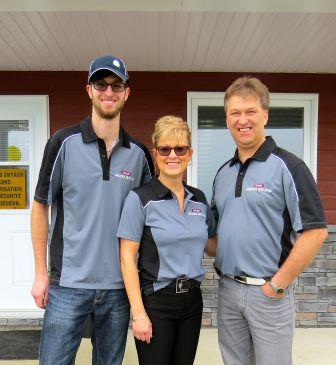
Egg farmer Glen Jennings (left) has found enriched housing to be much cleaner with better air quality and feed conversion.
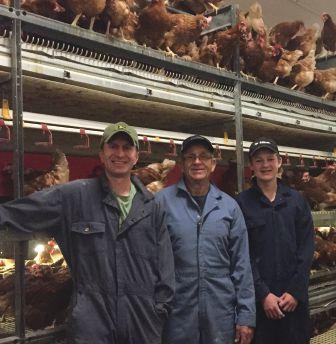
Egg producer Scott Janzen (left) found free-range production to be a challenge
FORAGING OPPORTUNITIES
Extra enrichments recommended for hens in furnished cages and free-run
housing.
BY TREENA HEIN
Most laying hens in Canada are still housed in conventional cages with no foraging opportunities. However, the updated code of practice mandates that nests, perches and foraging opportunities be provided in new housing, so that laying hens can take part in natural behaviours.
Foraging for insects and other food is an important behaviour that takes up the majority of daytime hours for a chicken in an outdoor farmyard scenario. In comparison, laying hens in commercial production have long been fed a nutrient-dense diet, which can be eaten in a few minutes. A readily available ration combined with no foraging opportunities can result in frustration and stress, and in turn, a bird’s natural foraging behaviour can be redirected towards the feathers of other birds.
“Feather pecking is not an act of aggression but repetitive pecking that is thought to be a result of stress,” Dr. Krysta Morrissey, a postdoctoral researcher with the department of animal biosciences at the University of Guelph, notes. “It can cause pain
and injury and is an animal welfare concern.”
In Morrissey’s first doctoral study, she investigated how various items might deter injurious pecking among hens housed in enriched 80-hen cages. She placed two pecking mats, eight hanging ropes and two blunting boards, which are used to dull the beak, in each cage. While the presence of extra enrichments did decrease injurious pecking behaviour, the
Feather pecking is not an act of aggression but repetitive pecking that is thought to be a result of stress
overall feather damage of these birds were not different from the control group, and number of deaths was similar. Morrissey posited that because the ropes had cauterized
ends, that made it difficult for the hens to pull them apart and so they might have ignored the ropes after initially investigating them. She also thinks the that the number of enrichments per hen may not have been sufficient.
In the second study, she again added enrichments but at a higher ratio and in alternate designs. The rope ends were left un-cauterized, and blunting boards were placed in the feed troughs where hens would come in contact with the boards during feeding. Morrissey also supplemented the hens’ diets with oat hulls in order to increase the time spent feeding. She hypothesized that the longer the hens spent feeding, the less time they would participate in injurious pecking. And indeed, these hens had less feather damage compared to hens in the control conditions. In a later study conducted last year, Morrissey housed hens individually with blunting boards or cuttlebones, which are used by exotic birds such as parrots to dull their beaks. There was a numerical reduction in beak length for the hens housed with
cuttlebones, though the differences did not reach statistical significance. Most of the hens readily used the cuttlebone and Morrissey believes that finding a substrate that attracts hens while dulling the beak tip may prove to be beneficial, though more research is still needed.
“The enrichments I used in my projects showed some encouraging potential to significantly reduce injurious pecking as well as feather damage,” she says. “However, these may not be the only type of effective enrichments. Including objects that increase exploratory pecking and foraging-like behaviours are beneficial, and I would encourage producers to try a range of different objects and replace them as necessary.” She notes that hens might quickly lose interest in certain enrichments, whereas others may maintain interest over longer periods of time and may differ from flock to flock.
BEYOND ENRICHMENTS
Beak trimming has been pointed to as a solution for feather pecking, but Morrissey notes that it does not address the underlying cause of injurious pecking, which is frustration and stress because no suitable substrates are available for the expression of natural foraging behaviour. The updated layer code of practice does not ban beak trimming. For its part, reducing light intensity has been found to be effective at reducing injurious pecking. While Morrissey says it is a go-to management strategy when pecking outbreaks occur, again, it does not solve the underlying cause of frustration
and stress.
As to whether, based on her own research and that of others, she would recommend the enriched cages currently on the market over free-run barn housing systems in terms of reducing feather pecking, Morrissey notes, “In general, injurious pecking is easier to manage in smaller groups in enriched cages, but prevalence of injurious pecking is associated with a wide range of risk factors, not just housing type, and therefore can be managed in free-run barns under certain circumstances.”
It is anyone’s guess whether most of the layer hen housing in Canada will be free-run barn in the coming decades. That’s what Loblaws, McDonald’s and other major companies have committed to sourcing, even though some research has found that injurious feather pecking and things like air quality may be much worse in free-run housing than in enriched cages. Morrissey says, “I think the answer is more research. We should aim to improve on-farm behaviour and welfare regardless of the housing system used. I think all systems have room to improve and we should work toward a sustainable solution that is best for the hens, consumers, retailers as well as industry groups.”
Breeding is another possible strategy for reduced feather pecking. Researchers have found both major genes for feather pecking and specific markers for severe feather pecking behaviour on several chromosomes. Morrissey says she believes the genetics companies are already trying to incorporate behaviour into their breeding models.
SPECIFICATIONS
FOR FORAGING IN THE UPDATED NATIONAL FARM ANIMAL CARE COUNCIL CODE OF PRACTICE FOR LAYING HENS
All new enriched layer cages must have a minimum of 31 cm2 of flooring space for foraging per 25 birds. For single-tier free-run systems, at least 15 per cent of the usable space must be litter, and hens must be provided with at least one foraging site for each 1,500 (e.g., bales of hay or straw, insoluble grit or oat hulls, or other material that provides foraging opportunities). If multiple sites are provided, they must be evenly distributed. In multi-tier systems, at least 33 per cent of the usable space must be litter, except birds up to 24 weeks of age may have a minimum of 15 per cent litter of the useable space.
For older housing systems, the code’s Transitional Requirements state that previously built enriched cages must have at least 24.8 cm2 per 25 birds of a flooring surface for foraging. For single-tier barn/free-run systems that are fully slatted, or where less than 15 per cent of useable space is litter, a solid surface area of at least 1.5 m2 for litter or substrate for dust bathing must be provided for each 1,000 hens and at least one foraging site for each 1,500 hens. In multi-tier systems, at least 33 per cent of the usable space must be litter, except up to 24 weeks of age it may be reduced to a minimum of 15 per cent.
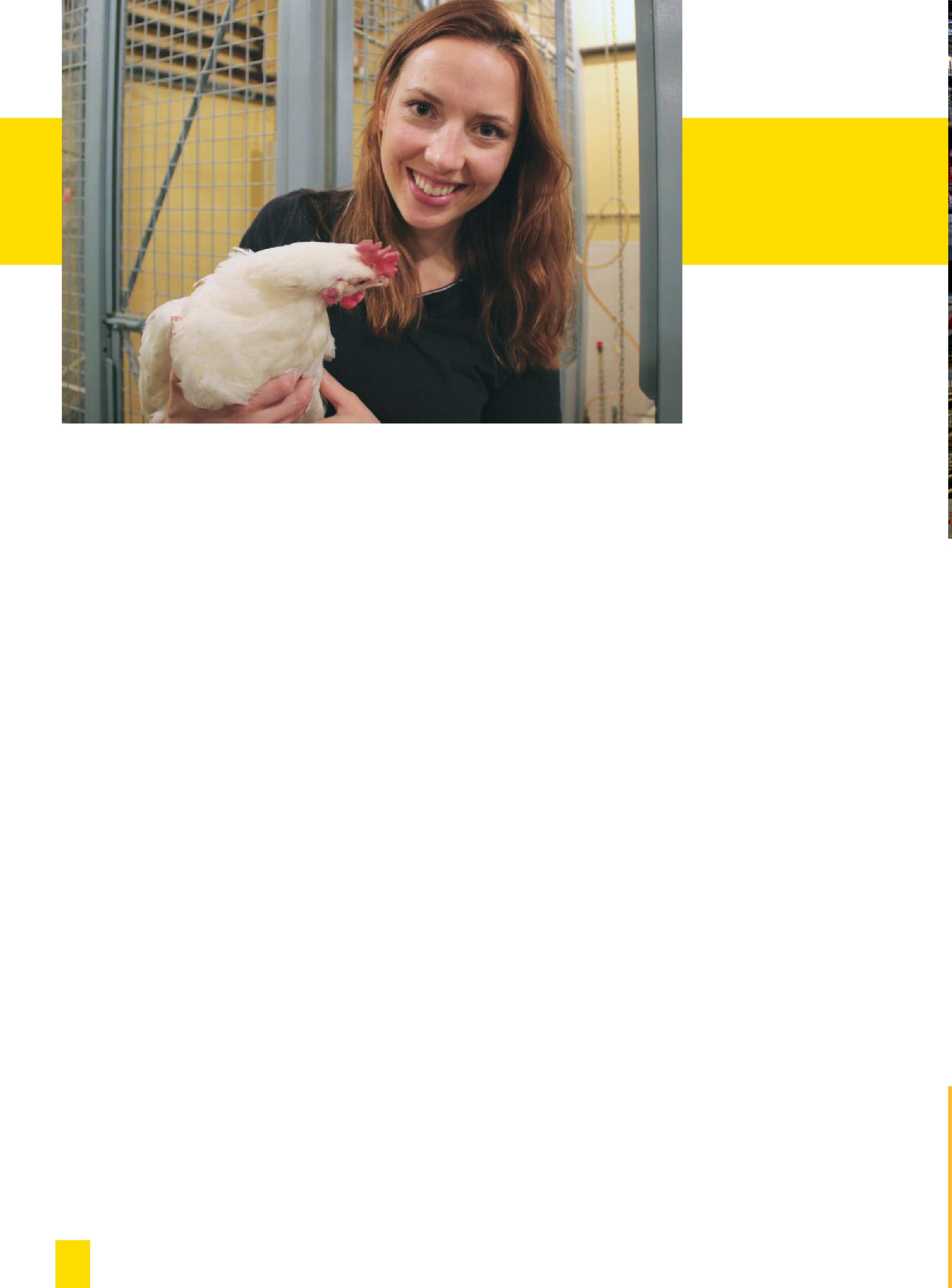
Researcher Dr. Krysta Morrissey of the University of Guelph studied adding extra enrichments to furnished cages to prevent the underlying causes of injurious feather pecking.
6 TIPS FOR A SMOOTHER TRANSITION
Experienced producers talk housing conversion do’s and don’ts
BY MELANIE EPP
On page 3, we profiled three Canadian egg producers who made the transition from conventional to new housing systems. Glen Jennings of Nova Scotia transitioned to an enriched cage system, CharlesÉric Bouchard converted to a free-run system and Scott Janzen of British Columbia chose a free-range system. Here are their tips on how to make the move away from conventional housing smoother.
1. RESEARCH, RESEARCH, RESEARCH
All three producers cannot emphasize enough the importance of doing research beforehand. Gather information, ask questions and prepare yourself by having the right tools for the job.
In preparation for the
When CharlesÉric Bouchard switched to free-run housing, he and his father visited other producers who’d adopted the same system. This gave them an opportunity to see firsthand how the system worked.
transition from conventional to free-run, Bouchard and his father visited others who had already changed over. “You have to understand how the system works and you should talk with people who have them so you understand the demands,” he says. “It is a challenge to change your way of doing things. We learn from mistakes and so, if we can learn from others instead of making those mistakes ourselves, we’re better off.”
Jennings agrees. “If somebody builds a new barn and puts in a brand new system and you talk to them a year or two later, they won’t mind telling you about their experiences,” he says.
As a member of the Egg Farmers of Canada board, Jennings was able to talk to producers all across the country. During barn set-up, he was struggling with getting
the lighting just right, and so he looked to his network for helpful advice.
“I had all kinds of information from good producers across the country,” he says. “I plugged it into my own system to see what was going to work with us. I was probably fairly lucky at that because I haven’t tweaked a thing since. It’s worked perfectly from the day the birds went in.”
The truth is, though, it’s not luck. Jennings spent an incredible amount of time gathering information before making the transition. “Do your homework – do your research,” he adds. “Don’t be afraid to pick up the phone and call a fellow producer.”
2. FOLLOW CONSUMER DEMAND
In preparing to make the transition, all three producers mentioned the importance of
Photo courtesy Egg Farmers of Canada
knowing the market. “It was kind of a big decision,” Bouchard says. “We never had aviaries – only conventional cages. But we knew that the market was expanding into free-run.
“The consumers decide what they want to buy, and at that time there was increasing demand for free-run eggs,” he adds. “For us, it was more natural to go where the consumers are actually going.”
Scott Janzen had the same experience
in B.C. In 2014, he noticed that the marketplace was rapidly shifting towards free-range. “We were following the market, and there was a need for it,” he says. “I jumped at the opportunity to get into that type of production.”
3. CHOOSE A SYSTEM THAT WORKS FOR YOU
Perhaps most importantly, though, is to choose a system that works for you. Janzen chose an aviary system
for two main reasons. Property in the lower mainland of B.C. comes at a premium, he says. It is not only expensive, but also hard to find adequate pieces of property. “With an aviary system, we can build a smaller barn,” he explains. “But because we can count different levels, we can still put in more birds.”
When Bouchard was doing his research, he, too, knew it was important to choose a system that he’d be happy to work with. He and his father went to an industry expo event in Atlanta to meet with different companies that provide new housing systems. They made the decision while there. “We chose a system that we felt was more natural for us, and what we wanted to work with,” he says. “I think that has been very helpful for us.”
4. PREPARE FOR THE CHALLENGES
With new housing systems comes additional risk, something that Janzen understood well before transitioning into free-range production. He says that his network was great for helping him to understand and mitigate the extra risk that comes with switching to free-range. While eagles and hawks have been a problem, he’s been able to deal with predators like coyotes and foxes by building a tall fence system that’s dug into the ground.
Feather pecking can also be an issue in free-range systems. But Janzen says it can be minimized by providing the birds with distractions. Aviary systems, he says, “are like jungle gyms for chickens. I say that because they have a lot of stuff to do. They’re jumping, they’re flying, they’re perching, they’re moving around,” he says. “In the free range system, you have to give them stuff to do. If not, they get bored.”
Jennings faced a different type of challenge. When moving to an enriched system he decided to renovate an existing barn rather than build a whole new one. “What that did was put us out of egg production for four months in that one barn,” he says. “I tried my best to estimate the cost of that, but when you lose that
cash flow for four months, it hit us a little harder than we expected and it took some time to recover from that.”
5. BE PATIENT
In alternative housing systems, management is totally different than in conventional. “You have to be patient,” Bouchard says. “You have to be observant. The birds decide what they want to do, so you have to be able to manipulate them in the barn without touching them.”
Training starts when they are pullets, Bouchard adds. For a 20,000-bird barn, Bouchard says he spends one hour each night for two to three weeks.
“You have to be able to tell them what to do. You have to make them move. You have to make them understand where the feed and water is – where they have to lay eggs,” he says. “And that’s something we don’t have in cage systems because everything is just there. Everything is close.”
Janzen agrees. “One of the biggest challenges of moving to an aviary system is getting the birds to do what you want them to do. Once the pullets move into my layer barn, I still train them. Every night when the lights go off, if there’s a bird on the floor, I actually pick it up and set it on the system on a perch line. I do that for probably three weeks straight.”
In their early weeks, this can amount to anywhere between 100 and 1,000 birds on the floor. Each night, they’re picked up and put on the perches. “We do that for training purposes because we want them to be on the system at night so they don’t lay their egg on the floor,” Janzen explains.
“If an egg is on the floor, more than likely they’re going to step on it and break it,” he continues. “We want to make sure that as many of those eggs get into that nest as possible to give the best quality product. After three weeks, if they haven’t figured it out, they’re probably not going to. After six to 10 weeks, there’s not a whole lot you can do with regards to training.”
6. BUILD YOUR OWN NETWORK AND HELP OTHERS
All three producers admit that they wouldn’t be where they are today without the help of other farmers. For this reason, each has an opendoor policy where others who are considering making the transition can come and see how their particular system works.
In B.C., Janzen says aviary producers have gotten together in the past
few years to form a support group of sorts. They meet and hold roundtable discussions on challenges that impact their farms. “We’ve been able to lean on each other,” he says. “It’s just a matter of networking within your peers and trying to come up with the best possible solution, knowing full well that some of the systems are going to work great, and some of them won’t. It’s kind of like learning farming all over again,” he concludes.
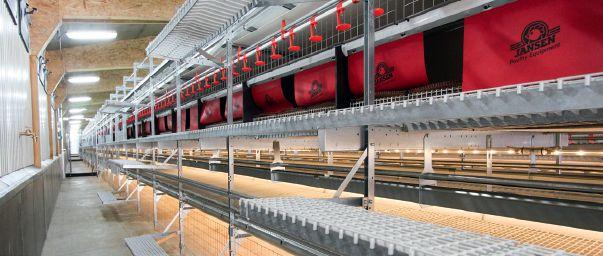
Comfort 2 aviary system
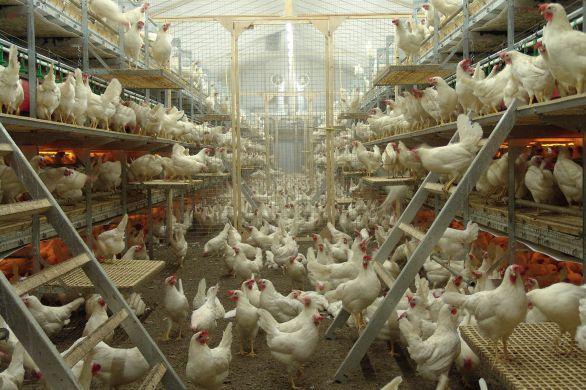
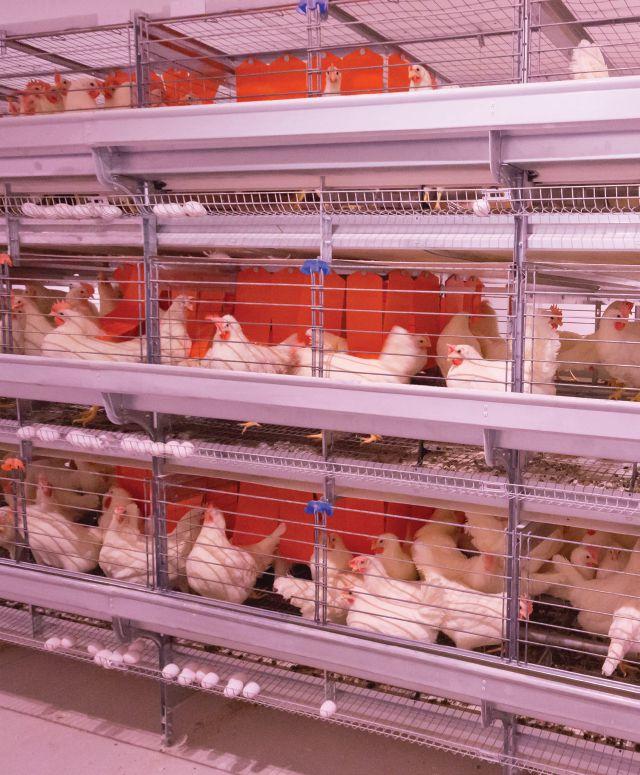
Multi-tiered aviary system with high stocking density
NON-CAGE SYSTEMS AND BONE HEALTH
Avoiding fractures in new housing systems
BY TREENA HEIN
Poor skeletal health in commercial laying hens was first documented as a production issue in the 1950s. It became an animal welfare concern in the 1980s, when scientists first documented a high prevalence of bone fractures after handling hens at end of lay.
While researchers have learned a lot about calcium, phosphorus and vitamin D requirements of layers, and changes in nutritional strategies have made ‘cage layer fatigue’ less common, osteoporosis remains a large problem in the layer industry, according to Dr. Tina Widowski, a researcher who
chaired the Scientists Committee and worked on the Code Development Committee for the Code of Practice for Pullets and Laying Hens.
Bone strength is a trade-off for egg output and shell strength, notes Widowski, who is also a professor in animal biosciences at the University of Guelph, an Egg Farmers of Canada Research Chair in Poultry Welfare and a director of the internationally known Campbell Centre for the Study of Animal Welfare. She adds that the increased yearly output of eggs over the last five decades has been a major industry change affecting chicken skeletal health.
Widowski, with colleagues Dr. Teresa Casey-Trott, Dr. Michelle Hunniford and Dr. Krysta Morrissey, recently wrote an overview chapter on laying hen welfare in a book called, Achieving Sustainable Production of Eggs Volume 2: animal welfare and sustainability, published by Burleigh Dodds Science Publishing. In the book, the authors note that to support egg production and medullary bone renewal, a sufficient diet for hens contains a lot of calcium, but the rate a hen can deposit calcium absorbed from its feed into egg shells is limited. This means that anywhere from 25 to 40 per cent of calcium deposited into shell,
Ramps are highly recommended in aviaries, because hens are much better at jumping up to a perch than down, and falls and collisions often occur as hens descend from higher levels.
Photo: Leanne Cooley
Meller Aviaries for Layers and Pullets
Meller offers a wide variety of Poultry equipment to meet today’s standards and needs. The Meller Aviary meets all EU standards as well as providing an exceptional living space where the welfare and production of the flock are able to flourish. Starting from day old chicks to 19 week layers Meller has it all.
MELLER POULTRY EQUIPMENT INC.
Now representing Official Dealer for all Jansen Poultry Equipment products in Ontario and Manitoba 519-587-2667 • www.meller.ca • meller@optionsdsl.ca
notes Widowski, is drawn from a hen’s bone stores. “This constant demand for calcium for eggs puts extreme pressure on a hen’s relatively small skeletal system,” she observes.
The conventional cage, now being phased out in Canada and in many other countries, exacerbates hen osteoporosis because it limits loadbearing exercise, an activity that is a well-known way to build stronger bones in birds and mammals. Many of the mandates in the updated national layer Code of Practice provide more opportunities for loadbearing exercise than conventional cages, such as the larger space allowances, perches and foraging areas, single tier ‘floor’ housing systems, multi-tier aviaries and enriched colony cages. However, Widowski says these systems also present greater risks for injuries, so it’s important that perches be placed correctly and ramps are used in non-cage systems so that injuries to hens are minimized.
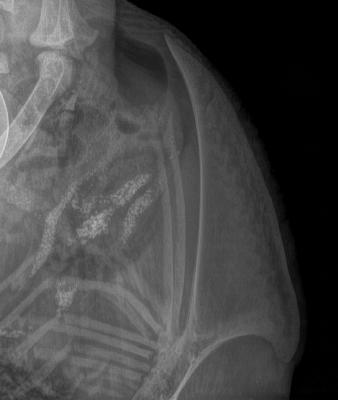
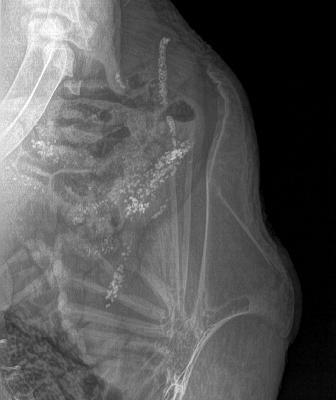
The hen’s keel bone or sternum is particularly susceptible to fractures and deformations. Prevalence of keel bone fractures are reported to range from 20 to 60 per cent in enriched cages and sometimes greater than 85 per cent in non-cage systems. Number and severity of fractures depend on factors such as falls and collisions in non-cage housing, perch use, early onset of egg production, nutritional factors and genetics.
In a recent study, Widowski and Casey-Trott found that keel bone fractures were associated with behaviour differences in hens housed in enriched cages. “We found that hens with fractures rested more on perches, spent less time standing and less time inactive,” Widowski reports.
“At this point, however, we don’t know cause and effect – are hens that perch more and are more active more likely to get a fracture when housed in an enriched cage, or are these behavioural changes something that hens do in response to having a fracture? We don’t know yet.”
Alexandra Harlander-Matauschek, Burnbrae Professor of Poultry Welfare at the University of Guelph, with colleagues T. Rodenburg, V. Sandilands, B.W. Tobalske and M.J. Toscano, did a recent review journal article outlining research needed to identify both causes of keel bone damage and their potential solutions in laying hens. They recommend the investigation of low-energy non-collision events to determine why hens in cages suffer from keel fractures and deformation. They also recommend studying what causes flock reaction events such as panic and piling, and the development of hens’ locomotor and cognitive skills to determine best rearing practices for pullets. Additionally, more research on housing design such as perches and ramps, nutrition and genetics is needed. Indeed, the greatest potential for improvement of skeletal health in laying hens may lie in breeding. In the book, Widowski and her co-authors point to research that has found as high as a seven-fold difference in skeletal health among high egg-producing hen lines, and that positive changes in layer skeletal health can be brought about in as few as six generations.
PERCHES AND RAMPS
While perching, jumping and flying are loadbearing exercises that support the building of stronger bones, Widowski notes the angles and distance between perches and provision of ramps
Studies have found a significantly higher number of keel bone fractures in non-cage systems. The new Code recommends ways to avoid these injuries. Pictured are x-ray images of an intact (left) and broken keel bone.
between levels in aviaries are very important. She adds that “recommendations outlined in the new Code of Practice were made with minimizing collisions and keel fractures in mind.”
In terms of best perch materials, Widowski notes that while it’s important to have a material that hens won’t slip on, materials that tend to prevent slipping can take with manure, negatively affecting foot health. A trade-off must be reached. In terms of perch shape, she says the best shape for both keel and foot health has been shown to be a mushroom shape, flat on top and rounded on the sides.
Ramps are highly recommended in aviaries, because hens are much better at jumping up to a perch than down, and falls and collisions often occur as hens descend from higher levels. One European study that Harlander-Matauschek co-authored showed that providing ramps in layer aviaries significantly reduced falls, collisions and keel fractures. Ramp steepness is also important. Harlander’s University of Guelph graduate student Chantel Lablanc studied the abilities of different strains of pullets and hens to climb ramps set at different angles. They found that a ramp angle of 40 degrees or less works for all layer strains. The Code also recommends ramps between the slatted area and the litter area in single tier ‘floor’ systems.
Overall, Widowski advises egg farmers looking at aviary systems to think about how hens are able to jump, fly and move between levels. “Different perches, terraces and levels need to be offset and not too far apart so that hens can easily jump between them to move up and down between different levels without falling,” she says. “This is especially important when food, water and nests are located on different levels. We need to remember that laying hens evolved from ground dwelling birds – they are not really built to fly, but would nest and forage on the ground and only go up in trees to roost at night.”
Photos: Dr. Tina Widowski
Whether you invest in an enriched or cage-free system is not the only question you need to consider. You also need to determine whether to retrofit or replace your current building. We have system solutions and experience to help you.
To gain insight call a Big Dutchman distributor or our Canadian representative, Ron Wardrop at (905) 616-5506, and be sure to sign up for our November 15 webinar, held by Canadian Poultry Magazine - www.canadianpoultrymag.com