

Learn

Triton
TRITON’S AUTOMATION AND CUSTOMER SERVICE CREATES A USER-FRIENDLY ENVIRONMENT CUSTOMIZED TO YOUR NEEDS
ONLINE AUTOMATION FOR RECORD CHECKS
Triton works with police services across Canada to create a custom criminal record check platform for each agency’s needs.
RECRUITMENT SCREENING
TRITON is a national pre-employment screening agency providing secure and easy-to-use online background checks. With over a decade of experience in the industry, we’ve made it our goal to help agencies of all sizes streamline their hiring process to make data-driven choices that foster long lasting relationships with their most important assets – their members.
CRIMINAL BACKGROUND CHECK - 15 minutes
Custom platform built directly from your website.
EMPLOYMENT & EDUCATION - 48 hours
Our experienced agents verify candidate information.
REFERENCE CHECK VERIFICATION - 48 hours
Fully customized per your request.
CREDIT CHECK VERIFICATION - 120 minutes
Using Trans-Union to find any red flags concernting credit.
DRIVING RECORD ABSTRACT - varies by province
Data from the Ministry of Transportation
SOCIAL MEDIA BACKGROUND CHECK - 48 hours
Full scan of candidates online presence
HOW CAN TRITON HELP?
Live, Canadian Based, Customer Service - We manage all applicant calls
We continuously innovate to modernize and automate processes
Our Guided Entry makes completing an application as easy as ordering a pizza online
Triton’s adherence to security and regulatory compliance are at the highest global standards
We work with you team to develop process to meet your service’s specific needs
(416) 606-6016
rob.stewart@tritonverify.com
tritoncanada.ca
WANT TO GET STARTED?
Let’s talk about how we can create a custom solution for you.

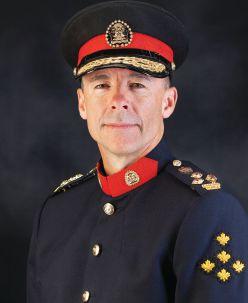



Finding ways to end homelessness and encampment challenges
Happy New Year! I am honoured to be bringing you the first print edition of 2025.
This year, we have a lot of exciting topics and events planned for everyone in Canadian law enforcement and those who are hoping to join it. We’ll be featuring stories in key areas such as technology, leadership, accountability, recruitment, training, diversity, mental health and well-being, firearms and police vehicles, among others. In event news, the annual OACP & Blue Line Expo is heading back to Mississauga, Ont., on April 29. We also have three Security · Police · Fire Career Expos planned, one in Ontario on March 27, followed by events in British Columbia on May 14 and Alberta on Oct. 4.
At the start of every year, I like to spend some time looking at what’s “trending” in policing. Last year, the decriminalization pilot project in British Columbia was a clear trending topic. This year, we’ll be focusing on something seen throughout Canadian cities, big and small, and that is the issue of homelessness and encampments.
community safety and outreach responses. During the Summer of 2024, a delegation from Manitoba, led by Housing, Addictions and Homelessness Minister Bernadette Smith, travelled to Houston, Texas, to learn how that municipality successfully implemented a strategy to address homelessness through coordination and collaboration.
In Alberta, the Edmonton Police Service and the municipal and provincial governments have been approaching homelessness and encampments like never before, and this is where Blue Line’s first cover story of 2025 takes us. I spoke with Chief Dale McFee and Deputy Chief Warren Driechel about the measures taken to address the homeless encampments over the past year and the outcomes they have seen so far.
In Alberta, the Edmonton Police Service and the municipal and provincial governments have been approaching homelessness and encampments like never before.
This is something that provincial governments have continually been trying to find a solution for. In mid-December, the Ontario Government announced new legislation that was aimed at better protecting community safety by providing municipalities and police with new resources and enforcement tools. These would be provided with the hope of addressing the growing problem of homeless encampments and cracking down on the use of illegal substances in parks and public spaces. In late 2023, the Saskatchewan Government announced their Provincial Approach to Homelessness. Over two years, it would see $40.2 million aimed at supportive housing spaces, emergency and complex needs shelter spaces, and

Edmonton Police’s new strategy introduced The Navigation Centre, a new one-stop resource location where members of the unhoused community could go to get the help they needed. Despite the challenges of any new strategy implementation, EPS is confident it is on the right track to addressing homelessness in Edmonton. You can read more on that story on page 10.
As always, I encourage you to reach out to me if there’s a topic you believe deserves attention, a new initiative your police service has launched, or an officer you think should be featured. Your input is invaluable in helping us cover the issues that matter most to the law enforcement community. You can contact me at bschroeder@ annexbusinessmedia.com.
Until next time, happy reading and be well.

www.BlueLine.ca
Reader Service
Print and digital subscription inquiries or changes, please contact customer service
Angelita Potal
Tel: 416-510-5113
Fax: (416) 510-6875 email: apotal@annexbusinessmedia.com
Mail: 111 Gordon Baker Rd., Suite 400 Toronto, ON M2H 3R1
GROUP PUBLISHER | PAUL GROSSINGER pgrossinger@annexbusinessmedia.com
PUBLISHER | ADAM SZPAKOWSKI aszpakowski@annexbusinessmedia.com
EDITOR | BRITTANI SCHROEDER bschroeder@annexbusinessmedia.com
EDITORIAL DIRECTOR
PUBLIC SAFETY GROUP | LAURA AIKEN laiken@annexbusinessmedia.com
ACCOUNT MANAGER | JANICE EATON jeaton@annexbusinessmedia.com
MEDIA DESIGNER | SVETLANA AVRUTIN savrutin@annexbusinessmedia.com
ACCOUNT COORDINATOR | KATHRYN NYENHUIS knyenhuis@annexbusinessmedia.com
AUDIENCE DEVELOPMENT MANAGER BEATA OLECHNOWICZ | (416) 510-5182 bolechnowicz@annexbusinessmedia.com
CEO | SCOTT JAMIESON sjamieson@annexbusinessmedia.com
ANNEX BUSINESS MEDIA 111 Gordon Baker Road, Suite 400 Toronto, ON M2H 3R1 Tel. 416-442-5600 • Fax 416-442-2191
Publication Mail Agreement No. 40065710 ISSN 0847-8538 Printed in Canada
SUBSCRIPTION RATES Canada — 1 Year $32.13; 2 Year $53.55 plus tax USA — 1 Year $139.23 CAD
Occasionally, Blue Line will mail information on behalf of industry-related groups whose products and services we believe may be of interest to you. If you prefer not to receive this information, please contact our circulation department in any of the four ways listed above.
Annex Privacy Officer Privacy@annexbusinessmedia.com; Tel: 800-668-2374
© 2025 Annex Business Media. All rights reserved. Printed in Canada. No part of the editorial content of this publication may be reprinted without the publisher’s written permission. Opinions expressed in this magazine are not necessarily those of the editor or the publisher. No liability is assumed for errors or omissions. Readers are cautioned and advised that articles presented herein are edited and supplied for your personal awareness and should not be used for further action until appropriate guidance is received from a supervisor, Crown Attorney or other persons in authority. All advertising is subject to the publisher’s approval. Such approval does not imply any endorsement of the products or services advertised. The publisher reserves the right to refuse advertising that does not meet the standards of this publication.


Peel Regional Police takes 30x30 Initiative Pledge
Peel Regional Police (PRP) is taking the 30x30 Initiative Pledge to have women comprise 30 per cent of all recruit classes by 2030. The pledge supports PRP’s aspirational vision to see women account for 30 per cent of its sworn membership by 2030 and that its policies and culture will intentionally support the success of qualified female officers.
The 30x30 Initiative originates from a 2019 U.S. National Institute of Justice special report, “Women in Policing: Breaking Barriers and Blazing a Path”, which reviewed women in policing across the areas of culture, performance, recruitment and retention, and promotion in the United States. To date, more than 400 law enforcement agencies have taken the pledge.
“Increasing the representation of women from all backgrounds in our service is instrumental to embodying our vision of being the most progressive, innovative, and inclusive service in North America,” said PRP Chief Nishan Duraiappah. “I am proud to announce Peel Regional Police is one of the first services in Ontario to take the 30x30 Initiative Pledge.”
In 2024, on average, approximately 19 per cent of recruits were women from each of the new recruit graduating classes, and currently, approximately 22 per cent of PRP uniform members are women.
BY THE NUMBERS
“My journey began 35 years ago when I joined PRP as a cadet,” said A/S/Supt. Dawn Orr, who spoke of her experience as a police officer. “Back then, the landscape was vastly different—there was only one female officer per platoon. With the change occurring at PRP, I truly believe it is fostering an environment where women can succeed.”
– Courtesy of Peel Regional Police
BRITISH COLUMBIA
Surrey Police Service becomes police of jurisdiction
On Nov. 29, 2024, Surrey Police Service (SPS) assumed responsibility for policing and law enforcement as the City of Surrey’s new police of jurisdiction. The BC RCMP Provincial Police Service will provide temporary policing supports in Surrey until SPS is fully established as a standalone policing service. The continuation of this plan for a phased transition means residents will continue to see both SPS and RCMP officers and vehicles in Surrey until the transition is completed.
As SPS continues to increase its staffing, SPS officers will take over more of the frontline policing and investigative duties that SPS did not take over on Nov. 29. Over time, the BC RCMP Provincial Police Service presence will be reduced, and RCMP members will demobilize in alignment with SPS’s growth.
SPS has expressed its gratitude to the past and current members of the Surrey RCMP who have served in Surrey since 1951.
“Their legacy of an unwavering commitment to public safety in the City of Surrey is deeply appreciated. SPS looks forward to the continued public safety contributions of the BC RCMP Provincial Operations Support Unit’s temporary assistance until the transition period is completed,” said SPS in a press release.
NEW BRUNSWICK
Fredericton Police Force creates new community engagement unit
The Fredericton Police Force (FPF) has launched a new Community Engagement Unit (CEU) to enhance community relations and improve service efficiency. This initiative aims to address the increasing demands on police resources by providing dedicated support for non-emergency tasks and is funded as part of the city’s efforts to support community safety measures.
The CEU will consist of former FPF members who will handle non-critical tasks, such as taking statements for minor crimes, handling lost property and providing general public assistance. This will allow officers to focus on urgent and high-priority calls. Importantly, CEU members will not engage in patrol responses involving risk.
“This initiative will help meet the community’s needs while allowing officers to concentrate on more urgent police matters,” said Inspector David Cooper. “It is important for maintaining community trust, ensuring efficient use of police resources and will allow for more proactive community policing.”
The unit began in Dec. 2024 and will operate on a trial basis for six months, with an evaluation at the end of the period.
In November 2024, Statistics Canada released recent data on Sexual assault incidents in Canada: From the police to criminal courts. For more information, please visit www150.statcan.gc.ca.
89 %
of victims are women and girls. Ninety-seven per cent of accused are men and boys.
1 in 19
sexual assaults that were reported to police led to an accused person being sentenced to custody.
6 %
of sexual assaults are reported to police. Comparatively, 36 per cent of physical assaults are reported to police.
DISPATCHES CALENDAR

With a heavy heart, the Manitoba First Nation Police Service shared the sudden and tragic news of a house fire that occurred on Jan. 8 and claimed the life of Chief Doug Palson. Palson became a police officer in 1988 with the Brandon Police Service. His leadership abilities propelled him to become a respected chief of police. Palson advanced Indigenous-led, community-based policing first as chief with the Dakota Ojibway Police Service for seven years and then as chief with the Dryden Police Service for the next seven years. It was in November 2021 when he became chief with the Manitoba First Nations Police Service. Chief Palson will be remembered as a tireless advocate for the rights of First Nation communities to self-determination through their own police services.

The Delta Police Board appointed Harjinder (Harj) Singh Sidhu as the new chief constable of the Delta Police Department (DPD). Sidhu has 31 years of dedicated service with the DPD, beginning his career in 1993 as a recruit constable. Over the years, he has gained extensive experience across various policing roles. Chief Sidhu has always been dedicated to a community-first approach to policing, prioritizing community safety and well-being. Chief Sidhu’s contributions to policing have been widely recognized, including awarding him with the Order of Merit of the Police Forces (M.O.M.) in 2022.

On Nov. 6, Mark Bennett was appointed chief of police for the Woodstock Police Force after serving for two months as interim chief. Bennett began his policing career in 1990, serving 12 years with Peel Regional Police and 18 years with Shelburne Police Service. Following the disbandment of the Shelburne Police Service in 2019, Bennett returned to New Brunswick and, in 2023, was hired as deputy chief of the Woodstock Police Force. Chief Bennett’s policing philosophy emphasizes collaborative problem-solving with residents and community partners, focusing on accountability, approachability, and transparency.

Assistant Commissioner Pat Cahill assumed the leadership of the Royal Canadian Mounted Police of Newfoundland and Labrador as commanding officer in August 2024. Born and raised in St. John’s, Cahill brings more than 32 years of dedicated service to his new role, most recently serving as the RCMP of Newfoundland and Labrador Criminal Operations Officer, overseeing police operations across the province in RCMP jurisdictions. His extensive experience in operational leadership and his roots in the province uniquely position him to lead Newfoundland and Labrador’s RCMP team with a strong focus on community engagement and public safety.

Darren Dinel has officially been given the position of deputy chief of the Timmins Police Service after serving in an acting capacity for nearly a year. Dinel has been with the service since 1999. Throughout his career, he has demonstrated exceptional leadership and an unwavering commitment to keeping Timmins safe. “Darren Dinel has demonstrated exceptional leadership and dedication during his tenure as acting deputy chief,” said Kraymr Grenke, Timmins Police Service Board chair.

On Nov. 11, Simon Watts was appointed deputy chief of police for the Woodstock Police Force. Watts began policing in 1998 with the Devon and Cornwall Constabulary, United Kingdom. In 2008, he joined the Calgary Police Service, where he spent 13 years working in various areas, including domestic conflict, ASIRT and child abuse. Watts moved to New Brunswick in 2021, where he took on the role of the director of a provincial security intelligence branch, with responsibility for critical infrastructure protection and the reduction of threats and risks to the province. Having missed the world of policing, Watts briefly joined the RCMP before being offered the role of deputy chief with the Woodstock Police Force.
CACP Canadian Public Safety Interoperability Workshop Date: Feb. 2 – 4, 2025
Location: Toronto, Ont. www.cacp.ca
2025 Labour Conference Date: Feb. 6 – 7, 2025
Location: Toronto, Ont. www.oacp.ca
2025 AWIP ON Conference Date: Mar. 4 – 7, 2025
Location: Ottawa, Ont. www.oacp.ca
IACP Officer Safety and Wellness Conference Date: Mar. 11 – 13, 2025
Location: Anaheim, California www.theiacp.org
Security · Police · Fire Career Expo –Toronto Date: Mar. 27, 2025
Location: Toronto, Ont. www.emergencyservicesexpo.ca
OACP & Blue Line Expo 2025 Date: April 29, 2025
Location: Mississauga, Ont. www.bluelineexpo.com
Find more calendar events online at blueline.ca/events

Lethbridge Police Service wishes a happy retirement to PSD Zap, a 6-year-old German Shepard who joined the LPS K9 unit in 2019. Partnering with Cst. Fieguth in 2021, PSD Zap repeatedly proved himself with his skill and motivation to catch criminals. While PSD Zap’s career has ended earlier than expected due to an injury, he will rest easy and enjoy his time with the Fieguth family over the coming years.
PROMOTIONS, RETIREMENTS, RECOGNITION •
If you have an officer in your agency recently promoted or retiring or an individual you wish to have recognized (major award or recently deceased) you can let Blue Line magazine know by emailing: bschroeder@annexbusinessmedia.com


ISABELLE SAUVÉ
Wearable technology: A popular fitness trend in
law enforcement
In recent years, wearable technology has been indoctrinated as a cornerstone of modern fitness trends, evolving from a niche gadget into a mainstream commodity for health enthusiasts worldwide. Considering law enforcement officers face unique physical and mental demands, these devices can offer significant benefits beyond basic fitness tracking for entertainment value. From monitoring physical health to enhancing overall well-being, wearable technology is proving to be a game-changer in supporting the demanding lifestyle of law enforcement personnel.
During their duties, law enforcement officers often engage in various levels of physical activity, from easy-paced foot patrols to high-intensity tactical operations. Wearable fitness trackers and smartwatches are equipped with sensors and advanced technology that can gather data such as heart rate, calories burned, steps taken and sleep patterns, for example, with impressive accuracy. As a result, these metrics can assist officers in better understanding key elements of their health and maintaining good physical condition.
Wearable technology can provide real-time feedback, allowing the opportunity to adjust training regimens or activity levels based on goals. Advanced features of wearable technology offer valuable insight into an appropriate balance between activity and recovery for everyone. Officers can use the data to optimize their workouts, prevent injuries and enhance their overall physical performance and health. Life-saving data is also a key feature. For instance, when one’s heart rate exceeds a certain threshold during easy to moderate exercise, it could be a sign of fatigue or another more serious underlying health issue. Wearable technology provides a wealth of data-driven health insights that can be analyzed to gain deeper insights into an officer’s health trends and anomalies over time. This data-driven approach can form the basis of personalized health recommendations and interventions.
longed stress can be particularly harmful to one’s health. Wearable technology can play a pivotal role in monitoring and managing stress levels. Advanced wearables now have stress-tracking features that measure physiological indicators such as heart rate variability (HRV), skin temperature and galvanic skin response (GSR). The data alone speaks volumes. For instance, a sudden drop in HRV can indicate increased stress or the onset of other health conditions.
Wearable technology can alert officers to the need to take breaks, practice mindfulness, or seek professional support. A proactive approach to mental health management helps officers maintain their emotional resilience and overall well-being. Wearables provide feedback not only on activity levels but also on long durations of sedentariness, with a friendly nudge to stretch or move around for a moment. While promoting an active lifestyle, they can also be equally invaluable in offering feedback on achieving adequate restorative rest.
Wearable technology has emerged as a transformative tool in fitness and health, and its impact on law enforcement officers is particularly profound.
Adequate sleep is crucial for maintaining cognitive function and overall health. Achieving proper restorative sleep can be particularly challenging for law enforcement professionals who work irregular hours or who travel frequently from place to place. Wearable devices with sleep-tracking capabilities can speak to one’s sleep patterns, duration and quality.
These devices can help officers better understand their sleep minutiae by monitoring sleep stages and detecting disturbances. They can also gain insight into the conduciveness of various environmental conditions to ultimately optimize sleep and attain consistent and restful routines. Improved sleep quality leads to enhanced alertness, better decision-making, and overall optimal performance on the job. Notwithstanding the performance optimization they can offer, they can also serve as an invaluable preventative measure.
techniques. For example, if an officer’s gait or stance is abnormal, the wearable can provide feedback to correct these issues before injury occurs. Furthermore, wearables can gather recovery metrics after injury or intense physical activity. Monitoring factors such as heart rate supports officers in gauging appropriate return to full activity, ensuring a safe recovery process.
Some wearable technology can also enhance safety with emergency features such as automatic fall detection, panic buttons, and location tracking. These features can be crucial in critical scenarios where an officer might be incapacitated or in danger. For example, if an officer falls or is in a compromised position, the wearable can automatically alert dispatchers or colleagues, ensuring an immediate response. Real-time location tracking helps coordinate support and aid.
Law enforcement agencies can also use aggregate data to identify common health issues within their force and implement targeted wellness programs. By leveraging this data, agencies can better support their officers’ health and well-being, fostering a proactive health management and preventive care culture. This benefits individual professionals and enhances overall departmental effectiveness and resilience.
Wearable technology has emerged as a transformative tool in fitness and health, and its impact on law enforcement officers is particularly profound. From monitoring physical fitness and managing stress to improving sleep quality, enhancing safety and preventing health issues, these devices offer a comprehensive approach to maintaining the wellness and performance of officers. As technology advances, integrating wearables into daily routines will undoubtedly become an even more integral part of supporting law enforcement personnel in their demanding roles. By embracing these technological advancements, law enforcement agencies can support their officers in being effective in their duties and being equipped with the tools to lead healthier, more balanced lives.
Law enforcement is a challenging profession where officers are likely exposed to various types and degrees of stress. Pro-
Injury prevention is critical to maintaining long-term health for law enforcement professionals. Wearable technology with motion sensors can analyze movement and detect potentially harmful postures, movements or
Isabelle Sauvé is a sergeant investigator with the Nunavik Police Service. She has an MA in psychology and is a PhD candidate. She is also an ultramarathon/endurance athlete and the Racing the Planet/4 Deserts 2018 Series winner as well as a Guinness World record holder. She can be contacted at: isabelle.sauve@hotmail.com.

Navigating homelessness in Edmonton
A new strategy unfolds with a systems approach By
Brittani Schroeder
In 2021, Statistics Canada revealed that 11.2 per cent, or around 1.7 million people, had experienced homelessness at some point in their lives. This number has grown over the years. In 2023, Edmonton faced a sharp rise in complaints about homeless encampments, increasing from 9,000 in 2022 to over 17,000. These encampments, some with 80 to 90 structures and dozens of residents, became hubs of criminal activity, including gang involvement.
Deputy Chief Warren Driechel of Edmonton Police Service (EPS) acknowledged the city’s growing “unhealthy” tolerance for these issues, noting that even politicians seemed to accept the situation. This sense of uncertainty highlighted the need for a new approach to addressing home-
lessness and its associated problems.
In November 2023, Chief Dale McFee connected with the provincial government, assisting in initiating a special cabinet committee. This group included representatives from seven ministries, McFee for EPS, and Grand Chief Cody Thomas from the Confederacy of Treaty 6 First Nations. McFee wanted to explore the root causes of the problem, which ranged from people lacking identification to shelters with restrictive policies or unsafe environments. The committee quickly realized this was a complex issue requiring an immediate, long-term solution to get people in from the cold and connected to services. They also needed clear data on the scope of homelessness in the city.
While EPS initially estimated there were around 1,200 homeless individ-


11.2 %
of Canadians had experienced homelessness at some point in their lives.
- Statistics Canada, “Homelessness: How does it happen?”
uals in Edmonton, the number being reported exceeded 3,000. The issue turned out to be multifaceted: approximately 17 per cent of people needed health interventions, 50 per cent were in a “Recovery System” and needed the help of social services, and the rest were part of the “Feeder System”, primarily composed of immigrants and people waiting for housing.
Before beginning this project, EPS officers encouraged people in the encampments to seek services, but success was limited. To address this, a new strategy was developed, centered around The Navigation Centre. This initiative aimed to consolidate services and gather more accurate data on the challenges faced by the homeless population.
The Navigation Centre officially opened on Jan. 17, 2024. On its opening day, EPS used warming buses to transport individuals from the encampments to the Centre, and were accompanied by Help Navigators who could assist them in accessing services. Driechel observed that this personalized guidance led to significantly higher success rates in connecting people to the necessary resources.
Initially conceived as a temporary solution by the province, the Centre quickly proved essential in addressing

the crisis at hand. It became clear that the fragmentation of services needed to be addressed permanently. Before the Centre’s opening, approximately one per cent of people approached by EPS officers sought services; after the Centre opened, that number increased to 40 per cent. This marked a significant shift in how Edmonton approached homelessness, signalling the beginning of a more coordinated and effective response.
Successes amid the challenges
By March 2024, EPS started to see a significant decline in crime and sudden deaths in the city’s downtown core and within encampment zones, and an increase in proactive patrol time. Shelters were given increased capacity by the government to accommodate an anticipated influx of individuals requiring provincial housing.
“Seeing the shelters at full capacity tells us that people are utilizing those systems now where they weren’t before. The shared government is even looking to make their ‘surge’ capacity permanent,” said Driechel. In addition, EPS is now seeing a lack of acceptance for the encampment environment, which incentivizes people to look for alternative options.
Around the same time, EPS began an initiative that would no longer have members walking by open-air drug use. “The Alberta Association of Chiefs of Police does not support decriminalization or safe supply, but we’re seeing that the Public Prosecution Service of Canada has already put a memo out across the country that they will not prosecute simple possession. But this is an intervention point for our members. It’s the ability to speak to someone to see how we can help them to recover,” shared McFee.
An immeasurable success includes a rise in member morale. After speaking with the watch commanders downtown, Driechel has heard that the members love this work— being proactive—because it’s why they joined policing in the first place.
EPS also found and rescued a 15-year-old girl from British Columbia who was being trafficked out of an
17,000 complaints about homeless encampments were received in 2023 by Edmonton Police Service.
encampment, and an Alberta woman on the MMIWG list who has now been reunited with her family after 10 years.
The Navigation Centre has had almost 5,000 distinct individuals through its doors. “Those working at the Centre believe many people were living on the streets with whom no one had made a connection, which meant they weren’t listed in any system. When people say that the numbers have increased since we began our work, that would be why. They’ve now all been identified and are being served properly,” said Driechel.
That success, however, didn’t come without an incredible number of challenges.
“We had resistance to taking down the tents in the encampments. People lobbied to keep other human beings in nylon tents in 30-degree weather and in -10-degree weather, where a single spark from a heater would burn everything down,” shared McFee.
When EPS discovered an individual in the encampments with over 600 bicycles in his possession, the dwelling was dismantled and the bikes confiscated. Social agencies accused EPS of taking away the man’s livelihood, even though the bikes were likely stolen from stores and homes.
Edmonton Police also faced a court injunction to stop the work they were doing, which spread misinformation across the city. In response, EPS launched a corporate communications strategy that included a media campaign with one-off stories and in-depth articles. Driechel also hosted an hour-and-a-half technical briefing with media members behind closed doors to show the depth of the problem. “The next day, the whole narrative had changed in the media. It’s like they finally understood the problem,” he said.
“When you put the human being at the centre of this, it’s not complicated. We need to provide options and give them opportunities to succeed.”
– Chief Dale McFee

Members of EPS were also targeted. McFee’s personal number was given out by a social agency, alongside a picture of him in a Santa hat. The number was shared widely and he received hundreds of negative calls and texts from people worldwide. He had to change his number to put an end to it. Other members were doxxed.
“It becomes not about the people but about someone’s belief system. We’re focused on those who need the services, and I give full credit to the EPS members who can shut out the rhetoric and do what they can to help,” said McFee.
A full systems approach
The public and private services in Edmonton have recognized that this problem can only be solved via a systems approach. No single agency can do it alone.
“From a systems point of view, we need to stop worrying about who owns it. There are people who need the justice system, who need housing, who need social assistance. Some might need a helping hand when they move to the city, whether through the private sector or by speeding up building permits. Some people will
$7.5 billion was spent annually on Edmonton’s social safety ecosystem, according to the EPS Social Impact Audit of 2021.
“We do this work with compassion. We go to the encampments and offer services.”
– Deputy Chief Warren Driechel
need medical, health or addictions interventions for stabilization. Some people haven’t quite figured things out and are struggling to get back on their feet. But when it’s a one-dimensional solution, we can see why it’s never succeeded,” said McFee. “When you put the human being at the centre of this, it’s not complicated. We need to provide options and give them opportunities to succeed.”
From a policy perspective, Driechel sees everyone, including the provincial government, the city, police, fire, EMS and the business community, responding more as a team and working together.
Driechel hopes that more partners contribute to EPS members’ encampment resolution work. “We do this work with compassion. We go to the encampments and offer services, but it is a drain on our team. Partners are going there and handing out tarps and tents, which is the opposite of our goal. I’d like to see them being intentional and helping get people off the streets,” he said.
When McFee and Driechel considered what resources would help their members and the city of Edmonton, it didn’t come straight to down money, as many would suspect. The EPS Social Impact Audit of 2021 showed that $7.5 billion was spent annually on Edmonton’s social safety ecosystem. McFee sees that the money is there but recognizes that it will only help if used in a systems approach that allows social services to move in the same direction.
There’s work still to be done Homeless encampments are an escalating issue across Canada, and McFee believes it’s time for a shift in how the problem is approached.
As a non-elected body, the police play a unique role in addressing this issue. They work to meet citizens’ needs without the influence of political agendas. McFee sees police leaders as having two key responsibilities: the voice of accountability, through criminal law and legislation, and the voice of influence. “As community leaders, we can discuss what’s working and what isn’t, without placing blame,” McFee explained. “This is why the police are so crucial. While provincial and federal bodies are involved, police are the local force that can align partners toward the same goal.”
One key lesson McFee has learned throughout the process is that law enforcement must be willing to take action regardless of potential consequences. His role, he believes, was to create the space for his officers to get to work, and they’ve done so.
For Driechel, the most important lesson has been perseverance—only by sticking with it could positive outcomes be achieved. A project like this also requires visible leadership and strong support for the team. “It was crucial for our members to see Chief McFee and me publicly supporting their work,” he noted.
The mobilization of the Emergency Operations Centre was another critical move. It brought everyone to the table to make decisions, established clear roles, and ensured accountability among all partners.
“We can’t emphasize enough the importance of finding the right partners,” Driechel added. “Work closely with them and pave the way forward. Don’t worry if everyone isn’t on board at the start. Those who see the positive results will join in later.”
While Edmonton Police recognize the issue isn’t solved yet, they are confident they are on the right track. Driechel concluded, “We’re committed to this work for the long haul. I’ve never seen a group come together and adapt to a project like this before. We’re already seeing a shift in the narrative, and it’s about time.”
EXTENDING THE EXPIRATORY DATE ON PRONE-RESTRAINT CARDIAC ARREST
BY GEOFFREY T. DESMOULIN, PHD., RKIN., PLENG.
In our previous BLUE LINE article entitled Prone Restraint and Positional Asphyxia in Custody Deaths GTD Scientific reviewed studies in which cardiorespiratory variables were measured during simulated prone restraint, which provided evidence that recovery from exercise while relaxed and restrained does not differ appreciably from recovery from exercise while seated. However, these studies are limited in at least three fundamental aspects. First, a prone-restrained detainee is often not relaxed or recovering from exertion. Rather, the detainee is often actively struggling while prone-restrained. Second, the prone-restrained detainee is not being passively restrained. Rather, the detainee often has several law enforcement personnel actively suppressing any movement which the detainee attempts to make. Third, the detainee generally does not belong to the same demographic group as the subjects of these studies, who are generally young, healthy and not overweight. Additional factors, such as emotional distress and substance use were not addressed in these studies.
Rather than further critiquing these studies, it is instructive to examine a study which more closely replicated real world prone restraint [1] and systematically analyze the results in relation to cardiorespiratory processes. In that study, subjects were instructed to perform a maximal struggle for 60 seconds while prone-restrained. Oxygen consumption ( O2), minute ventilation ( E) and heart rate where measured, as well as the respiratory exchange ratio (RER). All of these measures increased monotonically during the 60-second struggle. On average O2 and E reached approximately 40% of their corresponding values during a maximal treadmill test, whereas heart rate reached almost 85%. The authors concluded that subjects had adequate ventilatory reserve up to the termination of the 60-second struggle. First, it is important to point out that O2, E and heart rate were still increasing when the struggle terminated, suggesting that they would have attained higher values had the struggle continued. Second, the RER was 1.16, on average. implying that CO2 production was high. Third, the authors conceded that they “could not reproduce the psychological or other physiologic stresses associated with a field pursuit, struggle or trauma”, but more critically, the restraint was passive and no load was applied to the subjects’ back. Consider the implications of these issues from the perspective of respiration mechanics. CO2 production would have been even higher if the struggle had progressed beyond 60 seconds. Consequently, the work of breathing would have to increase to expire more CO2. A load on the back would add to the work of breathing and reduce respiratory efficiency. It has been shown that in the prone position functional residual capacity (FRC) is reduced compared to upright or seated positions, but more
critically it decreased progressively throughout a 5-minute recovery period following exercise while subjects were in a prone-restrained position with a 35% body-weight load [2]. Large reductions in FRC predisposes an individual to partial lung collapse, reducing tidal volume and, hence, the amount of CO2 which can be expired. It has been suggested that FRC reduction requires that more work must be done by inspiratory muscles, resulting in greater CO2 production. It would, therefore, appear that while the production of CO2 increases during a struggle in the prone-restrained position, the amount of CO2 which can be expired decreases. This puts the detainee at increased risk of respiratory and metabolic acidosis.
The contribution of factors such as obesity, active restraint, emotional distress and substance use should not be ignored. Obesity by itself reduces FRC so placing an obese individual in a prone restrained position will compound the effect of progressively declining FRC during restraint. When law enforcement personnel are actively suppressing body movement by applying force, they not only increase the work of breathing because the detainee must apply greater forces to create the
necessary respiratory movements, but panic can ensue, similar to that reported by patients paralyzed while awake under general anesthesia. Panic tends to increase heart rate and breathing frequency. The former will increase CO2 production, while the latter will increase the work of breathing by reducing respiratory efficiency. Substance abuse can blunt normal physiological responses that regulate blood acidity in response to increasing CO2 production. Thus, a prone restrained individual who is obese, actively restrained, in emotional distress and/or using methamphetamine, opioid or cocaine will be further compromised in being able to expire CO2, placing them at increased risk of cardiac arrest due to respiratory or metabolic acidosis.
[1] Michalewicz BA, Chan TC, Vilke GM, Levy SS. Neuman TS, Kolkhorstet FW (2007) Ventilatory and metabolic demands during aggressive physical restraint in healthy adults. J Forensic Sci 52(1): 171–175.
[2] Campbell M, Dakin R, Stowe S, Burton K, Raven B, Mapani M, Dawson JW, Adler A (2021) Thoracic weighting of restrained subjects during exhaustion recovery causes loss of lung reserve volume in a model of police arrest. Sci Rep 11:15166.
Geoffrey T. Desmoulin, PhD., RKin., PLEng., is the Principal of GTD Scientific Inc. in Vancouver. He can be reached at gtdesmoulin@gtdscientific.com.