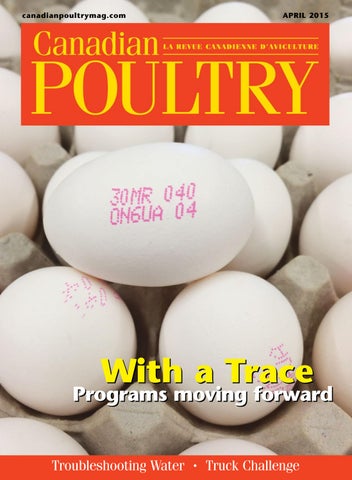
INDUSTRY: With a Trace Premier Awards in Ontario highlight traceability in the poultry sector by Treena Hein
12
RESEARCH: Novel Vaccines Effective by Sandra Avant, Agricultural Research Service
16
SUSTAINABILITY: Retailer Challenge by Treena Hein
22
TRANSPORTATION: 2015 Canadian HD Truck King Challenge
Here are some heavy-duty stats to back up your next heavy-duty purchase by Howard J. Elmer
27
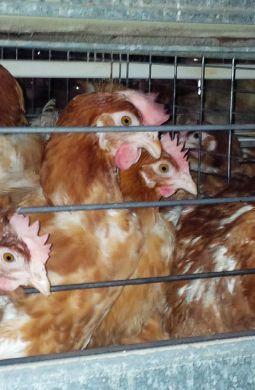
WELFARE: Caged vs. Floor Housing Ontario researchers have benchmarked welfare indicators in both systems by Karen Dallimore
INDUSTRY: What are “Cage Free” eggs? The definition is definitely murky by Leslie Ballentine 38
IN THE BARN: Troubleshooting Water Some tips on how to ensure quality and quantity by Kristy Nudds
FROM THE EDITOR
BY KRISTY NUDDS
Drivers of Change
Early last month McDonald’s U.S.A. ruffled some feathers when the company announced that it was making some changes to its chicken purchasing policy.
The fast-food giant said in a press company release that it will only source chicken raised without antibiotics important to human medicine, giving its suppliers the next two years to comply. It will also cease purchasing milk from cows given the rBST hormone.
Given the company’s purchasing power, the announcement is significant and not unexpected. The McDonald’s Corporation has seen declining sales globally, with the U.S. operations being hit the hardest, losing share to competitors who have positioned themselves as a healthier, more “wholesome” alternative. This is echoed by Mike Andres, McDonald’s U.S. president, who said in the press release, “Our customers want food that they feel great about eating – all the way from the farm to the restaurant – and these moves take a step toward better delivering on those expectations.”
Unlike many of its competitors, who tend to vilify farmers, McDonald’s seems to have given much more thought to its policy.
McDonald’s said in its press release that it has been working closely with its suppliers to reduce the use of antibiotics, and has sought guidance from its suppliers on the “thoughtful use” of antibiotics in food animals. The company also brought together a team of animal and human health experts to help it develop the recently released Global Vision for Antimicrobial Stewardship in Food Animals.
Also unlike many of its competitors, the corporation is not making the claim
of offering “antibiotic-free” menu items in future – it clearly states that farmers who supply its chicken could continue to use ionophores in a responsible way, as this type of antibiotic is not used in human medicine.
I suspect the successful “Our Food. Your Questions” campaign launched by McDonald’s a few years ago also prompted the corporation to take a look at its sourcing policies, as well as its business model. The phenomenal success of the company is the result of its cookie cutter production method, but the one-size fits all approach to fast food doesn’t mesh with the values of North America’s largest consumer group: the Millenials.
Millenials – those currently aged 15 to 35 – love to eat out and fast food and “quick-serve” style restaurants top the list. But these discerning consumers want more than just a hamburger and fries. According to numerous analysts who study the eating habits of this group, Millenials want food that has enhanced flavours and textures, tastes great and offers health benefits. They also want to know if it’s responsibly sourced and its “story” (ie. how it’s raised/grown and where it comes from). Growing up in a digital age, they want to be connected to their food and each other, and consequently share restaurant information on social media sites.
Antibiotic use is something the poultry industry has been afraid to talk to consumers about directly. Perhaps the Millenials’ thirst for knowledge, coupled with McDonald’s desire to engage with them, will provide the context and understanding about antibiotic use the industry wants, without having to do the talking. n
Canada – 1 Year $30.00 per year (with GST $31.50, with HST/QST $33.90)
GST – #867172652RT0001
USA – 1 Year $ 66.00 USD Foreign – $75.00 per year
Occasionally, Canadian Poultry magazine will mail information on behalf of industry-related groups whose products and services we believe may be of interest to you. If you prefer not to receive this information, please contact our circulation department in any of the four ways listed above.
easy as 1, 2, 3. and still maintaining exceptional litter conditions.
Got Lubing? Contact your local Lubing Distributor for more detailed information.
Glass-Pac Canada
St. Jacobs, Ontario
Tel: (519) 664.3811
Fax: (519) 664.3003
Carstairs, Alberta
Tel: (403) 337-3767
Fax: (403) 337-3590
Tel: (519) 657.5231
Fax: (519) 657.4092
As
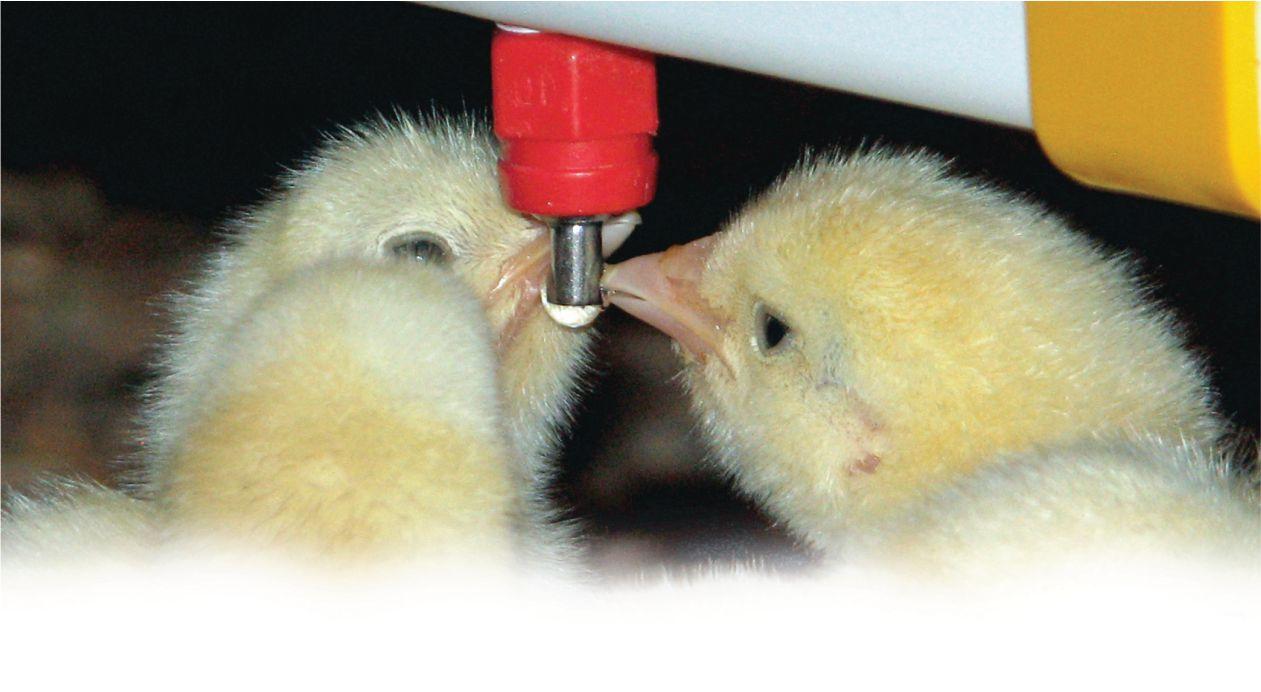
1) Large bottom pin that holds a drop of water to attract day old birds to nipple / great starts / average first week mortality below 1%.
2) Greater side flow with minimal triggering force allows all birds to easily trigger the nipple and get off to a great start. Great Starts = Fantastic Finishes!
3) Both, vertical and side action, deliver the Opti-mum flow rates and ability to grow a 4 lb small bird up to a 10 lb Jumbo bird with the same nipple. After hundreds of house updates, customers are consistently seeing improved weight gains of up to 1/2 lbs/bird with dry litter conditions!
Tel: (450) 263.6222
Fax: (450) 263.9021
McDonald’s Changes Menu Policy WHAT’S HATCHING HATCHING
McDonald’s U.S.A. announced last month that it plans to start using chicken raised without antibiotics important to human medicine and milk from cows that are not treated with the artificial growth hormone rbST.
The company says the chicken change will take place within the next two years. It says suppliers will still be able to use ionophores, as these are not used in humans.
The announcement comes as the fast-food giant struggles to shake its junk-food image amid intensifying competition from smaller rivals positioning themselves as more wholesome alternatives. McDonald’s has long battled negative perceptions about its food, but the issue has become a bigger vulnerability as more people shift toward options they feel
are made with natural ingredients. The “clean label’’ movement has prompted companies across the industry including Chipotle, Panera and Subway to purge ingredients with unrecognizable chemical names from their recipes, even while standing by their safety.
In a company press release, McDonald’s U.S. President Mike Andres said, “our customers want food that they feel great about eating — all the way from the farm to the restaurant — and these moves take a step toward better delivering on those expectations.”
In the release, McDonald’s said it has been working closely with farmers for years to reduce the use of antibiotics in its poultry supply. The new policy supports the company’s new Global Vision for Antimicrobial Stewardship in Food Animals, building on the company’s 2003 global antibiotics policy and includes supplier guidance on the “thoughtful use of antibiotics
in all food animals.”
“All of the chicken served at McDonald’s approximately 14,000 U.S. restaurants comes from U.S. farms which are working closely with McDonald’s to implement the new antibiotics policy to the supply chain within the next two years.”
The National Chicken Council issued a statement in response to the McDonald’s announcement, writing “chicken producers have a vested interest in protecting the effectiveness of antibiotics, for the welfare of their animals; as such, we’ve proactively and voluntarily taken steps toward finding alternative ways to control disease while reducing antibiotic use. For almost two years, chicken producers have been working with the FDA, farmers and veterinarians to phase out the use of antibiotics that are important in human medicine for growth promotion purposes in animals.”
EFA Launches Sustainability Report
The Egg Farmers of Alberta has launched its inaugural Sustainability Report at its annual meeting in Red Deer February 24. The first of its kind for Canada’s egg industry, the report is the culmination of EFA’s efforts throughout 2014 to develop a comprehensive sustainability strategy, which was done in collaboration with The Prasino Group and Alberta Agriculture and Rural Development.
Food Safety Funding
Prairie Diagnostic Services Inc. at the University of Saskatchewan will receive $549,278 from Ottawa for new equipment to “expand and modernize’” its testing efficiency. The announcement was made at the University of Saskatchewan’s Western College of Veterinary Medicine.
Brad Trost, MP for Saskatoon-Humboldt, said the funding will help veterinarians, livestock and feed producers and exporters to be able to better ensure Canada’s food safety both domestically and abroad. He says the new equipment will help with bacteriology, toxicology, pathology and food testing.
The new equipment will result in increased efficiencies for the laboratory, as well as
Sustainable egg production is at the heart of EFA’s sustainability strategy, which Alberta’s egg farmers have defined as being socially responsible, environmentally sound and economically viable. To better tell the EFA story, key pillars emerged from the sustainability strategy: healthy birds, healthy eggs, and healthy farms & communities. The pillars encompass all that EFA does as an organization and as the Alberta egg industry.
EFA General Manager Susan Gal said in a release: “Healthy
Birds reflects our animal care program, Healthy Eggs relates to our food safety program and Healthy Farms & Communities highlights our important environmental program and the work we do to support communities.”
The Report also includes a variety of metrics for each pillar, with some showcasing the progress EFA has made over the past few years, while others establish new benchmarks that will enable EFA to track progress in the years to come. EFA’s Sustainability Report is intended to be an annual report card for the organization, the farmers, the industry and consumers.
improved turnaround time on test results to veterinarians, grain and livestock producers, food processors and public agencies across Western Canada. PDS’s activities support Canada’s agriculture and food products sectors through diagnostic services in support of disease detection, disease surveillance and food-safety monitoring.
Dr. Douglas Freeman with the Western College of Veterinary Medicine says the equipment will help the centre
APRIL 2015
April 22-23, 2015
London Poultry Show Agriplex (*note: new building location), Western Fair District, London, Ont. For more information, visit: westernfairdistrict.com
MAY 2015
May 6, 2015
PIC Research Day hosted by the Poultry Industry Council (PIC), OMAFRA Building, 1 Stone Rd. Guelph, Ont. For more information, visit: www. poultryindustrycouncil.ca
May 27, 2015
B.C. Poultry Symposium Ramada Plaza and Conference Centre, Abbotsford, B.C. For more information, tel: 604-854-6600
JUNE 2015
June 18, 2015
Poultry Health Day Stratford, Ont. For more information, visit: poultryindustrycouncil.ca
June 17-19, 2015
Canada’s Farm Progress Show
test for ergot and mycotoxins in grain and livestock feed. Currently, samples for testing had to be sent out of province, resulting in delays in getting results. The new equipment will mean samples can be tested at the University of Saskatchewan.
Jenny Fricke, a poultry extension veterinarian in the college, said the new equipment will shorten turnaround time as she deals with diagnosing bacterial infections such as E. coli and salmonella.
Evraz Place, Regina, Sask. For more information, visit: www.myfarmshow.com
JULY 2015
July 14, 2015
North American Manure Expo
Chambersburg, Pa. For more information, visit: www.agannex.com/manuremanager/manure-expo
WHAT’S
HATCHING HATCHING
Blog Launched
The Food and Farm Care Foundation (FFC) has launched the Real Dirt on Farming blog, which aims to connect consumers with farmers and share credible facts on food and farming in Canada.
This blog is based on the popular The Real Dirt on Farming booklet, which answers Canadians’ questions about food and farming and tackles hot topics –like pesticides, antibiotics,
hormones and GMOs –head on.
FFC says that each week, blog posts will tackle issues that matter, both to consumers and to Canadian farmers. The blog will provide a forum for anyone involved in Canadian agriculture to tell their stories. Bloggers will also profile the stories of real Canadian farmers and others that work in food and farming.
CoMeo, Roxell’s New Open Broiler Feeder Pan R
oxell has introduced a new broiler feeder pan that provides optimal access to the feed, minimizes feed waste, maximizes feed intake, and features a unique patented cleaning system.
The CoMeo is Roxell’s first open feeding system. The start-up of the flock is optimized by the low pan height (60 mm - 0.2 ft) and the open design of the pan. By removing the grill the broilers have an easier access to the feed from the first day until the end of the flock. Broilers often resort to feeder pans to sleep in. The new
July 27-30, 2015 Poultry Science Association annual meeting
Louisville, Ky. For more information, visit: www. poultryscience.org/psa15
SEPTEMBER 2015
September 15-17, 2015
Canada’s Outdoor Farm Show
Canada’s Outdoor Park, Woodstock, Ont. For more information, visit: www. outdoorfarmshow.com
Sept. 28-Oct. 1, 2015 5th International Symposium on Managing Animal Mortalities Lancaster Marriott at Penn Square, Lancaster, Pa. For more information, visit: http://animalmortmgmt.org
OCTOBER 2015
October 6-8, 2015
Poultry Service Industry Workshop
Banff Centre, Banff, Alta. For more information, visit: www.poultryworkshop.ca
open pan, CoMeo, keeps the birds out of the pan from day two, providing all of them with perfect access to the feed, resulting in optimal feed intake.
The high anti-waste rim and the stepped feeder pan minimize feed waste. The innovative design of the CoMeo pan facilitates cleaning of all components of the feeding system. The patented click system exposes all components for cleaning: from the inside of the cone to the pan. For more information, contact your local Roxell dealer or visit www.roxell.com
We welcome additions to our Coming Events section. To ensure publication at least one month prior to the event, please send your event information at least eight to 12 weeks in advance to: Canadian Poultry, Annex Business Media, P.O. Box 530, 105 Donly Dr. S., Simcoe, ON N3Y 4N5; email knudds@annexweb.com; or fax 519-429-3094. Please write ‘Event Submission’ in the subject line.
With a Trace Traceability in the poultry sector is evolving
by Treena Hein
Traceability in the egg and poultry industry is evolving and growing stronger in Canada, and 2015 marks some news highlights on this front. At the national level, Egg Farmers of Canada (EFC) is now in the implementation phase of a program that will streamline traceability across the country. The ‘National Quality Code’ program will require participants to meet certain requirements in order to use the National Quality Code (NQC) mark on their cartons. The entire supply chain may be involved in the program, and each involved party must meet the criteria.
AUTOMATIC DATA INPUT
Alison Evans says the NQC program is intended to be an umbrella quality program for existing on-farm programs such as the ‘Animal Care Program’ and the ‘Start Clean Stay Clean’ food safety program. It may also expand to encompass future programs – for example, those relating to the environment. “[With this program], we want to increase consumers’ knowledge of food safety and animal care programs that our farmers follow and increase their already high confidence levels in the freshness and quality of locally-produced eggs found in stores across the country,” explains the EFC Director of Communications and Public Affairs. “Retailers can be assured that the eggs they are buying are all meeting standards that they and their customers can trust.” At this stage, funding has been secured and implementation is getting underway. Working groups are being finalized, and Evans says once that’s complete, program requirements and criteria will be finalized as well. Tracking and data capture aspects will also be sorted out soon, and pilot programs will follow in select locations across the country.
Laplante Poultry uses the scanners (above) to track its chicken product with Bar codes. Information such as product weights are automatically registered in the system upon weighing, with no data input needed.
STAMPED EGGS
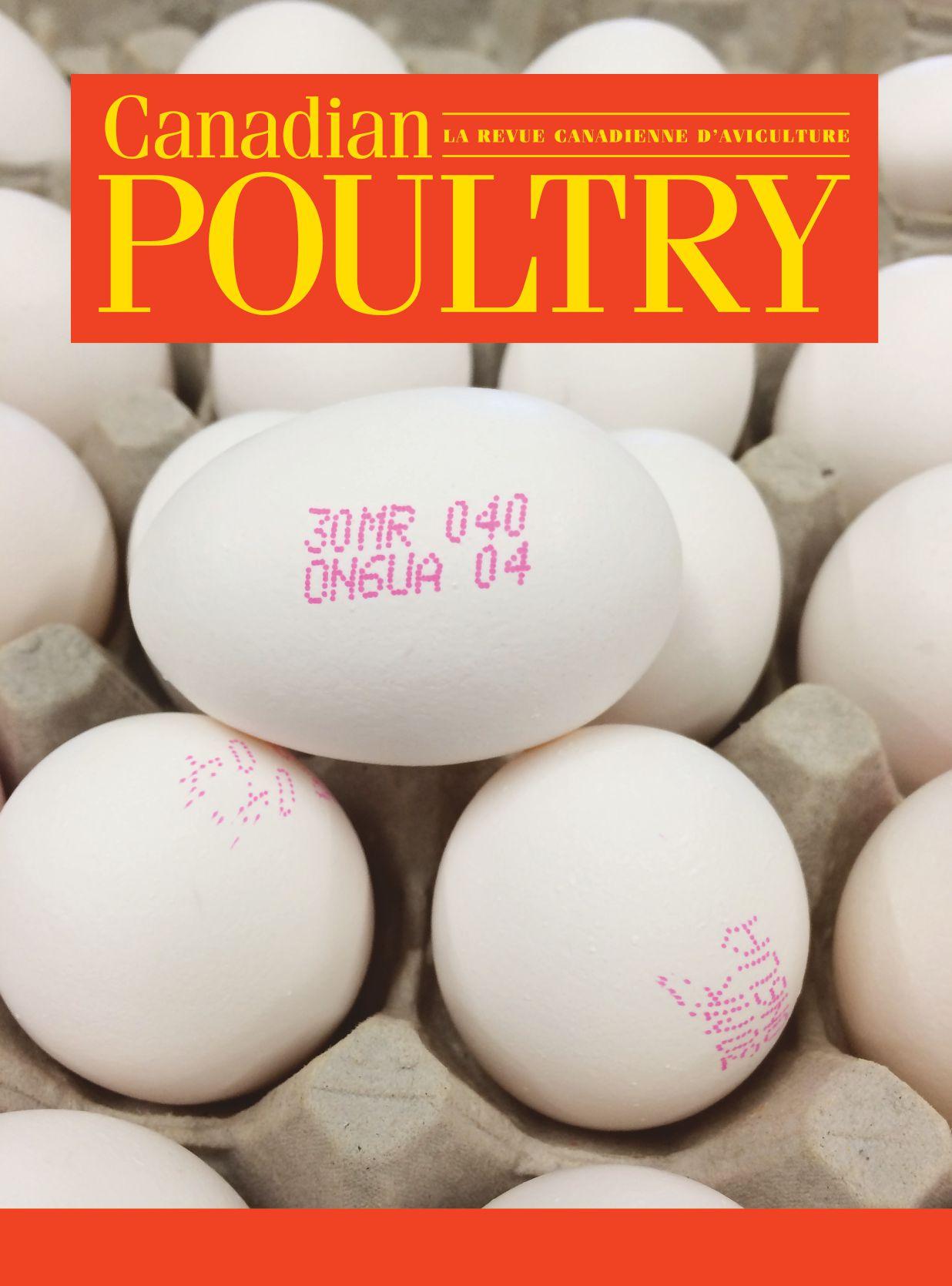
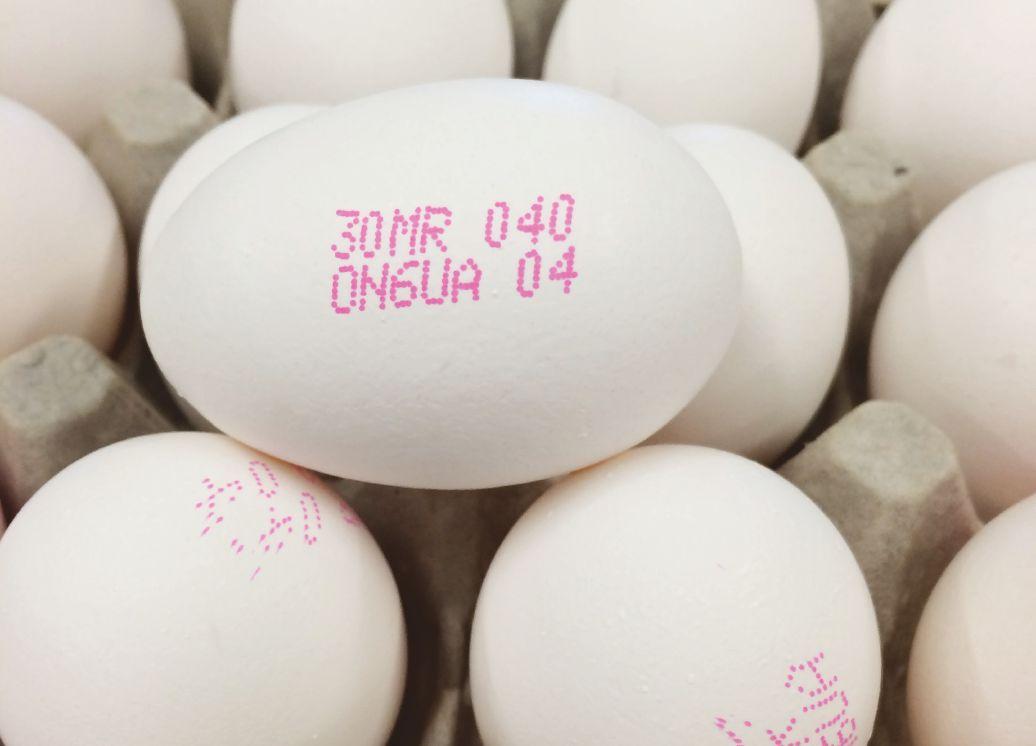
Besides the NQC program, traceability in the Canadian egg industry is evolving in other ways. In 2013, Quebec led the country with legislation mandating that all eggs must be stamped with a code. Benjamin Gagnon, communication officer at the Fédération des Producteurs d’oeufs du Québec, says having stamped eggs provides the best traceability possibility. That is, if there is a recall, the stamping will make it even faster, and it provides the added benefit that the public can be notified down to the egg level (as to what must not be eaten). The other reason for the stamps, he says, was to make it possible for the public to visit the Federation’s website to find out information on the farm that their eggs come from. Site visitors have only to input the code. Gagnon says about 500 people a day visit the Federation’s website, but he is not sure how many people input a stamp in a given week or month.
In other areas of Canada, the decision of stamping eggs is up to the grader. Margo Ladouceur, manager of egg sectors at the Canadian Poultry and Egg Processors Council, is not sure what percentage of eggs in Canada now feature stamps, or how that number is expected to grow over the next five to ten years.
Ferme Avicole Laviolette in St. Isidore became the first grader in Ontario to stamp eggs, in 2012. (Owner Marcel Laviolette Jr. is also an egg farmer, and eggs from his 33 000 layers make up two thirds of the volume at his grading station.) The string of numbers and letters on each egg denote the batch date, date of packaging and producer. For being the first in his province to employ egg codes, Laviolette was recognized with a 2014 Premier’s Award for Agri-Food Innovation Excellence.
Quebec has mandated that all eggs be stamped at the grading station to allow traceback.
Laviolette made the move in 2012 knowing it would give his customers – over 250 wholesalers, grocery stores and restaurants in eastern Ontario and southwest Quebec – added peace of mind in terms of food safety and traceability. It would also be a good way for his eggs to stand out from those of bigger graders that didn’t yet code their eggs, making them preferable and hopefully increasing his sales. Laviolette says the biggest challenge of implementing the system was integrating the electronics, and it took about a year to get good results. He says the stamping machine does require care, but that the installation and ongoing operation of the system is worth it. “Customers want the stamped eggs,” he says.
Robert Laplante, owner of Laplante Poultry Farms Ltd. in Sarsfield, also received a 2014 Premier’s Award for his traceability efforts, this time with poultry. Laplante has 80 000 broilers, crops 1400 acres, has an on-farm feed mill and also owns a processing plant in nearby Monkland in Eastern Ontario. He recently went from a paper-based tracking system to a completely automated traceability and product handling system, which eliminates data input errors of all kinds and provides a much shorter product recall time, if a recall is ever ordered. Bar codes are used throughout to track product, and things like product weights are automatically registered in the system upon weighing, with no data input needed. Laplante says the system has decreased operational costs by 10 per cent and labour costs by 8 per cent.
The automation will hopefully also mean that Laplante’s processing plant, the only one between Toronto and Montreal, can expand. It was a one-person operation when he bought it and while Laplante has expanded its capacity
to 160 000 kg per quota period, there is 2.5 million kg per quota period being produced in Eastern Ontario. There is also hopefully the opportunity to process chicken from western Quebec as well. Laplante Poultry has an open appeal in front of the Agriculture, Food and Rural Affairs Appeal Tribunal in an attempt to access more processing capacity in Eastern Ontario, and the decision should be made by the end of this year.
In terms of how many other chicken farmers or farmer/processors across Canada have gone to barcode-based traceability systems, Chicken Farmers of Canada does not have that information, and recommended checking in with Chicken Farmers of Ontario (CFO), as Ontario is one of the leading provinces with regard to traceability. While CFO acknowledges that Laplante is a leader in terms of the barcode system he uses, the association has other exciting traceability news to share.
The ‘CFO Connects:Trace’ program is rolling out this year, which ensures all information related to flock production and marketing is submitted digitally by producers. “This is a big step forward, as the information will be sent through a centralized system prior to the movement of chickens,” notes CFO Manager of Quality and Risk Management Cathy Aker. “The traditional production and transportation paperflow has always been received by CFO from 10 to 14 days after shipments, while using the new integrated ‘CFO Connects’ platform will mean almost real-time shipment tracking, which is much more ideal for managing food safety or disease emergencies.” The program will be fully integrated with farmers and processors, and will be completely established by the end of 2015. n
Research Novel Vaccines Effective
A USDA microbiologist has developed a vaccine that protects chickens against ILTV and Newcastle disease
BY SANDRA AVANT, AGRICULTURAL RESEARCH SERVICE INFORMATION STAFF
Vaccination is one method used to help prevent the spread of infectious poultry diseases, but current vaccines could be safer and more effective.
At the Agricultural Research Service’s Southeast Poultry Research Laboratory (SEPRL) in Athens, Georgia, scientists are developing vaccines to help reduce virulent virus shedding—excretion of virus by a host—and disease transmission from infected birds to healthy ones.
Microbiologist Qingzhong Yu and his colleagues have created a novel vaccine that protects chickens against infectious laryngotracheitis virus (ILTV) and Newcastle disease virus (NDV), two of the most economically important infectious diseases of poultry. Both viruses cause sickness and death in domestic and commercial poultry as well as in some wild birds throughout the world.
“While current ILTV live-attenuated vaccines are effective, some of the viruses used to make them can regain virulence— causing chickens to become chronically ill,” says Yu. “Other types of vaccines can protect birds from the disease’s clinical signs, but barely reduce the virus shedding in their respiratory secretions after infection. Those vaccines are not that effective,
Qingzhong Yu and colleagues used reverse genetics technology to generate new vaccines to protect against ILTV and NDV.
because they do not reduce the risk of virulent ILTV transmission to uninfected birds.”
Most vaccines used in the United States are formulated with NDV isolated in the 1940s. However, since then new NDV strains have emerged that are genetically different, according to Yu.
Worldwide, the NDV LaSota strain has
been used as an NDV vaccine. “It is very stable and very effective, and there have been no reports of virulence increase,” Yu says.
In previous research, SEPRL scientists successfully used LaSota strain-based viruses to develop vaccines that protect birds against two other poultry viruses— metapneumovirus and infectious
NEW METHODS
Photo by Peggy Greb, ARS.
Remarkably Clean
Virkon
bronchitis virus. Now, in a recent study, Yu used reverse genetics technology, which allowed him to generate new vaccines by inserting a gene from the ILTV virus into the NDV LaSota strain.
The new vaccines were stable and safe when tested in chickens of all ages. Experiments involved more than 100
Research
1-day-old Leghorn chickens and 120 3-dayold commercial broilers. All vaccinated birds were protected against both ILTV and NDV, showing few or no clinical signs and no decrease in body-weight gain.
These vaccines worked as well as current live-attenuated vaccines, Yu says. They can be safely and effectively
administered by aerosol or drinking water to large chicken populations at a low cost.
“There is a huge market for these types of vaccines because they can protect poultry from ILTV as well as NDV,” Yu says. “Developing a commercial vaccine that provides better protection against disease would have a positive economic impact on the U.S. poultry industry and also make its products—meat and eggs— less expensive for consumers.”
It is very stable and very effective, and there have been no reports of virulence increase
NDV causes disease in more than 250 species of birds and typically causes respiratory, gastrointestinal, and/or nervous system symptoms. The most severe form of Newcastle Disease can result in disease and mortality rates exceeding 90 per cent in susceptible chickens.
The most recent U.S. outbreak, which occurred in 2002-2003 in California, Nevada and Texas, illustrates the devastation and financial cost that can result: more than 3.4 million birds were destroyed, and the cost of controlling the outbreak in California alone was more than $160 million.
ARS has filed for a patent on the vaccine invention, which has generated interest from private companies that are considering using this research to develop commercial vaccines.
This research is part of ARS National Program #103, Animal Health.
"Novel Vaccines Effective Against Poultry Diseases" was published in the March 2015 issue of Agricultural Research magazine. n
Photo courtesy Mary-Lou VandenOuweland
Sustainability RetailHowChallenge retailers are approaching sustainability
by Treena Hein
Sustainability – making sure that food is produced in such a way that it can be produced at the same quality for generations to come – is something increasing numbers of consumers are looking for. In particular, seafood, poultry, egg and meat products seem to be of strong interest to many members of the general public, and therefore also of significant interest to the grocery distribution industry.
“Retailers believe that animal products that they sell must be safe and of high quality, as well as produced in a sustainable and humane manner,” says Nathalie St-Pierre, vice-president (Sustainability) and vice-president Québec at the Retail Council of Canada (RCC). She notes that there are significant implications and complexities in making changes to how animals are raised – including animal well-being, socio-economic and environmental considerations – and this is why the Council continues to work with many parties through constructive dialogue and shared objectives to bring about the best outcomes.
OF INTEREST
In particular, seafood, poultry, egg and meat products seem to be of strong interest to many members of the general public, and therefore also of significant interest to the grocery distribution industry.
Some examples of food sustainability issues that RCC is working on include the neonicotinoid insecticide concerns (involving CropLife Canada, Flowers Canada Growers and beekeeper associations) as well as seafood sourcing and related labour issues (involving Greenpeace and other parties).
A COMBINATION
To get a sense of the big picture of how food retailers are currently approaching companies with regard to sustainability, we asked St-Pierre if they’re mostly dealing with companies on an individual basis or if they’re creating collective sustainability criteria together. It seems to be a combination of both.
“Retailers often work on these issues in a pre-competitive fashion,” she explains. “However, when it comes to actual sourcing, this is part of the retailers’ individual strategies and we do not comment on such matters.”
SUSTAINABILITY AT LOBLAW
Let’s look at one retailer’s individual strategy – in this case the largest food retailer in Canada. Loblaw owns more than 20 different store chains across the country, and with the recent acquisition of Shoppers Drug Mart, now operates over 2,300 individual stores.
The firm’s corporate social responsibility (CSR) approach includes five pillars that govern the way it does business in achieving its overall purpose of “Helping Canadians Live Life Well.” These pillars, which all relate to sustainability, are respect for the environment, waste reduction, energy reduction, packaging improvement and sourcing product ingredients with integrity.
The Loblaw “pillars of sustainability” have stemmed from the recognition that customers are not only looking to understand where their food comes from, but to understand the health and sourcing implications of the ingredients in their food.
“On any given day,” says Melanie Agopian, Loblaw Senior Director of Sustainability, “we may encounter questions as diverse as the degree of sustainability of a fishery that a seafood ingredient is sourced from, to whether our pork products are sourced from a loose housing environment, to the right approach to sodium in our diets. As a retailer, we need to have the answers to these various questions ready, and also ensure we advocate for consumers. That means we need to be very familiar with the issues customers care about, and our supply chain.”
Retail Council of Canada vice-president (sustainability) says consumers will define the next trends in sustainability. Increasingly, consumers are seeking products that are produced in an environmentally and welfare-friendly way.
To ensure Loblaw understands their customers’ perspectives, the company does things like conduct an annual survey. Recent survey results show that in general, half of the respondents chose environmental, sustainability and animal welfare aspects of their food as high in importance, followed by worker’s rights, food choices, waste reduction and local sourcing. However, with regard specifically to groceries, survey participants placed priority on local sourcing, healthier food choices, packaging reduction and animal welfare.
To drive change in response to these concerns, Loblaw puts its corporate policy in action through collaborations with the Retail Council of Canada. In addition, a key driver for change at Loblaw is the firm’s leadership with their private label products (‘President’s Choice’ and ‘No Name’ are Canada’s #1 and #2 food brands respectively).
“Our customers expect higher standards with our private label brands and these high standards are a mechanism to drive loyalty and trust,” Agopian explains. “We often look to lead and differentiate by innovating with our brands, and sustainability work is included in that.”
Through these labels, Loblaw has a close relationship with their vendors, relationships in which the firm can partner and collaborate to find creative solutions on important sustainability issues. Agopian adds that in their effort to be as credible and science-based as possible, they use globally-recognized 3rd party certifications when appropriate. “We’ve seen from our own data that customers significantly prefer sustainability supported by [these] certifications,” she explains, “and we also partner with academic and scientific advisors on key files.”
SOURCING
In making their private label brands more sustainable, Loblaw is beginning with a close examination of the raw ingredient sourcing of seafood, palm oil, cocoa, coffee and beef. They are also working to continuously improve packaging with guidelines for weight reduction, using renewable or recycled content, and working on overall package recyclability/reusability.
In terms of egg and poultry products, Agopian says animal welfare is a key sustainability focus. Loblaw is committed to expanding the President’s Choice (PC) Blue Menu Omega FreeRun Eggs offering in order to provide further choice to customers. The company is also expanding the full PC “Free From” range of products, which is meat and poultry raised without the use of antibiotics and hormones (noting that in Canada, all poultry and pork is raised without the use of hormones). Additionally, the company is an associate member of the National Farm Animal Care Council (NFACC) and supports the implementation of the NFACC Codes as they become available.
SUSTAINABILITY OUTLOOK
Just where sustainability issues are headed in the future for retailers is hard to say. Will it become mandatory for most (or even all) companies to satisfy retailers that their products are produced in a sustainable way? Which products will receive the most attention going forward in terms of sustainability concerns? While it’s impossible for anyone to predict the future, St-Pierre believes the public will lead the way. “The retailers’ first priority is to give consumers the products they want,” she notes. “Thus,
Retail Council of Canada vice-president (sustainability) Nathalie St-Pierre says consumers will define the next trends in sustainability. Increasingly, consumers are seeking products that are produced in an environmentally and welfare-friendly way.
Sustainability
Food Retailers
Here is some of the sustainability work being done by food retailers who operate in Canada:
Metro’s (Ontario and Quebec) sustainable fisheries policy, for example, aims at providing fresh or frozen, wild and farmed seafood to customers.
Sobeys also targets seafood in its sustainability efforts, fully supporting and embracing sustainable seafood certification programs and making a commitment to “fix the worst [fishery concerns] first.”
Walmart Canada is also committed to selling sustainablymanaged seafood products.
IKEA cooperates with World Wildlife Fund, Save the Children, UNICEF and many others on sustainability projects. All coffee sold at IKEA is third-party certified to meet social and environmental standards. IKEA’s food suppliers must agree to work to reduce waste and emissions to air, ground and water, handle, store and dispose of hazardous waste in an environmentally safe manner, contribute to the recycling and reuse of materials and products, and more.
consumers will define the next trends in sustainability. If we look at the current consumers’ demands, it is difficult to judge if, going forward, sustainability and animal welfare will become a standard for products, or if they will only serve a certain type of consumer.”
St-Pierre adds that while ‘green’ factors do influence many consumers’ purchase decisions, they trail price and quality by a significant margin. “Still, analysts feel that awareness of ‘green’ products has been growing and will continue to grow, though they note that awareness does not necessarily translate to interest, especially if prices remain high,” she says. “On the other hand, retailers often announce commitments of their own to ‘green’ initiatives: buying locally- grown/produced products, sustainable fishing and sourcing, fair trade and safety of workers, commitments for the health and wellness of animals.” She points out that retailers have had an important role in the reduction of plastic bags use, as well as a significant impact in the development and implementation of many types of recycling programs across Canada. n
For more sustainability articles, visit www.canadianpoultrymag.com
Catherine Connolly
Diane
Kleer, VP Production/Group Publisher, Annex
Business Media is pleased to announce that Catherine Connolly will be taking on the role of National Account Manager for Canadian Poultry. After spending the past 5 years working within Annex, Catherine is ready to take on a new challenge. Her forward thinking and strength in selling non-traditional media will be an asset to the poultry industry as the market continues to expand and evolve.
1-888-599-228 Ext.253 or 289-921-6520
cconnolly@annexweb.com
Watering Wisdom 5
Key Principle:
Producers need to focus on what matters in a poultry facility — bird, litter and system performance, not counterproductive “concepts” and “standards” that prove to be myths (see sidebar).
Fact: Drier litter will produce better results than wet litter. So producers should manage their watering systems to deliver the right amount of water to the birds while maintaining ideal litter conditions.
Arbitrary directives and standards regarding column pressure, water usage or drinker flow rate usually ignore bird behavior and house conditions. Using these standards often leads to excessive drinker discharge that creates wet litter, ammonia release, pododermatitis, breast lesions and a host of other problems, but NOT better bird performance.
Forget The Myths
Water meters do NOT measure water consumption.
Truth: Water meters measure usage, which includes water consumed AND spilled.
Evaluating drinkers based on flow rate is NOT a valid concept.
Truth: A drinker flow rate test is an invalid procedure that does not predict actual water consumed by birds. As such it can not be an effective management tool.
Increasing drinker discharge may NOT increase water consumption.
Truth: Water consumed is limited by beak size. Discharging more water than the beak can hold simply causes spillage.
The best solution is to manage the watering system based on litter readings, not column pressure or water usage. Get detailed information on how to accomplish this at the website below.
Key Directive: Manage your watering system to maximize performance, which requires delivering ample water to your birds without creating spillage and wet litter conditions.
Videos and other proof that support these statements are at the website below.
Excessive drinker discharge does NOT always cause wet litter.
Truth: Aggressive ventilation, heating, etc. can mask significant spillage, keeping litter artificially dry.
LOUIS COULOMBE, DVM Technical Services Veterinarian
ALANO Sales Representative Western Region
WILLIAMS Product Manager
BRAULT Sales Representative Quebec Region
MEET THE A
A TEAM at your service.
Merial provides industry-leading innovation to enhance the health, well-being and performance of Canadian poultry flocks. And thanks to our dedicated A Team of avian specialists, we’re also leaders in customer care and service. Our specialists are focused on solutions to improve your productivity and profitability, through a comprehensive selection of vaccines, delivery systems and services that address crucial poultry health challenges.
Contact your regional avian specialist. You’ll enjoy the one-on-one, hands-on, first-rate service we’ve built our reputation on. You can always count on us.
TO LEARN MORE
MICO
PHIL
DOMINIQUE
JIMMY LOBUSTA Sales Representative Ontario and Atlantic Regions
NORMAND LAMOTHE
National Sales Director
TEAM
ISABELLE TREMBLAY-SUMMERS Director of Production Animals
Transportation
2015 Canadian HD Truck King Challenge
Here are some heavy-duty stats to back up your next heavy-duty purchase
BY HOWARD J ELMER
Who rents a drag strip, borrows seven-ton fifthwheel trailers and has five respected automotive journalists race the one-ton trucks head to head?
We do. The eighth annual Canadian Truck King Challenge did just that (and much more) to clearly show the truckbuying public who is the best of the best for 2015.
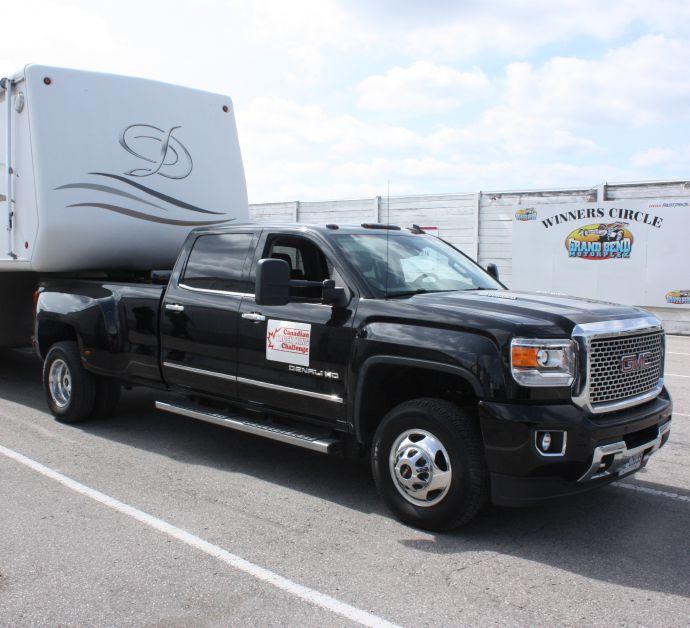
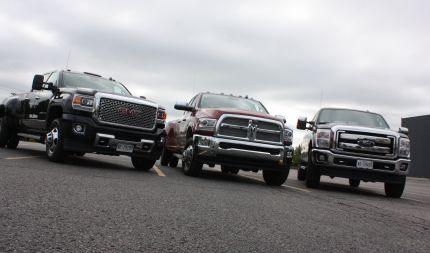
For this challenge, three heavy-duty pickups from Ram, Ford and GMC ran head to head at the MotorPlex drag strip in Grand Bend, Ont., while towing 15,000 lb. trailers as just one part of two intensive days of Truck King testing.
The outcome? The GMC Sierra 3500 beat the Ford and Ram in each heat. It would also go on to win the title.
But, back to the drag strip: a curious fact emerged during this testing. On paper the GMC boasted the least amount of horsepower and torque among the competitors. Yet it won each race. We ran it several times – with the trailer and without. It pulled away from its competition each time. And, that’s the difference between real-world testing and paper tigers.
Here are the quickest quarter miles from each truck taken from multiple runs:
GMC: 16.098 seconds when running empty, 21.932 seconds with trailer attached
THE CHALLENGE
Three heavy-duty pickups from Ram, Ford and GMC ran head to head at a drag strip in Grand Bend, Ont., while towing 15,000 lb. trailers
Ford: 16.542 seconds when running empty, 23.303 seconds with trailer attached.
RAM: 16.927 seconds when running empty, 23.581 seconds with the trailer attached
The trap speed for all three trucks (at the quarter-mile line) was always plus/ minus one MPH of 80 MPH. Trap speed
with trailer attached, again for all three trucks, was also plus/minus one MPH of 60 MPH.
GM’s HDs are not new to the Truck King podium: the Chevy Silverado HD took the title in 2013 but failed to win last year mostly due to its dated interior. This year that’s changed with a significant interior refresh. However,
Photos courtesy of The Canadian Truck King Challenge
YIELD IS PROFIT
700
The New Standard In High Yield
Highest Available Yield
With the Cobb700 customers will optimize grow out and processing performance, achieving the highest eviscerated and breast meat yield of all breed options.
Top Broiler Performance
Cobb genetics excel in coupling optimum growth with the lowest feed conversion and lowest cost of meat production. The Cobb700 is proof that high yielding broilers can still achieve superior performance in the broiler house. The Most Breast Meat At The Lowest Cost
Transportation
2015 CANADIAN TRUCK KING CHALLENGE Fuel Consumption Analysis Data
events from now on. (See “Canadian Truck King Challenge fuel consumption analysis,” left.)
Once again we spent two days driving around southwestern Ontario.
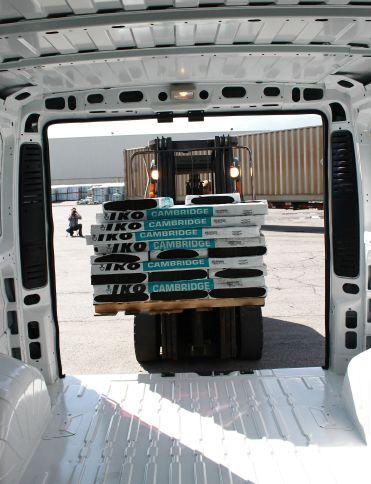
The first day we ran the trucks empty from Toronto to London (200 km). Next we loaded up at Patene Building Supplies of London. Supplier IKO has helped us out for several years now by preparing pallets of shingles to use as payload. In this case, each pallet weighed 4,080 lb. exactly. The dimensions of each pallet were 4 ft. wide, 4 ft. high, by 5 ft. long. After loading, we took the shingles for a 200 km ride, switching up trucks every 30 minutes.
The next morning saw us hooking up fifth-wheel travel trailers at our other partner’s place of business – CanAm trailer centre. We hitched them to three similar fifth-wheel RV trailers. These weighed in at around 14,500 lb. each. We then spent the day doing a 300 km tour with the judges that included a three-hour stop at the drag strip in Grand Bend.
As always, each judge (five for this competition) scores each truck independently and the final outcome is an average.
VANS ALSO GO HEAD TO HEAD
what really put it over the top are new electronic systems for 2015 that can only be felt, not seen. And those can only be really appreciated when towing.
After eight years of reading our truck tests, most readers are familiar with our methods, and while locations sometimes change, the methodology remains the same. We use multiple, qualified automotive journalist judges who drive the trucks back to back in the same conditions on the same day.
We always start with empty loops, then we add payload and finally towing (with the payload removed). Over
the years, we have always kept track of our fuel consumption during each of these tests; however, our pencil and paper calculations were replaced last year with electronic data readers that take that information directly from the trucks computer. These readers are plugged into the on-board diagnostics (OBD) port on each truck and record speed, distance, time, and even hard acceleration and braking events. Needless to say this is much more accurate in determining fuel consumption. This was our second year using the readers – they will be standard testing equipment during all Truck King
Although the Canadian Truck King Challenge has concerned itself with realworld pickup truck testing, a one-of-akind metamorphosis has taken place in the commercial van market in Canada: one that simply had to be investigated more closely.
Once we approached the manufacturers about doing our brand of testing on its products, they wholeheartedly agreed. Now, for those folks who buy and use commercial vans, you already know that the landscape has changed. For almost everyone else, let me just say that what has happened to the traditional low-roof North American box van (think Ford E-series) is a European invasion. Starting with Mercedes Benz, several years ago, we saw the arrival of the Sprinter with its distinctive high-roof and diesel engine.
Service That Doesn’t Punch a Clock
What followed was Ford product, designed and built in Europe – the smaller Transit Connect and now the full-size Transit. Quick on the heels of these two are the ProMaster vans. Now labelled as Rams, they started life as Fiats. They too bring a diesel powertrain as well as gas and a unique front-wheel-drive design.
From the other side of the globe,
Nissan brought a built-in North America van: the NV. Gas powered and with various roof heights, it’s a competitor to all the builders mentioned so far. Now Nissan has also offered up a smaller front-wheel drive van: the NV200.
Six judges evaluated these vans over two days in the fall of 2014. Each of these judges is an automotive journalist, a member of Automobile Journalists Association of Canada and someone who spends a substantial portion of their working year evaluating trucks, vans and vehicles that work for a living. But, that pedigree alone is not enough (as anyone who follows the Challenge knows). We drove the vans empty to start with; we loaded them with payload; and, finally, we replicated downtown deliveries.
In total we drove over 1,600 km while testing.
For payload we used shingles: 3,070 lb. on a single pallet for the full-size vans and 1,040 lb. for the three smaller ones. These were supplied by IKO and loaded at Roof Mart in Brampton.
The following day we did something rather new to the Challenge. We
Continued on page 35
The Nissan NV200 squeaked out a win in the mid-size category.
Caged vs. Floor Housing
Ontario researchers have benchmarked welfare indicators in both systems
BY KAREN DALLIMORE
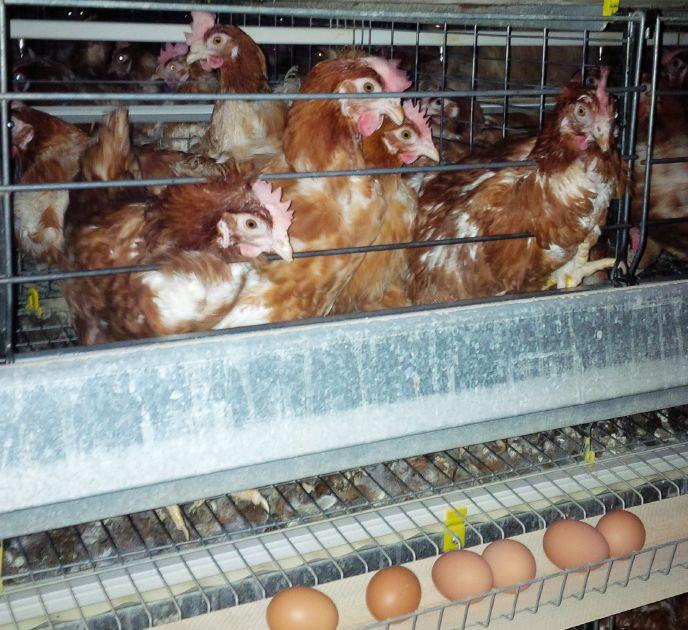
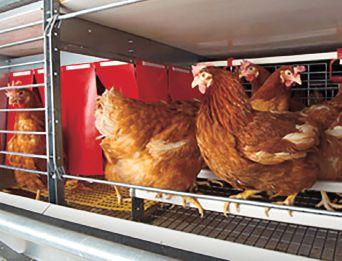
As consumers, retailers and the broader community continue to demand movement towards housing systems that place high value on offering improved behavioural opportunities for hens, it’s important to track measures related to their physical condition. Do the proposed solutions carry unintended consequences? What are the physiological and physical effects of more open housing systems?
As a benchmarking tool, researchers Mike Petrik, Michele Guerin and Tina Widowski have just published a study that gives a snapshot of commercial Ontario brown laying hens in cage and non-cage systems using three welfare indicators: keel bone fracture prevalence, feather scores and cumulative mortality. These three parameters are typically used to reflect some of the physical aspects of the welfare status of the hens.
Benchmarking welfare indicators from alternative housing systems is important to ensure that progress is made in improving their well-being. This is the first study in North America to compare housing systems on multiple farms as well as providing a more detailed assessment of keel fractures during the life of a flock.
There are 64 farms in Ontario housing brown hens in cages with an average flock size of 9,965, while 27 farms average 9,410 hens per flock in floor-housed systems. For their study, Petrik et al. recruited nine
Benchmarking welfare indicators is important for ensuring that progress is made in improving the well-being of hens.
commercial farms that housed brown hens in cages and eight farms using floor systems. Only brown hens were included because there are no white hen flocks housed using floor systems in Ontario at present.
All hens were beak trimmed; caged pullets were grown in caged housing and floor flocks were grown in single-tier floor pullet houses. All birds were fed a commercial diet that was adjusted to individual flock requirements.
Hens were sampled four times over the course of lay, at 20, 35, 50 and 65
weeks of age. At each visit, 50 hens were weighed and palpated for evidence of healed keel bone fractures. Feather scores were assigned based on evaluation of the neck, back, breast and vent. The daily records maintained by the farmer provided mortality data.
RESULTS
Keel fracture prevalence was significantly higher for the floor housing compared to conventional housing. As birds neared the end of lay at 65 weeks, the fracture rate was 54.7% compared to 40% for caged flocks.
These floor-flock figures were comparable to those for floor birds in Europe (45 to 86%) but the conventional numbers were greater than those reported in conventional cages in the UK (26 to 30%). This might be due to the difference in cage size (483 cm2 in North America vs. 550 cm2 in Europe) that may result in more piling behaviour, or
Welfare
possibly cage design or nutritional factors.
Keel fractures are often attributed to traumatic injury. Five of the eight floor barns in this study had no perches; the researchers suggested that fixed perches were not a contributing factor to the incidence of keel bone fractures in these flocks.
While most studies evaluate keel
fractures at the end of lay, this study points to fractures occurring much earlier in production. In this study, the fracture prevalence increased substantially from 20 to 50 weeks in both floor and cage systems, after which the incidence stabilized. This is a serious concern because fractures occuring early in lay results in a higher potential for chronic pain over the course of production.
Flock-level mean feather score was not significantly affected by the housing system, possibly due to the hens having been beak trimmed. Cumulative mortality tended to be lower (1.29%) for cage housing than floor housing (2.13%), but the figure for floor housing was much lower than in other studies, which have indicated that non-cage systems put hens at a much higher risk for feather pecking, cannibalism and mortality for various reasons. These feather condition and mortality results showed that these Ontario flocks performed really well.
Mean body weight was lower but more uniform in floor housed flocks compared to cage housed flocks, possibly due to a higher activity level and the need to search for feed. Heavier birds had more fractures, so in a chicken or egg type of question, did heavier birds have more keel fractures because of their weight, or were they heavier because of less activity due to the fracture? Production parameters and behaviour were not evaluated in this study.
More work is indicated to identify specific risk factors and etiology of keel fractures, especially if non-cage housing becomes more common in North America. These findings indicate that younger hens, between 20 and 35 weeks of age, showed the highest incidence of keel bone fractures and should be the focus of future studies.
As the layer industry continues to evolve, the benchmarking of welfare indicators from alternative housing systems from this study will help to ensure that progress is being made to improve the wellbeing of the hens.
This research was funded by Egg Farmers of Canada and the Ontario Ministry of Agriculture and Food. The researchers would like to thank participating egg farmers in Ontario for allowing access to their flocks and records.
The Poulvac
Industry
What are “Cage Free” eggs?
BY LESLIE BALLENTINE
When California
Prop2 went into effect in January it raised the question of just what are “cage free” eggs? The only consensus is that eggs produced by free-run and free-range birds, qualify and that standard laying cages do not. After that it starts to get murky. Are convertible standard cages considered “cage free”? What about colony cages and do furnished colony cages make a difference in definition? What about pasture pens or aviaries, or again does it depend on the design? It is much like the term “Factory Farm”; it depends on who is doing the defining. And it very much matters whether the term is being used for labelling purposes or production standards or marketing campaigns.
Canadian regulators do not define the term directly. They refer to organic standards. Nor do producer groups or retailers. The same applies to the few US state regulators where so-called ”cage bans” have been implemented. In California for example, the term is being used somewhat inappropriately. Under the new law, and contrary to public perception, cages are not banned. Instead, egg producers simply have to provide larger space in order to meet the state agriculture regulations in order to meet the very vague requirements under the HSUS inspired Proposition 2 ballot measure. Or at least until HSUS and company take their next step.
The state has not weighed-in on types
With no clear and consistent definition of “cage-free” there is wiggle room for challenges that lie ahead.
of housing and neither has the Prop2 measure. In a February decision, a court of appeals judge upheld the measure arguing that the requirements “can be readily discerned using objective criteria” and that “a person of reasonable intelligence can determine the dimensions of an appropriate confinement that will comply with Proposition 2.”
The USDA, through its Agricultural Marketing Service (AMS) verifies “cage free” claims when used on USDA inspected eggs. This claim indicates
the eggs came from hens who were “never confined to a cage and have had unlimited access to food, water, and the freedom to roam” whether they are indoors or outdoors. But a “cage” is not defined.
HSUS and their Canadian branch HSIC has been a driving force in the “cage free” movement. But they are being cagey (pun intended) by not pinning themselves to a definition either. They refer to “battery cages” in their literature but knowing the public doesn’t
and
of the
are
Starting from day old chicks to 19 week layers Meller has it all.
Industr y
discern, they leave the impression that no cages are now used. According to their website, HSUS states: “As the term implies, hens laying eggs labeled as “cage-free” are uncaged inside barns. Unlike battery hens, cage-free hens are able to walk, spread their wings and lay their eggs in nests, vital natural behaviors denied to hens confined in cages.” And HSUS knows what it is doing. In January HSUS CEO Wayne Pacelle toured California to publicize Prop2 and promote “cage-free” adding further public confusion.
When HSUS formed a short-lived agreement with United Egg Producers on national standards in 2012, HSUS CEO Wayne Pacelle explained that HSUS believes in “practical, incremental reform” in animal welfare, and while a conversion to cage-free production would have been “ideal,” his organization “changed its position from “cage-free only” to colonies because the agreement exceeds all other housing regulations in the U.S. and abroad.” An even clearer statement was made two years earlier in a July 16, 2010 Position Statement Against Modified Cages for Laying Hens. A consortium of animal protection groups including HSUS, WSPA, and the Animal Welfare Institute stated: “The major animal protection organizations in the United States and European Union listed below that focus on the treatment of farm ani-
mals are opposed to modified cages, sometimes referred to as furnished, or so-called enriched cage, confinement of laying hens.”
And confusion continued when in February 2014 HSUS announced their new website, CageFreeCalifornia.com. “While Prop 2 does not specifically mention cages, it has the economic effect of facilitating the transition of the egg industry to cage free systems, the announcement read. “Some California producers are converting to colony cage systems, but The HSUS has never believed those systems are compliant with the standards set forth in Proposition 2,” the announcement added.
HSUS’s Canadian branch is a little more forthcoming. HSIC has partnered with the Vancouver Humane Society with their decade-old Chicken Out! Campaign designed in their words “to educate Canadian consumers about more humane alternatives to eggs produced by battery cage hens.” The campaign states that “… if you do choose to consume eggs, consider cage-free eggs. When you hear the term “cage-free” in Canada, it refers to one of three different types of production methods: free-run, free-range and organic. An enriched cage, while it does provide more space, is still a cage, and is not considered cage-free.” Aviary housing is not mentioned.
STAALKAT FARMPACKER GRADERS
Turns Deads Into Dirt
Put mortality management back in your hands.
BIOSECURE: Provides complete protection against the spread of diseases like PED
COST EFFECTIVE: Lowest operating cost in the industry
VALUE-ADDED: Best way to convert mortalities into easy to manage compost
• Ease to Use • Safe • Environmentally Responsible
World Animal Protection (formerly WSPA) defines “cage-free” eggs as “those produced in housing systems which permit hens the opportunity to engage in natural behavior… they include free run (or cage-free), free range, and organic. On their Choose Cage-Free page, begun in Canada in 2012, WAP says: “Furnished
Industry
cages are larger than battery cages… but the cages are still crowded and hens’ movement is still restricted… Some producers have already adopted furnished cages. Eggs from these systems may be labelled as comfort coop or nest-laid.” A fundraiser states, “while all these hens are guaranteed more space, some busi-
nesses have opted to simply use larger cages. Not cool, I know. But you can help. When you’re out shopping, make sure you’re still looking for cage-free eggs…”
The David Suzuki Foundation defines “cage-free” as “hens are not confined to battery cages, but that’s about it.” Adding: “You might see this claim on all three types of non-battery cage production eggs — free-run, free-range and organic.”
Egg Farmers of Canada, while not using the term “cage free”, very clearly explains conventional, colony and floor housing. The same will apply to the updated Recommended Code of Practice.
It gets even murkier when we get to “cage-free” certification standards.
There are many different third-party animal welfare certification organizations in Canada. And unlike industry and federal standards, each has their own specific criteria that must be met in order to be certified.
BCSPCA Certified and the Winnipeg Humane Society equivalent simply state that “caging of birds is prohibited.” No mention of colony cages or aviaries.
American Humane Certified is a program of American Humane Association and differentiates their certification for enriched colony cages and cage-free. For colony cages, each bird must be provided with at least 116 sq. inches and have access to perches and nest boxes. Cagefree birds “must have 1.25 square feet (180 square inches) of floor space”, as well as access to perches and nesting boxes.
Certified Humane, a program of U.S.based Humane Farm Animal Care, also operates in Canada. The standards clearly state that “battery, furnished or enriched cages as well as lock back aviaries are prohibited.
Animal Welfare Approved is a program of the U.S.-based Animal Welfare Institute and likely has the highest standards. However, they only certify flocks of fewer than 500 birds and no type of cage or pen, indoors or outdoors, are permitted. Aviaries do not comply.
With no clear and consistent definition of “cage-free” there is wiggle room for challenges that lie ahead. n
Continued from page 26
Transportation
ran a very small route through the congested downtown that took in laneways, parking lots and alleys. And, we spent a bit of time with each van backing into narrow docks. This exercise was to determine how well the mirrors were set up, to see what the sightlines on each vehicle were and to sense how well it steered in tight quarters. The judges scored each van based on their own observations.
Unlike the Mercedes and Ford, the Ram ProMaster sports a front-wheeldrive powertrain that gives it a lower, flat cargo floor.
Although judging how a vehicle drives and handles is a very subjective process when scoring, determining fuel economy isn’t. We engaged a Kitchener company, MyCarma, to install electronic data read ers in each of the vans to record fuel con sumption over the two-day test period (please see the sidebar “Fuel consump tion results”). Please keep in mind that these results are as “real-world” as it gets. The data readers run constantly and the results are a blend of the driving styles of all six judges who circulate through the vans on a rotating basis. We tried to break out the fuel numbers for when the vans were empty, when they were loaded and when they were doing the low-speed simulated downtown delivery segment.
So, who won? The Ford Transit came out on top for the full-size vans and the Nissan NV200 squeaked out a win in the mid-size category.
And how did that happen? The story is in the details. Please have a look at who our competitors were and how the judges scored them – that’s where the story lies.
www.hybridturkeys.com
Who were our competitors?
Ford Transit 250
The Transit was born and raised in Europe and Asia but is now also being built in Kansas City, Mo. It’s a typical front-engine, rear-wheel drive configuration. Ford says the Transit will
Partner of Choice
Our commitment and dedication to the Canadian turkey industry has spanned the last 60 years. Today, the lasting relationships we have developed, ongoing investments in research and the performance of our products are assurances that Canadian turkey farmers will continue to benef ifit from the advantages Hybrid Turkeys has to offer:
> a network of trusted Canadian distributors
> aff iliations with agricultural research institutions
> a team of global technical experts
Partnering for your success.
Transportation
average 25 per cent better fuel economy than the current E-series, which is no longer produced. Variations of this include three body lengths; two wheelbases; three roof heights; and bodies that include van, wagon, chassis cab and cutaway variations. Each engine is paired with an automatic six-speed transmission.
Ford Transit Connect
This small van, introduced in 2009, really started the trickle that has become a flood of new van product here in Canada. Late last year the Transit Connect got a nice makeover, taking it into this model year. It got two new engines, a tow package, two wheelbases and new trims. Order it with second-row seating, a rear-view camera, 6.5-inch touch screen display with navigation, and SYNC with MyFord Touch. Ford suggests that the 1.6L EcoBoost I-4 will get in the 7.8 L/100 km range.
We had both an EcoBoost and a
naturally aspired engine to test.
Mercedes Benz Sprinter
This year Sprinter has an updated body that features a higher nose, larger grille louvres, and new options such as Bi-Xenon headlamps. Along with the body update, the V6 BlueTec diesel gets a new base engine partner – the 2.1 L I-4 turbodiesel. This engine is said to get a combined fuel rating of 8.9 L/100 km. Mercedes has also added five new assistance systems to the Sprinter to help drivers avoid accidents. Last, but most interesting, a four-wheel-drive option is now available on these vans. While I have driven one after our event (and it worked very well); one was not available to test this time around. Maybe next year.
Ram ProMaster
The new ProMaster will cover consumers’ needs with a variety of body styles and
RE VENTA : Good Choice!
weight categories (1500, 2500 and 3500) in van, chassis cab and cut-away versions. Unlike the Mercedes and Ford, however, it is a front-wheel-drive powertrain that gives it a lower, flat cargo floor.
The two ProMasters we had for testing were both built with the 3.6 L Pentastar V6 gas engine. However, the ProMaster is also offered with a 3L I4 EcoDiesel, which was not available at the time of testing. That falls into the “too bad” category because we were very curious to see how it stacked up to Ford and Mercedes. Again, maybe next year.
Nissan NV200
The NV200 is going up against the Ford Transit Connect and the coming ProMaster City. Unlike the others, it has already scored a market by being named the preferred taxi of New York City. Its small frontwheel-drive platform lends itself to fleets and individual business functions and its low pricing is certainly an advantage.
These were our competitors. A very nice field; however, there were a couple of vehicles missing for one reason or another. These were the full-size Nissan NV, the diesel-engine ProMaster and the ProMaster City, a smaller version of the ProMaster meant to do battle with the Transit Connect and NV200.
As for GM, they are offering the NV200 – now relabelled as the Chevrolet City Express for its small van market. This entry would have been redundant. GM still offers its full-size Savana and Express vans. These old-school vans have their market, but I understand why GM didn’t enter them. n
In the Barn Troubleshooting Water
Some tips and guidelines on how to ensure quality and quanity
BY KRISTY NUDDS
When broiler growers in the U.S. experience poor performance despite good management (and absence of disease), they often turn to water expert Dr. Susan Watkins, a professor and extension specialist with the University of Arkansas Center for Poultry Excellence.
She gets numerous “Dear Dr. Watkins” letters outlining performance issues where an issue with the water could very well be the causative factor. But she said that water is such a wide-open topic, it’s important to know how to identify the problem.
She gets numerous inquiries from growers and poultry companies who suspect they may have a water problem when they’ve examined their operation and are at a loss as to the cause of performance issues. “Could it be the water?” is the question directed at Dr. Watkins. She says the answer is always “absolutely it could be – but water is such a wide-open topic, it’s important to know how to identify if it’s the problem.”
To do this, she says start by evaluating and categorizing the symptoms. She says there are two key areas to consider –health challenges and water availability. “If we are witnessing health symptoms, then it’s likely a water quality problem and we suspect contamination, whether it is microbial, something arising
Dr. Watkins says the best way to know if you have something in your waterline is to go looking for it.
naturally in the water, or even something we are adding.” But if there are no obvious health symptoms, the birds look good and livability is fine (even great), “then we have to suspect water consumption issues – they don’t have enough, there are restriction points, or they don’t like it,” she says.
The water poultry drink is the “perfect
carrier” of health challenges, she says. Drinking systems are an ideal place for bacteria, viruses, protozoa, roundworms and other infectious agents to grow and multiply, because the water is slow moving, they offer many hiding places and pinch points, and we add substances to the water that help feed the microbes. She cautions against assuming that
THE REAL COUNT
Optimum Egg Quality
The Optimum Egg Quality Handbook describes in detail all the main egg defects, internal and external, and looks at the possible causes and corresponding control measures. A comprehensive practical guide to improving egg quality.
A fresh egg, with a clean, smooth, brown or white shell, a pure, deepyellow yolk and a translucent, firm white — this is the ideal of the egg producer and the consumer. How can producers make sure that hens lay more eggs like this, and fewer with shell or internal defects?
The Optimum Egg Quality Handbook describes 15 shell defects and 9 internal defects, each illustrated with a colour photograph. It explains the possible causes and corresponding control measures for each defect. Egg producers and anyone else interested in poultry management will find this book a comprehensive, yet clear, simple and practical guide to improving egg quality.
In the Barn
water that is clear visually is of good quality. In presentations to industry, she shows a photo of three water samples – one clear, one that is obviously very dirty (you cannot see through it) and one that has what looks like it contains some organic matter but is, for the most part, clear. The sample with the least amount of microbial contamination? The one that was visually the dirtiest.
She also cautions against thinking that your water supply will not change. Even if you have had your water source tested, events such as droughts or floods can change the dynamics of the supply. She says growers must also consider factors that could affect quality such as if there is chemical storage nearby, and the type of rock and soil the water is passing through.
the sponge into 25 millilitres of sterile water or BPD and have the sample tested for yeast, mould and bacteria.
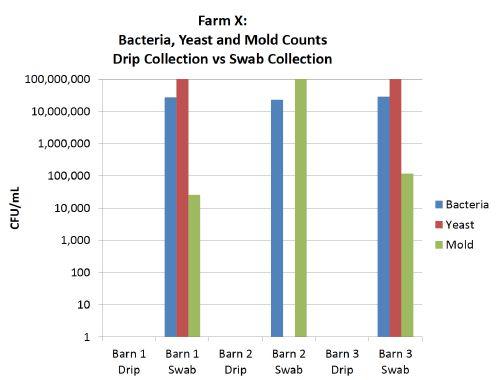
This method is far more effective than the traditional method of drip sampling, she says. Her research data shows that on many farms, drip samples can give a false sense of security. Often when drip samples indicate no contamination problems, a swab sample will show a very different picture (see chart on page 42).
“There will always be something dissolved in the water, the question is, what’s in it today”
“There will always be something dissolved in the water, the question is, what’s in it today,” she says.
She suggests growers go looking for a possible contamination problem by taking swab samples at the water source and at the end of the water lines. To do this, insert a clean sponge, and swab the line 8-10 centimetres from the opening. Then return
According to Dr Watkins, the key for success with water quality is a good sanitization program.
“There are some wonderful products out there, but it is essential that you use them right.”
Concentration of the product used, and perhaps most importantly the exposure time of the product, is critical for sanitation. For example, tests by the University of Arkansas using a 3% bleach solution found that, even after four hours, there were still bacteria in the water at almost 1,000 cfu/litre, and this had come down little after 24 hours.
Monitoring is also crucial, both pre- and post-cleaning, to provide proof of effectiveness. “I see a lot of weaknesses where
In the Barn
people say they are doing something, but there is no verification of it,” she says. Medicators can malfunction and if you miss it, you will get problems, she says.
Biofilms will always be a challenge, no matter what system
or product is being used. Nasty microbes such as streptococcus, pseudomonas and E. coli thrive in biofilm so cleaning the lines properly is essential. Chlorine has been the go-to product for many years, says Watkins, and is a great sanitizer. But getting the pH level of the water is critical, because it will determine whether or not the efficacy of the chlorine.
Although chlorine works well, Watkins questions whether or not current cleaning programs are creating “superbugs” because contaminants may becoming resistant.
In the U.S. more broiler growers are turning to hydrogen peroxide as a daily sanitizer. Stabilized products give the best results and need to be delivered at 25-50ppm residual in drinking water. Chlorine dioxide is also gaining popularity, produced by taking sodium chloride activated with an acid. The product has a number of advantages, including that it is pH insensitive and is more selective than hydrogen peroxide, targeting pathogens even at low dose rates. But it has to be activated properly, requiring correct pH levels and enough contact time.
Watkins is also “cautiously optimistic” about new water sanitation technology that uses ultra-violet light to infuse electrolyzed air into water, disinfecting it via a process called advanced oxidation. She thinks it may be helpful for sanitizing well heads and
Comparison of mould, bacteria and fungus counts vs. sampling method.
In the Barn
holding tanks, and is currently testing the technology. As well as choosing the right product, poultry producers should pay close attention to their water delivery.
Watkins says growers need to understand the entire water system, and do an inventory. How many drinkers do you have? How long is the system? What are the distribution lines made out of? Do you have any dead end lines? How far is the distribution from the source to the barns? She notes that despite thorough cleaning of the lines in the barn, if you miss the distribution lines, “problems will keep coming back.”
Routine checking of injectors is also key. Running a gallon of water through it is not sufficient – she says you need to run twenty to thirty gallons through, to allow the injector to get up and running and ensure you’re getting the proper dosage to the birds.
WATER QUANTITY
Research by the University of Arkansas shows that, compared with 10 years ago, broilers are now drinking 38 per cent more water in the first seven days of life, and 16 per cent by the time they reach slaughter weight – equivalent to 15 gallons more water. Ensuring they get enough is key. “You must be sure you are not creating restriction points.” Water lines must be of a suitable diameter to deliver the required volume at peak demand times, otherwise birds will fail to put on sufficient weight, will have higher mortality and layers and broiler breeder will have reduced egg numbers.
If pressure reducers are in place, these must be checked to ensure they are not becoming clogged. Since chlorine can harden regulator seals, these should be checked, and drinker flow rates should also be monitored.
Water temperature is also important, she says. Day-old chicks like cool or room-temperature water, but will shy away from warm water, and this can affect weight gain.
Since water can literally make or break an operation, Watkins stresses that determining what factors may be affecting quality or quantity needs to be constantly monitored and fixed so that chronic problems can be avoided.
This article is based on presentations given by Dr. Susan Watkins at the 2014 Poultry Service Industry Workshop and the 2015 Western Poultry Conference. n
Top sanitation tips
Do a total bacterial plate count to identify contaminants
• Use the right concentration and exposure time of product
• Clean everything, including storage tanks and distribution lines
• Follow cleaning with a sanitizer that birds can drink
• Swab the water lines regularly to monitor
• Sanitize between flocks
HERE’S THE POINT
BY LESLIE BALLENTINE, BALLENTINE COMMUNICATION GROUP
Veganism is a Privilege Not a Right
There is a sense of entitlement that goes along with being vegan. When I was at a grocery store recently, I overheard two women in the frozen food section complaining that there was no suitable food for them to buy. “This is total discrimination,” one woman stated with indignation. The other snipped (loudly) that vegans have no rights, and how dare the store not carry vegan foods. As a budget store it didn’t carry many niche products. The fact that the produce section was full of a wide variety of fruits and vegetables didn’t seem to have crossed their minds. The two left their basket in the aisle and marched out of the store.
More recently I heard from a vegan who has a friend of a friend in the organic greenhouse business. When visiting the greenhouse she came to find out, much to her shock and disgust, that he used “blood, bones and chicken feathers to fertilize his crop.” Presumably manure is considered vegan, since she didn’t rail against that. She was determined to do more research and then start a campaign with the organic growers since “vegans are the major buyers of organic products.”
In case you aren’t familiar with veganism, it is best described as vegetarian fundamentalism. According to the Oxford dictionary; veganism is the practice of abstaining from the use of animal products, particularly in diet, as well as following an associated philosophy that rejects the commodity status of sentient animals.” Although like most ideologies and religions there are varying degrees of adherence, vegans do not consume, wear, possess or use products that involve the use of animals. Hence the activist’s outrage that the greenhouse farmer uses animal by-products. More than a lifestyle, veganism is also an ideology that is best summed up by PETA’s credo that: “animals are not ours to eat, wear, experiment on, use for entertainment, or abuse in any way.”
and the vegan movement in November 1944. In 1951 the society broadened its definition of veganism to “the doctrine that man should live without exploiting animals,” and pledged to seek an end to the use of animals “for food, commodities, work, hunting, vivisection and all other uses involving exploitation of animal life by man.” And like many ideologies and religions vegans feel a need to convert the heathens and non-believers. While meat eaters may not rot in hell for our transgressions, although many vegans hope we will, we will in their minds be remembered for destroying the earth, for causing unnecessary suffering and injustice to “non-human animals”, and for bringing pestilence and disease to the world (including to ourselves).
Veganism also has gained a certain cachet in recent years. There are dietary vegans, ethical vegans, environmental vegans, health vegans, or a combination of the above. To be a vegan is to be seen to be healthier, more compassionate and morally superior than the rest of us unenlightened.
In case you aren’t familiar with veganism, it is best described as vegetarian fundamentalism
The number of vegans is difficult to measure and results are contradictory. Vegetarian organizations throw out estimates from time to time based on polls and self-reporting while also acknowledging that these are unreliable because respondents have their own interpretations of the meaning of the term. Neverthe-less, vegans make up a tiny proportion of Europeans and North Americans. Survey results between 1996 and 2012 fluctuate between 0.1 and 3 percent. And there is no society that is vegan.
The story goes that the Vegan Society was formed by two disgruntled members of the British Vegetarian Society who felt it was wrong to permit dairy in a vegetarian diet. Founder Donald Watson formed the word vegan using the beginning and end of “vegetarian” because in his words “veganism is the logical conclusion of vegetarianism.” He founded The Vegan Society
In the meantime, our society is accommodating. Food manufacturers and food outlets have catered to the demands of vegan eaters, whether it is eggless eggs, soy milk or simply offering salads and vegetables. There is vegan leather and wool (meaning plastics and non-renewable synthetics) and vegan dog food — even though dogs are natural omnivores. Plant-based cosmetics can be found at most cosmetic countersalthough labelling them “not-tested-on animals” is a misnomer since all ingredients used in consumer products today were likely once tested on animals for safety approvals.
Here’s the point: Having soy burgers is no more a right than having strawberries in January. It is a privilege that we in affluent societies are lucky to have. n