Tinubu Unveils Incentives to Unlock Jobs, FX Inflows from Shell’s Bonga Southwest, Others
Says project ‘ll be delivered before May 2027 Ojulari reveals Shell ready to make $20bn additional investment In Davos, Edun pitches productivity-led investments to drive jobs, exports
President Bola Tinubu yesterday approved the gazetting of targeted, investment-linked incentives to sup-
port the proposed Bonga Southwest deep-offshore oil project by Shell and its partners.
The President also directed his Special Adviser on Energy, Mrs. Olu Verheijen, to facilitate the process,
in line with Nigeria’s existing legal and fiscal frameworks, assuring that the project will be delivered
on page 8
www.thisdaylive.com
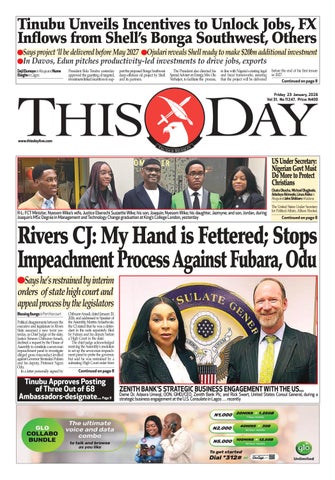
Rivers CJ: My Hand is Fettered; Stops Impeachment Process Against Fubara, Odu
Says he’s restrained by interim orders of state high court and appeal process by the legislators
Political disagreements between the executive and legislature in Rivers State assumed a new twist yesterday, as Chief Judge of the state, Justice Simeon Chibuzor-Amadi, declined a request by the House of Assembly to constitute a seven-man impeachment panel to investigate alleged gross misconduct levelled against Governor Siminalayi Fubara and his deputy, Professor Ngozi Odu.
In a letter personally signed by
Chibuzor-Amadi, dated January 20, 2026, and addressed to Speaker of the Assembly, Martins Amaehwule, the CJ stated that he was a defendant in the suits separately filed by Fubara and his deputy before a High Court in the state. The chief judge acknowledged receiving the Assembly’s resolution to set up the seven-man impeachment panel to probe the governor, but said he was restrained by a subsisting High Court order from
Continued on page 8
Dr.
Tinubu Approves Posting of Three Out of 68 Ambassadors-designate... Page 9 Continued on page 8
and
recently
Deji Elumoye in Abuja and Nume Ekeghe in Lagos
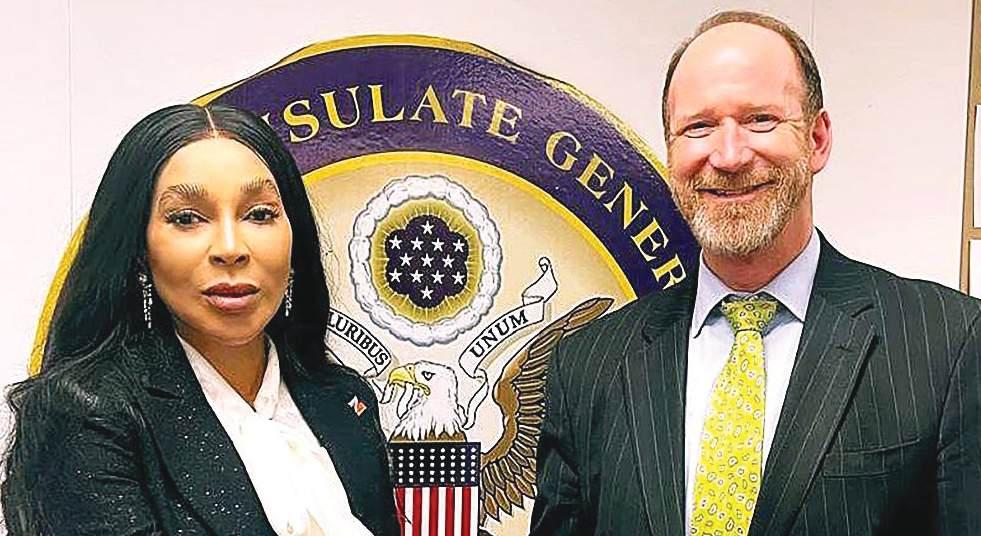
ZENITH BANK’S STRATEGIC BUSINESS ENGAGEMENT WITH THE US... Dame
Adaora Umeoji, OON, GMD/CEO, Zenith Bank Plc,
Rick Swart, United States Consul General, during a strategic business engagement at the U.S. Consulate in Lagos …
Chuks Okocha, Michael Olugbode, Adedayo Akinwale, Linus Aleke in Abuja and John Shiklam in Kaduna
The United States Under Secretary for Political Affairs, Allison Hooker,
Blessing Ibunge in Port Harcourt
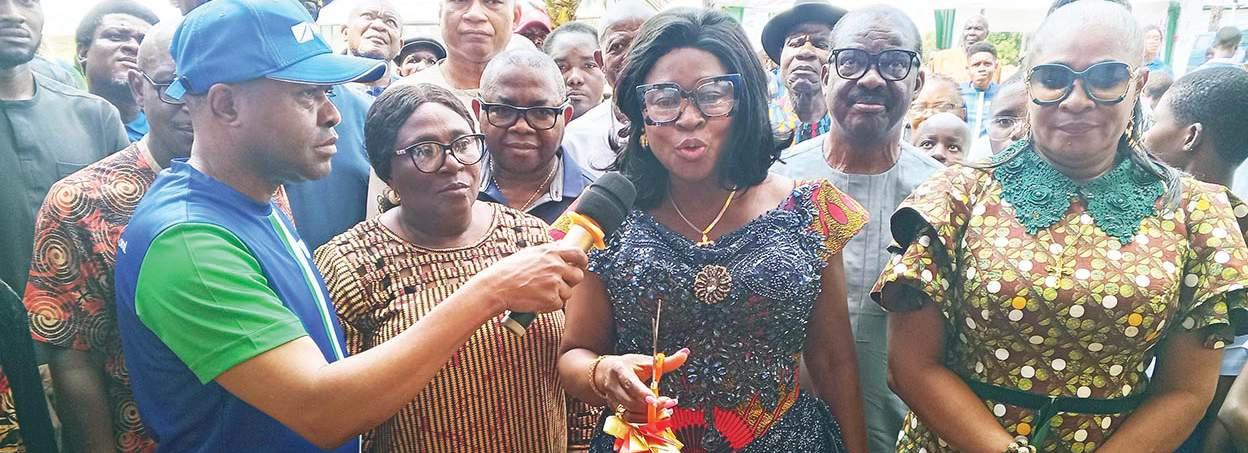
R-L: FCT Minister, Nyesom Wike’s wife, Justice Eberechi Suzzette Wike; his son, Joaquin; Nyesom Wike; his daughter, Jazmyne; and son, Jordan, during Joaquin’s MSc Degree in Management and Technology Change graduation at King’s College London, yesterday
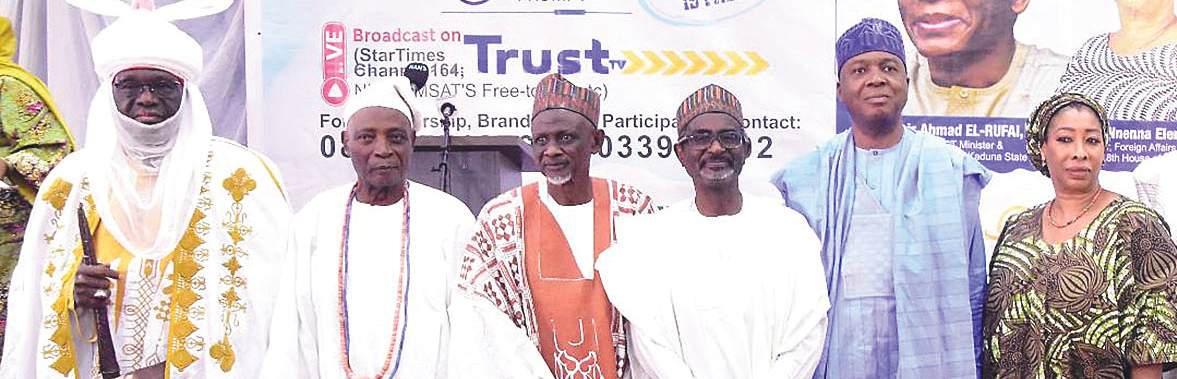
23RD EDITION OF DAILY TRUST DIALOGUE...
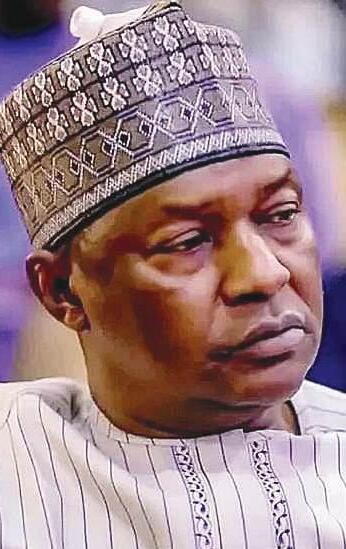
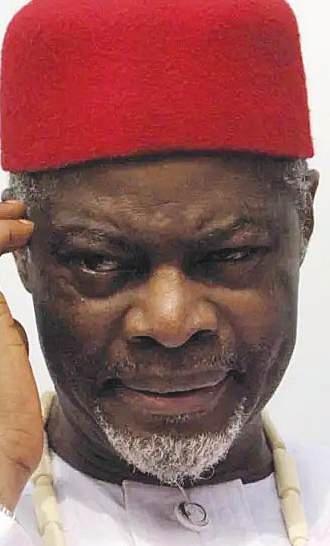
L-R: Sarkin Jiwa, FCT, Abuja, Amb. Idris Musa; Olubadan of Ibadanland, Oba Rashidi Adewolu Ladoja; The 2025 Daily Trust Unsung Hero, Mallam Musa Ibrahim Sagagi; Chairman of the Media Trust Group, Malam Kabiru A. Yusuf; former Senate President, Dr. Abubakar Bukola Saraki and chairman, Foreign Affairs Committee of the 7th and 8th House of Representatives, Nnenna Elendu Ukeje, during the 23rd edition of Daily Trust Dialogue in Abuja ... yesterday
LCCI to FG: Position Nigeria as Regional Hub for Artificial Intelligence
Dike Onwuamaeze
Lagos Chamber of Commerce and Industry (LCCI) has called on the federal government to deliberately launch a coordinated and strategic approach that would position Nigeria as a regional hub for Artificial Intelligence (AI).
The call was made yesterday in Lagos by President of LCCI, Mr. Leye Kupoluyi, during the chamber’s press conference on the “State of the Economy.”
Kupoluyi said, “The chamber urges the federal government to deliberately position Nigeria as a regional hub for artificial intelligence (AI) through a coordinated and strategic approach that integrates policy formulation, infrastructure development, human capital investment, and private sector participation.
“This will require establishing a clear national AI framework, accelerating investment in digital and power infrastructure, developing targeted AI-ready skills, and creating an enabling regulatory environment that encourages innovation, attracts investment, and supports responsible AI adoption.”
He said market expectations for a moderate interest rate cut were likely to shape the next Central
Bank of Nigeria (CBN) Monetary Policy Committee (MPC) decisions.
According to him, “Further easing of the Monetary Policy Rate (MPR) could help reduce business operating costs and cushion the cost-of-living pressure on low- and middle-income households.”
LCCI also urged CBN to maintain clear, transparent, and predictable policy communication to anchor inflation expectations and reduce speculative pressures.
Kupoluyi stated, “Stronger coordination between monetary and fiscal authorities remains essential to boost production, stabilise markets, and support economic agents.
“Finally, the government should prioritise increasing agricultural production, improving food distribution, and providing targeted support for critical supply chains.”
He pointed out that strengthening infrastructure, ensuring stable energy and transport costs, and maintaining exchange-rate stability will further ease food prices, protect household purchasing power, and create conducive environment for investment and economic growth.
Kupoluyi said the chamber was encouraged by the strong emphasis on production-oriented spending, with capital expenditure
of N26.08 trillion (about 45 per cent of total expenditure) significantly outweighing non-debt recurrent spending of N15.25 trillion.
He said, “This composition supports infrastructure development, industrial expansion, and productivity growth.
“However, the N15.52 trillion allocations to debt servicing remains a significant fiscal burden, highlighting the need for stricter borrowing
discipline, improved revenue efficiency, and expanded publicprivate partnerships to safeguard growth-enhancing investments.”
LCCI expressed concern that Nigeria’s historically weak budget implementation capacity would be further strained by the effective operation of multiple budget cycles within a single year, including the 2024 Budget and Supplementary Budget alongside the 2025 and 2026
budgets.
It said, “This has important implications for fiscal coordination, transparency, and effective project execution.”
The chamber identified agriculture and agro-processing, manufacturing, infrastructure, energy, and human capital development as key growth drivers in 2026.
Kupoluyi stated, “Unlocking these sectors will require decisive
execution—scaling irrigation and agro-value chains, reducing power and logistics costs for manufacturers, accelerating infrastructure delivery through PPPs, sustaining oil and gas sector reforms, and aligning education and skills development with private-sector needs.
“Overall, the 2026 budget presents a credible opportunity to move Nigeria from recovery to expansion.
Abiodun: Tinubu Approves Oil Drilling at Ogun Waterside, Olokola Deep Seaport to Take Off
New seaport to be known as Blue Marine Economic Zone
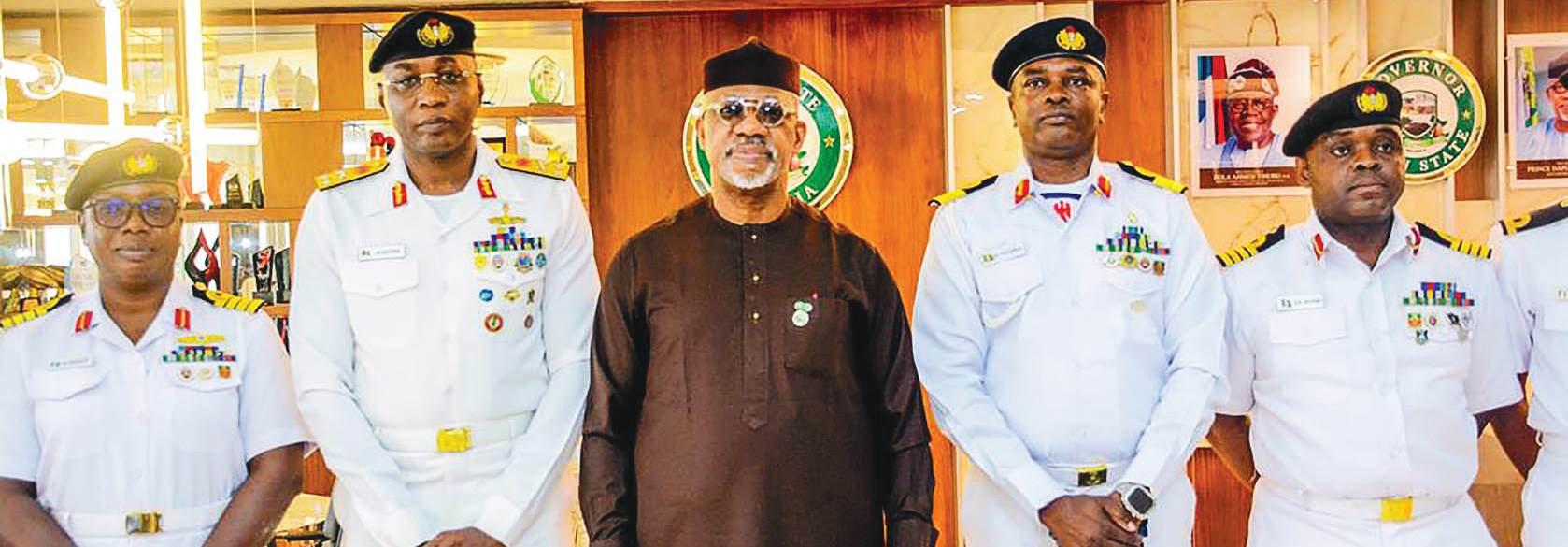
Ogun State’s long-standing aspiration to become an oil-producing state is set to materialise following the approval by President Bola Ahmed Tinubu for the commencement of commercial oil drilling at Eba, Ogun Waterside Governor Dapo Abiodun disclosed this on Thursday while receiving the Flag Officer Commanding, Western Naval Command, Rear Admiral Abubakar Abdullahi Mustapha,
Former Chairman of the Nigerian Electricity Regulatory Commission (NERC) and Director of the Abuja School of Social and Political Thought, Dr. Sam Amadi, has criticised the federal government’s tax reform drive, warning that poorly conceived taxation could undermine economic growth, worsen poverty and erode state legitimacy.
Speaking on Thursday in Abuja at a quarterly policy roundtable, Amadi said the suspension of the controversial tax measures was justified, arguing the policy is riddled with constitutional, economic and social flaws.
According to him, taxation is not merely a revenue-raising tool but a core element of constitutional governance and state legitimacy.
“Tax is not about mopping up money,” Amadi said. “Even in private markets, you sell value before you make money. A country makes money because it delivers value to citizens. Tax must therefore follow constitutional due process.”
Amadi warned that allegations of forgery or alteration of tax laws alone were sufficient grounds to halt implementation, stressing that taxation powers flow from constitutional political economy, not technocratic fiat.
“If you take a tax law and forge it
or alter it, then everything is zero,” he said.
He faulted what he described as a narrow fiscal mindset among government officials, focused solely on how much revenue government can extract, rather than how well it is used.
The former regulator cautioned that higher tax rates in a lowincome, high-inflation economy could depress growth by shrinking the tax base and discouraging productivity.
“This tax may look like a blessing, but in reality, it can lead to low income, a smaller tax base and higher multidimensional poverty,” he noted.
alongside senior officers of the command, during a courtesy visit to his office in Oke-Mosan, Abeokuta.
The governor also revealed that President Tinubu has approved the immediate take-off of the Olokola Deep Seaport project located in Ogun Waterside Local Government Area, marking a major breakthrough after years of anticipation surrounding the multibillion-dollar port development.
According to Governor Abiodun, both projects are of special interest to the President. He noted that while the Olokola Deep Seaport would significantly decongest the Lagos ports, commercial oil drilling at Tongeji Island would promote inclusion and economic empowerment for residents of the
coastal communities.
“Let me share with you that Mr President has approved the commencement of commercial oil drilling operations at Tongeji Island, and going forward, you will begin to see a lot of activities there,” the governor said.
“Our proposed Olokola Port, which has been on the drawing board for several years, is now back on the table. I want to sincerely thank Mr President because this is solely his initiative. In the last two weeks alone, we have held several meetings on Olokola, and Mr President has clearly expressed his desire to see the port become a reality.”
Governor Abiodun added that President Tinubu specifically directed
that construction of the port should be far advanced between now and next year, stressing that the project presents a strong opportunity to decongest the Lagos ports, particularly with the coastal road now providing an alternative logistics corridor. He further disclosed that the new seaport would be known as the Blue Marine Economic Zone, reflecting its strategic coastal location and vast economic and commercial potential. The governor commended the Nigerian Navy for establishing a Forward Operations Base at Tongeji Island, noting that the naval presence would help prevent infiltration from neighbouring Benin Republic and discourage any attempts to undermine Nigeria’s territorial integrity.
JAAN, JICA Target ODF Status for FCT Area Councils by 2027
Folalumi Alaran in Abuja
The JICA Alumni Association of Nigeria (JAAN), in collaboration with the Japan International Cooperation Agency (JICA) and key institutions in the Federal Capital Territory (FCT), has unveiled a renewed drive to end open defecation across all six area councils of the FCT by 2027. The commitment was reaffirmed
at a one-day workshop titled “Dangers of Open Defecation and Strategies for Eradication in the FCT”, organised by JAAN in Abuja.
Stakeholders at the workshop identified capacity gaps, weak community participation and inadequate sanitation infrastructure as major factors undermining existing sanitation campaigns of the Federal Capital Territory
Administration (FCTA).
Speaking at the event, President of JAAN, Mr. Ahmed Agberankhe, described the persistence of open defecation in Abuja’s peri-urban and rural communities as unacceptable, despite the city’s status as Nigeria’s capital.
“Limited access to toilets, low hygiene awareness and weak enforcement mechanisms continue to fuel this challenge,” he said.
James Sowole in Abeokuta
PHOTO: ENOCK REUBEN
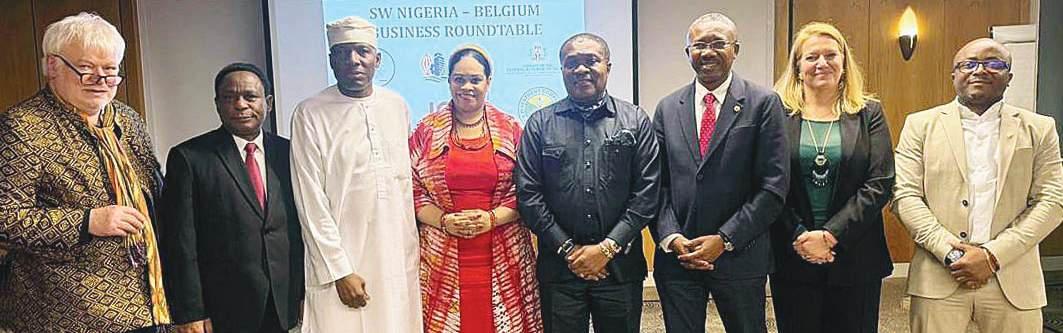
SOUTHWEST NIGERIA- BRUSSELS BUSINESS ROUND TABLE 2026...
L-R: Frank Schwalba-Hoth, Former Member European Parliament and Founding Member German Green Party; Mr Abdurrahman Ibrahim, Minister, The Embassy of Nigeria to Belgium and Luxembourg; HRM Oba Dokun Thompson, Founder, international Cocoa Diplomacy; HRM Olori Angelique-Monet Gureje-Thompson, Director International Cocoa Diplomacy; Otunba Bimbo Ashiru, Chairman Odu’a Investment Group of Companies; Mr Abdul Rahman Yinusa, MD/CEO Odua Investment Company Ltd; Teresa do Brito Apolonia, Founding Partner at ASA Lawyers Portugal; Otunba Adegboyega Sodade, NIDOE-BELUX Chairman; at the SouthWest Nigeria- Brussels Business Round Table 2026, in Brussels Belgium...Wednesday
MPC Splits 6-5 in Decision to Hold Policy Rate at November Meeting
Nume Ekeghe
Members of the Monetary Policy Committee (MPC) of the Central Bank of Nigeria (CBN) were sharply divided at their November 2025 meeting over whether the time was right to begin a cautious easing cycle or to hold rates steady in order to consolidate recent macroeconomic gains.
Personal statements posted on the apex bank’s website yesterday, indicated that while 12 members attended the meeting, 11 cast votes, with six favouring a hold and five backing a modest rate cut. The committee ultimately voted by majority to retain the Monetary Policy Rate at 27 per cent.
The split reflected differing assess-
ments of how durable Nigeria’s recent disinflationary trend has become, and if easing too early could undermine progress made in stabilising prices, the exchange rate and external reserves.
Those who voted to hold rates were led by CBN Governor, Olayemi Cardoso, alongside Bala Moh’d Bello, Emem Usoro, Lydia Jafiya, Philip Ikeazor, Muhammad Sani Abdul-
lahi. On the other side were Aku Odinkemelu, Aloysius Uche Ordu, Bandele Amoo, Lamido Abubakar Yuguda and Murtala Sagagi all of whom voted for a 50-basis point cut in the policy rate to 26.5 per cent.
Governor Cardoso argued that maintaining the current stance best supported the disinflationary progress already achieved. Inflation
Seplat Energy Appoints Tony Elumelu as
Non-executive Director
Olivier Cleret De Langavant resigns
Seplat Energy yesterday announced the appointment of Mr. Tony Elumelu as a non-executive director on its board, following the resignation of Mr. Olivier Cleret De Langavant, effective Thursday.
A statement from Seplat signed by the Director Legal/Company Secretary at the company, Mrs. Edith Onwuchekwa, stated that the information followed the announcement regarding the sale of Etablissements
Maurel et Prom SA’s 20.07 per cent shareholding in Seplat to a combination of Heirs Holdings Limited and Heirs Energies Limited.
Elumelu, it said, is a distinguished African investor and philanthropist, globally recognised as one of the most prominent voices on Africa’s transformation agenda, and is the Founder
and Chairman of Heirs Holdings, a diversified investment company with interests across strategic sectors of the African economy, including energy, power, banking, insurance, technology, real estate, hospitality, and healthcare.
According to the release, Elumelu also serves as Chairman of United Bank for Africa (UBA) Group, Heirs Energies as well as Transcorp Group, whose subsidiaries include Transcorp Power, and Transcorp Hotels Plc, Nigeria’s foremost hospitality brand.
“In 2010, he established The Tony Elumelu Foundation (TEF), the leading philanthropy dedicated to empowering African entrepreneurs across all 54 African countries. His global influence has been widely acknowledged, including recognition as one of TIME Magazine’s 100 Most Influential People in the World (2020) and the conferment of the Commander of the Order of
the Federal Republic (2022).
“He also serves on several global boards, including UNICEF’s Generation Unlimited Global Leadership Council and the International Monetary Fund’s Advisory Council on Entrepreneurship and Growth.
“We are confident that Mr. Elumelu’s extensive experience and visionary leadership will significantly advance Seplat Energy’s strategic objectives and reinforce the Company’s commitment to sustainable growth and long-term success,” the statement added.
The energy company also expressed its gratitude to Langavant for his ‘outstanding’ service and welcomed Elumelu to the board.
Chairman of Seplat Energy, Mr. Udo Udoma, in his comments, reaffirmed that the company was looking forward to leveraging Elumelu’s wealth of experience and leadership as Seplat
continues to pursue sustainable growth and value creation for all stakeholders.
“On behalf of the board and management, I wish to express our profound appreciation to Mr. Langavant for his outstanding contribution to Seplat Energy over the past six years. His expertise and commitment have been instrumental in driving our strategic initiatives.
“We warmly welcome Mr. Elumelu to the board and look forward to leveraging his wealth of experience and leadership as we continue to pursue sustainable growth and value creation for all stakeholders,” the statement added.
had declined to 16.05 per cent in October, down from 18.02 per cent in September and 8.43 percentage points below the 24.48 per cent recorded in January 2025.
Echoing this caution, Bala Moh’d Bello said it was too early to declare victory over inflation, stressing the need to preserve gains from earlier tightening.
He cited Nigeria’s removal from the FATF grey list, improved sovereign credit ratings, exchange rate stability and rising external reserves as achievements that should not be put at risk.
“The current levels of key policy parameters are suitable and would prevent the disruption of the ongoing transmission of previous policies,” he said, adding that inflation, though declining, remained above the target range.
Emem Usoro also favoured retaining the MPR, noting that inflation expectations were yet to be fully anchored and that the exchange rate remained vulnerable to seasonal and external shocks.
He argued that maintaining a restrictive stance would reinforce anti-inflation signaling while discouraging banks from passively parking liquidity.
“Maintaining the Monetary Policy Rate at 27 per cent supports the disinflation trajectory without
jeopardising recent gains,” Usoro said. Lydia Jafiya similarly voted to keep all parameters unchanged, warning of upside risks to inflation from year-end festivities and pre-election spending. While acknowledging improvements in macroeconomic conditions, she said policy space remained limited.
“With inflation still elevated at 16.05 per cent, there is need to tread cautiously as risks to the outlook are on the upside,” she said, insisting that a hold decision was appropriate while monitoring emerging risks.
Muhammad Sani Abdullahi also backed a hold, pointing to excess liquidity in the banking system as a potential threat to policy effectiveness. While cautioning against further tightening, he argued that easing was unnecessary at this stage.
“The current stance is appropriately restrictive and no further action is warranted at this time,” he said, adding that inflation, output and exchange rate indicators were gradually responding to earlier tightening.
On the easing side, Aku Odinkemelu argued that Nigeria had entered a window for calibrated policy adjustment. She said the disinflation trend was now “entrenched and broad based”, with headline inflation declining for seven consecutive months to 16.05 per cent in October 2025.
EFCC Indicts New Generation Bank, Six Microfinance, Fintech Firms in N18bn Airline, Investment Frauds PENGASSAN, Group Kick against Alleged Maltreatment of Nigerians by IOC
Alex
The Economic and Financial Crimes Commission (EFCC), has indicted a new generation bank and six microfinance and fintech firms, in the alleged fleecing of Nigerians of over N18 billion.
The said frauds were said to have been perpetrated by a foreign national in connivance with some young Nigerians; through an airline discount scheme and a bogus investment arrangement.
The anti-graft agency which made the disclosure on Wednesday in Abuja, lamented that about 900 Nigerians have been victims in the last two years.
EFCC’s Director, Public Affairs, Mr. Wilson Uwujaren, who made the disclosure however decried the role being played by some financial institutions.
“The preceding year, as we all know it, was a year of tangible achievements and verifiable proofs for the Commission. We are starting
2026 to intimate you with advances we made in the investigation of two types of criminality that have wreaked havocs on more than 900,000 Nigerians
“The first is a syndicate of fraudsters that employed an airline discount scheme to lure their victims to lose their hard- earned resources. The modality of these fraudsters involves a string of carefully devised airline discount information that any unsuspecting foreign traveler will fall for”, he said.
The Petroleum and Natural Gas Senior Staff Association of Nigeria (PENGASSAN) and the Movement of Intellectuals for National Development (MIND) have raised the alarm over what they described as the persistent maltreatment of Nigerian employees in TotalEnergies Nigeria Limited.
The concerns, articulated through a formal petition and letter to management and government authorities, alleged harassment, unethical conduct by expatriate staff, and flagrant violations of Nigerian Local Content laws.
In a strongly worded letter to the
Managing Director of TotalEnergies Nigeria, PENGASSAN drew attention to the actions of certain expatriate employees, accusing them of intimidation, bullying, and harassment targeted at Nigerian colleagues.
The union cited instances of verbal abuse, undue humiliation, disrespect for professional input, and blatant disregard for cultural and workplace norms. PENGASSAN described the actions of the expatriates as creating a hostile work environment that is undermining staff morale and eroding the professional integrity of Nigerian employees.
The union further criticised the
management of TotalEnergies for an
“unprecedented influx” of expatriates into key roles traditionally held by qualified Nigerians. According to PENGASSAN, this practice contravenes the Nigerian Oil and Gas Industry Content Development (NOGICD) Act and national policies aimed at promoting local capacity and skills development. Besides, the association raised concerns over the creation of new senior-level positions for expatriates while Nigerian staff were being removed or sidelined. It warned that such practices not only inflate the operational costs of the company but also foster a culture of intimidation and inequality within the workplace.
Enumah in Abuja
Emmanuel Addeh in Abuja
Emmanuel Addeh in Abuja
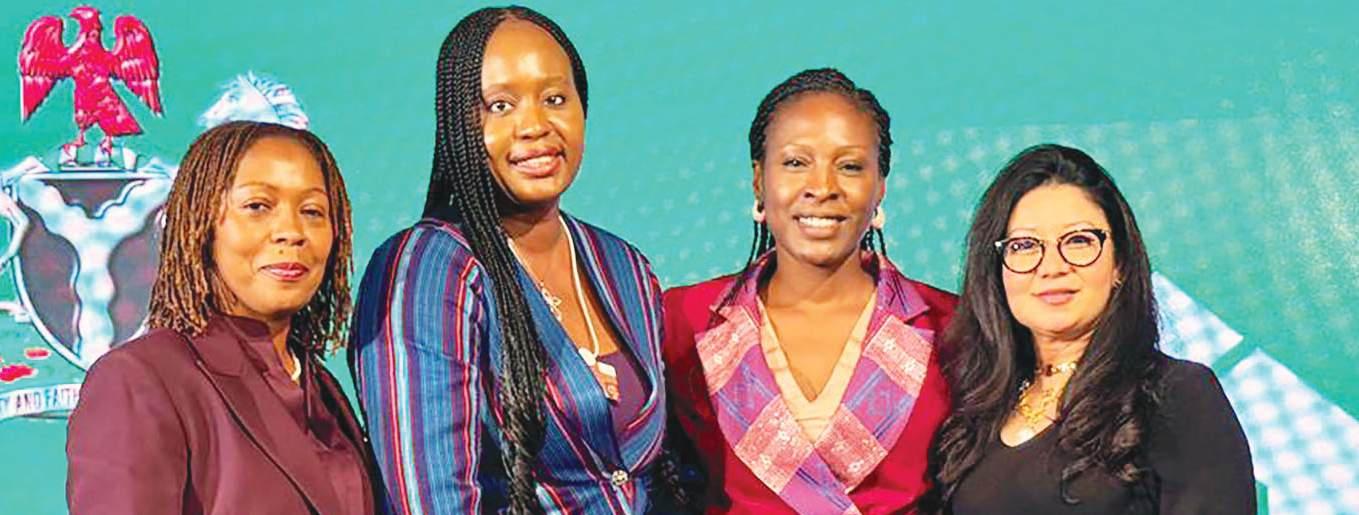
WORLD ECONOMIC FORUM 2026...
L-T: Founder and Managing Partner, ShEquity, Pauline Koelbl; Founder and Managing Partner, Aruwa Capital Management, Adesuwa Okunbo-Rhodes; Managing Partner, BKR Capital, Lise Birikubdavyi and Chief Growth Advisor, FINCA International and FINCA Ventures, Payel Farasat during a panel session on “She leads, She builds, She scales: Women Shaping Africa’s Economic Future” at Nigeria House Davos, Switzerland.
Food Security: Shettima Unveils Nigeria’s Macro-Strategy At Davos Meeting
Says ‘back to the farm’ initiative to curb inflation, forex spending on imports
Deji Elumoye in Abuja
Vice President Kashim Shettima has announced that Nigeria no longer views food security through a narrow agricultural lens, but as a fundamental macroeconomic, security, and governance issue.
According to him, the Federal Government had begun a multidimensional agricultural drive designed to insulate the nation from global shocks while restoring the productivity of its food basket regions.
Speaking Thursday at a highlevel panel titled “When Food Becomes Security” at the Congress Centre during the 56th World Economic Forum (WEF) meeting in Davos, Switzerland, Shettima said the Federal Government no longer treats food security as a narrow agricultural concern but as a strategic pillar for governance, economic stability, and regional cohesion.
“In Nigeria, we don’t look at food security purely as an agricultural issue. It is a macroeconomic, security and governance issue. Our focus is
to use food security as a pillar for national security, regional cohesion and stability.”
According to the Vice President, Nigeria’s food security strategy is anchored on three pillars: increased food production, environmental sustainability, and deeper regional integration within the West African sub-region.
He explained that changing global trends and supply chain disruptions have compelled Nigeria to look inward and rebuild its agricultural base by developing resilient food systems tailored to its diverse ecological zones.
“Nigeria is a very large country, and there is an incestuous relationship between economy and ecology. In the Sahelian North, we are dealing with desertification, deforestation and drought. In the riverine South and parts of the North Central, flooding is our major challenge.”
To address these challenges, Shettima said the government is promoting drought-resistant, flood-tolerant, and early-maturing varieties of staple crops such as rice, sorghum, and millet, while
redesigning food systems in flood-prone southern regions to withstand climate shocks.
Security, he noted, remains a major constraint, particularly because many conflict-affected areas are also Nigeria’s primary food-producing zones.
“Most of the food baskets of our nation are security-challenged. That is why we are creating food security corridors and strengthening community-based security engagements so farmers can return safely to their land.”
He disclosed that the Federal
Government has launched the Back to the Farm Initiative, a programme designed to resettle displaced farmers by providing them with agricultural inputs, insurance, and access to capital to restart food production.
Addressing Nigeria’s macroeconomic vulnerabilities, the Vice President identified import dependence and foreign exchange volatility as major drivers of food inflation.
“We largely import wheat, sugar and dairy products, and this has a direct impact on inflation.
Our strategy is to accelerate local production and promote substitutes such as sorghum, millet and cassava flour to correct these structural imbalances,” Shettima said.
The Vice President said Nigeria’s approach aligns food security with national stability, inflation control, and regional cooperation, positioning agriculture as a frontline response to both economic and security threats.
He further highlighted that Nigeria, renowned as the African giant, has “woken up from its slumber” under President Tinubu, and that
the government is on course to make “it possible for smallholders and fishers to become investable at scale” within 12 months.
Shettima confirmed that, in Africa, especially in light of global trends, intra-African trade has almost become a necessity, adding that “there have been some alignments.”
He urged his African counterparts to intensify efforts under the canopy of the African Continental Free Trade Area (AfCFTA) to ensure that African nations get things right internally.
FG Confirms Payment of N152bn for Verified Contracts
Ndubuisi Francis in Abuja
Amid protracted protests by local contractors over unpaid contract fees, the federal government yesterday confirmed it has paid N152 billion for verified contracts.
The Minister of State, Finance, Dr. Doris Uzoka-Anite, made the disclosure via a post in her verified
X account (formerly Twitter).
Since last year, contractors under the aegis of All Indigenous Contractors Association of Nigeria (AICAN), have been protesting unpaid contractual fees for federal government contracts executed.
Even on Tuesday, they blocked the main gate of the Ministry of Finance, insisting on the payment
of their fees for projects completed since 2024.
However, the minister revealed yesterday that a total of N152 billion had been paid for verified contracts, but did not indicate when the payment was made.
Her social media post said, “I wish to confirm that the Federal Ministry of Finance (@
NCAN: Foreign Cashew Operators Bypassing Nigerian Export Processes to Avoid FX Repatriation
Stakeholders seek special agro-processing loans at single digit to boost value addition, local jobs, capital inflows
James Emejo in Abuja
President, National Cashew Association of Nigeria (NCAN), Dr. Ojo Joseph Ajanaku, yesterday disclosed that some foreigners operating in the country’s cashew industry, currently export the cash crop without completing relevant export processing documents.
Ajanaku alleged that these expatriates deliberately circumvent export due processes “because they do not want to repatriate the proceeds”, adding that this remained a major challenge in the sector.
He spoke at the opening of the
4th edition of the Nigeria Cashew Day, with the theme, “Unlocking the Full Potential of Nigeria’s Cashew Industry through Investment, Innovation and Global Trade” in Abuja.
He told THISDAY, “That is why we cannot get accurate figures of actual production. You hear figures of about $400 million coming into the country, but it could be much higher if we had the right structures in place to monitor what is really happening.
“What we have on record is only what passes through the official export process. We do not yet have
the right statistical framework to accurately track production versus exports.
“That is why this administration is working on what is called the National Farmers’ Mapper. This will map all farmers across the country to determine what they produce, where the cashew goes, who exports it, and where it is exported to. This will enable the Bureau of Statistics to give accurate data on production and exports. So, yes, we are growing, but we can do much better.”
The association further expressed concern about the lack of significant
value addition in cashew production and processing, appealing to state governors to get actively involved.
Ajanaku said talks are underway with authorities for access to a special agro-processing loans, which he claimed already exist, including the Central Bank intervention funds, Nigerian Commodity Development Fund, as well as export development facilities with NEXIM Bank, Bank of Industry (BoI), and the Bank of Agriculture (BoA).
He said, “These institutions should design products that allow processors to access loans at less than five per cent, ideally around
three per cent. With that, they can compete globally.
“We have a major advantage: shipping from Nigeria to America takes less than one month, while Asian suppliers take at least one and a half months. We have every opportunity to benefit greatly, but development efforts must focus on agro-processing so we can increase production and processing capacity in this part of the world.”
He said, “The cashew industry is taking a new dimension. Back in 2001, there was speculation that production was less than 200,000 or 220,000 metric tonnes.
FinMinNigeria) has disbursed a total of N152 billion to contractors for verified contracts.
“Every payment undergoes rigorous verification in accordance with extant laws and regulations, ensuring the protection of taxpayers’ funds and upholding accountability and transparency.”
She said the ministry acknowledged the financial pressures that delays in payment may have placed on contractors, adding that,” we remain committed to continuous dialogue and engagement, seeking effective resolutions to all conflicts.”
Uzoka-Anite called on contractors to respect the processes and personnel of the ministry who had shown unwavering dedication despite being subjected to varying degrees of intimidation and harassment from the protesting contractors.
“We also call on all contractors to respect the processes and personnel of the ministry, who have shown unwavering dedication despite facing varying degrees of intimidation and harassment.
“The ministry assures all contractors of our ongoing support and reiterates that all payment requests will continue to be processed in line with due process, timely, and consistently.
U.S. Under Secretary’s Visit Signals Deeper Security, Investment Ties with Nigeria
Michael Olugbode in Abuja
Nigeria is set to strengthen its diplomatic, security, and economic engagement with the United States as U.S. Under Secretary of State Allison Hooker arrived in Abuja yesterday as part of a multi-country foreign tour spanning Africa, the Middle East, and Europe.
Hooker’s visit to Nigeria which forms the first leg of her January 21–29 trip underscores Washington’s renewed focus on Africa’s largest economy and most populous nation.
While the tour also includes stops in Oman, Bahrain, and Italy, analysts say the Nigeria
engagement carries particular significance given the country’s security challenges and economic reform agenda.
During her stay in Abuja, the Under Secretary is serving as head of the U.S. delegation to the U.S.–Nigeria Joint Working Group, a bilateral platform designed to deepen cooperation between both countries.
Discussions are expected to centre on counter-terrorism efforts, protection of vulnerable communities—especially Christian populations affected by violence— and expanding U.S. private sector investment in Nigeria.
For Nigeria, the visit presents
an opportunity to attract increased American support in tackling insecurity, particularly in regions affected by insurgency, banditry, and communal violence. U.S. technical assistance, intelligence cooperation, and capacity-building support for Nigerian security agencies are expected to feature prominently in talks.
Beyond security, economic engagement is a key focus. With Nigeria pursuing reforms aimed at improving the business climate, Hooker’s visit offers a platform to reassure U.S. investors and encourage fresh capital inflows in sectors such as energy, agriculture, technology, and infrastructure.
Officials say stronger U.S. investment could support job creation, boost foreign exchange inflows, and accelerate economic recovery.
The visit also highlights Nigeria’s strategic importance to U.S. foreign policy in West Africa. As a regional leader, Nigeria plays a critical role in stability, trade, and diplomacy across the sub-region.
Strengthened ties with Washington could enhance Nigeria’s influence in regional security initiatives and multilateral engagements.
Observers note that similar high-level U.S. engagements in the past have led to expanded development cooperation, increased security assistance, and stronger
people-to-people ties, including education and cultural exchange programmes.
Hooker’s engagement in Abuja comes amid heightened international concern over religious violence and humanitarian challenges in parts of Nigeria.
By placing these issues on the agenda of bilateral talks, Nigeria stands to gain stronger diplomatic backing and practical support from one of its key international partners.
As the Under Secretary continues her tour to the Middle East and Europe, Nigerian officials are hopeful that the Abuja discussions will translate into concrete outcomes—ranging from improved
RIVERS CJ: MY HAND IS FETTERED; STOPS IMPEACHMENT PROCESS AGAINST FUBARA, ODU taking any further action.
The Amaehwule-led Assembly had on January 16 asked the chief judge to set up a seven-man panel to investigate allegations against Fubara and Odu.
The lawmakers insisted that they were not going back on the impeachment process against Fubara and his deputy, even after four of their colleagues backed down and pleaded understanding in the collective interest.
In the letter addressed to the chief judge, signed by the speaker, the lawmakers stated that their action was in compliance with Section 188(4) of the 1999 Constitution.
Amaehwule stated in the letter, “I write to request that you (CJ) appoint a panel of seven (7) persons to investigate the allegations of gross misconduct against His Excellency, Sir Siminalayi Fubara, the Gover-nor of Rivers State pursuant to section 188(5) of the Constitution of the
Federal Republic of Nigeria, 1999 (as amended).
“At the 60th Legislative day of the Third Session of the 10th Assembly, the House resolved in compli-ance with section 188(4) of the Constitution that these allegations be investigated.
“In this regard, the acknowledged copy of the forwarding letter of the Notice of Allegations of Gross Misconduct; the acknowledged copy of the Notice of Allegations of Gross
Misconduct; copies of the Rivers State Impeachment Panel (Conduct of Investigations) Procedure, 2025; photocopies of newspaper publications of Guardian, Saturday Sun, Nation and other relevant documents are hereby attached for the use of the panel.”
At a press briefing in Port Harcourt, members of the Assembly reaffirmed their resolve to continue with the impeachment, stressing that the process is the most viable
US UNDER SECRETARY: NIGERIAN GOVT MUST DO MORE TO PROTECT CHRISTIANS
yesterday, said the Nigerian Government must do more to protect the Christians and guarantee their right to practise their faith freely and safely.
This latest position followed concerns that the US has expressed over recent reports that gunmen abducted more than 170 Christians in Kaduna State on January 18, across three churches.
This was as the United States President Donald Trump has boasted that American forces were “annihi-lating terrorists who are killing Christians” in Nigeria, claiming the militants had “killed thousands and thousands of Christians.”
At the same time, President Bola Tinubu, has again declarednational security emergencies in vulnerable and high-risk areas across the country.
Speaking in Abuja at the inauguration of the US–Nigeria Joint Working Group, Hooker said the partner-ship between the USand Nigeria was built on shared interests spanning trade and investment, security, energy, and regional stability.
He recalled that on October 31, 2025, Trump had designated Nigeria as a Country of Particular Con-cern, but that the two countries had since made significant progress in working together to better pro-tect vulnerable communities.
“I am here today to continue and broaden that partnership,” he said, adding that discussions would fo-cus on deterring violence against Christian communities, prioritising counter-terrorism and insecurity, investigating attacks and holding perpetrators accountable, and reducing killings, forced displacement, and abductions, particularly in the North-Central states.
US Forces ‘Annihilating’ Terrorists in Nigeria, TrumpDeclares
United States President Donald Trump has asserted that American forces were “annihilating terrorists who were killing Christians” in Nigeria, claiming the militants had “killed thousands and thousands of Christians.”
Trump said, “Many good things are happening. In Nigeria, we are
annihilating terrorists, who are killing Christians. We’ve hit them very hard. They’ve killed thousands and thousands of Christians.”
He made the remarks during the Board of Peace signing ceremony on the sidelines of the World Eco-nomic Forum in Davos, Switzerland, while discussing what he described as progress in global peace and security efforts.
Trump underscored the importance of the newly unveiled initiative, saying, “What we’re doing is so im-portant. This is something I really wanted to be here and do, and I could think of no better place.”
He also addressed developments in the Middle East, particularly Gaza, insisting the territory must be demilitarised and rebuilt.
“Gaza has to be demilitarised and rebuilt nicely,” he said, warning militant groups to disarm. “If Hamas doesn’t do what they promised, they must lay down arms, or it’ll end them. They grew up with rifles.”
Trump linked both the Middle East and Nigerian security situations to the work of the Board of Peace, which he said was attracting growing international interest.
Regarding the composition of the new peace body, he added:“Everybody wants to be on the Board of Peace. These are just the countries here now; loads more will join.”
Tinubu Beefs Up Security in Weak Villages After Kidnap of 172 Kaduna Worshippers
Voicing the president’s directive, the National Security Adviser (NSA), Mallam Nuhu Ribadu, said Tinubu has authorised intensified joint security operations and ordered the sustained deployment of security forces to priority locations, particularly communities facing recurrent attacks on civilians and religious groups.
Ribadu stressed that the decisions were not merely policy statements but being matched with concrete action on the ground.
The NSA noted that Nigeria was expanding its early-warning and rapid-response mechanisms, while also developing a national database to
serve as a single, authoritative source of accurate and verifiable data on deaths and casualties resulting from violent incidents.
According to him, the initiative would strengthen evidence-based decision-making, enhance accountability, and improve the overall effectiveness of security responses nationwide.
“Alongside these efforts, investigations and prosecutions relating to attacks on religious communities have been intensified to ensure that violence is met not only with force, but with justice and accounta-bility,” Ribadu said.
He emphasised that Nigeria’s plural character made the protection of all citizens non-negotiable.
“Nigeria is a deeply plural society, and the protection of all citizens—Christians, Muslims, and those of other beliefs—is fundamental. Violence framed along religious lines is treated as an attack on the Nige-rian state itself,” he noted.
Ribadu added that government’s response integrates security operations, the rule of law, humanitarian safe-
TINUBU
guards, and strategic communication, ensuring that operational successes translate into public con-fidence and stronger social cohesion.
“We want Nigerians to know that this partnership is working; that it is delivering tangible gains, and that our collective efforts will continue to yield positive results,” he said.
The NSA further argued that progress should be assessed not by isolated incidents within a complex security environment, but by the overall direction of travel, decisions taken at the highest levels of gov-ernment, and the institutional capacity being built to prevent, respond to, and punish violence wherev-er it occured.
He also highlighted that Nigeria’s partnership with the United States extended beyond security coopera-tion butincluded democratic resilience, respect for the rule of law, regional stability in West Africa, and a shared commitment to preventing extremist and malign actors from exploiting governance gaps or so-cial divisions.
Ribadu said the federal govern-
Continued on page 27
constitutional option to resolve the lin-gering political impasse in the state.
While the lawmakers waited for the chief judge to set up the probe panel, the governor and his deputy separately filed suits at a Rivers State High Court in Oyigbo Local Government Area seeking Interim Or-der of Injunction barring the speaker and other lawmakers, Clerk of the Assembly, and Chief Judge of Rivers State from going further with the impeachment process.
The presiding judge, Justice F. A. Fiberesima, in the two separate suits by Fubara and Odu, granted leave to the claimant-applicants to serve the interim order, the originating processes in the suits, and all other subsequent processes meant for the defendants at the gate of the Rivers State Assembly quarters.
The court restrained the speaker and other lawmakers, who were defendants in the suit, from sending any request, resolution, articles of impeachment, or other documents or communication to the chief judge.
The court also restrained the chief judge from receiving, forwarding, considering and/or however acting on any request, resolution, articles of impeachment or other documents or communication from one to 27th defendants for the purposes of constituting a panel to investigate the purported allegations of misconduct against the governor and his deputy for seven days.
The court further directed that the interim order, the originating processes in the suits, be served on the 32 defendants, as well as the chief judge through any staff of
security collaboration to increased investment—reinforcing the longstanding partnership between Nigeria and the United States.
the judiciary at the Chief Judge’s Chambers within the High Court premises, and adjourned the case to January 23, 2026. Thus, in his response, ChibuzorAmadi told the speaker that he was legally restrained from acting on his request due to interim orders issued by the state high court. He further disclosed that the speaker had lodged an appeal against the interim orders at the Court of Appeal, Port Harcourt Division, adding that notices of appeal were served on his office on January 19 and 20.
Referencing the letter with number RS/JUD/CJ/RSHAS/ VOL.2/26 by the Speaker, the CJ said, “Refer-ence is made to your two letters to my office, both dated 16th January, 2026 and received same date.
“To both letters, are attached voluminous documents on the subject-matters to wit: Request for the Chief Judge, my humble self, to appoint seven (7) persons to investigate the allegations of gross mis-conduct against His Excellency, Sir Siminalayi Fubara, GSSRS, the Governor of Rivers State, pursuant to Section 188(5) of the Constitution of the Federal Republic of Nigeria, 1999 (as amended); based on the resolution of the House of Assembly vide Section 188(4) of the Constitution.
“Attached herewith, are certified true copies of the said orders. Constitutionalism and the Rule of Law are the bedrock of democracy and all persons and authorities are
Continued on page 28
UNVEILS INCENTIVES TO UNLOCK JOBS, FX INFLOWS FROM SHELL’S BONGA SOUTHWEST, OTHERS
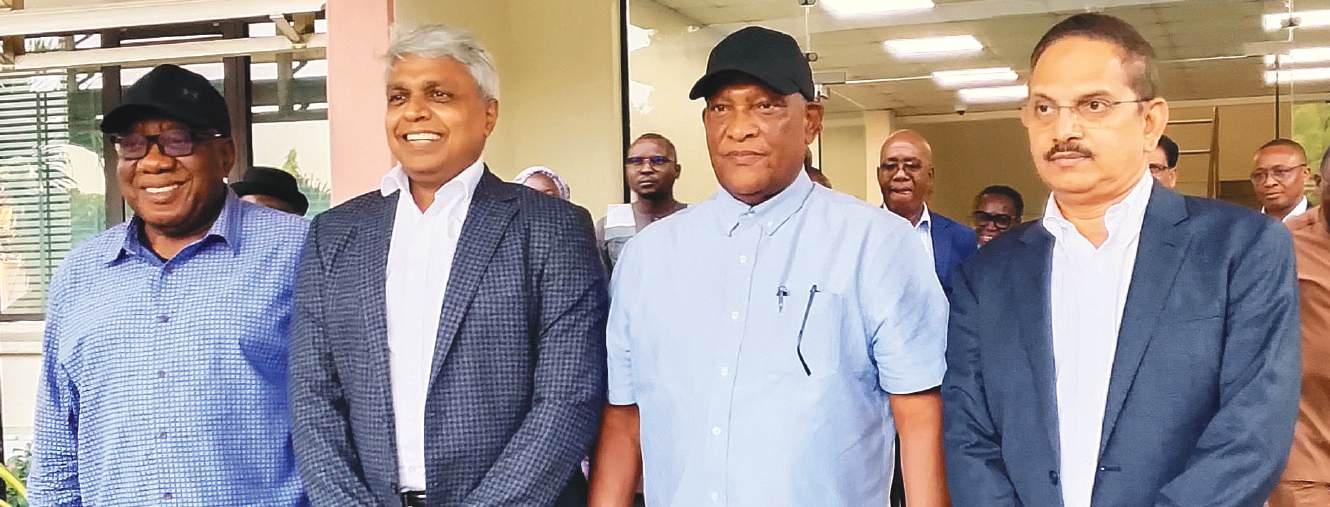
Speaking while playing audience to a Shell delegation led by its Global Chief Executive Officer, Wael Sawan, Tinubu said the incentives were disciplined, targeted, and globally competitive, designed to attract new capital without undermining government revenues.
“These incentives are not blanket concessions. They are ring-fenced and investment-linked, focused on new capital and incremental production, strong local content delivery, and in-country value addition.
“My expectation is clear: Bonga Southwest must reach a Final Investment Decision (FID) within the first term of this administration,” Tinubu stated.
The President stressed that the Bonga project was strategic to Nigeria’s economy, with the potential to create thousands of direct and indirect jobs, generate significant foreign-exchange inflows, and deliver sustained government
revenues over the life of the project.
He added that the project would also deepen Nigerian participation in offshore engineering, fabrication, logistics, and energy services.
Tinubu reaffirmed his administration’s commitment to policy stability, regulatory certainty, and speed, noting that these reforms are critical to restoring investor confidence and positioning Nigeria as a preferred destination for large-scale energy investment.
Besides, he noted that Shell and its partners have invested nearly $7 billion in Nigeria in the past 13 months, particularly in the Bonga North and HI projects, describing this as a clear sign that Nigeria’s economic and energy-sector reforms are delivering results.
Earlier in his remarks, the Shell Chief, Sawan, said Nigeria’s investment climate has improved remarkably under the Tinubu administration, adding that Shell is increasingly confident in Nigeria
as a destination for long-term investment.
Also, in an interview with newsmen after the visit, Group Chief Executive Officer (GCEO) of the Nigerian National Petroleum Company Limited (NNPC Ltd.), Bayo Ojulari, disclosed that the Shell boss was visiting the President for the first time, highlighting the impact of the executive orders released last year to help to attract investments.
He said: “Following the PIA, we realised that there were additional incentives that were necessary to attract investment and the reason for that is that the competition for investment is global and most other countries, like other African countries, Guyana, the Far East, they are changing their policies, very dynamic, so that they can attract those investments.
“So one of the great things that Mr. President did was to actually announce those executive orders
to put additional incentives to be able to attract investments. Having done that, Shell was then able to do three things over the last, I would say, one and a half years.
“One, Shell was able to complete its transaction of the onshore JV assets that was, as most of you know, transferred to Renaissance. Completing that transaction showed to the world Mr. President’s commitment to the ability for investors to bring in investments and also, if they needed to exit, to exit, because the investment world is very dynamic.
“I think that brought confidence to the international community, including Shell. Having completed that divestment exercise, Shell has then taken a final investment decision of $5 billion for the development of Bonga North. “Subsequently, they took another investment decision last
Continued on page 26
Allison Hooker
COURTESY VISIT BY WESTERFIELD LEADERSHIP TEAM...
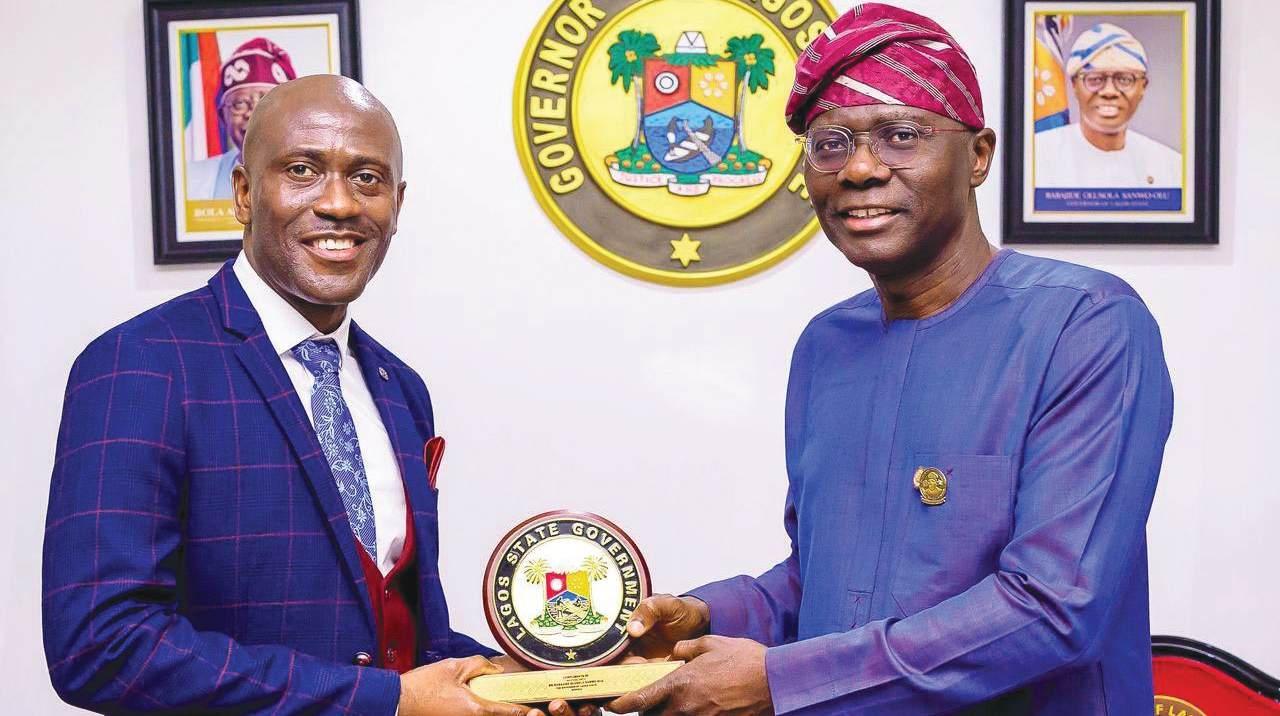
L-R: Managing Director of Westerfield College UK, Mr. Michael Dosunmu receiving Lagos State government plaque from the Governor, Mr. Babajide Sanwo-Olu during a courtesy visit by Westerfield leadership team, at the Lagos House, Marina, ... yesterday
Funding Shortfall Puts Millions at Risk as WFP Faces Aid Cuts in Northern Nigeria
As Nigeria Launches 2026 Humanitarian Needs and Response Plan
Michael Olugbode in Abuja
Millions of vulnerable Nigerians, particularly in the conflict-affected northern region, could face worsening hunger in the coming weeks as the United Nations World Food Programme (WFP) warns of an imminent reduction in food assistance due to a critical funding gap.
The humanitarian agency disclosed that more than a million people in northeast Nigeria may be cut off from
emergency food and nutrition support if urgent funding is not secured.
For the first time since it began large-scale operations in the country over a decade ago, WFP says it may be forced to scale down its reach to only about 72,000 beneficiaries. Nigeria’s food security situation has steadily deteriorated over the years due to a combination of armed conflict, climate shocks, economic pressures, and displacement. Recent food security assessments
project that close to 35 million Nigerians could experience acute hunger during the 2026 lean season, with the North-East and North-West bearing the heaviest burden.
Borno State which has been at the centre of insurgency-related violence since 2009 remains one of the hardest hit. Humanitarian data indicate that thousands of people in the state are currently facing extreme levels of food deprivation, a situation aid agencies describe as dangerously
Tinubu Approves Posting of Three Out of 68 Ambassadors-designate
Are, Oke, Dalhatu for US, France and UK respectively
Deji Elumoye in Abuja
President Bola Tinubu has approved the posting of three ambassadors-designate, out of the 68 confirmed by the Senate in December, 2025.
Presidential spokesperson, Bayo Onanuga, in a release issued on Thursday evening, disclosed that President Ti-
nubu confirmed the postings of Ambassador Ayodele Oke as the ambassador-designate to France, and Colonel Lateef Are (rtd) as the ambassadordesignate to the United States of America.
Also confirmed by the President is the posting of Ambassador Amin Dalhatu, former ambassador
to South Korea, as the high commissioner-designate to the United Kingdom.
In a memo to the Ministry of Foreign Affairs, Tinubu urged the ministry to notify the governments of the four countries about the ambassadors-designate, in accordance with diplomatic procedures.
close to famine conditions.
Similar warning signs were last recorded during the peak of the Boko Haram crisis between 2016 and 2017, when international intervention helped avert widespread starvation.
WFP officials have cautioned that reducing food aid at this stage could trigger a chain reaction of humanitarian and security challenges.
Past experience has shown that food shortages often lead to secondary displacement, as families abandon camps and host communities in search of survival.
In some cases, prolonged hunger has also increased the risk of young people being drawn into criminal or extremist groups.
Since 2015, WFP has played a central role in Nigeria’s humanitarian response, delivering life-saving assistance to displaced persons and host communities while supporting local farmers through the purchase of food produced within the country.
These interventions have helped stabilise fragile communities and reduce long-term dependency on aid.
However, renewed violence across several northern states has reversed many of these gains. In recent months, attacks on rural communities have forced millions from their homes, disrupted farming cycles, and depleted
household food reserves.
Health workers have also reported rising cases of child malnutrition, particularly in hard-to-reach areas where access to healthcare and clean water is limited.
With existing funds now exhausted, WFP says it urgently requires substantial financial support to continue operations over the next six months.
Without this, the organisation warns that it may be unable to sustain food distributions in displacement camps and conflict-affected communities.
Humanitarian experts have repeatedly stressed that food assistance remains a critical stabilising force in northern Nigeria.
As the country approaches another lean season amid persistent insecurity, aid agencies fear that failure to act swiftly could deepen an already fragile crisis and push millions further into hunger and poverty.
Meanwhile, the federal government has launched the 2026 Nigeria Humanitarian Needs and Response Plan (HNRP), reaffirming its commitment to move beyond emergency relief toward prevention, resilience, and sustainable development.
Speaking at the launch held on Thursday at the UN House Auditorium in Abuja, the Minister
of Humanitarian Affairs and Poverty Reduction, Dr. Bernard Doro, said Nigeria is at a critical turning point in its humanitarian journey and must transition from repeated crisis response to long-term solutions that reduce vulnerability and poverty. Doro, while commending the United Nations Office for the Coordination of Humanitarian Affairs (OCHA) and humanitarian partners for their collaboration with the federal government in developing the 2026 plan and in responding to humanitarian crises across the country, acknowledged the leadership of the UN Humanitarian Coordinator in Nigeria, Mohamed Fall, and the efforts of donors, civil society organisations, and community-based actors.
According to the minister, humanitarian interventions over the years have played a crucial role in saving lives and alleviating suffering caused by conflict, displacement, climate shocks, and food insecurity, particularly in Borno, Adamawa, and Yobe states. However, he stressed that under the Renewed Hope Agenda of President Bola Ahmed Tinubu, humanitarian assistance must serve as a pathway to recovery and sustainable development rather than a permanent solution.
NJC Recommends FHC Chief Registrar, 13 Others for Appointment as Judges
Alex Enumah in Abuja
The National Judicial Council (NJC) has recommended 14 candidates to President Bola Ahmed Tinubu, for appointment as Judges of the Federal High Court.
The NJC according to a statement, took the decision at its 110th
Meeting held on January 13 and 14, 2026.
The meeting which was presided over by the Chief Justice of Nigeria (CJN), Justice Kudirat Motonmori Kekere-Ekun, GCON, “resolved to recommend to President Tinubu, 14 names of successful candidates for appointment as Judges of the
Federal High Court”.
NJC’s Deputy Director, Information, Kemi Babalola-Ogedengbe, who issued the statement to journalists on Thursday, noted that at the time of the council’s meeting, the security report on the candidates was not available.
“Council therefore, resolved to
await the submission of the security report before forwarding the names of the candidates to the President.
Having received the security report, with no adverse comments on any of the recommended candidates, Council, today, January 22, 2026, forwarded the names of the following candidates to President Tinubu,
for appointment as Judges of the Federal High Court”.
Among the successful candidate is the Chief Registrar of the Federal High Court, Amida Hassan Suleiman.
Galumje, Edingah; Ibrahim, Vera Eneabo; Abubakar, Musa Usman; and Salihu, Aisha Yunusa. The remaining are; Ikpeme, Joy Bassey; Shehu, Umaru Adamu; Mohammed, Ibrahim Buba; Eigege-Binjin, Nendelmum Judith; Usoro, Kuyik Uduak; and Nwoye, Osinachi Donatus.
FOC WEST VISITS OGUN GOVERNOR, SEEKS PARTNERSHIP...
L-R: Commandant, Nigerian Navy Secondary School, Abeokuta, Captain Oluwaseun Adesiyan; Flag Officer Commanding, Western Naval Command, Rear Admiral Abdullah Abubakar Mustapha; Ogun State Governor, Prince Dapo Abiodun; Fleet Commander, Western Fleet, Commodore Solomon Olushola Ohunenese; and Commander, Intelligence Office, Captain Adah Ehanmo, during a courtesy visit by the FOC and team to the governor in Abeokuta, yesterday
Adelabu: FG Will Prosecute Discos, Installers Found
Extorting Nigerians in W’Bank-funded Free Meters
Seeks tip-off from whistle-blowers Inspects 1.5m DISREP smart meters at Apapa port Says sector revenue now pays 40% of energy cost, up from 10%, eases govt’s burden JICA’s 133/32kV transmission substation in Apapa for inauguration in March
The Minister of Power, Chief Adebayo Adelabu, has threatened to prosecute any electricity distribution company (Disco), meter manufacturer, or installer found extorting money from consumers in the course of installing the 3.4 million free smart meters under the World Bank-funded Distribution Sector Recovery Programme (DISREP).
The minister called on Nigerian power consumers to embrace the whistleblower option and provide useful information that would lead to catching Discos, manufacturers, or installers involved in such practices, stressing that the DISREP meters are free of charge.
Adelabu stated this yesterday in Lagos while inspecting containers loaded with 1.5 million smart electricity meters shipped to Apapa Port from China by Sanxing, the foreign manufacturer of the products.
The latest shipment, together with the one million currently being deployed, has raised the number of meters received so far under the programme to 2.5 million, even though actual installation has been slow, with only about 150,000 installed for consumers.
DISREP is a federal government initiative, supported by the World Bank, aimed at boosting the financial health and technical performance of the country’s electricity Discos by bridging the metering gap, ending estimated billing of consumers, minimizing commercial losses, and making the power sector attractive to investors.
During his Lagos visit, Adelabu covered three locations, including the inspection of the 1.5 million meters at the APM Terminal in Apapa Port; inspection of the 133/33kV transmission substation under construction in Apapa by Japan International Cooperation Agency (JICA) in partnership with the Transmission Company of Nigeria (TCN); and inspection of a new batch of DISREP meters undergoing testing at the Nigerian Electricity Management Services Agency (NEMSA) Testing Station in Oshodi.
Nigeria’s power sector currently faces a metering deficit of about 7 million, a challenge that has defied all solutions put in place by successive governments, making it impossible for the sector to break even and attract new investors.
The current administration has put
in place two metering programmes: DISREP by the World Bank and the N700 billion Presidential Metering Initiative (PMI) funded by the Federal Account Allocation Committee (FAAC). The Tinubu-led government aims to close the 7 million metering gap over the next five years by installing about three million meters every year.
Adelabu said the government’s
commitment to addressing the metering gap was fundamental to the sustainability of the power sector and to protecting electricity consumers, vowing that the government would not tolerate any partner undermining the free metering initiative through extortion of consumers during installation.
“But before I leave here, let me also say that I am reiterating that
distribution and installation of meters under this programme is free for Nigerians. Nobody is expected to pay a dime for installation,” he said.
“Wherever you discover or notice that, please give us a tip-off. And let us just confirm some cases where such exists. The government will not stop in making sure that we prosecute such people using all forms of legal and regulatory instruments that we
have. We will prosecute them, and we will ensure that they serve as a deterrent to others that have such evil plans,” Adelabu vowed. He admitted that one of the major complaints of stakeholders in the power sector was the opaque estimated billing concept, informing that, in total, the DISREP programme was structured to inject 3.45 million meters into the electricity sector.
Oranto Petroleum: Why We Suspended Investment in Oil Exploration in Senegal
Says it has committed over US$45m in expenditures in Senegal
Chuks Okocha in Abuja
The management of Oranto Petroleum, the firm owned by Nigerian billionaire and philanthropist, Prince Arthur Eze, has clarified its suspension of any further investments in the St Louis & Cayar Licenses in Senegal.
The Senegalese government had in January 2026 officially revoked
PSC Dismisses Alleged Promotion Delay,
Says Promotions Follow Established Guidelines
The Police Service Commission (PSC) has dismissed reports alleging delays and irregularities in the release of police promotion results, describing the claims as misleading and unsupported by facts.
The Commission was reacting to a report published by an online news platform on January 21, 2026, titled “‘We’ve Done Everything Required’: Police Inspectors Protest Delayed Promotion Months After Passing 2025 Board Exercise.” According to the PSC, the publication misrepresented established procedures and relied on anonymous and unverified sources.
In a statement by the Head of Protocol and Public Affairs of the Commission, Mr. Torty Njoku Kalu, the PSC said it categorically rejects the allegations and reaffirmed its commitment to transparency, fairness, and merit-based promotion within the Nigeria Police Force (NPF).
Kalu explained that promotions in the NPF are strictly governed by established guidelines, including the successful completion of the Departmental Selection Board (DSB) exercises, and are processed in line with statutory timelines and available resources.
He noted that contrary to claims in the report, officers who
participated in the 2025 DSB exercise were duly informed of the status of their evaluations through official channels.
“The assertion of ‘total silence’ or lack of explanation from the PSC or Force Headquarters is inaccurate,” the statement said. “The Commission maintains detailed records of all communications, and officers with concerns are advised to seek clarification through their commands or directly from the PSC.”
Addressing claims that the promotion of inspectors had been stalled while senior officers were promoted within weeks, the PSC described the comparison as misleading.
an offshore oil exploration license held by Atlas Oranto Petroleum.
The Senegalese government alleged the holder had failed to provide the required bank guarantees and carried out only minimal exploration work since the block was awarded.
Responding to the revocation of the license, the management of Oranto Petroleum declared the government of Senegal insisted on US$ 25 million Bank Guarantee as against agreed Corporate Guarantee as being provided by other operators in Senegal.
According to the management, “till date, Oranto Petroleum has
committed over US$45 million in expenditures in Senegal covering activities such as seismic acquisition & interpretation, acreage rental, social projects and training of Senegalese locals as stipulated in the contract.
“Oranto Petroleum remains a foremost player in Hydrocarbon Exploration in Africa having committed over US$500 million in exploration and development of hydrocarbon in Africa.”
The company expressed reservations on why the Senegalese government will single it out for false narratives which it classified as “unfair, unjustified and targeted.”
Part of the statement read: “Oranto Petroleum would like to use this opportunity to respond to the false narrative currently being perpetuated by the Government of Senegal on the St Louis & Cayar Offshore Licenses previously operated by Oranto Petroleum.
“As a matter of fact, Oranto Petroleum in 2025 decided to suspend any further investments in the St Louis & Cayar Licenses in Senegal after the Government of Senegal insisted on US$ 25 million Bank Guarantee as against agreed Corporate Guarantee as being provided by other operators in Senegal.
EU, Partners Renew Commitment to Sokoto Vulnerable Populations
Onuminya Innocent in Sokoto
A high-level delegation from the European Union (EU), accompanied by UN agencies and partners, has concluded a visit to Sokoto State, reaffirming their commitment to strengthening systems that support women, children, and vulnerable families.
The delegation, led by Massimo De Luca, Head of Cooperation at the EU Delegation, met with Governor Dr. Ahmed Aliyu, who underscored the
state’s determination to deliver essential services to communities.
“Our administration is committed to practical solutions that uplift our people - consistent with the Renewed Hope Agenda and our state priorities,” the governor said, expressing gratitude for the EU’s support.
During the visit, the delegation observed progress across EU-supported initiatives in schools, primary health care facilities, and community-based services.
At schools and community sites, they saw how safe learning environments, teacher support, and community engagements are helping children access inclusive education.
“The EU remains committed to supporting Sokoto State in ensuring inclusive development that leaves no one behind,” De Luca said. “This visit has shown how critical it is to invest in systems that protect and empower people - especially children and young people.”
Peter Uzoho
Linus Aleke in Abuja
Stakeholders: Regional Airline Will Improve Connectivity in Underserved States
Aviation stakeholders have commended the move made by states in the North East region of Nigeria to establish a joint regional airline, which according to them, will improve connectivity, ensure steady flight operations, boost economic activities and create jobs.
The North East region of Nigeria comprises of Adamawa, Bauchi, Borno,
Gombe, Taraba and Yobe states.
Last week, the six North East states announced they were pooling N30 billion (N5 billion each) to establish a regional airline to be known as North East Shuttle to improve connectivity, reduce reliance on other carriers and boost regional trade.
The states said they would start off by acquiring two aircraft to connect the state capitals
of the region to Abuja and Lagos, noting that commercial airlines that operate destinations in the region tend to pull out due to security concerns.
The Managing Director/ CEO of Aero Contractors, Captain Ado Sanusi, told THISDAY in an exclusive interview of the implication of establishing regional airline in Nigeria. According to him, what Nigeria is going through today is close to what US went through in the 1950s
and early 60s, when wellknown airlines were not providing adequate flight services to some states and regions, prompting those states and regions to acquire aircraft from manufacturers and gave them to professionals to run for them.
A US-based the publication, ‘Catch Our Style: California Regional Airlines 1950-1980’, stated: “While the United States is noted for having a privately-owned aviation
industry, regional, state, and federal entities played a crucial role in establishing, regulating, and subsidising airlines in the 1950s and 1960s. These airlines, often called “local service carriers” or “regional carriers,” were fostered to connect smaller communities to the national network, and many were later absorbed into the private sector through mergers and deregulation.” Sanusi, however,
observed that while what happened in the US was sincere with good intensions, one cannot say the same with similar plan in Nigeria because more often, what government showcases to the public may be different from its intentions. This means that the desired result of establishing a regional airline in North East may not be realised.
story continues online on www.thisdaylive.com
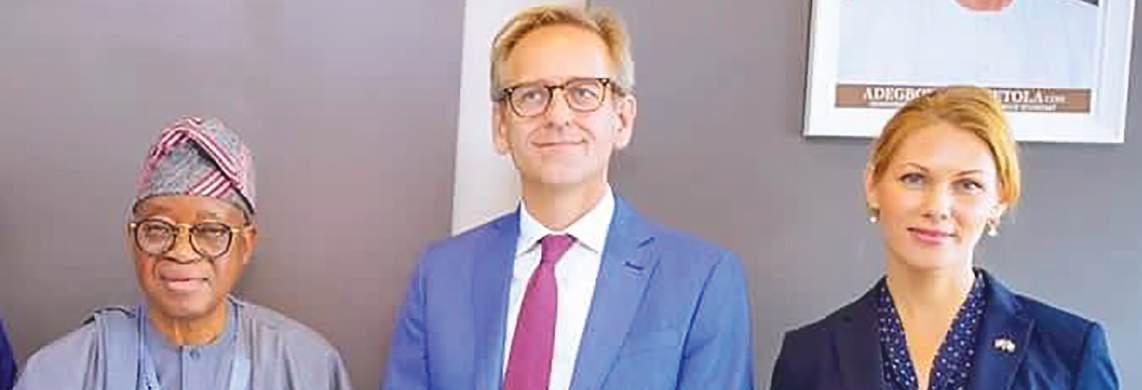
L-R: Minister of Marine and Blue Economy, Adegboyega Oyetola; Ambassador of Denmark to Nigeria, Mr Jens Ole Bach Hansen and Head of Commercial, Royal Danish Consulate, Sara Ibru, when the Danish Ambassador visited Oyetola in his office in Abuja… recently
Eromosele Abiodun
The federal government, yesterday in Lagos, took historic step in Nigeria’s long-awaited journey to operationalise structured financing for indigenous ship ownership with launch and unveiling of the Cabotage Vessel Financing Fund (CVFF) Application Portal by the Minister of Marine and Blue Economy, Adegboyega Oyetola.
Declaring the portal open, Oyetola described the occasion as, “A deliberate and strategic step in repositioning Nigeria’s maritime sector as a central pillar of national development.”
He noted that the launch aligned with the broader national objective of diversifying the economy and unlocking the vast potential of Nigeria’s maritime domain, coastal resources and inland waterways.
“The maritime sector remains the backbone of global commerce, yet despite Nigeria’s strategic geographic location and vibrant entrepreneurial base, our participation in coastal and inland trade has remained limited,” the Minister said. “A major constraint has been the absence of a functional, credible, and transparent financing framework to support indigenous ship
ownership. Today, we are changing that narrative.”
Oyetola recalled that the Cabotage Vessel Financing Fund, established under the Coastal and Inland Shipping (Cabotage) Act of 2003, was designed to address the financing gap faced by Nigerian shipowners.
However, he acknowledged that institutional and structural considerations over the years delayed its operationalisation.
He stated that upon assuming office, his ministry adopted a clear policy objective to strengthen Nigeria’s maritime capacity and ensure that the CVFF is implemented strictly in line with sound governance and financial principles.
“The CVFF is structured as a strategic development instrument,” he said.
“By facilitating access to competitive vessel
financing for indigenous operators, we hope to reduce reliance on foreignflagged vessels in our coastal trade, improve retention of value within the domestic economy, create employment opportunities for Nigerian seafarers, and stimulate growth in allied sectors such as shipbuilding, ship repair, and maritime services.”
story continues
Chinedu Eze
ATSSSAN
Calls on FG to Review NAMA Navigational Charges
Stories by Chinedu Eze
The President of the Air Transport Services Senior Staff Association of Nigeria, (ATSSSAN), John Ogbe, has called on the federal government to urgently review the navigational charges of the Nigerian Airspace Management Agency (NAMA).
According to Ogbe, the the current tariff regime poses long-term operational and safety risks to the aviation sector because there is no enough funds for the agency to maintain
its infrastructure and train personnel.
He noted that NAMA’s navigational charges have remained unchanged for more than 15 years, despite galloping inflation since 2023 and significant changes in economic realities and the rising cost of providing air navigation services.
He said the cost of maintaining critical infrastructure, technology and skilled manpower today could not be compared to what it was over a decade ago, stressing
that the existing charges no longer reflect present-day operational demands.
According to him, even under a cost-recovery framework, it is unrealistic to expect NAMA to effectively deliver on its mandate with outdated tariffs.
The ATSSSAN President also noted that a timely review of navigational charges is essential to ensure the agency is properly funded, fit for purpose and able to carry out its responsibilities efficiently.
IATA, CFM International Renew Agreement on Engine Maintenance
The International Air Transport Association (IATA) has announced the renewal of an agreement with CFM International (CFM) through February 2033, supporting increased competition in the market for maintenance, repair, and overhaul (MRO) services for engines manufactured by CFM, a
50/50 partnership between GE Aerospace and Safran Aircraft Engines.
IATA’s Director General, Willie Walsh, said: “Airlines have long struggled with the aftermarket business practices of manufacturers, which have limited competition and resulted in high costs for airlines.
Air WAtCh
Domestic Air Traffic Disruption in 2026
Chinedu Eze
These pressures have become even more acute as limited maintenance capacity and aerospace supply chain constraints have driven up costs and grounded aircraft. A recent IATA study estimated that these challenges added $5.7 billion to engine leasing and maintenance costs for airlines in 2025.”
Top 30 Finalists Emerge in 2026 Aurora Tech Award
Aurora Tech Award, a global award dedicated to outstanding female tech founders from emerging markets, has unveiled its top 30 finalists for 2026.
The top 30 finalists were selected following rigorous evaluation of the top 100 that emerged from 3,400 applications submitted from 127 countries, reflecting the rapid growth of female entrepreneurship across emerging economies.
The 30 women-led startups selected were drawn from different regions across the globe, with Latin
America (46.7 per cent) leading the distribution, while EMEA, APAC, CIS, and others account for 23.3 per cent, 6.7 per cent, 10 per cent, and 13.3 per cent, respectively.
Speaking on the selection, Head of the Aurora Tech Award, Isabella GhassemiSmith, said: “Aurora’s selection process is deliberately designed to address one of the biggest barriers female founders face: access to investors
and capital. By involving our global network of VCs directly in the evaluation process, Aurora ensures that relevant investors see founders as they are being assessed, not after a list is published. As a result, the Top 30 is not only a vetted shortlist, but a group of founders who have already been exposed to capital and investor attention, creating momentum on both sides before funding conversations formally begin.”
BCG Appoints Managing Directors, Partners in Lagos
Group Business Editor
Eromosele Abiodun
Deputy Business Editor
chinedu Eze
Comms/e-Business Editor
Emma Okonji
Asst. Editor, Energy
Emmanuel Addeh
Asst. Editor, Money Market
Nume Ekeghe
Correspondents
Kayodetokede(CapitalMarkets)
James Emejo (Finance)
Ebere Nwoji (Insurance)
reporter Peter Uzoho (Energy)
Boston Consulting Group (BCG) has announced the appointment of Olayinka Majekodunmi and Phillipa Osakwe-Okoye as Managing Directors and Partners in its Nigeria office, effective 01 January 2026.
The promotions, it said, mark a significant milestone in its ongoing investment in African talent and its commitment to supporting clients and communities across the continent.
Managing Director and Partner at BCG in Lagos, Tolu Oyekan, praised both promotions. “Phillipa’s
deep expertise in financial services and her outstanding track record of driving transformational change for clients have established her as a trusted strategic advisor across the region. Olayinka’s impact in the public sector, combined with his proven ability to tackle complex transformation challenges, has been remarkable,” Oyekan said.
Majekodunmi said: I’m thankful to my colleagues at BCG for their partnership and dedication to delivering meaningful impact across Africa.
Aviation experts in Nigeria have raised the concern about the possible disruption of air traffic movement in domestic travel in 2026, ahead of the 2027 general election.
Industry consultant and the Managing Director of Flights and Logistics Solutions Limited, Amos Akpan, who x-rayed the aviation industry in line with passenger movement and air fares in 2026, said passenger numbers between the major airports: Lagos, Abuja, Kano, Port Harcourt, would not increase because of high cost of fares during the period.
In other words, there may not be significant increment in passenger traffic between these airports due to high cost of flight ticket on domestic routes.
He however, observed that the ability of people to buy tickets at the current prices is limited in terms of disposable income, noting that the people with such income bracket will not increase in 2026. But on the contrary, feeder airports like Owerri, Uyo, Enugu, Asaba, Benin, Ilorin, Ibadan, Bauchi, Akure, Yola, Maiduguri and others will continue to witness additional numbers in passengers traffic.
According to Akpan, the reason for this is because it is a political campaign year and politicians will travel to different parts of the country for campaign and they will travel to various airports in the country to access different communities for rallies and campaigns.
“There is also additional capacity and frequencies coming from state governments’ acquisition of aircraft. State governments are trying to encourage movements by air in and out of their states by building airports and acquisition of aircraft to support the concept. This position is deduced from FAAN’s (Federal Airports Authority of Nigeria) data, which revealed a drop in passenger figures for the major airports I mentioned above. But same data showed slight rise in passenger figures for feeder airports like Owerri, Uyo, Benin, Akure, Asaba, Yola, Maiduguri, Bauchi, Kaduna. Though, these are limited projects because it takes more than building airports and acquisition of aircraft to create a thriving and sustainable aviation development. Our view now is that these secondary cities will have more flight frequencies, more seats, and more passengers in 2026,” Akpan said.
According to him, airfares may not drop significantly in 2026 because there are no indicators that will reduce the cost of operations. Instead, there are grey areas in new government policies that further compounds cost factors. For example, the
new tax laws and the push for increase in aviation agencies revenue generation centres instead of cost recovery centres.
“Airlines and providers of allied services will have stable (not favourable) Forex exchange rates to plan with in 2026 because of Nigeria’s current macroeconomics outlook. But the inability to access funds at interest rates of nine per cent to 15 per cent is a threat because it also affects the airfares, and higher airfares limits patronage. There is the limit of income elasticity for the potential Nigerian domestic travellers. It reaches a crescendo and cuts out. Generally, existing policies are not airlines survival sensitive. Very high working capital funding rates, multiple taxes, complex certification processes that is unified irrespective of category, exemption policies haphazardly implemented, insufficient infrastructures as obstacles to airline expansion and growth, like airports limiting operating times to daytime only (6am to 6pm). Also, insecurity limits travel by air to most airport cities at night because of the distance from airport to final destination by road,” he stated.
Akpan also noted that the Minister and the managers of the aviation agencies have been addressing infrastructural decay by carrying our maintenance and upgrade of facilities, and modernization of existing ones, “but we are still far away from what is ongoing in other countries. Other countries are building hub airports for processing 100+ million passengers while we are renovating the old airports to process 18 to 22 million passengers”.
He also spoke on the decentralisation of the Nigeria College of Aviation Technology (NCAT), Nigeria’s premier aviation training intuition, saying that the decentralisation to be located at the main geopolitical zones will give access to train more people, but advised that the focus should be on supporting airlines and maintenance organisations to give line training to young pilots and engineers.
Akpan observed that there are plenty of licensed pilots without jobs because of the cost of line training and there are plenty of maintenance personnel that need on the job training on the current aircraft types operating in the country. These are measures, he said, that will reduce cost of training while creating employment.
“My 2026 hopes are that are airlines will fly more between Nigerian cities and cities in West and central Africa. Air Peace will increase frequency to Dubai and London Heathrow through partnership with other international airlines connecting passengers from Nigeria to Middle East, Europe, Asia, and South America.”
the
v ictor Nwokeji: Championing the Industrial e volution of Zotmann in the Mining Sector
Zotmann’s emergence in Nigeria’s solid minerals sector is the product of deliberate strategy rather than sudden expansion. What started as a practical shift to secure foreign exchange has, over time, matured into a multisector industrial group with mining at its core. Over the past decade, the company has moved steadily from operational partnerships into full asset ownership, investing in large-scale projects designed to deepen local value creation and strengthen industrial capacity. anchored by the leadership of Mr. Victor Nwokeji, Zotmann’s growth reflects a measured approach to building scale, technical competence and long-term relevance within a sector that remains both capital-intensive and tightly regulated. Uzoma Mba reports
What began as a strategic pivot to secure foreign exchange has, over the last decade, transformed into a multi-sectoral conglomerate that today stands as a titan in mining sector.
The company’s rise is defined by a calculated shift from early operational partnerships to the ownership of major assets and the development of heavy ticket projects that promise to reshape the local industrial landscape.
The Genesis of Zotmann
The story of the company’s mining arm is one of strategic patience and industrial landfall. While the group has diversified into several sectors, mining and manufacturing of security doors remain the primary engine of revenue generated in the company.
The journey began in 2014. Like many successful entrants, the group identified a critical capacity gap in the Nigerian mining sector. Many license holders possessed the rights to land but lacked the technical and mechanical strength to extract its value.
Starting as operators, the group entered into Joint Ventures (JV) with existing title holders, using these partnerships to gather essential technical know-how and build the operational muscle required for independent status.
By 2022, this developmental phase reached its peak which gave birth to the establishment of Zotmann Mining Limited. This transition marked the group’s move from service providers to primary asset owners.
Today, Zotmann is a dominant force in Calabar, Gombe and Ebonyi States, managing a high-yield lead and zinc mine alongside a massive, separate quarry operation.
Philanthropy and the Founder’s Vision
The architect of this industrial machine is Mr. Victor Nwokeji whose background in Law provided the foundation for his meticulous approach to business.
A graduate of the popular University of Lagos, Victor’s transition into mining was initially driven by the need to find a sustainable alternative to general commerce when foreign exchange became scarce.
His business philosophy is
built on the principle that an enterprise should leave a permanent, positive footprint on the land. This has translated into significant social impact in states of operations.
Beyond mandatory agreements, Victor Nwokeji has personally funded the construction of bridges, roads, clinics, scholarship and churches as way of giving back to the society.
Scaling the Depths: Operational Achievements
The scale of Zotmann’s growth is evident in its production metrics. Over the last decade, the company successfully scaled its output from a modest 300 metric tons per month to an impressive 2,000 metric tons per month.
This 566% increase in capacity was achieved through aggressive reinvestment and intervention of Providus Bank, a financial institution Zotmann Mining Limited will always count on. This capital-intensive strategy allowed for several key development projects
like the 300-ton-per-hour Crusher, an acquisition of this massive industrial asset, which serves as the backbone of the quarry operations.
The Energy Independence site, which is powered by five units of LNG gaspowered generators, ensuring a steady, industrial-grade energy supply that remains completely independent of the national grid.
The Beneficiation Plant, as the establishment of onsite processing facilities has moved the company beyond raw extraction, significantly increasing the market value of the ores before they leave the site.
In terms of Operational Housing, a massive residential complex was constructed onsite, allowing the workforce to live within the arena of operations, ensuring high productivity and 24-hour site management.
Navigating
the Economic and Regulatory Landscape Mining in Nigeria requires navigating a terrain that is as economically challenging as it is
physically demanding. Equipment is notoriously expensive and requires constant replenishment due to the extreme wear and tear of the terrain. The 2023 devaluation of the Naira presented a severe test, as the cost of importing machinery tripled.
The company has also benefited from a shifting regulatory environment. For years, the sector was hindered by unregulated artisanal activity and unclear policies.
The federal government’s recent focus on the non-oil sector has brought updated regulations that provide much-needed protection for organized, large-scale miners.
Diversification into Real Estate and Manufacturing
While mining and manufacturing of security doors are the crown jewel, the capital generated has fueled a strategy of backwards integration. The real estate arm, is currently developing significant projects, including a joint venture at Conquest Estates in Enugu and a massive complex in Magodo.
The company is also expanding its scope in manufacturing, shifting from the importation of Israeli and Turkish security doors to focus on local assembly and production in the country and abroad.
This move is designed to reduce import reliance and create a local manufacturing base that complements the group’s construction interests.
The Future of Zotmann
The next chapter for the group involves several heavy-ticket projects that are currently in the final stages of planning. These endeavors are expected to be earth-shaking in their impact on the national industrial sector.
For now, Zotmann Mining Limited remains a blueprint for how indigenous Nigerian companies can leverage technical partnerships, maintain financial independence, and successfully navigate the complex social landscape of the solid minerals sector.
From the lead mines to manufacturing, and to the real estate markets of Enugu and Imo, the group is demonstrating that the treasures of the Nigerian earth can be harnessed to build a lasting legacy for both the investors and the people of the host communities.
Victor Nwokeji
Family, Foundation Celebrate s econd Anniversary of Death of Annie Okonkwo
Members of the Okonkwo family of Ojoto in Idemili South Local Government Area of Anambra State, Officials of The Annie Okonkwo Foundation and other friends of the family yesterday held a solemn mass to celebrate late Senator Annie Okonkwo.
The late senator who represented Anambra Central Senatorial Zone died in 2023 after what was described as a brief illness.
His family led by his widow, Lady Chinyere Okonkwo and his son, Hon. Uhenna Okonkwo, who is also a member of the House of Representatives led others in Thanksgiving, praising the late lawmaker, who they described as very kind and philanthropic during his days.
Son of the deceased, Hon Uchenna Okonkwo who spoke on behalf of the family, during the mass said: “My father was a man who touched life across board. He was a generous man and to him leadership was not a title but service to community, country and humanity.
“He was a man who carried himself with dignity and believed in uplifting others. He was a brother and friend, a loyal and dependable man to many. He was a man of faith and understood that life is held in truth for God. This memorial is not just mourning his passing but about remembering his smiles and the
things he stood for. We are deeply comforted that his memory lives on.”
The mass was presided over by the Catholic Bishop of Minna Diocese, Rt. Rev. Martin Uzoukwu, while the homily was said by parish priest of SS Peter and Paul, Awada in Onitsha, Rev. Fr. George Adimike.
During his homily, Rev Fr Adimike harped on the unity among family members, reminded that it was on
the instruction of the late Senator for the second anniversary of his death to be held in his country home, right inside the Marian Chapel of Divine Mercy, which he built as a staunch Catholic, inside which he was also interred.
He said: “First anniversary of his passing was instructed by him. The first was in Lagos but he instructed the second be held here.
“He has done well in establishing a strong family. Okonkwo family is notable here and peace is what you need and you have to build it. You must work for it daily. You must learn forgiveness and understanding to be able to keep living in peace.
“As members of Okonkwo family, you must continue to work to sustain the peace. You have become an exemplary family, and at the level you are operating, you must work to sustain peace. His wife is here and his son a House or Representatives member is here. You must continue to lead the larger family and remain the light, and the late Annie Okonkwo will continue to be happy with you.
“Ha wants you to sustain the culture of holding masses here as he desired to be buried here. I urge you to continue to pray for him. No one is perfect, there may be things he may not have done right. There is no repentance in the grace, but there is forgiveness everywhere. That is he caveat.
“The Bible said the mercy of God is infinite and that is why we continue to offer prayers, masses and others for his forgiveness. He was a great man who had a clement heart. You can deny him anything, b ut you can’t deny him the fact that he was a very kind man and you must alw ays pray that he gets forgiveness.”
sublime Industries MD Jombo emerges Champion newspapers Global Businessman of 2025
The Managing Director/Chief Executive Officer of Sublime Industries Ltd Chief Kelvin Jombo Onumah has been named the Champion Newspapers Global Businessman of the Year Award.
Group Managing Director/Editor-inChief, (Dr.) Mrs. Nwadiuto Iheakanwa who disclosed this in an award letter. According to her, “It is my delight and honour to convey to you Sir, the glorious confirmation of Sublime Industries as winner of Champion Newspapers 2025 Global Businessman of the Year Award.
The award, she said “is a product of the painstaking selection of our Board of Editors, is our modest way of recognizing leaders in both public and private sectors of the economy who have paid a greater sacrifice in
ensuring that the objectives and ideals of our nationhood are sustained as well as promoting good corporate governance.
“On all scores, our findings, largely corroborated by that of our independent assessors, confirm that Sublime Industries, in line with its vision: To become Nigeria’s leading construction and infrastructure company, recognized for innovation and excellence, with a goal to expand from a mid-sized firm to one of the top 10 industry leaders by 2030; has remained dedicated to excellence and integrity, delivering exceptional results, fostering an ethical work environment, and ensuring value for all stakeholders while achieving
sustainable returns.
Further, Iheakanwa said: “We note with delight the uncommon zeal and commitment of Sublime Industries to serve as a critical partner in construction planning, coordination, and engineering evaluation.”
As watchdog of society, “it is our duty not only to track and document your performance but also to acknowledge the company’s commitment to serve and its doggedness to transform the Nigerian built sector.
“On behalf of Champion Newspapers Limited, I congratulate you and your company on this profound achievement.”
e dukate Africa s et to Host Disrupt e ducation s ummit to Tackle s kill Gaps
Uzoma Mba
To tackle funding barriers, skills gaps and curriculum mismatch in Nigeria’s education system, Edukate Africa, an edu-fintech platform has announced plans to host the Disrupt Education Summit Africa, Scheduled for January 29 at the University of Lagos, the summit is expected to bring together government officials, universities, financial institutions, private sector players and philanthropies to rethink education financing and prepare young Nigerians for the realities of today’s digital workforce.
Also expected are dignitaries like the Minister of Education, Dr Tunji Alausa; the Provost and Vice Principal of the University of Birmingham, Professor Nick; the Chief Operating Officer of Semicolon Africa, Ms Ashley; and the Chief Executive Officer of Sterling One Foundation, Mrs Ibikwe.
Speaking at a press conference on Wednesday, Director of Edukate Africa, Francis Omorojie, said the initiative was
driven by the growing rate of school dropouts linked largely to financial constraints, particularly at the tertiary level.
He said studies show that more than 50 percent of students who drop out of higher institutions do so because they cannot afford tuition and related costs, a situation he described as a major contributor to unemployment, brain drain and irregular migration.
Positing that Africa’s youthful population could either become an
economic advantage or a liability, depending on how well education and talent development are managed, he said he education is a fundamental need, but financial exclusion has continued to shut out many promising young people.
“When students drop out, it feeds unemployment and social instability. Our mission is to build innovative and sustainable financial models that keep young Africans in school and help them become productive,” he said.
According to him, Edukate Africa is deploying blended financing solutions that include tuition guarantees, technology driven scholarship platforms, gig and remote work opportunities for students, and partnerships with universities and philanthropies to establish endowment and alumni funds.
He explained that the platform pays tuition directly to institutions after verifying students’ admission and academic records, ensuring transparency and accountability for donors.
Omorojie said the summit would focus on aligning education with the fast changing nature of work, driven
by digital transformation, artificial intelligence and emerging technologies.
He noted that many university curricula are lagging behind workplace realities, leaving graduates ill prepared for employment.
“There is a clear disconnect between what students are taught and what employers need. This summit will create a roundtable where government, academia and the private sector can agree on the skills required for today’s economy and how to integrate them into learning,” he said.
He added that the summit will also examine education financing models, including how banks and financial institutions can design student friendly funding products, and how existing initiatives such as the Nigeria Education Loan Fund can be strengthened and scaled.
Omorojie disclosed that Edukate Africa would use the summit to launch the CommUniversity Endowment Fund, a community led investment fund designed to generate sustainable returns that will be used to sponsor vulnerable students and support young entrepreneurs.
David-Chyddy Eleke in Awka
Family of late Annie Okonkwo
Omorogie
InfraCredit Mobilises Local Currency Debt for First Electric’s Energy Project
Oriarehu Bonny
InfraCredit, a ‘AAA’-rated specialised infrastructure credit guarantee institution has announced its credit enhancement of First Electric Power and Automation Services Limited’s local currency debt issuance under a co-financing arrangement with the Climate Finance Blending Facility (CFBF).
“This marks the first mesh-grid clean energy infrastructure project and the sixth transaction under the Facility, which was seeded with £10 million in concessional capital from the UK Foreign, Commonwealth & Development Office (FCDO) and later strengthened by a US$10 million investment from British International Investment (BII), alongside a US$20 million counterguarantee facility.
“The transaction will finance the construction and commissioning of 20 mesh grid electricity networks with a combined capacity of 724.8 kWp in underserved communities across Gombe, Nasarawa and Ondo
states. Once operational, the project is expected electrify approximately 5,156 households and small businesses, create 616 jobs, and avoid 762 tonnes of CO₂ emissions annually, advancing Nigeria’s universal electrification goals and contributing directly to Sustainable Development Goal 7,” it said in aa statement.
UK Deputy High Commissioner in Lagos, Mr. Jonny Baxter, said: “The Climate Finance Blending Facility (CFBF), managed by InfraCredit and co-funded by the UK, continues to demonstrate its position as a pioneering investor for power sector solutions. This transaction marks the Facility’s first investment in innovative mesh grid projects, designed to lower the cost of distributed renewable energy solutions for rural and remote communities.”
Chief Executive Officer of InfraCredit, Mr. Chinua Azubike, said: “Our guarantee of First Electric under the Climate Finance Blending Facility marks the
Facility’s first investment in mesh-grid infrastructure and underscores the scale and maturity the platform has now achieved in financing distributed renewable energy in Nigeria.”
Chief Executive Officer of First Electric Power and Automation Services Limited, Mr. Daniel Komolafe, said: “This milestone reflects First Electric’s commitment to bridging Nigeria’s energy gap through innovation and collaboration. With InfraCredit’s support, we are demonstrating that clean energy solutions can be impactful, commercially viable, and sustainable.”
Chief Executive Officer of AMDA, Mr. Olamide Niyi-Afuye said: “This transaction demonstrates the transformative power of strategic partnerships in advancing energy access. As a valued AMDA member, First Electric’s collaboration with InfraCredit showcases a financing model that can unlock domestic capital and accelerate Distributed Renewable Energy (DRE) across Africa.”
Keystone Bank Relocates Awolowo Ikoyi Branch in Lagos
Keystone Bank Limited has announced the relocation of its branch situated at 36 Awolowo Road, Ikoyi to a newly developed, state-of-theart facility at 1 Keffi/ Manuwa Street, Ikoyi, Lagos.
A statement by the bank said the relocation reinforces its commitment to enhancing customer experience, operational efficiency, and engagement with clients in the Ikoyi business district.
The lender added that the newly relocated branch has been strategically designed to offer a modern, convenient, and customer-centric banking environment.
Speaking at the event, Managing Director & CEO of Keystone Bank, Mr. Hassan Imam, emphasised that the relocation aligns with the bank’s broader strategy to strengthen its presence in key commercial hubs while delivering innovative and responsive banking solutions.
He said, “The relocation of the branch offers us another opportunity to further optimise our strategic expansion and digital transformation drive by deploying channels that enhance our customers’ experience at all touchpoints. As a bank, we will continue to raise the bar in creating best-in-class service environments
for our customers in line with our core values of professionalism and customer focus.”
In her comments, Executive Director, South and Corporate Bank, Keystone Bank, Mrs. Nnenna AnyimOkoro, highlighted the branch relocation as a reflection of the bank’s customer-first philosophy, innovation, and commitment to sustainable growth.
This new branch is a hub for community interaction, business support, and seamless banking solutions. We are committed to investing in people, technology, and processes that enhance customer experience and build long-term trust.
Firm Lists Gold, Others Amongst Top Assets to Trade in 2026
Sunday Ehigiator
As global financial markets enter a new cycle marked by heightened uncertainty, JustMarkets has identified five key assets it says are best positioned to offer trading opportunities in 2026, driven by macroeconomic shifts, geopolitical tensions and evolving monetary policies.
In a market outlook, JustMarkets stated that gold, silver, oil, major US stock indices, and the EUR/USD currency pair are expected to remain at the centre of global trading activity due to their deep liquidity, clear
market structure, and responsiveness to major economic and political events.
According to the firm, these instruments perform particularly well on the JustMarkets trading platform, supported by tight spreads, fast order execution and leverage of up to 3000, which allows traders to react quickly to market-moving events such as central bank decisions, inflation data and geopolitical developments.
“With 2026 shaping up to be a year of significant volatility, traders will need assets that combine relevance, liquidity and strong price movement,” the company said.
Gold (XAU/USD) tops the list as the most macrosensitive asset. JustMarkets noted that gold prices surged strongly in 2025, reaching as high as $4,500 per troy ounce, thereby reinforcing their role as a hedge against inflation, currency fluctuations, and geopolitical risk.
The firm said gold’s outlook for 2026 is supported by global economic challenges, rising debt levels and the likelihood of continued pressure on real interest rates.
Looking ahead to 2026, the brokerage expects generally well-supplied markets but warned that volatility is likely to persist
price of
of
stood at
a
on Monday, according to
OPEC Reference
is
L–R: Head, Branding & Communications, Tobore Eguriase, ; Founder & CEO, Francis Ekeng;Head of growth and Business Development, Ekaitte Udoh; and Chief Operating Officer, Kingsley Arukwe, all of NuMoni, during a media briefing to unveil the NuMoni Wallet, held in Lagos...recently
The
OPEC basket
twelve crudes
$63.14
barrel
OPEC Secretariat calculations. The
Basket of Crudes (ORB)
made up of the following: Saharan Blend (Algeria), Djeno (Congo), Zafiro (Equatorial Guinea), Rabi Light (Gabon), Iran Heavy (Islamic Republic of Iran), Basrah Medium (Iraq), Kuwait Export (Kuwait), Es Sider (Libya), Bonny Light (Nigeria), Arab Light (Saudi Arabia), Murban (UAE) and Merey (Venezuela).
Stock Market Down N557bn on Profit-taking in Lafarge, 38 Others
Kayode Tokede
The stock market section of the Nigerian Exchange Limited ((NGX) yesterday closed negative with the market capitalisation dropping by N557 billion as investors resume profit-taking activities in Lafarge Africa Plc and 38 others
The NGX All Share Index lost by 870.23 basis points
or 0.52 per cent to close at 165,397.37 basis points with the Month-to-Date and Yearto-Date returns moderated to +6.3per cent.
Also, market capitalisation shed N557 billion to close at N105.886 trillion.
Sectoral performance was broadly negative, as the NGX Insurance Index dropped by 1.4per cent, NGX Consumer Goods declined by 1.3per cent, NGX Banking Index down by
one per cent, as NGX Industrial Goods and Oil & Gas indices dipped by 0.7per cent and 0,2 per cement, respectively.
Market breadth was negative, with 39 declining counters overshadowing 37 advancing stocks. John Holts, NCR Nigeria and Infinity Trust Mortgage Bank recorded the highest price gain of 10 per cent each to close at N7.70, N188.15 and N7.70 respectively, per share.
DEAP Capital Management
& Trust followed with a gain of 9.97 per cent to close at N6.51, while Austin Laz & Company went up by 9.95 per cent to close at N4.09, per share. On the other hand, Omatek Ventures led the losers’ chart by 9.40 per cent to close at N2.12, per share. International Energy Insurance followed with a decline of 6.06 per cent to close at N3.10, while International Breweries declined by 6.00 per cent
to close at N14.10, per share. NEM Insurance depreciated by 5.60 per cent to close at N32.00, while Lafarge Africa declined by 5.06 per cent to close at N150.00, per share. Also, the total volume traded decreased by 6.62 per cent to 768.256 million units, valued at N21.189 billion, and exchanged in 46,481 deals. Transactions in the shares of Access Holdings topped the activity chart
PRICES FOR SECURITIES TRADED AS OF JANUARY /22/26
Acting Group Politics Edito r DEJI ELUMOYE
Email: deji.elumoye @thisdaylive.com
08033025611 s M s O n LY
Clinical Governance, Patient Safety and Urgency of Now
Adebayo Bakare writes on steps being taken by the Federal Government to improve the health delivery system with focus on the recent establishment of the National Taskforce on Clinical Governance and Patient Safety.
Afact many Nigerians will readily agree to is that our health infrastructure, manpower, investment, utility, and gains have improved significantly over the years, more than at any other time in our recent history. But there is one nagging snag: preventable deaths and disabilities owing to poor quality care.
The disquiet and the claims of medical negligence and poor quality healthcare by many Nigerians on social media following the devastating loss of a child of a storied and respected Nigerian author naturally provoke concern, reflection, and the need for action.
While some of the claims are unsubstantiated, not grounded in facts, and may be wild, they cannot all simply be dismissed. They call for serious concern.
There are reports of medical officers abandoning patients during emergencies, mismanaging clinical situations, and even botching life-saving surgeries, like the recent case of a woman who died four months after doctors allegedly left scissors inside her during a surgery in Kano State.
Although an investigation into this particular incident has been rightly ordered, the episodic occurrences and allegations of medical negligence have become too deafening to ignore. They signal deeper structural problems preceding the current administration. These are patently matters of lack of discipline, poor professional conduct, and poor oversight across both public and private health institutions. It is a critical challenge.
The data is unsavoury. In low- and middleincome countries, such as Nigeria, it is estimated that 60 percent of avoidable deaths stem from poor-quality care, while only 40 percent are due to lack of access. Globally, this amounts to between five and eight million deaths annually, alongside a substantial financial burden of an estimated $42 billion in direct costs from medication errors alone.
It is within this prism that the establishment of the National Taskforce on Clinical Governance and Patient Safety by the Federal Ministry of Health and Social Welfare is most judicious, forthright, honourable, and commendable.
The establishment of the task force also goes to show that the current administration is a listening, intuitive, and responsive one, always ready to act for the collective good and uphold the dignity of every citizen.
The task force will principally ensure sustainable clinical governance and patient safety structures, standards, and accountability mechanisms that improve health outcomes, patient experience, and workforce performance, and these deliverables will directly contribute to achieving the Sustainable Development Goals (SDGs), particularly SDG 3.8 on quality essential health services, and actualising the aspirations of the Nigeria Health Sector Renewal Investment Initiative.
In furtherance of its mandate, the task force shall conduct a landscape analysis of clinical governance and patient safety in Nigeria; develop and standardise national clinical governance and patient safety frameworks, policies, and implementation guidance; strengthen systems for prevention, reporting, learning, and response to adverse events and patient safety incidents; promote adherence to evidence-based clinical standards, protocols, and ethical practice across health facilities, as well as institutionalise quality improvement (QI) and patient safety culture at facility, state, and national levels.
In addition, it shall support capacity building for health workers and managers on clinical governance, risk management, and patient safety; enhance patient and community engagement in quality and safety initiatives, including feedback and complaint mechanisms; establish national indicators and monitoring systems to track quality and patient safety performance; and strengthen coordination among federal,
state, regulatory, professional, and private sec tor stakeholders for quality and safety, while upholding confidentiality and ethical handling of sensitive information, including patient safety incidents and facility performance data.
The composition of the task force affirms its significance and the gravitas of the task before
it, with members drawn from some of the most accomplished phyla of the health sector, both in Nigeria and abroad.
It is important to emphasise that the task force is not one of those bureaucratic distractions; its work is deliberate and clearly thought out from existential concerns and will begin with a
thorough review of existing laws, policies, and regulatory instruments related to healthcare quality, patient safety, professional conduct, and ethics. This review will identify gaps, overlaps, and opportunities for alignment with international best practices.
And based on these findings, the task force will lead the development of a National Clinical Governance and Patient Safety Framework for Nigeria, modelled on the World Health Organization’s Global Patient Safety Action Plan (2021–2030). It will recommend national minimum standards for clinical governance structures, harmonise patient safety policies with existing national health strategies, and propose an institutional architecture to guide implementation at both federal and state levels.
In the area of standards, guidelines, and clinical effectiveness, the task force will support the development or revision of standard treatment guidelines, clinical pathways, and patient safety bundles for priority health conditions and services.
It will promote evidence-based care and rational clinical decision-making while supporting the adoption of proven safety practices and tools. These include the use of surgical safety checklists, safe medication practices and pharmacovigilance systems, infection prevention and control standards, safe childbirth and maternal and newborn safety interventions, as well as safe blood transfusion and laboratory safety protocols.
-Dr Bakare writes from Ilorin, the Kwara State capital.
NOTE: Interested readers should continue in the online edition on www.thisdaylive.com
Ondo South: Oyerinmade’s Competent to Replace Jimoh
Ehuwa Jackson canvasses the need for all Progressives Congress’ stakeholders in Ondo South senatorial district to allow Hon Matthew Oyerimade to complete the senatorial assignment of Senator Jimoh Ibrahim, who was recently confirmed as an ambassador by the 10th Senate.
The Ondo South Senatorial District experienced an exceptional surge, when President Bola Tinubu nominated Senator Jimoh Ibrahim for ambassadorial appointment.
It is important to acknowledge Senator Jimoh Ibrahim’s sterling performance at the Red Chambers during this period which formed the basis for his new global role. Ondo South feels proud of JI as an illustrious son. The people are even more (and) grateful to Mr. President for recognizing him and finding him worthy of the new assignment.
Expectedly, the race to wear the large shoes of Senator JI has begun in earnest. Several politicians, showcasing various political brands, have thrown their hats into the ring in exercise of their individual fundamental political rights to vote and be voted for.
In the same vein, various narratives have also come to the fore, especially from Okitipupa Local Government Area, where JI hails from and expressly from aspirants aiming to “complete” the unexpired tenure whenever a bye-election is conducted by the Independent National Electoral Commission (INEC). The argument for these aspirations speaks to the limited sentiment, not the larger, higher and grander senatorial reality.
First of all, the senatorial mandate, constitutionally, belongs to the six Local Government Areas of Ondo South Senatorial District, hence anybody from the District can be legally considered to fill the vacancy. Secondly, excluding other bonafide and eminently qualified aspirants because they are not from JI’s Local
Government Area of origin does not promote the unique sense of brotherhood, friendship and mutual respect which has existed in the District as a trademark from time immemorial and has been enjoyed by all parts of the District, especially the same Okitipupa LGA. At best, it will only create a twisted precedent and political bad blood in the Senatorial District which may end up negating the long term interest and respectable standing of the good people of Okitipupa LGA among the other LGAs in the Senatorial District.
Thirdly, in considering who should wear the cap, we must not forget in a hurry that Dr. Jimoh Ibrahim won a tension soaked, hotly contested party primary with five other eminent and illustrious citizens of Ondo South – on
Saturday, 28th May, 2022, at Stella Maris College, Okitipupa, the venue of the primary. JI came tops with 190 votes, while Hon. Matthew Oyerimade, popularly known as Mato, came second with 92 votes. The person who came third polled only 23 votes and the rest three contestants got 18 votes out of the 330 Delegates that voted.
In addition to the issues of constitutionality, justice, equity and fairness as well as the need to sustain the spirit of brotherhood, friendship and mutual respect currently prevailing in the senatorial district, the most compelling reason why the All Progressives Congress should let Mato fly the flag of the party in the by-election is the greater interest of the party herself.
In the spirit of party cohesion and as a safe route to avoid the bad blood that come with every party primary election and if the inevitable waste of limited human, financial and material resources that would be involved in the APC having to conduct two different primaries for the same senatorial seat within a space of about two months would be avoided, then the line of least resistance would be for the APC stakeholders to offer Mato, the runner-up to Jimoh Ibrahim, at the last Ondo South senatorial primary held at Okitipupa the chance to fill the gap.
-Jackson writes from Akure, capital of Ondo State.
2026 WORLD ECONOMIC FORUM ANNUAL MEETING IN DAVOS...
L-R: Minister of Industry, Trade and Investment, Jumoke Oduwole and CEO, LEKOIL Nigeria, Lekan Akinyanmi, at Nigeria House during the 2026 World Economic Forum (WEF) Annual Meeting in Davos, Switzerland...recently
January 6 Attack: Trump Sues JPMorgan,
CEO for Dropping Him as Customer Seeks $5 billion in damages
Emmanuel Addeh in Abuja
President Donald Trump has sued JPMorgan Chase, America’s largest bank, and its Chief Executive Officer, Jamie Dimon, pointing out that the financial institution improperly dropped him as a client in 2021 for political reasons.
The suit in state court in Florida seeks $5 billion in damages. The suit said that the bank notified Trump and his various businesses
it was closing their banking accounts at the bank in February 2021, giving them 60 days notice before the closures went into effect.
The suit charged that the bank failed to provide a reason for terminating the accounts, and Trump and his businesses “have subsequently learned that they were debanked as a result of political discrimination against President Trump, the Trump Organisation, its affiliated entities,
and/or the Trump family.”
According to the suit, Trump reached out to Dimon directly about the accounts being closed and Dimon assured Trump that he would get back to him to address the account closures, “but, ultimately, never did.” But JPMorgan Chase said the suit is without merit and it will fight it in court.
“While we regret that President Trump has sued us, we believe
the suit has no merit,” said Trish Wexler, spokeswoman for JPMorgan. “We respect the President’s right to sue us and our right to defend ourselves - that’s what courts are for,” the bank added.
Wexler said JPMorgan does not close accounts for political or religious reasons, explaining that the bank was strictly following the rules.
“We do close accounts because they create legal or regulatory risk
University of Lagos Confers Honorary Doctorate on Oando’s Wale Tinubu
The Group Chief Executive, Oando Plc, Wale Tinubu has been awarded an Honorary Doctorate by the University of Lagos in recognition of his ‘outstanding contributions’ to enterprise, nation-building, and educational advancement.
The conferment took place during the University’s 56th Convocation Ceremony, where Tinubu, nominated by the Vice Chancellor, delivered a speech on behalf of all Honorary Degree awardees, a role typically reserved for individuals whose professional journeys reflect both exceptional leadership and selfless public service.
In his acceptance speech, Tinubu thanked the institution and its management for the honour, describing it as a renewed call to service, a statement from the company stated.
“I’m deeply honoured to speak to you on behalf of all the recipients of these honorary degrees at this 56th Convocation. We thank the Governing Council and the select Vice Chancellors for this profound recognition and receive it not merely as a celebration of class achievement, but as a renewed call to service- a call that reflects the very purpose for which this great university exists,” he remarked.
Emphasising the role the
University of Lagos has played in shaping national development, Tinubu commented that the institution has produced nation-builders, pointing out that it was therefore fitting that the university once again places leadership at the centre of the convocation.
“UNILAG has never been content to produce credentials; it has produced nation-builders. It is therefore fitting that this institution once again places leadership at the centre of this convocation at a time when Nigeria itself is being called to renew.
“The reforms on the way seek to stabilise the economy, restore confidence, unlock global productivity, broaden opportunity, improve security, and improve the health and social welfare of this country. But reforms do not succeed by policy alone. They succeed when ideas shape action, and knowledge guides leadership,” he added.
His remarks touched on a broader theme increasingly relevant to developing and resource-constrained economies, underscoring that sustained economic and social progress is consistently underpinned by deliberate investment in human capital.
Furthermore, Tinubu stressed that for education to realise its full impact, knowledge must extend beyond classrooms and laboratories
to deliver practical solutions within communities, industries, and public institutions.
According to him, the true value of scholarship lies in its ability to translate research into reform and intellectual capital into measurable social and economic impact.
“This is where the university becomes indispensable. Citadels of learning are not spectators to national challenge; they are drivers of it. They generate the ideas, train the innovators, test the evidence, and nurture the ethical leadership that progress demands. Knowledge and leadership only fulfil their purpose when they are placed in the service of the common good,” he said.
Addressing students and young Nigerians in attendance, he reflected on his journey from a young lawyer in Lagos with little to no significant assets to leading a global energy enterprise. He spoke of conviction, courage, and persistence as being defining pillars of sustainable success. He emphasised the need to see beyond the immediate problem and visualise the possibilities.
Tinubu urged the students not to wait for perfect conditions before pursuing their ambitions, urging them instead to begin, adapt, and build in the face of uncertainty. He encouraged the students not to be dissuaded by those who would doubt or discourage them, but
rather to focus on winning with integrity.
In concluding his address, Tinubu spoke about failure as an essential component of personal and professional growth, urging students to reframe how they perceive setbacks. Reflecting on his own experiences, he noted that the vast majority of his efforts did not succeed, but emphasised that the few successes he achieved were transformative.
for the company,” Wexler said. “We regret having to do so but often rules and regulatory expectations lead us to do so.
“ We have been asking both this administration and prior administrations to change the rules and regulations that put us in this position, and we support the administration’s efforts to prevent the weaponization of the banking sector,” JP Morgan said.
Trump’s attorney Alejandro Brito filed the $5 billion lawsuit Thursday morning in Florida state court in Miami on behalf of the president and several of his hospitality companies.
“Despite claiming to hold these principles (the bank’s code of conduct) dear, JPMC violated them by unilaterally - and without warning or remedy - terminating several of Plaintiff’s bank accounts,” the lawsuit claimed.
Last month, a U.S. banking regulator said nine largest U.S. banks in the past had placed restrictions on providing financial services to some controversial industries in a practice commonly described as “debanking”.
Banks have faced growing
political pressure in recent years, particularly from conservatives who argue that lenders have improperly adopted “woke” political positions and, in some cases, discriminated against certain industries such as firearms and fossil fuels.
That pressure has intensified during Trump’s second term, with the Republican president claiming in interviews that some banks refused to provide services to him and other conservatives. The banks have denied the allegation.
January 6, 2021, marked a significant and turbulent moment in recent U.S. history when a mob of supporters of Trump stormed the United States Capitol in Washington, D.C. The attack occurred as Congress convened to certify the Electoral College results of the 2020 presidential election, formally confirming Joe Biden’s victory. The rioters breached security perimeters, vandalised offices, and temporarily forced lawmakers and Vice President Mike Pence to evacuate, resulting in multiple deaths, numerous injuries, and widespread shock both nationally and internationally.
Plateau Govt, UNICEF Scale up Child Nutrition Support as Mothers Report Rapid Improvements
The Plateau State Government, in partnership with UNICEF, has expanded its child nutrition intervention following what officials describe as “remarkable improvements” in the growth and wellbeing of infants receiving small quantity lipid based nutrient supplements (SQ LNS) across the state.
The programme, funded through the state government and UNICEF’s Child Nutrition Fund, initially began with N200 million from the state and a matching N200 million from UNICEF.
According to Assistant State Nutrition Officer, Silas Nansel,
the first batch of SQ LNS is still the one currently in circulation.
“We started with only two health facilities in each local government area because of the quantity we had,” Nansel explained. “Now, with additional SQ LNS, we are expanding to more facilities to cover more areas.”
He clarified widespread confusion about the funding figures, stressing the recently announced N500 million released by the state — and the expected N500 million counterpart funding from UNICEF — is not yet part of the supplements being distributed.
“It is important that reports do not go out saying N1 billion is
already in use. The new funds are still in the procurement process,” he said.
At the Township Primary Health Care Centre in Jos North, mothers queued in large numbers for the weekly Wednesday distribution. Nutrition Focal Person for the LGA, Mrs. Nanre Kannap, said the intervention has triggered a surge in demand.
“Initially, women didn’t fully understand the programme. But after community mobilization and seeing improvements in their children, they started coming in large numbers,” she said. “Some centres now receive more than 400 women every week.”
Yemi Kosoko in Jos
Emmanuel Addeh in Abuja
COURTESY VISIT TO LAGOS TRAFFIC RADIO...
L-R: General Manager, Lagos Traffic Radio, Mr. Tayo Akanle; and the Managing Director, LASACO Assurance Plc., Mr. Ademuye Shobo, during a courtesy
Lagos Traffic Radio, Ikeja, Lagos... recently
Gold Refinery: NEF Warns Northern Leaders Against Silence, Accuses FG of Dispossession
Says it’s not asking for favour but constitutional fairness
The Northern Elders Forum (NEF), has warned Northern political leaders and elites against remaining silent over federal government’s decision to site Nigeria’s national gold refinery in Lagos State, describing the move
as a deliberate act of economic dispossession and a deepening of structural inequality.
In a strongly worded message addressed to Northern elites, political leaders and stakeholders, the forum said the location of the refinery outside the country’s major
gold-producing regions in Northern Nigeria was neither an oversight nor a policy error, but a decision with far-reaching economic and security implications.
Signed by its spokesperson, Professor Abubakar Jika Jiddere, NEF accused the federal govern-
Kudirat Abiola: S’Court Dismisses Appeal Seeking to Re-open Al-Mustapha’s Trial
Alex Enumah in Abuja
The Supreme Court, yesterday, dismissed the appeal seeking to open the trial of Major Hamza Al-Mustapha (rtd), over the murder of Alhaja Kudirat Abiola, wife of the late Chief Moshood Abiola, who won the annulled June 12 1993, presidential election.
Al-Mustapha, the former Chief Security Officer (CSO) to the late Military Head of State, General Sani Abacha, was a major suspect in the death of Kudirat on June 4, 1996 in Lagos State.
Kudirat Abiola was allegedly killed for her persistent struggle to get the military reverse the annulment of the election considered to be the freest and most credible poll in the country and Africa at the time.
Upon arraignment and conclusion of prosecution, Justice Moji Dada of a Lagos State High Court found Al-Mustapha guilty on January 30, 2012, and subsequently sentenced him and his co-defendant to death by hanging.
However, the Court of Appeal, in a unanimous judgment on July 12, 2013, voided the decision of the high court, discharged and acquitted the defendants on the ground that the evidence against them was not strong enough to warrant the death sentence.
Dissatisfied, Lagos State in 2014, approached the apex court to upturn the verdict of the appellate court and restore that of the trial court which found the
defendants guilty.
The appeal was however abandoned till 2017, when they came back, sought and obtained permission of the apex court to extend the time for them to file necessary documents against the judgment of the Court of Appeal.
Subsequently, the Supreme Court in a ruling in December 2017, gave the appellant 30 days to file its notice of appeal and other necessary documents.
But nine years after, the leave was granted, the appellant failed to file any process at the apex court.
When the matter was called, Paul Daudu, a Senior Advocate of Nigeria stood for Al-Mustapha and informed the Justices that the appellant has not taken any step to implement the order granted it in 2017 to re-open the trial, adding that not even a notice of appeal was filed to demonstrate its seriousness to prosecute the trial.
The senior lawyer informed the Apex Court that in 2017 when the order to re-open the trial was granted, Lagos was issued a 30day ultimatum to file its notice of appeal.
Daudu explained that more than nine years after, nothing was done to comply with the order.
He, therefore, urged the court to hold that the appellant has abandoned the case and should be dismissed in its entirety.
Upon establishing that the appellant was served hearing notice and was also not present in court nor filed any process, the
five-member panel of justices led by Justice Uwani Aba-Aji subsequently dismissed the case, on the grounds that the appellant has lost interest in the matter and consequently abandoned it.
year for what we call a Shallow Water Feed, we call it HI, for gas development, another $2 billion. So overall, between the time that Mr. President has announced that incentive, just one company, Shell alone, has already invested over $7 billion, so you can imagine what that means in terms of replication.”
Ojulari further disclosed that Shell made further commitments worth $20 billion investments over the next couple of years in the country. He gave an assurance that NNPC will continue to work with Shell and other international investors towards achieving the desired goals.
He added: “Today Shell also made a commitment to the President to push another $20 billion opportunities over the next couple of years. They indicated the ability to do this and the ability to pull in these resources.
“To that extent, Shell also then started talking about the next project they are looking at, to take final investment decision on. We are working with them assiduously on that project, it’s the Bonga Southwest project. That Bonga Southwest project has investment in terms of capital of close to $10 billion, but also investment in terms of operating expenses.”
ment of stripping value addition from Northern communities while concentrating industrial benefits in Lagos and its environs.
According to the Forum, the decision perpetuated an extractive economic model in which raw materials were sourced from the North while processing, branding, financing and industrial infrastructure were located elsewhere.
NEF said Section 14(3), which enshrined the federal character principle, was designed to prevent the concentration of national advantages in ways that marginalise any region, while Section 16 mandated the state to manage the economy on the basis of social justice and equality of opportunity.
“The decision to locate Nigeria’s
According to him, this means more jobs for Nigerians, explaining that most fabrication yards that have been closed down for many years will come to life as a result of the proposed project.
“Most Nigerians have made huge investments in fabrication yards that have been idle for many years. Apart from the project phase, completing that project means you then have people employed for the next 20, 25, 30 years for the life of that project,” he pointed out.
Meanwhile, Finance Minister and Coordinating Minister of the Economy, Dr. Wale Edun, has said that Nigeria is intensifying its push for foreign direct investment as it seeks to lift productivity, create jobs and broaden export capacity.
Speaking in an interview with ARISE News on the sidelines of the World Economic Forum (WEF) in Davos, yesterday, Edun said the federal government was positioning the country as a credible destination for long-term capital by leveraging reforms and deepening global economic diplomacy.
He reiterated that Nigeria’s presence in Davos was deliberate, aimed at staking a claim for global capital while reinforcing confidence in Nigeria’s investment climate.
gold refinery in Lagos while gold is mined from Northern soil is not a policy error. It is not an oversight. It is a deliberate act of economic dispossession.
“It strips value addition from Northern communities, exports opportunity to the already privileged center, and condemns the source regions to poverty, unemployment, and perpetual insecurity.
“To again remove the locus of value addition from these communities is to perpetuate an extractive model reminiscent of colonial economics where raw materials are sourced from the periphery and wealth is accumulated at the center. This is not development. It is internal colonialism.
“This injustice is systemic, not
He said: “Mr. President’s global economic diplomacy has already begun to yield results. Just last week, for instance, Nigeria signed a Comprehensive Economic Partnership Agreement with the UAE. These are the kinds of frameworks that attract capital, predictable, reliable investment climates where investors can see clear returns. Of course, they are looking for returns on their investments, and we are equally looking to benefit.
“We also have a number of initiatives in the pipeline and are preparing to announce investments similar to what other countries are doing. That is why we are here, to attract investment into Nigeria and to make the case not only to foreign investors, but also to Nigerians in the diaspora and Nigerians at home.”
Edun also weighed in on global geopolitical developments and their implications for Nigeria’s engagement with international investors, including recent remarks by former US President Donald Trump at Davos.
He added: “For Nigeria, what matters most is that global trade and global output continue to grow. We operate an open economy and are pursuing free-market policies.
accidental. For decades, Northern Nigeria has been reduced to a triple extraction zone: the supplier of raw minerals, the supplier of agricultural produce, and the supplier of cheap labour, while processing, branding, financing, and industrial infrastructure are consistently sited elsewhere.
“Northern farmers produce the bulk of the nation’s food, yet agro-processing plants, commodity exchanges, logistics hubs, and export value chains are concentrated outside the region. Grains, livestock, tomatoes, cotton, hides and skins leave the North in raw form, only to return as finished goods priced beyond the reach of the very communities that produced them. This is not inefficiency; it is designed under development.
Africa currently accounts for only about 3 per cent of world trade and roughly 2.5 per cent of global output. As those figures improve, opportunities for exports expand.
“Nigeria exports just under $4 billion worth of goods to the United States. While that figure is modest, it is important and we want it to grow. To the extent that global trade policies do not become more restrictive, what President Trump said was generally optimistic and encouraging for us.”
Furthermore, he stressed that for Nigerians at home, the ultimate objective of the policies is the rapid, sustained and inclusive growth that creates jobs, raises incomes and lowers inflation.
“What we are doing here ties directly into that goal. We are focusing on re-industrialising Nigeria, particularly in manufacturing. With the Dangote Refinery and other private refineries now operational, Nigeria has access to petrochemicals and industrial raw materials.
“ This positions us to attract investors to produce locally for our large domestic market and for exports. That process creates jobs, improves productivity and ultimately grows the economy,” he emphasised.
visit to
Folalumi Alaran in Abuja
TINUBU UNVEILS INCENTIVES TO UNLOCK JOBS, FX INFLOWS FROM SHELL’S BONGA SOUTHWEST, OTHERS
INAUGURATION OF AN ADMIN BUILDING DONATED TO COMMUNITY SECONDARY SCHOOL BY FIDELITY BANK...
L-R: Regional Head of Fidelity Bank, Awka, Dr. Nosa Orumwense; Permanent Secretary, Ministry of Education, Mrs.
Anambra State Universal Basic Education Board, Dr. Vera Nwadinobi, during the inauguration of an administrative building
Commissioner for Information, Prof.
to Community Secondary
and
North Local Government Area of Anambra State, yesterday
Makinde Forecloses Joining APC, Says He
Remains a Comfortable Member of PDP Visits Tinubu at State House
Deji Elumoye in Abuja
Governor Seyi Makinde of Oyo State on Thursday foreclosed the possibility of his joining the ruling All Progressives Congress (APC) saying he remains a comfortable member of the opposition People’s Democratic Party (PDP).
Answering reporters’ questions after a closed-door meeting with President Bola Tinubu at the State House, Abuja, Makinde stressed that he’s not considering crossing over to APC declaring that “Im comfortable in the PDP “.
The Oyo Governor explained that his visit to the State House was to discuss
recent mass kidnappings in parts of the country.
Abbas lamented that soft targets like schools and places of worship have been attacked in recent times.
crucial national issues with the President without any political undertone.
According to him: “President is the President of Nigeria, not the President of APC and we’re talking about governance here. So I came to discuss with the President on some governance issues, basically.
Area of Kaduna State, an incident that was later confirmed by the same authorities after pub-lic outcry.
“There’s nothing that I’ve said in the past that says we’re not enjoying harmonious relationship. You know, politics is politics. We belong to different political parties, but Nigeria is a project that all Nigerians must be concerned about; welfare of our people, what are the governance issues, this issue
of insecurity, poverty alleviation. “I mean, they’re things that have no coloration of a party, as leaders, whether president or governor of the state, those are things that we have to work together, consult with one another, and ensure that we can make life better for our people.
US UNDER SECRETARY: NIGERIAN GOVT MUST DO MORE TO PROTECT CHRISTIANS ment remained open to refining its approaches, strengthening coopera-tion, and ensuring that the Joint Working Group remained focused on outcomes rather than labels, long-term progress rather than snapshots, and partnership rather than perception.
The Minister of Information and National Orientation, Mohammed Idris, said the bilateral engagement reflected not only a shared commitment to religious freedom and civilian protection, but also a mature strategic relationship founded on trust, candour, and shared responsibility.
He also noted that. the cooperation between the US and Nigeria—spanning military, intelligence, and security collaboration—has delivered tangible operational gains.
These included enhanced intelligence sharing and closer coordination between U.S. AFRICOM and Nige-ria’s military across multiple theatres of operation, including the North-East under Operation Hadin Kai and Operation Fasan Yamma.
Idris added that the US has committed to the timely delivery of outstanding military equipment such as drones, helicopters, platforms, spare parts, and associated support systems procured over the past five years.
He said the US has also indicated its readiness to support Nigeria through the provision of surplus de-fence equipment.
Abbas Urged Security Agencies to Rescue Kaduna Worshippers, Apprehend Suspects
Speaker of the House of Representatives, Hon. Abbas Tajudeen, has called on the security agencies to rescue the about 172 worshippers recently abducted by suspected terrorists and apprehend the sus-pects.
The Speaker, in a statement by his Special Adviser on Media and Publicity, Musa Krishi, condemned the attack on the churches and bemoaned the
Abbas, who restated his confidence in the President Bola Tinubu administration to reverse the trend, called for collective efforts towards making Nigeria a safe place for people, property, and businesses.
He commended the courage of the Governor of Kaduna State, Senator Uba Sani, for providing the need-ed leadership at the sub-national level at this critical time, noting that Kaduna has witnessed relative peace since the governor assumed office in May 2023.
He said the governor’s visit to the Kurmin Wali community on Wednesday was a testament to his com-mitment and determination to secure the people’s lives and property in the state.
ADC to FG: Stop Denying Security Hitches
The African Democratic Congress (ADC), has condemned the failed attempt by the Kaduna State Government and the Nigeria Police Force of the mass abduction to cover upweekend’s abduction of wor-shippers.
The party described the attempt as part of the APC government’s preoccupation with hiding the truth in order to look good.
In a statement by its National Publicity Secretary, Mallam Bolaji Abdullahi, the ADC criticised the federal government’s stone silence on this latest abduction of Christian worshippers, describing it as a sign of fatigue.
The ADC also expressed grave concern over the attempt by the Kaduna State Government and the Ni-geria Police Force to cover up the mass abduction of Nigerians in three churches in Kajuru Local Gov-ernment
“This episode raises a fundamental and dangerous question for our country: can a government whose first instinct is to withhold information and hide the truth be trusted to protect lives and improve secu-rity?” it asked.
The ADC said the deliberate denial of a verified mass abduction is not a communications error, rather, it said, ‘’It is the behaviour of a government obsessed with looking good rather than solving problems.
‘’In moments of violence and emergency, truth is the first line of defence. It guides response, enables rescue, mobilises communities, and reassures a frightened public. However, when a government choos-es silence or falsehood, it compounds danger, delays action, and deepens trauma.
‘’A government that lies during a security crisis does not merely fail its people; it actively places them at further risk,’’ ADC stated.
The party said that credible reports that journalists, civil society actors, and independent observers were prevented from accessing affected communities made people wonder what exactly the govern-ment was attempting to hide.
SMBLF
Seeks Sanctions
against
Police
Boss, Security Commissioner, Council Chairman
The Southern and Middle Belt Leadership Forum (SMBLF), has demanded punitive measures against the Kaduna State Commissioner of Police, Mohammed Rabiu, the Commissioner for Internal Security and Home Affairs, Sule Shu’aibu SAN, and the Chairman of Kajuru Local Government Area, Madaki Dauda, accusing them of deliberately attempting to conceal the abduction of over 172persons during coordinated attacks on three churches in thestate.
The Forum said the alleged denial of the incident by the officials created a dangerous vacuum that weakened rescue operations and allowed the attackers to escape with their captives.
In a statement, SMBLF said the conduct of the affected officials amounted to a serious breach of public trust and contributed to the worsening insecurity in Southern Kaduna.
The statement was jointly signed by the Leader of SMBLF and Afenifere, HRM Oba Oladipo Olaitan; President of the Middle Belt Forum, Dr Bitrus Pogu; President General of Ohanaeze Ndigbo Worldwide, Senator John Azuta Mbata;and National Chairman of PANDEF, Ambassador Godknows Igali.
“What has further compounded this atrocity is the irresponsible and shocking public denial of the mass kidnapping by the Kaduna State Commissioner of Internal Security and Home Affairs, Sule Shu’aibu (SAN); the Kaduna State Commissioner of Police, CP Mohammed Rabiu; and the Chairman of Kajuru Local Government Council, Mr. Madaki Dauda.
“The SMBLF views this conduct not merely as a betrayal of public trust, but as a grave act of incompe-tence that undermined rescue efforts, emboldened the criminals, and gave the kidnappers valuable time to relocate their captives to remote terror enclaves,” the statement said.
The forum called on relevant authorities to take decisive disciplinary action against the officials “for de-liberately misleading the public, obstructed emergency response, or sought to trivialise the suffering of victims.”
SMBLF noted that, “the Kurmin Wali attack once again exposed the failure of Kaduna State’s policy of granting concessions to armed groups, insisting that the tragedy validated its opposition to the state’s amnesty programme for bandits.”
The group described the programme as morally offensive and strategically
flawed, arguing that it was unacceptable for the state to provide free medical treatment, educational opportunities for the children of terrorists, and skills acquisition programmes to perpetrators of violence who had not surrendered their weapons, while victims were left with trauma, displacement, and economic hardship.
The statement further lamented that the absence of security presence in many Southern Kaduna com-munities had left residents vulnerable.
It therefore called on the federal government to deploy military and intelligence assets without delay to ensure the safe recovery of those abducted in Kurmin Wali.
In the same vein, the Adara Development Association (ADA), an umbrella body for the for Adara ethnic nationality, has demanded a public apology from Rabiu, and Madaki, over their denial of the abduction of 172worshippers.
In a statement, the President of ADA, Chief Sebastine Barde, alleged that the Commissioner of Police and the council Chairman visited the community and got first hand information from residents, only to later deny that nobody was abducted.
He accused them of deliberately suppressing the truth and presented what he described as “a mislead-ing and painful narrative that no abduction took place.”
He said, rather than acknowledge the gravity of the situation, both officials publicly dismissed verified reports as rumours allegedly propagated by so called conflict entrepreneurs.
He described their actions as unfortunate, noting that it was regrettably the council chairman, an indi-gene of the area, could aligned himself with those who attempted to cover up the tragedy.
Barde said the conduct of the Police commissioner and the council chairman contrasted sharply with the public statements and disposition of
“We may have issues in this country where you need bipartisan approach, where it won’t be an issue of may be APC talking alone or PDP talking alone, where we will have to look at what is the best foot forward in the interest of our nation. So when you get to that junction, you need everybody on board.”
Governor Uba Sani.
“Their actions reflected those of overzealous officials who should be firmly reprimanded and called to order. Consequently, the ADA is demanding that the Commissioner of Police and the Chairman of Kajuru Local Government issue a public apology to the Adara people for deliberately suppressing the truth”, the statement said.
Attacks Spark Fresh Calls for Community-Based Forest Guards
The Northern Christian Youth Professionals (NCYP) have condemned the recent attack on worshippers, describing the incident as a stark reminder of the security gaps in forest-bordering communities across northern Nigeria.
In a statement, NCYP said the incident underscored the urgent need for a functional and community-driven Forest Guard system.
The group argued that if local residents had been trained and deployed as part of a forest security structure, the attack could have been prevented or at least disrupted through early warning and coor-dination with security agencies.
“The ease with which the attackers operated raises serious questions about the current security frame-work in forest communities,” the group said, noting that criminal groups often exploited the absence of local resistance to carry out kidnappings and attacks.
While acknowledging the efforts of Tinubu and Sani to address insecurity, the group in the statement signed by its Chairman, Isaac Abrak, maintained that recent events showed the need to strengthen ex-isting strategies, referencing the federal government’s approval of a Forest Guard initiative. It however stressed that its success depended on the inclusion of indigenous community members who understood the terrain and lived permanently in affected areas.
Okafor;
Ngozi Chuma-Udeh;
Chairman,
donated
School, Enugwuabo, Ifuma, Orumba
OPERATIONAL VISIT BY NMDPRA TO INDORAMA FACILITY...
L-R: Executive Director, Hydrocarbon Processing Plants, Installations and Transportation Infrastructure, NMDPRA, Mr. Francis Ogaree; CEO, Indorama Fertilizer Limited, Mr. Munish Jindal; Chief Executive, Nigerian Midstream and Downstream Petroleum Regulatory Authority (NMDPRA), Engr. Farouk Ahmed; and Chief Technical Officer, Indorama-Nigeria, Mr. Deepu Sivadas, during an operational visit by NMDPRA to the Indorama facility in Eleme, Rivers State, yesterday
US, Nigeria Parley over Supply of Helicopters, Drones, Military Hardware against Terrorists
The United States has made commitment to the federal government on the timely delivery of outstanding military equipment, including drones, helicopters, platforms, spare parts, and support systems procured over the past five years.
Minister of Information and National Orientation, Mohammed Idris, disclosed this yesterday while briefing the press on the outcome of the plenary session of the Nigeria - United States Joint Working Group to address the Country of Particular Concern (CPC) designation of Nigeria, held in Abuja at the Office of the National Security Adviser (ONSA).
He said the engagement, which was co-chaired by the National Security Adviser, Nuhu Ribadu, and the U.S. Under Secretary of State for Political Affairs, Allison Hooker, was part of sustained efforts to strengthen Nigeria’s security partnerships and deliver tangible results for citizens.
Idris disclosed that the Americans expressed readiness to provide surplus defence equipment to Nigeria.
“We want Nigerians to know that this partnership is working. These efforts are not abstract. They
are yielding results, and they will continue to do so,” he stated.
Also at the plenary, the US government vowed commitment towards protecting lives, ensuring religious freedom and restoring security across the country.
Idris said: “This is the third high-level engagement with senior United States officials since November 2025. It shows that our partnership is active, serious, and focused on outcomes that matter to Nigerians.
“This bilateral partnership reflects not only our shared commitment to religious freedom and civilian protection, but also a mature strategic relationship grounded in trust, candour and shared responsibility.”
He stated that the mutual cooperation between Nigeria and the United States had also led to real operational gains, stressing that the Armed Forces and security agencies were closely collaborating with the U.S. partners through intelligence sharing and operational coordination, and in addition had strengthened ongoing operations, including Operation Hadin Kai in the North East and Operation Fasan Yamma.
The federal government officials, who attended the session included
Minister of Defence, Gen Christopher Gwabin Musa (rtd); Chief of Defence Staff, Gen Olufemi Oluyede; Minister of Budget and Economic Planning, Abubakar Atiku Bagudu; Minister of State for Finance, Dr. Doris Uzoka-Anite; Minister of Interior, Dr. Olubunmi Tunji-Ojo; Inspector
General of Police, Kayode Egbetokun and Comptroller-General, Nigeria Customs Service, Bashir Adewale Adeniyi.
The US delegation was represented by Under Secretary of State for Political Affairs Allison Hooker (Co-Chair), Department of State;
Chargé d’Affaires Keith Heffern, U.S. Mission Nigeria; Assistant Secretary of State Riley Barnes, Bureau of Democracy, Human Rights, and Labor, Department of State; Deputy Commander LTG John Brennan, AFRICOM. Also present were Deputy
Assistant Secretary Bryan Ellis, Department of War; Deputy Assistant Secretary Colby Jenkins, Department of War; and Acting Deputy Assistant Secretary for Regional Security Greg Hermsmeyer, Bureau of PoliticalMilitary Affairs, Department of State, among others.
Former Vice-President Atiku Blasts Senate over Delay in Amendments of Electoral Act
Abubakar has accused the Senate of deliberately frustrating efforts to amend the Electoral Act 2022, warning that failure to reform the law could fatally undermine the credibility of the 2027 general election.
In a post shared on his X, Atiku described the 2023 general election as a “major setback,” blaming loopholes in the Electoral Act 2022 for enabling what he called brazen electoral rigging and making it nearly impossible for petitioners
RIVERS CJ: MY HAND IS FETTERED; STOPS IMPEACHMENT PROCESS AGAINST FUBARA, ODU
expected to obey subsisting orders of court of competent jurisdiction, irrespective of perception of its regularity or otherwise.
“Given the above scenario, our legal jurisprudence enjoins the parties to obey the order of interim in-junction until it is set aside or the suit is finally determined. Case laws vindicate this position:
“In the case of HON. DELE
ABIODUN Vs. THE HON, CHIEF JUDGE OF KWARA STATE &3 ORS. (2007) 18 NWLR, 109-169 is apposite. In that case, the Chief Judge of Kwara State who proceeded to set up 5-man panel to investigate the allegations levelled against the Appellant despite a subsisting restraining order of court and pending suit was roundly condemned in strong language and
voided the entire pro-ceedings. At page 165, the Court of Appeal in its judgement, descended on the Chief Judge as follows:-
“I liken the scenario created by the Chief Judge to the position of a chief priest and custodian of an ora-cle turning round to desecrate the oracle. The Chief Judge of the state who is the custodian and head of the judicial arm of the State, ought to abide by the Laws of the State, nay the land.
“Speaker, the law envisions a three-pronged restraint virtue of the subsisting interim orders of injunc-tion, the pending motion on notice for interlocutory injunction and pending suits.”
Chibuzor-Amadi added, “Furthermore, you have lodged appeal against the said interim orders at
the Court of Appeal, Port Harcourt Division. I was served with the Notices of Appeal on 19th and 20th in-stant. Attached herewith, are the said Notices of Appeal. By the doctrine of lis pendens’, parties and the court have to await the outcome of the appeal.
“In view of the foregoing, my hand is fettered, as there are subsisting interim orders of injunction and appeal against the said orders. I am therefore legally disabled at this point, from exercising my duties under Section 188(5) of the Constitution in the instant.
“It is hoped that the Rt. Hon. Speaker and the Honourable Members of the Rivers State House of As-sembly will be magnanimous enough to appreciate the legal position of the matter.”
to successfully prosecute election cases in court.
According to him, meaningful reform of the legal framework governing elections is the only way to prevent a repeat of the flaws witnessed in 2023.
“It is imperative that if the mistakes of the 2023 election are to be corrected, the legal instrument for the conduct of the 2027 and subsequent future elections needs to be reviewed,” he stated.
Atiku, however, expressed concern that the National Assembly, particularly the senate, appeared unwilling to fast-track the necessary amendments.
“But as things stand, it has become obvious that the Senate is determined to frustrate the passage of amendments to the 2022 Electoral
Act,” he said.
He also referenced a recent investigative report by the Foundation for Investigative Journalism (FIJ), describing it as both an indictment of the Senate and a call for urgent legislative responsibility.
“The credibility of the 2027 general election hinges on the urgency with which the Senate treats this crucial bill,” Atiku warned.
The former presidential candidate stressed that the amended law must be finalised and in force before the 2027 elections, insisting that any delay would amount to a deliberate attempt to compromise the process long before voting begins.
“Anything short of this is a deliberate attempt to rig the election long before the ballots are cast,” he added.
In the same vein, the Nigeria Civil Society Situation Room, has expressed concern over the failure of the National Assembly to conclude passage of the Electoral Act (Amendment) Bill in 2025. It said the continued delay by the Senate in acting on a Bill already passed by the House of Representatives might place the entire 2027 election cycle at risk.
Addressing a press conference in Abuja, the Convener of the Nigeria Civil Society Situation Room, Yunusa Z. Ya’u urged the National Assembly to ensure immediate transmission of the Bill to the President for his assent, adding that doing so, would amount to a failure of legislative responsibility and a betrayal of Nigerians’ legitimate expectation for credible election.
Kwara Orders Closure of College of Education over Insecurity, PDP Tasks Govt
Hammed Shittu in Ilorin
The Kwara State Government, yesterday, ordered the immediate closure of the Kwara State College of Education, Oro, citing worsening security concerns in the area.
The closure of the College of Education, Oro, according to THISDAY checks, was not unconnected with similar precautionary actions taken by the state government on the relocation of the NYSC orientation camp from Yikpata in
Edu Local Government Area of the state to Ilorin and the temporary shutdown of some schools in volatile areas of the state.
The development, it was gathered, came amid heightened security concerns across parts of Kwara South and North, where communities have recorded cases of banditry, kidnappings and other criminal activities in recent months.
However, the new directive on the closure of the Kwara State College of Education, Oro
was contained in an internal memo dated January 20, 2026, with reference number MOTE/ CE/VOL.II/227, issued by the Ministry of Tertiary Education, Science and Technology.
The memo, signed by the Commissioner for Tertiary Education, Hajia Sa’adatu Modibbo Kawu, directed the management of the institution to shut down academic activities with immediate effect, in line with the instruction of Governor AbdulRahman AbdulRazaq.
Olawale Ajimotokan in Abuja
FRaUd PREVENTiON ON THEiR MiNds...
L-R: Managing Director/CEO, Nigeria Inter-Bank Settlement System (NIBSS), Mr. Premier Oiwoh; Special Assistant to the Deputy Governor, Financial Systems Stability (FSS), Central Bank of Nigeria (CBN), Mr. Victor Umonwa; Director, Development Finance Institutions Supervision Department, CBN, Mr. Ibrahim Hassan; Director, Payments System Supervision Department, CBN, and Chairman, Nigeria Electronic Fraud Forum (NeFF), Dr. Rakiya Yusuf; Special Adviser to the Governor of CBN, Mr. Fatai Karim; Managing Director, Shared Agent Network Expansion Facilities (SANEF), Mrs. Uche Uzoebo, and Special Assistant to the Governor of CBN, Mr. Zayyad Mohammed, at the 2026 NeFF Technical Kick-off Session in Lagos…recently
2027: Voters Ready But fear, Mistrust Persist, Warns INEC Chair
Chuks Okocha in abuja
The Chairman of Nigeria’s Independent National Electoral Commission ( INEC), Professor Joash Amupitan and key political stakeholders yesterday sounded the alarm over “creeping apathy” in the forth coming 2027 general election.
This was revealed in the new data that while most Nigerians want to vote in 2027, but fear and a lack of trust could keep them at home.
The roundtable, organised by Yiaga Africa, brought
together Amupitan and the Inter-Party Advisory Council (IPAC) to dissect the results of a fresh survey on voter intentions.
The INEC chair, who was represented by a National Commissioner, Mohammed Haruna, did not shy away from the sobering reality of the 2023 elections, where voter turnout plummeted to just 27 per cent.
He warned that democracy is at risk when citizens feel their “votes do not produce meaningful change.”
The INEC chairman further said: “When trust
PAP Foreign Scholarship Beneficiaries Advised to Make Tinubu Proud
The Administrator of the Presidential Amnesty Programme, Dr Dennis Otuaro, has strongly admonished the beneficiaries of the programme’s foreign post-graduate sponsorship to do well for the country and themselves in their studies.
Otuaro spoke at the pre-departure briefing for another batch of 12 foreign post-graduate scholarship beneficiaries deployed to universities in the United Kingdom, which was held at the PAP headquarters in Abuja yesterday.
The orientation featured talks on ‘Social and Cultural Relations in the UK’; ‘Academic Expectations’; ‘The Administration of
CHANGE OF NAME
I, formerly known and addressed as Miss Ruth ChiaMaka ukaChukwu, now wish to be known and addressed as MRs Ruth ChiaMaka uzoho. All formal documents remain the same. All relevant authorities and the general public should please take note.
I, formerly known and addressed as Nwodu NkiRu ChiNelo, now wish to be known and addressed as ezeoRah NkiRu ChiNelo All former documents remain valid. The General public should please take note.
the Scholarship’, and the presentation of a laptop to each of the scholarship beneficiaries to enhance their research and thesis work.
He urged the scholars not to disappoint President Bola Tinubu and the federal government and the Niger Delta, stressing that they are a legacy of the PAP’s academic sponsorships that will manifest in the years ahead.
The PAP boss said President Tinubu and the Office of the National Security Adviser are happy over the huge number of beneficiaries so far sent overseas by the PAP, as some people had thought that the programme’s foreign scholarship component would no longer be carried out.
According to him, President Tinubu and the NSA, Mallam Nuhu Ribadu, are genuinely interested in the region’s human capital development and socio-economic growth, and they are massively supporting the programme’s initiatives.
Otuaro said: “Today, we are sending you outside the country for post-graduate programmes in the United Kingdom, and we believe that we are sending out our best.”
in institutions erodes, participation declines,”
He linked the trend of stayat-home voters to unfulfilled promises and inconsistent application of laws. However, the INEC chairman vowed that under his leadership, INEC is “firmly committed” to
fixing technological gaps and enhancing transparency.”
He noted that while the commission is reviewing its processes, the responsibility
for high turnout also rests on the shoulders of politicians to behave responsibly and security agencies to guarantee safety.
NCDC: Three Persons Died from Dengue Fever between January and November 2025
Onyebuchi Ezigbo in abuja
The Nigeria Centre for Disease Control and Prevention (NCDC) has said that three persons were confirmed dead due to Dengue Fever, while three others were confirmed to have suffered from the disease.
NCDC said that 86.4 percent of suspected cases
were from Sokoto and Edo States.
In a Dengue Fever Situation report published yesterday, the Centre said Sokoto State reported a total number of 29 suspected cases in November 2025, out of which three cases were confirmed and one death recorded.
“Edo (537) and Sokoto (96) jointly accounted for 86.4
percent of the 735 suspected cases reported. “A total of two deaths were recorded among confirmed cases, representing a case fatality rate. Of the suspected cases, 219 (29.80 percent) were confirmed,” it stated.
The report, however, said that cumulatively for November 2025, “a total of six confirmed cases, 29 suspected cases were
reported with one death.” It also said that the state recorded a Case Fatality Rate of 16.67 percent, with three local government areas in Sokoto State recording at least one suspected case of Dengue fever from January to November 2025.
NCDC said the age groups of 31 to 50 years accounted for 96 (43.84 percent) of all confirmed cases.
CSR: Communities Commend Dangote Cement Obajana Plant Director
ibrahim Oyewale in Lokoja
The Plant Director of the Dangote Cement Plc, Obajana, Kogi State, Azad Nawabuddin, has received commendation from host communities for his commitment to community development.
This was contained in a statement made available to journalists by the Corporate
Affairs Unit of the company in Lokoja yesterday.
The statement noted that in art, community leaders and stakeholders hailed his leadership for the timely implementation of the Community Development Agreement (CDA), as well as the consistent rollout of impactful Corporate Social Responsibility (CSR)
programmes.
These efforts, they noted, have strengthened community relations, enhanced social infrastructure, and strengthened sustainable cooperation between the company and its host communities.
The Bajana of Obajana, Idowu Isenibi, commended the Obajana Plant director, the company’s Vice President,
Devakumar V. G. Edwin, and Group President, Aliko Dangote, for their unwavering support through a range of developmental programmes and support.
He said the company’s social efforts are being implemented through a well-structured Corporate Social Responsibility (CSR) programme under the Social Performance Department.
Court Bars VDM, Doris Ogala from Referencing Pastor Okafor, Church
Wale igbintade
Justice Akintunde Savage of the Lagos State High Court in Ikeja yesterday restrained social media influencer, Martins Vincent Otse, popularly known as VeryDarkMan (VDM), an actress, Doris Ogala, and one Kelvin Chimaobi
Emmanuel from further mentioning or referring to Dr. Chris Okafor, his church, or ministry on any platform, pending the determination of a substantive suit filed by the cleric.
Okafor is the claimant in the suit marked ID/14399GCMW/2026, while Doris Ogala, VeryDarkMan,
and Kelvin Emmanuel are listed as the first to third defendants, respectively.
The ex parte application was brought pursuant to Order 43, Rules 1, 2, and 7 of the High Court of Lagos State (Civil Procedure) Rules 2019, as well as under the court’s inherent jurisdiction.
In his ruling on the
application filed by Dr. Okafor through his counsel, Mr. Ife Ajayi, Justice Savage also barred the defendants and their agents from publishing, releasing, or circulating any alleged private materials relating to the claimant, including chats, conversations, text messages, pictures, images, or videos.
KSM VGC Launches Digital Skills Acquisition Programme
sunday Ehigiator
The Knights of Saint Mulumba (KSM), Victoria Garden City (VGC) Sub-council has launched its Digital Skills Acquisition Programme, marking a significant step towards youth empowerment and digital capacity building.
The programme was formally kicked off by the Worthy Grand Knight (WGK), Sir Tony Ukairo, with the admission of 23 trainees for Cohort One, drawn from diverse backgrounds but united by a shared desire to acquire relevant, future-ready skills. Designed to equip participants with in-demand
digital competencies, the initiative focuses on enhancing employability, entrepreneurship, and self-reliance in today’s fast-evolving digital economy.
The training adopts a practical, hands-on approach, exposing participants to digital marketing, web development, data analytics, and cyber security, among other
critical areas.
Speaking at the kick-off ceremony, Sir Ukairo underscored the programme’s philosophy of empowerment over dependency, drawing inspiration from Matthew 4:19, which states: “Come, follow me, and I will make you fishers of men.”
HONOURS, MEMORY, AND THOSE YET TO BE HONOURED
and others. I witnessed their arrival and the deliberations that followed. That Enugu meeting rebirthed NADECO as a truly national front. Leadership was recomposed: Anthony Enahoro as overall leader (including the Diaspora); Abraham Adesanya as Chairman (Nigeria); Arthur Nwankwo as Deputy Chairman (Nigeria); and Dan Suleman as Vice Chairman. EMU leaders - Udenta Udenta, Francis Ellah, Chike Obi and others - formed the backbone of the National Executive.
Prof Udenta, in particular, represented EMU in NADECO’s engagements with the international community and major embassies, holding forth when colleagues were detained and serving as the most visible face of the resistance between 1996 and 1998. He would later emerge as National Secretary of Alliance for Democracy.
It was also through EMU, partnering with NADECO, that the Commonwealth Ministerial Action Group (CMAG) submission for the Edinburgh meeting in 1997 was authored, tightening international pressure on the junta. By then, the democratic struggle rested on a triumvirate: AFENIFERE in the South-West, EMU in the East, and NEPU-PRP in the North. The day Balarabe Musa and Prof Bala Usman visited the EMU Chancery in Enugu, I was part of the reception team.
My own engagement was not abstract. In 1993, I placed a newspaper advert—funded by my father—urging Nigerian students to vote for M.K.O. Abiola. That led to my first meeting with Abiola in Lagos, facilitated by Stanley Egbochukwu. He
introduced me to Kudirat Abiola and her husband’s aide Fred Eno, and asked me to help align student leadership with the mandate struggle.
I was part of a small team that met regularly at Dr Edwin Madunagu’s office at Rutam House to push for the de-annulment
BALA MOHAMMED, ABUBAKAR MALAMI, UNMASKED
origin of the sum of about 6, 950, 000. 00 US dollars for the benefit of Yakubu Adamu, the Finance Commissioner, routed from Bauchi State Government’s funds through the BDC operators….
“They facilitated and agreed to the conversion, concealment and use of funds in the sum of about N4,650,000,000.00 availed by Polaris Bank under the guise of financing the supply of motorcycles to Bauchi State Government”
In a conspicuous occurrence, the notorious Bodejo, (who had become a law to himself during the Buhari presidency), foretold the death of a child he was going to murder when on June 16th 2022 (A day preceding the attack on Christian congregants at the Owo catholic church, Ondo state) he “addressed a mammoth crowd of Fulani pastoralists from across Nigeria and beyond and “rained curses on some state governors whom, he claimed, chased Fulani pastoralists away from their states using state systems, assuring them that peace will continue to elude them until they reverse their decisions and wholeheartedly welcome and accept the pastoralists as members of the society. “We know our friends and enemies and we will act at the right time,”.
Caught pants down, the Bauchi governor typically resorted to playing the incoherent victim, waffling “God is wonderful. I don’t have to say anything. I don’t even have to go to the public court, but certainly, politics has become something else in Nigeria. “The APC-led Federal Government thinks it can use the courts and institutions of government, like the EFCC, to persecute and prosecute Nigerians who are not in their party. If they don’t stop, we’re going to declare war,”.
The irony here is that the governor is probably correct that the choice to prosecute him at the moment is a political priority of the Bola Ahmed Tinubu presidency. This predilection is calculated at weakening the capacity of the opposition and it is tendentious of all incumbents seeking reelection. Yet it is not a sufficient alibi for clearly established culpability and the sheer magnitude of the crime. Ultimately what is significant and relevant is the veracity of the charges levelled against him.
In a peculiar strike of Stockholm syndrome, we were recently notified of the case involving former federal Attorney General and minister of justice, Abubakar Malami, his wife and son who arrived in a private jet to a heroic welcome in Kebbi after meeting N1.5 billion naira bail
condition. So, what is it that the Malami family had accomplished to merit this heroic welcome? There are two perspectives to this peculiar behaviour worth recalling. One, as earlier indicated, is the psychology of the Stockholm syndrome ‘where hostages or abuse victims develop positive feelings, empathy, or emotional bonds with their captors/abusers’. Allied to this notion is the theoretical exposition of Peter Ekeh which concludes that ‘public office corruption in Nigeria carry little moral sanction and may well receive great moral approbation from members of one’s primordial public. ‘To put your fingers in the till of the government will not unduly burden your conscience, and people may well think you are a smart fellow and envy you your opportunities’. It is in the context of the above perspectives that we find an adequate explanation for the behaviour of the Kebbi people who were celebrating the return of a criminal suspect on whom “The Federal High Court in Abuja ordered the interim forfeiture of 57 properties (yes, 57 properties) suspected to be proceeds of unlawful activities linked to a former Minister of Justice and Attorney-General of the Federation, Abubakar Malami, SAN. Along with his wife, Bashir Asabe, his son, Abubakar Abdulaziz, Malami is equally
of June 12. My article, Pondering Over These Times, rebutting Peter Enahoro’s famous article A Time to Ponder, appeared in the final edition of The Concord before it was shut down by the junta.
After the Epetedo Declaration, I served as liaison between Kudirat Abiola and Arthur
squaring up against a N8.7 billion money laundering charge. The notoriety of Malami does not end here.
Earlier in July 24 2023, the Cable had reported that the former attorney-general of the federation (AGF), will be questioned over at least five suspicious transactions during his time in office. The transactions include:
“The mysterious payment of $496 million to Global Steel Holdings Ltd (GSHL) as settlement for the termination of the Ajaokuta Steel concession nine years after the Indian company had waived all claims for compensation”
“His handling of the sale of assets worth billions of naira forfeited to the Economic and Financial Crimes Commission (EFCC) by politically exposed persons”
“His role in the $419 million judgment debt awarded to consultants who claimed to have facilitated the Paris Club refunds to the states”
“The strange agreement to pay Sunrise Power $200 million compensation in its dispute with the federal government over the Mambilla power project”
“The duplicated legal fees in the transfer of $321 million Abacha loot from Switzerland to Nigeria”.
You will also recall that on 13th May 2023, it was widely reported that Abdulaziz Yari, former governor of Zamfara state, says he bought 250 copies of a book written by Abubakar Malami, attorney-general of the federation, for N250 million. This works out at 1million naira per copy.
“I, the chief launcher, bought about 250 copies of this book for the cost of N250 million.“. He boasted
You remember Yari, don’t you? He, of the famous crime partnership with former Accountant General of Nigeria, Ahmed Idris, which fleeced Nigeria of 84 billion naira?. Yari, a former Governor of Zamfara State, Abdulaziz Yari, conspired with embattled Accountant General of the Federation (AGF), Ahmed Idris, in an alleged N84 billion fraud. ‘The Economic and Financial Crimes Commission (EFCC) commission equally disclosed the allegation that Mr Yari spent at least $700,000 of the N20billion he received from the problematic deal on a recent trip to Saudi Arabia for lesser hajj’.
Reinforcing the news value of Malami’s unveiling before the Nigerian public is the coincidence of the release of a book in which the former first lady, Aisha Buhari and her daughter, Fatima, all but corroborated the villainy of Buhari’s top functionaries like Malami as “those who
Nwankwo. Shortly after one of my visits, Fred Eno was arrested and disappeared; months later, I traced him to Enugu prison, bringing relief amid fears he had been killed. Those were the stakes.
EMU’s voice also drew attention at the highest levels. In 1995, Olusegun Obasanjo led his National Unity Organisation to parley with EMU; he was soon arrested and detained. EMU was among the most vocal platforms demanding the release of Obasanjo and Shehu Musa Yar’Adua—records attest to this.
In 1998, as Abacha’s grip weakened, Arthur Nwankwo and Udenta Udenta were detained again; plans were underway to move them to Abuja when Abacha died, abruptly ending that chapter.
These are not claims; they are factsdocumented, witnessed, and verifiable. This is why the silence on EMU, and the continued absence of names like Arthur Nwankwo, Udenta Udenta, Chike Obi, and others, from Nigeria’s highest honours matters.
It is time to complete the record. Nigeria should recognise Arthur Nwankwo and Udenta O. Udenta; Patrick Dele Cole and Chuba Okadigbo; and posthumously Dubem Onyia, Polycarp Nwite, and Balarabe Musa and Prof Bala Usman and others who gave NADECO a national character and paid dearly for it.
Democracies endure by memory. Selective remembrance weakens the republic; full recognition strengthens it.
Osita Chidoka 21 January 2026
knew the former President’s weaknesses and exploited them to the detriment of his administration, of whom “Buhari and Nigerians were both victims who enriched themselves beyond measure,”.
And as we were putting this column, the news broke that former Attorney General of the Federation and Minister of Justice, Abubakar Malami (SAN), was taken into custody by operatives of the Department of State Services (DSS) on January 19, 2026, shortly after his release from Kuje Correctional Centre in Abuja on allegations of terrorism financing and the discovery of arms and ammunition at Malami’s country home in Birnin Kebbi, Kebbi State’.
The tragicomedy of George Sekibo
There was a video clip which recently circulated across the social media in which the federal minister of works, Nyesom Wike, paid a visit to his friend, Senator George Sekibo, in Ogu, Rivers state. ‘The video shows the interior of Sekibo’s newly built sprawling mansion which left Wike speechless’. If the edifice left the two term tenure former governor of Rivers state and current minister of the FCT speechless, you can well imagine what effect it would have on ordinary folks like us.
My first impression of the scenario was how the normlessness of the residence matches the absurdity of Sekibo’s physical appearance. The house appears to be a logical manifestation and extension of his unique physical proportions.
One of his constituents sums it all “You proudly handed out drinks (whether or not they were 40-year-old whisky). Still, you failed to present something far more critical: the legislative record of what you achieved during your extended stay in the National Assembly as Senator representing Rivers East—approximately fourteen (14) years in the Senate.
“You also deliberately avoided explaining the source of the enormous wealth on display…It would have been more instructive to present:
• The companies or businesses you own.
• Empirical evidence of taxes paid to the Nigerian state.
“Today, many of the people who elected you four times into the National Assembly still wallow in abject poverty, deprivation, and penury. So, Senator, as you admire your magnificent mansion, kindly pause and ask yourself a simple moral question: How many rooms does one man truly need to sleep in per night”?
Abubakar Malami
Udenta O. Udenta
Late Dr. Chuba Okadigbo
Osimhen: Galatasaray Will Get Decent Result at Man City Next Week
Reveals he’s in talks to persuade Lookman, Onyedika to join the Turkish
Duro Ikhazuagbe
As the race for the playoffs stage of the UEFA Champions League gets tougher, Nigerian international striker, Victor Osimhen, remains confident that Galatasaray will be able to get a decent result at Manchester City next week to stay alive in the foremost European club football competition.
Galatasaray forced Atletico Madrid to a 1-1 draw at home in Istanbul on Wednesday night in continuation of the Champions League.
After Match-day 7 of the UCL, Galatasaray are 17th in the standings with 10 points from seven matches.
Although the are out of the eight teams for direct qualification to the quarterfinals, the Turkish giants are good to be amongst the 24 teams to go into the playoffs of the new format started last season.
A draw in the final group game at Manchester City next Wednesday should be enough to get the Turkish champions into the knockout rounds of the competition.
According to Osimhen, “Manchester City are one of the best teams in the world. We will focus on the league first, then that match,” Osimhen said shortly after the draw with Atletico.
CHAMPIONS LEAGUE
“It won’t be easy, but I trust my team. We can get something out of it. We need to play like we did against Atletico,” he pledged.
The Super Eagles striker said the home draw with Atletico Madrid was evenly balanced and Galatasaray had chances to even win it.
“I congratulate my teammates, we did a good job against a great opponent,” he said.
“The match was 50-50. We had chances to finish the game in some moments. I’m happy with our performance.”
Meanwhile, Osimhen has revealed that he is personally involved in trying to persuade Ademola Lookman and Raphael Onyedika to join the Turkish champions.
Lookman and Onyedika are widely believed to be top on the transfer agenda at Galatasaray as the Turkish giants step up their plans to strengthen their squad for the second half of the season.
The Istanbul club are believed to be eager to add quality and depth as they chase domestic honours and aim to go deeper in European competition, and both Nigerian internationals have emerged as serious targets.
Organisers Move to Curb Athletes’ Poaching in the Niger Delta Games
Dunamis-Icon Limited, organisers of the Niger Delta Games (NDG) on Wednesday in Benin reiterated that states are prohibited from presenting non-indigenous athletes at the 2nd edition of the games scheduled for Edo State from February 20 to 27.
This is even as the company and the host state, Edo reaffirmed their commitments to organising the biggest regional sporting fiesta that will surpass the maiden edition in Uyo, Akwa Ibom State.
The position of the organisers was emphasised at a press conference inside the Media Centre of the Samuel Ogbemudia Stadium in Benin City, by the Managing Consultant of Dunamis-Icon Limited, and project manager of the Niger Delta Games, Sir Itiako Malik Ikpokpo.
“We are determined to stamp out the practice of athletes poaching, buying of discovered athletes from other states. So, states can only field athletes verified to be an indigene of the state”, declared Ikpokpo, who also is the Co-Chairman of the Main Organising Committee.
Clarifying the regulation, Ikpokpo said, “we want to encourage grassroots development of sports by discovering and nurturing talents in the nine states. There is no state that can not find talents that can represent them”, he insisted.
According to him, “the Niger Delta region has consistently
produced some of Nigeria’s finest athletes”, stressing that “the nine Niger Delta states are blessed with abundant sporting talents”.
Towards ensuring compliance, the organisers have set up a monitoring system that will be deployed for screening, while coaches have been advised to scout talents at the grassroots. In his words, “true athletes are found in classrooms and communities.”
He went to also state that the rules have been adjusted to permit only athletes who are 20 years old and below.
Delving into the schedule of the games, Ikpokpo announced that athletes are expected to arrive in Benin City on February 19, 2026, while the opening ceremony of the Games will take place on February 20, 2026, at 5:00 p.m.
He further announced that local government trials will commence next week, as organisers are determined to improve on the standards set during the maiden edition in Akwa Ibom State.
Ikpokpo expressed appreciation to members of the Sports Writers Association of Nigeria (SWAN), Edo State Chapter, and other media practitioners for their support for sports development in the Niger Delta region and the country at large.
A total of 17 sports will be featured at the Games, sponsored by the Niger Delta Development Commission (NDDC).
admitted that
both players during international duty. All three helped Nigeria win bronze at the just
“I spoke with Onyedika during the Africa Cup of Nations. I also spoke with Lookman during the matches we played for the World
Cup,” Osimhen was quoted as saying by news medium Futboo.
“I told them about the Galatasaray fans, how big a club we are, and the beauty of the country. They are adults. They will make their own decisions.”
Osimhen believes that their arrival would not only raise the quality of the squad but also excite the supporters.
“Their arrival would be good for our club, our players, and our fans,” Osimhen added. “Onyedika is a very good player. He plays very fluently. If he comes here, he will contribute a lot to us.
“He is a very talented player. I am trying to convince both of them. I would like them to come to one of the biggest clubs in the world and play with us,” concludes the former Napoli striker.
Nigeria Hammer Zambia, Seal Q’final Spot in Africa Men’s Handball Nations Cup
Nigeria’s Senior Men Handball Team, the Golden Arrows, produced a dominant all-round display to overpower Zambia 36–18 in their second Group A match of the 25th Africa Men’s Handball Nations Cup in Kigali, Rwanda, booking their place in the quarterfinals of the competition.
The Golden Arrows asserted their authority early in the encounter, combining solid defence with sharp attacking play to open a 17–10 lead at halftime.
The Coach Rafiu Salami’s tutored team, raised the tempo after the restart, completely outclassing their Zambian opponents with swift ball movement, effective shooting from the backcourt and disciplined defensive organisation.
Nigeria was outstanding throughout the contest, with Right Winger Azeez Sulaiman delivering a masterclass performance.
The France-based player was Nigeria’s top scorer with eight goals, dictating play and leading the offensive charge and his impressive outing earned him the Most Valuable Player (MVP) award.
Sulaiman was well supported by Faruk Yusuf and John Shagari, who both contributed five goals apiece, while Rotibi Victor added four goals from the backcourt.
Hakeem Salami chipped in with four goals, Mustapha Mohammed scored three, and Kareem Ajibike also registered three goals.
Further goals came from Dikko Ibrahim, who scored two, while Captain Stephen Sessugh and Cole Gbenga added one goal
each, completing a balanced team performance that underlined Nigeria’s attacking depth.
Defensively, the Golden Arrows were equally impressive, restricting Zambia to just eight goals in the second half, as Nigeria maintained compact lines and forced turnovers that translated into quick counterattacks.
With two convincing victories from their opening matches against Algeria and Zambia, Nigeria have
now secured qualification for the quarterfinals, strengthening their credentials as one of the tournament’s most competitive sides. The Golden Arrows will conclude their Group A campaign against host nation Rwanda on Saturday, as they look to maintain their perfect run and build momentum heading into the knockout stage with the aim of qualifying for the 2027 World Championship in Germany.
Kaduna PPS, Bello Ayuba, Receives SWAN Grand Service Award
Segun Awofadeji in Gombe
The Principal Private Secretary (PPS) to the Kaduna State Governor, Professor Bello Ayuba, has received the Sports Writers Association of Nigeria (SWAN) Grand Service Award from the National leadership of the Association.
While receiving the honour on Tuesday, at the Sir Kashim Ibrahim Government House, Kaduna,
Ayuba pledged his continuous support for the growth of the association at all levels.
He commended the national leadership of SWAN for strengthening the association and sustaining the ideals of its founding fathers.
The PPS expressed appreciation for the honour, describing it as a significant recognition he would always cherish.
Bello Ayuba also noted the importance of having the cur-
rent SWAN National President from Kaduna State, and pledged continued support for the growth of the association.
While presenting the award, SWAN National President, Isaiah Kemje Benjamin, said that the Association’s honours are strictly merit-based and reserved for individuals who have made tangible contributions to sports development or the advancement of SWAN.
Osimhen
he has already held informal talks with
-concluded 2025 AFCON in Morocco.
France-based Azeez Suleiman (right) receiving his Most Valuable Player Award shortly after Nigeria demolished Zambia 36-18 at the ongoing 25th Africa Men’s Handball Nations Cup in Kigali, Rwanda...last night
INAUGURATION OF FEDERAL CHARACTER COMMISSION’S CHAIR...
The new Chairman of the Federal Character Commission, Hajiya Hulayat Omidiran, being congratulated by President Bola Ahmed Tinubu after the inauguration of the Chairman and Commissioners of the Federal Character Commission at the Presidential Villa, Abuja, yesterday
OSITA CHIDOKA
GUEST COLUMNIST
Honours, Memory, and Those Yet to Be Honoured
When President Bola Tinubu announced the Democracy Day honours list in 2025, many Nigerians, myself included, assumed that evident omissions would be addressed in subsequent rounds of national recognition. That expectation now appears difficult to sustain. The recent conferment of the Grand Commander of the Order of the Niger (GCON) on a businessman whose career included close association with the Abacha era - however complex or commercially distinguished his later record - sits uneasily beside the continued silence surrounding many Nigerians who directly confronted military rule, often at the cost of detention, exile, or death.
I raise this issue as an eyewitness to the struggle and a participant in its most perilous years. I served as Coordinator of the Youth Wing of the Eastern Mandate
Union (EMU). I was present at EMU’s inaugural meeting at the Enugu residence of Arthur Nwankwo, with Patrick Dele Cole
and Chuba Okadigbo as the intellectual arrowheads. It was at that meeting that Nwankwo was proposed and accepted as Chancellor of EMU. Liyel Imoke and Greg Mbadiwe are living witnesses to those early days.
EMU, like NADECO, emerged in early 1994 to demand the de-annulment of June 12 and the restoration of a stolen mandate. Like NADECO, EMU issued an ultimatum to the Abacha regime. Only EMU was met with a 24-hour deadline to recant or face the full weight of the law. We did not. The consequences were swift. EMU leaders, Arthur Nwankwo and Udenta O. Udenta, were arrested and detained for over a week. Others, Chuba Okadigbo, Patrick Dele Cole, Polycarp Nwite, and the late Dubem Onyia, EMU’s tireless Secretary, were hunted for months and forced underground.
Between 1994 and 1998, Nwankwo and
Udenta endured more than five arrests and detentions. EMU leaders and younger stalwarts paid in lost livelihoods, truncated careers, interrupted education, physical distress and mental anguish. I nearly missed graduation in 1995 if not for the benevolence of Late Mrs Adichie, then Registrar of University of Nigeria.
EMU’s emergence nationalised the June 12 struggle. It lifted the cause beyond regional or ethnic lines and anchored it as a Nigerian democratic imperative. That transformation culminated in 1997, when the entire AFENIFERE leadership travelled by night bus to the EMU chancery in Enugu.
Led by Abraham Adesanya, the delegation included Bola Ige, Ayo Adebanjo, Solanke Onosanya, Olaniwun Ajayi, Kofo AkereleBucknor, Ayoka Lawani, Femi Okorunmu
Continued on page 30
Bala Mohammed, Abubakar Malami, Unmasked
**”Is there not some chosen curse, some hidden thunder in the stores of heaven, red with uncommon wrath, to blast the man who owes his greatness to his country’s ruin?”
—Joseph Addison**
For years, a thick fog shrouded Nigeria’s efforts to identify and prosecute those enabling banditry and terrorism. That haze finally began to lift with the recent exposure of Governor Bala Mohammed of Bauchi State’s alleged involvement in these criminal networks. Given his history of fervent Fulani nationalist rhetoric, this revelation, unfortunately, comes as little surprise.
Governor Mohammed has previously positioned himself as a torchbearer of Northern Muslim irredentist sentiments—a role which, whatever its political calculus, has never matched the relative personal
discipline attributed to the late President Muhammadu Buhari. Yet, Mohammed’s opportunism and involvement in controversial policies have always set him apart.
Back in September 2019, he famously declared: “I think there is a lot of mistrust and misconception as regards the Fulani man. The Fulani man is a global or African person. He moves from The Gambia to Senegal and his nationality is Fulani. As a person, I may have my relations in Cameroon but they are also Fulani. I am a Fulani man from my maternal side; we will just have to take this as our own heritage, something that is African. So, we cannot just close our borders and say the Fulani man is not a Nigerian. It is that culture of getting revenge which is embedded in the traditional Fulani man that attracts reprisal.”.
As later events revealed, this wasn’t merely rhetoric but indicative of deeper ties. According to a December 29, 2025 EFCC charge sheet, state officials, including the Bauchi Commissioner of Finance, Yakubu Adamu, had been arraigned for alleged $9.7 million in terrorism financing,
with funds traced back to approvals by Governor Bala Mohammed.
Inter alia, “the EFCC, yesterday, arraigned Yakubu Adamu, Commissioner of Finance, Bauchi State, and his co-defendants on alleged $9.7 million terrorism financing. They were alleged to have conspired to provide funds in the aggregate sum of 2,300,000.000 U.S. dollars in cash for the benefit of Bello Bodejo (Alhaji Bello Bodejo is the President, the Miyetti Allah Kautal Hore) and persons associated with him, pursuant to approvals granted by Gov. Bala Mohammed of Bauchi State. The said funds were alleged to be used, in whole or in part, to finance a terrorist or terrorist group”.
“They delivered 500,000.00 U.S. dollars in cash to Bodejo and persons associated with him for the purpose of perpetrating terrorism and conspired to disguise the