Allege unlawful attempt to hijack Neconde-Nestoil linked OML 42 asset
In a significant escalation in the ongoing legal battles shaping Nigeria’s oil and gas sector,
a consortium of international financial institutions—Glencore Energy UK Limited, Africa
Finance Corporation, Mauritius Commercial Bank, and Fidelity Bank—has filed a lawsuit against
FBN Trustees Limited. The action targets both FBN Trustees and the appointed receiver,
Abubakar Sulu-Gambari SAN, over what the foreign lenders allege is an unlawful attempt to
www.thisdaylive.com
Tuggar to Investors: Do Not Write Off Nigeria Based on Isolated Security Concerns
Seeks international support for training, equipment, says Africa’s geopolitical risk overhyped
Emmanuel Addeh in Abuja
Minister of Foreign Affairs, Yusuf Tuggar, yesterday, urged foreign
investors not to judge Nigeria’s prospects through the prism of isolated security incidents. Tuggar said such cases did not reflect the
reality of Africa’s largest economy and its long-term investment fundamentals.
Speaking to CNN on the
side-lines of the ongoing World Economic Forum (WEF) in Davos, Switzerland, Tuggar, acknowledged Nigeria’s security challenges. But
he stressed that they were localised and being actively addressed by the government. He said the tendency to generalise
insecurity across the entire country had often led to exaggerated risk
Continued on page 8
CAN: Initial Police Denial of Worshippers’ Abduction Troubling
Demands responsibility, sensitivity in security communication Sani visits, promises safe return of victims Atiku laments audacity of bandits Government, police denial shameful, declares PDP
Chuks Okocha, Michael Olugbode, Kuni Tyessi, Linus Aleke in Abuja, David-Chyddy Eleke in Awka and Onuminya Innocent in Sokoto
Christian Association of Nigeria (CAN), yesterday, said initial public denial of reports on the abduction of 170 worshippers in Kurmin Wali community, Kajuru Local Government Area of Kaduna State, by the Nige-ria Police, before any verification, was not only troubling, but also generated confusion, heightened fear, and unfairly questioned the credibility of eyewitnesses who raised the alarm.
Three churches had been simultaneously attacked in the community last Sunday by gunmen, who abducted 170 worshippers, while some escaped.
But Kaduna State Commissioner of Police, Muhammad Rabiu, said late Monday that police visited
Continued on page 8
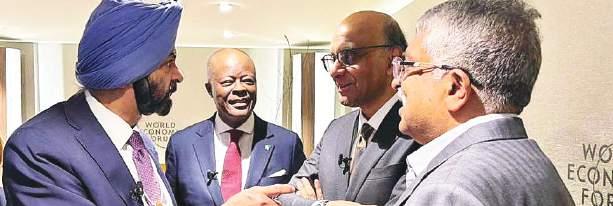
WEF 2026 SESSION ON EMERGING MARKET JOBS...
L-R: President of the World Bank, Ajay Banga; Honourable Minister of Finance and Coordinating Minister of the Economy, Mr. Wale Edun; President of Singapore, Tharman Shanmugaratnam; and Co-Founder and Chairman of the Board of Infosys, Nandan Nilekani, during the World Economic Forum (WEF) 2026 session titled “A Coming Challenge in Emerging Market Jobs,” where they served as panellists
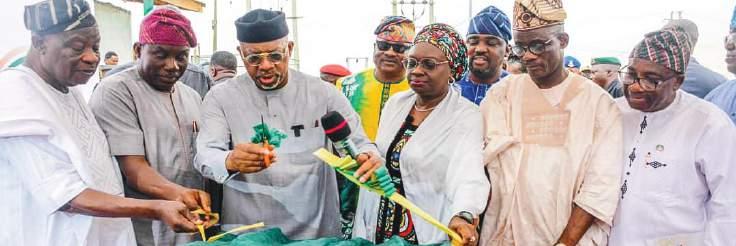
INAUGURATION OF 3.5KM WOLE SOYINKA TERMINAL ROAD...
L-R: Chairman, All Progressives Congress (APC), Ogun State Chapter, Chief Yemi Sanusi; Speaker, Ogun State House of Assembly, Rt. Hon. Oludaisi Elemide; Ogun State Governor, Prince Dapo Abiodun; Deputy Governor, Engr. Noimot Salako-Oyedele; Member representing Abeokuta South Federal Constituency in the House of Representatives, Hon. Afolabi Afuape; and Head of Service, Mr. Kehinde Onasanya, during the inauguration of the 3.5-kilometre Laderin–Prof. Wole Soyinka Terminal Road on Tuesday
Fraud losses decline by 51%, cases drop to 4% in 2025 NIBSS, apex bank strengthen surveillance covering 13,417 persons of interest portal
Nume Ekeghe
The Central Bank of Nigeria (CBN) has challenged banks and payment service providers to commit to measurable reductions in electronic fraud.
It also urged institutions to respond to suspicious transactions within 30 minutes under the framework of the Nigeria Electronic Fraud Forum (NeFF).
Speaking at the 2026 Nigeria Electronic Fraud Forum (NeFF) Technical Kick-Off Session, with the theme, ‘Shrinking Fraud Losses with ISO 20022 and Identity Management,’ the Deputy Governor, Financial System Stability, CBN, Mr. Philip Ikeazor, said the industry must move beyond fragmented controls and adopt enterprise-wide, data-driven fraud management systems capable of delivering tangible results.
Also speaking at the conference, Managing Director and Chief Executive Officer of Nigeria Inter-Bank Settlement System Plc (NIBSS), Premier Oiwoh, revealed that the financial system recorded a significant improvement in fraud outcomes in 2025, with the value of funds lost to fraud declining by 51 per cent year-on-year.
Continuing, Ikeazor said: “The industry must commit to bold, measurable fraud-reduction targets,
supported by clear strategic priorities.
“These include full exploitation of ISO 20022 data, universal and realtime identity verification, enhanced 24/7 fraud monitoring and response, structured liability-sharing and consumer reimbursement frameworks, deeper engagement with payment service providers and telecoms, and rigorous performance measurement through transparent scorecards. What gets measured must be improved.
“Ultimately, fraud is not merely an operational issue; it is a financial stability concern. Unchecked fraud undermines trust in digital finance, threatens inclusion gains, and poses systemic risks.
“By strengthening fraud controls, Nigeria safeguards confidence in its payments system, supports economic growth, and reinforces macro-financial stability. The central bank remains fully committed to providing the regulatory leadership, policy support, and coordination required to achieve these objectives.
“The task before us is collective and urgent. With clear targets, shared accountability, and sustained collaboration under NeFF, 2026 can and must be remembered as the turning point when Nigeria decisively shrank fraud losses and secured the future of its digital financial ecosystem.”
In response, the industry agreed under NeFF to reduce fraud response time to under 30 minutes, a move Ikeazor described as critical to improving recovery outcomes and limiting systemic exposure.
According to him, “Fraud mitigation efforts have evolved in tandem with changing threat vectors.
While legacy fraud, such as ATM card cloning, has been effectively neutralised, newer risks, online fraud, social engineering, SIM-swap abuse, insider compromise, and authorised
push payment (APP) scams, have emerged.
“NeFF has played a central role in coordinating timely responses, including mandatory two-factor authentication, industry advisories, public awareness campaigns, 24/7 bank fraud desks, and, recently, the development of a Standardised APP Scam Framework.
“Importantly, the industry has agreed to reduce fraud response times to under 30 minutes, a decisive step that materially improves
recovery outcomes and limits systemic exposure.”
Ikeazor also highlighted the role of identity infrastructure in constraining fraud, pointing to the impact of the Bank Verification Number (BVN) and its integration with the National Identification Number (NIN) in reducing impersonation and synthetic identity fraud.
He noted that continued collaboration with the National Identity Management Commission (NIMC) would remain central to strengthening
payment system integrity.
In his contribution, Oiwoh noted that total fraud losses fell to N25.85 billion in 2025 from N52.26 billion in 2024, while the number of reported fraud cases also declined by four per cent to 67,518 from 70,111 in the previous year.
He attributed the sharp drop in fraud losses to tighter controls, stronger collaboration among regulators, banks, and security agencies, and improved fraud detection capabilities across the payments ecosystem.
Military: Oil Thieves Now Use Chemicals to Process Crude into Adulterated Petroleum Products
The Nigerian military has raised the alarm over a new and dangerous tactic adopted by oil thieves in the Niger Delta, revealing that criminal networks are now using chemicals to process crude oil into adulterated petroleum products in a bid to evade sustained military operations.
According to the military, the development underscores the determination of illegal refiners
to stay ahead of security forces, despite intensified crackdowns on oil theft, pipeline vandalism and illegal refining sites across the region.
Speaking to journalists during an operational visit, the Commander of Operation Delta Safe, Rear Admiral Olugbenga Oladipo, said criminal elements refused to abandon illicit activities or embrace legitimate livelihoods, choosing instead to innovate new methods to plunder the nation’s hydrocarbon resources.
CPPE Expresses Concern Over Renewed Call for Higher Taxation of Non-alcoholic Beverages
Dike Onwuamaeze
The Centre for the Promotion of Private Enterprise (CPPE) has expressed concern over renewed calls for imposition of additional taxes on sugar-sweetened nonalcoholic beverages in Nigeria.
The CPPE’s concern followed recent release of the World Health Organisation’s “2025 Global Report,” which urged governments to significantly strengthen taxes on Sugar Sweetened Beverages (SSBs).
The Chief Executive Officer of CPPE, Dr. Muda Yusuf, disclosed
this in a statement titled, “Sugar Tax: Detrimental to the Nigerian Manufacturing Sector,” released yesterday.
According to him, “Nigeria’s economy remains in a delicate recovery phase and introducing additional sugar-specific taxes at this time risks reversing recent industrial gains, weakening employment outcomes, and undermining the objectives of ongoing manufacturing-friendly fiscal reforms.”
He added that, “public health objectives and economic growth are not mutually exclusive.
“What Nigeria requires is balanced, holistic, and developmentconscious policymaking, rather than additional fiscal pressure on one of the most important segments of the manufacturing sector.”
He argued that global best practice does not support sugar taxation as a sustainable or standalone solution to non-communicable diseases—especially in economies characterised by high inflation, weak purchasing power, fragile industrial recovery, and widespread poverty, such as Nigeria,” he said. Yusuf added that, “manufactur-
ers of non-alcoholic beverages are among the most heavily taxed and cost-pressured businesses in the Nigerian economy.
“Its existing fiscal obligations include 30 per cent Company Income Tax: 7.5 per cent ValueAdded Tax (VAT): N10 per litre excise duty; 4.0 per cent National Development Levy on assessable profits; 4.0 per cent FOB levy on imported inputs; import duties of 5.0 to 15 per cent on intermediate raw materials; 0.5 per cent ECOWAS levy; property taxes at sub-national levels and multiple state and local governments’ levies.
He explained that illegal refiners have moved away from openly burning crude oil, a practice that previously made them easy targets.
Instead, they now rely on chemical mixtures to produce petroleum products.
“Illegal refiners are evolving. They no longer burn crude openly. They now use chemicals to mix with crude oil to produce adulterated petroleum products,” Oladipo said.
He added, “This process is scientifically incomplete and extremely destructive to vehicles, generators and the environment. We are adjusting our operations to counter this new method, including tracking the supply chain of these chemicals.”
Emphasising the importance of public cooperation, the naval officer stressed that intelligence gathering must be a collective effort, noting that crude oil resources belong to all Nigerians.
“If communities notice suspicious movements, trucks accessing the creeks, or unfamiliar faces, they should report immediately,” he said.
“We need to entrench a strong ‘see something, say something’ culture, and the media has a crucial role in driving this message.”
Beyond illegal refining, Oladipo identified crude oil theft at wellheads as another major challenge
confronting security forces, pointing out that thousands of such installations are scattered across difficult and often inaccessible terrain.
“In many areas, thick vegetation makes movement almost impossible. Even when illegal activities are detected, access remains a serious constraint,” he said.
He added: “Despite this, we conduct at least two major operations daily, in addition to routine patrols.”
He acknowledged the operational difficulties but maintained that the military’s guiding principle remains the protection of national oil output.
“There is no operation without challenges. However, our focus is to ensure that national production does not decline. Current production challenges are largely due to maintenance work and seasonal factors, not widespread vandalism,” he added.
Reassuring stakeholders, Rear Admiral Oladipo described the Niger Delta as safe for business, noting that increased exploration activities and the influx of more companies into the region reflect growing confidence in the security situation.
He also dismissed suggestions of rivalry among security agencies, stressing that collaboration remains strong.
Linus Aleke in Abuja
9TH DAY PRAYER FOR LATE DE WHENO AHOLU MENU TOYI I OF BADAGRY...
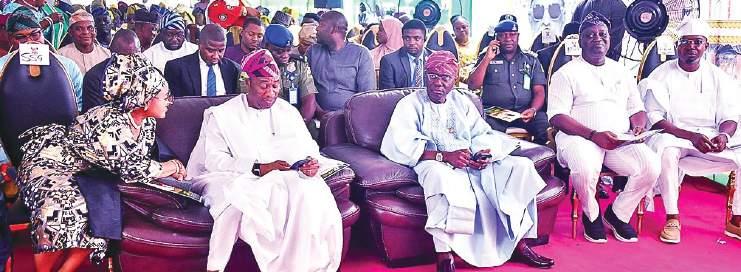
L-R: Secretary to the Lagos State Government, Barr. ‘Bimbola Salu-Hundeyin; Deputy Governor, Dr. Obafemi Hamzat; Governor, Mr. Babajide Sanwo-Olu; Commissioner for Home Affairs, Hon. Olanrewaju Layode; and Member, House of Representatives, Badagry Federal Constituency, Hon. Sesi Oluwaseun Whingann, during the 9th Day Prayer for late Oba Babatunde Akran, De Wheno Aholu Menu Toyi I of Badagry, at the Akran Palace, Jegba Quarters, Badagry, yesterday
Morgan Stanley Upbeat on Nigeria’s Sovereign Bonds, Sees Upgrade Cycle
Morgan Stanley turned positive on Nigerian sovereign bonds, saying the country is better placed to weather low oil prices and predicting more credit-rating upgrades.
Emerging-market sovereign strategist Neville Mandimika raised his view on Africa’s largest oil producer to a “like stance,” citing its improved finances and growing foreign currency reserves, according to a note published by Bloomberg.
“Nigeria is better positioned to absorb softer oil prices than in previous cycles,” Mandimika said. The nation has “entered an upgrade cycle, particularly if reforms, including fuel subsidies, are not reversed ahead of the 2027 elections,” he said.
Global investors are warming to Nigerian assets despite the weakness in crude, which accounts for more than 90 per cent of the nation’s foreign exchange. Citigroup Inc. struck an upbeat tone on the West African country earlier this month, saying it is more resilient to
the slump in oil prices than most frontier countries, including Angola.
Last year, both Fitch and Moody’s bumped up their ratings on Nigeria’s debt, citing more stability for its currency, the naira, and a stronger fiscal position.
For now, the nation’s bonds look
AU, AFRIMA Hail Sanwo-Olu, Lagos, Sponsors, Media Partners After Successful 9th Edition
The African Union (AU) and International Executive Committee of the All Africa Music Awards (AFRIMA) have praised Lagos State, Governor Babajide SanwoOlu, sponsors, partners and media organisations for their support, which led to the successful hosting of the 9th edition of the awards.
The 5-day celebration of African music, which was held in Lagos from January 7 to 11, 2026, brought together artistes, delegates and stakeholders from over 48 countries across Africa, which undoubtedly strengthened AFRIMA’s status as the continent’s leading music awards platform.
Speaking after the event, the Head of Culture at the African Union Commission, Angela Martins, said the success of the awards reflected the growing influence of African music and strong collaboration between public and private institutions.
“AFRIMA has continued to project Africa’s musical and cultural strength to the world,” Martins said. “The support and commitment from Lagos State Government, sponsors, partners and the media ensured a smooth and memorable celebration of African music.
“AFRIMA has grown beyond an awards ceremony to become a powerful platform for African unity and cultural expression.
Through music, we are telling Africa’s stories in our own voice and showing the world the depth of our creativity. Each edition strengthens the bond among African countries and reminds us that culture remains one of
our strongest tools for integration and development.”
She commended Lagos for once again proving its capacity to host major international events, describing the state as a key centre for Africa’s creative economy.
AFRIMA President and Executive Producer, Mike Dada, also expressed appreciation to all partners and sponsors, with special praise for the Lagos State Government and Governor Babajide Sanwo-Olu.
“We are sincerely grateful to all our partners and sponsors who believed in the AFRIMA vision and stood by us throughout the planning and execution of the 9th edition,” Dada said. “Their support shows a shared belief in the power of African music as a tool for unity, cultural pride and economic growth across the continent.
“We give special thanks to the Lagos State Government and His Excellency, Governor Babajide Sanwo-Olu, for the strong support, cooperation and enabling environment that made the 9th AFRIMA a huge success.
“From logistics to security and overall hospitality, Lagos once again proved to be a welcoming home for Africa’s creative industry, and we are deeply appreciative of this partnership.”
Key sponsors and partners that rallied behind the 9th edition of Africa’s global music awards institution included First Bank of Nigeria, Lagos State Internal Revenue Service (LIRS), The Address Homes, Guinness Nigeria, Utilita and Gobet247.
International cultural support came from the UK in Nigeria (British High Commission) and the Embassy of Sweden, both of which participated as Cultural Exchange Partners.
Others are Glenfiddich, Jägermeister, Super Travels Limited, Pan - Atlantic Travels, Wakanow, Dorf Travels & Tours Ltd, Vaniti Lagos, Lagos State Signage and Advertisement Agency (LASAA), and Mainland Block Party Lagos.
AFRIMA further acknowledged the contribution of its Official Media Partners, including DSTV/ Multichoice, Television Continental (TVC), African Union of Broadcasters (AUB), Silverbrid Group, Kennis FM, Afro Music Pop, Hip TV, Base FM, Beat FM, Classic FM, Hot FM, Lagos Talks Inspiration FM and Lasgidi FM.
Other media partners were Legit.ng, Max FM, Nigeria Info, Nigezie, The Culture Newspapers (TCN), QED and Yanga FM. Outof-home visibility for the event was supported and provided by Motomedia, Yartview Ltd, Optimus Exposure, Plural Media, Folham Nigeria Limited and Nimbus Media.
According to Dada, the strong list of sponsors and media partners reflects growing confidence in AFRIMA and the African music industry.
AFRIMA’s 5-day-long, sevenevent festivities began with a Welcome Soiree on Wednesday, January 7, hosted at the residence of the Deputy British High Commissioner, where guests and nominees were warmly received. Following this event, the focus
shifted to the Africa Music Business Summit, held at the Eko Convention Centre, Eko Hotels and Suites. This summit brought together music professionals to discuss the future of African music.
The excitement continued on Friday, January 9, at the AFRIMA Music Village located at Ikeja City Mall in Lagos, where more than
25 top artists performed for over 30,000 enthusiastic fans.
The grand finale of the 9th AFRIMA took place at the Eko Convention Centre, Eko Hotels and Suites, Lagos. The hall was filled to capacity as thousands of people came to watch the awards night, which was broadcast to 84 countries around the world.
cheap, according to Mandimika. They’ve handed investors a loss of 0.8 per cent this year compared with an average 0.5 per cent drop for emerging and frontier markets, according to data compiled by Bloomberg. However, the reassessment marked a notable shift in global investor sentiment after several years in which Nigeria’s assets traded at elevated risk premiums due to FX distortions, weak external buffers, and policy uncertainty. Morgan Stanley suggested that those constraints are easing, opening the door to a re-rating across Nigerian sovereign debt, FX markets, and equities.
Besides, the bank’s assessment indicates that Nigeria is moving from macro stabilisation toward a potential upgrade phase, boosted by continued reserve growth, FX discipline, and capital-market development.
FCCPC Clamps Down on Digital Lenders
Over
Failure to Regularise Status
James Emejo in Abuja
The Executive Vice Chairman/ Chief Executive, Federal Competi- tion and Consumer Protection Commission (FCCPC), Mr. Tunji Bello, yesterday said phased enforcement measures have commenced against Digital Money Lending (DML) operators that failed to regularise their status in accordance with the Digital, Elec- tronic, Online and Non-Traditional Consumer Lending Regulations, 2025 (DEON Regulations).
He said the actions were necessary to give effect to the regulations and maintain regulatory certainty in the country’s digital lending market, in line with the commission’s statutory mandate.
The deadline for regularisation elapsed on January 5, 2026.
Speaking on the commencement of enforcement measures, Bello stated that operators in breach of the regulations had been removed from the FCCPC’s published register of approved
digital lenders, pending compliance with applicable regulatory requirements.
In a statement by the commission’s Director, Corporate Affairs, Ondaje Ijagwu, Bello added that as part of the approved enforcement framework, the commission had also withdrawn the conditionally approved status previously granted to certain DML operators that did not complete the required regularisation process within the transitional period.
He said, “The compliance window provided under the regulations has now closed. At this stage, the commission is proceeding with appropriate enforcement steps in a manner that is fair, orderly, and consistent with due process.
“The objective is to promote discipline, transparency, and consumer confidence within the digital lending space, not to disrupt legitimate business activity.”
Noting that the commission’s published register served as an
important consumer information tool, Bello said, “The FCCPC’s register is intended to guide the public on operators that have met the applicable regulatory requirements as at the time of publication. Consumers are advised to exercise caution when dealing with digital lenders that do not appear on the Commission’s current list of approved operators.” FCCPC however, stated that it had commenced structured engagement with relevant application hosting platforms and payment service providers, consistent with its statutory functions, as part of ongoing enforcement and compliance monitoring activities.
It added that further regulatory steps will be undertaken in ac- cordance with law and established procedures.
For those provisionally designated as eligible under transitional arrangements, the commission had issued a deadline of April 2026 to regularise their registration under the DEON Regulations.
Emmanuel Addeh in Abuja
INCREASE PERFORMANCE OF NON-OIL EXPORT FOR 2025 AND 2026 ON THEIR MINDS...
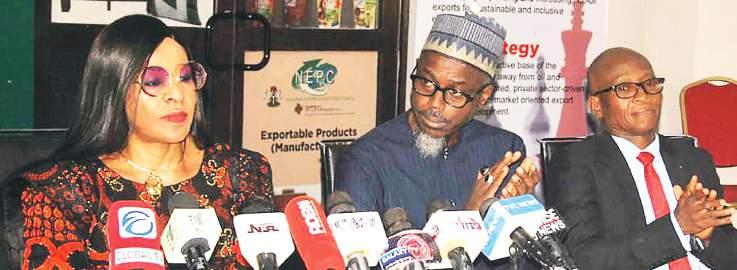
L-R: Executive Director/Chief Executive Officer, Nigerian Export Promotion Council (NEPC), Mrs. Nonye Ayeni; Director, Policy and Strategy, NEPC, Mr. Dalhat Lawal; and Director, Solid Mineral Department, NEPC, Mr. Samson Idowu, during the NEPC media briefing on the increased performance of Nigeria’s non-oil export for the 2025 and 2026 outlook, held in Abuja… recently
Dele Oye: New Tax Regime to Unlock Huge Revenues from Religious Institutions
Says laws put economic activities of churches, mosques, other faith-based organisations under closer regulatory scrutiny
The Chairman, Alliance for Economic Research and Ethics (AERE), Dele Oye, yesterday predicted that the new tax regime could unlock billions of naira in additional revenue from the country’s vast faith-based economy.
He said the current dispensation will usher a more formal, transparent, and unified tax framework with a potential to attract extra revenues for the government.
Oye is the immediate Past Chairman of the Organised Private Sector of Nigeria (OPSN) and Chairman of the Nigeria-Türkiye Business Council (NTBC).
He said the enactment of the Nigeria Tax Act (NTA) and the Nigeria Tax Administration Act (NTAA) represented the most significant overhaul of the country’s fiscal landscape in decades, with far-reaching implications for religious institutions that have historically operated within a legal grey area.
Oye, in a paper titled, “Harmonizing Zakat, WAQF, and Christian Stewardship Under Nigeria’s 2025 Tax Act, pointed out that under the new regime, revenue collection is centralized while definitions of “charitable activities” are tightened, and a digital paper trail mandated for financial transactions.
This, he said, subjected economic activities of churches, mosques, and other faith-based organisations under closer regulatory scrutiny.
However, he noted that while the 2025 Tax Act promotes modernisation and reduces tax fragmentation, its success in the religious sector depends on the professionalisation of institutional financial desks and a collaborative oversight framework between the Nigeria Revenue Service (NRS) and faith-based stakeholders.
He said, “The 2025 Tax Act is not merely a technical adjustment of rates; it is a fundamental reimagining of the social contract between the Nigerian state and its citizens. For decades, religious institutions operated within a gray area of the law, enjoying broad exemptions under the guise of “public character” while occasionally venturing into commercial activities that blurred the lines between sanctuary and shop.
According to him, “The new regime, characterized by the Nigeria Tax Act (NTA) and the Nigeria Tax Administration Act (NTAA), seeks to bring order to this complexity by centralizing collection and mandating a digital paper trail for all financial transactions.
“For the devout, this raises a pressing question: how does one balance the ‘Nisab’ of Zakat or the
‘tenth’ of the tithe with the rigorous demands of the Nigeria Revenue Service (NRS)?
“This article delves into the strategic implications of these reforms for Islamic and Christian financial practices. It moves beyond the binary of “God versus Caesar” to explore how faith-based philanthropy can be harmonized with modern tax administration.
“As the digital economy grows toward an estimated $300 billion by 2025, the government’s drive for
revenue mobilization increasingly targets the institutional transparency of all entities, including those previously shielded by religious sentiment.
“By examining the nuances of Zakat deductibility, the tax status of Waqf assets, and the reporting requirements for church-led charities, this study aims to provide a roadmap for compliance that preserves spiritual integrity while fulfilling civic duty.”
Continuing, Oye said, “The transition to the 2025 tax regime marks the formal end of an era
defined by legislative proliferation and administrative duplication. Prior to these reforms, the Nigerian tax system was a labyrinth of multiple taxes, with state and federal authorities often competing for the same revenue pools, leading to significant inefficiencies and a high cost of compliance for businesses and non-profits alike.
“The core of the 2025 reform lies in the amalgamation of various tax laws into a unified legislative framework. This consolidation is
primarily achieved through the Nigeria Tax Act and the Nigeria Tax Administration Act, which aim to simplify the legal structure and promote fiscal sustainability.
“One of the most significant shifts is the move toward a data-driven administration system. The new laws emphasize the integration of the Tax Identification Number (TIN) with other national identifiers like the National Identification Number (NIN) and Bank Verification Number (BVN).
Adediran Emerges as First West Central Africa- based Jury Member for Purpose Awards
Mary Nnah
The Business Director at mediaReach OMD, Emmanuel Adediran, has been appointed as the first-ever West Central Africa (WeCA)-based jury member for the 2026 Purpose Awards, a leading recognition platform for purpose-driven initiatives in the EMEA region.
According to a statement, the appointment was a sign of Adediran’s expertise and influence in the marketing communications
and social impact sector, not only in Nigeria, but across Africa.
The Purpose Awards, organised by Haymarket Media Group in association with Campaign, PRWeek, and Third Sector, celebrate outstanding work in driving social change through creative excellence and authentic purpose.
Adediran’s appointment to the esteemed jury panel underscores the growing recognition of African perspectives in global purposedriven initiatives.
“I am deeply honored to join the Purpose Awards 2026 jury”, Adediran said.
“This appointment is not only a personal milestone but also a testament to the innovation and impact emerging from Nigeria and across Africa,” he added.
The Purpose Awards 2026 shortlist will be announced in April, and winners will be revealed at the awards ceremony in June.
Adediran would join a panel of industry leaders from across
the EMEA region, selected for their expertise, leadership, and commitment to advancing social impact through communication. Deputy Editor at PR Week, Siobhan Holt, emphasised the importance of purpose campaigns, saying, “The Purpose Awards are the best way for Businesses to show they are a leader in this pivotal genre. The ongoing economic challenges, alongside political and societal issues, have made purpose campaigns more vital now than ever.”
Judgement Sacking Abure is Victory for Democracy, Rule of Law, Says Labour Party
Affected faction to appeal ruling
Chuks Okocha in Abuja
Labour Party (LP) said it received with joy and relief the judgement of the Federal High Court, which ordered the Independent National Electoral Commission (INEC) to immediately recognise Senator Nenadi Usman’s leadership as the only valid, authentic, and legitimate leadership of the party.
LP stated that the judgement was a victory for democracy, the party, and the Nigerian people, and not a personal victory for Usman or any individual in the party.
The party stated, “Although the journey to this point was protracted,
difficult, and at times turbulent, the Labour Party urges its members and supporters not to celebrate with triumphalism.
“Rather, this moment should be embraced as a solemn opportunity for genuine reconciliation. For us, it is a no victor, no vanquished moment.
“Let it be clearly stated: there is only one united and indivisible Labour Party in Nigeria. This judgement must mark a new beginning anchored on unity, healing, and collective progress.’’
LP called on all members, who might feel aggrieved by the current state of affairs, including those against whom the judgement was delivered,
to sheathe their swords and embrace dialogue in the supreme interest of the party.
The party offered an olive branch to all contending tendencies within its fold.
It said, ‘’We sue for peace, plead for dialogue, and seek sincere reconciliation. There is enormous work ahead in rebuilding the Labour Party into a strong, credible, and virile opposition platform in Nigeria, a task that can only be accomplished in an atmosphere of unity, cohesion, and mutual respect.
“In furtherance of this commitment to peace and reconciliation, the party shall immediately constitute a Truce and Reconciliation Committee mandated
to engage all aggrieved members and restore lasting harmony within the party.”
Meanwhile, the Julius Abure group said it would appeal the judgement of the Federal High Court, which gave recognition to the Usman Caretaker Committee.
It said in the judgement delivered by Justice Peter Lifu, the court misinterpreted the April 4, 2025 verdict of the Supreme Court to declare Usman the caretaker chairman of the party, an office alien to the LP constitution.
In a statement in Abuja by its spokesman, Obiora Ifoh, the group claimed that the judgement was a
clear contradiction of the Supreme Court judgement, which stated that no court had the power to appoint leadership for any political party and that leadership issues were internal affairs of political parties.
It said it would appeal the judgement at the Court of Appeal.
The statement said, “Although we are yet to see the Certified True Copy of the judgment in order to fully make comment about it, our position will become stronger when we see the CTC of the judgement. But generally, from the brief we have gotten so far, it is clear that the party will appeal the judgement.
“Before today’s judgement, we have been suspecting that it may go this way because of the body language around the court. When the matter was first filed, it was assigned to Justice Omotosho and suddenly, there was a summersault, as another matter was filed which was impari material and the one sent to Omotosho was withdrawn and now sent to Justice Peter Lifu. That was a red flag for us.
“Secondly, the court refused us the opportunity to respond to issues raised in the counter affidavit filed by other parties and quickly adjourned for judgement. That was the second red flag.
PHOTO: ENOCK REUBEN
James Emejo in Abuja
Greenland: Trump Makes U-turn, Jettisons
Emmanuel Addeh in Abuja
President Donald Trump yesterday ruled out the deployment of military force in his bid to acquire Greenland, opting rather to embark on negotiations with all parties involved, especially Denmark.
Speaking at the World Economic Forum (WEF) in Davos, Switzerland, amid heightened tensions with Europe, the US President also cast America as the undisputed leader of the world.
“We probably won’t get anything unless I decide to use excessive strength and force where we would be, frankly, unstoppable. But I won’t do that. Now everyone’s saying, ‘Oh, good.’ That’s probably the biggest statement I made, because
Use of Military Force
people thought I would use force. I don’t have to use force. I don’t want to use force. I won’t use force,” he stated.
Still, Trump argued no other country can defend Greenland but the United States and said he is seeking “immediate negotiations” to discuss his aim to take over the Danish territory.
“I have tremendous respect for both the people of Greenland and the people of Denmark, tremendous respect. But every NATO ally has an obligation to be able to defend their own territory, and the fact is, no nation or group of nations is in any position to be able to secure Greenland other than the United States. We’re a great power,” Trump said.
Despite ruling out the use of force, Trump issued a warning to NATO allies that oppose his Greenland push, ABC News reported.
“We want a piece of ice for world protection, and they won’t give it. We’ve never asked for anything else ... So, they have a choice. You can say yes and we will be very appreciative, or you can say no and we will remember,” Trump said.
Days before traveling to Davos, Trump announced new tariffs on eight European countries over their obstinance on the issue. A 10 per cent tariff rate against those nations is set to go into effect on February 1. The levies would then increase to 25 per cent on June 1, until the US is able to purchase Greenland,
according to the president.
“It’s the United States alone that can protect this giant, massive land, this giant piece of ice, develop it and improve it and make it so that it’s good for Europe and safe for Europe and good for us,” Trump said.
When asked what kind of deal he envisions between the US and Denmark, Trump said it was costing Denmark “hundreds of millions a year” to run Greenland and that U.S. control will bolster Greenland’s security from countries like Russia and China.
“It’s very important that we use that for national and international security. That can create a power that will make it impossible for the bad guys to do anything against
the perceived good ones,” Trump said. He added, “We will see what happens.”
But Danish and Greenlandic officials have flatly rejected Trump’s proposal to buy the island.
Several NATO allies also condemned Trump’s Greenland push, including Canadian Prime Minister Mark Carney, ahead of his speech at Davos. Last week, several European nations sent small contingents of troops to Greenland for exercises.
Trump in recent days has repeatedly sidestepped questions on whether he is willing to see the breakup of the NATO alliance in order to acquire Greenland.
Trump on Wednesday said NATO has treated the U.S.
CAN: INITIAL POLICE DENIAL OF WORSHIPPERS’ ABDUCTION TROUBLING
the community and “there was no evidence of the attack”. Rabiu dismissed reports of the attack as “ru-mours…sponsored by people who are not happy with the relative peace that Kajuru has been enjoying since the coming of this administration.”
CAN, in a statement Wednesday, called for responsibility and caution in security communication after reviewing a subsequent press statement by the Nigeria Police confirming the abduction of the 170 worshippers.
The association said it recognised the challenges in verifying security incidents, especially in remote communities. But it said such challenges must not be used as excuses for misinforming the public, particularly, when threats to human life were involved.
In the statement by its National President, Archbishop Daniel Okoh,
the Christian body cautioned that in situations of that gravity, public communication must not appear dismissive of the suffering or fears of affected citizens.
CAN stated, “While the need to prevent panic is understandable, caution must not be communicated in ways that suggest denial or indifference.
“Statements made by senior security officials carry significant weight and should, therefore, be guided by due diligence, empathy, and a clear understanding of their impact on public trust and social stability.”
While making an appeal for the immediate and unconditional release of the abductees, Okoh said CAN had noted the subsequent police confirmation of the incident. He commended Inspector-General of Police, Kayode Egbetokun, for directing the deployment of operational and
intelligence assets to the affected area.
According to Okoh, “These steps are necessary and welcome. However, they must be accompanied by a more disciplined, people-focused approach to crisis communication going forward.
“We call on all security agencies and relevant authorities to strengthen coordination, improve verification processes, and ensure that credible reports from communities are treated with the seriousness they deserve.
“Victims must be protected, genuine distress calls respected, and misinformation, whether dismissive or sensational, avoided.”
The statement said, “CAN also urges governments at all levels to confront the persistent insecurity across the country with renewed urgency, as repeated incidents continue to endanger lives, disrupt worship, and erode public confidence.”
Kaduna State Governor, Senator Uba Sani, assured that his administration, in collaboration with security agencies, would ensure the safe return of all the people abducted last Sunday during church services in Kurmin Wali community.
Sani, who gave the assurance yesterday during a visit to the community, said he will not rest until the victims returned home safely.
The governor said, “In the last two days, we have been collaborating with the relevant security agen-cies, including the military, the DSS, the police, and the Office of National Security Adviser, to ensure the quick return and recovery of our people that were abducted in this very important community.”
He said even if it was one
TUGGAR TO INVESTORS: DO NOT WRITE OFF NIGERIA BASED ON ISOLATED SECURITY CONCERNS
perceptions that obscured opportunities in key sectors. He urged the international community to rethink the way it saw Nigeria.
The minister stated that Nigerians were among the continent’s most heterogeneous people. He highlighted the country’s improving macroeconomic reforms, and ongoing efforts to strengthen governance by the Bola Tinubu administration.
Tuggar stated that while no country was immune to security concerns, investors should take a more nuanced view of Nigeria, assessing the country on its specific merits rather than broad assumptions.
He told the CNN, “I think it would be nice to see (Nigeria) as a very diverse country that actually has not fared badly compared to countries that are more homogenous. That we have been living with each other in peace, in spite of some of the fringe or even conflict areas, in border areas that now are cascading downwards.
“But it is very important to define it for what it is so that we can find the right solutions. We have forest guards; we have several other initiatives. In fact, we had done very well with the fight against Boko Haram.”
The minister pushed back on what he characterised as the incorrect framing of the Nigerian as well as the African situation, explaining that a lot of the claims are overhyped. He said, “Some of the conversations that are taking place here also have to do with Africa’s risk bias, where the issue of risk, geopolitical risk in particular, is overhyped when
it comes to Africa, which doesn’t apply in other parts of the world.
“So it’s very important we look at the progress that the Tinubu administration has been making with macroeconomic reforms, with the tax reforms that make it easier for investors to come into Nigeria, lowering of corporate income tax, and reform of the foreign exchange.
“We can actually come to Davos and use our Nigerian cards here, credit cards without a limit, (we have) $43 billion in foreign reserves. Our sovereign bonds, our treasury bills
Limited’s interests in the prized Oil Mining Lease 42 (OML 42).
The foreign lenders contend that the appointment of Abubakar Sulu-Gambari SAN as Receiver/ Manager constitutes an unlawful attempt to enforce a subordinate security in breach of their rights.
Background: The Disputed Interests in Neconde and OML 42
Neconde Energy Limited, a prominent player in Nigeria’s oil and gas sector, holds 45% interests in OML 42, an oil asset of strategic importance.
The foreign lenders, comprising an international oil trading entity and international financial institutions, as well as Fidelity Bank, extended credit facilities to Neconde, with FBN Trustees appointed as their security trustee under the agreed terms.
The dispute arises from the
have a yield of 8 to 10 per cent. So let us look at Nigeria holistically. Let us not continue to dwell on some of these isolated incidents and define the entire country by it.”
He added, “And it’s also important to note that sometimes when we dwell on some of these incidents, sorry, when we don’t frame the narrative correctly, we actually trigger some of these incidents, because that’s when some of the bandits and the terrorists try to go for innocent civilians and try to use them as human shields because they
complex web of relationships among Neconde, the foreign lenders and a consortium of Nigerian banks grouped as the “Nestoil Lenders”.
This Nestoil lenders include First Bank Limited and FBN Trustees - an entity affiliated with First Bank Nigeria Limited was also acting as trustee for the Nestoil Lenders.
Allegations: Breach of Trust and Unlawful Creation of Security
At the heart of the lawsuit are accusations that FBN Trustees breached its fiduciary duties and trust obligations by orchestrating the creation of a secondary security interest over Neconde’s assets in OML 42, to benefit the Nestoil Lenders.
The foreign lenders contend that this security was established through a Deed of Charge executed by FBN Trustees, despite the explicit lack of consent from the foreign
know they’re going to be targeted.”
Tuggar acknowledged the effect of the recent coup in Niger Republic and its negative effect on security in the Sahel, emphasising that Nigeria remains open to working with other nations of the world in terms of training and equipment to end the security challenges in the country.
He stated, “We were trying to sort out the thousands that had surrendered. Some were innocent victims caught in conflict areas until
Continued on page 28
lenders—a requirement set out in the original terms of their lending relationship involving FBN Trustees. Notably, the lawsuit asserts that Neconde DOES NOT OWE the Nestoil Lenders, further rendering the creation of this additional security without the requisite consent completely unlawful.
Foregn Lenders’ Position: Demands and Legal Arguments
The plaintiffs argue that FBN Trustees, fully aware of the need for prior approval and having received a clear refusal, nonetheless proceeded to create the contested security interest.
This action, they claim, constitutes a serious breach of trust and fiduciary responsibility, exposing FBN Trustees to liability for acting in the interests of parties with no legitimate claim over Neconde’s assets.
The foreign lenders are seeking
person that was abducted, “It is the responsibility of the Kaduna State government to protect the lives and property of the people.’’
The governor condemned those he said had been using the unfortunate incident to score political points, admonishing, “We should not be talking about numbers or politics.
“We are talking about the sanctity of human life and dignity here. That is the reason why we will go to any length, collaborating with the security agencies, to ensure the quick return of our people here in Kurmin Wali.”
Sani promised that state government would foot the medical bills of those who sustained injuries during the attack.
He added that the state government would liaise with Minister of Defence, Gen. Christopher Musa (rtd) to establish a military base in the community, given its proximity to the kidnapping black spots.
Sani said the military had contained the insecurity along Kaduna-Abuja expressway, but bandits had found havens in the hinterland.
He said Kurmin Wali happened to be close to Rijana town, which was one of the epicentres of banditry in the country.
He also promised that the road linking the community to the highway would be constructed, saying the Commissioner for Public Works would do the necessary assessment prior to the ground breaking ceremony for the project.
Sani stated, “We protect the lives of everyone, irrespective of religious
damages and judicial orders to invalidate the contested security, remove FBN Trustees from its role as security trustee, and remove Abubakar Sulu-Gambari SAN as a purported receiver.
They are asking the court to interpret and enforce the priority provisions of the facility agreement, debenture, and intercreditor deed, and to determine the legality of both the subsequent security and the receiver’s appointment.
In a written address in support of an originating summons dated December 11, 2025, the plaintiffs argued that the December 2022 Deed of Charge is void, invalid, and legally ineffective, having been executed without their consent.
Implications: A New Twist in First Bank Litigation and Investment Climate
This development adds a complex layer to the ongoing court
President Trump
“very unfairly” and claimed that NATO countries wouldn’t come to America’s defense, ignoring the fact that Denmark, in particular, fought alongside the US after the 2001 terror attacks because the nation is an American ally.
or ethnic affiliation. We are one in Kaduna State. And I’m happy the people of Kurmin Wali have understood that clearly.
“That is the reason why when we came in here, you received us warmly, even those that are mourning and grieving.”
Earlier, the Agwam Kufana, Chief Dauda Titus, said he was in church on Sunday when he received a distress call from the community, notifying him of the attack.
He said, “We refused to comment on the incident since Sunday because we don’t know the number of those that were kidnapped. We only said there was an attack and some people were abducted.’’
Atiku Laments Audacity of Bandits
Former Vice President Atiku Abubakar expressed concern over the increasing audacity of bandits, who attacked at will unchallenged. Reacting to the attack on Kurmin Wali community, Atiku said it was concerning that while some states claimed victory in their peace deals with bandits, the same criminals were busy attacking communities and taking hostages.
According to him, “It’s colossally embarrassing to see non-state actors holding the country hostage and attacking people and taking hostages again and again unchallenged.”
He stated that it was difficult to achieve deterrence in a situation where governors were on their
Continued on page 29
disputes between First Bank Nigeria entities, Neconde, and Nestoil. Legal experts note that the involvement of multiple international lenders and the allegations of fraudulent security creation may have far-reaching implications. The case raises serious ethical questions about governance and transparency in Nigeria’s banking, potentially undermining investor confidence and casting a shadow over the country’s investment climate.
Critics warn that such disputes, if left unchecked, could deter future foreign investment and damage the reputation of Nigeria’s financial institutions.
Conclusion: Next Steps and Industry Watch
As the court considers the foreign lenders’ claims, stakeholders across the banking and oil industries are closely monitoring the outcome.
GLENCORE, AFC, MAURITIUS BANK, FIDELITY SUE FIRST BANK TRUSTEES AND RECEIVER, ABUBAKAR SULU GAMBARI
Dedicated educators who ignite curiosity, character, and confidence in every learner
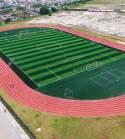
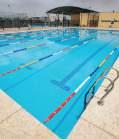
Proud winners of prestigious international and national academic awards Beautiful, serene and secure world-class campus State of the art classrooms, laboratories and sports facilities
ENTRANCE EXAMINATION FOR DAY AND BOARDING STUDENTS FOR THE 2026/2027 ACADEMIC SESSION
Admission into year 7 (JSS1) is scheduled to take place as follows:
Dates: Saturday 31st January, 2026 and Saturday 7th February, 2026
Locations: LAGOS: James Hope College, Twin Lakes Estate, Lekki, Lagos
Application forms can be downloaded from www.jameshopecollege.edu.ng under the “admission” tab or can be collected from James Hope College, Twin Lakes Estate, Lekki, Lagos.
OPEN DAY SATURDAY 17TH JANUARY, 2026
Follows us on all our social media handles @jameshopecollege James Hope @JHCLekki
WORLD ECONOMIC FORUM IN DAVOS...
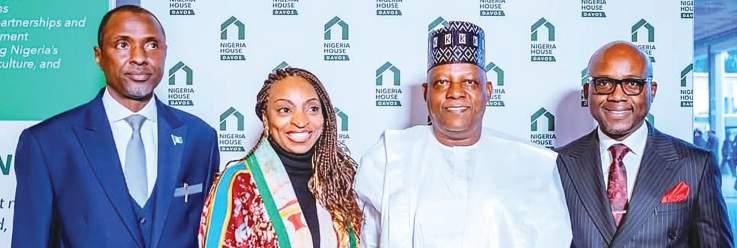
L-R: Permanent Secretary, Federal Ministry of Solid Minerals Development, Engr. Faruk Yusuf Yabo; Minister of Industry, Trade and Investment, Dr. Jumoke Oduwole; Vice President of Nigeria, Senator Kashim Shettima; and Minister of Innovation, Science and Technology, Dr. Kingsley Tochukwu Udeh, SAN, during the opening of the Nigeria House at the 2026 World Economic Forum in Davos, Switzerland, Monday
Want delegation of procedural matters to registrars
Stakeholders in the justice sector has advocated far-reaching reforms towards efficient court administration in the country.
The stakeholders which included the Chief Justice of Nigeria (CJN), Justice Kudirat Kekere-Ekun, the Attorney General of the Federation (AGF) and Minister of Justice, Lateef
Fagbemi, SAN, and former Minister of Works and Housing, Babatunde Fashola, spoke on Wednesday, in Abuja, at the 2026 Strategic Retreat of the Committee of Chief Registrars of Nigeria.
The retreat has as theme, “Strengthening Court Administration, Financial Accountability and Staff Well-Being for a More Effective Judiciary in Nigeria.”
Speaking at the occasion, the CJN described court administration as “governance in action,” stressing that weak administration leads to delayed justice, eroded public confidence and reduced institutional effectiveness. According to Kekere-Ekun, the judiciary’s credibility depends not only on sound judgments but also on transparent processes, prudent financial management and the
wellbeing of judicial staff.
“Our courts are the heartbeat of the justice system. Where accountability is absent, public confidence erodes; and where the wellbeing of judicial staff is neglected, institutional effectiveness is compromised”, she said.
Emphasized that financial accountability is both a statutory and moral obligation essential to safeguarding
Justice Mohammed Umar of a Federal High Court, Abuja, on Wednesday, admitted the Bauchi State Commissioner for Finance, Yakubu Adamu, to bail in the sum of N100 million.
Also admitted to bail in the same sum were Balarabe Abdullahi Ilelah, Aminu Mohammed Bose and Kabiru Yahaya Mohammed, standing trial on alleged terrorism financing to the tune of $9.7 million.
The judge in his ruling on the bail applications of the defendants held they were able to present sufficient materials before the court for it to exercise its discretion in their favour judicially and judiciously.
As part of conditions attached to the bail, the defendants were ordered to produce two sureties each who must be a permanent secretary and a director in the civil service.
They were also ordered to deposit their international passports with the court registry, and cannot travel without the court’s permission.
Meanwhile, the judge held that the defendants must report to the Department of State Services (DSS’) office in Bauchi State every Monday until the case is determined.
He adjourned the matter until February 26 for commencement of trial.
The Economic and Financial Crimes Commission (EFCC) had preferred a 10-count terrorism
financing and money laundering charge against Adamu and three others, said to be top Bauchi State civil servants.
Although they were earlier denied bail before Justice Emeka Nwite, who worked as vacation judge in December, the defendants were however, re-arraigned before Justice Umar on January 16 and their bail application moved after the case was re-assigned to the new judge.
Justice Umar then adjourned the matter until January 21 for ruling on their bail application following their plea of not guilty.
The defendants, through their lawyer, Chief Chris Uche, SAN, informed the court in their latest bail application, that though a sister
Dismissal of Samuel Anyanwu’s Suit Defining Moment for PDP, Party Chief Says
Chuks Okocha in Abuja
A chieftain of Peoples Democratic Party (PDP), Umar Sani, yesterday, said the dismissal of Samuel Anyanwu’s suit by Justice M. G. Umar of the Federal High Court, Abuja, marked a defining legal and political moment for the party.
In a statement on X, Sani said the development had far-reaching implications for party autonomy, judicial restraint, and the role of Independent National Electoral Commission (INEC).
In Suit No. FHC/ABJ/CS/254/2025,
Anyanwu had sought judicial protection to perpetuate himself as National Secretary of PDP, despite internal party actions and subsisting judicial pronouncements to the contrary. But his claims were decisively rejected Sani said beyond the immediate parties, the judgement reinforced a settled but often contested constitutional principle.
According to him, the ruling aligns squarely with recent Supreme Court judgements, notably Julius Abure vs
Nenadi Usman (LP) and INEC vs SDP, where the apex court restated, in unambiguous terms, that leadership disputes within political parties were strictly internal matters.
The former vice presidential spokesman stated that the courts had consistently warned INEC against the temptation to choose sides or confer legitimacy when internal party mechanisms were already in motion, stressing that Umar’s decision sat firmly within this jurisprudential trajectory.
court earlier refused their bail plea, there were new and additional facts upon which the instant application was brought.
Uche said the sister court would have granted their bail if the new facts were brought to its notice.
The lawyer argued that Bello Bodejo, the President of Miyettti Allah Kautal Hore, whom the EFCC named in the nine counts of the 10 counts filed against his clients, was never convicted for any terrorism offence by any competent court in the country.
judicial independence, Kekere-Ekun stated that Chief Registrars occupy a position of profound responsibility as custodians of records and stewards of judicial resources.
Meanwhile, the CJN urged greater adoption of technology, including digital tools and judicial automation, to improve efficiency, transparency and access to justice, adding that technology, when properly deployed, should be seen not as a disruption but as an enabler of judicial excellence.
Chairman of the retreat, Lateef Fagbemi, in his remarks, observed that the gathering came at a defining moment in Nigeria’s democratic journey, when citizens are demanding faster justice delivery, stronger accountability and modern governance.
Fagbemi described Chief Registrars as the “institutional backbone” of the judiciary, noting that they serve as the first point of contact for court users and play a decisive role in shaping public perception of the justice system.
“Where the registry falters, the administration of justice is inevitably impeded,” he said, adding that registrars stand at the intersection between constitutional ideals and
the lived experience of Nigerians seeking justice.
The AGF stressed the need for continuous professional development, citing the rapid evolution of court administration through electronic filing, digital case management, financial technology and data security.
He warned that failure to adapt could lead to professional obsolescence.
Meanwhile, the AGF called for consideration of expanded procedural authority for Nigerian registrars, drawing examples from other common law jurisdictions where registrars handle certain procedural decisions to ease judges’ workload and accelerate justice delivery.
“It is instructive that in other common law jurisdictions, registrars have been empowered with substantial procedural authority to accelerate justice delivery.
In the UK, registrars can refuse non-compliant documents and make procedural decisions on time limits without oral hearings.
“Canadian registrars can extend time limits and excuse procedural non-compliance. American court clerks enter default judgments in uncontested matters.
The Kogi State Chief Judge, Justice Josiah Majebi, has disclosed that the role of Notaries Public within Nigeria’s legal framework cannot be over emphasised, noting the office is statutorily grounded, judicially recognized and closely linked to the administration of justice.
Justice Majebi disclosed this while speaking at the swearing ceremony of the 17 newly appointed Notaries Public and charged them to uphold the dignity, integrity and public-trust of their new office.
The ceremony which held yesterday at the judiciary headquarters in Lokoja, the Kogi State capital, followed the
appointment of the legal professionals by the Chief Justice of Nigeria (CJN), Justice Kudirat Motonmori Olatokunbo Kekere-Ekun .They were appointed pursuant to the Notaries Public Act, 2023.
Delivering his address after administering oath on them, the Chief Judge congratulated them and described their appointment as a significant milestone in their professional careers.
He commended the CJN for their new designation and noted that the occasion marked a moment of pride for the state’s justice delivery system, their families and the legal professional in general.
He emphasized the strategic role of Notaries Public within Nigeria’s
legal framework, noting the office is statutorily grounded, judicially recognized and closely linked to the administration of justice.
He noted that under the Notaries Public Act, Notaries are empowered to perform public legal acts, including administering oaths, taking affidavits and declarations, authenticating signatures, notarizing legal and corporate documents and certifying documents for use both within and outside Nigeria.
He further stressed the Act designates every Notary Public as an officer of the Supreme Court of Nigeria with notarial acts carrying a presumption of regularity and enhanced evidential value in judicial proceedings.
Ibrahim Oyewale in Lokoja
Alex Enumah in Abuja
Alex Enumah in Abuja
Politics
Acting Group Politics Editor DEJI ELUMOYE
Email: deji.elumoye@thisdaylive.com
08033025611 sms only
Soludo: A Call on Ndigbo to Fully Reintegrate into Nigeria
David-Chyddy Eleke looks at the validity of the recent call by the Governor of anambra State, Prof. Chukwuma Soludo on Ndigbo to properly reintegrate themselves into the Nigerian project.
Governor Chukwuma Soludo of Anambra State is one governor that cannot claim to be too loved by the man on the street even though he scored over 90 percent of the entire votes cast in the November 8, 2025 governorship election in the state. That may be something to be explained on a later date. Be that as it may, one governor in Nigeria whose candid views cannot be wished away is the professor of econometrics and former governor of the country’s apex bank.
If Soludo’s remarks will make you hate or love him is not his problem, but one thing that is constant is that as painful or scarting as his views may be, you can not also deny the truth embedded in them. Quite a few times since he became governor in 2021, Soludo has canvassed unpopular viewpoints that were neither false nor contestable, yet very unsavoury in the ears of his haters.
One of the most popular of such views remain his iconic open letter titled: History Beckons, I Shall not be Quiet. His views in the publication were direct attacks to his former school mate at UNN, godfather of his son and predecessor, Mr Peter Obi, who was a presidential candidate of Labour Party in the 2023 presidential poll.
Recently, Soludo chose the 2026 Armed Forces Remembrance Day to once more dish out such truth, and this time, his target was the entire Igbo race in the South East Nigeria. The Governor called for an end to selfmarginalization by the Igbo people of the South East, urging their youths particularly to shun the sentiment that they were being marginalized, but to enlist in the Nigerian Armed Forces and embrace their roles as “co-owners” of the Nigerian project.
After a colourful parade by the members of the armed forces and the symbolic laying of wreath on the tomb of the “unknown soldier”, Soludo took the stage and dished out what he considered home truth, reflecting on the 56th anniversary of the end of the Nigerian civil war. He noted that the “no victor, no vanquished” philosophy must remain a guiding light for the nation, describing the civil war as “needless”. But what Soludo considered more germane was the need for the people of the South East to undress themselves of the toga of marginalization which has continued to be constant on the lips of the people of the area.
He lamented that even though the war ended 56 years ago, Igbo have continued to hold onto thoughts of being marginalized, to the point of shunning recruitment into certain critical institutions in the country that can advance their growth and consolidate their voice in the Nigerian project.
For example, year in and year out, the South East has continually registered poor statistics in enrollment in critical sectors like the armed forces. Even in cases when quotas are allocated, the states in the South East refused to take up the slots. This has continued to happen, and has been fueled by dangerous propaganda spread by secessionist elements who want everyone to believe that Igbo people are eternally hated by the system. For example, in the 2006 national census, the Ralph Uwazuruike-led Movement for the Actualisation of the Sovereign State of Biafra (MASSOB), a secessionist group canvassed for the shunning of the exercise by Igbo people, insisting that it was of no use to them.
The group later physically obstructed the exercise, to the point of unleash -
ing violence on census officials. Not even the explanations that the census formed the basis of distribution of amenities and other dividends of democracy could make them rescind their decision.
Also, quite recently, members of Indigenous People of Biafra (IPOB); a later-day secessionist group, led by now imprisoned leader, Nnamdi Kanu had mounted a propaganda against enrollment into the armed forces.
This started with the misinformation that Igbo officers serving in the force are pinpointed and sent to bandits and Boko Haram ravaged North East and West respectively, in the hope that they will become sacrificial lambs.
When this failed, the group later declared war against their own brothers serving in the force, referring to them as ‘saboteurs’.
Videos abound of members of the militant wing of the IPOB, which is Eastern Security Network (ESN) attacking police formations, even targeting Igbo
officers, some killed, others kidnapped and made to die slowly, for daring to enlist in the Nigeria Police, who they refer to as Zoo police.
But aiming at disabusing their minds from this, and telling home truth about how the Igbo can integrate themselves into the Nigerians project and also reap the many benefits of doing so, Soludo during the armed forces remembrance day said: “The Police is working hard, the army; you’re working hard, but Anambra people and the rest of the South East this is the moment that we have to tell ourselves that the civil war has ended and the civil war ended 56 years ago. Our youths from the South East and particularly from Anambra, the last recruitment into the Army and even into the Police, Anambra and the South East are the lowest in the country.
“I want to use this opportunity to call on our youths to enlist in the Armed forces of Nigeria. Nigeria belongs to all of us and we cannot be full members of an entity and at the same time stay out or decide not to participate. This is one area that we have been marginalizing ourselves. We refused to enter the Police and the Armed Forces, then in a few
If soludo’s remarks will make you hate or love him is not his problem, but one thing that is constant is that as painful or scarting as his views may be, you can not also deny the truth embedded in them. Quite a few times since he became governor in 2021, soludo has canvassed unpopular viewpoints that were neither false nor contestable, yet very unsavoury in the ears of his haters.
decades to come we will turn around to complain that there are no officers of Igbo extraction or of Anambra extraction. So we must participate equally as equal owners of project Nigeria.” Soludo is not oblivious of the activities of a remnant of criminals who pose as separatist, who have been posing as liberators, who aim to liberate the people from the ‘suffocating’ grip of Nigerian authorities who are believed to be haters of Igbo people. Soludo who has continually brandished carrot before stick took one more opportunity to appeal to criminals posing as freedom fighters to vacate the bushes or be treated as the criminals that they are.
Speaking about them, Soludo said: “I want also to call on our brothers and few sisters who are in the bushes and in the forest and so called camps; some say they are liberators but this people are criminals, they are kidnappers and terrorists. You are not liberating anybody, so come out because human beings don’t live in the bushes or forests. Human beings live in houses. The terror era is and must be over, and we have extended olive branch to the remnants, the few left to come out and we will help them to become useful productive citizens of the country. But if you chose to be there, then the line is drawn on the sand and I keep reminding our youths that there is no one who has shut himself and lived off criminality up to old age. We use this opportunity once again to extend the olive branch.
“As we celebrate the Armed Forces Day today, we call on you to lay down your arms because the civil war is over. We cannot continue the civil war through other means and it is not just for those of them in the South East but for the entire Nigeria. It is time to build Nigeria to realize it’s manifest destiny and not just the largest populous nation on earth but the most progressives nation on earth,” Soludo said.
As apt as Soludo’s message is, it has reverberated well enough in the minds of many, even though a large number has condemned him for what they described as loud mouthedness. After many discussions, Soludo insists that he has said the right thing.
His Press Secretary, Mr. Christian Aburime in his defence of his principal wrote: “History shows that groups that opt out of national processes often wake up a decade later to find themselves statistically “diminished” or underrepresented in federal institutions, leading to a fresh cycle of disadvantage that is difficult to reverse. The foregoing dynamics drive the absolute imperative for Ndigbo, especially the vibrant, resilient youths of the Southeast and our brothers and sisters from Anambra State especially, to wake up! The time for sitting on the sidelines is over. The era of self-imposed exile from the heart of Nigeria’s security architecture must end now.
“Think of the heroes the Southeast region would be losing by staying away from enlistment. Our youths, intelligent, innovative, and resilient, could be future generals, strategists, and reformers. So, to the Anambra youths in particular, the Light of the Nation has always led by example. From commerce to education, we have excelled. Now, let us dominate in service to the fatherland. Enlistment offers discipline, skills, and a sense of purpose that no other path may match. It is also a gateway to pensions, prestige, and power. For the broader Southeast, we have rebuilt from the ashes of war; it is time to rebuild our presence in every institution that holds Nigeria together. This is the moment to say “never again” to self-marginalisation.”
soludo
FEaturEs
Ngozi Aneke: Championing Welfare, Education and Purpose-driven Reforms for NAFOWA, AWA
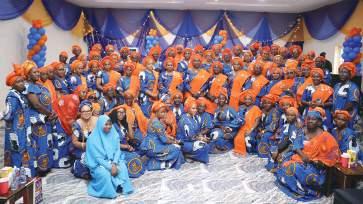
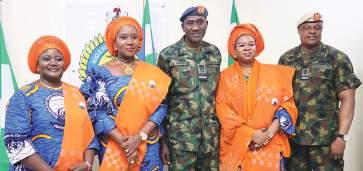
By blending humanitarian action with institutional reform, the Nigerian Air Force Officers’ Wives Association (NAFOWA), under the leadership of its 21st National President, Mrs. Ngozi Aneke, is charting a deliberate course anchored on unity, purpose, accountability and care for families who bear the cost of service. Chiemelie Ezeobi writes that her approach reflects a leadership style that places welfare, education and empowerment at the centre of NAFOWA’s mandate, while reinforcing collaboration across Air Force communities
When the 21st National President of the Nigerian Air Force Officers’ Wives Association (NAFOWA) Mrs. Ngozi Aneke, embarked on her maiden tour of NAFOWA establishments in Lagos State, visiting schools, investments and facilities under the association yesterday, it was one filled with purpose.
Holistic Engagements
The tour covered NAFOWA establishments at the 041 Communications Depot in Shasha, as well as those located at Sam Ethnan Air Force Base under the Headquarters Logistics Command in Lagos.
Welcomed by the rhythmic display of a dance troupe at the flight line, Mrs. Aneke proceeded to Air Force Base Shasha, where she visited NAFOWA Little Angels School. She later returned to Sam Ethnan Air Force Base, Ikeja, continuing her engagements across key NAFOWA facilities.
In Ikeja, the NAFOWA President visited the NAFOWA Multipurpose Hall and Shopping Complex, the School of Artificial Intelligence and Robotics, NAFOWA Little Angels School, Ikeja, and the NAFOWA Vocational and ICT Centre. She concluded her engagements at the NAFOWA Secretariat, where she addressed members of NAFOWA and the Airmen Wives Association (AWA), before paying a courtesy call on the Air Officer Commanding, Logistics Command.
Education as a Core Priority
During the courtesy call, which was the last activity for the day, Mrs. Aneke expressed appreciation to the Chief of Air Staff, Air Marshal Sunday Aneke, for returning the management of NAFOWA schools to the association. She described the gesture as both an honour and a responsibility, emphasising that education remains central to NAFOWA’s vision.
She said education was one of the association’s key priorities as part of its commitment to building stronger families and securing a better future for children.
“In this regard, I want to sincerely appreciate my dearest husband, the CAS, for his magnanimous gesture of returning back our schools. Accordingly, we have
commenced targeted reforms across NAFOWA schools, beginning with professional audits and assessment of all the staff within our facilities.
“These efforts are focused on improving and balancing curriculum and upgrading infrastructure, aimed at creating a safe, conducive, and high-quality learning environment for our children,” she said.
Mrs. Aneke noted that the confidence reposed in NAFOWA was significant, given that the schools had previously been surrendered to the Nigerian Air Force. “In this regard, we recently inaugurated the Education Committee, tasked with going around the country to inspect our infrastructures.
“They are going to come up with a report that suggests sacking workers or hiring more hands to work in our schools. It is not just about returning the schools to us but calls on all hands to be on deck because it’s a very huge responsibility,” she said.
She further stated that her administration operates an opendoor policy, welcoming ideas and contributions aimed at improving the schools.
“If you have any knowledge or background in education or if you think you are competent enough to work in our schools, we are open to your contributions. Our plan is to ensure that there is a lot of sanity in our schools,” the NAFOWA President said.
Strength in Unity
Earlier in the day, while addressing members of NAFOWA and AWA, Mrs. Aneke highlighted the importance of unity and collective purpose within the association.
“The enthusiasm and unity displayed here today is truly heartwarming and highly commendable, reaffirming my faith and belief that there is indeed strength in unity,” she said.
She explained that it was this same spirit of unity, dedication and shared purpose that had continued to inspire her leadership since assuming office as the 21st NAFOWA National President.
“I remain unwavering in my resolve to build a stronger, more responsive, and compassionate NAFOWA. One that consistently prioritises the welfare of all our members, supports the base communities, stands firmly with the widows of our fallen heroes, while extending meaningful and sustainable assistance to our host communities,” she said.
Mrs. Aneke underscored the vital role NAFOWA plays in complementing the efforts of Nigerian Air Force personnel.
“Our association continues to play a very vital role in complementing the efforts of our spouses, who we know that without them we cannot be here today.
“As they play complementary roles, we commend them for all they do for us, for ensuring stable homes, empowering families, and resilient communities,” she said.
Welfare, Outreach and Humanitarian Commitment
Building on this commitment, the NAFOWA President said her administration had begun identifying and strengthening practical initiatives aimed at improving the welfare of members, supporting widows of fallen heroes, uplifting base communities and providing humanitarian aid to the physically challenged.
“These efforts are not only a demonstration of empathy, but also a reflection of our shared values, to stand in solidarity with families who have paid the supreme price in service to our nation,” she said.
She announced that NAFOWA would carry out a medical and humanitarian outreach at the Nigerian Air Force Base in Abuja on Saturday, January 24, 2026, adding that “We intend to reach out to widows of our fallen heroes, members of AWA in the base, as well as our NAFOWA members”.
According to her, the outreach is intended to directly support widows, vulnerable members of the base and host communities, while translating compassion into visible and meaningful action. She added that
similar humanitarian outreaches would be extended to other bases and locations in due course.
Mrs. Aneke also reaffirmed NAFOWA’s commitment to empowerment through vocational training. “Furthermore, NAFOWA will continue to collaborate with relevant government institutions to enhance vocational training centres, ensuring that beneficiaries acquire relevant skills that can translate into sustainable livelihoods.
“Through this initiative, we will continue to empower women and youth to become productive contributors to the families and to our society at large,” she said.
Pillars of Support on the Home Front
She urged wives of officers and men of the Nigerian Air Force to continue to remain pillars of support on the home front.
“Our role in maintaining peaceful, stable, and prosperous homes cannot be overemphasised. Therefore, by upholding our values as NAFOWA, remaining true to our communities, and supporting one another, we contribute significantly to the overall success and effectiveness of our spouses in the service to this nation,” she said.
Pledge for Continued Support for NAFOWA
The Air Officer Commanding, Logistics Command, Nigerian Air Force, Air Vice Marshal Abubakar Sule, reaffirmed the command’s commitment to supporting NAFOWA, describing the association as a “partner in progress.”
He spoke after a guided tour of Headquarters Logistics Command by NAFOWA leadership and members, describing the engagement as productive.
Harping on some of the challenges they probably saw during the tour, he said some were already being addressed, while others would require broader intervention.
Air Vice Marshal Sule assured NAFOWA of sustained collaboration, adding that “We promise we will not shut our doors on NAFOWA. We are partners in progress”. He concluded by wishing the NAFOWA National President and members success, reaffirming the Command’s goodwill and commitment to working closely with the association.
President, Nigerian Air Force Officers Wives Association (NAFOWA) Mrs. Ngozi Aneke flanked by NAFOWA members and Airmen Wives Association in Lagos
L-R: NAFOWA Member; NAFOWA National President, Mrs. Ngozi Aneke; Air Officer Commanding (AOC) Logistics Command, Air Vice Marshal Abubakar Suleh; his wife, Mrs. Fatima Sule, chairperson NAFOWA Logistics Command Chapter; and Air Commodore M. A. Imam, Base Commander of Sam Ethnan Air Force Base, Ikeja, during Mrs. Aneke’s courtesy call to Logistics Command Headquarters as part of her maiden tour of NAFOWA establishments in Lagos
How One Woman’s Passion for Health Became a Movement
In a bid to promote healthy living and support local entrepreneurship, Organic Garden, a Nigerianbased tea brand, recently hosted a tea-tasting party in Lagos, bringing together industry experts, government officials, and health enthusiasts. The event was a celebration of self-care, intentional living, and community, with a focus on the importance of organic and sustainable living. Writes MARY
NNAH
In a world where the pace of life seems to only get faster, it’s easy to overlook the simple pleasures that bring us joy and nourishment. But for Abimbola Ige, the founder of Organic Garden, the humble cup of tea has become a catalyst for change. With a mission to promote health, wellness, and sustainability, Ige’s brand has been brewing a storm in the world of tea, one cup at a time. From its humble beginnings in her kitchen to its current status as a leading player in Nigeria’s health food scene, Organic Garden’s story is one of passion, innovation, and community.
Ige’s journey into the world of organic tea began in her kitchen, where she would serve her homemade brews to guests who would often ask for the recipe. “Our place started not as a business, but from a profound concern for well-being,” she explained.
“I research every ingredient, and I believe that we deserve to know exactly what we put in and on our bodies.”
Ige’s dedication to transparency and sustainability was evident in her brand’s commitment to using biodegradable tea bags and health-friendly packaging.
The Deputy Governor of Ogun State, Her Excellency Engr. Noimot Salako-Oyedele, was impressed by the quality of the teas on display at the recent tea-tasting party in Lagos. “I’ve thoroughly enjoyed learning about the teas and the information shared tonight,” she said. “I’m excited to take samples home to try each one.” The Deputy Governor also commended Abimbola Ige for her entrepreneurial spirit, saying, “I commend Abimbola for venturing into this space, especially in a society where innovation and new ideas can be met with skepticism.”
Ige’s journey was not without its challenges. “I uncovered challenges that the tea world sometimes hides, has stored for far too long, losing flavor and safety,” she said. “Tea bags containing microplastics, a gap between great intention and real sustainable practice.” She emphasised the importance of transparency in the tea industry, saying, “Some people believe that because this is imported, it’s made in this place, made in this country, they believe those are superior to what we have here. And I can tell you categorically that that’s not true.”
Ige’s commitment to local sourcing and sustainability was evident in her brand’s mission to promote Nigerian products and support local farmers. “We chose to do things differently,” she said. “Organic Garden is a small indigenous team committed to growing degradable tea bags, health-friendly packaging, and ingredients you can trust, traceable, honest, and kind to the environment.”
The event also featured a thoughtprovoking discussion on mental health,
with Mrs. Adetobi Ogumoyero, a UK-based registered mental health nurse, highlighting the importance of staying present and engaged. “One effective way to achieve this is through storytelling, an activity that not only stimulates the mind but also fosters intergenerational connections,” she said. “Unfortunately, the art of storytelling seems to be waning, and we must revive it.”
Mrs. Adetobi also emphasized the importance of prioritizing physical and mental well-being, saying, “Prevention is key. By prioritising our physical and mental
Nasarawa Earmarks
Igbawase Ukumba in lafia
Nasarawa State Governor, Abdullahi Sule, has signed into law the bill establishing the Dalhatu Araf Specialist Hospital (DASH), Akwanga passed recently by the State House of Assembly.
When signing the bill, the governor disclosed that
well-being, we can take proactive steps to protect our mental health.”
Deputy Speaker of Ekiti State, Olagbaju Bolaji, was also in attendance, praising Abimbola Ige’s dedication to promoting health and wellness. “I’d like to encourage everyone to support initiatives like Organic Garden, which showcases the passion and dedication of its team. The attention to detail and commitment to quality are evident in every aspect of the product.” The Deputy Speaker urged guests to make Organic Garden a part of their daily lives, saying, “Let’s make it a part of our daily lives, our grocery shopping, and our dietary programmes.”
The Deputy Governor of Ogun State also offered words of encouragement and advice to Ige, saying, “Think about the people who are here tonight who will carry your message forward... I will definitely be sharing my experience with others, and I’m sure many of us will be looking out for Organic Garden’s products.” She also suggested that she explore local sourcing for materials, saying, “Nigeria’s diverse flora offers a wealth of opportunities, and tapping into this could not only enhance your products but also contribute to the country’s economic growth.”
As the evening drew to a close, Ige invited guests to be a part of Organic Garden’s ongoing story. “Please consider supporting our brand by choosing Organic Garden Tea in your daily routine... Make Organic Garden your lifestyle,” she urged. With its commitment to transparency, sustainability, and community, Organic Garden’s tea is brewing a healthier future - one cup at a time. The event concluded with a call to action, encouraging guests to support local entrepreneurship and promote healthy living. As the Deputy Speaker of Ekiti State said, “By supporting each other and boosting local entrepreneurship, we’re not only promoting our collective well-being but also contributing to the growth of our economy.” With its innovative approach to tea-making and commitment to sustainability, Organic Garden is certainly brewing a storm in the world of health and wellness.
The tea tasting party was a resounding success, with guests enjoying the various tea flavors and learning about the benefits of Organic Garden’s products. As the evening drew to a close, attendees were encouraged to support the brand and make Organic Garden a part of their daily lives. With its commitment to health, sustainability, and community, Organic Garden is poised to make a significant impact in the tea industry
N6bn For Upgrade of New Specialist Hospital
the state government has earmarked the sum of N6bn for the upgrade of facilities at the newly establishesd specialist hospital to meet up with the standards of tertiary health institutions found in other senatorial zones of the state. The governor made the disclosure while signing the bill at the Government
House, Lafia, the Nasarawa State capital, Wednesday . Sule added that the funding came from resources received from the World Bank, which identified Nasarawa State for its ease of doing business. He said: “We were able to have N17bn given to us. Out of this N17bn, we are keeping aside about N6bn
to be given immediately to this DASH Akwanga so that it can be upgraded to the level of a tertiary healthcare facility both in Lafia and in Keffi.”
He, however, explained that the decision to establish the DASH Akwanga was informed by the commitment to ensuring that every senatorial zone of the state
has a tertiary health facility that would respond to critical health needs of the people.
“As you are aware, the erstwhile DASH in Lafia was donated to the Federal Government to serve as the teaching hospital for the Federal University of Lafia.
“This informed the decision of government to establish a similar
tertiary health institution in Akwanga bearing the same name considering that the hospital was named after the late Dr. Dalhatu Araf in order to immortalize him in view of his enormous contributions to healthcare development not only in Nasarawa but also in Plateau State,” the governor maintained.
L-R: Deputy Speaker Ekiti State House of Assembly, Mrs Bolaji Olagbaju; CEO Organic Garden Limited, Abimbola Ige; Deputy Governor of Ogun State, Engr
Noimot Oyedele; and Senior Special Adviser to Ogun State Governor, Hon. Kola Salako, at the event
Abimbola Ige displays an array of her signature organic teas
A New Lease of Life in Tertiary Education
By Nzekwu David
For years, Nigeria’s university system has operated in a stop–start rhythm, disrupting academic progress and eroding trust in the education system. In societies invested in their future, such instability would not be tolerated. Students now regard academic calendars as optional guides; parents budget without certainty about duration or final costs. Lecturers work in settings where striving for excellence feels futile. The nation has quietly accepted industrial unrest in universities, treating it like seasonal harmattan—something inevitable to endure, rather than a challenge to resolve.
That is why the Federal Government’s newly unveiled agreement with the Academic Staff Union of Universities (ASUU), announced in mid-January 2026 by the Minister of Education, Dr Tunji Alausa, feels like more than another communiqué. It reads like an attempt to reset a damaged relationship between the Nigerian state and the very people tasked with producing its doctors, engineers, teachers, and researchers—those who turn national ambition into trained capacity.
At the heart of the deal is a 40% upward review of academic emoluments, approved by the National Salaries, Incomes and Wages Commission, to begin on January 1, 2026. In Nigeria, this move is more than a pay rise; it acknowledges that the welfare of academics matters now, not at some future, uncertain economic improvement. Salary stagnation and poor conditions push top scholars abroad, where knowledge is valued. Therefore, a welfare review directly counters brain drain and aims to make staying in Nigeria a competitive choice for academics.
But the agreement’s real sophistication is that it does not reduce the crisis to salary alone. The revised structure incorporates an enhanced Consolidated Academic Tools Allowance (CATA), designed to support the practical tools of scholarship—research and publications, conference participation, internet
Minister of Education, Dr. Maruf Tunji Alausa
access, professional memberships, and book development. This matters because a lecturer without research support is like a surgeon without instruments: present, trained, and still constrained. If CATA is transparently administered, it restores the dignity of academic labour by funding the quiet, expensive work that keeps universities globally relevant—producing new knowledge rather than merely recycling old notes.
The Professorial Cadre Allowance explicitly recognises senior scholarship and the additional institutional responsibilities of professors and readers. Public reports indicate a monthly top-up of about N140,000 for professors (N1.7–N1.8 million
yearly) and N70,000 for readers (N840,000 yearly). Culturally, within the academy, this conveys the essential message that excellence and long service should be rewarded. Senior academics who supervise postgraduates, lead research, and manage governance deserve recognition and incentives—not just for their roles, but also for sustaining academic standards and institutional leadership.
Equally noteworthy is the restructuring of nine Earned Academic Allowances. The new framework requires transparent earning, strictly tied to duties such as postgraduate supervision, fieldwork, clinical work, exams, moderation, and
related tasks. In a country where distrust fills policy gaps, this design directly ties pay to academic work. This link aims to boost productivity, fairness, and reduce grievances. If managed well, it will strengthen accountability and make negotiations less contentious.
The wider significance of this moment is historical: several reports describe the deal as finally resolving the protracted renegotiation of the 2009 FG–ASUU agreement—a process stretching across multiple committees and administrations. The extended delay highlights how Nigeria too often neglects its crucial institutions. Nonetheless, the agreement shows that entrenched disputes can be resolved when dialogue replaces posturing, and both parties recognise that young people bear the consequences of deadlock.
Still, no agreement—however promising— implements itself. The real test of this renewed commitment will come in everyday actions: proper payroll processes, timely circulars, budget releases, and decisions by university administrations. Even ASUU’s leadership has expressed cautious optimism, noting that consistent implementation could lessen the frequency of strikes. Such caution is appropriate. Nigeria has a history of unfulfilled agreements. What sets this effort apart must be consistency: delivering promised payments, funding planned initiatives, and recognising universities as vital infrastructure, not recurring emergencies.
If the administration’s Renewed Hope Agenda is to mean more than branding, it must prove its seriousness here, specifically by defending stability in the academic calendar, restoring dignity to the lecture room, and rebuilding confidence that Nigerian universities can once again be centres of excellence rather than theatres of disruption. The nation needs not just graduates, but a university system that works—predictably, competitively, and continuously. If honoured in full, this agreement could pivot Nigeria from chronic educational turbulence toward renewal. •Dr David Nzekwu is a public affairs analyst and writes from Abuja.
FRC Seeks to Integrate Islamic Finance Standards into Nigerian Reporting Framework
Olowo: Initiative will position country as credible hub for Islamic finance in Africa, strengthen investor confidence, market discipline, others
James Emejo in Abuja
Executive Secretary/Chief Executive, Financial Reporting Council of Nigeria (FRC), Dr. Rabiu Olowo, yesterday declared that it is prepared to integrate standards issued by the Accounting and Auditing Organisation for Islamic Financial Institutions (AAOIFI) into the Nigerian financial reporting framework.
Olowo said the move aimed to cater for Islamic Finance and Interest-Free Institutions and Services (IFIS) operating in the country, and represented a strategic milestone in deepening the nation’s financial framework and aligning it with global best practices, while respecting our local realities.
He spoke at the opening of a stakeholders’ engagement on the
integration of Islamic finance standards into the Nigerian financial reporting framework, which was convened by FRC in Abuja.
He clarified that the initiative does not intend to disrupt existing operations, but to enhance clarity, credibility, and regulatory certainty for institutions offering Islamic finance products and services.
He added that the decision was in line with the council’s statutory mandate to develop, adopt, and enforce accounting and financial reporting standards in Nigeria.
Olowo said AAOIFI standards’ integration will position Nigeria as a credible hub for Islamic finance in Africa; enhance transparency, comparability, and consistency in financial reporting by IFIS; strengthen investor confidence and market discipline; promote
cross-border acceptability of Nigerian Islamic finance products, and support financial inclusion and ethical finance.
Olowo said, “Nigeria’s financial system continues to evolve in response to economic growth, financial inclusion, and the increasing sophistication of financial products and services.
“One of the most notable developments in this evolution is the steady growth of Islamic Finance and Non-Interest Financial Services in Nigeria.
“As you are aware, Islamic Finance Institutions operate on principles that are fundamentally different from conventional finance, particularly in areas relating to interest prohibition, risk-sharing, asset-backing, and ethical investment.
“These unique characteristics necessitate specialised financial reporting, governance, and disclosure standards that faithfully reflect the substance of such transactions.”
He further explained that AAOIFI standards remained internationally recognised and widely adopted across jurisdictions with developed Islamic finance markets, provide comprehensive guidance on financial accounting and reporting, Shari’ah governance and compliance, auditing and assurance ethics and professional conduct for Islamic finance operations.
The FRC chief executive stressed that “AAOIFI has responded positively to our request, and engagements have commenced to ensure a structured, phased, and context-appropriate integra-
tion of the standards, taking into account Nigeria’s regulatory and institutional environment.
“The Council sincerely appreciates the AAOIFI for the warm reception accorded to our team and for the willingness to support the Financial Reporting Council of Nigeria in the integration of AAOIFI standards into the Nigerian Financial Reporting Framework. We value this commitment and look forward to a productive and mutually beneficial collaboration.”
He added that the meeting was deliberately convened to carry stakeholders along from the beginning, noting that the success of the initiative depended on their understanding, buy-in, and active participation.
Essentially, engagement seeks to formally inform stakeholders
of FRC’s policy direction on AAOIFI standards integration; clarify the scope, approach, and implementation roadmap; identify practical challenges, capacity gaps, and transition issues, receive constructive feedback and recommendations, and foster a sense of shared ownership of the reform process.
Going forward, he said the council will consider a phased adoption and implementation timeline; extensive training for preparers, auditors, regulators, and users of financial statements; continuous stakeholder engagement and public consultation; alignment with existing Nigerian laws and prudential regulations as well as close coordination with sector regulators and professional bodies.
UBA Foundation Deepens Impact, Delivers Continent-wide Aid toVulnerable Communities
UBA Foundation, the Corporate Social Responsibility Arm of United Bank for Africa (UBA) Plc, has distributed essential materials worth several millions of naira and dollars as sustenance to school students, orphanages, IDP camps, and vulnerable communities across Nigeria and 19 other African nations where the bank operates.
As part of its Food Bank and Giving Back drive, the bank impacted over 100,000 individuals in the communities with essential items and cash gifts, between November 2025 and January 2026, with the aim of alleviating the financial strain associated with the end of the year and beginning of the new year, underscoring the bank and Foundation’s unwavering commitment to fostering hope, and resilience among individuals living within the communities where it operates.
In Nigeria for instance, UBA Foundation’s outreach extended to beneficiaries across all the regions of the country, impacting homes, and IDP camps including the Daughter of Mercy Mother of Mary Orphanage Home in Abia; the Trinitarian Foundation for Orphans and the Helpless in Ebonyi; The Destitute Home Okobaba in Lagos; Oyiza Orphanage and Foster Foundation in Oyo; Itsoghena Orphanage Home in Edo; Enoima Children Home in Akwa Ibom; Yekope Orphanage in Kogi; IDP Camps in Niger and Borno; UMCN Orphanage Home in Taraba; Kebbi Children’s Home; and the Orphanage Home in Dutse, Jigawa. The Managing Director/ CEO, UBA Foundation, Bola Atta, who visited some of the orphanages including the Destitute
Home Okobaba, Lagos where she distributed non-perishable food items and school materials to adults and students alike, emphasised the foundation’s belief in impacting lives all-year round, to create lasting effect and touch the lives of people in all areas, regardless of location and economic barriers.
She said, “At UBA Foundation, we believe that true development begins with compassion and action. Through our various Food Bank and Giving Back initiatives, we are not only providing nourishment and essential support, but also restoring hope and creating pathways for children and families to learn, grow, and thrive. This is our commitment to Africa: to show up consistently, act responsibly, and leave no community behind.”
Sterling Bank Backs Health, Tourism, Creative Enterprise
Sterling Bank Ltd has furthered its commitment to health, wellbeing, and sustainable economic development through its participation in ‘The Art of Wellbeing’ experience, held recently at ISIMI Lagos.
The curated wellness experience convened leaders from the public and private sectors, wellness advocates, and creatives to examine the intersection of wellbeing, tourism, and the creative economy, with a focus on investment opportunities and sector growth. The event was attended by Sterling Bank’s Managing Director and Chief Executive Officer, Abubakar Suleiman, alongside senior representatives of the Lagos State Government, including Emmanuel Benson Okwuokenyen, Deputy
Director, Research and Development, Lagos State Ministry of Tourism, Arts and Culture, and Damilola Ayinde-Marshal, Esq., Special Assistant to the Governor on Tourism.
Addressing the participants, Abubakar Suleiman urged that, “As a community, we must begin to view wellbeing through the lens of an economic infrastructure. When physical and mental health are prioritised, productivity improves, healthcare costs decline, workforce participation expands, and entire value chains within tourism, hospitality, and the creative economy become more competitive and investable.”
Commenting on the strategic importance of the initiative, Head,
Tourism and Creative
Arts Business, Sterling Bank, Abiola Adelana, said, “We recognise the capacity of health and the creative ecosystem to unlock sustainable economic value. This initiative aligns with our commitment to supporting sectors that improve quality of life while creating scalable opportunities across wellness, tourism, and hospitality.”
Through programmes like The Art of Wellbeing, Sterling Bank continues to support platforms that promote health, creativity, and inclusive growth, reinforcing Nigeria’s position as a hub for innovative lifestyle, wellness, and tourism experiences.
W’Africa Trade Summit to Convene Industry and Policy Leaders
A surge in intra-African trade is reshaping West Africa’s industrial outlook. Data from the Nigeria Customs Service (NCS) showed that Nigeria’s exports to other African markets rose by 14% to N4.82 trillion, with over 60% flowing into West Africa. Ghana’s 24-hour economy policy is yielding early gains, with pilot zones such as the Tema lightmanufacturing belt reporting increased industrial output and night-shift employment growth, particularly in manufacturing sectors. These developments reflect growing regional demand, deeper market linkages, and the early impact of continental trade integration efforts. Sustaining this momentum, however, will depend on how effectively trade growth is matched with industrial capacity, efficient logistics, and coordinated investment across the region.
The West Africa Industrialisation, Manufacturing & Trade
Summit & Exhibition (West Africa IMT 2026), taking place in Lagos, endorsed by the Federal Ministry of Industry, Trade and Investment and organised by dmg Nigeria events, is positioned as a critical forum for examining how West Africa can convert policy alignment into tangible industrial growth, stronger manufacturing output, and sustainable investment outcomes.
The cross-sectoral speaker faculty, including H.E. Sen. John Owan Enoh, Honourable Minister of State for Industry, Trade & Investment; H.E. Shadiya Alimatou Assouman, Minister of Industry & Trade, Republic of Benin; H.E. Olushegun (Shegun) Adjadi Bakari, Minister of Foreign Affairs, Republic of Benin; H.E. Hon. Cheikh Niane, Vice Minister of Energy, Petroleum & Mines, Senegal; Adebisi Adebutu, Group President, R28 Holdings: Dr. Timi Austen-Peters, Chairman of
Dorman Long Engineering; Mudiaga Mowoe, CEO of Matta; George Onafowokan, Managing Director and CEO of Coleman Wires and Cables; Olumuyiwa Kosile, Managing Director of Ikosh Nigeria Limited; Naana Winful Fynn, Regional Director for West Africa at Norfund; Lola Ekugo-Aworati, CEO of Afriboarder; Olutayo Olusegun, Senior Trade Policy and Law Expert and AfCFTA Lead for Trade Enablement; Sam Olugbenga Faleye, Chairman & CEO Saglev; and Ufuoma Adasen, Vice President, Heavy Industries, Telecoms & Technology at Africa Finance Corporation (AFC). The urgency driving West Africa IMT 2026 has been reflected at the highest levels of government. Honourable Minister of State for Industry, Trade & Investment, Sen. John Owan Enoh, emphasised the Summit’s strategic importance:
OPEC DAILY BASKET PRICE As AT 24TH n OV e M be R , 2025
The price of OPEC basket of twelve crudes stood at $63.14 a barrel on Monday, according to OPEC Secretariat calculations.
The OPEC Reference Basket of Crudes (ORB) is made up of the following: Saharan Blend (Algeria), Djeno (Congo), Zafiro (Equatorial Guinea), Rabi Light (Gabon), Iran Heavy (Islamic Republic of Iran), Basrah Medium (Iraq), Kuwait Export (Kuwait), Es Sider (Libya), Bonny Light (Nigeria), Arab Light (Saudi Arabia), Murban (UAE) and Merey (Venezuela).
MD/CEO UBA Foundation, Bola Atta presenting gifts items to children of vulnerable communities at Okobaba, Lagos...recently
Stock Market Sustains Positive Run on Demand for NCR, Others
Kayode Tokede
The Nigerian stock market yesterday closed with a gain of 0.01 per cent over investors’ demand for NCR Nigeria Plc and 53 others.
Specifically, the Nigerian Exchange Limited All Share Index (ASI) gained by 10.77 basis points or 0.01 per cent to close at 166,267.60 basis points as the Year-to-Date
returns settled at +6.9per cent. Also, market capitalisation gained N7 billion to close at N106.443 trillion.
Analysing by sectors, the NGX Industrial Goods Index advanced 0.1per cent , while the NGX Insurance index dipped by one per cent , NGX Oil and Gas Index dropped by 0.9 per cent and NGX Banking declined by 0.3per cent . The NGX Consumer Goods index closed flat.
Market breadth remained positive, with 54 advancing stocks outpacing 24 declining counters. McNichols, NCR Nigeria and R.T. Briscoe (Nigeria) followed with a gain of 10 per cent each to close at N6.93, N171.05 and N4.95 respectively, per share. Jaiz Bank followed with a gain of 9.99 per cent to close at N7.93, while May & Baker Nigeria rose by 9.95 per cent to close at N43.65, per share.
On the other hand, Champion Breweries led the losers’ chart by 9.31 per cent to close at N19.00, per share.
Secure Electronic Technology followed with a decline of 6.78 per cent to close at N1.10, while Wapic Insurance declined by 6.69 per cent to close at N3.35, per share. Ecobank Transnational Incorporated (ETI) depreciated by 6.00 per cent to close at N47.00, while AXA Mansard Insurance
declined by 5.63 per cent to close at N15.10, per share. Meanwhile, the total volume traded rose by 3.43 per cent to 822.737 million units, valued at N24.931 billion, and exchanged in 43,548 deals. Transactions in the shares of Zichis Agro-Allied Industries topped the activity chart with 69.224 million shares valued at N150.908 million.
Secure Electronic Technology followed with 54.797 million shares worth N61.913 million,
while Access Holdings traded 40.111 million shares valued at N917.762 million. Zenith Bank traded 38.111 million shares valued at N2.742 billion, while Tantalizer sold 33.063 million shares worth N125.972 million.
On market outlook, analysts at Futureview stated that “we expect investors to trade cautiously, focusing on fundamentally strong stocks with attractive valuations.”
/20/26
FROM OIL FIELDS TO SOLAR MICROGRIDS
CONSTANTINE ‘LABI
OGUNBIYI writes on Africa’s pragmatic path to a just energy transition
See page 21
MEDIA,
NIGERIAN COPYRIGHT LAW, AND BIG TECH
The NCC must live up to its responsibilities, urges SEGUN ADEDIRAN
See page 21
EDITORIAL
MONDAY PHILIPS EKPE writes that if properly implemented, the new pact between government and university lecturers can come to fruition
THE LATEST FG-ASUU AGREEMENT
Pardon my passion, please. In only three and half years, this is the seventh time I’m writing on the difficult relationship between the government and the major umbrella organisation of Nigeria’s public university academics in my column. “Pick Your Fights, ASUU Members”, “Nigerian Public Universities’ Limbo Moment”, “ASUU and Two Super Ministers”, “Before the Next ASUU Strike”, “Who Will Save Our Public Universities Now?” and “This Recurring FG-ASUU Tango” were my humble interventions in the protracted transgenerational crises bent on sabotaging the achievements and prospects of Nigerian universities, particularly the publicly-owned ones. As stated elsewhere, it’s hard for me to ignore this educational component, having obtained all my degrees from two federal universities and now privileged to teach in one of them. The last article, Tango, published in September last year, ended thus: “One can only hope that fatigue hasn’t set in. Like some of the administrations before it, the government of President Bola Tinubu is yet to exhibit sincerity of purpose in this regard. Time has come for the lecturers to prioritise their own personal concerns and stop acting like godfathers of the citadels of learning. At a time when the very survival of Academic Staff Union of Union of Universities (ASUU) members is in jeopardy, doing otherwise would be senseless.”
Like many other watchers, I seemed to have reached my own wit’s end on the matter and had probably concluded that no positive or mutually agreed terms could be sealed by both sides and that Tinubu’s administration would most likely continue with the way of its predecessors: wrestle the lecturers to the ground, further demonise them in the estimation of students, their parents and guardians, and, indeed, the generality of Nigerians. There still isn’t any extraordinary action that warrants drumbeating at present; but there are now some reasons for optimists to work with. The country has witnessed too many near-compromises and bungled solutions to go into any jubilation which might prove premature.
Even then, the federal government is upbeat about what it claims is its glamour moment. Education minister, Dr Tunji Alausa, has just announced a new deal with ASUU and declared that it signalled a “historic turning point” in the muchcanvassed rejuvenation of the nation’s universities, particularly the public ones. Now, should it be denied the right to congratulate itself?
Those who have cause to doubt the authenticity of the nascent peace
between the government and university dons can hinge their attitude on the chequered journey leading to this unfolding denouement. In contention is the implementation of the agreement mutually entered into in 2009 by the employer and its perennially aggrieved workers. Designed to be reviewed every three years, 2012 came and went without the expected actions. For the lecturers, the instrument they had hoped would ensure sanity in the ivory towers had become a dream deferred. The document quickly became an albatross on successive administrations and a reference point to the aluta-minded leaderships of ASUU to continue with the struggle. On Agreement 2009 they’ve all stood! Unyielding. Unbending. Unsmiling.
In five years alone, from 2017 to 2022, renegotiation committees headed separately by Dr Wale Babalakin, Prof. Munzali Jibril and Prof. Nimi Briggs were instituted to resolve the stubborn issues. Yet, no tangible results. And then the Alhaji Yayale Ahmed committee came on board in October 2024 which produced the consensus that has now been adopted 14 months after. If, and only if, genuine commitment is invested and displayed here, especially by the government –clearly the more powerful party – the benefits would be truly profound and far-reaching. Tinubu and his team can then proudly own the glory for defeating the devils that have displaced for too long a healthy teaching and learning environment in a most critical aspect of the nation’s life.
The details of this accord appear cool. Relatively, that is. One way to remain happy is to avoid doing a naira to dollar calculation as it affects your purchasing power. I won’t forget the day I had breakfast in Paris some years ago worth 53 euros and remained very hungry afterwards. As I converted that figure to my own beloved currency in my angry mind, I endured the exercise with sadness to match. So, knowing, for instance, that professors will, beginning from
this month, earn additional N140,000 monthly for research-related expenditures or that all categories of the teaching staff have landed 40 percent salary increment could be rubbished if strictly viewed through forex lenses and the current pitiful weight of the naira. And, of course, these increases aren’t enough for family members and hangers-on to readjust their own expectations. But then, what is happening is remarkable, also considering the other packages that border on welfare. This, no doubt, is the way to go. A path characterised by the sincere desire of all stakeholders to pursue enhanced morale, improved productivity, and domestic and global competitiveness. Not to mention the badly-needed reversal of the brain drain that has hit our tertiary institutions, notably within the past decade. Or the stemming of the massive out-flow of hard currencies in pursuit of degrees and diplomas. The university teachers, on their part, need to take up the challenge of demonstrating a true love for academics. Waiting for perfect conditions would be selfish and counterproductive. Relevant variables can always be repositioned to get better.
One often overlooked consequence of the cultures of strikes and withholding of salaries which have somewhat defined a chunk of campus life in Nigeria is the struggle for survival. In so doing, some lecturers have stumbled on good income earners. Roles and priorities have changed in the process, sadly. Lecturing, originally primary on the scale, moves to number two or three. Arresting this tragedy won’t be easy. If only our politicians can develop the capacity to take schooling a bit more seriously.
ASUU, having fought this gallantly, can add feathers of integrity and fruitfulness to its cap by partnering with the various universities to show better creativity in terms of funding, especially. Beyond government allocations and subventions, private sector players can be wooed, grants can be sourced and alumni endowments can be encouraged. These would yield their autonomy faster. The union should also be honest and firm in telling its members that it would be practically impossible to achieve uniformity of rights, privileges and entitlements since the ownerships of the institutions differ. Anyways, the stage is set for a healthier university experience. But, in a year being prepared to enthrone politics, it makes sense to keep the flowers that belong to this government. For now.
Dr Ekpe is a member of THISDAY Editorial Board
X: @monday_ekpe2
CONSTANTINE ‘LABI OGUNBIYI writes on Africa’s pragmatic path to a just energy transition
FROM OIL FIELDS TO SOLAR MICROGRIDS
Africa’s energy transition is too often framed as a binary choice: fossil fuels or renewables.
This framing may suit campaign slogans, but it does not reflect realities on the ground. From the oil fields of the Niger Delta to the solar microgrids powering rural communities, Africa’s energy future will be defined not by ideological purity, but by pragmatism.
I have had the unusual vantage point of working on both sides of this divide. Before chairing Solad Power Group (Solad), I helped build indigenous oil and gas businesses, including as a founder of both Afren plc, one of the first Africa-focused independent energy companies listed on the London Stock Exchange, and later First Hydrocarbon Nigeria Ltd., which in 2009 led the acquisition of upstream oil assets from Shell’s Nigerian joint venture. Alongside Seplat’s contemporaneous acquisitions, this marked the first major transfer of onshore oil assets to Nigerian independents.
That experience offered a clear lesson: a just energy transition in Africa cannot ignore industrialisation. Nor can it be achieved by importing models designed for advanced economies with mature grids, deep capital markets, and surplus capacity. Africa’s challenge is different. It must expand energy access, support industrial growth, and reduce emissions simultaneously.
The pressure on developing countries to leapfrog directly to 100 per cent renewables is understandable, but unrealistic in the near term. Power systems require stability. Until grid infrastructure and energy storage are significantly scaled, natural gas will remain indispensable as a bridging fuel. It provides the reliable baseload power that allows intermittent renewables to function at scale.
This is not an argument for delaying decarbonisation. It is an argument for sequencing it correctly. Sustainable energy systems must also be economically viable. Clean power that cannot support factories, hospitals, data centres, or urbanisation risks entrenching energy poverty rather than ending it.
This hybrid logic increasingly informs
The NCC must live up to its responsibilities, urges SEGUN ADEDIRAN
MEDIA, NIGERIAN COPYRIGHT LAW, AND BIG TECH
I loved reading James Hadley Chase; many novel lovers of my generation did. In Chase’s “The Way the Cookie Crumbles”, we are reminded that there is always a bill to pay—and sometimes, it is paid in blood. As publishers and journalists, we pay our bills. Newspaper publishers invest in us, and we—journalists and other workers— sweat our hearts out to hunt for news, make it readable, and present it for sale. We also expect advertising revenue as the "icing on the cake."
private-sector investment. At Solad, our work began with decentralised solutions supporting Nigeria’s Rural Electrification Agency across Lagos, Ogun, and Kano States. Today, we are increasingly engaged with commercial and industrial clients, where emissions reduction must go hand in hand with reliability and cost efficiency.
One example is our work with partners in the OML 34 NNPC/ND Western Joint Venture, where solar installations are being deployed to decarbonise operations while maintaining operational resilience. The objective is not cosmetic “greening”, but measurable efficiency gains. Gas continues to underpin baseload power, while renewables reduce emissions and operating costs. This approach closely mirrors Nigeria’s Energy Transition Plan, which recognises that gas and renewables are complements, not competitors, during the transition.
Policy momentum is beginning to catch up with this reality. Across West Africa, initiatives such as the World Bank’s $750 million Distributed Access through Renewable Energy Scale-Up (DARES) programme and the Mission 300 initiative are mobilising capital for decentralised power. Instruments such as the Universal Energy Facility and Distributed Renewable Energy funds are helping to de-risk early-stage projects.
Yet policy ambition will matter little without execution. The binding constraint is not technology, but capital; specifically patient, blended finance capable of absorbing early (including currency devaluation) risk. Without it, deployment will remain fragmented and uneven. Governments, multilaterals, and private investors must align around bankable structures, local manufacturing, and scalable delivery models. Capital is available. It just needs help to be optimally deployed.
Africa’s energy transition will not be defined by what it abandons, but by what it builds. From hydrocarbons to solar, from centralised grids to decentralised systems, the task is integration rather than substitution. If done well, Africa can pursue a transition that is not only cleaner, but fairer, and capable of powering long-term growth.
Ogunbiyi is Chairman of Solad Power Group
However, in his 1965 novel, the character Ticky Edris—the mastermind behind a bold daylight bank robbery—teaches us a bitter, timeless lesson about the unpredictable nature of life. My favorite line from the book is:“You made plans; you played your cards right, then some slob spoils it all. It is the way the cookie crumbles.”
In the Nigerian media space, the cookies are crumbling. Publishers are playing their cards right, but "slobs" are spoiling it all. Big Tech firms and Artificial Intelligence (AI) are fundamentally restructuring the newspaper industry, with many experts describing the impact as an existential threat to the traditional media business model.
This disruption occurs primarily through the erosion of advertising revenue, the theft of web traffic via AI summaries, and the uncompensated training of AI models on journalistic content. The fact is that Big Tech companies, particularly Google and Meta, have created an "existential crisis" for news publishers by controlling the digital advertising ecosystem, hijacking traffic through search and social media, and utilizing content for AI training without compensation.
This has led to a significant decline in revenue for traditional media. Big Tech captures over 60 percent of digital advertising revenue, while news organizations face, in some cases, 90 percent drops in traffic due to AI-generated summaries. This must end.
Nigerian copyright law, primarily governed by the Copyright Act 2022, protects newspapers as "literary works" by granting publishers exclusive rights to control the reproduction, distribution, and publication of their content. It safeguards against unauthorized digital sharing, photocopying, and syndication, with enforcement overseen by the Nigerian Copyright Commission (NCC).
To be sure, newspapers are considered literary works provided they are original and fixed in a definite medium. Publishers hold the sole right to reproduce, publish, perform, broadcast, or adapt their own content. For too long, the media has ignored these rights and operated as a wholly public good. This is a mistake.
In the age of Big Tech and AI "dictatorship," the 2022 Act addresses digital infringement by providing "safe harbor" provisions that require online service providers to remove unauthorized content. I have always argued that there is
no "free lunch." A free-market economy is about buying and selling. It is economic robbery to use superior technology to appropriate what another business has invested in and assume you can go scotfree.
Yet, this is exactly what Big Tech and AI firms are doing to traditional newspapers. Newspaper publishers have the right to be identified and to protect the integrity of their works. Having done extensive work on this, it is painful to see the sub-Saharan African media industry appearing to not only accept this robbery but also defend it as a "technological imperative."
Truth be told, the unauthorized use of a "substantial part" of a newspaper is considered an infringement, allowing for legal action, damages, and injunctions. Interestingly, the law is on the side of the creator. The NCC has expanded powers for the administration, regulation, and enforcement of copyright. While copyright is typically vested in the author, if a work is created by an employee, it vests in the employer. Generally, this protection lasts for 70 years after the end of the year in which the author dies. The only exceptions involve "fair dealing," such as research, private use, criticism, or news reporting.
But why are we not acting? If the Copyright Act 2022 serves as the primary legal framework protecting newspapers as "collective works," why are Big Tech and AI companies allowed to trample on them? Under standard employment terms, the newspaper proprietor is the first owner of the copyright for any work created by an employee for publication. Protection is automatic upon the creation of the work and its fixation in a medium (printed or online). While formal registration with the NCC is not required, it provides a legal advantage in court.
This is the time to act. I am pained because media industries elsewhere are extracting their "pound of flesh" from Big Tech for these infringements, yet Nigeria is being left behind. I am pained because the Nigerian media appears comfortable with the crumbs falling from the tables of Google, Facebook, and TikTok. Sadly, the Nigerian press is suffering in silence.
Adediran, the NPAN GM/CEO, writes via olusegunadediran@gmail.com
Editor, Editorial Page PETER ISHAKA
Email peter.ishaka@thisdaylive.com
FTAF AND CYCLICAL REPRIEVES
The country’s exit from the FATF grey list is commendable
That Nigeria has successful exited from the Financial Action Task Force (FATF) Grey List and the proposed move by the European Union (EU) on the list of high-risk third countries are good news. But we urge the federal government to do more in combating illicit financial activities in the country. “Nigeria’s exit from the FATF Grey List and the European Union’s highrisk third country list reflects the strength of our collective resolve and the effectiveness of sustained, coordinated reforms,” said the NFIU Chief Executive Officer, Hafsat Abubakar Bakari. While we commend the NFIU whose mandate includes collecting currency transaction reports (CTRs), suspicious transactions reports (STRs) and other information relevant to money laundering and terrorist financing activities, it is important to avoid these cyclical suspensions.
The Egmont Group, the highest inter-governmental association of intelligence agencies in the world with membership by 152 countries, provides a platform for sharing criminal intelligence and financial information bordering on money laundering, terrorism financing, proliferation of arms, corruption, financial crimes, economic crimes, etc. Nigeria was fully admitted into the coveted body in 2007, after operational admittance in 2005, in what was considered one of the biggest achievements of the Olusegun Obasanjo administration. Some of the agencies that benefit from the activities of the group include the Central Bank of Nigeria (CBN), Nigerian Customs Service, Independent Corrupt Practices and Related Offences Commission (ICPC), the Economic and Financial Crimes Commission (EFCC), Nigeria Immigration Service (NIS), Federal Inland Revenue Service (FIRS), and the Securities and Exchange Commission (SEC), among other relevant governmental agencies.
It also affected the international ratings of Nigerian financial institutions, restricting their access to some big-ticket international transactions. The FATF maintains “grey” and “black” lists for countries it has identified as not meeting its standards. It considers grey list countries to be those with “strategic deficiencies” in their anti-money laundering regimes, but which are nonetheless working with the organisation to address them. FATF President Elisa de Anda Madrazo called the removal of Nigeria and the three other countries “a positive story for the continent of Africa”.
The current administration must work to strengthen institutions that are charged with combating money laundering and other illicit financial activities in the country
T H I S D AY
EDITOR SHAKA MOMODU
DEPUTY EDITOR WALE OLALEYE
MANAGING DIRECTOR ENIOLA BELLO
DEPUTY MANAGING DIRECTOR ISRAEL IWEGBU
CHAIRMAN EDITORIAL BOARD OLUSEGUN ADENIYI
EDITOR NATION’S CAPITAL IYOBOSA UWUGIAREN THE OMBUDSMAN KAYODE KOMOLAFE
EDITOR-IN-CHIEF/CHAIRMAN NDUKA OBAIGBENA
GROUP EXECUTIVE DIRECTORS ENIOLA BELLO, KAYODE KOMOLAFE, ISRAEL IWEGBU
DIVISIONAL DIRECTORS SHAKA MOMODU, PETER IWEGBU, ANTHONY OGEDENGBE
In July 2017 Nigeria was suspended from the Egmont group, following failure to grant operational autonomy to the NFIU. With that, Nigeria was denied access to some foreign sources of funds in addition to grants and aids. With Nigeria categorised as a non-cooperative territory, efforts were made to redress the situation. The enactment of the NFIU Act, 2018 signed into law by the late President Muhammadu Buhari was helpful. The law establishes a legal framework for a national center that will be responsible for the receipt and analysis of information from financial institutions and designated non-financial institutions, for the purpose of generating and disseminating intelligence to all law enforcement agencies and other competent persons.
The country’s membership paved the path for the removal of Nigerian banks from the blacklist of international finance. The blacklisting had prevented the banks from engaging in correspondent banking with foreign institutions and denied Nigerians access to foreign credit cards.
Although the absence of a legal framework for FIU Nigeria and lack of operational and financial autonomy, among others were problems in the past, the situation has been redressed with the law. Despite that, Nigeria was in 2023 placed “under increased monitoring" due to strategic deficiencies in its anti-money laundering and counter-terrorism financing (AML/CFT) framework. Even when that has now been resolved, the biggest challenge to the anti-money laundering legislations is the lack of political will and the laissez-faire approach from relevant government agencies. While we commend the efforts that led to the removal of Nigeria from the list of non-cooperation countries and territories (NCCTs), the current administration must work to strengthen institutions that are charged with combating money laundering and other illicit financial activities in the country.
Letters in response to specific publications in THISDAY should be brief (150-300 words) and straight to the point. Interested readers may send such letters along with their contact details to opinion@thisdaylive.com. We also welcome comments and opinions on topical local, national and international issues provided they are well-written and should also not be longer than (750- 1000 words). They should be sent to opinion@thisdaylive. com along with photograph, email address and phone numbers of the writer.
YET ANOTHER ABDUCTION OF WORSHIPPERS
The abduction of 177 worshippers on Sunday from ECWA Church and Cherubim and Seraphim Churches 1 and 2 in Kurmin Wali community, Kajuru local government area of Kaduna State, has once again forced the nation to confront a disturbing and persistent question: what exactly is the motive behind these repeated attacks on innocent citizens at places meant for peace, refuge and worship?
Initially, the incident was flatly denied by security agencies, a response that has sadly become familiar in similar cases. However, the truth eventually emerged, confirming the fears of families and communities who already knew that something had gone terribly wrong. Such denials only deepen public distrust and reinforce the perception that authorities are either overwhelmed or unwilling to confront reality head-on. This incident is one abduction too many. The government must find a concrete and effective way to put an end to these senseless crimes that have turned daily
life into a gamble with death or captivity. Statements of condemnation are no longer sufficient; what is required is decisive action, accountability and results that citizens can see and feel.
Across the federation, abductions have become a daily occurrence. People are taken from their homes, places of worship, on highways and even in public spaces where safety should be guaranteed. No region appears immune, and no group is spared. This normalisation of mass abduction is a clear sign of a state struggling to fulfil its most basic responsibility.
One must ask, honestly and painfully, when did Nigeria reach this point? When did the security of lives and property become so uncertain that attending church or travelling on the road now carries the risk of kidnapping? A nation that cannot protect its citizens in their most vulnerable moments is one standing on dangerously weak foundations.
The country recently rejoiced when victims of the Kwara
church abduction were released. Yet that relief was shortlived, as no arrests were made and no clear consequences followed. This failure to bring perpetrators to justice may well have emboldened criminals, sending the message that mass abduction carries little risk beyond negotiation. These criminal networks have also been strengthened by the steady flow of ransom payments. While families often have no choice but to pay to save their loved ones, the broader effect is devastating. Ransom has become a business model, funding further operations and encouraging more daring and violent attacks.
Nigeria can no longer pretend that this crisis can be solved in isolation. It is increasingly clear that foreign assistance is needed, alongside strong and sincere collaboration with neighbouring countries to secure porous borders that allow criminals and weapons to move freely.
Tochukwu Jimo Obi, Obosi Anambra State
Report: African CEOs Reposition on Decision Making, Upskilling as AI Investments Surge
Emma Okonji
Corporate Artificial Intelligence investment is growing significantly and will not pull back, with African companies planning to double their spending on the technology in 2026, accounting for about 1.7 per cent of revenues and more than twice the increase for 2025, a recent report released by Boston Consulting Group (BCG) has said. According to the report, CEOs in Africa are rolling up their sleeves and taking the lead as their companies’
main AI decision makers, with trailblasing chief executives now spending more than eight hours per week on their own AI upskilling and investing twice as much as their counterparts in upskilling and capability-building across their organisations.
According to some of the report findings, CEOs are now driving AI strategy, with 72 per cent saying they are main decision makers on AI.
African organisations lead in workforce readiness, with 55 per cent of the workforce already upskilled in AI - the highest rate globally. Africa
and the Middle East see valueled transformation with 63 per cent of CEOs in the region saying they are confident AI will pay off, driven by strategic value rather than competitive pressure.
Analysing the report, BCG’s CEO and co-author of the report, Christopher Schweizer, said: “Despite economic uncertainty, the anticipated surge in spending reflects how much of a priority AI has become in the business world. AI is no longer confined to IT or innovation teams. It’s reshaping strategy and operations from the top down
with CEOs taking a leading role. Nearly three-quarters of CEOs say they are now the main decision makers on AI, and half believe their jobs depend on it.”
Global Leader of BCG X and co-author of the report, Sylvain Duranton, said: “The true competitive advantage lies with those CEOs who will reshape functions end-to-end and invent new products and services that drive growth,”
The third annual report of the state of global AI landscape from BCG, themed: ‘BCG AI Radar’, is based on a survey of 2,360 executives
across 16 African markets, including Morocco and South Africa, and nine industries, including 640 CEOs.
The intensity of AI investment in Africa is significant with 59 per cent of African companies planning to spend more than $50 million on AI in 2026. This capital is being directed toward highimpact areas such as agentic AI and massive workforce transformation. Currently, African organisations lead in workforce readiness, with 55 pe cent of the workforce already upskilled in AI (the highest rate globally),
supported by an allocation of 46 per cent of the total AI budget toward ongoing retraining and capability building, the report said. It added that in Africa, the narrative has shifted from exploration to large-scale execution. Organisations across the continent are leveraging AI to leapfrog traditional infrastructure challenges, with the Middle East and Africa region now accounting for some of the most aggressive AI budget allocations globally.
Emma Okonji
Following the recent space landing permit granted by the Nigerian Communications Commission (NCC) to Amazon-owned Project Kuiper and BeetleSat-1 from Isreal to operate and provide space-based satellite communication services in Nigeria, with effect from February 28, 2026 for a period of seven years, the commission will be reviewing eight exiting space satellite licences that will expire this year.
Among the eight satellite licences due for review this year, seven are owned by international satellite operators, while only one of the licences is owned by a Nigerian company called NICOMSAT, which operates NiComSat-1R. According to the information, which THISDAY obtained from the official website of NCC, the licences granted to seven international satellite internet operators in Nigeria,
including the licence granted to NigComSat-1R, will expire this year, subject to renewal.
The international satellite operators include: EutelSat, IntelSat, Thuraya, Omnispace-2, O3b Block 2, Telstar, and Blue Walker 3, while NigComSat-1R is a Nigerian satellite communications company.
EutelSat 16A from France was issued Ku-Band licence to provide satellite internet service in Nigeria for a period of six years from October 2020 to December 2026.
IntelSat from United States of America (USA) was issued Ku-Band licence to operate in Nigeria for a period of seven years from June 2019 to September 2026. IntelSat was also issued C-Band to operate in Nigeria for a period of seven years from September 2019 to December 2026. Thuraya from United Arab Emirates (UAE) was issued L-Band licence for a period of four years from February 2022 to December 2022. O3b Block2 from the United Kingdom (UK) was issued
Ka-Band licence to operate in Nigeria for a period of six years from October 2020 to December 2026. Omnispace-2 from Papua New Guinea was issued S-Band licence to operate in Nigeria for a period of four years from May 2022 to June 2026. At the time of issuance of the landing permit, Omnispace LLC has not launched any satellite into its Low Earth Orbit (LEO) constellation 1, but the NCC approved landing permit for a complete Omnispace LEO Constellation
1 of 144 satellites on basis that Omnispace will be reporting their constellation deployments twice every year on January 7 and July 7 and the duration of the satellite will be based on future satellite deployments into the constellation.
NigComSat-1R from Nigeria was issued Ku, Ka and L Bands to operate satellite communication services in Nigeria for a period of three years from 2023 to December 2026.
Nigeria’s Oil Industry in Retrospect
Nigeria’s oil and gas industry witnessed an eventful year in 2025, with several issues shaping the sector in significant ways. Peter Uzoho chronicles some of these issues in this report
Continuing from the previous year, 2024, the upstream, midstream, and downstream segments of the oil and gas industry in Nigeria recorded interesting activities that shaped the sector in several ways. There were low and high moments when viewing the sector from policy, regulatory, operational, commercial, and market perspectives.
In March, President Bola Tinubu signed an Executive Order titled, “The Upstream Petroleum Operations Cost Efficiency Incentives Order (2025),” aimed at reducing project costs, boosting investment, and increasing revenue in Nigeria’s oil and gas sector. The Order introduced performancebased tax incentives for upstream operators that achieve verifiable cost savings aligned with defined industry benchmarks. These benchmarks, based on terrain types such as onshore, shallow water, and deep offshore, will be published annually by the Nigerian Upstream Petroleum Regulatory Commission (NUPRC).
Among its key provisions, the Order caps tax credits at 20 per cent of a company’s annual tax liability, ensuring strong fiscal incentives for efficient operators while safeguarding government revenues. The latest Executive Order builds on the 2024 reform directives, which enhanced fiscal terms, shortened project timelines, and aligned local content requirements with global best practices.
Notably, on February 28, 2024, President Tinubu signed three Executive Orders reaffirming the federal government’s commitment to improving Nigeria’s investment climate and positioning the country as Africa’s preferred petroleum sector destination. These Orders include: Oil and Gas Companies (Tax Incentives, Exemption, Remission, etc.) 2024; Presidential Directive on Local Content Compliance Requirements, 2024; and Presidential Directive on Reduction of Petroleum Sector Contracting Costs and Timelines, 2024
Renaissance’s SPDC Acquisition
One of the cheery news for the petroleum sector in the first quarter of last year was the completion of the acquisition of Shell Petroleum Development Company (SPDC) by Renaissance Africa Energy Holdings, a consortium of four Nigerian independent oil and gas companies and one international energy firm. The completion followed the signing of a sale and purchase agreement with Shell in January 2024 at a total consideration of $2.4 billion and obtaining all regulatory approvals required for the transaction.
The Renaissance consortium includes ND Western Limited, Aradel Holdings Plc, FIRST E&P, Waltersmith Group, and Petrolin. Renaissance partner companies collectively have an asset base of over $3 billion and currently safely produce approximately 100,000 barrels of oil per day from 12 oil mining leases and operate two functioning modular refineries in Nigeria’s Niger Delta.
Renaissance joined four other Nigerian companies that successfully acquired onshore, shallow water, and swamp oil blocks formerly operated by international oil companies (IOCs) who have divested from the terrains and moved offshore. After meeting all ministerial and regulatory requirements, Oando took over Agip; Seplat took over Mobil Producing Nigeria Unlimited (MPNU); Chappal Energies took over Equinor; and Renaissance took over SPDC, effectively making Nigerian firms major players in the country’s hydrocarbon space.
Change of Guards
In April, the oil and gas industry experienced what some stakeholders described as “a tsunami” when President Tinubu sacked the Group Chief Executive Officer (GCEO) of the Nigerian National Petroleum Company Limited (NNPC), Mele Kyari; the board chairman, Pius Akinyelure, and other board members. The president also announced an 11-man board for the state oil company, with Bayo Ojulari, the former managing director of Shell Nigeria Exploration and Production Company (SNEPCo), named as the new GCEO, and Musa Kida,
ex-TotalEnergies’ director as the new board chair.
Other members of the board included Adedapo Segun, chief financial officer; Bello Rabiu, Yusuf Usman, Babs Omotowa, Austin Avuru, David Ige, Henry Obih, Mrs. Lydia Shehu Jafiya, and Aminu Said Ahmed. Some of the concrete mandates handed to the new board included increasing investment in the oil and gas industry to $30 billion by 2027 and $60 billion by 2030; raising oil production to 2 million barrels daily by 2027 and 3 million daily by 2030.
Concurrently, the government wants gas production jacked up to 8 billion cubic feet daily by 2027 and 10 billion cubic feet by 2030. Furthermore, President Tinubu charged the new board to elevate NNPC’s share of crude oil refining output to 200,000 barrels by 2027 and reach 500,000 by 2030.
On the regulatory side, the year also saw a change of guards at the Nigerian Upstream Petroleum Regulatory Commission (NUPRC) and the Nigerian Midstream and Downstream Petroleum Regulatory Authority (NMDPRA) following the resignation of their then chief executives, Gbenga Komolafe and Farouk Ahmed, respectively. President Tinubu appointed Mrs. Oritsemeyiwa Eyesan to head NUPRC and Saidu Mohammed to lead NMDPRA.
The resignation and replacement of Ahmed at the NMDPRA followed months of running battles between him and the President of Dangote Refinery, who repeatedly accused him of sabotage, aiding the importation of substandard petroleum products through granting of licenses, undermining local refining, indulgence in economic corruption, and regulatory abuses.
War in the Downstream Sector
The year also saw Dangote Refinery locked in disputes with marketers and oil workers when it introduced its 4,000 compressed natural gas (CNG)-powered trucks to begin direct distribution of petrol to retail stations nationwide and its refusal to allow Dangote truck drivers to join labour unions. This led to resistance by the National Union of Petroleum and Natural Gas Workers (NUPENG) and the Petroleum and Natural Gas Senior Staff Association of Nigeria (PENGASSAN), who declared an industrial action and announced a blockade of sources of gas and crude oil supply to the refinery. The action unfortunately led to the shutdown of oil and gas production activities, petrol and cooking gas scarcity, and acute pain for Nigerians.
Stability Returned in Downstream
However, stability and normalcy returned with the intervention of the federal government, which led to some
fruitful agreements between the warring parties.
Also, in the area of supply and pricing, Dangote Refinery showed its capacity in the year, helping to reduce Nigeria’s import dependence, offering more affordable petrol, and finally eliminating product scarcity, especially during the Christmas and New Year season.
New Upstream FID Achieved
Within the year under review, SNEPCo, a subsidiary of Shell Plc, together with Sunlink Energies and Resources Limited, announced the Final Investment Decision (FID) on the HI gas field located offshore Nigeria, a deal coming 40 years after the discovery of the asset in 1985. The $2 billion project is anticipated to supply
350 million standard cubic feet of gas per day (mmscf/d), approximately 60,000 barrels of oil equivalent per day at peak production, to Nigeria Liquefied Natural Gas (NLNG), where Shell has a 26.5% interest. Production was expected to begin on the HI field before the end of this decade (2030).
The HI project has joined other big-ticket upstream projects promoted by the oil majors to increase Nigeria’s oil and gas reserve and production. Other such recent FIDs include the $350 million Iseni gas project by Shell, the $550 million Ubeta project by TotalEnergies, and the Bonga North project by Shell.
Rig Count and Production Rebound
Nigeria’s rig count as of October 2025 was 69, a geometric rise from a low of eight in 2021. Rig count is a key indicator for assessing the health and future production potential of the industry, investor confidence, and the demand for oilfield services. A higher rig count generally signals increased oil and gas production activity.
Also, oil production in 2025 oscillated between 1.6 to 1.7 million barrels per day, including crude and condensate, meaning that the country missed its target of hitting 2.06 million barrels per day as benchmarked in the national budget. Implementation of the Project 1 Million Barrels Incremental Production initiative introduced by the NUPRC to boost oil and gas production fetched over 250,000 barrels per day in 2025.
The story continues online on www.thisdaylive.com
Gamin G Week
Edited by nseobonG okon-ekonG | gamingweek1117@gmail.com
2026: A Defining Year for Nigeria’s Gaming Industry as Regulation, Innovation and Responsibility Take Centre Stage
As Nigeria steps into 2026, its gaming industry stands at a pivotal crossroads—shaped by stronger regulation, ambitious industry gatherings, landmark corporate celebrations, and an intensified national conversation around safer gaming, writes Nseobong Okon-Ekong
From the consolidation of statelevel regulatory authority to the return of Africa’s most influential gaming expo, the year promises to be one of structure, visibility, and renewed purpose. For operators, policymakers, and stakeholders alike, 2026 is not merely another chapter—it is a statement year that will define the tone and trajectory of Nigeria’s gaming ecosystem for years to come.
2026 opens with a decisive shift in the regulatory landscape as the Federation of States Gaming Regulators of Nigeria (FSGRN) moves assertively to establish unified control over gaming regulation across the country. The long-anticipated expiration of the grace period granted to operators previously licensed by the now-defunct National Lottery Regulatory Commission (NLRC) has effectively closed an era of regulatory duality.
From January onward, operators are expected to align fully with FSGRN’s frameworks, including new licensing structures, compliance protocols, and payment plans designed to standardize operations across state boundaries. For industry watchers, this transition marks a crucial phase in Nigeria’s journey toward a more harmonized and enforcementdriven regulatory system—one that seeks to balance revenue generation
with accountability, transparency, and social responsibility.
The implications are far-reaching.
Operators are retooling their internal compliance departments, legal advisors are busy interpreting evolving guidelines, and state regulators are strengthening their inspection and monitoring mechanisms. While the transition poses challenges, many stakeholders see it as a necessary step toward professionalizing the industry and building long-term investor confidence.
Against this backdrop of regulatory consolidation, the 2026 Africa Gaming Expo (AGE) is poised to return for its third edition with an ambitious new title and a proposition designed to surpass its previous milestones. The expo has quickly grown into one of the continent’s most influential platforms for dialogue, deal-making, and thought leadership in gaming, technology, and regulation.
This year’s edition is expected to draw a wider international audience, with regulators, technology providers, operators, and social impact organizations converging to discuss the future of gaming in Africa. Panels will spotlight regulatory innovation, emerging technologies such as artificial intelligence and data-driven compliance tools, and the evolving role of gaming in national economies. For Nigerian stakeholders, AGE 2026 is more
than an event—it is a statement of intent, positioning the country as a central hub in Africa’s fast-evolving gaming conversation.
While industry growth and regulatory clarity dominate the business agenda, 2026 also signals a turning point in Nigeria’s approach to gambling harm prevention.
In Lagos State, the Lagos State Lottery and Gaming Authority (LSLGA) is set to make the mandatory deployment of its flagship safer gaming device, SafePlay, a reality for all licensed operators within its jurisdiction.
SafePlay, designed as a technology-driven safeguard, aims to promote responsible gaming practices through player awareness tools, monitoring systems, and early intervention mechanisms. Its compulsory rollout reflects a growing recognition among regulators that sustainable industry growth must go hand in hand with player protection.
Operators are already investing in staff training, system upgrades, and public education campaigns to ensure a smooth transition. For players, the initiative promises greater transparency and support, reinforcing the message that gaming should remain a form of entertainment, not a source of harm.
Adding a celebratory note to the year’s narrative is a landmark moment for one of Nigeria’s most recognizable betting brands. Bet9ja, a homegrown industry giant, is
preparing to mark the diamond anniversary of its founder, Hon. Kunle Soname, with a multi-day, multi-venue celebration that is expected to draw industry leaders, government officials, sports personalities, and community stakeholders.
The anniversary is more than a personal milestone—it is a symbolic moment for Nigerian entrepreneurship in the gaming sector. Over the years, Bet9ja has become synonymous with innovation, grassroots sports development, and brand visibility across the country. The celebration is anticipated to reflect on the company’s journey, its contributions to job creation and sports sponsorship, and its evolving role in shaping industry standards.
The story continues online on www.thisdaylive.com
b ashir a re Gift Tuadibofa
Hon. kunle s oname
b abajide b oladuro
Prince a rinze a rum
Charles e kundayo
LEEMON IKPEA VISITS MINISTER OF MARINE AND BLUE ECONOMY...
The Honourable Minister of Marine and Blue Economy, His Excellency, Chief Adegboyega Oyetola(left), and Founder/Chairman Lee Engineering & Construction Company Limited, Chief(Dr) Leemon Ikpea, during a courtesy visit by Ikpea to the minister in Abuja on Tuesday
Ibrahim Gambari: Let’s Learn from History, Nigeria Can’t be
One-party State
Says attempts in history toward one party state failed Canvasses ideological-based political parties
Former Chief of Staff to President Muhammadu Buhari, Prof. Ibrahim Gambari, yesterday dismissed fears that Nigeria would turn a one-party state, stating that attempts towards that failed in the first and second republics.
He further said that political parties should be strengthened to be ideological based as in other climes as they are structured.
Gambari explained that in the first Republic that it is like an abomination for a member of the Northern Peoples Congress (NPC) to defect to the Northern Elements People’s Union (NEPU), because they are idealogically opposed to each other
Speaking at a round table conference with news men, Gambari said, ‘’So now, going back specifically to the first question: the political parties and the fear of a one-party state. And you know, I’m not at all worried about this country becoming a one-party state. You know what? You can quote me. It will not happen, if history is any guide.
‘’You know, we don’t even know our own history. This administration is not the first to try to have a
dominant party in Nigeria. Right from the beginning, the NPC was a dominant party in the First Republic.
‘’They were not the ones who caused the crisis in the main opposition, but they didn’t discourage it. In fact, they took sides. Where has that led us? It didn’t lead us to peace or development; it led to chaos.’’
He said further, ‘’The NPN was the successor. They became so confident they felt that they would be there forever. What happened to that? In the end, it didn’t work. Third one, PDP, not long ago they were boasting that they would rule for 60 years. Where are they today? So, any effort to make this country one-party will not work.
‘’And sometimes it will not work for the wrong reasons, because the political elites are too ambitious for the ambition to be contained within one political party. It will break.
‘’But let’s not wait till it breaks with all the negative consequences to draw lessons from history. As somebody said, if you don’t learn from history, you continue to repeat history’s mistakes’’
Accordingly, Gambari said, ‘’So it will not happen. But let’s not wait for disaster to happen. Let’s build
political parties. That’s what has been missing. We have not paid enough attention as a people to political parties. We are, in a sense, super elite.
‘’’We gather in this room. How many of us actually belong to any political party? How many of us here present have a party membership card? How many attend political party meetings? That is where the
problem is.
‘’If we are not even showing an example - whereas in the First Republic, they had party cards, they paid dues, they consulted on who the candidates for election contests would be - there was a bond between the leader and the party at various levels.
‘’So, we must pay attention to how political parties are organized
in this country, because if we have strong political parties, nobody will even try to make a one-party state.
‘’It will not be possible. But because we have no organized political parties, our political parties have become just vehicles to gain political power.
‘’That’s all. Because our constitution doesn’t allow for independent candidates, you have to belong, so
it’s a party of convenience,’’ Gambari stated.
He described Political parties as flags of convenience, saying, ‘’You know when you look at ships, you can have an American ship flying a Panama flag. So political parties are just carrying flags of convenience to gain power, not organized based on ideology or perspectives that make one distinct from the other. ‘’
CAS Engages Manufacturer of M-346 Fighter Aircraft to Improve Nigeria’s Air Power Capability
Linus Aleke in Abuja
As part of ongoing efforts to strengthen Nigeria’s air power and modernise the Nigerian Air Force (NAF), the Chief of Air Staff (CAS), Air Marshal Sunday Kelvin Aneke, has held high-level engagements with Leonardo Aircraft Division in Milan, Italy, manufacturers of the M-346 fighter ground-attack aircraft.
The engagement, according to a statement by the Director of Public
Effective Information, Paramount to Successful National Census, Says Idris
Olawale Ajimotokan in Abuja
Minister of Information and National Orientation, Mohammed Idris, said the federal government is committed to delivering a credible, transparent, and internationally acceptable national census, anchored on effective public communication and inter-agency collaboration.
He affirmed this yesterday in Abuja while receiving the Chairman of the National Population Commission (NPC), Dr. Aminu Yusuf, who led a management delegation on a courtesy visit.
The minister described credible data as the foundation of national
planning, stressing that without accurate population figures, effective development planning will be impossible.
He assured the ministry and its agencies, including the National Orientation Agency (NOA), would fully mobilise Nigerians and drive nationwide advocacy whenever the president proclaimed a census date.
He noted the Tinubu administration is committed to conducting a census that Nigerians and the international community can trust, adding the federal government is according priority to process, legality, and credibility over haste.
He reiterated the presidential proclamation remains the legal
basis for the conduct of the census, assuring that President Bola Tinubu is carefully aligning all requirements to ensure the exercise meets global standards.
Idris also urged the NPC to continue leveraging governmentowned media platforms for sustained public enlightenment, while assuring that the ministry will fully discharge its mandate of advocating government programmes and policies in the national interest.
Earlier, Yusuf commended the minister for the consistent support and leadership in public mobilisation efforts ahead of the postponed census.
Relations and Information of the NAF, Air Commodore Ehimen Ejodame, forms a key component of the Service’s fleet renewal and capability enhancement programme aimed at improving operational effectiveness across multiple mission areas.
Air Marshal Aneke described the M-346 programme as a major step forward in revitalising the NAF’s combat capability.
He noted the aircraft would significantly enhance precision strike operations, improve pilot training outcomes, and strengthen Nigeria’s regional deterrence posture through carefully synchronised delivery schedules and smooth
induction into operational service.
The visit to Italy, which took place between 19 and 20 January 2025, was part of a broader strategic engagement with Leonardo and included meetings with senior executives of both the Aircraft and Helicopter Divisions.
The delegation comprised the Permanent Secretaries of the Ministries of Defence and Finance, other senior government officials, and top NAF officers.
The CAS said this reflected the high priority placed by President and Commander-in-Chief of the Armed Forces, President Bola Ahmed Tinubu, on air power modernisation and defence–in-
dustrial collaboration as essential pillars of national security. Speaking during discussions at the Leonardo Helicopter Division, Air Marshal Aneke described the engagement as an opportunity to assess Leonardo’s advanced technological capabilities while consolidating a long-standing partnership with the NAF. He commended the company for its professionalism and sustained support, noting that modern and mission-ready platforms such as the AW-109 Trekker Type B helicopters continue to play a critical role in counter-terrorism, counter-insurgency, and internal security operations across Nigeria.
Religious Leader Warns of Rising Global Power Struggles
Yinka Kolawole in Osogbo
Nigeria-based prophetess and spiritual leader, Bright Ndibunwa, has warned of escalating political power struggles, leadership battles, and shifting global alliances, saying some countries may soon be forced into difficult geopolitical choices.
Speaking during recent public engagements on her podcast, Ndibunwa said the world is entering a period of heightened political tension, marked by internal resistance, coups, and unstable leadership across several regions.
According to her “There are power tussles among presidents and global leaders. Leadership battles are increasing, and if not properly managed, some of these issues will affect neighbouring countries,” she said.
She pointed to unrest in the United States, including internal resistance and governance challenges, and suggested that political developments linked to President Donald Trump would continue to generate controversy.
On global alliances, Ndibunwa warned that neutrality may no longer
be sustainable for some nations. She said “Some Arab leaders will soon be forced to choose between America and Russia. Neutrality will not be an option for everyone,” she added.
Ndibunwa also referenced emerging opposition movements in Russia and Afghanistan, noting that women and students in Afghanistan could form resistance groups with backing from external forces. She further spoke on security concerns in parts of Asia, including the Philippines, and the sudden death of a high-profile actor in India.
Chuks Okocha in Abuja
INTERSWITCH SPAK NATIONAL COMPETITION...
A cross-section of the top nine STEM superstars who emerged from the semi-final stage of the 7th edition of the Interswitch SPAK National Competition with the brand-new laptops sponsored by Interswitch Group held in Lagos… recently
EFCC Hands over N1.2bn Recovered from Sujimoto to Enugu State Government
The Economic and Financial Crimes Commission (EFCC), on Wednesday, handed over the sum of N1, 234,350,000 to the Enugu State government. The said sum was recovered from Sujimoto Luxury Construction Limited, for failure to honour the agreement between it and Enugu State in respect of contract for the construction of 22 smart schools in the state.
Zonal Director, Enugu Zonal Directorate of the Commission,
Daniel Isei, who represented the EFCC Chairman, Ola Olukoyede, observed that the handing over of the recovered funds was in line with the commission’s unwavering commitment to the fight against corruption, economic and financial crimes and the recovery of public funds misappropriated or unutilized by fraudulent actors.
According to the anti-graft agency, it had received a petition, dated February 11, 2025 wherein it was notified of Sujimoto Luxury Construction Limited’s alleged fraudulent act,
regarding the construction of 22 smart schools in the state.
The petitioner had claimed that the Group Managing Director of Sujimoto Luxury Construction Limited, Dr. Olasijibomi Ogundele was paid the sum of N2, 289, 186, 190. 00, as an advance fee for the construction of the 22 smart schools in the State.
“As the completion date stated in the contract awards lapsed on January 2, 2025, the persistent nonperformance of the contractor as shown by the documents, is clear evidence of intention to defraud the state government.
We identify Ogundele as the Group Managing Director of the company and jointly liable for the refund of the state funds, following an irremediable breach of the terms of the contract and diversion of the project funds towards personal or other uses unconnected to the contract” the petitioner said. Reacting to the petition, operatives of the Special Task Fraud Section attached to the Enugu Zonal Directorate of the Commission, swung into action and the sum of N1, 234,350,000 (One billion, Two hundred and thirty-four million, Three hundred and fifty
Elders Hail Akpoti-Uduaghan, Say Kogi Central Reclaims Pride Through Impactful Representation
A forum of elders from the Kogi Central Senatorial District has declared the district has regained pride, visibility and development under the representation of Senator Natasha Akpoti-Uduaghan, citing what they described as far-reaching projects and purposeful leadership within two years of her tenure in the National Assembly.
The elders, according to a statement from the Senator’s Media Office, made available to THISDAY in Abuja on Wednesday, made the declaration at a stakeholders’ meeting held in Abuja, where they reviewed the senator’s performance and assessed the impact of her legislative and constituency interventions across the district.
Speaking on behalf of the forum, the statement added, a former Deputy Governor of Kogi State, Dr. Phillips Salawu, said the emergence of Senator Akpoti-Uduaghan marked a turning point for Kogi Central, which he noted had suffered a decline in relevance and public perception before her election.
According to him, the senator’s leadership has restored confidence in governance through peoplecentred projects in education, healthcare, infrastructure, economic empowerment and human capital development.
Salawu said, “Within just two years, we have witnessed a level of seriousness, visibility and development-driven representation that has brought back pride to
Kogi Central.
“She has shown that leadership is about service and impact, not rhetoric. We urge her to remain focused and be assured of our guidance and support.”
The elders singled out the economic and social impact of projects executed to mark the senator’s second anniversary in office.
They cited the construction of ultra-modern markets in Okene and Okehi Local Government Areas, modern primary and secondary schools in Osara, Adavi Local Government Area, as well as the installation of solar-powered street lights and water reticulation systems in communities across Ajaokuta and Ogori-Magongo Local Government Areas.
Dismissal of Samuel Anyanwu’s
Suit Defining Moment for PDP, Party Chief Says
Chuks Okocha in Abuja
A chieftain of the Peoples Democratic Party (PDP), Umar Sani, yesterday said the dismissal of Samuel Anyanwu’s suit by Justice M. G. Umar of the Federal High Court, Abuja, marked a defining legal and political moment for the party. In a statement on X, Sani said the development had far-reaching implications for party autonomy,
judicial restraint, and the role of the Independent National Electoral Commission (INEC).
In Suit No. FHC/ABJ/ CS/254/2025, Anyanwu had sought judicial protection to perpetuate himself as National Secretary of the PDP, despite internal party actions and subsisting judicial pronouncements to the contrary.
But his claims were decisively rejected.
Umar said beyond the immediate parties, the judgment reinforced a settled but often contested constitutional principle. According to him, the ruling aligned squarely with recent Supreme Court judgements, notably Julius Abure vs Nenadi Usman (LP) and INEC vs SDP, where the apex court restated, in unambiguous terms, that leadership disputes within political parties were strictly internal matters.
They also highlighted other interventions such as the establishment of a maternity centre, the upgrade of police facilities and empowerment programmes targeted at youths, women and small-scale entrepreneurs across the district.
A former permanent secretary and former chief of staff to a military governor in the old Kwara State, Sir S. S. Lawal, the statement added, described the senator’s approach as a blend of effective lawmaking and tangible grassroots development.
thousand Naira) was recovered for the state government.
Speaking at the hand-over, the chairman’s representative reiterated the Commission’s commitment to recovering public funds.
“Where there are instances of economic and financial crimes against an individual or an agency of government, against government itself, the EFCC will ensure that every act that is contrary to law is dealt with, and where possible, restitution is made to the victim. It is on this basis that we received your petition as a state government that there was a case that needed EFCC to do as mandated by law. We are glad to announce to you that in doing our job, we have been able to recover some of those monies that were given to Sujimoto Construction”, he said.
Meanwhile, the EFCC warned contractors, especially those entrusted with public funds to be mindful of the Procurement Act and be guided by integrity while handling public funds, adding that the Commission will look at every facet of the petition against Sujimoto Luxury Construction Limited and ensure that every kobo of Enugu State government that is not accounted for, is traced, tracked, and recovered.
“Where cases of criminality are established, the EFCC will take further steps of prosecution. That must be clearly understood. For us, we
will continue to expect that people align their activities to processes and procedures. People must work clearly in line with extant laws, particularly the Procurement Act. Also, it is very important that where due diligence is applied in all cases, prevention will come into play.
“I advise that we continue to entrench professionalism in all that we do and on the part of other Nigerians that will be doing contracts for local governments, state or the federal governments to ensure that they are always guided by integrity, accountability and transparency in all they do. Every public fund that is given out must be adequately utilized or accounted for, else, the EFCC will move in and ensure that issues of economic and financial crimes are speedily dealt with”, he said.
Receiving the draft on behalf of the Enugu State Government, Onyia lauded the Commission for its professionalism and dedication exhibited while recovering the money. He noted that when the state submitted the petition, there were lots of distractions in the public space but the EFCC maintained its professional posture, followed the money and thorough investigations were done. “EFCC, we thank you for being very focused on helping us recover this fund. This, for us, is a remarkable testimony of intergovernmental collaboration and transparency”, he said.
Northern Youth Group Hail FG Over Resolution Of 17-Year ASUU Crisis
The Northern Youths Frontiers (NYF) has commended the federal government for the successful resolution of the long-standing dispute with the Academic Staff Union of Universities (ASUU), describing it as a major breakthrough for Nigeria’s education sector.
The group said the resolution followed the recent signing of a historic agreement aimed at restoring stability, improving staff welfare, and revitalising public universities across the country after 17 years of intermittent crises.
In a statement, by the North West Zonal Coordinator of NYF, Saminu Tukur, NYF described the
agreement, set to take effect from January 1, 2026, as a milestone in Nigeria’s educational development and a clear demonstration of the commitment of the President Bola Ahmed Tinubu-led administration to national progress.
The prolonged ASUU dispute, characterised by recurrent strikes, poor funding, and unresolved welfare concerns, had severely disrupted academic calendars and denied millions of students uninterrupted access to quality higher education.
According to the NYF, the agreement’s salary and welfare packages show a great boost for academic staff morale through a 40% salary increase, new allowances
for teaching and supervision, and improved maternity and paternity leave.
NYF also commended the fixed retirement age of 70 and full pension benefits for professors and described them as critical steps toward restoring dignity in the teaching profession. NYF further praised the government’s commitment to institutional development through the N30 billion Stabilisation Fund and the planned National Research Council.
The group also welcomed proposed legal reforms to strengthen university autonomy and reduce bureaucratic interference, and described the agreement a longoverdue reset for Nigeria’s public universities.
Folalumi Alaran
Sunday Aborisade in Abuja
Alex Enumah in Abuja
VALUATION INSPECTION OF J. RANDLE CENTRE...
L-R: Architect/Consultant to the J. Randle Centre project, Mr. Seun Oluwole; Lagos State Commissioner for Tourism, Arts and Culture, Mrs. Toke Benson-Awoyinka; Director, J. Randle Centre for Yoruba Culture and History, Qudus Onikeku; and Lagos State Permanent Secretary, Ministry of Tourism, Arts and Culture, Mrs. Bopo Oyekan-Ismaila, during the valuation inspection exercise of the Centre… recently
Ogun Govt Halts Awujale Selection Process over Petitions, Concerning Security Reports
Professionals hail decision
Citing rising tensions, petitions and concerning security reports, the Ogun State Government, has ordered the immediate suspension of the ongoing process for the selection of a new Awujale of Ijebuland.
The directive was contained in a letter dated January 20, 2026, issued by the State Commissioner for Local Government and Chieftaincy Affairs, Hon. Ganiyu Hamzat, and addressed to the Chairman of Ijebu-Ode Local Government Area.
This was as a socio-professional group, the Committee of Ijebu Professionals (CIP), has commended the Ogun State Government for suspending the ongoing process for the selection of a new Awujale of Ijebuland.
However, the government noted that the stature of the throne was
further elevated by the late Awujale, Oba Sikiru Adetona, who reigned for 65 years.
According to the Commissioner, the importance of the stool and the legacy of the immediate past monarch have placed the current selection process under intense public scrutiny.
“The Awujale stool is a foremost stool in Yoruba land generally and in Ogun State particularly. The stature of the immediate past Awujale, Oba Sikiru Adetona, who reigned for sixty-five years significantly enhanced the modern esteem and prestige of the stool.
“The state government had received several petitions, reports from security agencies and other key stakeholders in relation to the ongoing selection process, prompting the need for urgent intervention.
“In order to maintain public order,
TUGGAR TO INVESTORS: DO NOT WRITE OFF NIGERIA BASED ON ISOLATED SECURITY CONCERNS
the coup in Niger. And Niger pulled out of the multinational joint task force that was working so well because it allows for the right of pursuit.
“It allows for soldiers, Nigerian soldiers, to pursue terrorists into Niger and vice versa. We’re urging potential investors to treat us the same way, to look at us the same way that they look at other countries.
“The fact that there is an incident in a country of 923,000 square kilometres does not mean you write off the entire country.”
On whether the recent US-Nigeria airstrikes hit the targets in Sokoto, the minister declined to be categorical in his response. He said such questions were best answered by those in charge of the military and security.
Tuggar said, “Suffice to say that there were specific targets that were hit, and as is the case with some of these strikes, sometimes you don’t get the right target.
“But it underscores the willingness of Nigeria and the United States, and, indeed, other countries, towards a better understanding of the conflict in the region, and to work together towards bringing it to an end.
“Because it is a conflict that affects the entire planet, the West African
region and the Sahel and Lake Shad regions, in particular, are among the fastest growing regions in the world. Nigeria is going to be 400 million in the next 24 years. The African continent is going to be the most populous.
“And it’s important that we nip these conflicts in the bud, so that they don’t spill over into other continents, so that the Sahel does not become a breeding ground for terrorism, for extremism, for all sorts of criminal activity. And regionally we’re doing a lot.”
Tuggar stated, “It’s Nigeria that is shouldering a lot of responsibilities. In a month, if you look at the work that we’ve done intervening in the Republic of Benin, where there was a coup attempt, providing shelter for an opposition leader after an election, and a coup in Guinea-Bissau, it’s a lot of responsibilities, and we need the support.
“We need to be supported with the equipment, we need to be supported with the training, and more importantly, we need to be supported with the understanding and the right framing to what is happening in our region and what is happening in the country.”
protect the integrity of the process, and maintain the veneration of the stool, it has become imperative to halt the selection process for the stool at this time,” government said.
Hamzat explained that the decision was taken in line with the provisions of the Obas and Chiefs’ Law of Ogun State, 2021, which empowered the state government to intervene where necessary.
“Government has had due regard to the provisions of the Obas and
Chiefs’ Law of Ogun State, 2021, which empower it to set aside an appointment if the Executive Council is satisfied that it is in the interest of peace, order and good government to do so,” he noted. He added that the state chose to act proactively to forestall a breakdown of law and order.
“Given the reports at its disposal, government has elected to act proactively without further delay in the interest of peace, order and
good government by halting the process in its entirety,” Hamzat said.
The Commissioner directed the Chairman of Ijebu-Ode Local Government to immediately convey the government’s decision to the Awujale Kingmakers Council and the Fusengbuwa Ruling House.
“The Fusengbuwa Ruling House, in particular, should be advised to await further directives regarding the selection process,” the letter stated.
Meanwhile, the Committee of Ijebu Professionals (CIP), has described the decision as timely, decisive and in the overall interest of Ijebuland.
In a statement by Mr Temitayo Onabule, President of the group, and Prof. Jide Oreoluwa Olabinjo, its Publicity Secretary, the CIP said the government’s intervention was necessary to restore credibility to a process it said had become increasingly controversial.
Northern Govs Mourn Arewa Traders’ Leader, Condemn Kano Family Killing
Segun Awofadeji in Gombe
Chairman of the Northern States Governors’ Forum (NSGF) and Governor of Gombe State, Alhaji Muhammadu Inuwa Yahaya, has expressed deep grief over the death of the Chairman, Board of Trustees of the Arewa Traders Association and National President of the Harmonised Traders Association of Nigeria, Alhaji Bature Abdulaziz.
Alhaji Bature, a Kano-based business icon, passed away at the weekend.
Speaking on behalf of his
colleagues, Yahaya described the demise of the business mogul as a profound loss, not only to his immediate family and the business community, but to Northern Nigeria and the country at large, given his remarkable contributions to commerce, trade development and private sector growth.
Yahaya recalled a recent visit by the late businessman to Gombe State, where he joined a delegation of traders and investors to inspect key industrial clusters, including the 1,000-hectare Muhammadu Buhari Industrial
Park in Dadinkowa.
According to a press release issued by the Director-General, Press Affairs, Ismaila Uba Misilli, the. governor said, “The deceased was visibly impressed by the scale and potential of the industrial park, with discussions pointing towards possible future investments.”
At the same time, the NSGF has condemned the murder of a housewife, Fatima Abubakar, and her six children at Dorayi Chiranci community in Kano State, describing the incident as barbaric, heartbreaking and utterly
unacceptable.
The NSGF Chairman expressed sincere condolences to the matriarch of the affected family and all those impacted by the tragic incident, noting that such acts of violence strike at the very foundation of humanity and social order.
He commended the Nigeria Police Force for the swift arrest of the suspects and urged law enforcement authorities to ensure diligent investigation and prosecution, stressing that justice must be served to deter future occurrences.
AbdulRazaq Tells Poly Rector to Proceed on Indefinite Suspension over Students Protest
Sets up 3-man committee to probe causes
Hammed Shittu in Ilorin
Kwara State Governor, Alhaji AbdulRahman AbdulRazaq, yesterday, ordered the Rector of the State Polytechnic, Dr. Abdul Jimoh Mohammed, to step aside from his role until further notice.
Consequently, the governor asked the most senior Deputy Rector to acts in his place in the interim.
AbdulRazaq has therefore set up a three-man committee
to investigate the remote and immediate causes of the protest.
The committee was headed by the Attorney General and Commissioner for Justice, Senior Ibrahim Sulyman. Others included the Commissioner for Environment, Hon. Nafisat Buge; and the Permanent Secretary, Service Welfare, Dr. Mrs Mercy Olufunke Shittu.
The development, it was gathered, might not be unconnected to last Tuesday’s protest by the students of the institution over
the relocation of the first batch “A” of the National Youth Service Corps (NYSC) to the campus of the institution.
During the protest, students of the institution were allegedly displeased with the way and manner the management of the institution was involved in the action.
To this end, AbdulRazaq closed down the Polytechnic for three weeks so as to maintain peaceful atmosphere in the school.
A statement by the state Commissioner for Tertiary Education, Hajia Sa’adatu Modibbo Kawu, stated that, “The committee has two weeks to submit its report to the governor.
“While their terms of reference are, to look at the remote and immediate causes of the protest and handling of same; recommend ways to prevent such things in the future and make further recommendations on the growth of the school.”
James Sowole in Abeokuta
LAUNCH AND HANDOVER OF TECH HUB...
L-R: Chairman, Ogun State Universal Basic Education Board, Evangelist Joshua Olalekan; Chairman, Ijebu-Ode Local Government, Ogun State, Hon. Dare Alebiosu; Deputy Governor, Ogun State, Mrs. Noimot Salako-Oyedele; Founder, Adeola Azeez Community Care Foundation (AACCF), Mrs. Adeola Azeez; First Lady, Ogun State, Mrs. Bamidele Abiodun; and Chief Executive Officer, Teach For Nigeria, Mrs. Molade Adeniyi, during the launch and handover of a Tech Hub at Emmanuel Anglican Primary School, Italupe, established by Adeola Azeez Community Care Foundation in Ijebu-Ode, Ogun State… recently
knees begging bandits in the name of peace deals.
The former vice president said while he was not against negotiations to end the violence, he will not accept a situation where bandits dictated peace deals on their own terms.
“Those peace deals always favour the bandits more than their victims and they have always fooled the government’s negotiators,” he said.
Atiku advised that government did not have to wait until bandits launched attacks before responding.
He stated, “Nigerians are no longer impressed by the powerful language of condemnation by the government. They’re more interested in results than rhetoric.
“Experience has shown that if rhetoric were enough to deter the bandits, the menace would have ended a long time ago.”
The African Democratic Congress (ADC) chieftain stressed that the President Bola Tinubu-led All Progressives Congress (APC) administration must be held accountable to its own campaign promises to end insecurity in the country.
He said, “Nigerians cannot be comforted by excuses. As a former opposition party, the APC held the then government in power to the harshest and merciless standards and therefore, the Tinubu administration must be held to the same standards.”
PDP: Government, Police Denial Shameful
Peoples Democratic Party (PDP) slammed the federal government’s silence and the initial outright police denial of the kidnapping of about 170 worshippers in Kajuru Local Government Area, saying it represents a dangerous pattern recurrent in the course of the APC administration
PDP said such attitude seemed to represent the normalisation of insecurity and a deliberate attempt to obscure the truth from Nigerians.
In a statement by PDP National Publicity Secretary, Ini Ememobong, the party said, “When news of this mass abduction first emerged, the Commissioner of Police Muhammad Rabiu did not just deny that it happened, he recklessly dismissed it as the work of mischief makers, peddled by ‘conflict entrepreneurs’.”
The PDP spokesman said regarding the Kaduna State police commissioner, “He then had the audacity to demand details of victims. The Kajuru local government chairman similarly denied that any kidnap incident occurred within his jurisdiction.
‘’These denials are deeply hurtful, not only because they are evidently false, but because they reveal the
manifest levity with which this administration treats serious matters like security.
“What makes this even more painful is that, according to the villagers, the police were immediately alerted when the kidnapping occurred.
‘’They had the opportunity to act. Instead, they chose denial, prioritising the government’s image over the lives of 163 Nigerians.”
Ememobong stated, “Sadly, since the police eventually accepted the reality of the sad incident, after the residents and the Christian Association of Nigeria provided the names of those kidnapped, the Commissioner of Police and Chairman have been silent, without offering any apologies for their irresponsible conduct and failure to protect the people.
‘’This act of public betrayal and failed cover-up is most shameful and condemnably.”
PDP demanded, “An immediate public apology from the Commissioner of Police and the Chairman of Kajuru Local Government Area for their initial denial and failure to act.
‘’That the federal government immediately deploy a high-powered security team to trace, rescue, and safely return these kidnapped Nigerians to their homes and families.’’
The party urged the government to abandon performative governance that prioritised optics over substance.
‘’The business of government is solving problems, not winning applause. One hundred and sixty-three families are waiting. They deserve action, not excuses,’’ PDP said.
NHRC Condemns Killing of Woman, Children in Kano
National Human Rights Commission (NHRC) condemned the brutal killing of Mrs. Fatima Abubakar and her six children in Dorayi Chiranchi Quarters, Kano State, describing the incident as a gross violation of the right to life and an attack on human dignity.
The tragic incident, which occurred on Saturday, January 17, reportedly, involved unknown attackers who broke into the family’s residence, killed the victims with dangerous weapons, and allegedly threw an infant into a well.
Executive Secretary of NHRC, Dr. Tony Ojukwu, SAN, said the act was not only criminal, but also a serious breach of constitutional and international human rights obligations binding on Nigeria.
Ojukwu stated that the right to life was sacrosanct and must be protected at all times, particularly for vulnerable groups, such as women and children.
He expressed deep concern over
the level of violence displayed in the attack, stressing that such acts threaten public safety and undermine the rule of law.
He called on Nigeria Police and other relevant security agencies to carry out a comprehensive and transparent investigation to ensure that those responsible were identified and prosecuted.
NHRC extended its condolences to the victims’ family, Dorayi Chiranchi community, and the people of Kano State, assuring them of the commission’s solidarity during the period of mourning.
The commission also reaffirmed its commitment to the promotion and protection of human rights across the country, stating its readiness to work with law enforcement agencies to ensure accountability and justice in the case.
Another human rights advocacy group, Speak Out for Justice Advocacy Ltd/Gte (SOJA), also condemned the killings, describing the incident as a grave violation of fundamental human rights and a failure of state protection.
In a statement on Tuesday by its legal officer, Hameed Jimoh, the organisation said the killing of a mother and her children had shocked the nation and undermined the values of humanity, justice and the rule of law.
SOJA stated that the incident amounted to a serious breach of the right to life as guaranteed under Section 33 of the 1999 Constitution of the Federal Republic of Nigeria (as amended), as well as provisions of international human rights instruments to which Nigeria was a signatory.
The group stressed that the African Charter on Human and Peoples’ Rights and the International Covenant on Civil and Political Rights imposed clear obligations on the Nigerian state to protect life and ensure accountability for violations.
Anambra Catholic Cleric, Rev. Fr. Nwankwo Recounts Ordeal with Gunmen
A Catholic priest, and Chancellor of the Catholic Diocese of Ekwulobia, Aguata Local Government Area of Anambra State, Rev. Fr. Lawrence Nwankwo, narrated his ordeal in the hands of gunmen.
In what Nwankwo described as a 44 minutes’ experience in the hands of gunmen, he narrated his ordeal and survival by God’s grace at Ekwulobia roundabout, during an attack on July 9, 2025.
He told journalists that the incident lasted from 7:30am to 8:14am, while on his way to Awka, the state capital, from Ekwulobia.
The priest had a thanksgiving Mass conducted by His Eminence, Peter Ebere Cardinal Okpaleke, Bishop of the Catholic Diocese of Ekwulobia, in his Igweakpu village, Ndiowu, Orumba North Local Government Area of the state.
He said the hoodlums put him in the trunk of his car to take him away, but God saved him.
Nwankwo stated, “I was heading to Awka. The traffic light was red and I stopped waiting for it to turn green. But before this happened, there were gunshots in all directions.
“I saw people shooting from the Nanka road coming towards the roundabout. I saw a lady lying on the road divide on the way towards Isuofia. I guessed that she was hit by the bullet.
“And there were gunshots from the route to Oko, so I exited the car and re-entered because I just drove off from Aguata direction, and the way it happened I wasn’t sure that running back would be safe.
“I was there in the car, in the passenger’s side behind the driver’s seat, then the door of the car was opened, and then one of them with wig and a hood ordered me to come down, to handover the key of the vehicle and to enter the trunk.
“So I did all that. He then started the vehicle, marched on the breaks and said, ‘we will go with this!’ He left the engine running with the driver’s door open, probably for easy escape.
“So that was where I was, utterly helpless, but painfully aware of a possible ordeal in a kidnapper’s den. The gunmen were shooting continuously. From time to time, I heard calls for ‘another magazine!’ maybe by those who needed to reload their guns.
“Suddenly, I heard a shout, ‘who is that coming?’ At that point, there was not only an increase in the number and intensity of gunshots but also the sound made by the guns was different.
“I also heard a command: ‘don’t shoot from behind!’ It was after the ordeal that I learnt that the Joint Intervention Force arrived and dislodged the gunmen.”
He said he remained in the trunk, recalling that he remained surprised by his calmness and presence of mind in such a situation, including when a bullet struck his toe at 7.48am.
He said, “Having committed myself into God’s hands, I was there waiting, not knowing whether, when and where another bullet might strike. Thanks be to God that no other bullet hit me. I am sure that God intervened and saved me.
“The vehicle sustained 19 bullet hits. Indeed, it was not simply riddled
with bullets, but it was systematically shot at to neutralise any potential threat. Even the spare tyre beneath the trunk where I was lying was struck by bullets.
“The passengers’ seat where I hide myself before being ordered to the trunk by one of the gunmen was scattered by bullets. It was clear that God used this gunman to get me to a safe part of the vehicle, and even in the trunk, God still provided an extra protection.”
Army Neutralises Terrorists, 62 Hostages Freed in Coordinated Operation
Nigerian Army’s Operation FANSAN YAMMA announced the successful elimination of two terrorists and rescue of 62 hostages in coordinated operations in Kebbi and Zamfara states.
Acting Deputy Director, Army Public Relations, 8 Division Nigerian Army/Sector 2 Operation FANSAN YAMMA, Lieutenant-Colonel Olaniyi Osoba, said the operations were conducted in close collaboration with allied security forces and local vigilantes.
According to a statement by the army, in Kebbi State, troops ambushed members of the Lakurawa Terrorist Group, near the border between Augie and Binji local government areas, killing two terrorists and recovering two motorcycles used by the insurgents.
The terrorists were wearing camouflage uniforms, and the motorcycles were padded with thick blankets and fitted with equipment for long-range movement.
Equally, in Zamfara State, troops stormed Munhaye Forest, a known hideout of notorious bandit leader Kachalla Alti, and rescued 62 kidnap victims. The army said the hostages had been put in safe custody, and efforts were ongoing to reunite them with their families.
“The operations underscore the relentless efforts of Operation FANSAN YAMMA and its partners to dismantle terrorist networks, restore security, and protect lives in the region,” Osoba said in the statement.
Troops of Operation Hadin Kai (OPHK) killed more than 20 terrorists during a fierce and sustained encounter with insurgent fighters in the Timbuktu Triangle of Borno State, the military said.
The Joint Task Force, North East, disclosed that the operation recorded
significant gains, but it was not without sacrifice, as some soldiers and members of the Civilian Joint Task Force (CJTF) lost their lives in the course of the fighting.
In a statement, Media Information Officer of Operation Hadin Kai, Lieutenant-Colonel Sani Uba, said troops had continued their aggressive advance into the Timbuktu Triangle, steadily degrading terrorist networks entrenched in the area.
According to him, the latest phase of operations focused on clearing and dominating key terrorist enclaves, including Tergejeri, Chiralia, and the Ajigin/Abirma general areas.
Uba said, “As troops advanced, they made intermittent contact with fleeing terrorist elements. These encounters were met with heavy volumes of fire, resulting in the neutralisation of several terrorists.”
He explained that while consolidating at a harbour area, about six kilometres north of Chilaria, on January 20, troops came under threat from two Vehicle-Borne Improvised Explosive Devices (VBIEDs).
“Through vigilance and swift action, one of the VBIEDs was successfully neutralised. However, the second VBIED breached the defensive position and affected some logistics platforms,” he said.
During the attack, Uba added, some gallant soldiers and CJTF members paid the supreme price, while others sustained varying degrees of injury.
He said the wounded personnel were promptly evacuated by Nigerian Army Aviation helicopters to 7 Division Medical Services and Hospital for treatment.
Uba said throughout the evacuation process, Nigerian Air Force platforms from the Air Component, working in synergy with other Nigerian Army air assets, provided continuous overwatch to ensure the safe extraction of casualties and the security of ground troops, who continued to engage and neutralise terrorist elements.
In a further indication of the scale of losses suffered by the terrorists, troops later uncovered mass graves containing an estimated 20 terrorist bodies.
Uba said the bodies were those killed during previous encounters in the Timbuktu Triangle and buried by their fleeing associates.
“This discovery clearly exposes the extent of terrorist casualties and further discredits the propaganda narratives often pushed by these groups,” he added.
Across the North-east theatre, the military said the security situation remained generally stable, with troop morale and combat efficiency high.
CONGRaTULaTiONs ON yOUR PROMOTiON…
L-R: Federal Capital Territory (FCT) Commandant of the Nigeria Security and Civil Defence Corps (NSCDC), Olusola Odumosu, newly promoted Mrs. Rita A.Uwugiaren, and Dr. Iyobosa Uwugiaren, during the decoration of Mrs. Uwugiaren with the insignia of her new rank of Chief Superintendent of Corps(CSC) in Abuja…recently
Group Demands Apology from Police, Council Chairman over Kaduna Abduction Denial
John shiklam in Kaduna
The Adara Development Association (ADA), an umbrella body for the Adara ethnic nationality, has demanded a public apology from the Kaduna State Commissioner of Police, Muhammad Rabiu, and the Chairman of Kajuru Local Government Area, Dauda
Madaki, over their alleged denial of the abduction of 166 worshippers in Kurmin Wali community of Kajuru Local Government Area of Kaduna State.
The association demanded the apology in a statement, while reacting to the confirmation of the incident by the headquarters of the
2027: Ajose Declares Interest in Lagos Guber Race
An entrepreneur and development advocate from Badagry Division, Samuel Mawuyon Ajose, has indicated interest in contesting for the governorship of Lagos State ahead of the 2027 general elections on the platform of the All Progressives Congress (APC).
Ajose is seeking the party’s ticket amid renewed calls by stakeholders from the division for the governorship to rotate to Badagry, citing fairness, inclusion, and the area’s historical role in the development of Lagos State. His SMA Movement has provided 24 brand-new printers and 44 brand-new tablets to facilitate seamless registration
across centres in the three council areas of the division.
He donated essential equipment alongside cash support to all 57 Local Council Development Areas (LCDAs) in Lagos State to boost continuous voter registration and strengthen party membership mobilisation ahead of the 2027 general election.
Funds had also been released for the training of additional personnel to complement those already deployed by the party.
In a statement outlining his aspiration, Ajose described himself as a visionary entrepreneur committed to building people, cities, and systems that are sustainable.
Foundation Marks 50th Anniversary of General Murtala Muhammed’s Assassination
The Murtala Muhammed Foundation (MMF) has announced the commencement of a series of national and international commemorative activities to mark the 50th anniversary of the assassination of former Nigerian Head of State, General Murtala Ramat Muhammed (GCFR).
To be observed in February 2026, the golden anniversary offers a moment of national reflection on the enduring legacy of a leader whose brief but transformative tenure redefined governance, restored discipline in the civil service, and positioned Nigeria as a principled voice for justice, unity, and Pan-Africanism on the global stage.
Speaking on the significance of the milestone, Chief Executive Officer of MMF, Dr. Aisha Muhammed-Oyebode, said the commemoration is designed not only to honour the past, but to inspire the future.
“Fifty years on, General Murtala Muhammed remains a moral compass for leadership in Africa. His courage, clarity of purpose, intolerance for corruption, and unwavering belief in national unity are values Nigeria needs now more than ever. This anniversary is not just a remembrance; it is a call to action for the new generation of leaders to govern with integrity, patriotism, and courage,” she stated.
Nigeria Police Force in Abuja.
The Kaduna state police commissioner and the Kajuru council Chairman had on Monday denied that the incident did not happen,
dismissing it as “mere falsehood which is being peddled by conflict entrepreneurs who want to cause chaos in Kaduna State.”
Rabiu, had while addressing
a press conference on Monday at the Government House Kaduna, challenged anyone to list the names of the kidnapped victims and other particulars.
He warned rumour mongers
to desist from trying to derail the prevailing peace in Kaduna state threatening that the full wrath of the law would be visited on such merchants of falsehood.
2027: North Central PDP Rallies Behind Gbenga Hashim
Chuks Okocha in abuja and John shiklam in Kaduna Chairmen of the Peoples Democratic Party (PDP) in the North Central Zone have declared support to Dr. Gbenga Olawepo-Hashim ahead of the 2027 general election.
According to a statement yesterday by his media team,
the endorsement followed a meeting of the North Central PDP Chairmen’s Forum, held in Lafia, Nasarawa state.
The statement said the party leaders unanimously expressed support for what they described as his stabilising role within the party.
The statement added that the communiqué, was read by the Nasarawa State PDP
chairman, Alhaji Adamu Bako Ningi.
It added that the party chairmen resolved to align with Olawepo-Hashim because of his sustained engagement with party structures in the zone.
The statement quoted Ningi a s saying that OlawepoHashim’s interventions had enabled state chapters to
conduct statutory executive council meetings and improve internal administration.
“We stand boldly and united behind this visionary leader, Dr. Gbenga OlawepoHashim, who has brought inspiration and immense support to our party structures in the North Central and the nation at large, “the party chairmen said.
PFN Bemoans Political Crisis in Rivers, Urges Leaders to Speak Up
Blessing ibunge in Port harcourt
The Pentecostal Fellowship of Nigeria (PFN) has expressed dismay over the lingering political crisis in Rivers State, calling on church leaders and elders to wade in.
The Chairman of PFN in the state, Dr Minaibi Dagogo-Jack, while addressing journalists
on the development in Port Harcourt, said the crisis has taken too long and that it was time for church leaders and elders of the state to speak up and rebuke those who deserved to be rebuked. He said a situation whereby some politicians are now acting like they own the state was no longer acceptable to the organisation.
Dagogo-Jack expressed sadness over the way politics is practiced in the state, insisting that the church, which forms a large population of the voting public in Rivers State, would no longer sit aside and watch the state burn.
He condemned the continued priding of politicians of giving President Bola Tinubu maximum
votes as ‘noise’, stressing that in Kogi State, where the president got greater votes, politicians there are not making the kind of noise Rivers’ politicians are making.
According to the cleric, “PFN, Rivers State chapter, notes with great dismay the political unrest in Rivers State, and we are not happy about it.
Police Trust Fund Commits to Upgrading Training College in Nasarawa
Linus aleke in abuja
The Police Trust Fund has reaffirmed its commitment to strengthening Nigeria’s counter-terrorism architecture, with plans to urgently upgrade and expand the Police Mobile Force Training College (PMTC) at Ende Hills, Akwanga Local Government Area of Nasarawa
State.
Speaking during an inspection of the ongoing Counter-Terrorism and Rapid Response Training at PMTC yesterday, the Executive Secretary of the Nigeria Police Trust Fund (NPTF), Mohammed Sheidu, said the evolving nature of global security threats requires a
modern, well-equipped police force capable of responding effectively to terrorism, from arrest through investigation and prosecution.
According to him, specialised training remains critical to 21stcentury policing, noting that both the Police Mobile Force and other counter-terrorism units must be continuously
empowered to meet emerging security challenges.
“Our counter-terrorism units are undergoing training to ensure they are prepared for the realities of modern policing. These programmes are designed to equip officers with the skills they need to protect lives and uphold the rule of law,” he said.
BLC Redefines the Nigerian Shoe Market with Premium Leather
In a bold move to elevate the Nigerian shoe market, a group, Beyond Leather Culture (BLC), has unveiled its premium men’s leather shoe collection, offering a range of stylish, high-quality options. From loafers and sandals to Oxfords and Derbies, every piece is crafted with meticulous attention to detail using top-grade
leather, it stated. It stated further that BLC’s mission is simple: to make premium leather products accessible through excellent online and in-store experiences. The brand aims to lead in creating a modern luxury experience with high-quality leather products in Nigeria, guided by values of Client
Focus, Excellence, Authenticity, Integrity, and Community. Their tagline captures the essence of the brand: “Luxury you can feel, quality you can trust, and their community slogan says,“ It’s not just leather, it’s a culture.”
These were stated when BLC recently opened its store in Lekki Phase 1, Lagos, during a specially curated Sip-and-Shop
event to celebrate and appreciate the brand’s loyal clientele. Speaking at the event, BLC Visionaire Mrs. Olufunke Isichei, shared insights into the brand’s journey, saying: “This isn’t our first year in leather. I began selling leather items in 2000; took a long break, and relaunched on Instagram in 2020. Last year, we opened our physical store.”
Osimhen Fires Blanks as Galatasaray Earn Draw against Atletico
Duro Ikhazuagbe
Nigerian striker, Victor Osimhen, played all 90 minutes on his return from the Africa Cup of Nations for Galatasaray as an own goal by Atletico Madrid’s Marcos Llorente, earned the Istanbul giants a draw against the Spanish side at Ram’s Park in the Turkish capital city.
CHAMPIONS LEAGUE
The draw moves both sides closer to advancing in the Champions League.
Despite playing in an intimidating atmosphere where Atletico players were booed every time they touched the ball, the visitors took a fourth-minute lead.
After former Tottenham defender Davinson Sanchez misjudged an attempted clearance, Matteo
Ruggeri was able to cross from the left and Giuliano Simeone, the son of boss Diego, headed into the net from six yards out.
But Atletico’s advantage only lasted 16 minutes.
Roland Sallai fired a low ball into the penalty area from the right and Marcos Llorente, facing his
own goal but not under pressure from a Galatasaray player, slid the ball into his own net for an equaliser.
Atletico created chances as they pushed for a winner but substitute Antoine Griezmann had a free-kick pushed away by home goalkeeper Ugurcan Cakir late on.
The result leaves Atletico on 13 points from their seven games and
they could qualify for the last 16 if they win at home next Wednesday against Norwegian side Bodo/ Glimt, who beat Manchester City 3-1 on Tuesday night.
Galatasaray are on 10 points and need to win at Etihad Stadium against City in their final league phase match to guarantee a place in the two-legged play-offs, although a draw may still be enough depending on other results.
Ikoyi Agog as 2026 Lagos Int’l Polo Tournament to Gallop off Jan. 27
The management of Lagos Polo Club, has announced the 2026 NPA/ GTCO Lagos International Polo Tournament is set to gallop off January 27 with over 25 teams jostling for top honours.
President, Lagos Polo Club, Adeyemo Alakija, who disclosed this at a Media Briefing in Lagos yesterday, said that the international tournament revered as one of the biggest polo events in the world would span three weeks of highoctane polo games and climax with fanfare on February 15 at the foremost Ribadu Road Polo Ground in Ikoyi, Lagos He commended the main sponsor GTCO, other sponsors and partners for their supports to the prestigious event that dates back since 1904, ensuring it gained reputation as one
of the biggest polo tournaments in Africa, the Lagos Polo Club look forward to delivering great values for the sponsors and participants during the epoch fiesta.
Alakija said that the club is rejuvenated with the continuous infrastructural upgrade stressing that the entire club has been primed for safety of players and horses to go with international standard.
“The ambitious teams fully armed with foreign professionals and fortified with thoroughbred Argentine horses would be competing for four major prizes and a handful of subsidiary laurels,” he said.
Lagos Polo Tournament Manager, Usman Dantata (Jnr), gave a breakdown of the teams vying for top honours. He also disclosed that professional players from Argentina,
United Kingdom, South Africa will be in action.
Dantata listed The Majekdunmi Cup as the biggest prize of the tournament. Other major cups are the Chapel Hill Denham Open Cup, the Lagos Low Cup as well as the crowded Lagos Silver Cup that would draw the curtain on the glamorous festival.
The subsidiary prizes are, the Oba of Lagos, Governor’s Cup, Adedapo Ojora Memorial Cup, Sani Dangote Cup, the Argentine Ambassador’s Cup, the Independence Cup, Lagos Heritage Cup, and the Cancer Awareness Bowl, among others.
The Chapel Hill Denham Open Cup will be the prize to win at the opening week of the event, while the highly revered Majekodunmi Cup will take the center stage in the
second week. The Low Cup and the Silver Cup that attracted the highest number of teams, are set to draw the curtain on the international fiesta in the third and final week.
“Let me assure everyone that with the intensification of teams parathions and caliber of players confirmed to showcase their talents as well as the expected high standard of games, 2026 Lagos International Polo Tournament is set to set a new standard in excitement and prestige,” Dantata added.
Representative of the Main Sponsor, GTCO, said the sponsorship of the NPA Lagos International Polo Tournament, over the years has ensured that the international fiesta has grown in team commitment and that quality foreign players keep coming to play in the tournament.
Gusau Denies Spat with Moroccan FA Boss, Fouzi Lekjaa
President of the Nigeria Football Federation, Ibrahim Musa Gusau (MON), has described as ‘total falsehood’, a report circulating in sections of the social media that he had a public spat with President of the Federation Royale Marocaine de Football (FRMF), Mr. Fouzi Lekjaa during a CAF Executive Committee meeting in Morocco.
The unsubstantiated report alleged that Gusau, who is also President of WAFU B, engaged in a hot argument with Lekjaa, who is also the 1st Vice President of the Confederation of African Football, at a meeting that took place during the just-concluded 35th Africa Cup of Nations finals in the North African Kingdom.
“I really don’t know where the report is coming from. Nigeria and Morocco have very cordial
Ondo Coaches Charged to Select Best Athletes for Niger Delta Games
Seeking to improve on their performance at the maiden edition of the Niger Delta Games (NDG) the Ondo State Liaison Committee has charged coaches of the 17 sports to ensure that only the very best athletes are presented to represent the state.
relationships in the game of football, and even at the level of government, both countries have a warm relationship. Personally, I have always had a good relationship with Mr. Lekjaa.
“There was no shouting match, neither were there any insults thrown. Whoever came up with that report engaged in mongering of total falsehood.”
Gusau also denied making any comments with regards to the officiating of the second semi-final of the AFCON between Nigeria and Morocco at the Prince Moulay Abdellah Stadium in Rabat on Wednesday, 14th January.
“Before the match, I had publicly made it known that the NFF was not apprehensive about the officiating. After the match, I made no comments whatsoever, and I am totally bemused at where the reporter got his story that Mr. Lekjaa and myself engaged in a shouting match because of my comments on the officiating of the game.
The 2nd Niger Delta Games will be held in Benin, Edo State from February 20-27. Sponsored by the Niger Delta Development Commission, the Games is organised by Dunamis-Icon Limited.
the trials to improve the competitive strength of the athletes when they represent the State.
he said.
Secretary of the Committee, Henry Babatunde issued the charge during an interface with the coaches at Ondo State Sports Complex, Akure. Babatunde urged the coaches to intensify their trainings ahead of
The secretary also commended the coaches for registering their athletes in good numbers.
“We should intensify training, even though trials have not commenced. The athletes that will attend the trials must be prepared for the task ahead”,
He urged the coaches to ensure that they do a thorough job and eschew favouritism in the selection process.
A member of the Committee, Akintunde Akinsemola tasked the coaches to take advantage of the availability of medical team to ascertain the state of health of the athletes.
“Get the medical team to do a simple health check of your athletes from the day they enter camp till they depart for Benin. Be vigilant and revert to our doctors if you detect any anomaly”. He equally urged the coaches to ensure that their athletes are handy with their NIN and other relevant documents for the screening coming up before the competition.
“As far as the NFF is concerned, we only have praises for the Morocco Football Federation, the Local Organizing Committee, the Government of Morocco and the Confederation of African Football for organizing a very successful AFCON that had all the glamour and glitz that will stay in our memories for many years to come.”
Galatasaray players celebrating the 1-1 draw against Atletico Madrid last night in the UCL leagues stage.
AUSTRALIAN FEDERAL POLICE VISITS NDLEA TO SEEK COLLABORATION...
L-R: Senior Police Attache, Australian Federal Police, Andrea Humphrys; Chairman/Chief Executive Officer of the National Drug Law Enforcement Agency (NDLEA) Brig Gen Mohamed Buba Marwa (rtd); and Australian Police Liaison Officer, Susan Gray, when the Australian officials paid Marwa a courtesy visit to seek areas of collaboration between NDLEA and Australian Federal Police at the Agency’s National Headquarters in Abuja... yesterday
OLUSEGUN ADENIYI
olusegun.adeniyi@thisdaylive.com
The Monsters Within the Family
There are tragedies that make you question everything you thought you understood about human nature. The massacre of Fatima Abubakar and her six children in the Dorayi Chiranchi area of Kano on January 17 belongs firmly in that category. Haruna Bashir returned from the market that Friday evening to find his entire family butchered. His wife. Six children. Killed with heavy metal objects. Some reports mention a sewing machine used as a weapon for the horror. But those gory details don’t even matter. When a traumatised Bashir speaks of the tragedy, he calls it “a wound that would never heal.”
What other words are there to describe such a calamity? The English language has no adequate vocabulary for a father who must bury his wife and all (six) children in one day. But here is where this story becomes even darker and more sinister. The alleged mastermind is not a stranger who broke through the window or a gang from another neighbourhood. It is a 23-year-old nephew of the deceased woman by name Umar. Blood. Family. The young man who had eaten from their pot, who knew when the husband left for market, which window did not lock properly, and where the children slept. The person you would trust at your door because he shares your DNA. But the suspect turned blood ties into a cover for murder.
The police deserve credit for their swift action. Within hours, they had arrested the principal suspect and two accomplices. They recovered bloodstained clothes, the victims’ mobile phones, cutlasses, clubs, and other weapons. The young man reportedly confessed to leading the attack. And then came the haunting revelation: This was not the suspect’s first massacre. If you tried to write this as fiction in Nigeria, no editor would accept it as believable. These are the kinds of stories you read about other lands. Jack the Ripper. Pedro Lopez. And many such characters who just kill for fun. Or, as in this case, those who engage in ‘familicide’ in which the victims are members of their own families.
According to residents who aided in the capture of Umar, the young man had allegedly killed two other housewives in the Tudun Yola area, just two months earlier in November 2025. He reportedly murdered them in similar fashion and set their houses ablaze. One of those victims was his aunt. And nothing happened afterwards. No arrest. No investigation that led anywhere. Life went on. And so, emboldened by impunity, he murdered seven more people. The pertinent
question here: How many of such killings has he been involved in that we missed?
An obviously angry father of the principal suspect has asked that Umar be quickly tried and “eliminated to allow for a sane environment”. But this is not your everyday crime. And the police will do well not to treat it the usual way. This is not a crime in which you parade suspects before the camera to field questions from some journalists. They need to be subjected to serious interrogation by experts so as to ascertain not only the motivation but also to know more about accomplishes and perhaps also whether they have groups who specialise in such crimes. “I’m quite sure that Umar has been committing several crimes which we were not aware of, but now that he has been arrested, he should be punished accordingly,” his father said while also confirming the suspicion of many. “I’m suspecting that the same Umar is behind the killings of the Darayi Hausa wife’s junior sister sometimes last month.”
This is where we must pause and ask ourselves the difficult questions. How does a young man commit a double murder, burn a house to cover his tracks, and simply return to his regular life? What does it say about our society when such crimes disappear into the ether as though they never happened?
The answer, uncomfortable as it is, points to a society where life has become terrifyingly cheap, and violence no longer shocks us into action. The mechanisms meant to protect citizens, the basic social contract that says “we will not let evil go unpunished”, have broken down so completely that a murderer can walk freely among us, while
planning his next attack. But this is more than the failings of the authorities.
We often speak about insecurity in Nigeria as though it is only about Boko Haram/bandits in the forests, or kidnappers on our highways. But insecurity also lives in our neighbourhoods, in supposedly loving homes. It is the woman who cannot be sure her drink is not poisoned or the mother who leaves her children at home with some aunties, cousins, uncles, believing they are safe, only to return to carnage. We live in a society where people take things for granted. But we must begin to understand that many of the things we read elsewhere have been happening in Nigeria. Only that we have not been paying attention. Governor Abba Kabir Yusuf’ has vowed that the perpetrators would face “the full wrath of the law”. Yes, Umar and the two accomplishes must be prosecuted and brought to justice. But what about the system and society that failed Fatima Abubakar and her children long before that terrible Friday? What about the earlier victims whose deaths were never properly investigated? What about all the other Umars who are walking free today because their first crimes went unpunished?
For sure, these are not the first home killings that have shocked us as a nation. On 21 June 2015, a former Vice Chancellor of Federal University of Technology, Akure, Professor Albert Ilemobade, was stragulated to death at his residence by two domestic staff. On 31 October 2018, the Chair-
man of Credit Switch Technology in Nigeria, Mr Ope Badamosi was stabbed to death at his Ikoyi, Lagos residence. On 1st December 2021, Mrs. Maria Igbinedion (mother of former Edo State Governor, Lucky Igbinedion) was clubbed to death by her domestic servant. On 31 July 2024, Dr. Aribemchukwu Ajumogobia, the daughter of Justice Rita Ofili-Ajumogobia, was stabbed to death at her Ikoyi, Lagos residence. The list of such bestial killings is very long. But this one is on a different scale: A young man brutally wiping out his aunt and all her children in one moment of madness.
The philosopher Hannah Arendt wrote about the ‘banality of evil’—how the most horrific acts are often committed not by monsters, but by ordinary people operating in systems that have normalized violence and injustice. Umar Auwalu is 23 years old. What did he see? What did he learn? What did he experience that made him capable of a crime of this magnitude? And more importantly, what did our society fail to do that allowed him to become an alleged serial killer?
Haruna Bashir’s wound will never heal. But for the sake of our country, we must tend to the wound in our collective soul. We must interrogate the rot that allows such evil to gestate, the impunity that emboldens it, and the broken society that failed to notice. I commiserate with Haruna Bashir. May the good Lord comfort him and other members of his family at this most difficult period.
Fallout of AFCON 2025
The African Cup of Nations (AFCON) ended last Sunday in Morocco on a controversial note.
The host country had benefited from dubious officiating throughout the tournament, including in their semi-final match against Nigeria. But at the final against Senegal with the world watching, the Confederation of African Football (CAF) did not care very much about fair play. The match officials, including centre referee and Video Assistant Referees (VAR), seemed determined that Morocco must win. Beside ruling out a good goal scored by Senegal, Morocco were awarded a soft penalty right at the end of the match. Angered, the Senegalese manager, Pape Thiaw ordered his players to leave the pitch. Although they returned after around 15 minutes—thanks to their most renowned player, Sadio Mane—when the game resumed, Brahim Diaz missed the contentious spot-kick for Morocco. The game went into extra time and Senegal scored the winning goal to the damnation of CAF whose officials seem to have
bought into the nonsense by some western media commentators about African football. Because of the lies being sold that what the Senegalese players did was unprecedented. It wasn’t.
In the game between Kuwait and France during the 1982 World Cup hosted by Spain, Kuwaiti players walked out of the pitch when France scored a goal at a time their players had paused play because of a whistle blow that turned out to have come from the crowd. Kuwait only came back to the field after the goal was chalked off by the referee, although France still went on to win. Also, during a World Cup qualifying match in November 2023 between Argentina and Brazil, Lionel Messi, (yes, the same GOAT) led the reigning World Cup champions to walk off the field after the booing of Argentina’s national anthem had provoked their fans to anger. And Argentina did not return to the field of play until about 30 minutes later for the match they eventually won.