
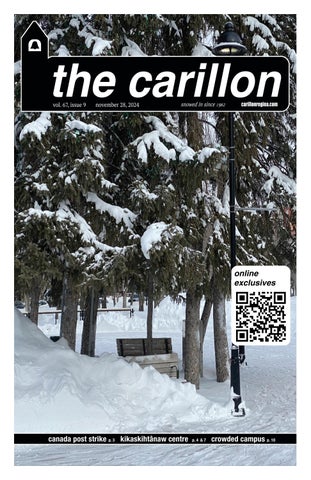

Greetings! Welcome to my editor’s blurb, and to this issue of the Carillon. There’s plenty of topics to choose from, so pick your poison. Our last issue of the semester will be coming out next week, so keep an eye out these last few weeks of the semester to catch it when it comes out.
Our next open Editorial Board meeting will be Dec 2 at 4 p.m. until 5 p.m., so stop on by Rm 227 in Riddell Centre if you want to come chat about the volume so far! For any information about our Board of Directors and their meetings, please reach out to infotayef@gmail.com or ziyang@carillonregina. com. Good luck studying for your exams this semester, and...
Illegitimi non carborundum, mikayla tallon editor-in-chief
the staff
editor-in-chief mikayla tallon editor@carillonregina.com
executive director ziyang li business@carillonregina.com
production coordinator annika hadden production@carillonregina.com
web technician jebrael muhammad web@carillonregina.com
news editor allister white news@carillonregina.com
community editor kimberley kaufman community@carillonregina.com
op-ed editor hammad ali op-ed@carillonregina.com
staff writer amina salah
staff writer emma mcgill
news writer nazeemah noorally news writer shivangi sharma community writer pall agarwal
contributors zinia jaswal, alveena nawal, maria de leeuw
board of directors muhammad zuhruf muhammad zarooq, mohammad akib hossain, tayef ahmed, austin stadnyk, jeremy beam
the paper
227 Riddell Centre @ the University of Regina 3737 Wascana Parkway, Regina, SK, Canada S4S 0A2 www.carillonregina.com | (306) 586 8867
Printed by Star Press Inc, Wainwright, AB
The Carillon welcomes contributions.
Opinions expressed in the pages of the Carillon are entirely those of the author, and do not necessarily reflect those of The Carillon Newspaper Inc. Opinions expressed in advertisements appearing in the Carillon are those of the advertisers, and not necessarily of The Carillon Newspaper Inc. or its staff.
The Carillon is published no less than 11 times each semester during the fall and winter semesters and periodically throughout the summer. The Carillon is published by the Carillon Newspaper Inc., a non-profit organization.
land acknowledgement
The Carillon is written on Treaty 4 territory. As such, staff recognize that we are living, working, and telling stories on and of Indigenous lands. We recognize that we are on the traditional homelands of the Cree, Saulteaux, Nakota, Lakota, and Dakota peoples, along with the homeland of the Métis nation. The Carillon understands that it is pointless to acknowledge the land on which we work without demonstrating our commitment to telling stories and prioritizing voices that further the return of this land to its sacred place.
the manifesto
In keeping with our reckless, devil-may-care image, our office has absolutely no concrete information on the Carillon’s formative years readily available. What follows is the story that’s been passed down from editor to editor for over sixty years.
In the late 1950s, the University of Regina planned the construction of several new buildings on the campus grounds. One of these proposed buildlings was a belltower on the academic green. If you look out on the academic green today, the first thing you’ll notice is that it has absolutely nothing resembling a belltower.
The University never got a belltower, but what it did get was the Carillon, a newspaper that serves as a symbolic bell tower on campus, a loud and clear voice belonging to each and every student. the people’s friend; the tyrant’s foe






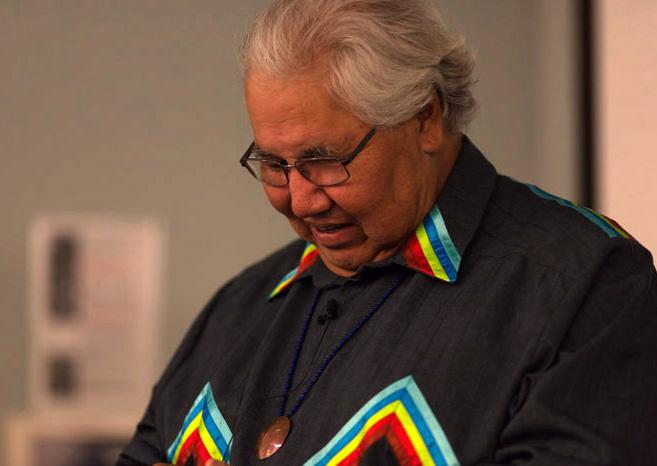


Strike comes at the onset of a busy holiday season for shoppers, students, small business’
shivangi sharma
news writer
Recently, The Canadian Union of Postal Workers (CUPW) announced a nationwide strike beginning Nov 15 at midnight. Prior to the onset of the strike, negotiations between CUPW and Canada Post have been ongoing for more than a year.
Global News’ report on the strike stated that over 55,000 Canada Post employees went on strike. The strike has resulted in disruptions in mail and parcel services across the country. Canada Post’s website announced the strike and informed the customers to expect delays in services.
“Mail and parcels will not be processed or delivered for the duration of the national strike, and some post offices will be closed. Service guarantees will be impacted for items already in the postal network. No new items will be accepted until the national disruption is over […] Shutting down facilities across the country will affect Canada Post’s entire national network,” explained an announcement by Canada Post.
CUPW has been in negotiations with Canada Post to renew the collective bargaining agreement between the two parties since November 2023. According to Canada Post’s website, its two collective agreements with CUPW for the Rural and Suburban Mail Carriers Urban Postal Operations expired on December 31, 2023, and January 31, 2024.
At the time of the beginning of the negotiations, Canada Post had assured its customers that “no labour related service disruptions” would occur during the peak season last year. In October, a Canada Post
statement read: “Canada Post and CUPW must approach the negotiations with greater urgency to avoid a labour disruption,” but, unlike last year, did not promise that no labour related service disruptions would occur.
The Canada Labour Code says that in order to renew collective agreements, if both parties reach an impasse, either party can inform the Minister of Labour with a notice of dispute which is followed by a conciliation period which usually lasts for 60 days or longer. A neutral third party is appointed to mediate the agreement during the conciliation period. If the parties still cannot come to an agreement, a 21-day cooling off period follows. The parties reach a position to strike or lockout after the cooling off period.
On Aug 2, 2024, updates from Canada post revealed that after approximately seven months of discussions the parties had not been able to reach an agreement and had reached an impasse. CUPW filed a notice of dispute with the Federal Minister of Labour and sought conciliators to help the parties with negotiations. Two conciliators were appointed to help with negotiations and the conciliation period began on August 13.
On September 25th, CUPW was presented global offers by Canada Post for both the Urban and Rural and Suburban Mail Carriers bargaining units.
“Canada Post has heard CUPW’s concerns and worked to find solutions. We have presented fair and reasonable offers,” claimed Canada Post in the September 25th update. The CUPW explained, in a statement on their website, that Canada Post’s desire to put future employees on a

“defined contribution pension plan” is “a direct attack on all members’ retirement security,” and that “Canada Post wants to completely overhaul letter carrier work. CPC wants to be able to schedule carriers 5 days on a 7-day calendar, schedule variable work hours each day, change routes every day, add part-time flex positions [and] cut full-time relief positions”
Counter offers were made by CUPW but the parties failed to reach an agreement by the end of the conciliation period on October 12. Negotiations failed to conclude even by the end of the cooling off period on November 2nd. Eventually, CUPW announced a nationwide strike starting on the midnight of November 15.
Canada Post’s financial struggles play a major role in the current state of events. An article by the National Post reported that the organization lost $3 billion between 2018 and 2023 on top of an outstanding loan of $1 billion. The article further reported that the organization might have to take on more debt in order to maintain operations in the absence of serious reforms.
The National Post also reported that the union demanded a 24 per cent pay increase over four years, along with other benefits which included higher short-term disability payments, more paid sick days, and paid meals and breaks. A CUPW statement made on November 21 explained that “as always, the union’s priority is to ensure stability for…full-time weekday routes.” “We need to make sure that all jobs at the public post office are good jobs. We won’t let Canada Post pit current workers against future workers,” CUPW stated.
The Financial Post reported that the CUPW accused Canada Post of not negotiating in good faith. “Canada Post left us
no choice when it threatened to change our working conditions and leave our members exposed to layoffs,” said a union representative to The Financial Post.
The strike has caused a nationwide disruption of many services and tension mounts for customers as well as business owners as the holiday season nears. Small businesses over Canada are likely to be affected the most by the strike as 80 percent of small businesses depend on postal services for some part of their operations, according to the Canadian Federation of Independent Business (CFIB).
980 CJME reported on November 21, that small businesses in Regina who rely on holiday shopping for a big part of their earnings must now look for an alternative delivery method. According to 980 CJME, up to 40,000 Christmas ornaments are made yearly by small businesses.
Due to the strike a large number of packages have been affected and business owners are struggling to find other delivery options as economical as Canada Post.
Global News reported that the delivery of tens of thousands of passports has been stuck due to the strike. According to Employment and Social Development Canada’s (ESDC) statement to Global News, around 85,000 passports are printed and ready to be mailed nationwide but are stuck due to the strike.
As holidays near and people prepare to send presents and mails to their loved ones across the country, the strike is bound to affect more people. As end of term approaches, the strike might also impact students as well– the Archer Library’s interlibrary loan service often relies on Canada Post– meaning disruptions to research are also likely to occur.
“Canada Post wants to completely overhaul letter carrier work.”
Canadian Union of Postal Workers
na, YWCA continues to serve the women, children, and families in need.
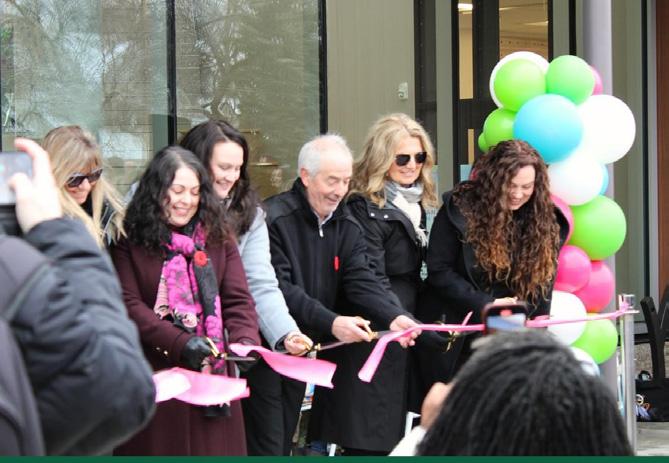
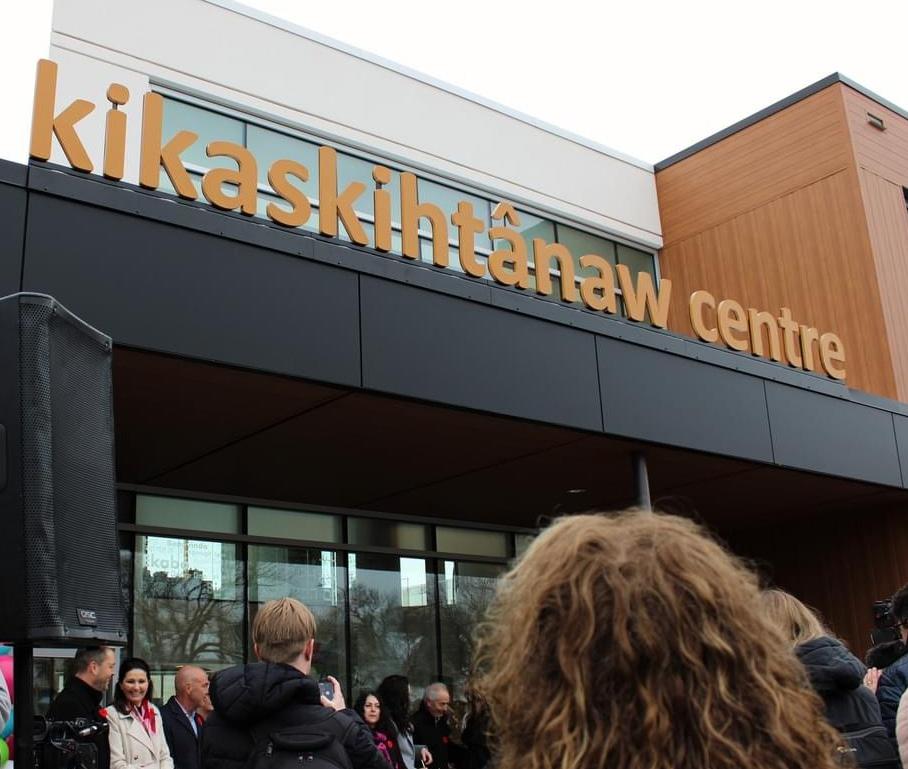
The Young Women’s Christian Association (YWCA) Regina, opened the doors to their new kikaskihtânaw Centre on Nov 6, 2024. The centre, located at 2817 12th Ave, is a step towards providing support to women, children, and families in need.
YWCA is a national organization that began around 150 years ago in 1870. The Government of Canada’s website lists YWCA as the largest and oldest multi-service organization in the country. The website also states that YWCA has over 32 associations functioning in over 400 districts and towns nationwide, offering both services and activities to women and their families. YCWA’s website claims that it aims to further its national goal of empowering women and standing up for social justice by creating change through informed advocacy.
According to YWCA Regina’s webpage, the organization came into Regina in 1910 to support a large number of young female settlers who were in need of friendship and support. YWCA’s first endeavor in Regina in 1910, known as the Traveller’s Aid program, helped women by connecting them to resources, families, and communities. More than a century after coming into Regi-
“In over a century since YWCA Regina was established, much has changed, but we continue to respond to the immediate needs of women and children, stabilize crisis situations, build social networks, and connect women, youth and children with the resources they need to survive and thrive,” states YWCA Regina’s webpage.
YWCA Regina’s new kikaskihtânaw Centre is a part of the organization’s “Here for Her” campaign. The website calls the centre “The Place We All Succeed.”
The facility’s official website states that Saskatchewan has the highest domestic and sexual assault rate in Canada and Indigenous women and girls are six times more likely to face such violence. The website claims that around 80 per cent of women who seek support at YWCA do so in an attempt to escape violence.
According to YWCA’s webpage, 3000 women seeking support at their shelter had to be turned away due to lack of space. The new facility aims to address this problem.
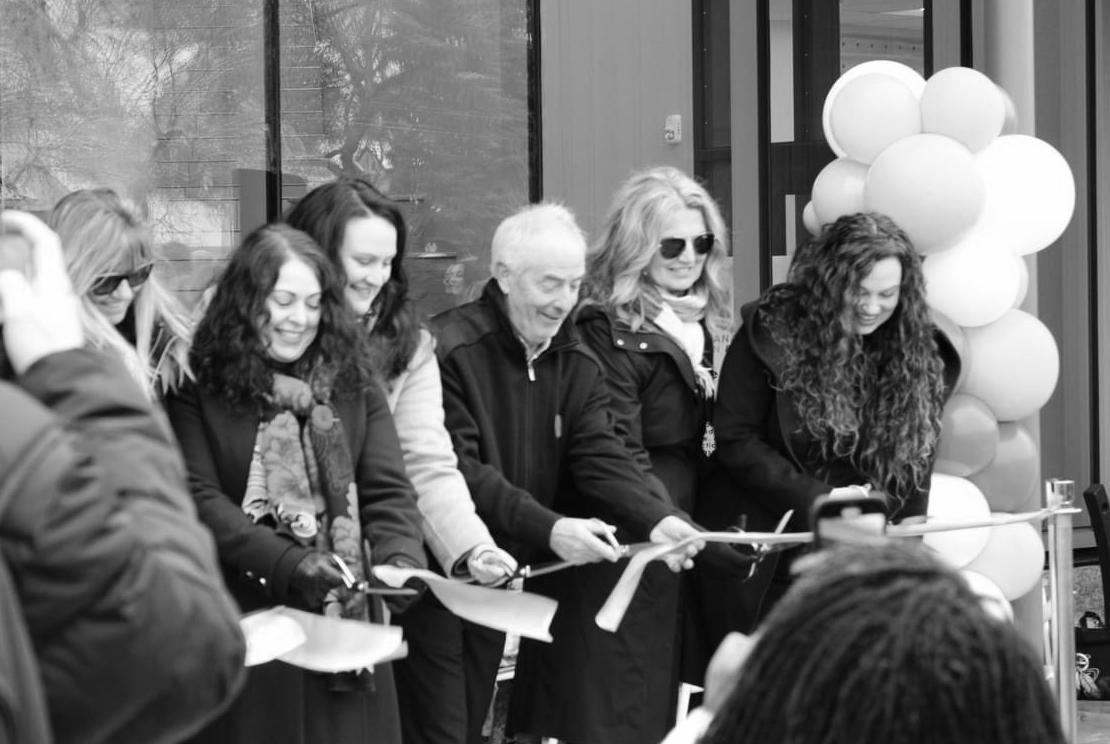
Last July, in a conversation with The Regina Leader Post, YWCA CEO Melissa CoomberBendtsen had said, “This will be the first of its kind in terms of a hub based on a feminist platform that is meant for women and their families.”
The name “kikaskihtânaw” means “we all succeed” in Plains Cree, and, according to The Leader Post, was bestowed upon the centre by Nina Wilson, a Kahkewistahaw First Nation Knowledge Keeper.
On the centre’s official opening day, Melissa CoomberBendtsen said to CTV that “Our women have been in this space now for three weeks, and I can already see the way that they navigate a day, how they gather together, what they’re doing to support each other, is different.”
WEDNESDAY
THURSDAY
Tanya Bunnie’s statements to CTV highlighted the importance of the facility to women in need. “It felt like home. It literally felt like home. Like I came here and there was no barriers or anything [….] every time that I got a chance to come into the shelter, they [welcomed] me with open arms. And they were like, all right, what next? What can we do for you? How can we help you?”
said Bunnie.
The new facility was built via joint funding of over $70 million by donors, community partners, and all levels of government. Ac-
FRIDAY
cording to the YWCA’s website, the facility covers 96,000 square feet and includes 72 supportive housing suites, 41 emergency beds, along with family suites with adjacent rooms and child care spaces that accommodate up to 180 children.
–
(spoken-word)
(spoken-word)
(spoken-word)
Welcome to the Carillon’s “Finance with Pall,” a news finance column covering important economic and financial news from Canada and around the world, focusing on explaining what that news means for students. From tuition costs to job markets, we’ll break down how these changes affect you, making finance easy to understand and relevant to your life. If you have any topic requests or want me to highlight a stock price – shoot me an email at pall@ carillonregina.com.
Disclaimer: The information in this column is intended for educational purposes and is not financial advice. For personalized financial guidance, please consult a licensed professional. News of the week
Netflix streaming crash: A much-anticipated live event took place last week and was streamed exclusively on Netflix. Jake Paul and Mike Tyson got into what dazn called “an intriguing and controversial clash on Netflix.” According to dazn, the event took place in the “U.S. in Dallas, Texas, at the AT&T Stadium, which holds 80,000.”
Longtime boxing fans and casual viewers alike were looking forward to viewing the fight on Netflix, the fight’s exclusive official live streaming platform. It represented a rare step into live sports broadcasting for the entertainment streaming giant. Around 60 million households were streaming it live.
However, with a massive number of users viewing at the same time, there were a lot of technical glitches that took place during the live event, and Netflix is currently being sued for $50 million over this

glitch. The disruption caused widespread frustration and dissatisfaction. Customers paid premiums, and yet they were prevented from watching the live event due to the outage.
What effect did this have on the Netflix stock?
After the event, Jeffery Wlodarczak, a financial analyst, shared a prediction with Barron’s that Netflix stock would jump 26 per cent. The stock went down the next morning at opening price, but throughout the day it went through a lot of ups and downs, eventually closing at $847.05 –higher than what it closed at (around $823) on Friday, the day of the live event.
Throughout the week the stock went through various ebbs and flows, reflecting
the sentiment of investors in the company. According to Market Watch, “Netflix Inc. hit a new 52-week high, surpassing its previous peak of $890.60, which the company reached on Nov 20.” At one point, it also crossed $900 during its trading in the past week. With that, it outperformed many of its competitors such as Apple and Walt Disney, which fell 0.21 per cent to $228.52 and rose 0.40 per cent to $114.72 respectively. Terms of the week
All-time high: “All-time high” refers to the highest price or value of an asset, stock or index that it has ever reached in trading history. It indicates strong performance, investor confidence, and market trends. However, it can also caution investors to consider whether the asset might be overvalued or due to be corrected.
Beta: “Beta” is a measure of how risky or volatile an asset is compared to the overall market. A beta above 1 means an asset is more volatile than the market while a beta below 1 means that it is less volatile, and therefore, carries less risk.
Net Income: A “net income” is the profit a company makes after removing or subtracting all kinds of expenses.
Earnings per Share: Earnings per Share, or EPS, is a metric that shows how much profit the company makes for each share. It is calculated by dividing the total profit of a company by the number of shares available.
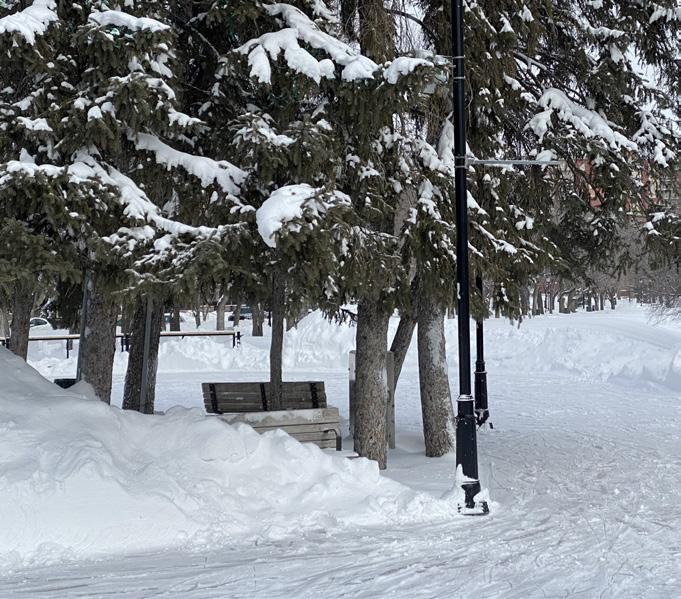
First major snowfall brings traffic, transit delays, Christmas spirit to city

On the morning of Nov 19, Regina residents woke to find themselves completely surrounded by piles of snow. According to a report by Global News, the city had received nearly 15 centimeters of snow “overnight Monday and through to Wednesday morning.”
Keegan Oliver-Gress, a philosophy student, explained to the Carillon that
when the weather is like this, “It’s hard not to take a moment to look up and appreciate the beauty of the snow slowly falling,” but that “the weather can also be unforgiving.”
Oliver-Gress says he has reliable transportation with winter tires and that he’s “grateful for the workers who have been working tirelessly to clear the roads. Oliver-Gress added that the snowfall filled him “with the Christmas spirit [and] vibes.”
Oliver-Gress isn’t wrong when he says that the weather can be “unforgiving.” The first major snowfall of the season typically brings difficulties with transport, snow removal, and a drastic increase in weather-related motor-vehicle accidents.
A Nov 19 news release by the Saskatchewan RCMP explained that they had received a total of 14 reports of collisions between the hours of 12 a.m. and 8 a.m.. Another news release made by police on Nov 20 claimed that “between 7 a.m. and 2:30 p.m. on Nov 19…[they] received 44 reports of motor vehicle collisions and incidents throughout the province. The most common of these incidents were vehicles in the ditch and jackknifed semis.” The news release also claimed that no injuries were reported as of the afternoon of Nov 20.
As of Nov 21, the Regina Police Service (RPS) has not released similar statistics regarding accidents or injuries related to motor-vehicle collisions in the city. A post by the RPS on X (formerly Twitter) the morning of Nov 20 stated that “multiple vehicles [were] stuck around the city” and urged people to avoid driving unless necessary.
A heavy snowfall like the one that Regina experienced last week doesn’t only impact drivers – people who typically take the bus or walk are impacted as well.
Beginning in the early morning hours of Nov 19 and continuing throughout the day, Regina Transit announced several transit delays. By 5 p.m. on Nov 20, Regina Transit had announced that, as a result of severe weather conditions, all buses were “severely delayed,” and urged riders to check TransitLive to find more precise bus locations. Some Regina Transit users claimed, in response to Regina Transit Facebook posts announcing delays, that some bus locations were not available and others shown on TransitLive may have been inaccurate.
Emily Robertson, a philosophy student in her third year, told the Carillon that the first thought she had when she saw the snow was: “I don’t want to have to walk to the bus stop today.” Robertson did still make the ten-minute trek to her bus stop on Tuesday morning, though. She explained the walk was “kind of awful,” but “it was really pretty [outside]... all the trees were covered in snow.”
For pedestrians, mobility depends largely on individual property owners’ compliance with Regina’s Clean Property Bylaw, which requires property owners to clear sidewalks “within 48 hours following a snow event.” The bylaw also requires that sidewalks “be kept free from snow and ice buildup.” At present, it is not clear how consistently this bylaw is enforced, but Robertson said that, by Thursday Nov 21, her walk to the bus stop had been cleared.
Patrick J. Coleman, an urban planner, explained in an article on pedestrian mobility in wintertime that, culturally, barriers to pedestrians exist in Canada. These barriers are made worse in wintertime when, “in the auto-oriented culture of Canada and the United States, many northern cities have ignored the pedestrian…with most [of their] attention and resources [being] devoted to keeping streets and highways clear of snow and ice for the automobile” rather than those traveling by foot.
Sometimes, even this longstanding devotion to clearing streets and highways isn’t enough to prevent drivers from finding themselves in a pinch. After the snowfall, Oliver-Gress helped a fellow driver who found themselves stuck in the snow near the entrance to a University of Regina parking lot. “Luckily, as I was pushing, someone else came to help. We eventually got them unstuck and it was a nice little victory, but then the driver just drove off!” Oliver-Gress said that ultimately, he was happy to be “able to help them out.” “Shoutout to the dude that helped me push, I never got his name,” Oliver-Gress concluded.
allister white news editor
pall agarwal community writer
A global movement that is beyond the excuse to grow a moustache – Movember. Focused on men’s mental health, Movember is a social movement with a same-name associated charity to raise awareness and funds for men’s physical and mental health concerns, including prostate cancer, testicular cancer, mental health, and suicide prevention. Throughout November, there are so many events and fundraisers that take place to create awareness in support of research and programs that aim to improve and save lives.
It is a social construct that prevents men from being vulnerable and openly talking about their mental health. From a very young age, men are often taught that they should keep their feelings to themselves and that asking for help is a sign of weakness.
This silence can have adverse consequences. Men are more likely to experience untreated mental health issues and are at a significantly higher risk of suicide compared to women. In fact, the Association of American Medical Colleges (AAMC) explains that the risk of men dying by suicide is four times higher than that of women.
Untreated mental health issues can result in the use of unhealthy coping mechanisms, such as substance use and abuse or emotional outbursts due to an inability to express their emotions in a positive or productive way. Mental health is not treated the same way as physical health is, and social norms have created an unhealthy environment for anyone to seek support for invisible illnesses.
According to Clear Behavioural Health, “Men account for a shocking 90 per cent of diagnosed cases of schizophrenia by the age of 30, as well as an estimated 10 per cent of an-
orexia and bulimia cases, along with an estimated 35 per cent of binge-eating disorder.”
If men have limited experience with expressing their emotions openly, they might find it challenging to discuss any mental health struggles with other people. According to the AAMC, “Society blames men themselves for their struggles… But this approach of placing blame on individuals has produced little by way of clinical, social, or structural interventions to improve men’s mental health.”
When men do seek help, the support they receive falls seriously short. AAMC stated, “Data from Canada and the United States found that more than 60 per cent of men who died by suicide had accessed mental health care services within the previous year.”
Movements like Movember are a way to highlight these critical issues. Regina embraces this important message with various events, fundraisers, and activities that bring people together for a common cause. From fitness classes to unique gatherings like “Hot Ones” challenges, Regina offers plenty of opportunities for residents to support this impactful initiative.
Regina has an impressive lineup of Movember-themed events. For folks interested in spicy challenges, Pile O’ Bones Brewing Company promises a fiery good event. The event brings in 10 mouth-watering hot sauces, and people should consume them at their own risk.
The Eventbrite listing explains that “All proceeds from this event support Movember Canada, a fantastic charity dedicated to improving men’s health.” The goal of this event is to ensure that people have fun while supporting the cause.
The fun and charity aspect doesn’t stop there, as the Student Medical Society of Saskatchewan is organizing a fitness class fundraiser at 7 p.m. on Nov 25 at

Wheelhouse in Regina. These spin classes not only promote physical health but also contribute directly to the campaign’s goals.
People have also started their own fundraisers, like the one started by Adam Kletchko, the ambassador for the Movember charity. In a 620 CKRM article, Kletchko discussed why Movember participants grow a moustache during November. He said, “The moustache acts as kind of a walking billboard for men’s health, or a hairy ribbon, that drives conversations around men’s health, and then also raises funds for those key areas as well.” Many barbershops in Regina provide special discounts and Movember packages, donating a portion of their profits to the campaign.
There are also fundraisers elsewhere in Canada. For instance, The Manila Times, based in Ontario, lists Tommy Guns’ “Cuts 4 Nuts” program, where guests can add a donation to Mo-
vember to their total when they check out. The Manila Times also lists shops like L’Oreal Men Expert, which is running a promotion to donate $1 from every “Men Expert” product purchase to Movember, up to $25 thousand.
These various events are just some of the ways people can get involved and support a cause that impacts half the global population. From participating in fitness classes, fun challenges, or simply growing a moustache, Movember is a powerful reminder of how communities can come together to tackle pressing health issues in creative and engaging ways.
In Regina, the spirit of Movember thrives through events like the Sask Hot Ones challenge and fitness fundraisers that bring people closer while contributing to a meaningful cause. Folks supporting this cause help to spark vital conversations about men’s health and fund life-saving research and programs. Every effort
counts in changing the face of men’s health.
The unfortunate reality of movements like these is that while they garner widespread attention and support, it is only for one month of the entire year. While this brief spotlight is valuable, it is far from enough. There needs to be a sustained effort to create and raise awareness and foster an ongoing dialogue that extends beyond a single month.
There needs be consistent reinforcement, which is crucial to emphasize the importance of open communication, safe spaces, and accessible resources for men to seek support and ask for help without the fear of judgment or stigma. True change requires a cultural shift – one that normalizes vulnerability, prioritizes mental health, and ensures that men feel supported every day of the year and not just during a designated campaign period.
“Society blames men themselves for their struggles… But this approach of placing blame on individuals has produced little by way of clinical, social, or structural interventions to improve men’s mental health.” Association of American Medical Colleges
pall agarwal community writer
The YWCA Regina has officially opened its kikaskihtânaw Centre for Women and Families, a transformative facility designed to address the pressing needs of vulnerable women, children and families in Regina. Located at 2817 12th Ave, this 96,000 sq. ft centre replaces the aging McIntyre Street location and represents a significant step towards trauma-informed care and wraparound services under one roof.
Aiming to bring multiple services together at one location, this $70 million project fosters hope, healing, and independence. Its funding came from donors, community partners, and all three levels of government, according to CTV News
According to the CEO of YWCA Regina, Melissa Commber-Bendsten, “The Centre for Women and Families has been designed for self-sustainability. This new building provides YWCA Regina and its partner organizations the ability to do our work in a way that is better for the community and provides strength and stability to the organizations. This Centre, will offer stronger connection and greater scope of work with zero increase to operational cost.”
The new center was intended to provide wrap-around services, “community multi-purpose spaces, access to drop-in supports, communal kitchens and play areas. It will also include a healing
and ceremony lodge,” according to CTV News in June 2022.
Now that it is built and operational, the center offers shelter for women and children dealing with domestic violence and homelessness, community outreach, childcare, and wraparound services, according to a more recent CTV News article from July 2024.
According to societ.com, wraparound services are “a coordinated network of community-based services and supports that are tailored to meet the unique needs of individuals and families. The goal is to create a comprehensive plan that addresses all aspects of a person’s life.” These include mental and physical health, education, employment, housing, and social relationships.
At the YWCA, residents of their shelter can now access these services. Once admitted, they work closely with staff to create plans aimed at recovery and longterm empowerment.
The proposed healing and sweat lodge also made it into the final build. Coomber-Bendtsen said, “It has been designed by and led by Indigenous women giving their opinions to our architect team, who have learned a lot about Indigenous ways of knowing and being through that process.”
According to CoomberBendtsen, the All Nations Hope Network (ANHN) will oversee it. As an Indigenous organization led by community matriarchs, the ANHN educates and performs ceremonies with urban Indigenous peoples. The lodge space
was handed to ANHN with a 99-year lease to preserve it as a healing space in the community. The cost of the lease… was one dollar.
Homeless Hub is a project from The Canadian Observatory on Homelessness, and they have done Homelessness Counts in Regina in 2018 and 2021. In 2021, 488 people experienced homelessness; 43 per cent identified as female, and 26 per cent identified as youth aged 24 and under.
Many people are turned
away from homeless shelters due to space limitations. According to their website hereforher.ca, the kikaskihtânaw Centre for Women and Families offers 72 supportive housing suites and 41 emergency beds.
The centre is more than just a building – it is a beacon of hope for many generations. By creating a haven that combines shelter with comprehensive support systems, the YWCA Regina is not only meeting immediate needs but also supporting the preven-
tion of future crises. It fills a vital need in Regina by offering safety, stability, and empowerment to women and families facing adversity. Aligned with the organization’s mission to foster resilience while addressing systemic challenges through trauma-informed care, reconciliation efforts, and wraparound services, this facility promises to be a cornerstone of hope and transformation in the community.


emma mcgill staff writer
CBC radio host, pianist, singer, and JUNO winner Laila Biali recently released her new album, Wintersongs. In a recent interview with the Carillon, Biali shared some insight into her world of music.
What is your background?
I grew up in North Vancouver in a fairly large family of six, [as] the youngest of four daughters. My mom immigrated to Canada from Germany and my dad immigrated from Egypt.
What inspired you to become a musician?
According to my mom, when I was 3.5 years old, I climbed up onto the piano bench and plunked out the Sesame Street theme by ear. I hadn’t been given any lessons or training at that point. She enrolled me in formal piano lessons at four, and I was instantly hooked. My piano teacher, Juanita Ryan, was strict but also very passionate and dedicated.
The world of music was one of magic, joy, big feelings, and a sense of wonder. I knew from a young age that music had the capacity to move people in ways that transcended words. To this day, that is what keeps me going: the experience and knowledge that music touches people’s lives and somehow brings inspiration, comfort, catharsis and even healing.
Can you tell me about some of your current influences?
My taste runs the gamut [entire range] of genres, from Joni Mitchell, my all-time favourite, to Björk, Maggie Rogers, Sarah McLachlan, Esperanza [Spalding], Willow Smith, Maverick City Music, and so many more. My 14-year-old son is super into Tyler, the Creator and Travis Scott, so we listen to that music as well.
What led you to your position with the CBC? How has it changed the way you work as a musician?
I was fortunate to be brought into CBC’s Toronto headquarters for what I didn’t realize was an audition in the summer of 2017. I hosted the show, standing in for the long-time Tonic host, Tim Tamashiro, for a couple of weeks. At the end of the summer, I was offered a contract to host a brand-new show, Saturday Night Jazz
I was over-the-moon thrilled, and it’s hard to believe I’ve been with CBC for more than seven years. My producer, Lauren Hancock, programs most of the music, so it’s a wonderful process of discovery for me. Through Lauren, I am introduced to jazz of all stripes from every corner of the globe. It definitely stretches my ears and fertilizes my creative imagination. What does your role as a radio host mean to you?
When I perform and tour music, I always feel that I am inviting audience members into my space. When I host radio, it feels like listeners are inviting me into their spaces. There’s an intimacy to it, and I consider it a great privilege.
How do you approach songwriting versus creating covers?
The processes are actually not that different. I suppose when I’m songwriting, it’s a bit like building a house from the ground up. Covering or arranging other writers’ music is more like a renovation. You want to keep the overall structure, but then you get to go in and change many facets and add some personal touches. Can you tell me about the process behind the creation of Wintersongs?
I was offered a two-week residency at the Banff Centre for Arts and Creativity in Alberta’s Rocky Mountains in late 2021.

“To this day, that is what keeps me going: the experience and knowledge that music touches people’s lives and somehow brings inspiration, comfort, catharsis and even healing.”
Laila Biali
When I arrived, Banff was already well into winter. I was assigned to a cabin in the woods that was part of their Leighton Studios.
There was a gorgeous grand piano that faced floor-to-ceiling glass walls, looking out on the most exquisite winter scenes: snow-dusted trees, snow-capped mountains, deer and martens frolicking outside. It was glorious. From the first notes on the piano, I knew I was composing a soundtrack for winter, a love letter to the season.
What excites you most about your upcoming tour? What have your tour experiences in the past been like? Have you performed at Saskatoon’s The Bassment before?
For me, the most exciting aspects of touring have to do with the band’s camaraderie on the road, connection with audiences, and the rapport we’ve been developing with presenters and key partners in cities like Saskatoon and Regina.
I’ve been fortunate to perform at The Bassment and Darke Hall in the past, so both places hold memories. In that sense, it almost feels like a homecoming when we return to these communities. It’s equally wonderful to reconnect with familiar faces,
meet new folks, and make new friends. How have your award nominations and wins changed your musicianship?
I greatly appreciate the industry accolades and awards, but it’s critical [that] I don’t become consumed with the goal of winning more. The primary driver when I create music has to come from an artistic place. The business and the industry definitely have an impact, but I create music for the love of it and because it can have a meaningful impact on peoples’ lives. What is your favourite instrument and why?
That’s a difficult question to answer. I love the piano and singing equally, but I’ve always wanted to learn the harp. For my whole life, I’ve wanted to learn, and I actually do own a Harpsicle, but I have yet to dig in.
What advice would you give to another Canadian musician?
Be yourself. I know those words are so cliché, but they’re true and powerful! No one can do what you do. We’ll avoid the snowflake metaphor, but it stands to reason that everyone is completely unique and has something uniquely their own to offer.
That’s the secret sauce!
But, do the work. Practice your instrument, and while the music business and social media can be tricky to manage well, they are important, so lean into them as tools that can help propel your music forward – just don’t let them consume you.
Here in Canada, I would also highly recommend digging into the myriad [of] grant organizations that support artists: Canada Council for the Arts to FACTOR, Radio Starmaker, as well as provincial and municipal foundations. We are extremely fortunate to have access to many different types of funding in this country. Familiarize yourself by signing up for newsletter updates, [talking] to other artists, and [taking] full advantage of the resources available.
Biali’s upcoming Saskatoon show will be taking place at The Bassment on Dec 12, where she’ll be showcasing songs from her new album along with some holiday classics. On Jan 29, she will make her way to Darke Hall to give Regina a night deemed “Joni Mitchell & the Canadian Songbook Reimagined.”
A
relevant works, offering insights into human emotion and the consequences of ambition.
A Midsummer Night’s Dream
William Shakespeare, often hailed as one of the greatest playwrights in history, wrote an extensive collection of works that have shaped the literary landscape for over four centuries. His plays cover a vast range of themes, from love and ambition to power, jealousy and fate.
Shakespeare’s ability to create unforgettable characters and compelling stories has ensured that his works continue to be read, performed and studied around the world to this day. For anyone looking to dive into Shakespeare’s works, it can be difficult to know where to start. With so many plays to choose from, which one do you pick first?
This guide highlights some of Shakespeare’s plays, offering insight into their key themes and why they remain relevant today. Whether you are drawn to comedies filled with humor and mistaken identities, or historical dramas exploring politics and power, Shakespeare’s works provide something for every person. These eight plays are a great starting point for those looking to read Shakespeare’s plays.
Hamlet
Arguably Shakespeare’s most famous play, Hamlet delves deep into themes of revenge, madness, mortality and ghosts. The story follows the young prince Hamlet, who is driven to seek revenge on his uncle Claudius, who has murdered Hamlet’s father, the king.
The play is renowned for its exploration of Hamlet’s inner turmoil as he grapples with existential questions and moral dilemmas. Famous lines such as “To be or not to be, that is the question” have become emblematic of the play’s philosophical depth.
With its intricate plot, memorable characters, and profound reflections on life and death, Hamlet is a must read for anyone interested in the human psyche. This play is truly one of the greatest tragedies of English literature.
Macbeth
Macbeth is a gripping tragedy that explores ambition, guilt and the corrupting influence of power. The play follows the rise and fall of Macbeth, a Scottish nobleman who, driven by the prophecy of three witches and his own ambition, murders King Duncan to rule the throne.
What follows is a descent to madness and paranoia as Macbeth’s reign becomes increasingly tyrannical. Macbeth remains one of Shakespeare’s most gripping and
For me, this is one of the best plays written by Shakespeare. It’s a great read after a stressful day in school since it’s November (yikes).
Coming back to the play; this is a lighter and brilliant play. This is a comedy full of mistaken identities, love and laughter. The play follows four Athenian lovers who become entangled in the whimsical world of fairies, led by the mischievous Puck. The play explores the themes of love, illusion versus reality, and the unpredictability of fate. With the delightful mix of humor, fantasy and romance paired with Shakespeare’s dialogue, this play is truly a fantastic read.
Othello
mit violence. Through its intense psychological drama and themes of betrayal and trust, Othello remains one of Shakespeare’s most powerful and tragic plays.
Twelfth Night
Another of Shakespeare’s greatest comedies, Twelfth Night is a delightful tale of mistaken identity, crossdressing, and romantic confusion. The play follows Viola who, after being shipwrecked, disguises herself as a man and enters the service of Duke Orsino. The ensuing love triangle complicated by mistaken identities and the love-struck antics of various characters creates a humorous narrative. The witty dialogue, engaging characters and joyful resolution make Twelfth Night a crowd pleaser.
As You Like It
This is one of Shakespeare’s beloved comedies, celebrated for its witty dialogue

In Othello, Shakespeare explores the destructive power of jealousy and manipulation. The play centers on Othello who falls prey to the deceit of Iago. Driven by his personal grievances, Iago convinces Othello that his wife Desdemona had been unfaithful, leading Othello into a spiral of doubt and rage. As jealousy takes root, Othello’s perception of reality becomes distorted, ultimately driving him to com-
and complex characters. The play is often remembered for its famous “All the world’s a stage” speech in which the characters reflect on different stages of life. As You Like It offers a reflective journey to self-discovery, making it one of Shakespeare’s most enduring works.
A Winter’s Tale
This is a captivating play that blends elements of comedy, suspicion and tragedy.
This play showcases Shakespeare’s ability to craft a tale that moves from despair to hope, highlighting the power of hope and time. At the time when A Winter’s Tale was penned, Shakespeare is believed to have been in London, working on performing his plays.
The transitions from different venues influenced him to write this play as it blends from comedy to realism. The winter setting of the play is also to note that Shakespeare transitioned from winter season only to give away to spring – from stillness to growth. This is one of Shakespeare’s most classical plays showcasing his evolving artistic vision.
The Comedy of Errors
This play is one of Shakespeare’s earliest comedies centered around a series of chaotic situations. The play follows two sets of identical twins, separated by birth, who unknowingly find themselves in the same city leading to comic mishaps. Filled with humor and a fast- paced plot, The Comedy of Errors showcases the bard’s gift for storytelling and exploration of the complexities of human relationships.
Conclusion
If you find yourself in the rare 1 per cent of the world who is new to Shakespeare, fear not! A fantastic starting point is A Midsummer Night’s Dream, a whimsical play brimming with romance, magic and laughter – perfect for easing into his poetic language and clever humor.
From there, consider diving into Romeo and Juliet, a timeless tale for all my fellow romantics out there. If you’re in the mood for laughs, Much Ado About Nothing offers sharp, witty banter and delightful misunderstandings that showcase Shakespeare’s knack for humor.
Additionally, consider exploring King Lear if you are into happy endings. Shakespeare’s plays offer an extraordinary range of experiences, from the dark plays like Hamlet and Macbeth to the fantasies like A Midsummer Night’s Dream
Each play reveals something unique about human nature, making the play an essential read for anyone interested in old literature, philosophy and the complexities of life. Whether you are drawn to tragedy, comedy or history, there is a Shakespeare play for you.
If you are new to literature, starting with Shakespeare is the best way to go. These remarkable plays are available in the Archer library (hint: go to floor 4). Dive into the bard’s plays and don’t forget to practice your best dramatic gestures.
“Whether you are drawn to tragedy, comedy or history, there is a Shakespeare play for you.”
Zinia Jaswal
alveena nawal contributor
Amidst all the demands and the rush of daily life, the gym can be a sanctuary space where people can recharge, refocus, and strengthen themselves both physically and mentally. While many people can and do thrive in the typical gym environment, some have a harder time reaping the benefits of such spaces because they find the mixed setting of gyms incompatible with their values and preferences.
The University of Regina (U of R) is made up of a diverse body of students, coming from various cultural and religious backgrounds. It would thus be a positive addition to our campus if there were some accommodations made for students of different cultural and religious beliefs, such as providing female-only gyms or designated female hours in the existing gyms.
People of certain religious backgrounds may not be comfortable partaking in co-ed gym spaces, as they might find the setting to be at conflict with their personal values. The cost of this could be such students choosing to avoid the healthy and productive habit of prioritizing their fitness, because they feel they are not able to do so in an environment that is in alignment with their cultural values.
Health and fitness are an integral part of one’s life, and students at the university shouldn’t feel unable to make room for this part of their lives due to a lack of appropriate accommodations. It’s crucial to provide a setting and opportunity that respects everyone’s values and makes the effort to accommodate their needs.
One feasible solution to address this would be introducing designated fe-
male-only hours at the campus gym. It is not only going to help those students exercise in a private and comfortable environment that aligns with their values, but also increase access to these spaces for a more diverse group of students.
This in turn would enable them to pursue their fitness goals in a manner consistent with their beliefs. Nor would this only be of benefit of women from a specific culture or religion. Anyone who feels more comfortable working out in an all-female environment would appreciate having the opportunity to do so.
At its core, this initiative is not limited to just access to fitness facilities. It is also an issue of inclusion and equality. It helps create an environment of inclusion, respect, and empowerment for the diverse student body we have on campus.
Whether it is to avoid unwanted attention, to build confidence in a supportive space, or to simply have the freedom to focus, the impact of such a change would be profound. The designated female-only hours would break the barrier that a co-ed setting currently poses for many women, and offer a solution that respects everyone’s right to access the fitness opportunities on their own terms.
This isn’t about excluding anyone from those spaces. Rather, it would help provide some with greater opportunities to exercise their right to campus spaces in a manner that respects their values and needs. By introducing such a policy, the U of R would be accommodating the diverse needs of its diverse student body. Every student deserves access to the gym and this is one way to support everyone’s well-being. After all, fitness is not just about physical wellbeing, it is also about mental well-being and the ability to thrive as a student and a person in this juncture of life.

There is something paradoxically joyous and frustrating about seeing such overwhelming floods of people on campus every day. It’s both anxiety-inducing and inspires some form of hope. On one hand, I think, “Look at all of these people working hard and receiving a post-secondary education!” On the other hand, I think, “Why do I have to work so much harder to maneuver through these hallways?”
It’s easy enough to see the packed hallways and just be frustrated by it, but there are real questions that we, as students who do value our educations and should take
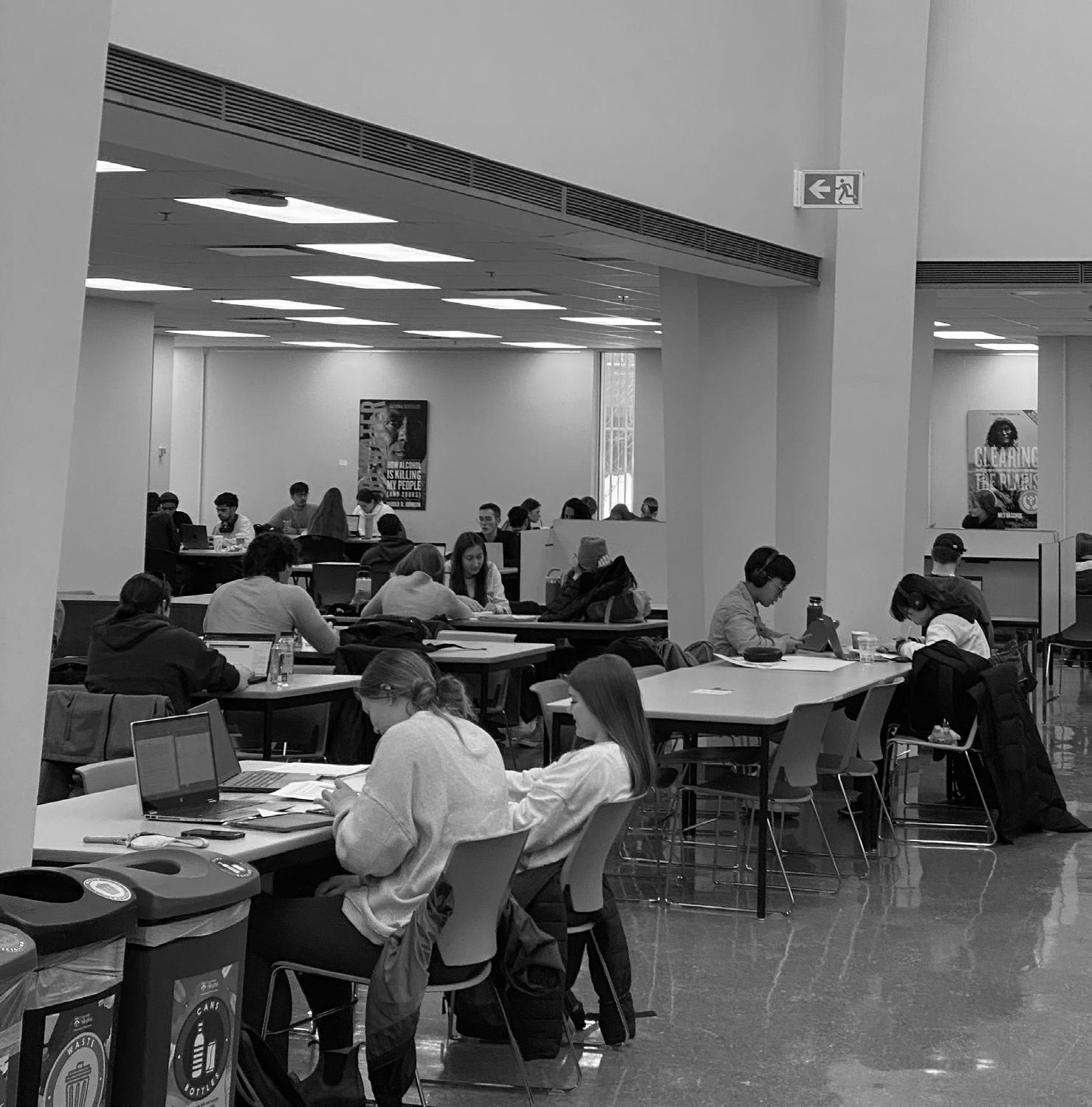
pride in the institution which we affiliate ourselves with, should be asking about how this year’s student population surge affects our environment and the lives of our fellow students.
Firstly, after having interviewed a handful of students about this issue for another piece, I have been thinking a lot about how we ended up with such a high enrolment level this year. Maybe part of the surge comes from the fact that it has now been almost five years since the beginning of the pandemic, or that the university’s appeal has gone up.
What program is appealing to these new students? Where are they coming from? Whatever has prompted the surge, we know that it has started at the admissions office. What does it mean for the success of U of R students for the enrolment rate to be what it is?
If a student is admitted to university with a 65 per cent high school average, and from there their grades drop even just 20 per cent due to the expected pressures of university, that leaves them failing. Where is the room for them to succeed? How many students are failing?
Maybe the more important question is, how do the fairly low admission requirements affect the institution? How much money are they receiving from that enthusiastic first year tuition before things fall apart for those students not prepared? In other words, is it a cash grab?
Don’t get me wrong, I think it is absolutely wonderful how welcoming the U of R is, and how many people can come here and get an education. Post-secondary
schooling is incredibly important. However, if the school as an institution has any slight malicious intention behind having such low admission requirements in so many faculties, it is not fair to any of their students, whether they are struggling, doing just fine, or soaring through their academic pursuits.
It is unfair in many small, everyday ways, too, other than people clustering and worsening the efficiency of hallway movement. For example, study spots seem harder to get your hands on. I’ve had to traverse three or four buildings before to find a decent one. The library is filling up faster and faster, and places like Ad Hum which are undergoing construction already have limited space.
I’d also imagine there’s an increase in demand for housing. What will this do to cost projections for on-campus rent next year? How does it affect those working on the U of R housing team? How much is parking slowed down? Are classes filling up faster? Are appointments with advisors filling up? As students, aren’t these things we should be investigating?
emma mcgill staff writer
“The worst part of holding the memories is not the pain. It’s the loneliness of it. Memories need to be shared.”
“I’ve started to share them with you,” Jonas said, trying to cheer him.
“That’s true. And having you here with me over the past year has made me realize that things must change. For years I’ve felt that they should, but it seemed so hopeless. Now for the first time I think there might be a way.”
Those familiar with Lois Lowry’s
1994 Newberry Award winning novel The Giver may recognize the passage above as a pivotal moment in the story from page 154. Jonas’ utopian life is disrupted at the age of 12 when he is selected to become his community’s new Receiver of Memory.
His role is to receive and hold the memories of humanity – memories of great joy and terrible pain. These memories must be hidden from his community lest they interrupt the people’s peaceful and orderly lives, but they must also be maintained so that those in power can benefit from the wis-
it means to be human.
Each year, we wait for December to approach so we can create reading challenges for the following year, assess the books we read this year and see whether or not we met our goals. If you are anything like me, you are an inconsistently consistent reader. Let me explain what this entails. I have reading seasons throughout the year. There are months where I will read five books in a row, or 10 over the course of two months, and then I won’t read anything for the next five or six months. This has been my reading routine over the years.
When I get that motivation to read, I hold onto it until I completely exhaust it. Then I take a hiatus from the book world until my next spell of reading motivation. This year was no different. 2024 was a phenomenal year for reading. Let me present to you the best books that I read this year. I must preface, I love psychological thrillers. That is the genre of books I tend to read the most. I also adore historical fiction. My interests are often categorized by current obsessions regarding specific topics. But above all, I read to soothe my soul and feel whatever emotions and feelings I am holding back.
A monumental book that I read this year was Atlas of the Heart by Brené Brown. This is a beautiful book that explains 87 of the emotions that we experience as humans. From joy and happiness to grief and anguish, the human mind is a powerful anchor of various emotions that explain what
dom that is gained from having them.
Upon realizing just how unfeeling his community is, Jonas, along with his mentor – the titular Giver – hatch a plan to release the memories back to the community. This plan is not a means of unburdening themselves, but because they recognize it as the only way for any of them to be fully human.
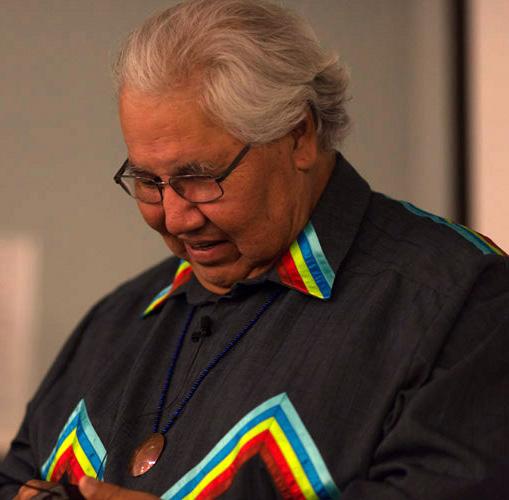
Mizhana Gheezhik, Justice Sinclair, Senator Sinclair, better known as Murray Sinclair, was far older than 12 when he was appointed Chief Commissioner of the Truth and Reconciliation Commission of Canada (TRC) in 2009. Sinclair had at least some idea of the weight of this appointment, having previously declined it out of concern for the emotional toll it would take.
Nevertheless, over the course of the next six years, while the TRC heard testimony from more than 7,000 survivors of Canada’s residential school system, Sinclair stayed the course. He delivered the final report in December of 2015.
The report contained a list of 94 Calls to Action aimed at all levels of government and other institutions within Canada. Sinclair referred to the residential school system as “cultural genocide,” saying “reconciliation is not an aboriginal problem, it is a Canadian problem. It involves all of us.”
Sinclair’s parents and grandparents were all residential school survivors. Sinclair himself had endured a lifetime of anti-Indigenous racism while growing up and practicing law in Canada. He was the first Indigenous Justice in the history of Manitoba, and only the second in all of Canada.
Following his time with the TRC, he was appointed to the Canadian Senate where he served for five years. Sinclair’s career achievements would have been exceptional even without taking into account
the circumstances into which he was born.
Beyond his brilliance, professionalism, and success, Sinclair was kind. Kind – such a small and simple word for such a profound way of moving through the world. For all his vocational accomplishments, it was likely Sinclair’s kindness that made him best suited to the role of Chief Commissioner of the TRC.
Mizhana Gheezhik knew, perhaps better than anyone else, what a heavy burden he would carry during his time with the TRC. For six years, he listened. He listened as survivors poured out their stories, their pain, their anger, their shame, their brokenness, their fight, their survival, their resilience, and their memories.
Mizhana Gheezhik received those memories so that we would have them. He listened so that we would know – so that we could feel, and through feeling, become more human. Of all his many services to Canada, this was his greatest gift to us.
He gave us the truth so that we could find a way to reconcile with the First Peoples of this land, with our history, and with ourselves. He was our Receiver of Memory, The One Who Speaks of Pictures in the Sky, and he gave us a way to change. May we always remain grateful to him for that.
maria de leeuw contributor
This book helped me understand the emotions I feel in great detail. Additionally, I found it to be a pivotal book in my personal development journey, as it helped me stop mixing emotions together and categorizing them as one particular emotion, when in reality, what I was feeling is a completely different emotion.
I have learned that this is a way that I mask my emotions. I will say I am feeling sad when what I feel is grief and anguish. All in all, this book is perfect if you want to use 2025 to better yourself, and most importantly, understand your emotions.
Another book that I read this year is The Body Keeps the Score: Brain, Mind, and Body in the Healing of Trauma by Dr. Bessel van der Kolk. In case you haven’t noticed already, there was a clear pattern in the books that I read this year. I wanted to understand myself and gain knowledge about my experiences, feelings, and emotions.
Dr. Bessel introduces a scientific analysis and a guide for understanding your experiences as a way to heal from them. He focuses on the effects that trauma has on our brain, body, and emotions. Through this book, we learn how trauma re-shapes the human nervous system. Additionally, it alters brain function and affects our ability to connect with ourselves and our surroundings, as well as our ability to regulate our own emotions.
The third best book that I read this year was The Next Mrs. Parrish by Liv Constantine, a sister duo who are two of my favourite authors. This is a follow up to their previous book The Last Mrs. Parrish. Both
books are juicy, dramatic books that you will speed through.
The Next Mrs. Parrish is a fun read characterized by mystery, intrigue, and thriller. It centers around Amber Patterson who previously set her sights on the other prominent character, Daphne Parrish’s husband. Amber is jealous of Daphne’s wealthy lifestyle, and creates a plot to steal Daphne’s life.
As Amber succeeds in her plan, Daphne’s life falls apart. She walks away from her previous wealthy life only to run into more challenges as she navigates single motherhood, an abusive ex-husband, and his new wife Amber, who is still after her. I highly recommend this book as it is an exciting read that unfolds fast and forces you into its attention-gripping world.
Lastly, here are some honorable mentions: Kim Jiyoung, Born 1982 by Cho NamJoo, The Wife Upstairs by Rachel Hawkins, Behind Closed Doors by B.A. Paris, Apples Never Fall by Liane Moriarty, Sometimes I Lie by Alice Feeney, The Song of Achilles by Madeline Miller, The Drowning Woman by Robyn Harding, and Where The Crawdads Sing by Delia Owens.