

“Henry V” Are you feeling a little
On
out? You are not
of exams and essays and
projects, there’s all this (waves arms in circles). Uncertainty is the word of the day. Fortunately, we think we have something that may help: get outside.
That’s right, go for a walk, get some fresh air and sunshine. Smile and nod at the people you pass by. Call up your pals and toss a baseball around. Or just dream a bit about the balmy days ahead. You’ll be glad you did. Welcome to the nineteenth issue of the Carillon (volume 67). This issue has a mix of local and national coverage, and our community section has a wonderful focus on things close to home. We hope that you find the issue interesting and engaging. Looking to share your thoughts? Drop by Riddell Centre Rm. 227 and pay us a visit. We’re always happy to chat about past issues, ideas for the future, and hear what you love and/or hate about the paper!
Have a story pitch to share? Our section editors want to hear it. Need some ideas? Our pitch list is live. Until next time.
Illegitimi non carborundum
the staff
editor-in-chief vacant editor@carillonregina.com
executive director ziyang li business@carillonregina.com
production coordinator annika hadden production@carillonregina.com
web technician jebrael muhammad web@carillonregina.com
news editor zinia jaswal news@carillonregina.com
community editor emma mcgill community@carillonregina.com
op-ed editor shivangi sharma op-ed@carillonregina.com
editorial consultant kevin o’connor
staff writer amina salah
staff writer hana grace
news writer nazeemah noorally community writer pall agarwal
contributors mohammad quraishi
board of directors
muhammad zuhruf muhammad zarooq, mohammad akib hossain, tayef ahmed, austin stadnyk, jeremy beam
the paper
227 Riddell Centre @ the University of Regina 3737 Wascana Parkway, Regina, SK, Canada S4S 0A2 www.carillonregina.com | (306) 586 8867
Printed by Star Press Inc, Wainwright, AB
The Carillon welcomes contributions.
Opinions expressed in the pages of the Carillon are entirely those of the author, and do not necessarily reflect those of The Carillon Newspaper Inc. Opinions expressed in advertisements appearing in the Carillon are those of the advertisers, and not necessarily of The Carillon Newspaper Inc. or its staff.
The Carillon is published no less than 11 times each semester during the fall and winter semesters and periodically throughout the summer. The Carillon is published by the Carillon Newspaper Inc., a non-profit organization.
land acknowledgement
The Carillon is written on Treaty 4 territory. As such, staff recognize that we are living, working, and telling stories on and of Indigenous lands. We recognize that we are on the traditional homelands of the Cree, Saulteaux, Nakota, Lakota, and Dakota peoples, along with the homeland of the Métis nation. The Carillon understands that it is pointless to acknowledge the land on which we work without demonstrating our commitment to telling stories and prioritizing voices that further the return of this land to its sacred place. the manifesto
In keeping with our reckless, devil-may-care image, our office has absolutely no concrete information on the Carillon’s formative years readily available. What follows is the story that’s been passed down from editor to editor for over sixty years.
In the late 1950s, the University of Regina planned the construction of several new buildings on the campus grounds. One of these proposed buildlings was a belltower on the academic green. If you look out on the academic green today, the first thing you’ll notice is that it has absolutely nothing resembling a belltower.
The University never got a belltower, but what it did get was the Carillon, a newspaper that serves as a symbolic bell tower on campus, a loud and clear voice belonging to each and every student. the people’s friend; the tyrant’s foe


URSU funding bombshell





President Jeff Keshen says students’ union failed to fix financial problems
the university must have decided enough is enough.
These are uncertain times on campus, with the University of Regina announcing it is terminating its money-collecting agreement with the U of R Students’ Union (URSU).
U of R president Jeff Keshen made the bombshell announcement April 2, citing “significant concerns” over URSU finances.
The details of what happens next are not completely known at this point.
Right now, the university levies and collects student fees on behalf of URSU. Student fees are assessed at a flat rate of $44.60 per student, plus $5.70 per credit hour.
URSU then spends that money on various services, programs and on-campus organizations, including the Regina Public Interest Research Group, UR Pride, the Women’s Centre and The Carillon.
In the 2023-2024 fiscal year, URSU’s income was $8.9 million, but its expenses exceeded that amount and it finished the year with a loss of more than $1.2 million.
According to the most recent URSU financial report covering May through December 2024, the loss for those seven months was an estimated $500,000.
A particular sore spot has been the Lazy Owl, the URSU-run campus pub that has been bleeding red ink for years.
While the dire state of URSU’s finances is nothing new, at some point
In a letter to students, faculty and staff on April 2, Keshen announced the agreement to collect student levies on behalf of URSU would be terminated effective Aug. 31, 2025.
“After reviewing URSU’s 2024 audited financial statements, the University raised significant concerns with URSU regarding its financial situation,” Keshen said.
“This is a matter we take very seriously because the University’s highest priority is the best interests of our students.”
Keshen said for several months, the university tried to work with URSU leadership, offering financial and governance assistance.
“Unfortunately, URSU has not undertaken the steps recommended by the University to improve and address these matters. As a result, the University has lost confidence in URSU’s ability to serve and represent the University’s students.”
Keshen said that despite the change, the university will continue to collect student fees so that “core student services will continue.”
He said the necessary changes will be made in the coming months.
“These are complex situations to navigate, and this is a decision we do not take lightly.”
URSU has been in the news recently over a conflict with some of the groups it distributes student levy money to.
The URSU board took preliminary steps last year to defund groups like UR Pride and the Women’s Centre, saying they were in violation of their commitments.
An URSU proposal for a student referendum about defunding the groups never came to pass, after URSU said it wanted to give the groups more time to get their affairs in order.
Student fees collected by URSU currently support a range of student services, including the transit U-pass, health and dental insurance and the emergency bursary fund. The future of these programs is uncertain as the university transitions away from URSU fee collection.
In a statement posted to its Instagram page, URSU said it is looking at its options, but for the time being it will be business as usual and continue to provide services on campus.
“This means that URSU fees would no longer be collected after the spring/summer 2025 semester and student representation on campus would cease to exist,” read the statement.
URSU still hopes to negotiate a resolution with the university “that restores confidence to the student body and our partners on campus while ensuring the independence of student governance.”
One of the groups weighing in was the Canadian Union of Public Employees.
The union was critical of the University’s announcement and said it should have had a more “robust” plan
in place to protect students and workers.
Members of CUPE local 1486 are employed by URSU to deliver services like the student U-pass as well as the health and dental plan. They are also employed at the Lazy Owl.
“In light of this shocking news, we are calling on the university to take on the payroll of all in-scope students’ union workers to ensure student services can continue, and ensure the hardworking staff are not unjustly laid-off,” Kent Peterson, president of CUPE Saskatchewan, said in a news release.
Peterson also said that CUPE has been aware of the “financial and governance issues” at URSU for some time.
He said CUPE wants to be part of the solution to ensure “student services continue, workers keep their jobs and proper accountability measures are put in place and followed.”
Election day is April 28, but with coursework ramping up and finals just around the corner, voting early might be the smartest movev
zinia jaswal news editor
Students at the University of Regina will have the chance to vote early this federal election, thanks to Elections Canada’s on-campus voting initiative.
From April 13 to 16, students (and non-students, too) can cast their ballots on U of R’s main campus, in College West, room 113.
Voting hours are designed to fit students schedules, with polls open from 12 p.m. to 6 p.m. on April 13, and 9 a.m. to 9 p.m. on April 14, 15 and 16. The program, part of a national effort to make voting more accessible to students and youth, allows eligible students to vote for either a candidate in their home riding or one in the riding where they currently live.
Actual election day is April 28, but with coursework ramping up and finals just around the corner, voting early might be the smartest move. The on-campus polling station is open to any student studying in Regina, regardless of where they are from. To vote, students will need to prove their iden-
tity and address with approved documentation. Elections Canada’s website has a full list of acceptable ID.
It’s all to boost youth voter turnout. In the 2021 federal election, voter participation among 18 to 24-year-olds was 46.7 per cent lower than the national average. Making voting more accessible, especially in academic environments, is a step towards reversing that trend.
For students juggling class, assignments,and jobs, this is an easier way to make sure their voices are heard. So mark your calendar, grab your ID and head to College West on April 13 to 16, because voting and upholding democracy just became possible between classes.

TEDx Regina is for students and young professionals who want inspiration, to explore innovative solutions and strive to impact their communities
zinia jaswal news editor
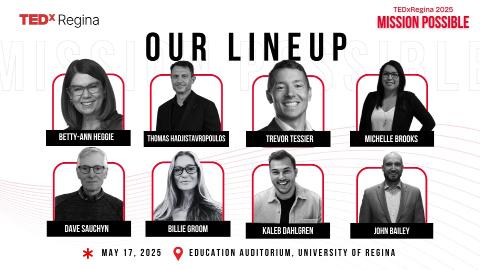
This spring, the University of Regina will become the epicenter of bold ideas, inspiring stories and visionary thinking as it plays host to TEDx Regina 2025. Set for Saturday, May 17, in the Education Auditorium, the independently organized TEDx conference is for students, faculty and the community.
In a world that often feels defined by its challenges—climate change, inequality, political polarization and rapid technological disruption—TEDx Regina: Mission Impossible offers a powerful counter-narrative. It aims to showcase the ways in which human ambition, creativity and resilience continue to defy the odds and reimagine what’s possible.
About TEDx
TEDx is a grassroots initiative created in the spirit of TED’s mission to research and discover “Ideas Worth Spreading.” TEDx events bring the spirit of TED to local communities around the globe, offering a platform for new ideas, cutting-edge research and bold conversations that inspire action and innovation.
These independently organized events feature live speakers offering a space for meaningful discussions on a wide range of topics. While TEDx events operate under a free licence granted by TED, they are independently curated and follow TED’s high standards for speaker coaching, event organizing and content development. What is a TEDx conference?
A TEDx conference is a locally organized event designed to showcase powerful ideas that challenge perspectives and inspire change. Attendees experience a full day of thought-provoking talks, networking opportunities and immersive discussions led by influential thinkers, researchers, industry leaders and changemakers. It’s more than just an event—it’s a platform that fosters intellectual curiosity and collaboration in the local community.
About TEDx Regina 2025: Mission Possible
This year, TEDx Regina explores the limitless potential of human ambition and innovation. The theme “Mission Possible” is inspired by the idea that, despite the daunting global challenges we face, history has shown that bold ideas, resilience and collaboration can transform impossibilities into achievements.
Through this event, TEDx will explore groundbreaking technologies, visionary ideas and transformative local initiatives that are shaping a better future. The speakers will share stories of overcoming obstacles, pushing boundaries and redefining what’s possible.
This year’s TEDx Regina event is particularly relevant to students and young professionals who are seeking inspiration, exploring innovative solutions and striving to make an impact in their communities.
Why is this event important for U of R students?

“The theme “Mission Possible” is inspired by the idea that, despite the daunting global challenges we face—climate crises, social inequities, the rise of AI—history has shown that bold ideas, resilience and collaboration can transform impossibilities into achievements.”
Access to powerful ideas: TEDx Regina will feature thought leaders, innovators and entrepreneurs from diverse fields. Students will have the opportunity to hear new research, ideas and success stories that can inspire their own academic and professional journeys.
Networking and career growth: The event serves as a hub for connection, allowing students to meet industry professionals, researchers and community leaders. Whether a student is interested in entrepreneurship, technology, activism or academia, TEDx Regina offers a chance to interact with individuals who are making a difference.
Professors from the U of R speaking at TEDx Regina 2025:
Among the eight speakers at the event are Thomas Hadjistavropoulos and Dave Sauchyn, U of R professors of psychology and geography respectively. They will share their expertise and research to students and faculty alike, reinforcing the university’s role as a center for knowledge and innovation.
Empowering future leaders: The U of R has always been a place that fosters critical thinking and innovation. By hosting TEDx Regina at the Educa-
tion Auditorium, the U of R provides students with access to ideas that can challenge, inspire and drive change.
Discounted tickets for students: To encourage student participation, TEDx is discounting tickets for students. Each ticket is $37.50 and is available on Eventbrite.
What makes TEDx Regina 2025 special?
A bold theme with global relevance: “Mission Possible” challenges us to rethink limitations and take action in our own lives and communities.
Diverse speaker lineup: They are curating visionary thinkers, innovators and community leaders who will share powerful ideas and real-world solutions.
Student and community involvement: TEDx Regina is deeply connected to the U of R and the broader Saskatchewan community, ensuring that the conversations are local, impactful and relevant.
A day of inspiration: Attendees will leave with fresh ideas, new connections and a renewed sense of possibility.
TEDx Regina is an opportunity for students, faculty and community members to be part of a global move-
ment of ideas and innovation. Check out their website at www.tedxregina.ca which lists the eight speakers for TEDx Regina 2025, including their backgrounds and topics.
TEDx Regina is more than just a conference, it’s a movement. If you are a student looking to challenge your thinking, expand your network or simply be inspired by what’s possible, this is your chance. Mark your calendar for May 17. Because the future is “Mission Possible.”
Full-year academic registration finally open to students
Full-year academic registration is once again in full-swing.
The system, introduced last March, uses a timed-ticket system, where students are allocated tickets based on the number of credit hours they are taking. Students then register for an entire academic year which helps them plan ahead more easily.
Students should meet with their academic advisors to discuss their options for courses. This will help ensure they complete their pre-requisites on time and select their desired electives. You can book an academic-advising appointment with your faculty, federated college or the Student Success Centre, to discuss your program schedules and course requirements. The Student Success Centre has quick video tips on YouTube. that are beneficial for beginners because it walks through the entire registration process.
To find your time-ticket, simply log in to UR Self-Service and navigate to the “Prepare for Registration” section. Time-tickets are allocated based on credit hours,
and each student receives one that applies to all terms. You can register for classes from the designated date to the “add/drop” date of each
plan your schedule. Once you have found the classes you want to take, make a note of the Course Regis-

term. To register for classes, make sure you know your program and the course requirements for your degree. Then use Visual Schedule Builder (VSB) to find classes and
tration Numbers (CRNs) and use them to register for classes in UR Self-Service.
Important dates to note include the release of academic schedules
for all terms in mid-February and the availability of time tickets on UR Self-Service in early February. You can also use the Advisor-Degree Audit tool to get updated details on your program progress. New students are required to accept the offer of admission before registering for courses.
Lastly, make sure to use additional resources such as faculty or department handbooks, which provide basic information on course sequencing and prerequisites. By following these steps, you will be well-prepared for the class registration process. If you have any questions or concerns, do not hesitate to reach out to your academic advisor for guidance.
U of R launches new three-year bachelor’s of arts and science Program aimed at those with affinity for multidisciplinary studies

In March, the Faculties of Arts Science and Media, Art, and Performance (MAP) launched a new undergraduate program that now gives students the option to study in all three faculties for their degrees.
The new three-year bachelor’s degree in arts and science (BA&SC) bridges the gap between STEM (science, technology, engineering and mathematics) and the lib-
eral and creative arts.
Students who have an affinity for multidisciplinary studies are more likely to benefit from the integration within this new program. The degree is open to both domestic and international students, who will develop their skills in math and sciences as well as communications, literacy and creative arts. Students in the Arts, Science
or MAP faculties can already register for this program and start their classes in the upcoming spring/summer semester.
The Carillon had the chance to connect with Dr Susan Johnston, associate dean (Undergraduate) in the Faculty of Media, Art, and Performance as well as professor in the department of history to get her take on the topic.
When asked about the inspiration behind the inauguration of this program, Johnston highlighted the pressing need for institutions to widen their scope and deepen their focus in a constantly evolving world.
”Our most pressing challenges—from climate change and pandemics to political extremism and artificial intelligence—require tools and methods from both the arts and sciences and [which both] lead to careers in emergent fields,” she said.
Johnston said the three-year degree helps students who are short on time and finances and who want a “multidisciplinary degree which will empower them to engage in matters at the intersection of the human, creative and natural sciences.”
One of only a few programs of its kind in Canada, the BA&Sc will equip students with the skills to shape their future and thrive in a world that values both creativity and technical expertise, Johnston continued. Students will choose their faculty— Arts, Science or MAP, and then “enjoy the freedom to select from hundreds of courses, research opportunities, and experiences such as study abroad.”
“Instead of a more siloed approach to their education and support systems, [students will] have access to all the supports of each constituent faculty, which represent together over 40 per cent of the undergrad-
uates on campus,” Johnston continued.
Students can have minors or concurrent certificates along with their degree, but specialization isn’t required and is, Johnston said, a core strength of the program. A certificate program usually comprises of ten courses but depending on the courses already taken, students can adjust their electives accordingly.
Johnston explained that students can even ladder up to a traditional bachelor of arts or bachelor of science degree through the BA&SC three-year degree program.
“The program has also been designed to allow students to transfer into a traditional BA or BSc and declare a major. The best transfer point into a traditional fouryear degree in arts, MAP or science would be at or before 60 credit hours.”
When asked about what she envisions for this arts and science degree and what impact it will have on the campus community, Johnston said it’s too early to predict numbers but feedback from advisors and students has been promising.
“We expect a healthy cohort by the end of the first year,” she said.
nazeemah noorally news writer
While everyone prepares themselves for the season of mucky puddles, there’s lots to look forward to in the Queen City this spring and summer. Whether you’re a lover of art, outdoor fun or good food, Regina is packed with exciting things to do. From local arts festivals to community days, there’s no shortage of opportunities to get involved, make memories and enjoy the sunny days.
Cathedral Village Arts Festival
Dates: May 19–24
Location: Cathedral Neighbourhood
This festival celebrates art, life and the spirit of creativity. Afterall, it takes a “village” to make it all happen. As the perfect way to kick off the summer season, CVAF spans six days with dozens of events that attract a lot of people. Looking to spend time exploring something artsy and relaxing?Then this festival is the perfect spot to check it out.
Bazaart 2025
Date: June 22, 10 a.m. to 5 p.m.
Location: MacKenzie Art Gallery, 3475 Albert St
Bazaar means “market” and according to Bazaart’s website, this year marks their 52nd market, celebrating the works of local artists and artisans. The outdoor market features pieces from over one hundred talented artists across the province, making it “Saskatchewan’s premier art, craft, and
design fair.” If you are looking for a unique gift for a loved one or just want to immerse yourself in a world of creativity, Bazaart displays a wide range of art, jewellery and much more.
I Love Regina Day
Date: Aug. 23, 2025
Location: Victoria Park
This is a free, family-friendly event that celebrates the community of Regina. There are activities throughout the day for all ages, from toddler to seniors, there is something for all! The main festivities begin with the I Love Regina Run and Walk offering 3k, 5k or 10k accessible routes for participants for all ages. Organized by the City of Regina, there’s lot of merchandise to buy. If you are up for a cardio challenge or just want a day out with family and friends, this is your golden chance!
Regina Dragon Boat Festival
Date: Aug. 15-16
Location: Wascana Lake
No animals were harmed while writing this. This event is features recreational and competitive Dragonboat racing. Apart from that, there are beer gardens that take place throughout the day, giving people chances to relax and chill while enjoying a view of a bunch of people pushing water around and breathing loudly.
Naija Market Day
Date: Aug. 2, 11 a.m. to 7 p.m.
Location: Central Park
Hosted by Sola Dawodu with music by The Social DJ , Naija Market Day in Regina is a great opportunity to learn more
campus.It’s a fun snapshot of what student clubs put together—your backstage pass to what went down on campus.
The Hill Business Students’ Society
about Nigerian culture through art, food and music. Expect the unexpected and you will never be surprised. Dance to Afrobeats and shop unique African products. Regina is a city that comes alive during the summer and one that celebrates diversity, fostering a community that has a place
for all! These events not only bring people together but give them opportunities to learn, grow, explore and reflect. No matter where your interests lie, there is always something out there to mark on your calendar.
If you think that university is all about lectures and late-night crying over midterms, then think again! The University of Regina (U of R) takes pride in its vibrant student groups and different student interests and expertise. Be it the networking events, theatre events, trivia nights, paint nights, game nights, case competitions or science showcases, the campus is filled with chaos all the time.
Here’s a bit of a recap of what the 2024-25 academic year looked like on
This year, the Hill Business Students’ Society (BSS) hosted social hangouts and professional development events, offering students a wide array of pathways to explore and learn about the Hill School of Business and its community. Starting off with Welcome Week, BSS hosted the Rams Bus on Sept. 6, allowing students to attend the Rams vs Huskies football game at Mosaic Stadium, followed by an afterparty at the Culture Club. They went to host their Hill Dinner, campaigns like 5 Days for the
Homeless and the Hill Case Competition to get students interested in case studies and hone skills in presenting.
Science Students’ Society
Nerdy scientists collaborated with notyet doctors, a.k.a the UR Pre-Med Club, to host a bowling night on Oct. 11, 2024. Later they hosted their most awaited annual Science Gala, themed “Under the Stars,” on Feb. 1. For a break and little bit of fun, they hosted a trivia night on March 5. Their upcoming Spring Galais April 26. Google Developers Student Club (GDSC)
The pseudo-Zuckerbergs hosted a bunch of workshops in the fall, like “In-

troduction to API and workshop for Battlesnake Tournament” to get students to learn about APIs and build something incredible. They also hosted a web-development workshop for students interested in creating websites, products and maintaining online resources. By the time they figured it was time to have fun, the year was almost done.
Theatre Students’ Association
Unpaid actors got together in the early fall for a performance of Shakespeare’s “As You Like It.” Later in the year, they put on a script reading of a fantasy play called “Dreams Beyond Space” written by a fellow TSA member.
So, was it a quiet year on campus? Well, no. Between business students swapping LinkedIn connections like Pokémon cards, science students figuring out how the universe was created and the theatre students learning how to smile and cry at the same time, the University of Regina buzzed with energy.
emma mcgill community editor
Curiosity and intrigue buzzed behind the walls of the Saskatchewan Science Centre on March 26, the opening night of a new play, Tommy and Père, produced by local artists’ company Curtain Razors.
Set in July 1962 during the Saskatchewan Doctors’ Strike, Tommy and Père, written by playwright Arthur Milner, imagines a conversation, somewhat productive, between Tommy Douglas and Athol Murray in the midst of a time of decision-making and extreme tension that still deeply impacts residents of the province today. During the play, the two characters sat in a dark room as they sipped their drinks of choice and spoke about Saskatchewan Medicare, how they felt about communism and their lives up until that point.
Upon arriving at the Science Centre, theatre-goers were ushered into a large room to view an art installation by Bundon Pfeifer Henderson. What started out as an idea of Milner’s to begin the play with a slideshow to situate people inthe events of the time turned into an interactive pre-show experience that immersed people in Milner’s mindset of the work. “Curtain Razors took that and ran with it,” said Milner during the post-show chat on opening night.
The installation featured several double-sided posters of newspaper clippings of local rallies, protests and legal rulings over Medicare; old tele-
phones playing audio of men talking; televisions playing black-and-white content from the time; radios, a record player, vintage chairs and a desk full of papers signed by Father Murray next to a church window.
The play began when Tommy Douglas, played by Jayden Pfeifer, started speaking amongst the audience, while the noise from videos in the room died down. People looked around to find the source of the voice and then Father Murray, played by Cavan Cunningham, also spoke Soon after, everyone was welcomed into the theatre to sit and watch the rest of the play.
According to Milner, this play had been in the works for two years. He was first inspired to write the play when artistic producer Johanna Bundon told him stories about Father Murray from when her parents attended Notre Dame College, the school at which Murray taught for many years.
Milner studied Murray’s past,
wanting to know why someone so humane and supportive of education could be such a “vicious opponent of Medicare.” .
“I began reading more about him and tried to figure that out, because he seemed such a caring person,” Milner said. “He definitely is a fascinating character, and very impressive in many ways. Why wouldn’t he care about having decent healthcare for [the kids he taught]?”
“I wanted to explore that conflict and it seemed like a good way to do that was to stick Tommy Douglas and Father Murray in a room together and let them have it out. In my imagination, Tommy asks to meet him,” said Milner.
Though there’s no evidence that a conversation like this occurred between the two , there is evidence they crossed paths.
Playwriting as an inquiry into historical events is something that Milner has explored often throughout his ca-
reer, especially in Sisters in the Great Day Care War. Most of his plays have been political, with the exception of his personal, one-person play Getting to Room Temperature, which explores his mother’s pursuit of doctor-assisted suicide.
“When I started writing [Tommy and Père],” Milner said, “I was aware that it would reflect our current state. It was such a polarized time in Saskatchewan.”
Tommy and Père closed on March 30. The last four shows were sold out. “The response from the audience was positive; many people were enthusiastic. Curtain Razors wants the play to have a future, and wants to tour the play,” shared Milner, who was grateful to everyone who worked on the project with him.
“It was always great to see their smiling faces,” he said. “I enjoyed their participation a lot.”
“After much waiting and wondering what they were being ushered into, the guests saw the play start among them.”

hana grace staff writer
What do you do in a small prairie town on a Friday night? Drive around with friends and blast some rap music? That’s what rap artist Brett Rybinski would do in his hometown of Kinistino, Sask.
Rybinski, whose artist’s name is “Young Corduroy,” started his rap career in his truck, freestyling for fun with his buddies. He is the youngest of eight siblings and was raised in a very musical family. All the kids took part in middle and high school band, one year of Prince Albert Concert Band and piano lessons. The family would often make music together at various functions and at church on Sundays.
Rybinski credits his older brothers for instilling his love of rap and hip-hop.
“I don’t remember if I had an MP3 player, or like one of the earliest iPods. I would download the music that my brothers had downloaded, from LimeWire or FrostWire, onto my device and listen to the stuff. I just remember thinking hip-hop was super cool. Probably just the beat was what got me back then,” he shared.
“My friends and I all got really into rap music around grade nine or so. I remember 2012 being a big year for us. We were into Kendrick Lamar’s good kid, in m.A.A.d city, A$AP Rocky, ScHoolboy Q, 2 Chainz, guys like that. Anytime we drove around, it was hip hop. Anytime we hung out, there was hip hop playing in the background. Even at school, playing music during gym class, it always had to be rap.”
Rybinski started to freestyle with his friends, who pointed out that he had a knack for rhyming. “I would show them some stuff I had written as well. Eventually, they encouraged me to take it to the studio and record it professionally.”
So, that’s what he did. Rybinski created his first single with a friend, under the name “The Miracle Kids,” and recorded at Rainy Day Recording Co. in Saskatoon.
“Matthew Stinn is the producer there, good fella,” Rybinski said. “We came across Rainy Day on Kijiji. [Stinn] was so accommodating and did a good job, so I’ve just stuck with him since.”
The song, “Heckin’ Party,” became a local legend around the Northeast area, where Rybinski’s from. “We shared it on Spotify, Apple Music, all the platforms and it just kind of became iconic around Kinistino, which I always thought was funny because it’s actually a very poor song. It’s kind of trash, but I remember people playing it for volleyball warmups and basketball warmups.”
The Miracle Kids had a short-lived musical life because Rybinski then turned to his solo career as Young Corduroy. “I just joked around with a friend of mine, saying I was gonna call myself Young Corduroy. I wore a lot of corduroy at the time. I just thought it was kind of an absurd name, and she said, ‘Yeah, do it,’ so I did it.”
Under the new name, Rybinski released his first EP, entitled I Don’t Have Time to Write an Album, in 2022. The EP has four tracks: “Nice,” “Pull up in a Chevy,” “Special Fried Rice” and “Guardian Angel.” The songs are inspired by the underground hip-hop style that Rybinski enjoys the most.
“I’m not so much into the mainstream stuff, especially when it’s really pop. It’s like, underground, boom-bap, ‘90s.” He later released another single in December 2024, called “Itchy Eye Gang.”
“Itchy Eye Gang” got its name from Rybinski’s and his friends’ struggles with allergies; he jokes that it’s become the name of his fanbase. , “The actual name
just comes from my friend Cooey and I. We are both allergic to cats, dogs, mold and pollen, and we often have itchy eyes. Back in the day we started calling ourselves the itchy-eye gang. I guess fans of Young Corduroy can consider themselves as part of the gang.”
All of Rybinski’s lyrics are written by him, but the beats to back them are not. Finding beats for him to use requires paying a leasing fee to producers who release the music. Unfortunately for Rybinski, a lot of producers use a time restriction, meaning he can only own the beat for a certain amount of time. But Rybinski’s found a work-around.
“I found this guy,” he said. “He’s from France. I think he’s in Paris, selling under-
ground beats for an underground price and I found one that I liked, and purchased it. I was happy enough with this one.”
Rybinski’s writing process is a lengthy one. He never really sits down to write out a song; the words just seem to come to him while doing his daily routines, so he writes them down to return to later.
“I got a note called the Book of Bars, and I just add stuff in there, and then hope to go back to it and try to build on it. I don’t like writing hooks. I struggle with that part. I enjoy writing bars, so the more difficult they are, the more challenging or, like, the more complex the words are, the more fun it is for me.”
Rybinski continued, “I just wrote every single line down, and then went back and
thought about how I can integrate that and have it make actual sense, like, that the lines follow in a logical order, that I’m actually saying something, not just random words. It took a long time, but it was lots of fun.”
The Young Corduroy fanbase is small but mighty, with Rybinski’s friends and family always spreading the word about his music.
“Just being from a small town, everyone knows you and I do have a big family who shares my stuff,” he said. “. Being from Kinistino, you put something out there and they recognize you as a new name, and they’re interested.”
“Probably just the beat was what got me back then.”
Brett Rybinski

zinia jaswal news editor
In the vast landscape of American food media, few voices have proved as resonant, enduring and transformative as Mark Bittman’s.
Over the past three decades, Bittman has not only taught Americans how to cook, he has also taught them why they should care about their food. From his early days as “The Minimalist” columnist at the New York Times to his later pivot into food justice and public policy, Bittman has continually reshaped the way we think about what we eat and who holds power in food systems.
The “Bittman effect” is not just about good food. It’s about the intersection of cuisine, politics and the environment. It is a rethink of the food plate, not just as a personal choice, but as a reflection of systematic realities and an insight into the potential for collective change.
When Bittman began writing “The
Minimalist” column in the late 1990s, the food world was dominated by glossy magazines, celebrity chefs and an emerging food culture that emphasized inclusivity. Bittman took a different path. His recipes were refreshingly simple, often requiring just a few ingredients and minimal time. He was not interested in showing off. He was interested in showing up, for the average home cook, the busy parent, the college student and the curious beginner.
What made Bittman stand out was that he believed good food did not have to be complicated. eH argued that obsession with complex techniques and gourmet ingredients alienated people from the joy of cooking.
In books like How to Cook Everything and Kitchen Express, Bittman gave readers the permission to experiment, improvise and trust their instincts. His tone is never condescending. It’slike having a smart and funny friend in the kitchen. He helped people see that cooking was not a performance but a form of care.
One of his most influential works, Bad Food? Tax it and Subsidize Vegetables, published in 2011, argued that the government should treat unhealthy food as it did cigarettes, with package warnings and public education. The piece sparked debate across the country and marked a shift in Bittman’s career, from culinary writer to food activist.
Bittman’s political turn was radical. He wrote about sugar in terms of a public-health crisis. He questioned government subsidies for corn and soy. He tackled the ethics of meat production, long before it was fashionable. He even advocated for a food czar—a government job coordinating nutrition, agriculture, health and environment policies. Bittman redefined what a food writer could be, not just a curator of taste but a critic of systems.
Bittman is also the author of one of the most iconic cookbooks of all time: How to Cook Everything. Since its first publication in 1988, the book has become a staple in kitchens, praised for its ap-

proachable style. But what is often overlooked is the implicit philosophy in the title itself: cooking is a skill that belongs to everyone.
In a society where takeout culture has distanced people from the act of cooking, Bittman’s work reminds us that preparing our own meals is not only possible but empowering. In a food system where power is concentrated in the hands of a few cooperations, the simple act of cooking real food can become, in its own quiet way, a form of resistance.
What makes Bittman unique among food writers is moral clarity; he does not shy away from stating that our food systems are broken. His 2021 book Animal, Vegetable and Junk is his most sweeping critique of how industrial food came to dominate the political landscape and what it will take to reclaim our health and ecosystems. Bittman asks critical questions: Who profits from the current food system? Who suffers? What kind of future are we cooking up and for whom?
Bittman’s tone is warm, funny and relaxed. He invites people in rather than lecturing them. Yet within that welcoming approach lies a clear message: what we eat is political.
Bittman didn’t set out to become revolutionary; he just wanted people to eat better. New generations of food writers, activists and policy thinkers owe a debt to the trail he blazed. His work has not only inspired better dinners, but deeper conversations about what it means to eat ethically, sustainably and equitably.
His legacy is not just in the thousands of recipes he has published, or the millions of copies of books he has sold. It is in the way he has shifted conversation from what is for dinner to what kind of food are we eating?
Today, food writing is more diverse, more critical and more engaged than ever. It is about rethinking the systems we have taken for granted. It is about asking better questions about power, access, flavor and the future. Bittman showed us that food is never just food. It is a story, a system, a statement.
“Bittman was not just talking about what we eat. He was talking about how food shapes the world—and how we can shape it in return.”
“Emily in Paris” doesn’t deserve all the criticism and hate it receives.
“Emily in Paris” is the show you watch when you want to forget about your own life for a little while and live vicariously through a perfectly dressed, slightly clueless American woman attempting to navigate the chic chaos of Paris. Is it cringe? Most certainly. Does that stop me from loving every second of it? Most definitely NOT.
The thing about “Emily in Paris” is that it does not take itself too seriously. Sure, some of Emily’s outfits look like fashion roadkill, and her ability to effortlessly charm her way through every problem is unrealistic; but that is not the point. The show was never meant to be gritty or groundbreaking. It’s fun, light and purposely ridiculous.
To be honest, we live in a world that constantly throws real-life disasters and drama at us. A show that gives me a little break from reality is more than welcome.
One of the greatest things about the show, in my opinion, is how unapologetically over the top it is. The main character, Emily, just waltzes into a marketing job in Paris without speaking a word of French. She makes every faux pas, but instead of getting sacked, she somehow ends up with unbelievably favourable outcomes which add more to the show’s glamour. It’s a fantasy version of life where nothing ever truly goes wrong, even if everything does go sideways. That’s what makes the show addictive. Viewers know that no matter how bad
of a mess Emily makes, she comes out of it as a victor sporting another ridiculousberet.
French characters in the show are exaggerated, but that is part of their charm. Sylvie, Emily’s boss, is intimidating and emblematic of French disdain for anyone who is not French. Gabriel is the quintessential chef, incredibly good looking and good at everything he does. The show is like watching a Pinterest board come to life, embellished with cobblestone streets, buttery pastries and spontaneous romance.
There has been plenty of criticism about the show’s clichés and lack of realism when it comes to well, anything in the show. But sometimes it’s okay to watch something that isn’t profound, or life-changing. The show is about dreams and fantasies instead of authenticity and reality. It is a virtual escape for the wanderlust in you that wants to move to new countries and take risks and land on its feet unharmed. Isn’t that what entertainment is? A break from reality?
The show’s cinematography is glamorous, beautiful and magical. Be it the stunning shots of the Eiffel Tower or the cozy little cafés Emily frequents, Paris in the show is dreamlike. Additionally, the show is a treat for my eyes because of my enthusiasm for fashion, couture and culture.
At the end of the day, “Emily in Paris” is not trying to be deep and sometimes, that is just what you need. A little slice of fantasy that doesn’t require too much brainwork, but just expects you to sit back, relax and enjoy the chaos. And I am here for it: cringe and everything.

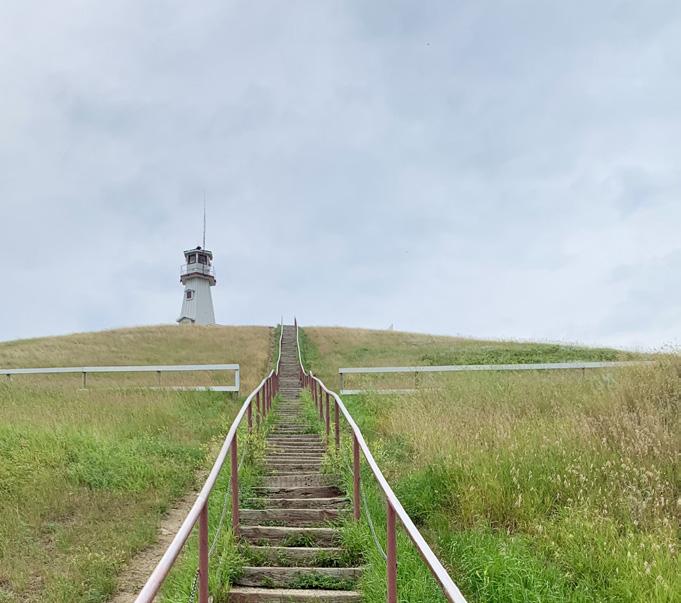
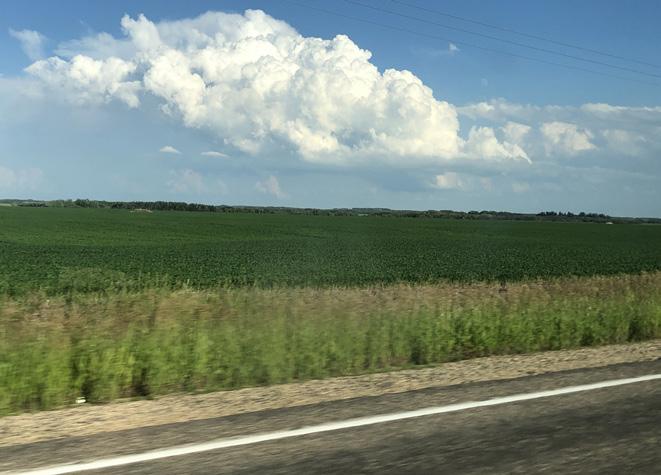
How the beautiful parts of the province often get overlooked

“Saskatchewan is flat!” is a common trope you hear, in episodes of “Corner Gas” for instance.
There’s even a popular joke about Saskatchewanians being able to see their dog running away from home for three days. Many people who drive through Saskatchewan often label it “boring” or “uninteresting.”
I find statements like these problematic for a variety of reasons.
It is a gross over-generalization to define an entire province solely based on the experience of driving down its highways. To those that label the drive as uninteresting, I wholeheartedly agree with you. Highway 1 through Saskatchewan was chosen for efficiency, not its appeal to interprovincial tourism. The highway was built to minimize travel time and construction
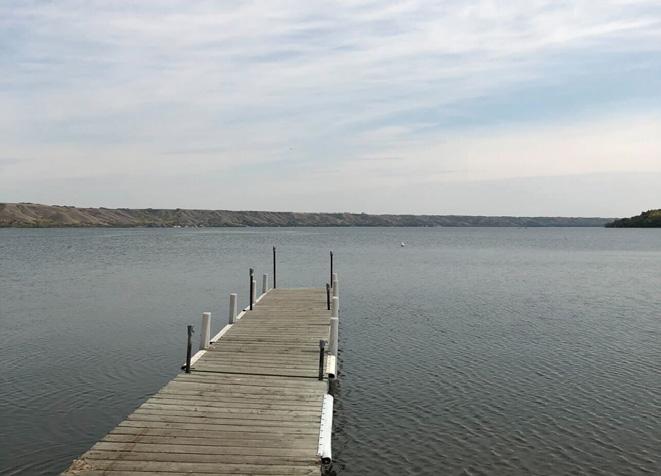
costs but missed the opportunity to take visitors past Saskatchewan’s serene lakes and through its valleys. It could be that, even if the construction did incorporate a scenic detour, many drivers would remain oblivious to Saskatchewan’s beauty. But seeing this beauty is the first step to believing that Saskatchewan is not so boring. Unfortunately, the route of the Trans-Canada Highway is set in stone (or more precisely asphalt-covered gravel) and is unlikely to change anytime soon. Thus, drivers must bear with the flat views and farm fields during their drive. While I do admit that our province is relatively flat and unobstructed compared to the towering Rocky Mountains in Alberta or the towering trees of Cathedral Grove in British Columbia, I disagree that this is a drawback or makes Saskatchewan uninteresting.
The clear line of view to the horizon allows me to witness vibrant meteorological and celestial phenomena that any obstruction would only serve to detract from. For example, Saskatchewan sunsets and sunrises set the sky ablaze with majestic hues of pink, red and orange that are not visible if the sun isn’t visible above the horizon. At such a low angle, the light from the sun must travel further to reach us meaning the shorter wavelengths of light, such as red and orange, are able to reach us through our atmosphere to create the striking visuals we see each day. This view isn’t possible for those whose view of the sun in its furthest position is blocked by trees, hills or mountains, and one I deeply miss in my travels outside Saskatchewan’s rectangular borders.
This province far exceeds its slogan of being “The Land of the Living Skies” so
aptly plastered over all our licence plates. There is so much adventure, beauty and joy to be found in this glorious province that I can’t possibly hope to exhaustively list here. All I can do is invite you to give yourself a chance to stop by and experience it yourself (from or beyond the highway)!
amina salah staff writer
April is that month that most people look forward to or dread. As the winter semester comes to an end, our patience dwindles and we are understandably exhausted from this moody Canadian weather. The lack of a springtime straight out of a Ghibli film starts to get on our nerves. I am here to remind you friends, summer is right around the corner.
Summers in Saskatchewan feel like a well-deserved celebration. After surviving months of icy sidewalks, biting winds and never-ending darkness, we finally walk, squinting into the sun, like creatures who have just discovered the
beauty of light. It is no wonder that summer feels like a festival in Regina. From backyard BBQs to outdoor movies in Victoria Park, there is a collective understanding that we must make the absolute most of these sunny months. They are much too precious to waste.
As students at the University of Regina, we are in that final lap of the semester. It’s a weird medley of stress and excitement. The thought of exams looming over your head just as you are beginning to chalk out summer plans feels unfair.
Personally, I’ll be taking two classes over the summer. I know, it’s not exactly the most thrilling plan but hey, life is all about balance. Just because you are in classes doesn’t mean you can’t soak
up the sun. One of my favourite tricks is scheduling outdoor study sessions. There is something about reading my notes in a park with an iced latte that makes even the most daunting coarse load feel more manageable.
As for summer activities, the Queen City Ex is a rite of passage if you are spending the summer in Regina. The rides, the food, the chaotic energy of the midway make you feel like a child again, even if you are just there for the mini donuts and the chance to win a giant stuffed bear.
The summer vibes in Regina are all about community events, outdoor patios and getting involved in the community. Wascana Park is normally everyone’s go-to spot, whether you are
“At the end of the day, summers in Saskatchewan are about making the most of the good weather while it is here.”
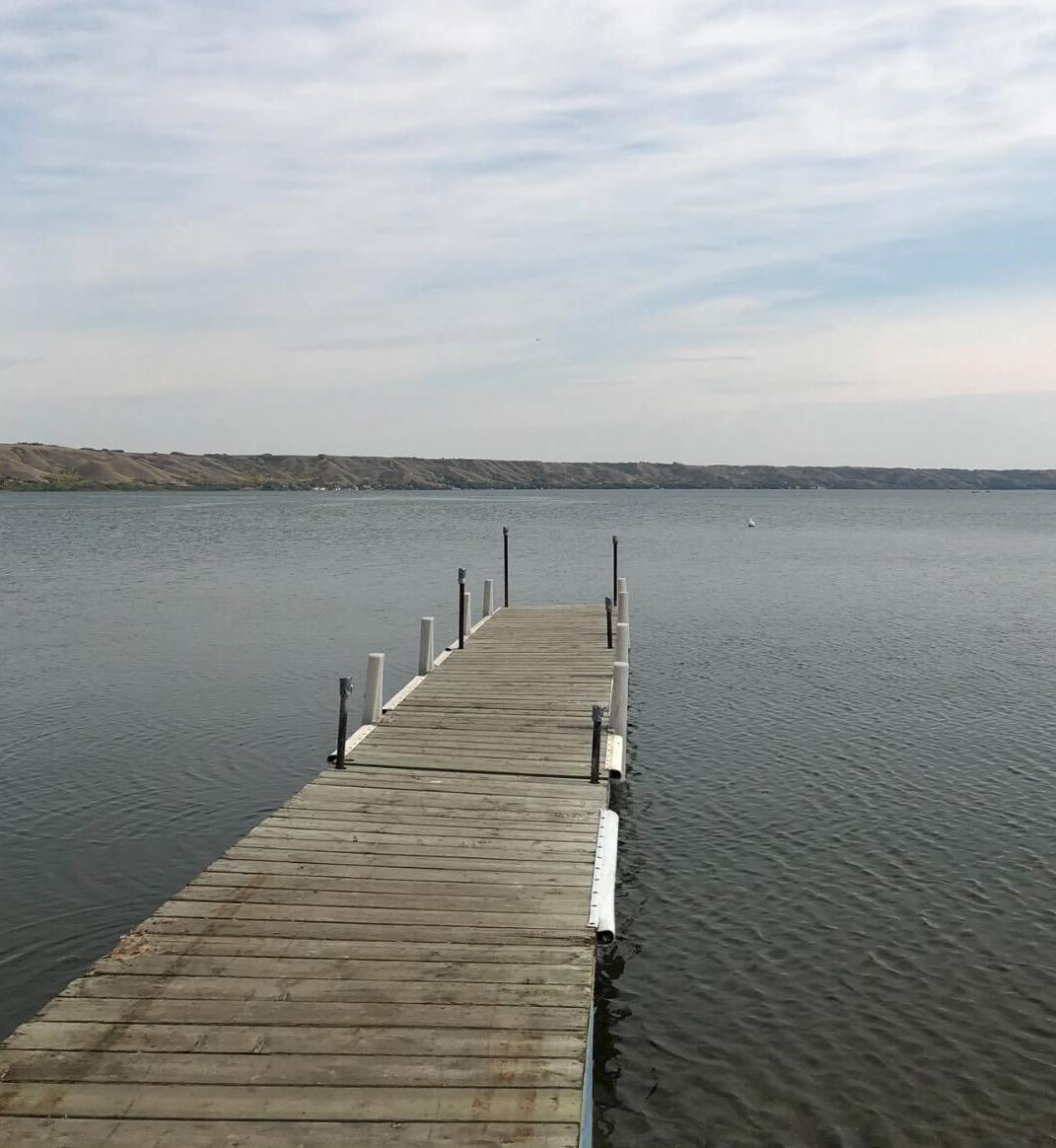
walking, jogging, picnicking or simply looking at the lake.
One of my favourite summer activities is visiting the Regina Farmer’s Market every week. This is the best place to get gifts, knick knacks and delicious food from the amazing vendors in our beautiful city.
Summer is also perfect for visiting nearby towns. Moose Jaw’s mineral spas are perfect if you need to relax. The Tunnels of Moose Jaw feel like you are stepping into a prohibition-era film set. Grasslands National Park in the southwest corner of the province is a beautiful place to explore. There is nothing quite like stargazing in a place where the sky is vast and clear. It is the kind of experience that makes you forget about assignments and deadlines, at least for a night. If there is one thing, I encourage you to do this summer is to give yourself the chance to stop and smell the flowers. Breathe. Take things in.
If you are anything like me, you look forward to doing absolutely nothing this summer. In the hustle and the bustle, many of us feel we have no time for ourselves. A summer with plenty of downtime will ensure that you do not burn out before the fall semester starts again.
If you’re the type to stay closer to home, there is always something happening. Outdoor movie nights, pop-up markets, food truck festivals, etc. Anything you want, Regina’s got it. Last summer, I went to an outdoor yoga session and I plan on going again. There is something beautiful about making time to check in with yourself and your body. Plus, you can always reward yourself with gelato afterwards.
One of my favourite things to do over summer is to explore the different ice cream shops in the city. There’s Dessart Sweets, Dandy’s, Marble Slab Creamery, the iconic Milky Way. Summer is the best time for ice cream!
For anyone experiencing their first summer in Saskatchewan, my best advice is to simply say yes. Yes to spontaneous beach days. Yes to community events. Yes to learning how to enjoy being outside again. Don’t plan everything down to the last detail. Some of the best summer memories occur when you go with the flow.
Whether you are working, taking classes or planning an adventure make sure to find little ways to enjoy the season. Don’t let the pressure to do it all get to you. It’s okay to have lazy days just as much as a calendar with road trips and festivals. At the end of the day, summers in Saskatchewan are about making the most of the good weather while it is here.
“Stories matter, stories shape us. And stories can heal the broken between and within us” --Elif Shafak
zinia jaswal news editor
There are writers who tell stories. Then there are those who teach us why stories are necessary.
Elif Shafak is, unmistakenly, the latter. She does not write for escape. She writes for confrontation. Her writing is gentle and insistent. Itmakes itself heard in way that cannot be overlooked. In a world made brittle by borders—political, emotional, and ideological—Shafak’s fiction flows like water through walls. It seeps into cracks of history, memory, identity and shame. It dissolves the cement of certainty. To read Shafak is to reawaken the moral imagination.
Turkish-British novelist Shafak was born in France, educated in the West and is currently based in London. Her writing is not restricted to any single cultural tradition and has been translated into dozens of languages. She has called herself a ”literary commuter,” writing in both Turkish and English, traveling between disciplines and identities, and carrying the questions that most tend to leave behind. Her novels are not rooted in nationality but in plurality—a term she prefers to diversity. Plurality implies dialogue instead of mere coexistence.
In her 2010 Ted talk, “The Politics of Fiction,” Shafak argued that we suffer from a collective failure of empathy. Our societies are fragmented by ideological echo chambers, national myths and inherited grievances. “We are surrounded by information,” she said, but we are starved for wisdom. The antidote, she insisted, is not more data but a deeper narrative.
Fiction for Shafak is not just entertainment;it is engagement. It is, arguably, the only remaining art form that allows us to live, briefly and sincerely, inside another person’s skin. Through stories, Shafak argued, we connect the personal with the political, the visible with the invisible. This belief is not only theoretical. It permeates every page of Shafak’s work.
In The Forty Rules of Love (2009), one of her most transcendent novels, Shafak braids two narratives: one set in the 13th century, where the poet Rumi meets his spiritual soulmate Shams of Tabriz, the other in modern-day Boston, where a disillusioned housewife reads their story and courageously changes her life. The novel is about the annihilation of ego. With mystical yet deeply grounded prose, it asks what it means to unlearn fear and to shed societal masks and to live from the soul. The prose is mystical yet deeply grounded, elegant without pretense. It has sold millions of copies not because it flatters the reader but dares to transform them.
Transformation in Shafak’s work always begins with memory.
Her 2021 novel Island of Missing Trees may be her most delicate and profound to date. Set amid the haunting aftermath of the Cypriot conflict, the story follows two lovers, one Greek, one Turkish and their daughter born with their inherited sorrow. One of the narrators is a fig tree, whose roots span continents, and centuries. It is the voice of memory and experience. Through this arboreal perspective, Shafak gives voice to what human language often cannot. The readers witness the deep ecology of loss and how wars ripple through soil, bloodlines and generations. The novel is a quiet masterpiece. It breaks your heart gently but in a way which is also enduring.
In The Saint of Incipient Insanities (2004), Shafak turns her gaze on the inner lives of outsiders in post-9/11 America. The novel follows a trio of international graduate students, including one Turkish, one Spanish and one Moroccan, navigate Boston’s cold sidewalks and colder social norms. A coming-of-age story shaped by visa restrictions, cultural confusion, and the surreal comedy of early adulthood. Beneath its whimsical tone, the novel probes fundamental questions
about mental health, sense of belonging and the myth of the melting pot. With her signature blend of wit and melancholy, Shafak captures what it means to live in translation, not just between languages but also between different versions of ourselves. For anyone who has felt foreign in a place or even within their own skin, this novel hits like a quiet truth.
The Architects Apprentice (2013) takes place in the dazzling, brutal world of 16th-century Istanbul under the reign of Sultan Sulieman the Magnificent. Jahan, a young orphan, arrives at the palace with a white elephant and is drawn into the orbit of Mimar Sinan, the empire’s legendary chief architect. More than historical fiction, the book is a meditation on art, empire and ambition. Shafak uses
rifice beauty for content. Her prose shows that truth is not only found in slogans, but in fragrances, rhythms and silence. Her writing never forgets the music of language even when it confronts brutality. In-fact especially then.
Her rebellion is not stylistic, it is philosophical.
Shafak refuses the tribalism that now dominates so much of public life. She rejects binaries—East vs. West, believer vs. skeptic, tradition vs. Modernity—that flatten human experience into categories. She once said, “Identity politics is not a home, it is a prison. In contrast, fiction is a house with many rooms, and all are welcome inside, the only requirement is empathy.”
Shafak brings this ethos into her public
what it means to be human.
In Black Milk, her memoir on motherhood and creativity, Shafak introduces us to the fractured voices with herself- Little Miss Practical, Miss Highbrowed Cynic- and the rest of her internal “harem.” Instead of silencing them, she lets them speak. She writes not from the illusion of coherence but from the richness of multiplicity. It is a deeply feminist act not in the rhetoric of empowerment, but in the honesty of doubt.
Ultimately, Elif Shafak’s body of work is an invitation. Not to agree with her but to sit beside her. To ask deeper questions, to stay with ambiguity. To remember that truth is not monolithic but a mosaic.
In an age of noise, her fiction is a quiet

times.
“We are surrounded by information, but we are starved for wisdom.”
Elif Shafak
architecture as a metaphor for the human soul. which are fragile, ambitious, and built with layers of memory. While domes rise and towers fall, Jahan is forced to confront what it means to be loyal in a world obsessed with legacy. The novel is luminous, but never nostalgic; it asks what we build and destroy in the name of greatness.
What sets Shafak apart from many writers of political fiction is her refusal to sac-
life as well. In interviews, lectures and essays, Shafak has become a vital voice for democracy, women’s rights, freedom of expression and the sanctity of literature in the face of rising authoritarianism. She does not offer answers. She offers portals into other minds, other worlds and other truths.
Perhaps that is great literature, the ability to make us pause before judgement. To delay what is certain. To dwell in the complexity of
reckoning. In a time of division, her novels are bridges not just between cultures but also between hearts. She reminds us we are more than ideologies. We are stories in motion. And the most radical thing we can do is listen.