



the staff editor-in-chief vacant editor@carillonregina.com
executive director ziyang li business@carillonregina.com
production coordinator annika hadden production@carillonregina.com
web technician jebrael muhammad web@carillonregina.com
news editor zinia jaswal news@carillonregina.com
community editor emma mcgill community@carillonregina.com
op-ed editor shivangi sharma op-ed@carillonregina.com
editorial consultant kevin o’connor
staff writer amina salah
staff writer hana grace news writer nazeemah noorally community writer pall agarwal
board of directors muhammad zuhruf muhammad zarooq, mohammad akib hossain, tayef ahmed, austin stadnyk, jeremy beam
the paper
227 Riddell Centre @ the University of Regina 3737 Wascana Parkway, Regina, SK, Canada S4S 0A2 www.carillonregina.com | (306) 586 8867
Printed by Star Press Inc, Wainwright, AB
The Carillon welcomes contributions.
Opinions expressed in the pages of the Carillon are entirely those of the author, and do not necessarily reflect those of The Carillon Newspaper Inc. Opinions expressed in advertisements appearing in the Carillon are those of the advertisers, and not necessarily of The Carillon Newspaper Inc. or its staff.
The Carillon is published no less than 11 times each semester during the fall and winter semesters and periodically throughout the summer. The Carillon is published by the Carillon Newspaper Inc., a non-profit organization.
land acknowledgement
The Carillon is written on Treaty 4 territory. As such, staff recognize that we are living, working, and telling stories on and of Indigenous lands. We recognize that we are on the traditional homelands of the Cree, Saulteaux, Nakota, Lakota, and Dakota peoples, along with the homeland of the Métis nation. The Carillon understands that it is pointless to acknowledge the land on which we work without demonstrating our commitment to telling stories and prioritizing voices that further the return of this land to its sacred place. the manifesto
In keeping with our reckless, devil-may-care image, our office has absolutely no concrete information on the Carillon’s formative years readily available. What follows is the story that’s been passed down from editor to editor for over sixty years.
In the late 1950s, the University of Regina planned the construction of several new buildings on the campus grounds. One of these proposed buildlings was a belltower on the academic green. If you look out on the academic green today, the first thing you’ll notice is that it has absolutely nothing resembling a belltower.
The University never got a belltower, but what it did get was the Carillon, a newspaper that serves as a symbolic bell tower on campus, a loud and clear voice belonging to each and every student. the people’s friend; the tyrant’s foe







Want to grow your leadership skills? The U of R ambassador program might be for you
nazeemah noorally news writer
The Centre for Experiential Learning (CESL) at the University of Regina is all about empowering students through volunteer opportunities, co-op placements, and internships.
It’s the group in charge of the ambassador program.
Ambassadors are the friendly folks who help with campus events and share their experiences with prospective and new students.
Maliha Jabeen Khan, a fourth-year pre-medicine student as well as Ambassador of the Year 2023, recently shared her insights about the ambassador program in an interview with the Carillon
How do you think the Ambassador Program aligns with the University of Regina’s mission and values, and what role do you think ambassadors have in endorsing these values?
The mission of the University of Regina is “As one who serves” and I think this motto aligns perfectly with the values of the Ambassador Program because ambassadors serve other students especially the first-year students who have never been on campus before and ambassadors ensure to make their experience welcoming and memorable. Ambassadors are the first people that the students see as they arrive at the University of Regina.
How do you think the tabling event, ambassador training, and socials contributed to your overall experience as an ambassador?
Ambassadors provide support in setting up as well as cleaning up during and after the event when needed and according to the tasks assigned by the organization organizing the function. I did the training last week and it went well. We interacted with new and returning ambassadors. Returning ambassadors are those who have already been a part of the ambassador program, but they need to re do the training to refresh their knowledge about the ambassador program. We have new rules that need to be followed which is why we need to do the training again and the training went well because we had lots of students interacting. Even though the training was conducted on Zoom and most people thought it might be boring since it is virtual, but the session was interactive, and the people interacted with each other and asked questions. They were taking part in
conversations. We also had scenarios and activities for those ambassadors, and they participated in all of them, and they were very enthusiastic about these activities.
What do you think were the most valuable skills or experiences you gained as an ambassador, and how have they impacted your personal and academic growth?
For me, the most valuable skill that I have learned is the communication skill. When I first joined the ambassador program, I did not know what small talk was and how to just talk to people up there. And that is something that I have learned through these years as an ambassador leader especially. Because when you are a leader, you get to lead and organize events and take charge of what other ambassadors are doing and assign them tasks. So, you have a sense of responsibility that you must fulfill. So, that is another thing that I have learned; how to take responsibility and how to lead events. The other skill would be time management. As a student, we juggle work and studies along with volunteering and so many other responsibilities. I have learned to juggle these things as I have been part of the ambassador program which is again demanding. As an ambassador leader, you must attend leadership meetings, organize, and actively participate in social events and be part of certain events like spring open house, welcome week, and orientation. You must give a leadership challenge presentation and be a part of the community service project. It is extremely rewarding as it enhances your communication and leadership skills as well as public speaking skills especially when you get campus training sessions. You also enhance your organizational skills. people skills are enhanced as well. Let us say that you come across a student facing issues; how to tackle the problem, how to talk to the student who is going through something. So, these are people skills again that you learn through the program. You also learn public speaking skills and all these combined wills help you towards your professional development as well, especially communication skills. Communication is especially important, regardless of the career that you are envisioning. I know people who were introverts and through the ambassador program, they have learnt to socialize and communicate with people. So, the ambassador program helps you not only for your career but also for your personal development. Can you share any advice or insights you have gained from your ex-
perience as an ambassador, and how you think current or future ambassadors can benefit from your experiences?
The first advice I have for the ambassadors is to gain all the criteria and eligibility that you need to be an ambassador leader. Apply for the ambassador leader program. It is a great program where you get to use your skills gained as junior ambassador and work towards being an ambassador leader. You get to work in teams when you must collaborate to organize events along with fellow team members. You get to connect with the community, either conducting workshops or planning functions. That is why, I love being part of the ambassador
program as that is when you get to highlight all those skills. My advice again is to make use of this program to the fullest, apply to be a leader and participate in all the event. Yes, it is a serious responsibility, but you also need to have fun while planning out these events. That is what you remember as a student; you will not remember your grades or the courses you have taken. But you will remember the memories that you make. Everything was extremely rewarding and humbling for me. Never say no to an opportunity that will help you in the future.

“Ambassadors are the first people that the students see as they arrive at the University of Regina.”
As the threat of hackers and online scammers grow,
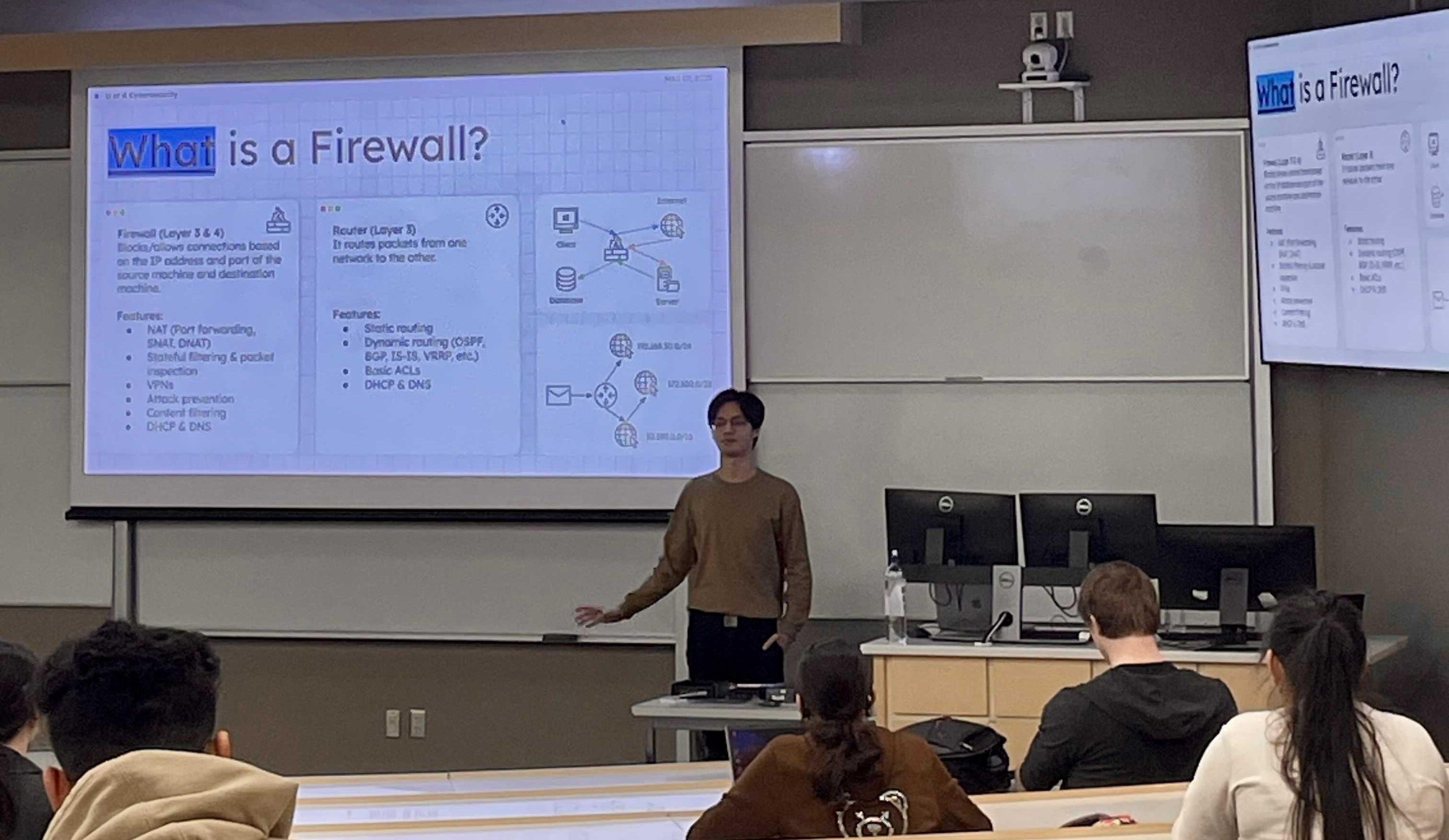
As the current digital era witnesses the constant evolution of technology, the importance of cybersecurity cannot be overstated.
Certainly, the internet and AI have become powerful tools to process and store tons of information but at the same time, the risk of cybersecurity attacks and threats are increasingly becoming an alarming issue that necessitates attention.
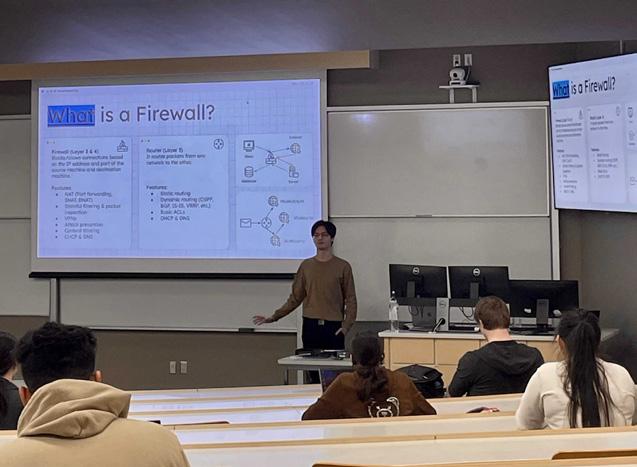
Safeguarding one’s digital footprint is key and so is a basic understanding of cybersecurity. Toward this end, the University of Regina Cybersecurity Club hosted
a networking workshop on March 7. This practical workshop was an opportunity for the participants to network (in both senses of the word) and get a general understanding about computer networks as well as a live demo of security system configuration.
The issues under discussion are crucial as firewalls usually serve as a first line of defence against malware and other illicit and unauthorized access to computer systems.
Khoi Le, a fourth year Computer Science student as well as a collaborative member of the UR Cybersecurity Club, says the bad guys tend to get all the attention.
“When someone thinks of cybersecurity, I bet they will think of hackers or malicious actors that stole millions of dollars,” he said. “The offensive aspect of cybersecurity is, no doubt, exciting, but I also want to show people that there is a defensive aspect to the security in cybersecurity.”
And firewalls are the best defence, he says.
“Students can configure their firewall (OPNsense as shown in the workshop) to block things externally like malicious sites, advertisements, unfriendly countries, and more,” Le said. “They can also segment their network into multiple networks to improve their internal security.””
For the uninitiated, the technical jargon can seem a bit daunting. There are “red teams” and “blue teams”, exploits and “bug bounties, CTFs and SIEMS.
But Le says all the theoretical knowledge discussed in the workshop can be applied to the real world, or a practical project, right away.
“I hope the attendees feel that security system installation and configuration is doable,” he said.
He says people can consider their security system as a water filter. Just like the water filter segregates impurities from the water, so does the security system act as a buffer to remove the impurities (malicious traffic) so that only clean water (safe data) flows through the computer systems.
Le’s advice for students interested to learn about cybersecurity?
“My advice is to first learn about industry-standard practices, then put that knowledge to practical use. If you do not use it, you lose it.”
Practicing frequently will help you keep your technical skills sharp and your knowledge of industry trends up to date,” he concludes.
nazeemah noorally news writer
U of R says it’s working with to URSU to ensure ongoing support is provided to centre
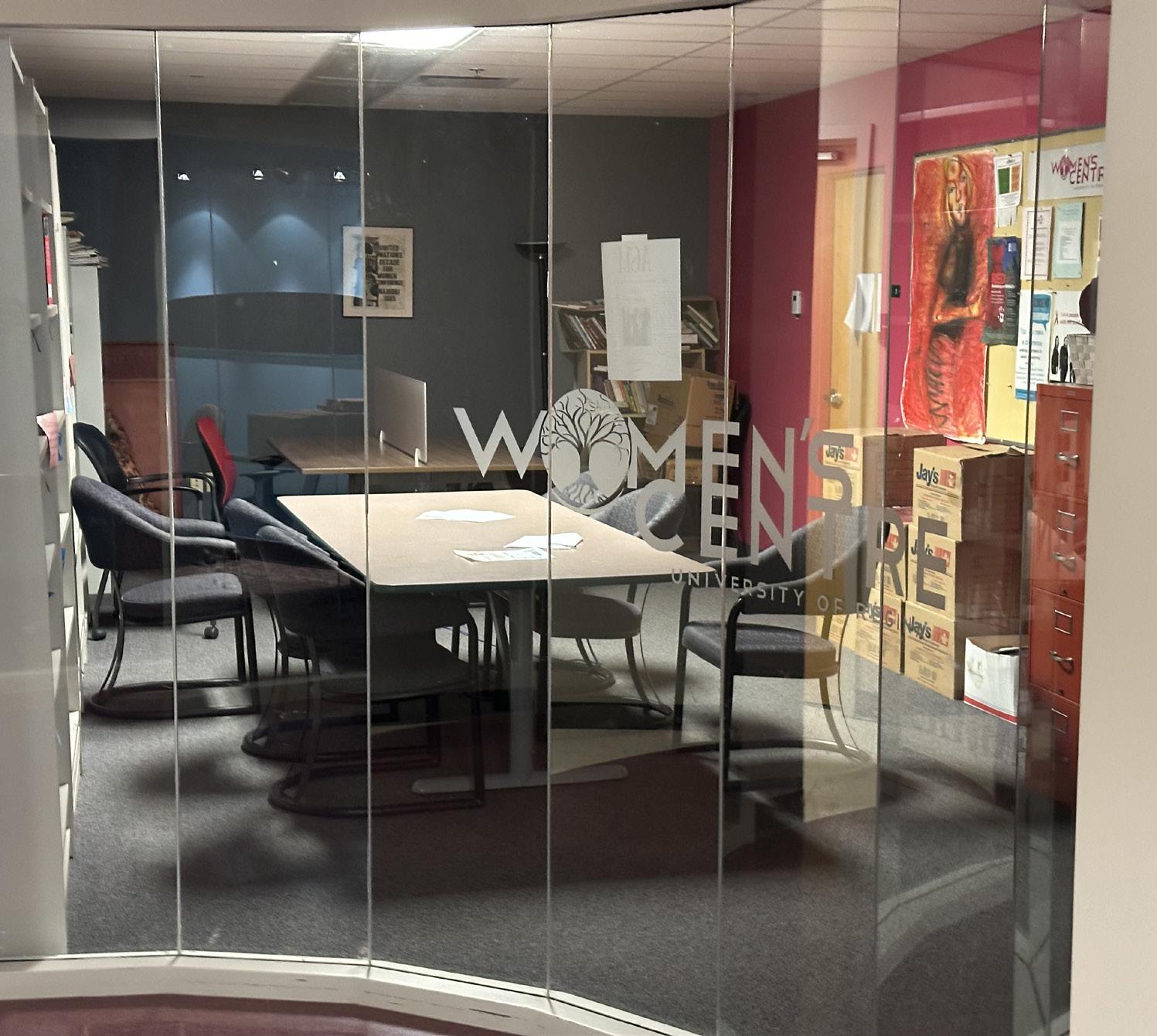
The University of Regina is embroiled in a controversy following the abrupt cancellation of the Women Centre’s annual general meeting, sparking tension among students and reaction from the University of Regina Students’ Union.
The issue has drawn responses from the university administration, URSU board members and individual students.
President’s letter addresses concerns
The controversy began when the Women Centre’s AGM on March 14 was abruptly adjourned due to a disruption at the beginning of the meeting. The exact details of the commotion has not been confirmed by administration, but U of R president Jeff Keshen issued a letter acknowledging the situation and reaffirming the university’s commitment to fostering an inclusive environment.
Keshen’s statement, which was shared with students via email and posted on U of R’s Facebook page, emphasized the university remains committed to fostering fairness.
The letter states that administration is working with URSU “to ensure ongoing support is provided to the Women’s Centre and the services it provides.”
“ I wish to be crystal clear,” Keshen continues “Our top priority is to ensure that no students are ever made to feel intimidated or threatened at the University of Regina.”
“Equity, diversity, and inclusion are
core values of the University of Regina. We are committed to providing a safe, inclusive, and welcoming community, and it is important that the conduct of employees,
tion at the University of Regina.”
While the letter did not directly assign blame, it urged students to work collectively towards a resolution.
students, and third parties on our campus reflect those values. There is zero tolerance for hate, racism, misogyny, and intimida-
URSU denies involvement in AGM
Amid the controversy, URSU board members have been at the center of spec-
ulation, with some students saying people from URSU disrupted the meeting.
In a public statement, the URSU board denied any involvement in the disruption. Later at an URSU board meeting, some members agreed they were there but claimed they were just attending as students and not involved in the disruption.
In an Instagram post, URSU says it only became involved after the AGM, when students “who felt harassed and mistreated” came to the students’ union for assistance.
URSU said it is in discussions with the U of R administration to make sure students “are given a fair opportunity to present their accounts of what transpired. ”
The group says that it wants the actions of protective services to be scrutinized.
As calls for transparency grow louder, all eyes are on the Women Centre and URSU for further responses.
nazeemah noorally news writer
History has shown that Indigenous people have undergone various forms of injustice, including residential school abuses, colonialism, and the Sixties Scoop.
In recent years, there have been efforts made by the Canadian government to recognize and repair the damage, including the truth and reconciliation process.
Meanwhile, Muslim people coming
to Canada have experienced racism and Islamophobia.
Despite efforts to encourage diversity, equity and inclusion, there are still reports of Muslims feeling threatened because of their religion.
So is there any common ground between these two disparate communities?
A conference, billed as the first of its kind, was held in Winnipeg earlier this year to explore these topics,
With the participation of Imams, Indigenous elders, academics and students, it

looked at how the experiences of Muslims in Canada resonate with those of Indigenous ancestry.
Among those in attendance was University of Regina’s Akib Hossein, a fourthyear computer science student and a board member of RPIRG (Regina Public Interest Research Group), a student-funded resource centre committed to social and environmental justice.
“Being an immigrant from a Third World country, I did not have any idea about the struggles and the stories of the Indigenous people,” Hossein said.
“The personal narrative helped me highlight common experiences of discrimination to foster a sense of solidarity.”
Another topic Hossein thought was well-handled was the influence of Western media and efforts to fight stereotypes.
“It was amazing to see how individuals from both the cultures came together in reconciliation and understanding with that lived trauma, suffering, and history of … misrepresentation in the Western media.”
Hossein says it was also good to see the way the conference prioritized women empowerment and brought in female leaders from both the cultures.
“Being a son raised by a strong woman, I always love women empowerment, and the role of women in leadership,” he said.
Among the speakers was Leah Gazan, the Member of Parliament for Winnipeg Centre, whose talk was entitled “Legacy of Colonialism: Historical Analysis and Impacts”.
Also speaking was Ingrid Mattson, a Canadian activist and scholar who was also the first woman president of ISNA (Islamic Society of North America).
One of the themes that emerged was

that the shared histories and values shared between Indigenous folks and Muslims could be a stepping stone towards reconciliation.
What could facilitate that is the spiritual commitment of these two communities to advocacy of human rights, justice and peace.
Hossein said he is looking forward to applying what he learned in Winnipeg.
“RPIRG can now engage in hosting more storytelling sessions where committee members can share experiences of their journey with social justice with partnership with Indigenous elders and leaders from the Muslim community,” he said.
“They can support research and publications to amplify the Indigenous and Muslim perspectives.”
Ramadan is more than just a month of fasting for Muslims all over the world. It is a time for reflection, community and spiritual growth. It is about learning the importance of self-discipline, curating healthy habits, focusing on your spirituality and fasting from everything that may negatively affect your well-being, including unkindness, hatred, gossip and everything that does not serve us.
Every year, millions of Muslims around the world participate in this sacred tradition, abstaining from food and drink from dawn until sunset. They focus on prayer and engage in acts of charity. Although fasting is the most visible aspect of Ramadan, the ethos of this month lies in the sense of community and togetherness that it fosters; it unites everyone, not just Muslims.
In our vibrant city of Regina, Ramadan has been in full swing. The Muslim community has come together in beautiful ways to make this month special, from daily Iftar (breaking of the fast) programs at local mosques to Suhoor (pre-dawn meal before fasting). Student organizations such as the University of Regina Muslim Students’ Association (UR MSA), have been working to ensure that everyone has access to meals on campus. The Lazy Owl, even introduced Iftar Boxes for $10.99.
One of the most beautiful traditions of Ramadan is the communal Iftar. While fasting in and of itself is an individual act of devotion, breaking the fast is something that brings people together. In Regina, mosques such as the Islamic Association of Saskatchewan (IAOS), Rahmah Centre and Baitul Mukarram opened their doors to provide Iftar for the community. The generosity of these mosques and their
donors ensured that no one broke their fast alone. These gatherings aren’t just about eating, they are about strengthening the connection we have with our communities, meeting new people and sharing
many parts of the world, Iftar parties and Suhoor parties are very common, especially for Muslim women.
For Muslim women in the West, it can be difficult to build commu-
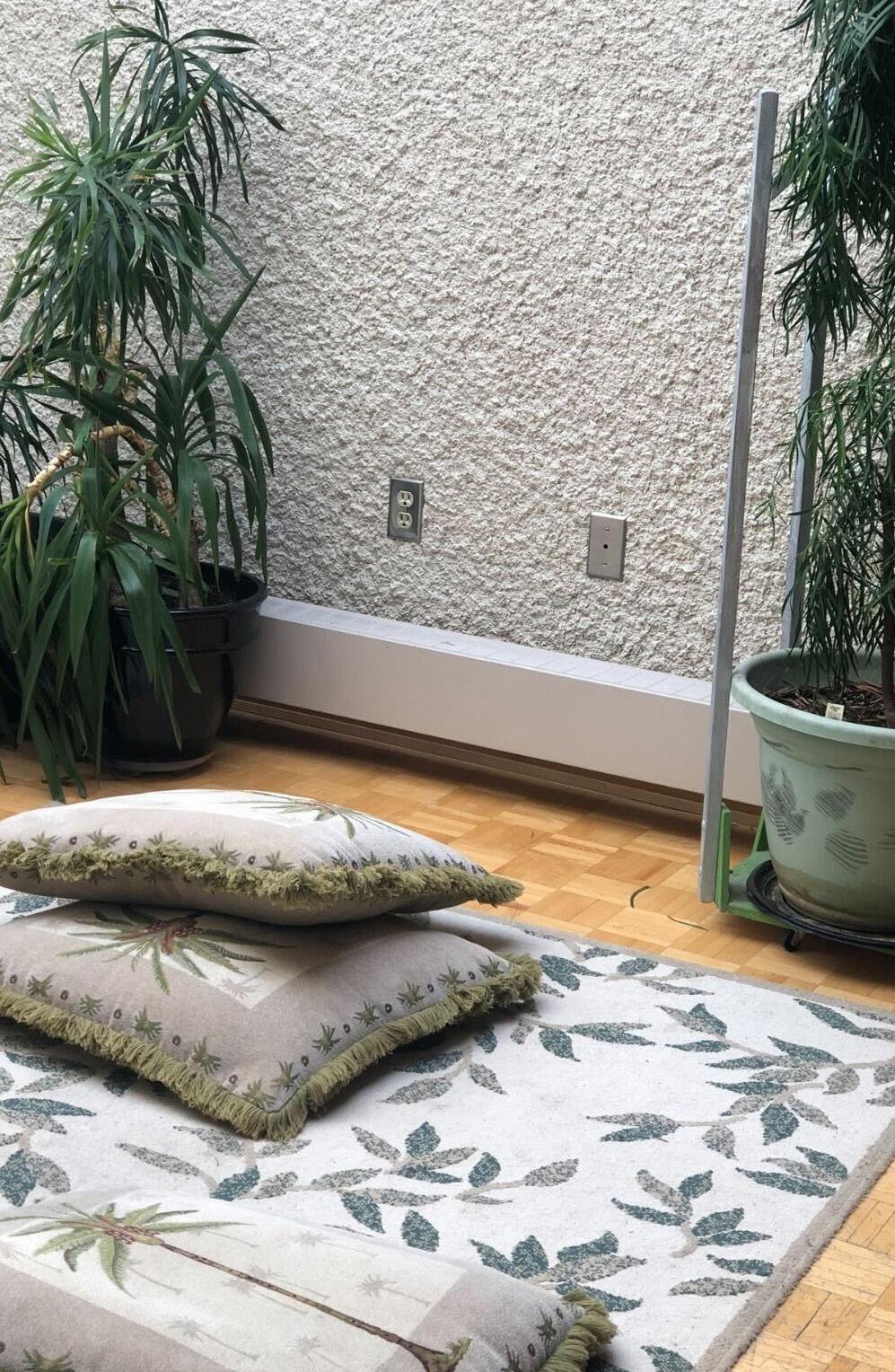
the blessings of Ramadan. Ramadan is also a time for latenight prayers known as Taraweeh. For many Muslims, Ramadan leads to many all-nighters; it is the best time of year to be a night owl. In
nity during Ramadan; many are focused on school or full-time jobs. Generously, the MBF Boxing Club has taken a unique approach to Ramadan by offering a post-Taraweeh gym and community space. This al-
lows people to come together in a relaxed environment to train, play games, connect or just hang out. This blend of faith, fitness and community highlights how Ramadan is about prioritizing your well-being through holistic means.
Suhoor, is another important part of Ramadan. Whilst it can be challenging to wake up before sunrise, doing it with a group makes it special. This year, UR MSA hosted separate Suhoor nights for men and women. Muslims within the university community came together in the early hours to share a meal, build friendships and support charitable causes. The Sisters’ and Brothers’ Suhoor Nights took place on March 21 and March 22 respectively at the Regina Huda School. The Suhoor Night this year was dedicated to raising awareness and funds for Syria. Islamic Relief Canada hosted their Annual Grand Iftar on March 23 at the Royal Hotel Regina in support of the people of Sudan.
Of course, there is no Ramadan without Eid. Eid-al-Fitr is a grand celebration for the end of Ramadan. . Those in need of proper attire for Eid were able to stop by Reyana Fashion & Home Décor. From abayas and thobes to hijabs, they had something for everyone. In Regina, a city far from the Muslim world, the spirit of this Ramadan remains alive and strong in shared Iftar events, late-night prayers, quiet moments of reflection and the joyous celebrations that follow. Whether you’re fasting or simply supporting those who are, Ramadan is a time to come together, to give and to grow as a community. In a world that feels divided by our differences, the holy month is the perfect opportunity to unite with each other.
“For many Muslims, Ramadan leads to many all-nighters; it is the best time of year to be a night owl.”
Desiree Dorion on the release of her new EP

Music and musicians truly have the power to heal hearts and touch lives. In each of her albums, JUNO-nominated singer-songwriter Desiree Dorion, shares a significant chapter of her life.
Dorion, who is a member of Opaskwayak Cree Nation, released her newest album, Remember Your Name, in the fall of 2024. In it Dorion challenges herself and explores genres outside of her country roots, stepping into the “rich and
soulful landscapes of Roots/Americana.”
The album focuses on love, loss, self-discovery and rediscovery, Dorion said. “I was going through a really challenging time and it required me to dig deep and to lean on strength that I never knew that I had,” she said. “And part of that was and has always been turning to writing for me.”
Connection has always been at the heart of Dorion’s artistry. For
the three decades she’s worked in the industry, her work with First Nation communities, mentoring youth and emerging artists, has provided her with support she’ll always come back to. “I’ve gotten so much support from the Indigenous community throughout my entire career. That’s where my career started,” she said,
Dorion said she especially felt support when there were no solid programs in place for Indigenous artists. “There weren’t grants available to Indigenous artists when I started,” said Dorion.
Dorion and her team worked hard to release their newest project. She began writing for the record in December 2023 and worked with guitarist and producer Joel Schwartz out of Toronto. Parts of the album were recorded remotely from Winnipeg.
“There were a bunch of moving parts in terms of, you know, writing to production to releasing. Honestly, at times, this has been the album with the most logistics that I’ve had to figure out for sure. At times it was a bit frustrating, but Joel was super patient and we got it done,” said Dorion.
Embracing the uncertainty and unpredictability of a music career, Dorion acknowledged that no matter how carefully she plans, opportunities arise unexpectedly and she is ready to dive in. “I just try and put the best plan into motion that
If you didn’t try out last week’s pop culture quiz, pick up a copy of issue 17 from our newsstands before you cheat by looking at these answers! If you did the quiz last week, thanks for actually reading our paper. Let’s see how you did:
Q1: d)
Q2: b)
Q3: c)
Q4: b)
Q5: No correct answer.
Q6: c)
Q7: c)
I can. If it works out, at least some of it works out.... I want to write songs, I want to make music and I want to perform for as long as I possibly can. That’s, at this point, what my ultimate goal is” she said. Outside of her music career, Dorion is a mother to two daughters, ages 13 and 10. While they haven’t inherited her musical inclinations, Dorion continues to carve out her own space in the music ecosystem, fueled by true dedication, love and openness to whatever comes her way. Catch her at Dauphin’s Countryfest this June.
pall agarwal community writer
Q8: c)
Q9: d)
Q10: a)
Q11: No correct answer.
Q12: c)
Q13: Trick question. 1962.
Q14: c)
Q15: b)
Q16: b)
Q17: b)
Q18: b)
Q19: a)
Q20: c)
Q21: b)
Q22: d)
Q23: d)
Q24: a)
Q25: c)
Q26: b)
Q27: b)
Q28: c)
Secret message: THE CARILLON LOVES YOU MWAH

In November of 2024, Manitoba-born country music artist Jason Kirkness unveiled his third studio album What Got Me Here, a project inspired by the people and moments that have shaped him as a person.
“I feel really lucky that I’ve gotten to do music for most of my adult life and that, you know, everything’s kind of led up to making this third record. It’s sort of the first one that has had any commercial success,” said Kirkness who has been making records for 12 years.
Kirkness said half of the songs on his records are his own originals while the others are covers recommended by friends. “Somebody will say something like, ‘Hey, Kirky, I found this song that works perfect for you’” said Kirkness. “We have a saying whenever I’m in Nashville: ‘It’s always best song wins.’ It doesn’t matter if you wrote it or if someone else did, as long as it’s saying the thing that you really want to say as an artist.”
Kirkness said he wanted each song to reflect a person or story from his life. “That’s what got me to this point, being on my third record and having some success, and also just redefining who I am as a person.”
The relationship between an artist and their songs doesn’t stop at after a release. Kirkness has been touring the album frequently, playing over 200 nights a year.
“We played every single weekend,” he said. “Sometimes we played Monday to Saturday. Sometimes we played six weeks straight. Those days for me, I don’t regret them. I absolutely loved them. I had a great time and I got to see all of Canada from Montreal to the West Coast and we just did an endless loop. We were always on tour.”
A Prairie boy, Kirkness has always been in awe of Montreal. Despite that, he has stayed true to his roots, “I could name a hundred small towns in Saskatchewan that I played over the years,” he said.
That said, Kirkness has felt a lot of love for his new music from around the world. His song “Anywhere the Night Goes” hit charts in the U.S. and “Right Where I want You” did well in Austrailia.
Kirkness is dedicated to his craft. “It’s tempting to put the guitar down, but if you really love it you’re going to keep doing it,” he said. “It will always give back to you that same amount [that you put into it].”
When it comes to standing out in the music scene, Kirkness acknowledged how artists use social media to showcase their talents. “There’s a a lot of people who are maybe better at guitar or better at singing [than I am], but I think if people are looking for an artist that has his heart on the sleeve and is writing really honest songs about relationships and friendship and love and all that stuff, I think that I’d be a good fit for the soundtrack for their life.”
For aspiring musicians, Kirkness circled back to giving 100 per cent to artistic endeavours. “Your life is too short to spend a bunch of time doing a thing that you’re not 100 per cent sold on,” he said. Be honest with yourself and take the opportunities that make sense, not necessarily the ones that will feed your ego but the ones that will feed your soul.”
pall agarwal community writer












hana grace staff writer
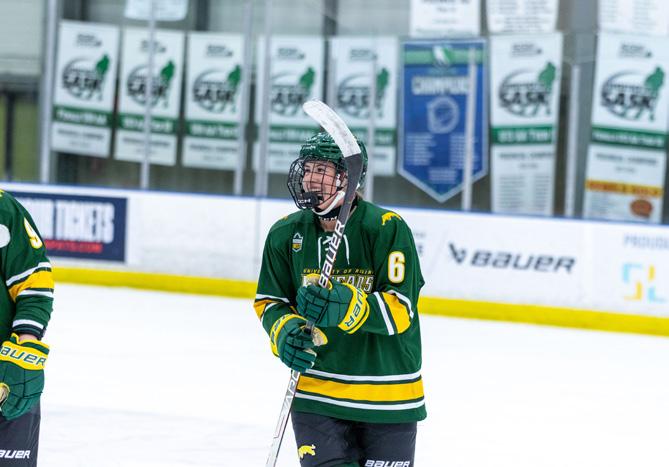
The University of Regina Women’s Cougars hockey team ended their 20242025 season with a loss to the Mount Royal University Cougars. But it was the first time the Women’s Cougars made it to a playoff run since the 2022 season.
Leadership from senior players and the talents of up-and-coming star rookies produced wins that got the team to the playoffs.
Jules Stokes, a first-year psychology student from Terrace, B.C., was explosive for the Cougars on the back end this season. With two goals, eight assists and a total of 10 points for the season, Stokes was a staple player for the Cougars’ blue line. Normally a rookie player sees the ice minimally in their first season because they are adjusting to playing at a higher level. That hasn’t been the case for Stokes. She owned the ice like seasoned veterans and her minutes piled up quickly on the defensive line, paired with fellow rookie, Meg Farmer.
“I love Meg,”said Stokes. “[We] lived in Winnipeg for the last three years...but we had never once met.Then we came in and they paired us together, which we thought was weird because we’re both rookies, and we just clicked. Our playing styles were so similar, but then at the same time, what I had she almost had in a different way. Kind of like yin and yang. We got along on and off the ice really well.”
The pair totalled 14 points this season and both clocked a 59 shot percentage. They relied heavily on the back end to maintain possession in the Cougars’ zones, a lot of pressure for two 18-yearold rookies.
“If we were playing up against teams where they were a little bit harder to play against, I was nervous because I felt that I did need to perform,” said Stokes. “ At the same time, my partner and I communicated all the time, and we always talked about, like, ‘Oh, this scared me, but like you were there, so thank you for covering for me.’”
On March 4, the U of R Cougars’ social media feeds (@reginacougars) announced Stokes as the Canada West Women’s Hockey Rookie of the Year and that she was selected for the All-Rookie team. “I didn’t really know anything about this until halfway through the season. One of my roommates had pointed
out the stats to me, that I was doing quite well. It was just a notification on Instagram that I had received these awards. I was kind of like, ‘This is surprising.’ ....I didn’t expect to have this successful of a year, but I was definitely excited about it all.”
Part of Stokes’ success came from the support of her elder teammates, both on and off the ice. Stokes’ veteran group included graduating captain Paige Hubbard, assistant captain Megan Long, Arden Kliewer, Raea Gilroy and Lauren Focht.
“They were all super welcoming to me and pushed me to do my best,” said Stokes.
Stokes sought out her captains and others for advice and constructive criticism. “They were all great and welcoming and warm spirits.”
Thanks to five-year eligibility, Stokes will have senior players Trinity Grove and Shaylee Scraba, among a few others, returning to the ice with her next season.
Support from senior players was a key component in rookie development on the team, but coach Brandy West-McMaster, named Canada West
Coach of the Year, made the team environment positive and encouraging, and had a previous connection to the team that made her a great fit for the role, said Stokes.
“I had a really great year with her. I felt that she was very even with all of our players. She also played for the Cougars years ago so she had a different connection with the team. It’s just a little extra tie-in there.”
Both the men’s and women’s hockey programs foster important connections to their communities and future U of R athletes. Both programs run the Cougars’ Sunday program, a skills camp for young players put on by Cougar athletes. Along with that, the women’s team participates in the Little Sister program. Every home game, a young hockey player comes and joins the team for skates, locker room chats and warmups, and then stands in line for the national anthem. The players forge bonds with the young girls and teach them what it’s like to play university-level hockey.
“I think it’s adorable,” said Stokes. “I love having them come skate with us during the games, and then also getting to work with the young kids in our camps
on Sunday. They’re just constantly smiling, and they love that they’re with the Cougars. I think it’s also great that our girls are able to give that same energy back.”
With her first season under her belt, Stokes looks forward not only to her next four years but where her career could potentially take her after post-secondary. She has her sights set on playing for the Professional Women’s Hockey League, rather than playing overseas. .
“I’m very close with my family and having to stay over there for a long period of time would just be too much for me,” she said. “But playing here in front of thousands and thousands of people, it would be pretty exciting.”
““I really don’t know what’s in store for me, but I just like having that possibility of, maybe,” Stokes went on. “It gives me that little push during the season.”
UofR athletes will gather on April 11, 2025, to celebrate the accomplishments of the 2024-2025 seasons at the school’s Athletic Banquet. Tickets are available online for the event.
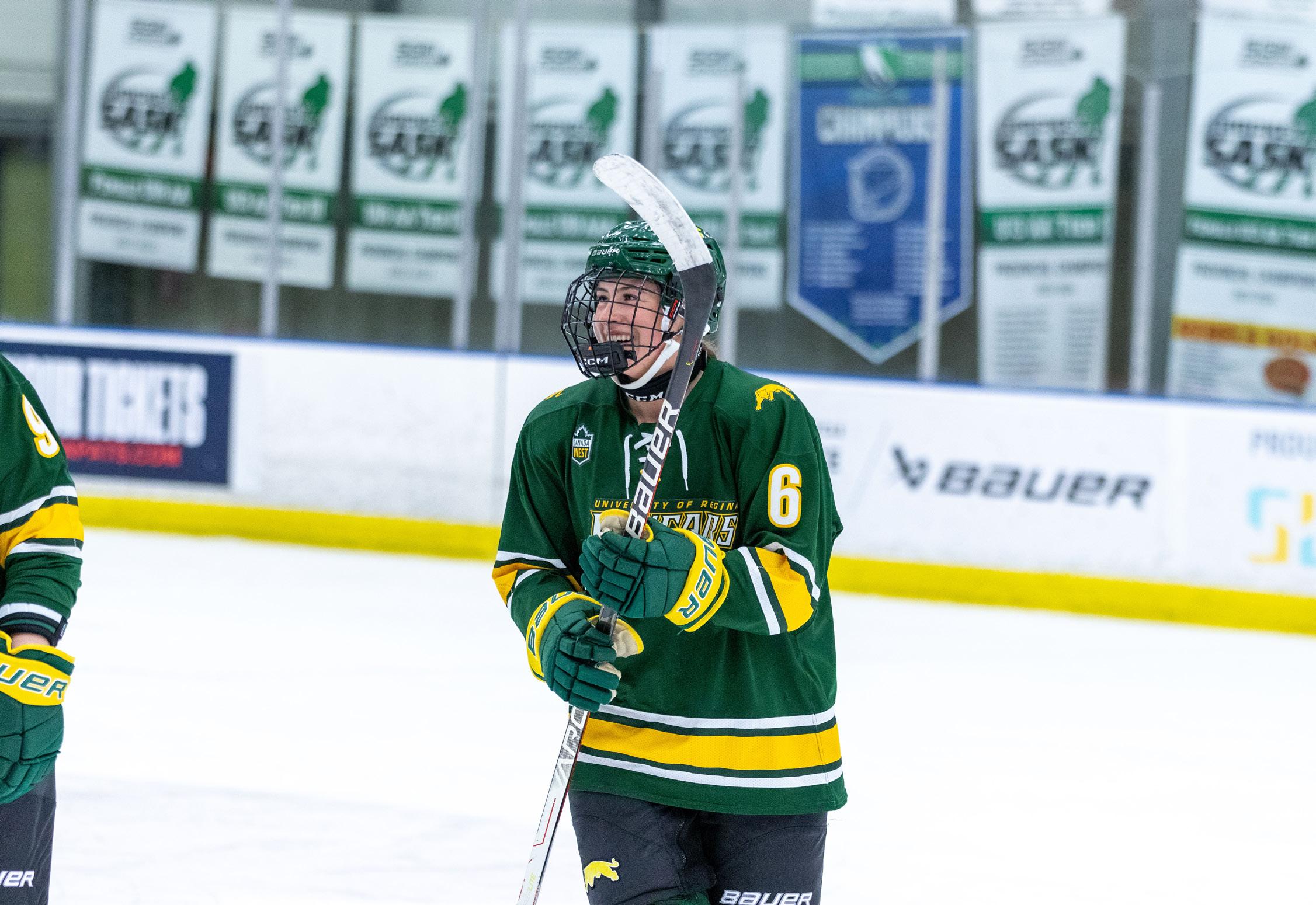
“Part of Stokes’ success came from the support of her elder teammates, both on and off the ice.”
Government of Saskatchewan unveils plans for post-secondary students.
How the 2025-26 post-secondary budget might impact U of R and its students.
shivangi sharma op-ed editor
The last few years have been particularly stressful for students in Canada both domestic and international. It is as if Covid cast a spell of continuous issues one after the other.
Barely could they get used to keeping up with schoolwork online while living through a global pandemic that they were hit with inflation, a job crisis, a housing crisis and tuition increases. Talk about going through a rough patch!
In times such as these when students are struggling quite a bit to make ends meet, it becomes increasingly important for their respective institutions to support them as much as possible. This ability of supporting students is not only a factor of how funds are used by the university administration but is also seriously affected by the funds that the provincial governments allocate toward post-secondary education.
Students in Saskatchewan have expressed concerns and dissent over the consistent hikes in tuition fees over the last few years. A “Freeze the Fee” rally was also held at the University of Regina in 2022 to address the concern. The tuition fee still saw a 4 per cent increase in the years 2023 and 2024.
The Government of Saskatchewan released its 2025-26 provincial budget on Wednesday March 19. It includes the government’s plan for post-secondary funding for the upcoming year. In a news release, the government says it is committed towards supporting students in pursuing their post-secondary education close to home.
It says it is also focusing on training programs that “meet the needs of Saskatchewan’s labour force and growing economy.”
However, the Regina Public Research Interest Group (RPRIG) at the U of R also released a statement expressing “deep concerns” regarding post-secondary funding in the provincial budget.
Highlights from the post-secondary budget include $788 million for “investments” in Saskatchewan’s post-secondary students and institutions of which $46 million will be allocated for student financial support covering loans, grants, scholarships, and bursaries.
The graduation retention program has been beefed up, with a maximum of tax rebates now boosted to $24,000 from $20,000.
$35.3 million was allocated to health care training with the promise of 60 new seats for registered nurses, nurse practitioners, registered psychiatric nurses, and medical radiologic technologists. $600,000 was promised towards virtual reality enhancements in registered nursing programs. $40.9 million was allocated to capital investments and $24.6 million for preventative maintenance and renewal of campus infrastructure.
It is important to note that the funds will be distributed amongst different post-secondary institutions across Saskatchewan.
Advanced Education Minister Ken Cheveldayoff’s comment in the statement read, “post-secondary education plays a vital role in providing talented graduates who enrich and fuel our workforce and drive our province’s growth. This budget

So, you’re telling me I must spend everything I have and more than I can to eventually achieve financial stability?
Illustration: nobby-work, The Img, Abdi Hasibuan from UPDIDO, via Canva manipulated by Annika Hadden
“Universities should not have to choose between affordability for students and institutional sustainability.”
Regina Public Interest Research Group
delivers more educational opportunities for students and supports high-quality training programs in urban, rural and northern communities across the province.”
At a glance, the proposed budget seems promising but the statement which was released by RPIRG shortly after the budget’s announcement highlighted some issues and its potential impacts on the students.
“While we acknowledge the 2.2% increase in operating funding, this does not adequately address the financial realities of the institution, nor does it properly account for inflationary pressures. The rising costs of maintaining a high-quality post-secondary education system cannot be met with incremental funding increases that fail to reflect the true needs of students, faculty, and staff,” read the statement.
The statement underlined that in the light of the cap on international study permit as well as low domestic enrollment projection the “1 per cent increase in onetime funding through the extension of the Post-Secondary Multi-Year Operating Funding Memorandum of Understanding is wholly insufficient.”
University depends on international study permits for a significant amount of revenue generation. As the number international enrolment declines due to a feder-
al cap on international study permits, the brunt of inadequate government funding will fall upon the shoulders of the new and continuing students. The tuition fees have been rising each year as it is, and inadequate government funding could result in a further hike in the tuition. RPIRG states that the government’s current approach “does not provide the long-term financial stability needed to sustain the university’s academic mission and student services.”
The statement also highlighted how aggressive student recruitment efforts in other provinces to generate revenue has driven university executives away from the universities as they constantly have to travel for that purpose. “While recruitment is an important aspect of maintaining a vibrant university […] A strong institution should not have to rely so heavily on recruitment but should be supported through robust government investment,” it read.
It’s not just the university executives, RPIRG says. The group also believes that inadequate government funding is driving students out of the province as they seek better more affordable options for their post-secondary education in other provinces. As such, Saskatchewan risks losing its “young talents to other regions.”
The statement also expressed concerns
that inadequate government funding could result in budget cuts for faculty and staff thereby causing a decline in the quality of education and support services for the students. More importantly, it could translate to another round of tuition raises which could make education less accessible particularly to the students coming from marginalised communities.
RPIRG concluded its statement by urging both the Government of Saskatchewan and the University of Regina to work towards a better funding plan for post-secondary education in the province.
“We urge the Government of Saskatchewan to invest more in the University of Regina by providing a substantial increase in funding—one that does not simply meet inflation but allows the institution to thrive. We also call on university administration to take a stronger stance in advocating for the needs of the institution, rather than continually adjusting to budget shortfalls. Universities should not have to choose between affordability for students and institutional sustainability,” the statement says.
Did you know that you do not need to talk to adults as if they were children?
“Oh, you poor thing! Aww! I am so sorry for you! Aww,” said someone to whom I was trying to explain how vaccination works. Now, I know that sounds a wee bit confusing but allow me to give you the context. For the sake of anonymity (and saving my working relationship with this person) I shall not name them. The conversation happened around Covid when a lot was being said about the potential harmful side effects of vaccines and how vaccination was a government scheme to manipulate the masses. One of my favourite rumours was that vaccines could somehow cause gene alterations and as student of science I find that endlessly hilarious. But I digress, my attempt during the said conversation was to break it down to this person how vaccines work and as a person of science I decided to use real-life examples and precedents to prove my point. And boy was that the wrong move.
I will not go into the nitty gritty of science in this article. I eventually ended up telling this person how I contracted measles as a child because I was not vaccinated and my younger brother who had been vaccinated did not catch the infection even though he was often in close proximity to me. Thus, vaccines work. That is when the aforementioned person decided that it totally made sense to completely ignore the point I was trying to make and show empathy by talking to me as if I were an infant. I wish words could express how peeved I was when I walked away from that conversation. Not to be dramatic but not only did I fail to prove the efficacy of a research-backed immunisation technique, I also had to put up with being infantilized by someone not much older than myself.
Infantilization has to be one of my biggest pet peeves. The notion that someone believes that things must be dumbed down and conveyed to me in a sing-a-song way drives me up the wall. Some people also use infantilization as conversation fillers and something makes me feel that when someone does that they are not actually listening or paying attention. At least that is what happened in the conversation I mentioned earlier. Just the idea that I am being perceived as a child to me is rather disrespectful. Active and sincere listening is an important part of grown-up conversations. The pretentiousness of talking to a grownup as if they were a child should not be a part of those interactions. No, it does not make one look sweet or kind or empathetic. In fact, it appears insincere, demeaning and frankly rather silly (I am trying not to use strong words here.)
I do realise that being a strong feminist some part of me also gets defensive when the auto pilot in my head thinks that I am being infantilized because I am a woman. I admit that while that is the case sometimes it is not so always. Besides, what I have learnt from experience is that how people behave has a lot to do with them than anyone or anything else. That being said, I would still prefer being talked to like an adult. I would prefer conversations with intellectual back and forth rather than empty and callous remarks. The last that I can say is that I am grownup woman of colour who chooses to have a mind of her own. One does not need to sugarcoat and gift wrap words for me. Whatever they can say to me, however unpleasant it may be, it is likely that I have heard worse. Whatever they have for me, it is likely that I can take it.

Could you resist the siren call of a half-fish, half-human creature?
Mermaids have always fascinated me. Half-human, half-fish, and entirely mysterious. They are known to enchant sailors, terrify beachgoers, and have made a permanent home in pop culture. Whether you grew up watching Ariel trade her voice for some questionable, supposedly romantic decisions, read creepy siren myths that made you terrified of the ocean, or spent too much time wondering if mermaids actually exist or not, these mythical creatures that we call mermaids have consistently kept many of us hooked (pun fully intended).
The thing about mermaids is that they exist in this unusual space between beauty and horror. On one hand, you have the Disney version: big-eyed, seashell wearing, and desperate to be where the people are (or whatever Ariel says). On the other hand, you have the ancient myths, where mermaids are seen as grim reapers of the ocean, luring sailors to their demise through haunting songs. Hans Christian Andersen’s version of The Little Mermaid wasn’t entirely a feel-good story. Rather, it was a tragic tale about unrequited love and painful sacrifice. I like to go as far as stating that it was limerence. However, over time, we have made a conscious decision to ignore the eerie origins of mermaids and turn them into whimsical mascots who spend their time dilly dallying in the ocean. There is always the question of wheth-
er mermaids are real or not. The truth is we’ve explored more of space than we have of the deep sea, so who knows what terrifying creatures are lurking down there. The ocean is a vast, terrifying mystery. If giant squids can exist, then why not humanoid
the ‘80s, there was Splash, which turned mermaids into romantic leads. In the 2000s, there was H2O: Just Add Water, which made every teenage girl, included me, wish that she could turn into a mermaid whenever she touched water (highly

sea creatures? Of course, science would argue that mermaids defy biology, but where’s the fun in that?
Pop culture has done a great job of reinventing mermaids every few years. In
inconvenient, now that I think about it.) Mermaids have also been reimagined as scarier, creepier creatures, from the unsettling sirens in Pirates of the Caribbean, to the nightmare inducing mermaids of
The Lighthouse. They have evolved over time from sea princesses to something a little more unearthly. I would further say that we still have absolutely no idea what to make out of them. All I know is that if I ever encountered a mermaid I would be running for my life, folks. The ocean is not to be played with. Imagine running into a MERMAN?! That’s even more horrifying than mermaids. No thank you. Double it and give it to the next person, as the kids on TikTok say.
At their core, mermaids are certainly fascinating because they blur the line between two worlds, land and sea, human and beast, reality and myth. They represent transformation, mystery, and the unknown. Perhaps this is why they have stuck around for so long. We are fascinated with things and elements that exist in between, things that challenge the reality that we know and accept. And even if we never find real mermaids, we will never stop searching for them, whether in folklore, the stories we tell ourselves, or in the deepest depths of the ocean. From what I can tell about myself, if I do encounter a mermaid, I will most likely disappear into thin air from fear.