the carillon


the staff
editor-in-chief vacant editor@carillonregina.com
executive director ziyang li business@carillonregina.com
production coordinator annika hadden production@carillonregina.com
web technician jebrael muhammad web@carillonregina.com
news editor zinia jaswal news@carillonregina.com
community editor emma mcgill community@carillonregina.com
op-ed editor shivangi sharma op-ed@carillonregina.com
staff writer amina salah
staff writer hana grace news writer nazeemah noorally news writer vacant community writer pall agarwal
contributors kiara rennie, william bessai-saul
board of directors
muhammad zuhruf muhammad zarooq, mohammad akib hossain, tayef ahmed, austin stadnyk, jeremy beam
the paper
227 Riddell Centre @ the University of Regina 3737 Wascana Parkway, Regina, SK, Canada S4S 0A2 www.carillonregina.com | (306) 586 8867
Printed by Star Press Inc, Wainwright, AB
The Carillon welcomes contributions.
Opinions expressed in the pages of the Carillon are entirely those of the author, and do not necessarily reflect those of The Carillon Newspaper Inc. Opinions expressed in advertisements appearing in the Carillon are those of the advertisers, and not necessarily of The Carillon Newspaper Inc. or its staff.
The Carillon is published no less than 11 times each semester during the fall and winter semesters and periodically throughout the summer. The Carillon is published by the Carillon Newspaper Inc., a non-profit organization.
land acknowledgement
The Carillon is written on Treaty 4 territory. As such, staff recognize that we are living, working, and telling stories on and of Indigenous lands. We recognize that we are on the traditional homelands of the Cree, Saulteaux, Nakota, Lakota, and Dakota peoples, along with the homeland of the Métis nation. The Carillon understands that it is pointless to acknowledge the land on which we work without demonstrating our commitment to telling stories and prioritizing voices that further the return of this land to its sacred place. the manifesto
In keeping with our reckless, devil-may-care image, our office has absolutely no concrete information on the Carillon’s formative years readily available. What follows is the story that’s been passed down from editor to editor for over sixty years.
In the late 1950s, the University of Regina planned the construction of several new buildings on the campus grounds. One of these proposed buildlings was a belltower on the academic green. If you look out on the academic green today, the first thing you’ll notice is that it has absolutely nothing resembling a belltower.
The University never got a belltower, but what it did get was the Carillon, a newspaper that serves as a symbolic bell tower on campus, a loud and clear voice belonging to each and every student. the people’s friend; the tyrant’s foe


The great debate


Regina’s YWCA holds its annual walka-thon on the coldest night of the



Trump’s first week in office was a doozie. Kiara Rennie summarizes a flurry of orders and


Shivangi Sharma examines the wonky flu season we’ve had and why viruses become more virulent.
The On and Off Campus Housing Debate
Where are students living?
zinia jaswal news editor
At the University of Regina, the students face a yearly dilemma; to live in the comfort of a warm, all you can eat campus life or go into the wild, unpredictable, freezing off-campus life. It is a decision that could determine whether you could have a room to yourself or share a washing machine with 57 other people. Whether it is the happiness of on-campus connivence or the freedom of living off campus, this desicion can really shape your university experience. Whether you choose to live on or off campus it can really shape your university life for worse or for the better.
The University of Regina offers a variety of campus options; Kisik Towers, College West, Wapka and Paskwaw towers. The on-campus housing option offers a great social atmosphere and the convenience of being close to lectures without having to get through the snow. The off-campus housing option gives you a much more relaxed home-like environment because some people do not like to be in university all the time. Both options have their advantages and disadvantages and students often wrestle with this decision.
To live on campus is the first choice for all first-year students who do not live in Regina and need some getting used to the city and university. For these students to live on campus means getting to class in 5 minutes without freezing in the cold as well as taking advantage of the excellent university facilities like the gym, cafeteria and Lazy Owl (an all-time favorite for all university students).
A third-year education student, Jaida Smith said; “I love living on campus because of all the connections I get to build, I am always in class on time because it’s right there as well as I am surrounded by the library and everything is very accessible”.
Another great benefit of living on campus is the wonderful student community. You can always attend social events and study groups are always happening, it becomes increasingly easier to meet new people and build connections. For Kiara Rennie who is a second-year education student, the social atmosphere is a big advantage “I like meeting people from different study programs”, Kiara said “it is much easier to join clubs and meet like-minded people, go to events and meet people”.
However, as with any living situation, living on campus comes with it’s potential
drawbacks. The most annoying situation that students face is the fire alarms that constantly ring at night. Jaida Smith, a resident, pointed out that the fire alarms often ring at night and that it is difficult to wait out in the cold till it’s over. Meanwhile, people living off campus do not have to face this situation and can sleep in peace.
For other students, living off campus is the best option because of affordability, privacy and a home like atmosphere. Living off campus means more space to yourself, kitchen space and the freedom to set your place your way. It also means a life away from university and getting to think about other hobbies and interests. For students who value their privacy and freedom, living off campus would be the best option and that offers a great escape from the hectic university life. No one wants to have a mental health walk around lecture halls.
However, a downside is the sense of isolation that students go through. Unlike the students that live on campus, they might not be able to make connections with likeminded people and students find it harder to attend events that happen after school hours. It is great to stay off-campus but travelling back to campus for an event if you do not have a car can be a struggle during winter. This leads to students missing campus events rather than students living in an on-campus housing that helps them stay connected.
Making the desicion as to where to live; on campus or off campus housing depends on what each person values more. Most students thrive on meeting people regularly and the convenience of on campus living. While other students prefer living off campus to have a more silent atmosphere and the comfort of being surrounded by your own set-up. Both options come with their own set of pros and cons, and students need to carefully weigh their factors like cost, convenience, personal preferences and social events. When deciding between on campus and off campus living, students need to look at their priorities. Living on campus lives unmatched convenience, with easy access to classes, libraries and campus events. Living on campus is ideal for students that are looking to immerse themselves in university life and be close to their social activities and university events and is much safer. However, it can come at a premium price and the living spaces might feel less private.
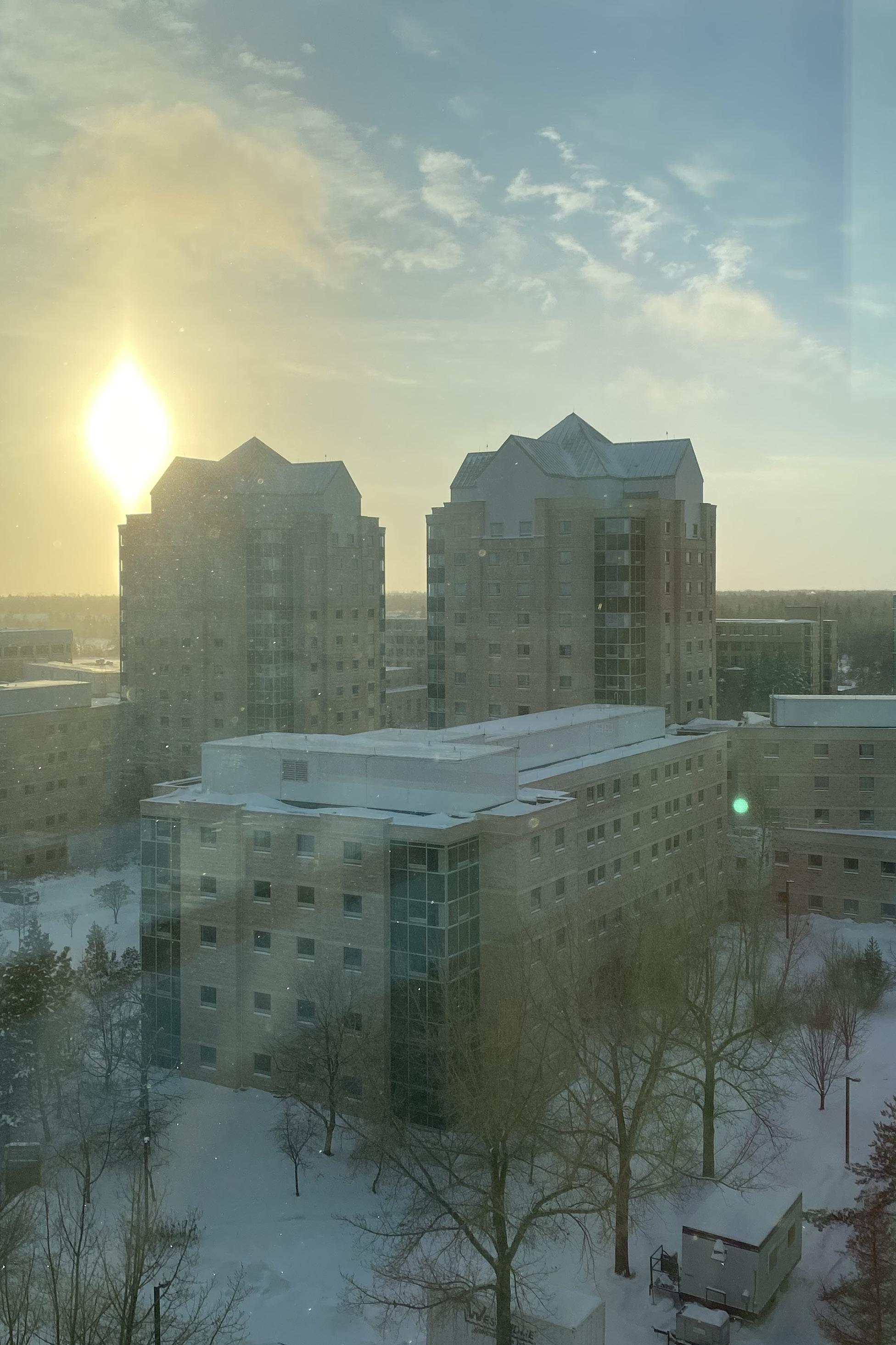
In contrast living off campus provides more independence and often more affordable rent. Students can enjoy more privacy and comfort, but they may face longer commutes and additional costs like managing utilities. And let’s be realistic; in Saskatchewan’s winter, that extra 15-minute walk from your off-campus apartment can feel like a trek to the North Pole. That extra walk in the subzero temperatures can make you miss the extra heated residence halls with the campus cafe being five minutes
away. Who doesn’t like a Starbucks latte on the walk to Archer library?
While the U of R offers a range of options the desicion lies on what students prefer for themselves. Most students like to live on campus in their first year and once they get to know their way around campus and in the city, they shift off campus because of their privacy as well as off campus housing being more affordable. The most important thing is that students find an option that suits them.
“The choice between on campus and off campus living describes your entire university experience”
Zinia Jaswal
Who needs a dining hall when you’ve got a microwave and a questionable takeout
Image: Annika Hadden
Students raise concerns about URSU’s finances at AGM
Students demand clarity at the URSU AGM
shivangi sharma op-ed editor
University of Regina Students’ Union (URSU) held its 2024-2025 annual general meeting on Friday, Feb. 7, 2025.
URSU’s constitution states that it is mandatory for the students’ union to call a general meeting once within fifteen months of the previous AGM in accordance with the Canadian Not-for-profit Corporations Act. The students’ union held its last AGM on Feb. 1, 2024.
The meeting was announced on URSU’s Instagram page and its official website on Jan. 16, 2025. Students were informed that the annual general meeting would take place in the multipurpose room at Dr. Williams Riddell Centre, and they could submit proposals to discuss issues or propose resolutions by Jan. 22, to be included in the agenda.
“All members of URSU are entitled to attend, speak and vote on motions or resolutions. Members will also receive operational and organizational updates from URSU Executives for the 2023/2024 fiscal year. Advance registration is required,” read the post on URSU’s website.
It was mandatory for students to register prior to attending the meeting. Attendees could choose the option of attending in person or remotely during registration. The students received the final agenda for the AGM by email sent out by URSU on Feb. 3.
The AGM was called to order at 3:12 p.m. after the quorum of a hundred members was met. Tayef Ahmed, executive director of RPIRG, was approved as the chairperson for the AGM without opposition.
The members were informed by the chair that the approved agenda would not undergo any amendments during the meeting and that only the subjects on the agenda would be discussed. The AGM agenda was approved as the next order of business with no opposition.
President of the students’ union Mahad Ahmad proceeded to present URSU’s annual report. The report highlighted the union’s achieved landmarks over the year. “Through successes and challenges alike, the University of Regina Students’ Union (URSU) remains guided by a simple principle—be positive, clear and student focused. Our commitment to transparency, advocacy and student engagement ensures there is always a meaningful story to tell,” said Ahmad.
Ahmad said URSU assisted students with emergency bursaries, URSU pantry, student advocacy and health and dental assistance amongst other services, and had increased student engagement with events

and activities organised by its team. Zuhruf Zarooq, vice president of student affairs, elaborated on the points made by Ahmad.
Jwalant Patel, vice president of operations and finance, discussed URSU’s finances. Speaking of better management of funds at URSU, Patel said, “We are expected to have around $500,000 in profit by the end of this year.” He also said that in contrast with previous years URSU has decreased its payroll expenses and hired less employees while offering better services. However he did not talk about any specific new service being offered.
Finally, Ahmad highlighted that URSU is attempting to offer improved health and dental services as its vision for the future. “I can’t quote you the exact number for that, but we will soon let you know,” said Ahmad.
The AGM report received several questions and inquiries from the attending students.
“There were some large reductions in payroll to focus on services, but the total expenses have gone down practically in half. So, I am a little confused as to where a lot of expenses are being cut and I am curious as to what has been happening to reduce those numbers,” asked a student in atten-
dance.
Patel responded by saying that the numbers have gone down because URSU reduced staff numbers and services and that they also cut the funding for Regina Student Legal Advocacy Centre (SLAC) because it was “apparently not very useful.” The response contrasted with Patel’s previous statement that the payroll had been reduced to offer more services . Patel also did not elaborate how it was determined that SLAC was “not very useful.”
“I feel like the annual report does not fully reflect the financial situation that URSU is in as found in the audit and I am wondering what the actual actions are,” said Hannah Clawson, a student present on behalf of the Kinesiology Society. “I feel like there’s a lot of different things that you are proposing to do, but [the report] does not mention how difficult that will be to do given the financial situation that URSU is in right now. So I am curious about what your plans are to move forward with this $1.2 million debt?”
“If you see this year’s audit that we will be publishing around May or June,” said Patel in response, “at that time we can find the actual figures. These are all the predictions, but it could go beyond that too.”
Kimberly Kaufman, another student
in attendance, inquired about the application process for the previously mentioned emergency. “I found the policy on your website, but I could not find a link or if it’s through a student awards system,” said Kaufman. Zarooq responded by saying that for now students must apply via email but they will soon make direct links for applications available on the website.
Questions regarding Q-pay were also raised but were not discussed because it was neither mentioned during the annual report nor was it on the agenda for the AGM.
Concerns around URSU’s financial situation, the numbers in its own report and fund allocations to clubs and societies were raised by students who were in attendance either independently or on behalf of clubs and societies. URSU’s responses remained broad..
The AGM concluded shortly after 5 p.m. and students left largely unsatisfied by the answers they received to their questions and concerns. URSU’s next general elections, where students elect representatives for the students’ union, will take place in late March. Nominations for the general elections began on Monday, Feb. 17 and end on Monday, March 3, at 4 p.m.
Students are demanding accountability, URSU needs to give answers.” Shivangi Sharma
Students at the URSU AGM demand answers Illustration: Mohamed_hassan via Pixabay
Ambassadors lead fundraiser for Gaza with UNICEF
Subtitle

The University of Regina Ambassador leaders Mohammad Akib Hossain and Vana Hung organized a two-day fundraiser in February for the children of Gaza, in collaboration with United Nations International Children’s Emergency Funds (UNICEF).
Hossain, who was previously a part of UNICEF Canada’s youth advocacy program, contacted his previous colleagues to
organize the fundraiser which was co-hosted by Hung.
The event was called “Hope Beyond Borders” and tabling for the event took place twice on campus on Feb. 7 in the classroom building and Feb. 14 at the Riddell Centre. Leaders and volunteers sold baked goods to raise money to help UNICEF support the children who are amongst the worst affected by the war in
Gaza.
“We are fundraising for UNICEF to provide urgent humanitarian support to the children caught in the Gaza crisis. Thousands of children have been displaced, injured, killed or have been caught in the fighting that has engulfed Gaza and Israel. Children on both sides continue to pay the highest price for the violence. The rights of every single child, no matter who or where they are, must be protected,” read a statement on UNICEF’s website .
Donors had the option to buy baked goods and/or donate directly on the website. The money raised will go towards providing safe water, essential medical supplies, hygiene kits, emergency supplies like blankets, warm clothes, tarps and tents and essential vaccines amongst other essentials.
Hung, a third-year biology major at the UofR highlighted how the support of the ambassadors who volunteered during the fundraiser was imperative for its success.
“Our ambassadors have played a huge role in spreading awareness of our fundraiser by speaking about the purpose of our fundraiser to the thousands of students and staff of the University of Regina, assisting with finances and assisting with the safe handling of the baked goods,” she said.
The ambassador volunteers appeared motivated, enthusiastic and driven at the event. “We have had amazing engagement not only from the students but also from the faculty members,” said one volunteer.
“I think the event was a huge success. We definitely surpassed what we expected to raise. We had so many people come to
Finance with Pall: To tarrif or not to tarrif
Making financial news make sense and B’Tselem have collected testimonies
Welcome to The Carillon’s new finance column! We’ll cover important economic and financial news from Canada and around the world, explaining what it means for students. From tuition costs to job markets, we’ll break down how these changes affect you, making finance easy to understand and relevant to your life. If you have any request for a topic or want me to highlight a stock price – shoot me an email at pall@ carillonregina.com. Let’s make finance fun for all!
Disclaimer: The information in this column is intended for educational purposes only and is not financial advice. For personalized financial guidance, please consult a licensed professional. News of the week:
There has been a lot of chatter about Trump tariffs and it’s time to examine how that will affect Canada financially and economically. According to a BBC release on Feb. 4, , U.S. President Donald Trump has held off tariffs on Canadian and Mexican imports for 30 days; tariffs on China were implemented on Feb. 4, 2025. Both Canada and the U.S. have agreed on strict border enforcement for illegal immigration flowing into the U.S., along with drugs like fentanyl. Economists predict that the talks of a potential tariff could devastatingly affect Canada. According to the Canadian Chamber of Commerce, “Canada’s GDP would shrink by 2.6 per cent, costing Canadians approximately $1,900 annually.”
The saddest part about all this is that it’s hitting the country when it is already struggling. With an uncertain immigration scenario and a recovering economy from the interest rate shock, Canada is not
our table to support the cause, and we appreciate everyone who stopped by,” said Hung.
Hung also extended gratitude towards The Everyday Kitchen for donating donuts on the Feb. 7 fundraiser. “We truly are extremely grateful for their generous donations. Many of the students were so excited to see The Everyday Kitchen donuts at our table,” she said.
The fundraiser collected approximately $3600 in total at the end of the second on-campus event according to information shared with The Carillon.
“We also want to thank once again the students and staff who came to stop by at our events, everyone who donated and those who spread the word about our fundraiser. Every dollar counts when it comes to supporting children, and [the supporters’] generosity does not go unnoticed,” concluded Hung.
The Ambassador program is one of the U of R’s experiential learning opportunities offered to students as part of UR Path.
shivangi sharma op-ed editor

placed well to absorb this affect, especially on a scale like this. Right now, countries should encourage consumers to choose their own country’s goods over imported goods. With the additional tariffs, Canadian goods might be cheaper for consumers to purchase.
The problem will escalate if a retaliatory tariff is implemented in Canada on imported U.S. goods, making Canadian goods in U.S. more expensive and decreasing the demand of those goods. This was threatened by the Canadian government for Feb. 4, but is now delayed. Ultimately,
it would impact the Canadian economy with reduced demand for Canadian goods. Since the economies are so tight knit, the decision would disrupt supply chains and mutual trust upheld over the years. If Canada retaliates, the impact will felt on the prices of goods and in possible job loss in the steel and aluminum industries. According to The Globe and Mail, around 30,000 workers in the steel manufacturing industry could lose their jobs in the short term; long term numbers range from 100,000 to 600,000. Provinces like Ontario and Quebec with extensive production facilities
would take a massive hit, due to job losses and lower industrial output.
Overall, the political tension between Canada and the U.S. is not easygoing and there is a trade war in place with both parties ready to attack. With tariffs in the air, Canada is not positioned well to take the hit as it would adversely affect the economy and make it harder to recover from the already inflationary pressure that it is going through.
Who knew a bake sale could help save lives! Donate now and support a cause
Illustration: Chris Kerr from Noun Project, verry poernomo, .khaiinauy from stu-khaii via Canva manipulated by Annika Hadden
Finance? More like Fun-ance! Illustration: Allister White
pall agarwal community writer
Flooring Darke Hall audience with Canadian clas-
Laila Biali and the Canadian Songbook Reimagined
zinia jaswal news
editor
On Jan. 29, on a warm winter evening in the middle of the week, a crowd gathered in Regina’s beloved Darke Hall to witness the talent of Canadian pianist, singer and CBC radio host Laila Biali and her band. Throughout the night, she took turns praising the prairies, celebrating the talents of her crew and paying great homage to Canada’s well-known songwriters of several generations. This night was the first performance of Biali’s new set, “Joni Mitchell and the Canadian Songbook Reimagined.”
Walking into Darke Hall that evening was like entering a huge room just buzzing with excitement and anticipation—the beautiful hall was ready for Biali. Joining her on stage that night were Mark DeJong on saxophone, George Koller on double bass and Ben Wittman on drums, all of whom shared the spotlight with their solos throughout the night.
Biali and her band captivated the audience immediately by kicking the night off with “Woodstock,” the first Mitchell song Biali ever arranged, If the stage were a canvas, Biali filled it beautifully , but with the layers the band added, the art they created went above and beyond. Wittman’s symbol work on this piece was especially colourful, and thrilled the crowd.
Before the next song, Biali expressed her love for Canada’s prairie . She shared some musical history with the audience, explaining how the time Mitchell spent at the Banff Centre in Alberta many years ago was like Paris to her. Biali then performed a lively rendition of “Free Man in Paris,” a song Mitchell wrote about her music agent.
Though the night was named for Mitchell, Biali delved deeper into the Canadian Songbook, as promised. The next song on the set list was k.d. lang’s “Simple,” during which the band courageously explored the versatility of each instrument on stage and displayed just how commanding each of their talents are. The following song was Daniel Lanois’ “Where Will I Be,” which Biali was introduced to through Emmylou Harris’ cover.
Biali circled back to Joni with the popular : “Big Yellow Taxi,” which Biali said was “exploring the tension between progress and the ancient beauty of nature.” Biali was introduced to this song by Janet Jackson’s “Got ‘Til It’s Gone,” which famously samples Mitchell. By this point in the set, the passion of the musicians involved made each arrangement better. Ev-

erything was, in some way, brought back to the elements of jazz which served as home base for Biali.
The next cover was Jane Siberry’s “Calling All Angels,” which came with a mesmerizing bass introduction, played with emotional intensity . Building on this emotion, next came Mitchell’s “A Case of You,” a classic from her record Blue, which Biali praised. Later, she performed “Little Green” from the same album, a song written by Mitchell for her birth daughter, whom she gave up for adoption in 1965.
In between Mitchell classics, Biali shared renditions of Ron Sexsmith’s “Secret Heart,” Sarah McLachlan’s “Ice Cream” and Feist’s “Mushaboom,” for which boomwhackers were brought out whilst the audience joined in on the fun by clapping along.
Again, the mood changed. The band’s next cover was “Stolen Land” by Bruce
Cockburn, which featured a ripping saxophone solo over the song’s dancing colours and emotions. The next solo came with Leonard Cohen’s “Show Me the Place,” during which Koller took it away again on the double bass.
Closing in on the end of the night, Biali performed one of her originals, an instrumental piece called “Radiance.” She shared how delighted she was to be playing the gorgeous piano at Darke Hall, a Fazioli concert grand piano which was gifted to the concert hall by Dr. Roberta McKay and Mr. Elmer Brenner. “Carnegie Hall called, and they’re a little bit jealous of this piano,” she joked, explaining that she’s a Yamaha musician herself but was honoured to be playing a Fazioli.
The last two songs of the set were a solo-piano rendition by Biali of Mitchell’s well-known masterpiece “Both Sides Now,” which has become even more spe-
cial to Biali since having a son, and Neil Young’s “Heart of Gold,” which the band turned into explosive jazz.
For the encore, Biali took the stage alone and performed Mitchell’s “River,” a touching way to end the night. Despite mentions of Christmas in the song, Biali reiterated its timelessness and brought the crowd to tears with her performance on a January night.
When asked how she believed the show went that night, Biali shared that “the audience in Regina was perfect for the launch of ‘Joni Mitchell & The Canadian Songbook Reimagined.’ Folks packed Darke Hall to near capacity and gave us the most beautiful prairie welcome. That energy and warmth sustained us through the rest of the tour. My husband and I also enjoyed a lovely walk around Wascana Lake before we set out for Saskatoon the following day.”
“The band courageously explored the versatility of each instrument on stage and displayed just how commanding each of their talents are.”
Emma McGill
An empty Darke Hall stage, save for instruments. Image: emma mcgill
The coldest night of the year
The YWCA’s annual walk-a-thon
pall agarwal community writer
Regina’s community is known for its ability to come together to support a cause, whether it be for events in need of volunteers, marathons, parades or even a walka-thon on the coldest night of the year. Organizations across the city give voice to different causes, one of which is the Young Women’s Christian Association (YWCA), a nonprofit organization that focuses on women’s empowerment, leadership and the rights of women. They have a presence in more than 100 countries.
YWCA Regina hosted this Coldest Night of the Year on Saturday, Feb. 22.. The walk-a-thon for all age groups is meant to “raise awareness and funds for the community’s most vulnerable individuals,” according to the press release.
For deeper insight into the preparation leading up to the event, I spoke with Meghan Trenholm, manager of communication and digital marketing for YWCA Regina. “This is an annual walk to raise funds and awareness for homelessness … a walk that happens all across North America. This is our tenth year hosting it,” said Trenholm.
Trenholm knows what this cause means to the community: “We’ve seen homelessness rates increasing in the city… all the support we can get is so appreciated.”
People walk on the coldest night of the year to encourage empathy for those who are facing homelessness during the cold Canadian prairie winter. A similar initiative is 5 Days for the Homeless, undertaken by the students’ society of the Hill and Levene Schools of Business at the University of Regina, which raises awareness and
funds for local charities like Carmichael Outreach.
The YWCA began preparations for the walk-a-thon in the fall of 2024 after they finalized the event date and kickstarted their initial marketing and promotion. Trenholm mentioned that “once we [received] information from the larger organization that runs Coldest Night of the Year, then we started to put it into practice in our context in Regina.”
Some of the well-known larger organizations that run the Coldest Night of the Year include the Blue Sea Foundation, according to Trenholm. The large scale of the event meant management was busy with many tasks, including “preparing, getting volunteers ready, as well as working with different groups and organizations and sponsors.”
YWCA’s overall goal for fundraising this year was $100,000. They had reached 40 per cent of their goal as of 12:58 p.m. on Feb. 12. However, their real success was defined by the number of people who showed up and supported this event that serves the community.
“It’s a really nice time and the work is so important,” said Trenholm. “There are so many women that are homeless or have insecure housing that are never counted . “ ... We are able to support so, so many women and families that … it’s really heartwarming to see the community come together and just be so excited to do something so great for women and children [when they’re] at their most vulnerable.”
Community sponsors who stepped up to help included St. Paul’s Cathedral, Avenue Living, Home Depot, Wellnessnews, Forster Harvard Development Corp., Rawlco Radio and Conexus Credit Union . After all, change begins at home.
Much more than just books on shelves
All that the Regina Public Library has to offer
nance, one can find an array of workshops and courses to upskill themselves.
Many often make the assumption that most of a library’s value comes from the books it houses. Over time, things have changed. Through technology’s takeover , libraries have been almost redefined and are now havens of resources.
Yet physical books seem to have taken a backseat to digital alternatives in favour of saving paper and participating in more energy friendly activity. So, the question is, how are libraries keeping up with this change, and what resources do they offer?
Libraries have pivoted from their traditional purpose and made their spaces more open over the decades, hoping to provide a positive experience for everyone. In our city, the Regina Public Library (RPL) is one such library that has embraced change and gone beyond just books. One glimpse at their website and you might be overwhelmed by what they offer.
To start off, it is essential to get a free RPL membership and card, which makes borrowing the books and accessing all the other RPL services possible and seamless. Thelibrary is divided into different sections by age group and genre. Aside from a vast collection of reading material, they have many other resources These include LinkedIn Learning, the Digital Media Studio and The New York Times.
Students can get so much out of the library outside of borrowing books. For example, LinkedIn Learning is an online learning platform that offers courses on different subjects: from communication to fi-
The RPL’s Digital Media Studio is a room dedicated to all kinds of media that users may want to explore. Its services include a self-serve sound studio, a green screen flex studio, computer stations, 3D printing and scanning and digitization stations. Because the library does not accept walk-ins for studio use, the best way to use this resource is to book the room . This studio is available on the main floor of the Central Library downtown and a smaller Self-Serve Sound Studio is available on the main floor of the Sherwood Village Branch. Both spaces can be used by professionals or people who want to create for fun . With the available green screen, for example, social media influencers or marketing specialists can use this space to record and create special content for projects.
RPL also has a partnership with The New York Times and provides newsletters and access to news through RPL membership. This partnership also provides access to games and cooking recipes.
Beyond this, RPL is also very inclusive to newcomers, with their multiple English as an Additional Language (EAL) initiatives. For people who speak languages other than English as their mother tongue, these meetups and workshops are a way to understand Canadian culture, language and people. They have programs and meetings including “Public Speaking Skills for Beginners,” “English Language Test Preparation,” “EAL Conversation Circle,” “Coffee and Conversation for EAL Learners” and other online tutoring . Some sessions are

drop-in and some require registration in advance.
Other programs offered by RPL include an animations workshop, a robot coding challenge, Lego club, STEAM lab and board games nights, giving young kids a space to interact with others and also build their social skills. Program availability varies from branch to branch. All information is available on the RPL website, reginalibrary.ca, or by calling the library at 306-777-6000. Their website also has online chat support .
RPL also offers workshops on personal finance, preparing for interviews and job coaching. Their personal finance workshops cover topics from finance for moms to real estate.
But back to those books. RPL’s collection of books is, of course, huge. University of Regina students can take advantage of RPL’s connection to the Archer library, where RPL holds can be picked up. Available in different formats, like ebooks, RPL has a lot of options for booklovers. They also have different kinds of media available, including newsletters, magazines, newspapers, movies and audiobooks.
Overall, RPL has truly done an exceptional job in setting up their patrons and the community for success in Saskatchewan. They offer so many resources to take advantage of —all you have to do is explore!
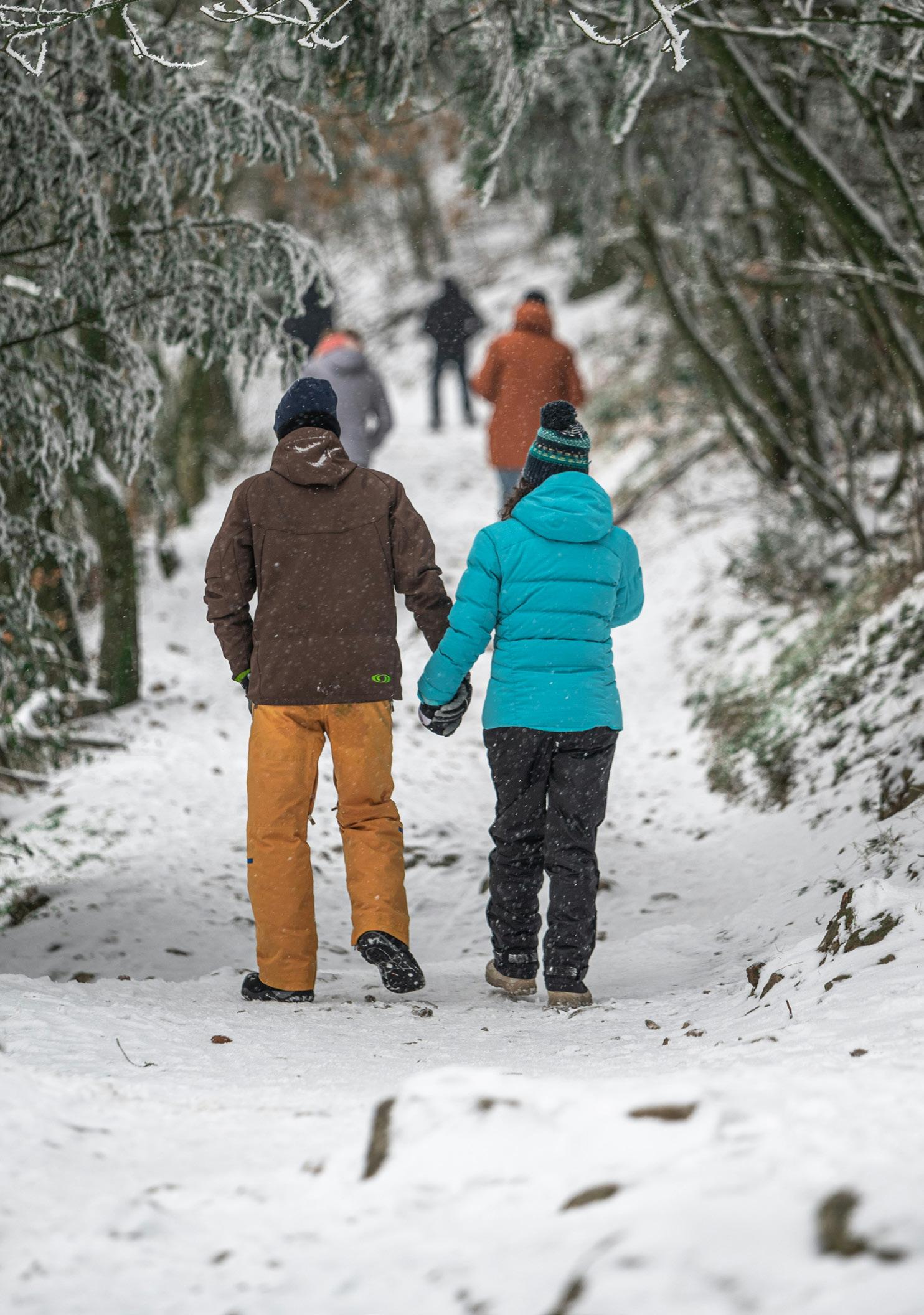
Sometimes braving the cold does have a purpose. Image: Andreas Brun via Unsplash
Though books are always nice! Image: Jessica Ruscello via Unsplash
pall agarwal community writer
Trump’s first week as the 47th president of the United States of America
Make America great again?
kiara rennie contributor
When I hear the name Donald Trump the first thing that comes to mind is a white rich man with power. On Monday, Jan. 20, 2025, Trump started his term as the 47th president of the United States of America and made a number of changes in the first week following his inauguration.
Trump has been very passionate about the immigration rates in the United States from the beginning of his campaign. He has already announced a “Remain in Mexico” policy that requires “non-Mexican asylum seekers to wait in Mexico pending the resolution of their U.S cases.”
Donald Trump sees immigrants in “his” country as a problem and wants them out of the country. Many including myself, however, believe that immigrants are the backbone to the economy and infrastructure of many countries. In the same week as his “Remain in Mexico” policy, Trump also reinstated the death penalty for immigrants with illegal status who commitserious crimes. Along with Trump’s passion for deportation, he also signed an executive order to redefine of birthright citizenship in the U.S. so that a child born in the U.S. to a mother and a father who are not U.S citizens will not be considered a citizen of America.
Soon after his inauguration, Trump also reversed restrictions on the Immigration and Customs Enforcement (ICE) and Customs and Border Protection to carry out arrests in sensitive locations. This means that these agencies can now raid schools, churches and hospitals. aParents and guardians have been anxious to send their kids to school ever since the news was announced. Under Trump’s leadership, the Department of Homeland Security
said, “Criminals will no longer be able to hide in America’s schools and churches to avoid arrest.” The 47th president of the United States is insinuating that all immigrants are criminals without any concrete proof to support the argument.
Trump also signed a policy that only recognizes two sexes/genders on government documents, taking away a person’s right to choose their own identity. Speaking of taking things away, President Trump also withdrew America’s participation from the World Health Organization and the Paris Agreement on climate change. The official website for The White House states that Trump’s administration withdrew from the World Health Organization (WHO) “due to the organization’s mishandling of the COVID-19 pandemic that arose out of Wuhan, China, and other global health crises, its failure to adopt urgently needed reforms and its inability to demonstrate independence from the inappropriate political influence of WHO member states.” Trump stated the reason behind withdrawing from the Paris Agreement was that such agreements “do not reflect our country’s values or our contributions to the pursuit of economic and environmental objectives,” according to a BBC report.
Within just one week since his inauguration, Trump has made plenty of new policies and signed a number of executive orders. I will say, although many people including myself do not agree on many of his views or polices, he moves at a fast and motivated pace as a president who wants to do what he thinks is best for the country.

“Within just one week since his inauguration, Trump has made plenty of new policies and signed a number of executive orders. I will say, although many people including myself do not agree on many of his views or polices, he moves at a fast and motivated pace as a president who wants to do what he thinks is best for the country.”
Kiara Rennie
He seems like a chill guy…I was instructed to say.
Image: Sean Ferigan via Unsplash
The Curious Case of the Delayed Flu
All I hear these days are the sounds of sniffles, coughs and sneezes.
shivangi sharma op-ed
editor
The weather in Regina has finally started to become a little less brutal and a little more warn and forgiving. Before the people can breathe a “warm” breath of relief they must win the turf against the antagonist that rears its head every once a while and particularly when the weather transitions, the flu.
The winter of 2025 has been full of surprises with multiple snowstorms, temperatures remaining consistently around -30°C or less for weeks in Regina and the surprisingly late onset of the annual influenza season in the country. People usually brace themselves for the flu’s arrival in late December with the number of cases peaking in early January. This year however, there has been a noticeable delay in the onset of the flu season which has caught people off guard and left them wondering about the factors at play.
In his conversation with CBC, Dr. Karim Ali, medical director for infection prevention and control and head of services for infectious diseases at Niagara Health in Ontario said, “We haven’t seen this amount of influenza cases as well as severe illness in almost a decade.” Clearly the flu has not only arrived late but also with increased virulence.
The late onset of the flu can be attributed to a confluence of factors. It might surprise many that global warming can actually be one of the reasons for the late onset of the flu. Unseasonably warm temperatures in the early winter months affects the influenza virus’s ability to infect people. A research study published by the university of Colorado in 2023 explains that the flu virus tends to thrive better in colder and drier conditions and warmer weather hinders its ability to infect its hosts.
People have also become more cautious with hygiene and health practices after the covid-19 pandemic. Additionally, they expect influenza to strike in the earlier months. Increased vigilance on people’s end may also have reduced the spread of the virus in early winter months from one individual to another.
Building on increased vigilance, the rate of vaccination is also higher in the early winter months which provides a certain
degree of immunity within the community against the virus in the early stages. Especially for a previously known variants of the virus for which effective vaccines are already present.
Curiously enough, sometimes the spread of another virus can hinder the spread of influenza as well. Other viruses such as the Respiratory Syncytial Virus (RSV) which also infects people in the early winter months can sometimes cause a “traffic jam” in the respiratory system. It can thus block the flu virus from spreading by preventing it from gaining a foothold in the respiratory tracts of the hosts. A report by CBC states that the number of flu cases saw a rise in 2025 when RSV cases declined.
Perhaps the most important reason behind the flu arriving late and with increased virulence is the emerging of more infective strains of the influenza. Viruses are known to mutate rapidly to avoid host immune responses. As a particular strain of influenza mutates, it can sometimes give rise to new strains which are better at infecting human hosts and spread rapidly from one person to another. These strains can sometimes even manage to avoid vaccine mediated immunity which we get from flu shots. A new variant of influenza can explain the late onset and larger spread of influenza in 2025.
It is however important to keep in mind that these factors often intertwine and influence each other. This makes it harder to isolate a single cause behind the late onset of the flu season in 2025.
That being said, it is important to take care of oneself as well as others around us. Flu can strike at any time of the year and taking proactive steps can ensure prevention of infection or if infected it can reduce the probability of health complications and the spread of infections.
Flu vaccinations are indispensable in conferring immunity against not just one but at times multiple strains of the flu virus which are expected to be in circulation. Vaccination prepares the body’s immune system for any future attacks from the virus. Especially in individuals with previously compromised immunity, vaccination can prevent infection or significantly reduce the severity of symptoms if an infection does happen to occur. Getting regular flu shots should therefore always be on everyone’s

health related itinerary.
Proper hygiene practice is another major step that can prevent infections. Viruses belong to the class of disease causing organisms which are called obligate parasites. This means that virus has no means of reproducing and producing more of its kind until and unless it is inside its host which in this case are humans. This explains why prevention of infection is far more important that treating an infection.
It is therefore imperative to properly wash hands, maintain social distancing, wear masks and observe other measures that can physically stop the flu virus from spreading from one person to another.
At times however, despite our best efforts, infections do occur, that is where having a healthy lifestyle can be of help. Having a balanced diet, taking out time to exercise and having proper sleep cycles can boost the body’s natural immunity and its ability to cope with infections.
It is also important to seek medical help early on if one experiences flu like symptoms as getting help early can also re-
duce the probability of developing serious symptoms. Isolation while recovering is a must too.
Ultimately, staying informed and on top of things is a person’s best defence against viral infections. Reliable sources like Centers for Disease Control and Prevention (CDC) and the local health department can provide valuable information about the circulating flu strains, vaccination recommendations, and preventive measures.
Whether it be a late or early onset, dealing with circulating viruses and mitigating the probability of the spread of infection is not the just a responsibility of the healthcare staff but a community effort. Healthy habits, healthy lifestyle along with proper and research backed medical assistance are our best allies in the fight against influenza.
“Whether it be a late or early onset, dealing with circulating viruses and mitigating the probability of the spread of infection is not the just thea responsibility of the healthcare staff but a community effort. Healthy habits, healthy lifestyles along with proper and research- backed medical assistance are our best allies in the fight against influenza.”
Shivangi Sharma
Not this again!
Illustration: Elena Mozhvilo via Unsplash
graphics




spring! hit it