




Hi reader, it’s so good to see you again. All of us here at the Carillon are thrilled and proud to bring you issue ten. This issue, we’ve got plenty of coverage on burnout, end of term, and taking it day-by-day. So if December is getting to you, it’s worth taking some words of kindness from Amina Salah, our staff writer: “you are smart and capable of achieving all the goals you set for yourself.”
Our next open editorial board meeting is set to take place on Monday, Dec 16 from 4 to 5 p.m., so feel free to come by for a chat! We’re in Riddell Centre, Rm 227. If you’re looking to attend a Board of Directors meeting, please reach out to ziyang@ carillonregina.com.
Got something interesting to share? Pitch a story for issue 11. Need some ideas? Our next pitch list drops on Saturday, Dec 8. Until next time.
Illegitimi non carborundum, allister white editor-in-chief (ad interim)
the staff editor-in-chief allister white (ad interim) editor@carillonregina.com
executive director ziyang li business@carillonregina.com
production coordinator annika hadden production@carillonregina.com
web technician jebrael muhammad web@carillonregina.com
news editor allister white news@carillonregina.com
community editor hammad ali (ad interim) community@carillonregina.com
op-ed editor hammad ali op-ed@carillonregina.com
staff writer amina salah
staff writer emma mcgill
news writer nazeemah noorally
news writer shivangi sharma community writer pall agarwal contributors
board of directors muhammad zuhruf muhammad zarooq, mohammad akib hossain, tayef ahmed, austin stadnyk, jeremy beam
the paper
227 Riddell Centre @ the University of Regina 3737 Wascana Parkway, Regina, SK, Canada S4S 0A2 www.carillonregina.com | (306) 586 8867
Printed by Star Press Inc, Wainwright, AB
The Carillon welcomes contributions.
Opinions expressed in the pages of the Carillon are entirely those of the author, and do not necessarily reflect those of The Carillon Newspaper Inc. Opinions expressed in advertisements appearing in the Carillon are those of the advertisers, and not necessarily of The Carillon Newspaper Inc. or its staff.
The Carillon is published no less than 11 times each semester during the fall and winter semesters and periodically throughout the summer. The Carillon is published by the Carillon Newspaper Inc., a non-profit organization.
land acknowledgement
The Carillon is written on Treaty 4 territory. As such, staff recognize that we are living, working, and telling stories on and of Indigenous lands. We recognize that we are on the traditional homelands of the Cree, Saulteaux, Nakota, Lakota, and Dakota peoples, along with the homeland of the Métis nation. The Carillon understands that it is pointless to acknowledge the land on which we work without demonstrating our commitment to telling stories and prioritizing voices that further the return of this land to its sacred place. the manifesto
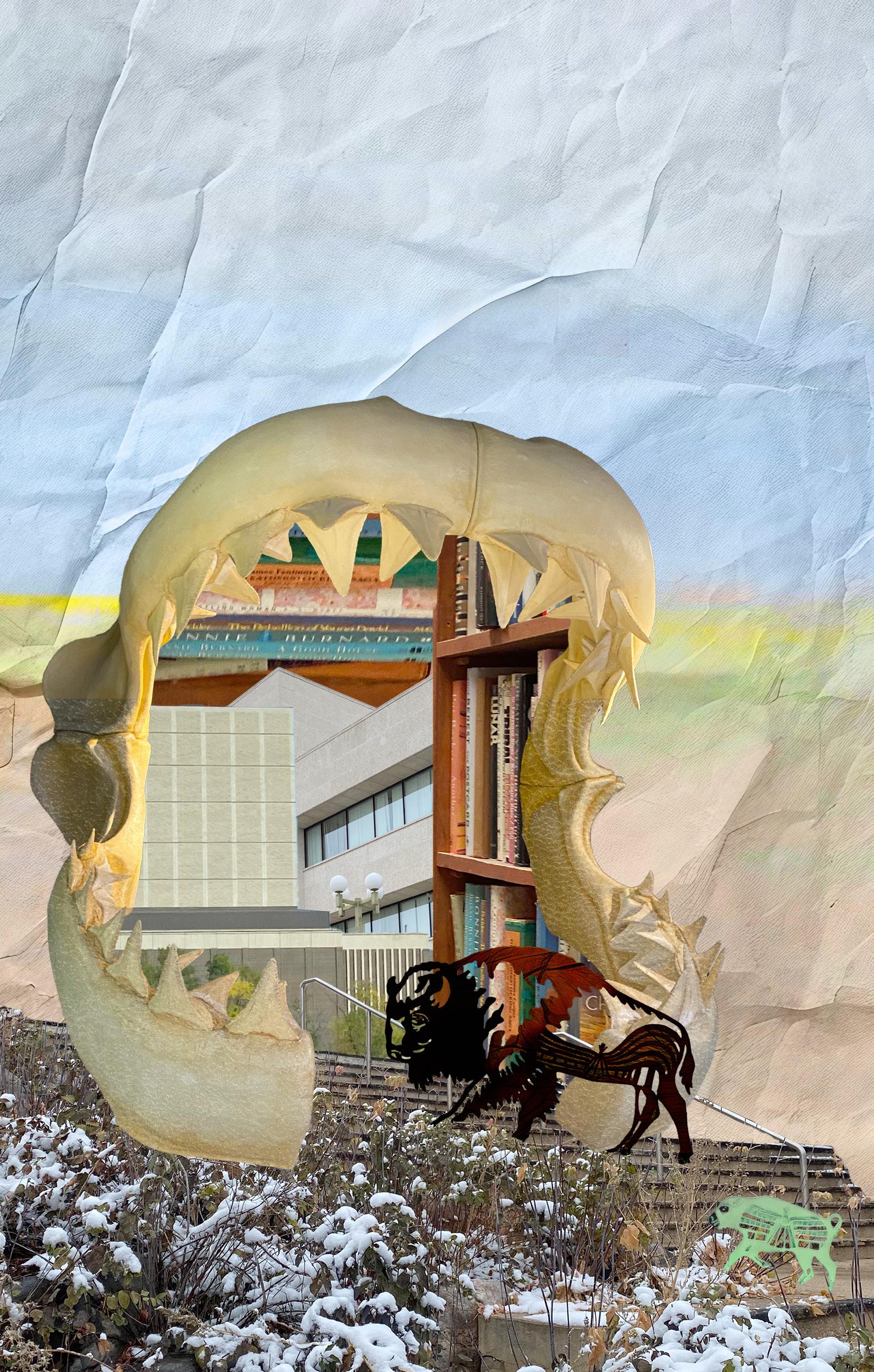
In keeping with our reckless, devil-may-care image, our office has absolutely no concrete information on the Carillon’s formative years readily available. What follows is the story that’s been passed down from editor to editor for over sixty years.
In the late 1950s,











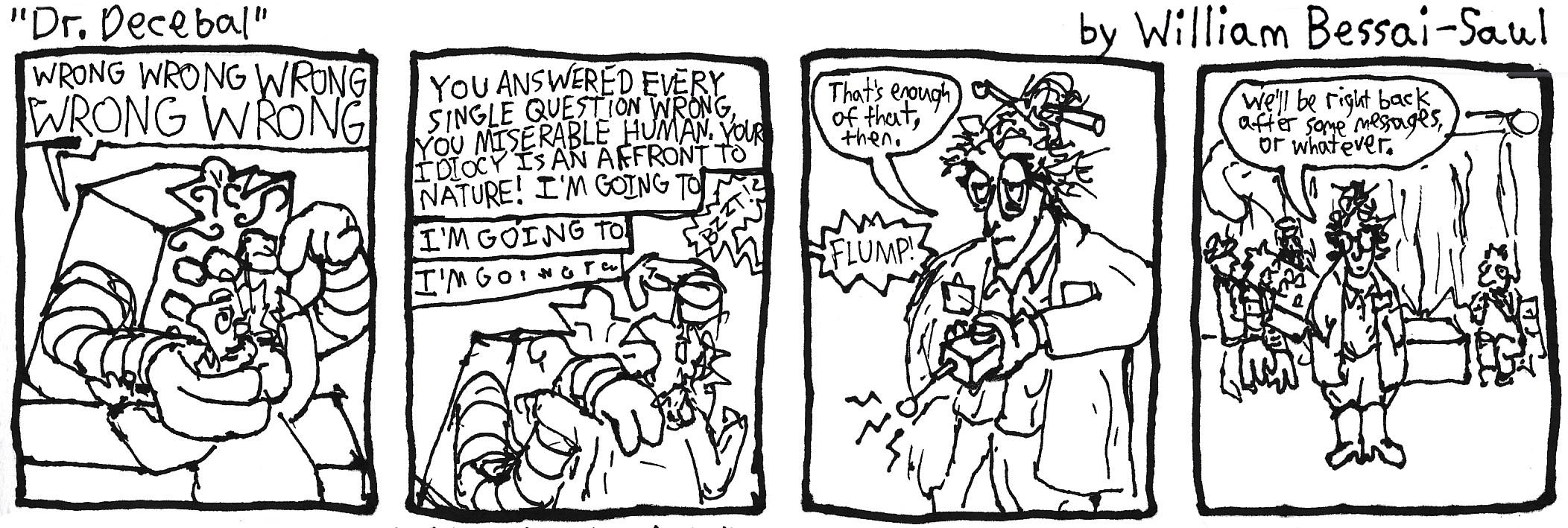
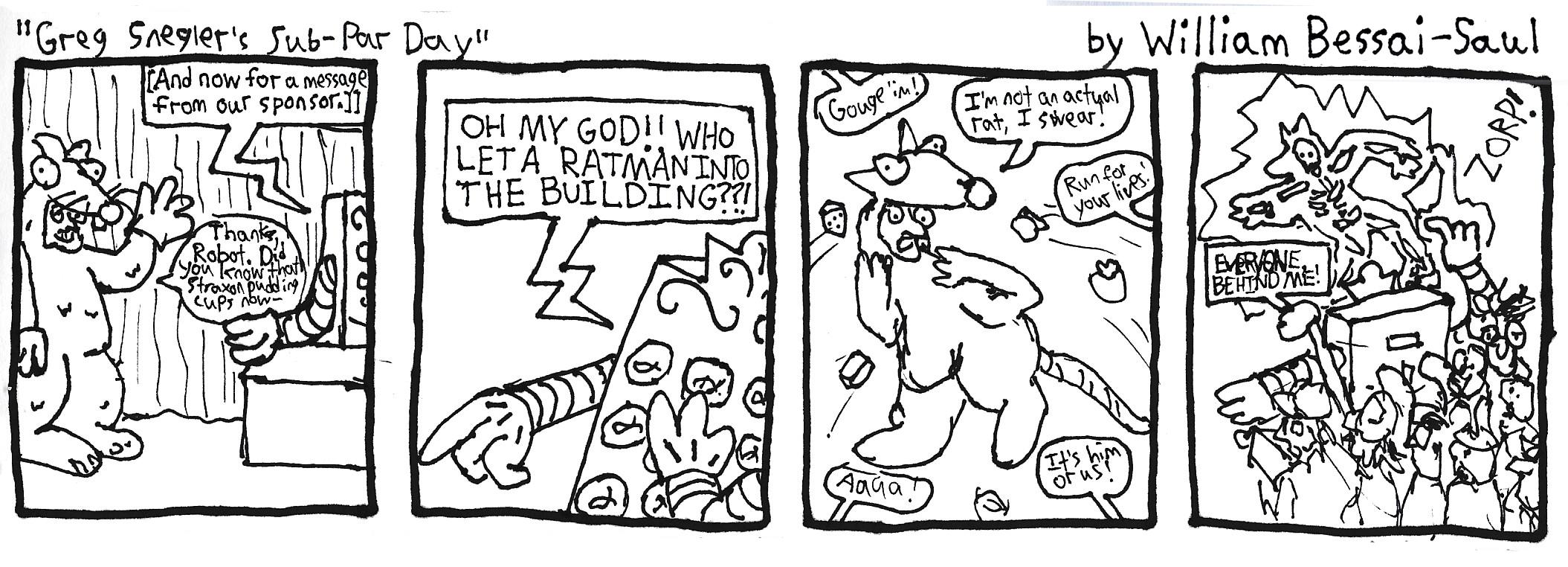
Looking for something that pairs well with your morning coffee? Try taking a gander at some of contributor William Bessai-Saul’s comics.
When
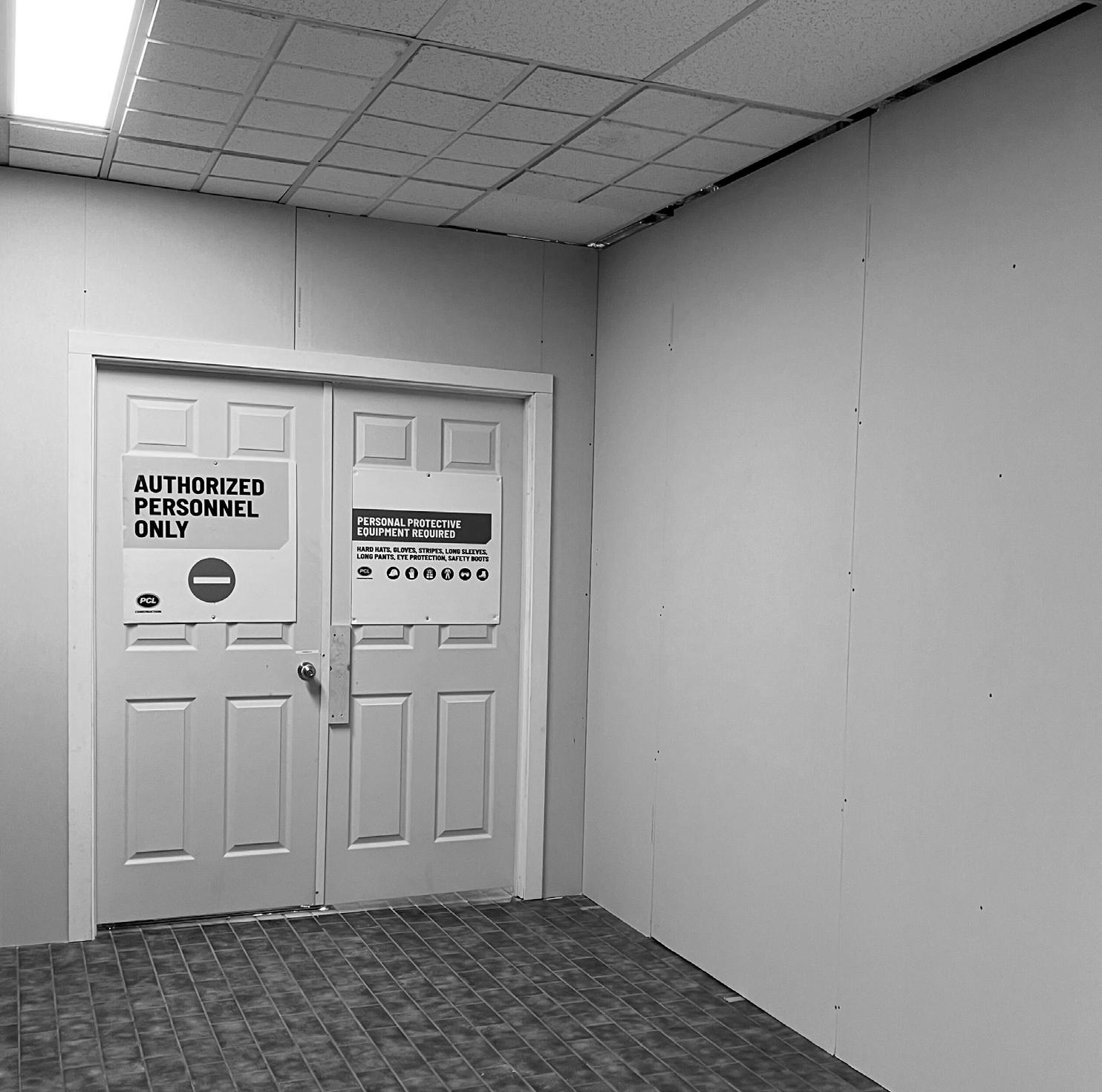
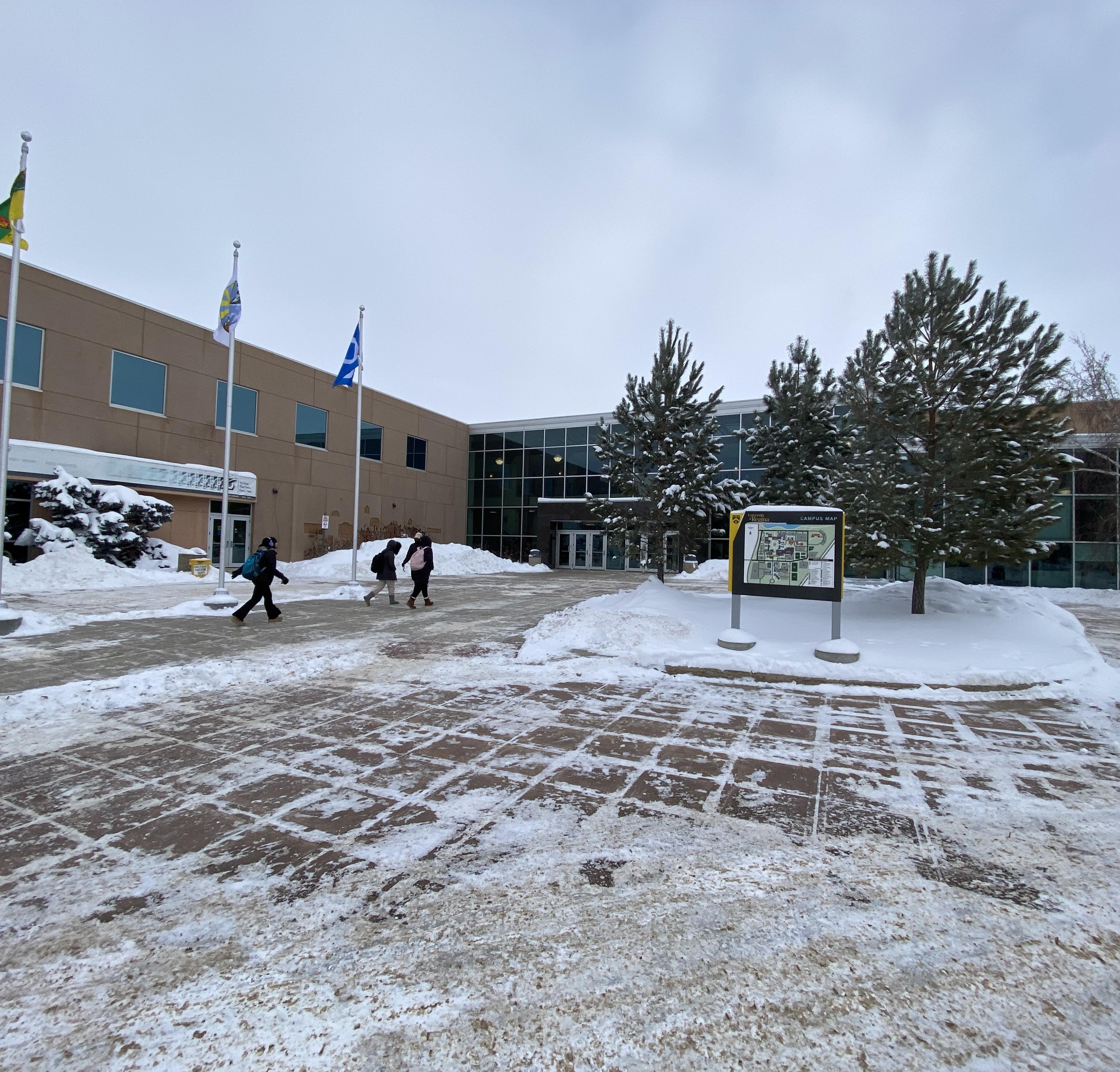
Earlier this volume, the Carillon reported on construction at the University of Regina (UofR). As of Nov 21, there have been updates to construction news on campus. According to an email sent to UofR students by Student Affairs on Nov 21, the seating area in the Lab Cafeteria will be closed off until further notice to prepare “for a new seating configuration.” Construction offi-
cially started for this project on Nov 25.
In addition to the Lab Cafeteria’s construction-related closures, around half of the seating areas in the Riddell Centre will also be closed starting on Dec 2.
While closing off two of the most popular seating hubs for students, especially those commuting to school and taking their lunch and study breaks, Student
Student’s Affairs offers extension to set up MFA:
An email sent out by Student’s Affairs on Monday, Nov 25, informed students that the last day to set up Multi-Factor Authentication (MFA) for online payments has been extended to Dec 16.
“The University has just heard from Touchnet that the roll out of MFA for online payments will be turned on Dec 16. This is a delay from Nov 21, which they originally communicated,” the email explained to students.
Earlier this year, the University of Regina (UofR) mandated MFA for students to access their Microsoft 365 accounts. This includes recently introduced student Outlook email accounts. On Tuesday, Nov19, the UofR announced that MFA will be mandatory for online payments beginning Nov 21. According to Student’s Affairs, this deadline has been extended by nearly one month.
Students can set up MFA via the link provided by Student’s affair in their email. Students are encouraged to reach out to IT support services at the Archer Library should they need assistance.
Reminder for Exam Regulations:
Student’s Affairs sent out an email on behalf of the Registrar’s Office and Enrolment Services on Monday, Nov 25 to remind the students of exam regulations ahead of the final exams. The email in-
Affairs’ email gave little information as to what changes are being made to these areas, when the closures will be over, or what the finished product will be. However, they did claim that “the changes are part of our broader commitment to enhancing campus life.” Until these enhancements are complete, it seems that students will simply have to adjust.
As the school prepares to enhance student life with new food options and social spaces, it’s hard to say whether or not students expected these sorts of disruptions to their daily life. The timing of the most recent construction may mean the brunt of the work is done over the break, which could be an attempt at keeping disruptions to a minimum.
In the email announcement, it is said that the administration encourages students to “explore alternative seating areas across campus during this time.” With Riddell being cut in half, the Lab Cafeteria closure, and the large white walls enclosing the Administration-Humanities (AdHum) Building’s pit, seating options on campus have been significantly reduced. Things are going to get tight, especially given the extreme increase in the university’s student population this school year. So, here are some alternative seating areas students could try to snag before they fill up:
The Research and Innovation Atrium provides a nice study and lunch spot, though the tables can be sparse if they’re not cleared out for an event.
There are a few spots on the second floor of the Riddell Centre up for grabs, and half the seating areas downstairs will still be open.
Despite the beloved AdHum pit’s temporary closure, there are still two smaller pits in the Education building, and minimal seating surrounding Gong Cha
As always, the Archer library is a great place to study, with each floor requiring a different volume level, library-goers can effectively choose the level of noise they need for optimal focus. Library patrons can also check the library’s occupancy before going in to see what spaces are available on Waitz, a program that is easily accessed through the Archer website. Waitz is also periodically displayed on the information screen at the library’s main floor entrance.
Across campus, Campion College and Luther College also have study spaces on their main floors and quiet spaces in their libraries. If you’re looking for lots of natural architecture, there are a few study tables at First Nations University as well.
Additional study spaces include La Cité’s second floor and AdHum floors 3-5
Ultimately, Student Affairs’ email means that we’ll have to wait to see the changes that this construction brings to campus. In the meantime, students will have to get a little bit creative with where they spend their free time on campus.
emma mcgill staff writer
cluded instructions for students who will be completing their final exams for the 2024 fall term in December. The email reminded students that their photo IDs will be required for admission in the exam hall and entry will be prohibited for students who are any more than 30 minutes late. Other reminders related to food and drink as well as prohibitions on electronic devices were shared in the email, which “strongly recommend[s]” that students “do not bring any electronic devices to an exam room.”
The email also included the link to Student Code of Conduct and Right to Appeal and various other links that the students might find helpful while preparing for final exams.
Senator Yvonee Boyer’s Public Lecture:
As a part of the UofR’s 50th anniversary celebrations, the UofR is set to host a public lecture by Senator Yvonne Boyer on Tuesday, Dec 10. The event was announced on the UofR’s website, and according to this announcement, Senator Boyer will discuss her work with survivors of forced and coerced sterilization in Canada. According to this announcement, Boyer will talk about how her work “led to introducing Bill S-250 - legislation aimed at amending the Criminal Code in regards to sterilization procedures.” The event will take place in CB 330 at the UofR’s College Avenue campus (2155 College Avenue) at 4pm. Paid parking and refreshments will be available. People who are interested in attending can register at the university’s website to confirm their attendance.

Who knew you could go to a newspaper for instant gratification?
Debar manipulated by Allister White
Sask. Party’s Projected Deficit More Than Double Than Predicted:
The Toronto Star recently reported on the Saskatchewan Party’s midyear financial report, which was released on Thursday, Nov 28. According to the report, the budget projects a deficit of $743.5 million. This sum is more than double the $273.2 million deficit forecasted in the government’s budget. The report said that higher crop insurance payout due to a difficult farm-
ing season largely contributed to the deficit increase. “Agriculture is fundamentally important to the economy in Saskatchewan. That’s why it’s important for us to have a program like crop insurance in place when our producers face adverse conditions […] (These numbers) aren’t out of the realm of ordinary,” Finance Minister Jim Reiter told Toronto Star reporters.
pall agarwal staff writer
Welcome to the Carillon’s “Finance with Pall,” a news finance column covering important economic and financial news from Canada and around the world, focusing on explaining what that news means for students. From tuition costs to job markets, we’ll break down how these changes affect you, making finance easy to understand and relevant to your life. If you have any topic requests or want me to highlight a stock price – shoot me an email at pall@ carillonregina.com.
Disclaimer: The information in this column is intended for educational purposes and is not financial advice. For personalized financial guidance, please consult a licensed professional. News of the week
GST/HST and Rebate: For all the folks who are looking for some financial relief during the Christmas season, the Canadian government announced a GST/ HST exemption for certain goods, which include prepared foods (vegetable trays, pre-made meals), restaurant meals, snacks, alcoholic beverages under 7% ABV (alcohol by volume), children’s clothing, footwear, car seats, and diapers, children’s toys, books and print newspapers, and finally Christmas trees. The rebate is set to start on December 14, 2024, and continue until February 15, 2025. This is a temporary exemption
Alongside the rebate announcement, it was revealed that Canadians who have worked in 2023 and have earned up to $150,000 will receive a $250 rebate starting in early spring 2025.
These measures aim to make life more affordable by reducing costs on essentials during the holiday season and beyond while also providing direct financial support to middle-class Canadians.
Big Banks in spotlight:
Toronto Dominion (TD) bank and BMO (Bank of Montreal)’s Q4 earnings reports are coming soon, meaning they are in the spotlight, with analysts keeping a close eye on the reports. With both the banks set to release an earnings report on Dec 4, analysts have speculated on the content of those reports.
According to the Financial Post, “the amount of money the Big Six lenders keep aside for loans that might go bad… has been on the rise this year as high interest rates pinched the finances of indebted consumers and businesses.” Analysts at the Financial Post also suggested that, “considering [BMO’s] poor performance in the previous quarters, BMO has the ‘most at stake’ when it comes to credit performance in the upcoming quarter.”
Furthermore, Trump’s re-election and changes to immigration mean that uncertainty is beginning to settle into Canada’s

economy.
Banks like TD and BMO that, according to the Financial Post, “rely heavily on their U.S. subsidiaries” may look forward to a variety of Trump-instituted corporate tax cuts and focus on reshoring. At the same time, the imposition of a 25% tariff could negatively affect Canada’s economy and have major impacts on trading relationships.
Terms of the week:
In this week’s news, we’ve introduced a variety of new terms. Treat this like a simple glossary to help understand terms with examples and explanations.
GST/HST Exemption: A GST/ HST exemption is a temporary rule that removes sales tax on specific items like prepared foods (vegetable trays, pre-made meals), restaurant meals, snacks, alcoholic beverages under 7% ABV (alcohol by volume), children’s clothing, footwear, car seats, and diapers, children’s toys, books and print newspapers, and finally Christmas trees (as per news mentioned above). This is done only for a certain period. An exemption means that these products are not subjected to typical taxes, effectively lowering the cost for consumers and making goods more affordable for consumers. In theory, this encourages consumers to purchase more goods and services thereby fostering reinvestment in the economy and
helping it grow.
Rebate: A rebate is a partial refund to eligible individuals who have paid too much money for tax, rent, utilities, and/ or other expenses. The working Canadians rebate is a direct payment to help relieve living costs based on their income levels.
Earnings report: An earnings report is a summary of a company’s financial performance over a period, showing much they made in revenue or lost overall. It is usually a quarter or year which basically ensures to include revenue, profit or loss, expenses, and performance metrics. It also highlights loan growth, customer deposits and other aspects of a company that showcases how they are managing risks. These reports help investors understand how good or bad a company is doing and re-value their investment in that company. The day earning reports are released, changes are typically seen in the stock markets. This is a reflection of investors’ sentiments on how confident they feel about the company.
Capital markets: Capital markets are a section of the financial markets where businesses and governments raise money by selling financial products like stocks or bonds. Banks help companies access these markets and are often investors in them as well. Banks like TD or BMO reflect how well they would be doing in capital markets. If these capital markets are strong,
banks might report higher profits from their investments. However, weak markets can mean lower earnings and fewer business opportunities.
Credit performance: Credit performance refers to how well banks are managing loans. Credit performance includes the ability of borrowers to pay back their debt. These analyses help understand the bank’s risk. An understanding of risk is essential to value how banks look for investments and capital growth overall. A strong credit performance reflects fewer defaults (unpaid loans) and healthier bank operations and finances.
Reshoring: Reshoring occurs when a business previously operating overseas brings back manufacturing operations to their home country. An example of this might be moving production from overseas back to Canada. This can be driven by factors like reducing supply chain risks and other trade policies. Reshoring can truly benefit the local landscape by creating jobs, increasing domestic production and reducing reliance on imports.
From tuition costs to job markets, we’ll break down how these changes affect you, making finance easy to understand and relevant to your life.” Pall Agarwal

In an email sent by Student Affairs on Tuesday, Nov 5, University of Regina (UofR) students were informed about Michael Mensah’s victory at the national 3 Minute Thesis (3MT) competition hosted by the Canadian Association of Graduate Studies (CAGS) on Friday, Nov 1, in Toronto.
Michael Mensah is a final year PhD candidate in the department of biology at the University of Regina. He grew up and completed his undergraduate studies in Ghana, West Africa and went on to complete his Master’s degree in freshwater management in the UK.
The Carillon spoke to Mensah about both his research and his experience
during the 3MT competition. Mensah said that during his master’s he was “fascinated about water quality research” and decided to pursue a PhD with Dr. Kerri Finlay, a limnologist at the UofR. Mensah’s research primarily focuses on “understanding how we could work with natural processes to improve water quality in prairie ponds, more specifically to keep these water bodies fresh for cows.”
Talking about different aspects of his work, Mensah says he enjoys field work the most. “The opportunity to go out there during the summer season […] from May to August. I don’t go out during the winter, something I’m very happy about in Saskatchewan. I really enjoy being outdoors in summer […] You go out there and you see
these cows and they’re so curious to know what’s happening and they can get this close and stare on through all the time […] I enjoy that a lot,” he said.
Mensah’s winning 3MT presentation was titled “Fresh Solution for Salty Cows”. He explains that due to the naturally high amount of salts, especially sulphates in the prairie’s geography, water bodies, especially small ones tend to accumulate a high concentration of these salts.
Drinking water with high salt concentrations can be harmful for animals. “The cows in the prairies are generally upset and frustrated because the water that they drink usually gets salty over time. And if it gets salty, it becomes not suitable for use,” Mensah explained.
“As a matter of fact, in 2017 a massive die-off was recorded in Saskatchewan and analyses show that… over 200 of [the dead cows] had drowned from pond water that had high sulphate concentrations” Mensah continued.
“For farmers, current options to address this issue are pretty expensive and economically unsustainable. So, farmers and cows alike are really hoping to arrive at a fresh solution, that is less expensive but also economically and environmentally sustainable and that is exactly what my research is looking to provide […] I am trying to understand the processes better and hopefully suggest management strategies that would at the very least extend the lifespan of these cows,” he said.
Mensah said a course he took in fall 2023 encouraged him to compete in the 3MT competition at the UofR. “As part of that (course), we learnt about the 3MT and had the opportunity to even give one 3MT talk as part of the assessment for the course […] this exposure is one that I really enjoyed,” he said.
Mensah also said that his supervisor, Dr. Kerri Finlay, was instrumental in his journey towards winning the national 3MT and that she provided important feedback that helped him a lot. “I couldn’t have asked for a better supervisor. She’s just amazing, very supportive,” he said.
Mensah will compete in the 3MT North American finals in St. Louis, Missouri, on Dec 7, 2024.
shivangi sharma news writer
To cook or not to cook?
The real cost of takeout and food-delivery

“Learning about the food that we consume empowers one to make better choices.”
Pall Agarwal
As we say farewell to fall...
A letter of advice to first years
amina salah staff writer
It seems like just yesterday that the semester was starting and the weather began changing. The start of each new school year brings in a lot of excitement that dies down after the first week and is immediately replaced with tremendous fear of the impending doom that awaits us. And that doom is here, folks. There are two weeks left until the semester ends. That changing weather? It’s created a new atmosphere, as if to that warn us of what is to come.
Having graduated in 2023 and being back in school again a year later, there are many changes in the university. Many of our old favourite food spots are gone, and construction is ongoing in a few areas around campus, meaning seating spaces have changed. I find myself feeling nostalgia for a very different time during my first year of university. In my opinion, 2018 was the best year to start university. I was fresh out of high school, brimming with hope for the future and full of new ideas. I was very certain of what I wanted to study. Yes, I am still holding onto life before the pandemic. I know I need to let go, but there was a simplicity in the way things used to be. I took campus life for granted. I took our world at the time for granted. Now, years later, I feel immense gratitude that although things will never be the same, we are making space for a new reality on campus.
I know that those of you who are in your first ever semester of university have learned a lot about yourself, but I want to offer some advice to you as you bid the fall semester farewell. You need to manage your time efficiently. Finals are on the way, and we all know how that goes. Study smart, not hard. Use all of the resources available to you on campus such as the Student Success Centre. Plan out your studying schedule.
Don’t be too hard on yourself, be just hard enough on yourself. You are paying money to attend school. It is not free unfortunately, so don’t treat it as if it is. If you’re unsure about your major, there are plenty of options for you, however these are the two that I personally recommend:
1. You can either take a semester or year off and save your money or,
2. You can shop around and take a few classes that are in the areas of study you are interested in.
Time and time again, I see people who are two years in and still undecided. Please don’t throw tomatoes at me. There is absolutely nothing wrong with taking your time to decide what you want to do, however, my point is that while you are deciding, you
still have to pay your tuition fees, and that adds up really fast. Take it from me, there is no rush. University will always be here even if you decide to take a semester off. It is completely okay if you feel humbled by your grades. There is a learning curve. You will figure it out. In my first semester of university, I remember how poorly I did on my first midterm. I genuinely felt like my life was over. I was so distraught and upset. I really thought that was it for me. Now, I look back on that midterm and laugh, but not for the reasons you think. You will continue to surprise yourself as your years at the university continue. I have had some extremely difficult classes over the years. In some of those classes, I did poorly on an assignment or midterm, much more poorly than I did in 2018. It is not the end of the world. There are times
I did so poorly on an assignment that I couldn’t even cry. I just had to laugh because I never knew I was capable of getting such a terrible grade!
All of this to say, you are not the only one. People do not like to own up to their failures. Your classmates will not tell you that they got a 49% on that assignment, but the moment they get an 86%, they will be very quick to let you know it. You’re only shown the highlight reels, and so, I happily write to you about my downfalls. I want you to know that you are not alone. It does get better. You will settle into yourself. You will grasp the material and understand it better. And you will pass that class. It might take a lot of anxiety, sleepless nights, fear, and tears, but you will pass it. And then you can cross that off your list and remind yourself that you CAN do difficult things.
The biggest mistake that I made in my
undergraduate years is that I did not exhaust all of the resources available to me on campus, many of these being resources that I was paying for as part of my tuition fees. Use the writing center. Get help with your essays and your assignments. These resources are here for your needs and to help you succeed.
You are not stupid. You are not dumb. You are smart and capable of achieving all the goals you set for yourself. It is okay to feel uncertain, and to feel completely confused by all the changes in your life. I went through it. It takes time for you to figure it out. But trust that you will figure things out. And as you embark on your winter semester, pat yourself on the back for getting through this rigorous fall semester.
“Don’t be too hard on yourself, be just hard enough on yourself.”
Amina Salah
amina salah staff writer
The semester is slowly but surely coming to an end. And if you are anything like me, this is normally around the time when you feel burn-out creeping in. The worst part of it all is that this is not the time to experience burn-out. As students, we are unfortunately not owed that luxury. There are deadlines almost every single day. From assignments to labs to papers to midterms, it seems that everybody is feeling extremely exhausted on all levels.
Burn-out does not mean that you are lazy. It is your body’s way of signaling to you that it is exhausted, and you need a break. I know what you are thinking. “I don’t have the time to take a break right now.” You do. You just need to find the time to squeeze a break in. We were not created to spend hours and hours studying. Your brain needs rest. Your body needs rest. You cannot produce your best work without rest. This is the best way to tackle burn-out. Don’t avoid it. Take the sign and get some rest. This might mean stepping away from your notes for an hour or two to take a nap, or watch a relaxing movie, or just do absolutely nothing. No thoughts, no braincells, just vibing. That just might be the cure for burn-out. Try it and report back. I could be right; I could be wrong. Let me know!
You need to prioritize self-care. In this extremely stressful time, you need to find ways to manage your stress. My favourite way to manage my stress is by going to the gym, lifting weights, and spending some time in the sauna. It helps me focus on myself. For those two hours, nothing else matters. School does not matter. My assignments can take a backseat. I give myself the time to focus on nourishing my body, my mind, my brain, and my soul. The only

thing I am thinking about is what I will eat after my work-out. I have found that spending this time for myself allows me to check in with my body and my mind and see where I am that day, how I am feeling. This doesn’t mean that I give 100% every day. Some days I give a good 95%, and some days I give 20%. But above all else, it means that I am still giving myself the space to step away from my studying and assignments to do something that I enjoy. Find something you enjoy, and turn it into a habit that you do whenever you are feel-
ing burnt out and exhausted. Additionally, set boundaries with yourself. After studying for a certain number of hours, you need to firmly step back from it and focus on something else. This could be sleep, a warm shower, or painting. It can be whatever you want. Many of us are taught that we need toc omit to our tasks and responsibilities. However, there is such a thing as ‘over-committing’. This leads to you giving and giving until there is nothing left of you. Set firm boundaries with other people, but especially yourself. Exhausting
yourself will not get you anywhere. You need to take care of your health. Otherwise, your body will shut down to teach you a lesson. You need to be at balance with your body. This is the most important lesson when it comes to burn-out.

In Saskatchewan, impaired driving continues to be a significant risk, especially among youth, and there is still much work to be done to address this concern. Organizations like Mothers Against Drunk Driving (MADD) Canada are committed to changing this narrative and educating young people on safe driving. In partnership with Saskatchewan Government Insurance (SGI) and the Saskatchewan Liquor and Gaming Authority (SLGA), MADD Canada has recently launched its 2024-25 school program to educate students about the dangers of impaired driving as well as promote safer driving habits.
MADD’s website explains that “Road crashes are a leading cause of death among Canadian youth, with alcohol, cannabis and/or other drugs involved in over half of those crashes.” To address this, the program hopes to foster a much deeper under-
standing of the risks and consequences that come into play when safety rules are not respected. The program is set to be run in key locations across the country, including all provinces and territories except Nunavut, ensuring that the message of responsibility and awareness is clear.
According to MADD, “The School Program is an on-screen fictional re-enactment of the trauma that can result when someone makes the choice to take drugs or alcohol and get behind the wheel.” This includes interviews with people who have been affected, injured or lost loved ones due to impaired driving. After the presentation, there is a live quiz, with true or false questions providing a full interaction with the facilitator. As mentioned by the details and specifications of the school program initiative, “at the end of the presentation our field representative will wrap up the
presentation and leave the students with a positive message.”
The program is aimed towards seventh and eighth graders. Even though they are relatively young, knowing how to drive and what it involves and educating students from a young age helps them develop the necessary skills and sense to better address difficult situations. This helps to ensure that everyone is more aware before they begin driving and can act responsibly.
Impaired driving continues to be a predominant issue among youth for various reasons including peer pressure, lack of awareness of the consequences, dangers of binge drinking, mixing marijuana with alcohol and other substances, and limited access to alternative transportation options. The program focuses on raising awareness about the dangers of impaired driving, promoting responsible decision-making and encouraging people to adopt safe driving habits. The collaboration is an important
step in addressing impaired driving among Canadian youth. While this continues to be a challenge, proactive educational initiatives like MADD’s offer a beacon of hope for safer roads. These programs foster an environment for children to learn outside classroom and educate themselves to be better citizens. It also helps them be more civically responsible so that when they enter adulthood and take on other responsibilities, there is less harm to society due to lack of proper knowledge. As people work together to understand the complex social, economic and other factors that come into play, it would help one to understand all this better. After all, community support is the key to creating a safer and sustainable environment for people to thrive in.
pall agarwal community writer
emma mcgill staff writer
Book recommendations:
To the Lighthouse by Virginia Woolf
For anyone wishing to dip their toes into classics or enjoy a light and breezy yet profound little novel, To the Lighthouse is, in my opinion, one of Woolf’s finest works. After my first read, I was left thinking about Woolf’s book for several months.
Woolf paints a delicate portrait with her words to provide a fictionalized inside look into the little lives of a large family and their friends over one summer at a cabin. Here, the tenderness and tenseness of certain familial, romantic, and platonic relationships are revealed. More generally, a young boy asks his mother for a trip to the lighthouse, and for no real reason in particular, that trip is delayed. The domesticity in this work is riveting and will leave you wanting to travel to a seaside.
Similarly, Woolf’s Mrs. Dalloway displays her inventive and witty stream-of-consciousness writing and may be something to check out if you enjoy her works.
Braiding Sweetgrass: Indigenous Wisdom, Scientific Knowledge, and the Teachings of Plants by Robin Wall Kimmerer
I am not exaggerating one bit when I say that reading this book changed the way I see the world. Having read it in the springtime as someone who has had a job working with plants, I have learned to look at nature, language, and even human activity differently. Though this piece of nonfiction is fairly well-known and highly recommended everywhere, I wholeheartedly agree with others who speak so highly of it. Weaving the autobiographical with nature biology and Indigenous knowledge, Kimmerer expands worldviews and helps to carry forward teachings about gratitude, the brilliance of the natural world, and most importantly, not ever taking more than you need.
Hamnet by Maggie O’Farrell
When I read Hamnet, I had not read a book like it in a very long time, if ever. Not even fifty pages in, I was ready to call it one of my favourites. This historical fiction surrounding William Shakespeare’s domestic life, specifically the lives of his wife and children, is incredibly captivating, beautiful, and heartbreaking. The world within the novel is miniscule, but never mundane, and whether or not you’re a fan of Shakespeare, this book is bound to grab you in some way. Without spoiling anything, I can tell you that Shakespeare’s youngest child, his son, contracts the plague and meets an extremely tragic and premature death.
The End of Men by Christina Sweeney-Baird
The End of Men also deals with a plague of some sort. This book is set in 2025 and though it was published in 2021, was actually written pre-Covid. Taking the reader through several perspectives of women across the world, beginning with the doctor who reports the illness, this novel deals with the concept of half the world dropping dead, that half being men. Though this may, in some ways, sound like a dramatic way of displaying misandry, the work is devastating; it displays the hard work of women and the tragedy that would come from losing such a dense part of the world’s population and so many loved ones.
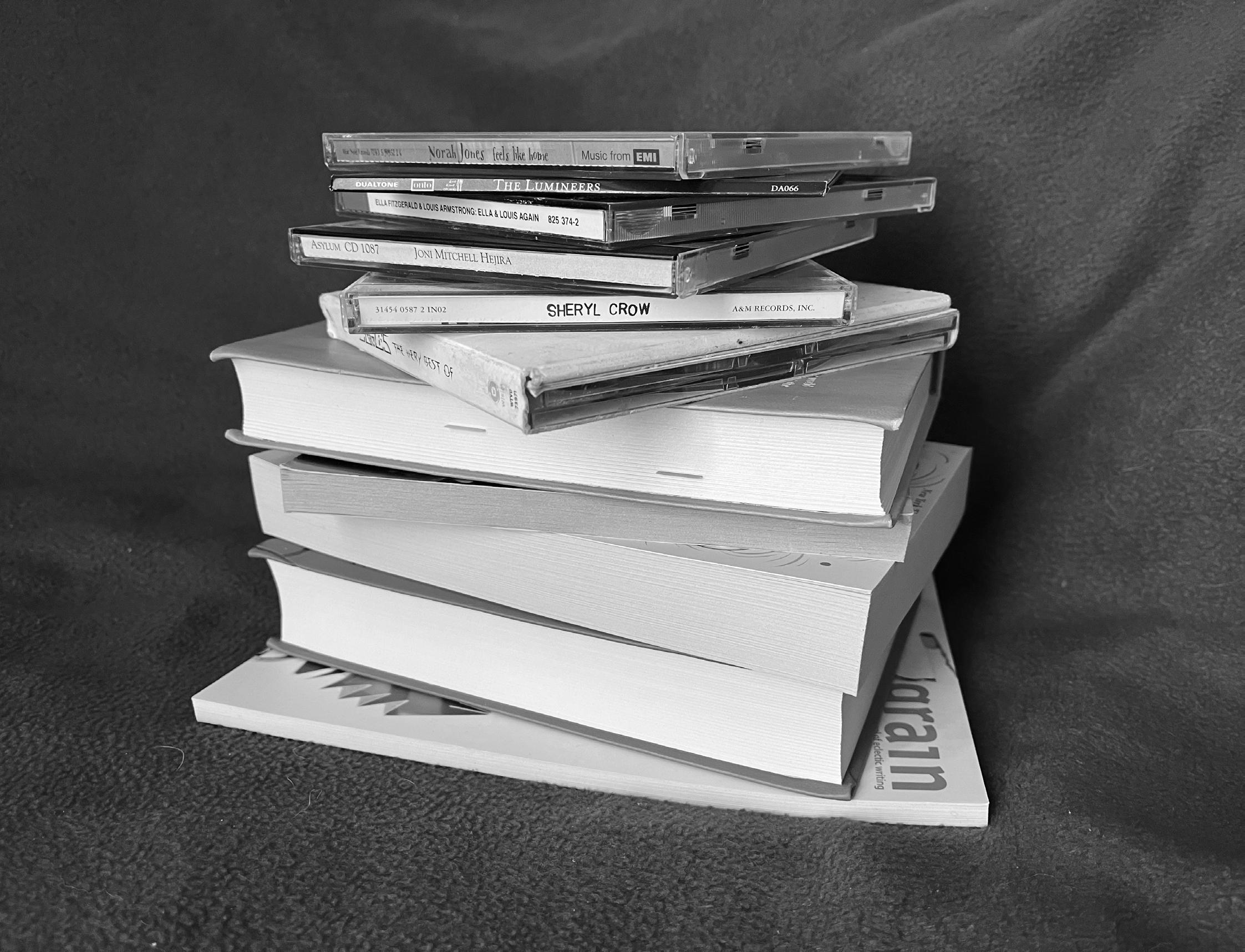
Songs to listen to:
“To Regina With Love” by Two Crows for Comfort
A country folk tune by folks from Stony
“Having read it in the springtime as someone who has had a job working with plants, I have learned to look at nature, language, and even human activity differently.”
Emma McGill
Mountain, Manitoba about their experience playing a show here in Regina. “The place is full, the room is warm, folks applaud, but no one’s really listening…”
“Juniper” by Jake and the Kid
This indie rock band local to Regina released their newest single in October of this year. “I can’t stand, my knees are buckling…”
“River” by Joni Mitchell
This well-renowned track is perfect for getting into the Christmas spirit without lifting your spirits too high. “It’s coming on Christmas, they’re cutting down trees…”
“I Can’t Get My Head Around You” by Billie Marten
This upbeat yet laid-back folk tune by British singer-songwriter Marten will brighten your day, if just a little. “But I can’t get my head around you and I can’t get enough…”
“Generation Handclap” by Library Voices
If you’re looking for a little dance
break, find it with these Regina locals who’ve been making music together since 2008. “Trying to turn your blood and bones into something you can sell…”
Youtube series:
Amelia Dimoldenberg’s “Chicken Shop Date”
Amelia Dimoldenberg has now been dating celebrities in chicken shops across the U.K. for over ten years. Her interview style, disguised as first-date flirtation, is both witty and off-putting in the most humorous way possible. Most recently, Dimoldenberg went on a date with Andrew Garfield and a playdate with Elmo. Other dates over the years include celebrities like Sabrina Carpenter, Lando Norris, Charli Xcx, Shania Twain, and Ryan Reynolds and Hugh Jackman (as a pair!)
NPR’s “Tiny Desk Concerts”
NPR Music has been sharing Tiny Desk Concerts with the world for over 15 years, hosting artists from all genres and from all over the world to put on a show, often with
a band, and behind an office desk. Over the years, the desk and the shelves on set have become more and more crowded with memorabilia and tokens of artistry from all of the musicians who have performed there. These have included Andy Shauf, Taylor Swift, Sheryl Crow, Haim, John Prine, Dua Lipa, and many more. During Covid, selected artists recorded their Tiny Desk videos from home and sent them in. Each year, NPR hosts a Tiny Desk Contest, allowing artists to submit their video entries for a chance to play their own concert and go on tour with NPR Music
zinia jaswal contributor
Roger Penrose, a brilliant mathematical physicist and Nobel laureate, has spent a lifetime unravelling the mysteries of the universe. His contributions to general relativity, black holes, string theory and quantum mechanics have earned him a reputation of being one of the foremost thinkers of our time. In his book Fashion, Faith and Fantasy in the New Physics of the Universe, Penrose sets out to challenge and to question one of the most fashionable ideas in physics. Penrose argues about the direction of modern physics, while essential in advancing the field of physics and mathematics, might be leading scientists astray in most of its crucial areas, such as string theory, quantum mechanics and cosmology.
Fashion in this context refers to the tendency for theories or ideas to gain popularity based on trends rather than scientific merits. Faith implies an unquestioning of certain concepts or models where evidence is lacking. Fantasy involves speculative ideas that, while imaginative, might be disconnected from scientific reality. This book is in many ways a continuation of Penrose’s long-standing philosophical inquiry into the nature of reality. The book is an audacious and intellectual critique of the prevailing fashion in modern physics, questioning assumptions that Penrose believes are more akin to faith and fantasy than scientific fact. In this article, I’ll explore the central themes and arguments of fashion, faith and fantasy, examining Penrose’s technique for string theory, the multiverse and the theory of everything.
String theory, being the fashion in modern physics, is a framework that has
captured the imagination of physicists and mathematicians for decades. Penrose does not shy away from challenging string theory. He cautions that string theory with its propositions of six dimensions has drifted too far from reality, making it difficult to understand. According to Penrose, there is no testable way to prove the claims of string theory. While the mathematical beauty of the theory has attracted widespread attention, it lacks evidence to back it up. String theory posits that the building blocks of the universe are tiny particle-like vibrating strings that can exist in multiple dimensions, holding the key to the longsought theory of everything that could reconcile quantum mechanics with general relativity. However, this fails to convince Penrose. For him, string theory is more of a fashion in physics, drawing attention because it answers more of the grand questions in physics.
Turning to quantum mechanics, Penrose acknowledges its extraordinary success in explaining the atomic world. However, he suggests that the overwhelming belief in its applicability to macroscopic physics has led to uncritical faith in its universal validity. In response to this, Penrose argues that quantum theory may need to be reconsidered and adjusted for phenomena at larger scales of physics.
When discussing cosmology, Penrose critiques the current speculative ideas of the origins of the universe, calling them a fantasy and likely incorrect. This leads him to critique the multiverse theory - the idea that our universe is only one of the vast multiverses with different timelines and with different physical laws – as well. Penrose is highly critical of this theory, since it is not scientifically tested. Unlike
string theory which at least proposes mathematical models that can one day be tested in principle, the multiverse theory suggests a reality beyond observation or experimentation. Such ideas, while very tantalizing, are more in the realm of philosophy or fantasy than actual science. This section of the book is the most thought-provoking, as Penrose raises fundamental questions about the very nature of science. He asks whether it is acceptable for physics to be based on ideas that cannot be tested, proposing that theories need to meet scientific reality to be accepted. For Penrose, the multiverse theory fails this test.
Another key aspect of Fashion, Faith and Fantasy is the theory of everything which could explain all the forces of nature - gravity, electromagnetism, and the weak and strong nuclear forces - within a single framework. The quest for the theory of everything has been a central pursuit in theoretical physics. Penrose challenges this idealistic goal, suggesting the universe may be too complex for it to be answered in a single, unified theory. He argues that our current understanding of physics, while extraordinary in many aspects, may always be incomplete and the search for the theory of everything might be a misguided effort. This is not to say that Penrose rejects the search for a deeper understanding of the universe but rather that we should be wary of the conviction that a single theory defines all aspects of the universe.
This perspective sets Penrose apart from many of his contemporaries, who are confident that such a theory is within reach. Instead of simplifying the universe into mathematical equations, Penrose proposes that we embrace the reality of the universe. His view is rather humble - we
never may fully understand everything and that is okay. Physics is an ongoing exploration rather than a destination.
Throughout the book, Penrose champions mathematical realism and a return to scientific rigor, the idea that mathematics is not just a tool for describing physics but that mathematical structures have an existence independent of human thought. For Penrose, the power of mathematical equations is a reflection of the world. This conviction pins his own work on black holes and the structure of space-time.
In Fashion, Faith and Fantasy, Penrose argues that modern physics has strayed too far away from basic mathematical realism. Theories like string theory and the multiverse prioritize speculative elegance rather than evidence and mathematical rigor. He emphasizes the critical need to return to the foundation of physics, where equations are grounded in what we can observe and test.
My favorite part is where Penrose takes a moment to self-reflect, acknowledging how the forces of fashion, faith and fantasy have shaped his own work. He points to his twister theory, an alternative to string theory which is beginning to take on a fashionable status. He attributes his concept of conformal cyclic cosmology to an idea so unconventional that it may be called conformal crazy cosmology, highlighting the sometimes unpredictable nature of scientific progress.
For readers with an interest in modern physics and cosmology, this book is an essential read. Penrose offers a fresh perspective on the state of physics and raises some important questions on human knowledge, the nature of the universe and our place within it.

“
For readers with an interest in modern physics and cosmology, this book is an essential read.”
Zinia Jaswal