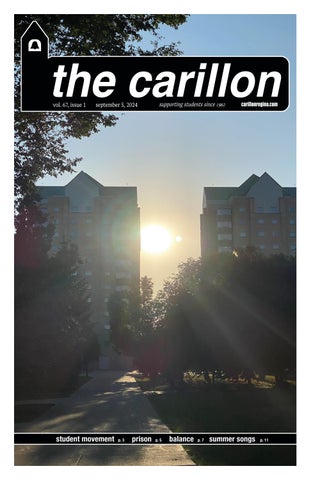

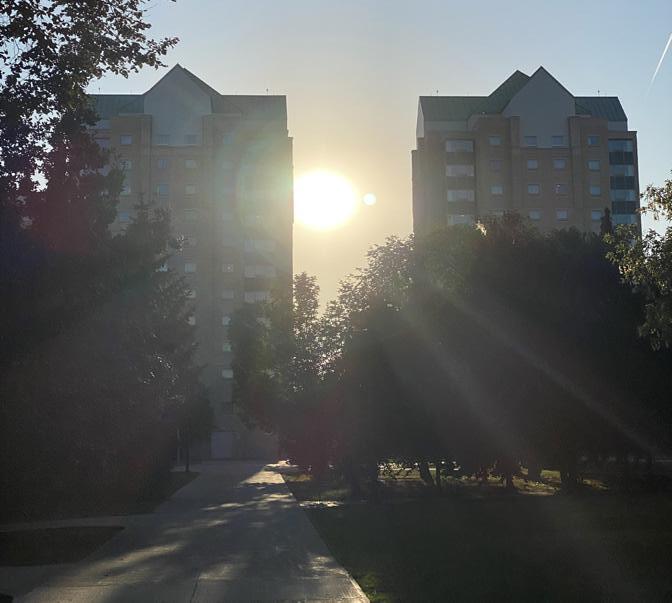
Hello everyone and welcome to Volume 67 Issue 1! We’ve had an amazing number of contributors for the first issue and it looks like that trend will hopefully continue for the foreseeable future. I’m looking forward to reading what everyone has to send in! Pitch list two is up by the time you’re picking this up, so be sure to read carillonregina. com/pitch to learn more about issue two and how to contribute. Our first open editorial board meeting will be happening in 227 Riddell Centre on Monday, September 9 from 4-5 p.m., so feel free to come talk to us about what you want to see in the paper! The next Board of Directors meeting, which all students are free to attend and listen to, will be the last Wednesday of each month at 7 p.m.. If you wish to attend a Board of Directors meeting, please reach out to infotayef@gmail.com.
Illegitimi non carborundum, mikayla tallon editor-in-chief
the staff
editor-in-chief mikayla tallon editor@carillonregina.com
executive director vacant business@carillonregina.com
production coordinator annika hadden production@carillonregina.com
web technician jebrael muhammad web@carillonregina.com
news editor allister white news@carillonregina.com
community editor kimberly kaufman community@carillonregina.com
op-ed editor hammad ali op-ed@carillonregina.com
staff writer amina salah
staff writer emma mcgill news writer nazeemah noorally news writer shivangi sharma community writer pall agarwal
contributors zinia jaswal, lee lim, girlynne gascon, & william bessai-saul
board of directors muhammad zuhruf, muhammad zarooq, mohammad akib hossain, tayef ahmed, austin stadnyk, jeremy beam
the paper
227 Riddell Centre @ the University of Regina 3737 Wascana Parkway, Regina, SK, Canada S4S 0A2 www.carillonregina.com | (306) 586 8867
Printed by Star Press Inc, Wainwright, AB
The Carillon welcomes contributions.
Opinions expressed in the pages of the Carillon are entirely those of the author, and do not necessarily reflect those of The Carillon Newspaper Inc. Opinions expressed in advertisements appearing in the Carillon are those of the advertisers, and not necessarily of The Carillon Newspaper Inc. or its staff.
The Carillon is published no less than 11 times each semester during the fall and winter semesters and periodically throughout the summer. The Carillon is published by the Carillon Newspaper Inc., a non-profit organization.
land acknowledgement
The Carillon is written on Treaty 4 territory. As such, staff recognize that we are living, working, and telling stories on and of Indigenous lands. We recognize that we are on the traditional homelands of the Cree, Saulteaux, Nakota, Lakota, and Dakota peoples, along with the homeland of the Métis nation. The Carillon understands that it is pointless to acknowledge the land on which we work without demonstrating our commitment to telling stories and prioritizing voices that further the return of this land to its sacred place.
the manifesto
In keeping with our reckless, devil-may-care image, our office has absolutely no concrete information on the Carillon’s formative years readily available. What follows is the story that’s been passed down from editor to editor for over sixty years.
In the late 1950s, the University of Regina planned the construction of several new buildings on the campus grounds. One of these proposed buildlings was a belltower on the academic green. If you look out on the academic green today, the first thing you’ll notice is that it has absolutely nothing resembling a belltower.
The University never got a belltower, but what it did get was the Carillon, a newspaper that serves as a symbolic bell tower on campus, a loud and clear voice belonging to each and every student. the people’s friend; the tyrant’s foe









editor: allister white news@carillonregina.com the carillon | september 5, 2024
shivangi sharma news writer
On August 5, 2024, Sheikh Hasina, the now-resigned prime minister of Bangladesh fled Bangladesh for India. Prior to early August 2024, Hasina had been prime minister for 15 years. Hasina’s resignation came in the wake of countrywide protests led primarily by Bangladeshi students.
The unrest and resentment fueling this summer’s student movement in Bangladesh goes as far back as the nation’s formation in 1971.
After the Indian War of Independence concluded in 1947, the Indian subcontinent was partitioned into Pakistan and India. The nation of Pakistan consisted of West Pakistan and East Pakistan which went on to become Bangladesh after rising tensions led to the Bangladesh War of Independence in 1971.
The country’s current government was formed under the leadership of Prime Minister Sheikh Mujibur Rahman, Sheikh Hasina’s father, and established a set of employment quotas for government jobs.
These quotas mandated that 30 per cent of the jobs go to veterans of the Bangladesh War of Independence, religious and ethnic minorities, underrepresented districts, and others. Merit-based government jobs were limited and in the firm minority.
The quota system was gradually re-
“
rest.
Late this summer, students began to lead protests against Hasina’s quota system. The protests which started peacefully and divided in select areas of the country quickly spread nationwide due to the government’s violent response.
The government sought to suppress the protests and deployed its student wing to other factions to quell the movement. These groups resorted to using firearms and sharp weap- ons against peaceful demonstrators.

perpetuated.
The government went on to deploy the police and other armed forces. They also instated a nationwide shoot-at-sight curfew. Schools and educational institutions were shut down indefinitely. As images of students and protestors being brutalized
What began as peaceful demonstrations against unemployment and a corrupt quota system soon became representative of a civil movement against the authoritarian rule of the Bangladeshi government.
Amongst rising tensions and pressure from the protests, Hasina also eventually lost support from the army. Protestors de-
sis in the form of massive floods. The year has been particularly difficult for the residents of Bangladesh as well as the community of Bangladeshi students at the University of Regina. The Carillon extends its thoughts to every Bangladeshi student on campus and hopes for a better and more peaceful future for the country and its citizens.
The government went on to deploy the police and other armed forces. They also instated a nationwide shoot-at-sight curfew... As images of students and protestors being brutalized surfaced... an indefinite cutoff of calls and internet services was also announced.”
Shivangi Sharma
formed, and by 1985, merit-based positions for civil services rose to 45 per cent.
Sheikh Hasina started her first term as the prime minister in 1996 and in 1997 the quota for veterans of war was extended to the children of freedom fighters. In 2010, the quota was further extended to the grandchildren of the freedom fighters.
A petition challenging the legality of the quota system was rejected by the Bangladesh Supreme Court in 2018 and Sheikh Hasina, now serving her second premiership and third term, announced that she intended to keep the quota for descendants of the freedom fighters. This sparked the first student-led protests against the quota system leading to its abolition altogether –a decision that became effective in 2020.
In July 2024, The Supreme Court of Bangladesh reinstated the 30 per cent quota for descendants of freedom fighters, cancelling the 2018 reforms. This, coupled with rising unemployment rates, led to Hasina’s government electing to reinstate the quota system and sparked nationwide un-
surfaced on the internet, an indefinite cutoff of calls and internet services was also announced.
As of August 2, there were 215 confirmed deaths, more than 20,000 injuries, and more than 11,000 arrests in various parts of the country.
UNICEF reported that at least 32 children were killed during the protests. Many more were injured and detained.
Former prime minister Hasina’s response to the unrest sparked further anger and discontent after she publicly called the movements anti-nationalist and terrorist claiming that the students were “Pakistanis” and that the protests had nothing to do with the quota system while the army continued to brutalize the students and other demonstrators.
The movement continued despite the curfew and the government’s violent response. Students began demanding a ban on the government’s student wing and the resignation of many government officials and accountability for the violence they
cided to march in the thousands to Dhaka, the country’s capital, leading Hasina to resign and flee the country on August 5.
Celebrations were reported from many parts of the country at Hasina’s resignation. Students immediately began to take an active role in maintaining order in their country in the wake of the unrest.
Students were seen wearing their university IDs and visibility gear to direct traffic with sticks and umbrellas, as police were on strike and no longer enforcing traffic laws. Some students were also enforcing seatbelt and license regulations, while others were pulling over and inspecting vehicles of those they suspected to be former government officials attempting to smuggle riches.
Not only did they man roads, but students also helped usher in an interim government in Bangladesh led by Muhammad Yunus, the only Nobel laureate of the country, who will lead until the next general election takes place.
Not long after the protests settled in Bangladesh, the country faced another cri-
Counselling for anyone going through a difficult time is available on campus and can be solicited at any time at uregina.ca/ student/counselling/contactusform.html.
shivangi sharma news writer
What’s up with Welcome Week?
The University of Regina Students’s Union (URSU) typically kicks each year off with a busy welcome week itinerary and Fall 2024 is no different. Welcome Week events begin on Saturday, September 7 and events span over the week, concluding on Friday, September 13.
Saturday, September 7 brings the Nextgen Car Show with an after-party hosted at The Owl at 8 p.m..
On Monday, September 9 there will be an on-campus scavenger hunt and a Rams patio barbeque, also hosted at The Owl.
On Tuesday, September 10 an event branded “Breakfast with Execs” is set to be held in the morning, with karaoke happening in the evening.
The club fair, as well as trivia night, are planned for September 11, and the club fair will return on September 12, when Beer Gardens and a Casino night will also be hosted.
“Pints and Puzzles” and DJ night are set to take place on September 13.
A list of events, along with the time, schedule, and location for each event can be found on URSU’s website.
Starbucks comes to campus
In April 2024, an email from Dianne Ford, the Vice President of Administration, delivered by Student Affairs announced the addition of a Starbucks to campus.
“I am excited to announce that one of the world’s most iconic brands will soon be joining our campus community,” said Ford. The announcement was met with varying responses from the campus community.
While some were excited, many students expressed discontent at the news. Starbucks is one of the brands targeted by an ongoing boycott movement against companies involved in funding the ongoing genocide in Gaza. Starbucks has been boycotted in the past for union-busting activities as well.
Many students thought it was insensitive to welcome and promote the brand on campus. Despite the discontent, Starbucks started operating on campus last week.
Dr. Lloyd Barber Faculty Recital
To continue with the ongoing 50th anniversary celebrations of the University of Regina, the Faculty of Media, Art, and Performance is hosting a season kick-off recital that is free for all to attend on Saturday, September 7 at 7 p.m.. The concert will be held at the University Theatre in Riddell Centre.
The recital has been titled to honour Dr. Lloyd Barber, the President and Vice-Chancellor of the University of Regina from 1976 to 1990.
The recital is set to feature the debut of the 1916 Nordheimer grand piano donated to the Department of Music in 2019 by Ada Lou Watson, Dr. Barber’s sister, which was restored earlier this year. The recital will also feature a number of talented voice artists and instrumentalists from the department. Parking is free for all attendees.

Who knew you could go to a newspaper for instant gratification?
Costco (2.0) approved
Regina’s planning department recently approved the plans for the construction of a new Costco in Regina. The development application filed with the city of Regina has been under review since the end of July and was approved on August 21. Reportedly, the new store is to be located in the west end of the city next to the Westerra neighbourhood at 8701 Dewdney Avenue.
Regina is home to many people, and food insecurity is one of Regina’s most threatening social issues, right alongside homelessness, substance abuse, racism and discrimination, and safety. Citizens recognize that folks deserve to live safely and securely, and so, within the last five years, Regina has seen several improvements in its food security services, including the BMO Asahtowikamik Food Hub.
Starting in 2020 in the wake of rampant anxiety surrounding COVID-19 transmission, Regina’s residents found a way to introduce contactless food programs like the Regina Community Fridge. A December 27, 2020 CBC News article details how the program worked. A simple food box was filled with necessary food items like milk, bread, frozen meals, and perogies, and worked similar to little free libraries scattered across the city.
If you had the resources to do so, you could open the box and donate food. For those who used it, you simply opened it and took what you needed. The Regina Community Fridge was started by Danielle Froh and placed behind the Regina Family Pharmacy at 3037 Dewdney Ave.
Since this first fridge was opened, two more have opened in Regina. One at 1510 12th Ave, and another on the east parking lot of the Holy Rosary Cathedral at 2104 Garnet Street. The Regina Community Fridges also have
a Facebook page under the same name.
In 2021, Carmichael Outreach, a community-based charity organization, received $15,000 from SGI to fund its Food Security Program. Still, food insecurity is a front-of-mind issue for many Canadians. Recent upward trends in inflation, rising levels of insecure employment, and the lasting effects of COVID-19 all play a role in reducing people’s access to affordable food.
It is very likely that the pandemic contributed to the increased levels of food insecurity in Regina. In 2017 and 2018, The City of Regina estimated only about 15 per cent of people experienced food security. Over the last five years, usage of the Regina Food Bank has increased by 76 per cent.
Break Free Outreach offers
The Pantry and The Kitchen to Regina residents. The Pantry is another source of groceries in Regina. Serving the residents of North Central Regina, The Pantry operates on the second and fourth Tuesday of every month.
According to their website, registration for the program requires a Saskatchewan Health card for everyone in the household, as well as proof of address.
The Kitchen is a volunteer-run soup kitchen that offers a daily lunch that “not only fills the stomach but also feeds the soul,” according to their website.
The Kitchen also runs commu-
According to an article from CBC News, the store will have over 1,200 stalls with multiple accessible stalls. The plans include a gas station as well. The timeline for the store’s construction is yet to be released.
Regina currently has only one Costco located on the Anaquod road in the far east end of the city.

nity kitchen programs to teach individuals of all ages essential cooking skills.
The BMO Asahtowikamik Food Hub has been a hot topic since it opened, offering a major addition to the food security services already in Regina. As of August 16, the food hub operates to relieve food insecurity in Regina alongside Carmichael Outreach on 11th Ave, the Community Fridges, its parent organization
(Regina Food Bank), The Pantry on 766 Angus St, and others.
The Asahtowikamik food hub offers a unique approach to delivering food to the community. Based on a typical grocery store, users get to choose which items they receive instead of accepting what they are handed. Like a grocery store, there will be a point of sales system, however, there is no real money being exchanged.
The food hub’s CEO, John
Bailey, said the new hub’s goal is to give people three to five meals per week. An August 15 CBC News article writes that, “When somebody walks to the door at this new food bank, which officially opens for use Aug. 16, they will be greeted by a staff member or volunteer who will make sure they have an appointment and give them a blank shopping list.” Additionally, the new food hub features a play structure and basketball court with outdoor seating behind the building, making it an attractive opportunity for parents to bring along their children to “shop” at the hub, and then go enjoy the outdoor playground.
Food security is a serious issue in Regina, but local changes can make large impacts.
If you need it, visit a food bank, the hub, or the pantries. If you’re able, consider donating something to the cause. Charities do much to support the cause, but they cannot close the gaps all by their own power. Being social about the issue helps keep resources like food banks, the hub, and community pantries available.
kimberley kaufman community editor
The past two decades have not been kind to inmates
allister white news editor
On July 29, a news release by the provincial ombudsman’s office announced that Sharon Pratchler, Saskatchewan’s ombudsman, is seeking to speak with those who have served time at Pine Grove Correctional Centre. Pratchler stated that she is “aware of significant concerns through complaints made to [her] office.”
People who have been incarcerated at the Pine Grove Correctional Centre are encouraged to contact Pratchler’s office to share the ways in which they have been “adversely impacted by experiences or conditions” during their incarceration.
Those who wish to speak with the ombudsman or a member of her team can call 1-844608-1180 (toll-free) or 306-7874236 Monday to Friday from 8:00 am to 4:30 pm, the lines will be answered Friday evenings and Saturday as well, the news release claims, and the lines are dedicated for the purpose of collecting Pine Grove complaints.
In-person meetings are also available. Investigators will travel to communities including those in the north, to increase accessibility and make it easier for those impacted to speak with the team.
the treatment of individuals” incarcerated at Pine Grove will also be considered.
The last review of this nature investigating conditions at Pine Grove by the ombudsman was completed and published by the ombudsman’s office more than two decades ago, in 2002, and was titled “Locked Out.”
The July 29th announcement comes weeks after CBC reported that overcrowding at the prison has reached “crisis levels,” in the wake of multiple hunger strikes, deaths, and unhealthy conditions.
Overcrowding at Pine Grove has been a recurring concern.
Last July, The Elizabeth Fry Society, a non-profit advocacy group in Saskatchewan that supports incarcerated women, raised an
Grove had 275 female inmates, more than 100 above capacity. These high inmate counts led to a practice known as “triple bunking” where cells designed for two people needed to fit three, and chapel, gymnasium, and visitor area spaces filled with beds to hold inmates. By mid-July, the number of inmates reduced to 227, still above the prison’s maximum capacity of 166 inmates.
The 2002 report suggested that steps be taken to eliminate the need for double bunking and dormitories, however, overcrowding has increased in frequency and scale since, indicating persistent problems at Pine Grove.
Since food service at Pine Grove was outsourced to Com-
Canada, stated that “these women should have access to clean water but they do not… [women] are getting flakes on the scalp and boils on their skin.”
Faith Eagle, an advocate and former inmate at Pine Grove told APTN that “the water was disgusting – it tasted like sewer… it looked like there was oil, you know, when oil and water meet; you could see the residue on it.”
Staff at Pine Grove are given Nimbus water to drink, but inmates are not.
The UN’s Standard Minimum Rules for the Treatment of Prisoners states that “Every prisoner shall be provided… with food of nutritional value adept for health and strength, of wholesome quality and well pre-
to protest conditions at the prison. Access to family visits is also limited at Pine Grove. The 2002 report found that female inmates are more geographically isolated from their homes and communities than male inmates in Saskatchewan. This was made evident by two thirds of the 2002 prison population being from Regina, Saskatoon, or northern Saskatchewan.
The report’s recommendation was that Pine Grove Correctional should “provide concessions to inmates who are incarcerated outside their home geographic area to compensate for their isolation.” The recommended concessions included subsidizationof long-distance phone calls and travel expenses, and increased
“ The water was disgusting – it tasted like sewer… it looked like there was oil, you know, when oil and water meet; you could see the residue on it.”
Faith Eagle
The July 29 news release also claims that, during the investigation conducted by the ombudsman’s office, the degree to which trauma-informed practices and “Truth and Reconciliation principles have been incorporated into
alarm that was already ringing. Overcrowding places the health and safety of inmates at risk, and people have the potential to become violent when overcrowding persists.
In July of this year, Pine
pass Group in 2015, inmates at the prison have raised concerns about food quality.
Before Compass Group received its contract to feed inmates at the prison, staff and inmates ate the same meals, all prepared by cooks. There was awareness of food handling procedures, cleanliness, and food safety.

As of November 2015, inmates have not been aware of what they are eating and how well it’s been prepared. According to a letter written by inmates in 2015, “some women have gotten sick after their meal, and have a fear of eating because they do not want to feel ill… [and] many people are still hungry after dinner and supper.” At one point, inmates were served nine pieces of Wonderbread per day.
The 2002 report does not account for the 2015 change in food service at Pine Grove, though it did account for aged plumbing and low water pressure. The report recommended that plumbing issues be addressed, but now, decades later, women are beginning to get sick from the water.
Sherri Gordon, the founder of Beyond Prison Walls
pared and served.” The UN also has rules pertaining to water and cleanliness, stating that “drinking water shall be available to every prisoner.”
Over the past few years, inmates have begun various hunger strikes. Those refusing meal trays now say they have no end in mind, and plan to continue to protest conditions at the prison.
Access to family visits is also limited at Pine Grove. The 2002 report found that female inmates are more geographically isolated from their homes and communities than male inmates in Saskatchewan. This was made evident by two thirds of the 2002 prison population being from Regina, Saskatoon, or northern Saskatchewan.
The report’s recommendation was that Pine Grove Correctional should “provide concessions to inmates who are incarcerated outside their home geographic area to compensate for their isolation.” The recommended concessions included subsidization of long-distance phone calls and travel expenses, and increased visiting privileges. Even with subsidization, with defunct bus lines the ability of families, especially from remote communities, to visit is greatly reduced.
In 2002, Pine Grove routinely allowed special and extended visits and paid for long-distance phone calls. Still, it’s unclear if that remains the case at the prison, and geographic and infrastructural factors remain barriers to family visits.
In a 2021 Macleans article, Justin Ling classed Canada’s prison systems as “dangerous, racist, and falling apart.” Around 90 per cent of Pine Grove’s inmates are Indigenous, and Ling says that “by nearly every metric, the nation’s penal system is not just failing, it’s making things worse.” no end in mind, and plan to continue
visiting privileges. Even with subsidization, with defunct bus lines the ability of families, especially from remote communities, to visit is greatly reduced.
In 2002, Pine Grove routinely allowed special and extended visits and paid for long-distance phone calls. Still, it’s unclear if that remains the case at the prison, and geographic and infrastructural factors remain barriers to family visits.
In a 2021 Macleans article, Justin Ling classed Canada’s prison systems as “dangerous, racist, and falling apart.” Around 90 per cent of Pine Grove’s inmates are Indigenous, and Ling says that “by nearly every metric, the nation’s penal system is not just failing, it’s making things worse.”
A conversation with Girlynne Gascon on art and representation
grant inform your practice? Does this naturally manifest into your work?
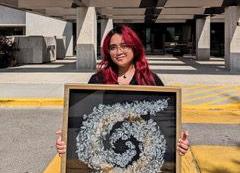
I had the pleasure of speaking with Girlynne Gascon, an emerging visual artist and a Filipino immigrant who moved to Canada in 2010. I was curious about her artmaking process and how her cultural identity informs her work.
Gascon’s work has been featured in Wander magazine, and Gascon herself participates in fundraisers and art fairs. Just recently, she hosted ‘Filipino Flores De Mayo Storytime’ at the Regina Public Library’s Sunrise Branch.
What was your drive behind this storytime?
My manager and I were talking about how we haven’t really featured the Filipino community, and there’s a lot of Filipinos in Regina. I told her, if you’re thinking about a Spring event, we have Flores De Mayo. I want to tell Filipinos in Regina that we have something for you.
I work at the library, and I want to welcome my own community here! Especially for kids who grew up here – I want to show them how we celebrate festivals. I had the vision to do a fiesta, an authentic display like a little sari sari store and I wanted to showcase a Filipino author for the storytime.
How does your location back in the Philippines play into your vision for this event?
It took me a bit to find my footing in making my art. Recently, I want to explore my cultural identity by basing my images in nostalgia and on my childhood experiences. I just want to share my narrative – to say this is what life is, and this is the beauty of our country. We’re more than just lumpia and pancit; there’s more
process?
Yes, very heavily. Last year, my granddad passed, and a lot of my memories were of being at the farm with him. Now, I want to preserve these memories. After that, I started working on projects that are reminiscent of my memories with my granddad and my other relatives.
When I went there, I was taking reference pictures, and thinking about how I can incor-
your work is present in these spaces?
I’m imagining myself when I just came here. I didn’t see art from artists of colour. I need representation. I need someone to show that even people of colour belong in the galleries!
It took me a while to find Filipino artists in Regina to connect with because I don’t see them. Where are we in the picture? In the art scene? It took me years
galleries. It’s still a work in progress, we need more representation for sure. But I started seeing a shift, for example, the program Building Arts Equity – which I’m in. They’re giving grants to artists of colour to make art or be under a mentorship. It helps us be in the scene. I’m connecting to more artists of colour and younger artists in the city, and we’re making a mark.
What does your path to decolonizing the arts look like?
It’s something that I’m still exploring. I’m trying to find other artists of colour to ask them about their stories. By exchanging stories is how I want to make a mark in the scene.
We’re beyond the narrative that they give us, let us show our stories! I’m trying to find people to collaborate with and unchain these expected notions of us.
Any advice to Filipinos and other creatives out there?
You just put yourself and your story out there. It took me a bit to show myself out there, because I’m not even a Fine Arts graduate since I was in Psychology. I did not feel validated. But by talking to people and showing my art, I saw that people can recognize and relate to it. Just put it out there!
We were located in the province of La Union, we lived in the mountains and it is a very community-based town. Flores De Mayo is celebrated all throughout the Philippines. I think it’s the perfect celebration to have. It doesn’t matter where you are because you know what this is.
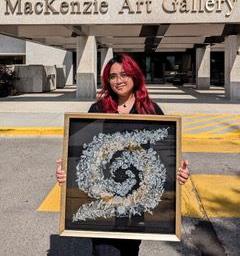
As a Filipino creative, listening to Gascon’s busy year as a new artist in Regina greatly warms my heart. It is a reminder that artists of colour are actively working to carve a space in the local art scene to proudly represent where they come from. Gascon’s dedication to integrating her cultural identity into her craft is admirable and will surely leave a lasting impression on people of all backgrounds.
“ We’re more than just lumpia and pancit; there’s more beyond that in being Filipino, and I want to share those nuances.”
beyond that in being Filipino, and I want to share those nuances.
During the event, I overheard the parents tell their kids that this is what we have back home, while showing their kids the sari sari store that I set up. They were reminiscing, and that was a special moment for me. I got my vision through.
Looking at your artworks, such as Liwanag ng Buwan and Takipsilim, does being Filipino or an immi-
Like [in those said artworks], sure, it’s a moon and sun reference, but I lived where there’s so much greenery, mountains, and you can hear the animals. I wanted to incorporate that into my practice, but in what way do I make it a story, make it interesting, or a conversation starter?
You recently went back home for a visit, did this change anything in your art
porate it into my practice. At the moment, I’m working on a series that is based on my experiences back home. Now, I want to dedicate my art to sharing my narrative and theirs to the people in the prairies!
To name a few, you’ve been involved with events like Back Alley Art Market, Sunshine Arts Festival, Cathedral Village Arts Festival, and silent auctions. How important is it for you that
Girlynne Gascon
to connect. I’m very proud that I can say that I’ve been in these galleries. If an artist of colour can see this, I can say that I can make a mark in the prairie landscape.
Have you noticed a shift in the usual target demographic of art galleries/ festivals when you or other POC artists are leading them?
Oh, for sure! Lately, I’m seeing more people of colour in the
Embrace the new beginnings this fall semester!
zinia jaswal contributor
As the summer sun begins to dip lower on the horizon and the vibrant colors of autumn fill the air, one thing is clear: it’s that exhilarating time of year again! Students are gearing up to embark on another transformative academic journey at the University of Regina (U of R).
Whether you are brushing dust off your textbooks or stepping onto campus for the first time, there is energy in the atmosphere. This is more than just a new semester; it is an opportunity to grow, connect, and cultivate unforgettable memories.
As your classes commence, finding a balance between academics, social life, and personal well-being becomes essential. Creating a structured schedule with dedicated study time, social activities, and self-care is vital for a successful semester.
Remember, breaks are just as important as your study sessions –rather than diving into an endless stream of notes, treat yourself to a walk in the park, a visit to the gym, or even a guilty pleasure binge-watch of your favourite series. Allowing ourselves moments of relaxation helps recharge our mental batteries and promotes long-term productivity.
more resilient against stressors.
enjoy learning from is invaluable.
“
Furthermore, it is important to recognize the realities of study pressure and how to navigate it effectively. A key strategy is to break your workload into manageable chunks, setting realistic goals for each study session. To retain information more effectively, distribute your study time over days or weeks, rather than trying to master an entire syllabus in one sitting.
If you need assistance with difficult coursework or insights into future opportunities, reach out to them. Building relationships with faculty members can
Whether you are practicing mindfulness, engaging in meditation, or simply sharing laughs with friends during a study break, remember that your well-being is
“Welcome back to campus! Let’s tackle this semester like a boss.”
Zinia Jaswal
For our returning students, the thrill of reconnecting with friends and the comfort of familiar surroundings is a welcome sentiment. As you navigate through your favorite coffee spots and study nooks, take some time to embrace change and explore new avenues this semester. Every year brings a fresh perspective, and you might discover new places that quickly become your favourites.
Sometimes, the most productive thing you can do is rest, and that looks different for everyone. For some people it’s sleep and for others it’s talking with family or friends.
Achieving a harmonious work-life balance during your university years is essential for maintaining both your mental well-being and academic success. As students, the pressure to excel academically can often feel over-
Techniques such as the Pomodoro Method – working for 25 minutes followed by a 5-minute break – can help maintain focus while studying, so your study time is used more effectively and broken up to help avoid burnout.
Create a support network of friends, family, and campus

For those stepping onto campus for the first time, the experience can feel overwhelming. Take a deep breath and remember everyone is in the same boat.
The start of a new semester is a prime time to dive into extracurricular activities and join clubs or organizations. Regardless of your interests – be it academics, arts, sports, or community service – there is something for everyone at the U of R. Getting involved is not just about adding another line to your resume; it’s about engaging with like-minded individuals, enhancing your skills, and creating memories that will last a lifetime.
whelming, leading to long hours spent cramming for exams or completing assignments, often at the cost of personal time and selfcare.
To tackle this, establish firm boundaries between your academic responsibilities and personal life. Create a structured schedule that designates time for studying, extracurricular activities, social engagements, and relaxation.
This way, you ensure that while you are committed to your studies, you also carve out moments to recharge and engage in activities that bring you joy. Prioritizing downtime enhances your studying productivity and fosters a healthier mindset, making you
resources like the tutoring centers. Don’t hesitate to lean on them; they can provide valuable assistance and encouragement. Learning to balance your academic life with personal interests and self-care can enhance your overall university experience and equip you with essential skills for managing stress in your future.
There are other invaluable resources available to you from professors and academic advisors that you should not overlook. Some students fail to fully use the resources and networking available to them during their first years at university. Professors and academic advisors can make or break your experience at university, so reaching out and cultivating a relationship with those you
lead to invaluable mentorships and unique opportunities, including research projects and connections within your field.
Remember to celebrate your achievements, both big and small. Acknowledging your progress fosters a positive mindset and motivates you to keep pushing forward. Set aside time for weekly self-reflection to assess what is working and where you can improve. Adjust your strategies when needed and embrace flexibility; adaptability is key in navigating university life.
Another essential aspect to consider is finding effective study habits that work for you. Every student has their unique approach to learning; what works for one may not work for another. Experiment with different techniques – study groups, flashcards, or digital resources – to find your rhythm.
The Dr. John Archer library offers serene study spaces perfect for those focused sessions, while nearby coffee shops on and off campus provide a lively atmosphere that can spark creativity and inspiration. Remember that consistency and regular breaks in your study routine can vastly improve your focus and information retention.
As the semester unfolds, you will want to stay informed and engaged with campus happenings. Keeping up with university events, workshops, and activities through the university’s website, social media pages, and newsletters can provide great opportunities. Engaging early in the semester is vital; it helps establish your presence within the campus community and connects you with valuable resources and networks.
Even amidst the hustle and bustle of university life, do not forget the importance of prioritizing your mental health and well-being. Transitions can sometimes feel daunting, and it is crucial to acknowledge those feelings. Leverage the university’s counselling services, participate in wellness workshops, and actively seek activities that nurture your mental health.
just as crucial as your academic performance. Lastly, take time to explore the beautiful surroundings of the University of Regina; connecting with nature can provide much-needed inspiration and clarity.
As we step into this exciting semester filled with opportunities for growth, friendship, and learning, let us remind ourselves that each of us is on a unique journey. Embrace new experiences, build connections, and make the most of your time here at the U of R.
Here is to a productive and enjoyable fall semester; whether you are a returning student or joining us for the first time, we cannot wait to witness the incredible things you will achieve in our vibrant community! Welcome back to campus! Let’s tackle this semester like a boss.
You’ve heard of summer blues, now get ready for fall fatigue
pall agarwal community writer
As the sun goes down and we transition to a routine where days are shorter and nights are longer, people tend to face something called seasonal depression.
According to Cleveland Clinic, “seasonal depression is a type of depression triggered by a change in seasons, usually when fall starts.” People find it challenging to transition from the vibrant and colourful summer to the muted and mundane season of autumn.
Those who thrive in the sun and find their best versions of themselves in summer might find a dip in their mood and find it challenging to move to a much less incentivizing season.
According to John Hopkins Medicine, seasonal depression, also called seasonal affective disorder, has various symptoms, including increased sleep and daytime drowsiness, loss of interest in activities formerly enjoyed, social withdrawal and increased sensitivity to rejection, and many more.
It is essential to see a mental health provider when these symptoms are identified so you can receive support in treating them. One might feel this way for various reasons, and believe it or not, most of it could result from the change in your environment.
Oftentimes, when there are shorter and colder days, people tendency to stay inside instead of going outside to socialize. This could lead to a lower level of sunlight exposure, leading to a Vitamin D deficiency.
The body starts releasing melatonin in response to a lack of sunlight. This could result in feeling more tired, wiped out, and fatigued during fall and winter. The reduction in socialization might also be a large factor in loneliness and depression.
Some ways one can deal with this besides seeing a mental health provider include staying active, building a healthy sleep schedule, and staying connected.
When people are preoccupied with going back to school, people tend to neglect and sometimes forget that the world outside needs to be explored. Staying consistent with exercising might be difficult during fall and winter but essential for a wholesome life. Some of the ways to continue doing this is finding a friend who is in a similar boat and set up gym dates. This way one would have a reason to hang out with them and stay accountable to each other for staying fit. Students at the University of Regina can make use of the university’s amenities to the fullest by accessing the gym and pool, or joining clubs like UR Fit.
It is difficult to stay consistent with sleep during fall and winter, especially when feeling
sleepy most of the time. Ensuring a healthy sleep schedule not only affects work and life but also helps to stay consistent with in your moods. Consistent sleep patterns can help prevent the fatigue that is accompanied by seasonal depression.
Fall and Winter are very heavy with on-campus activities especially with Welcome Week kicking off in the first week of the U of R’s Fall semester. Setting the tone of school lifestyle by actively engaging in those activities would help one to build those friendships and look for new reasons to be around each other.
The semester can get busy and depressing with the onset of winter and it is essential to have each other’s backs. Apart from being involved in the fall and winter kickoff week, the U of R has a lot of student clubs that one can engage in depending on your interests.
Student clubs host many events throughout the year, allowing one to build skills through those initiatives. From dance to pottery, business to sports, there are many options. Surrounding oneself with those high-achieving individuals would also help one to stay motivated and bring that value to their social circles.
This is not an exhaustive list but a general approach to address some of the ways to deal with seasonal depression. While the transition from summer to
Skip the groceries — the Luther Cafeteria takes the stress out of cooking!
You don’t need to be a Luther student or have a meal plan to dine in our cafeteria. Order single items off the menu or indulge in our all-you-care-to-eat style buffet, seven days a week.
Students love gathering for homestyle meals like the weekend brunch buffet, lasagna, ribs, and Sunday family-style dinners.

already exhausted in summer.
fall and winter can be excruciatingly hard, it comes with an opportunity for people to embrace new challenges and participate in spaces outside their comfort zone while focusing on self-care and building a positive mindset.
Establishing a consistent routine, a healthy sleep schedule, trying to stay as physically active as possible, and doubling down on social connections could be some ways to help yourself outside of
seeing a mental health provider. Anyway, winter is just a season – it comes with its own fair share of fun and growth. It isn’t all gloom and doom.
https://www.hopkinsmedicine.org/health/conditions-and-diseases/seasonal-affective-disorder
https://my.clevelandclinic. org/health/diseases/9293-seasonal-depression
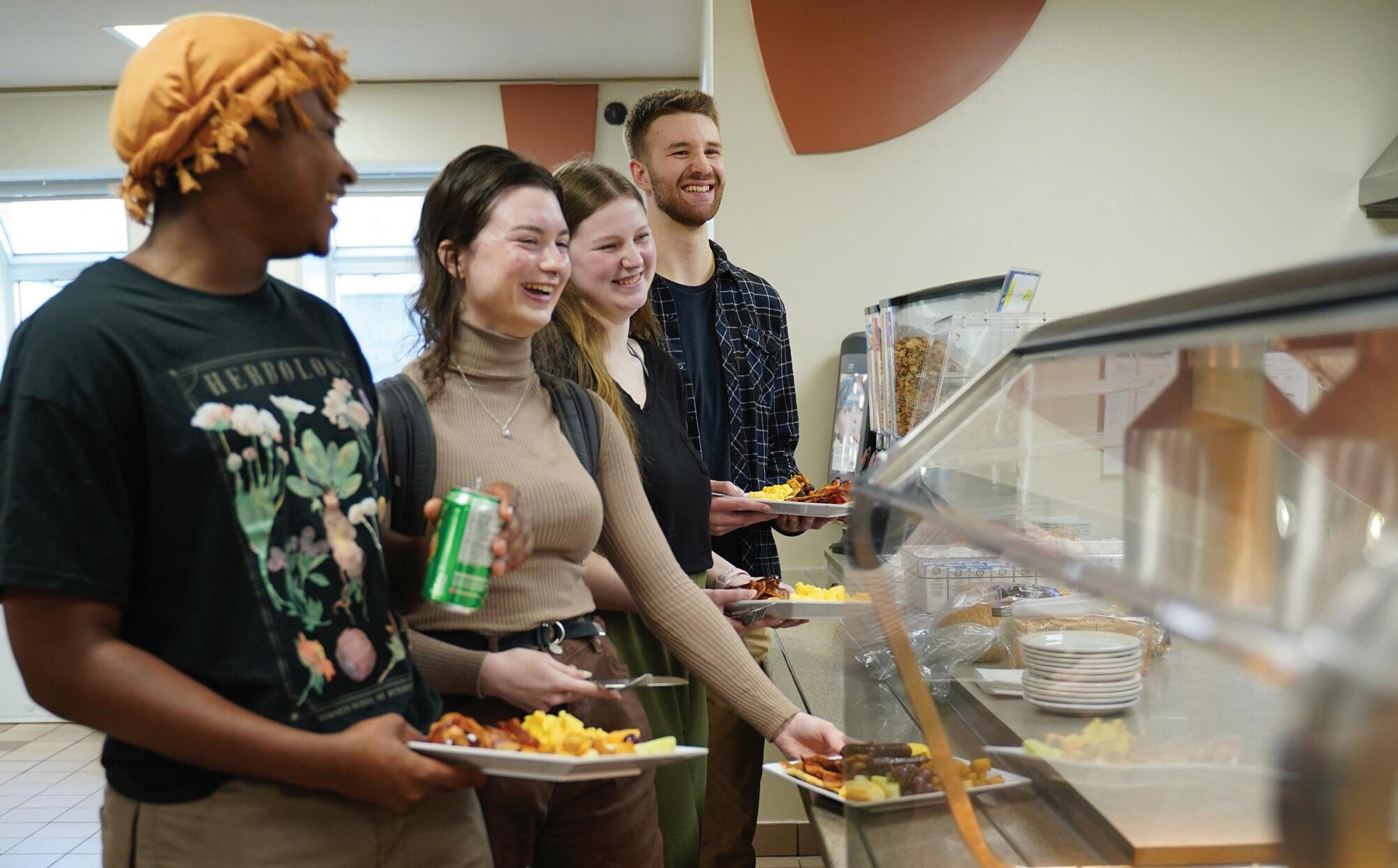
ABOUT MEAL PLANS Anyone can purchase a Luther Cafeteria meal plan or

Just like life, the book is a mixed bag
amina salah staff writer
Written by Colleen Hoover,
It Ends With Us is a book centered around the themes of domestic violence, abuse, and how they can intertwine with inter-generational trauma. The book focuses on our main character, Lily Blossom Bloom, a 23-year-old woman who is about to accomplish her lifelong dream of opening her own flower shop.
Lily Blossom Bloom is a florist. Colleen has never been one to give much thought into the names of her characters, but the name Lily Blossom Bloom deserves its own op-ed.
One windy night, Lily meets neurosurgeon resident Ryle Kincaid on a rooftop right after giving a eulogy at her father’s funeral. As if the book world has not seen this before, Ryle appears to be a brooding male character with a haunting past that is typically meant to excuse all of his actions, true to Colleen Hoover’s writing style.
The more Lily and Ryle run into each other, the more Ryle obsesses over Lily. Lily somehow ends up developing feelings for Ryle, although he does not believe in commitment, monogamy, and marriage; all of which are things that Lily desperately wants. It is the same old story. Girl meets boy, boy is not only a red flag, he is the red sea, girl thinks she can change boy, and surprise, girl painfully finds out that she cannot in fact change boy.
Forget going on Goodreads, that is the summary of It Ends With Us.
Things get serious when Lily and Ryle decide to enter a phase where they test whether they can be in a monogamous, committed relationship. Throughout this process, Lily is going through her old journal from her teenage days.
From the journals, we find out that her first love was Atticus Corrigan, a homeless boy with a troubled past. This was a time in Lily’s life where she witnessed her mother experience abuse and violence from the hands of her father. Amidst this chaos and pain, Lily relies on Atticus.
As Lily and Ryle grow in love, we begin to see the different sides of Ryle. On one side, he appears to be decent (that is the only kind word I have to describe him, sorry friends!). On the other side, he shows his manipulative side, toxic side, and abusive side, leading to a cycle of passionate love followed by heartbreaks. The only thing threatening Lily’s current relationship is her past relationship with Atticus.
The issue I have with It Ends With Us is that it is often misunderstood, and often advertised as something it is not. However, it is also advertised as something it wishes it were.
If you have been doom-scrolling on social media, you will know that people either love this book or they hate it. My is-
sue is that there doesn’t seem to be any level of nuance when it comes to It Ends With Us. The book has its issues, but we have to be fair in acknowledging the few things it gets right.
Upon getting into this book, I had to do the mental work of clearing my mind of everything I had ever heard about it so that I can receive in a way that allows me to understand it. Colleen Hoover does a surprising yet beautiful job at depicting generational trauma and how it can catch up to us before we have even healed from it.
Lily had a difficult time dealing with her abusive household, and many times, she wondered why her mother would not leave her father. Even when her father inflicts abuse upon Lily, her mother tells Lily to cover up the abuse. Lily is in shock because she thought that the day her father inflicted his pain onto her would be the day her mother would leave. Unfortunately, that is far from reality.

The reason why they can enjoy their book is they put their phone away.
Illustration: Htc Erl via Pixabay
Our society has a pattern of shaming victims of abuse. We ask why they won’t just leave. We question their stories. We doubt them. We make no space to understand them. We don’t shower them with empathy or compassion. In some cases, we wonder why our parents never walked away. Why did they decide to put up with the abuse? Why didn’t they protect us from abuse?
All of these are valid thoughts to experience. It Ends With Us does a pristine job at showcasing the mother-daughter relationship in the face of abuse. Lily has empathy and compassion for her mother, but her life has been changed forever because of the abuse she watched her mother endure.
There is one passage where Lily speaks to her mother about the abuse she is facing at the hands of Ryle. “We all have a limit. What we’re willing to put up with before we break. When I married your father, I knew exactly what my limit was. But slowly... with every incident… my limit was pushed a little more. And a little more.
“The first time your father hit me, he was immediately sorry. He swore it would never happen again. The second time he hit me, he was even more sorry. The third
time it happened, it was more than a hit. It was a beating. And every single time, I took him back. But the fourth time, it was only a slap. And when that happened, I felt relieved. I remember thinking, ‘At least he didn’t beat me this time. This wasn’t so bad.”
When I see people reviewing It Ends With Us with no nuance, I just want to show this passage to them. Lily’s mother explains the cycle of abuse so well. Statistics don’t lie. Abuse always escalates. One day it is punching the wall. The next day, it is you.
Nobody should have to endure that pain. There are resources available for those who can use help. It is not your fault. You did not deserve it. You will heal. It might take you longer, but you will heal, slow and steadily.
Amidst the cringe-worthy lines, Lily’s obsession with addressing her journal entries to Ellen DeGeneres because she thought it made her cooler, and the pain that is Colleen Hoover’s writing style, It Ends With Us remains an important book because it explains the cycle of abuse, the inter-generational trauma, and why that cycle is difficult to break.
It is in our nature to seek familiarity in life. We are all drawn to things that remind us of our past. That can range from the wholesome perfume of our mothers as they hugged us, to the neglect and violence we faced at the hands of those who were supposed to love us.
““It is in our nature to seek familiarity in life.”
We seek familiarity, whether it is good for our well-being or not. This is why going on a path towards healing is so crucial for your emotional and mental well-being. You deserve to heal. You deserve to get to know yourself and to know who you truly are. You deserve to shed the mask that you show to the rest of the world. You deserve to meet the healed version of yourself. The book ultimately shows us that the cycle and pattern of abuse should stop somewhere. It stops with you. It stops with me. It ends with us.
Amina Salah
MONDAY
TUESDAY
WEDNESDAY
THURSDAY Daebak!
FRIDAY

Life is unique. No one will ever live the same life as someone else. There are simply too many variables. Ever listened to that song, “Unwritten” by Natasha Bedingfield? That’s the point I’m trying to make.
There is no one who knows what it means to be you better than yourself and no one who knows what it’s like to be a student at the University of Regina better than a student at the University of Regina. There’s no one who
knows your interests quite like you do and there’s no one who knows exactly the same things you know who learned them all the exact same way.
This is why it’s important that student journalism continue. No one but current students can think, write, read, or experience the world like a modern student. How could they, when their experience is not as a student?
Journalism is about truth. Student journalism is then about the truth of students.
So, what is your truth? What is the truth of the world that you experience? Can you prove that’s the truth? So, prove it.
Last volume, I wrote an article on the importance of journalism to democracy. But the Carillon isn’t just journalism, it’s student journalism. A paper by students, for students.
Do you have an insight into something that you believe people aren’t considering when they really should? Mayhaps it’s time to write that op-ed article and show people why they should consider that insight.
Is there something big going on around the university, an event or game that you’re going to? Why not write a community article on what happened and include a list of similar events that people who enjoy that sort of event could attend after reading your article?
Do you want to learn how to write an article for the news section from start to finish? Reach out to our news editor at news@ carillonregina.com and ask, or even pitch a story you want to chase!
Student journalism is important as a tool for growth and ensuring student voices are heard. It’s not guaranteed that your article will be published by a company outside the university. We, however, will do everything in our power to see your article make it into the hands of others.
We will guide you as much as we can, we will help you hone your writing, we want to see you succeed. Your commitment to us is our commitment to you.
Student journalism is an opportunity to have important conversations in a safe environment.
It’s an opportunity to show the world your thoughts, your interests, your creativity, and your professionalism. It’s an opportunity to spread the word about something others may not have heard of yet due to running in different circles or a lack of mainstream media coverage.
Student journalism is diverse, rigorous, and hard work. It is work that needs to continue because it is journalism by and for students, those who want to learn about the world and the way it works.
Being a student, doing student journalism, is not something to be ashamed of. Everyone is al
ways learning, and if they’re not, they’re doing something wrong. So, join us as student journalists. Learn from each other, educate each other, get involved in your community, and grow as people.
mikayla tallon editor-in-chief
Queer anthems, America, and taking it one day at a time
allister white news editor
Unless you’re one of three to five percent of the world’s population who have a condition called “musical anhedonia,” making music an unenjoyable mix of boring and distracting – feelings that the Atlantic say reflect in your brain activity – you probably spent at least a bit of your summer listening to music.
I know I did, so I’ve taken the liberty of picking my relevant, catchy faves. Without further ado, here’s my take on the three songs
that the queer anthems and artists of the ‘80s had in paving the way for artists today. Even before the boom of queer pop and queer influence on pop culture that took place in the 1980s was modern queer music’s early beginnings in New Orleans in the 1890s. The 1890s were a decade that the GLBTQ Archive says brought new policies on prostitution and with them “a vibrant same-sex social world [that] flourished.” By the 1920s, highly celebrated blues performers like Ma Rainey were openly making and performing sapphic music.
Rainey sang many songs about men, still, Angela Davis
Why it’s a song of the summer: “American Nights” comes as attitudes sour further towards the American Dream, and as a nail-biting election looms over the American masses (and the rest of us) again.
In a piece for the Guardian, Stephen Reicher claims that Trump asks people to see him as their saviour, and to buck “the establishment.” Reicher also says that Trump and his family “are portrayed as rough and ready ‘ordinary guys’ whose success exemplifies the American dream. And… he uses his wealth to make himself ‘one of us.’”
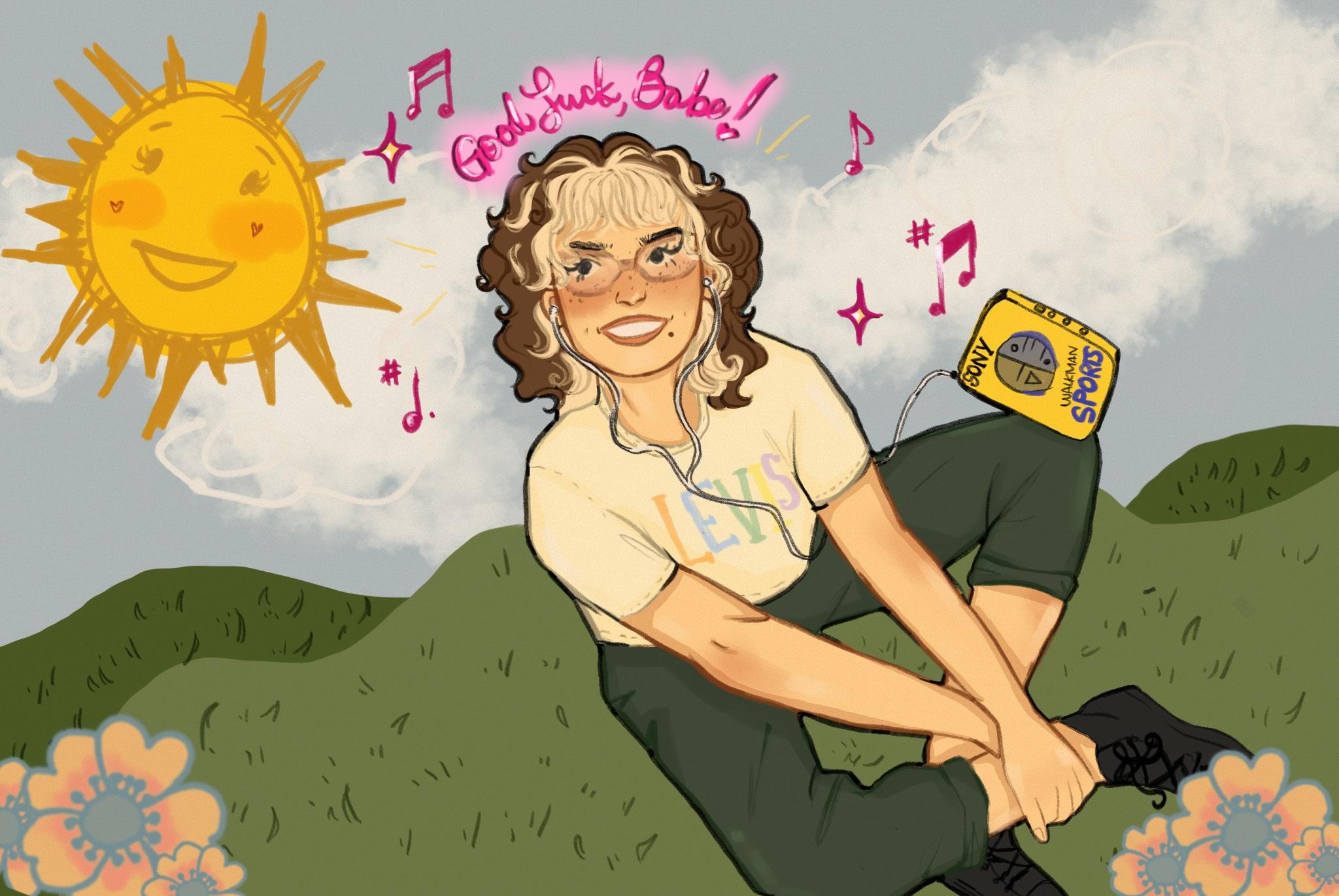
I’m labelling the “songs of the summer.”
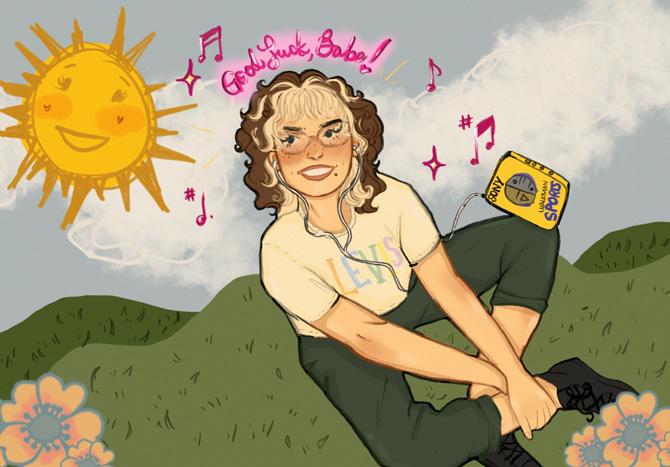
#1 Roan, Chappell. “Good Luck, Babe!” Good Luck, Babe! - Single. 2024.
“You can kiss a hundred boys in bars // Shoot another shot, try to stop the feeling // You can say it’s just the way you are // Make a new excuse, another stupid reason // Good luck, babe (well, good luck).... //You’d have to stop the world just to stop the feeling”
Why it’s the #1 song of the summer:
A pile of stunningly lusty queer songs hit the billboard top 100 while we were cruising to the beach, sunbathing on our decks and lounging on the porch trying (and failing) to get course readings done a little bit early. Billie Eilish’s “Lunch,” Chappell Roan’s “Casual,” and “Good Luck, Babe!” are just a few of them.
If I had a nickel for every time a sapphic song about cunnilingus catapulted into popularity over the summer months in recent memory, I’d have two nickels. It’s not a lot, and while the saying goes “It’s weird that it happened twice,” the boom is actually unsurprising, especially considering the rich history of queer music that backs it.
It’s no secret that we’re hearing a resurgence in queer pop anthems as artists’ synthesis of pride, queer identities, and music regain mainstream, widespread attention. For one, Roan’s ‘80s pop style reminds us of the role
says that Rainey’s song “‘Prove It on Me’ [was] a cultural precursor to the lesbian cultural movement of the 1970s, which began to crystallize around the performance and recording of lesbian-affirming songs.”
“Good Luck Babe!” is a song of the summer because of how Roan so skillfully speaks about different aspects of queer love, gender roles (including conformity/nonconformity to those roles), and longing. Roan also writes about comphet (compulsory heterosexuality), or the obligation that some people feel to live as a heterosexual.
This is as critical to the song as Roan’s longing is – it’s a reminder that ignoring your queerness is unhealthy, harmful, and at the end of the day, not completely possible. In a province governed by a party dead-set on making life increasingly difficult and dangerous for queer and trans folks, “Good Luck, Babe!” is a welltimed reminder that we can’t erase away our queerness.
“Good Luck, Babe!” is also a song of the summer in the wake of Queen City Pride’s largest ever turnout, proving that Davis’ hypothesis isn’t wrong: queer cultural movements and music tend to crystallize around each other.
When we think of the hypothesis Davis made all those years ago, are we standing face to face with “I told you so?” I think so.
#2 Bryan, Zach. “American Nights.” The Great American Bar Scene. 2024.
by day”
Why it’s a song of the summer:
“Day By Day” and Popaganda turn 40 this year, and it deserves a birthday celebration. Here at the Carillon, we’re dedicated to speaking up when nobody else is, and we have a rich history of covering everything from LSD to gnarly URSU schemes.
A University of Regina Alumni, who attended the university while the Carillon was in its early days told me that the paper was for reading “things that we had no business reading.”
This summer, we’ve been taking things here day by day, but we
“
What Reicher suggests Trump is doing is exploiting the collapse of the American Dream. Trump is promising to make the dream a possibility again. Trump is claiming he’s the product of that dream – and he’s doing it to woo voters.
For many, the American Dream is collapsing, and for others its always been obvious that the American Dream was a lie built on the backs of those oppressed by slavery and by a settler-colonial nation state that stole land and committed genocide against Indigenous populations.
“American Nights” subtly marks the demise of the illusion that has been the American Dream. Bryan speaks about the army, and the trauma of it.
“Ameican boys,” Bryan says, are “a friend of [his].” In many ways, “American Nights” is a song about the summer, the coast, and friendship.
In another way, Bryan talks about changing attitudes towards war and the nationalistic patriotism that America (and their jaw-droppingly high military budget) are known for because “twenty’s too young to nearly die,” and the violence and lasting trauma of the army ought to encourage us to think about what patriotism and the American Dream means, and who pays (and has paid) for it.
#3. Doug and the Slugs. “Day By Day.” Popaganda. 1984.
“I speak up when I feel it’s right // I jump up when I know that I got to fight // Until then I just take it // Day by day by day
com/ssh/new_orleans_S.pdf
https://globalnews.ca/ news/10569430/in-photos2024-queen-city-pride-paradelarger-than-ever/
https://thenewpress.com/ blog/celebrating-black-lesbian-thought-spotlight-on-ma-rainey
“This summer, we’ve been taking things here day by day, but we sure missed you. We hope you missed us too.”
sure missed you. We hope you missed us too.
Honourable mentions: 76th Street. “Girl.” WILD - EP. 2024
Summer 2024’s femme anthem celebrates queerness and recognizes the role music has in connecting people – the song talks about dancing to MUNA and falling in love to Brandi Carlile’s “You and Me on The Rock.”
ARXX. “Good Boy.” Good Boy - Single. 2024.
“My golden retriever masc anthem,” – Holly Funk, icon. Enough said.
*NSYNC. “Bye Bye Bye” No Strings Attached. 2000
The perfect song for pretending you can dance as smoooooooth as Ryan Reynolds’ dance double did while desecrating Wolvie’s corpse. Key word: pretending. Into hearing (live) music that’s more put-together than this mishmash of songs? Check postings for shows in the city on saskmusic.org.
Sources:
https://www.theatlantic. com/health/archive/2017/03/ please-dont-stop-the-music-ordo-stop-the-music-i-dont-reallymind/519099/
https://wers.org/the-riseof-the-queer-pop-anthem/#:~:text=With%20the%20recent%20outbreak%20of,the%20 roots%20of%20the%20genre.
http://www.glbtqarchive.
Allister White