

the carillon













via Pixabay, manipulated by
Five years at the Carillon has taught me that it truly is impossible to change things without being changed yourself. It has taught me that change is as essential as it is eternal, and that there is no point in fighting something that sits in either of those categories, let alone both.
Three years as Editor-in-Chief of the Carillon has taught me that you truly can learn from everybody, and if you aren’t doing so then you need to get out of your own way. Condescension only serves to rob you of joy, and it is violence toward yourself to rob yourself of the connections that are possible when you take up kindness and humility.
This year has taught me that nothing gold (forget gold, nothing at all) is truly meant to stay, yet that’s no reason to not fully invest yourself in loving each golden moment you are lucky enough to live through.
May you change, may you learn, may you love, and may you never let the bastards grind you down.
Illegitimi non carborundum
holly funk editor-in-chief
not pictured shae sackman jaedyn whittal maren savarese knopf nazeemah noorally victoria baht the paper
227 Riddell Centre @ the University of Regina 3737 Wascana Parkway, Regina, SK, Canada S4S 0A2 www.carillonregina.com | (306) 586 8867 Printed by Star Press Inc, Wainwright, AB
The Carillon welcomes contributions.
Opinions expressed in the pages of the Carillon are entirely those of the author, and do not necessarily reflect those of The Carillon Newspaper Inc. Opinions expressed in advertisements appearing in the Carillon are those of the advertisers, and not necessarily of The Carillon Newspaper Inc. or its staff.
The Carillon is published no less than 11 times each semester during the fall and winter semesters and periodically throughout the summer. The Carillon is published by the Carillon Newspaper Inc., a non-profit organization.
land acknowledgement
The Carillon is written on Treaty 4 territory. As such, staff recognize that we are living, working, and telling stories on and of Indigenous lands. We recognize that we are on the traditional homelands of the Cree, Saulteaux, Nakota, Lakota, and Dakota peoples, along with the homeland of the Métis nation. The Carillon understands that it is pointless to acknowledge the land on which we work without demonstrating our commitment to telling stories and prioritizing voices that further the return of this land to its sacred place.
the people’s friend; the tyrant’s foe

Halal concerns unaddressed
Little context provided by the Lazy Owl or URSU
holly funk editor-in-chief
“We had an in-camera session, we exited the in-camera session, and then somebody put forward a motion to adjourn. We then implored the rest of the Board: ‘This is incredibly important, it needs to be addressed. Please stay, please deal with this.’”
Nabeera Siddiqi, Luther Director with the University of Regina Students’ Union (URSU), was frustrated on March 18, 2024 when instead of taking action on a question of Halal quality at the Lazy Owl, the majority of directors voted to adjourn the meeting.
For Muslim individuals who choose to eat Halal, foods like cheese and meat are most impacted. Siddiqi explained that meat “has to be slaughtered a certain way, and there have to be prayers said over it when it’s slaughtered.
[...] There’s a religious distinction, it’s called Zabiha, which is the hand-slaughtered, properly done way, so it gets a little bit tricky. Things sometimes will say they’re Halal but they’re machine-slaughtered, and some people don’t consider that fully Halal.”
According to Siddiqi, as part of their requirements, Muslims will often choose to eat Halal. “So, the harm is, it is sinful to eat non-Halal meat. If you are served food that isn’t Halal, your religious decisions are kind of being taken away when something is labelled as such but then it isn’t actually. You’re being misled and lied to at that point, right?”
Islamic faith requires that believers take responsibility for intentional and unintentional sins alike, Siddiqi explained. “Oftentimes when Muslims will pray or
they needed to leave, they had the ability to. No one was holding them there against their will. [...] To vote for an adjournment when there was an important motion on the books that was about people’s religious freedoms? That was intentional to stop that from getting discussed or voted on.”
Rashad Haque, Social Work Director with URSU, echoed Siddiqi’s sentiment, saying that regarding meetings of the URSU Board, directors are “required to be there for three hours. Sometimes there are times when it goes over [three hours], and so they leave without us formally adjourning the meeting. [...] It feels deliberate that they didn’t want to address this right away.”
The issue to be addressed involves whether food labelled, sold, and served as Halal at the Lazy Owl truly meets the requirements of Halal food. It is unclear at this point exactly how far into the past these concerns extend.
“Early in the Fall semester of 2023,” the second paragraph in a statement by many URSU directors opens, “it was brought to the attention of the President of URSU that the Lazy Owl was selling menu items labeled as Halal, when they were not Halal. In December of 2023 during a routine Board meeting, URSU Board was informed of the breach and requested for staff to look into the details of the situation. [...] In February of 2024, in consultation with third-party HR [Human Resources], the Board was advised to conduct a formal external investigation to determine the details of the alleged breach.”
URSU’s board was to discuss this investigation at their March 18 meeting which was adjourned before the motion could be fully addressed.

him in the Lazy Owl to discuss her questions but, over the following week of email exchanges which the Carillon has reviewed, they were unable to find time to meet.
Siddiqi sent Desai another information request by email on March 22, again asking to see photographic proof of the brands of meat and cheeses used as well as the cheese ingredient lists, copies of Halal certificates, and writ-
er than provide information to the potentially impacted student. Desai also denied the request for cross-contamination policy and procedure information.
On April 11, 2024, the Carillon received an email from the University of Regina’s Muslim Students’ Association (URMSA) with two Halal certificates, one for the JBS Brooks slaughtering plant (JBS) in Brooks, Alberta which is certified until April 14,
“We then implored the rest of the Board: ‘This is incredibly important, it needs to be addressed. Please stay, please deal with this.”
Nabeera Siddiqi
balls. A third company, Mina Halal, is listed as supplying chicken breasts and “random chicken,” and has their Halal certification available on their website which will remain valid until Dec 31, 2024.
Other suppliers remain in question, as ingredients like Halal pepperoni are listed under menu items such as the Lazy Owl’s hot honey pizza, yet no supplier of Halal pepperoni was included in the list provided by Desai and Muhammad or the certificates provided by URMSA. No information was passed on regarding cheese suppliers or ingredients.
At the time of writing, the Carillon has not yet heard from anyone at URSU about when the Lazy Owl started ordering from JBS, Reuven, or Mina Halal, leaving prior Halal quality unknown despite the current certificates provided for beef and chicken products.
ask for forgiveness it comes into ‘Forgive me for sins that I’ve committed knowingly or unknowingly.’ There is a distinction made there, but they do count nonetheless.”
“This is on record, and I want this to be emphasized if possible,” Siddiqi noted, referencing the March 18 meeting once again. “If there was some other reason the board members felt
Siddiqi reached out to Jai Desai, bar manager at the Lazy Owl, in mid-March by email. She asked how long he believed non-Halal food had been served, whether food being sold at that time was certified as Halal, which meat and cheese manufacturers the Lazy Owl orders from, and to see physical copies of the Halal certificates. Desai responded March 15 asking Siddiqi to meet
ten assurance of the Halal quality at the Lazy Owl as well as an overview of cross-contamination policies and procedures.
“They refused to give me those answers,” Siddiqi said. A week after expressing willingness to talk, Desai directed Siddiqi to instead contact URSU’s interim General Manager (GM) Aoun Muhammad and follow the directors’ chain of command rath-
2024, and one for Reuven International Limited (Reuven) which is produced by Cargill Meats (Thailand) Limited and certified until Oct 1, 2024.
When asked to list where the Lazy Owl orders from, GM Muhammad provided the Carillon with a short list of three companies. JBS supplies ground beef, and Reuven supplies chicken fingers, cooked wings, and chicken cheese
Siddiqi said the ideal response from URSU would be to see that “URSU takes accountability, they apologize. ‘Here, now look – we are all Halal, this is the proof.’ That would’ve been the perfect outcome.”
“I still think that outcome is achievable,” Haque added, “it’s just that it hasn’t been prioritized. I don’t even like to say it hasn’t been addressed because it has been brought forward and deliberately, intentionally not been addressed.”
Image: Paigeell via Pixabay, manipulated by lee lim
Someone told Hammad to tell a joke the other day. All he said was “URSU.”
URSU alleged of Islamophobia
A March 9 email, signed “UR Concerned Students,” cannot presently be linked to U of R students
holly funk editor-in-chief
“This alarming discrimination threatens the sense of safety and belonging that every student deserves, potentially affecting their academic success, mental health, and overall experience at our university,” read a statement made in an email sent in the early morning hours of March 9, 2024, signed “UR Concerned Students.”
Those who sent the email to a plethora of news media outlets, student organizations, and student-union-involved individuals allege that the University of Regina Students’ Union (URSU) is perpetuating Islamophobia.
The email marks URSU president Tejas Patel as a key player. “...Mr. Patel has unjustly terminated six Muslims long term staff members. These individuals were dismissed under circumstances that were not only reckless and illegal but also in violation of their basic human rights in Canada. This situation raises significant concerns regarding the ethical standards and integrity upheld by the University of Regina.”
The email did not mention the reasons they were given for having been terminated, details on the termination processes and legality, any timeline regarding terminations or experiences of Islamophobia, or who the reported six staff members were. The only student named in the email was Patel.
“I mean, it’s a very serious
accusation,” said Aoun Muhammad, URSU’s interim General Manager (GM). “We will look into it, and whoever has claimed that, they have to prove it now.”
“None of them were performance-based,” Muhammad noted when asked about termination justifications, noting five known terminations in contrast to the six claimed in the email. “I can’t say more than that. I can say as much as what’s not going to affect if they go to law or they go to court for grievances, but none of the terminations were about Islamophobia.
Five staff members got terminated for sure, we acknowledge that as well, but none of them got fired because they were Muslims.”
“I’ve been here three years,” he added, “and I haven’t seen someone getting terminated for performance action.”
“Five got fired, yes. 15 to 20 are still working here and there is no job insecurity, no one is coming after them. I was in the room for most of the discussions as well. Ethical conduct some of the issues were, some really… let’s say, really grave misconducts that we had to address.”
Muhammad claimed that “according to all the management group and executives, they [the terminations] are just causes. Among executives we had a Muslim, among management two Muslims who were a part, and no. [...] It’s nothing to do with Islam at all. They can argue that it’s not a just cause – like there was no sense to follow – they can argue those things.”

And who am I? That’s one secret I’ll never tell… You know you love me.
Students.
Can the terminated individuals argue the firing was a result of Islamophobia? Muhammad says “definitely not.”
While the email signed by “UR Concerned Students” did not note details in claims of unjust terminations or Islamophobia, its authors included information on Patel’s faith. “Mr. Patel, known for his religious background as a practicing Hindu from India, he is at the center of a serious case of religious discrimination against Muslim [sic].”
Muhammad voiced frustration at the inclusion of this background information. “If someone is a practicing Hindu, it doesn’t automatically mean he’s Islamophobic. If someone’s a Muslim, which I am, it doesn’t automatically mean I’m an Antisemite. So that assumption, that allegation,
it’s very grave and it’s slanderous, and it’s bigotry as well.”
“Hinduphobia also exists.” he continued. “I would say religious-phobia. Practicing Catholics? They get judged. It’s something we should discourage, and it exists on the campus as well.”
Muhammad denied to comment on the specifics of who URSU suspects to have sent the email but claimed students from the University of Regina (U of R) were not involved. “I have a background in cybersecurity and tried to track that [the email] as well, and it’s not from U of R. It’s not even from Saskatchewan.”
Muhammad outlined the process for URSU staff to raise concerns if they experience discrimination in the workplace: “If it happens within the organization they can tell their manager
or supervisor, and if they’re the one who’s doing the abuse they can come to the next person in line.” Muhammad made clear that there are many avenues for reporting grievances at URSU. “If it has never been reported and then you just claim, ‘It happened to me,’ after termination, then the case is really weak after that,” he explained.
It remains to be seen whether “UR Concerned Students” will be identified, whether their allegations will be backed by evidence, and whether there are issues of discrimination within our students’ union.
If you or a student you know was involved with the sending of the email, please reach out to the Carillon
Carbon tax raised, protest from prairie premiers
Tax increases expected to continue in future years
Despite requests for a pause on the hike, the carbon pricing plan – set at $65 a tonne earlier this year – has now been increased to $80 a tonne. It is expected to continue to rise annually by $15 until it reaches $170 a tonne by 2030.
At the pumps, the hike will add roughly three cents per litre to the cost of gas and diesel.
Combating climate change has become a pressing global concern. Governments all over the world have implemented measures to reduce carbon emissions. One measure implemented is a carbon price. Carbon prices are a policy tool designed to incentivize companies and individuals to reduce their carbon footprint. In Canada, the carbon price hike has been a significant policy initiative aimed at curbing greenhouse gas emissions and transitioning towards a low-carbon economy.
A national carbon pricing system was introduced in Canada in 2019. The policy mandated provinces to implement either a carbon tax or a cap-and-trade system. The federal government imposed a carbon tax on provinces that did not have their own pricing mechanisms. The price started at $20 per tonne of carbon dioxide equivalent (CO2e) in

I used to joke that my car would run until they stopped selling fuel for it… which isn’t funny anymore... Photo: Engin_Akyurt via Pixabay
2019 and increased by $10 annually in the following years.
According to government data, emissions in provinces subject to the federal carbon tax have decreased since its implementation.
Hadrian Mertins-Kirkwood, a senior researcher with the Canadian Centre for Policy Alternatives, thinks the carbon price is a “cornerstone policy” of Prime Minister Justin Trudeau’s minority Liberal government.
“The idea is that by putting a price on pollution, people will use
fewer fossil fuels, and that drives down overall emissions from the economy,” Mertins-Kirkwood told Global News Mertins-Kirkwood also believed that Canadians will see “indirect effects” of the carbon price, pointing to transportation costs that can filter down into food prices.
Many premiers are opposing the upcoming hike in April and have requested the federal government to put a pause on the hike. In a letter to Trudeau, Andrew Furey, the Premier of
Newfoundland and Labrador, said that while his government is “deeply invested” in environmental sustainability, the planned increase “is causing understandable worry as people consider how they will manage the mounting financial strain.”
Other premiers including Doug Ford of the Ontario Progressive Conservative Party, Danielle Smith of Alberta United Conservative Party, and Scott Moe of the conservative Saskatchewan Party are of the same mind, and have expressed their
thought on the upcoming hike on their respective X (formerly Twitter) accounts.
“If they don’t start putting money back in people’s pockets instead of filling their pockets, guess what? They’re going to get annihilated, as I’ve said before, they’re done. They’re done like dinner,” Ford told reporters in Pickering, Ont., on March 13, 2024.
Despite calls for a pause, Justin Trudeau did not signal a pause when he spoke to some reporters in Calgary on March 13.
“The price on pollution was designed to do two things. Send a clear signal to investors, to companies, to Canadians that it makes good sense to invest in reducing our carbon emissions and saving energy, and a price signal is the clearest way of doing that,” he said.
“The second goal of the price on pollution was to make sure that middle-class families and vulnerable families across the country weren’t carrying the brunt of that price on pollution, and that’s exactly what we’ve done.”
shivangi sharma news writer
XOXO, UR Concerned
Image: iAmMrRob via Pixabay
Student perspectives on full-year course registration
Varied opinions on major changes to registration
shivangi sharma news writer
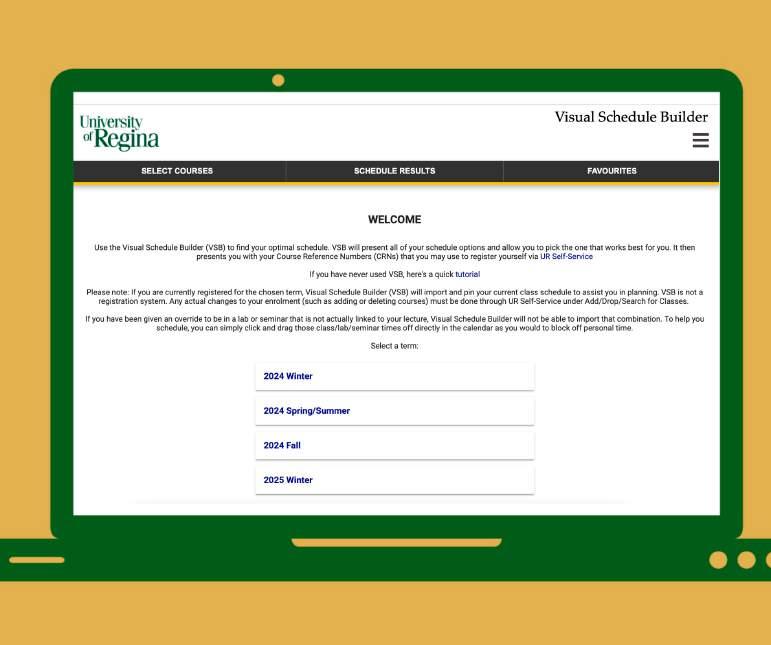
In January 2024, the University of Regina (U of R) Student Affairs announced their plan to launch full-year class registrations at the U of R in March. The program was successfully launched in March 2024 allowing students to register for classes for an entire academic year.
It has been about a month since the program was launched and the Carillon asked the students what they thought about it.
“I think it’s a good way for students to be able to plan their lives around classes. It’ll be nice to know what long-term jobs or opportunities someone can take up without gambling on whether it fits into their future schedule,”
said Wren Magalong, a fifth-year student in Music Performance.
“... it makes planning what classes to take a little more stressful and timeconsuming, especially because my time ticket was right around when I had some exams/papers to do.”
ALISSA SADLER
“I think it’s a good way for students to be able to plan their lives around classes. It’ll be nice to know what long-term jobs or opportunities someone can take up without gambling on whether it fits into their future schedule”
WREN MAGALONG
ule and it’s prevented me from committing to shifts.”
Katherine Reid who is in the first year of her education program has similar feelings. “I think it’s a really good idea. I did a previous degree at the University of Saskatchewan that had full-year registrations and I found it really helpful to be able to just plan out my whole year all at once. […] I didn’t have to think about it after that. So I think it’s a really good change,” Reid said.
While some students thought full-year class registration helps them plan their lives better, others had different opinions. Alissa
“I
think it’s a really good idea. I did a previous degree at the University of Saskatchewan that had full-year registrations and I found it really helpful to be able to just plan out my whole year all at once. […] I didn’t have to think about it after that. So I think it’s a really good change,”
According to the email sent out to the students, the goal was a consistent and long-term approach that better supports the academic goals of students and makes their lives easier and less stressful.
KATHERINE REID
Emily Hultgren, a third-year student in music education thinks, “It’s nice to be able to plan out my full year, so I can commit to other things like work. In the past, my job has sometimes done scheduling before I know my class sched-
Sadler, a third-year sociology student told the Carillon that she finds “the new system makes things a little bit more confusing and complicated.”
“When I was signing up for next year’s classes, it definitely
took me longer than I wanted it to because I had to actually manually switch the terms I was signing up for, which I didn’t remember [with half-year registration]. I also think it makes planning for what classes to take a little more stressful and time-consuming, especially because my time ticket was right around when I had some exams/papers to do. While I do think that it’s nice to get it all over with at once, I […] preferred the old system a bit more because I felt like it was easier for me,” Sadler explained. Maliha Jabeen Khan is a fourth-year biology student who is nearing the end of her degree.
Having spent quite a bit of her degree signing up for classes using the old system, she had insights about the pros and cons of the new system. “While having the registration open for the entire year makes us plan our classes out well in advance, sometimes it may not work out as things and schedules may change closer to when the semester starts and then there’s less flexibility to change courses, as those courses get filled up pretty quickly. In my opinion, choosing classes for two semesters works really well but maybe not for three semesters, especially if students want to make changes to their schedules,” Khan said.
“ In the past, my job has sometimes done scheduling before I know my class schedule and it’s prevented me from committing to shifts.”
Emily Hultgren
“...In my opinion, choosing classes for two semesters works really well but maybe not for three semesters, especially if students want to make changes to their schedules,”
MALIHA JABEEN KHAN
Image: via UR self-service, manipulated by lee lim
“Your old [schedule builder] is rapidly agin’[....] For the times they are a-changin.’” – Bob Dyl[lister]
non-news
The struggle is real: expectation vs. reality
When expectations don’t line up with reality
pall agarwal s&h writer
Exam season is such an interesting time in students’ lives. Sometimes referred to as the finale of all things academic, students go through so much in their academic journey only to let that one final exam be the judge of all the hard work, sucking up to the professor for bonus marks, and a lot more just to snag an extra mark here or there.
Having lofty expectations without the drive to see them through does not guarantee a passing grade. Expectations and reality during exam season can be very different.
Let’s address the elephant in the room – the expectation of strictly following the exam schedule. If no one says it, let me say it – it is not for everyone. The expectation to be able to suddenly follow a strict exam schedule after being a careless, clever clog the whole semester isn’t likely to
happen. Students make rigorous exam study plans but are not wellequipped to adhere to them.
Armed with colour-coded planners and digital calendars, they embark on their journey to academic success with strong determination. However, procrastination is the unfortunate reality and fruit of their labour. Despite their best intentions and efforts, they often find themselves succumbing to the temptation of social media, distractions, and binge-watching their favourite over-the-top shows rather than diving into textbooks.
Unattainable study schedules are not the only lofty expectation students have. Those ‘out-of-nowhere’ study groups made of your closest friends is sometimes not just a good time. Students have high expectations that they will be able to keep each other in check.
But what really happens?
That study spot becomes the central distraction point. Splitting into social groups, discussing personal stories, and engaging
in a nostalgic spree during study time distracts them from studying. The campus library becomes the breeding ground for distraction instead of productivity.
Students also have the expectation of being able to go through every material taught in the class and score perfect marks, while not knowing what is going on in class and sometimes not even knowing when the exam is. With the expectation of covering such a heavy course load in such a short span of time, students get overwhelmed.
There is so much to study in so little time, and sometimes they only get to look through examples. This is reflected in their marks and affects their future study patterns when they receive a decent mark for the bare minimum of effort. Just like how toxic relationships can be thrilling, the thrill of getting through exams with the bare minimum efforts knows no bounds.
In this battle between expectation and reality, students often find themselves grappling with the
Daily gratitude and mindfulness
Can you recall a moment when the weight of the world seemed to rest on your shoulders? To get a bit more specific, as a student, have you been dealing with the anxiety of a looming assignment deadline, striving to maintain a good GPA, and juggling the financial pressures of paying tuition fees and rent?
On another note, everyone has felt the impact of the COVID-19 pandemic as it wreaked havoc across the globe, creating uncertainty about the future. Not to mention, the ongoing humanitarian crises that continually leave us questioning the state of the world. The importance of mental health has never been clearer, and we cannot lose our focus on mental wellbeing at this point in time.
Yet, as we navigate the complexities of existence, it becomes obvious that true wellbeing encompasses more than just physical fitness. It includes mental clarity, emotional resilience, and spiritual harmony. In this pursuit, two practices stand out as indispensable tools: gratitude and mindfulness.
Gratitude, the simple act of acknowledging and appreciating the blessings in our lives, has been revered across cultures and ages for its transformative power. In a world that often fixates on what’s lacking, cultivating gratitude shifts our focus to the present and fosters a profound sense of abundance and contentment. Some benefits of gratitude include improved physical health and enhanced psychological resilience.
When we embrace gratitude, we reframe our perspective to recognize the good that surrounds us even when we find ourselves surrounded by challenges. Rather than focusing on setbacks, we acknowledge the lessons those
fostering a more balanced and optimistic outlook on life.
Coupled with gratitude, mindfulness offers deeper self-awareness and inner peace. At its core, mindfulness involves paying deliberate attention to the
harsh realities of procrastination, distraction, and information overload. However, during the chaos of exam season, it is important to remember that productivity is a journey and not a destination. Students can get miles ahead in their lives when they embrace their fears, learn to lean on their strengths, and actively work to solve their weaknesses.
emotions with curiosity and nonattachment, we cultivate greater resilience in the face of life’s inevitable ups and downs.
Mindfulness practices such as meditation, deep breathing, and body scans have been shown

setbacks offer and the strength they cultivate within us.
Moreover, gratitude serves as a powerful antidote to the terrible effects of negativity bias – the tendency to fixate on negative experiences while overlooking the positive ones. By consciously acknowledging and savoring moments of joy, kindness, and beauty, we counteract this bias,
present moment without judgment, allowing us to cultivate a heightened sense of clarity, compassion, and acceptance.
Incorporating mindfulness into our daily lives enables us to break free from the grips of rumination, anxiety, and worries about the future, letting us focus on the joy of the here and now. By observing our thoughts and
to have a number of physiological benefits from reducing inflammation and pain to enhancing immune function and promoting neuroplasticity, the brain’s ability to adapt and rewire itself in response to experience.
Whether through keeping a gratitude journal, practicing mindfulness and meditation, or simply pausing to savour the pres-
ent moment, these practices offer a pathway to greater vitality, fulfillment, and resilience.
Embracing gratitude and mindfulness is not just a luxury reserved for moments of leisure but an investment in our overall wellbeing. By nurturing a deeper connection with ourselves, with others, and with the world around us, we unlock the profound potential for growth, healing, and joy that resides within each moment.
If you require immediate urgent support related to mental health resources, you can contact the following services:
» 911 for an emergency » 811 for health-related concerns, or go to your nearest urgent healthcare facility
» Campus Security: 306-5854999
» Regina Mobile Crisis Services: 306-757-0127
» Regina Crisis Line: 306525-5333
» Regina Sexual Assault Line: 306-352-0434
» Canada Crisis Text Line: Text” UofR” to 686868 or phone 1-800-668-6868
» Talk Suicide Canada: 1-833-456-4566 or talksuicide. ca
For immediate assistance for Indigenous peoples across Canada: 1-855-242-3310 nazeemah noorally staff writer
Hopefully you put the work in to get that great grade. Illustration: ijmaki via Pixabay, manipulated by lee lim
Learning to appreciate the simple things
Though it’s not for everyone, maybe it should be...
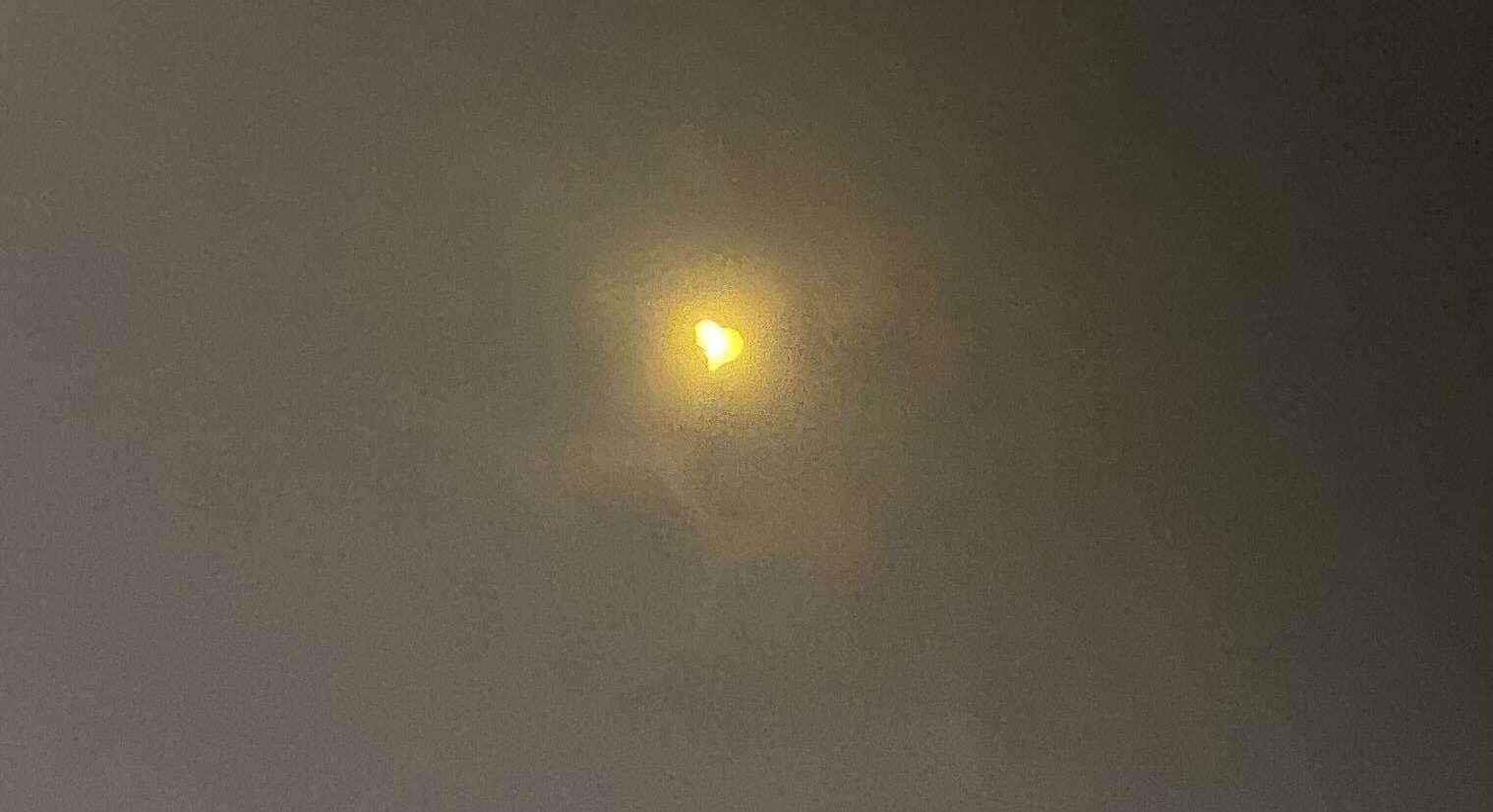
Look, if even the normally circular sun can appear as a heart during a solar eclipse, surely simpler things can be good too.
It is unreal to believe how much of my life is filled with chaos and a million things to do in my calendars and to-do lists. But, if I step back and close my eyes, I realize that it is so easy to overlook the simple yet extraordinary moments that make up our lives.
In the journey from those Monday slumps to “thank-Godit’s-Friday” moments, there is always so much that has gone by in a week’s time. Why do we always remember the big moments in our lives and not the tiny moments that build up to it?
I start off my day with the buzz of the alarm clock, reminding me of the million things that I need to tick off the colour-coded
much I miss them, but I also do not. I notice how beautiful the red saree looks on my mother. She is breathtaking.
As I get prepared for the day, I check the schedule for the bus to ensure I make it to work on time and don’t have Fred staring at me when I enter the office 45 seconds later than usual. Whenever he does, his eyebrows make a nice hill on his face. I almost have to keep from laughing whenever I notice it.
most flawless smile I had ever seen. How simply a smile can change your day!
This time, I walked in on time and saw Fred staring at the clock and then at me with a smile of satisfaction and pride, and his mentee finally realized the importance of time. I did not want to give him the background of the South Asian mentality of making it on time so, I made myself comfortable in the workplace and got to work on all the things I had been assigned.
every other person I have met up until now has discussed interest rates, inflation, and unemployment with me the moment I tell them that I am an economics geek.
With the heavy debate of how it is going to eventually affect exchange rates and the global economic size of the nation, Fred failed to win in this argument.
We talked about how difficult it is to understand the mixed signals that people quite often throw around and how they want to keep their options open wherever they go – always looking for an upgrade.
As I sprang up from my chair for coffee, Fred asked me how I felt about the increase of interest rates declared by Bank of Canada. Given how much I love
The lovely banter is the usual in the office and I enjoy the conversations where he assumes I know less because I am younger. I mean, who’s going to tell him to chill?
Fridays are my favourite, especially the first Friday of every month, as I get a chance to do
I only listened and observed his eyes go sad with the failure of finding ‘the one.’ Assuring him of destiny, I made him feel better by introducing him to my friend Elizabeth. As they happily started talking to each other, I took a bus home with the only goal of sleeping well, and started planning the next day.
As I was about to close off the day, I only wondered of all the little feelings and emotions
“Why do we always remember the big moments in our lives and not the tiny moments that build up to it?”
calendars that emphasize certain events of the day. As I close my eyes to take a deep breath, I hear my roommate fighting with his girlfriend on the phone, which reminds me of the intricacies that romantic relationships bring.
As I spring off the bed, I notice my parents’ picture on my wall, reminding me of the day I left India, my home, my comfort, and my pride. The nostalgic journey is almost immediately embarked on – I wish I could just go and hug them and tell them how
As I board the bus, I notice a toddler happily enjoying his world in a neon stroller. I chuckle at the choice of a neon colour for a baby’s stroller, but it seems to be a highlight of the energy that the baby brings. It is then when I wonder if kids really have a choice in life. How do kids grow up to take their own decisions? From choosing the stroller to what the kid eats, parents are always around us, picking and choosing everything for their children. I wonder how I built up the courage to figure out life in a whole different continent.
It somehow felt like the start of a peaceful day—a new day, a new story. That small toddler, with shining eyes, gave me the
talking about economics and all things finance, I told him to wait and hold on to all his opinions until I prepare my coffee and come back to my desk. As I stirred my milk coffee, I gathered all the points in my head, bringing back all the lecture notes of my microeconomics, macroeconomics, and a bit of statistics and economics jargon.
I smiled as I knew how uncomfortable Fred would feel finding out how knowledgeable I could be. Little does he know that
Pall Agarwal
a lot of networking, connecting people to the best people in the town and just watching it from outside on the building of the community. I cannot fathom the complexities of human behavior.
Be it India, Japan, or America, people’s behaviour is incredibly complex.
As I sip a non-alcoholic fancy pineapple drink, I catch up with my dear friend Neil who has been struggling to find a date on Bumble, Tinder, and all the millions of dating apps he has on his phone.
that I felt throughout which were so difficult to predict. I learnt that it’s so simple – just keep breathing and wait for the next day, the next story to sweep you off your feet. pall agarwal
Photo: Kimberley Kaufman
A normal way to travel
kimberley kaufman s&h editor
Flying is not for everyone, but it is not as bad as many people think. Flying can be fun, exhilarating even, but most of the time it is a completely normal event. Just like driving, another normal but fundamentally scary mode of travel. I spoke with Beverley Marsh, my aunt and regular plane-goer, on the topic.
Taking a plane somewhere is pretty normalized nowadays. People go on flights overseas, between neighbouring countries, and even between provinces. In Marsh’s opinion, “That is the only way to travel if you are going more than a half a day’s drive.”
A fair estimate, but who wants to sit beside a stranger for just an hour or so when you could be cooped up with your family for twelve instead? Absolutely bonkers, in my opinion. Clearly, driving is the superior normal mode of travel.
According to Marsh, flying is safer than driving. “There’s more people killed at one time when a plane crashes, but if you take the number of fatalities travelling, I am quite sure that air travel rates way down from cars and other methods,” she said.
Of course, who wouldn’t be scared of flying in a huge metal aircraft that seems like it could fall out of the air at any second? In movies and TV shows, we see clips of an airplane hitting turbulence and the entire thing shaking like a leaf in the wind! How on earth does it stay in the air?
Have you ever heard of the Jell-O metaphor? Instagram creator @heleneinbetween shared a metaphor about turbulence and how it is much less dangerous than social media portrays it. Instead of a dooming sentence, “We’re hitting turbulence!” followed by the plane shaking and shuddering and lightning flashing all around the plane, about to down the whole thing, think of it like shaking a cup of set Jell-O with a rock in the middle. The turbulence is the shaking, the rock the plane, and the Jell-O the air pressures that keeps the plane in the air.
While it is insane to just think about shooting through the air in a big, metal football-shaped thing, an airplane is kept “afloat” in the air like a toy boat is kept afloat in water. Air is not just empty space,
you know. Air has mass, and an airplane must move through the air. When it is flying, there is air above and below that exerts force on the plane. Instead of buoyancy like a boat, a plane has forward and upward momentum that works against gravity.
“But!” you say, jumping up to argue that airplanes do crash. Indeed, they do. They crash and the media oh-so loves to talk about that. Planes crash for many
reasons, but as Marsh said, “Accidents are accidents and the planes, statistically, don’t fall out of the sky that often.”
What are these so-called “statistics” we keep hearing so much about? Put on your seatbelts, my friends, because we have… a bit to get through.
According to Simple Flying, “In [the International Civil Aviation Organization]’s most recent iteration, findings showed that in
2022, the aviation industry saw a nearly 10 [per cent] decrease in accidents compared to 2020 — furthermore, fatalities resulting from aircraft accidents dropped by over 65 [per cent].”
“According to research by Harvard University, flying in the US, Europe, and Australia is significantly safer than driving a car. Your odds of being in an accident during a flight is one in 1.2 million, and the chance of that being

plane! You belong in the air, not Jell-O.
OpenClipart-Vectors via Pixabay, manipulated by lee lim
fatal is one in 11 million. Comparatively, your chances of dying in a car crash are over 200,000 times higher, averaging around one in 5,000,” Simple Flying continued. So, your odds of being in an accident are low… but never zero.
Of course, you could swear off flying if only for that small chance, right? After all, 1.2 million and 11 million are big numbers — that is a lot of people. Then again, only one person out of those big bad numbers gets the short end of the stick. Good chances? Maybe.
Really, flying is just like going on a road trip. You experience hiccups on takeoff, like blowing a tire off. “It was very boring… [On] one flight they blew a tire on takeoff and we circled the airport for about two hours burning our fuel,” Marsh said.
Or, and by far the most evil and terrible thing you could imagine, the airline misplaces your luggage. Marsh said, “They lose my luggage quite regularly. It never seems to arrive when I do… Especially if you’re changing planes in the middle of a flight. When I went on one trip to Mexico, I flew from Regina to Calgary and then got on a different plane [for] Calgary to Mexico. Well, somehow or other my bag didn’t get put from the Regina plane onto the plane going to Mexico, and it only took them a week to get it down there.”
Losing one bag among thousands of others is quite a feat, but it is much more impressive to do so regularly. The airlines should get an award by now, being super safe because of the air-Jell-O and super good at losing luggage because of the sheer amount of it going around the airport. It seems that is just one of many normal things that happen behind the scenes during a flight.
So, let us get this straight. Taking an airplane somewhere is much faster and safer than driving, and an airline can be counted on to lose your luggage when you go. Sounds like a nice, normal way to travel on your next trip, right? That is, of course, if you are not afraid of heights.
“Have you ever heard of the Jell-O metaphor?”
Kimberley Kaufman
Illustration:
creative cache
Advice from one intern to another
Need some advice about an education internship? Read on!
will bright a&c writer
Being a student teacher is really hard. For those Carnival readers who don’t know, I’m in my fourth-year of my education program, currently in my internship. And dear Cholera consumer, the shit is difficult.
They make it seem so easy when you’re a high school student. They make it seem so easy right up until you’re the student teacher. But, along the way with every bump and bruise, I’ve learned a few things. As my departing gift to you, here are a few of the things I’ve learned.
The difference between tough and mean.
Your co-op teacher should be tough on you. They’re trying to mold you into a great teacher. They should push you past your
when asked. It might look like telling you to do something specific and then getting upset when you do it. If you are constantly feeling crushed and like nothing you do will ever be good enough because of how they’re treating you, that’s a problem.
Lesson plans.
Odds are that in your university classes, you’re going to see many different types of lesson plan templates and when it actually comes down to it, you’re not going to be sure of what to put in them practically. Here’s what’s in mine to help me make sure I have what I need.
I have a section for all of my materials so it’s easy for me to find and grab everything I need. There’s a section for my instructional strategies and my goals, which is great for your placement profile and makes it really easy for your co-op to find what you’re
“ As my departing gift to you, here are a few of the things I’ve learned.” Will Bright
comfort zone. They should be giving you constructive criticism so you can work on and improve your work.
But, they should not be mean to you. There is a line between tough and mean and it should never be crossed. There is a power difference between you and your co-op teacher. If there is a moment where it goes past criticism and into cruelty, tell your advisor or your seminar leader.
The meanness might look like only ever criticizing you without ever giving you anything to help you improve. It might look like refusing to help
or something you feel like you have to repeat often – things like that.
In your closing section, there’s a few things you can do. You can do another review, which is always beneficial. You can open up for questions, or have your students watch a video. You can give more reminders, do an exit slip, or some sort of wrapup. But, you write it down here.
Formative.
Your formative assessments are not going to always look like what they show you in university. You aren’t going to be doing exit slips and think-pair-share’s every day, multiple times per day. 3-2-1’s are great, but they aren’t always applicable and students aren’t always going to participate. Formative assessments in practicality look more like individual check-ins to make sure they finished a worksheet.
you want to do rather than the three-sentence thing you feel like you have to do.
Target sheets are also something that can be a bit complicated, especially if no one ever shows you what they look like. Think of it like a drawing, and your actions are the reference. Your co-op can only put pencil to paper if you do the action.
For example, checking-in with every student while your co-op has a seating chart to mark off when you check-in with each student. Having a chart of question types and your co-op tallying up every time you ask a question of a type. Or, anecdotal evidence, writing down in a notebook all your check-ins with students and where they are and showing that to your co-op.
Questioning.
If you’re teaching secondary like me, questioning is incredibly
opinions and learning to think independently, but also backing up their opinions with evidence.
The last is “Example.” Ask them to give you a related example. Typically, this comes from a media connection, but it’s great for students who don’t really want to tell you about their personal lives.
Asking for help.
Asking for help is terrifying. Especially with that power imbalance between you and your co-op and feeling like you’re a bad intern/pre-intern if you don’t know everything already. At the same time, you aren’t going to succeed unless you ask for help.
Write down everything you need help with or questions you have before-hand. That way you won’t forget, and it’ll be easier to come to peace with your questions and your need for help.
When you feel like your co-

working on.
In your opening section, you should have a review of the previous lesson. It’s the most important thing. It’s also where you should be reminding your students of anything like due dates or upcoming tests.
In your main activity section, you should be writing down all the questions you’ll ask your students for guided inquiry, which I’ll talk more about later. I also have my accommodations and modifications here, which doesn’t have to be complicated. It can just be how you modified an assignment, your classroom management strategy,
A personal favorite of mine is using a Google Form, putting the QR code on the screen, and letting them fill it out as they show up to class. It lets you double-check attendance and see where students are at in their assignments, plus it feels a lot less formal and neatly structured compared to some of what they teach in university.
Goal setting.
It’s important to make accomplishable goals. If they’re too elaborate or complicated, they aren’t going to happen. Let your goals be simple. Let them be a five-word sentence of something
important. It’s a way to engage your students and get them thinking about the content. So far, I’ve explored four different types of questions.
The first is a simple, “Tell me about a time…” Ask your students to give you a personal experience about something, relate the lesson to their lives. The next is a simple “Yes/No,” but followed up by the ever important, “Why?” Let them form a solid opinion and then ask them about it. Question them.
The third type is “probing” which is a question followed by a question, similar to the “Yes/No.” Again, they’re forming their own
op has a moment, simply ask, “Are you free to go over some things with me, or would it be better in a little bit?” That way you aren’t demanding their time, you’re giving them a chance to finish what they’re doing and get ready to help you. Then look at your list and go through it oneby-one.
Thank you, Education Cartulary readers, for indulging in my advice to you. I hope it does you well in your adventures as an intern and in life.
“Why is it
spicy?” BookTok trending overview
Please tell me you’ve seen the vine. In other news: BookTok!
will bright a&c writer
If you read the Curlew, you might be a fan of reading in general. If you’re reading this specific article in the Curtalax, you’re probably a book fan.
You may even be on BookTok.
BookTok is a subsection of TikTok that talks about certain books. They joke about books. They joke about the characters. They review books, they talk about books; it’s everything books.
And what’s one thing that brings BookTok together other than the books, maybe even more than the books?
Smut.
BookTok loves smut. Smut is sexual content, really. But, no one really calls it that. They just call it smut, or spice, which is the general term for it.
It’s the most popular genre on BookTok, so I tested a theory.
I went to the Trending on BookTok section on the Indigo website. There were 482 results, and a subsection called ‘SpicyTok.’ I started looking through
the books in the ‘Trending on BookTok’ section just to see how many books actually had smut.
The first book was Powerless by Lauren Roberts, and the overview mentioned the queen of non-human but still humanoid smut, Sarah J. Maas. Though Powerless does not have smut, the first Google search when I looked up this book was “Is Powerless by Lauren Roberts spicy?” At the same time, this is the first book in the series and the main characters are having their enemies-to-lovers moment, so I wouldn’t be surprised if the following books had some spice.
This was followed up by Wildfire by Hannah Grace, who also wrote the TikTok-popular book Icebreaker. Again, the first Google search was “Is Wildfire by Hannah Grace spicy?” and the answer this time is yes! This book does have smut. Icebreaker pops up as number six in the list.
The third and fourth results were both books in the Empyrean series by Rebecca Yarros, Fourth Wing and Iron Flame. The first is one of the most popular fantasy books on BookTok. Without ever having read this book, even I
knew from hearing about it that it was spicy, which is why the Google search result from the last two wasn’t the same here.
Number five is James Islington’s The Will of Many, which barely has romance, let alone smut, so there isn’t much to say about it in this article.
Number seven is another TikTok favorite, but they are slightly mixed on whether or not it’s a good read: Twisted Love by Ana Huang. It’s described as steamy romance, so we know that it has quite a bit of spice.
The next two, Atomic Habits: An Easy & Proven Way to Build Good Habits & Break Bad Ones by James Clear and Murder in the Family: A Novel by Cara Hunter aren’t romance books, so we’ll skip past them.
We also get to see the queens of smut Sarah J. Maas and Colleen Hoover make one appearance each in this front page, with House of Sky and Breath and Too Late, respectively. Both of them are known for their smut scenes and it would be incredibly out of character for their books to be completely clean.
Of the remaining 13 books

on the front page, a whopping eight had smut in them. If we do some quick math of all 24 books on the front page, 15 of them were spicy. If we go by that math, about 63 per cent of all BookTok favourites have some sort of spice. More than half of the books that trend on TikTok are really just smut.
If you, Curtilage reader, are interested in a BookTok book, it might be good to double check that spice rating before you dive in.
Trends are short-term, but are their implications?
Coquette, cottagecore, light academia... which other ones am I missing?
Coquette is defined by the Oxford Language Dictionary as “a flirtatious woman.” It’s also the name of a crested Central and South American hummingbird – in case you didn’t already know.
Recently, the internet has taken to debate again, this time centred around the new style marked by aesthetic details like lace, pearls, bows and frequent use of a pastel colour palette. Some Coquette-esque fashion features might include Mary Jane shoes, corset tops, and whimsical gold jewelry.
According to Hannah Oh, “Although it can seem like the Internet is magically churning out new trends out of nowhere, some of these ‘-core’ aesthetics (like gorpcore or the ‘Clean Girl’ aesthetic) are actually just pre-existing styles and subcultures that have been around for a long time and were recently repackaged with specific names.”
The labels assigned to trends like Coquette or coquette-core work to describe what Oh calls a “nebulous vibe” in fashion. More plainly, recurring fashion trends that have no clear form or ideas that are difficult to accurately define. According to Oh, the trend has “been around for years and has been recently redefined as the coquette look.”
Coquette style has been described as a ‘hyper feminine’ expression of fashion and has led some to critique its role in recreating stereotypical narratives of the feminine.
According to Daisy McManaman, a PhD candidate of

Women’s Studies at York University, “‘Hyper-femininity’ describes femininity at its most extreme, at the far end of the spectrum of different gender expressions.”
McManaman continues by writing, “Contemporary expressions of hyper-femininity are often intended to subvert aspects of hegemonic femininity (expressions of femininity that reinforce traditional gender roles). These versions of hyper-femininity reclaim aspects of patriarchal, tra-
ditional femininity and play with, perform, and parody it.”
The hyper-feminine has received critical backlash within some feminist discourse because it’s been interpreted as submission or conforming to the male gaze and patriarchal domination. However, a counter narrative has been taken up with feminists who argue the opposite – that embracing the hyper-feminine can be, for some, subversive, empowering, and an act of joyful self-expres-
sion.
Although not coquette, the 2000’s hit movie Legally Blonde is a hallmark example of this take. Within the film, Elle Woods, played by Reese Witherspoon, attends Harvard University after defying stereotypes and stigmas around how Harvard law students appear and act.
When asked in disbelief how she got into Harvard, she replies with her famous response, “What, like it’s hard?” Moreover, while at
Harvard, she never succumbs to the pressures of conforming to fashion norms and attends the prestigious school in her characteristically Elle Woods way – all pink!
Coquette style has also recently come under fire for its supposed ‘infantilization’ of women and femmes, which some claim leads to dangerous ideas around submissiveness and docility. This seems to be an age-old conversation and leans into the harmful stereotype that the way women and femmes dress has a lot to do with how they are treated.
Michelle Steele writes, “Clothing doesn’t offer any justification for sexual violence.” Steele further says that, “Perpetuating the stereotype that women [and femmes] ‘ask for it’ by how they dress seeks to mitigate the responsibility of the abuser and make a woman complicit.”
Isn’t this discourse tired yet? When are we going to leave behind the false narrative that clothing has anything to do with respectability? It’s time clothing stopped ‘doing all the work’ in determining who is respectable, a feminist, and otherwise in favour of doing the work socially to transform and subvert harmful and dangerous social structures that place emphasis on clothing in the first place.
Go forth and coquette it up –should you wish to, of course.
maren savarese knopf staff writer
I will note the distinct lack of sexually diverse offerings within this first page... Illustration: BiancaVanDijk via Pixabay
These shoes weren’t just made to be pretty, they’re also pretty comfortable. Illustration: lee lim
Paddleboarding: A learning experience
A
short fiction story about beginnings, endings, and learning to paddleboard
It was the last few weeks of my senior year of high school. To celebrate and to have one last good, “Hooray,” the senior class decided to head out to the beach and skip class for the day.
Me and my group of friends met at my friend Hailey’s house where we packed up the car with all the goods. Beach blankets, towels, a spikeball set, a cooler full of pop, sweet treats, burgers, and hot dogs to cook on the grill later. I could just feel today was going to be a great day!
The four of us loaded up in the car and headed out to the beach. By the time we got there, over half of the senior class was set up for the day. The setup looked awesome! Lots of people had already laid out their beach blankets, there was a group of people playing beach volleyball, people in the water and everyone was out having fun. I could not wait to get set up and go out there to join them!
Once my friends and I were all set up for the day, we decided to bring out the spikeball and play a game together. After a few rounds of playing spikeball, I was worn out and we lost the last game, so it was time to take a break and let someone else play the winners.
Wandering off, I went to find my beach towel and lie down in the sand. I laid down for a few minutes to relax and cool off the sun, only to doze off and awaken to someone yelling, “Hey, Brooklyn!”
The shout scared me awake and I looked up and around. Unable to tell who it was, I shrugged it off and laid back down. Then, I heard more voices, louder this time, all yelling together, “Hey Brooklyn!”
I looked up and gathered my thoughts and figured out who was
“

water, I got on and realized I’m really not too sure how to get on it or use it properly. I sat on it and straddled it with my legs, sort of like riding a horse. Then I used the paddle and paddled out to the group of people as though I was in a kayak.
Once I got there, I could see no one else had a floating toy like
splash and push others off their toys into the water!
After a few minutes of horsing around, Gunther and Matt started to paddle off in their little paddle boat.
I yelled at them, “Hey, where are you going?”
They responded, “For an adventure!”
be I am supposed to do this a different way. Eventually, I stop thinking about it, and instead I yell at the group, “How do I work this thing?”
Matt yells back at me, “Try standing, you’re supposed to stand on the board and paddle!”
My mind is blown away by this idea. Since it is almost like
To celebrate and to have one last good, “Hooray,” the senior class decided to head out to the beach and skip class for the day.”
Victoria Baht
felt cool and kind of awesome. I could stand on the board, move fast and with momentum, and I had the sun beating on my body. The group ended up not really going anywhere, though. We just went in a circle, since we had to go back to shore to start the hot dog and hamburger preparation. When we got back to the shore, everyone else headed in, but I stayed in the water, paddling back and forth on the board and enjoying the experience.
Without realizing, I ended up missing supper and almost got left behind, until someone noticed and yelled at me that everyone was leaving. Once I dragged the board up to shore, Matt came over and asked, “You seem to like that, hey?”
I responded, “Yeah, it’s super cool and just challenging enough to be fun!”
“You know, I don’t have much use for it and can’t balance on it at all, why don’t you have it?”
yelling at me. It was a group of people in the water all hanging out on floaties and water toys, they were waving their hands and yelling at me to tell me to join them in the water.
Looking around for something to get into the water with, all I could find was this long board with a paddle next to it. I’d never seen anyone use it and was unsure how to use it, but thought “Why not try it out?”
Dragging the board towards the water and throwing it into the
I did. Some people had blow-up toys tied up to a paddle board, some people were in kayaks, on knee boards or other things, but no one had what I did. Once I came up, I asked, “What’s up guys?”
Hailey said, “We just wanted to come and hang; it is our last hooray, isn’t it? Not sleepy town!”
As she bugs me, she grabs my paddle and pulls me into the water. That is where the battle began. Once some people saw Hailey pull me in, everyone started to
The rest of us look at them, then each other, and then get onto our water toys and start to follow them.
As the group follows, we catch up to Gunther and Matt, but I am just following behind, thinking to myself about how there has got to be a better way to use this thing I’m on. This paddle is so tall, like six feet tall, and moving it side to side around my body is not working out.
Then I think, well, the part where I am sitting is grippy, may-
walking on water, the idea seems nearly impossible, but what do I have to lose, I guess?
Using my hands to go from sitting to a kneeling position to a standing position, which takes me a few minutes, I gather myself and stand still, starting to feel like I’ve got this. Then, I started to paddle on the board and, over time I started to push the paddle away with my legs and arms and started to gain momentum, catching up in no time!
Once I got the hang of it, I
I felt joy and a wide grin overtake my face as I asked, possibly over-excited, “Really?” Matt nodded, and I jumped up and down in glee.
After that, he helped Hailey and I strap it down to Hailey’s car, and we all headed home.
victoria baht staff writer
Serenity, thy name is paddleboarding.
Photo: 2649771 via Pixabay
“When will I see you again?” I ask.
“Soon, love,” is all he responds with.
I know it isn’t true.
I know he’s hurt. His voice betrays him but, So too has his general.
“Your husband has been gravely injured; Our best doctors estimate less than a month.”
“You will let him rest won’t you? Give him time to heal, time to return?”
“We need him to stay, He will be given the highest honour.”
But what do I care about ‘honour’?
I only want my husband. I want my family to be whole.
My son to have a father to play ball with.
‘Honour’


honour
My daughter to have her father walk her down the ai sle.
What does honour matter if the one it is given to i s dead? What does honour matter if the one who handed them to Freyja* Is paraded for bravery, after sitting safely in an office?
Far from the war, Far from the carnage, Far from honourable bravery. Closer to his wife, His children, His home.
Closer to cowardice.
And, across the ocean, I know There are many who share these thoughts; This anger, this pain, this fear. Because a war needs two sides.


To Follow Orders
Blurred by age, love is renewed
For all the trinkets lost to time. Cradled close to the heart, Memories, long hidden, stir to life.
Memories, suppressed and forgotten, Flood the gate as they come back. When the tolling bell rings death, Tears are shed, but the battle rages on.
Families separated due to ideals, Fighting on opposing sides; They do as they’re told. After all, soldiers follow orders.
Broken bones, eternally scarred, Warrant pity and pain while mourning. When terror strikes through the day, Minds find no solace - only silence.
Parents and children wonder all the while, ‘How could we let this happen?’ Answer plain as day, the soldiers, They followed orders as they came.
Freyja (Old Norse: Lady) is a germanic/norse goddess of love, fertility, battle and death. Her and her husband, Odin, each chose half of those who died in battle and brought them to either Odin’s Valhalla or Freyja’s Fólkvangr (“Freyja | Norse Mythology | Britannica”).
mikayla tallon
MIKAYLA TALLON
any last words?
“Goodbye.” “I love you.” “I’m grateful to have known you.”
“Your words will echo in my mind until it runs out of time.”
“You just have to make the best of it.”
These, some of my great-grandmother’s final words.
These, a kind soul’s persistences through decline.
These, the battle cries a quiet clamor.
These, my resignations a jubilation.
“Goodbye.” “I love you.” “I’m grateful to have known you.”
“You just have to make the best of it.”
This, my true inheritance has always been perspective. This, the backwards blessing in my blood.
This, a ripple effect eternal.
This, some of the sum on my shoulders.
“Goodbye.” “I love you.”
“You just have to make the best of it.”
It, some of what I’m most proud to have had a part in. It, a conglomerate of cacophonies. It, the greatest crescendo in this symphony. It, my half-decade home.
“Goodbye.”
We just have to make the best of it.
Contributors to volume 66
The staff of the Carillon extends our most sincere thanks to those in the university community who filled our pages with their work this year, strengthening our newspaper with every word written and photo taken.
A K M Fazle Hasan
Chowdhury
Alissa Sadler
Alistair Vigier
Allister White
Aurel Dumont
Calla Fuchs
Cara Misskey
Cassidy Savard
Ciara Trapp
Emma McGill
Hailey Emery
Jack J. Nestor

MONDAY
TUESDAY
Manatee
– 5 am Navaye Ashena (repeat)
– 6 am (spoken-word)
Jay Rt
Madelaine MoynesKeshen
Michaela Aguilar
Katlyn Richardson
Natalie Williamson
Novia Invidiado
Parth Pathak
Pratheeksha R. Naik
Sarah Feeley
Sepehr Rahmati
Slayte Prefontaine
WEDNESDAY
Planet 9 – 9:30 am (spoken-word)
stories from around the globe Science Unscripted 9:30 – 10 am (spoken-word)
Connection
– 11 am (spoken-word) Get Chatty With Kathy
– 11:30 am (spoken-word) A mixed bag of topics
Muzyka Ukraine 11:30 am – 12:30 pm WINGS 12:30 – 1 pm (spoken-word) Raising women’s voices through radio Scotland Calling 1 – 3 pm Mists of Thyme (repeat)
THURSDAY
Sonia Stanger
Sydney Lorenz
Tishaben Patel
Tom Abramovic
U of R’s Muslim Students’ Association U of R’s Students for Justice in Palestine
Valerie Zink
Will Simon
William Bessai-Saul Zinia Jaswal
Zinnia Jaswal

u of r 2023-2024
by RUDE TRASHBABE

ACROSS
1. you're reading one right now
6. what the heck IS a carillon?
10. it is inevitable
14. you hate to see it on the floor of a washroom
15. abrv. at a restaurant, perhaps for a new menu item?
16. class prefix for a major looking at different cultures, behaviours, and beliefs
17. sometimes your last ones are read out loud
18. prefix, with 'mom', 'pus', 'gon', 'tet'
20. this crossword puzzle is the production manager's...
21. the Carillon, after you've read it
24. a snake's greeting
26. complaint about the food at the cafeteria?
30. a furry hand warmer. not the other thing.
32. precedes 'tai'
33. convocating students are likely
39. to respond
40. an alternative method to calculate income tax
41. Koopa Kid with the best shades
42. the last stage of a sleep cycle, a variant of COVID-19, a Mumford and Sons album, or the Northwest section of Mississippi
44. name meaning 'bringer of good news' in Greek
45. if you pair this with 'lemon', you get a refreshing beverage
47. an ironically large word for being very 'meh' about politics and religion
51. the Carillon's amazing outreach coordinator
54. the loonie's more expensive brother
57. version control system, paired with 'hub'
60. the Carillon wants these from students!
66. soup served in individual glazed pots, common in South Caucasus +Central Asia
68. Hindu festival of colours, love, and spring
69. horse in the Orcarina of Time
70. greetings from ghosts 71. ending of the last 4 months of the calendar year
72. light amplification by stimulated emission of radiation
73. judge, _______, and executioner
74. Gossip Girl sign-off
75. paradise, if there were two of them
DOWN
1. inverted moves whilst knitting
2. domineering individuals born between March 21 and April 19
3. you can get these at the nearby pit
4. look man, i couldn't get the puzzle to fit perfectly, don't bother filling this in til you get the other ones, its not a word
6. Rorschach is a big fan
7. what they had to do to get the equations into the walls in RIC
8. famous triology, shortly (just like the dwarves in it!)
10. poison, dart, bull, and tomato are types of these
11. not a Greek man, but an

12. Japanese kana, the katakana of which is used to make emoticon pal Shruggie
13. acronym: collection of proteins bound to the inner mitochondrial membrane
19. acronym for object-oriented network fragments, OR, the puzzle-maker had to give up and use an obscure acronym to make this whole thing work
22. some of these crossword puzzle clues are very _____ references
23. what university we attend, shortly
27. woman of myth whose bottom half is a snake
28. largest moon of saturn
30. animated movie with inspiring song titled 'let's get down to business'

op-ed
The common thread of humanity
There is such a thing as too much abstraction and academic detachment
In January, the Carillon published an article by Mikayla Tallon connecting the ongoing genocide in occupied Palestine to our own violent settler-colonial context here on Turtle Island, calling for justice. In a critical response the following month, though, contributor Jack Nestor claimed that, “...the differences between settler colonialism in Canada and settler colonialism in Israel are more pronounced than the similarities.”
The complete absence of the Palestinian context left me uncertain what differences were actually illustrated. But, more importantly, I question the fundamental goal of this analysis. When 2 million of our fellow human beings are being bombed and starved, should a detached academic dissection of historical specifics be our top priority? I’m far less interested in whether there are more similarities or differences than the question of what we can do about the devastating human impact of that colonialism.
I think this intellectualization of the issue reflects a tendency to distance or disconnect ourselves to avoid stress, pain, and discomfort. Avoidance can be a necessary coping strategy that protects us from situations too overwhelming to bear, but I worry that we have become used to keeping the real pain of mass-scale crises at a distance, because it is the only way we know to continue functioning.
I do not blame anyone who feels paralyzed and at a loss for how to process and respond to the horrors we are witnessing, the depth of the crises facing humanity right now. But retreating to the realm of thought to escape the overwhelming feelings and sensations that show up in our bodies means making the human lives at risk abstract, a mere idea, making it easier for us to look away and feel ourselves as being separate from the crisis. This abstraction is another act of colonial violence.
I have heard many times since October 7 that if you are unable to withstand the pain of witnessing what is going on, the pain of the truth, you should put down your phone, protect your peace, turn away. But is our comfort more important than Palestinian lives?
Like escape, pain serves an essential function, both within a body and a society. If you break a bone, the pain you feel is a signal that action is needed. It needs care and attention. Ignoring that signal would mean worse damage to the part already injured. Likewise, the terrible pain we feel when we see a father in Gaza carrying what’s left of his child in a plastic grocery bag is a glaring alarm signal that action is needed to address a serious threat to our shared global body. It urges us to fix things, which none of us can do alone.
Emphasizing the situational differences between Canada and Palestine also
ignores the active role Canada has played in the Israeli occupation’s violent colonial project, both in terms of financial investment and public support. After considerable pressure from the public and the threat of complicity in genocide under international law, the Canadian government has made a non-binding commitment to pause the approval of weapon sales to Israel, but this does not include the $30 million of military exports previously approved since October. Whatever differences exist, the same colonial bodies are perpetrating violence in both places.
nected and interdependent nature of life. We all share one water supply, one planet.
In his article, Nestor dismissed Tallon’s call for the humanitarian crisis to provoke people on Turtle Island to strive for liberation and justice here, writing that “if Indigenous peoples in Canada pursue justice
go. Citizens from all over the world are directly supporting Gazan’s needs via crowdfunding escape efforts like Operation Olive Branch and calling to end systems of domination and exploitation where cultural hierarchy determines who ‘deserves’ land, freedom, safety, and the world’s empathy.

with enhanced vigour it will be because it is in their interests to do so – not because Palestinians have done so.”
Moreover, the illusion of safety we get from turning away from seemingly distant issues is false. As we’ve already seen happening, the knock-on effects of localized conflicts can be vast. In addition to the devastating human cost of Israel’s attack on Gaza, the environmental impact is profound. The bombing and ground invasion have resulted in catastrophic water, land, and soil pollution. The belief in our separateness fails to recognize the intercon-
This either-or, us-or-them framing reflects precisely the kind of limiting mentality it is time for us to move beyond. Justice is not a limited resource. To resist the destruction and dehumanization of our fellow human beings anywhere is to invest in justice everywhere. At every rally I’ve been to, there has been at least one person with a sign expressing Indigenous solidarity. Working together to liberate Palestine does not mean we cannot also focus on our own local issues.
On the contrary, the global movement to save Gaza has led to more awareness of the humanitarian crises in Sudan and Con-
“This abstraction is another act of colonial violence.”
Sonia Stanger
When we collectively respond to these global alarm bells and pursue justice with enhanced vigour, it will be because it is in all of our interests to do so, and because Palestinians are showing us what resilience and resistance looks like as they have done for decades.
Confronting the many crises we face as a global ecosystem, and their interconnectedness, is daunting. It is messy and painful. It means facing the grief and horror and exhaustion of the work we have to do. Life is hard right now for many of us, and there is no shame in feeling the impulse to draw inward and focus on our own personal crises. But who benefits when we do? Or from the narrative that there’s nothing any of us can do? What might we do to increase our capacity to engage?
While there aren’t enough hands to make light work of the complex and horrific tangle of our human problems, isn’t it a much better prospect with all our relations by our sides?
In our thousands, in our millions, we are all Palestinians.
sonia stanger contributor
Image: Wikipedia and Openclipart-Vectors via Pixabay, manipulated by lee lim
A summer of opportunities and priorities
Summer breaks can be a time to re-evaluate your plans
nazeemah noorally staff writer
Have you ever found yourself standing at a crossroads, wondering how to make the most of your well-deserved summer break by securing a job, earning some money, and gaining experience as a student at the University of Regina (U of R)? With a range of prospects available, including co-op programs, summer student jobs, and academic coursework, this season is an opportune moment for students to leverage their skills and expand their horizons.
Yet figuring out how to make the most of this time can be the most challenging part, but with the right mindset and some planning, students can have a productive summer by updating their resumes and engaging in an internship or job related to their field of study.
For students looking to gain some practical experience, co-op programs, internships, or full-time jobs can be viable options to consider, especially for those taking a break from classes at this time. While internships, which can be paid or unpaid, are short-term placements more appropriate for students looking to gain industry exposure, full-time jobs or co-op programs give students the flexibility to earn an income while gaining hands-on experience in their own field of work.
It is worth mentioning that the U of R’s co-op program is over 50 years old now. To get into this program, all one has to do is to complete an application form and meet the requirements for the PGPA and the minimum credit hours. International students need to have applied for their work permit prior to applying for a work term. Students can even have the opportunity to work overseas, and many co-op students have permanent jobs lined up even before they graduate. The exact requirements usually vary by faculty, but the Centre for Experiential and Service-Learning (CESL) Office at the Dr. William Riddell Centre, Room 163, is your one-stop shop to get access to these comprehensive job opportunities, as well as receive career counseling on how to add to your work experience.
Another useful resource is the university’s career portal, a centralized hub that connects students with current career opportunities. Simply visit their website at urcareers.uregina.ca, and it will take you to the university’s employment website. Students, sessional instructors, academic, staff, and research postings are available on the website. Be sure to check out the career opportunities at the U of R’s Federated Colleges as well on their online career portal.
Moreover, don’t miss out on attending U of R’s annual spring and fall career fairs which are big recruitment events, connecting Canadian employers with the universi-
ty’s students and alumni. Another important event you should plan on attending is the Education Career Expo, which was held on January 30 this year. This event is designed specifically for school boards, public service departments, and any other organizations who are seeking employees with a background in education, connecting the them directly with students looking to enter those fields.
The most important part of finding a job that meets your interests and career goals is having a tailored resume. Your resume serves as a first impression to potential employers and plays a big role in showcasing your qualifications, experiences, and skills. Your resume must be up to date, as this will enable potential employers to gauge your suitability for specific positions and increase your chances of being
contacted for interviews. Go to urpath. uregina.ca to register for career workshops including customizing resumes, interview preparations, and marketing your skills workshops. By participating in these workshops, you can refine your resume and develop the confidence and expertise necessary to leverage your skills and excel in the job market.
Now, while focusing on career development is vital, it is also essential to recognize the value of balance and self-care. Breaks from classes give students the opportunity to explore other areas of interest. Students can also use this time to volunteer, either on or off campus, which is equally important to give back to the community and expand your network.
As students navigate the countless opportunities available to them during their
“ Summer actually provides an opportunity to explore other areas of interest as well.” Nazeemah Noorally
summer break at the U of R, it’s important to acknowledge the significance of personal growth and exploration alongside professional development. While securing internships, co-op placements, or part-time jobs can help grow one’s resume and provide valuable industry experience, the summer also presents a unique chance to delve into hobbies, passions, and volunteer work that may not directly relate to one’s academic pursuits.
Engaging in activities that bring joy and fulfillment can foster a well-rounded individual, equipped not only with professional skills but also with a strong sense of self-awareness and empathy. Moreover, taking time for self-care and relaxation is integral to maintaining overall well-being and preventing burnout. By striking a balance between career aspirations and personal enrichment, students can make the most of their summer break and emerge from it with a renewed sense of purpose and direction.
During this process, it is also essential to avoid burning out. It is a good idea to set aside some time over the summer to relax and recharge. You may consider scheduling time for yourself, whether that’s setting boundaries, spending time alone, with your loved ones, friends, or pets, or simply taking a step back from activities that do not align with your priorities.
As students head into the spring and summer semesters, there are plenty of options to make the most of their time. What’s most important is to choose the paths that best match with their goals, while also taking care to look after their mental and physical health. Make the most of it!
This looks nice and sunny, but it’s probably too windy to keep one’s eyes open long enough to enjoy it.
Photo: lee lim
Student journalism matters
Students need a voice that is their own, raised on terms they set themselves
maren savarese knopf staff writer
Canadian universities welcome approximately 1.44 million full- and part-time students annually. This is a number that is greater than the entire population of Saskatchewan. Altogether, students represent a critical demographic in Canada and constitute a new generation of thinkers and leaders. Students are often at the forefront of changing social attitudes, norms, and perspectives.
of increased vulnerabilities to economic changes and political and policy decisions impacting living conditions.
According to the Government of Canada, in “urban centres, poverty is often concentrated in specific neighbourhoods, where more vulnerable populations such as racialized groups, recent immigrants, students, young adults and persons living alone or with roommates” (emphasis added). As such, students might have intimate relationships with social and political changes and therefore their voices and perspectives are of
“ ...the connection that student journalists have with their community can help to mitigate these feelings and give young voices a sense of validity, especially when our concerns are often silenced.”
Beau Bilinovich
work of students offers critical insights into the perspectives and desires of younger generations. Student newspapers tend to cover personal issues, or issues of relevance to younger student bodies. “We shine a light on the issues that large media outlets might not pick up on, the issues that we have to face every day on campus. That’s what truly matters,” says Bilinovich.
Canada has a long history with post-secondary newspapers. The Canadian University Press (CUP) is a non-profit cooperative owned and operated by stu-
continues to focus on fostering connections between student publications across the country.
Notably, the University of Regina is one of upwards of 100 Canadian universities that have one or more student-operated newspapers. The Carillon was established in 1962 and gained its name from a proposed building – a bell tower, or carillon – from the decade prior. A 160-foot bell tower was in construction plans and would have been tall enough to be seen from anywhere on the campus.
A commonly reiterated sentiment is that every generation has its problems. Today, young people face increasingly frightening disruptions from climate change, a depressing housing market that feels unattainable, and growing concerns around cost of living. As such, much of our social fabric is changing and this includes the way we consume news, and from whose perspective.
Ben Schwartz, a journalist for The Atlantic, describes the industry as “in transition.” This is mirrored by the socio-economic climate we currently find ourselves in. Likewise, Beau Bilinovich from The Observer says that, “Student journalism can act as a model for the real world, where people can freely and openly discuss ideas, debate and point to the problems that need to be addressed. As opposed to state or even federal politics, schools offer a smaller, more confined community.” According to Bilinovich, “that skill – figuring out how to resolve conflicts – is needed now more than ever.”
Students and young people have a major stake in finding solutions to current day problems as they inherit the responsibility as stewards of earlier generations, before they inevitably pass it to the next generations. Moreover, students are often at risk
critical importance.
Much of the political power and positions of representation are held by older-middle aged Canadians. The average age of a Canadian Member of Parliament is currently 52. Likewise, since 1867 the average age of a senior figure in the first ministers has been around 55 years old. Notably, Justin Trudeau has been an exception to this rule as he is one of the younger most senior members in Canadian political history. In 2015 Trudeau was sworn in as Canadas second-youngest Prime Minister at 43 years old. Further, the largest demographic of voter turn-out in Canada tends to lean towards older Canadians. In 2021, the most significant demographic of Canadian voters was those aged between 65-74 years old.
The over-representation of certain demographics in positions of political authority can feel daunting to younger Canadians with concerns around shared interests, understanding, and values. Bilinovich claims that because of this “the connection that student journalists have with their community can help to mitigate these feelings and give young voices a sense of validity, especially when our concerns are often silence.”
Although student newspapers are incomparable to larger news networks, the
dent newspapers at post-secondary student across Canada. In fact, CUP is the oldest national student organization in North America and was founded in 1938. CUP was originally created to foster a network of Canadian student newspapers to share ideas and strategies. According to CUP, “These newspapers [were] largely beholden to union interests; CUP was created primarily as a way for the unions to publicize student issues to schools across the country and build solidarity amongst Canadian students”.
During the 1960s, the student movement in Canada began to gain traction and CUP is credited with the phrase “agent of social change” when it was introduced the organization’s statement of principles. According to CUP’s website, during the “60s and 70s, CUP members questioned the viability of traditional journalistic ‘objectivity.’”
CUP members positioned themselves against the idea of false balance they observed in mainstream media in favour of integrating principles of social justice and advocacy into their journalistic practices. Student journalists and CUP members described their position as “reporting on the parade from inside the parade.” CUP is now in its 86th year of operation and
The bell tower was never built; standing in its place is the Carillon. The proposed bell tower inspired students, and today the newspaper continues to serve as a symbolic structure on campus.
The student newspaper is the stomping grounds of several notable Canadian journalists that include Norm Bolen and Ken Mitchell. Bolen is now credited with launching and editing the then-underground paper called Prairie Fire, and had a 21-year long career with CBC
Reflecting on his career, Bolen discussed the connection between student journalism and strong student led movements by saying “I had been a journalist in university and was editor of the student paper in Saskatchewan. I was very much involved in student journalism…I was also very active in the Canadian Student Union as an organizer. […] and those were the days of the beginning of democratization of university, getting students on the university senate. That was a very active time on university campuses, and breaking down the system that had been run by an elite.”
Today, student newspapers continue to act as a beacon for strong student-led movements and voices. A metaphorical torch passed from hand to hand.
We don’t know who laid them out this way, but we like to think they found their voice raised loud and clear in our pages.
Photo: Allister White
How I unwind Using exercise to help seize the day
victoria baht staff writer
Today, I had a full day at the University of Regina. You know, a typical full day for a full-time university student. I got up at 6:30 a.m., got ready for the day, and made some food. Then I headed out the door just in time to catch the bus to make it for my 8:30 a.m. class.
Once I got to the university, I attended my first three-hour lecture of the day. It was a very informative class. After that, it was time to take a short break to study, have some lunch, and get a caffeine boost. I typically hide in an office space away from people so I can just work and listen to music. After a couple of hours had passed, it was time for my second three-hour lecture of the day. And, once that ended, it was time to go home!
On the bus ride home I think to myself, “What am I going to do once I get home? I have to finish that big paper which is due tonight. But my brain feels like mush after six hours of lecture and all the studying I did in between. I cannot bear to look at my computer screen for any longer. I need a break! I am exhausted but not physically, just mentally and emotionally. It’s not like I am craving a nap or anything. I am just craving a break from brainwork, but not for too long, because I do have to get that paper done tonight. So, I am going to hit

up the gym for a few hours and do some physical activity.”
This is what a typical day at the university looks like for me. A day full of lectures, studying, and a lot of sitting and staring at a computer screen. I am sure it is the same for a lot of students.
Years end, years begin
Some of us might spend the evening watching TV, hanging out with friends, making supper, or doing any number of other activities. But I always try to spend some time in some physical activity. It is my form of guilty pleasure, to turn my brain off and relax myself.
But why physical activity? Well, for the last three to four years I have been going to the same gym, Oxygen Yoga and Fitness. This gym has two main forms of classes that I love to partake in. You can choose to do a fitness fusion-style class, or a yoga and relaxation class. For myself, the type of fitness class I choose depends on the day I have had. Some days I looked more toward a fitness style of class, for the opportunity to lift weights, jump up and down, and challenge myself to work hard. On other days I want to relax, take deep breaths, really focus on my movements, move slowly and dial in.
I always use physical activity as a way to turn my brain off. It allows me to get away from screens, listen to music, move my body, and decompress. This is what works best for me, not only because it allows me to move my body, but also because my gym gives me an environment that lets me focus on moving my body without any distractions. They have an environment with dimmed lights, silenced phones, instructors to guide you, a warm space, a welcoming environment, and so much more. It truly allows me to decompress and reset my brain.
Once I have spent some time at the gym, I head home and have some food to help fuel my body. Then, I can focus on getting that paper done.
Somewhat coherent musings about the passage of time on campus
It is that time of the year again. The snow has melted, hopefully for good this time. Trees are about to get a new life, and warm sunny days are not as rare as they were for the last little while. Winter is on the way out, and spring is upon us. On college campuses, this also means the winter term is wrapping up and people are getting busy, if not overwhelmed, with all the demands of end-of-semester rush.
dents. For a while, this campus will be busy and people will hardly have time to stand in the Tim’s line for coffee.
Soon we will be informed that Archer Library is open for extended hours during exam season. The gyms will be prepared for holding exams with hundreds of stu-

I guess few undergrad students get to see what comes after. Once the exams are done, and the food services reduce hours in anticipation of a far less busy campus over the spring and summer terms. Not a lot of classes are offered over the summer, and the campus feels either serene or haunted, depending, I suppose, on who you ask and which day you ask them. As a graduate student, I am one of those who are around all summer, every summer. Like many other graduate students, I look forward to the summer months, free from distractions and teaching duties, to focus on my own research.
However, this year feels a little different. This year I feel like a timeless being, standing outside the constraints of clocks and calendars, watching life go on as if cursed to bear witness to the passage of time.
Maybe it’s because this was the first full school year, in some sense, since the pandemic. A lot more classes were being held in-person, the campus was more crowded, food services had better hours, and, in general, this place was once again full of life. Perhaps that is what makes the contrast of the imminent summer all the more substantial. Or perhaps it is the fact that this year, as the school year wraps up, I must bid farewell to many familiar faces who wrap this part of their journey.
I come from a faraway land where college campuses once used to be nothing short of sacred. Indeed, it is no exaggeration to say that my nation exists solely because, sometime in the 60s, college campuses of erstwhile East Pakistan began the conversation about nationalism, self-determination, and representation in the government of the day. In some ways, we know the Pakistan Army did not forgive
this transgression by colleges.
On the first night of the military operation meant to crush the dreams of Bengali sovereignty, they rolled tanks into college campuses. On the last week before their inevitable defeat, they killed hundreds of thought leaders and public intellectuals on those same campuses. I sometimes wonder how the enemy clearly showed us what they feared most about us, and then I wonder why we let our college campuses turn into dens of sycophancy, low cunning, and base aspirations. I find it ironic how my nation destroyed the thing that our enemies could not.
But I digress. Between being a student in one undergraduate and multiple graduate programs, and even having a short stint as an instructor, at this point more than half of my life has been spent on college campuses. It gives me hope and joy to see the campus fill up again every fall. It warms my heart to see the sparkle of curiosity in the eyes of a freshman in a lecture, because it reminds me of the same awe and wonder I felt in that same lecture, just in a different time and world.
I take consolation in the fact that in a world that has gone so wrong in so many ways, there are still minds on college campuses that are driven by a passion for knowledge, a wonder about the big questions, and a drive for truth and justice. So, I will get some work done this summer. Spend a lot of time outdoors. And, come fall, I will wait to see this campus once again welcome back a new influx of learners, seekers, and wonderers. Good luck to everyone for exams, and all that lies ahead!
It always impresses me that people do yoga, while I hurt my back trying to read.
Photo: Derekpics via Pixabay
A diploma program difference
Adding the co-op experience to diplomas would be a game changer
nazeemah noorally staff writer
University is not just about ticking off boxes and fulfilling degree requirements. It is also about self-discovery, intellectual growth, and, perhaps, finding a new passion. One often overlooked aspect of this journey is the opportunity to gain practical work experience alongside academic coursework. While many are familiar with co-op programs as part of bachelor degree offerings, the potential for diploma students to participate in such programs is sometimes overlooked.
In this installment of the “I wish we had…” series, we will delve into the often-overlooked realm of the possibility of doing a co-op program while pursuing a diploma at the University of Regina (U of R). Diploma programs are usually 2-year programs that provide students with specialized skills and practical training for usually entry-level positions in various industries, with often the option to complete a bachelor degree at a later stage.
A co-op program, short for co-operative education program, offers students the opportunity to gain valuable work experience in their field of study while pursuing their education. These programs are structured to integrate periods of work experience known as co-op placement or internships into the academic curriculum. Students enrolled in co-op programs alternate between periods of classroom study and practical work experience, thus allowing them to apply theoretical knowledge in real-world settings and develop industry-specific skills.
However, incorporating a co-op program into a diploma curriculum can provide additional benefits. Co-op programs allow students to gain real-world work experience in their chosen field while still in school. This hands-on experience not only enhances students’ understanding of their field but also provides valuable insights into industry practices and expectations.
Co-op programs, with the blend of academic learning and practical work experience, have long been recognized as an asset for undergraduate education. But its integration in the diploma program is something we don’t have yet at the U of R.
According to the official Government of Canada website, institutions must meet four requirements to be able to offer coop programs to students. These include the authorization to grant diplomas and degrees, recognition of work terms as academic requirements, and authorization for student payment. Students must also maintain their full-time status at their respective post-secondary institution. So, then, what restricts U of R from offering co-op programs alongside its diploma curriculum?
It’s a question worth pondering. With numerous students graduating each semester from degree and diploma programs, the university has the potential to encourage even those pursuing a two-year diploma program to gain this internship and practical work experience while studying, just like those pursuing a 4-year bachelor degree.
It is a sad reality that nowadays there are many graduates who are not able to find a job in their field of study upon graduating, and it is sometimes even harder for those who have only pursued a two-year program. The co-op and internship pro-
TikTok journalists

grams, though not guaranteed, usually facilitate this process and make it less daunting to navigate the job search.
Nearly all registered co-op students who are serious about their job search and are willing to invest the required time and effort do find a position for each work term, and eventually have an easier time after they graduate. Since it is an international program, it opens doors for students as the latter can not only find jobs locally but also overseas, and if they are willing to relocate the chances of securing a job before even graduating is highly likely.
Groundbreaking advancements in accessible citizen journalism
In 1997, the Committee of Concerned Journalists began a national conversation to identify the principles that underpin journalism. After completing four years of research, including 20 international public forums and a national survey of journalists, the group released a Statement of Shared Purpose that identified nine principles of journalism.
These include the obligation to truth, priority to citizens, its essence as a discipline of verification, independence from issues covered, to serve as an independent monitor of power, to provide a forum for public criticism and compromise, to strive to make “the significant” interesting and relevant, to keep news comprehensive, and that practitioners must be allowed to exercise their personal conscience. At the time that the Committee established these principles, almost a decade ago, new inventions in news sharing like Instagram and TikTok had not been yet created. Today there is much conjecture on the role of social media in journalism, particularly TikTok.
According to the Reuters Institute for the Study of Journalism Digital News report 2022, Facebook is the most-used social network for news. However, Facebook users are more likely to say they see too much news as compared to other platforms. The study identified TikTok as the fastest-growing source of news, largely due to the fact that smart phones are the number one-way people access the news.
Recently, official news outlets have responded to these trends by creating TikTok accounts to post shorter reports on issues. However, there has also been an increase in

unofficial reporters of news. In that, your everyday people concerned with the state of the world have taken on reporting on issues that matter to them. There has been some criticism to this approach, particularly around what counts as journalism and what makes a journalist a journalist.
As Emma Bently, who is a digital camera journalist, explains, “The best jour-
nalistic content teaches viewers something without them even realising it.” Bently also offers the following advice for those using the platform: “Talk to TikTok users to find out what news they want, and how they want to get it.” Most critics are concerned with the verification process of reporting, given that TikTok journalists are unattached to an official news outlet.
Every academic institution around the globe has a duty to its students: to educate and provide them with the tools and experiences they need to thrive in the competitive job market. Co-op programs are one such tool. While several institutions across Canada do provide this opportunity to diploma students, the U of R is still behind in this regard.
It is time to break the barriers and seize opportunities that will help unlock the potential of U of R students who deserve nothing less.
This is a fair concern, but one that is easily overcome by open and honest sourcing of information.
According to Laura Garcia, who attended the Internal Symposium of Online Journalism, “Journalism is about people, right, and that means that we need to understand the communities that we write about and that we want to get our journalism to regardless of where they live, whether that is Facebook groups...or a community that trades information on TikTok.” According to Garcia, TikTok challenges us to “to think about storytelling beyond just print. How do we tell stories across screens? How do we do transmedia storytelling, where your TikTok compliments your print story or your TV news?” However, it also challenges us to think about how and who we share and receive information from. TikTok journalism might be best understood as an extension of citizen journalism, which describes the practice of journalism conducted by non-professionals who disseminate information using platforms available to them. Citizen journalism has cemented its importance over recent years, especially in disaster zones where those effected have taken up reporting on the conditions in which they live and navigate. Despite criticism, TikTok journalism offers critical avenues for under-represented or often overlooked stories and should be worthy of serious consideration.
maren savarese knopf staff writer
Paying your university so that you can gain some work experience seems a little convoluted, but okay. OpenClipart-Vectors via Pixabay, manipulated by lee lim Smartphones, doing everything from
lim
Ramadan as a student at the U of R
Muslim students observe Ramadan with support from larger community
nazeemah noorally staff writer
The blessed month of Ramadan is upon us, and Muslims worldwide partake in this period of spiritual rejuvenation, self-discipline, and communal solidarity. Ramadan is the ninth month of the Islamic lunar calendar and is significant for Muslims around the globe. According to Muslim traditions, Ramadan is the month in which the Holy Qur’an, the final revelation from God, was bestowed upon the seal of prophethood, Prophet Muhammad (Peace Be Upon Him) and fasting was ordained for the believers.
At the heart of Ramadan is the act of fasting, known as ‘sawm’ in Arabic. Fasting during the month of Ramadan not only entails abstaining from food, drink, and other physical needs from dawn until sunset, but this physical discipline is accompanied by increased spiritual devotion, recitation of the holy Qur’an, and acts of charity. It serves as a means of cultivating self-discipline and gratitude.
By voluntarily abstaining from worldly pleasures, Muslims seek to attain a deeper awareness of their reliance on God alone and develop empathy for those who are less fortunate. Coming to the University of Regina (U of R) campus, which consists of a Muslim community of diverse ethnicities, backgrounds, creeds, and races, students find themselves at this point managing fasting alongside coursework, extracurricular activities, as well as the upcoming semester final exams.
Balancing the demands of academic life with the spiritual obligations of Ramadan can be overwhelming, but it certainly offers a great opportunity for self-reflection, personal development, and, above all, self-discipline. From early morning suhoor meals to breaking the fast with iftar gatherings either at the mosque, in dorms, or at home, the month of Ramadan buzzes with a sense of camaraderie and shared purpose.
There are several mosques this year which are offering iftars throughout Ramadan. Students are encouraged to make judicious use of these offerings. The mosques providing Ramadan iftars around the city include the IAOS Main Mosque on 3272 Montague St., the Rahmah Centre on the second floor of 1237 Albert St., the Baitul Mukarram on 1405 Albert St., and the Darul Falah Islamic Centre on 1876 Wallace St.. Potential donors are also encouraged to connect with these mosques to contribute, as community generosity is of paramount importance to be able to continue these endeavours in society.
At the U of R campus, the University of Regina Muslim Students’ Association (URMSA), which has been serving the Muslim student community since 1996, ensures religious accommodation and support for Muslim students extending beyond just providing spaces for the five daily prayers.
The availability of prayer spaces such as the one in room 285 of the Riddell Centre, situated conveniently across from the student union desk, highlights the university’s commitment to fostering an inclusive and supportive environment for the diverse student body. The campus musallah (dedicated prayer space) is thoughtfully designed to accommodate the spiritual and religious needs of Muslim students with facilities such as prayer mats, Qur’an copies, and directional indicators help to facilitate proper alignment during prayers. The Jummah (Friday congregational prayers) are usually held in room 222 of the Centre for Kinesi-
ology, Health and Sport.
This year, the URMSA made accommodations to facilitate the Taraweeh prayers on campus. The Taraweeh prayer is the night prayer performed after Isha (the evening prayer) every night during the month of Ramadan. It is a highly recommended sunnah (prophetic tradition) where mosques across the world hold congregational Taraweeh prayers for both men and women every night of this blessed month. It is performed out of sincerity and faith in the hope of earning a reward from the Almighty, and having one’s past sins pardoned. This prayer begins after the evening prayer every night at 8:45 p.m. on room 285 of the Riddell Centre in the campus musallah, thus providing fellow students to not only partake in this highly blessed occasion but also connect with the student community on a spiritual level.
URMSA organized the “Lectures and Iftar” event titled “Miracles of the Quran”
“
on March 16. The event was a resounding success where prominent speakers such as Sheikh Tosir Miah, Sheikh Yusuf Badat, and Maulana Altaf were invited to speak on the importance of the Holy Qur’an, the prophetic characteristics and the scientific miracles of the Qur’an, followed by a Q & A session and the Maghrib congregational prayers, concluding with the breaking of the fast on campus. Another event of interest to Muslim students was the Grand Iftar Islamic Relief Canada 2024 organized by Islamic Relief Canada in collaboration with URMSA at the Royal Hotel Regina on March 29.
As Ramadan is a time of profound spiritual significance and communal solidarity for Muslims around the world, students of the Islamic faith find themselves navigating the balance between academic responsibilities and spiritual obligations of fasting, prayer and community engagement. Despite the challenges posed
by managing coursework, midterms, and final exams, Ramadan is the time when we self-reflect on our personal growth and spiritual development.
It is worth noting that Muslim students at the U of R are supported by a network of resources and accommodations on and off campus. The lessons learned and bonds forged during this month will certainly continue to resonate and guide us on a path of growth, compassion, and spiritual enlightenment.
As students of the Islamic faith have already embarked on this journey of spiritual rejuvenation during this month, I would encourage everyone on campus to embrace the values of Ramadan: compassion, empathy, and generosity. May this month serve as a source of inspiration for us all fostering a compassionate and united community on campus and beyond!
By voluntarily abstaining from worldly pleasures, Muslims seek to attain a deeper awareness of their reliance on God alone.”
Illustration: kinkate via Pixabay and Clker-Free-Vector-Images via Pixabay, manipulated by lee lim
I cannot begin to imagine how much more delicious food must look after nearly a full day of fasting.













check out the interview