

Literacy Numeracy
General Awareness
Name:
Class:
School:

Academic Authors: Sneha Sharma, Chandni Bhargava, Bhawna Bisht
Design & Production: Wajahat Khan, Bhavna Tripathi, Satish, Mangal Singh Rana, Vishesh Agarwal
Project Lead: Sneha Sharma
VP, Learning: Abhishek Bhatnagar
All products and brand names used in this book are trademarks, registered trademarks or trade names of their respective owners.
© Uolo EdTech Private Limited
First edition 2025
Second edition 2026
This book is sold subject to the condition that it shall not by way of trade or otherwise, be lent, resold, hired out, or otherwise circulated without the publisher’s prior written consent in any form of binding or cover other than that in which it is published and without a similar condition including this condition being imposed on the subsequent purchaser and without limiting the rights under copyright reserved above, no part of this publication may be reproduced, stored in or introduced into a retrieval system, or transmitted in any form or by any means, electronic, mechanical, photocopying, recording or otherwise, without the prior written permission of both the copyright owner and the above-mentioned publisher of this book.
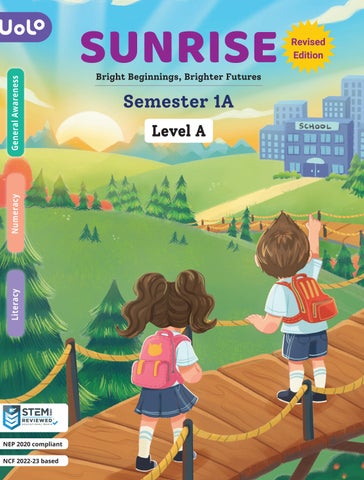
Book Title: Sunrise Semester 1A Level A
ISBN: 978-93-89789-90-4
Published by Uolo EdTech Private Limited
Corporate Office Address:
91Springboard, 3rd Floor
145, Sector 44, Gurugram, Haryana 122003
CIN: U74999DL2017PTC322986
Printed by: Kumar Offset Printer
Illustrations and images: www.shutterstock.com, www.stock.adobe.com and www.freepik.com
All suggested use of the internet should be under adult supervision.

elcome to Sunrise, our comprehensive series for Early Childhood Education, meticulously crafted to align with the guidelines of the Foundational Stage as outlined in the National Education Policy (NEP) 2020 and the National Curriculum Framework for the Foundational Stage (NCF-FS) 2022.
Sunrise offers a rich blend of interactive and activity-based content to support each child’s physical, emotional, intellectual and spiritual growth. Our approach ensures that learning is enjoyable and meaningful, and caters to every child’s interests and abilities.
Inspired by the Panchakosha Framework, Sunrise offers a thoughtfully curated curriculum designed to nurture each child’s physical, emotional, intellectual and spiritual growth, and create engaging and meaningful learning experiences for all children and cultivate a lifelong love for learning.
1. Physical Development
Through movement-based activities, action rhymes, gross and fine motor skill, exercises, yoga and simple meditation practices, children enhance their coordination, balance and self-regulation.
2. Social and Emotional Growth
Discussions, role-plays, games, storytelling and collaborative activities encourage empathy, cooperation, self-expression and social awareness.
3. Intellectual Growth
A structured, age-appropriate progression from concrete to abstract concepts builds strong problem-solving, logical thinking and cognitive skills.
4. Spiritual and Moral Development
Stories, rhymes and reflective discussions teach values such as kindness and honesty. Yoga and meditation help children stay calm, focused and happy.
The Sunrise curriculum is not merely a series of lessons, but a journey of discovery, growth and joy. The package comes with digital content, provided free of cost, to ensure a seamless and holistic learning experience for children. By providing a nurturing and stimulating environment, Sunrise lays the foundation for future success—preparing children not just for school, but for life.
Thank you for embarking on this educational journey with us. Together, we can make the early childhood education a bright and promising start for every child.





Sunrise is an activity-based learning programme covering all areas of Early Childhood Education. It includes content on English, Maths, General Awareness, and Rhymes & Stories, along with lesson plans and resources to support teachers. Digital tools like animated videos, phonics songs and interactive exercises further enrich classroom learning.
Semester Books

TLM
Workbooks
Rhymes and Stories
Teacher Manual
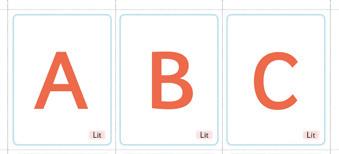
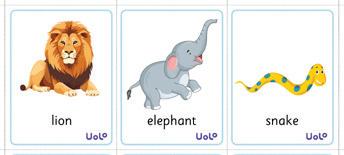
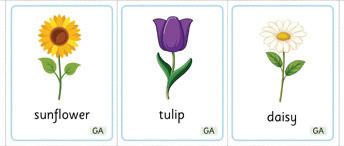
Flashcards
Manipulatives
Stickers



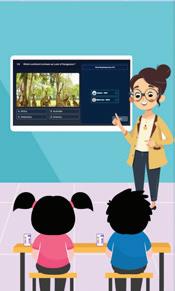
Student app
Learning
Interactive


Art
Hands-on
Teamwork









The language curriculum follows a balanced and comprehensive approach with equal emphasis on oral language, vocabulary development, phonemic awareness, decoding and emergent reading and writing skills. The Semester Book introduces letters and sounds. The Workbook provides practice worksheets for each concept.


The book curriculum builds strong thinking and problem-solving skills through a step-by-step approach. The Semester Book begins with prenumber ideas like big/small and more/less, then moves to number recognition, counting and value. The Workbook provides practice for each concept to strengthen learning.









Young children are introduced to the world around them through familiar and meaningful themes such as Myself, My Family, My Friends, My Body, Weather, Plants, Animals, Vehicles, Community Helpers and many more.
Let’s Talk provides regular opportunities for children to listen, retell, ask questions and express ideas confidently. Teacher Tip offers helpful guidance to build real-life connections and enhance concept delivery.
After each concept, the fun begins with the Let’s Do It section—packed with simple and exciting activities to help children recall what they have learned. Plus, they can scan the QR codes to watch friendly concept videos and explore more through digital learning!
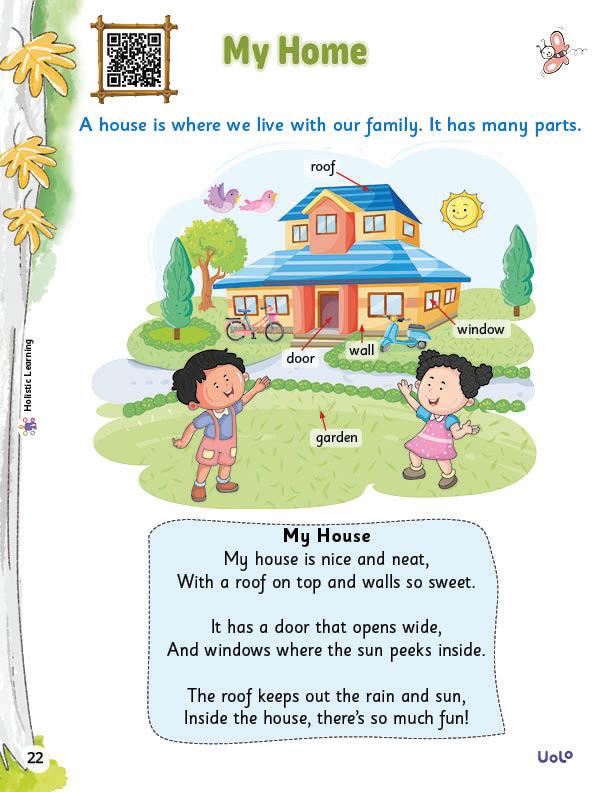
The book engages multiple senses through bright visuals, catchy rhymes, simple stories and handson activities. Tasks such as mazes and puzzles, and sticker activities help build thinking and motor skills in an enjoyable way.







Let children scribble freely without any correction. This is a fun and simple way to warm up their little hands.
Scribble inside the balloon.
Encourage children to scribble freely on the floor with a chalk.

Let children first trace the dots from left to right with their finger. This helps build hand-eye coordination.
Join the dots from top to bottom.
Let children first trace the dots with their finger from top to
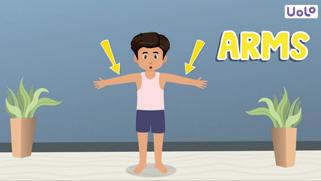
Ask children to stretch their arms out like a flying aeroplane.
Trace the zig-zag lines.
Draw zig-zag lines on the floor with chalk and let the children walk along them.
Ask the children to bend their left hand and make a small ‘C’ shape in the air. This helps build a good foundation for letter formation later.
Trace the curves.
Let the children walk along a curved line on the floor.
Trace the curves.
Let children draw a rainbow on a plain sheet of paper and colour it.
Ask children to show a big smile on their faces.
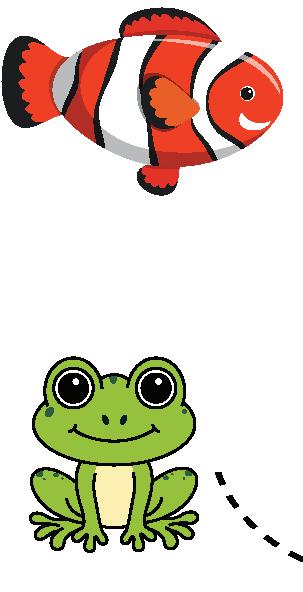
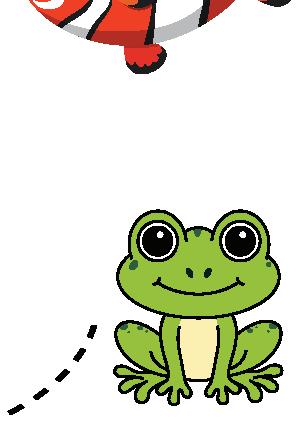
Trace the dotted lines to match the same objects.


Ask the children to place one hand on top of the other and wiggle their thumbs like fish fins.




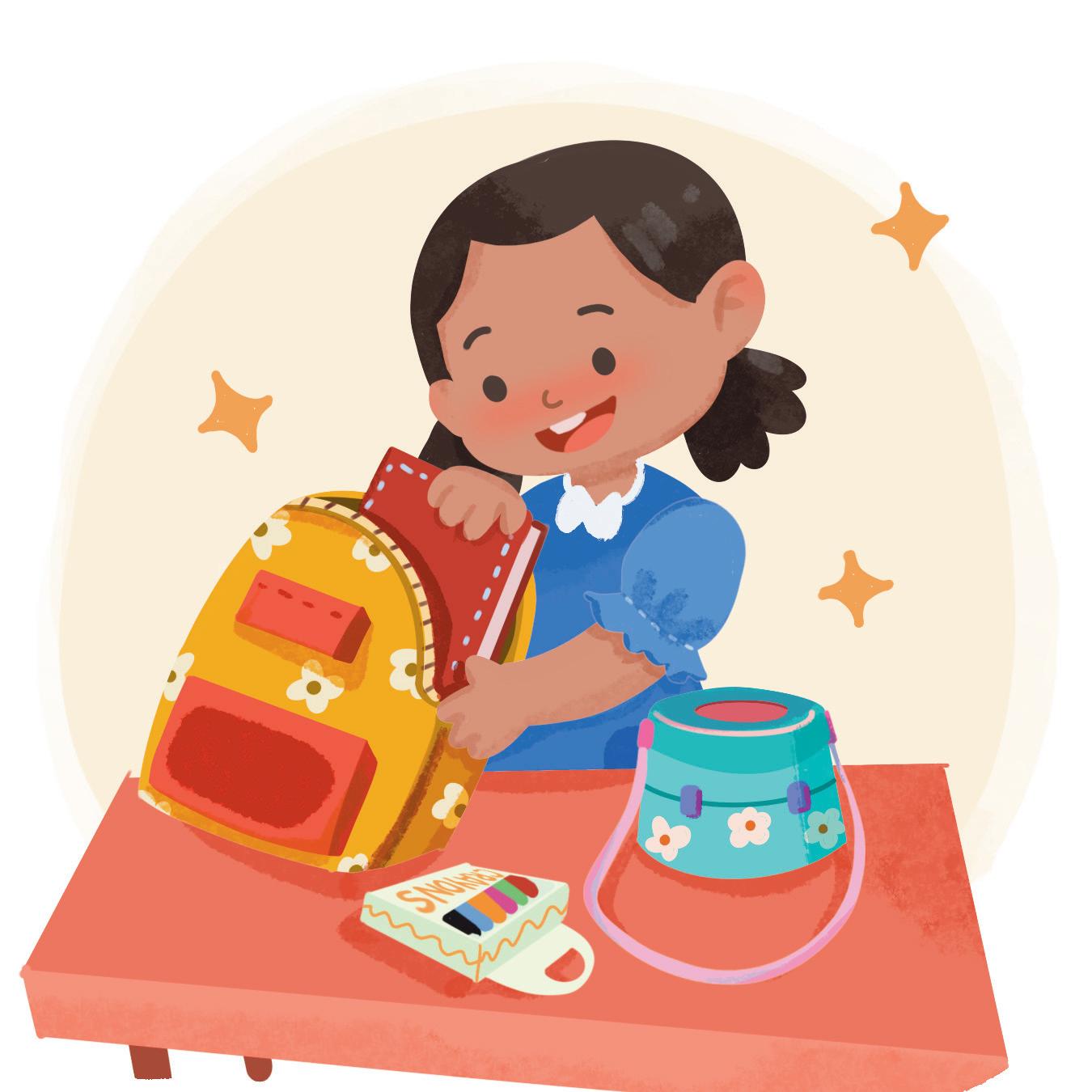
Mira is happy.
New bag. New books.
New crayons.

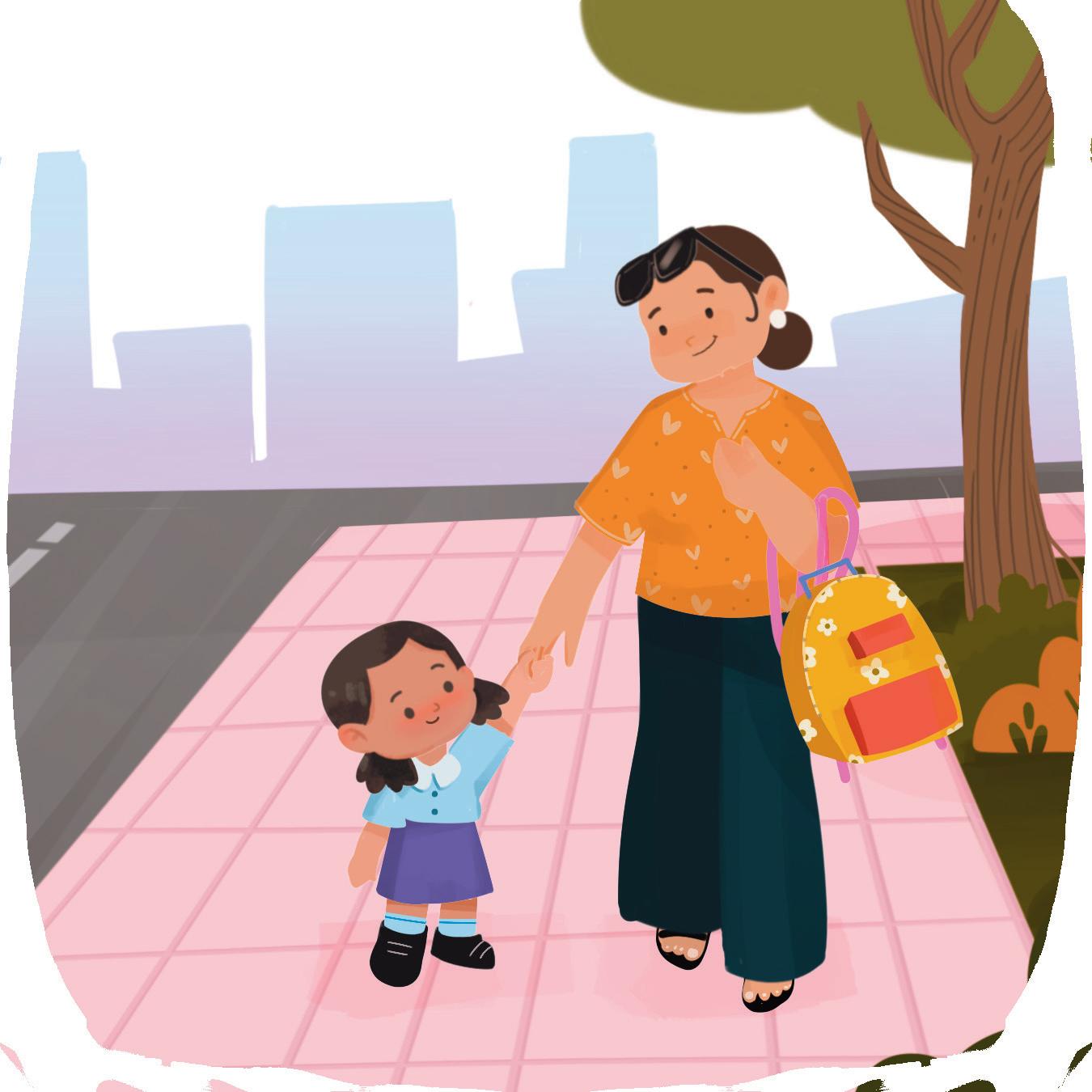


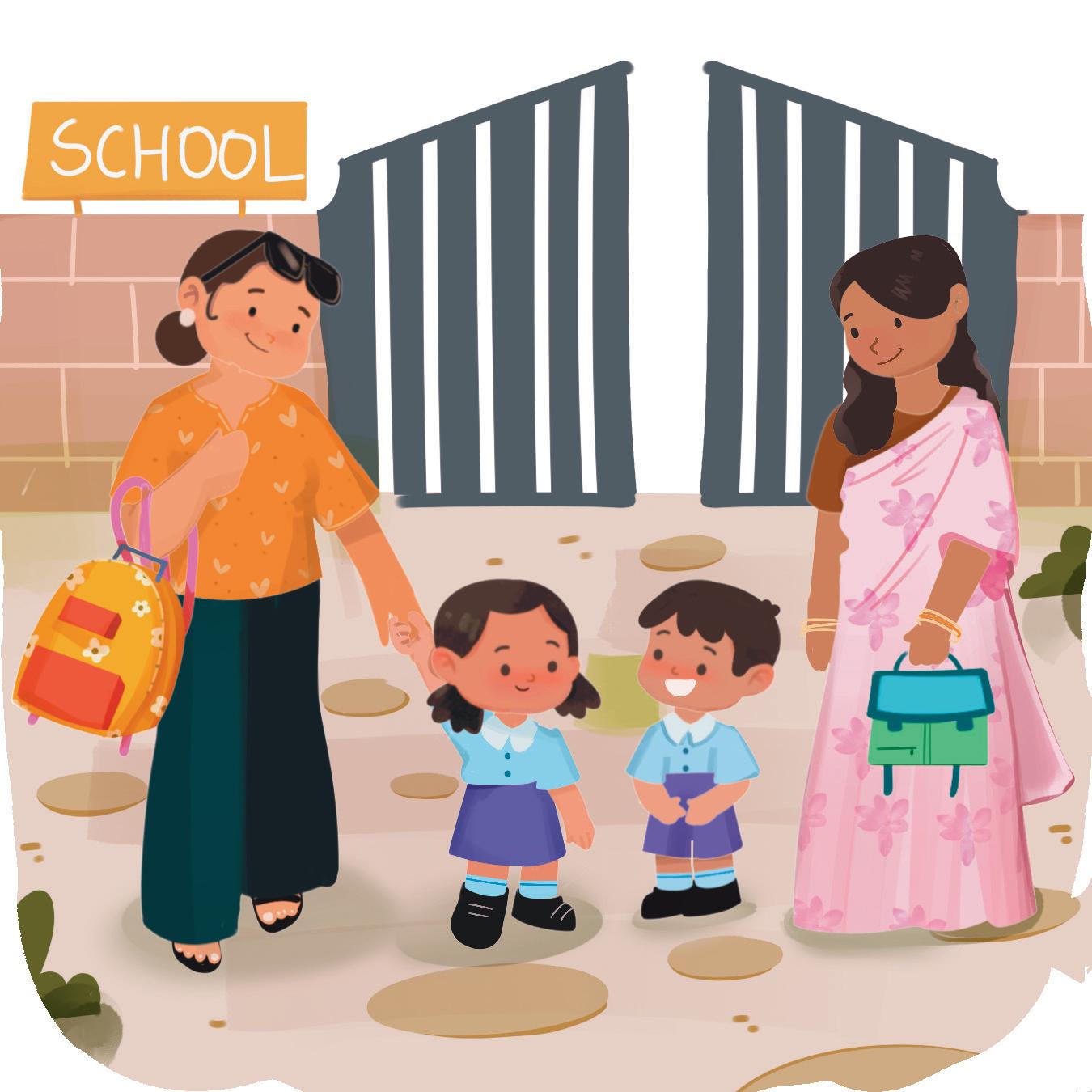
Mira meets Raja and his Amma.
Mira and Ma go to school. Mira and Ma are happy.


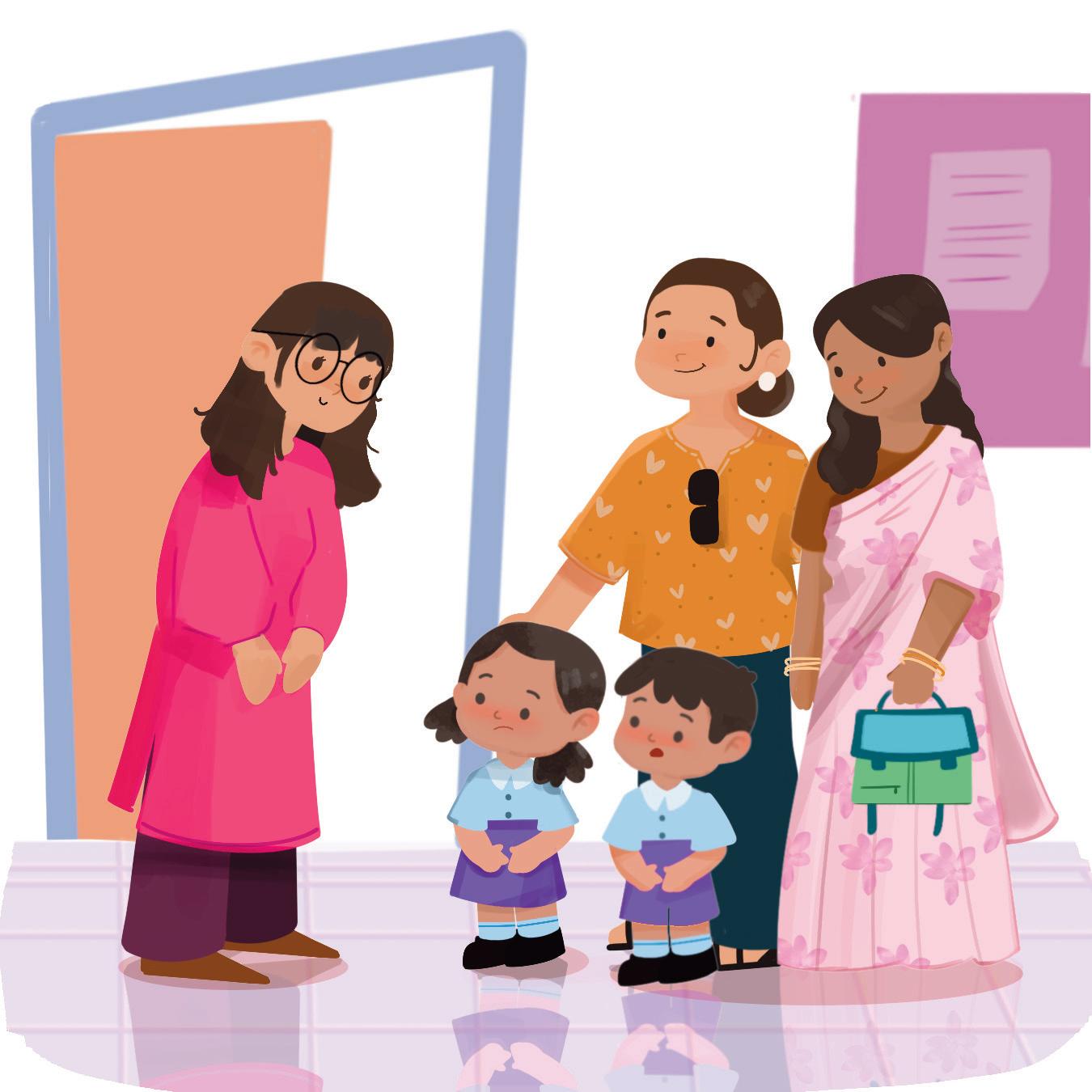
Miss Nina says, ‘Hello!’

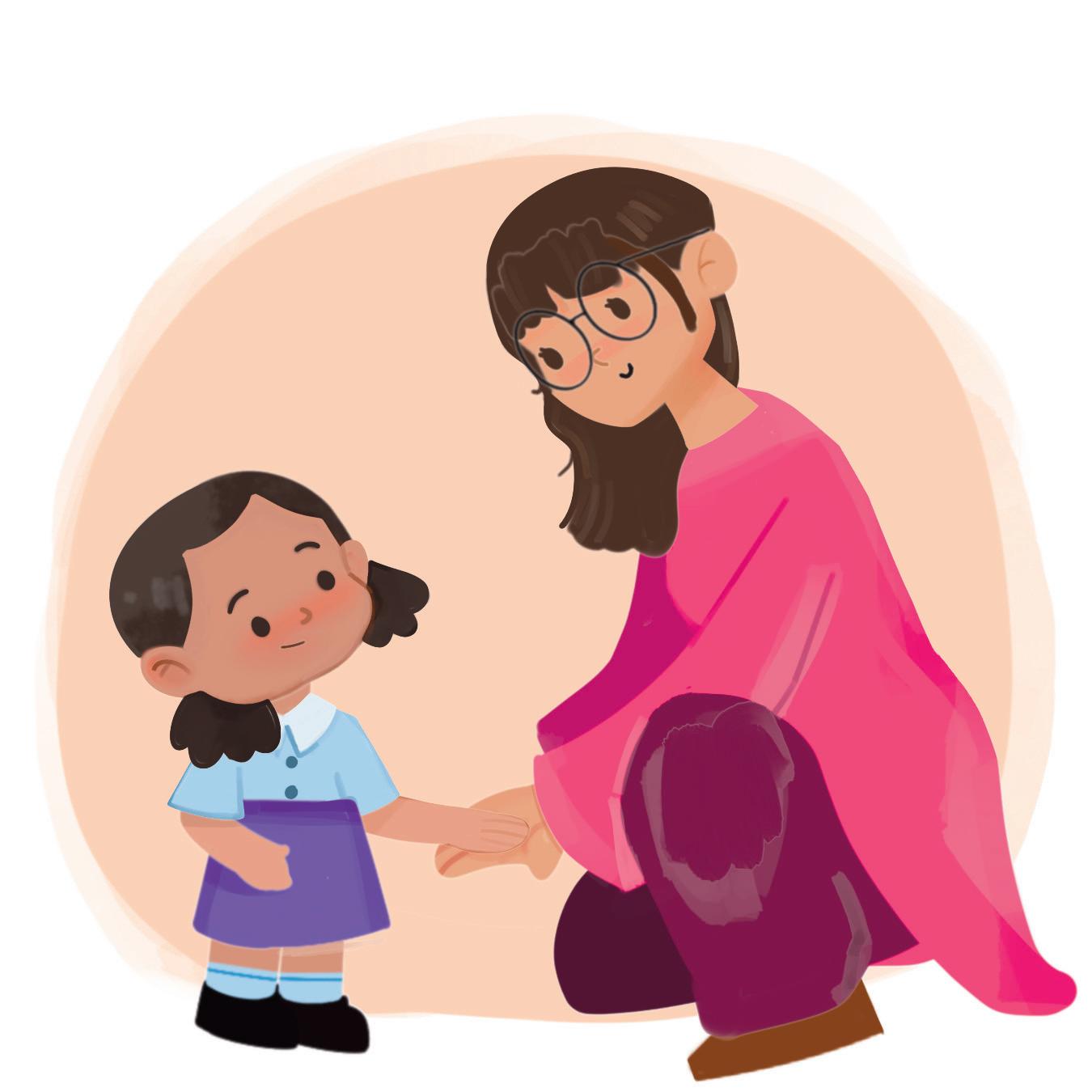
Mira and Raja are at school. They meet the teacher Miss Nina.
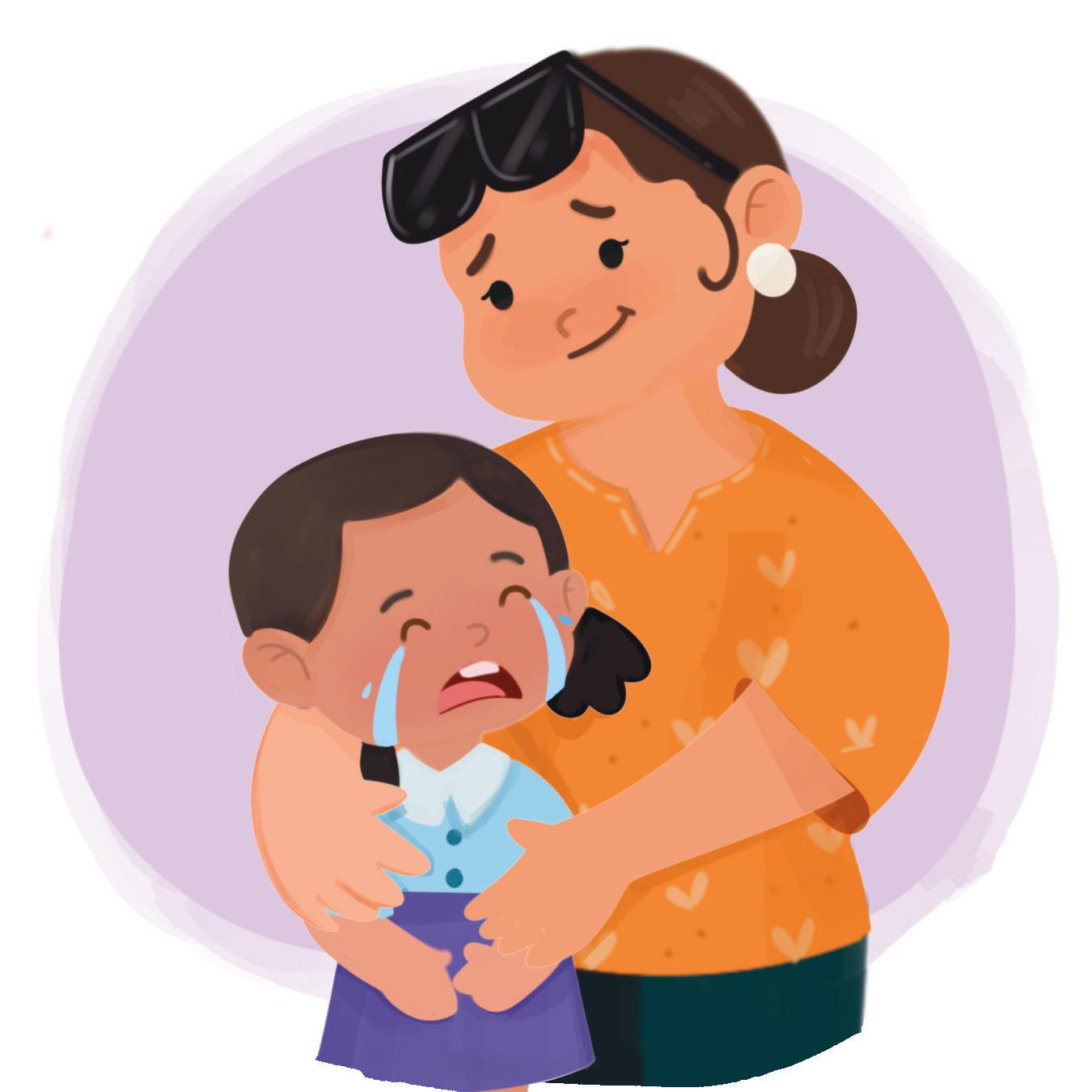
Mira is sad. Mira wants to go home.
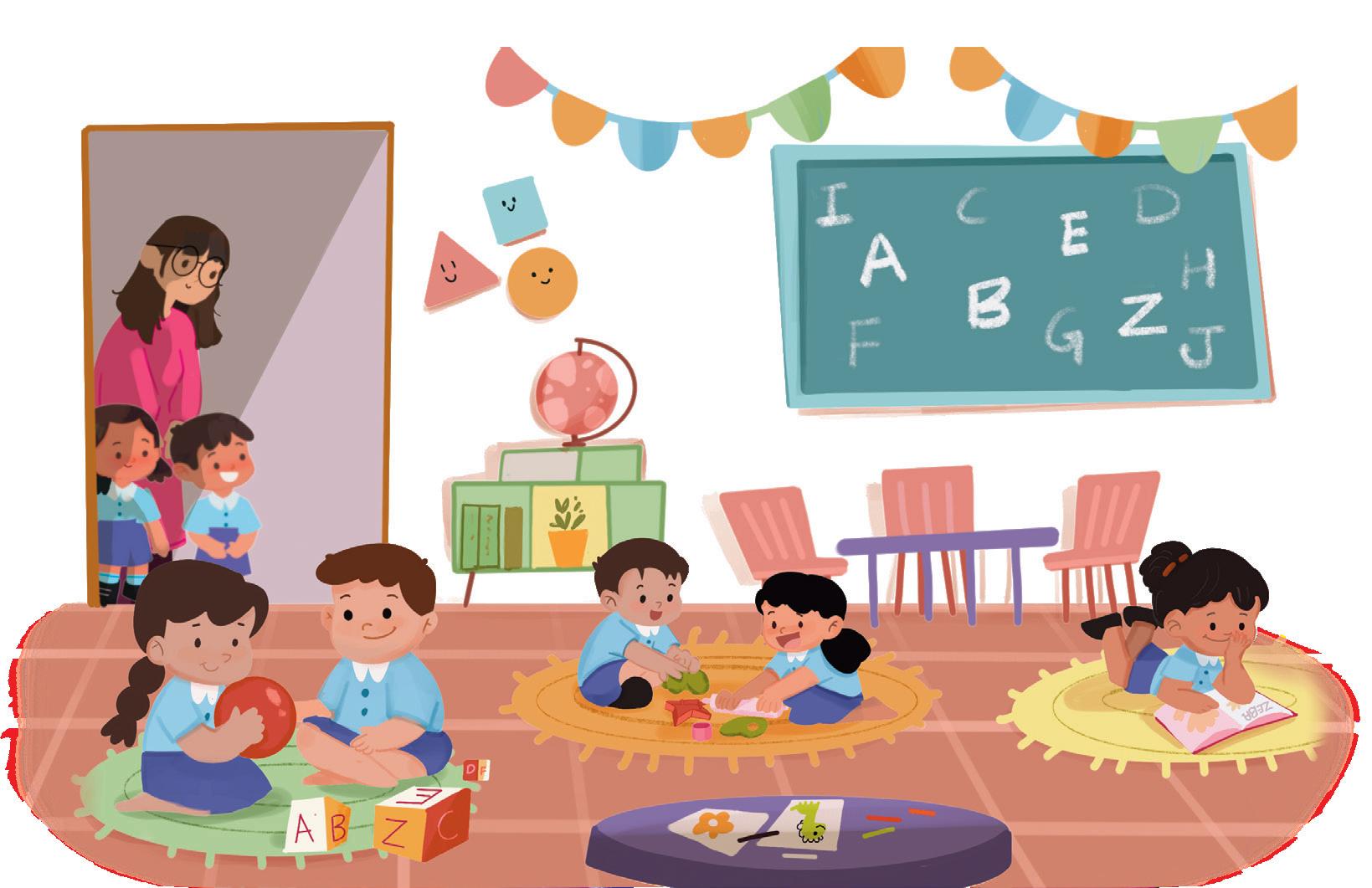
Miss Nina takes Mira to the classroom. Mira sees happy children.
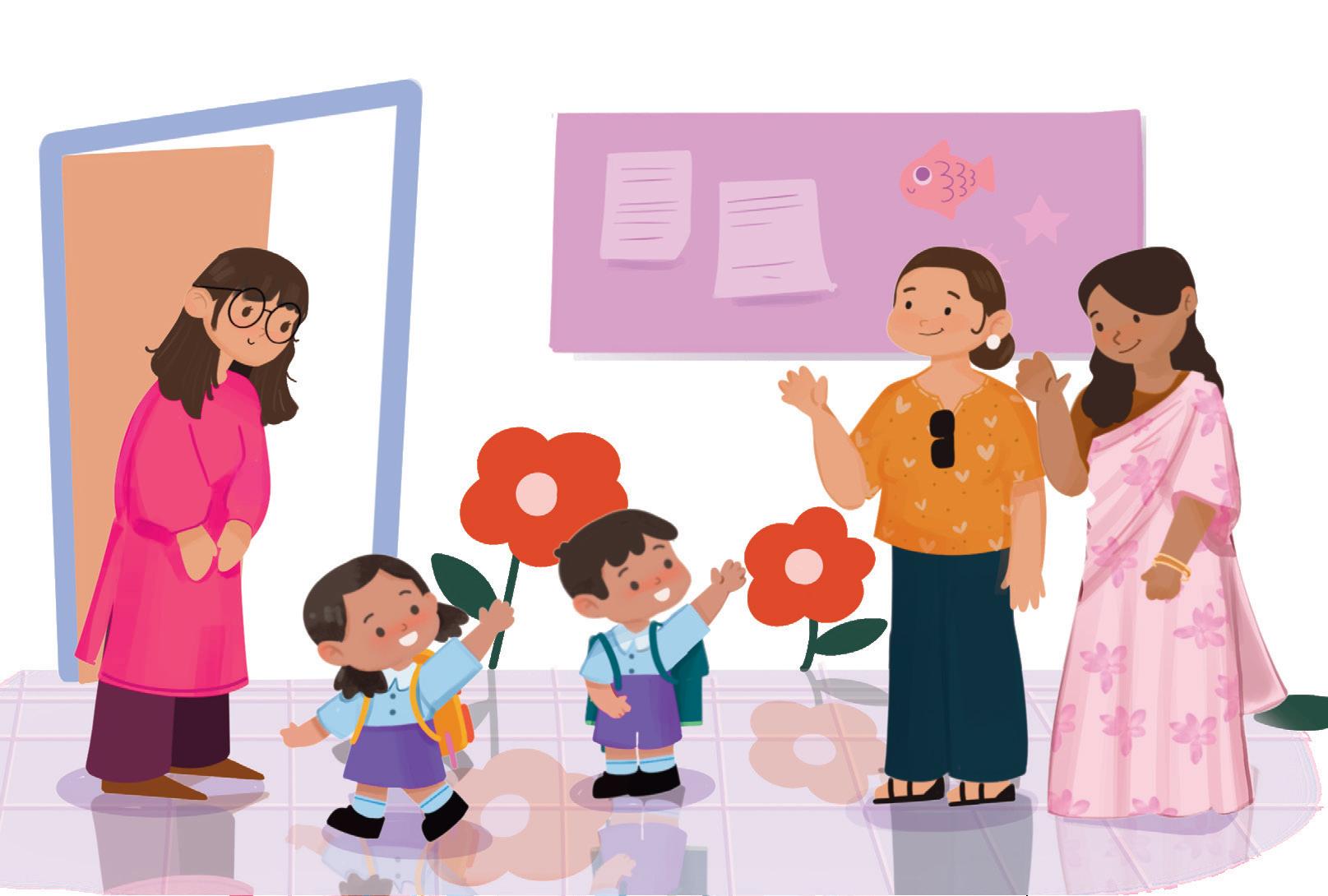
Mira and Raja say bye to their mothers and run inside the classroom.
1. What new things does Mira have for school?
2. Who does Mira meet at school?
3. Do you feel happy or sad at school? Why?
4. What do you take to school that makes you happy?
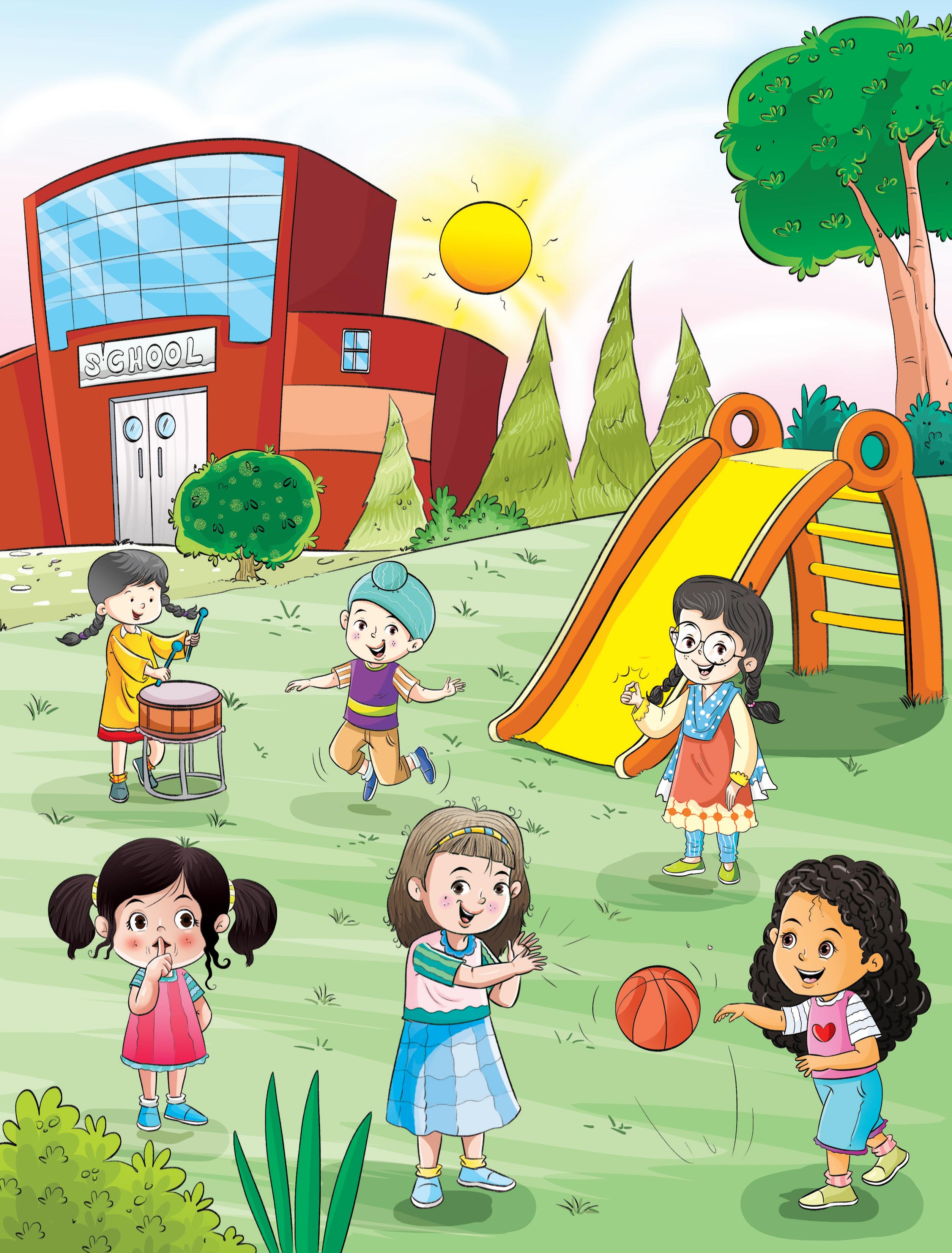
Encourage children to talk freely about the picture.

A B C D E F G,
H I J K,
L M N O P
Q R S, T U V, W X, Y and Z. Now I know my A B C. Next time come and sing with me.
TIP
Encourage children to stand in a circle and sing the alphabet song together.

Trace the letter Aa with different colours�
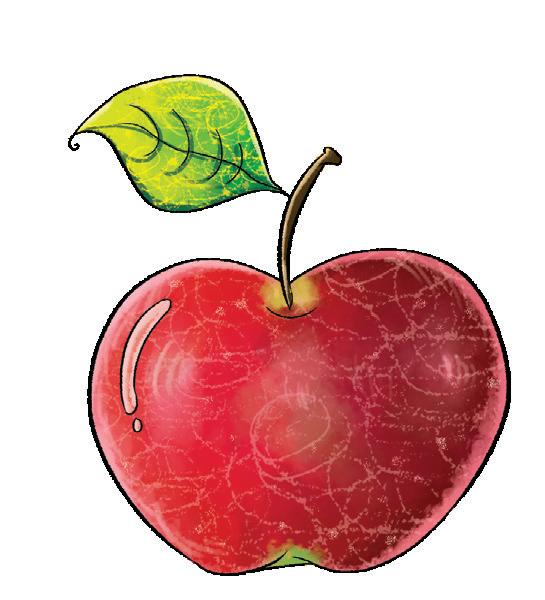
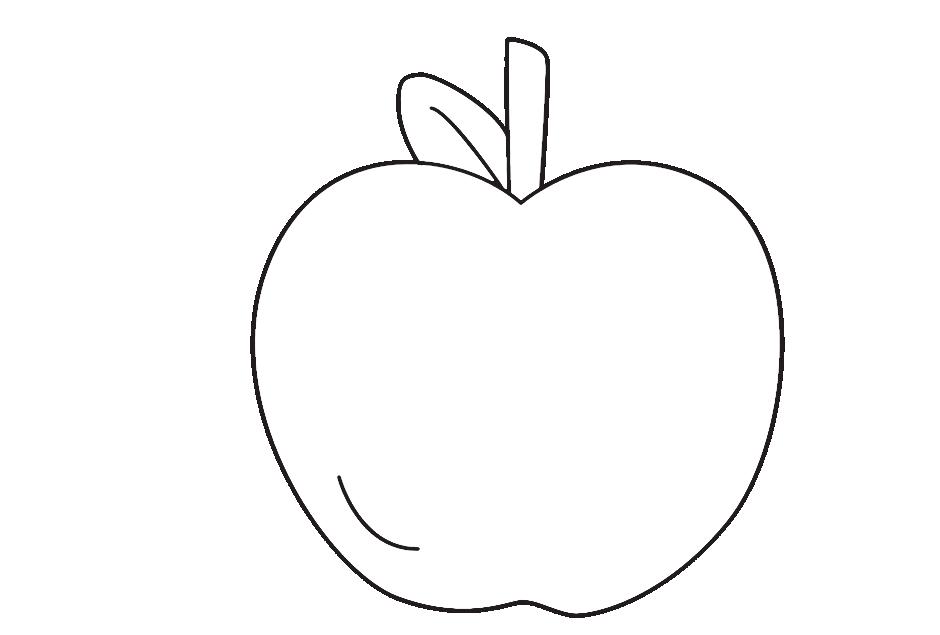
Colour the apple� Say /a/-/a/-apple�

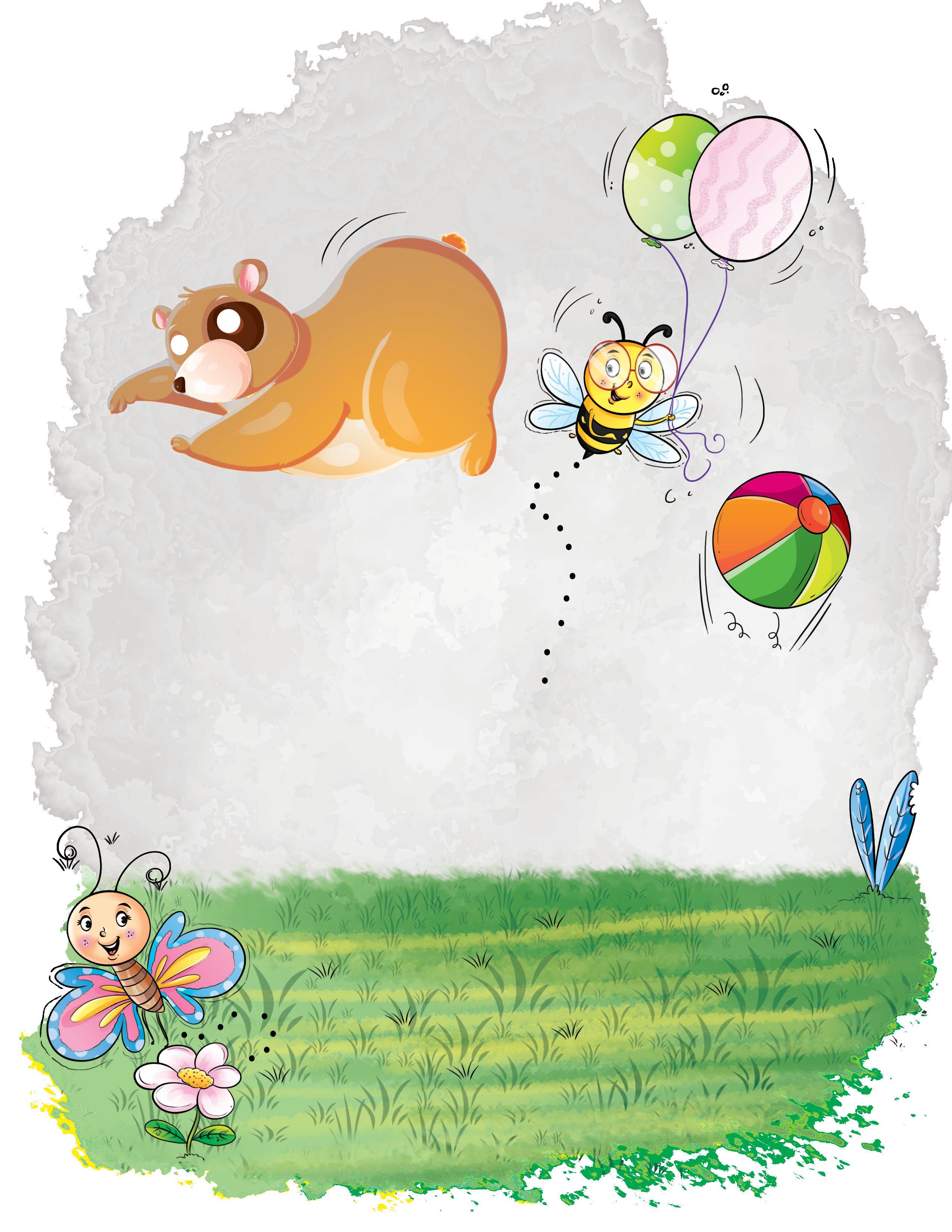
bThe bouncing ball goes up and down, A brown bear dances on the ground.
B says /b/-/b/-/b/




cCCat wears a cap and sips from a cup, Cow sees the cake and eats it up.
C says /k/-/k/-/k/
Trace the letter Cc with different colours�
1

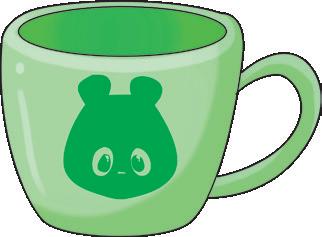
Match the cups that are of the same colour� Say /k/-/k/-cup�



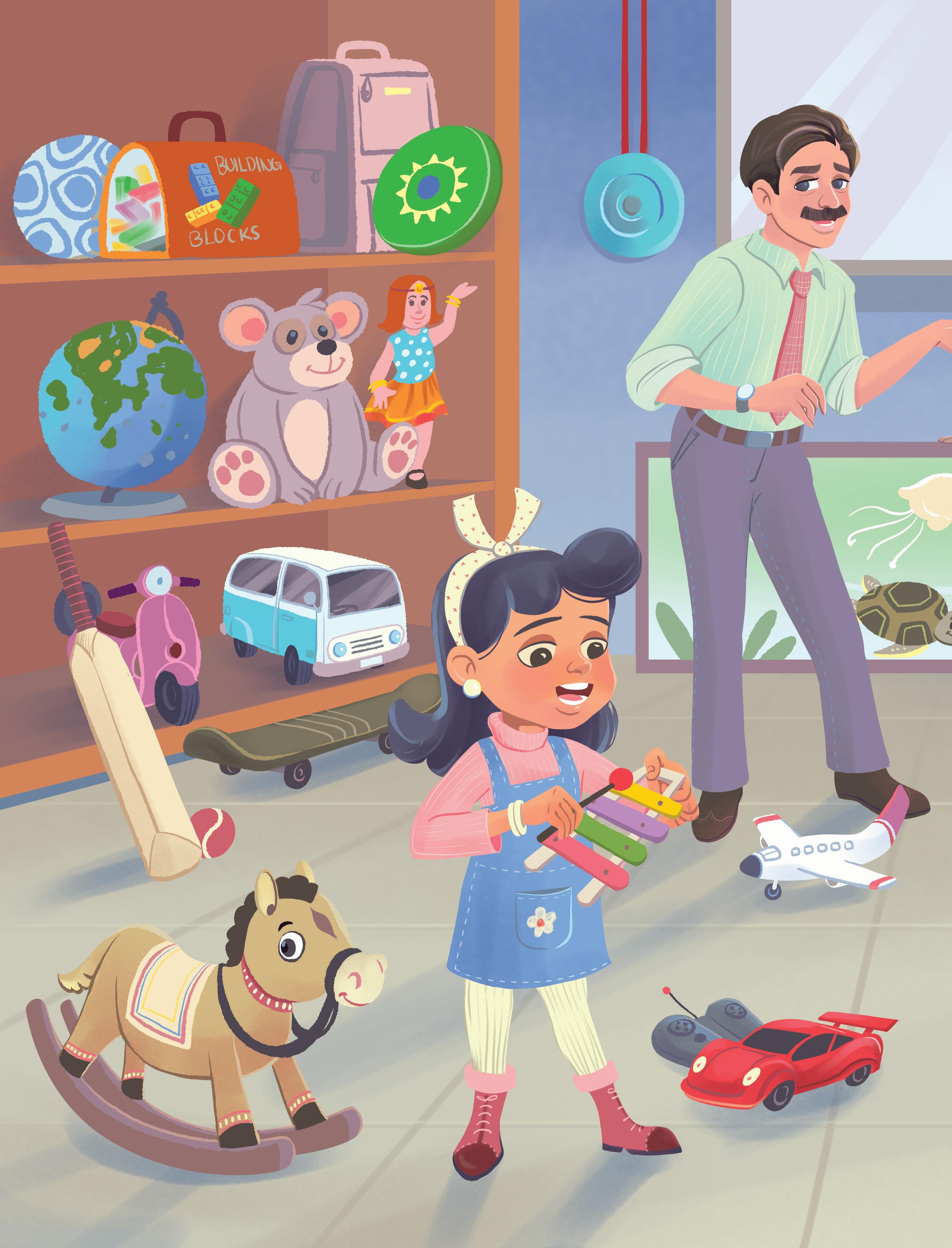

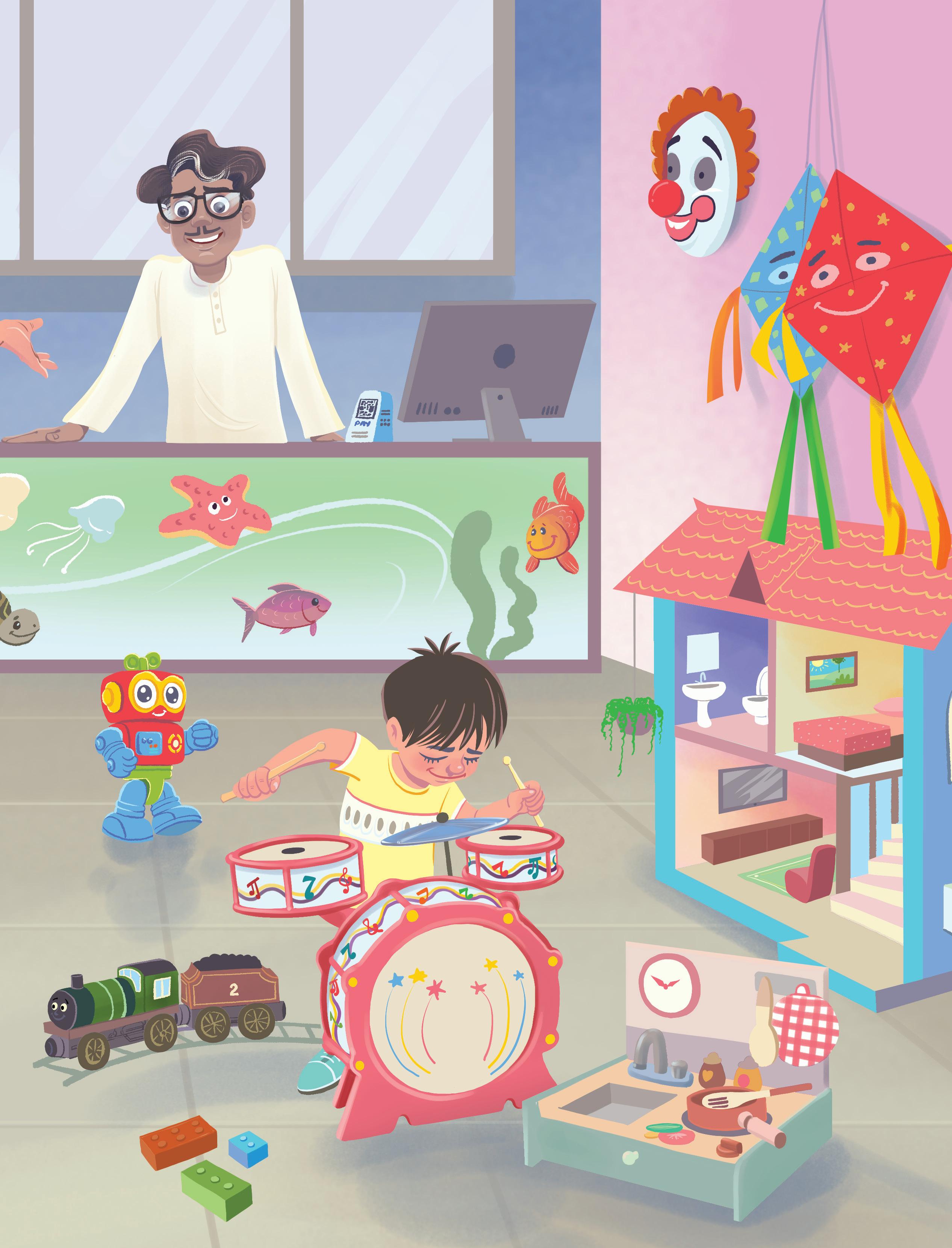
1. Which toys do you see in the picture?
2. Which is your favourite toy?
3. Where do you keep your toys at home?


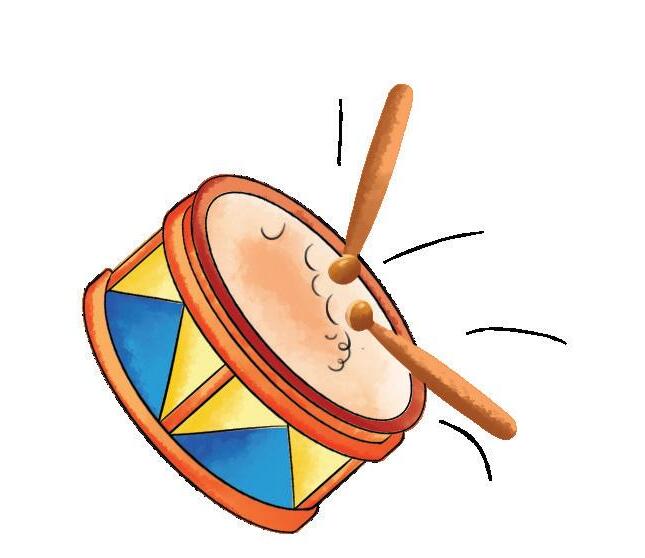
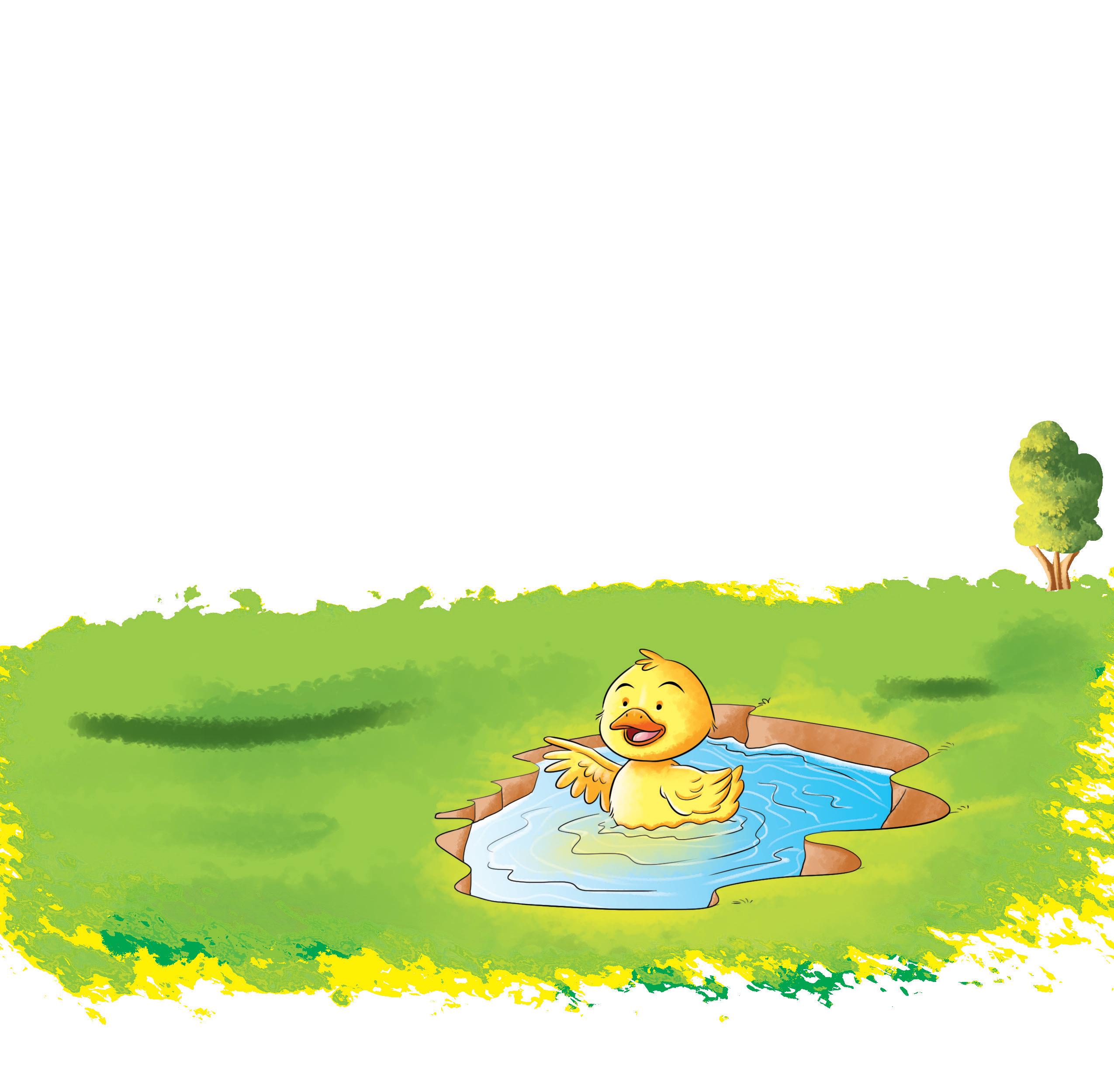
duck dog Duffy dog beats the drums. Dum-dum-dum, dum-dum-dum! D says /d/-/d/-/d/
Trace the letter Dd with different colours�

Tear and paste pieces of coloured paper in the dolphin�
Say /d/-/d/-dolphin�

l phant
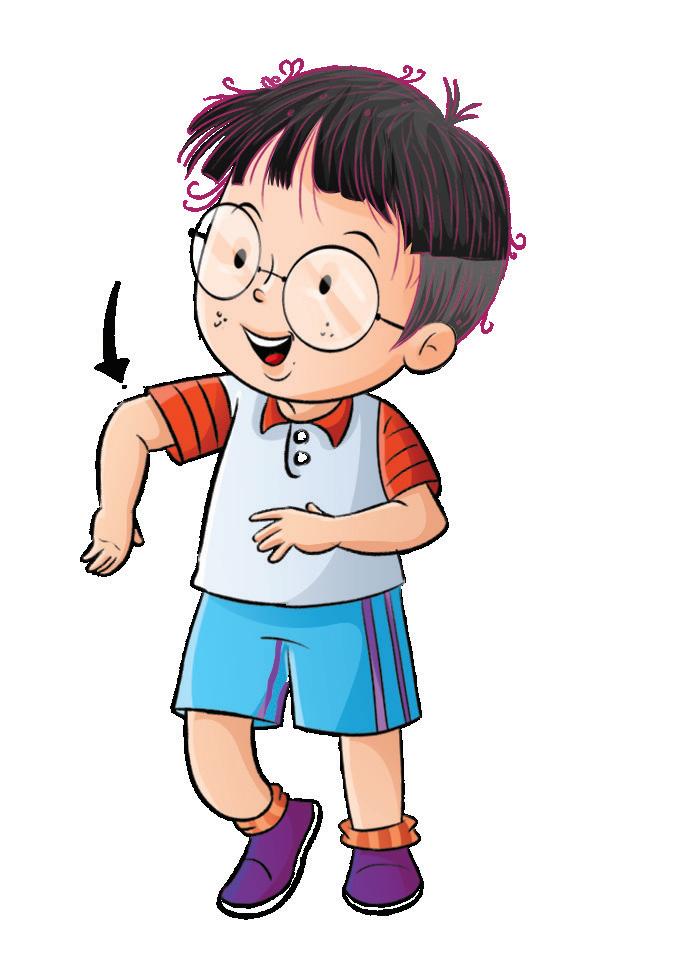
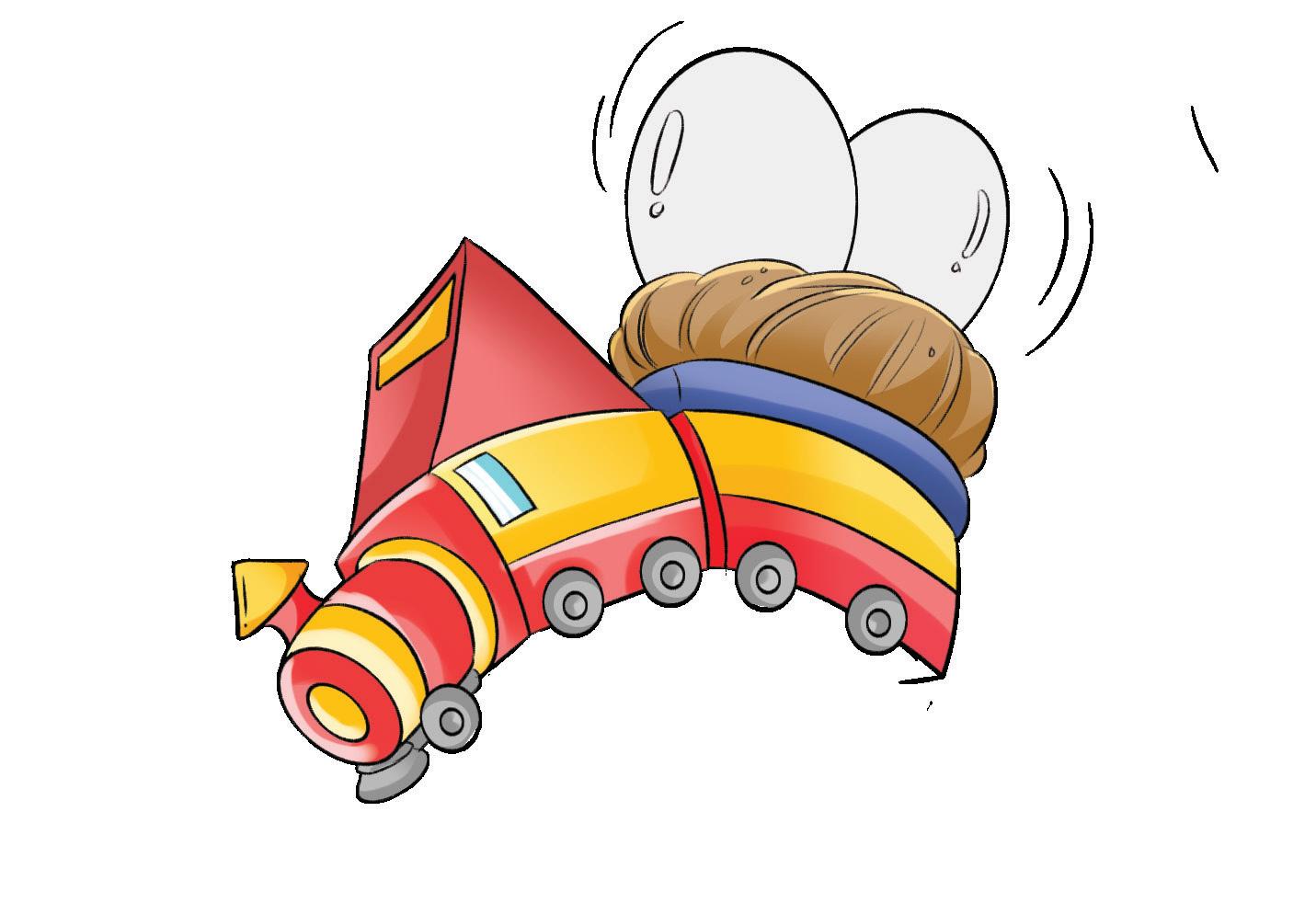
Elbow up and elbow down, The empty engine made a sound. E says /e/-/e/-/e/
Trace the letter E with different colours�
f lower
f ish

f rog

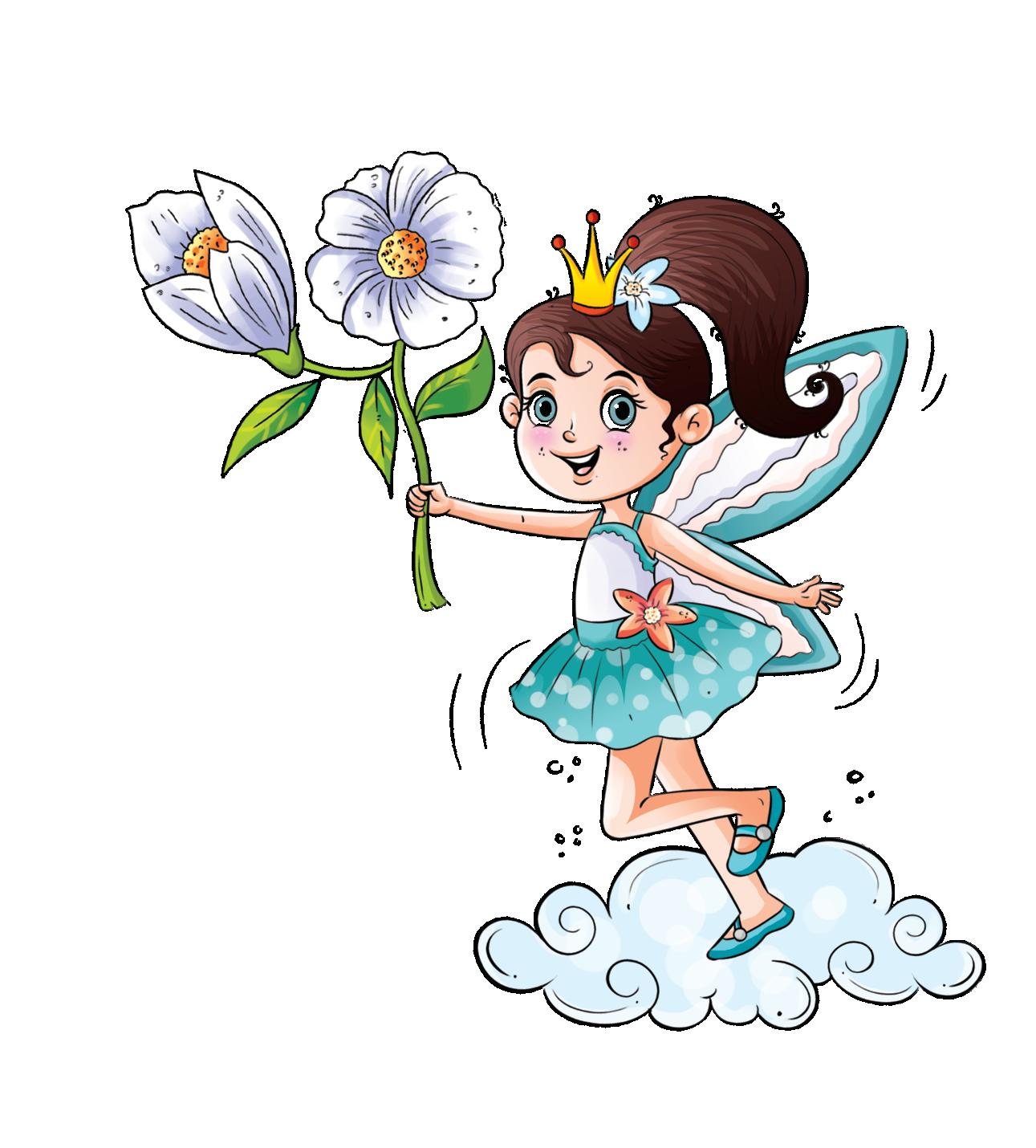
FFish and frog turn on the fan, Fairy holds a flower in her hand. F says /f/-/f/-/f/
Trace the letter Ff with different colours�
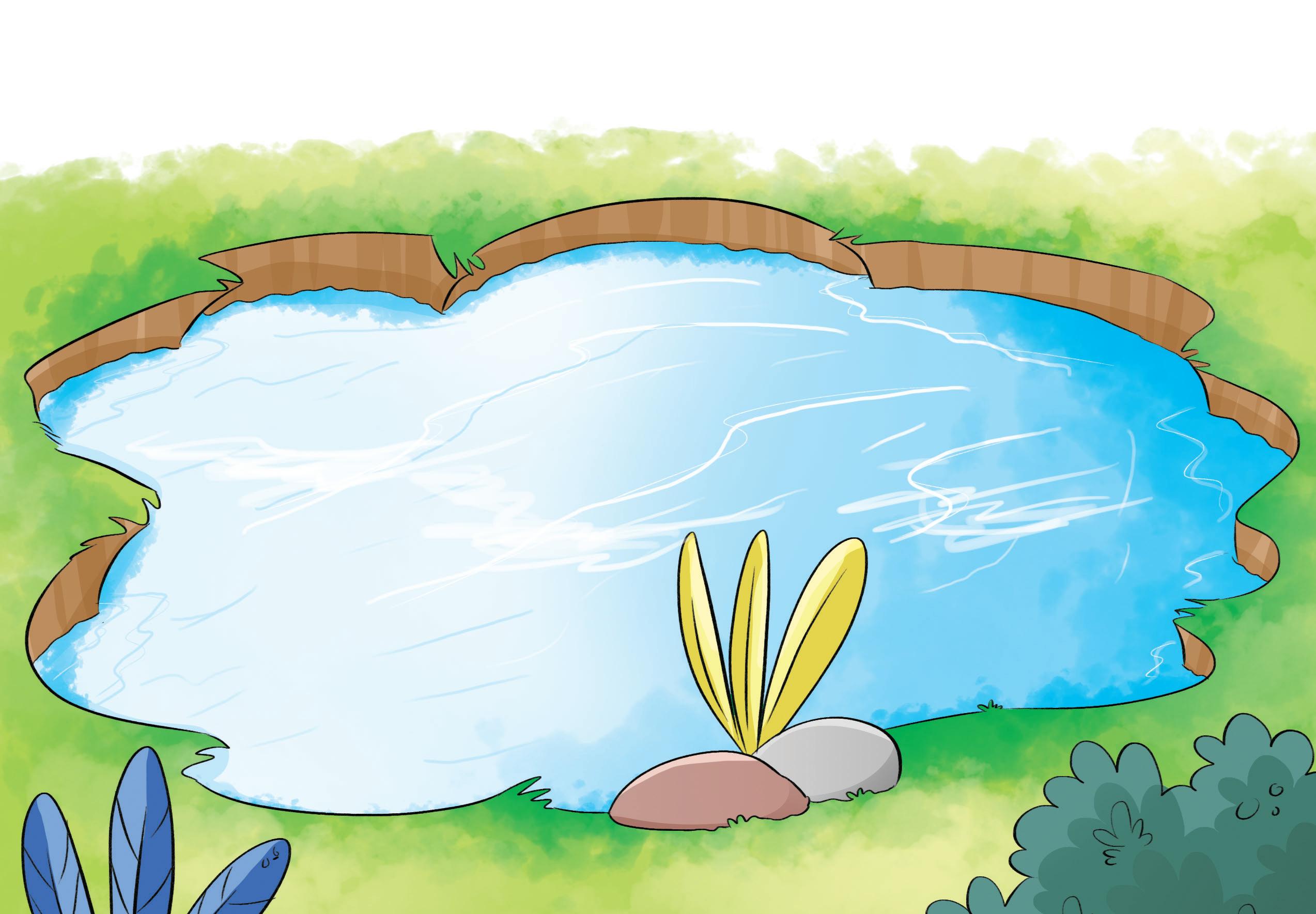
Paste a few fish in the pond� Say /f/-/f/-fish�

(Use the sticker sheet�)




Circle the picture with the different umbrellas.




















See and say. same same different different
Circle the different picture in each row.


Ask children to point to the body parts on themselves that are the same.

A bear is big. A rabbit is small.
Circle the big ball.
See and say.
Let's Talk
Name one big and one small object in the classroom.

A giraffe is tall. A fox is short.
Tick (✓) the short objects.

See and say.
Use hand gestures going up and down to show tall and short.
Trace the circles with your finger and colour them.
I am a circle, I go round and round. All I do is Roll around.
We see circles in many things. Say their names aloud.
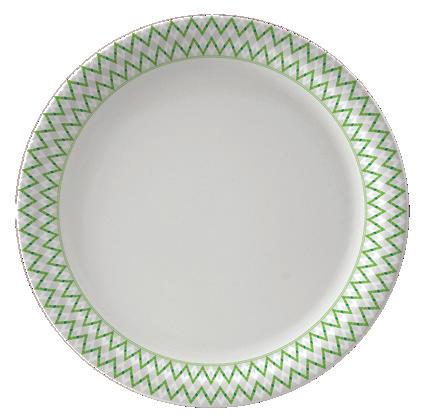








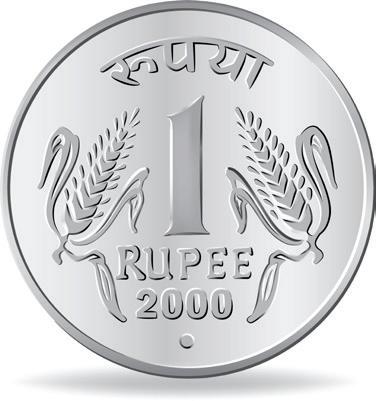

Trace the outline of the two bangles with crayons of different colours.
Let's Talk
Name two fruits that look like circles.
Sing the poem with actions.
How many fingers on one hand?
How many fingers on one hand?
Let’s all count together.
1, 2, 3, 4, 5
1, 2, 3, 4, 5
How many fingers on two hands?
How many fingers on two hands?
Let’s all count together.
1, 2, 3, 4, 5
6, 7, 8, 9, 10

1, 2, 3, 4, 5
6, 7, 8, 9, 10


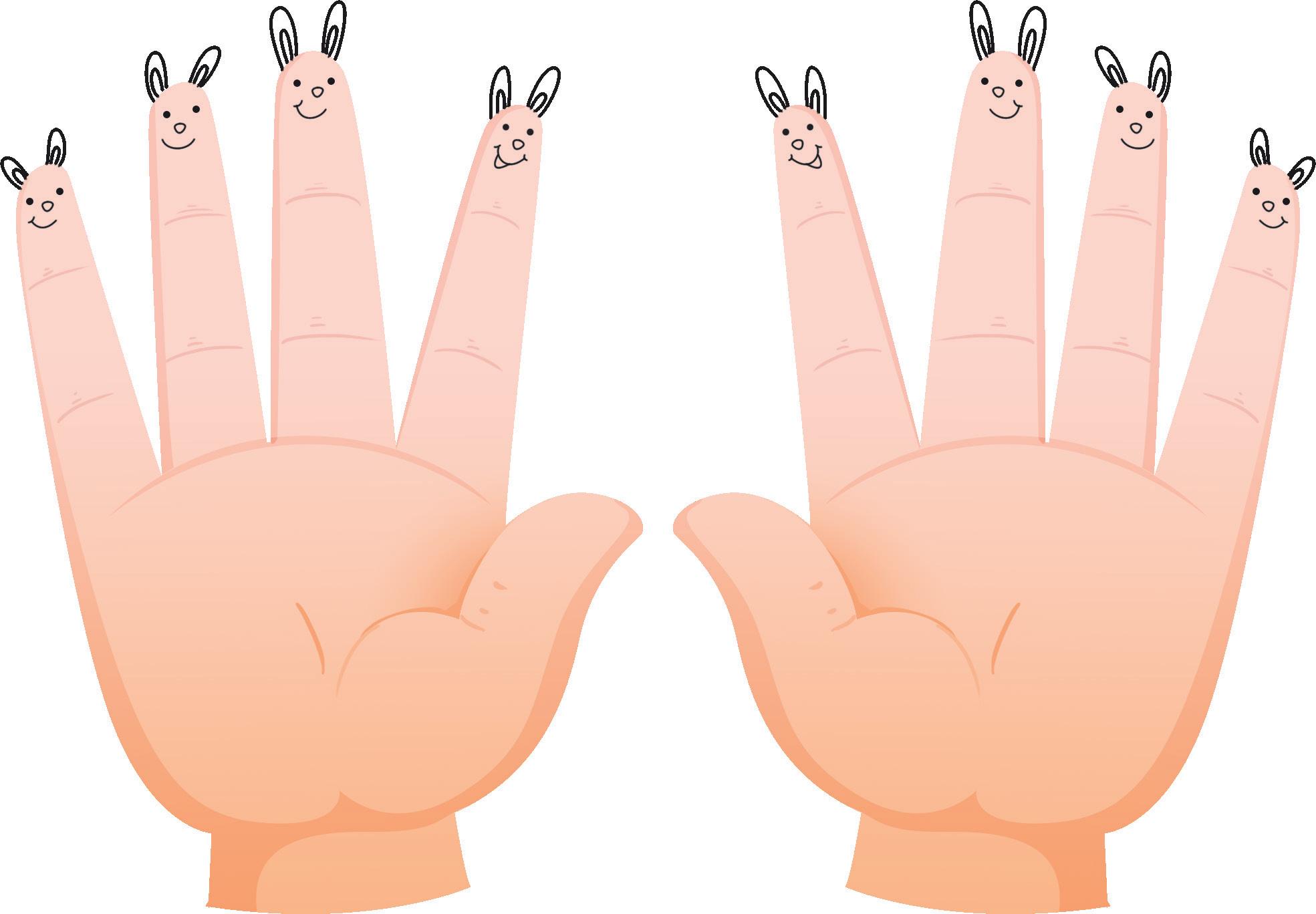
Use the rhyme to show how fingers work together on one hand—just like we work together as a team.
Let's Talk
Mention a few things that you like doing in a group with your friends.
Take the animal to their food by tracing the dotted lines. One-to-One
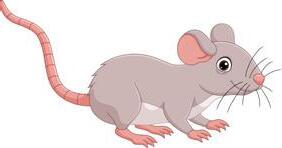
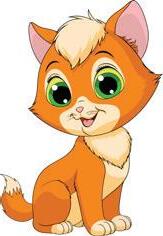

Draw standing and sleeping lines on the floor. Ask children to walk on them one by one.
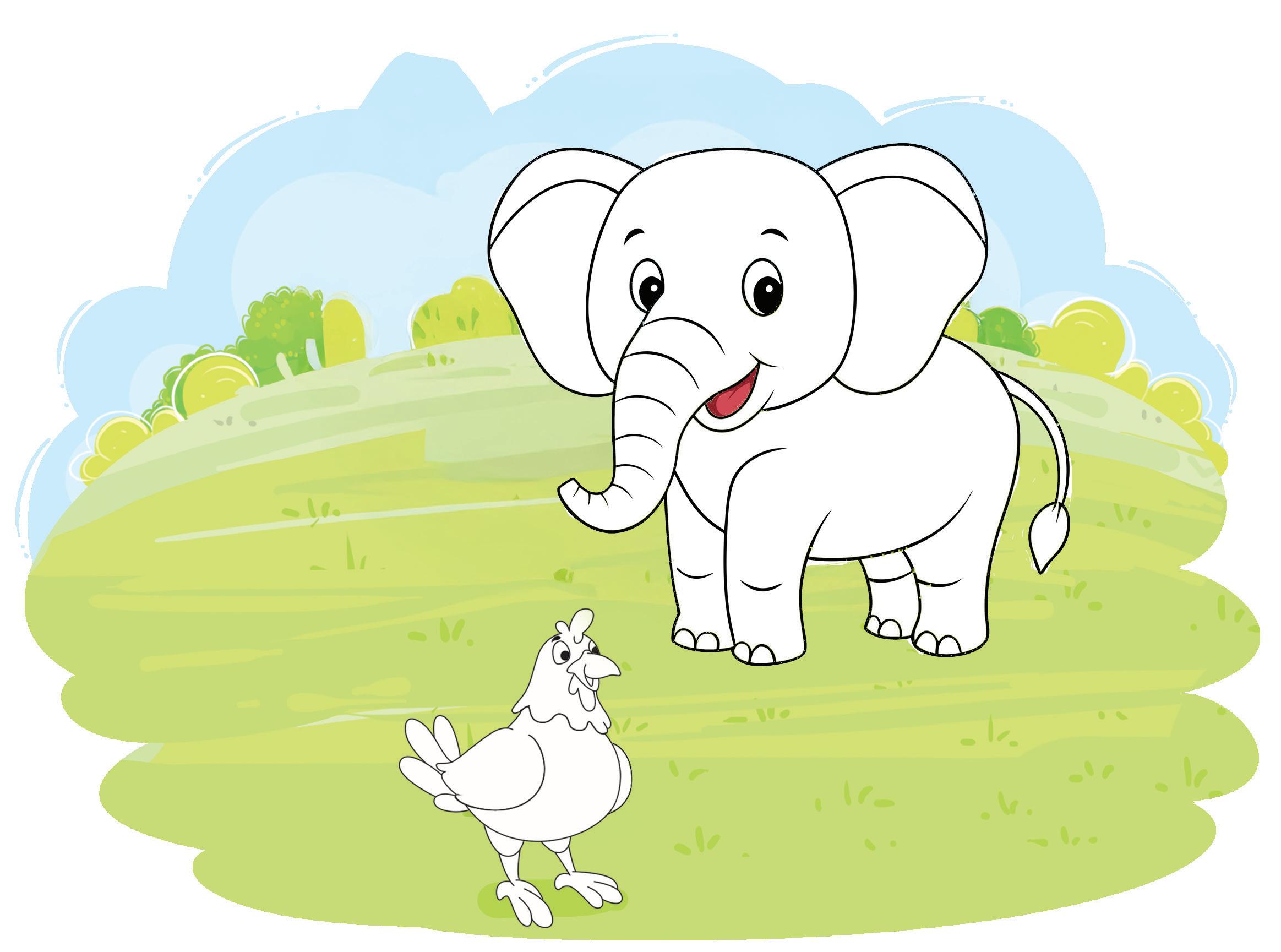
1elephant, big and grey, Walking slowly on its way.
Show one finger and say, ‘1 finger’.

Count and say the number of bear.

Colour the sun.

2 penguins black and white, Play with joy day and night.
Show two fingers and say, ‘2 fingers’.

Count and say the number of dogs.
Colour the 2 apples.
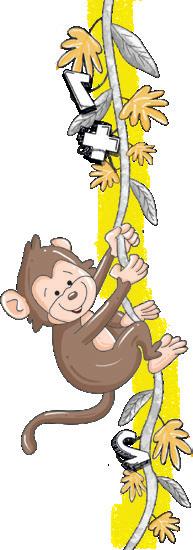
3 monkeys jumping around, Here and there on the ground.
Show three fingers and say ‘3 fingers’.

Count and say the number of auto rickshaws.
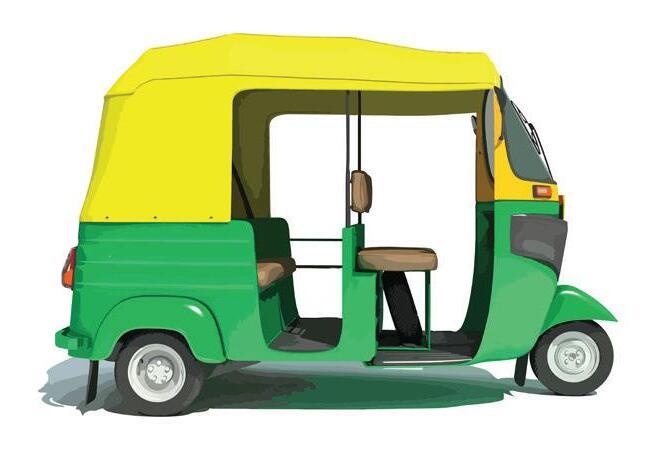
Colour the 3 lights.

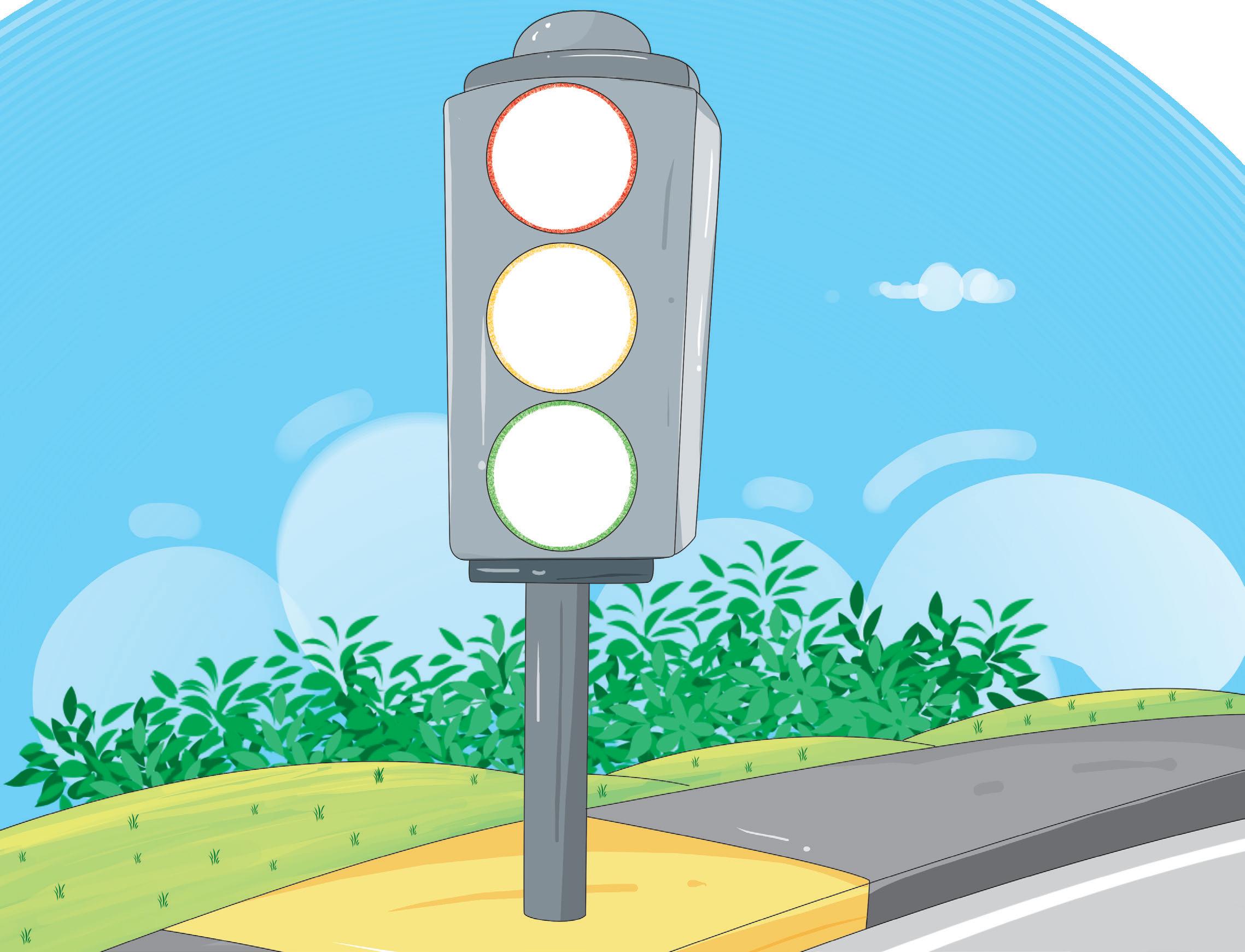
Encourage children to follow traffic rules like stopping at red and walking on the zebra crossing to stay safe.

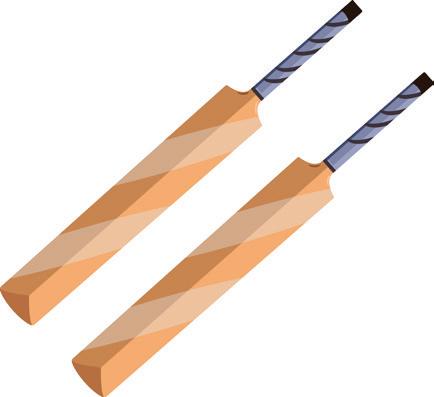

Count the objects in each set. Circle the correct number. 1 2 3 1 2 3 1 2 3 1 2 3 1 2 3
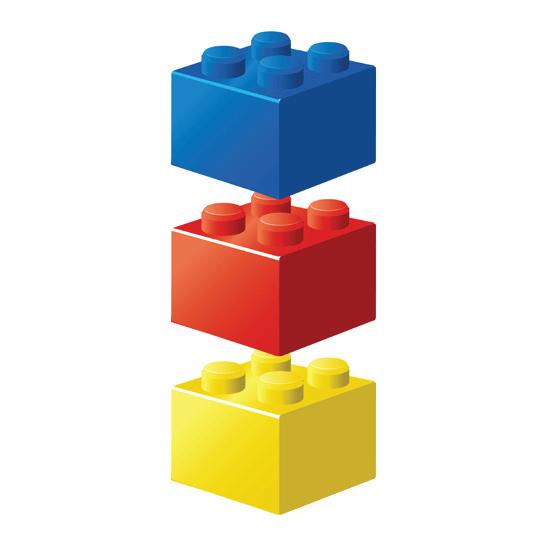
4 puppies chase and play, Wagging their tails all day.
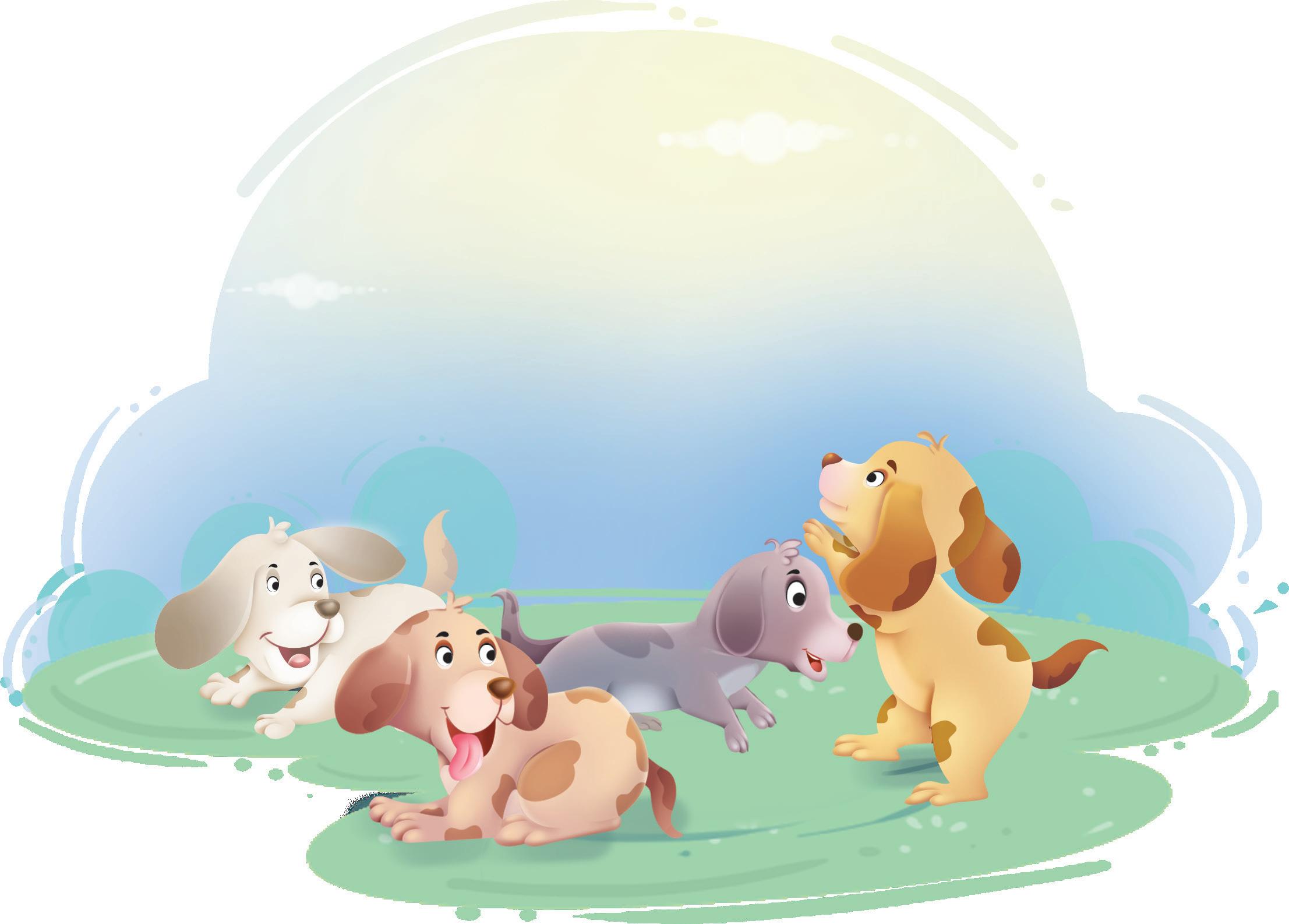
four fingers and say,‘4 fingers’.

Count and say the number of cars.


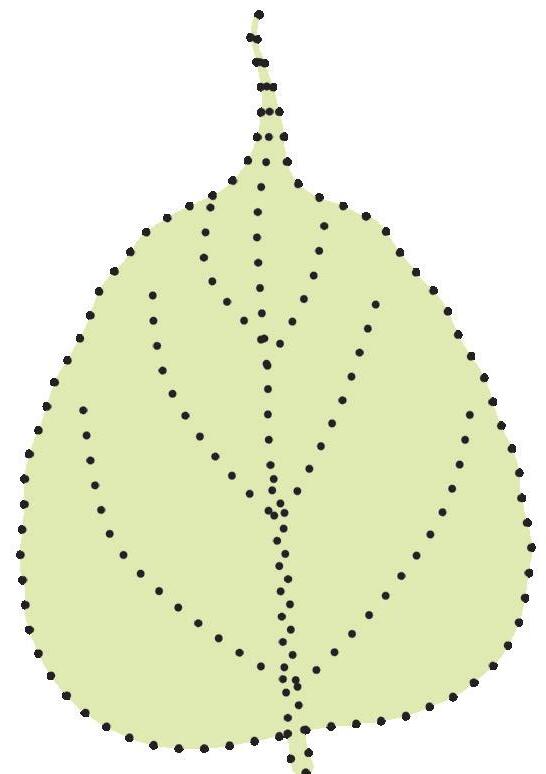
Trace and count the leaves.
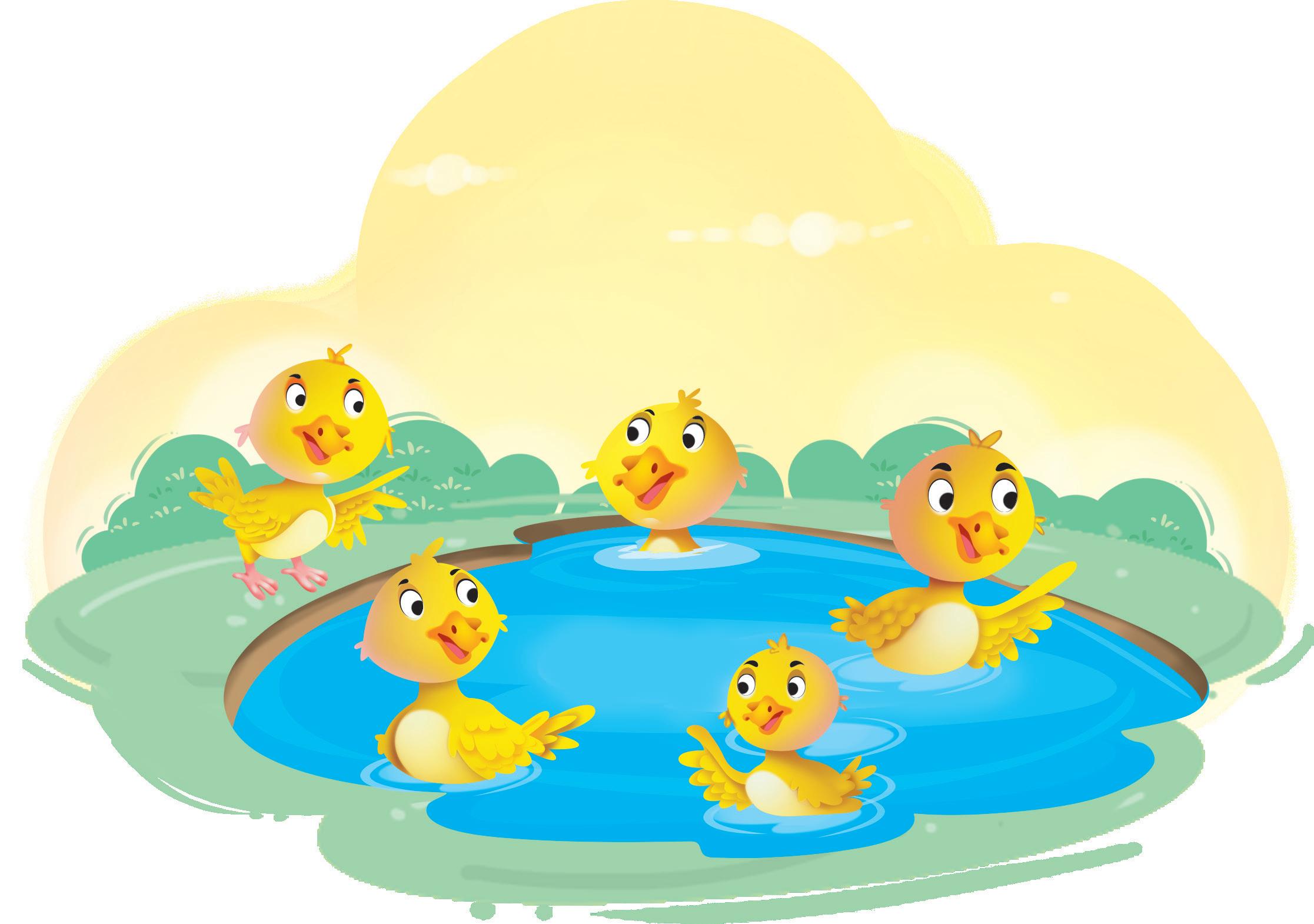
5 ducklings swim and play, Having fun all the day!

Count and say the number of crayons.




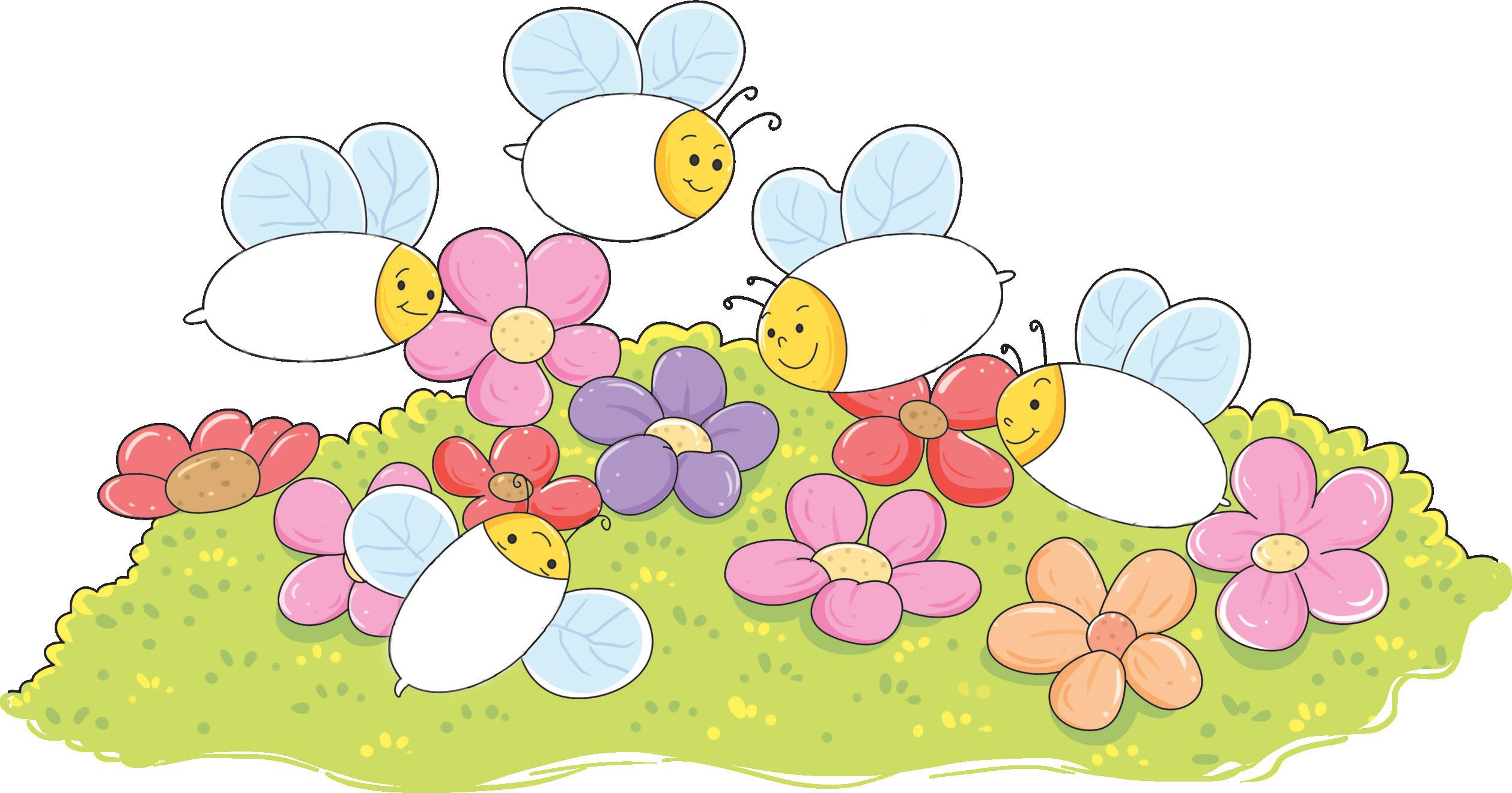
Dip your thumb in paint and complete the 5 bees.

Let us introduce ourselves.
Hello! I am Raghav.




I am a boy.



I am 4 years old.























Hi! I am Veni.
I am a girl. I am 3 years old.






What is your name?
Begin by saying your name. Ask the children to say their names. Make sure every child has a turn.
Pasteyour photographhere

Trace the circles. Say the feelings aloud.
Look at the pictures. Paste the correct stickers. (Use the sticker sheet.) happy sad angry
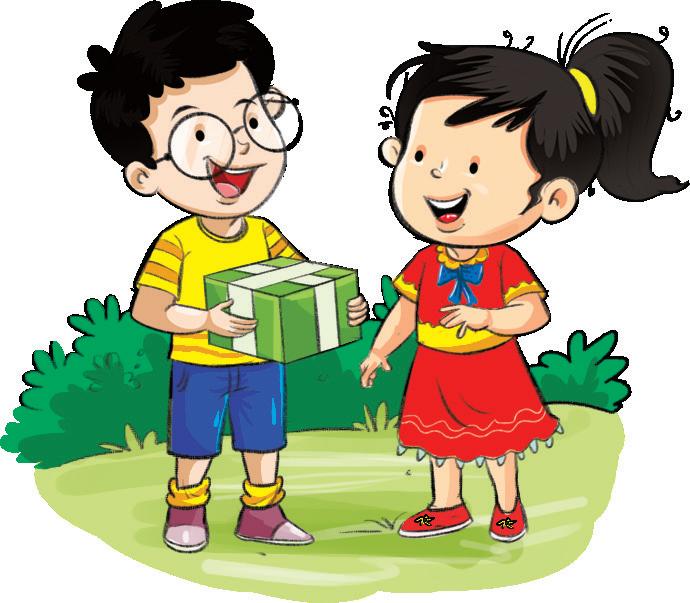
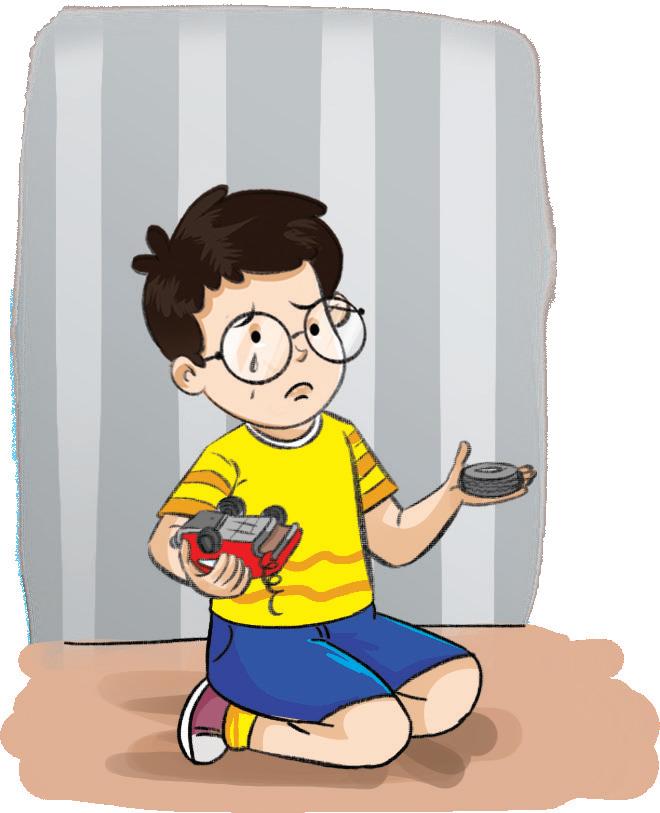
Tell the children simple situations, like “You dropped your ice cream” or “You got a new toy,” and ask them, “How do you feel?”
Look at the body parts. Say their names aloud.
hair
eye
nose

fingers

foot leg
Point to your body parts and name them. Let the children do the same.
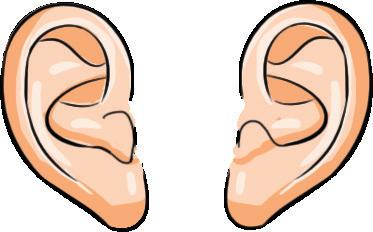
ear
mouth
arm hand
toes

Match the body parts to the girl. One is done for you.
Look at the sense organs. Say their names aloud. nose
I feel with my skin.
I smell with my nose.
I hear with my ears.
I see with my eyes.
I taste with my tongue.

Match the sense organs with the activities they do.


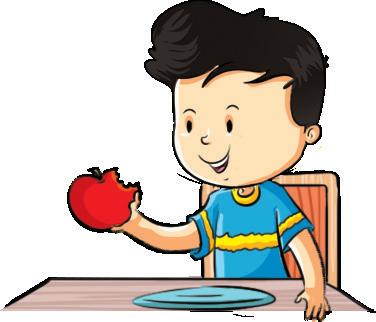
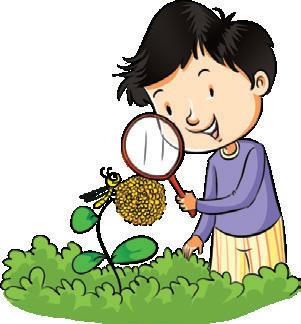


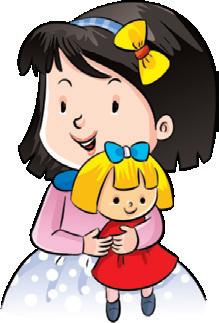
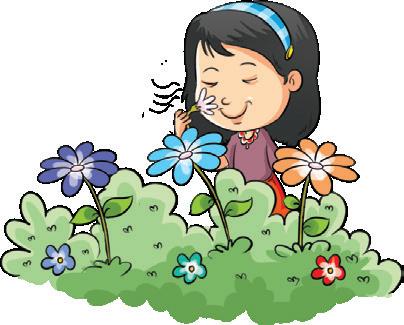
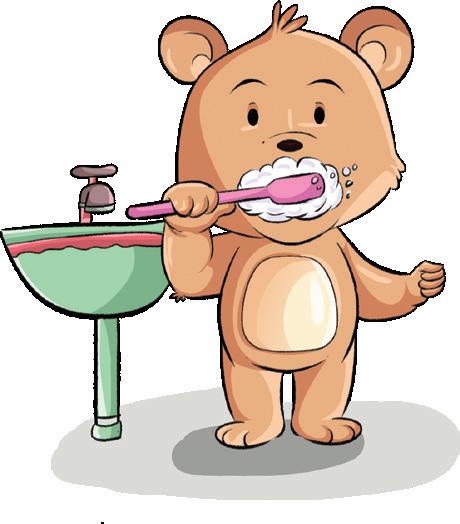
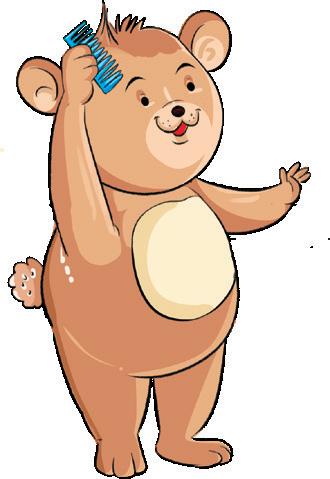
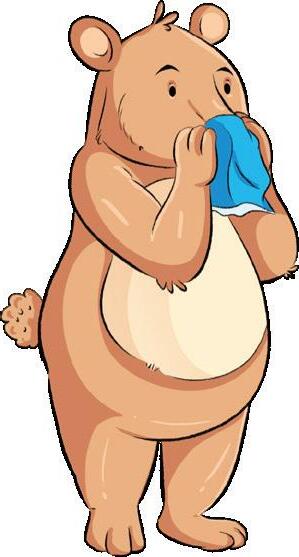
We should keep ourselves clean. This is how little teddy keeps himself clean.

Let's Talk
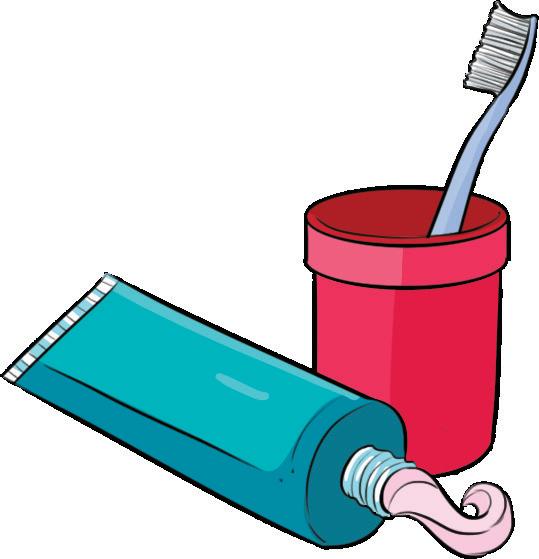
I brush my teeth twice in a day.
I shampoo and comb my hair.
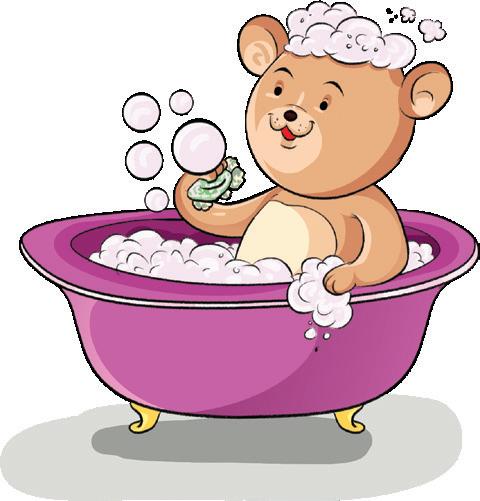
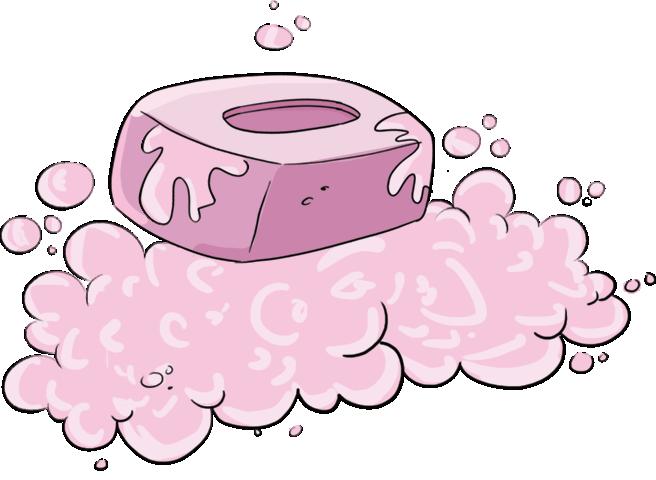
I use a soap to bathe daily.
I use a tissue to wipe my nose.
Name any two things you use to keep yourself clean.
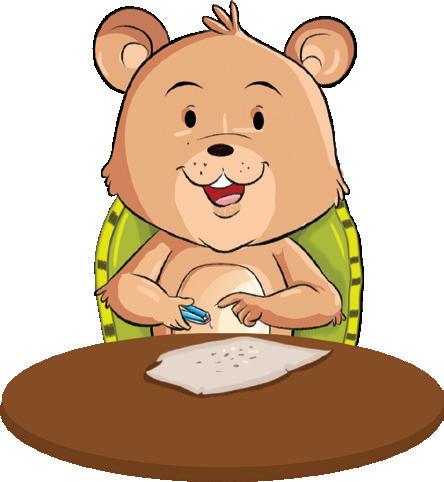
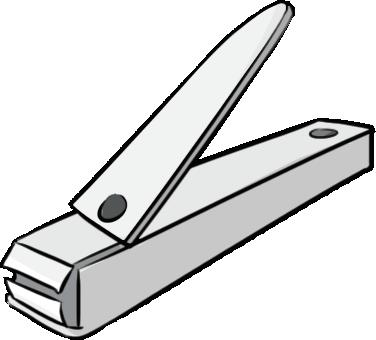
I clip my nails with a nail clipper.
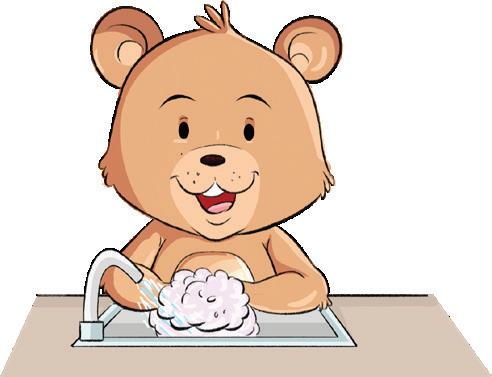
I wash my hands with soap before and after eating.
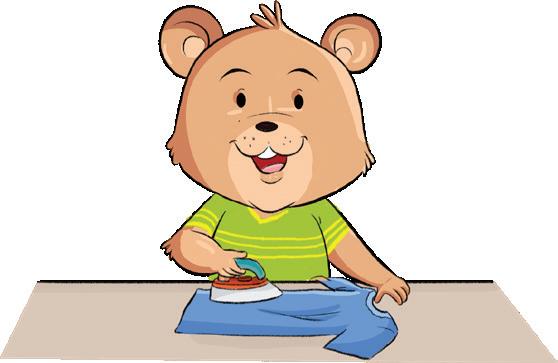
I wear clean and ironed clothes.
Match the pictures to show how you stay clean.


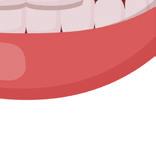


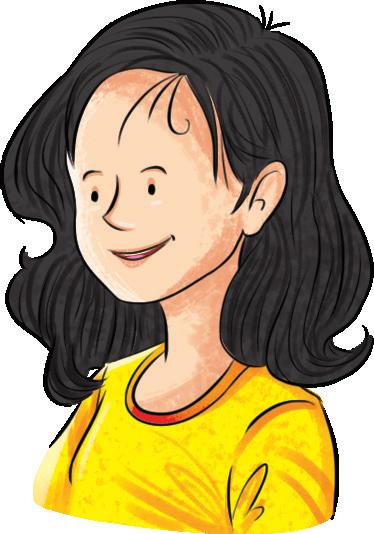
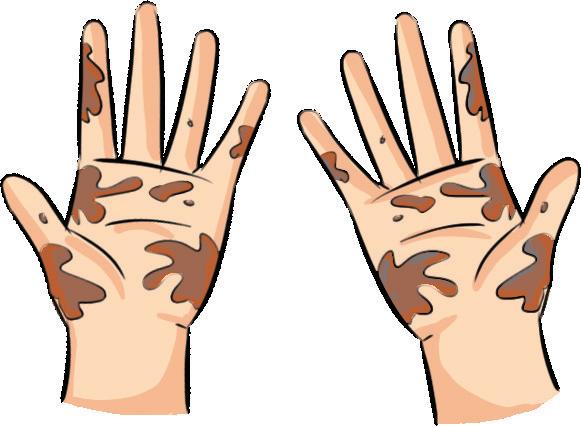
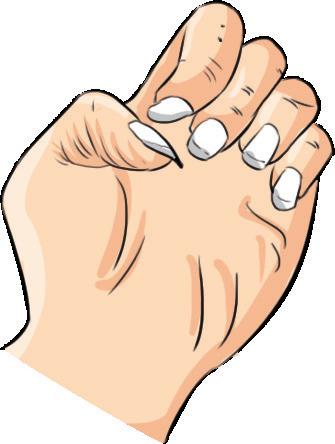


I am red. You see me in many things.
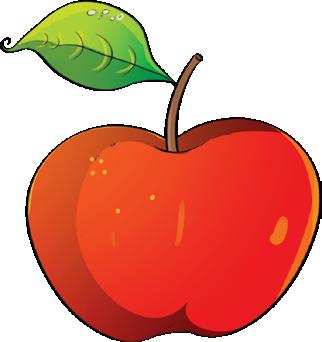

Sponge-paint the strawberry using red colour.




Look at Nidhi. She lives with her family. These are her family members.

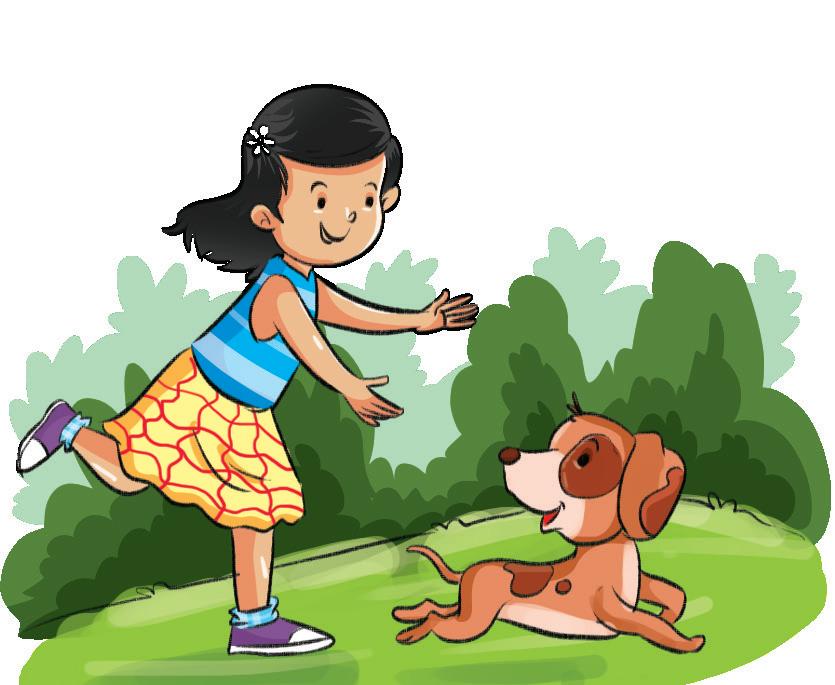
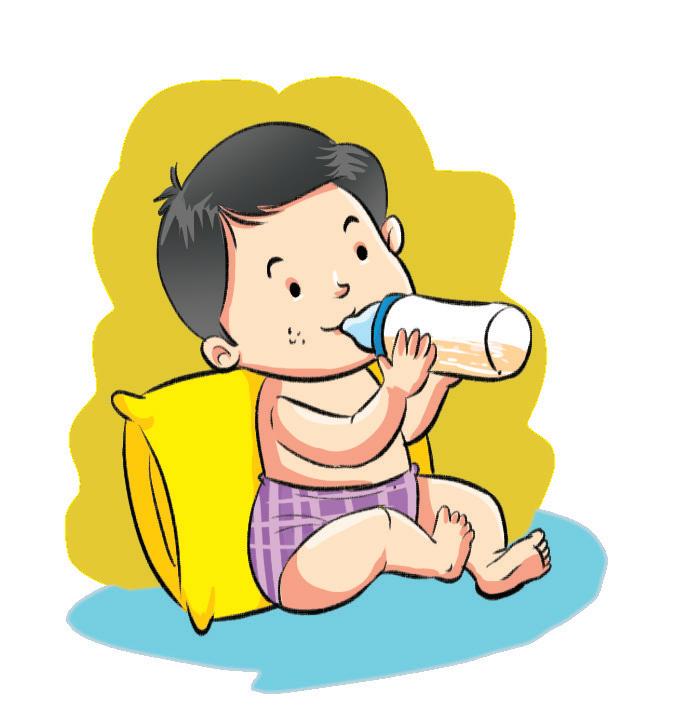
Encourage children to talk about their family members. Ask them to name the members who live with them at home.
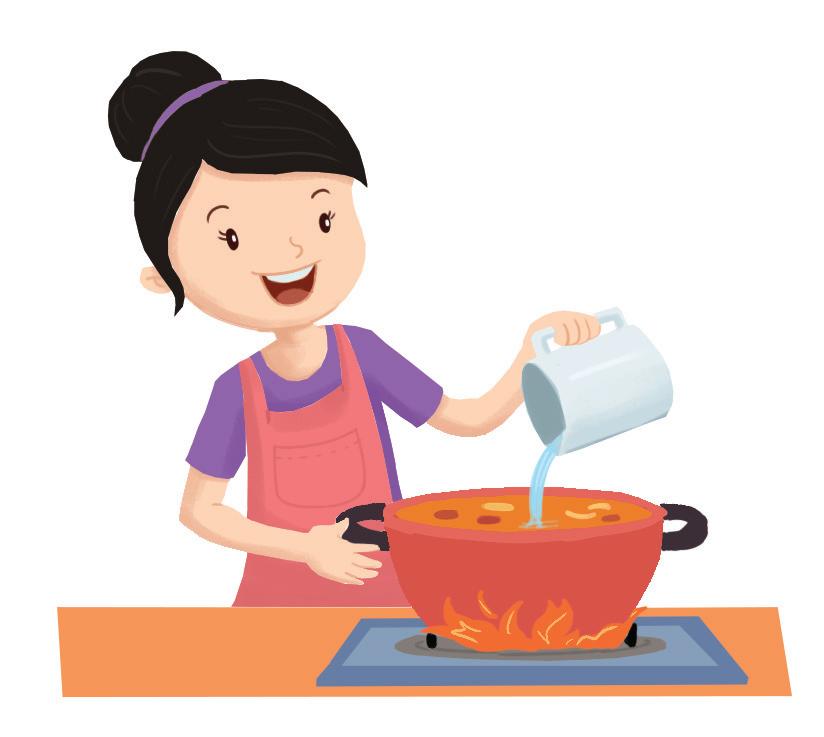
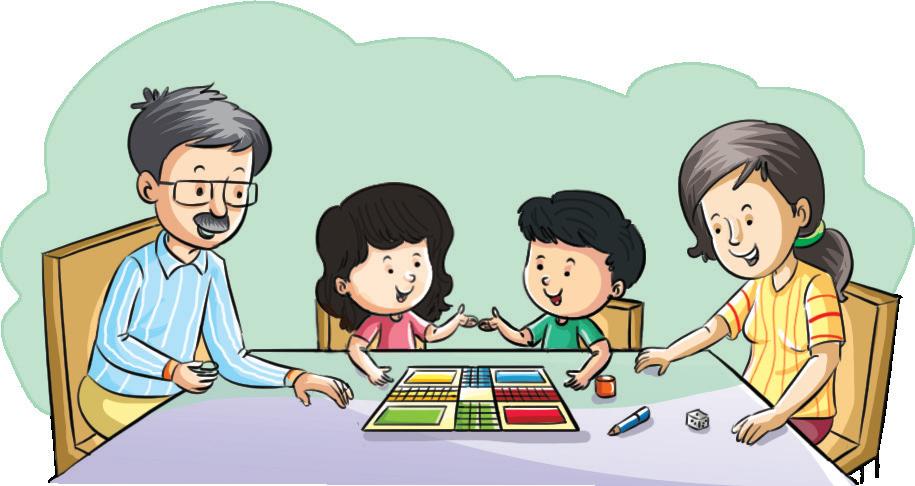
We have fun with our family in many ways.
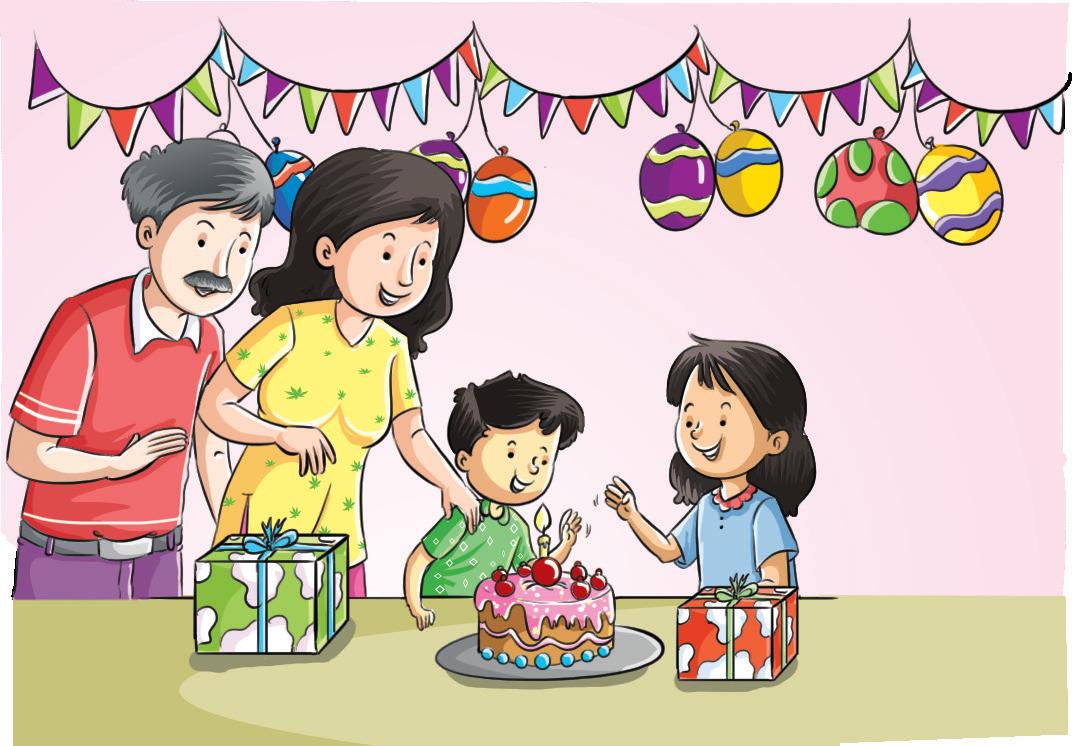
We celebrate special days.

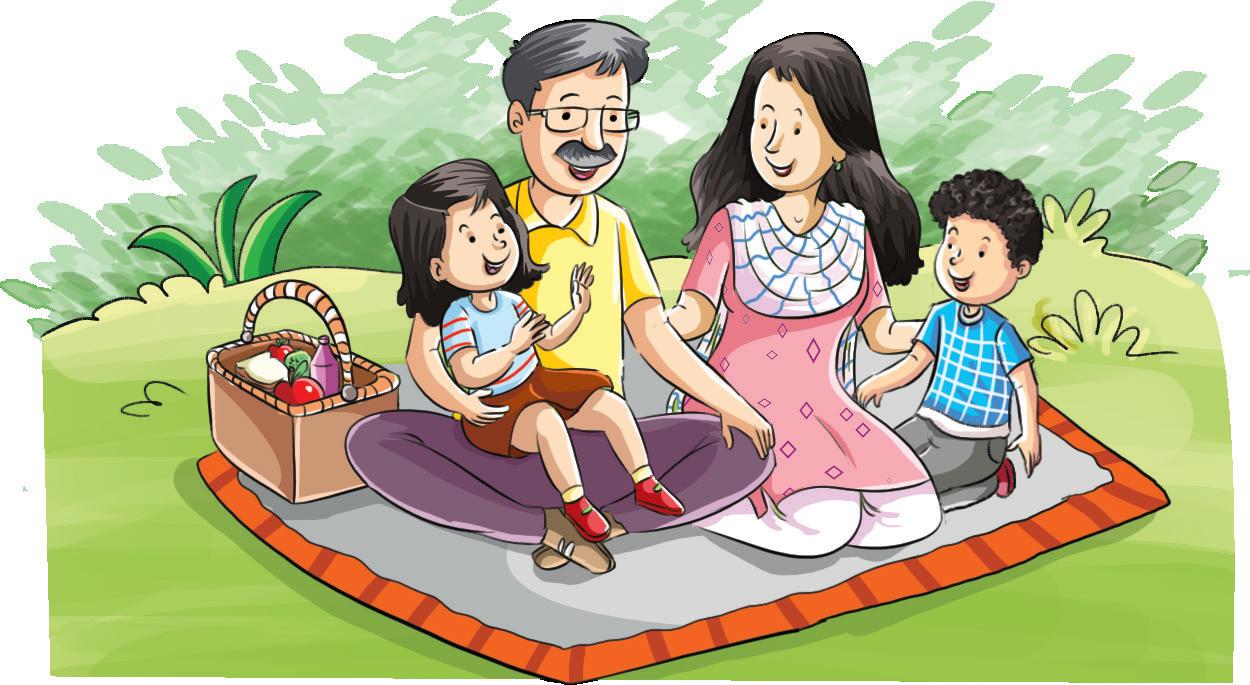
We go out together.
We play together.
Let's Talk
What do you like to do with your family?
I love my family. This is how I help my family.
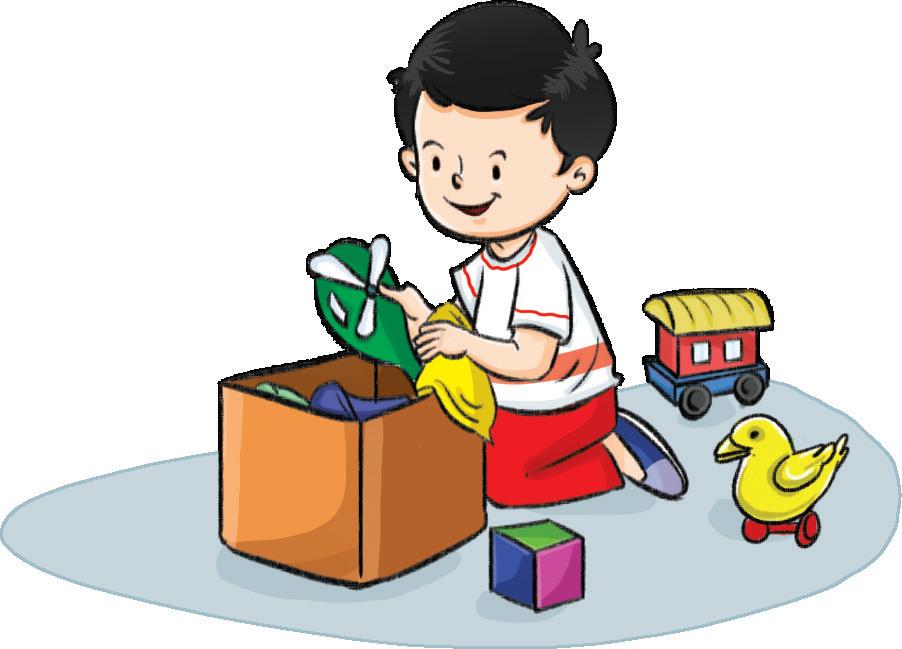
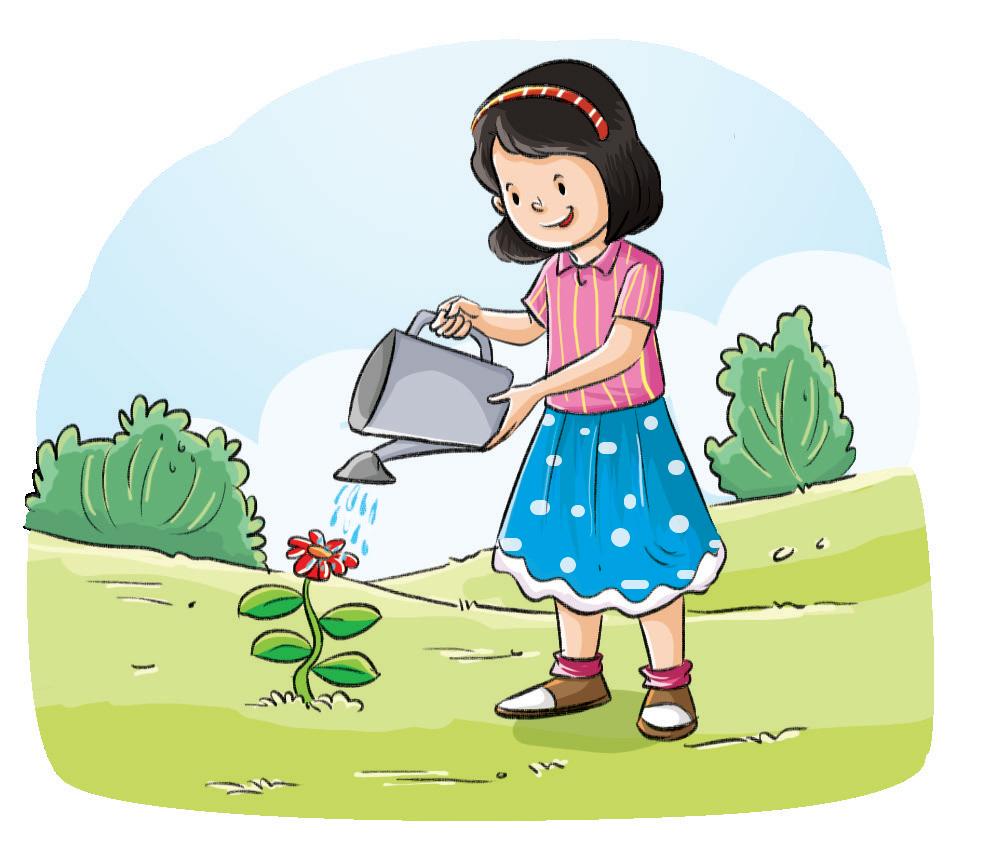
I keep the toys back after playing. I water the plants.
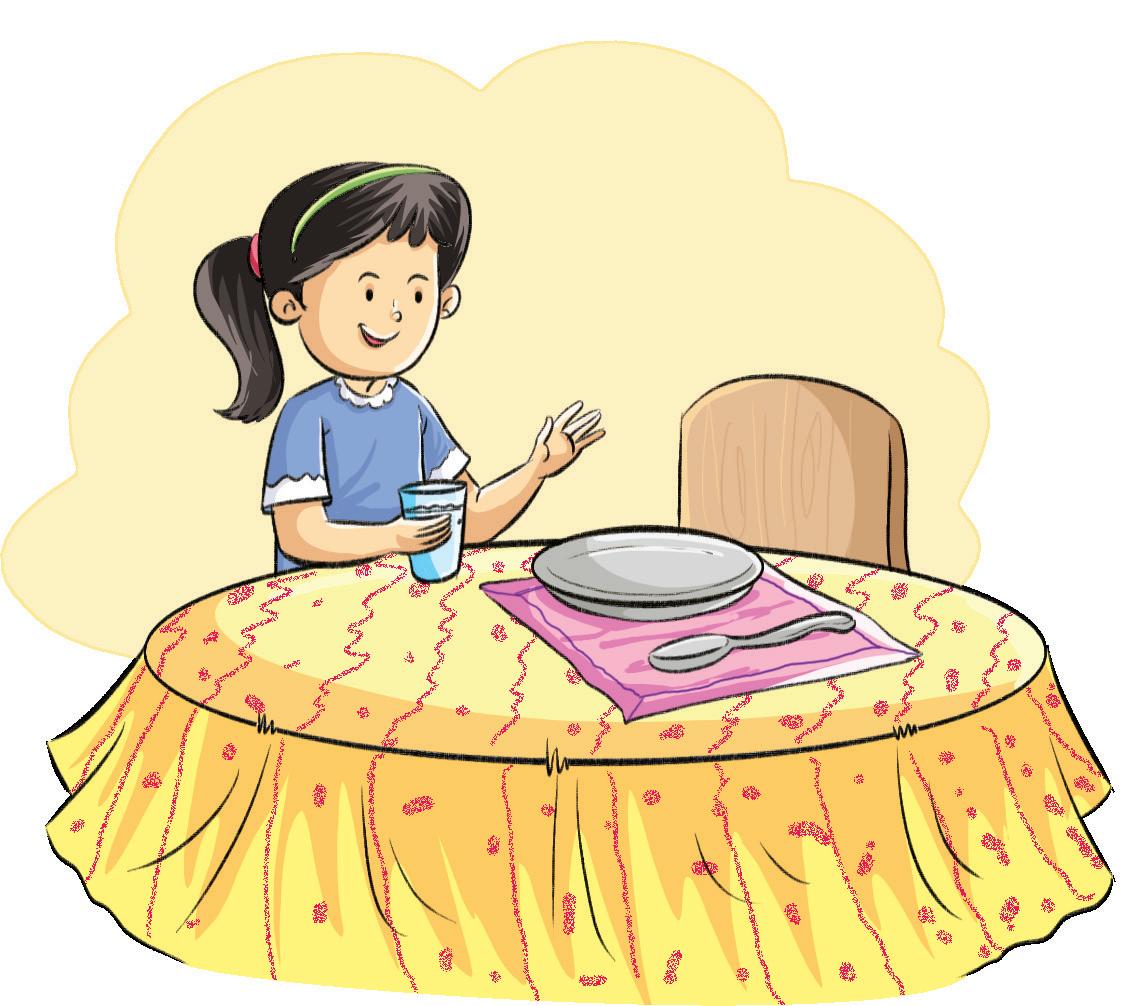
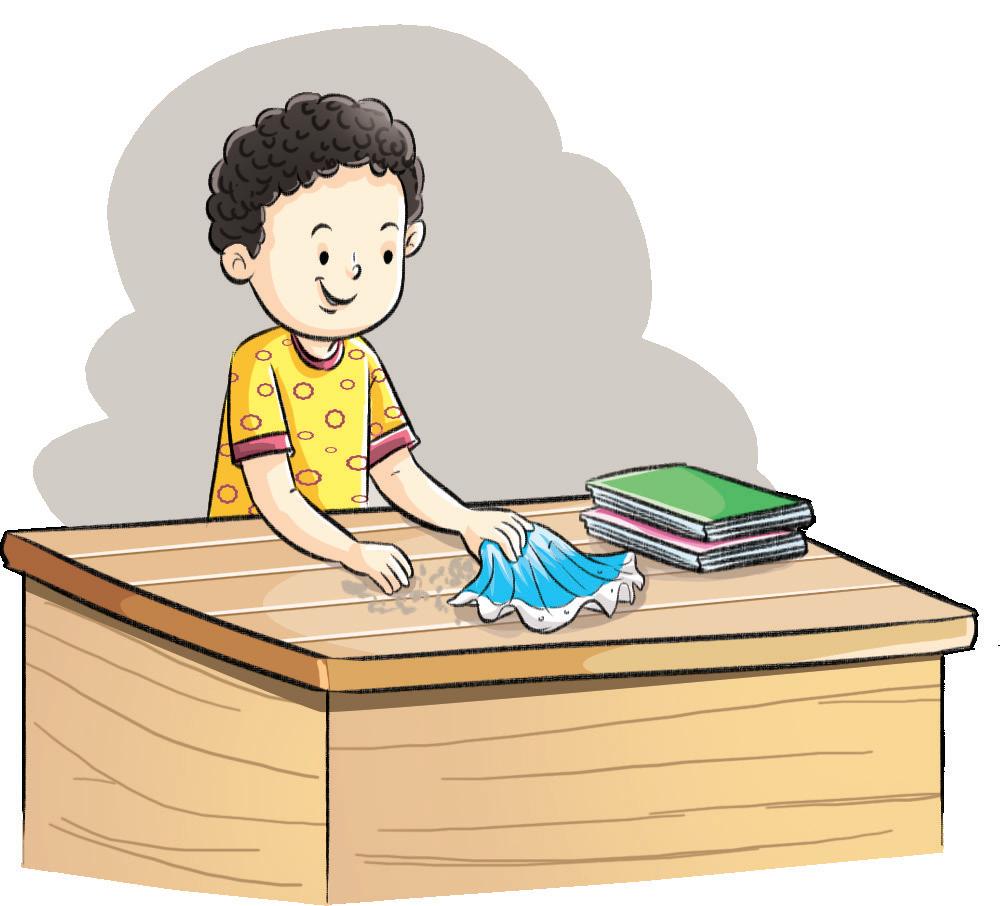
I set the table. I help with cleaning.
Let's Talk How do you help your family at home?
Let children colour and decorate the house.


We all have friends. Friends are special. Let us read about Sneha’s friends.
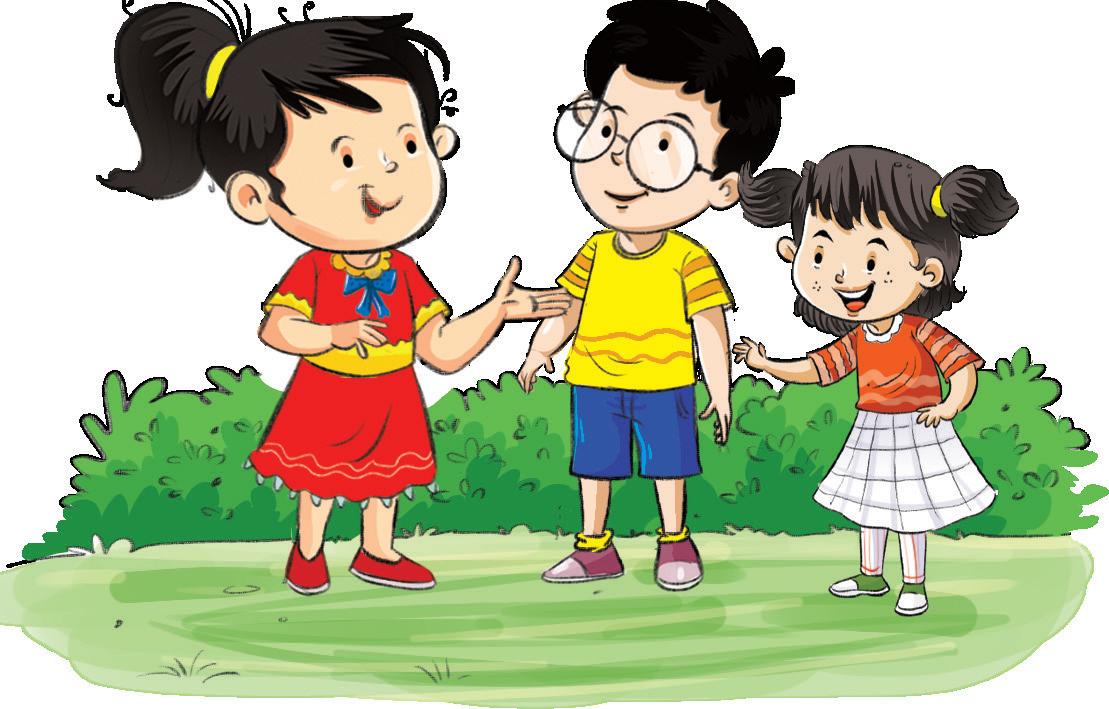
Let us learn the activities they do together.
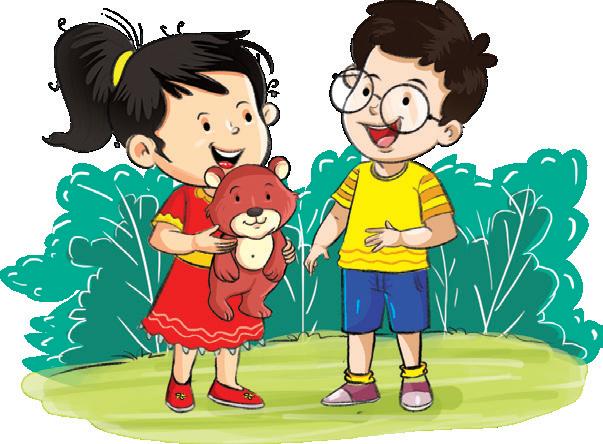
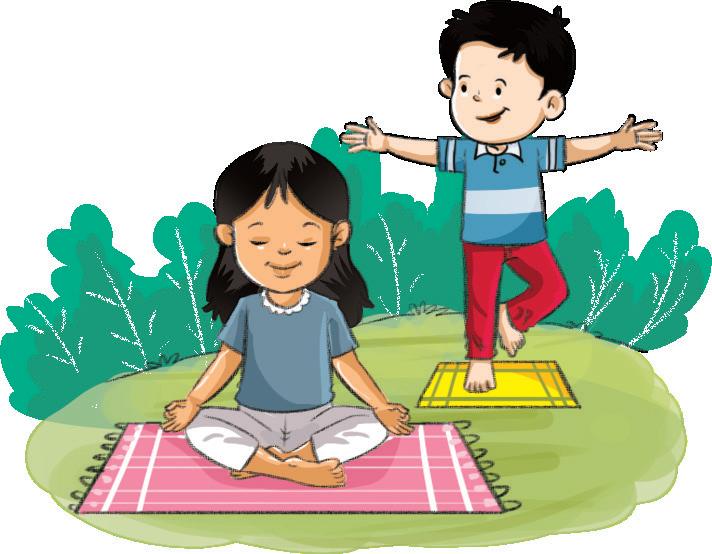
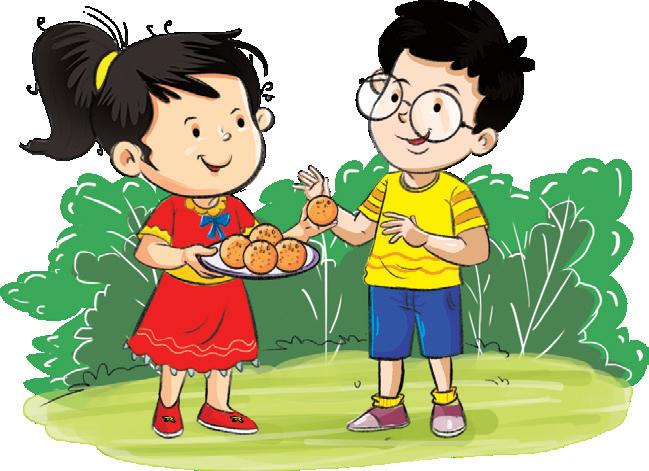
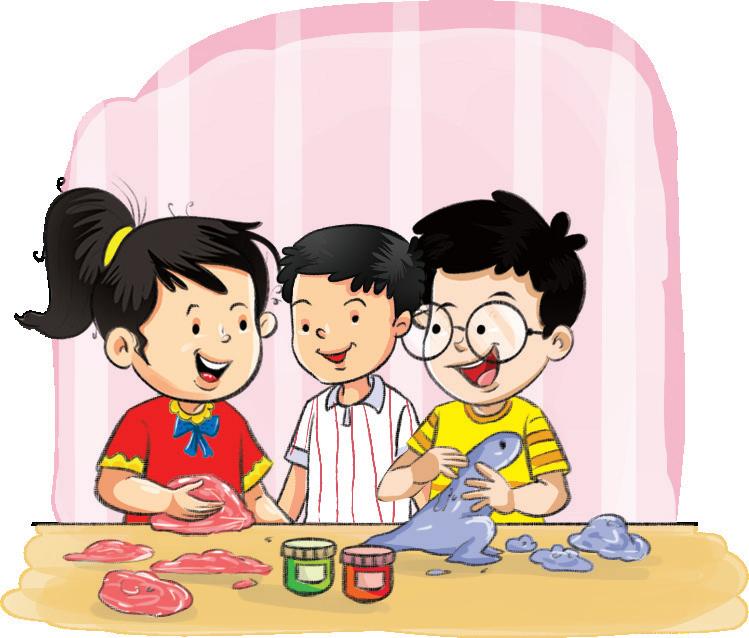
They play together. They eat together. They exercise together.
Let's Talk How do you spend time with your friends?
Tick (✓) the activities you do with your friends.

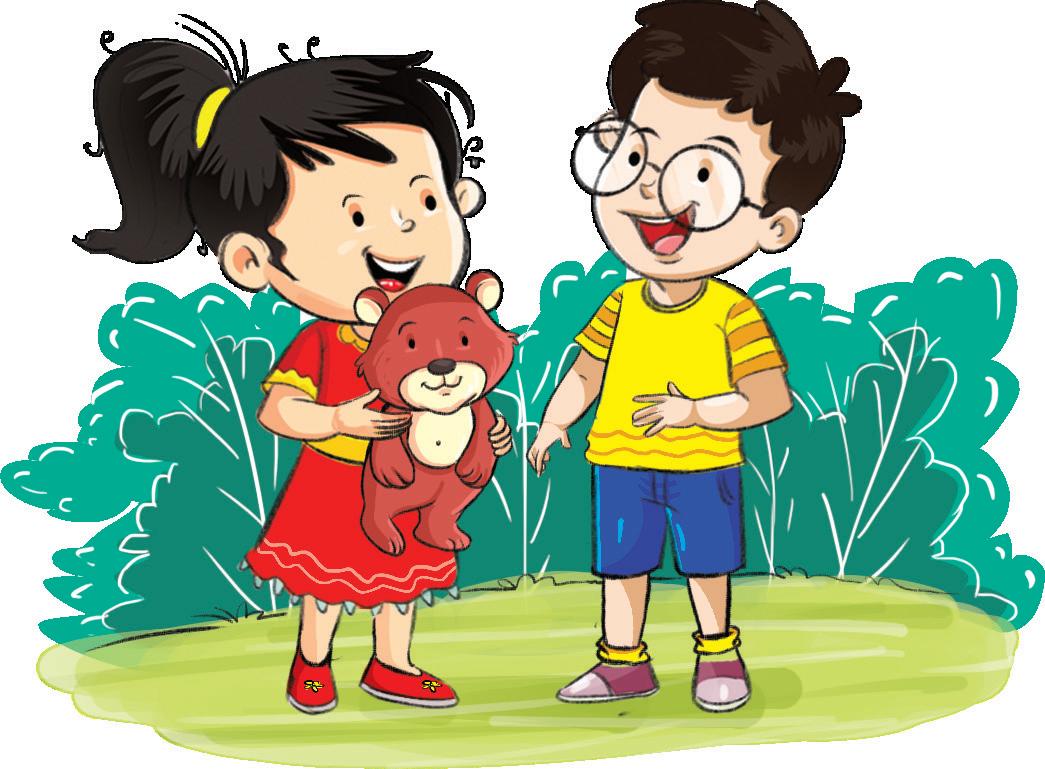

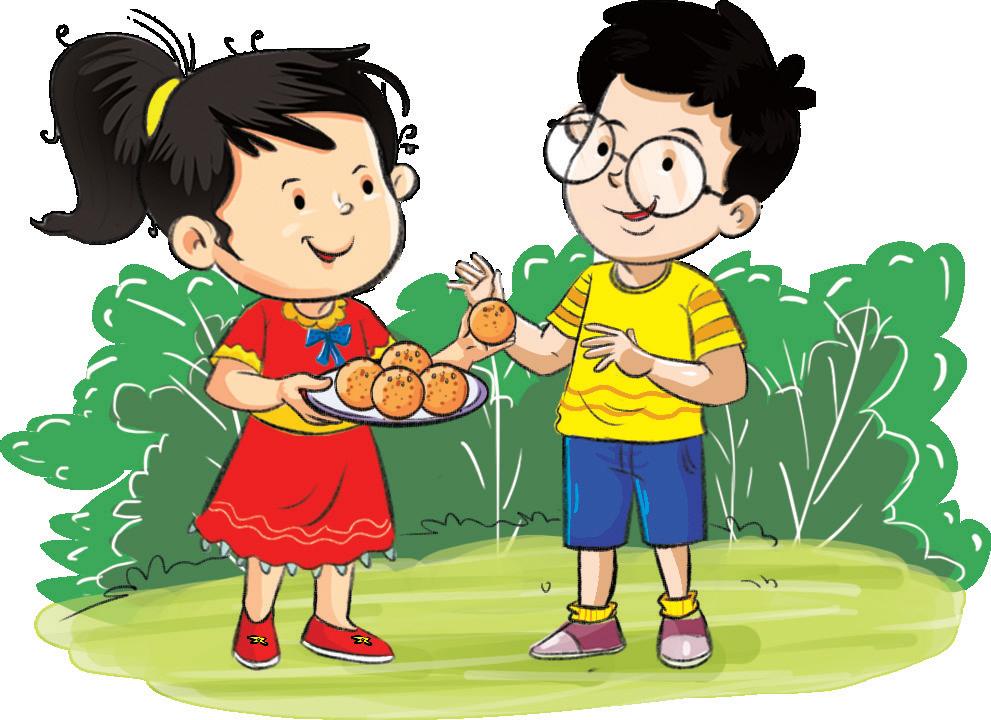
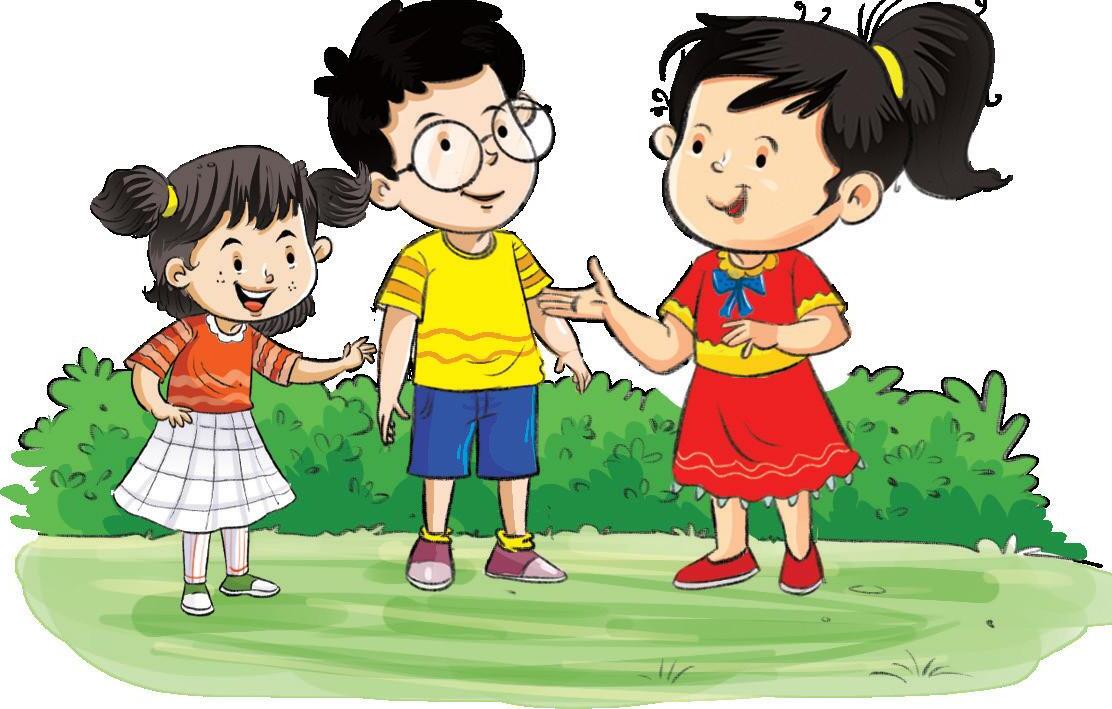

Look at the friends playing together. Colour the picture.
Let's Talk
Which game do you play with your friends?
Magic words are special. They help us be polite and nice to others. Let us learn about them.
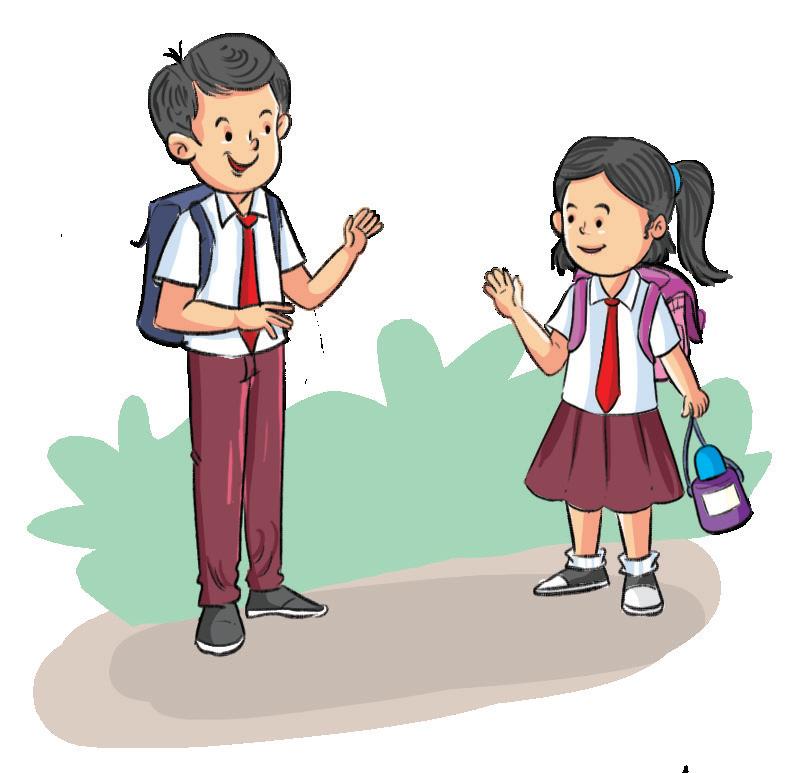
Hi!


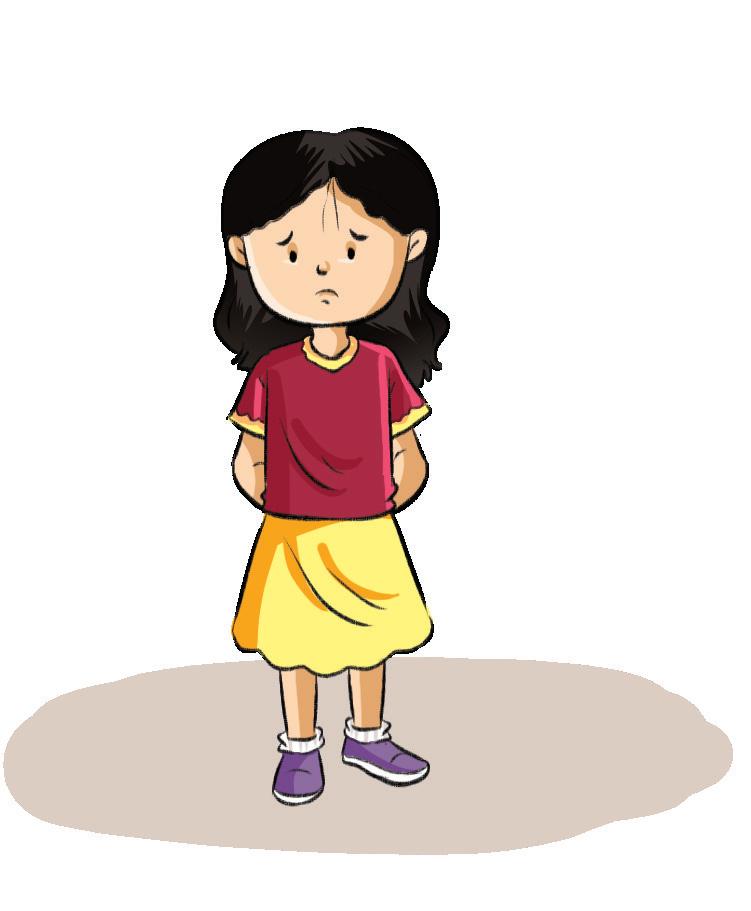
Sorry.
“Hi” to greet, “Please” to ask, “Thank you” for every task.
“Sorry” when I have done something wrong, These magic words make me strong.
Thank you.
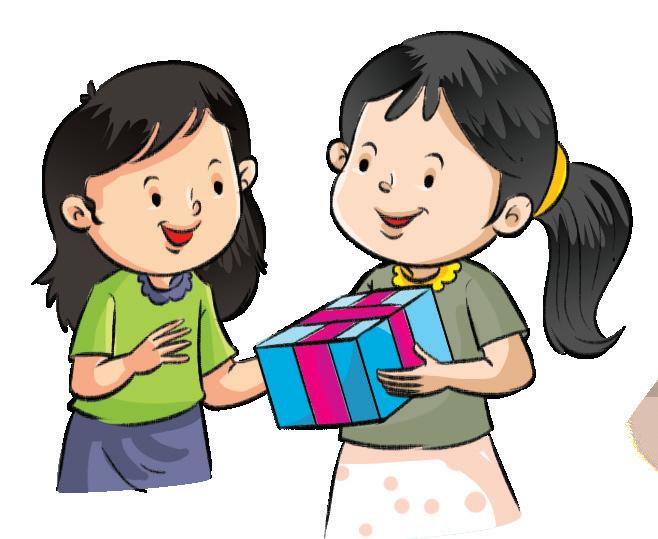
May I use your pencil, please?
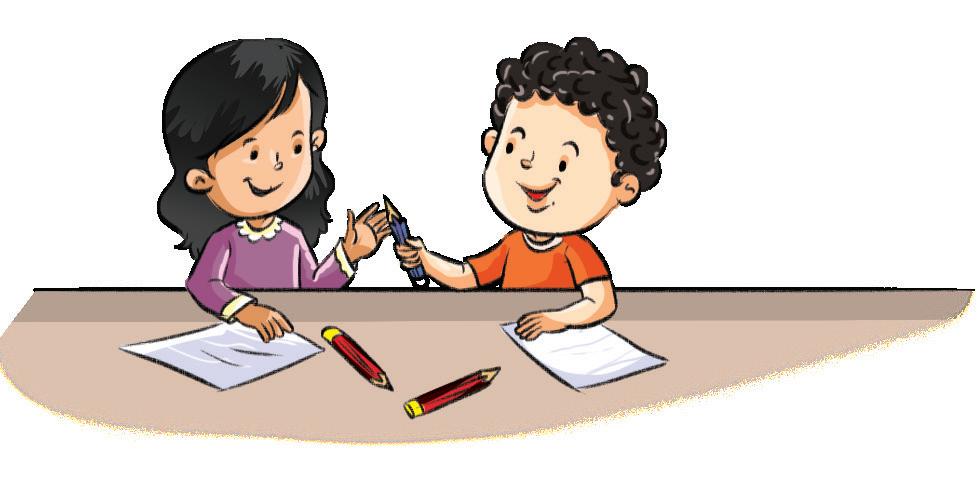
It is a good habit to be polite. Let us learn how to be polite.
Wish and greet people when you meet them.
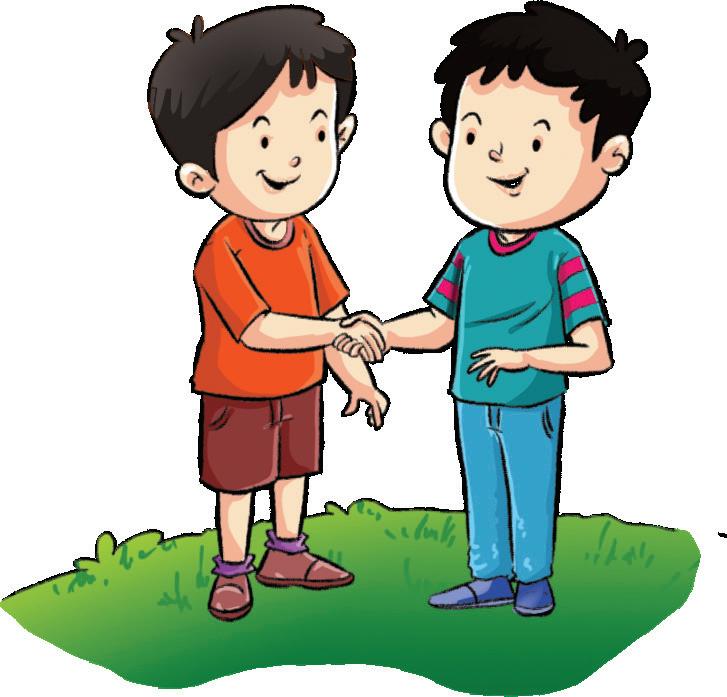
Hello! Thank you! Thank you!
Good morning!
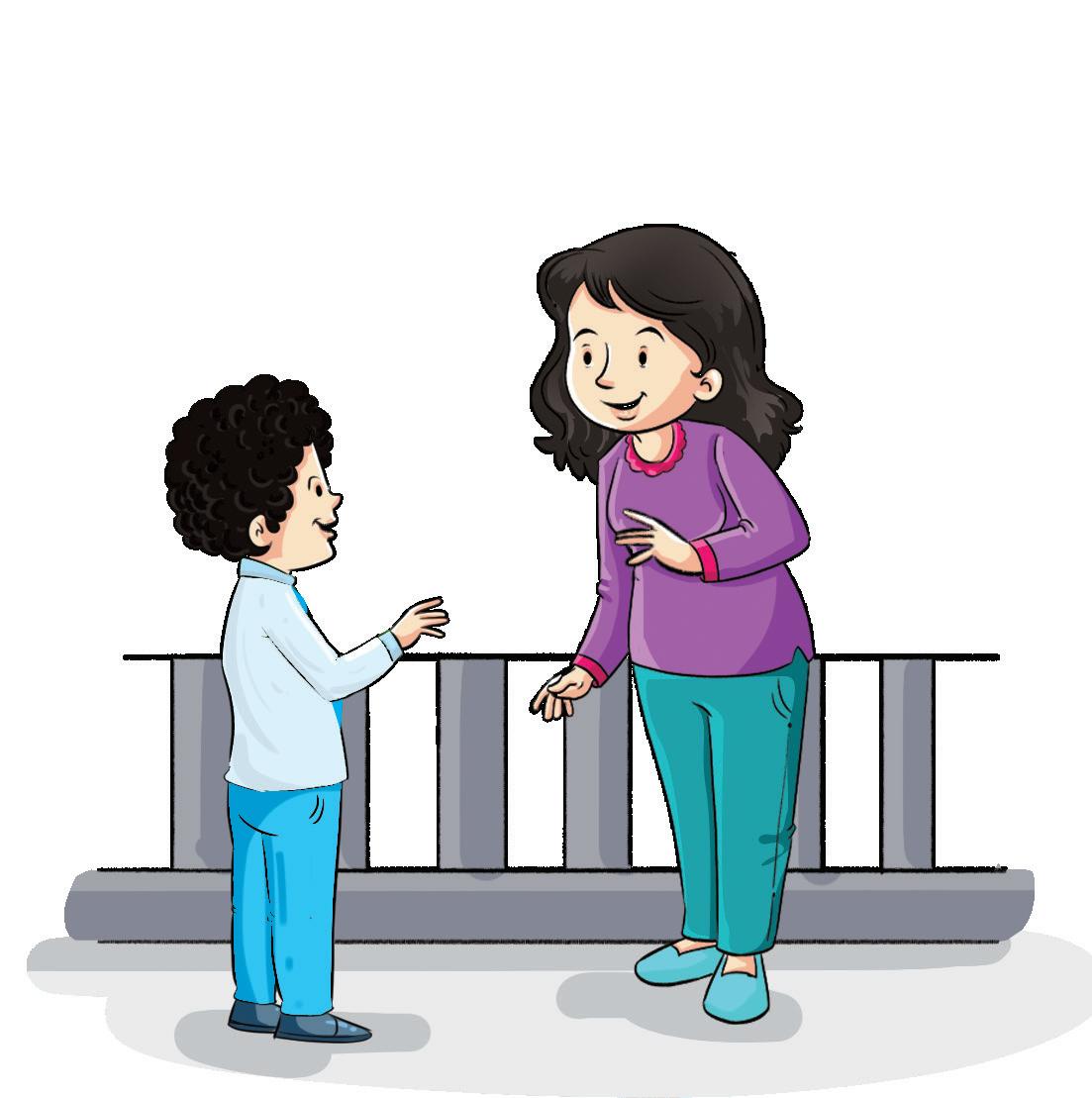
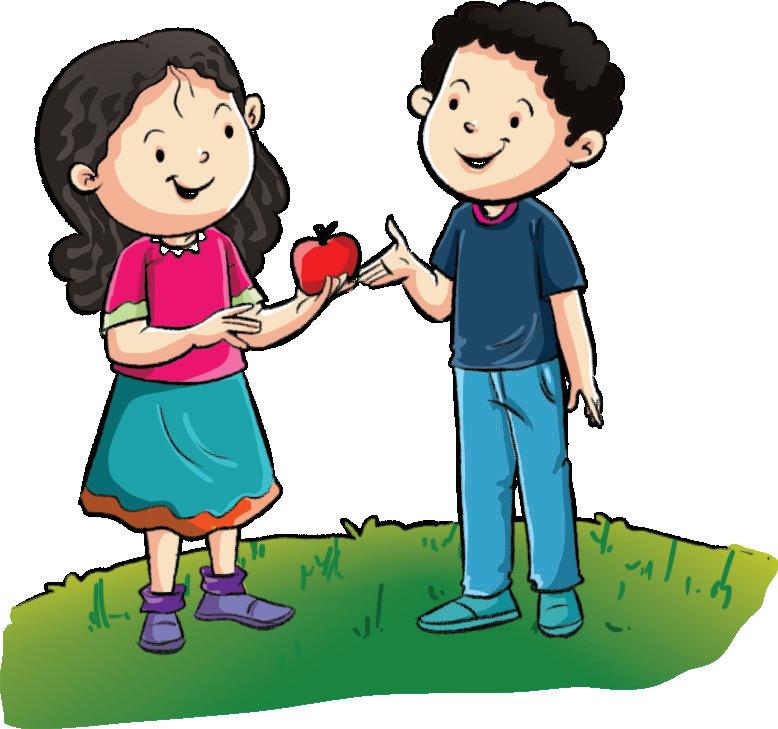
Say ‘Thank you’ when someone gives you something or helps you.
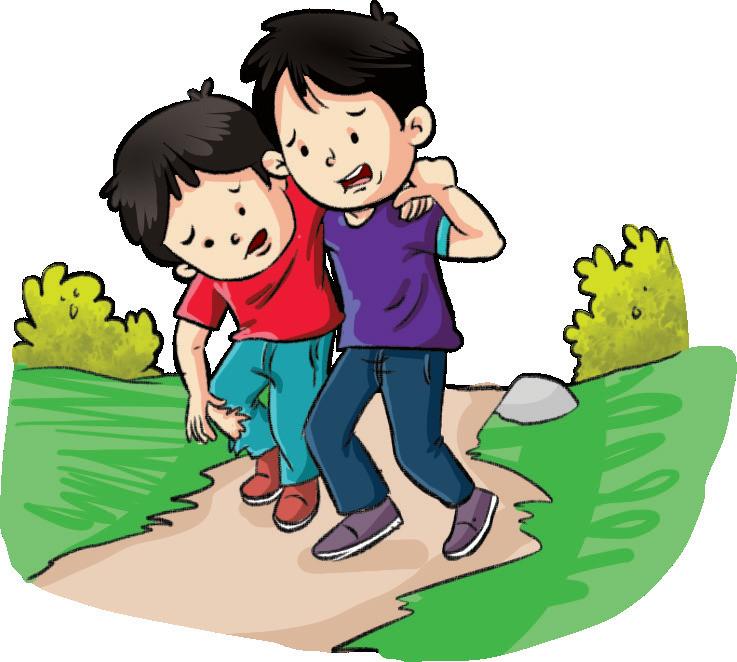
Say ‘I am sorry!’ when you make a mistake or hurt someone.
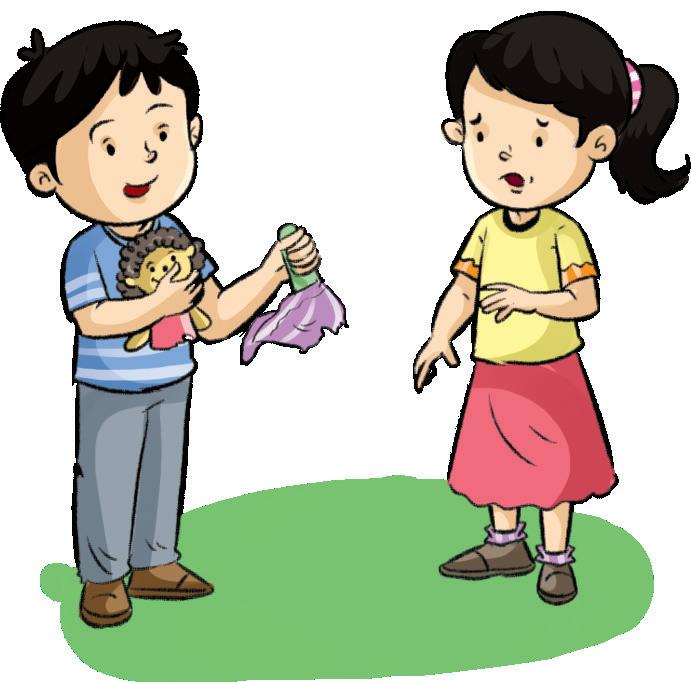
Say ‘Please!’ when you want something.
I am sorry!
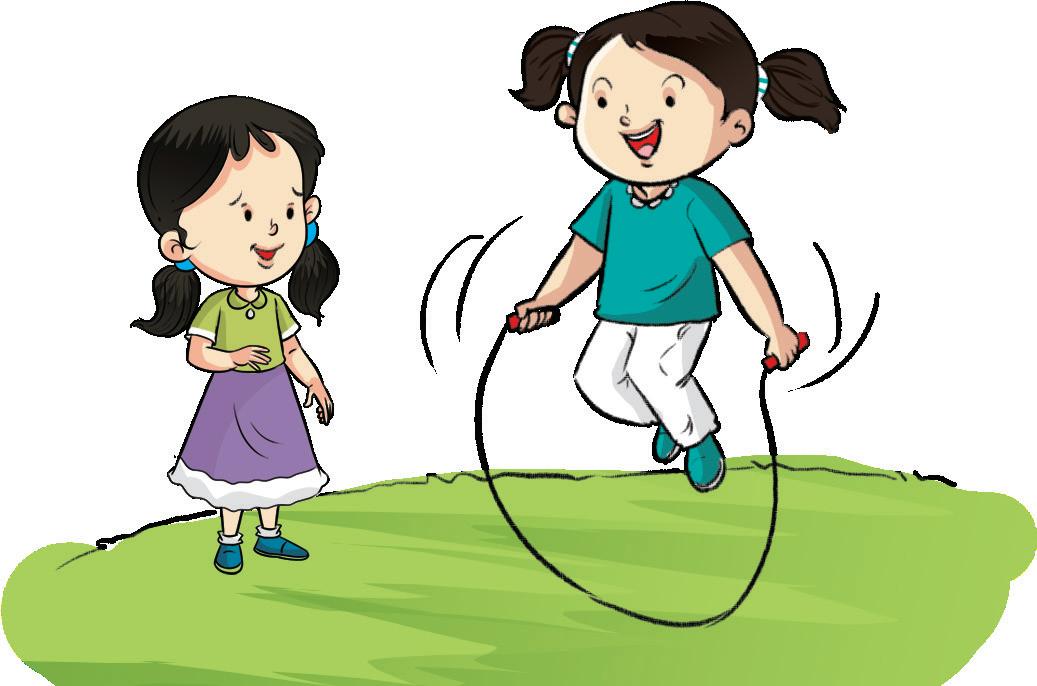
May I play with you, please?
Match the pictures with the magic words. Sorry.


Hello. Good morning.










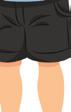


Thank you.


Page No. 31
Page No. 56
Sunrise is a comprehensive, NCF 2022-based Early Childhood Education program that lays a solid foundation for lifelong well-being and holistic growth, encompassing physical, cognitive, and socio-emotional development.
This semester book has been designed to especially develop the learner's literacy and numeracy skills, their understanding and general awareness about the world around them, as well as their love for reading and listening comprehension skills.
• Play-based learning activities, which promote holistic development of the child in all ECE domains
• School readiness, which is assured in the curriculum and learning design
• All-round development, in areas of physical, cognitive, cultural and socio-emotional domains
• Supportive elements, like learning videos and teacher manuals, help maximise program quality and outcomes
Uolo partners with K-12 schools to provide technology-enabled learning programs. We believe that pedagogy and technology must come together to deliver scalable learning experiences that generate measurable outcomes. Uolo is trusted by over 15,000+ schools across India, Southeast Asia and the Middle East.
hello@uolo.com
ISBN 978-93-89789-90-4
