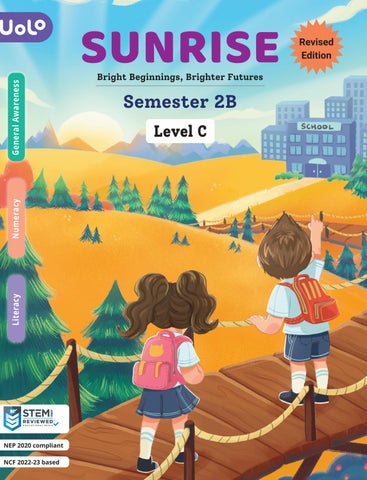
Sunrise is a comprehensive, NCF 2022-based Early Childhood Education program that lays a solid foundation for lifelong well-being and holistic growth, encompassing physical, cognitive, and socio-emotional development. This semester book has been designed to especially develop the learner's literacy and numeracy skills, their understanding and general awareness about the world around them, as well as their love for reading and listening comprehension skills.
General Awareness
About the Book
SUNRISE
Revised Edition
Bright Beginnings, Brighter Futures
Semester 2B Level C
• Play-based learning activities, which promote holistic development of the child in all ECE domains • School readiness, which is assured in the curriculum and learning design
• All-round development, in areas of physical, cognitive, cultural and socio-emotional domains
Numeracy
Key Features
• Supportive elements, like learning videos and teacher manuals, help maximise program quality and outcomes
Uolo partners with K-12 schools to provide technology-enabled learning programs. We believe that pedagogy and technology must come together to deliver scalable learning experiences that generate measurable outcomes. Uolo is trusted by over 15,000+ schools across India, Southeast Asia and the Middle East.
Literacy
About Uolo
hello@uolo.com
Not to be sold separately
ISBN 978-93-89789-68-3
NEP 2020 compliant Singapore
Sunrise_LC_UKG_Cover_Live.indd 11-13
|
Gurugram
|
Bengaluru
| © 2026 Uolo EdTech Pvt. Ltd. All rights reserved.
NCF 2022-23 based
03/11/25 11:23 AM
SUNRISE Semester 2B Level C Literacy
Numeracy
General Awareness
Name: Class: School:
Acknowledgements Academic Authors: Sneha Sharma, Chandni Bhargava, Bhawna Bisht Design & Production: Wajahat Khan, Bhavna Tripathi, Satish, Mangal Singh Rana, Vishesh Agarwal Project Lead: Sneha Sharma VP, Learning: Abhishek Bhatnagar All products and brand names used in this book are trademarks, registered trademarks or trade names of their respective owners. © Uolo EdTech Private Limited First edition 2025 Second edition 2026 This book is sold subject to the condition that it shall not by way of trade or otherwise, be lent, resold, hired out, or otherwise circulated without the publisher’s prior written consent in any form of binding or cover other than that in which it is published and without a similar condition including this condition being imposed on the subsequent purchaser and without limiting the rights under copyright reserved above, no part of this publication may be reproduced, stored in or introduced into a retrieval system, or transmitted in any form or by any means, electronic, mechanical, photocopying, recording or otherwise, without the prior written permission of both the copyright owner and the above-mentioned publisher of this book. Book Title: Sunrise Semester 2B Level C ISBN: 978-93-89789-68-3 Published by Uolo EdTech Private Limited Corporate Office Address: 91Springboard, 3rd Floor 145, Sector 44, Gurugram, Haryana 122003 CIN: U74999DL2017PTC322986 Printed by: Kumar Offset Printer Illustrations and images: www.shutterstock.com, www.stock.adobe.com and www.freepik.com All suggested use of the internet should be under adult supervision.
Preface W elcome to Sunrise, our comprehensive series for Early Childhood Education, meticulously crafted to align with the guidelines of the Foundational Stage as outlined in the National Education Policy (NEP) 2020 and the National Curriculum Framework for the Foundational Stage (NCF-FS) 2022.
Sunrise offers a rich blend of interactive and activity-based content to support each child’s physical, emotional, intellectual and spiritual growth. Our approach ensures that learning is enjoyable and meaningful, and caters to every child’s interests and abilities.
Inspired by the Panchakosha Framework, Sunrise offers a thoughtfully curated curriculum designed to nurture each child’s physical, emotional, intellectual and spiritual growth, and create engaging and meaningful learning experiences for all children and cultivate a lifelong love for learning. 1. Physical Development Through movement-based activities, action rhymes, gross and fine motor skill, exercises, yoga and simple meditation practices, children enhance their coordination, balance and self-regulation. 2. Social and Emotional Growth Discussions, role-plays, games, storytelling and collaborative activities encourage empathy, cooperation, self-expression and social awareness. 3. Intellectual Growth A structured, age-appropriate progression from concrete to abstract concepts builds strong problem-solving, logical thinking and cognitive skills. 4. Spiritual and Moral Development Stories, rhymes and reflective discussions teach values such as kindness and honesty. Yoga and meditation help children stay calm, focused and happy. The Sunrise curriculum is not merely a series of lessons, but a journey of discovery, growth and joy. The package comes with digital content, provided free of cost, to ensure a seamless and holistic learning experience for children. By providing a nurturing and stimulating environment, Sunrise lays the foundation for future success—preparing children not just for school, but for life. Thank you for embarking on this educational journey with us. Together, we can make the early childhood education a bright and promising start for every child.
iii
PRODUCT PACKAGE AT A GLANCE Sunrise is an activity-based learning programme covering all areas of Early Childhood Education. It includes content on English, Maths, General Awareness, and Rhymes & Stories, along with lesson plans and resources to support teachers. Digital tools like animated videos, phonics songs and interactive exercises further enrich classroom learning. Semester Books
Workbooks Rhymes and Stories Teacher Manual
Flashcards
TLM
lion
elephant
snake
Manipulatives
A B C
Stickers
D E F
bear
pigeon
deer
cow
peacock
rabbit
H I
Student app Teacher app Learning videos Interactive excercises
iv
DIGITAL RESOURCES
ICONS USED IN THE BOOK Art
Games
Hands-on
India
Health & Wellness
Holistic Learning
Teamwork
Scientific Temper
HOTS
Life Skills
Communication
SDG
SEL
v
KEY FEATURES OF THE BOOK Middle Sounds
/a/
Balanced literacy approach and phonics
Look at the pict ures
. Say the wor ds aloud.
ad
ab
lad
dad
bad sad
mad pad
ag
bag lag rag
jab
tab lab
dab nab
an
tag nag wag
16
UKG English CB.indd
cab
The language curriculum takes a balanced approach, focusing on oral language, vocabulary, phonemic awareness, and early reading and writing skills. The Skillbook helps children hear, identify, and manipulate sounds in CVC words and introduces blends and digraphs for decoding tricky words. The Workbook provides practice for each concept.
can
fan
ran pan
man van
16
29/09/25 3:11 PM
Foundational Mathematical Thinking and Skills
Helping My Fami
SEL
and talk
setting the tabl
e
Life Skills
watering plants
18
EVS UKG CB
cleaning things
bringing objects
taking down clot
hes
New.indd 18
27/10/25 11:16 AM
vi
balls are the
same.
different same
set. t in each ks differen
ng that loo
thi Circle the
1
09/10/25
UKG
Math CB.indd
1
ly
We should help our family. Loo k at the pictures about them.
giving water
Different
Two of the three balls. Look at the is different. ball The third
HOTS
The book curriculum builds strong thinking and problem-solving skills through a step-by-step approach. The Skillbook begins with pre-number ideas like big/small and more/less, then moves to numbers till 100, forward and backward counting, advanced shapes, skip counting, basic number operations, money, time and place value. The Workbook provides practice for each concept to strengthen learning.
Same and
Thematic Learning
Young children are introduced to the world around them through familiar and meaningful themes such as Myself, My Family, My Friends, My Body, Seasons, Plants, Animals, Community Helpers, Vehicles, Gadgets, Good and Bad touch, Celebrations, My computer and many more.
11:58 AM
Let's Talk How can we be kind to the people who help us in our daily life?
Child-Centric and Inquiry-Based
Let’s Talk provides regular opportunities for children to listen, retell, ask questions and express ideas confidently. Teacher Tip offers helpful guidance to build real-life connections and enhance concept delivery.
Digitally powered and application based
Play
es y. Some gam thy and happ us learn us strong, heal Games keep outdoors. Let ors and some are played indo r Games about them.
res. Write ‘O’ Look at the pictu or games. indo and ‘I’ for the
ludo
ers snakes and ladd
carrom
38
games
badminton
jigsaw puzzle
cricket
hopscotch
ludo
football hide-and-seek
TEACHER TIP some of their favourite indoor and some about e them to solve Let children talk You can also encourag outdoor games. games in the class. simple indoor puzzles or play
EVS UKG CB
for the outdoor
Outdoo
HOTS
Indoor Games
Games
After each concept, the fun begins with the Let’s Do It section—packed with simple and exciting activities to help children recall what they have learned. Plus, they can scan the QR codes to watch friendly concept videos and explore more through digital learning!
Games That We
Games
TEACHER TIP
Encourage children to talk about what they like doing at school.
cycling
chess
39
AM 27/10/25 11:12
AM 27/10/25 11:11
EVS UKG CB
New.indd 39
New.indd 38
Experiential and Multisensory learning
The book engages multiple senses through bright visuals, catchy rhymes, simple stories and hands-on activities. Fun Zone tasks such as mazes and puzzles, and sticker activities help build thinking and motor skills in an enjoyable way.
vii
Contents LITERACY SKILLBOOK Action Words ��������������������������������������������������������������������������������� 1 One and Many ������������������������������������������������������������������������������� 4 Is and Are �������������������������������������������������������������������������������������� 5 These and Those ���������������������������������������������������������������������������� 6 He, She, It �������������������������������������������������������������������������������������� 8 Use of ‘and’ ����������������������������������������������������������������������������������� 9 Come and Dance with Me ������������������������������������������������������������ 11 Long A: ai, ay ������������������������������������������������������������������������������ 14 Long E: ee, ea ������������������������������������������������������������������������������ 16 Long O: oa, ow ���������������������������������������������������������������������������� 18 Words with ‘oo’ ��������������������������������������������������������������������������� 20 The Magic ‘e’ ������������������������������������������������������������������������������� 21 The Old Woman in a Vinegar Bottle ������������������������������������������� 23 Days of the Week ������������������������������������������������������������������������ 26 Months of the Year ���������������������������������������������������������������������� 28
NUMERACY SKILLBOOK Increasing and Decreasing Order ������������������������������������������������� 31 Increasing Order �������������������������������������������������������������������������� 32 Decreasing Order ������������������������������������������������������������������������� 33 Skip Counting by 2s ��������������������������������������������������������������������� 34 Skip Counting by 5s ��������������������������������������������������������������������� 36 Ordinal Numbers ������������������������������������������������������������������������� 38 Addition ��������������������������������������������������������������������������������������� 40 Adding Two Groups ���������������������������������������������������������������������� 42 Subtraction ���������������������������������������������������������������������������������� 43 Taking Away �������������������������������������������������������������������������������� 45 viii
Money ������������������������������������������������������������������������������������������ 46 Reading a Clock ��������������������������������������������������������������������������� 48 Days of the Week ������������������������������������������������������������������������ 51 Months of the Year ��������������������������������������������������������������������� 53
GENERAL AWARENESS Let’s Make Lemonade ������������������������������������������������������������������ 56 Water Pollution ��������������������������������������������������������������������������� 57 Air Around Us ������������������������������������������������������������������������������ 58 Air Pollution �������������������������������������������������������������������������������� 60 Caring for Earth ��������������������������������������������������������������������������� 61 Seasons ���������������������������������������������������������������������������������������� 62 Summer Season ��������������������������������������������������������������������������� 63 Rainy Season ������������������������������������������������������������������������������� 64 Winter Season ����������������������������������������������������������������������������� 65 Spring Season ������������������������������������������������������������������������������ 66 My India �������������������������������������������������������������������������������������� 67 National Symbols of India ����������������������������������������������������������� 68 National Festivals ������������������������������������������������������������������������ 69 Religious Festivals ������������������������������������������������������������������������ 70 Land Transport ����������������������������������������������������������������������������� 72 Water Transport ��������������������������������������������������������������������������� 73 Air Transport �������������������������������������������������������������������������������� 74 On the Track �������������������������������������������������������������������������������� 75 Emergency Vehicles ���������������������������������������������������������������������� 76 Fuel ���������������������������������������������������������������������������������������������� 77 Safety on the Road ���������������������������������������������������������������������� 78 My Computer ������������������������������������������������������������������������������� 80 Gadgets We Use �������������������������������������������������������������������������� 82 ix
Literacy Skillbook Action Words ��������������������������������������������������������������������������������� 1 One and Many ������������������������������������������������������������������������������� 4 Is and Are �������������������������������������������������������������������������������������� 5 These and Those ���������������������������������������������������������������������������� 6 He, She, It �������������������������������������������������������������������������������������� 8 Use of ‘and’ ����������������������������������������������������������������������������������� 9 Come and Dance with Me ������������������������������������������������������������ 11 Long A: ai, ay ������������������������������������������������������������������������������ 14 Long E: ee, ea ������������������������������������������������������������������������������ 16 Long O: oa, ow ���������������������������������������������������������������������������� 18 Words with ‘oo’ ��������������������������������������������������������������������������� 20 The Magic ‘e’ ������������������������������������������������������������������������������� 21 The Old Woman in a Vinegar Bottle ������������������������������������������� 23 Days of the Week ������������������������������������������������������������������������ 26 Months of the Year ���������������������������������������������������������������������� 28
Action Words
Health & Wellness
These words tell us what someone is doing. Read them aloud.
jump
run
sit
stand
sleep
climb
walk
dance
eat swim TEACHER TIP
Connect action words to daily healthy habits (eat, wash, brush, sleep). Talk about the importance of healthy habits.
1
Match the pictures to the correct action words.
swim
walk
run
climb
jump 2
Read the sentences and circle the correct picture.
I kick.
I jump.
I read.
I brush.
3
One and Many
one pen
one top
one bag
many pens
many tops
many bags
HOTS
Add ‘s’ at the end of the words to write the words for more than one.
van tap
4
Is and Are When we talk about one person or thing we use is. When we talk about more than one person or thing we use are. The rat is small. The rats are small. Look at the picture. Fill in the blank with ‘is’ or ‘are’.
1. The dog
is
happy.
2. The cats 3. The flag
big. green.
4. The plums
purple.
5. The frog
in the pond.
6. The blocks
on the slab. 5
These and Those We use these for more than one thing near us. We use those for things that are far from us. What are these? These are apples.
What are those? Those are hats.
What are these? These are mugs.
What are those? Those are bats.
6
1. What are these?
2. What are those?
HOTS
3. What are these?
4. What are those?
5. What are these?
7
He, She, It We use he when we talk about a boy or a man. We use she when we talk about a girl or a woman. We use it when we talk about a place, thing or animal.
HOTS
Circle the correct word.
8
he
he
she
she
it
it
he
he
she
she
it
it
he
he
she
she
it
it
Use of ‘and’ Some things go together. We use and to join two words or ideas, like apple and banana. Look, read and write.
bread and butter bread
boy
butter
knife
fork
cup
saucer
girl
9
shoes
socks
lock
table
chair
bat 10
key
ball
Come and Dance with Me
Communication
SDG
Art
Once, in a big forest, there was a giraffe who loved to dance. He tapped his feet and swayed his long neck. All the animals clapped.
TEACHER TIP
Ask the children to make the sounds of different animals, like an elephant trumpeting, a monkey chattering or a lion roaring.
11
A lion came along and roared, “Stop dancing, you’re too noisy!” But the giraffe did not even hear him!
Then, the giraffe opened one eye and said, “Come and dance with me. You never have fun.”
12
12
The lion tried a few steps, and all the animals cheered. He gave three steps left and three steps right, there steps left and three steps right.
Soon, all the animals—rabbits, birds and even turtles—joined the dance. The forest was a happy place.
Let's Talk 1. Which animals were there in the story? 2. What did the lion do when he saw the giraffe dancing? 3. What should we do to be kind to animals?
13
Long A: ai, ay Look at the pictures and read the words aloud.
14
rain
snail
paint
sail
pail
tail
play
clay
tray
spray
day
hay
Read the words. Write them in the correct boxes.
rain
pail
day
hay
paint
sail
clay
play
snail
spray
ai
tray
ay
15
Long E: ee, ea Look at the pictures and read the words aloud.
16
deep
peep
seed
bee
tree
teeth
tea
pea
sea
peach
read
leaf
Read the words. Write them in the correct boxes.
sea bee deep
teeth leaf tree
seed peep pea ea
HOTS
ee
peach read tea
17
Long O: oa, ow Look at the pictures and read the words aloud.
18
goat
soap
boat
road
toast
float
glow
snow
crow
bow
row
throw
Read the words. Write them in the correct boxes.
crow toad soap
grow coat goat
mow yellow snow ow
HOTS
oa
road goal row
19
Words with ‘oo’ Look at the pictures and read the words aloud.
20
book
look
cook
hook
foot
wool
moon
spoon
food
noon
zoo
broom
The Magic ‘e’ When there is an ‘e’ at the end of the word, we use the long sound of the first vowel. Read these words aloud.
a e date
gate
late
cake
kite
bite
ride
five
cone
rope
rose
nose
tube
cube
mule
tune
i e
o e
u e
21
Look at the pictures. Circle the correct words.
tube
rat
rate
kit
kite
cub
cube
hop
hope
HOTS
tub
22
Life Skills
Communication
SEL
The Old Woman in a Vinegar Bottle
A grumpy old woman lived in a tiny little house. She grumbled loudly.
Humph, Humph, Fee. This is not good enough for me!
A fairy felt sorry for her. She waved her wand and suddenly the old woman was in a pretty cottage. The old woman was still not happy.
The birds are too noisy! Humph, Humph, Fee. This is not good enough for me! TEACHER TIP
Encourage children to say “thank you” for the little things they have, like their food, toys, family and friends.
23
The fairy tried again. She gave the old woman a beautiful house in a city. But, the old woman was still not happy.
There are too many cars here! Humph, Humph, Fee. This is not good enough for me!
So, the fairy gave her a castle in the forest. The old woman was still not happy.
How will I clean this big place? Humph, Humph, Fee. This does not work for me!
24
The fairy was tired of the old woman’s grumbling.
“Well, if you want something small to clean, I will put you in a vinegar bottle.”
So, that is how the woman had to live. Now, she only had a tiny bed, a little mat, an old stove and a grumpy cat! Let's Talk 1. Who helped the old woman in the story? 2. What happened when she was not happy with her house? 3. What do you feel thankful for?
25
Days of the Week Monday, Tuesday, Wednesday too, Thursday, Friday, just for you. Saturday, Sunday, that’s the end, Now let’s say them all again! Monday, Tuesday, Wednesday,Thursday Holistic Learning
Friday, Saturday, Sunday hey! Seven days are in a week, Let’s all shout and clap and speak! Trace the names of the days of the week.
Monda Wednesda Frida Sunda 26
Tuesda Thursda Sa urda TEACHER TIP Let children count the days of the week on their fingers while singing the rhyme.
Write the names of the days of the week.
What comes after?
HOTS
Monday Wednesday Saturday Tick (✓) the activity you want to do on Sunday.
27
Months of the Year January, February, March and April, May, June, July and August, September, October, November, December, Holistic Learning
These are the months of the year! Clap your hands and sing along, Learn the months, it won't take long. Trace the names of the months of a year.
March Januar Februar June Ma A ril Jul Au us Se ember Oc ober November December 28
HOTS
Write the names of months of the year.
What comes after?
1. February 2. May 3. September Which is your birthday month? TEACHER TIP
Discuss about the festivals and special occasions in different months.
29
Numeracy Skillbook Increasing and Decreasing Order ������������������������������������������������� 31 Increasing Order �������������������������������������������������������������������������� 32 Decreasing Order ������������������������������������������������������������������������� 33 Skip Counting by 2s ��������������������������������������������������������������������� 34 Skip Counting by 5s ��������������������������������������������������������������������� 36 Ordinal Numbers ������������������������������������������������������������������������� 38 Addition ��������������������������������������������������������������������������������������� 40 Adding Two Groups ���������������������������������������������������������������������� 42 Subtraction ���������������������������������������������������������������������������������� 43 Taking Away �������������������������������������������������������������������������������� 45 Money ������������������������������������������������������������������������������������������ 46 Reading a Clock ��������������������������������������������������������������������������� 48 Days of the Week ������������������������������������������������������������������������ 51 Months of the Year ��������������������������������������������������������������������� 53
Increasing and Decreasing Order Look at the pictures and observe the child walking on the stairs.
8 7 6
When the child goes up the stairs, the numbers go from small to big. This is increasing order.
5 4 3 2 I 8
7 When the child walks down, the numbers go from big to small. This is decreasing order.
6 5 4 3 2
I 31
Increasing Order Numbers arranged from the smallest to the biggest are said to be in an increasing order. For example 4, 7, 9 and l3 are in an increasing order.
HOTS
Rearrange the numbers in an increasing order.
70 85 82 81
23 34 43 32
24 51 93 52 32
Decreasing Order Numbers arranged from the biggest to the smallest are said to be in a decreasing order. For example l5, l2, 9 and 5 are in a decreasing order.
HOTS
Rearrange the numbers in a decreasing order.
25 22 24 23
19 37 46 63
50 15 95
5 33
Skip Counting by 2s Let us learn about skip counting by 2s. Skip counting by 2 means adding 2 to the number each time.
HOTS
Let us look at the number track. If we start at number 2 and jump 2 steps forward, what number will we reach?
1 2 3 4 5 6 7 8 9 10 We will reach the number 4.
Count by 2s and write the missing numbers.
4 5 1 2 34
7 4
9 6
8
Skip count by 2s and colour the correct numbers.
3
4
5
6
7
8
9
10
11
12
13
14
15
16
17
18
19
HOTS
Art
2
Write the numbers that you have coloured.
4
12 35
Skip Counting by 5s Let us learn about skip counting by 5s. Skip counting by 5 means, adding 5 to the number each time. Let us look at the number track. If we start at number 5 and jump 5 steps forward, what number will we reach?
1 2 3 4 5 6 7 8 9 10
HOTS
We will reach the number 10.
Count by 5s and write the missing number.
10 11 12 13 14 20 21 22 23 24 25 30 31 32 33 34 35 36 36
16 27 28 29 30 38 39 40
HOTS
Art
Skip count by 5s and colour the correct numbers.
1
2
3
4
5
6
7
8
9
10 11 12 13 14
15 16 17 18 19 20 21 22 23 24 25 26 27 28
Write the numbers that you have coloured.
5 37
Ordinal Numbers Numbers that tell the position of things are called ordinal numbers.
Nakul 1st
Yami
2nd
Ali 3rd
1st
38
Yami is second in the line.
Ali is third in the line.
4th
5th
Karan 5th
Nakul is first in the line.
2nd
3rd
Neha 4th
Neha is fourth in the line.
Karan is fifth in the line.
HOTS
Look at the picture and write lst, 2nd, 3rd, 4th or 5th in each box.
H S I IN
F
TEACHER TIP
Let children stand in a line and take turns saying their position — first, second, third, and so on.
39
Addition Look at the Christmas tree. There are 3 gift boxes kept under the tree.
+ Sia gets 1 more gift box.
=
3 gift boxes + 1 gift box is = 4 gift boxes This is called addition. The sign for addition is ‘+’. 40
Now, Sia has 4 gift boxes.
Addition
Tony the magician has 2 rabbits.
2
1
He takes out 1 more rabbit out of his hat. 2
How many rabbits does Tony have now? Tony has 3 rabbits. 2 rabbits + 1 rabbit = 3 rabbits 2+1=3 The sign of addition is ‘+’. 41
Adding Two Groups Let us follow these steps to add things in two groups. 1. 2. 3. 4.
Count the things in the first group and write the number. Count the things in the second group and write the number. Count all the things in both the groups together to add them. Write the total number you get.
+
2
5
HOTS
3
=
Count the things in each group, add and write the total. +
=
+
=
+
42
=
Subtraction Look at the picture. There are 5 rabbits in the garden.
–
l rabbit goes away.
=
Now, 4 rabbits are left.
5 rabbits – l rabbit = 4 rabbits This is called subtraction. The sign for subtraction is ‘-’. 43
Subtraction Look at the picture.
Skippy the squirrel has 4 nuts.
4
She eats 3 nuts. How many nuts are left with Skippy? Let us see.
When 3 nuts are taken away from 4 nuts, 1 nut is left. 4–3=1 44
Taking Away Let us cross out 1 thing from each group. How many are left? Count and write the number. take away 1 = 4 take away 1 =
HOTS
Let us cross out 2 things from each group. How many are left? Count and write the number. 5–2= 3–2= 6–2=
How many are left?
There were 7 birds on the tree. 3 flew away. How many are left. –
= 45
Money We use money to buy things that we need.
Let us look at these notes and coins.
Now, let us look carefully at the price tags on the things.
46
Look at the price tags carefully and match the things with the correct notes.
HOTS
` 50
` 100 ` 100
` 20
` 10 47
Reading a Clock Let us learn about clocks. A clock tells us the time. It has a long hand and a short hand. The clock also has the numbers 1 to 12 on it.
When the long hand is at 12 and the short hand is at 2, it is 2 o’ clock.
48
When the long hand is at 12 and the short hand is at 9, it is 9 o’ clock.
Look at the short hand of the clock. Write the time in the box.
HOTS
o’ clock
o’ clock
o’ clock
o’ clock
49
Match the clock to what we do at that time.
Health & Wellness
Wake up
7 o’ clock
Do homework
HOTS
Life Skills
Brush our teeth
1o’ clock
Eat lunch
Eat breakfast
Eat dinner 8 o’ clock TEACHER TIP
Tell children that it is good to follow a daily routine. It helps stay healthy and happy.
50
Days of the Week There are seven days in a week. Let us read the names of the days of the week aloud.
Monday to Sunday Monday, Tuesday, up we go, Wednesday, Thursday, nice and slow. Friday is here, school is almost through, Saturday comes, with fun for you! Sunday is calm, we rest and stay, Then Monday starts another day!
Monday Tuesday Wednesday Thursday Friday Saturday Sunday
__________ __________ __________ __________ __________ __________ __________
Ist day 2nd day 3rd day 4th day 5th day 6th day 7th day 51
Unscramble the letters to write the day.
Letters
Day
ydanMo
______
Tsudeay
_______
neWdsyad
________
husTryda
________
riFady
______
Sytadaur
________
dSnuay
_______
TEACHER TIP
Discuss with the children what day it is today and what day it will be tomorrow.
52
Months of the Year There are twelve months in a year. Let us take a look at the calendar and read the names of the months aloud.
1st month JANUARY
2nd month FEBRUARY
3rd month MARCH
4th month APRIL
5th month MAY
6th month JUNE
7th month JULY
8th month AUGUST
9th month SEPTEMBER
10th month OCTOBER
11th month NOVEMBER
12th month DECEMBER 53
Tick (✓) the month of the year that comes next.
June
?
July
August
February
March
?
March
December
September
November 54
April
October
January
?
General Awareness Let’s Make Lemonade ������������������������������������������������������������������ 56 Water Pollution ��������������������������������������������������������������������������� 57 Air Around Us ������������������������������������������������������������������������������ 58 Air Pollution �������������������������������������������������������������������������������� 60 Caring for Earth ��������������������������������������������������������������������������� 61 Seasons ���������������������������������������������������������������������������������������� 62 Summer Season ��������������������������������������������������������������������������� 63 Rainy Season ������������������������������������������������������������������������������� 64 Winter Season ����������������������������������������������������������������������������� 65 Spring Season ������������������������������������������������������������������������������ 66 My India �������������������������������������������������������������������������������������� 67 National Symbols of India ����������������������������������������������������������� 68 National Festivals ������������������������������������������������������������������������ 69 Religious Festivals ������������������������������������������������������������������������ 70 Land Transport ����������������������������������������������������������������������������� 72 Water Transport ��������������������������������������������������������������������������� 73 Air Transport �������������������������������������������������������������������������������� 74 On the Track �������������������������������������������������������������������������������� 75 Emergency Vehicles ���������������������������������������������������������������������� 76 Fuel ���������������������������������������������������������������������������������������������� 77 Safety on the Road ���������������������������������������������������������������������� 78 My Computer ������������������������������������������������������������������������������� 80 Gadgets We Use �������������������������������������������������������������������������� 82
Let’s Make Lemonade Step 1: Take a glass of water (half full).
Hands-on
Step 2: Add sugar.
Scientific Temper
Step 3: Add a little salt. Step 4: Add lemon juice.
Step 5: Mix them. Step 6: Add ice cubes.
Lemonade is ready. TEACHER TIP
Take water, salt, sugar and lemon. Add one thing at a time and let children taste it. Help them understand that water itself has no taste or smell.
56
Water Pollution
SDG
Communication
Water pollution happens when rivers, lakes, and oceans become dirty. Look at the picture below and point to the things that make the water dirty.
TEACHER TIP Discuss in class about the different sources of water pollution and how not throwing away plastic saves water from pollution.
57
Air Around Us Air is all around us. We need air but we cannot see it. Look at the different ways how air helps us.
flying a kite
whistling
playing a flute
blowing bubbles
growing plants
drying clothes
filling a tyre
spinning a pinwheel
Scientific Temper
breathing
58
Scientific Temper
HOTS
Tick () the activities that show the presence of air.
59
Air Pollution
SDG
Air pollution occurs when the air becomes dirty. Let us learn how air gets polluted.
smoke from cars and buses
smoke from factories
smoke from burning garbage
smoke from bursting crackers
TEACHER TIP Explain to children how planting more trees helps reduce air pollution. Encourage them to plant and care for trees.
60
Caring for Earth
Plant more trees.
Do not waste water.
Do not burn garbage.
Do not cut down trees.
Use less plastic.
Throw waste in the bin.
SDG
SEL
We live on Earth. We must take care of it. Let us understand how to do it.
61
Seasons
Scientific Temper
Let us learn about the different seasons.
R
SPRING
SUMMER
MONSOON
WINTER
TEACHER TIP Talk about how the weather, clothes and activities change in each season.
62
Summer Season Tick () the things we see and use in the summer season. One has been done for you.
Scientific Temper
HOTS
63
Rainy Season
Scientific Temper
HOTS
Tick () the things we see and use in the rainy season.
64
Winter Season
Scientific Temper
HOTS
Tick () the things we do and use in the winter season.
65
Spring Season
Art
Spring is when flowers bloom and trees turn green. Colour the children playing in the spring.
66
My ndia India is our country. We love our country. Let us look at its map. LADAKH JAMMU & KASHMIR CHANDIGARH
HIMACHAL PRADESH
UTTARAKHAND
PUNJAB HARYANA
L HA AC SH UN AR RADE P
SIKKIM
DELHI B H U TA N RAJASTHAN
ASSAM
UTTAR PRADESH
NAGALAND
MEGHALAYA
BIHAR
MANIPUR
India
JHARKHAND MADHYA PRADESH
GUJARAT
TRIPURA WEST BENGAL
MIZORAM
RH
A ISG
TT HA
CH
MYA N MA R ODISHA
DAMAN & DIU DADRA & NAGAR HAVELI
MAHARASHTRA
BAY OF BENGAL TELANGANA
A R A B I AN SE A GOA
KARNATAKA
PUDUCHERRY LAKSHADWEEP
TAMIL NADU
LA RA KE
DS LAN AR IS ANDAM AN AND NICOB
ANDHRA PRADESH
INDIAN OCEAN
M A LD I V E S
MAP NOT TO SCALE
67
National Symbols of India
India
Let us learn about the national symbols of our country.
68
National bird Peacock
National fruit Mango
National animal Tiger
National flower Lotus
National Festivals Let us learn about the national festivals of our country.
We celebrate Republic Day every year on 26 January.
India
We celebrate Gandhi Jayanti every year on 2 October.
We celebrate Independence Day every year on 15 August.
69
Religious Festivals
India
Here are some more festivals that are celebrated in India. Let us learn about them and write their names below.
70
Holi
Eid
Diwali
Christmas
Gurpurab
Dussehra
In each set, circle the items that do NOT belong to each festival. Diwali
India
SEL
Eid
Holi
Christmas
Gurpurab
71
Land Transport Land vehicles move on roads. All land vehicles have wheels to move. Let us look at their pictures and learn their names.
car
bicycle
auto-rickshaw
bus
truck
scooter
TEACHER TIP Tell children that a person who drives a land vehicle is called a driver.
72
Water Transport All water vehicles move on water. Let us learn their names.
boat
yacht
ship
submarine
TEACHER TIP Tell children that a person who sails a ship is known as a captain.
73
Air Transport All air transport moves through the air. Let us learn about them.
helicopter
aeroplane
Art
rocket
Join the dots from numbers 1 to 20 to complete the picture of the aeroplane. 5 4 2
3
1
7
8
9 10
14 11 12 13
15 16 17 18 19 20
TEACHER TIP Tell children that a person who flies the plane is called a pilot.
74
6
On the Track A train runs on a railway track. Let us look at the steps to book a train ticket and travel.
Holistic Learning
I
2
Book the ticket at the Arrive at the railway station ticket counter or online. early and find the platform for your train. 3
4
Board the train.
Show your ticket to ticket collector. 75
Emergency Vehicles Emergency vehicles are special vehicles that help us in need. Let us read about them.
SEL
An ambulance takes sick people to the hospital.
A police car helps the police to keep us safe.
A fire truck helps firefighters put out a fire.
76
Fuel Most vehicles need fuel (petrol, diesel, CNG) to run.
scooter
bus
ship
HOTS
car
Tick () the vehicles that need fuel to run.
77
Safety on the Road We should follow safety rules on the road. Let us learn about some of them.
Life Skills
Health & Wellness
Wear a seatbelt when in a car.
Do not put your hand or head out of the window.
Use the zebra crossing to cross roads.
Do not run on the road.
Wear a helmet when riding a scooter or a bike. 78
Do not cycle on the main road.
Art
Life Skills
Colour the picture that shows road safety. Remember to look left and right before crossing!
79
My Computer Look at the pictures. These are parts of a computer. Let us read and learn their names.
monitor
CPU
keyboard
speaker
mouse 80
Art
Colour the monitor.
Colour the speaker.
81
Gadgets We Use We use tools and gadgets every day to make our life easier. Let us read and learn about some of them.
blender
headphones
printer
calculator
television
computer
smartphone
remote
tablet
iron
digital alarm clock
Scientific Temper
SEL
laptop
TEACHER TIP Tell children that these are some common gadgets we use at home, but not every home has the same ones. Each house may have different gadgets.
82
Look at these machines and tick () the ones you see at your home.
vacuum cleaner
washing machine
blender
sewing machine
mixer
hairdryer
iron
refrigerator
telephone
oven
water purifier
HOTS
toaster
83
Scientific Temper
HOTS
Match the gadgets with the activities they are used for.
84
Sunrise is a comprehensive, NCF 2022-based Early Childhood Education program that lays a solid foundation for lifelong well-being and holistic growth, encompassing physical, cognitive, and socio-emotional development. This semester book has been designed to especially develop the learner's literacy and numeracy skills, their understanding and general awareness about the world around them, as well as their love for reading and listening comprehension skills.
General Awareness
About the Book
SUNRISE
Revised Edition
Bright Beginnings, Brighter Futures
Semester 2B Level C
• Play-based learning activities, which promote holistic development of the child in all ECE domains • School readiness, which is assured in the curriculum and learning design
• All-round development, in areas of physical, cognitive, cultural and socio-emotional domains
Numeracy
Key Features
• Supportive elements, like learning videos and teacher manuals, help maximise program quality and outcomes
Uolo partners with K-12 schools to provide technology-enabled learning programs. We believe that pedagogy and technology must come together to deliver scalable learning experiences that generate measurable outcomes. Uolo is trusted by over 15,000+ schools across India, Southeast Asia and the Middle East.
Literacy
About Uolo
hello@uolo.com
Not to be sold separately
ISBN 978-93-89789-68-3
NEP 2020 compliant Singapore
Sunrise_LC_UKG_Cover_Live.indd 11-13
|
Gurugram
|
Bengaluru
| © 2026 Uolo EdTech Pvt. Ltd. All rights reserved.
NCF 2022-23 based
03/11/25 11:23 AM