Teacher Guide - Level A

Page 1


TeacherGuide-EarlyMechanicsLevelA

Copyright©2024

Editors:

ISBN:978-981-17736-3-1

Publishedby:

SKOOL21PTE.LTD.-Singapore

DUOTower,Level8#831

3FraserStreet,189352,Singapore

Allrightsreserved,firstedition2024

No part of this book may be reproduced, distributed, or transmitted in any form or by any means, including photocopying, recording, or other electronic or mechanical methods, without the prior written permission of the publisher, except in the case of brief quotations embodied in critical reviews and certain other non-commercial uses permittedbycopyrightlaw.

Forpermissionsorinquiries,pleasecontact:

Email:info@skool21.org

Website:https://skool21org

Preface

WelcometotheFutureofTeachingandLearning!

Thankyouforjoiningusonthisexcitingjourney!TheSKOOL21STEMInnovatorsseriesis designednotonlytoignitecuriosityinstudentsbutalsotoempowerteacherstolead meaningful, hands-on STEM learning experiences. Through this series, you will guide young innovators as they explore, design, and solve real-world challenges using science,technology,engineering,andmathematics(STEM).

BuildingonaStrongFoundation

EachleveloftheSKOOL21STEMseriesbuildsuponthepreviousone,creatingastrong continuum of learning — from simple machines to advanced 3D modeling. Students travel through key technological eras, from the Industrial Revolution to the innovations shaping our future. No matter their starting point, every learner will discovernewskillsanddeeperunderstandingalongtheway.

LearningbyDoing

At SKOOL21, we believe students learn best by doing. Each book comes with a comprehensive STEM kit, enabling students to build, test, and explore concepts through hands-on challenges. As a teacher, you will facilitate engaging projects where students actively create, problem-solve, and apply critical thinking skills — all whilehavingfun.

MakingaReal-WorldImpact

Every project is designed to connect learning to real-world issues, inspired by the SustainableDevelopmentGoals(SDGs).Throughthesechallenges,studentsseehow their ideas can contribute to solving problems like clean water access, renewable energy, and environmental conservation empowering them to envision a better world.

TeachingLikeaPro

The SKOOL21 STEM program aligns with international standards and best practices, ensuring that both teachers and students are developing the collaboration, innovation, and design thinking skills valued in today’s world. You’re not just supporting schoolwork — you’re preparing the next generation of thinkers, leaders, andchangemakers.

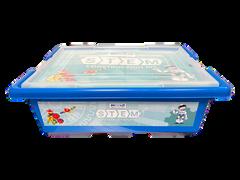
IntroductiontotheKit

Thiskitisdesignedtosparkcuriosityandfostercreativityinyounglearnersaged 3–5 years. Inside, you’ll find an exciting assortment of components that will help children prototype and explore various solutions to the challenges presented in thisbook.

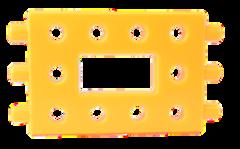
3x4FRAME

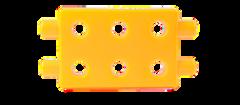
2X3HOLEBASE

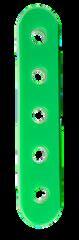
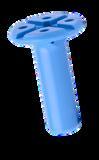
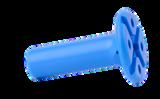
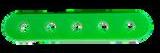
5HOLEROD

3HOLEROD

160MMCONNECTOR

80MMCONNECTOR

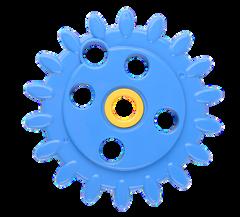
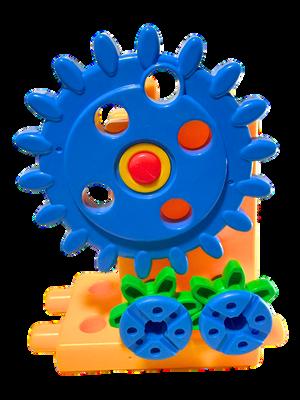
6TGEARWITHADAPTER

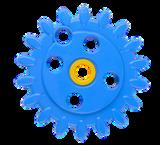
18TGEARWITHADAPTER

With these materials, children will engage in hands-on learning, developing foundational STEM skills such as problem-solving, creativity, and collaboration. Each challenge in the handbook is designed to encourage imaginative thinking and introduce young minds to the exciting world of STEM through play and exploration.

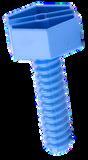
PEGROD ROD SCREW
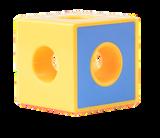
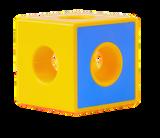
NAIL NUT WHEEL CUBE
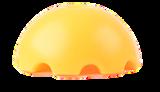
HEMISPHERE

StandardsAlignment

CambridgeMathematics

LearningObjective

DevelopMathematicalLanguage

Project#

ProjectName

SchemeofWork

This scheme of work covers 16 sessions: 15 projects (each 45-min), and 1 capstoneproject(90mins,splitinto2sessions).

Session

Project1:MakeitSpin

Project2:MakeitRoll

Project3:MakeitTall

Project4:MakeitTen

Project5:MakeaPattern

LessonPlans andAnswerkey

LearningObjectives

Project1:MakeitSpin

LessonPlan

Duration: 30-45minutes

Attheendofthelesson,thelearnerswill: Recognisenumbersfrom1to10. Recordnumbers

Useeverydaylanguageofdirectionanddistancetodescribemovementsofobjects.

Materials

Vocabulary

Preparation(TeacherTo-DoBeforeClass)

Preparethematerialsfortheclass. Setupasampleworkingfordemonstration

LearningActivities

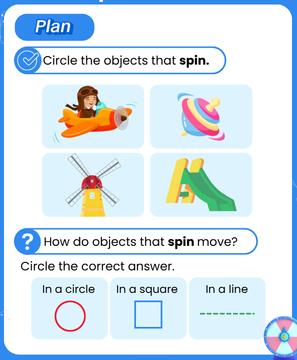
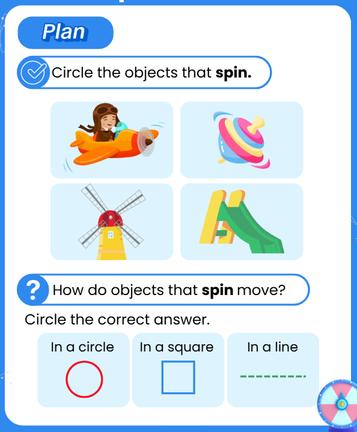
1.Promptlearnerstodescribeeachpicture.

2.Then,directlearnerstocircletheobjectsthatspin

3.Afterlearnersmaketheirchoices,invitethemto sharetheirthinkingandproposeadefinitionfor“spin” Afterlisteningtotheirclassmates,allowlearnersto changetheirresponses.

4.Next,havelearnerscirclethedescriptionthat matchesthemovementofaspinningobject. Plan

5.Then,havelearnersdrawanotherspinningobjectfromtheirdailylives.Examplesmay includeamerry-go-round,abicycletire,oraglobe Encouragelearnerstousearrowsto showthemovementoftheobject.

Drawapictureofanobjectspinning.

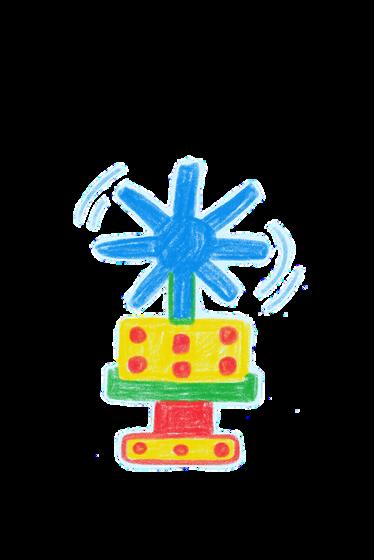
1.Promptlearnerstoidentifyhowtheyimaginethesampleobjectsmightspin Theymayuse thesamplestofamiliarizethemselveswiththematerials,buttheyshouldworktowards buildingtheirowndesign.

2.Provideaccesstothekitsandcleared-offbuildingareas,whichmaybetabletopsorthe floor.learnersshouldhavetheopportunitytoworkindependentlyorinpairs,asmaterials areavailable

3.Oncelearnershavecreatedtheirfirstspinningobject,havethemdrawit.Engineersoften makesketchesoftheirprototypesorworkingdesignstorecordtheevolutionoftheirideas throughoutthedesignprocess.

Drawtheobjectyoubuilt.

1.Invitelearnerstotakeaparttheirfirstdesignandbuildasecondspinningobject.They maywanttokeepbothdesigns,butthismaylimitotherlearnersaccesstothesameunique pieces learnersshoulddrawtheirnewobjectsandcancompareanddiscussthechanges theymadeandwhywithapartnerorasaclassdiscussion. Improve

Buildanotherobjectthatspins.

Review

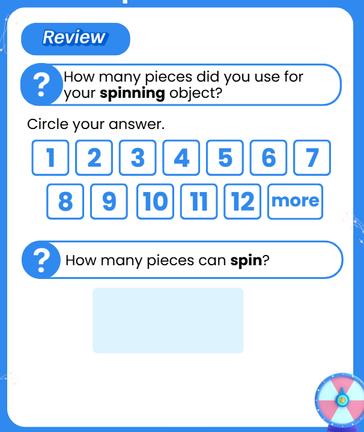
1.Readthefirstquestionaloud Then,have learnerspointtoandsaythenameofeach number Asklearnerstosharewhytheythinkthe word“more”islistedafterthenumber Have learnerscountthepiecesontheirseconddesign andcircletheiranswer.

2.Readthesecondquestionaloud prompt learnerstoanalyzetheircurrentdesignand evaluatehowmanyofitspiecesspin Then,using thenumbersinthefirstquestionasaguide,have learnerswritethenumeralfortheiranswer.

Answerkey

Reviewanswerswillvarydepending onstudents’spinningobjects.

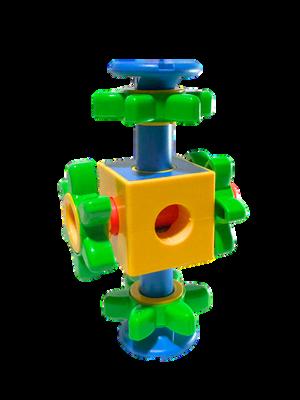
SampleSolution

LearningObjectives

Project2:MakeitRoll

LessonPlan

Duration: 30-45minutes

Attheendofthelesson,thelearnerswill: Recognisenumbersfrom1to10. Recordnumbers

Nameandsort2Dshapescommonlyfoundatschoolorhome. Useeverydaylanguageofdirectionanddistancetodescribemovementsofobjectsor self

Materials

Vocabulary

Preparation(TeacherTo-DoBeforeClass)

Preparethematerialsfortheclass Setupasampleworkingfordemonstration.

LearningActivities

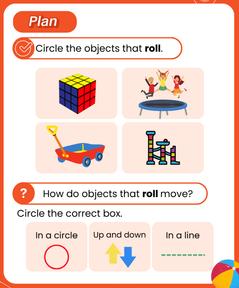
1.Promptlearnerstodescribeeachpicture

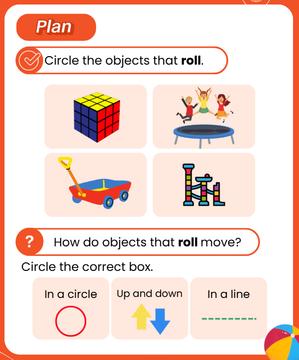
2.Then,directlearnerstocircletheobjectsthatroll.

3.Afterlearnersmaketheirchoices,invitethemtosharetheir thinkingandproposeadefinitionfor“roll.”.Afterlisteningtotheir classmates,allowlearnerstochangetheirresponses

4.Next,havelearnerscirclethedescriptionthatmatchesthe movementofarollingobject

5.Then,havelearnersdrawanotherrollingobjectfromtheirdailylives.Examplesmay includeachildrollingdownahill,aballrollingdownastreet,orastroller Encourage learnerstousearrowstoshowthemovementoftheobject.

Drawapictureofarollingobject.

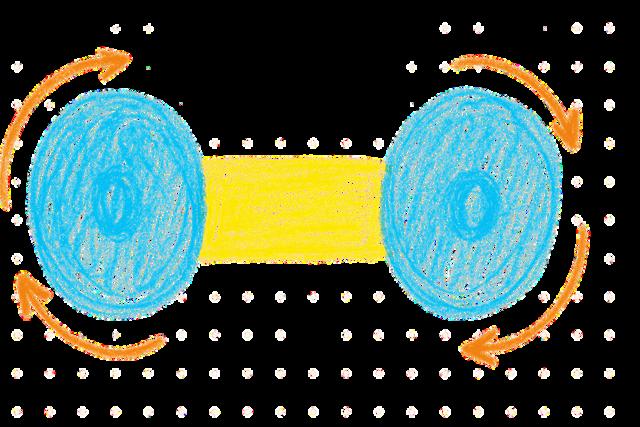
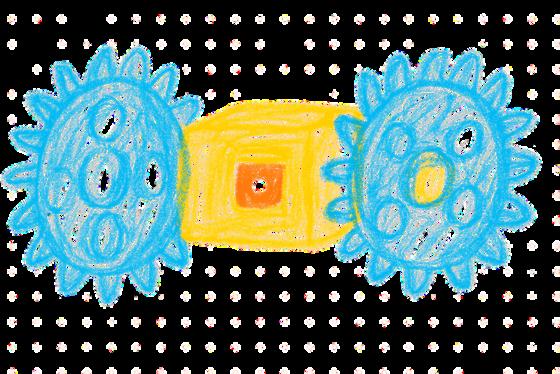
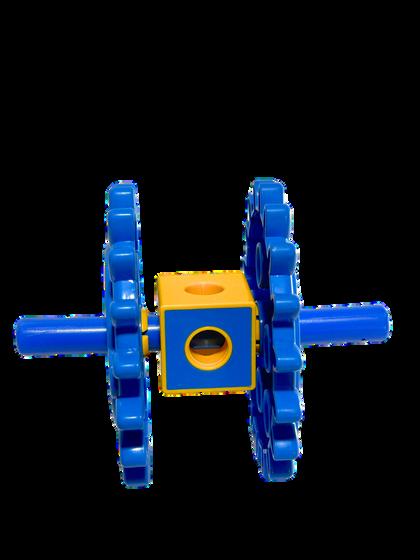
1.Promptlearnerstoidentifyhowtheyimaginethesampleobjectsmightroll.Theymayuse thesamplestofamiliarizethemselveswiththematerials,buttheyshouldworktowards buildingtheirowndesign

2.Provideaccesstothekitsandcleared-offbuildingareas,whichmaybetabletopsorthe floor Learnerscanworkindependentlyorinpairs,asmaterialsareavailable

3.Oncelearnershavecreatedtheirfirstrollingobject,havethemdrawit.Engineersoften makesketchesoftheirprototypesorworkingdesignstorecordtheevolutionoftheirideas throughoutthedesignprocess.

Drawtheobjectyoubuilt.

Improve

1.Invitelearnerstotakeaparttheirfirstdesignandbuildasecondrollingobject.Theymay wanttokeepbothdesigns,butthismaylimitotherlearners'accesstothesameunique pieces learnersshoulddrawtheirnewobjectsandcancompareanddiscussthechanges theymadeandwhywithapartnerorasaclassdiscussion.

Buildanotherobjectthatspins.

Review

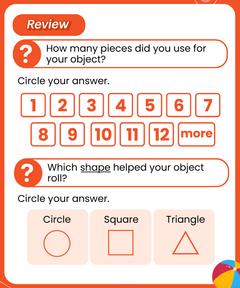
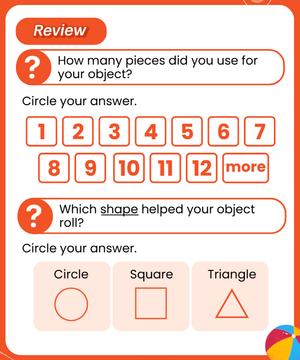
1.Readthefirstquestionaloud Then,havelearnerspointtoand saythenameofeachnumber.Asklearnerstosharewhythey thinktheword“more”islistedafterthenumber.Havelearners countthepiecesontheirseconddesignandcircletheiranswers

2.Readthesecondquestionaloud.Promptlearnerstoanalyze theircurrentdesignandcirclewhichshapesmadeitpossiblefor theirobjecttoroll

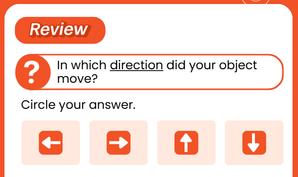
3.Readthethirdquestionaloud.Helplearnersinterpret thefirsttwoarrowsasmovingtowardstheleftorright andthesecondtwoarrowsasmovingupordown Most objectswillrollleftorrightdependingonhowtheypush theobject,butifitfallsoffatableordownaramp,it mightalsomovedown!

4.Asanoptionalextension,youcouldhelplearners constructrampstotestandcomparetheirrolling objects

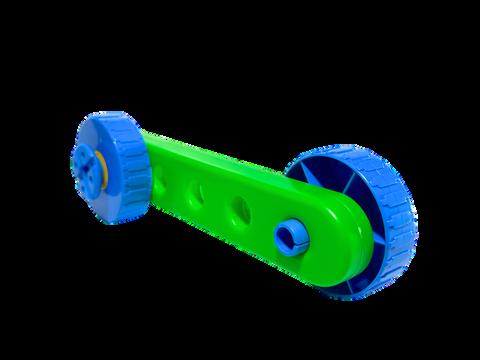
Studentsmayidentifythemarbleas somethingthatrolls,ortheymay decidetonotmarkitasthemarble runitselfdoesnotroll.
Answerkey

Reviewanswerswill varydependingon students’rolling objects.
LearningObjectives

Project3:MakeitTall

LessonPlan

Attheendofthelesson,thelearnerswill:

Nameandsort3Dshapescommonlyfoundatschoolorhome

Duration: 30-45minutes

Comparelengthsormassofobjectsusingwordssuchaslonger,shorter,taller,bigger, smaller,lighter,heavier,etc. Representandinterpretdatausingpictorialrepresentationsorconcretematerials.

Materials

Vocabulary

havingagreaterthanaverageheight

Preparation(TeacherTo-DoBeforeClass)

Preparethematerialsfortheclass. Setupasampleworkingfordemonstration.

LearningActivities

1.Promptlearnerstodescribeeachpicture.

2.Then,directlearnerstocirclethetallobjects

3.Afterlearnersmaketheirchoices,invitethemtosharetheir thinkingandproposeadefinitionfor“tall” Afterlisteningto theirclassmates,allowlearnerstochangetheirresponses.

4.Next,readthetwoquestionsandhavelearnerscircletheir responses. Plan

5.Then,havelearnersdrawanotherexampleoftallandshortobjectsfromtheirdailylives. Examplesoftallobjectsmayincludealightpole,agiraffe,oratree Examplesofshort objectsmayincludeababy,amouse,oraflower.

Drawatallandashortobject.

1.Promptlearnerstodescribethetallobjecttheywanttobuild Theymayusethesamples tofamiliarizethemselveswiththematerials,buttheyshouldworktowardsbuildingtheirown design.

2.Provideaccesstothekitsandcleared-offbuildingareas,whichmaybetabletopsorthe floor.learnersshouldhavetheopportunitytoworkindependentlyorinpairs,asmaterials areavailable

3.Oncelearnershavecreatedtheirfirsttallobject,havethemcirclethe3Dshapesthey used Reviewtheshapesandothereverydayobjectsthatincludetheseshapes

Drawyourtallstructure.

Improve

1.Now,invitelearnerstotesttheirdesigntoseeifitcanstandonitsownwithoutfallingover. Havethemrecordtheirresult.Iftheirdesignfallsover,considerprovidingmoretimeto improvetheirdesign

2.Promptlearnerstodrawtheirfinaldesigns.

Drawyournewtallstructure.

Review

1.Readthefirstquestionaloud Thenhavelearners comparetheirdesigntotheirdeskortableand marktheiranswers.

2.Readthesecondquestionaloud Then,have learnerscomparetheirdesigntotheirownheight andmarktheiranswers.

3.Engageinaclassroomdiscussionaboutvarious designsandpromptlearnerstosharehowthey wouldimprovetheirdesignswithmoretimeand materials.

4.Asanoptionalengineeringextension,provide additionaltimeand/ormaterialsforlearnersto maketheirdesignseventaller.

5.Asanoptionalmathextension,youcouldhave learnersuseanon-standardmeasurementtool, suchasbooksorwoodenblocks,tomeasurethe heightoftheirstructures

Reviewanswerswillvary dependingonstudents’tall objects.

Answerkey

Reviewanswerswillvarydepending onstudents’tallobjects.

SampleSolution

Turn static files into dynamic content formats.

Create a flipbook
Issuu converts static files into: digital portfolios, online yearbooks, online catalogs, digital photo albums and more. Sign up and create your flipbook.