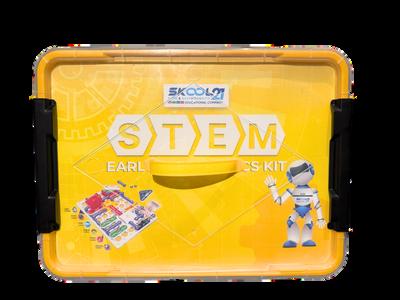
Guidebook - Level 2

Page 1


TeacherGuide-EarlyElectronicsLevel2

Copyright©2026

Editors:LindseyOwnandKaylynLee

ISBN:978-981-17736-6-2

Publishedby:

SKOOL21PTE.LTD.

71RobinsonRoad,#14-01,068895,Singapore

FirstEditionpublishedbySKOOL21PTELTD-Singapore,2024

SecondEditionpublishedbySKOOL21LLC-UnitedStates,2026

No part of this book may be reproduced, distributed, or transmitted in any form or by any means, including photocopying, recording, or other electronic or mechanical methods, without the prior written permission of the publisher, except in the case of brief quotations embodied in critical reviews and certain other non-commercial uses permittedbycopyrightlaw.

Forpermissionsorinquiries,pleasecontact:

Email:info@skool21org

Website:https://skool21.org

Address:600CaliforniaSt,#13-021,SanFrancisco,CA94108,UnitedStates

Preface

WelcometotheFutureofTeachingandLearning!

Thankyouforjoiningusonthisexcitingjourney!TheSKOOL21STEMInnovatorsseriesis designednotonlytoignitecuriosityinstudentsbutalsotoempowerteacherstolead meaningful, hands-on STEM learning experiences. Through this series, you will guide young innovators as they explore, design, and solve real-world challenges using science,technology,engineering,andmathematics(STEM).

BuildingonaStrongFoundation

EachleveloftheSKOOL21STEMseriesbuildsuponthepreviousone,creatingastrong continuum of learning — from simple machines to advanced 3D modeling. Students travel through key technological eras, from the Industrial Revolution to the innovations shaping our future. No matter their starting point, every learner will discovernewskillsanddeeperunderstandingalongtheway.

LearningbyDoing

At SKOOL21, we believe students learn best by doing. Each book comes with a comprehensive STEM kit, enabling students to build, test, and explore concepts through hands-on challenges. As a teacher, you will facilitate engaging projects where students actively create, problem-solve, and apply critical thinking skills — all whilehavingfun.

MakingaReal-WorldImpact

Every project is designed to connect learning to real-world issues, inspired by the SustainableDevelopmentGoals(SDGs).Throughthesechallenges,studentsseehow their ideas can contribute to solving problems like clean water access, renewable energy, and environmental conservation empowering them to envision a better world.

TeachingLikeaPro

The SKOOL21 STEM program aligns with international standards and best practices, ensuring that both teachers and students are developing the collaboration, innovation, and design thinking skills valued in today’s world. You’re not just supporting schoolwork — you’re preparing the next generation of thinkers, leaders, andchangemakers.

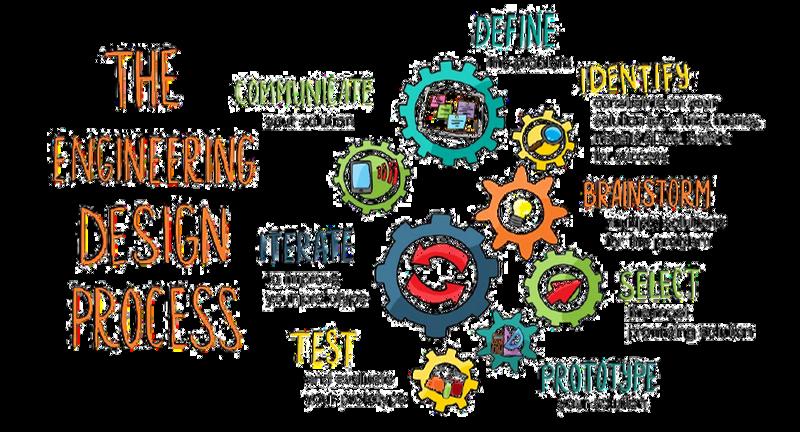
TheEngineeringDesignProcess

The Engineering Design Process (EDP) is a systematic approach used by engineers and designers to solve problems and create innovative solutions. It provides a structured framework for developing new products, processes, or systems by following a series of well-defined steps. This process is not only applicable in engineering, but is also widely used in various STEM disciplines to tacklechallengesanddevelopcreativesolutions.

For students in first grade and above, the typical Engineering Design Process follows multiple iterative steps, including identifying a problem, researching, brainstorming,designing,prototyping,testing,andrefiningsolutions.

This structured approach encourages creativity, critical thinking, and iteration, formingastrongfoundationforfutureSTEMlearning.

FosteringSocialSkills

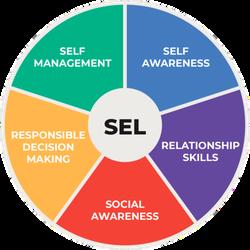
STEM activities naturally build key social skills. Teachers can help students practice and strengthen these skills by guiding them during group work, discussions,andprojectchallenges

Keysocialskillsdevelopedinclude:

Collaboration

Encouragestudentstoshareideas andassignrolesduringgroup worktobuildteamworkand respectfordifferentperspectives

CriticalThinking

Promptstudentstoask"why"and "whatif"questionswhensolving problemsordesigningsolutions

EmpathyandRespect

Remindstudentstovalue everyone 'sideasandsupport peersbyusingkind,respectful language.

ConflictResolution

Coachstudentstotalkthrough disagreementscalmlyandfind solutionsthateveryonecan accept

Reflection

Buildreflectionintotheprocessby askingstudentswhatworkedwell, whatwaschallenging,andwhat theywoulddodifferentlynexttime

Communication

Modelclearcommunicationand askstudentstoexplaintheir thinkingandlistencarefullyto teammates

Problem-Solving

Challengestudentstotrydifferent strategieswhentheyface obstaclesandpraisepersistence.

TimeManagement

Helpteamssetmini-deadlines andguidethemtobreakprojects intosmaller,manageabletasks

PresentationSkills

Givestudentsregularchancesto presenttheirworktopeers,using clearspeakingandsupportive feedback

Teamworking

Celebratestrongteamworkby recognizingwhenstudentsshare leadership,encourageeachother, andsolveproblemstogether

Teaching STEM also teaches students how to think, work, and lead. By actively supporting social skills during projects, teachers prepare students not just for academicsuccess,butforfuturecareersandlifechallenges.

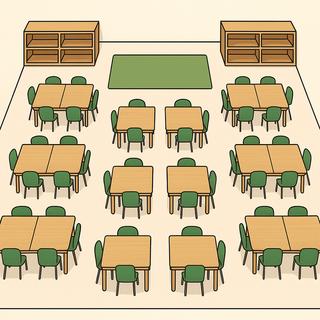
MakerspaceSetup

Amakerspaceisacreative,hands-onareawherestudentsexploreSTEM conceptsthroughbuilding,experimenting,andsolvingproblemstogether.This guideisdesignedforteacherswhoarenewtoSTEMandlookingforclearstepsto setupandmanageamakerspace.

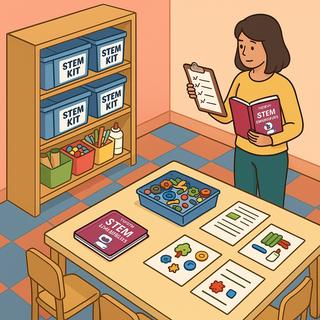
MaterialsManagement:

STEMClassroomManagement

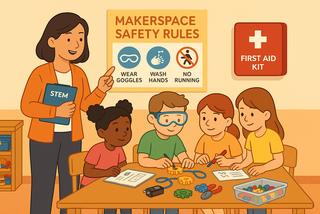
STEMclassesarehands-on,highlyengaging,andoftennoisy—that’sagood thing!Butwithoutclearroutinesandstructures,theycanquicklybecome chaotic.Awell-managedmakerspaceallowsstudentstoexploreandinnovate safely,responsibly,andcollaboratively.

STEMClassSessionRoutine

Setaclearandconsistentstructuretoeachsessionsostudentsknowwhatto expectandstayfocused:

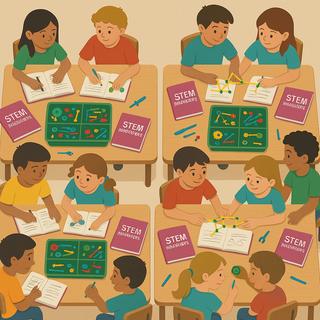
EffectiveTeamwork

AnimportantaspectofthesocialskillsdevelopedthroughSTEMlearningis effectiveteamwork.Teacherscansupportstudentsindevelopingtheseskills throughpurposefulstructuringofstudentteamssothattheycanpractice effectiveteamwork.

Havinganassignedrolewithinateamgiveseach studentspecificresponsibilities,sothatthereisno questionofwhoshoulddowhat Assigningrolesensures thatnostudenttakestoomuchcontrolofthegroup,and nostudentremovesthemselffromthegroup’sefforts.

Lessonsareintendedtobecompletedingroupsof3or4students,andeach lessonhasaplacetorecordwhowillperformeachroleforthatlesson.Whether youassigngroupsandrolesorallowstudentstoself-select,ensurethatstudents rotaterolesregularly!

Therolesinlevels1-3arebasicallythesame,butwithslightlysimplerwording foryoungerstudents.

Leader

Material

Reporter

Testing

Ensuresallteammembersareabletosharetheirideasandtake turnsbuilding(notthe“decisionmaker”)

Collectskitsandmaterials,keepstrackofmaterialsduringconstruction, responsiblefordisassemblingandreturningmaterialsneatly

Bringsanyquestionstotheteacher,coordinatesproject presentations

Comparesprototypestodesigncriteria,looksformissingcriteriaor forstructuralweaknessesthatcanbeimproved

Notethatnoonerolehasthefullresponsibilityofbuildingprototypes-all studentsinthegroupshouldbeinvolvedinbuilding!

Ifyourstudentsareworkingingroupsof3,youmightcombinetheProject Communicator/ReporterandProjectTester/TestingSupervisorroles.

S t a n d a r d s A l i g n m e n t

S # T o p i c D u r a t i o n S D G N G S S C a m b r i d g e S c i e n c e I S T E C C S SM a t h C a m b r i d g e M a t h

1 D e s i g n a n E l e c t r i c L a m p 3 04 5 m i n Q u a l i t y E d u c a t i o n K2E T S 11 2 T W S c . 0 2 , 2 T W S c . 0 4 , 1 . 3 . d . , 1 . 4 . c . , 1 . 7 . c . 2 . M D . C . 7 2 G t . 0 2

2 S s . 0 1 , S s . 0 2

2 D e s i g n a S w i t c h 3 04 5 m i n R e s p o n s i b l e C o n s u m p t i o n a n d d i 2P S 12 , 2P S 11 2 C p . 0 1 , 2 C p . 0 2 , 2 C p . 0 3 1 . 3 . d . , 1 . 4 . c . , 1 . 7 . c . 2 . M D . D . 9 , 2 . M D . D . 1 0

3 D e s i g n a D o o r b e l l 3 04 5 m i n Z e r o H u n g e r K2E T S 11 2 P e . 0 2 , 2 P e . 0 3 , 1 . 3 . d . , 1 . 4 . c . , 1 . 7 . c . 2 . G . A . 1 2 G g . 0 1

2 M D D 9 , 2 . M D .

.

, 1 .

3

,

.

0

E S

. 1 0 2 S s 0 1 , S s . 0 2 5 D e s i g n a C o m m u n i c a t o 3 04 5 m i n I n d u s t r y , I n n o v a t i o n a n d f K2E T S 11 2 P e . 0 2 , 2 T W

4 D e s i g n a L o d e s t o n e 3 04 5 m i n Q u a l i t y E d u c a t i o n 2P S 12 , 2P S 11 2 C p

D e s i g n a C i r c u i t 3 04 5 m i n I n d u s t r y , I n n o v a t i o n a n d f K2E T S 11 2 P e . 0 2 , 2 P e . 0 3 , 1 . 3 . d . , 1 . 4 . c . , 1 . 7 . c . 2 . N B T . A . 1 2 N p . 0 1

8 D e s i g n a M o t i o n 3 04 5 m i n Z e r o H u n g e r K2E T S 11 2 P e 0 2 , 2 P e 0 3 1 3 d , 1 4 c , 1 7 c 2 . M D . A . 1 2 G g 0 3 , 2 G g 0 4

D e s i g n a M o t i o n A l a r m 3 04 5 m i n D e c e n t W o r k a n d E c o n o m i c G r o w t h K2E T S 11 2 P e . 0 2 , 2 P e . 0 3 1 . 3 . d . , 1 . 4 . c . , 1 . 7 . c . 2 N B T A 4 2 N p 0 3

9

D e s i g n a L i g h t S h o w 3 04 5 m i n C l i m a t e A c t i o n K2E T S 11 2 P e . 0 2 , 2 P e . 0 3 1 . 3 . d . , 1 . 4 . c . , 1 . 7 . c . 2 . N B T . B . 7 3 N i . 0 4

1 0

D e s i g n a V i d e o G a m e 3 04 5 m i n Q u a l i t y E d u c a t i o n K2E T S 11 2 P e . 0 2 , 2 P e . 0 3 1 . 3 . d . , 1 . 4 . c . , 1 . 7 . c . 2 . N B T . A . 1 2 N p . 0 1

1 1

D e s i g n a B i r t h d a y i 3 04 5 m i n G o o d H e a l t h a n d W e l lb e i n g K2E T S 11 2 P e . 0 2 , 2 P e 0 3 1 . 3 . d . , 1 4 c , 1 7 c 2 . N B T . A . 3 2 N i . 0 1

1 2

D e s i g n a N i g h t L i g h t 3 04 5 m i n A f f o r d a b l e a n d C l e a n E n e r g y K2E T S 11 2 P e . 0 2 , 2 P e . 0 3 1 . 3 . d . , 1 . 4 . c . , 1 . 7 . c . 2 O A C 4 2 N c . 0 5 , 2 N i . 0 4

1 3

1 4 D e s i g n a n E l e c t r i c C a r 3 04 5 m i n C l i m a t e C h a n g e K2E T S 11 2 P e . 0 2 , 2 P e . 0 3 1 . 3 . d . , 1 . 4 . c . , 1 . 7 . c . 2 . O A . A . 1 2 S s . 0 1 1 5 D e s i g n a H i g h w a y 3 04 5 m i n C l i m a t e C h a n g e K2E T S 11 2 P e . 0 2 , 2 P e . 0 3 1 . 3 . d . , 1 . 4 . c . , 1 . 7 . c . M P 1 T W M . 0 1 , T W M . 0 8

1 6 C a p s t o n e : S T E M h l l 4 56 0 m i n C h o i c e o f G o a l s K2E T S 11 2 P e . 0 2 , 2 P e . 0 3 1 . 3 . d . , 1 . 4 . c . , 1 . 7 . c . M P 1 T W M . 0 1 , T W M . 0 8

CambridgeScienceAlignment

LearningObjective

ThinkingandWorkingScientifically

Lifeprocesses-PropertiesofMaterials

ForcesandEnergy,ElectricityandMagnetism

StructureandPropertiesofMatter

CambridgeMathematics

LearningObjective

OperationsandAlgebraicThinking

NumberandOperationsinBaseTen

SchemeofWork

This scheme of work covers 16 sessions: 1 introductory lesson1 (45 mins), 15 projects(each45-min),and1capstoneproject(90mins,splitinto2sessions). Itcanworkforweekly45-minuteclasses.

Session Objectives

Lesson1:IntrotoSnapCircuits

Project1:DesignanElectricLamp

Project2:DesignaSwitch

Project3:DesignaDoorbell

Project4:DesignaLodestoneDetector

Project5:DesignaCommunicator

Project7:DesignaCircuit

Project8:DesignaMotionDetector

Project9:DesignaMotionAlarm

Project10:DesignaLightShow

Project11:DesignaVideoGame

LessonPlans andAnswerkey

LessonPlan

LearningObjectives

Attheendofthelesson,thelearnerswill:

Duration: 45minutes

Identifyandcreateacircuitusingtheearlyelectronicskit,withapowersourceanda componentthatusestheelectricity,likealight

Incorporateadditionalsimplecomponentslikeswitchesintoacircuit

Beabletodoallofthesesafely,avoidingashortcircuit

Materials

Vocabulary

A path through which electricity flows, usually with three main parts: a power source, a wire to carry the electricity, and something that uses theelectricity.

A circuit path that go straight from the positive to the negative side of the batterie with no component in between. This can cause overheatingduetotoomuchelectricityflowingthroughthewires!

Preparation(TeacherTo-DoBeforeClass)

Mostimportantly!Completethislessonyourselfbeforeintroducingittostudentssothat youbecomefamiliarwiththetools

Checkallthekitstobesureallcomponentsarepresent.Seethekitinventorylistinthe studentbooktouseasachecklist

Checkthatthebatteriesarefullycharged,andthateachcomponentisworking.

LearningActivities

1.ThismaybeyourveryfirsttimeintroducingtheSTEMInnovatorsHandbooktoyour students!Ifso,explainthattheywillbelearningtobeengineersandsolvingproblems usinganengineeringdesignprocess Thefirstshortlessonwillintroducethemtothe toolstheywillusetosolveproblemsandinnovate,andafterthoselessonstheywilljump intotheirfirstchallenge!

2Readtheinitialdefinitionofacircuitandaskstudentstonamesomeexamplesofcircuits intheirdailylives Theymightrecognizelamps,fans,orotherappliancesthatpluginand useelectricityasusingcircuits.

3.Havestudentsobservethediagramsinthestudentworkbook,andaskwhethertheycan identifythedifferencesbetweentheleftandrightdiagrams Theleftdiagramshowsa closedswitchwithalampturnedon,andtherightdiagramshowsanopenswitchwith thelampnotturnedon.

Part1:LighttheLED

1.Directstudentstostartfollowingthestepsinthe“LighttheLED”section.Encouragethem tosearchthroughtheirkitstofindthecorrectcomponents!

2Ensurethatstudentsaretakingturnsintheirgroupstodirectlycontroltheblocks Considerhavingthemswitchateachstepoftheinstructions.

3Considerusingthisopportunitytohelpstudentspracticetakingdifferentroles!For example,youmighthaveonestudentreadtheinstructionsandquestionsaloudtothe group,onestudentfollowtheinstructionstoplacethecomponents,andathirdstudent double-checkateachstepthattheirkitmatchestheimagesinthestudentworkbook.

4PauseattheSafetyAlert!todiscusswithyourstudents!

Part2:AddaSwitch

1.Directstudentstocontinuefollowingthestepsinthe“AddaSwitch”section.Encourage themtosearchthroughtheirkitstofindthecorrectcomponents!

2.Ensurethatstudentsaretakingturnsintheirgroupstodirectlycontroltheblocks. Considerhavingthemswitchateachstepoftheinstructions.

Part3:LighttheBulb

1.Directstudentstocontinuefollowingthestepsinthe“LighttheBulb”section.Encourage themtosearchthroughtheirkitstofindthecorrectcomponents!

2Ensurethatstudentsaretakingturnsintheirgroupstodirectlycontroltheblocks Considerhavingthemswitchateachstepoftheinstructions.

Iftimeallows,invitethemtotestputtingthesamecomponentsindifferentorders!What happensiftheyputtheswitchontheoppositesidefromtheLED?Whathappensiftheyput bothswitchesonthesamecircuit?(Ifusingtwoswitches,studentsmustalsostillincludean LEDorbulbinthecircuittoavoidashort!)

AdditionalSafetyAlert!Aswitchaloneonacircuitwillhavethesameeffectofashortifthe switchisclosedwithnoLEDorotherelectricity-usingcomponentsinthecircuit!

Project1:DesignanElectricLamp

LessonPlan

LearningObjectives

Attheendofthelesson,thelearnerswill:

Designanelectriclamptosolveaproblem

Tellandwritetime

Materials

Vocabulary

Duration: 45minutes

Aformofenergythatpowersthingslikelights

Thecoveroveralightbulb

Tomaketheair,water,orlanddirtyorharmfultolivingthings

Preparation(TeacherTo-DoBeforeClass)

Preparethematerialsfortheclass.

LearningActivities

1.ReadtheIntroductiontogether.Notetheboldedvocabularywords,andaskstudents whattheyknoworthinkaboutthosewords Theywilllearnthedefinitionsinthenextstep!

1Then,readtheDefinetheProblemtogether Discusshowthejobofanengineeringteam istodesignsolutionstoproblems.Manysolutionstoaproblemmayexist,anditistheir jobtofindthebestonefortheirspecificsituation

2TelllearnersthattheywillhavetheopportunitytoworkontheseSTEMprojectswith differentteamsandindifferentteamroles.Assigntheteamsandrolesorallowlearners toself-select.Reviewtheresponsibilitiesofeachrole,asdefinedinthisteachersguide.

3Telllearnersthatengineeringteamsusealistofgoalsandrulesbasedonthesituation tomeasurethesuccessoftheirdesigns.Forprofessionalengineers,thisoftenincludes limitsoncostsandmaterialsaswellasgoalsthatincludesizerequirementsorfeatures. Readthegoalsandrulestogether

4. ReadthevocabularyandtheScienceConnectiontogetherandensurelearners understandtheconceptstheywilluseintheproject.

5 Lookoverthematerialsanddiscusssafety Reviewtheimportantsafetyalerttoavoid shortcircuitsthatcancauseoverheating!

1.Promptlearnerstobrainstormandrecordtheirideasindividually.

2.Then,designatespacesforteamstoworktogetherandsharetheirideas.Remindthem thatoneruleisthateachteammembermustcontributeatleastoneidea Itisokayif teammembershavethesameidea.

3.Instructteamstodrawtheirteamdesign.Then,theyshouldlabelthematerialsneeded fortheirdesignsotheyknowwhattograbfromthekit

4.Whilelearnersarebuilding,ensureeveryonecancontribute.Ifthisistheirfirsttime workinginagroup,modelandremindstudentsofthedifferentresponsibilitiesofthe differentroles.

5.Whenteamsarereadytotesttheirdesigns,theyuseMeasureYourSuccessasaguide.

6.Ifteammodelsdonotmeetthegoalsandrules,theyshouldimprovethem.Ifteams needsupport,directthemtothesamplesolutionsattheendoftheproject

7.Then,encourageallteamstocreatelampshadesthatallowdifferentamountsoflight toshinethrough.

1.Designatepairingsforteamstoshareandreceivefeedbackontheirdesigns.

2Modelhowtogiveandreceivefeedbackusingphrasessuchas,“Ilike haveyou thoughtaboutadding…?”or“Your…isreallycool,Iwonderhowitwouldworkif…?”

3.Promptteamstorecordthefeedbacktheyreceive.

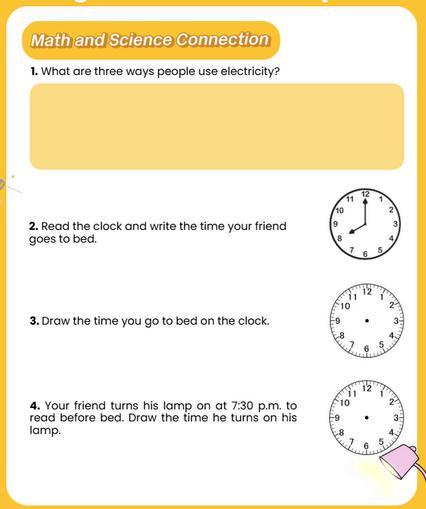
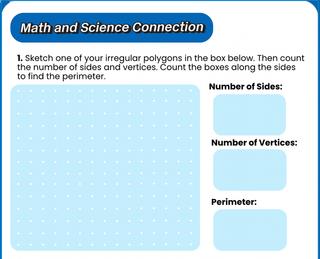
MathandScienceConnection

1Assignlearnerstocompletethemathandsciencequestionsindividuallyorinteams 2.Providereadingsupportasnecessary.

1.Invitelearnerstoself-reflect

2Then,discusshowtheirsolutionscouldpromotequalityeducation

Project2:DesignaSWITCH

LessonPlan

LearningObjectives

Attheendofthelesson,thelearnerswill:

Duration: 45minutes

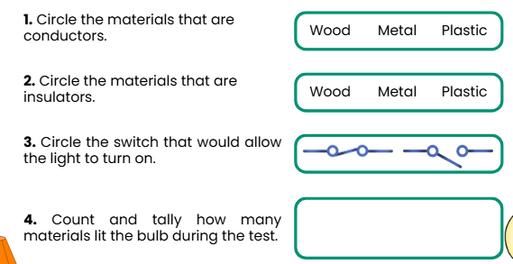
Analyzedataobtainedfromtestingdifferentmaterialstodeterminewhichmaterials havethepropertiesthatarebestsuitedforanintendedpurpose Generatemeasurementdata

Materials

Vocabulary

Amaterialthatallowselectricitytoflowthrough

Aformofenergythatpowersthingslikelights

Amaterialthatstopselectricityfromflowingthrough

Adevicethatopensorclosesanelectricalcircuit

Preparation(TeacherTo-DoBeforeClass)

Preparethematerialsfortheclass

Ensurethatyouhavematerialsforeachgrouptotest,ideallysomepaper,ametalnail,a metalpaperclip,apen,andamarker.Youmighthavestudentscompareaplasticcoveredpapercliptoanall-metalpaperclip!Considerwhetheryouwillallowstudentsto testadditionalmaterialsfoundintheclassroom.

LearningActivities

1ReadtheIntroductiontogether

2.Talkaboutwhysomeonewouldchoosetouseaplasticspooninsteadofametalspoon asawaytodiscussmaterialproperties.Howwouldtheyfeeldifferentinaveryhotsoup?

1.Then,readtheDefinetheProblemtogether.Ensurelearnersunderstandtheproblem.

2.Assigntheteamsandrolesorallowlearnerstoself-select.

3Remindlearnersthatengineeringteamsusealistofgoalsandrulesbasedonthe situationtomeasurethesuccessoftheirdesigns.Readthegoalsandrulestogether.

4. ReadthevocabularyandScienceConnectiontogetherandensurelearnersunderstand theconceptstheywilluseintheproject Askstudentshowtheymighttestwhethera materialisaconductororinsulator(byplacingitbetweenabatterypackandanLEDto seewhethertheLEDthenlightsup).

5 Lookoverthematerialsanddiscusssafety Remindstudentstoavoidshortcircuitsthat cancauseoverheating!

1.Promptlearnerstobrainstormandrecordtheirideasindividually.

2.Then,designatespacesforteamstoworktogetherandsharetheirideas.Remindthem thatoneruleisthateachteammembermustcontributeatleastoneidea Itisokayif teammembershavethesameidea

3.Instructteamstodrawtheirteamdesign.Then,theyshouldlabelthematerialsneeded fortheirdesignsotheyknowwhattograbfromthekit

4Whilelearnersarebuilding,ensureeveryonecancontribute Continuetomodeland remindstudentsofthedifferentresponsibilitiesofthedifferentroles.

5.Whenteamsarereadytotesttheirdesigns,theyuseMeasureYourSuccessasaguide.In theTestsection,learnersshouldcirclethebulbiconthatindicateswhethertheirmaterial successfullylitthebulb.

6.Ifteammodelsdonotmeetthegoalsandrules,theyshouldimprovethem.Ifteams needsupport,directthemtothesamplesolutionsattheendoftheproject

7.Then,encourageallteamstomaketheirswitchesaseasytouseaspossible.

1.Designatepairingsforteamstoshareandreceivefeedbackontheirdesigns.

2.Modelhowtogiveandreceivefeedbackusingphrasessuchas,“Ilike…haveyouthought aboutadding ?”or“Your isreallycool,Iwonderhowitwouldworkif ?”

3.Promptteamstorecordthefeedbacktheyreceive.

MathandScienceConnection

1.Assignlearnerstocompletethemathandsciencequestionsindividuallyorintheir teams

2.Providereadingsupportasnecessary.

1Invitelearnerstoself-reflect

2.Then,discusshowtheirsolutionscouldpromoteresponsibleconsumptionand production

Project3:DesignaDoorbell

LessonPlan

LearningObjectives

Attheendofthelesson,thelearnerswill:

Duration: 45minutes

Defineasimpleproblemthatcanbesolvedthroughthedevelopmentofaneworimprovedobject ortool

Recognisethecomponentsofsimplecircuits(limitedtocells,wiresandlamps)

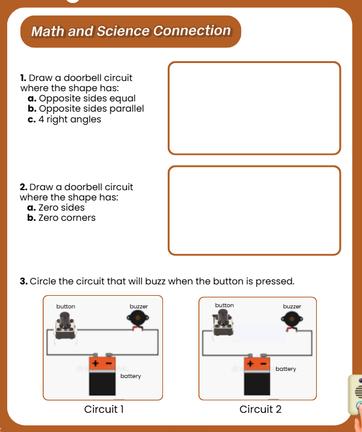
Recognizeanddrawshapeswithspecificqualities

Materials

Vocabulary

Anewideaorcreationthatsolvesaproblemorfulfilsaneed

Adevicethatopensorclosesanelectricalcircuit

Preparation(TeacherTo-DoBeforeClass)

Preparethematerialsfortheclass.

LearningActivities

1ReadtheIntroductiontogether

2.Promptlearnerstoidentifyadditionalinventionsthatnowuseelectricityforthesame taskaswaspreviouslydonewithoutelectricity,suchasbroomsandvacuums,iceboxes andrefrigerators,andcandlesandlamps

1Then,readtheDefinetheProblemtogether Ensurelearnersunderstandtheproblem Discusswhatafoodbankis.

2.Assigntheteamsandrolesorallowlearnerstoself-select.

3Remindlearnersthatengineeringteamsusealistofgoalsandrulesbasedonthe situationtomeasurethesuccessoftheirdesigns.Readthegoalsandrulestogether.

4.ReadthevocabularyandScienceConnectiontogetherandensurelearnersunderstand theconceptstheywilluseintheproject

5Lookoverthematerialsanddiscusssafety Nowthattheyareontheirthirdproject,ask studentswhatthemostimportantsafetyruleis(Noshortcircuits!).

1Promptlearnerstobrainstormandrecordtheirideasindividually

2.Then,designatespacesforteamstoworktogetherandsharetheirideas.Remindthem thatoneruleisthateachteammembermustcontributeatleastoneidea.Itisokayif teammembershavethesameidea

3.Instructteamstodrawtheirteamdesign.Then,theyshouldlabelthematerialsneeded fortheirdesignsotheyknowwhattograbfromthekit.

4Whilelearnersarebuilding,ensureeveryonecancontribute

5.Whenteamsarereadytotesttheirdesigns,theyuseMeasureYourSuccessasaguide.

6.Ifteammodelsdonotmeetthegoalsandrules,theyshouldimprovethem.Ifteams needsupport,directthemtothesamplesolutionsattheendoftheproject

7Then,encourageallteamstoimprovetheirdesigns

1 Designatepairingsforteamstoshareandreceivefeedbackontheirdesigns

2.Modelhowtogiveandreceivefeedbackusingphrasessuchas,“Ilike…haveyouthought aboutadding ?”or“Your isreallycool,Iwonderhowitwouldworkif ?”

3Promptteamstorecordthefeedbacktheyreceive

MathandScienceConnection

1.Assignlearnerstocompletethemathandsciencequestionsindividuallyorintheir teams.

2Providereadingsupportasnecessary

1.Invitelearnerstoself-reflect.

2.Then,discusshowtheirsolutionscouldpromotezerohunger.

AssessmentGuide

At SKOOL21, assessments are a tool for learning and growth not just grading. From Pre-K to Grade 12, we use assessments to guide students in building skills, confidence, and a love of STEM learning. We focus on feedback, reflection, and continuousimprovementtohelpeverystudentreachtheirfullpotential.
Pre-Assessment(optional)

Pre-assessmentcanbeformal(ashortquiz)orinformal(adiscussionoractivity)–SKOOL21 treatsitasoptionalsoteachersuseitwhenitaddsvalue Donethoughtfully,pre-assessment honorsDewey’sideathatconnectingtostudents’priorexperienceboostslearning

Byassessinghowstudentsapplymathskillsinscienceactivities(andviceversa),teachers candeepenunderstandingofbothsubjects.Thisunderscoresthereal-worldrelevanceof STEMlearningandreinforcescriticalthinking.

Turn static files into dynamic content formats.

Create a flipbook
Guidebook - Level 2 by SKOOL21 - Issuu