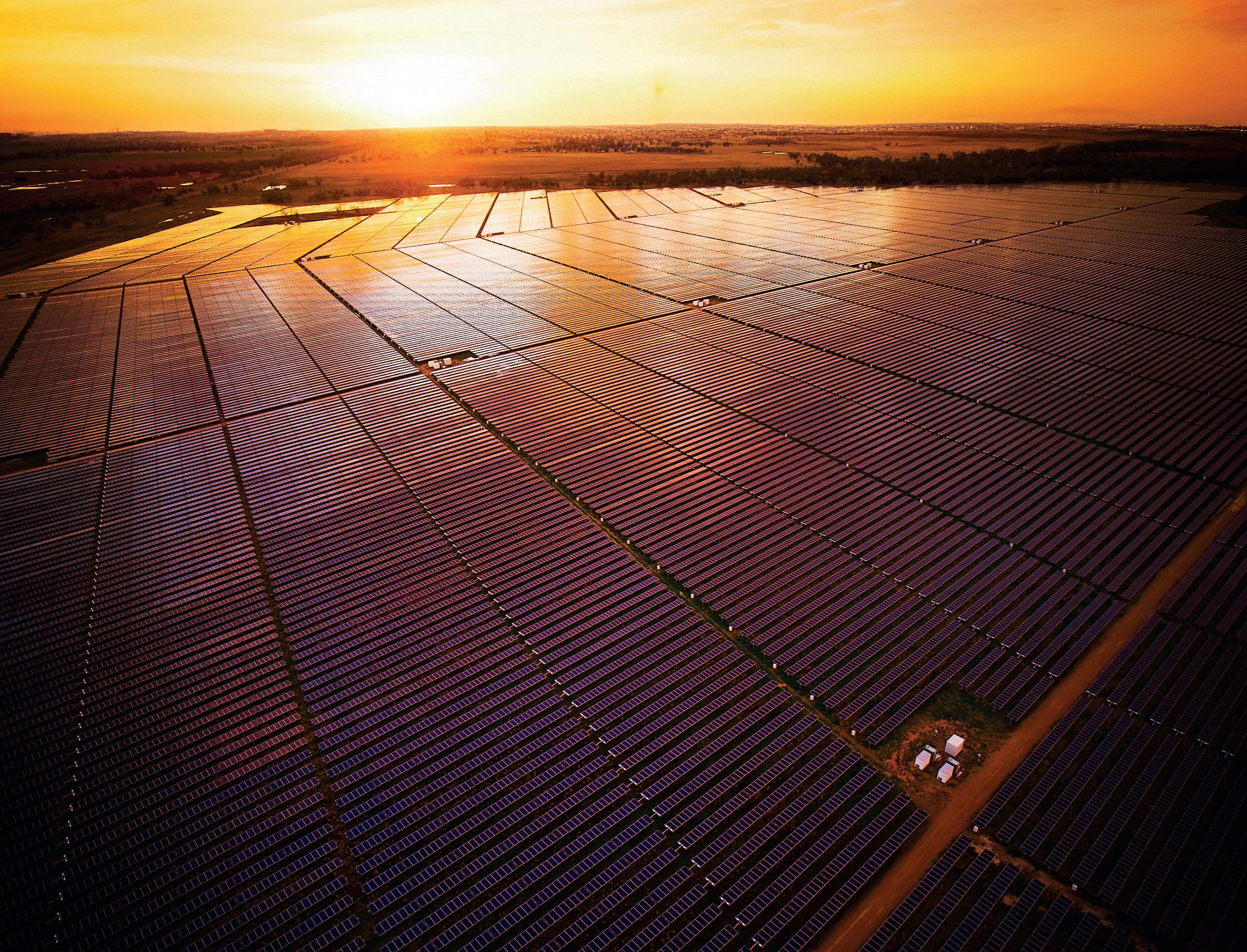
















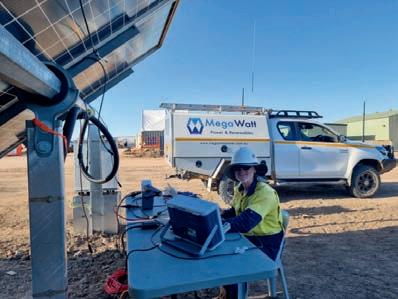
Mega Watt Power is a family-owned Australian business specialising in renewable energy design, installation, construction, and maintenance.
Based in Coffs Harbour, NSW, we operate across three specialist business units:
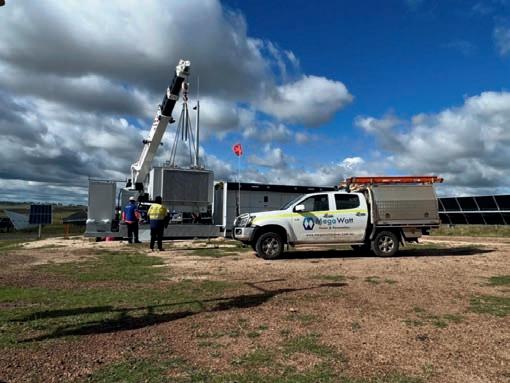
Utility-scale renewable electrical construction and servicing
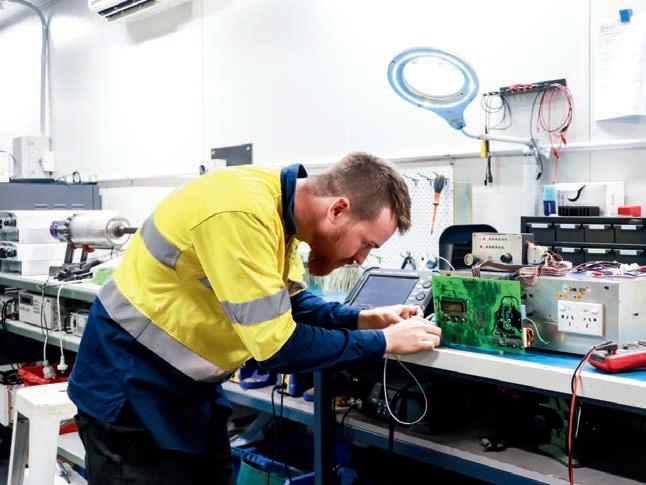
Electronics hardware repairs and maintenance
Solar power systems sales, installation and services
We employ a full-time local and remote FIFO workforce of around 50, supported by additional project staff as required. We deliver projects ranging from kilowatt systems to large-scale installations of hundreds of megawatts and bring over 36 years of proven experience in the renewable energy industry.
DC, LV & HV TEST & COMMISSIONING
SOLAR FARM ELECTRICALS
RECTIFICATION & REPAIRS
STATCOM CONSTRUCTION
HV SWITCHING & PLANNING
HV TERMINATIONS
IV-CURVE TESTING
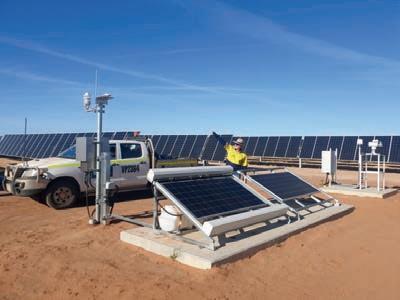
WEATHER STATIONS
O&M SUPPORT
SUBSTATION O&M
TRANSFORMER TESTING


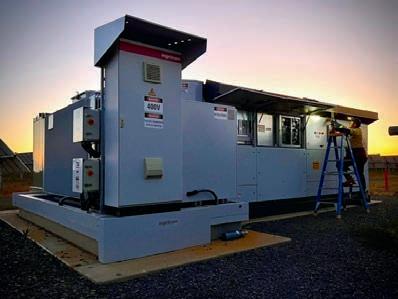
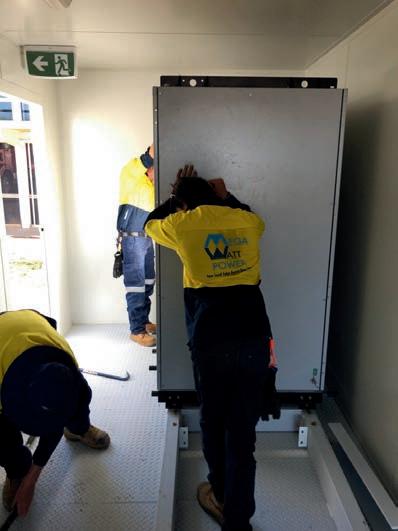
BESS, INSTALLATION & MAINTENANCE

As 2025 draws to a close, Australia’s clean energy sector is entering its next decisive phase – shifting from vision, to investment, to execution. The stories in this edition reflect a national market maturing in real time, evolving alongside global momentum and shifting government priorities.
As Nextracker becomes Nextpower, we see global technology evolving to meet the needs of Australia’s next decade of solar growth. And across the country, companies are solving the practical challenges of a high-renewables grid. At home, the landmark battery system of Consolidated Power Projects Australia Pty Ltd and Eku Energy highlights what community-minded delivery and technical excellence can achieve together.
Specialised Energy Solutions is redefining accountability across the asset lifecycle, driving a new delivery model that is helping close Australia’s engineering, procurement and construction gap.
Enerven’s work on the Eraring and Liddell battery projects also demonstrate what coordinated execution looks like at a utility scale. Meanwhile, RELA is reshaping how the country understands land use by helping developers and farmers plan co-existence through Assess 1.0 and 2.0 – a platform supported by Australian Renewable Energy Council.
The continued momentum of the sector was unmistakable at All Energy Australia 2025. With over 400 global suppliers in attendance, conversations at the highly anticipated event centred around grid integration, storage scaling, regulatory approvals, flexible demand, and workforce capability. And the recent milestones of large-scale projects, like Transgrid’s Dinawan substation and VicGrid’s Victoria to New South Wales Interconnector West, underline the scale of national progress.
As the sun sets for this year, one message is clear: The energy transition is no longer theoretical. It is happening now in our regions, homes, networks and industries. And in 2026, we will continue to tell the stories of the people and projects powering what is next.
Lavinia Hulley ecogeneration Editor

ecogeneration acknowledges the Cammeraygal people, traditional custodians of the land on which this publication is produced, and we pay our respects to their elders past and present. We extend that respect to all Aboriginal and Torres Strait Islander people today.
Chief Executive Officer: Christine Clancy
Chairman: John Murphy
Editor: Lavinia Hulley
lavinia.hulley@primecreative.com.au
Business Development Manager: Nick Lovering , +61 414 217 190 nick.lovering@primecreative.com.au
Client Success Manager: Karyssa Arendt karyssa.arendt@primecreative.com.au
Head of Design: Blake Storey
Designer : Apostolos Topatsis
Subscriptions : T: +61 3 9690 8766 subscriptions@primecreative.com.au
Published by: PRIME CREATIVE MEDIA PTY LTD
ABN: 51 127 239 212 379 Docklands Drive
Melbourne VIC 3008, Australia T: +61 3 9690 8766 www.primecreativemedia.com.au
www.ecogeneration.com.au

Cover image:
ecogeneration is printed on Lumi paper which is PEFC-certified and manufactured in an ISO 14001-certified mill. Lumi paper also contains premium white waste paper, reducing matter going into landfill. This magazine is available to interested parties throughout Australia and overseas. The magazine is also available by subscription. The publisher welcomes editorial contributions from interested parties, however, the publisher and the Editorial Board accept no responsibility for the content of these contributions and the views contained therein are not necessarily those of the publisher or of the Editorial Board. The publisher and the Editorial Board do not accept responsibility for any claims made by advertisers. Unless explicitly stated otherwise in writing, by providing editorial material to Prime Creative Media, including text and images, you are providing permission for that material to be subsequently used by Prime Creative Media, whole or in part, edited or unchanged, alone or in combination with other material in any publication or format in print or online or howsoever distributed, whether produced by Prime Creative Media and its agents and associates or another party to who Prime Creative Media has provided permission.
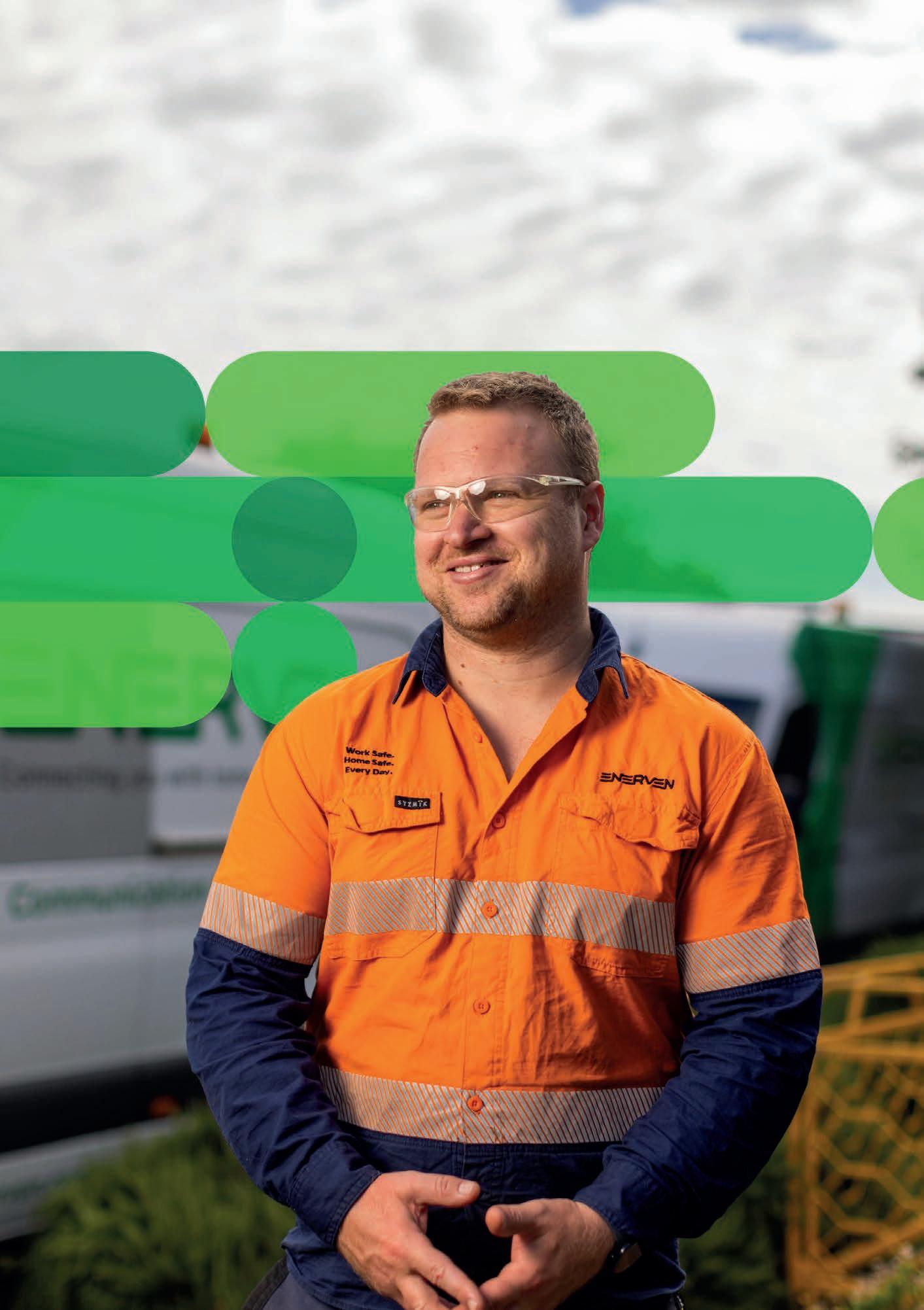
Enerven delivers electrical infrastructure and telecommunications solutions that connect communities.

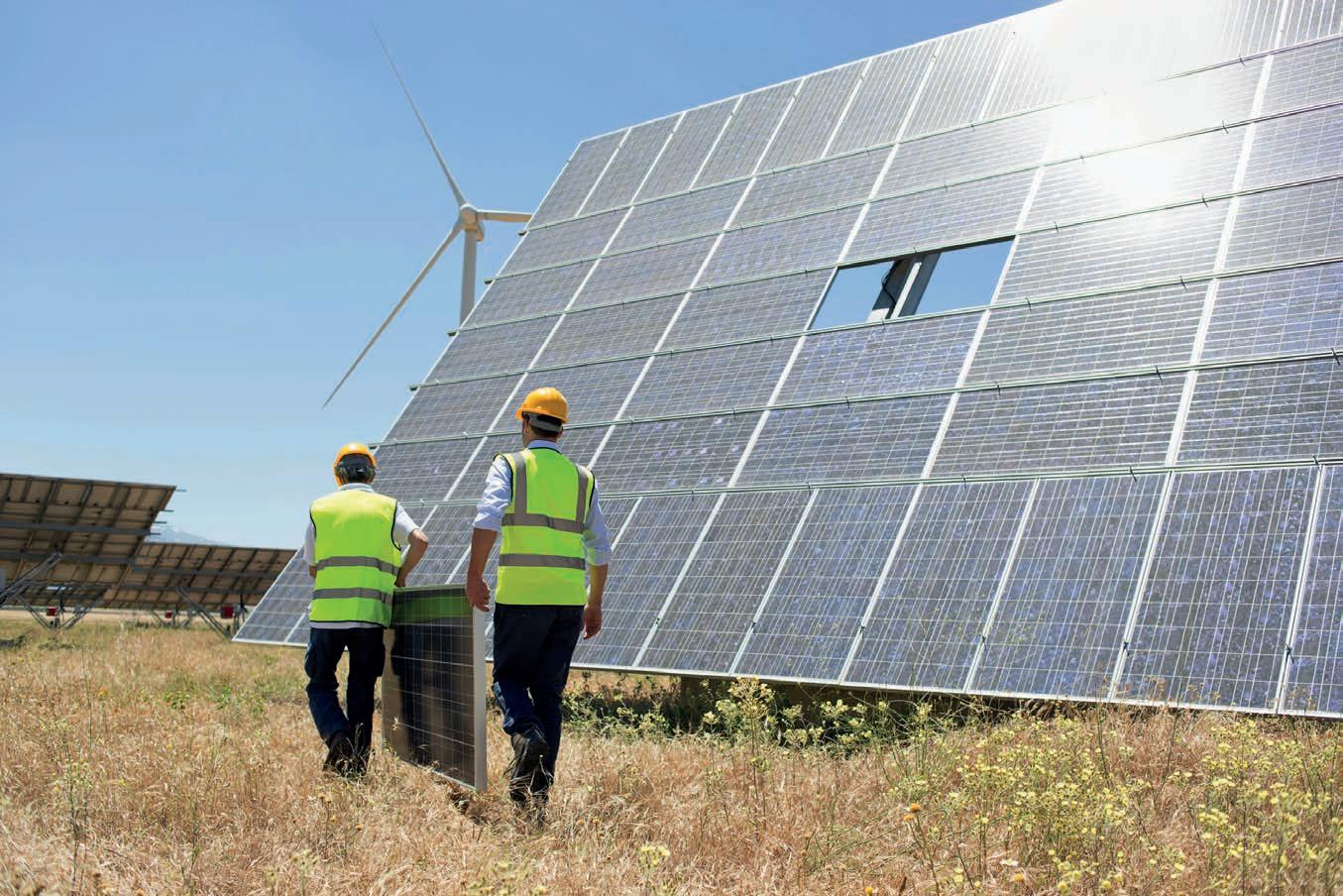
Australia’s solar boom has powered a national transformation toward clean energy – but behind the fields of photovoltaic panels lies a growing challenge.
By 2050, more than one million tonnes of end-of-life solar panels could enter Australia’s waste stream. Now, policymakers, manufacturers and researchers are looking to turn that looming problem into an opportunity for circular innovation.
The Federal Government has set ambitious goals for sustainability in solar, aiming for 82 per cent renewable electricity by 2030 and net-zero emissions by 2050. However, the success of solar uptake has created a parallel challenge: what happens when today’s panels reach the end of their lifecycle? And how do we keep them from landfill?
This year, the cumulative volume of endof-life solar panels in Australia is projected to reach 280,000 tonnes, according to the Australian Energy Council.
“Those panels are full of precious and critical minerals, including silver, copper and silicon,” said Professor Akbar Rhamdhani from Swinburne University of Technology.
The value locked within these panels, particularly high-purity silicon, could be the foundation for a new domestic recycling industry capable of feeding back into the manufacturing supply chain.
“Silicon is a critical mineral, and we need very high-grade versions of it to produce more solar panels, along with many other technologies,” Rhamdhani said.
At Swinburne University of Technology, researchers are developing breakthrough methods to recover and reuse those materials with minimal environmental impact.
For Rhamdhani, the solution is clear: Recycle them to make new panels.
“In a traditional process, we use carbon and extremely high temperatures to reduce raw silica to metallurgical-grade silicon. It is very energy-intensive and takes a lot of time. Recycling can bypass this,” he said.
Professor Rhamdhani’s team is working on “a process that is quite clean, with a no or very low carbon footprint.” Their research program – the first of its kind in the world – brings together international experts to develop zero-carbon processes for recovering high-purity silicon and other valuable materials from end-of-life solar panels.
“This research strengthens the foundation for a sustainable and circular solar industry,” adds Doctor Bintang Nuraeni, Researcher on the project at Swinburne.
For recovering high-purity silicon and other valuable materials from end-of-life solar panels, strengthening the foundation for a sustainable and circular solar industry is key, according to the Australian Renewable Energy Agency.
Although Federal initiatives are beginning to recognise that recycling is the next frontier for renewables, there is still some work to do.
In March 2024, Prime Minister Anthony Albanese launched the Solar Sunshot Program, a $1 billion initiative to supercharge Australia’s ambition to become a renewable energy superpower at home and abroad.
While Sunshot focuses on expanding domestic panel manufacturing, the program is anticipated to eventually address future waste generated by the growth in solar panel use.
The program’s focus on encouraging local capability aims to give industry greater confidence for further investment in the recycling infrastructure that will eventually be essential.
The Swinburne-led consortium extends beyond Australia’s borders.
Partners include IIT Hyderabad and Indonesia’s National Research and Innovation Agency, supported by local industry such as Greenko. Together they are developing advanced methods, including electro-slag refining, to improve the quality of recovered materials and scale regional recycling capability.
“Recycling end-of-life panels can reduce import dependency, cut production costs and lower environmental impact,” said Ashok Kamaraj, Assistant Professor at IIT Hyderabad.
“Establishing silicon recovery infrastructure will support a circular economy, strengthen domestic manufacturing, and aligns with India’s cleanenergy goals.”
Widi Astut, Professor at IIT Hyderabad based in Indonesia sees broader potential.
“Regionally, this initiative positions Indonesia as a hub for PV recycling technology in Southeast Asia, strengthening Indo-Pacific collaboration in renewable material recovery.”
As Gadjah Mada University’s Professor Himawan Tri Bayu Murti Petrus explained, collaboration grants access to frontier knowledge and advanced instrumentation that no single country can achieve alone.
Or as Sadoway Staff Scientist Dr Matthew Humbert puts it: “There is no formula or recipe for generating creative solutions, so we must cast our net as wide as possible. This means bringing together researchers from diverse backgrounds into a collaboration where all are valued,” he said.
Toward a circular solar future
Globally, the solar PV waste stream could reach 78 million tonnes by 2050. The technologies being developed through partnerships like Swinburne’s show that a circular economy for solar is not just possible – it is within reach.
“It is very exciting to be working on such a big project. We have the potential of making significant changes in the industry, and we’re up to the challenge,” Rhamdhani said.
Delivering expert electrical solutions for renewable infrastructure –from Solar PV and BESS to Wind, Hydrogen, VPPs, and next-gen energy systems.
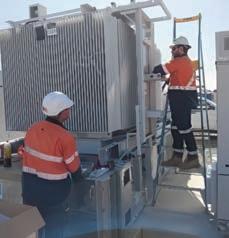
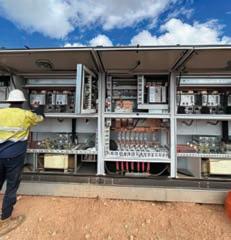
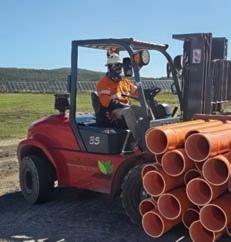
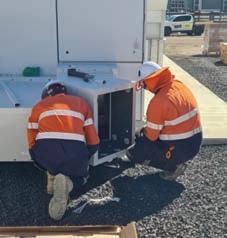
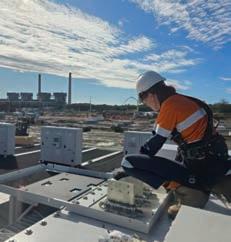
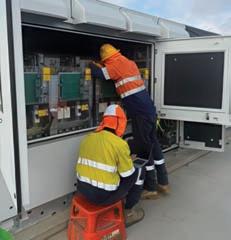
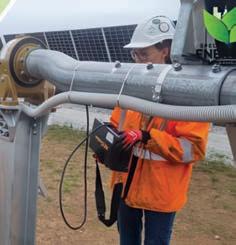
New work has progressed on HumeLink, one of Australia’s most significant transmission infrastructure projects – a $5 billion network upgrade that will connect Snowy Hydro 2.0 and multiple Renewable Energy Zones (REZs) into the National Electricity Market.
Once fully complete, HumeLink will form a critical section of the east-coast transmission backbone, linking generation from South Australia through to northern Queensland and unlocking gigawatts of renewable capacity for Australian homes and businesses.
The joint venture between UGL and CPB Contractors has been delivering the western section of the project, achieving several key milestones in recent months, including:
• Foundation piling for the first transmission tower – establishing the platform for 140 kilometres of new high-voltage lines.
• Construction of access infrastructure –with around 30 access points built and 70 kilometres of new or upgraded access tracks completed to support delivery.
• E stablishment of materials laydown areas – at Gugaa, Ellerslie and near Batlow to streamline tower assembly and logistics.
• Completion of the Tarcutta worker accommodation camp – with the Kunama facility due for completion in November.
• Commencement of two 500 kilovolt substations — one at Maragle to enable the connection to the Snowy Hydro 2.0 grid, and another at Gugaa, which will become a central transmission hub for the Riverina region.
HumeLink is designed to support the rapid integration of renewable energy into the grid, increasing transmission capacity and reliability while reducing network congestion. It represents a major step toward meeting Australia’s 82 per cent renewable-electricity target by 2030.
With work now progressing across multiple construction fronts, Transgrid and its delivery partners are helping to build the backbone of Australia’s clean-energy future. In turn, this will create skilled regional jobs, support local suppliers, and enable the energy transition at scale.
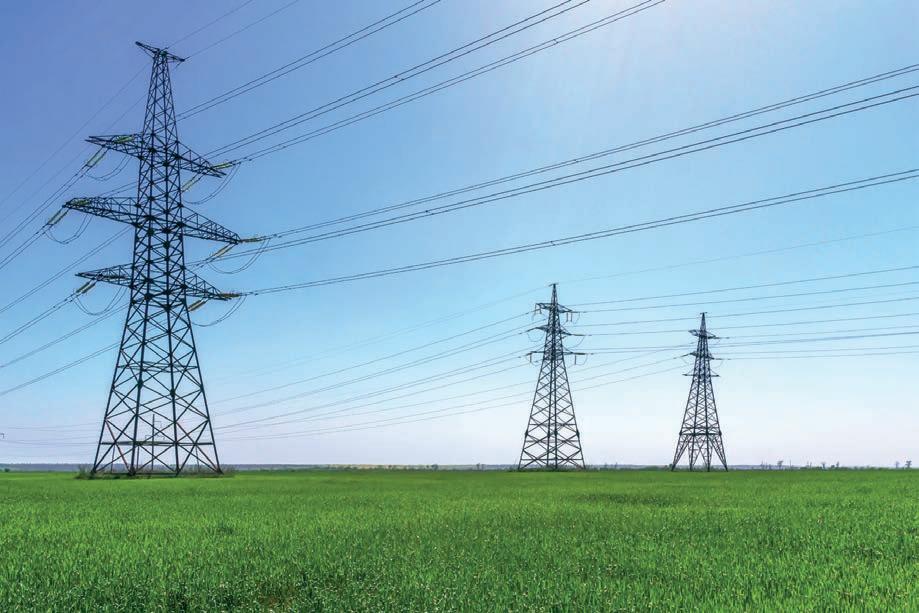
The National Electricity Market (NEM) wholesale market settings review, also known as the Nelson Review, has been handed down, outlining a number of recommendations for reforms to the current industry and market.
This marks the biggest review of the electricity market since the Finkel Review in 2017.
The review, chaired by Associate Professor Tim Nelson, has highlighted recommendations for reforms to the current market settings to help build investment certainty for large-scale renewable clean energy projects, support essential systems services to deliver reliability in the grid and reward consumer participation from home solar and battery systems.
The report aims to prepare recommendations and a roadmap, to support the development and staged implementation of reforms to the NEM wholesale market to support the achievement of Australia’s National Electricity Objectives.
These objectives include the delivery of reliable, competitively priced, safe and secure electricity services, supporting the long-term interests of consumers and prosperity of Australia’s economy.
The Clean Energy Council (CEC) has tabled its submission regarding the report, calling for further analysis and refinement, particularly around design work on Electricity Services Entry Mechanisms (ESEM) and impacts on competition.
The CEC is also calling for more support for longer-term and developing sectors, further engagement with industry on the role of financial derivative markets and specific contract designs.
The CEC is also calling on market development to deliver least-cost essential system services and deliver a reliable system efficiently.
Additional analysis, supported by CEC’s member engagement also points towards a desire for the continuation of working groups and the establishment of new technical working groups to build out the detail needed for final recommendations, with CEC saying transparency and consultation with industry and consumer bodies will be critical for adoption.
An Early Contractor Involvement (ECI) agreement has been signed by Ark Energy with Elecnor Australia, for the delivery of early works on the Richmond Valley Solar and Battery Energy Storage System project, in New South Wales. The Richmond Valley Solar and
Battery Energy Storage System involves a solar farm with a generation capacity of up to 500 megawatts (MW) and a long-duration Battery Energy Storage System with a power capacity of 275 MW and energy storage capacity of up to 2200 MW over eight hours. The BESS
will use LFP (Lithium-iron phosphate technology.
It is expected to play a key role in supporting New South Wales’ transition to renewable energy.
The scope of the agreement includes site studies, detailed engineering design for the solar farm, balance of plant design for the battery energy storage system, structural certification, management plans and permitting support.
The signing of the agreement will enable commencement on detailed engineering, interface planning and overall project delivery timelines.
The work is expected to be completed by Q2 2026, ahead of execution of the full EPC (Engineering, Procurement, and Construction) contract.
The Richmond Valley Solar and Battery Energy Storage System is listed in the Australian Government’s inaugural National Renewable Energy Priority List and was awarded a Long-Term Energy Service Agreement (LTESA) in 2023.
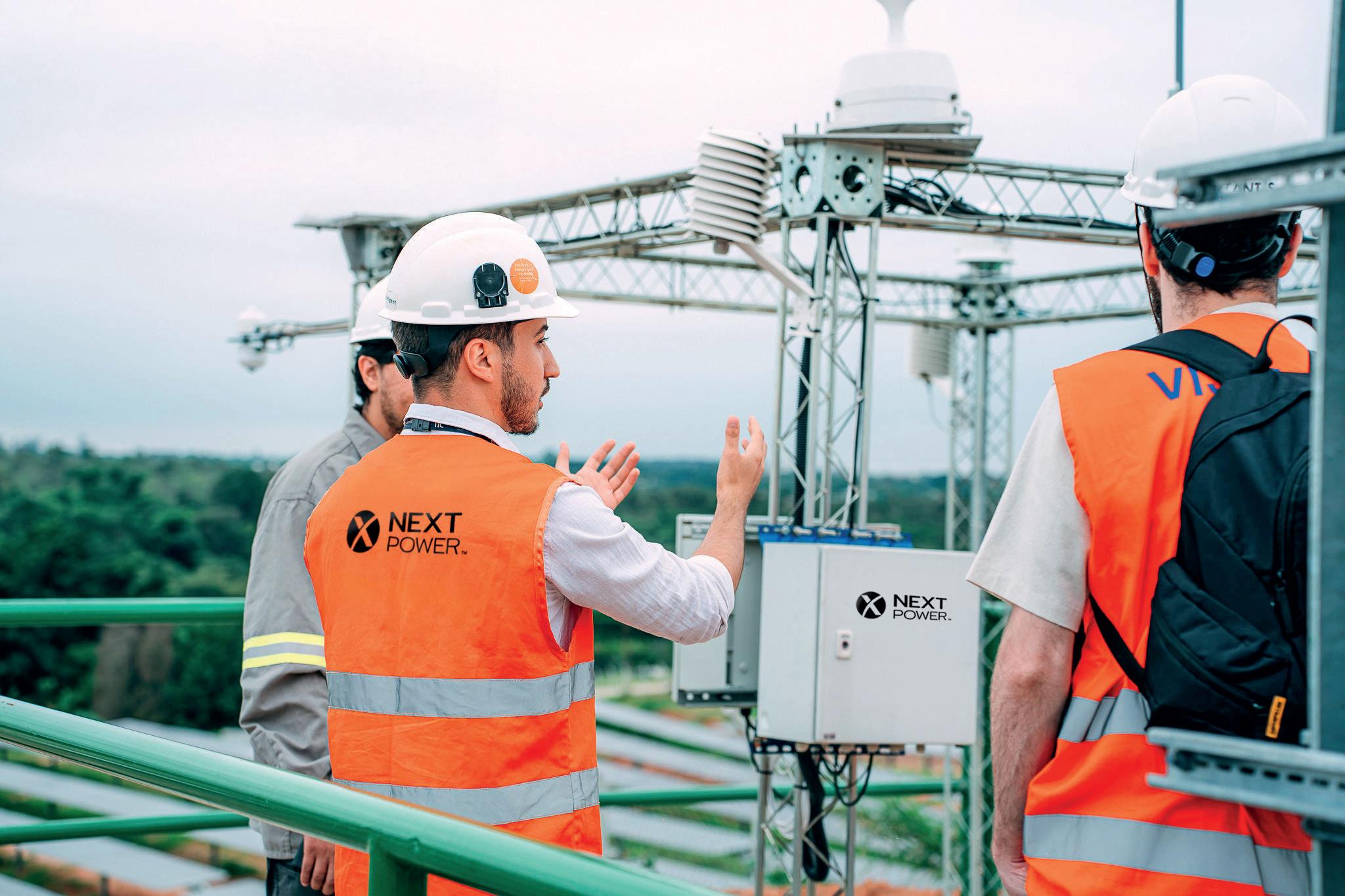
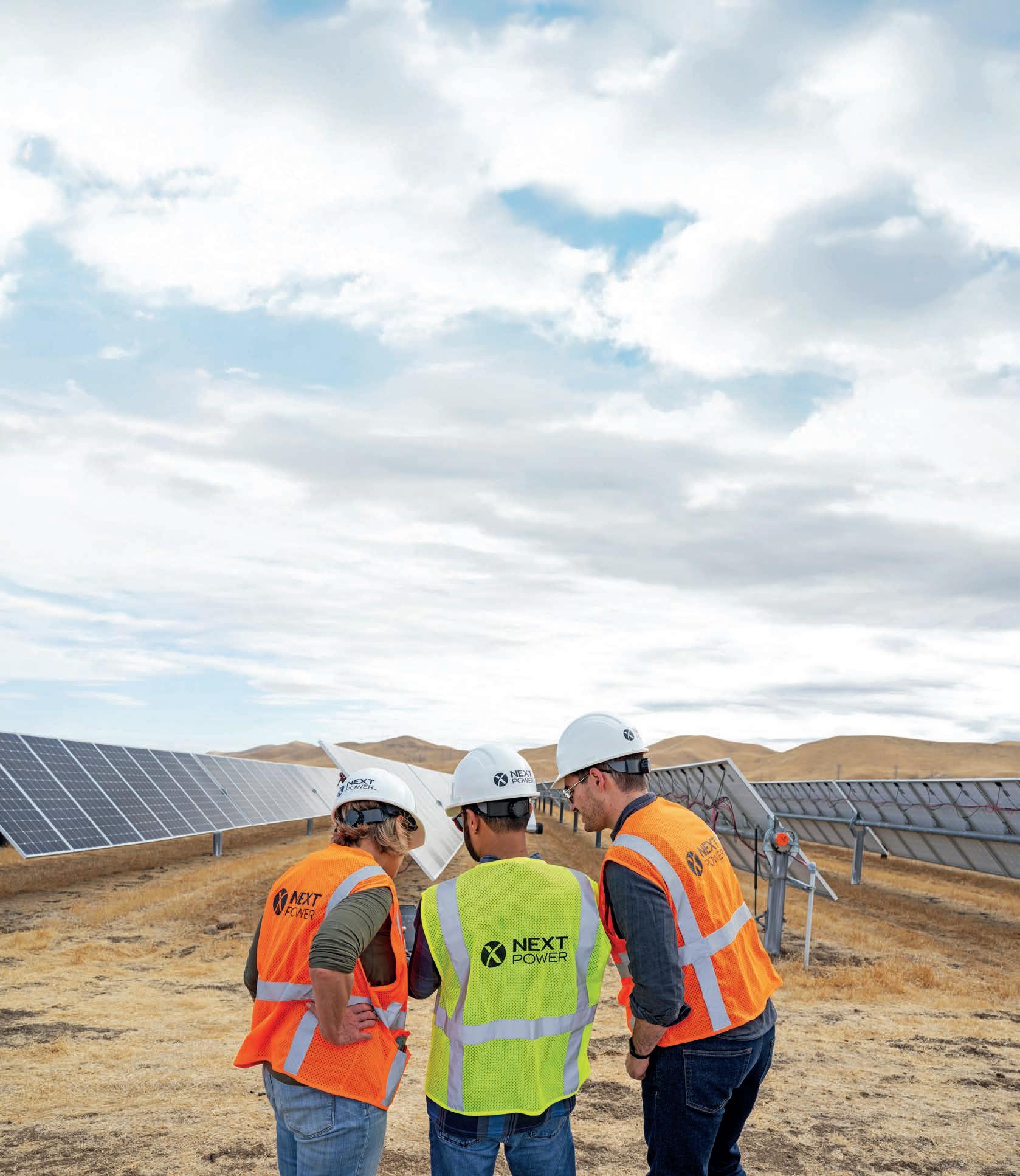
Nextracker becomes Nextpower.
In a global energy landscape defined by accelerating demand, shifting geopolitics and the rapid emergence of artificial intelligence, solar tracking giant Nextracker has evolved into Nextpower. The rebrand marks not just a new name, but also a strategic repositioning of one of the world’s most influential clean energy companies, reflecting the convergence of technology, data and energy systems at a moment when electrification is increasing faster than at any point in modern history.
Founded in 2013, Nextracker – now Nextpower – designs, engineers and supplies technology for utility-scale solar power plants. Headquartered in California in the United States, the company’s reach and innovations in renewable energy has spread across Australasia. This is backed by the recent launch of its NX Earth Truss foundation system in Australia, receiving Federal Government support via the Australian Renewable Energy Agency.
Dan Shugar, Founder and Chief Executive Officer – Nextpower is proud to be leading this new era.
“We are evolving from a tracker company
into a full technology platform, designed to help power the backbone of the global grid right now,” he says.
The statement captures the urgency and ambition behind the transformation. The company, which has led the global solar tracker market for a decade, is now looking well beyond mechanical tracking systems. Nextpower now serves as an integrated technology platform that spans hardware, software and services, connecting the components of modern utility-scale solar generation into intelligent, responsive and resilient power systems.
The timing is not accidental. The world is entering what Shugar calls an “energy demand super cycle.” Electrification across transport, manufacturing and industry, together with the exponential power consumption of data centres and artificial intelligence, is reshaping the global power mix.
“Global electricity demand is surging,” Shugar says.
“Artificial intelligence, electrification and data centres are accelerating faster than anyone predicted. Nextpower is built for this era, connecting intelligent systems that can deliver reliable power at the speed and scale the world now requires.”
According to the International Energy Agency, electricity use from data centres alone could double by 2026. That surge places pressure on nations to accelerate new generation capacity. While nuclear and gas face long lead times and permitting hurdles, solar remains the clean energy technology that can be deployed at scale with speed.
Nextpower has positioned itself to occupy this space, acknowledging that solar is no longer a peripheral renewable technology, but now core infrastructure that requires integration, intelligence and reliability.
For over a decade, Nextracker has shipped more than 150 gigawatts (GW) of tracker systems worldwide. Its technology is used on some of the largest and most complex solar projects on record.
But Shugar and his team have long argued
that solar generation must be viewed as a complete system, not a collection of parts.
“Horizon-XTR was our first step in terrain-following tracker systems,” Shugar says. “Now, every layer of our technology works together, converting sunlight into reliable, low-cost, round-the-clock electricity.”
The Nextpower platform extends that system-level philosophy. It integrates trackers, module frames, foundations, electrical balance of system (eBOS), robotics and power electronics. It also brings together digital tools such as TrueCapture and NX Navigator, which optimise energy yield and system performance in real time. The goal is to design and operate solar plants as cohesive, data-driven assets that adapt to the environment, maximise uptime and improve return on investment across their lifespan.
A core principle in the transition is the shift from supplier to partner.
“Our customers have made it clear that they want integrated systems and better control of their generation assets. They want a solutions partner who can apply innovation and optimisation across the entire lifespan of a project,” Shugar says.
This collaborative approach has shaped the company’s success in regions like
Australia, where it has supported more than 7.4 GW of deployments and adapted global technology to the unique demands of local environments and grid dynamics.
If the digital ecosystem is the brain of the Nextpower platform, manufacturing is its backbone. Over recent years, the company has invested in distributed supply chains designed to support localisation, reduce emissions and strengthen resilience.
The company has built manufacturing hubs across North America, India, Latin America and Australia. In Australia, partnerships with BlueScope and Orrcon Steel have delivered locally made torque tubes and structural components, which have strengthened domestic capability.
“Energy generation requires strategic infrastructure. That means building secure, local and low-carbon supply chains is essential,” says Yves Figuerola, Vice President of Supply Chain at Nextpower.
Nextpower’s engineering teams are also expanding innovation into foundations and AgriPV. Faster and more precise foundation systems reduce installation times and material requirements, while
AgriPV allows for dual-use of land, meaning the use of land for both solar energy and agriculture simultaneously.
“We are extending intelligence right down to the ground. Smarter foundations and adaptive designs help deliver clean energy more efficiently and sustainably,” says James Butcher, Director, Engineering Services at Nextpower Australia.
Referred to by Shugar as the “age of electro tech,” the convergence of solar, storage and digital controls will define the next decade of global power. Nextpower’s integrated platform positions the company to lead that shift, connecting hardware, software and data to create smarter, more resilient systems.
“This is about readiness. Nextpower connects technology, manufacturing and innovation to help our customers deliver reliable, affordable and scalable clean power,” Shugar says.
With solar as the foundational pillar of global energy, the Nextpower rebrand signals a broader truth: “The companies building tomorrow’s power systems are no longer renewable specialists. They are the new infrastructure players, reshaping how electricity is generated, managed and delivered,” Shugar adds.
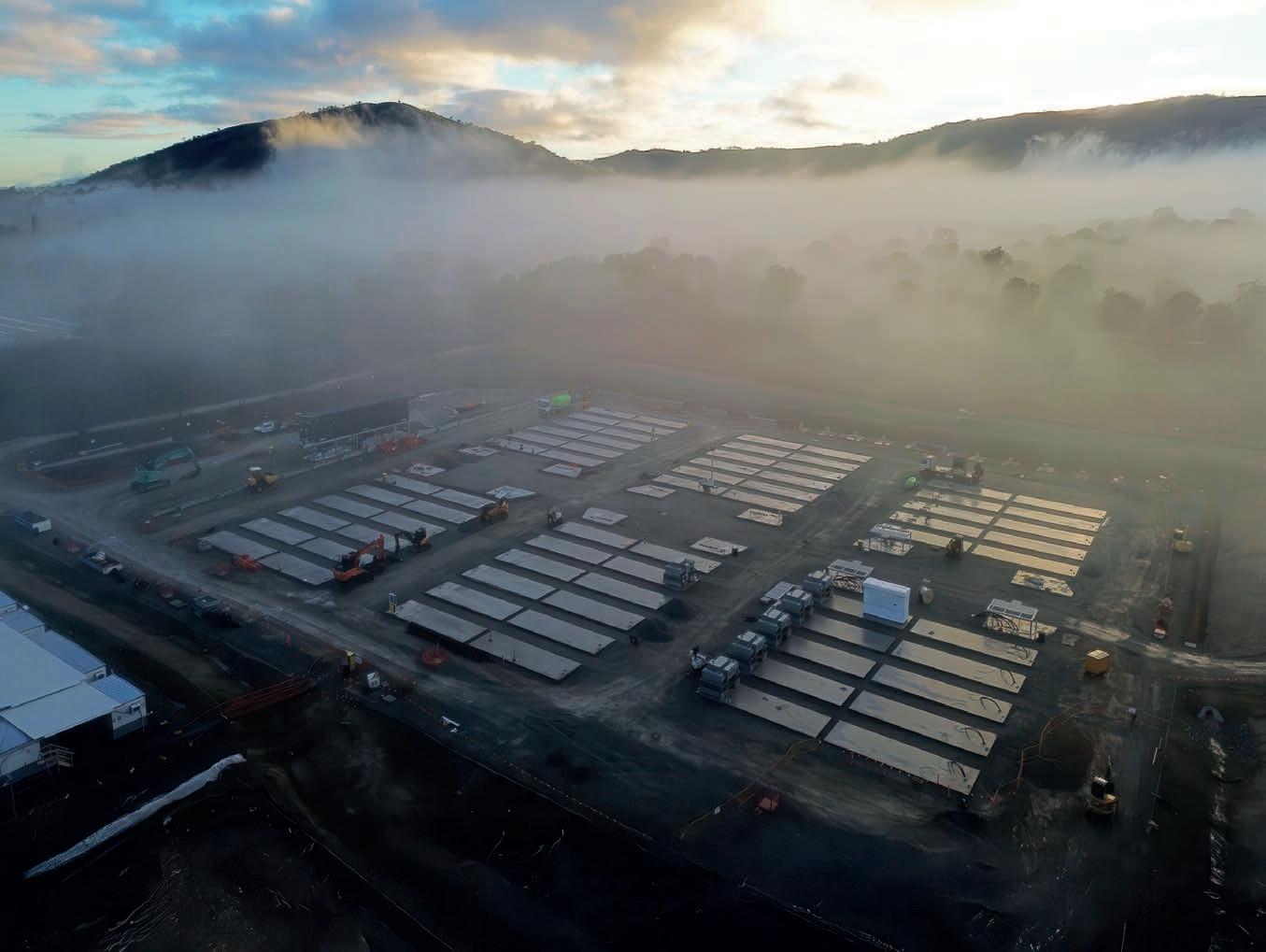
A landmark battery system, capable of supplying a third of Canberra’s peak power, is redefining renewable energy collaboration through engineering excellence, community care and close cooperation.
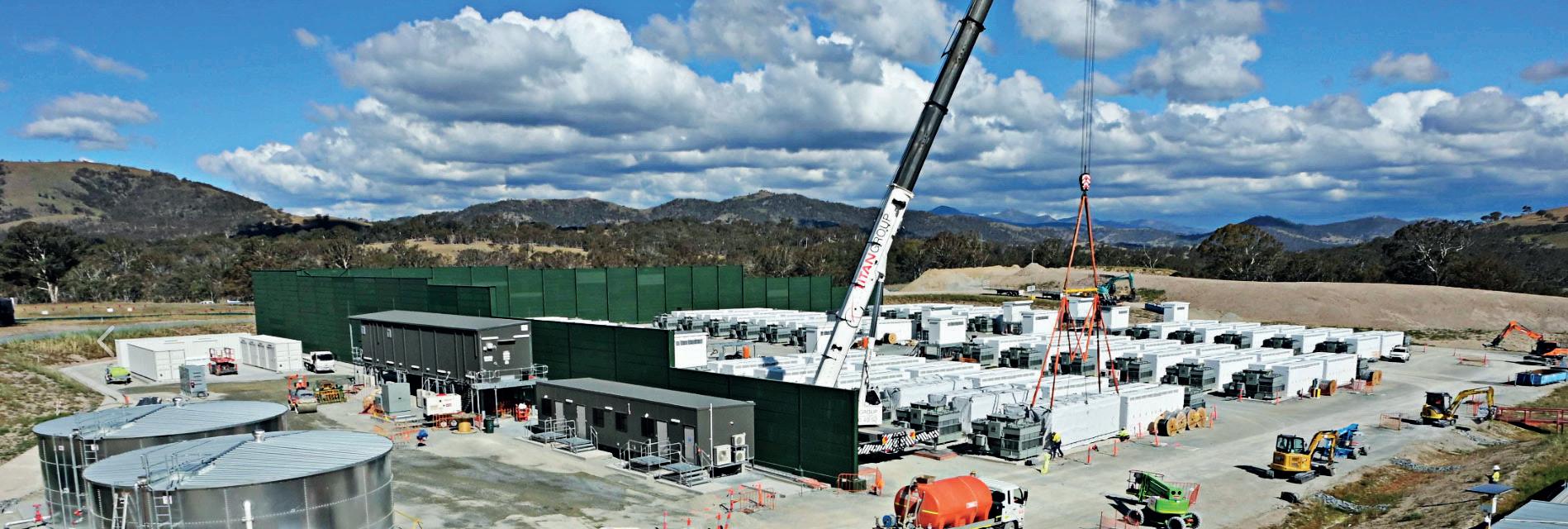
On the outskirts of Canberra, a nine-metre-high green wall stands as both a visual landmark and a symbol of cooperation. Behind it hums one of Australia’s most ambitious renewable energy assets – a 250-megawatt (MW) / 500 MWh (megawatt-hour) battery energy storage system (BESS) capable of supplying roughly one-third of the Australian Capital Territory’s (ACT) power needs during peak periods.
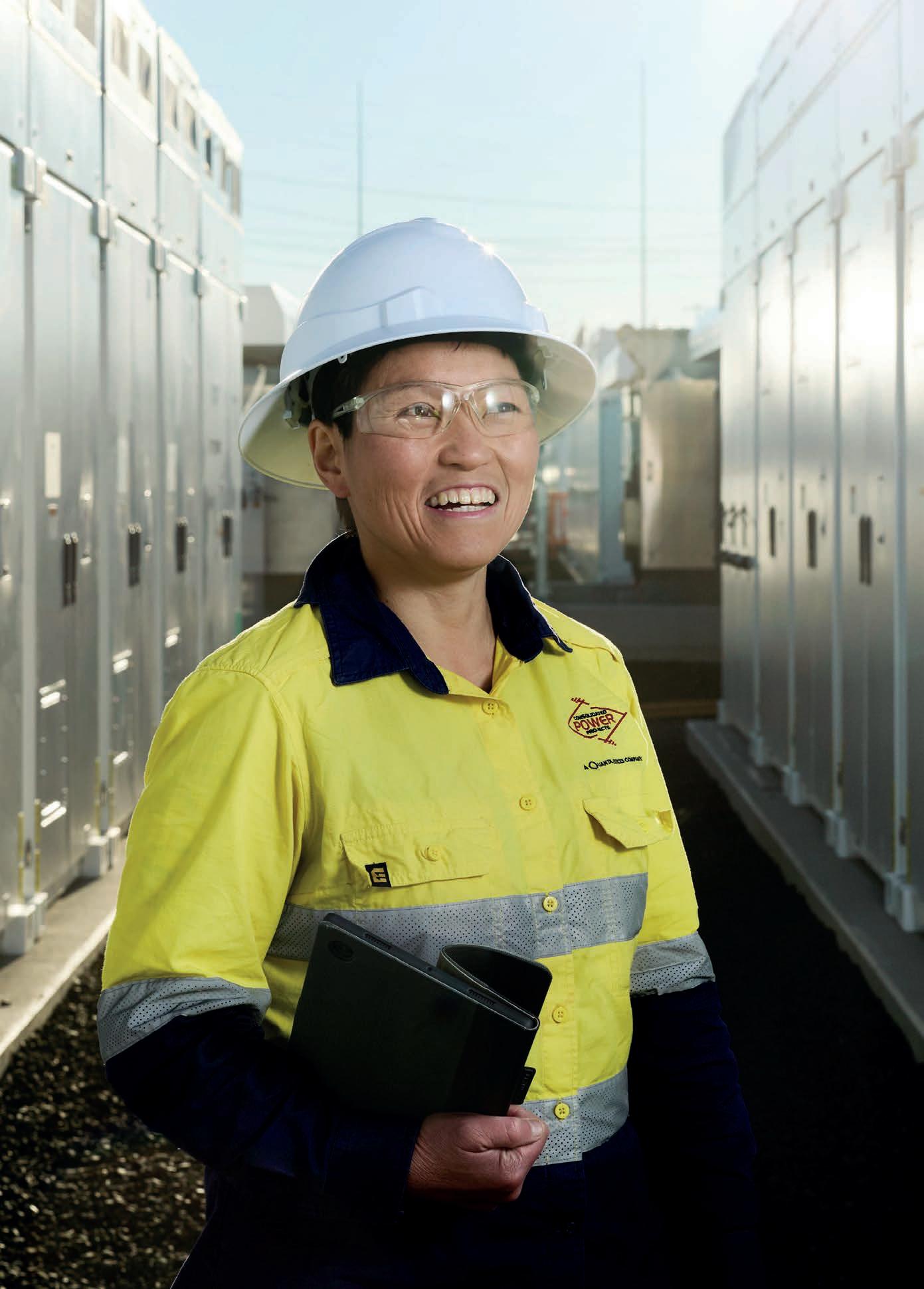
The project, led by Eku Energy with Consolidated Power Projects Australia Pty Ltd (CPP) as principal delivery partner, is set to become the largest energy storage installation ever built in the ACT.
It is also a textbook example of communication, safety and innovation, demonstrating how well-aligned project partners can accelerate the energy transition without compromising community expectations.
“This project really puts rubber to the road for the ACT. It’s not just about policy rhetoric, it’s a tangible example of what net-zero ambitions look like when they come to life on the ground,” says Tom Best, Chief Operating Officer at Eku Energy.
For both teams, success begins with respect for place. One of the project’s
most distinctive features, a nine-metrehigh acoustic wall, was conceived not for grandeur, but for neighbourliness.
“What is unique here is the sheer scale,” says James Bolton, Project Manager at CPP.
“Most highway noise barriers are around five metres high. Ours reaches nine metres. It has been designed to minimise even the
faint hum of battery-cooling fans during the quiet overnight hours,” Bolton adds.
The wall’s deep-green colour palette was selected in consultation with local council planners to blend with the rural surrounds. Though the system operates quietly, both companies wanted to exceed regulatory expectations.
“We take community impact seriously. The acoustic design came directly out of early planning and consultation work. It was part of making sure nearby residents experienced no disruption from a project that ultimately benefits the whole territory,” says Bjorn Schultz, Global Project Delivery Manager at Eku Energy.
Engineering through the elements
Constructing a major battery facility in Canberra’s crisp winters brought its own challenges. With sub-zero mornings and frozen ground, conventional processes had to adapt.
“It was colder than most of our regional jobs. We even had to warm the water used in our concrete pours to prevent freezing. You would see 80 guys huddled around heaters during pre-start meetings – our typical morning ritual,” Bolton says.
Cold weather was not the only test. The team also introduced advanced drone technology to improve site surveying and progress tracking.
“The drones follow automated flight paths, capturing precise imagery at set points. This allowed us to track progress, share updates with internal and external stakeholders, and reduce the need for on-foot inspections. It was efficiency and safety rolled into one,” Bolton says.
Complementing the drones, CPP used 3D LiDAR surveying to guide the delivery of heavy transformers and high-voltage equipment, ensuring millimetre accuracy onsite.
“These kinds of innovations have moved from nice-to-have to essential on projects of
this scale. They helped us deliver faster, safer, and with less environmental disturbance,” Bolton adds.
While technology enabled progress, people defined success. For both CPP and Eku Energy, the project’s collaborative structure that combined early-works involvement with open communication was key to maintaining momentum.
“We approached this as partners from day one,” says Schultz.
“During the early-works phase, we were developing the design together, ironing out the details before construction kicked off. That early alignment created trust – and that trust carried through every stage of delivery,” he adds.
Bolton agrees, emphasising the value of Eku Energy’s consistent on-site presence.
“Eku struck a great balance for the clientcontractor relationship,” Bolton says.
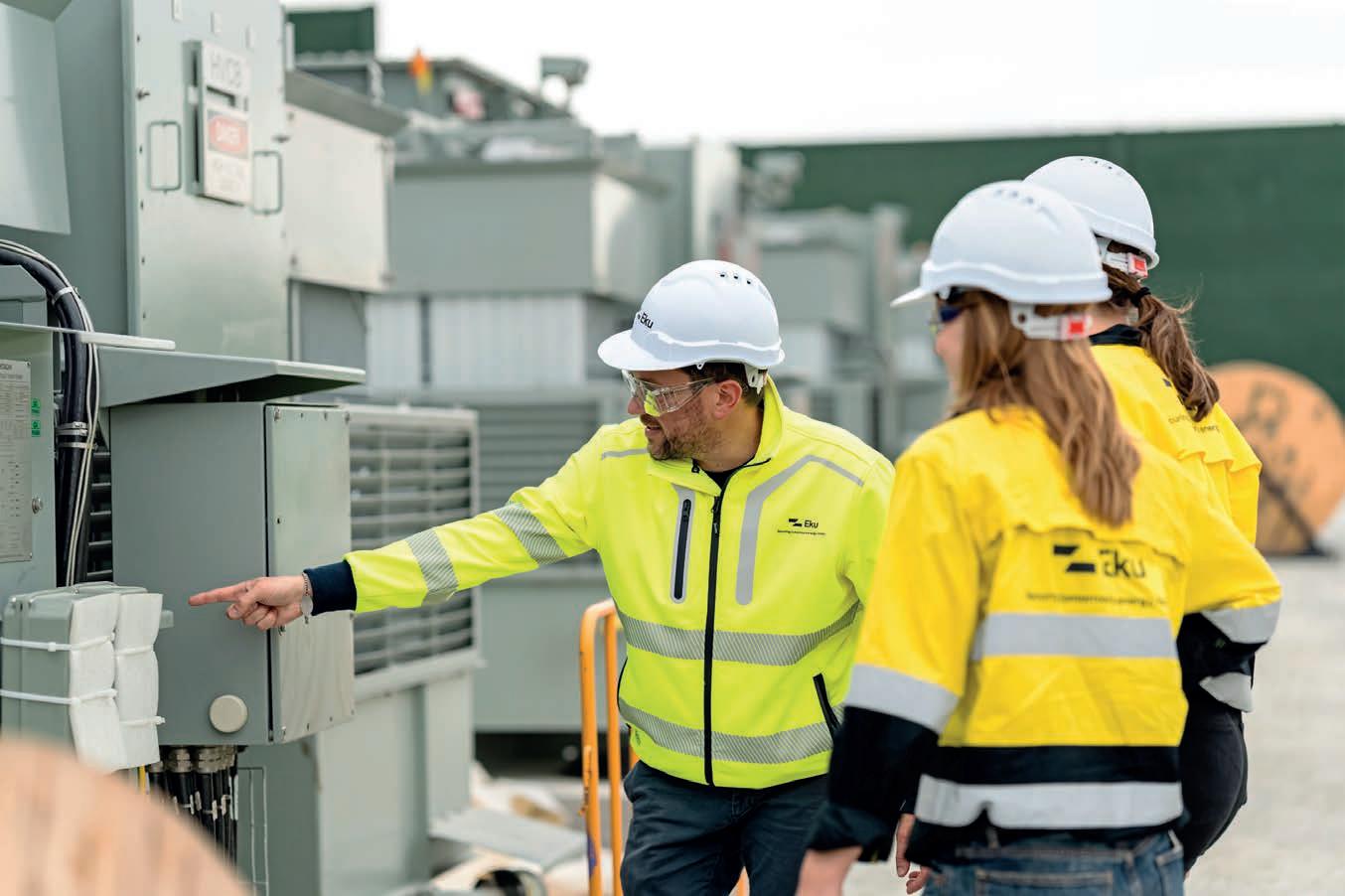
“They do not just sit in a distant office, but they also do not micromanage either. Their team visits regularly, brings guests through the site, and helps us solve issues on the spot. It is professional but personable – exactly how collaboration should work,” Bolton adds.
The partnership has gone a full year without a single reportable safety incident, a milestone that both organisations attribute to their shared culture and disciplined communication.
“Safety is not just a metric, it is a mindset, driven by a genuine joint effort. Everyone here goes home safely each day, which we’re all proud of,” Schultz reflects.
Community first, always
Even as earthworks and heavy machinery transformed the site, surrounding residents experienced little change in daily life, by design.
“Community consultation started early and never stopped,” says Tom Best, Chief Operating Officer at Eku Energy.
“We have kept lines of communication open so locals know what’s happening, when and why,” he adds.
As part of its community-benefit commitments, Eku Energy established a grant program supporting community initiatives across Canberra.
The program is called Powering Big Dreams and channels project benefits directly into local entities; including, notfor-profits, charities, environmental groups, and similar services that offer community support and empowerment. This ensures energy transition delivers social value alongside economic and environmental returns.
“The ACT Government have made it clear that clean energy should create shared prosperity. We are proud that this project reflects that vision, not only through jobs and emissions reduction, but through tangible investment in the community,” Best explains.
CPP’s national footprint means many of its crews are seasoned veterans of regional construction.
Bolton explains that experience shaped the project’s onsite culture.
“There is a family feel onsite. A lot of our site team have been with CPP for years, and they bring newer local workers into that culture. It is a mix of regional pride and professional discipline,” Bolton says.
He credits the strong work ethic of regional tradespeople and the continuity of experienced supervisors for keeping morale and productivity high through the colder months.
“They really care about what they build. For most of them, it’s their own backyard and so they want to see it done right,” Bolton adds.
At full operation, the 250 MW / / 500 MWh system will store surplus renewable power from the ACT’s solar farms and rooftop arrays and dispatch it during evening peaks, helping to balance supply and demand. In doing so, it directly advances the ACT’s
target of achieving net-zero by 2045.
“The system acts as a reliability anchor. It soaks up excess renewable generation (those green electrons) and releases them when the grid needs it most. This strengthens stability without adding emissions,” Best says.
Bolton agrees that battery storage represents the next frontier in Australia’s renewable integration.
“Batteries are enabling technology. They make more wind and solar viable by bridging the gap between generation and use. The batteries do not just act as storage, they enable flexibility and are future-proofing the grid,” he says.
With construction milestones being reached and commissioning on the horizon, both companies are already reflecting on what comes next.
“Every project teaches you something new,” Bolton says.
“We have solved challenges here that will make future projects even smoother. The key
takeaway is how effective joint problem-solving can be when trust is established early,” he adds.
For Schultz, the focus is on continuous collaboration and innovation.
“We are already planning the next wave of projects with CPP. This one proved that we could deliver large-scale infrastructure safely, efficiently and with genuine community engagement. The next challenge is scaling that model,” Schultz says.
Both agree that the legacy of Canberra’s flagship battery will extend far beyond its physical footprint.
“For us, it is about demonstrating that the transition to renewables can be orderly, safe and beneficial for everyone. We have shown that with the right partners, you can build big and still build responsibly,” Best says.
The promise of power stored, and shared
As Australia’s appetite for electricity grows – fuelled by data centres, electrification and industry decarbonisation – projects like the Williamsdale BESS will play an increasingly
vital role.
The Williamsdale BESS is not just a technical achievement, it is a statement about what coordinated, forwardlooking energy development looks like.
“The Williamsdale BESS would not have been possible without the Australian National University’s Battery Storage and Grid Integration program – a collaboration between science and academia, government and the private sector to support the ACT energy transition,” Schultz says.
“Going green does not mean using less power, it means using it smarter. Batteries like this are the bridge between ambition and action,” Best concludes.
With its blend of engineering ingenuity, community focus and collaborative spirit, the ACT’s largest battery project offers a blueprint for the clean-energy decade ahead, one built not only on megawatts and megawatt-hours, but on trust and shared purpose.
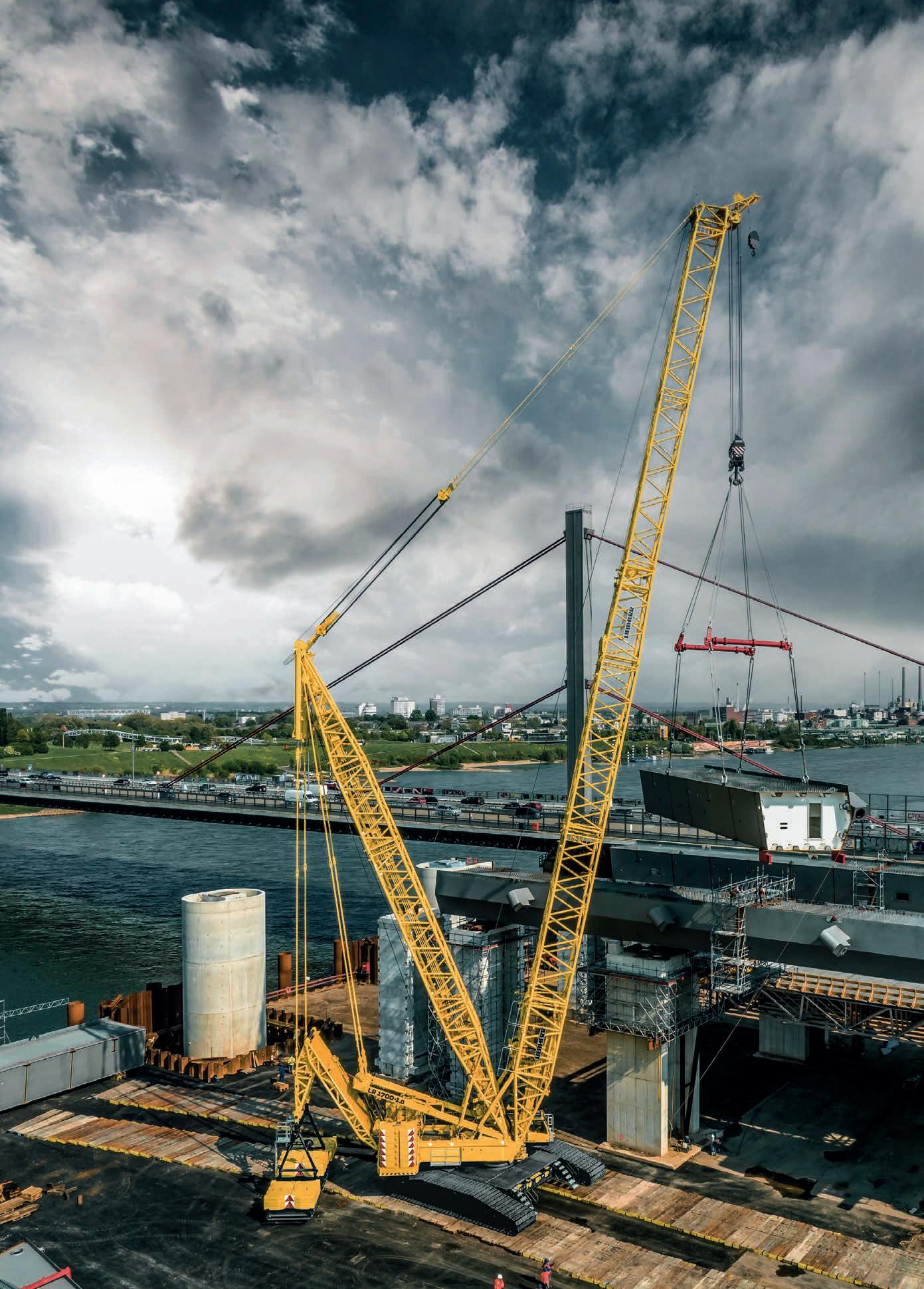
The LR 1700-1.0 combines the transport advantages of the 600-ton crawler crane class with the performance of the 750-ton class. It has the latest innovations of the Liebherr crawler crane portfolio. The high performance level is based on the statically new base machine with up to 15 percent more load capacity. The modern derrick system comes with V-frame, VarioTray and modular M-Wagon ballast trailer. Perfect for wind power, infrastructure and industry. www.liebherr.com
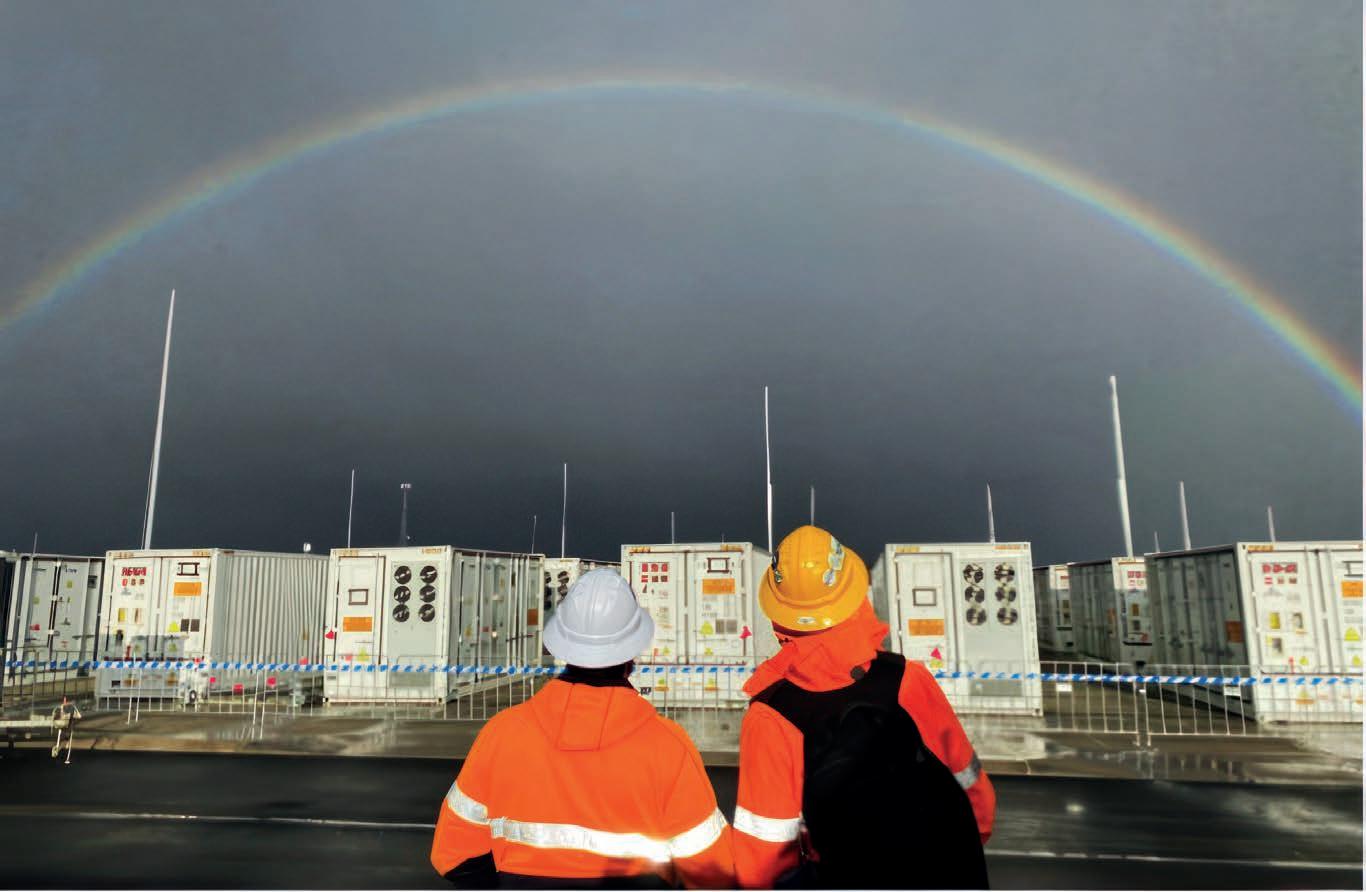
As the country races to expand its renewable capacity, Specialised Energy Solutions is closing the Engineering, Procurement and Construction (EPC) gap with a partnerfor-life model that redefines accountability across the lifecycle of clean energy assets.
Australia’s clean energy build-out is accelerating at an unprecedented pace, but for many asset owners, the challenge begins long after the ribboncutting ceremony.
Behind every gigawatt of new solar and storage capacity lies a long-term question of performance, reliability and risk. In an industry where most Engineering, Procurement and Construction (EPC) contractors step away after practical completion, one Australian company is rewriting the rulebook on lifecycle accountability.
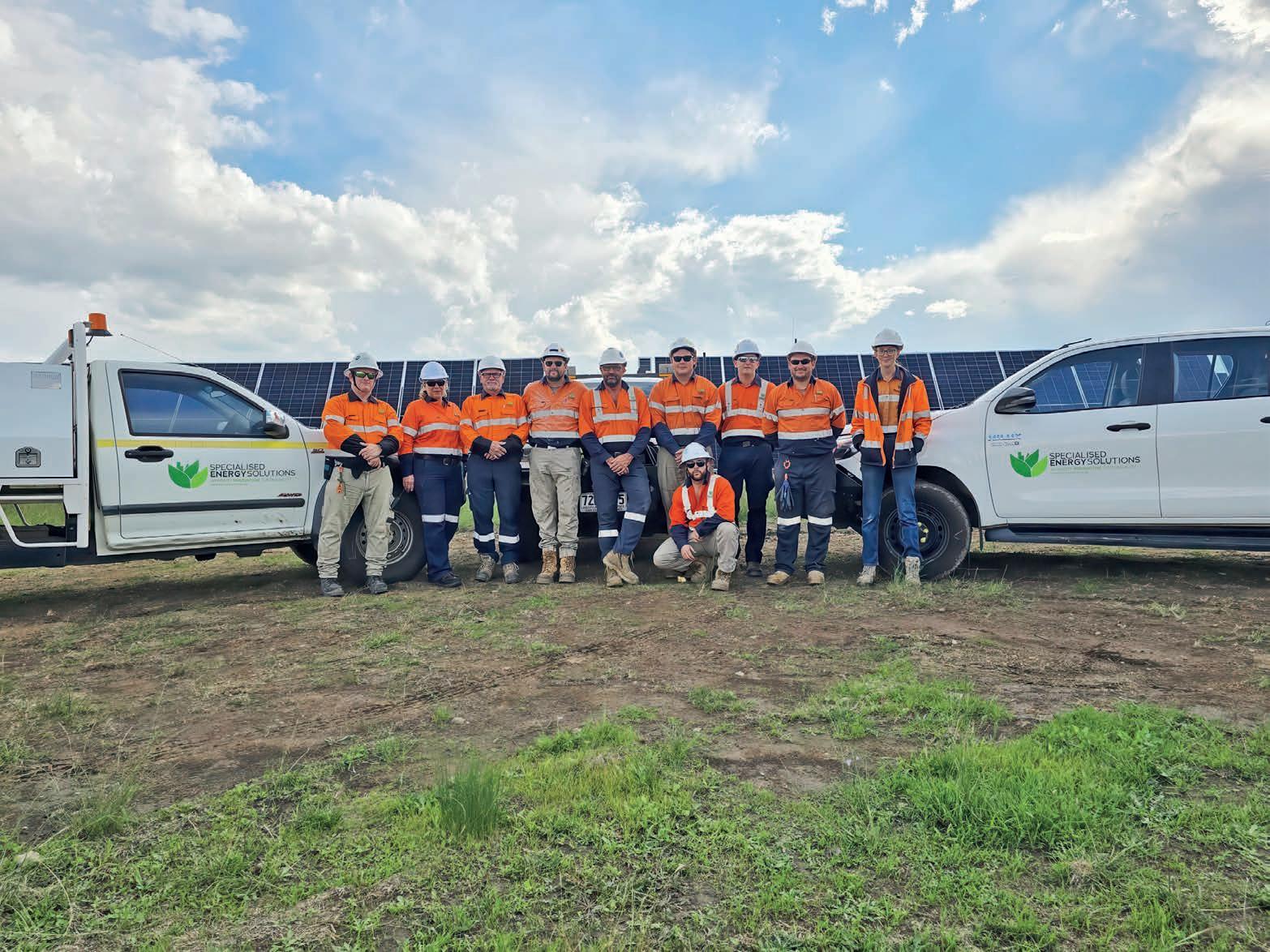
Founded in 2022, Specialised Energy Solutions (SES) has quickly earned its reputation as a trusted partner across the nation’s renewable energy sector.
Aaron Mulhall, Chief Executive Officer at SES says the young but growing organisation is built around a simple, yet radical idea that companies that design and build energy assets should also remain responsible for their long-term performance.
“Most EPCs stay for just 2.5 per cent of your asset’s life, while SES stays for 100 per cent,” says Mulhall.
“When the same partner builds, maintains, and services your asset, interests are fully aligned. Cutting corners upfront only creates future risk for SES itself. So, we invest in quality that endures.”
A three-pillar model long game SES’s integrated model combines three core business divisions: EPC, operations
and maintenance (O&M), and technical support aligned with Original Equipment Manufacturer (OEM), to deliver what the company calls its ‘three-in-one EPC approach.’
This full-spectrum of service covers every phase of a renewable energy project’s life –from civil construction and grid-connected installation to decades-long O&M.
O&M sits at the heart of SES’s offering. The team provides electrical, mechanical, civil and operational support across existing assets, with tailored contracts that extend far beyond the warranty period. Their technicians are the same specialists who helped design and install the original systems – giving asset owners continuity of knowledge and accountability rarely seen in the industry.
Complementing O&M is Technical Product Support, a division dedicated to root-cause analysis and remedial work. Drawing on SES’s background in heavyindustry and fixed-plant maintenance, the team investigates installation or product failures to identify and resolve underlying issues – not just the symptoms. This results in improved asset output, reduced downtime, and confidence that performance problems are being solved at the source.
Finally, SES’s Development Division manages the early stages of new clean energy projects, from civil construction through to turnkey mechanical and electrical installation. Together, these arms create a seamless bridge between short-term project delivery and long-term operational success.
To understand SES’s philosophy, Mulhall points to what he calls the “EPC gap.”
Traditional EPC contractors are typically engaged for the design, procurement, construction, and commissioning of a project – a process that lasts less than a year. On a utility-scale solar or Battery Energy Storage System (BESS) asset with a projected 35-year lifespan, that represents just 2.5 per cent of the journey.
Once practical completion is achieved, most EPCs hand over the keys and move on to the next project. Their contractual interest ends, leaving asset owners to navigate the remaining 97.5 per cent of the asset’s life alone.
“Too often EPCs choose equipment on lowest upfront cost, not long-term performance,” says Alba Ruiz Leon, NonExecutive Director at SES.
“They overlook equipment reliability and fail to ensure true compatibility across all moving parts over time. This leaves owners exposed to hidden ‘iceberg risks’ – where only a fraction is visible, while most remain hidden until it is too late,” she adds. These hidden risks can emerge years after the EPC departs. For BESS in particular, warranty conditions hinge on strict adherence to Original Equipment Manufacturer (OEM) maintenance schedules. Yet, few EPCs maintain Service Level Agreements (SLAs) with OEMs, forcing owners to contract manufacturers directly at high cost. Without these agreements, preventive maintenance can slip, warranties can lapse, and failures may only surface once the coverage period has expired – leaving owners to foot the bill.
Even with a generous two-year warranty
period, it still represents just 5.5 per cent of an asset’s overall life. The remaining 92 per cent is the O&M phase, where the real financial and performance risks lay.
Battery Storage: Promise and pitfalls
As the renewable transition deepens, BESS are rapidly becoming the backbone of a flexible, reliable grid. But their complexity introduces new layers of risk. Unlike solar photovoltaic (PV) modules, which are largely passive, BESS assets involve dynamic electrical, thermal and software interfaces between multiple OEMs. A minor calibration fault or firmware mismatch can cascade into system-wide failures.
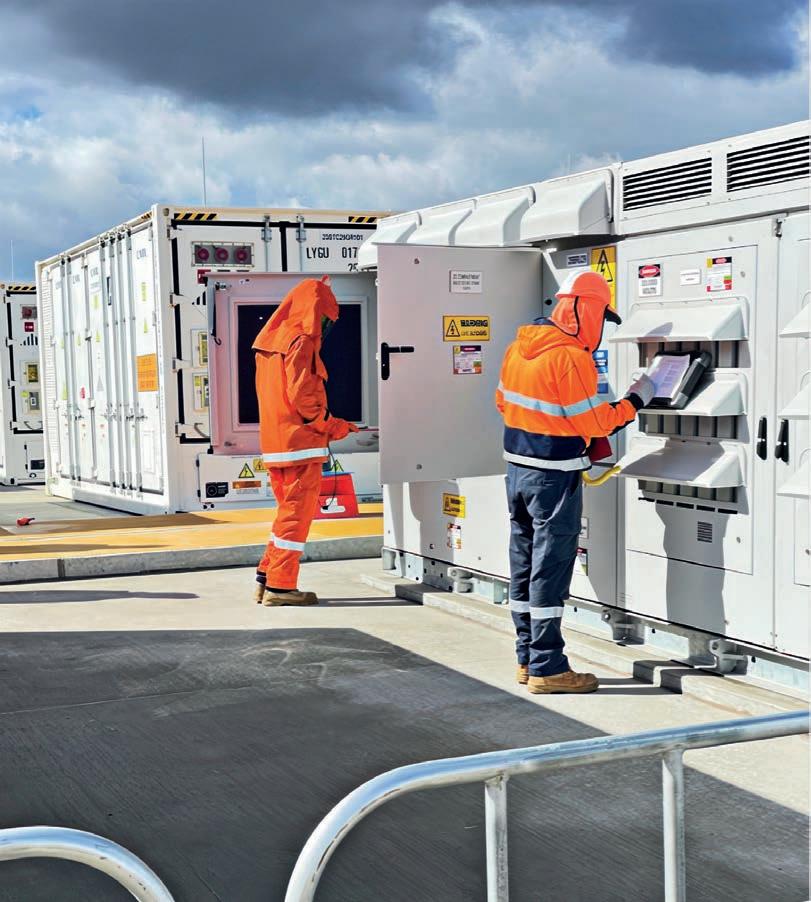
SES has aimed to position itself at the forefront of this frontier. Its engineers are trained and accredited by leading OEMs to deliver warranty-compliant maintenance and repairs, ensuring every intervention safeguards both performance and warranty status. By maintaining formal partnerships and SLAs with OEMs, SES gives asset owners confidence that their equipment will continue to operate within manufacturer specifications – without the need for costly third-party callouts.
“At SES our combined EPC, O&M, OEM
term KPIs, it’s about designing projects that can stand the test of time,” Ruiz Leon says.
For SES, staying involved beyond practical completion is not a contractual obligation – it is a strategic advantage. Because the company remains responsible for performance over the long term, it designs and constructs assets with lifecycle reliability as the starting point, not an afterthought.
This philosophy has become known internally as #theSESstandard, which is a guiding set of principles that informs every project, process and partnership.
“#theSESstandard is more than a slogan. It is the blueprint of our identity. It reflects our commitment to excellence and integrity – and it is why asset owners trust us not just to deliver projects, but to stand behind them for life,” Ruiz Leon says.
Under this ethos, SES prioritises quality at every stage – from component selection and cable management, to commissioning documentation and operator training. The organisation’s technical teams are equally adept at fault diagnosis as it is at design validation, providing a rare edge to its
From construction to custodianship
SES’s “partner-for-life” model is redefining what being an EPC means in the clean energy era. Rather than viewing project delivery as the end point, SES sees it as the beginning of a decades-long custodianship. By integrating EPC, O&M and OEM partnerships, SES reduces lifecycle risks, safeguards warranties, and maximises asset uptime. This approach delivers measurable benefits for investors and operators alike:
• Long-term reliability – Assets are engineered for maintainability, reducing future failure rates.
• Warranty security – OEM-compliant maintenance protects warranties without excessive cost.
• Operational continuity –The same partner who built the asset maintains institutional knowledge through its operational life.
• Financial certainty – Reduced downtime and fault frequency translate directly into
In less than three years, SES has expanded from a start-up to a key player across multiple renewable technology streams –solar PV, wind, and increasingly, hybrid PV and BESS systems.
Mulhall says the organisation’s fast growth reflects national demand and a cultural shift.
“Asset owners are demanding partners who can think beyond construction schedules and contract milestones,” he says.
Mulhall’s own background helps explain the organisation’s success. A seasoned electrical professional with more than 15 years of experience in utility-scale power-station installation and integration, he understands the technical and operational nuances that separate a successful project from a costly one. His team blends hands-on field experience with systems-level insight, uniting
team called in to fix them – a role that has cemented its credibility and informed its proactive approach to new builds.
“We see the full picture, that’s our goal,” explains Mulhall.
“When you are the one called to diagnose and repair other people’s failures, you learn exactly where shortcuts were taken. We apply those lessons from day one.”
The future of accountability
As Australia scales up its clean-energy capacity, the industry’s focus is shifting from megawatts installed, to megawatts sustained. Reliability, warranty integrity and operational excellence will define the next phase of the transition.
For asset owners, the takeaway is clear: the best way to reduce lifecycle risk is to partner with an EPC that stays for the whole journey. SES’s integrated model, where engineering precision meets


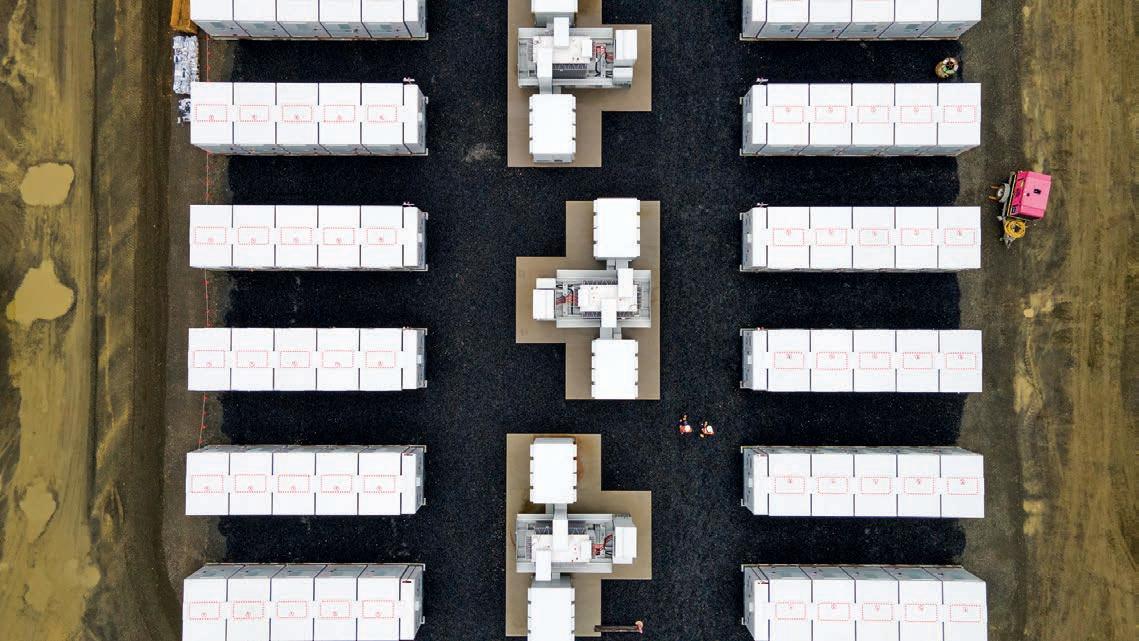
Enerven’s role in delivering the Eraring and Liddell Battery projects has highlighted the organisation’s ability to collaborate, plan and deliver on major battery energy storage technology, which is expected to benefit the nation for generations to come.
EEraring and Liddell
energy transition. The proudly South Australian company – with sites in Adelaide, Sydney, Brisbane, and Perth – delivers integrated design, construction and maintenance services across electrical, renewable-energy and telecommunications infrastructure.
“Our roots in South Australia are a core part of who we are as a business,” says Enerven CEO Richard Amato.
“From delivering the Torrens Island to the Bungama battery energy storage systems, these projects have helped build the expertise that underpin our national capability today. The lessons we’ve learned through years of local delivery are what now enable us to operate confidently and successfully across the country. Enerven’s role in shaping Australia’s future energy system is just beginning; it’s a future built on
transmission lines, substations and battery energy storage systems – the essential backbone linking modern renewable generation to the national grid.
With ambitions that reach beyond technical delivery, the organisation’s evolution from a utilities contractor into a national clean-energy partner reflects both industry change and an internal culture built on collaboration, community engagement and end-to-end capability.
Connecting energy networks to a renewable future Enerven’s roots began in building substations and transmission infrastructure for the South Australian market.
“South Australia has always been at the forefront of renewable innovation, and Enerven has grown alongside that
established the technical depth and project discipline that we now bring to large-scale projects such as Eraring and Liddell.”
To meet the national consumer demand shift from fossil fuels to distributed renewables, the organisation saw an opportunity to extend its expertise. Project Delivery Director for New South Wales and Queensland, Simon Valencia says Enerven’s distinctive DNA sets it apart.
“We have been focused on getting into the emerging markets of wind, solar and batteries, to complement our strengths in substations and lines to connect the existing network – what we do well,” Valencia says.
Those origins underpin Enerven’s claim as a “one-stop shop” – capable of designing, constructing, integrating and maintaining every component required to bring new generation online.
A true end-to-end partner
In a sector often fragmented between developers, equipment suppliers and engineering firms, Enerven’s integrated model is a rarity.
“Traditionally, a solar farm might engage one contractor to build the array, another to deliver the substation, and someone else again to connect the transmission line,” says Valencia.
“Our proposition to our clients is give us the whole lot, and we will manage the entire process for you, end to end.”
That full-service capability stems from a workforce fluent in both electrical engineering and project management.
Mechanical and electrical engineers work alongside onsite supervisors and logistics specialists to coordinate road access, heavy transport and complex commissioning schedules.
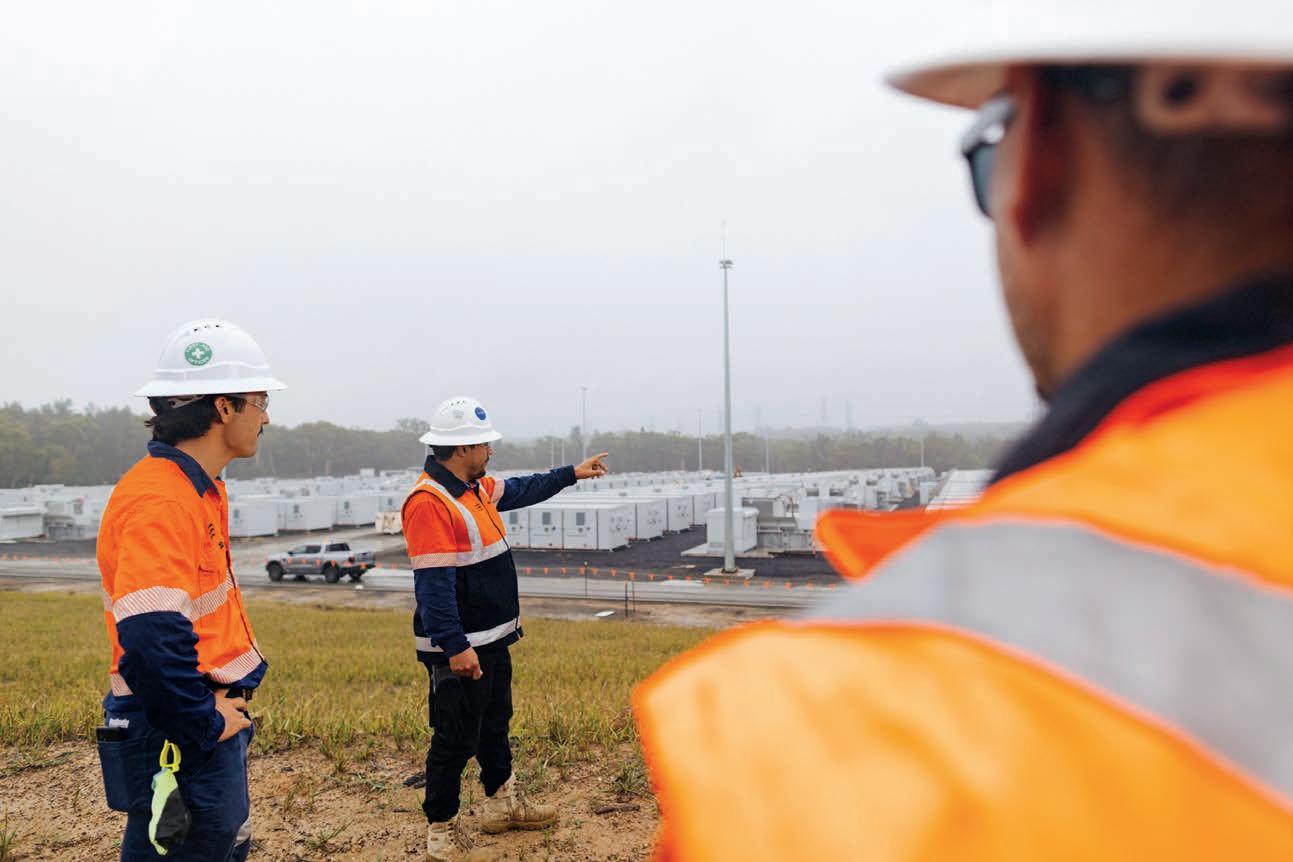
“It is really about process and control,” Valencia says.
“Our teams understand each component – the substations, the roads, the battery blocks – and how they interconnect. We capture everything in our engineering and quality-management systems so we can deliver efficiently and safely.”
The Eraring Battery Project: Scale and ambition
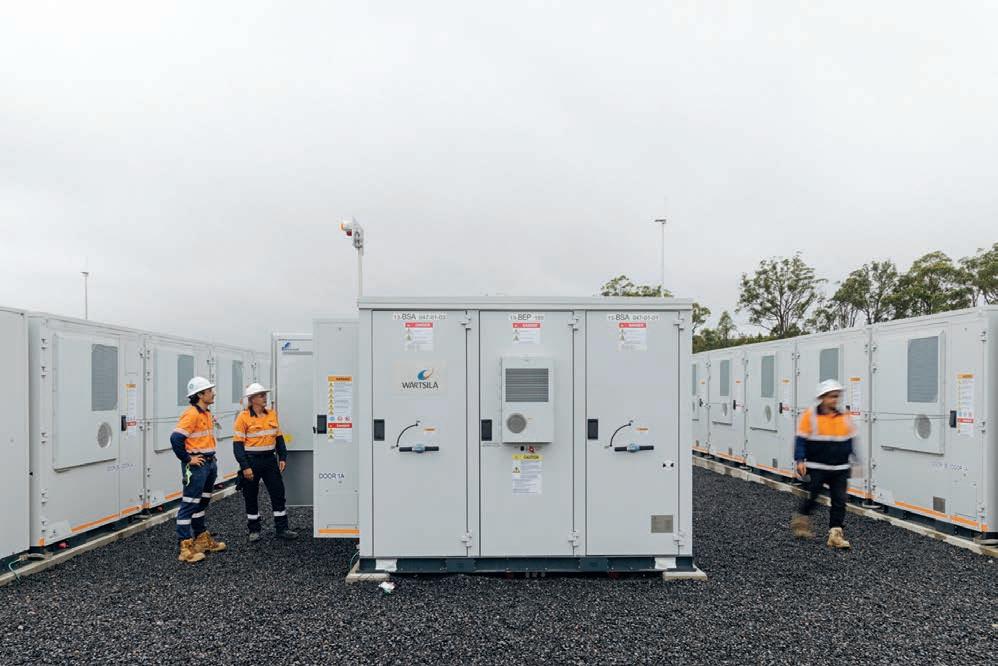
The Eraring Battery Project, beside the Eraring Power Station near Lake Macquarie in New South Wales, is a flagship project transforming the site of Australia’s largest coal-fired power station into one of the biggest batteries in the Southern Hemisphere.
“As a project manager, my first impression was just the scale of it,” says Valencia.
“The team had to prepare challenging ground, such as dug up old car bodies and other remnants from decades past and turn it into a massive pad covered in battery banks.”
Enerven is delivering both the civil and electrical scope, including new substations, transmission extensions, and integration works that allow the battery to connect seamlessly into the grid. The project uses Wärtsilä batteries, selected by Origin Energy as the principal contractor.
“They have done the first part and are commissioning it now. The second part is starting earthworks again, installing new blocks and bringing them online. It is incredible to see the vision come together,” Valencia says.
Commissioning requires precision timing with the Australian Energy Market Operator
Both projects exemplify Enerven’s ability to work as a project
(AEMO) to ensure power-quality and frequency compliance.
“There is always pressure because each commissioning window is tight. But I always say – pressure is for tyres, not for humans. The key is planning, coordination and communication.”
By mid-December, the Eraring project will be progressing through its commissioning phase, preparing additional battery blocks for energisation and grid export.
Enerven has been chosen to design and construct all three stages of Origin Energy’s Eraring Battery Energy Storage System (BESS). Enerven’s role spans all three stages of the project:
• Stage 1: 460 megawatt (MW) / 1070 megawatt hours (MWh) two-hour duration battery, expected online in late 2025.
• Stage 2: 240 MW/1030 MWh two-hour duration grid-forming battery, expected online in early 2027.
• Stage 3: 700 MWh expansion, increasing the Stage One battery’s dispatch duration to approximately four-hours, also expected online in late 2025.
The Liddell Battery Energy Storage System is a landmark renewable energy project essential to seamless integration of the battery into the grid, enhancing energy reliability.
Enerven’s role encompasses the design and construction of critical infrastructure to connect the battery to the National Electricity Market. This includes:
• The construction of a 330/33 kilovolt (kV) battery substation.
• A 450-metre 330 kV overhead transmission line.
• An extension to the existing 330 kV switchyard.
Just a few hundred kilometres north lies the Liddell Battery Project, another former coalgeneration site being reborn as renewable infrastructure. For Enerven, the project represents both continuity and complexity.
“The Liddell project is almost exactly the same as Eraring,” Valencia says.
“There is a new substation, brownfield tieins, roads, warehousing – the full suite. The main difference is the battery technology.”
While Eraring uses Wärtsilä systems,
Liddell deploys Fluence batteries, a joint venture between Siemens and AES.
“At Liddell we are subcontracting to Fluence, who are the principal contractor for AGL. Each client chooses a different supplier for technical reasons, so our job is to be adaptable – to design and integrate whatever technology is specified.”
By the end of the year, Enerven expects Liddell’s second stage of battery blocks to be handed over to Fluence for commissioning. That is when they will start energising and feeding power back into the grid.
Managing multi-partner projects of this scale demands more than engineering expertise. It requires trust and communication.
“It all comes down to relationships,” Valencia says.
“You have got to make sure everyone is aligned with common goals, from contractors, clients, suppliers, to regulators. As the lead, it is our job to set the flag post: ‘here is where we are going, and here is what we need from each of you to get there’.”
He credits Enerven’s solution-focused culture for its success.
“There is a real willingness to be client-pleasing. Our contract might sit in the drawer, but what matters is delivering outcomes. That approach resonates – it is why we are winning work in New South Wales and Queensland,” Valencia says.
Beyond technical delivery, Enerven’s leadership recognises that these projects reshape the communities they inhabit. Many regional towns once centred around coalfired power generation are now adjusting to a new economic identity built on renewables.
“Both Eraring and Liddell encompass communities that have been in limbo. People worked at those stations for decades. Now, with the batteries and new infrastructure, there are opportunities for them to stay involved through operations and maintenance,” says Valencia.
He recounts one story that captures this generational handover.
“We met a gentleman named Pete, our electrical supervisor at Liddell. He started
are not genuine about what it means to be inclusive in this industry. At Enerven, we are wholeheartedly focused on building local capability and diversity of thinking – that’s how you get the best outcomes.”
Valencia sees further opportunity for Enerven to lead on data-driven quality systems.
“When you show clients real data, it builds trust,” says Valencia. “Quality is not just compliance, it is about demonstrating control, progress and accountability. Enerven already does a great job, but as we refine those systems, we can accelerate.”
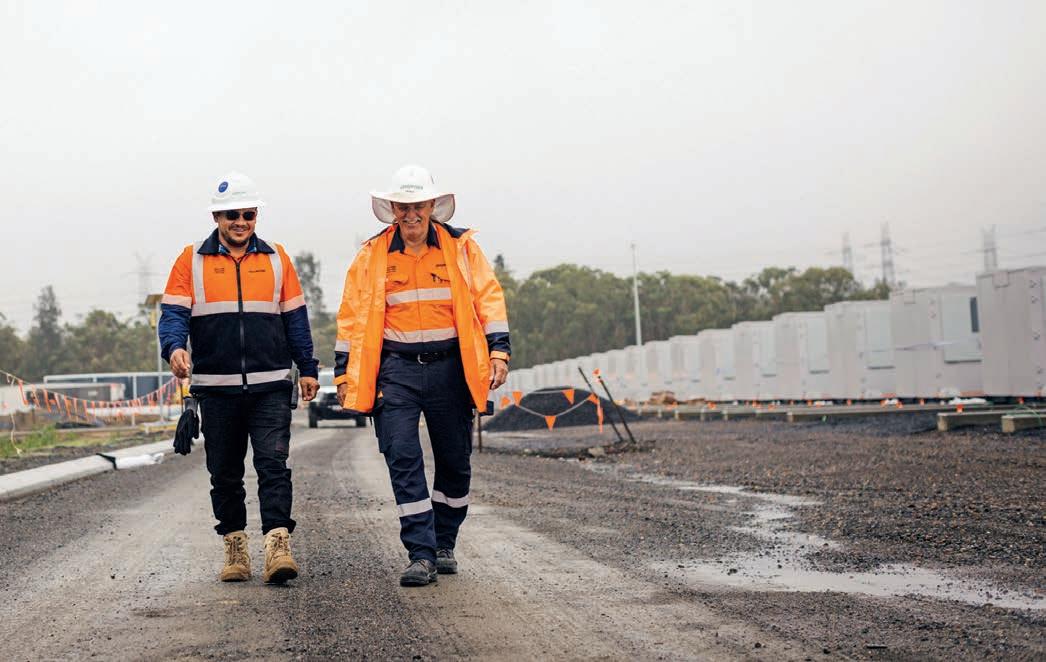
“You will get found out quickly if you
For Enerven, the dual delivery of the Eraring and Liddell batteries represents more than two projects – it symbolises the organisation’s role in bridging the country’s past and future energy systems.
“These sites once powered the nation through coal. Now they are powering it through storage. It is a tangible demonstration of transition,” says Richard Amato, Chief Executive Officer at Enerven.
For Enerven, engineering excellence through investment in people, partnerships and purpose is how it strives to build its future success.
“Projects are exciting, but without people, they cannot succeed. That is what really drives us: building infrastructure that lasts, and a workforce that grows with it,” Amato says.
“As we expand our footprint in Australia’s growing energy storage market, we remain committed to providing solutions that enhance energy resilience and accelerate the path to a cleaner, more sustainable future.”
For more information, visit enerven.com.au

Pylon’s Co-Founder sheds light on how the company’s new tool ‘Battery Adviser’ is helping solar retailers design a smarter solar-plus-storage system.
Australia’s solar retailers are entering a new phase of complexity. The sector is being reshaped by sharper consumer expectations, changing retailer obligations and the rising importance of behind-the-metre storage.
Against this backdrop, Pylon, a solar design platform, has introduced a new digital tool called ‘Battery Adviser,’ with a promise to give installers a technical leg up.
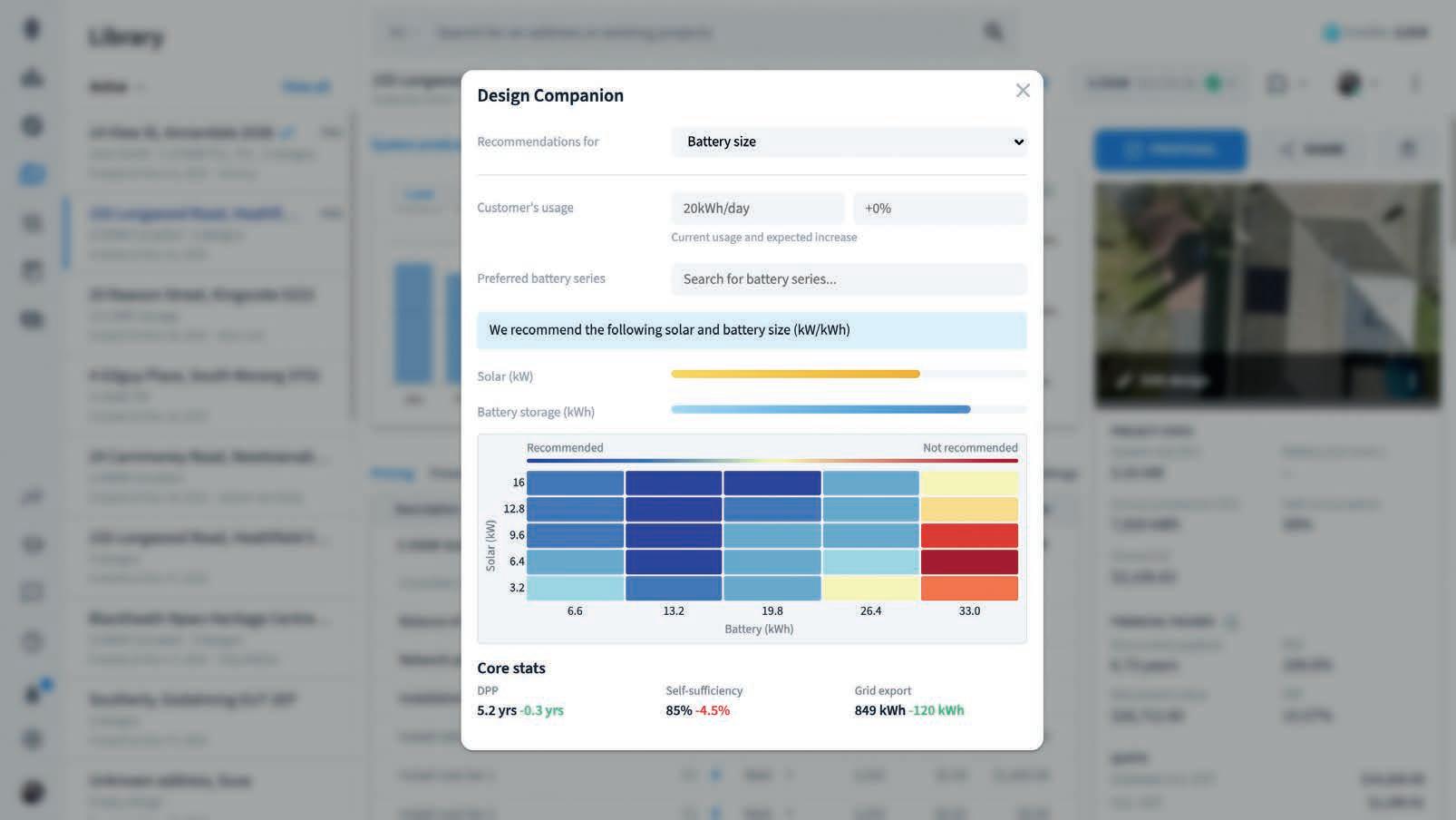
One of its biggest advantages is the ability to calculate the ideal battery size for any home-based on real usage patterns and household energy goals.
Battery Adviser helps to take the guesswork out of storage sizing.
For a platform already relied upon by hundreds of retailers and installers to produce fast, high-resolution proposals, Battery Adviser marks a meaningful progression toward data-driven, tailored solar-plus-storage design.
“Battery storage is one of the fastestgrowing segments in solar, but sizing it correctly has always been a major hurdle for solar installers,” says Nelson Zheng, CoFounder of Pylon.
“Because households can now shift major loads into that free power window, the rightsized battery becomes even more critical.
Battery Adviser gives solar retailers a datadriven way to design systems that deliver real value for homeowners with the changing energy offer landscape,” he adds.
Battery Adviser arrives as the Federal Government prepares to launch the Solar Sharer initiative, which will require energy retailers from July 2026 to offer households in New South Wales, South-East Queensland and South Australia with a free three-hour daytime electricity window.

This policy shift will reshape household energy use to encourage people to run appliances during the free power period and rely on storage for the remainder of the day. For retailers and installers, the challenge will be configuring systems that suit those new behaviours.
Battery Adviser automates this process. It analyses a home’s existing solar system, consumption patterns, load-shifting opportunities, and homeowner goals like maximising bill savings. It then provides a tailored recommendation for the ideal battery size, helping avoid over or undersizing by matching capacity precisely to real household behaviour and the emerging policy landscape.
Pylon’s success in meeting the needs of solar installers is a credit to their communityfirst approach. The team regularly attends global solar conferences and speaks with installers across Australia and New Zealand. This theme was explored in Pylon’s recent appearance on the ‘Tassie Solar Man’ podcast hosted by George Auchterlonie of REST Energy Tasmania.
In the episode, Zheng revealed that it was only after speaking directly with installers that Pylon recognised the glaring gap in the industry when it came to the offering of design tools for installers to do their job more effectively and accurately.
Many of Pylon’s most popular features
have come directly from installer requests to solve everyday workflow frustrations. From smarter drawing tools to streamlined proposals, the platform has evolved through thousands of conversations held on rooftops, at trade expos and in workshop training sessions.
“Honestly, Pylon wouldn’t even exist if we hadn’t chatted with a bunch of installers first. You really have to be obsessed with your users’ problems and really listen. Everyone has a different way of providing feedback, so we try to meet them wherever they are,” Zheng says.
“One installer told me he was working on an install next door when a curious neighbour called him over. He ended up
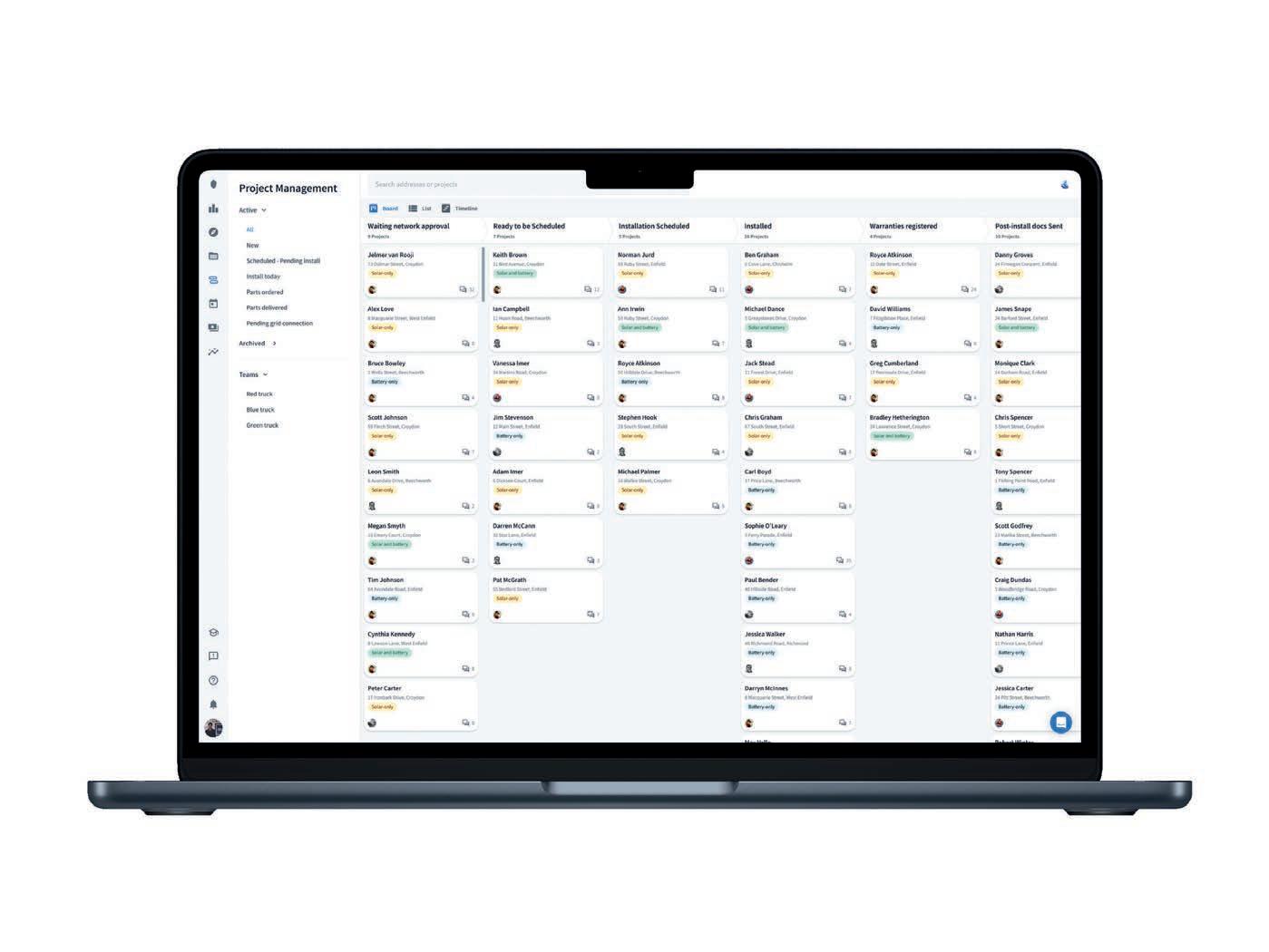
kitchen table using Pylon’s all-in-one platform – he designed the system on the spot, got the e-signature, and even collected a deposit then and there. When I heard that, I knew we’d built something that truly streamlines the whole process,” he adds.
The podcast also touches on the shift away from near-map-only design workflows, as well as the seasonal nature of solar sales –highlighting why many retailers prefer not to commit to fixed software fees or long-term contracts. Pylon’s pay-as-you-go credit model means businesses only pay for what they use, a structure Zheng describes as a “no-brainer” in a competitive market where efficiency and fast proposal turnaround times can determine a sale.
Pylon’s global conference calendar remains central to its success, giving the team concentrated, face-to-face time with installers and early visibility of emerging trends.
In the recent podcast, Nelson also discussed the sharp contrast between the Australia and New Zealand market. Australia is one of the
For installers working across both countries, Zheng notes that policy frameworks, incentives and consumer behaviour can significantly influence technology adoption.
He also comments on the residential versus commercial market.
“Right now, we’re seeing battery installs really take off. It’s probably the biggest trend in residential solar. At the same time, feed-in tariffs have dwindled, so the old ‘solar-only’ model is fading. Homeowners care more about self-consumption and storage now than ever before,” Zheng says.
“Selling to a homeowner versus a business is a whole different ball game. Homeowners might be swayed by a neighbour’s install or a rebate, while businesses pore over the investment numbers. Both markets are booming, but you have to approach them very differently,” Zheng added.
Zheng also highlights what makes the Australia market particularly dynamic.
“Australia has always been the home of solar innovation going back to the 1980s. In recent years, we have benefited from a remarkably stable regulatory environment for rooftop installations. We’re seeing that
As energy retailers, consumers and policymakers continue shifting toward more dynamic models of consumption and storage, tools like Battery Adviser will become more essential. With Battery Adviser now integrated into Pylon’s workflow, more retailers will have the opportunity to produce richer, accurate and future-ready proposals in minutes.
Battery sizing – once a mix of guesswork and generic assumptions – can now be determined through precise and household-specific modelling. According to Pylon, this shift will accelerate battery adoption and reduce mismatched systems across Australasia.
As Zheng emphasises throughout the podcast: “The future of solar design lies in listening closely to installers, understanding local market nuances, and building tools that evolve fast.”
With Battery Adviser, Zheng believes Pylon is putting that philosophy into practice.
Building on the success of this year, the Clean Energy Council’s 2026 events will continue to unite Australia’s renewable energy community - featuring the flagship Australian Clean Energy Summit, regionally focused summits and a combined technical wind forum, driving even greater impact and collaboration.
Designed by industry for industry, these events offer powerful opportunities to connect, share insights and be part of the conversations shaping Australia’s clean energy future.


A monumental agreement has been signed by two of the industry’s biggest providers.
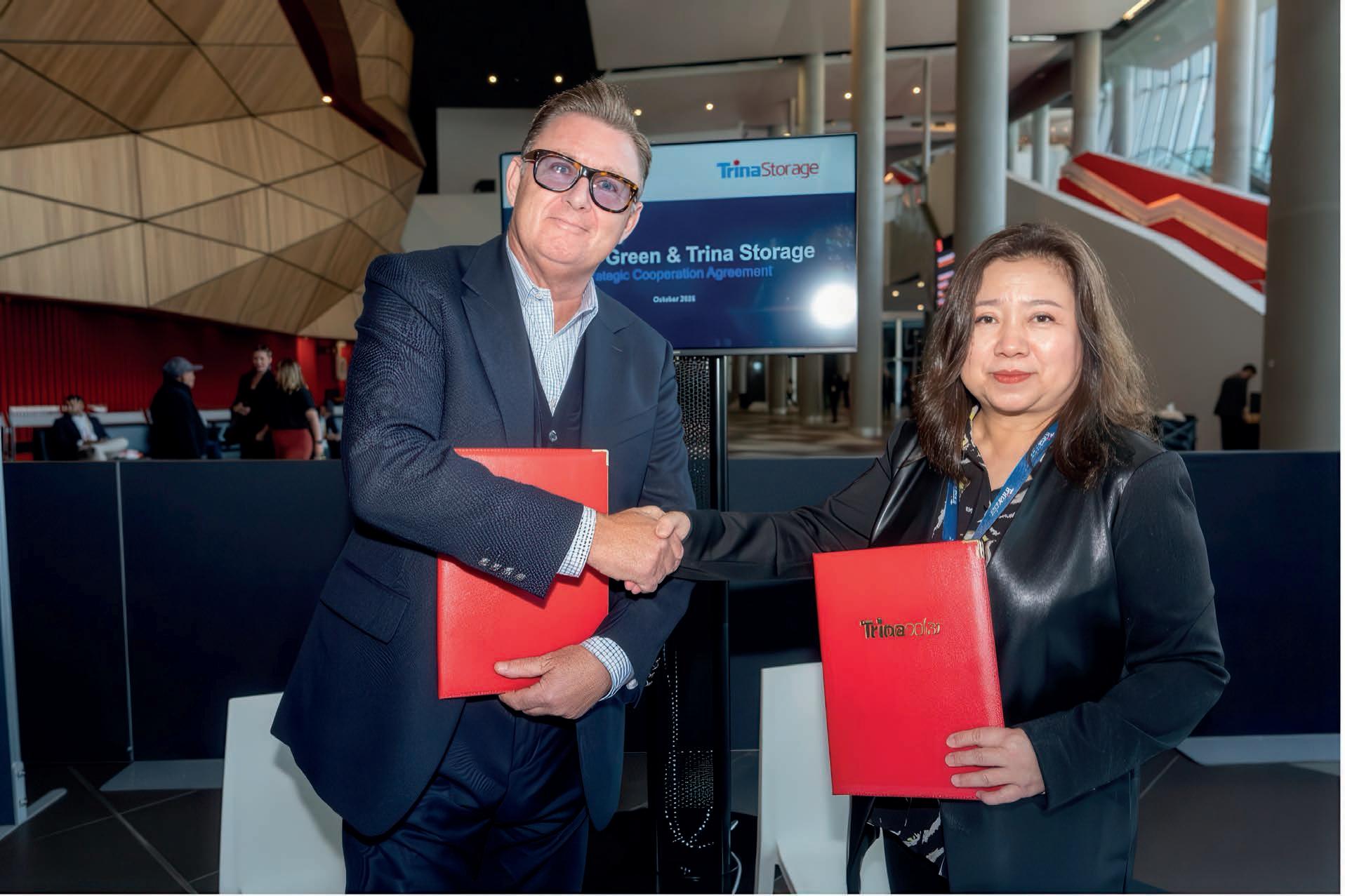
Global energy technology developer Trina Storage, a division of Trinasolar, has signed a Memorandum of Understanding (MoU) with Pacific Green Energy Group (Pacific Green) to deliver up to five gigawatt-hours (GWh) of battery energy storage systems (BESS) between 2026 and 2028.
The MoU represents one of the largest energy storage collaborations. When completed, the projects will be capable of storing and dispatching up to five billion watts per hour into the grid, strengthening reliability and accelerating the clean energy transition toward a low-carbon future.
Under the MoU, Trina Storage will supply its advanced grid-scale battery systems, integrating industry-leading technology designed for safety, efficiency and longevity.
Pacific Green will oversee development and project delivery across multiple sites in Australia and other international markets.
Helena Li, President of Trinasolar, said the partnership underscores Trinasolar’s ongoing commitment to advancing global clean energy goals.
“This MoU marks a major milestone for both Trina Storage and Pacific Green in the global renewable energy landscape, including
Australia. A five GWh supply commitment demonstrates the scale and confidence driving our partnership with Pacific Green. Together, we are combining innovation, global expertise, and local execution to enable a more resilient and sustainable energy future,” Li said.
“This partnership enables us to deliver our growing global pipeline efficiently and at scale,” said Scott Poulter, CEO of Pacific Green.
“Together, we’re accelerating the deployment of projects that support the clean energy transition,” Poulter said.
The collaboration builds on Trinasolar’s established footprint in Australia, following earlier partnerships such as the 1.5 GW (gigawatt) Vertex N module supply agreement with Marubeni Australia, and the Limestone Coast North Energy Park Project announced earlier this year in South Australia, a pivotal project for Pacific Green with an enterprise value of AUD $460 million and a planned installed capacity of 250 MW(megawatt)/500 MWh (megawatt hours).
These projects reinforce Trinasolar’s strategic role in delivering integrated solar and storage solutions across the Asia-Pacific region.
Pacific Green currently manages a global storage pipeline of 11 GWh, including seven GWh in Australia and four GWh across Europe, highlighting the strong and expanding partnership between the two companies.
Trina Storage, a business unit of Trinasolar established in 2015, provides energy storage products and solutions and is committed to reshaping the energy landscape. The company is also dedicated to lead the way in all-round smart solar energy solutions driven by customers and scenario needs, and facilitating the transformation of new power systems for a net-zero future.
As a vertically integrated battery technology provider, Trina Storage’s comprehensive capabilities, covering battery cell research & development (R&D), manufacturing, and seamless integration are helping to advance the industry overall.
Its diverse portfolio spans energy storage batteries, battery energy storage cabinets, energy storage converters, residential energy storage solutions, and integrated intelligent energy management systems. While its primary focus centres on utility-scale projects, specifically in solar and storage, as well as standalone application scenarios.

The International Energy Agency (IEA) has released findings from its flagship World Energy Outlook (WEO) report.

Updated annually to reflect the latest data and geopolitical conditions, the latest edition of the flagship World Energy Outlook (WEO) report has arrived at a moment defined by profound uncertainty. Covering the global energy system, the WEO uses multiple scenarios to show how today’s decision-makers, including governments, could reshape global energy security, supply chains and emissions trajectories. Rather than forecasting a single outcome, the report highlights the consequences, trade-offs and contingencies that flow from different policy choices.
The 2024 report places heightened emphasis on critical mineral supply security, reflecting mounting concerns about the materials needed for batteries, solar panels,
electric vehicles (EVs) and other clean energy technologies.
According to the IEA (International Energy Agency), escalating threats and long-term structural hazards have pushed energy to the centre of national and economic security debates. Traditional risks to fuel supply remain, but they now intersect with tightening restrictions on critical mineral exports, intensifying geopolitical rivalries and an electricity system increasingly exposed to cyberattacks, operational failures and extreme weather.
These challenges unfold against a complex backdrop. Global oil markets currently show a substantial supply surplus despite ongoing
conflicts, while countries adopt divergent strategies to pursue energy security and affordability. Many fuel-importing economies are accelerating renewables and efficiency as core solutions. Others continue to prioritise reliable access to traditional fuels, reinforcing fractures in the international energy system.
Even as geopolitical uncertainty clouds the outlook for global trade, the WEO notes that international energy trade remains indispensable. Vast supplies of oil, solar panels, batteries and liquefied natural gas (LNG) create strong incentives for producers to continue seeking global markets. At the same time, differing national priorities and fragmented policy environments add complexity to future supply-chain dynamics.
The IEA highlights an uncomfortable tension: momentum behind emissions reduction efforts has softened, even as climate risks accelerate.
The year of 2024 was officially the hottest on record, marking the first time global temperatures exceeded 1.5°C above preindustrial levels. While renewables achieved their 23rd consecutive annual deployment record, consumption of oil, gas, coal and nuclear power also reached historic highs.
The IEA reinforces that there is no single storyline for the future of global energy. Instead, the WEO provides a suite of exploratory and normative scenarios built on rigorous modelling and the most current policy, market and technology data. These pathways allow governments, investors and industry to understand how choices made today could either deepen or strengthen the global energy system.
ADVERTISE IN
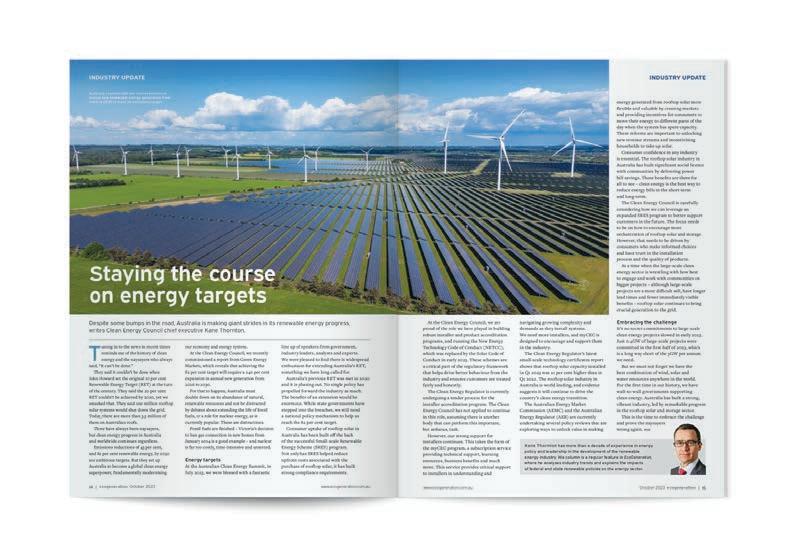
EXPERT COVERAGE OF THE PROJECTS AND DEVELOPMENTS THAT ARE RESHAPING THE AUSTRALIAN ENERGY MARKET.
23,000+ COMBINED CIRCULATION
Our magazine, e-newsletters and website are valued at all levels of the industry, from financiers and developers to installers and suppliers. As the energy market transitions to renewables, our readers look to ecogeneration.
ecogeneration is the only title in Australia to cover all aspects of the clean energy industry; delivered across print, online and email. The bi-monthly magazine, officially endorsed by the Clean Energy Council, keeps the industry informed from the boardroom to the work van.
The print and digital magazine, and pass on rate, has a combined circulation of more than 23,0000, as well as receiving extra distribution at important industry events.
For more information, please contact: Nick Lovering Business
Development Manager
nick.lovering@primecreative.com.au 0414 217 190


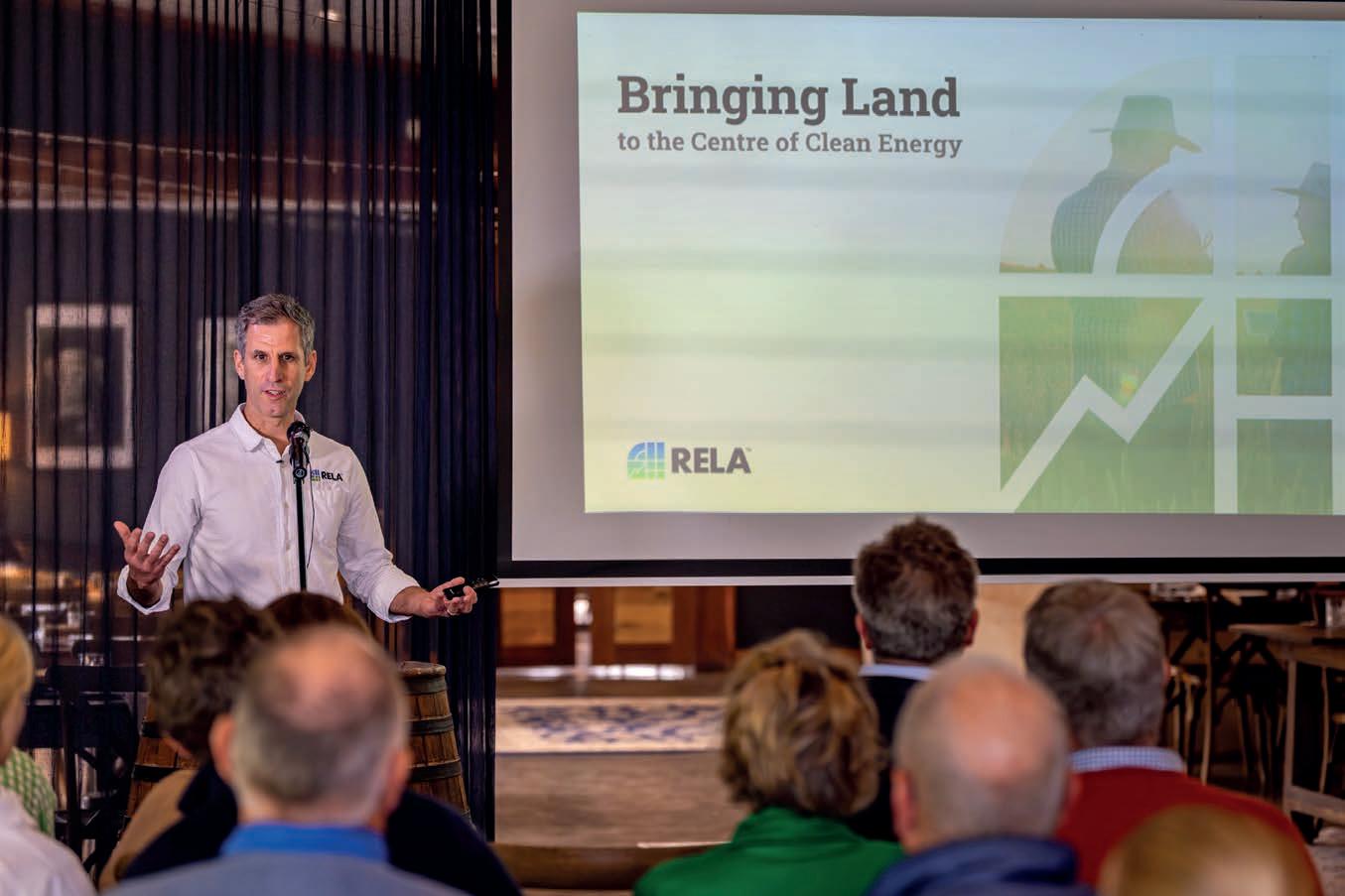
RELA is supporting landowners and developers to optimise coexistence between food production and renewable energy through their Assess 1.0 and Assess 2.0 platform – with funding support by the Australian Renewable Energy Agency in 2025 to ensure energy, agriculture and ecosystems can work in synergy by being fully informed about both land use.
In simple terms, coexistence refers to how renewable energy infrastructure, such as wind turbines, solar panels, battery storage, roads and wires, can operate alongside existing land uses and industries in a way that minimises conflict and maximises shared benefit.
In Australia’s race toward net zero, regional land is increasingly being asked to serve multiple purposes. For generations, its value was measured in food and fibre; now societal demands and associated opportunities include energy, carbon offsets and biodiversity outcomes.
“Regional land has historically fulfilled one global demand – food and fibre,” says Michael Katz, Chief Executive Officer at RELA.
“But over the last decade, and particularly in the past five years, we have seen new macro-demand for energy, decarbonisation and biodiversity emerge. Land productivity in this new paradigm is about coexistence between these uses.”
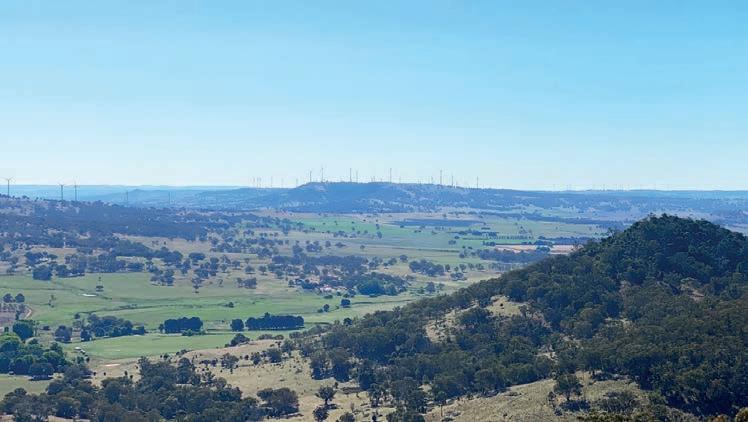
Wind turbines on farms are perhaps the clearest illustration. Across the country, farmers are leasing parts of their properties for wind projects while continuing to grow crops and graze livestock.
“If you can understand how to layer food production with an energy or carbon project, you can optimise productivity and the benefits for the landholder as well as the wider region,” says Katz.
Lessons from the paddock Wind-farm projects have shown that coexistence is possible – but it’s not automatic. RELA’s experience suggests that the biggest challenges arise when

communication breaks down and knowledge is unevenly distributed.
“There is a lot of information sitting in people’s heads – landholders, developers, lawyers, engineers – and the only way to achieve a balanced negotiation is to give everyone access to that knowledge,” says Katz.
That philosophy underpinned RELA Assess 1.0, the company’s first-generation land assessment platform. Developed to help landowners evaluate the suitability of a site for utility-scale wind or solar, Assess 1.0 provides a desktop assessment of factors such as grid proximity, land availability, topography, and environmental constraints.
For landholders, the tool offers independent, fact-based insights into the potential value of land and its compatibility with renewable infrastructure – information that was once difficult to obtain.
“Our goal is to reduce information asymmetry. We provide landowners the facts so they can engage on an equal footing,” says Katz.
Catching early recognition, the Australian Renewable Energy Agency (ARENA) supported the RELA Assess 1.0 project’s expansion, providing funding towards the development of RELA Assess 2.0 – the next-generation of the online portal that automates and scales the process.
Running from February 2025 to March 2026, the project is designed to give
landowners, farmers and rural communities easy digital access to insights that were once available only through consultants or developers.
“Assess 2.0 builds on our earlier manual process and turns it into a self-service platform. It brings together geospatial data, grid mapping and land-suitability modelling to provide rapid, data-driven assessments of renewable potential,” says Katz.
The tool will include new features, such as a Land Plan Builder that enables landholders to upload or outline their existing agricultural systems, as well as a Social Licence Index which highlights community and environmental considerations, such as neighbouring density, biodiversity values and competing land uses.
At its core, the Assess 2.0 platform is designed to build trust.
By providing transparent data and a shared evidence base to facilitate informed negotiations, RELA’s intention is to build trust through those interactions.
“The only way to achieve coexistence is through collaboration. The only way to collaborate effectively is for all sides to be fully informed about their own interests and those of the other stakeholders,” says Katz.
Developers, too, stand to benefit.
“Developers told us they wanted the data layers that only landholders could provide – things like soil conditions, water access or seasonal movement patterns. They also
asked that the social-licence indicator use a simple traffic-light format – a high-level guide rather than a prescription – and we have incorporated that,” says Katz.
Co-existence beyond infrastructure
For RELA, coexistence extends well past physical infrastructure. The company is also focused on financial and contractual alignment to ensure the long-term lease agreements underpinning projects are structured to meet both developer and farmer needs.
“A developer wants a 30-year linear, inflation-indexed lease linked to revenue,” says Katz.
“But a farmer’s financial needs are often non-linear – affected by drought, expansion opportunities or succession planning. So we have built a prepayment product that lets landholders access value upfront without selling their land.”
The mechanism allows developers to maintain their preferred long-term lease structures while giving farmers the flexibility to manage cashflow for operational or family needs.
It is a financial reflection of the same principle driving the technology platform –alignment through understanding.
Building capacity across the sector
Rather than chasing isolated showcase projects, RELA is investing in lifting capability across the entire ecosystem.
Katz believes this is essential if
Co-existence is a reality that many will need to adjust to, with increased urbanisation and population growth placing strain on land availability.

coexistence is to become standard practice rather than an exception.
“There is probably no project that’s perfect and no project that’s doing it all wrong. Everyone is operating with the capabilities and templates available at the time. What we are seeking to do is find the best outcome available at any given time, and to raise overall capability,” says Katz.
That effort includes knowledge-sharing for regional lawyers and advisers through Continuing Legal Education sessions, exemplified by RELA General Counsel Jess Salvato’s recent presentation at the Rural Issues Conference in Sydney.
“We share what we have learned so others can apply it. Obviously, it’s great when they call us to implement the knowledge, but even if they don’t, the sector benefits.”
RELA has also convened a Stakeholder Reference Group to guide Assess 2.0’s development; comprising 17 representatives across seven categories, those being Landholders, Landholder Advisers, Government, Agricultural Peak Bodies, First Nations representatives, AgTech specialists,
“Every perspective is responded to. It might be included, deferred or marked as out of scope, but nothing is ignored. That process is central to building a platform that truly reflects the range of voices involved in coexistence,” says Katz.
Beyond renewables, regional land faces mounting pressure from urban expansion. Katz says that this is not part of their business scope, but urbanisation is both a challenge and an opportunity like other land use changes.
“Decarbonisation, energy, regulation, biodiversity and urban growth – they are all new pressures on land, but they are also opportunities. What matters is understanding the trade-offs and giving landholders the tools to make informed decisions,” says Katz.
RELA’s Social Licence Index helps flag potential friction points early.
“If the index shows red or orange, that
doesn’t mean you can’t proceed – just that you will need to invest into the management of those issues,” adds Katz.
For landowners on city fringes, where future rezoning could lift property values, the organisation’s financial products also offer a way to participate in renewables now, without losing long-term upside.
“Landowners can maintain ownership and still access the value of their lease,” says Katz.
Ultimately, RELA’s mission is to make landowners active participants in the energy transition rather than passive hosts.
“No one party has all the answers, but we remain focused on making sure every stakeholder is fully informed and that the process is transparent and balanced,” says Katz.
This approach directly supports national goals.
According to the Australian Energy Market Operator’s 2024 Integrated System Plan, the National Electricity Market will require a six-fold increase in grid-scale wind and solar by 2050 under its Step Change scenario – equivalent to three-to-six gigawatts of new capacity every year for the next decade.
Meeting that target will depend on community confidence and cooperation. By helping landholders and developers communicate on equal terms, RELA’s technology and frameworks address one of the transition’s most persistent bottlenecks, that being social licence.
Katz believes this transformation could redefine Australia’s regional economy.
“We are going through one of the biggest transitions in modern history,” says Katz.
“From a regional perspective, it is similar to the industrial revolution – a change in the fundamentals of land economics,” he adds.
For rural communities, that shift carries enormous promise.
“If landholders approach this transition fully informed, it has a chance to redefine productivity. And with that comes decentralisation of wealth and opportunity that could last for generations,” says Katz.
“In RELA’s view, coexistence is not just about technology or land use, it is about designing a future where energy, agriculture and nature all belong and thrive together,” concludes Katz.

As Mariano Martínez Larcuen, Country Manager – Solarig Australia writes, the level of domestic opportunity when it comes to battery energy storage systems and other renewable energy sources has rarely been higher. So, how can we make the most of it?
Australia has become one of the world’s most dynamic markets for large-scale battery energy storage systems (BESS), with more than 30 assets and 7.5 GWh (gigawatt-hours) currently operational.
The sector’s growth is driven by ambitious renewable targets and a robust regulatory framework under the Australian Energy Market Operator (AEMO). The recent Capacity Investment Scheme (CIS) tender marked a major milestone, awarding over 24 GWh of new storage capacity.
The country has rapidly become the global testbed for BESS development and innovation, which has positioned Australia at the forefront of large-scale BESS development. It also brings new technical and operational challenges.
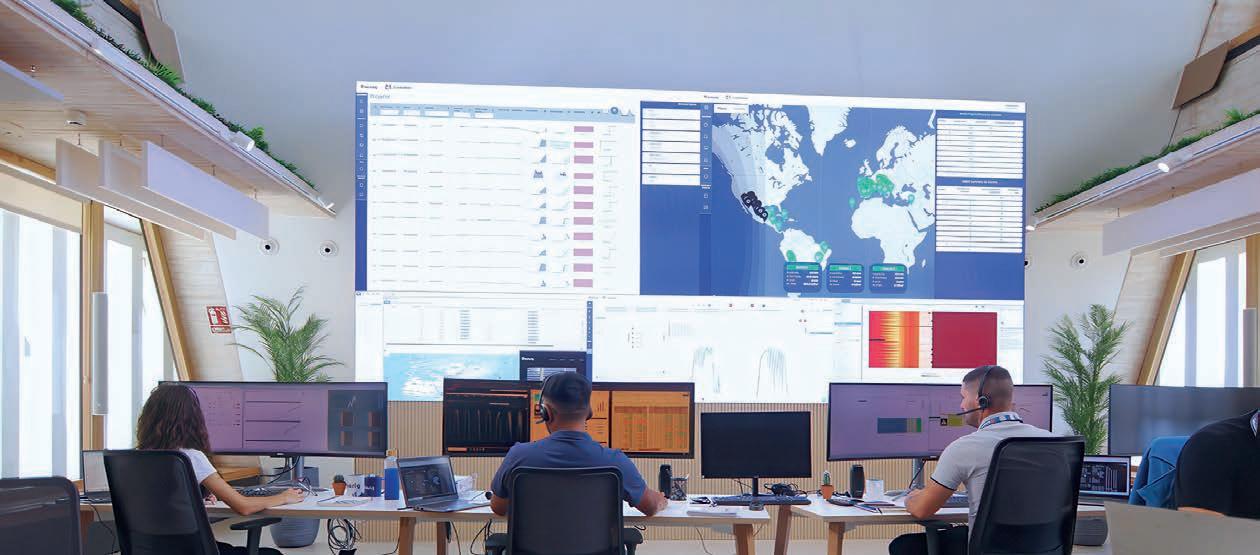
Meeting these requires a simple yet hard-toachieve formula: boots on the ground, a local AEMO compliance data-driven control centre, and strong partnerships with OEMs through Long-Term Service Agreements (LTSAs) that guarantee performance, reliability, and longterm value for asset owners.
In Australia’s rapidly evolving yet still
maturing BESS market, conservative lenders and technical advisers often recommend that project owners and developers sign Long-Term Service Agreements (LTSAs) with Original Equipment Manufacturers (OEMs). These contracts typically include comprehensive operation and maintenance scopes, covering everything from spare parts supply to product warranties, service guarantees, and the definition of liquidated damages.
However, not all OEMs are fully aligned with these extensive requirements or equipped to deliver beyond their core manufacturing capabilities. As the market continues to mature, many are adjusting LTSA frameworks to improve project bankability, strike a balance between warranties and flexibility, and better reflect owner expectations.
This evolution is gradually shaping a more collaborative model, in which OEMs focus on product guarantees and spare parts, while independent service providers take the lead on operational performance, availability, and long-term maintenance excellence.
This comprehensive LTSA approach is
already being used in countries like the United States, reducing the scope and evolving toward limiting commitments to standard two-year construction warranties.
This shift allows owners to develop longterm O&M (operation and maintenance) strategies for their BESS assets, allocating services to specialised providers best suited to each responsibility. For example, OEMs for spare parts and product guarantees, and independent service providers, such as Solarig, for O&M performance and availability commitments.
Within this context, Solarig has strengthened its leadership in Australia, recently exceeding two GW (gigawatts) of O&M assets across five states; South Australia, Western Australia, New South Wales, Victoria, and Queensland.
The company’s portfolio includes flagship projects such as Stubbo Solar (520 MWp (mega watt peak)), Bungala Solar (275 MWp), and Darlington Point (333 MWp). With a global storage base of more than 4.2 GWh, Solarig is well positioned to support Australia’s transition toward a more flexible, stable, and resilient renewable grid.
Tier One O&M services in BESS require a combination of Australian AEMO-compliant control centre operations, data-driven maintenance intelligence, field expertise, HV (high voltage) switching capability, and adherence to evolving energy market regulations and cybersecurity standards. In Australia, integrating these elements within a single organisation is essential for smooth and safe asset operation. Solarig is one of the few companies capable of delivering this level of service nationwide.
Solarig’s Australian Control Centre plays a pivotal role in achieving operational excellence.
By integrating AI (artificial intelligence) and advanced analytics within its Supervisory Control and Data Acquisition (SCADA) and CMMS (Computerised Maintenance Management System) environments – such as its own digital platform CUSTODIAN – it transforms raw operational data into actionable intelligence. This predictive capability enables operators to detect irregularities before they escalate, optimise performance, and extend asset lifespan. Such a proactive approach ensures ongoing AEMO compliance and maximises system availability.
While digital intelligence is vital, operational excellence also relies on the strength of
local field operations. Solarig’s network of service hubs and highly trained HV technicians across South Australia, New South Wales, Victoria, and Queensland ensures rapid response times and consistent service quality.
These local teams handle HV switching, preventive maintenance, and emergency corrective interventions, keeping every asset fully operational and compliant with safety and environmental standards. All activities are coordinated with and approved by OEMs, and Solarig invests heavily in training its personnel to deliver Tier One maintenance across Australia while maintaining full warranty compliance.
The level of service in BESS O&M is defined by a set of Key Performance Indicators (KPIs) that measure the technical, operational, and financial health of each asset. These KPIs promote accountability, transparency, and performance optimisation within every LTSA or O&M agreement.
High availability, typically above 98 per cent, is the cornerstone of O&M contracts. However, clear definitions of exclusions are vital to avoid ambiguity and ensure fair risk allocation.
Factors such as grid outages, force majeure, and OEM-dependent events must be explicitly defined, enabling transparent performance assessment. When deviations occur, contractual frameworks establish
liquidated damages (LDs) to safeguard owner revenues.
Efficiency linked to Energy Energy storage assets are assessed not only on uptime but also on their efficiency. Round-Trip Efficiency (RTE) measures the ratio of discharged energy to charged energy and indicates system efficiency over its lifecycle. Regular monitoring of RTE and total energy throughput helps operators identify degradation trends, ensuring the system meets its lifetime energy guarantees and informs improved maintenance routines. This KPI is often linked to liquidated damages clauses to ensure longterm efficiency standards.
Beyond efficiency, the ability of a BESS to retain and discharge stored energy over time is a key performance metric. Energy Retention measures how much energy remains available after a full charging cycle, reflecting cell degradation, chemistry stability, thermal management, and balanceof-system control quality.
By correlating energy retention with cumulative energy throughput, operators can earlier detect ageing trends and capacity fade. Routine validation against design expectations ensures assets continue to meet warranty and revenue requirements. Integrated into predictive analytics, this KPI supports proactive scheduling of rebalancing or cell replacements, extending battery life and maintaining reliable, bankable performance.
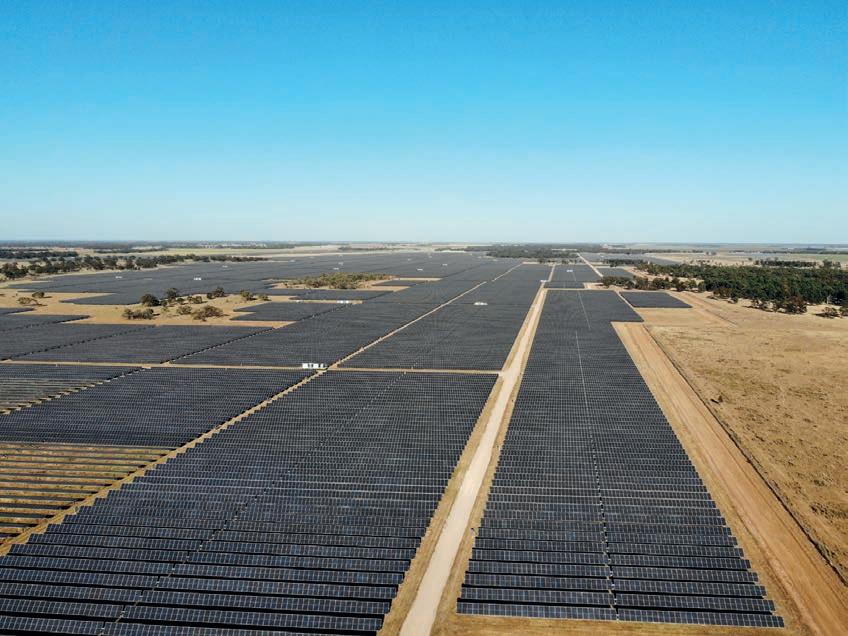
A robust, transparent KPI structure builds trust between owners, OEMs, and O&M operators, ensuring BESS systems deliver consistent, bankable results aligned with project financing and grid reliability expectations.
BESS form the backbone of Australia’s renewable energy future, bridging variability with flexibility and stability.
In this evolving market, O&M excellence determines asset longevity and profitability.
Solarig’s integrated approach – which combines predictive data analytics, a strong local field presence, and strategic OEM partnerships – sets a benchmark for reliability and performance.
By aligning technology, people, and processes within a single intelligent O&M model, Solarig ensures every megawatt of storage contributes effectively to a cleaner, more resilient energy system. This commitment positions Solarig as a key enabler of Australia’s renewable transformation.
Aurecon shares how connecting people, policy and innovation is the key to stabilising Western Australia’s renewable energy future.
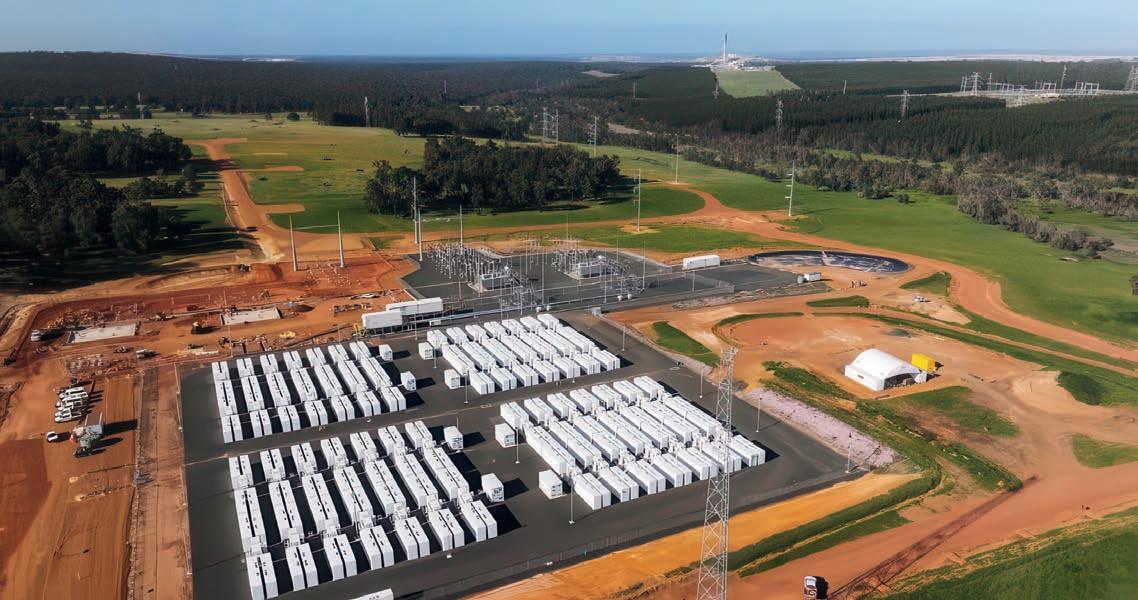
The stakes are high for Western Australia’s (WA) energy transition. Investments are flowing into transmission, battery, wind, solar and hybrid generation – yet the technical, regulatory and commercial challenges are significant.
Shaped by the world’s largest isolated power system, vast distances between generation and demand, and its role as the nation’s resources powerhouse, WA’s rapid energy transition is getting in front of looming coal generation closures.
The renewable energy sector continues to navigate challenges slowing progress, including fragmented data and planning frameworks, limited grid capacity and a connection backlog, and growing uncertainty around system stability and asset performance.
The pace of change is rapid, and so too is the pace at which industry, technical requirements, regulation and policy have to move. One critical question looms large: How does WA build the transmission backbone fast enough to keep up with its decarbonisation ambitions?
Aligning policy, data and capital As renewable investment accelerates, developers are grappling with a new
question: What truly makes a project ‘bankable’ in WA’s fast-evolving energy landscape?
Beyond technical feasibility, project success increasingly depends on how policy, market mechanisms, including the WA’s Wholesale Electricity Market’s (WEM) capacity market, and data combine to support investor confidence.
Brenton Laws, Technical Director – Power Transmission and Distribution at Aurecon, says WEM’s structure is quite different to the National Electricity Market (NEM) which services Australia’s East Coast, with both pros and cons.
“For example, the capacity market helps manage and support reliability and provides strong revenue certainty for generators and batteries. In parallel, network connection presents uncertainty, with an evolving Applications and Queuing Policy and Critical Projects Framework to enable Western Power’s resources to advance the process,” says Laws.
“These challenges aren’t negative, but understanding and successfully navigating these unique processes is critical to project timing and success,” he adds.
Fowzi Dahhan, Lead Wind Engineer at Aurecon, highlights potential factors
influencing wind project bankability.
“A well planned and executed wind monitoring strategy in the pre-construction stage is key to painting an accurate picture of the site wind conditions and achieving the confidence needed in the project yield to secure project financing. Conversely, the rapid pace of deployment means some developers are seeking certainty without investment in a quality monitoring campaign early on leading to project yield uncertainty,” says Dahhan.
“Another factor is proactive management of environmental and planning approvals. Impacts can arise from regulatory or legislative changes and developers need to be aware of the potential impacts changed consent conditions can have on project scope, schedule and potentially yield.”
“We can overcome these challenges by developing and supporting wind monitoring, as well as working alongside developers to identify critical path activities for projects.”
Building on this, Kelsea Dundon, Senior Engineer – Power Generation at Aurecon, says quantifying impacts is key to helping clients make informed choices, particularly across hard-to-abate heavy industry.
“It’s important that we understand how interconnected mining production systems
are, and how those systems are changing. A significant amount of time and expenditure has gone into optimising existing systems, but decarbonisation means both displacing existing fossil generation and serving new load growth from renewable energy, requiring new thinking. Electrification is bringing large demand increases with big implications for renewable, storage, and load balancing,” explains Dundon.
“Robust modelling that integrates energy generation and material movement are required, so operational performance, emissions and economics are assessed and optimised together, allowing resources businesses to make informed investment decisions. Planning on the energy supply side has to relate closely to the scale and speed at which operations can transform.”
Unblocking the sector bottlenecks Strong investment in infrastructure will continue to be required to facilitate WA’s energy transition. Transmission capacity, grid connection and design standardisation are critical enablers, but also introduce short-term constraints.
Syed Sherazi, Technical Director – Power Transmission and Distribution at Aurecon, says aging transmission infrastructure and slow new transmission development have become the most critical bottlenecks to facilitating the rapid surge of highdensity loads, from data centres, to major industrial facilities.
“While Western Power is focused on strengthening capacity and bringing renewable energy back to Perth’s metropolitan area load centres in the north, new transmission corridor developments are shifting the focus towards collaboration and connecting isolated, privately-operated transmission to enable power-sharing, waste reduction, and minimise duplicative upfront investment,” says Sherazi.
“We are seeing strong momentum to create a unified 330 kilovolt (kV) backbone in the Pilbara region. That would allow miners and network owners to share surplus energy and reduce the need for investment in standalone infrastructure.”
Sherazi has seen first-hand the importance of collaboration in the country’s rapid shift to clean energy.
“One key lesson from working on 330 kV projects in WA and 500 kV transmission projects on the east coast is the importance of timely decision-making on design and a scalable delivery approach for major projects, which help to control increasing capital costs
and accelerate development,” says Sherazi.
“In regions where early design decisions are aligned with cost-effective solutions, supported by established supply chains and a skilled workforce, delivery can progress much faster, which I observed on my major projects in the Middle East. In WA, we are only now reaching this coordinated delivery level.”
Darren van Druten, Associate – Power Generation at Aurecon, shared that once the pathways for power are built, the focus shifts to how energy is generated, stored and managed across vast distances.
“We’ve seen extraordinary gains in scale and efficiency across generation and storage. Typical wind turbine ratings have doubled from around three megawatts (MW) to over six MW, and battery energy storage systems are now achieving energy densities up to 15 megawatt-hours (MWh) per 20-foot enclosure,” says van Druten.
“Scale changes everything. The technical challenges are only one part of the equation. A holistic approach is essential, integrating land, environment, and community considerations right from the start.”
The South West Interconnected System (SWIS) offers a glimpse of this shift already underway. New rules adding six hours of storage to the Reserve Capacity Scheme take effect this year, but WA’s uniquely vast network will require even more innovative thinking to keep pace.
“The SWIS, due to the expanse and fact it is not interconnected with any other regions means it needs to meet all system security requirements on its own. As renewables roll out, electrical system strength in locations along the network can be lacking, and so, innovative solutions must be developed to support inverter-based generators which are often developed far away from the load centres,” says van Druten.
“New thinking in how we design for reliability, security, resilience, and selfsufficiency will also be critical. For example, in remote regions, miners are developing some of the largest single-user islanded power systems in the world. These have been testbeds for innovation, showing how remote operations can run reliably on high levels of renewables without relying on the main grid.”
van Druten believes integrating renewables into traditionally fixed-load systems requires a deep understanding of flexibility and load behaviour.
Matching renewable energy generation to the specific load profile, exploring flexibility
options on the load side, and reframing the question from ‘lowest cost of energy’ to ‘lowest cost of usable energy’ is critical.
Connecting policy, capital, innovation and people
Gina Dodd, Technical Director – Power Generation at Aurecon, says operational excellence depends on strong systems, data and people.
“Reliable performance monitoring and data systems are fundamental to optimising generation and meeting regulatory obligations. Having the right inhouse expertise to interpret data, oversee contractors and respond quickly to faults makes all the difference in maintaining availability and yield,” says Dodd.
“Post-commissioning optimisation is changing rapidly. We’re now upgrading monitoring and control systems to meet evolving market/trade compliance and security requirements. The focus is on proactive replacement before failure, strategic operations and maintenance contracting.”
“We’re even focusing on repowering wind turbines with more efficient models to boost production. It’s about squeezing more performance and reliability, while keeping costs down.”
Dodd can see that global supply pressures also shape performance outcomes.
“Globally, the energy transition is happening fast, with countries like India and China driving costs down. But the sector is yet to complete its mission in affordability - partly because WA still depends on imported wind components and overseas installers. We are competing against other Australian states and countries for equipment, and increasing capacity of wind turbines has the potential to require investment to upgrade ports and roads,” says Dodd.
Managing risk and ensuring asset resilience comes down to a shared focus on data and performance and considering WA’s energy transition is a system-wide challenge that relies on coordination and communication as much as technology.
Tom Butler, Energy Practice Leader –Western Australia and Northern Territory, summarised the state’s overall challenge moving forward:
“WA is a quiet achiever in the energy transition. For those in the sector, we know if we continue to connect policy, capital, innovation and people together, we will come out on top.”


ecogeneration
Get
To
Growatt unveiled its next-generation hybrid inverter at All Energy Australia 2025, marking a new phase of innovation while redefining what home energy efficiency could look like.
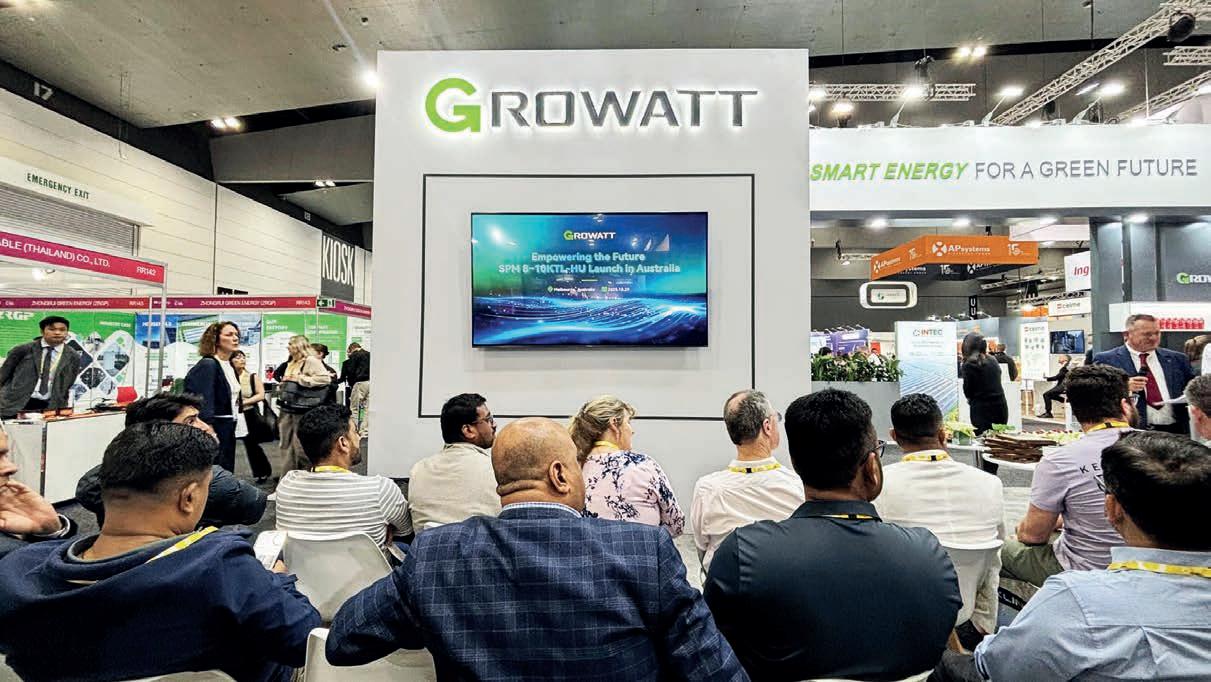
As the clean energy transition accelerates, one company has emerged as a global force in distributed energy innovation, setting new benchmarks for homes and small businesses worldwide.
At the 17th annual All Energy Australia event in Melbourne, Growatt unveiled its latest breakthrough: the SPM800010000TL-HU single-phase hybrid inverter. This next-generation system is designed to empower households with smarter, more adaptable and more efficient energy control.
For Growatt, this launch marks more than a product milestone, it is another chapter in a 14-year journey defined by relentless research, innovation and a vision to build a green and sustainable future for all.
A global leader with local roots
Founded in 2011 by a group of pioneers, Growatt began with a simple yet profound mission: to make sustainable energy accessible to everyone.
What started as a small team in Shenzhen, China, has since grown into a global distributed energy solution provider, with operations spanning more than 180 countries and millions of installations across homes and businesses.
In Australia, Growatt has been quietly expanding its footprint for over 15 years. Its New South Wales office serves as a regional hub, offering residential and commercial solar, storage and Electric Vehicle (EV) charging solutions designed for Australia’s diverse climate and energy landscape. From
inner-city homes to rural enterprises, Growatt’s ‘all-scenario’ approach enables customers to build systems tailored to their needs – whether that’s grid-connected, hybrid or fully off-grid.
In 2024, Growatt achieved Global Number One Residential PV (Photovoltaic) Inverter Supplier status, while also ranking among the Top four global PV inverter suppliers for commercial, industrial and utility-scale markets.
David Ding, CEO at Growatt says the company’s “global leading status” is testament to its commitment to quality, scalability and forward-thinking innovation.
“Energy drives our cultural and economic progress. In the long run,
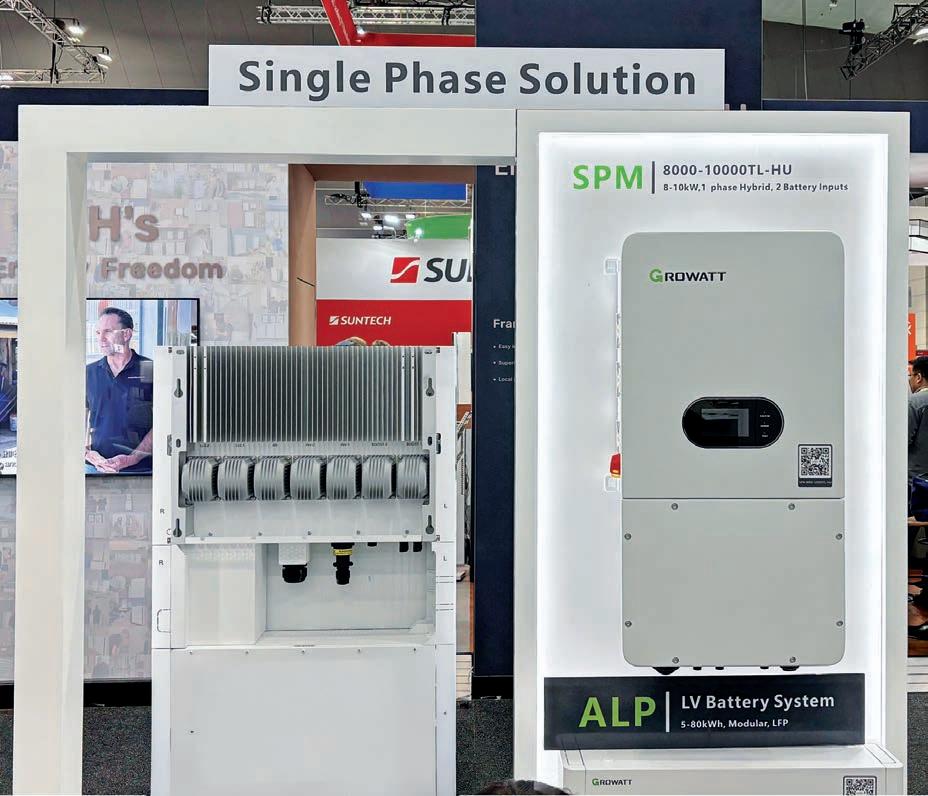
humanity and civilisation itself rely on sustainable energy sources,” Ding says.
In an industry that evolves as quickly as renewable energy, innovation is nonnegotiable. Growatt has built its reputation on research and development (R&D) excellence – a strategic focus that has powered its rise to global leadership.
“The world is in the midst of an energy transformation,” Ding says.
“Our R&D team is dedicated to bringing product and technology innovations to change the way homes and businesses are powered,” Ding adds.
Growatt’s in-house research network includes over 1100 professional engineers, 248 patents, and advanced manufacturing facilities like its Huizhou plant, which integrates automation and precision testing for next-generation energy products.
The company’s R&D focus spans inverter technology, battery systems, digital energy management and EV integration – all key enablers of the new clean-energy ecosystem.
This commitment has consistently produced award-winning breakthroughs. From the Red Dot Award-winning Infinity
1500 portable power station, to the GroHome smart management system that achieved ‘Finalist’ status at The Smarter E Awards, Growatt’s pipeline of innovation continues to redefine expectations in home energy performance, reliability and connectivity.
“With years of experience in R&D, we can quickly adapt to market trends and empower energy users with tailored products and solutions. Striving for excellence, our team aim to take clean energy technologies to the next level,” Ding says.
A new era in residential
Against the backdrop of Australia’s biggest clean energy showcase, Growatt’s presence at All Energy Australia 2025 captured significant attention. Crowds gathered around the company’s exhibit to explore its full range of solar and storage solutions – from residential hybrid inverters to commercial-scale systems.
The centrepiece of the showcase was the SPM8000-10000TL-HU, Growatt’s newest single-phase hybrid inverter. Engineered for maximum adaptability, ease of installation, and superior energy conversion, it
establishes a new benchmark for Australian residential energy systems.
The system’s three Maximum Power Point Trackers (MPPTs) allow for seamless performance across rooftops with complex orientations or shading. With a 200 per cent direct current (DC)/alternating current (AC) ratio, it extracts maximum generation potential from every panel.
Dual battery ports, each supporting 40 kilowatt-hours (kWh), enable up to 80kWh of total storage, addressing the growing demand for longer-duration, self-sufficient power.
For installers, Growatt’s focus on simplicity and compatibility is evident.
The SPM-HU supports both new and retrofit applications, and integrates with Growatt’s latest wireless meter gateway for faster setup and commissioning. Its modular design allows up to six parallel units (60kW/480kWh total), extending scalability for large homes or light-commercial operations.
“This is a system designed not just for performance, but for practicality. It’s a powerful yet simple single-phase hybrid solution tailored for Australian households, perfect for both new installations and system upgrades,” Ding says.
The launch arrives at a pivotal moment for Australia’s home energy market. With the Federal Government expanding its installation subsidy policies and household battery uptake on the rise, 2025 is shaping up as a defining year for residential storage growth.
Growatt’s long-standing presence in Australia positions it strongly to meet this demand. Its hybrid inverter and modular storage systems, designed with Australian installers in mind, are built to withstand local conditions and integrate seamlessly with smart home management platforms.
As CEO, Ding explains that the company’s success is inseparable from its purpose.
“At Growatt, we provide all-scenario solutions for global customers to decarbonise their ways of living. Our mission is to make sustainable energy accessible, reliable and intelligent,” Ding says.
The upcoming SPM8-10KTL-HU, currently under Clean Energy Council (CEC) listing and has been available in December 2025, builds on this mission. As a successor to the SPM-HU series, it continues Growatt’s pursuit of performance excellence and installer-focused design –further expanding its product ecosystem for Australian homes.
Growatt’s presence continues to grow globally.
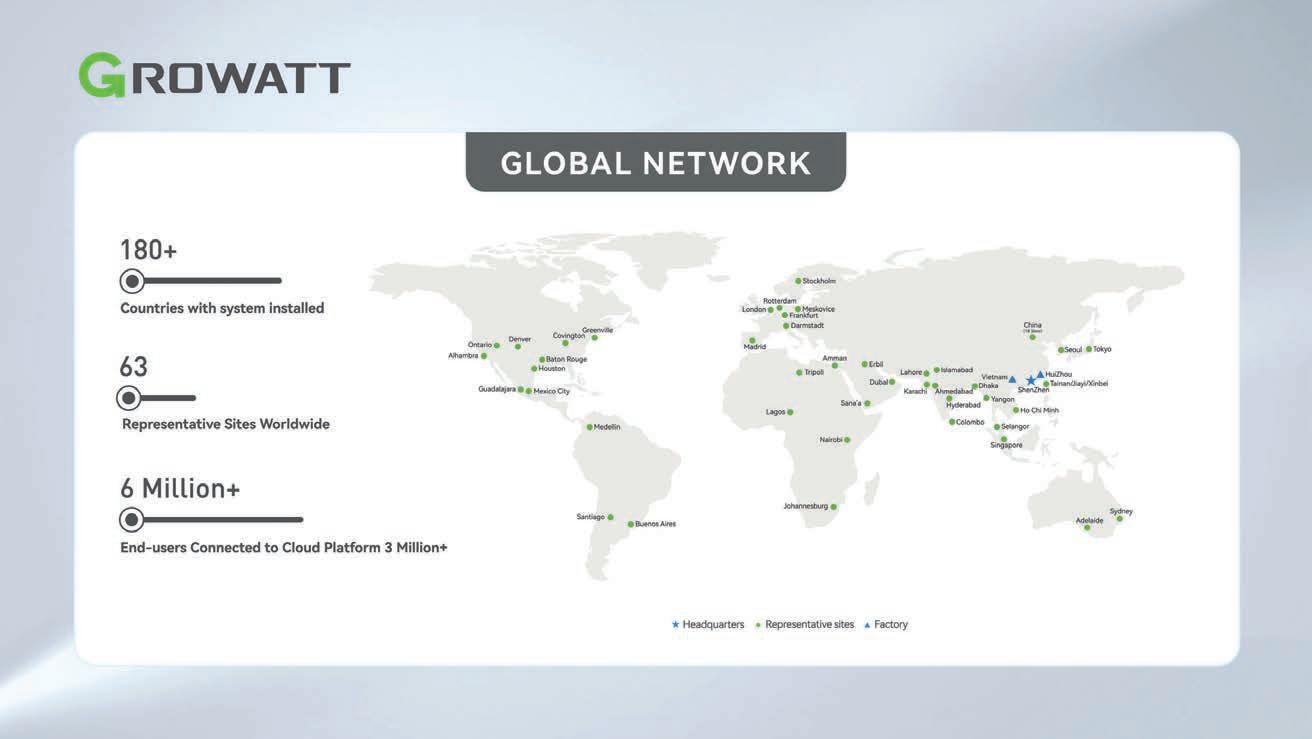
hybrid inverters and commercial battery systems to enable large-scale decarbonisation. Its intelligent monitoring platforms allow real-time performance tracking and predictive maintenance, which help asset owners optimise energy production and reduce costs.
“Additionally, our team continuously introduces new upgrades and innovations in energy efficiency, functional safety and intelligent solutions for inverter, storage and EV charging applications,” Ding says.
The company’s integrated ‘all-scenario ecosystem’ links together solar generation, energy storage, transportation electrification and smart consumption management – a blueprint for the interconnected clean energy systems of the future.
heavily to accelerate decarbonisation, improve efficiency and strengthen supply chains. For Growatt, these priorities have long been embedded in its DNA.
R&D drives not only product development but also localisation.
As Ding explains: “With years of experience in R&D, we are able to adapt to local market trends and empower energy users with tailored solutions.”
This agility allows Growatt to respond to shifting policies, climate challenges and customer expectations, ensuring that every product meets real-world needs.
Through continuous investment, the company has positioned itself at the intersection of innovation, affordability and
Since its founding, Growatt’s timeline reads like a case study in rapid innovation and global expansion.
FROM THE BEGINNING:
2011: E stablished headquarters in Shenzhen; subsidiaries launched in Hong Kong and Australia.
2012: The Growatt 5000MTL inverter earns a double-A rating from Photon Lab.
2015: E xpansion into residential storage marks the company’s entry into energy storage solutions.
2017: Ranked among the global Top 10 inverter suppliers.
2020: L aunch of the GroHome smart energy management p latform and ARK battery system.
As the clean energy landscape grows more dynamic, Growatt’s focus remains clear: to empower people everywhere with the tools to produce, store and manage their own clean energy.
“Within a decade’s time, Growatt quickly grew to become a global leading distributed energy solution provider. Yet, the passion we share with our global partners to create a better world continues to take us forward,” Ding reflects.
From Shenzhen to Sydney, Growatt’s journey is a reminder that progress in renewable energy is measured not only by technology, but by accessibility and vision.
2021: Commissioned Huizhou manufacturing plant and launched THOR EV charger range.
2024: Introduced the SPM, SPE and WIT series – pioneering direct generator connectivity for 24/7 power in regions with unstable grids.
PRESENT DAY:
2025: L aunch of the SPM8000–10000TL-HU at All Energy Australia.
Each milestone reflects Growatt’s evolution from a PV inverter manufacturer into a full-platform provider of integrated energy technologies – spanning solar, storage, EV charging, and smart energy management.
Inside Liebherr’s precision mobile crane operation in Germany, which is powering Europe’s renewable energy transition.
Last autumn in southern Germany, a fleet of Liebherr mobile cranes carried out one of the most technically demanding grid-upgrade lifts seen in recent years – an operation that speaks directly to the challenges Australia faces as transmission networks scale to meet renewable energy demand.
Over several days, seven Liebherr LTM 1650-8.1 cranes simultaneously raised four high-voltage transmission masts, allowing engineers to rebuild and extend the existing lattice towers and increase ground clearance for higher-capacity conductors. In total, 18 Liebherr cranes were deployed across four sites – each working in perfect synchrony during a scheduled line shutdown that required the entire operation to commence at once.
For Sven Bauer, Managing Director at AKM Autokran-vermietung in Munich, the project represented the culmination of months of complex, multi-site preparation along a major high-voltage corridor.
“The synchronous lifts represented the final moments of a major project during which we enlarged a total of 15 masts on this power line. Today, I have to be at all four of the construction sites to ensure that everything is running smoothly,” says Bauer.
The widest gap between the sites was nearly 50 kilometres – an operational stretch familiar to Australian transmission contractors coordinating distributed upgrade or rebuild tasks across regional grid assets.
A heavy-lift workhorse built for modern grid demands
The star of the project was the LTM 1650-8.1, introduced at Bauma 2019 as the successor to the legendary LTM 1500-8.1 – one of the world’s best-selling large cranes. The 16508.1 carries the same design DNA: maximum performance on eight axles, delivering lifts in the 700-tonne class.
Depending on configuration, it
outperforms its predecessor by 15-50 per cent, giving grid operators, engineering, procurement and construction (EPC) contractors, and civil-energy builders a crane capable of tackling the oversized loads associated with contemporary transmission infrastructure.
As Australia ramps up 500 kilovolt (kV) rebuilds, renewable energy zone developments and long-distance interconnector projects, this class of equipment is playing an increasingly critical role in getting major transmission infrastructure built.
Two nights on the hook
The most intense sequence of the German operation involved two cranes holding a suspended tower section aloft for two nights, while some 35 metres of the mast structure were constructed underneath.
Because the suspended sections could not be left unattended, crane operators rotated through the cabs overnight. Work by industrial climbers and rigging teams was limited to daylight, and only began once the dense ground fog typical of the region had lifted.
Supporting the primary cranes were
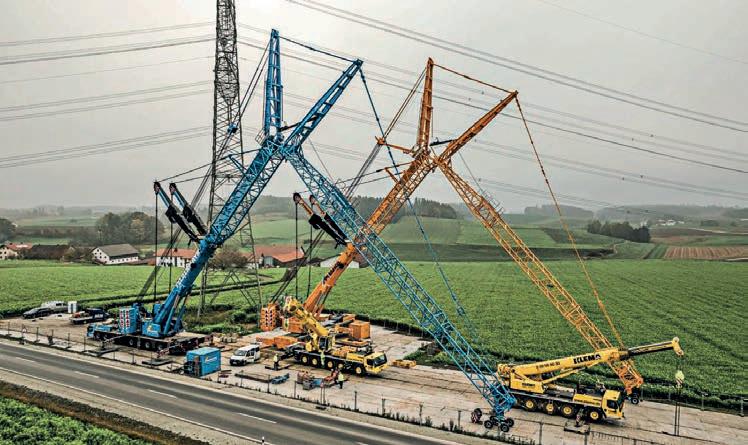
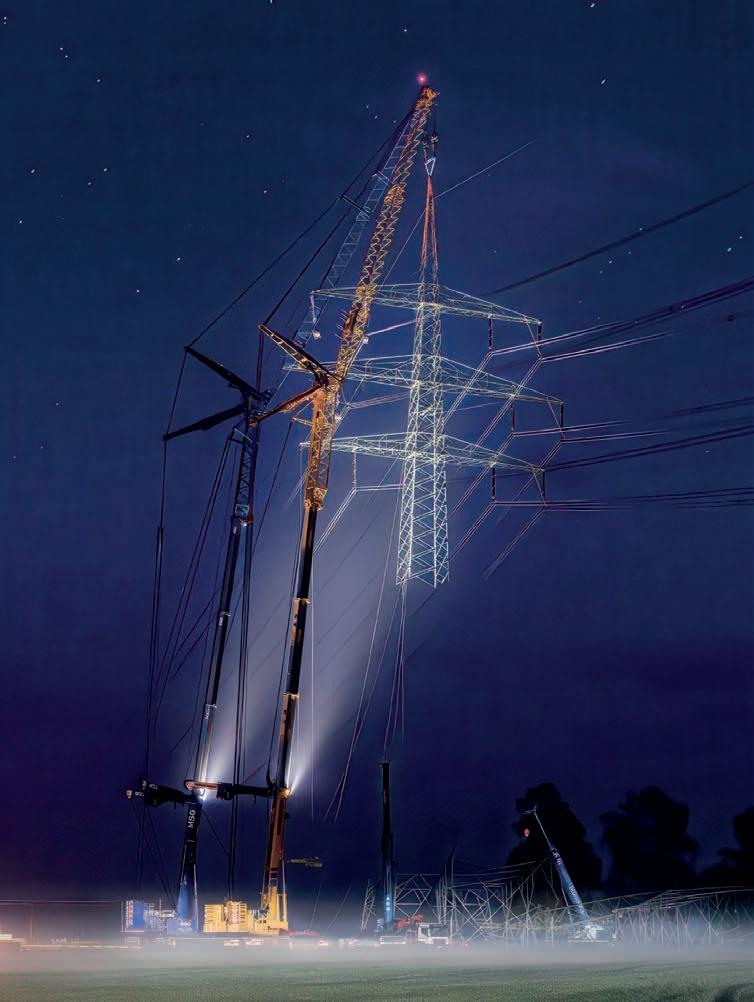
multiple LTM models ranging from 90 to 250 tonnes, which installed 30 tonne pre-assembled components beneath the raised structures.
20,000 aluminium and steel access plates
Illustrating the sheer logistical scale of the Liebherr’s mobile crane operation in Germany, 20,000 aluminium and steel access plates were laid to stabilise the work pads and approach routes.
“Because of the recent rain, we had very muddy soils,” Bauer says.
“It took an enormous amount of effort to create safe routes and parking areas for the cranes. In some cases, 25 square metres of load distribution plates were needed for a single outrigger. We also had sloping terrain in some places, so we needed to shore up the outriggers significantly.”
Australia faces similar challenges.
Whether it’s heavy wind-farm lifts in Victoria’s High Country or transmission works in New South Wales’ central west, ground conditions now play a decisive role in crane choice, mobilisation and overall site logistics.
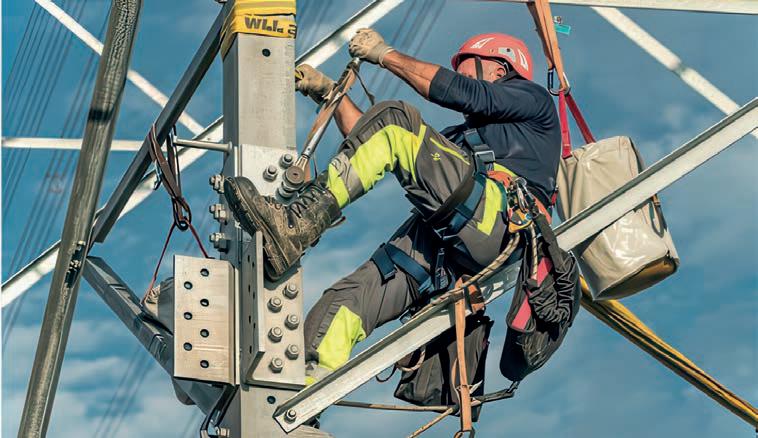
Coordinated telescoping and a tight window
One of the key technical challenges was telescoping at shallow angles while carrying loads. This technique allowed crews to carefully manoeuvre components beneath the temporarily elevated high-voltage masts. This work demanded absolute precision.
“We often had to telescope at a fairly flat angle with an attached load to move components below the raised power masts,” Bauer explains.
The entire project was bound by a strict outage window. With the line de-energised only for a short period, all four sites were activated simultaneously. This was another operational pressure Australian grid-upgrade teams will recognise as networks push toward higher utilisation and fewer planned outages.
When the final mast was positioned on day three, Bauer was visibly relieved.
“The meticulous planning paid off. It’s also thanks to the excellent service from Liebherr that we’ve been able to complete this mission on time. Our customer had clear requirements: only cranes that guaranteed fast and reliable service were to be deployed,” he says.
When a hydraulic hose fault occurred, Liebherr’s field service team arrived immediately and repaired it on site. This critical support ensured the outage window was not compromised.
“This was important so that the power could be restored to the cables within the planned deadline,” Bauer adds.
As Australia enters its biggest transmission build since the 1950s, the German project shows how synchronous lifts can speed power-line uprating, why high-capacity cranes matter on complex terrain, how strong manufacturer support protects outage windows, and how grid-upgrade logistics are becoming more intricate.
With major projects such as Victoria to New South Wales Interconnector West (VNI), EnergyConnect, HumeLink and Western Renewables Link advancing, Australia’s transmission boom will increasingly rely on exactly this kind of finely choreographed, equipment-intensive engineering.
And as this recent operation demonstrates, when heavy lifting meets meticulous planning and dependable service, the grid quite literally rises to meet the future.
A greenfield site in rural New South Wales has been transformed into a world-class substation critical to delivering new renewable power to the national grid and accelerating Australia’s clean energy transition.
The small rural locality of Bundure in the Riverina is home to the new Dinawan substation, which will play a vital role in bringing cleaner and cheaper energy to households and businesses in three states as part of Australia’s largest transmission project EnergyConnect.
The advanced substation sits at the junction of a new 375-kilometre (km), dual circuit 330kV (kilovolt) transmission line from Buronga and a 160km, dual circuit 500kV transmission line from Wagga Wagga. It will help to deliver new solar and wind generation for consumers.
“The nation-critical EnergyConnect project will increase renewable energy sharing between NSW, Victoria and South Australia, putting downward pressure on energy bills and helping Australia meet its net zero targets,” EnergyConnect Program Director John Burke said.
“The Dinawan substation will integrate new solar and wind generation from the NSW Government’s South West Renewable Energy Zone into the National Electricity Market, delivering more affordable and sustainable electricity to households and businesses.
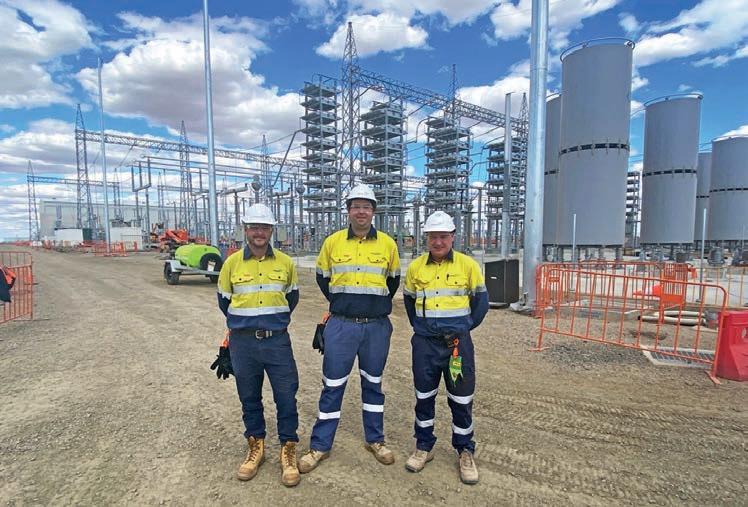
“The substation will also connect to the proposed new interconnector between NSW and Victoria, VNI West, resulting in greater energy reliability and security for the two states. Named after the Wiradjuri people’s word for emu, Dinawan substation is four hecatres in size, equivalent to six soccer fields, and home to sophisticated electrical equipment from around the world.”
The remoteness of the location was said to have provided a significant logistical challenge in bringing in hundreds of skilled workers and delivering large-scale materials and heavy machinery to site.
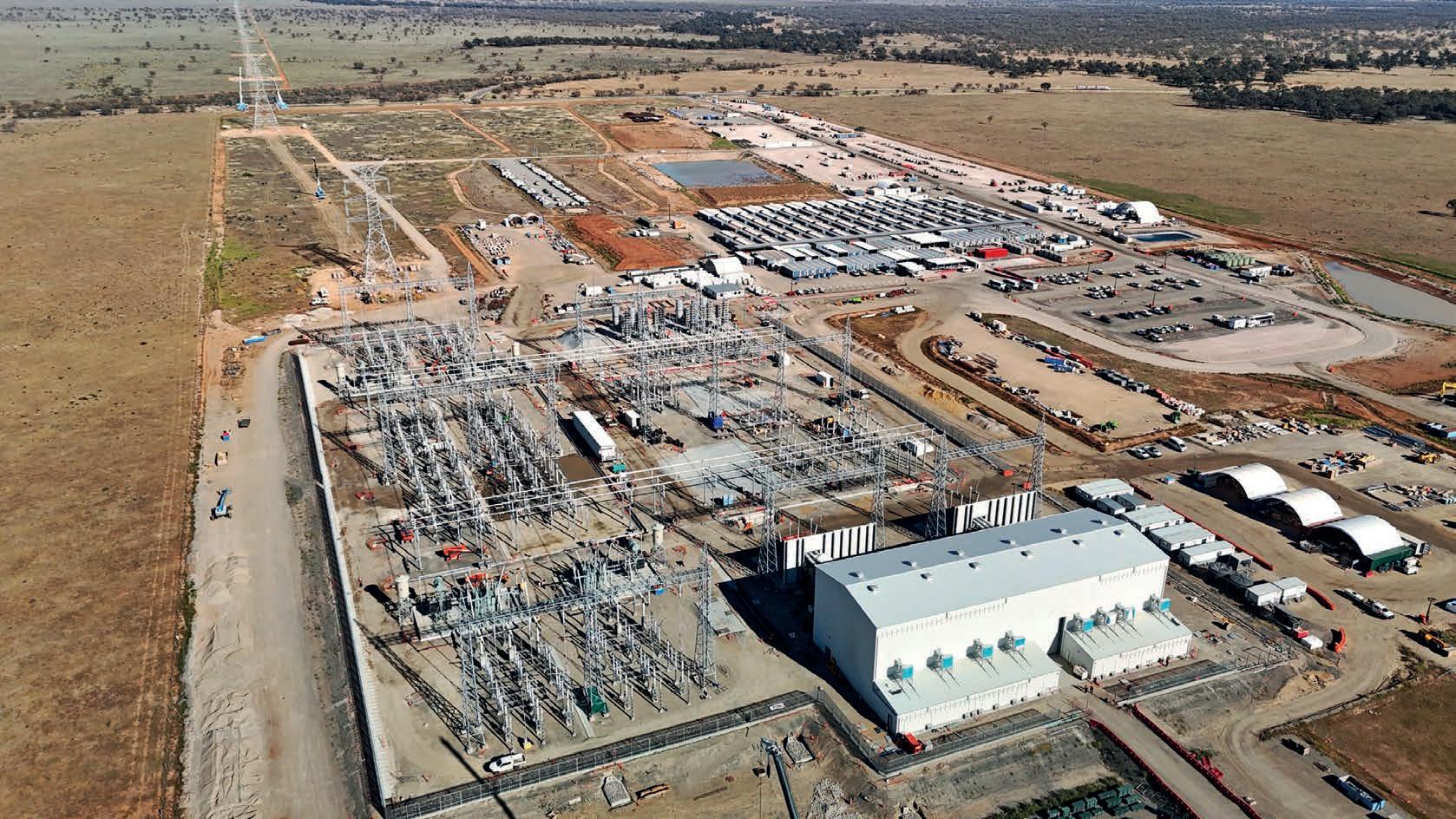
“I am pleased to say that Transgrid and our construction partner Elecnor Australia are finalising construction of the substation. The focus will then move to pre-commissioning works and testing of equipment before energisation,” Burke continued.
“Since taking steps to optimise project delivery in the long-term interests of consumers, we have achieved significant progress in construction of EnergyConnect which is now more than 90 per cent complete and on schedule to be finished in 2026.”
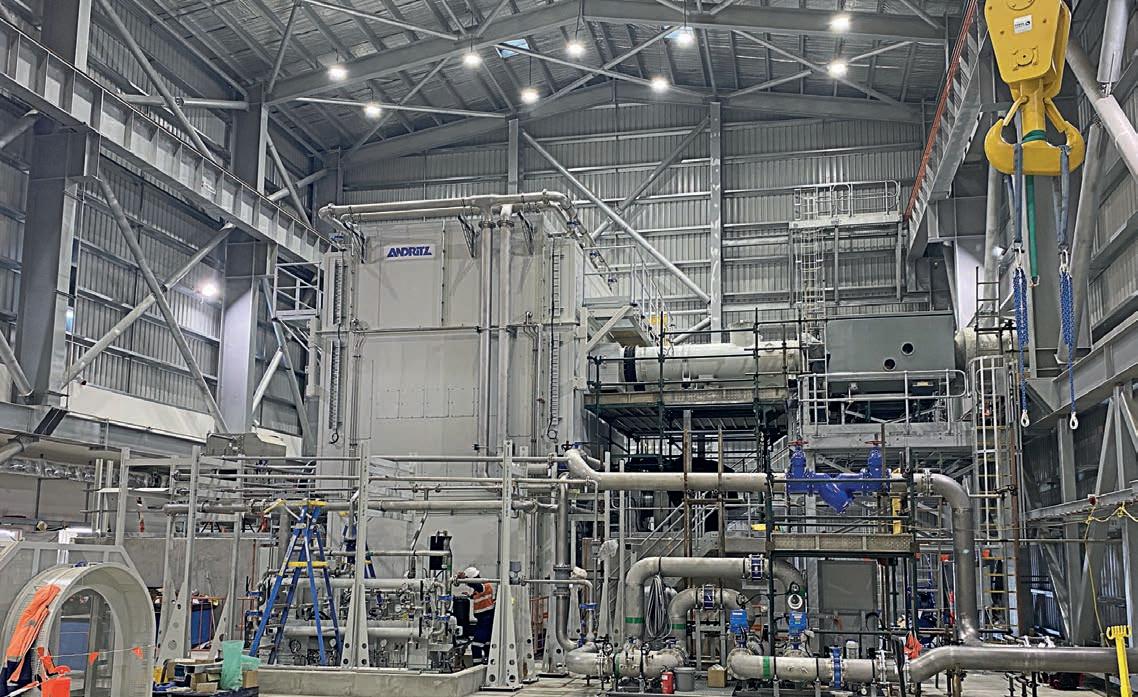
More than 750 people have worked on the substation to date, with construction including:
• 275,000 cubic meters of fill to create the bench, equivalent to 27,500 standard tipper truck loads
• 6820 cubic meters of concrete for foundations, equal to 1137 average concrete truck loads
• T wo 120MVAr (MegaVolt-Amperes Reactive) synchronous condensers –weighing 300 tonnes each – installed in a 60 metre (m) long, 1200 metres squared machine hall. These large spinning
machines will help maintain voltage stability on the transmission network and provide system resilience services such as inertia
• Four shunt reactors and two capacitor banks to increase the power system efficiency by stabilising voltages and reducing energy losses in the transmission network
“We are proud to be delivering this sophisticated and world-class substation at Dinawan which will play a strategic role in the network,” Elecnor Australia’s EnergyConnect Project Director Felipe Delgado said.
“Dinawan substation has been built from the ground up and the scale and engineering complexity of this substation is a testament to the skills of the 250-strong Elecnor workforce who live and work at this greenfield site.
“Elecnor and its delivery partners at the Dinawan substation work across civil, structural, mechanical and electrical disciplines to integrate highly specialised equipment from around the world including synchronous condensers, capacitor banks and shunt reactors.”
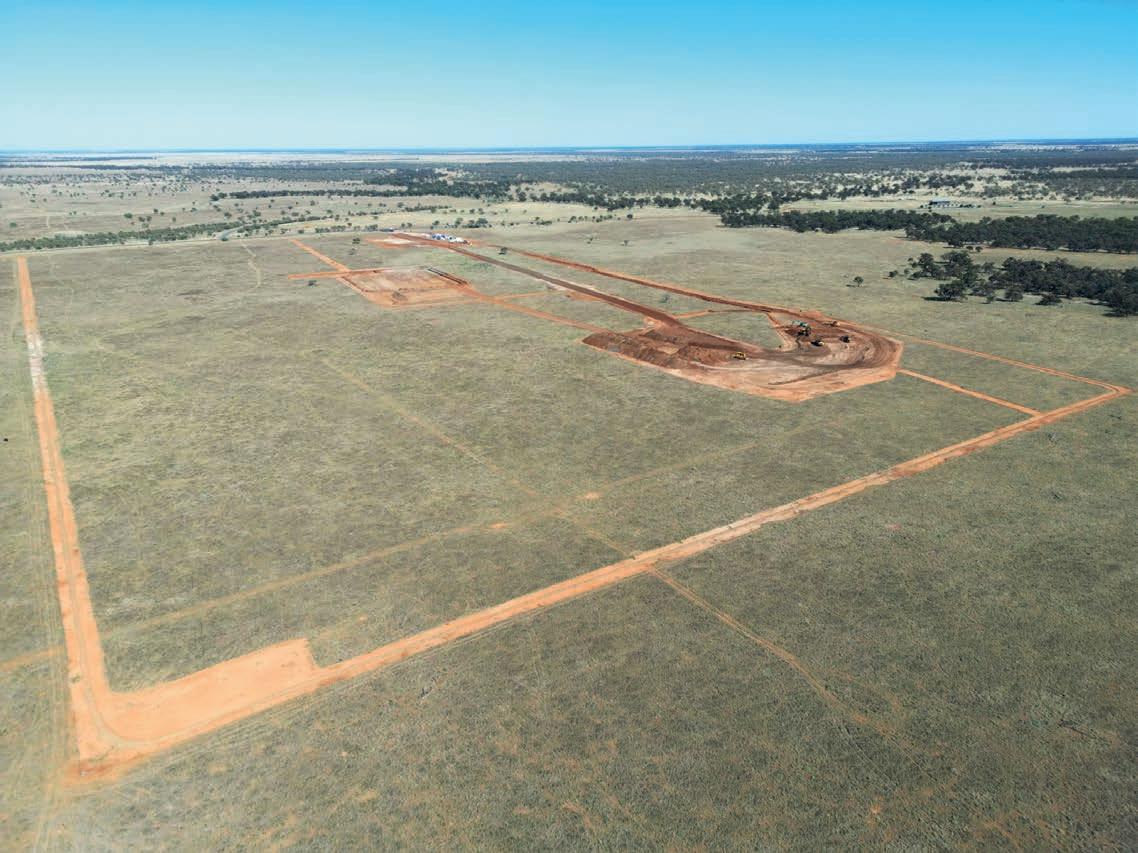
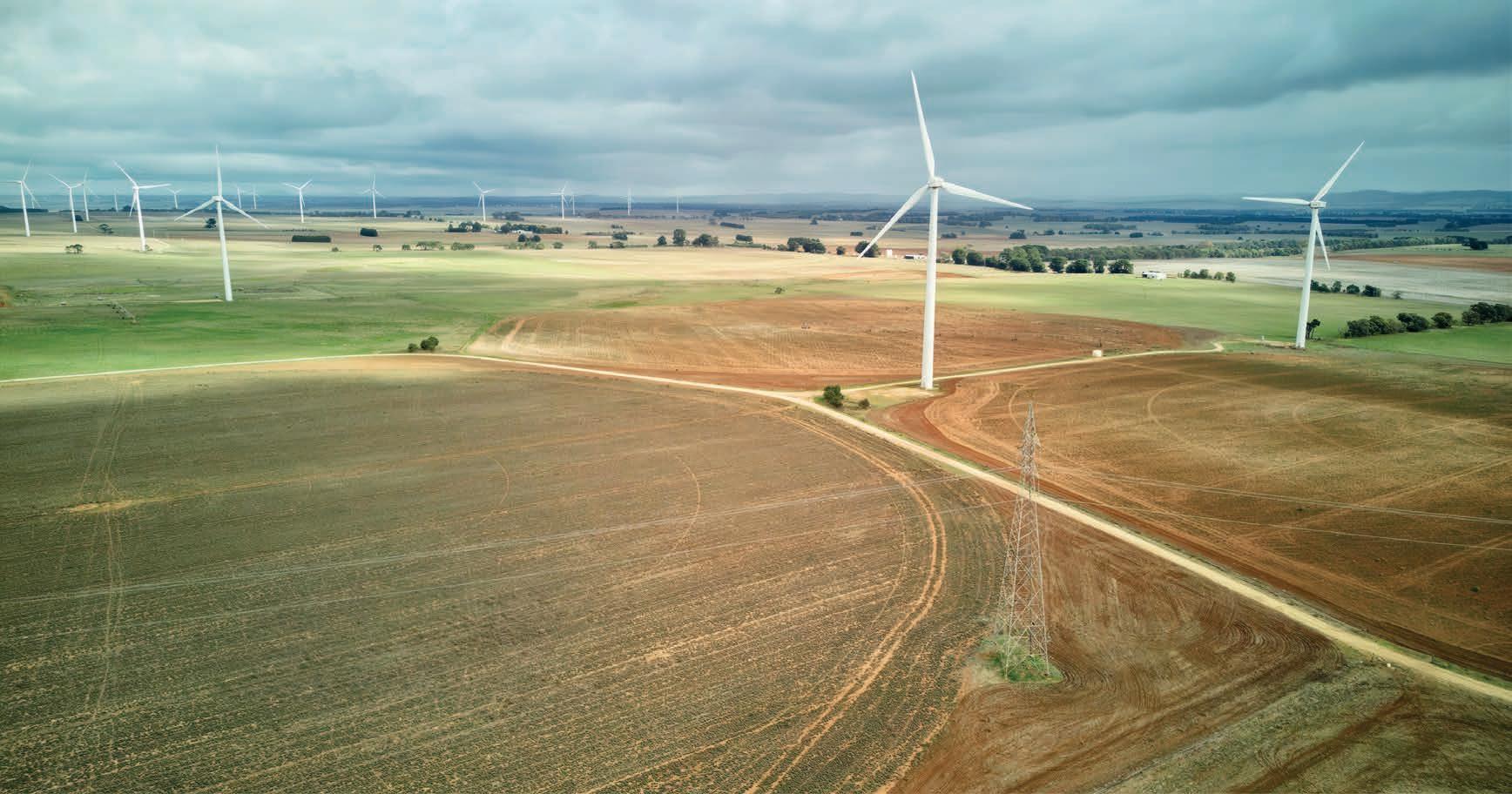
VicGrid has selected Iberdrola Australia to be its development partner for the Victorian section of the Victoria to New South Wales Interconnector West (VNI West) project.
VicGrid has selected Iberdrola Australia as the development partner for the Victorian section of the Victoria to New South Wales Interconnector West (VNI West) project, marking a step forward in delivering one of the state’s most significant transmission projects.
VNI West is a planned 500 kilovolt (kV) double-circuit transmission line that will link Victoria’s Western Renewables Link with Project EnergyConnect in New South Wales.
Once complete, VNI West will help maintain grid reliability, enable the connection of more renewable energy, and support the state’s energy transition as coalfired generation retires.
Reflecting the importance of regional engagement, the tender process required proponents to demonstrate how they would work collaboratively with landholders, Traditional Owners and communities throughout the project’s delivery.
During the development phase, VicGrid will lead VNI West’s development with Iberdrola supporting activities such as project design, procurement, planning
approvals, as well as the Environment Effects Statement (EES) process and engagement.
If Iberdrola meet VicGrid’s expectations through the development phase, they will then be appointed to build, own and operate the project with strict oversight
from VicGrid. As the project progresses, Iberdrola’s presence on the ground will increase.
VicGrid CEO, Alistair Parker said the partnership would help to promote the importance of community and stakeholder engagement during works.
“The appointment of Iberdrola as the development partner for VNI West provides
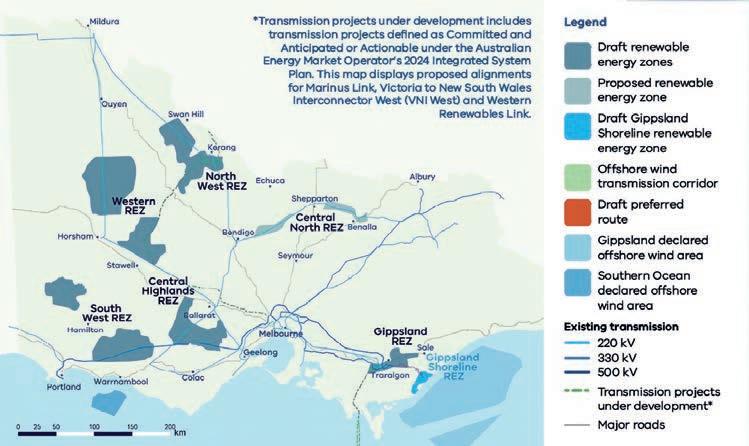
confidence that this critical project will continue to progress with the right expertise and focus, maintaining grid reliability and delivering genuine benefits for regional communities,” he said.
VicGrid assumed responsibility for VNI West from the Australian Energy Market Operator.
As part of the transfer of responsibility, Transmission Company Victoria (TCV) staff and contracts have been transferred to VicGrid.
Existing land liaison officers will still be the point of contact for landholders but VicGrid will have overall responsibility for engagement with landholders, Traditional Owners, and local communities. This will ensure direct accountability to the government body and the highest standards of engagement.
VNI West Program Director, Mick Doug said Iberdrola’s expertise would be a welcome addition to the project.
“We know landholders and communities want clarity and certainty. This appointment is an important milestone and, with VicGrid assuming responsibility for VNI West, there
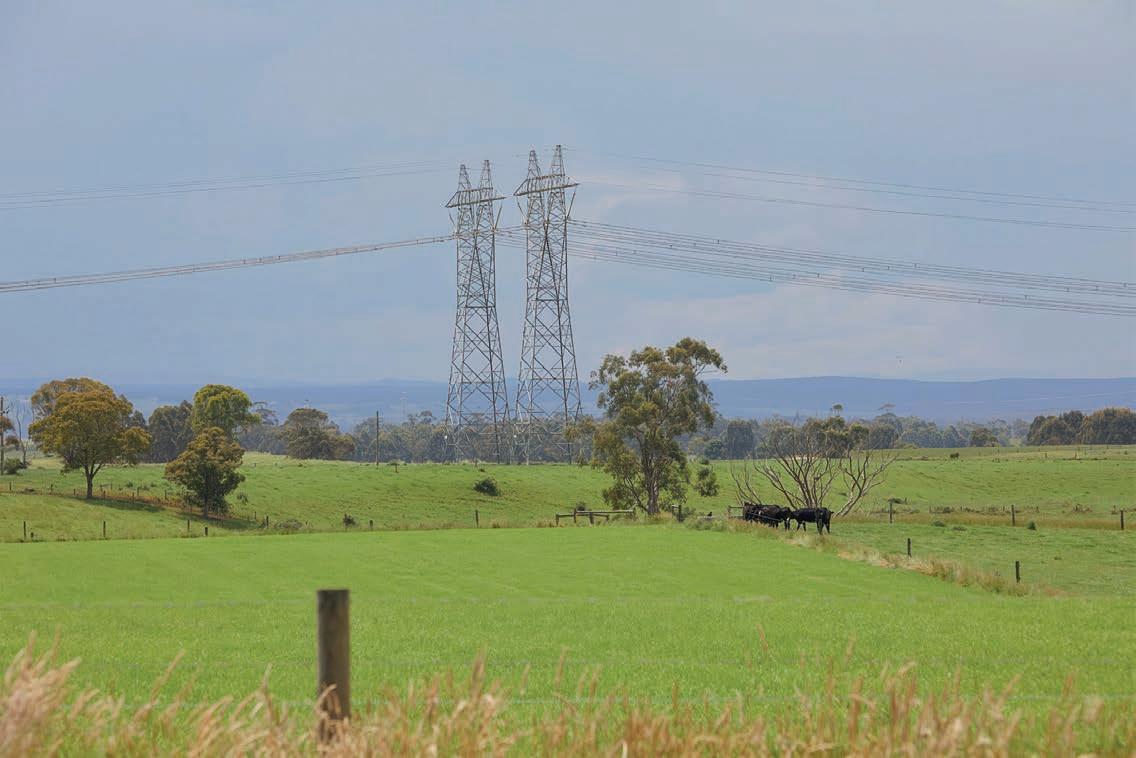
is a continued commitment to a landholderfirst approach,” he said.
Iberdrola Australia Chairman and Chief Executive Officer, Ross Rolfe AO said the company was proud to partner with VicGrid on the VNI West project.
“We recognise the importance of building trusted relationships with landholders and local communities, and we’re committed to working closely with VicGrid to ensure respectful and transparent engagement throughout the project,” Rolfe said.
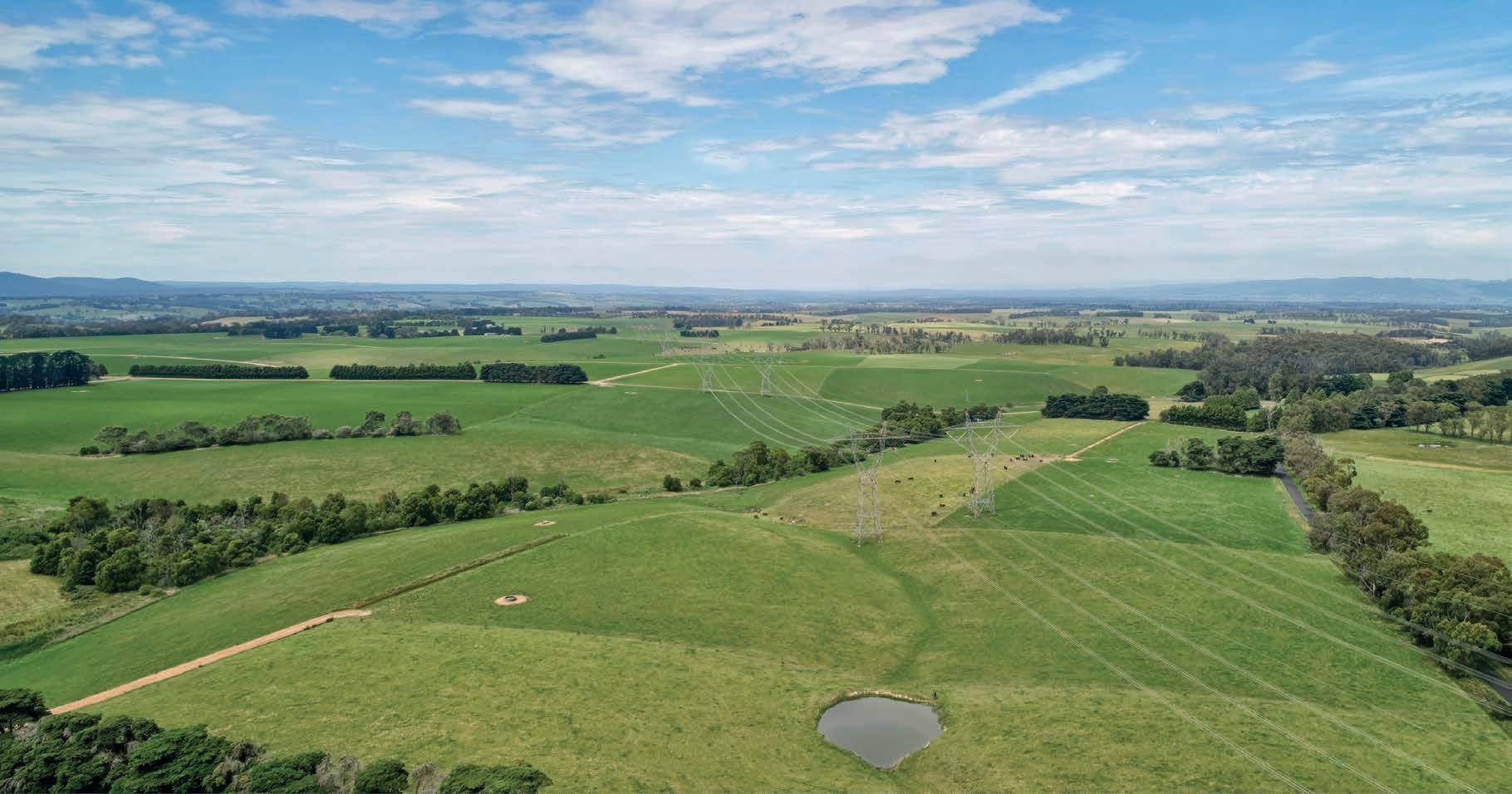
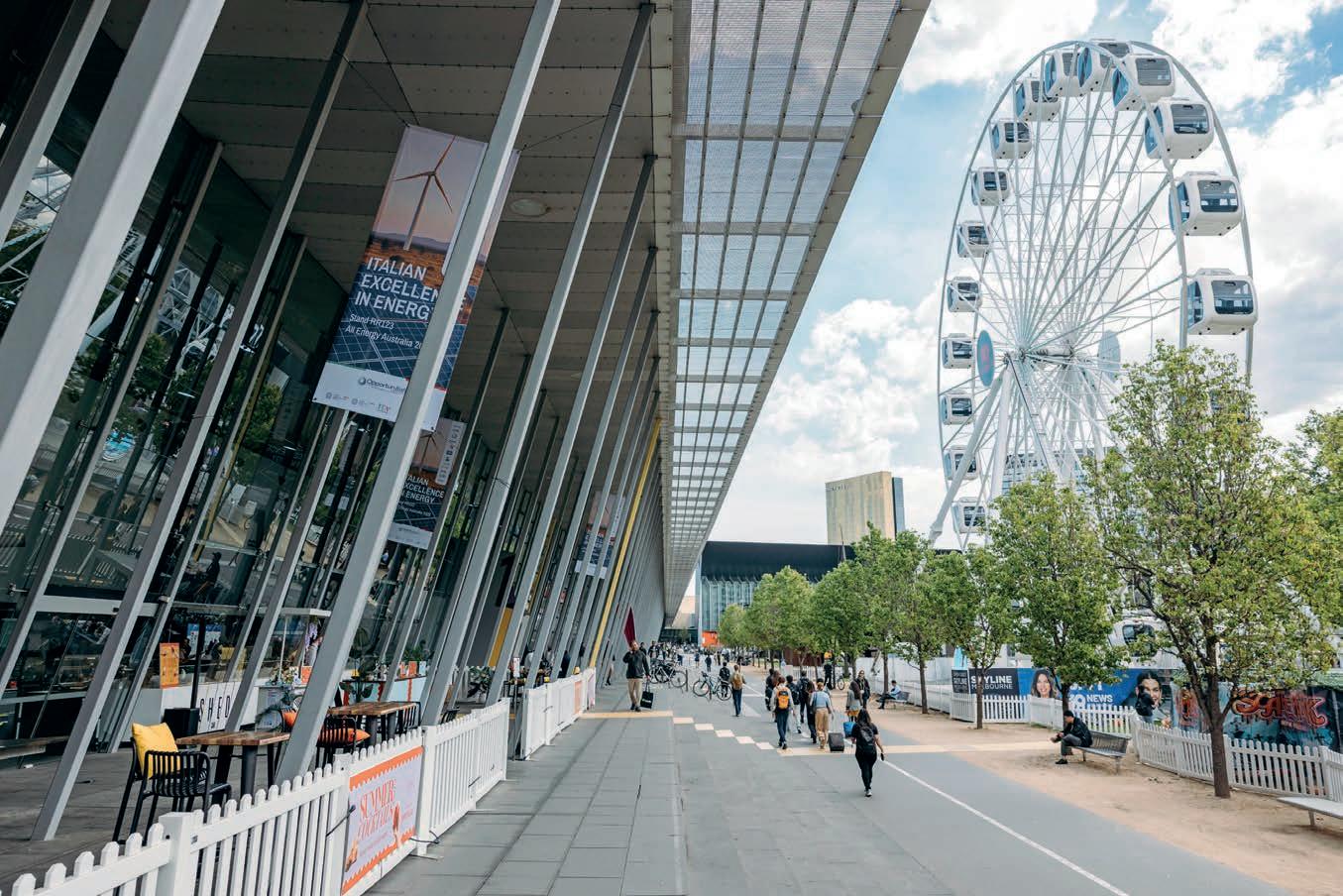
Over the past five years, investment in renewable energy has surged as Australia paces towards net-zero emissions by 2050 and an 82 per cent renewable-electricity target by 2030. From hydrogen pilots to home batteries, the innovations unveiled at All Energy Australia 2025 represents the sector’s next chapter –from vision, to investment, to action.
On 29-30 October 2025, that momentum was on full display at the 17th annual All Energy Australia event at the Melbourne Convention and Exhibition Centre. Organised by RX Global in partnership with the Clean Energy Council (CEC), the
event reaffirmed its status as the Southern Hemisphere’s largest clean energy gathering, attracting around 15,000 attendees, 400 global suppliers and 500 speakers.
The program reflected a sector entering a new phase of maturity. Conversations have shifted from building solar farms to tackling grid integration, storage scaling, hydrogen production, and flexible demand. For developers, investors and policymakers, the All Energy event has become a showcase of how the renewable energy boom is materialising through new technologies, partnerships and strategies for managing risk.
On the exhibition floor, more than 400 companies showcased innovations across solar photovoltaic (PV), energy storage, electric vehicle (EV) charging, microgrids, and digital optimisation. Global heavyweights such as Tesla, Origin Energy and SGS Australia stood alongside agile players including Growatt, Solplanet and Trina Solar.
Product launches reflected the sector’s commercial energy. Trina Solar debuted its Vertex S+ high-power rooftop modules, tailored for Australian conditions, with additional announcements on partnerships

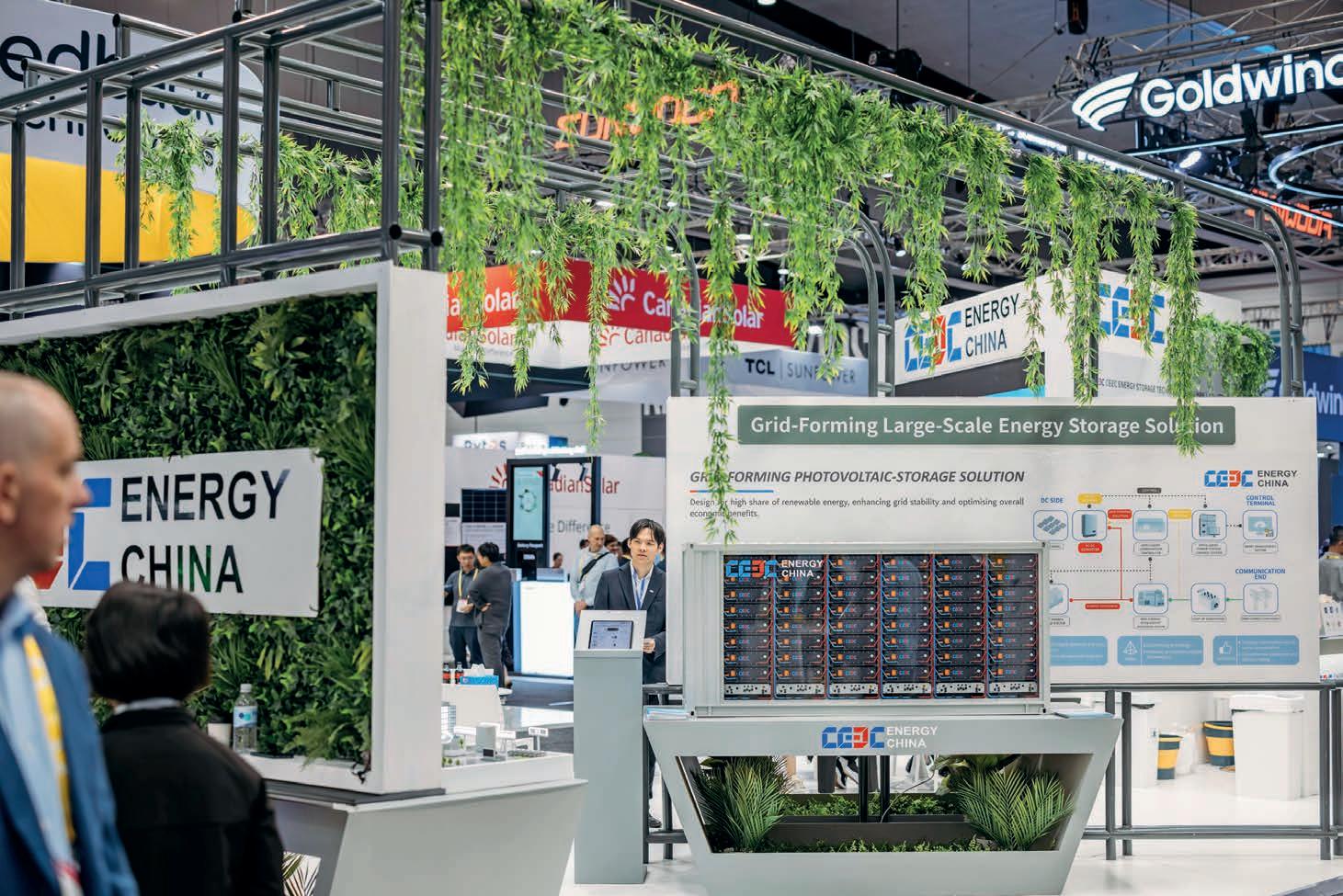
and new product launches ricochetting across the stands of renewable energy players exhibiting.
Voices of leadership
Government and industry leaders set the policy tone. Jackie Trad, delivering her first public remarks as incoming CEC Chief Executive, joined the Hon. Lily
D’Ambrosio MP, Victoria’s Minister for Climate Action, Energy and Resources and the State Electricity Commission, for a fireside discussion.
Trad also chaired sessions on ‘Powering the Future: Cheaper Home Batteries Program’ and ‘The Critical Role of Energy Storage and the Grid.’ Meanwhile, the CEC Masterclass was led by Brad Schnur and
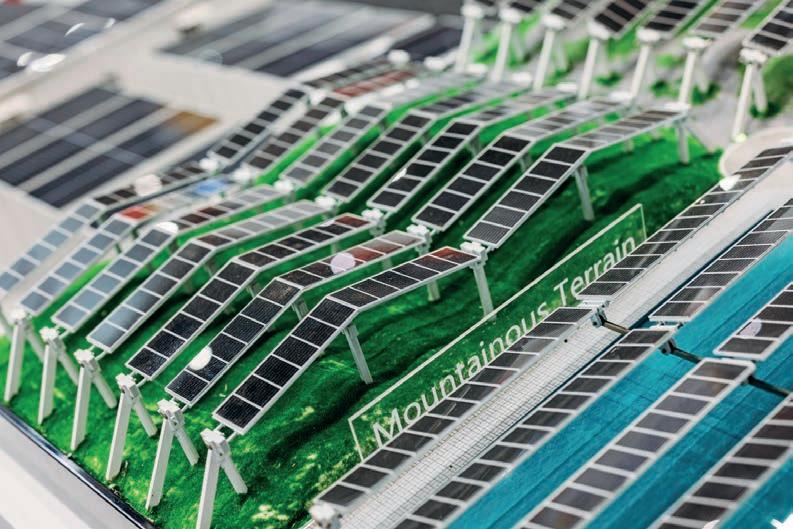
Emma Smith, focusing on installation standards and safety, while the Victorian Government Seminar Series featured its industry experts Lewis Shields, Eva Rodriguez, Marika Wanklyn and Nic Dorward – highlighting state investment in innovation and transmission.
Where policy meets practice
This year’s agenda showed a clear shift from ambition to execution. Panels tackled how to unlock network capacity, speed approvals and build workforce capability. Speakers emphasised that energy storage and grid integration are now the backbone of a stable, decarbonised system.
The Energy Lab Startup Showcase spotlighted early-stage companies in AIdriven forecasting, hydrogen production and flexible demand management – proof of an ecosystem deepening beyond generation into smart infrastructure.
A convergence of ambition
For investors, the record AUD $12.7 billion in 2024 signalled strong appetite, yet bottlenecks and regulatory delays persist.
As one delegate noted: “Returns will come from solving integration problems –not just building more megawatts.”
With federal support through the Capacity Investment Scheme and state initiatives like Victoria’s revived SEC, long-term certainty is building.
By the event’s close, one message resonated: Australia’s energy transition is happening now in projects, contracts and communities nationwide.

Australia’s clean energy transition is set to take another major step forward, with the Clean Energy Council (CEC) welcoming the Federal Government’s new Solar Sharer retail energy initiative – a reform designed to spread the benefits of rooftop solar more widely and reshape how households consume electricity.
Announced by the Federal Government and launching in July 2026 across New South Wales, South-East Queensland and South Australia, Solar Sharer will require energy retailers to offer households at least three hours of free electricity in the middle of the day, when rooftop solar generation is at its peak.
According to the CEC, Solar Sharer exemplifies good policy design – practical, equitable, and built on existing momentum in household renewable energy adoption.
More than 4.3 million Australian homes now have rooftop solar, and output rose 11 per cent in the third quarter of 2025 –setting a new record according to the Australian Energy Market Operator.
The Council said the program aligns with industry modelling showing that greater use of consumer energy resources – including rooftop solar, smart appliances and home batteries – could unlock $22 billion in system-wide savings, create 18,200 new jobs in installation and energy management, and save households $35 to $71 a year on average.
The CEC confirmed it will continue
working with the Federal Government and its members on the broader Default Market Offer (DMO) reforms to remove unnecessary costs and support retailer innovation.
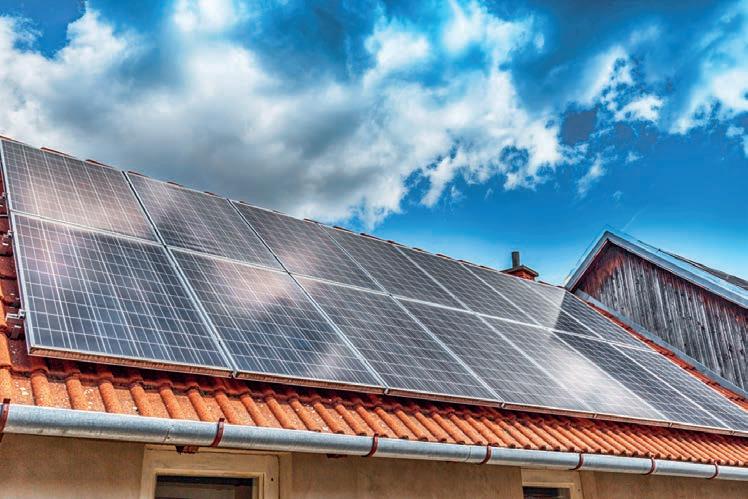
Australia’s small-scale renewable energy sector is about to experience another surge in demand – this time for batteries.
With Renewable Energy (Electricity) Regulations 2001 now amended, solar batteries are officially eligible under the Small-scale Renewable Energy Scheme (SRES).
For solar installers, this marks a significant milestone and a shift in compliance, accreditation and documentation expectations.
With solar batteries now eligible for small-scale technology certificates (STC), accredited installers have a new opportunity to expand their offerings – but strict documentation, safety, and installation compliance will be crucial to maintaining accreditation and securing rebates.
Under the new framework, only Solar Accreditation Australia (SAA) accredited designers and installers can carry out eligible solar battery installations. Each system must use Clean Energy Council (CEC) listed products, meet all Federal, state and territory electrical safety standards, and comply with SAA supervision and installation rules.
Installers must ensure that all products (including batteries, inverters and modules) remain on the CEC approved list.
Products that no longer meet program standards may be removed, effecting
STC eligibility.
For mixed systems, encompassing solar photovoltaic (PV) and batteries installed together, installers must submit separate on-site verification photos for each system.
Evidence and onsite verification
To claim STCs, installers must provide clear, verifiable evidence of on-site attendance and installation.
Each system installation must include:
• G eotagged and time-stamped photos at three stages: Setup, midinstallation, and testing or commissioning.
• A final completion photo matching the test date on the electrical certificate of compliance.
• Photos showing serial numbers on each battery and inverter that align with details in the REC Registry. Returning to the site post-installation to stage photos is prohibited. Missing or incomplete evidence can result in STC claim rejection.
Phased rollout and timing
The rollout will be gradual to maintain system integrity. Retailers and registered agents should expect processing delays while systems are established. Likewise, installers can anticipate high demand and longer wait times for new solar battery orders and installations.
As Australia moves closer to a fully decarbonised grid, Solar Sharer represents a pivotal policy moment – one that reimagines the humble household power bill as a tool for accelerating the cleanenergy transition.
Solar batteries partially installed before 1 July 2025 must demonstrate energy storage or discharge capability on or after that date to remain eligible. Systems tested prior to 1 July will not qualify.
The SAA’s transitional period ended on 31 August 2025, and daily installation limits are now strictly enforced:
• N o more than two installations per installer per day, whether PV or batteries.
• E ach count may include two batteries, two PV systems, or one of each.
• Installers can apply for exemptions directly through SAA, but only under exceptional circumstances.
Installers and designers must submit a written compliance statement confirming that:
• All accreditation and safety requirements were met.
• Approved products were used.
• Evidence of on-site attendance and supervision has been provided. False or misleading statements can lead to removal from the program, loss of licence, or prosecution.
Information from installations will be shared with AEMO’s Distributed Energy Resources (DER) register to improve grid safety, planning and data quality in future.
The Australian Renewable Energy Agency (ARENA) has announced up to $4.96 million in funding for Nextracker to deploy its proprietary solar construction and tracker technologies across multiple solar farms, including the Goulburn River Solar Farm in New South Wales.
The project aims to streamline and automate solar foundation installation, reducing costs, risks and build times for large-scale solar developments. Delivered in partnership with leading developers and Engineering, Procurement and Construction (EPC) contractors, it represents a key advancement in construction efficiency as Australia pushes towards ultra lowcost solar.
Automation driving down costs
At the centre of the initiative is Nextracker’s NX Earth Truss foundation
system, a new approach to solar tracker installation that removes one of the industry’s biggest pain points –complex piling.
Unlike traditional methods that rely on multiple steps, the NX Earth Truss foundation can be installed in a single pass, cutting labour requirements, equipment use and ground disturbance.
The innovation is designed to operate effectively across diverse soil types and terrain, opening new opportunities for projects on previously challenging or uneconomical sites.
The ultra low-cost solar ambition
The ULCS program targets 30 per cent module efficiency at an installed cost of 30 cents per watt by 2030, which would equate to a Levelised Cost of Electricity below $20 per megawatt hour – roughly one-third of current costs.
By trialling and validating Nextracker’s integrated foundation and tracker system in Australian conditions, the project will deliver valuable data and best-practice insights to accelerate adoption across the sector.
The initiative complements broader government efforts, including the Solar Sunshot program, which supports domestic solar manufacturing and commercialisation of Australian innovations.
As demand for renewable electricity surges from emerging sectors such as green metals, low-emissions fuels and data centres, ARENA’s support for construction automation technologies marks another step towards a faster, cheaper and more resilient solar future.
Funding will support a wider rollout of solar technology across Victoria.
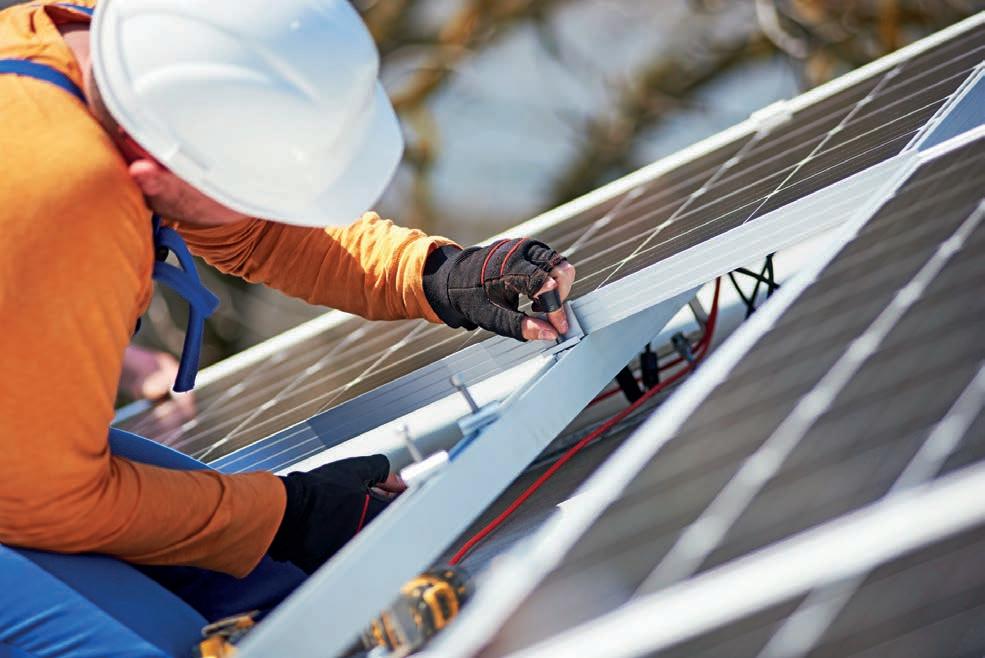
The Victorian Government has launched a landmark scheme, which will offer major discounts for large commercial and industrial businesses to install rooftop solar systems under the state’s Energy Upgrades Program.
The scheme targets around 57,000 highenergy-use sites like factories, warehouses,
food processors and more that are responsible for nearly a third of Victoria’s energy consumption. Eligible businesses may also access battery rebates through the Commonwealth Cheaper Home Batteries Program (up to 100 kWh (kilowatt hour)).
A 200 kW (kilowatt) solar system, which
is capable of generating an average of 600 KWh per day can slash energy bills by $64,000 to $68,000 annually, boosting business cash flow for jobs, growth and innovation, while cutting emissions and
The Clean Energy Council has stated its support for the scheme, mentioning that it has “long advocated for such a scheme to further drive Australia’s clean transition.”
Furthermore, participants of the scheme can choose from almost 3000 Clean Energy Council approved solar modules to ensure that rooftop solar systems installed meet strong safety and quality standards.
Clean Energy Council General Manager – Distributed Energy, Con Hristodoulidis said these incentives unlock untapped potential for renewable energy generation.
“Australian households and small businesses have already embraced rooftop solar in record numbers, with more than 4.2 million having made the switch, and 800,000 of those from Victoria, while large-scale renewable developers are building utility solar at pace,” said.
“The commercial and industrial sectorthe lifeblood of Victoria’s economy – have been the missing middle, with this new initiative set to be a game-changer, filling the gap between household solar and utility-scale renewables.”
The aforementioned Victorian Energy Upgrades program aims to reduce greenhouse gases by providing access to discounted energy efficient products and services.
The Clean Energy Council has released its bi-annual Rooftop solar and storage report, providing insight into the current trends and momentum around the adoption and acceleration of solar resources and technology in the sector.
The report shows that Australian consumers and small businesses continue to take advantage of Australia’s abundant solar resources with rooftop solar accounting for 12.8 per cent of all electricity generated in the first half of the year.
In the first half of 2025, there were 115,584 rooftop solar installations on Australian homes and businesses. These installations alone represent more than 1.1 GW (gigawatts) of new installed capacity into the grid.
Queensland emerged as the leading state for total capacity installed, with 326 MW
(megawatts), surpassing New South Wales for the first time as the leading state.
When it comes to battery technology, a record breaking 85,000 units were sold in the first half of 2025, with the Federal and Western Australian residential home battery programs spurring an increase in sales in the second quarter of this year.
By the end of June this year, around 5157
approved rooftop solar, inverter products and household batteries were made available to installers across the country.
Ultimately, findings from the report outline the continued effectiveness and assistance of rooftop solar in contributing to Australia’s national target, with 82 per cent of electricity coming from clean energy sources by 2030.
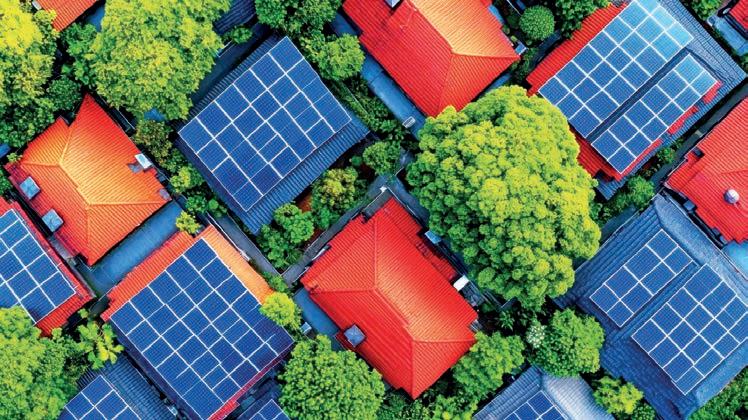
The value of homes housing solar power systems has shown to increase by a national average of around $23,000 compared to houses without, as stated as part of a new report from Cotality.
The recent Watt’s it Worth: Quantifying the value of solar and energy efficiency ratings in real estate has found that homes with solar panel systems are valued at about 2.7 per cent more than comparable homes without.
Energy performance has emerged as a key aspect in how properties are being appraised, financed and sold. This also comes amidst increased consumer awareness around the benefits of energy efficient technologies.
More than six million homes were analysed during the development of the report, which was developed in collaboration with Proptech Australia.
The report details how solar uptake varies across the country. Nationally, 29 per cent of houses have rooftop solar systems installed. Coverage exceeds 40 per cent in Perth, Adelaide and Brisbane, while Hobart, Regional Victoria and Regional Tasmania fall below 20 per cent.
Among these regions, the study found a consistent price premium associated with the presence of solar power systems, a highly visible and widely adopted home upgrade.
Regionally, the impact varies significantly, with the highest percentage uplift seen in Regional Northern Territory at 6.9 per cent, or about $31,350. In dollar terms, the uplift for a home with solar ranged from $14,093 in Adelaide to $30,459 in Hobart, reflecting buyer demand for energy-saving features.
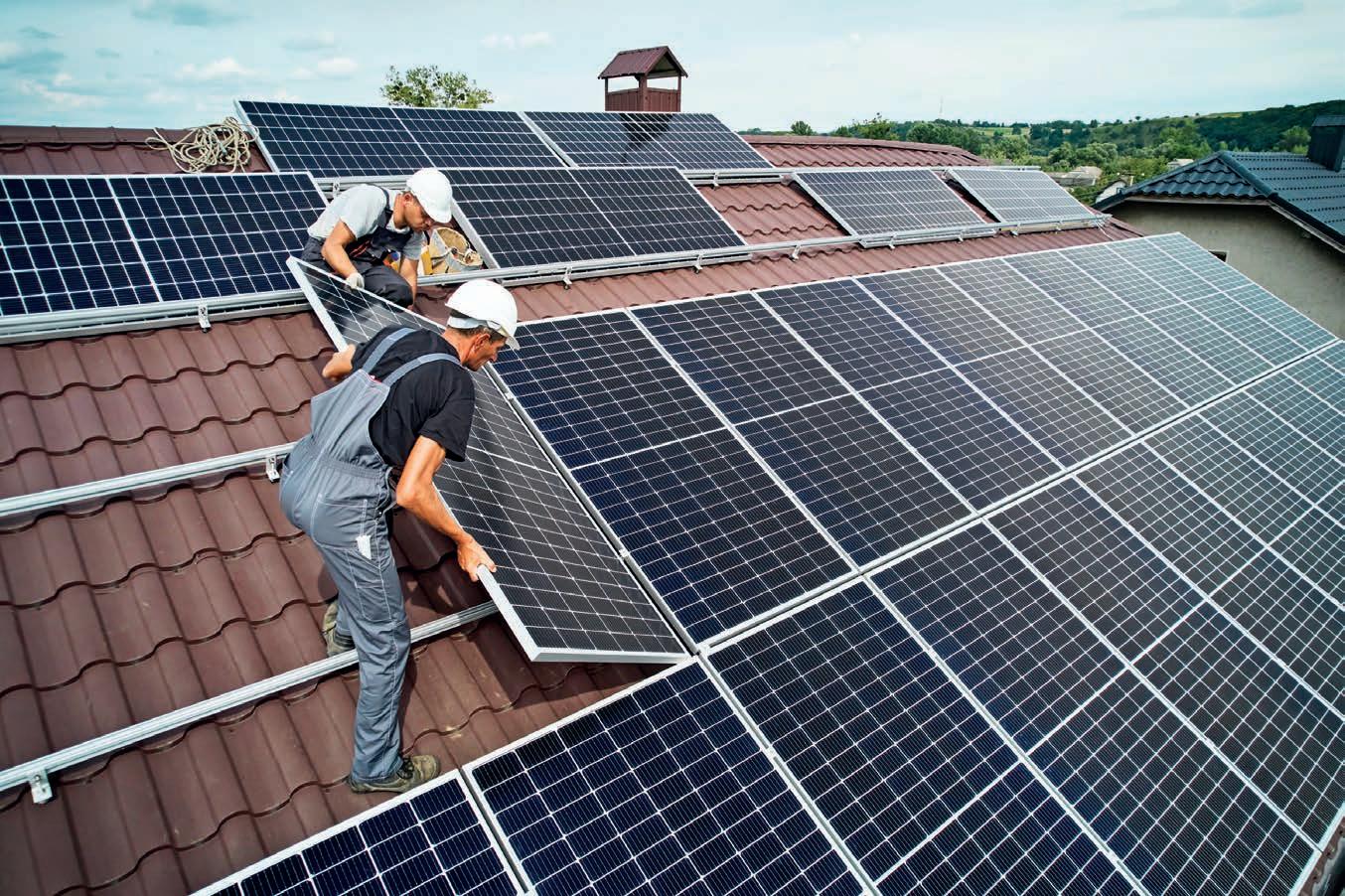
Test cases have proven the need for greater economical perspective in the long-term performance of solar installations.
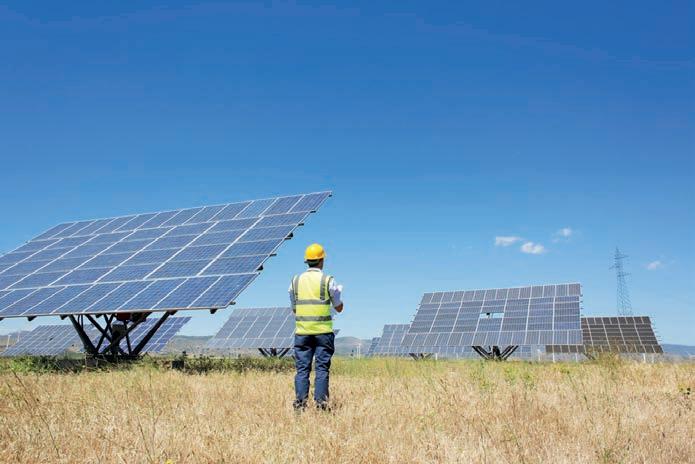
Australia’s rapid uptake of rooftop solar is transforming the national energy market, creating both opportunities and challenges for largescale renewable projects.
Earlier this month, a 16,000-panel solar farm in outback Queensland was taken offline after owner, Doug Scouller, deemed it no longer financially viable to remain connected to the grid.
The facility, which supplied electricity to homes across the Gulf of Carpentaria for eight years, was shut
down following unsuccessful contract negotiations with Ergon Energy.
Scouller said the revised powerpurchase terms would have required payments of about $10,000 per month to keep the site operating. Without onsite battery storage, falling daytime wholesale prices – at times negative –made the project uneconomic.
Energy analysts suggest the case reflects broader market adjustments within Australia’s cleanenergy transition.
Rooftop solar systems, now installed
on more than 4.2 million homes, are producing record levels of midday generation and lowering wholesale prices.
According to Joel Gilmore, Associate Professor at Griffith University, the average household system has grown seven-fold in capacity over the past decade. This makes distributed rooftop output the nation’s largest source of renewable generation.
Vince Garrone, former Manager at Energex, said greater integration of storage will be key to maintaining project viability.
“Without batteries, many solar farms will find it difficult to compete,” he said.
“Long-term agreements and the ability to store and shift power into the evening are essential.”
As battery costs continue to decline and adoption expands across households and utilities, analysts expect further market realignment.
For the sustainability of Australia’s clean-energy system, the sector’s ongoing challenge is to evolve pricing and infrastructure frameworks that appropriately value firmed renewable generation alongside daytime output.
A joint initiative between the Federal and Victorian governments is providing an additional $32 million to support a wider rollout and installation of solar for residential apartments.
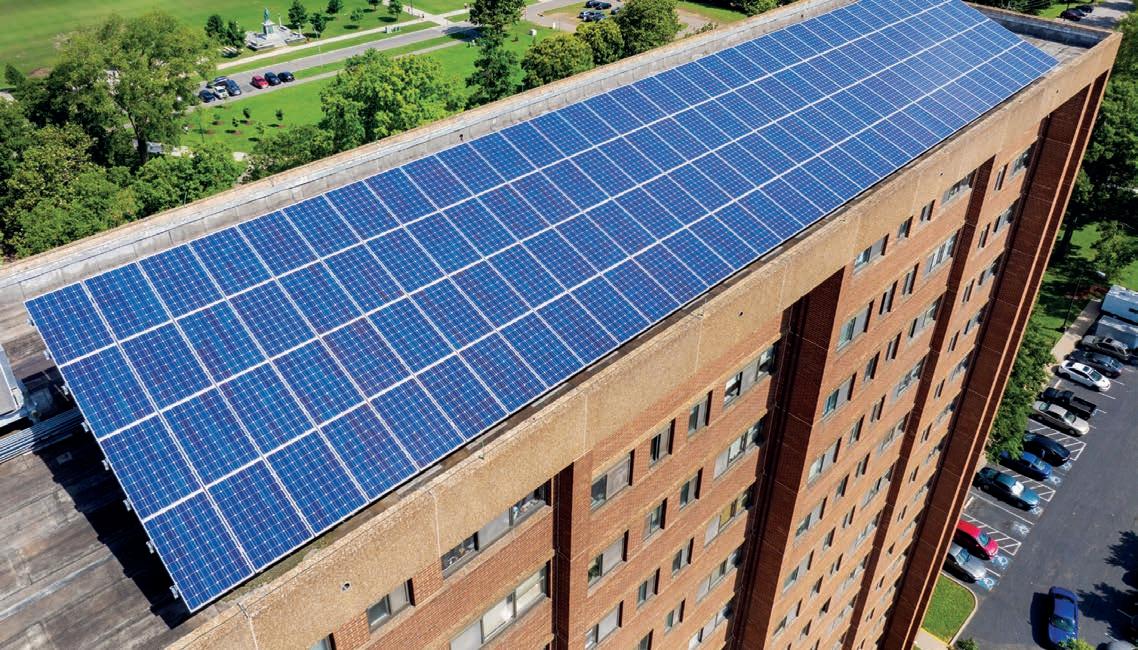
The third round of the Victorian Solar for Apartments program is now open, helping more residents in Victorian apartments to access the benefits of rooftop solar.
The program provides funding through body corporates to support the installation of shared rooftop solar systems on eligible apartment buildings and other multi-unit dwellings in Victoria.
Round three of the program provides 5000 rebates of up to $2800 per apartment, as well as $140,000 per building. Energy bill savings under the program are estimated to be up to $500 a
year for each apartment.
This program aims to also breakdown common barriers to rooftop solar access, such as renting and not owning the apartment, not being able to afford the initial capital, as well as difficulty securing and agreements with their owner’s corporation.
Residents have until 5pm Thursday 30 April 2026 to apply.
Victoria has opened round three of the Solar for Apartments program, with thousands of apartment residents to see their energy bills fall.
The joint initiative from the Victorian and Federal governments is providing 5000 new rebates worth up to $2800 per household, or $140,000 per apartment building, to install rooftop solar.
With a total funding pool of $32 million, the program targets apartment blocks, strata townhouses and units with common property rooftops managed by an Owners Corporation.
Minister for Energy and Resources Lily D’Ambrosio launched the latest round during a visit to an inner-city apartment complex.
She said the program had already demonstrated strong uptake since its
launch in February 2024. More than 3200 households have installed panels so far, with renters accounting for around half.
“We’re making it easier for Victorians living in apartments to enjoy the benefits of free energy from the sun and save up to $500 a year on their energy bills with solar,” D’Ambrosio said.
“Around 65 percent of apartment residents are renters and we’re making sure they get the benefit of lower energy bills too.”
The rebate is designed to overcome the high upfront costs and split incentives that have historically limited solar access for apartment dwellers.
Each system is installed on the shared
Program uptake has been strongest in inner Melbourne. Merri-bek, Port Phillip, Yarra and Darebin councils report the highest number of approved applications, reflecting their concentration of multidwelling buildings.
Apartment residents who secure a rebate could save up to $500 annually on power bills, while cutting emissions by reducing reliance on coal and gas-fired generation.
Federal Assistant Minister Ged Kearney said the rollout demonstrated that “all of us can play a role cutting emissions,” while Northcote MP Kat Theophanous emphasised the benefits for renters.
Northern Metropolitan MP Sheena Watts said the program reflects changing housing
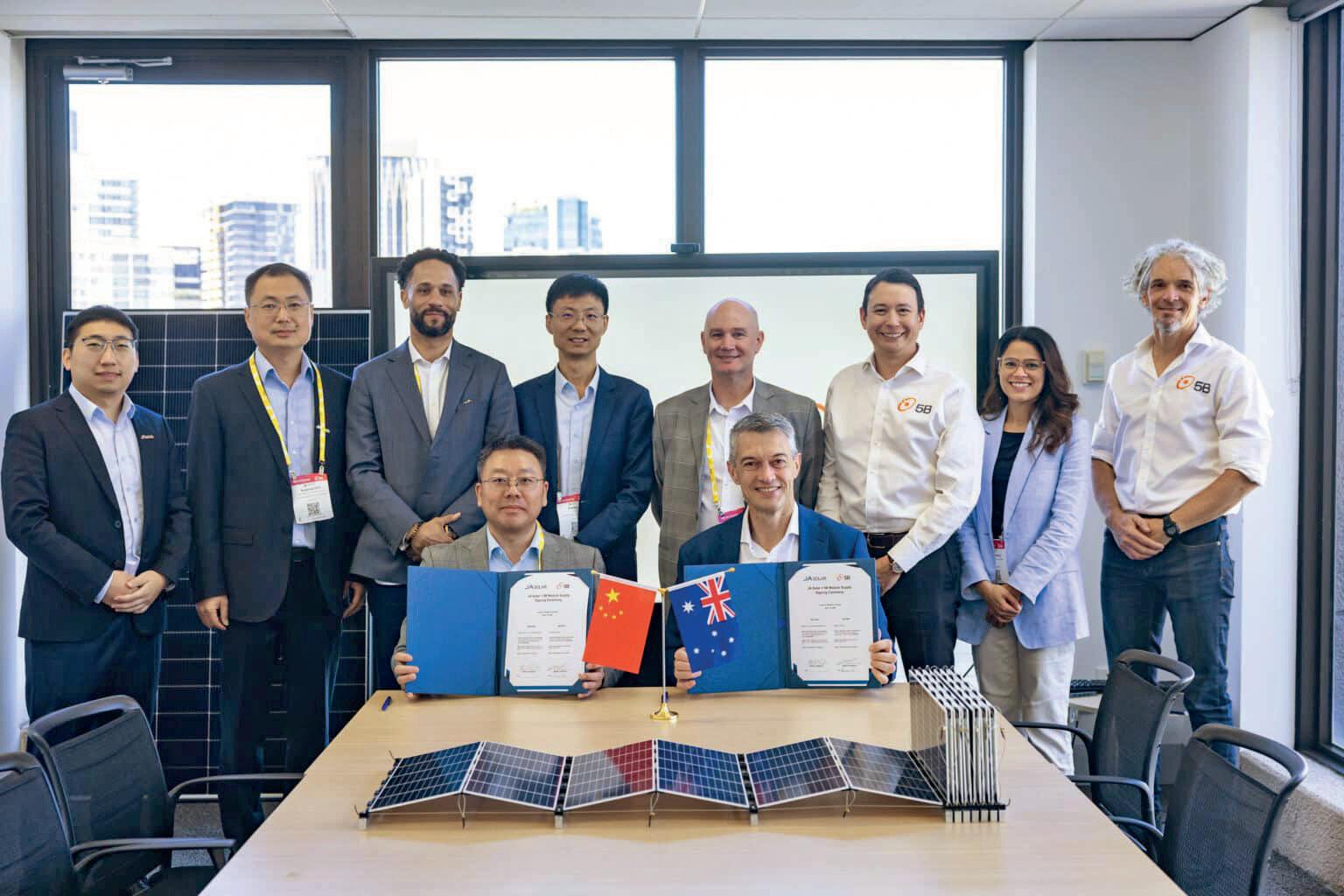
MW (megawatts) of JA Solar’s DeepBlue 4.0 Pro modules for a largescale solar project in Western Australia, marking the largest collaboration to date between the two companies.
Built on years of close technical cooperation, this agreement combines the complementary strengths of JA Solar and 5B to deliver greater value for photovoltaic (PV) developers. JA Solar’s high-efficiency modules, renowned for their reliability, have been rigorously tested and optimised for seamless integration with 5B’s Maverick system. The Maverick is a prefabricated, re-deployable solar
advantage as Australia enters its peak storm season.
When paired with JA Solar’s DeepBlue 4.0 Pro modules, the combined solution enables fast-track installation, reduced balance-of-system costs, and consistent energy output. This synergy results in shorter project timelines, lower operational risks, and stronger returns for customers operating in challenging environments.
The signing ceremony brought together senior leaders from both companies – including Daniel Li, VP, East Asia and South Pacific at JA Solar and David Griffin CEO at 5B – alongside key regional and technical heads. Their
technology and local ingenuity can come together to deliver real-world impact,” said Daniel Li.
“By combining JA Solar’s proven module performance with 5B’s advanced deployment technology, we are empowering customers with solutions that are bankable, scalable, and built for Australia’s unique conditions,” he said.
The partnership between JA Solar and 5B reflects a shared vision of accelerating the transition to renewable energy through technical excellence, operational synergy, and deep local collaboration, delivering greater value for the customers who are building the future.