VOLUME 118/1 | FEBRUARY 2026
INDUSTRY EVENTS GREEN METALS
VOLUME 118/1 | FEBRUARY 2026






PAUL HAYES
paul.hayes@primecreative.com.au
IN AN ERA OF RISING EXPECTATIONS AND TIGHTER MARGINS, THE QUIET WORK OF CRUSHING AND SCREENING HAS NEVER MATTERED MORE.
Every new year brings a sense of possibility, a chance to recalibrate strategies, and an opportunity to embrace the innovations shaping our industry. And if there’s one area quietly but crucially underpinning operations, it’s crushing and screening. Often overlooked outside the pit, crushing and screening remains the heartbeat of mining. It’s the point at which raw rock becomes a marketable product, where efficiency, safety and reliability intersect in real-time.
Modern mining operations have become more sophisticated, and the equipment and techniques that drive these processes have had to evolve to keep pace. Australian mines now operate under pressures that are both familiar and unprecedented: higher production targets, stricter environmental expectations, tighter margins, and the imperative to adopt more sustainable practices. Crushing and screening sits at the centre of these challenges, and its evolution is critical to success.
We’ve seen advances across the board in recent years. Modern crushers are bigger, smarter and more energy-efficient than ever.
Automation and digital integration are transforming how operators monitor equipment performance, predict maintenance needs, and optimise throughput. Condition-based monitoring and real-time analytics are integral to maximising uptime and productivity. And screening technology has similarly stepped up, with finer control over particle size, enhanced wear resistance and modular designs that allow operators to adapt quickly to changing ore types and production schedules.
But it’s not just about the machines. The real story lies in how mining companies, contractors
CHAIRMAN JOHN MURPHY
CHIEF EXECUTIVE OFFICER CHRISTINE CLANCY
MANAGING EDITOR PAUL HAYES
Email: paul.hayes@primecreative.com.au
ASSISTANT EDITOR
ENGEL SCHMIDL
Email: engelbert.schmidl@primecreative.com.au
JOURNALISTS
DYLAN BROWN
Email: dylan.brown@primecreative.com.au
BEN CARTWRIGHT
Email: ben.cartwright@primecreative.com.au
and equipment suppliers collaborate to deliver solutions that meet their goals.
Across Australia, the focus is increasingly on reducing energy consumption, limiting dust and noise, and improving worker safety, all while keeping costs manageable. These priorities are shaping the next generation of crushing and screening technology. It’s a period of innovation that mirrors the broader trends: smarter, leaner, greener operations that do more with less.
This issue of Australian Mining takes a closer look at the state of the crushing and screening industry in Australia. We explore the equipment and technologies that are leading the way, highlighting how operators are adopting innovative solutions to improve efficiency, safety, and sustainability across their operations.
As 2026 unfolds, it’s clear that crushing and screening will continue to be more than just a background process. It is, in many ways, a bellwether for how well operations adapt to modern challenges. Companies that embrace innovation in this space will not only improve efficiency and safety but also position themselves to compete on a global stage.
So as we begin the year, it’s worth remembering that even the biggest mines start with the basics: rock, grit and the machines that turn raw materials into opportunity.
In crushing and screening, we see a microcosm of the industry at large; resilient, innovative and ready to take on the future.
Paul Hayes Managing Editor
ETHAN BENEDICTO
Email: ethan.benedicto@primecreative.com.au
CLIENT SUCCESS MANAGER
JANINE CLEMENTS
Tel: (02) 9439 7227
Email: janine.clements@primecreative.com.au
SALES MANAGER
JONATHAN DUCKETT
Mob: 0498 091 027
Email: jonathan.duckett@primecreative.com.au
BUSINESS DEVELOPMENT MANAGERS
JAMES PHIPPS
Mob: 0466 005 715
Email: james.phipps@primecreative.com.au
ROB O’BRYAN
Mob: 0411 067 795
Email: robert.obryan@primecreative.com.au
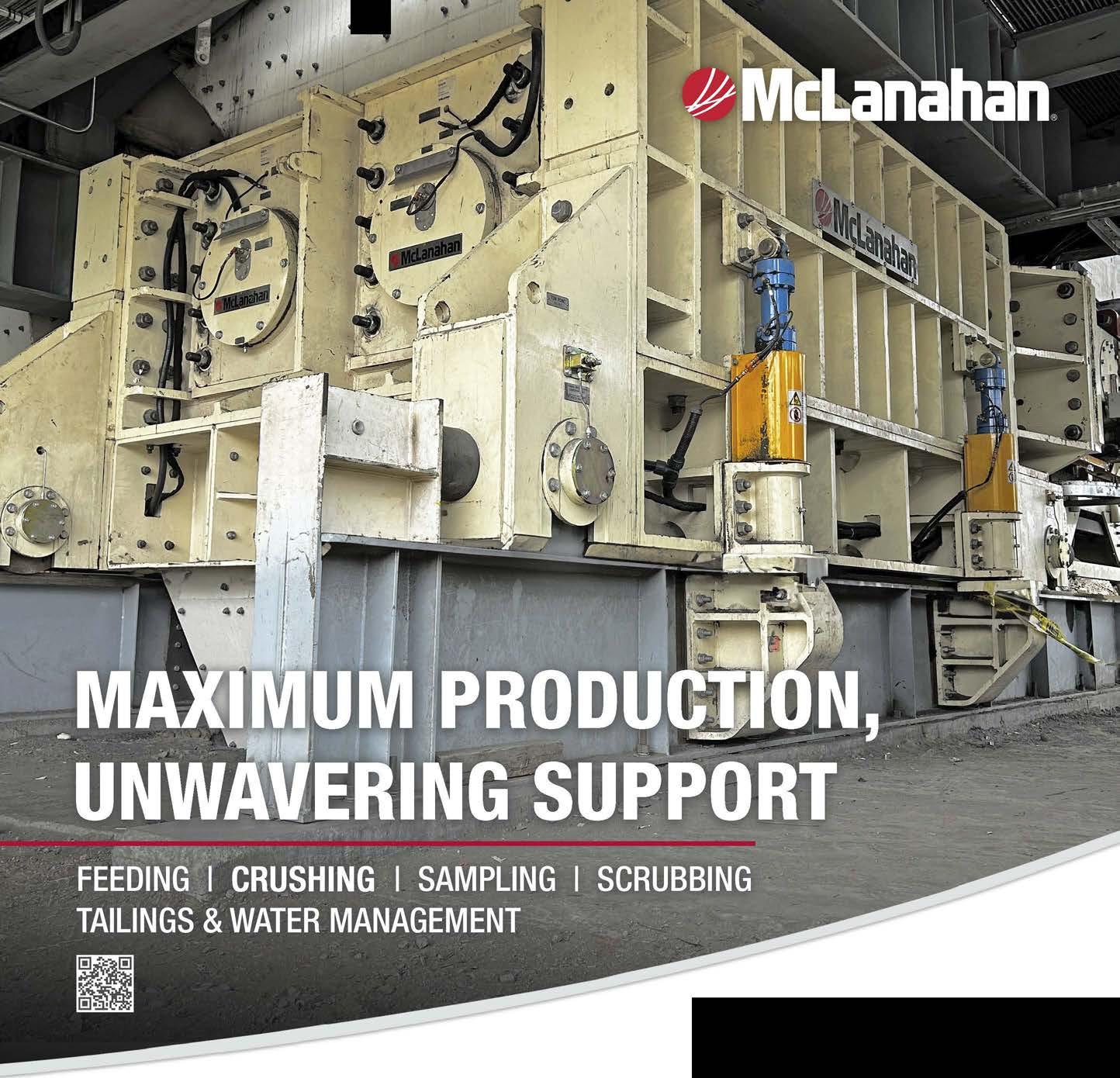
Front cover
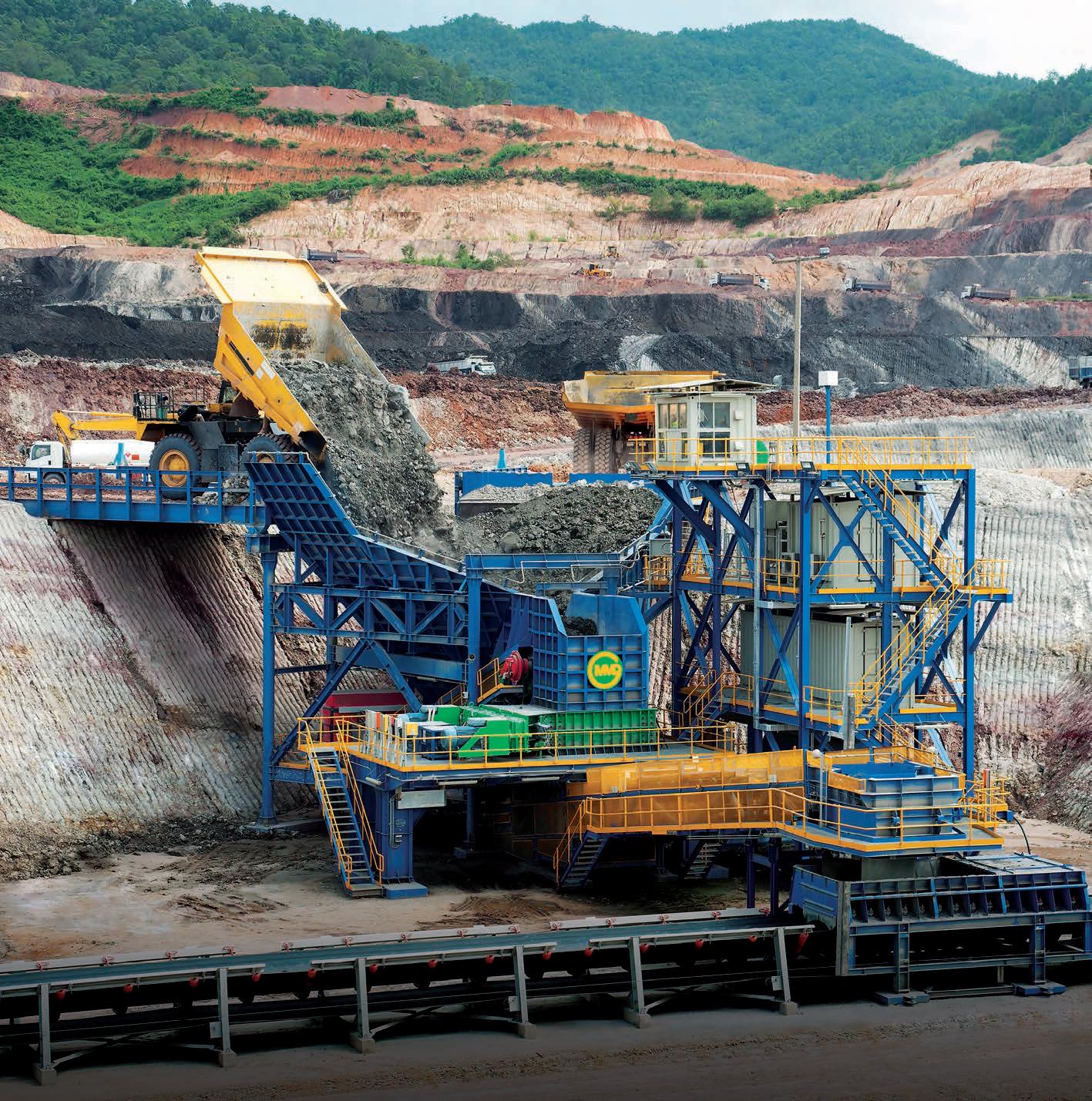
MMD Group is a global leader in material processing equipment for the mining, quarrying and recycling industries. The company is known for innovative technologies, including the Mineral Sizer and Apron Plate Feeder. MMD’s equipment is designed to boost productivity, improve efficiency and reduce operational costs across a range of materials, including coal, iron ore, limestone, bauxite and rare minerals.
The company provides solutions tailored to each client’s needs.
Beyond machinery, MMD offers planning, engineering, installation, training and ongoing support, ensuring clients receive complete service throughout the lifecycle of their operations. With a global network of offices and workshops, MMD is a trusted partner helping mining and processing operations achieve efficiency, safety and sustainability.
Cover image: MMD Group
ART DIRECTOR MICHELLE WESTON michelle.weston@primecreative.com.au
SUBSCRIPTION RATES Australia (surface mail) $120.00 (incl GST) Overseas A$149.00 For subscriptions enquiries please contact (03) 9690 8766 subscriptions@primecreative.com.au
PRIME
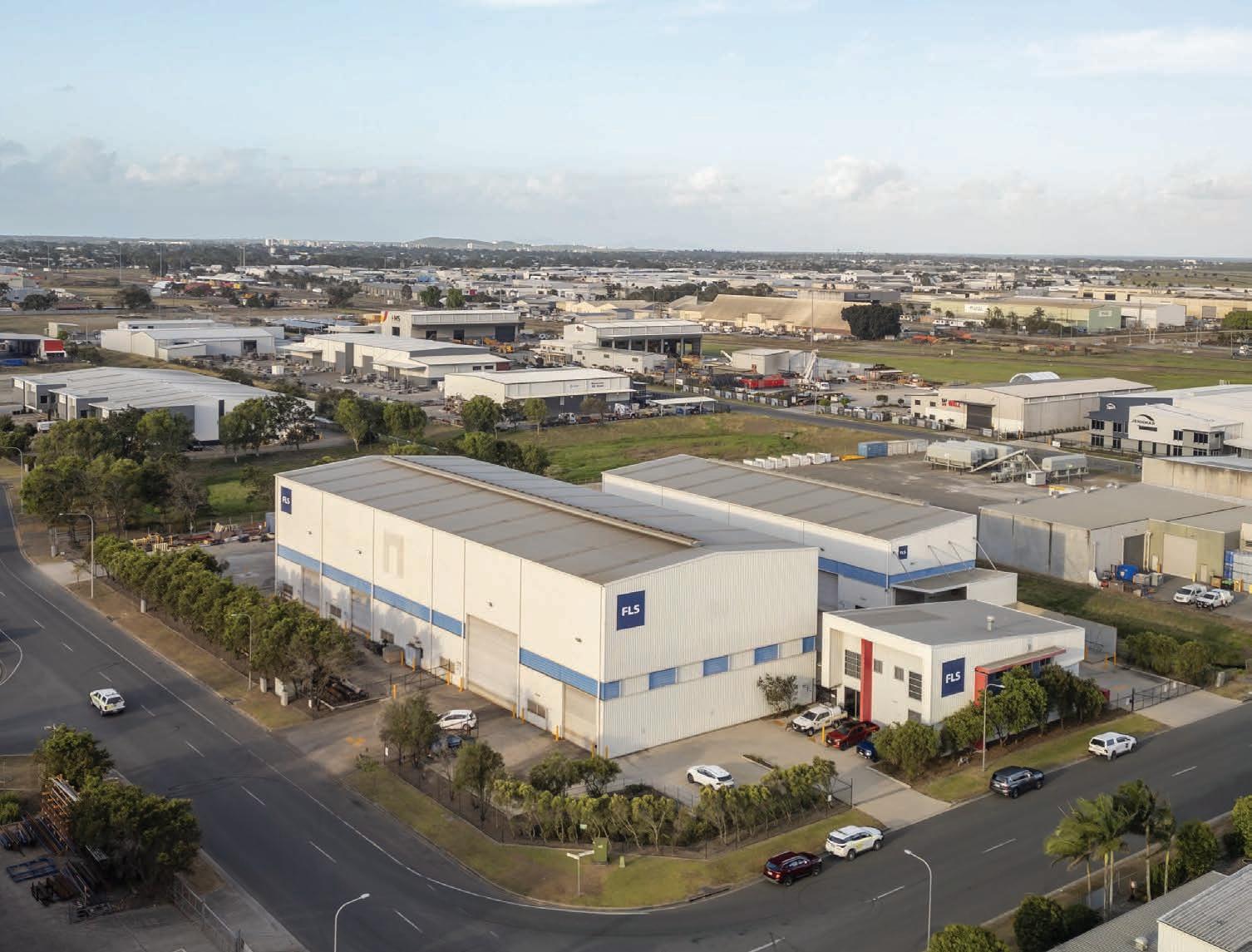
Serving the mining industry across Australia. Whether you’re in Western Australia’s iron ore heartland, the coal fields of Queensland, or the mineral-rich regions of New South Wales and South Australia, our regional service centres are ready to support you with expertise, repair and machining services.
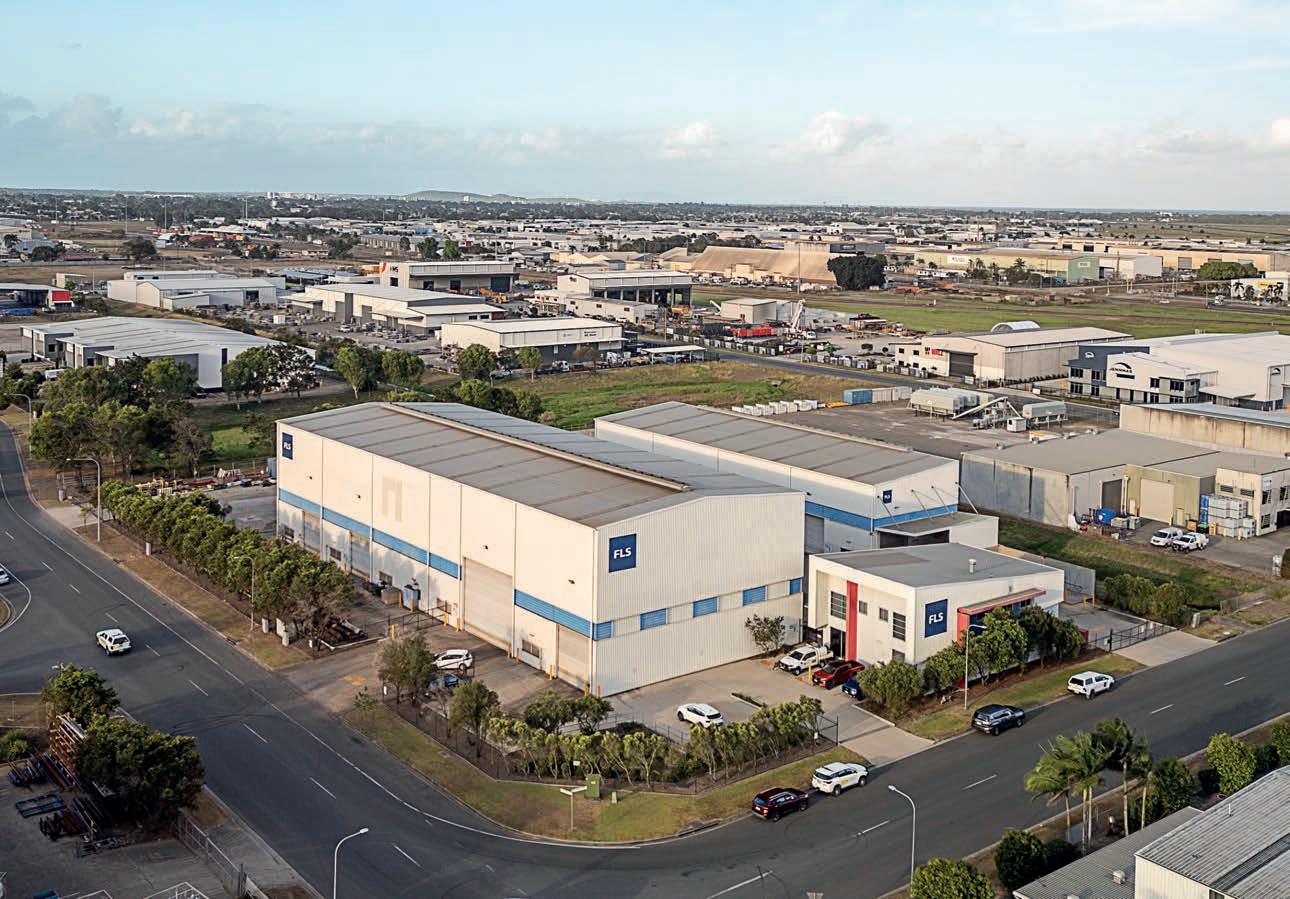
FLS’s state-of-the-art Service Centres in Australia are strategically located near major mining regions.
You can be sure our team is ready to meet your needs by providing the most suitable parts and services required to safely and efficiently assist you in keeping your equipment up and running, maximising up time and boosting productivity.
www.fls.com
■ Reduce downtime - mining experts on your doorstep, for planned maintenance or an unplanned outage
■ Local machining facilities - reduce lead time for spare and wear parts, repairs, rebuilds, exchanges
■ One-stop-shop supports performance improvement –training, engineering or onsite support
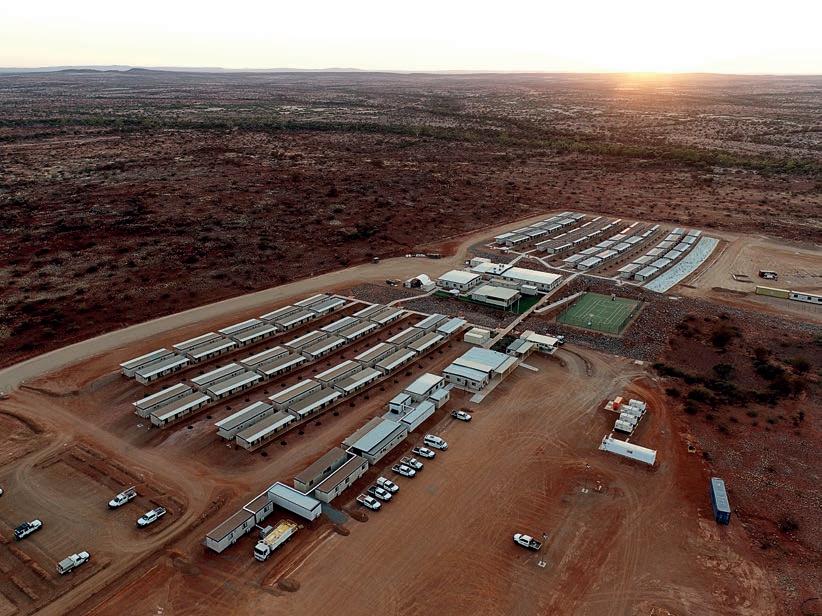
8 CRITICAL MINERALS
Ring of Fire ignites
From a remote promise to a near-term production opportunity, Australian miner Wyloo is advancing Canada’s Ring of Fire as a critical minerals powerhouse for the clean-tech era.
12 CRUSHING AND SCREENING
The quiet backbone
Always essential, crushing and screening underpins the productivity, efficiency and resilience of Australia’s modern mining operations.
14 CRUSHING AND SCREENING
Sizing up a rare opportunity
Growing demand, complex geology and shifting global supply chains are pushing rare earth miners to rethink their front-end processing.
24 CRUSHING AND SCREENING
Holistic thinking in mineral processing Metso’s history of innovation gives it a unique perspective on mining processes and how every component in a circuit fits together.
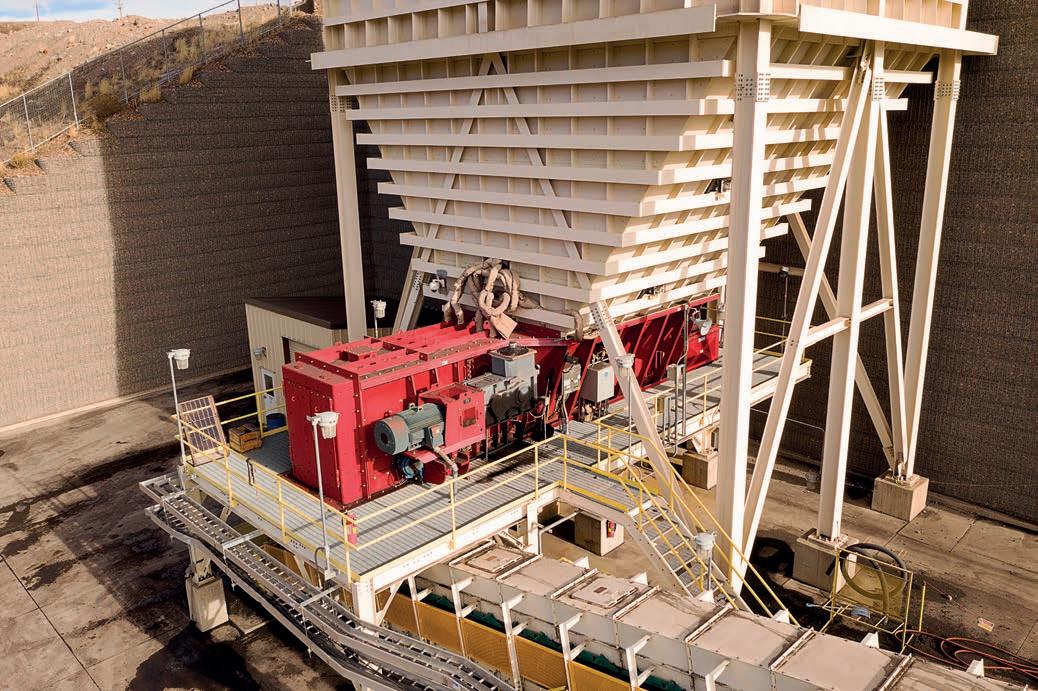
56 ASSET MANAGEMENT
Data-driven confidence
A successful air-filter trial has helped Hastings Deering lift operational efficiency at Yancoal’s Cameby Downs mine.
30 CRUSHING AND SCREENING
Global smarts, local knowledge
Opening a new service centre in Mackay was a statement of intent for leading mining equipment specialist FLS.
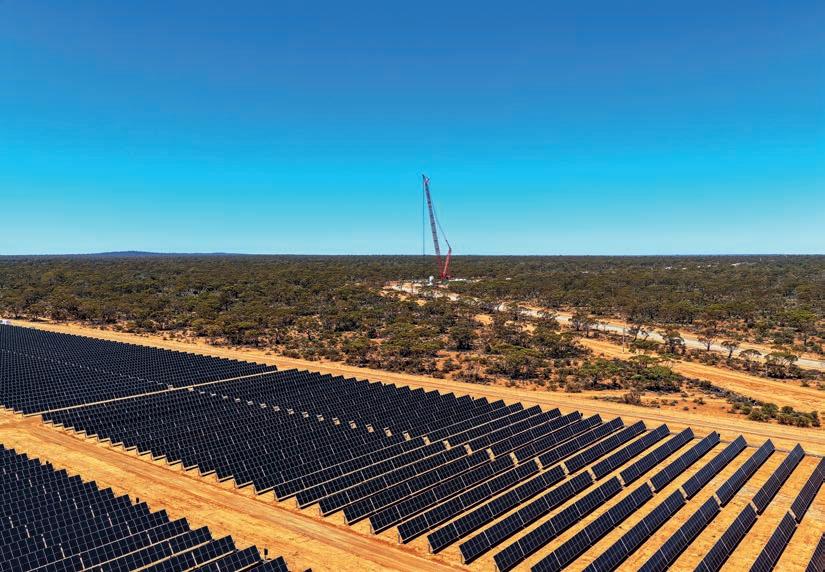
38 ESG
A renewable transformation at St Ives Gold Fields is undertaking one of Australian mining’s most ambitious renewable energy projects at St Ives, fundamentally changing how the operation will be powered into the future.
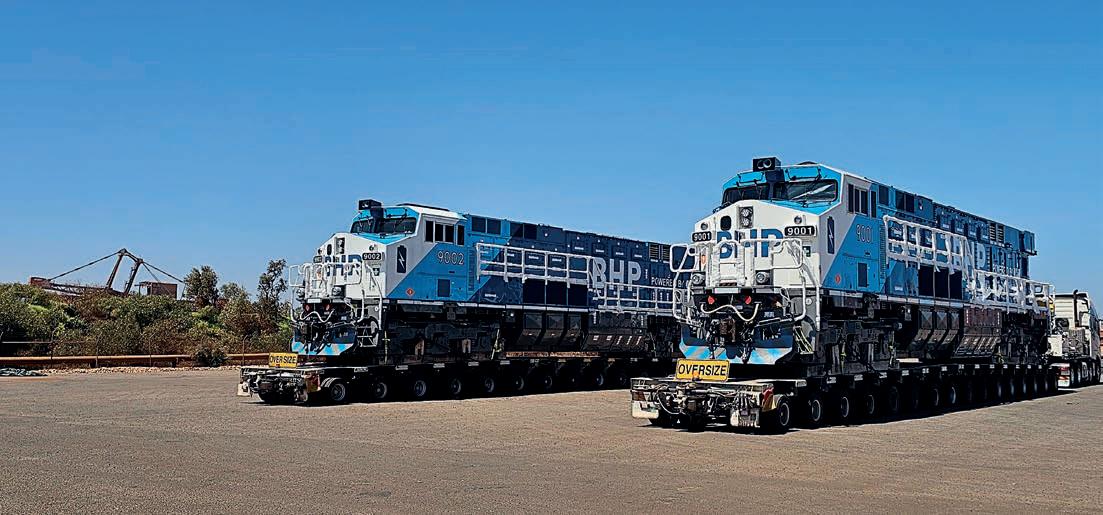
62 INDUSTRY INSIGHT
From teething to transformation
With technological, operational and environmental advancements across the sector in the last 12 months, power solutions provider Genus believes greater opportunity is still to come.
70 GREEN METALS
A green opportunity
As the world moves towards net zero, Australia has a key foothold in assisting in the global energy transition.
MINING AND RESOURCES LEADERS FEATURED PROMINENTLY ACROSS THE HIGHEST-PAID EXECUTIVES.
THE STRONG PRESENCE OF MINING LEADERS AMONG AUSTRALIA’S HIGHEST-PAID EXECUTIVES UNDERSCORES THE SECTOR’S GROWING IMPORTANCE TO NATIONAL COMPETITIVENESS AND LONG-TERM ECONOMIC GROWTH.
Mining executives were again well represented among Australia’s highestpaid corporate leaders, highlighting the value creation and risk-taking that underpin the modern resources sector.
Topping the list in 2025 was Develop Global chief executive officer (CEO) Bill Beament, whose remuneration reflected a year of strong commodity markets, long-term incentives coming to fruition and sustained shareholder returns.
According to the Australian Financial Review, using data from OpenDirector, Beament emerged as Australia’s highestpaid CEO after converting 14 million options into shares, lifting his realised earnings to more than $59 million. The conversion, completed at a cost of $9.1 million, boosted Beament’s paper wealth by approximately $58 million and marked the single largest realised windfall for an Australian CEO in 2025.
While eye-catching, the outcome underscores a defining feature of mining leadership remuneration: long-dated incentives tied directly to company performance and commodity cycles.
Beament’s result was not an isolated case. Mining and resources leaders featured prominently across the top 20 highest-paid CEOs, with eight executives from the sector making the list. Among them were Alcoa chief executive William Oplinger, who earned $26.1 million; former Rio Tinto chief Jakob Stausholm on $15.6 million; and BHP chief executive officer Mike Henry with $13.7 million.
Chief executives from WA1 Resources, Genesis Minerals, Northern Star Resources and Yancoal Australia also featured, reinforcing the depth of leadership across Australia’s mining and energy landscape.
The strong showing comes amid a buoyant period for several commodities, particularly gold, which rose by close to 50 per cent over the past year and reached record highs in 2025. For gold producers and developers, rising prices translated into stronger balance sheets, higher share prices and, in some cases, long-term incentives that far exceeded their original valuations.
Analysis by OpenDirector showed that the mining and healthcare sectors stood out for having the
largest gap between statutory reported remuneration and realised pay. The difference reflects executives cashing in on incentives that were granted years earlier, often during periods of uncertainty or pre-production risk.
“Many CEOs in the materials sector received one-off options during their companies’ pre-production phases,” OpenDirector chief executive Donald Hellyer said.
“Their willingness to take risks and invest effort paid off, particularly as rising gold prices and share values boosted returns.”
For the resources industry, the data offers a broader message about growth and global competitiveness. Mining projects are capital-intensive, long-cycle investments that require experienced leadership willing to navigate technical risk, regulatory complexity and volatile commodity markets. Executive incentives are typically structured to align rewards with long-term value creation rather than short-term performance.

and ramp-up before any material value is realised. When projects succeed, the financial outcomes can be significant, but so too are the risks of failure, particularly in developmentstage companies.
The prominence of mining leaders among Australia’s top earners also reflects the sector’s ongoing contribution to national prosperity. Resources companies remain major employers, exporters and taxpayers, supporting regional economies while supplying the minerals and metals required for infrastructure, electrification and decarbonisation.
As demand for commodities such as gold, copper, lithium and iron ore continues to be shaped by global energy transition and population growth, strong leadership will remain central to the sector’s ability to invest, innovate and grow.
Industry observers note that mining CEOs often spend years overseeing exploration, approvals, construction
While headline remuneration figures can attract attention, the broader story is one of an industry that rewards long-term commitment, technical expertise and value creation, and one that continues to play a critical role in Australia’s economic future. AM

FROM A REMOTE PROMISE TO A NEAR-TERM PRODUCTION OPPORTUNITY, AUSTRALIAN MINER WYLOO IS ADVANCING CANADA’S RING OF FIRE AS A CRITICAL MINERALS POWERHOUSE FOR THE CLEAN-TECH ERA.
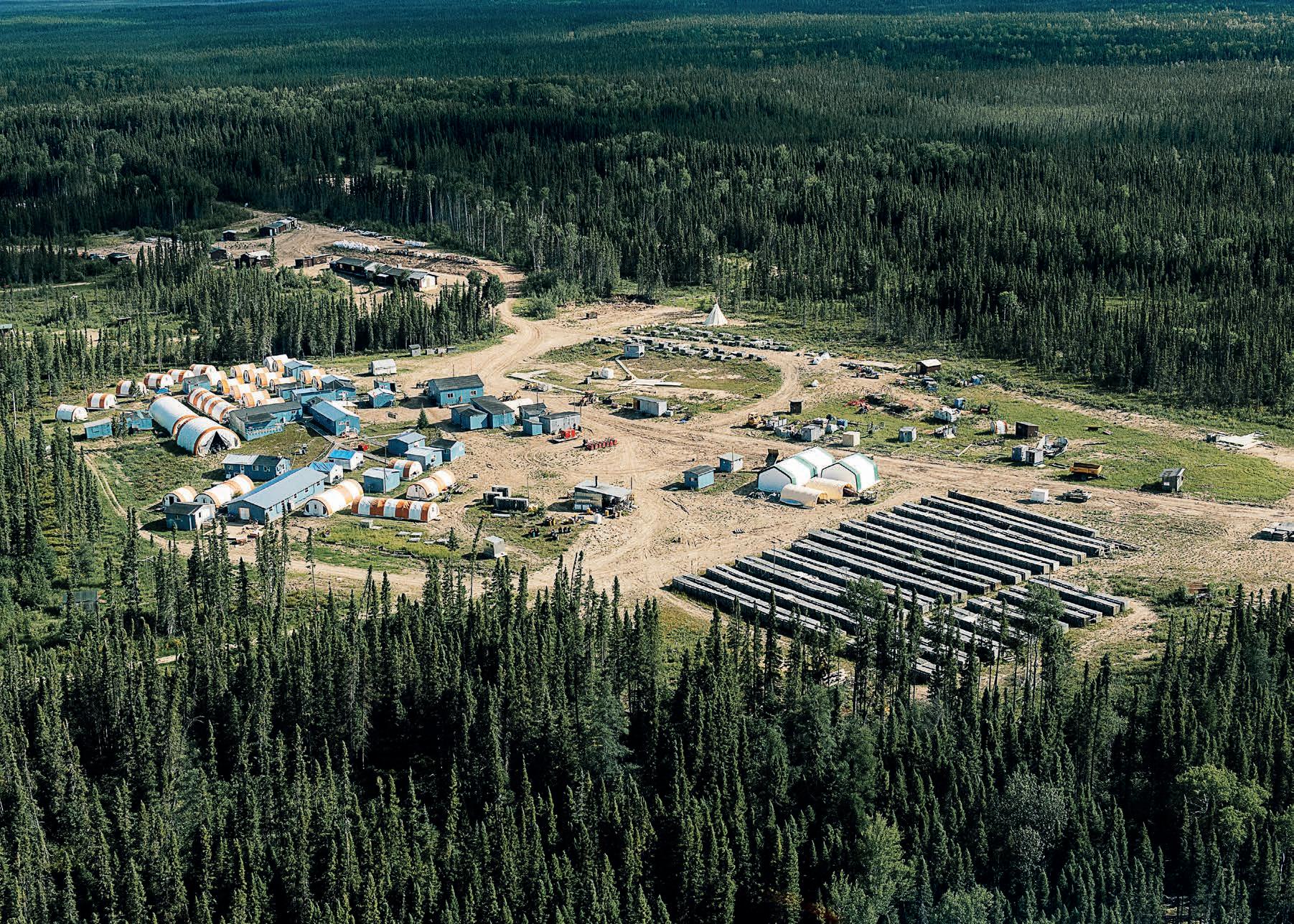
Once a distant prospect, the Ring of Fire is now moving quickly towards production, as Wyloo combines Australian mining know-how with First Nations partnerships to develop one of Canada’s richest mineral regions.
Three years ago, there was little certainty the infrastructure needed to unlock the Ontario region’s mineral potential would move ahead. But momentum has shifted.
Wyloo, which now owns the highgrade Eagle’s Nest nickel-copper-
executive officer Luca Giacovazzi told Australian Mining. “The First Nationsled all-season road is key to unlocking access to the Eagle’s Nest project and surrounding mineral-rich areas.”
The Ring of Fire covers roughly 5000km2 in northern Ontario and contains nickel, copper, chromite and platinum-group elements, metals increasingly sought after for use in electric vehicles (EVs), energy storage, renewable energy systems, and defence technologies.
Eagle’s Nest is regarded as one of the highest-grade undeveloped nickel
particularly the Yangibana rare earths project in WA.
Yangibana is one of the rare earth developments closest to production in Australia, and Giacovazzi said the company is taking a similar partnershipfirst approach in Canada. He described Wyloo’s co-management model in the Ring of Fire with First Nations communities as a defining feature.
“The communities are very much part of running the mine,” Giacovazzi said.
“What they bring is expertise in operating remote regions – power
THE EAGLE’S NEST PROJECT IS PART OF WYLOO’S STRATEGY IN CANADA AMID INCREASING AUSTRALIA–CANADA CRITICAL MINERALS COOPERATION.

bring the operations expertise. It’s a strong partnership.”
While mining will benefit from the new road network, Giacovazzi said its value extends far beyond project access.
“It’s about access into their communities, not just mining,” he said. “It’s foundational for long-term development and partnership, and for building sustainable supply chains across both nations.”
Alongside Eagle’s Nest, Wyloo is working to establish downstream capability in Canada.
The company has signed an agreement to pursue a battery materials processing facility in the Ontario city of Sudbury, aiming to fill a major gap in Canada’s midstream EV battery supply chain.
“It had all the right ingredients to be successful and we’re finally starting to see that play out,” Giacovazzi said.
A major turning point for the Ring of Fire came when responsibility for the road projects shifted towards First Nations leadership in 2022–23.
Marten Falls and Webequie First Nations are now the proponents leading key access road proposals through Ontario’s permitting system.
“It’s a First Nation-led piece of infrastructure,” Giacovazzi said. “These communities have been working tirelessly through the Canadian
permitting system, and now we’re finally at the point of construction. That change was a real circuit breaker for the project.”
Wyloo expects the next 12–24 months to be defined by continued road progress, environmental assessment milestones and deeper partnership agreements.
“Beyond that, you’ll start to see first nickel concentrate from Eagle’s Nest,” Giacovazzi said.
International collaboration is another priority. Wyloo sees emerging opportunities linking Australia, Canada and the US as allied nations working to de-risk critical mineral supply chains.
“Ring of Fire has the potential to be an important part of allied countries’ critical mineral supply,” Giacovazzi said. “Australian companies thriving in Canada, and Canadian companies in Australia, shows how strategic these projects are.
“These metals are fundamental, not just for EVs and renewable energy but for AI [artificial intelligence] and advanced defence technologies.”
In Australia, Wyloo’s Yangibana project continues to advance, with the company positioning it as part of the near-term solution to global rare earth shortages.
“The rare earths market is finely balanced, and current prices aren’t enough to incentivise new supply,” Giacovazzi said.
“We’re strategically positioned to be part of the near-term solution, and our project can produce in months, not years. That’s incredibly rare in this space.”
Giacovazzi said demand for minerals is accelerating across every modern technology sector.
“We’re at an exciting point in history. Technology is advancing faster than ever, from EVs to AI and humanoid robots, but underlying all of this is a need for metals and minerals,” he said.
“We simply haven’t done enough exploration to discover the next generation of mines.
“Minerals are the new oil, and the world is waking up to just how critical they are.”
Public interest in the Ring of Fire is also growing. High-profile advertising campaigns promoting the region have run during major sporting broadcasts in Canada, such as the Toronto Blue Jays’ games during the World Series baseball, catching the attention of viewers all over the country.
“People are starting to understand the scale and importance of this project for Ontario, Canada, and the wider allied world,” Giacovazzi said.
As construction advances and partnerships mature, Wyloo believes the Ring of Fire is steadily moving from potential to reality. AM
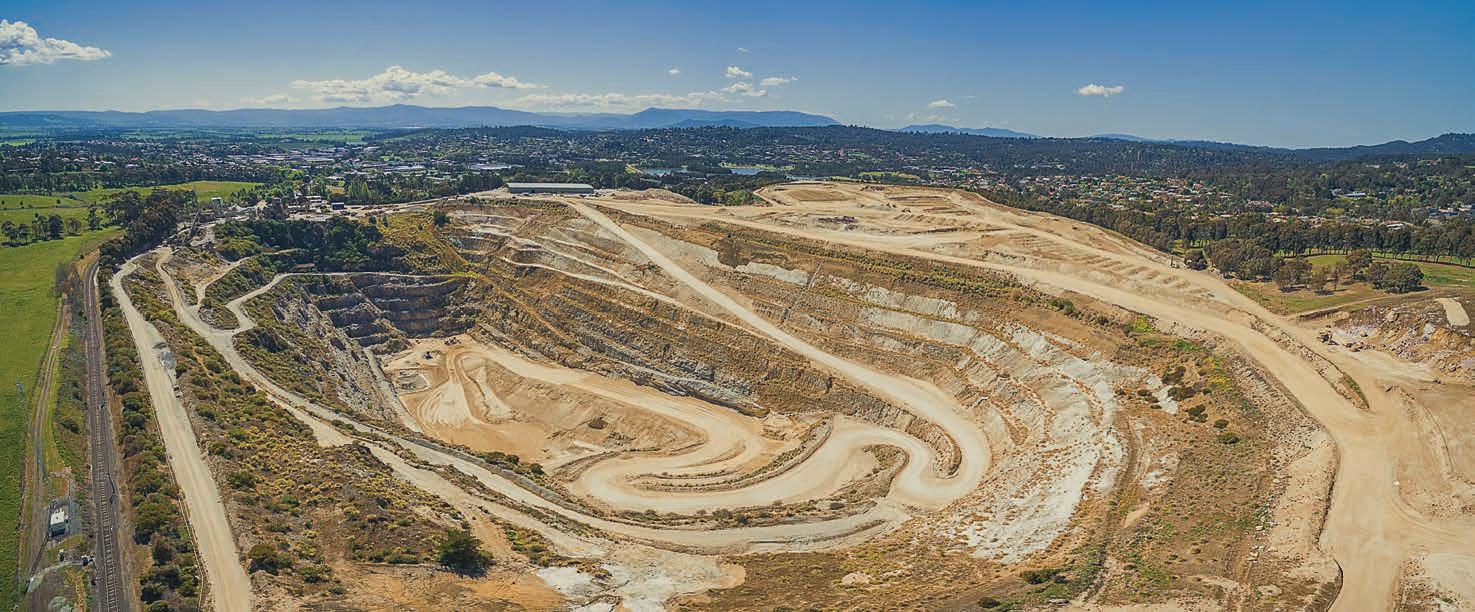
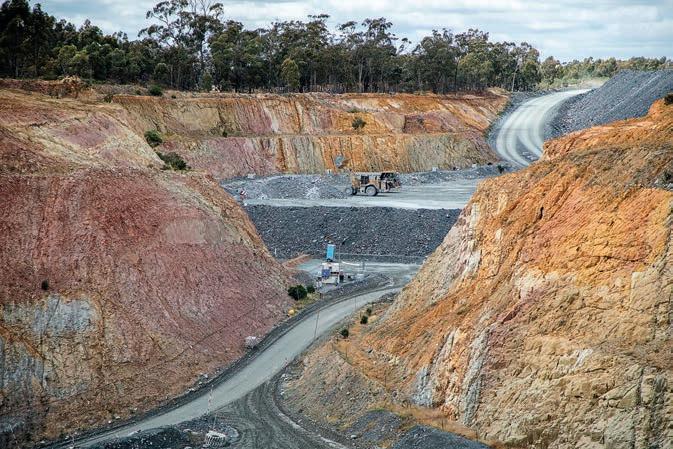
GOLD BUILT VICTORIA’S MINING LEGACY, BUT A NEW WAVE OF CRITICAL MINERALS IS HELPING TO POSITION THE STATE FOR ITS NEXT RESOURCES CHAPTER.
Victoria’s mining story has always been spun with gold. The discovery of payable gold at Ballarat in the early 1850s reshaped the state forever, triggering a rush that transformed a young colony into one of the world’s mining centres.
But while gold built Victoria’s identity, its future is increasingly linked to a different suite of resources. Critical minerals are emerging as the foundation

for a new era, and Victoria is positioning itself as a key player.
Australian Mining spoke with executive director of the Minerals Council of Australia in Victoria, James Sorahan, who said that while state’s gold sector remains strong, it’s the emerging critical minerals opportunity that is placing it firmly in discussions around national supply chains and global partnerships.
Antimony, in particular, stands out as a mineral of growing significance.
“Victoria is a big part of Australia’s critical minerals future.
We are currently the only state mining antimony,” Sorahan said. “Although antimony has been produced in New South Wales previously, Victoria now holds the country’s active operations and some of its most promising exploration projects.
“Victoria is producing probably four or five per cent of the world’s supply of antimony.”
Strategic demand from partners such as the US, Canada, the UK and the EU has amplified the importance of Victoria’s critical minerals deposits.
The ‘Melbourne Zone’, home to gold and antimony discoveries by Southern Cross Gold, offer a convergence rarely found anywhere in the world.
“The combination is something that is really unique,” Sorahan said.
Beyond antimony, Victoria’s rareearth-rich mineral sands deposits present one of the state’s greatest long-term opportunities. The Murray Basin contains the world’s largest known mineral sands deposits, yet Victoria remains the only basin state not currently mining them.
That, Sorahan believes, is likely to change.
“We can be a real powerhouse in gold, mineral sands, rare earths and antimony,” he said.
Sorahan pointed to how rapidly global markets are evolving.
“The world has changed in the past 10 to 15 years. Rare earths are now really important,” he said.
Proposed mineral sands operations in Victoria hold rare-earth-rich deposits with mine lives of more than 20 years, representing a major opportunity for
VICTORIA IS A BIG PART OF AUSTRALIA’S CRITICAL MINERALS FUTURE. WE ARE CURRENTLY THE ONLY STATE MINING ANTIMONY.”
stable regional employment and longterm economic benefit.
The Victorian Government has also recognised the significance of these emerging industries and increased its support for the sector, with improvements to regulatory pathways a major step forward.
“We have, I think, the best project facilitation office in the country,” Sorahan said, referring to the Resources Victoria Approvals Coordinator introduced in 2023.
“It has helped complex projects navigate multiple acts and regulations and has brought regulators together to support investment.”
In addition, the streamlining of exploration approvals has provided further momentum.
“We are now approaching about 100 per cent within the statutory timeframe of exploration licences being granted,” Sorahan said.
This consistency has been essential as explorers sought to progress advanced drilling and development programs across multiple commodities.
As Victoria prepares for this growth, building a strong skills pipeline is key.
“We need more exposure to earth sciences in schools and universities offering metallurgy, mining engineering and geology,” Sorahan said.
He also emphasised the importance of maintaining strong geoscience capability.
“We need to ensure that we have the right geological knowledge through GeoSurvey Victoria,” he said.
Sorahan believes land access remains central to enabling exploration and future mines.
“Farming and mining can work together,” he said.
“The industry is committed to quality rehabilitation, and we want to ensure everybody benefits.”
Victoria’s golden legacy has created the foundation for a thriving modern sector. But as global demand for critical minerals has accelerated, the state is
poised to contribute much more. With rare-earth-rich mineral sands, highvalue antimony deposits and deeper gold yet to be uncovered, Victoria was entering a new chapter driven by its history and its future potential.
As Sorahan put it, Victoria is “really open for business” and ready to take its place in Australia’s critical minerals landscape.
If the gold rush of the 1800s shaped Victoria’s past, the emerging critical minerals era had the potential to shape its future. And for the first time in decades, Victoria is not only part of Australia’s mining conversation – it is back at the centre of it. AM
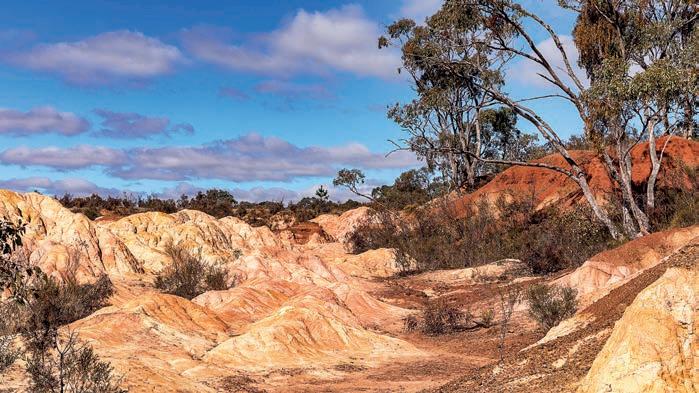
WHILE GOLD BUILT VICTORIA’S IDENTITY, ITS FUTURE IS INCREASINGLY LINKED TO A DIFFERENT SUITE OF MINERALS.
ONCE CONSIDERED A NICHE COMMODITY, ANTIMONY HAS RAPIDLY BECOME ONE OF THE WORLD’S MOST STRATEGICALLY IMPORTANT MINERALS. IT IS USED IN DEFENCE APPLICATIONS, ENERGY STORAGE, SEMI-CONDUCTORS AND FLAME-RETARDANT MATERIALS, PLACING IT FIRMLY AT THE CENTRE OF MODERN INDUSTRIAL AND SECURITY SUPPLY CHAINS.
GLOBAL SUPPLY HAS TIGHTENED AS DEMAND FROM ADVANCED ECONOMIES CONTINUES TO RISE, PARTICULARLY ACROSS THE US, UK, EU AND CANADA, ALL OF WHICH ARE SEEKING SECURE, RELIABLE SOURCES OF CRITICAL MINERALS. AGAINST THIS BACKDROP, VICTORIA’S POSITION AS AUSTRALIA’S ONLY ACTIVE ANTIMONY-PRODUCING STATE HAS ELEVATED ITS STRATEGIC IMPORTANCE.
WITH SEVERAL PROMISING EXPLORATION PROJECTS UNDERWAY AND A SUPPORTIVE APPROVALS FRAMEWORK IN PLACE, VICTORIA IS INCREASINGLY BEING VIEWED AS A DEPENDABLE SUPPLIER IN A MARKET WHERE SECURITY OF SUPPLY IS NOW JUST AS IMPORTANT AS VOLUME.
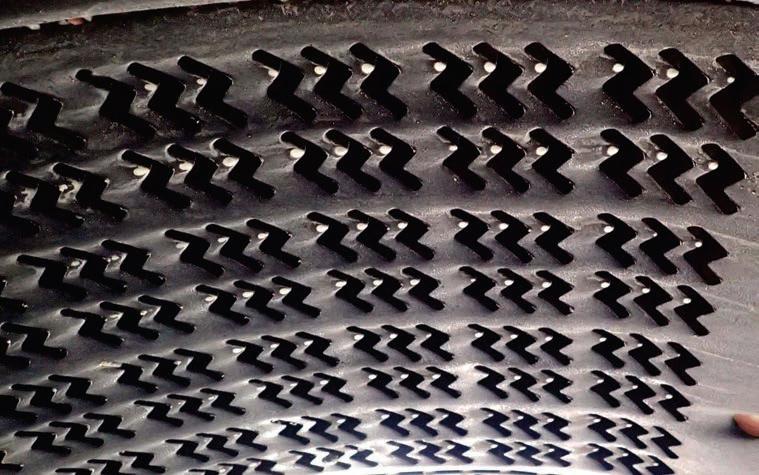

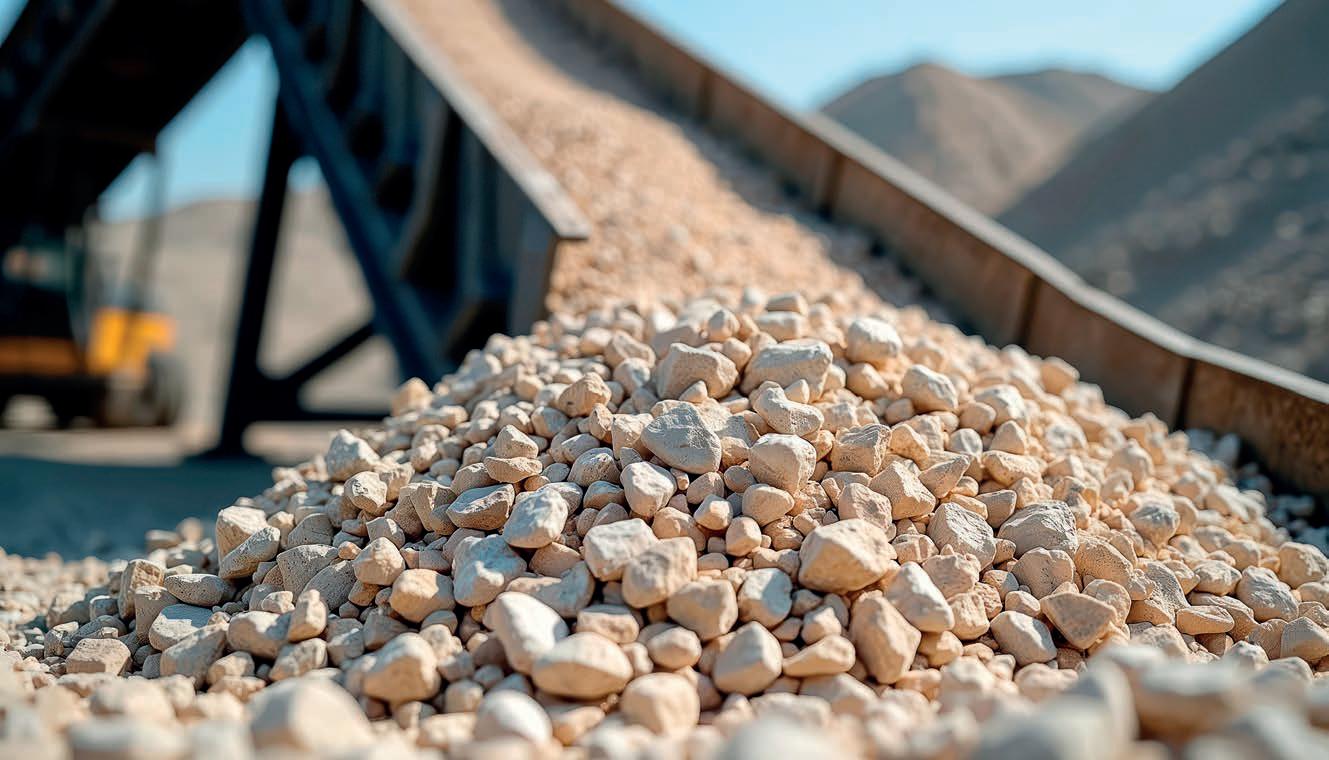
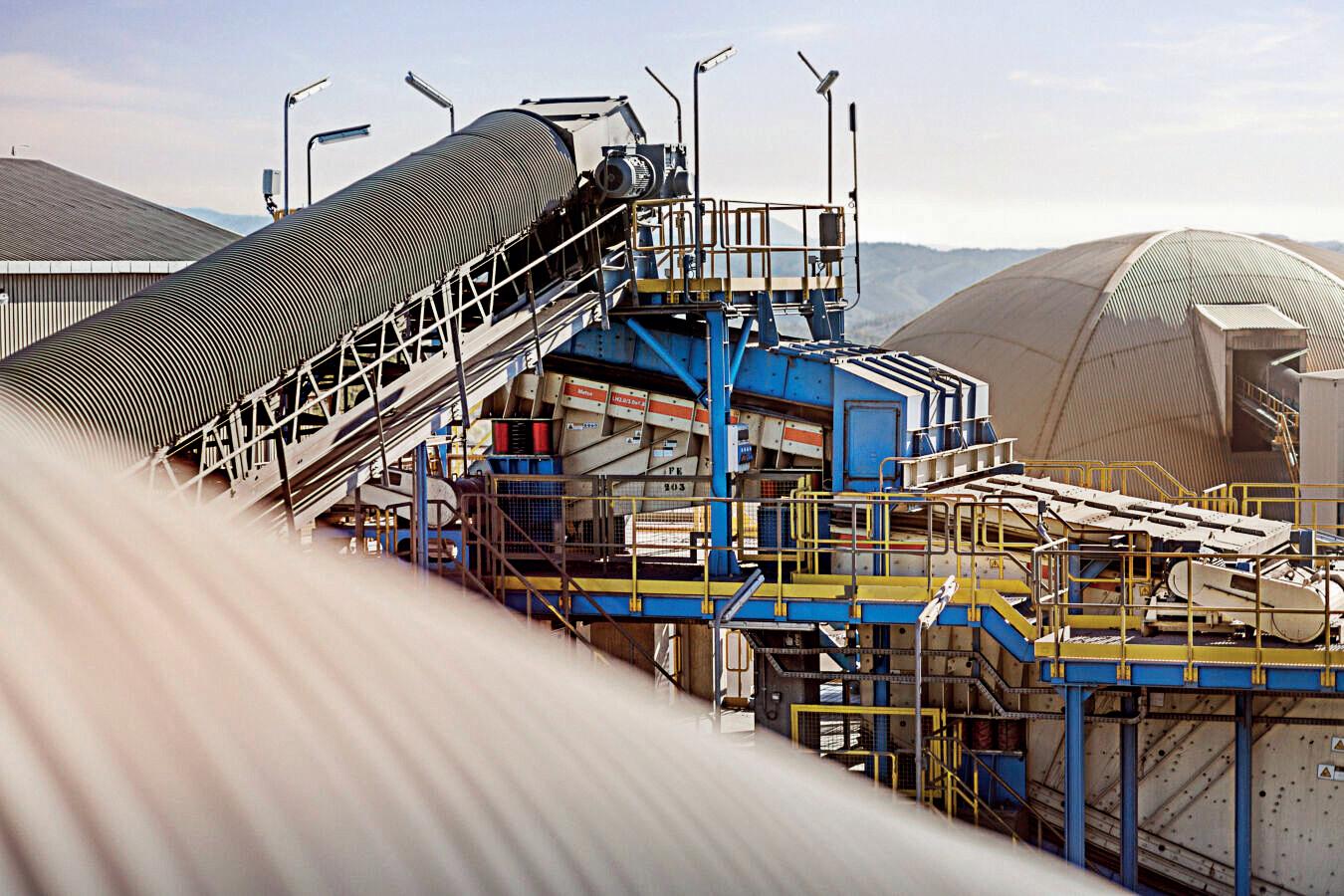
ALWAYS ESSENTIAL, CRUSHING AND SCREENING UNDERPINS THE PRODUCTIVITY, EFFICIENCY AND RESILIENCE OF AUSTRALIA’S MODERN MINING OPERATIONS.
Crushing and screening may not make headlines the way a new mine or a massive project sanction does, but this process sits at the technical and economic heart of today’s resources industry.
From mine throughput and product quality to energy use, emissions and safety, the choices made at the front end of a processing chain determine how efficiently a whole operation runs, and how much value it returns to the balance sheet.
That matters in Australia now because the resources sector remains a major national earner and the industry is under pressure to lift productivity while cutting costs and emissions.
Why it matters
Crushing and screening is among the first stages in most mineral-processing flowsheets: it reduces blasted rock to a range of product sizes, remove fines and oversize material and present a
stable feed to mills, concentrators or direct-shipping stockpiles. The better that front end performs, the more predictable downstream circuits become, which reduces rework, lowers energy consumption, cuts wear on downstream equipment and improves recoveries.
For remote diesel-powered sites, even small improvements in kilowatthours per tonne translate directly into fuel savings and lower fleet emissions, making efficient crushing and screening a lever for cost and sustainability gains.
Good front-end practice also supports resilience. Consistent product sizing reduces conveyor and crusher blockages, shortens maintenance windows and reduces the risk of unplanned stoppages that can ripple through an operation’s schedule and cost model.
In short, crushing and screening is a productivity multiplier. It helps to define the material characteristics the rest of the plant must handle and therefore influence capital planning, operating costs and equipment life.
A modern crushing and screening plant uses a family of machines that are selected and configured to fit geology, throughput and product targets. Typical equipment includes primary crushers (jaw or gyratory crushers) that take blasted rock down to initial sizes; secondary and tertiary units (cone, impact or vertical shaft impactor [VSI] crushers) that refine product size and shape; vibrating screens that separate material into defined size fractions; and conveyors and transfer stations that move material between stages. Mobile crushing and screening plants have become common for short-life pits and satellite deposits because they reduce haulage and speed up project ramp-up.
On the technology side, productivity and control are standout themes. Variable-speed drives and more efficient motors reduce power draw; wearresistant liners, advanced metallurgy and better tooth/impactor designs extend component life; and modern screen media and modular chassis reduce downtime for change-outs.
Condition-monitoring tools – from vibration and bearing-temperature measurement to automated lube systems and online oil analysis –are increasingly standard, helping operations shift from time-based maintenance to condition-based regimes that cut total lifecycle cost. These advances may seem incremental, but in aggregate they shorten payback periods for upgrades and can deliver immediate bottom-line benefits.
Automation is reshaping crushing and screening.
Plant-wide control systems now coordinate feed rates, crusher closed-side settings, screen cut-points and stockpile management to keep material aligned with downstream mill requirements.
Advanced process control (APC) and machine-learning routines analyse throughput, wear and product gradings and recommend setpoint changes to maintain product specifications with
less operator intervention. In practice this translates to steadier ball-mill loads, fewer circulating loads and greater overall plant throughput, outcomes that flow directly to revenue.
Crushers and screens are also a focal point for risk control. Crushing circuits concentrate hazards; moving belts, pinch points, dust generation and highenergy impact zones. Australian mining regulators and guidance materials emphasise engineered guards, remote isolation, clear access protocols and robust pre-start checks for crushing and screening plant.
Proper dust suppression – via cyclones, baghouses, wet suppression or enclosed transfer points – helps to protect worker health and reduce fugitive emissions, while well-designed material flows and
tramp-metal detection protect plant and personnel from unexpected blockages. Integrating safety into equipment specs, rather than retrofitting it later, is a recurring theme in regulatory guidance.
Crushing and screening also plays a role in sustainability beyond energy savings. The right product sizing enables higher value uses for waste and by-products, from aggregates for infrastructure to co-products for downstream processors.
Crushing is key to the construction supply chain, producing road base, rail ballast and concrete aggregates, and careful material segregation reduces waste and creates local supply opportunities. That circularity can make mines more valuable community partners while diversifying revenue streams.
Australian deposits run a wide gamut and each places different demands on crushing technology. Sticky clays can clog cone crushers and block screens; highly abrasive gangue accelerates wear; mixed lithologies demand staged comminution with flexible processing lines. That’s one reason mobile and modular plant designs have grown in popularity: they allow operators to match front-end configurations to local conditions and relocate capacity as project phases evolve.
Environmental approvals for crushing and screening operations increasingly require clear layouts and mitigation plans, so planners must balance throughput with community and environmental expectations.
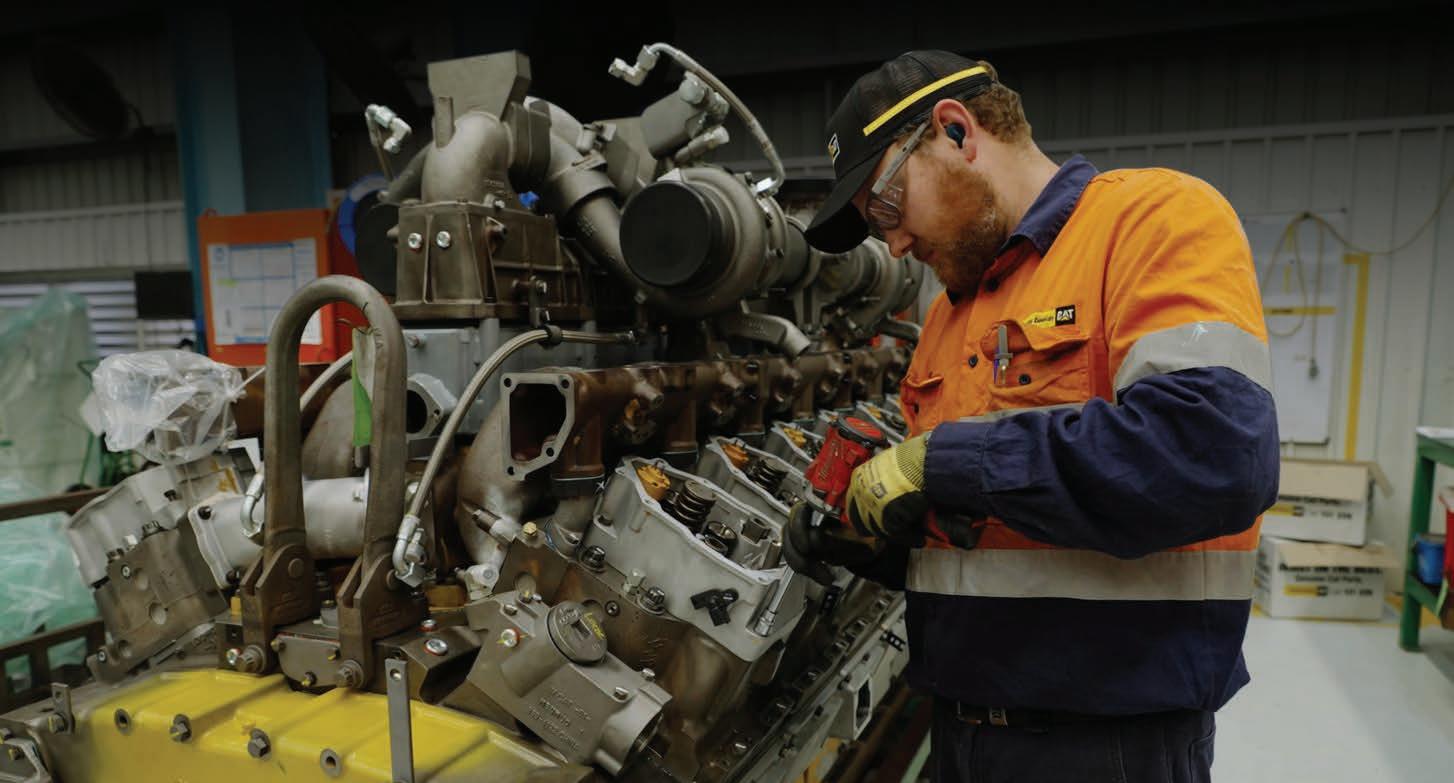
But the best equipment is only as good as the support model behind it. Operators are prioritising ease of service in areas such as accessible inspection points, standardised spares, sealed bearings, greasing systems that work during operation, and supplier networks capable of servicing remote sites.
A move toward “service sells equipment” is visible in procurement choices. Operators often prefer vendors who offer local parts holdings, condition-monitoring platforms and rapid field response, all of which reduce the downtime that erodes key performance indicators and profitability. Regulators’ maintenance checklists underscore the value of daily checks and structured defect-reporting systems for crushers and screens.
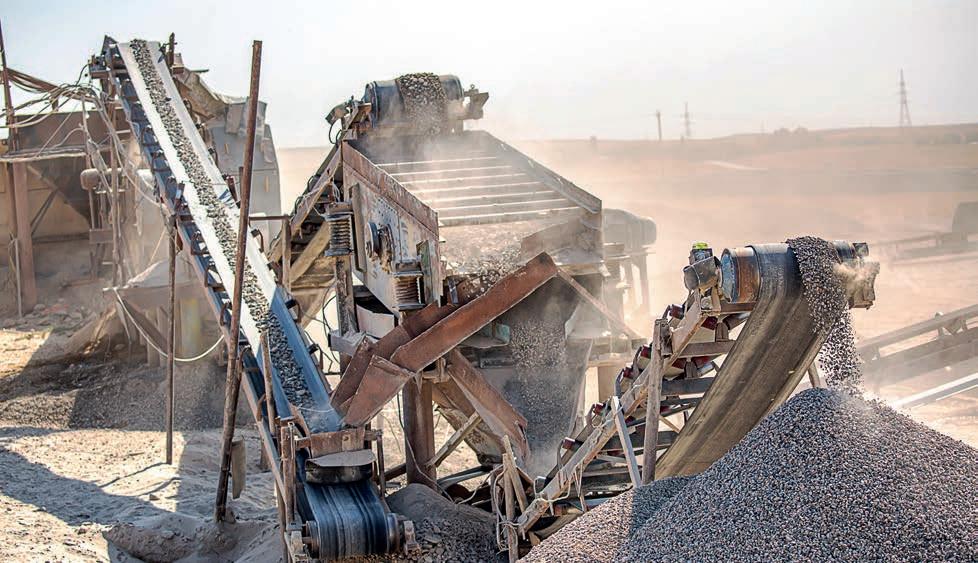
Upgrading to higher-efficiency motors, improving control systems, investing in wear-resistant components and adding condition monitoring often have attractive returns because they reduce ongoing operating costs. Those returns are amplified on diesel-powered remote sites: a kilowatthour saved is a litre of diesel conserved, with immediate flow-through to margins and emissions accounting.
Crushing and screening may not be glamorous, but this processes is central to the resources industry’s ability to meet global demand reliably, cost-effectively and responsibly. For Australian operations navigating tighter margins, decarbonisation goals and community expectations, smart investment in the front-end equipment – control systems, safety design and service models – can unlock productivity and environmental benefits simultaneously.
That combination is precisely what will help the industry grow sustainably in the decade ahead. AM
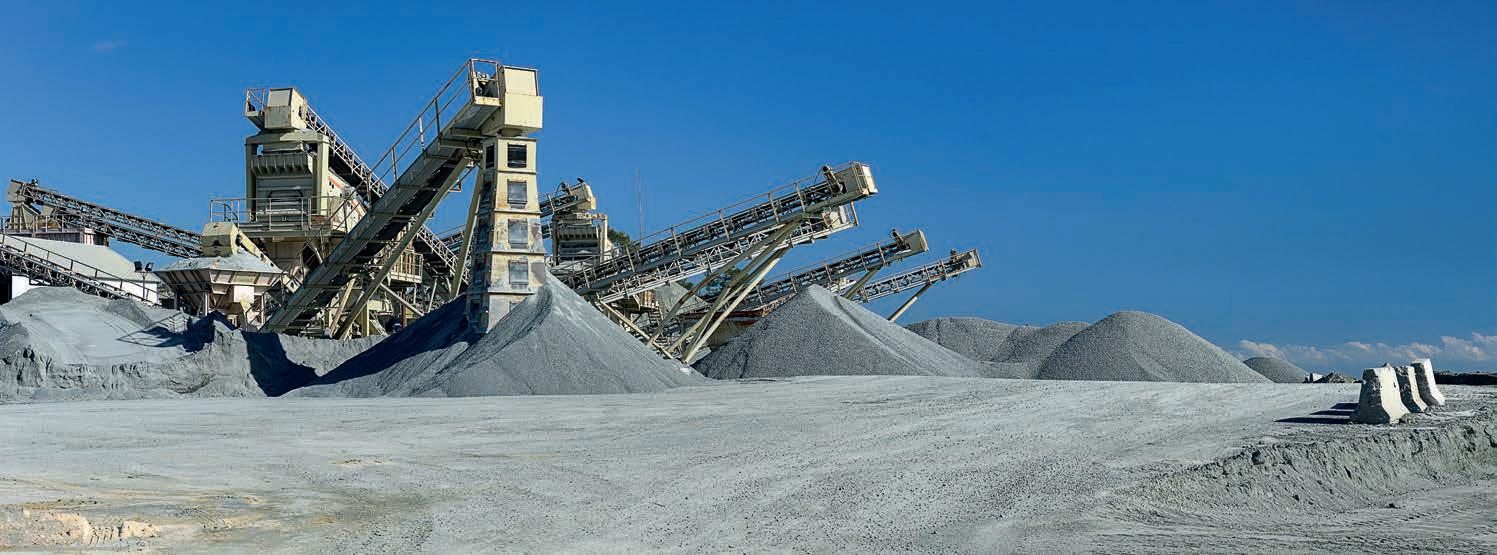
DEMAND, COMPLEX GEOLOGY AND SHIFTING GLOBAL SUPPLY CHAINS ARE PUSHING RARE EARTH MINERS TO RETHINK THEIR FRONT-END PROCESSING.
Demand for rare earths has doubled over the past decade, with the International Energy Agency forecasting that it could double again by 2050.
That demand is being driven by the central role rare earth elements (REE) play in the manufacture of clean energy technologies such as wind turbines, renewable batteries and electric vehicles. A renewed effort by Western nations to secure supply chains by sourcing REEs outside of China, which has increased export controls on several critical minerals, has further intensified the focus on diversified production.
Australia holds at least four per cent of the world’s rare earth reserves, positioning it strongly for growth. The recent US–Australia Critical Minerals Framework added further momentum to the development of exploration, production and processing capabilities across the country.
However, accessing REEs is not always straightforward.
While traditional processing flowsheets for REEs rely heavily on multiple stages of crushing, screening and grinding, many operations are now investigating alternative front-end
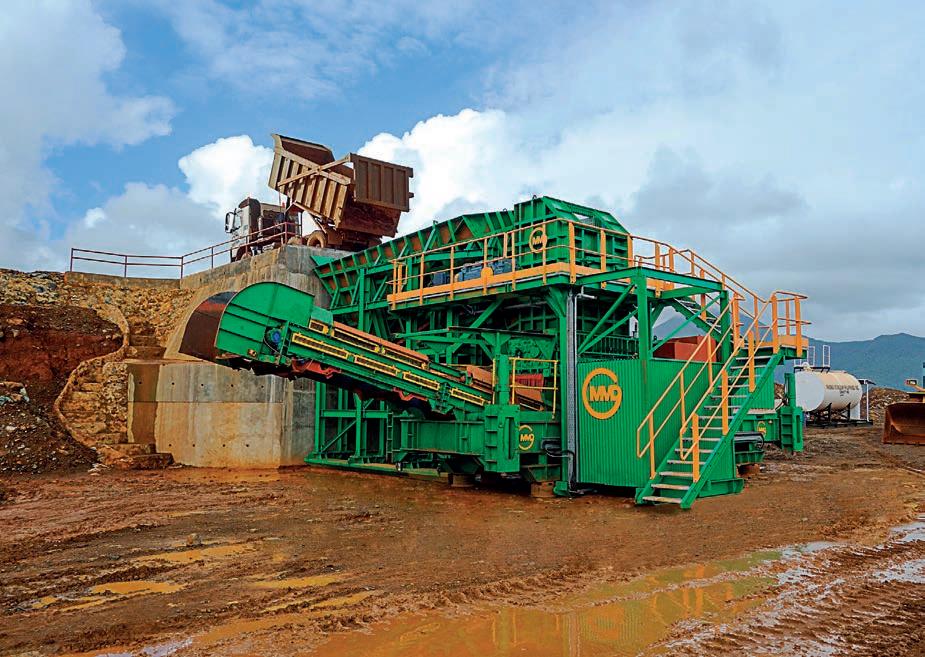
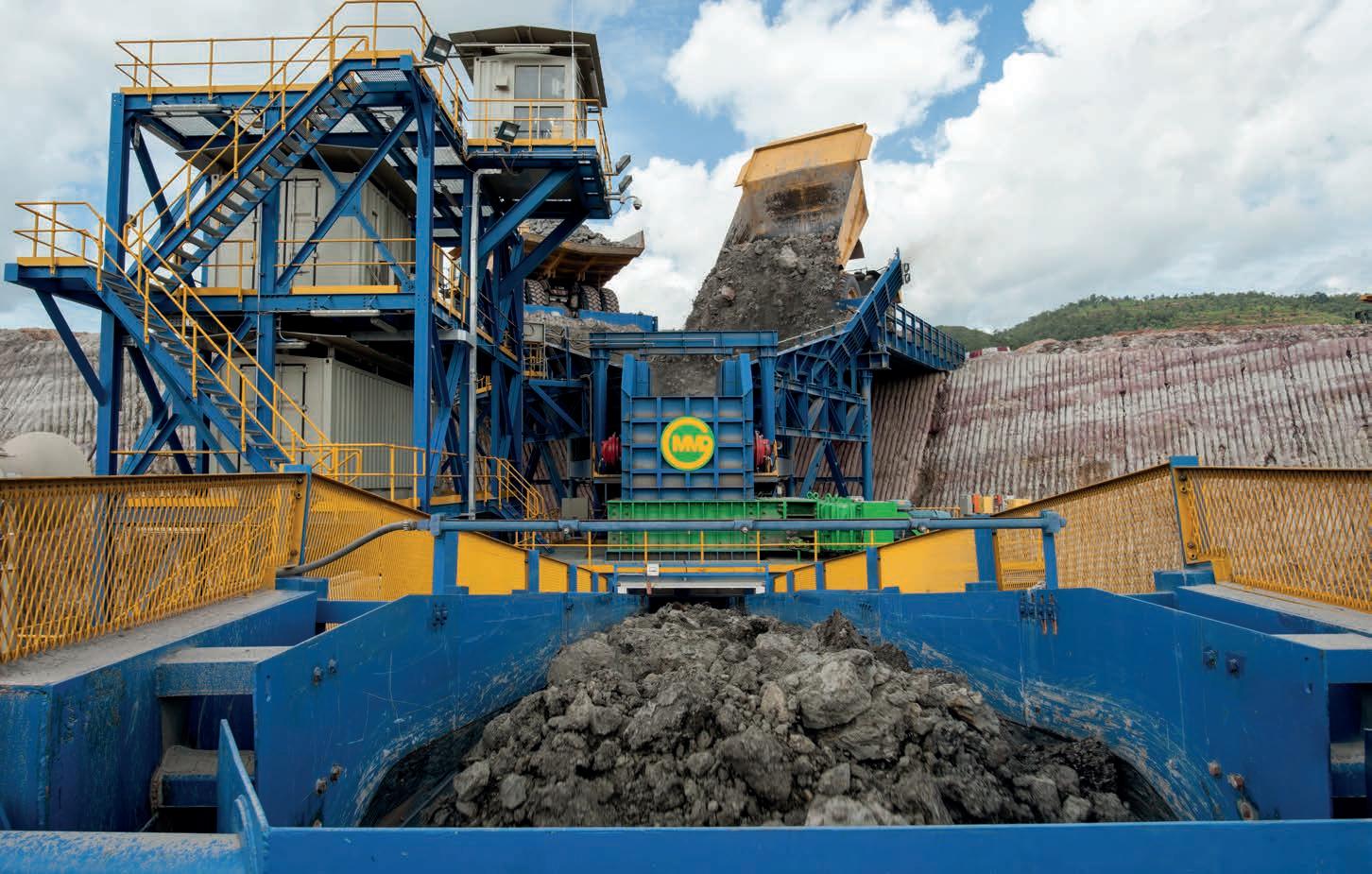
One such approach is in-pit sizing – the use of a Sizer within or near the mining face to condition ore before it leaves the pit.
For rare earth projects, which often occur in complex geological settings with variable textures, weathered profiles and highly abrasive gangue minerals, in-pit sizing offers compelling advantages. These include reducing haulage requirements, stabilising feed to downstream plants and minimising
MMD Group, a leading provider of mineral processing technologies for the mining, quarrying and recycling sectors, is helping REE miners explore this approach.
Established in 1978 to serve the underground UK coal industry, MMD began by designing and manufacturing inline breakers. Early in its history, the company invented and patented the twin-shaft Mineral Sizer, launching the first 500 Series model in 1980.
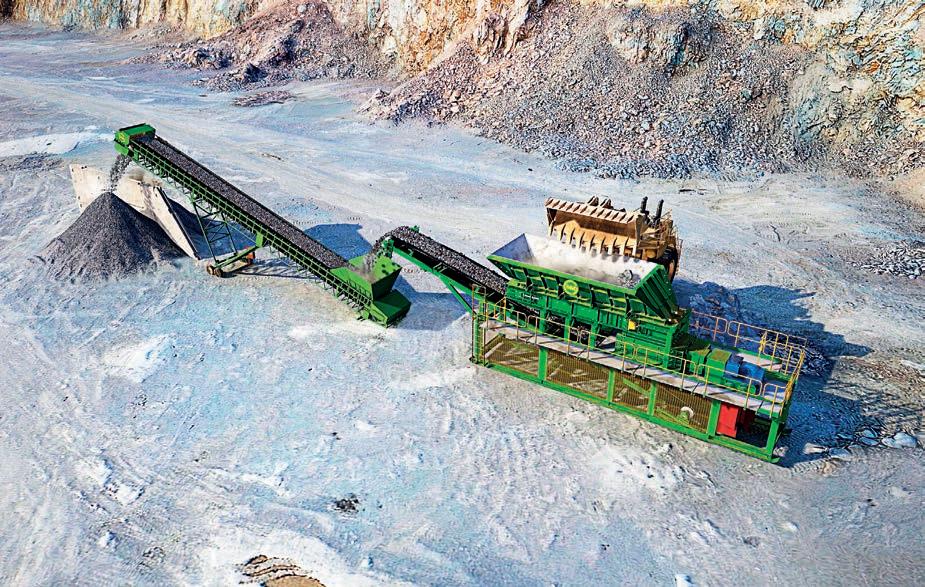
Today, the company produces a wide range of Sizers, Sizer stations and feeders suited to varied operating conditions.
A Sizer-first alternative
According to MMD Australia West director Morné Coetzee, conventional rare earth comminution circuits in Australia tend to follow a familiar pattern: primary jaw crushers, secondary cone crushers and, depending on the desired product size, tertiary crushing or milling.
While well understood, she said, these circuits require significant structural and civil works, multiple conveyors and transfer stations, and fixed plant locations with limited flexibility. They also generate high levels of dust and fines and demand substantial power in downstream milling.
“Rare earth deposits in Australia, such as monazite- and bastnäsite-dominated systems, often contain a mix of clays, weathered saprolite and harder fresh rock,” Coetzee told Australian Mining
“In traditional crushers, this variability drives fluctuating performance, unstable throughput and inconsistent product size.”
In-pit sizing provides an alternative by conditioning ore to a consistent, conveyable size early in the materialhandling chain.
Selecting the right Sizer begins with evaluating the material properties of the ore being mined and loaded.
Coetzee said REE deposits often present unique challenges because of their complex geology.
“REE deposits, especially lateritic and weathered granitoid-hosted ore bodies, may contain fines and clays that become plastic under moisture,” she said. “Moisture fluctuations, especially in Australian climates, affect material cohesion, stickiness and throughput reliability. Wet or sticky ore can bind traditional crushing equipment, reducing production. A Sizer is designed to process wet and sticky material with a self-cleaning design.
“REE mine designs also have many satellite pits, so equipment still needs to process effectively while remaining mobile. The MMD equipment is perfect for this application.”
MMD works closely with its customers to gather engineering, operational and material-specific data to determine the appropriate Sizer model and configuration.
“It involves identifying the physical properties of the material including, but not limited to, size distribution, MPa [megapascal], abrasion index, moisture content, bulk density, plasticity, oversize frequency and contaminants,” Coetzee said.
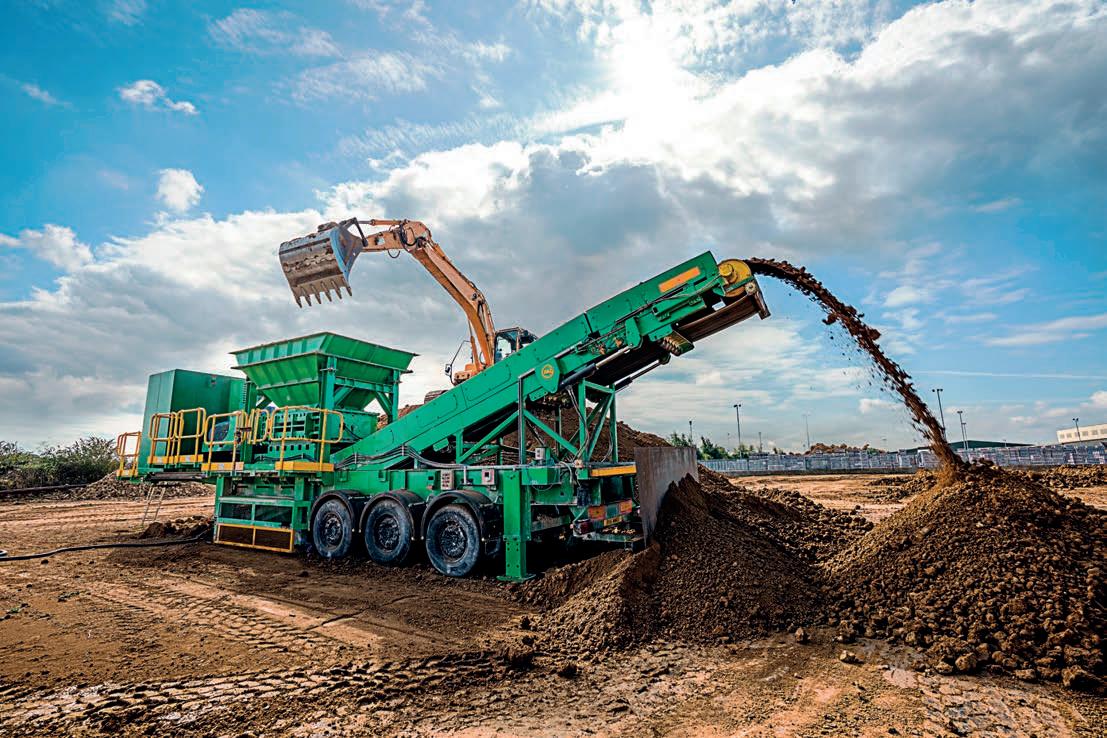
“We then consider throughput and production targets, including peak surges and feed consistency. The required product size, combined with the material properties, determines the Sizer model, tooth configuration and speed.
“Other considerations include upstream and downstream processes such as interface heights, discharge angles and transfer points. The initial evaluation also factors in site integration requirements, including footprint restrictions, structural limitations, energy supply and environmental constraints.”
Whether a project is brownfield or greenfield also influences the commissioning process.
“For greenfields, our engineering team can assist with any design, suggesting the best upstream and downstream processing solutions, including feed methodology and transfer point designs,” Coetzee said.
“Brownfields have other considerations. After an on-site evaluation, we determine the best replacement methodology and assess constraints such as pit location, feed consistency, structural limits, footprint, equipment mobility and environmental factors.”
MMD Sizers are available with a range of tooth configurations and purpose-designed gearboxes that cater to a wide spectrum of project needs. But REE operations often require additional customisation.
“While many customers adopt standard options, rare earth operations tend to require more specific modification – especially for tooth
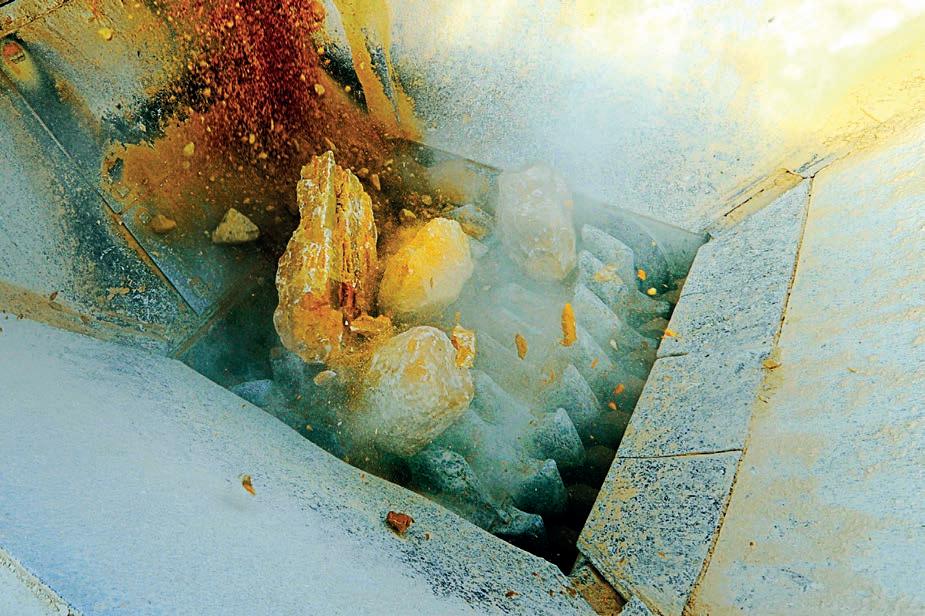
packages, or when oversize frequency or lump shape is atypical and calls for modified tooth height, pitch or breaker bar arrangements. Coetzee said Sizers deliver an advantage over cone or impact crushers when dealing with the sticky or plastic clays common in REE environments, with custom options providing further adaptability.
“Sizers are well-suited to highmoisture environments, and selecting the right tooth configuration depends on the material’s moisture characteristics,” she said.
Other site-specific factors include power-train or footprint restrictions, unusual loading angles and non-standard hopper integration.
With offices and workshop facilities in Brisbane, Perth the Hunter Valley and Mackay, MMD maintains extensive spare-part holdings to support its customers.
“Our technicians are all longterm employees who intimately understand the equipment. We offer service contracts and take pride in our responsiveness,” Coetzee said.
“On-site performance monitoring and optimisation, wear-part supply and planning, operator training,
maintenance support and lifecycle upgrades are all key elements of the service we provide.”
With many Australian REE projects still refining their geometallurgical models, early-stage decisions remain critical. To help de-risk those early commitments, MMD offers flexible commercial pathways that allow customers to validate performance and build confidence before committing to a capital purchase.
With demand for rare earths only set to increase, Australian REE operations can rest assured that MMD Group has a legacy of innovation and implementation that can help unlock rare earths opportunities in all kinds of environments. AM
FEEDER BREAKERS ARE BUILT TO TAKE PUNISHMENT, BUT THEIR RELIABILITY IS NEVER ACCIDENTAL. LEARN HOW TO OPTIMISE PERFORMANCE WITH MCLANAHAN.
By breaking down both the engineering principles and the maintenance steps behind reliable performance, McLanahan is helping operators turn everyday upkeep into measurable gains in machine life and production uptime.
Speaking during a recent webinar, McLanahan global product engineering specialist Dave Imler guided miners through the inner workings of feeder breakers, sharing insights that could save downtime and extend machine life.
“Feeder breakers might look straightforward, but these machines are far more complex than they might seem,” Imler said.
“Their performance, reliability and longevity all hinge on operators
understanding the engineering behind them and applying disciplined maintenance practices.”
Feeder breakers are used to break down large lumps of ore or coal and feed them into the processing plant at a controlled rate. And at the heart of every feeder breaker is the chain and flight bar system.
Operators may encounter slip-fit bars, bolted bars, or a combination of both, while most installations rely on engineering-class push-link chains designed to withstand constant impact.
Chain tension is one of the simplest yet most important factors in preventing failures: too tight and shafts, sprockets and bearings are overstressed; too loose and the chain can skip teeth or even drop flight bars.
For ideal chain tension, a slight droop under the head shaft on the return side should be visible through inspection ports, giving operators a clear guide to proper tension.
Adjusting tension is straightforward when done correctly, according to McLanahan. Most machines use hydraulic cylinders and shim packs at the tail shaft, allowing controlled adjustments.
Symmetry is essential. Both sides must be evenly set to prevent misalignment, which can quickly lead to costly damage. Planning for chain replacement is equally important.
Sites that keep full chain and flight assemblies on hand can proactively schedule change-outs, turning what could be a drawn-out downtime event into a controlled, one-day task.
Imler suggests using the right tools that are designed to make the job easier, but stresses the importance of safety.
“Hydraulic jigs and custom fixtures can simplify the process, but safety is paramount,” he said. “Locking out and tagging out before the adjustments keeps operators clear of high-force areas and careful preparation prevents injuries during high-pressure maintenance tasks.”
The drives that power feeder breakers are another critical area requiring attention.
These machines typically use one of three coupling types: safety couplings that shear under extreme torque to instantly decouple the drive; fluid couplings that transmit torque through hydraulic oil like a car’s torque converter; and friction-plate clutches that rely
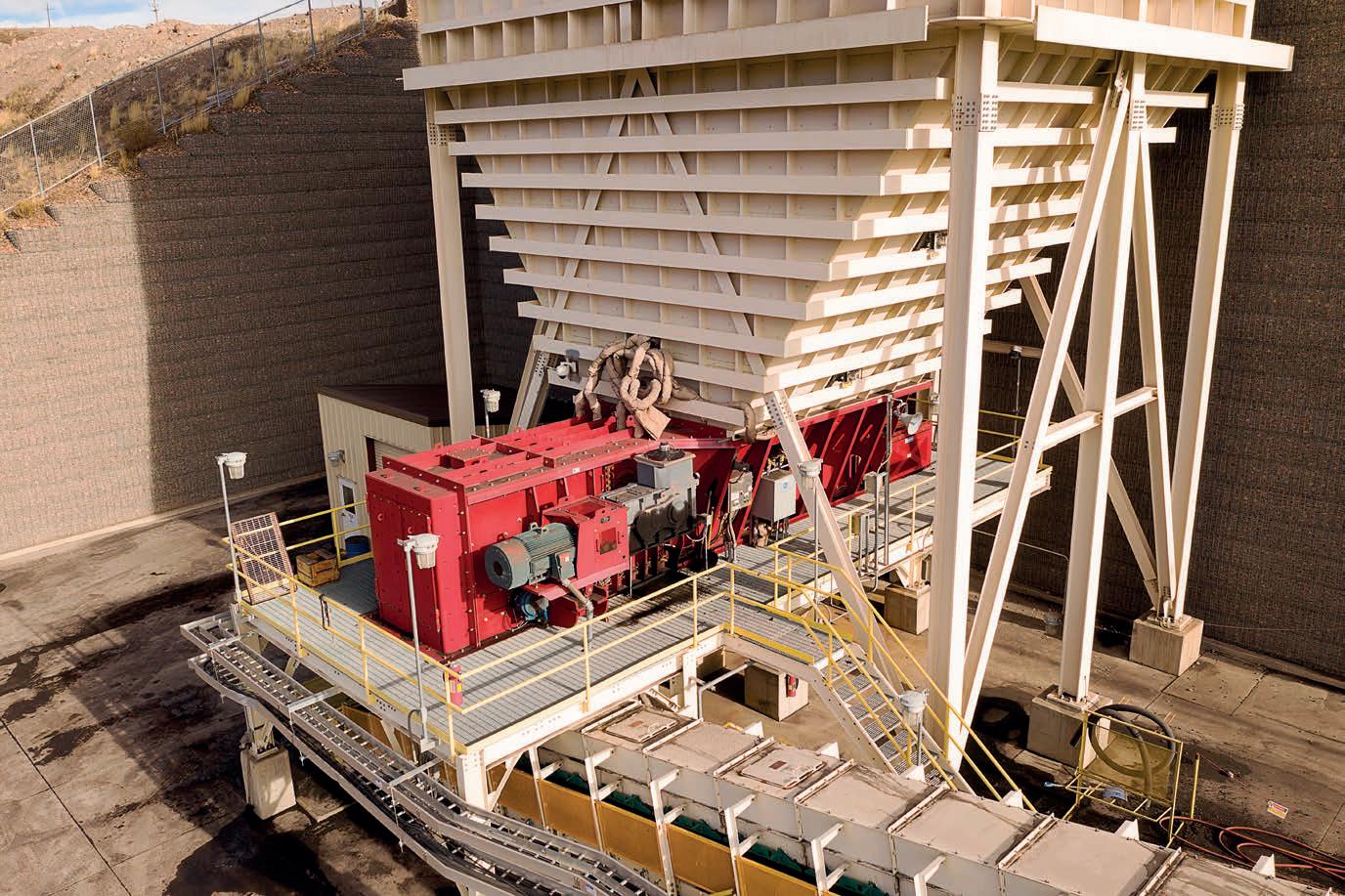
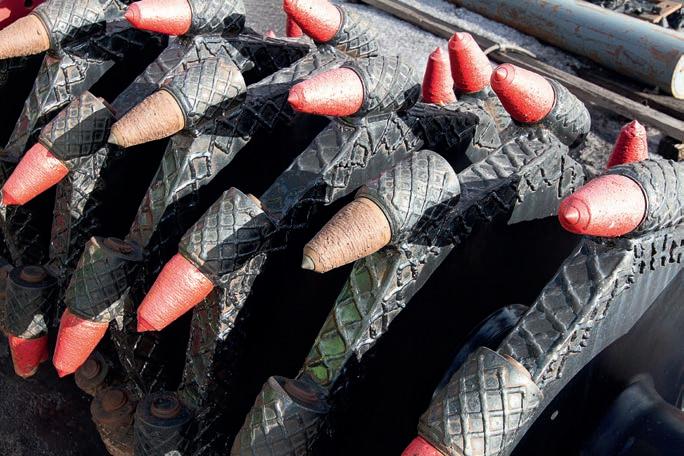
BREAKER PICKS ARE ENGINEERED TO WITHSTAND HIGH IMPACT WHILE DELIVERING CONSISTENT MATERIAL SIZING.
on spring tension and pad condition, slipping when overloaded.
Each system behaves differently under stress and requires specific maintenance routines to maintain reliability.
Hydraulic conveyor drives introduce another layer of engineering. Variabledisplacement axial-piston pumps control conveyor speed by adjusting the swash plate, while charge pumps maintain system pressure and cooling.
Operators who understand normal pressure ranges, oil flow and
temperature – ideally around 120°F (49°C) – can detect emerging issues before they become major problems.
Mechanical connections also demand careful attention.
Shrink-disc locks, taper-bushing connections and bearings all require precise installation and regular inspection to prevent wear, misalignment or premature failure.
Daily and weekly checks, such as verifying chain tension, monitoring bearings for heat and cleaning dust from
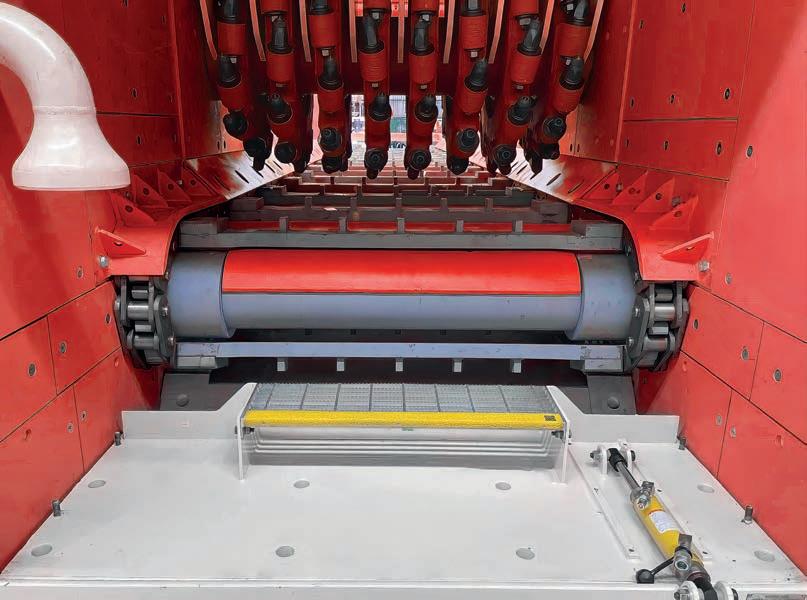
DROP-DOWN ACCESS PLATFORMS ALLOW SAFER, MORE EFFICIENT INSPECTION AND MAINTENANCE.
critical areas, help maintain efficiency and prevent small issues from escalating.
Over time, predictable wear appears on breaker bits, liners around the roll shaft, top-deck plates and chain transition zones. Annual inspections allow teams to plan component replacements before failures interrupt production, turning maintenance from a reactive task into a proactive strategy.
Imler said audits and proactive inspections help to save production and reduce costs.
“We know these machines inside and out,” he said. “Mines should identify emerging wear patterns before they turn into critical problems.”
The feeder breaker, often operating quietly in the background, is a decisive piece of machinery in mining operations.
With the right understanding, regular maintenance and careful planning, these machines can deliver years of reliable performance, even in the harshest conditions. AM
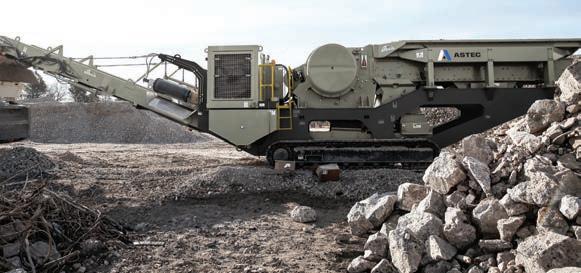
FT2650
MOBILE JAW CRUSHER
•Up to 25% more capacity
•Production rates up to 400TPH
•Optional hydraulic relief
•Aggregate & recycling applications
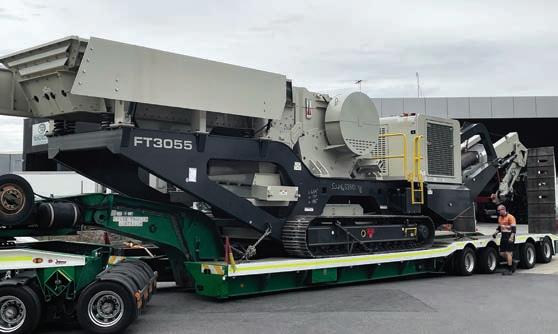
FT3055
MOBILE JAW CRUSHER
•Production rates up to 700TPH
•50” x 18” pan feeder
•23.6” tracks with dual drive
•Largest crushing stroke in class
BME IS LIFTING BLASTING PERFORMANCE ACROSS AUSTRALIA’S MINING INDUSTRY, DEBUTING A NEW ELECTRONIC DETONATOR PLANT IN KALGOORLIE.
BME’s decision to set up an electronic detonator assembly plant in Kalgoorlie is an exciting milestone that promises big benefits for Australia’s mining industry.
By moving beyond overseas suppliers, the company is investing in local manufacturing that promises supply chain resilience, faster response times and closer support for miners across Western Australia. The new facility positions BME as the first electronic detonator manufacturer in the state, addressing a long-standing industry need.
BME global manager strategic partnerships Rakhi Pathak told Australian Mining the facility will play a central role in meeting growing demand.
“The Kalgoorlie region is strategically located to serve as a key supply hub for iron ore, gold, nickel, lithium and other critical mineral mining customers,” Pathak said.
“Local mining companies have expressed keen interest, as the location gives them significant supply chain security and definite logistical benefits.”
The project has progressed quickly, harnessing BME’s strong international experience.
“This plant utilises proven equipment from our South African operations, including a semi-automated line from our Losberg plant,” Pathak said.
“BME has considerable experience in establishing and operating these facilities, and we have already established a similar facility in Canada as part of our globalisation drive.”
Licensing and compliance were key milestones. BME secured approval to commission and store substantial quantities of class one explosives, including detonators and boosters, following a detailed regulatory process that emphasised safety and transparency.
“We undertook this process with the same diligence as we adopt during all our operations, prioritising engagement with stakeholders such as government regulators and communities,” Pathak said.
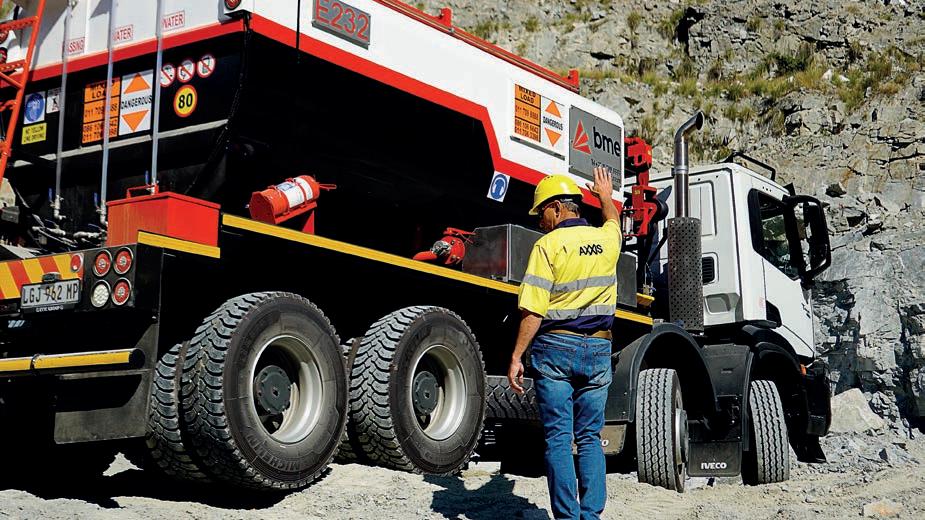
The company has spent more than a decade building its Australian presence, primarily through the uptake of its AXXIS electronic initiation system. Growth has been organic, driven by direct engagement with key mining customers, contractors and service providers seeking high-performance, easy-to-use blasting technology.
BME believes the Kalgoorlie plant deepens its commitment, marking the next phase in supporting customers across the country.
“The detonator plant is part of our continued evolution in this primary market,” Pathak said. “We are building infrastructure to support safe, reliable and cost-efficient supply of electronic detonators, high explosives, and a full basket of goods and services for surface and underground customers.”
The shift toward electronic initiation is accelerating in Australia, with mining operations seeking greater control, improved fragmentation and better energy efficiency. As sites move away from shock tube systems, BME’s AXXIS product has gained strong traction.
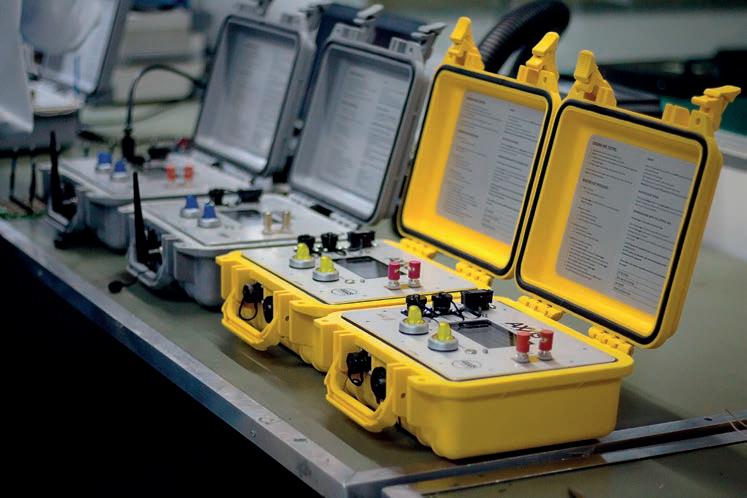
“As in other markets, mining companies are increasingly recognising the benefits of electronic initiation, driving demand for our detonators as operations transition away from shock tube systems,” Pathak said.
“BME takes pride in the AXXIS product’s market-leading robustness, ease of use, safety and flexibility, qualities that continue to set the benchmark for electronic blasting technology.”
BME has conducted trials across WA mines to demonstrate these benefits, while investing heavily in software and digital tools to further enhance blasting performance.
“Electronic detonation systems are well aligned with the ongoing advancements of the digital age, enabling continuous innovation and improved blasting efficiency,” Pathak said.
“Our BLASTMAP blast design application allows for complex designs to be rigorously trialled and simulated for best results.”
Integration of BME’s in-house blast timing and blast loading software allows for the safe application of advanced timing methods, achieving more useful work from the same explosives without risking vibration or other environmental exceedances.
For example, tools like XPLOLOG provide the data mining teams need for day-to-day performance improvements. Meanwhile, BME’s XPLOSMART
– an artificial intelligence (AI)enabled, comprehensive mine-to-mill software – provides a more holistic and predictive solution by integrating AI-driven insights and advanced geospatial tools across the entire mining value chain.
“This streamlines workflow and ensures continuity of data across the mining operation, optimising not just the blast itself but downstream processes like milling efficiency and resource utilisation, and linking these to financial and environmental, social and governance [ESG] imperatives,” Pathak said.
With the debut of the Kalgoorlie plant, BME is entering a new era in its Australian business, combining local manufacturing capability with digital innovation. AM
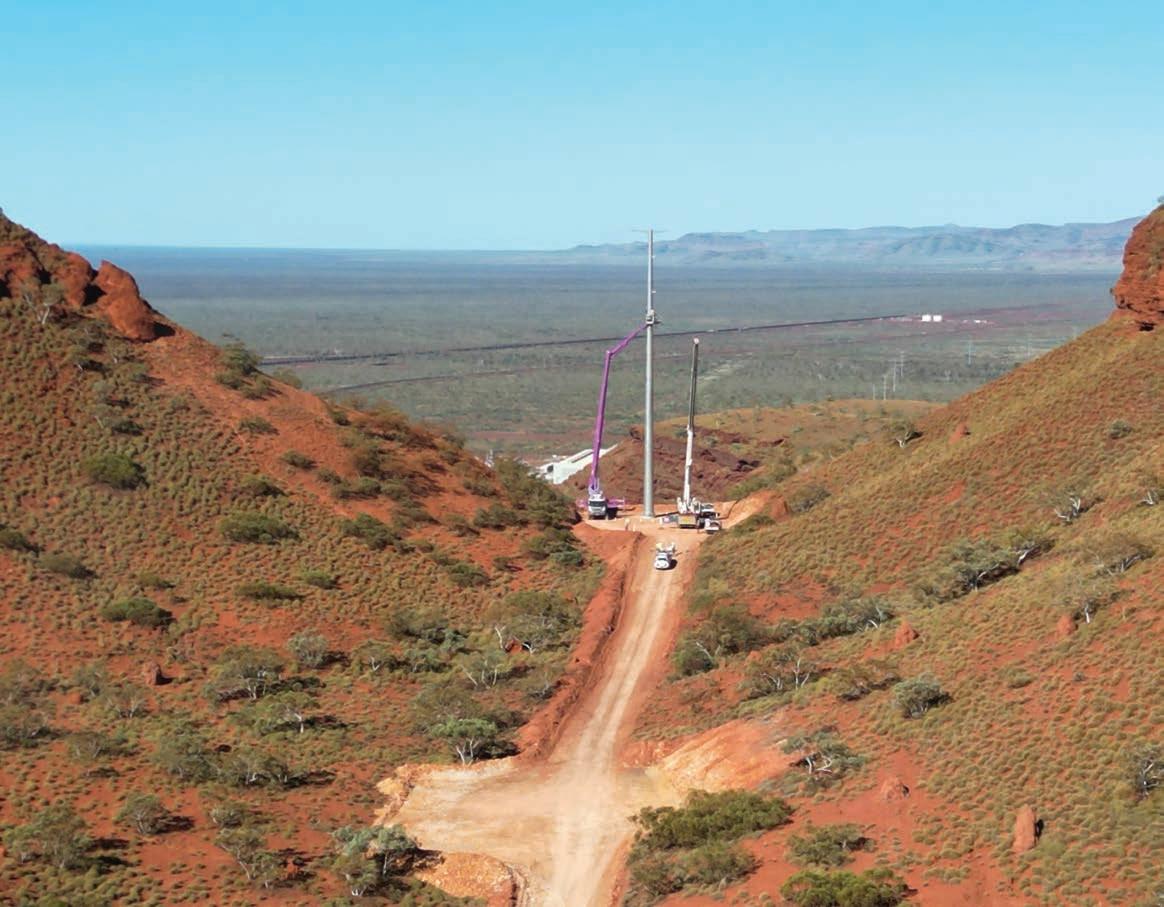
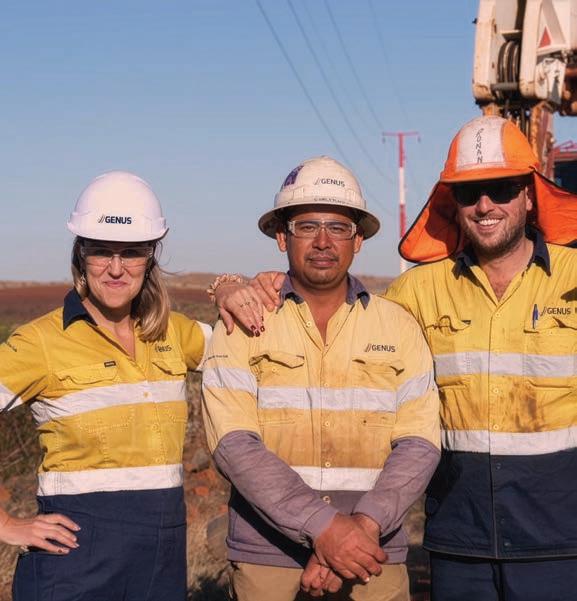
Electrification. Critical minerals. Data centres. Fleet transition. Transmission builds. Australia’s mining and resources sector is ramping up fast. To keep pace, you’ll need a delivery partner that’s collaborative, agile, and forward-looking. That’s where Genus comes in.
With hands-on experience from major transmission upgrades like Pilbara EnergyConnect and the Hunter-Central Coast REZ, we know how to bring your project online and into the grid, quickly, safely, and seamlessly.
If you’re looking for a delivery partner who can move as fast as the market demands, trust Genus.
genus.com.au
FROM DIESEL-POWERED REMOTE SITES TO HIGH-DUTY CRUSHING CIRCUITS, TECO’S MAXE3 MINING MOTORS PROVIDE EFFICIENCY, RUGGED CONSTRUCTION AND LOW-MAINTENANCE RELIABILITY.
Electric motors account for a large portion of a site’s electrical demand in mining operations, and energy consumption accounts for most of a motor’s cost. That means efficiency is critical.
TECO’s MAXe3 Mining range offers a premium-efficiency solution that can deliver real long-term savings.
“From experience, the cost for a motor when installed is 95 per cent energy consumption throughout its lifetime, so it makes sense that when you select motors that they should be of the energy-efficient type,” TECO Australia sales director Wilfred Krog told Australian Mining
The TECO MAXe3 series, including the larger AFJN series, has a premium IE3 efficiency standard, with many sizes exceeding the minimum efficiency performance standard (MEPS) levels.
Between reduced load demands and efficient operation under full load, the payback period for upgrading from a less efficient motor to a TECO MAXe3, according to the company, often proves to be very short.
“Once the difference is paid back between a less efficient motor to a premium efficient motor, the savings
On remote mine sites powered by diesel generators, every kilowatthour saved translates into lower fuel consumption, fewer emissions and reduced operating cost.
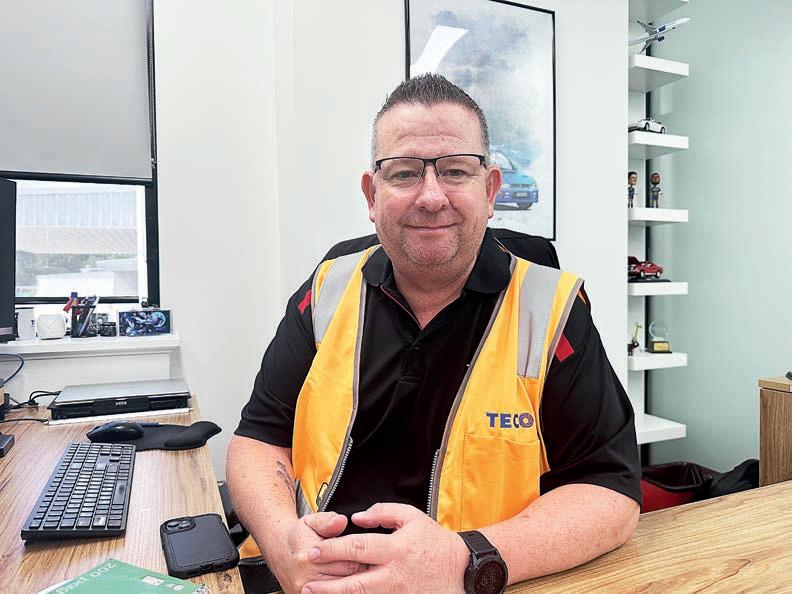
industry, overall consuming costs are becoming more important,” Krog said. “If remote mines sites rely on diesel generators to provide their power, then this energy conversation is even more critical [as] most mine sites have targets to reach with becoming greener.”
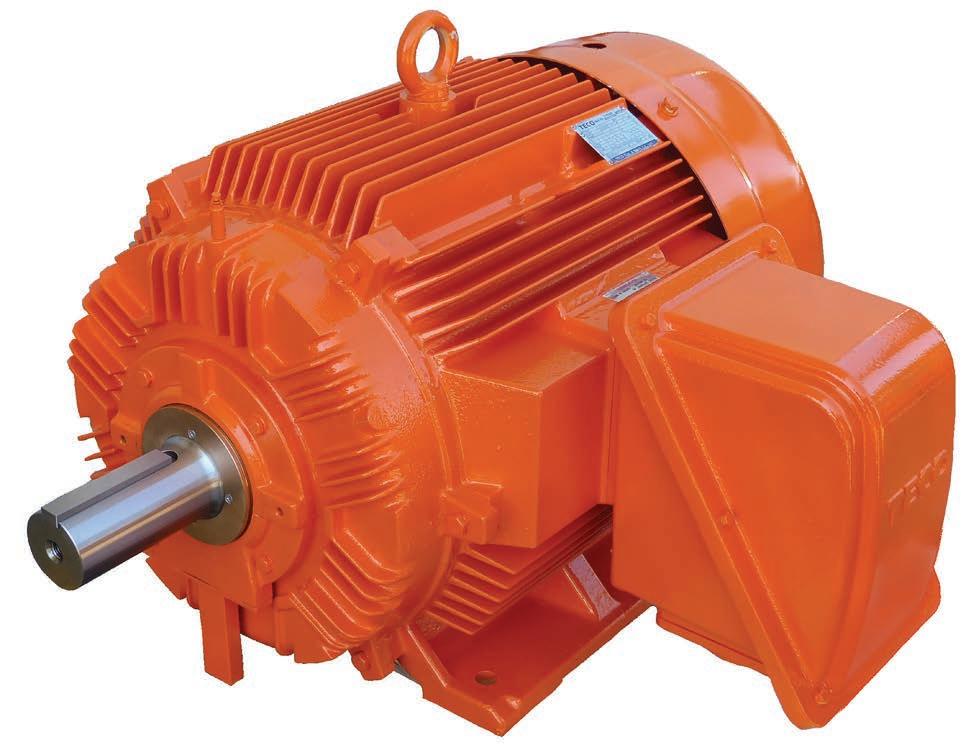
The TECO AFJN MAXe3 Mining electric motor is built around a rugged cast-iron, squirrel-cage frame and designed for compactness and strength. According to TECO, the AFJN series offers a 15 per cent increase in power density and a 20 per cent reduction in weight, which helps to maximise space and simplify installation.
Designed for power and resilience, the TECO AFJN MAXe3 is built to handle the extreme conditions typical of mining operations. Those operating conditions often present dust, moisture, high ambient temperatures, vibration, and variable load demands.
TECO has engineered the MAXe3 Mining series to endure these challenges by excluding dust, spray and moisture with its high IP66 rating. Krog said the motors can also “withstand arduous load demands”, whether from vibration or thermal cycling, which is typically experienced on crushers and screens.
“The heavy-duty cast-iron frame with cast cooling fins is one of the heaviest on
the market and is most suitable for these applications,” he said.
Additional thermal protection is also built in. The motors include two sets of thermistors as standard, with one for alarm and the other for tripping. For larger motors, resistance temperature devices (RTD) can also be installed in the stator windings or bearings to provide real-time condition-monitoring.
“Reliability is probably the most important issue that TECO addresses, with a patented grease relief system fitted for bearing maintenance,” Krog said. “This allows the motor to be maintained whilst in operation, whether that’s manually or with auto lubricators.
The motors’ additional rotating labyrinth seals also help to eliminate dust and moisture, which is a significant gain when it comes to extending service life.
With TECO motors designed, improved and innovated over the last four decades, the TECO MAXe3 Mining series delivers a proven blend of efficiency, durability and low maintenance.
These motors are a reliable route to cut energy use, reduce emissions and improve performance while also offering a practical, future-ready choice for modern mine sites. AM
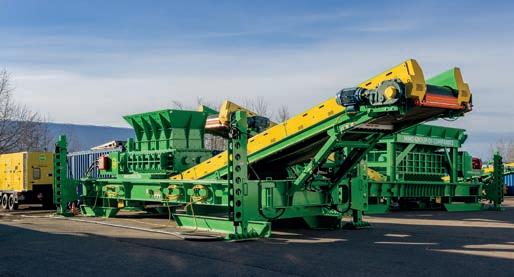
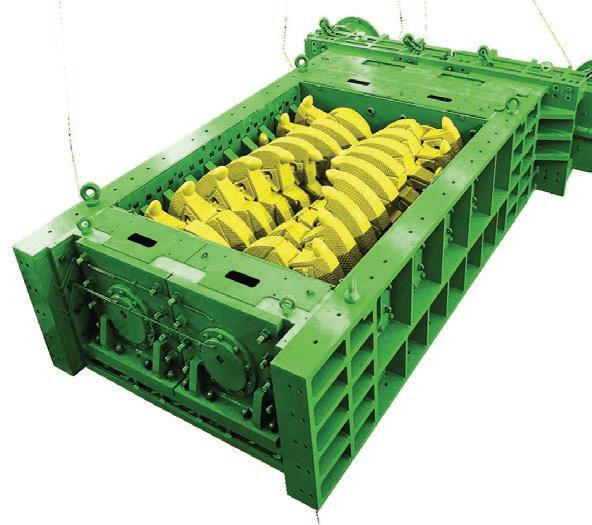
For over 45 years, we have successfully provided pioneering Sizer technology to many industries worldwide. Our tailored mobile, semi-mobile and fixed Sizer stations as well as our latest in-pit innovations, are reliable and efficient answers to reduce the complexity of today’s modern mining challenges.
As a turnkey provider, we have the specialist knowledge and equipment to offer comprehensive services and support. From conceptual planning and design through to manufacture, installation and aftersales service. We are your partner throughout your sustainable journey.
Crushers are the beating heart of any mining operation, working around the clock to break down rock and ore in some of the harshest conditions imaginable.
But with shock loads, vibration and contamination all taking their toll, crusher bearings are often the first components to fail. Timken’s engineering expertise is helping operators change that.
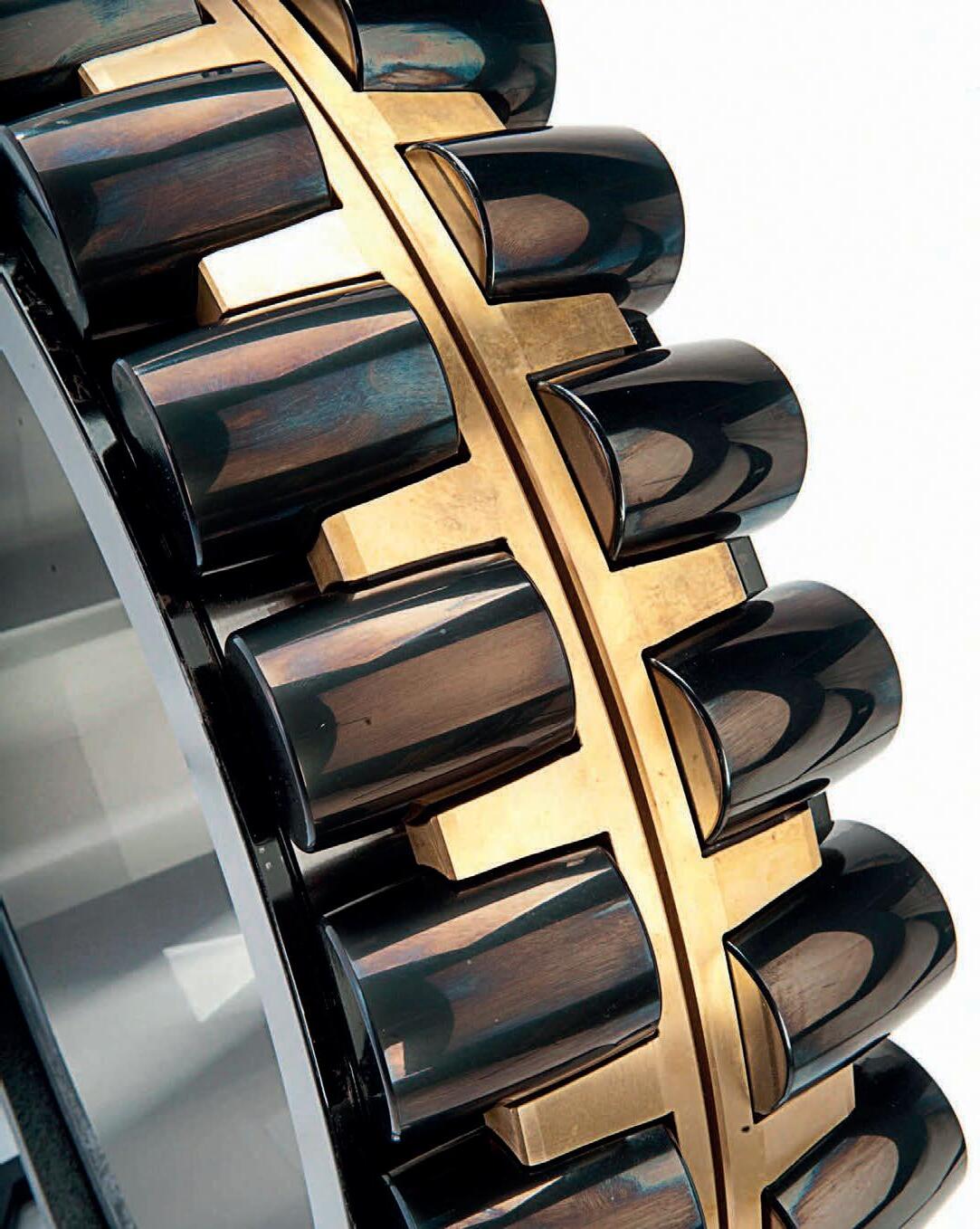
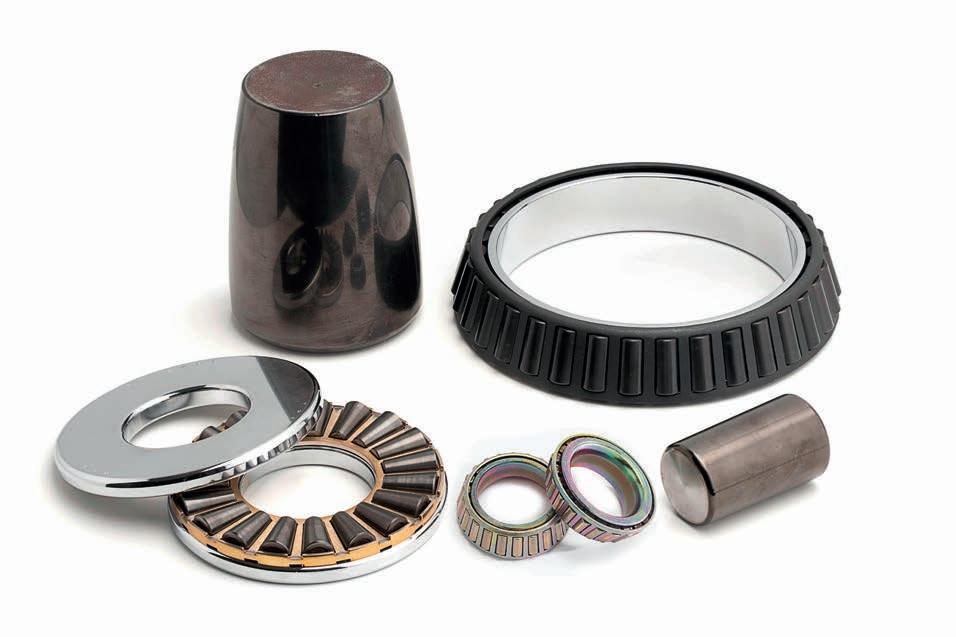
of engineered-surface (ES) coated spherical roller bearings and solidhousing solutions.
“Our ES coatings cover the rollers with a special layer that extends operating life and can handle poor lubrication,” Davies said. “When you combine ES coatings with Timken’s caststeel solid block housing, which is twice as strong as cast-iron alternatives, you get a much more resilient unit for impact crushers and similar applications.”
“Crusher bearings face a combination of contamination ingress, like rock dust and water, and high-impact loading that’s inherent to the application,” Timken national mining manager Mark Davies told Australian Mining “That leads to indentation and material wear from fine ingress, plus additional stress from high-impact loading. Short bearing life is a common outcome.”
To tackle these issues, Timken has developed a range
From primary jaw crushers in hardrock mines to cone crushers in mineralprocessing circuits to impact crushers in coal or aggregate plants, each machine subjects its bearings to unique stresses. Timken’s ES-coated bearings and sealed bearing housing assemblies are designed to handle those variables across the full crushing circuit.
Davies said while failure modes don’t differ dramatically between sites, whether it’s a quarry or a gold operation, the combination of heavy impact and contamination remains constant.
“Every site has crushers and they all face the same enemy: dust,” he said. “Keeping that dust and debris out of the bearing is key to long life.”
Timken’s sealed solid-block housings provide multiple layers of protection.
“We use very efficient primary seals, plus secondary covers, purely to keep the lubricant clean inside the bearing,” Davies said. “That cleanliness gives longer life and minimises wear.”
The ES coating also proves its worth when lubrication conditions are less than ideal, a frequent reality on remote mine sites.
“If we’ve identified indentation from hard-particle ingress as a damage mode, applying an ES coating can extend bearing life dramatically,” Davies said. “It’s particularly good for poorlubrication conditions.”
Proper fit and lubrication are recurring themes in Timken’s guidance for crushing applications. As one of the company’s technical white papers stated, improper fits and poor lubrication are leading causes of premature bearing failure.
“Getting the shaft and housing fits correct is critical,” Davies said. “That’s one of the key areas we can help with; assisting in calculating the right fits for different crushers and vibrating screens.”
Lubrication serves several functions: reducing friction, dissipating heat and ensuring a consistent film between rolling elements.
“[When] using a suitable lubricant, the right type, quantity
and replenishment frequency, is really key,” Davies said. “We’ve got calculators and global experience to help operators determine that.
“Poor lubrication is one of the biggest mistakes people make.”
Timken’s white paper also cautioned that over-greasing can be as damaging as under-greasing, causing excess heat and lubricant breakdown.
Mixing incompatible greases can also lead to premature failure.
Regular inspection, correct viscosity and adherence to original equipment manufacturer (OEM) schedules all play vital roles in maintaining bearing health.
While crushing applications are front of mind, Timken also has its eye on the screening side of the circuit.
“Vibrating screens and feeders are another key application where we do a lot of work,” Davies said. “They predominantly use spherical roller bearings, but they have to be built to a
vibrating spec, with specific tolerances and internal clearances to make sure they operate successfully.”
Brass cages have proven particularly reliable for these applications.
“Other manufacturers sometimes use steel, but we get better results out of the brass cage, so we’ve stuck with that,” Davies said.
Timken’s approach combines advanced materials with field-based engineering support.
“We’re always engaging with operators to identify the real-world failure modes and adapt our solutions,” Davies said. “Every site is different, so it’s about tailoring what we’ve learned globally to what’s happening locally.”
Knowledge is another component of bearing performance. Timken offers training and maintenance programs that focus on correct bearing fitting, sealing and re-lubrication. Its white paper noted that even seasoned technicians benefit from refresher sessions to reinforce best practice and ensure new staff are up to speed.
“Maintenance teams are under pressure to keep production running, but preventive care saves far more in the long run,” Davies said. “If we can help them avoid just one unplanned shutdown, that’s already paid for itself.”
With crushers working at the heart of mining and aggregate production, every hour of uptime counts. Timken’s engineered bearings, coatings and solid-housing systems are proving that careful design and maintenance expertise can make a measurable difference to reliability.
“As the industry pushes for more efficiency and less downtime, our role is to keep machines turning longer and harder,” Davies said.
“The right bearing solution can be the difference between a costly shutdown and smooth, continuous production.” AM
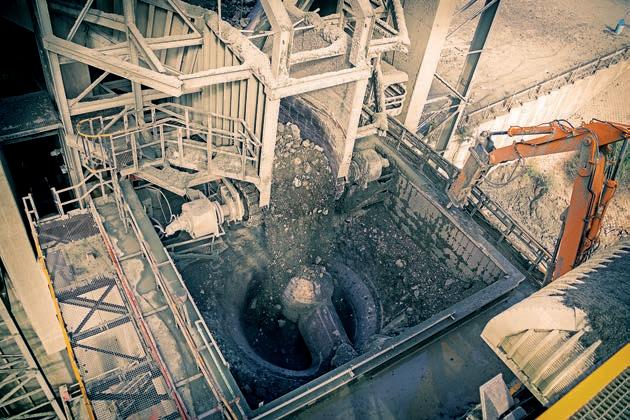
METSO’S HISTORY OF INNOVATION
GIVES
IT A UNIQUE PERSPECTIVE ON MINING PROCESSES AND HOW EVERY COMPONENT IN A CIRCUIT FITS TOGETHER.
Metso’s expertise is grounded in a history of innovation that spans more than a century.
From the steamage inventions of Bruno Nordberg through to artificial intelligence (AI)-driven technologies such as RockSense 3D, the company draws on a lineage of mining innovation with few peers in the industry.
These breakthroughs have made Metso a name synonymous with core mining processes, including feeding, screening and crushing.
Alongside its extensive product portfolio, Metso prides itself on supporting customers throughout the design, establishment and operation of a project. For Metso, the whole is always greater than the sum of its parts.
Metso technology manager –midsize and mobile crushers Asia Pacific – Mustafa Pardawala said a holistic approach to circuit design is essential when consulting on new or existing projects.
“One of the most valuable things Metso provides is process design,” Pardawala told Australian Mining
“We look at the entire flowsheet and simulate the whole circuit rather than treating equipment as standalone.
“Our simulation tools and expertise spans across crushing, screening and feeding, which allows us to ensure that the entire circuit performs as intended. One of the most crucial parts of this is getting the process input information as accurate as possible.”
Early consultation allows Metso to design the crushing, screening and feeding stages as a single system. By engaging at the design stage and using tools like Bruno, Metso can match equipment to ore properties, rightsize crushers and screens and balance loads across the flowsheet, reducing bottlenecks, unnecessary recirculation and downstream issues.
It also gives Metso the opportunity to educate customers, test options through simulation and apply lessons from its large installed base.
Pardawala’s colleagues agree that thinking about the circuit as an integrated whole is essential.
Metso technology manager –screening Asia Pacific – Peter Lundberg
said inefficiency in one area quickly compounds across the system.
“Variability in crusher feed, whether due to fluctuating ore fragmentation, inconsistent particle size distribution, or poor choke feeding, can lead to nonuniform product shape,” Lundberg said.
“Irregular shape and size distribution compromise downstream comminution efficiency, particularly in milling circuits, where predictable grindability and throughput depend on consistent feed characteristics.”
Technology manager – crushing Asia Pacific – Jason Perrella noted similar effects from poor screening performance.
“If we’re not getting the separation we designed for, too much undersize goes to the crusher,” he said.
“Excessive fines in the crushing chamber can cause packing, force spikes and high power draw. Fines don’t need crushing, but they still wear the chamber and decrease efficiency.”
Perrella said poor feeding can also create a force imbalance in the crusher.
“If we’re not maintaining a proper material level in the crushing chamber, slabby and long particles get through and then affect the screen, and so on,” he said.
Perrella believes one of Metso’s biggest strengths is its breadth across the flowsheet.
“We’re not just a crushing, screening or feeding company; we cover the entire mineral processing flowsheet,” he said.
“Our team has shared expertise across all technologies.”
The scale of Metso’s installed base is another major advantage.
“We’ve got well over 100 years of experience designing circuits with these machines, and a huge global installed base,” Perrella said.
“That real-world data feeds into our modelling tools – including Bruno – and into our knowledge bank. It allows us to deliver advanced consultation and
Perrella said one of the most impactful recent technologies has been Metso’s RockSense belt analyser products, which enables particle size distribution measurement.
“With tools like RockSense – using 2D or 3D particle-size analysis on the belt – operators can constantly track what’s coming into and out of each part of the plant ,” he said.
“That enables on-the-fly adjustments to balance the circuit.”
While technologies like RockSense seem far removed from the steam-age innovations of Bruno Nordberg, they share a lineage that has made Metso a trusted name for more than a century. AM
Certified repair / rebuild options 1. RELIABLE REBUILD COMPLETION – ON TIME COMMITMENT*
On-time completion
All variations finalised within 21 days from agreed commencement date
Price
TALK TO YOUR LOCAL REPRESENTATIVE TO SCHEDULE YOUR REBUILD TODAY.
Securing mining contracts has proven a strong pathway to growth for Cooper Civil & Crushing.
After a career in earthmoving, Daniel Cooper started the New South Wales business in 2017. He quickly realised he needed a trusted relationship with a quality equipment supplier for the business to prosper. That’s when Tutt Bryant Equipment entered the picture.
Tutt Bryant Equipment national business development manager –crushing and screening – Paul Doran told Australian Mining that he and his team have worked closely with Cooper over the past five years, developing a relationship that has helped the company go from strength to strength.
“Daniel’s business has continued to enjoy strong growth by taking on opportunities that relate closely to its core disciplines. One example is the processing of ore at a gold mine in central New South Wales,” Doran said.
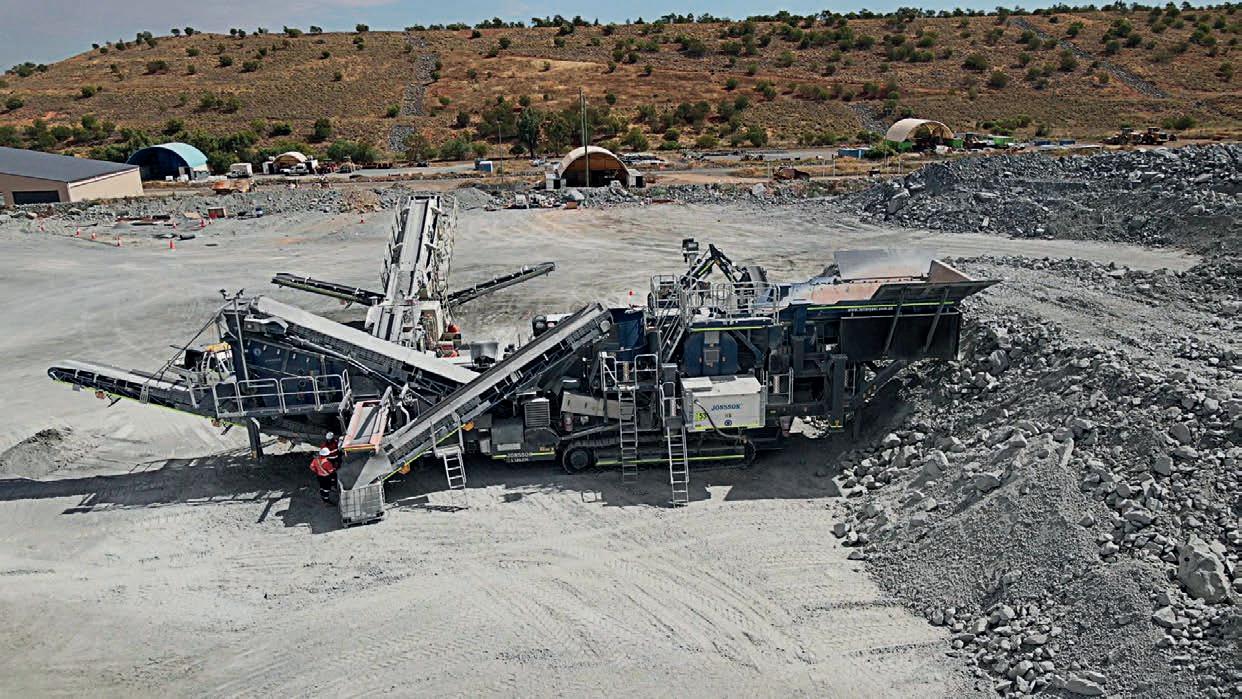
“The project involved providing supplementary feed to the mine’s primary crushing station using mobile crushing and screening equipment. The start of this project coincided with the arrival of Cooper’s latest acquisition from Tutt Bryant Equipment, the L120330 double crusher from Jonsson.”
With Tutt Bryant’s guidance, Cooper chose the Jonsson model after considering several options.
“I had seen the Jonsson equipment operate in Finland and was impressed enough to buy one,” Cooper said.
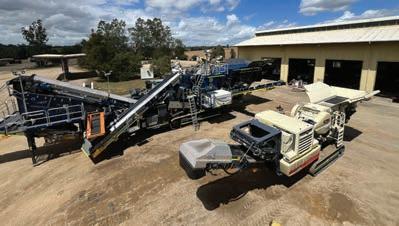
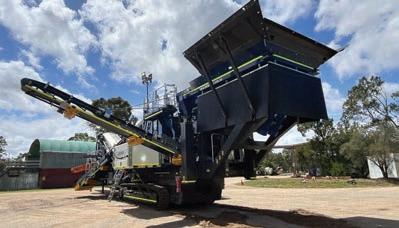
The diesel–electric unit combines a two-deck scalper, C120 jaw crusher, 330GP (420hp) cone crusher and three-deck product screen on a single chassis. It can plug into main site power or a dedicated generator, or run off its on-board generator. This flexibility lets operators optimise production using the lowest energy costs available. It turns 500mm run-of-mine (ROM) feed into a 10mm product.
It was Cooper’s 14th purchase of a mobile crusher or screen from Tutt Bryant, a testament to the strength of the customer–supplier relationship.
Doran said the ‘Tutt Bryant way’ emphasises supporting long-term customer growth.
“We don’t want to sell our customers one piece of equipment; we want them coming back to us for all their equipment,” he said.
Cooper’s acquisition of the Jonsson L120-330 highlights Tutt Bryant’s premium range of mobile crushing and screening products, but Doran said the goal is not to sell the biggest or most expensive machine.
Instead, the focus is on understanding how a machine will fit a project and support future work.
“If someone rings up and says, ‘I want a jaw crusher’, we don’t just give them a quote for whatever we
have in stock,” Doran said. “We talk through their options and try to understand their business.
“Once we know all that, we can scope out the best solution.”
Tutt Bryant’s account managers pride themselves on understanding operational challenges and project requirements.
“They’re operational people,” Doran said. “Most of them have run equipment and run sites, and customers know our team understands their challenges.”
Cooper agrees that a relationship with Tutt Bryant extends well beyond the initial sale.
“Tutt Bryant look after me for parts, service work and the occasional tech support requirement,” he said.
Tutt Bryant assists customers during commissioning by preparing each machine at its facility and shipping it to site.
Field service technicians set up the equipment, conduct operator familiarisation and safety training, and ensure users understand controls and maintenance routines.
Technicians stay on site for several days during first operation, overseeing the process and answering questions. They also advise customers on recommended spare parts – especially for remote sites – and provide ongoing support, including remote monitoring through Tutt Bryant’s fleet management system, to ensure reliable performance.
For Doran, working to make sure customers like Cooper Civil & Crushing receive support throughout the entire equipment lifecycle is central to the company’s ethos.
“His success helps our success,” he said. “And that’s a satisfying thing to be part of.” AM
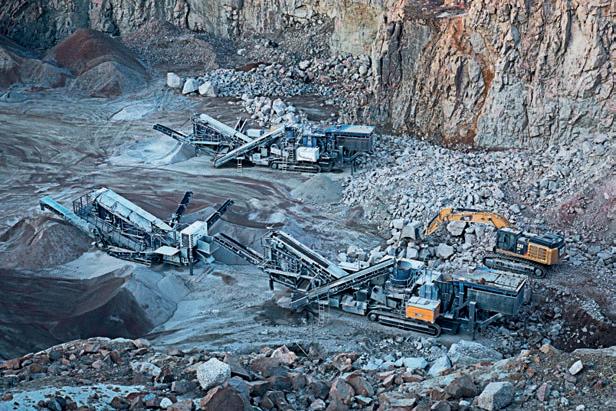
We are now better equipped than ever to help you to optimise your comminution and material handling operations for maximum performance, safety and efficiency. Our industry leading expertise in crushing, screening, feeding, loading and wear protection allows us to bring you an unrivalled equipment line-up. We underpin this unique offering with our expert process knowledge, full range of digital tools, high quality OEM spare parts, consumables and life-cycle services.
Scan the QR code to discover why we are the industry’s partner in eco-efficient mineral processing.
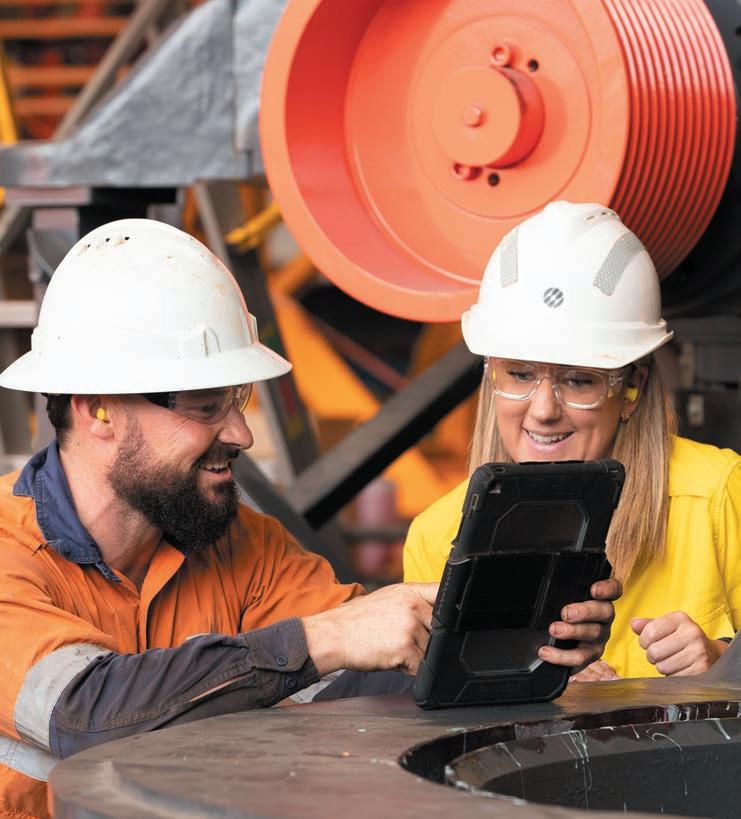
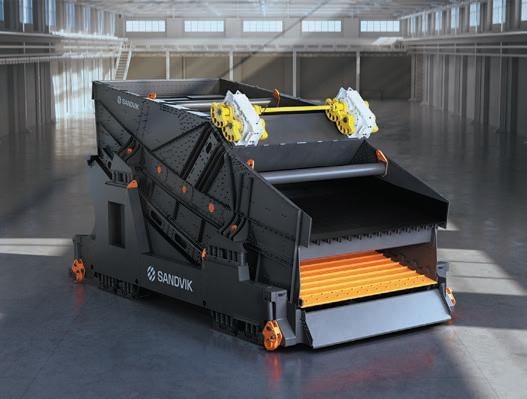
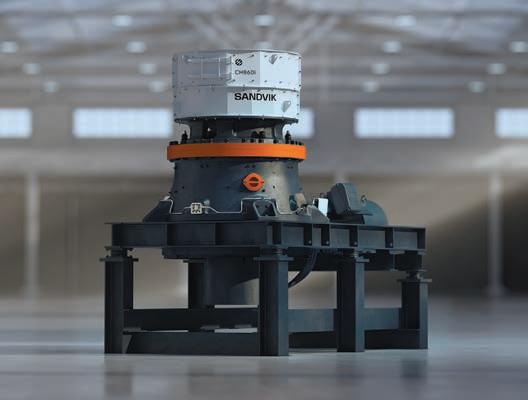
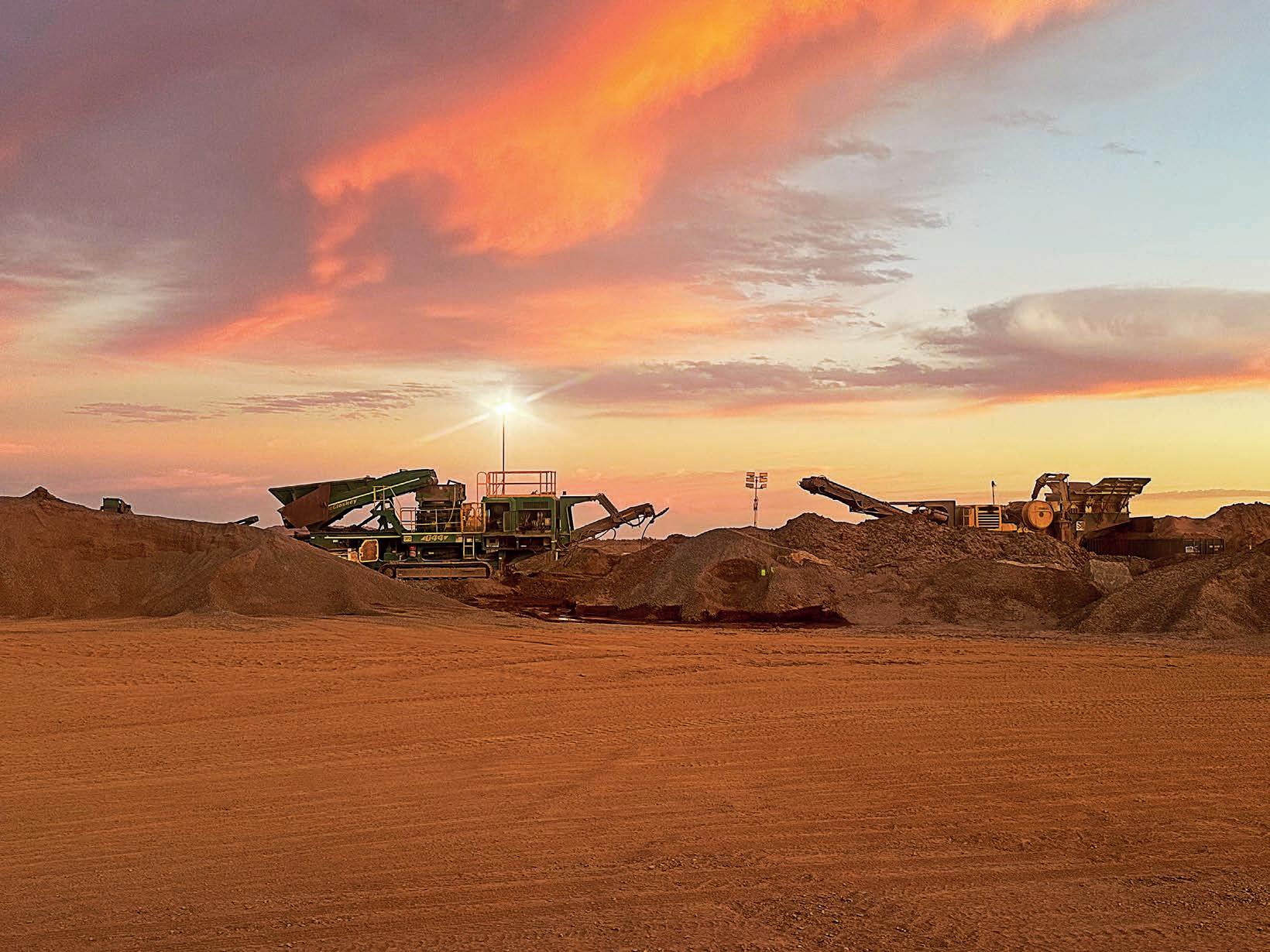
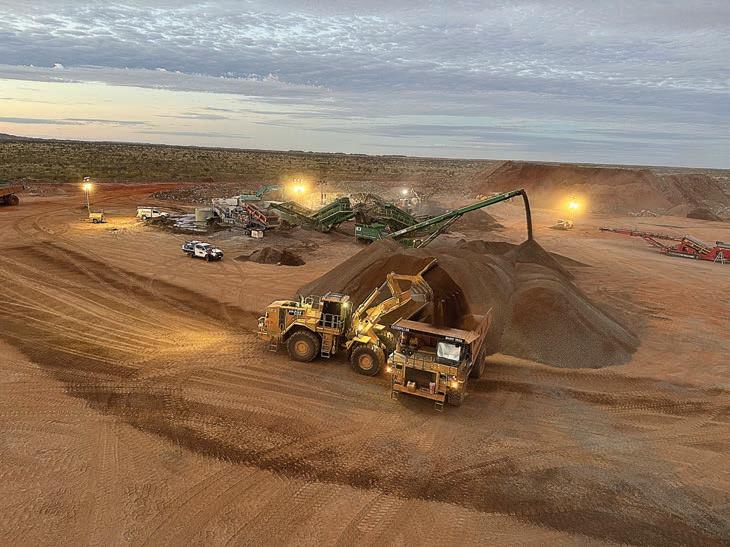
MATERIALS AND PROCESSING SOLUTIONS THAT HELP WA MINING OPERATIONS HIT EVERY TARGET.
In an industry often measured by sheer production volume, B&F Consolidated Group (BFCG) is showing that precision and engineering are just as vital to success as the tonnes of ore that are extracted.
Across Western Australia’s mining sector, demand for high-specification materials – from gold processing to aggregates and infrastructure rock for mine sites – has never been greater.
BFCG has capitalised on this demand, positioning itself as a turnkey partner that manages projects from feasibility studies through to production and processing.
Founded in 2017 in partnership with the WA Limestone Group, BFCG combines decades of expertise in crushing and screening with a flexible contract model tailored to client needs.
The company doesn’t simply supply materials; it oversees the entire mining value chain, from drill and blast planning to processing and final product delivery. This integration brings cohesion and consistency to technically complex, high-stakes projects.
“What sets BFCG apart is our dedication to high-end materials with uncompromising quality requirements,” BFCG operations director Johan Barnard told Australian Mining.
“We manage the entire process, using bespoke blast designs, selective mining, customised blending and tailored
crushing solutions to ensure exceptional quality management right up to the final product leaving the weighbridge.”
For clients, this level of control is critical. BFCG produces highspecification aggregates and processed ore for gold and other resource operations, helping to ensure materials meet strict metallurgical and engineering standards.
Aviation-grade pavement aggregates, rip-rap for civil works and bulk process materials are all delivered on spec.
“Our clients don’t just need material; they need confidence that every tonne will meet spec,” Barnard said.
“Every project is meticulously planned, from initial layout to ongoing quality checks throughout production. This precision allows us to deliver on time, on spec and often under budget.”
BFCG’s success also relies on purpose-built crushing plants and advanced software that monitors drill and blast operations, haul logistics, processing metrics and internal quality control in real-time.
Flexible fleet solutions allow the company to scale resources according to operational demands, whether maintaining baseline throughput or ramping up for peak production.
Centrally located in Western Australia, BFCG leverages WA Limestone’s supply chains and local knowledge to navigate the logistical challenges of remote mining sites.
“We’re not just delivering materials,” Barnard said. “We’re shaping the mining industry, mentoring the next generation, and setting higher standards for quality and sustainability.”
By integrating precision-led processes, advanced technology and end-to-end project management, BFCG transforms traditional mining and quarrying operations into strategic advantages for clients.
“We focus on delivering complete solutions that unlock maximum value, particularly on technically complex and cost-sensitive projects,” Barnard said.
“Our goal is long-term sustainability and reliability over the life of the project, not just short-term gains.”
BFCG is redefining how mining materials are produced and delivered, turning precision into a competitive edge for WA’s resource sector. AM
ueensland has seen its share of exciting mining developments over the 12 months. From coal through to critical minerals, the state’s resources sector is firing on all cylinders.
Of course, a world-class resources sector would quickly come to a halt without the support of similarly worldclass mining services suppliers.
As part of its commitment to Queensland’s mining industry, FLS opened a new service centre in Mackay last year to address that very need.
FLS head of site sales, Indonesia and eastern Australia Karl Spaleck said the new centre has been established to play a key role in supporting the state’s mining industry, with a particular focus on north Queensland, including the Mount Isa region.
“We’ve always had plans to grow in north Queensland,” Spaleck said. “It was really just a matter of where we could provide the best service and be closest to our customers.”
Despite already operating centres in Mackay and Rockhampton, there was a recognition from FLS that a larger
is supplying the gyratory crusher, to coal operations in the Bowen Basin.
To service that growth, FLS had to consider exactly what a new centre should look like and where it should be located.
Spaleck said the smaller centres had reached their limits in size and expansion, which prompted a search for the right site in the best location.
It turned out that Mackay – which sits in the heart of Queensland’s busiest mining provinces, making it a central and easily accessible hub for customers –offered the ideal location.
The new site is also large enough to take on some of the warehousing duties previously carried out at FLS’s Pinkenba service centre, enabling equipment and machinery to be stored closer to operational sites.
“We don’t have to keep everything in Pinkenba now. That has cut down delivery times by about 19 hours, which means a lot less downtime for customers,” Spaleck said.
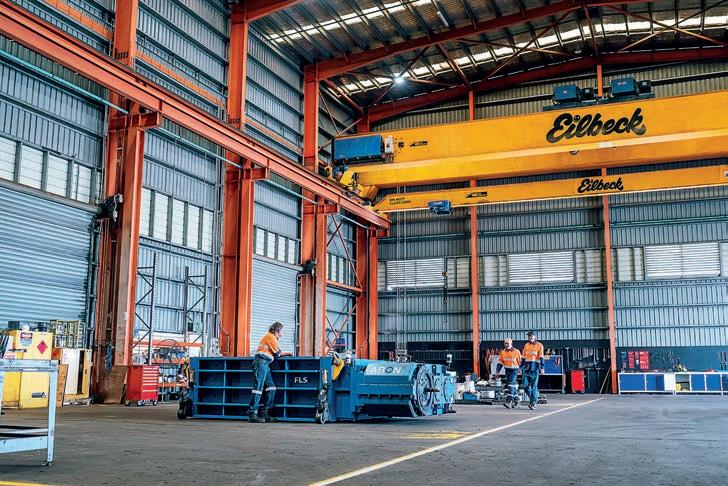
In addition to being closer to customers, the Mackay facility is designed to handle a broader range of equipment than the company’s previous smaller locations in the region, including major rebuilds of gyratory crushers.
“There’s no problem working on the ABON sizers in there, as well. You can have a workshop, but if the concrete flooring is not up to standard you can’t put an ABON sizer in it.”
FLS carries out extensive work for coal customers, and the new centre provided an opportunity to rethink the best way to service those operations.
“It’s close to our service exchange program, we’re able to do the ABON sizers, and we’re able to do the rebuilds for the owner-operated equipment in the Mackay workshop,” Spaleck said.
Starting with a fresh slate, FLS has built a modern centre engineered to deliver faster access to critical spare parts, complete major equipment rebuilds and broaden the technical support available to miners across the state.
The Mackay centre was one of seven FLS service centres expanded or opened in strategic locations around the globe as part of the company’s renewed focus on mining services and its CORE’26 mining strategy.
Spaleck said the successful establishment of the new centre was helped by being able to draw upon the experiences of the four other major service centres FLS has around Australia. Importantly, it was also shaped by the input and requirements of local customers.
“We knew what we wanted to do with our customers here,” Spaleck said. “We know the region well, and we know Queensland mining well. We feel that this is a service centre that can support our customers well.” AM
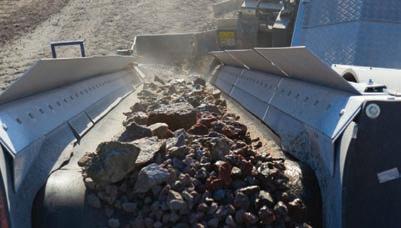
The Jonsson L120-330 delivers exceptional performance through its compact yet heavyduty design, offering outstanding capacity built on a proven engineering concept. Equipped with the powerful pairing of the Nordberg® C120 jaw crusher and GP330 cone crusher, this model consistently meets, and often exceeds, customer expectations across demanding applications. Its dual electric-powered crushers not only reduce operating and maintenance costs but also contribute to lower environmental impact. With both crushers mounted on a single chassis, the L 120-330 eliminates the need for reloading between stages and significantly reduces the footprint required for setup, making it an efficient and space-saving solution for highcapacity crushing operations.

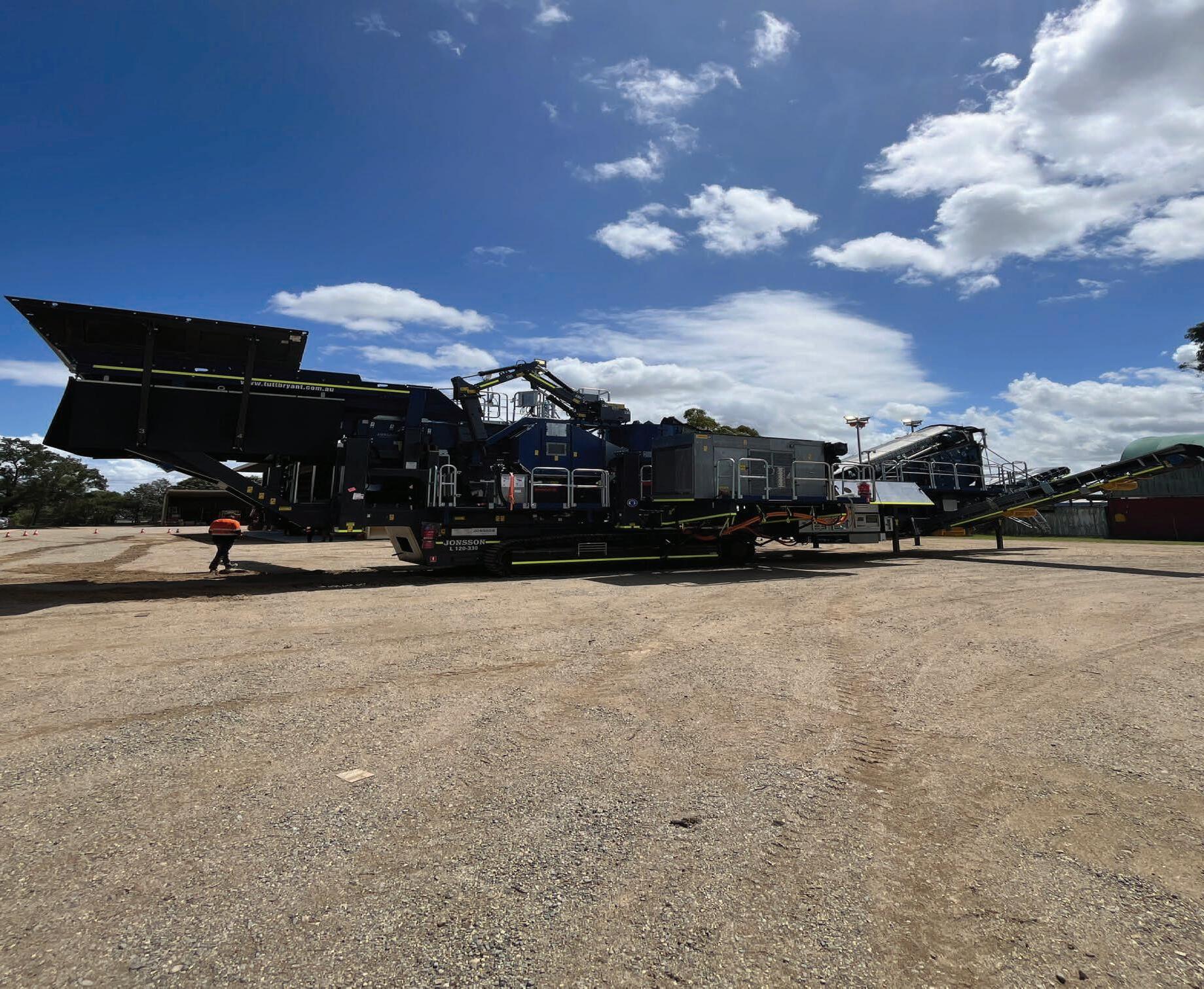


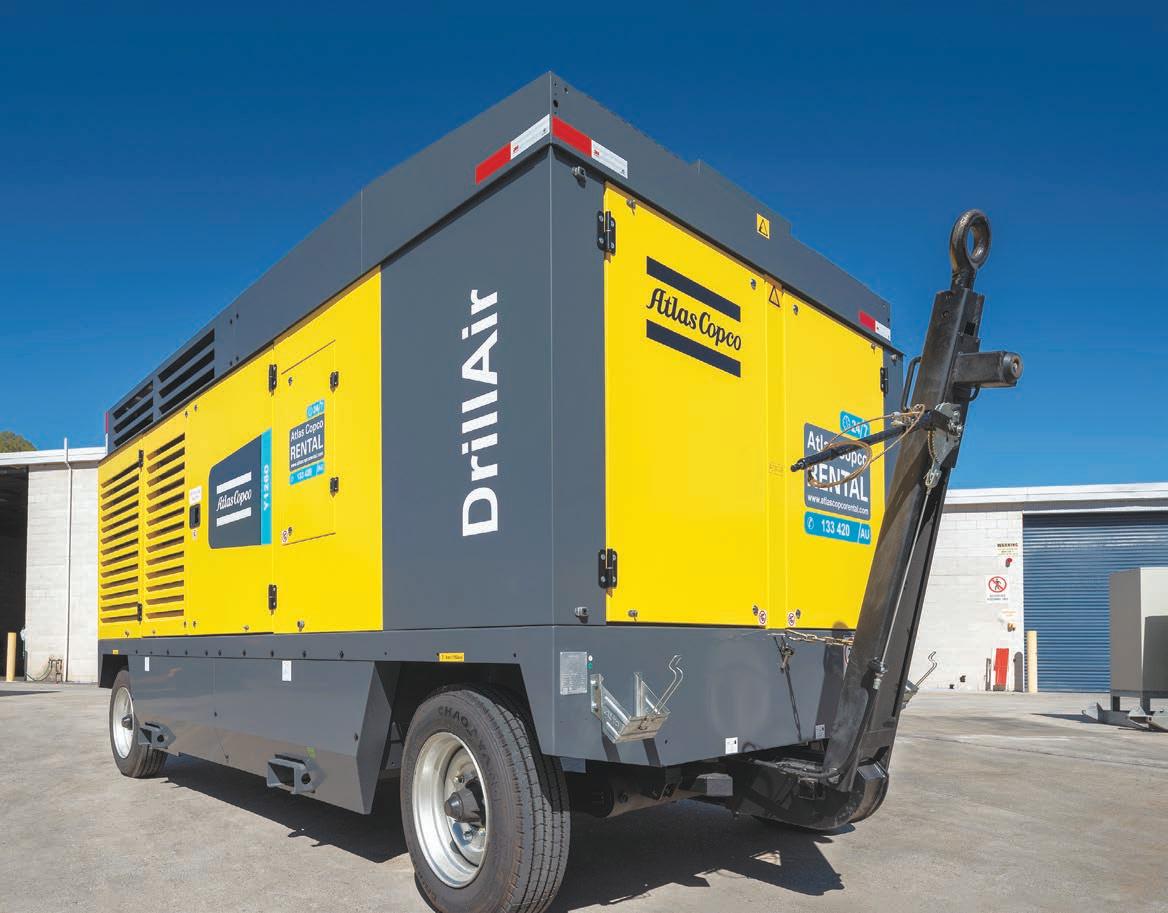
COPCO RENTAL AUSTRALIA’S DRILLAIR Y1260 IS PROVING HOW A SINGLE COMPRESSOR CAN LIFT PERFORMANCE FROM THE DRILL PAD TO THE PROCESSING PLANT.
In the mining industry, every piece of equipment must earn its place on site. Compressed air has always been an essential part of drilling and processing activities, yet the methods of delivering this vital resource are changing.
The DrillAir Y1260 from Atlas Copco Rental Australia is more than just a compressor.
“It’s a versatile rental solution, designed to provide mining operations with the exact power you need, when you need it, without the obligations that come with ownership,” Atlas Copco marketing manager David Irwin told Australian Mining
“The Y1260 is purpose-built for drilling applications, offering a substantial flow range of 1126 to 1431 CFM [cubic feet per minute] and pressures reaching up to 35 bar.
“This level of performance makes it a natural fit for deep-hole drilling operations. However, the value of the Y1260 extends beyond the drill rig.”
Once raw material is extracted, it must go through crushing, screening and transport processes, and this is where the Y1260’s adaptability shines.
Compressed air generated by the Y1260 is integral to dust suppression systems around crushers, maintaining air quality and safeguarding workers. It also powers pneumatic conveyors, efficiently moving ore between crushers and screens for consistent material flow.
When blockages inevitably occur in screening plants, the Y1260’s high-pressure air swiftly clears screens and crusher chambers, minimising downtime.
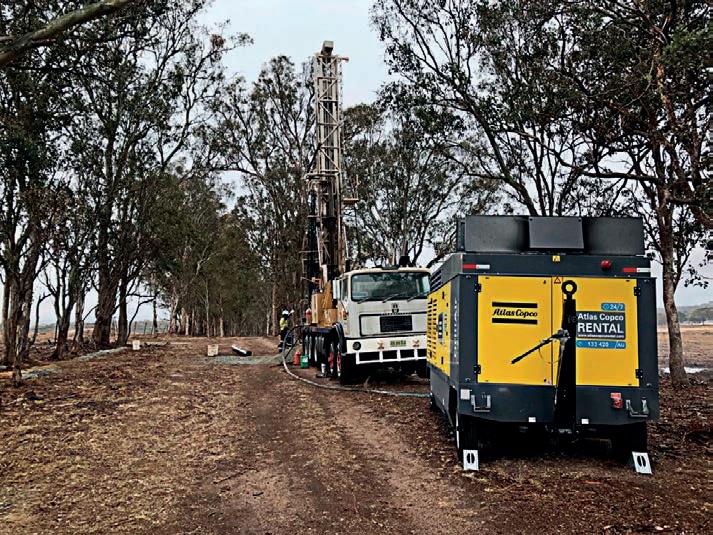
whether that’s at the drill pad or the crushing plant.
Safety features, including aftercoolers, fire suppression and emergency stops, provide peace of mind for operators working in harsh conditions.
“In this way, the Y1260 proves itself as more than just a tool for drilling, but as a compressor that supports the entire production process,” Irwin said.
The Y1260 is engineered to meet the challenges of Australian mining environments. Its fuel-efficient design lowers operating costs, while its compact form and mobility ensure it can be quickly deployed wherever it’s needed,
For operations focused on crushing and screening, where constant uptime is crucial, the reliability of the Y1260 translates to more material moved and greater cost savings. The Y1260 delivers the operational continuity on which mining operations rely.
The benefits of the Y1260 are further enhanced by the way Atlas Copco Rental Australia offers it. Renting the
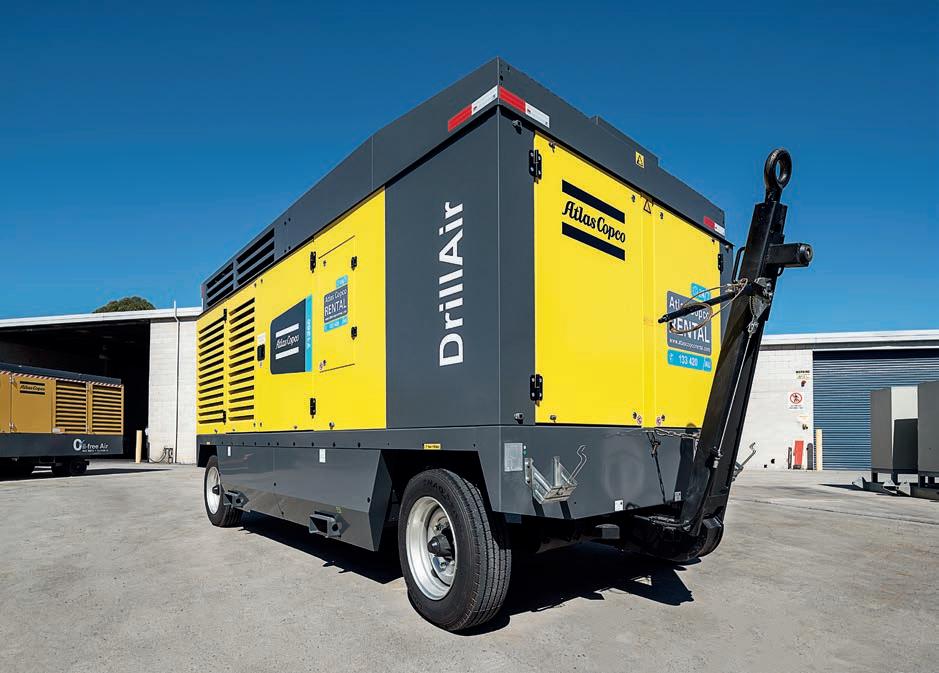
Y1260 gives mining sites the flexibility they need, without tying up capital in equipment ownership.
Whether there’s a need for additional capacity during peak crushing periods or a sudden breakdown in existing compressors, the Y1260 can be quickly mobilised.
Supported by Atlas Copco Rental’s 24–7 assistance and contingency planning, the rental model allows sites to scale capacity up or down as requirements change, ensuring lean and responsive operations.
The Y1260 is not just a compressor; it’s a strategic asset that strengthens mining operations from pit to processing plant. By seamlessly connecting drilling with crushing and screening, it demonstrates that true efficiency is systemic.
“Advancing drill holes more quickly, keeping crushers clear, and ensuring screens run smoothly all contribute to improved productivity and a healthier bottom line,” Irwin said.
“In a climate where mining operations are expected to achieve more with less, the Y1260 stands out as a practical and proven solution.”
The Y1260 is also seamlessly connected to Atlas Copco Rental’s iRent platform, which the company said provides a smarter way to manage equipment.
With iRent, users gain instant access to machine insights, from operating hours to upcoming service schedules, all displayed in a clear, userfriendly dashboard.
“This means you can plan maintenance ahead of time, reduce downtime and keep your operations running at peak efficiency,” Irwin said.
“The Y1260’s connectivity ensures that your rental experience is not only reliable but also transparent and easy to control.” AM
Mining operations have evolved to focus on increasing efficiency, while also managing key environmental, social and governance (ESG) guidelines. This is something Weir tackles head-on, with its newest range of crushing technology coupled with a holistic approach towards how work is carried out.
By looking at operations as a whole, Weir – a global supplier of mining technology – is leveraging its experience across mining’s entire production chain to provide scalable benefits to operators, including energy consumption reduction by up to 40 per cent.
This has been done through the replacement of traditional semiautogenous grinding and ball mill circuits (SABC) with Weir’s ENDURON high-pressure grinding roll (HPGR)-based circuits, cutting approximately 200,000 tonnes of carbon dioxide, as well as lowering maintenance requirements and offering excellent throughput capacity.
Weir’s ENDURON HPGR portfolio ranges from pilot machines to large format production machines, including one of the largest operational roller surfaces, capable of processing over 118,000 tonnes of ore per day.
Upgrades like this ensure that Weir is not only at the forefront of innovation but that it can continue to provide overarching, end-to-end solutions that are increasingly required by mining operations.
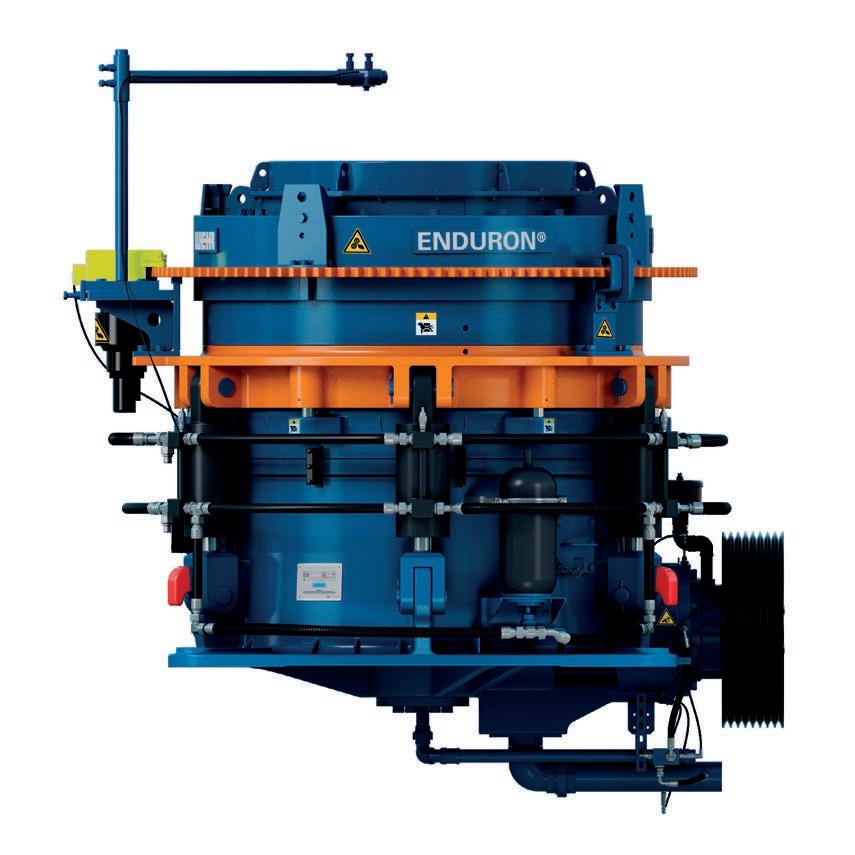
Additional developments include the launch of the new ENDURON jaw crusher, consisting of an updated hydraulic power unit featuring push-button closed side setting (CSS) adjustments and automatic spring tensioning, improving safety and reliability.
The full ENDURON jaw crusher range now incorporates ESCO wear parts, extending wear life and reducing maintenance. Weir has also upgraded its ENDURON cone crushers with ESCO liners and enhanced hydraulic systems, offering fixed-shaft and live-shaft designs to suit different applications. Digital technologies further support optimisation through condition monitoring, predictive maintenance and process control.
In recognising the evolving demands of mining and aggregates industries, Weir has taken a customer-first approach to design and
meet the most pressing challenges.
Automation across all cone crusher models has been significantly enhanced, a key driver in modern mining operations, with digital sensors and Siemens hardware as standard to help ensure seamless integration and intuitive controls through a new human–machine interface.
“Weir takes a solutions-based approach when developing its equipment,” Weir product manager – crushers Magnus Skorvald said. “Digital plays a vital role in ensuring that equipment right across the entire comminution process, from crushing through to grinding and classification, operates optimally.”
Further attesting to the customerfirst approach, Weir helps operators throughout a machine’s lifecycle, ensuring the right equipment is tailored for the right application.
“Choosing the right crusher is not just a matter of capacity. When it comes to crusher selection, one of
the most common mistakes operators make is oversizing their equipment,” Weir director crushing and screening Hakan Karlsson said. “There is often a perception that bigger is better, but this can lead to uneven wear, inefficient operation, additional energy consumption and poor reduction ratios. Selecting the ideal crusher requires a detailed understanding of the feed material and the site’s operations and requirements.”
This understanding helps to ensure ENDURON crushers are suited for comminution, which involves preparing feed for downstream grinding.
“Comminution accounts for about half of all mine site energy consumption, which means that even marginal efficiency gains can have a significant
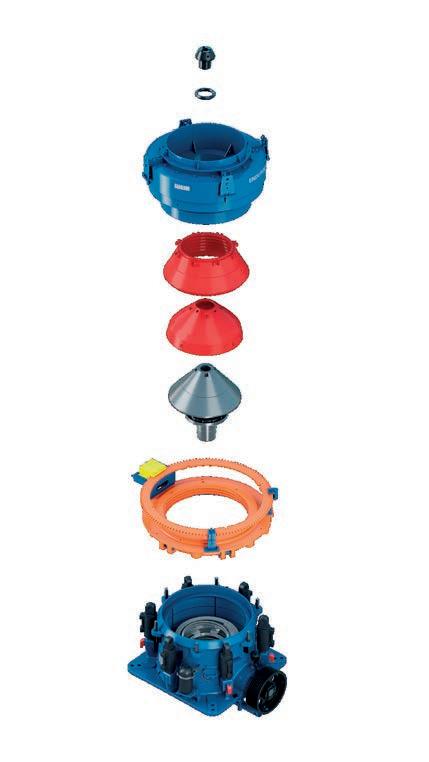
impact,” Skorvald said. “It’s why Weir continues to focus on expanding its portfolio to ensure customers can continue to meet their production targets while reducing the impact their operations have on the environment.” AM
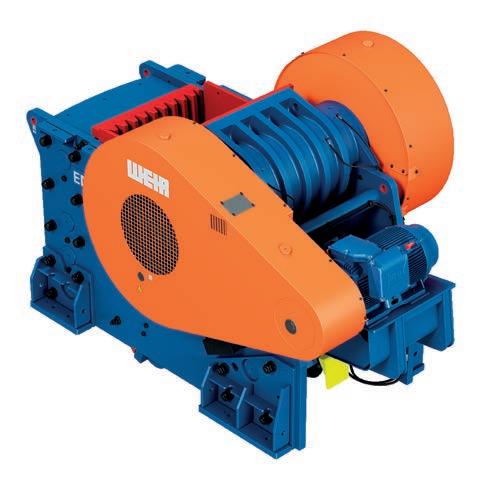
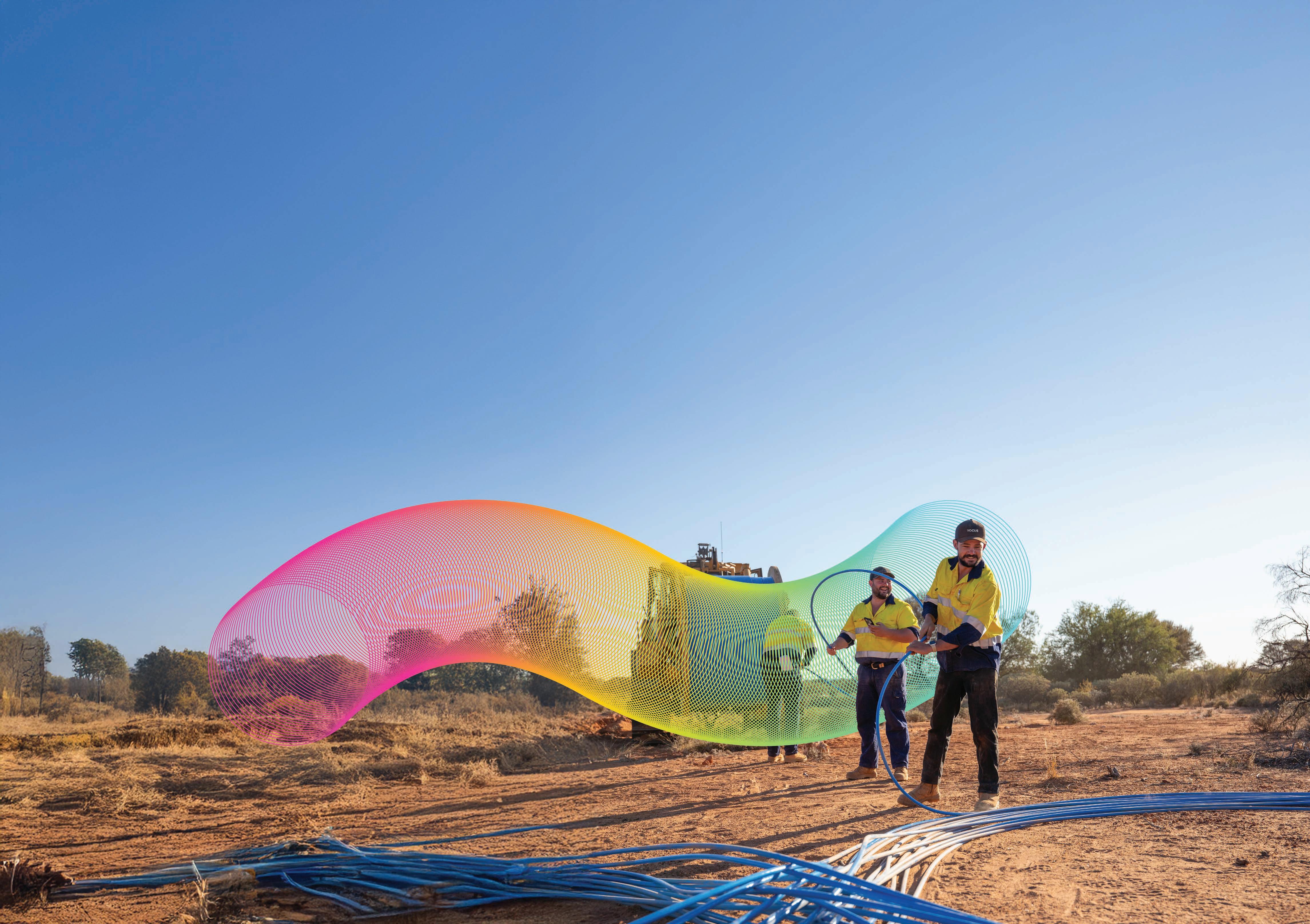
for speed, scale and security Network solutions for better connected mining sites.
Vocus powers the connections that drive progress. From the bustling heart of cities to remote regions, we deliver ultra-reliable, low-latency connectivity that powers automation, AI, and remote operations. Helping you boost productivity, minimise downtime, and keep your sites running e ciently.
SIZE SEPARATION IS FUNDAMENTAL TO PRODUCTIVITY AND PRODUCT QUALITY IN ALL QUARRY AND MINE OPERATIONS. WHETHER IT’S TROMMELS OR VIBRATING SCREENS, THEJO HAS A SCREEN MEDIA SOLUTION TO SUIT.
Trommels and vibrating screens exist to separate material by size. Each is uniquely configured for the orebody and position in the mineral processing cycle. Wherever they are used, efficiency, operational resilience and lifecycle are non-negotiable.
The role of humble screen media within the trommel or vibrating screen is often underestimated. Yet, it is key to achieving the desired products fraction and dealing with the challenges of orebody variation, abrasive rocks, moisture and clay content.
Effective mineral separation sets the pace for downstream performance and selecting the right screen type, and screen media is key to size distribution, throughput, wear and maintenance scheduling and plant availability.
At the forefront of this discipline is Thejo, a specialist in high-performance GRATOR screening solutions tailored to the rigours of Australian mineral processing and bulk materials handling.
With five decades of expertise and local engineering capability, Thejo’s screening portfolio covers rubber, polyurethane, steel and fine mesh screens, helping to develop solutions designed to help operators do more than just sort material.
Solutions are built to optimise wholeof-plant performance, with modular screen panels forming the backbone of these solutions, delivering superior durability and screening accuracy across diverse feed types found in mining, quarrying and aggregates processing.
Created for heavy loads and abrasive environments, Thejo’s panels are designed to ensure precise particle separation and easy installation with customisable aperture sizes and designs for exact particle gradation.
One of Thejo Australia’s local mineral processing specialists Dave Wheehouse said the company aims to optimise output and availability of its customers plant by understanding their needs and how to address them.
“We spend time understanding the process and trying to improve the product,” he said.
“But there’s also the relationship we have with the customer, and we spend a lot of time understanding them and making it easier for them.”
Selecting the correct screen aperture to achieve precise particle separation is the minimum requirement. Thejo’s team also understands that downtime
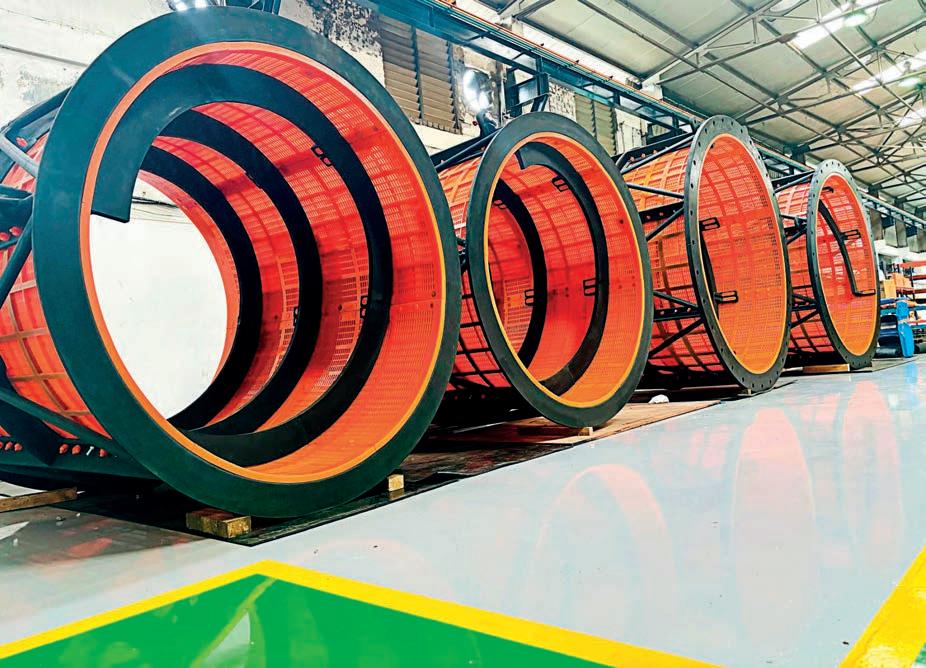
customers in the goldfields wanted to extend their shutdowns from 12–15 weeks, but screen panel life was only just reaching 24 weeks.
“Their first consideration was to change out the screens each 15 weeks
could maximise the full benefit of the extended shut period,” he said.
“Other sites also in the goldfields are using our proprietary zig-zag aperture panels, designed to prevent pegging to maximise productivity.”
Thejo believes its commitment to tailored engineering support is what sets it apart. Beyond off-the-shelf components, the company applies design expertise and consultancy
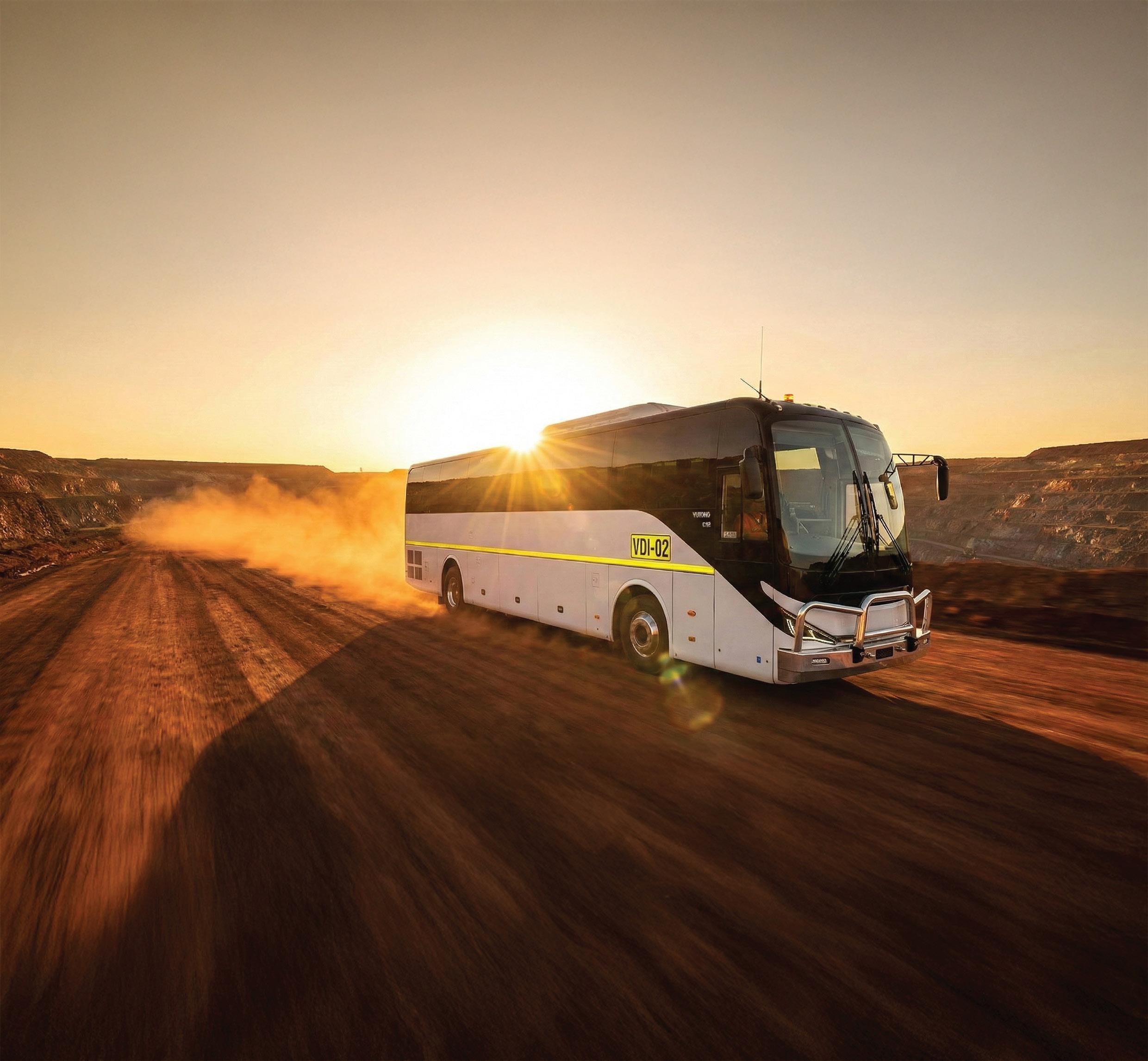
seamlessly with existing equipment and performance goals.
In an era where capital discipline and efficiency gains are paramount, investing in innovative screening technology can unlock measurable value across the processing circuit. Thejo’s GRATOR screening solutions represent a holistic approach to one of the most foundational aspects of mining operations.
For Australian miners focused on squeezing more performance out of every tonne, these engineered solutions offer operational resilience and a pathway to improved throughput. AM
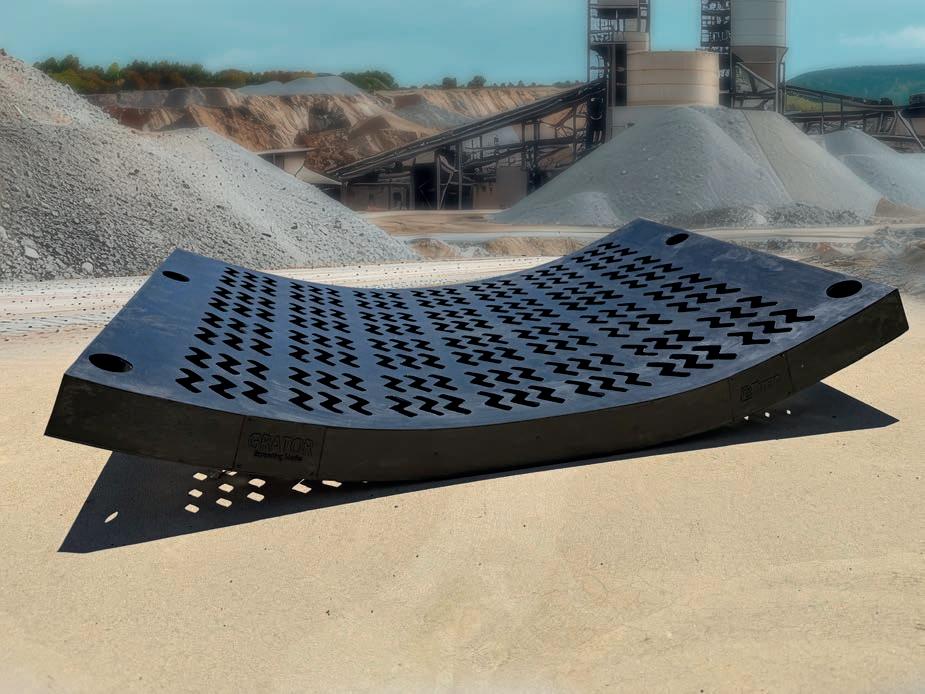



GOLD FIELDS IS UNDERTAKING ONE OF AUSTRALIAN MINING’S MOST AMBITIOUS RENEWABLE ENERGY PROJECTS AT ST IVES, FUNDAMENTALLY CHANGING HOW THE OPERATION WILL BE POWERED INTO THE FUTURE.
The sheer scale of Gold Fields’ new renewable energy project at St Ives in Western Australia is impossible to ignore.
Stretching across one of Australia’s largest mining leases, the development brings together a 35-megawatt (MW) solar farm and 42MW of wind generation in what will become one of the biggest hybrid renewable installations in the country’s mining sector.
It is a project measured not just in megawatts, but in kilometres, decades and ambition, reshaping how one of Western Australia’s longest-running gold operations will be powered well into the future.
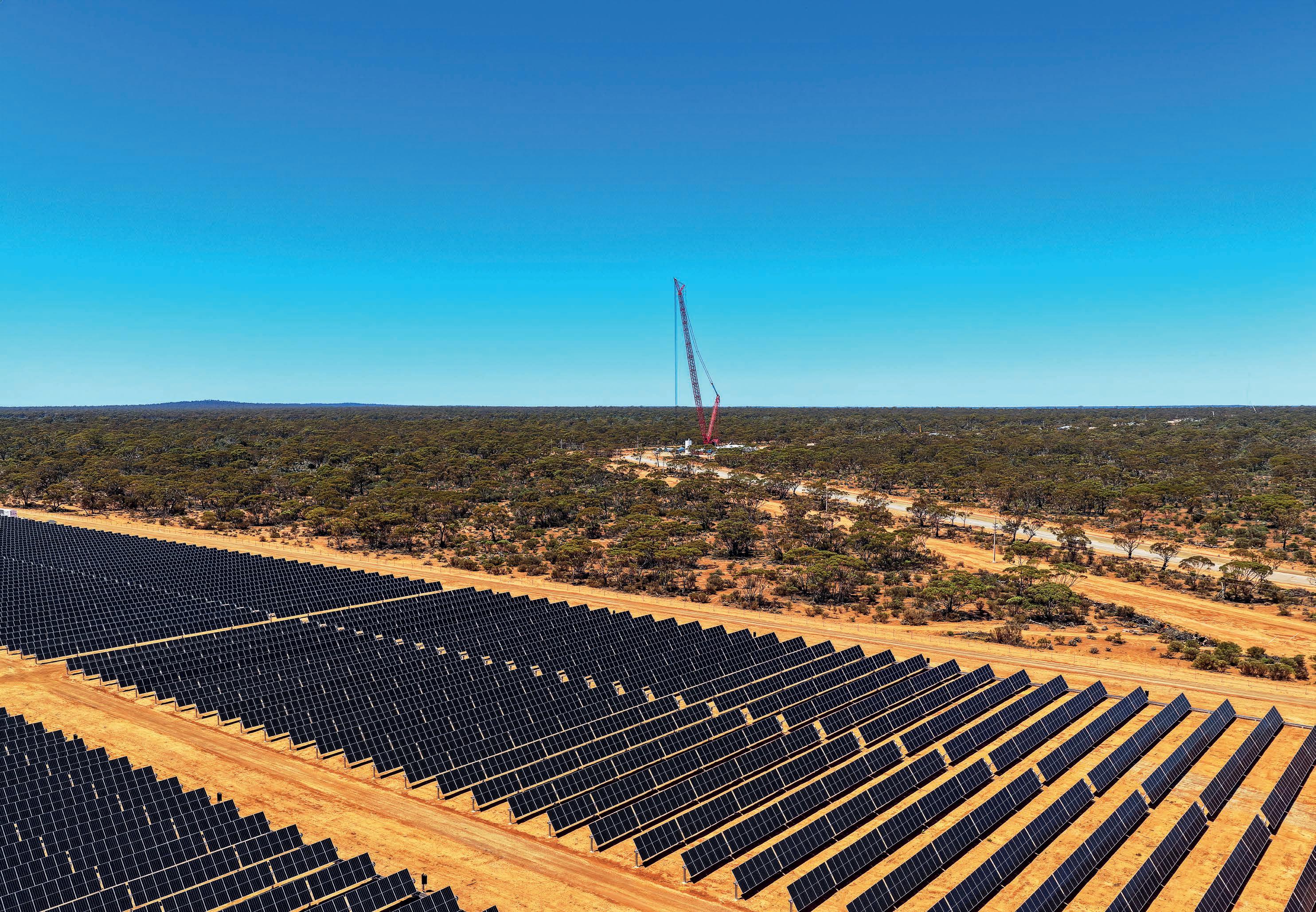
THE SOLAR FARM USES SINGLE-AXIS TRACKING TO FOLLOW THE SUN THROUGHOUT THE DAY.
St Ives has been producing gold for more than 25 years and has a mine life stretching to 2045. With a site so large that it takes an hour to drive from one side to the other, and a resource base vast enough to support long-term planning, Gold Fields saw the perfect opportunity to invest in energy infrastructure that would deliver lasting impact.
Gold Fields St Ives Renewables
Project director Simon Schmid told Australian Mining the runway afforded by the long mine life was fundamental to taking on a project of this magnitude.
“It’s one of the biggest mining leases in Australia,” he said. “The gold resource there is quite significant, meaning the life of mine lends itself perfectly to introduce renewables energy, especially
from a wind perspective, as the cost to do so is quite large and you need a life of mine to really make it work.”
Reducing one of the biggest operating costs was another major catalyst.
“The power demand for the mine is one of the single biggest costs for any mining operation,” Schmid said. “So to reduce the cost of the power in our supply is quite significant from a financial perspective. And not only that; we have quite strong ESG [environmental, social and governance] commitments as well.”
Those priorities have shaped a project now approaching the finish line. Around 85 per cent complete at the time of writing, construction has been advancing fast across the vast site.
Schmid said the progress of the solar farm and core power infrastructure has been particularly strong.
“The general power infrastructure, the switchroom, the energy control, transformers, transmission lines, they’re pretty much done. So is the solar farm,” he said.
“We’re just doing the final cable terminations there, and we conducted function testing on the support frames in November.”
The solar farm itself uses singleaxis tracking to follow the sun throughout the day in order to maximise sunlight capture.
“They actually tilt the panels to get high efficiency out of them,” Schmid said.
At the time of writing, the solar component was expected to be fully completed by the end of 2025, which is one of the project’s key performance markers.
Wind turbine assembly is also moving ahead rapidly, aided by efficient logistics along the long route from the port of Geraldton to the site.
“We had planned to take three months to move all the components, but we are about a month ahead,” Schmid said.
The final turbine components arrived in November and the first turbine was standing the next week, marking a visual milestone for the region.
Despite the scale of construction, the St Ives mine has continued operating without interruption thanks to its uncommon advantage of being grid-connected.
“[That means] the power supply is continuous until we actually connect the renewables to the grid,” Schmid said.
Even once the renewable system is energised, the site will keep its thermal capacity. Hybrid mining power systems rely on a blend of generation types to maintain reliability through changing wind and sunlight conditions.
“You always need to have thermal generation as a base load, just from a network reliability perspective,” Schmid said.
“There will be times throughout the day where we actually export power to the grid.
“But at nighttime, when the solar farm doesn’t work and possibly the wind doesn’t blow as fast, you need that thermal generation capacity in the background.”
When the full system is online, St Ives is expected to supply 72 per cent of its energy demand via renewables.
ST IVES RENEWABLE TIMELINE TO OPERATION
•NOVEMBER 2025 –FIRST SOLAR PANELS AND TURBINES INSTALLED
•E ARLY 2026 –WIND TURBINE ASSEMBLY COMPLETED
•MAY 2026 –WIND GENERATION EXPECTED ONLINE
•AUGUST 2026 –FULL COMMERCIAL OPERATION BEGINS
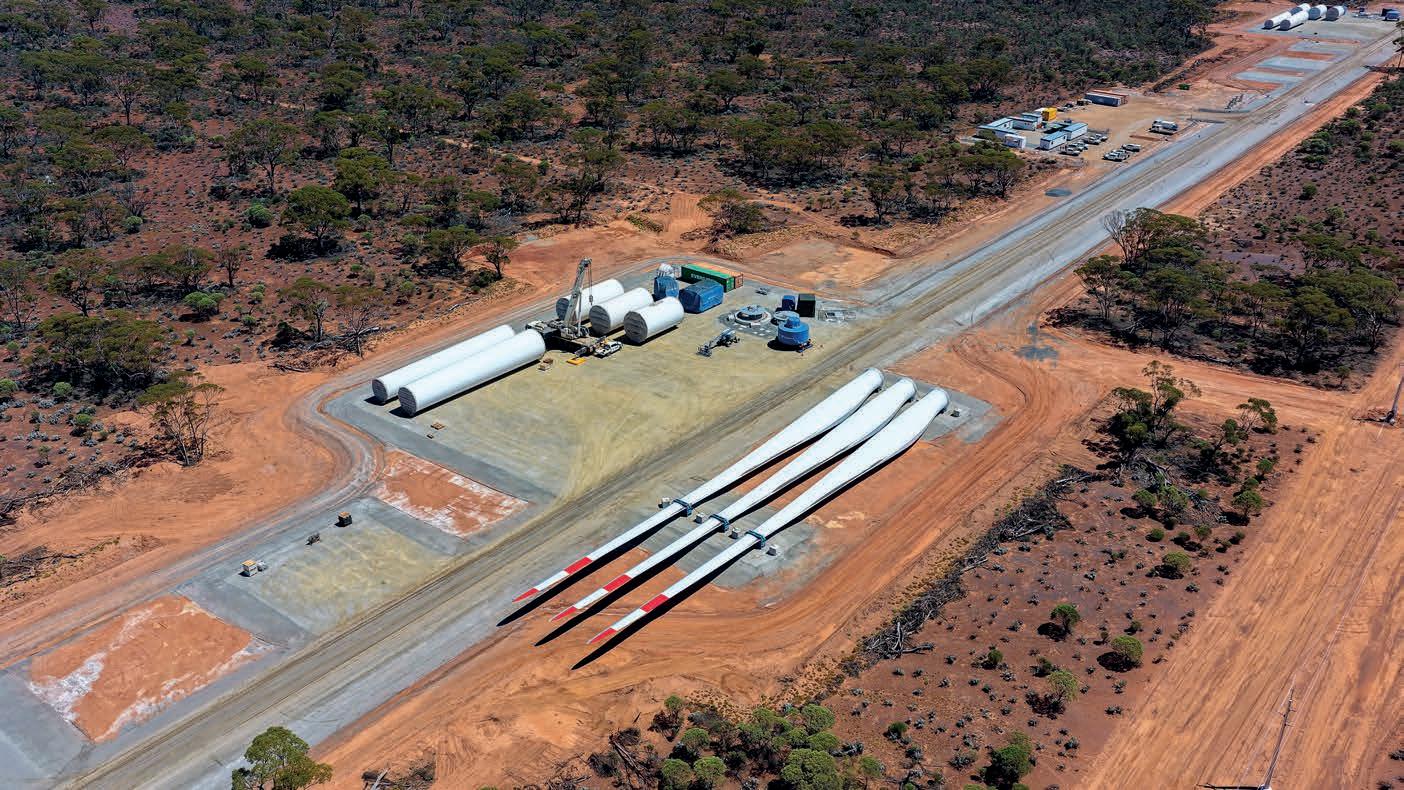
“It represents a quite significant reduction in carbon emissions; about a 50 per cent reduction across the board,” Schmid said.
The combined generating capacity is enough to power 75,000–100,000 homes, underscoring just how large the installation is when viewed beyond a mining context.
Gold Fields is working with two major delivery partners to bring the project to life. Pacific Energy has been responsible for the solar farm’s construction, which has progressed on time and on budget.
“Pacific Energy is one of our key contractors delivering the solar farm,” Schmid said. “They’ve gone very, very well. They’re very experienced and have done a great job.”
Goldwind, which is supplying and constructing the wind turbines, is also tracking to schedule.
“The last of the wind turbines should be up and standing by early-March, and then we go through the precommissioning,” Schmid said. “Full wind generation is expected by May.”
Gold Fields’ expertise in hybrid systems extends back to its pioneering Agnew project, the first major mine in Australia to integrate wind power into a microgrid.
Schmid said the move helped influence the broader resources sector.
“We started this whole journey quite early on at our Agnew operation,” he said.
“We’d been the first to install wind generation in a mine setting, which was quite new back then.”
Since then, Schmid said, many gold miners have adopted hybrid models.
“A lot of our peers in the industry actually jumped on board,” he said.
“In the gold space, it’s getting more and more common now to see microgrid solutions.”
St Ives, however, is a different kind of undertaking, in terms of size and in the unique complexity of being tied into the wider grid.
The project will undergo rigorous testing to meet generator performance standards before reaching commercial operation.
“By about August, we should see the full commercial operation of the asset. And we are really looking forward to that,” he said.
A more personal touch has also been built into the project. Each of the seven wind turbines will feature large community-inspired artworks, set to become enduring visual markers across the WA landscape.
Six designs came from regional school students, and one was created by Indigenous artist Sara Riches. The art works will remain in place for the life of the mine as part of Gold Fields’ commitment to community engagement.
For the miner, the project is more than
like in the next decade: cleaner, more resilient, more efficient and more deeply connected to the region that surrounds it.
At a site as vast and enduring as St Ives, the renewable transformation unfolding across its horizon feels fitting in scale. It is a big step for a big mine and
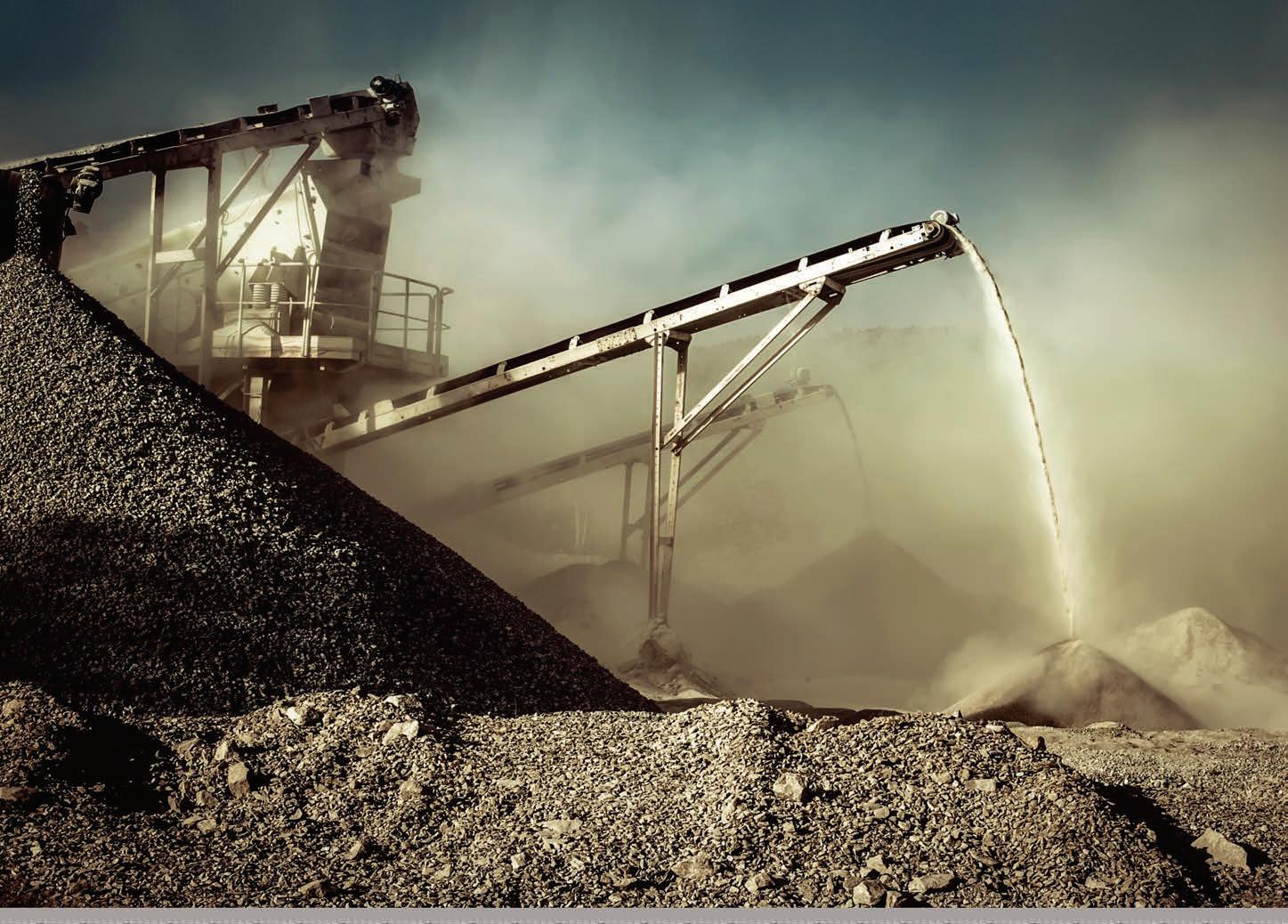
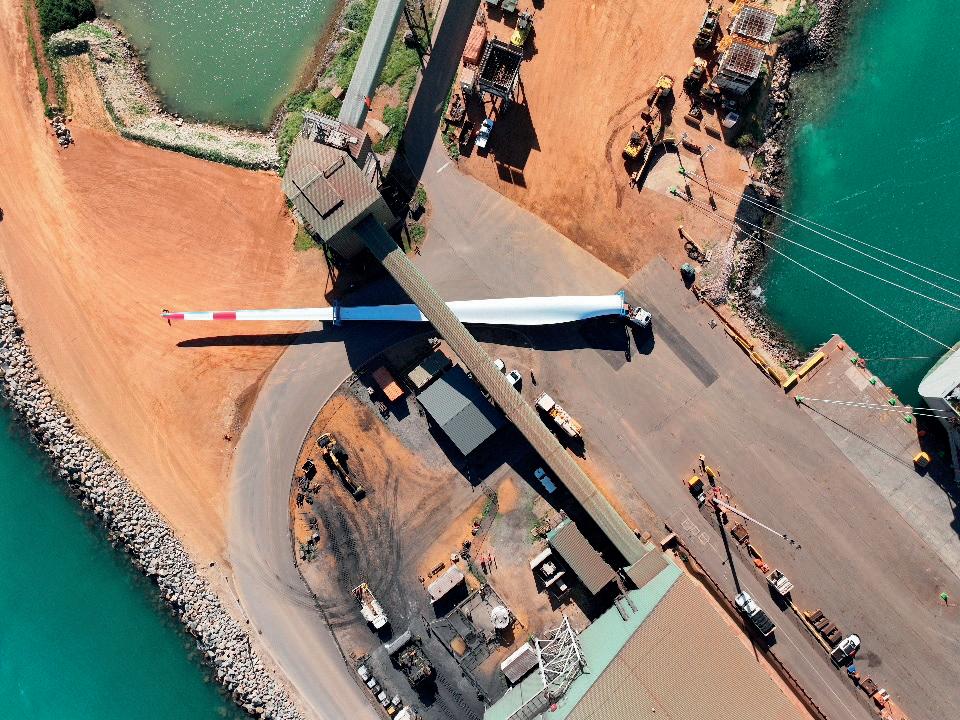
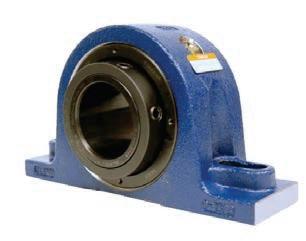
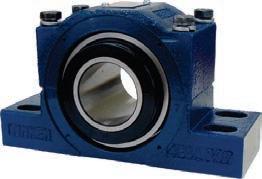
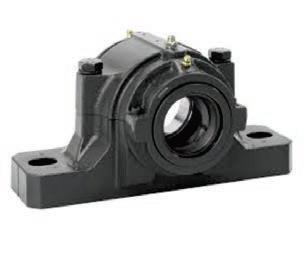
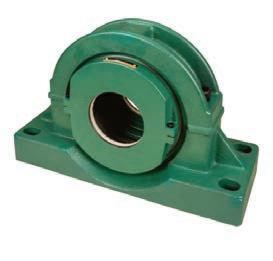
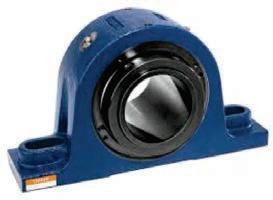
PRIVATE LTE NETWORKS ARE UNLOCKING REAL-TIME VISIBILITY ON MINE SITES, TURNING SENSOR DATA AT SITES INTO FASTER DECISIONS
AUSTRALIAN MINERS ARE HITTING A DATA WALL, FORCING A RAPID SHIFT FROM DISTANT CLOUD PROCESSING TO LOCAL EDGE COMPUTING TO DRIVE AUTONOMY, SAFETY AND IMPROVED ENVIRONMENTAL OUTCOMES.
Modern mine sites are densely instrumented, with sensors and wearables generating vast data streams every minute. However, without robust connectivity, this information remains trapped in devices, unable to influence decisions on the ground in real time with the support of advanced artificial intelligence (AI) models.
A Tier 1 underground gold mine in Western Australia illustrates the operational gap between generating data and using it.
Traditional two-way radio tech struggled in the kilometres of subterranean tunnels, with blackspots throughout the mine and limited communication. The solution was a private LTE (4G) mobile network engineered by digital infrastructure specialist Vocus for the underground conditions. This infrastructure offers predictable and consistent performance. It enables
real-time tracking of vehicles and personnel, which has successfully cut hours of lost productivity associated with locating equipment as each new shift starts, and provided increased safety initiatives and management. It has improved above-ground operational visibility of what’s happening deep below the surface.
The benefits extend to sustainability; granular visibility of where personnel are (and are not) has allowed the mine’s operators to power down ventilation in unused areas, reducing energy use and emissions without compromising safety.
These sorts of solutions also help to drive improved safety controls above ground like tailings dam environmental monitoring.
The millisecond margin
The benefits are also significant to better communications on the surface.
Another Tier 1 miner is deploying 330-tonne autonomous road trains on a 150km private haul road in the Pilbara from inland pit to port. These vehicles
use constant, low-latency data paths to operate safely at speed, demanding modern network architecture.
The haul road uses a private fibre connection linked to a 4G mobile network that keeps the trucks in constant contact with their control centre, with ultra-fast network response times. Sending data more than 1000km to Perth or the east coast for processing would have introduced unacceptable delay in response time.
As an industry-wide trend, computing infrastructure is moving closer to the pit.
Edge computing places processing power within a stone’s throw of where data is being generated – the mine itself.
Data centre operator NEXTDC has built new edge data centres in Port Hedland and Newman, interconnecting with a new 2000km high-capacity fibre network, Vocus’ Horizon cable. This keeps processing local, supporting AI that can react to site conditions in real-time.
“AI thrives on clean, high-quality data flows,” Vocus head of digital solutions
and innovation Greg Phillips said. “Without reliable connectivity, even the most advanced algorithms can’t deliver value on the ground.”
Beyond the established mining hubs, exploration teams face a different connectivity deficit. Remote camps deep in desert regions have historically relied on slow, expensive geostationary satellite links that limit their ability to process survey data on site.
Low Earth orbit (LEO) satellite services like Vocus Satellite – Starlink have upended this model, providing metro-like bandwidth and low latency to sites far beyond the power grid. This shift enables geologists to use cloud AI tools and collaborate in real-time. The satellite terminals are now small enough to be carried in a backpack.
Industrial AI is even moving into space with processors integrated into LEO satellites for tasks like environmental monitoring analysis and alerting in near real-time.
LEO is also evolving from a standalone service to an integrated
part of the industrial network. New landing stations now connect satellite constellations directly into Australian fibre backbones, adding more stable performance than previous satellite networks.
Driving efficiency in a challenging economy
High-speed networks are also reshaping safety protocols.
Wearable fatigue systems, such as electroencephalography (EEG)-based caps, can now predict microsleeps and alert supervisors before a risk escalates. Real-time fatigue monitoring is designed to prevent incidents and provide for smoother shifts.
However, digitising safety creates new vulnerabilities. The convergence of information technology (IT) and operational technology (OT) has eliminated the ‘air gap’ that once kept industrial control systems away from the internet entirely.
With everything from conveyor belts to dewatering pumps now online, cyber resilience is an essential operational baseline. Where a breach in the corporate office might have once been a headache for IT staff for an afternoon, a breach in the pit controller could stop production instantly and cost millions of dollars.
“When your haul fleet, your safety systems and your processing plant are all connected, you can’t afford a single point of vulnerability,” Phillips said.
“Digital safety is now part of physical safety. Protecting networks is protecting people.”
The current economic backdrop reinforces the need for greater efficiency. Resource export earnings are softening as coal and gas prices ease from recent highs. While critical minerals offer growth, pressure to improve profit margins is demanding higher productivity per tonne, making digital efficiency a necessity rather than a luxury.
Connectivity is also becoming the baseline for sustainability. As global markets demand proof of carbon intensity per tonne, miners require an unbroken digital chain of custody from the pit to the port.
High-capacity networks allow this reporting to move from retrospective estimates to real-time dashboards. This turns compliance data into a tool for immediate operational adjustment.
Operators who govern data effectively can gain a competitive edge.
“Data has become a strategic asset, probably as valuable as the orebody itself,” Phillips said. “The miners who can govern, store and
harness their data effectively have the potential to outperform the market in the next decade.”
The industry is moving toward a hybrid model that combines edge computing for immediate decisionmaking, private LTE (4G) networks for reliable site-wide coverage, high-capacity fibre for regional data transport, and LEO satellites for remote reach. This digital backbone allows mines to run AI at the speed of operations.
This infrastructure is also the prerequisite for the use of digital twins, software-based replicas of all the physical assets of the mine. These allow miners to test production optimisations before affecting actual production, and to simulate scenarios like equipment failure before they occur. However, a simulation is only as useful as the live data feeding it.
According to Phillips, now is the time for mining leaders to assess their network resilience to support the new AI workflow patterns that are developing.
He advises prioritising the design of infrastructure that handles failure without halting production, ensuring data flows continuously from the face to the control room, and taking advantage of these same architectures for improving safety and environmental outcomes.

Even something made from solid steel can be stretched.
As mines look for new ways to sweat their assets, Schlam is using data-driven strategies to stretch the life of their Hercules mining truck beds and Barracuda loading attachments while achieving targeted productivity and cost outcomes. The experience gained is now informing new services and product innovation.
The company’s executive general manager product lifecycle services (PLS) Amit Bareja told Australian Mining the solutions provide end-toend support, from commissioning to decommissioning aligned with the requirements of mine asset management systems.
“We understand our load and haul products contribute to the delicate balance in managing costs, risk and performance, helping to maximise overall value for our customer,” Bareja said. “Through proactive lifecycle services, we can help asset managers improve the total cost of ownership for our equipment while also managing risk.”
Schlam products are customised in consultation with customers to fully consider each site’s application, operational conditions, planning and maintenance schedules. This includes understanding assumptions about estimated asset life, efficiency and performance metrics under the asset management system.
Schlam’s lifecycle services are planned based on these conditions to optimise operational hours while managing costs, ensuring every stage of equipment ownership delivers maximum value.
In a “capital constraints” environment, Bareja said, extending the life of a haulage truck bed or bucket through rebuilds can be a lower-cost option compared to a new asset, while still providing a safe and productive solution.
Rebuilds are delivered through Schlam facilities in Western Australia and New South Wales, and contracted partners in Queensland.
“We manage the product in the field to help manage the output,” Bareja said.
“This includes being proactive about servicing and preventive maintenance to manage long term breakdown risk. We would rather solve a defect before they accumulate to the point where they can cause a breakdown.”
To achieve this, the PLS team integrates initial design data with operational performance monitoring. Planning for replacement parts, services and rebuilds is then informed by tracking wear, payload efficiency and using innovative modular components to minimise downtime and maintenance.
Bareja said the performance data collated over the life of the asset then becomes an input into the design process for new or additional products acquired for the site, supporting continuous improvement and the evolution of the product.
“This is how our product design evolves,” he said.
“With some Hercules truck beds now reaching more than 10 years of operational service, there is a huge data set for what works and what doesn’t.
“The biggest benefit we can
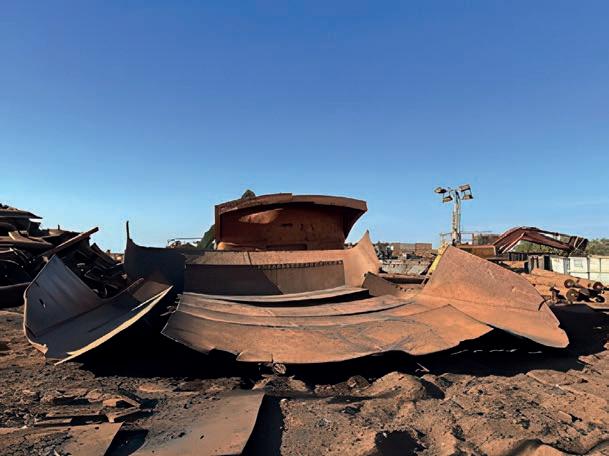
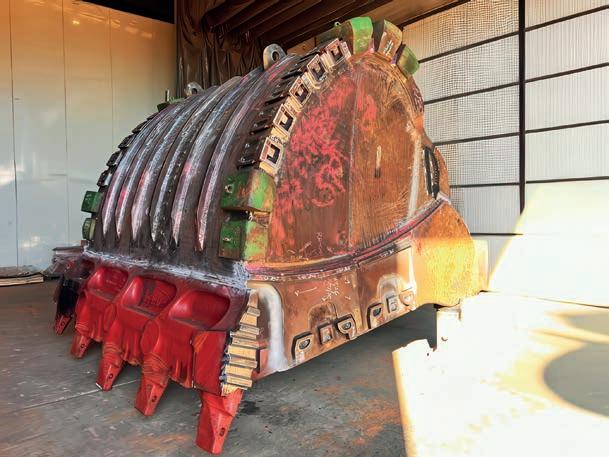
Bareja said customer expectation has also extended the range of services offered to include recycling for assets that have achieved their end-of-life.
For example, Schlam has recycled truck beds on behalf of a Pilbara iron ore customer since 2023. The end-of-life beds are collected on-site and transported to a metal recycling facility in Port Hedland, utilising the same freight that delivers new truck bed. The beds are then dismantled and processed into scrap steel, which is exported to Japan and used as input into new steel products.
More than 1125 tonnes of steel has been recycled in partnership with this iron ore customer.
“Managing scrap is not core business for the mines, so this is another way we can add value by reducing mine
SCHLAM IS COMMITTED TO REBUILDING SMARTER WITH CONDITION MONITORING TO MAXIMISE ASSET LIFE.
site waste, contributing to the circular economy and supporting a sustainable future,” Bareja said.
Schlam manufactures lightweight Hercules mining truck beds for haulage trucks ranging from 100 tonnes to more than 300 tonnes capacity, and Barracuda loading attachments for 100–600-tonne backhoes, excavators and loaders. There are now almost 3000 Hercules truck beds in operation on more than 100 sites around the world, mining commodities including iron ore, coal, copper, gold, silver, zinc, bauxite and lithium.
Custom-engineered for performance, these large capacity, long life, weight optimised products boost productivity, reduce downtime, lower emissions, and streamline maintenance, supported by focused services designed to meet operational needs. AM
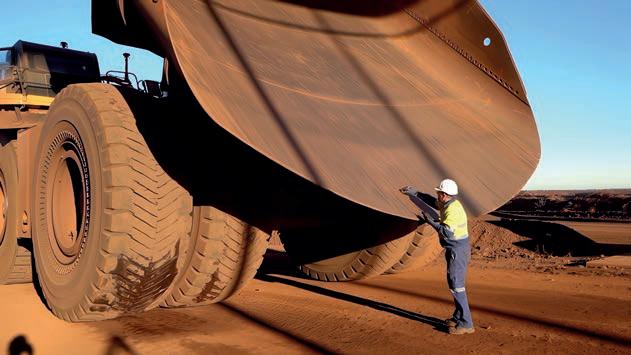
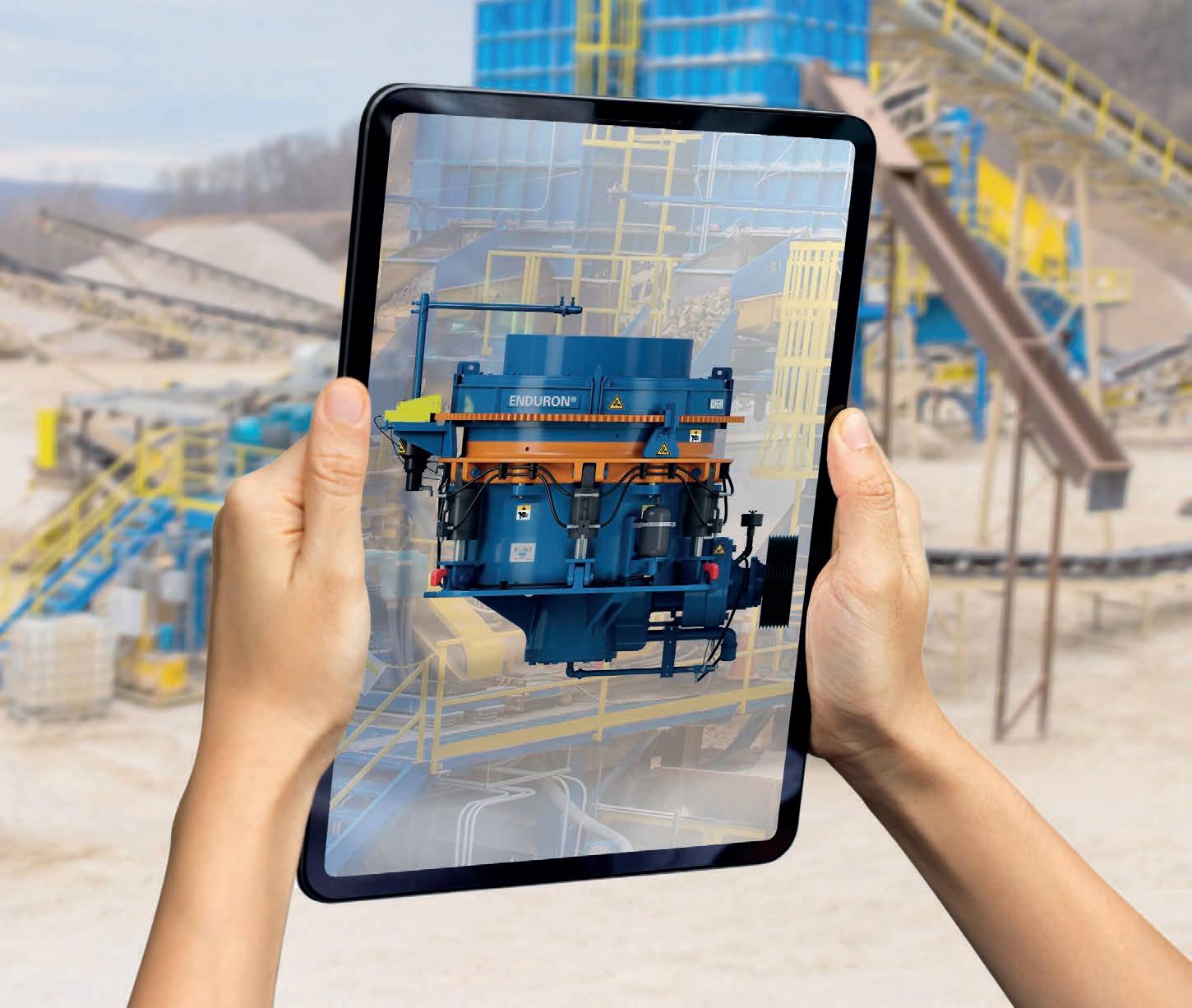
BY COMBINING EXPERT GUIDANCE WITH ENGINEERED PROTECTIVE SOLUTIONS, LOCTITE HELPS MINE OPERATORS
EXTEND ASSET LIFE, REDUCE DOWNTIME, AND KEEP OPERATIONS RUNNING SAFELY AND EFFICIENTLY.
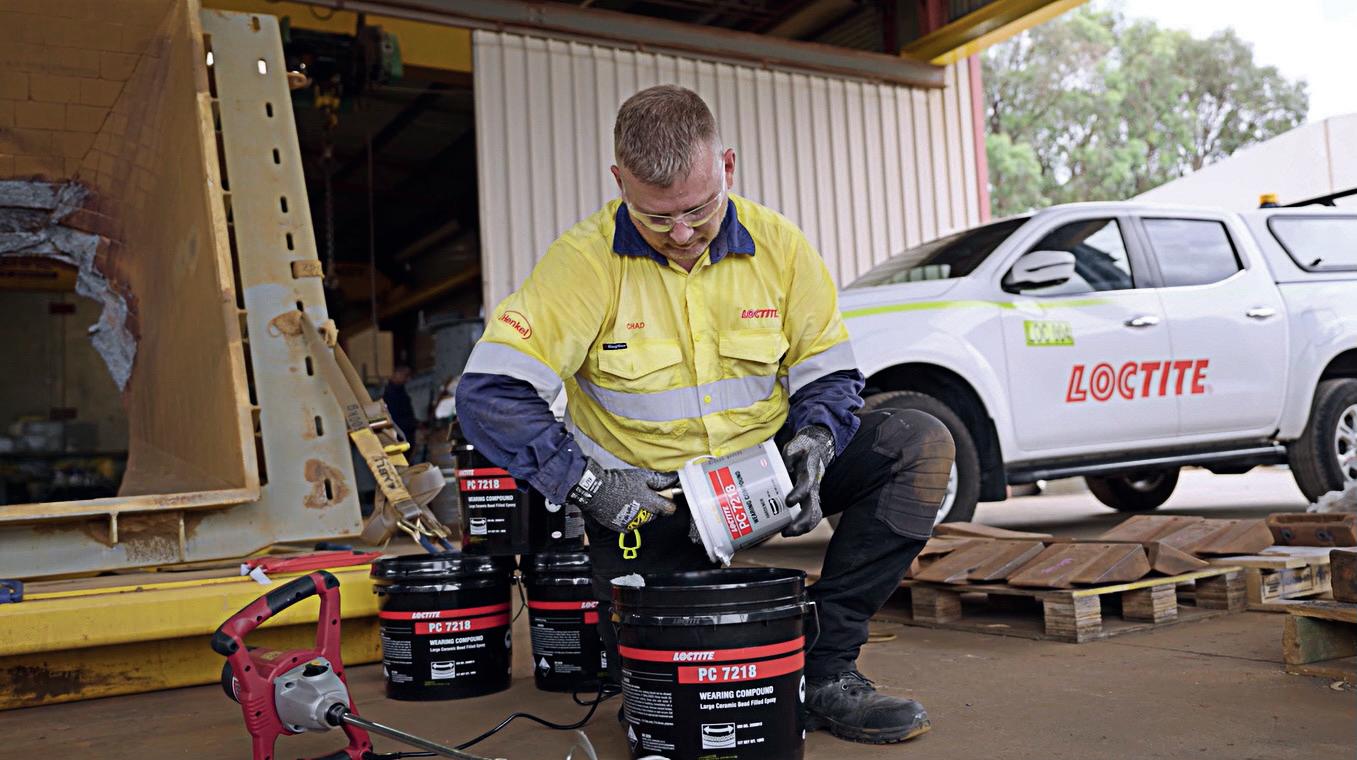
Mining operators across Australia face tough conditions in which equipment wear and unplanned downtime can quickly become very costly. Global adhesives brand Loctite – part of Henkel - addresses this challenge by pairing expert guidance with engineered protective solutions, ensuring products are applied correctly and effectively.
This dual approach not only extends the life of critical assets but also minimises downtime, giving operators confidence that their maintenance strategies are precise and reliable from the outset.
Loctite acts as a strategic partner to mine sites, guiding decision-makers through maintenance processes.
“You must be customer-centric, looking at how you can solve a specific problem and how to give them the knowledge to fix that,” Henkel APAC regional business development manager Kalyan Roychowdhury told Australian Mining. “Creating this partnership means those you serve will come back to you time and time again.”
But it’s not enough to simply provide a solution to problems on mine sites. Engineers and operators will use their experience to create greater asset
maintenance schedules when knowledge gaps are closed in terms of how machinery or products can be used for maximum efficiency.
“Many of today’s engineers may not have a good understanding of what’s in the product. The challenge is to educate them on the chemistry and
application,” Roychowdhury said. “A better knowledge of the product and how it works will reduce the likelihood of corners being cut.”
It’s these very issues that led Loctite to release its most recent white paper, arming mine sites with understanding of best practice to lower risk, extend
equipment life and improve uptime with scalable solutions.
‘From Breakdown to Benchmark’ provides mine operators with greater visibility into what worldclass maintenance looks like, rooted in real-world applications thanks to Henkel’s partnership with the Competence Centre for Mining and Resources (CCMR).
Why is this so important? Because it helps mine operators understand not only how adhesives and protective coatings can optimise maintenance cycles but how to create a cooperative and proactive maintenance culture that extends beyond critical equipment.
“You’ve given the people, the operators, the knowledge… you’ve created something that is ultimately safer, more reliable. Closing these knowledge gaps is actually more important than the product itself,” Roychowdhury said.
“Here at Loctite, we look at it as selling expertise, both across our product line and support to those we serve by offering the entire package and make sure we’re speaking the same language as our customers.
“Our experienced application and technical engineers across Australia and New Zealand are providing this support over several years. That’s invaluable.”
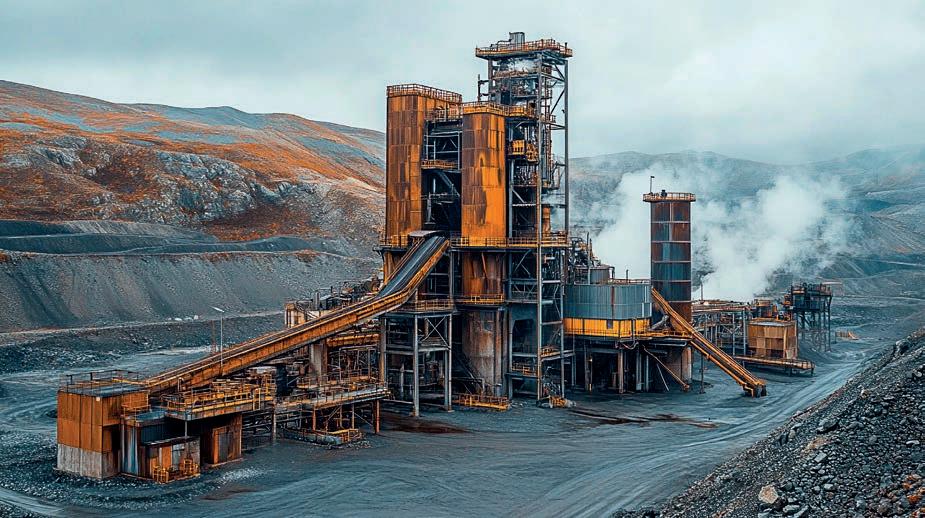
Henkel also offers a trial report of on-site applications when advising sites on the best type of protection, with realtime data giving proof that the solution works beyond hypothetical use cases.
This helps to ensure that whatever product is used on site – whether it be the Loctite PC 7332 Silicon Carbide Pneu Wear for wet particle erosion or Loctite PC 9593 Fast Cure High Impact Wearing Compound for coarse particle abrasion – operators have the expertise to be sure the product it is the right one for the application.
“One size doesn’t fit all. One issue could be around corrosion, another could be around abrasion, temperature or pressure,” Roychowdhury said. “What we provide is more of an engineered solution beyond going to the hardware store and picking up something that will do the job.
“In a way, we sell expertise, not just adhesives, sealants and surface treatments. That’s so important when you want to close knowledge gaps and ensure that you’re leaving these mine sites in a better place than when they first came to you for help.”
Beyond ensuring operators have the right expertise, equipment and solutions also need to handle harsh environments, temperatures and conditions. Loctite’s protective coatings give operators peace of mind that strain on machinery is reduced, offering
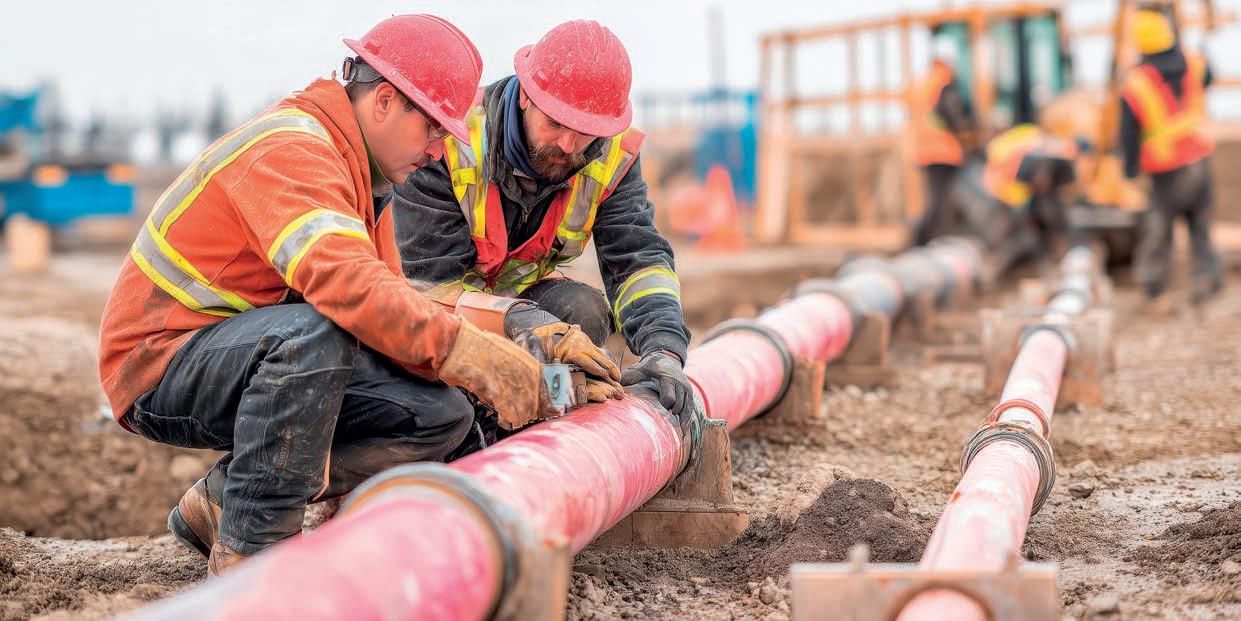
an extension of equipment life with formulas that are safer to use and won’t crack, sag or shrink.
“Our product offering also has a big focus on sustainability, with the removal of some chemicals to make
them even safer,” Roychowdhury said.
“This is a bonus to whatever we offer, knowing that it keeps operators as safe as the equipment it’s fixing.
Loctite’s greatest contribution is ultimately providing operators with

• Up to 5,278m2 Light Coverage
• 420Wp solar panel
• Compact design
secure your stock today with our exclusive introductory
• Robust HardHat® canopy
• Mask down feature as standard
the confidence to maintain their assets with precision and purpose. When expertise and engineered protection work hand in hand, mines don’t just fix problems – they prevent them. AM
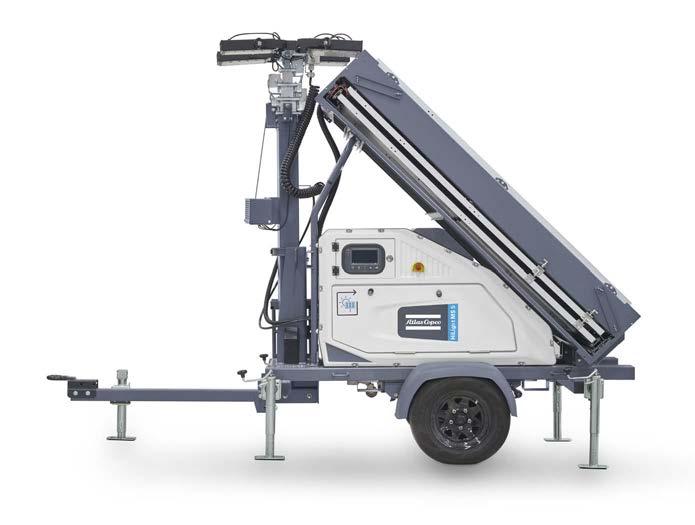
AUSTRALIA’S FIRST PURPOSE-BUILT BATTERY-ELECTRIC LOCOMOTIVES HAVE ARRIVED IN THE PILBARA, MARKING A MAJOR STEP TOWARD DECARBONISING
Late-2025 saw Australia welcome its first purposebuilt battery-electric locomotives with BHP paving the path in Western Australia’s Pilbara region.
The arrival represents a sign of the major steps forward for heavy-haul rail innovation through a combination of cutting-edge technology and a clear focus on reducing emissions and improving efficiency.
The locomotives were delivered in partnership with Wabtec, with the two fully battery-powered units to be trialled in BHP’s iron ore rail routes connecting Pilbara mines to Port Hedland. BHP Western Australia Iron Ore (WAIO)
lower associated operational greenhouse gas emissions, and improve efficiency across our rail network,” Day said.
Built to withstand extreme heat and rugged terrain, these locomotives feature a seven-megawatt-hour battery system and regenerative braking, which captures energy during downhill runs and feeds it back into the battery.
Day said that the Pilbara has always been a place of big ambition, and the locomotives are a symbol of the kind of innovation required to keep the region going.
That sentiment was echoed by Wabtec regional senior vice president for ANZ and SEA Peter Thomas, who said the battery-electric locomotives’ arrival
and regenerative braking to deliver high efficiency and lower emissions.”
This endeavour to cut emissions and improve productivity has been in the works for some time, with BHP ordering its first four battery-electric locomotives for the WAIO network in 2022, alongside its partnership with Rio Tinto on electric haul trucks in 2024, representing steps to achieve its net-zero goal by 2050.
For BHP’s operations, this new initiative is a key piece in its larger decarbonisation puzzle. In 2022, the Big Australian estimated that a full fleet transition to battery-electric locomotives would cut its WA iron ore diesel-related carbon emissions by roughly 30 per
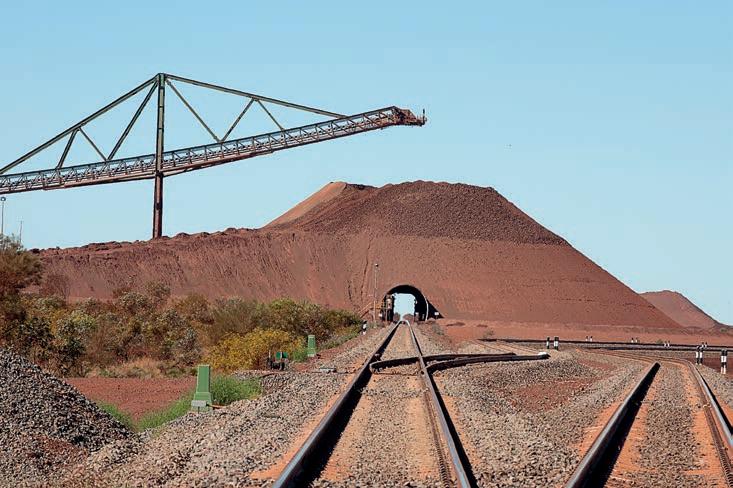
locomotives’ operational viability and cost-effectiveness, considering diesel’s status is so tied to larger operating expenses.
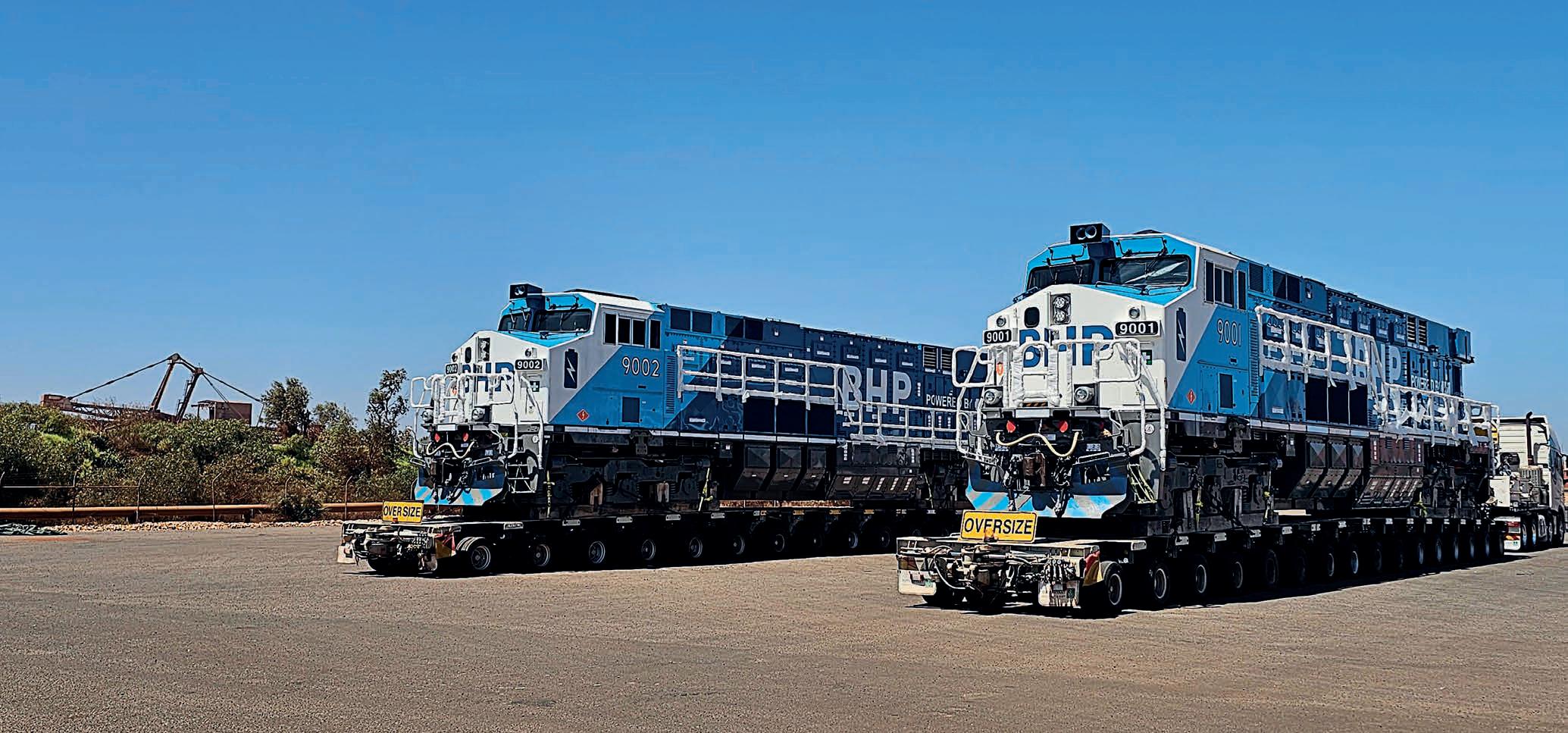
Powering the Pilbara BHP is not alone in adopting batteryelectric rail.
Rio Tinto purchased its first battery-electric locomotives in 2022, with its managing director of port, rail and core services Richard Cohen highlighting the dual purpose of the technology.
“Battery-electric locomotives offer significant potential for emissions reduction in the near term as we seek to reduce out Scope 1 and 2 carbon emissions in the Pilbara by 50 per cent by 2030,” he said at the time.
Hancock Prospecting subsidiary Roy Hill also partnered with Wabtec to introduce the first FLXDrive heavy-haul locomotive in 2023.
Hancock Prospecting group operations chief executive officer
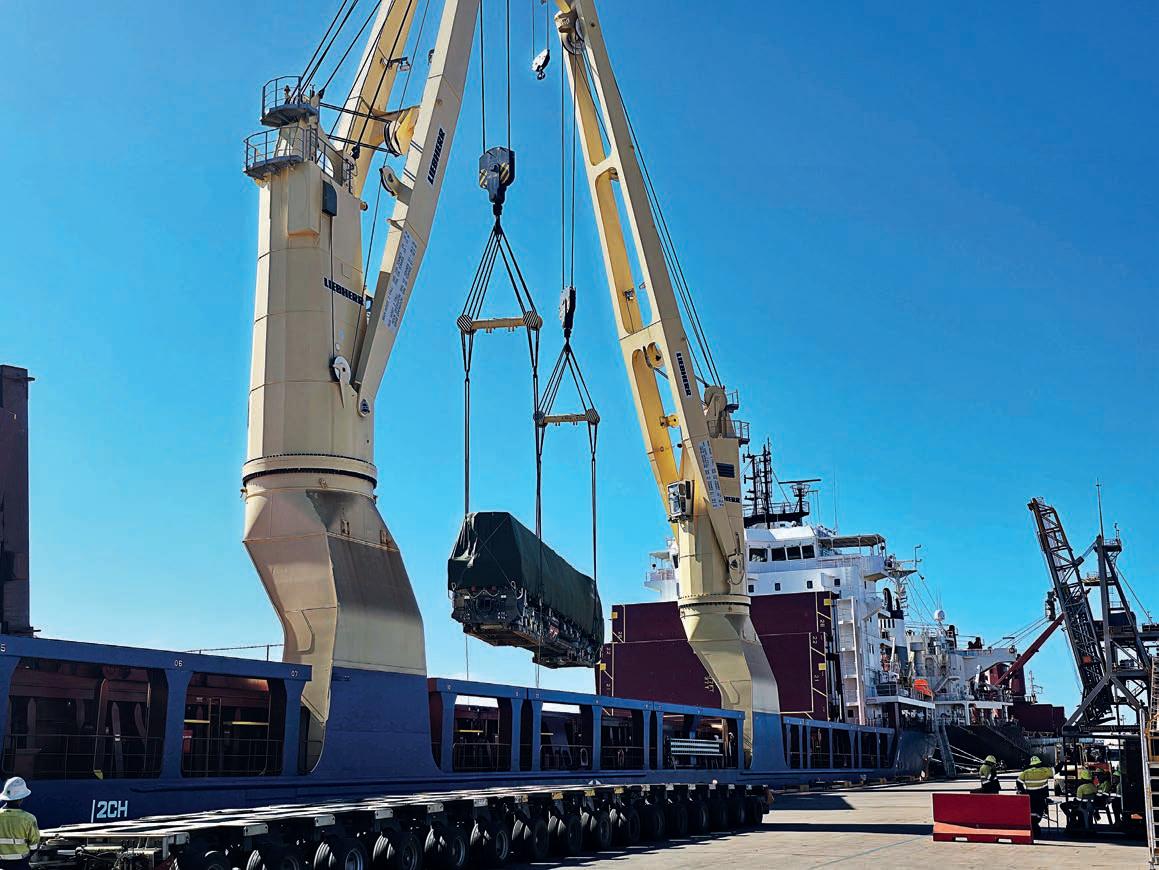
Gerhard Veldsman explained the benefits of regenerative braking.
“It will use that stored energy to return to the mine, starting the cycle all over again,” he said. “This will not only enable us to realise energy efficiencies but also lower operating costs.”
Achieving these companies’ goals in the region hinges on the performance and effectiveness of Wabtec’s FLXDrive, a component in which the company is very confident, saying it is “designed to replace” diesel locomotives.
Regenerative braking is the key feature within the FLXDrive, especially in the Pilbara, where loaded trains travel downhill to port. That means each locomotive is able to harvest considerable energy per trip.
That stored energy can then be used to power the locomotive when it is heading back to the mine, reducing the need to pull power from the grid or the on-board diesel.
The arrival and trial of batteryelectric locomotives in the Pilbara, led by BHP and supported by Rio Tinto and Roy Hill, represents a
turning point for heavy-haul rail in Australia.
While challenges no doubt remain around infrastructure and fleet scale, the momentum behind battery-electric locomotives is unmistakable.
These units promise reduced diesel consumption, lower emissions, quieter operation and the potential for reduced maintenance costs. They also demonstrate that resources sectors such as iron ore can lead on innovation while tackling climate challenges.
For the Pilbara, where iron ore rail networks are the arteries of Australia’s largest mining operations, batteryelectric locomotives represent a futurefacing step.
As BHP’s trial progresses, the wider mining industry will watch closely, with successful integration potentially opening the door for adoption across other commodities and regions.
BHP’s milestone is a signal that Australian mining rail is ready to move into a low-emissions future without compromising performance. AM
MINES TO PORT HEDLAND.
BATTERY-ELECTRIC LOCOMOTIVES AT A GLANCE
•BATTERY CAPACITY – SEVEN MEGAWATT-HOURS
•P OWER SOURCE –FULLY BATTERY-POWERED, NO DIESEL ENGINE REQUIRED FOR TRIAL OPERATIONS
•KEY FEATURE – REGENERATIVE BRAKING CAPTURES ENERGY ON DOWNHILL RUNS TO RECHARGE BATTERIES
•T RIAL ROUTE – BHP’S WAIO IRON ORE NETWORK, PILBARA MINES TO PORT HEDLAND
•E XPECTED BENEFITS – LOWER DIESEL USE, REDUCED EMISSIONS, QUIETER OPERATION, REDUCED MAINTENANCE COSTS
•FLEET CONTEXT – BHP OPERATES MORE THAN 180 LOCOMOTIVES IN THE PILBARA; FULL TRANSITION COULD CUT DIESEL-RELATED EMISSIONS BY 30 PER CENT PER YEAR
AUSTRALIA’S NATIONAL SCIENCE AGENCY HAS CALLED FOR GREATER COLLABORATION TO DRIVE INNOVATION FOR A SUSTAINABLE CLEAN-ENERGY FUTURE.
With demand for energy transition minerals doubling between 2019 and 2024 – and predicted to double again by 2030, according to the International Energy Agency –opportunities have never been so rife in future-proofing mining operations.
At the same time, new waves of digitisation and automation are reshaping how resources are discovered, mined and processed.
The Commonwealth Scientific and Industrial Research Organisation (CSIRO) believes meeting this moment calls for “an accelerated approach to innovation driven by a willingness to collectively experiment, learn and adapt”.
“It [collaboration] can help us accelerate that learning curve. It can
help us leverage knowledge developed by others, and it gives us the ability to stay competitive in a fast-moving space. There’s a lot of learning, a lot of iteration and experimentation required, and going it alone means we learn slower,” CSIRO director of mineral resources Louise Fisher told Australian Mining
“We will need to make new connections and collaborate with partners we’ve not worked with before to build those new supply chains, whether that’s in critical minerals, hydrogen supply or stepping into areas like sustainable aviation fuel, where stakeholders in agriculture and energy systems must work together.”
The issue, Fisher said, is moving from conception to implementation of new ways of working as workflows may not yet allow for a shift in culture.
“Innovation can be a risk-management tool but it doesn’t deliver guaranteed outcomes. Being willing to experiment and accept failure as an opportunity for learning, particularly as we head into adoption of technologies like AI [artificial intelligence], is critical,” Fisher said. “Ensuring there are champions for collaboration and vision – having a view of what we’re trying to accomplish and how we’ll work together towards it – is a key part of making innovation successful.”
With technology and concerns around environmental impact fundamentally changing the way mining operations are carried out, innovating and leaning on strategic partnerships is no longer a nice-to-have.
In September last year, Prime Minister Anthony Albanese announced an emissions reduction target of 62–70

per cent of 2005 levels. The new target highlights the importance of operators supporting their environmental, social and governance (ESG) initiatives.
To do that, Fisher said, organisations need to share expertise.
“The mining industry has a track record of adopting new technologies and innovations already – such as automation
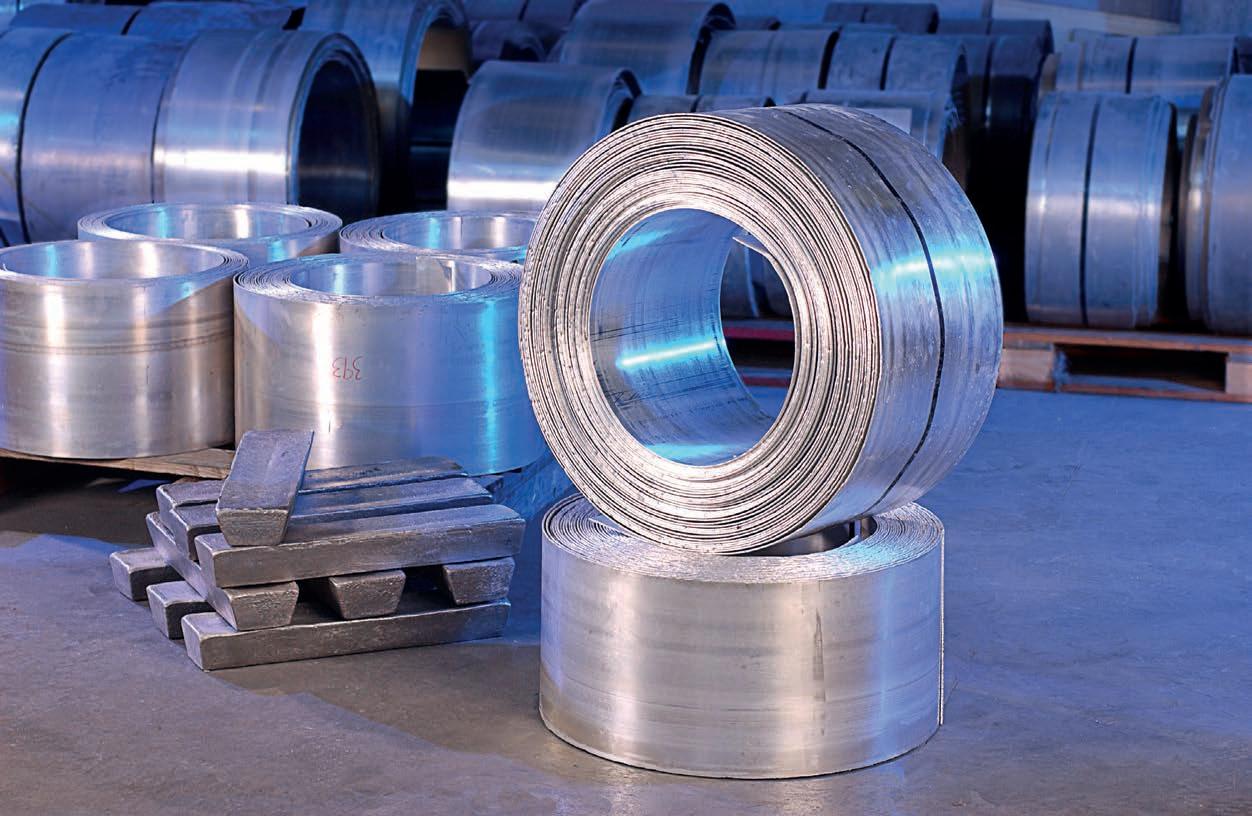
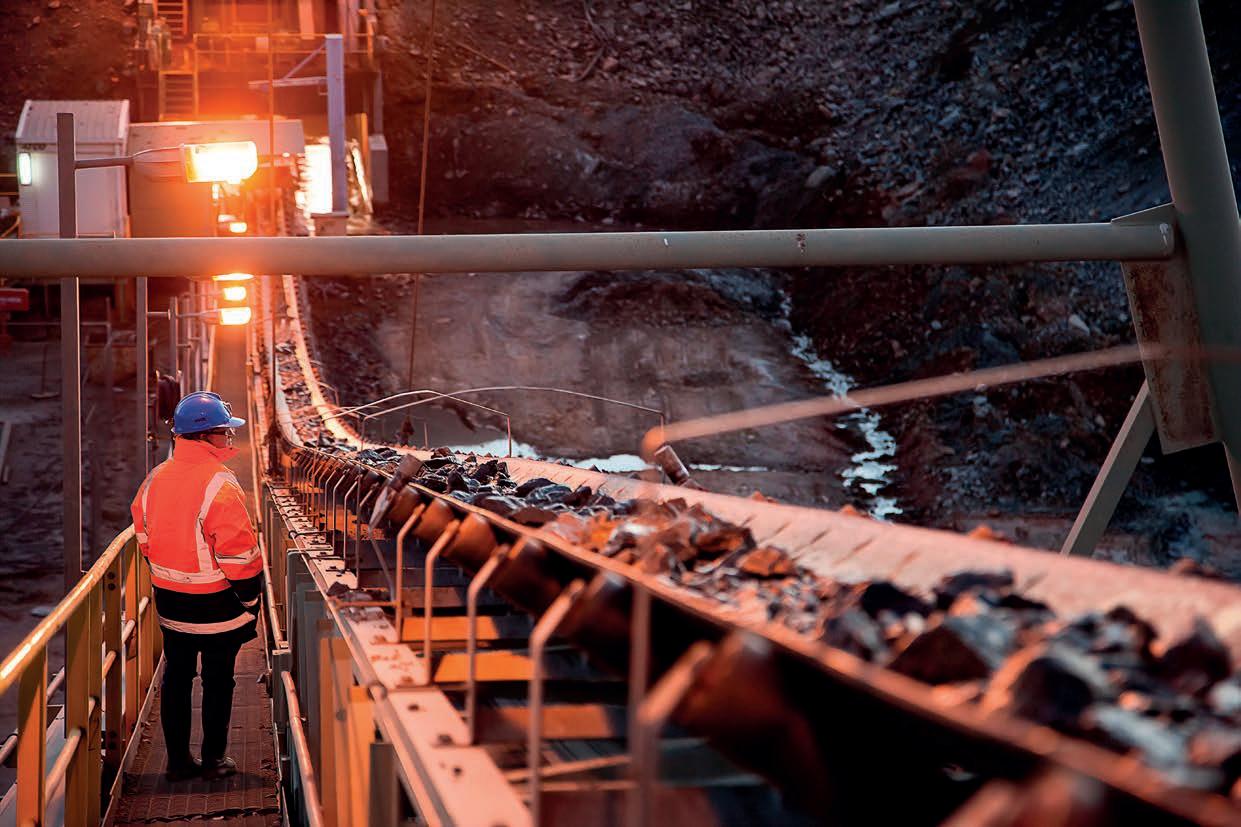
NEW WAVES OF DIGITISATION AND AUTOMATION ARE RESHAPING HOW RESOURCES ARE DISCOVERED, MINED AND PROCESSED.
and sensing to support remote operations,” she said. “But ongoing adaption and change will be required to respond to external shifts.
“For example, when looking at the increasing focus on recovery of by-products in mining, we’re seeing changes in the way we design our processes going forward. And when we look at the decarbonisation of processing, we will see the use of novel reductants and a move to ways of working at ambient temperatures and pressures where possible”
Accepting different ways of working and sharing experiences in creating more sustainable processes is key to future-proofing the mining industry, but greater skills training is also needed to help ensure the transition is sustainable.
“Across the board, we’re seeing a decline in people studying science, technology, engineering and mathematics [STEM] at university, all of which are needed in the resources sector as a whole,” Fisher said.
“To reverse this trend, we need to create new and accessible pathways into STEM careers within mining.
“To accelerate innovation, it’s also time to rethink the skills we value and broaden our national capabilities. Some of the most exciting work happens at the intersection between disciplines, and by diversifying our talent pool we
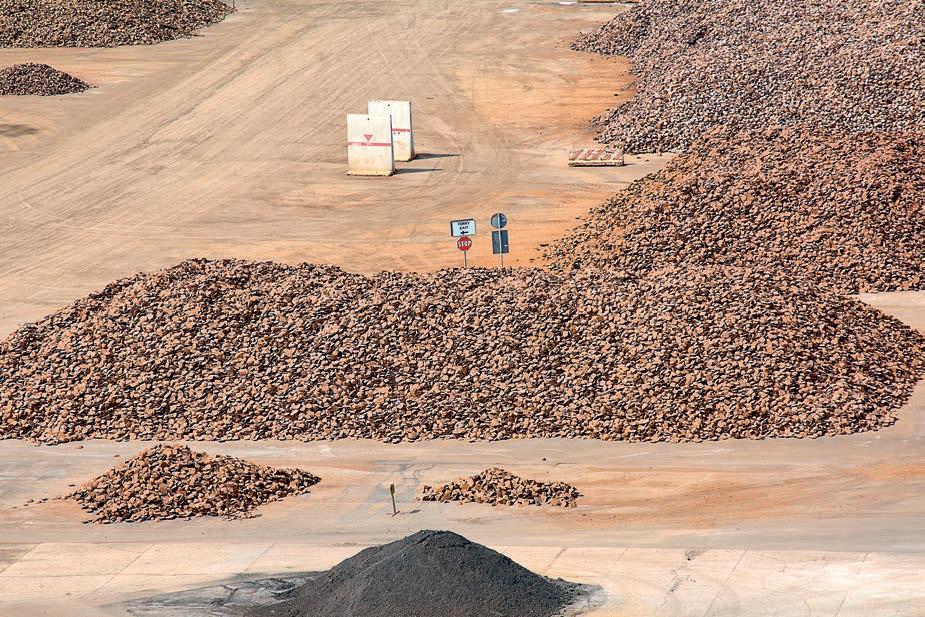
unlock fresh perspectives and drive meaningful progress.”
CSIRO is helping to facilitate a sustainable future for Australia’s resource sector by working alongside partner organisations to better inform their work, research and practice.
This includes partnerships with Northern Star Resources in gold exploration and co-leading
the $10 million Green Metals Innovations Network with the Heavy Industry Low-carbon Transition Cooperative Research Centre. The four-year, government-supported initiative aims to accelerate the development of low-emission metal making in Australia.
“We have programs of research that span the mining value chain,
from exploration to critical minerals processing and unlocking pathways for green metals,” Fisher said. Through these initiatives and extensive partnerships with industry, CSIRO and its collaborators are helping turn ambition into action, creating enduring prosperity for Australia’s industries, communities and environment. AM
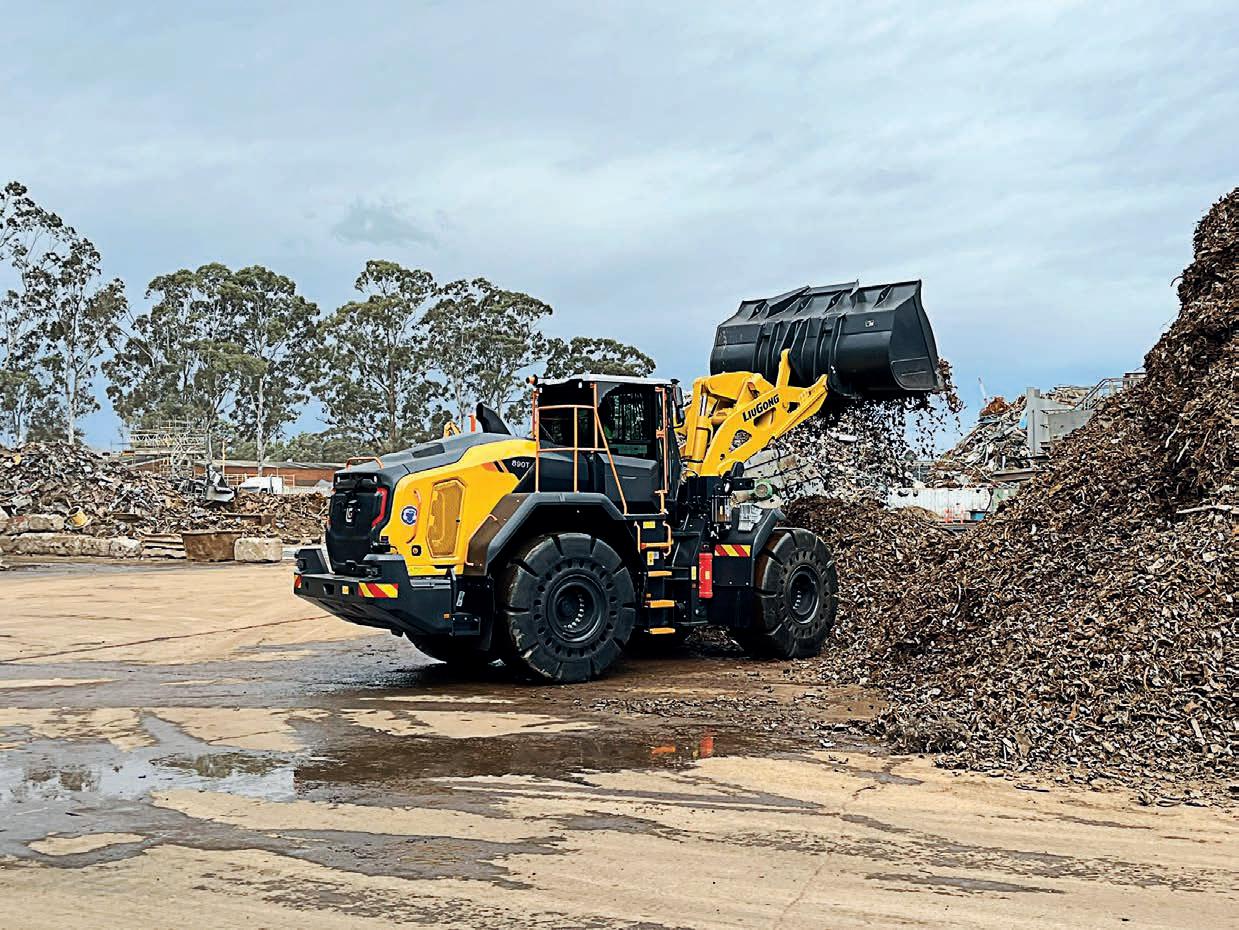
After being released to the Australian market last year, LiuGong’s T Series wheel loaders have proven their worth across several industries – from civil construction and batching plants to quarries and mine sites.
LiuGong’s equipment, engineered for maximum productivity, focuses on energy-efficient technology to help sites reduce their environmental footprint without compromising on power or durability.
The 33-tonne 890T wheel loader, one of the larger loader models LiuGong currently offers, has been showcased at a recycling plant in New South Wales, highlighting programmable hydraulic controls, ride control system and fivespeed transmission.
The demonstrations – carried out by Construction Distribution Australia (CDA), LiuGong’s trusted dealer in Melbourne, Sydney and Brisbane –demonstrated the loader’s capabilities in specific waste management scenarios.
CDA waste and recycling sales manager Neil Adlam outlined that machinery like this is generally for the “big players” in the market – but not anymore.
“Smaller recycling businesses generally don’t shred, so they don’t need wheel loaders, but waste is different,” he said. “Waste companies can have wheel loaders of all sizes throughout their
facilities, varying from smaller ones to larger models like the 890T.”
The 890T model also boasts 270 kilonewtons (kN) of bucket breakout force, which is crucial for recycling plant operations.
“If you’ve got a pile of scrap that’s been sitting in the rain, it gets rusty and sticks together, so you need a lot more breakout force than a wheel loader would normally require,” Adlam said.
“It has great load-carrying capabilities because of this.”
Alongside a standard bucket size of 5.4m3, gross power of 287 kilowatts (kW) at 1800 revolutions per minute
41.9km/h, the 890T is well equipped to deal with any challenge a mine site might present.
“Most of our customers want features that can from range autoshutdown, emergency stops, battery isolators and extra guarding, to name a few,” Adlam said.
“So we are able to provide that and, in the case of the demonstration, we included e-stops, battery isolators and the extra cabin guarding on the loader.”
These specifications are in addition to the numerous standard features, which include a multi-adjustable arm rest, joystick, and air-suspension seat,
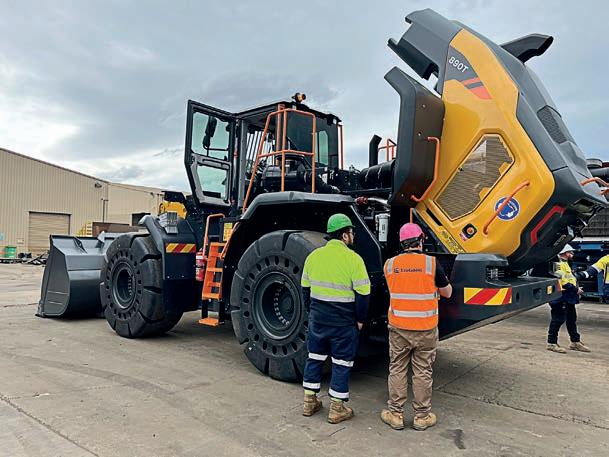
steps for safer and easier access and exit of the cabin.
To further enhance operator safety, the 890T offers curved panoramic glass windows and an optional rearview camera to increase visibility.
Operators also are offered joystick and steering wheel operation on the machine, providing further comfort while operating the loader.
A key improvement of the T Series loaders is a liquid-driven, air-in type cooling system with intelligent fan speed adjustment, which has been rearranged to optimise the wind field and enhance heat dissipation, further enhancing the ability to work in extreme working conditions.
Fuel tank capacity has increased to 608L on the 890T model, while maintenance has also been made easier for operators, as they can add fuel and oil, as well as service the diesel filters, from ground level.
Oil changes are only required every 2000 hours, further reducing maintenance costs – helping LiuGong provide high-efficiency mining machinery solutions designed to optimise performance, regardless of terrain or size of project.
The 890T is part of LiuGong’s extensive range covering light and heavy solutions, which includes battery-electric options suited to mine specification, excavators, rollers, dozers, graders and wheel loaders. AM
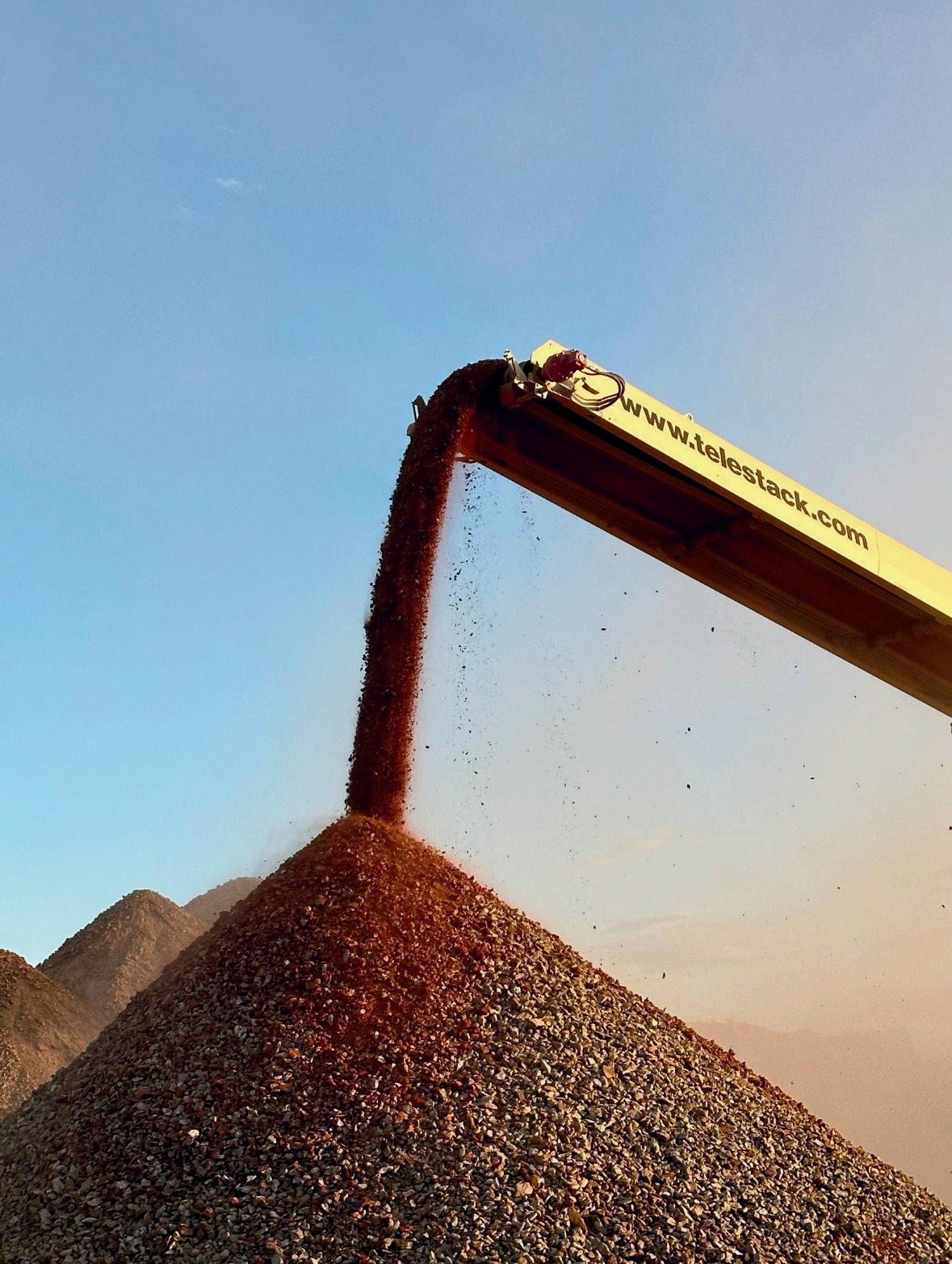
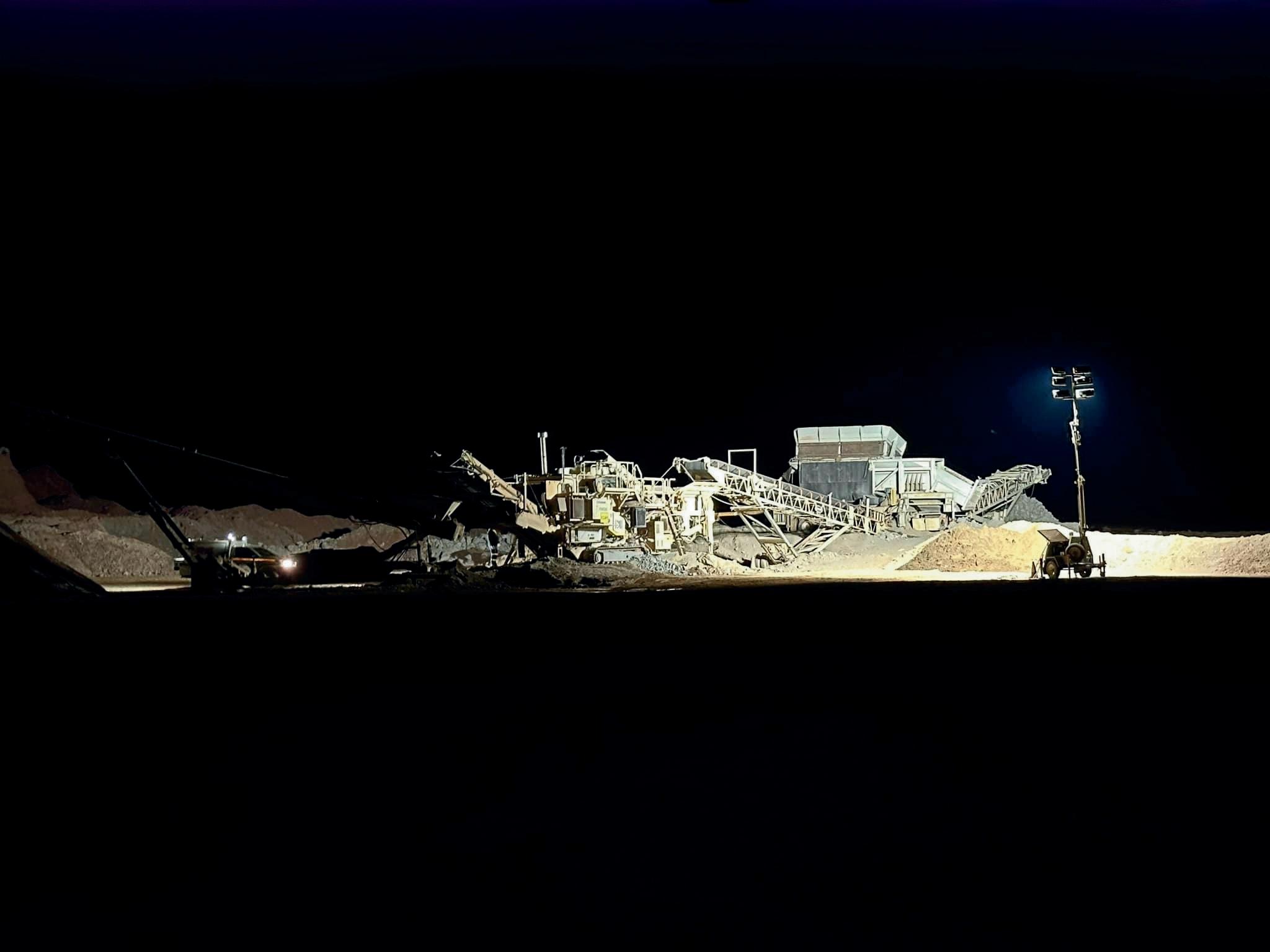

USING A CENTRIFUGE IN MINING MAY NOT BE NEW, BUT LINCOM HAS MADE SOME UPDATES TO THE MODERN CLASSIC TO GIVE MINE SITES A MINERAL-PROCESSING EDGE.
Dating back as far as the 1960s as a way of dewatering and processing flotation coal, screen bowl centrifuges in the mining industry are no new phenomenon.
Earliest examples of screen bowls being supplied by Thomas Broadbent and Sons into Australia dates back to the early 1980s.
When it comes to widely established ways of processing, many plant operators typically go by the rule ‘if it ain’t broke, don’t fix it’, but one company is proving that even the most reliable machines can benefit from smart innovation.
Lincom is taking the trusted screen bowl decanter centrifuge design originally manufactured by pioneering companies like Bird Machine and Thomas Broadbent and Sons and introducing targeted upgrades to improve uptime, tackle abrasion and reducing wear on key components.
“Operators are running screen bowl decanters harder and longer than ever before with tight operating margins, what was originally marketed as ‘free money’ and a way of recovering a little extra from what was a waste product in a coal handling wash plant,” Lincom Group product manager Alan Dunbar told Australian Mining. “This is now an integral part of the process.”
In business for 160 years, Broadbent’s decanter and basket centrifuges are engineered for continuous operation and high G-forces.
Lincom is the Australian distributor and technology partner of Thomas Broadbent and Sons. The two companies work together to ensure the equipment is manufactured to international standards, and also work to improve current machines to better serve the Australian coal industry.
Small changes make a big difference
To drive reliability and reduce repair cost, Lincom has been scrutinising areas where long-serving centrifuges experience wear. This kind of wear costs operators valuable time and capacity.
Lincom’s approach centres on small, precise improvements that deliver longterm benefits.
The main challenge Lincom’s workshop team noticed was consistent
mechanical abrasion and component damage, presenting in coal machines regardless of brand.
Upgrades to bearings, seal designs and wear protection – while seemingly minor – help to ensure better asset life and reduces unplanned downtime.
“We’ve developed our own interlocking conveyor tile design, the 2195HP conveyor tiles, which improves performance over the two-year design life of the machine,” Dunbar said.
“Normally, when you service a machine you need to completely overhaul or replace the conveyor. This improvement reduces that phenomenon and the conveyor tiles become the sacrificial part, which is what the original intention of the design was.”
These small but impactful changes increase the life of a centrifuge and mean major overhauls are needed less frequently, potentially increasing asset life by 50 per cent in some cases.
“We’re aiming to get 10,000 to 12,000 hours of reliable service before the machines are due an overhaul, ideally with sacrificial parts needing replacing and base materials no longer in a condition beyond repair” Dunbar said.
“It’s those really small, intricate changes that increase the lifetime of the
asset and also reduces the amount of time you need to overhaul it.”
The importance of such small changes can hardly be overstated, with these machines undergoing considerable stress in the mineral processing operation.
Centrifuges in coal operations endure intense workloads, often processing material around the clock. This makes reliability critical. The impact of downtime is immediate and substantial.
“If you have rotating assemblies off-site awaiting repairs, you are not producing value from the asset,” Dunbar said. “If operators have multiple units go
down, the impact across the business is potentially catastrophic.”
By refining existing, proven technology with modern material and designs, Lincom is helping operators extend the life, value and reliability of one of mining’s most essential processing assets.
For miners under pressure to boost throughput while controlling costs, these small improvements aren’t just enhancements, they’re essential. And they’re keeping the industry’s hardestworking machines spinning longer and more efficiently than ever. AM
CENTRIFUGES HAVE BEEN USED IN MINERAL PROCESSING SINCE AS FAR BACK AS THE 1960S.
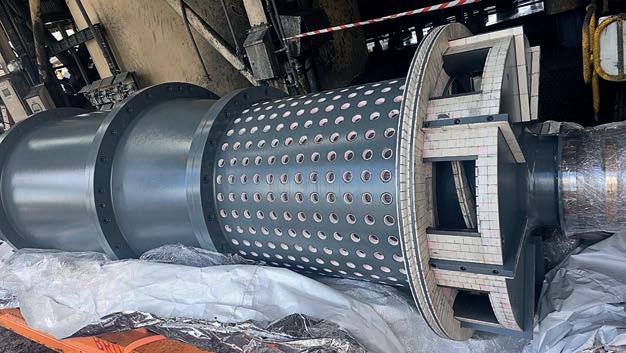
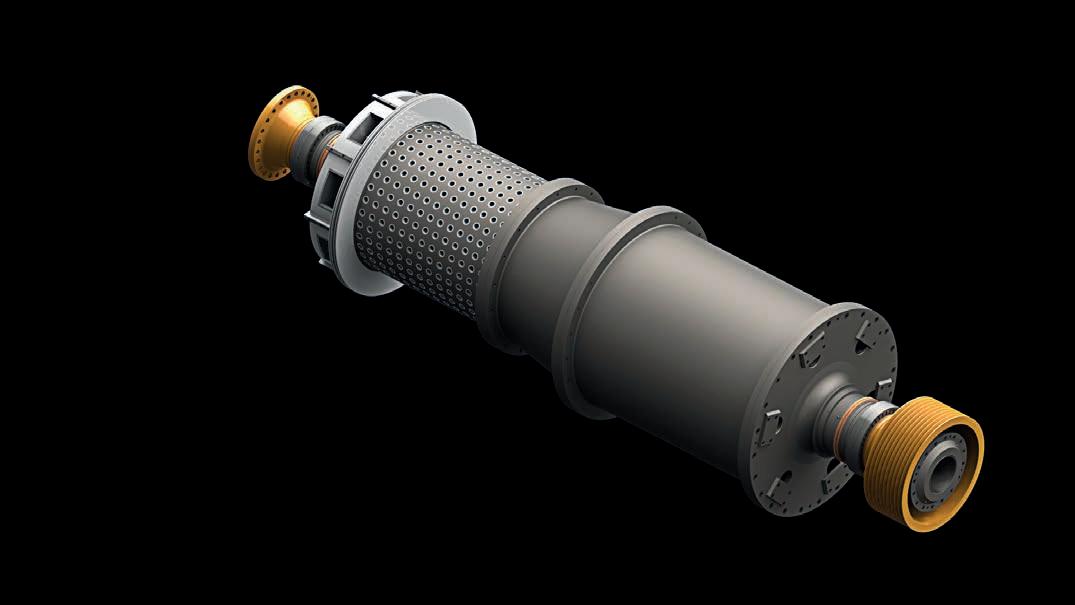
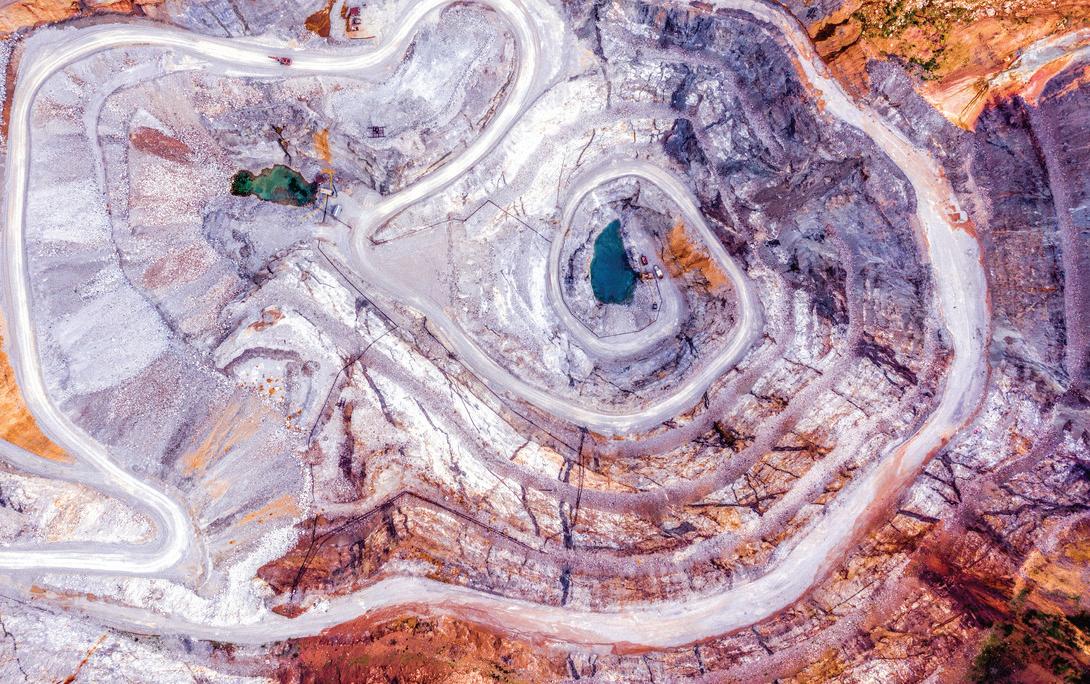
Read the whitepaper to learn how wear protection technology can maximise equipment uptime.
Scan QR code to read the whitepaper
Asimple question about air filters sparked a maintenance rethink that would challenge longheld customs at Yancoal’s Cameby Downs mine in south-east Queensland, reshaping site culture and delivering measurable gains in safety, cost and machine performance.
What began as a routine conversation with Hastings Deering evolved into a data-rich trial that pushed air filter life in mining equipment far beyond traditional limits, proving how transformative condition monitoring and original equipment manufacturer (OEM) collaboration can be when a site is willing to test its assumptions – and trust the numbers.
With more than nine decades’ experience as a Cat dealer, Hastings Deering’s approach to repair and rebuild services is grounded in one clear goal: to deliver the lowest total cost of ownership (TCO) for every asset across the entire lifecycle.
“Cameby Downs was experiencing higher-than-expected maintenance costs and downtime related to air filter performance in their fleet,” Hastings Deering fluids and filters product specialist Chris Hutchison said.
“They wanted to be part of our Cat Ultra High Efficiency Air Filter trial to explore solutions that could improve filter life, as well as reduce machine wear and ultimately lower their operating costs.”
The main benefit that stood out across the trial was the increased confidence in machinery thanks to data-driven insight, something pivotal to Cameby Downs’ transformation.
“That was the most important part of the process for me, because having live data that you’re able to check all the time means we can spot an issue before it affects something like an engine or a truck turbo,” Wagner said.
Condition reporting became the backbone of the Cameby Downs air filter trial, providing the confidence the team needed to push components beyond long-established limits. Each week, the Hastings Deering field service team completed structured inspections, performance solution reports, intake system checks and photographic evidence of filter loading.
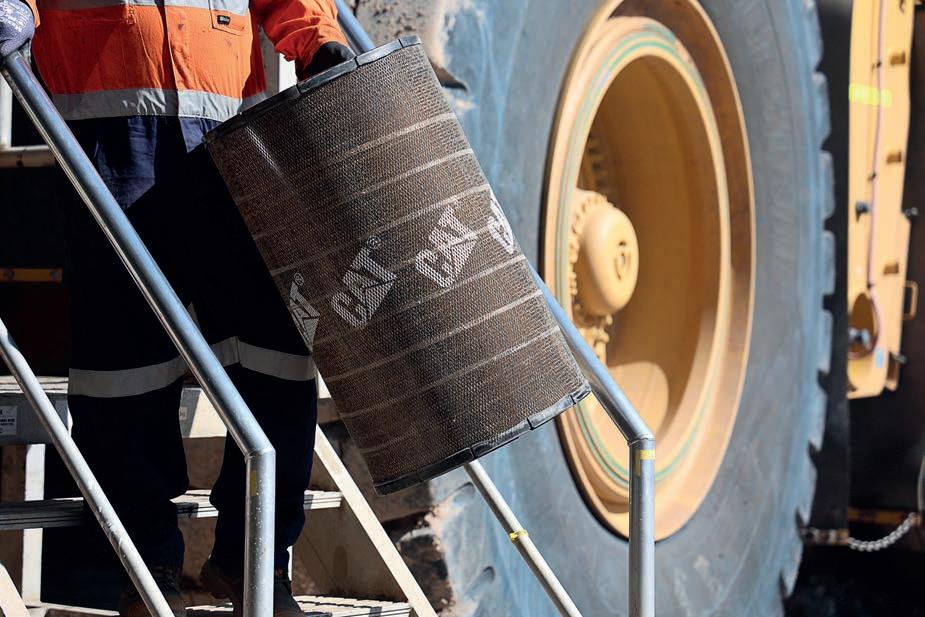
monitoring centre analysed live data, tracking intake restriction, engine health and performance trends in realtime. Crucially, the monitoring team lowered the threshold for maintenance alerts, effectively acting as an early warning system.
“They lowered the threshold for maintenance notifications so they could call me or send an email to say, ‘Hey, this is getting up there, go change your filters or see what’s going on’,” Wagner said. “That really gave us the edge when it came to monitoring wear.”
This multilayered condition reporting framework created “eye in the sky” oversight, providing fast, data-backed insights that safeguarded equipment and enabled the team to confidently determine how far the filters could truly go.
Another important shift at Cameby Downs was a cultural one.
Wagner said the trial challenged a long-standing industry-wide mindset of “just throw an air cleaner on it”. Over time, even the most experienced fitters came around.
“Fitters can be creatures of habit, but they bought into it after a while,” Wagner said.
The mine’s partnership with Hastings Deering also strengthened, with consistent inspections from the field team and rapid reporting.
In one instance, a dozer air filter at Cameby Downs was used for 850 hours, with many workers claiming the system would not work, emphasising the
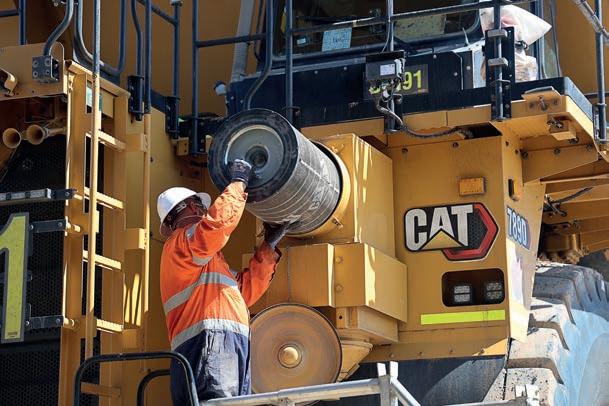
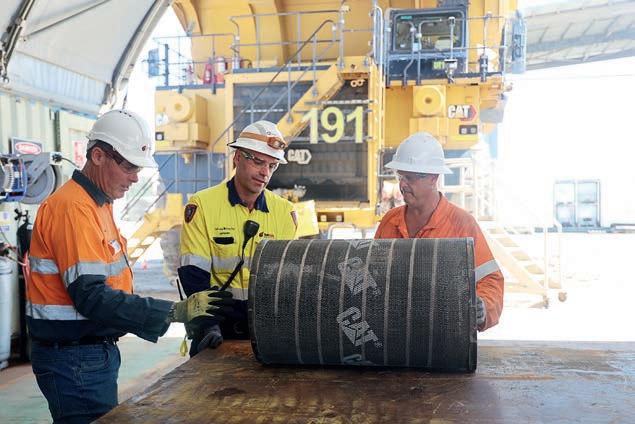
importance of data in decision-making and asset maintenance.
With results validated, Cameby Downs is now rolling out the extended intervals across its entire Cat fleet.
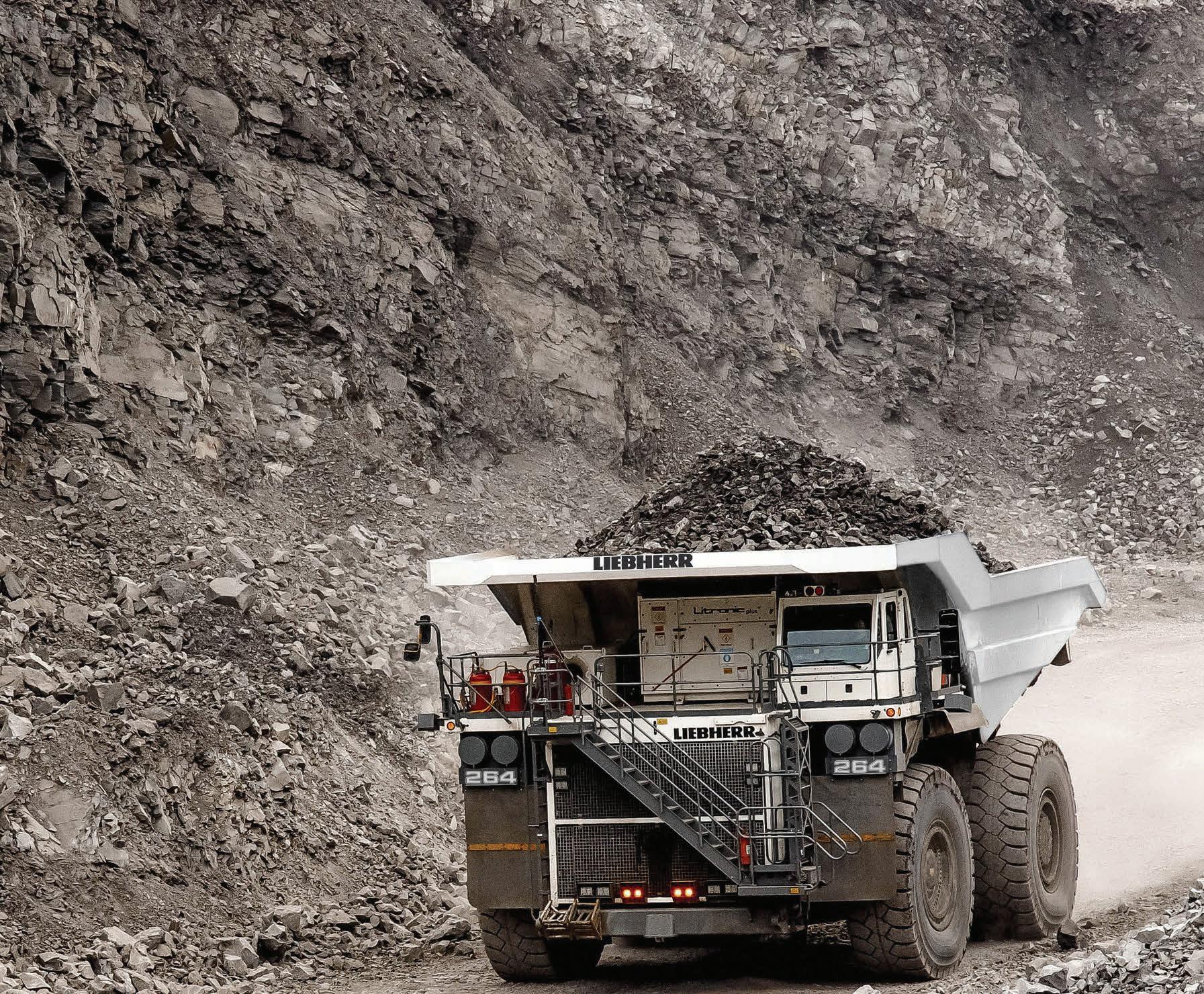
What started as a small trial has become a site-wide shift; driving change through data, collaboration and a willingness to rethink what was once assumed impossible. AM
Mining Truck T 264
Innovative technology delivering fast speed on grade to move more tonnage more quickly.
– Achieve true 240-tonne payload capacity for a perfect pass match with R 9600 and R 9800 excavators
– Harness high speed on grade and fast cycle times thanks to the combination of the Liebherr drive system and a powerful 2,103 kW engine
– Experience the fastest loaded downhill speed and the highest braking capabilities in the 240-tonne payload class
– Achieve decarbonisation targets with trolley solution compatibility, available as both first fit and retrofit
– Futureproof equipment purchases with Liebherr Mining’s agnostic and retrofittable approach to autonomy, battery, and alternative power solutions
CEA’S STRATEGIC EXPANSION HAS ALIGNED WITH STATE-BACKED GROWTH IN CENTRAL
Central Queensland is entering an exciting phase of expansion, with public and private investment underlining the region’s
Rockhampton and Mackay, formerly operating under Terrequipe. The acquisition and rebranding broaden CEA’s footprint across central Queensland and enhance its ability to
northern region Wes Henshall said. “It’s a testament to our focus on growing the business and our dedication to working with customers across industry segments we know well and are highly proficient in supporting.
and its commitment to being closer to customers in critical regions.
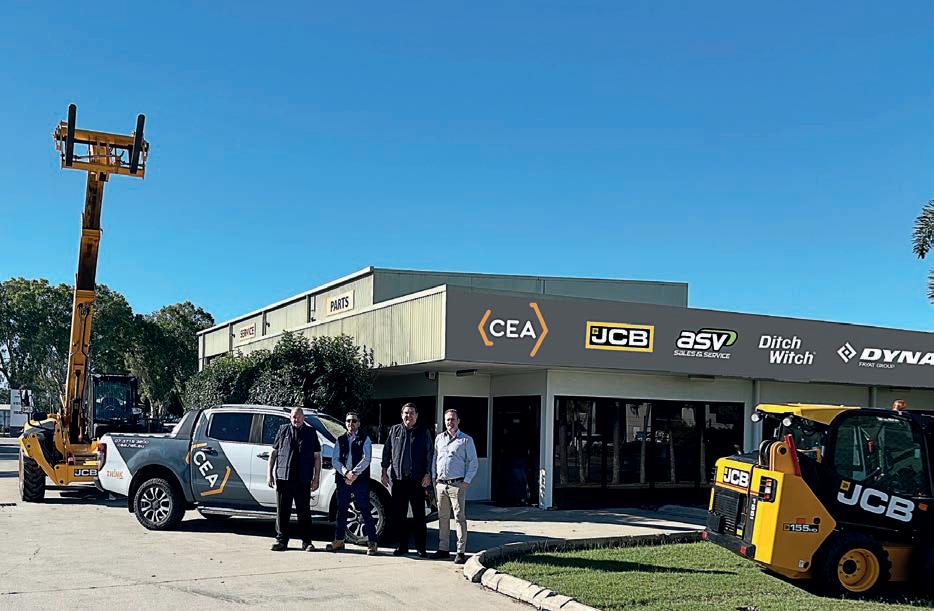
“We are also pleased to welcome the experienced teams at these locations into the CEA business and look forward to strengthening our relationships while providing exceptional service to customers within the region.”
CEA chief executive officer Hylton Taylor said the decision to expand into Rockhampton and Mackay reflects the company’s long-term vision for growth
“By integrating these additional branches into the business, we are not only expanding our footprint; we are reinforcing our position to deliver superior service, comprehensive aftersales support, and to be a reliable partner for customers within the agriculture, construction, mining and earthmoving industries,” he said. “We are confident that this move will create new opportunities and further solidify our position as an industry leader.”
The company has received extremely positive feedback from the market since announcing the acquisition.
“With over 45-plus years of industry experience we are confident our business understands the market requirements, and how best to meet the evolving demands of the customer base going forward,” Taylor said.
CEA’s expansion aligns with a landmark Queensland Government announcement in November, when Premier David Crisafulli secured international investment in the Bowen Basin. Argo Queensland’s acquisition of a 70 per cent stake in Fitzroy Australia Resources will help to ensure the longterm future of more than 1000 workers, contractors and suppliers, highlighting confidence in the state’s coal sector.
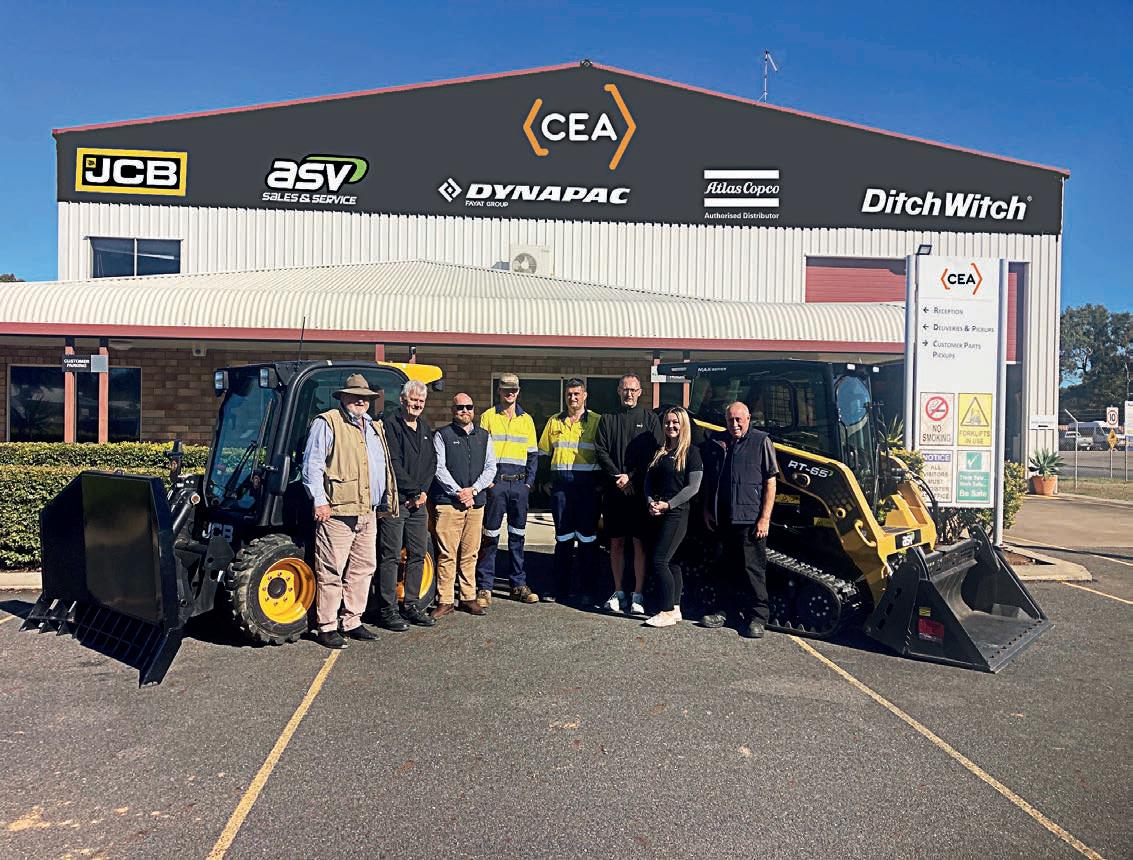
“This historic investment sends a powerful message: Queensland is open for business and ready to partner with those who back our state,” Crisafulli said.
For CEA, the government-backed investment reinforces the importance of a strong local presence to support central Queensland’s growing mining and resources activity.
By combining local knowledge with a broad product range and robust aftersales support, CEA is well positioned to meet customers’ evolving demands.
The Rockhampton and Mackay branches also allow the company to provide tailored service while retaining the expertise of the teams inherited from Terrequipe, ensuring continuity for clients.
By embedding itself more deeply in the region, CEA is not only expanding its footprint; it is reinforcing its role as a trusted partner for industries that underpin central Queensland’s economy.
The company’s enhanced presence will help to make sure customers can access expertise and equipment close to home, strengthening the foundation for long-term growth.
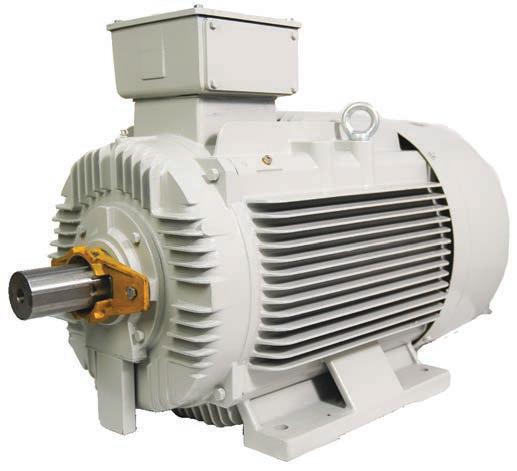
Squirrel cage reliability. No redesign. No lock-in.
• IE4 Super Premium Efficiency: Up to 4% over IE 3 and up to +7.7% over IE 2 — lower power bills, faster ROI.
• Drop-in IEC 60072-1 Retrofit Design: Direct replacement for IE2/IE3 motors — no shaft, flange or baseplate changes needed.
• IP66 Protection: Sealed against dust, water jets and heat — reliable in outdoor and washdown areas.
• Class H Insulation: Rated at 180°C for high ambient and high service factor applications.
• Squirrel Cage Rotor: Standard design, no magnets — fully serviceable by any qualified motor repairer.
• Works with DOL or VSD: No VSD lock-in — compatible with existing control setups.
• Flush Through Grease Relief System: Simplifies bearing maintenance — extends motor life.
• 4×90° Rotatable Terminal Box: Flexible cable routing — faster installation, easier commissioning.
• Local Stock + Custom ModShop Builds: Faster delivery, tailored paint systems, thermal protection, and specific site adaptations.
Efficiency should be simple. Upgrade to TECO MAXeV4 IE4 today! Scan the QR code for further information.
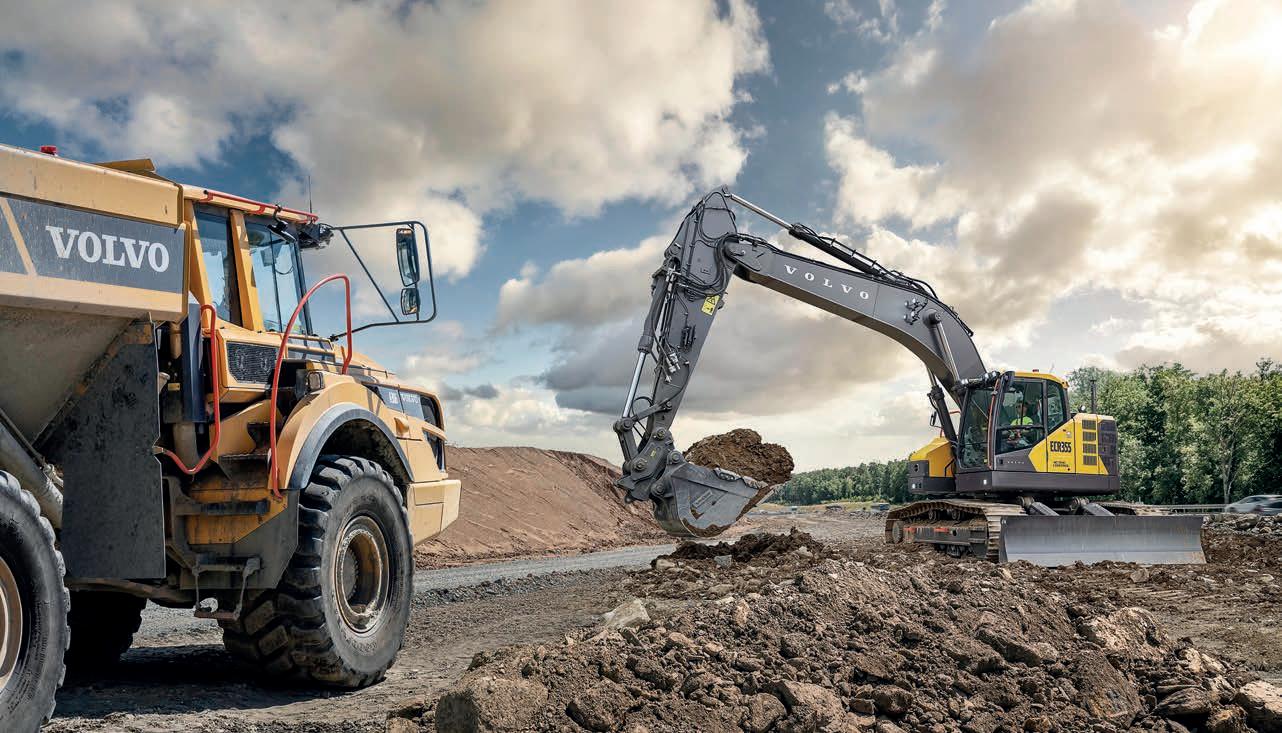
VOLVO CONSTRUCTION EQUIPMENT HAS UNVEILED THE LATEST GENERATION OF ITS ECR355 SHORT SWING EXCAVATOR, DELIVERING A STEP CHANGE IN PRECISION AND EFFICIENCY.
Volvo Construction Equipment (Volvo CE) has launched the latest evolution in its short swing radius excavator range.
Addressing key productivity challenges such as tight-space operation and demanding lifting needs, the new ECR355 delivers greater fuel efficiency, increased lifting performance and enhanced operator comfort. Purpose-built for tough environments, it helps customers achieve more with less.
Volvo CE said the upgraded ECR355 delivers up to seven per cent greater fuel efficiency than the previous generation, thanks to a new electrohydraulic control system and redesigned main control valve.
The system uses electronic sensors and the machine’s on-board computer to optimise flow and pressure, designed to ensure smooth and precise control of the boom, arm and bucket movements.
Electric cooling fans operate only when needed, minimising engine load, noise and fuel consumption.
Operators also benefit from a host of additional efficiency-enhancing technologies, including new engine work modes with hydraulic priority setting and optional Comfort Driving Control and automatic engine shutdown, which contribute to lower running costs and higher uptime.
Built for versatility, Volvo CE reported a seven per cent increase in lifting capacity and four per cent more tractive force for the ECR355, unlocking new possibilities for heavy lifting, grading and loading within confined environments.
Volvo’s Active Control system automates boom and bucket movements for up to 45 per cent faster grading with less rework and fatigue, according to the company.
Integrated boundary limits and Dig Assist apps support 2D machine control and in-field design, helping operators work faster, safer and more accurately. Optional features like boundary limits, boom or swing priority functions, and a floating dozer blade help to ensure precision, speed and safety on every task.
Volvo said its excavators record some of the longest service intervals in the industry, including 1000-hour engine oil changes and 3000-hour hydraulic oil changes. These synchronised intervals, aligned in 1000-hour increments, simplify servicing and help reduce costs.
Volvo CE has designed the ECR355 to stay working longer, with leading service intervals and simplified maintenance access. Key components are grouped for easy reach, with groundlevel refilling and quick-drain ports to minimise downtime.
Volvo’s Smart View with optional people and obstacle detection uses 360° cameras and intelligent radar to enhance site safety. Meanwhile, its CareTrack telematics and ActiveCare 24–7 provide real-time machine health data and predictive maintenance alerts to keep fleets productive and protected.
The next generation of excavators enhances the operator environment, with the new short swing excavators raising the bar with a full-size conventional cab, resulting in 20 per cent more space compared to other short swing models, the company said.
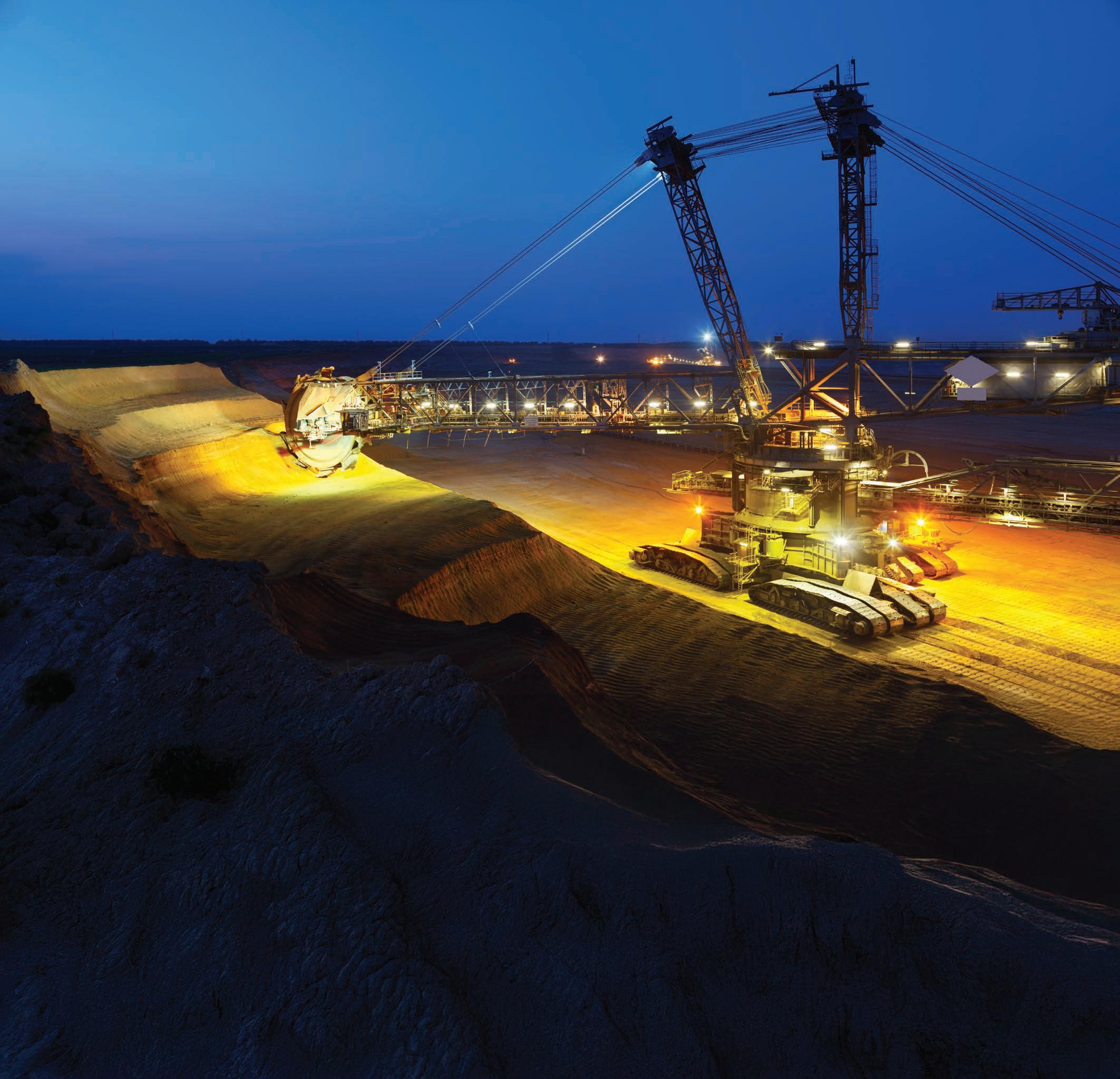
According to Volvo CE global product manager Jaesu Kim, the company keeps the interest of operators at heart when designing any new product.
“The improved productivity within the ECR355 creates an unrivalled, comfortable working environment across long shifts,” Kim said.
“Operators will also find 50 per cent better in-cab cooling performance, reduced noise levels due to new electric fans, and a host of modern conveniences, including Bluetooth connectivity, wireless phone charging, extensive storage solutions, and a two-stage filtration system for cleaner air.
“Control is smoother and more intuitive with the precision joystick system and ergonomic switch layout, allowing operators to customise settings to suit their preferences. New electric travel pedals ensure lightning-fast response, while features such as a tiltable left console and ergonomic handrails make cab entry and exit easy and safe.”
The Volvo CE ECR355 short swing excavator is available through CJD Equipment, with branches, dealers and service centres throughout Australia. AM
Introducing AlemQube Self Bunded Diesel Fuel Tanks, the smart solution for onsite diesel storage.
AlemQube tanks deliver safe, compliant, diesel storage, transfer, metering & level monitoring (some models) to keep your equipment running and your operation moving.
AlemQube tanks are above-ground, relocatable, fuel storage solutions with double-walled self bunded construction - eliminating excavation, external bunding costs, & installation complexity.

Two configuration options - AQB Series with integrated equipment bay, or AQ Series with surface mounting options
1,000L to 5,000L capacities
Double-walled self bunded construction
- Prevents leaks, eliminates external bunding costs
Built for harsh conditions
- Mild steel with corrosion-resistant coating
Above-ground design
- Fast installation & relocatable
Fully compliant
- AS1940-2017, UL142 & AS1692 standards
5-year warranty
Custom decals & flammable liquid kits available
Metering & level monitoring options available
AQB Series & AQ Series Models available in different configurations
Contact your Alemlube representative for more information
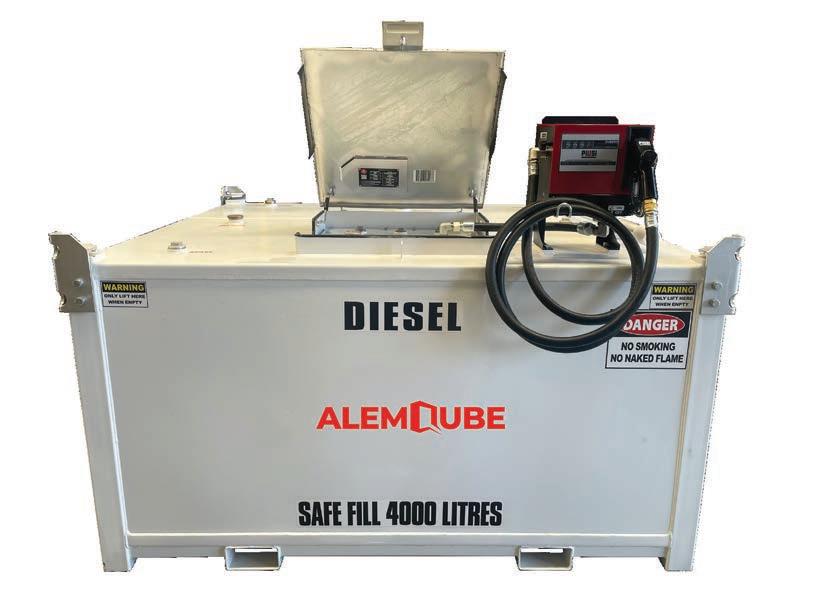

www.alemlube.com.au
WITH TECHNOLOGICAL, OPERATIONAL AND ENVIRONMENTAL ADVANCEMENTS ACROSS THE SECTOR IN THE LAST 12 MONTHS, POWER SOLUTIONS PROVIDER GENUS BELIEVES GREATER OPPORTUNITY IS STILL TO COME.
As the mining and resources sector heads into a new year, it finds itself on the edge of what might be the most significant system transformation in years.
After decades of maintaining the same transmission world built in the 1970s and ’80s, the past 12 months marked a decisive transition from steady operations to a new era of scale, complexity and accelerated demand.
To understand what this means for the industry, Australian Mining sat down with Genus project director –transmission Beau Stoner to explore his perspective on lessons learned in 2025.
Stoner believes that, for the first time in around four decades, Australia has entered a major transmission construction cycle, with focus still on incremental upgrades instead of largescale news ones.
“This has meant the industry had to relearn certain things,” Stoner said. “We moved from decades of operations and maintenance into billion-dollar construction projects that haven’t been done in over 40 years.”
That shift has naturally come with growing pains, Stoner said, with supply chains needing to stabilise.
“We’ve worked through probably 80 per cent of those teething issues,” he said. “There’s still another 20 per cent to go as new precincts ramp up into 2026, but the industry is in a far better place than a year ago.”
Amid this cycle, Australia’s power system is also undergoing what is perhaps the most significant structural change in its history.
What was once a relatively simple system built to service homes and heavy industry is now being reshaped at high speed by electrification.
“We’re moving from a simple power system to a very complex one,” Stoner said. “Every time a vehicle is plugged in or a load increases, it needs to be accommodated into an already constrained network.”
This challenge is one in which mining sits at the centre. Site electrification, load growth and new regional demand all intersect with a power system originally built for another era.
“Connecting a mine is the easy part,” Stoner said. “Integrating that load into the network, that’s where the complexity lies.”
Stoner highlighted the fact the ramp-up of electrification capabilities is boosting a demand that few anticipated even three years ago: the rise of
hyperscale data centres and artificial intelligence (AI) training clusters.
“In the United States, they’re building two-gigawatt AI clusters,” he said. “That level of demand will come to Australia.
“The network connections required to service them are a huge opportunity and a huge challenge for companies like ours.”
Add to that the electrification of mining fleets and operations, and the convergence becomes clear. Where individual loads once moved independently, they are now growing simultaneously and exponentially.
To deal with the speed of change in the coming year, agility is becoming more important than ever. That’s why Genus is investing heavily to ensure workers are trained for the future.
“We now have a 10-hectare training and assessment facility in WA,” Stoner said. “It’s used to assess new workers and train the next generation of line workers and, as far as I’m aware, it’s the only one like it.”
Equipping the workforce is just one part of keeping up with these rapid changes, as miners and their partners must also adapt to evolving technology, regulatory demands and market pressures. The pace of change across renewables, electrification data
centres and end-of-life asset replacement means miners can leverage delivery partners to help solve problems early, adapt quickly and work at the speed the market now requires.
This is where Stoner believes Genus differentiates itself.
“We’re experienced and agile, we’re entrepreneurial problem-solvers,” he said. “Our clients need partners who can move quickly, and that agility is in our DNA.”
Stoner believes the opportunities on Australia’s doorstep are little short of extraordinary, but seizing them will require a different mindset; collaborative, community-driven, technically strong and relentlessly forward-looking.
“By the end of 2026 , the industry should be in a very good place going forward,” he said. AM
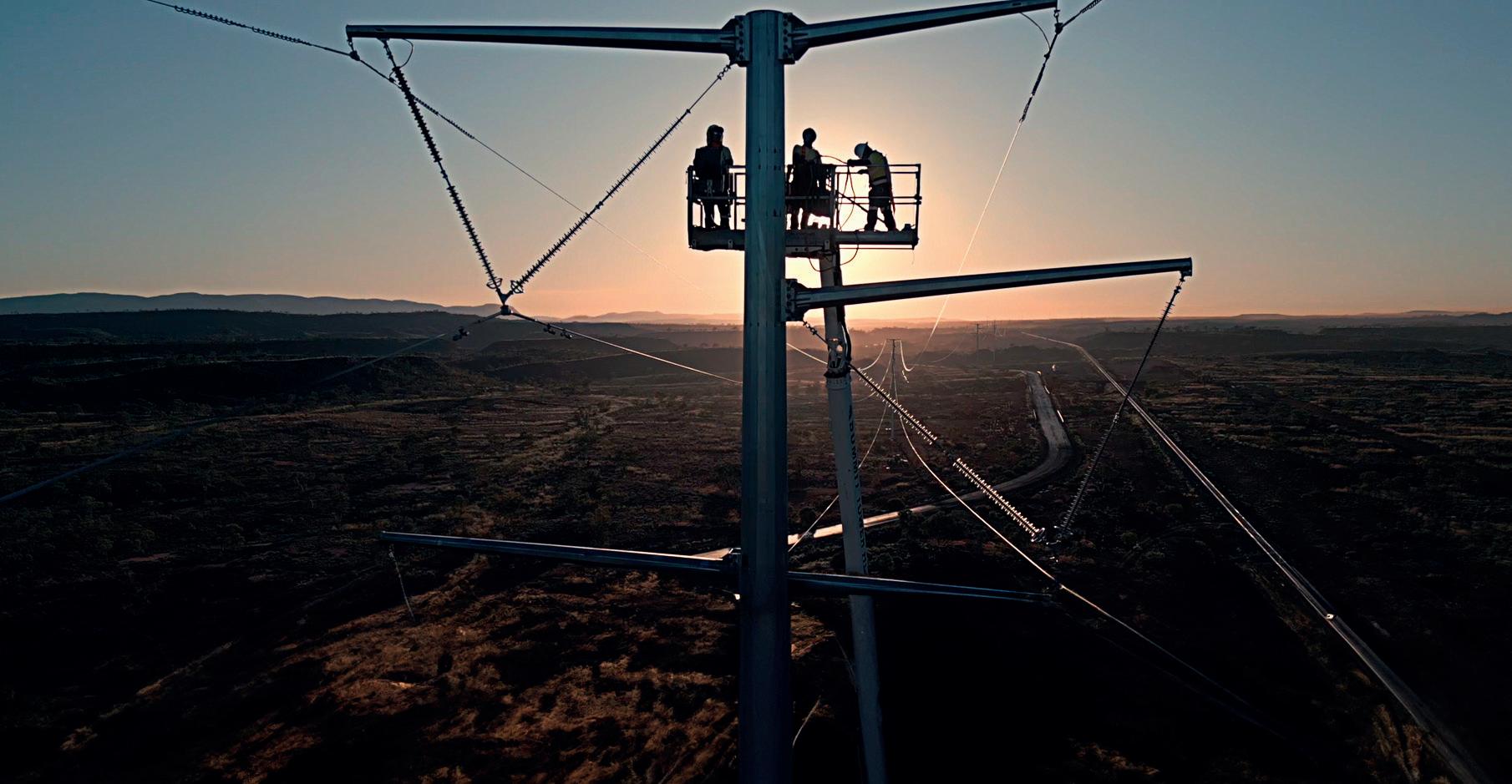


BME’s AXXIS™ range – Silver, Titanium, and CEBS – delivers world-class electronic initiation trusted by mines across five continents.
Built for precision, safety, and sustainability, AXXIS™ empowers engineers and blasters to achieve consistent, high-performance blasts – even in the most demanding conditions.

• AXXIS™ Silver – Proven reliability for quarries and mid-sized mines.
• AXXIS™ Titanium – Advanced control with best-in-class safety and data capabilities.
• AXXIS™ CEBS – Centralised blasting with unmatched scale and efficiency.
With AXXIS™, you don’t just initiate blasts –you initiate progress.

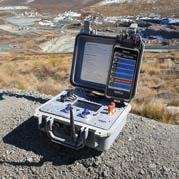
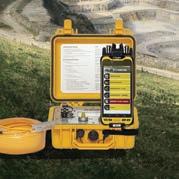
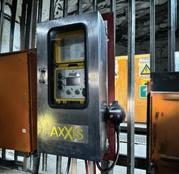

the full range at www.bmeexplosive.com

VDI HAS UNVEILED A MINE-SPEC YUTONG DEMO BUS DESIGNED FOR AUSTRALIAN CONDITIONS, BRINGING TOGETHER ENHANCED SAFETY TECHNOLOGY AND RUGGED ENGINEERING.
As the Australian provider of Yutong vehicles, VDI has equipped a new mine-spec demo bus with site-appropriate safety systems, including fatigue and distraction monitoring, alcohol interlock, tyre-pressure management and interlocked doors designed to prevent unsafe operations.
The goal is to help operators reduce transport-related risks while moving workers to remote mine sites safely and reliably.
This guided the development of Yutong’s new Australian demo mining bus, a platform engineered not only to carry workers but to strengthen work health and safety (WHS) outcomes.
Yutong frames safety around
every current Yutong platform meets Australian Design Rules and is equipped with key active-safety technologies.
“This includes automatic emergency braking, electronic stability control, a 360° camera system with blind-spot coverage, an electronic park brake and, on most models, adaptive cruise control and lane departure warning,” he said.
For VDI national marketing manager Blake Duerden, the vehicle begins with the current generation of Yutong models, which includes a mine-spec accessory pack reflecting what major operators and mine owners are after.
“The aim is a package that can be approved by WHS and mine transport teams with minimal rework and easy redeployability,” he said.
“For procurement, that’s easier
The system detects fatigue and distraction, vibrating the driver’s seat while sending real-time alerts back to base so supervisors can intervene before an incident occurs. The intention is simple: prevent dangerous events before they escalate.
Redundancy has also been built into rollaway prevention. The electronic park brake automatically engages when the driver stands up or the engine is shut off, while an added after-market park brake alarm sounds the horn if a driver removes their seat belt or switches off the engine without applying the brake, alerting the operator and nearby pedestrians.
These features are integrated with the bus, with all basic requirements and other mechanised parts needing maintenance trackable in-system.
started under the influence. Seat belt monitoring and reminder systems ensure passengers are buckled, with visual and audible warnings. TS160 door safety, currently the highest available, prevents the bus from moving with doors open and features anti-entrapment protection. Bin door interlocks ensure operation only when storage doors are secured, while a bull bar offers frontal protection against animal strikes. Tyre monitoring handles temperature and pressure, supported by a fire suppression system and lockable isolators for safe maintenance.
Reliability remains the other half of safe transport. Any machine can fail in remote conditions, regardless of brand, and VDI doesn’t pretend otherwise. Instead, the company focuses on rapid problem resolution, transparent communication and an expanding regional support footprint. If a bus enters a region for the first time, VDI engages local repairers or works with operators to establish appropriate servicing capability.
VDI’s own technical team can also fly to site for remote diagnosis and resolution, supported by factory-direct
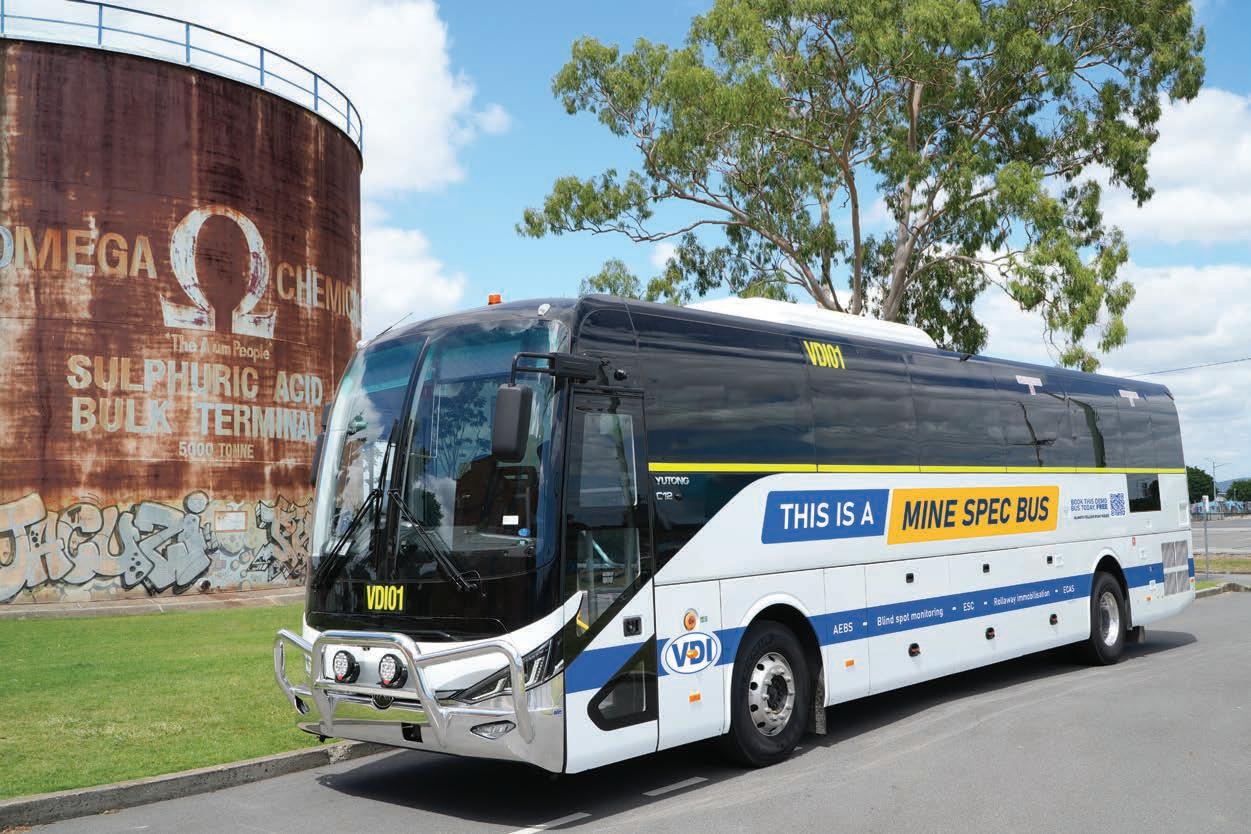
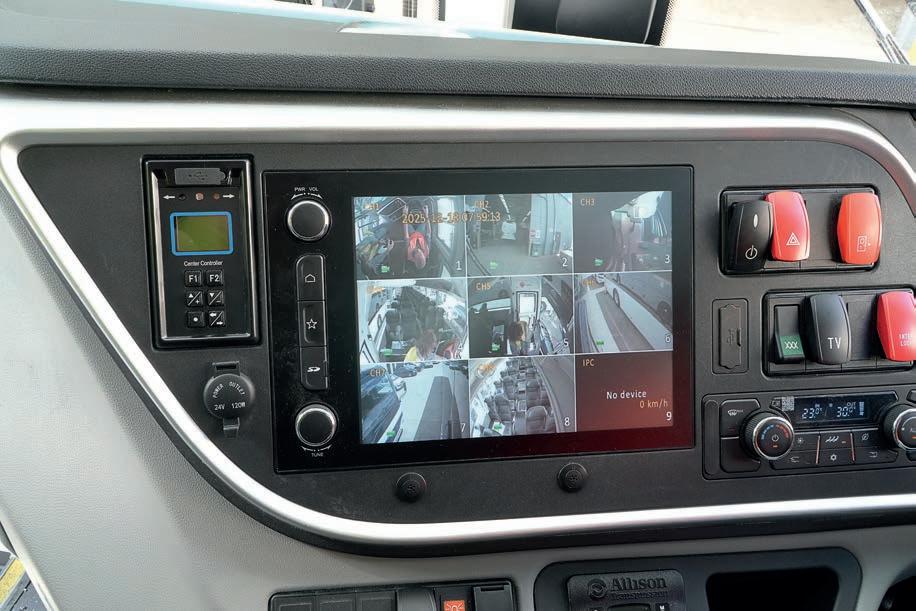
channels where global technicians share known fault solutions to avoid long troubleshooting delays.
“When it comes to an issue, we share that information, which can lead to an influx of support and help,” Lancaster said.
“We’re here for the long haul, and the relationship doesn’t end at the point of handover.”
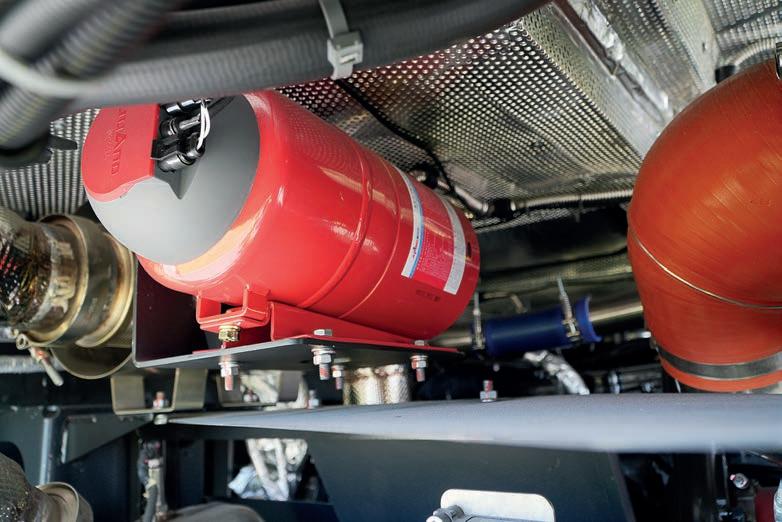
For WHS leads, that means fewer instances of stranded workers.
For procurement and operations, it means reduced downtime, greater confidence in availability and improved contract performance.
As Lancaster put it, “nobody buys these buses out of emotion”.
“People and customers buy these assets to work and to earn money, so
these assets have to work, and we need to respect that,” he said.
“We need to remember that if a bus doesn’t operate and companies can’t get their workers to the site, it’s not a few bucks but millions of dollars lost in productivity.”
The new demo bus reflects growing customer demand for assets that meet mine-spec approvals without extensive
rework. It is designed to gain approval faster and be redeployed between contracts when required, supporting whole-of-life value.
From safety technology to uptime support, the purpose is clear: provide mining operators a turnkey transport solution built for Australian conditions, ready to work from day one and supported for its entire operating life. AM
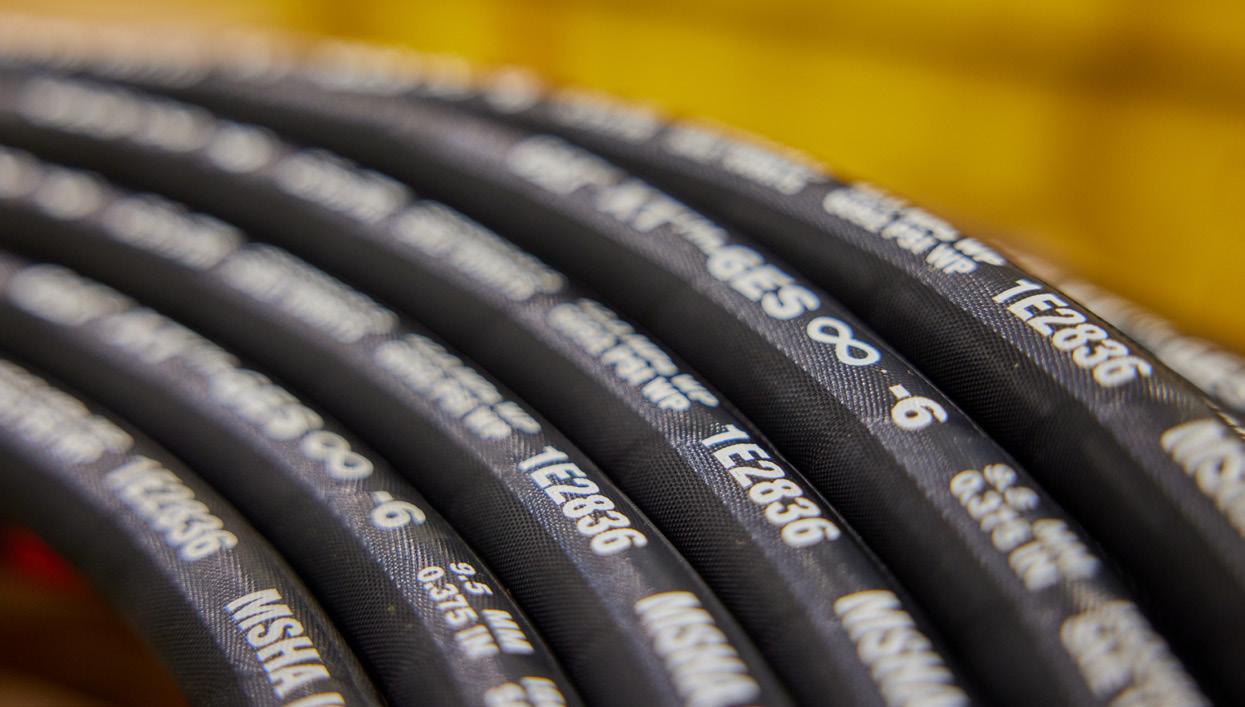

Australia’s largest regional mining event
21-23 JULY 2026 MACKAY
As Australia’s construction and mining sectors face growing demands for safer, smarter and more convenient industrial liquid storage, Alemlube continues to lead with purpose-built solutions engineered for demanding environments.
Alemlube is introducing a new brand in its AlemQube AQ and AQB Series tanks.
Designed to support on-site refuelling operations in these demanding industries, the AlemQube Series delivers premium performance backed by engineering excellence and a five-year warranty for long-term peace of mind.
At the core of the AlemQube AQ and AQB Series is a self-bunded, doublewalled construction that prevents leaks and is designed to eliminate the need for costly external bunding. This integrated design helps to ensure
environmental protection while reducing installation complexity, saving time and valuable site space. Designed for fast installation and easy relocation, both models are ideal for dynamic worksites where flexibility is essential.
Manufactured from high-quality mild steel and finished with a corrosionresistant coating, AlemQube AQ and AQB tanks are built to withstand harsh Australian conditions. From extreme heat and dust to high-traffic industrial environments, these tanks are engineered for durability and longevity.
Compliance is equally assured, with both models meeting Australian and international standards for safe fuel storage, including AS1940-2017, UL142 and AS1692.
Designed for flexibility
Where the two models diverge is in how they approach dispensing and equipment security.
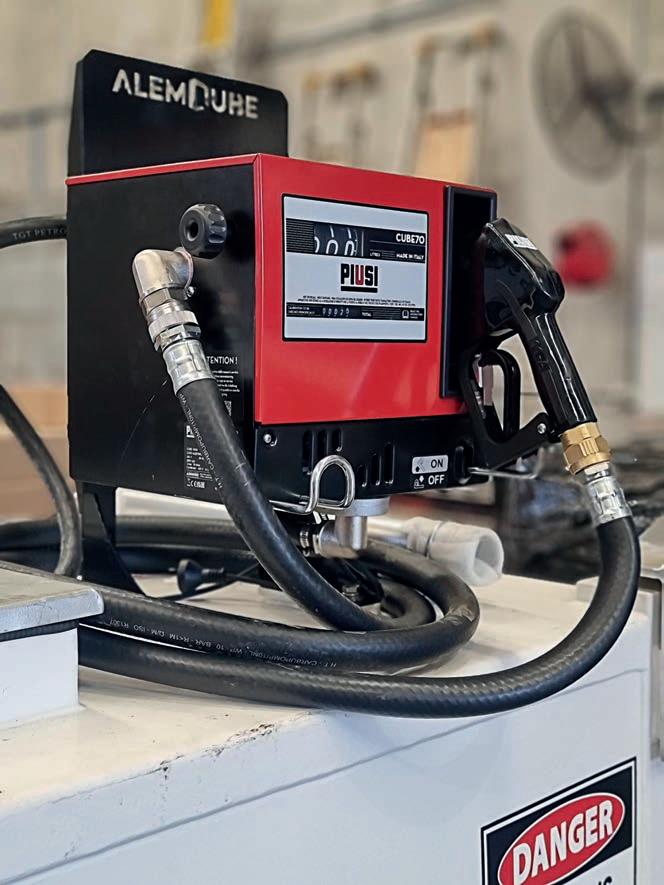
The AlemQube AQ Series offers a streamlined and adaptable storage solution, with surface mounting options for pumps, reels and dispensing equipment. This makes it an ideal choice for operations that already utilise external pumping systems or prefer custom configurations.
Custom decals are available to clearly identify the fluid in use, and a flammable liquid kit can be supplied where required.
The AlemQube AQB Series builds on this foundation by offering an integrated dispensing solution designed for enhanced convenience and security. Its defining feature is a recessed, weatherproof and tamper-proof equipment bay that securely houses pumps, meters and nozzles.
Lockable and easily accessible, this enclosed bay protects critical dispensing components from the elements and unauthorised use, making the AQB Series suited to remote or unattended sites. Built-in dispensing options allow for a clean, professional installation with minimal external exposure.
Both AlemQube AQ and AQB Series tanks provide safe and secure on-site storage and dispensing of liquids including diesel fuel, oil, waste oil, kerosene, bio-diesel and petrols.
Designed and engineered by the Alemlube team to exceed Australia’s stringent environmental and safety standards, the AlemQube Series delivers
premium durability and convenience in on-site industrial fluid storage.
The complete AlemQube Series offers capacities ranging from 1000–5000L safe fill level, with larger custom sizes available on request.
Each tank size supports a variety of dispensing configurations, including integrated diesel fuel pumping and dispensing solutions with a versatile selection of electric pumps, flow meters, and fuel monitoring and management systems.
Alemlube can assist with dispensing options, including unmanaged and managed 12/24V and 240V bowser configurations with B.SMART technology, as well as ongoing service and maintenance programs.
With a design philosophy focused on safety, efficiency and reliability, these tanks are engineered to support on-site refuelling operations in demanding environments, particularly in construction and mining.
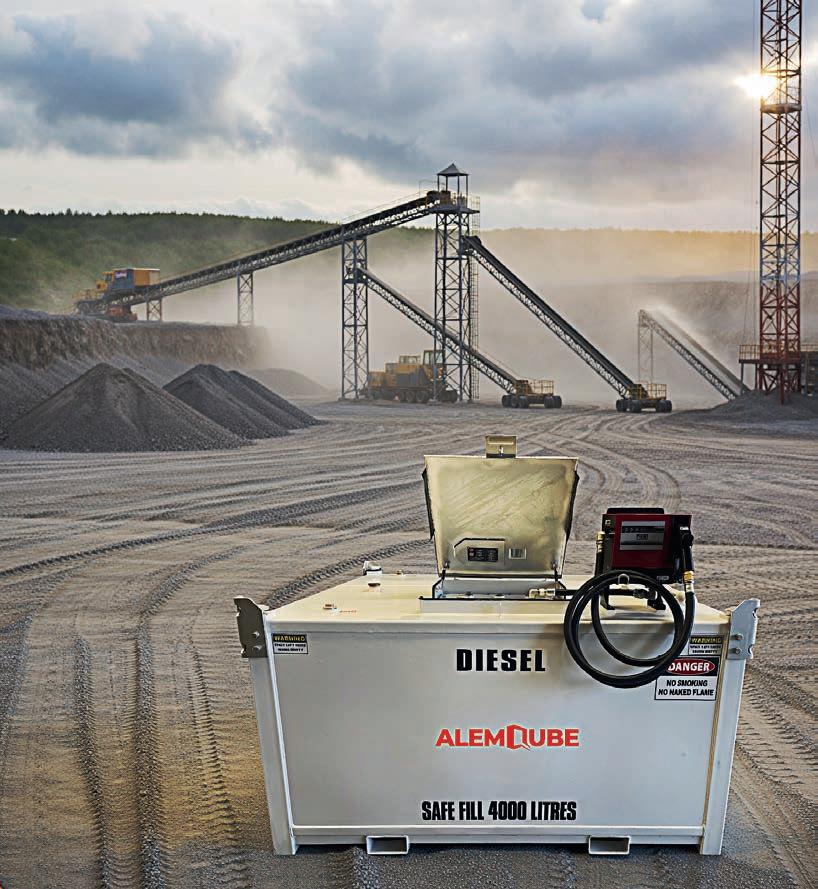
The choice between the AQ and AQB Series ultimately comes down to operational preference.
The AQ Series delivers flexibility and simplicity, while the AQB Series provides added security and integrated dispensing convenience.
Whichever model is selected, Alemlube’s AlemQube Series tanks offer a proven, compliant and durable fuel storage solution, engineered to perform, built to last, and backed by a five-year warranty. AM
AUSTMINE’S INTERNATIONAL PROGRAMS ARE DESIGNED TO HELP AUSTRALIAN COMPANIES ACCESS AND COMPETE IN GLOBAL MARKETS.
AUSTRALIAN COMPANIES ARE WELL-PLACED TO SUPPORT COUNTRIES SEEKING NEW INDUSTRY-BUILDING PARTNERSHIPS IN MINING.
As the global resources industry undergoes rapid transformation, Australian mining equipment, technology and services (METS) companies are primed to support countries seeking new industrybuilding partnerships.
Geopolitical shifts, supply chain pressures and the global race for domestic production have prompted many nations to rethink traditional minerals alliances and accelerate local mining capabilities. Across established and developing mining nations, governments are moving to build or strengthen their resource industries to support industrial growth, clean energy transitions and long-term economic resilience. This shift is reshaping global demand for trusted partners who can bring proven experience, technology depth and operational excellence.
While Australia remains a major mining powerhouse, the domestic market is experiencing a mixed outlook. The nickel sector is under pressure, and demand for coal and iron ore has softened as China and other large economies adjust their industrial and energy strategies. At the same time, activity in gold and copper remains strong, supported by electrification and renewable energy investment.
For METS companies, these dynamics make one thing clear: diversifying into new markets is no longer optional. Expanding internationally can provide a
buffer against domestic fluctuations and opens pathways to regions where mining investment is accelerating.
Australia’s METS sector is exceptionally well placed to meet this global demand.
markets, build relationships and establish a long-term presence.
“That’s where Austmine plays a crucial role.”

Decades of experience operating in complex and remote environments have shaped an ecosystem known for ingenuity, advanced technology adoption, sustainability leadership and reliable delivery.
From automation and underground mining solutions to digital optimisation, water management and community engagement practices, Australian METS companies are widely respected for their ability to lift productivity, safety and environmental, social and governance (ESG) performance. With more than 60 per cent of Australian METS companies already exporting, the sector has a strong foundation for deeper international engagement.
According to Austmine director international business Dr Robert Trzebski, this moment represents a turning point for the global mining supply chain.
“Around the world, governments and mining companies are looking for partners who can help them build capability quickly and sustainably,” Trzebski said.
“Australian METS companies bring a rare combination of technical depth, practical experience and trust. The opportunities are there, but companies need support to navigate
Australian exploration, mine development and engineering expertise are increasingly sought after as new mineral provinces take shape.
Underground mining technology is in growing demand as complex orebodies are pursued around the world.
Sustainability and community solutions – areas in which Australian METS lead globally – are becoming essential in new mining regions where environmental stewardship and workforce development are central to long-term success.
As a leading industry association, Austmine’s international programs are designed to help companies access and compete in these markets.
Austmine will deliver a coordinated suite of global activities in 2026, including hosting Australian pavilions at CIM CONNECT in Canada, Exponor in Chile and Electra Mining in South Africa, opening doors to regions undergoing significant change in mineral development, processing and technology adoption.
Each pavilion is supported by commercial briefings, market intelligence, site visits and facilitated introductions to mining companies, engineering groups and government agencies.
Austmine will also welcome substantial international participation to Perth for the Global Resources
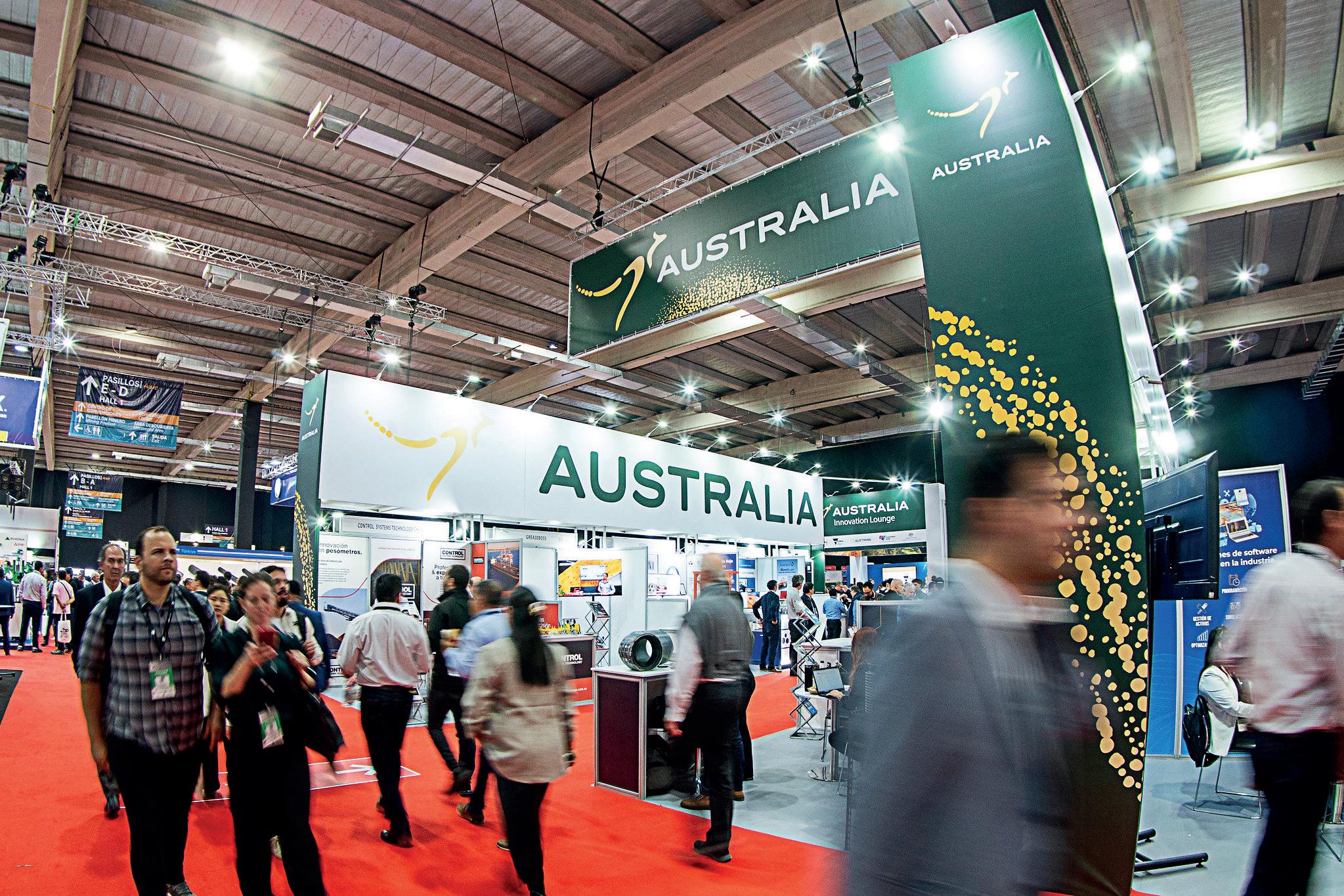
Innovation Expo (GRX26), cohosted with AusIMM, enabling local companies to connect directly with global miners, investors and technology leaders on home ground.
Complementing this activity, Austmine will continue delivering targeted international missions and trade development programs in priority markets across the globe.
Trzebski said these activities have become an essential pathway for companies seeking international growth.
“When a METS company enters a new market, the first challenge is visibility, the second is credibility. Austmine helps companies overcome both,” he said.
“By creating structured engagement opportunities and long-term partnerships, we help Australian METS move from early conversations to real commercial outcomes.”
As nations around the world move to secure minerals supply chains and develop resilient mining industries, Australian METS companies have an opportunity to become partners of choice, bringing world-class expertise, technology and operational capability to markets undergoing rapid transformation.
With strong international programs, government collaboration and an increasingly global outlook, Austmine is supporting the sector to scale its impact and connect with the partners who will drive the next era of global mining growth. AM
The Stanley Hotel and Suites
Port Moresby, Papua New Guinea
1-2 July 2026
Secure your spot and showcase your business to the industry’s key players

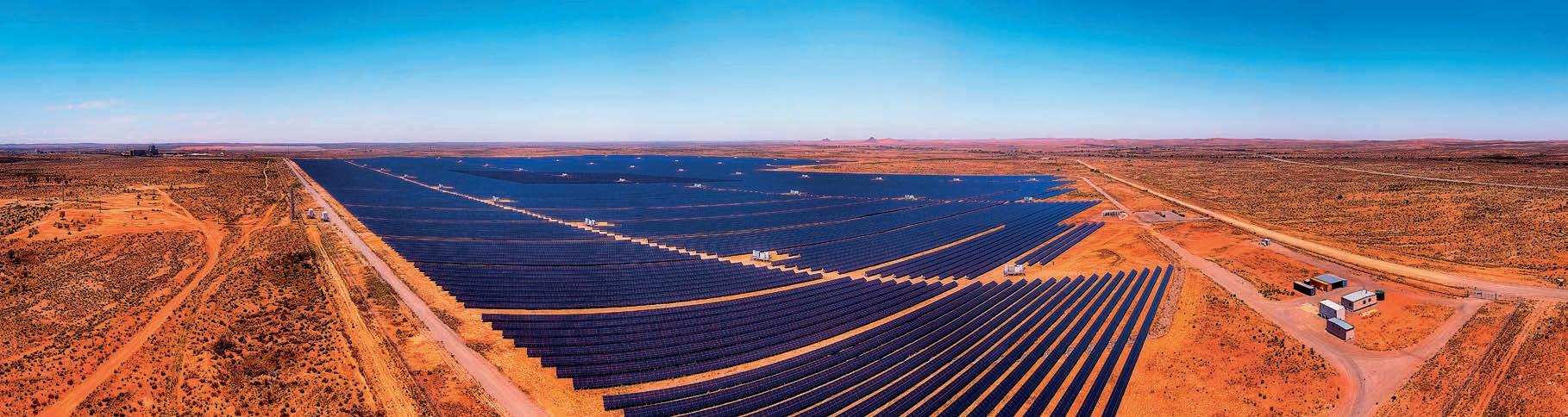
As the world accelerates towards net-zero emissions, the demand for low-carbon metals is skyrocketing. For Australia, this presents a historic opportunity: to move beyond exporting raw resources to become a global leader in green metals production.
Dr Rahman Daiyan, senior lecturer at the University of New South Wales (UNSW) School of Minerals and Energy Resources Engineering, is at the forefront of these conversations, having collaborated with governments and international partners to explore pathways for sustainable, value-added metal production.
Daiyan has spent recent years advising Federal and State governments on Australia’s decarbonisation and energy ambitions.
“With coal and gas exports expected to decline under net-zero targets, we need to pivot towards other high-value export opportunities,” Daiyan told Australian Mining.
Central to this strategy is the concept of green metals, such as iron, copper and aluminium, alongside low-emissions steel and other critical minerals produced using renewable energy and low-carbon technologies.
One compelling example is the work Daiyan has done with German partners on decarbonising steel production. Traditionally, European countries would import hydrogen and iron ore separately, then combine them to produce lowcarbon steel.
“Rather than exporting individual materials, we can export the processed green iron,” Daiyan said. “This adds value locally, embeds renewable energy in the supply chain, and allows Germany to focus on speciality manufacturing.”
Australia has clear advantages in this space. Its abundant renewable energy resources and extensive mineral deposits make it ideal for producing low-emission metals domestically.
However, Daiyan said realising this potential requires local participation across the supply chain.
“The value addition should be Australian labour, Australian technology and Australian equipment,” he said. “Otherwise, subsidies risk supporting overseas decarbonisation with minimal domestic benefit.”
Domestic adoption is equally critical. Western Australia, for example, is beginning to integrate green steel into infrastructure projects, signalling a path to embed sustainable metals in the local economy.
Daiyan stressed that government incentives can help de-risk early projects and encourage adoption locally, creating a robust internal market alongside exports building an international one.
Scaling up green metals production does carry challenges: technology risk, cost pressures and the learning curve associated with new processes. Daiyan drew parallels with the liquefied natural gas (LNG) industry, saying early projects were expensive and high-risk but government support and collaborative infrastructure development were key to long-term success.
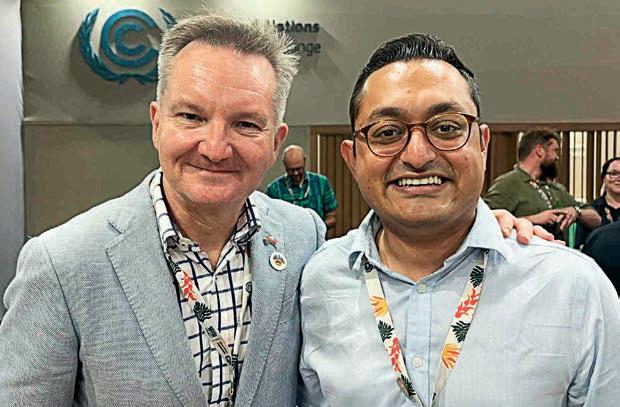
Demonstration-scale green metals projects, particularly those involving renewable energy and hydrogen integration, are essential stepping stones towards commercial-scale operations.
International collaboration remains just as pivotal. Daiyan’s work with Germany, as well as discussions with Sweden and other partners, helps to demonstrate the mutual benefits of bilateral supply chains.
“By upgrading our iron ore with renewable energy before exporting it, we embed value locally and reduce emissions globally,” he said.
“Germany saves energy for other manufacturing priorities, while Australia benefits from jobs, technology development and export revenue.”
Daiyan emphasised first-mover advantage. Regions like China, Chile
and the Middle East are rapidly establishing green metals processing hubs. For Australia to maintain a competitive edge, small-scale projects must move forward now.
“The first projects command premium pricing and set the stage for large-scale adoption,” Daiyan said. “Without early action, other nations could dominate the green metals market while Australia misses the opportunity.”
Australia is uniquely positioned to lead in green metals, but success will require strategic collaboration, domestic value addition through processing, and early, realistic projects. As the global appetite for low-emission metals grows, the country’s mining sector stands ready not just to supply raw materials but to shape the future of sustainable industry worldwide. AM
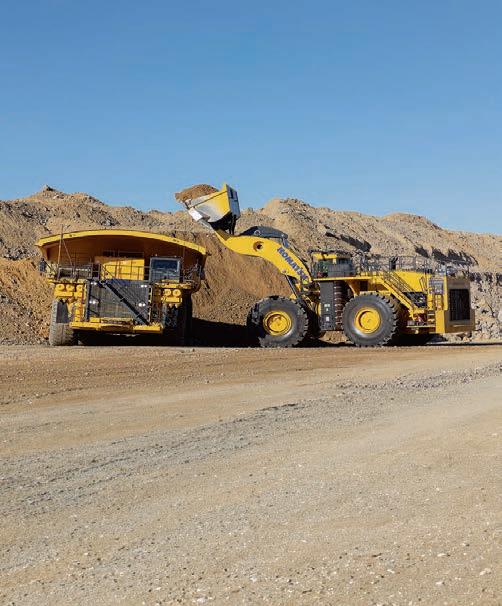
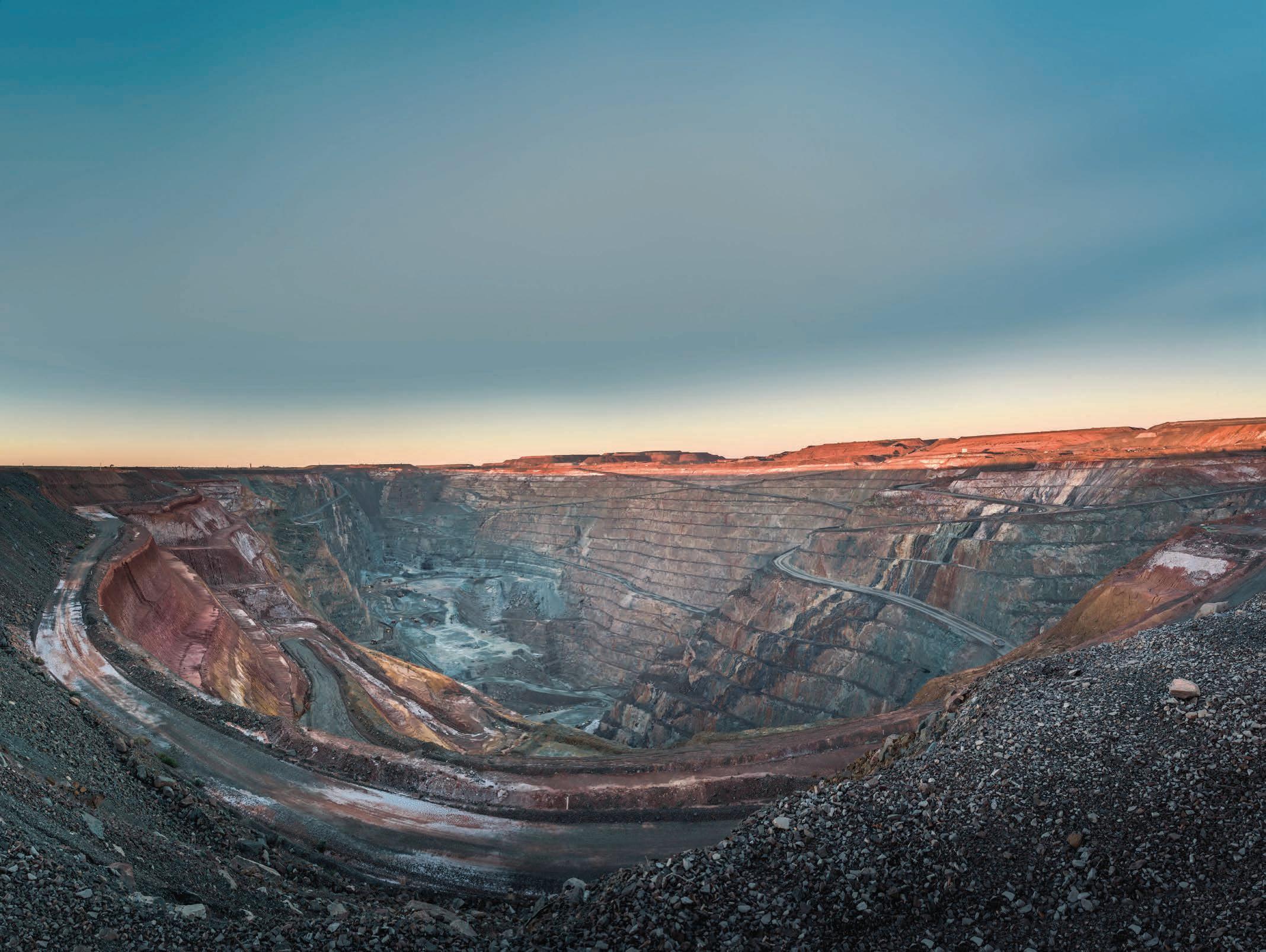
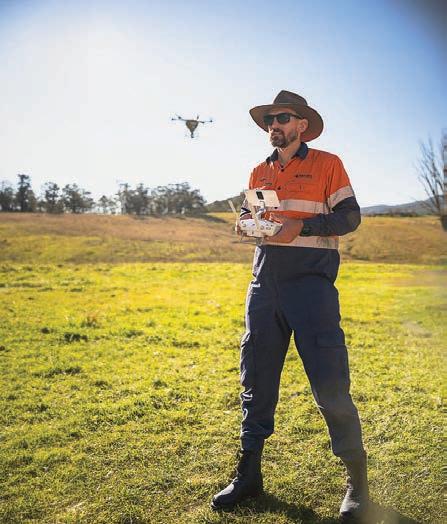
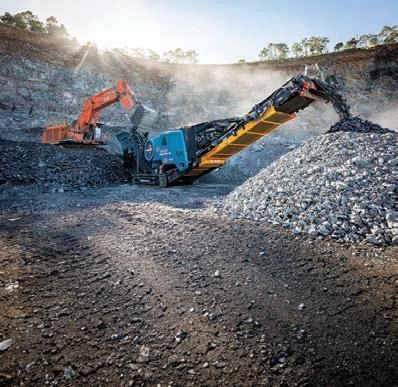
THE QUEENSLAND MINING AND ENGINEERING EXHIBITION IS RETURNING TO MACKAY IN JULY, PROMISING TO BE ONE OF THE LARGEST AND MOST EXCITING EDITIONS IN THE EVENT’S 30-YEAR HISTORY.
With hundreds of exhibitors, live demonstrations, a comprehensive conference program and strong industry backing, Queensland Mining and Engineering Exhibition (QME) 2026 is set to reaffirm its status as Australia’s premier regional mining showcase.
Queensland’s mining sector is preparing to gather in full force as the event arrives in Mackay, a city at the heart of the state’s resources industry. With 90 per cent of exhibition space already booked, suppliers, innovators and stakeholders are eager to be part of what promises to be a landmark event.
The Queensland Resources Council (QRC), one of the sector’s leading advocacy bodies, has confirmed its role as an official association partner for the event. Its support underscores QME’s position as a central meeting point for Queensland’s mining and mining
equipment, technology and services (METS) sectors, a platform for sharing insights, forging connections, and driving the industry forward.
“QME plays a vital role in showcasing world-class innovation and highlighting the mining industry’s contribution to the Mackay region and Queensland’s economy,” QRC chief executive officer Janette Hewson said in a statement.
Hewson will also contribute her insight in a panel discussion as part of the QME 2026 conference program and the council will have a presence on the exhibition floor to engage directly with stakeholders.
Hundreds of leading suppliers and innovators will attend, including Optix Australasia, Freyssinet Australia, CAPS Australia, Quarry Mining and Construction Equipment, Gulf Western Oil, Epiroc, Ford, Incident Zero, Schlumberger, Specialised Force, Nepean, Vermeer, Liebherr, and more, alongside returning exhibitors
such as ATOM, Regal Rexnord, and WEG Industries. Many will bring live demonstrations, giving visitors the chance to see cutting-edge equipment and solutions in action.
The event’s layout and programming have been designed to maximise opportunities for collaboration and knowledge-sharing. Returning features such as the QME Mining Pavilion and the free-to-attend leadership series, sponsored by Hitachi Construction Machinery, provide spaces for mining companies, contractors and thought leaders to share insights and connect with peers across the sector.
“The exhibition’s success comes down to the strength and pride of the industry it represents,” Prime Creative Media marketing manager – mining events Rebecca Todesco said.
“It’s where the entire sector comes together, from operators to innovators, to connect, collaborate and showcase what’s next.”
QME has long been a central hub for Queensland’s mining industry. Now entering its fourth decade, the exhibition continues to provide a unique environment where innovation, collaboration, and opportunity converge.
“There’s a unique energy when the industry gathers in Mackay,” Todesco said.
The QME Mining Pavilion will again provide a dedicated space for companies to showcase initiatives, engage with suppliers and connect with the broader supply chain.
This integration of exhibition and conference content is designed to ensure attendees gain practical insights alongside exposure to the latest equipment and technologies.
The leadership series adds yet another layer to the event, allowing visitors to benefit directly from insights into workforce development, safety innovation and productivity strategies.
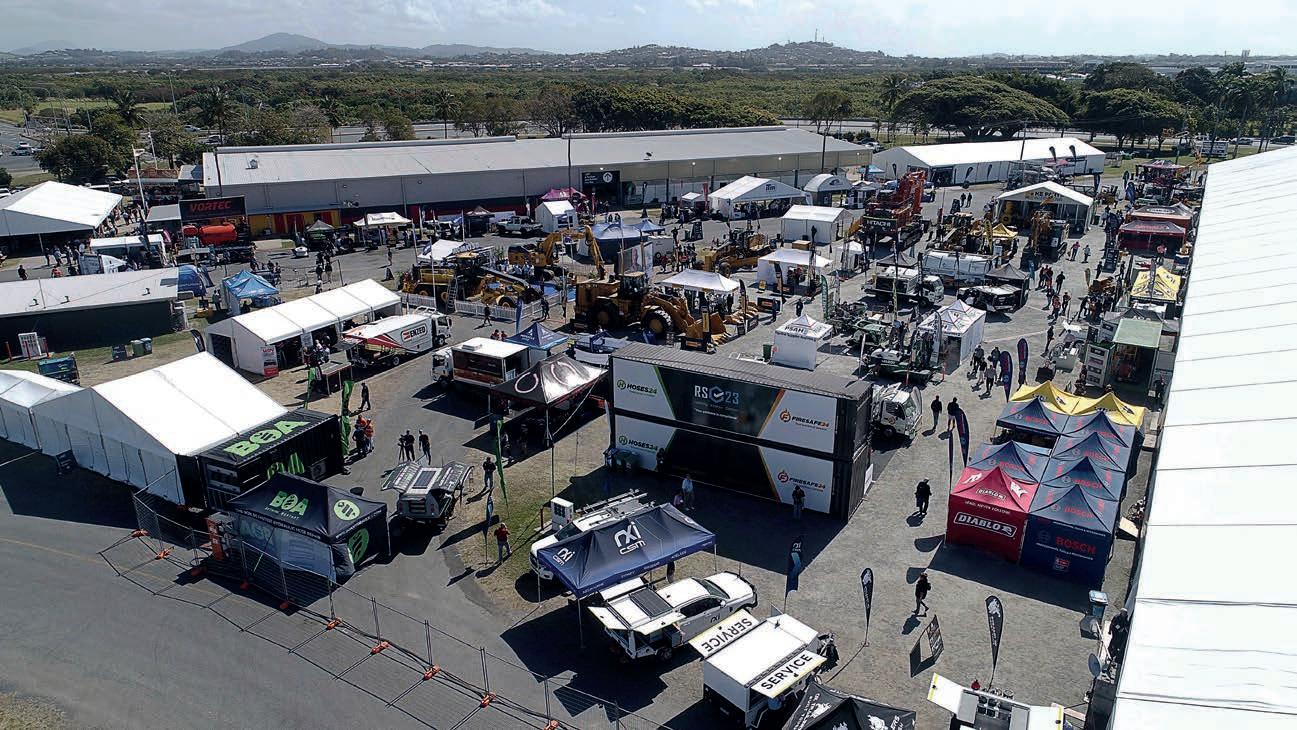
The combination of hands-on demonstrations, conference sessions, and networking opportunities ensures QME remains a platform where ideas are shared and industry progress is driven.
Industry backing and regional impact
The QRC’s involvement highlights QME 2026 as a platform not only for innovation but also for helping to shape the future direction of the industry.
As the peak body representing Queensland’s resources sector, QRC advocates for a sustainable regulatory environment while promoting excellence in health, safety, environmental performance, diversity, and industry leadership.
“QME is now a major event on the Queensland resources calendar and, as the industry’s peak body, QRC is proud to be involved as the official association partner,” Hewson said.
“The exhibition also takes the resources sector to the wider public and shares the innovation and worldbest practices that are homegrown in Queensland.
“I am looking forward to QRC playing a part in QME 2026, showcasing what’s best about our sector and the opportunities we have to secure a strong future for the industry as global demand continues for all of our commodities.”
The Mackay region itself benefits significantly from hosting QME.
As one of Queensland’s powerhouse resources hubs, the event brings flowon benefits to local supply chains and supports new and existing businesses. Hundreds of exhibitors and thousands of visitors across three days ensure that QME 2026 will make a tangible impact on the local area, reinforcing Mackay’s position as the heart of Queensland’s mining sector.
QME’s longevity and continued success reflect the pride, innovation and collaborative spirit of the Queensland mining industry.
From global suppliers to local innovators, the exhibition demonstrates the sector’s ability to deliver world-class outcomes while addressing challenges such as workforce development, safety and productivity.
By providing a space where ideas can be exchanged, challenges addressed, and innovations showcased, QME 2026 reinforces the importance of coming together as an industry.
Whether through live demonstrations, conference sessions or networking opportunities, attendees can expect to leave with new insights, solutions and connections that will drive their businesses forward.
With the exhibition space filling fast and a large number of exhibitors already
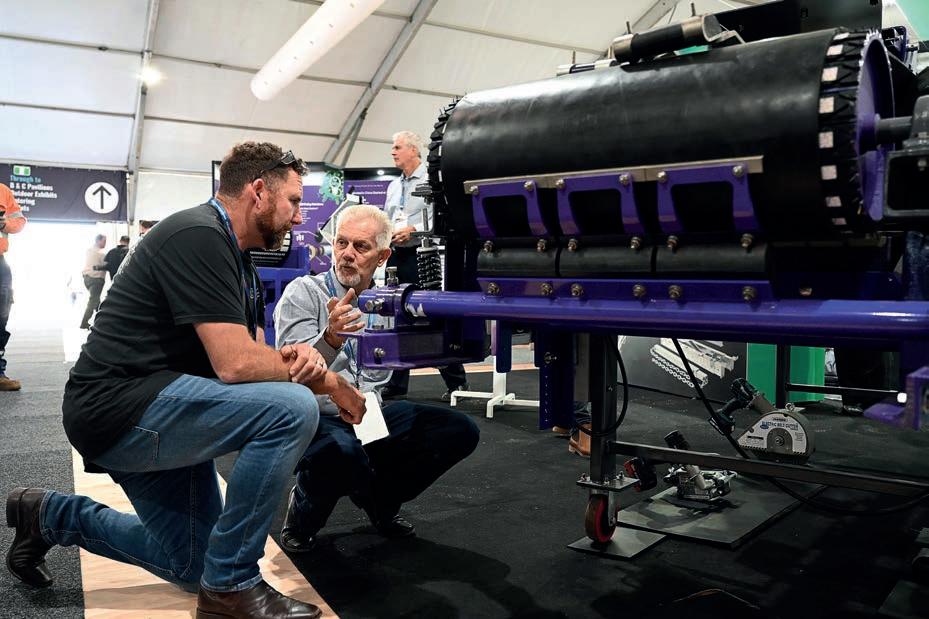
HUNDREDS OF LEADING SUPPLIERS AND INNOVATORS ARE SET TO ATTEND.
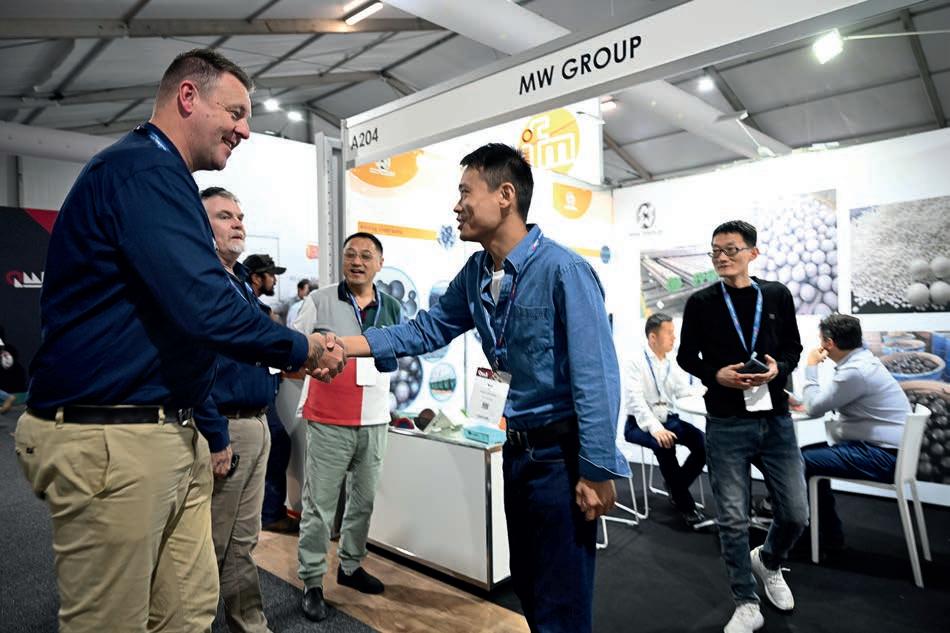
confirmed, the 2026 edition promises to be a celebration of Queensland mining at its very best. From showcasing worldclass equipment to providing a platform for thought leadership and networking, QME continues to shine as the go-to destination for anyone involved in the state’s mining and METS sectors.
With strong industry backing, hundreds of exhibitors, a comprehensive
conference program, and a range of engaging features, including the Mining Pavilion and leadership series, the exhibition promises to deliver inspiration, innovation and opportunity in equal measure.
For industry professionals, innovators and decision-makers, QME 2026 is the place to connect, collaborate, and witness the very best
of Queensland’s mining capabilities. Mackay is ready, the exhibitors are ready and the industry is ready.
QME 2026 is set to power up the resources sector like never before. AM
QME 2026 will be held at the Mackay Showgrounds from July 21–23. Tickets are out now. Get your tickets at primecreative. eventsair.com/qme2026/att-reg/Site/Register
BULK2026 IS SET TO BECOME THE MUST-ATTEND EVENT FOR AUSTRALIA’S MINING SUPPLY CHAIN, BRINGING TOGETHER ENGINEERS, OPERATORS AND SUPPLIERS.
The congregation of everyone who moves, processes and manages material for the mining sector is fast approaching, with the Bulk Handling Technical Conference and Expo (BULK2026) set to bring great minds and new ideas into the same room in Melbourne.
The recent announcement of the Bulk Handling Technical Conference and Expo’s partnership with the Australian Society for Bulk Solids Handling (ASBSH) adds even more opportunity, as organisers at Prime Creative Media gear up for the event.
This year marks the first time the Bulk Technical Conference will run simultaneously with the Bulk Handling Expo, delivering an extended forum of advanced technical content curated by ASBSH.
BULK2026 provides a rare opportunity for industry-wide conversations, collaborations and problem-solving under one roof.
Prime Creative Media head of marketing – events Molly Hancock said the partnership with ASBSH signals an exciting time for all parties.
“This is where people who are either engineers, operators, suppliers or managers can come together under the same roof and speak the same language,” she said.
“Connections are built and insights are found that would normally require multiple steps to be established on a daily basis.”
To be held at the Melbourne Convention and Exhibition Centre from September 16–17, BULK2026 is also Australia’s only dedicated exhibition and conference for the bulk solids handling industry.
THE EVENT IS A GREAT OPPORTUNITY TO HEAR KEY SPEAKERS, AND TO TALK ABOUT BULK HANDLING, INNOVATIONS AND SOLUTIONS.
What makes BULK2026 unique is its ability to unite every part of the bulk handling ecosystem, from global suppliers and engineering teams to site
PATER LASKEY (LEFT), ONE OF KINDER’S FIELD APPLICATIONS SPECIALISTS, HAD MANY GREAT CONVERSATIONS AT BULK2024.
operations and maintenance personnel. Excitement for the event extends to exhibitors such as Kinder Australia, with sales and marketing manager Sam Veal
saying “preparations have already begun” for the company’s participation.
For Kinder and other exhibitors, this expo is not just a promotional opportunity but also a place to contribute to that sector-wide dialogue on reliability, safety and performance.
With Kinder planning to unveil a new product, something Veal described as “revolutionary for conveyor tracking”, the months leading to September are shaping up to be significant.
Being able to speak about its operations and equipment to crowds of
like-minded individuals is where events like BULK2026 really shine for Kinder.
“It’s an event for Kinder to maintain dialogue with representatives who have a thirst for optimisation on their site,” Veal told Australian Mining. “We also meet with our long-term customers to catch up and identify any new requirements.
“It’s a melting pot for all things bulk handling. There are people who are attending that we’ve never met before, and it just gives us a chance to make connections with them.”
In an industry where conveyor failures, dust issues and wear problems can cost miners millions, BULK2026 lands at a pivotal moment.
These kinds of pressures make the event more than a commercial exhibition; it becomes a place where operators can assess new technologies, compare approaches and explore solutions designed for the long run.
It is against this backdrop of rising operational pressure that experienced suppliers such as Kinder come into sharper focus.
A specialist in belt conveyor design and bulk material handling, Kinder has previously been recognised as Supplier of the Year at the 2022 Australian Bulk Handling Awards. Its expertise, Veal said, continues to highlight dust as a recurring issue across the mining sector.
This is where Kinder’s products are designed to excel, including its contactless skirting arrangements, which the company calls the “ultimate dust-mitigation solution” for the bulk handling industry.
“It’s also our Dustscrape product that is really important from a health and safety perspective, from silica in the quarries to an iron ore mine that we supply, which has a dust problem that inhibits visibility,” Veal said.
“We offer the bulk handling industry with conveyor health checks, managed through a uniquely developed software program that allows us to identify hazards and productivity problems, with the view to optimise site performance and operator safety.”
While Kinder’s innovations will play an important part in those conversations on the expo floor, BULK2026 remains the broader stage, bringing together every link in the material-handling chain to advance the performance and sustainability of the entire industry. AM
Get involved at bulkhandlingexpo.com.au
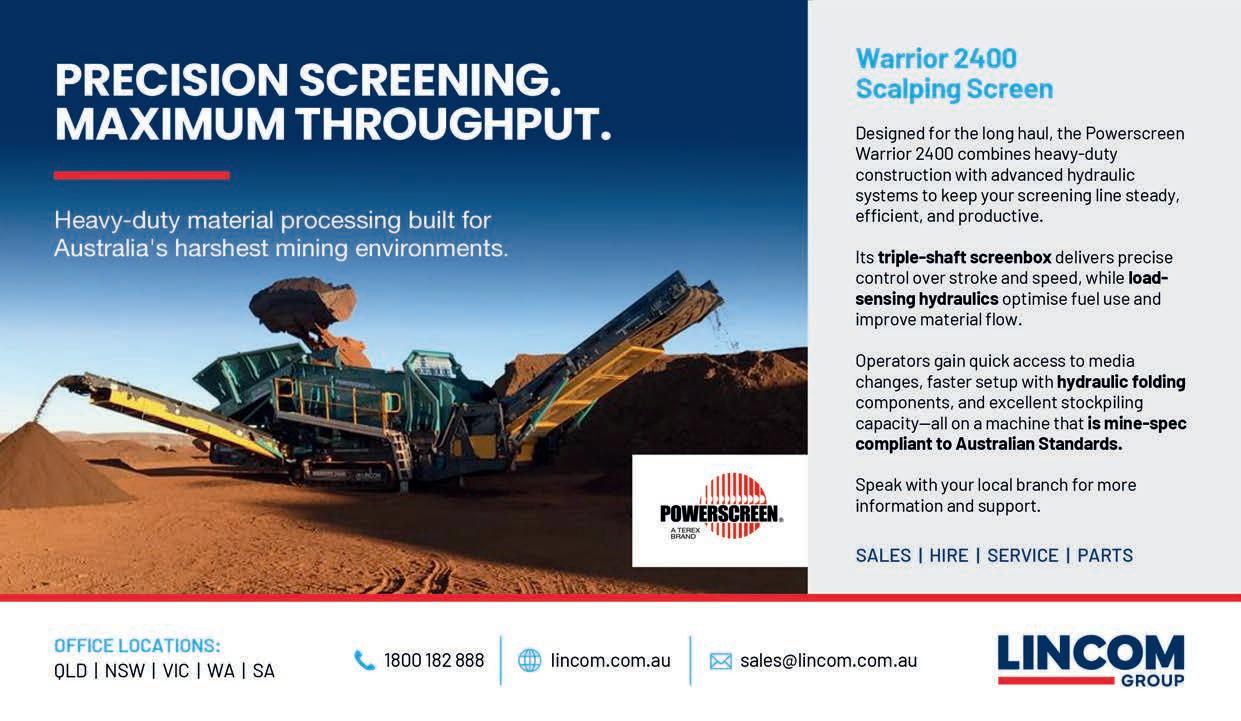
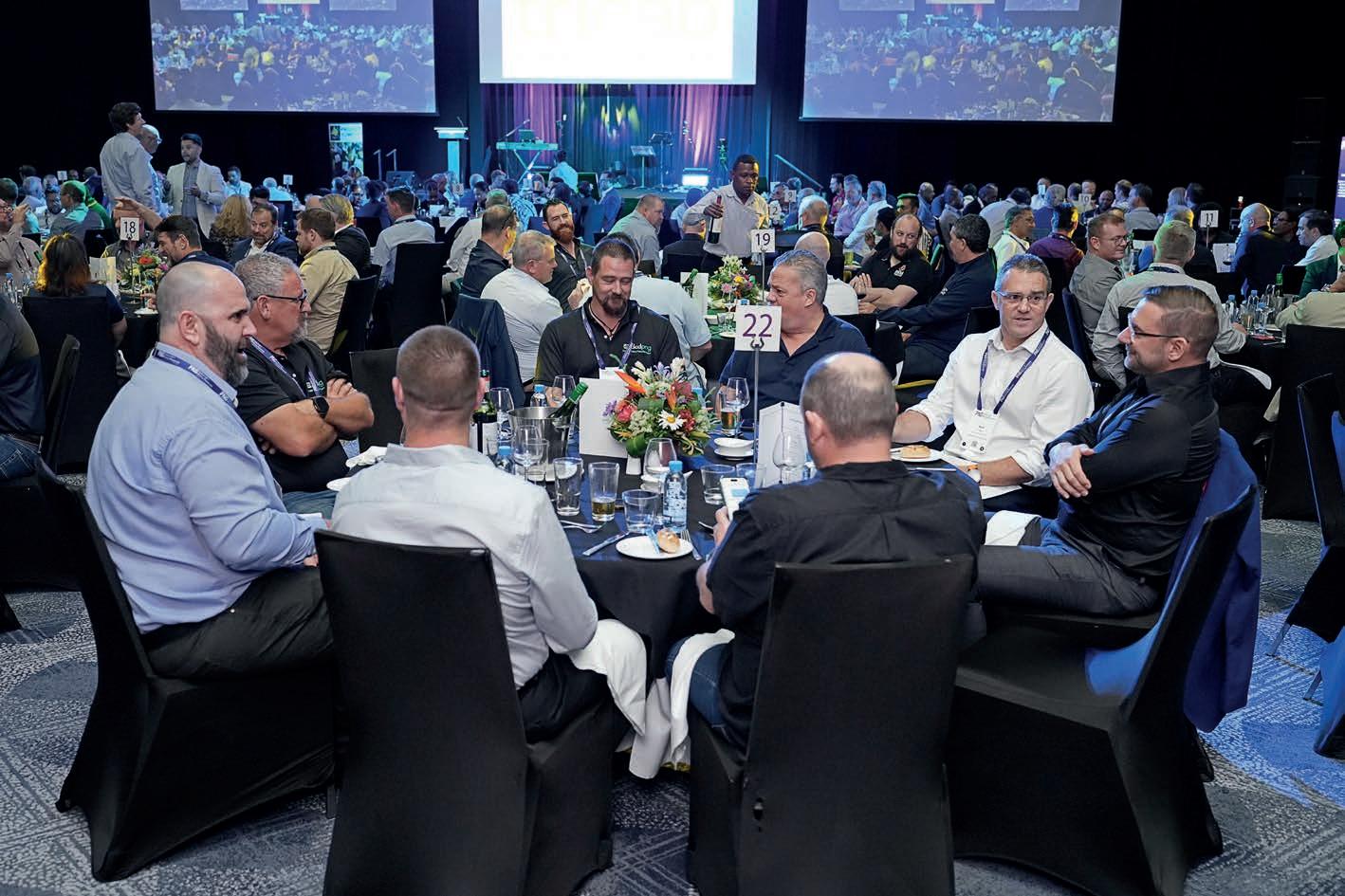
THE PAPUA NEW GUINEA INDUSTRIAL AND MINING EXHIBITION AND CONFERENCE IS SET TO RETURN TO PORT MORESBY IN JULY, WITH AN EXPANDED FLOORPLAN, FAR-REACHING CONFERENCE AND MAJOR EXHIBITORS.

Papua New Guinea’s mining sector is experiencing a period of growth and opportunity.
Valued at approximately $US4.5 billion a year and contributing over 10 per cent of the nation’s export revenues, the industry is navigating workforce, logistics, energy and safety challenges while expanding its impact.
One event brings together the solutions, suppliers and strategic thinking needed to move forward.
The PNG Mining and Industrial Resources Exhibition and Conference (PNG Expo) returns to Port Moresby from July 1–2.
The 2026 iteration is already shaping up to be the most significant edition yet, building on the recordbreaking attendance achieved last year. An expanded floorplan has been designed to enhance traffic flow, increase exhibitor exposure and create
more engaging showcase areas across the exhibition floor. This refreshed layout accommodates more exhibitors while supporting better networking opportunities and more strategic positioning for sponsors and suppliers.
Major industry players are already confirmed, with Sandvik, Metso, Blackwoods, TriCab, Lincom Group and others locked in to participate.
The early commitment from these key suppliers signals strong industry confidence in PNG’s mining trajectory and the value of face-to-face engagement in this market.
Prime Creative Media show director – mining events Rebecca Todesco said the expansion reflects the growing momentum across PNG’s mining sector.
“We’re seeing strong early interest from both exhibitors and attendees,” she said. “The industry recognises that PNG Expo is where partnerships form, deals close, and the sector moves forward together.”
Complementing the exhibition floor, the conference program has been curated in collaboration with the editorial team at PNG Mining to deliver practical insights and actionable takeaways for mining professionals across all sectors. The program focuses on a range of critical themes that address the most pressing challenges and opportunities facing PNG’s resources industry today.
From procurement in remote terrain to workforce development, energy transition and safety culture transformation, each session is designed to move beyond theory and into realworld application. Industry leaders will share case studies, proven strategies, and emerging solutions that delegates can implement in their own operations.
“This is an opportunity to get your business in front of the right people, in the right market, at the right time,” Todesco said. “We’re not just hosting an event; we’re bringing the industry to you – the expertise, the innovation and the networks that drive success in PNG’s unique mining environment.”
Among the key themes for the 2026 conference are deep-dive studies
THIS IS AN OPPORTUNITY TO GET YOUR BUSINESS IN FRONT OF THE RIGHT PEOPLE, IN THE RIGHT MARKET, AT THE RIGHT TIME.”
on issues central to the mining sector in PNG. One session will explore how mining companies are adapting procurement strategies for PNG’s unique geography, managing complex supply chains across difficult terrain, and maintaining operations when delays can cascade into significant cost blowouts.
Further sessions will examine successful partnerships between mining operators, training providers and government agencies to develop vocational programs and apprenticeship pathways.
The strong connections between Australia and PNG will also be on show. Todesco emphasised the fact PNG Expo’s value extends well beyond the two-day event itself, creating opportunities for lasting business relationships and strategic partnerships that drive the sector forward.
“This is where real business happens,” she said. “We’re bringing together every part of the industry ecosystem, from major operators and equipment suppliers to service providers and local businesses.
“The connections made at PNG Expo turn into contracts, partnerships, and collaborative solutions.”
With exhibition space filling rapidly, Todesco urged companies to secure their positions early.
“Papua New Guinea is moving, and the mining sector is entering a critical growth phase,” she said.
“Don’t wait to get on board. PNG Expo 2026 is where you need to be to position your business for success in this market.” AM
The 2026 PNG Expo will be held at the Stanley Hotel & Suites, Port Moresby, from July 1–2. Secure your tickets now at pngexpo.com/attend
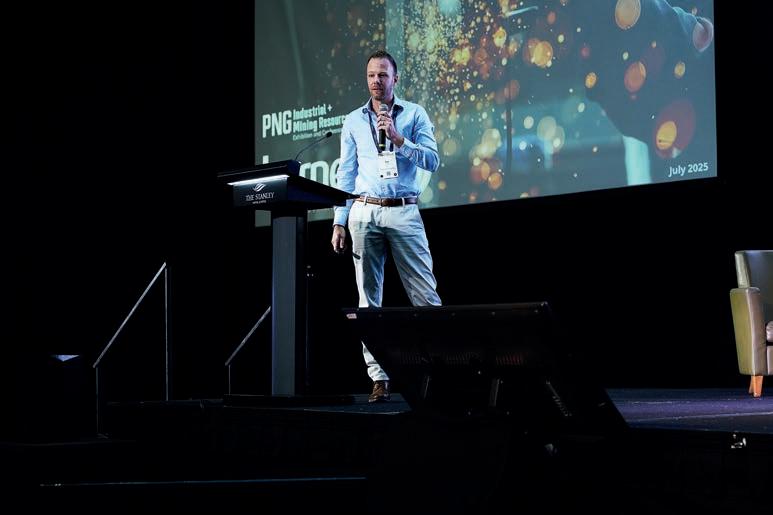
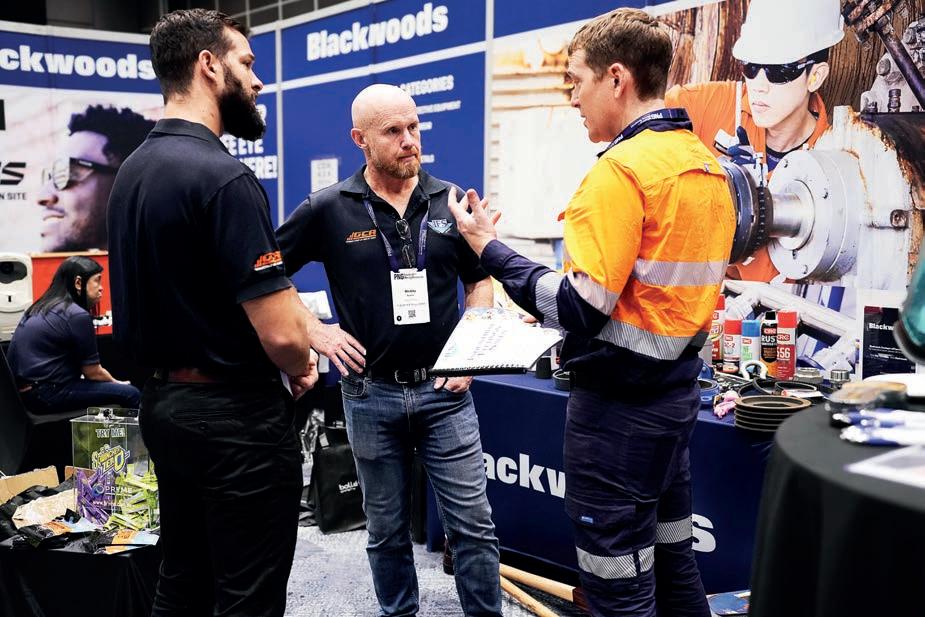
Establishing and operating a mine in PNG’s rugged terrain presents significant logistical challenges that few other mining jurisdictions can match. Conference sessions will explore how mining companies are adapting procurement strategies for PNG’s unique geography, managing complex supply chains across difficult terrain, and maintaining operations when delays can cascade into cost blowouts. Discussions will cover equipment availability and parts management in remote locations, risk mitigation strategies for supply chain disruptions, and the critical importance of forward planning in hostile environments.
PNG’s young and growing population represents an enormous opportunity and a pressing challenge for the mining sector. Conference sessions at PNG Expo 2026 will examine successful partnerships between mining operators, training providers and government agencies to develop vocational programs and apprenticeship pathways. Discussion will cover retention strategies, career progression models, and the critical role of mentorship in building capability. The program will also explore how companies are addressing diversity and inclusion, particularly initiatives to increase women’s participation in mining roles.
Remote mining operations in PNG face a dual energy challenge that defines operational costs and environmental performance. The conference will examine how mining companies are addressing immediate energy needs through diesel generation, natural gas solutions, and emerging hybrid systems that balance reliability with efficiency. Discussions will also explore the practical realities of renewable integration at remote mine sites, including solar arrays, battery storage technologies, and microgrid configurations.
EVENT SUBMISSIONS CAN BE EMAILED TO PAUL.HAYES@PRIMECREATIVE.COM.AU

Global Resources Innovation Expo Perth | May 5–7
The Global Resources Innovation Expo (GRX) is an industry-led conference and exhibition hosted by Austmine in partnership with AusIMM. It represents an exciting evolution from past Austmine conferences, with GRX26 building off the successful running of GRX25 in May, which connected attendees with global leaders, allowing them to discover cutting-edge solutions and engage in insightful discussions. GRX26 will feature some of the most influential voices in technology, emerging industries, mining and resources.
• grx.au
Critical Minerals Australia Conference and Exhibition Perth | May 20–21
The Critical Minerals Australia Conference and Exhibition is Australia’s longest running international critical minerals, investments, clean energy and technologies show, bringing the entire mineral resources value chain together in Perth.
The event will examine all aspects of mining exploration opportunities, financing options, development of new technologies, security of sustainable
supply chains, First Nations and community engagement, ESG practices, processing, recycling and batteries, and more.
• criticalmineralsaustralia.com
PNG Industrial and Mining Resources Exhibition and Conference Port Moresby | July 1–2
The PNG Industrial & Mining Resources Exhibition (PNG Expo) delivered a record-breaking edition in 2025, attracting more attendees than ever before.
The event saw more than 80 local, national and international manufacturers and suppliers showcase the latest innovations for the industrial, mining, and oil and gas sectors.
The exhibition will return in 2026, providing the perfect meeting place to connect and network with thousands of industry decision-makers across a broad industry reach, including senior management, procurement, government personnel, engineers, contractors and trade technicians. With extensive support from key stakeholders in government, associations and industry, PNG Expo is a premier meeting place for industry trade and a forum for establishing high-quality customer contacts and conducting business.
• pngexpo.com
Queensland Mining and Engineering Exhibition Mackay | July 21–23
With a legacy spanning over 30 years, the Queensland Mining and Engineering Exhibition (QME) is Australia’s largest regional mining event. Following a record-breaking 2024 edition, QME returns to Mackay from July 21–23, promising even more exhibitors, expanded content, and new networking opportunities. Featuring live demonstrations, a free leadership series, and hundreds of suppliers, QME is a vital hub for innovation, industry connection and regional growth.
QME 2026 is shaping up to be the most impactful edition yet, with many suppliers already signed up to participate after a strong rebooking phase.
• queenslandminingexpo.com.au
Diggers and Dealers
Kalgoorlie | August 3–5
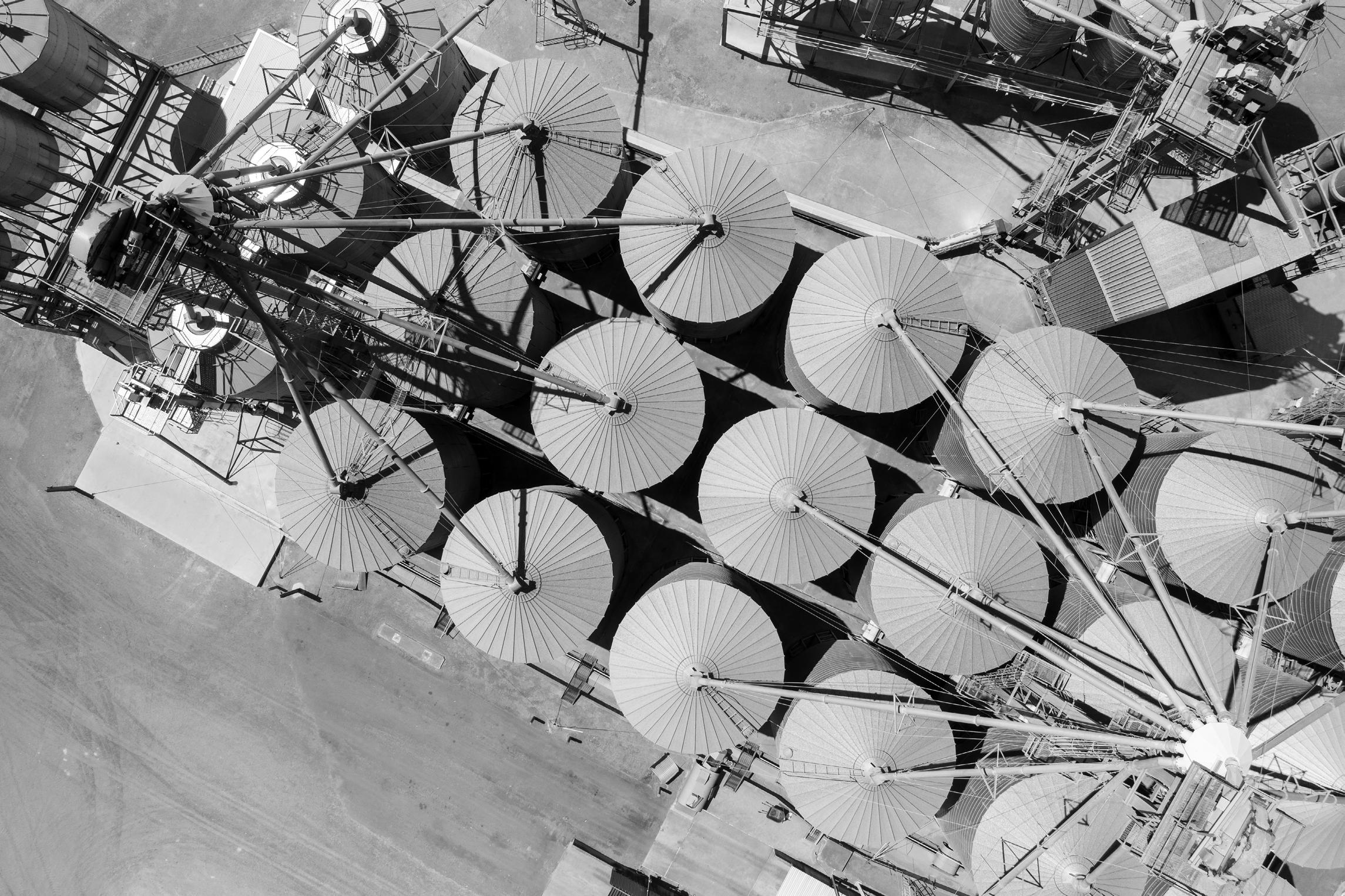
The Diggers and Dealers Mining Forum returns in 2026, combining corporate presentations by listed mining and exploration companies with a large exhibition area housing more than 150 exhibitors from the sector. Delegates include miners, explorers, brokers, bankers,
country’s security and economic prosperity and are key building elements of all advanced technologies
This event will showcase mining and energy companies, technology providers, downstream manufacturers, renewable energy, battery hubs and universities.
• australiaenergytransition.com

16-17 September 2026
EXHIBIT IN 2026. BE SEEN. BE HEARD. BE CHOSEN.
OUR TAILORED SUPPORT SERVICES KEEP YOUR OPERATIONS RUNNING STRONGER FOR LONGER.
From custom design, production and commissioning, through to predictive maintenance, decommissioning and asset disposal, our Product Lifecycle Services team keeps your assets performing at their peak, every shift.
Find out how you can get more from your load and haul attachments, by partnering with a team dedicated to providing an exceptional experience.
Scan for more information