
What
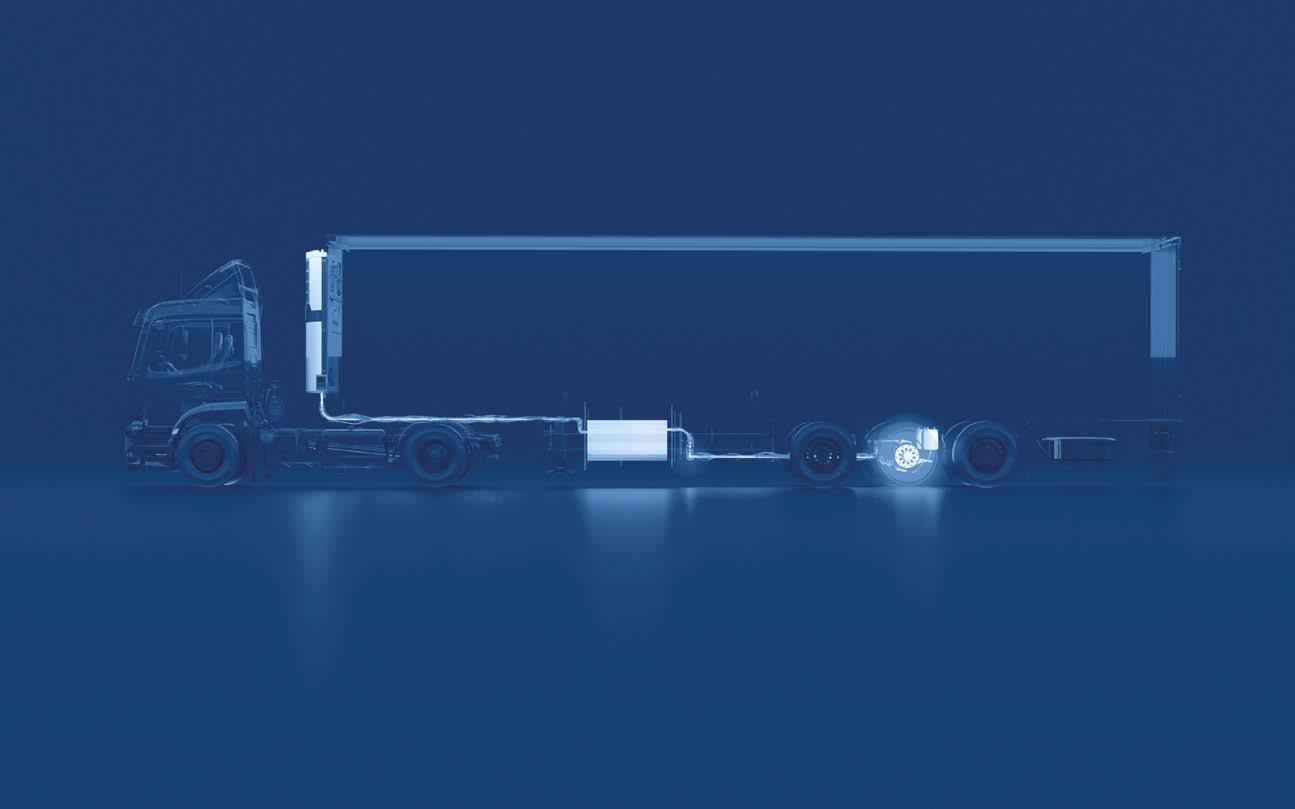
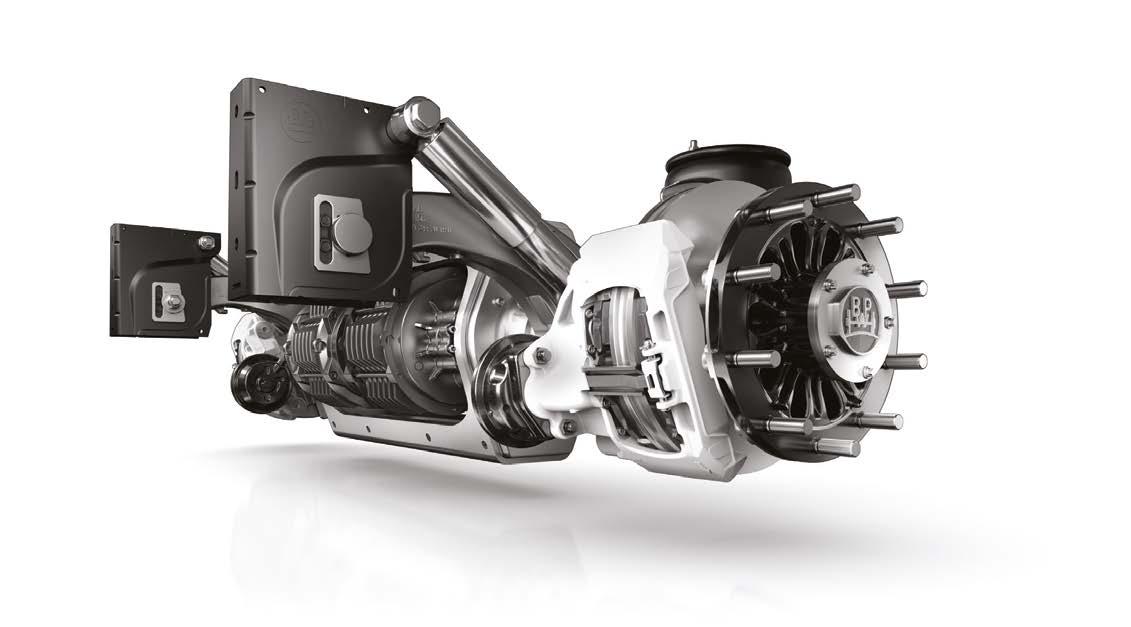
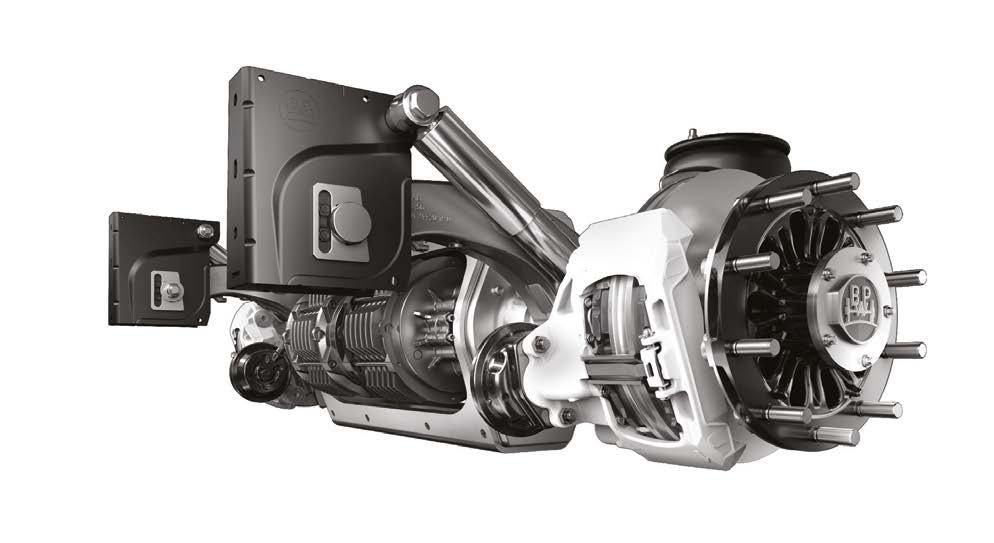
Reliable, independent power supply for fully electric or hybrid refrigeration units
Intelligent energy management and efficient operation
Air-cooled
Saves fuel and CO2
CHAIRMAN
John Murphy
john.murphy@primecreative.com.au
MANAGING EDITOR
Luke Applebee luke.applebee@primecreative.com.au
EDITOR
Peter White peter.white@primecreative.com.au
JOURNALIST
Sean Gustini sean.gustini@primecreative.com.au
ADVERTISING
Adrian Kos: 0413 777 670 adrian.kos@primecreative.com.au
Ashley Blachford ashley.blachford@primecreative.com.au
DESIGN
Alejandro Molano
HEAD OF DESIGN
Blake Storey
CLIENT SUCCESS MANAGER
Ben Sammartino ben.sammartino@primecreative.com.au
HEAD OFFICE
Prime Creative Pty Ltd 379 Docklands Drive Docklands VIC 3008 Australia
SUBSCRIPTIONS
03 9690 8766 subscriptions@primecreative.com.au
Trailer Magazine is available by subscription from the publisher. Annual rates: AUS $99.00 (inc GST). For overseas subscriptions, airmail postage should be added to the subscription rate. The right of refusal is reserved by the publisher.
ARTICLES
All articles submitted for publication become the property of the publisher. The Editor reserves the right to adjust any article to conform with the magazine format.
COPYRIGHT
Trailer Magazine is owned by Prime Creative and published by John Murphy.
All material in Trailer Magazine is copyright and no part may be reproduced or copied in any form or by any means (graphic, electronic or mechanical including information and retrieval systems) without written permission of the publisher. The Editor welcomes contributions but reserves the right to accept or reject any material.
While every e ort has been made to ensure the accuracy of information Prime Creative will not accept responsibility for errors or omissions or for any consequences arising from reliance on information published.
The opinions expressed in Trailer Magazine are not necessarily the opinions of, or endorsed by the publisher unless otherwise stated.
O cially endorsed by the VTA
Last year, I used this space to talk about how 2025 was “off to a great start” for the transport industry. And at face value, it was.
The Australian Government had just announced an extra $7.2 billion investment into the Bruce Highway and an additional $4.2 million funding round for the Heavy Vehicle Safety Initiative. This followed the release of the Victorian Government’s Economic Growth Statement and various road and infrastructure projects throughout multiple states.
There were some that were experiencing notable growth at the time. Hawk Logistics, for example, had just acquired Farragher Logistics to expand its service capabilities and national reach. Toll Group was in the midst of launching a $100 million healthcare investment across Australia, and Followmont Transport appointed its new CEO ahead of multiple fleet investments and the opening of a new Queensland depot.
Despite this growth, we began to see a worrying trend come into effect during the rest of the year – Australian transport companies closing down, many of them being long-term family businesses that have served the industry for decades.
One of the first was Tasmanian transport business, Norton Transport, which ceased operations in April. Several others collapsed shortly afterwards – Don Watson Transport, Francis Transport, XL Express Group, Tailored Freight, Transtar Linehaul, DJK Transport and more. Ron Crouch Transport then entered administration in December during the industry’s busiest time of the year.
The collapse and administration of these businesses indicates there are much deeper underlying issues at hand. At a quick glance, it’s clear financial pressures, government regulation and driver shortages are
contributing significantly.
Clenton’s Transport Director, Jason Clenton, utilised social media to express his concerns with how Australia’s transport industry is “being bled dry”.
“Transport businesses across Australia are being hammered into the ground not because they’re poorly run, but because the industry is drowning under relentless, stupid downward pressure from people who think carriers exist to subsidise their problems,” he said. “If something doesn’t change, more family businesses – real legacies, real people – will go under while others sit comfortably behind spreadsheets pretending it’s ‘just part of the market’.”
Something obviously needs to change, but what? We tackle the question in a special report on page 40 where we investigate the reasons behind our transporters disappearing and the problems facing the ones remaining.

Trailer Magazine Editor
Peter White

Business partnerships, people movements and more.
20 Economy
Changes to HVNL accreditation have triggered responses.
22 Rigid bodies
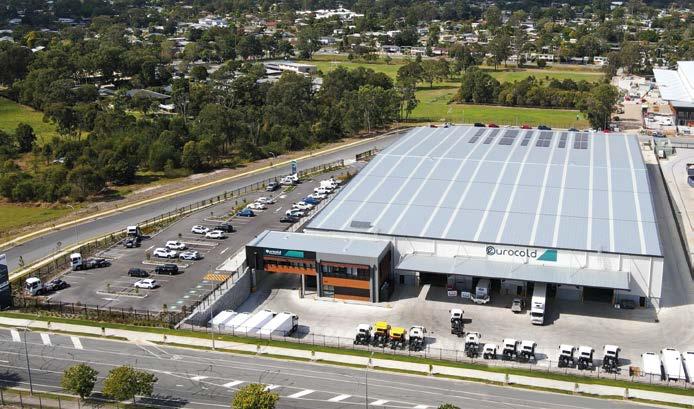
Eurocold is keeping busy at its Berrinba, QLD, HQ.
24 Trailer builder
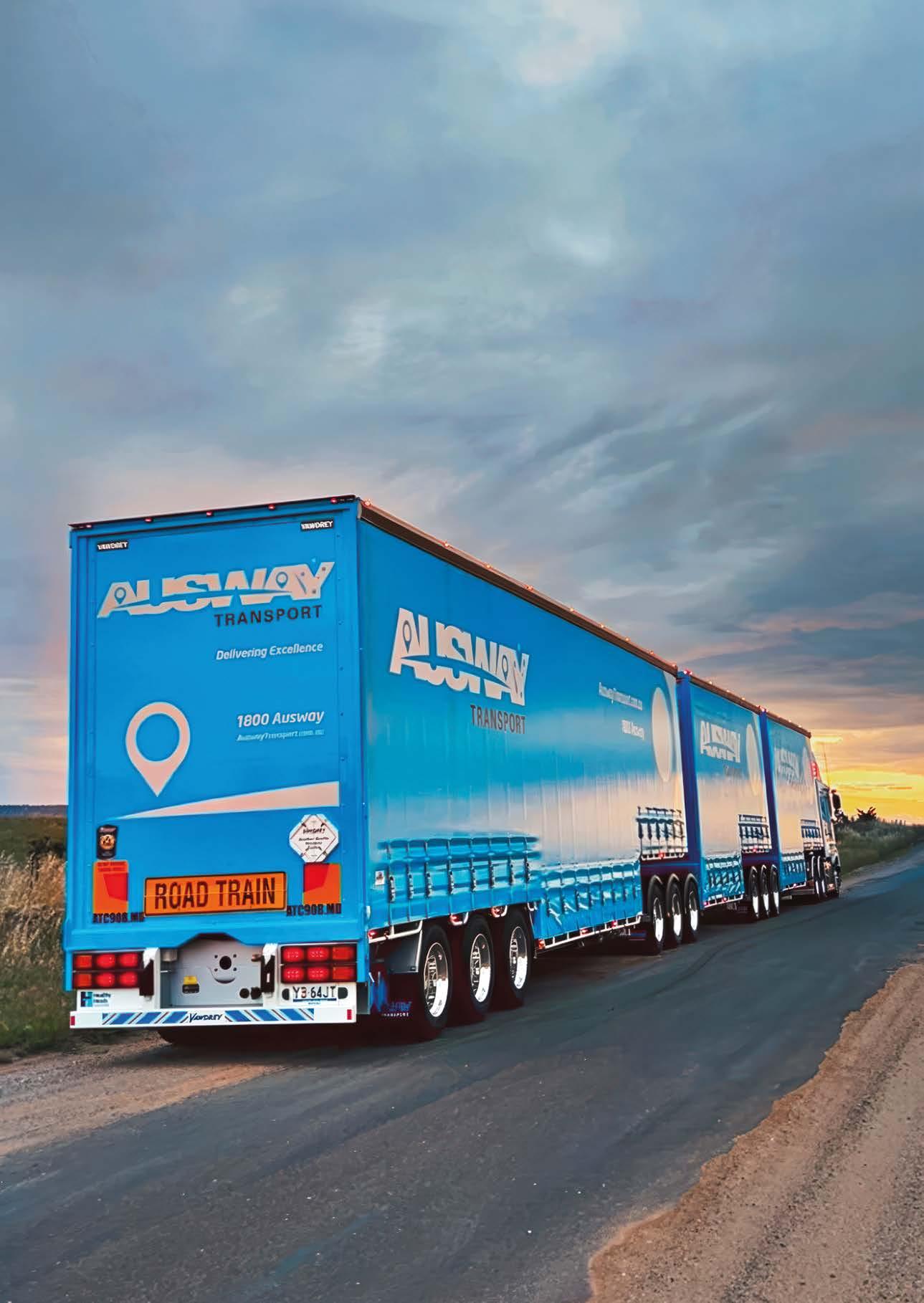
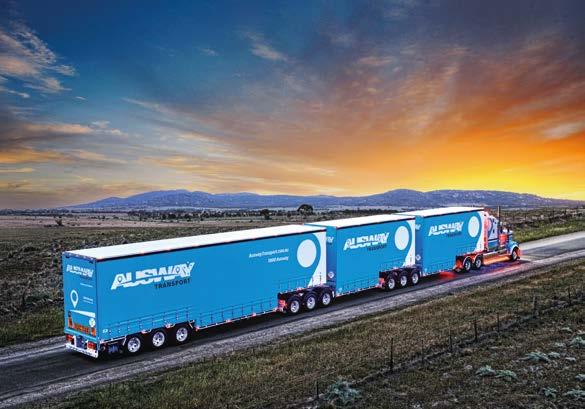
Ausway Transport is investing in Vawdrey B-triples.
26 Moving floor
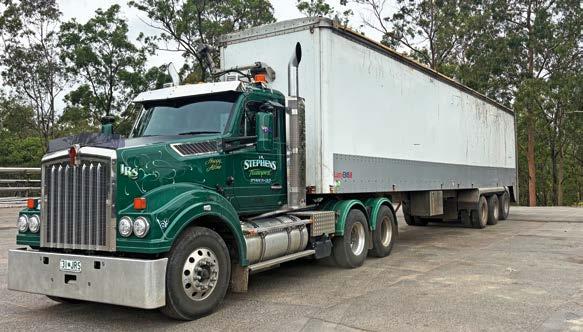
JR Stephens Transport has fully leveraged the KEITH Walking Floor system.
28 Axles & suspensions
Fuwa K Hitch, JOST and BPW Transpec are making strides in the axles and suspensions market.
34 Trailer building materials/components
A showcase of the products and services that keep trailers on the move.
38 SEMMA
The South East Melbourne Manufacturers Alliance is standing up for manufacturers within Victoria.
40 Holding the line Road transport businesses need change.
44 Special report A look at the Port of Melbourne.
48 Safety insight
Followmont Transport has introduced a new program into its operations.
50 Infrastructure spotlight Australia’s biggest road projects this month.
52 World map
Transport organisations are becoming increasingly reliant on telematics.
57 Fleet of the month
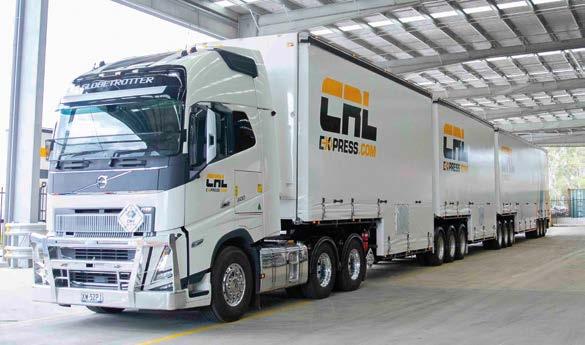
CRL Express has launched four Performance-Based Standards Super B-triple curtainsider trailer combinations.
58 What’s on Upcoming shows and field days.
CRL Express has signed on as a new CoMajor partner of the Carlton Reserves VFL Football Club.
As part of the collaboration, the fleet has also become a Gold Partner of the Carlton Football Club and a member of the Carlton IN Business network.
CRL Express’ logo will feature prominently across the Carlton Reserves playing guernsey and shorts.
CRL Express founder and Managing Director, Roy Kazamias, told Trailer there will also be the potential for the fleet to introduce club-themed livery across new semi-trailers this year.
“This is an exciting step that formalises our long-standing support for the club,” he said.
“Through CIB and the Co-Major VFL sponsorship, the partnership will significantly strengthen our brand presence across Australia and internationally.
“It also gives our marketing team strong social media content to build around, and importantly, it allows us to share matchday experiences with our customers at the MCG.”
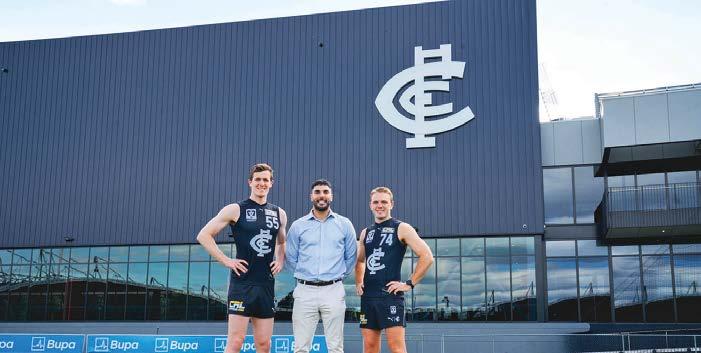
CRL Express began as a small linehaul transport operator in 2018, and after experiencing rapid growth within a very short timeframe, it evolved its offering to a personalised service including warehousing, distribution of Dangerous Goods, express deliveries and more.
Kazamias, being a lifetime Carlton supporter, said the VFL partnership is a major milestone for CRL Express.
“This partnership places CRL Express alongside major Australian corporations
within the CIB network and marks the beginning of an era where our logo will be recognised nationally – something that means a lot both personally and professionally,” he told Trailer
“When the club approached me, they were clear that they were looking for a partner whose values and ethos aligned with theirs.
“We’ve been long-time supporters, and I believe they saw in CRL Express as business that matches their new business strategy and growth.”
Victoria-based transport and logistics company, Guru Hundal Freightlines, has established a new transport division.
Titan Total Transport is the latest of Guru Hundal Freightlines’ expansion projects.
Operating in the western suburbs of Melbourne, Victoria, the business unit runs container transport, general unpacking and steel unpacking services.
Its value proposition requires the use of several skel and sideloader trailers to haul specialised freight for state clients.
Guru Hundal Freightlines National Sales Manager, Brant Hocking, told Trailer the company’s entrance into this particular sector of transport was an organic progression.
“Beginning these kinds of operations was a result of our main business’ natural growth,” he said.
“This is new territory that we’ve been eager to get into.
“We’ve brought in employees with a variety of skills and experience to make sure we’re growing in the right direction while efficiently servicing our expanding client base.”
According to Hocking, new customers have been joining Titan Total Transport daily since its establishment.
This has given Guru Hundal Freightlines the confidence that it is performing to standard.
“There is a lot of optimism about the company’s position and room for growth,”
Hocking told Trailer
“We have a lot of forward momentum between a solid client base and the right people at the helm.
“We’re expecting to do much more.”
Guru Hundal Freightlines recently
acquired Nansor Freightlines.
Other expansion projects have included numerous fleet additions and the growth of its interstate footprint.
Hocking told Trailer these developments have greatly increased the company’s transport capabilities.
“We’ve been able to service much more demand over the last few years,” he said.
“Our capabilities are spread across our base in Melbourne, depots in New South Wales and South Australia, and operations in Brisbane.
“Guru has built up the fleet and team up considerably. When he founded the company in 2012, the business only had a handful of prime movers and trailers.
“It now runs 80 prime movers and close to double that in trailer sets –mainly B-double mezzanine trailers with 4.6m-high roofs.”

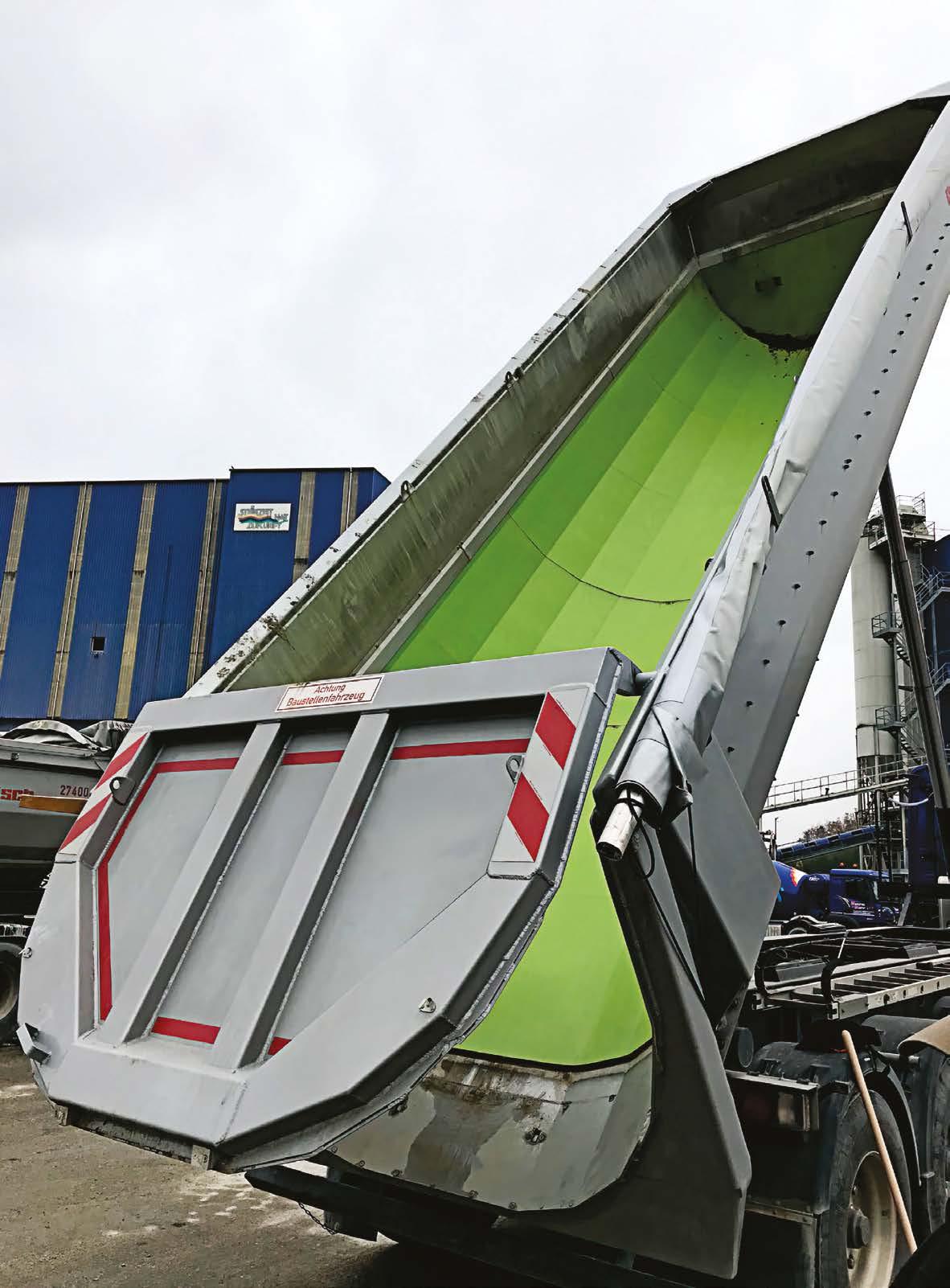

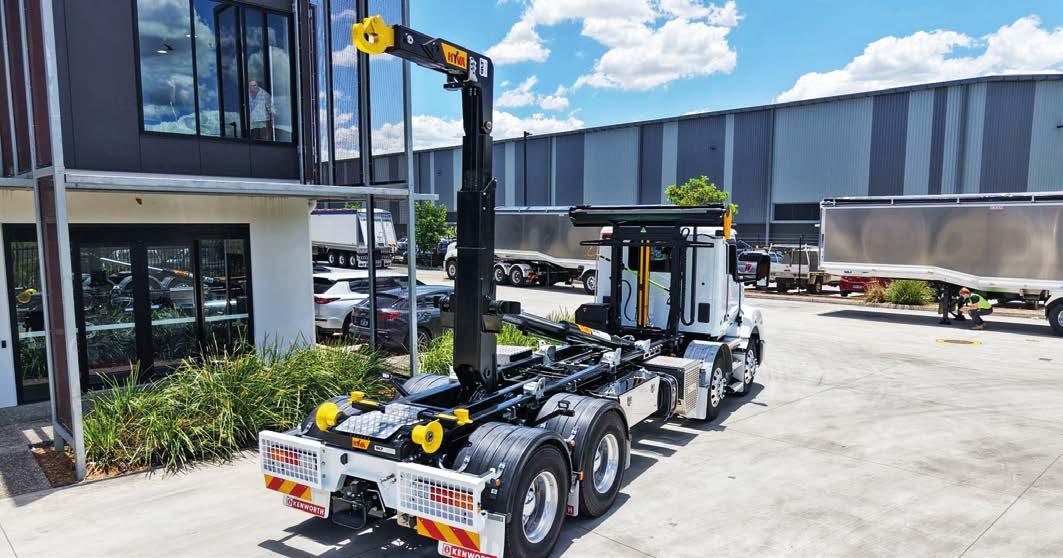
GLT has expanded its partnership with JOST by becoming an authorised dealer for HYVA hookloaders and skiploaders.
The trailer builder now has the ability to deliver a complete, Australian-engineered solution for truck-mounted lifting systems that is purpose-built for waste, construction, civil and heavy-industry applications all under one roof.
This will include providing the market with all sales, installation and servicing needs for HYVA equipment such as the Titan EVO Hookloader, Titan EVO Multirail and Titan EVO Skiploader models which all boast reliability and efficiency in various applications.
GLT CEO, Shay Chalmers, said this partnership reflects GLT’s shared commitment with HYVA and JOST
on safety, durability and engineering excellence.
“Operators want confidence that their lifting system has been installed by a team that understands heavy-vehicle engineering from the ground up,” she said.
“Our in-house manufacturing and engineering capability allows us to optimise HYVA hookloader and skiploader systems for the specific truck application.”
JOST Managing Director Australia and New Zealand, Guy Locke, said JOST is honoured to strengthen the HYVA offering alongside another high-quality trailer builder.
“We are excited to continue expanding the HYVA network of installers to provide a great solution to customers and to
continue growing our relationship with GLT,” he said.
JOST Australia General Manager of Sales and Marketing, Corey Povey, told Trailer this further expands the relationship and range of JOST products being fitted by GLT.
“GLT are well-known in the industry for their engineering, design scope and quality finishes which are second to none,” he said.
“JOST and GLT are committed to customer service excellence following the initial build and delivery.
“This will now be provided by way of parts support from HYVA and full repair and service capabilities from GLT.”
JOST World acquired HYVA at the start of last year in order to broaden its worldwide product portfolio.
Alan Beacham has announced his new position of Chief Supply Chain Officer and Managing Director at Primary Connect.
Beacham joins Woolworths Group on the back of his previous role of Managing Director at Toll Group, where he was responsible for overseeing the overall strategy, operations and performance
of the transport and logistics giant since July 2022.
He departed from Toll Group in July last year.
Beacham said he is excited about the opportunity to join Woolworths Group and contribute to its success in Australia and New Zealand.
and New Zealand’s largest retailers with a purpose to create better experiences together for a better tomorrow,” he said.
“I am looking forward to learning, growing and supporting the Primary Connect team as they continue the journey to transform and modernise its network.” last year.
“Woolworths Group is one of Australia
“This both resonates and excites me.
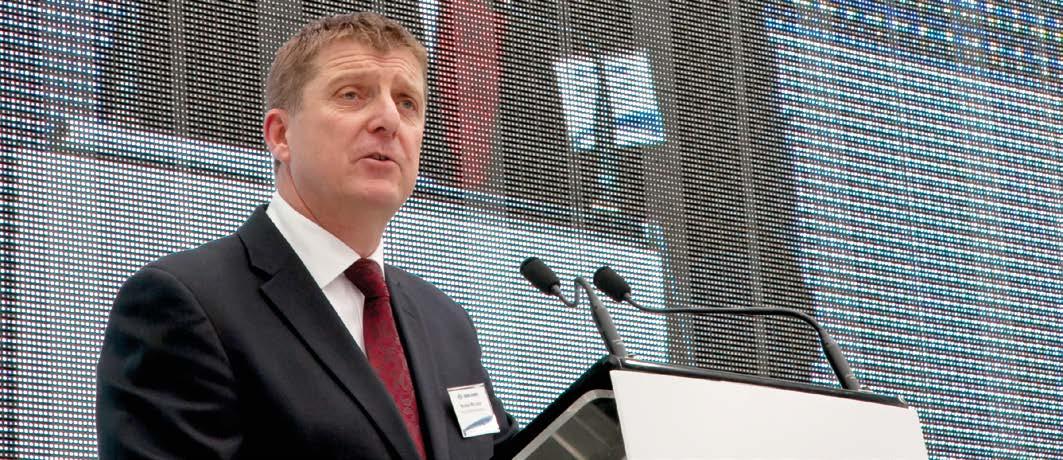
Knorr-Bremse Australia Managing Director, Michael McLellan, has announced his retirement.
McLellan’s departure concludes his almost 22-year career with the OEM which began in January 2004.
This tenure followed a varied career in close proximity to transport, in which McLellan worked for Caterpillar Australia, Bendix Mintex and GUD Manufacturing –now Amotiv Limited.
Various Knorr-Bremse Australia personnel were quick to acknowledge the deep impact McLellan made during his time with the company.
Knorr-Bremse Australia General Manager – Commercial Vehicle Systems, Gareth Lawless, recognised the leadership, guidance and support
McLellan has provided.
“McLellan’s contribution has played an important role in shaping our business,” he told Trailer
“His commitment to our people and the organisation has been deeply appreciated.”
Knorr-Bremse Australia Engineering Manager, Brett Nicoll, acknowledged McLellan’s continuous work at the company over two decades.
“We would like to congratulate Michael on a well-deserved retirement,” he told Trailer
“Thank you, Mike, for all your support over the years.
“We wish you every happiness in this next chapter of your life.”
McLellan’s retirement is the latest of
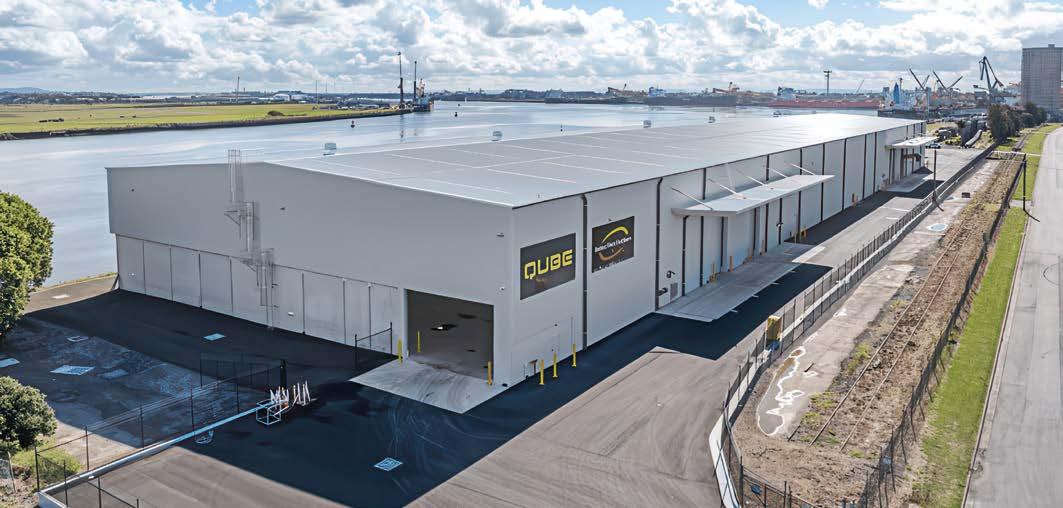
Toll and Qube have both secured land lots at Pilbara Ports’ new Lumsden Point logistics hub in Western Australia. The two transport and logistics providers have joined Mineral Resources and Pilbara Minerals Limited (PLS) in securing prime land lots within the Port of Port Hedland – a significant milestone for the project.
Toll Group will construct a
19,500-square-metre mineral concentrate storage and handling facility.
Meanwhile, Qube will build a state-ofthe-art bulk storage facility in stages, with an initial 12,000-square-metre high stacking shed and container handling hardstand.
The award of these lots highlights the significant demand for additional port capacity in the Pilbara region
many significant changes at Knorr-Bremse in 2025 across operations and people movements.
Last year marked the company’s 120th global anniversary.
Meanwhile, the OEM’s Australian division appointed Lawless as its new General Manager – Commercial Vehicle Systems.
Knorr-Bremse Australia also relocated to a new facility in Dandenong South, Victoria – a 2,500-square-metre warehouse with an additional 367 square metres of office space.
“Altogether, it has been a year of significant milestones, progress and teamwork,” Lawless said.
“We look forward to building this momentum together in the year ahead.”
which, according to Pilbara Ports, were facilitated the export of $153 billion worth of commodities in the 2024-25 financial year.
“Lumsden Point will facilitate the export of battery metals and minerals and the import of renewable energy infrastructure including wind blades, with imports expected to begin in mid-2026,” the company said.
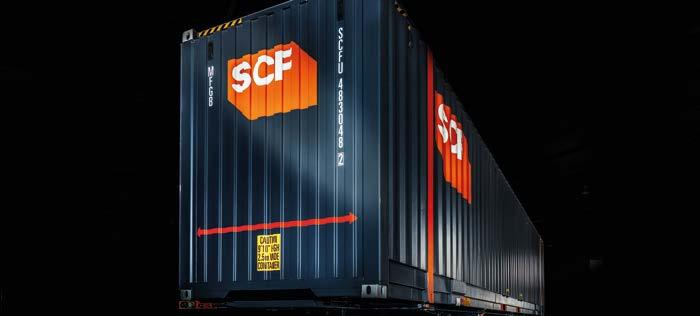
Asian Bulk Logistics (ABL Group) has acquired leading container solutions provider, SCF Containers.
SCF Containers is one of Australia’s largest container solution providers.
Its offering spans general-purpose containers, tank units, refrigerated containers, intermodal assets, site sheds and remote accommodation modules which serve customers across rental, sales, design and maintenance segments.
ABL Group officially completed the purchase of the business from Intermediate Capital Group (ICG) following the fulfilment of all conditions precedent.
ABL Group President Director, Ika Heru Beth Ari, said the acquisition will significantly strengthen ABL Group’s footprint in Australia by deepening exposure to a resilient and diversified industrial base.
“Acquisitions enable accelerated growth by providing immediate access to new assets, technologies, customers and revenue streams, while expanding market reach across new regions,” she said.
“They also support rapid portfolio diversification and offer capabilities that strengthen competitiveness.
“Integrating SCF into the ABL Group presents significant opportunities to widen our customer base, enhance our solution suite and reinforce our position as a worldclass logistics leader.”
ABL Group’s purchase of SCF Containers follows two major acquisitions – One Rail Australia in 2023 and Transshipment Service Australia (TSA) in 2025.
SCF Group CEO, Justin Speedy, said the container provider is delighted to be joining ABL Group.
“I would like to thank ICG for their long-standing support and partnership,
which has allowed us to strengthen our operations, expand our fleet and secure major new opportunities such as the Aurizon contract,” he said.
“ABL Group brings deep industrial expertise and a long-term mindset, and we look forward to accelerating our growth trajectory and continuing to deliver innovative, sustainable solutions for our customers.
“In the meantime, it is business as usual for our valued customer base as we enter what really is an exciting new chapter for SCF.”
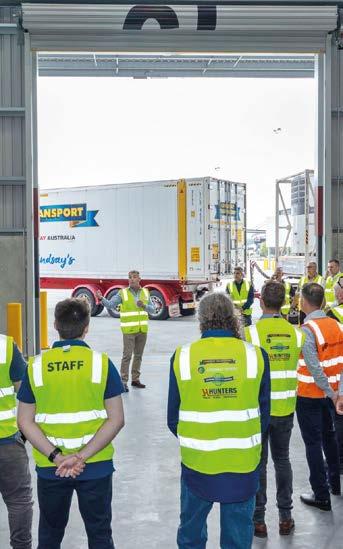
Lindsay Australia has announced the opening of its new purpose-built facility in Hazelmere, Western Australia.
The upgraded 35,000-square-metre site features 20,000 square metres of hardstand, 12 docks, a 3,000-squaremetre chiller and 850-square-metre freezer.
It also brings major upgrades and new capabilities to Lindsay Australia including on-site refuelling, a weighbridge, truck wash and 1,350-square-metre expansion zone.
Lindsay Australia CEO, Clay McDonald, said the opening of the Perth facility marks a major step forward for the business’ customers, people and network.
“We are delighted with the new facility at Hazelmere,” he said.
“The purpose-built site will enable us to provide enhanced service and solutions
to our existing customers and support WA’s growing freight needs.
“The new site unlocks our ability to grow our rail and road network and deliver more of Australia’s best to the people of WA.
“I’d like to thank our WA staff for their hard work and dedication in successfully growing the business and our major customers, freight partners and the entire project team for joining us on-site to celebrate the opening of the new facility.”
According to Lindsay Australia, investing in these upgrades it critical to strengthening safety, expanding capacity, boosting network reliability and improving overall operational efficiency across its WA operations.
“Thank you to our customers, partners and team who joined us to celebrate this milestone,” the company said.
“Exciting things ahead in Hazelmere.”
We choose Vawdrey because they’re a family business with exceptional values. Their design, quality equipment, back-up support and relationships with customers is what we look
Macquarie Asset Management (MAM) has submitted a proposal to acquire Qube at an enterprise valuation of approximately $11.6 billion.
Qube and MAM entered into a process and exclusivity deed on 23 November 2025 in relation to the proposal of $5.20 cash per share.
The proposal follows an earlier unsolicited, non-binding and indicative offer at a lower value and a period of negotiation which included the provision of limited due diligence information to facilitate a meaningfully improved proposal from MAM.
The current offer represents:
• a 27.8 per cent premium to the last closing share price of Qube of $4.07 per share on 21 November 2025;
• a 24.0 per cent premium to the volume weighted average price of Qube since the announcement of Qube’s financial year 2025 results on 21 August 2025 of $4.19 per share;
• a 45.2 per cent premium to the last closing share price of Qube on 21 November 2025 after adjusting for the value of Qube’s 50 per cent shareholding in Patrick Container Terminals; and
• an implied enterprise value/FY25 underlying earnings before interest,
taxes, depreciation and amortisation (EBITDA) multiple of approximately 14.4.
Qube’s Board determined it would be appropriate to enter a process deed with MAM following a careful evaluation of the proposal.
The deed grants MAM a period of exclusive due diligence access from the date of the deed until 1 February 2026.
In accordance with the proceed deed, each of Qube’s Directors have confirmed they intend to unanimously recommend Qube shareholders vote.
They reportedly also intend to vote or procure that any ordinary shares in Qube in which they have an interest are voted in favour of any scheme of arrangement in relation to the potential transaction.
This will be in the absence of a superior proposal, and subject to an independent expert concluding that the potential transaction is in the best interests of shareholders.
“The proposal from Macquarie Asset Management is a reflection of the strength of Qube’s business model and our assets, and the quality of our people and culture,” said Qube Chairman, John Bevan.
“We look forward to continuing to engage constructively in the best interests of our shareholders.”
The proposal and entry into a binding
scheme implementation agreement are subject to a number of conditions, including:
• satisfactory completion of due diligence on Qube and its operations by MAM, with further due diligence being undertaken on an exclusive basis in accordance with the terms of the process deed;
• entry into a scheme implementation agreement on customary terms and conditions;
• a unanimous Qube Board recommendation;
• final approvals from the Qube Board and MAM;
• there being no material adverse change to Qube; and
• regulatory approvals (including Foreign Investment Review Board (FIRB) and Australian Competition and Consumer Commission (ACCC)).
According to Qube, there is no certainty the proposal will lead to a binding proposal for consideration by Qube shareholders.
“Qube will update shareholders in relation to the proposal in due course,” the company said.
“Qube shareholders do not need to take any action in relation to the proposal at this time.”
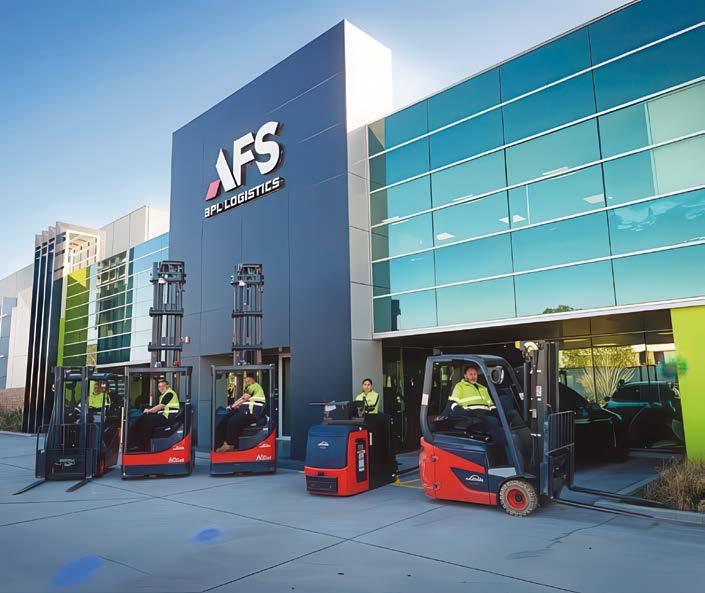
FMH Group has acquired freight management company, AFS Logistics.
AFS Logistics is a 4PL and 3PL provider based in Melbourne, Victoria, which delivers end-to-end supply chain solutions including warehousing, transport management, international freight forwarding and logistics consulting.
The acquisition brings AFS Logistics into a group of businesses including efm Logistics, CouriersPlease and Border Express which share a focus on operational excellence, customer centricity and technological innovation.
“AFS has built a highly capable team and has an impressive reputation for service and innovation,” said FMH Group Executive Chairman, Paul Little.
“Their expertise complements our existing portfolio and will create additional value for our customers.
“We are delighted to welcome AFS into the FMH Group.”
The AFS Logistics acquisition is an important step in FMH Group’s long-term growth strategy, focused on strategic acquisitions, technology investment and
business development to deliver value and innovation to customers.
It marks the organisation’s first strategic acquisition since Pacific Equity Partners became its majority shareholder in March last year.
AFS Logistics founder, Tony Bates, said AFS Logistics will benefit from FMH Group’s investment and long-term growth platform.
“After three decades in business, joining FMH Group opens a new chapter for our team and our customers,” he said.
“We share strong alignment in values, service quality and long-term ambition and we look forward to working together to build on what we have achieved to date.”
Bates and AFS Logistics Executive Director and Board Member, Paul Hopgood, will remain involved with the business through advisory roles and equity investment, providing continuity and signalling confidence in the strategic direction.
AFS Logistics CEO, Sam Eid, will continue in his role by reporting to FMH Group Acting CEO, Chris Livitsanis.
Patrick Terminals has signed a 10year strategic supply agreement with terminal equipment provider, Kalmar.
The long-term agreement will reportedly strengthen Patrick Terminals’ position as a ‘global leader in straddle operations’ and reinforce collaboration for ongoing investments in equipment and automation.
The partnership is also expected to support Patrick’s future development roadmap, including further enhancing operational efficiency, improving safety outcomes and progressing the company’s decarbonisation initiatives across its terminals.
“Patrick Terminals looks forward to continuing our close collaboration with Kalmar, building on two decades of automation leadership and delivering the next generation of performance improvements in straddle operations to support growing Australia’s supply chain demands,” said Patrick Terminals CEO, Michael Jovicic, at the business’ 20th anniversary celebration of automated straddle operations in Brisbane.
For Kalmar, this arrangement renews its commitment to maintaining a strong, skilled local automation team in Australia.
This will ensure consistent support for existing and future automation projects across Patrick’s terminal network.
Kalmar Head of Global Sales, Horizontal Transportation, Karri Keskinen, said he looks forward to collaborating with Patrick Terminals.
“Kalmar is pleased to announce our shared commitment to pursue continuous improvement and operational excellence together with Patrick Terminals,” he said.
“This strategic partnership further strengthens opportunities to deliver efficient and competitive straddle solutions in the Oceania region.”
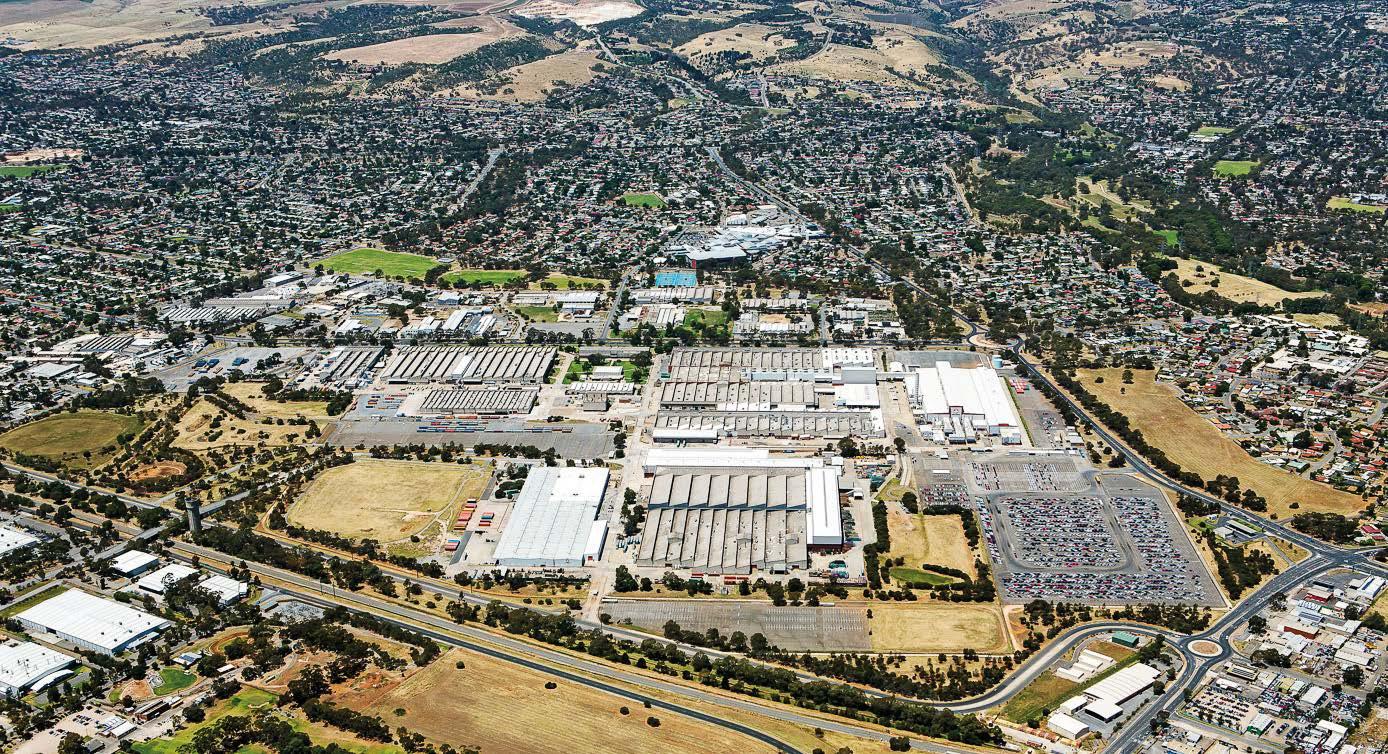
Australia Post is making its biggest investment in South Australia with the construction of a new $500 million parcel facility.
The new 83,000-square-metre super hub has been designed to service and support deliveries across the entire state for the next 20 years, allowing Australia Post to test and learn as it plans its future operations and national network footprint.
Opening in 2028 at the former Holden site in Elizabeth, SA, the facility will be the first fully combined Australia Post and StarTrack facility – and the largest in the network.
Built with world leading sortation technology and innovation, it will have the capability to process up to 400,000 parcels per day.
This will double the Adelaide Airport parcel facility’s current capacity and result in faster deliveries for customers.
According to Australia Post Group CEO and Managing Director, Paul Graham, the new super hub will be the largest in the country.
The Elizabeth location will also act as a blueprint for Australia Post’s most technically advanced facilities in future.
“It forms part of our long-term strategy to modernise our network, improve efficiency and maintain our role as Australia’s trusted delivery partner, for consumers and businesses alike,” Graham said.
“As online shopping habits evolve, it’s critical that Australia Post invests
in infrastructure that gives us a competitive advantage.”
The super hub will target a Five Star Green Star rating and feature advanced on-road sustainability technology.
Ultimately, it will ensure maximum efficiency is delivered in a sustainable way for decades to come.
“South Australia continues to experience year-on-year eCommerce growth, with 80 per cent of residents shopping online in the past year,” Graham said.
“This new parcel facility will help us meet that growing demand over the next two decades and deliver to customers’ doors faster than ever before.”
Australia Post has appointed David McGregor to the role of Transport Manager – Victoria.
Alan Beacham has announced his new position of Chief Supply Chain Officer and Managing Director at Primary Connect.
McGregor possesses more than 10 years of experience including a variety of leadership roles at some of the industry’s largest transport companies.
year.
of two-and-a-half years at Team Global Express as General Manager – Linehaul Contracts and then General Manager –Subcontractors.
Beacham said he is excited about the opportunity to join Woolworths Group and contribute to its success in Australia and New Zealand.
He joins Australia Post following his position as General Manager at Guru Hundal Freightlines which commenced in November 2023.
Beacham joins Woolworths Group on the back of his previous role of Managing Director at Toll Group, where he was responsible for overseeing the overall strategy, operations and performance of the transport and logistics giant since July 2022.
He departed from Toll Group in July last
Prior to that, McGregor spent a total
He also previously served as General Manager – Linehaul Contractors at Toll Group from September 2019 to September 2021 and Executive Manager – Logistics at ALDI.
“Woolworths Group is one of Australia and New Zealand’s largest retailers with a purpose to create better experiences together for a better tomorrow,” he said.
“This both resonates and excites me.
“I am looking forward to learning, growing and supporting the Primary
This was following a seven-year tenure at Rand Transport which was later acquired by Scott’s Refrigerated Logistics.
Connect team as they continue the journey to transform and modernise its network.”
McGregor said he is excited to join Australia Post and assist the business.
“I’ve had an incredible first few weeks learning about our network and business, meeting as many of our 1,000 Victorian transport team members as possible and supporting the team to deliver our biggest peak on record,” he said.
“[I’m] very pleased to be working for such an iconic Australian organisation and excited to be a part of our customer focused transformation journey.”

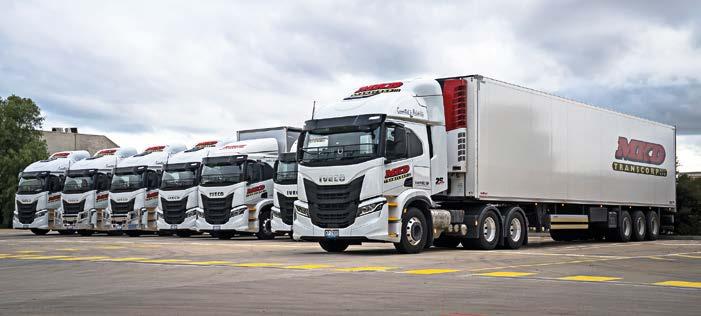
New South Wales-based transport company, MKD Transcorp, is entering a new phase of growth.
The business is expanding its operations into Melbourne, Victoria, as part of its long-term commitment to delivering excellence in transport and logistics.
As part of the expansion, MKD Transcorp has recently purchased its previously leased office site along with the adjoining land in Laverton North.
The combined site is now being transformed into a state-of-the-art transport facility designed to support the business’ staff, fleet and customers.
The development includes a purposebuilt hardstand, equipment wash bay, modern administration offices, driver amenities and fully equipped workshop facilities all tailored to enhance operational efficiency and service quality.
In addition, MKD Transcorp has commenced operations at a new container storage yard in Laverton North.
The site features a large, dedicated area exclusively for Full Container Load (FCL) import and export containers with the ability to accommodate approximately 2,000 twenty-foot equivalent units (TEU).
It will also provide a full range of AQIS services supported by new equipment.
“These investments now enable us to deliver dedicated container storage and transport services directly to our Melbourne-based customers, with the reliability and quality MKD is known for,” MKD Transcorp said.

FMH Group has announced the appointment of Saul Resnick as Group CEO.
Resnick is a highly regarded industry leader with a proven record of delivering growth and operational excellence.
He has more than 20 years of executive leadership experience in logistics –including six years as CEO of DHL Australia and New Zealand where he built a strong record of driving growth, operational excellence and customer service improvements.
Resnick joins FMH Group following his position as DHL Supply Chain CEO – United Kingdom and Ireland where he led the €4 billion (approx. $7.1 billion AUD) business with more than 45,000 employees.
FMH Group Chair, Paul Little, said the appointment reflects the group’s ambition to scale operations and accelerate its position as one of Australia’s leading
logistics businesses.
“Our strategy is focused on growth, both organic and through strategic investment,” he said.
“Saul brings deep experience leading transformation in complex, high-growth environments and will play a critical role in realising our vision for the next decade.
“We’re investing in network expansion, technology and capability to build a business that sets the benchmark for performance, sustainability and customer experience in our sector.
Saul’s appointment sends a strong signal to the market about the scale of our ambition.”
Resnick said he is excited to be at the helm of FMH Group’s endeavours.
“FMH Group is a business with enormous potential,” he said.
“The opportunity ahead is to take strong foundations and build a truly
future-ready enterprise, one that continues to grow by creating value for our customers, people and partners.
“I’m looking forward to leading the next stage of that journey.”
To support this next phase, FMH Group has also appointed Chris Livitsanis to the newly created role of Chief Strategy and Operations Officer.
Key CEO appointments have also been made across the group’s operating companies – further strengthening leadership capability and ensuring consistent focus on growth, customer service and performance across all parts of the business.
The appointments follow a period of strong momentum for FMH Group, including becoming one of the five largest logistics companies in Australia by revenue, being acquired by Pacific Equity Partners for $1.4 billion and the appointment of Paul Little as Chairman.
Darren Bott has been appointed as CouriersPlease’s new CEO.
Alan Beacham has announced his new position of Chief Supply Chain Officer and Managing Director at Primary Connect.
His appointment follows the resignation of former CEO, Richard Thame, which was effective on 20 March 2025.
Bott joins the business with deep experience in logistics.
Beacham joins Woolworths Group on the back of his previous role of Managing Director at Toll Group, where he was responsible for overseeing the overall strategy, operations and performance of the transport and logistics giant since July 2022.
He departed from Toll Group in July last year.
He previously spent over five years at Australia Post in a series managerial positions including Regional Operations Manager (Processing), Head of Processing – South, and Head of Processing and Transport – South.
Bott also served as CouriersPlease’s Victorian State Manager from 2009 to 2014.
Beacham said he is excited about the opportunity to join Woolworths Group and contribute to its success in Australia and New Zealand.
These positions were in addition to several other tenures in the industry.
“Woolworths Group is one of Australia and New Zealand’s largest retailers with a purpose to create better experiences together for a better tomorrow,” he said.
“Darren is passionate about operational excellence, driving innovation and supporting our Franchise Partners and employees to deliver a trusted service for our customers,” CouriersPlease said.
“This both resonates and excites me.
“I am looking forward to learning, growing and supporting the Primary Connect team as they continue the journey to transform and modernise its network.”
“This marks an exciting new chapter for CouriersPlease, as we continue our commitment as the specialists in parcel delivery for businesses across Australia.”
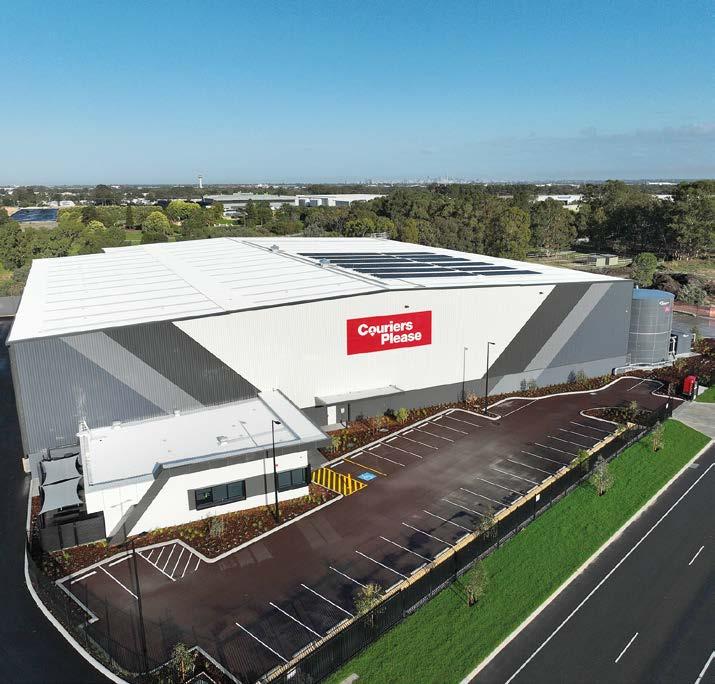
Woolworths has announced the opening of its new state-of-the-art regional distribution centre (RDC) in Western Sydney, New South Wales.
The $1.3 billion precinct is Woolworths Group’s largest single investment to date.
It joins the organisation’s mega Moorebank Logistics Precinct at which Woolworths’ recently-opened national distribution centre is also located.
Together the new facilities will move over five million cartons per week to supermarkets with a range of 20,000 individual products.
With direct links to Port Botany, interstate rail and Sydney’s M5 and M7 motorways, they will also take 26,000 truck movements off Australian roads each year.
Woolworths Group CEO, Amanda Bardwell, said the investment is critical to Woolworths’ customers, team and future capability.
“These new facilities are a gamechanger, putting products in stores more efficiently and seamlessly,” she said.
“Behind the scenes, this investment delivers a more resilient supply chain, while the automation also significantly reduces heavy manual handling, which

makes a real difference to our team members every single day.”
Both facilities cover 75,000 square metres of floor space.
The automated DCs will move food, grocery and everyday items onto shelves faster, with pallets arriving in store aisleready – suited to individual store layouts to enable fast restocking.
Bardwell said customers will benefit from better product availability and convenience, particularly leading up to the Christmas season.
“We know they want to be able to come in store and find what they need quickly and easily,” she said.
“From weekly specials to festive favourites, we know we have to have it on shelves or online when customers want it.”
Both DCs have achieved a Five Star Green Star rating from the Green Building Council of Australia.
They feature solar panels which will generate 5.3 megawatts of energy each year as well as rainwater harvesting.
Port of Melbourne has partnered with the world’s largest container port, Port of Shanghai, to establish a green shipping corridor between the two locations.
The agreement was formalised at the 2025 North Bund Forum in Shanghai, China, on 15 October, and was supported by the C40 Cities Climate Leadership Group.
Under this partnership, Port of Melbourne and Port of Shanghai will seek to:
• collaborate with industry partners (including Shanghai International Port Group (SIPG), COSCO SHIPPING Lines, HAMR Energy and ABEL Energy) to explore avenues to implement measures to reduce the environmental impact of the shipping industry;
• focus on environmentally sustainable practices such as the adoption of cleaner technologies, use of renewable energy sources and implementation of
best practices to minimise the ecological footprint of shipping activities;
• work closely with shipping lines seeking to promote the adoption of clean fuels, with the goal of increasing the usage of clean energy-powered ships operating between Shanghai and Melbourne; and
• explore opportunities with energy suppliers to accelerate breakthroughs in production technology, improve efficiency and cost control and establish an integrated supply chain system covering production, transportation and storage to boost low carbon fuel supply capacity.
Port of Melbourne CEO, Saul Cannon, said this deal is instrumental for Australia’s decarbonising efforts.
“This initiative is a significant development in our work towards decarbonising the supply chain,” he said.
“Given Australia’s position as an island-
nation that heavily relies on sea freight, we have a key role in global efforts to decarbonise shipping.
“As Australia’s largest container port working together with the world’s largest container port, we are well-placed to lead by example towards a greener future for our industry.
“We look forward to working with our industry partners to progress this initiative.”
China is Port of Melbourne’s largest trading partner, accounting for 50 per cent of total container imports and 20 per cent of container exports.
With the high volume of trade between both ports, this partnership has the potential to provide material benefits for the environment.
This milestone is also a culmination of a nearly two-decade partnership between Port of Melbourne and SMTC, which commenced in 2006.
Port of Auckland has agreed to sell its Nexus Logistics subsidiary to Qube Holdings.
Nexus Logistics provides integrated container logistics solutions across New Zealand, including container transport and handling via rail and road, container storage, wharf cartage and port operations.
Qube has grown in the New Zealand market since its entry in 2017 and has further expanded across port-based and stand-alone facilities, providing customers with a range of container storage, handling, maintenance and transport services.
The terms of Nexus Logistics’ sale to Qube includes the Nexus business, brand, operating plant and equipment, while the port retains ownership of the site at Wiri which will be leased back to Nexus Logistics on a long-term lease.
Port of Auckland CEO, Roger Gray, expressed his excitement for Qube’s industry experience and presence to bolster the Nexus brand.
“With Qube taking ownership, their capability, reach and scale will help propel Nexus to the next level,” he said.
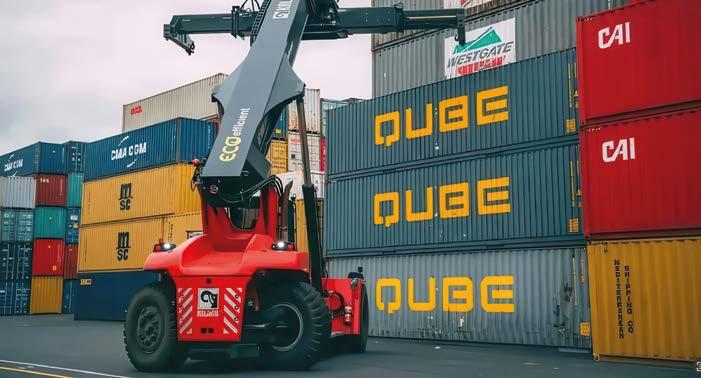
“To ensure continuity and long-term value for our stakeholders, the port has agreed a long-term strategic partnership with Nexus under Qube’s ownership as a part of the sale.”
Qube Director of Logistics and Infrastructure, John Digney, similarly looks forward to absorbing the Nexus brand.
“The acquisition of Nexus further
enhances Qube’s NZ portfolio and will support the expansion of Qube’s container logistics offering in Auckland, supported by a long-term lease at the South Auckland Freight Hub,” he said.
“We’re delighted to welcome the Nexus team at Qube and look forward to working with them and the Port of Auckland to continue delivering excellent customer service.”
DP World’s logistics operations are being strengthened at the Yennora Distribution Centre in Sydney, New South Wales.
Alan Beacham has announced his new position of Chief Supply Chain Officer and Managing Director at Primary Connect.
Property development company, Stockland, has commenced construction on a new 40,000-square-metre logistics facility at the site – one of six intermodal terminals operating in NSW.
Beacham joins Woolworths Group on the back of his previous role of Managing Director at Toll Group, where he was responsible for overseeing the overall strategy, operations and performance of the transport and logistics giant since July 2022.
DP World, which has been operating the intermodal terminal since August 2023, will grow its existing operations into a second building at the site.
He departed from Toll Group in July last year.
Beacham said he is excited about the opportunity to join Woolworths Group and contribute to its success in Australia and New Zealand.
Stockland Head of Logistics Development, Craig Lenarduzzi, said Building Two will meet the needs of advanced logistics operations now and the future.
“Woolworths Group is one of Australia and New Zealand’s largest retailers with a purpose to create better experiences together for a better tomorrow,” he said.
“Our vision for the new building will see a modern facility that targets a Five Star Green Star rating and meets the future freight and warehousing needs of our customers and consumers,” he said.
“This both resonates and excites me.
“I am looking forward to learning, growing and supporting the Primary Connect team as they continue the journey to transform and modernise its network.”
“Yennora Distribution Centre is one of the largest in the southern hemisphere, with access to the Southern Sydney Freight Line, Sydney’s major arterial road network and Port Botany.
“This is the first step towards a longterm opportunity to modernise a largescale, well-located industrial estate which supports local jobs and the NSW economy.”
DP World Executive Vice President, Nicolaj Noes, said the investment is an important step in modernising the Yennora Distribution Centre as a transport hub in Sydney.
“Expanding this facility helps deepen the integration between our rail, warehousing and landside logistics operations – strengthening end-to-end connectivity between Yennora and Port Botany,” he said.
“This enhanced capability will give
our customers greater reliability, smarter freight pathways and a more seamless movement of goods across their supply chains.”
As part of Stockland’s commitment to circularity, approximately 60,000 bricks from the site’s demolition will be reused in the new facility.
Building partner, Texco, will be required to identify opportunities for selecting low-carbon materials during construction.
“The Yennora Distribution Centre has always been a jobs powerhouse for our local community, and this new facility strengthens that legacy,” said NSW Member for Granville, Julia Finn.
“This is the kind of long-term investment that keeps Western Sydney strong.”
The project is expected to be complete later this year.
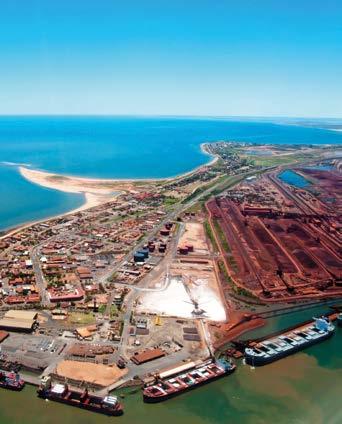
Critical works to strengthen port infrastructure are underway at the Port of Port Hedland in Western Australia.
Construction is being delivered as part of the final stage of the Pilbara Ports Eastern Harbour Revetment Upgrade project.
The project will involve renewing degraded sections of the inner harbour revetment wall by installing new rock armour which will protect the wharf structure from coastal erosion and increase its cyclone resilience.
This covers sections of revetment from Berth One to Berth Three, and between Berth Three and BHP’s Nelson Point Berth A – building on earlier works completed at Berth Three and the Nelson Point Tug Haven.
An $8.6 million contract has been awarded to MGN Civil to complete the construction.
“Upgrading critical infrastructure like the Eastern Harbour Revetment ensures the Port of Port Hedland remains safe and resilient to extreme weather events,” said WA Minister for Ports and Regional Development, Stephen Dawson.


Tyre pressure & temperature live monitoring
To ensure that you always have an eye on your fleet's tyre pressures and temperatures, even when your vehicles are on the road.
Our tyre pressure and temperature monitoring tools alert you when pressures drop below set thresholds and identify when service is needed, helping reduce breakdowns, costly repairs, downtime, and fuel consumption
Australia Post has officially opened its newest parcel delivery centre in Perth, Western Australia.
Located in Jandakot, the 16,000-square-metre facility will process up to 48,000 parcels a day and scale up to 67,000 during Black Friday and Christmas periods.
According to Australia Post, these processing capabilities will be critical as parcel volumes across WA rise by eight per cent year-on-year.
“This investment is focused on greater reliability and efficiency, and marks the first stage of Australia
Posts’ long-term vision to strengthen WA’s network and support the eCommerce boom,” said Australia
Post Head of Infrastructure and Assets, Trevor Stiles.
“The Jandakot Parcel Delivery Centre integrates our full suite of
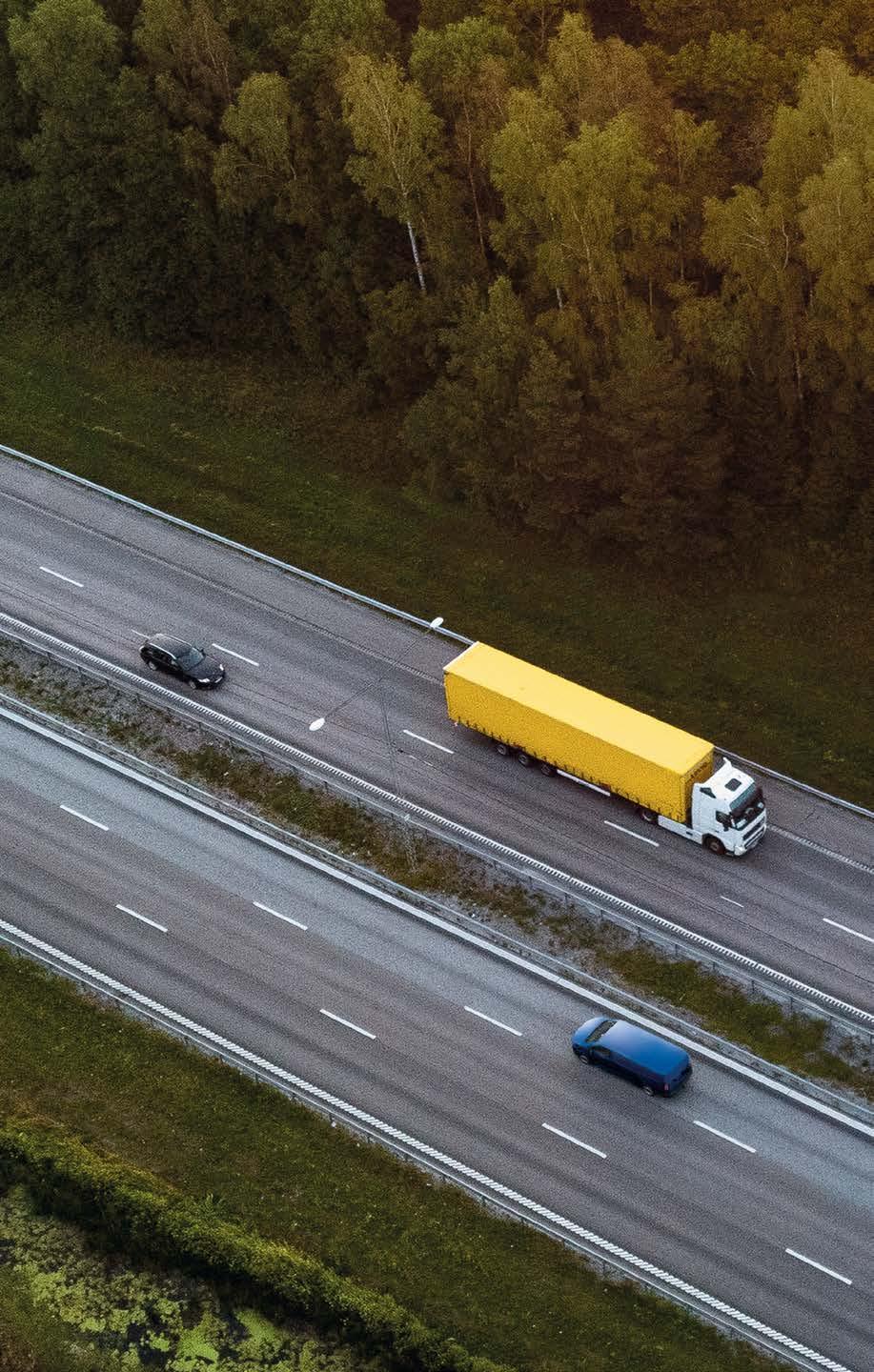

The VTA , QTA and NatRoad have voiced strong opposition to proposed changes to Heavy Vehicle National Law accreditation.
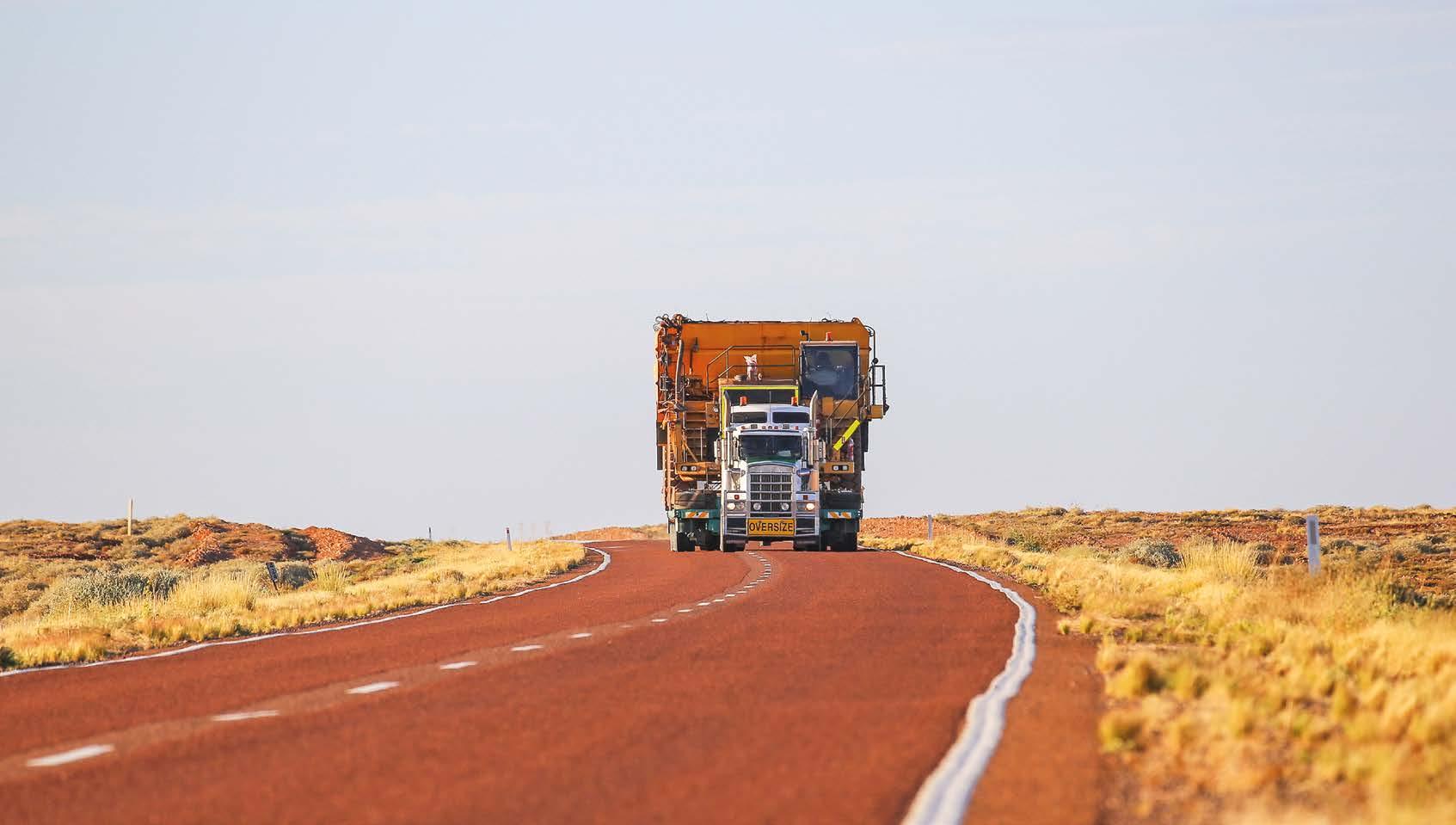
A review of the Heavy Vehicle National Law (HVNL), led by the National Transport Commission (NTC), commenced in 2019. This was aimed at updating the existing law in order to improve both safety and productivity within Australia’s transport industry.
The review identified various reform options to increase the HVNL’s effectiveness for governments, industry and broader communities, and resulted in the development of the Heavy Vehicle National Law Bill 2025 and the 2025 Amendment Package, consisting of both laws, was passed in Queensland Parliament without amendment on 18 November 2025.
As part of the HVNL reform and heavy vehicle accreditation shifting from a prescriptive, compliance-based system to a risk-based approach focused on safety management, the NTC developed several key documents. These include:
• SMS Standard: outlines performance outcomes for compliant safety management systems
• Schedule One – SMS Evidence Requirements: details evidence expectations and supports the National Heavy Vehicle Regulator’s (NHVR) assessment process
• Standard for Alternative Compliance Hours: establishes a framework for alternative fatigue compliance and the use of the Risk Classification System
• Ministerial Guidelines for Heavy Vehicle Accreditation (Ministerial Guidelines): directs the NHVR’s accreditation decisions.
To support these documents, the NHVR developed the National Audit Standard (NAS) in hopes of providing a nationally consistent audit framework established on contemporary, safety-focused principles. According to the NHVR, the NAS enables impartial audits of safety
management systems and accreditation requirements under General Safety Accreditation and Alternative Compliance Accreditation – ensuring audits contribute to ongoing safety improvements.
The standard incorporates key elements from the existing National Heavy Vehicle Accreditation Scheme Business Rules and Standards and the Audit Framework and Code of Conduct while introducing enhanced measures to reinforce safety outcomes.
The amended HVNL is expected to commence in the middle of this year. Although three industry associations have lodged a joint submission urging lawmakers to reconsider the proposed changes.
The HVNL’s updates include the replacement of the National Heavy Vehicle Accreditation Scheme (NHVAS) with a new two-tiered accreditation system consisting of a General
Safety Accreditation and an Alternative Compliance Accreditation regime; changes to prescribed general access mass and length limits; a new duty to not drive a vehicle whilst ‘unfit to drive’; and changes to more than 70 penalties.
The Victorian Transport Association (VTA), Queensland Trucking Association (QTA) and National Road Transport Association (NatRoad) believe the proposed two-tiered, risk-based HVNL accreditation framework could impose significant financial and legal burdens on operators while undermining confidence in the system.
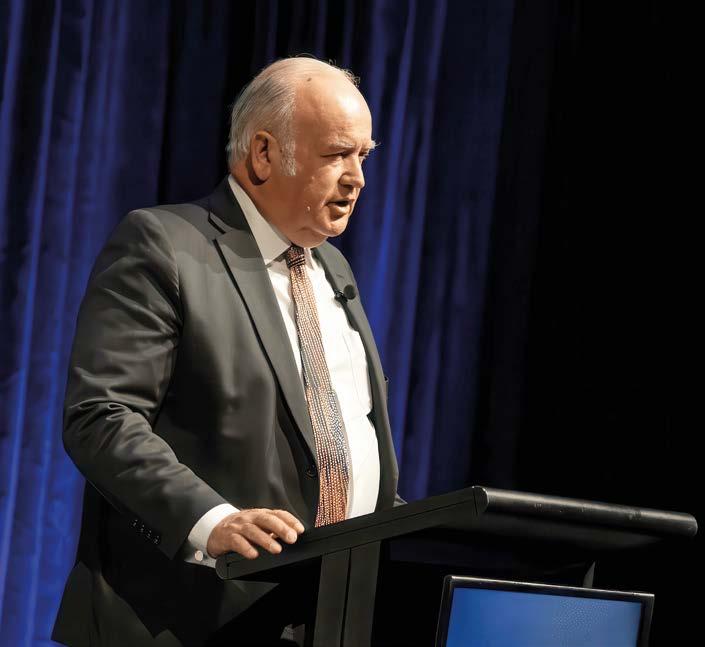
VTA CEO, Peter Anderson, said the collaboration by the three associations demonstrates the wider industry’s commitment to safety and fairness.
“This is a united position from major industry bodies,” he said. “Accreditation should incentivise safety improvements, not create punitive risks for operators and auditors.
“The proposed framework reverses the burden of proof and exposes businesses to unnecessary legal jeopardy, which could discourage participation and compromise safety outcomes.”
The joint submission of the VTA, QTA and NatRoad specifically highlights increased costs and complexity for operators to implement safety management systems; higher audit and consultancy fees under the new National Audit Standard; and potential legal exposure for company directors and auditors, with audit reports being used as evidence in prosecutions.
Anderson said meaningful consultation is essential before reforms proceed.
“We support a risk-based approach to safety, but it must be proportionate and fair,” he said. “The current proposal jeopardises natural justice and could have unintended consequences for the freight industry.”
The VTA, QTA and NatRoad are calling on the National Transport Commission and Parliament to engage fully with industry to ensure reforms deliver genuine safety benefits without imposing unreasonable burdens.
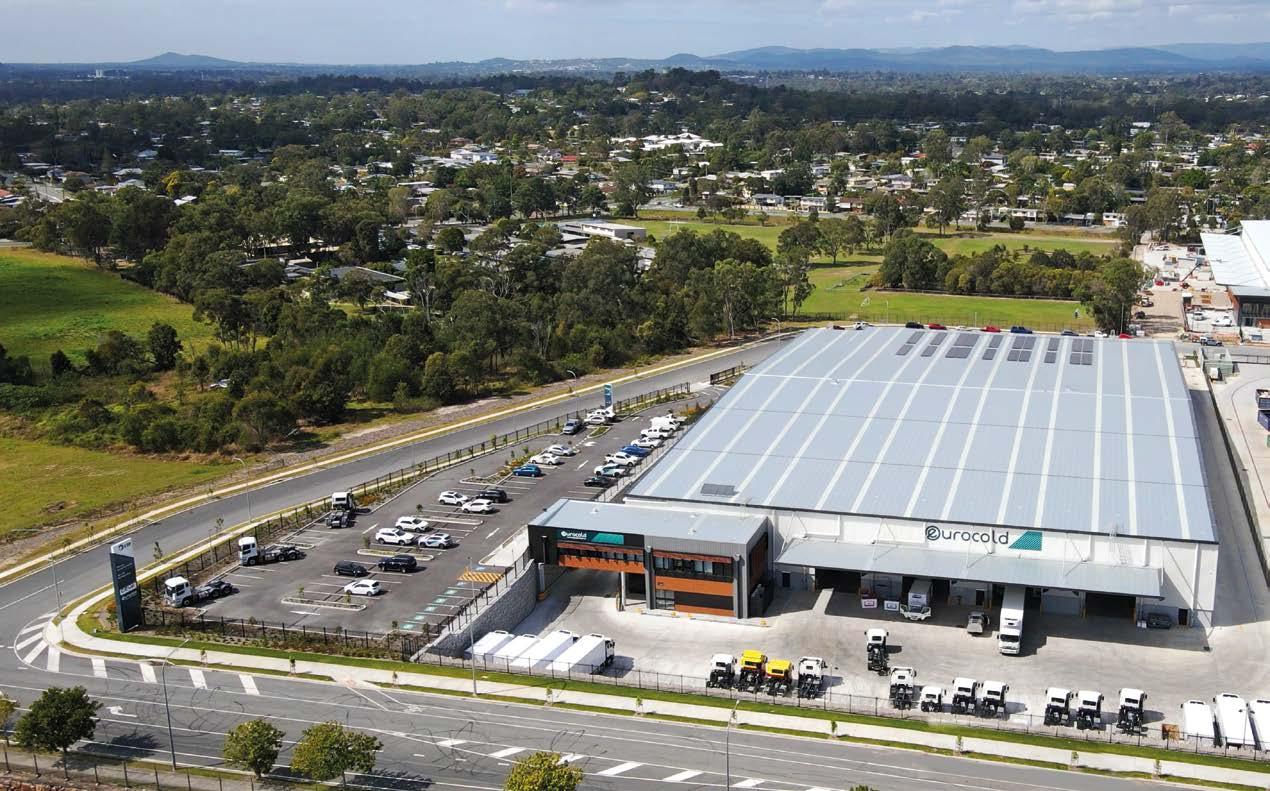
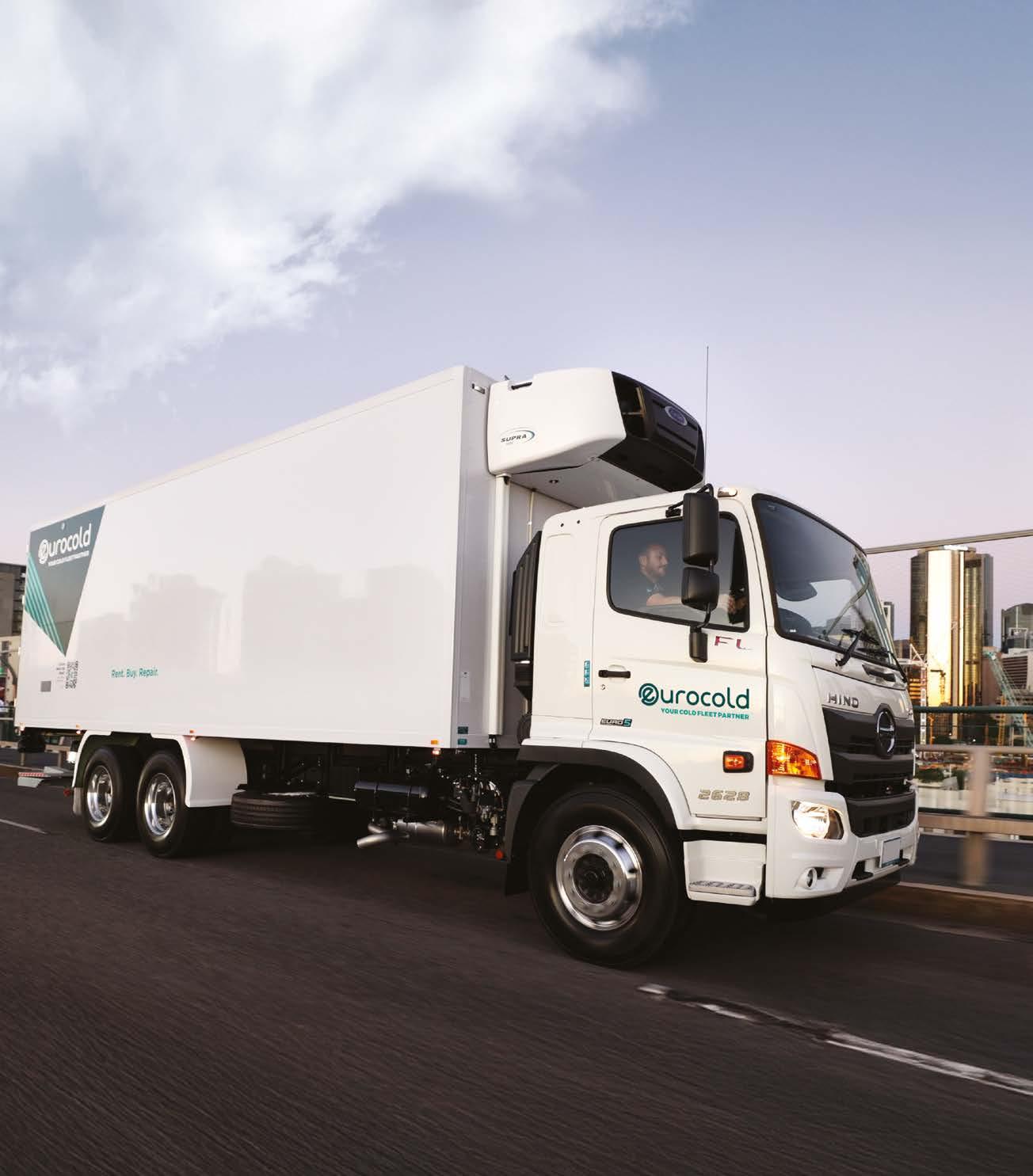
Eurocold’s manufacturing headquarters in Berrinba, Queensland, is the beating heart of the interstate refrigerated transport solutions provider.
The state of Eurocold’s Berrinba, Queensland, production facility makes one thing very clear – Eurocold is a business designed around teamwork. From engineering to assembly and quality control, collaboration is a daily discipline.
Over the past five-and-a-half years, Eurocold has built a production culture shaped by change, where the ability to adapt quickly and build with precision has become central to performance. This focus has been sharpened by a cold chain sector undergoing swift transformation.
“We are in a rapidly changing industry,” says Eurocold COO, Clayton Nel. “Refrigerated transport has seen a strong push towards higher thermal efficiency, smarter materials and improved build quality.
“Telematics and real-time visibility have become standard expectations. At the same time, demand is rising for faster delivery and more flexible last-mile solutions, driven by growth across grocery, meal delivery and pharmaceuticals.
“More freight is being moved within the cold chain, and a change in what
consumers want is creating new refrigeration standards.”
Eurocold is supplying this growing customer base with ideal solutions through a great web of collaborative production.
“Eurocold engages business owners to make sure they can enter the industry meaningfully, with the tools and assistance that is right for them,” Clayton says. “We plan for our customers’ initial performance and their long-term growth. That’s what makes us unique.”
Eurocold operates as a completely knocked down (CKD) assembler, sourcing best-in-class components from specialist manufacturers around the world and bringing them together under one roof. Rather than relying on a single supply chain, the company selects premium truck chassis, high-performance refrigeration units, insulated bodies and fit-out accessories independently, allowing each vehicle to be built around the demands of its task.
Clayton describes the CKD model as fundamental to how quality is engineered into every truck. Local assembly provides tighter control over production, consistent
build standards and the flexibility to tailor each vehicle to customer requirements.
“This gives Eurocold deep product knowledge, faster parts access and quicker repairs, which are just as important,” he says.
The approach sees chassis sourced from leading global manufacturers, refrigeration systems supplied by specialist providers and insulated bodies delivered from ISOKIT in Italy. Once assembled, completed vehicles are deployed across Eurocold’s depot network in Queensland, Victoria, New South Wales, Western Australia and South Australia.
Headlining Eurocold’s extensive production network is its Berrinba assembly facility in Queensland. The 8,677-square-metre site’s operations are upheld by a team of 33 people and underpinned by distinct business mantras under Clayton’s purview.
“We share our manufacturing facility with our head office,” he explains. “Our team covers all of our key functions such as our supply chain, production, finance, sales and Queensland’s repair division.
“Our setup is already quite collaborative
given we share a space, but this is further encouraged through our four values –‘people are everything’, ‘in it together’, ‘stop waste’ and ‘enjoy the ride’.”
The Berrinba facility acts as Eurocold’s cultural lifeline by championing these values. The operational processes within it specifically promote cooperation and efficiency in two ways. Eurocold’s consolidation of operations, along with its support of employees to apply soft skills to their manufacturing tasks, act as points of difference.
“Eurocold’s teams work as one connected community,” Clayton says. “This creates a tighter feedback loop, faster decisionmaking and a more personal relationship with operators.
“Additionally, we find that most companies do not prioritise the integration of soft skills like planning, communication, time management and more when it comes to gaining efficiencies. Eurocold employs people with manufacturing and automotive backgrounds to apply these soft skills to its work. It’s critical for our productivity, which is all to benefit our customers.”
This approach is evident in Eurocold’s production scheduling. The company relies on highly skilled coordinators and their problem-solving abilities to keep its supply chain lean. In addition, the implementation of critical data tells Eurocold how much stock should be held to support customer demand.
“We hold 90 days’ worth of stock based on historical company data,” Clayton says. “This ensures we have the right amount of stock to provide to customers in case we experience delays with parts or material imports from Italy.
“We want to be able to provide a solution for customers immediately, and this kind of
planning allows us to do just that.”
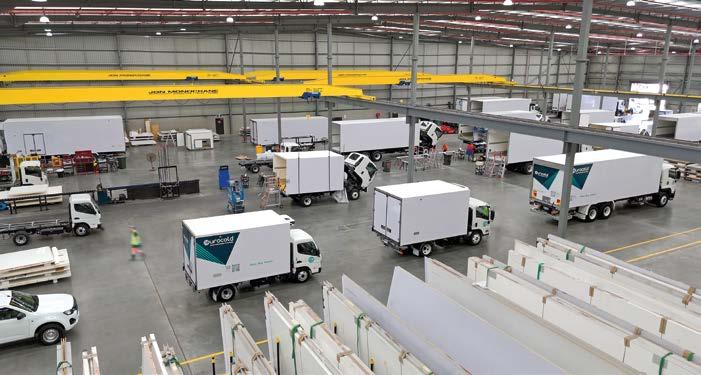
This initiative has even extended to structuring building processes to support a set of precision workflows and create a lean assembly line. The Berrinba site has full drive-through capabilities with four roller doors on both ends and a floor divided into four lanes – one lane reserved for container unloads and stock control, the middle two to handle production volume and the fourth to be what Clayton refers to as an ‘exotic lane’ which manufactures vehicles that don’t follow the same timeline or processes as Eurocold’s other builds.
“This structure keeps our manufacturing process moving,” he says. “Vehicles progress from one end of the facility to the other with each step of the building procedure.”
These processes are also supported by cross-functional training, another collaborative feature of the company.
“Every one of our team members can complete at least 80 per cent of any given build, regardless of what their primary role is in our team,” Clayton explains. “This is part of our onboarding plan to make
everyone into a team player. It creates a culture of reliability, ownership and care among our facility.”
The care in Eurocold’s Berrinba operations is further maintained by the presence of other soft skills utilised such as communication and motivation.
Leaders at the site foster high-quality work and efficiency by assisting employees in taking responsibility for their output.
“Eurocold’s integrated structure promotes a work culture where team members at all levels are encouraged to contribute and take ownership of their areas,” Clayton says. “This approach builds pride and accountability, improves communication and accelerates problemsolving. It ultimately ensures customers receive better service because everyone is invested in the outcome.”
The efficiency achieved through this integration of skills to create a lean supply chain majorly contributes to Eurocold’s extremely quick turnaround times of between 14 to 21 days for scheduled builds. Although the state of Eurocold’s Berrinba facility and its manufacturing output is in phenomenal shape, Clayton is excited to improve it.
“The future of the Berrinba facility revolves around the development of more confidence and collaboration,” he says. “This will allow us to become a more cohesive team.
“While we are proud of our success to date, we are constantly reviewing our performance and striving for improvement.”
Contact
Eurocold
Ph: 07 3569 2858
Web: www.eurocold.com.au
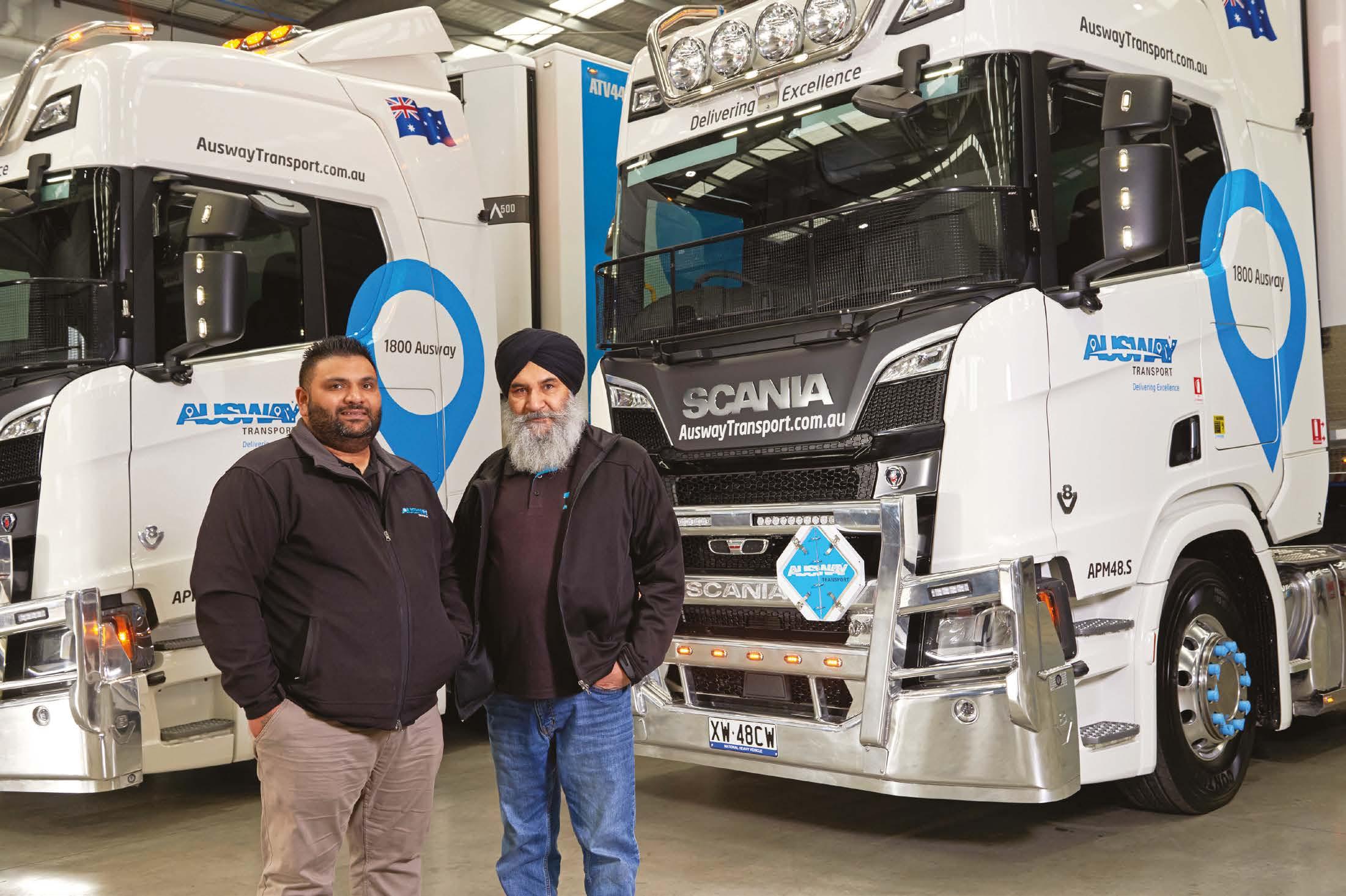
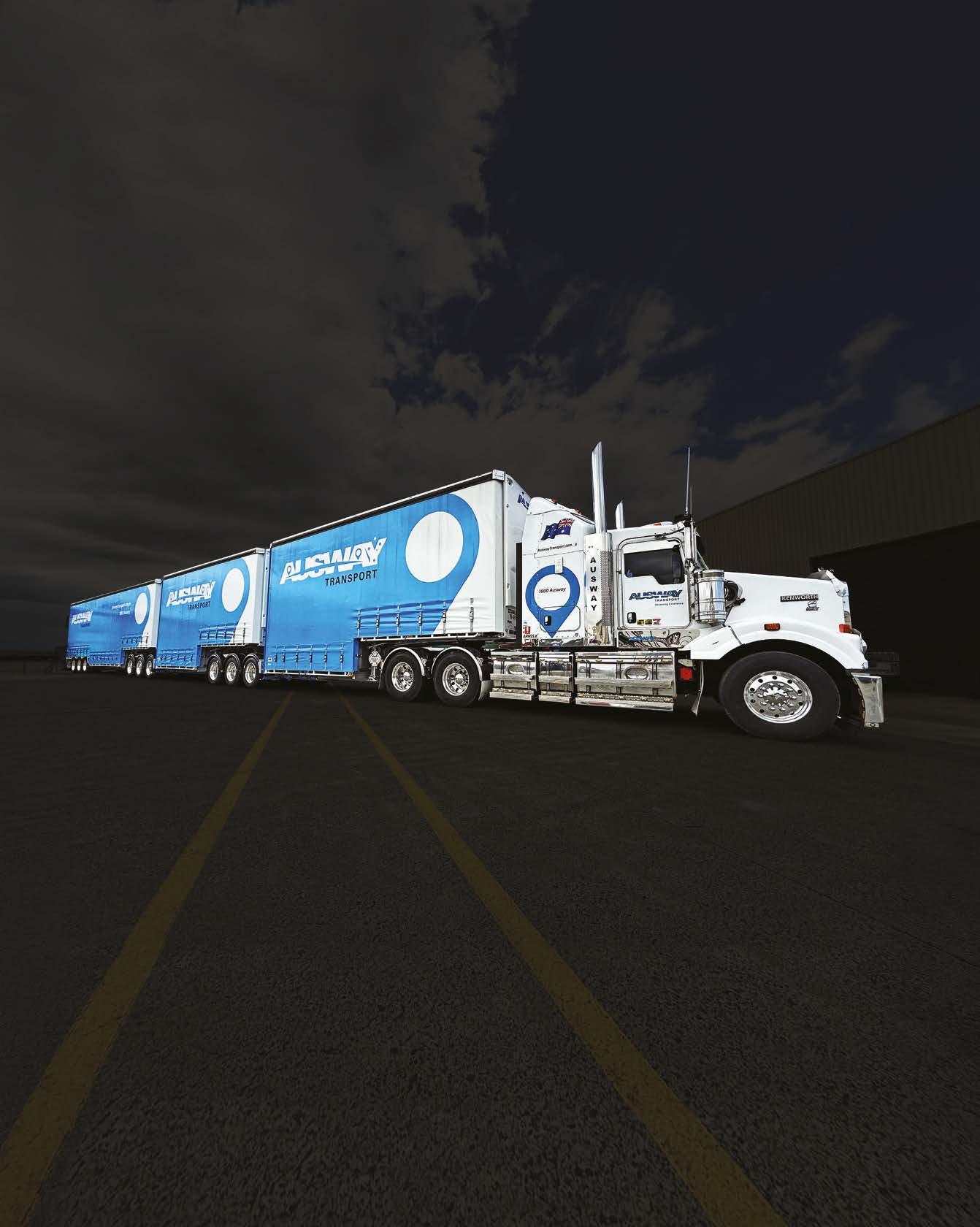
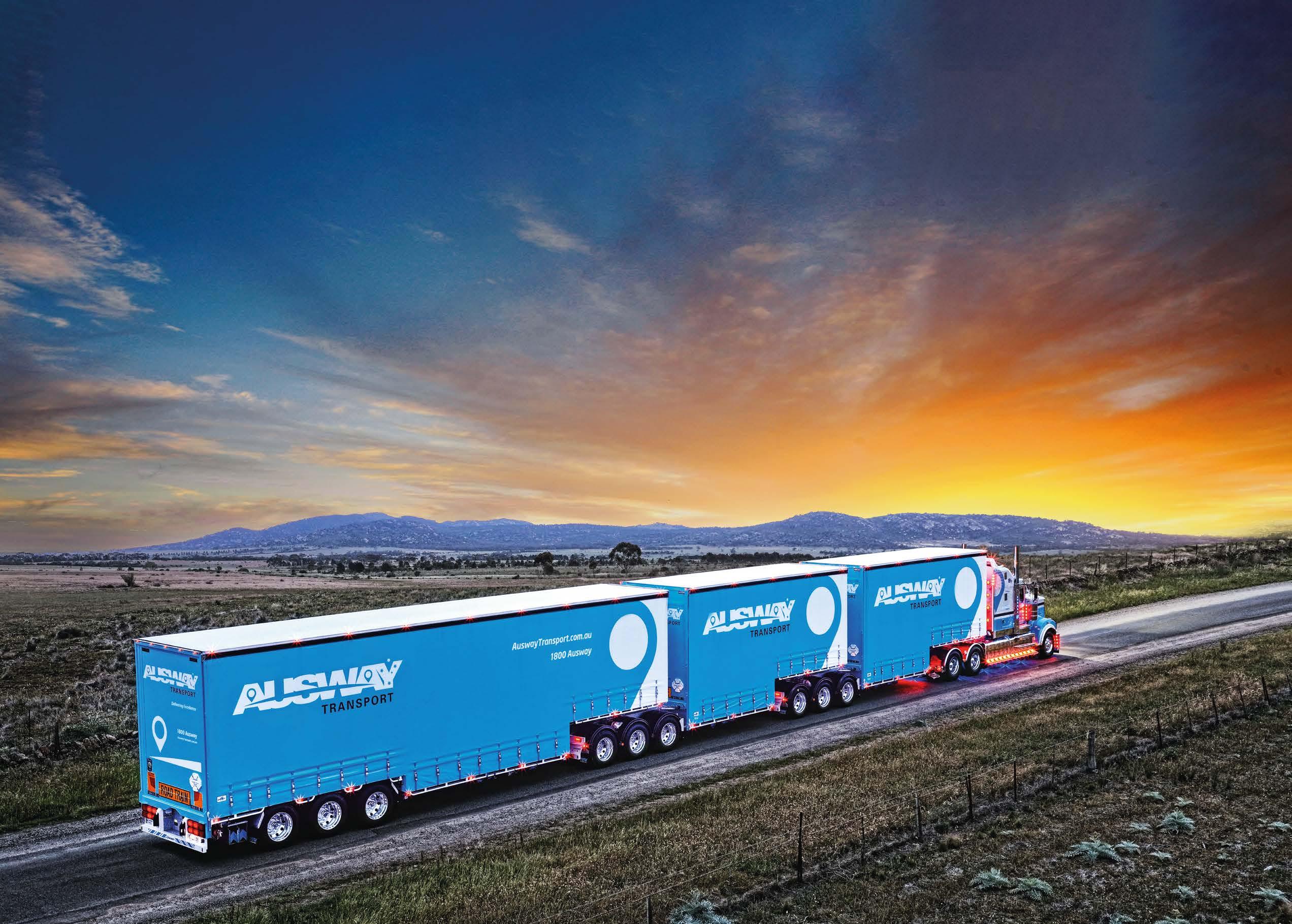
Ausway Transport is launching three new Vawdrey Performance-Based Standards B-triple Titeliners into its expanding interstate linehaul corridor.
The emergence of Ausway Transport is immensely meaningful, with roots far beyond Australian shores. What has become one of the most reputable transport companies in Australia today first began stirring on the other side of the world more than half of a century ago.
It was in 1962 when Gurdev Sooch founded a farming and transport operation within northern India’s Punjab region. He then commenced operations in the rapidly modernising town of Bombay, which later become Mumbai, the most populated city in the nation. Gurdev had just served in the Indian Army as a tank commander and the decisions he made in the years following caused a flow-on effect which continues 64 years later to this day.
After migrating to Australia in the 1970s, the Sooch family set its sight on transport once again. In 2003, Gurdev’s son, Bill, followed in his father’s footsteps by establishing Ausway Transport in
Melbourne, Victoria, an organisation that is now a major freight logistics company predominantly servicing the eastern seaboard and beyond.
“We have grown considerably from the one truck my family began with in 2003,” says Ausway Transport Managing Director and third generation of the family, Bobby Sooch. “We now have close to 140 semitrailer combinations and we operate out of Melbourne, Sydney, Brisbane, Adelaide and Perth. We specialise in general freight and refrigerated products, as well as a lot of parcel freight for Australia Post, DHL, Mainfreight, StarTrack and FedEx.”
Ausway Transport has been growing at a steady pace each year. In 2022, for example, it began heavily investing in refrigerated trailers with several new Vawdrey 34-pallet FRP B-double vans. This area of the business remains a key priority to this day due to its ample growth opportunities.
“This was a major development which required a fair bit of equipment from Vawdrey,” Bobby explains. “We’re still running these units as part of Ausway Transport, but we’ll be separating them into two divisions – refrigerated and general freight – in the near future.”
Ausway Transport has also been expanding its fleet of A-double, B-double and B-triple curtainsider trailers significantly. This began three years ago and continued in recent times with a new delivery from Vawdrey.
“We took delivery of six B-doubles and one Performance-Based Standards (PBS) B-triple from Vawdrey last year,” Bobby explains. “We have another two PBS B-triples coming next month as part of the same order.
“We love how the latest B-triple has been performing. We’ve been running it in shuttles to Brisbane, Adelaide and Perth, and it executes its freight task effortlessly.”
Bobby says the new high productivity Vawdrey B-triples will be critical to the operation of the fleet’s new Perth corridor.
“Our customers are growing with additional legs, and we’re trying to provide better flexibility by covering more areas than just the eastern seaboard,” he says. “Our expanding B-triple fleet and Perth corridor will cater to this demand.”
The new B-triples are made up of three double drop deck trailers with 12, 12 and 22 pallet spaces respectively. Each body is fitted with mezzanine floor units for maximised capacity and protection of freight in transit.
“The journey with B-triples has been both successful and interesting,” Bobby says. “We’re looking to grow our fleet with triples and PBS more in the future, and Vawdrey will play a big part in that.”
Vawdrey has long been the premier trailer builder of choice for Bobby’s bloodline. More than 75 per cent of Ausway Transport’s fleet has been manufactured by the OEM since the Sooch’s arrival into Australia – a choice made due to the extreme quality of the product.
“Vawdrey trailers were always my grandfather’s favourite,” Bobby explains. “He liked their design as well as the attention to detail put into them.”
The engineering of Vawdrey’s Titeliner model in particular is one that stands out to Ausway Transport. Bobby praises the trailer’s flexible roof design which ensures additional support to run into the roof, as well as the mezzanine decks which evenly distribute weight across the chassis and prevent issues with cracking and therefore unnecessary repair costs.
“The trailers are presented really well, and they do stand out,” he says. “Moreover, the B-triples have allowed us to move more freight with less trucks which helps with emissions and being more efficient as a transporter.”
For Ausway Transport, collaborating with Vawdrey has become critical to maintaining the overall strategy and values set up by Gurdev and Bill many years ago.
“Vawdrey is a really important part of our team,” Bobby says. “They are very valuable to us because of the support they are able to provide both before and after the sale.
“We’ve been dealing with Vawdrey for the last 15 years, and we won’t be moving. We have a very tight-knit relationship with Vawdrey, and that’s what matters most to us.”
As Managing Director of Ausway Transport, Bobby foresees the business establishing a remote presence throughout
several other states in Australia in the near future. Plans over the next five to 10 years will also include investing in additional company depots and more fleet equipment in a bid to grow both the refrigerated and general freight sides of the business, while expanding Ausway Transport’s offering to the likes of cross-docking services and more.
As trailer manufacturing and technology continues to advance, Bobby looks forward to allying with Vawdrey further across more projects and trailer deliveries.
“We have a lot of meetings with Vawdrey throughout every year,” he says. “We’re very open with them about our plans and what we’re hoping to achieve in our builds, and they’re really helpful with showing us what we can do differently to get there.
“When it comes to trailers, it’s not the product that sells itself. It’s the service that is provided afterwards. That’s why Vawdrey works really well for us. Everyone there does their best to perform to our needs.”
Contact Vawdrey Australia 1-53 Quantum Close Dandenong South, VIC 3175
Ph: 03 9797 3700
Web: www.vawdrey.com.au
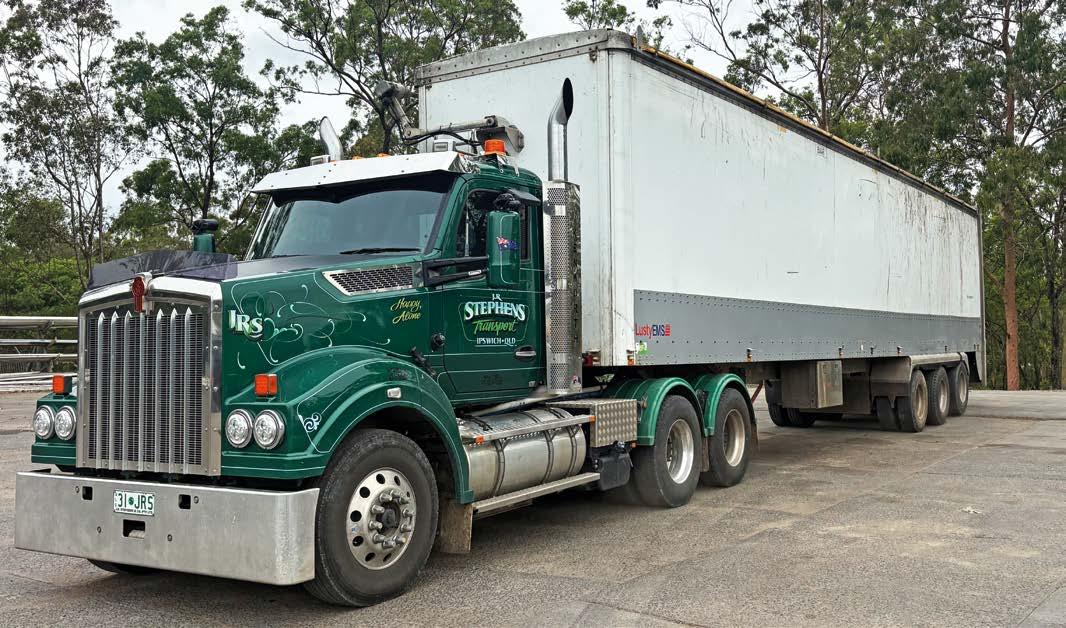
JR Stephens Transport has fully leveraged the KEITH Walking Floor system via applications which have lasted for more than 20 years.
Seventy-one-year-old transport specialist, JR Stephens Transport, rolled onto the freight scene back in 1954 when founder, John Stephens, began his singletruck operation for a coal contract in Queensland. Three quarters of a century down the track, it has mutated into an operation with more than 170 trailers, 70 prime movers, 20 pieces of plant equipment and 130 staff members spread out across two sites in Blackstone and Carole Park.
“We slowly branched out from coal and expanded into the waste and grains sectors,” explains JR Stephens Transport Fleet and Maintenance Manager, Reece Tippett. “It’s a pretty diverse market that we’re serving now.”
JR Stephens Transport made another move around 20 years ago which ended up having a significant impact. The fleet decided to start investing in KEITH Walking Floor systems – all of which have lasted and are still in operation today.
“The KEITH Walking Floor has proven to be an extremely durable item that stands up to our demands,” Reece says. “It’s an amazing product. You just turn the floor on and the load gets walked in or out.
Everything works as it should from there.”
JR Stephens Transport has 20 Lusty EMS KEITH Walking Floor applications which carry products ranging from construction and demolition waste to wet garbage waste, lightweight recycled products, timber and mulch. The units are effortlessly servicing customers throughout South East Queensland and Northern Rivers, New South Wales, due to their heavyduty natures.
“The Walking Floor is a pretty full-proof system,” Reece says. “We’ve been able to keep ours on the road for so long with the help of our in-house workshop. We have trailer mechanics and diesel mechanics onsite which can complete basic mid-life services when required. The Walking Floor trailers then go off again without any problems.”
The KEITH Walking Floor applications are deployed in what Reece refers to as the fleet’s ‘nursery’ division. The trailers, being unbelievably user-friendly, are allocated to newer drivers to learn the ropes with.
“The KEITH Walking Floor system is a very simple hydraulic setup to use and teach,” Reece says. “We use it as a platform to train our drivers though the business.”
According to Reece, the units have become very good pieces of equipment for its training, compliance and safety space. But they are also very diverse in terms of the sites they can access.
Low maintenance is another key benefit. JR Stephens Transport has capitalised on this and has significantly increased revenue as a result.
“The KEITH applications don’t need a lot of maintenance,” Reece says. “They’re very reliable.”
While JR Stephens Transport has the utmost confidence in the KEITH Walking Floor system, the OEM’s aftersales support is always readily available if it’s needed.
“We have a really good relationship with KEITH,” Reece says. “Their Customer Support Manager, Tim Mellor, is great to deal with.
“KEITH’s service is second to none. They’re always all over anything we need.”
Contact KEITH Walking Floor Australia
Ph: 0404 041 833
Web: www.keithwalkingfloor.com
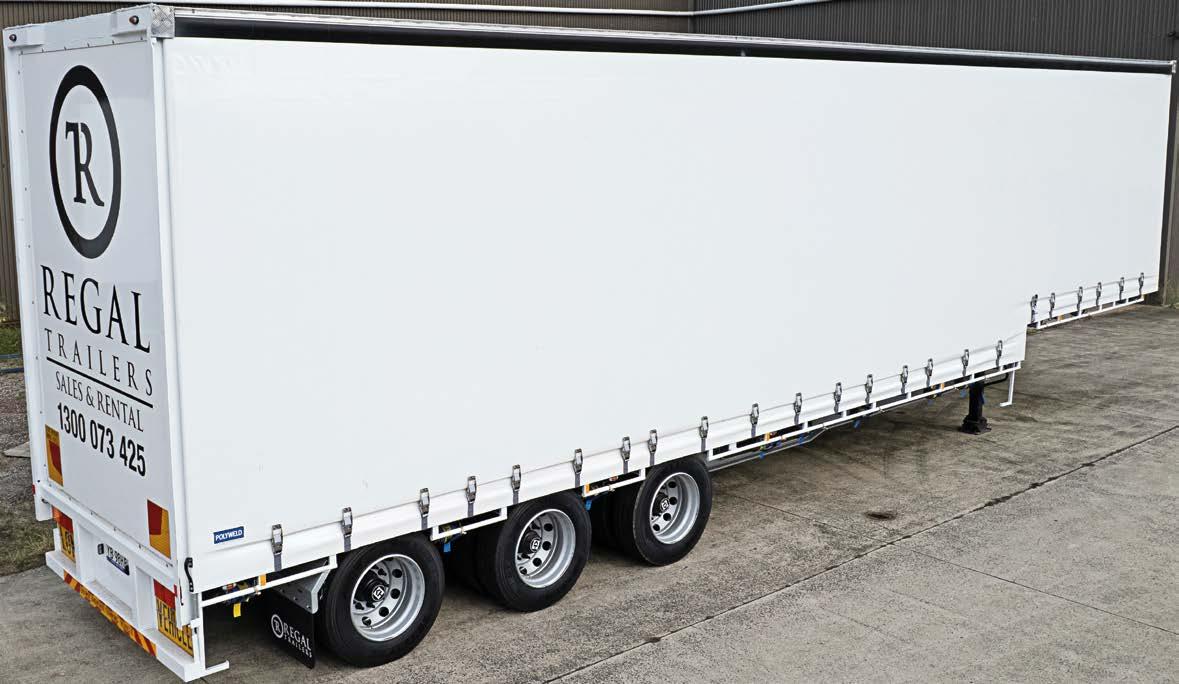
Fuwa K Hitch axles and suspensions were essential to Regal Trailers’ entry into the manufacturing space. They now remain a key part of its ongoing success.
Regal Trailers had a unique introduction to the world of trailer building. The manufacturer, initially a 25-person operation based in Deer Park, Victoria, was once an entirely different logistics endeavour.
Helmed by Director, Jasmeet Johal, and her husband, Sam, Regal Trailers first entered the industry as a transport company. It originally specialised in the movement of general freight and even expanded into other states before a consistent operational issue became apparent.
“The company started with one ute and grew over time,” Jasmeet explains. “We built it up to a point where it was a legitimate transport outfit. But it became increasingly difficult to buy and use trailers from other manufacturers while running the business.
“We were using different brands, so there wasn’t much consistency in our combinations. We also faced a monopoly in the market which was charging very high prices for low-quality equipment. After a certain point, it wasn’t viable for us to keep buying them anymore.”
While Jasmeet continued to run the transport company, Sam undertook the task of manufacturing its trailers himself. This transition eventually led to the creation of Regal Trailers, a move made to service the market and high demands caused by supply chain shortages from Covid-19.
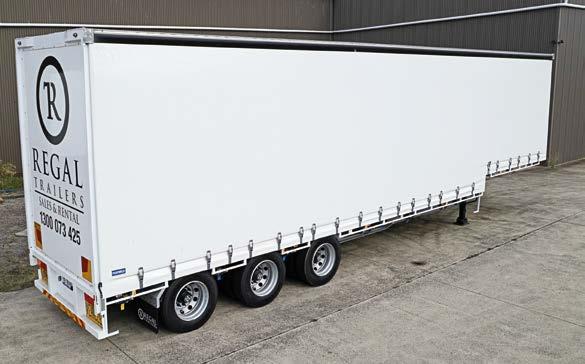
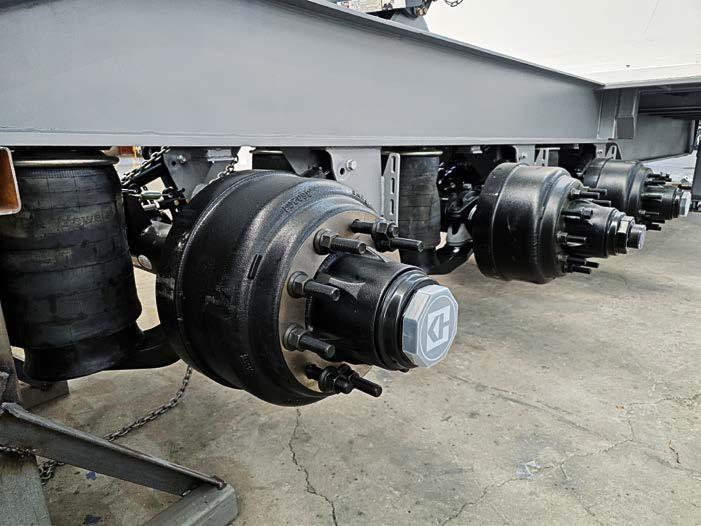
Regal Trailers’ first custom-built curtainsiders were manufactured with equipment which struck an imperative balance between high quality and affordability. This primarily included Fuwa K Hitch KF22 drum brake axles and KI25K air suspensions.
“We consulted the industry, and Fuwa K Hitch was recommended to us many times,” Jasmeet explains. “Fuwa K Hitch seemed as committed to quality and fair pricing as we were, so we decided to begin using its products for our equipment.”
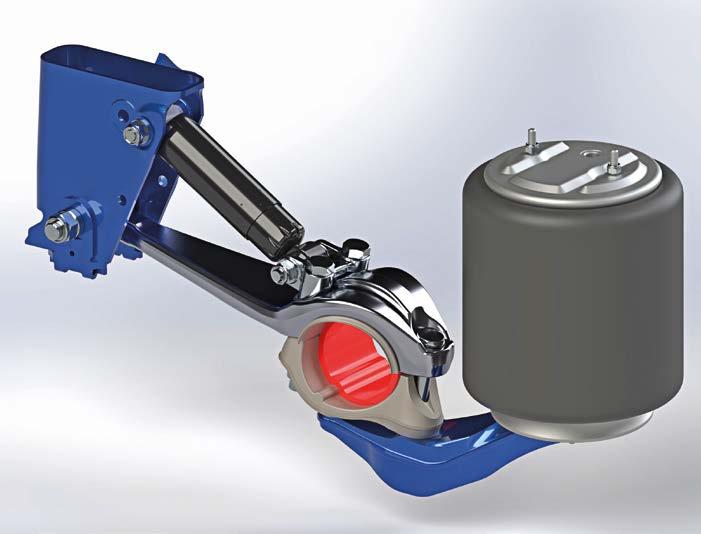
Regal Trailers has since adapted its Fuwa K Hitch suspension spec by introducing the MBS-V1 air suspension range. The European engineered and manufactured MBS-V1 is a distinctive highway suspension option among Fuwa K Hitch’s product range. It features a lightweight 146mm beam with nine-tonne axle capacity – an innovative design that is engineered with a unique axle-to-suspension clamping mechanism as opposed to U-bolts or welded beam seats on the axles.
Additionally, the suspension kit includes
a precision cold-rolled groove in the beam paired with a wide clamping-surface trailing arm and a forged locating key which locks into the groove and is secured firmly with three bolts.
“The trailing arm’s tail piece accommodates airbag offset positions of zero, 25, 50, 65 and 90 millimetres, eliminating the need for left- or rightspecific components,” says Fuwa K Hitch Major Accounts Manager, George Hartman. “Designed for versatility and fleet efficiency, the MBS-V1 also offers common hangers, shocks and airbags for both under- and over-slung configurations.
“This standardisation significantly reduces the spare parts inventory required by fleet operators.”
These characteristics deliver a robust, weld-free connection onto the trailer. The MBS-V1 interface also reduces torsional stresses, making the suspension kit particularly well-suited for vehicles with a high centre of gravity.
Fuwa K Hitch’s KF22 drum brake axles and MBS air suspensions have become essential components across Regal Trailers’ expansive range of curtainsiders, drop decks, flat tops, skels, custom builds and dollies. The durable options are also extremely integral to Regal Trailers’ leaseto-buy business model.
Fuwa K Hitch’s collaboration with Regal Trailers has expanded beyond the supply of products. The axle and suspension manufacturer now provides Sam and Jasmeet’s growing pool of staff
with training on the fitment of all trailing components being used as well.
“Fuwa K Hitch has always treated us like legitimate manufacturers,” Jasmeet says. “The service we’ve received has been amazing.
“Fuwa K Hitch has provided us with reliable and durable products and has been patiently training our team on how to fit them. This has been crucial to developing Regal Trailers’ skills as a trailer manufacturer, as well as creating a great culture among our employees.
“Our staff have become very comfortable at building trailers because they love handling Fuwa K Hitch axles and suspensions. This, in turn, has allowed us to be much more efficient.”
Regal Trailers, upon evaluating the industry and its reaction to its product offering, believes customers are wellpleased with the continued inclusion of Fuwa K Hitch components.
“If you don’t hear from a customer, it means you’ve done something right,” says Regal Trailers Engineer, Thai Quyet. “We don’t have any customers complaining, and that’s a good sign to keep doing what we’re doing.
“We use high-quality parts to make highquality trailers. Customers do their part by looking after the trailers in the right way, such as getting the crucial first service done and having trailers serviced within the required timeframes. They also make sure all relevant components are greased, bolts torqued up, ride height settings checked and more.”
As Jasmeet navigates Regal Trailers’ continued development, she regularly highlights the fact that the fundamental visions it shares with Fuwa K Hitch are aligned. She believes the two companies are propping up industry operators considerably together.
“Fuwa K Hitch and Regal Trailers are helping the sector in similar ways,” she says. “Our costs are low and our products are intuitive to handle.
“Fuwa K Hitch helped us to start our manufacturing business, which in turn has supported many transport outfits over the last four years. They keep us productive and we keep the industry productive.”
Contact
Fuwa K Hitch
Ph: 03 9369 0000
Web: www.khitch.com.au
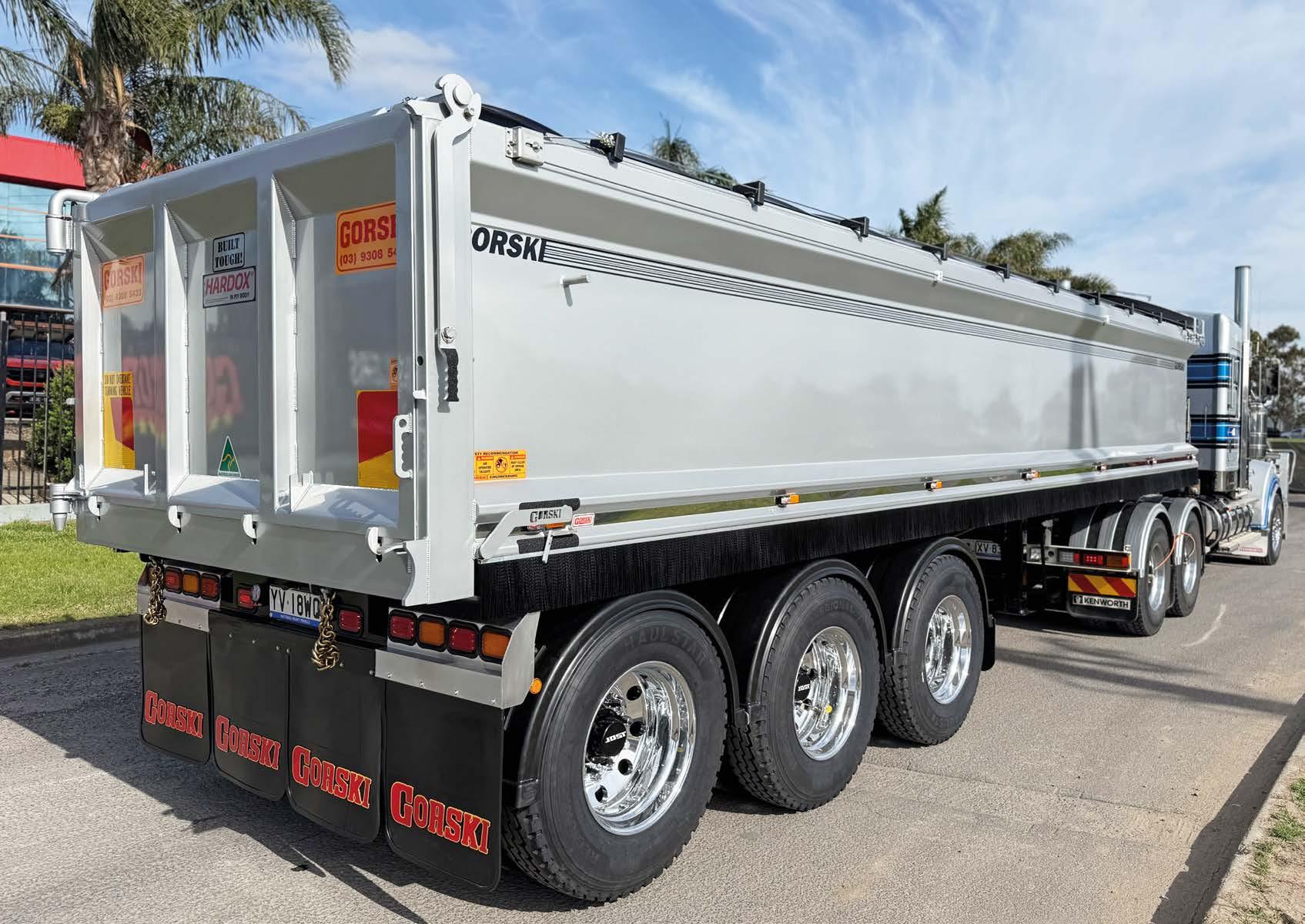
Gorski Engineering has become one of the first trailer manufacturers in the country to put JOST’s Australian axles to the test.
Last year JOST Australia announced its planned entry into the local axles and suspension market – a momentous move to expand the company’s value proposition for Australia’s road transport operators. It is currently trialling new axle equipment in local field tests with trusted collaborator and trailer manufacturer, Gorski Engineering.
“We’ve enjoyed a fruitful partnership with JOST for more than two decades and were
delighted when they approached us to trial their axles,” says Gorski Engineering General Manager, Paul Baker. “We’ve been using a variety of JOST parts for the last 25 years and really appreciated the opportunity to field test a new set of equipment.”
JOST’s new axles are rated to 10.4 tonnes and are available in both drum and disc options. They can also be fitted in overslung and underslung positions,
meaning their springs can sit either on top of or below the trailer’s axle beam. Additionally, the axles come in either 285mm or 335mm diameters providing flexibility to suit various vehicle designs. These various axle types are also RoadFriendly Suspension (RFS) certified.
Gorski Engineering is specifically trialling JOST’s RFS-certified Overslung Drum 285 PCD axle on a tri-axle tipper for Melbourne-based plumbing service
For more than 45 years, equipment specialist, JOST Australia, has served the commercial road transport industry with heavy vehicle components including fifth wheels and hydraulic systems. The company’s product portfolio is supported by an expansive spare parts network which is further bolstered by JOST’s global supply chain.
provider, Mellerick Plumbing and Drainage.
“Justin Mellerick purchased his first tipper from us in 2008 – he’s Gorski through and through,” Paul says. “This newest tipper is a very common type within Melbourne’s northern suburbs due to the tighter roads and spaces in that area. Mellerick needed a trailer he could manoeuvre with ease. He delivers aggregate material to small residential housing sites and works in tight spots that are often only wide enough to fit one car.”
JOST’s RFS-certified Overslung Drum 285 PCD axle is an ideal component for these requirements due to a liftaxle design which allows for extreme manoeuvrability.
The third axle stays in the air when the
trailer is operating with empty or low tare weights, reducing the tipper’s drag and turn. Being much nimbler and more flexible as a result allows it to better navigate tight spaces.
When the trailer’s tare weight increases to a certain point, the third axle will drop to provide essential stability and weight distribution, contributing to the trailer’s smooth handling. The equipment’s RFS-certification also ensures less impact on the road surface due to the implementation of shock absorbers, hangers and other parts.
While Paul says that Mellerick Plumbing and Drainage has enjoyed the mechanical characteristics of JOST’s axles, Gorski has also found the components to be aesthetically pleasing and easy to fit.
“These components are certainly wellconstructed,” Paul says. “They look very good to the eye, but are also extremely user-friendly from a manufacturing standpoint. The equipment comes preassembled with shockers and hangers and we just attach them onto the trailers as complete units.”
JOST also fitted its axles with telematics devices so that they can provide live data, which can then reveal if any improvements are needed. For Paul, JOST’s commitment to proper development ensures high quality.
“When JOST brings something to the
market, you can guarantee it’s been carefully tested and proven to work,” he says. “JOST is a multinational brand with global support and a massive parts network. They don’t make impulsive decisions or mistakes during the design process, and they certainly don’t bring sub-optimal products to customers.
JOST is becoming a one-stop shop by developing these axles. We are extremely interested in partnering and growing with companies such as JOST.”
After receiving positive feedback from Mellerick Plumbing and Drainage on JOST’s axles, Gorski Engineering has also worked to fit this new equipment on another fleet’s trailer. The high quality of these products helps maintain the trailer builder’s own reputation in the market according to Paul.
“We’re extremely focused on our brand’s legacy,” he says. “We don’t want our first transactions with customers to be the only ones. We want dealings with clients to be generational and life-long. Using equipment from manufacturers like JOST helps us stay ahead. It allows us to build trailers that are reliable which keeps our customers coming back.”
Contact
JOST Australia
Ph: 1800 811 487
Web: www.jostaustralia.com.au
E: sales@jostaustralia.com.au
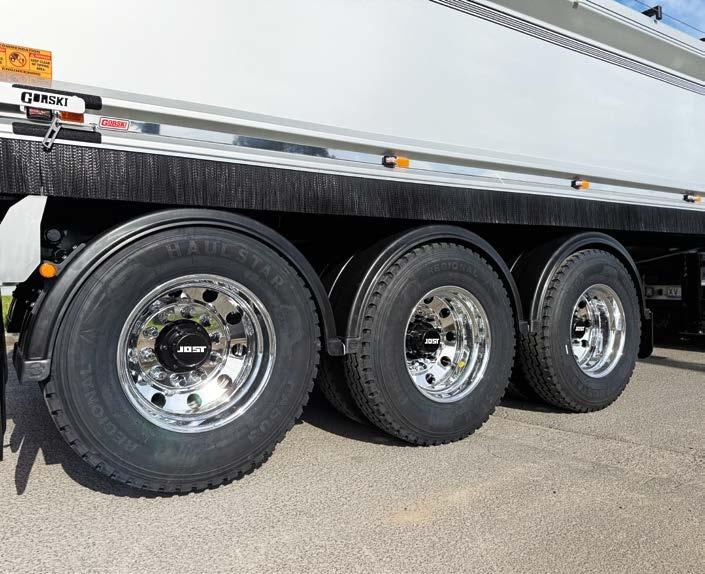
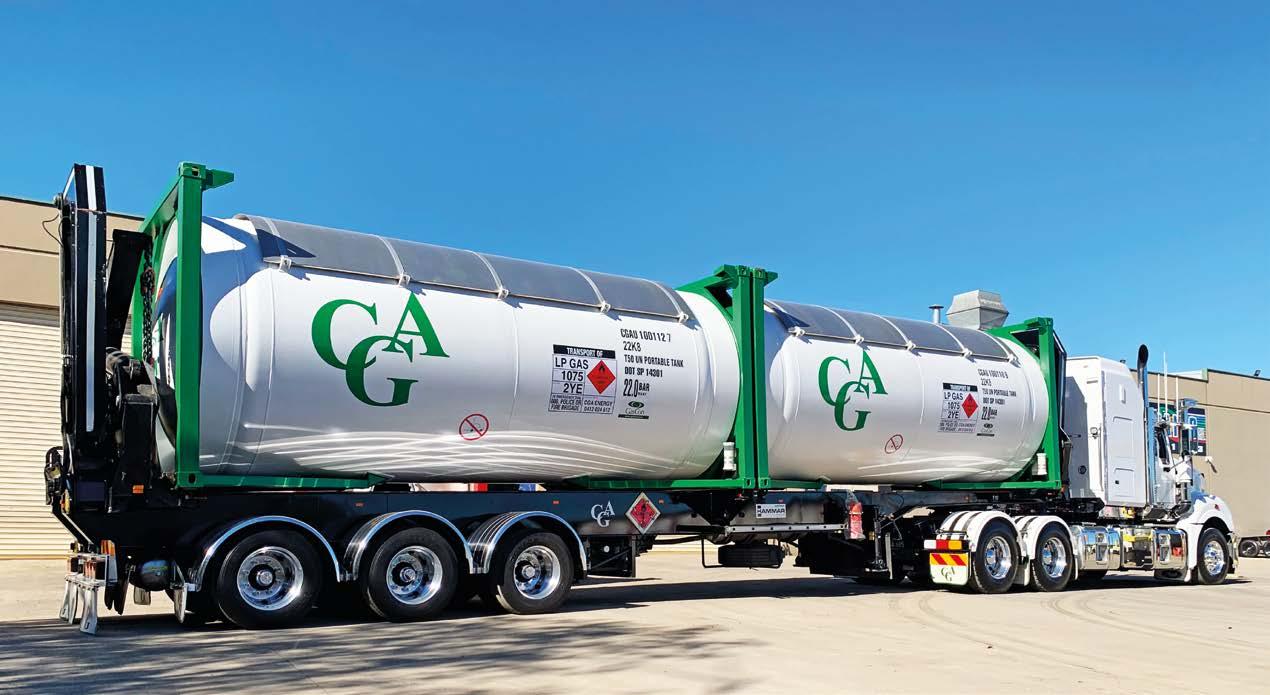
Customised Gas Australia Group is refurbishing its entire fleet with a new set of axles and suspensions from long-time equipment specialist, BPW Transpec.
Customised Gas Australia Group (CGAG) has been embedded in the nation’s gas market for three decades. Established in the semi-rural area of Mulgrave, New South Wales, in 1995 by Managing Director, Rodney Flynn, the company began operations as a small transporter of unodourised Liquefied Petroleum Gas (LPG). The service has since grown into a behemoth within its niche market, now supporting a wide demographic of Australian consumers across a variety of related products, and even stretches into the agricultural sector.
“We supply gas to virtually 90 per cent of aerosol cans in the country,” Rodney says. “And although the unodourised LPG market is only a fraction of all gas used in Australia, we still cover everything from deodorant and fly sprays to cooking oil sprays and more. We have also started handling on-farm commodities like grain, hay and other crops for harvest. We’re self-sufficient in our ability to assist our customers because we run a one-stop shop. In addition to supplying customers with the gas they need, we can also build gas plants for them, and maintain their equipment with in-house mechanics and fitters, part of our 30-staff team.”
CGAG’s major growth has been underpinned by consistent investments
into safe and high-quality equipment to ensure the proper handling of unodourised LPGs, which are classified as Dangerous Goods (DGs). This includes 15 gas tankers, 200 ISO tanks, various trailer combinations and a steady supply of axles and suspensions from renowned OEM, BPW Transpec.
Rodney was first introduced to BPW Transpec 20 years ago and, according to him, hasn’t experienced a parts failure in CGAG’s entire history with the manufacturer.
“These products are undeniably strong,” he says. “They’re accessible, reliable, and overall perfect for the operations we run.”
Presently, CGAG is working with BPW Transpec and its NSW Manager, Scott Merriman, to refit its entire fleet of trailer combinations with BPW Transpec drum brake axles, EP3 hubs, Air-Save tyre inflation systems and AL2 air suspension kits.
“These upgrades are critical for our operations because they will standardise the needs of our vehicles,” Rodney says. “We can minimise any spare parts we carry and streamline servicing by running the same hubs and axle and suspension specifications.”
BPW Transpec’s drum brake axles provide a myriad of mechanical
improvements to CGAG’s fleet. Primarily, the axle is suitable for Electronic Braking System (EBS) and Advanced Emergency Braking System (AEBS) applications, which are legal requirements for all DGcarrying vehicles. These capabilities are bolstered by the axles’ BPW ECO Master slack adjusters, which ensure optimum brake adjustment while reducing maintenance requirements.
Meanwhile, BPW Transpec’s Air-Save tyre inflation systems protect CGAG’s vehicles against uneven and premature tyre wear, as well as tyre blowouts, also ensuring safety in the transport of unodourised LPGs. Furthermore, the change to AL2 air bag suspensions further promotes safety by stablising transport with heavy-duty shock absorption and sway reduction.
These components have been fitted onto 10 of CGAG’s 30 fleet units –ranging from single LPG tankers and single skels to step decks, tippers, cattle crates and a hammar side loader.
“All our drivers have loved these changes,” Rodney says. “They understand the efficiency that we’re creating in our equipment and couldn’t be happier to support it. They specifically enjoy the new AL2 air bag suspension systems, which have made the handling
and performance of our vehicles to be much better and safer. This bolstered safety has had real positive effects on the team. The safer our drivers feel, the better they drive, and the safer our entire operation becomes.”
This BPW Transpec equipment has also been fitted onto CGAG’s latest fleet addition, a Moore Trailers AB-Triple tipper set for its agricultural business. Picked up last Christmas, the combination hit the road in mid-January, carrying chickpeas, grain and fertilisers across the eastern seaboard.
While CGAG’s refurbishments are still underway, Rodney and his team are extremely satisfied with the level of service and maintenance that BPW Transpec has provided. This has been a constant throughout the companies’ 20year relationship.
“The service I receive from BPW makes me feel so valued,” he says. “I realise I may not be the biggest player working with them, but they still treat me like I’m essential.”
Rodney’s long-time collaborations with Merriman have been vital to this partnership.
“Scott Merriman has been instrumental in all our dealings with BPW Transpec,”
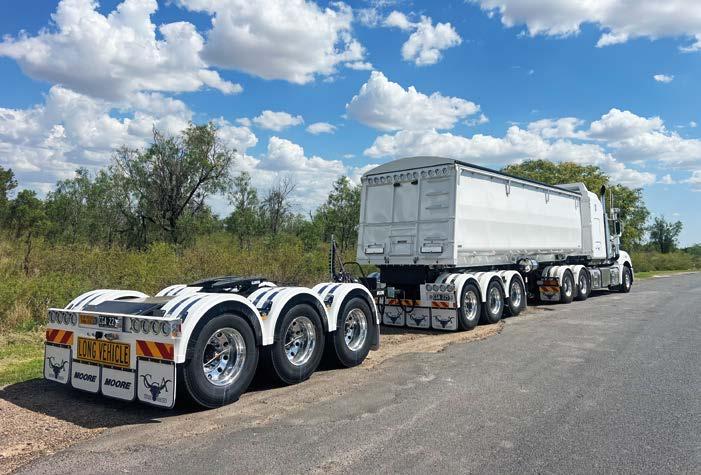
Rodney adds. “His professionalism, consideration and knack for business have helped us grow immensely while protecting our own vision. He stands for both BPW’s products and our interests. He’s a class act.”
In the face of the positive refurbishment project, Rodney doesn’t see his work with BPW Transpec finishing up any time soon.
“Anything we do in the future will have
BPW involved,” he says. “As technology progresses, we’re excited to look and see what we can implement, and how they can help us move forward. BPW does it right, so we’ll keep doing right by them.”
Contact
BPW Transpec
Ph: 03 9267 2444
Web: www.bpwtranspec.com.au
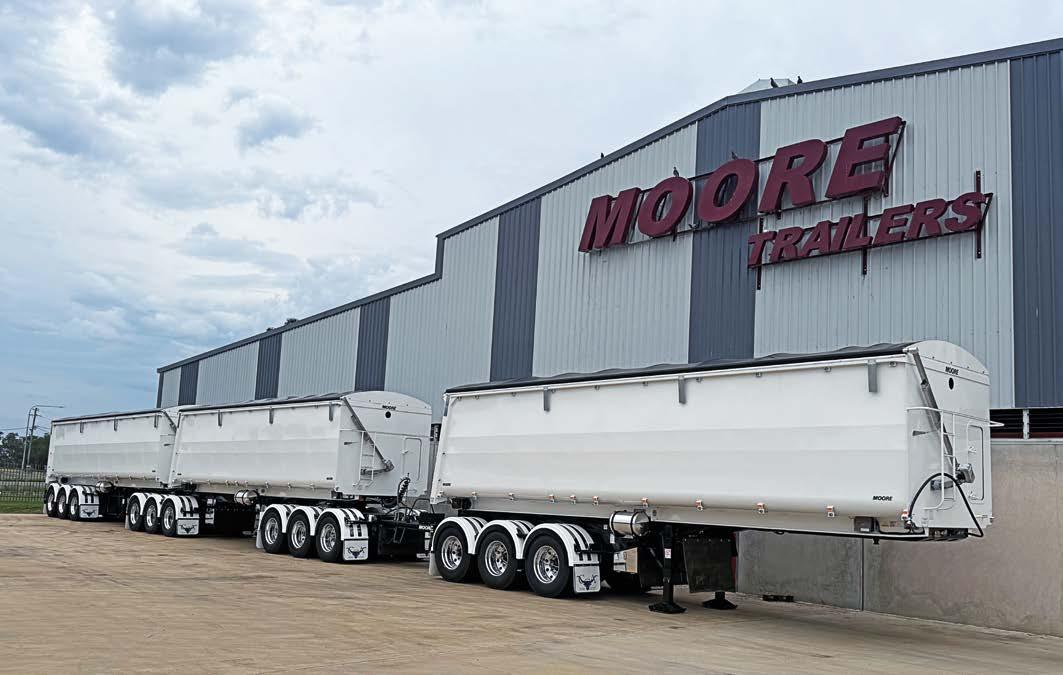
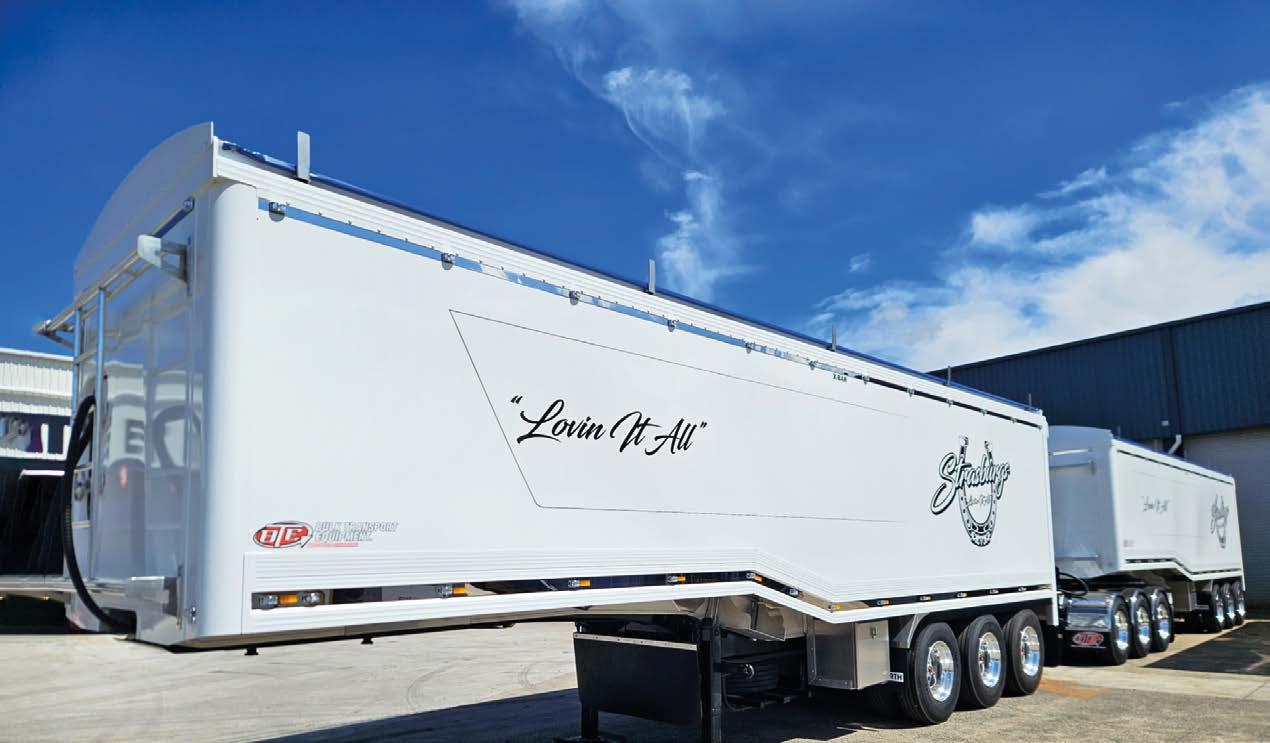
As trailers become more technologically complex, so too does the effort required to maintain them. A trailer manufacturer’s job is not done once its builds are sold to transport operators – they instead continue to help with aftersales service which cover a plethora of issues.
These challenges can include customers needing to identify specific components on their trailers, retrieve manuals for parts, losing USB drives with relevant data and more. For many OEMs, finding answers to these questions is not
always straightforward.
This is certainly the case with Bulk Transport Equipment (BTE), a trailer builder which has provided the market with a variety of equipment for close to 20 years. BTE Queensland Branch Manager, Adrian Gordon, says many of its callers are operators who have already bought trailers and are seeking basic component information on them.
“Customers are always contacting us to find out what kind of airbags or shock absorbers have been fitted onto the
trailers we’ve built for them,” he says. “Depending on the customer or the request, finding this information can take more than half an hour of sifting through records. Getting the information to them is fundamental, but it takes time away from our other operations.”
Trailer Spec Pro has developed a real solution for this inefficiency in the form of its patent-pending BuildTag product, a solution which gives semi-trailers a VIN-specific digital identity through a QR-based system. The BuildTags can
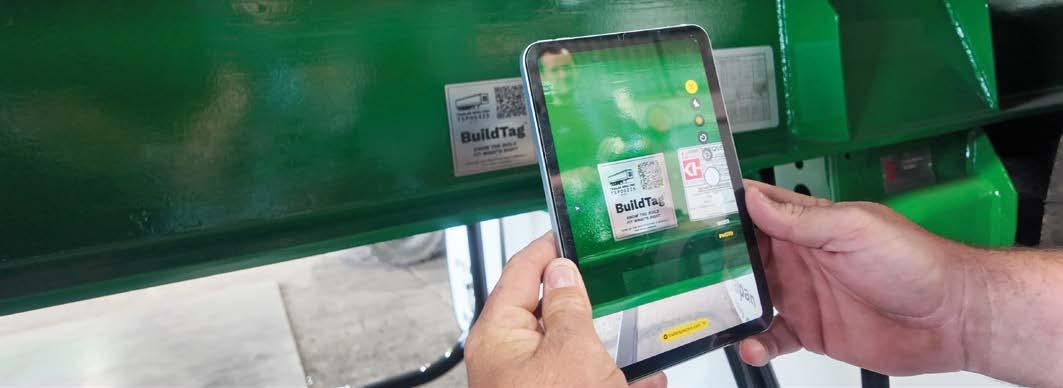
provide immediate access to important unit diagnostics such as a trailer’s manuals, drawings, spec sheets, permits, axle details and key component numbers which can be viewed online.
The trailer’s profile can also be updated by the manufacturer at any time, eliminating the risk of sharing outdated information with the operator. This is particularly critical as mechanics will be able to easily access correct installation details and safety guidelines when fitting parts. By sharing these details through the cloud, long and inefficient communication between the manufacturer and operator is greatly reduced.
BTE is one of several manufacturers that have invested in the Trailer Spec Pro innovation. The trailer builder has been fitting BuildTags on all new equipment as standard over the past three months.
In addition to new builds, BTE is also working with a long-term fleet customer to retrofit BuildTags on trailers built over previous years. This allows existing
equipment to gain the same VINspecific digital identity as new trailers, giving operators consistent access to component information across mixedage fleets.
According to Adrian, even older trailers can now be supported with accurate, upto-date information, delivering immediate time savings for both operators and the manufacturer. He himself has seen BuildTags provide customers with a full digital identity, significant time savings and increased maintenance accuracy.
“If operators can scan their own codes to find the information they need, we can become much more available to continue our manufacturing or assist customers with other pressing issues,” he explains. “And, if the customers can’t scan their QR codes in person, we can send a photo of it to them, which they can also scan to find what they’re looking for.”
Adrian says incorporating Trailer Spec Pro BuildTags into BTE’s production process has been effortless.

“We can implement the BuildTags with minimal effort,” he says. “We physically fit them during trailer production and then provide Trailer Spec Pro with the trailer VIN and component details. From there, they establish the trailer’s profile in the cloud to receive uploads going forward.”
BTE looks forward to seeing other manufacturers adopt Trailer Spec Pro’s solution based on its experience with the innovation so far.
“We’re eagerly waiting for the operational benefits to kick in once the product has had enough time on our builds,” Adrian says. “Trailer Spec Pro’s BuildTags are a small change that will have a big impact on fleets. They keep the right information on a trailer for its entire life, and that’s something the industry has needed for a long time.”
Contact
Trailer Spec Pro
Ph: 0401 954 164
Web: www.trailerspecpro.com.au
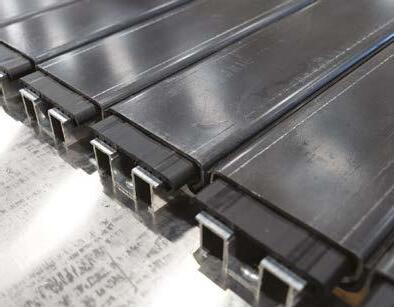
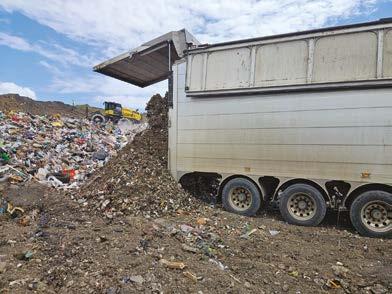

E-Plas’ QuickSilver truck linings keep high-performing tipper semi-trailers protected and productive across the transport industry
E-Plas has provided high-quality industrial and engineering performance plastics to some of Australia’s most demanding sectors for more than 40 years. It currently has branches in Victoria, Queensland, New South Wales, South Australia, Western Australia and capability to service the Northern Territory, ACT and Tasmania.
The company’s popularity among various operators has fuelled the growth of its interstate network with branches in Victoria, Queensland, New South Wales, South Australia and Western Australia. E-Plas’ innovations have remained fundamental to its offering within all of them.
Among these markets is the transport industry. Many operators in this sector face unique challenges with specific freight handling. Common issues, particularly
for tipper combinations carrying sticky or abrasive materials, include wear on trailer beds and sides and product hangup. Luckily for transporters facing these problems, E-Plas provides robust solutions in the form of its QuickSilver truck linings.
QuickSilver has been integral to E-Plas’ product offering for more than 20 years. This proven track record has ensured the liner is a convenient and long-term investment for operators according to E-Plas National Operations Manager, Rupin Joshi.
“QuickSilver has enabled our customers to keep their trailers on the road for longer and get a great return on investment,” he says. “It can be installed in a day based on the feedback we’ve received from operators.”
E-Plas’ QuickSilver Ultra-High Molecular Weight Polyethylenes (UHMW-PE) truck lining is widely regarded as a state-ofthe-art industrial strength liner for tipper applications. Its core objective is to keep tippers durable, safe and productive while on the road.
Typically used in end tippers, side tippers and quick-release applications across transport, the product was also designed with versatility in mind and has the potential to be used in off-road trucks as well. QuickSilver truck linings can be used across a variety of functions including bulk handling, minerals, agriculture and grain with protection against a multitude of materials such as mineral ore, concentrate, gravel, coal, top-soil, cement and more.
A core benefit of the QuickSilver truck
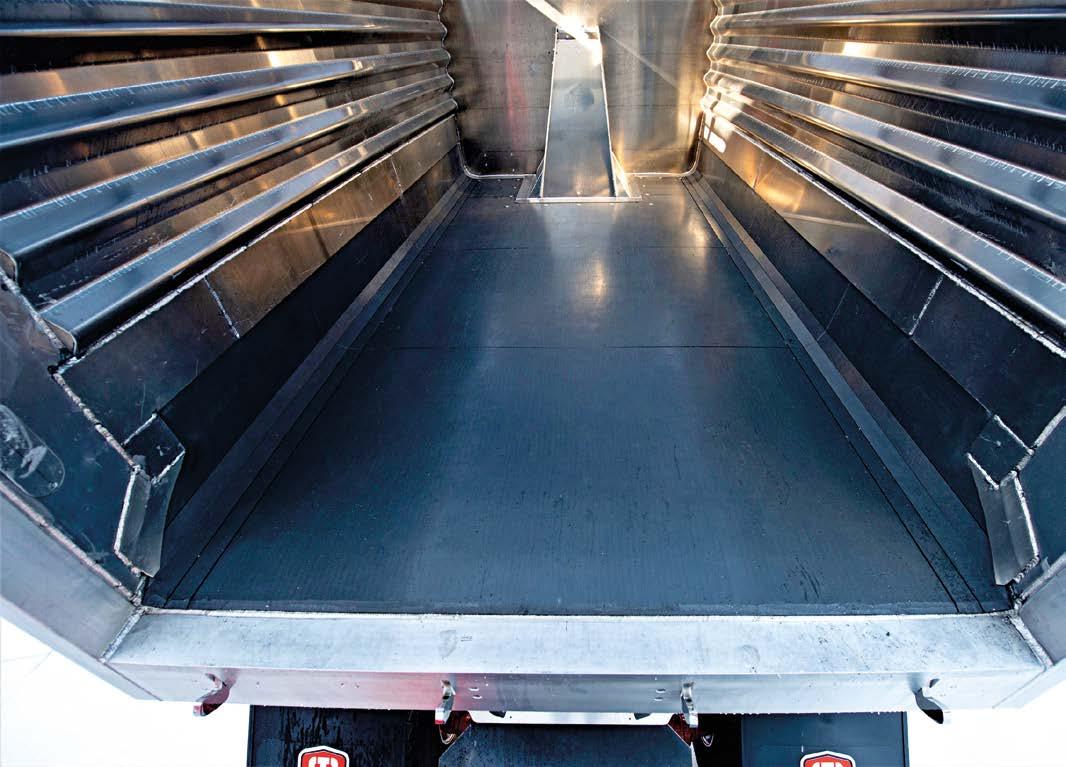
QuickSilver Heavy Duty is also now available for added life with high intensity, high impact repeat tipping.
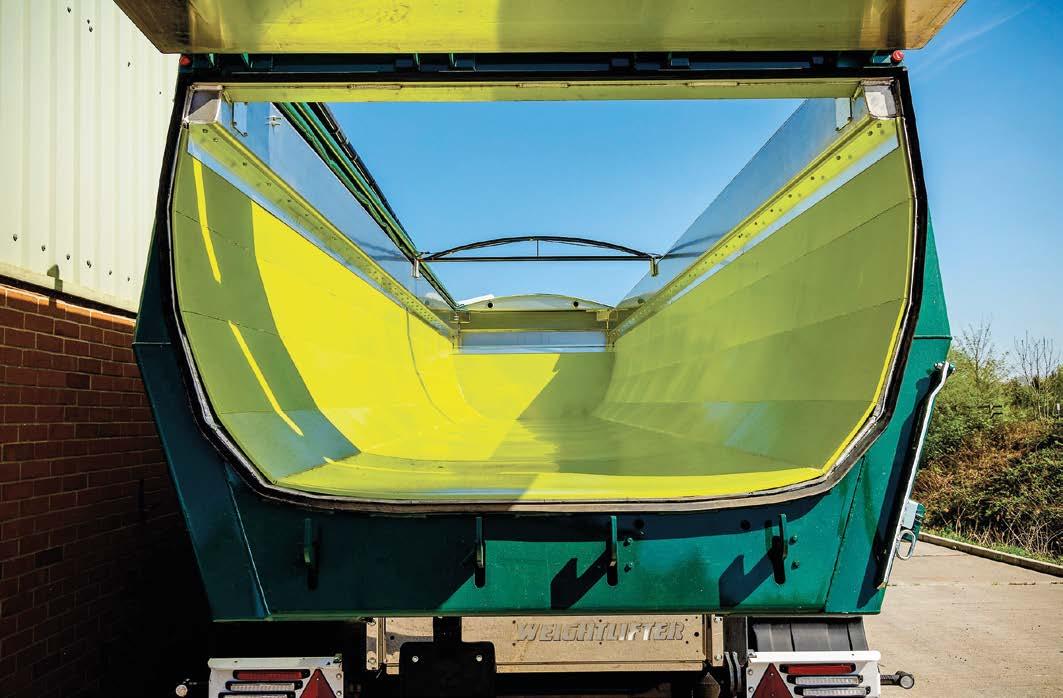
lining is it solves the frequent issue of hang-up in tippers. This is due to its impressive flow rate which prevents bulk material from sticking to the surface of a tipper tray and allows materials to flow much easier at a lower tipping angle, thereby increasing safety for operators.
As a result of its durability, QuickSilver also increases the lifetime of a given combination by preventing corrosion. Its application also contributes to operational efficiency, due to the plastic liner weighing less than steel and aluminium while protecting the integrity of the original equipment. This bolstered protection eliminates unnecessary maintenance, downtime and expenses for fleets.
“QuickSilver saves time and maintenance by removing the need for trailer beds to be cleaned or repaired,” Rupin says. “Once tippers drop off one batch of freight, they can be ready for the next one straight away. Having a totally empty trailer when returning after each trip is also a huge economic benefit for operators. Since tippers are always left empty, drivers can load them with more cubic metres and get more money per trip.”
QuickSilver is also met with QuickSilver Heavy Duty. This innovation, also developed by Mitsubishi Chemical Advanced Materials (MCAM), was designed for more demanding operations.
“The classic silver grey QuickSilver truck lining was already a premium product,”
Rupin says. “However, we wanted to better address the specific needs of a niche group of operators. We needed to come up with something that would give customers experiencing extreme wear issues and frequent high impact loads by providing better extended life.”
While QuickSilver Heavy Duty solves the issue of product hang-up much like its sister, it also caters to a much wider scope of abrasive materials. These include sand, gravel, rock, recycled glass and construction rubble which require eight or more trips per day.
“This product targets a heavy-duty and abrasive market where aluminium trucks or steel bodies cannot handle the wear,” Rupin explains. “This includes combinations that are doing more trips than usual for increased weight properties.”
These capabilities are complemented by the liner’s particular green colour which allows operators to easily discern if a tipper is empty or if there is still product in the trailer.
“Also, QuickSilver Heavy Duty’s distinct high-visibility properties make it a real stand-out product,” Rupin says. “It’s incredibly tough, and it tips and cleans like a dream. It’s an effortless solution.”
To compare the effectiveness of each QuickSilver product, E-Plas and MCAM conducted a case study which applied both liners to the fleet of a customer
that was transporting a very abrasive material. The results found that Heavy Duty lasted approximately 30 per cent longer than the standard QuickSilver, thus corroborating the claims behind its durability.
In another study, E-Plas and MCAM compared QuickSilver Heavy Duty and a wear resistant steel liner with a customer that was looking to reduce weight and achieve a similar product lifespan. Heavy Duty lasted twice as long as the wear resistant steel liner material did.
E-Plas is actively testing the long-term benefits of QuickSilver Heavy Duty and the development of the standard QuickSilver truck lining range in collaboration with MCAM.
“E-Plas has been a loyal partner of MCAM for many years now,” Rupin says. “We’ve always worked with MCAM when it comes to UHMW-PE linings such as Quicksilver, and other products such as the TIVAR 88.
“It’s the absolute quality of material, shared knowledge and solid support network that has benefitted E-Plas over decades of partnership. For us, UHMWPE linings do not exist without MCAM at E-Plas.”
Contact E-Plas
Ph: 1800 806 475
Web: www.eplas.com.au
The South East Melbourne Manufacturers Alliance is standing up for manufacturers and small to medium-sized enterprises within Victoria.
Manufacturers and the supply chain have been part of the Australian industrial landscape since the 1830s when the first blast furnace was introduced. The sector peaked in the 1960s with a Gross Domestic Product (GDP) input of 25 per cent – although it’s now below six per cent.
In 2025, the South East Melbourne Manufacturers Alliance (SEMMA) launched its Australian Manufacturing BLUEPRINT. The policy platform has enabled SEMMA to have stronger conversations with policy makers about legislative reform in a bid to reduce the ‘political red tape’ which increases the cost of doing business.
SEMMA’s five pillars of growth –economic, energy, educate, expand
and evolve – focus on key areas where manufacturing can continue to add value and increase Australia’s GDP from 5.9 per cent to 10 per cent in five years.
SEMMA CEO, Honi Walker, says the association believes goals are necessary to get results.
“SEMMA has been advocating for manufacturers for 23 years and we continue to make our members’ needs known at all levels of government,” she says. “We are a political bipartisan, member-funded, not-for-profit organisation.
“For manufacturers, SEMMA will continue to advocate for a freeze on land tax, payroll tax and WorkCover premiums for small to medium-sized enterprises. We
“We will continue to ask the regulators to do their job when it comes to Local Jobs First content and toughening our anti-dumping laws.”
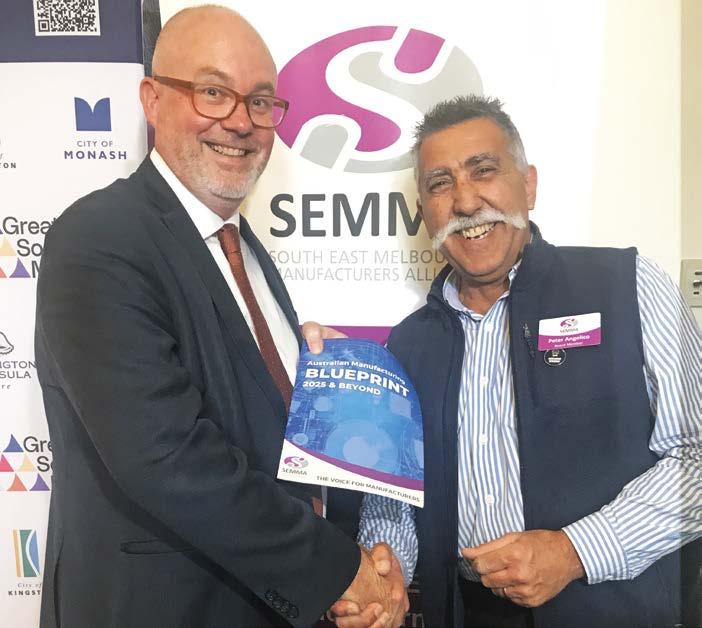
will continue to ask the regulators to do their job when it comes to Local Jobs First content and toughening our antidumping laws.”
SEMMA is also known for its ability to connect businesses. According to Honi, its members do not feel the need to compete. SEMMA’s membership network gives them the complementary channels which enable them to engage like-minded businesses as sounding boards, build up strong partnerships and learn from these extensive networking relationships.
“Manufacturing has played a foundational role in supporting the Australian economy for many decades,” she says. “It is time to recognise and acknowledge the significant contribution of our industry to the Australian way of life.”
While SEMMA might be based in the southeast regions of Melbourne, Victoria, it has an eye on the national economy and its place in it. In fact, Melbourne’s southeast has recently been acknowledged by a Deloitte report to be the manufacturing powerhouse of Australia.
According to a AI Group, the southeast region contributes $89 billion to Australia’s economy and employs 75,400 people through 3,801 manufacturers.
Manufacturing is the sixth largest industry nationally, generating $137 billion in valueadded output and employing 930,000 people. It contributes 12.4 per cent to Australia’s exports and 7.9 per cent to capital expenditure.
“We believe there is enough manufacturing opportunity to go around, but government policy must help not hinder our smart, secure and sustainable manufacturers,” Honi says. “If you’d like to have your say, join us. Become a SEMMA member and we’ll keep raising the profile and voice of manufacturing.”
South East Melbourne Manufacturers Alliance
Ph: 0422 488 678
Web: www.semma.com.au

When Ron Crouch Transport (RCT) entered voluntary administration in late 2025, the announcement rippled across the industry. For many, the news hit hard not just because of RCT’s reputation as a dependable regional carrier, but because its circumstances reflect a broader, systemic problem that Victorian Transport Association (VTA) CEO, Peter Anderson, said has reached critical levels.
“The industry has never been under
more pressure than it is at the moment,” Anderson warned. A statement now underscored by the collapse of yet another long-standing operator.
In a statement issued December last year, RCT Managing Director, Geoff Crouch, confirmed the decision to enter voluntary administration was taken to give clarity to employees, suppliers and customers at a time of mounting industry strain.
“Whilst I love and have a passion for
the Australian transport industry, as we all know it is a tough one that takes no prisoners,” he said.
Crouch cited the same pressures Anderson has been flagging for years.
Challenging economic conditions, stagnant freight rates, a severe driver shortage and the never-ending burden of government over-regulation.
After nearly 50 years in business, the weight became too great.
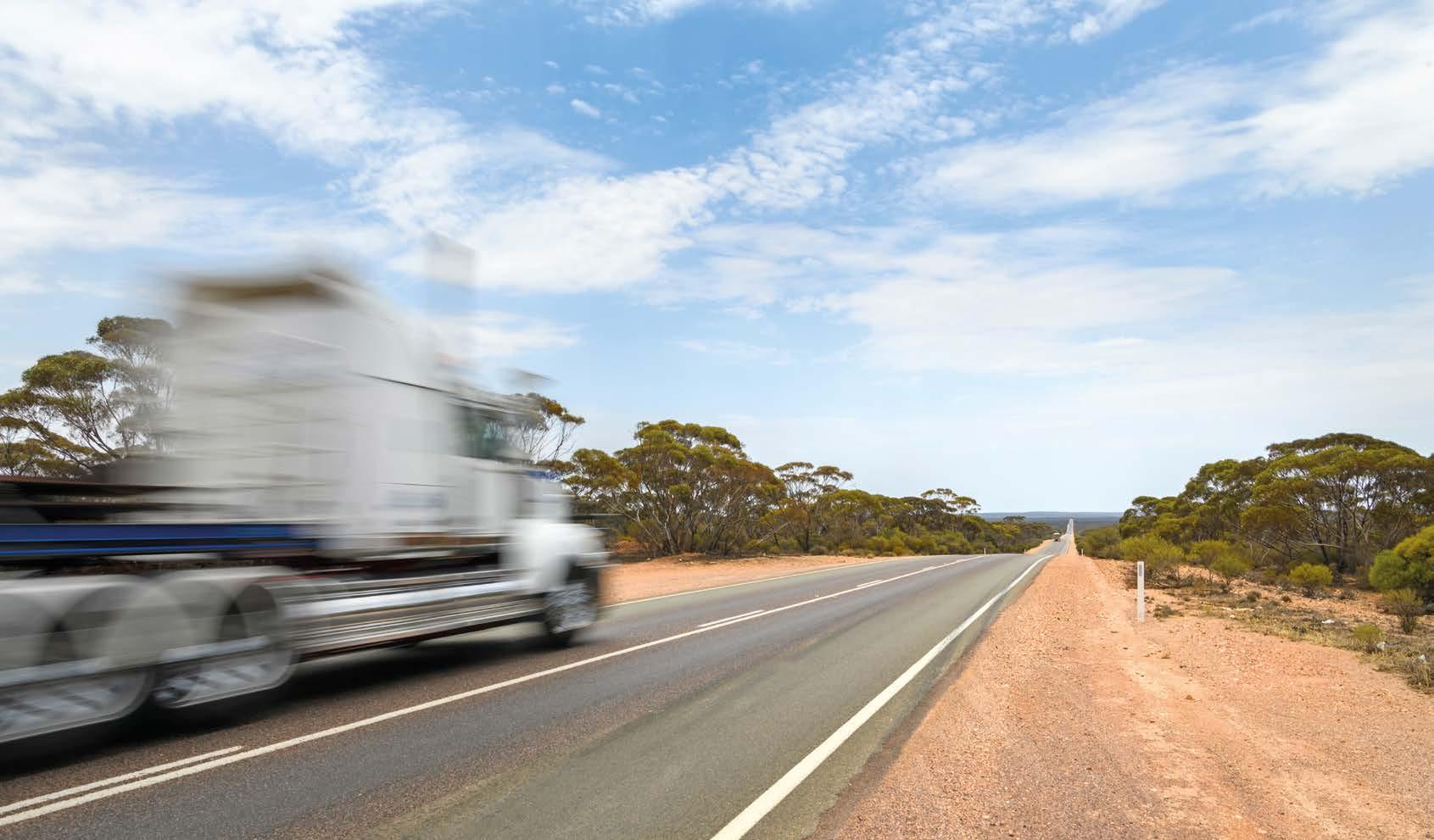
“Ultimate responsibility, of course, though is mine,” he added.
Despite the administration, Crouch stressed, at the time of the statement, that operations would continue with the support of financiers, customers and staff. An immediate priority for the appointed administrator was to seek a buyer who can secure the best possible outcome for all staff and creditors.
Crouch used the announcement to acknowledge the hundreds who built RCT over decades.
“I sincerely thank and appreciate the many hundreds of team members that have contributed to RCT over the last 47 years, and in particular the 120 current team members who will be affected the most.
Systemic weakness is giving rise to insolvencies among transport operators. Image: gary/stock.adobe.com.
According to industry commentator Brendan Richards, RCT’s administration is not an isolated failure but evidence of a deeper structural flaw in Australian freight.
Richards said that the businesses doing everything right – investing in safety systems, compliance, proper driver training and fair wages – are often the least able to survive under current market conditions. Subscale, family-owned operators carry fixed costs that cannot be diluted without the economies of scale enjoyed by larger players.
Meanwhile, operators willing to cut corners gain a competitive advantage by artificially lowering their costs. Underpayment, sham contracting, regulatory avoidance and the quiet acceptance of fines as a routine operating expense distort the market and reward non-compliance.
The result is a fundamentally broken
system in which responsible behaviour is commercially punished, while irresponsible behaviour is commercially rewarded.
That imbalance hits hardest because most Australian transport businesses are small to mid-sized family operators – precisely the segment the industry publicly claims to value most. When companies like RCT fall, they should not be treated as an unfortunate outlier, but as evidence of a system that is failing the very operators it depends on.
If regulators, customers and policymakers do not confront that reality, Australia will continue losing the operators it can least afford to lose.
For those living it day to day, the consequences are far more personal than balance sheets and policy debates.
After news of RCT’s administration broke, Ross Transport owner, True Ross, shared a poignant message. Her words
“Once these family operators are gone, Australia will feel the loss in ways that cannot be fixed.”
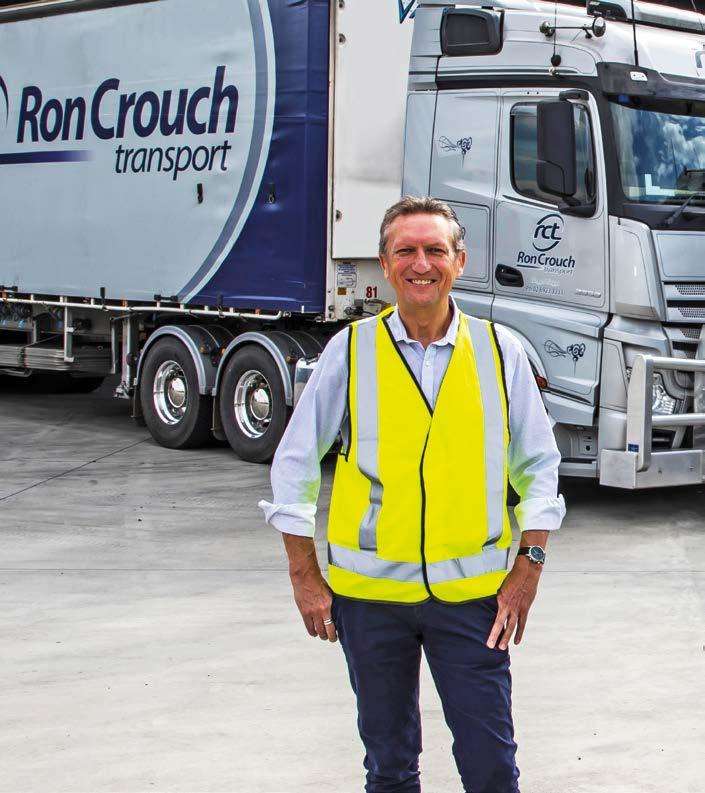
Geo Crouch.
Truck and Bus.
echoed what many family operators have been feeling.
“We are witnessing something deeply saddening and profoundly unsettling,” said Ross. “An industry built on hard work, sacrifice, and generations of dedication slowly collapsing under pressures that no honest family business should ever have to endure.”
Every week, sometimes every day, another transport company announces administration or liquidation. Many of them are businesses that have carried Australia for decades, built by families who poured their lives into them.
“They are not failing because they lost their drive or their commitment,” said Ross. “They’re failing because the pressures bearing down on them have become impossible to survive.”
Ross pointed to a convergence of forces including constant government demands,
crippling taxes, regulatory frameworks that shift faster than small operators can realistically adapt and rate-cutting so severe that no one can make a living, dragging the entire market down with it.
Layered on top is a nationwide labour and skills shortage that leaves trucks parked and workloads piling up, while operators desperately search for drivers who simply are not there.
“For so many, coming to work every day has become an exhausting uphill climb,” said Ross. “The spark that once kept these family businesses going is being smothered by obstacles they had no hand in creating.”
What is often lost in policy discussions is that these companies are not just commercial entities. They are family legacies.
They are built on early mornings, late nights, missed holidays and sacrifices
that rarely appear on a profit-and-loss statement. For 50 or 60 years, sometimes longer, these operators have stepped up for Australia through fires, floods, pandemics and economic shocks.
But now, Ross said, many are simply exhausted.
“They’re weary,” she said. “They’re drained. And for the first time, many are saying, ‘We can’t keep going like this.’”
Each closure represents far more than a business lost. It is knowledge lost. Jobs lost. Community lost. Another piece of industry capability disappears, often permanently.
“And once these 50-year family companies are gone,” Ross warned, “they are gone forever.”
RCT’s fall is among the latest in a line of longstanding carriers that have succumbed to the pressures which Anderson said are intensifying as the industry transitions toward lower-emission operations.
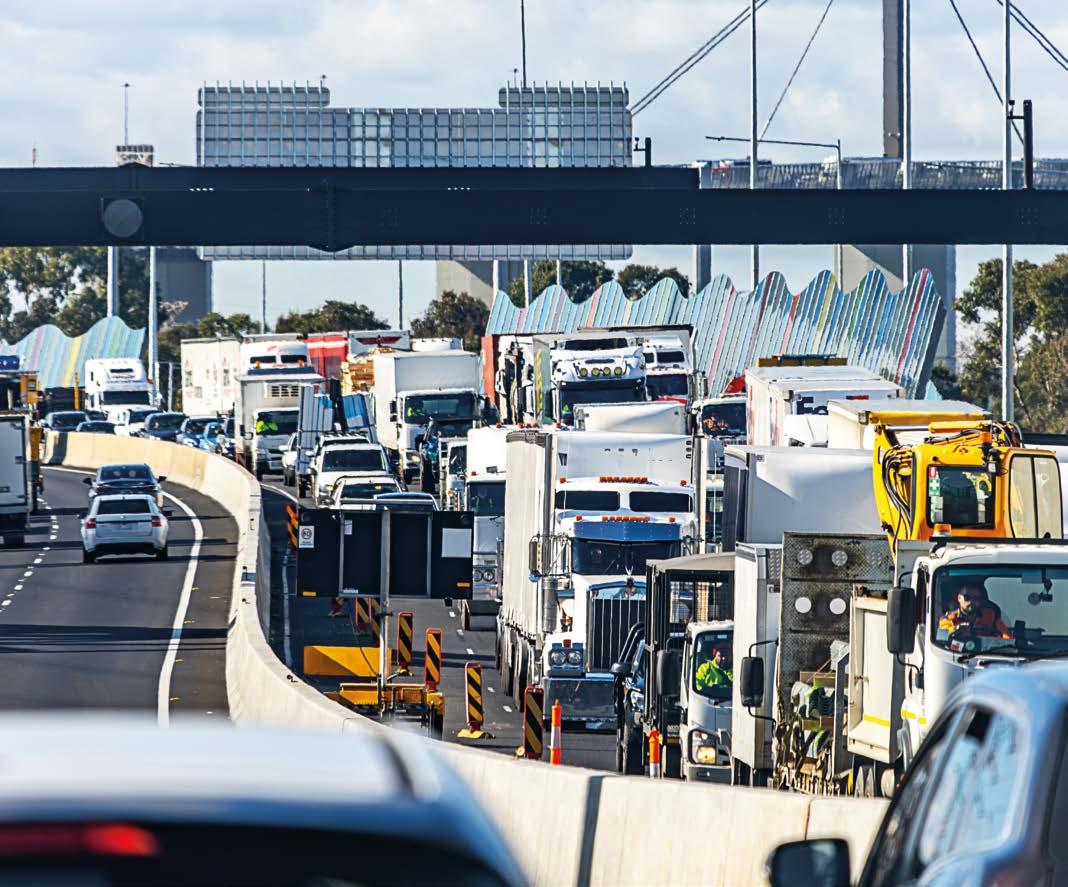
Decarbonisation, for instance, remains a structural challenge with real economic risk.
“How are we going to remain sustainable, and how are we going to make sure our businesses can prosper through the change of energy source?”
Operators want to transition, he said, but must be able to survive while doing so.
“Social conscience and social value mean nothing if you’re broke.”
Crouch’s comments echo that sentiment almost point-for-point.
A central concern for Anderson is the trend of adopting European and North American policy frameworks without adapting them for Australian freight conditions.
“We can create policy and targets based on overseas values,” he said. “It isn’t necessarily what will fit into our day-today life.”

Diesel remains a flexible, reliable energy source across Australia’s unique long-distance networks. The road ahead, possibly involving combinations of battery-electric, hydrogen and HVO, will require massive investment and time, neither of which many operators currently have.
Without practical incentives, Anderson argued, fleets risk being punished rather than supported.
Crouch’s reference to “the neverending burden of government overregulation” is a sentiment heard widely among operators. Especially regionally based ones with smaller administrative teams.
Anderson noted that the VTA (and all state associations) are now relied upon heavily for navigating regulatory change.
“Transport operators should get hold of their local association,” he said. “They get the benefit of talking to someone directly who knows what they’re talking about.”
For many operators fighting to keep trucks on the road, this guidance has become essential and insufficient government support is pushing some to the brink.
RCT’s legacy extends well beyond commerce.
Crouch, a former Chair of the Australian Trucking Association, has long been known for his advocacy and community generosity. Simon Smith of Australian
Truck Radio recalled the 2003 Canberra bushfires as a defining moment.
Within hours of a local working group forming to send relief from Wagga Wagga, Crouch called him directly: “Mate, whatever you need, you’ve got it.”
Within days, RCT warehouses were overflowing with donated goods and B-doubles were fuelled and heading to the ACT.
“Something I will never forget was that fleet of Ron Crouch rigs heading out of Wagga Wagga loaded with local generosity to help so many families in Canberra,” said Smith.
Stories like this, Smith and Anderson agree, demonstrate why the industry is worth fighting for and why its current financial fragility is so concerning.
The fate of RCT now depends on the administration and sale process. But its collapse serves as a warning signal for policymakers and industry leaders alike.
Margins are evaporating. Regulatory load keeps growing. The decarbonisation transition is accelerating faster than operators can finance. Without meaningful reform or targeted support, more businesses may follow RCT’s path.
“The transport industry is unique,” said Anderson. “It needs as much help as we can get.”
Ross put it more bluntly. “Once these family operators are gone, Australia will feel the loss in ways that cannot be fixed.”
Patrick Coghlan, CEO of the Australian Institute of Credit Management (AICM), noted that the Australian road transport sector is facing its most severe financial stress in years. After insolvencies were artificially suppressed during the Covid support period, business failures have surged, with one in 12 transport operators (8.46 per cent) closing in the past 12 months to November 2025. That rate is up more than 40 per cent year-on-year, placing road transport alongside hospitality as one of the country’s most failureprone sectors.
Rising costs are at the heart of the problem. Fuel, maintenance, labour, insurance and rents remain elevated, while interest rates and aggressive price competition leave little room to recover those costs. Smaller and family-run carriers, particularly regional and interstate operators, are the most exposed, lacking the cash reserves and negotiating power of large logistics groups.
Structural pressures are compounding the squeeze. Driver shortages continue to push up wages, the ageing workforce limits new capacity, and second-hand truck values have fallen more than 60 per cent from Covid peaks, weakening balance sheets. At the same time, compliance and environmental obligations are adding further overheads, while competition from interstate and international operators intensifies the race to the bottom on freight rates.
Financial stress is already visible. Invoice defaults among transport operators are near record highs, up 99.1 per cent year-on-year, and more than a third of businesses with repeated payment defaults have entered insolvency within 12 months. Nearly a quarter of operators carrying ATO tax debts over $100,000 have also failed within a year.
Closure rates vary sharply by region. The ACT recorded the highest rate at 14.52 per cent, followed by the Northern Territory at 12.68 per cent, while Western Australia remains the most resilient at 5.71 per cent.
The outlook remains challenging. With freight demand soft and cost pressures entrenched, insolvency risk is expected to stay elevated through 2026, turning transport providers into a growing credit risk for customers across the supply chain.
Port of Melbourne’s 2025 sustainability report highlights the organisation’s continued commitment to its environmental objectives, trading, partnerships and overall development over the last financial year.
Port of Melbourne is an essential force in Australia’s economy. As the nation’s largest general cargo and container port, it acts as a vital trading gateway for the southeast region while facilitating over a third of the country’s trade and stimulating economic activity. In addition to its financial influence and responsibilities, Port of Melbourne has prioritised commitments to sustainability for the last four years. This is clear through the organisation’s sustainability reports, the most recent of which highlights Port of Melbourne’s performance milestones achieved over FY25.
Port of Melbourne’s container trade in FY25 outperformed FY24, fuelled by strong growth across imports and exports. Non-container trade simultaneously saw a decline, caused by reported decreases in liquid bulk, motor vehicles and break-bulk volumes, while dry bulk remained stable.
In terms of trade volume during the financial year, Port of Melbourne saw 89 million tonnes of containerised cargo, 5.4 million tonnes of liquid bulk, 8.6 million tonnes of motor vehicles, 5.7 million tonnes of dry bulk and 1.1 million tonnes of break bulk.
Throughout FY25, China continued to be Port of Melbourne’s largest source of import trade, accounting for half of the organisation’s imports. The United States, Thailand, Vietnam and Malaysia were other notable importers, accounting for five per cent, five per cent, four per cent and three per cent of Port of Melbourne’s imports, respectively. As a result of this large involvement from China, this last financial year has seen a notable increase in import trade from FY24. Top imports were dominated by consumer goods such as furniture, domestic
appliances and clothing. By comparison, Port of Melbourne’s export trade in FY25 was more broadly distributed internationally. While China also remained the organisation’s largest export partner, taking up 20 per cent, other regions were more involved, too. The rest of South East Asia accounted for another 27 per cent of Port of Melbourne’s exports, while New Zealand, Japan, Indonesia and the United States accounted for nine per cent, seven per cent, six per cent and six per cent of exports, respectively. FY25’s strong uplift in export trade was driven by favourable agricultural conditions and strong international demand for key commodities such as meat, cotton and hay. Additionally, the India-Australia Free Trade Agreement significantly boosted nut exports to India.
Port of Melbourne’s operational capacity was bolstered throughout FY25 with continued investments into infrastructure from the organisation. This funding has also come from some of its active tenants, other infrastructure providers and the Victorian Government.
Swanson Dock East was the site of a $175 million upgrade. Specifically, four 50-tonne bollards were upgraded to 150-tonne bollards to accommodate larger vessels. This renovation was an integral aspect of Port of Melbourne’s strategy to enable overall port access to vessels larger than the historical design limitation of 300 metres in length. This project involved removing the existing fenders and 50-tonne bollards and demolishing 166 tonnes of concrete to install the new fender beam. Forty-two tonnes of reinforcement were installed to build the pile caps and fender beams. Notably, 72 cubic meters of environmentally friendly concrete (containing 50 per cent cement
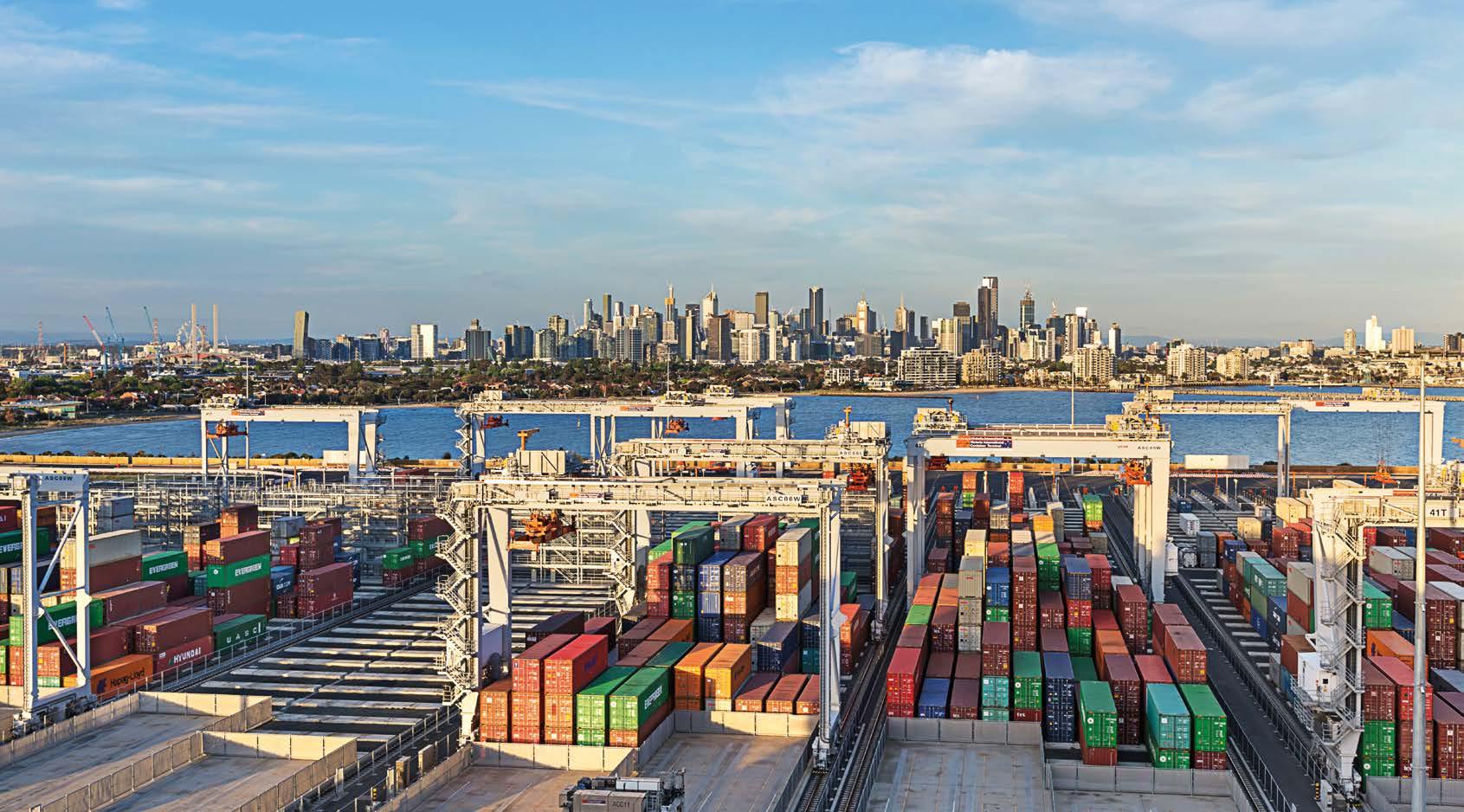
replacement) was used to pour the pile caps and fender beams.
Meanwhile, $210 million was invested in delivering the Port Rail Transformation Project to provide an on-port rail terminal, which is directly connected to the Swanson Dock East Container Terminal. About $60 million was invested in expanding the Webb Dock East Container Terminal through provision of a new mooring dolphin at the southern end of the berth. The berth was also extended by 71 metres to the north. Finally, another $60 million was invested to undertake required annual maintenance dredging of all the port channels and berths.
Port of Melbourne has also signed a lease for the former Melbourne Wholesale Market site with the Victorian
Government. The organisation will develop the site for a range of uses which are consistent with the State Government’s Freight Plan. Port of Melbourne expects to access the land some time this year.
Port of Melbourne’s Sustainability Strategy was refreshed in 2025 with a focus on decarbonisation and climate resilience.
“In FY25, we updated our Climate Change Statement, which affirms our commitments to managing climaterelated risks and opportunities to support the port’s long-term sustainability,” said Port of Melbourne CEO, Saul Cannon. “Our approach to managing and disclosing climate risks and opportunities
is guided by the Australian Sustainability Reporting Standards, and we will continue to align our voluntary and mandatory disclosures accordingly.”
Throughout the last financial year, Port of Melbourne rolled out environmental strategies to make its operations more sustainable. Port of Melbourne’s sustainability objective is to ensure its resilience to long-term climate conditions, minimise impact on the environment and seek resource efficiencies.
Port of Melbourne’s sustainability efforts are managed and reviewed by a combination of internal and external stakeholder surveys and frameworks, which have reported strong progress for the organisation over the last financial year.
“We hold ourselves accountable for
our sustainability commitments through external benchmarks, verification of our achievements and transparency reporting on our sustainability performance each year,” said Cannon. “In FY25, we maintained our five-star Global Real Estate Sustainability Benchmark (GRESB) Infrastructure rating, ranking equal first among Australian and global ports. I am pleased to report that we again scored the maximum possible 100 points on GRESB’s independent review of our policies, risk management and key metrics.”
Port of Melbourne also completed two years of its six-year Sustainability Linked Loan period and met all its sustainability performance targets. These included emissions reductions, in addition to engaging with port stakeholders and
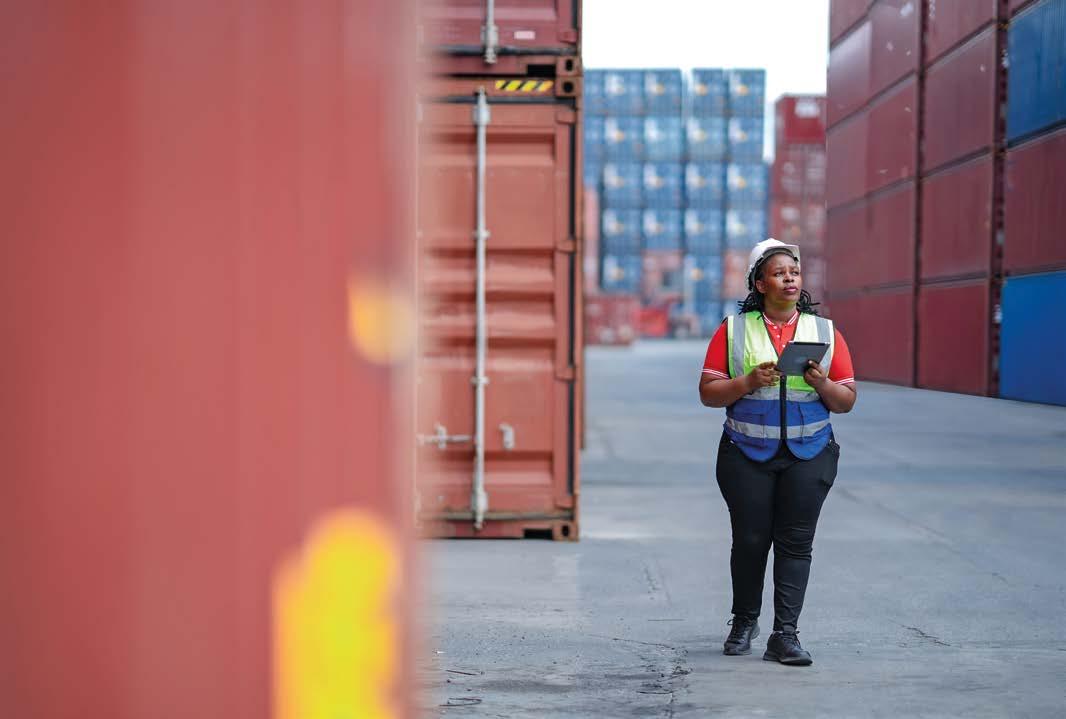
progressing workplace mental health.
Port of Melbourne takes a systematic approach to identifying potential environmental impacts and implementing appropriate mitigation measures. In FY25, PoM obtained certification under ISO 14001: Environmental Management Systems. This accreditation, along with the organisation’s other certifications, creates a fundamental guide for continuous sustainability improvement.
As part of Port of Melbourne’s climate strategy, the organisation continues to recognise the Paris Agreements’ goals to limit global temperature rise to 1.5 degrees Celsius above pre-industrial levels by the end of this century. It also supports both the Victorian and Federal Governments’ transition plans to net zero emissions.
Port of Melbourne will continue to measure its Scope 1, 2 and 3 emissions to understand its climate impact and inform its decarbonisation roadmap. The organisation aims to be Net Zero by 2030 for its Scope 1 and 2 emissions, and will engage with stakeholders that represent its Scope 3 emissions to facilitate the decarbonisation of the port value chain.
To achieve this 2030 target, Port of Melbourne is planning to transition its corporate vehicle fleet and marine survey vessel to electric or zero-emissions fuel technologies.
In FY25, combined Scope 1 and 2 emissions were 1,110 tCO2e, a reduction of 30 per cent in greenhouse gases from FY24, bringing the organisation to a total reduction of 62 per cent since its net zero baseline year in FY22. These reductions were achieved due to the commencement of the organisation’s renewable Power Purchase Agreement (PPA) on 1 July 2024. The PPA outlines that approximately 61 per cent of Port of Melbourne’s current electricity needs to come from renewable electricity sources, such as Victorian-generated solar and windfarms.
Port of Melbourne achieved further sustainability through the restructuring of its IT strategy to migrate its onpremises infrastructure to a managed cloud service. This initiative sought to lower emissions, optimise resources and reduce operational costs.
In addition to the Port’s specific emissions goals and process reviews, part of its approach to achieving sustainability in FY25 included minimising the use and waste of materials. The organisation achieved 65 per cent diversion from landfill for its corporate office waste. Moreover, Port of Melbourne consumed 50,864 kilolitres of portable water in FY25, consistent with its long-term historical average. This water was used for a range of office-based and port operational purposes, although a large portion of it was also consumed by port users. Twenty-one per cent of Port of Melbourne’s overall water use over the last financial year was dedicated to the support of commercial shipping. This statistic tends to vary significantly each year, as it is driven by the changing needs of vessels, the uptake of this service, and an increase in infrastructure development activity.
Port of Melbourne also engaged in a multitude of sustainability projects, in partnership with various organisations. Its Shellfish Reef Restoration Project, completed in collaboration with The Nature Conservancy (TNC) aimed to
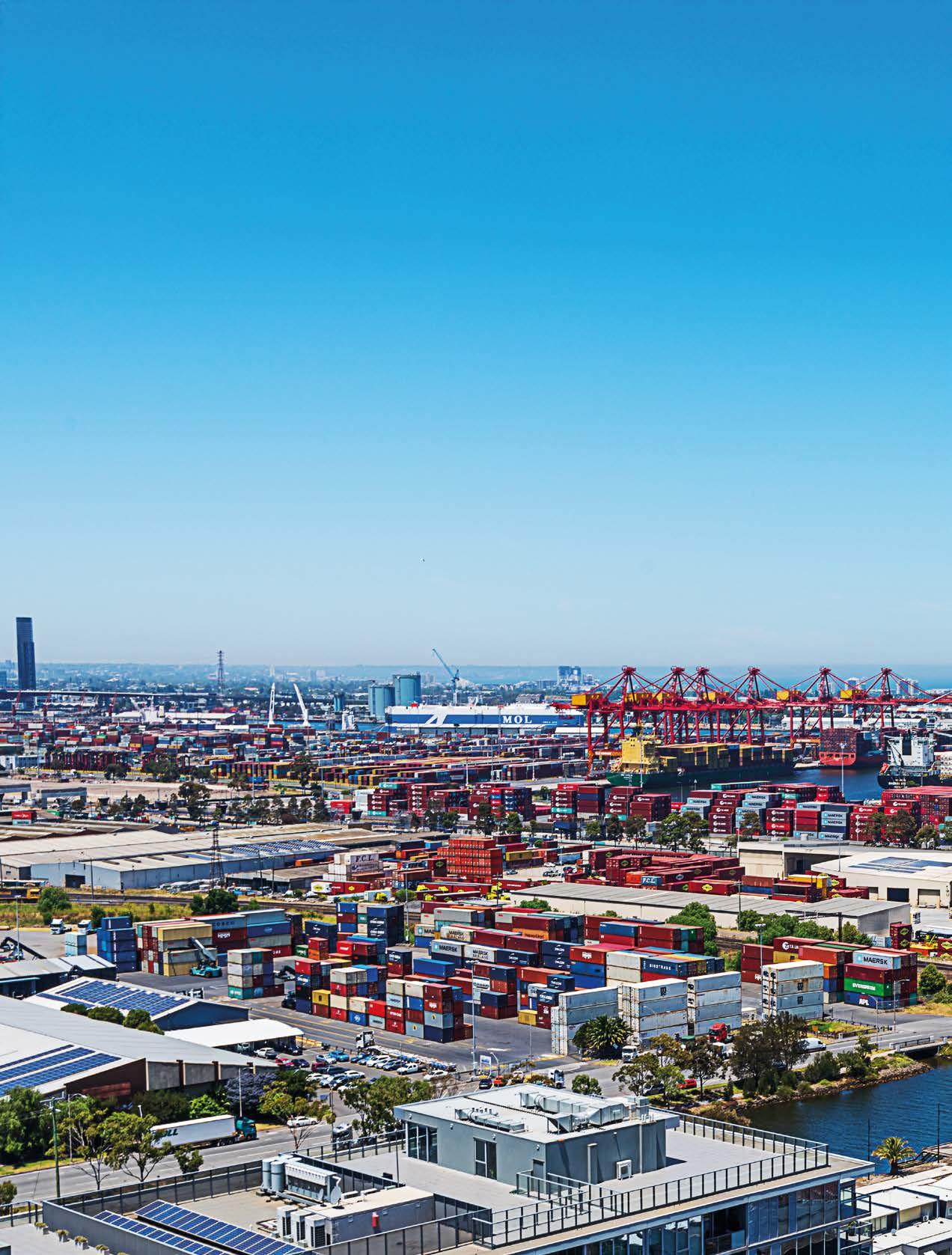
remediate the Dredge Material Grounds in Melbourne’s Port Phillip Day. This was completed through the strategic restoration of shellfish reefs at a permitted site. The initiative is part of the TNC’s ongoing national shellfish restoration program, which seeks to re-establish shellfish ecosystems at 60 locations across the country by 2030. To date, this project has contributed an additional 1.2 hectares of restored reef habitat, building on prior restoration efforts and providing ecological enhancement over dredge spoil within the DMG. Reef construction incorporated approximately 400 cubic metres of recycled cultch shells, used for reef formation and seeding within the DMG. The shellfish reefs will be monitored by Port of Melbourne and TNC for a
period of two years following completion of construction, until it becomes a fully developed reef comparable to Margaret’s Reef, 10 kilometres away. The project’s long-term goals include the public dissemination of project outcomes to facilitate knowledge sharing, support continuous improvement in restoration efforts, and evaluate environmental opportunities at other DMG sites. Port of Melbourne joined another sustainability project in FY25 with Polaris Marine Group and in2Dredging to conduct a water injection dredging (WID) trial within the Yarra River channel. The objective was to assess the feasibility of this method as a low impact maintenance dredging approach for accessing protection structures over service pipelines. The
WID involved low-pressure, highvolume water injections to fluidise seabed sediments for natural relocation, supporting alignment with environmental and regulatory requirements. Jet impact assessment modelling confirmed the applied pressure would have no adverse impacts on existing grout or steel structures. The trial demonstrated that WID enables efficient sediment dredging with minimal disruption to operations. Compared to traditional methods, WID delivered improved efficiency, reduced fuel use, and lower infrastructure interaction, and therefore supported the method’s potential as a sustainable maintenance dredging approach in sensitive port areas of interest.
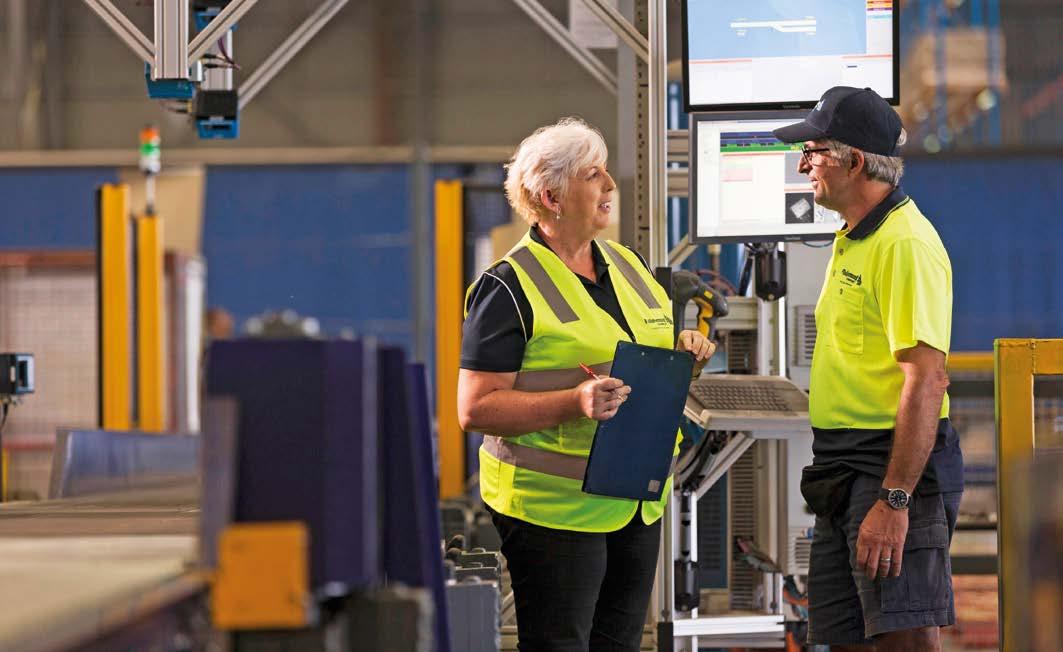
Followmont Transport has introduced a new program into its operations to increase the safety and wellbeing of its employees.
Safety is imbedded in the ways in which Followmont Transport operates. It’s a byproduct of good business practices rather than a standalone function. Safety, in simple terms, is how Followmont Transport operates every day.
The business’ family values have long guided both internal and external outcomes, with service and care sitting as the bookends which shape how Followmont Transport supports its customers, people and communities.
Followmont Transport Chief People Officer, Melissa Strong, says care isn’t just a word on the whiteboard. Instead, it’s a factor which heavily influences how the business designs its programs and supports its people.
“When our team is healthy and fit for work, it directly impacts the safety of the communities they interact with every day,” she explains. “That’s a responsibility we take seriously.”
Followmont Transport has just launched
its new Fit for Life and Work program in line with this commitment. The scheme is a structured, proactive framework which was designed to support employee health, fitness for work and long-term wellbeing.
The program brings consistent medical screening, early intervention and practical wellbeing support together to help employees better understand and manage their health. From there, it strengthens safety outcomes across the business and on the road.
Rather than focusing solely on compliance, the framework takes a holistic approach to wellbeing by addressing physical health, mental wellbeing and functional fitness for work. A key element of it is the Fit for Life Driver Campaign –Driving Health, Driving Success which focuses on common health conditions that can impact driving safety. This includes diabetes, sleep apnoea and weight management.
Melissa says the program is an initiative grounded in care, prevention and longevity.
“There’s a gap in how driver health is managed across the industry, and with an ageing workforce, more people want to work longer if they choose,” she says. “We want to help our people do that safely, while also supporting balance outside of work so they can fund their retirement and enjoy life beyond the job.”
Followmont Transport’s Fit for Life and Work program was developed in response to industry-wide challenges including an ageing transport workforce, ongoing skills shortages and inconsistencies in how medical standards are applied. Melissa says it will improve overall health and fitness across the workforce by identifying risk factors early and enabling more targeted support. This will be achieved through company-funded medical assessments, targeted health campaigns and access to wellbeing resources.
“We want to support the whole person – not just compliance,” she says. “This program helps safeguard against potential gaps in medical screening while giving our people confidence and support to manage their health and continue working safely for longer if they choose.
“Right now, we can talk about age, experience and licence types. But gaining a clearer picture of workforce health allows us to be far more deliberate in the programs and campaigns we put in place, so they genuinely support the individual.”
Employees will have access to a range of health options and guidance, helping reduce the fear often associated with medical checks. This approach is designed to be proactive and supportive, rather than reactive.
“The process can feel daunting for many people,” Melissa explains. “Not just with the check-up, but what comes after.
“This program helps take away that uncertainty by supporting people through access, time and cost, and helping them understand how to manage any issues that arise. We want to support our people so they can be their best selves, both at work and at home. That’s central to who we are.”
The program strengthens Followmont Transport’s overall safety performance by identifying potential concerns early. Melissa claims this will give the family business a clearer picture of its workforce from an audit, safety and compliance
perspective while helping individuals better understand their own capabilities and resilience.
She also notes that while fatigue rules are prescriptive, they don’t always address broader health factors.
“Fatigue rules tell you what you can do, they don’t manage fatigue,” Melissa says. “This program supports overall fitness for work, including fatigue, which directly impacts how safely someone performs their role day to day.”
Around this program, Followmont Transport supports safety through a comprehensive range of initiatives led by its safety, learning and development and compliance teams. This includes licence upgrades, driver assessments, leadership programs, depot-based safety training, Chain of Responsibility education, Dangerous Goods awareness, load restraint, pre-starts and fault reporting.
Regular depot safety audits and online e-learning modules are also delivered throughout the year. Additionally, Followmont Transport runs Safety Leadership Programs and wellbeing initiatives aligned with key health awareness campaigns.
“We recognise health and wellbeing concerns can affect anyone,” Melissa says. “Early awareness and action support safer outcomes for both our people and the communities they interact with.”
The company also conducts quarterly
safety pulse surveys to gather feedback directly from employees on the ground. These surveys provide a regular check-in on how safety initiatives are working in practice, encourage open communication and help identify opportunities for improvement based on real-world experience.
Vehicles are fitted with fatigue management systems and advanced telematics, and the business continues to invest in fleet and equipment with safety-focused features to support safe, consistent performance across the network.
“We have a responsibility to the communities we interact with every day,” Melissa explains. “Ensuring our people are fit for work and performing their role safely is critical, particularly when they’re sharing the road with the general public.”
Australia’s largest supply chain and logistics trade show, MegaTrans, is returning in 2026.
Scheduled to take place from 16-17 September 2026 at the Melbourne Convention & Exhibition Centre, MegaTrans 2026 will once again shine a spotlight on the Sustainable Supply Chain of the Future – attracting key players across freight, logistics, warehouse operations, transport technology, infrastructure and more.
To participate, visit www.megatrans.com. au/get-involved/.
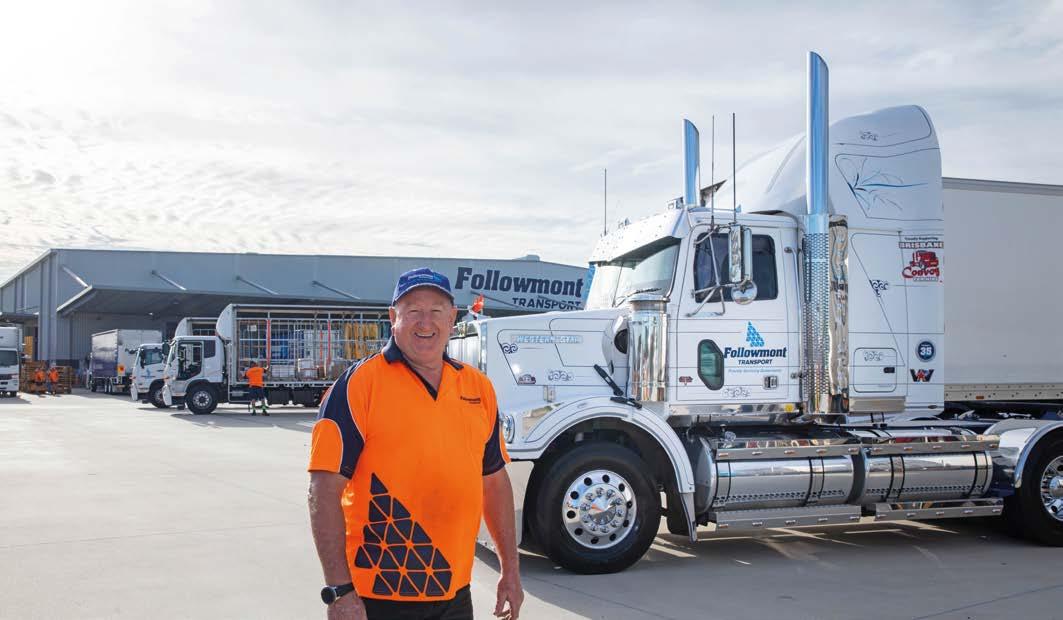
$9B Bruce Highway safety upgrades continue
Four new projects will improve safety and reliability along the Bruce Highway as part of a historic $9 billion investment into the key route.
The next stage of works is part of a more than $500 million joint investment from the Australian and Queensland Governments which will deliver 22 new projects under the Bruce Highway Targeted Safety Program.
The works include building a stronger, more resilient road surface to boost skid resistance, widening the road and installing wide centre line treatments and audio tactile line markings to create more distance between traffic – reducing the risk of headon collisions by up to 60 per cent on highvolume rural roads.
Local projects include:
• Bowen to Ayr – pavement strengthening in four sections
• Ayr to Townsville – pavement strengthening in six sections
• Townsville to Ingham – pavement strengthening in five sections
• Mackenzie Creek to Tindall Court – wide centre line treatment with road widening and audio tactile line marking.
“For North Queensland, the Bruce is the lifeline that links our communities, industries, and supply chains,” said Queensland Member for Townsville, Adam Baillie.
“Our port, our defence bases, our agricultural producers, our manufacturers and our local small businesses all rely on trucks moving smoothly up and down this highway.”
Work has already begun on the next round of 22 projects and will continue next year, building on the safety benefits from the first round of 16 priority projects which were announced in March.
Six of those projects are already complete, with eight under construction and the remaining two to commence this month.
Federal Minister for Infrastructure, Transport, Regional Development and Local Government, Catherine King, said the program’s large budget represents the Australian Government’s commitment to improving road safety.
“Our record funding under the new $9 billion Bruce Highway Targeted Safety Program demonstrates our focus to making this a reality for the Bruce,” she said.
“With significant progress made in delivering the $300 million early start package for the program, this next wave of work will ensure prioritised safety improvements continue to roll out on the Bruce Highway, improving safety for the long-term.”
The first project under the $500 million Queensland Beef Roads program, which will upgrade critical freight routes, has begun.
These works will improve the transport efficiency, safety, and resilience of Queensland’s world-class beef industry across an area the size of Great Britain.
Construction on the project’s $47.5 million early works package has begun via the sealing of a priority section of ClermontAlpha Road – approximately 89 kilometres north of Alpha in the Barcaldine Region.
Alongside the Clermont-Alpha Road works, the early works package will deliver widening, sealing and floodway upgrades to sections of Alpha-Tambo Road, Fitzroy Developmental Road between Bauhinia and Duaringa and on May Downs road.
Queensland Minister for Transport and Main Roads, Brent Mickelberg, said this beef corridor road network is key to the efficient movement of cattle freight.
“Managing a road network of this magnitude is challenging but critically important to support the movement of about $1.7 billion in freight and agricultural produce – primarily Australian beef – each year,” he said.
“The sealing of these strategic beef corridor roads will improve the cattle supply chain in the region from our primary producers to saleyards, processing facilities and onto plates both here and overseas.”
The first package forms part of the 10-year Central Queensland Beef Roads Investment Strategy (CQBRIS) which was developed


in partnership with seven regional councils forming the Queensland Beef Corridors (QBC) group.
The CQBRIS sets out priorities to seal nine key beef corridor roads to help strengthen supply chains, reduce costs and support economic growth across Central Queensland.
Federal Minister for Infrastructure, Transport, Regional Development and Local Government, Catherine King, said the upgrades to these beef corridor roads will have positive impacts on the wider freight and logistics sector.
“This first project marks a significant milestone in the upgrades of the beef road network, which is good for our nation’s freight productivity, good for Central Queenslanders and good for our truckies who use these roads every day,” she said.
“We welcome this investment strategy which considers short, medium and longterm priorities to fully seal nine unsealed roads.”
The program is backed by $400 million from the Australian Government and $100 million from the Queensland Government following years of advocacy by local councils and industry.
$287.2M Parkes Bypass project completed
The Parkes Bypass project, one of the largest transport infrastructure projects in New South Wales’ Central West region, is now complete.
The new 10.5-kilometre-long section of the Newell Highway allows drivers and freight operators to get from Dubbo to Forbes without navigating the Parkes town centre, removing up to 1,200 trucks per day from local streets and busting congestion in the regional hub.
The Parkes Bypass project has also delivered two new bridges in the transport network, as well as a new shared path for pedestrians and cyclists.
The first bridge, Burral Bridge, crosses the new alignment of the highway along Victoria Street.
The second bridge, Sir Henry Parkes Bridge, spans Hartigan Avenue and the rail corridor.
Other key features completed include northern and southern tie-ins, a T-intersection on London Road, new shared user path and a link road which will be named Brolgan Road.
Federal Minister for Infrastructure, Transport, Regional Development and Local Government, Catherine King, stressed the benefits that the Parkes Bypass will deliver to the area.
“This project improves safety, cuts travel times and strengthens one of the most significant freight routes in the country,” she said.
“It will help keep goods moving and our regional economies strong.”
Additionally, NSW Minister for Regional Transport and Roads, Jenny Aitchison, said these kinds of developments are integral to improving the quality of life in regional areas.
“Communities have been calling for a Parkes Bypass for decades,” she said.
“By removing up to 1,200 heavy vehicles a day from the heart of Parkes, we are strengthening the safety and liveability of the town and supporting local businesses to thrive.
“This is exactly what building better regional communities looks like.”
The Federal Government has announced six new projects under the Heavy Vehicle Rest Area (HVRA) initiative to boost road safety for truck drivers across the country.
The projects – part of a $20.9 million joint investment between the Federal Government and state, territory and local
governments – will help keep heavy vehicle drivers and motorists safe by addressing the shortage of heavy vehicle rest areas on the road network.
Projects funded through the HVRA initiative’s sixth tranche include new rest stops with facilities such as showers, toilets, lighting and expanding parking bays to accommodate more heavy vehicles.
Federal Assistant Minister for Regional Development, Anthony Chisholm, said these road upgrades are critical to supporting truck drivers during freight transport.
“Delivering these much-needed works for rest stops across New South Wales and Western Australia will ensure that our truckies have more regular access to rest areas along their routes,” he said.
“I thank the HVRA Steering Committee for their hard work in guiding the process and supporting these critical works needed to ensure the safety of all travellers.”
The funded projects are:
• Central Darling Shire Council, New South Wales – design and upgrade of the Halfway Tree Rest Area on Cobb Highway
• Narromine Shire Council, NSW – design and upgrade of the Narromine Heavy Vehicle Rest Area
• Shire of Plantagenet, Western Australia –upgrade to the Rocky Gully Heavy Vehicle Rest Area
• Shire of Victoria Plains, WA – new rest area at Calingiri
• Commissioner of Main Roads, WA –upgrade to the Cranbrook Heavy Vehicle Rest Area with eight new truck parking bays and improving existing solar power facilities
• Commissioner of Main Roads, WA – new heavy vehicle rest area on the Eyre Highway at Mundrabilla.
The Australian Government has committed $140 million over 10 years to build new heavy vehicle rest areas and upgrade existing ones through the HVRA.

Transport organisations are increasingly reliant on telematics to meet business, safety, compliance and management outcomes. This report examines the security lifecycle of a trailer, highlighting the physical and digital measures deployed at each stage of production, delivery and operation.
As consolidation sweeps through the international trailer manufacturing industry, attention is shifting from sheer production capacity to something equally critical – asset security. From the factory floor to the freight yard, ensuring the safety, integrity and traceability of high-value trailers has never been more complex or more urgent.
The Transported Asset Protection Association (TAPA), which helps members minimise losses to their supply chains resulting from cargo thefts, said that research found cargo crime in Europe costs businesses more than €8.2 billion (approx. 14.59 billion AUD) per annum. TAPA also found from additional research that businesses in Germany suffered cargo losses and damages exceeding €2.2 billion ($3.91 billion AUD) a year from an estimated 26,000 annual attacks on trucks.
In light of such data, trailer security, and the related cargo safety, is a paramount consideration for OEMs when trailer bodies are readied for the market. Hence, current trailer design is increasingly focused on embedding security features at the point of manufacture.
One aspect of trailer building, which is becoming crucial to the industry is the installation of smart locks and associated digital access control. Commercial smart trailer locks use wireless communication, like Wi-Fi or Bluetooth, to enable remote locking and unlocking, via smartphone apps, control access using PINs or biometrics, and track lock activity for enhanced cargo security and management.
The smart locks, often made of stainless steel and are remotely controlled via a telematics system, are
replacing traditional systems, such as tie wraps, disposable bolts and padlocks, which can be easily damaged by theft and tampering. They easily integrate with fleet management systems, allowing for geofencing-based automation and register immediate alerts for unauthorised attempted unlocking, providing significant benefits in terms of theft deterrence, operational efficiency and driver safety compared to traditional mechanical locks.
There are also biometric locks to authenticate users through fingerprints or facial recognition, which are extremely helpful with GPS tracking. Electronic locks use digital codes or RFID technology for secure access control. Digital codes require unique input, while RFID uses radio frequency signals to automatically unlock the lock with authorised tags.
The use of telematics and trailer security is needed to combat cargo theft. Image: Muratart/stock.adobe.com.
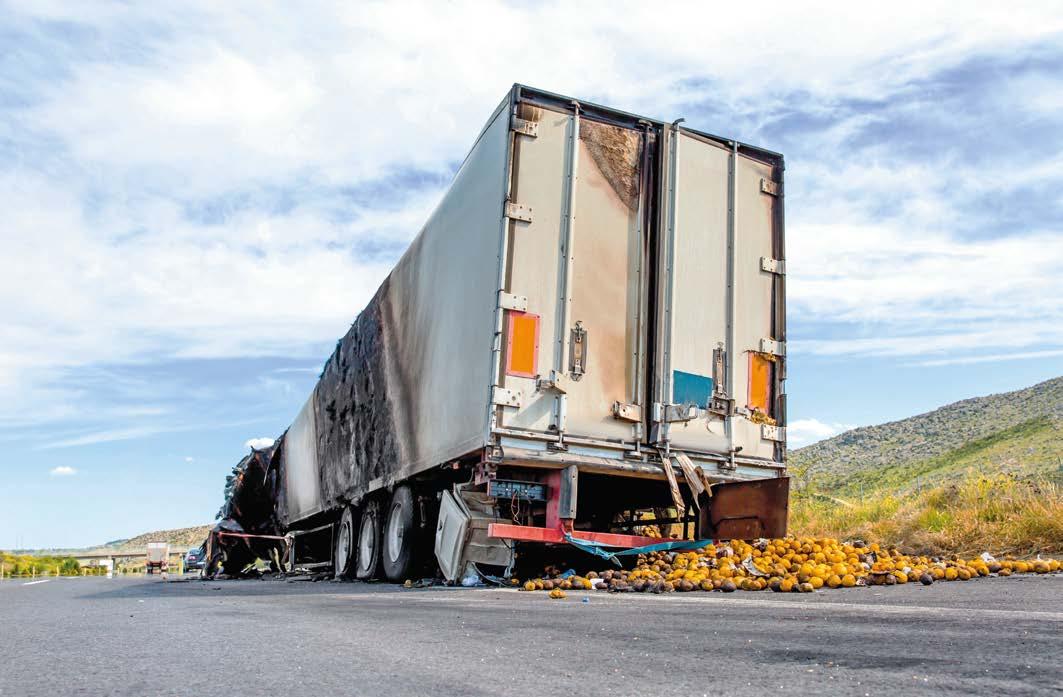
According to industry research company, Market Intelo, the global trailer smart lock market was valued at USD $1.2 billion (approx. $1.84 billion AUD) in 2024 and is forecasted to reach USD $4.3 billion ($6.60 billion AUD) by 2033, growing at a CAGR of 15.2 per cent.
“The integration of IoT technologies and the proliferation of connected devices have transformed traditional trailer security, facilitating real-time monitoring, remote access and enhanced control over valuable cargo,” the report said. “The market is further buoyed by the rising incidence of cargo theft, stricter regulatory requirements, and the need for operational efficiency in supply chain management.”
As a result of AI merging with cloud computing and greater mobile connectivity, trailer manufacturers are now able to provide smart locks with biometric authentication, geofencing, tamper alerts and integration with fleet management systems, particularly in logistics and transportation.
“These innovations are not only enhancing security but also providing actionable insights for fleet optimisation and compliance,” the research report found. “The smart lock for trailers
market is witnessing a wave of strategic partnerships and collaborations between technology providers, OEMs and logistics companies.
“These alliances are aimed at developing integrated solutions that address the evolving needs of end-users, such as seamless connectivity, interoperability and scalability.”
Now, with the secure locks being developed comes trailer door lock telematics to monitor the status of trailer door locks in real-time and offering insights into lock usage patterns and potential security breaches, ensuring that cargo remains secure in transit, the report said.
The research also found that North America, and particularly the United States, leads the smart lock for trailers market with the highest adoption rate –about 38 per cent of the global market share. It also found that the Asia Pacific region is projected to register the highest CAGR (18.7 per cent) for trailer smart locks up to 2033, due to rapid urbanisation, booming e-commerce and significant investments in transportation infrastructure in countries, such as China, India and Japan.
Trailers can now be geofenced directly from the factory, as the system creates a virtual boundary around a real-world location, using GPS and other location technologies to trigger actions or send notifications when a GPS-enabled device enters or leaves the defined area.
Smartphones or vehicle trackers are used to determine a trailer’s location. Geofencing’s benefits include enhanced security by detecting unauthorised movement, improved operational efficiency through real-time arrival/ departure notifications, proactively alerting facilities of an incoming vehicle.
Other in-built trailer security measures include component serialisation and traceability using RFID tags and QR codes that are embedded in chassis components to ensure full traceability in case of theft or tampering.
Anti-theft devices, from wheel locks to immobilisers and panic-response systems, are gaining popularity as fleets are investing heavily in multi-layered deterrents. With trailer, transport and logistics safety being a multi-billion-dollar global issue, coupled with the increased
use of AI and machine learning in monitoring, leading OEMs are partnering with secure logistics providers to maintain detailed handover logs and GPS-tagged delivery confirmations to preserve and maintain chain of custody protocols and ensure safety of goods.
To this extent there has been a growth in the use of devices to enable drivers and fleet managers to track handover points and verify identity through secure mobile platforms, often integrated with trailer telematics. When trailers enter active duty, security becomes a shared responsibility between OEMs, fleet managers and drivers. This stage introduces the broadest range of threat vectors – from opportunistic theft to insider sabotage.
TIP Group’s ‘DoorPlus’ solution provides additional security through its ‘door open sensors’ devices, which notify a monitoring system whether doors are open or closed. DoorPlus can detect door movements through a magnet attached to the door, linking to TIP’s FleetBeatCooler telematics device.
The system also detects and reports, in real time, changes in reefer temperatures and damaged trailer doors.
Commercial vehicle telematics combines telecommunications, informatics and GPS positioning to monitor vehicle data which is shared with centralised fleet management systems. Telematics also enables comprehensive tracking and analysis of the vehicles, as well as driver behaviour. There are now several telematics options for configuring door sensors, geo-fences and alarms to identify unauthorised access or usage of assets.
TIP Group sees telematics as providing several solutions for the trailer market.
It says, by having all relevant information in one place, operators can respond faster, make consistent decisions and shift from reactive problem-solving to proactive fleet management.
“We want customers to have all their insights in one place, whether they use our platform or connect via API to their own,” said TIP Operations Leader Digital Services, Christian Payne.
Krone Trailer sees telematics as a means to make trailer management digital and simple. Krone’s smart operating system for trailers, the ‘KRONE Smart
Assistant’, optimises logistics processes, where each trailer is equipped with an individual QR code, scanned to enable drivers to go to a digital interface, via a messenger service, such as WhatsApp, Telegram or Viber. As a result, fleet managers and workshops are automatically informed of any damages or issues and can respond immediately.
In addition, legally compliant digital departure checks can be completed directly on the trailer using a smartphone. The system automatically documents the results and even provides the driver with a PDF confirmation. Another special feature is mobile document access on the go – meaning that operating instructions, registration, maintenance records or ATP certificates can be accessed digitally at any time.
With its mykrone.blue, Krone also provides a new platform for digital trailer management.
“We built mykrone.blue because the market needs simple, effective solutions –not big words,” said mykrone.blue GmbH Managing Director, Maximilian Birle. “Our customers want to know: Is my trailer running? Is it safe? What does downtime cost? That’s exactly why we provide the right tools with Smart Assistant and mykrone.blue – ready for immediate use, with measurable benefits.
“We link data, services and interaction right down to the workshop world along the entire trailer life cycle – with a single goal: the best TCO with maximum uptime.”
With more than 1,700 partner workshops across Europe, the service offers standardised interfaces to leading TMS, ERP and telematics systems, and a modular e-commerce area for 24/7 contract management and service booking.
idem telematics, part of the BPW Group, offers what it sees as a specialised telematics service for the trailer market.
“Transport companies mainly operate mixed fleets with a wide variety of vehicle types and brands,” said idem Managing Director, Jens Zeller. “When it comes to trailers and swap bodies, the combination possibilities are almost limitless. Transport companies want to maintain their independence and not be dominated by individual manufacturers.
“We enable transport companies to get started with trailer telematics safely and, on this basis, to develop individually. We also integrate third-party systems. There
is practically no hardware or software interface that we cannot integrate.”
For the first time, using idem telematics’ devices, signals from doors, refrigeration units and tyres can be processed and controlled wirelessly and without intermediate devices (‘hubs’).
“Truck-trailer telematics offers enormous potential for increasing safety and efficiency in transport,” Zeller said. “This benefits not only transport companies, drivers and their customers, but also the environment and climate. In the future, telematics connectivity should become as standard in trailers as brakes and rear lights.”
The Wielton Group sees its ABERG Connect system, which integrates modern driver assistance systems, semi-trailer technical monitoring and telematic fleet management, as the ideal response to the TSL market needs for increased efficiency, reduced downtime and improved road safety.
Global logistics provider, Maersk, reported in its Logistics Trend Map 2025, that real-time tracking and automated fleet management have become “musthaves”.
“Real-time tracking empowers businesses to respond quickly to disruptions, streamline communication and build customer trust,” Maersk stated. “Logistics Service Providers are investing in creating more visibility in signals from containers and trucks fitted with IoTs, robotics in warehouses and more.”
According to a 2024 Maersk survey, cyber security was ranked sixth out of the top 15 trends by corporate decision makers. Cyber security is critical for logistics, as rising digitalisation exposes the industry to growing cyber threats, Maersk reported.
According to Maersk, this was clearly highlighted during the early stages of the Covid-19 pandemic, when the maritime sector experienced a 400-per-cent spike in cyber-attacks.
The National Motor Freight Traffic Association’s (NMFTA) 2025 Trucking Cybersecurity Trends Report stated that “cybersecurity is poised to become one of the most pressing challenges fleets will face”.
“With the rise of artificial intelligence (A I)-enhanced phishing campaigns, increasingly sophisticated cyber-enabled
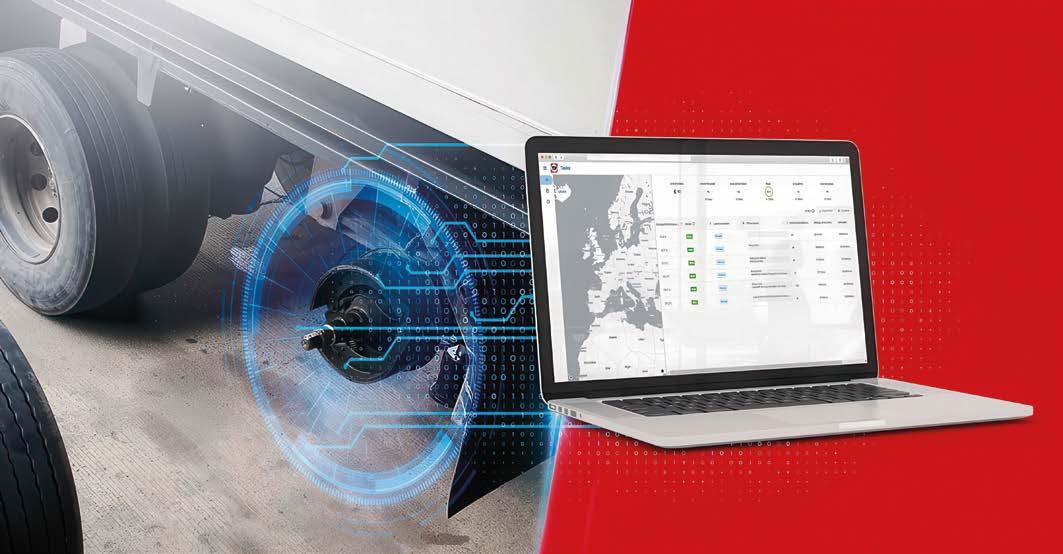
cargo theft, and the rapid evolution of machine learning-based defence mechanisms, the landscape is shifting in ways that demand attention,” the report said. “Threat actors are becoming more adept at exploiting vulnerabilities faster and more intelligently, leveraging advanced tools that make phishing, malware creation and impersonation scams harder to detect and prevent.
“At the same time, cybersecurity solutions are evolving to meet these challenges, from enhanced threat detection to widespread adoption of Zero-Trust architectures and application programming interface (API) security.”
The report said 2025 will see an increased utilisation of advanced evasive techniques, such as delayed phishing to avoid detection by the most advanced secure email gateways (SEGs) and other email security tools.
“With advances in large language models (LLMs) and other AI technology, phishing campaigns are increasingly difficult to detect. Deferred malicious links also continue to pose threats in phishing and credential theft schemes,” it said.
With fleets using the Internet of Things in a greater capacity, the report said 2025 would be marked by fleets needing to apply best practices from Industrial Control Systems (ICS) by sourcing and deploying products with good cybersecurity controls baked into their design. It also said they would need to
take responsibility for deploying and configuring them with cybersecurity as a priority.
Despite OEM’s prioritising security and greater adaptation in heavy commercial vehicles of standards for onboard and connected systems, such as those issued by the Society of Automotive Engineers (SAE) and International Organization for Standardization (ISO), there is still an issue of a lack of transparency into devices and a lack of user control of core security settings, the report said.
Hence, there would be greater pressure from the trucking and supply chain industry to move the OEM community toward increased transparency and continued focus on Secure by Design architecture.
Gartner’s industry analysis found that “since the release of Gen AI, attackers are increasingly employing tools along with large language models (LLMs) to carry out large-scale social engineering attacks, and by 2027, 17 per cent of total cyberattacks/data leaks will involve generative AI.”
Increases in cloud security solutions space to combat cyber security attacks could result in the combined market for cloud access security brokers (CASB) and cloud workload protection platforms (CWPP) reaching an estimated USD $8.7 billion (approx. $13.37 billion AUD) in 2025, up from USD $6.7 billion ($10.30 billion AUD) in 2024, according to Gartner.
With North America’s trucking industry being increasingly hit by cyber security attacks, bodies, such as the National Motor Freight Traffic Association, is helping fleets increase their cyber security measures. However, the concerns for the American transport industry, which is a key economic and employment provider, are not just from external sources.
With the merger and acquisition of fleet operators comes a list of associated threats, including staff turnovers, disgruntled employees and misaligned IT systems can create gaps in access controls, making insider theft harder to detect. Furthermore, industry consolidation in a volatile transport industry, can unsettle established processes, particularly in depot security, enabling criminals to gain access to valuable assets.
An additional consideration in a merger or acquisition of transport companies is that newly acquired sites may not meet the security standards of parent companies, especially in developing markets.
Ultimately, the trailer and truck sectors will continue to be faced with numerous challenges and threats, and the most valid and appropriate response is to meet these head-on through the proactive and early adoption of security measures, from the factory floor to the highway.
“Australian Truck Radio is my trucking radio station. So many great trucking tunes with loads of industry news. I lock it on and leave it on all day long!”
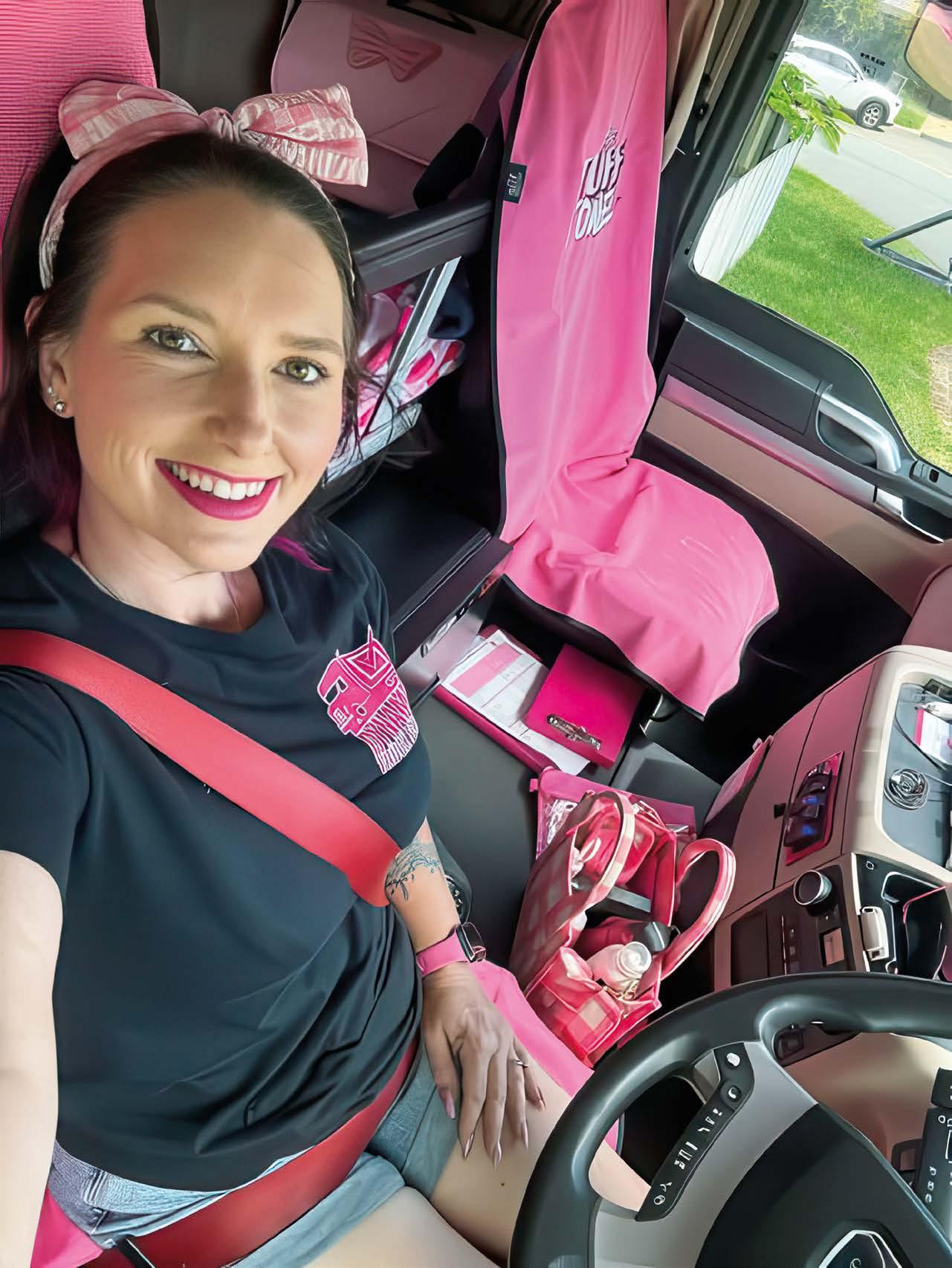




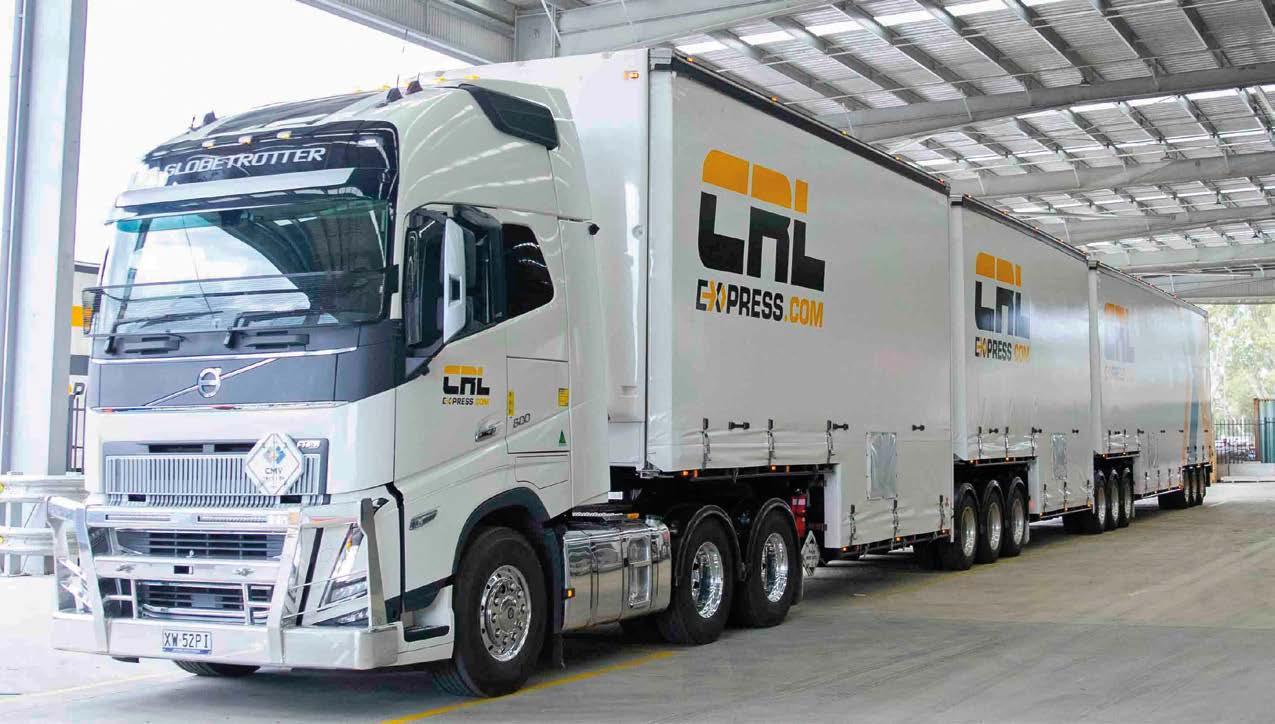
CRL Express has launched four Performance-Based Standards Super B-triple curtainsider trailer combinations from Krueger.
‘Large enough to handle, small enough to care’. A simple message which CRL Express lives and breathes by. The Victoria-based transport and logistics provider emerged onto the scene in early 2018 with a mission to provide a solutionbased approach with uncompromised service to the industry.
The extent of its commitment to this level of support is clearly apparent through the sheer rate in which it expanded. CRL Express was just a small linehaul transport operator when it first set out, but within the span of just a few years, it quickly became a national player with a personalised service including freight forwarding, warehousing and distribution of Dangerous Goods (DG), national linehaul and road services, express deliveries of food-based packaging and more.
Further growth has since called for a phase of fleet expansion. So, CRL Express recently launched four new Krueger Performance-Based Standards (PBS)
Super B-triple drop deck curtainsiders. Another two are on the way.
The road trains feature a 4.6m-high frame, 34-pallet mezzanine decks and importantly, a high cubic capacity of around 200 cubic metres. Their Gross Combination Mass (GCM) and payload figures sit at 85 tonnes and 48 tonnes respectively, under Concessional Mass Limits (CML).
“We’ve achieved some very cool things with these new units,” says CRL Express founder and Managing Director, Roy Kazamias. “We’ve noticed an incline in Dangerous Goods (DG) and palletised freight growth, so these trailers have been DG-wired for the application at hand.”
The road trains are currently transporting general freight and DG throughout interstate changeover applications between Victoria, Sydney and Brisbane. Roy says they have the potential to be utilised locally depending on the application as well.
The cubic capacity of the B-triples has
been a standout advantage for CRL Express. This alone has allowed the fleet to increase its productivity by a large margin.
“The cubic capacity is extremely high,” Roy says. “We’re getting around 180 pallets on these combinations compared to 160 on a standard road train. That extra 12.5 per cent enables us to put less trailers on the road, carry more freight and reduce the number of subcontractors we rely on.”
CRL Express has been deploying eight trailers from Krueger annually over the last few years. Its fleet now totals 25 units, including two PBS B-double drop decks which arrived in April last year.
“Krueger is the primary brand of our trailers,” Roy says. “This includes road trains, singles and doubles.
“Krueger has been subliminal from a service point of view. They’ve got their own mechanics who come out and do the second and third service for us. There’s never any major issues at all.”
Pencil in some information on dates and venues of various truck shows, field days and road transport industry conferences both locally and internationally.
February
Victoria evokeAG
17-18 February
Melbourne, VIC Visit: www.evokeag.com
2026 National Rural Carriers Convention 26-28 February
Co s Harbour, NSW Visit: www.lbrca.org.au/lbrca-events
March
Victoria
Wimmera Machinery Field Days 3-5 March
Horsham, VIC
Visit: www.wimmerafielddays.com.au
Queensland
LRTAQ Annual Conference 19-21 March
Townsville, QLD
Visit: www.lrtaq.com.au/annual-conference
South Australia
South East Field Days 20-21 March
Lucindale, SA Visit: www.sefd.com.au
Sydney TruckFest 20-22 March
Clarendon, NSW Visit: www.sydneytruckfest.com.au
April
Victoria
Transport Women Australia Limited Conference 16-18 April
Melbourne, VIC Visit: www.transportwomen.com.au/events
National Diesel Dirt and Turf Expo 17-19 April
Sydney, NSW Visit: www.dieseldirtandturf.com.au
Tocal Field Days
1-3 May
Tocal, NSW Visit: www.tocalfielddays.com
Brisbane
Australian Manufacturing Week 12-14 May
Brisbane, QLD Visit: www.australianmanufacturingweek. com.au
New
TruckShowX 18-19 May
Lovedale, NSW Visit: www.hvia.asn.au/events-hvia
June
Queensland
Trucking Australia 3-5 June
Hamilton Island, Queensland Visit: www.new.truck.net.au/ta
September
Germany
IAA Transportation 15-20 September
Hanover, Germany Visit: www.iaa-transportation.com/en
Victoria
MegaTrans 16-17 September
Melbourne, VIC Visit: www.megatrans.com.au
November
Brazil
Fenatran 9-13 November
São Paulo, Brazil
Visit: www.fenatran.com.br

endeavourawards.com.au




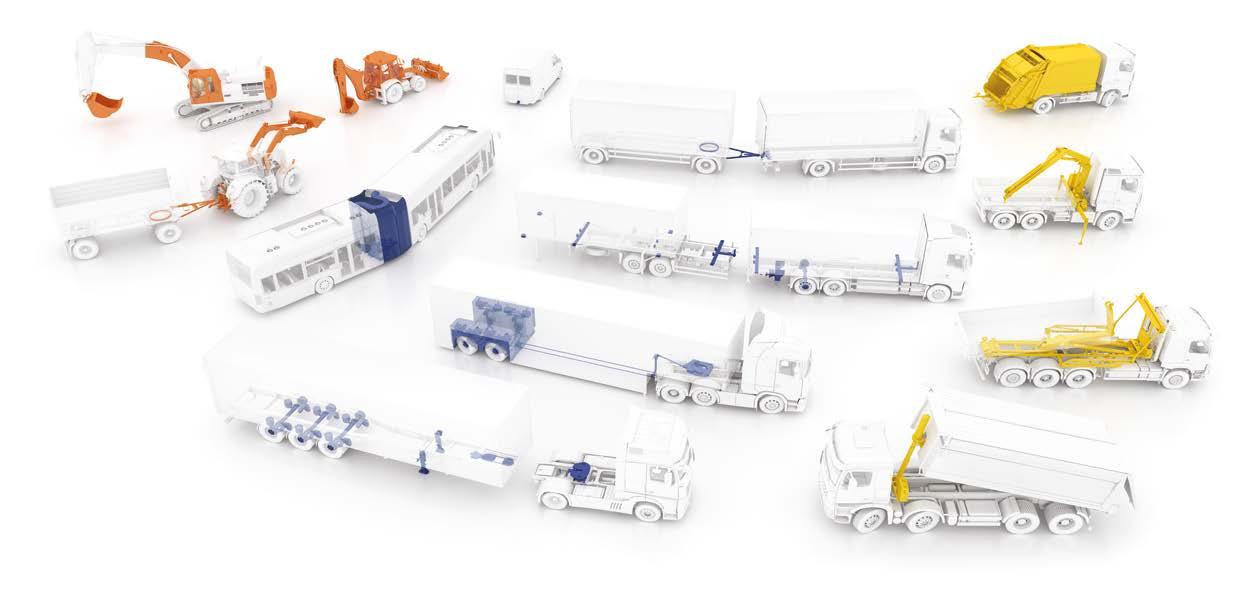
JOST Australia is a trusted supplier of transport components, delivering high-quality, well-engineered solutions. JOST delivers a comprehensive range of quality transportation components, encompassing fifth wheel couplings, landing gear, king pins, front-end hydraulic telescopic cylinders, double-acting cylinders, hookloaders, skiploaders and other critical transportation components. All of JOST's Australian operations are geared to the needs of the local market, with a comprehensive product range tailored to suit local transport applications and environmental conditions.
jostaustralia.com.au