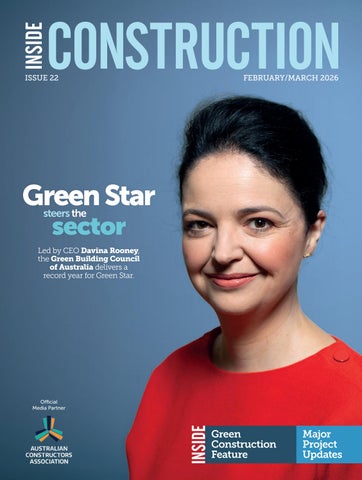

Green Star
steers the sector
Led by CEO Davina Rooney, the Green Building Council of Australia delivers a record year for Green Star.
FASTENERS SINCE 1935
Upholding our commitment to quality through our NATA-accredited laboratory and close collaboration with key industry partners.
Quality assurance documentation available online at:
REGULAR
4 Editor’s

FEATURE
COVER STORY
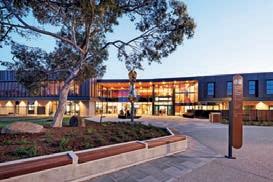
GREEN CONSTRUCTION
39 Green Star steers the sector
54 Nina Zundel: Founded on a love of buildings
Aurecon’s Nina Zundel reflects on how an early pull toward buildings set the course for an engineering career spanning multiple states, sectors and structural disciplines.
56 Bojana Zivec: A leader lifting people and outcomes
Bojana Zivec shares how a considered, people-centred approach underpins her work as a project manager at RP Infrastructure.
OPINION
52 Advancing women in the global construction industry
Dr Gretchen Gagel introduces a new global institute dedicated to advancing women in the industry.
ASSOCIATIONS
44 Where culture meets contemporary student living
The National Precast Concrete Association Australia features Wee Hur Y Suites on Margaret, a new addition to Sydney’s student accommodation offering.
46 Webinar ignites global collaboration
The National Association of Women in Construction underscores the importance of male allyship and cultural ambassadorship in the year ahead.
48 We can build it… but we’ll have to work differently
The Australian Constructors Association argues Australia needs to get more productive, and there’s no better place to start than construction.
49 Lifting the next generation of workers
A Women in Cranes and Lifting day held in Campbelltown shows attendees the breadth of opportunity available in the sector.
50 School holiday program raises the bar for workforce inclusion
Empowered Women in Trades profiles a school holiday program easing pressure on working parents at Service Stream.
A year of record certification activity confirms Green Star’s importance to the sustainable evolution of Australia’s built environment.
42 It’s a rapidly changing world –be part of the conversation TRANSFORM returns to Sydney in March 2026, uniting sustainability leaders and practitioners from across the built environment.
FOCUS
11 An eye-opening approach to safety
McConnell Dowell unveils how virtual reality is being used to lift safety outcomes across its sites and the wider industry.
14 Lifting the bar
Hobson Engineering details how its lifting hardware range supports safe material movement across complex project sites.
18 Clearing the air on protection
Safety Equipment Australia challenges contractors to consider whether their respiratory protection stands up to real-world conditions.
22 When safety becomes a shared responsibility
Webuild frames safe work as a shared responsibility, embedded across teams and leadership on its projects.
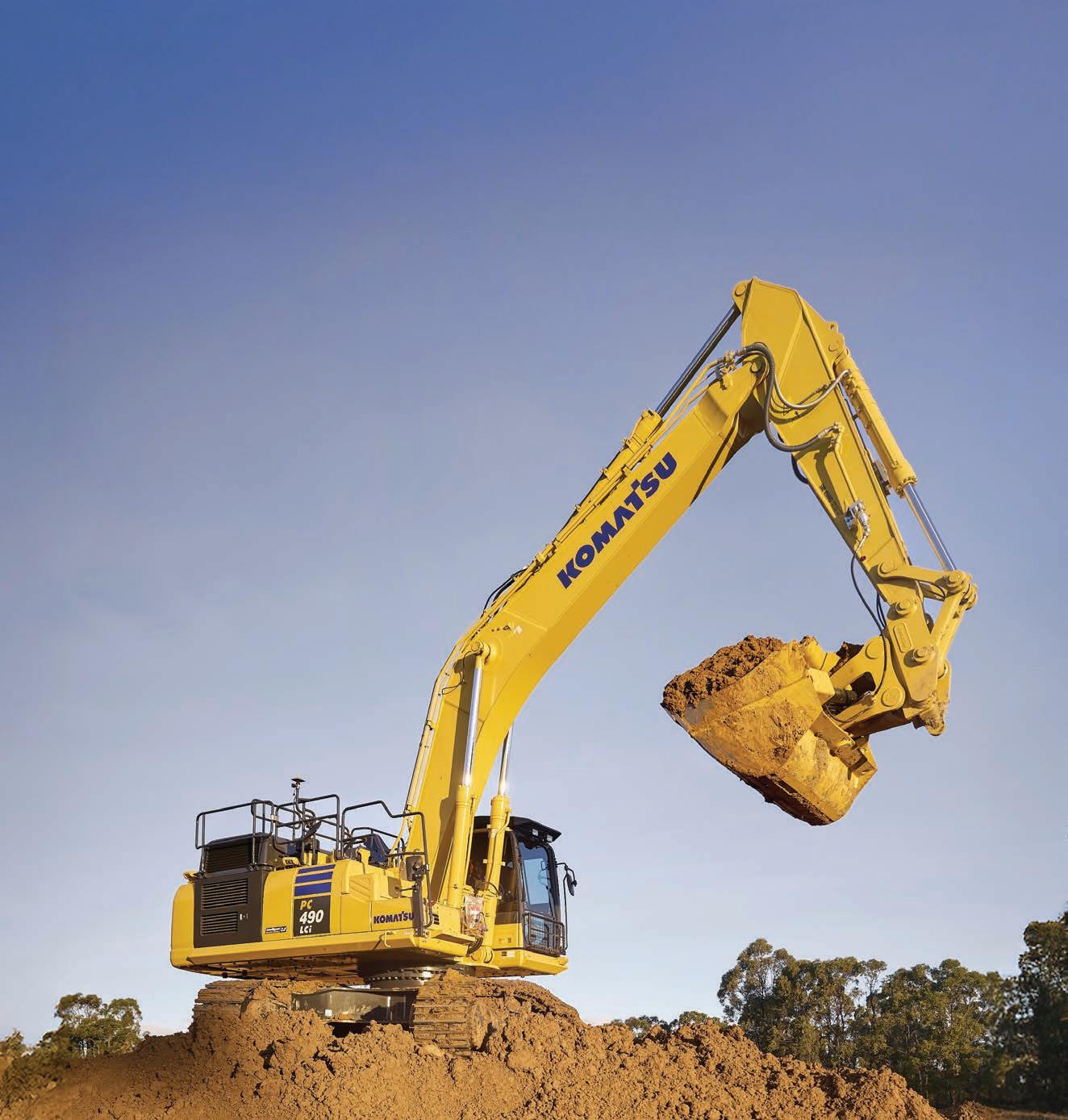
27 Precision without limits
Komatsu Australia brings network-delivered positioning, the newest product in its Smart Construction portfolio, to the local market.
32 Better connected below ground
Powertec Telecommunications calls for in-building connectivity to be treated as essential infrastructure.
From the editorial team
Taking stock and looking forward
Welcome to our first edition of 2026.
The start of a new year invites reflection, but it also brings focus. As 2026 begins, Australian construction carries forward the lessons of recent years, informed by adaptation and hard-won experience. The challenges have not receded, but the sector has become more assured and measured in its response.
This edition looks ahead, focusing less on familiar pressures and more on opportunity across the industry. If the past year is any indication, commercial construction enters 2026 on firm footing. Across the country, project teams have delivered office towers, retail centres, hospitality developments, data centres and life sciences facilities with a level of coordination and technical competence that reflects a sector in good health.
Add to that mixed-use urban renewal precincts, city-fringe commercial hubs and innovation districts, alongside a growing pool of contractors capable of delivering them, and the outlook for commercial construction is encouraging.
Supported by transport, energy, defence, digital and social infrastructure, the forward project pipeline will set the terms of activity for the next decade.
Few milestones carry greater weight than the Brisbane 2032 Olympic and Paralympic Games. The program of venues, transport upgrades and enabling infrastructure now taking form will test construction’s capacity for coordination, legacy planning and long-term thinking. These projects will set benchmarks for how Australia approaches complex, multi-stakeholder programs under global scrutiny.
With all of this opportunity, there is no better time to turn attention to the businesses, solutions and expertise at work across the industry.
Our Green Construction feature considers Green Star certification and its growing role in the sustainable evolution of Australia’s built environment, while also spotlighting a flagship industry event bringing construction and property professionals together to address issues ranging from climate change to nature positive initiatives. This edition covers material handling and lifting hardware, respiratory protection, on-site safety, machine technology and in-building mobile coverage, alongside insights into construction productivity, industry allyship, women in construction programs, cultural change, workforce support initiatives, and projects recently completed and underway. Industry leaders also share career journeys, offer insight into emerging challenges and solutions, and highlight innovation across a range of disciplines. It is an edition that opens 2026 with purpose, and one we hope readers enjoy.
Chairman John Murphy
Chief Executive Officer Christine Clancy
Managing Editor
Mike Wheeler mike.wheeler@primecreative.com.au
Editor Ashley Grogan ashley.grogan@primecreative.com.au
Sales Manager Danny Hernandez danny.hernandez@primecreative.com.au
Design Apostolos Topatsis
Head of Design Blake Storey blake.storey@primecreative.com.au
Business Development Manager Michael Ingram-Casha michael.ingram@primecreative.com.au p: +61 0423 266 991
Client Success Manager Ben Sammartino ben.sammartino@primecreative.com.au
Cover image credit Green Building Council of Australia
Head Office
Prime Creative Pty Ltd 379 Docklands Drive, Docklands, Victoria 3008 Australia p: +61 3 9690 8766 info@primecreative.com.au www.insideconstruction.com.au
Subscriptions
+61 3 9690 8766 subscriptions@primecreative.com.au Inside Construction is available by subscription from the publisher. The rights of refusal are reserved by the publisher
Articles
All articles submitted for publication become the property of the publisher. The Editor reserves the right to adjust any article to conform with the magazine format.
Copyright Inside Construction is owned by Prime Creative Media and published by John Murphy. All material in Inside Construction is copyright and no part may be reproduced or copied in any form or by any means (graphic, electronic or mechanical including information and retrieval systems) without written permission of the publisher. The Editor welcomes contributions but reserves the right to accept or reject any material. While every effort has been made to ensure the accuracy of information, Prime Creative Media will not accept responsibility for errors or omissions or for any consequences arising from reliance on information published. The opinions expressed in Inside Construction are not necessarily the opinions of, or endorsed by the publisher unless otherwise stated.

Project Picks
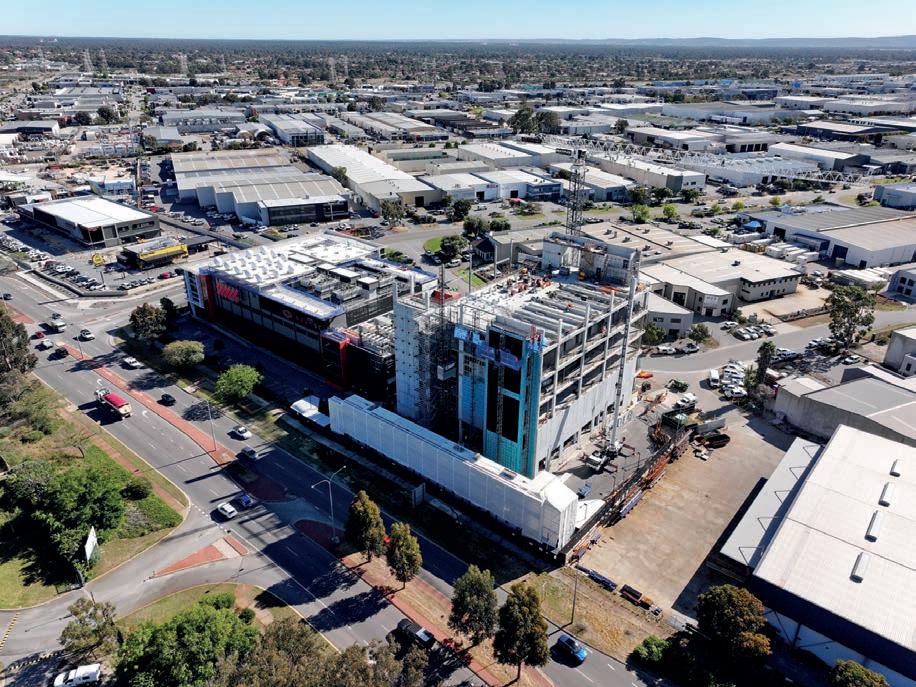
This month’s project selection shows how complex, large-scale construction work is being navigated across Western Australia, Queensland and Victoria.
NEXTDC P1 Stage Two, Western Australia
Multiplex
$110 million
Adjacent to the existing P1 data centre at 4 Millrose Drive in Malaga, Stage Two of P1 Perth will double the facility’s current IT capacity. The five-level building represents the fifth data centre Multiplex has been contracted to deliver by NEXTDC. The build is technical, with complexity added by working next to the operational building delivered in Stage One. Sustainable construction practices are driving the project’s delivery, with Multiplex using an electric crane on site to lower emissions. Green concrete has reduced embodied carbon emissions by 65 per cent compared to conventional cement mixes, while prefabricated components – including risers, header pipework and reinforcement cages – are being used to minimise waste and enhance efficiency. The project recently topped out, marking the completion of the structure. Work is now underway on the fit-out of the building’s plantrooms, offices and new data hall.
As part of Stage Two, Multiplex installed the largest satellite antenna array in Western Australia on the roof of the existing P1 building, further boosting its digital infrastructure.
Queen Elizabeth II Jubilee Hospital expansion and new multi-storey carpark, Queensland
Contractor: Built
Current value: $621 million for the hospital expansion and $127.4 million for the multi-storey carpark
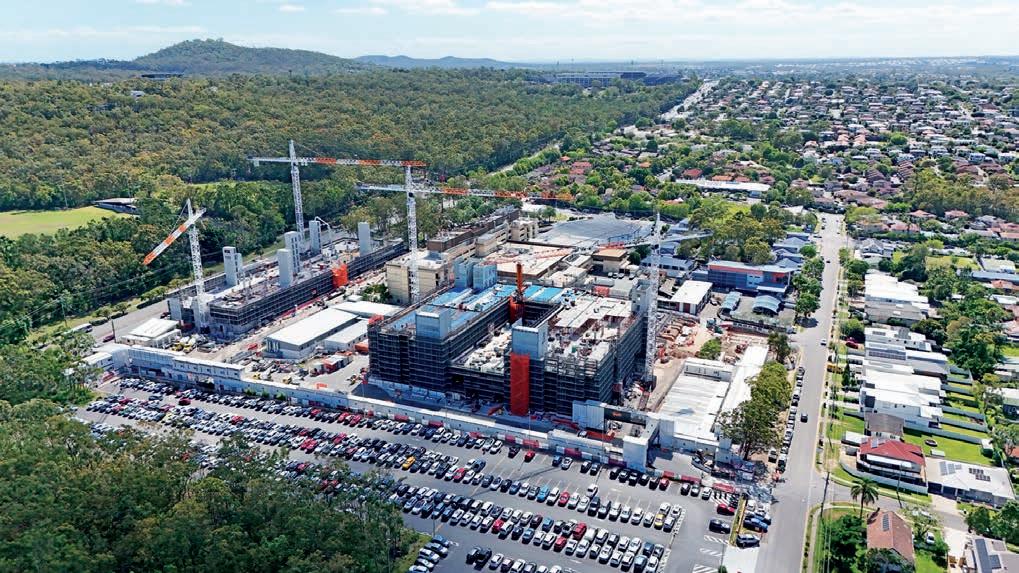
Details: Built is delivering the Queen Elizabeth II (QEII) Jubilee Hospital expansion and new multi-storey carpark on behalf of Queensland Health. The project will increase hospital capacity through an additional 112 beds, eight theatres, and expansions and refurbishments of clinical support spaces including medical imaging, pharmacy, pathology and the kitchen. The new eight-storey carpark will deliver an additional 1,379 parking spaces.
Status: Construction is progressing ahead of program and is on track for completion in mid-2027.
Initiatives: Built has leveraged a digital-first approach on this project, using digital modelling from the outset to bring designs to life. This provides clinicians and end-user groups, who typically have limited windows for review and approval, with the ability to immerse themselves in the environment and determine what will and will not work operationally. Using 4D models and virtual reality, rather than presenting drawings on a 2D floorplan, has enabled the team to identify clashes before works start on site, streamline approvals and enhance complex design development, ultimately bringing the project to life efficiently.
























Multiplex recently topped out Stage Two of P1 Perth. (Image: Multiplex)
Construction continues on the QEII Jubilee Hospital expansion and new multi-storey carpark in Queensland. (Image: Built)

























Community embraces light gauge steel framing.






Extending ‘The Lanes’ precinct, this new 162 place childcare centre will form a cornerstone for Mermaid Waters’ fast-growing community. Intended to build a sense of ‘coming together’, this new state of the art childcare features over 300 individually engineered trusses that were prefabricated from TRUECORE® steel to form the buildings intricate circular shape. Townhouses also marking the banks of the nearby lakeside development have also embraced the benefits of light weight framing for their modern resilient home designs.




















Learn more









































































Project Picks
West Gate Tunnel Project, Victoria
Contractor: A joint venture between CPB Contractors and John Holland
Current value: $10.2 billion (project cost)
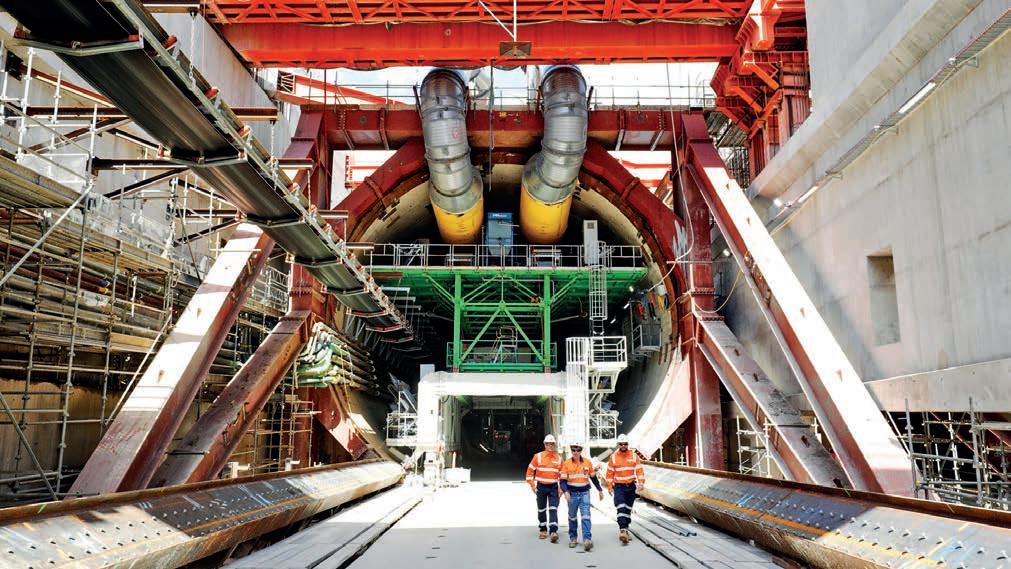
Details: The West Gate Tunnel Project in Melbourne was delivered through a partnership between the Victorian Government and Transurban, and the CPB Contractors (a member of CIMIC Group) and John Holland joint venture (CPBJH JV). It involved construction of a new tunnel and new links to the port, the city and CityLink. Work included widening the West Gate Freeway from eight lanes to 12 between the M80 Ring Road and Williamstown Road, as well as construction of a 2.8km eastbound tunnel and a 4km westbound tunnel under Yarraville, a new bridge over the Maribyrnong River, an elevated road along Footscray Road to the Port of Melbourne, CityLink and the city’s north, and new cycling and pedestrian paths.
Status: The West Gate Tunnel opened to traffic in December 2025.
Initiatives: As one of the most technically challenging transport projects undertaken in Victoria, construction required maintaining traffic flows on one of the busiest freight corridors in the country. Beneath Yarraville, the team used some of the largest tunnel boring machines to operate in Australia, navigating complex ground conditions and a densely serviced urban environment. A new bridge and elevated structure were engineered in constrained industrial precincts, requiring precision lifting operations, staged construction over live rail and port interfaces, and continuous stakeholder coordination. The project also delivered new cycling and pedestrian links, threading active-transport infrastructure through established corridors with minimal disruption. Melbourne’s west now benefits from safe, reliable and connected transport infrastructure designed to support long-term growth.
New Women and Babies Hospital Project, Western Australia
Contractor: Webuild
Current value: $1.8 billion
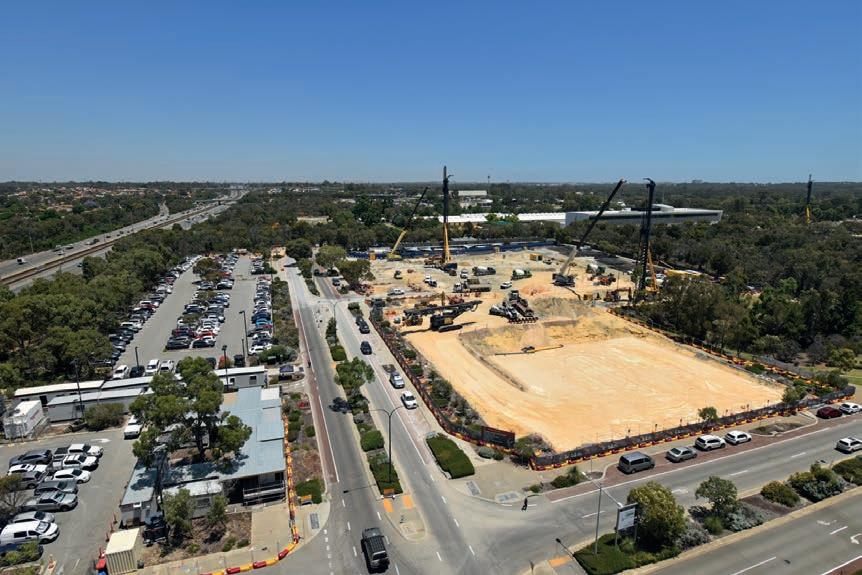
Details: Webuild is the appointed Managing Contractor for the new Women and Babies Hospital and Osborne Park Hospital expansion in Western Australia, as part of the New Women and Babies Hospital Project. Commissioned by the WA Government, the $1.8 billion project will replace the century-old King Edward Memorial Hospital and expand services for women, newborns and families across the state. Located within the Fiona Stanley Hospital precinct in Murdoch, the new Women and Babies Hospital will include inpatient facilities for gynaecology and maternity patients, a neonatology unit, operating theatres, a family birth centre and outpatient clinics. The design places women’s health and wellbeing at its core, creating spaces that support high-quality clinical care, encourage family connection and provide areas for rest and reflection. The expansion of Osborne Park Hospital will deliver enhanced maternity, gynaecology and neonatology services, a mother–baby unit focused on mental health, obstetrics theatres, a family birth centre and additional outpatient clinics. Upgraded support services, including pharmacy, pathology, sterilisation, kitchen and catering, will improve daily operations and ensure a modern, efficient hospital environment for patients, staff and visitors. Status: Construction has commenced for the new Women and Babies Hospital and early site works are underway for the Osborne Park Hospital expansion, with the new facilities scheduled to open in 2029.
The project team used some of the largest tunnel boring machines to operate in Australia.
(Image: Victorian Infrastructure Delivery Authority)
Construction is underway on the new Women and Babies Hospital.
(Image: Webuild)
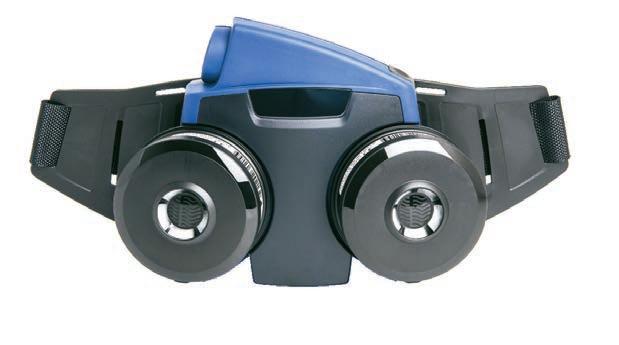

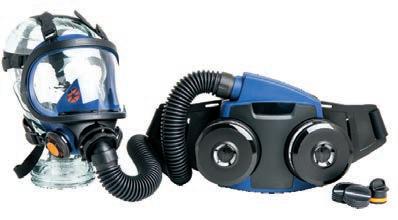
Both fan units are compatible with Sundström head-tops
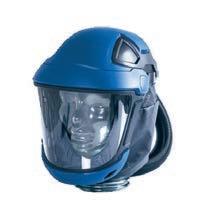
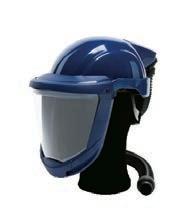
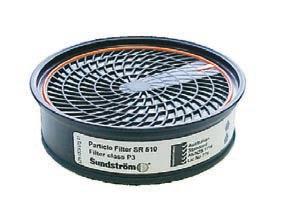


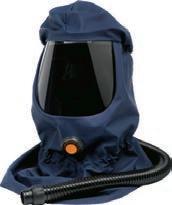
SR510 P3 Particle Filter
99.997% filtration efficiency
Wet & dry particle filter
Low breathing resistance 1,300 cm2 filter area
Compatible with Sundstrom filters*
* SR500 can be used with SR510 particle filter and/ or Sundström gas/combination gas filters (organic, inorganic, acid gas, ammonia, mercury)
*SR700 uses SR510 particle filters only
Everything else follows. When Mobile Coverage Fails Indoors,
Carrier-approved in-building mobile coverage, without the cost and complexity of traditional DAS.
Mobile connectivity is critical inside modern buildings. When coverage fails indoors, it disrupts operations, compromises safety and impacts the people who rely on it every day.
Powertec delivers carrier-approved in-building




Powered By
An eye-opening approach to safety
Grounding training in lived experience, McConnell Dowell is using virtual reality to lift safety outcomes across its sites and the wider industry.
university and we have green workers who have never worked around plant before. Our motivation was to increase people’s awareness of blind spots in a meaningful way,” says
“Traditional training methods involve showing pictures on a screen or running through a PowerPoint. Those approaches have value, but they do not give people a real-life experience. We wanted people not only to understand blind spots but also to genuinely
It became apparent that conventional training could take the workforce only so far. Classroom education and toolbox talks could explain concepts, but they could not replicate the pressure of tracking moving plant in a live environment. Even practical exercises had constraints. Crews were invited to sit inside parked machinery to observe the operator’s field of vision, but the logistics were difficult to manage. Machines had to be positioned safely, sessions took time and the approach could not be scaled across large groups or frequent
McConnell Dowell sought a tool that closed the gap between explanation and
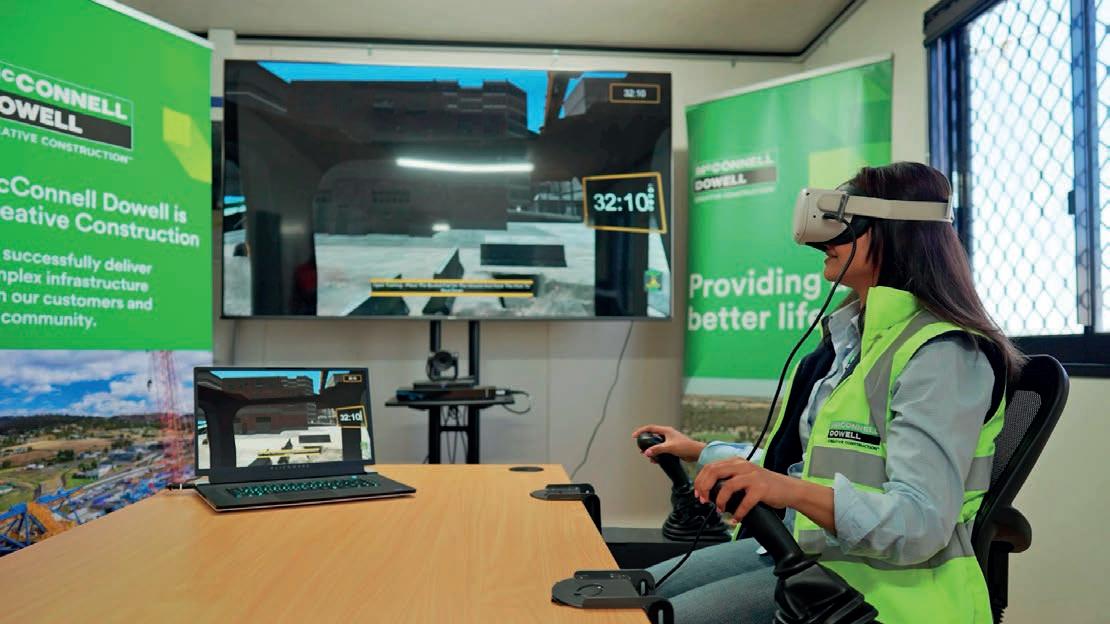
McConnell Dowell is using
Greg Evangelakos, health and safety manager for Australia at McConnell Dowell.
FOCUS Safety
“We wanted to elevate the level of respect for operators.”
Participants
lived experience, elevating awareness for all personnel rather than operators alone. The search led to virtual reality (VR).
The team trialled several VR systems, even considering developing one in-house, but none delivered the realism or practicality the company was looking for. Attention turned to Cat Simulators’ SimLite systems.
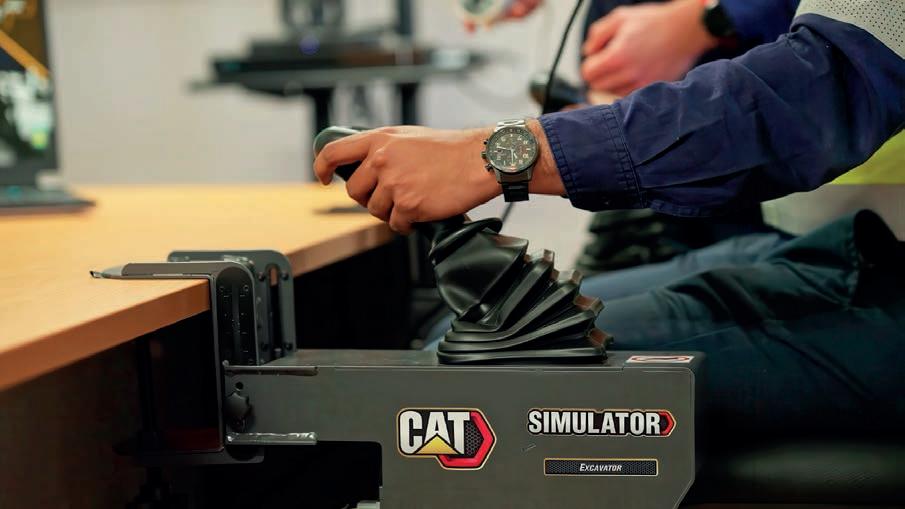
“There are many options in the VR space and plenty of advertising, but when we found the Cat SimLite unit, we saw something that is highly portable and scalable,” says Evangelakos. “The controls are real Caterpillar controls taken from actual machinery. It is designed by the manufacturer of the plant we use on site, so the cab layout and the blind spots are based on real equipment. It feels like you are in a real machine, and that authenticity matters.”
Cat Simulators systems have long supported operator development, yet McConnell Dowell recognised the potential to extend their value.
“We wanted to increase people’s appreciation for how difficult it is for operators to maintain concentration and remain aware of
After the successful trial of one SimLite unit, McConnell Dowell launched the VR Plant Awareness Training Program, aimed at reducing incidents caused by unsafe or highrisk actions.
The program provides workers with a clearer understanding of the challenges plant operators face, particularly what operators cannot see, which in turn encourages selfresponsibility and safer behaviour around plant. It does this through an experiential learning approach that lets workers view plant operations from the operator’s perspective in a safe virtual environment, while reinforcing the importance of existing control measures such as positive communication.
Using their existing knowledge of typical operating conditions, participants begin with a short online survey accessed via a QR code, rating the percentage of blind spots they believe exist around the machine. They then watch a short instructional video on the simulator controls before starting a pre-set operating task.
After placing the VR headset on and entering the SimLite system, participants sit behind
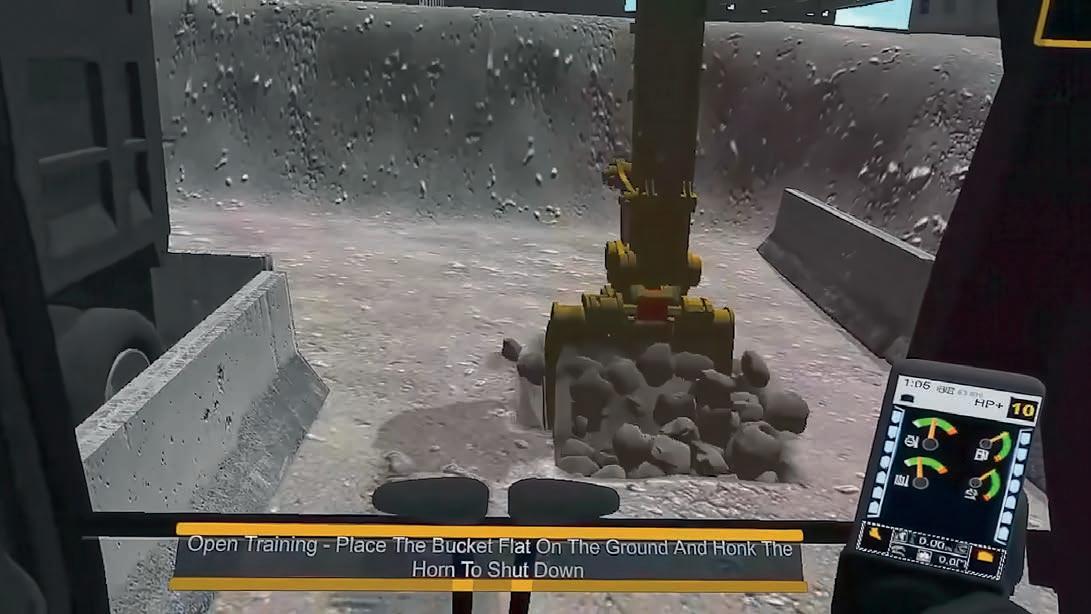
enter the SimLite system via a VR headset and complete a machinery task from the operator’s seat in a realistic construction environment.
answering questions such as ‘Did the task require more or less concentration than you expected?’ and ‘If you had been operating the machine in real life, would you have been able to identify an approaching person with confidence?’
The training takes about 15 minutes, a duration Evangelakos says is long enough to make an impression yet short enough to maintain focus, particularly for younger workers who enter the industry with different learning preferences.
“Learning has evolved,” he says. “Traditional classroom training, where you sit for an hour staring at slides, just doesn’t work with most new entrants anymore. If participants aren’t actively involved within the first five to ten minutes, they can quickly become disengaged. VR changes that dynamic by gamifying education, making learning interactive and immersive.”
The efficiency gains are compelling. A classroom session might take 20 to 30 workers offline at once, whereas VR rotates participants individually. Up to 30 people can complete the training in a day with minimal disruption to operations.
“It has high educational value and low productivity impact,” says Evangelakos.
McConnell Dowell has taken the program across states and projects, training more than 2,000 employees and subcontractors, including supervisors, engineers, labourers and spotters.
The participant survey found that 96 per cent developed a greater appreciation of the challenges faced by heavy equipment operators, 93 per cent increased their awareness of blind spots, and 91 per cent reported that operating heavy equipment required a higher level of concentration than expected. It also showed that 95 per cent considered the VR plant simulation to be a good learning tool, 83 per cent found it hard, or were unable to keep track of, their surroundings, and 85 per cent found it difficult to notice what was happening around them while operating the simulated equipment.
“Participant feedback has been outstanding,” says Evangelakos.
“We have had people say they will change how they approach plant because they now understand how dangerous it can be.
“We had a planner responsible for designing site compounds who said the experience made them rethink how they design work areas to give operators more space. That is a major impact.
“It means we are not only influencing behaviour around plant but also improving the design of work areas themselves.”
Seeing these positive results and aiming to create broader industry impact, McConnell Dowell purchased two additional units. One was provided to Box Hill Institute TAFE for 24 months to incorporate into training for thirdyear plumbing and carpentry apprentices.
“For too long, we have waited until workers arrive on site, then tried to pair them with a mentor,” says Evangelakos. “By engaging with TAFE, we reach people before they enter the workforce. That is where the next generation of workers are coming from.”
The other unit was made available for other construction companies to loan at no cost.
“Improving how McConnell Dowell operates is one thing, but we also have a responsibility to give back to the industry,” says Evangelakos. “We did not want to internalise a tool that can improve safety outcomes. Making it available to the industry allows others to benefit, and the uptake has been impressive.”
The program’s expansion reflects McConnell Dowell’s commitment to lifting safety standards across the sector. By improving understanding of plant operations at every stage of a career, from apprenticeship through to site leadership, the company is contributing to a workforce that is more aware, better prepared and committed to safer behaviour.
Information on the VR Plant Awareness Training Program, including booking enquiries, is available via McConnell Dowell’s website.
“Improving how McConnell Dowell operates is one thing, but we also have a responsibility to give back to the industry.”
The Cat SimLite unit features genuine Caterpillar controls.
Material handling and lifting
Lifting the bar
Hobson Engineering’s lifting hardware underpins the safe movement of materials on complex project sites.
Material handling and lifting now sit at the centre of modern construction delivery.
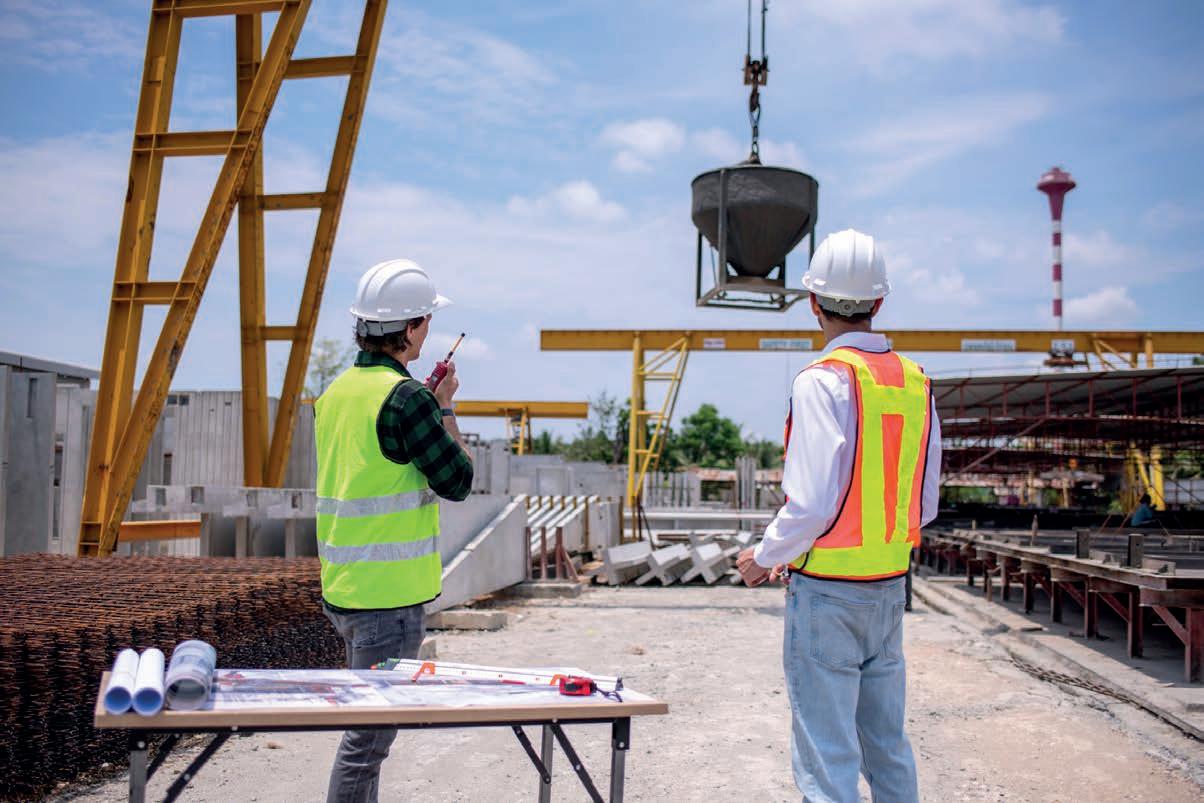
High-rise developments, industrial builds and infrastructure projects are compressing staging areas and accelerating programs, forcing cranes, hoists and rigging systems to work closer to their limits. The connection points – eye bolts, hooks, shackles and lifting points – often dictate how a lift behaves once it is under load. That increased pressure has made the performance of individual lifting components far more consequential.
With the scale and frequency of lifts increasing, the risks tied to low-grade or undocumented hardware have multiplied. These vulnerabilities remain embedded across many sites, prompting Hobson Engineering to focus on the relationship between specification, documented performance and real-world use.
A tightening lifting landscape
Alan Washburn, national product and market development manager at Hobson Engineering, describes a market that is “steady but under pressure”.
“Construction activity is strong in many regions, and that naturally feeds ongoing demand for lifting components,” says Washburn. “At the same time, there is more scrutiny around safety, specification and compliance than ever before. It is a market that rewards quality and exposes shortcuts quickly.”
Shrinking budgets and stretched labour have increased the temptation for project teams to substitute lower-grade hardware.
“Across our range, and lifting is a significant part of that, we are seeing a tightening environment. Material costs soared after the COVID-19 pandemic, and some companies
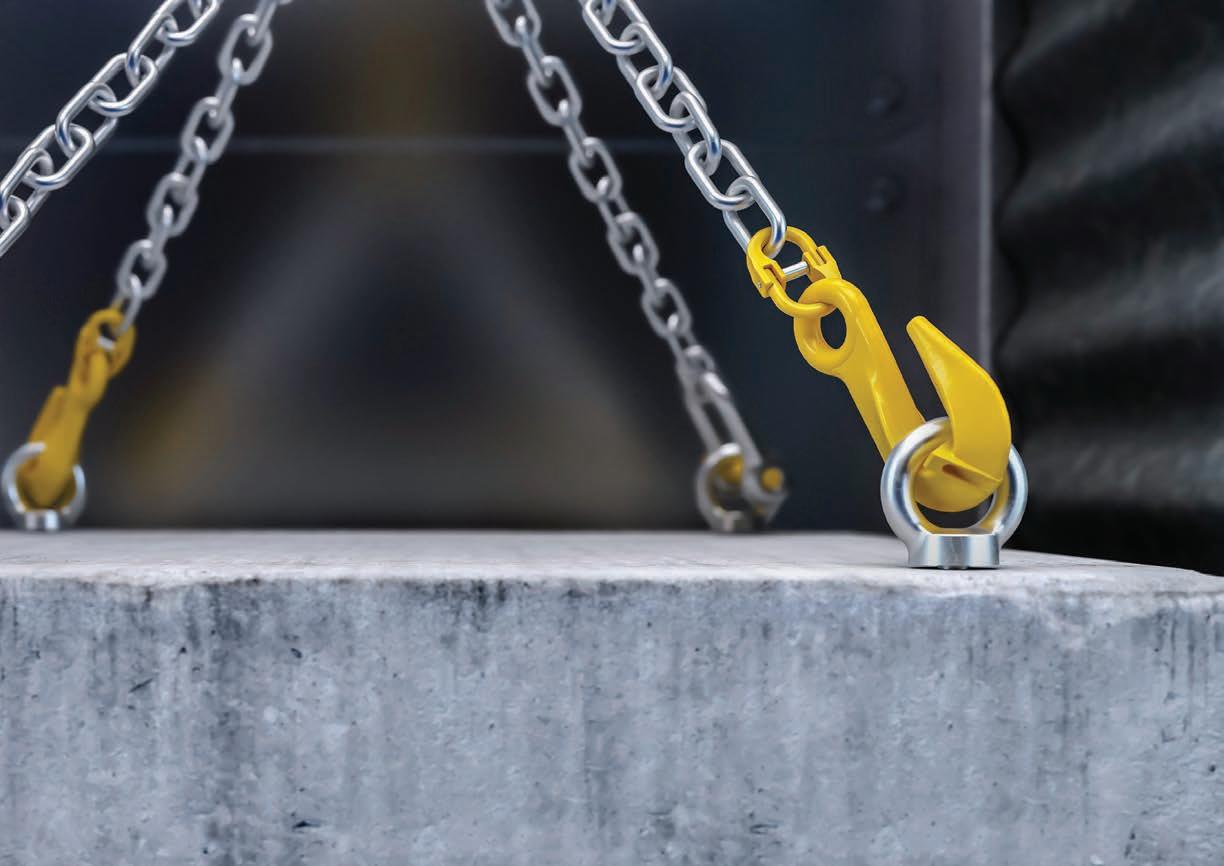
Hobson Engineering tests lifting components to the required standards and adds further assurance with magnetic particle inspection. (Image: Hobson Engineering)
have struggled. That creates pressure on procurement teams and builders to save money wherever possible,” says Washburn.
“The problem is that compliance cannot be trimmed. The biggest risk we see is an assumption that all lifting components are created equal. They absolutely are not.”
Non-compliant hardware often mirrors certified components in appearance yet behaves unpredictably under load. These are safety-critical parts carrying weight above crews and equipment, and the margin for error is thin. A single failure can result in severe injury or loss of life and cause project delays, investigations and extensive rectification work. In many cases, the rectification cost of replacing undocumented or unsuitable hardware exceeds the initial saving.
Recent incidents have highlighted how easily lifting risks escalate when connection components fall outside the specification. Regulators and asset owners have responded with firmer procurement controls, more detailed inspections and stronger documentation requirements. Contractors are now expected to demonstrate not only that hardware is certified, but that it can be traced directly to its batch and test report.
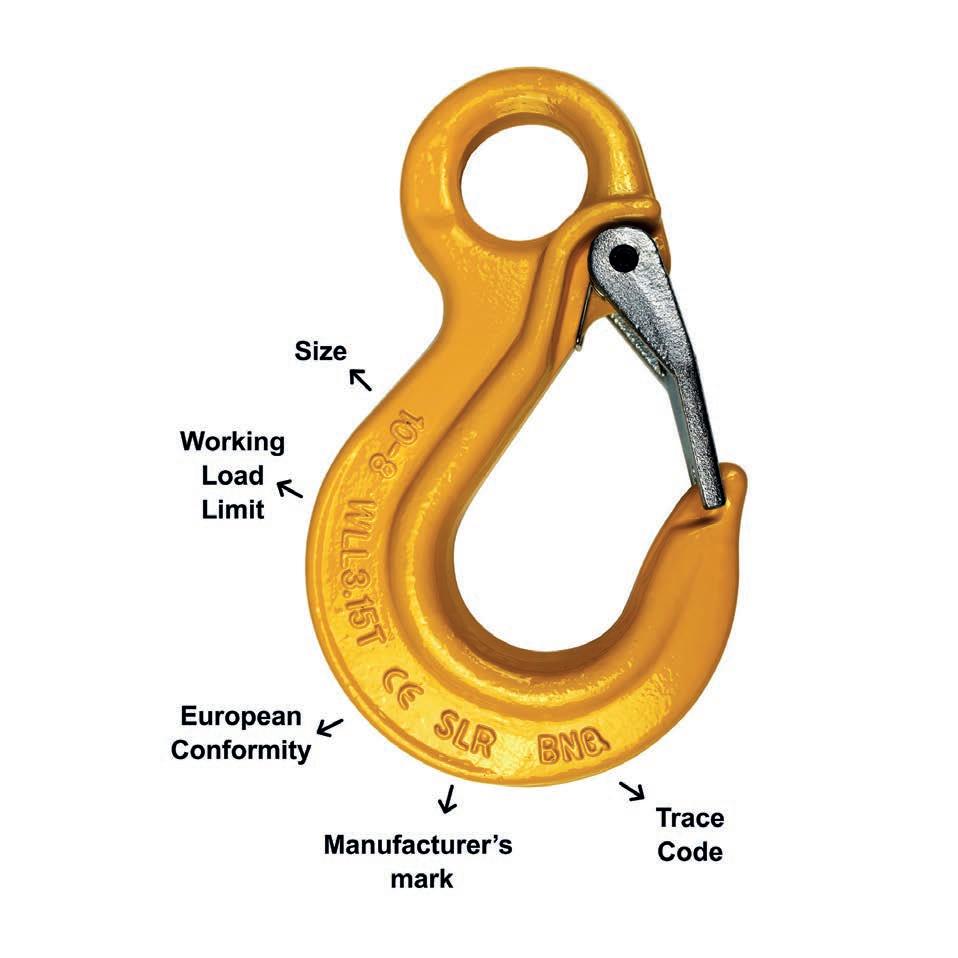
Suppliers with transparent documentation and stable manufacturing controls are becoming essential partners as reliability rises to the top of procurement criteria. Hobson Engineering has aligned its lifting portfolio with these expectations through disciplined testing and traceability.
Products that hold the load
Hobson Engineering’s lifting range includes eye bolts and nuts, slings, shackles, hooks, weld-on lift points, and chain connectors and master links. These products sit at the core of day-to-day lifting activity on highrise, industrial and civil projects, where loads are constantly being moved, positioned and secured.
In construction, this hardware is relied on for structural steel erection, precast placement, mechanical services installation and the handling of formwork and reinforcement. In fabrication yards and staging areas, weld-on lift points and shackles support repetitive lifting tasks, while slings, hooks and chain
connectors form the assemblies required for heavier or more complex movements. Together, these components form the connection systems that determine how material is managed safely across a project.
“By supplying compliant products suited to these demanding tasks, we provide hardware that sits at the centre of safe and reliable materials movement,” says Washburn.
Standards, testing and traceability
Lifting components are governed by standards that outline how they must be manufactured, tested, marked and applied on site. These requirements govern material properties, load behaviour and performance under stress.
“Standards guide everything we do. We know exactly what requirements each product must meet,” says Washburn. “Some suppliers might claim full testing when only batch testing has been done, or they may not test to the correct load. It is easy to make broad claims, but much harder to invest in proper testing.”
Hobson Engineering tests its lifting components in accordance with the relevant
“Certification
and traceability – they go hand in hand.”
Every mark matters. Find all safety markings on Hobson Engineering lifting components. (Image: Hobson Engineering)
FOCUS Material handling and lifting
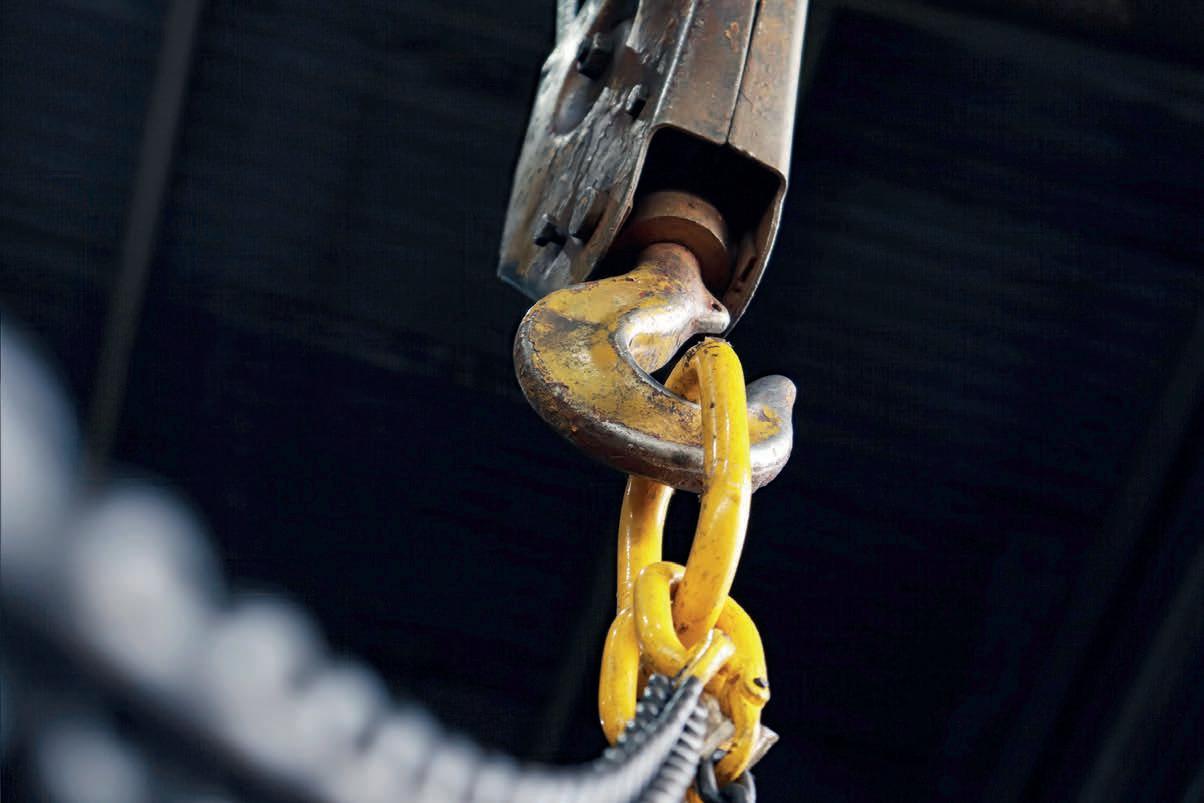
Lifting components differ in design and strength. Assuming they are all the same is dangerous. (Image: InWay/ stock.adobe.com)
“It is a market that rewards quality and exposes shortcuts quickly.”
standard and applies an additional layer of inspection through magnetic particle testing.
Traceability is now an expectation across lifting activity. Hardware that once relied on packaging for identification is now required to carry permanent markings that remain visible throughout its service life. Hobson Engineering stamps the trace number directly onto each component, giving installers, supervisors and inspectors an immediate link
“Our test reports are publicly accessible,” says Washburn. “Anyone can enter the trace number on our website and retrieve the certification immediately. We want traceability to support on-site checks, not complicate them.” Markings also help distinguish certified hardware from lookalike alternatives. Safe working loads, batch trace numbers and CE identification provide visible indicators of how and where a component has been manufactured. CE identification, while not required in Australia, confirms that the component has been produced under recognised European quality controls.
Awareness on the ground
Although lifting hardware is critical, it is often selected on site rather than specified in detail during design. This creates added exposure,
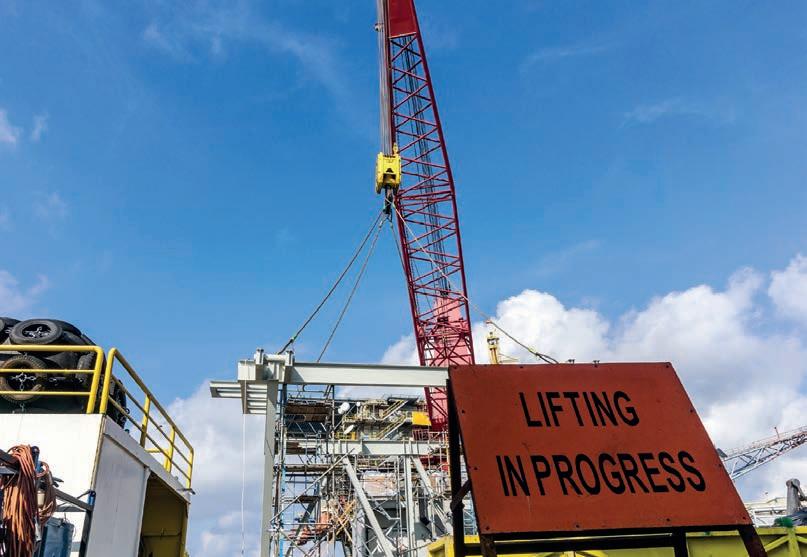
shackles and eye bolts should be treated like lives depend on them. Because they do. (Image: wanfahmy/ stock.adobe.com)
Hooks,
Contractors must now prove that hardware is not only certified but also traceable to its batch and test report. (Image: APchanel/stock.adobe.com)
“Welders require formal training before they can work on a project, but there is no equivalent for lifting hardware or even general fasteners,” says Washburn. “A carpenter, bricklayer or electrician might be incredibly skilled in their trade but may not know the correct installation method for a nut and bolt or lifting eye. Incorrect installation of lifting hardware can cause catastrophic failure even when the product itself is completely compliant.”
Without structured training pathways, much of the knowledge required for safe lifting practice is absorbed informally on site. Clear documentation, visible markings and easily accessible reports are becoming key tools that help crews make informed decisions on the job.
A maturing lifting environment Washburn notes that compliance continues to be the strongest force shaping the material handling and lifting sector.
“When incidents occur, there is always public discussion and promise of action, but ongoing enforcement is limited,” he says. “We would like to see more routine testing requirements and more oversight, similar to what exists for fire systems or other regulated components.”
Construction teams increasingly seek supply chains they can verify. They want components that can be linked to their test reports, documentation that is accessible on site and hardware that has been tested to the relevant standard’s requirements.
Hobson Engineering contributes to this maturing environment by combining testing discipline, permanent traceability and transparent documentation to support safer lifting practice.
Asked for the main message he wants contractors to take from this, Washburn says, “Certification and traceability – they go hand in hand. A test report is only valuable if you can match it to the product in service. That is why the stamped trace code is essential. Combine that with the CE marking and you have confidence that the hardware will perform as required.”
As lifting tasks grow in complexity, the sector is moving towards hardware that can be verified quickly and trusted without hesitation. The focus on specification, compliance and traceability is now driving more informed on-site decisions, and connection hardware is recognised as a key control point in managing lifting risk across Australian construction.
“We provide hardware that
sits at the centre of safe and reliable materials movement.”
Clearing the air on protection
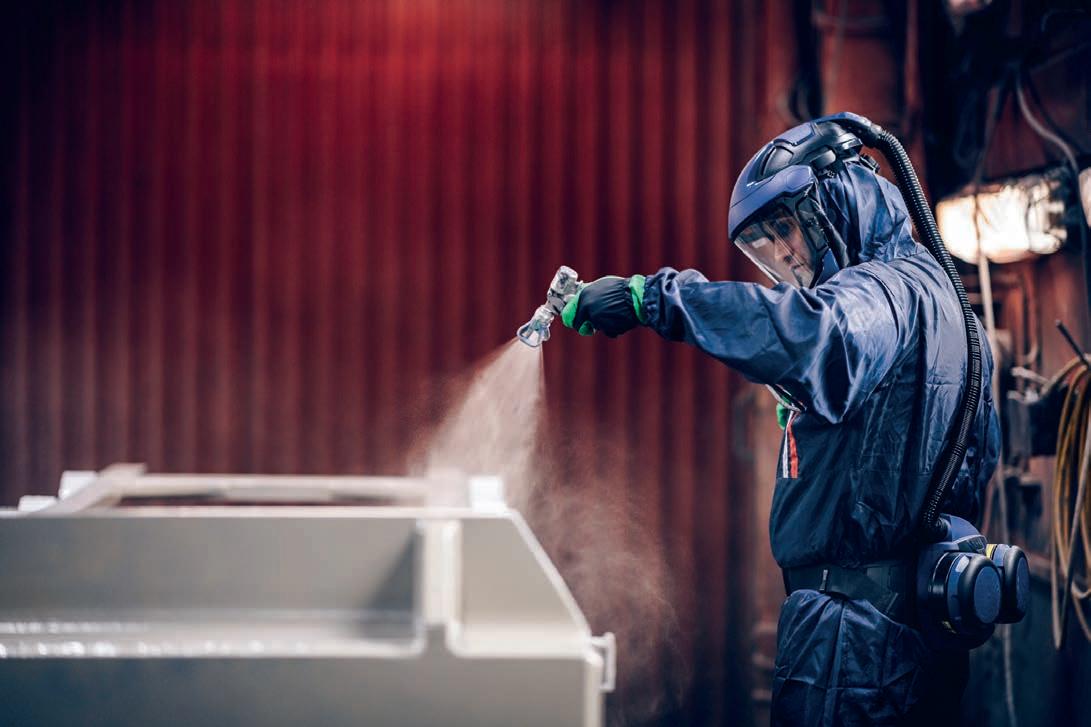
Australia is challenging contractors to consider whether their respiratory protection stands up to real-world conditions.
deeper digs to increasingly hazardous materials, are pushing contractors to reconsider what constitutes ‘adequate’ respiratory protection under live site conditions. The challenge is that compliance is easily mistaken for safety, as though meeting the minimum standard equates to genuine protection, when in reality their workforce is less shielded than they believe.
For Safety Equipment Australia (SEA), that’s not good enough.
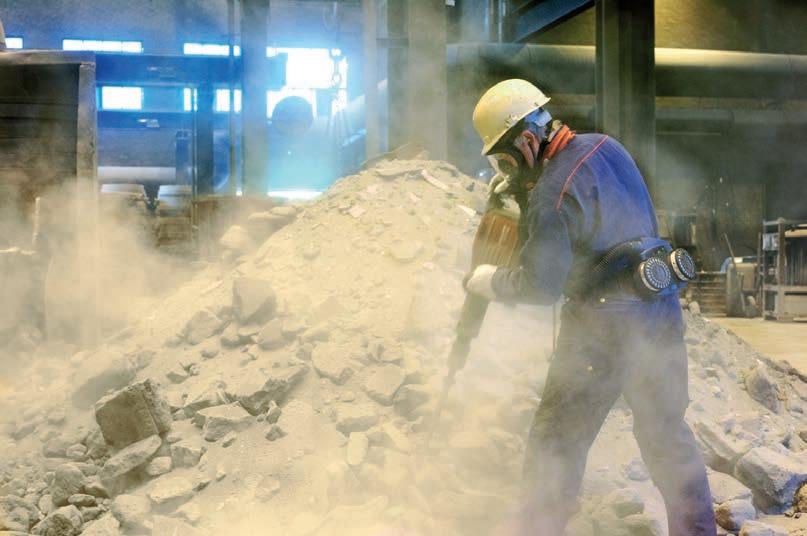
Respiratory protection in construction refers to the equipment and practices used to prevent workers from inhaling hazardous airborne contaminants created during common tasks such as cutting concrete, grinding, drilling, welding, spraying and demolition. These activities can release fine particulates, silica dust, fumes, vapours and other substances that travel into the lungs and contribute to long-term illness.
Effective respiratory protection involves selecting the right type of respirator for the task, ensuring it fits and performs correctly, and using it consistently whenever a worker
as tunnelling, demolition and enclosed spaces, respiratory protection becomes a critical measure that sits alongside ventilation, engineering controls and safe work systems to reduce exposure to acceptable levels.
Airborne hazards have always been part of construction work. What has changed is the clarity with which those risks are now understood. Silica, in particular, has pushed respiratory protection higher on the agenda for large-scale projects, demolition jobs and tunnelling works.
Yet there are still shortcomings in how respiratory protection is understood and applied. That gap between ‘baseline compliance’ and ‘best-available protection’ is where SEA managing director Graham Powe believes the sector still has ground to cover.
The risks behind minimum standards
“Most reputable companies are taking a serious approach to respiratory protection. Many implement a respiratory protection program, which is required in the Australian standards,” says Powe.
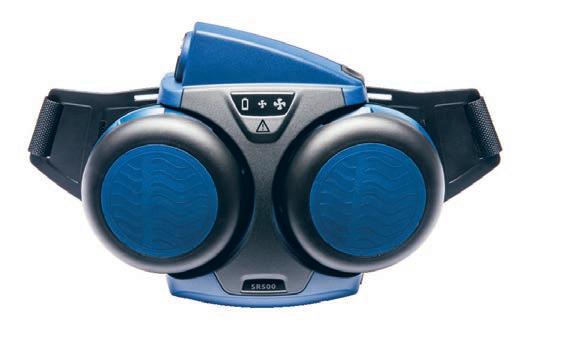
The SR500 offers both gas and particle respiratory protection. (Images: Safety Equipment Australia)
“There are also companies that are just looking to tick the box. If you have a small team of people working for an employer and they all need respiratory protection, but they have beards and do not want to shave, then the company has to go to a loose-fitting head-top.
“The temptation for a small company is to buy the cheapest product that fits that design concept. There are products on the market that, in real terms, give a lower level of protection.”
Loose-fitting head-tops differ fundamentally from tight-fitting face pieces, which rely on an airtight seal and require the wearer to be clean-shaven and fit-tested. Loose-fitting head-tops, by contrast, do not form a facial seal. Instead, they create positive pressure inside the hood by delivering a constant flow of filtered air from a powered-air purifying respirator (PAPR) unit. This makes them suitable for workers with facial hair, but it also means the protection level depends on airflow performance rather than a physical seal.
“When people are working hard, their breathing rate increases, and when the breathing rate increases, the speed of the air moving in and out of the lungs is much higher,” says Powe.
“If someone is consuming 40 litres of air a minute in volume during heavy work, they could have instantaneous air flows of 160 to 180 litres a minute on an inward breath. If your fan unit only delivers 120 litres a minute, you will outbreathe it and the pressure will go negative. As soon as it goes negative, there is a high chance of inward leakage of contaminant.
“A tight-fitting full-face piece connected to a PAPR gives a much higher level of protection. But you have to be clean shaven, otherwise you can have inward leakage if you are not careful.”
The issue, he says, is that the Australian standard test requirements for PAPRs set a relatively low bar. AS/NZS 1716 specifies the baseline requirements for manufacturing and performance of respirators used to protect against harmful or oxygen-deficient atmospheres. If the only question asked in procurement is “does it have AS/NZS 1716 approval?”, then differences in performance can go unnoticed.
originally with half and full-face masks and entering the PAPR market in the early 2000s. What distinguishes Sundström, Powe explains, is engineering designed to reduce exposure as far as practicable, not just to the occupational exposure limit.
“Their objective for respiratory protection is to bring the user’s exposure to contaminants as close to zero as possible,” says Powe.
“Some other brands aim to get the wearer down to what is considered the occupational exposure level. The difference is that, over the past 20 years or more, occupational exposure levels have been reduced for different gases, chemicals and particulates. What was considered safe 10 years ago might not be safe now.
SR700 is designed for use with tight-fitting and loosefitting head-tops, providing protection in wet and dry particle environments.
“With Sundström, end users can be rest assured they are getting the highest quality and highest protection levels on the market.”
The
FOCUS Safety
“There are products on the market that, in real terms, give a lower level of protection.”
“When Sundström works with its engineering team, the project is not just to manufacture a product that meets the European, Australian and US standard requirements, but one that exceeds those requirements in terms of material quality, performance, service and technical back up.”
Inside the SR500 and SR700
To illustrate that focus on protection, Powe points to the Sundström SR500 and SR700 PAPRs.
The SR700 is the lighter of the two systems, designed for loose-fitting head-tops used across wet and dry particle environments. It pairs with Sundström’s SR510 P3 particulate filter – a unit engineered to capture 99.997 per cent of particulates – and offers airflow settings of 175 and 225 litres per minute that maintain positive pressure inside loose-fitting hoods, shields and helmets. By removing the need for gas filtration components, the SR700 reduces weight on the body and simplifies operation for workers engaged in grinding, cutting, sanding or other dust-generating tasks.
The SR500 is configured for more complex exposure conditions, offering both gas and particle respiratory protection. It uses the same P3 particle filter as the SR700, but can also be fitted with a range of threaded gas and combination filters to manage
combinations. With airflow settings designed for higher-demand tasks – 175 and 240 litres per minute – the SR500 allows contractors to move between silica dust, solvent-based products and mixed hazards across a shift without changing blower platforms.
“Both units are compatible with all Sundström head-tops,” says Powe. “A lot of people do multiple job types where they might be exposed to gas and particulates on one job and then only particulates on the next. They might buy the SR500 so they do not need to worry about having different units.”
The SR500 and SR700 are also built around sustained airflow performance, an area that separates minimum-standard equipment from systems that genuinely safeguard workers. Each blower continuously monitors resistance in the hose, filters and pre-filters, and alerts the wearer through sound, light and vibration if the unit can no longer maintain safe flow. This becomes critical during heavy physical work, when rising breathing rates increase air demand and raise the risk of inward leakage.
Comfort, wearability and flexibility
Respiratory protection is rarely associated with comfort, yet Sundström continues to refine wearability without diluting protection.
A PAPR is comfortable to wear because
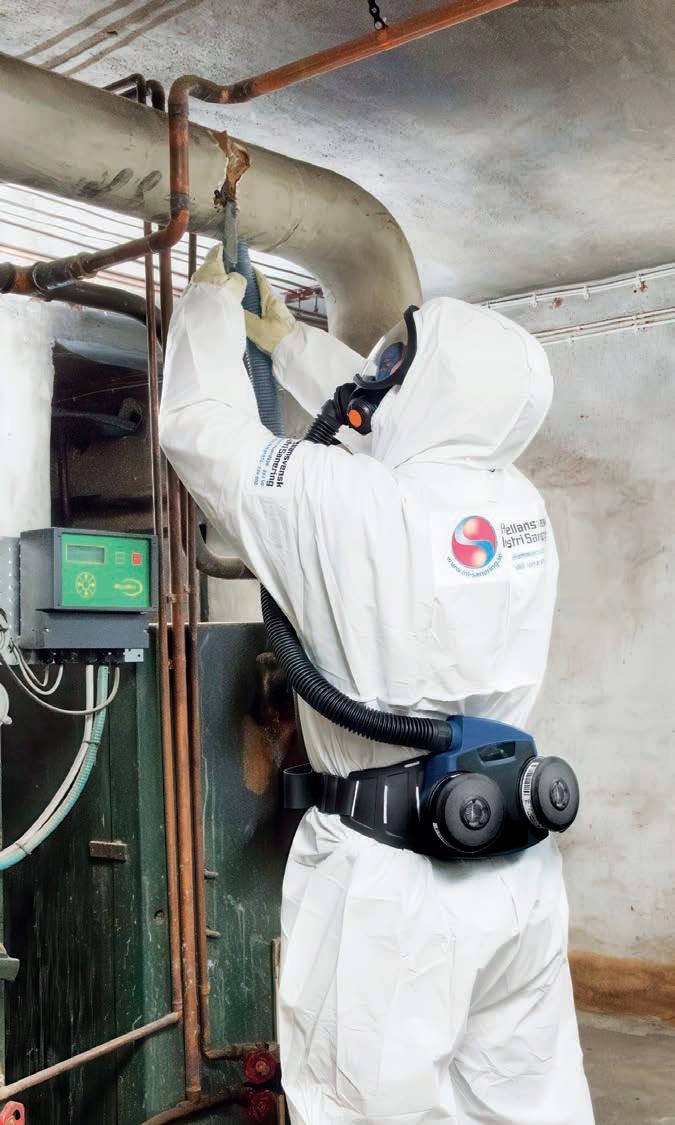
The SR700 with the tight-fitting SR200 full-face mask is ideal for environments with high levels of dust concentration, such as asbestos.
and the use of loose-fitting hoods or helmets eliminates the need for a tight face seal. The blower fan pulls air through the filter, reducing the effort required to breathe.
“The design of Sundström head-tops focuses on making them as light as possible without compromising the protection levels. They have a good head harness, Sundström’s own design, not something bought in,” says Powe.
“The direction of airflow inside the head-top is designed so it is not blowing into the user’s eyes. The flexibility of the hose between the head-top and the fan unit, and the way the fan unit is supported on the body, are all carefully considered.
“Ergonomic design is very important. There is still some weight, it is still extra equipment, but Sundström has a strong focus on minimising the impact the wearer feels from the unit.”
Standards, fit testing and frameworks
Behind the hardware sits the architecture of respiratory programs: standards, frameworks and the guidance that ties them together.
AS/NZS 1716 is the familiar reference on product approval, however Powe is careful to point out that while it is essential, it does not tell contractors how to choose and use products in context.
“It does not do as much for the end user as people might think. It is the standard that the products themselves have to be approved to, so it is still important and everybody should look for it,” says Powe.
“The standard that end users should refer to is AS/NZS 1715. That is the one for the user. It has many guides on how to make a selection and what protection levels you get for different contaminants.
“In that standard, fit testing is compulsory for people using tight-fitting face pieces, and it is expected to be done annually or if there is any change to the person wearing it, such as teeth being removed or scars or other changes to the face.”
SEA has been involved in fit testing since the late 1980s and participated in the development of the RESP-FIT program, the accreditation framework under the Australian Institute of Occupational Hygienists (AIOH). As a sponsor of the program, the company now steers end users towards RESP-FIT accredited fit testers
while continuing to train distributors across its national network.
At the same time, international standards are shifting. Australia has adopted new ISO standards for respiratory protection that will run alongside existing Australian and New Zealand standards before taking effect in 2027.
The incoming ISO frameworks will create more defined performance tiers for different respirator classes, including PAPRs, making it easier for contractors to align equipment selection with the conditions on site.
“If we just talk about PAPRs for instance, at the moment they all have the same protection levels in the standards, no matter how much flow rate they provide,” says Powe.
He explains that the new standard provides guidance for end users on aligning protection with exposure levels, while creating an incentive for manufacturers to develop equipment that satisfies the four designated protection tiers.
“In the future, the standard will position existing products like Sundström at a higher level and help people make a more informed choice,” he adds.
The next frontier
If there is one message Powe wants the industry to absorb, it is that loose-fitting PAPRs are not a catch-all solution.
“I would like them to better understand that loose-fitting head-tops have limitations, particularly where hard work is involved on hot days. They need to reconsider that and, in certain situations, they need to use tightfitting face pieces,” he says.
“Not all PAPRs perform the same. They have different flow rates, and some do not even meet the flow rate they claim. With Sundström, end users can be rest assured they are getting the highest quality and highest protection levels on the market.”
SEA’s challenge to contractors is to look beyond the approval sticker and treat realworld performance as the measure that should guide their decisions.
With nearly half a century of respiratory protection experience, 140 distributors nationwide, educational resources and a trained support team, the company is well placed to help drive a more informed approach across the industry.
“A tight-fitting full-face piece connected to a PAPR gives a much higher level of protection.”
FOCUS Safety
When safety becomes a shared responsibility
Across Australia, Webuild grounds its projects in a culture that connects every team member and all levels of leadership to a shared understanding of safe work.
“Safety is the foundation of everything we do.”
In the words of Shannon Spark, vice president of QHSE at Webuild in Australia, it functions less as a slogan and more as an operating framework that shapes decisions, interactions and expectations across the company’s international footprint.
“It is integrated into our core processes, training, competency frameworks and the values that guide the business. We have a commitment to target zero, which means we hold a clear position that even one accident is unacceptable,” says Spark.
“We empower every person on our projects to speak up, intervene and stop work if something is unsafe. Safety for us is not only compliance; it is fundamental to how we plan, execute and deliver work. It is our DNA.”
Safety is treated as intrinsic to Webuild’s culture. Across its projects, safe work is a shared responsibility, achievable only when it becomes instinctive on site rather than an exercise in compliance.
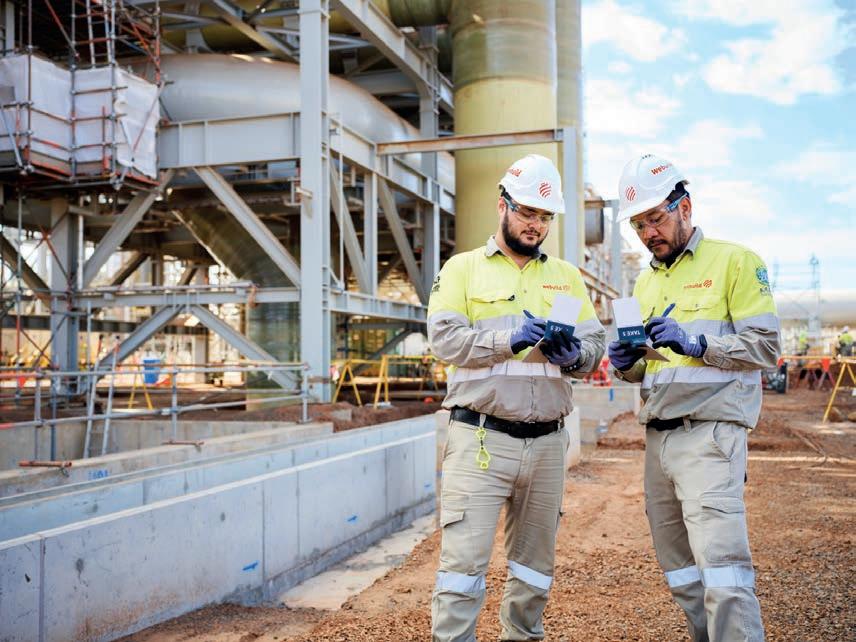
This thinking underpinned the introduction of the Safety Builders program in 2017, now embedded in all new projects globally. It provides a stable structure aimed at fostering a safety culture that elevates leadership capabilities at all management levels, but its strength lies in the way it is adapted to the conditions and realities of each project.
In Australia, that means delivering the program in a form aligned with local construction settings and the way work is planned and carried out on site. It also addresses the cultural dynamics present across diverse teams and considers how consistent messages, effective conversations and shared expectations can support a pathway toward zero harm.
More than that, Safety Builders is an ecosystem, with what Spark calls a “cascade” of sub-programs – including the Senior Leader program, the Frontline Leader program and training on the Safer tool – each designed for a different tier of the workforce.
“It begins with leadership engagement,” she says. “We bring together senior leaders, clients, joint venture partners and other key decision makers. We take them through what Safety Builders is, why it matters and how it works. From there, the group defines an agreed safety vision for that specific project.”
The Frontline Leader initiative engages those making decisions and overseeing the planning and execution of work on site. First implemented in Australia on the North East Link in Melbourne, which is still underway, it considers cultural sensitivities, the combined surface and underground construction environments, the dynamics of a city-based workforce and the measurable indicators of safety climate and on-site behaviour. It continues to be refined through these insights, supported by feedback and assessed throughout the life of the project.
Since its implementation, notable shifts have emerged on site, including changes in the language used by crews.
“People began referring to themselves as Safety Builders. They would talk about their safety vision. They would place their personal commitments on a dedicated wall. That visibility turned accountability into something shared and tangible,” says Spark. “We also saw strong support from senior and project
The Frontline Leader program was created to address the unique challenges faced by frontline supervisors in Australia’s construction industry. (Images: Webuild)
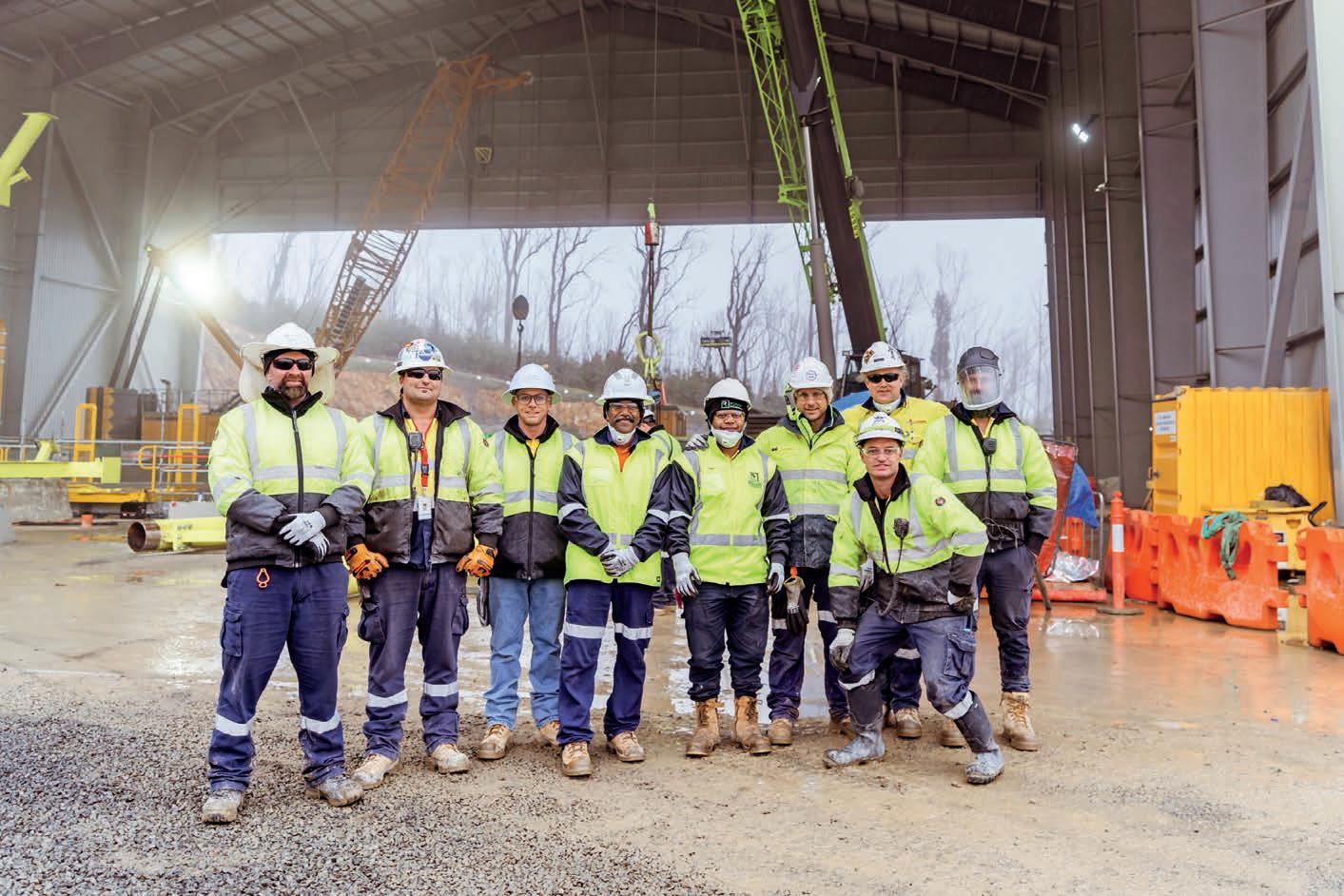
leadership to ensure every worker participated, including subcontractors. Full participation is a core part of making the culture consistent across the team.”
Safer, a practical engagement tool that brings the culture to life on site, is central to the program. It is a small card that sets out how to start an interaction, address the focus of the conversation, frame the safety context, encourage safe actions and reflect on consequences.

In all of these programs, cultural sensitivity is prioritised. Webuild’s workforce brings different ethnicities, education levels, skill sets and understandings of how they fit into a project structure. Cultural sensitivity requires the safety content, facilitation style and tools to be understood and used across all of those groups. That inclusivity is essential in a diverse construction environment.
They also help cultivate psychological safety, opening the way for candid, constructive conversations. Those discussions may be about positive behaviours, unsafe behaviours, or simply trying to understand why a task is being performed a certain way. They create space for honesty, clarity and change.
Spark says psychological safety is especially important during periods of rapid change, which are common on construction projects.
“These exchanges help leaders understand how crews are coping, what pressures they are experiencing and how accessible support feels,” she adds.
Central to this environment is the Stop Work Authority. Every person, whether a staff member or subcontractor, has the authority to intervene. Webuild supports that responsibility with a structured reporting and review process to assess what activity was stopped and what changes may be required.
“We have a commitment to target zero, which means we hold a clear position that even one accident is unacceptable.”
Shannon Spark, vice president of QHSE at Webuild in Australia.
Since its launch, Safety Builders has engaged more than 20,450 participants.
FOCUS
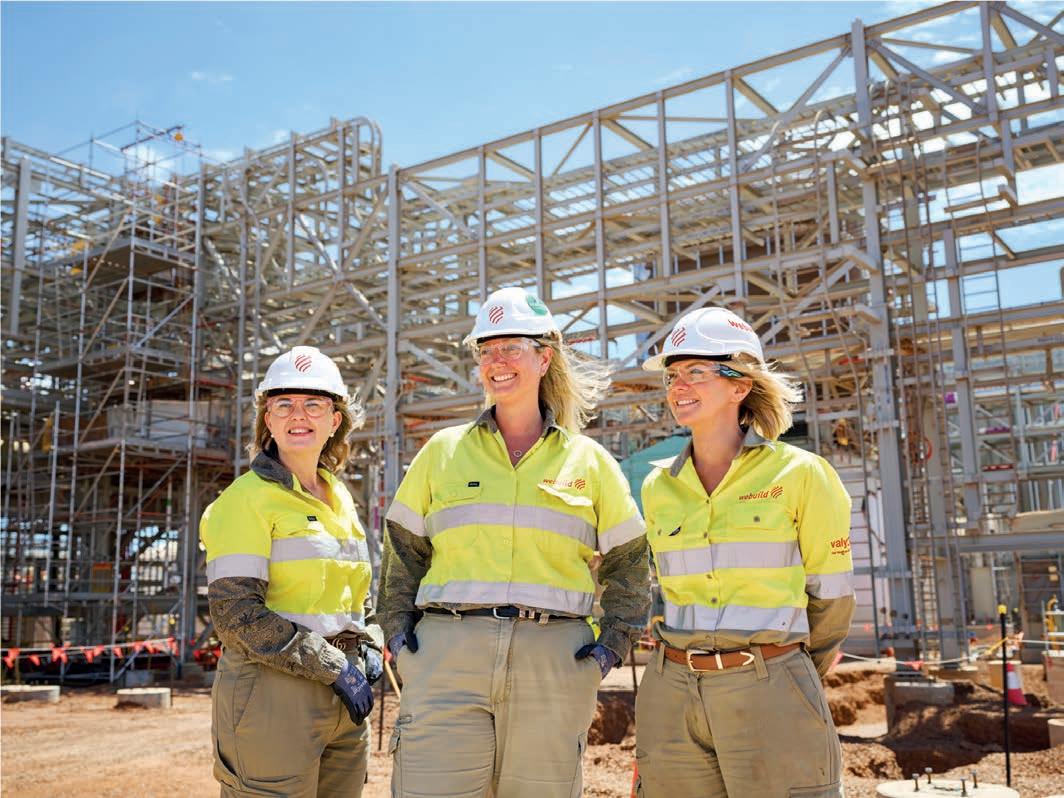
Webuild’s safety tools and systems are designed to engage a diverse workforce through inclusive training and empowerment.
“Safety is the foundation of everything we do.”
“People will not speak up unless they feel psychologically safe and believe their voice has value. If nothing happens after they raise a concern, the culture deteriorates. We want the opposite. We recognise and reward people who exercise their authority and we reinforce the importance of intervention in pre-starts, toolboxes, inductions and training,” says Spark.
“Positive recognition is equally important. Understanding what is working well helps us drive improvement across all projects and reinforce the behaviours that lead to success.”
Since its launch, Safety Builders has delivered 1,175 workshops and more than 73,300 hours of training across 81 projects globally, engaging more than 20,450 participants. Speaking to its impact, Spark says having a unified safety culture and leadership approach across global operations gives Webuild a reliable footing for project delivery. It aligns diverse groups of workers around shared expectations and behaviours.
But Webuild does not measure success solely by the number of programs delivered. While improvements in safety outcomes are consistently tracked, the company also seeks feedback from participants on site, inviting their observations and suggestions for improvement. Responses so far have shown a 97 per cent satisfaction rate for the Safety Builders program in Australia.
“We engage specialist facilitators who work with our project teams. After each workshop we seek feedback on how meaningful and empowering the experience was, and whether participants feel confident in applying the
“The consistent message is that the workshops give people clarity, confidence and a sense of ownership. That is what drives
It is being recognised by the wider industry as well. Safety Builders received a Gold Stevie Award at the 2025 International Business Awards for its cultural sensitivity, measurable impact and relevance to modern construction practice. The award highlighted Webuild’s commitment to embedding a global safety culture in local contexts.
“It is one of several awards Safety Builders has received globally, but it is significant for Australia because it recognises the adapted Australian version. The award underscored the value of tailoring global safety culture to local conditions,” says Spark.
“Our facilitators work closely with each project to understand the scope, workforce and challenges, and tailor safety content accordingly. That relevance is what makes the program powerful.”
For contractors, clients, communities and the wider industry, Safety Builders acknowledges the realities of a fast-paced, mobile sector. Thousands of workers may pass through a project and change is constant. To manage that environment, the framework establishes common language, consistent systems and capable safety leadership.
Its initiatives influence more than Webuild’s own delivery, reducing disruption, supporting project continuity and offering an approach that partners and clients can adopt. For communities, safer worksites mean fewer interruptions and greater confidence in the infrastructure being delivered.
The common language created through the program is what differentiates it, Spark explains.
“When everyone understands the risks, required controls and expectations, you can adapt the program to any setting, whether it is a remote project, a FIFO workforce, a city environment, a night shift or extreme weather conditions,” she adds.
“The intent, tools and values remain consistent, but the conversations in the workshops draw on the lived experiences of the participants. That is why the impact is so strong and why satisfaction rates are so high. It’s a personal experience.”
Your Lifesaving Rules consolidate this shared language and are being rolled out on all Australian projects. The 20 non-negotiable safety behaviours draw on real incidents and set out the high-risk construction activities and the minimum controls required.
“The Critical Risk Control program verifies those controls. Together, they provide clear structure for how we talk about risk and how we manage it,” says Spark. “It is an education tool, a system tool and a behavioural reinforcement tool. We verify that the critical controls are in place to protect life, ensure expectations match behaviour and use conversations to recognise good practice and correct unsafe behaviour.”
As the industry evolves, so does Safety Builders. Spark describes it as a live program that Webuild continues to evolve and improve.
In 2026, new modules focused on psychological safety will be released, reflecting the growing need for clarity around what psychological safety entails and what
productive conversations in that space involve. Technology now plays an active role in how the program is applied, particularly through the use of digital monitoring.
“We harness digital monitoring to analyse safety performance, interactions in the field and both leading and lagging indicators. We also use digital monitoring for occupational health exposures,” says Spark.
“We have artificial intelligence embedded in plant and equipment, particularly where there are people and plant interaction risks. This includes our tunnel boring machines (TBMs) and heavy equipment. These tools introduce an additional layer of control.”
Collaboration remains a driver. Webuild works with joint venture partners, clients and industry bodies, while also engaging with regulators who play an important role in sharing lessons and connecting industry practice.
“The aim is to leverage each other’s innovation and experience so we can lift safety performance across the sector,” says Spark.
Through ongoing refinement and shared commitment, Webuild is contributing to a construction industry that is safe, resilient and equipped for the demands ahead.
“Understanding what is working well helps us drive improvement across all projects and reinforce the behaviours that lead to success.”
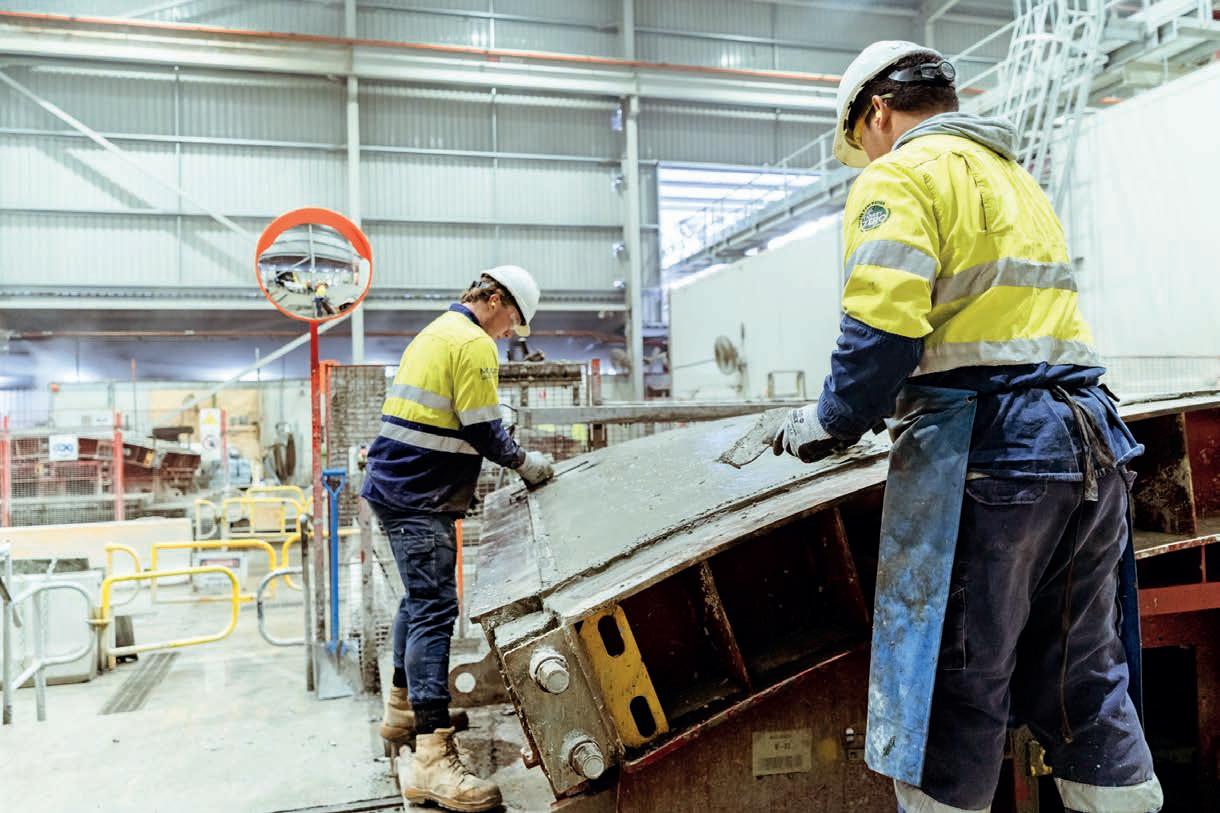
The Safety Builders program supports a zeroharm culture, embedding safe behaviours across all levels of the workforce.
Precision without limits
Komatsu Australia is bringing network-delivered positioning into the Smart Construction ecosystem with the launch of K-RTK for the Australian market.
Australian earthmoving projects are operating with less tolerance for positioning failure than at any point in the past decade. Live models, concurrent work fronts and compressed
programs mean accuracy issues now surface immediately. When positioning breaks down, production slows, rework follows and confidence across the site erodes.
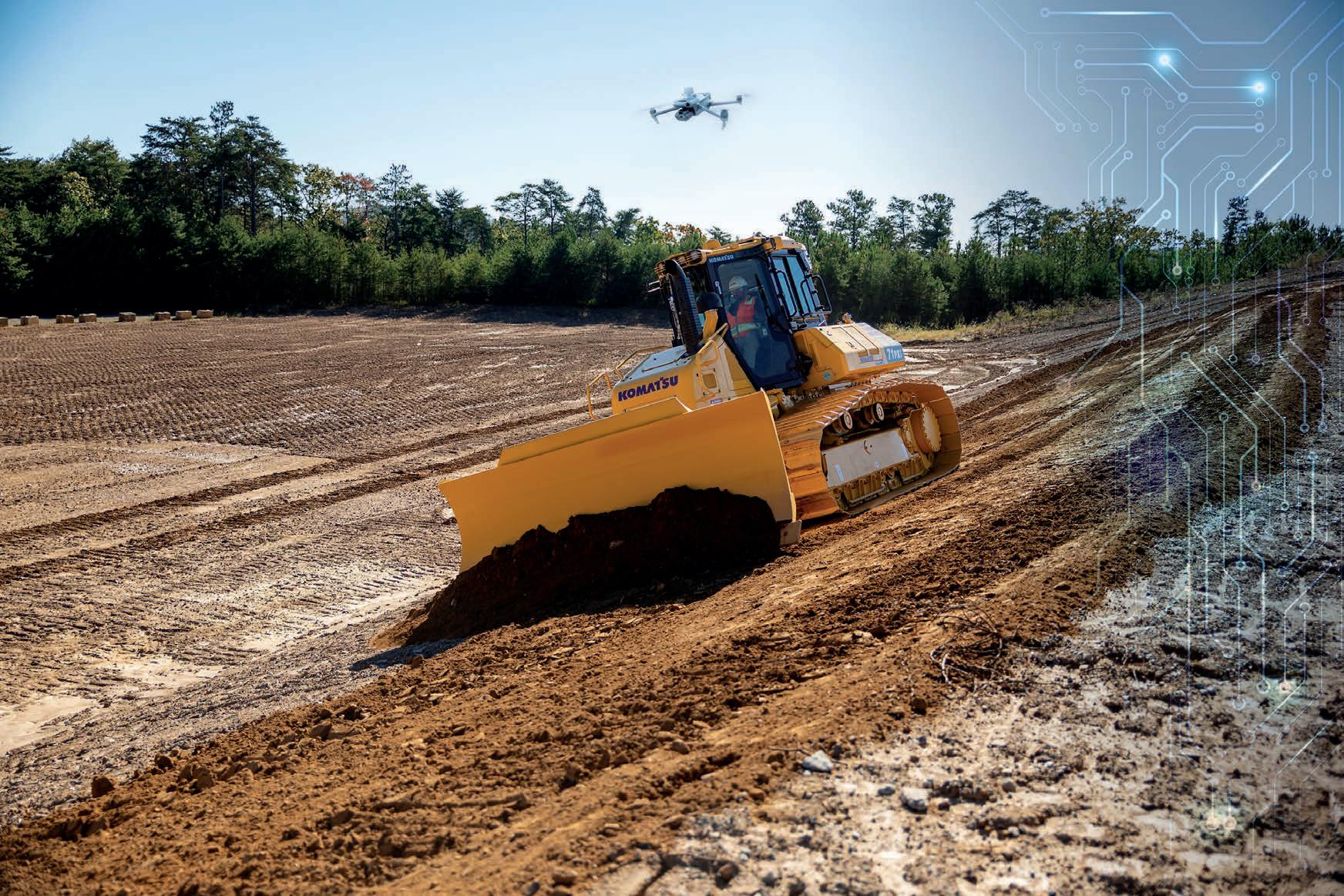
K-RTK is a subscription-based network service delivering high-accuracy corrections to GNSS-enabled equipment via the mobile data network. (Image: Komatsu)
FOCUS Machine technology
“K-RTK operates through more than 900 reference station sites across Australia, which places it among the highest coverage services currently available in the market.”
For many contractors, the choice has already been made. Network real-time kinematic (RTK) is now the preferred positioning approach on complex earthmoving projects, particularly where site-based base stations struggle to keep pace with program and scale. Komatsu Australia’s data shows adoption rising from about 64 per cent in 2024 to 73 per cent by the end of 2025.
That operating environment has driven Komatsu Australia to introduce K-RTK, a subscription-based network service delivering high-accuracy corrections to GNSS-enabled equipment via the mobile data network. Corrections are drawn from a distributed network of reference stations rather than a single site-based base station and delivered in real time using NTRIP. The requirement to install, manage and protect base-station hardware no longer sits with site teams.
Marc Brook, product manager for Smart Construction at Komatsu Australia, says it is regarded as a reliable way to achieve centimetre-level accuracy.
“With network RTK now the dominant approach compared to traditional site-based base stations, now was the right time to launch K-RTK,” he says.

With reliable centimetre-level accuracy, operators can start work immediately.
(Image: IndustriArc)
Traditionally, establishing RTK capability required purchasing and managing a base station for each site, often at high upfront cost. This subscription-based service removes the need for contractors to purchase, maintain or configure base stations each time work fronts relocate.
Traditional radio-based base stations are prone to signal dropouts, black spots and interference, interrupting work and eroding productivity. K-RTK removes those constraints, keeping coverage consistent across active worksites.
“K-RTK operates through more than 900 reference station sites across Australia, which places it among the highest coverage services currently available in the market,” says Brook.
“As a result, in most areas where construction activity is taking place, K-RTK is accessible.”
He adds that because corrections are delivered via the mobile data network rather than private radio transmission, there is no requirement for radio frequency licences from government regulators.
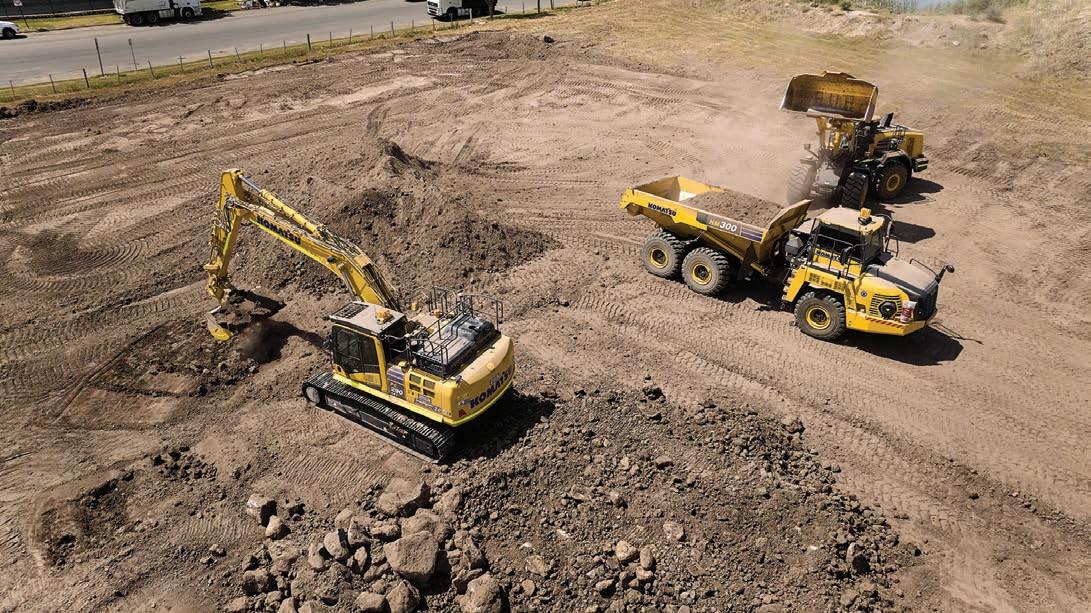
Corrections are drawn from a distributed network of reference stations rather than a single site-based base station and delivered in real time. (Image: Harvepino/shutterstock.com)
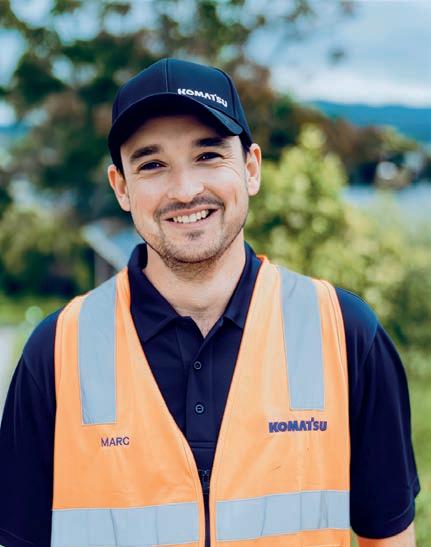
Marc Brook, product manager for Smart Construction at Komatsu Australia. (Image: Komatsu)
FOCUS Machine technology
“With machine guidance supported by accurate RTK corrections, operators can work more independently and efficiently.”
Accuracy becomes critical once work is tied to a digital design, whether that is an engineered model supplied by surveyors and designers or a simpler design created by an operator on the machine. With reliable centimetre-level accuracy, operators can start work immediately. They power up the machine, load or create the design, connect to K-RTK and begin work with confidence that the finished result will meet specification.
“GNSS technology has replaced many traditional methods such as grade lasers and manual set-out,” says Brook. “In the past, contractors would spend time establishing position and height references and manually checking levels. With machine guidance supported by accurate RTK corrections, operators can work more independently and efficiently.”
That immediacy only holds if positioning systems can move with the job. On most Australian construction sites, that means working across mixed fleets and a range of positioning devices. K-RTK is compatible across the common GNSS products used locally, from survey rovers and RTKenabled drones through to machine control, guidance and autosteering systems.
While the technical benefits of network RTK are implicit, confidence on site ultimately depends on the capability behind the service.
K-RTK is supported through Komatsu’s Smart Construction Support Centre in Australia, providing both remote and on-site support.
“Our support team includes specialists with backgrounds across surveying, construction, machine control and mixed-fleet environments. That breadth of experience allows us to provide practical, informed advice that reflects site conditions,” says Brook. “The service is monitored 24 hours a day, seven days a week to ensure maximum uptime and performance.”
He adds reliable positioning is now the starting condition for guidance, control and automation to function consistently on site.
“You can add capability to machines, but without stable corrections, the benefit is
lost,” he says. “Many Smart Construction products address specific challenges, such as machine guidance, machine control and data management. K-RTK provides the positioning accuracy those systems rely on.”
To learn more about K-RTK, call 1300 566 287 and ask for your local Komatsu representative.
K-RTK at a glance
Flexible RTK corrections
K-RTK delivers RTK corrections suited to a range of project requirements and equipment configurations. It supports network RTK solutions including VRS and iMAX as well as Nearest Base and Single Base connection methods.
Broad hardware compatibility
The service is available across common GNSS hardware that supports NTRIP, including machine control systems, survey rovers, RTK-enabled drones and autosteering platforms.
Formats and datums supported
K-RTK supports standard correction formats including RTCM 3.0, RTCM 3.2 MSM and CMR+ as standard, with compatibility across both GDA2020 and GDA94 datums.
Reliable positioning
Corrections are delivered via the mobile data network, eliminating basestation interference while improving coverage, uptime and compliance with government communications requirements.
Wide coverage footprint
With an expanding reference-station network, K-RTK is typically accessible wherever good mobile internet connectivity is available.
Local technical support
K-RTK is supported by Komatsu’s technology specialists, with 24-hour service monitoring, and local phone and on-site support available.

•
•
•
FOCUS Building technology
Better connected below ground
Below ground, Powertec Telecommunications is treating inbuilding connectivity as essential infrastructure for safety, emergency communication and modern building systems.
Mobile connectivity is assumed as standard in today’s buildings, yet it consistently breaks down in one of the most intensively used parts of the built environment: basements and car parks. Too often dismissed as a post-construction technical oversight, the consequences surface in long-term asset performance and, in some cases, user safety.
As commercial operations manager at Powertec Telecommunications, Tom Bolton sees the pattern repeated across residential towers, commercial offices and retail developments. He says builders and developers need to treat in-building coverage as a core building service, particularly in underground environments.
“Basements and car parks continue to be mobile coverage black spots. At a very basic level, signal is coming from external towers, and once a building starts to go below ground, that signal becomes harder to access. Modern construction is also working
harder to maximise available space, which means deeper basements and more complex structures,” he explains.
“The challenge is twofold. First, the materials used in construction make it difficult for signal to penetrate the building envelope. Second, once below ground level, mobile signal is similar to light – it often does not travel through solid structures or underground.”
Without an integrated in-building mobile coverage solution, basements, stairwells and car parks are left with unreliable or unavailable signal, with implications that are not limited to convenience.
During construction, underground areas are active work zones that depend on continuous communication for coordination and safety. Once operational, those same spaces serve residents, visitors, maintenance teams and contractors who expect uninterrupted access to emergency services.

In-building mobile coverage in basements and car parks supports the safety of maintenance and inspection personnel. (Image: Yuliia/ stock.adobe.com)
Bolton notes that underground car parks today are generally well designed and safer than in previous decades, yet the inability to call Triple Zero during a medical event or accident introduces a risk that no amount of lighting or ventilation can offset.
Powertec has been engaged on projects prompted by incidents involving users who could not exit their vehicles or summon assistance, scenarios that quickly reframe mobile coverage as a core safety requirement.
Lone worker exposure adds another layer of risk. Maintenance and inspection tasks in basements and plant areas frequently occur in isolation, often outside normal operating hours. While man-down systems and emergency alert devices are increasingly specified, they rely on mobile connectivity to function. Without coverage, these systems offer compliance comfort without practical protection, leaving workers exposed and asset owners vulnerable.
While safety alone is sufficient to prioritise in-building mobile coverage in car parks and basements, underground connectivity also supports more than basic communications. It enables modern building systems and services that are now being digitised into IoT platforms.
Bolton notes that manufacturers favour cellular connectivity for its simplicity, eliminating the need for WiFi configuration

and credential management. HVAC controls, environmental monitoring, electricity meters and lift emergency phones are now routinely reliant on mobile networks, as are parking payment systems and access controls.
The rise of electric vehicles and charging infrastructure further reinforces the requirement. Chargers depend on connectivity for monitoring, billing and fault reporting, yet many are installed in basements never designed with mobile coverage in mind. Without in-building solutions, reliability suffers and operational risk sits with owners and operators.
“Further, mobile broadband modems, emergency pendants and security systems often rely on cellular connectivity,” says Bolton. “Connectivity enables smarter buildings and safer environments.”
Regulation is beginning to respond. In 2024, the Australian Government introduced telecommunications requirements for new housing developments of 50 lots or more to consider mobile coverage during planning, signalling an expectation that connectivity should be treated as an essential service alongside water, electricity and gas. Bolton sees similar expectations emerging for high-rise residential developments of comparable scale.
“All of this reinforces that mobile connectivity underpins safety, compliance and the future functionality of modern buildings,” he says. Despite its importance, responsibility for in-building mobile coverage is poorly defined, which is why Powertec is often engaged late in the project lifecycle or after construction is complete.
“For larger buildings above certain size thresholds, there is usually a requirement to install a distributed antenna system, or DAS, to bring mobile signal from outside and propagate it throughout the building and down into car park and basement areas,” says Bolton.
“In many tender processes, that requirement is either overlooked or loosely bundled into the electrical scope. Electrical contractors then find themselves needing to retrofit a solution late in the build.
“Historically, systems were sometimes installed without proper engagement with mobile carriers. The infrastructure would be there, but without carrier agreements in place, activation would be deferred to the building owner, often with substantial and unexpected fees.”
Bolton says identifying the need for a DAS early and engaging a communications specialist avoids those outcomes.
“It removes hidden costs and surprises and allows the most suitable and cost-effective solution to be selected,” he says. “The key is collaboration between builders, approved electrical contractors and communications experts from the outset.”
When in-building mobile coverage is considered during planning and design, Bolton explains, project teams can establish realistic performance objectives, align solutions with budget constraints and prioritise critical areas. Indicative pricing can be developed early, followed by detailed design and site surveys that integrate into the construction sequence. Installation occurs at appropriate stages, commissioning is completed with full documentation, and the
Mobile connectivity supports the operation of modern cities, linking buildings, systems and services across the urban environment.
(Image: paisan1leo/ stock.adobe.com)
“Addressed
early,
it
integrates cleanly into design and construction, supports safety obligations and underpins the functionality of modern building systems.”
FOCUS Building technology
“Connectivity enables smarter buildings and safer environments.”
finished system operates as intended from occupation.
“While we can come in after construction, early involvement reduces disruption and costs,” says Bolton.
There are also architectural and aesthetic considerations. As buildings incorporate higher-end finishes and more complex forms, retrofitting communications infrastructure introduces compromises that undermine design intent. Early integration avoids surface mounted solutions and visual disruption, delivering outcomes that are effectively invisible to occupants while remaining robust in performance.
Powertec’s role in this process draws on long-standing expertise in radio frequency (RF) communications, a discipline Bolton describes as a “highly nuanced field” that requires experience to perfect. The company’s solutions draw on Nextivity CEL-FI cellular repeaters, including the QUATRA variant, which supports Power over Ethernet, multi-carrier 4G–5G coverage and remote system management.
As the largest distributor of this technology in the Asia-Pacific region, Powertec has been involved in some of the earliest applications of these systems. The company operates with an entirely onshore team based on the Gold
Coast, supported by satellite offices across Australia and operations in New Zealand.
“Our systems are carrier agnostic, meaning we are not aligned to one provider. Property ratings increasingly consider ubiquitous multi-carrier connectivity as a marker of building quality, potentially increasing building value,” says Bolton.
“Deployment speed is another point of difference. While traditional DAS systems can take six months or more to deliver, our solutions can typically be deployed within two months from start to finish. They also allow targeted coverage and can be delivered at a fraction of the cost of legacy systems.”
Beyond the technical case, Powertec is focused on positioning mobile coverage as essential infrastructure. For contractors and developers delivering car park and basement works, Bolton is clear that mobile connectivity must be addressed during delivery, not after the build is complete.
“Mobile connectivity in basements and car parks cannot be treated as an afterthought,” he says. “Addressed early, it integrates cleanly into design and construction, supports safety obligations and underpins the functionality of modern building systems. Deferred, it introduces risk, cost and compromise.”

Electric vehicle charging stations depend on connectivity for monitoring, billing and fault reporting.
(Image: InfiniteFlow/ stock.adobe.com)
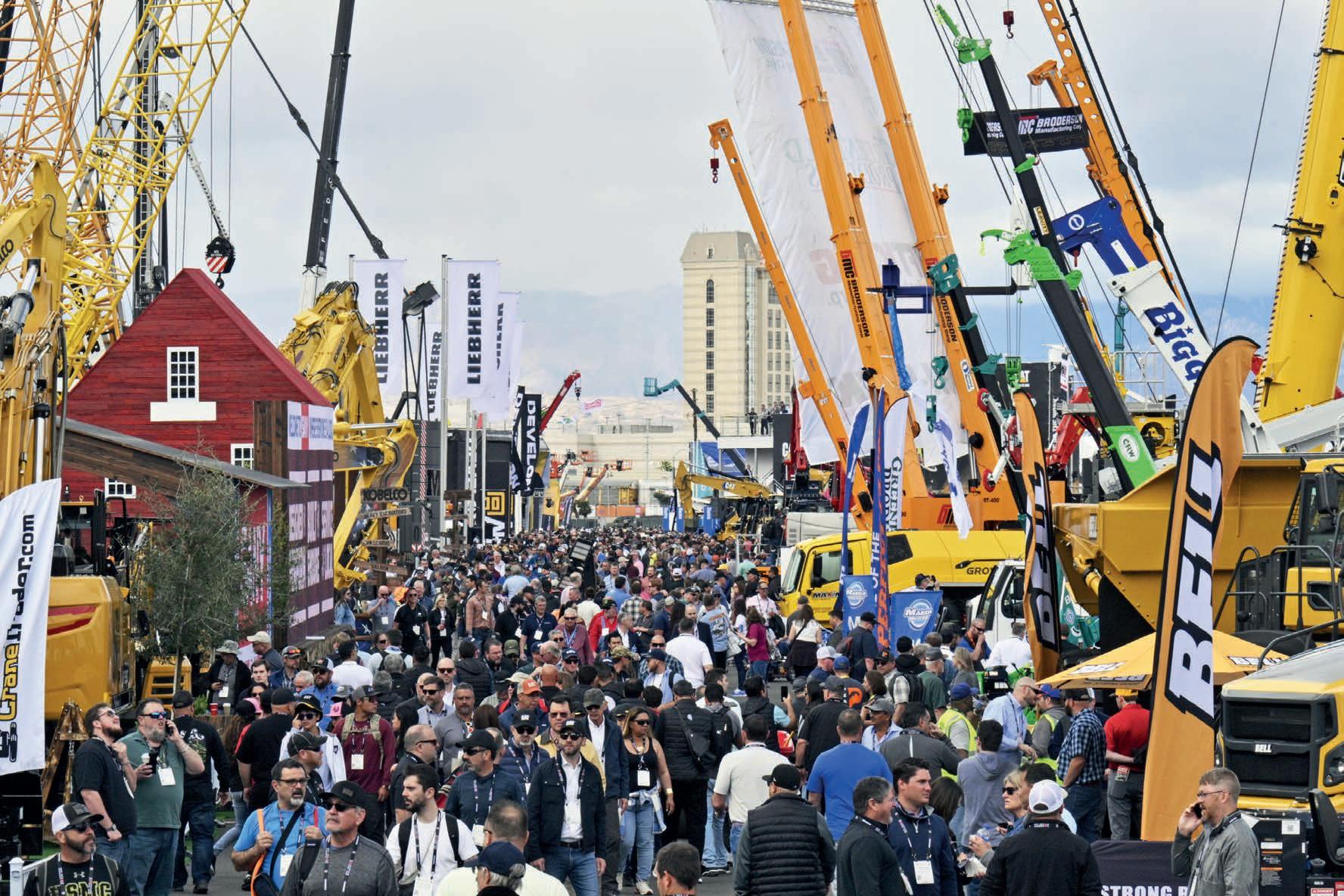
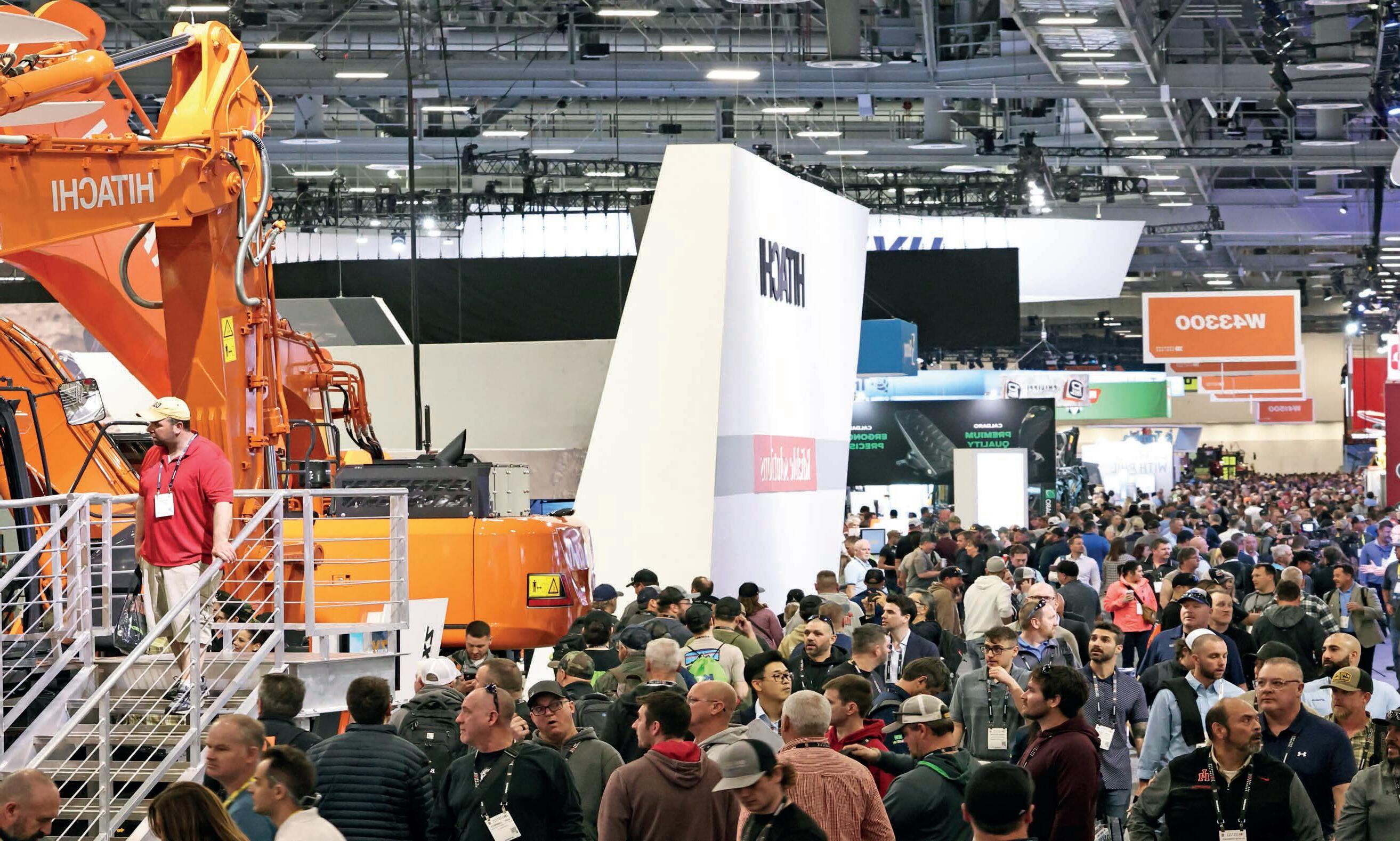
BeyondthispageliesanessentialresourceforAustraliansattending CONEXPO-CON/AGG2026,oneoftheworld’slargestconstruction tradeshows,takingplace3-7March2026inLasVegas,UnitedStates. Planyourvisitaroundthiscomprehensivelistingofcompanies exhibitingatCONEXPOwithconfirmeddistributioninAustralia.
TO CONEXPO
YOUR AUSTRALIAN GUIDE TO CONEXPO
Green Star steers the sector
A year of record certification activity has confirmed Green Star’s importance to the sustainable evolution of Australia’s built environment.
Green Star certification is stepping into new territory across the built environment. What began as a voluntary commitment to healthier and more efficient buildings has evolved into a marker of quality relied upon by government, investors, developers and occupiers.
The Green Building Council of Australia’s (GBCA) Green Star: A Year in Focus FY2024–25 report shows the scale of progress, with almost 2,000 certifications achieved across Green Star’s core areas of application, including buildings, communities, fit-outs and operational performance. The breadth of that activity reflects a sector that recognises the value of independent verification and is acting accordingly.
The momentum has carried through a period of global uncertainty and cost pressures. Instead of slowing, uptake has continued to grow across all building types, from commercial towers and mixed-use buildings to industrial facilities and sports venues. Demand is also strong in government projects, with more than 140 public assets now using Green Star Buildings to assess long-term performance. This trajectory is supported by policy settings, finance frameworks and community expectations.
Jorge Chapa, chief impact officer at GBCA, says this year’s report findings point to sustainability becoming embedded in the built environment – a new norm for the industry and the community.
“Whether it’s the certification of an allelectric aquatic centre or a community that highlights the best of adaptive reuse and highperforming homes, industry has taken the challenge of creating systemic change in the built environment, head on,” he says. That willingness is evident in the range of projects certified this year.
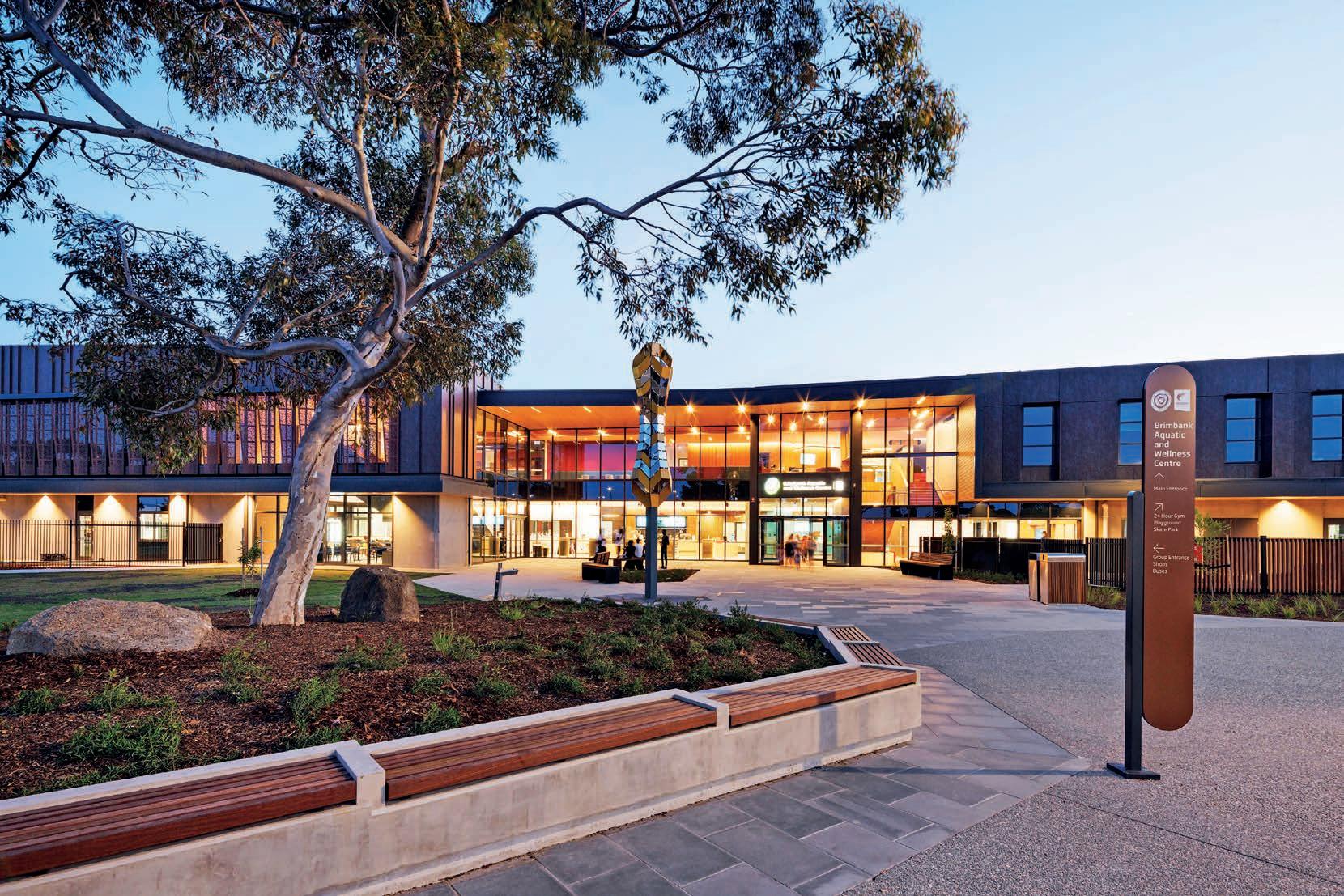
The Brimbank Aquatic and Wellness Centre demonstrates what can be achieved when operational performance is treated as a design priority. As Australia’s first 100 per cent renewable-energy-powered, zerogreenhouse-gas-emitting aquatic centre, it achieved a 6 Star Green Star Design and As Built rating. It also speaks to a long-standing challenge for councils managing aquatic assets, which are typically among the highest energy users in municipal portfolios.
Drew Hildebrandt, manager of Brimbank Leisure Centres, explains the thinking behind the project.
The Brimbank Aquatic and Wellness Centre achieved a 6 Star Green Star Design and As Built rating. (Image: Dianna Snape)
GBCA CEO Davina Rooney. (Image: GBCA)
COVER STORY
Green Construction
“The certifications that we are seeing are a result of industry valuing Green Star for all the benefits it brings to them.”
“Brimbank Council declared a climate emergency in 2019, and we have strong requirements for our facilities to meet highest possible sustainable design standards,” says Hildebrandt. “Our Climate Emergency Plan outlined a commitment to ‘assess the feasibility of electric alternatives to building new, or upgrading old, gas infrastructure in council buildings’. Council was determined to exceed this commitment by bringing this all-electric centre to fruition.”
Cultural projects are demonstrating ambition of the same calibre. Powerhouse Parramatta, delivered by Infrastructure NSW with Lendlease, is on track to become the first public institution in the country to reach a 6 Star Green Star Buildings v1 rating. Its design incorporates climate resilience, low-impact materials and an all-electric operational model supported by renewable energy. The museum’s submission gained more than 70 points across the rating categories and provides a reference for civic buildings seeking to demonstrate credibility, transparency and measurable outcomes.
As Carmel Reyes, head of climate action and sustainability at Powerhouse, says, “At Powerhouse Parramatta, we made a deliberate – and at the time, considered bold – choice to completely exclude gas and fossil fuels from our building operations.”
The project has been conceived as a longterm asset positioned for future energy, climate and cost expectations.
Industrial development is following a comparable path. Stockland’s Melbourne Business Park Stage 1 facility received a 5 Star Green Star Buildings v1.0 rating after the project team – Stockland, with builder partner Texco and consultants from Sustainable Development Consultants and Cundall –shifted from a 4 Star target to pursue higher performance. Low-carbon materials and waste diversion contributed to the result, and the project now anchors a logistics pipeline informed by the same standards.
“Our 5 Star Green Star rating is more than just a badge; it represents responsible and innovative commercial development, which is core to Stockland values and progress on delivering our ESG strategy,” says Anthony Osborne, senior development manager at Stockland.
GBCA CEO Davina Rooney reinforces the value that flows from these choices, stating, “90 Melbourne Drive has been designed and built with low carbon and low waste in mind, and then it does so much more. Operationally it’s a smart, all-electric, highly efficient building that will have a low impact on the environment and an ongoing positive impact for all who work there.”
Within workplace environments, the Interiors tool is prompting organisations to reconsider how their spaces support their people. Endeavour Energy’s 6 Star Green Star fit-out in Parramatta Square is a study in material selection, low-impact lighting and adaptive reuse. Repurposed power poles, preserved base-building materials and recycled components contribute to resource efficiency, while circadian lighting supports staff wellbeing. The project sits inside a Green Star rated building within a Green Star rated community, demonstrating how nested certifications can shape precinct-level outcomes.
Melissa Irwin, the company’s chief data, people and sustainability officer, links the certification to broader organisational goals.
“Achieving a 6 Star Green Star rating for Endeavour Energy’s Parramatta office fit-out reflects our commitment to sustainability leadership and innovation, aligns with our broader sustainability strategy, and supports our goal of reaching net zero by 2040 and achieving zero operational waste to landfill by 2030,” says Irwin.
“By designing a workspace that prioritises energy efficiency, resource conservation and employee wellbeing, we’re not only minimising our carbon footprint but also setting a benchmark for what’s possible as we drive the transition to a clean-energy future.”
Operational performance has become a lens through which asset management is now viewed. From heritage buildings to stadiums and commercial offices, Green Star Performance helps owners assess their assets, improve operational efficiency and work toward higher ratings over time. Green Star Performance v2, aligned with international finance frameworks, has seen rapid adoption from office owners, industrial landlords, student accommodation providers and retirement living operators. ESR Australia and
Jorge Chapa, chief impact officer at GBCA. (Image: GBCA)
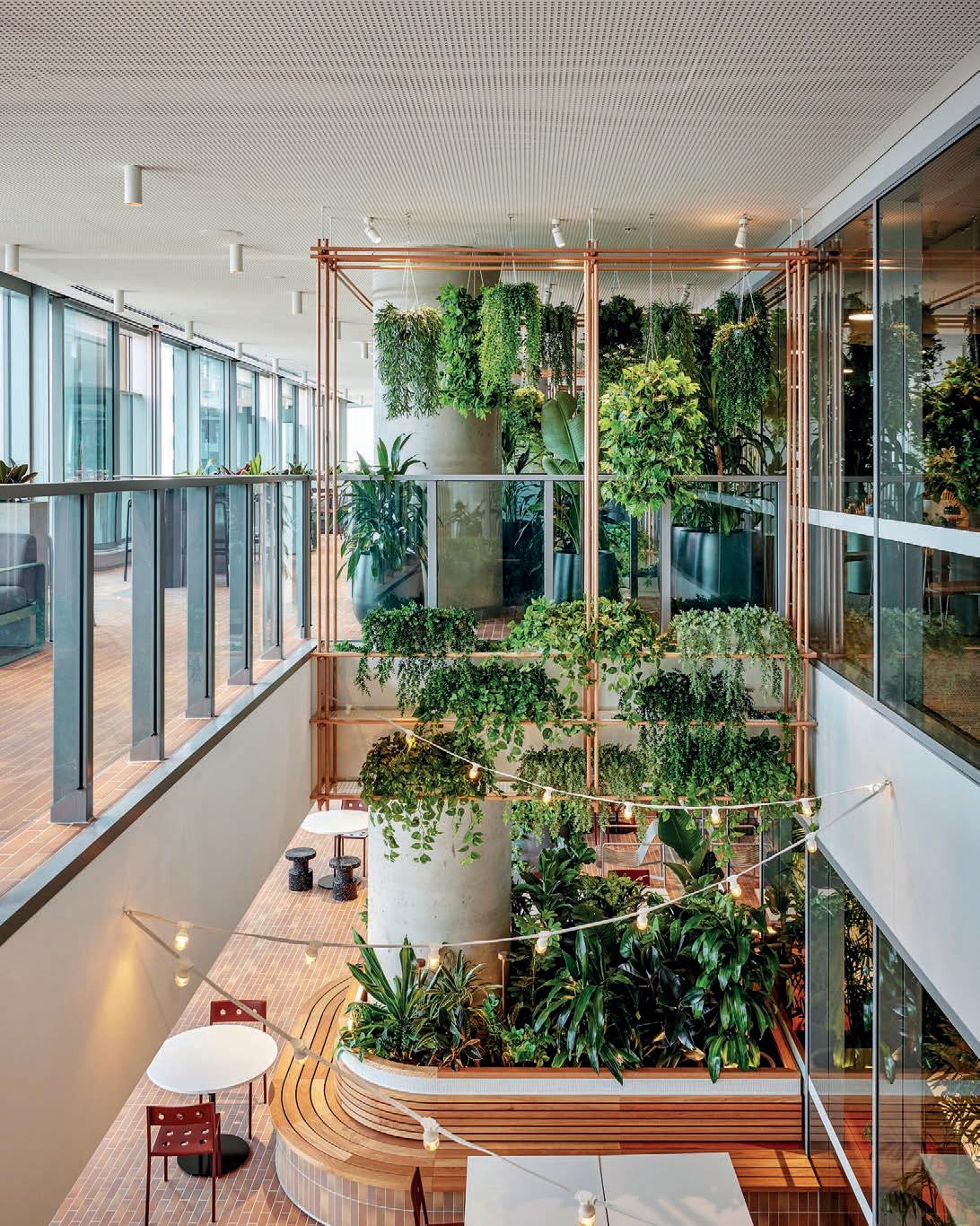
NZ, a logistics real estate platform, certified more than 100 industrial assets under the updated tool, with climate resilience, decarbonisation initiatives and renewableenergy uptake guiding decisions.
A unifying thread across these achievements is the long-term direction set by GBCA’s Future Focus program, which has shaped the evolution of the rating system and positioned the sustainable built environment to meet present-day needs while responding to global megatrends and emerging challenges. The rating tools developed under Future Focus have pushed projects to consider embodied carbon, nature, resilience and circular outcomes in ways that were not common practice a decade ago.
Since the launch of the Future Focus tools in 2020, more than 700 buildings valued at over $20 billion have registered, collectively avoiding at least 4 million tonnes of carbon emissions. This uptake includes more than 140 government projects using the Green Star Buildings tool to future-proof their assets.
“Future Focus won the Australian Financial Review Sustainability Leader Award in Property and Construction,” says Rooney. “Led by the Market Transformation team, it was recognised for challenging industry to think differently about buildings and to stretch what’s possible by considering upfront carbon, designing with Country, nature stewardship and resilience.”
Taken together, the progress outlined in GBCA’s annual report reveals a sector approaching sustainability with increasing maturity. Project teams are treating certification as a planning tool rather than
integrating the approach into procurement. Investors are recognising its value in risk management and asset performance. And communities are experiencing the outcomes through healthier buildings, lower running costs and public places designed for longevity.
“The certifications that we are seeing are a result of industry valuing Green Star for all the benefits it brings,” says Chapa. “It has also been wonderful to see governments recognise that well-built, sustainable buildings that meet Australia’s leading standard provide value.”
After a year of record activity, Green Star is now a central part of how Australia builds, regenerates and adapts.
To date, GBCA has issued over 7,000 certifications. In practice, that means:
• 3.8 million people visit a Green Star rated shopping centre each day;
• 74 million square metres of building space is Green Star certified;
• 21,000 hectares of Green Star Communities certified;
• 1 .1 million people will live or work in the Green Star communities GBCA has certified, including more than 660,000 residents and 450,000 workers and students; and
• 930,000 people visit and heal in Green Star certified hospitals each year (400,000 inpatients plus 530,000 emergency/outpatients).
Endeavour Energy’s Parramatta office fit-out achieved a 6 Star Green Star rating. (Image: Endeavour Energy)
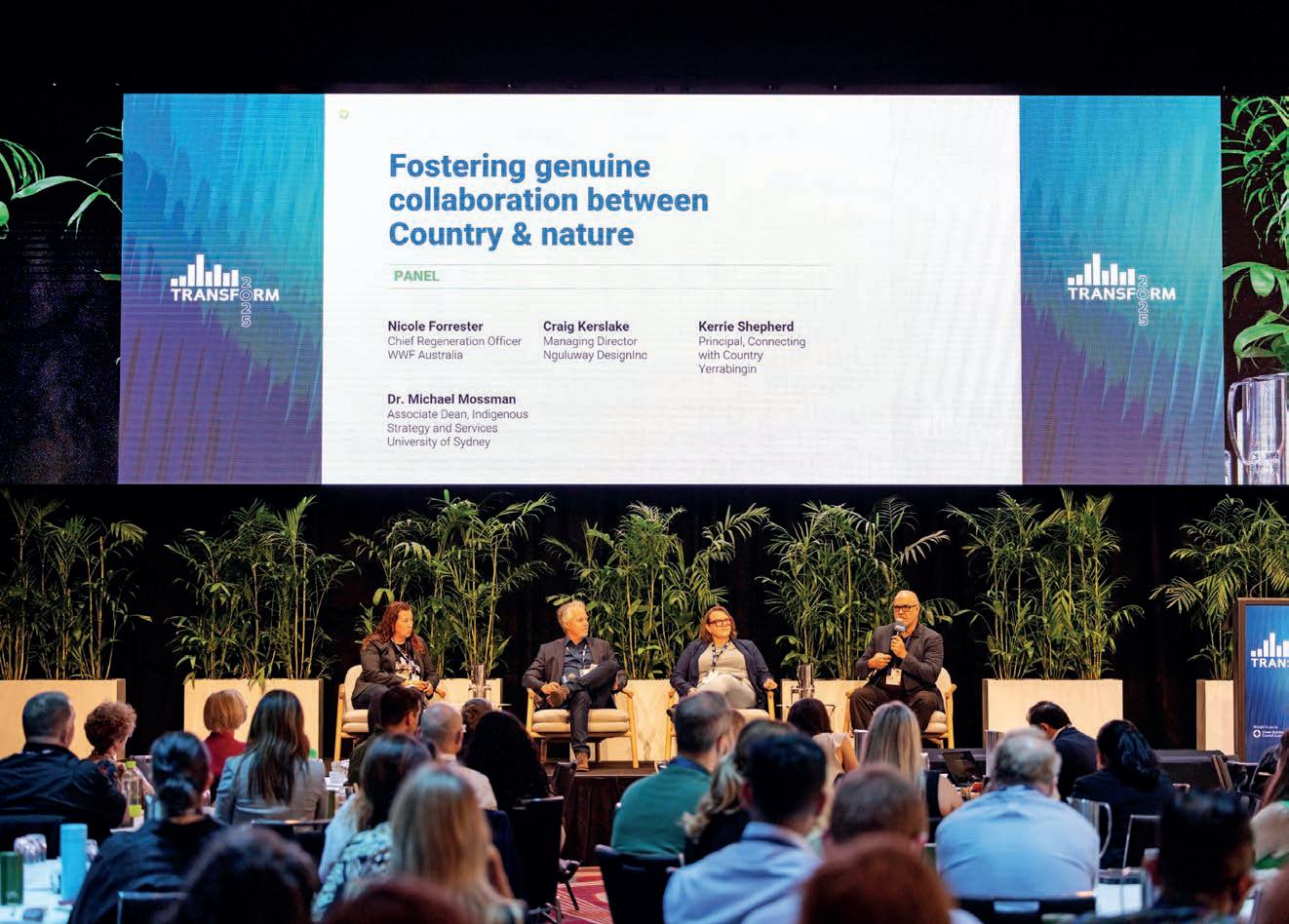
It’s a rapidly changing world – be part of the conversation
In March 2026, TRANSFORM will return to Sydney, uniting sustainability leaders and practitioners from across the built environment.
It was once said that change is the only constant. For those working in construction and the built environment, that reality is playing out every day on site, in procurement decisions and across planning and approvals. From climate commitments and policy reform to shifting expectations and community needs, our industry is navigating a landscape that is more complex and more consequential than ever before.
For Australia’s construction sector, these shifts bring both complexity and opportunity, demanding deeper collaboration and a shared sense of direction that is both innovative and fair for our community and environment.
This is where the Green Building Council of Australia (GBCA) comes in. GBCA is the
national organisation behind Green Star, a framework for measuring and improving the performance of buildings across energy, carbon, water and materials. GBCA works with builders, developers, engineers, asset owners and governments to lift performance in ways that are practical, measurable and scalable.
TRANSFORM 2026 is GBCA’s flagship industry event, bringing construction and property professionals together to address issues from climate change and keeping Australia on track for a 1.5°C pathway to nature positive initiatives, circular design and material innovation. Now in its eighth year, TRANSFORM 2026 invites industry to confront the realities facing the built environment, nature and people globally.
Attendees will hear the latest insights through panel discussions, case studies and working groups. (Images: GBCA)
Attendees can expect to:
• Hear the latest insights through panel discussions, case studies and working groups enabling transferable knowledge and applicable solutions.
• Attend pre-event workshops on emerging issues, such as data centres and refrigerants, and post-event site tours allowing you to see sustainable principles in practice – a new addition in 2026.
• Stay abreast of critical and emerging issues, from climate change to net-zero transformation.
• Be part of the conversation that is driving meaningful change, share experiences and gain fresh perspectives.
• Be in the room where new connections are made with more than 600 professionals, all with the common goal of driving change and sustainable outcomes across the industry.
Key sessions in 2026
Among the agenda, there are key sessions we are labelling ‘not to miss in 2026’.
The leaders’ panel will explore what boards and executives are prioritising now, and what that means for future projects, materials and delivery models. Speakers include Buildcorp principal Josephine Sukkar AM, Sydney Markets CEO Anthony Boyd, former NSW Minister for Planning and Public Spaces and Anglicare group executive for housing Rob Stokes, and GBCA CEO Davina Rooney.
Dr Jefa Greenaway, founding director of Greenaway Architects, will present a keynote looking at the intersection between Countrycentred design and the built environment. The session will look to demystify some of the trepidation around early engagement with First Nations people and demonstrate successful outcomes of Indigenous-led design through various project typologies.
Tim Bush, global sustainability principal of data centre engineering at Amazon Web Services (AWS), will look at how AWS, a global developer of data centres, is approaching the embodied carbon of its buildings and equipment. The session will explore how AWS is working to leverage its scale to gain a deep understanding of decarbonisation pathways, influence industry trajectories and then channel low-carbon materials into its supply chain.
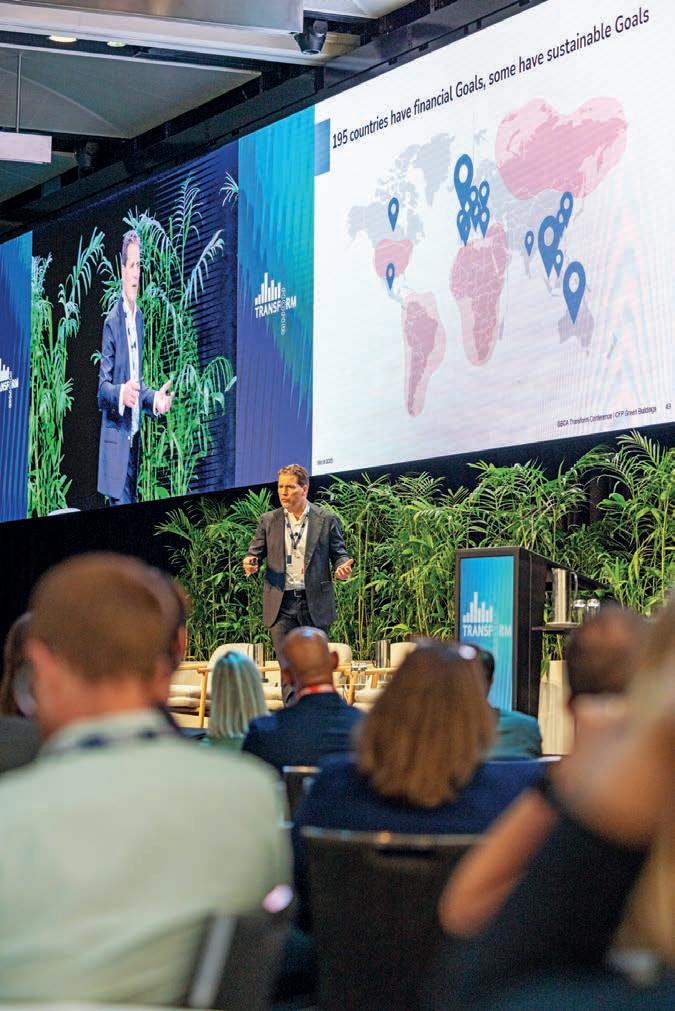
senior manager of buildings, precincts and homes Nick Alsop (as moderator) will present a panel on advancing sustainability in the buildto-rent sector.
Shaping the future
The world is changing quickly and unevenly, and the construction sector sits at the centre of that change. TRANSFORM brings together those committed to shaping places that are future-ready, recognising that decisions made in these critical years will shape the resilience and liveability of the built environment for decades to come.
Inside Construction readers can get a 10 per cent discount on TRANSFORM 2026 tickets using the code TRANSFORMINSIDECONSTRUCTION10
“TRANSFORM 2026 invites industry to confront the realities facing the built environment, nature and people globally.”
The event will tackle critical and emerging issues, from climate change to net-zero transformation.
National Precast Concrete Association Australia
Where culture meets contemporary student living
Located just minutes from Redfern Station, Wee Hur Y Suites on Margaret stands out as a new addition to Sydney’s student accommodation offering.
Situated at 108 Regent Street, Wee Hur Y Suites on Margaret is an 18-storey development that honours local heritage and Indigenous culture through its architectural detailing and use of precast concrete.
A celebration of identity
Following in the footsteps of its sister development on Gibbons Street, the project
continues the commitment to creating vibrant, community-oriented student housing. Designed to inspire learning, connection and wellbeing, the building accommodates 408 beds in a mix of single and double studio layouts, complemented by a range of communal spaces.
A standout feature of the project is the Aboriginal-themed public artwork that graces
The five-storey ‘Managubra’ mural by Leanne Tobin and Nicole Monks celebrates Indigenous heritage through its precast concrete design. (Image: Advanced Precast)
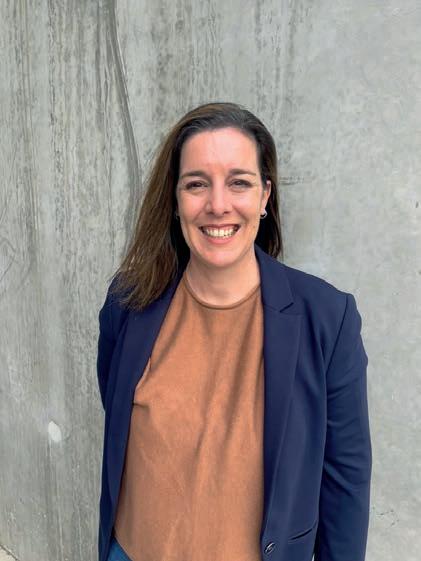


the southern elevation. Titled ‘Mana-gubra’, the five-storey mural was created by First Nations artist Leanne Tobin and curated by Nicole Monks. It depicts women and children gathering ‘gubra’ and carrying their food in dilly bags back to camp. The mural is formed from 10 custom precast panels, detailed to create a seamless flow across each joint.
Crafted using layered CNC-routed highdensity styrene moulds by The Blue Print, positioned atop striped form-liner bases, the panels exhibit a dynamic relief effect. Each element is hand-finished and coated in a twotone Ecotone-stained finish, adding depth and enhancing the visual impact of the design.
National Precast Master Precaster Advanced Precast was instrumental in translating this artistic vision into reality, demonstrating the unique capabilities of precast concrete in achieving expressive, culturally significant façades.
“It was an honour for our team to help bring the vision of Leanne Tobin and Nicole Monks to life and contribute to a project that respects and celebrates Indigenous heritage,” says Brett Foster, national business development manager at Advanced Precast Australia.
Intelligent solutions
Beyond the mural, the project’s façade presented additional complexity during manufacture in the form of a distinctive brickinlay design. The architectural interpretation of the weaving pattern is found in the podium, which acts as the metaphorical basket that contains the building above. The brickwork detailing reflects the methodology and technique used to achieve the woven structure. The pattern and form enhance the permeability of the building, encouraging visual engagement and connection between the broader and resident communities.
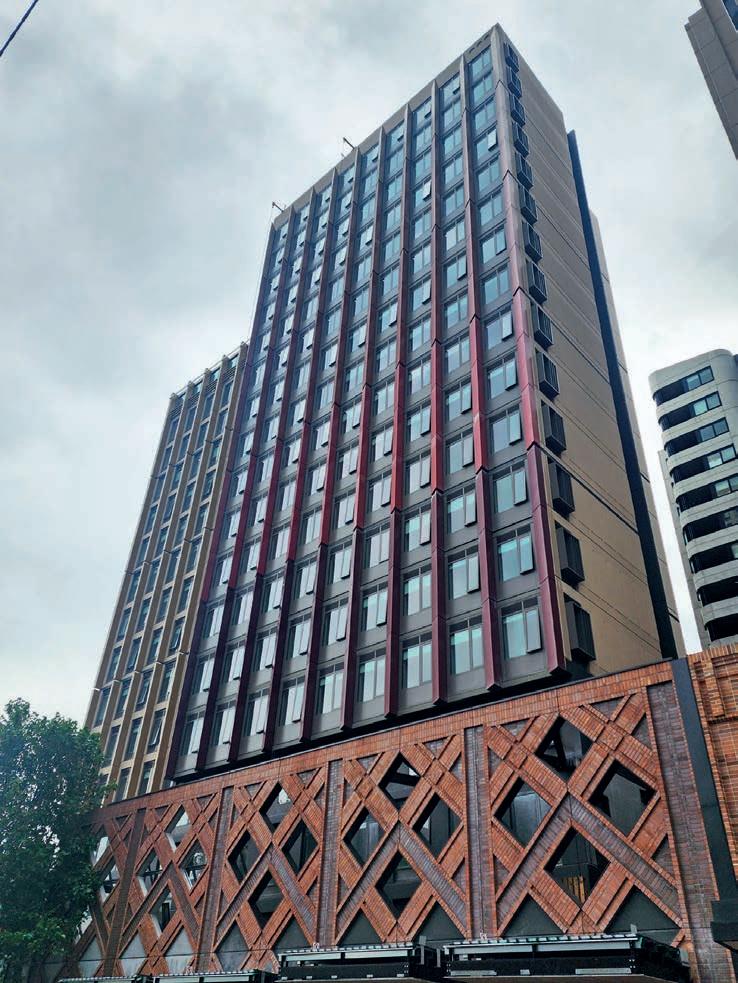
Project
Featuring three brick types, each varying in thickness, colour and projection, the façade required a tailored approach to maintain architectural integrity and buildability.
Rather than treating each precast panel as a bespoke unit, Advanced Precast devised a repeatable system using 120 modular brick templates. These were mirrored and rotated across nearly 100 precast components, which included load-bearing columns, spandrels and double-height panels.
“Our modular brickwork strategy ensured we preserved the architectural intent while streamlining manufacturing, transportation and installation,” explains Foster. “It’s a great example of how precast can deliver complexity with control. This kind of modular innovation is something we see as scalable for future developments – it’s precast thinking that meets architectural ambition.”
The power of precast
Wee Hur Y Suites on Margaret highlights the power of precast concrete to achieve architectural quality, cultural sensitivity and construction efficiency. Through its design language, community-focused amenities and construction approach, the project reflects the evolution of purpose-built student accommodation in New South Wales.
Wee Hur Y Suites on Margaret
Location
Redfern, NSW 2016
Master Precaster
Advanced Precast
Architect
Antoniades Architects
3D CNC Design
The Blue Print
Public Artwork
Leanne Tobin
Curator
Nicole Monks
Wee Hur Y Suites on Margaret combines cultural expression and contemporary design. (Image: Advanced Precast)
ASSOCIATIONS
The National Association of Women in Construction
Webinar ignites global collaboration
The National Association of Women in Construction has hosted a global webinar on male allyship and cultural ambassadorship as part of its work to advance fair and inclusive workplaces.
It’s exciting to enter into 2026 feeling energised after a year of progress for the National Association of Women in Construction (NAWIC) and celebrations marking our 30th anniversary in 2025. Our organisation remains volunteer-led, and this sets us apart in the sector. It gives us boots-on-the-ground insights and local knowledge on women’s experiences and the issues affecting construction.
NAWIC’s Organisational Strategy 2025–2028 outlines our focus as we continue to work towards an equitable construction industry that is fair, inclusive and respectful, and where everyone can thrive. We know that culture change is integral to achieving gender equity.
Last year we amplified our voice in advocacy, secured record funding for culture change initiatives, engaged CEOs personally in our mission, opened opportunities for further collaboration across the sector, received recognition for our volunteering and achievements, and grew our membership, sponsorship and support base.
It was also an honour to host and facilitate the NAWIC Global Webinar on Male Allyship and Cultural Ambassadorship in November, providing an opportunity to collaborate on an international scale.
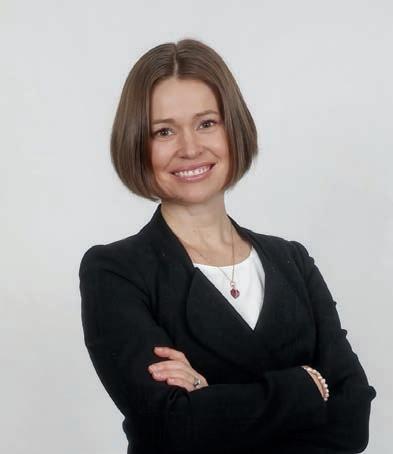

More than 800 participants from our global network registered for this discussion, including those from the United States, Canada and New Zealand. The session allowed us to share our work on culture change and receive feedback on creating fair, inclusive and respectful workplaces.
It was exciting to outline our approach with others working to achieve similar objectives overseas. In order to attract, retain and advance women in the construction sector, we need safe and inclusive environments that meet their needs and offer supportive career pathways.
Men make up 11 per cent of our more than 16,000 members in Australia, but not all NAWIC organisations internationally open their membership to all genders. The webinar was an opportunity to highlight the important role male allies can play in creating an equitable construction industry for all. When you get workplace culture right, everybody benefits, both individuals and organisations. It’s all about calling men and leaders in rather
than calling them out and meeting them wherever they are on this journey of change.
Research shows that men in allyship programs are three times more likely to advance gender equity, almost 70 per cent of women want more men involved in gender equity, and these initiatives are most effective when men are involved as allies and champions.
We know the challenges women face in the construction sector are not women’s issues, but societal and sector issues, which means we all share both the responsibility and the potential to address them.
Doreen Bartoldus, NAWIC USA past national president for 2021 to 2022, acted as moderator for the global webinar, which also featured NAWIC Australia male ally advocates Adam Woodley (director and senior advisor at WOODLEY Advisory Group), Nigel Gorman (CEO of Aussie Painters Network and NAWIC National Male Ally Award winner) and Greg Belle (NAWIC senior project manager, Allyship in Action).
Male allyship and cultural ambassadorship are central to our Allyship in Action: Transforming Culture to Attract and Retain Women project, which attracted $5 million in federal government funding through the Building Women’s Careers (BWC) Program. The three-year project is being delivered in partnership with ADCO, the Australian Workers’ Union, CPB Contractors and
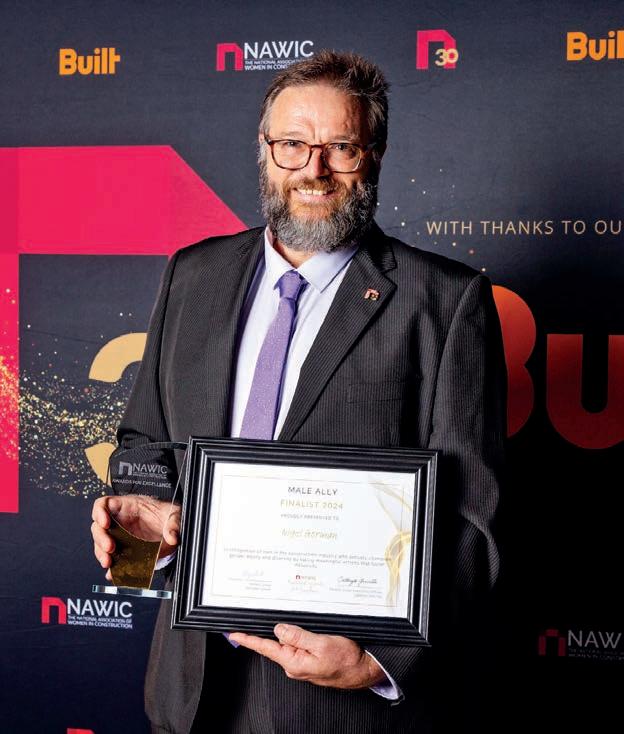
Nigel Gorman, CEO of Aussie Painters Network and NAWIC National Male Ally Award winner, featured in the Global Webinar on Male Allyship and Cultural Ambassadorship.
Belle provided an overview of the current situation in the industry, the aims of the project, which builds on our NAWIC Male Allies program, and the research that underpins it. Men make up most of the construction workforce in Australia, while women make up 12.4 per cent in total, so when men challenge current practices and champion inclusion, this increases the likelihood of change. The project will engage with men online, offer a site-based program, empower men to sponsor women and utilise cultural ambassadors to embed positive change on the ground.
He also explored what we can all do to support culture change, from self-education and being aware of our own behaviour to staying engaged and setting personal goals. For organisations, the emphasis is on putting effective policies in place, supported by leaders who are accountable and who ensure these policies are reflected across the supply chain, including with subcontractors.
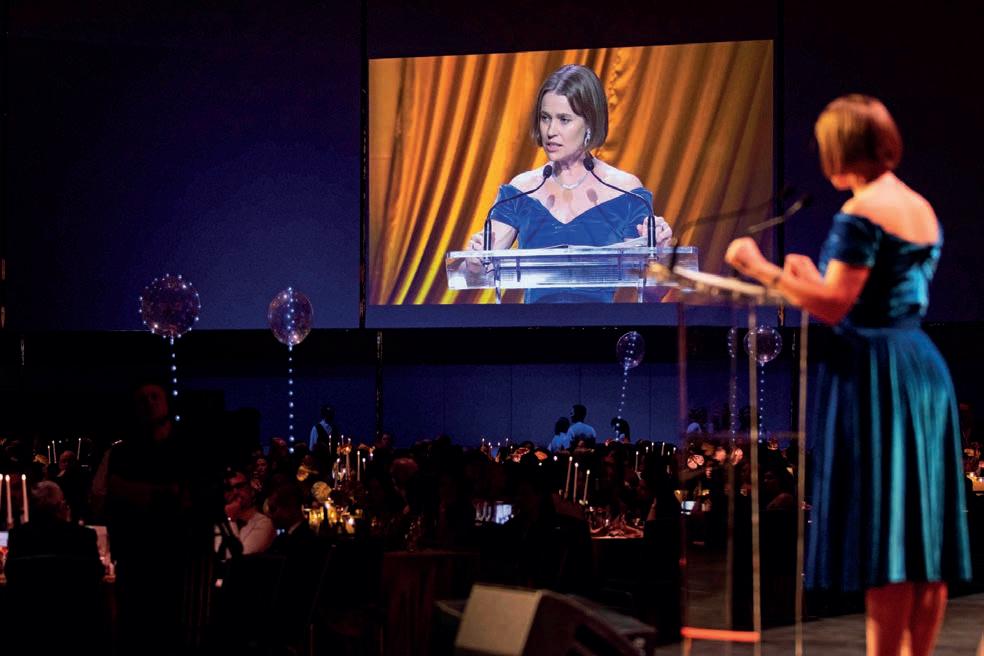
webinar allowed us to share what we have learned so far and invite others to join us on this journey.
Woodley and Gorman joined the panel to discuss male allyship, sharing real-world examples of the change they are supporting and seeing, the role men can play and the actions that can accelerate progress towards gender equity. They are both passionate advocates for diversity and inclusion, and webinar participants were keen to learn more from them.
Achieving culture change is at the heart of our organisational strategy, and the global
Thank you to our webinar speakers and volunteers, including our chapter leaders and board members, who contribute time and energy to help us deliver our work. It was inspiring to attend Awards for Excellence events in South Australia, Queensland, New South Wales, the Australian Capital Territory and Tasmania in November to celebrate the achievements of the women, businesses and allies who are shaping the future of construction. It was also a pleasure to meet with our members in these jurisdictions and discuss the positive difference they are all making.
I look forward to sharing more about our progress in the year ahead.
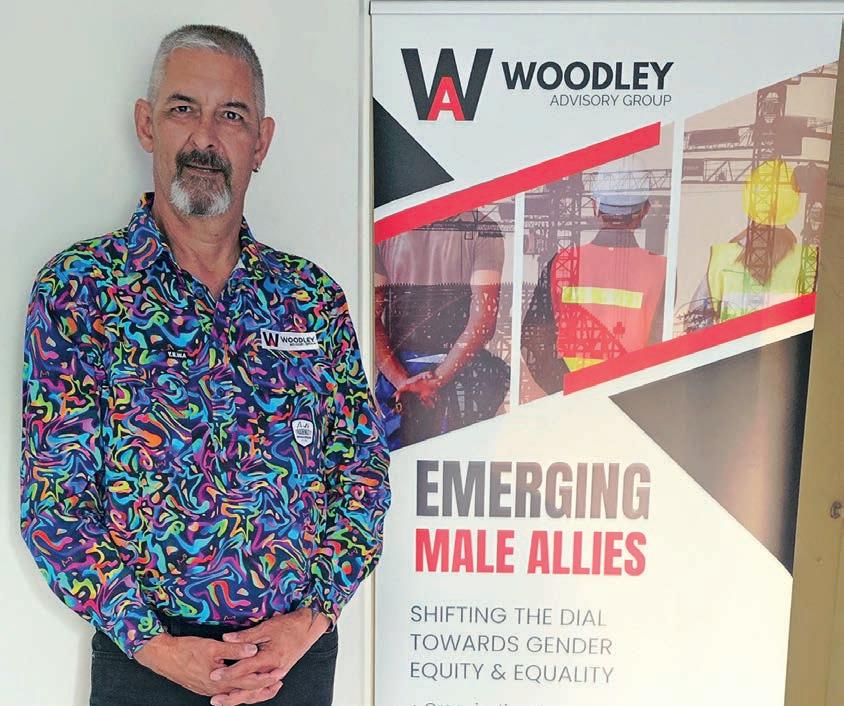

“Research shows that men in allyship programs are three times more likely to advance gender equity.”
NAWIC CEO Cathryn Greville spoke at the NSW Awards for Excellence in Sydney in November. (Images: NAWIC)
Adam Woodley, director and senior advisor at WOODLEY Advisory Group, took part in the Global Webinar.
Greg Belle, NAWIC Allyship in Action senior project manager, shared insights as part of the Global Webinar program.
ASSOCIATIONS
Australian Constructors Association
We can build it… but we’ll have to work differently
Australia needs to get more productive and there’s no better place to start than construction.


Our infrastructure pipeline keeps growing, the workforce is shrinking and budgets are getting tighter. Productivity is the only way forward. But an industry fighting to survive isn’t exactly in peak shape to take on the challenge.
Over the past year, the Australian Constructors Association (ACA) has had some encouraging conversations with key stakeholders about the reforms we need. Now it’s time to turn talk into action. Industrial relations remain tricky, but the past 18 months have given us a oncein-a-generation opportunity to create a sustainable, resilient construction industry.
The Blueprint for the Future, by the National Construction Industry Forum, provides the roadmap. It’s time to hit the gas.
Productivity gains will come from smarter project delivery, collaborative commercial frameworks and an industry culture that actually works for people.
ACA is also working closely with government and industry through the National Construction Strategy, leading the Modern Methods of Construction workstream and ensuring advocacy translates into tangible outcomes on the ground.
The opportunities ahead are massive. We’re gearing up for the 2032 Brisbane Olympics, supporting the national energy transition and delivering the projects a growing nation needs. But these projects won’t deliver themselves. We need to work differently, collaborate better and we should have started yesterday.
Australia’s construction workforce faces soaring demand, tighter budgets and the urgent need to lift productivity. (Image: alis/stock.adobe.com)
Take the Olympics alone: in five years, we need to deliver an Olympic and Aquatic Stadium, a 20,000-seat stadium, an Athletes Village at the RNA, and multiple indoor arenas and upgrades. On top of that, the Queensland Government plans upgrades to Suncorp Stadium and has invited private bids for a 17,000-seat indoor stadium at Woolloongabba, while the Gold Coast Council eyes a 12,000-seat arena by 2030 – all at the same time as record investments in transport and health infrastructure.
So, how do we build it?
For starters, we need to rethink what good looks like in value for money, procurement and collaboration. The Games Independent Infrastructure and Coordination Authority has made a promising start with its Delivery Partner model, but coordination of privately led projects remains a challenge. Collaborative procurement is welcome, but can the market handle dual early contractor processes with so many projects, limited resources and so little time?
Value for money in an Olympic context isn’t just about the lowest price. It’s about efficiency, lasting legacies and building projects that endure. Getting the supply chain involved early, especially for constrained commodities like structural steel, is critical. Off-site prefabrication, early contractor input and collaborative problem-solving will save time, money and headaches, while helping us deliver a net-positive Games.
If we get this right, we can set a new benchmark not just for Olympic delivery, but for infrastructure across Australia.
Can we build it? Absolutely. But only if we work differently, work together and start now.
By Jon Davies, CEO of the Australian Constructors Association (ACA).
(Image: ACA)
Lifting the next generation of workers
A Women in Cranes and Lifting day held in Campbelltown has shown attendees the breadth of opportunity available in the sector.
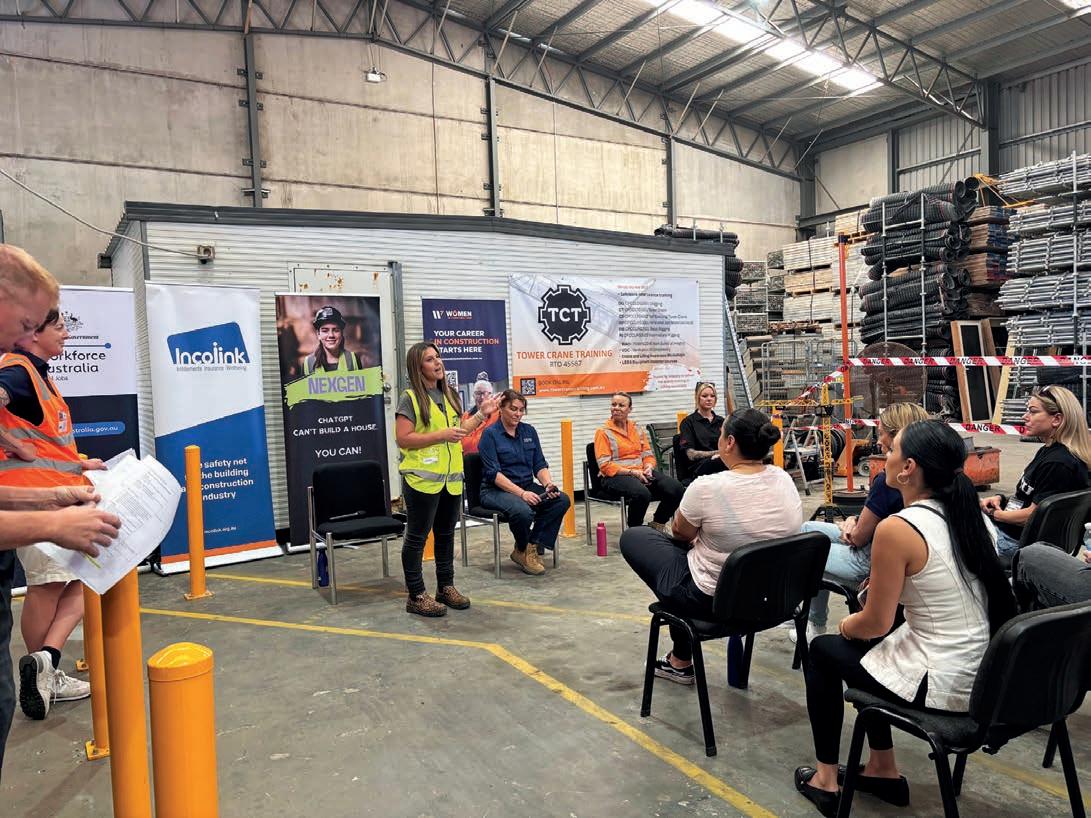
When you ask a group of women what comes to mind when they think of cranes, hoists or dogging, you usually get: “no idea”, “sounds dangerous”, or “isn’t that a job for men?”
So, we decided to change that.
In November, NexGen teamed up with Workforce Australia – Local Jobs Program (Sydney South West), Incolink’s Women in Construction Program and Tower Crane Training (TCT) to host a Women in Cranes and Lifting day in Campbelltown. It was a handson, boots-on kind of day, designed to shine a spotlight on a side of construction too few women ever see.
Participants got to dive headfirst into dogging signals, hoists, crane operations and the teamwork and precision you need when you’re lifting the skyline. Women already working in the industry helped with the training, with the purpose of showing attendees the skills, the opportunity and that they belong there.
For many, it was the first time these women could see themselves in high-vis, hard hats on, standing in front of the machinery not as spectators but as operators. That kind of
seen someone who looks like you doing it.
Nearly half of the event was filmed by A Current Affair, which featured Incolink career advisor for women in construction Jessica Holz and hoist operator Sallie Oxborough, one of the women on site and on the panel. In her interview with A Current Affair, Holz said crane and hoist operators can earn up to $150,000 a year.
Speaking to attendees on the day, Oxborough said, “You’ve gotta get out there, you’ve gotta show them you’re keen.”
That hit harder than any lecture ever could. Because it’s not just a job; it’s a pathway out of under-employment and into a skilled trade with good earning potential.
Cranes and lifts aren’t “just men’s work”. They’re big jobs, smart jobs, skilled jobs, jobs where women can excel. We’re not only introducing women to new career options. We’re shifting culture. We’re helping fill critical labour shortages with talent that’s been ignored for too long. We’re building the next generation of the construction industry.


By Lauren Fahey, executive director at NexGen.
Participants of the Women in Cranes and Lifting day had the opportunity to learn from women already working in the industry. (Images: NexGen)
ASSOCIATIONS
Empowered Women in Trades
School holiday program raises the bar for inclusion
Service Stream has introduced a school holiday program to ease pressure on working parents.
Innovation in construction and infrastructure is usually measured in machinery, systems and engineering breakthroughs. Yet at Service Stream, one of the most meaningful innovations shaping the organisation involves paintbrushes, puzzles and a room of excited children. Efforts to improve diversity and inclusion often focus on recruitment strategies, leadership pathways or flexible working policies. While all of these matter, they can sometimes miss the everyday realities that determine whether people feel supported in their roles and able to stay in the organisation or industry.
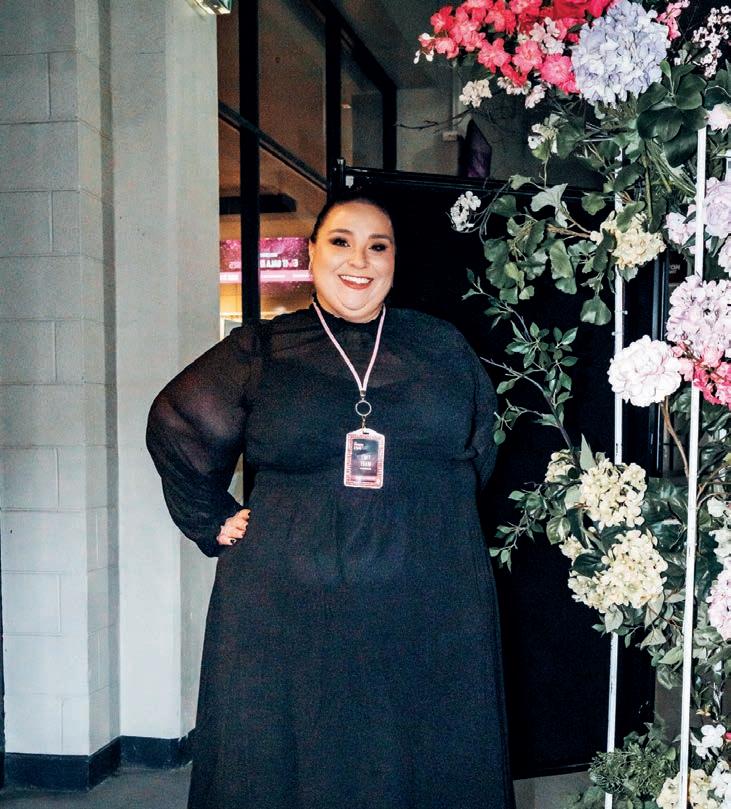
In response, Service Stream trialled an on-site school holiday program at its Melbourne office in late 2024. What began as a pilot quickly evolved into an initiative that is improving wellbeing, lifting productivity and helping retain women in a sector where female participation remains
A pressure point hiding in plain sight
Across Australia, school holidays create challenges for many workers, even more so for women who represent the majority of primary carers. Service Stream saw this reflected in its workforce. Employees, especially women, were regularly taking additional leave during holiday periods or attempting to work from home while caring
Over time, the strain affects productivity, mental health and long-term retention. For many women juggling these competing priorities, the cumulative impact can disrupt career progression or prompt them to consider leaving the industry altogether.
Service Stream chief people officer Sarah Bottomley says this was something the business could not ignore.
“School holidays consistently came up as a major challenge for our people, especially for women. It made sense to look for a solution to this period rather than expecting people to work around it,” says Bottomley.
Service Stream, in partnership with KidsCo, trialled a practical solution that acknowledged the lived experience of parents and carers and provided an alternate option when traditional flexibility wasn’t enough.
A simple trial with compelling outcomes
The initial three-day pilot provided engaging, structured care for children in Service Stream’s Melbourne office while parents worked nearby. Sixty children attended, and the atmosphere in the office was noticeably lighter. Employees could focus on their tasks without the stress of juggling competing responsibilities, and their children had a new, safe and exciting experience.
In a post-pilot survey, every participant said the program improved workplace culture, nearly 90 per cent said it supported their mental health and wellbeing, and on average, they gained three to four extra productive hours per day. Every female participant said the program made them more likely to stay with the organisation.
For an industry focused on improving gender equity, that signal is powerful.
Scaling up with intent
The success of the pilot prompted Service Stream to expand the program. To date, 12 days of school holiday care have been delivered across multiple offices and operational sites, supporting 200 parents and carers. The organisation continues to expand the program with a further five sessions, or 15 days of care, so far planned for 2026.
“We heard repeatedly that this program took pressure off parents and carers in a meaningful way,” says Bottomley. “When your people tell you something is supporting their wellbeing, their focus and their ability to stay with the organisation, you invest in it.”
A different kind of innovation
School holiday programs remain rare in Australian workplaces and almost unheard of in construction and infrastructure sectors. Service Stream’s approach stands out for its simplicity, practicality and immediate impact. By providing a safe, engaging, on-site care option, the organisation offers an alternative to the usual choices of taking leave, reducing hours or trying to work from home with children in the background. The program also brings families and colleagues closer together, creating a connected workplace culture.
Service Stream was recently recognised for this program and awarded Most Innovative DE&I Program and Initiative at the 2025
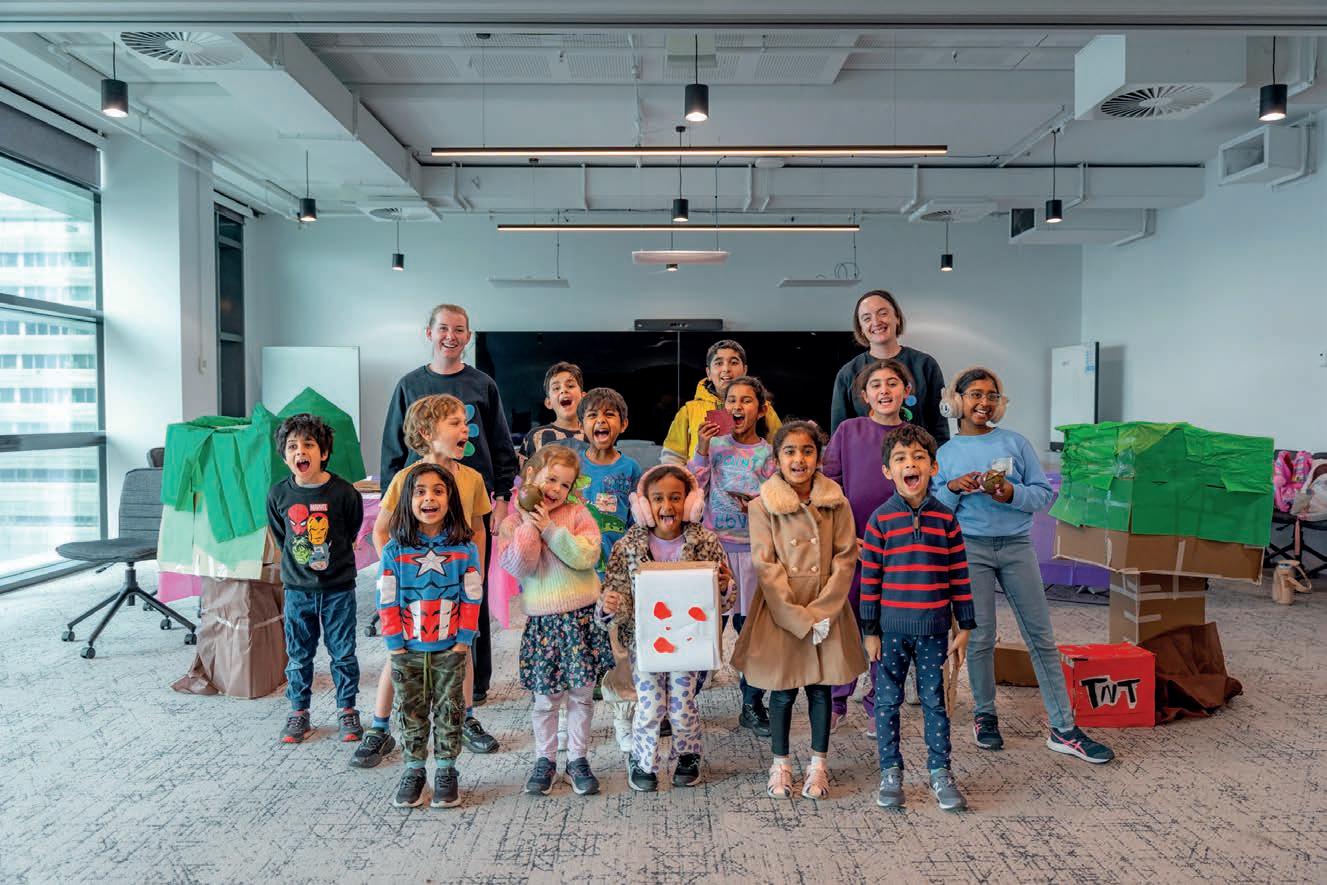
Empowered Women in Trades (EWIT) Gala Awards held in Melbourne.
At EWIT, we often say that real inclusion isn’t built in policies or posters; it’s built in the lived experience of your people. What Service Stream has created with this school holiday program is an example of what happens when you listen deeply, respond authentically and design solutions that acknowledge the whole human, not just the worker.
Caring responsibilities have always been one of the biggest barriers for women staying and progressing in trades. Service Stream didn’t try to ‘fix the women’; they fixed the system around parents. This is what modern leadership looks like. It’s practical, it’s humancentred and it sends a clear message: you belong here and we are willing to evolve to keep you here.
A model worth following
The construction and infrastructure sectors face ongoing challenges in attracting and retaining diverse talent. While many organisations offer flexible work, very few address school holiday pressures in such a direct and practical way, especially where roles often require physical presence.
Service Stream’s school holiday program provides a practical blueprint for organisations looking to create workplaces where parents and carers can thrive.
The program is successful because it tackles the structural, gendered impact of caring responsibilities. It recognises that employees don’t operate in two separate worlds of work and home, and that supporting them holistically is key to long-term inclusion. It also shows that workforce support doesn’t always require complex systems. Sometimes, it just requires listening and responding with something that makes life easier.
“When your people tell you something is supporting their wellbeing, their focus and their ability to stay with the organisation, you invest in it.”
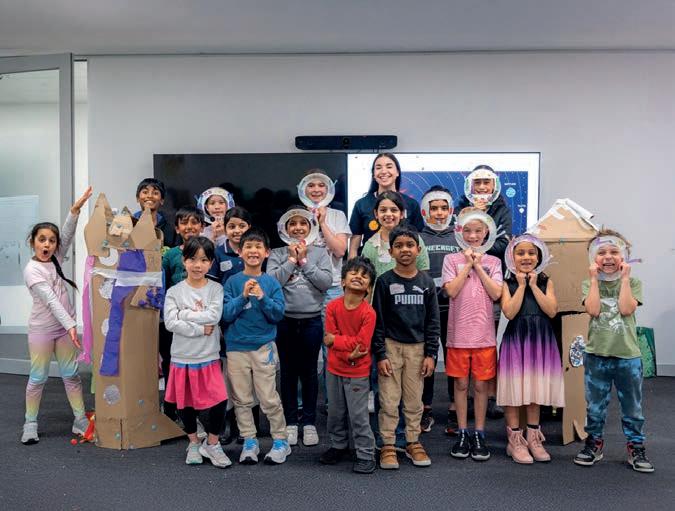
To date, 12 days of school holiday care have been delivered across Service Stream’s offices and operational sites. (Image: KidsCo)
Service Stream’s school holiday program supports working parents by providing a safe, engaging, on-site care option. (Image: KidsCo)
OPINION
Women in construction
Advancing women in the global construction industry

With four decades in construction behind her, Dr Gretchen Gagel now leads a global institute focused on advancing women in the industry.
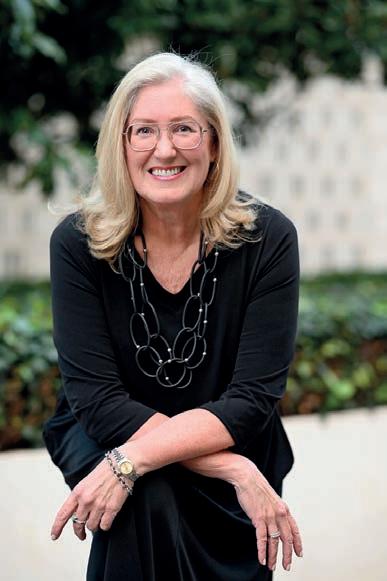
People have started referring to me as a person who has “dedicated her life to advancing women in construction”. Yes, I have been a woman in construction for four decades. But my work to advance women in construction only began in 2019 when I arrived in Australia. Prior to that, I was the CEO/managing director of two companies where we provided strategic advisement to clients such as General Motors (GM) and Intel on how to build physical assets in the safest, fastest, most cost-effective way. I also continued to provide strategic advisement to contractors, engineering and architectural firms, and building material manufacturers on how to best serve the industry. I was a girl from Kansas in a very “blokey” world.
Then came the move to Australia. No GM. No Intel. I was 54 years old with a newly minted PhD in leadership and agility, and unsure of how I could contribute to the construction industry here. A remark by Steve Davies, CEO of the Australian Pipelines and Gas Association, at its annual conference in Darwin two weeks after I arrived grabbed my attention – we need to do a better job of supporting women in our industry. I later suggested to Steve that we replicate the American Gas Association’s women’s leadership development program. Cohort 10 of that program finished in December 2025, and we implemented a mixedgender leadership program as well. Wiley US publishing then approached me about writing a book about women leading in construction,
(Image: Videophilia/stock.adobe.com)
something I had no intention of doing until asked. The rest, as they say, is history. Now I am, indeed, a person working hard to support women, and men, in construction.
My latest adventure, perhaps my last, is the creation of a new global non-profit, the International Institute for Women in Construction. My membership on both the Construction Industry Culture Taskforce (CICT) in Australia, and the Associated General Contractors (AGC) of America Culture of Care Committee, caused me to realise that we are having similar conversations throughout the world about how to build inclusion, how to attract young people to our industry, how to support women. The statistics for women are remarkably similar in both countries – about 12 to 14 per cent women overall and 2 to 4 per cent women in the trades. We can do better.
I have created this global institute to accomplish four foundational pillars:
1. Research: IIWIC serves as the world’s first global repository for data, research and best practices focused on women in construction. We partner with universities, think tanks and industry leaders to identify and share evidence-based strategies that work.
2. Global storytelling: Culture shifts when stories shift. Through podcasts and global media, IIWIC amplifies the voices of the organisations, associations, unions, teams and individuals who are helping women thrive in construction around the world.
The International Institute for Women in Construction will serve as a global repository for data, research and best practices focused on women in construction.
3. Convenings and partnerships: Our local and international convenings will bring together CEOs, union leaders, government officials, educators and advocates to share what’s working and what’s not. We want to bring together the boldest thinkers to redefine our approach to attracting, developing and retaining women in construction.
4. Funding scale: Eventually we will be a source of funding to scale the strategies with proven results in our industry.
We are an amazing industry of humble people who come together every day to solve complex technical challenges. We build and maintain the assets of civilisation, ensuring that the world has clean drinking water, safe bridges and beautiful places that feed our hearts and souls. We are not broken. But we can and will do better. And the changes we make for women will help build a culture that attracts men as well.
Last year I devoted my editorials to sharing the key concepts from my book. This year I
am grateful to have the opportunity to share the work happening throughout the world to support women and our next generation of leaders. Thank you to those who take the time to read my words. I hope they stimulate thinking about yourselves as leaders and your daily impact on our industry.
Dr Gretchen Gagel, GAICD, founder and CEO of the International Institute for Women in Construction (iiwic.org), is a member of the National Academy of Construction and a leader respected for her four-decade career of strategic advisement in the construction industry. Gretchen is passionate about leading change in the construction industry and developing future leaders. You can hear more from Gretchen on the Greatness Podcast and her book, Building Women Leaders: A Blueprint for Women Thriving in Construction, is available on Amazon. Find out more at gretchengagel.com
“We are not broken. But we can and will do better.”
The International Institute for Women in Construction will amplify the voices of those who are helping women thrive in the industry. (Image: Cultura Creative/stock.adobe.com)
Nina Zundel: Founded on a love of buildings
An early pull toward buildings gave rise to Nina Zundel’s engineering career, which has since expanded across states, sectors and structural disciplines.
When Nina Zundel left home in North Queensland for Sydney to study civil engineering, she wasn’t sure where it would lead. What she did know was that she loved buildings. More than two decades on, that early instinct continues to sit behind her work as associate of building structures at Aurecon.
Structural engineering was the area that made the most sense to her. Architecture had surfaced as a possibility, sparked by work experience at a firm during high school, but engineering aligned closely with her strengths in maths, science and analytical thinking.
“I didn’t always know exactly what I wanted to do, but I’ve always loved buildings,” she says. “My father suggested engineering because his friend was an engineer, and that nudged me in the right direction.”
After graduating, Zundel moved into consulting in Sydney, developing early skills on building projects before relocating to Melbourne a few years later. Melbourne became the base for the next two decades of her career, and it was there she moved through Tier 1 consultancies and gained the depth that comes from long-term exposure to different types of structures and delivery conditions.
“I’ve spent my whole career as a structural engineer in building construction,” she says. “It really has been a traditional path, gradually moving up through the levels and working across a number of consultancies over the years.”
That progression brought its own education. Commercial projects sharpened timelines. Heritage work demanded precision. Health and education projects called for careful staging around services. Large industrial structures left little margin for error. Each environment added another layer to how she now approaches delivery.
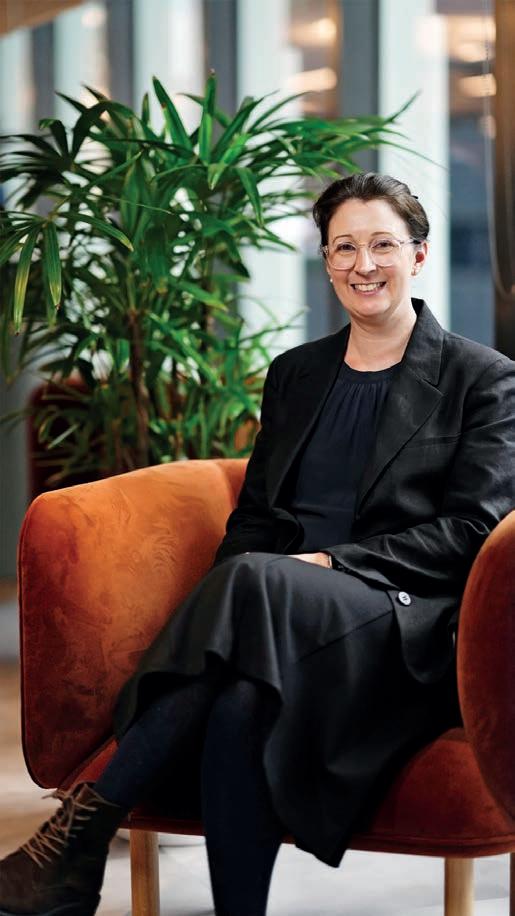
push for more. I just felt grateful to have a job,” she says. “My advice now would be to advocate for yourself, but also not be too hard on yourself. You’re exhausted, you’re not sleeping and everything is different. Motherhood is the biggest transition. You come back from leave and people expect you to be the same, but you can’t be the person who stays until six or seven anymore.”
As her career grew, her family grew alongside it. Becoming a mother to two children, now five and eight, brought two pregnancies, two periods of maternity leave and extended time away from the industry. Returning part time brought its own challenges. Projects rarely pushed her, and the pace she had once maintained no longer felt sustainable. Momentum slowed, and so did confidence.
“I felt like I plateaued. I was doing projects that maybe others didn’t want and I didn’t
Later, the opportunity to join Aurecon full time arrived – a move that, in some ways, felt like returning to familiar ground. Zundel had begun her career in the company’s graduate program when it was still Connell Wagner in Sydney. She moved on after a short stint, but years later a former colleague encouraged her to return, speaking highly of Aurecon’s commitment to diversity, equity and inclusion. When the right role appeared, she applied and rejoined the business in Melbourne.
Today, Zundel works as the company’s associate of building structures and team
Nina Zundel, associate of building structures at Aurecon. (Image: Aurecon)
leader, with responsibilities that span technical delivery and leadership. She still leads structural packages and remains involved in project work but is gradually moving toward project management and team support, stepping back from the purely technical focus that characterised her earlier years. She speaks about her achievements with modesty, but the breadth of her experience and the varied pressures that have formed it stand out.
“I’ve worked across many sectors, including data centres, health, education, commercial buildings, industrial work, residential projects and heritage structures,” she says.
One project remains memorable: the Royal Hobart Hospital redevelopment in Tasmania.
“It was a constrained site where an existing hospital building was being demolished and replaced with a new one, all within a live hospital environment,” she says. “I designed the basement retention walls, the ground floor suspended slab and carried out various checks on the secondary steel work and the nonload-bearing precast façade. It was a complex project, but one I really enjoyed.”
Her recent work includes Defence and a data centre program spanning two templates, each with three buildings, across six sites – environments where coordination and security requirements dictate how structures are conceived and delivered.
She is also working on the purpose-built Australian Institute for Infectious Disease (AIID) project located in the University of Melbourne’s Parkville campus. The AIID will house the three Foundation Partners – the University of Melbourne, the Peter Doherty Institute and the Burnet Institute – to enhance Australia’s capability in infectious disease and public health research. The 15-storey, twobasement building also contains connections to the adjacent Peter Doherty Institute to further develop relationships and partnerships with the wider Parkville Biomedical Precinct.
“I have been the structural lead in the detailed design phase,” she says. “I am excited to see this project proceed into the construction phase in the future and come to life.”
Alongside project work, Zundel has reached key professional milestones, including chartership with Engineers Australia – an achievement reached at the time she was pregnant with her first child.
“I remember feeling nauseous at the interview because I was pregnant, but I knew my whole world was about to change and I really wanted to achieve it,” she says. “It gives you confidence when you reflect on the competencies they assess and realise you can talk to all of them. When they said I’d passed and was now a chartered engineer, I cried. It was emotional and a big milestone.”
More recently, she joined the Australian Steel Institute’s Victorian Technical and Construction Committee. Being the only woman in the room was initially daunting, but the group has been supportive, and the role has broadened her perspective on national issues such as imported prefabricated steelwork and industry advocacy.
With experience across many environments, she says it’s the variety as well as the culture at Aurecon that she enjoys most. She also hopes to be a role model for younger female engineers, having not always found it easy being one of the few.
“I enjoy working with the younger team members, but also the whole team,” she says. “The culture at Aurecon is great and we work on amazing projects. Our values are about bringing ideas to life, and our clients have complex problems that we help solve.”
Zundel now thinks often about what might help others coming through the industry. She encourages people to stay present and keep building momentum. Technical capability matters, she says, but communication carries equal weight. Speaking up when something feels uncomfortable can take courage, yet even a simple request for someone to repeat themselves can shift a conversation. She believes in asking questions, continuing to grow and finding at least one supportive person who can help steady the path.
“I’d also encourage others, men and women, to get involved with the National Association of Women in Construction,” she says. “They provide great support and host networking events for women in the industry. And we certainly need more men involved as allies.”
All in all, Zundel is still driven by what first drew her to construction: a love of buildings. Now she carries that passion forward with the perspective of someone intent on strengthening the industry around her.
“My advice now would be to advocate for yourself, but also not be too hard on yourself.”
Bojana Zivec: A leader lifting people and outcomes
Striving for positive outcomes at every turn, Bojana Zivec brings a considered, peoplecentred approach to her work as a senior project manager at RP Infrastructure.
From Slovenia to Melbourne, Brisbane, Austria and back again, Bojana Zivec has carried the same set of values centred on uplifting others and contributing positively to society. Those values have shaped her career from the beginning and still guide her as a senior project manager at RP Infrastructure. They are also unmistakable in the way she talks about her path through the industry.
It started with a decision she made during her high school years in Slovenia. She wanted a career that matched her drive to “achieve great things”, and that ambition drew her towards an industrial engineering degree combining civil engineering and economics. The course was rigorous, the expectations uncompromising. An even split of women and men thinned as the semesters went on.
“There was a lot of interest at the beginning, but because it was complex, tedious and difficult, many women dropped out along the way. The percentage was not balanced by the end, and I think retention was something we
“Retention is still one of the hardest aspects of construction. Because the work is complex and challenging, some women choose to opt out and do different things in life. I persevered.”
After graduating, she entered the profession as an assistant consultant, effectively a clientside project manager, and quickly found a mentor who set the tone for the type of leader she would one day become.
Her first boss was patient, empathetic and willing to guide a young professional through the technical detail that can overwhelm early careers.
Then came the big move. In 2009, she and her husband relocated to Australia, landing in Melbourne with no local experience and few opportunities to break into the employment market. When friends suggested Brisbane, the family packed up and headed north.
“In the first two weeks we went to King George Square, which was being redeveloped by Kane Constructions at the time. I looked at the construction work and said, ‘I could work
Bojana Zivec (right) was named Mentee/Mentor of the Year at the 2025 NAWIC QLD Awards for Excellence. (Image: Georgiou –STRABAG Group)
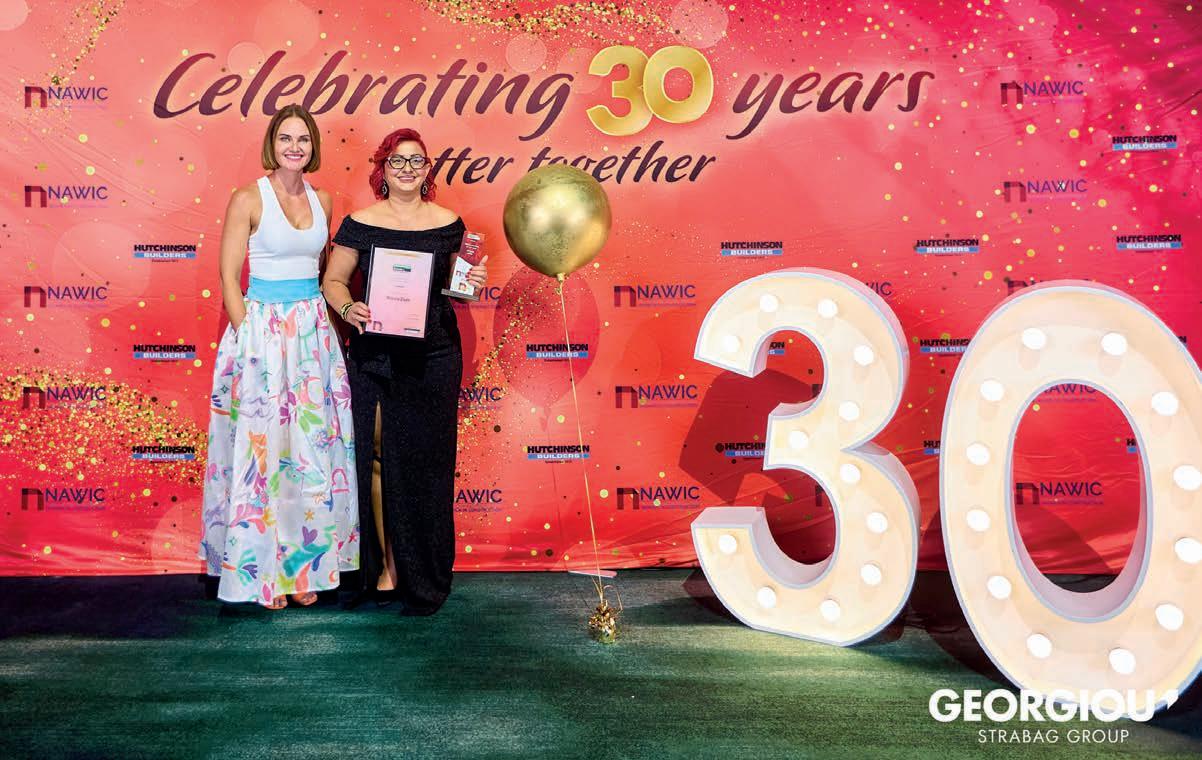
“I also learned there are different leadership styles. I realised I was more of a transformational leader. I tried to inspire people, encourage them to go back to study, to do more for themselves.”
In 2019, the desire to stretch herself resurfaced, and Zivec joined Mater Hospital as a major projects manager. Here, she oversaw central sterile services department refurbishments where every decision relied on meticulous services coordination, foresight and a firm grasp of risk. The stakes were high and the margin for error slim.
The role required constant engagement with clinicians, project teams and specialists. Earlier in her career she may not have valued stakeholder involvement to the same degree, but the MBA shifted her perspective and removed the hesitation.
“I started to see stakeholder consultation as a capacity, almost a superpower,” she says. “If you can communicate well and get things moving, that is a real capability.”
When COVID-19 hit and family pressures increased, Zivec and her family relocated to Austria to be closer to her husband’s ageing parents. They found work despite the competitive market and challenge of arriving without local references, a reminder of her early days in Australia. After a year, they returned to Brisbane, settling back into a rhythm that suited their family.
Zivec joined Ranbury Management Group, which has since merged into RP Infrastructure. She is now a senior project manager with the firm, leading mediumscale health projects in the $30 million to $50 million range. The work is intricate, with multiple stakeholders and delivery in live environments where coordination and timing are critical.
As a senior project manager on the client side, much of Zivec’s role centres on clarity, gathering information, interpreting it and ensuring a project’s risks, costs and program are understood by everyone involved. Reporting cycles, registers and communication plans all sit within her remit, fed by updates from contractors on site and consultants across disciplines.
During design, her focus is on guiding the process and resolving issues with the consultant team.

During construction, it shifts to supporting delivery and keeping decisions moving.
“Day to day, that translates into a lot of spreadsheets, a lot of reporting and a lot of emails,” she says. “I can send anywhere between 30 and 100 emails a day to keep people properly informed.”
The volume of information makes communication one of her most important skills.
“One of the most critical things I learned early in my career is the importance of communication,” she says. “The way the message is delivered matters. Disruptions or misunderstandings in communication can be costly.”
Over the years, several projects have played a defining role in her development as a project manager.
King George Square was the first project that made a lasting impression, followed by the initial stage of the Brisbane City Hall Restoration, a heritage refurbishment that drew her deeper into work she still enjoys.
“I started to see stakeholder consultation as a capacity, almost a superpower.”
Bojana Zivec, senior project manager at RP Infrastructure. (Image: Bojana Zivec)
“I see my role as a project manager as advocating firmly for the project and the client, without creating outcomes where someone else is unfairly disadvantaged.”
That interest continued with the Queensland Rail Roma Street Station Structural Stabilisation, a 140-year-old structure with materials and detailing rarely seen today. For Zivec, it was a reminder of the craftsmanship embedded in older buildings and the care invested in them.
She later worked on the Uniting Church near King George Square, a project with steep slate roofs and intricate access requirements. Safety and protection were the priority.
“I had to work closely with my site manager to achieve the right protection and scaffolding so that workers could replace the slates safely,” she says. “Every time I walk past, I feel proud. I did not personally install the slates, but I know I was a key contributor on that project.”
That pride extends across Brisbane. Many of the buildings she has worked on, from heritage refurbishments to fit-outs and public assets, have become part of the city’s fabric.
More recently, her hospital projects have aligned closely with her values. She believes strongly in the social impact of health infrastructure.
“People need hospitals when they are sick and at their weakest,” she says. “Keeping that in mind helps me stay focused.”
Her work across Metro South Health, including Queen Elizabeth II Jubilee Hospital, Logan Hospital and Princess Alexandra Hospital, has reinforced that no two facilities operate the same way.
“You think you have all this knowledge from more than 20 years in construction,” she says. “Then you realise that some projects need everything you have learned and a bit more.”
Zivec is currently working on the Princess Alexandra Hospital Spinal Cord Injuries Unit, alongside a program of works for UnitingCare Queensland. She has also begun planning works for a heritage-listed building in Brisbane.
Looking at her career, several milestones stand out – completing King George Square, her first project in Australia; working full time until the final month of pregnancy; and completing her MBA, which broadened her understanding of organisational dynamics.
Another recent milestone was being named Mentee/Mentor of the Year at the 2025 National Association of Women in Construction (NAWIC) Queensland Awards
for Excellence. For Zivec, the recognition reflected something she had been doing instinctively for years: continually learning while supporting the people around her.
“I have always felt the need to learn more. While I was doing that, I was unofficially mentoring people around me all the time. I shared knowledge, I encouraged people, I motivated them to go back to study. Maybe I was an unofficial mentor to many, but I had never formally taken on that role. This year, I decided to stop just looking for my own mentors and learning only that way. I decided to become a mentor myself,” she says.
“I would encourage anyone with five years of experience or more to take on a mentoring role and bring younger people on the journey. They deserve that support and they are amazing.”
Mentoring fits closely with what she enjoys most about her work. She likes seeing good outcomes take shape, whether that is a constructive meeting, a well-managed project or a client who feels supported. The same applies to the smaller moments: a brief conversation that steadies someone on a difficult day or guidance that helps a colleague take the next step in their career.
She believes that “it is not always about the big construction milestones”. Some projects run for years, and waiting only for completion means missing the flow of smaller achievements that keep a team on track. Those can be as straightforward as resolving a contract issue, backing a smaller subcontractor or finding a solution where everyone benefits.
“I see my role as a project manager as advocating firmly for the project and the client, without creating outcomes where someone else is unfairly disadvantaged,” she says. “The results that matter most to me are those where we reach a commercially sound, operationally robust and genuinely fair solution for everyone involved. When we achieve that kind of true win-win outcome, that is a reason for celebration.”
When a project reaches that equilibrium, with the team aligned, value shared across stakeholders and success measured beyond a single balance sheet, that is the type of outcome she is most committed to delivering
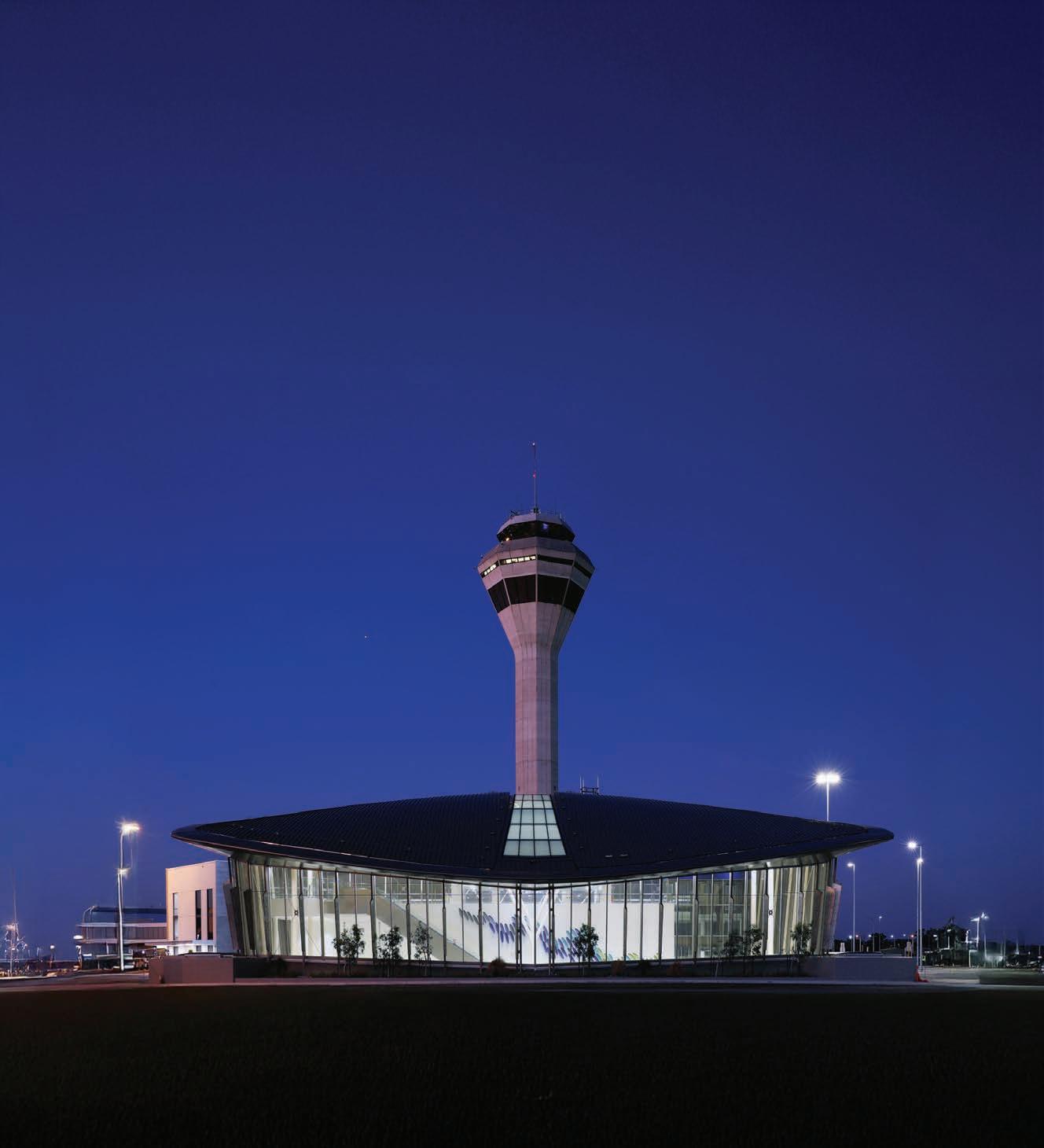
The people who make water work.
