Paying mind to Excellence


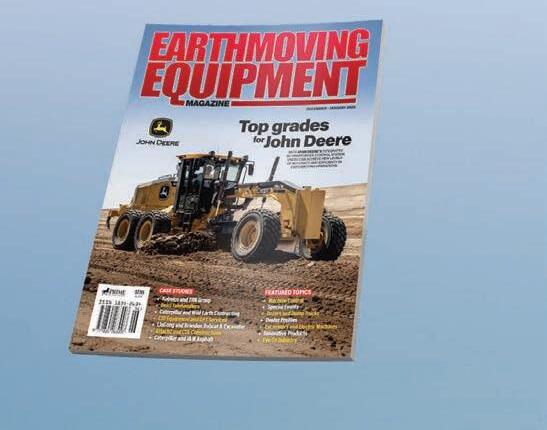
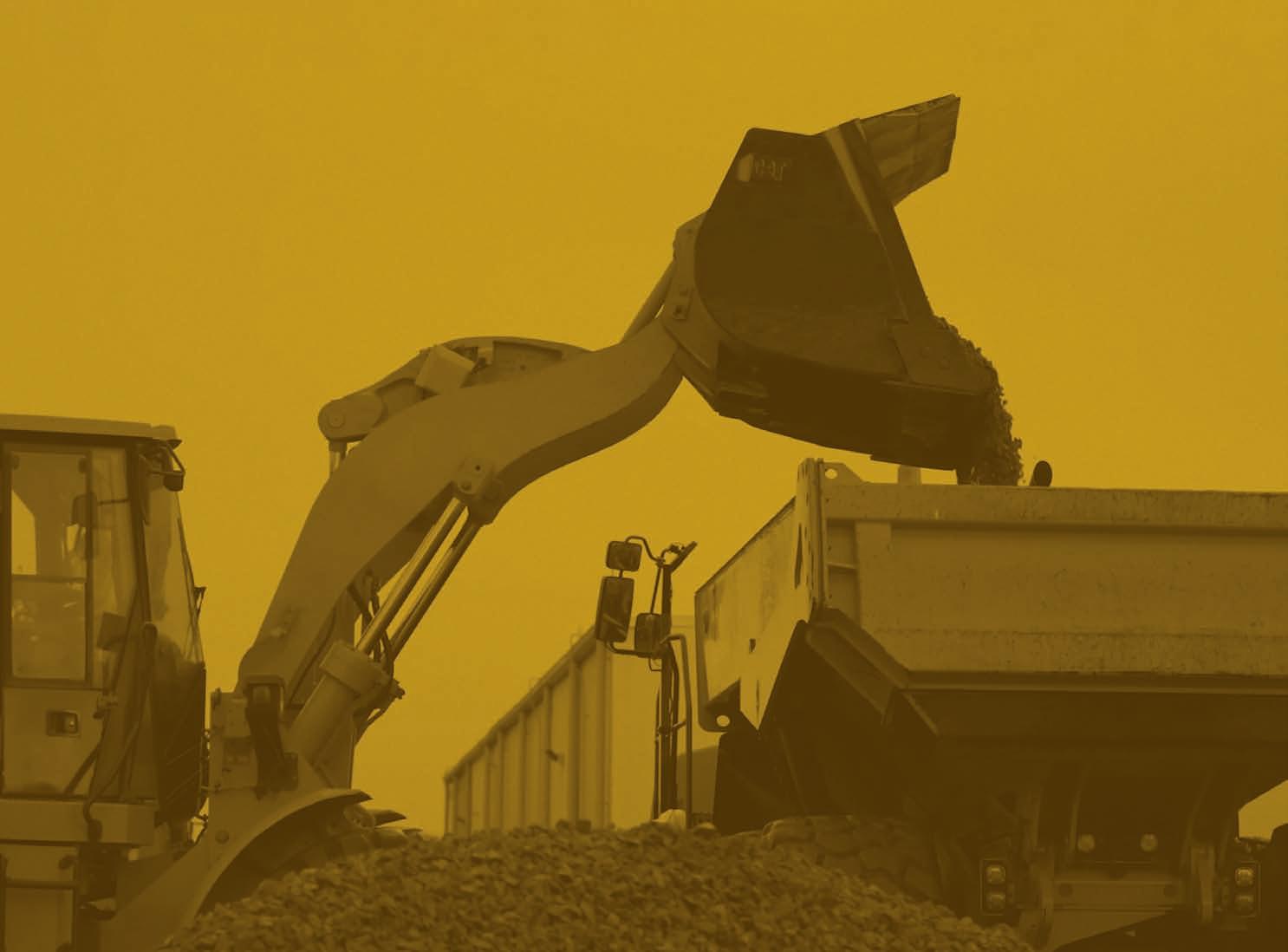
Equipped with integrated payload smart technology, a Cat 972 loader has proven to be indispensable for a Victorian quarry operator.
$7.95 inc





















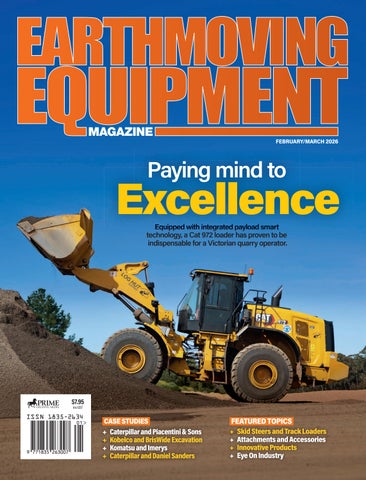
Equipped with integrated payload smart technology, a Cat 972 loader has proven to be indispensable for a Victorian quarry operator.
$7.95 inc

Ray Chan Editor
A new year is always seen as an opportune time for reflecting on the past 12 months and looking forward to new challenges.
After weathering a mixed performance in 2025 — bu eted by shifting investment patterns, workforce constraints, and technological transformation — the earthmoving sector seems poised for moderate but meaningful growth in the months ahead.
The industry, essential to mining, infrastructure and construction, continues to reflect the broader Australian economic rhythm: resilient but contending with structural headwinds.
Generally, 2025 was one of stabilisation rather than breakout growth for Australia’s earthmoving and construction equipment markets. Multiple industry analyses paint a picture of modest gains buoyed by public infrastructure pipelines, mining demand, and replacement demand for ageing fleets — juxtaposed against soft private investment.
By year’s end, revenue and order books looked neither booming nor bust — instead reflecting steady demand anchored by public works and mining, counterbalanced by cautious private sector spending.
Looking ahead to 2026, infrastructure investment is likely to remain a key growth driver. The federal and state pipeline of transport, energy, and social infrastructure projects will underpin demand for earthmoving machinery across civil works, roadbuilding, tunnelling, and utility projects.
Zero-emission and low-emission equipment segments are gaining traction as operators seek cost e iciencies and compliance with evolving environmental benchmarks. This year, adoption of electric and hybrid earthmoving machines is expected to rise, driven by government emissions targets and industry readiness to innovate.
This technological shift also dovetails with smart digital integration — telematics, autonomous functions,
and predictive maintenance — which are increasingly di erentiators in customer value and total cost of ownership.
One of the risks is persistent labour shortage in skilled trades and plant operators. Surveys indicate that the construction sector — a major earthmoving demand pillar — expects high rates of skilled workforce constraints in 2026, with little relief forecast compared to the preceding period. Whatever the developments, you can rest assured that Earthmoving Equipment Magazine will be there to provide breaking news, innovative updates, and informative case studies of businesses doing their best to achieve maximum e iciencies and profitability.
This issue alone, there is a plethora of compelling reading, as we take you to all points of the country. In Brisbane, we report on how an excavation company’s faith in Kobelco has paid dividends; in the West, we venture to the southern hemisphere’s biggest talc mine to discover which machinery brand makes it tick; and in Victoria, find out how a leading motocross rider has built a world-class practice track at his home.
We round up our coverage of Caterpillar’s celebration of its 100-year milestones with a couple more spotlights on the companies which rely on the yellow machines, as well as visit a NSW four-wheel drive specialist which has taken delivery of the last of the specially-branded Cat Centennial 285 Compact Track Loaders.
There are features on the latest products for skid steers, tracked and wheeled loaders, accessories, and attachments, including an engaging piece on a new single-bevel, single-life bucket cutting edge which does not require mid-life flipping.
And don’t miss our range of contributions from our industry experts, as well as profiles on the dealers and contractors that keep the industry moving forward. All this, plus the popular columns from our team of industry analysts, ensure there’s plenty of material that will keep you engaged.
Happy digging!




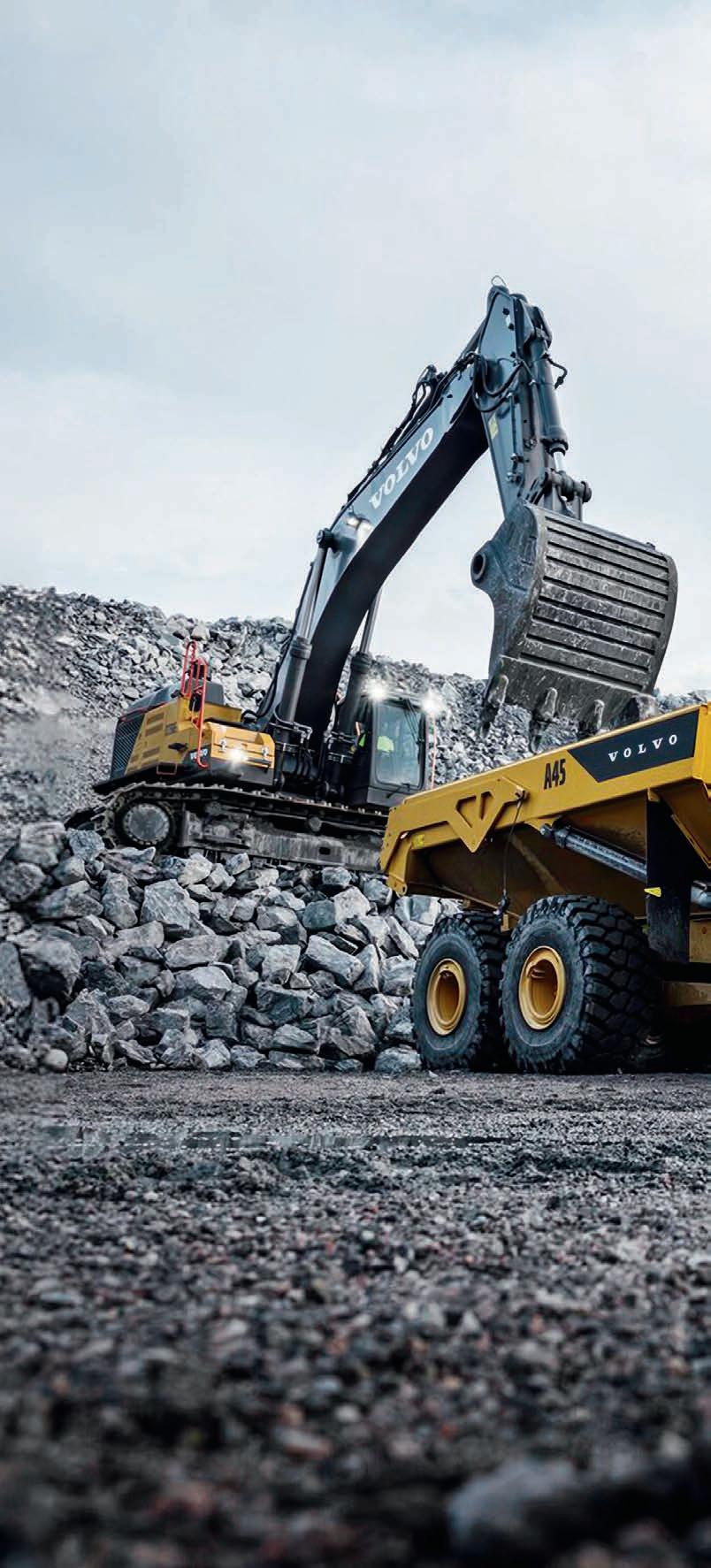
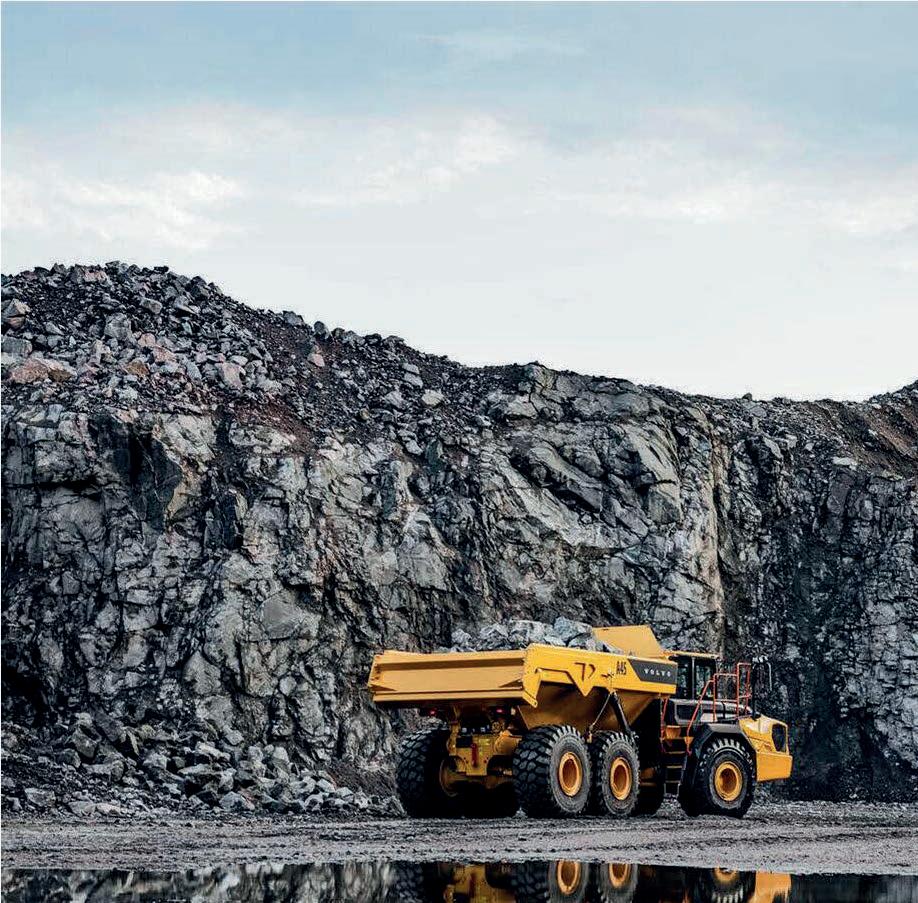
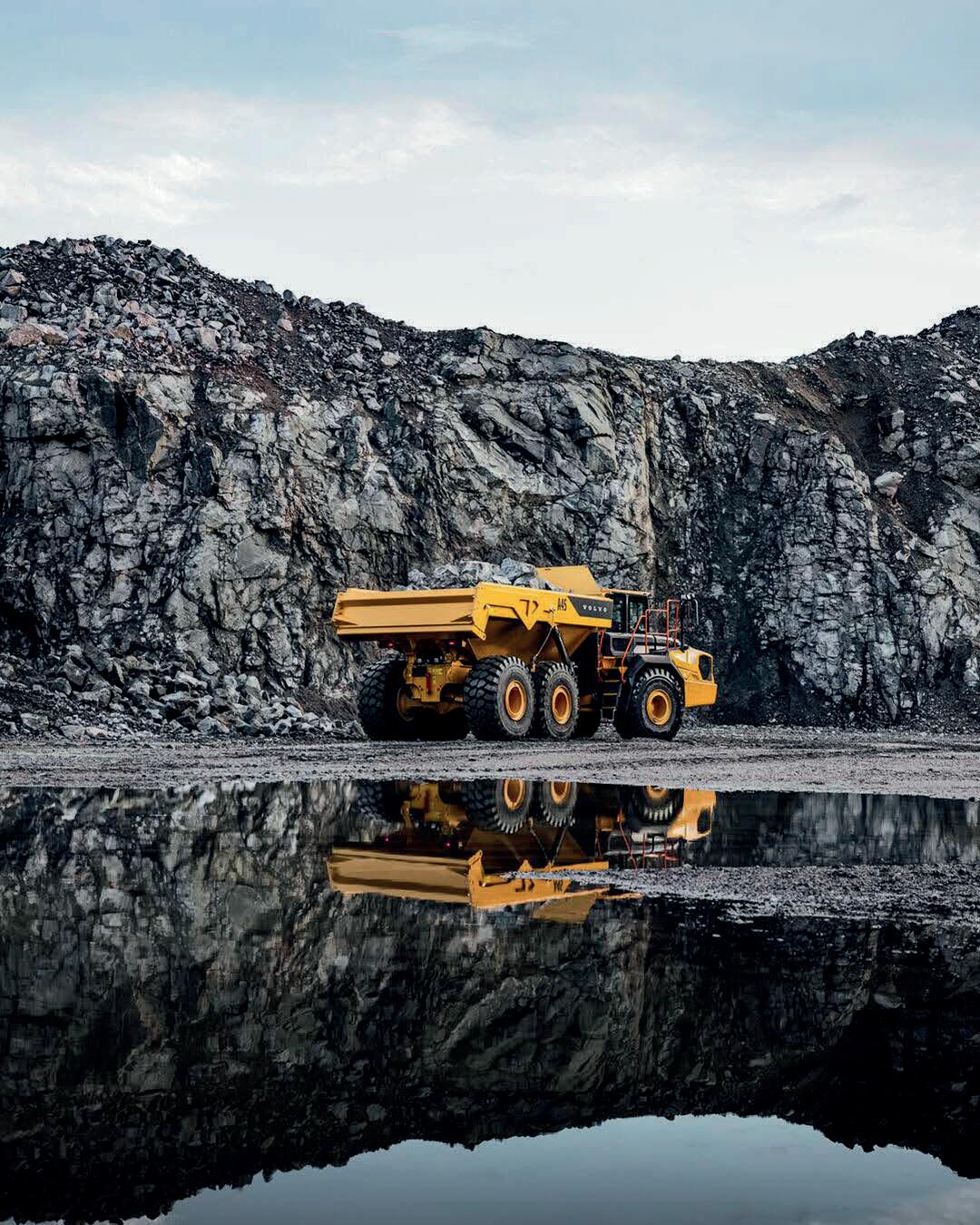
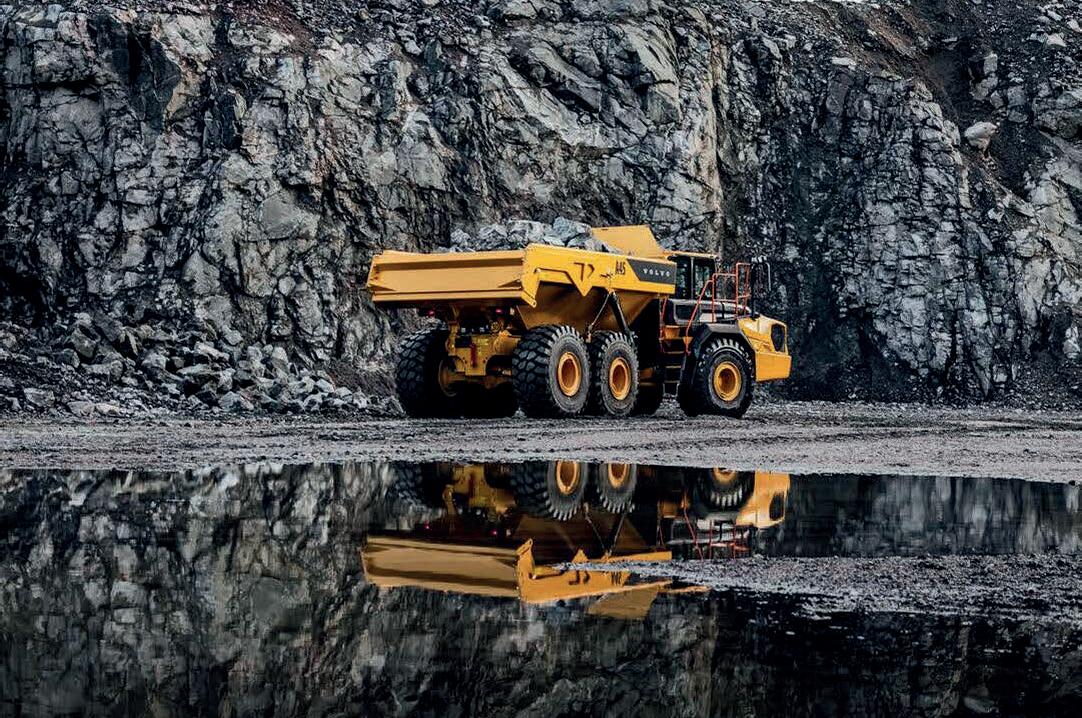
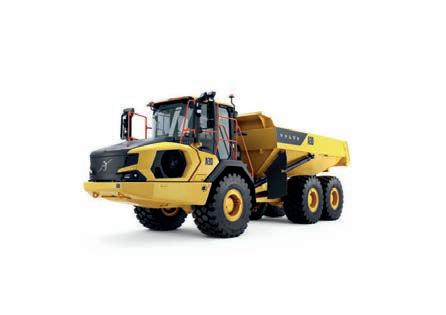
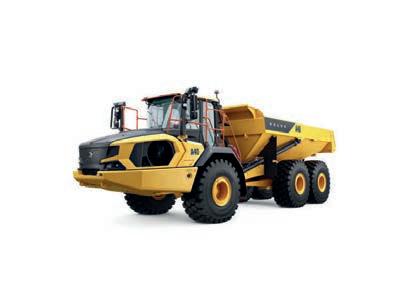
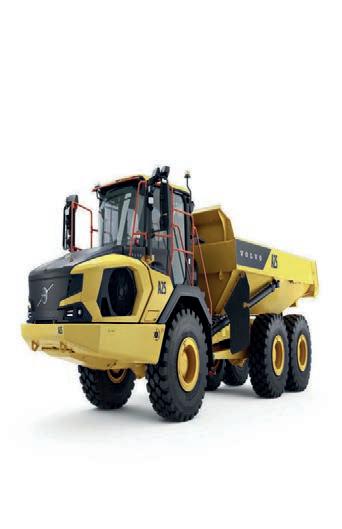
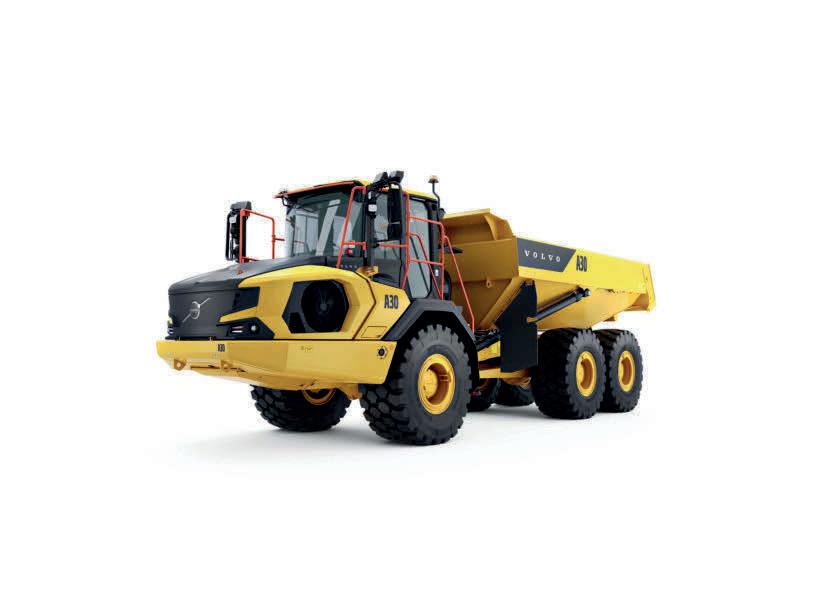
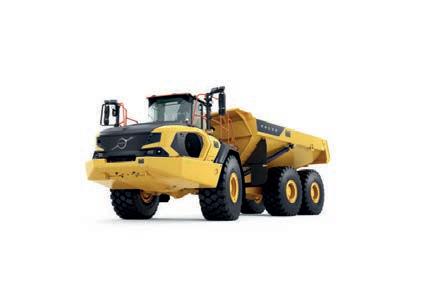
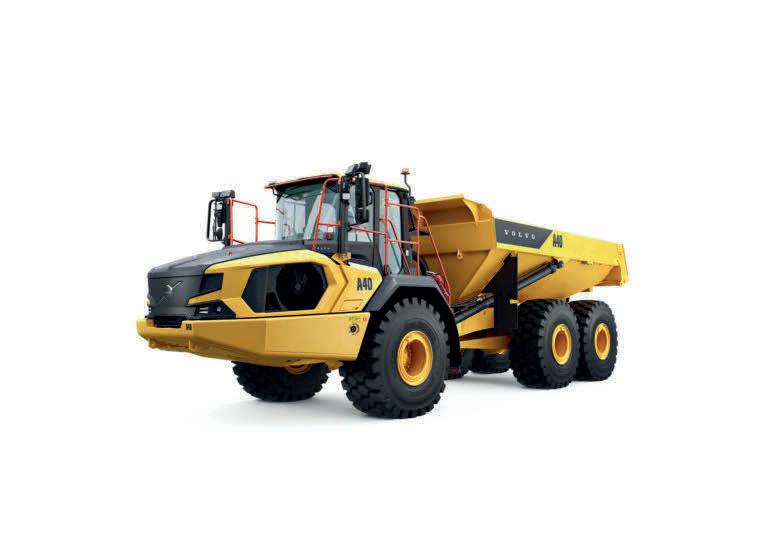
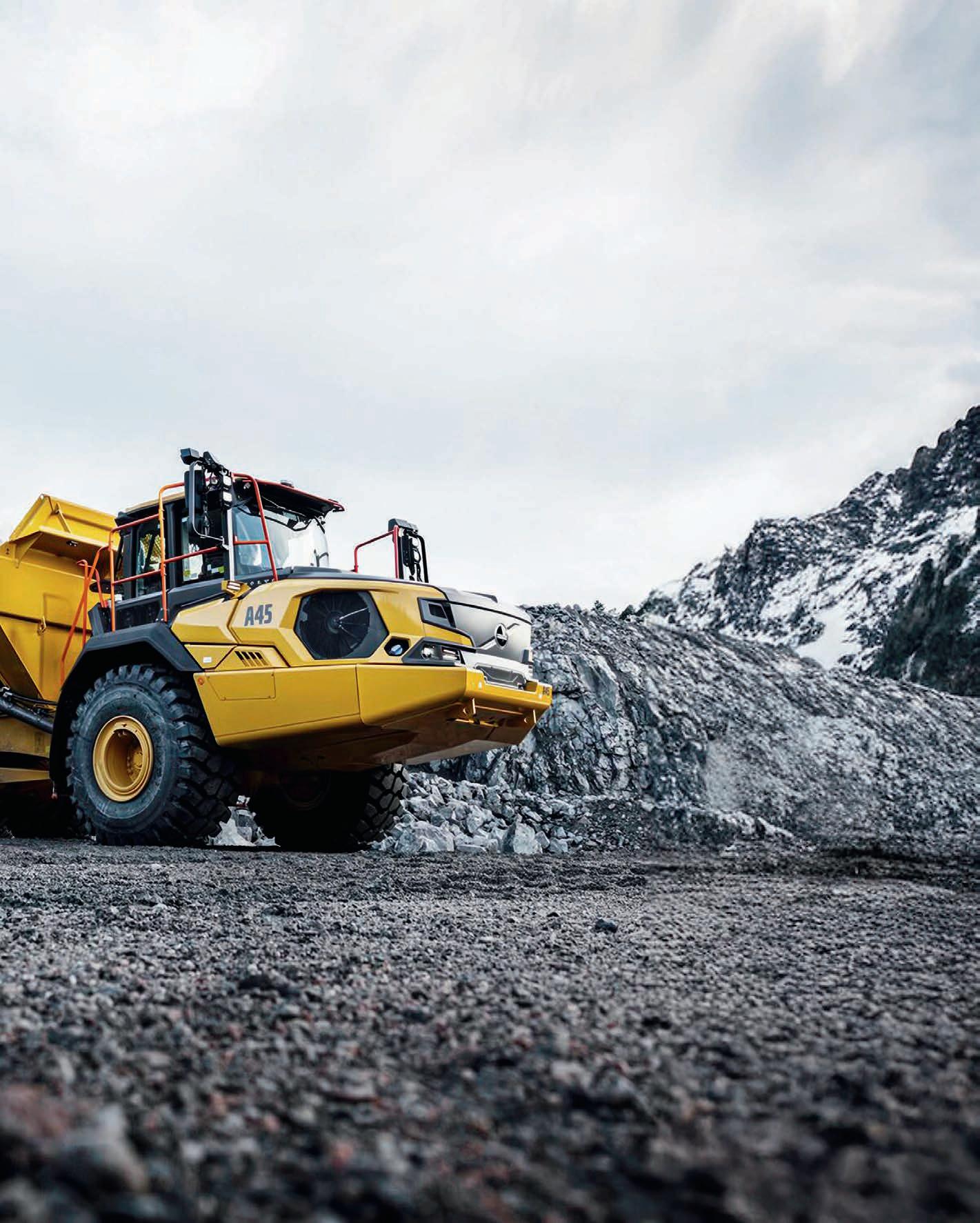
Volvo’s new J-Series haulers, such as this A45, have been redesigned to deliver unmatched performance, exceptional power, and cutting-edge technology. Image: CJD Equipment
Earthmoving Equipment Magazine is published bimonthly by Prime Creative Media Pty Ltd.
CEO
Christine Clancy
Head of Sales
Andrew Morrison Editor
Ray Chan ray.chan@primecreative.com.au
Brand Manager
KahChi Liew kahchi.liew@primecreative.com.au 0421 474 407
Production Editor
Michelle Alder
michelle.alder@primecreative.com.au
Design
Daz Woolley
Subscriptions
P. +61 3 9690 8766
subscriptions@primecreative.com.au
Website www.earthmovers-magazine.com.au
Copyright Earthmoving Equipment Magazine is owned by Prime Creative Media and published by John Murphy. All material in Earthmoving Equipment Magazine is copyright and no part may be reproduced or copied in any form or by any means (graphic, electronic or mechanical, including information and retrieval systems) without written permission of the publisher. The editor welcomes contributions but reserves the right to accept or reject any material. While every e ort has been made to ensure the accuracy of information, Prime Creative Media will not accept responsibility for errors or omissions, or for any consequences arising from reliance on information published.
The opinions expressed in Earthmoving Equipment Magazine are not necessarily the opinions of, or endorsed by, the publisher unless otherwise stated. © Copyright Prime Creative Media, 2026.
Articles
All articles submitted for publication become the property of the publisher. The editor reserves the right to adjust any article to conform with the magazine format.
Head O ice 379 Docklands Dr, Docklands VIC 3008 P: +61 3 9690 8766 info@primecreative.com.au www.primecreative.com.au
Sydney O ice Suite 11.01, 201 Miller St, North Sydney, NSW 2060





















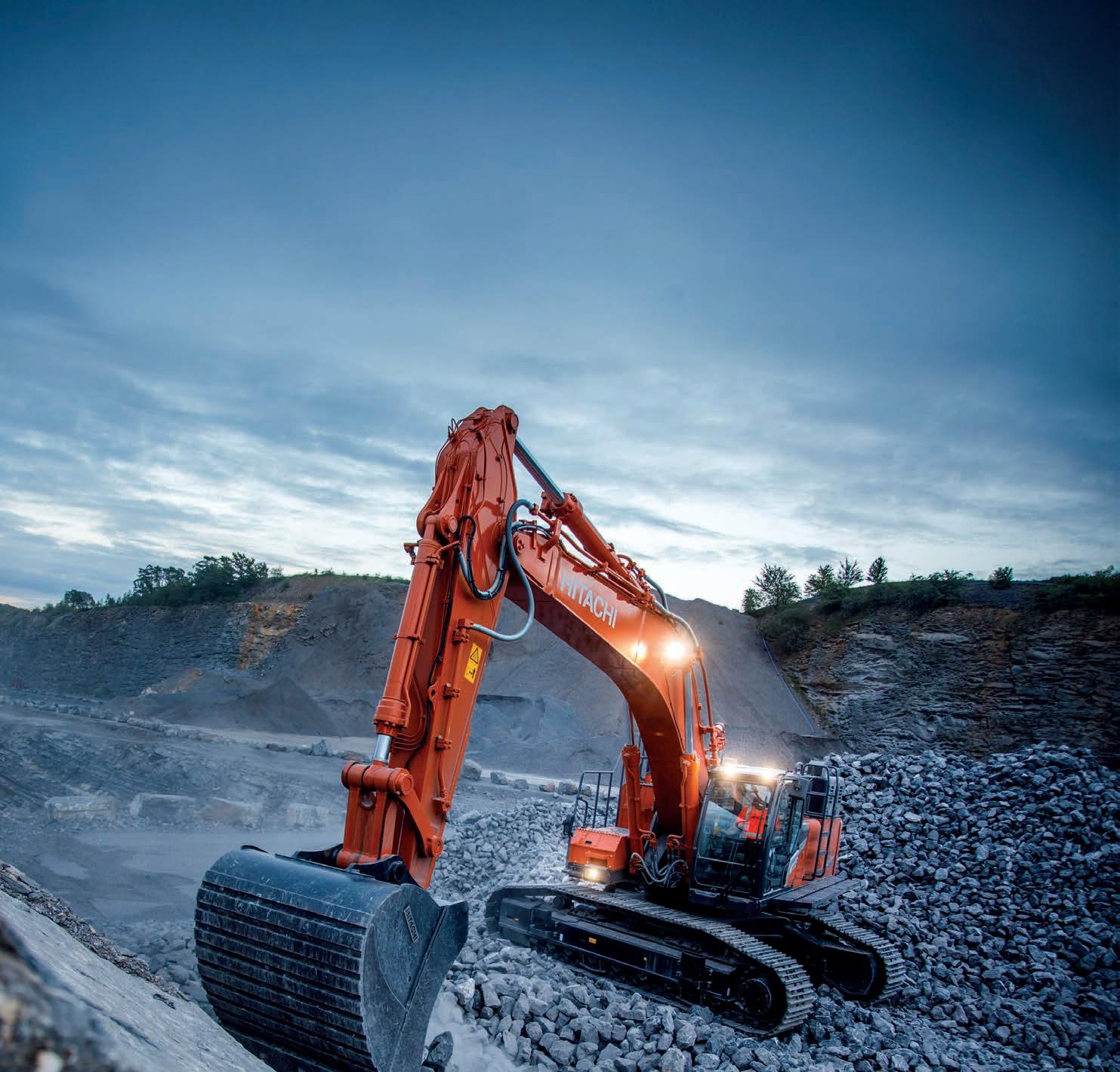
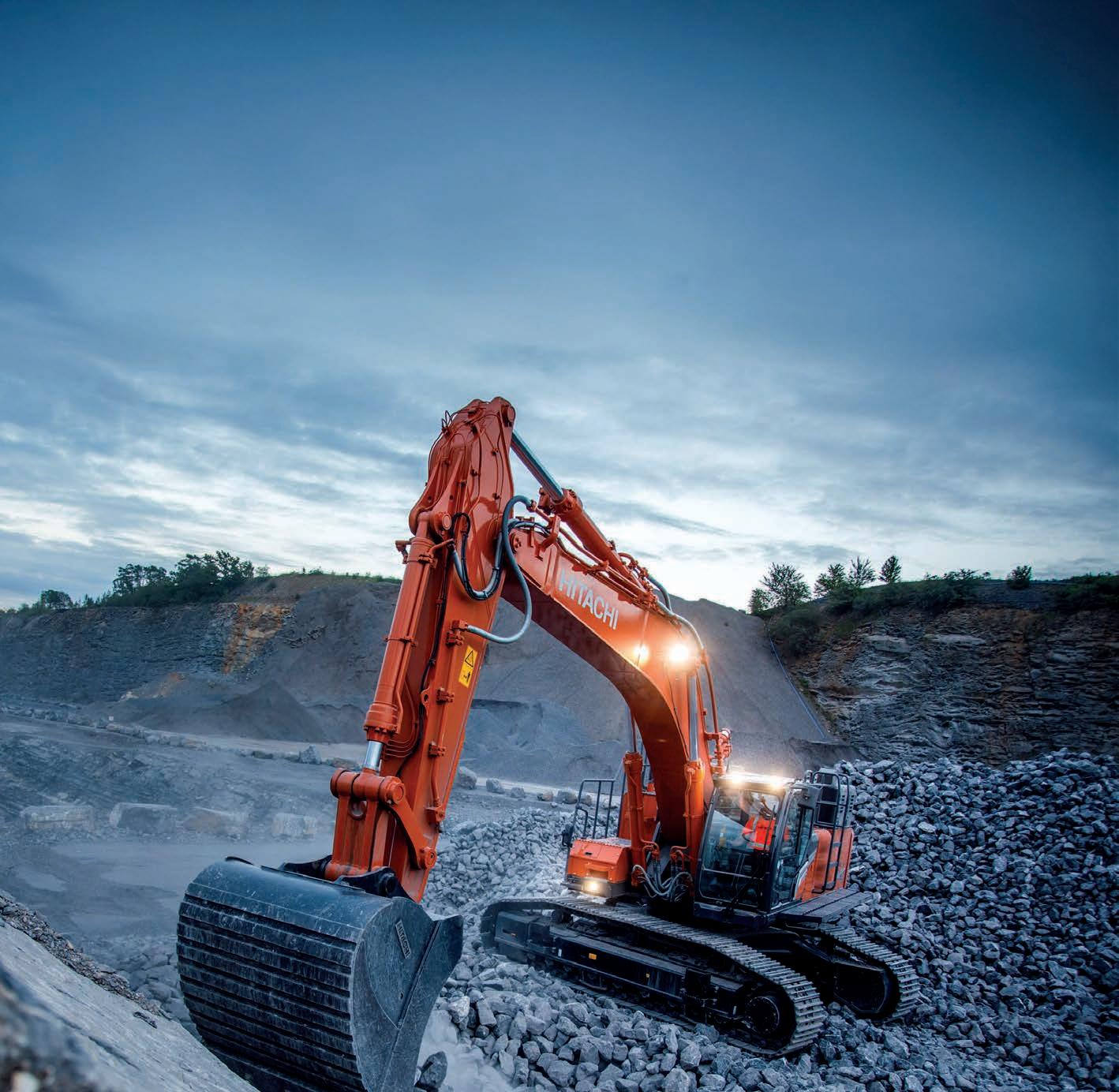
Be in control with the 7 Series excavators and wheel loaders.
In high-volume, high-stakes environment that quarries face, the role of loaders can’t be underestimated, and getting payloads accurate is fundamental to the success of the operation.
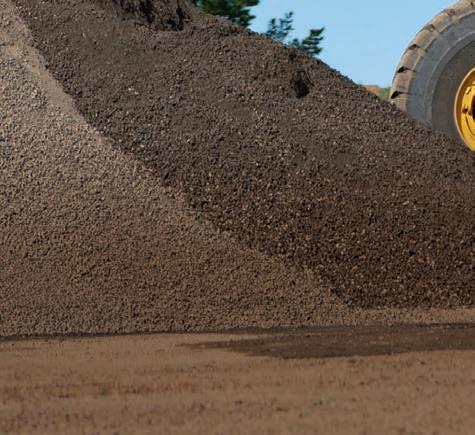
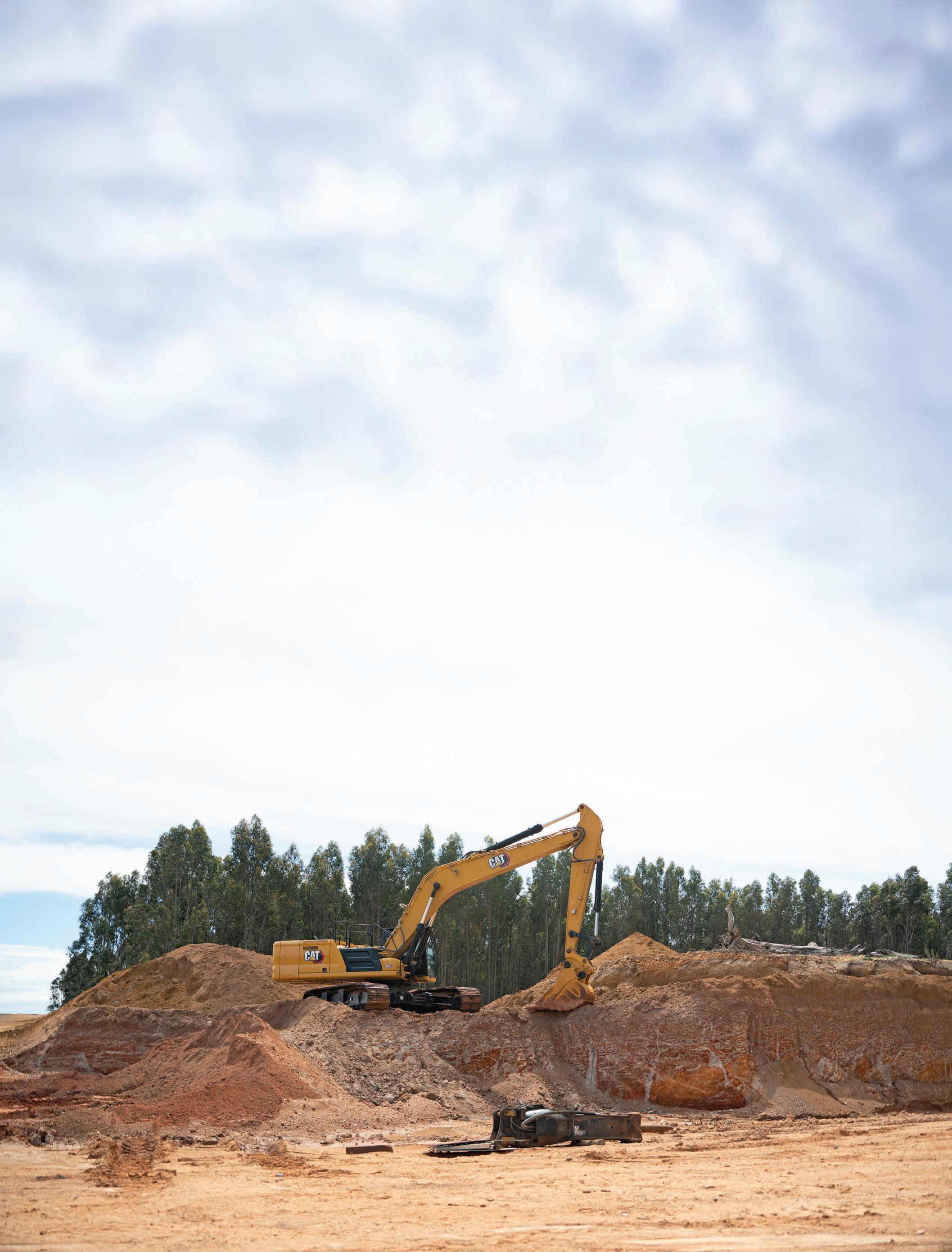
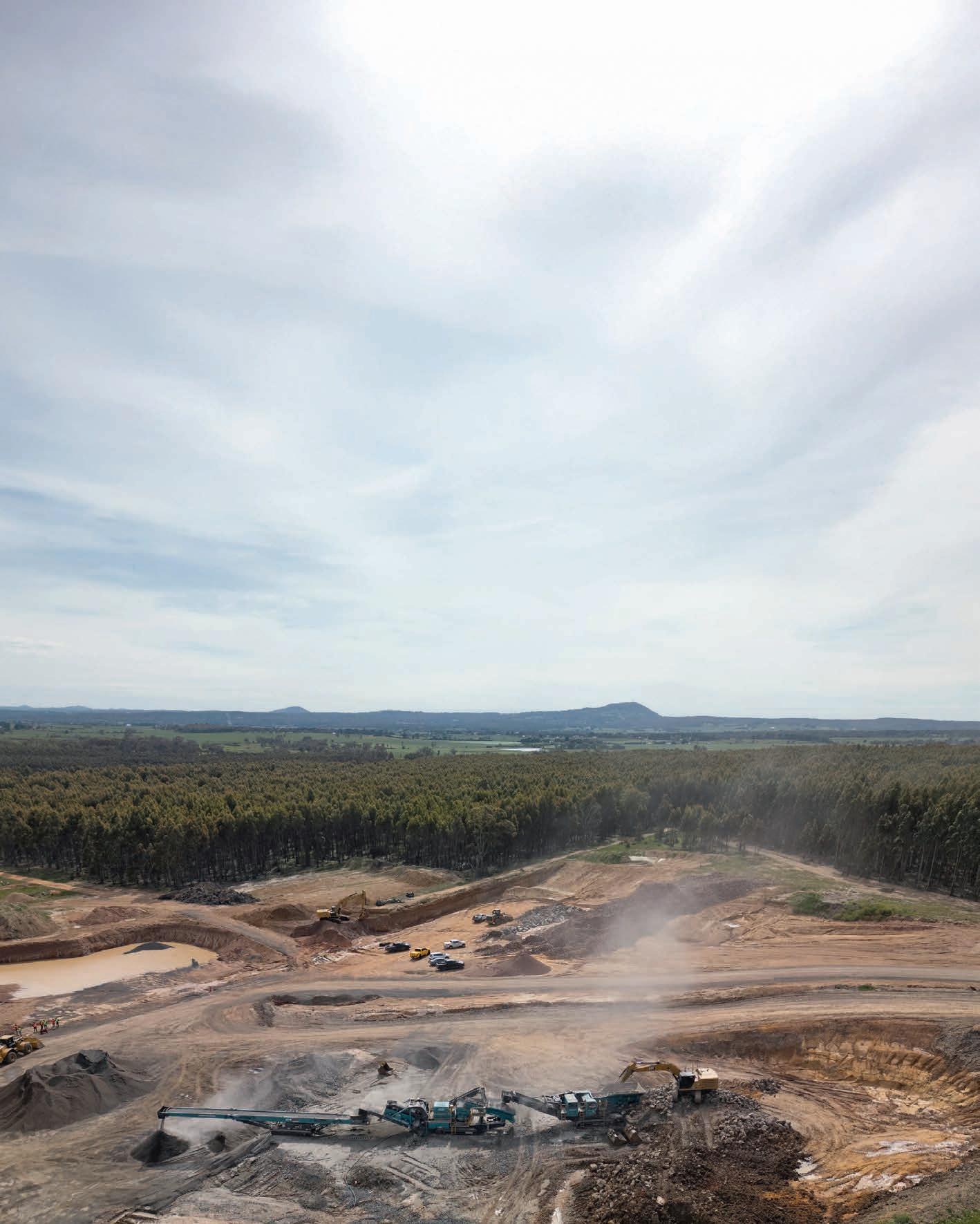
You can’t miss the pits and terraced walls of the quarries on the outskirts of Ballarat in Western Victoria. The operations — one in Moyston, the other in Napoleons — have been run by family owned business Log Hut Quarries for more than 20 years.
Moyston is a sand quarry excavated for a product used in sports ovals and concrete, while the Napoleons location is a source of Types A and B fill, gravel, bluestone, sand, red dredge, and topsoil.
The materials support everything from road and rail construction to house slabs, structural fill, drainage, and landscaping.
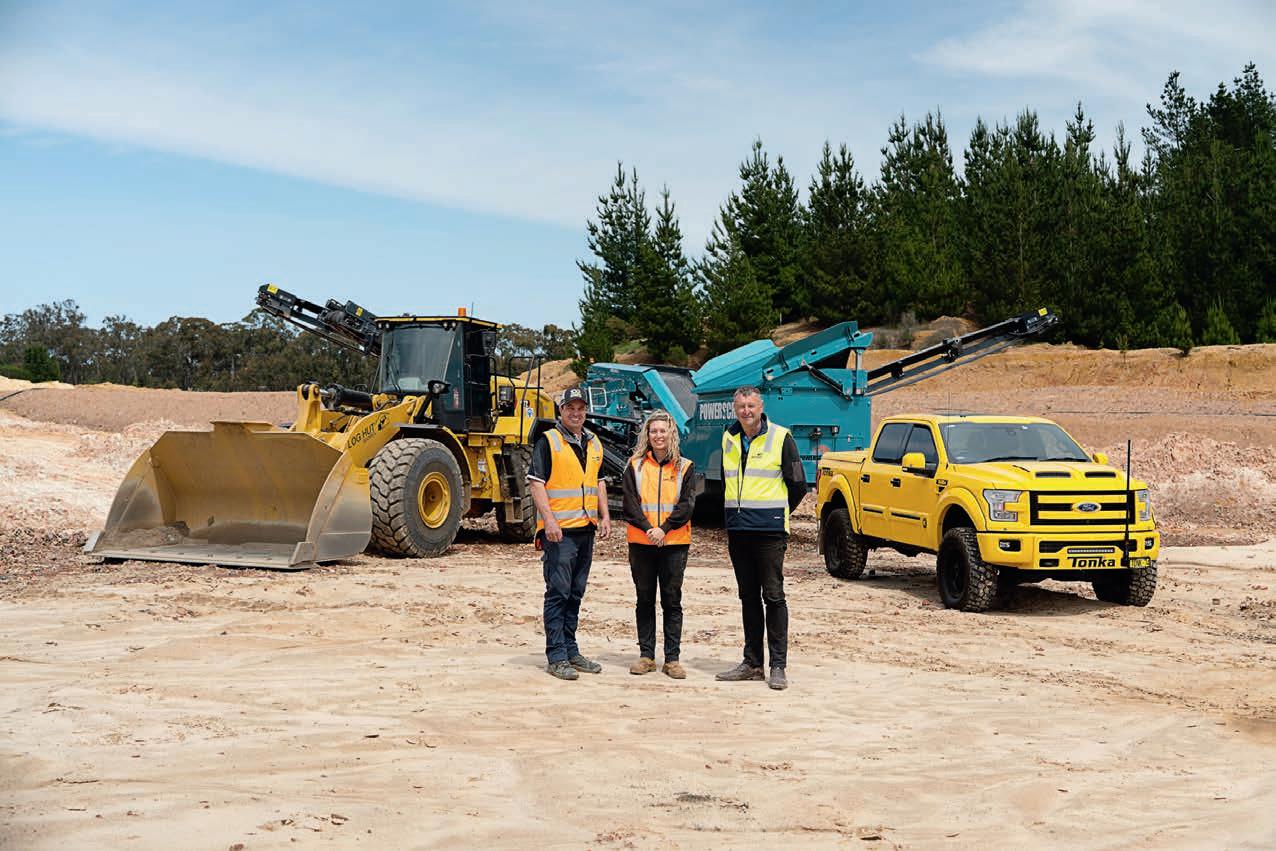
Earthmoving Equipment Magazine visited the quarries to find out how Cat® Payload for Trade helps Log Hut Quarries Managing Director Timothy Porter and his daughter Jessica, who serves as General Manager.
The Porters don’t shy away from their a ection for Cat equipment.
“Log Hut has a large variety of Cat machinery, including excavators, loaders, and dozers,” Tim said. “We have 14 pieces of Cat equipment in total, and a fleet of eight truck and trailer setups to deliver our products.”
Tim boasts several decades of industry experience, having been the previous owner of a plant and equipment hire business named Porter Plant, which provided machinery and vehicles for short and long-term hire.
During that time, he built a relationship with William Adams, the business becoming one of the dealer’s biggest customers. “I started Porter Plant in 1994 with my father, and we worked solely in the gas industry,” Tim said.
“We bought our first Cat machine, a backhoe, in 1995. In about 1997, we bought our first excavator, a seven-tonner, and we built up from that.
“In 2000, we were lucky enough to enter a plant hire agreement with Victorian government road agency VicRoads, supplying its fleet.
“Our fleet of Cat equipment grew quickly. I
bought more than 200 pieces of equipment through William Adams before I sold the company in 2020.
“When I focused on Log Hut Quarries, I continued to buy more Cat equipment from William Adams.”
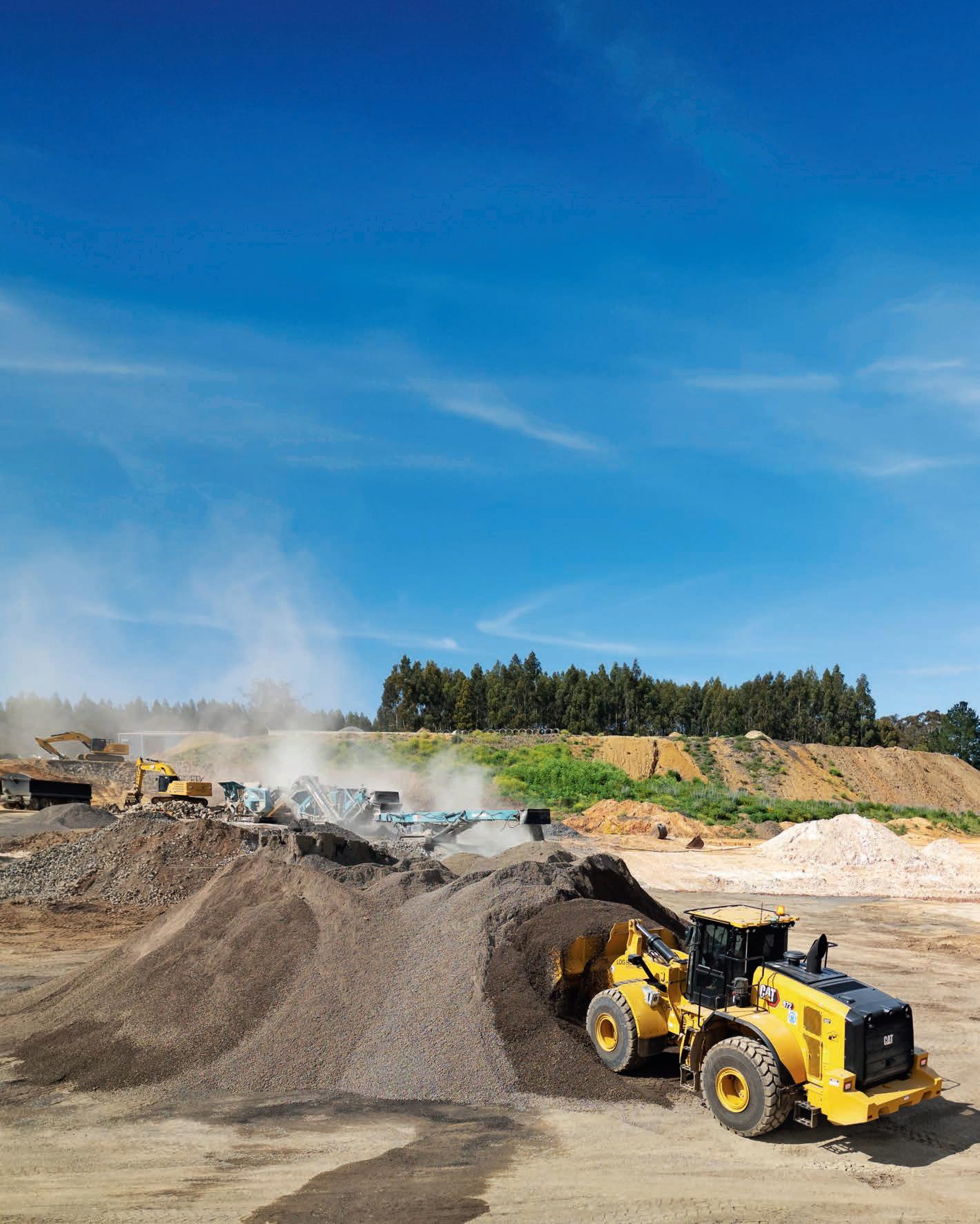
For quarries the size of Log Hut’s, loaders play an essential part, as they are practically the mainstay, used for material handling, transportation over short distances, and loading trucks.
As such, the accuracy of payload information used in quarry loaders can’t be underestimated, as it a ects safety, operational e iciency, cost control, and overall profitability.
“Precise data eliminates guesswork, ensuring every load is optimised,” Jess said.
“Overloaded trucks are unstable, have reduced braking performance, and are at greater risk of rollovers and tyre blowouts, especially on uneven terrain. Accurate payload
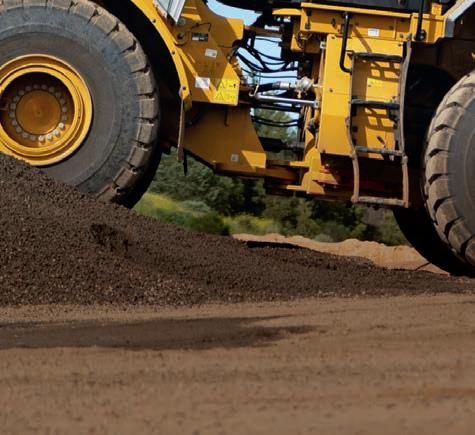
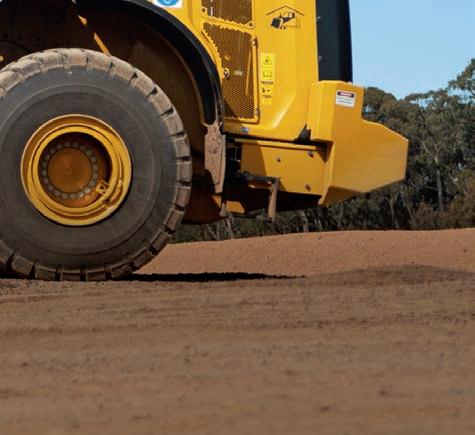
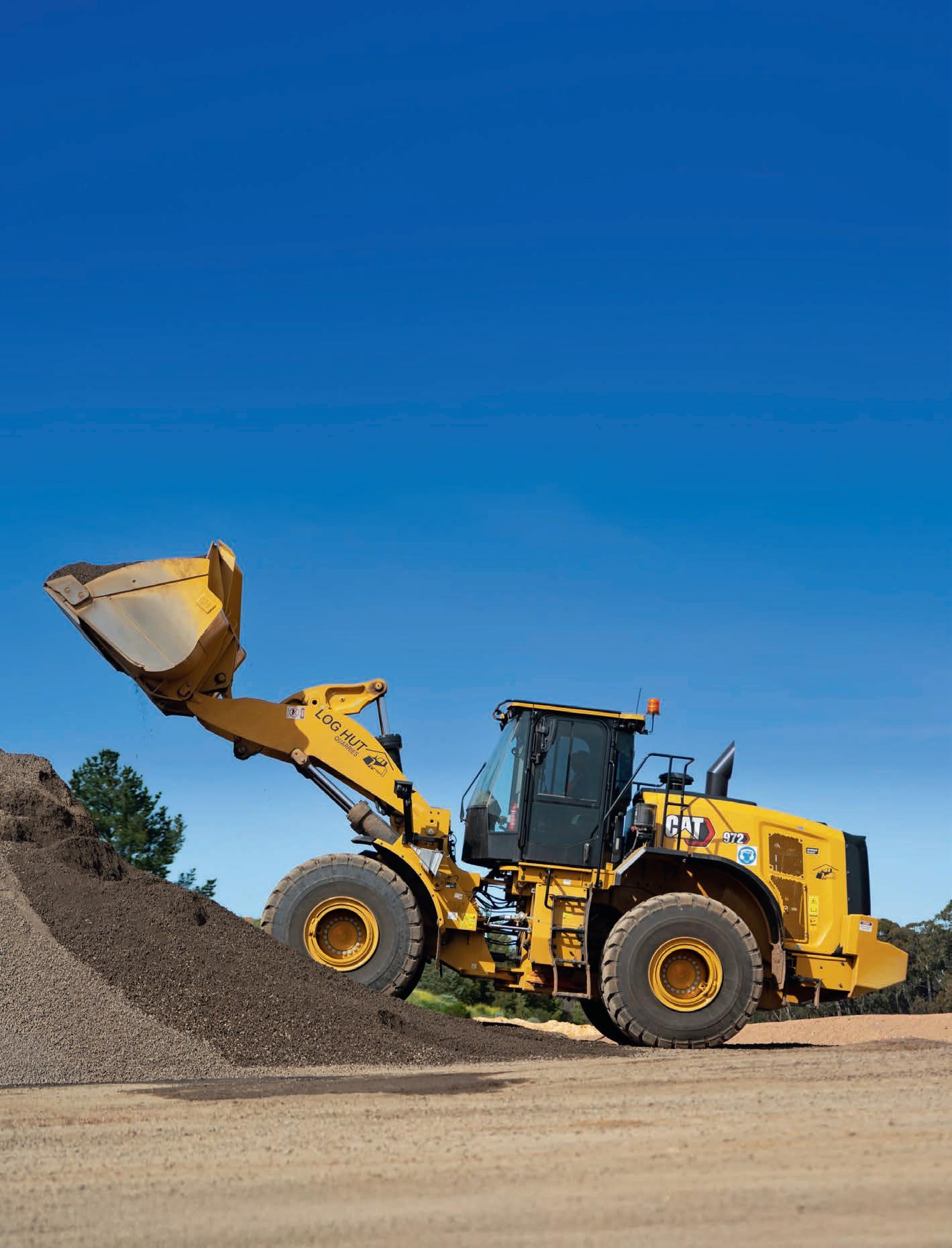
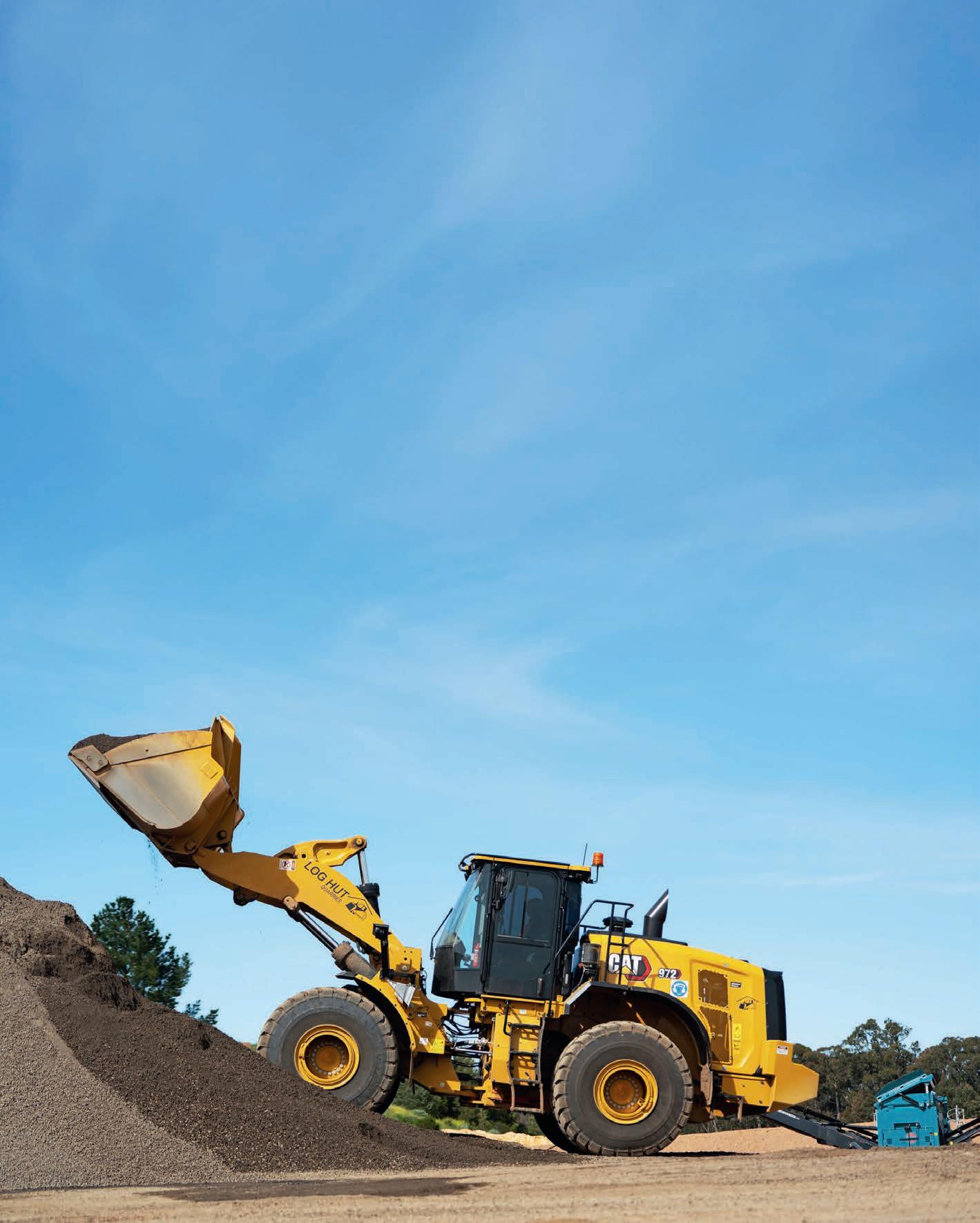
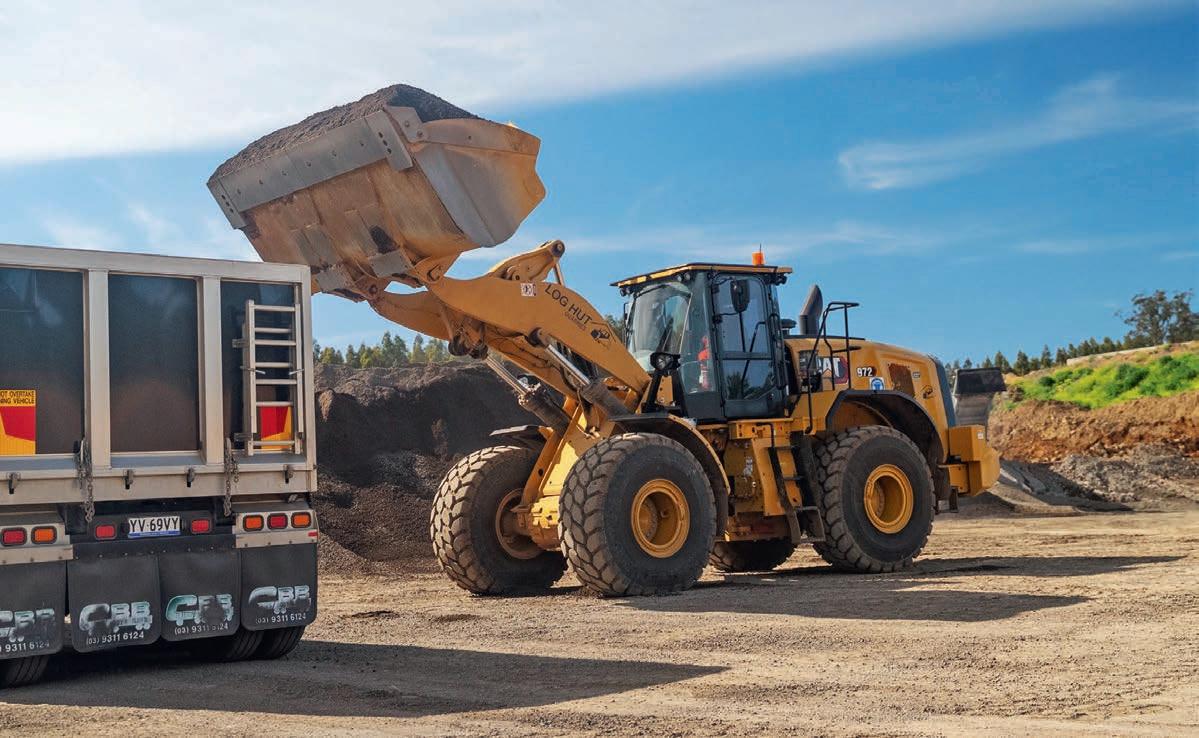
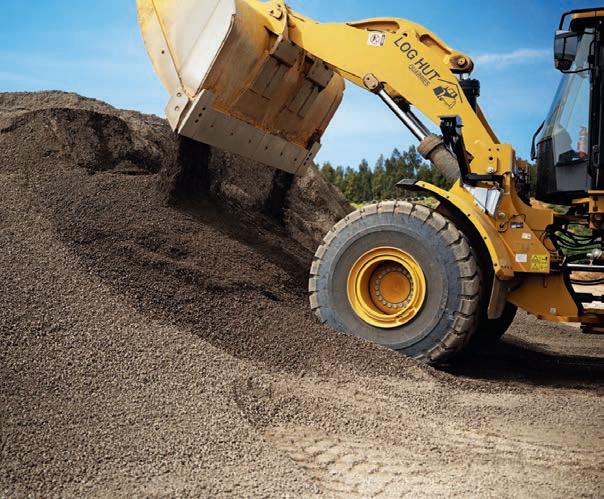
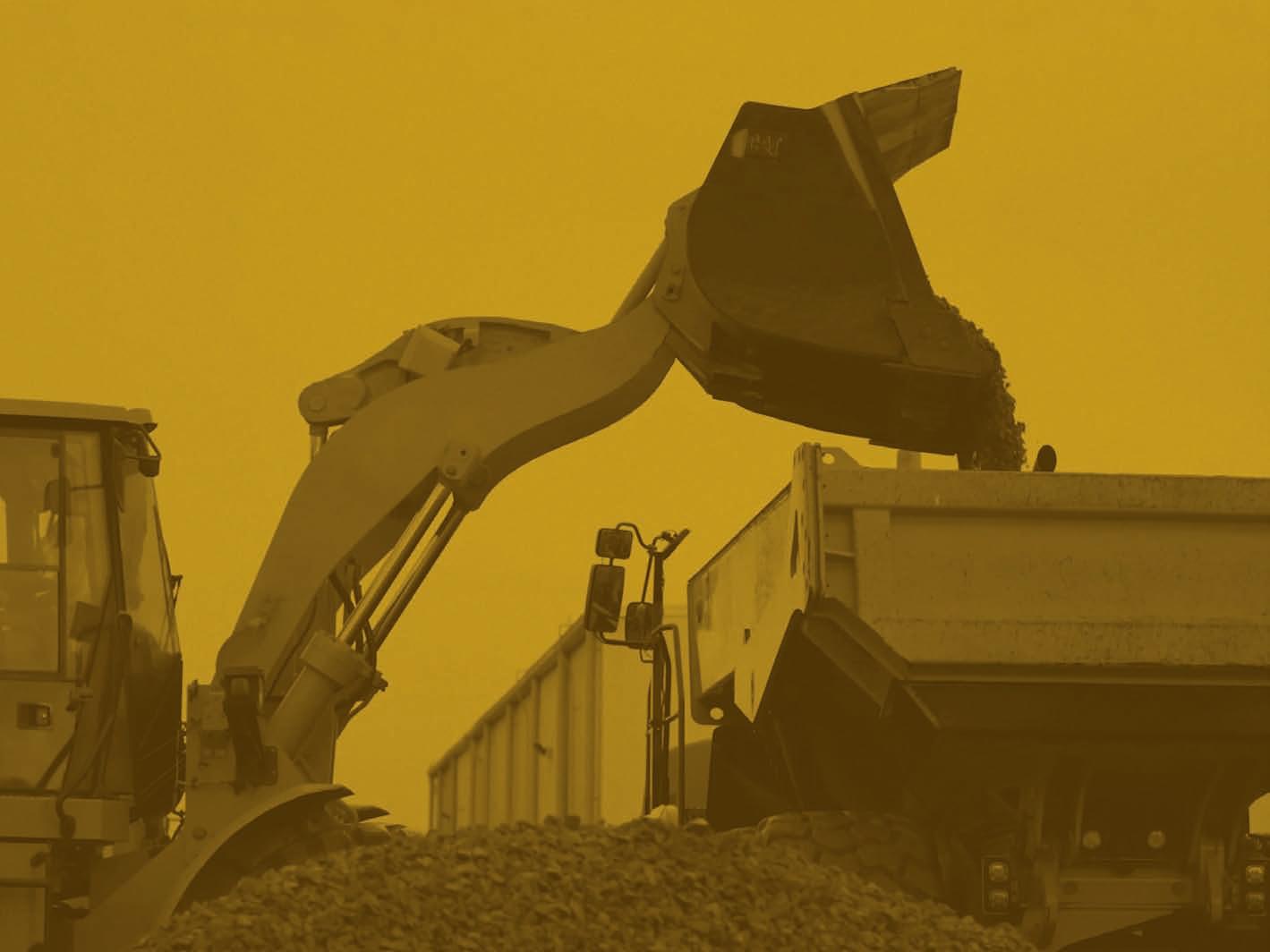
Log Hut’s Cat 972 loader has demonstrated strong productivity, fuel e iciency, reliability, and safety benefits, largely due to integrated smart technologies and durable design. Images: Prime Creative Media
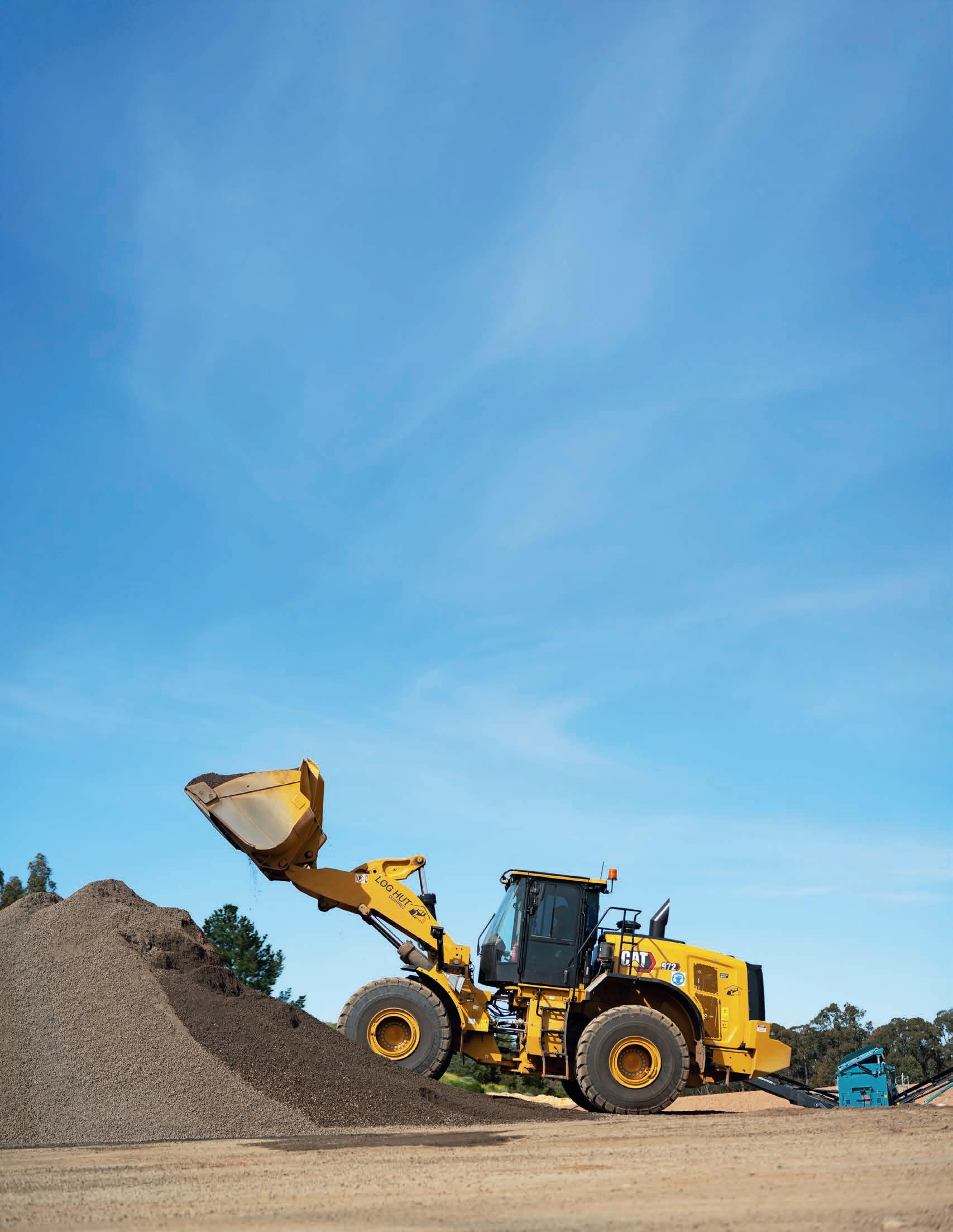
Cat Payload for Trade (CPFT) accurately measures material in the bucket as it's being loaded.
data helps mitigate these risks and comply with safety regulations.
“Proper weight distribution, which can be guided by accurate payload data from the new Payload Blending feature, keeps the truck stable during transport, protecting operators and preventing material spillage.”
Jess said that accurate information allowed operators to hit the target payload every time, maximising the material moved per cycle and eliminating time-consuming re-weighing.
“Optimising each load the first time reduces the number of passes required and minimises delays caused by having to adjust an incorrect load, streamlining the load and haul process,” she said.
Then there’s reduced equipment wear. Both underloading and overloading cause unnecessary strain on the equipment's structure, engine, brakes, and tyres. Accurate payloads reduce this stress, extending

the lifespan of machinery and lowering maintenance costs.
Overloaded trucks also burn more fuel, while underloaded trucks require more trips to move the same amount of material, wasting fuel in both scenarios.
For Tim and Jess, their Cat 972 loader has been a solid addition to the fleet.
The medium-sized workhorse has demonstrated strong productivity, fuel e iciency, reliability, and safety benefits, largely due to integrated smart technologies and durable design.
The New Next Generation machine was fitted with the new Cat Payload for Trade system and then calibrated and verified by independent
For quarries the size of Log Hut’s, loaders play an essential part, used for material handling, transportation over short distances, and loading trucks.

authorities prior to delivery by William Adams.
Cat Payload for Trade (CPFT) is the only OEM factory-supplied on-board weighing technology for Cat machines that accurately measures material in the bucket as it's being loaded.
It’s the first loader in Victoria to have this feature installed. The system is certified with the Australian Government regulatory National Measurement Institute.
William Adams Major Account Sales Manager Guy Rigoni explains more about the innovation.
“The machines already come with the Cat Payload system from the factory installed, but now they have the added option of being upgraded with CPFT installed as required,” he said.
While standard Cat Payload helps operators hit load targets for e iciency (not for sales), CPFT is a certified, legally approved version of the system, allowing its weight data to be used for commercial transactions, reducing paperwork, and integrating with business systems for billing and tracking.
“CPFT allows the customer to charge for product straight out of the bucket without the need for a weighbridge on site, improving the machines’ versatility,” Guy said. “This will definitely achieve accuracy as the scales are calibrated with precise weights and verified by an independent body.”

with the use of E-Tickets and daily, weekly, monthly, and yearly detailed reports.
“Tim first approached me asking for more information about the Cat Payload for Trade systems on wheel loaders for use in the quarries,” Guy said.
As an added benefit, the technology can be paired with Caterpillar’s cloud-based fleet management software VisionLink™, allowing payload data to be captured by the customer

“When Caterpillar launched the CPFT option, it was a perfect fit for their business because Log Hut does a lot of mobile crushing.”
Jess said for operations that sell material by weight, such as Log Hut, trade-approved
weighing systems ensured every load is accurately recorded, guaranteeing correct invoicing and maximising revenue.

“Having the CPFT system on is a massive plus for our business,” she said.
“It gives more reliability on site and gives our customers security that our weights are accurate when we're loading out.
“We're dealing with Tier 1 clients all the time and we need to have that surety that everything is right, and that all boxes are ticked.
Optimising each load the first time reduces the number of passes required and minimises delays caused by having to adjust an incorrect load.

“When you're loading into the truck, there’s a green square around the certified weight that tells the operator when the correct weight is achieved.
“You can target your weights, and you can tell the system how much each you want to put on the truck and trailer, which saves overloading, which in turn improves on-road safety.”
Jess was also happy with the loader’s collision mitigation system, which alerts the driver of obstacles, vehicles or people within the work area.
“We love how the 972 has been working with
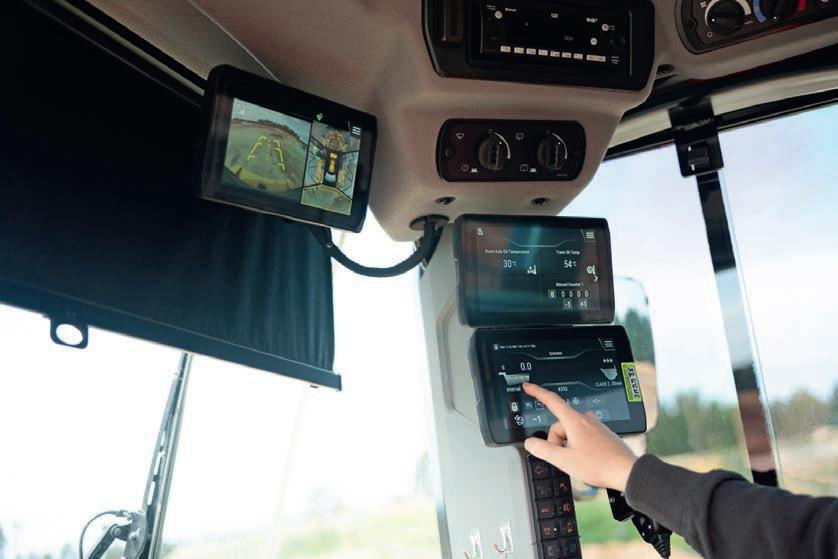
With CPFT, users dictate how much they want to put on the truck, which saves overloading and improves on-road safety.
CPFT. We will be taking delivery of another 972 this year with the same CPFT tech installed,”
Jess said.
Tim was e usive about the connection with Guy and William Adams.
“I was one of his first clients and we've worked together in the industry for quite a few years, and we've got a great relationship,” he said.
“We couldn't be happier with the service we get from William Adams. The backup support we've received has been great.
“Since we had this machine delivered, they've
come out and given us numerous training sessions on how to use the system.
“If something goes wrong, they're first on the phone to help us out.
“They also can do a lot online, so if we have a fault, they're usually able to fix it within an hour. They can log into the machine electronically and help us with anything we need.”
Tim said the availability of parts was exceptional.
“All parts are on hand, and they're an hour away from us. So we have no downtime,” he said.


A Queensland quarry is improving e iciency by making strategic investments in equipment, technology, and site performance.
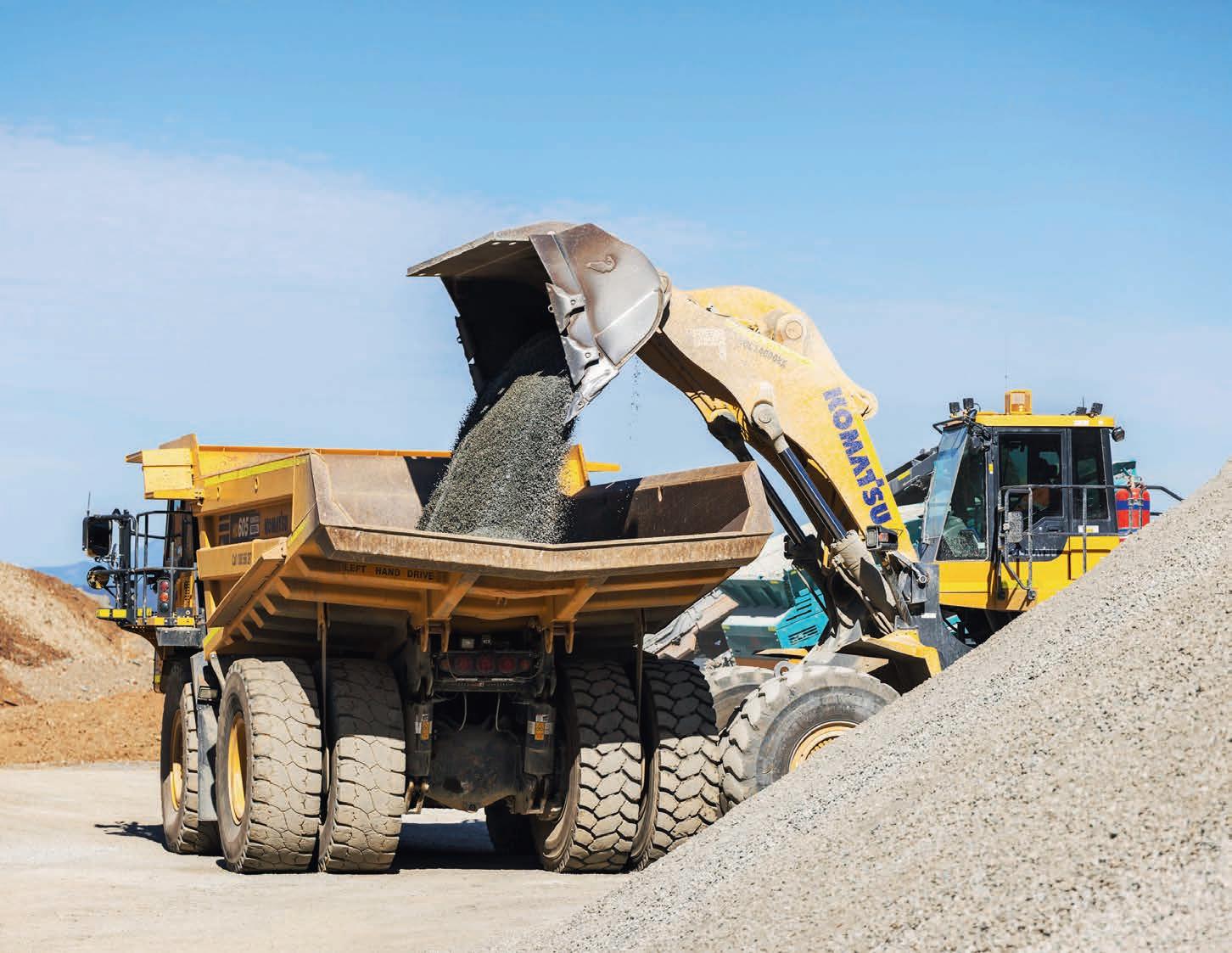
With more than a century of rock reserves, Fulton Hogan’s Blue Rock Quarry, based in South East Queensland, is focused on investment in technology, safety, and e iciency.
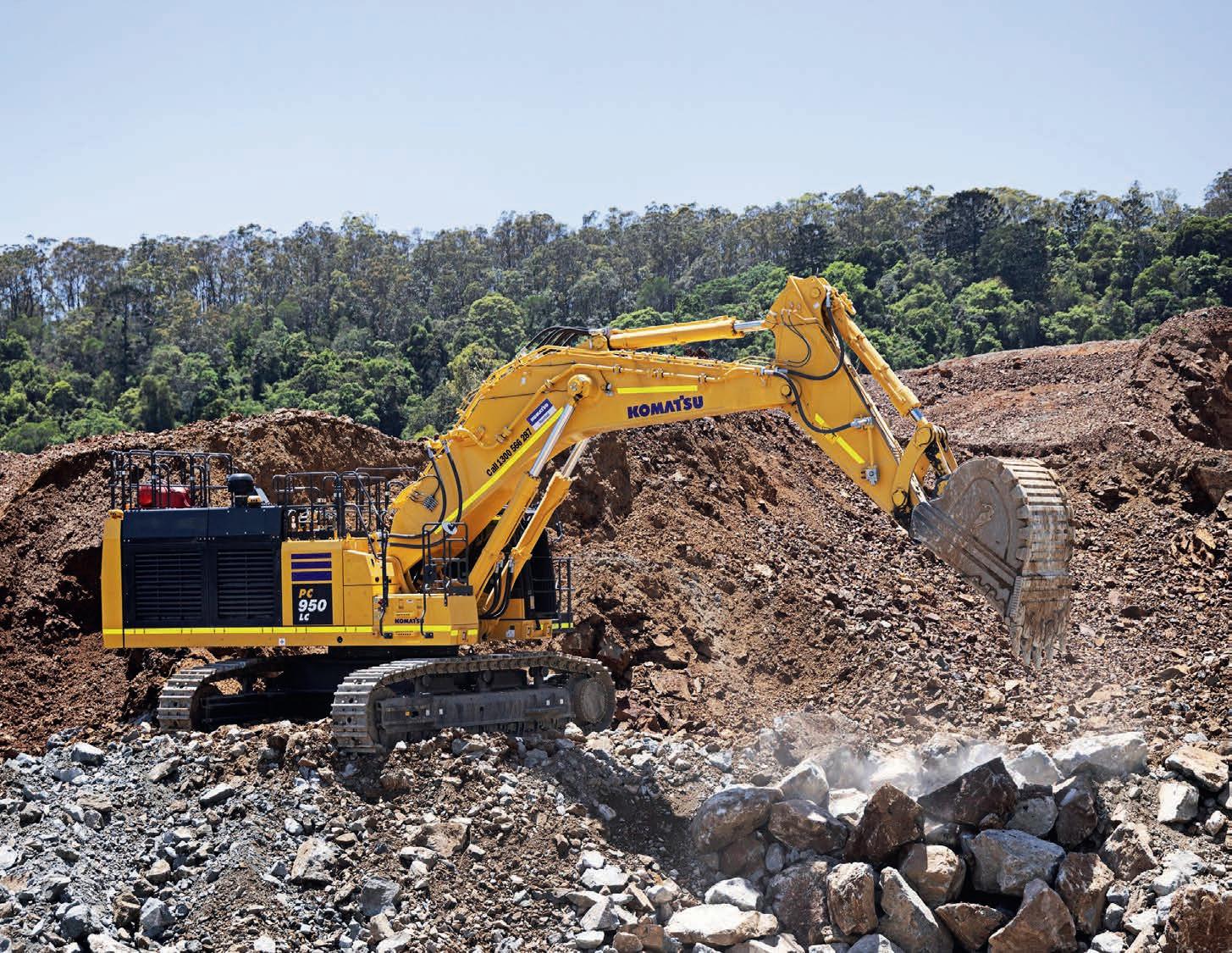
Over the past year, the site has transitioned to a full Komatsu rental load-and-haul fleet, completing the line-up with the arrival of a PC950LC-11 excavator.
Within weeks, the impact has been clear, with faster loading cycles and productivity gains across the operation.
Fulton Hogan Divisional Manager Quarries, Carl Buckland, said the move wasn’t about upgrading machinery, but reshaping how the quarry is managed, monitored, and supported.
“The PC950 is giving us e iciency gains. We’re loading our dump truck in six passes, which is an improvement on what we had
prior,” he said.
“Our operators love the new gear, and keeping people happy goes a long way to having a safe and productive operation.”
A rental partnership built on support
Komatsu’s rental partnership with Fulton Hogan was designed to address the site’s operating constraints and production goals. However, Komatsu Australia’s Rental Manager Craig Marsden said that providing a machine was only one part of the solution.
“Rental is more than putting a machine on a job site; it’s the back-up that keeps those machines operating, so the customer can meet their obligations and their commitments,” he said. “That support can include rapid on-site response, ongoing optimisation, and
a fully scalable fleet model to grow with the customer’s quarry.”
Along with the rental support, the fleet solution includes Komatsu’s Smart Quarry Site (SQS), which delivers e iciency gains through realtime visibility across safety events, production cycles, fuel use, emissions, and machine health.
Komatsu Business Development Manager for Smart Construction, James Kelly, said the first priority was understanding Fulton Hogan’s constraints and tailoring an SQS solution to best accommodate the company.
“The vision was clear: safety, visibility, quality, reliability, and the ability to scale the fleet without large upfront capital outlay,” he said.
Blue Rock now receives automated daily
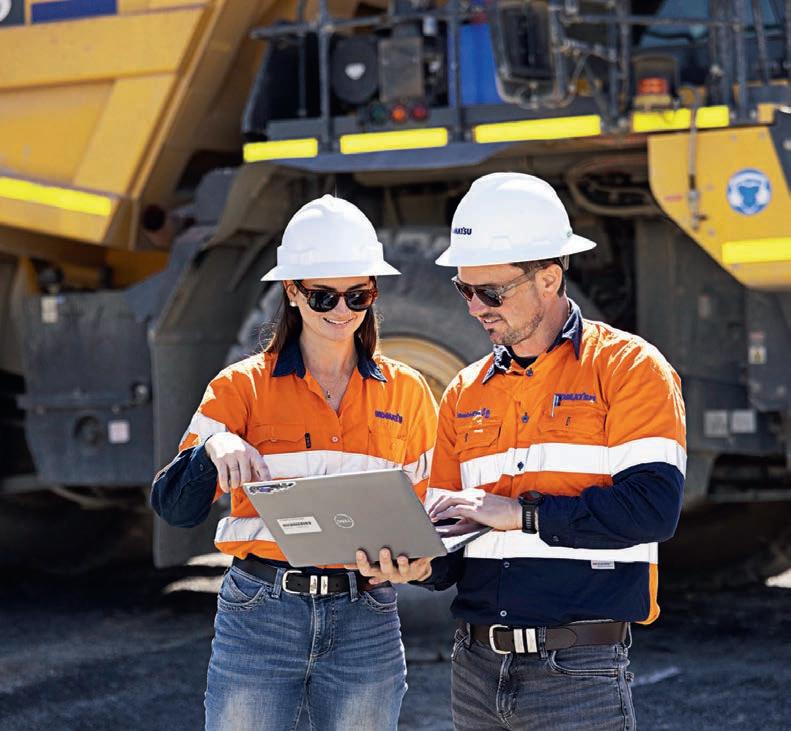

reporting, enabling the team to understand what’s happening on the site before the day begins through the SQS platform. GPS tracking, geofencing, and machine analytics give managers the insights needed to lift utilisation and plan proactively.
“Machine e iciency, emissions, fuel usage, and production capabilities are all reviewed daily. Analysing that data allows them to make informed, proactive decisions that impact their next day’s operations,” James said.
The combined fleet and technology approach has already delivered results, improving safety, operator performance, and workflow transparency. System insights are now used in training, planning, and continuous improvement.
“Komatsu’s rental solution, combined with SQS, gives the quarry flexibility and financial certainty, allowing the team to focus on growth while preserving cash flow, and accessing the latest technology as it evolves,” Craig said.
For more information, visit: www.komatsu.com.au/equipment/ excavators/13t-to-100t/pc950lc-11





Drive your 2026 results with Pickles
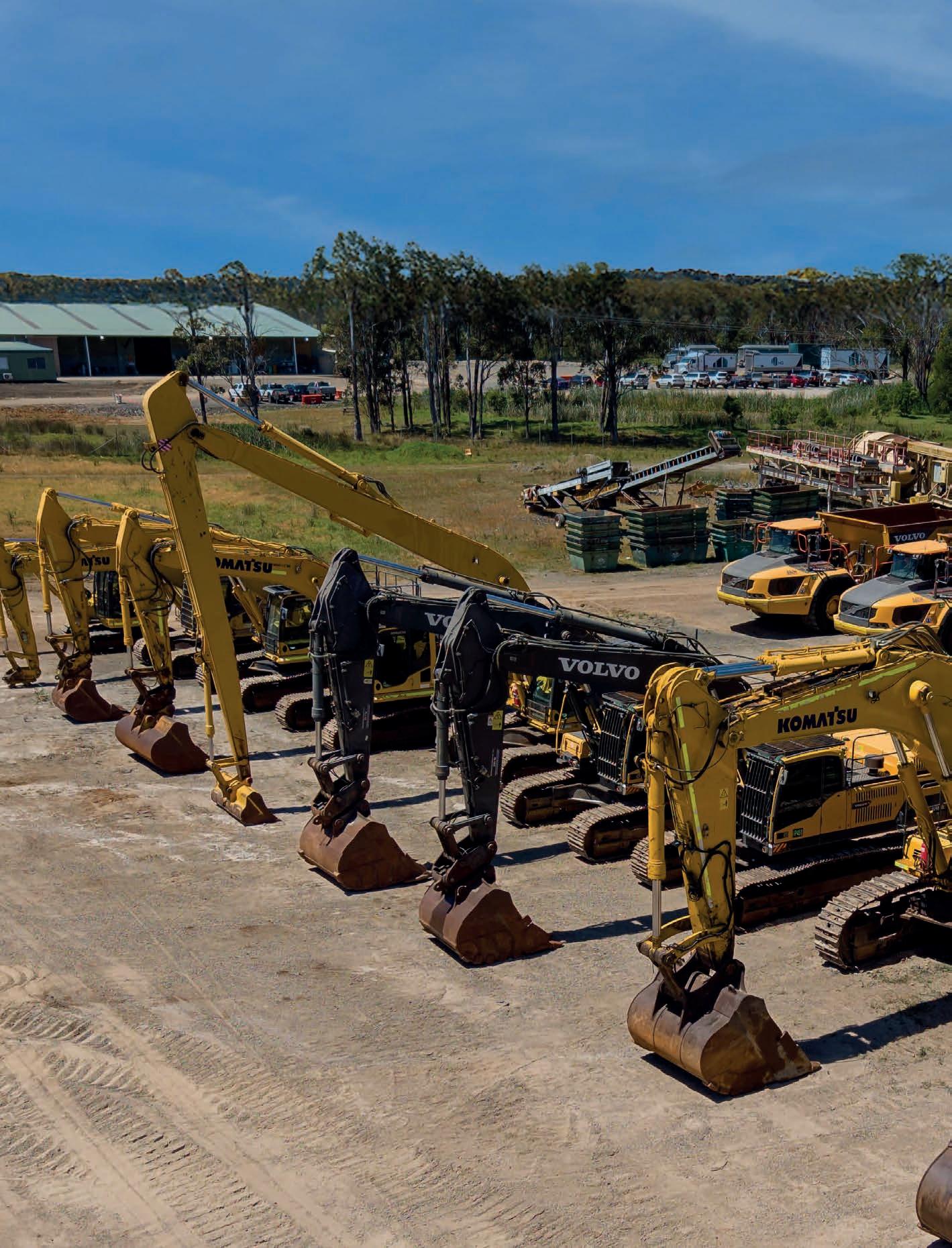











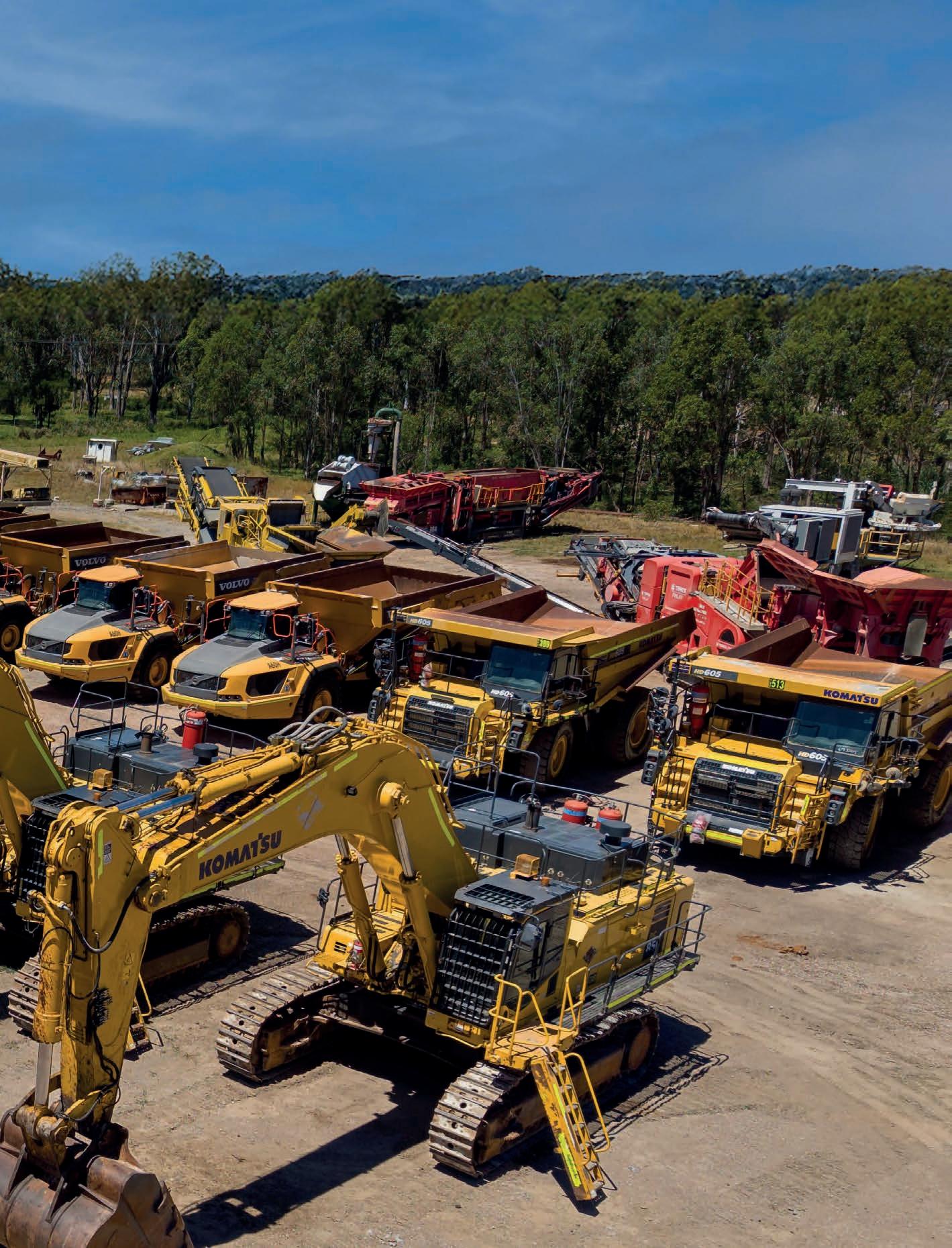
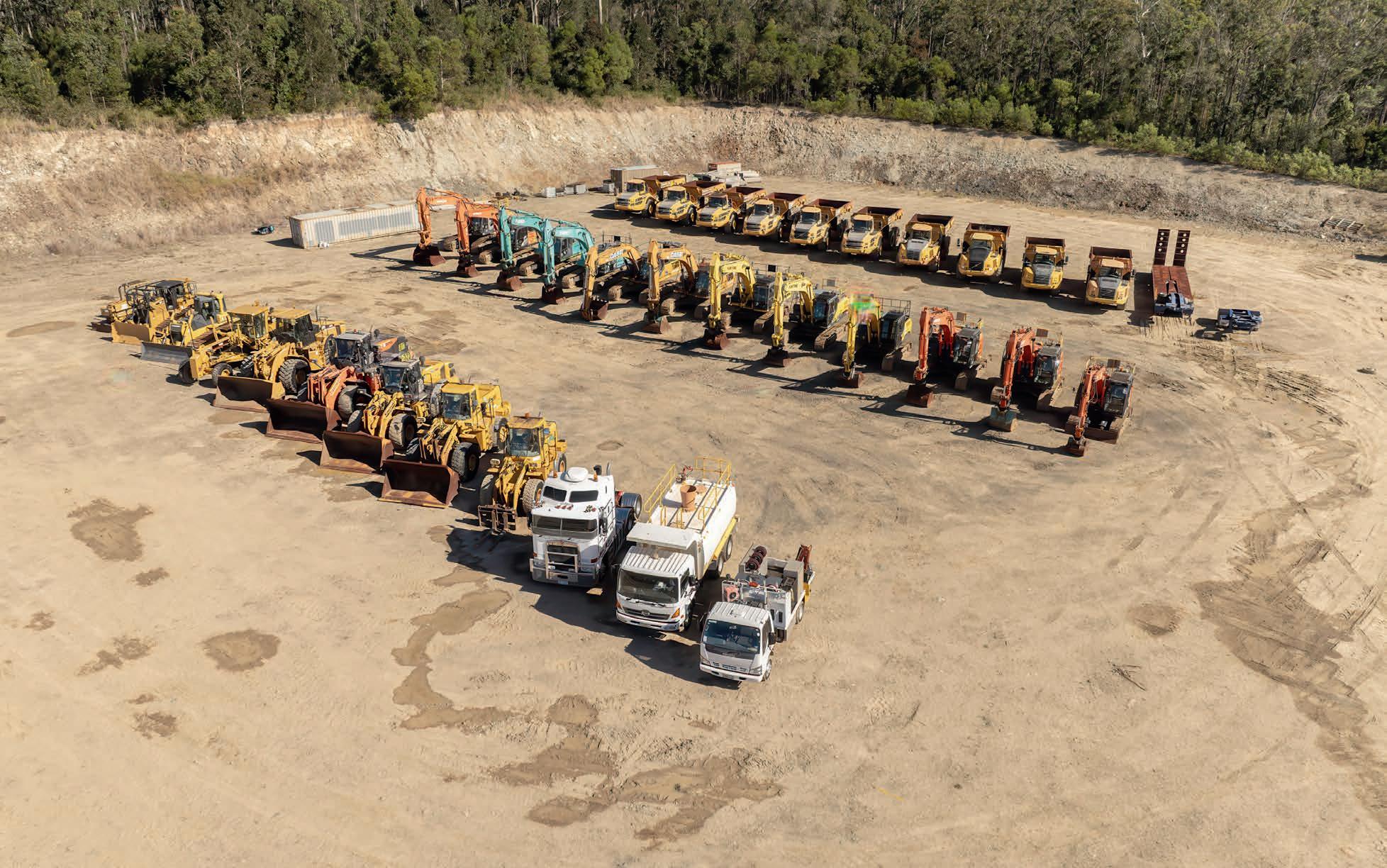
Auction and sale results for the past year have shown that the second-hand market remains vital to the earthmoving industries.
2025 will be remembered as a year when continued trust in Australia’s used market rewarded buyers and vendors with consistent results.
With the extreme highs of the post-pandemic boom long gone, the industrial market experienced a re-balancing and achieved stability over the previous 12 months.
Despite early projections forecasting a softer year for industrial activity — in part due to the uncertainty around the Federal Election — the market experienced a steady year in 2025. Prior to this, concerns were raised around how the market would behave once Australia returned to business as usual. However, the drastic decline in turnover anticipated for buyers and vendors never eventuated.
Pickles experienced a record year of results in 2025, with $600 million secured in industrial equipment sold across the past 12 months. Now, with the industrial market set to break new ground in 2026, it’s important to reflect on the trends and fluctuations of the previous year to help inform and steer our shared industry future.
The industry overall saw a return to stability in the first quarter of 2025, as an increase in market activity defined the January to March period with results outperforming those of Q4 in 2024.
A stronger interest in used machinery over new equipment acquisitions signalled a shift in preference that, combined with increased buyer activity, led to higher bids per asset and fostered a steadier market.
The introduction of Euro 6 standards — which are designed to reduce vehicle emissions and help meet targets — had a major impact. Historically, there is a hesitation to adapt to newer models, and this continued over the course of 2025.
Operators faced di iculties gaining access to new models in the Euro 6 specification, leading to a spike in the second-hand market where used models are a known quantity. This led to established brands such as Isuzu and Hino experiencing a 10-15 per cent price rise for branded trucks that were ready and available. As the economic direction for the rest of the year became clearer post-election, Pickles
flourished in Q2, with more than $60m in sales in June alone. Once May concluded and the Federal Election passed, operators began making critical moves for their businesses, whether that be to buy, sell, retire, or liquidate.
This change in atmosphere led to more movement in the industry and an increase in clearance rates, which had slumped in Q2, but lifted by the end of September.
The status of the market in Q3 and Q4 favoured those who accepted the fluctuating nature of the industrial market. Large event auctions picked up, courtesy of insolvency and retirements, with sales remaining strong up until the Christmas period.
There was a departure from caution as Pickles saw a large number of sellers enter the market, and buyers who were decisive and in need of ready, available, and quality equipment.
In addition, there were a number of insolvency-driven sales, particularly in the line haul transport space. With the Australian market levelling out over the past year, it’s expected that this momentum will continue to build into the new year.
As a major Australian auction house, Pickles possesses the knowledge and expertise to secure businesses the most bang for their buck at auction. The benefit of taking your fleet to auction is that, historically, auctions can draw a premium when there's a larger consolidation of assets, as it creates selling motivations that appeal to buyers.
This surge in available assets encourages competitive bidding, with buyers feeling a greater chance of securing what they want when there are more items for sale. Feature and event auctions are e ective for vendors looking to sell large quantities of assets in one go, as it helps to clear their inventory in a timely fashion and at a premium price.
Businesses looking to restructure, retire, or downsize larger amounts of equipment can capitalise on standalone event sales with Pickles. By prioritising the quality and story of not only the equipment but the business as well, Pickles drives a premium price by o ering equipment to an exclusive marketplace of eager buyers.

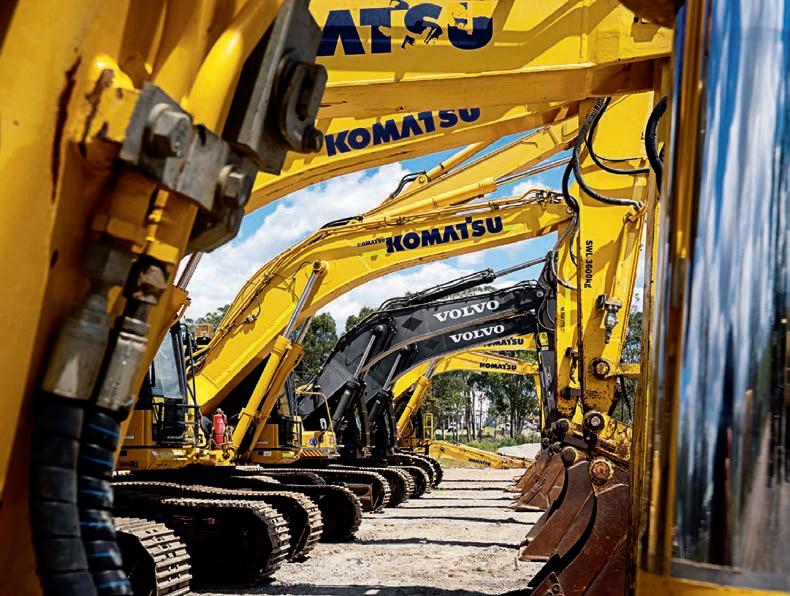
Among many auction highlights, two retirement sales from 2025 reflect Pickles’ ability to maximise results and to work e ectively to achieve a satisfying result for two historic Australian businesses.
Following the retirement of Templemichael Constructions, Pickles was entrusted to sell the company’s fleet of civil construction equipment.
The goal was clear: maximise the fleet’s value and secure an outcome that reflected the legacy of Templemichael.
Late-model Volvo articulated dump trucks, a range of excavators, crushing and screening equipment, Drake floats, Kenworth prime movers, and more than 100 attachments were o ered. Plenty of enthusiastic buyers showed interest in buying from a selection of mostly single-use and ownership assets, leading to a 100 per cent clearance rate and more than $5.2m in total sales.
Held in September, the Francis Transport Retirement Sale bid farewell to a historic Australian company following over 115 years of service.
Pickles was proud to guide this process for Francis Transport and to help o load a range of transport assets, including curtain side trailers, prime movers, and rigids from Kenworth.
The sale enabled buyers to own a piece of Australian trucking history and attracted an eager volume of bidders, ensuring a strong result with $2.4m accrued in total sales.
Ultimately, 2025 was a year of market normalisation in the Australian industrial sector, characterised by the ongoing appeal of construction, agriculture, mining, transport, and logistics.
Rising operational costs for industrial businesses led to an increased interest in the used industrial market, which is where Pickles
continues to prove its worth. Looking ahead, the industry will be boosted by the experience of enduring the market’s fluctuations in 2025.
From a digital viewpoint, Pickles has levelled up in the last few years, with 2025 marking a period when customers searched more than ever. Search activity jumped 36.8 per cent and organic search sessions grew by 23.4 per cent, a sign of stronger intent and engagement.
With technology continuing to evolve from both an asset valuation and equipment standpoint, Pickles’ digital marketplace is set to unveil further resources to assist buyers and vendors in 2026, with customer service and innovation remaining at the forefront.
With hundreds of industry experts located across the country, a wealth of sales data at its disposal, and a large range of used industrial equipment, Pickles remains a major name in auctioneering for a reason.
To speak with a Pickles Industrial expert or to find what you need, visit pickles.com.au.





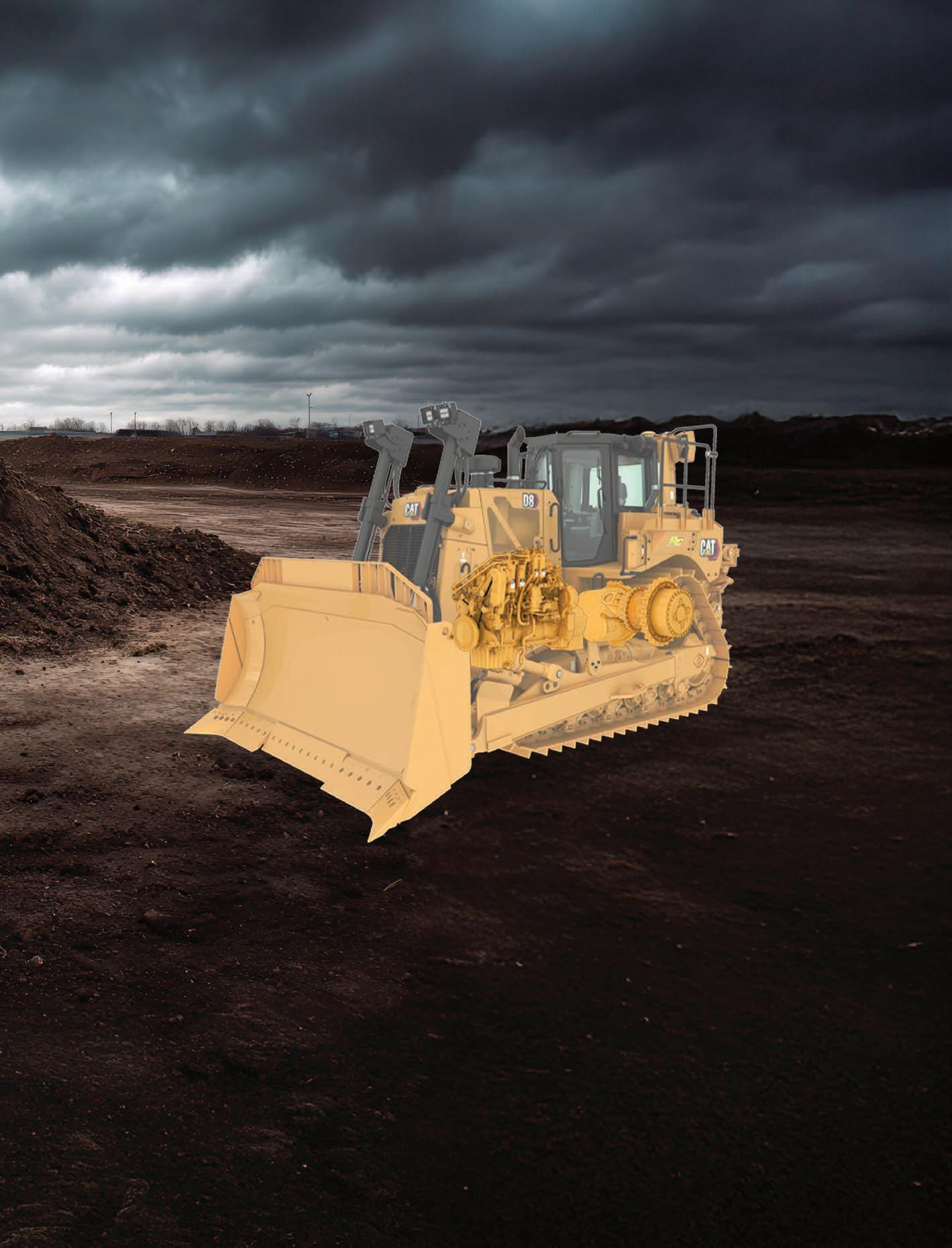






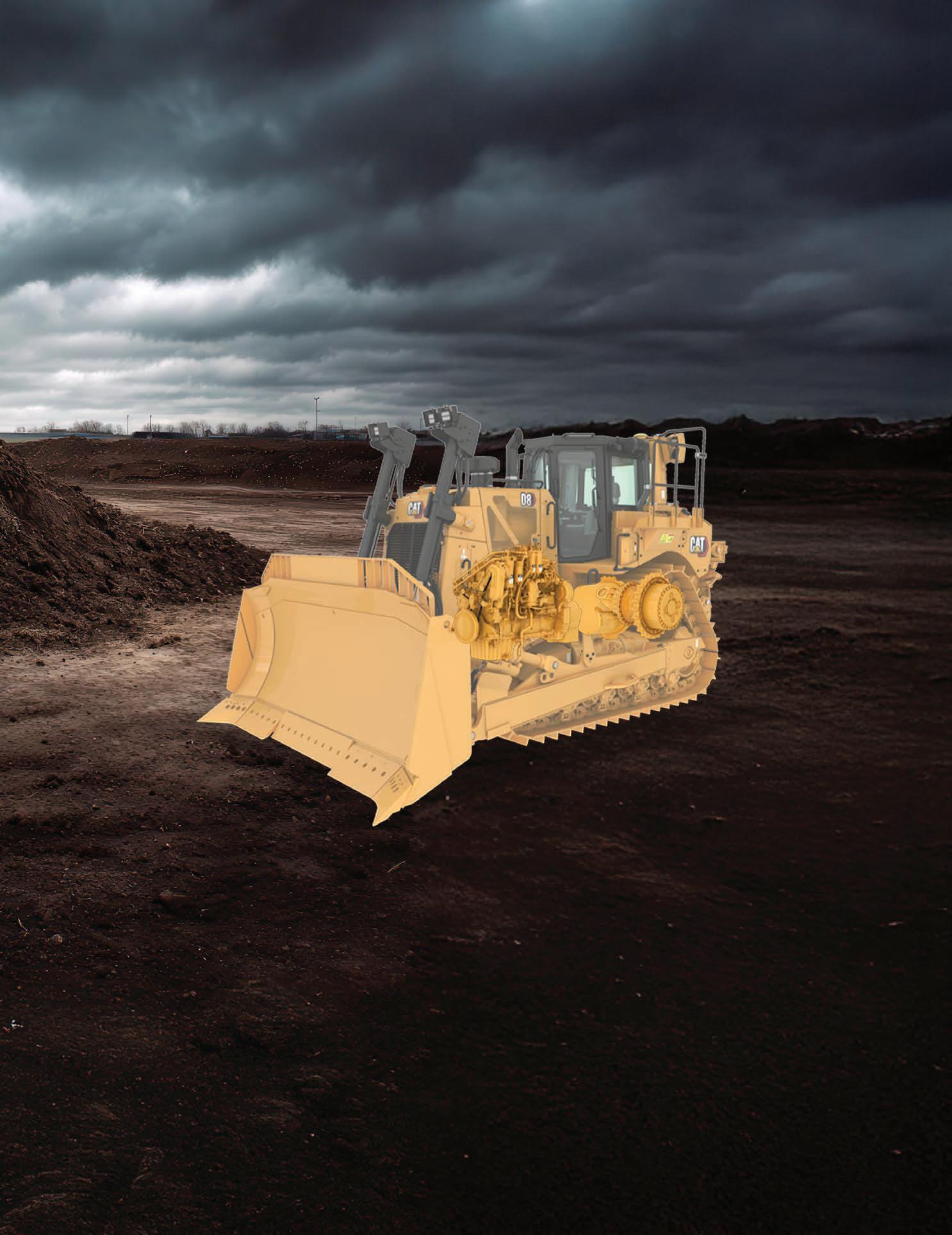
COMPONENT REBUILDS Cat ® Flexible Component Rebuilds give you the power to choose what to rebuild based on your budget and business needs. Choose to rebuild or replace just the engine or engine plus other major components. And with Cat ® Equipment Protection Plans and 0% 24-month* secured or unsecured finance, your rebuild is both affordable and fully protected. Ready to customise a rebuild that works for you? Talk to your local Cat dealer or visit cat.com/rebuildoptions-au


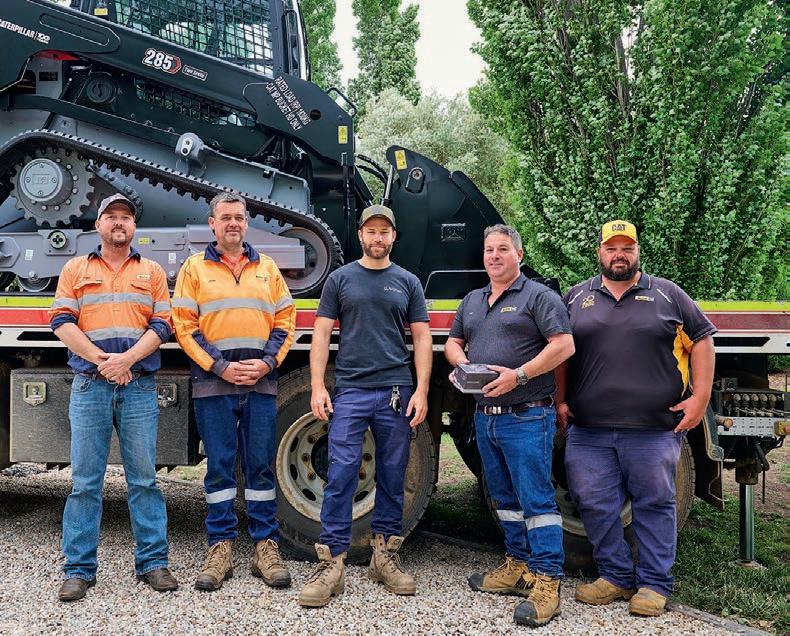
A four-wheel-drive accessory specialist has just taken delivery of its first earthmoving machine, a Cat® Centennial 285 Compact Track Loader, which also happens to be the last Centennial machine delivered in 2025.
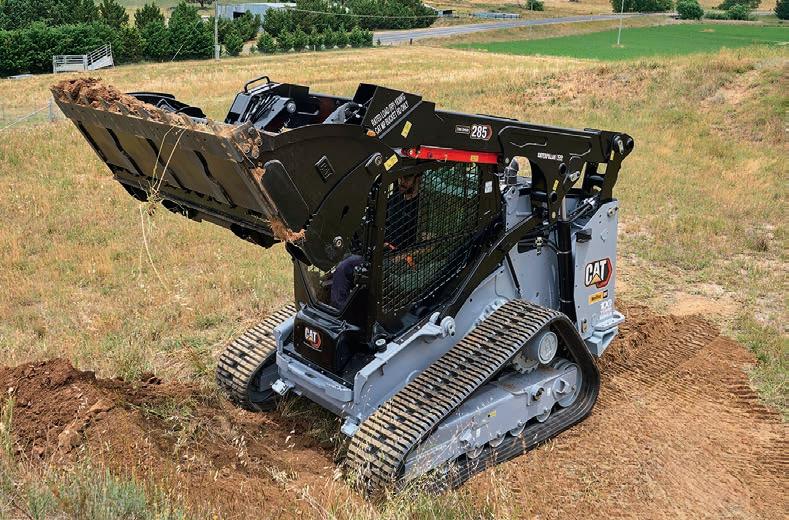
The Cat 285 is Caterpillar’s largest compact track loader, released last year to acclaim, thanks to features such as a lift height of 3.7 metres and an operating capacity of more than three tonnes.
Because 2025 was also Caterpillar’s 100th anniversary, a number of special Centennial models were made available, which boasted unique livery and branding. The last of them –#12 of 21 limited edition Centennial models –was recently snapped up by New South Wales four-wheel-drive business GMF4X4.
We spoke with company founder Greg Moore about his business and why he plumped for the Cat 285.
4x4 corners
Based in Bathurst, GMF4X4 has grown from a one-man operation into an Australian manufacturer whose products are trusted by four-wheel-drive (4WD) owners locally and internationally.
Central to that growth has been a focus on quality, practical design, and investment in equipment that supports e iciency without compromise — an approach that led the business to acquire the Cat 285.
Founded in 2011 by Greg Moore, GMF4X4 was born not out of a desire to chase trends, but from first-hand experience. Like many successful niche manufacturers, the company’s origins lay in identifying shortcomings in the market and addressing them through thoughtful design and robust engineering.
“We set out to create accessories that were strong and functional — products designed by someone who understood how 4WDs are actually used rather than how they look in a catalogue,” he said.
From the outset, GMF4X4’s philosophy was to build accessories that last. That meant using quality materials, manufacturing locally, and refining designs through hands-on problem solving.
What began as a small operation grew as
word spread among 4WD owners looking for equipment they could rely on in harsh conditions. Rather than expanding too quickly, the business evolved organically, guided by customer feedback and real-world performance.
“Today, GMF4X4 designs and manufactures a growing range of 4WD accessories, including front bars, under-body protection, UHF bonnet brackets, and other critical components,” Greg said.
“While Bathurst remains the heart of the operation and the centre of our manufacturing capability, GMF4X4 products are used beyond regional NSW. Customers across Australia —

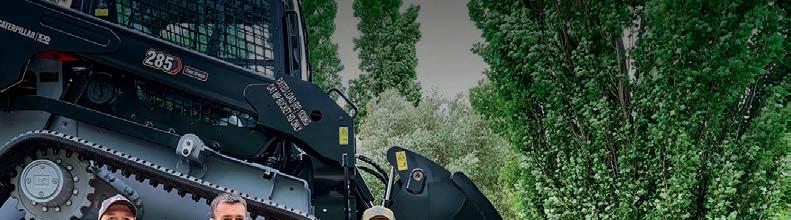
and increasingly overseas — choose GMF4X4 for its reputation for strength, reliability, and engineering integrity.”
Greg said that manufacturing in-house has allowed GMF4X4 to maintain quality control while remaining agile. Designs can be refined, processes improved, and production adjusted without reliance on external suppliers.
As the business has grown, so too has the complexity of day-to-day operations. Material handling, yard maintenance, site works, and infrastructure tasks all play a role in keeping manufacturing flowing smoothly.
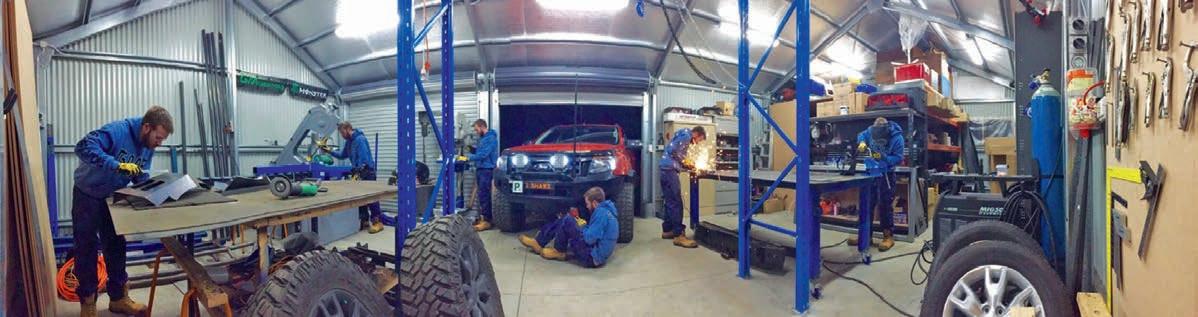

It was this reality that prompted GMF4X4 to reassess how work was being done on site — and to look closely at the role a compact machine could play.
“The decision to purchase a Caterpillar 285 skid steer was driven by necessity rather than novelty,” Greg said.
“GMF4X4 needed a machine that could perform reliably across a wide range of tasks, both within the manufacturing environment, and across associated farm and property operations. Precision, durability, and e iciency were non-negotiable requirements. In that context, Caterpillar emerged as a natural fit.
“CAT equipment is known for its quality, durability and consistent performance, aligning directly with our own standards.”
For GMF4X4, the Cat 285 is far more than a piece of yard equipment. It has become a core operational asset, used daily for material handling and logistics, moving steel and components safely and e iciently around the workshop and storage areas.
In a manufacturing environment where downtime has a direct impact on productivity, the ability to move materials quickly and accurately is critical.
Beyond logistics, the machine plays an important role in yard and site maintenance, as well as earthworks and property improvements.
With both business and farm operations to support, versatility was essential.
“The Cat 285’s compact size, lifting capability, and attachment compatibility allow it to transition between tasks, reducing the need for external contractors, and giving GMF4X4 control over scheduling and costs,” Greg said. That independence is valuable in regional areas where contractor availability can be limited and delays can quickly compound. By having a dependable machine on site, GMF4X4 has improved e iciency and reduced downtime across daily operations — benefits that flow into manufacturing output and delivery timelines.
The purchasing experience itself reinforced
GMF4X4’s confidence in the Caterpillar brand. The machine was supplied through the Bathurst branch of WesTrac, with the dealer involvement playing a role in the decision.
From the initial enquiry through to delivery, Greg said the process was seamless and professional. Upon delivery, Moore was welcomed by the WesTrac team and quickly established a working rapport with key sta , including sales representatives Luke Hession, Michael Webster and Peter Smith.
WesTrac provided on-going support and follow-ups to Greg, which demonstrated the highest level of commitment to the business.
“That backup matters,” Greg said. “They went above and beyond to help kick o the relationship, and that gives confidence that the support will be there when you need it.”

The WesTrac team also encouraged Greg to take out a FitFleet Premium Customer Value Agreement (CVA), a move he has not regretted.
FitFleet CVAs are designed to remove uncertainty from fleet maintenance by bundling genuine Cat parts, expert labour and essentials such as required fluids into a single, planned agreement. By covering these core maintenance essentials upfront, customers gain greater visibility over operating costs while ensuring their machines are maintained to Caterpillar’s exacting standards.
Shortly after placing a deposit on the Cat 285, GMF4X4 expanded its Caterpillar fleet with the purchase of a Cat TH414C telehandler — evidence that the initial investment delivered on expectations.
Greg said the Cat 285 also carried additional significance as part of Caterpillar’s 100th Anniversary Centennial Edition range.
“While the limited-edition status was not the primary driver behind the purchase, it resonates strongly with GMF4X4’s own values,” Greg said.
“Caterpillar’s century-long legacy of innovation, durability, and hard work closely mirrors the philosophy behind GMF4X4’s products.
“Taking delivery of one of the Centennial machines was a point of pride for the business, made even more memorable by GMF4X4’s involvement in filming and promotional content associated with the anniversary release. For a company that places such importance on longevity and craftsmanship, the symbolism was fitting.”
Support and back-up were also considerations. In a manufacturing environment, equipment downtime can halt production entirely.
GMF4X4 expects strong parts availability, servicing, and technical support from Caterpillar and WesTrac, ensuring the machine remains productive and reliable over the long term.
“That expectation of support is not optional, but fundamental to maintaining consistent output and meeting customer demand,” Greg said.
Looking ahead, GMF4X4 sees Caterpillar remaining a leading choice as both the business and its associated operations continue to grow.
Greg said the positive experience with the Cat 285 and subsequent telehandler purchase has set a benchmark for future equipment decisions, reinforcing the value of investing in machinery that aligns with the company’s standards rather than simply meeting minimum requirements.
“GMF4X4 is Australian-owned and Australianmade. By sourcing local materials and manufacturing in-house, the business delivers quality while supporting local industry and skills,” Greg said.
“The addition of high-quality equipment like the Cat 285 ensures that as demand increases, those standards are maintained.”
• The Cat 285 features a vertical lift arm that delivers a maximum lift height of about 146 inches, providing excellent reach and easier truck loading.
• Equipped with a standard E-Bar undercarriage, the 285 combines the lifting strength of a rigid frame with the terrainfollowing flexibility of an oscillating system.
• Powered by a Cat C3.6TA turbocharged, after-cooled engine, it supports three auxiliary hydraulic flow options — Standard, High Flow, and High Flow XPS.
• A high-performance powertrain includes two-speed travel and an optional SpeedSensitive Ride Control system.
• The redesigned operator station o ers a spacious cab with options like a sealed-andpressurised enclosure, ventilated/heated airride seats, and seat-mounted joysticks. The 8″ touchscreen monitor includes Bluetooth, integrated radio, camera feeds, and multilanguage support, delivering top-tier user comfort and e iciency.

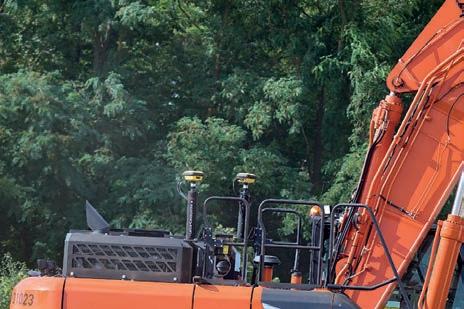


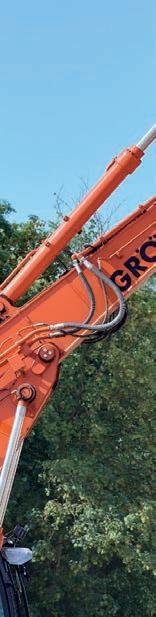


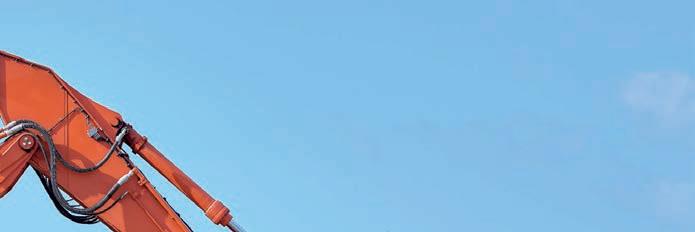
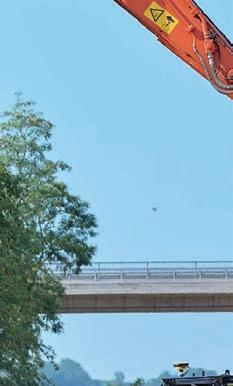
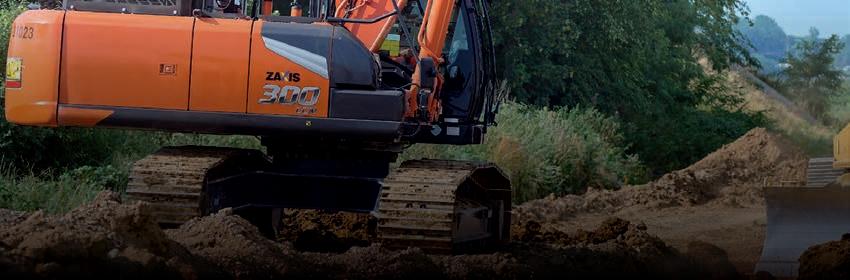



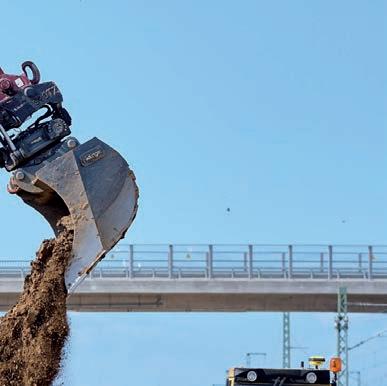
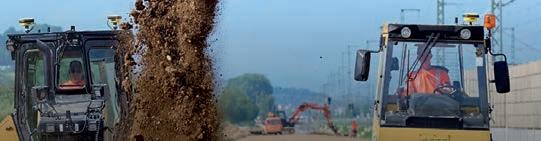

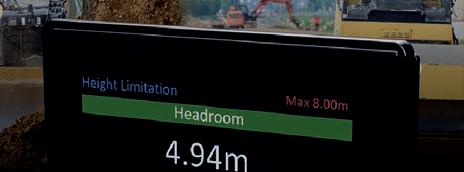
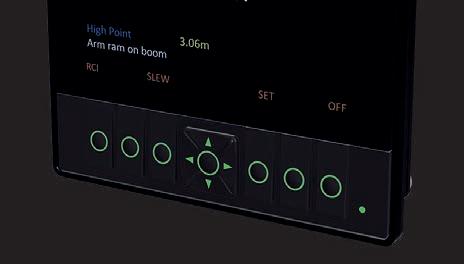
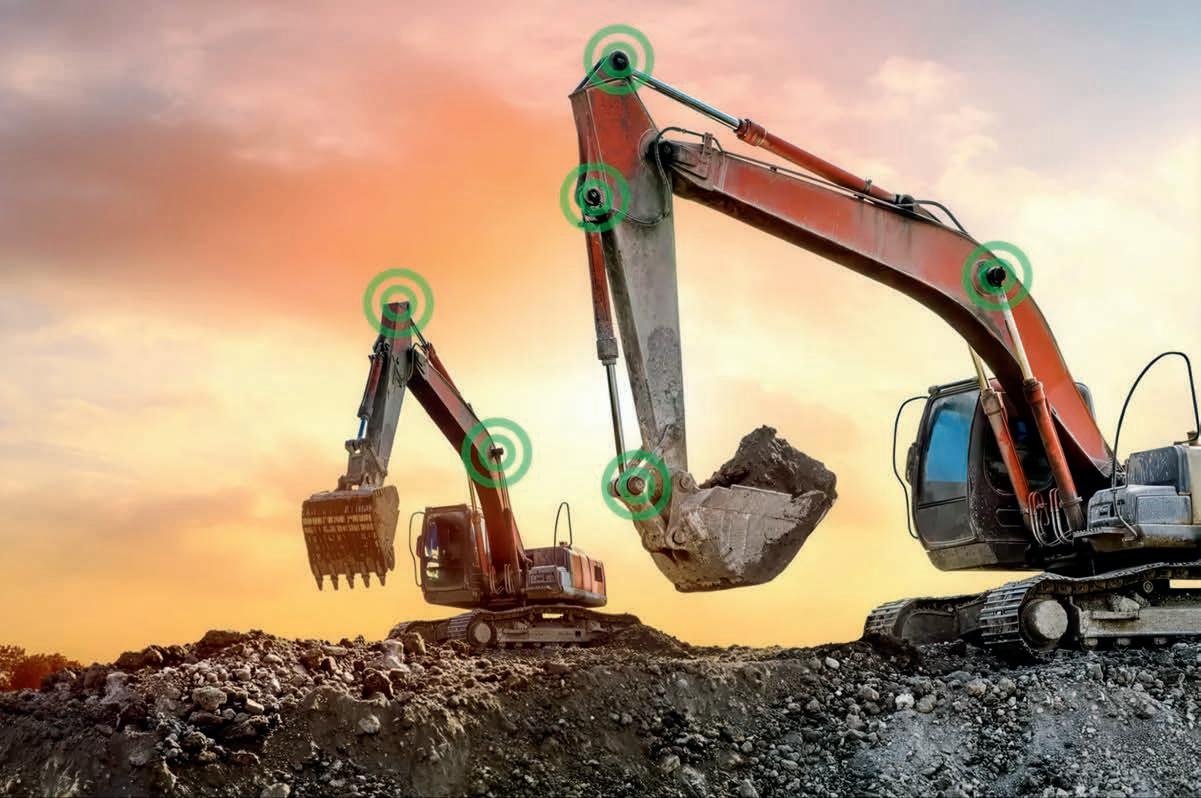
The XWSeries creates a total safe working envelope around the machine and operator enabling the control of the machine’s height, slew and rated capacity indication. This comprehensive system covers every eventuality when considering both operator and machine safety, offering complete peace of mind.
Height Control
Slew Control
Rated Capacity Indicator (RCI)
The Xwatch system creates a defined working area around the excavator, monitoring and restricting the machine’s height, slew, and lifting capacity. Images: Xwatch.
An innovative safety solution is now protecting all new equipment in JN Bentley’s UK fleet.
Xwatch has emerged as an influential safety solution in the mining, transport, and civil construction sectors, reshaping how contractors manage risk around high-energy machinery.
Designed to give operators greater control while reducing exposure to hazards, the system has become a benchmark for modern, technology-led safety practices.
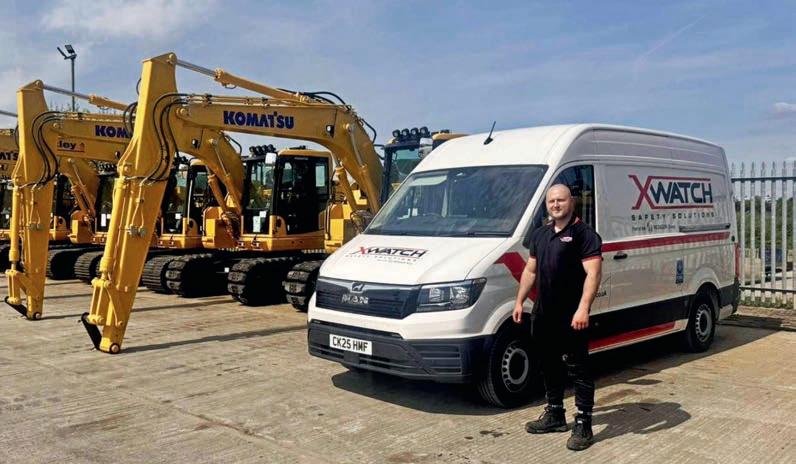
That reputation has been reinforced by UK-based JN Bentley, part of the global Mott MacDonald Group, which last year added 13 new Komatsu excavators to its fleet, each fitted with the Xwatch XW5 system.
The delivery represented the next phase of the contractor’s broader investment program and signalled a shift in its approach to plant safety, with new excavators entering the fleet equipped with Xwatch as standard.
Supplied by Marubeni-Komatsu, the UK distributor for Komatsu, the machines followed JN Bentley’s 2024 decision to move away from a competing safety system in favour of a solution that o ered greater capability, practicality, and operator acceptance.
That phase of the rollout saw 20 Komatsu machines fitted with an integrated Xwatch and Leica Geosystems 3D Collision Avoidance system, a combination well-suited to the high-
risk, congested environments typical of utilities work.
With a workforce of more than 2500 people and annual project values exceeding £500 million, JN Bentley has long been recognised for embedding safety into every aspect of its operations.
Technology plays a role in that culture, with
the decision to standardise on Xwatch driven by a combination of operator feedback and the need for intuitive, dependable systems that reduce exposure to high-energy hazards on site.
JN Bentley Director Dean Holmes said the business favoured opportunities to invest in equipment and technology that not only
protected its people, but also made day-to-day tasks simpler and safer for operators and site teams.
“We identified that the Xwatch system would significantly improve our current o erings compared to our then-incumbent supplier and other available systems,” Holmes said.
“We are installing the Xwatch system on all new excavators entering our fleet, as we believe XW5 provides a robust direct control to help minimise our workforce’s exposure to highenergy hazards.”
How Xwatch works
At the core of the system is its ability to create a clearly defined working envelope around the excavator. Xwatch continuously monitors and controls key machine functions such as height, slew, and lifting capacity, ensuring the excavator remains within safe operating limits at all times.
This level of control is particularly valuable when working near overhead services, in confined spaces, or while handling heavy loads, helping to protect both operators and the surrounding worksite.
The system o ers a suite of safety functions. Its height control operates in an automatic, fail-safe manner, with function selection never more than two key presses away.
All potential machine high points are monitored, with full power always available to move away from a limit. Approaches to limits are managed through ramped slowdown and soft-stop control, eliminating bounce, overshoot, or undershoot. An optional chassis sensor can also be installed to compensate for terrain slope.
Slew control is equally sophisticated, o ering single or dual parallel wall and angular limitation. When wall limits are active, the front-end equipment is also monitored to prevent breaches.
Limits can be manually entered or set by positioning the machine, and if multiple limits are active, the system automatically switches displays as hazards are approached. Set-up is quick and straightforward, with optional access key protection and all settings retained on start-up.
The Rated Capacity Indicator (RCI) function further enhances safety by ensuring lifting operations remain within the machine’s safe working load. By measuring height, radius, and load, the system allows operators to work at maximum capacity while staying safely within defined limits.
Flexibility is another feature of the XW5. The system can be configured to suit a range of project types and operating environments, making it adaptable across JN Bentley’s civil and utility portfolio.
Using electric-over-hydraulic integration and feather-touch proportionality, XW5 delivers smooth, accurate control in real time, allowing movement restrictions to be set for each job without compromising productivity.
The installations were completed by Xwatch engineer Tom Dacosta, with all new machines now commissioned and ready for deployment on live sites. With further units expected this
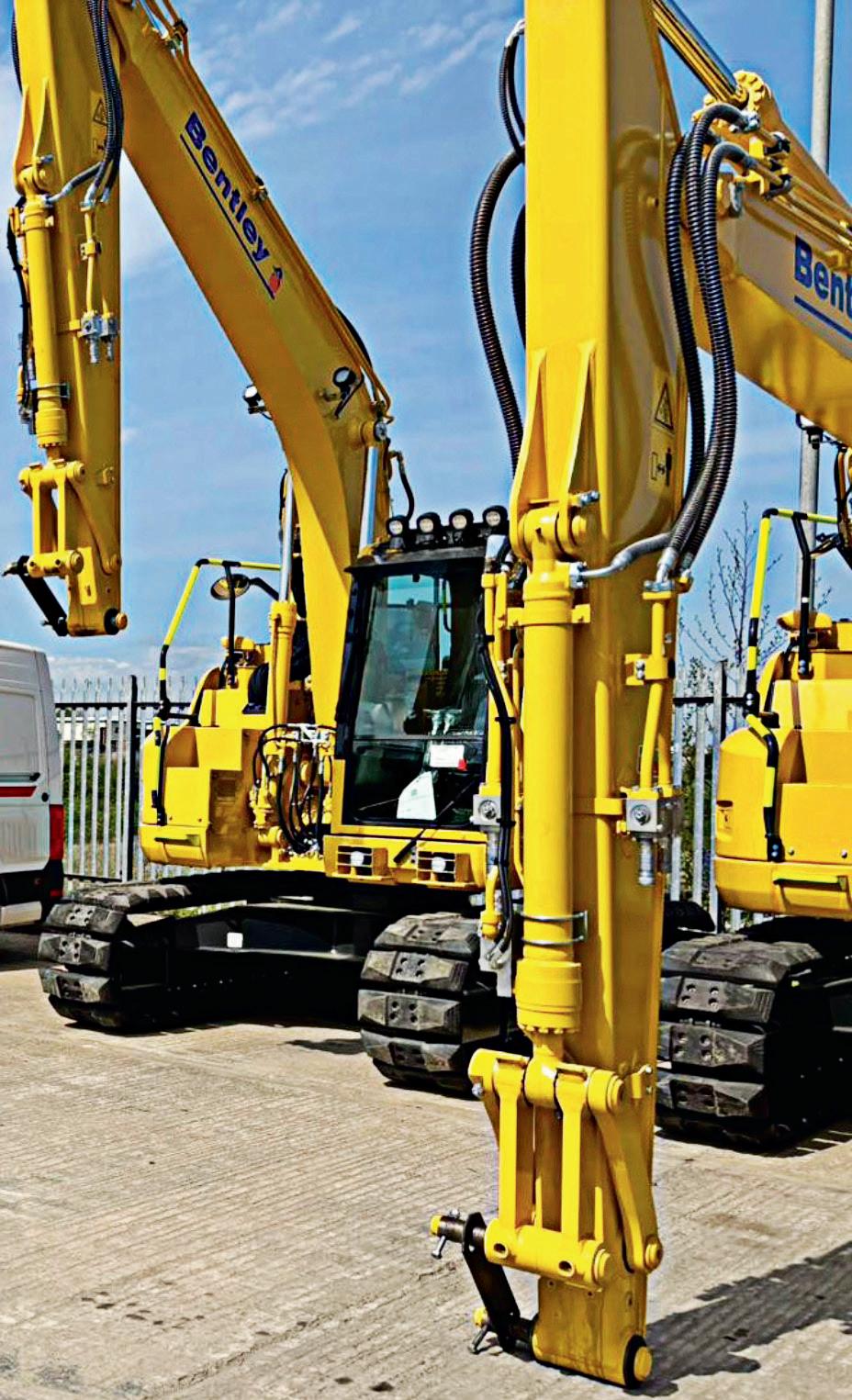
Above: The XW5 uses electric-overhydraulic integration and feather-touch proportionality to deliver accurate control in real-time.
Below: The home screen is easy to use and provides information on the machine height, slew, and lifting capacity.
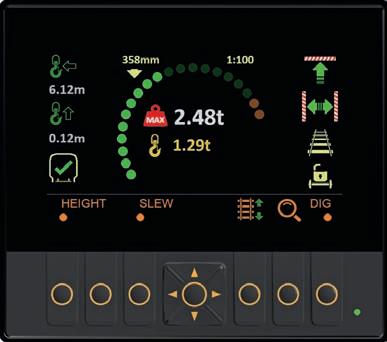
year, JN Bentley is setting a benchmark for safety-led procurement, underpinned by trusted partnerships and proven, practical technology.
Australian availability
In Australia, the XW5 is distributed by Xwatch Safety Australia, operating under the safety banner of geospatial solutions specialist C.R. Kennedy.
The partnership combines Xwatch’s
machinery safety technologies with C.R. Kennedy’s expertise in positioning and spatial solutions, delivering enhanced safety outcomes, improved operational e iciency, and national support.
Xwatch Australia General Manager Nick Leith said the collaboration reflected a shared commitment to raising safety standards across the construction and civil industries.
“This partnership integrates Xwatch’s advanced safety systems with C.R. Kennedy’s expertise in geospatial technology, o ering comprehensive solutions for construction,” he said.
With o ices and warehouses located in Melbourne, Adelaide, Brisbane, Cairns, Perth, Hobart, Darwin, and Sydney, Xwatch Safety Australia is well-placed to provide training, service and technical support nationwide, ensuring contractors have access to the tools and expertise needed to make safer worksites a reality.






As Australia’s mobile plant and equipment sector grows in response to demand across construction, infrastructure, and mining industries, businesses are turning to flexible equipment solutions to keep projects moving.
Recent forecasts show the construction machinery market is on track for expansion, with analysts projecting annual growth of about four to five per cent through to 2030, driven by road, rail, energy, and resource developments (source: Australia Construction Machinery Market Report 2025-2034).
This growth creates opportunities on both sides of the hire market: for operators looking to manage rising business costs and for owners seeking to maximise the return on their investment by hiring out their fleet.
It’s important to be reminded of the key considerations when hiring out mobile plant and equipment (MPE). NTI’s National Product Manager for Mobile Plant, David Kidd, explains why it’s critical to understand what you’re entering into when it comes to hire arrangements and insurance.
Hire agreements are central to any hire business and a critical risk management tool. Engage a lawyer experienced in preparing hire agreements for the mobile plant industry to draft an agreement tailored to you.
The one-o expense is negligible compared to the risk exposure from a contract that’s poorly worded or doesn’t cover the relevant risks and conditions.
David said this was one area where shortcuts shouldn’t be taken.
“Hire agreements are civil agreements. A high-quality hire agreement can provide
years of contract certainty and clarity,” he said.
“A poorly-worded one can lead to complications like obtaining adequate insurance, conflicts around who is responsible for damage, accusations of unfair contract terms, and delayed or declined insurance claims.”
Preparing your hire agreement with transparent terms and conditions is a critical step to work through with your lawyer.
“There is a lot to consider, and obtaining legal expertise to craft a hire agreement can serve the business and customers well into the future,” David said.
“Delivering a positive customer experience can protect your reputation and boost your brand, leading to repeat business and referrals. Clarity of obligations can protect both owner and hirer.”
Damage waivers are not insurance policies: they are conditions or clauses in a hire agreement that — when included or purchased as an option — will often remove the hirer company’s rights of subrogation for recoveries or costs if the item has succumbed to an unforeseen event while on hire.
“Poorly constructed damage waivers have the potential for disputes and other di iculties,” David said.
“Communication and clarity on what the
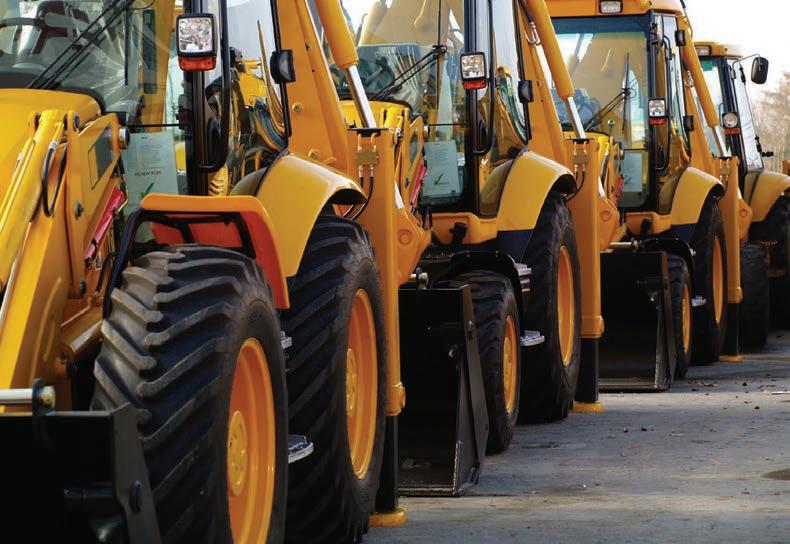
It’s important to have strong hire agreements in place when hiring out mobile plant and equipment. Image: NTI

damage waiver does and doesn’t cover is critical, so the hirer can identify and make suitable arrangements to deal with any gaps, including opting out of the damage waiver and insuring themselves if they prefer under standard dry hire conditions.”
Alternatively, equipment can be comprehensively insured while in the hirer’s possession and use.
“You can attach conditions, such as hirer responsible for an elevated level of excess to force their skin in the game, and other appropriate and reasonable terms to ensure accountability,” David said.
“This is where legal advice is recommended, to ensure that your hire agreement and conditions of hire are clear and not subject to any ambiguity.”
David said a sound hire agreement clearly describes the insurance you’re providing and the risks the hirer must manage or cover.
“I recommend working with your broker and making the most of their experience and expertise,” he said.
“Experienced brokers are experts in their field, so be guided by them.
“Their input on how insurance arrangements comply with hire agreement requirements is invaluable. The goal is to avoid uninsured losses for you or your customer, ensure the customer understands their liabilities, and that they have a positive experience.”
It’s important to ensure that your insurer is legally entitled to manage any insurance claims per the hire agreements’ terms, conditions, exclusions, and limitations, including pursuing recoveries (legal action) directly from the hirer (your customer).
Hiring out your MPE can be a great way to generate revenue from all your assets. If you’re thinking of hiring out some of your MPE, it’s important to obtain the right expert advice and insurance. Speak to your lawyer and insurance broker.
National Transport Insurance is an equal joint venture administered on behalf of the insurers CGU Australia Pty Ltd trading as CGU Insurance ABN 62 004 478 960 AFSL 700014 and AAI Limited Trading as Vero Insurance ABN 48 005 297 807 AFSL 230859 by its manager NTI Limited ABN 84 000 746 109 AFSL 237246. This article contains general information only and you should obtain your own professional advice based on your personal and business circumstances. NTI bears no responsibility, and shall not be held liable, for any loss, damage or injury arising directly or indirectly from your use of or reliance on the information in this article.

































At NTI we’ve always been successful in nding new ways to keep our customers truckin’, shippin’ and diggin’.
With specialist insurance and roadside assistance products designed to protect Australian businesses and families, NTI is the specialist our customers can count on in their time of need.
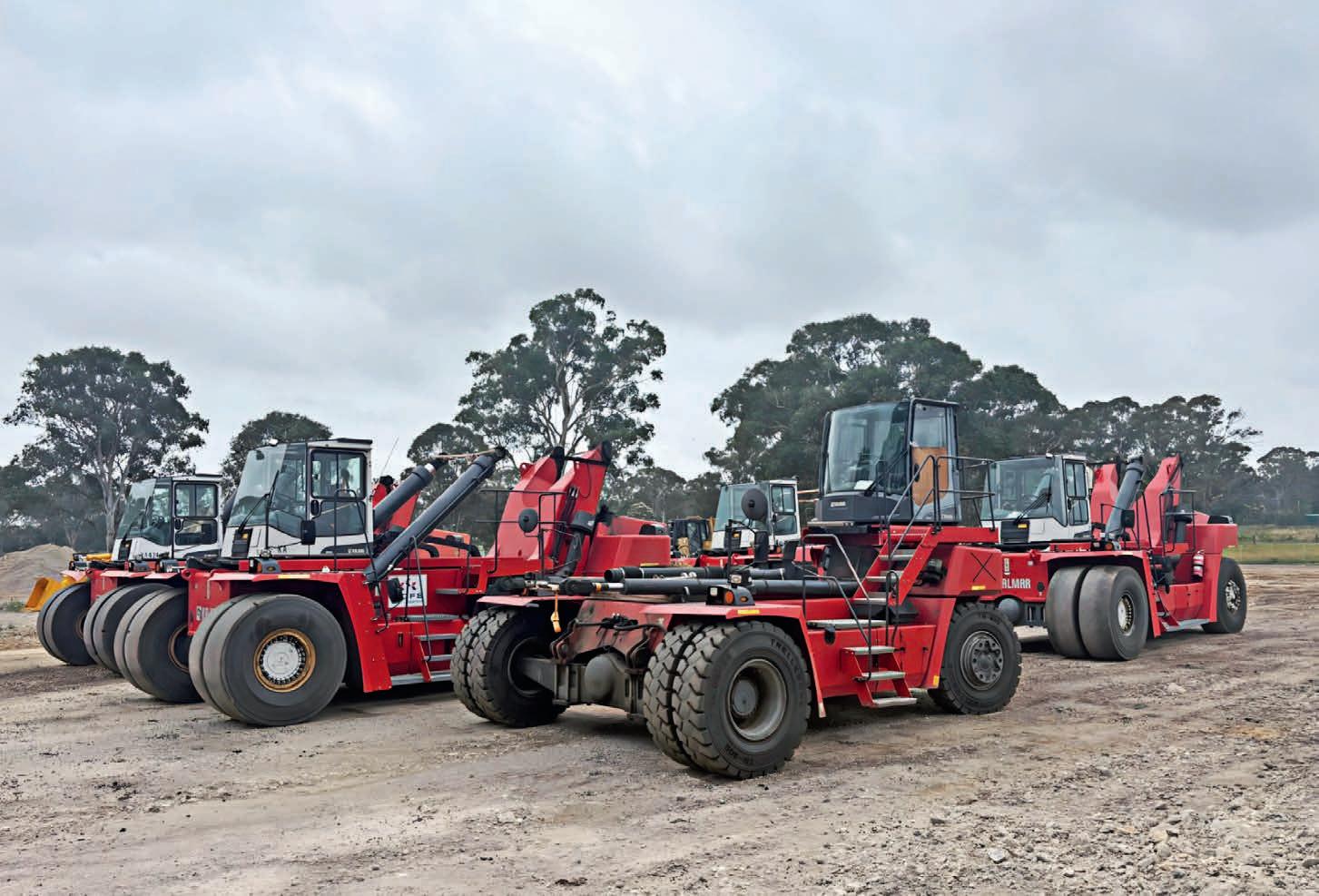
Specialist logistics partner Kenter is known for turning di icult jobs into controlled, repeatable processes that protect project timelines and deliver operational value for equipment dealers, overseas buyers, and infrastructure contractors.
Kenter International Logistics is focused on complex, high-stakes freight movements where heavy machinery, deadlines, and compliance requirements leave no room for error.
Rather than operating as a general freight forwarder, the business positions itself as an end-to-end project logistics provider. It combines planning, dismantling, biosecurity preparation, multi-mode transport, documentation, and 24/7 coordination into a single managed solution for clients across Australia and international destinations.
In each project, Kenter is responsible not just for booking freight, but for designing and orchestrating the chain of activities from equipment preparation to final shipping documentation.
The company’s expertise is demonstrated by an assignment that required the transport of 16 35-tonne forklifts to overseas clients, who had bought them from an Australian dealer.
Kenter managed the dismantling, cleaning, and export process from Queensland and New South Wales — coordinating multiple providers and meeting vessel and biosecurity requirements.
Some of the forklifts were also at di erent sites, each with unique access, dismantling, and timing requirements. Some locations had easy crane access, while others required detailed planning to manage equipment movement and compliance.
In their assembled state, these forklifts were too large for standard containers and could not be accepted as RORO (roll-on, roll-o ) cargo until they met export-cleaning and biosecurity criteria. This meant the project could not be executed with simple, o -the-shelf freight arrangements.
The job required a carefully engineered combination of dismantling, heavy-lift handling, containerisation of components, and shipment of the cleaned main units to the destination.
Kenter Managing Director Emily Jackman
said that the company’s involvement began with a detailed assessment and planning phase conducted by its operations lead to determine the best combination of shipping methods for the machines.
“This step illustrates the company’s emphasis on technical evaluation before any physical work begins, ensuring that choices around containers, cranes, and vessel types are driven by dimensional and regulatory realities rather than convenience,” she said.
“By designing the project holistically from the outset, Kenter set up a pathway where dismantling, washing, and transport all aligned with vessel schedules and port requirements.” A technical challenge lay in reducing the forklift dimensions so components could travel in 40-foot open-top containers without compromising the integrity of the machines.
Kenter oversaw the removal of the mast and side-pick frame from each unit, creating a configuration in which the drivable main body could remain mobile while the tallest and
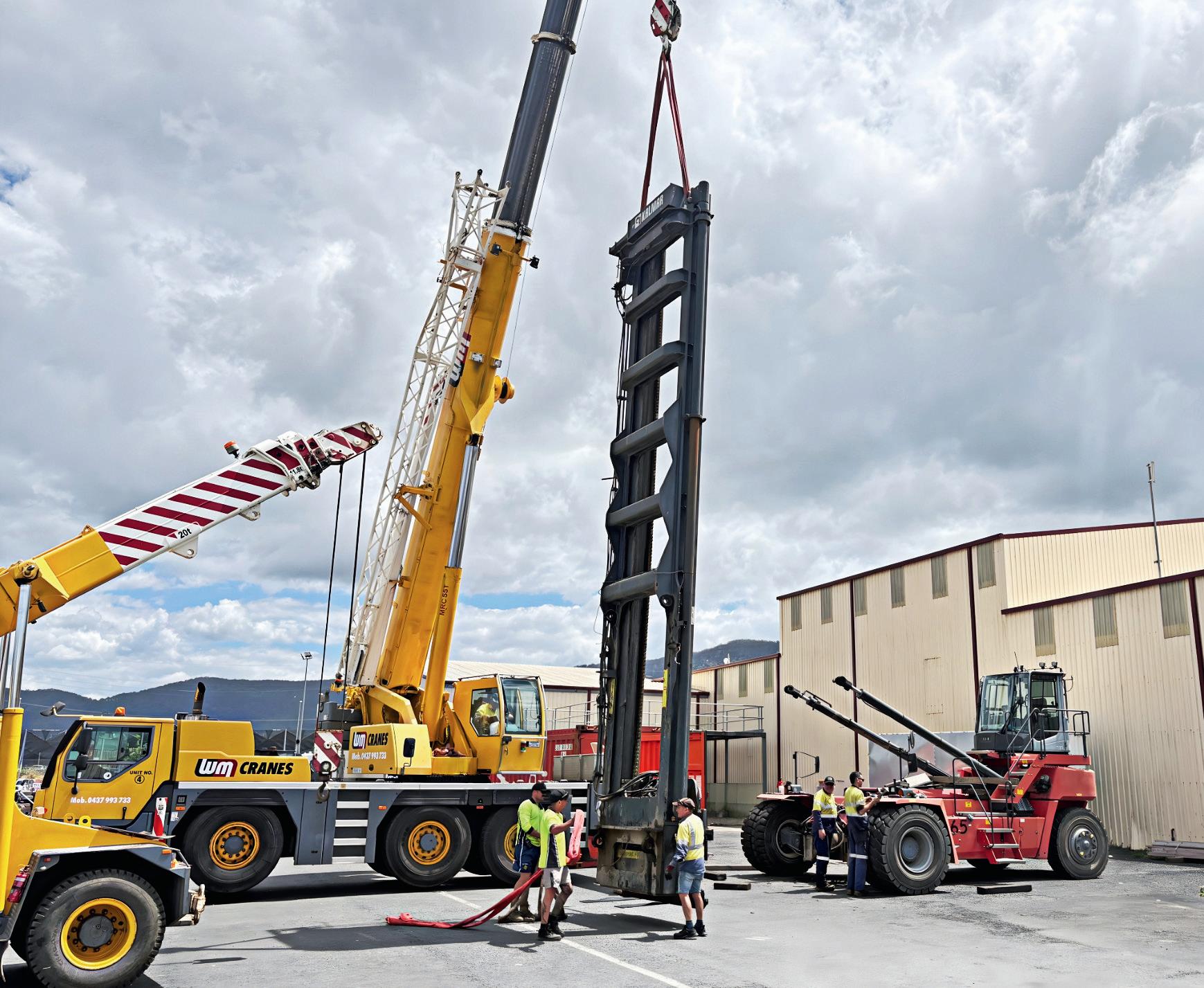
widest structures were separated for container shipping.
“This approach allowed the project to take advantage of containerised freight for bulky components while still utilising RORO loading
for the main units, optimising both space usage and handling e iciency,” Emily said.
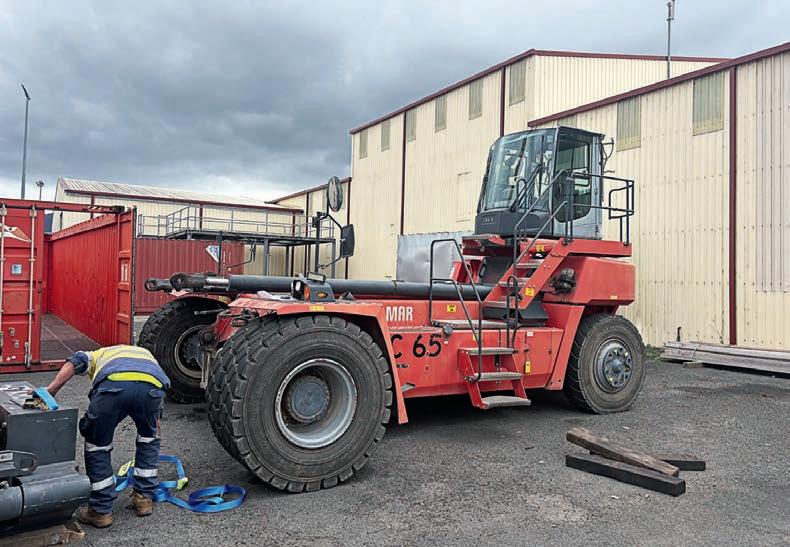
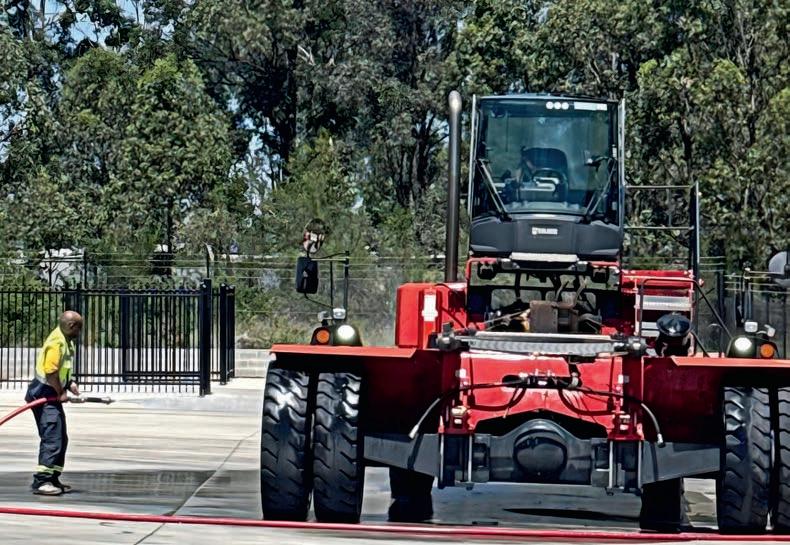
“Once dismantled, each main unit still needed to pass biosecurity checks to be accepted as RORO cargo. Kenter arranged for the drivable
bodies to be transported to a specialist wash facility where they were cleaned to export standards, ensuring they were free from soil, plant matter, or contaminants that could breach quarantine rules at destination.
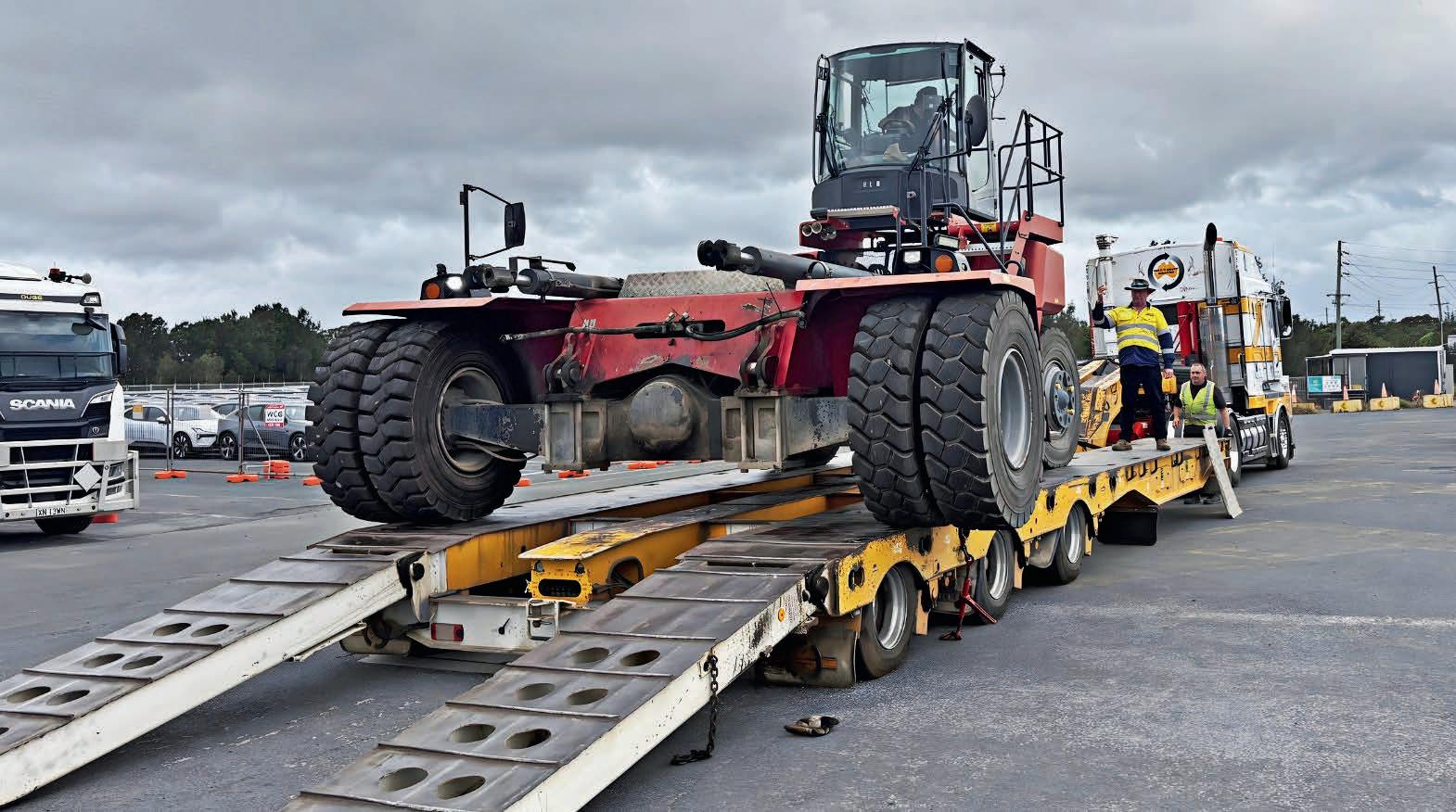
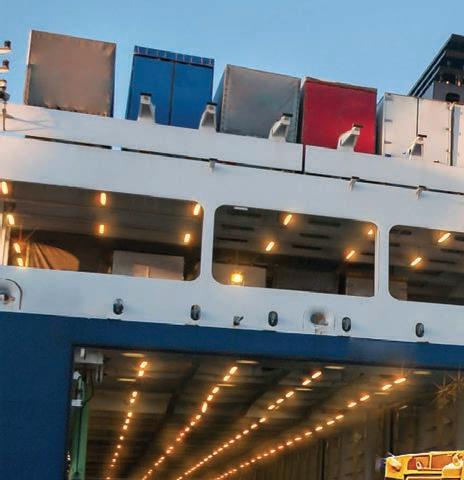
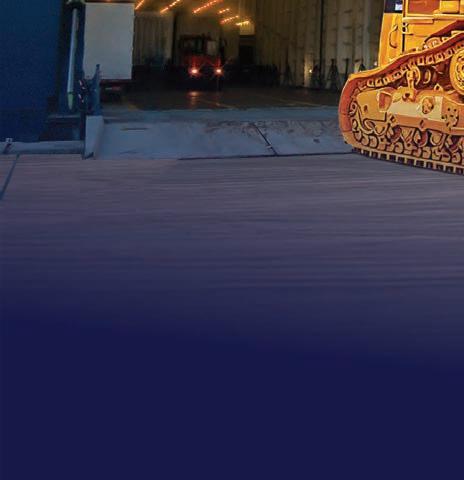
“Only after this process were the units delivered to port, where they could be driven directly onto the vessel bound for Ho Chi Minh City, while the mast assemblies and sidepick frames were loaded into the open-top containers for concurrent shipment.”
Throughout this operation, coordination and documentation were critical. Kenter managed communications between fitters carrying out dismantling, crane operators responsible for heavy lifts, road transport providers moving the various components, and the shipping lines booking both containers and RORO slots.
The company also prepared Bills of Lading and export paperwork, keeping the regulatory and commercial documentation in line with the physical movements so the shipments flowed through the system without delays.

“Kenter successfully exported all forklifts from Brisbane and Sydney to the destinations in compliance with export and biosecurity regulations,” Emily said.
“The project demonstrates Kenter’s ability to bridge the gap between machinery dealers and international buyers by e ectively turning
Kenter arranged for the drivable bodies to be transported to a specialist wash facility where they were cleaned to export standards.
an oversized, non-standard cargo profile into a compliant, multi-mode export solution.”
Emily said the project emphasised engineering-led planning. The company did not treat these forklifts as generic pieces of cargo, but instead worked from their weight, dimensions, and operational characteristics to design an appropriate dismantling and shipping strategy.
“Secondly was the seamless integration of multiple logistics modes, combining open-top containerisation with RORO shipping and road transfers between sites, wash facilities, and ports,” she said.
Another theme is compliance as a central design constraint rather than an afterthought.

standards. The project required dismantling, specialist handling, and multi-mode coordination to meet both container and RORO shipping requirements.
• The solutions
> Assessment and planning: Initial project scope reviewed by Kenter’s operations led to determine the best combination of shipping methods.
> Dismantling: The mast and side-pick frame were removed so each unit could fit into 4-foot open top containers.
> Export wash: The drivable main units were transported to a wash facility and cleaned to meet strict RORO vessel biosecurity standards.
> Transport and loading: Cleaned units were delivered to port and driven directly onto the RORO vessels, while dismantled parts were shipped in containers.
> Coordination and documentation: Kenter’s operations team handled all communication between fitters, crane operators, transport providers, and shipping lines, and prepared Bills of Lading and export documents.
“The need to meet biosecurity and export regulations shapes the sequence of work, from when and where cleaning occurs to how the units are presented at the port gate,” Emily said.
“Kenter’s handling of documentation and close coordination between all stakeholders ensures that these compliance requirements are built into the workflow and not left to chance, reducing risk for both the dealer and the overseas buyer.”
In summary
• The challenge
Fully assembled, each forklift was too large for standard container shipping and ineligible for RORO loading unless cleaned to export
> Multi-site management: Kenter executed a coordinated, multi-state operation with precision,overseeing units in two states simultaneously.
> Custom handling: Adjusted dismantling, transport, and shipping for each site.
> Compliance: Ensured every unit met export standards through seamless teamwork across fitters, crane crews, transporters, and wash facilities.
“By delivering these complex exports across two states in record time, Kenter continues to prove its capability as a trusted partner for machinery dealers and international buyers — o ering true end-to-end project management beyond what general freight forwarders can provide,” Emily said.












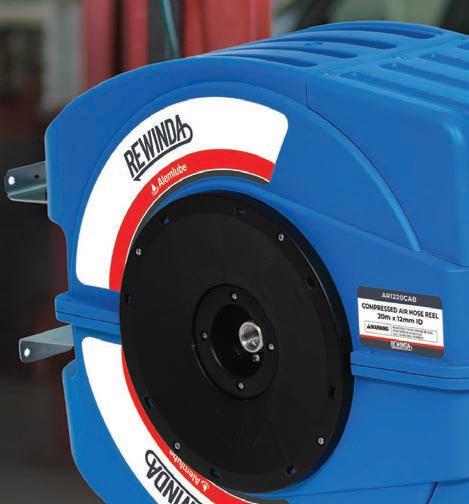











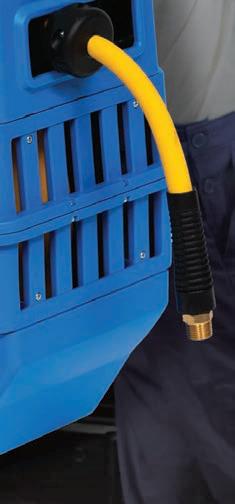






Quickly & easily serviced due to the modular design

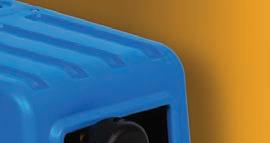
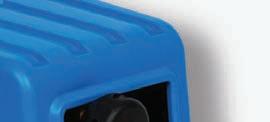
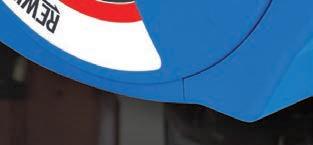
Heavy duty steel swivel allows the reel to swivel up to 180 degrees
Sliding guide system ensures that the hose returns neatly and evenly




Gen3 hose offering ultimate flexibility is kink free under pressure




Speed rewind control system ensures that the hose retracts at a safe & steady speed


Ergonomic & streamlined the reel is easy to work with & adds both to the efficiency and aesthetics of your workshop




Creating a more e icient and better-organised workplace has become a top priority across modern workshops, manufacturing facilities, and industrial environments.
Loose hoses and tangled cables on the work floor, along with poorly defined work zones, are ine icient and pose safety risks. Recognising this, Alemlube has introduced Rewinda, a new generation of hose, cable, and barrier reels designed to raise the standard of work site safety, organisation, and productivity.
The Australian-owned company understands the daily pressures faced by workshops and industrial operators. Time is valuable, space is often limited, and compliance with workplace health and safety requirements is nonnegotiable.
The Rewinda Series has been engineered to address these challenges head-on, delivering a retractable reel solution that simplifies hose and cable management while enhancing workplace safety.
Developed in partnership with a longstanding reel manufacturer, the Rewinda range combines functional engineering with a modern, professional appearance.
Featuring proprietary mouldings, advanced tooling, and a serviceable modular design, every Rewinda reel is built for long-term performance. Backed by a 10-year warranty on materials and workmanship, plus a noexclusions two-year warranty on wearing parts, Rewinda provides peace of mind.
The relevance of retractable reels
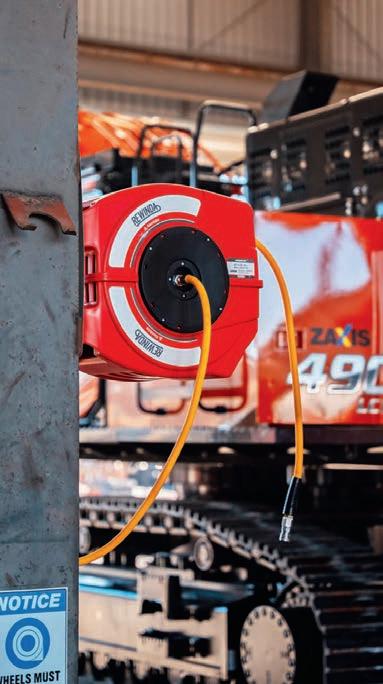
Retractable hose and cable reels have become a must-have in workshops, mine sites, transport depots, and production facilities. By keeping hoses and cables o the floor and neatly stored when not in use, reels reduce trip hazards, prevent damage to equipment, and improve workflow e iciency.
The Rewinda Series has been designed as a family of reels, covering common workshop applications. The range includes compressed air reels, high-pressure water reels, hot wash reels, chemical and pesticide reels, welding reels, grease reels, electrical cable reels, and highly visible barrier reels — all sharing the same design philosophy, safety features, and durability.
Replacing Alemlube’s original S Series released in 2008, Rewinda represents the next evolution in retractable reel technology. Every model has been researched, designed, and engineered to meet current market needs and exceed industry expectations across Australia, New Zealand, and Papua New Guinea.
Core design features
At the heart of the Rewinda Series is a suite of patented and user-focused design features that make everyday operation safer and more e icient.
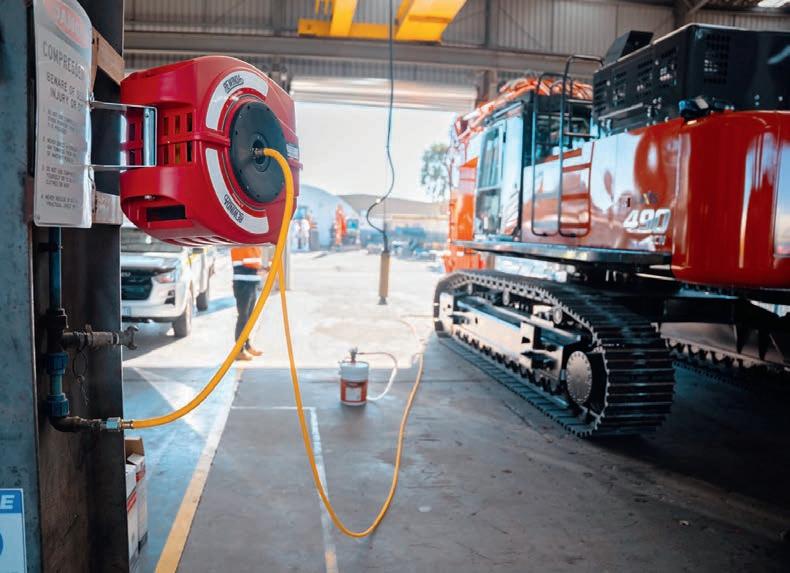
All hose and cable reels are fitted with a speed rewind control system, ensuring hoses retract smoothly and at a controlled pace. This prevents sudden snapback, reducing the risk of injury, damage to tools, and accidental contact with vehicles or equipment.
Complementing this is the stop-at-any-point latching system, allowing users to lock the hose or cable at the length required every time. This eliminates frustration, improves ergonomics, and enhances control during operation.
A sliding hose guide system ensures hoses return evenly onto the barrel assembly, preventing bunching on one side of the reel. This feature not only improves reliability but also extends hose life and ensures consistent retraction over time.
The reels are protected by UV-stabilised, next-generation polymer covers that resist fading and degradation, even in harsh environments. Heavy-duty steel swivels allow up to 180 degrees of movement, providing excellent working flexibility whether mounted on walls and ceilings or in vehicles.
Compressed air is essential in almost every workshop, and the Rewinda compressed air hose reels are designed to deliver consistent, uninterrupted airflow with maximum durability.
Models such as the Alemlube AR1020CAB Rewinda Compressed Air Hose Reel feature Gen3 hybrid polymer hose assemblies, o ering flexibility while remaining kink-free under

pressure. Integrated hose bend restrictors further protect the hose at high-stress points, extending service life and reducing maintenance costs.
These reels are suited for use with tyre inflators, pneumatic drills, impact wrenches, angle grinders, and ratchets. They are used across automotive workshops, transport depots, mine sites, manufacturing facilities, agricultural workshops, and civil contractor operations.
For demanding washdown applications, the Alemlube AR1020HPWR Rewinda High Pressure Hot Water Washdown Hose Reel delivers industrial-grade performance where heat, pressure, and reliability are critical.
Designed as a robust hose storage and retrieval system, this reel is fitted with a high heat-resistant wire braid hose capable of handling hot water up to 90°C, making it ideal for food processing, manufacturing, mining, transport depots, and other high-pressure washdown environments.
Crimped hose ends ensure secure, leak-free operation, while an integral carry handle and detachable mounting bracket provide added flexibility during installation and maintenance. Manufactured with impact-resistant, UV-stabilised polypropylene covers, the AR1020HPWR is engineered to withstand corrosive conditions and harsh climates. A heavy-duty internal spring assembly, combined
with the Rewinda speed control brake system, delivers smooth, controlled retraction whether the hose is partially or fully extended.
Serviceable and compatible with updated mounting brackets that suit Alemlube S Series and other brands, this reel can be wall-, floor- or ceiling-mounted, and is built to perform reliably in the challenging operating environments commonly encountered across Australia and New Zealand.
E icient lubrication is critical in heavy-duty industries, and the Rewinda grease hose reels are engineered to provide reliable, cost-e ective grease delivery in demanding environments.
The Alemlube AR615GB Rewinda Grease Hose Reel features a high-pressure wire braid hose designed to handle the rigours of grease applications. Suitable for workshops requiring dependable lubrication solutions, this reel supports cleaner operations by keeping grease hoses o the floor and neatly stored.
Like all Rewinda reels, the grease hose reel incorporates speed-controlled retraction, a stop-at-any-point latch and an even hose layering system. These features improve operator control, reduce hose wear and enhance overall workplace cleanliness and safety.
Welding environments demand the highest levels of safety, and the Rewinda Oxy Acetylene Twin Hose Reel has been developed to meet these requirements.
The Alemlube AR615OAR Rewinda Oxy Acetylene Twin Hose Reel is an industrialquality hose storage and retrieval system featuring flexible, heat-resistant Grade R welding hoses. Designed for oxy acetylene applications, this serviceable reel complies with workplace health and safety standards.
Suitable for gas welding and gas cutting applications, the reel is used by contractors, fabricators and professionals in construction,
mining and industrial sectors. By keeping twin welding hoses properly managed and evenly retracted, the reel reduces trip hazards, prevents hose damage and supports safer welding operations.
Electrical safety and cable management are critical in busy workshops and production facilities. Rewinda electrical cable reels provide a practical solution by keeping power cables organised, protected and easy to deploy.
The Alemlube AR1024020CRR Rewinda Electrical Cable Reel is supplied with 20 metres of heavy-duty rubber electrical cable (threecore x 1.5 square millimetres), rated at 240V and

10 amps. It delivers up to 1000W when coiled and 2000W when uncoiled, making it suitable for a range of workshop equipment.
Approved and compliant with AS/NZS 3000 standards, this reel is ideal for powering column lifts, TIG and MIG welders, refrigeration units, air conditioning equipment and other electrical tools. Smooth retraction prevents tangling, minimises cable damage, and reduces trip hazards.
In addition to hose and cable reels, the Rewinda family includes high-visibility barrier reels designed to improve site safety through e ective zone management.
Each barrier reel stores and retrieves 30 metres of durable barrier fabric, making them ideal for temporarily restricting access to hazardous areas or managing foot tra ic. These reels are used in freight depots, mine and quarry sites, workshops, construction zones, and large residential or commercial facilities. Fitted with hooks and reinforced eyelets, Rewinda barrier reels can be easily attached to existing fixtures or securely mounted to masonry or timber surfaces. Clear demarcation helps prevent accidents and ensures compliance with safety procedures.
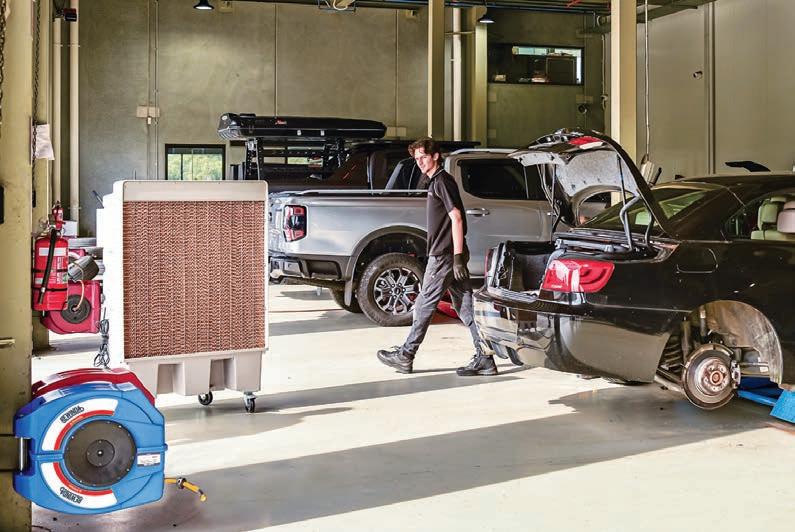
The Alemlube Rewinda Series has been designed with space e iciency in mind. Reels can be wall-mounted, ceiling-mounted, or vehicle-mounted, freeing up valuable floor space and keeping work areas uncluttered. For mobile applications, sturdy locking pins ensure reels remain securely in place during transport. A modular, serviceable design makes inspection, maintenance, and component replacement simple and cost-e ective.
With sustainability becoming increasingly important, Alemlube has incorporated ecoconscious design into the Rewinda range. Reel covers are manufactured from recyclable polypropylene, and the durable construction reduces the need for frequent replacement. By minimising hose wear and improving storage practices, Rewinda reels reduce waste while delivering long service life. This commitment to quality and sustainability is reinforced by Alemlube’s warranty coverage.
From compressed air and grease delivery to welding gases, electrical power and safety barriers, the Alemlube Rewinda Series o ers a complete hose, cable, and barrier management solution.
Designed for performance, safety, and durability, Rewinda helps workshops operate e iciently while maintaining best-practice safety standards.
When quality, reliability, and long-term value matter, Rewinda is the smart choice for modern industrial environments.
For more information, visit www.alemlube.com.au











Liebherr continues to build on its national service capability, reinforcing its commitment to customer support, technical excellence and workforce development across Australia.
Justin's roles include coordinating field operations, mentoring team members and ensuring projects meet
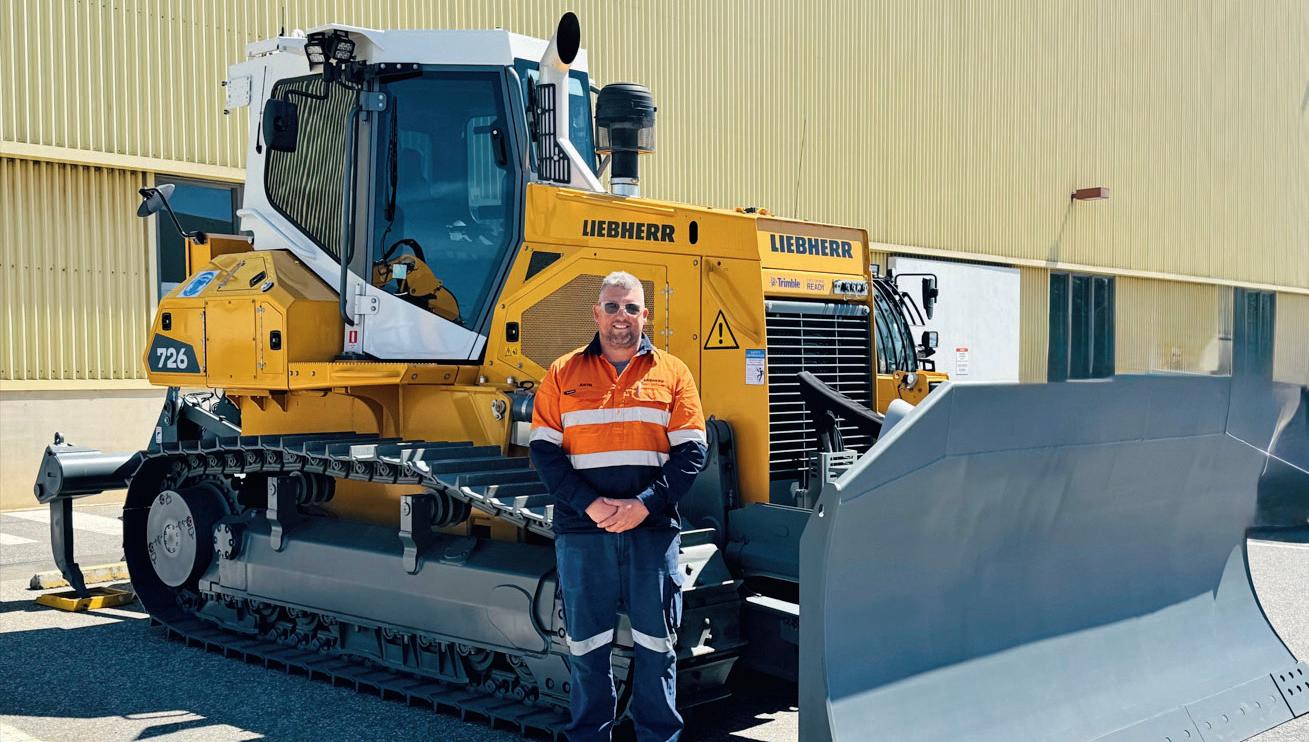
At the heart of the Liebherr Earthmoving division is a tight knit team of passionate and accomplished service technicians.
Their deep product knowledge and understanding of local operating conditions enable precise diagnostics, reliable repairs and e icient service delivery even in the most challenging environments.
Across the country, Liebherr’s service teams have achieved several milestones, demonstrating a continued focus on operational excellence and customer satisfaction.
Through close collaboration and dependable service delivery, Liebherr has strengthened its partnerships with key customers across large-scale infrastructure and resource projects.
These relationships underscore Liebherr’s ability to deliver under pressure and maintain fleet reliability in critical operations.
Strategic expansions in key regions have also improved Liebherr’s ability to provide localised expertise and faster response times.
These initiatives ensure that customers benefit from consistent service no matter where their operations are located.
Meanwhile, Liebherr’s teams continue to provide tailored maintenance and support solutions to customers operating in remote and demanding environments.
Investing in the next generation
Liebherr remains committed to developing skilled technicians through its national apprenticeship and training programs.
Apprentices gain hands-on experience, receive structured mentoring and access practical learning resources — preparing them for long-term careers in heavy equipment service and maintenance.
Recent achievements across the apprenticeship program highlight Liebherr’s investment in people development, with several
apprentices recognised for their technical skill, dedication and contribution to their teams.
These accomplishments reflect a service culture that values growth, knowledge sharing and professional excellence.
Liebherr continues to invest in modern facilities designed to enhance operational capacity and customer service delivery.
New developments include expanded workshop bays, dedicated paint and
sandblasting facilities, and increased parts storage to improve e iciency and turnaround times.
These upgrades are part of Liebherr’s ongoing commitment to ensuring customers experience the highest level of service, support and reliability.
Customer satisfaction remains at the core of Liebherr’s operations. Initiatives focused on “first-time fix” rates, diagnostic precision and streamlined repair processes are being implemented nationally to minimise downtime and further strengthen customer confidence.
Team profiles
• Daniel (New South Wales)
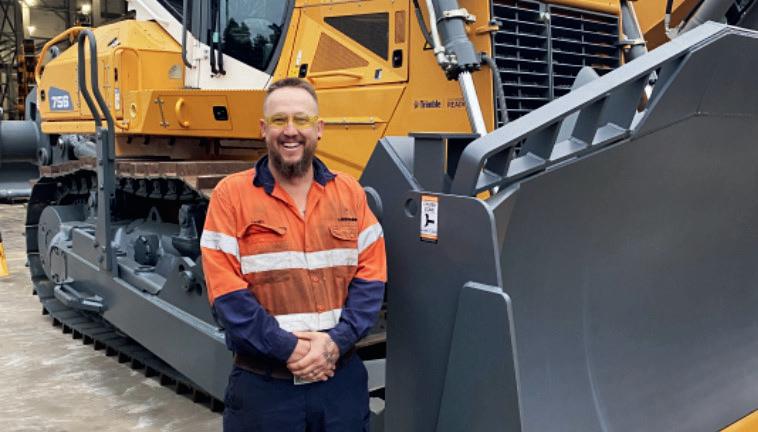
When Daniel joined Liebherr in 2024 as a muchneeded Vehicle Preparation Technician, he didn’t just fill a gap; he lifted the standard across the board.
From the moment he stepped into the role, Daniel’s dedication, precision and pride in his work have set a new benchmark for what exceptional preparation looks like at the company.
Whether it’s ensuring each machine leaves the workshop in flawless condition or helping coordinate the smooth delivery of major projects like the Western Harbour Tunnel in Sydney, Daniel’s commitment to doing things right and doing them well has made him an indispensable part of Liebherr’s Aftermarket Parts Team.
But Daniel’s impact doesn’t stop at the tools. He’s also become a mentor to apprentices, leading by example and passing on the values that define Liebherr’s success: safety, quality, integrity and professionalism. His approachable nature and willingness to share his knowledge have helped shape the next generation of skilled technicians.
Daniel has been recognised as a future leader in the Liebherr business.
• Daryl (Western Australia)
With four years of experience across the Liebherr Group — two in Scotland and two in Western Australia — Daryl has consistently
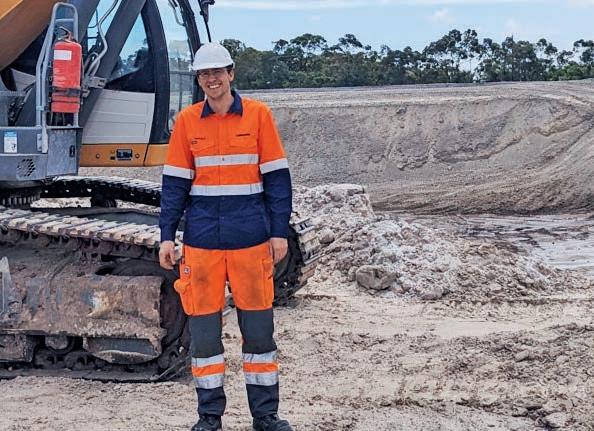
demonstrated technical capability, leadership and commitment to excellence.
A recent career highlight was assembling and commissioning the first-ever LH60 material handling machine in WA — a milestone achievement that showcased his technical skill and attention to detail.
Daryl takes great pride in mentoring the next generation of technicians and in setting high standards for safety, quality and customer satisfaction.
For Daryl, Liebherr’s value of “One Passion. Many Opportunities.” perfectly captures his journey.
Other notable achievements include playing a key role supporting some of Liebherr’s more remote clients, providing critical on-site support and ensuring the reliable performance of Liebherr equipment across remote operations.
• Justin (South Australia)
With more than eight years of experience in the heavy equipment industry, Justin has
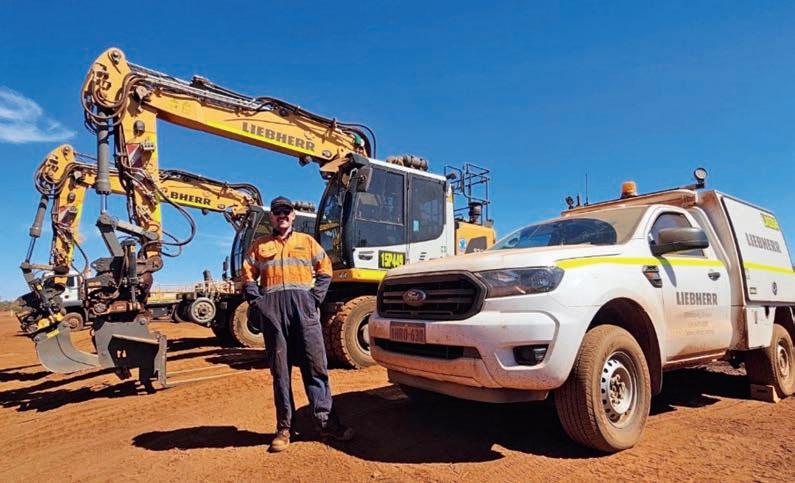
earned a reputation for technical expertise and leadership.
His time with Liebherr began as a Field Service Technician, where his problemsolving skills, reliability and unwavering commitment to customer satisfaction quickly set him apart.
Today, as a Leading Hand Service Technician, Justin plays a pivotal role in coordinating field operations, mentoring team members and ensuring every project meets Liebherr’s standards.
His notable achievements include assisting and overseeing the Ferris Metals LH60 highrise build, showcasing precision and technical master; delivering a custom one-o build for SA Water, tailored to unique operational needs; and contributing across multiple divisions, including mobile cranes, maritime cranes and the mining division, reinforcing Liebherr’s versatility and commitment to excellence.
• Thomas (Victoria)
Thomas was formerly Liebherr’s authorised service agent in Switzerland, where he spent the past six years refining his skills as a Field Service Technician.
During his time there, Thomas developed technical expertise across complex diagnostics, hydraulic systems and customer support.
A natural leader and mentor, Thomas is passionate about sharing his experience with local technicians and apprentices, supporting their development, and helping to elevate the overall standard of service delivery.
Thomas’ arrival further strengthens Liebherr’s service capability and its commitment to providing exceptional support and streamlined processes to customers across Victoria.
His addition also opens opportunities for future technician exchanges across the global Liebherr network, continuing to share a collective passion for quality and excellence worldwide.


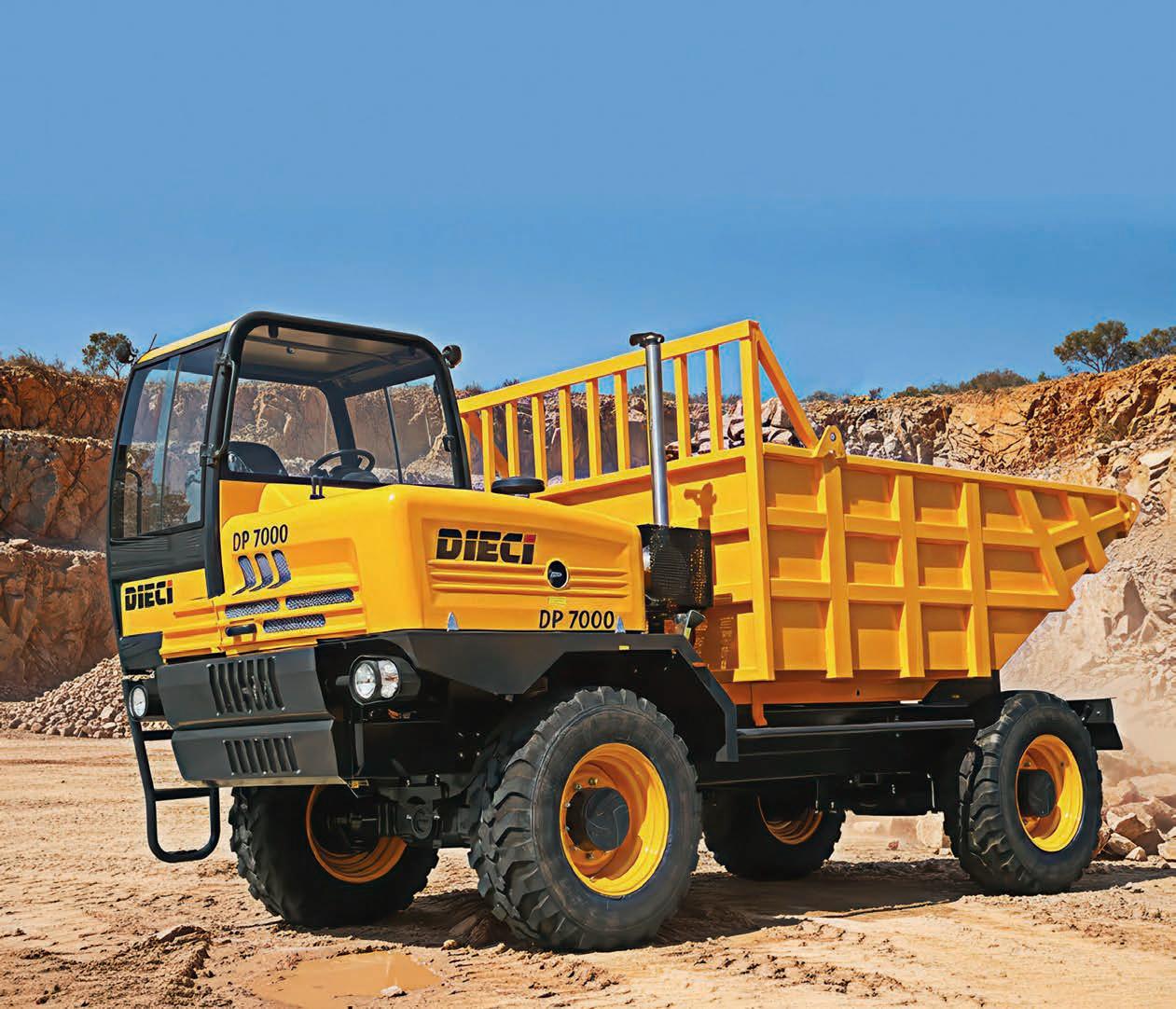
Built for serious performance, the Dieci DP 7000 Dump Truck delivers power, payload and precision where it matters most. With a 12,000 kg maximum payload, 125 hp FPT engine and compact, highly manoeuvrable design, it moves heavy material efficiently through demanding and confined worksites. A ROPS-FOPS approved cab enhances operator safety and comfort, while the large load volume reduces cycle times - keeping productivity high on every shift.
Max Capacity: 12,000 kg
Dump Capacity: 7.5 m
3
Max Speed: 27 km/h
Max Power: 93 kW (125 hp)


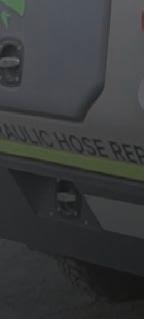
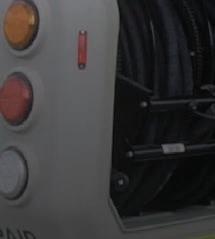
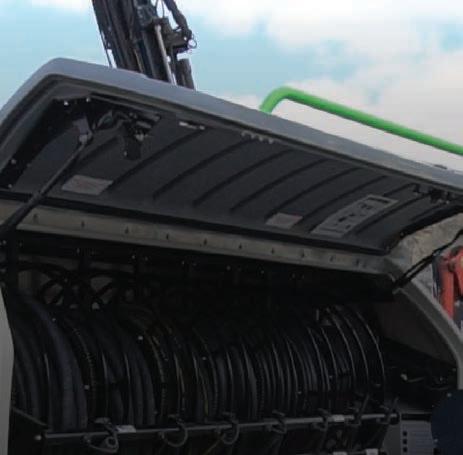
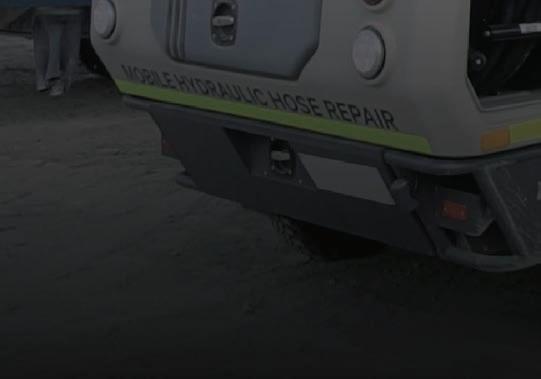
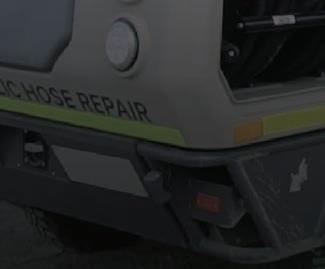


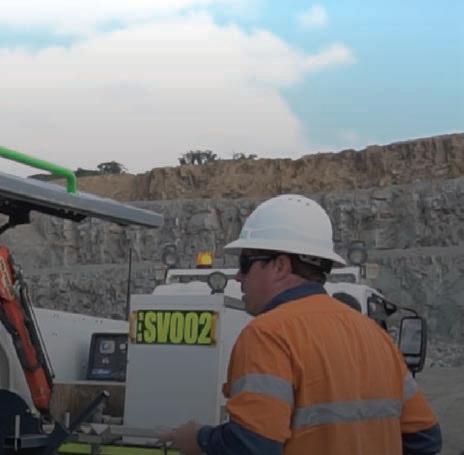
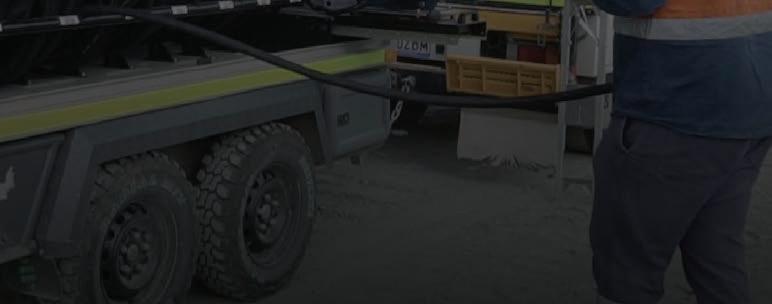


















Businesses need to be more mindful of proactive hose maintenance, and not wait for a problem to occur, which often leads to lost time and money. Images: BOA Hydraulics
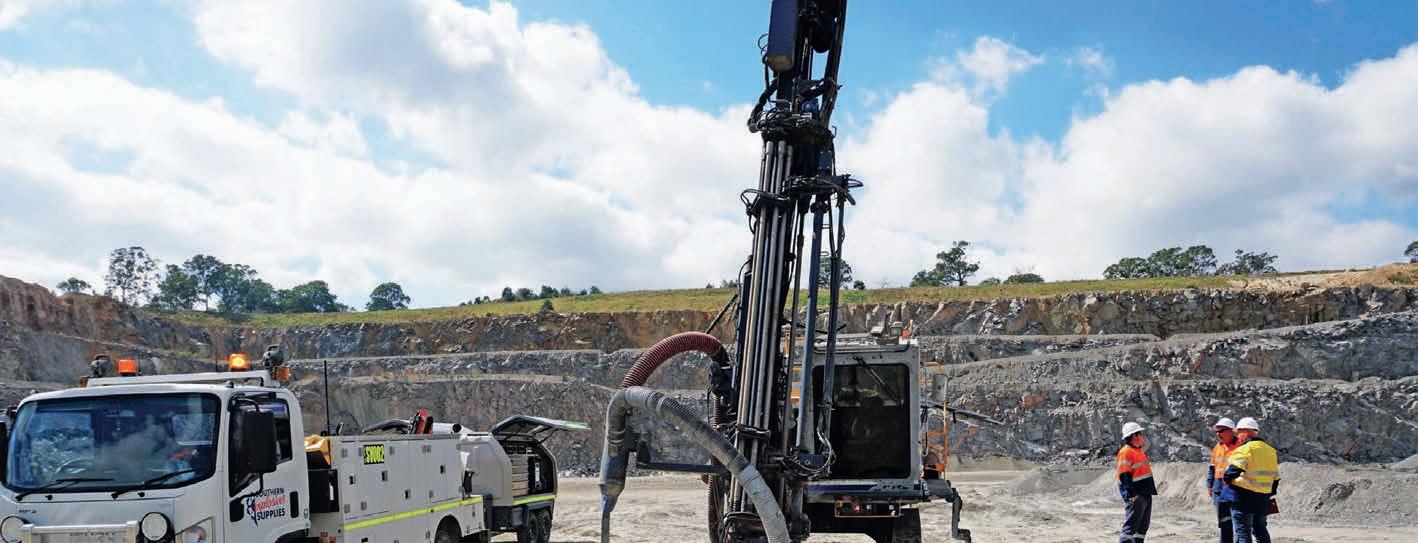
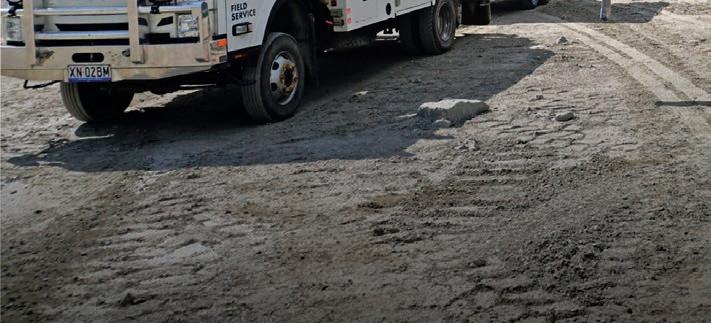
When it comes to hose care and maintenance, users need to be less reactive and more proactive.
More than one-third of all breakdowns that stop operations, delay jobs, and blow out budgets come down to a single failed hose.
It’s not just a maintenance issue. It’s a risk to productivity and profit. When a hose bursts, everything stops. Projects fall behind. Crews go idle. Replacement parts need to be sourced. And if you’re working remotely, support might be hours away. Meanwhile, your machinery is costing money without making any.
The kicker? Most of it’s preventable.
The problem is that too many businesses are stuck in reactive mode. They’re waiting for something to break before acting. It’s common, but it’s costing them. There’s no plan, no warning, and no control.
BOA Hydraulics was built to change that. It’s a smarter system that lets operators take control before failures happen.
The shift starts with mindset: from reacting to planning; from hoping to knowing; from firefighting to control.
The old way was generally waiting, wasting, and losing.
Traditionally, hydraulic repairs have been an afterthought. A hose blows, the job stops, and you start chasing help. You wait for parts, pay emergency rates, and lose time and money in the process.
This reactive approach leaves operators exposed. There’s no room to plan, no visibility, and definitely no control.
That’s where BOA comes in.
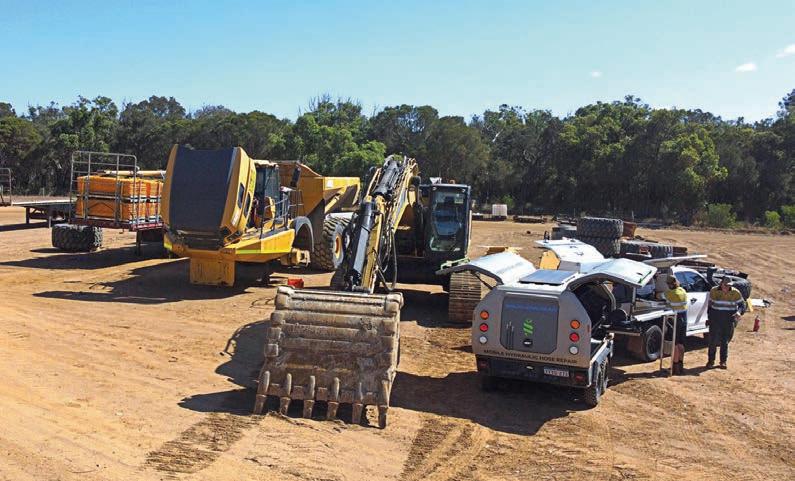
BOA’s integrated approach flips the model on its head. Its rugged all-terrain mobile repair
unit, the BOApod, brings the workshop to the worksite. No more hauling gear back to base. No more waiting on third parties.
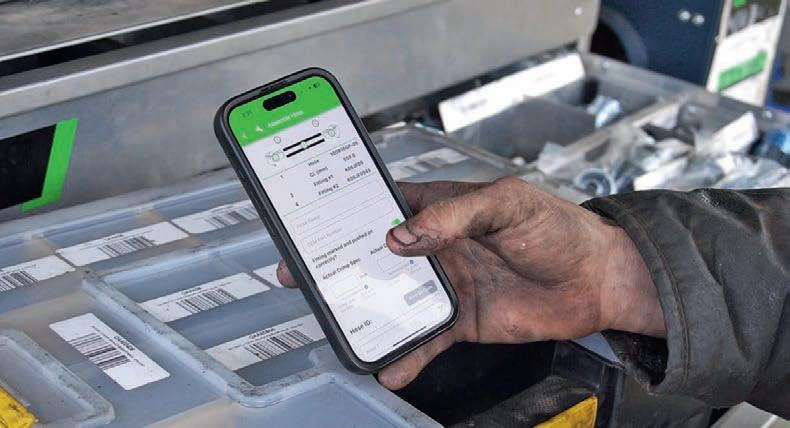
But it’s the BOAhub app that truly powers the proactive shift. This digital control centre does more than track jobs. It logs every hose and fitting, and flags service needs before failures happen. Think of it as predictive maintenance but built for real-world conditions.
You can schedule work in advance, track asset histories, and keep things moving without the constant stress.
• Hose fails;
• machine stops;
• you call around for help;
• parts are sourced manually;
• downtime stretches into hours; and
• you pay the bill and hope it doesn’t happen again.
• BOAhub flags potential failure early;
• you schedule repair before failure;
• BOApod is on site and stocked;
• technician completes the job in minutes; and
• system logs everything automatically.
That’s not just maintenance. That’s an operational upgrade.
Here’s a quick cost reality check.
If one hose failure idles a $300/hr machine for four hours, that’s $1200 gone. Now multiply that across your fleet for the year. Add in emergency call-out charges, delays, and administration time, and the cost of reactive maintenance adds up fast.
BOA customers are turning that equation around. They’re cutting downtime by up to 70 per cent, avoiding after-hours callouts, reducing
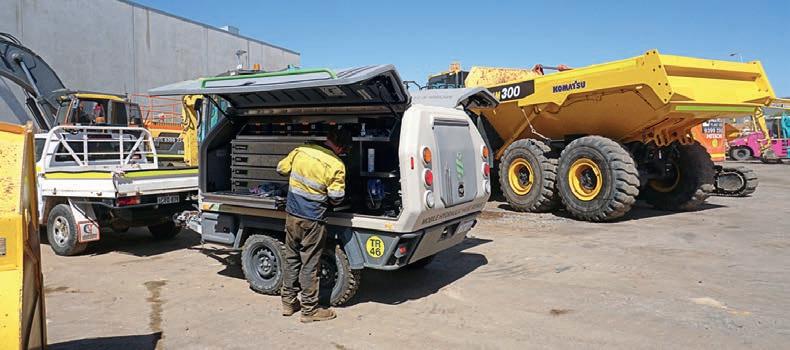
The BOA system lets users schedule work in advance, track asset histories, and keep things moving without constant stress.
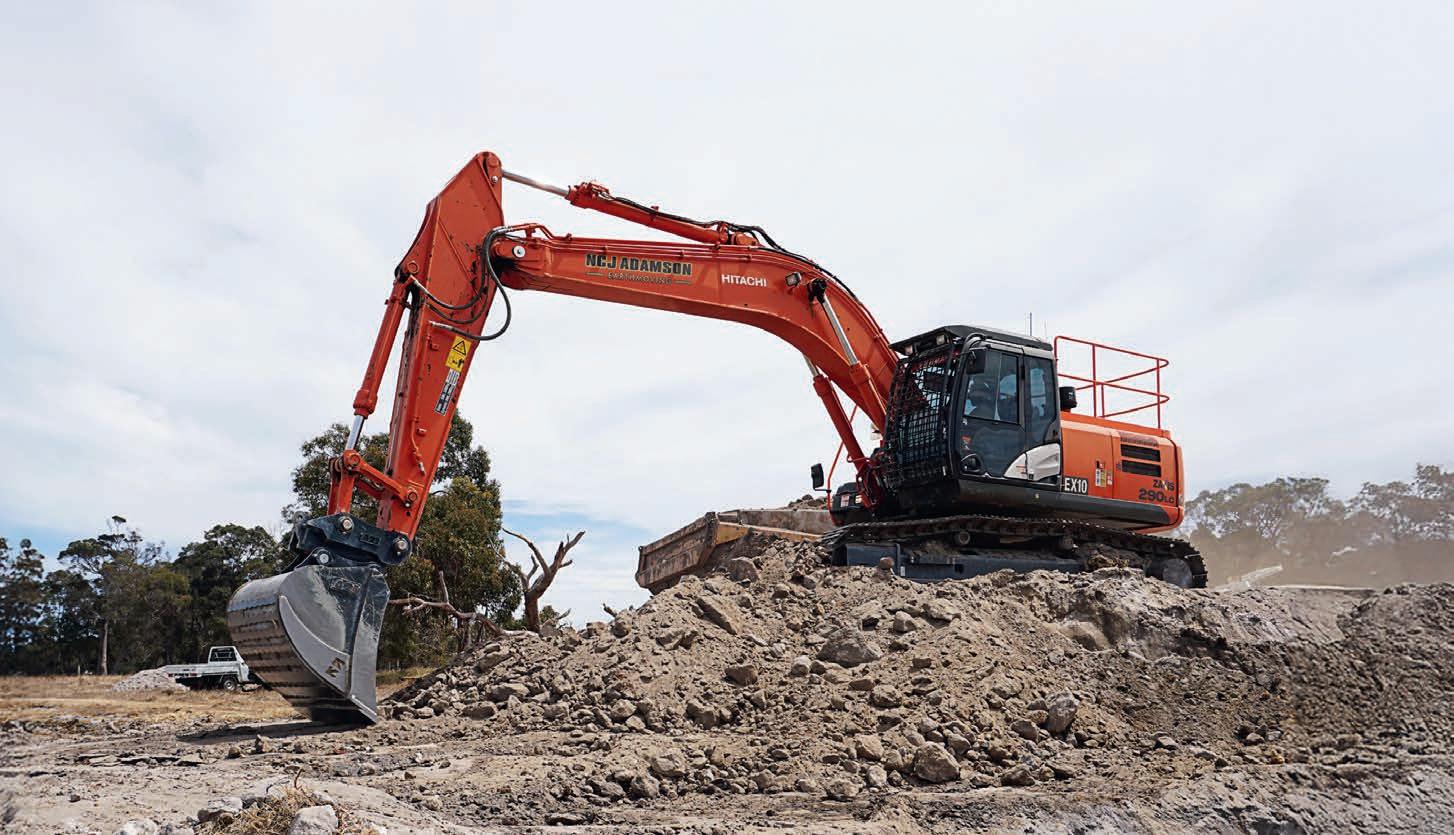
parts waste, and saving time on invoicing and job tracking.
That kind of shift doesn’t just save money. It frees up resources to grow the business.
Whether you’re an owner-operator or running a national fleet, BOA adapts to your size and set-up.
Some customers begin with a basic workshop arrangement. Others scale fast, running multiple BOApods, bulk storage containers, and BOAhub Premium features like digital scheduling, live stock tracking, and tailored on-site training.
The goal is the same: full control over your hydraulic maintenance, wherever and however you work.
Need help training a new tech? BOA has you covered.
Looking to streamline multiple crews? Easy. Want to customise your setup to match specific machines? Done.
This is what scalability looks like when it’s designed from the ground up.

The future of hydraulic uptime BOA isn’t just selling gear. It’s building a smarter way forward.
The BOAhub platform continues to evolve with smarter job management, automated reordering, and detailed asset tracking.
New BOApods are rolling out across Australia, stocked and ready to keep crews moving. And the team is growing too, doubling down on service and support across every region.
From mining contractors in WA to earthmoving crews in Queensland, operators are making the shift from reactive to proactive processes and they’re not looking back.
Hydraulic downtime doesn’t have to be a given. You don’t have to keep putting out fires. You don’t need to rely on luck and late-night callouts.
With BOA, you get a system that puts you in control — one that gives you visibility, predictability, and peace of mind.
When your equipment runs better, so does your business. Enjoy the freedom of total control.
Learn more at boahydraulics.com







Cat tiltrotators attach to a range of fabricated and hydraulic attachments, enabling more work to be done.

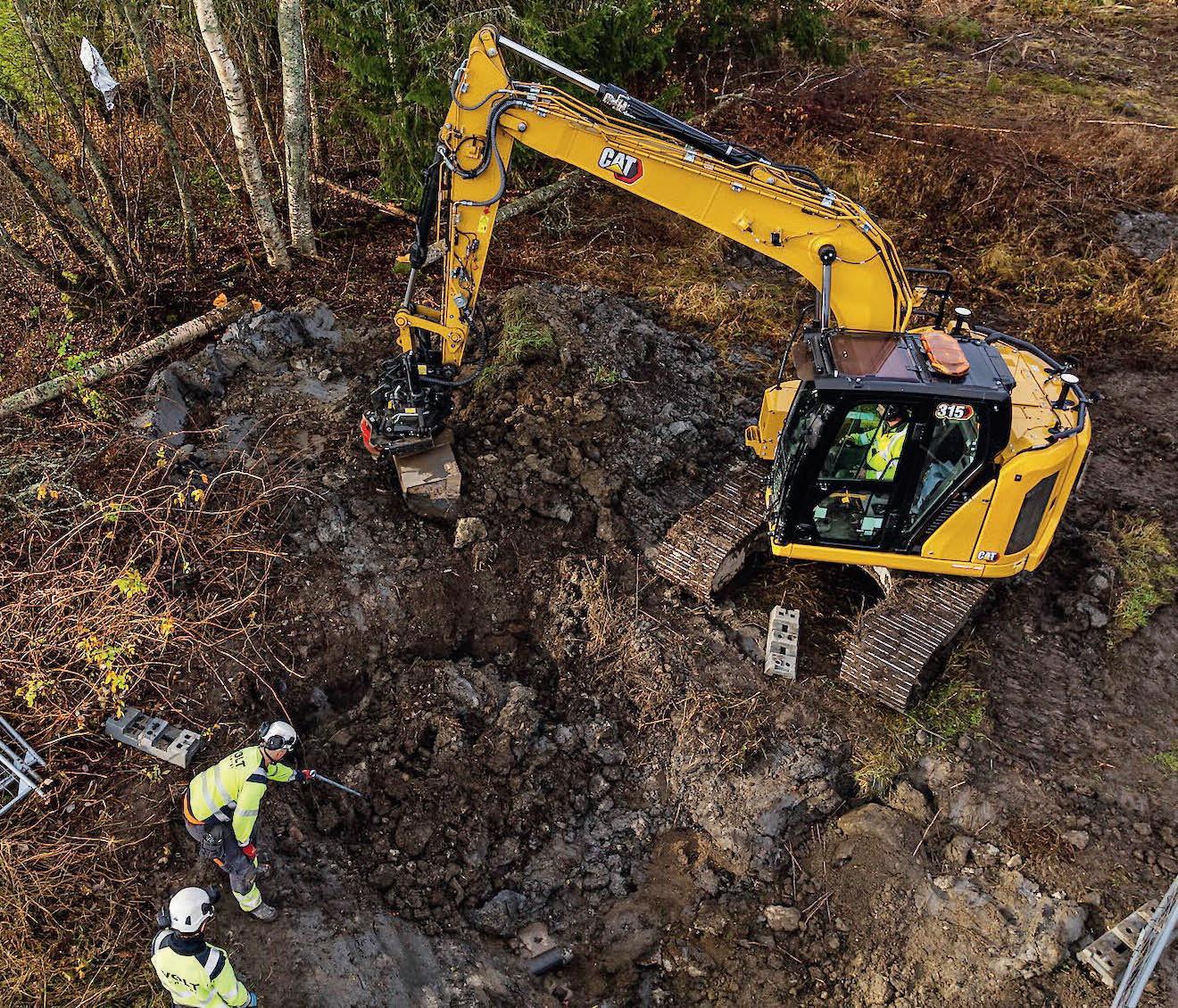
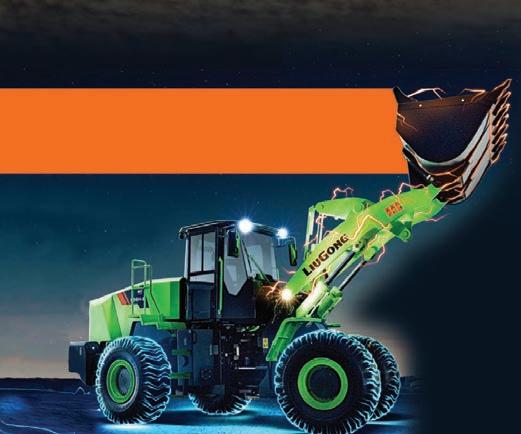
A new tiltrotator system introduced by Caterpillar® will enable its excavators to improve machine utilisation.
Caterpillar has designed a new line of tiltrotators for its tracked excavators from the 313 to 335, and wheeled excavators from the M314 to M322. They come with a tilt system that enables attachments to simultaneously rotate 360 degrees and tilt up to 40 degrees, allowing wheeled and tracked excavators to perform a range of tasks — such as digging, grading, and compacting — with precise movements, without repositioning the machines.
This product launch introduces machine configurations to replace S and HCS interfaces, which are connection systems that allow attachments to be mounted securely and to operate e iciently. The new systems are designed to deliver better overall performance and improved fuel e iciency.
As standard, the machines will include the
GS520 Tilt Sensor 2, which helps accurately measure attachment movement, as well as RPS coding, a system that improves control and safety when using attachments.
For machines using HCS sandwich configurations — where additional hydraulic components are integrated between the machine and the attachment — the new models will also o er higher hydraulic flow, allowing attachments to operate faster and more e ectively.
Cat Work Tools Senior Specialist, Jason Zhang, said the tiltrotator system allows more precise movements without repositioning the machine.
“Less machine repositioning helps to reduce undercarriage wear and lowers overall costs,” he said.
New standard features
The new models also feature a standard high-flow swivel, providing up to 200 litres per minute flow at 250 bar for use with high-flow work tools.
Pairing the tiltrotator with a Next Generation Cat excavator that has a second hydraulic line boosts hydraulic flow and pressure to 250 l/m at 350 bar.
“Pressure-compensated hydraulic valves manufactured with spools provide better control of the hydraulic flow than previous designs, allowing the tiltrotator to maintain stable rotation speed regardless of tilt speed,”
Jason said.
“A quick-connect interface provides fast hydraulic attachment changes. SecureLock™ uses sensor technology inside the locking
Simultaneous 360 degree rotation and up to 40 degree tilt in both directions allow performance at di erent angles without needing to reposition the machine.
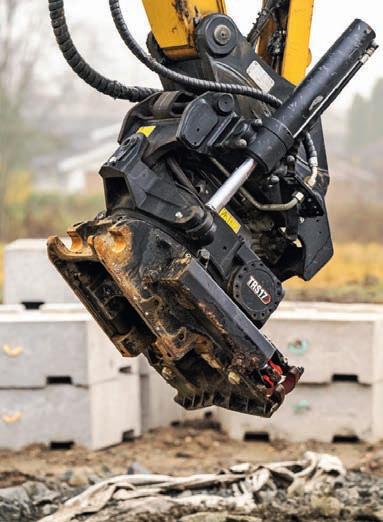
cylinder to verify the tool is correctly connected and securely locked, to reduce the risk of swinging or dropping tools.
“You can expect dependable performance from the hydraulics for a smooth and consistent operation.”
For all other configurations, flow capability has increased from 60 l/m to 100 l/m. For wheeled excavators, there is the option for a high-flow swivel that provides 250 l/m at 250 bar.
Nomenclature for the new Cat range has been changed to align with current excavator models and di erentiate from past TRS models.
The legacy TRS models were TRS10, TRS14, TRS18, and TRS23.
The new TRS models have been named TRS12, TRS17, TRS20, and TRS26.
“Along with this change, there are a number of improvements bringing better value, productivity, and e iciency to our customers,” Jason said.
“Cat TRS models now feature a single grease point connection with the excavator’s auto-grease system, and the simple-to-use innovative lubrication system is developed to quickly distribute the right amount of grease to the appropriate points,” he said.
Double-acting tilt cylinders fitted with a load-holding valve ensure the load is securely in position, even in the event of the hydraulic system losing pressure. Providing maximum heat distribution, the worm gearbox is filled with oil for optimum lubrication.
“With the new tiltrotator models, operators can change tools without leaving the cab when equipped with the full hydraulic coupler, enhancing safety, productivity, performance, and e iciency. In addition, they are able to convert standard S couplers to hydraulicconnect ones for increased e iciency,” Jason said.
“A plastic cover with built-in electrical harness provides easy connection to the hydraulic valves and simplifies servicing for operators. A frame modification on the new series reduces dirt exposure for the grading sensor, which is further protected by a metal cover.”
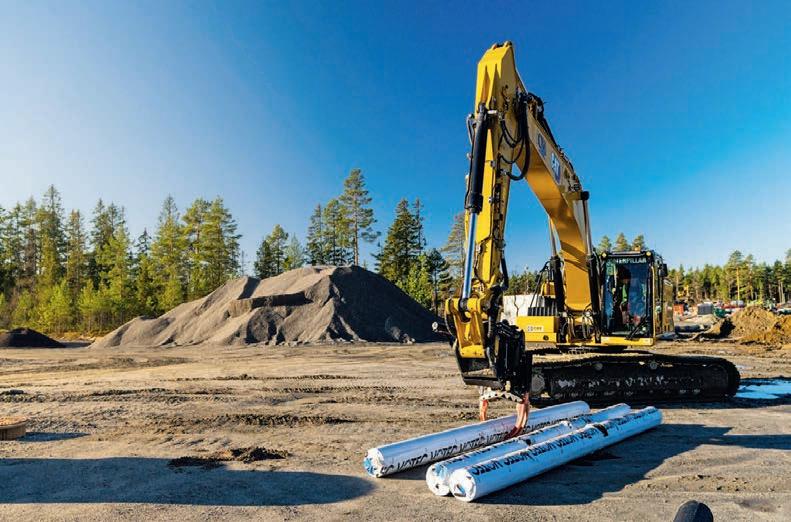
The tiltrotator’s grapple module enables e icient, precise, and versatile work on the jobsite.

The GS520 tilt sensor is included with a standard protected mounting location for the sensor, and a standard Q14 electrical connection, replacing V90 connectors that will now be an option.
Larger diameter steel lines replace hydraulic hoses to the hydraulic motor for improved performance, reducing back pressure for improved e iciency, life, and easier maintenance.
Pressure-compensated hydraulics maintain stable rotation speed when the tilt function and rotate function are used at the same time.
“These new Cat tiltrotators can be used with a range of attachments like buckets, grapples, compactors and more, allowing for higher
machine utilisation and improved productivity,” Jason said.
“Our integrated new TRS12, TRS17, and TRS20 models reduce installation time and show up automatically on the machine’s monitor, allowing it to be easily controlled by the joystick. I highly encourage you to check it out with your local Cat dealer.”
Contact your local Cat dealer now.
• NSW/ACT: WesTrac 1300 881 064
• VIC/TAS: William Adams 1300 923 267
• WA: WesTrac 1300 881 064
• QLD/NT: Hastings Deering 131 228
• SA: Cavpower 08 8343 1600
• NZ: TERRA 0800 93 39 39
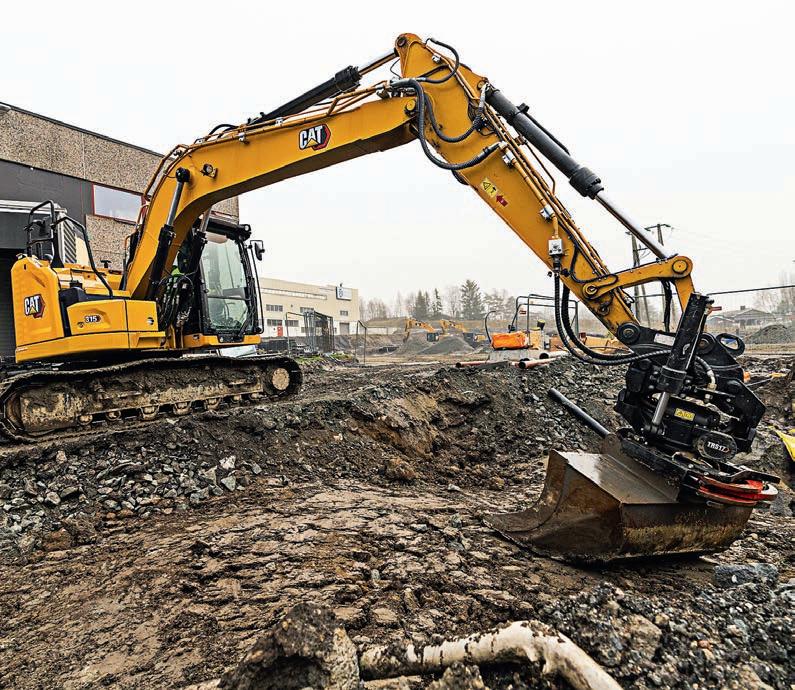
Whether handling materials, digging trenches, or grading, the ability to tilt and rotate attachments enables users to be more accurate and controlled with their operations.


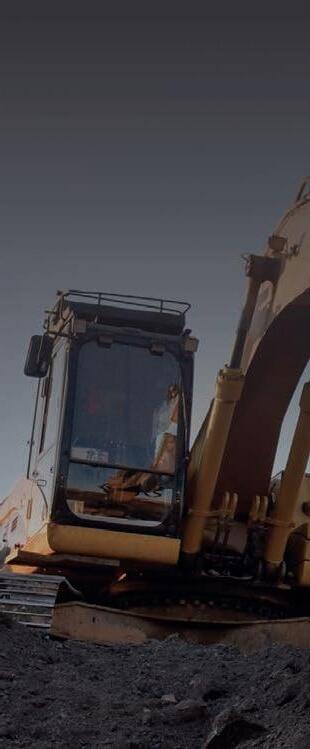

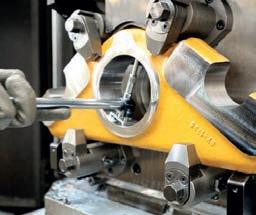

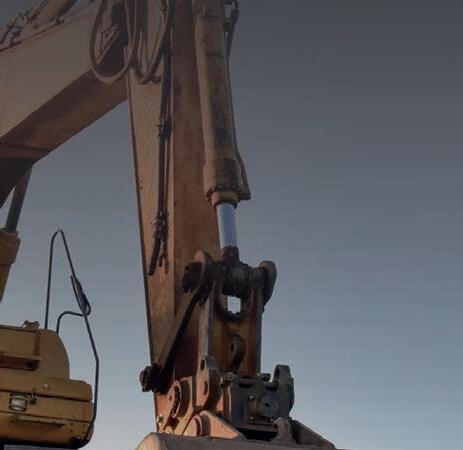



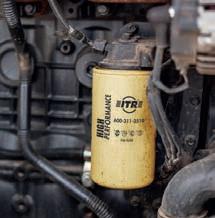

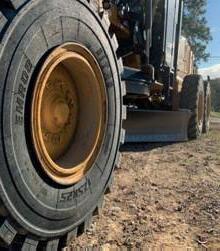
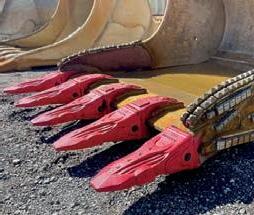


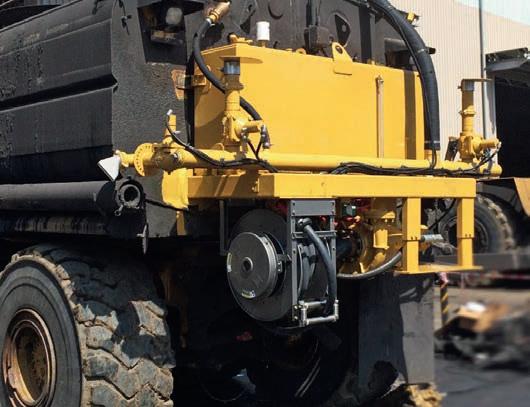
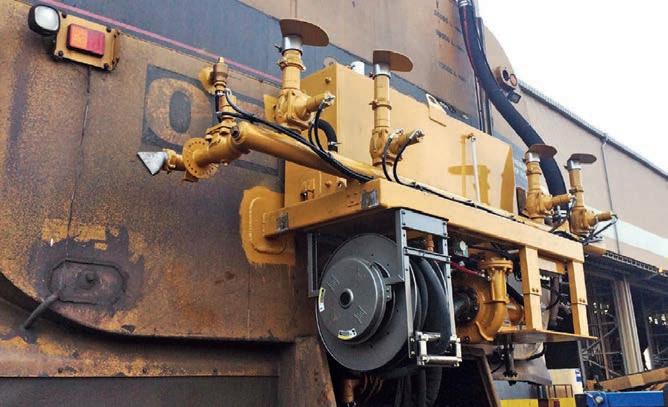
The life and usefulness of ageing trucks can be extended by transforming their bumpers into functional water delivery systems.
Across Australia’s mining and earthmoving operations, fleet managers are under pressure to prolong asset life while maintaining safety, productivity, and environmental compliance.
With capital expenditure under scrutiny, operators are seeking practical upgrade pathways that maximise the value of existing equipment rather than replacing it outright.
One solution gaining attention is the Ground Force Water Bumper Conversion Kit, a coste ective way to upgrade or extend life of assets.
Designed to integrate with existing machines, the system provides operators with an opportunity to extend the life of
ageing assets, upgrade competitor water tanks, or convert fleets to one system for consistent operator user interface and fleet standardisation.
Rather than requiring a complete tank replacement or new water truck purchase, the kit enables operators to add water delivery capability through a simple bumper-mounted solution.
By repurposing the bumper into a water delivery platform, operators gain functionality without extensive structural modification, making it an attractive option for sites focused
on extending fleet life and controlling costs.
Each Water Bumper Conversion Kit is supplied as a complete system and comes standard with the Ground Force Water Control System (WCS), delivering reliable and operatorfriendly control over water flow and spray functions.
Standard inclusions include:
• Three rear sprays, supporting e ective dust suppression behind the machine;
• two side sprays, improving coverage along haul roads and work areas; and
• a water cannon, allowing targeted application for dust control, clean-down tasks, or sitespecific requirements.
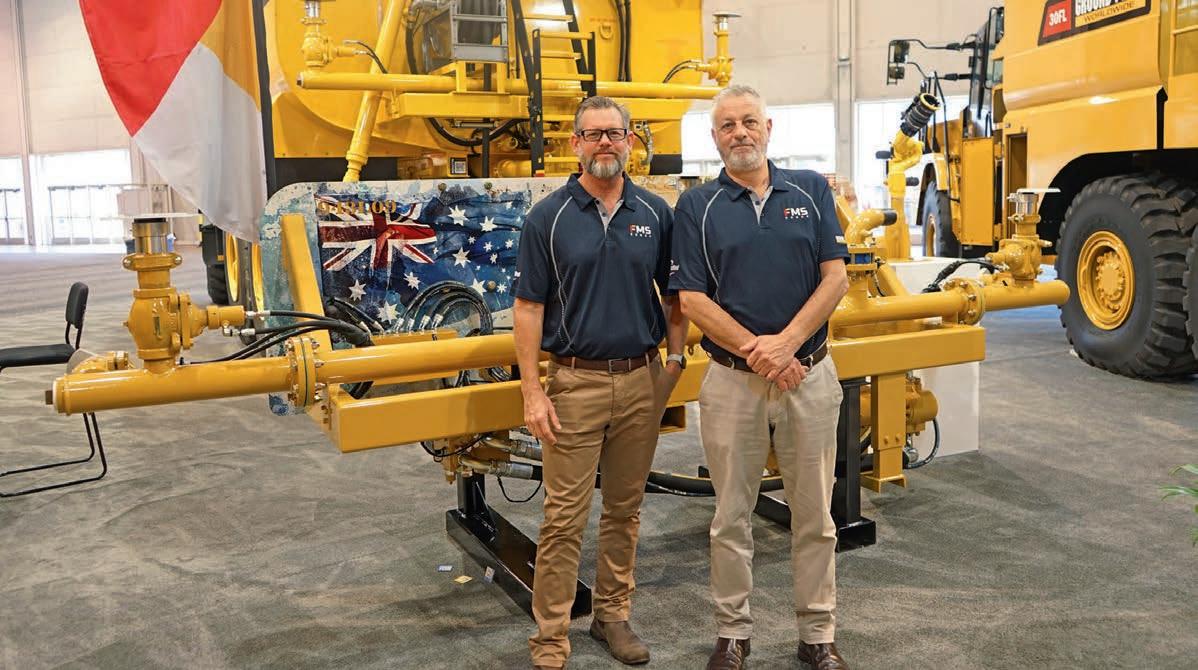

While bumper-mounted systems are well suited to retrofit all makes of water modules and life-extension projects, rigid water tanks and purpose-built water trucks remain essential for large-scale dust suppression and continuous water delivery.
Ground Force’s own design of rigid water tank solutions are engineered for mining and civil environments, o ering high-capacity tanks with internal ba ling, structural reinforcement, and reliable spray systems.
When used alongside the Water Bumper Conversion Kits, these solutions allow operators to build a tiered asset management strategy, matching equipment capability to site requirements, rather than adopting a one-sizefits-all approach.
A factor in the adoption of these solutions is the level of support provided throughout the purchasing and operating life cycle.
FMS Group is the Australian distributor for Ground Force, supplying the Water Bumper Conversion Kits, rigid water tanks, and associated systems to mining and earthmoving operation, with three support centres throughout Australia.
The company works closely with clients from initial consultation and design through to commissioning, taking the time to understand site-specific requirements, budget constraints and operational priorities.
This local capability ensures Ground Force solutions are tailored to Australian operating conditions and regulatory requirements.
For site managers and maintenance teams, having a single point of contact for supply and support simplifies procurement and provides confidence that assistance is available when it is needed.
With sales professionals and tradespeople involved early in the process, solutions are specified correctly from the outset, reducing re-work and downtime. There are three support centres throughout Australia
This end-to-end approach gives operators confidence that they are not just purchasing equipment, but partnering with a team that supports their assets for the long term.
Beyond equipment supply, FMS Group’s service and support o ering includes:
• Technical consultation and specification support;
• in-house engineering for international, national and region-specific standards compliance;
• coordination of supply and installation; and
• after-sales service, parts availability, and ongoing technical assistance.
Supporting safer, more productive sites
As the mining industry evolves, operators are placing emphasis on solutions that deliver improvements in safety, uptime, and asset longevity.
Equipment protection systems and durable water management solutions are no longer viewed as optional extras, but as integral components of e icient site operations.
Ground Force bumper conversion kits and rigid water tanks are a practical response to these challenges, o ering performance in demanding environments.
With FMS Group providing supply, service, and support across Australia, operators can implement these solutions with confidence, knowing they are backed by local expertise and ongoing technical support.
In an industry where downtime is costly and safety is paramount, investing in robust, wellsupported equipment solutions is an investment in long-term operational resilience.
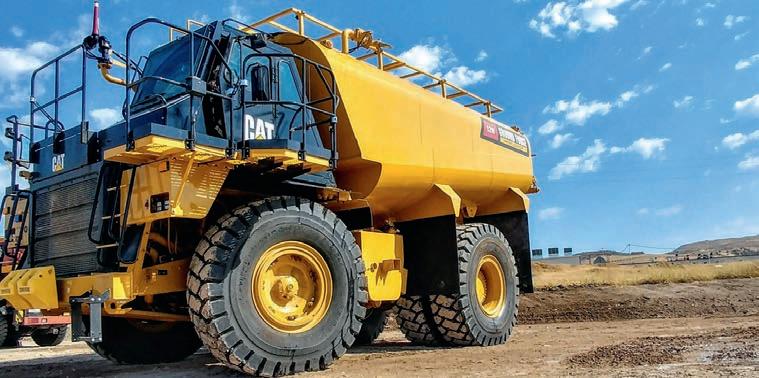
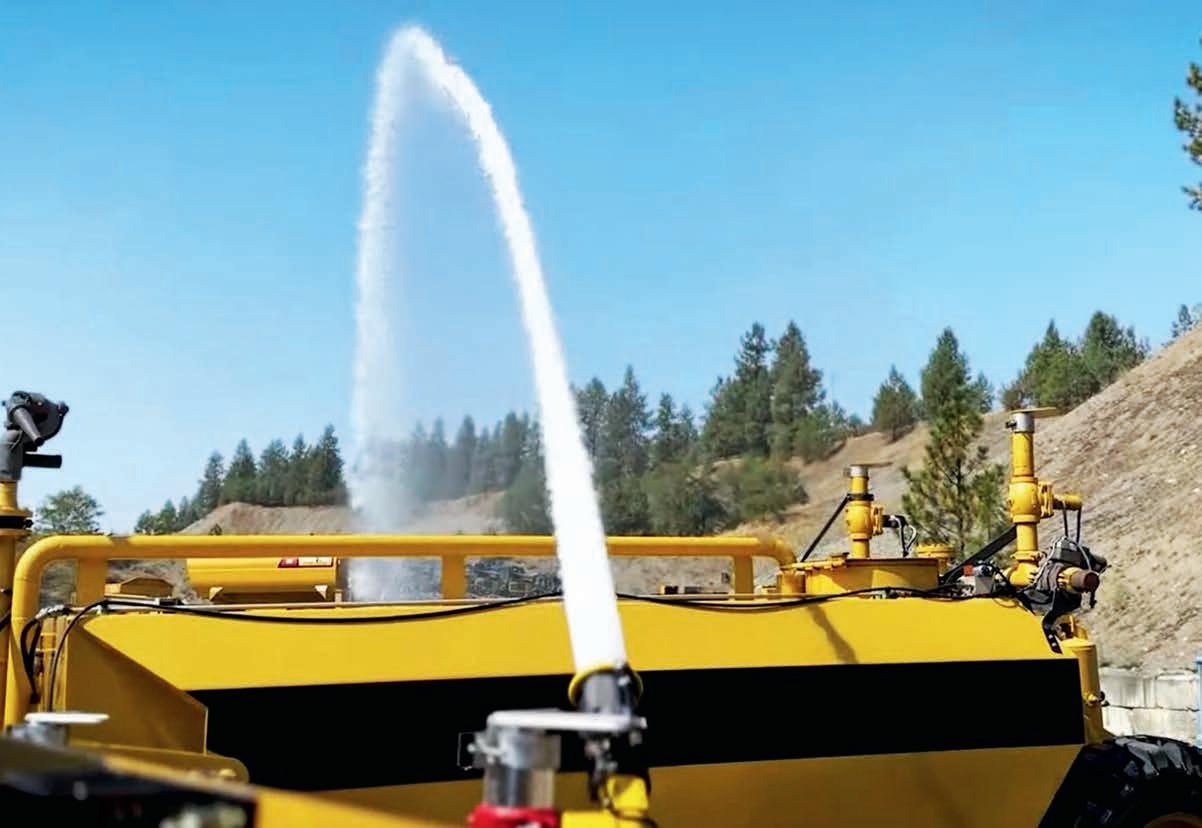
HAWC is engineered for extreme conditions, delivering longer life, lower maintenance, and higher reliability — keeping your fleet in production.







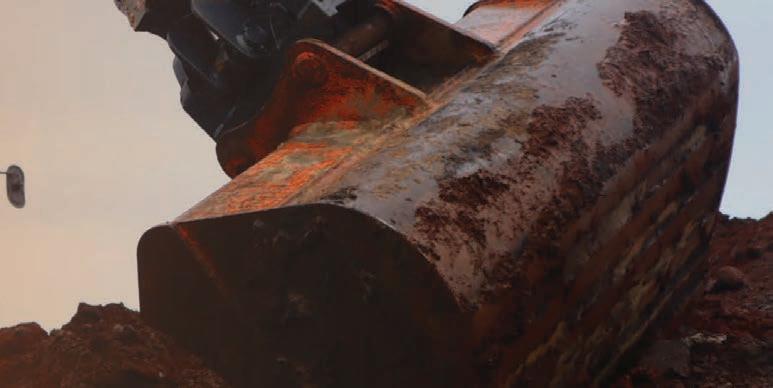

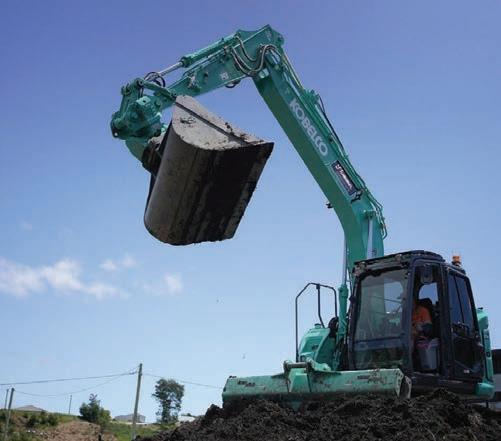
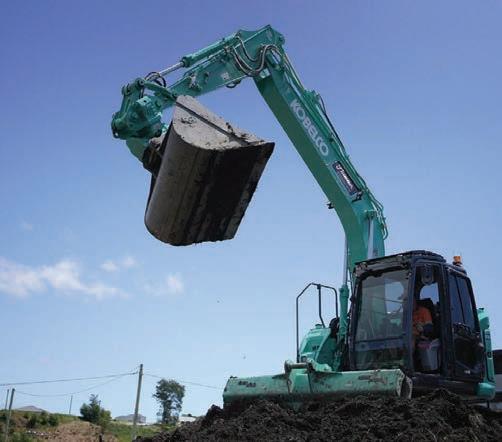
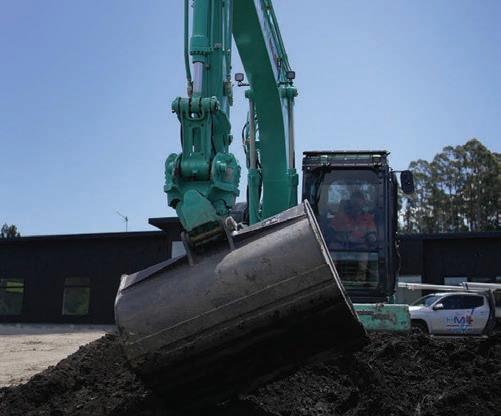
Our Tilting Quick Hitches are built to last the toughest tasks with durability and strength. With a 5-year warranty, we stand confidently behind our products. Trust in our products to deliver performance & reliability! Strong,
We're an Australian company through and through, dedicated to supporting our local industry and economy. By choosing our products, you're backing Australian innovation and quality.
For more information, you can contact or visit us 0417 368 085 admin@ametqh.com 9-11 Ferguson Drive, Quoiba TAS
www.ametqh.com


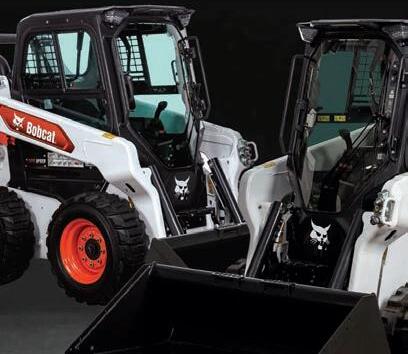
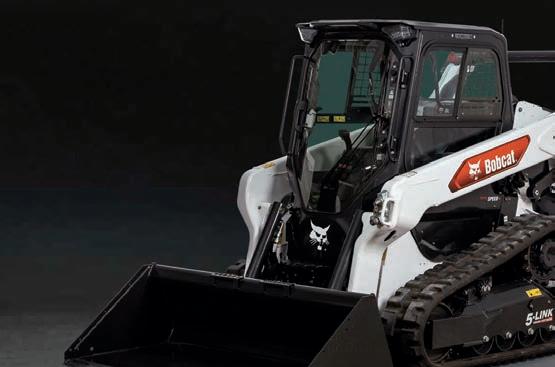






























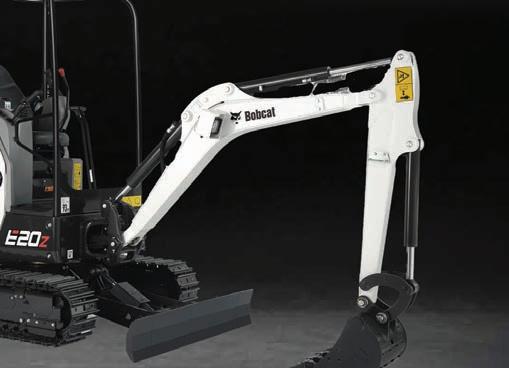






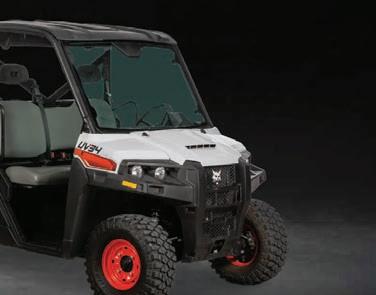





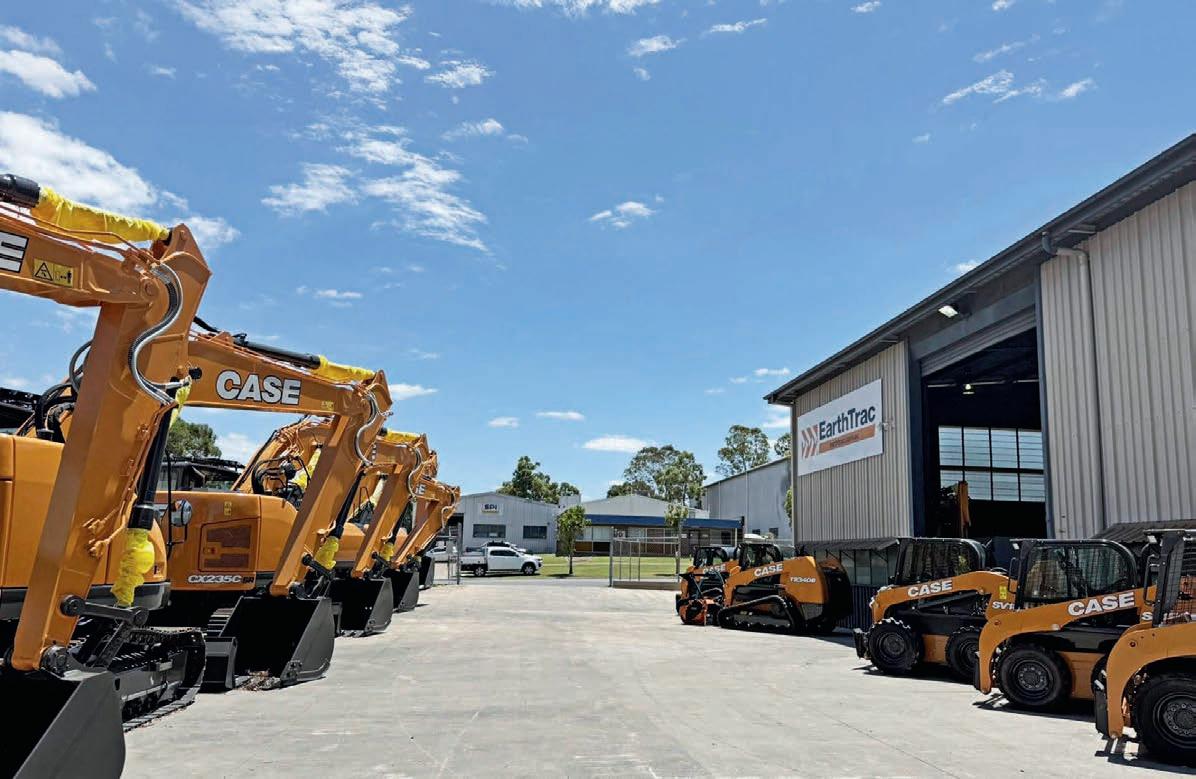

Earthmoving and construction businesses across parts of Queensland and NSW can now access CASE equipment from one dedicated dealer.
EarthTrac was appointed as the authorised CASE Construction dealership for the South East Queensland and Northern New South Wales region in mid-2025.
The business stocks new and used CASE construction machinery, including excavators, loaders, crawler dozers, skid steers, compactors, compact track loaders, and motor graders: practically anything needed for the earthmoving industries.
EarthTrac combines new and used machinery sales with dedicated parts, finance, and service support for a broad range of equipment.
EarthTrac Director Jon Gibson said EarthTrac was part of a group that includes Day’s Machinery Centre, an agricultural and construction machinery dealership that has operated for about 75 years across Northern NSW, and which enjoys an a iliation with CNH (CASE New Holland).
The business is led by Jon along with Dan and Pat Hoppe, who also steer the Day’s Machinery Centres in Lismore, Casino and Woolgoolga in NSW.
“All three of us began our careers as heavy diesel plant mechanics, later building extensive experience in the mining, construction and agricultural sectors,” Jon said.
“This underpins EarthTrac’s strong technical and service focus.”
Jon said the appointment gives CASE a dedicated construction-focused presence in Brisbane, SE Queensland, and adjoining coastal regions, leveraging Day’s Machinery’s established customer base and reputation.
The transition expanded Day’s Machinery’s footprint from primarily agricultural machinery, strengthening the focus on construction equipment.
“EarthTrac gives CASE Construction customers in Brisbane, the Scenic Rim, Northern Rivers, and up to the Wide Bay–Burnett region, a new local point of contact for parts, service and sales,” Jon said.
The move is timely as infrastructure development around Brisbane heats up around the forthcoming Olympic Games, creating significant building opportunities.
“CASE equipment will play an integral part of the Olympic Games preparation, and we will be able to supply companies with all the CASE product they need,” Jon said.
The timing of EarthTrac’s launch aligns with CASE’s strategy to strengthen its dealer coverage in key Australian markets.
All EarthTrac locations now carry genuine CASE parts, and provide workshop and field service support designed to keep customer fleets operating reliably with minimal downtime. Jon said that CASE products were built “inside and out” with the users in mind.
“The machines provide more power, more durability, more comfort and more control. If you’re looking for superior power, productivity, and fast cycle times all in one machine, CASE has a machine for you,” he said.
Many of the CASE product o erings also come with the brand’s telematics system SiteWatch, which keeps the fleet productive and running smoothly on multiple job sites.
“SiteWatch puts you in the driving seat: it collects measurable, usable data in real time, and provides information about each of your machine’s operation so you can make decisions,” Jon said.
He said that customers had been supportive of the venture and the new team, reflecting confidence in the blend of Day’s Machinery’s heritage and EarthTrac’s specialised construction focus.
“We have chosen some of the best people in the industry with longstanding customer relationships, and pride ourselves on our culture and our can-do attitude,” he said.
“We’re passionate about helping local businesses keep their machinery running at peak performance. Backed by the strength of the CASE network, we’re ready to provide fast, reliable support and expert advice from day one.”
McIntosh CE General Manager Paul Davies, the Australian national distributor for CASE Construction Equipment, said EarthTrac was a strong addition to the dealer network.
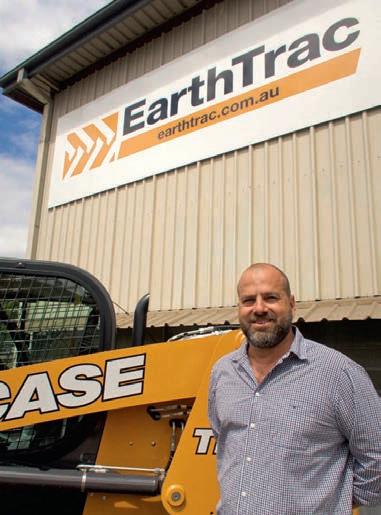

“EarthTrac’s appointment as a CASE dealer strengthens our ability to provide hands-on support and expert advice in SE Queensland,” he said.
“Their dedication to service excellence ensures our customers will have trusted local support whenever they need it.”
Jon said that EarthTrac understood that machines would need maintenance and repair throughout their life cycle, “no matter the colour or price point”.
“Whether we’re providing parts or service, we aim to exceed expectations through prompt response times, clear communication, accuracy in diagnosis, and friendly service,” he said.
“While we’re the CASE Construction specialists, we have extensive experience with various brands and products. Our aftermarket teams provide maintenance parts and service for all makes and models.
“We provide accurate diagnostics, prompt response times and clear communication, aiming to exceed customer expectations on both scheduled maintenance and breakdown repairs.”
EarthTrac stocks CASE’s line-up of excavators, built for durability, productivity, and operator comfort across applications from general civil construction to heavy infrastructure works.
The range spans compact mini models to full size crawler excavators, catering to diverse project needs and environments.
The Short Radius (SR) range stands out for its design tailored to operate where space is at a premium: urban construction sites, roadworks in built environments, bridges, and other projects with restricted manoeuvring room. They are engineered so that the rear of the machine hardly protrudes beyond the tracks during a full swing, dramatically reducing the risk of accidental contact with nearby obstacles.
Two key models in this range — the CX145C SR and the CX235C SR — exemplify these properties and represent some of the most capable options in the category for mediumsized tasks requiring agility and muscle.
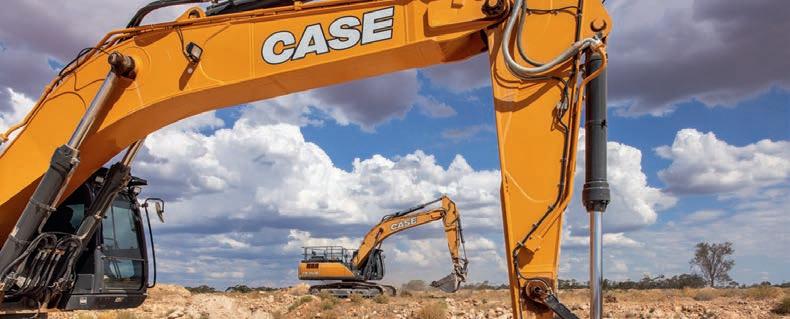

CX145C SR — compact strength in tight quarters
This mid-size short radius excavator is engineered to bring full-size productivity into confined areas. Its design makes it suited for jobs where traditional excavators could risk damage or obstruction due to their rear overhang.
Key attributes:
• 14,500-15,500kg operating weight and 95.1hp engine
• While compact, the CX145C SR delivers impressive digging and lifting capabilities, thanks to a robust engine and hydraulic system.
• Especially e ective along roadways, urban developments, bridge sites, and other projects with limited space.
• Ergonomically designed cabs with ROPS/ FOPS protection, intuitive controls, and good visibility support longer, more productive workdays.
• Intelligent hydraulics, ground level service access, and extended greasing intervals contribute to reduced maintenance time and expense.
CX235C SR — next level power in a compact package
Stepping up in size and capability, this model brings the same short radius design philosophy
to a bigger, more powerful excavator. Its configuration retains the reduced tail swing while increasing lifting force, breakout capability, and overall job site e ectiveness.
Key attributes:
• 25,500-25,800kg operating weight and 160hp engine
• Designed to deliver robust digging force and hydraulic performance, the CX235C SR still fits comfortably into areas where space is limited.
• Perfect for heavier urban jobs — such as major road construction, extensive groundwork, large bridge projects, and urban redevelopment tasks — without the footprint of a full-sized conventional excavator.
• Advanced hydraulic systems and heavyweight structural components give this machine the endurance needed on demanding sites while maintaining smooth, responsive control.
• A comfortable, low-noise cab with modern instrumentation, automatic climate control, and intuitive controls enhances productivity and reduces fatigue.
“Come round to EarthTrac and see the short radius excavators, as well as our other models, in operation,” Jon said.
The CX145C SR is e ective along roadways, urban developments, bridge sites, and other projects with limited space.
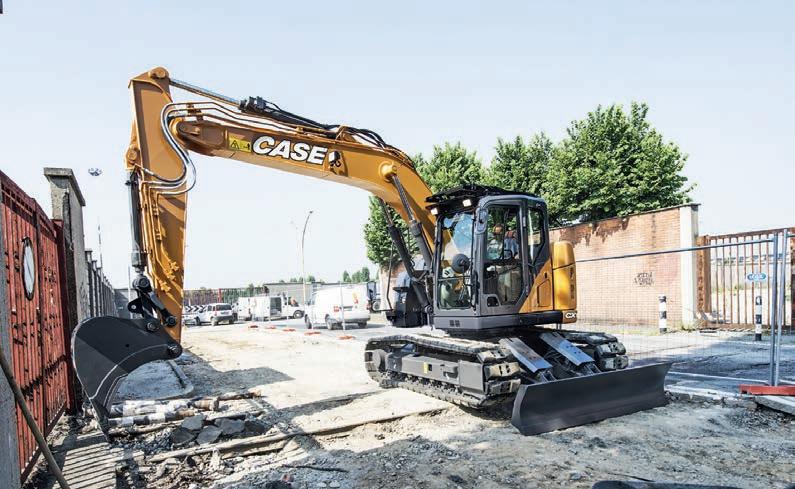
Neilo Graders are at the cutting edge (literally) of compact Grading. A well-crafted and versatile Grader blade, yields perfect results on any sized jobsite
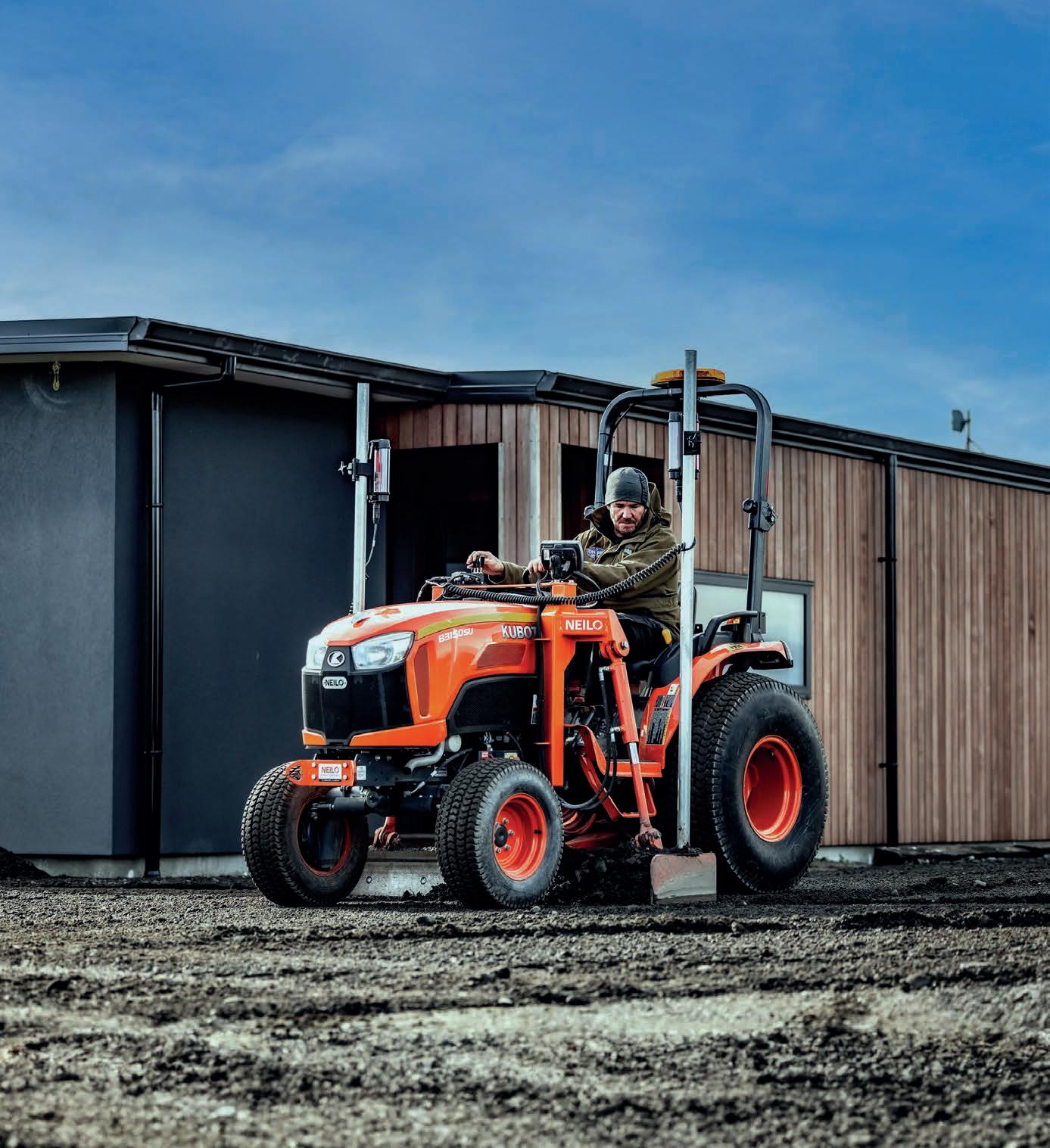

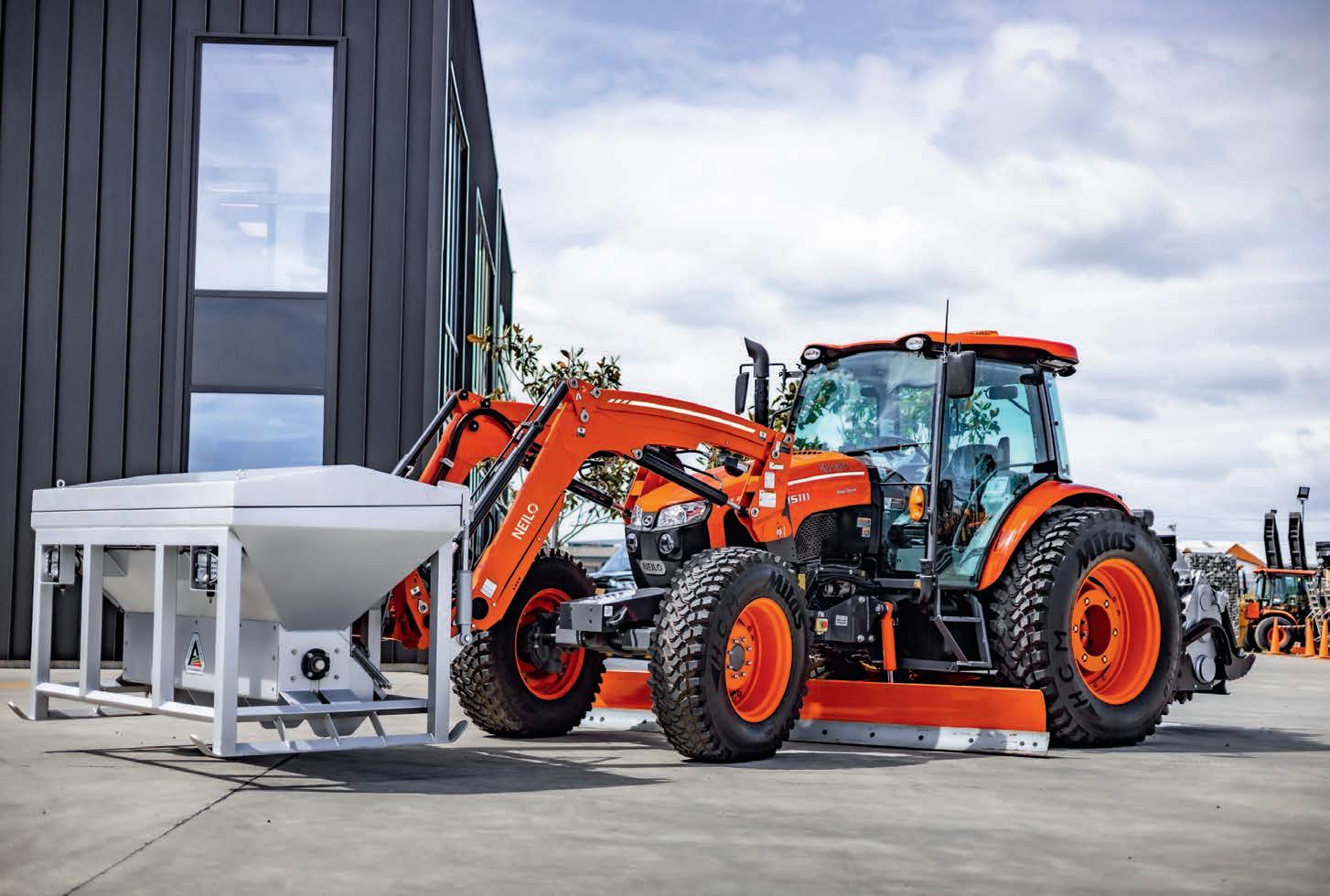
An investment in a purpose-built tractor attachment is reshaping how a New Zealand contractor delivers pavement maintenance for its clients.
In the technical world of road stabilisation contracting, e iciency is the metric that matters most. By consolidating multiple processes and machines into a single high-output platform, Graham Civil has unlocked productivity along with cost and safety gains across its maintenance contracts.
Founded in the Manawatu in 2020, the business has rapidly evolved into a key regional player, delivering projects across earthworks, civil roading, drainage, and residential works.
The company employs a team of 23 sta across the Manawatū and Waikato regions, and has contributed to some of New Zealand’s most notable infrastructure builds, including the Waikato Expressway, Te Ahu a Turanga: Manawatū Tararua Highway, and the Cambridge/Piarere roundabout.
Graham Civil also services several regional maintenance contracts, with a focus on road stabilisation and pavement repairs.
Graham Civil Director Richie Graham said that under robust performance and cost pressures, the way maintenance work is delivered becomes critical, especially as many pavement contracts are paid by the metre.
To increase output and reduce duplication of plant and labour, Graham Civil partnered with Neilo to transform one of the manufacturer’s graders into a versatile, multi
purpose pavement maintenance machine.
“We wanted an integrated solution incorporating a cement vane, stabiliser mill, road broom, lifting attachment and front end loader bucket — all on a compact, manoeuvrable tractor platform that had never previously been built in this configuration,” Richie said.
At the heart of the build is a Kubota M5111, selected for its 110 horsepower engine, reputation for reliability, and the availability of an optional front end loader to handle cement bags and support the cement vane system.
“Neilo then equipped the tractor with its flagship 3050 millimetre undermount grader blade, together with chassis extensions, and the necessary hydraulic and electrical systems to integrate the suite of attachments,” Richie said.
“Packaging a 1.6 tonne stabiliser on the rear three-point linkage, two 107 litre water tanks, and a 900 kilogram cement vane on the front demanded careful engineering to maintain balance, performance and safety.”
Consolidating plant and labour
Richie said the finished product, named the M5111 Stabiliser, was a masterpiece of engineering due to its ability to replace multiple machines and operators in typical stabilisation workflows.
“Previously, a standard road stabilisation or pavement maintenance job for Graham Civil
required a grader for levelling, a skid steer with a road mill for stabilisation, a water cart truck with transport trailer, a roller, a road broom for cleanup, and a dedicated operator for each piece of equipment,” he said.
“With the Neilo M5111 in operation, the skid
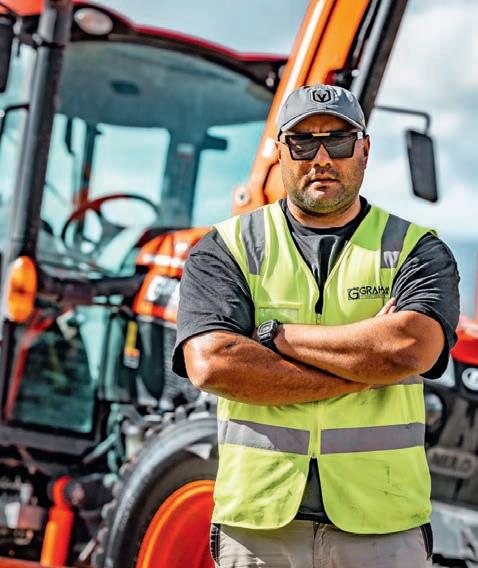

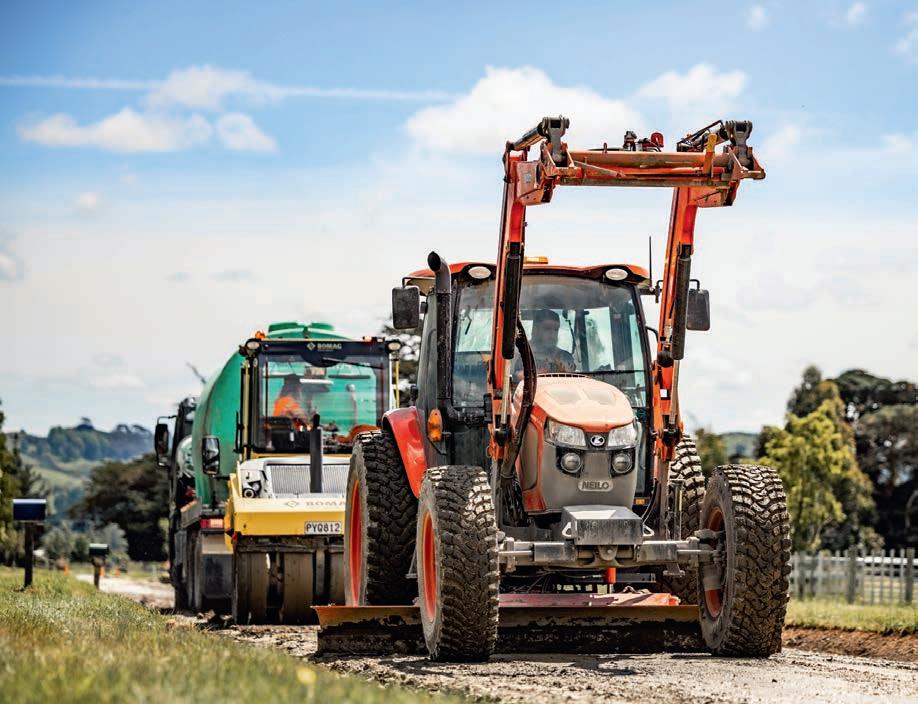
steer, road broom and grader have e ectively been removed from the typical resource list, with their roles carried out by a single, integrated machine. This reduces capital ties, transport demands, and ongoing maintenance costs.”
Cementing productivity
The benefits become more apparent when the team needs to move between work fronts.
Capable of travelling at over 40 kilometres per hour, the M5111 allows the operator to load the cement vane onto the transport trailer along with the roller and drive directly to the next site, cutting out the multiple float movements previously required.
“The business now typically needs only a single truck journey to shift between maintenance jobs, delivering a reduction in transport costs for both Graham Civil and its clients,” Richie said.
Mounted on the front end loader, the Active VMA cement vane is central to the e iciency of the new set-up.
“The vane can be removed or re-attached quickly via the quick hitch, allowing the operator to switch between cement spreading, lifting, sweeping, and loader tasks without losing time,” Richie said.
“Application rates and spreading widths are easily controlled from within the cab, turning cement application into a precise, fast and repeatable operation that aligns with production-focused contract environments.”
A feature of the cement vane system is the integrated bag cutter, which enables one-tonne cement bags to be lifted with the frontend loader and lowered onto the cutter for clean, mess-free operation.
Before adopting this system, Graham Civil used 20kg cement bags that had to be manually cut and distributed across the road surface, a process that slowed production and placed physical strain on crews due to continuous manual handling.
“The move to one-tonne bulk bags, roughly half the cost of the equivalent quantity in 20kg bags, means that cement spreading can now
be handled by just one or two operators, saving time and labour, and reducing manual handling risks.”
The machine’s centrepiece is the FAE RSL/ST 150 stabiliser mounted to the tractor’s threepoint linkage.
Fitted to a side-shift arrangement, the stabiliser can work behind the tractor or be o set to mill close to the edge of the carriageway, improving versatility on constrained pavements and shoulders.
Equipped with ultra hard replaceable teeth, the unit can mill asphalt, soil or aggregate to depths of up to 280mm in a single pass, supported by two tanks integrated under the rear wheel arches that supply water for tooth cooling, dust suppression, and cement activation.
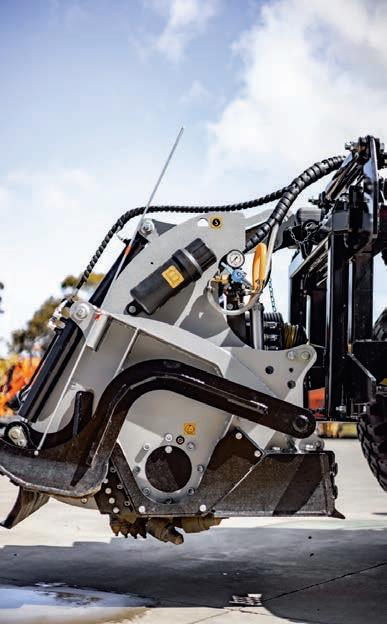
All stabiliser and associated functions are managed from within the M5111’s cabin, streamlining control and reducing operator workload.
“Despite the high loads and demanding ground conditions, the cab remains impressively quiet, even when the stabiliser is running at capacity in hard material,” Richie said.
“This quieter working environment, coupled with reduced machine changeovers and manual handling, contributes to better operator comfort, safety and long-term wellbeing.”
Neilo’s 3050mm undermount grader blade plays a pivotal role in finishing each pavement to specification.
Built to the same dimensions and standards as Neilo’s other M5111 grader configurations (including cabin and ROPS versions), the blade delivers the same power, control and accuracy expected from dedicated grading equipment.
“For Graham Civil, the grader function comes into play after cement spreading, stabilisation and compaction are complete, allowing the operator to achieve final levels and crossfalls from the same machine used for earlier stages,” Richie said.
To complete the one-machine concept, Graham Civil utilises a customised version of Neilo’s broom system.
The broom mounts on the front end loader quick hitch, enabling the operator to quickly connect and clean up gravel or asphalt surfaces once paving or stabilisation works are finished.
“This keeps finishing and clean-up integrated within the same platform, minimising the need for additional support equipment on site,” Richie said.
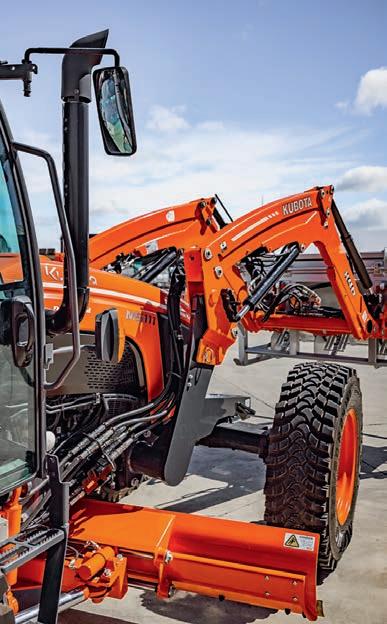
100%
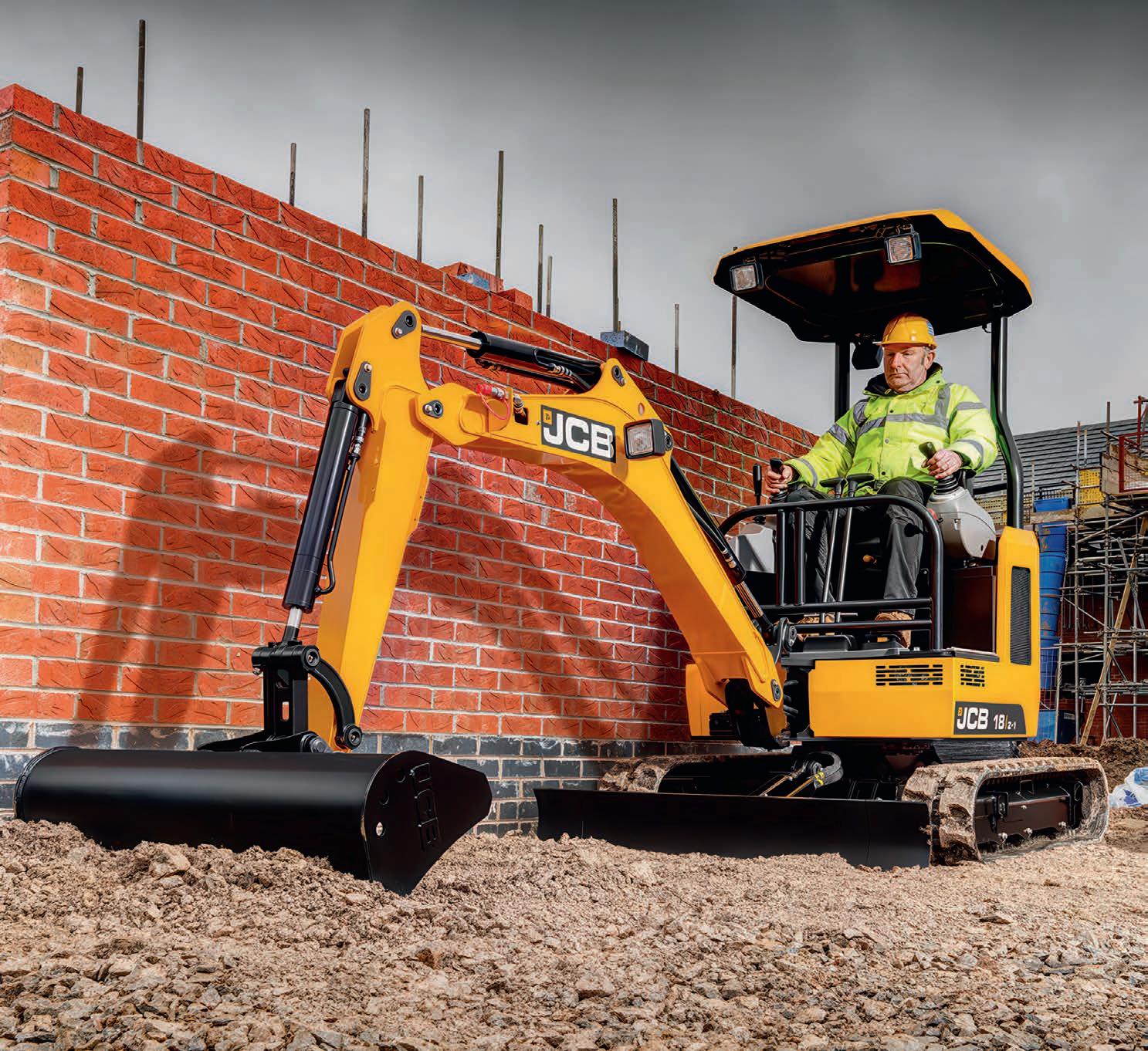
10
500-hour
EASY TO SERVICE
Swing-out



The 70,000-square-foot site will showcase world premiere equipment designed to help solve customers’ challenges.



Images: John Deere.
One of the highlights of this year’s CONEXPO-CON/AGG 2026 event will be a joint presentation by John Deere and the Wirtgen Group.
Delivering a showcase for the construction market, John Deere and the Wirtgen Group are o ering a customer-focused experience at their joint booth during North America’s largest trade show, CONEXPO-CON/AGG 2026.
Totalling 80,000 square feet of indoor and outdoor booth space (Silver Lot SV2415), the site will highlight world premiere equipment designed to help solve customers’ challenges. Inside the West Hall (W40442), an additional section will turn the spotlight on John Deere Power Systems and E-Power solutions, demonstrating the company’s commitment to driving the construction industry forward.
An innovation centre will be located in the middle of the outdoor booth and will focus on new solutions aimed at helping customers solve everyday challenges.
The first floor will highlight the John Deere Operations CenterTM , which is a job site-centric tool that serves as a digital hub where machine and work data converge.
On the second floor, aftermarket digital solutions will be on display, aimed at supporting parts and service conveniences for customers.
New this year, John Deere and the Wirtgen Group will also be participating as a presenting sponsor supporting the conference’s Shop Talks and Walks. Through this engagement opportunity, customers can grow their mental muscle memory on how to perform a quality daily walkaround through a new, interactive simulation.
Attendees can practice gathering critical service information like fluid analysis and machine health insights through their own devices.
Through virtual demonstrations, this handson experience empowers customers to learn how to more e iciently run their fleets.
In addition to its expansive and interactive booth experiences, exhibition attendees can anticipate the following from John Deere and the Wirtgen Group:
• One cohesive booth showcasing the latest machines and technologies from John Deere and the Wirtgen Group;
• 70,000 square feet of outdoor space displaying equipment, technology, and application experiences;
• 15,000 square feet dedicated for live demonstrations;
• 10,000 square feet of indoor space focusing on John Deere Power Systems and John Deere E-Power solutions;
• 24 market launches from John Deere and the Wirtgen Group, including 18 world premieres of new equipment from John Deere and six market debuts from the Wirtgen Group;
• 25 technology-packed machines, including 11 John Deere machines that feature SmartGrade control, SmartWeigh, or SmartDetect functionality, and 14 Wirtgen Group machines equipped with the latest technologies such as Wirtgen Performance Tracker, AutoPilot 2.0, Smart Level Pro, Smart
Pave, Smart Compact Pro and SPECTIVE CONNECT; and
• seven electric and hybrid-electric machines. On Tuesday, March 3, at 11 am, John Deere Senior Vice-President and Chief Technology O icer Jahmy Hindman will deliver the opening keynote of the show, called Never Idle: Tech Made Easy and Grounded in Purpose. He will be joined on the Ground Breakers Stage by fellow John Deere leaders Maryanne Graves and Jonny Spendlove to discuss the transformative role technology plays in addressing challenges within the construction industry.
For those exploring educational opportunities, John Deere is hosting a session that will feature John Deere Power Systems Manager for power systems, batteries and charging solutions Preston Moore on Wednesday, March 4, at 1 pm, titled The Missing Link: Charging Infrastructure and BEV Adoption at the Edge the Grid
In addition, John Deere Senior Product Manager for autonomy David Veasy will participate in a panel discussion titled The Autonomous Shift: Innovations and Impacts in Quarry Operations on Thursday, March 5, at 1 pm.
CONEXPO-CON/AGG will take place from March 3–7 in Las Vegas. For more information about John Deere and the Wirtgen Group, visit www.JohnDeere.com.




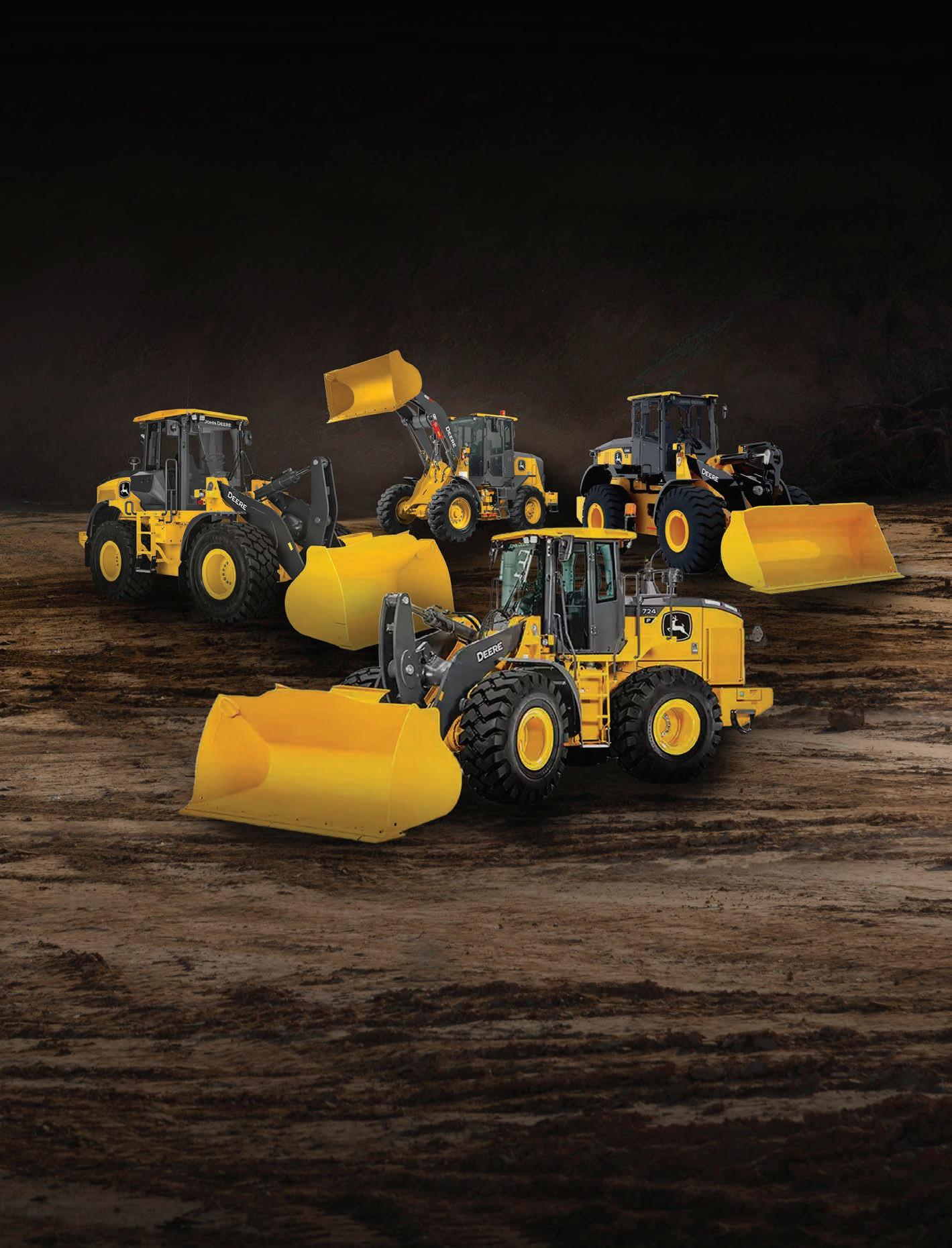

Excavators’ wet plant hire options help businesses complete their projects, no matter the size.
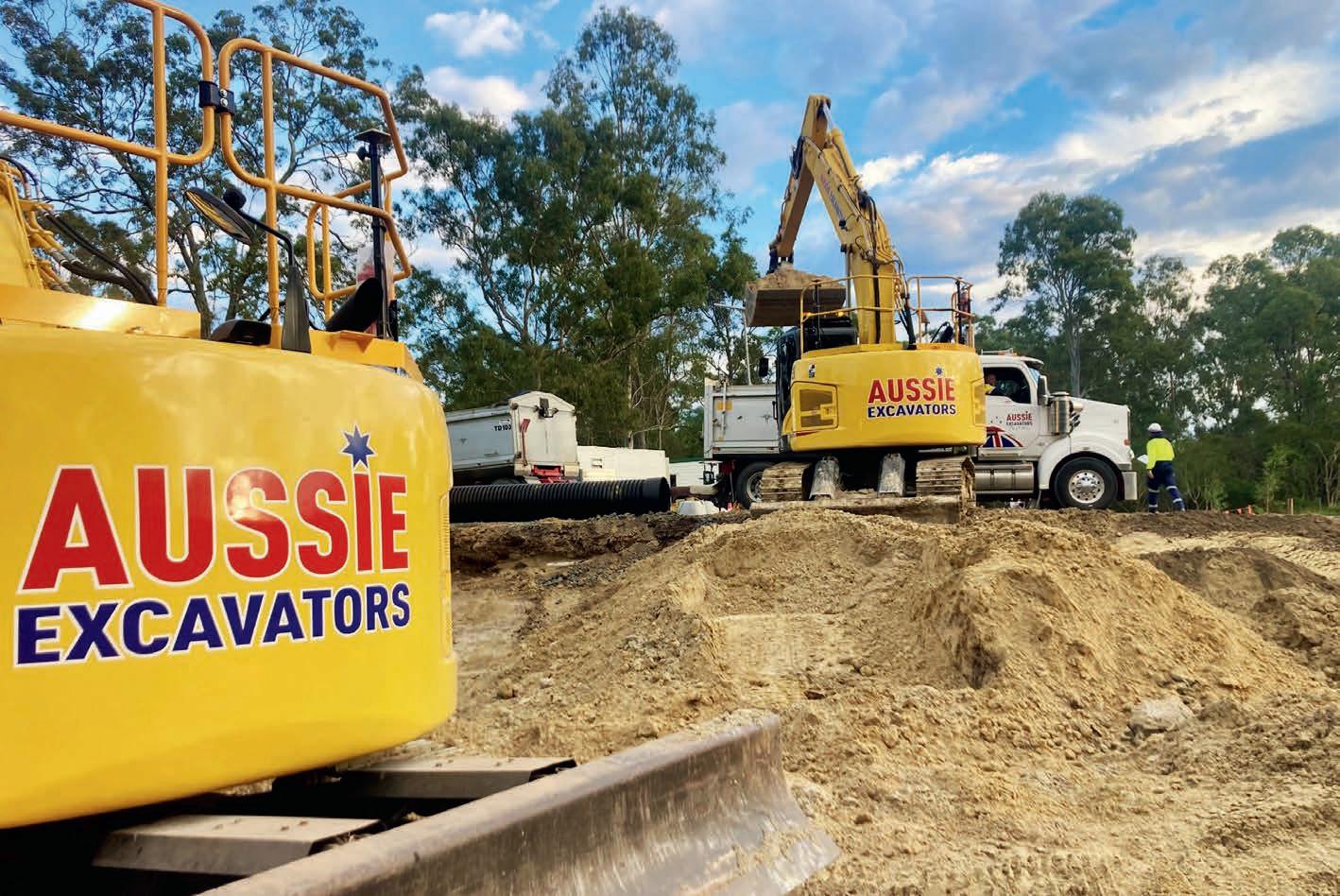

What began as determination to build a better future has evolved into a powerhouse in plant hire solutions and civil contracting — shaping roads and a reputation for excellence along the way.
In 1985, long before digital scheduling platforms or the noise of modern business, there was a small o ice, a telephone, a handful of committed owner-operators, and a young girl doing the books, taking the calls, and keeping the wheels turning.
Holding the fort by herself, Leanne Sullivan could be forgiven for laughing at the notion that the company she was running would grow into one of Queensland’s most respected names in civil contracting.
Leanne’s father was her silent partner in those early days, and she remains grateful for his business acumen, his wisdom, and the many lessons he passed on.
The initial years of working out of her parents’ backyard in the suburb of Chandler laid the foundation for the business that would evolve into Aussie Excavators Plant Hire.
Today, as the organisation celebrates its 40year anniversary, its origin remains as much about grit and growth as it is about family and the power of sticking together.
beginnings, big dreams
Most successful businesses start with a vision. This one started with a need, and the determination to fill it.
Aussie Excavators’ Civil Contracts Manager
Peter Baldwin takes up the story.
“In the mid-80s, the earthmoving industry
was a di erent landscape. Queensland was on the cusp of major development, yet the industry itself remained fragmented, reliant on personal networks and trust,” he said.
“It was in this environment that the Sullivan family saw an opportunity.
“With just five owner-operators and Leanne managing every aspect of administration, the business began to take shape.

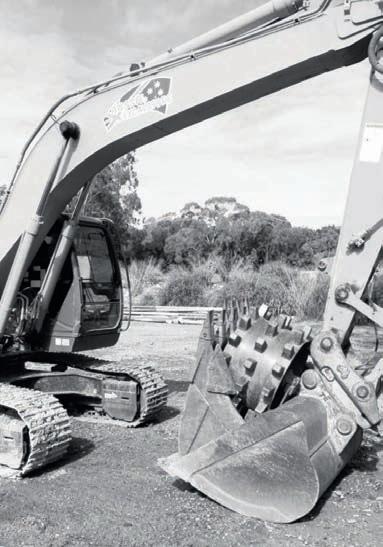
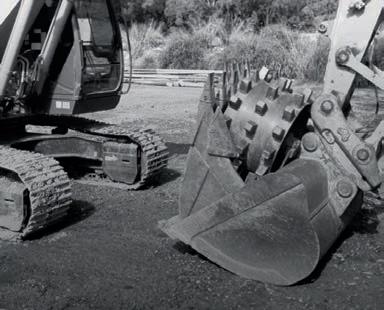

“Jobs were booked manually, schedules updated with pens and correction tape, and relationships were built the old-fashioned way: by answering every call, solving every problem, and showing up for clients no matter what. Slowly, momentum grew.”
The true turning point came in 1993 when Leanne met her husband, Tony Sullivan. At the time, Tony was a butcher. But with a shared belief in building something meaningful together, he sold his shop and purchased a Bobcat and tipper.
“It was a bold decision — the moment the business began shifting from simply coordinating operators to building a fleet of its own,” Peter said.
“Over the following years, Leanne also worked closely with her siblings, collaborating and investing in various aspects of the business.
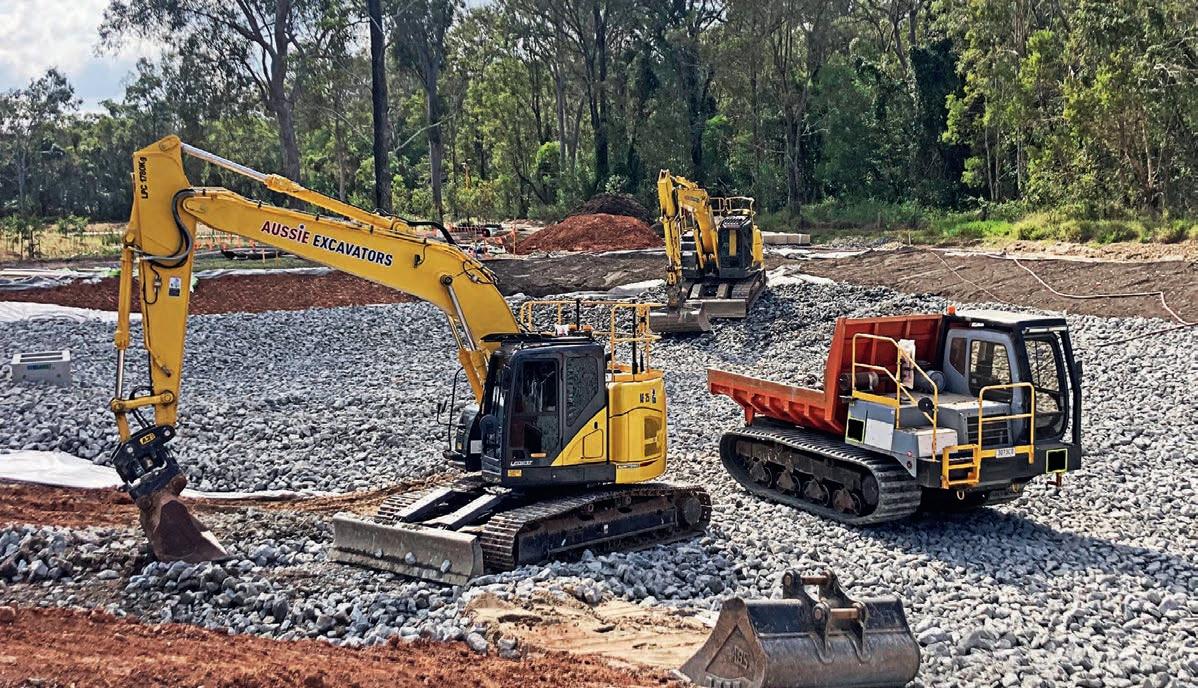

“Those early partnerships strengthened family ties and business acumen, and today, they continue to share business interests and work together in ways that reflect that foundation.”
Machine by machine, job by job, they invested back into the business. As demand increased, Tony’s role naturally evolved, encompassing operational oversight as the company grew more complex.
“It was never about titles — it was about doing what the business needed at each stage of its growth,” Peter said.
The business was boosted by the appointment of a dedicated General Manager, Ian Duthie.
The leadership role helped formalise operations, ensuring that systems, safety, and standards kept pace with expansion, allowing
the Sullivans to focus on strategic growth while maintaining the family values at the heart of the business.
“This was the era that changed everything. Aussie Excavators Plant Hire began building not just a company, but a legacy,” Peter said.
Like any family business, life and work were intertwined. The Sullivan household doubled as a command centre: paperwork on the dining table, phones ringing during dinner, schedules updated between school runs.
Their three daughters — Sheridan, Chloe, and Emma — grew up immersed in the rhythms of the company. From stopping at the o ice on the way home from hospital as newborns so Mum could do the wages, to taking up positions in
the o ice during busy periods, they lived the business as much as their parents did.
Each contributed in di erent ways over the years, helping shape a company culture defined by loyalty, adaptability, and heart.
“This wasn’t just a business that supported a family. It was a family that supported a business,” Peter said.
As Brisbane and South-East Queensland expanded through the 1990s and 2000s, Aussie Excavators Plant Hire grew with it.
“Urban development boomed. Infrastructure demands accelerated. Developers needed reliability, consistency, and capacity — and the Sullivans ensured they could deliver exactly that,” Peter said.
“The fleet expanded strategically: excavators,
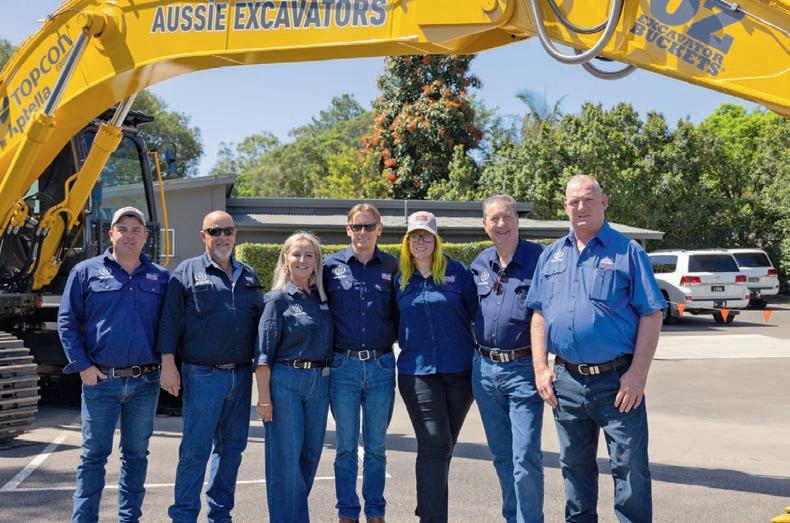


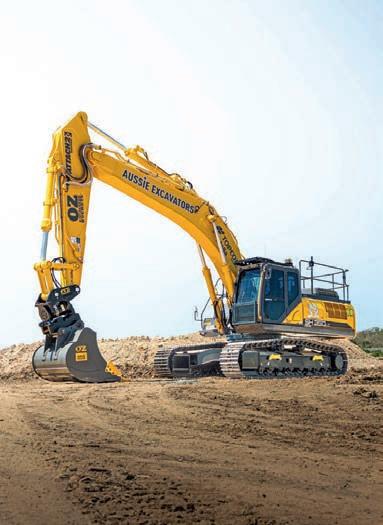

fleet is
Clients know that when they book through Aussie Excavators, the machine will show up, the operator will be skilled, and the job - such as this task at the Brisbane suburb of Springfield - will get done e iciently.
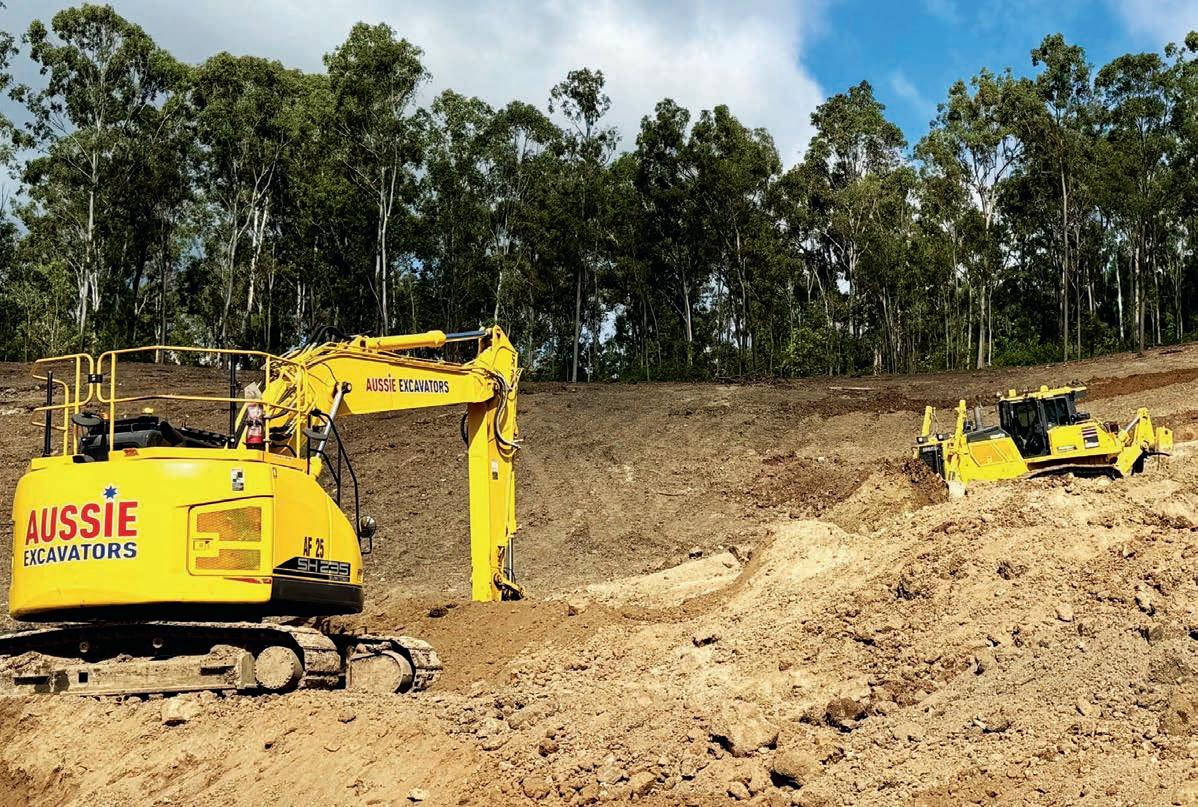
dozers, graders, tippers, Posi-tracks, low loaders and beaver tail trucks — each addition allowed the business to take on more complex work.
“With growth came responsibility: safety systems, maintenance management, operator training, compliance requirements, and scheduling logistics that grew more intricate every year.
“Yet through every change, one thing remained constant: the company’s commitment to doing things properly — good operators, quality machines, honest communication, work delivered the right way.”
No 40-year story survives without resilience. The company has weathered recessions, industry shifts, economic downturns, and the challenges inherent in running a fleet-based operation. There were years that required sacrifice and sheer determination.
During these tough periods, the Sullivans’ values shone strongest. They leaned on their people, strengthened their systems, tightened processes, and pushed through with the same determination that defined their beginnings. Technology changed the landscape too, and the business embraced it. Paper logs and whiteboards were replaced with digital scheduling, fleet management systems, and modern compliance tools. Yet the heart of the business — the relationships — remained the same.
“Aussie Excavators knew they had to evolve

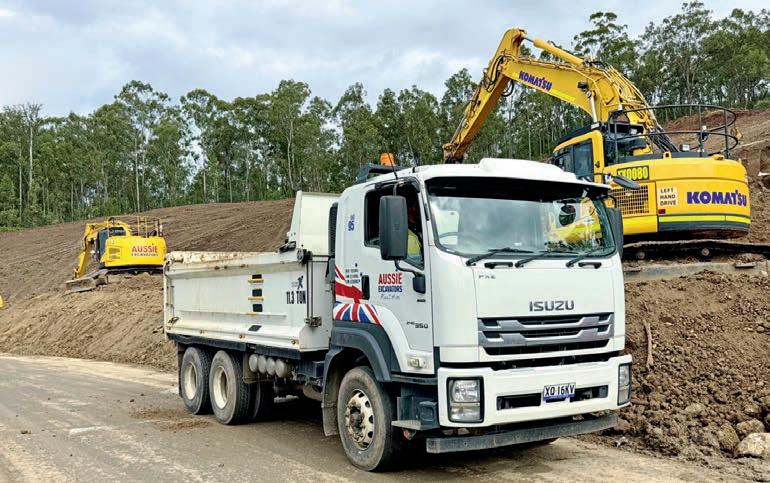
not only to stay with the market, but also to be on the front foot and leading in areas of the industry,” Peter said.
Built on reputation
Across thousands of jobsites, the company earned a reputation for reliability. Clients knew that when they booked through Aussie Excavators Plant Hire, the machine would show up, the operator would be skilled, and the job would get done properly.
“This reputation wasn’t crafted through marketing, but earned over many years — in early mornings, muddy boots, tight deadlines, and clients who kept returning because trust matters in this industry more than anything else,” Peter said.
A legacy lives on
As the business celebrates its 40-year milestone, it stands on the strongest foundation in its history.
With the transition into broader civil contracting well underway, the company is positioned not just to continue, but to thrive.
“This story is about more than excavators and earthmoving. It is about a family choosing to build something lasting. It is about an unwavering commitment to doing things well,” Peter said.
“Forty years of showing up, growing, adapting, and believing in what’s possible. And with the next chapter unfolding, the Sullivan family’s legacy continues — stronger than ever.”











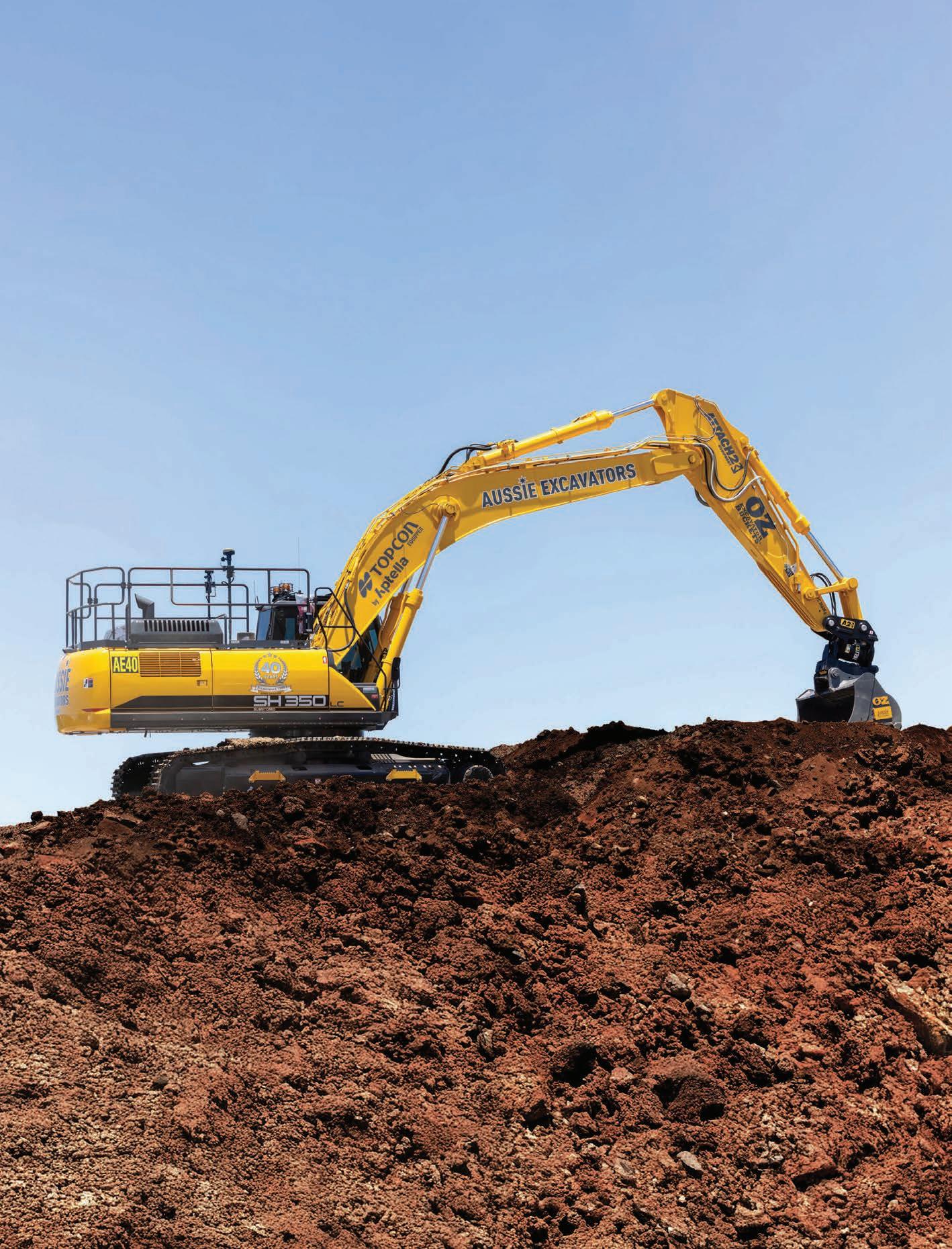

OTR - Tyres Wheels Axles supply earthmover, agricultural, truck, bus and light vehicle tyres and rims from 6” through to 63” in diameter, to blue chip mining, civil contracting, road transport companies, agricultural dealerships and end users.
We maintain a healthy inventory of new and used earthmover tyres of critical sizes and have the ability to custom manufacture Australian Made wheels in 1 of our 16 locations Australia wide.
SALES PHONE: 1300 CALL OTR
For any enquiries please visit www.otrtyreswheelsaxles.com


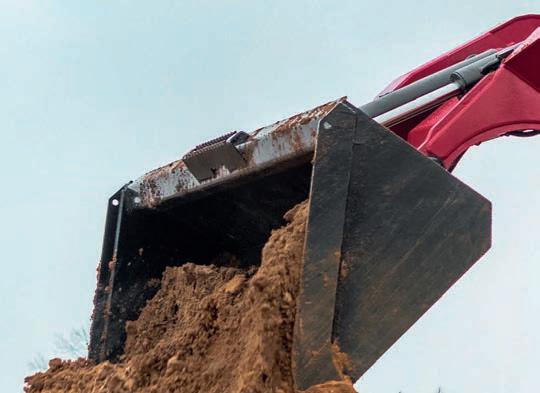


Yanmar’s new Compact Track Loader range delivers construction-grade strength, smooth hydraulics and exceptional stability across all terrains, perfect for residential, commercial and civil jobs.
Operators get a comfortable 360° visibility cab with a suspension seat and a standard 7-inch touchscreen, SmartAssist telematics, return-to-position, self-leveling systems and optional ride control, boost productivity and ease of use.

Built with heavy-duty undercarriages for tough Australian conditions, the new Yanmar CTLs offer the ideal blend of power, durability and smart technology, now available exclusively from Tutt Bryant Equipment.






Interest has been flourishing for the new Cat® Single Life Cutting Edges (SLiCE) for Cat medium wheel loaders, released in May last year.
The attachments are designed to simplify bucket maintenance while reducing operating costs and maintaining the wear life that fleets expect from conventional Cat cutting edges.
Their single-bevel, single-life profile targets customers who either do not flip edges during the mid-life of use or want to eliminate that task from their maintenance program altogether.

Designed with e iciency and durability in mind, single-use cutting edges aim to streamline fleet operations by reducing the tasks associated with traditional edge management without compromising on wear performance.
condition he committed to clearing post-WWII soldier settlement land grants in the Margaret River area.”
Piacentini & Son’s involvement in mineral sands began in the 1950s when Albert contracted to Western Titanium, Cable Sands and Western Sands in the South West of WA. It was the beginning of what was to become a long association with the mining industry.
“Albert’s son Colin joined the family business and in 1969 the company purchased its first scraper,” Justin said.
To get a close-up look at this innovation, we visited the headquarters of WA-based earthmoving business Piacentini & Son, where the SLiCE units were being trialled.

to some contracts of more than five years, in locations across Australia and overseas.
“We recently celebrated our 80-year anniversary. We are a big employer in the South West of WA.”
The range of services Piacentini & Son o ers is vast and varied, from planning and tendering to project execution, equipment supply, contract handling, and human resources.
The company is a service provider in:
• Contract mining and bulk earthworks solutions;
• the design, fabrication and operation of fixed plant facilities;
• heavy haulage and transport;

Piacentini & Son in profile On hand to greet us was Piacentini & Son Maintenance General Manager Justin Rosman, who explained the history of the mining services specialist.
“We started o back in the 40s through Albert Piacentini with a timber mill,” he said.
“Albert was 16 years of age when he arrived in WA from Italy in 1936. By 1944, Albert was running his own timber mill in Dardanup, and in 1949 was allocated a Cat D6 bulldozer on the
“With 10 employees based in a workshop at Yoganup, Piacentini & Son commenced mineral sands earthmoving. From this start, the company expanded, and Albert’s grandsons Brad and Kim also joined the family business.
“In 1998, the company relocated to its current premises at Picton, and by 2001, the mining industry boom saw the company grow from 50 to more than 300 personnel.
“Piacentini & Son has evolved its range of services to include rehabilitation works and mining of gold, iron ore, nickel, coal and bauxite.
“Projects completed by the company range from short-term projects
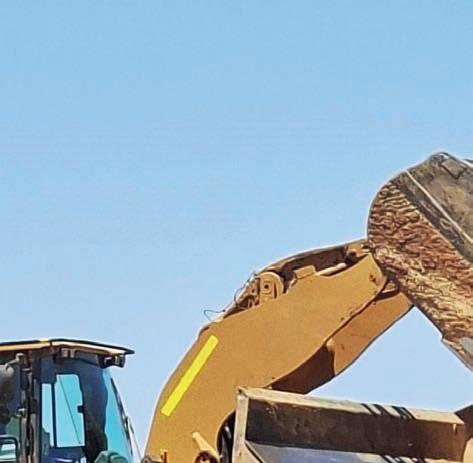
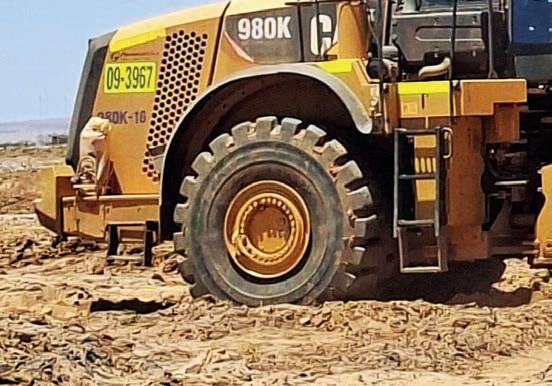
• the supply of mobile mining and earthmoving equipment;
• rehabilitation planning and execution; and
• the supply of raw materials including sand, gravel and limestone.
Central to these operations is a fleet that comprises a large number of Caterpillar machines.
“We have about 450 Cat models
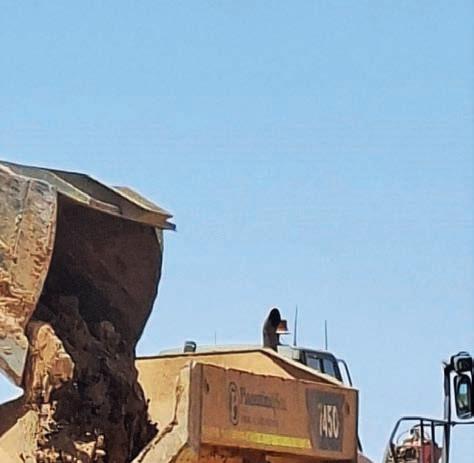
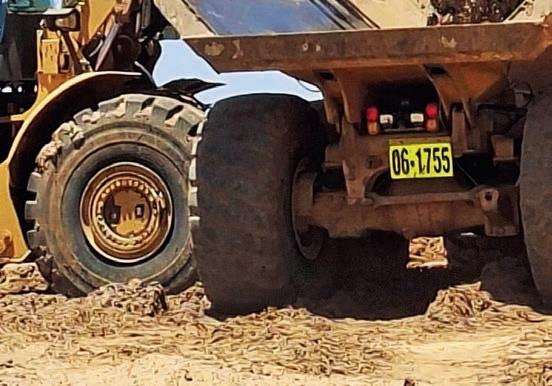
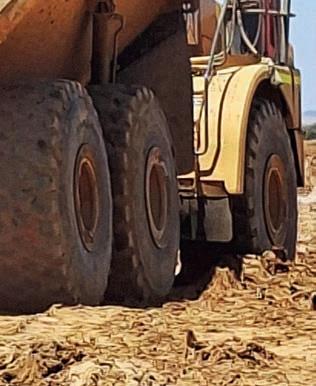
at the moment, anything from D6 to D11 dozers, and graders from 24Ms down to 12Ms,” Justin said.
“In the loader space, we have 966s to 994s, and we use trucks from 773s up to 793s. In short, we have a large variety of equipment for di erent applications.”
With such a full portfolio of jobs, Justin said it was important for the business to keep up with the latest innovations and technology.
“While we’re flexible where we need to be, we also like to push the boundaries and see if we can put new things in place that haven’t been done before that might create e iciencies, or any sort of reduced risk,” he said.
“So we were keen to try out the Cat SLiCE edges to see what benefit they could bring.”
SLiCE of the action
Piacentini & Son Mid West Maintenance Superintendent Zoe Swift echoed Justin’s sentiment.
“We heard about the SLiCE units from our dealer WesTrac and wanted to trial them,” she said.
“We put it to use at the Atlas Project, situated 180km north of Perth. Atlas is a shallow and high-grade mineral sand deposit, with a rocky, abrasive terrain.
“We’ve been using it with a Cat 980K wheel loader, and it’s been proving to come in handy, especially when it comes to easier maintenance.”
The single-bevel SLiCE design removes the need to track edge wear for a mid-life switchover, so the cutting edge is run to planned replacement instead of being removed, turned, and re-installed.
This eliminates the extra shutdown, hardware handling, and inspections normally required to invert a conventional double-bevel edge, which in turn reduces scheduled downtime and frees maintenance teams to focus on highervalue tasks.
With no mid-life flip planned, service intervals become more predictable because the edge is
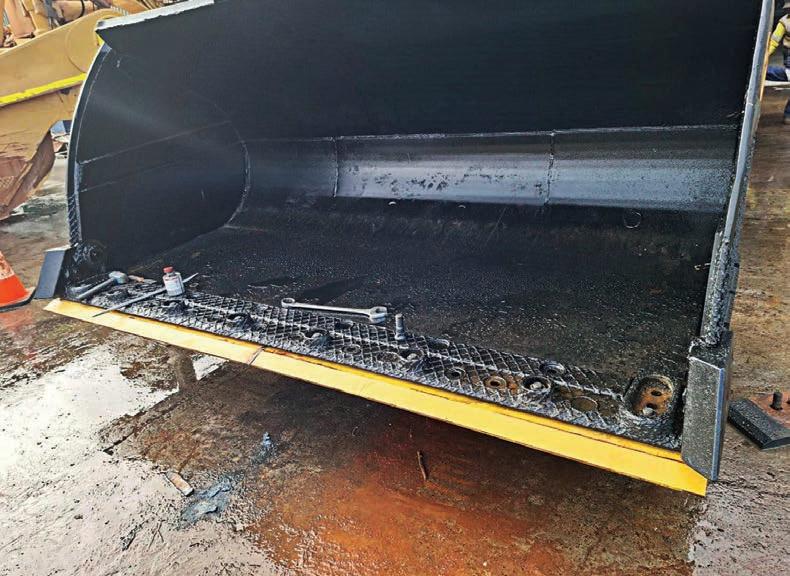
installed once and then replaced at end of life, rather than bringing the machine down twice for the same component.
“It increases our productivity because of the reduced downtime that we used to have to pull in the machine for the original cutting edge,”
Zoe said. “With the SLiCE, we don’t have to turn over the cutting edge at all.”
Fewer intervention points also mean fewer chances for seized bolts, misaligned hardware, or fit-up issues that can extend a simple ground-engaging tool (GET) job into an unplanned outage.
Caterpillar also reports that SLiCE delivers up to 40 per cent lower cutting edge cost compared with legacy Cat GET systems, depending on model and application.
That saving comes from a lower price point per set, reduced throwaway material in the edge profile, and the elimination of additional hardware required for flipping in some traditional systems.
“Because there is no mid-life switch,

customers also avoid the parts and labour cost of a second removal/installation cycle on each edge set,” Zoe said.
“Typical edge change jobs on a medium wheel loader can tie up a technician and an operator for several hours, so cutting one full changeover from the life of every set translates into measurable workshop labour savings and more productive machine hours on the job.”
SLiCE edges are manufactured from throughhardened DH-2 steel, a material used across Cat ground-engaging tools to deliver long, even wear in abrasive conditions.
Hardness is maintained from the surface to the core of the edge, helping resist both impact damage and steady abrasion in applications such as quarrying, rehandling, or heavy construction.
To o set the absence of a second wear surface, the SLiCE profile is thicker than the comparable standard edge option, giving it a similar overall wear life when run to replacement. This allows fleets to move to a
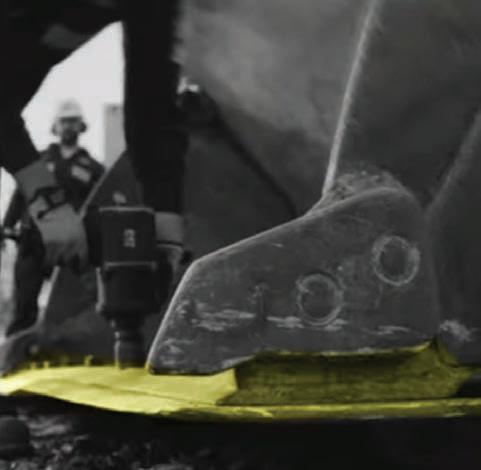


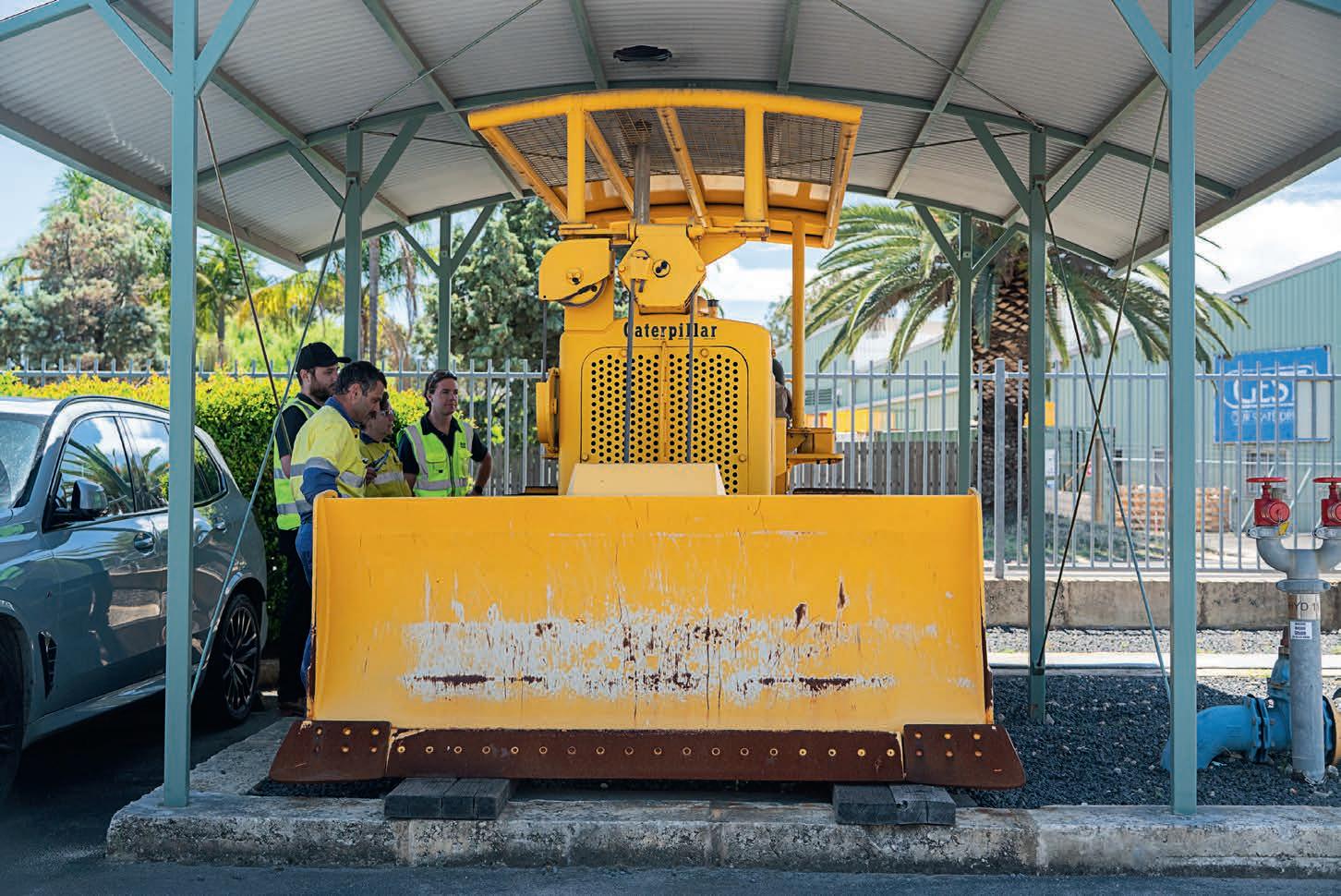
single-life concept without sacrificing hours between edge sets, even in high-impact and high-abrasion work on Cat 950–982 loaders.
Zoe said that the SLiCE set-up also contributed to improved safety for operators.
“Removing the need to flip has a direct safety benefit, because operators and maintenance teams don’t need to lift, manoeuvre, and re-bolt
heavy cutting edges halfway through their life,” she said.
“Handling long, heavy edge sections around a bucket lip typically requires lifting equipment, pinch-point controls, and careful coordination; eliminating one full round of this activity reduces exposure to crush, pinch, and strain injuries during GET work.
“With SLiCE, the edge is only handled at installation and final change-out, and there is no need to break torqued hardware to flip components. Fewer change events also mean fewer opportunities for incidents related to tooling, jacks, or lifting gear around the machine, which supports site safety KPIs and reduces the risk profile of routine maintenance.”
Field experience and Caterpillar testing show that SLiCE o ers similar or better wear life than standard cutting edge systems, so fleets can achieve the same operating hours per edge while stepping down to a lower-cost, single-life option.
Because those hours are delivered without a mid-life shutdown, a higher percentage of total edge life is spent in productive loading rather than on stands in the workshop, which boosts perceived machine availability and jobsite e iciency.

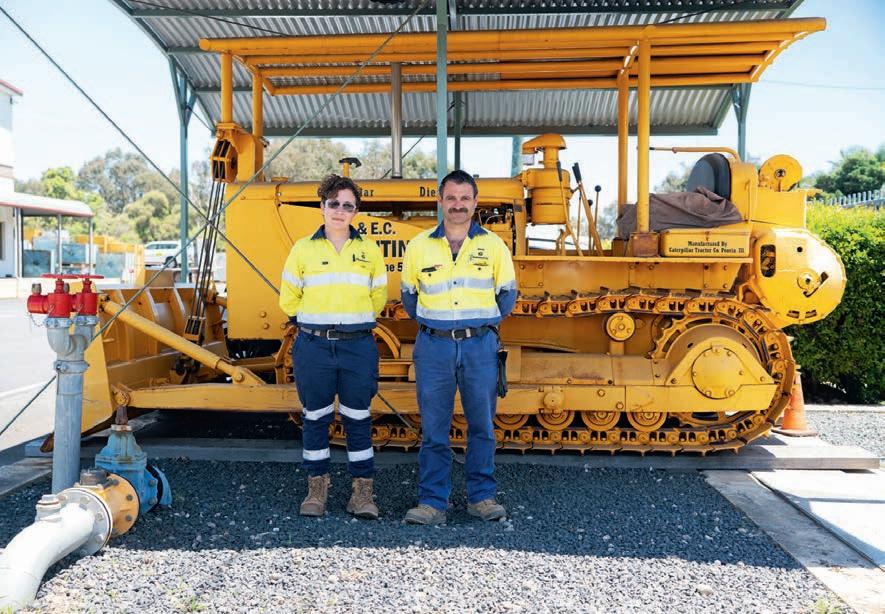
Customers who do not currently flip conventional edges can see up to 45 per cent more value from SLiCE, because they gain longer, more e icient use of each set without paying for unused wear surfaces or additional hardware.
That combination of reduced cost per hour, simplified maintenance planning, and easier, safer servicing drives strong user satisfaction, especially for fleets that prioritise uptime and straightforward GET management over complex change schedules.
“Our SLiCE is fitted to a machine that moves the dirt from an oversized stockpile over to a dry mining unit,” Zoe said.
“So far, we’ve had about 950 hours’ use out of
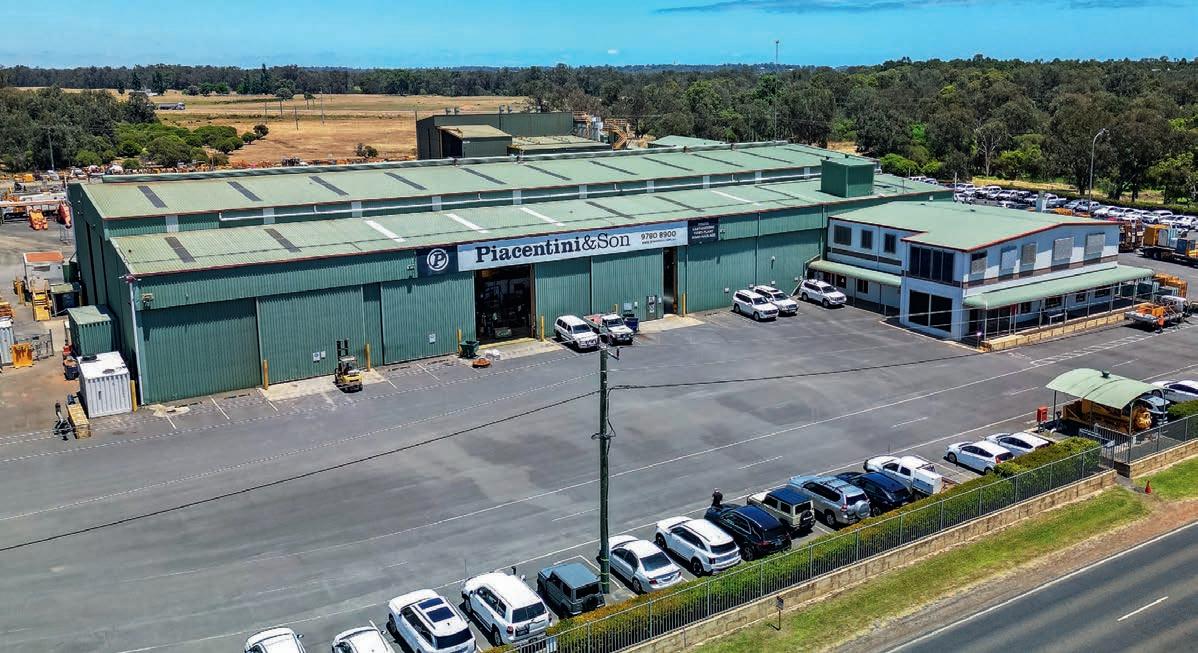
the edge, as opposed to the normal amount for the original style, which was 450 hours. So the part definitely shows an increased life span.”
WesTrac ways
WesTrac GET Product Specialist Angus Scott was just as enthusiastic about how SLiCE has been performing for Piacentini & Son.
“Traditionally on wheel loader buckets, the edges are designed to be switched and used on both sides once one side wears out,” he said.
“What we’ve been seeing is that some customers, including Piacentini & Son, were getting excessive wear on the cutting edge and only really getting to see the life of one side of that bevel.
“The SLiCE product becomes useful for Piacentini & Son as it’s a thicker steel cutting edge than the comparative doublebevelled side.
“The single bevel is designed to be thrown away after use. This reduces the downtime of the machine as the part is lasting longer with fewer change-outs.
“Being of thicker material, it takes a lot longer to wear down than the double-sided cutting edge.”
Stressing the safety advantage, Angus said that because the number of times that maintenance on the machine was diminished, there was less risk of hand and finger injuries when handling, installing and removing the product.
WesTrac Customer Support Manager Josh Wilks said the dealer had partnered with Piacentini & Son for several years and were always liaising together on ways of improving project performance and solving problems.
“We have a close relationship, working between Caterpillar and Piacentini & Son, helping them with the di erent issues that come along with the contracting nature that they conduct,” he said.
“I recommended the SLiCE to them to try, to
help reduce the di erent problems that they can face on site, extending some machine life and lessening workshop time; ultimately, achieving better utilisation of the machine.
“We were in the workshop, looked at how the cutting edge could fit, and Piacentini & Son seemed really happy with the product and the process.
“Installation was easy — we sent WesTrac fitters to the project sites to put it on.
“As Zoe said, it’s still fitted to the machine

as we speak, still carrying out work after more than 950 hours. It’s been a great success story.” Josh said the SLiCE had been fitted to two Piacentini & Son machines, with a view to installing more on the rest of the loaders in the fleet.
“As long as Piacentini & Son is happy at the end of the trial, which they seem to be at the moment, we are looking at about six more machines that we’ll extend the SLiCE out to,” he said.
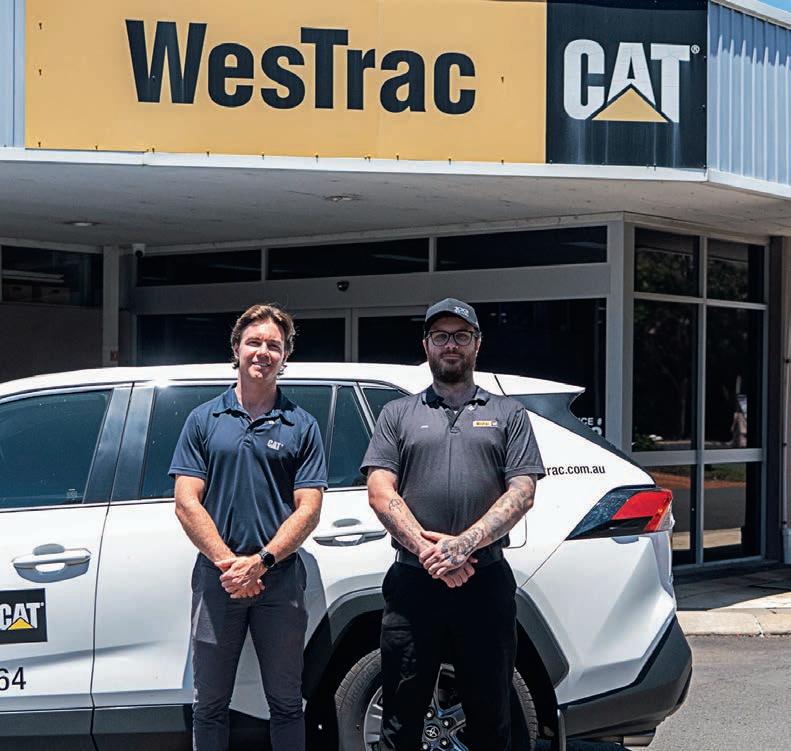







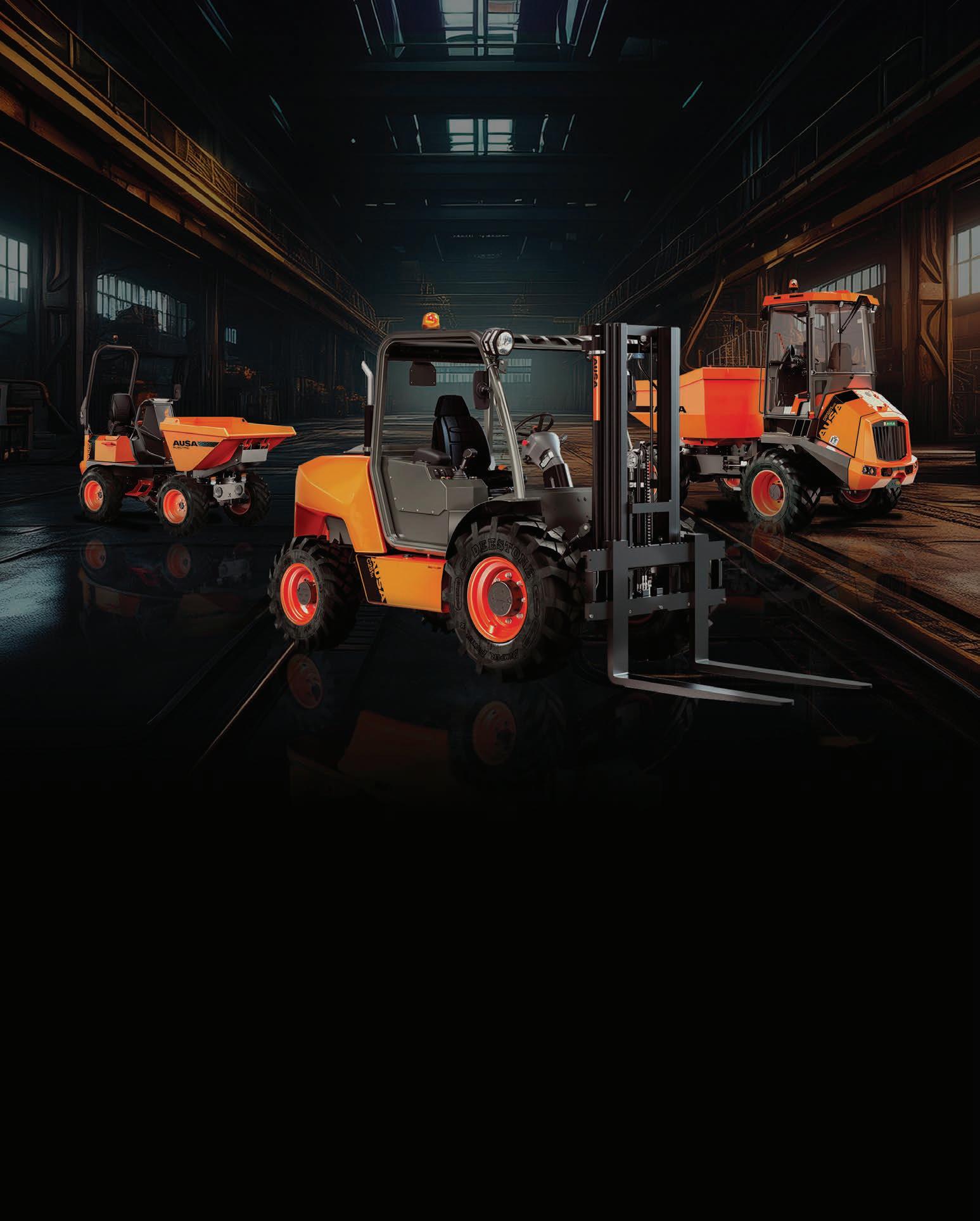
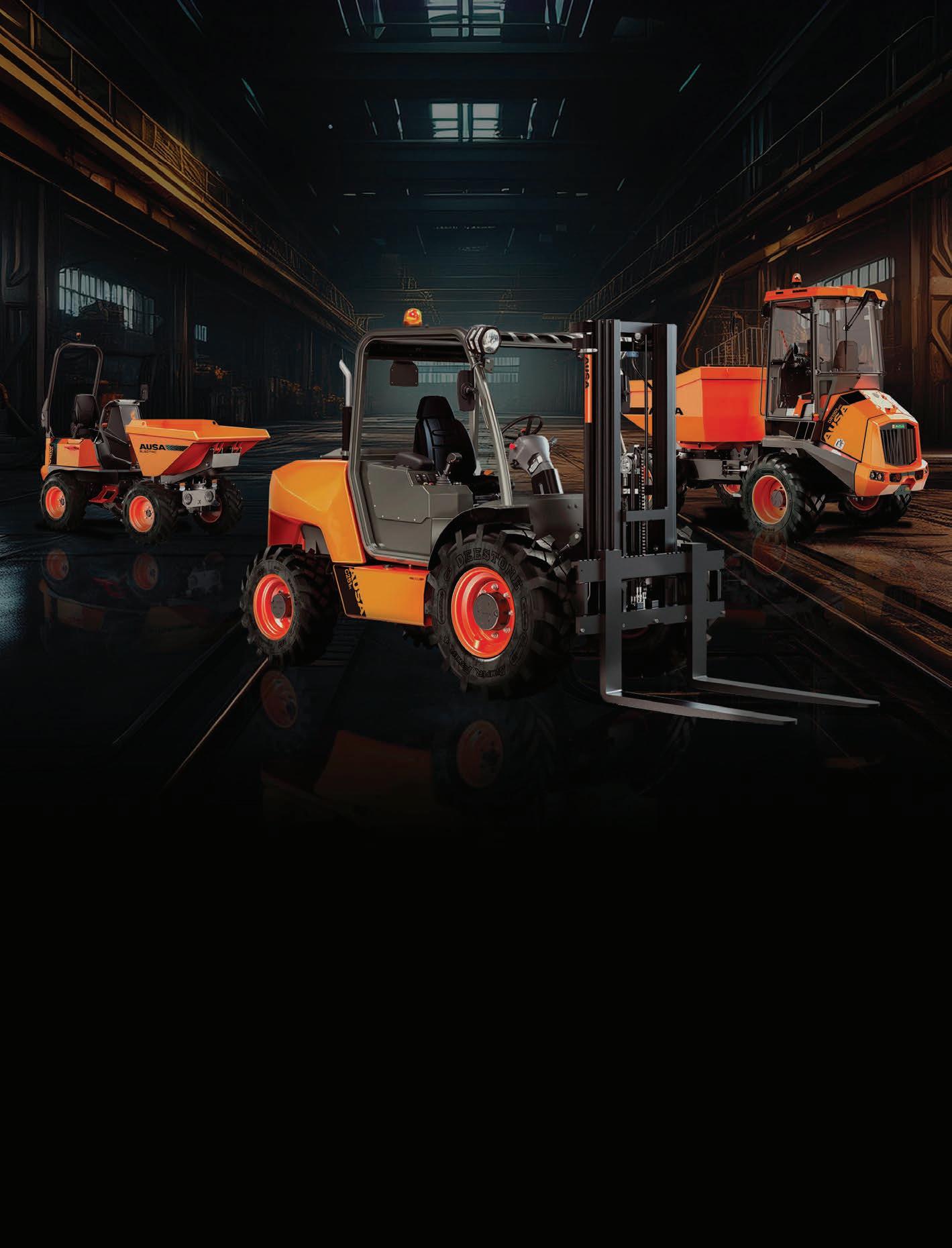

A leap of faith when choosing machinery has paid dividends for a burgeoning earthmoving company.
The Kobelco brand was never meant to be the hero of the BrisWide Excavation story. When founder Josh Scott first went looking for a machine of his own, he was leaning towards other makes — up until supply delays and a lack of interest from those manufacturers pushed him to “take a chance” on a Kobelco SK30SR mini excavator.
That one purchase worked so well that it reshaped the direction of the Brisbane-based business, paving the way for a growing fleet of Kobelco equipment at the heart of BrisWide’s expansion.
We caught up with Josh at one of the company’s project sites to discuss the secret to his success.
Located in the south-east corner of Queensland’s capital city, BrisWide Excavation has grown rapidly over the past two-and-
a-half years, driven by a focus on customer relationships and quality workmanship.
Before setting out on his own, Josh had been actively involved with earthmoving and mining jobs as well as driving trucks interstate, roles that kept him away from his family for long stretches.
Missing the birth of his first son became the catalyst for change, prompting him to step away from the highway and look for a way to work closer to home.
Josh started small, launching a landscaping business focused on softscaping, mowing and backyard work.
“A break came when I landed a project that required hiring in an excavator, and I quickly realised that digging was more lucrative — and physically easier — than pushing a lawnmower around,” he said.
“Although hiring an excavation combo was expensive, it allowed me to deliver jobs
reliably, build trust with customers, and get my name circulating in local networks.”
As the work grew, Josh began looking for his own excavator so he could stop relying on hired equipment and sharpen his margins. It was during the COVID period when machine supply was tight and lead times were blowing out across the industry.
Josh approached several manufacturers but was fended o or asked to “wait his turn”, with some dealers unable to give a realistic time frame on when a unit would be available.
One manufacturer insisted that Josh complete a site induction before a machine could be viewed, adding more barriers for a small but ambitious operator.
As a one-machine prospect, Josh felt he was not a priority. That experience shaped how seriously he would later value personal

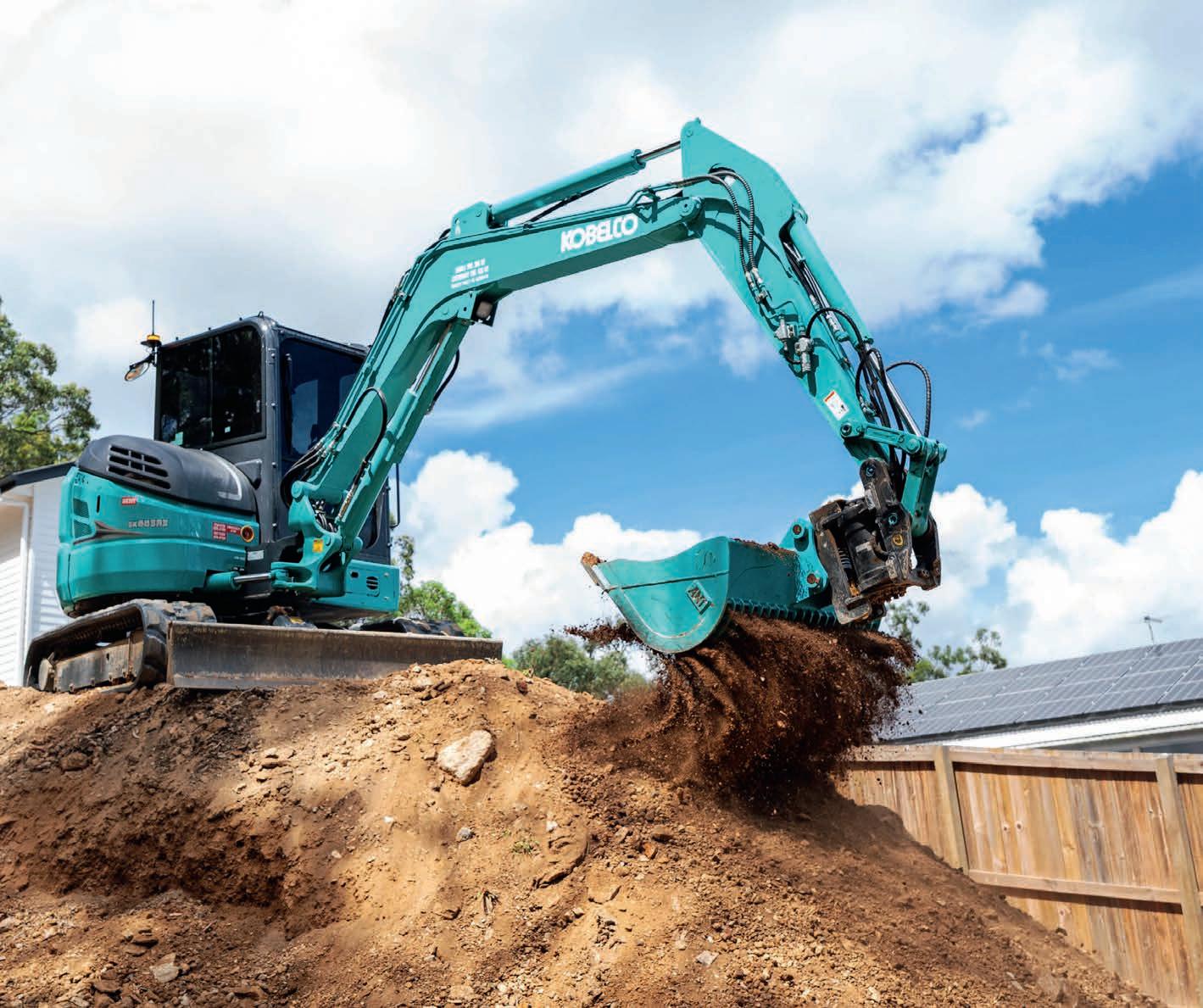
One of BrisWide’s short-radius SK35SR excavators gets to work in a tight location.
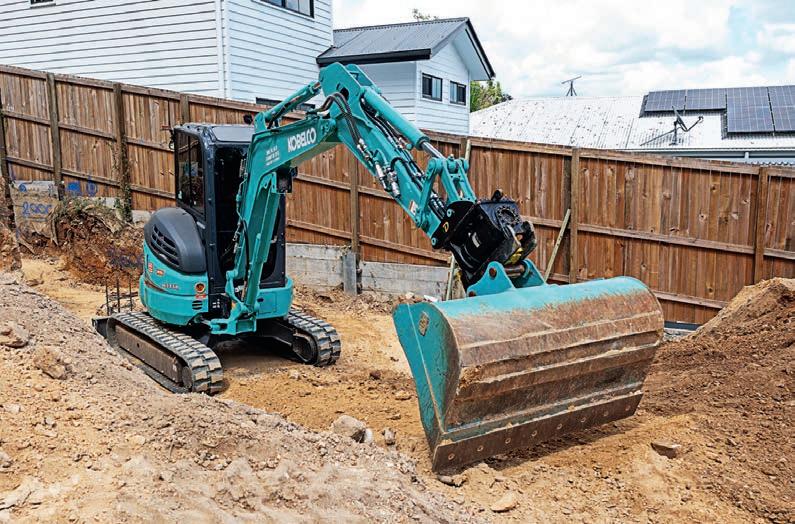
relationships, responsiveness, and straight answers from suppliers.
The turning point came when Josh picked up the phone and called BrisVegas Machinery, the Kobelco dealer in Brisbane, and spoke with sales representative Marco Marabini.
“What started as a loose phone call around 2021–2022 about whether I could buy a machine turned into the beginning of a longterm partnership,” Josh said.
“Marco promised a machine in a few weeks,
and those words came backed with action rather than empty promises.”
Josh’s first machine from BrisVegas was an SK30SR, a three-tonne mini excavator.
It was more than just the power and versatility of the model that impressed Josh — it was the comfort within the compartment.
Coming from years of operating hired opencab units, Josh found the enclosed cab with air conditioning a standout for jobs during both winter and the punishing Queensland summer,
making long days on site far more manageable.
For a business evolving from backyard scraping to more substantial earthworks, that comfort was not a luxury; it directly influenced productivity and the willingness from his team to tackle longer, tougher shifts.
Josh had also wanted a smaller, nimble machine that could access tight urban sites without compromising on capability, and the SK30SR fit the bill.
“Once I had the opportunity to sit in the cab, see the layout and experience the comfort, the decision to move ahead with Kobelco became straightforward,” Josh said.
“Being invited into BrisVegas and treated irrespective of whether I had one machine or 50 reinforced this was a supplier I could grow with.”
Josh admitted that choosing Kobelco was “pot luck at first”, driven largely by the lack of interest from other manufacturers rather than a pre-existing brand preference. But the way Marco backed his brand, combined with the performance of that first SK30SR, meant the gamble paid o .
“The rest is history,” Josh said.
Today, BrisWide Excavation delivers general excavation services for custom home builders, small-scale developments and multi-residential unit projects up to around 50 units.
The scope is deliberately broad: if a customer needs a shipping container moved or even “wants to rent a shovel”, Josh’s attitude is simple — “we’ll get it done for you”.
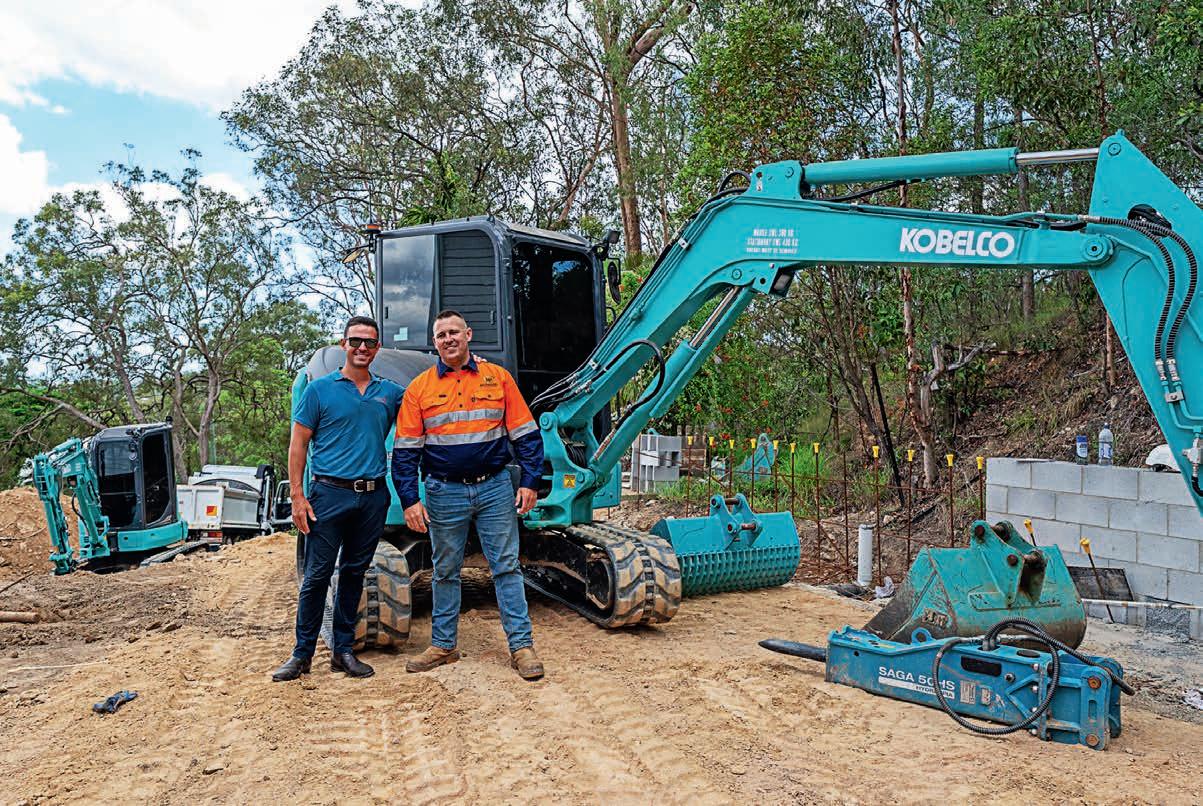
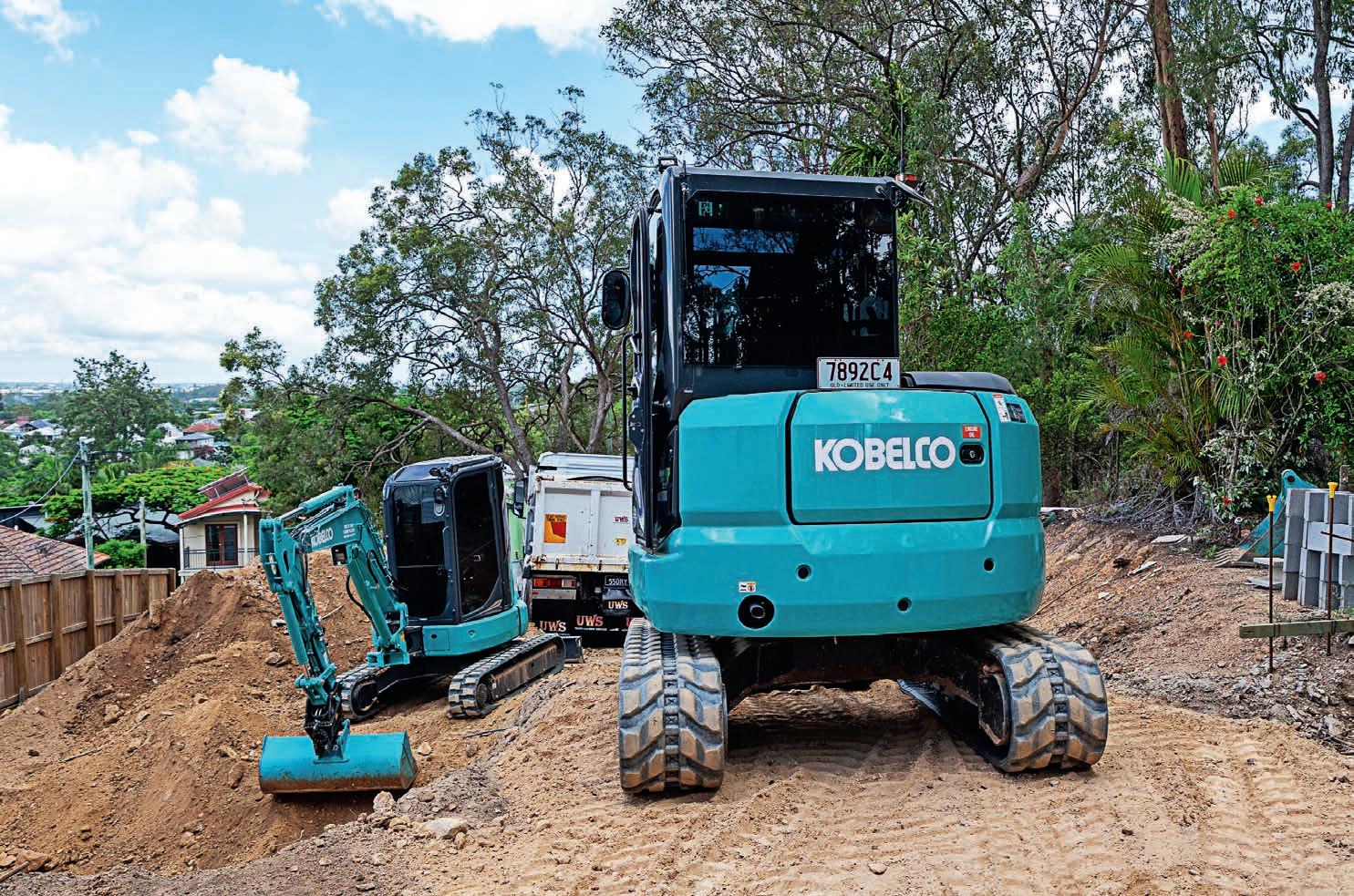
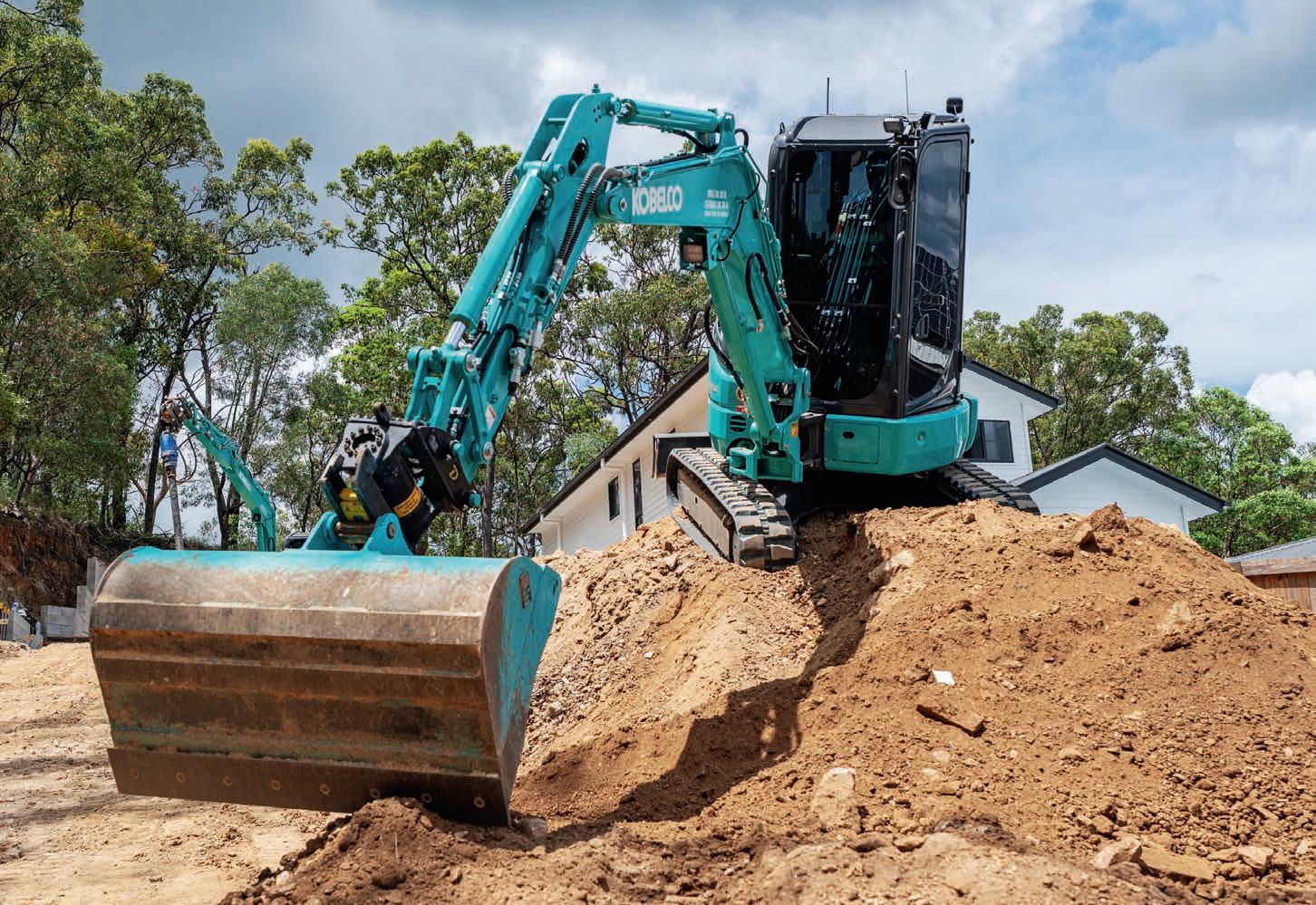

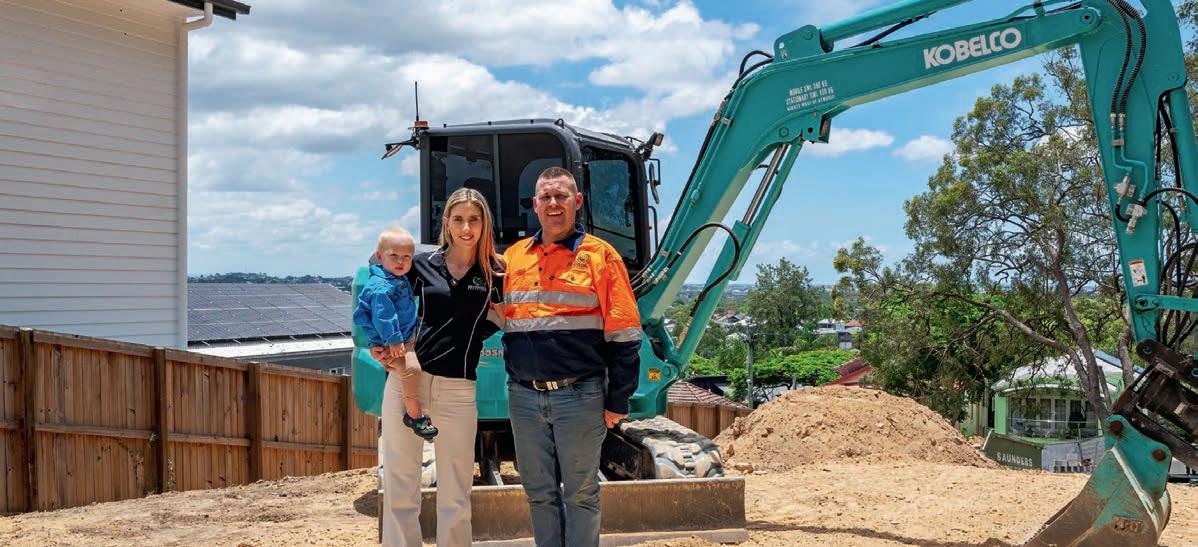
“The core of the business is about resolving problems for customers rather than just supplying a machine and an operator,” he said.
Careful not to lose sight of his roots, Josh still takes on smaller jobs and refuses to turn away the core work that helped establish BrisWide’s early reputation.
“At the same time, larger builders are increasingly approaching the company with bigger, more complex projects, and the growth is noticeable,” he said.
“Watching those projects and our long-term customers scale up — for example, a retainingwall builder who now engages BrisWide for a 2000-square-metre sub-grade — is one of the milestones I find most rewarding.
“We’re watching our customers grow, and we are growing with them.”
Kobelco is king
What began with that single SK30 has evolved into a fleet centred on Kobelco excavators, with machine number six already on the books and more to come.
BrisWide now runs units from the SK17SR mini excavator — “the little baby of the fleet” used for tight access and odd jobs — up to the SK55SRX in the 5.5t class.
When heavier iron is needed, the business will generally hire in Kobelco machines up to 23t to maintain consistency in feel, controls, and performance across jobs.
Attachments play a critical role across the fleet, reflecting the demanding nature of the work.
“BrisWide uses hydraulic grabs, augers for boring holes, rock breakers and equipment for handling concrete and other heavy materials. The machines are expected to handle heavy, hard work without complaint,” Josh said.
That harsh duty cycle has only reinforced Josh’s confidence in the machines and the brand.
Among the current fleet, Josh highlights the SK55SRX as one of his favourite machines, and the clear “workhorse” of the business.
“It’s hands down a great all-round machine,
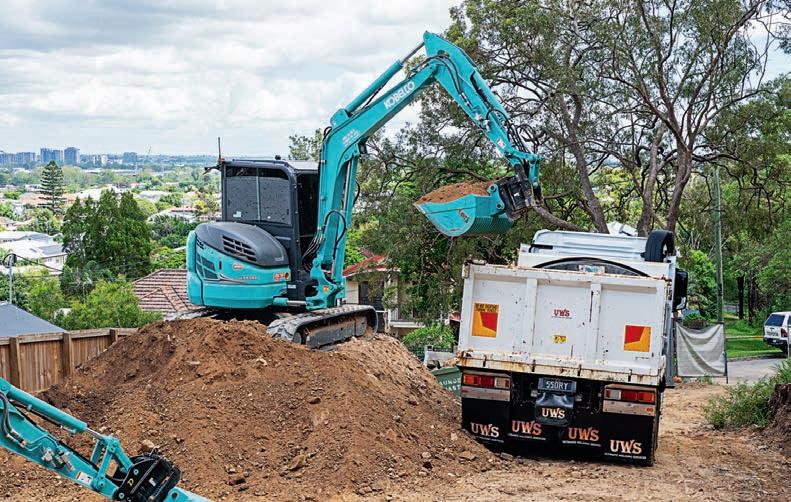
and our team loves the smooth, comfortable operation,” he said.
Cab design and ergonomics are central to why this model and its stablemates have become so popular inside BrisWide.
“The big screen display, the sleek, automotivestyle interior, and the overall comfort make the machine feel more like sitting in a car than in an excavator cab,” Josh said.
“For a team that spends long days in the seat, that environment is not just a nice-to-have — it plays directly into operator morale, fatigue management and, ultimately, productivity on site.
“An operator told me that he had spent a lot of time with another brand before jumping into this machine, and immediately noticed how smooth the set-up was.”
Comfort across the range
Indeed, cab comfort is a high Kobelco priority.
Also speaking at the work site, Marco said that the latest Kobelco Dash-7 short-radius machines — including models such as SK26SR,
SK28SR, SK30SR, SK35SR, SK45SR and SK55SR — shared a common cab philosophy.
“Rather than treating each size class as an isolated design, Kobelco has standardised the cab layout and configuration to provide a similar level of comfort and familiarity across the mini excavator range,” he said.
“That consistency means an operator can move between machines without having to relearn the interior or hunt for controls.
“The cabs are packed with operator-focused features, such as Grammer suspension seats, phone holders, Bluetooth radio for calls and music streaming, sliding windows, auto idle, and cup holders.
“Hydraulic flow adjustment for tilt and main auxiliary circuits allows fine-tuning of attachment performance, while PIN code set-up adds security and control over who can operate the machine.
“The result is an ergonomic, user-friendly workspace designed to keep operators comfortable and in control over long shifts.”

Visibility and space are two other standout elements of the Kobelco cabs that align closely with the demands of BrisWide’s work.
Marco pointed out large sliding windows that open in both directions, providing excellent vision around the machine, and helping operators work safely and accurately in tight residential or multi-res sites.
The generous cab space also means that taller operators can sit comfortably for extended periods.
“When you’re doing big days and sitting in a machine for hours on end, you want to be in comfort,” Marco said.
“It’s not about luxury; it directly a ects how long operators can work e ectively before fatigue sets in, how precisely they can control the machine, and how likely they are to look forward to getting back in the cab the next day.
“For a business like BrisWide, where heavy workloads and tight deadlines are the norm, this level of operator-centric design is a key productivity lever.”
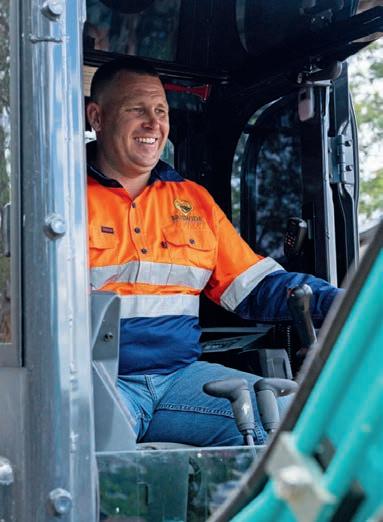

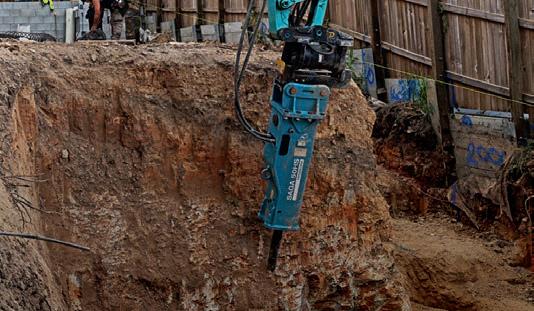
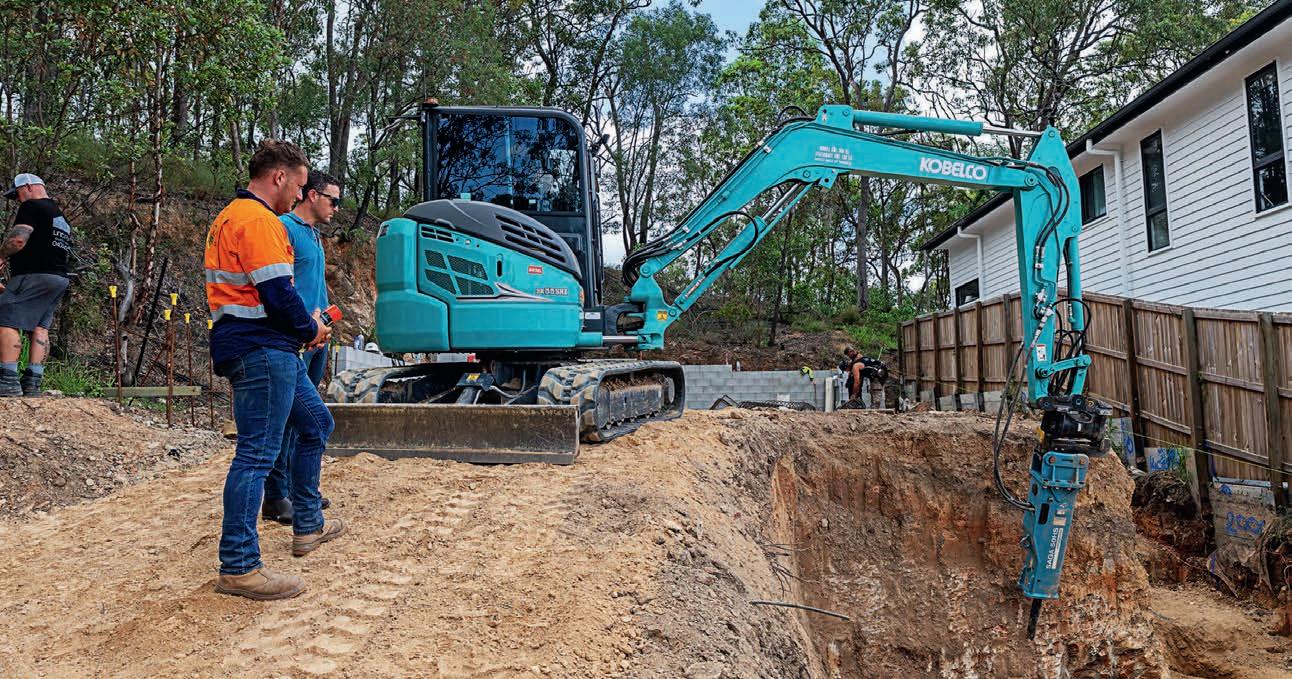
For Josh, the machines themselves are only part of the story; the support network behind them is equally critical.
He talks about the BrisVegas parts and service teams with the same enthusiasm he reserves for the excavators, highlighting their flexibility and responsiveness.
Servicing is arranged on site at BrisWide’s yard on weekends to minimise downtime, and the dealer is happy to accommodate that schedule.
“On the parts side, the process is straightforward: the team knows the machines, and if they do not, they will quickly look them up and get what is needed without unnecessary back-and-forth,” Josh said.
“Parts are usually on the shelf, and if not, they are in transit and arrive within a couple of days, which means our machines are never down for long.
“That reliability underpins our confidence to take on larger projects and run a busy schedule without fearing extended breakdowns.”
Marco attributed much of Kobelco’s strength in the civil space to the company’s specialist focus.
“Globally, Kobelco makes just two core products — excavators and crawler cranes — and the emphasis is on civil-spec excavators up to 85 tonnes,” he said.
“Unlike some competitors that spread their attention across a broad portfolio and place greater emphasis on the mining sector, Kobelco’s reputation in Australia rests squarely on being an excavator specialist.
“That single-product focus carries through the entire chain, from customer to dealer to Kobelco Australia and on to the engineers who design and build the machines.
“Feedback does not fall on deaf ears: improvements requested by the market are taken seriously and often appear in model updates.
“Spare parts are also streamlined around civil-spec excavators, which ensures
availability and reinforces Kobelco’s reliability in that segment.”
Marco said the relationship with BrisWide continues to flourish.
“It’s fantastic to see how quick it all went: from one mini excavator purchase growing into a fleet approaching double digits,” he said.
“Josh originally rang chasing a price on a mini excavator just after COVID, at a time when stock was hard to come by, and was leaning towards another brand that could not deliver in time.
“BrisVegas followed up, secured the deal, and delivered the first machine in what was then considered a quick time frame.
“Since then, the connection has strengthened with every additional unit bought, and every job successfully completed using a Kobelco.
“For us, everyone matters, whether they are a one-machine operation or running a large fleet.
“Our team works hard to be reactive and adaptive to urgent customer needs.
“In return, we value customers like BrisWide who remain polite, courteous and understanding when issues arise, knowing that support will arrive as soon as possible.”
Josh is clear that the BrisWide story is still in its early chapters.
“I like building big things, and have my sights set on larger machines in the coming years as the business takes on more substantial projects,” he said.
“The focus remains on building better relationships and maintaining the ones that helped me get started, including those foundational customers whose own businesses have grown alongside us.”
When it comes to machinery, Kobelco is firmly embedded in BrisWide’s future.
“I can see Kobelcos in our business plans indefinitely,” Josh said.
“I no longer even look seriously at other products. Every now and then, I’ll glance over the fence at another manufacturer, and am reminded of why I continue to come back to Kobelco.”


























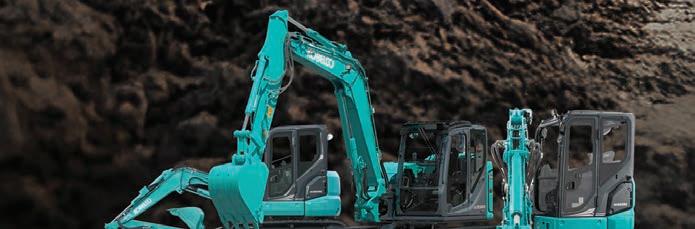
BUILT FOR RELIABILITY. BUILT FOR PERFORMANCE. BUILT LIKE NO OTHER. Every shift tests your equipment, and in this industry, reliability has to be earned—proven in the dirt, not in the brochure. Kobelco delivers it the hard way: through rigorous testing, durable Japanese engineering, and components selected for endurance, not shortcuts. It’s performance you can plan around, reliability you can bank on, and uptime that keeps your business moving forward. When your reputation depends on a machine that won’t let you down, Kobelco is built for it from the ground up. kobelco.com.au

When choosing machinery, factors such as productivity, reliability, and the ability to operate safely in demanding conditions play a decisive role in determining their place on the site.
In the ground, it appears within soft, soapy, flaky mineral masses or veins, often white, pale green, grey, or brownish, with a greasy feel and dull to shiny appearance. It’s also easily scratched because it’s the softest mineral known.
This is talc: a naturally occurring substance formed from magnesium, silicon, and oxygen. Its supple composition makes it valuable as a lubricant and filler, used in paper, paints, plastics, ceramics, and rubber.
On a global scale, most of the talc ore is mined by Imerys, a French multinational corporation that was founded in the late 19th century. Evolving through mergers and acquisitions, it has become a major producer of specialty minerals.
The Imerys portfolio includes the Three Springs Talc Mine in Three Springs, Western
Australia, the largest talc reserve in the Southern Hemisphere.
The deposits were first discovered in the area in the 1940s, and mining began soon after by the Western Mining Corporation, which operated the site for many years before selling it to The Luzenac Group and then to Rio Tinto in 2001.
In 2011, Imerys expanded its presence in the talc market by acquiring Three Springs Talc from Rio Tinto and several of its major mining operations.
Three Springs to mind
Today, the mine produces roughly 110,000 tonnes of talc annually, which is sold into various industrial markets. The ore body is rich in magnesium carbonate and known for highpurity, high-brightness talc.
We ventured out to the site to speak to Operations Manager Gary Turley and Mines
and Process Manager Rebecca Bussenschutt about the mine and the equipment that made it tick.
The first thing we see is the sophisticated talc processing plant, which receives raw talc ore extracted via open-pit methods and processes it — crushing, screening, and beneficiation — to produce tailored talc products for use in paper, plastics, ceramics, paint, and other applications.
“Imerys is the world’s leading supplier of mineral-based specialty solutions for the industry, with annual revenue of 3.6 billion euro and 12,500 employees in 40 countries,” Rebecca said.
“It draws on its understanding of applications, technological knowledge and expertise in material science to deliver solutions that contribute essential properties to customers’ products and their performance.
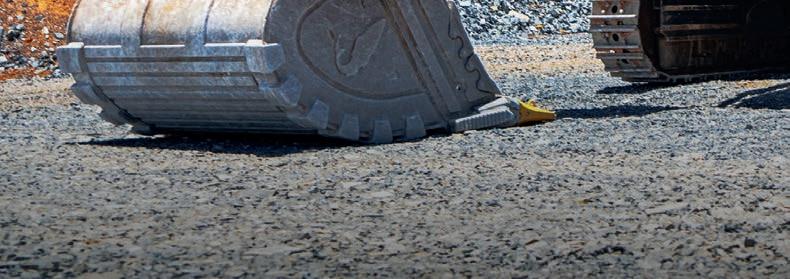

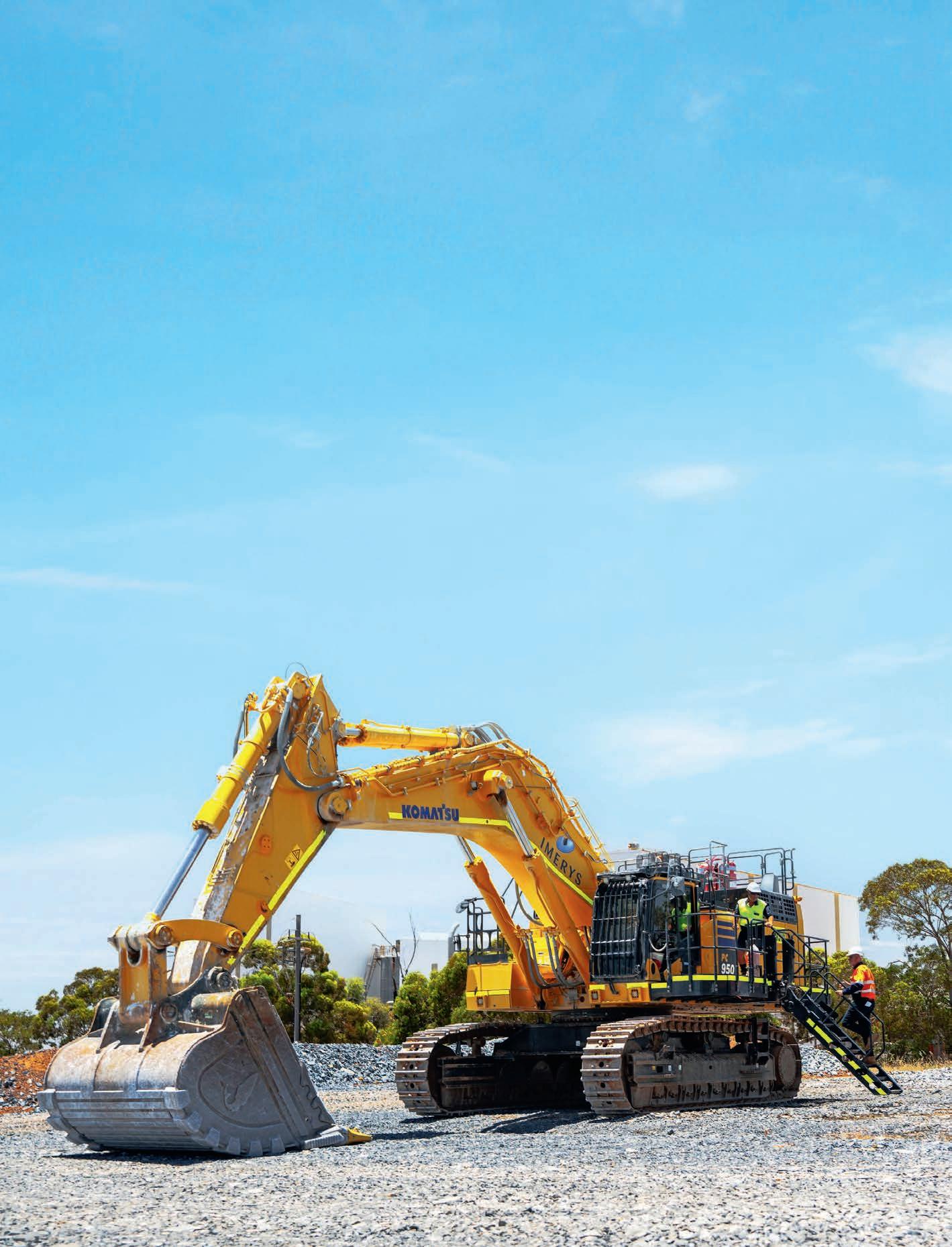
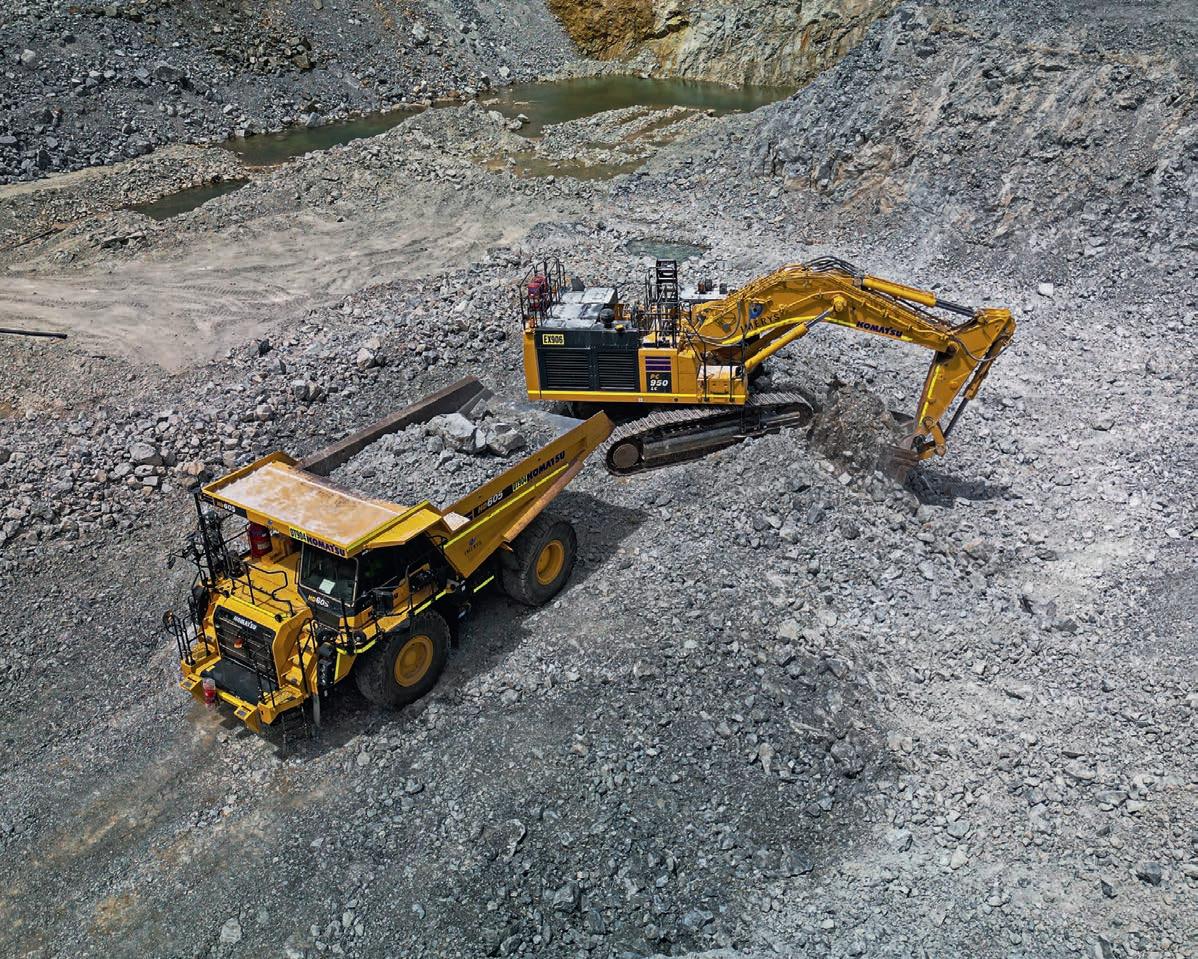

“As part of its commitment to responsible development, Imerys promotes environmentally friendly products and processes, while supporting its customers in their decarbonisation e ects.”
Rebecca said the site was predominantly farmland when the talc riches were discovered.
“Some local farmers were looking for a water source for their livestock and came across unusual rocks, which were then discovered to be talc,” she said.
“They started underground mining in 1948, and we’ve been mining here ever since.
“We’ve moved with the times, coming from underground to now surface mining, and we’ve been through a number of pits, currently on our fourth, and planning a fifth.”
Komatsu is king
There’s little doubt as to the preferred make of equipment that drives the Imerys operations. Of the 13 machines used on the site, 10 of them are Komatsu.
These include two Komatsu large hydraulic excavators, which o er excellent digging performance: a larger PC1250 excelling in sheer force, and a smaller PC950 that integrates modern technology for cost savings and safety.
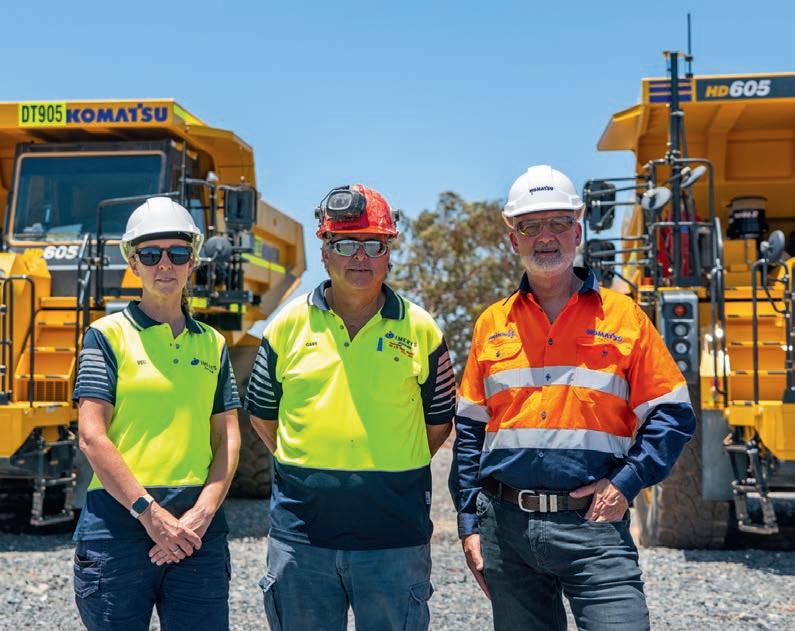
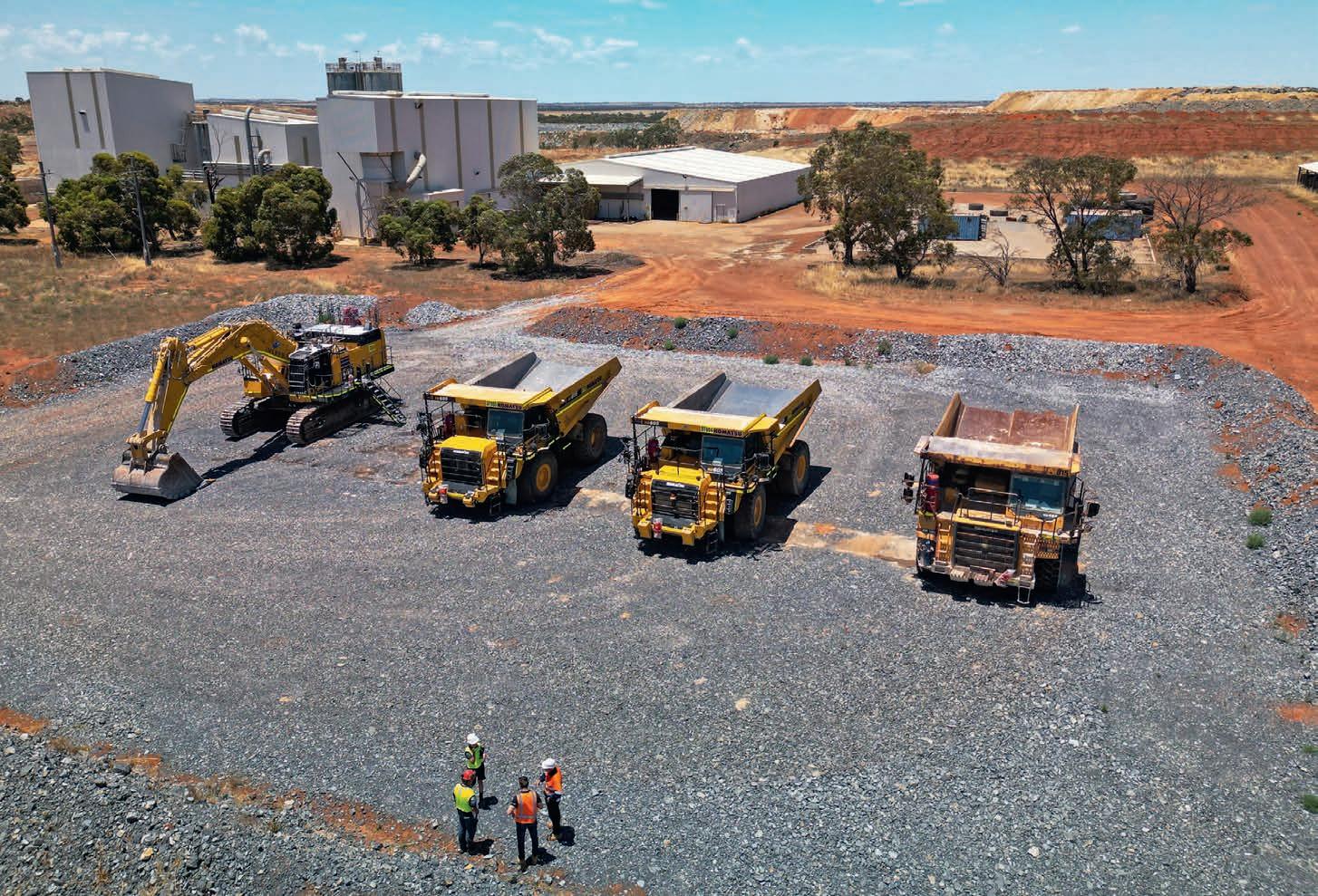
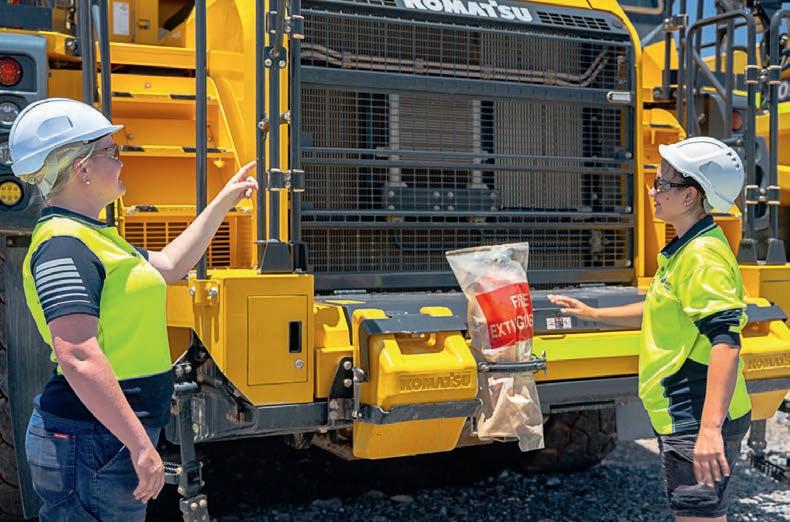

“We also have a number of dump trucks, such as a HD605-8, HD605-10, HD465-7 and HD465-10,” Gary said.
“The other equipment we have includes WA500 and WA600 large production wheel loaders.”
The relationship with Komatsu began in 2004, when the mine tested the waters with the purchase of two HD465-7 trucks and a PC1250 excavator.
“It’s been 21 years now and the partnership
keeps growing in strength,” Gary said.
“We’ve had such good reliability from the Komatsu equipment we’ve had over that time.
“And not only were we impressed with the machines, but we also appreciated the back-up service we received from the Komatsu branch at Geraldton, which is close by.
“Komatsu is always available to help us out. It’s only a phone call away to get tech support and other services that are fast and reliable.
“They’ve got great experience. They’ve got
technicians who’ve been looking after us for many years. They do all the servicing, supply all oils, and generally look after the equipment.
“Getting parts is not a problem. If they’re not in stock in Geraldton, we get them overnight straight out of Perth. It’s never too much trouble.”
Ensuring that Imerys is well looked after is Komatsu Sales Account Manager Tony Didio, who only took on the role in 2024, but is well aware of the mine’s legacy and connection with the manufacturer.
Tony took the time to highlight a couple of the machines that were working hard during our visit: the HD605-10 truck and the PC950 excavator.
“The truck was only delivered in March last year and is suitable for Imerys for a number of reasons,” he said.
“The quarry tray on the back will easily hold 40 cubic metres of dirt, which is equivalent to 62 tonnes of material inside the tray.
“We also specced up many safety features on this particular build for Imerys, such as auto grease and fire suppression systems, and we included a fast fuel and lubrication evacuation set-up on this particular truck.”
Lubrication evacuation is the process of quickly and cleanly removing used oils, coolants, and other fluids from machinery or vehicles, typically using specialised vacuum systems or valves that create suction or pressure to transfer fluids from the equipment into a waste container, minimising spills and mess for safer, faster maintenance.
“So there is less likelihood of a spill happening because they’re auto-sucked and replaced,”
Tony said.
The PC950 was another new addition to the fleet, also acquired last year.
“It’s a brand-new model for Komatsu. It sort of sits in between the PC850 and a PC1250, suitable for the 95 to 100 tonne class range,” Tony said.
“This particular machine that we delivered has been fitted with a six cubic metre rock bucket, which has got the extra armour on the front to deal with the material that comes out of the quarry.
“And like the truck, the 950 came out of the factory with a lot of other safety features.
“It’s got a full Tier 4 certified engine, which meets the EPA regulations for lower carbon emissions.
“The PC950 comes with a standard walkway and safety rails to the cabin area, and also along the top deck, enabling any operator or field service technician to comfortably walk around on the machine without the fear of falling from such a height.”
Tony said that the PC950 and the HD605 were “very well paired machines”.
“They work well together in a quarry environment because of the sheer size of the trays and the placement of the bucket,” he said.
“The number of passes from the 950 into the HD605 is a good fit, making it easy to fill up that 40 cubic metre tray with 62 tonnes of material on it.”
The safety features were also welcomed by Gary and Rebecca.
“As Tony said, they have a hydraulic access stairway, wide walkways, and fall prevention handrails for easier, safer access and maintenance,” Gary said.
“Other key operator safety additions include auto-locking control levers, an engine shutdown secondary switch, and a retractable seatbelt with a reminder, reducing fatigue and preventing accidents.”


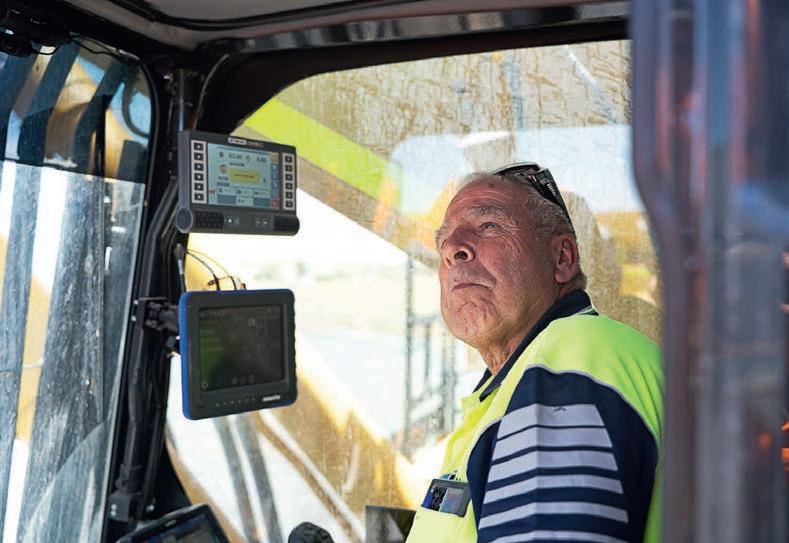
Rebecca
“We’ve got a KomVision 360-degree camera system and additional mirrors,” she said.
“The operator is looked after with a comfortable driver’s seat and passenger seat, while there is LED lighting, including around the central maintenance area, which improves visibility.”
Tony said the fact that the older machines were still being used was testament to the Komatsu reliability.
Other points that made Komatsu machines a good buy included the purchase price and the life cycle costs, o ering sound return on investment.
Tony said that Komatsu also had a specialist team in Perth that engaged with Imerys on the Smart Quarry system: the company’s fleet management solution that focuses on site management, production optimisation,
machine health monitoring, and proactive maintenance and safety.
“We help set up and maintain the dashboards to access the data and telemetry that’s provided from Smart Quarry, to enable operators to gain better e iciency and productivity through that software,” he said.
“Our strategy with Imerys also involves looking at their replacement machine strategy over the next 12 to 18 months on other aged equipment, and how we can replace it with newer models that show increased safety equipment as well as productivity gains, whether it be through fuel savings or the machines.
“We will work to ensure that we meet Imerys’ current policy and standards around improving sustainability and emission controls, as well as lifting production and e iciency.”
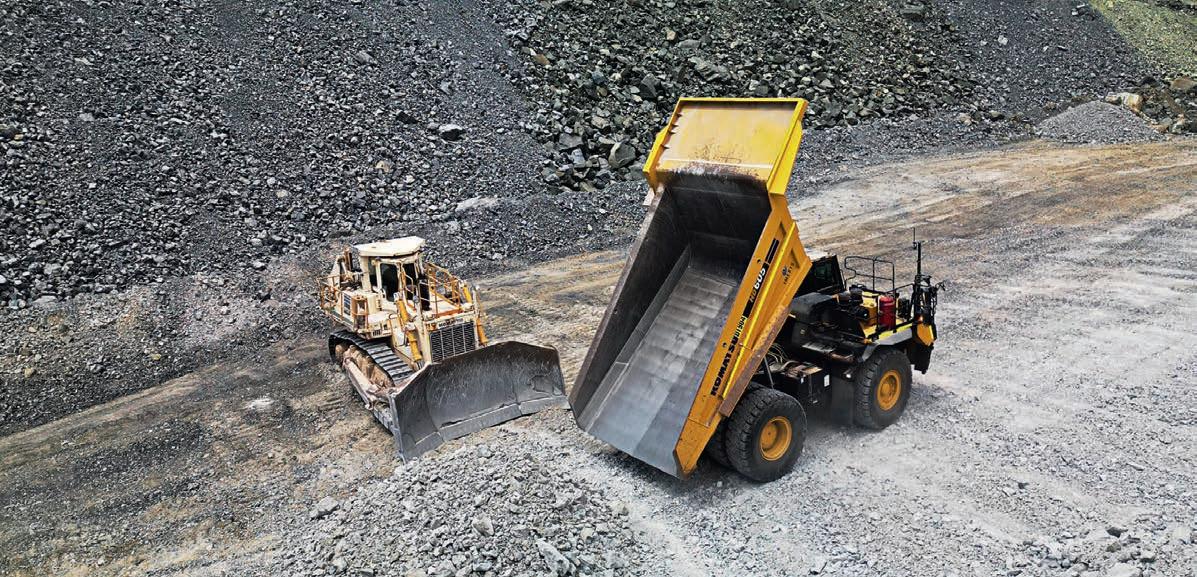
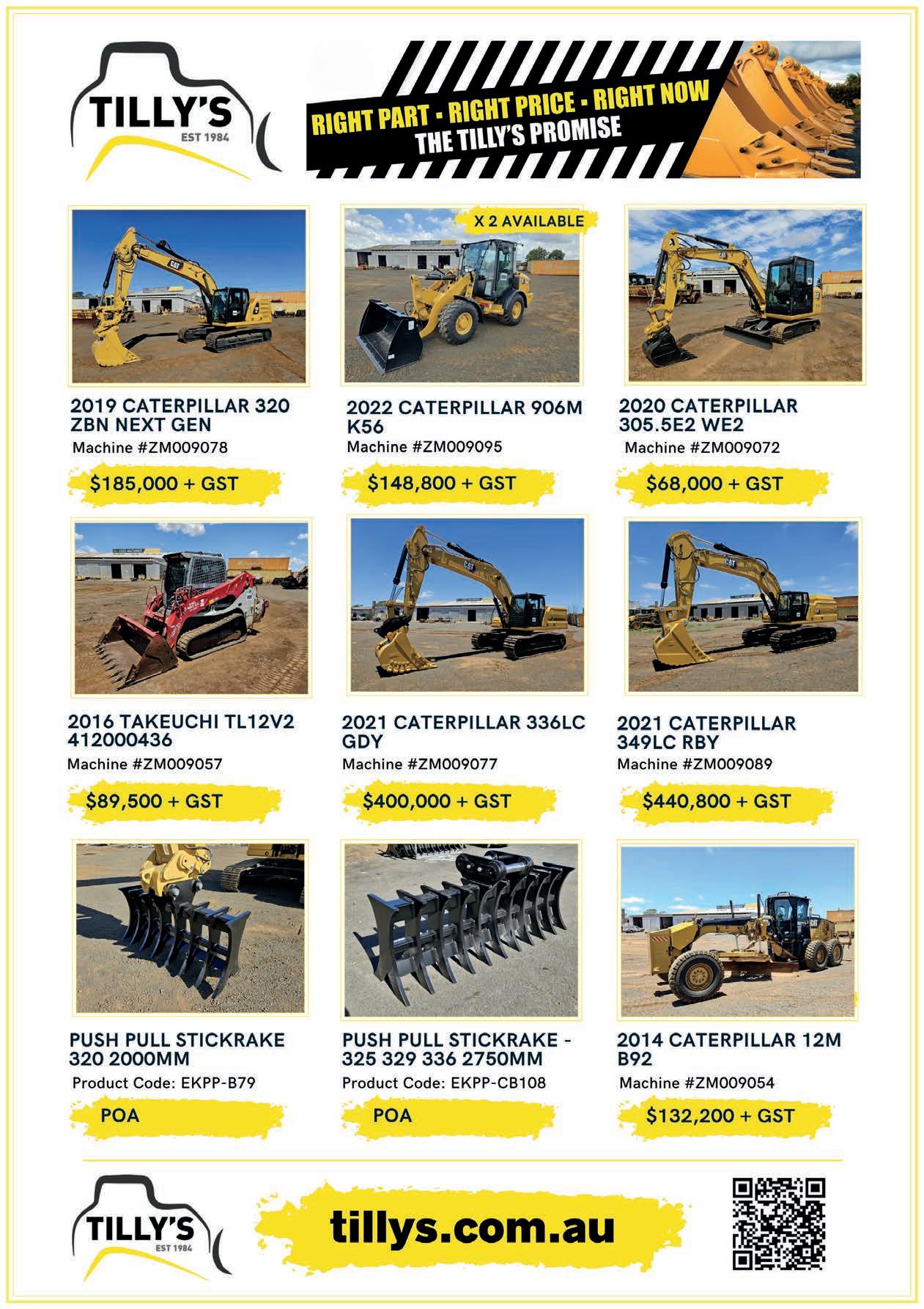
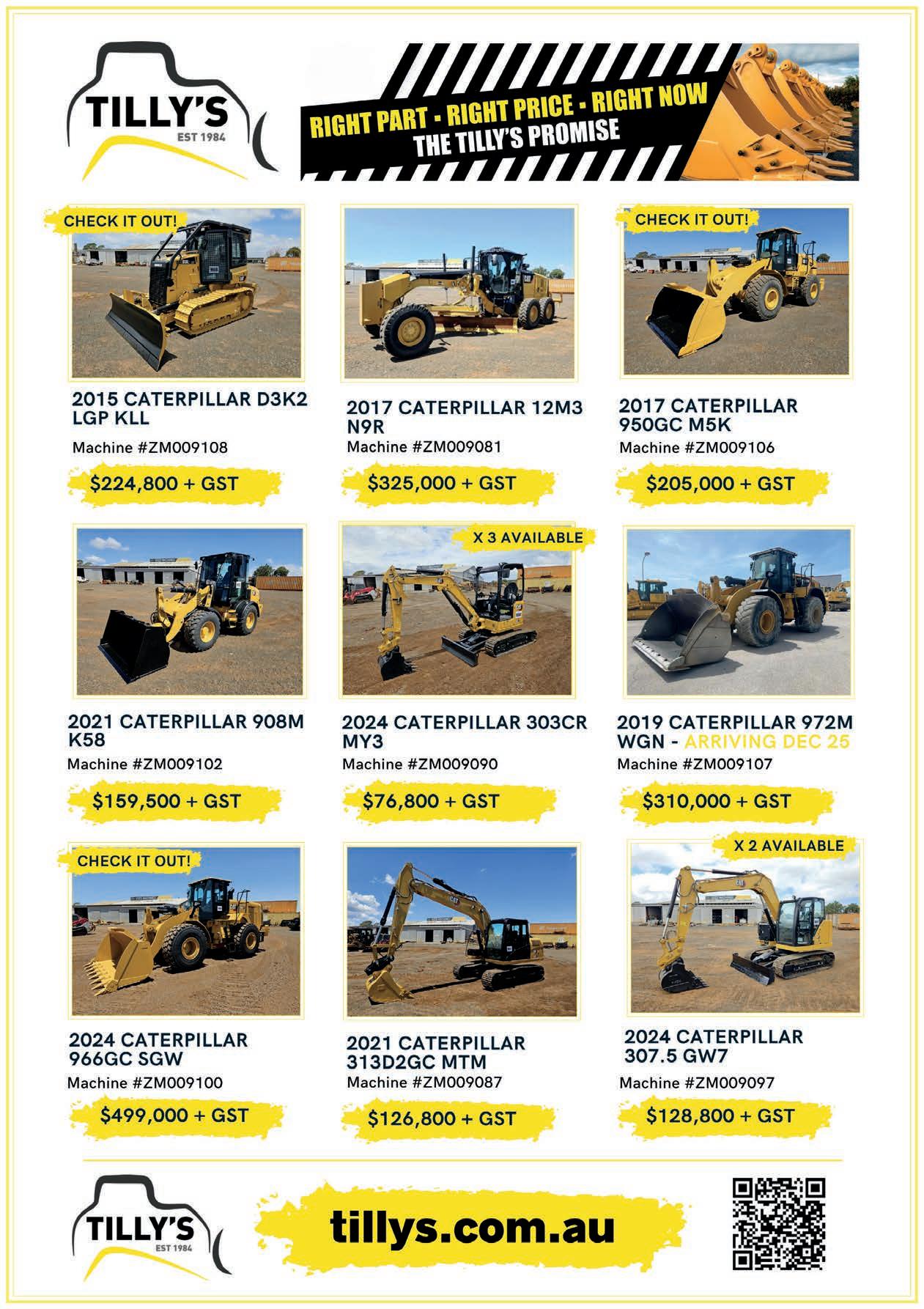
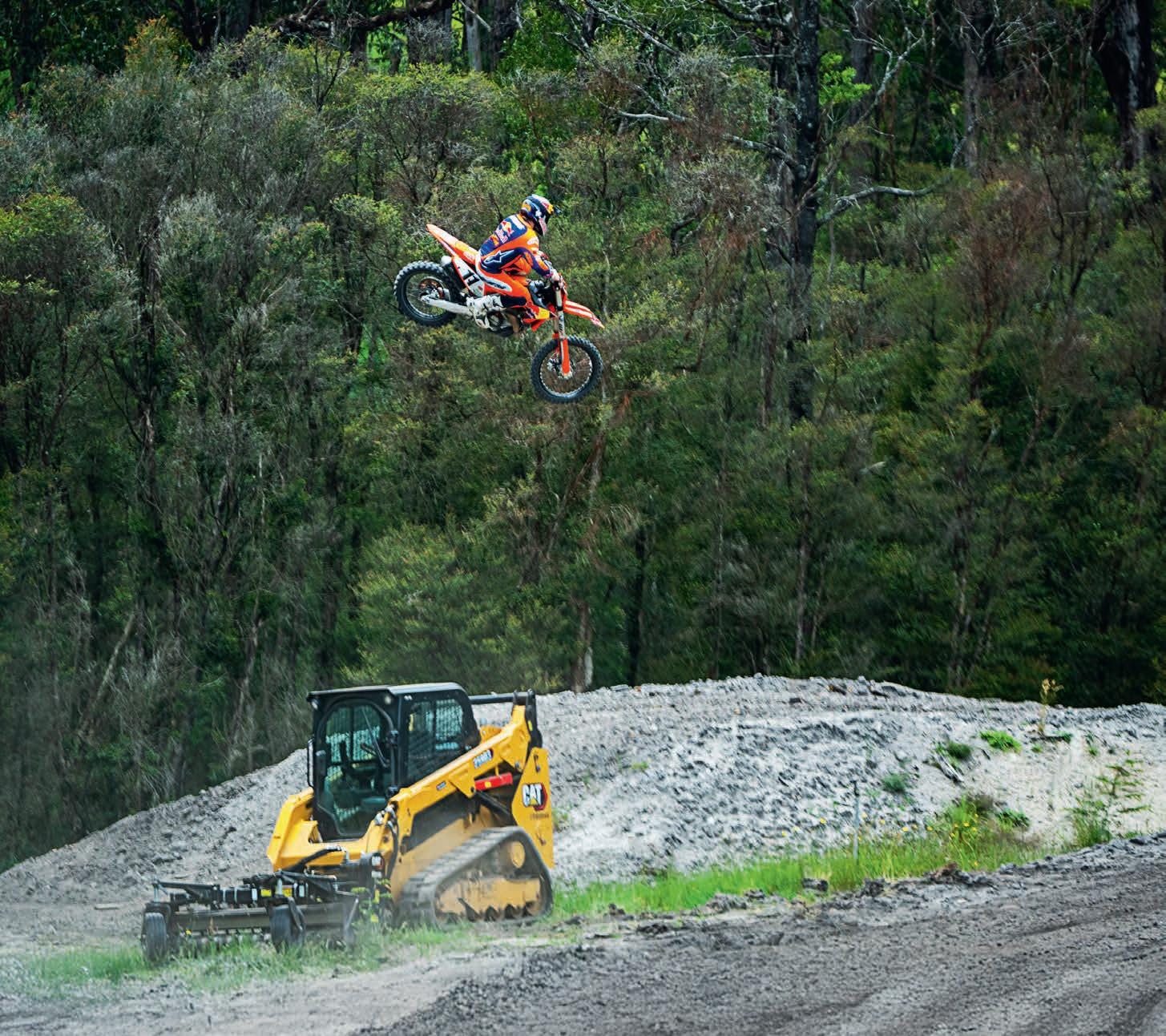
For one of motocross’s leading riders, the key to building a world-class practice track at home wasn’t just skill on two wheels, but the versatility of a skid steer attachment that brought professional earthmoving capability within arm’s reach.
Daniel “Chucky” Sanders needs little introduction to Australian o -road and rally-raid motorcycle fans. A force on the world stage, he has conquered some of the sport’s most punishing events, adding an International Six Days Enduro victory and a landmark win at the 2025 Dakar Rally to his growing list of achievements.
Away from the international spotlight, he has poured the same energy into his own backyard, creating a purpose-built practice track on an apple farm in the Victorian locality of Three Bridges.
That’s where we caught up with him to find out more about the equipment he uses to shape the course into the kind of rough, technical terrain that builds race-winning speed.
”We’ve got 40 acres here at my family home,” Chucky said.
“I pretty much built what I need to train on to try and become one of the best riders in world racing.
“As a kid growing up, we always only had tractors around the farm. We had a Cat D3 dozer to cruise around and push apple trees out.
“That’s when my passion started for
building jumps and tracks — I destroyed dad’s cow paddock and turned it into a full-time motocross track.
“Later we purchased a Cat 259D3 compact track loader, and that was a big help in finetuning the jumps and finishing o the track after the dozers have been over it.
“It’s become a passion for me to build a track that lets me play and ride. I’m always prepping it and making it perfect, and then coming on the bike and ripping through it and doing my training. It’s what I need to do to be one of the best in the sport.”
Soil preparation can be more demanding than it appears on the surface. Beneath uneven ground lie compacted soils, buried rocks, stubborn roots, and debris that can turn a straightforward landscaping job into a slow, labour-intensive process.
Achieving a level finish suitable for hardscaping often requires multiple passes with di erent tools, along with manual correction to deal with high spots, low spots, and unwanted material.
This is where Chucky said a purpose-built attachment like Caterpillar’s Power Box Rake changes the equation.
By combining cultivation, levelling, and debris management into a single, controlled operation, the attachment streamlines one of the most challenging stages of any landscaping project. Instead of wrestling with inconsistent ground and swapping between machines, operators can e iciently condition the soil and create a clean, workable surface — saving time, reducing e ort, and delivering a more professional result.
“I recently bought a Power Box Rake from Cat dealer William Adams,” Chucky said.
“I had been looking at getting one to finetune and finish o my work, whether it’s in the paddock here, or up around the house or driveway.
“It’s a unique attachment, and I’m excited to work with it around the various hills, slopes, and berms to build a sound motocross layout.
“It’s going to leave a nice cushion and clean the track up well after I’ve finished tearing it up and putting ruts all through it after training. The
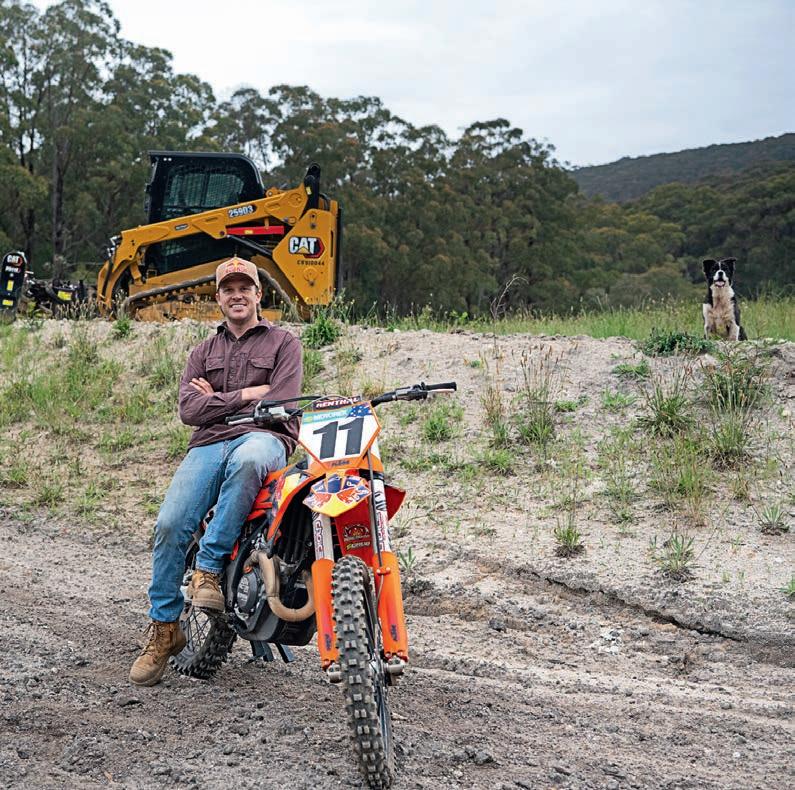
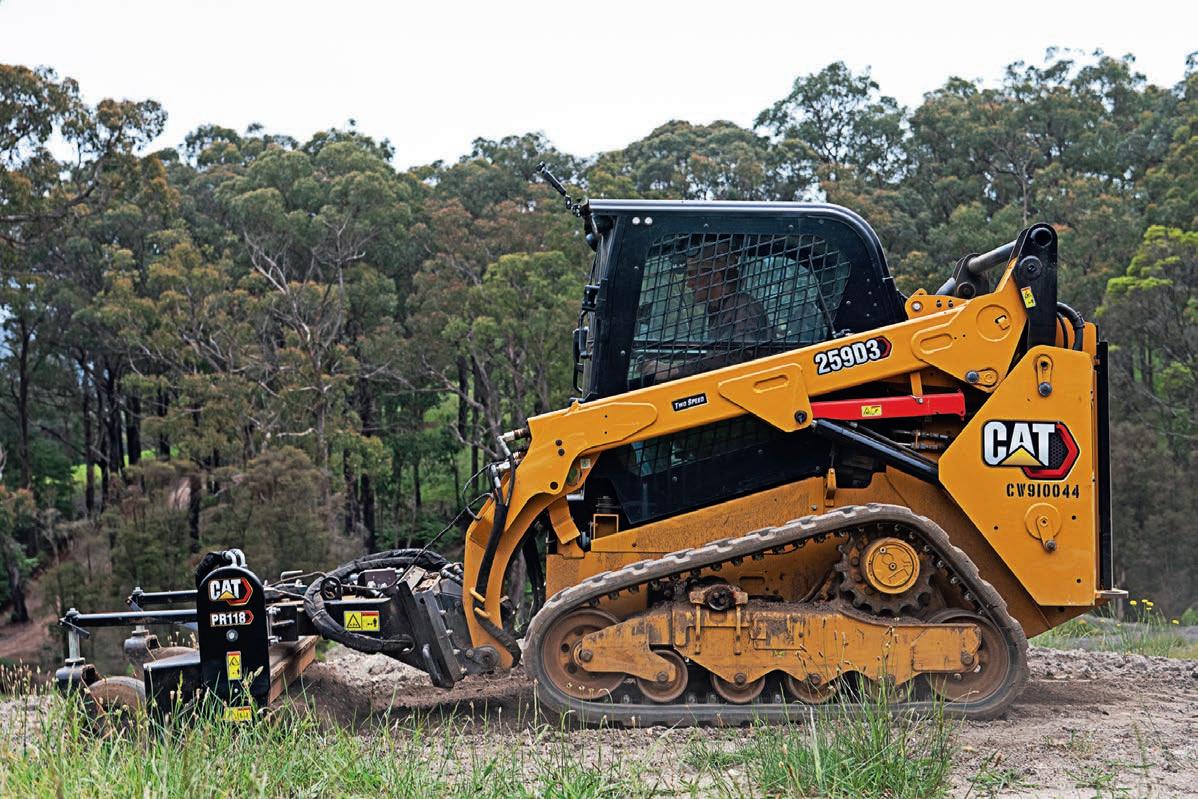
Instead of wrestling with inconsistent ground and swapping between machines, operators can e iciently condition the soil and create a clean, workable surface in one go.

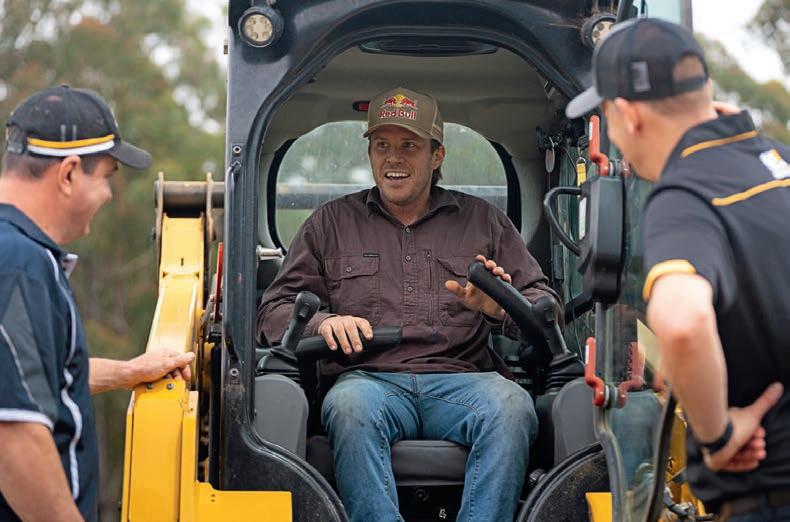
rake puts all the dirt back to where it needs to be for the next time I go for a run.”
At its core, the Power Box Rake is a rotary drum attachment equipped with rugged carbide teeth that spin against the ground and surface materials.
When powered by a loader, skid steer, or another base machine via hydraulics or PTO, this drum:
• breaks up compacted soil;
• cuts and spreads high spots;

• fills low spots;
• pulverises topsoil; and
• removes rocks, roots, and debris.
This multi-function action means one tool does the work of several traditional implements — tillers, graders, scarifiers, and rock rakes — saving time and labour.
Operators can switch between functions by varying depth, speed, or direction of the drum. Side plates and barrier blades (where fitted) help collect and move rocks, roots,
and debris o the working area, or windrow it for easy pickup, speeding clean-up.
The drum can be tilted or angled hydraulically, directing material to the side or creating windrows, which is useful on construction or sports field sites.
Chucky also loved the Cat 259D3 to which the power rake was attached.
“It does everything you want from a skid steer, but the best part is the cab,” he said.
“It’s nice, quiet, clean, and cool. All the information you need is on the dashboard in plain sight.
“The cameras o er great viewing, and out the front you can see the attachments and what they’re doing.”
Another feature that Chucky said was often underestimated was the strength of the seatbelts.
“When we’re building tracks, the work gets rough. We’re always going over jumps and down ramps, so there’s a lot of tipping and rolling back and forth,” he said.
“It’s important to have a strong safety harness, along with a comfortable seat.
“You can customise the air seat to suit your own weight, and you can move it back and forth and have a nice comfortable ride when you’re in it for many hours trimming up.”
The right Guy for the job
Chucky said he valued the relationship he had with William Adams and Major Account Sales Manager Guy Rigoni.
“Growing up with the Cat machines, you knew

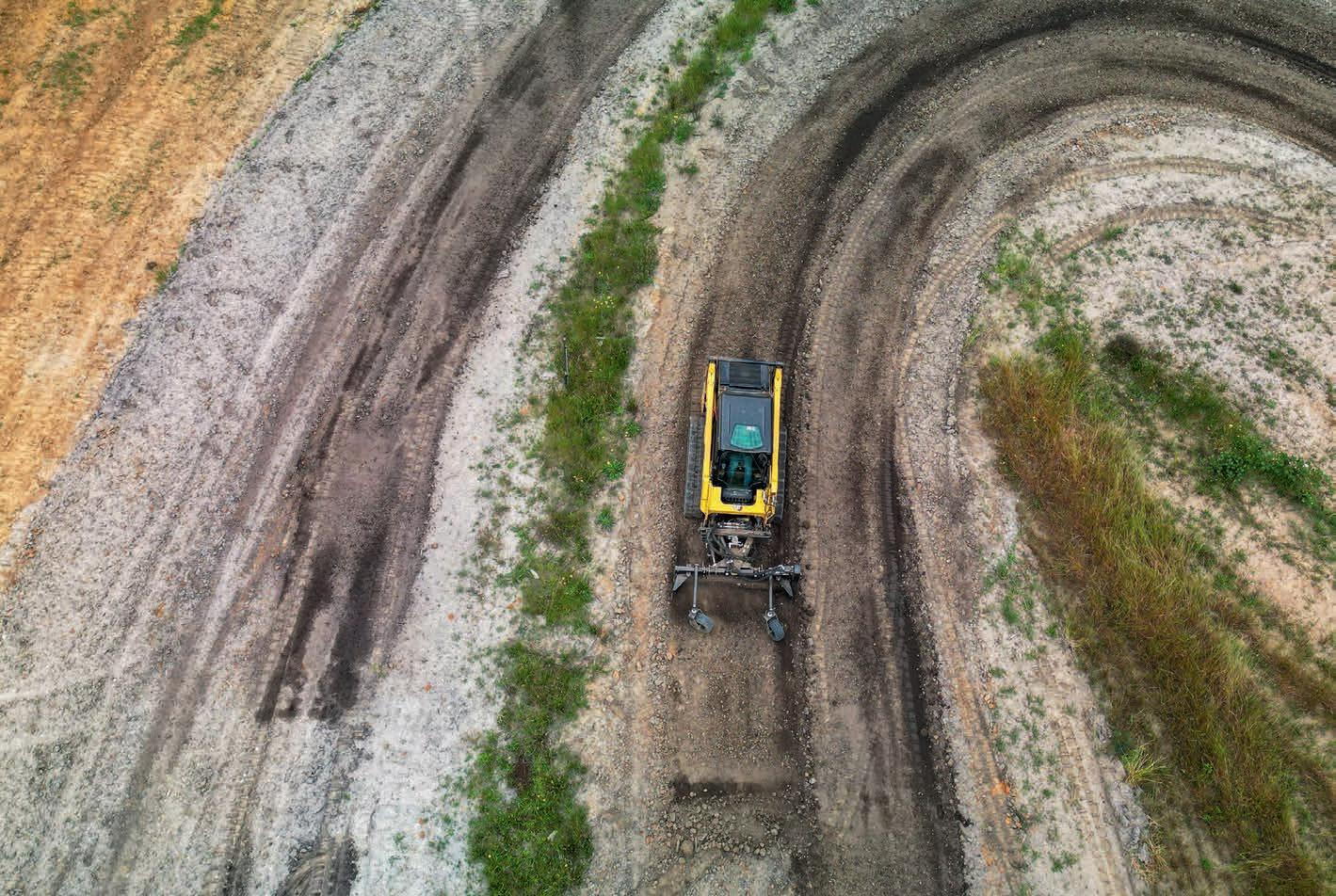
they would never let you down. And it’s the same with William Adams.
“For example, it’s simple for me to get parts.
“And it’s also reassuring to know that there is available backup for older machines. They’re always there making sure they’re working well so they don’t break down on me when I need them most.
“They’ve got everything there you need and it just works well.
“They’re passionate about what I do and I’m passionate about what they do.
“I’m looking to purchase a few more machines from them in the next few years. I love working on machines and playing with dirt, so it’s a really nice fit and a good relationship to have.”
Guy said he was delighted to have been instrumental in Chucky’s acquisition of the Power Box Rake.
“I sent him some literature on the rake and some videos that we had online through YouTube,” he said.
“I met up with him and went through the benefits of the attachment and what it can do, especially for grooming his motocross track. He could also use it for tasks around the farm, and the apple orchard for clean-up.”
As a motorbike enthusiast himself, Guy was aware of Chucky’s achievements, and said he jumped at the opportunity to help him build his track.
“Cat machines have been the brand of choice for Australian motocross events, and for good reason,” he said. “The track loaders are set up really well, balanced for making tracks
and moving dirt, making the tracks usable for competitors and users.
“The Power Box Rake is the icing on the cake. Once you’ve done the basic track, you can go over it with the rake to get rid of any rocks and other foreign material that you don’t want on the ground.”
Guy said William Adams was on hand to deal with any issues with service, backup or parts.
“Whether it’s dealing with a machine that’s
down or just machine service, we are quick to respond,” he said.
“We’ve got a lot of in-field service technicians located close to Chucky. Our main branch in Clayton stocks the parts he needs to service his machines and repair them if needed.
“We will continue to support Chucky’s needs, whether it’s replacing his old gear over time, or keeping up to date with the new products that might benefit what he does around the farm and motocross tracks.”
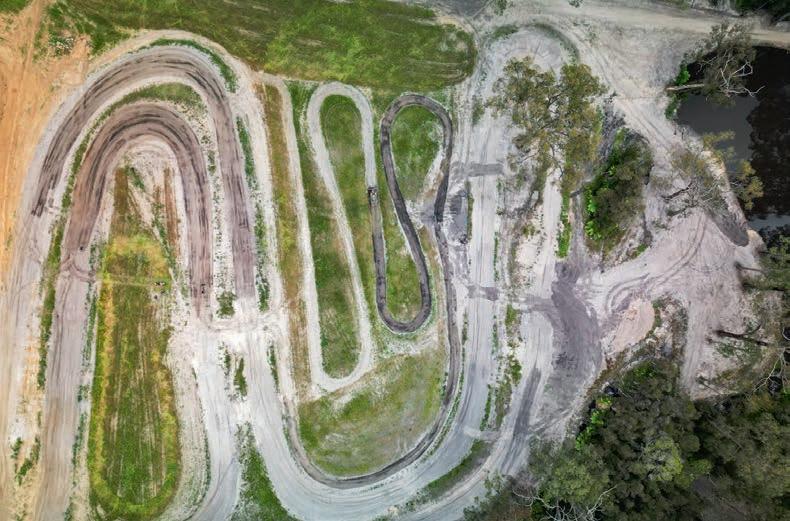

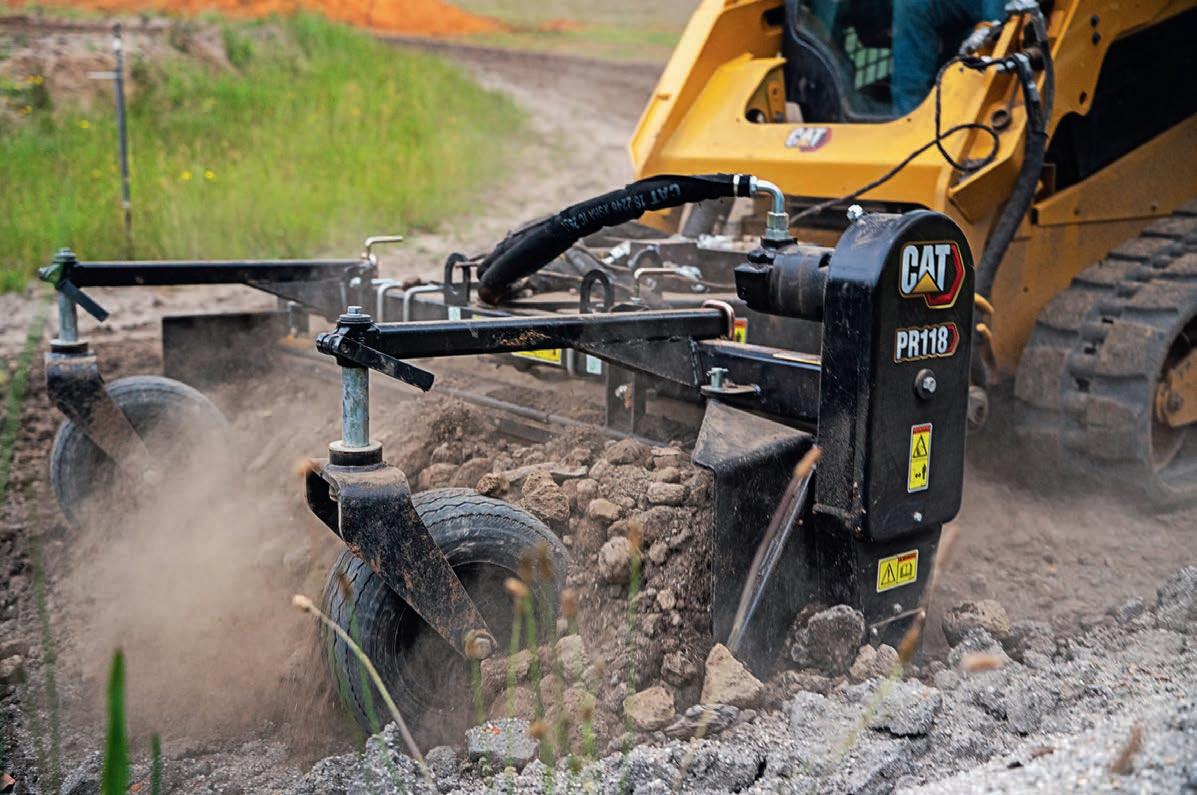
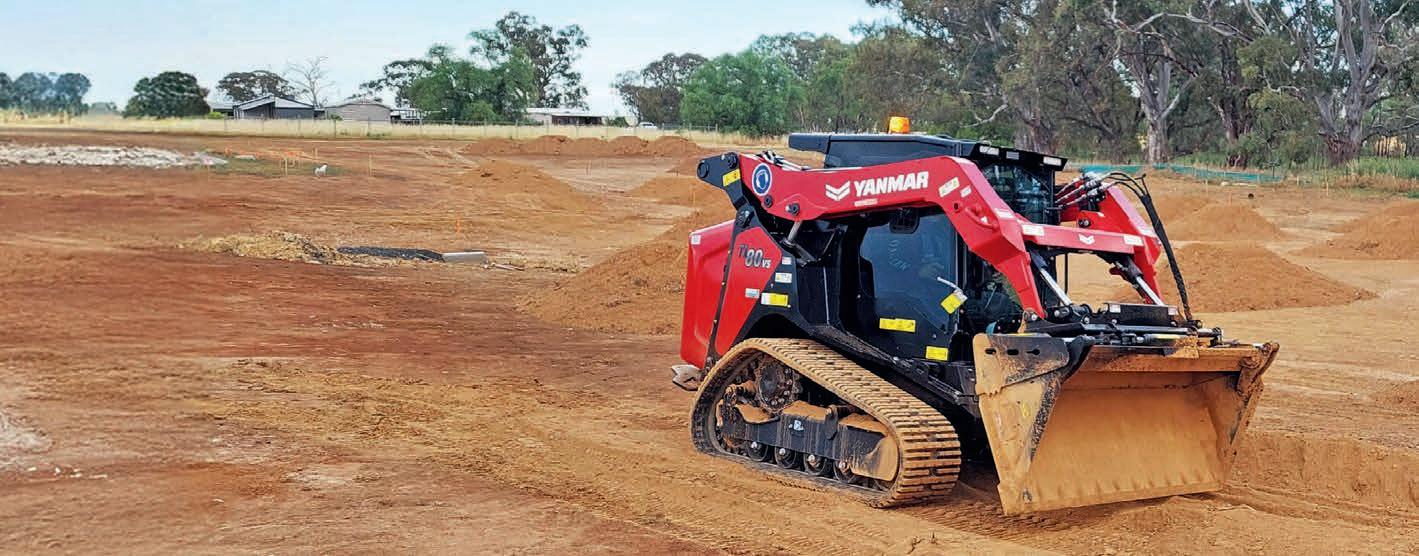
Yanmar has released a range of construction-grade compact track loaders designed to deliver productivity across construction, landscaping, and rental work.

Yanmar’s new four-model compact track loader (CTL) family — TL65RS, TL75VS, TL80VS, and TL100VS — combines the power of Yanmar engines and dual suspension steel-embedded undercarriages with cabs that prioritise operator comfort.
The line was developed after Yanmar’s acquisition of ASV in 2019, blending Japanese engineering with the original American CTL specialist’s suspended undercarriage and track technology. All machines are designed, engineered, and assembled in Grand Rapids, Minnesota.
Across the range, Yanmar promotes three pillars: the ability to out load with superior innovation and technologies and high flow hydraulics; out last with robust construction and long service intervals; and out earn through productivity features, telematics, and low total cost of ownership.
In detail
• TL65RS: radial lift all rounder
The TL65RS is the smallest model and the only radial lift machine in the line-up, aimed at customers wanting a CTL with a strong breakout force and a lower purchase and operating cost.
Powered by a 49.96kW Yanmar Tier 4 Final diesel engine, it delivers a rated operating capacity (ROC) of about 952.2kg at 35 per cent of tipping load, making it suited to general construction, landscaping, and rental fleets that value manoeuvrability and a simple radial linkage.
• TL75VS: entry vertical lift model
Stepping up, the TL75VS introduces vertical lift geometry for better reach at full height, making it attractive for loading trucks and hoppers where lift path and stability at height matter.
With roughly 53.3kW from the same Tier 4 engine and a 35 per cent ROC of about 1088kg, it balances lift performance and transport friendly size for contractors needing a versatile CTL that can handle most jobs.
• TL80VS: higher-capacity vertical lift
The TL80VS keeps the 53.3kW engine but increases both machine weight and hydraulic performance, targeting users who need more lift and better auxiliary flow for demanding attachments.
Its 35 per cent ROC increases to about 1315kg and higher standard and high flow auxiliary
outputs, which suits work like heavy pallet handling, grading with powered boxes, and running larger mulchers or planers.
• TL100VS: flagship high horsepower model
At the top of the range, the TL100VS is a vertical lift powerhouse designed for midsize to heavy duty applications that typically push CTLs to their limits.
It uses a 49.96hp Yanmar engine, o ers a 35 per cent ROC of about 1632kg, and a tipping load of roughly 4898kg, combining strong lift with a 3.3m class max pin height and high optional high flow hydraulics for power hungry attachments.
All Yanmar CTLs share an independent torsion suspended undercarriage with steel embedded, bar tread rubber tracks that increase ground contact area and improve ride quality.
This design provides traction and stability while reducing vibration and noise, and the relatively low ground pressures support work on soft ground, landscaping sites, and finished surfaces, without causing excessive damage.
Standard auxiliary hydraulics are fitted to every model, with optional high flow packages delivering competitive flow and pressure for modern attachments, particularly on the TL80VS and TL100VS, where high flow outputs are substantial.
The drive system uses dual hydraulic motors with direct drive track motors, automatic two speed travel and a standard creep mode, helping operators fine tune ground speed for precise work while maintaining engine RPM figures in the power band.
Yanmar places emphasis on operator comfort with a spacious cab featuring 360 degree visibility, clear side glass, a standard suspension seat, and a seven inch colour touchscreen display that brings together monitoring and machine settings.
Yanmar Smart Assist is fitted standard to all models. The telematics system for the company’s machinery (agriculture and construction) uses GPS and communication technology to provide remote monitoring, fleet
management, and predictive maintenance, allowing users to track location, usage (hours, fuel), optimise operations, get security alerts (geo-fencing), and receive alerts for potential breakdowns to reduce downtime and costs. It o ers a customer web portal for insights, simplifies reporting, and supports e icient management for both large and small fleets. Thanks to standard electro-hydraulic (EH) controls, operators can choose between the industry-standard ISO control layout , or the H-pattern configuration used by select suppliers, ensuring compatibility with a wide range of operator preferences. Control modes can be easily switched via a selector inside the operator cab.
Durability is supported by a heavy duty build, generous ground clearance, and a cooling layout that avoids stacked coolers to improve heat rejection and simplify cleaning.
Service access is a design priority, with four swing out service doors, a rear tipping cab, removable belly pans, and long 500 hour engine oil change intervals, while a two year/2000 hour standard machine warranty and one year/1000 hour track warranty reinforce the focus on long term ownership value.
In Australia, Tutt Bryant has been the exclusive dealer for Yanmar construction equipment for more than 46 years, selling mini excavators, crawler dumpers, wheel loaders, and hydraulic hammers — and now, the new CTLs. The company backs them up with factory trained technicians, Yanmar Eco Y parts and fixed price service packages.
Tutt Bryant Equipment’s alliance with Yanmar has become one of the most established OEM–dealer relationships in the Australian CTL equipment market.
The company is the largest and oldest multifranchised earthmoving equipment distributor in the country, with roots going back to 1938.
Headquartered in Sydney, the Group operates nationally, supporting construction, mining, infrastructure, and trade sectors through a network of branches and business units.
More information: yanmarce.com/compact-track-loaders/
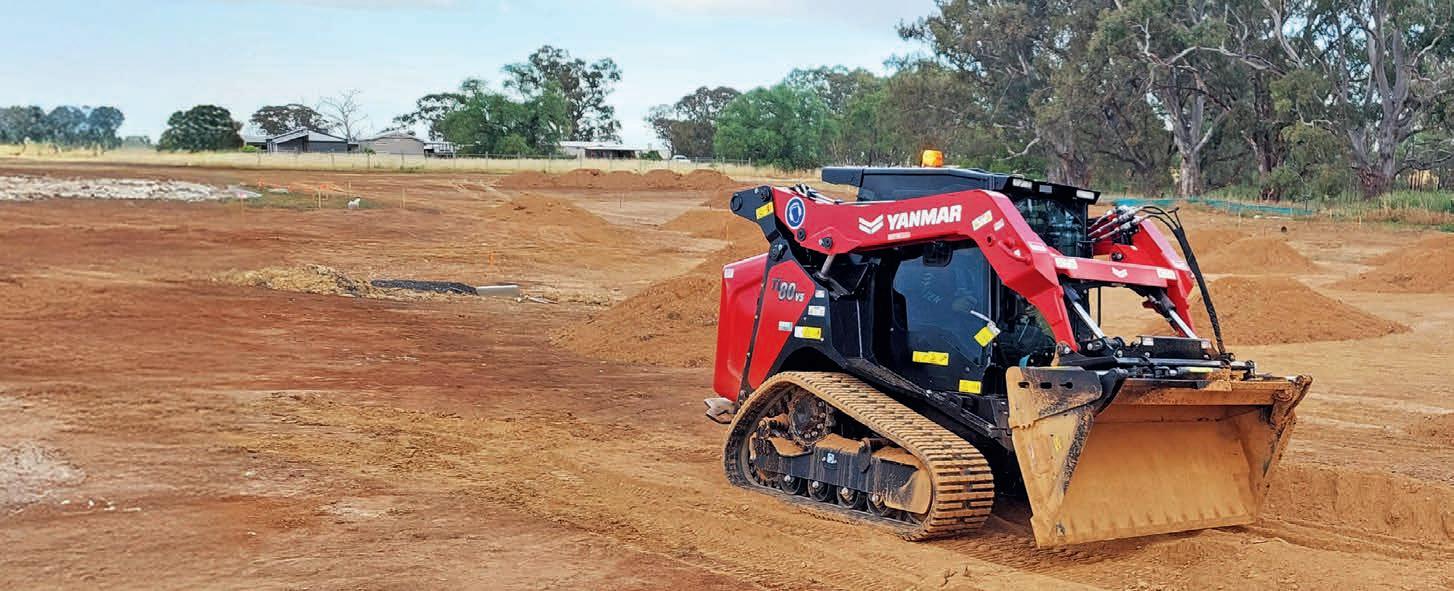











SECURE YOUR MACHINE WITH AND NO REPAYMENTS UNTIL MONTH 4. 15% DOWN


Move forward with confidence thanks to a finance offer designed to help your business grow. To keep cash flow strong and win more work TALK TO US TODAY.

Built for contractors who need a loader that can do the work of a larger unit without sacrificing manoeuvrability, the SK1050 mini skid steer performs reliably in tight access environments and demanding ground conditions alike.
Ditch Witch has long been renowned for its range of powerful, versatile underground construction equipment. It's a popular name for the first successful compact trencher, invented by Charles Machine Works, which revolutionised underground utility installation by replacing slow manual labour with mechanised e iciency.
This competence is exemplified by the company’s SK1050 mini skid steer, a model that combines compact design, robust hydraulic power, and day long operator comfort in a single, capable machine.
At its core, the SK1050 is all about usable power. A 37hp Yanmar diesel engine drives a hydraulic system engineered to send the majority of its horsepower directly to the attachment, so the machine feels strong where it matters most — in the bucket, trencher, auger or any of the many compatible work tools.
This generous auxiliary flow and pressure translate into fast cycle times, confident digging and lifting, and the ability to handle heavy materials or stubborn soil with ease.
The emphasis on hydraulic performance allows the machine to tackle tasks such as trenching, digging, lifting, and material handling with speed and e iciency across di erent ground conditions.
Despite its compact footprint, the SK1050 is built with a construction-grade frame and undercarriage designed to cope with the abuse of daily job site use.
The track system provides stable footing over soft, uneven, or muddy terrain, while low ground pressure helps protect finished surfaces such as lawns and pavements.
Thoughtful weight distribution and a strong hinge pin height give the machine the ability to load trucks and trailers e iciently, while still remaining sure footed when carrying heavy loads.
Operator experience sits at the centre of the SK1050’s design. The stand on platform provides excellent visibility to the attachment and surrounding work area, which is valuable when working around services, structures, or busy crews.
A spring-supported platform helps absorb bumps and vibration, reducing fatigue over long shifts, and allowing the operator to stay focused and precise throughout the day.
Intuitive controls and responsive hydraulics make the machine feel predictable and smooth, even for operators stepping onto it for the first time.
The stand-on configuration o ers excellent visibility to the attachment and surrounding work area, supporting precise manoeuvring in confined spaces and enhancing overall job site safety.
Versatility is one of the SK1050’s greatest
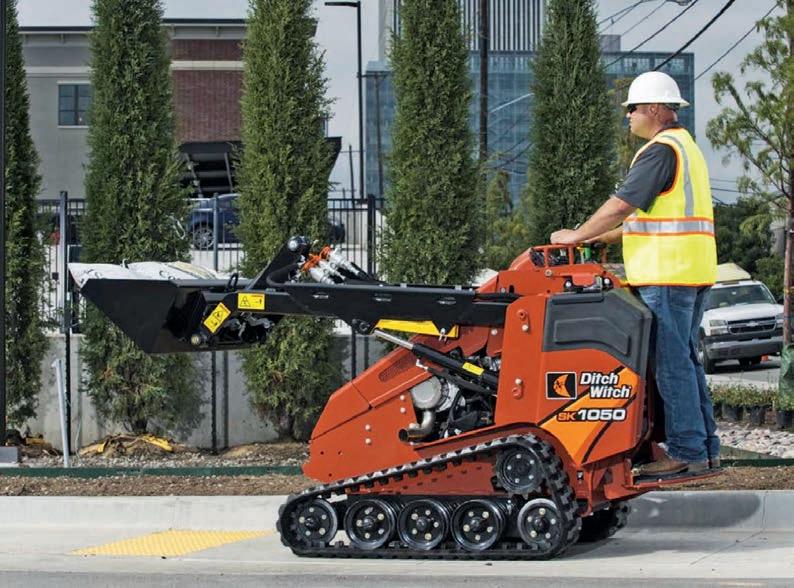
The stand-on configuration o ers excellent visibility to the attachment and surrounding work area, supporting precise manoeuvring in confined spaces and enhancing overall job site safety. Images: CEA
The track system
or muddy terrain.

strengths. With the right attachment, it can move from trenching to post hole boring, from loading spoil to site clean up.
This ability to replace multiple singlepurpose machines with one compact platform can simplify logistics, reduce transport requirements, and help crews get more done with fewer passes and less downtime.
The machine is also designed with ownership in mind. Key service points are easy to access, encouraging regular checks and making routine maintenance faster and less disruptive to the work schedule.
This emphasis on serviceability, with no daily
maintenance points and no grease points, ensures ease of maintenance is improved and total cost of ownership reduced.
summary
For contractors who need a compact loader that behaves like a much bigger unit, the SK1050 o ers a blend of power, control and durability.
It brings together strong hydraulic performance, a rugged build and operatorfriendly design to create a machine that not only survives tough jobsites but actively lifts productivity on every shift.
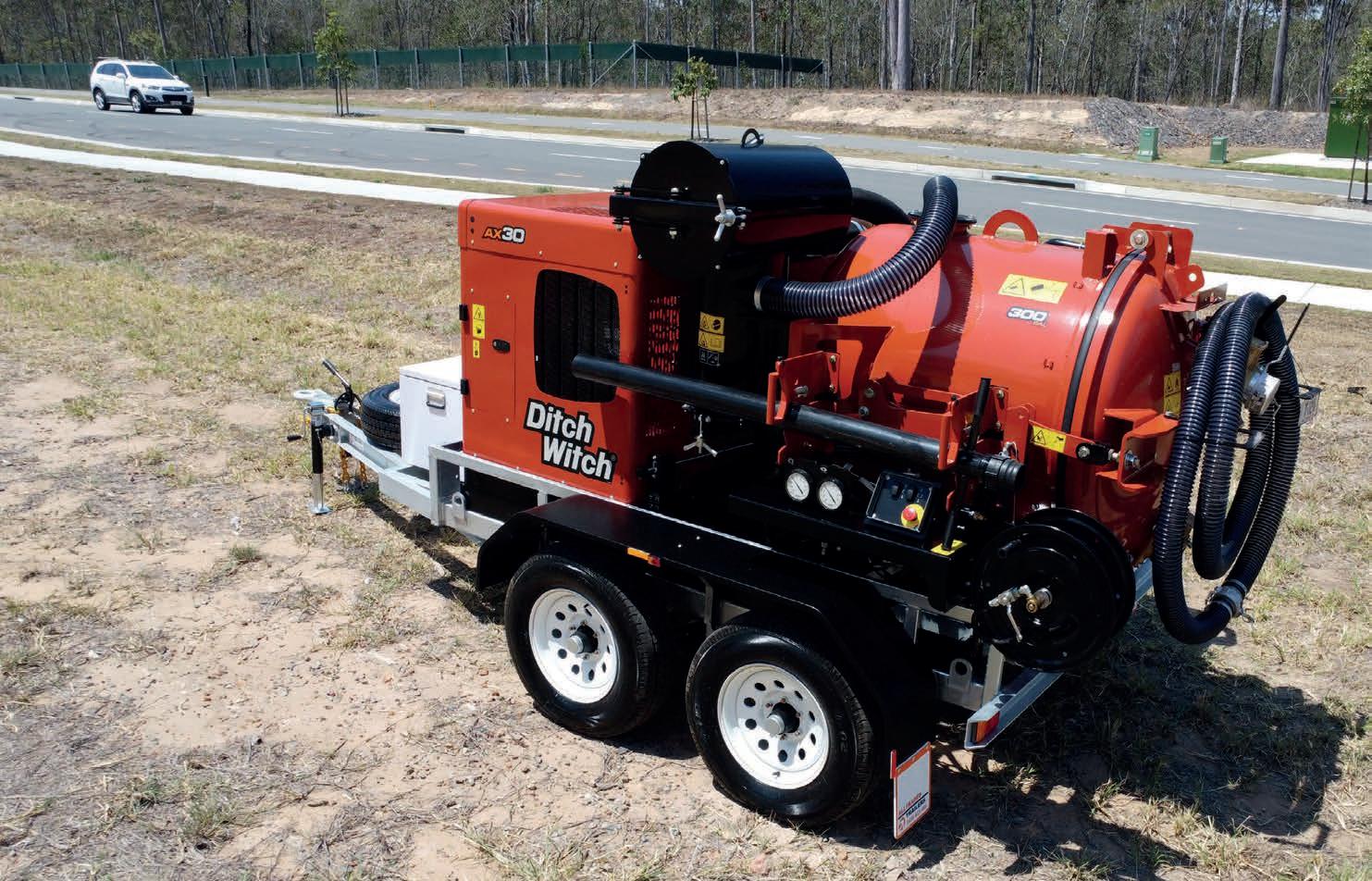
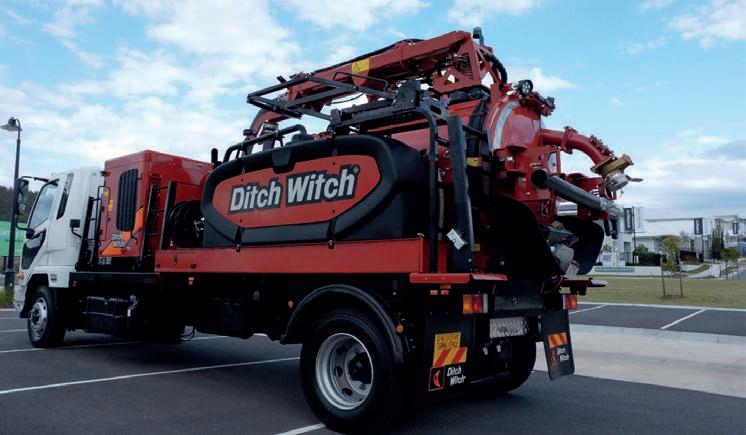

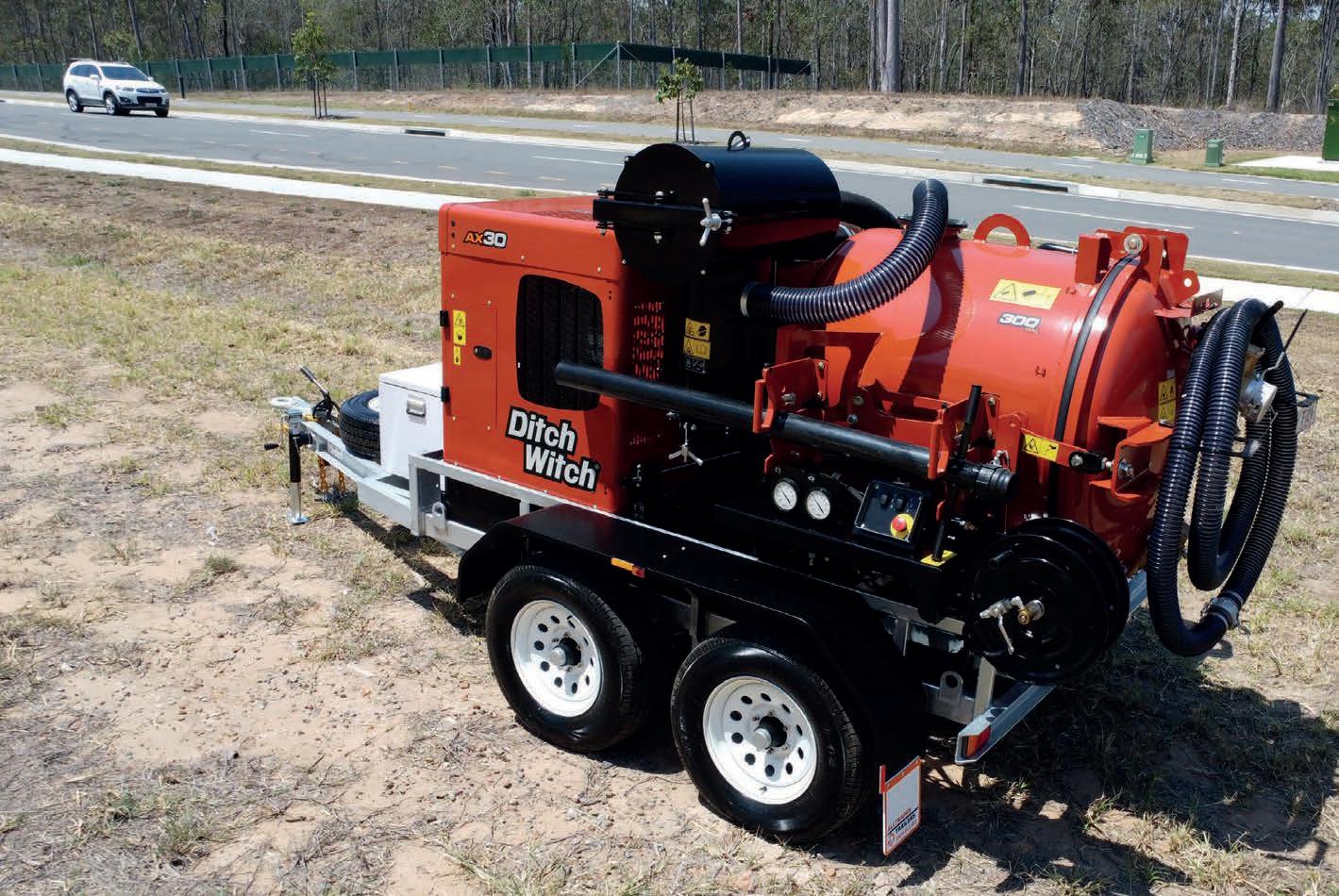

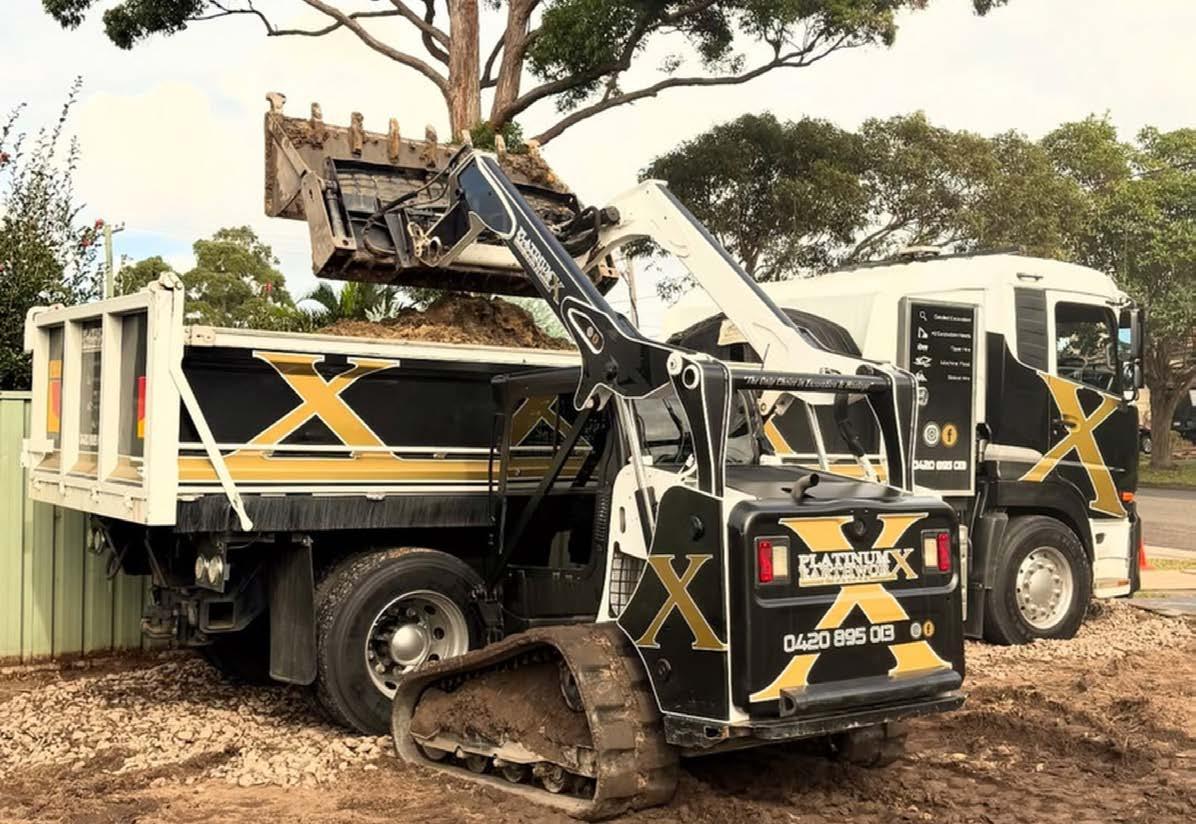
Backed by a hard-working fleet of Bobcat excavators and tracked loaders, a NSW earthworks company has kept its books full with demanding residential and commercial site jobs.
Alex Walker may be the founder and director of Sydney-based excavation company Platinum Earthworx, but it’s just one of many roles he carries out.
The jack of all trades is also an accounts manager, labourer, operator, estimator, truck driver, and even the washer and detailer when needed.
“As the owner, you have to be willing to do all the chores that need to be done,” he said.
Alex’s eagle eye for e iciency and determination to oversee all aspects of his operation have brought great rewards.
Platinum now services the Sydney region and surrounding outskirts — not bad going for a company started about 11 years ago.
“We’re best known for our specialty in tight-access excavation. But we o er all types of excavation services, including projects on acreage properties, which are a strong focus for us,” he said.
“I’ve always enjoyed a challenge. Working in tight-access projects is a niche market that takes a lot of skills and patience.
“Because of how hard the jobs can be, there isn’t a lot of competition. So I knew that when I
started my own business, I would have ample opportunities to be successful.
“I always wanted a family, and I wanted to build something that could provide a life they deserved. Owning a business gave me that freedom. Going out on my own was the first step toward that future.”
The Platinum fleet consists of an assortment of excavators, tracked loaders, trucks, and dumpers.
Pride of place is taken by four Bobcat machines, selected by Alex for their power, versatility, and manoeuvrability.
“These include a Bobcat E10 mini excavator, and two E20s,” he said.


“Our excavators are mainly used for the tightaccess work that we are known for. The tracked loaders support heavier work and load-outs on residential and commercial projects, working alongside our larger machines.
“We work them hard on demanding projects, and they hold up well. I tend to keep my machines for a long time, and they’ve consistently proven their durability.”
Alex fondly remembers his first Bobcat, purchased from the Smithfield branch of Clark Equipment.
“My first excavator was an E20, which I still own. With more than 5000 hours on the clock, it’s still going strong and working on our projects,” he said.
“It has been the perfect machine for our needs — reliable and tough.
“It has a massive reach for a mini excavator, and the cab is comfortable, which is appreciated not just by me, but by my operators as well.”
Alex said that all the machines were purchased through Clark Equipment Senior Sales Representative Bob Liso.
“Bob has been amazing — always answering calls, always willing to help, and an all-round great person to deal with,” he said.
“Communication, service, parts, and support have all been excellent.”
“There’s absolutely no doubt that we’ll be back for more Bobcats. The E10 mini excavator is a real game-changer and is far more advanced than many other brands.”
Show and tell
Another indication of Alex’s perfectionism is demonstrated by his desire to custom wrap all his equipment in company livery and signage.
“When I build something, including my equipment, I want it to represent who we are: clean, tidy, respectful, and professional,” he said.
“First impressions matter. The way you present yourself is the way people perceive you.
“I’m big on keeping our fleet looking fresh, and the custom wraps make us stand out. People always remember the machines that catch their eye.”
Based on the feedback to the Platinum branding, the business has also launched an online apparel store.
“My wife and I created the store because a lot of people wanted our merchandise,” Alex said.
“I used to give it away for free, but between running the business, being on the machines full-time, raising our family, and looking after our animals, it became too much to manage manually.
“The store allows people to support us without me forgetting orders — and 100 per cent of profits go to the children’s hospital and homeless charities. It’s not about money for us; it’s about giving back.
“I was just a young kid who couldn’t do well at school, lost in knowing what I was good at, but found the love for machines.
“Any dream is possible if you’re willing to work hard for it.
“We aren’t the biggest earthmoving business and we sure aren’t the best, but I am proud of what my wife, Tay, and I have built together. She has fully backed any vision I have had.”
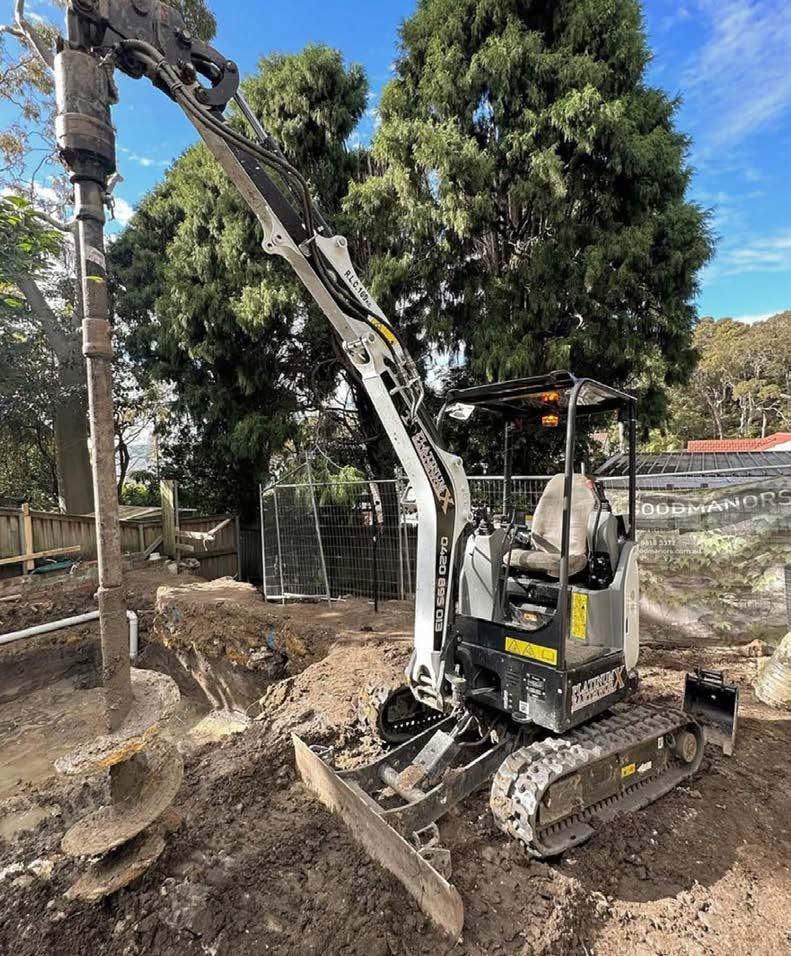

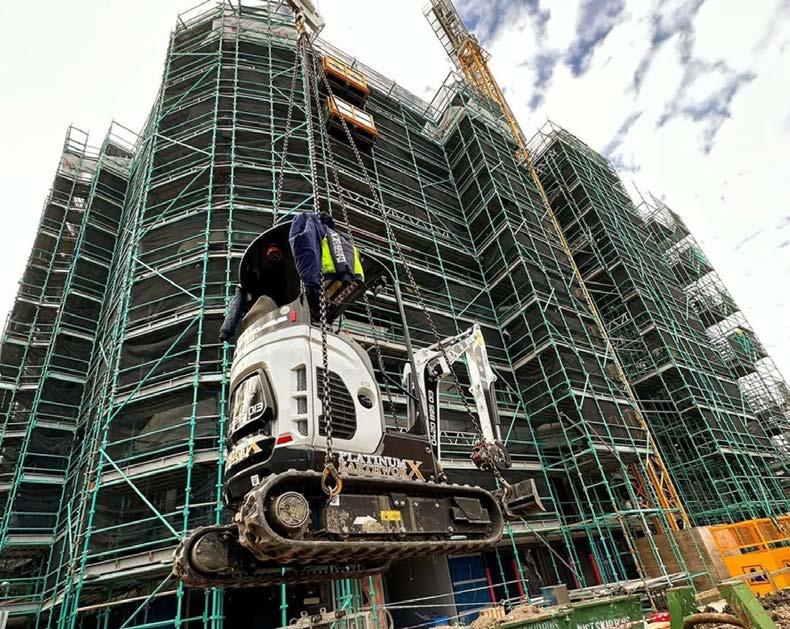
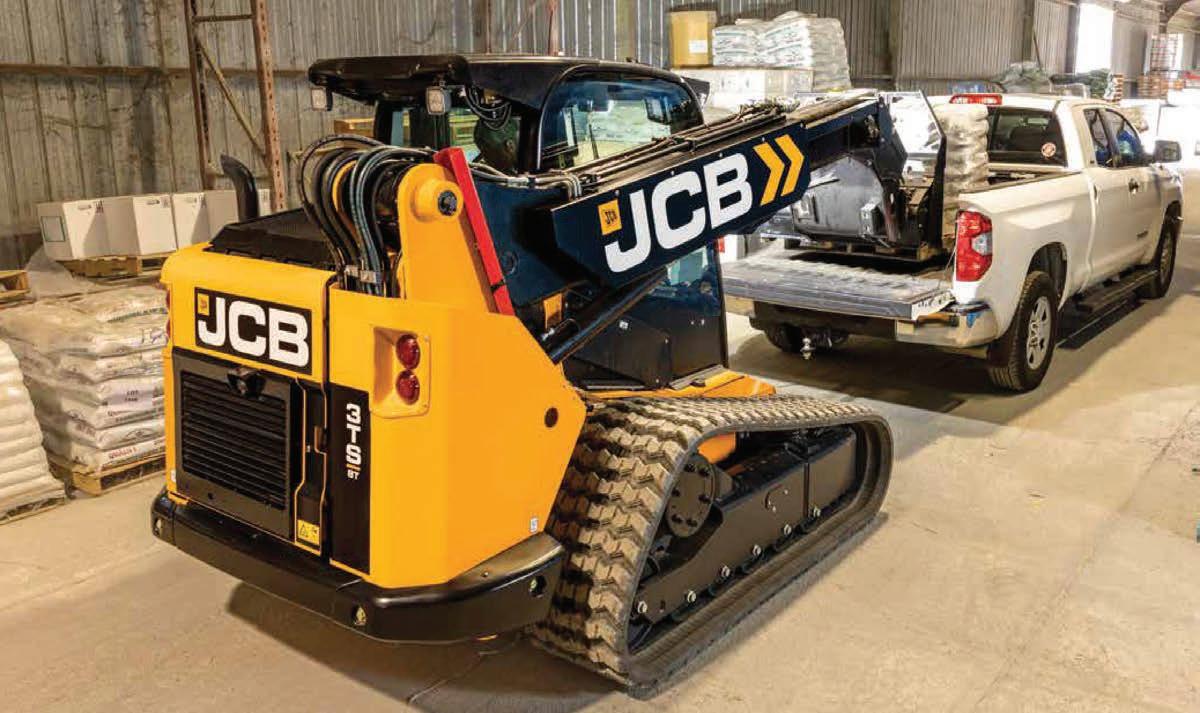
The 2TS-7T does work that would typically require a forklift, small telehandler, conventional skid steer, and in some cases a dedicated excavating machine. Image: CEA
By combining the footprint and agility of a compact machine with the extended reach and lift of a larger loader, operators can place loads more precisely, work over obstacles, and access hard-to-reach areas without repositioning.
The JCB Teleskid 2TS-7T breaks new ground as the world’s first small-platform compact track loader with a telescoping boom, unlocking levels of lift height, forward reach, and digging depth that traditional machines in its class can’t match.
Its boom design delivers a lift height of 3.6 metres, enabling operators to dump material while stacking pallets or bales higher, which helps free up ground space on tight or congested work sites. With this configuration, the machine is aimed at applications where reach, height, and below-grade capability are just as important as compact size and manoeuvrability.
Performance and productivity
The 2TS-7T is powered by a 74hp (55kW) Kohler engine that is tuned to deliver strong performance at low engine speeds, which contributes to improved cycle times and better fuel e iciency.
The engine package operates without the need for diesel exhaust fluid or a diesel particulate filter, removing components that can add cost and downtime while helping extend machine longevity and utilisation.
The Teleskid models o er greater tractive e ort and pushing power than a small telehandler or forklift, while also delivering breakout forces that rival many larger machines.
The 2TS-7T has a rated operating capacity of 951kg, lifting up to that limit with the boom retracted, and 517kg with the boom fully extended. This allows it to handle heavy loads both close in and at reach as required.
Hydraulic performance includes a standard flow rate of 18.6gpm with an optional high-flow rate of 29.4gpm, supporting a range of powered attachments for di erent tasks.
By combining a compact track loader platform with the telescopic boom, the 2TS-7T is positioned to take on work that would typically require a forklift, small telehandler, conventional skid steer, and in some cases a dedicated excavating machine.
The extended forward reach and lift height allow operators to load from one side of a flatbed, place loads over barriers and stack materials more e iciently in limited footprints, particularly useful in construction, agriculture, waste and recycling, and hire and rental environments.
Its ability to work below grade from a stable position at the edge of a trench or stockpile helps reduce repositioning, improving both safety and productivity on site.
The machine’s standard quick hitch, built to SAE/ISO skid steer and compact track
loader specifications, means operators can use a variety of common attachments without specialised couplers.
Combined with the available hydraulic flow options, this makes the 2TS-7T suitable for handling buckets, forks, grapples, augers, sweepers, and other tools that support yearround, multi-industry utilisation.
The Teleskid 2TS-7T is designed with an emphasis on operator comfort and all-round visibility to support long days and busy sites. Its cab is 47 per cent larger than that of many competing machines, giving more space for the operator and improving comfort during extended shifts. Access is via a side door rather than climbing over the front attachment, which reduces the risk associated with entering or exiting under a raised boom or over implements.
Visibility is enhanced by the single Powerboom layout, which provides 60 per cent better view compared with conventional twin-arm machines, improving awareness of people, obstacles, and other equipment around the loader.
With these innovative features on hand, it’s little wonder that the Teleskid has been marketed as the world’s safest skid steer.
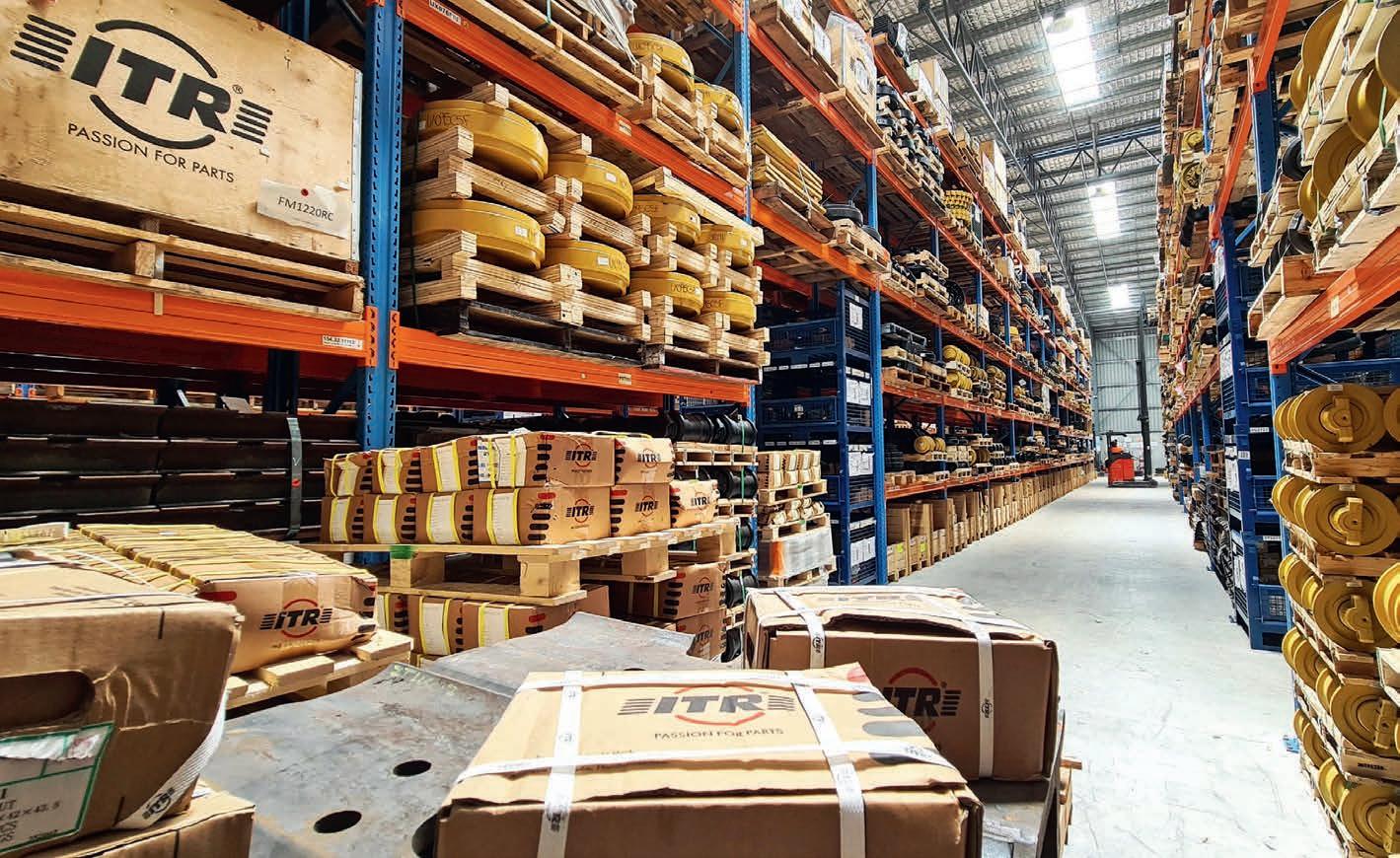
Each of the upgraded facilities boasts expanded pick-and-pack areas, better racking systems, and modern workspaces designed for collaboration and training.
ITR Pacific
Three Australian branches of ITR Pacific are gearing up for facility upgrades and relocations.
As the dust begins to settle at ITR Pacific’s new Yatala headquarters in Brisbane, the momentum is being matched nationwide, with similar expansions planned for Perth, Sydney and Melbourne.
Each move represents a strategic investment designed to support customer demand, expand inventory capacity, and future-proof local operations.
With all three branches scheduled to be fully operational between February and March 2026, the first quarter of the year is shaping up to be one of the most significant periods of transformation in ITR Pacific’s history.
In Perth, the team has o icially moved into a larger warehouse o ering 3000 square metres of operational space. This expansion aligns with the increasing demands of Western Australia’s mining and civil construction sectors, where fast access to undercarriage components, GET systems, rubber tracks, and repair parts is essential.
The new facility enables the branch to carry a broader product range, improve turnaround times, and better service operators working across vast and remote regions.
Upgraded loading bays, improved workflow design, and enhanced service areas will streamline daily operations and position the branch for long-term growth.
Sydney is undergoing its own shift, relocating into a new 5500 square metre facility that brings an uplift in warehousing capacity.
As one of ITR Pacific’s busiest hubs, Sydney plays a role in supporting metropolitan contractors and regional operators throughout NSW. The expanded footprint will allow for higher stock levels, more e icient racking configurations, and faster dispatch processes.
This ensures components are available when customers need them, particularly during peak periods of infrastructure activity.
The modernised facility also provides room for technical support, customer service functions, and future team expansion.
Melbourne’s relocation marks another important milestone in ITR Pacific’s national growth strategy. The 3000 square metre premises deliver an increase in operational space, supporting the needs of Victoria’s construction, agriculture, and quarrying sectors.
With improved logistics access, advanced warehouse infrastructure, and dedicated customer-facing areas, the site is designed to reduce bottlenecks and elevate service e iciency. Its ability to hold more stock locally will result in quicker order fulfilment and less reliance on interstate transfers.
Together, these relocations strengthen ITR Pacific’s national supply chain, reinforcing the company’s ability to maintain high stock availability across the country with over $50 million in inventory.
Larger state-level facilities not only support local markets e ectively but also ease pressure
on interstate distribution, enabling a smoother flow of inventory and faster response times. This integrated approach aligns with the broader vision of the USCO ITR Group, which continues to invest in warehousing and logistics to enhance product availability and customer experience.
The coordinated upgrades across Perth, Sydney, and Melbourne also reflect ITR Pacific’s customer-first approach to planning. Each facility has been selected to optimise workflow through enhanced freight access, expanded pick-and-pack areas, better racking systems, and modern workspaces designed for collaboration and training. This is more than simply increasing square metres; these improvements create environments that enhance e iciency, safety and service, benefiting the contractors, fleet managers and operators who depend on ITR Pacific every day.
With all three branches on track to be in their new homes by late February, ITR Pacific enters the year with renewed capability and strengthened national presence. Paired with the opening of the Yatala headquarters, these relocations mark a pivotal chapter in the company’s evolution and rea irm its longterm commitment to supporting Australia’s earthmoving and construction industries. Further updates will follow as ITR Pacific’s expansion journey continues into its next phase.
TVH experts Joris Tijtgat and Rik Vanwildemeersch discuss the range of the company’s products, and how it ensures customers can be supplied with the parts they need.
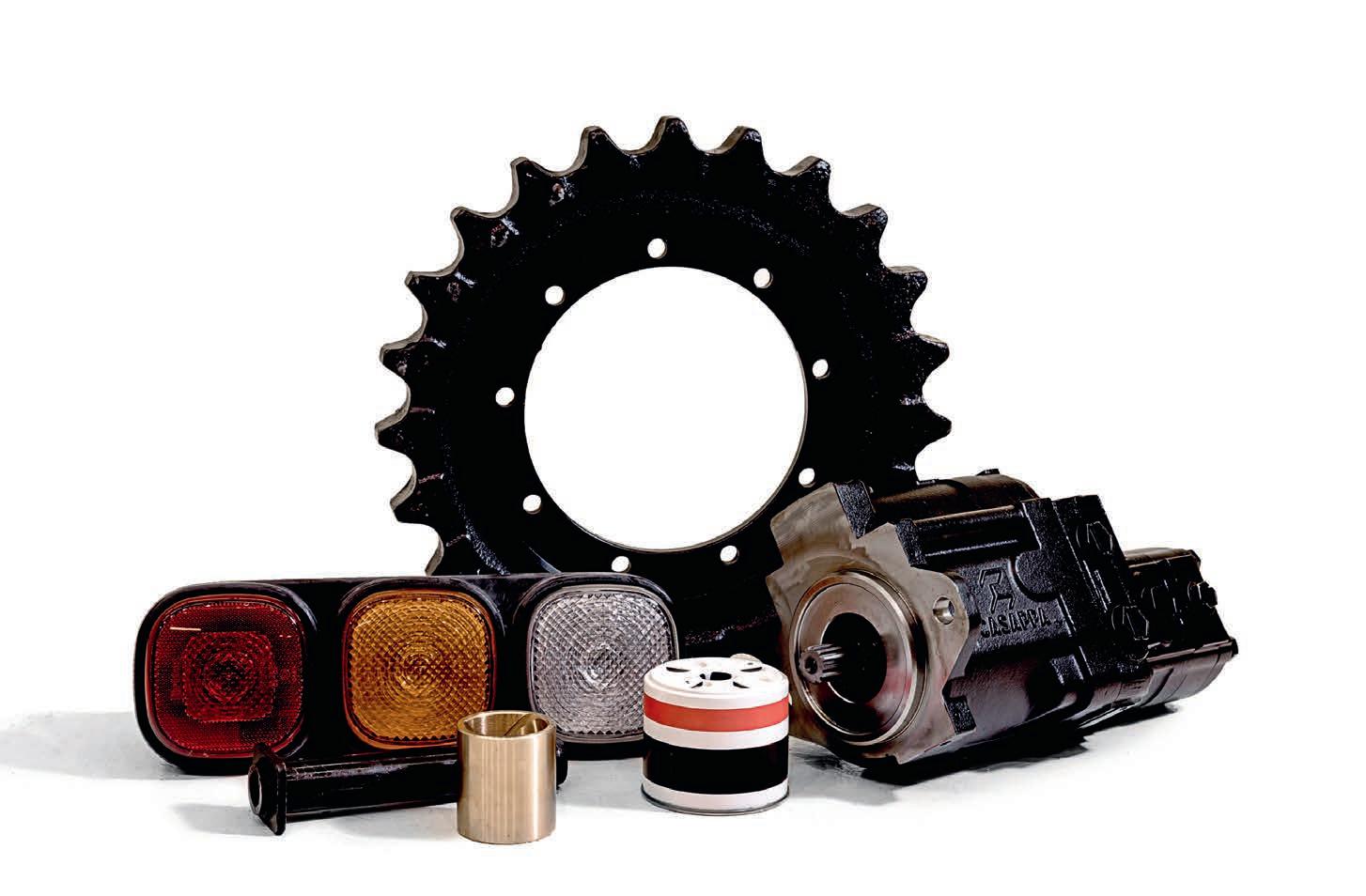
With a forklift in its logo, it’s unsurprising that TVH is best known as a supplier of parts for material handling equipment.
However, with more than eight million known components in its range, it also boasts a fair share of parts and accessories for construction equipment.
But what exactly does this range for small earthmovers, mobile elevating work platforms (MEWPs), and telehandlers look like?

• Joris Tijtgat is Market Management Specialist for small earthmovers at TVH.
He monitors and analyses the market in order to e ectively develop TVH’s range of parts and define the future global operational approach for that equipment.
Starting with the company in 2012, he transitioned through several roles, first in the Hydraulics Team until he moved to the Small Earth-Movers Team in 2019. He was team leader for four years before settling into his current position at the beginning of 2023.
• Rik Vanwildemeersch is TVH’s Market Management Specialist for MEWPs and telehandlers.
He facilitates the strategic development and stocking of parts for these machines through market monitoring and analysis.
Rik started working for TVH in 2004 and has since held various positions in di erent departments, from e-commerce advisor over external sales support to product manager coordinator, giving him a profound understanding of TVH, MEWPs, and telehandlers.
TVH stocks the essential parts that make a machine run, such as hydraulic components, engine parts, filters, joysticks, and switches. Images: TVH.
How long has TVH been active as a parts supplier for construction equipment?
Joris: “Although we o icially launched parts and accessories for small earthmovers in 2020, we have been active in the market for much longer. In fact, we started providing parts in the EMEA region (Europe, the Middle East, and Africa) as early as 2006.
“However, this o ering was limited to a

demand-driven supply of rubber tracks and undercarriage parts, meaning that we only supplied these parts in response to specific customer requests.
“Through this approach, we began to build an o ering that grew steadily. We started focusing on other product groups and zoomed in on specific machines and makes.
“As we expanded our o ering, we noticed an overlap between parts and customers. On the one hand, some products like filters and engine components are used across multiple machines.
“But we also saw that some of our customers — for instance, those active in rental — also had small earthmovers in their fleet. That is why, in 2017, the company decided we wanted to enter the market o icially.
“We took the time to prepare and build our product range to launch in 2020. Unfortunately, due to the standstill caused by COVID, our planned ‘big bang launch’ was more of a ‘soft launch’ instead.”
Rik: “While parts for small earthmovers are a relatively recent addition to TVH’s range, the history of parts for MEWPs goes back much further.
“In fact, TVH has been supplying parts for these machines since the late 1980s, but on a limited scale.
“We had parts in our range and could help customers who needed them, but we didn’t actively promote them. This changed at the turn of the century.
“In 2002, TVH accelerated its move to become a global player in MEWP parts in preparation for the o icial launch of the range in 2004. And this range has been growing ever since. Today, we are a one-stop shop with parts and accessories suitable for all major makes, models, and machines.
“Around the same time as the o icial launch of parts for MEWPs, TVH started to stock and develop parts for telehandlers. By 2010, our range was suitable for the most common makes, such as Manitou, Merlo, JCB, Dieci, and others.
“Since then, TVH has expanded this range gradually, but we wanted more. That’s why, in 2021, we kicked o the proactive development of parts for telehandlers mainly used by construction and agricultural customers.
“Today, our range includes parts suitable for many telehandler models, and we are committed to continuous market analysis to expand our range for new and popular machines.”
What does the current TVH o ering for these machines look like?
Rik: “As Joris mentioned, there is an overlap between machines. Whether it is a skid steer loader, scissor lift, telehandler, or other equipment, all these machines need parts such as hydraulic components, engine parts, filters, joysticks, switches, etc.
“We also supply machine-specific parts and accessories. For MEWPs, this includes parts such as body and chassis parts or stickers and decals, as well as accessories to increase MEWP safety and e iciency like fall protection
TVH o icially launched a section devoted to parts and accessories for small earthmovers in 2020.
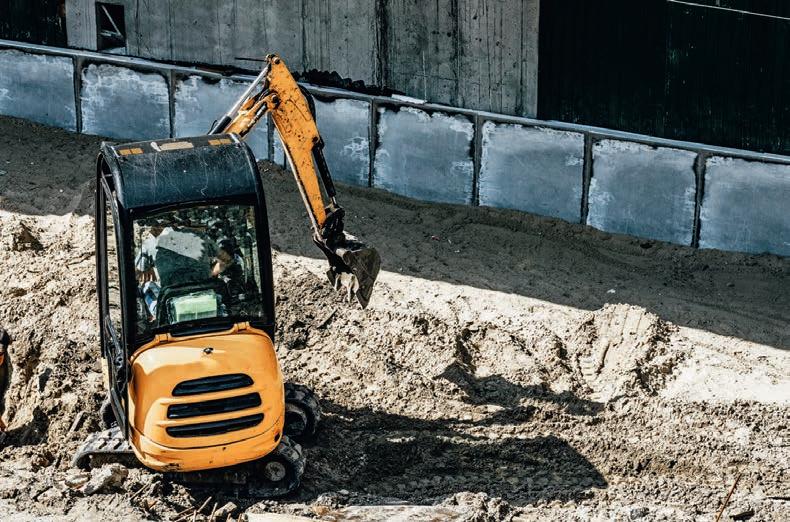
kits, wind meters, and more.
“A di erent range of parts is required for telehandlers, partly because these machines have cabins. So cabin parts like seats and mirrors are a must in our range, as are windshields and other glazing. In addition, through our own brand CAM attachments, we supply attachments that allow you to change the function of telehandlers in a matter of minutes.”
Joris: “As small earthmovers also have cabins, we naturally stock cabin parts for these machines as well.
“But we also have other equipment-specific parts in our range, such as tracks and undercarriage parts, vital components of mini excavators and compact track loaders.
“In addition, small earthmovers must be able to dig, level, and move earth to live up to their name. To this end, we supply vital hardware for excavator arms, such as bucket teeth and blades, bucket and tipping links, etc.”
Joris: “Our range is not just a random collection of parts and accessories. We have a particular focus, especially for small earthmovers.
“We take proactive action — meaning we ensure we have the parts before there is a demand — for mini excavators, skid steer loaders, compact track loaders, and backhoe loaders from nine makes: Bobcat, Case, Caterpillar, JCB, John Deere, Kubota, Takeuchi, Volvo, and Yanmar.
“However, it is important to reiterate that this is a focus, not a limit. We research many other makes outside our focus, and we also have parts for other machines such as articulated wheel loaders, dumpers, etc.”
Rik: “As TVH has a longer history with parts for telehandlers, the number of machines in our focus scope is more extensive.
“This means we proactively develop a range for compact telehandlers, fixed-frame telehandlers, and rotating telehandlers from all major makes, including Caterpillar, Dieci, JCB, Magni, Manitou, Merlo, and many others.

“But when it comes to MEWPs, TVH really is a one-stop shop. We have parts and accessories for scissor lifts, articulated and telescopic boom lifts, spider lifts, lower access MEWPs such as vertical mast lifts and pusharound lifts, and much more. These are suitable for all major makes on the market, including Genie, Haulotte, JLG, Sinoboom, Skyjack, and Zoomlion.”
What are some of TVH’s key brands and partnerships for supplying parts and accessories for construction equipment?
Joris: “To o er our customers the best service, TVH first relies on its own brands, such as TotalSource, which is undoubtedly one of our flagship lines.
“It was developed to provide the broadest possible range of quality parts and accessories at the right price.
Rik: “But we have much more to o er. Since 2018, TVH has been the o icial partner of GemOne, a telematics and fleet management solutions provider.
“Likewise, TVH is the sole supplier of Energic Plus, a brand of industrial battery chargers and innovative technologies to extend battery life. CAM attachments, our brand of forks and attachments mentioned earlier, is also part of this list.”
Joris: “Since glazing is crucial for construction equipment, TVH strives to be a strong player in this product. This is made possible thanks to meaningful partnerships with strong market leaders who have their own specific expertise in glazing.
“For example, we have partnered with CAB Glazing Services, GDI, and Wissink Trading, specialists in glass solutions for small earthmovers and other equipment.
“In addition, TVH’s service is guaranteed by collaborations with top-quality brands. We have already entered numerous partnerships, such as with Casappa, Danfoss, Parker, and Rexroth for hydraulics; with Grammer, KAB Seating, and Sears for seats; with Baldwin, Donaldson,
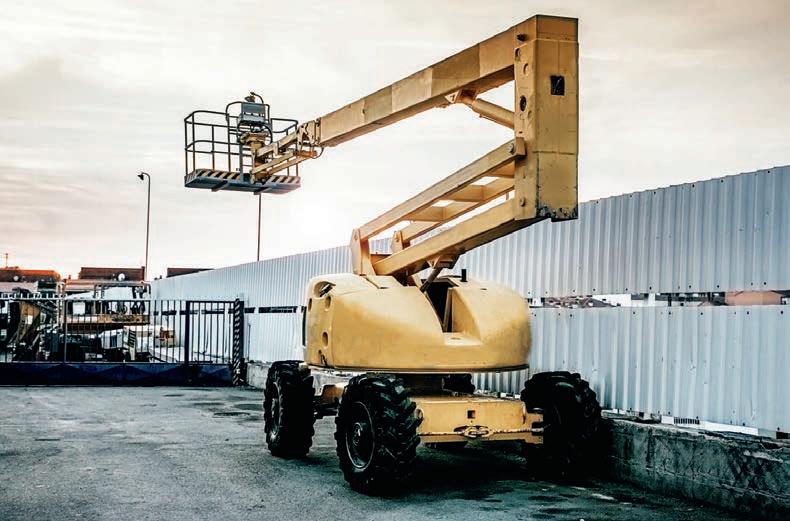

and Fleetguard for filters; and with Carraro for transmission parts.
“Moreover, TVH is an o icial repair centre for some of these brands, for example, Carraro, Curtis, Danfoss, Parker, Sevcon, and many others.”
Rik: “Another brand partnership is Harness ON, an essential solution to increase safety when working with MEWPs.
“Harness ON is an intelligent safety device permanently shackled to the MEWP’s anchor point and is electronically wired to the machine’s function controls. In this way, the MEWP won’t work until the operator clips a carabiner to the inductive ring of the Harness ON, e ectively connecting their harness to the machine.
“But our partnerships are not limited to product brands: we also establish ties with OEMs. In fact, we have recently taken some important steps in the MEWP sector.
“TVH has been an o icial distributor of Sinoboom parts for Europe since 2021, and as of 2023, we are also an o icial distributor of Zoomlion parts for Europe and Turkey.”
How does TVH help its customers to find the right parts for particular machines?
• Renewed on-line shop
Joris: “As society gets more digitised, online shopping has become second nature to most people. This means people have high expectations of their e-commerce experience.
“At TVH, we can meet these expectations thanks to our renewed on-line shop, which has an intuitive look and feel, where our customers can search for parts in the way that is most convenient for them: by part number or by machine details. In addition, the shop includes many additional features to make the search even more straightforward, such as MyPartsFinder and MyProductSearch.”
• Look-up service
Joris: “It is always possible that a customer can’t find what they’re looking for in the digital shop. In this case, they can submit a search
request via the on-line shop or their sales contact within TVH, who will pass it on to our look-up service.
“As the name suggests, this department specialises in looking up specific parts and accessories. To do this as e iciently as possible, the service is divided into several specialist teams.
“Therefore, for construction equipment, there is a dedicated team for small earthmovers, one for MEWPs and one for telehandlers. Within each of these teams, each member specialises in one or more makes to ensure optimal knowledge.
“In this way, the look-up service allows us to supply parts outside our usual scope. And thanks to this, we can also provide parts for other machines and makes, albeit in the category of up to 10 tonnes. Our small earthmover look-up service handles requests for more than 30 makes.
“Responding to customer requests is not the only role of the look-up service. Through its activities, the service is also responsible for expanding TVH’s range and further elevating technical expertise within the company. Much of this new information is then uploaded to our on-line shop for the benefit of all our customers.”
The rise of electric and other lowemission models
Rik: “In this area, MEWPs are the most advanced, with already more than 50 per cent of the machines in use today being electric.
“Stringent emission standards and regulations in urban areas are a vital reason for this, but electric MEWPs are also more versatile since they can be used both indoors and outdoors.
“This trend is not limited to MEWPs. Emission standards apply to all equipment, and there is increasing awareness of environmental concerns. As a result, OEMs are expanding their low- and zero-emission ranges to include more machines, thus also including telehandlers. For the time being, this range is mainly limited to compact machines, as only
these can get enough power from electricity to function properly.
“On the other hand, it’s not yet certain that electricity will be the only route for telehandlers. Besides electrification, several manufacturers are experimenting with prototypes that use hydrogen or fuel-cell hydrogen. Whatever the future holds, TVH will remain attentive, and we will adapt our range to what the most current machines require.”
Joris: “The same can be said for small earthmovers. Again, electric models are certainly not as far advanced as MEWPs, but as with telehandlers, the range is expanding. More and more OEMs are going electric and adding more machine types to their electric ranges.
“However, I don’t think ‘classic’ small earthmovers with internal combustion engines will disappear as newer models are better equipped to reduce their emissions. Much will depend on legislation and the perception of the users: will they find the electric version as productive as their diesel counterparts?
“Therefore, we are looking towards the future and are always ready to adapt our parts range to the needs of the market.”
Joris: “Since the launch of our range for small earthmovers in 2020, we have worked hard and invested a lot in building up our stock. In the future, we want to focus on further commercialising our range and continuing to expand it.
“Exactly how we will expand — either with new makes or new machine types — remains to be seen. But we definitely also want to raise awareness about what we have to o er.
“Customers should simply know that, in addition to parts and accessories for forklifts, MEWPs, telehandlers, tractors, and the like, they can also come to TVH if they need something for small earthmovers.”
Rik: “The situation is more or less the same for telehandlers. However, we’ve been active as a supplier of parts for these machines for a much longer time, so we already have quite a wide range.
“But we are still striving to expand this range even further. Another focus at the moment is to make our o ering more visible to our customers in agriculture, as telehandlers are increasingly finding their way into this sector.
“For MEWPs, TVH has already established its position in the market. Most of our customers know us as a one-stop shop for all their MEWP part needs.
“But we also continue to monitor all the trends and developments, and we keep a close watch on the needs and expectations of our customers so we can adapt where necessary. However, we take this approach for all the machines we have parts for. It’s the only way we can continue to o er the best possible service for construction equipment parts.”
Looking for parts?
Scan the QR code to easily search for parts on-line 24 hours a day, seven days a week.

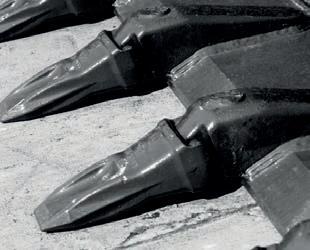
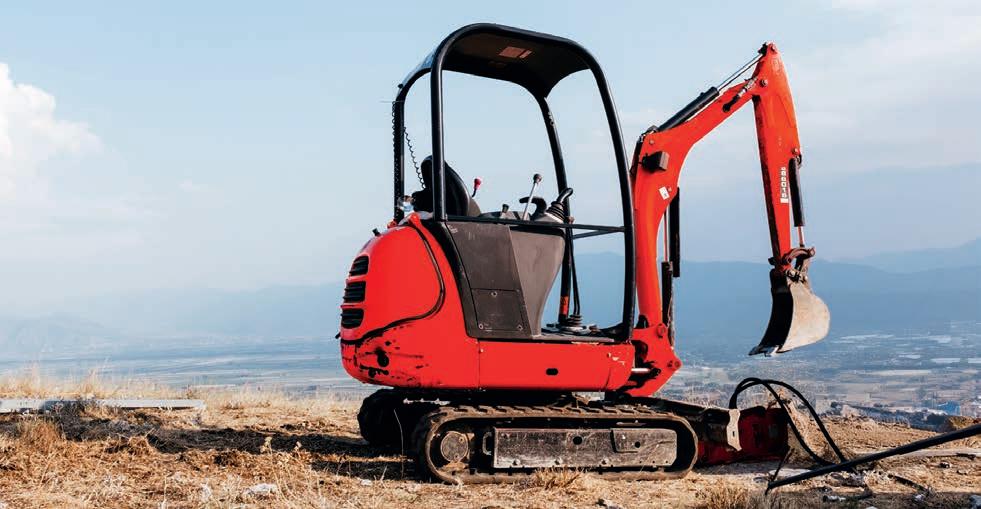
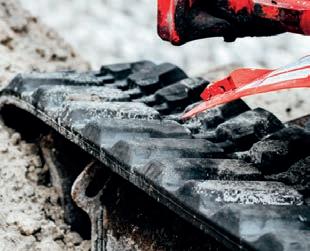

Rammer users can
now improve productivity and reliability by accessing real-time monitoring of rockbreaker use.
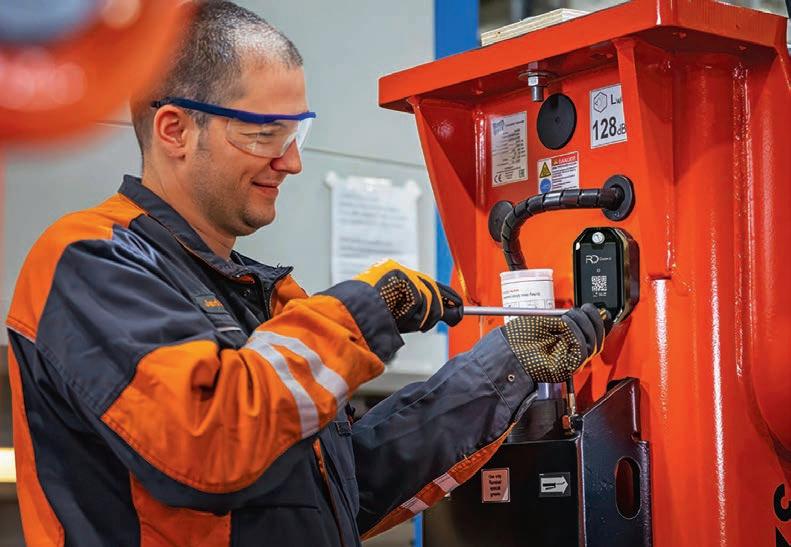

Rammer has launched RD Guard, a remote monitoring device for hydraulic rockbreakers used in mining, quarrying, and heavy equipment work.
When installed on a Rammer tool, RD Guard continuously collects and transmits operational data.
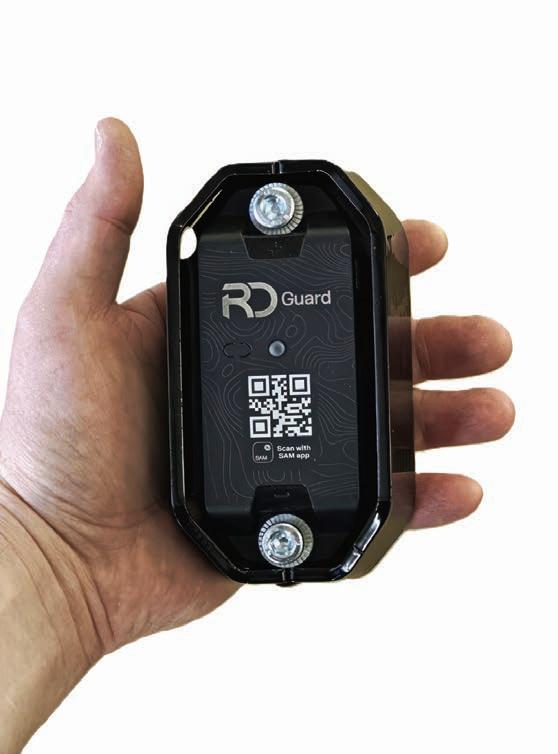
The successor to Rammer’s legacy RD3 device, the tool o ers improved protection, greater accessibility, and enhanced reporting through the company’s cloud-based digital assistant and data portal, the SAM platform.
Engineered to withstand the harshest mining and quarrying environments, RD Guard features a heavy-duty yet slim protective housing and is linked to each rockbreaker’s serial number.
Once fitted to a Rammer rockbreaker, RD Guard automatically tracks work hours, impact periods, service intervals, GPS location, and more.
Data is transferred to SAM via 5G, allowing operators and site managers to access fleet information anytime, anywhere, through mobile or desktop devices.
Total Rockbreaking Solutions Sales Manager, Adam Leece, said that RD Guard enabled operators to turn real-time data into practical insights that help maximise uptime and optimise processes.
“Correct operation is essential to minimise the risk of rockbreaker failure and avoid costly, unscheduled downtime,” he said.
A common cause of premature failure is extended hammering cycles, where the piston continues striking for too long.
“By using advanced electronics to measure impacts and stresses, RD Guard provides data on how each rockbreaker is operated,” Adam said.
“This allows operators to adjust their techniques and reduce maintenance costs caused by premature wear.
“With real-time data on stress and impact levels, operators can use rockbreakers more e ectively, extending tool life and improving overall performance.
“For example, an owner may discover that one operator’s method places less stress on the breaker compared to others.
“By analysing and sharing these techniques, teams can adopt more e icient practices that improve longevity and productivity.”
SAM has been designed as a dedicated digital assistant for those overseeing daily site operations.
By integrating people, activities and equipment data, SAM provides a single collaborative platform that boosts productivity and simplifies maintenance planning.
Key benefits include:
• Anytime, anywhere access: Available on iOS, Android and desktop, SAM ensures data is always within reach.
• Optimised maintenance: Automatic email notifications alert teams when service intervals are approaching, allowing maintenance to be scheduled with minimal disruption to production.
• Improved operation: With more data on hand, operators can refine their methods, increase productivity and extend the life of each tool.
• Long-term value: SAM stores historical service records and total operating hours, helping owners assess equipment longevity and protect resale value by providing verifiable service histories.
RD Guard is compatible with most Rammer rockbreakers currently in use, and is designed with forward compatibility in mind, ensuring readiness for future software updates and feature enhancements.
For mining and quarrying operations seeking to maximise productivity, reduce downtime, and make data-driven decisions, RD Guard and the SAM platform mark a new era in rockbreaker performance management.
For more information, contact your local Rammer dealer. Contact details are available at: www.attachmentspecialists.com.au/ rammer
https://www.rammer.com/en/contact-us/ contact-map/


The next evolution of RD3, Rammer’s new RD Guard™ links to each rockbreaker’s serial number and tracks work hours, impact periods, service intervals, GPS location and more –with data seamlessly transferred to SAM over 5G.
RD Guard™ with SAM transforms real-time rockbreaker data into practical guidance that maximises uptime and optimises processes.
By measuring impacts and stresses, it shows how the rockbreaker is operated - helping operators refine techniques and reduce maintenance costs caused by premature wear.
Want to know more? Contact your Rammer dealer today!

• Precise unit location tracking
• Accurate work hours by site

• Operational insight leads to better breaking techniques
• Improved techniques for longer tool life, less wear & lower maintenance costs
• Automatic service alerts enable proactive maintenance planning
Scan for the authorised Rammer dealer locations in Australia: QLD | NSW | VIC | SA | WA | NT or visit rammer.com

Equipment loading ramps are essential to safe operations across diverse industries, but addressing the demands of each application can be a challenge for designers and manufacturers.
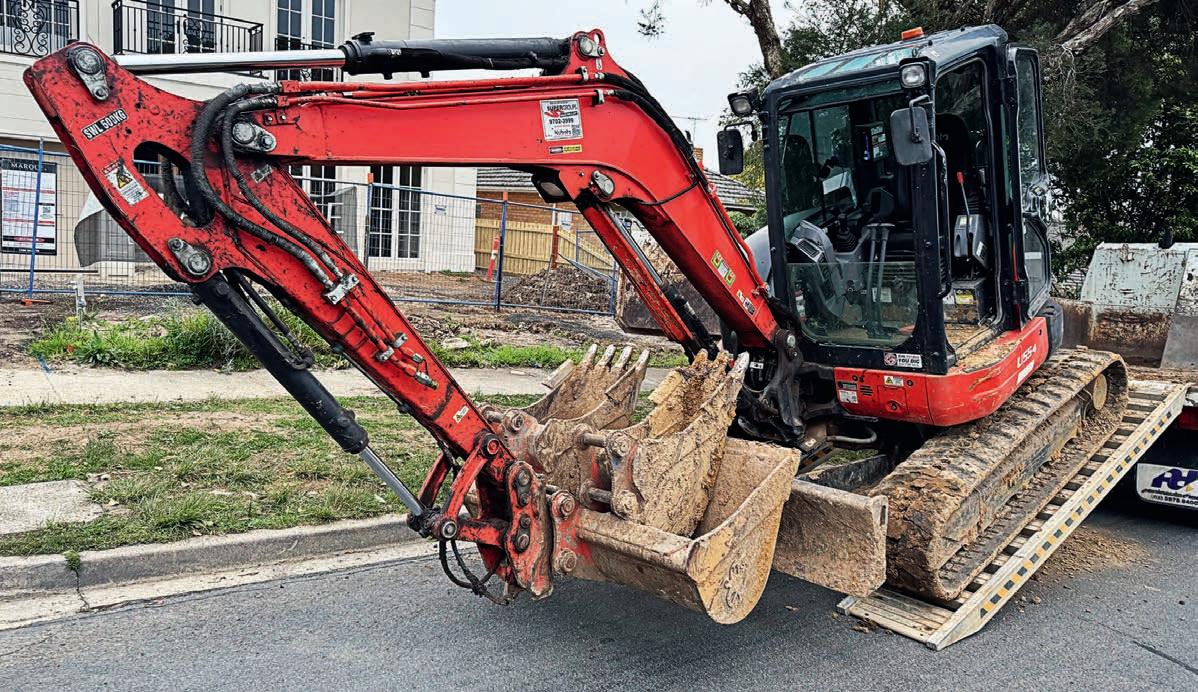
When loading or unloading heavy machinery, there is no margin for error. For this reason, loading ramps must be fit for purpose and used correctly to ensure the safety of operators and site personnel.
Any instability during the handling or transportation of large, heavy equipment increases the risk of personal injury and equipment damage. In addition, accidents caused by improper loading or unloading can result in damage to surrounding materials, machinery, and site infrastructure.
Ultimately, incidents arising from inadequate equipment loading or unloading are costly — not only in direct financial terms, but also in reputational impact. As such, careful selection, design, and use of loading ramps should form a core component of risk management strategies for contractors and operators across all work sites.
Serious site injuries have brought attention to the design, correct use, and safety compliance of loading ramps.
Crush fatalities have occurred when heavy machinery fell during unloading, or when excavators became unstable and tipped o inadequately secured ramps.
Investigations into these incidents have identified a lack of adherence to basic loading and handling procedures as a contributing factor.

Another incident involving an excavator highlighted the consequences of
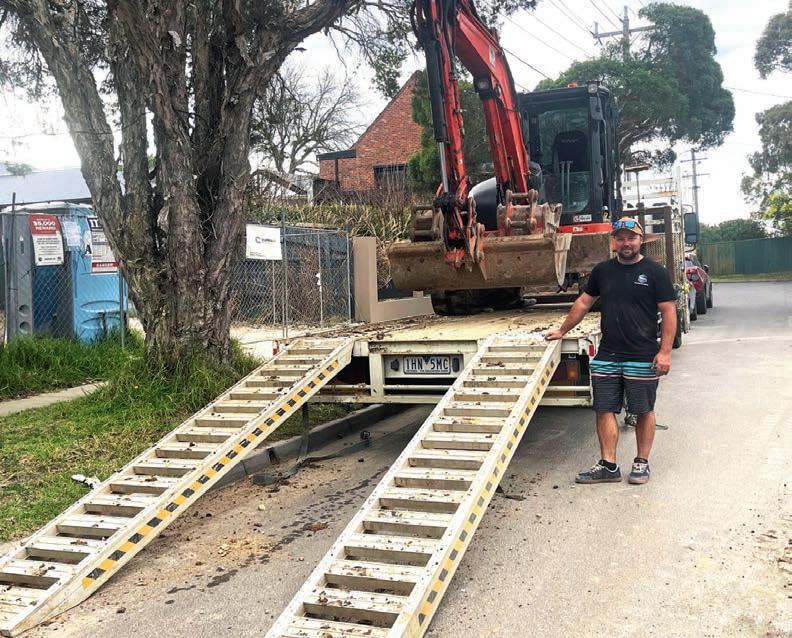
securing methods. In this case, a random bolt was used to loosely fasten the ramps to the vehicle tray. The bolt was neither supplied nor recommended by the ramp manufacturer and failed to prevent the ramps from dislodging.
This event demonstrated the importance of compliance with manufacturer specifications. Only the pins and R-clips supplied or approved by the ramp manufacturer should be used to secure loading ramps, as improvised solutions can increase the risk of accidents.
According to Jimmy Fang of Jetland Loading Ramps, these examples of accidents that could have been easily avoided reinforce the message that safety devices and specified components must be used, and instructions strictly followed, to minimise the risks associated with equipment handling.
“There is a reason why manufacturer’s instructions for correctly installing and using securing systems for ramps must be observed,” Jimmy said.
“Every time equipment ramps are used, it is both common sense and an obligation for the person responsible for safety to secure ramp and vehicle components with manufacturersupplied or recommended pins and clips. As well as using the correct securing components, users need to follow the installation instructions.
“Every item of plant, machinery, or equipment that is moved by a trailer or truck must use ramps that are correctly rated and suitable for the size and weight of plant and attachments that are being loaded or unloaded.
“Other safety considerations include the use of seat belts by operators during the loading and unloading process, and ensuring that the ramps are aligned with the wheels or tracks of equipment being shifted.
“Any form of damage to ramps is an indication of risk. Ramps need to be regularly inspected for any signs of damage, deformity, or cracks to ensure their safety has not been compromised.”
Jetland caters to businesses that need reliable ramp solutions. Jimmy said its excellent reputation for quality and safety has been earned over time.
“Using correctly matched loading ramps makes a huge and positive impact on site safety and e iciency,” he said.
“Few others understand this better than Jetland, which has been designing and manufacturing loading ramps that have proven to satisfy a range of industry needs. The range includes models for loading and unloading goods from railway cars, trucks, and containers.”
Nothing beats industry experience when it comes to designing robust ramp solutions for all types of enterprises.
Many years of experience, including time spent on engineering custom loading solutions, means Jetland understands all aspects of handling heavy equipment. This accumulated knowledge has helped to build its reputation for safety, quality, and innovation.
In addition to its standard range, Jetland will design and build custom ramps to suit any application. Examples of these custom solutions may include removalist ramps, rolling ramps, wheelchair ramps, and other tailored solutions.
Jetland understands that its ramps are often needed to work in tough, inhospitable conditions, including those found in industries
In addition to its standard range, Jetland will design and build custom ramps to suit any application.
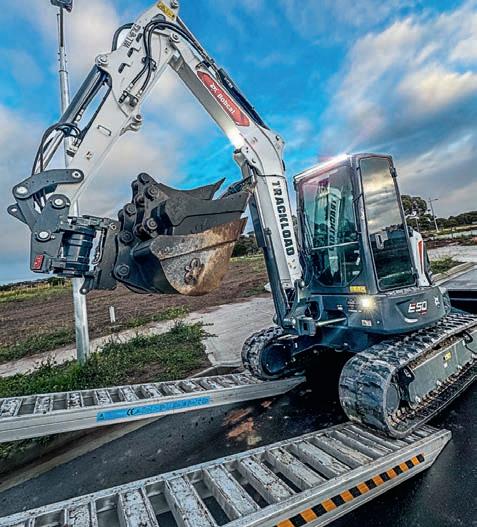
All ramps feature anti-slip surfaces, while specially designed and tested locking pins ensure that ramps are locked in position for use.
such as construction, quarries, mining, and forestry.
Tackling the task of loading and unloading in some of the world’s most challenging conditions, Jetland makes its ramps from robust materials and to an engineered design that ensures they operate e iciently and safely.
Jimmy said that safety has always been Jetland’s priority. Meeting and exceeding compliance with ramp safety standards guides its design and manufacturing process.
“All ramps feature anti-slip surfaces, while specially designed and tested locking pins ensure that ramps are locked in position for use,” he said.

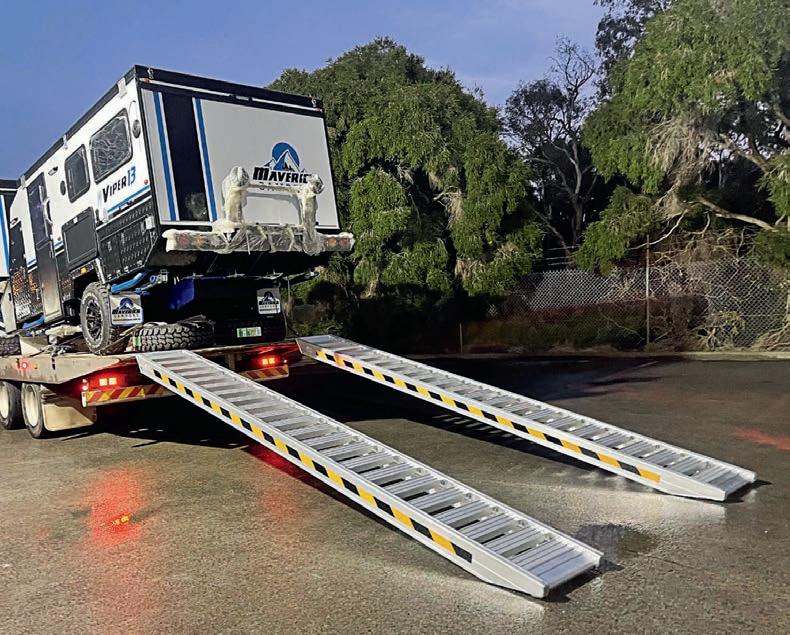
Jetland’s standard ramp range includes the A-Series, suitable for rubber track machines in two to six-tonne load capacities and 2.5–4.5 metres in length. The B-Series caters for rubber track and rubber tyre machines, and is available in 2–6t load capacities and 1.8–4.8m lengths.
The Jetland C-Series ramps are designed for rubber track and rubber tyre machines and are available in 4–21t load capacities, with ramp lengths from 2.5–4.5m.
For loading and unloading larger equipment, the Jetland D-Series ramps are recommended, suitable for machines and attachment packages of up to 42t and 2.5–4.5m in length. These ramps are the first such models available in Australia.
All Jetland ramps are covered by a 12-month warranty, and Jetland has a free Australia-wide shipping policy to make the purchasing process hassle-free.
Jetland Ramps’ customers are supported by its distributors and the Jetland customer service team, which are on hand to respond to any questions.
Further information about the full range of Jetland loading ramps may be found at www.jetlandramps.com.au.

For those who rely on it daily, a humble workbench is far more than a surface to work on — it is the foundation of productivity, safety, and craftsmanship.
In 2007, enterprising entrepreneur David Abbott identified a growing problem in the supply of workbenches for the Australian market.
Industry-quality, locally-made workbenches were becoming di icult to find. Imported, flat pack alternatives were flooding the market, often at lower prices, but with compromises in strength, longevity, and stability.
Having experience working with industrial and warehouse storage solutions through his prior company, Abbott Industries, David gritted his teeth and decided to take matters into his own hands. With support from wife Michelle, he made a decision to invest in Australian manufacturing.
Their goal was straightforward: to design and build workbenches that could withstand rigorous industrial use and provide customers with long term value, not short term savings.
From the beginning, the focus was on building heavy duty benches that would not flex, move, or deteriorate under load. That commitment resonated with customers who were tired of replacing lightweight benches that failed to keep up with demanding work environments.
Over time, what began as a specialist workbench manufacturer expanded into
a broader o ering that now includes workstations, tables, custom benches, and a curated range of power tools.
Today, nearly two decades on, Workbench Warehouse has built its reputation on the understanding that the workbenches must be built to last and built for purpose.
“We’ve grown from a small manufacturing operation into a respected supplier of custom workbenches and premium workshop solutions for customers nationwide. Still Australian owned and operated, the business remains committed to local manufacturing, practical design, and down to earth customer service,” David said.
Every workbench is designed and built in Melbourne using high quality Australian steel, locally sourced paint and Australian made castors wherever possible.
When a fitting cannot be sourced domestically, the company prioritises local suppliers to maintain quality and consistency.
“Our workbenches are made using Australian steel, paint and castors,” David said. “If we can’t get a fitting Australian-made, we source it from our local area. We are focused on Australian
manufacturing; we understand the importance.”
This commitment is not simply about patriotism. Building locally allows Workbench Warehouse to maintain strict quality control, respond quickly to customer requirements, and ensure every bench meets the expectations of real world industrial use.
“It also means supporting Australian jobs and manufacturing standards at a time when many competitors rely entirely on overseas imports,”
David said.
Workbench Warehouse specialises in the design and manufacture of custom built workbenches and workshop furniture tailored to specific applications.
Rather than o ering a one size fits all solution, the business works closely with customers to understand how a bench will be used, where it will be installed, and what loads, tools, and workflows it must support.
The company supplies workbenches across a range of industries, including automotive, mining, aerospace, energy, education and training (TAFEs and universities), laboratories, retail environments, and home workshops.
“From single benches for home enthusiasts to large scale manufacturing fit outs, Workbench Warehouse has the experience and capacity to deliver projects of all sizes,” David said.
“In demanding sectors such as earthmoving and civil construction, where workshops are exposed to heavy impacts, extreme loads, vibration, dust, and harsh conditions, the company’s workbenches are designed to deliver unyielding reliability.
“Premium steel construction, fully welded frames, and over engineered designs ensure long service life even in the toughest environments.”
What sets a Workbench Warehouse product apart is its construction. Every bench is welded and assembled as a single, solid unit — never flat packed. By eliminating bolts and modular assemblies, potential weak points are removed, resulting in a rigid, stable platform that will not loosen over time.
In load bearing areas, steel plate thickness can reach 20 millimetres or more, supported by increased rectangular hollow section (RHS) framing for added rigidity. This level of engineering allows the benches to safely support heavy components such as excavator buckets, hydraulic cylinders, and engine blocks, improving productivity and safety.
To protect against corrosion and wear, each workbench is finished with 2K enamel paint that is baked on for durability. The result is a tough, chip resistant coating with a professional, mirror like finish. Customers can also specify custom colour schemes to match branding or fleet requirements.
Despite the heavy duty nature of its products, Workbench Warehouse makes the custom build process straightforward and accessible. Every project begins with a conversation.
The team takes the time to understand how the bench will be used, what it needs to handle, and how it must fit within the available space. Customers are encouraged to share rough sketches, descriptions, floor plans, or existing drawings — anything that helps clarify the end goal.
“Based on this information, Workbench

Warehouse provides clear pricing and practical recommendations around size, materials and features,” Michelle said. “The focus is on what adds real value to the customer’s workflow, not unnecessary extras.
“Once a project is approved, detailed shop drawings are prepared and reviewed to fine tune dimensions and layouts. Only after everything is confirmed does fabrication begin, ensuring the final product is built exactly to specification.”
Workbench Warehouse also o ers designs that have become favourites among customers.
“One standout is the WB2 SPB6XL, widely regarded as a flagship model,” Michelle said.
“O ering a complete storage solution with drawers, pegboard and cabinets, the WB2 SPB6XL combines compact dimensions with durability and an unshakeable work surface. It is designed to stand the test of time in busy workshops where e iciency and organisation matter.
“These established designs provide customers with confidence, knowing they are investing in solutions that have already proven themselves in real world conditions.”
The value of a custom built workbench is best illustrated through real customer outcomes. One recent project involved transforming a converted stationary room into a soldering station.
“Due to a narrow doorway and limited internal
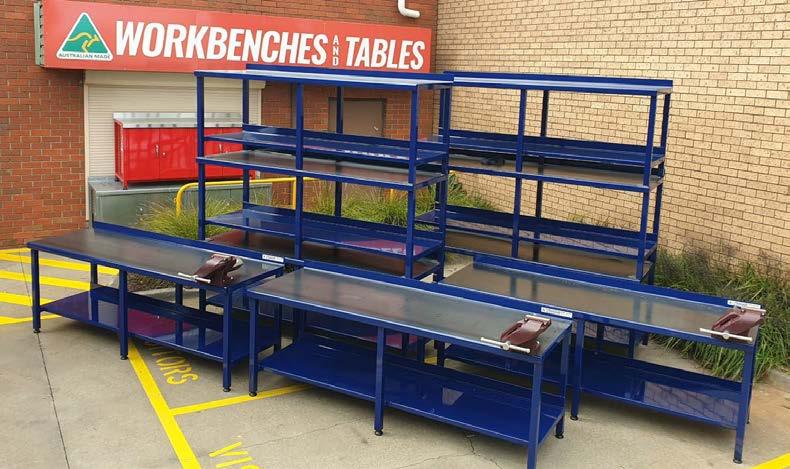

space, the 3000mm by 800mm workbench had to be built in four sections and assembled on site,” Michelle said.
“The design incorporated locations for fume extraction filters, vents and hosing, along with specialised lighting and magnifying accessories.
“Slide out keyboards and overhead storage completed the solution, enabling the customer to create a safe, e icient, and purpose built workspace that matched their original vision.
“The project highlighted not only the flexibility of Workbench Warehouse’s designs, but also the team’s ability to adapt to challenging environments.”
Unlike many suppliers, Workbench Warehouse sells directly to its customers. This direct relationship allows the team to understand specific requirements, respond quickly to changes, and ensure accountability throughout the process.
By avoiding intermediaries, the company maintains control over design, pricing and quality.
It also reinforces a core belief that a workbench should be an asset to a business, not a liability that needs replacing every few years.
“We don’t cut corners and our pricing is fair,” David said.
The Abbotts said that like many Australian manufacturers, Workbench Warehouse operates in a competitive landscape dominated by lower cost imports.
“Overseas suppliers often avoid the costs and complexities of domestic manufacturing, allowing them to focus heavily on marketing and price competition,” they said.
“Brand awareness remains the company’s greatest challenge, but it is also its greatest opportunity. As more customers experience the di erence that quality design and local manufacturing can make, word of mouth and repeat business continue to grow.
“The company is already seeing its marketing e orts and product quality begin to resonate more strongly, particularly among customers who value long term performance over short term savings.”
When safe handling practices and appropriate equipment are overlooked, the consequences can extend well beyond lost productivity, posing threats to worker health.
Workplace injuries are traumatic, costly, and can have physical, financial, and mental consequences for the injured, their families and employers.
In the commercial tyre and wheel handling sector, musculoskeletal disorders (MSDs) are the most common injuries, often the outcome of improper handling. They can result in severe trauma, including fatalities from compressedair accidents and exploding tyres or rim components.
A veteran of the industry, OTR - Tyres Wheels Axles Business Development Manager Greg Lowe is no stranger to manual handling injuries, which he said account for about half of all tyrerelated incidents.
“It is essential that safety procedures are followed. The large amount of stored energy in an inflated commercial tyre creates a significant hazard if things go wrong,” he said.
He said the Australian standard on tyre safety, AS4457, was revised in November 2024, the first amendment in 17 years.
“AS4457 specifically refers to ‘Earthmoving machinery, o the road wheels, rims and tyres maintenance, repair and parts’ and relates to wheel assemblies and rim assembly, including everything from the rim base or wheel base and associated components,” he said.
“In this latest version of the standard, the regulators refer to sur-loc fitments and Mechanical Retention Devices (MRD).
“While the sur-loc standard does not refer to the manufacture of a new wheel, but to a repair and testing standard, OTR has taken a leadership step to integrate this preventative safety standard into its manufacturing process for new products.
“OTR specialised tools, such as its Lock Ring Spreader Tool, are what the new standards AS4457.1-2024 refer to as being an MRD.
“It is significant that OTR has made a

Regular inspection
and
testing procedures ensure that faults such as wheel cracks are identified in a timely manner. Images: OTR
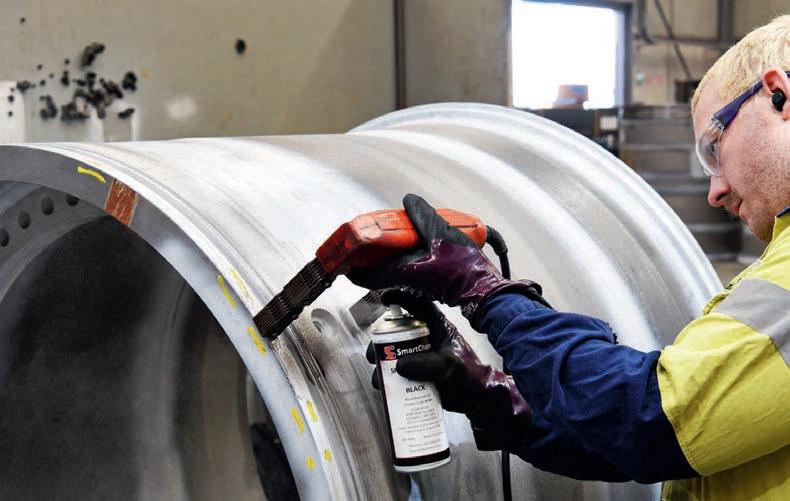
decision to implement the fitting of sur-locs to all its products for earthmoving and mining machinery. This is a major step for the only OEM worldwide that currently fits a sur-loc to its wheel rims.
“This demonstrates that OTR is committed to leading on safety in the industry.”
Greg said that OTR had adopted and incorporated a number of safety enhancements into its product range as a result of its experience in the testing, repairing, and tyrefitting process.
OTR innovations include mechanical retention devices such as retaining clips on lock rings that help retain the lock ring in position, as well as locking spreaders, which are tools that help keep fingers out of harm’s way.
“We are proactive and leading the industry through improvements to wheel rim and
component design, including the type of materials used to manufacture rims, or a better way to make a component,” Greg said.
Whether a business conducts its own tyre maintenance, is a fleet owner or a contractor, Greg said that management had a duty of care through its supervision of safety.
“The pressure in tyres used on vehicles in the construction and mining industries makes them potentially lethal devices unless they are handled under strict rules,” he said.
“Regular inspection and testing procedures ensure that faults such as wheel cracks are identified in a timely manner.
"Cracks can cause a catastrophic failure, and we have seen many injuries associated with 24inch through to 63-inch tyres and rims.
“OTR provides extensive training for wheel and rim safety, focusing on identifying damage and assuring correct assembly. We can help in analysing failures to provide solutions and implement improvements, such as providing profile gauges for compatibility checks.
“Sta training and observation of supervision rules will always be major elements of tyre safety.

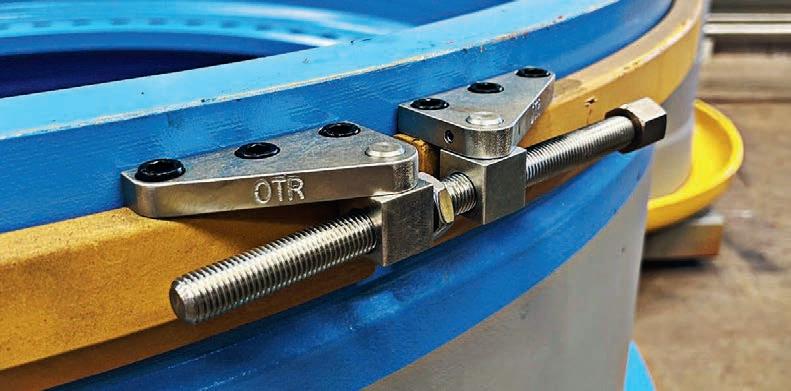
“However, even when rules are in place and products are continually updated for accident prevention, anyone involved in tyre and wheel maintenance needs to understand that human error, shortcuts, or lapses in safety procedures pose a serious risk.”
For further information call 1300 CALL OTR or visit www.otrtyreswheelsaxles.com.
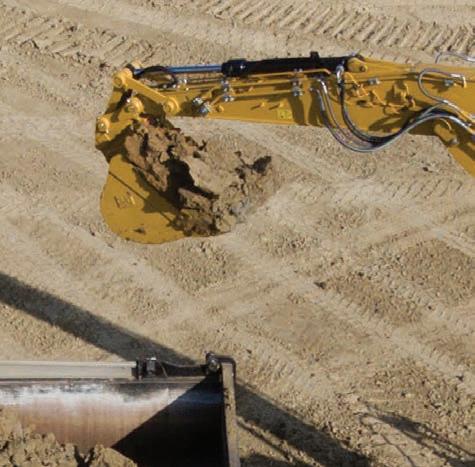
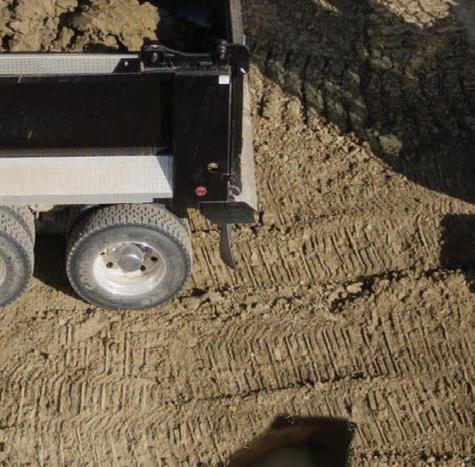
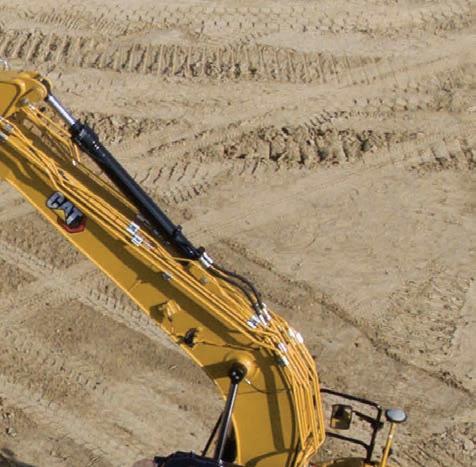
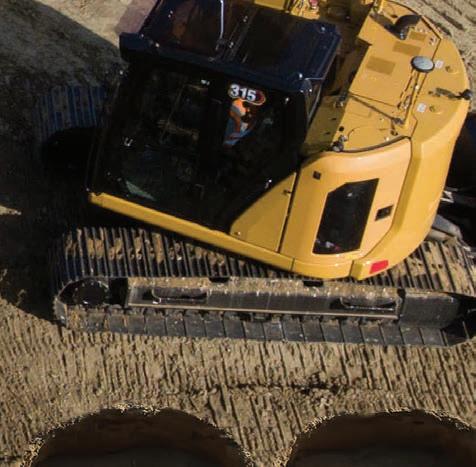











Designed for rapid material unloading, Dieci dump trucks are used across the construction industry to transport excavated material from worksites to designated stockpile areas.
Common on construction, landscaping and waste management projects, site dumpers deliver high productivity by quickly moving and unloading fill, rock, sand, fabricated components, and heavy tools.
Building contractors, fleet managers, and earthmoving specialists value dumpers for their ability to move excavation spoil and debris e iciently, cutting cycle times and labour requirements.

in challenging conditions, with proven performance in mining, infrastructure works, and highway construction when transporting aggregates, asphalt, and road base materials,” he said.
support both safety and productivity.
Intuitive, well-arranged controls make the dumper easy and comfortable to drive throughout long shifts.

Dieci: lightweight, versatile and easy to handle
One of the most popular dump trucks in use is the Dieci DP7000, which has been recognised for being lightweight, versatile and easy to handle.
According to Dieci Australia National Sales Manager Bob Mules, the model reflects the company’s ongoing commitment to innovative solutions that respond to evolving industry demands.
“The DP7000 site dumper has been designed to deliver high load capacity and durability

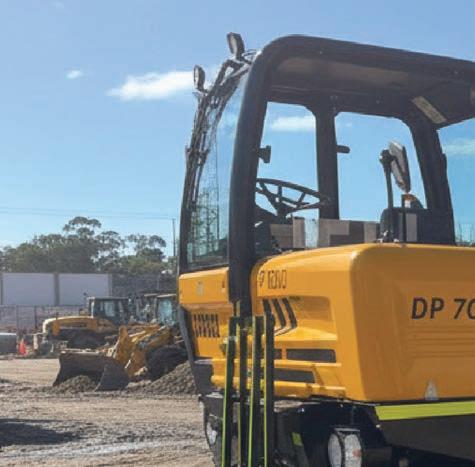
“Major landscape contractors will find it highly e icient for moving mulch, soil and other bulky materials, while on demolition projects, it is ideal for removing rubble, bricks, and concrete waste to clear the way for new construction.
“The dumper is particularly e ective on jobs where handling large volumes while reducing work cycles is a priority.”
Built with the same Italian design quality that underpins Dieci’s telehandlers, the DP7000 uses industry-standard components and delivers an impressive load capacity.
Maintenance is straightforward, with durable components and a practical design that enables easy access for servicing.
Safe and
Operator comfort and ergonomics have been placed at the centre of the DP7000’s design to

“Cab access has been improved, with a redesigned entry and a double folding door that provides the widest dumper access door on the market,” Bob said.
“Visibility in low light or dusty conditions is enhanced by four lights on the front and rear of the cab, backed by powerful vehicle headlights for safer operation at all times of day.
“An inching pedal allows precise machine control during delicate tasks such as positioning under conveyors or working close to structures.”
All-terrain tyres, four-wheel steering and four-wheel drive combine to deliver excellent stability and traction across di icult ground conditions.
A two-speed servo-controlled reduction gearbox and hydrostatic drive system provide precise movement, maximum travel speed, and the torque required for demanding haul cycles.
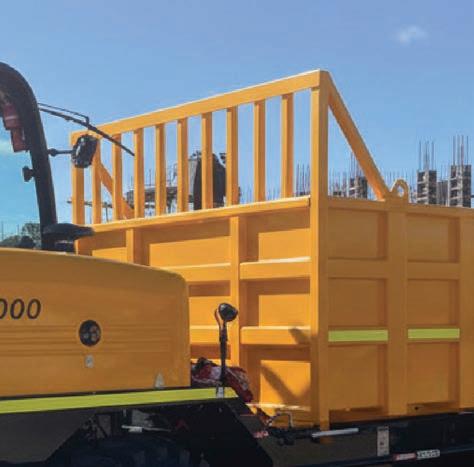

The DP7000 site dumper has been designed to deliver high load capacity and durability in tough environments.
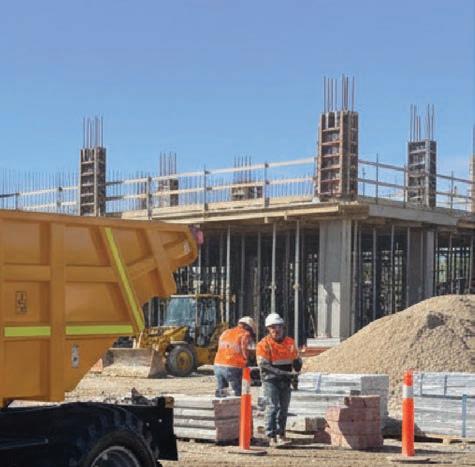
Safety features include a reversible driving seat and controls, with large, curved cab windows providing a 360-degree view of the work area for continuous situational awareness.
The 180-degree reversible driving seat ensures the steering wheel and wheels remain correctly aligned when the seat is rotated.
Dieci attributes the dumper’s all-terrain credentials to its PX o -road chassis, which has demonstrated its capability in some of Australia’s harshest environments.
The machine is fitted with a wet brake system on the front and rear axles, an important feature for tunnelling and underground mining, as wet brakes reduce spark risk, remain protected from contaminants, and benefit from cooling and lubrication to minimise wear and prevent warping.
Despite its robust build, the DP7000 is described as lightweight, easy to handle, and highly agile, allowing operators to work confidently in confined areas. Its large loading capacity accelerates the movement, handling and removal of materials, delivering a boost to on-site productivity.
The Dieci DP7000 dumper o ers a smaller footprint than standard trucks, with a tight turning circle that stands out among machines in its class.
This compact form factor does not come at the expense of capacity, with the model delivering a generous payload for its size.
Powered by an FPT 93kW engine, the 6800kg DP7000 has a maximum capacity of 12,000kg and can carry heaped loads of up to 7.5 cubic metres.
Measuring just 2350mm wide and 3090mm high, the dumper is compact enough to operate e ectively on excavation and construction sites, as well as in places where high capacity and e icient material removal are essential.
Permanent all-wheel drive underpins stability and control, while three steering modesfour-wheel, transversal and two-wheel - allow operators to tailor manoeuvrability to site conditions. The machine’s tight turning radius further supports productivity on constrained work sites where frequent changes of direction are required.
“A major design objective was safety and operator comfort,” Bob said. “The vehicle is equipped with an enclosed ROPS/FOPS-rated cabin that includes powerful air conditioning for e ective air circulation, convenient double swing doors, soundproofing, an adjustable steering wheel, and an air suspension seat.”
For specialised tasks, a range of local customisation options is available, enabling owners to maximise productivity and safety while meeting specific site compliance requirements.
For more information on the Dieci dump truck range, contact Dieci Australia on 1300 888 479 or visit www.dieciaustralia.com.au.
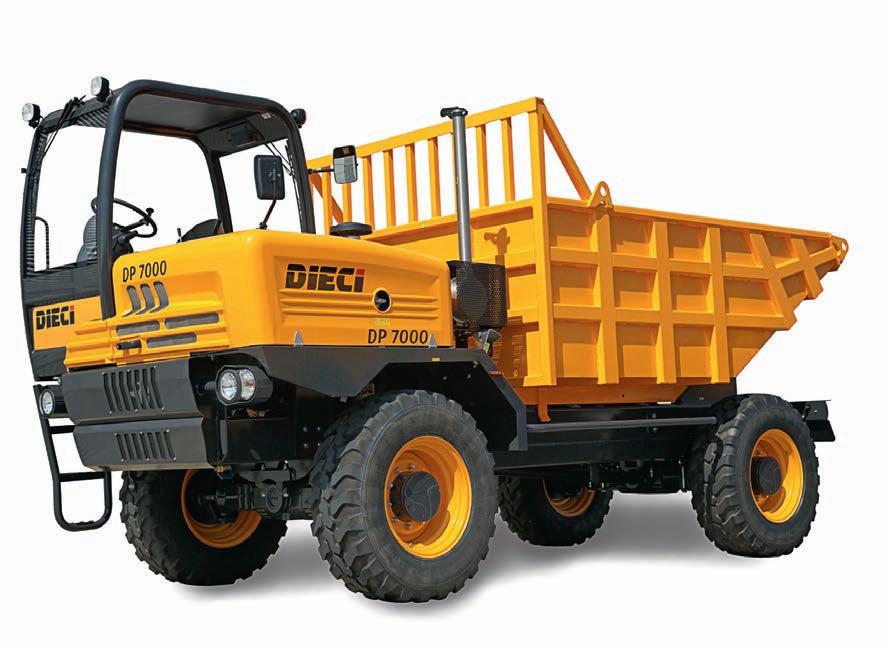
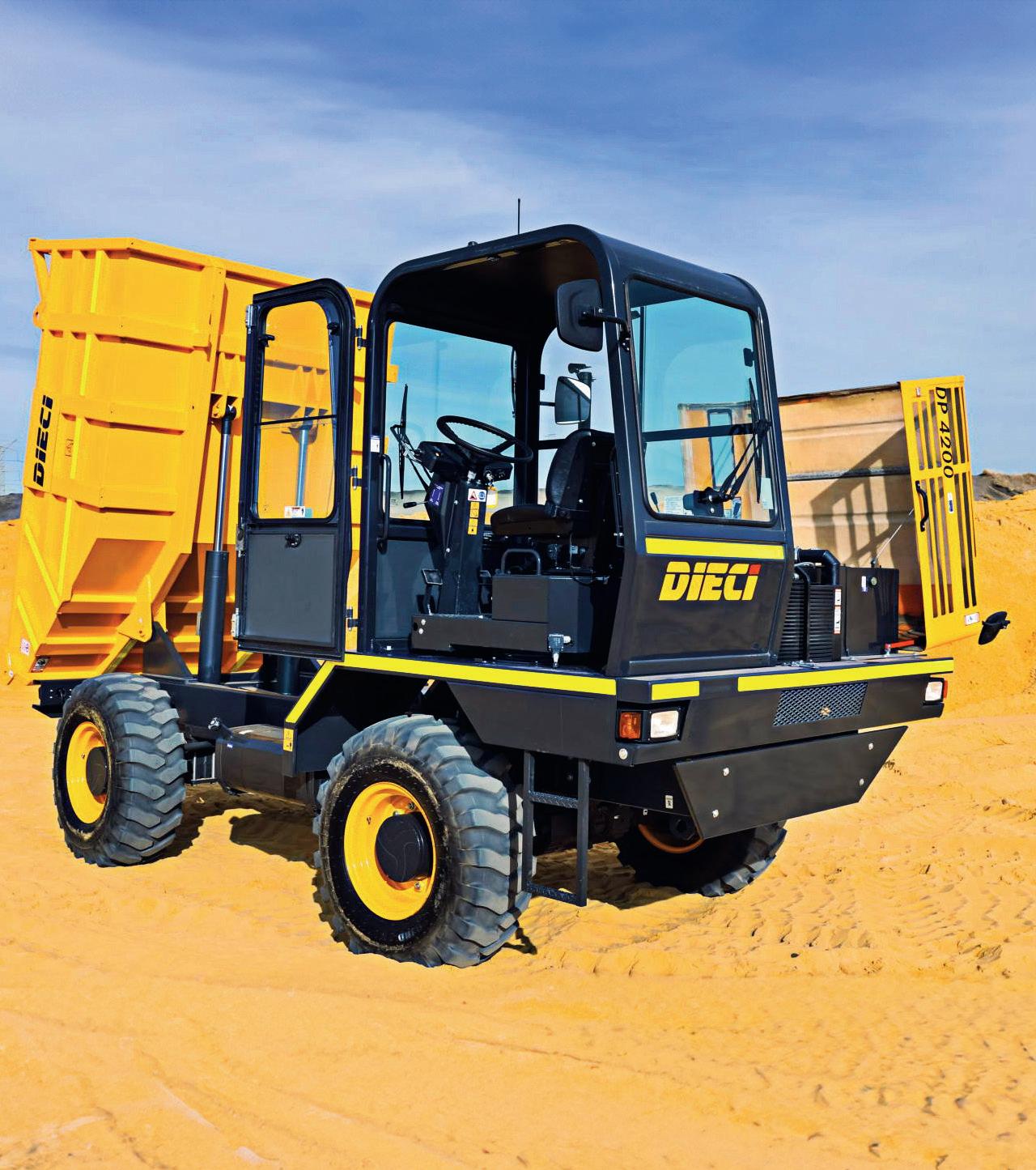

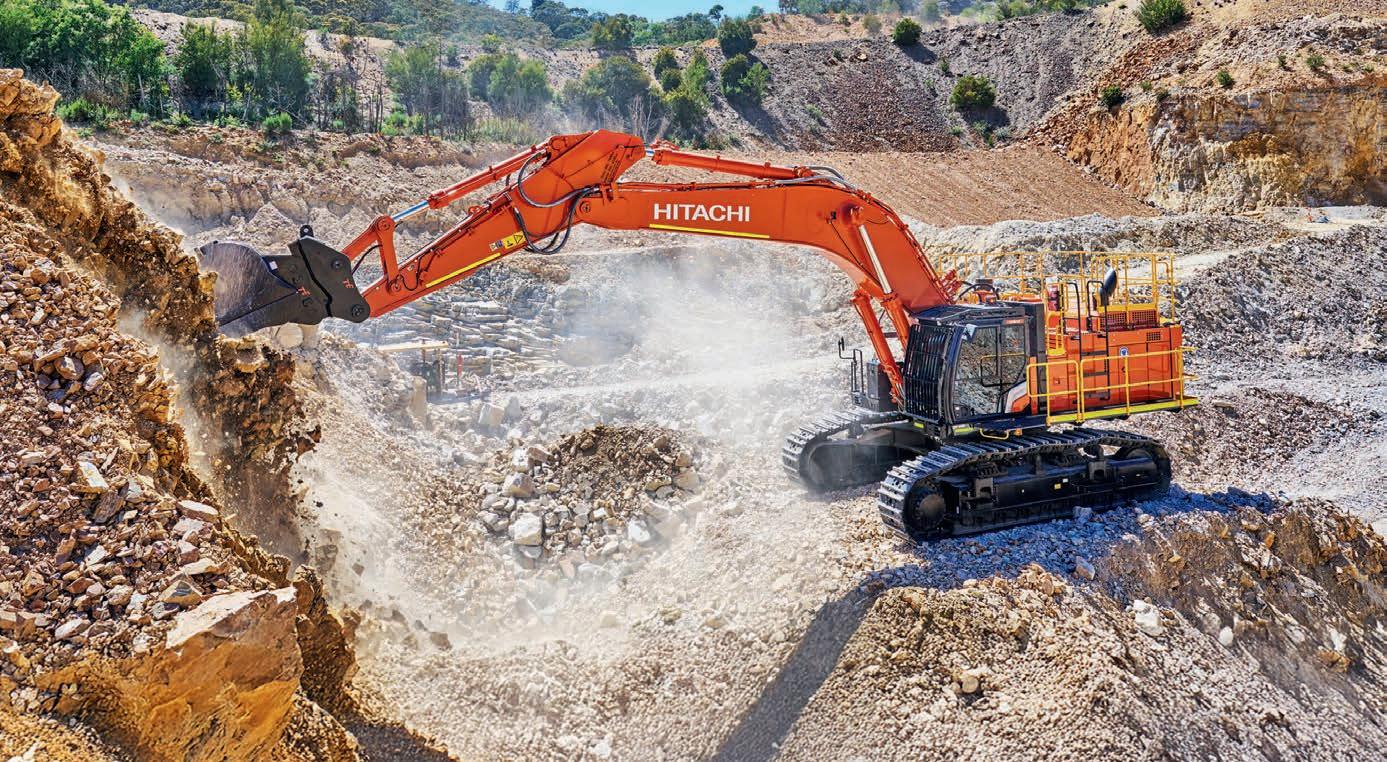
What began as a machinery decision has evolved into an enabler of performance, underpinning daily e iciency while supporting long-term growth in a demanding industry.
Metromix is a reputable supplier of construction materials to New South Wales. Underpinning this success has been a range of Hitachi machines, with the familiar orange workhorses helping the company deliver on time and on spec for customers across the concrete, civil, and infrastructure sectors.
Metromix services the construction industry by supplying ready-mixed concrete, quarry products, and transport services to Sydney and surrounding regions.
With six concrete plants spread across the

Sydney metropolitan and Blue Mountains areas, and three quarries in Lithgow and near Newcastle, the business footprint covers suburban growth corridors and rapidly developing regional centres.
Built on pillars of safety, quality, technical expertise, and environmental care, Metromix is big enough to support multi million dollar developments while close enough to its customers to o er a personalised, responsive service. The company supplies products to commercial, civil and domestic projects, ranging from major infrastructure to small residential pours.
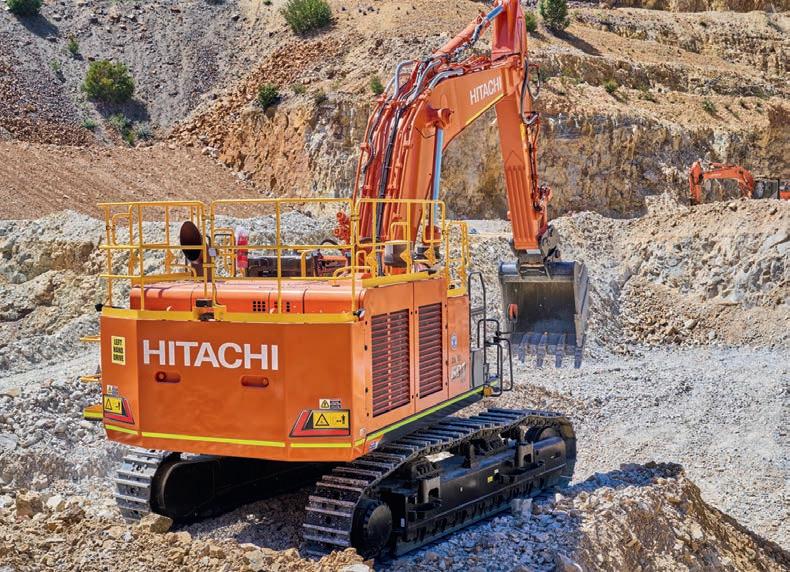
Over more than 35 years, Metromix has developed strong relationships with contractors, builders, and concrete placers who rely on consistent product quality and dependable delivery performance. The company invests in people, plant, and technology to maintain reliability in a time critical and specification driven construction environment.
While its concrete plants are the public face of the business, Metromix’s three quarries form the backbone of its value proposition, supplying aggregates, manufactured sand, and roadbase that feed internal concrete production and external customers.
Located at Marrangaroo near Lithgow, and Anna Bay and Teralba near Newcastle, these operations allow Metromix to control material quality from pit to pour and to respond quickly to market demand.
Running these sites e iciently places heavy demands on the mobile equipment fleet, which must handle face extraction, load and haul, stockpile management, and plant feed in variable geology and challenging weather conditions.
Marrangaroo Quarry Manager Rebecca Finlay has no doubt about the importance and value of Hitachi equipment.
She had previously managed a New Zealand quarry, which used a ZX470LCH excavator to produce 500,000 tonnes a year of limestone for direct supply to the manufacturing plant.
“My experience there proved that Hitachis are definite workhorses, and operators have always been happy with the machines,” she said.
“One of the standout aspects was the ease of maintenance and the support network available at the time.
“Scheduled servicing was straightforward, and the machines were generally forgiving in tough environments, which helped reduce unplanned downtime.
“Operator familiarity was also high, with positive feedback around controllability and visibility, making onboarding and cross-skilling more e icient.”
The combination of robustness and operator acceptance is valuable in quarries, where conditions can shift rapidly, and teams often need to rotate between machines and tasks.
When she moved across the Tasman to Metromix, Rebecca was delighted to discover that the business had been using a Hitachi ZX450LCH-1 at its quarries for many years.
“That experience in New Zealand set a strong benchmark for me, and it has been encouraging to see that the same core strengths — reliability, operator comfort, and practical design — have carried through to the Hitachi equipment I now work with in Australia,” she said.
“Hitachi equipment has proven to be an ideal fit for the company’s operational profile and production targets.
“The Hitachi equipment has performed well across the operation, proving to be reliable, e icient, and well-suited to the demands of a quarry environment.”
From day to day, the Hitachi machines deliver the kind of performance profile that customers rarely see directly, but rely on implicitly in the form of on time deliveries and consistent product.
“The machines have delivered strong uptime, smooth hydraulics, and good fuel e iciency, which are all critical factors in maintaining productivity and controlling operating costs,” Rebecca said.
She said that the excavators sit at the heart of the quarry’s material flow.
“We utilise the Hitachi excavators for face loading, material re-handling, stockpile management, and bench clean-up,” she said.
“Their stability and digging power give operators confidence when working in varying ground conditions, while precise control helps Metromix meet tight loading and blending specifications.”
In a quarry, the behaviour of the primary loading tool can shape the performance of downstream processes.
“The Hitachi stability and digging power allow operators to work in varying ground conditions, while the precision of the controls supports loading and reduced spillage,” Rebecca said.
This precision translates into a cleaner, more consistent feed to the crushing and screening plant.
“Cleaner benches also support better housekeeping standards on site, which in turn reinforces safety and minimises unplanned stoppages,” Rebecca said.
From an operator standpoint, acceptance of
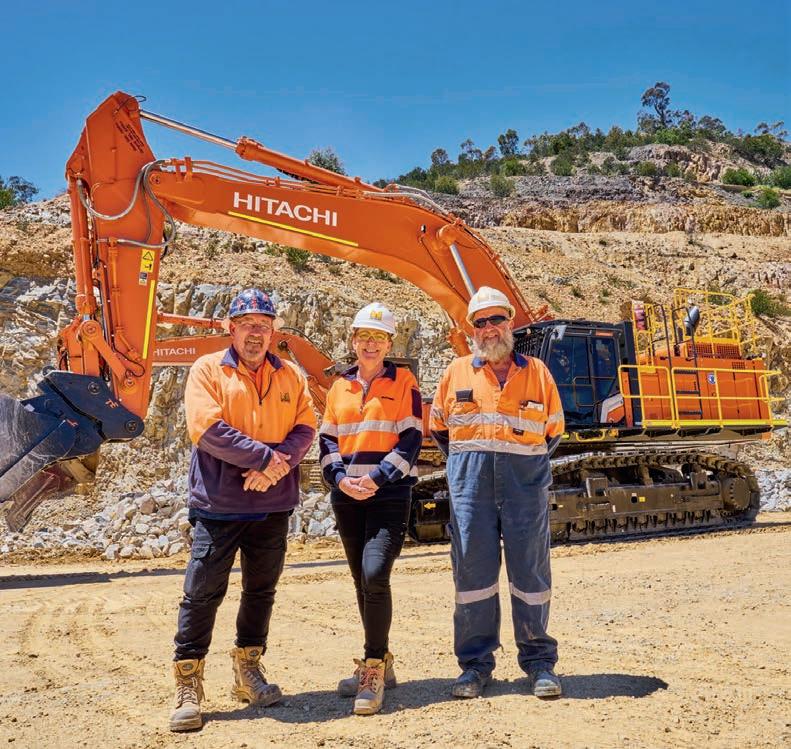

new equipment is crucial, and here too the Hitachi machines have scored well.
“The cab layout, visibility, and overall comfort have been well-received,” she said.
These factors contribute to reduced fatigue on longer shifts and help Metromix maintain productivity while supporting its safety and wellbeing commitments.
For a quarry business supplying time sensitive projects, unplanned breakdowns can rapidly erode margins and damage customer relationships.
“We place strong emphasis on safe, e icient maintenance, and Hitachi equipment supports that focus,” she said.
“Maintenance access has also been straightforward, which assists our fitters in completing routine servicing safely and e iciently.”
This ease of service aligns with Metromix’s broader intent to be proactive in safety, personal health, and environmental management across its operations.
“Overall, the Hitachi machines have integrated well into our fleet, and continue to meet our operational and safety expectations,” she said.
“Their performance has supported both production targets and safe work practices, which is what we look for in any major piece of equipment.
“The ability to complete routine maintenance quickly and safely is valuable at sites like Teralba, where quarry and pugmill operations, mobile crushing, and busy tra ic flows must
be coordinated around strict production schedules.
“Reliable equipment reduces the likelihood of last minute rescheduling or extended plant outages that can ripple out to customers’ construction programs.”
Rebecca said that parts availability and service back up are central to Metromix’s choice of supplier.
“In both New Zealand and Australia, the level of dealer support has been consistent and dependable,” she said.
“Parts availability has generally been strong, with common service and wear items readily accessible, helping us keep machines running and maintenance planned rather than reactive.
“This ability to schedule upkeep around production demand rather than emergencies helps Metromix protect margins and maintain its delivery commitments to customers.
“When issues do arise, the technical support and response times have been e ective, with a practical understanding of site conditions and operational pressures.
“From a management perspective, that reliability in after-sales support provides confidence. Knowing that parts, expertise, and service backup are there allows us to make informed fleet decisions and focus on running the operation safely and e iciently, rather than managing extended outages.
“Strong support on the ground translates to reduced idle time, better cost control, and consistent performance across the life of the equipment.”
A


MATES in Construction has unveiled a line of branded hi-vis workwear designed to recognise and celebrate the role of trained volunteers who provide peer-based suicide prevention support across the construction, energy, mining, and manufacturing industries.
Developed in partnership with TRu Workwear (TruBrands/Private Brands), the MATES Workwear Range is not only functional safety gear, but also a symbol of leadership, connection, and care on worksites across Australia.
The new range includes:
• MATES General Awareness Shirt (red)available to the public, symbolising support for MATES programs;
• MATES Connector Shirt (green) – exclusive to trained MATES Connector volunteers; and
• MATES ASIST Shirt (blue) – issued as part of the completion of Applied Suicide Intervention Skills Training (ASIST).
Each lightweight, vented long-sleeve shirt features reflective tape, durable construction, and distinct identifiers for each training level,

reinforcing the MATES peer support network visible across worksites.
MATES Australia Chief Executive O icer Jorgen Gullestrup said that volunteers formed the heartbeat of what the organisation sets out to achieve.
“They are the ones who notice when someone’s struggling and step forward to make a di erence,” he said.
“This workwear range recognises that courage. When someone puts on a MATES shirt, it’s more than a uniform; it is a signal that help, understanding, and hope are close by.”
The MATES Workwear Range strengthens brand presence and community awareness through wearable messaging, reinforcing mental health visibility across the industry.
It also supports MATES’ ongoing objectives to:
• Recognise trained volunteers and their commitment to supporting peers;
• strengthen volunteer engagement and retention; and
• promote awareness and pride in suicide prevention across the construction, mining, energy, and manufacturing sectors.
The range is now available through the MATES Online Shop at shop.mates.org.au.
All new ASIST-trained MATES volunteers will receive a complimentary ASIST shirt upon course completion.
Connector volunteers can purchase Connector shirts at reduced rates using an exclusive discount code available via the MATES Volunteer App.
About MATES
MATES in Construction was established in 2008 in response to growing suicide rates in the industry.
It has delivered suicide prevention training to more than 400,000 workers, supported by over 30,000 volunteer Connectors and ASIST workers forming peer-to-peer safety networks. MATES provides on-site training, field o icers, case management, and a 24/7 helpline.
Earthmoving success in Victoria’s construction market has been built on precision, reliability, and a long-term partnership with one trusted manufacturer.
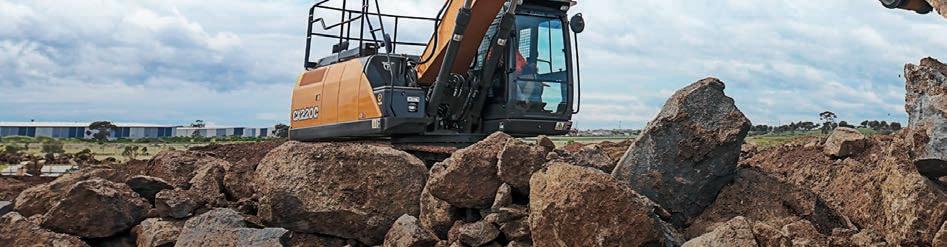
Nick Lazarevski and the team at Victoriabased Tonga Excavations have built their achievements on a decade-long commitment to CASE Construction Equipment, supported by trusted dealer CASE Victoria.
Specialising in basement construction, the business carries out complex projects that require accuracy from start to finish, from retention systems and bulk excavation to final detailed works. In this environment, machinery performance is critical. That’s why CASE has remained the backbone of Tonga’s fleet for the past 15 years.
CASE Victoria Territory Manager Nick Colbert has worked closely with Tonga for more than a decade and has seen the business evolve in that time.
“I’ve had a relationship with Nick at Tonga for a good part of the 12 years I’ve been with CASE Victoria,” he said.
“We’ve supported his growth from being a single owner-operator through to running a fleet of about 18 excavators. Our focus has been on keeping his machines up and running.”
That growth has been underpinned by a shared understanding between CASE, CASE Victoria, and Tonga that uptime matters. Through responsive parts supply, on-site service, and sales support, CASE Victoria plays a vital role in ensuring Tonga’s fleet is always ready for work.
“Tonga continues to choose CASE Victoria and CASE excavators because the product looks after him, and we continue to support and back his business,” Nick Colbert said.
“The reliability, fuel e iciency, and consistent service support have all helped drive Tonga’s growth over the past 15 to 20 years.”
At the heart of Tonga’s current fleet are the CASE 15-tonne CX145C SR and 25t CASE CX235C SR excavators — short radius machines purpose-built for tight, demanding job sites like inner-city basements.
Nick Lazarevski said the short radius design of the excavators, combined with their
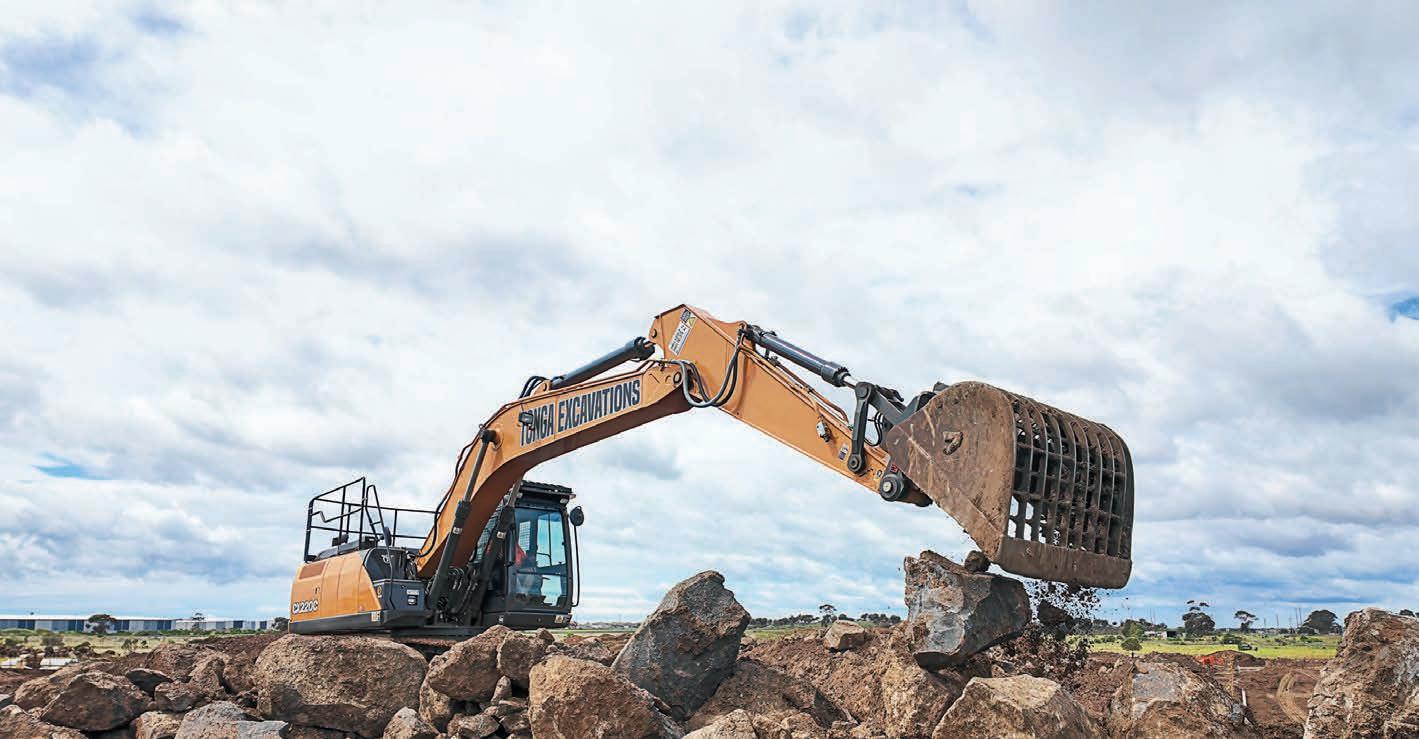

Check out the video testimonial
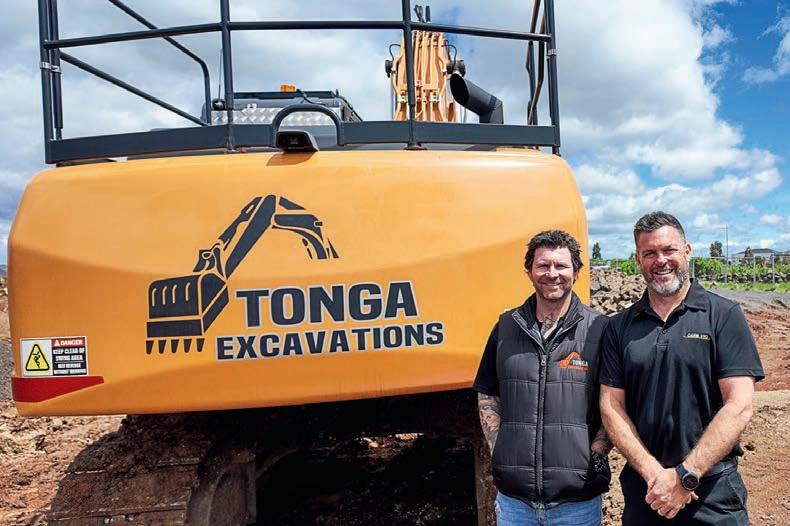

integrated blades and zero-tail swings, proves ideal for the projects Tonga works on.
“The zero-swing enables me to bulk the ramp out and load trucks at the same time. I can turn around and not damage the back end of the machine in tight access environments. This factor is critical to me, making those machines essential in my fleet,” he said.
This compact yet powerful design allows Tonga to operate in confined spaces while maintaining productivity and safety — a key requirement when working in built-up urban environments.
Beyond performance, operating costs are another consideration when managing a large fleet. With up to 18 machines working across multiple sites, fuel e iciency has an impact on the bottom line.
“CASE’s fuel consumption, compared to other brands, is second to none,” Nick Lazarevski said. “Across a week of operation
with 18 machines, those fuel savings make a di erence.”
Equally important to Tonga’s loyalty to the brand is the level of service and relationship behind the machines. CASE Victoria’s statewide support ensures help is close at hand, no matter where the job is located.
“Customer service and relationships with the people you deal with every day play a big part in who I choose to buy machines from,” Nick Lazarevski said.
“The good thing with CASE Victoria is that regardless of where I’m located, because my machines are all around the state, I can make one phone call and get answers straight away.”
That responsiveness has been a defining factor in Tonga’s long-term trust in the brand.
“At the end of the day, my business is governed by having good, reliable excavators,” Nick Lazarevski said. “And I’ve had nothing but that with CASE for the past 15 to 20 years.”
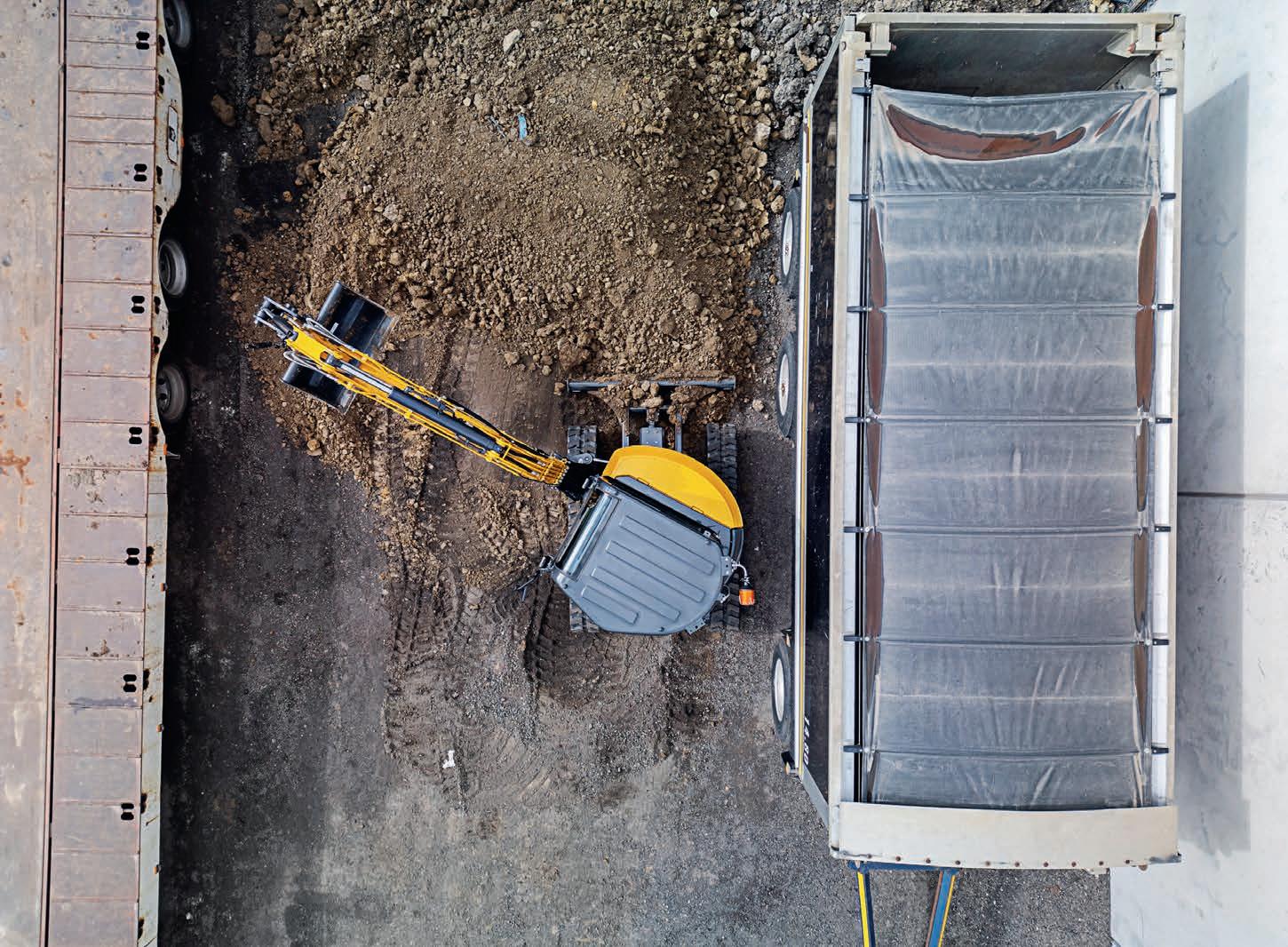
LiuGong F-Series excavators have been impressing with their ability to perform in a tight spot, thanks to a strong balance of performance, precision, and quality.
LiuGong’s been o ering earthmoving equipment in Australia for two decades, and the tech back-up and spares supply from national distributor McIntosh Distribution is as good as any.
The company has also developed impressive machinery which has become a common site on Australian worksites.
With a maximum operating weight of 3800kg, the 9035F is a zero-tail swing outfit powered
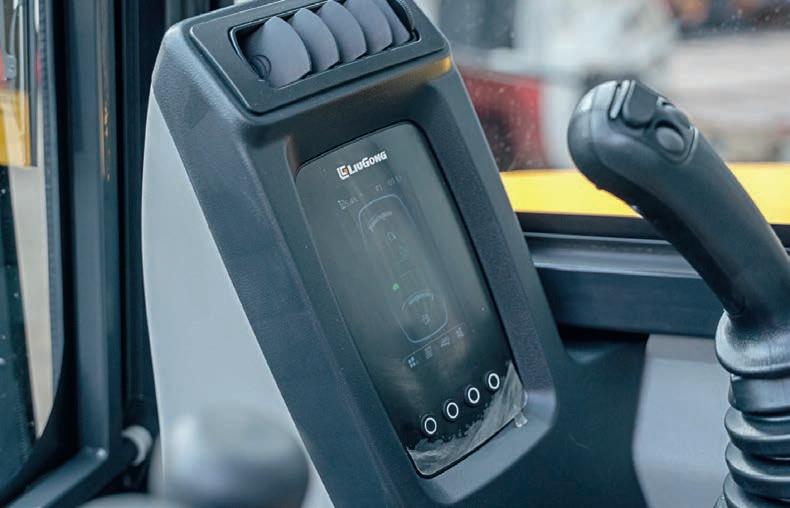

by a Yanmar Stage V diesel o ering 17.3kW (23.2hp). Maximum hydraulic flow is 99L/ minute, and digging reach is 5385mm/5715mm. Bucket breakout force is 33kN, and it’s supplied with LiuGong’s quick coupler and three buckets – a mud bucket, a 300mm GP bucket, and a 450mm GP bucket.
The cabin and controls are comfortable and well designed, making it a sharp-looking, capable machine which, as LiuGong states, is “easy to transport, simple to use and quick to maintain”.
We asked Australian landscape contractor Mat Wandmaker to run his eye over the excavator and its features.
Double checking the cab was in fact heated, and ensuring the temperature was cranked up, we had a look at the main points of the compact LiuGong, which included:
• Zero-tail swing,
• powerful engine,
• dozer blade control,
• joystick controls,
• advanced hydraulics,
• local parts stock at CDA, and
• local field and machine servicing via CDA metro Sydney, Melbourne and Brisbane locations.
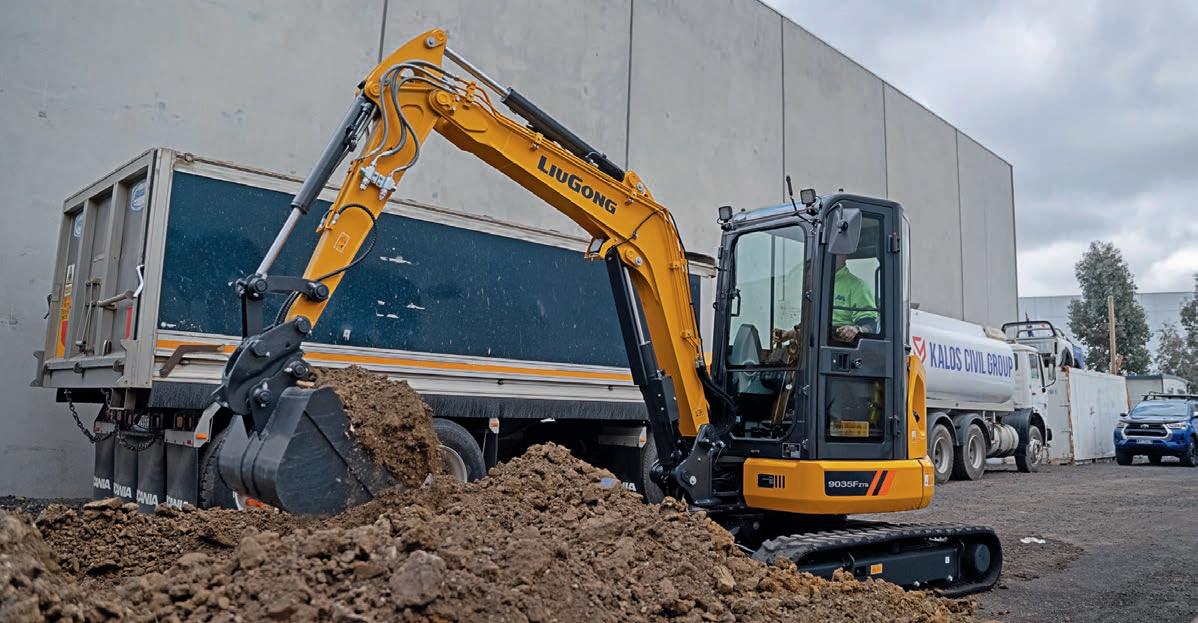

various functions and operating parameters.
By the time we’d worked through the list, Mat was in the cab, his teeth had stopped chattering thanks to the cabin heater, and he’d put the 9035F to work.
The work site for this review didn’t leave a lot of room for error.
The zero tail swing and smooth action of the LiuGong
Between the joystick controls and the operator screen in the cab, Mat found moving and digging the piled-up earth a breeze, and he was impressed with the performance of the engine.
“It’s punching out a lot of power,” he said. “It’s easy to manoeuvre, it’s comfortable, everything’s at your fingertips, and it’s as smooth as silk.”
“The thing is flawless when it comes to manoeuvrability.
“There’s no issue or safety concern working
See for yourself
Check out the video at mcintoshdistribution. com.au to see the 9035F in action, and to hear Mat give his thoughts on several other facets of the LiuGong’s build and performance.
To see the full spec sheet and for more information, log on to liugongaustralia.com.au.
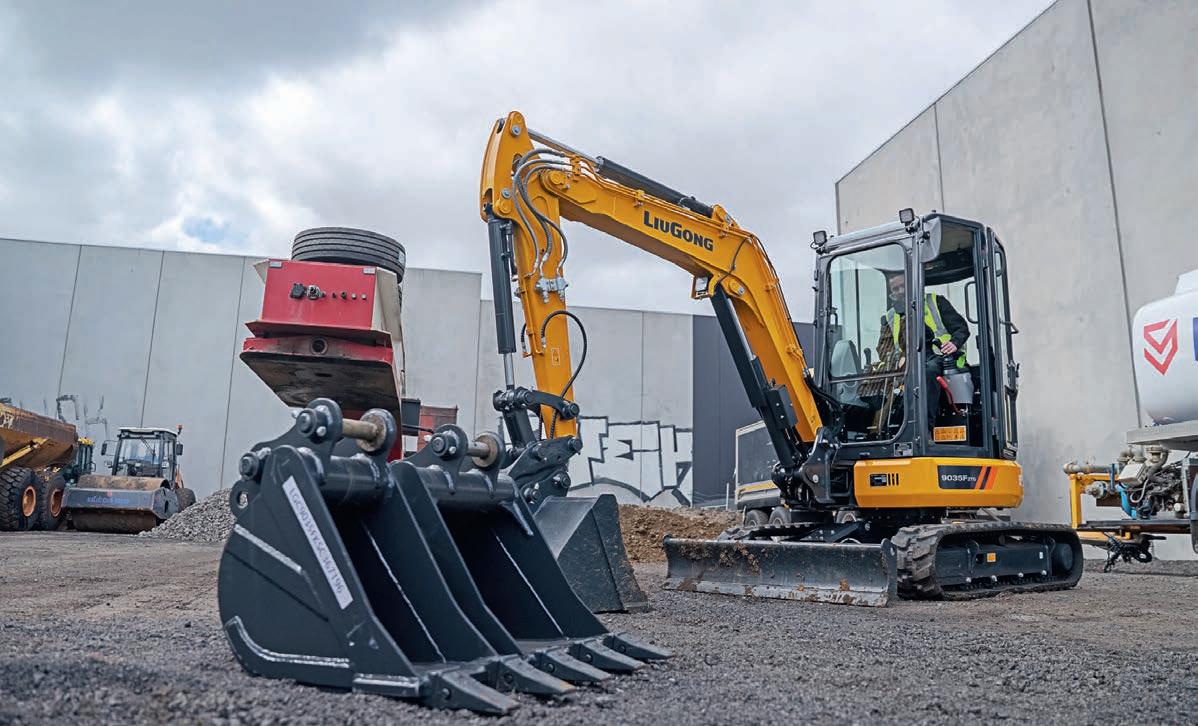

A South Australian business is bringing Merlo’s telehandler range to local customers, combining on-hand availability with tailored machine solutions to support a variety of job sites and applications.
South Australia-based Northeast Tractors & Machinery, a division of Northeast Auto Group (NEAG), has been appointed a Merlo distributor.
Northeast will maintain a rotating inventory of Merlo telehandlers, while used Merlo equipment will also be available through its Merlo trade-in program.
Northeast o ers Merlo equipment tailored for construction and agriculture, focusing on the compact and medium-capacity Turbofarmer (TF) series. Models available include:
• TF30.9: A compact model with a 3000-kilogram load capacity and an 8.3-metre lift height;
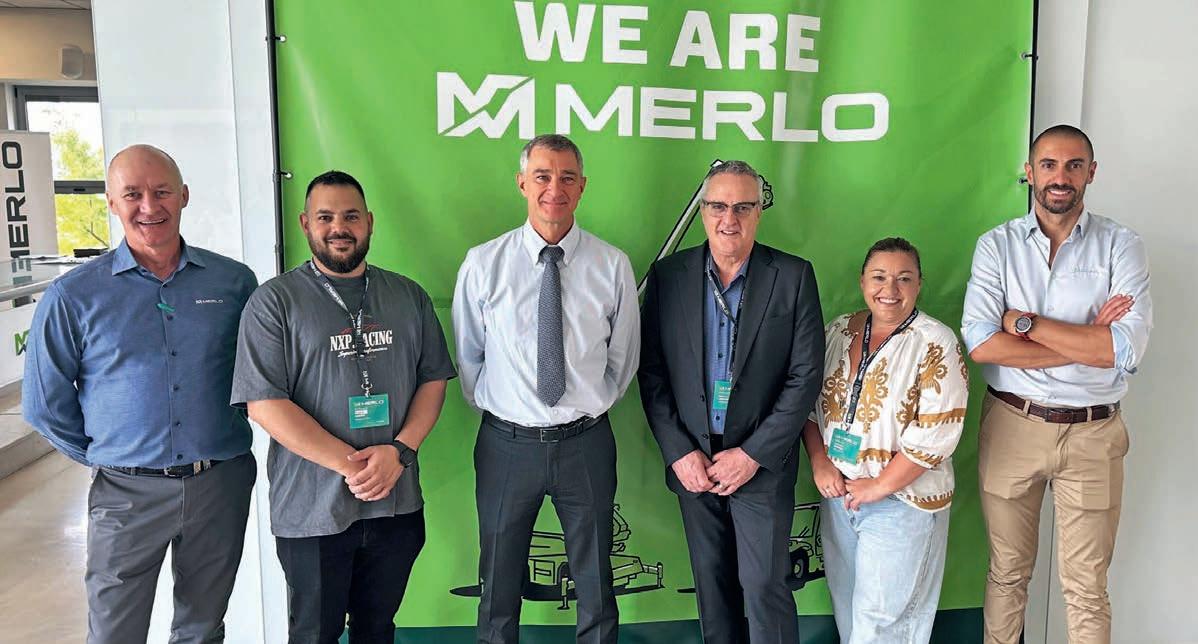
• TF42.7: A medium-capacity unit featuring a 4050kg load capacity and a 7m lift height; and
• TF33.7 and TF35.7: Available in various engine configurations such as 100EE or 115EE, and suited for versatile site work.
Also in stock is the Merlo Panoramic Series, characterised by capacity and visibility. The P72.10 is a high-capacity machine designed for heavy lifting up to 7200kg and suited for specialised site applications. The P65.14HM is mainly used for medium-to-heavy construction tasks.
The Merlo Multifarmer Series (telehandler/ tractor hybrid) models MF44.7 and MF44.9

combine the benefits of a telehandler’s reach with a rear PTO, making them ideal for construction and intensive agricultural applications.
NEAG Sales Manager Tony Romeo said the advanced technology of the Merlo machines was recognised by potential customers.
“The Merlo EPD system, which electronically controls the engine and transmission to optimise engine speed and pump flow, is a key benefit,” he said.
“Users have reported this feature delivers better machine e iciency and enables machines to operate at lower speeds (revs), which is a fuel-saver.
“The boom and cab suspension on the Merlo telehandlers gives ride control when travelling with a load. This type of suspension allows the boom to float and makes the seating comfortable when operating for long shifts.
“Another feature of the machines is their controls, which are simple and easy for anyone to operate.”
Tony said that buying construction equipment is a large investment.
“NEAG has established itself as a one-stop shop,” he said. “Whether you are looking for telehandlers, excavators, or specialised dumpers, there are many reasons to consider us when you are sourcing equipment to boost your productivity.”
He added that being an authorised dealer for several machinery brands such as Merlo ensures customers get high-performance equipment with manufacturer support.
After-sale service
NEAG is known for its back-up infrastructure, which o ers 24/7 mobile servicing that includes breakdown assistance and on-site servicing to minimise downtime on customers’ job sites.
For local customers, overnight servicing is carried out at its Burton location in Adelaide, which means equipment can be back at work the next morning.
“We carry a stock of genuine OEM parts and machinery attachments, ensuring repairs are done correctly to maintain the machines’ longevity and resale value,” Tony said.
“We can supply the machine and the customengineered transport or attachment solution simultaneously, rather than customers having to coordinate with multiple third-party vendors.
“Flexible financing options are a benefit to our customers through our partnership with Avantgarde Financial Brokerage, which provides tailored financial solutions.
“This is helpful in securing competitive interest rates, structuring flexible repayment terms that align with a customer’s business cash flow cycles. It also streamlines the approval process as the finance and national sales team work together.”
Tony said that as a family-owned business with a national presence and expertise gained from its establishment in 1999, NEAG combines decades of industry experience with a modern network.
“Our reputation has been built through a history of supplying equipment to federal and

state governments, mining fleets, and major construction firms,” he said.
“We have 15 locations, with a footprint across South Australia, Victoria, New South Wales, Queensland and the Northern Territory.
“With our state-of-the-art facility at Burton, locations at Port Augusta, Hampstead Gardens, Lonsdale and Shepparton (Victoria), and with future scope to continue the expansion of the business into other markets, the future looks bright for our partnership with Merlo.
“On top of this market coverage, Northeast has the logistics power to support fleets operating in remote areas.”
For more information visit www.merlo.com/aus/en. Handling

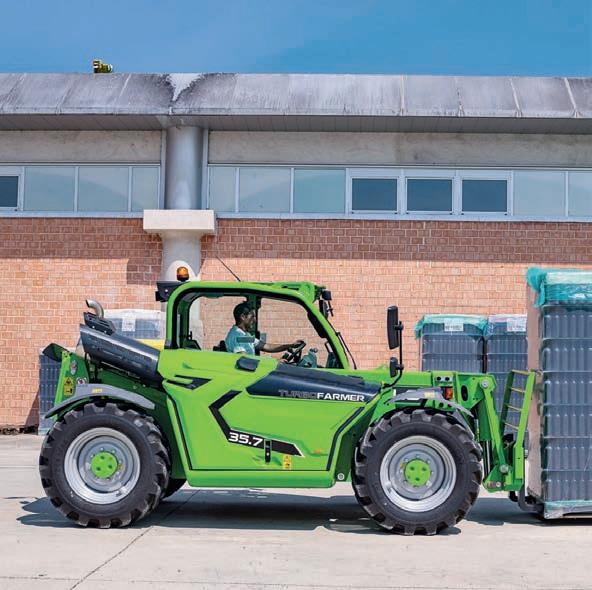
Agile and powerful, the XC958 delivers performance without compromising manoeuvrability. Images: XCMG Australia.
Productivity in modern earthmoving is no longer measured by sheer muscle alone. As job sites become more demanding, control and intelligent design are what separate good machines from great ones.


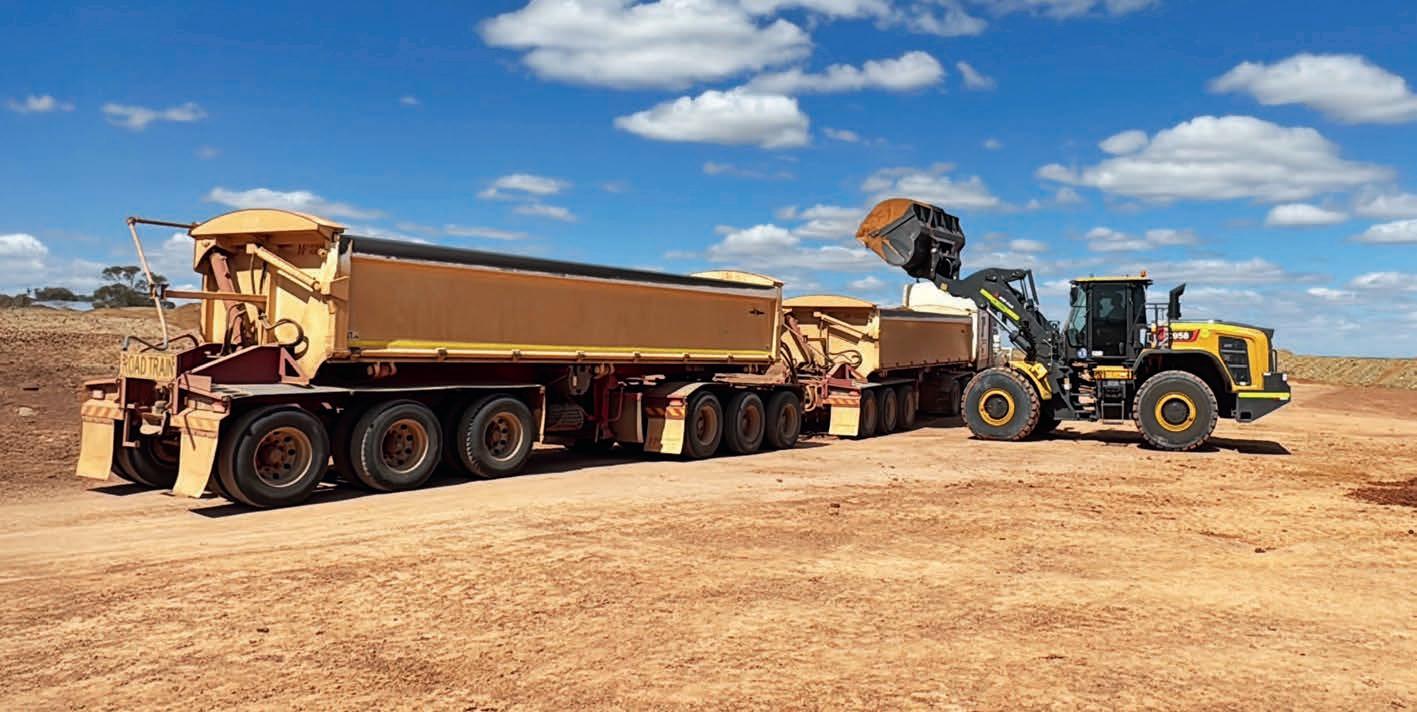
In an era when every minute on site counts, and every litre of fuel has a price, brute force alone can’t carry the day.
Today’s wheel loaders are not just about lifting bigger loads — they’re about lifting smarter. At the forefront of this shift are XCMG’s latest machines on Australian soil, where intelligent hydraulics, advanced powertrains, precision payload optimisation, and smart machine balance rewrite what peak performance looks like in the field.
Whether it’s the versatile XC958 tackling mixed workloads, or the robust XC988 taking on heavy duties, XCMG wheel loaders are designed to elevate e iciency, operator comfort and bottom line outcomes.
If you step onto any busy construction, quarry, or civil worksite in Australia, you’ll see something di erent: loaders that think as fast as they work. The modern wheel loader isn’t an engine with a bucket — it’s a system of optimised subsystems, where components work in harmony to squeeze productivity from every cycle.
That change didn’t happen by accident. It’s the result of decades of innovation in hydraulics, powertrain e iciency, machine intelligence and operator centric design. And nowhere is that more evident than in XCMG’s current loader line-up, which blends global research and development with practical performance where it matters most.
Hydraulics: precision power that responds Hydraulics are the lifeblood of any wheel loader — they determine how quickly, smoothly and e iciently a machine digs, lifts and dumps. But in XCMG loaders, the hydraulic system does more than supply raw pressure: it responds intelligently to the workload.
On models like the XC958, the hydraulics are designed for dynamic, responsive control with high flow rates that adapt to the operator’s
demands. Whether you’re loading trucks one minute or grading stockpiles the next, that responsiveness means faster cycles and less fuel wasted sitting at idle.
This kind of intelligent hydraulic delivery transforms the loading experience. Rather than chasing uptime with muscle, operators get predictable, smooth control — a di erence that shines in tight spaces and long shifts alike.
A smart loader starts with a smart heart. XCMG pairs robust engines with advanced transmissions to get more usable power to the ground and hydraulics, with minimal losses.
On the XC958, the combination of a Cummins engine and an automatic ZF torque converter transmission gives operators both pull through power and smooth shifting under load — essential when conditions vary from loose sand to rock hard clay.
And when you step up to the larger XC988 class, the same philosophy applies: high horsepower, strong breakout forces, and well matched transmissions ensure that fuel energy becomes productive work, and not wasted heat.
This matters on Australian sites where distances are long, and productivity windows are tight. A more e icient powertrain doesn’t just save on diesel — it boosts uptime and reduces wear on key components, extending service intervals and lowering lifetime costs.
One of the most significant shifts in loader performance over the past decade has been the move toward data driven payload optimisation. Gone are the days of guessing at loads based on feel or experience.
Today’s operators can leverage on board weighing and feedback systems to ensure each bucket carries what it should, every time. Accurate payloads mean more e icient truck cycles, fewer corrections, and a lift in daily output. For contractors juggling tight
timelines and cost pressures, that translates to measurable gains — without adding extra fuel, hours or labour.
And XCMG’s loaders deliver this with systems designed to be intuitive: real time weight data, cycle reporting and operator prompts that help crews load smarter, not harder.
“You can’t control what you can’t feel” may be a saying on the tools, but modern engineering flips it on its head: balanced machines feel better, perform better, and work safer.
XCMG’s loader designs pay careful attention to weight distribution, centre of gravity, and articulation dynamics. That means loaders like the XC958 and XC988 o er improved traction, stability and handling — even under heavy loads or rough terrain. In practice, that’s fewer slips, quicker positioning, and greater confidence for operators pushing the limits of their tasks.
Balance isn’t just performance — it’s safety. Better weight distribution reduces stress on tyres and axles, and enhances rollover protection in challenging conditions. On big Australian projects where gravel, spoil, and uneven ground are the norm, that confidence goes a long way toward consistent productivity.
Jump into the cab of a modern XCMG loader and the di erence is clear. These aren’t Spartan workstations — they’re purpose designed command centres that prioritise visibility, comfort, and control.
Spacious, ergonomic cabs with climate control and intuitive controls help reduce operator fatigue — a crucial advantage on long shifts. Digital displays provide vital performance information at a glance, and strategic seating supports keep operators fresh and focused. It’s not just nicer to sit in; it’s safer, more e icient, and more productive.
And on machines like the XC958 — with its well sealed ROPS/FOPS cab and thoughtful
The heavy-duty XC988 handles big loads with e iciency, poise and repeatable performance.
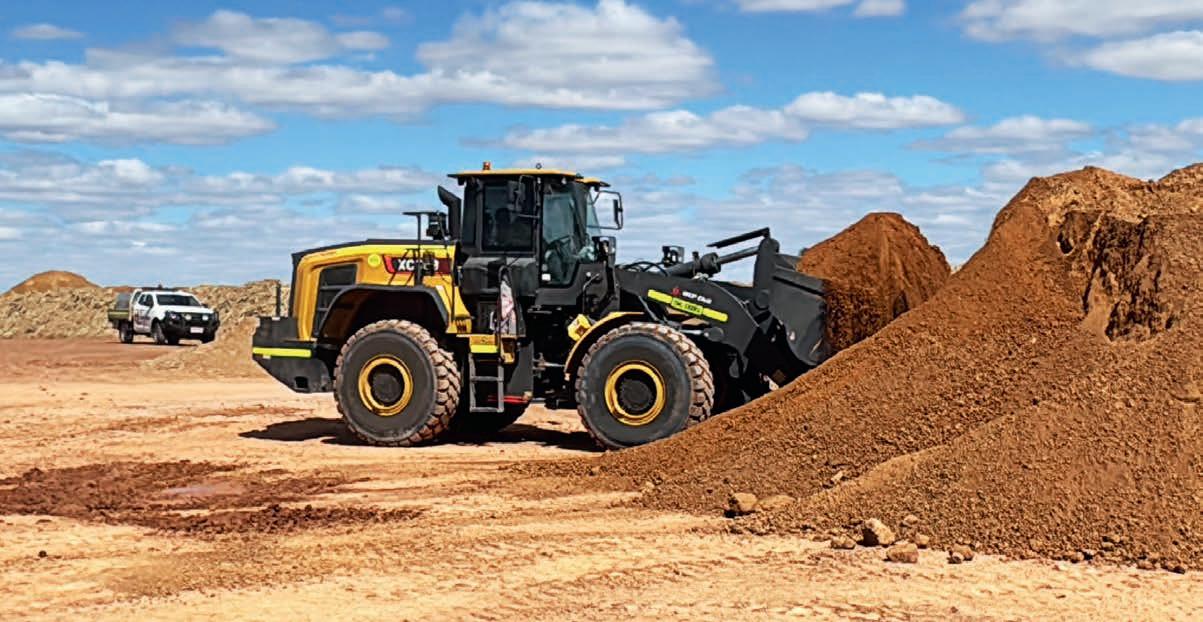
layout — operators get excellent sightlines and precise control, helping them work not only harder, but smarter.
To see these principles in action, look no further than two standouts in XCMG’s Australian line up: the XC958 and the XC988.
• XC958: Agile, powerful and versatile
The XC958 sits in the sweet spot for a wide range of applications. With an operating weight of around 18.7 tonnes and a rated load of 5.5t, it delivers performance without compromising manoeuvrability.
Powered by a Cummins QSB6.7 engine and paired with a responsive automatic transmission, the XC958 brings reliability and e iciency together. Its hydraulics are optimised for smooth cycles, and the ergonomic cab layout keeps operator fatigue to a minimum — ideal for sites where versatility and productivity are valued.
• XC988: Heavy duty performance with intelligent balance
At the larger end of the scale, the XC988 brings capability to heavy material handling. With an operating weight of roughly 24.5t and a rated load of 7t, it’s built for demanding tasks such as quarry loading, bulk earthworks, and infrastructure projects.
What sets the XC988 apart is not just capacity, but the way its systems work in concert to deliver it — high breakout forces, refined hydraulics, and a frame that ensures stability and traction even when conditions get tough. It’s a machine that doesn’t just lift big loads, it handles them with e iciency, poise and repeatable performance.
The evolution of wheel loader performance is how these technologies translate on-site. When hydraulic systems work e iciently, engines breathe easier, and operators are comfortable and informed — the whole site moves faster.
With payload optimisation, there are fewer wasted cycles. With smarter hydraulics and powertrains, there are fewer fuel stops. With better balance and ergonomics, there’s less fatigue, and more consistent output from every operator.
And whether it’s moving stockpiles at a civil site or loading heavy material at a mine, XCMG loaders stand out for combining smart engineering with practical robustness — a combination that’s becoming essential in today’s competitive landscape.
Smart is the new strong. In wheel loader performance, the next frontier isn’t more horsepower — it’s systems that think, adapt and support operators in delivering productivity gains.
XCMG’s loaders are proof of that evolution, bringing together advanced hydraulics, e icient powertrains, payload intelligence, and machine
balance to redefine what heavy equipment can achieve.
For Australian operators and contractors pushing to meet tighter schedules and thinner margins, that evolution isn’t just tech — it’s a tangible advantage on every site. With machines like the XC958 and XC988, the message couldn’t be clearer: load smarter, not harder.
If your site demands more tonnes per hour, lower operating costs, and machines that work as intelligently as your crew, it’s time to step up to XCMG.
Explore the XC958 and XC988 with XCMG Australia and put smarter performance to work on your site.
For more information you can find XCMG Australia at www.xcmg.net.au or on 03 9796 3075.
In XCMG loaders, the hydraulic system does more than supply raw pressure: it responds intelligently to the workload.

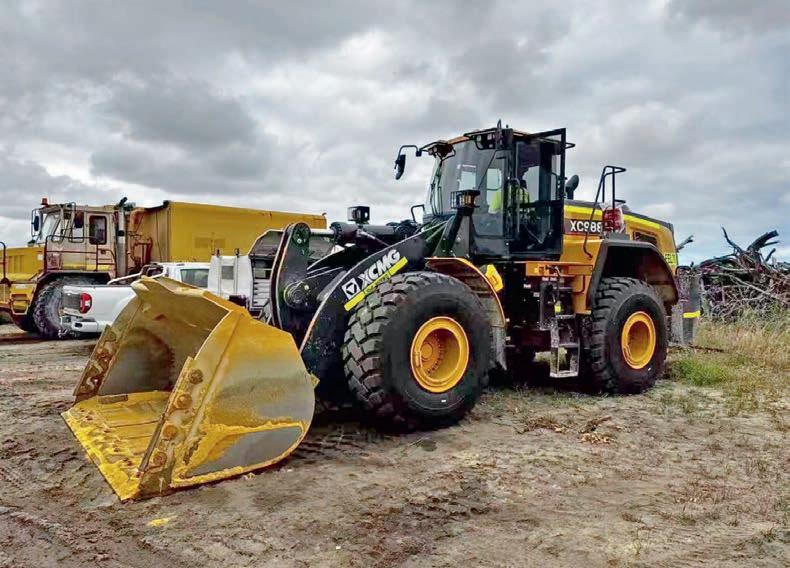

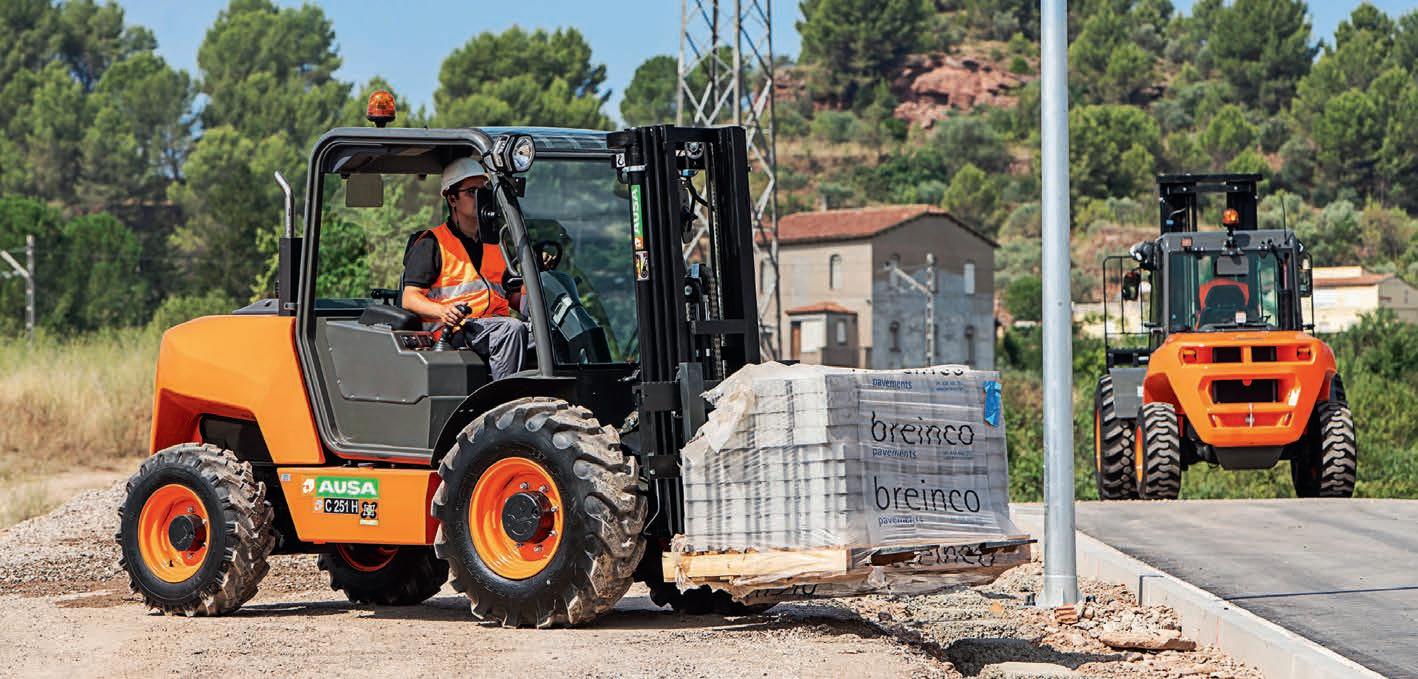
JLG’s acquisition of AUSA has expanded its product range and continues to benefit the company and its Australian customers.
Since 1983, JLG has specialised in access and lighting equipment, with an established presence across Australia and New Zealand.
It completed its purchase of Spanish company AUSA in September 2024, integrating the manufacturer’s wheeled dumpers, rough terrain forklifts, and compact telehandlers into its Access segment portfolio.
This product range, combined with JLG’s existing products, meant a sizeable expansion in its overall o ering.
While AUSA products have been available in Australia for nearly three decades, the acquisition means it is the first time its machinery will be o ered by a direct-to-market OEM.
The support that comes with this pairing is expected to change the o ering of AUSA products.
JLG APAC General Manager, Scott Daly, said the business’ goal was to be a total solutions provider for customers.
“Whether it’s new machinery, service, spare parts, or application-specific solutions, we want our customers to be able to come to us for everything they need,” he said.
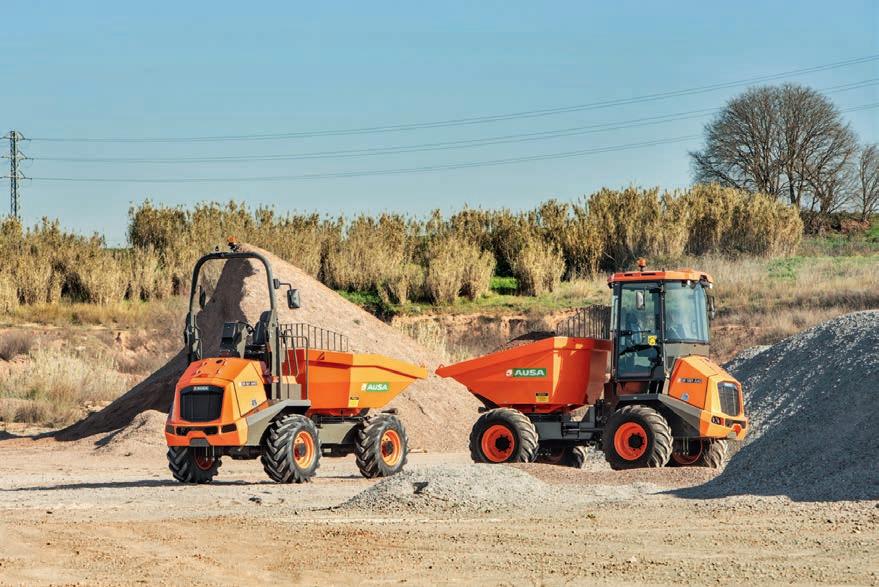
“By further diversifying the product range, JLG is now a viable source of equipment for a new market segment.
“JLG can now be an integral part of the whole construction cycle, from ground-breaking to finished build.”
JLG Industries (Australia and New Zealand)
National Sales Manager, Daniel Reeve, said the company’s core customers — the rental businesses operating in the construction and
civil engineering space — would benefit from access to “yet another great product range”, backed by JLG’s support network.
“They’ll enjoy the reassurance and e iciency of having just the one supplier who can now manage more of the premium products needed to satisfy customers, and get the job done,” he said.
Products and values align
Daniel said that the AUSA brand stood for quality, safety, and reliability, and had forged a well-earned reputation across the globe, as well as in Australia.
“It is a perfect fit for JLG, and we are proud and humbled to acquire such a highly respected brand,” he said.
“It’s also great for our customers, too. Having another trusted brand as part of the JLG o ering simplifies their decision-making, knowing that the first-class support o ered by JLG, from warranty to spare parts and from financial solutions to technical support, are all now integral to the AUSA product range as well.”
More information: www.ausa.com/en-au/
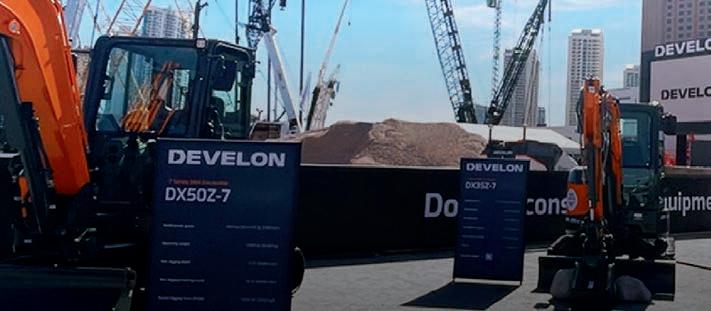
Machinery manufacturer Develon will exhibit its equipment in the outdoor Festival Grounds area of CONEXPO-CON/AGG 2026, to be held in Las Vegas.
Headlining the event will be new heavy and compact machines equipped with multiple productivity, safety and uptime protection features to take on a variety of job sites. The booth will also showcase innovative Develon products, including articulated dump trucks, dozers, wheel loaders, mini excavators, compact track loaders and more.
Develon Senior Director of Dealer Development and Marketing, Morgan Stallings, said it had been three years since the brand was launched at CONEXPO-CON/AGG.
“We’re glad to be back. This show allows
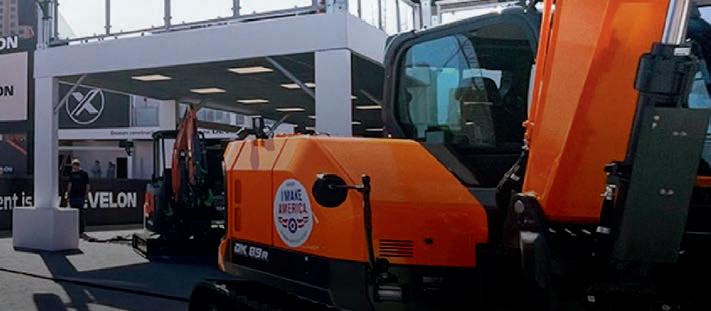
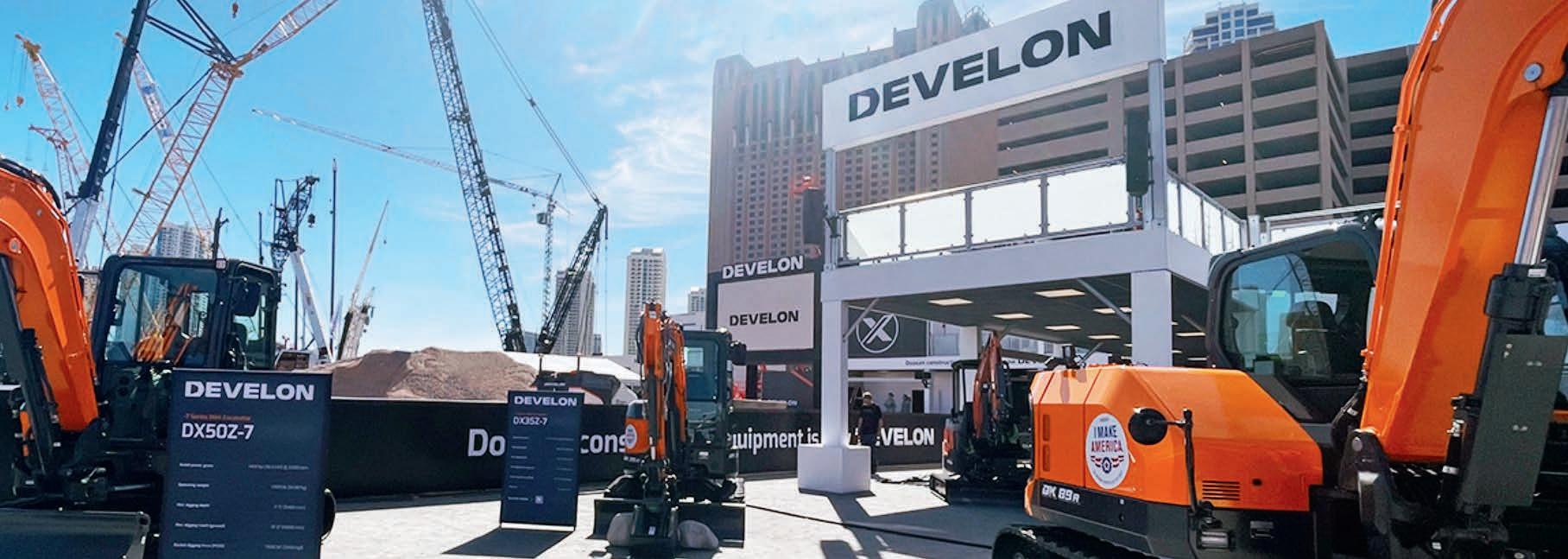
us to introduce our newest next-generation products and showcase our current line-up that helps operators be more productive and e icient on job sites. Plus, it helps us build a stronger connection between our customers and dealers,” he said.
Throughout the week, show attendees can see the power and precision of Develon equipment with live heavy equipment demos featuring an excavator, dozer and wheel loader.
A major attraction in the exhibit will be the Develon compact equipment experience area. Visitors will have the opportunity for hands-on operation of a Develon mini excavator and a compact track loader, testing their operating

skills by completing interactive activities that are part of the Develon Operator Experience. The exhibit will feature specific areas designed to educate show attendees on the history of Develon and its brand as well as current innovations. These will include the Develonexclusive Transparent Bucket, Smart X-Care service, MY DEVELON fleet management and future innovations like Concept-X2. And for the first time, the company will give attendees the opportunity to purchase their favorite Develon swag in an on-site merchandise area.
They will be able to participate in the Develon mixed reality (MR) guidance and virtual reality (VR) simulator experiences, providing hands-on virtual operation and maintenance training for construction equipment.
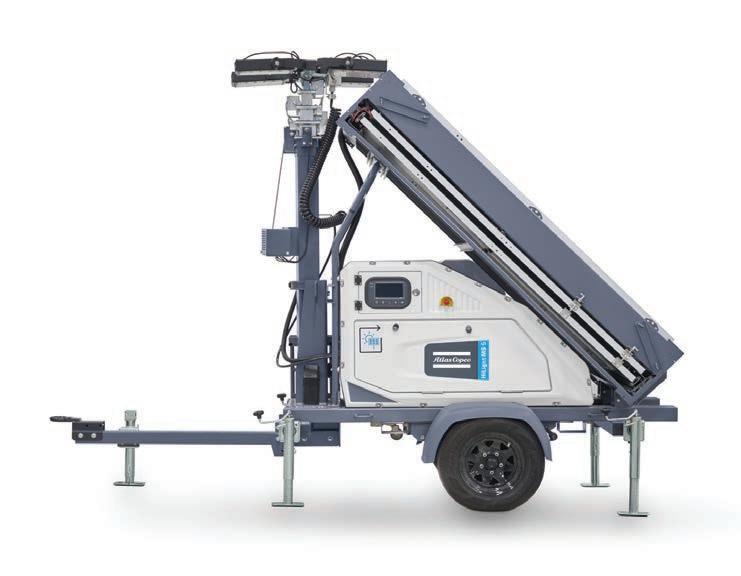















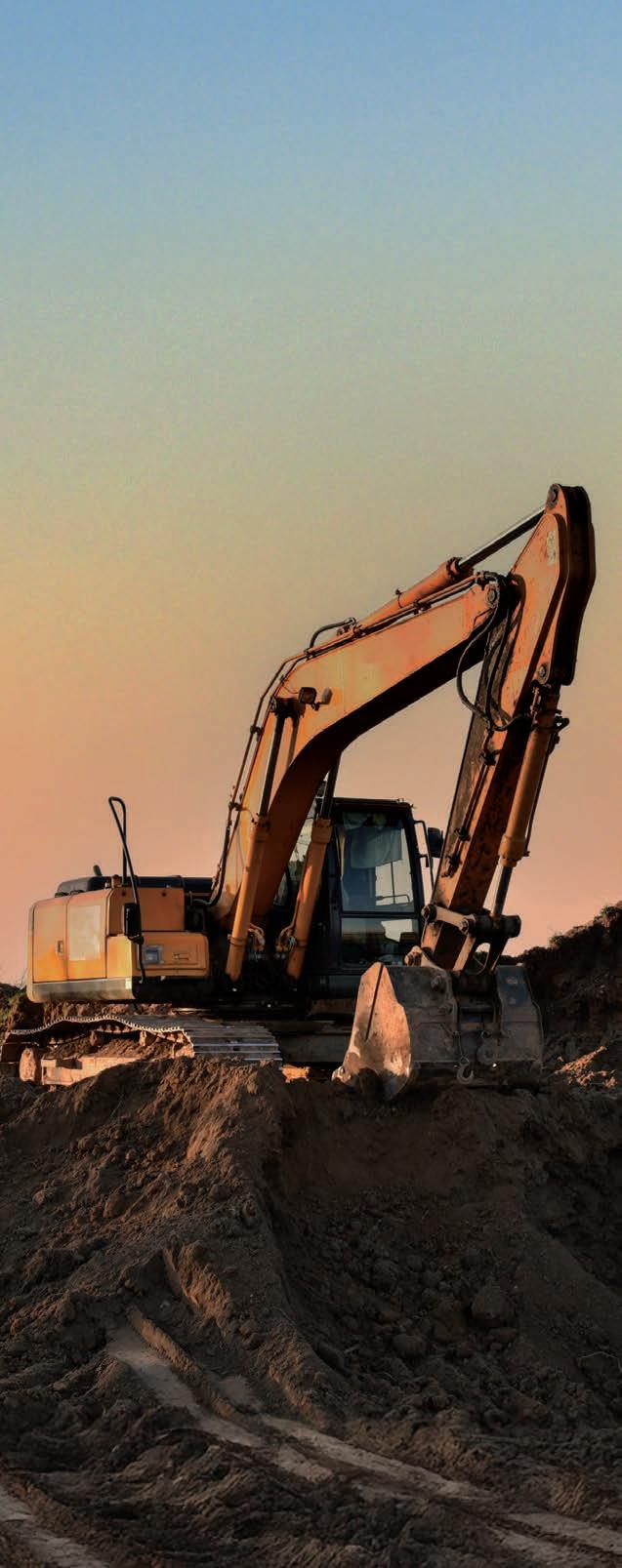
A new app is helping equipment users identify genuine Kawasaki hydraulic components for their machines, ensuring they only use parts engineered to the specifications of the operating system.
Global hydraulics specialist Kawasaki has been supplying components and complete systems into construction, industrial, and marine markets for several decades.
Entering the hydraulic machinery field in the mid-20th century, the company has continually expanded its product range alongside Japan’s industrial growth. Its Precision Machinery Division now ranks among the larger players in the hydraulics industry, boasting dedicated facilities and global subsidiaries such as Kawasaki Precision Machinery across Europe, the Americas, and Asia.
Kawasaki hydraulic solutions are used on mobile o highway machinery, including excavators, wheel loaders, road-building equipment, agricultural machines, and material handlers. Beyond mobile equipment, the business also serves industrial presses, steel and plastics processing lines, marine propulsion, and other heavy-duty industrial systems.
Importantly, when using machines equipped with Kawasaki hydraulic components, it is essential to ensure that genuine parts are used instead of cheaper components that continue to flood the market.
The most common consequences of going for cheaper products are increased risk of premature failures, higher wear on surrounding components, loss of warranty protection, compromised safety, frequent unplanned downtime, and ultimately higher life-cycle costs. This is because many cheaper or poorly specified alternatives do not match the original design tolerances, material quality, or testing standards that the equipment was engineered around.
But with many alternative components now made to resemble the genuine items in appearance, it can be di icult to determine which ones are the real thing.
Kawasaki has made identification of genuine parts easy with its Hydraulic Finder app, a mobile tool that helps owners and service providers quickly identify genuine Kawasaki hydraulic pumps and motors, and then connect with authorised service centres for repair or replacement.
It aims to cut diagnostic time, reduce downtime, and protect equipment reliability by making OEM component matching and support accessible.
Kawasaki After-Sales Promotion Department Manager Ryoji Irie said the app allows users to locate genuine Kawasaki hydraulic components used on current machines by using the serial number stamped on a Kawasaki pump or motor.
“Once that number is entered, the app returns the model code and relevant part information so users can confirm exactly what is installed on a machine before ordering or planning repairs,” he said.
For users such as contractors, fleet managers,
rebuilders, and distributors, the app’s main value is clarity: it removes guesswork around legacy machines, modified equipment, or worn nameplates, providing a direct digital bridge between the machine in the field and Kawasaki’s product data.
“This is particularly useful in mixed fleets serving construction, quarrying, mining, and mobile industrial applications where hydraulic specifications vary widely,” Ryoji said.
Kawasaki has supplied hydraulic components for excavators and other mobile machinery since the 1960s, and its pumps, motors, and valves are now embedded across a broad base of OEM machines worldwide.
The Hydraulic Finder app is aimed at the aftermarket side of that ecosystem: independent service centres, OEM dealers, hydraulic specialists, and fleet owners who need fast, accurate information on installed components.
“In each case, the app supports decisions around repair versus replacement, component upgrades, and stock planning by ensuring everyone is working from the same verified Kawasaki model and serial data,” Ryoji said.
At the heart of the app is serial number-based identification: users look up a genuine Kawasaki pump or motor by entering the serial number found on the product nameplate. This approach is more precise than searching by machine make and model alone, because OEMs often configure multiple hydraulic options across a single chassis platform.
“For workshops dealing with machines that have seen multiple owners, partial rebuilds, or non standard modifications, serial based lookup avoids the risk of cross referencing the
wrong variant or relying on incomplete machine histories,” Ryoji said.
“It also helps when identification plates are hard to read in situ, allowing technicians to confirm product codes back in the workshop without returning to the machine repeatedly.”
The Hydraulic Finder app is positioned explicitly as a way to find genuine Kawasaki components, not universal equivalents, in the aftermarket.
Genuine parts are critical wherever pumps and motors are operating at high pressures and duty cycles, as small deviations in tolerances or materials can accelerate wear, reduce e iciency, or a ect safety.
By tying the search process directly to Kawasaki’s own database, the app reduces the chance of substitution with non approved parts that may not meet the original design standard.
“For equipment owners, this supports lifecycle cost control: higher quality components help protect neighbouring systems (valves, cylinders, and controls) from damage caused by contamination or cavitation events linked to poor quality replacements,” Ryoji said.
Beyond identification, the app helps users locate the nearest authorised Kawasaki service centre based on component data and user location.
These centres are the only channel where Kawasaki formally guarantees the use of genuine parts in repairs, and are equipped with appropriate test benches, procedures, and technical support from the company.
Service quality is often as important as the component itself. Using the app, a workshop or fleet engineer can validate the part,
then hand over to an authorised centre for overhaul, ensuring alignment with Kawasaki specifications and warranty expectations.
Ryoji said the app is presented as a tool to cut downtime by streamlining the path from fault identification to repair.
“In practical terms, that means reducing time spent chasing legacy drawings, emailing photos back and forth, or waiting for manual confirmation from multiple parties across time zones,” he said.
Fast and accurate identification can accelerate quotation and approval cycles, enabling earlier parts ordering and scheduling of repair windows.
For fleets in construction, mining, or port handling, where hydraulic pumps and motors are often mission critical, the resulting uplift in uptime directly impacts utilisation rates and revenue per machine.
Kawasaki operates a global hydraulics business with products deployed in construction machinery, industrial equipment, and marine machinery, supported by regional hubs and networks.
The Hydraulic Finder app complements this footprint by delivering a global, smartphone based touchpoint that can be used wherever machines are working.
For multinational contractors and OEM dealer groups, this helps standardise how Kawasaki

components are identified and specified across regions. That consistency feeds into centralised inventory planning, shared service procedures and training, and better visibility of which Kawasaki models are installed across the active fleet.
The app is published on mainstream app stores, allowing technicians and managers to install it onto work smartphones and tablets.
“It is built with a straightforward, task oriented interface designed for users who may be on site, in workshops, or on call, rather than sitting at a desktop,” Ryoji said.
“By focusing the workflow around serial entry and component look-up, the app avoids clutter and minimises the learning curve, which is important in busy service environments with rotating sta ."
Kawasaki’s hydraulic portfolio spans axial piston pumps, motors, control valves, and related systems for mobile and industrial applications, including its K3V, K5V, and M5X families used in excavators and other o road equipment.
The Hydraulic Finder app serves as a digital gateway into this installed base, helping users maintain system performance over the long term by keeping the right components in service.
As Kawasaki introduces more advanced products such as electronically controlled smart pumps and motors with integrated sensors and controllers, accurate component identification will only grow in importance.
For OEMs, the app reinforces the Kawasaki brand inside their machines by making it easier for end-users to recognise and support the hydraulic content that underpins machine performance.
For distributors and service partners, it o ers a streamlined tool that anchors their aftermarket engagements in verified data, reducing disputes over incorrect parts and improving first time fix ratios.
For fleet and asset managers, integrating the app into maintenance workflows supports disciplined asset management by ensuring rebuilds and replacements are specified correctly and routed to authorised repair partners where appropriate.
Over time, this helps preserve machine resale value and supports predictive or condition based maintenance strategies that depend on known, traceable component configurations.
“In an environment where uptime, safety, and total cost of ownership increasingly drive purchasing and maintenance decisions, Kawasaki’s Hydraulic Finder app operates as a practical, low friction digital layer over a global installed base of hydraulic systems,” Ryoji said.



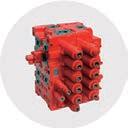



Onetrak Australia’s Business Manager for Crushing and Screening, Paul Kerr, has a wealth of experience spanning sales, hire strategy, market development, and customer support for mobile crushing and screening gear.
So when a brand is chosen for distribution, customers know that the product boasts the reliability, serviceability, and whole of life economics that the dealer supports.
“I approach equipment selection from a practical, operator-focused perspective, rather than a purely specification-driven one,” he said.
According to Paul, a part of that brief is ensuring equipment is not only capable on paper, but is reliable, serviceable, and economically sound over its working life, particularly in Australian conditions.
“That philosophy underpins Onetrak’s decision to back the Anaconda C12R across quarrying, mining, civil, and recycling applications,” he said.
The Anaconda C12R is a tracked mobile cone crusher designed for secondary and tertiary crushing applications, built to take a controlled feed from a jaw crusher or impactor.
Its job is to turn that feed into a graded, high quality end product with dependable throughput and strong particle shape for aggregate specifications.
“The C12R is equally at home as a standalone unit or operating as part of an integrated crushing and screening train,” Paul said. “This flexibility allows producers to configure the crusher around changing contract and product requirements without over complicating site layouts.”
The machine is used across quarrying, mining, civil construction, infrastructure development, and recycling operations. Typical duties include hard rock quarrying, road base and sub base production, rail ballast, concrete and asphalt aggregation, and processing materials for civil works.
Paul said the C12R is called a cone crusher because of its crushing mechanism.
“A cone crusher compresses material between a rotating inner cone (mantle) and a fixed outer liner (concave), forming a conical crushing chamber that delivers controlled, consistent size reduction,” he said.
“This geometry allows the C12R to achieve precise reduction ratios and well shaped product while managing abrasive, hard rock feeds. It also supports the machine’s role in secondary and tertiary positions where product consistency and shape are often as important as raw tonnage.”
Within Anaconda’s crusher range, the C12R
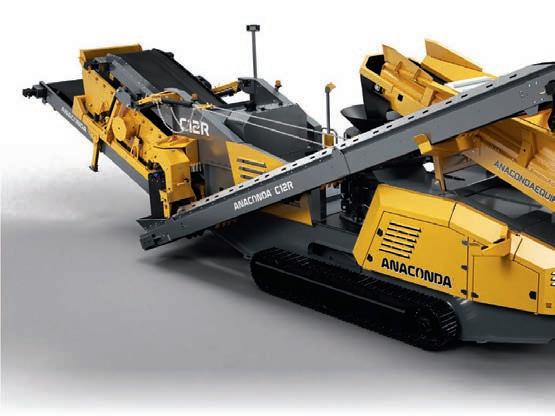
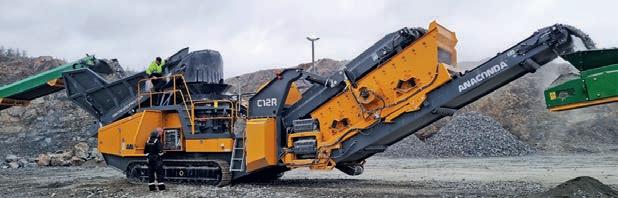
sits alongside established jaw and impactor models but distinguishes itself through a specialist cone module.
“At the heart of the C12R is an FLSmidth Raptor cone crushing chamber, which is recognised in quarrying and mining for strength, reliability, and crushing e iciency,” Paul said.
Key design features include a high pivot point and large feed opening, giving the crusher the ability to accept larger feed sizes while maintaining consistency.
“Other Raptor features include the chamber’s hydraulic tramp relief and clearing systems, heavy duty head and mainframe construction, e icient crushing geometry, and wear patterns that support long liner life,” Paul said.
The C12R has been developed with Australian safety expectations in mind. The machine aligns with MDG15 principles, which are mobile and transportable equipment guidelines for use in mines.
“This is reflected in its safe access provisions, guarding, isolation points, and serviceability measures built into the layout,” Paul said.
“The result is a cone crusher that combines Raptor technology with a practical, operatorfocused mobile design. This emphasis on real world usability aims to reduce downtime, simplify daily checks, and create a safer working environment around the plant.”
When configured with a recirculating screen, the C12R becomes a compact, multi product plant rather than a single function cone.
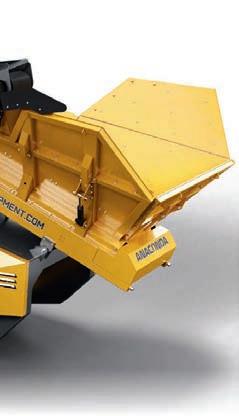

When configured with a recirculating screen, the C12R can produce up to three separate products simultaneously.

In this set-up, the crusher is capable of producing up to three separate products simultaneously, giving operators flexibility at the face.
“The integrated screen box delivers screening e iciency and e ective separation,” Paul said. “This allows multiple saleable products to be generated in a single pass, reduces additional equipment requirements, simplifies site layouts, and lifts overall productivity.”
The Anaconda C12R is available nationwide through Onetrak’s Australian sales and service network.
“That coverage gives owners confidence that parts, technicians, and product support are within reach wherever the machine is working,” Paul said.
The C12R is backed by a two year or 3000 hour warranty, which includes access to Onetrak’s national group of service branches, trained technicians, workshop facilities, and spare parts support.
For prospective buyers wanting to see the machine work, demonstrations can be arranged.
“These can be scheduled via Onetrak, including customer site demonstrations and selected industry events, subject to availability and location,” Paul said. “I welcome all operators to experience the crusher’s capabilities first hand.”.
For more information about the C12R, contact your nearest Onetrak branch on 1300 727 520.
Equipment Australia, a local provider of heavy construction and agricultural equipment, has been appointed as a distributor for SANY excavators in key Australian states.
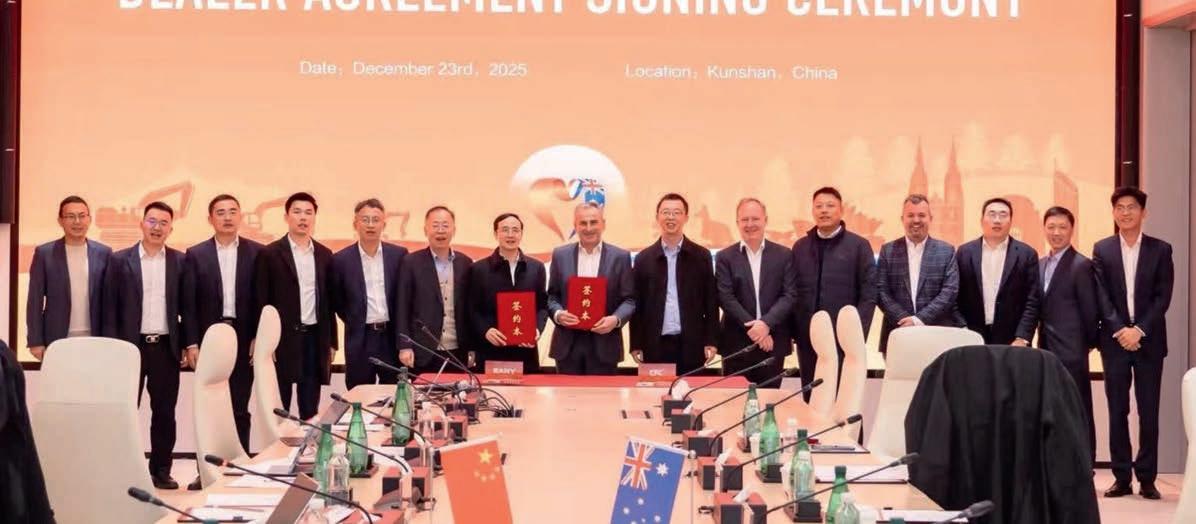
As leaders in the global excavator market, SANY has gained customer acceptance, thanks to its build quality, competitive pricing, and aftermarket o ering.
Construction Equipment Australia (CEA) has recently acquired the distribution rights for SANY in Queensland, New South Wales, and South Australia, a move supporting the business’ appetite for growth across key market segments.
CEA CEO Hylton Taylor said that over the past six years, CEA had opened three multi-million-dollar purpose-built facilities in Sydney, Brisbane, and Perth, diversifying the product o ering.
“Now, the addition of SANY to the portfolio will strengthen our line-up with a range of excavators ranging from one to 90 tonnes,” he said.
The move not only strengthens the business’ footprint across the country but enhances its ability to support a diverse range of customers with a broad equipment o ering.
With the distributorship starting in January, CEA is poised to challenge the excavator market with a product range that is competitively priced, aligning with the needs of the Australian market.
“It was critical we partnered with a brand that understood the customer segment, could deliver quality products, and had a strong focus on future industry needs, ensuring the machines of tomorrow can meet the demands of the core customer base,” Hylton said.
SANY, founded in 1989, is a global supplier of excavators, with a footprint of research and development centres and manufacturing plants in countries including China, the United States, Germany, India, and Brazil. Production capacity out of its Shanghai-based Lingang and Kunsha facilities is more than 80,000 units annually.
Putzmeister’s Asia Pacific CEO, Michael Schmid-Lindenmayer, said that SANY was proud to partner with an Australian-owned business that had the size and scale of CEA.
“CEA’s history in the market o ers a strong sales channel, with local insights and market knowledge that will be critical to the long-term success of the SANY brand,” he said.
“SANY is focussed on delivering high-quality, market competitive products to established markets like Australia. The brand’s focus on delivering innovative solutions ensures we are prepared for market demands well into the future, and we look forward to
supporting


A
Drive technology and automation specialist SEW-Eurodrive has a warehouse footprint across Australia that services a variety of clients.
Specialising in modular, customised solutions and helping move and control machinery in various applications, the company currently uses a fleet of more than 30 Toyota forklifts, walkie stackers, and pallet movers to assist with its operations.
The brand is valued highly by SEW-Eurodrive National Procurement Manager Fred Pizzicara, who has been with the company for nearly three decades and has more than 20 years of experience with Toyota Material Handling Australia (TMHA) products.
Starting with Toyota walkie stackers, the business has been transitioning from multiple material handling providers to exclusively TMHA, with a goal of standardising its fleet to a single provider in the next one to two years.
Based at the Melbourne premises, Fred said that SEW-Eurodrive stood to gain from a standardised material handling fleet, with benefits to operational e iciency and servicing, coupled with Toyota’s I_Site telematics fleet management system.
“That’s the endgame, to have a fleet that is serviced by Toyota and, where required, have the I_Site program in place,” he said.
He said that with a fleet spanning Australia’s major cities, having I_Site available to track equipment usage and accidents had been valuable.
TMHA has a long history with fleet management systems, allowing customers to track and manage the usage of their machines.
“For at least 15 to 18 years, Toyota always had a system you could jump on to see what’s happening with the units and their hours,” Fred said.
“I think their visibility was always ahead of everyone else. Our Q-compliance team has access to I_Site, and I have access to it.
“If one of the operators has an accident, it
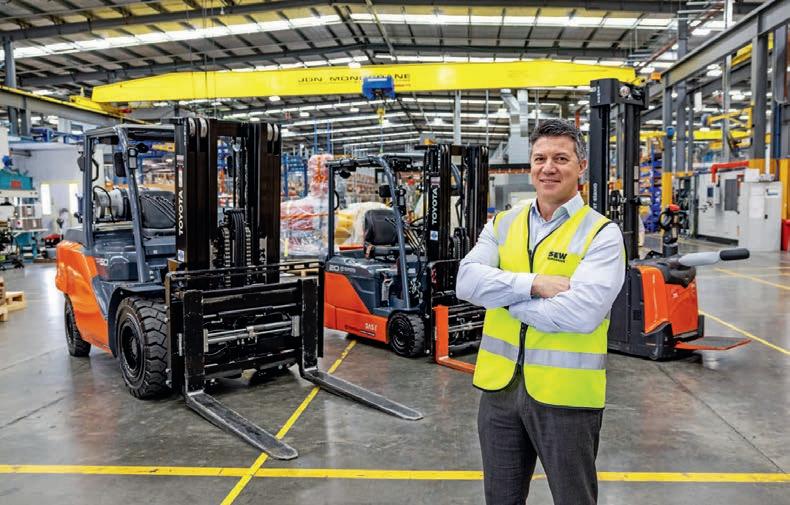

goes into limp mode and someone has to contact us so we can check it first to make sure it’s not severe; and if it’s something simple, we just enter our code and move it on.”
Fred said Toyota forklifts were chosen for multiple advantages, from durability and compatibility to servicing.
“I think their after service is better — they’ve got some programs that come with the machines that are not o ered by other companies,” he said.
“I find Toyota forklifts to be more robust and able to handle a little bit more. And because we deal with European skids in a lot of our assembly facilities, the Toyota unit is a lot more user-friendly for what we do.”
Fred and his team have formed a strong relationship with TMHA Major Account Manager Leigh Odermatt, who has worked with SEW-Eurodrive for years on their transition to Toyota equipment.
“Leigh has been a help in both arranging
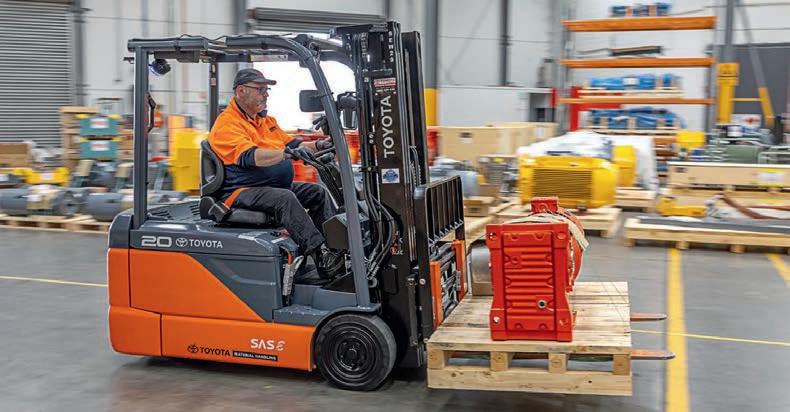

new orders and answering questions and also putting together a national service agreement for SEW-Eurodrive, which will see all equipment serviced under the same account,” Fred said.
“We’ve always had a good relationship — I throw a lot of things at him and he’s always onto it.
“He’s the one who’s helping with the national service agreement, which is not easy because there are plants across Australia.
“We’re about to sign o on the national service agreement for all the current units that we have around the country, so everything is under the one banner.”
Fred said the breadth of TMHA’s service network, along with the knowledge of its technicians, was a key reason for any business, big or small, to choose Toyota forklifts.
“The servicing has been good. We have regular guys who come, and they know the place,” he said.
“I’m extremely happy. For me, it’s more about the happiness of the sta using it.
“We’ve standardised here in Melbourne on a few models, but in other plants, I asked if Toyota could send out some rentals so they could get a feel for them. So far I’ve had no bad feedback, so everyone has loved what they’ve played around with.
“I think having less downtime is what all businesses try to achieve, and having reliable machinery that can do the job is important. I think Toyota and SEW are a great partnership and hopefully it keeps growing as we grow.”
For more information, freecall Toyota Material Handling Australia on 1800 425 438 or visit online at www.toyotamaterialhandling.com.au
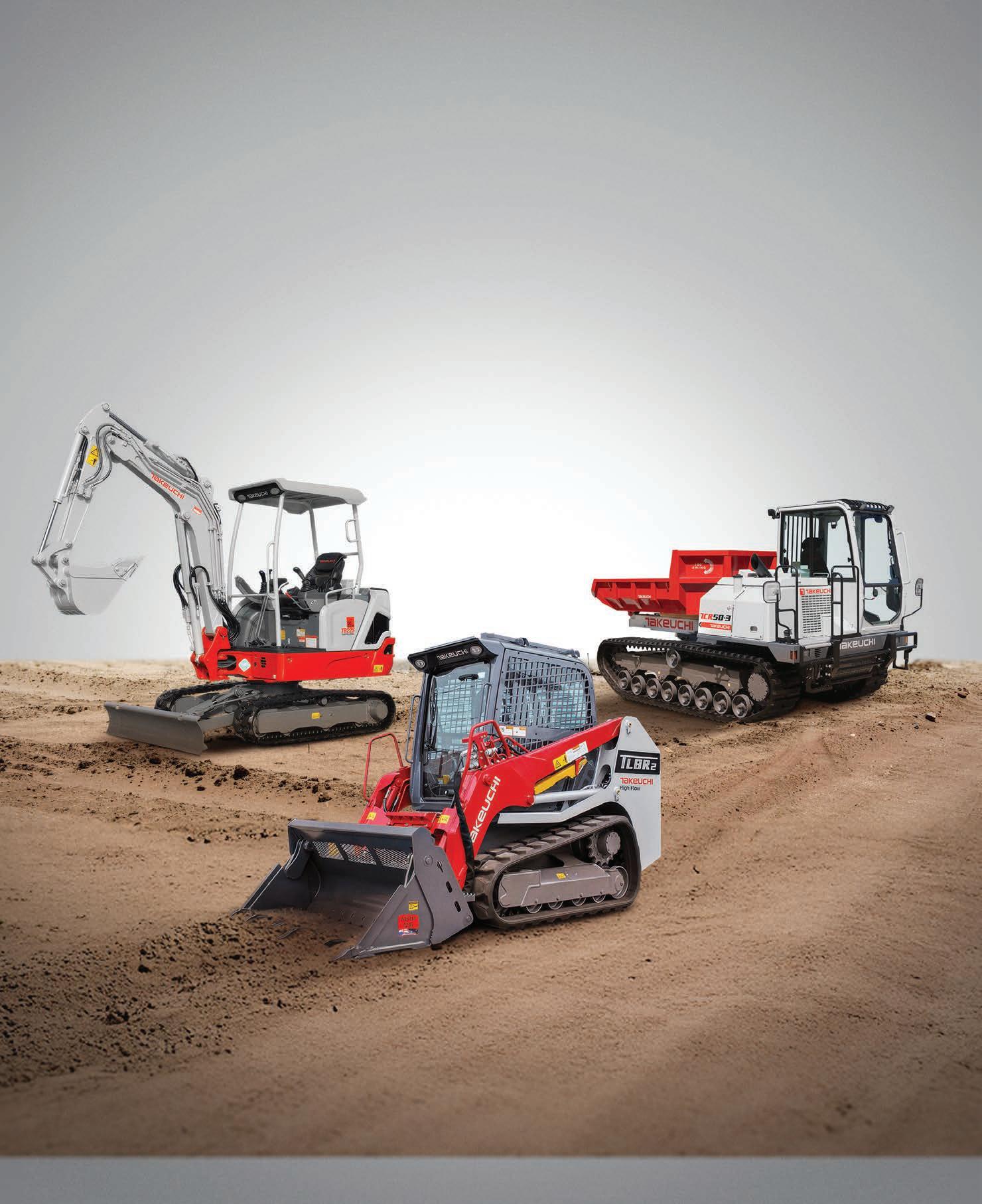
For earthmoving parts and components specialist Tilly’s Crawler Parts, the past year has been defined by adjustment, resilience, and a renewed sense of optimism.
Tilly’s stocks a large inventory of more than 43,000 new and 15,000 second-hand parts and attachments for various brands.
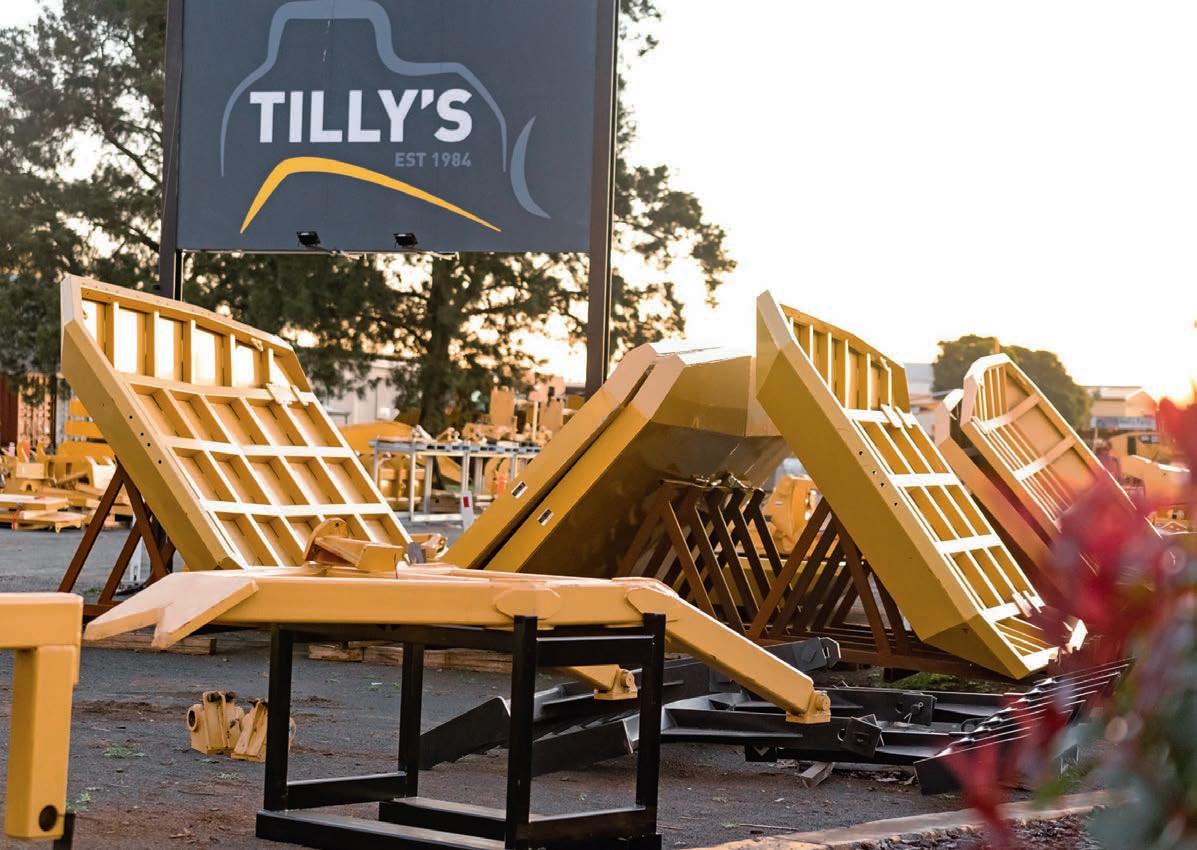
Based in Toowoomba, Tilly’s Crawler Parts has become one of the most iconic brands in the earthmoving and excavation industry in Australia, priding itself on the supply of highquality new and used parts and components. While 2025 was another successful year, it was not without its challenges. Shifting economic conditions in Australia and abroad shaped customer behaviour through much of the period, disrupting familiar sales patterns and tempering confidence around big-ticket purchases.
General Manager Lance Hinrichsen said that interest rate uncertainty, in particular, weighed on spending decisions, leading to softer machinery sales, even as demand for parts remained steady.
“Despite this uneven backdrop, the latter part of the year marked a clear turning point. From late September, Tilly’s began to see a noticeable lift in consumer confidence, with stronger performance across all categories,
including machinery,” he said.
“This momentum carried through the Christmas period, setting a positive tone for the year ahead and reinforcing expectations of a stronger 2026 outlook.”
At the helm of Tilly’s for nine years, Lance notes that one of the encouraging developments has been the return of seasonal trends that closely resemble pre-COVID conditions.
“For a business operating in the earthmoving and machinery support sector, this return to predictability has practical benefits, enabling more confident forecasting, planning, and inventory management after several years of volatility,” he said.
The ITR importance
Lance said a milestone during the period had been Tilly’s acquisition by ITR Pacific in February 2024.
“While 2024 was largely a year of transition,
2025 has revealed the benefits of being part of the world’s largest global player in the alternative parts market,” he said.
“The integration has opened new opportunities, particularly through closer, more direct relationships with manufacturers rather than intermediaries, strengthening supply chains and product access for some of Tilly’s largest lines.”
Being part of a broader Australasian network has also helped Tilly’s overcome historical limitations tied to freight costs, allowing the business to extend its footprint across Australia and New Zealand.
Throughout this integration, Lance said a priority had been improving operational e iciency through back-end systems, while carefully preserving the brand’s identity and reputation in the market.
“One of the standout achievements of the year has been recognition of Tilly’s component workshop in Toowoomba as a critical research,
development, and testing hub for the global USCO ITR World group,” he said.
“The designation reflects the technical capability of the local team and the trust placed in Tilly’s expertise at an international level, reinforcing its role beyond distribution and into product development.”
The reliable alternative
At the heart of Tilly’s o ering is its positioning of alternative parts as high-quality, cost-e ective replacements for OEM components.
While price remains an advantage, Lance said that choice, quality, and expertise are equally important.
“With roughly 200 years of combined industry experience across the sales team, Tilly’s value proposition extends beyond parts supply to include informed advice and tailored solutions that help customers select the most appropriate option for their machines and operating conditions,” he said.
“The broader alternative earthmoving parts industry continues to grow on a global scale, underpinned by its connection to essential sectors such as housing, infrastructure, and food production.
“In times of economic pressure, this stability is reinforced by a stronger appetite for value-formoney solutions.”
Lance said international trade dynamics, particularly US tari s, have influenced purchasing patterns and supply chains, with cost pressures often flowing downstream as tari s applied to Asian-manufactured components are passed on to global consumers.
“Within this environment, the debate between used, reconditioned and new parts remains relevant,” he said.
“While there is still a role for used and reconditioned components — especially for low-hour machinery — the quality and competitiveness of new alternative parts have advanced greatly over the past two decades.
“Tilly’s strength lies in its ability to assess each situation and guide customers to the option that best balances performance, longevity, and cost.”
Product expansion has also featured prominently over the year. Tilly’s has continued to broaden its range, most notably through the expansion of its attachments portfolio.
Recent launches include a new excavator two-way push-pull stick rake and the introduction of the Miller quick-hitch range.
Alongside this, the business has made a strategic shift in its reconditioning operations, moving from an on-demand model to a production and stocking approach. This move is expected to underpin an exchange program scheduled for rollout in 2026.
“Looking ahead, investment priorities remain firmly focused on reconditioning, research and development, and further upgrades to facilities and equipment,” Lance said.
“With consumer confidence improving, operational e iciencies increasing, and the backing of a global parent company, Tilly’s enters the coming year positioned not just to respond to market change, but to help shape it.”
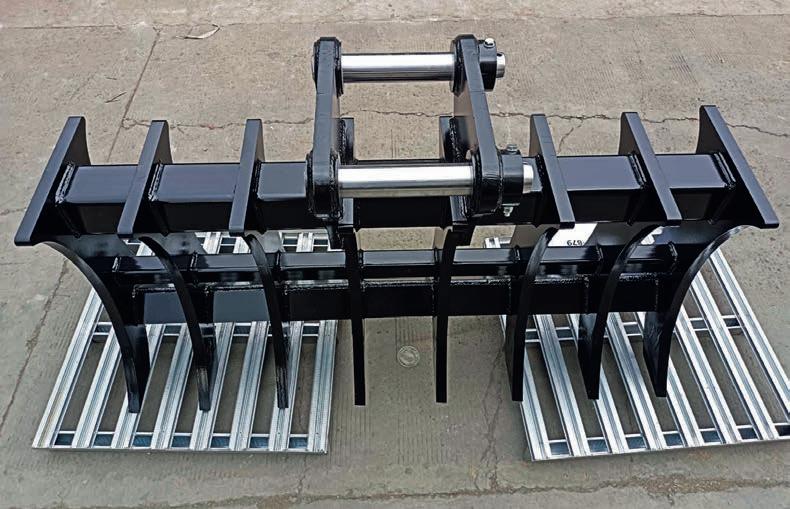

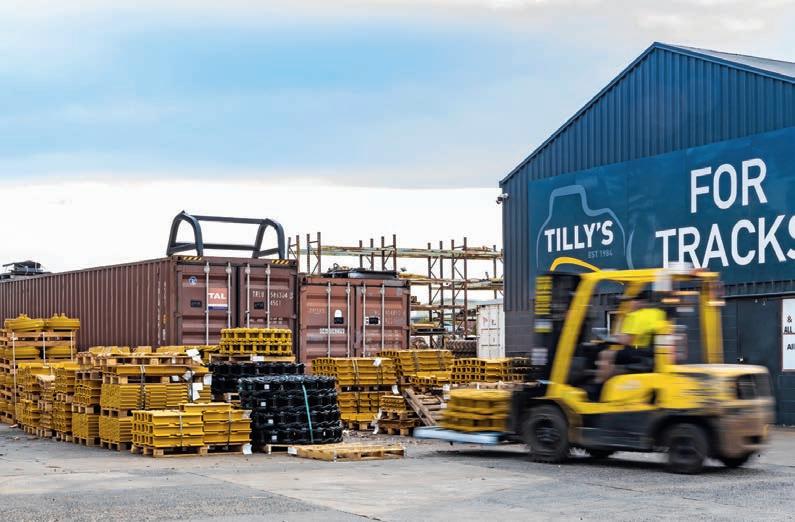
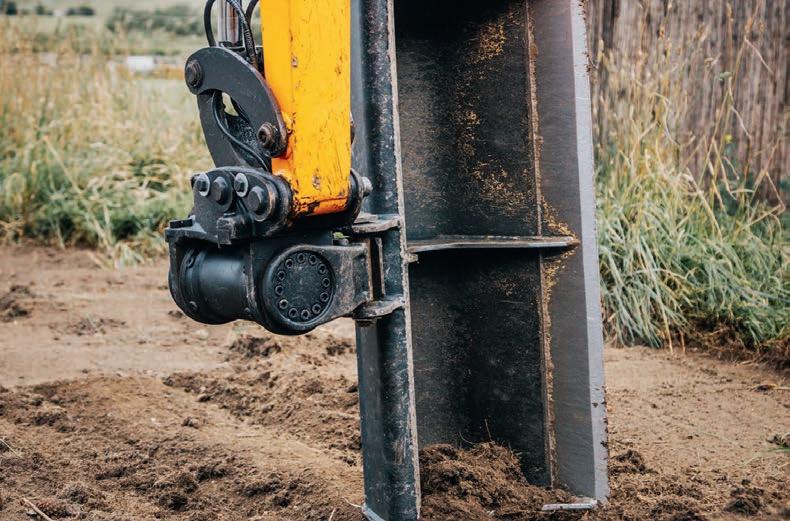

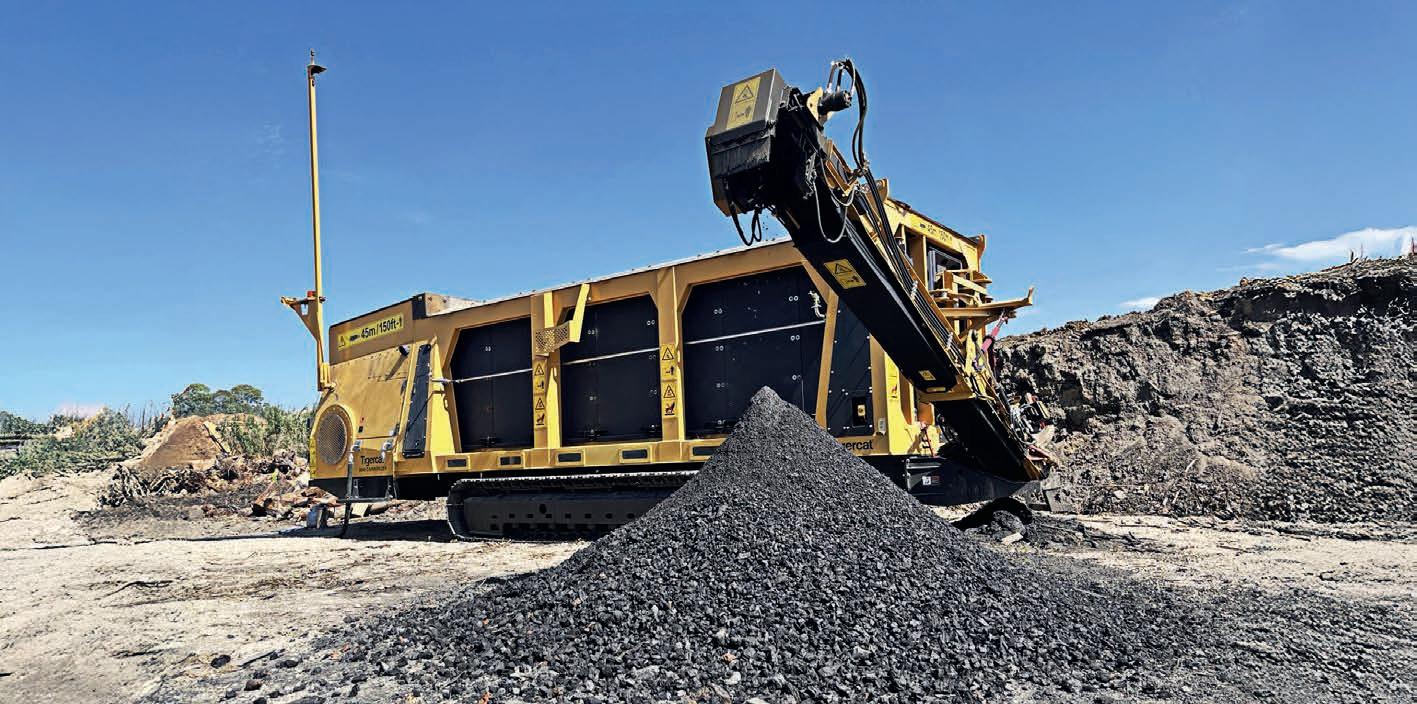

By converting wood waste into high-value biochar, new technology has addressed the challenge of debris disposal from land clearing, without the environmental hazards of open-air burning.
With sustainable solutions for forestry residue and agricultural waste a priority, the introduction of Tigercat Industries’ 6040 Carbonizer marks an advancement in mobile wood debris processing.
O icially released in June 2024, the 6040 Carbonizer is a redesign of its predecessor, the 6050 Carbonator. With a focus on performance, e iciency, environmental responsibility, and practicality in field operations, the 6040 sets a new standard for on-site biomass carbonisation.
The product emerged from Tigercat’s acquisition of related technology in 2019 and subsequent engineering refinements over several years. The revamp reflects feedback and insights from field personnel and engineers who understood the limitations of the earlier model, and sought to build a machine that not only performs reliably but also simplifies maintenance and serviceability.
The 6040 Carbonizer is a mobile on-site wood conversion system designed to transform woody biomass — such as logging residue, brush, limbs, and other organic waste — into high-quality organic carbon. This product can be used as a soil amendment or marketed for various commercial uses, o ering landowners and forestry professionals an economically viable alternative to traditional disposal methods.
One of the defining attributes of the 6040 is its ability to reduce material volume by up to 90 per cent. This volume reduction not only minimises the physical footprint of waste, but also lowers transportation and handling costs when moving materials o -site.
At the same time, the carbonisation process captures and sequesters between 20 and 30 per cent of the available carbon in the feedstock, aligning with broader environmental
goals related to greenhouse gas mitigation.
The carbonisation method employed by the Tigercat 6040 is noteworthy for its combination of thermal precision and e icient combustion control.
Unlike basic chipping or grinding, this process brings woody biomass into a controlled primary combustion environment where heat and limited oxygen initiate pyrolysis, causing volatile components to separate from the solid carbonaceous material.
A dual airflow system plays a key role: an under-air supply provides upward pressure, while an over-air supply creates a turbulent vortex zone. Here, released gases are held at high temperatures — about 1095 °C — for several seconds, ensuring thorough combustion and reducing particulate and contaminant emissions. The result is a cleaner process and a higher-quality carbon product.
Once the carbon is separated, it drops through robust grates into a sealed quenching water bath, where it is cooled and stabilised. It is then moved via auger and discharged onto an adjustable conveyor, ready for collection or further handling.
A focus during the 6040’s development was serviceability and modularity. The new design allows key components — such as the undercarriage, auger trough, and conveyor — to be bolt-on sections that can be detached or replaced independently. This modular approach facilitates easier repairs and reduces downtime, a valuable feature for machines deployed in remote or high-use environments.
Within the carbonising chamber, the grates are divided into seven rotatable sections, enabling operators to balance wear and extend component life. The thermal-ceramic panel seals were also redesigned with improved
composition to lower back-face temperatures and retain more heat, contributing to stable chamber conditions that enhance throughput and carbon yield.
In addition to internal improvements, the machine’s weight has been reduced from about 43,550kg to 37,650kg, and extended track frames improve load distribution while minimising soil compaction — an important consideration for sensitive field sites. Telematics and integrated temperature sensors throughout the machine provide operators with real-time data, simplifying process monitoring and support.
Another advantage is the adjustable discharge conveyor, which pivots over a wide range and can be raised or lowered. This flexibility simplifies product management on site and eliminates the need to detach the conveyor for transport.
By transforming waste wood into stable carbon, the machine provides a way to sequester carbon for thousands of years, contributing to sustainable forestry and land management practices.
The process’s low emissions profile displaces more carbon-intensive disposal methods such as open burning, making the 6040 attractive to organisations seeking greener operations. Economically, the ability to produce a valuable end product — organic carbon that can improve soil health or serve as a commercial input — adds financial incentive for users. Meanwhile, reduced transportation and handling costs, coupled with e icient on-site processing, make the 6040 a sound investment for forestry, agricultural, and land-clearing applications.
Contact Onetrak on 1300 727 520 to enquire about a demonstration.
Built for demanding work sites and mobile operations, the X-AIR 410 portable air compressor delivers dependable, high volume air performance wherever it’s needed.
Portable air compressors are often underestimated necessities at work sites. They are valued for their mobility, allowing users to power pneumatic tools and perform tasks anywhere, especially where grid power isn't available, boosting e iciency, safety, and versatility for construction, auto repair, and agricultural work.
Among the many models on the market, the Atlas Copco X-AIR 410 has been in demand for providing strong performance with fuel e iciency in a compact package.
The unit has been designed for demanding applications and harsh Australian conditions.
O ering a flexible working pressure range from 73psi to 174psi and free air delivery from 12.5 cubic metres per minute at 5 bar to 10 m3/ min at 12 bar, it is suitable for a multitude of tasks, from drilling and shotcreting to abrasive blasting and general pneumatic tool use.
At the heart of the X-AIR 410 is PACE (Pressure Adjusted through Cognitive Electronics) technology, which allows the operator to easily adjust working pressure through an intuitive digital controller, while the compressor automatically optimises flow for the selected setting.
This intelligent regulation e ectively turns a single compressor into a multi-purpose unit, increasing utilisation across di erent jobs and helping fleets do more with fewer machines.
The integrated Xc2003 controller presents clear, text-based information and alerts in multiple languages, simplifying operation, set-up and troubleshooting, even in busy site environments.
Fuel e iciency is a strength of the X-AIR 410, delivered through both its e icient screw
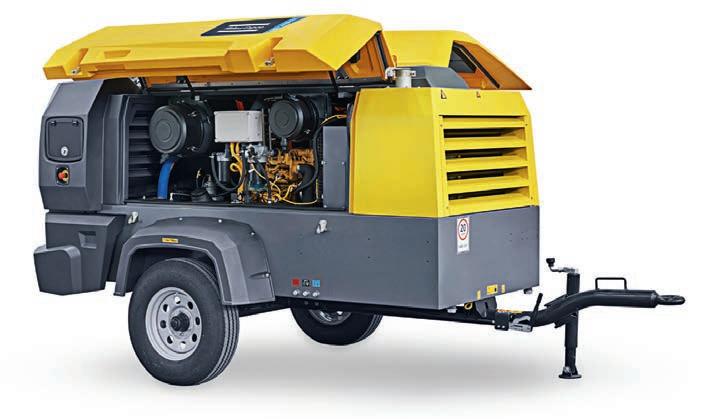
element and smart ECO mode strategy.
When air demand drops for extended periods, such as during drill rod changes or tramming, ECOmode automatically shifts the unit from unload to no-load, reducing fuel burn by up to 50 per cent during those no-load intervals, and lowering total cost of ownership over time.
Whether running at full load, partial load or idle, the compressor is calibrated to minimise wastage without compromising responsiveness when demand returns.
Durability and uptime are built into the X-AIR 410 from the ground up. A tough HardHat polyethylene canopy provides corrosionresistant protection for internal components, helping the unit maintain its appearance and structural integrity in punishing outdoor and coastal environments.
The compressor is designed to operate across a wide temperature range, with options
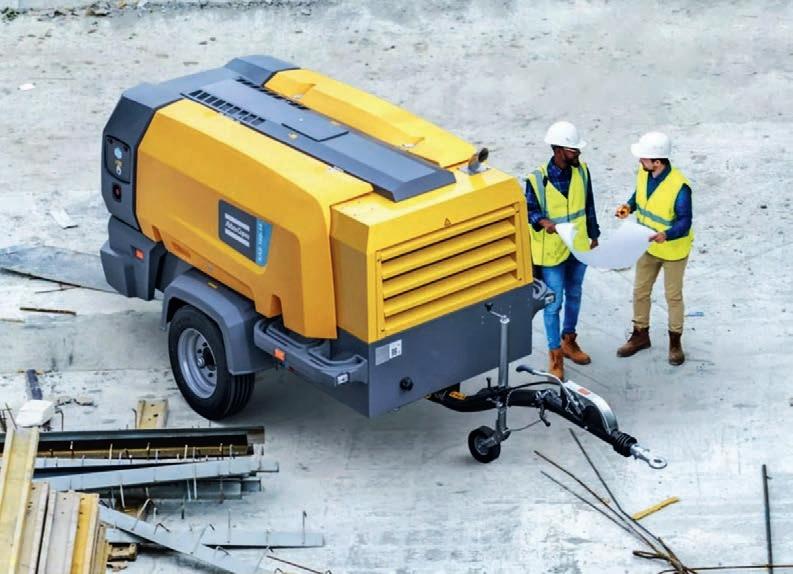
available for high-ambient, cold-climate and high-altitude packages, so it can be configured to suit specific site conditions and project requirements.
Serviceability has been carefully considered to keep maintenance straightforward and fast. Large gull wing doors and centralised drains give clear access to key service points, while in house designed screw elements and a refined vessel design support long service intervals and consistent performance over the life of the machine.
Optional integrated aftercoolers, water separators and filtration can be specified to deliver dry, clean air for sensitive applications such as pipeline pressure testing, painting, cable blowing, and abrasive blasting, further protecting downstream equipment and minimising rework.
Safety and environmental responsibility are also central to the X-AIR 410 concept. The unit features a 110 per cent spillage-free frame to contain fluids, reducing the risk of on-site ground contamination, and supporting bestpractice environmental management.
An emergency stop, safety cartridge, refinery kits with spark arrestors and inlet shutdown, as well as a control and warning system, help safeguard both operators and equipment across a variety of industrial, civil and resources projects.
For owners and fleet managers, connectivity and fleet control are key advantages. The optional Fleetlink remote monitoring system enables real-time tracking of operating hours, location and performance data, improving planning for maintenance and deployment, and helping to maximise utilisation across multiple sites.
Combined with its compact footprint, transport-friendly design and broad application range, the X-AIR 410 stands out as a powerful, economical and versatile source of compressed air for Australian contractors who need dependable performance wherever their work takes them.
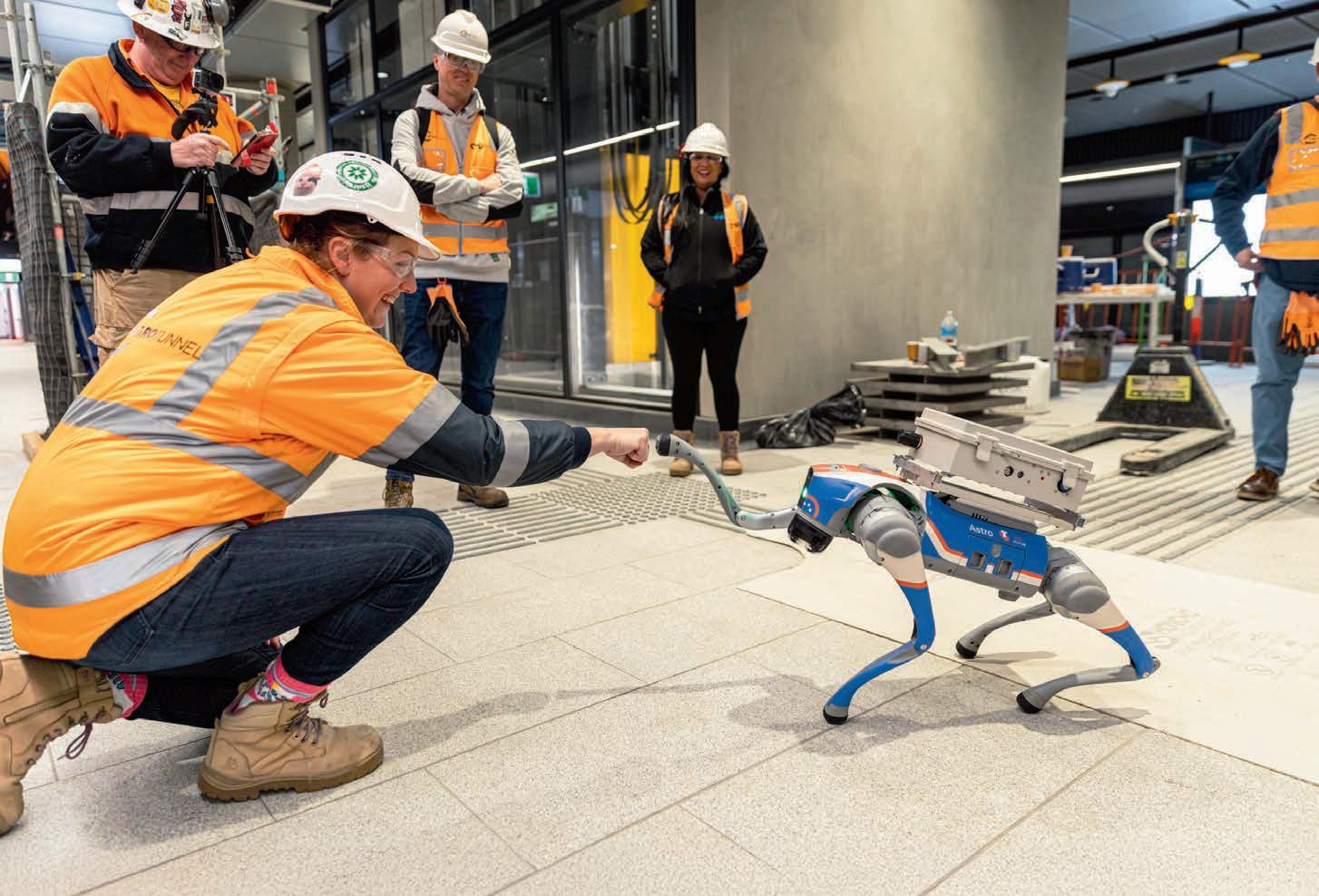
Innovations in connectivity and automation are opening new possibilities for improving safety in high-risk construction environments, particularly where access and visibility are limited.
Telstra Enterprise and construction company
John Holland has successfully trialled the use of a robotic dog equipped with advanced environmental sensors and 5G connectivity to enhance safety for workers operating in challenging environments such as tunnels and underground rail stations.
Astro navigates high-risk and hard-toreach environments, sending real-time data to crews nearby, enhancing safety and clear communications.
Developed as a proof of concept by Telstra Enterprise, the company’s innovation hub for ideas, products and technology, muru-D, and technology solution partner, Ericom, Astro was successfully trialled recently in collaboration with John Holland in an underground construction site in Melbourne.
Astro uses IoT, cloud technology and 5G connectivity to test the potential to reduce human exposure to hazardous conditions, enabling real-time monitoring of gases and air quality and improved operational insights.
“Safety is at the heart of everything we do and we’re always looking for ways to improve safety on our worksites,” John Holland managing director rail and transport Steve Butcher says.
“This, combined with our commitment to new and innovative solutions to deliver our projects more e iciently, saw us work with Telstra to trial this new technology.
“This trial demonstrates how technology can
help keep our people out of harm’s way while still giving us the insights we need to deliver major projects in a more safe, e icient way.”
Traditional approaches to environmental assessments often rely on fixed sensors or costly manual checks that are limited in coverage and may expose workers to risks.
Astro’s trial with John Holland showed its potential as a frontline safety tool, fitted with video, radar, and an integrated sensor package designed by Ericom.
This technology is capable of detecting gases, assessing air quality, and transmitting real-time IoT data via the cloud, even in low-connectivity underground environments.
John Holland is part of the Melbourne Metro Tunnel–Rail Network Alliance that built a new rail line from Sunbury to Cranbourne/ Pakenham, including five new underground metro stations.
The trial took place in underground environments on the Metro Tunnel Project. Tunnels create challenges around personnel tracking and connectivity.
Astro successfully gathered and transmitted IoT-enabled environmental data before workers entered confined areas, using Telstra’s 5G network to help deliver quick reactions and insights into the safety of workers. The dog allowed for consistent voice and app access
for workers, supporting safety protocols and productivity.
“There were a couple of challenges [around working on the tunnel],” Butcher says.
“How do we keep people safe inside a live railway and how do we keep them safe inside a tunnel? Within the tunnel there were a number of areas of working in confined space.
“So, working with Telstra, Astro was able to be developed to be able to overcome those challenges.”
On how the use of Astro has improved safety and workflow on the tunnel site, he highlights the robot’s ability to remotely monitor dangerous gases or other working conditions prevents sta from being exposed. However, he also flags the robot’s ability to record data as being an invaluable tool for data analysis, which allows John Holland to review and adapt its maintenance processes, adding that there is an “unknown level of benefits” that could be realised through further use.
“The team are really excited to be working in a partnership that’s very collaborative and open,” he says.
“They’re also very technically minded, so they [were] absolutely overjoyed by having Astro in there, because it’s technology interfacing with what they do on a day-to-day basis.
“Thirdly, it’s about being able to collect data, analyse the data, and look at that data through technology. They’re excited on a number of

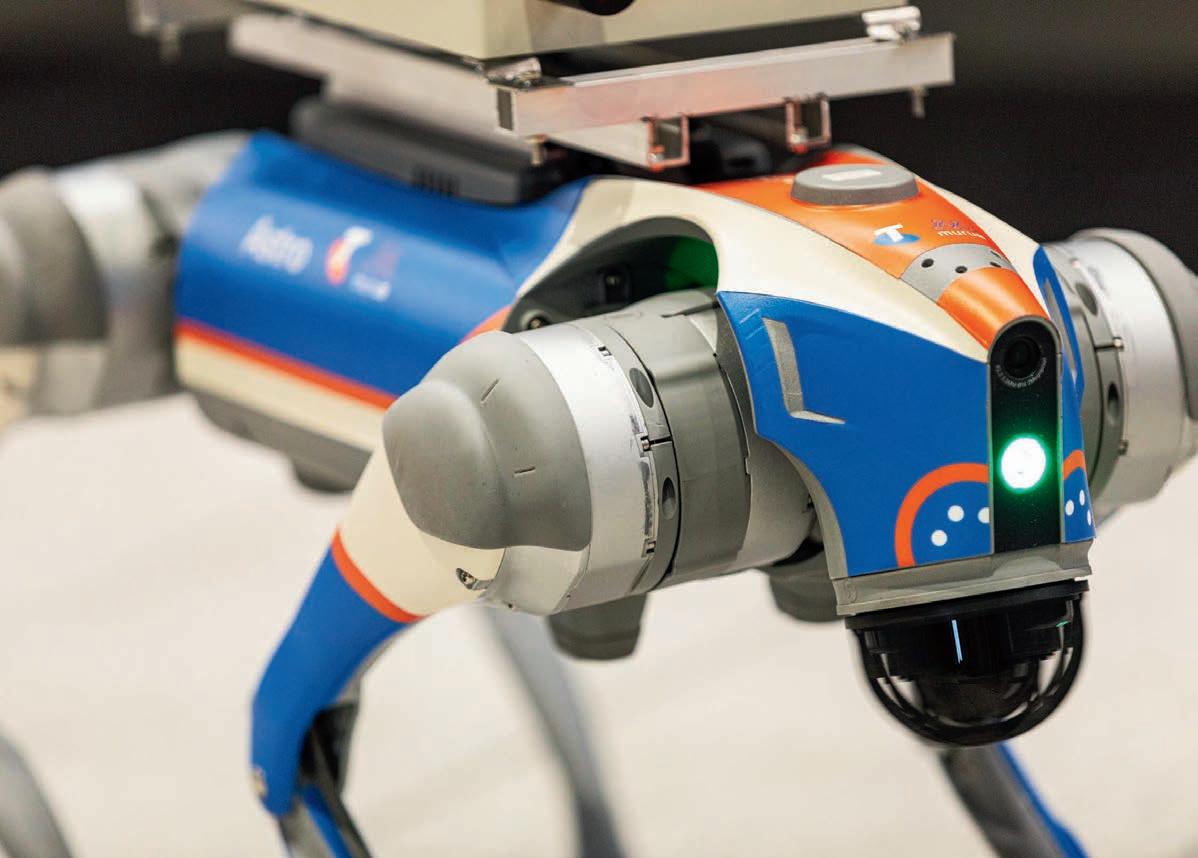
fronts in terms of what the possibilities are, and how we can expand this going forward.
“We see enormous potential for solutions like this to transform how the industry approaches confined-space safety. This trial is an important first step in a journey towards a scalable IoTenabled solution.”
John Holland is exploring the creation of the product, with broader rollout potential across infrastructure projects if the operational and commercial models align.
Telstra Enterprise CCO Peggy Renders says Astro is more than a robot dog – it’s a frontline safety partner.
“I’m really excited about this project because it’s an Australian innovation, a collaboration between John Holland, Telstra and Ericom, where we solve real world problems with new technologies,” Renders says.
“This is not about technology. This is about people. This is about us making sure that every worker can go home safely, and about using our technology to have a real impact in the communities we live in.
“By bringing together Telstra’s 5G connectivity, IoT, robotics and cloud integration capabilities, we’re addressing real-world safety challenges while maintaining seamless on-site operations.”
Renders says that the John Holland trial acts as a proof-of-concept that gives a strong foundation for future development and potential industry-wide adoption.
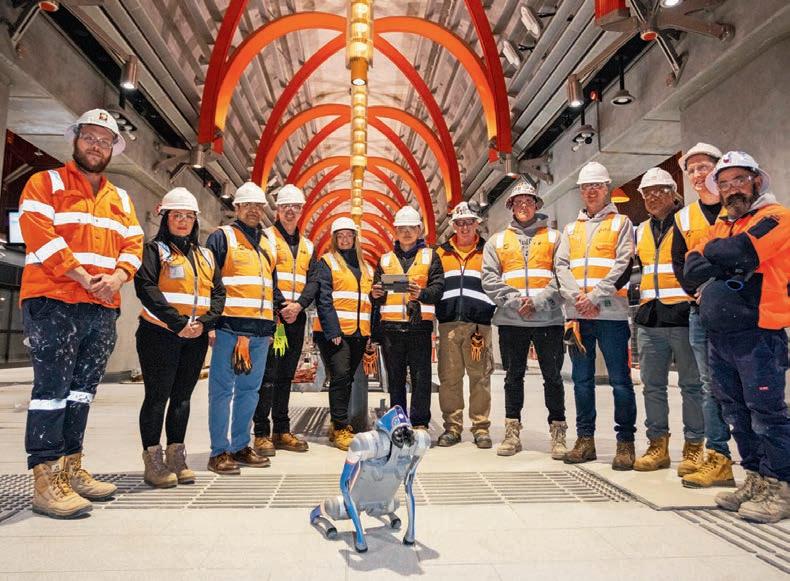
“It also highlights that with the right connectivity and collaboration we can continue to solve old problems in new ways,” she adds.
Renders also says that this forms a use case for Telstra’s 5G slicing capability, which can create multiple virtual networks on existing network infrastructure, or a ‘slice’ of the 5G network.
“With 5G slicing, customers can get access to the specific network performance they
need for a particular use case,” she says.
“For example, a slice optimised for video surveillance at a construction site or an ultrareliable network slice for a transport network. It means committed performance levels, which helps customers manage limiting factors like network congestion.”
For more info, visit: johnholland.com.au
Hastings
Deering has celebrated the achievements of its apprentices, recognising the outstanding skills and dedication of the next generation of tradespeople.
Now in their 48th year, Hastings Deering’s annual Apprentice of the Year awards highlight the dealer’s commitment to training and developing skilled tradespeople to support the resource and construction industries.
A four-day competition, held at Hastings Deering’s learning centre in Brisbane, tested nine finalists on skills, ranging from electronic fault finding to public speaking.
The 2025 finalists were Jamie Kirkwood (Alice Springs), Alex Hunt (Brisbane), Isaac Kiely (Darwin), Lachlan O’Grady (Rockhampton), Hayden Smith (Toowoomba), Ella Davis (Mackay), and Saiam Sai (Papua New Guinea).
Alex was judged the best apprentice and will represent Hastings Deering at Caterpillar’s ‘Dealer Top Apprentice’ competition in Melbourne in March, where he will compete
against apprentices from Australia, New Zealand, and Indonesia.
“I enjoyed meeting contestants from other branches in Brisbane and seeing their skills and strengths,” Alex said. “It was a tight competition with some tricky diagnostic faults, so it was an exciting event. I’m looking forward to representing Hastings Deering in Melbourne.”
Hastings Deering Managing Director Mark Scott said investing in the workforce of the future had never been more important.
“As we navigate the unique challenges of the labour market, we remain committed to strengthening skills development — particularly in trade training, apprenticeships, and STEM disciplines — and to evolving our trade and technical training to meet the future of work,” he said.
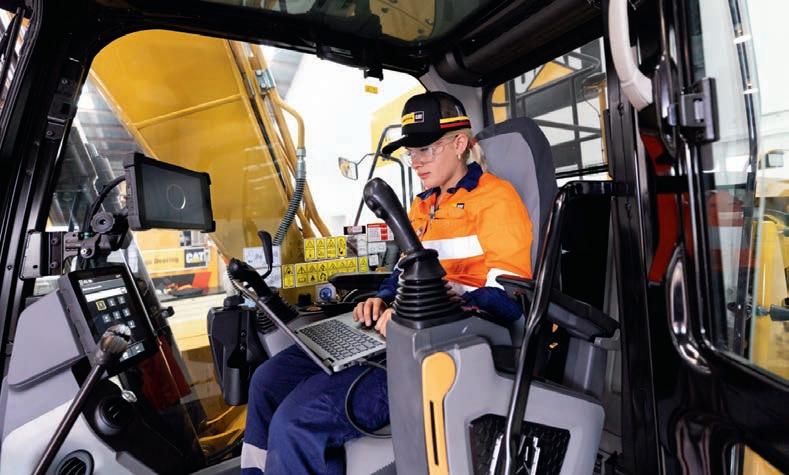
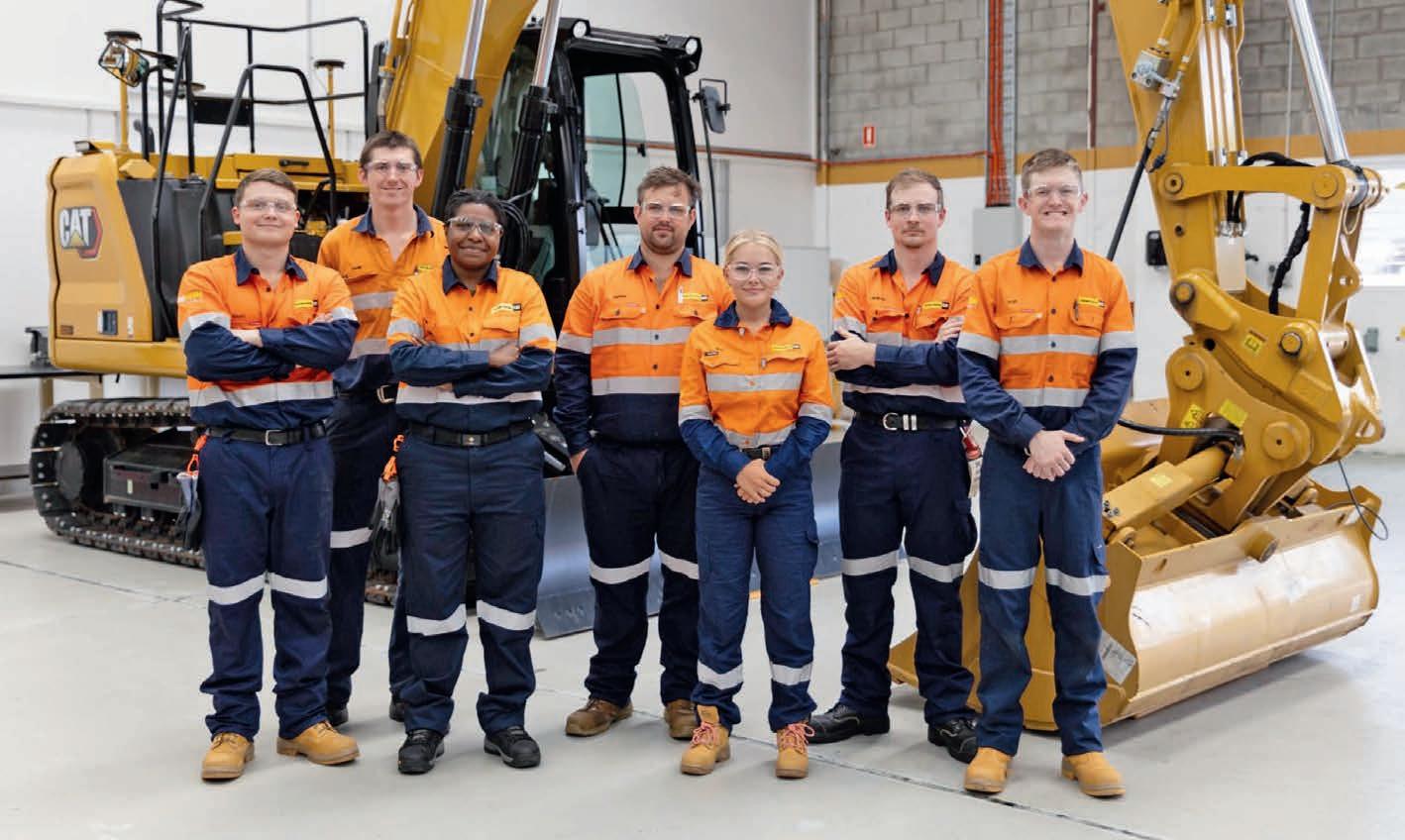

“This year we have almost 200 apprentices across our dealerships, and in 2026, we will welcome 31 new apprentices to join our ranks, showing our commitment to creating new jobs in our resources and construction sectors.”
Hastings Deering also recognised its learning and capability team for its programs, which have won multiple Queensland and Northern Territory training awards.
“For almost five decades, we’ve trained skilled tradespeople, giving us the confidence to keep building skills and capabilities through our technical trade programs, as well as our leadership and graduate pathways,” Mark said. “Developing top talent for the resources and construction sectors remains a clear priority for us into 2026.”
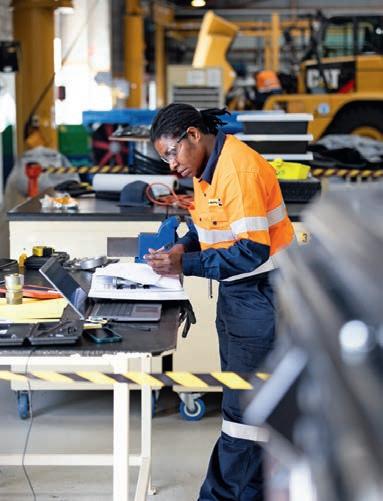




Beyond this page lies an essential resource for Australians attending CONEXPO-CON/AGG 2026, one of the world’s largest construction trade shows, taking place 3-7 March 2026 in Las Vegas, United States. Plan your visit around this comprehensive listing of companies exhibiting at CONEXPO with confirmed distribution in Australia.































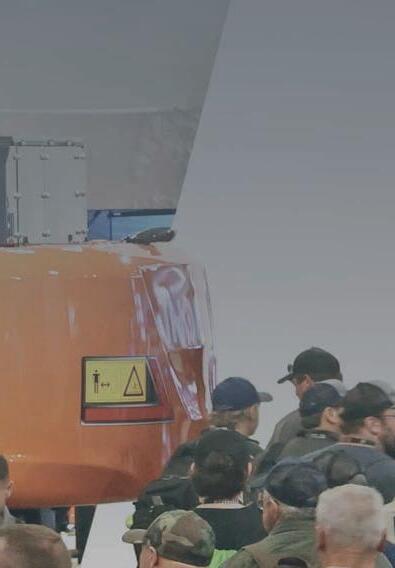











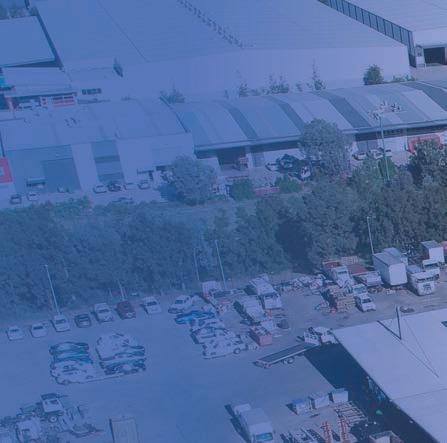
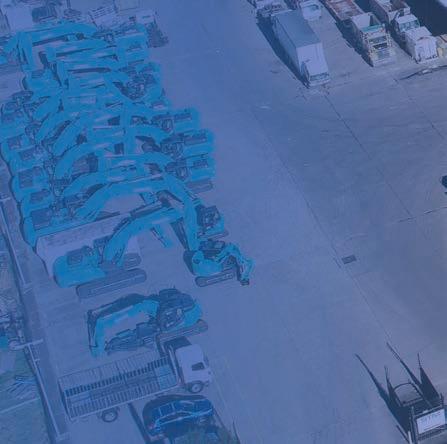
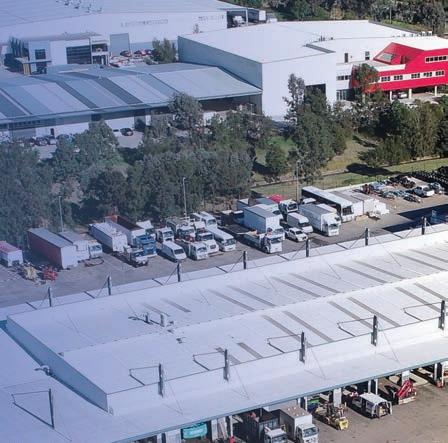
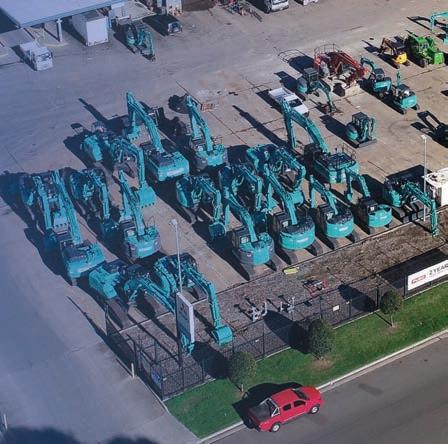
For almost half a century, STM has made it possible for businesses across NSW to power up – supplying and servicing quality trucks and machinery to meet the demands of any job.
Starting out in a single shed in the 1970s, we know what it takes to build a business – and are passionate about helping you grow yours. Today, our family owned and operated enterprise is proud to offer a multi-site, modern service, with a team of more than 120. We care about giving every customer the best experience possible – with a wide range of trusted brands, flexible finance, spare parts, repairs and personal service.
We may have come a long way from that shed, but our family commitment to quality remains. Whatever your size, whatever your budget, STM is your one stop shop – with everything to keep your business moving.
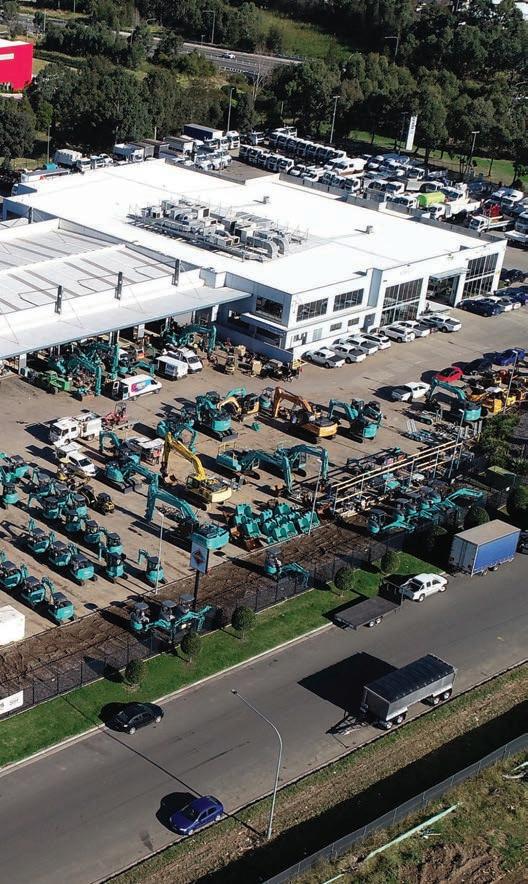
For Eric Kaukiainen, a lifetime in earthmoving has also been a career spent in Cat® cabs — starting with his father in the 1970s through to running his own business for more than 30 years.
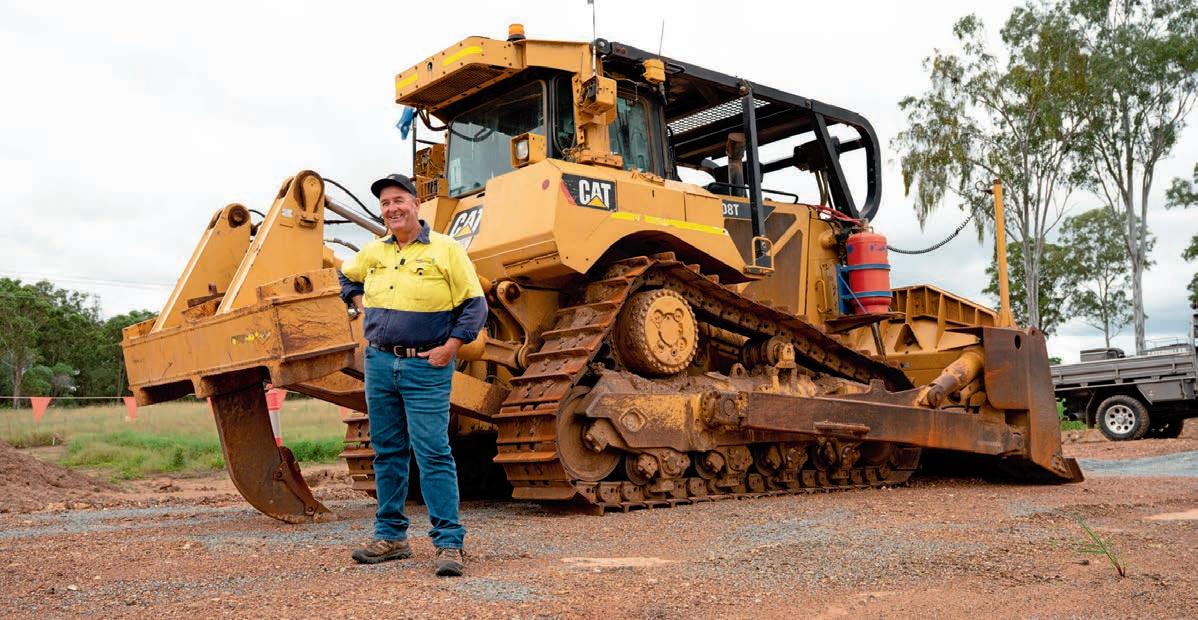

Kaukiainen Earthmoving & Plant Hire
State: QLD
Local dealer: Hastings Deering
Years in business: 34
With decades of driving, owning, and repairing Caterpillar® machinery under his belt, Eric ‘Kauki’ Kaukiainen is considered a legend by those who have worked with him in Queensland’s construction industry.
Growing up in the NSW Riverina town of Tumut, Kauki said he was “on and around” Caterpillar machinery as soon as he could move. With his father Leo working as a dozer operator on the Snowy Mountains Hydro Scheme, Kauki was fascinated with the machinery from as early as he could remember.
“I started work with my father when I was about three or four years old,” he said. “I learned a lot o my father about driving the equipment, and when I left school at 14, I started operating machines myself.”
The first machine he drove was a Cat D4D dozer in the late 1970s — the first of many Cat dozers that have passed through his hands in more than 45 years of being an operator.
In 1992, Kauki and his wife started their own earthmoving business — Kaukiainen Earthmoving & Plant Hire, based in the Queensland locality of Pomona.
“I always wanted to have my own business, and my wife was very supportive. She did all the books and I did the outside stu ,” he said.
“I love Cat machinery and still do. The first machine we bought was a Cat D7G dozer — we bought it o a bloke I was working for at the time.”
After building his first dam, aged 14, in north Brisbane, Kauki said he’s now become known for specialising in dams, alongside road building and subdivisions “anywhere from Brisbane to Gladstone”.
“I have a good reputation for building dams, but we cover anything related to earthmoving,” he said.
“I’m 60 now so I’m starting to take it a little bit easier. I have a young grandson who’s two years old, so I like to spend time with him.”
favourite
Now that he’s easing back, Kauki is currently running just two Cat dozers — a D6 and a D8 — but a variety of models have passed through his hands over the years. Three that stood out were the Cat D7H tractor bulldozer, Cat D8R Series II tractor, and a Cat D8T crawler dozer, which he loved for their reliability.

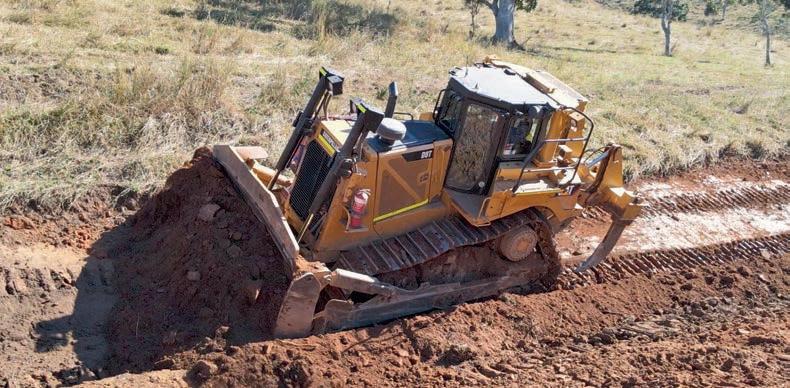
“If a tractor ever made you, it would have been the D7H tractor,” he said.
“It was an incredible machine. We rebuilt it at 13,000 hours, and then again at 28,000 hours,
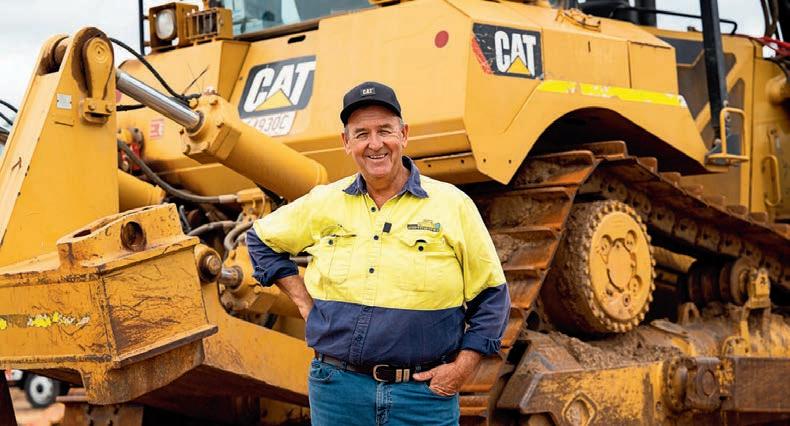
open, whether it was hot or freezing cold,” he said.
“Today, we sit in tractors that are climatecontrolled, everything’s electric and they’re easy to operate.
“GPS is great — it can turn a bloke using a machine into an acceptable operator, but for someone like myself, who has 40 years of experience, give me a machine with GPS and I can make that thing talk. I’m pretty proud of my success over the years.”
Kauki said he continues to enjoy the challenges of working out the best way to undertake a project, as well as appreciating the final result.

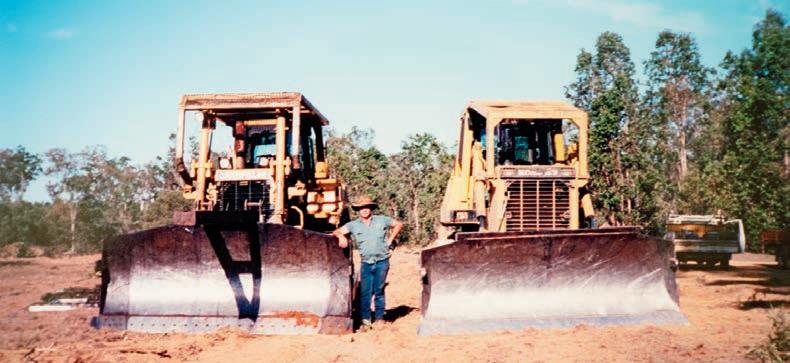
and sold it with 33,000 hours on it. It never gave us much trouble in the bush.”
Kauki said his family had dealt with local Caterpillar dealer Hastings Deering for as long as he could remember.
“When Dad was working for people, if their machine ever broke down, he would fix it himself,” he said.
“He’d go over to Hastings Deering and, even if I was in school, I’d take a day o and go with him, because I just loved it. They had a beautiful canteen over there — it was like going over to the other side of the world and eating amazing food. So that’s when it started, back in the late 60s.
“When I started working and there were problems with the Cat machines, I would go to Hastings Deering. I’ve spent a lot of time there over the years.
“They’re just so good to deal with, always having the parts there, and people you could talk to.
“Nothing is too much trouble for them. I’ve developed friendships with people there, I like the parts availability, and their support is great.
“Caterpillar has remained my go-to brand for reliability, ease of operation, and because they are easy to fix.
“I did own a couple of dozers from another brand at one time, but they were terrible to work on from a mechanical point of view.
“The way Caterpillar designs things means it’s a lot easier to replace things when they break.”
Kauki said there had been some welcome additions to the models over the years, such as enclosed cabins with heating and air-con amenities.
“When my father was working on the Snowy Mountains scheme, he was driving an old D8 up the back of the Blowering Dam, out in the
“I like building a dam for someone and seeing it full of water, making sure it doesn’t leak,” he said.
“I’m not saying I haven’t built a leaky dam — I haven’t seen an operator alive who hasn’t — but to go back and see that job finished and completed, with the grass growing and the dam full of water, or people driving down a road that you’ve done, is a great feeling.”
As to what the future holds, Kauki’s hoping his young grandson will be picking up the love of machinery the way he did from his father and continue the legacy. For now, though, he’s still getting into his dozers and “earning his beer”.
“I might retire, but I’ll always be in the industry,” he said.
“I’m one of them blokes that’s worked all his life, and I’ll continue to do so. I’ll never stop, because of the mateship. It’s great to get on a job and at the end of the day have a drink with a couple of the boys.”
For more information, visit www.hastingsdeering.com.au
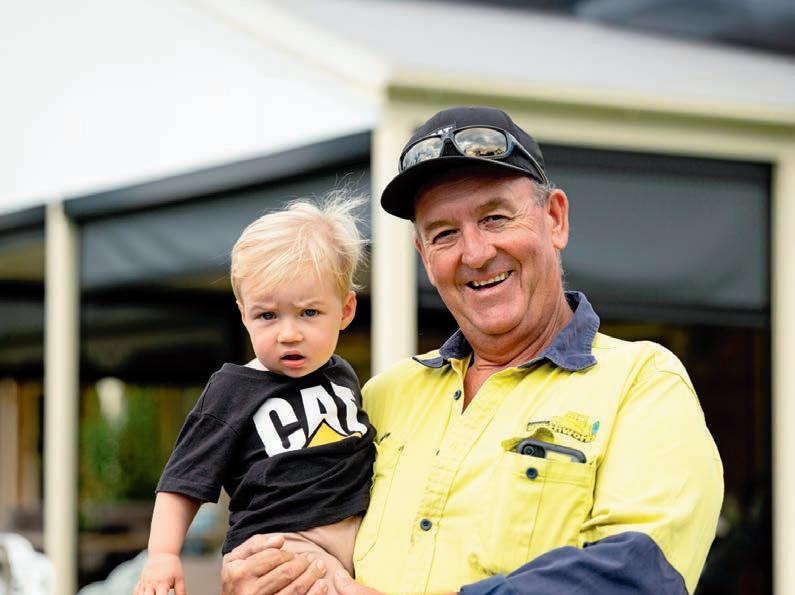
Across the Tasman, one family operation has expanded its presence across a growing range of earthmoving and civil projects, backed by practical knowledge, strong local ties, and smart equipment choices.
Maungatua Contracting and Summit Civil
Country: New Zealand
Local dealer: Terra Cat
Years in business: 66 years and 6 years respectively
Based in Wanaka in the Central Otago area on New Zealand’s South Island, twins Kane and Blair Duncan are continuing to build their family’s earthmoving legacy through their businesses, Maungatua Contracting and Summit Civil.
For the Duncans, earthmoving runs in the blood, with both sides of the family tree having worked in construction and associated industries across the Otago region.
With Kane and Blair’s paternal grandfather Murray Duncan having set up Maungatua Contracting in 1960, the business was taken over by their father Robert. After his passing in 2020, the reins of Maungatua Contracting transferred to Robert’s wife Lynette and son Kane, while Blair set up his own business, Summit Civil.
For both, working on civil construction and road building in and around Wanaka, Cat machinery is the brand of choice to help them tackle a wide range of tasks – often in challenging mountainous terrain.
The Duncan family’s Otago development work ranged from digging coal to building hydro
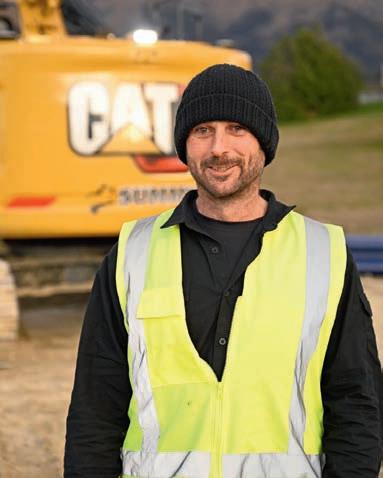

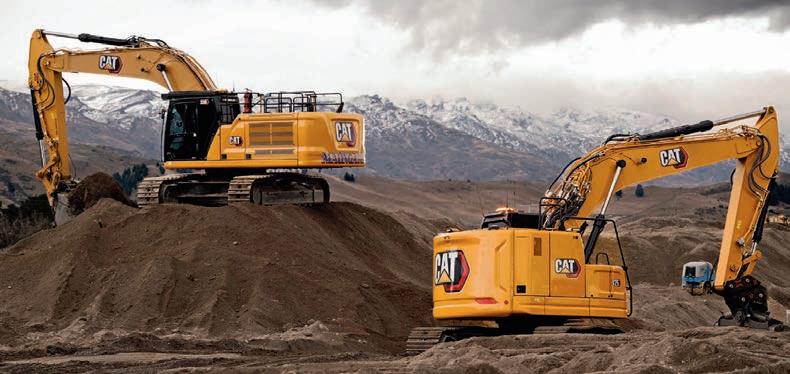

dams and mountain passes.
On the maternal side, Kane and Blair’s great grandfather Nick Harliwich founded Harliwich Carrying Co in Roxburgh in 1906, which was continued by his son Ken Harliwich –Lynette’s father.
Harliwich Carrying was involved in mining coal in Roxburgh – carting it down to Beaumont, before the building of hydroelectric dams in the area prompted the move into civil earthmoving.
“When they built Roxburgh Hydro Dam, that set up my grandad, Ken, with a lot of machinery,” Blair said.
“In 1949, when Ken was 17 years old, he got his first bulldozer, a new Cat D4R, and the family still has this machine.”
On the paternal side, Kane and Blair’s grandfather Murray Duncan set up Maungatua Contracting in 1960, originally focusing on crushing, quarrying and gravel supply. After their father, Robert, qualified as a civil engineer in the 1970s, Maungatua made
the move into civil works, with Robert and his brothers working on building the Lindis Pass between 1976 and 1981.
Once Kane and his brother Blair were old enough, they too worked at the family business during school holidays – helping out with manual labour on the site from 14 years old.
After gaining their Diploma of Civil Engineering at Otago Polytechnic, the brothers went on to work for Fulton Hogan and Multiplex before eventually coming back to the family business.
Maungatua Contracting now employs 22 sta and covers a range of civil construction works.
“We’ve got two drainage crews that do wastewater and stormwater gravity lines,” Kane said.
“We also do bulk works and cut-out, as well as road building and maintenance.
“We have a Kenworth truck to transport bulk waste and aggregate for the business. Then we’ve got a ski field crew who do snow clearing and maintenance grading over the winter months. In summer we do trail work and road maintenance.”
Cat machinery has long formed the bulk of Maungatua’s fleet – supplied by New Zealand dealer Terra Cat and its predecessor Cat dealer Gough, Gough & Hamer.
“My granddad, Murray, had a lot of RD4s and D2s back in the day,” Kane said.

“Then they bought a few D5s and D7s. My father bought one of the first excavators that came out – a 225. We also had a 951 track loader, which he did a lot of work with as well.”
Robert bought one old Cat machine, a 1958 12C grader, from a Ministry of Works auction, and he spent three days driving it back home. The machine is still in the fleet, having been restored in 2018.
“A couple of my uncles enjoy starting that up and taking it for a drive,” Kane said.
“It was used for snow clearing back in the 90s, up to when my father bought a Cat 12G.
“We’ve also got an old 951 track loader that’s still operational.”
Currently the Maungatua fleet is made up of 24 Cat machines. The 11-strong excavator line-up includes two 302.7 mini excavators, two 305s, a 306, a 315, three 325s, a 330 and a 336, in addition to two 730 dump trucks, a 299D2 skid steer, an 815 compactor, two 938 loaders and two 12M graders.
When asked if he’s had any favourite Cat models over the years, Kane said the D Series excavators were a favourite with his older operators.
“We’ve had a few 320D LRR excavators and they were awesome machines to put in the rugged terrain around here,” he said.
“They were just quite stable, long track machines with plenty of power.”
Summit Civil undertakes a wide variety of civil works in and around Wanaka, from clearing snow on ski resorts, to building dams and digging sewers.
“We’re doing earthworks at the moment – a 48 million litre dam for ski resort Cardrona, which is about 58,000 cubic metres of solid rock,” Blair said.
“We’re doing a 93-lot subdivision in Hawea – everything from earthworks, drainage services and grading through to laying the topsoil and planting the trees and grass. The only thing I don’t do myself is the concrete and blacktop.
“We do a lot of smaller stu as well – if someone rings up wanting a water connection or a sewer connection, we’ll go and do that and do a bit of council work, mainly the Three Waters jobs.”
Blair said he often goes for the work that falls into the ‘too hard’ basket for other contractors.
“It’s the challenge, but it’s also down to risk and reward. You might spend a week doing what everyone else does or you can make the same money in one day by doing something more specialised,” he said.
Blair said his fleet has 14 Cat machines that run from a couple of older machines through to Next Gen excavators.
“I’ve got a Cat 143H grader, which is probably my favourite machine, and a Cat 320E, which is an older digger,” he said.
“There’s also a 30-tonne Cat 328D, which is solely for drainage digging, as well as 305, 313, 315 and 325 excavators. I’ve got a Cat 140 grader on Cardrona – that pretty much lives up there all year round, doing snow clearing in winter, and road maintenance in summer –and I’ve got 950K and 962M wheel loaders.”
Both Kane and Blair said that older operators may still prefer the hydraulic controls of past models, but advancements in technology such as Trimble’s machine control has been a positive for both businesses.
“Maungatua Contracting was one of the first customers that bought a Cat D7 with a
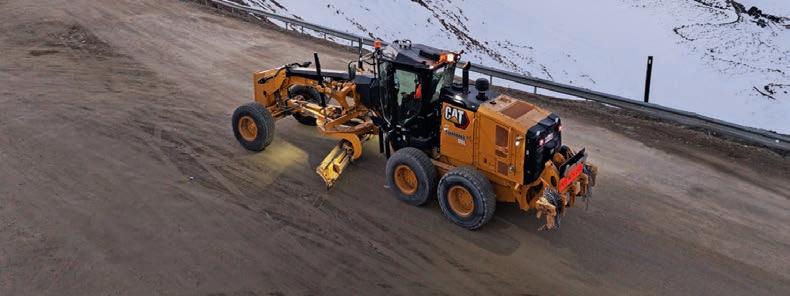

Trimble machine control kit,” Kane said.
“This made jobs easier, especially subdivision roads and earthworks, just knowing you had the 3D design in there.
“We’ve got 13 machines with GPS on, and every operator is always keen to make sure it’s working right and calibrated in, so they’re only trimming things out once and know where they’re working.
“We also use the VisionLink monitoring platform on the website for getting data on utilisation hours and job boundaries and geofences, and it also means that service reps get sent out when it’s time for a service.”
Blair said that he put GPS onto his Cat 305 Next Gen excavator, which he said – along with the increased precision – could be a draw for younger operators.
“I was right on the cusp of operating machinery without machine control and then seeing it come in,” he said.
“There is an art to operating machinery and construction is an industry that is undervalued. Having the machine control come in is appealing to a lot of the younger kids, because they have a video game background, and they like their touchscreens.”
Kane says that the strong reputation and longevity of Cat machinery is the reason why he and his brother continue to buy the brand, and expand on the legacy of their family’s earthmoving history.
With strong resale value and its proven ability to take on demanding work for

decades, Kane said the support of Terra Cat across the region means Cat is always a great choice when deciding on his next purchase.
“We’ve worked with some good guys there that have been there for over 30 years now,” he said.
“Their support has always been there. They’ll catch up with us every couple of weeks, check what we’re looking for and let us know what’s available.
“Caterpillar always leads the market with technology and servicing. It also lasts – we’ve had a few machines that have gone over 10,000 hours and they still go just as good as a new machine.”
Blair said Caterpillar was “the Rolls Royce of machinery”.
“They o er a premium product and Dad always had Cats. I’ve mostly only driven Cats my whole life,” he said.
As for his own fleet, Blair already has plans in place for adding more Cats to the business.
“I’ll get a 335 excavator and a 150 grader is due to arrive in April, which is a 3D mastless machine,” he said.
“After that, I’ll probably get a new 275 skid steer as well.”
For more info on the Caterpillar range available through Terra Cat, visit: www. terracat.co.nz
© 2026 Caterpillar. All Rights Reserved. CAT, CATERPILLAR, LET’S DO THE WORK, their respective logos, “Caterpillar Corporate Yellow”, the “Power Edge” and Cat “Modern Hex” trade dress as well as corporate and product identity used herein, are trademarks of Caterpillar and may not be used without permission.
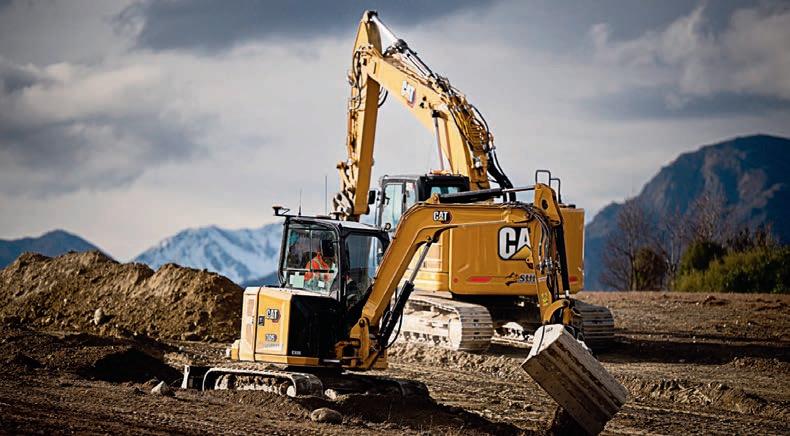
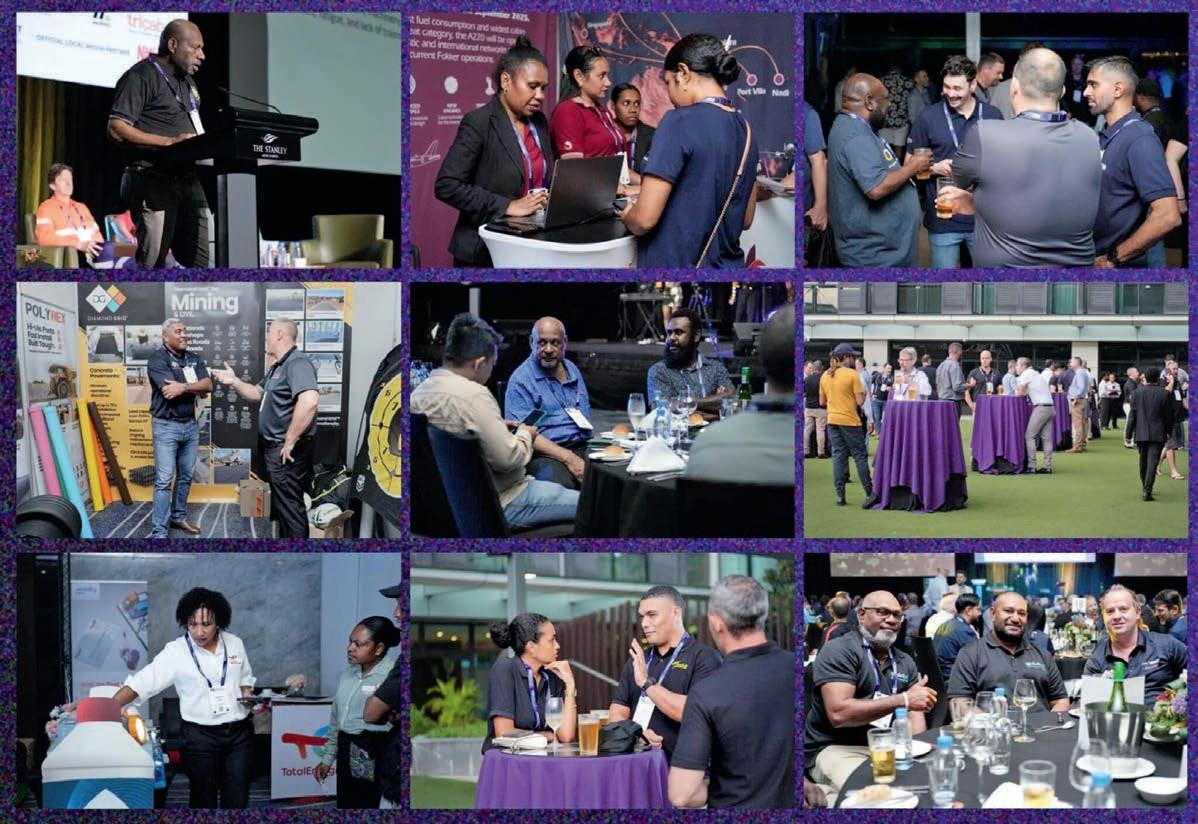

Early Bird Tickets are o icially on sale for the PNG Industrial and Mining Resources Exhibition and Conference, Papua New Guinea’s premier mining and resources exhibition.
Set to take place in Port Moresby from July 1-2, 2026, the PNG Expo brings together businesses, government representatives and industry leaders from across Papua New Guinea and the wider region for three days of connection, collaboration, and innovation.
PNG Expo 2026 will feature an exhibition floor showcasing the latest products, services, and technologies supporting the country’s mining sector.
Attendees will have access to decision makers, suppliers, and service providers, alongside structured networking opportunities designed to foster connections and business partnerships.
Prime Creative Media Show Director – Mining Events, Rebecca Todesco, said the Expo is more than an industry gathering, but an event focused on supporting sustainable growth and collaboration across Papua New Guinea.
“PNG Expo is about bringing people together face to face,” she said.

“When industry, government and communities meet in one place, it creates opportunities for growth, collaboration, and long-term success in the mining sector and across the country.”
Rebecca said that with tickets now on sale, the event is inviting participants from across the industry to join the conversations shaping the mining industry’s future.
“PNG Expo welcomes industry leaders, government representatives and local
businesses to come together, share insights, and be part of discussions that will help guide the future of mining in PNG,” she said.
As mining and resource projects continue to expand nationwide, PNG Expo provides a timely platform for organisations to connect, exchange knowledge, and build partnerships that support safe, sustainable, and resilient operations.
The event is expected to strengthen collaboration, encourage local participation, and support the ongoing development of Papua New Guinea’s resources industry.
PNG Expo 2026 is projected to attract a strong turnout from across the mining sector, reinforcing its status as a must-attend event for anyone involved in or supporting the resources division in Papua New Guinea.
Early bird tickets are available now, and they won’t last long! Get your tickets while the o er lasts: pngexpo.com/attend

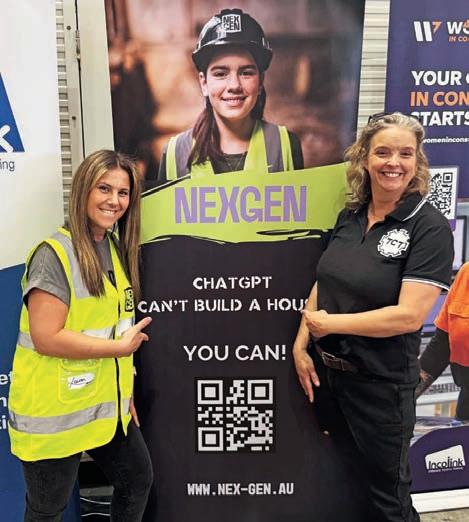

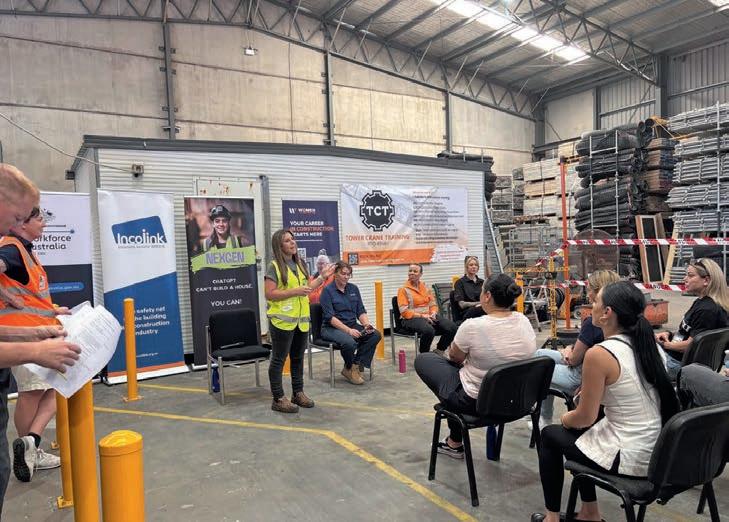
A recent event in Sydney has shown that when it comes to crane operation and lifting tasks, women are just as capable as their male counterparts.

Lauren Fahey Executive Director NexGen
When you ask a group of women what comes to mind when they think of cranes, hoists, or dogging, you usually get answers like these:
1. “No idea.”
2. “Sounds dangerous.”
3. “Isn’t that a job for men?”
So, we decided to change that.
Recently, NexGen teamed up with Workforce Australia’s Local Jobs Program (Sydney South West) and Incolink’s Women in Construction Program, backed by Tower Crane Training, to host a Women in Cranes and Lifting day at Campbelltown.
The hands-on, boots-on event was designed to shine the spotlight on a side of construction too few women ever see.
Participants explored dogging signals, hoists, crane operations, and the kind of teamwork and precision needed when working to literally lift the skyline.
Women already in the industry were on hand to help with the training, and the purpose was clear: show attendees the skills, the opportunity, and that they belonged there.
For many, it was the first time they could see themselves in high-vis with hard hats on
and standing in front of the machinery, not as spectators but as operators.
That kind of exposure matters more than we think: you can’t imagine yourself in a job if you’ve never seen someone who looks like you doing it.
Nearly half of the event was filmed by A Current A air, which featured Incolink Career Advisor for Women in Construction Jessica Holz and Hoist Operator Sallie Oxborough, one of the women on site and on the panel. In her interview with A Current A air, Holz said crane and hoist operators can earn up to $150,000 a year.
Speaking to attendees on the day, Sallie

said, “You’ve gotta get out there, you’ve gotta show them you’re keen.”
That hit harder than any lecture could, because it’s not just a job, it’s a pathway: a pathway out of unemployment and into a skilled trade with real earning potential.
Cranes and lifts aren’t “just men’s work”. They’re big jobs, smart jobs, skilled jobs, jobs where women can excel.
We’re not only introducing women to new career options. We’re shifting culture. We’re helping fill critical labour shortages with talent that’s been ignored for too long. We’re building the next generation of the construction industry.
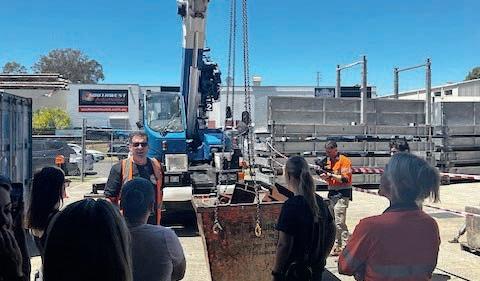
The success of NAWIC owes a great deal to the people who give up their time and e ort to support the organisation.

Cathryn Greville Chief Executive O icer National Association of Women in Construction
It’s exciting to enter into 2026 feeling energised after a transformational year building on NAWIC’s legacy, during which we celebrated our milestone 30th anniversary.
Our organisation remains volunteer-led, and this sets us apart in the sector. It gives us boots-on-the-ground insights and local knowledge on women’s experiences and issues a ecting construction across the country. Our volunteers, including our Chapter leaders and Board members, contribute a large amount of time and energy to help us deliver our work.
NAWIC’s Organisational Strategy 2025–2028 outlines our focus as we work to achieve an equitable construction industry for all that is fair, inclusive, and respectful, and where everyone can thrive. We know that culture change is integral to achieving gender equity. Last year, we amplified our voices in advocacy, secured record funding for culture change initiatives, engaged CEOs in our mission, opened opportunities for collaboration across the sector, were recognised for our volunteering and industry
leadership achievements, and grew our membership, sponsorship, and support base.
It was inspiring to attend Awards for Excellence events in South Australia, Queensland, New South Wales, the Australian Capital Territory, and Tasmania in November last year, rounding out a total of nine awards across the country. Our Awards for Excellence events celebrate the achievements of the women, businesses, and allies who are shaping the future of construction.
I was delighted to be joined by NAWIC Australia founder Paula Gerber as honoured guest and keynote speaker at some of these award events.
Congratulations to our winners, and thank you to our volunteers for organising these celebrations. It was a pleasure to meet with our members while I was in these jurisdictions and discuss the positive di erence they are making.
Visit our website to learn more about the winners of our Awards for Excellence, read our annual report, get the latest news and




campaign resources, and sign up to become a member. There is still time to join our network of more than 16,000 members and 345 organisational members, or renew your membership, for the 2025-2026 financial year.
I look forward to sharing more about our progress in the year ahead. This will include updates on our Allyship in Action: Transforming Culture to Attract and Retain Women Project, which attracted $5 million in Federal Government funding through the Building Women’s Careers (BWC) Program, and our Ending Gender Harassment and Building Safer Workplaces Campaign, which was launched in October last year.
It is empowering to work with such committed sta , volunteers, members, sponsors, and partners across the country as we collaboratively drive gender equity through culture change.
Learn more about our campaigns, projects and resources, and how to become a member, at www.nawic.com.au
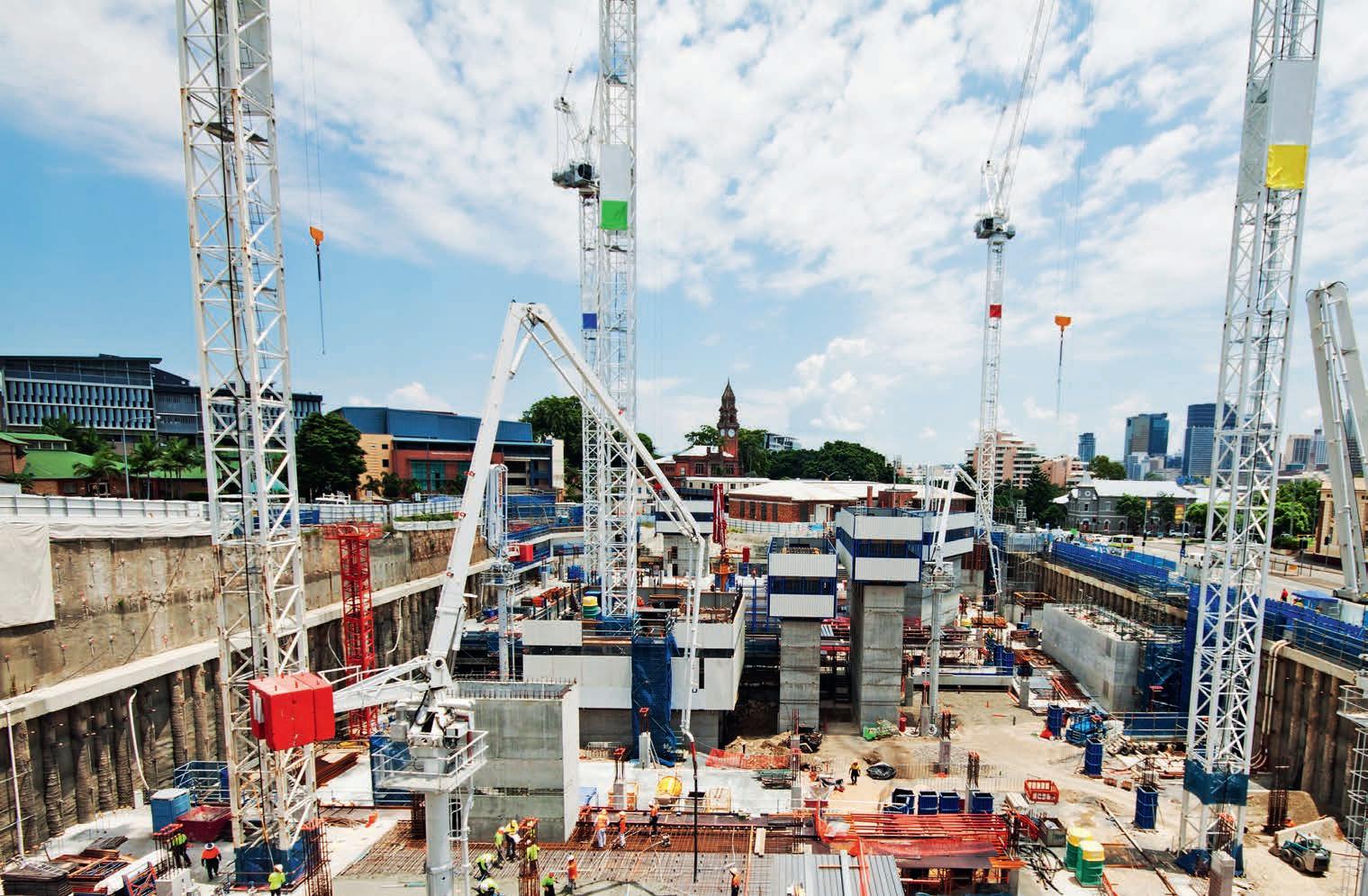
Improving outcomes in some things is as simple as practice. To get better at push-ups, you can devote time each day to doing some, while trying to increase the number you do each time. Losing weight might be a matter of eating less and moving more.
But the more complicated a pursuit, the more elements you have to control to get something right. Being a great footballer requires skills, fitness, and a healthy diet. For a successful outcome, you need all the necessary elements.
While Queensland needs new infrastructure as a priority, putting that in place is no simple task.
Damian Long Chief Executive O icer Civil Contractors Federation Queensland
Queensland is growing at a rapid rate and needs new infrastructure to keep up. But achieving this is more complex than becoming a great footballer.
Building a large-scale infrastructure project requires hundreds of healthy, skilled, welltrained people, oversight of an extensive compliance burden, and the sourcing and processing of a diverse set of raw materials, all of which are not available in the same place, while meeting cost and time constraints. It’s a big, complex job to say the least.
As we grapple with these challenges in the civil construction sector, it’s important to remember that no one element of the factors a ecting our projects is going to make the di erence.
It is not just a matter of getting your enterprise agreement right or getting the right people on the job. For the state to build the infrastructure we are going to need over the next 20 years, every part of the civil construction sector has to have the settings just right.
In terms of raw materials, we need a secure
Building large-scale infrastructure requires hundreds of well-trained people working on projects that meet cost and time constraints.
Image: pawel/ stock.adobe.com
supply of quarry products, and facilities to process them and other important minerals. Securing this supply through sensible approval processes and exploration is a must for government. I am yet to see a bridge or road built out of thin air.
At the workplace relations level, it is critical to ensure that productivity is at the core of everything we do. Productivity drives wage increases, higher profits, and value for taxpayers. It is a win-win scenario.
Training and skills, and the supply of labour with training and skills, remain a key focus. Civil construction is labour-intensive and capitalintensive. You need lots of people to build big things. I am yet to see ChatGPT out on a job site. Making sure we have quality people who can do the on-site work is critical.
Procurement must also align with the scale of the contractors in the industry to ensure we get the maximum bang for government dollar.
To build everything we need, contractors from Tier 1 level, right down to individuals with an ABN and an earthmover, need to be putting their shoulders to the wheel. This means breaking projects up into sensible sizes, so the maximum number of contractors can tender for work. Only by using every bit of capacity in the sector can we succeed.
These key issues, along with others that help move the needle, will be our focus in 2026. As the voice of industry representing its width and depth, our top priority will be working to ensure contractors have the best possible chance to thrive in coming years.
In
a fast-moving world, information travels quickly, but accuracy doesn’t always keep pace. It’s vital that facts are checked.

Ann Callaghan Manager Allied Earthmovers Association
In business, what you say and do must be based on facts, not assumptions or hearsay. You may take on board what others tell you, but are you certain it’s correct before you pass that information on?
Fact-checking isn’t about distrust — it’s about responsibility.
Before using any information, ensure it comes from a trusted source. And as importantly, don’t act on anything until it has been confirmed. Incorrect information can be costly, damaging, and sometimes irreversible.
At best, being misinformed is an annoyance — discovering later that what you were told was wrong. At worst, it can cause financial losses or unnecessary anguish and anxiety. In more serious cases, incorrect information can have grave consequences, including injury or even loss of life.
For earthmoving owner-operators, the stakes are high. On site, you’re often given information critical to carrying out a job safely and e iciently.
But are the measurements correct? Are there underground services that need to be identified? Have you heard a rumour that additional compliance documentation is required?
Sorting fact from fiction can be challenging, especially when you’re working independently. That’s where having a “brains trust” can save time, money, and a great deal of stress.
At Allied Earthmovers Association, we may not have all the answers, but we know how to find the right person who does. Our role is to help owner-operators cut through the noise, verify information, and move forward with confidence. If you’re an owner-operator and could use some support, make fact-checking part of your business strategy.
Give us a call. Membership is a ordable and can be recouped through insurance savings, guidance, and the peace of mind it provides.
And that’s a fact.
Our most recent meeting was a success, generously hosted by Mark and the team at STM Trucks and Machinery.
Members were welcomed into the impressive
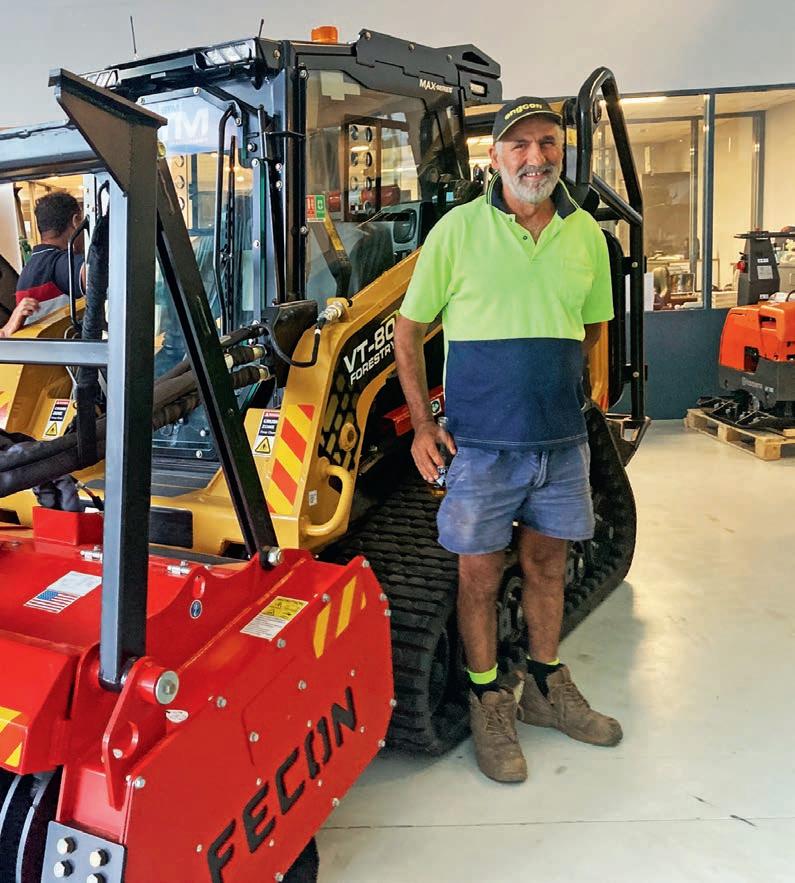
STM facility and treated to warm hospitality from start to finish. It was good to meet up with the team, and especially Peter Moore, who has been fondly known to our members for many years.
Mark addressed the group with an exciting update: STM is now an o icial New Holland dealer, further expanding its o erings while continuing to support the Kobelco and ASV equipment lines and a variety of other makes. He also announced the addition of the Hydrema range of tippers, a complement to their machinery stable.
His presentation sparked lively discussion on current industry issues, with members sharing insights, experiences, and predictions about what's ahead for the sector.
If you are an earthmoving owner-operator and would like to know more facts, give us a call on 0416 110 024 or email o ice@goldenbucket.com.au.
Allied Earthmovers Association is run BY the members FOR the members.