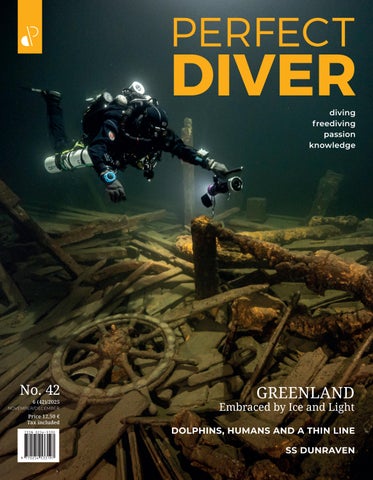
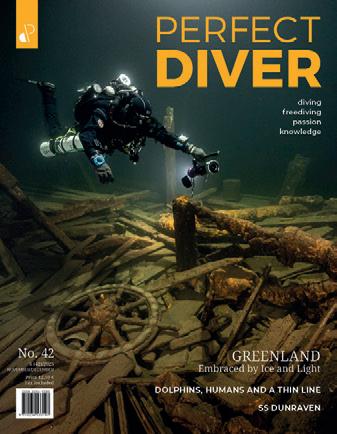
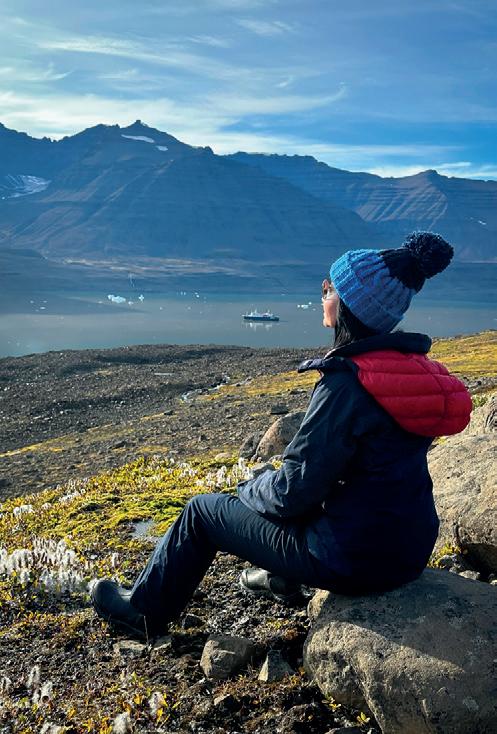
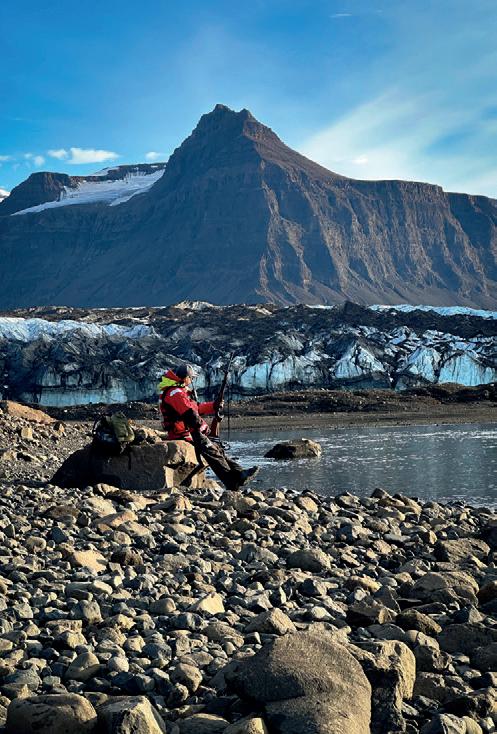
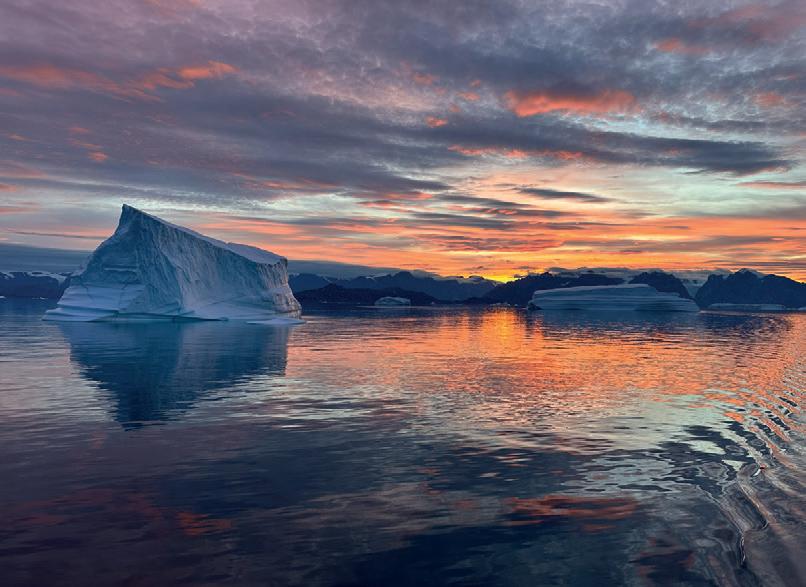
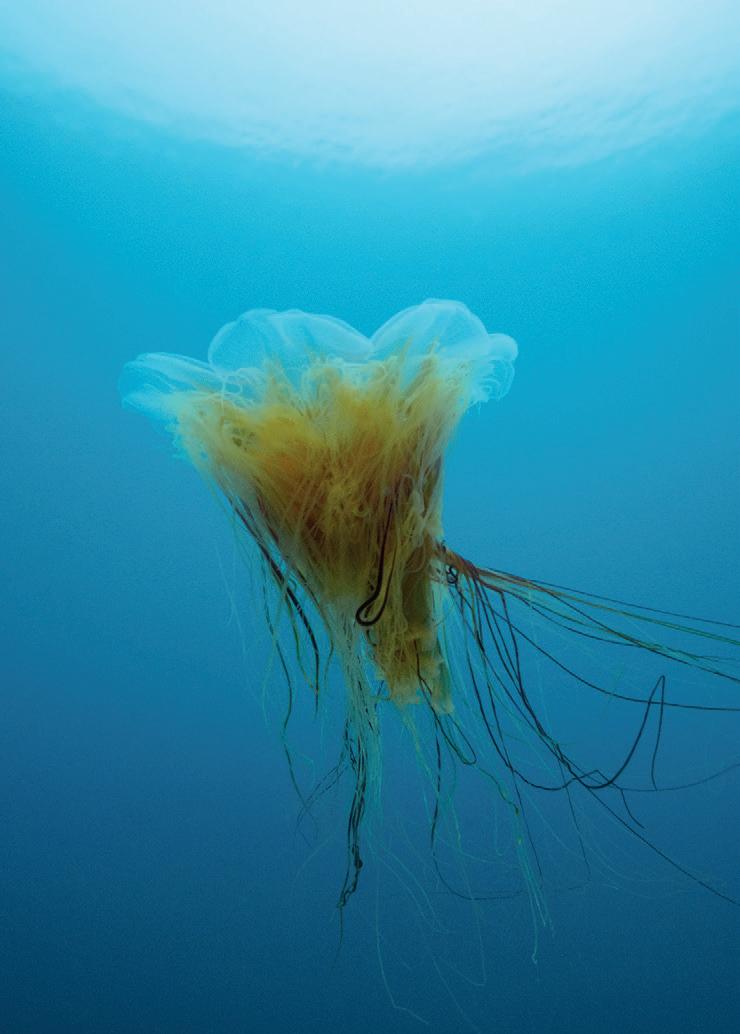
Before you lies a fresh issue of Perfect Diver Magazine. Whether you’re holding the print edition or reading us online –what matters most is that it’s worth diving into and sharing with others what you discover. And once you glance at your calendar, you might find yourself planning your own diving adventure. Which, as always, I wholeheartedly wish for you.
It’s December, the season of preparations for Christmas. Perhaps an annual subscription for 2026 will turn out to be the perfect gift under the tree?
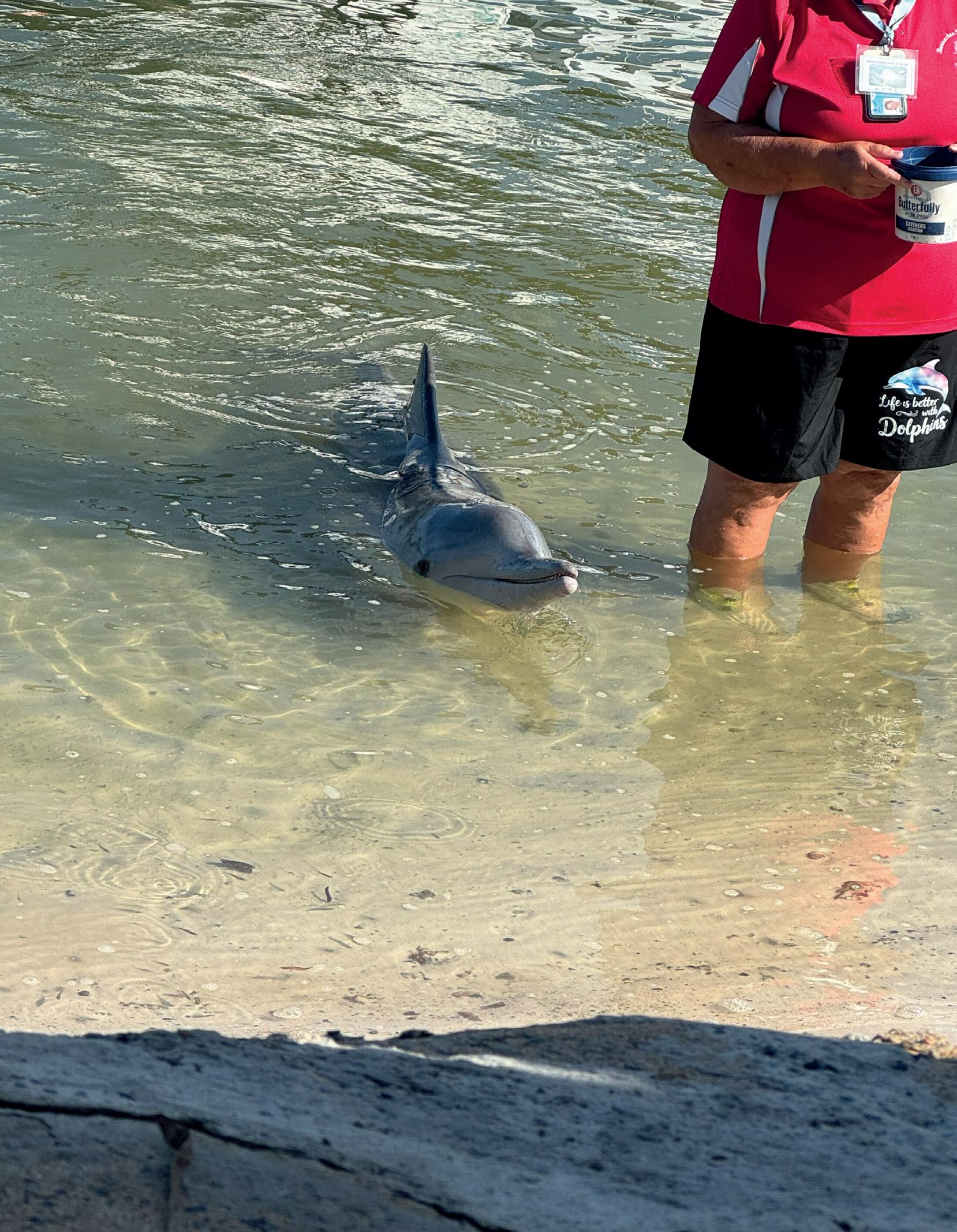
In this issue, a wonderfully diverse journey through the world of diving awaits you. Sylwia and Adrian take us to the raw and breathtaking landscapes of Greenland. With Basia, you’ll dive among seals around the Farne Island¬s, and together with Damian you’ll observe magnificent humpback whales. We also explore a topic that sparks strong emotions from the perspective of dolphin behavior – how do you feel about feeding wild, free-ranging animals? In my article, I show what this looks like in Tin Can Bay.
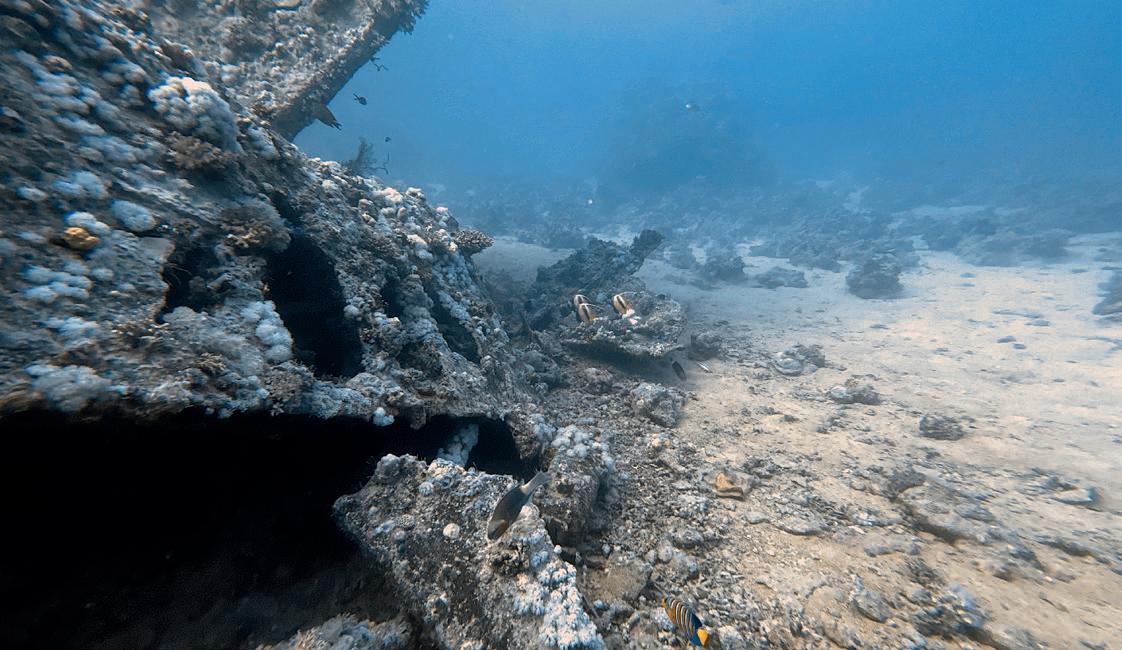
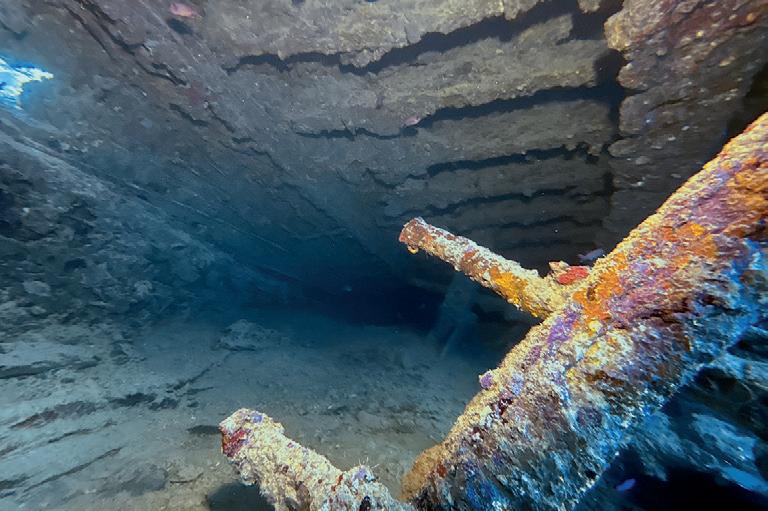
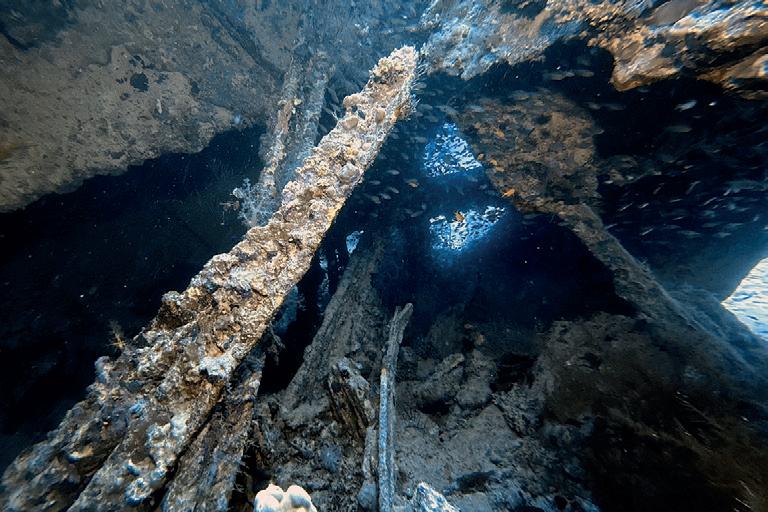
If you’re looking for information about wrecks and flooded mines, you’ll find that here as well: Tomek has prepared a feature on the wreck of SS Dunraven, and Przemek takes you to Sweden’s iron ore mine Tuna.
We always make it a priority to emphasize that in diving – both free and scuba – safety comes first. That’s why this issue includes a health-focused article from Michał and a piece from Aldona about dry suits, with particular attention to the needs of women. It’s also worth reading Wojtek’s practical article – because safety underwater begins with preparation and clear thinking above the surface.
You’ll also find equipment news from various manufacturers :) as well as Agnieszka’s article on freediving.
I warmly invite you to explore this edition – and I extend my sincerest wishes to all people of goodwill for the pre-Christmas season and for the celebration of Christmas itself.
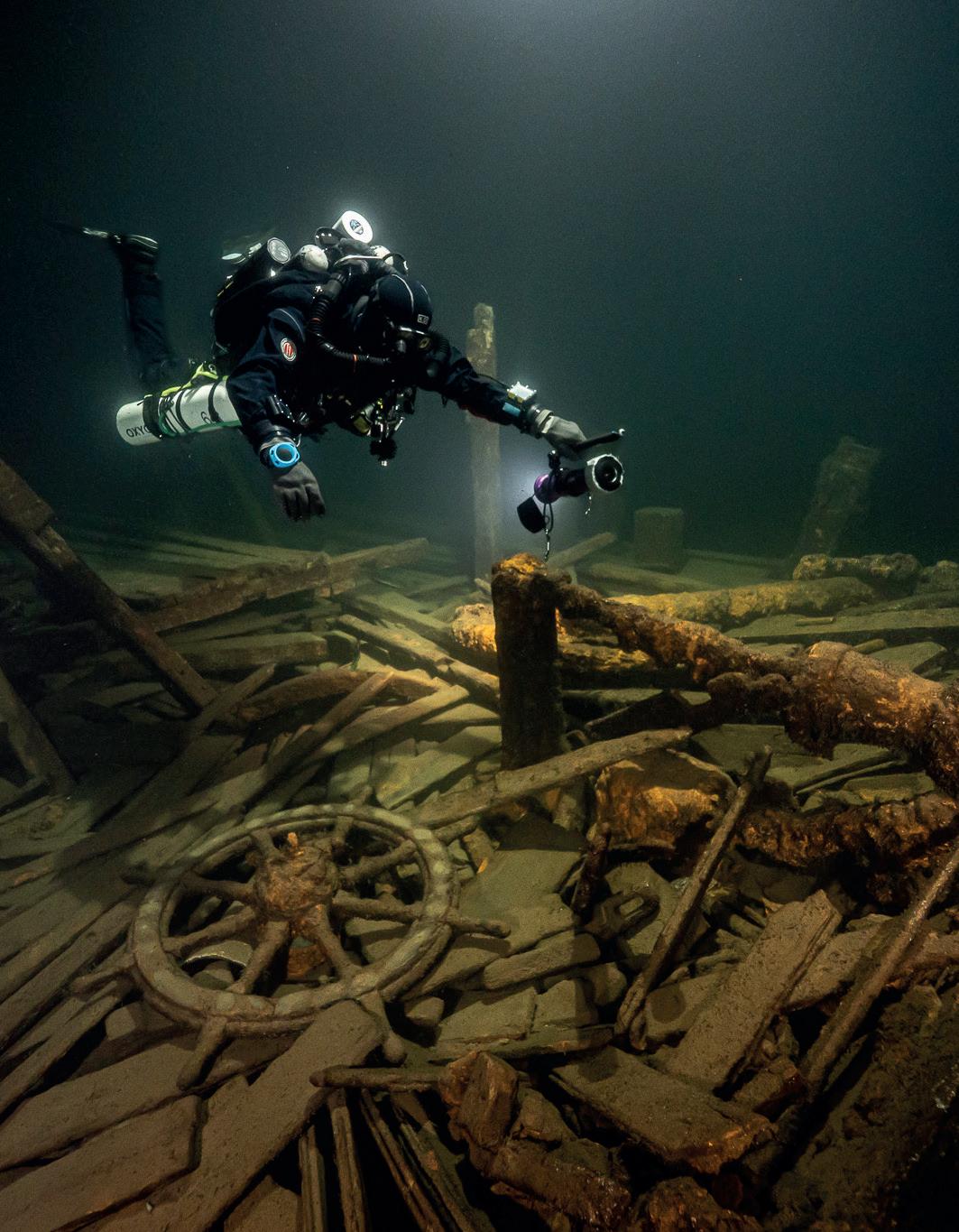
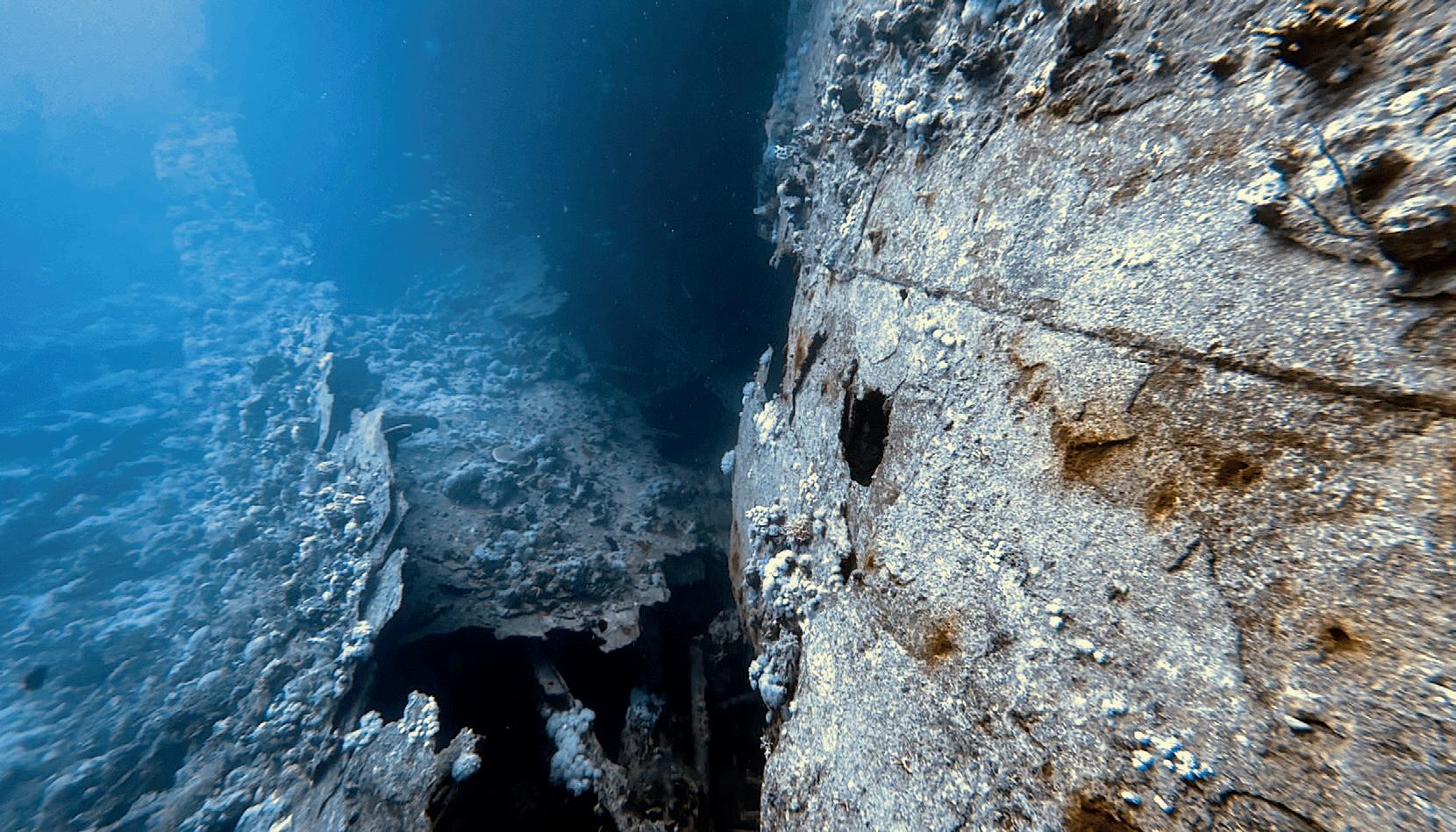
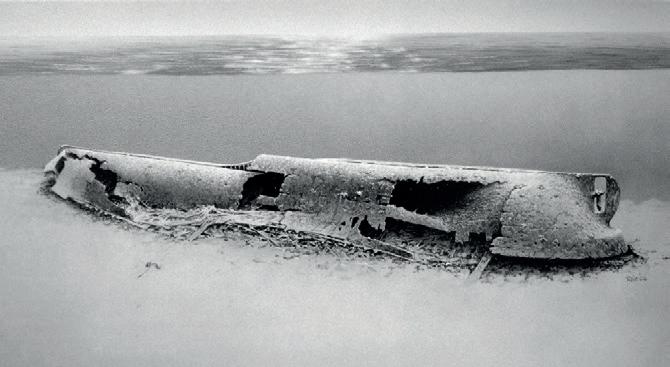
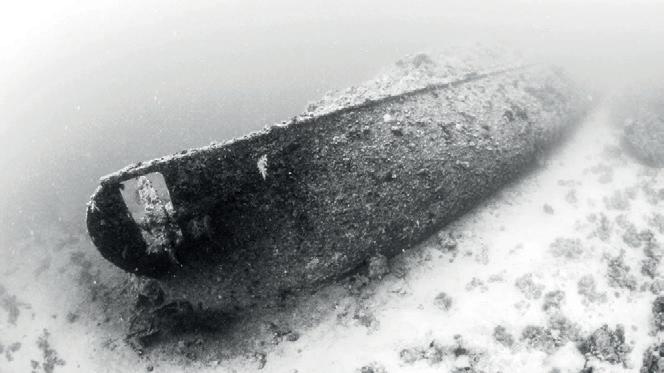
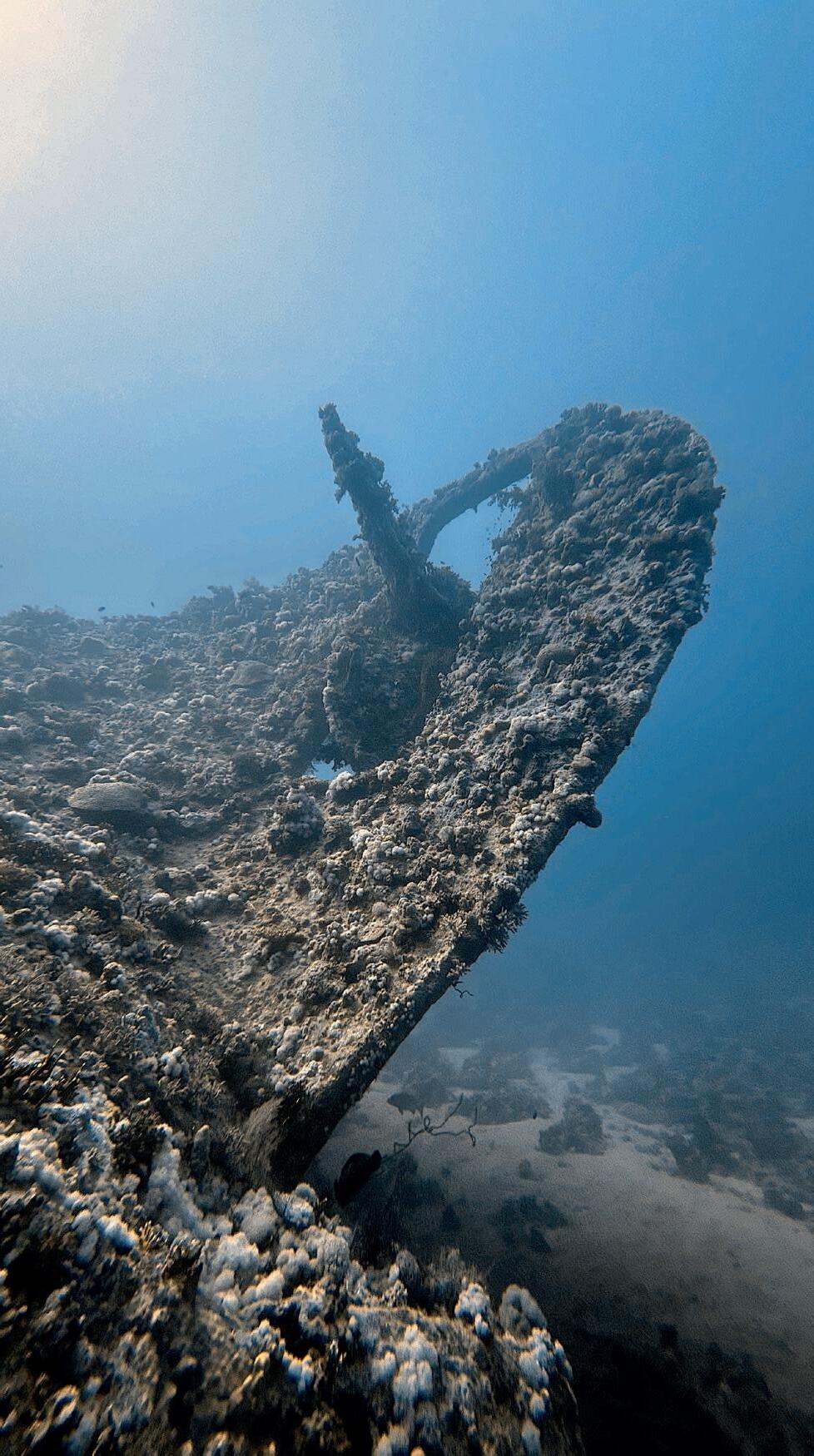
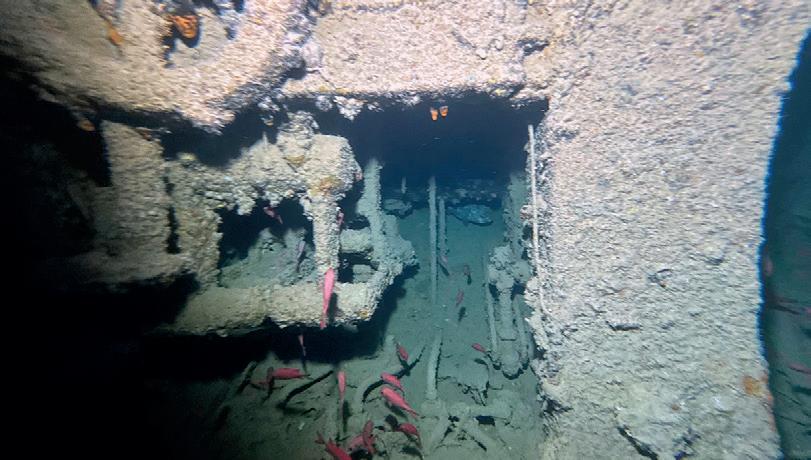
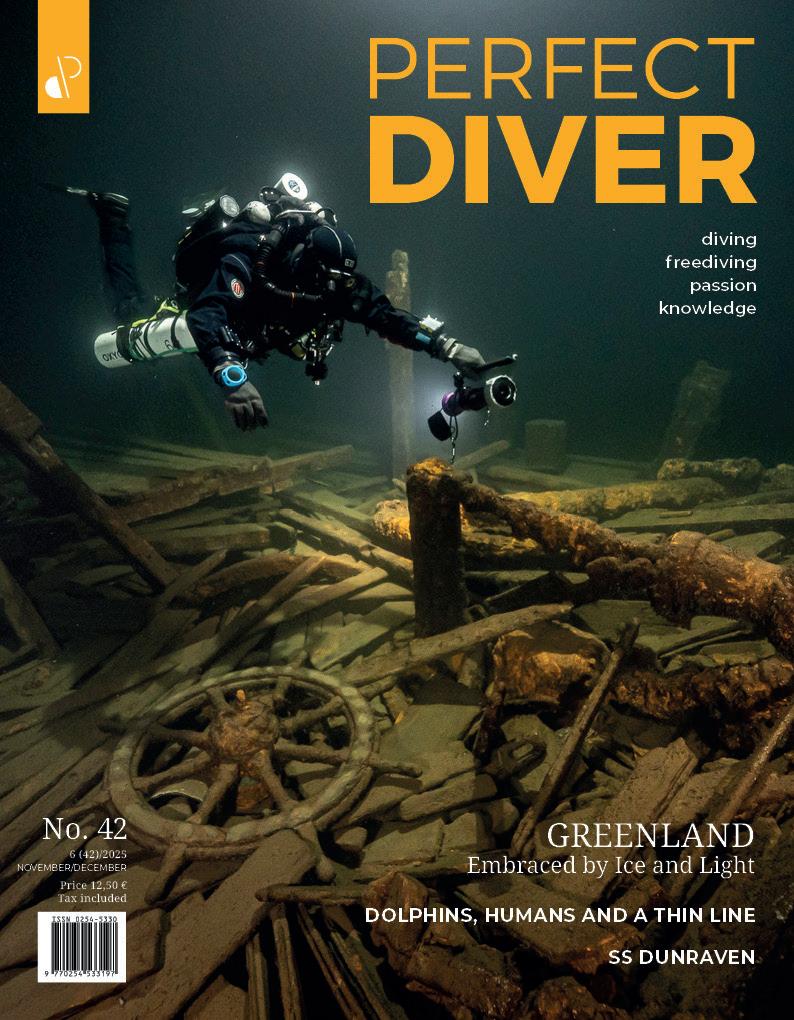
Breaking news: Together with the jury of the Underwater Photography Contest organized by Nautica.pl, we have selected the winner of the Grand Prix. The award goes to Marek Cacaj for his remarkable photograph taken on the bottom of the Baltic Sea. It captures an unknown sailing ship resting at a depth of about 60 meters. In the next issue, we will publish the photographs of the winners in all categories. Congratulations!
Did you like this issue? Give us a viral coffee buycoffee.to/perfectdiver Visit our website www.perfectdiver.com, check out Facebook www.facebook.com/PerfectDiverMagazine and Instagram www.instagram.com/perfectdiver/
Publisher PERFECT DIVER Sp. z o.o. ul. Folwarczna 37, 62-081 Przeźmierowo redakcja@perfectdiver.com ISSN 2545-3319
Editor-in-Chief
Technical Diver World Geography & Travels Reportage Advertisement English Language Translators
Legal care
Graphic Designer WOJCIECH ZGOŁA TOMEK KULCZYŃSKI ANNA METRYCKA DOMINIKA ABRAHAMCZYK reklama@perfectdiver.com AGNIESZKA GUMIELA-PAJĄKOWSKA, ARLETA KAŹMIERCZAK, PIOTR WITEK, TOMEK KULCZYŃSKI Lawyer JOANNA WAJSNIS BRYGIDA JACKOWIAK-RYDZAK
THE MAGAZINE IS FOLDED WITH TYPEFACES
Montserrat (Julieta Ulanovsky), Open Sans (Ascender Fonts), Noto Serif, Noto Sans (Google)
DISTRIBUTION online store sklep.perfectdiver.pl redakcja@perfectdiver.com
editorial team
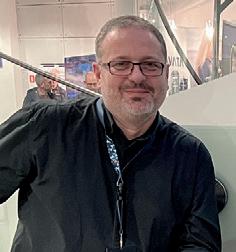
WOJCIECH ZGOŁA
A man who travels by diving. It all began with water. At the age of six, he learned to swim, and from that moment on, every moment spent by a lake or the sea became an opportunity to discover the secrets of nature. Later came sailing – at fifteen he earned his yacht sailor’s license, with the wind and the waves becoming his first teachers of freedom. In 2006 he went beneath the surface –and stayed there. Today, he has logged over 900 dives, both in lakes and wrecks in Poland and in distant, exotic destinations. He treats every immersion as a meeting – with Nature, with history, and with himself.
But Wojciech is not only a diver. He is also a storyteller, photographer, and the editor-in-chief of Perfect Diver magazine, as well as the creator of the portal dive-adventure.eu. He weaves words and images together to show the world the beauty hidden underwater and to encourage others to discover it for themselves.
He does not keep this passion to himself. He organizes and supports ecological initiatives, cleaning lakes and seas, because he believes that responsibility for nature begins with small steps –with leaving a place cleaner than it was found. He is a true lover of Nature in its purest form. He believes that diving is not just a sport, but also a way of building awareness – of the environment, of other people, and of oneself
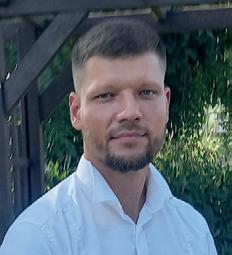
For Tomek, diving has always been his greatest passion. He started his adventure at the age of 14, developing into a recreational and technical diving instructor, a first aid instructor and a diving industry technician. Currently, he runs the 5* COMPASS DIVERS Pobiedziska Diving Center near Poznań, where he passes his knowledge and skills to beginners and advanced divers, which gives him great joy and satisfaction from being part of their underwater adventure...
Infected with a passion for diving by Perfect Diver. She continues to expand her diving skills. Although she definitely prefers warm waters, she dons a dry suit and explores colder bodies of water as well. Her favorite dives are those with plenty of marine life! Recently, she’s been taking her phone underwater in a protective case, trying her hand at amateur photography. She’s also curious about diving medicine. Professionally, she’s a Master’s degree nurse and a surgical scrub nurse.
“Human! Dive underwater. If the beauty you see down there doesn’t shake you to your core – nothing interesting awaits you in life.”
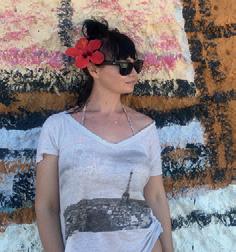
A diving enthusiast, connected with the water since childhood. She completed her first scuba course at the age of 14 and has never parted with diving since. She wrote her master’s thesis on dive tourism during her geography studies at the University of Warsaw. Starting in 2013, she contributed to the magazine nuras.info and took part in underwater photo shoots. Since 2018, she has been writing articles for Perfect Diver magazine (previously as Ania Sołoducha) and has been part of the editorial team for several years. She pours her knowledge and experience onto the page, sharing and promoting what she loves most – diving. For 13 years, she organized diving expeditions around the world, because working with people and creating new projects is where she truly thrives. She takes part in diving fairs and events, as well as lake clean-ups. She has often had the pleasure of speaking as a presenter at diving expos and conferences and has a number of diving webinars to her name. She has already dived in many places around the globe – and her dream list keeps growing.
For the past few months, she has been the owner of her own company organizing diving and active travel – Umiko Expeditions – with a head full of ideas for the next adventures.
An optimist with a constant smile and an individual approach to every client.
Her best life chapter is just beginning! www.umikoexpeditions.pl anna@umiko.pro +48 516 621 211
A traveller and a photographer of wild nature. A graduate of journalism and a lover of good literature. She lives in harmony with nature, promotes a healthy lifestyle: she is a yogini and a vegetarian. Also engaged in ecological projects. Sharks and their protection are especially close to her heart. She writes about the subject in numerous articles and on her blog www.blog.dive-away.pl. She began her adventure with diving fifteen years ago by total coincidence. Today she is a diving instructor, she visited over 60 countries and dived on 5 continents. She invites us for a joint journey with the travel agency www.dive-away.pl, of which she is a co-founder.
Zoopsychologist, researcher and expert in dolphin behavior, committed to the idea of protecting dolphins and fighting against keeping them in dolphinariums. Passionate about Red Sea and underwater encounters with large pelagic predators. Member of the Dolphinaria-Free Europe Coalition, volunteer of the Tethys Research Institute and Cetacean Research & Rescue Unit, collaborator of Marine Connection. For over 15 years, he has been participating in research on wild dolphin populations, auditing dolphinariums, and monitoring the quality of whale watching cruises. As the head of the "Free & Safe" project (formerly "NO! for a dolphinarium"), he prevents keeping dolphins in captivity, promotes ethical whale & dolphin watching, trains divers in responsible swimming with wild dolphins, and popularizes knowledge about dolphin therapy that is passed over in silence or hidden by profit-making centers. on this form of animal therapy.
ANNA METRYCKA
TOMEK KULCZYŃSKI
DOMINIKA ABRAHAMCZYK
JAKUB BANASIAK
SYLWIA KOSMALSKA-JURIEWICZ
He has been diving for 35 years. He has spent more than 16,000 hours underwater, most of them diving technically. He has been an instructor and mentor instructor for many organizations including CMAS, GUE, IANTD, PADI. He co-created the training programs for some of them. He is a professional with vast knowledge and practical experience. He has participated in many diving projects as a leader, explorer, initiator or speaker. He was the first Pole to dive the HMHS Britannic wreck (117m). He was the first to explore the deep part of the Glavas Cave (118m). He made a series of dives documenting the wreck of ORP GROM (110m). He has documented deep (100-120m) parts of flooded mines. He is the creator and designer of many equipment solutions to improve diving safety.
Technical Director at Tecline, where, among other things, he manages the Tecline Academy a research and training facility. Author of several hundred articles on diving and books on diagnosis and repair of diving equipment.
He dives in rivers, lakes, caves, seas and oceans all over the world.
A graduate of two Poznan universities, the Academy of Physical Education (coaching specialization – handball) and the University of A.Mickiewicz, Faculty of Biology (specialty of experimental biology). He connected his professional life with this first university trying to influence the direction of development of future professionals on the one hand, and on the other planning and implementing research, pushing laboriously in the right direction of the stroller called science. In his free time he spends his time actively – his main passions are sailing (sea helmsman), skiing (downhill skiing instructor), riding a motorcycle, recreational diving and many other activities, as well as photography, mainly nature.
A long, long time ago in a galaxy far, far away there was chaos...
…that is, the multitude of thoughts and delights after my first immersion under water in 2005 in the form of INTRO while on vacation in Egypt. By then I had completely immersed myself in the underwater world and wanted it to have an increasing impact on my life. 2 years later, I took an OWD course, which I received as a gift for my 18th birthday, and over time, further courses and skills improvement appeared.
"Photography" appeared not much later, but initially in the form of a disposable underwater "Kodak" from which the photos came out stunningly blue
I am not a fan of one type of diving, although my greatest weakness at the moment is for large pelagic animals. The Galapagos Islands were my best opportunity to photograph so many species of marine fauna so far.
I share my passion for diving and photography with my buddy, who is my wife IG: luke.divewalker; www.lukedivewalker.com
Laura is a journalist, instructor trainer, CCR and cave diver. She has been developing her diving career for over a decade, gaining knowledge and experience in various fields. Her specialty is professional diving training, but her passion for the underwater environment and its protection drives her to explore various places around the world. From the depths of the Lombok Strait, caves in Mexico and wrecks in Malta to the Maldives, where she runs a diving center awarded by the Ministry of Tourism as the best diving center in the Maldives. Laura actively contributes to promoting the protection of the marine environment, takes part in scientific projects, campaigns against ocean littering and cooperates with non-governmental organizations. You can find her at @laura_kazi_diving www.divemastergilis.com
I photograph because I love it, I film because it excites me, I write because I enjoy sharing, I teach because I support growth, I travel because I love discovering new things. www.facebook.com/przemyslaw.zyber www.instagram.com/przemyslaw_zyber/ www.deep-art.pl
He has been diving forever, he does not remember his first dives. The only thing he remembers is that diving has always been his passion. He spent his entire childhood on Polish lakes, which he still prefers to distant destinations. With great success, he turned his passion into a way of life and business.
Curiosity of the world and constant striving for perfection are the main features that definitely hinder him in life. Professional diving instructor, photographer, filmmaker.
Creator of the DECO Diving Center, PADI Course Director, TecTrimix Instructor Trainer TECREC.
PRZEMYSŁAW ZYBER
WOJCIECH A. FILIP
WOJCIECH JAROSZ
ŁUKASZ METRYCKI / Luke Divewalker
LAURA KAZIMIERSKA
DOMINIK DOPIERAŁA
I am a traveler and a technical diver, exploring the world both on land and underwater. I have been diving for 16 years. Since I am a professional photographer, a camera has accompanied me from my very first dive. I started with recreational diving, but over time, I obtained full trimix and full cave certifications, allowing me to explore caves, wrecks, and great depths.
Underwater, I find a peace that is hard to experience on the surface.
Every dive is not just an adventure for me but also an opportunity to capture the extraordinary underwater world through photography. barbaraglenc.foto@gmail.com
TOMASZ PŁOCIŃSKI
I began my underwater photography adventure more than ten years ago, and it’s only thanks to photography that diving is an interesting hobby for me. Taking a camera underwater and shooting photos can be – and is – the very purpose of diving. When I started discovering the wonders of the underwater world – its colors, the multitude of forms and shapes, its beautiful flora and fauna–I wanted to share my impressions with family and friends. Yet it’s difficult to describe in words what we see underwater. An image conveys it much better. That’s why I became interested in underwater photography. To start photographing underwater, I first had to learn how to dive. It took me some time to assemble my first underwater photography setup, but thanks to that, I had the chance to complete several diving courses and gain some experience. I photograph any underwater subject that catches my interest – and believe me, what seems ordinary on land becomes an intriguing attraction underwater.
A Libra by zodiac. An enthusiast of healthy living who loves active rest.
A devoted admirer of the underwater world and underwater photography.
She deeply values the ability to communicate without words beneath the surface.
Water has helped her discover physical abilities she never knew she had, and breaking her own barriers – along with learning new skills in a natural environment and in close contact with nature – played a key role in rebuilding her mental well-being.
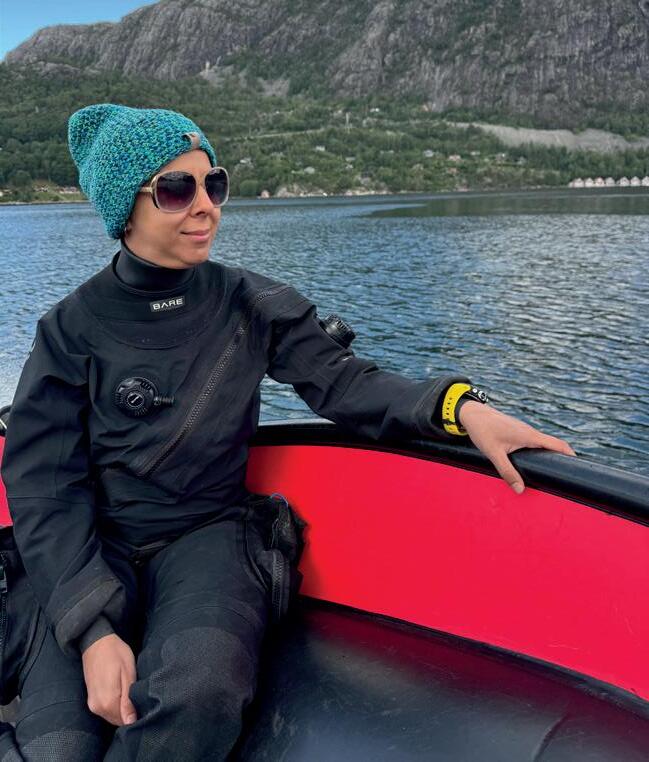
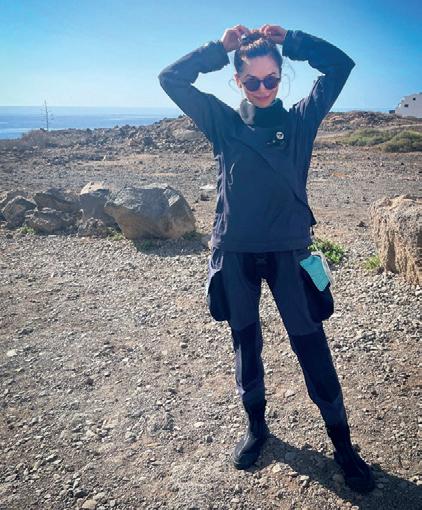
A diving instructor and the creator of W Głębi, a brand where she combines diving with well-being and personal development. https://wglebi.pl
”I can't imagine living without water, where in a free body I experience freedom of the spirit.”
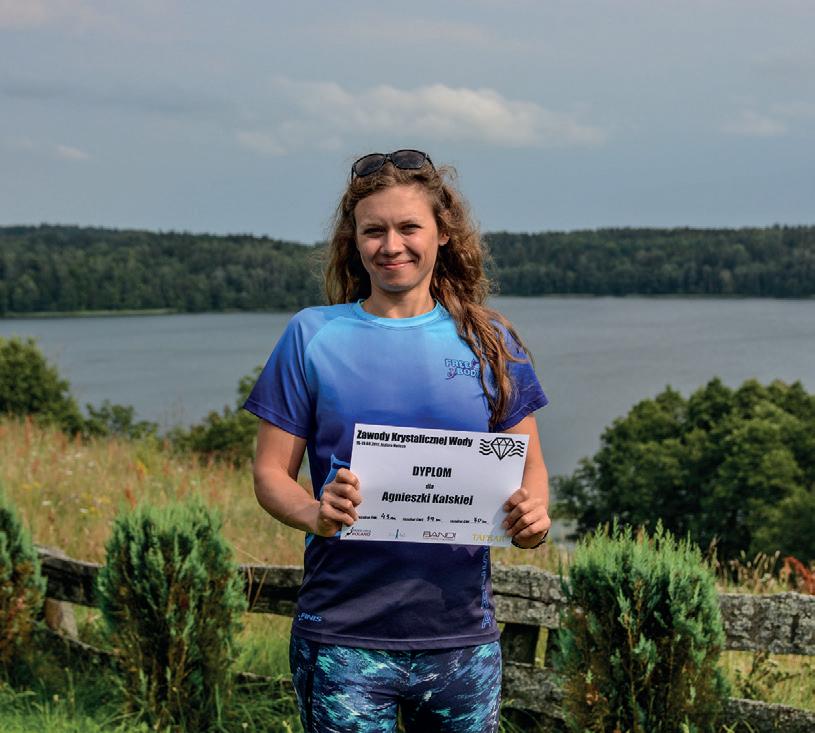
● founder of the first freediving and swimming school in Poland – FREEBODY,
● Apnea Academia International and PADI Master Freediver freediving instructor,
● world record holder in freediving (DYN 253 m),
● record holder and Polish champion, member of the national team in freediving 2013–2019,
● winner of the World Championships in freediving 2013, 2015, 2016 and 2018,
● multimedalist of the Polish Championships and a member of the national team in swimming in the years 1998–2003,
● passionate about freediving and swimming.
By education and profession, I am a nurse and a healthcare manager, and photography is my passion, to which I devote every free moment. Since I started diving in 2019, the camera has be come an inseparable element of my underwater adventures. Wanting to capture the beauty of the underwater world in all its glory, I reached for the Canon 5D Mark II SLR, and today my main equip ment is the Canon R6. I am constantly looking for new places and challenges to improve my skills. However, my photos would not have been creat ed without the support of friends who have been with me from the beginning and often take on the role of models. I am also strongly connected to the mermaid community in Poland. I specialize in their photography, trying to capture the under water beauty of this community and convey its unique magic. From the beginning of my diving adventure, I have been associated with the Lublin Diving School Napoleon Arka Kowalika, and since 2025 I have had the pleasure of serving as the DivePro Diving Lighting Ambassador. @michalmuciek https://facebook.com/michal.muciek
I run my own business on a daily basis, which gives me the freedom to pursue my passions. In my spare time, I travel in search of places that inspire further exploration. My love for diving began in Thailand – it was there that I first immersed myself in the extraordinary world hidden beneath the surface. Since that moment, underwater photography has become not only a passion but also a mission: to show how beautiful and diverse the world is that remains hidden from everyday view. @underthewater.pl www.underthewater.pl
An animal and nature lover, which naturally led her to become fasci nated with the underwater world as well. She has always dreamed of studying marine creatures. She de velops her diving passion together with her husband, supporting each other along the way. The originator and organizer of their shared trips – both near and far. At home, she loves cooking and taking care of their pack of dogs.
“I know it’s not easy, but I also know for sure that the courage to rise and chase your boldest dreams will bring you the greatest reward of your life – and the grandest adventures.”
Oprah Winfrey
GREENLAND
Embraced by Ice and Light
Text SYLWIA KOSMALSKA-JURIEWICZ
Photos ADRIAN JURIEWICZ
In the small waiting area of the local airport in Reykjavik, passengers have been crowding in since morning. Some are checking in their luggage, while others are picking it up.
I watch this process quietly, savoring my coffee. There’s no need to rush – our flight is delayed by an hour.
Yet here, in this tiny terminal, everything is already happening for me. My heart is filled with a pleasant mix of joy, happiness, and emotion.
This airport marks a symbolic threshold between what once was only a dream… and what is about to become reality – Greenland.
The flight from Reykjavik to Akureyri takes about fifty minutes and is an adventure in itself. The Bombardier Q200 turboprop lifts off effortlessly, soon cutting through a layer of soft, white clouds. Out the window, stunning Icelandic landscapes unfold – full of greenery and contrast. Akureyri is a picturesque town nestled along Iceland’s longest fjord, Eyjafjörður. Popular with travelers, it offers scenic hiking trails and the chance to spot majestic whales. It is the largest settlement in the region
and evokes memories of Ushuaia, the port from which we departed for Antarctica a year ago. You’ll find similar craft shops here, cozy cafes, and restaurants lining the main pedestrian street. Despite the morning rain, the town is full of life. On the main square, a local fair is underway, drawing both residents and tourists.
Akureyri is also known for its special initiative called “Stop in the Name of Love” – a beautiful idea symbolized by heartshaped red traffic lights. Introduced in 2008, the initiative aims to draw attention to the truly important things in life: love, kindness, and compassion – both toward other people and animals.
We depart from the town of Akureyri aboard a ship with the charming name Ortelius. It was named after the renowned geographer and cartographer Abraham Ortelius (1527 – 1598), who was the first to create and publish an atlas of the world. This powerful vessel, built in 1989 in Gdynia, originally served the Russian Academy of Sciences under the name Marina Svetaeva. In 2011, it was purchased by Ocean Expeditions and today operates as an expedition ship offering voyages to the Antarctic and Arctic under the Dutch flag. We board Ortelius via a steep metal gangway leading from the quay to the ship’s deck. A familiar warmth fills my heart – the same feeling we had when we departed for Antarctica aboard Plancius. Our luggage awaits us in our cabins, along with magnetic ID tags, notebooks, and reusable water bottles. We slowly begin to explore the ship, visiting its many decks and lingering in the spacious lounge – a place to relax and enjoy delicious coffee. Ortelius, an expedition icebreaker, accommodates up to 116 passengers.
Before setting out to sea, we attend a safety briefing, meet part of the crew, our expedition leader Claudio, and the captain. We raise a toast with a glass of champagne to the wonderful journey that is just beginning.
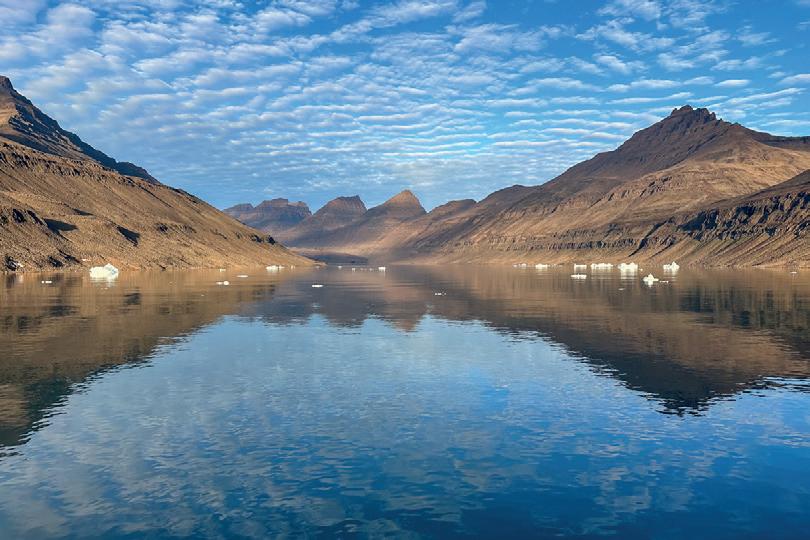
We leave Akureyri in the late afternoon. A light fog drifts over the fjord, and the farther we sail from shore, the more mysterious and shadowy the landscape becomes. On the horizon, we spot dolphins – their glistening bodies emerging and disappearing into the deep blue water. Moments later, whales appear. From a distance, we hear the deep, unmistakable breaths of these giants. Above their heads, plumes of vapor burst into the air. We gaze into the dark waters of the Greenland Sea, mesmerized, hoping to see these majestic creatures once more. The wild nature acts as a balm for the soul. We feel as though we are a part of this same natural world – one life expressed in an infinite number of forms. On the second day, late in the evening, our ship crosses into the Arctic Circle. During the night, we set course for Greenland’s eastern coast and the longest fjord system in the world: Scoresbysund, spanning an area of 38,000 square kilometers.
The morning is incredibly crisp. The sun slowly begins to climb across the sky, and drifting icebergs appear on the horizon much sooner than they did during the voyage to Antarctica. We spend our free time preparing and checking our diving gear, picking up rubber boots for land treks, and attending several briefings and lectures led by the expedition team leaders. We're also being thoroughly spoiled by the head chef, who – along with his team – conjures up delicious meals for us, served buffet-style and à la carte. After two days aboard the ship, it's finally time for our first dive in the waters of the Greenland Sea. The day before, Tanja – the leader of the dive
team – gave us a detailed briefing on the rules and dive plan for the coming week. We also met the entire team who would be looking after us during each dive.
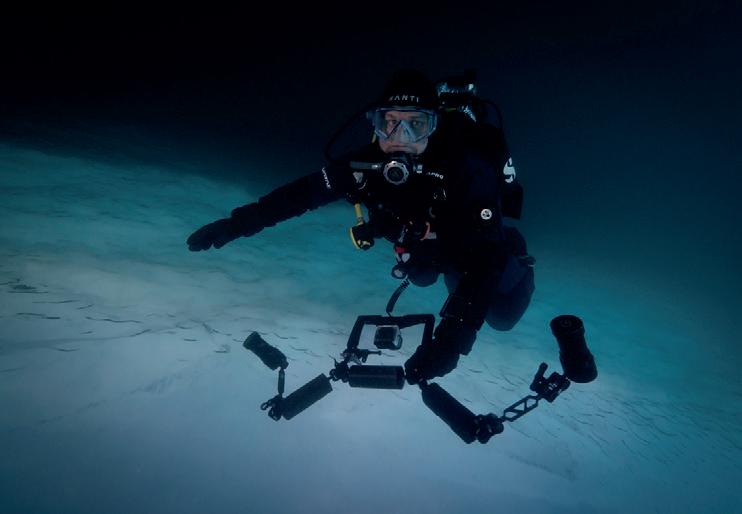
Diving in Greenland follows the same rules and safety protocols as those in Antarctica. These are extreme dives. Beneath the surface, harsh Arctic conditions prevail. Each participant must face extreme cold, occasional strong currents, and limited visibility. That’s why we all had to prepare very thoroughly for this expedition. In Greenland, we dive with tanks equipped with two valves and two first stages. The minimum certification required to dive in this part of the world is Advanced Open Water. Each participant must also have at least thirty logged dives in cold water while using a drysuit. We submitted the full set of information regarding our experience to the tour operator before the expedition began.
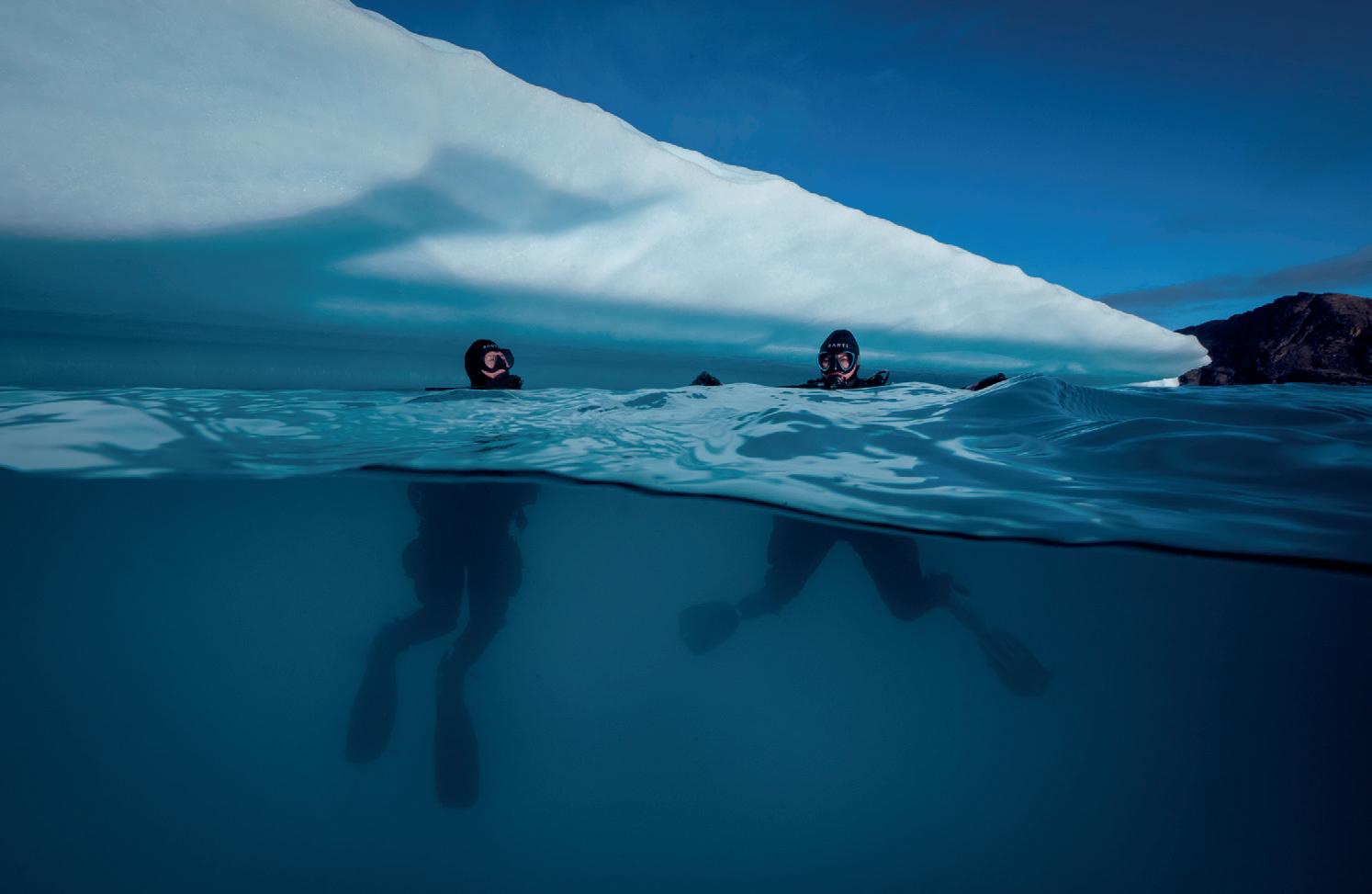
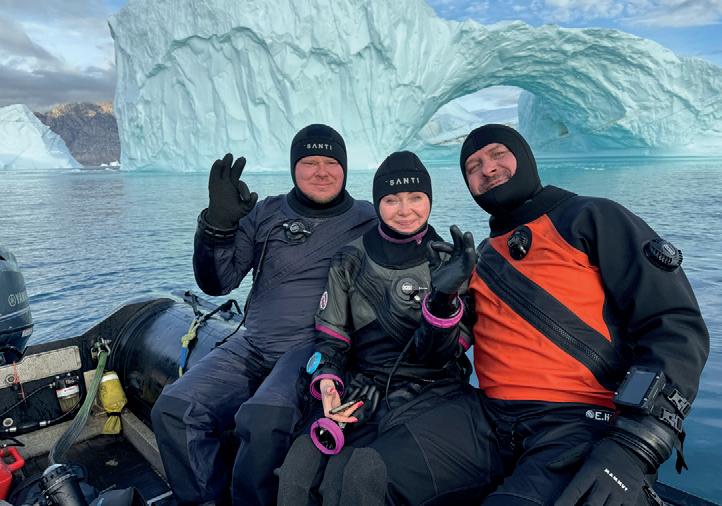
Our group is large, so during dives we are divided into several four-person teams. The team leader (an instructor) remains in the zodiac. He is fully equipped and ready to enter the water at any moment, but he does not dive. Instead, he observes the surroundings from the boat, scanning for any potential dangers and ready to respond in case of emergency. Diving near an iceberg is fascinating – but it can also be very dangerous. The mass of ice can suddenly start to shift, rotate, or crack. If the team leader notices any alarming activity, they will alert the divers underwater by revving the engine multiple times in quick succession. In such a situation, we ascend immediately at a safe speed – no faster than 18 meters per minute – and skip the safety stop. The maximum depth is limited to 20 meters. All signals and procedures are explained in detail during the briefing.
We do our first check dive after breakfast at a site called Vikingebugt. It’s a beautiful sunny morning, and we’re feel-
ing excited. We board the zodiacs wearing our drysuits. After reaching the site and checking the depth using sonar, all the zodiacs gather together for a briefing. Tanja, the leader of all dive teams, reviews the key safety rules. We set the dive time to 30 minutes and begin suiting up.
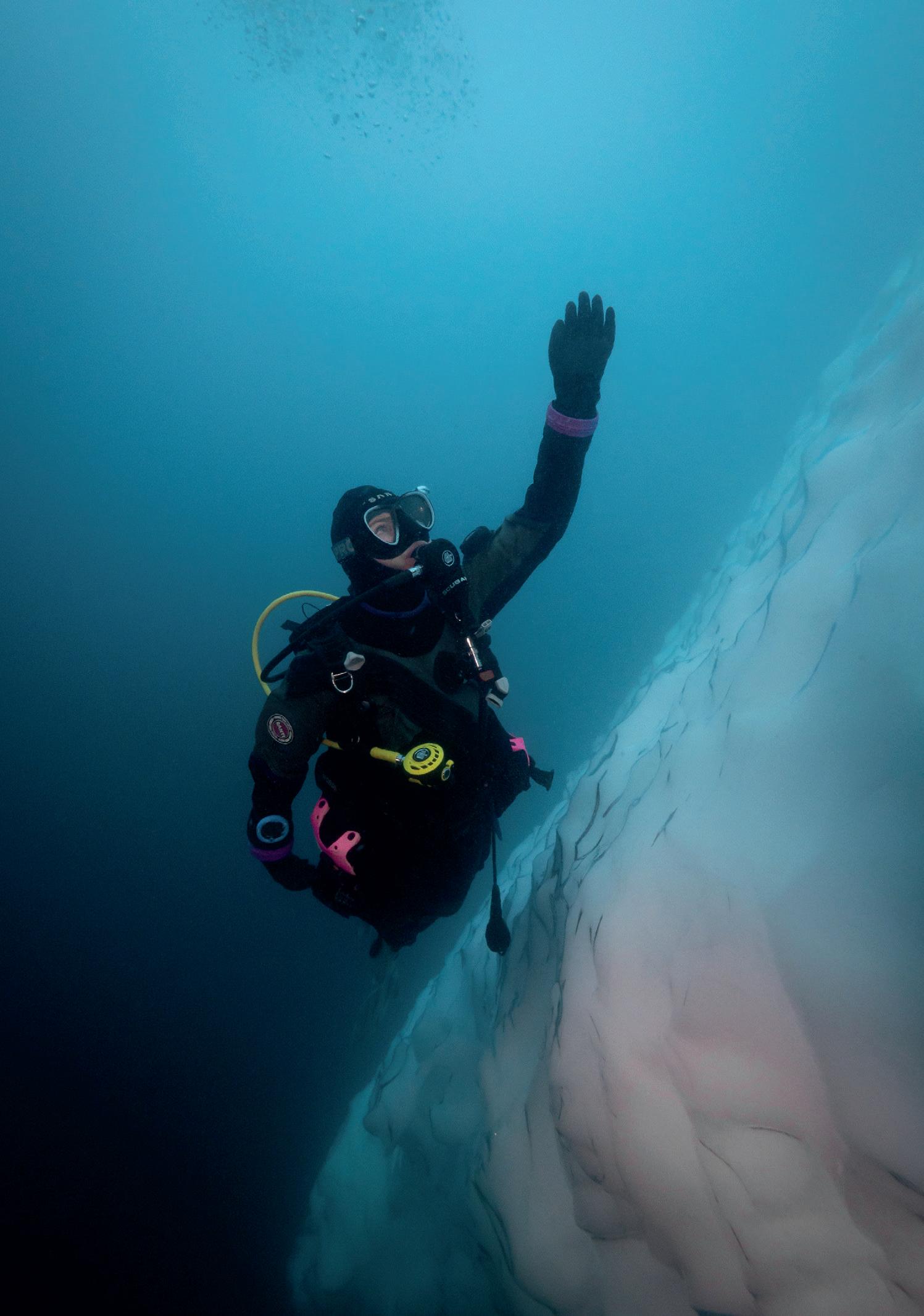
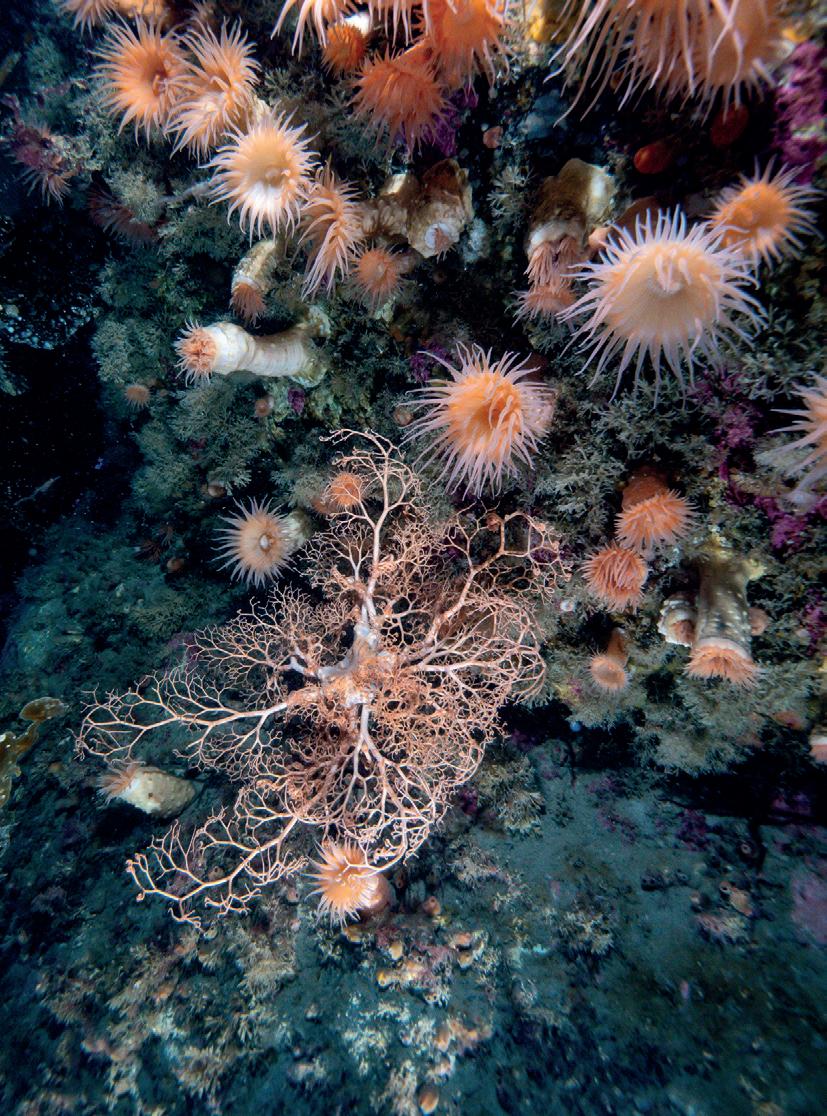
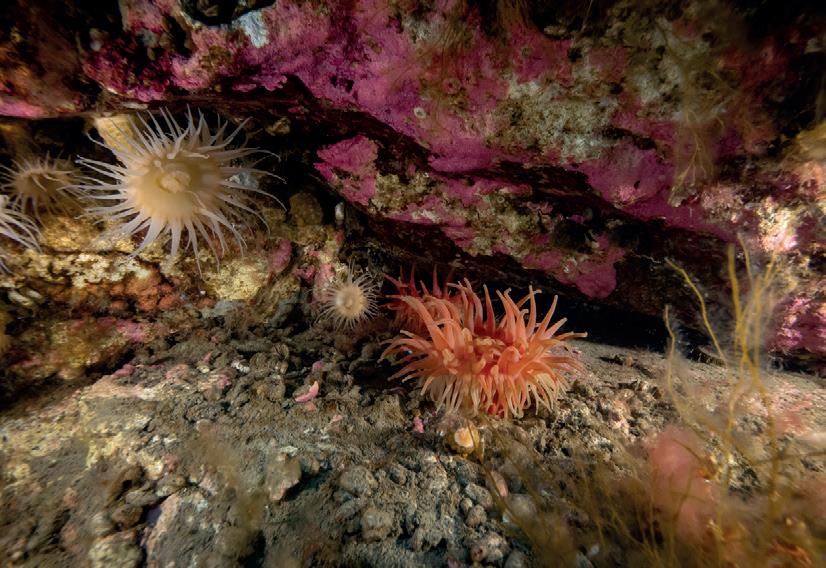
From the zodiac, the water appears to have very low visibility. A nearby glacier deposits sediment as it shifts, naturally clouding the water. After a buddy check, we jump into the sea. We check our buoyancy and begin a slow descent along a wall that drops steeply into the depths. The water temperature is -0.5°C. As we descend, I feel a million needles stabbing my face at once – the pain from the cold is sharp. Luckily, it fades after about a minute. My face is numb from the cold; at times, I have to hold my regulator in place with my hand so it doesn’t slip out of my mouth. The rest of my body stays warm – I’m wearing double merino thermal underwear, two pairs of socks, double gloves, and a thick undersuit. All those layers provide thermal comfort. By minute 15, though, I feel my hands and feet getting cold. For the next dive, I’ll wear heated gloves powered by an external battery. Despite the sunny weather, visibility underwater is poor – about 1.5 meters. It slightly improves at around 14 meters as we reach a rocky bottom. The seafloor is home to a surprising number of sea anemones, attached to the rocks and looking like flowers in full bloom. Their abundance is a huge surprise to us. They appear in clusters, forming beautiful, colorful underwater gardens. We hover above them for a while to take
photos and admire them up close. With the improved visibility, we can also see a yellow starfish, some jellyfish, and a few shrimp in a rock crevice. Time underwater passes much faster than anywhere else in the world. We ascend slowly. The sun is warm enough to bring instant relief. The zodiac comes to pick us up, and Gomez – our guide – helps us remove our gear in the water and then climb aboard. It’s an invaluable help, for which we’re truly grateful. With frozen fingers, it’s hard to unclasp buckles or take off gear in the water.
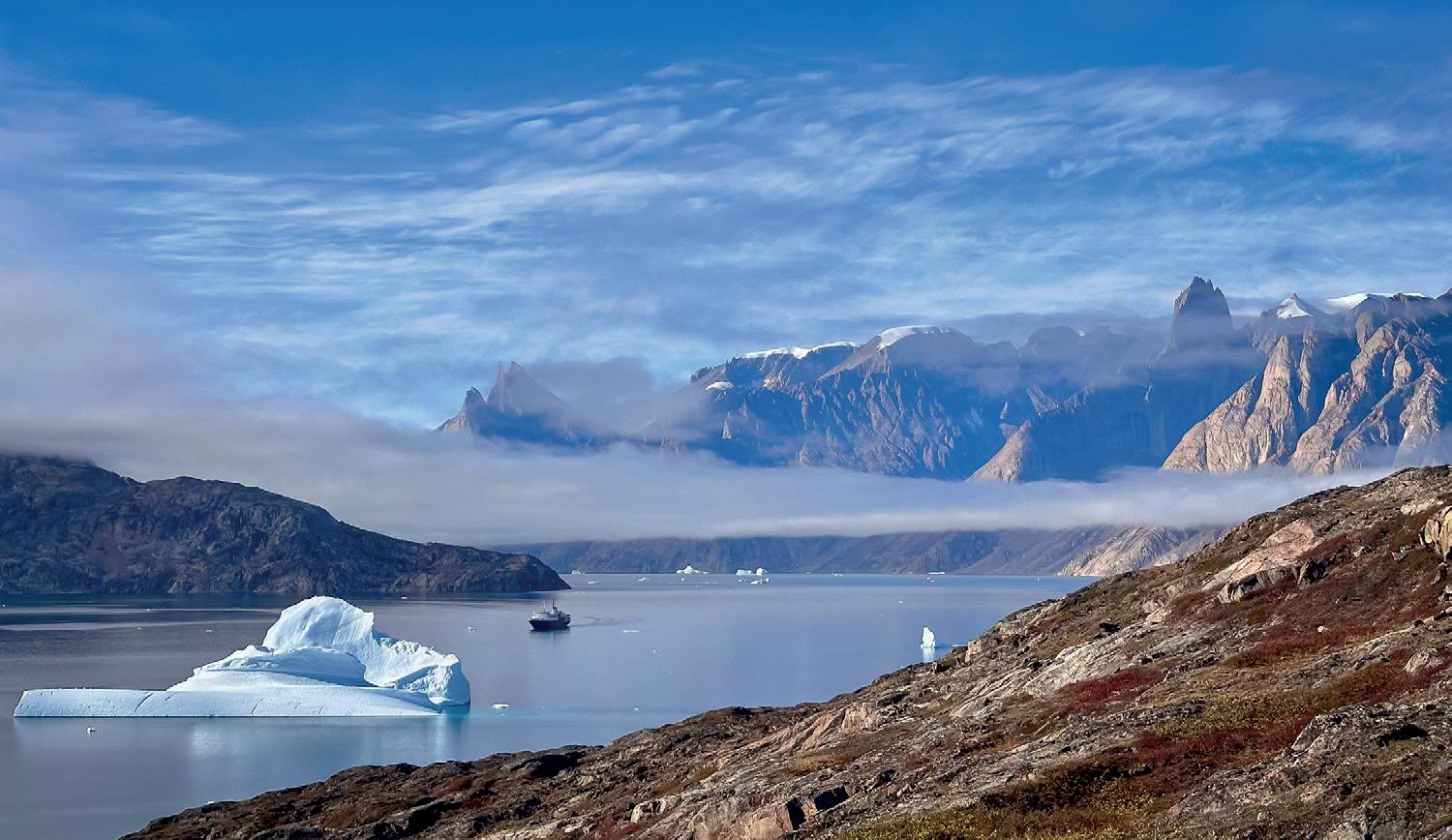
After returning to the Ortelius, we warm up with hot tea and enjoy a delicious lunch. After the meal, the captain anchors the ship in a bay overlooking the impressive Foldegletsjer glacier. We are surrounded by enchanting hills and basalt rocks that shimmer in the afternoon sunlight with shades of graphite, copper, and brown. During our 10-day voyage, all activities take place at the same time. The daily schedule of our expedition is set in advance but may change depending on weather conditions or polar bear sightings. Typically, wake-up is at 7:30 AM, followed by breakfast half an hour later. At 10:00 AM, we depart for the first dive of the day, while the rest of the ship’s guests take part in land excursions or zodiac tours. After diving and other activities, we return for lunch. The afternoon is reserved for rest and preparation for the second dive or another excursion. After the second round of activities, we have dinner and relax on the cozy sofas in the lounge, sharing our impressions from the day. The glacier where the captain has anchored the ship looks spectacular, so this time we decide to skip the second dive and join a land expedition instead. There are always two types of excursions to choose from: one for advanced hikers in excellent physical shape, and another for those who prefer a more relaxed pace.
I don’t know what possessed us, but we chose the threehour uphill hike for advanced trekkers. We dressed warm-
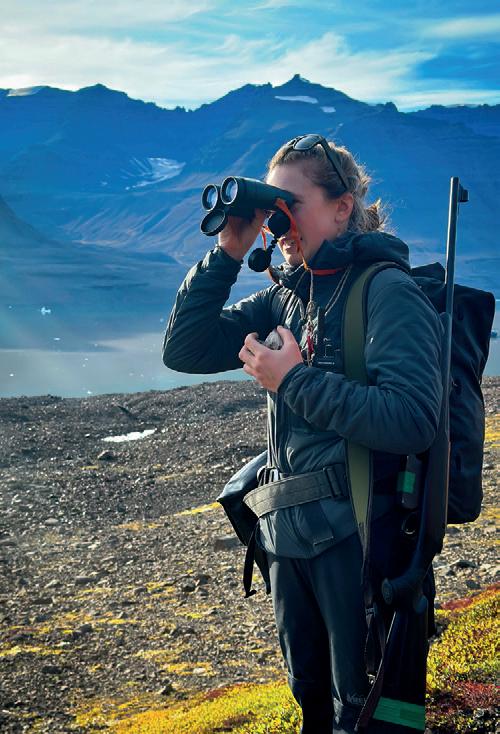
ly, boarded the zodiac, and headed to shore. The beach was covered with large stones, some of them with sharp edges. We began slowly climbing in the rubber boots provided by the ship operator. In Greenland, the weather changes very quickly, so the best approach is to dress in layers. By the tenth minute of the hike, it got quite warm – the air temperature had risen from 5°C to 14°C. So, we started gradually undressing. I’m not sure if this part of Greenland had ever seen so many pale calves gleaming in the afternoon sun. The higher we climbed, the more stunning the view became. Our guides, Beth and Chloe, often stopped the group to show us various rocks and minerals. It was astonishing how much life surrounded us despite the harsh Arctic climate. The foundation of life in this area is formed by thick carpets of lichens and mosses covering the rocks. In some spots, they yielded under our feet like water-soaked sponges. In many places, water trickled down the rocks in cascades, forming small waterfalls that flowed into shallow basins carved in the stone.
Near some of these basins, we found animal tracks, evidence of various species like Arctic hares, musk oxen, foxes, and birds. At one point, one of our guides picked up some droppings found along the trail, sniffed them, and confidently identified the animal they came from. We were all amazed by this unique ability – and by how precise his olfactory expertise was. The
flora of Greenland is remarkably rich and captivating, encompassing around 520 native species. Special attention goes to the purple saxifrage and lupine. Though not native, the lupine adds striking color to the tundra landscape. The hike across the rocky terrain was incredibly educational, and the panoramic views of the fjord, glacier, and bay will surely remain with us for a long time. We returned to the ship in the late afternoon – tired, but happy. Dinner was served à la carte, and we shared stories and emotions from the day’s adventures. The perfect end to this eventful day was a spectacular sunset over the fjord and drifting icebergs.
The next morning greeted us with an amaranth glow in the sky. We stepped out onto the deck before sunrise. It was the perfect moment to simply be – with a cup of coffee and the silence broken only occasionally by the sounds of nature. The captain had anchored the ship on the southern side of the Bear Islands. The landscape had changed significantly; we were now surrounded by rocky hills. Their peaks were dusted with snow, and a mist enveloped the lower slopes. Numerous icebergs had also appeared, drifting silently with the gentle sea current. They took on beautiful shapes and looked different from every angle. The fascinating thing about icebergs is how quickly their forms change – no one else will ever see them exactly the way we did in that moment. After breakfast, a group of 19 scouts set off for a full-day trip to Taseertit on the Bear Islands. Meanwhile, we boarded the zodiacs and headed toward a scheduled iceberg dive. While en route, a radio message came through – the expedition team had spotted a polar bear. A wave of excitement swept over us. We had all dreamed of seeing this majestic creature, and now that dream was about to come true.
For safety reasons, the dive was immediately canceled. However, with the expedition leader’s approval, we were allowed
to approach the edge of Pooqattaq Island to try to see the bear. We moved slowly, with the engine at its lowest setting to avoid drawing attention. The bear stood on a rock, preoccupied with its own affairs. We watched it through binoculars from a short distance. The polar bear looked almost innocent – but it is one of the most dangerous land predators in the world. That’s why our guides are always armed with hunting rifles and signal flares – not to kill, but to scare off the animal if there’s a life-threatening situation. These charming creatures are impressively adapted to the cold Arctic climate. They have thick white fur, an insulating layer of fat, and black skin that absorbs the sun’s rays. They’re also excellent swimmers, which makes them a real danger even to divers. Unlike most animals, they’re not afraid of humans – on the contrary, they see us as potential prey. Due to climate change and melting glaciers, the bears’ hunting grounds are shrinking. As a result, they are increasingly forced to search for food elsewhere – often venturing into human-inhabited areas.
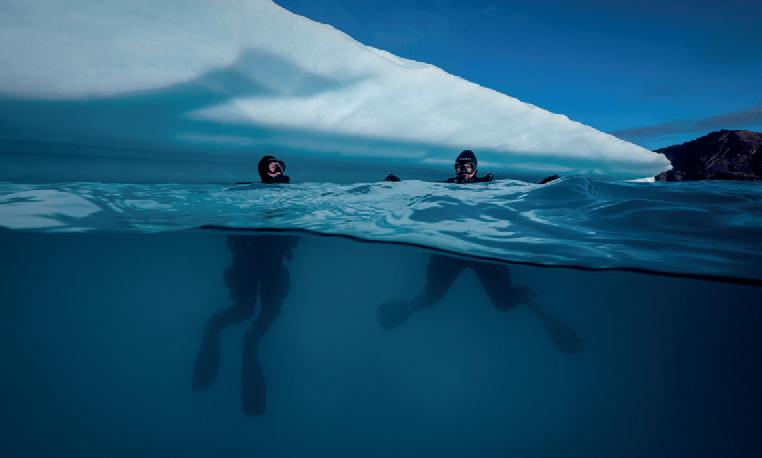
As soon as the situation allows, we get the green light to dive at an iceberg located far from the island. It takes a bit of time to find the right iceberg to dive next to. The shape of the iceberg is crucial – it’s best if it has a dome-like form and no underwater terraces. Such a shape is the most stable and safest for divers. During the dive, the iceberg can begin to shift – this is a natural process caused by changes in the mass distribution beneath the surface. A shift in balance can cause the entire giant to flip. What we see above the water is just the tip of the iceberg – only about 10% of its total volume. The remaining 90% lies hidden beneath the surface.
After the briefing, we jump into the water at the same time – this time wearing heated gloves, which will allow us to stay submerged longer. We slowly descend next to the iceberg, white as snow. Its surface is porous, resembling the texture of a golf ball. Tiny, round microbubbles appear on its surface, and when illuminated by our dive lights, they split and shimmer with all the colors of the rainbow. This phenomenon captivates me. We swim slowly, looking around like children in a toy store. The visibility near the iceberg is slightly reduced due to the melting ice and the mixing of fresh and salt water. It’s a fascinating phenomenon that affects not only visibility, but also the water’s density – which can influence our buoyancy. It’s not just the iceberg that amazes us, but also the extraordinary jellyfish
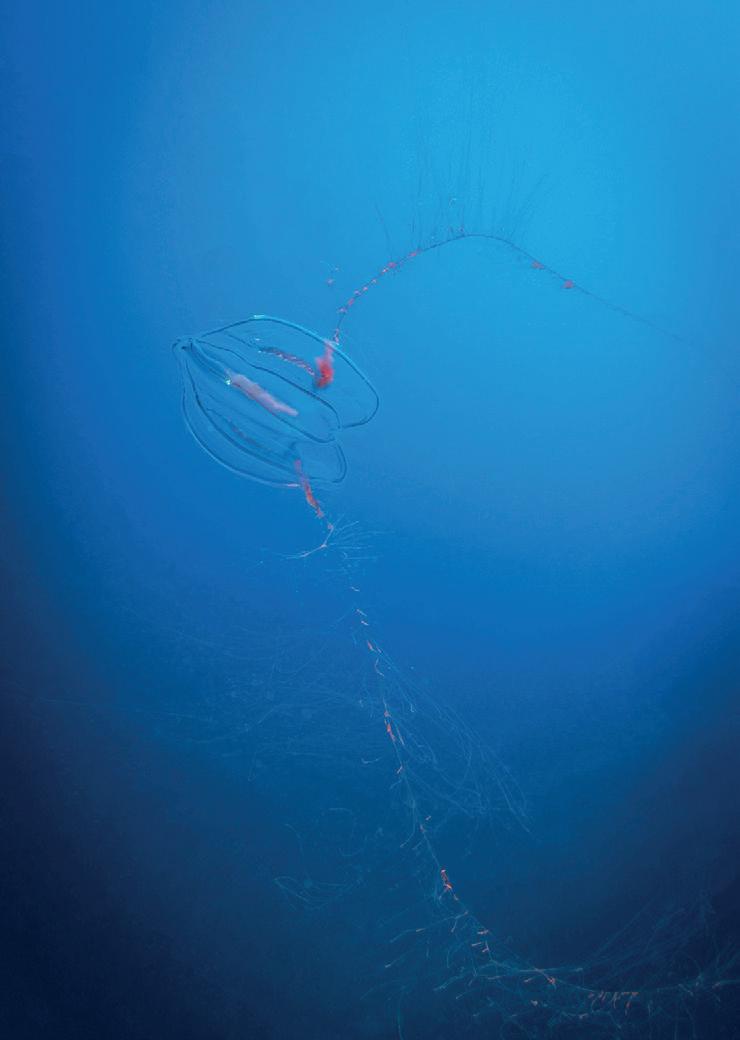
drifting nearby. The ones we see are yellow, but they also come in shades of red and orange. They have long, thin tentacles that can sting and trigger allergic reactions in humans. The tentacles are tangled and very lengthy. The Cyanea capillata, also known as the “lion’s mane jellyfish,” gets its name from its unusual appearance. Its bell (the main body) is ruffled and filled with countless thin filaments resembling a lion’s mane. In the same area, we encounter another stunning creature that looks like a jellyfish but isn’t one – it’s a comb jelly. It’s transparent and glows like LED lights. It’s equipped with rows of cilia that produce bioluminescence – an extraordinary phenomenon where these marvelous organisms generate their own light. As a result, we witness a dazzling display of colorful lights traveling across the creature’s entire body. Moments later, it unfurls two thin tentacles, each lined with delicate appendages – these help it move. It feeds on plankton and is an agile little predator. We completely lose track of time, immersed in this magical underwater world.
After returning to the Ortelius, we rest, enjoy lunch, and get ready for a land excursion. We dress warmly and meet at the designated spot, ready for a possible encounter with musk oxen this time. Moments later, we hear over the ship's intercom that a crew member has spotted a polar bear on the hiking trail. In such cases, we quickly switch from Plan A to Plan
B – replacing the land excursion with a zodiac cruise. At the same time, the crew prepares to evacuate the scouts who had set off for a full-day trek that morning. The zodiacs are ready to head out and meet them at the arranged pickup point. Meanwhile, we board the inflatable boats and head out to admire the icebergs. The sky has clouded over, and the temperature has dropped significantly. Some people are underdressed, still remembering yesterday’s hike under the bright sun – and to top it off, they ended up on a zodiac with photographers, who circle a single iceberg countless times.
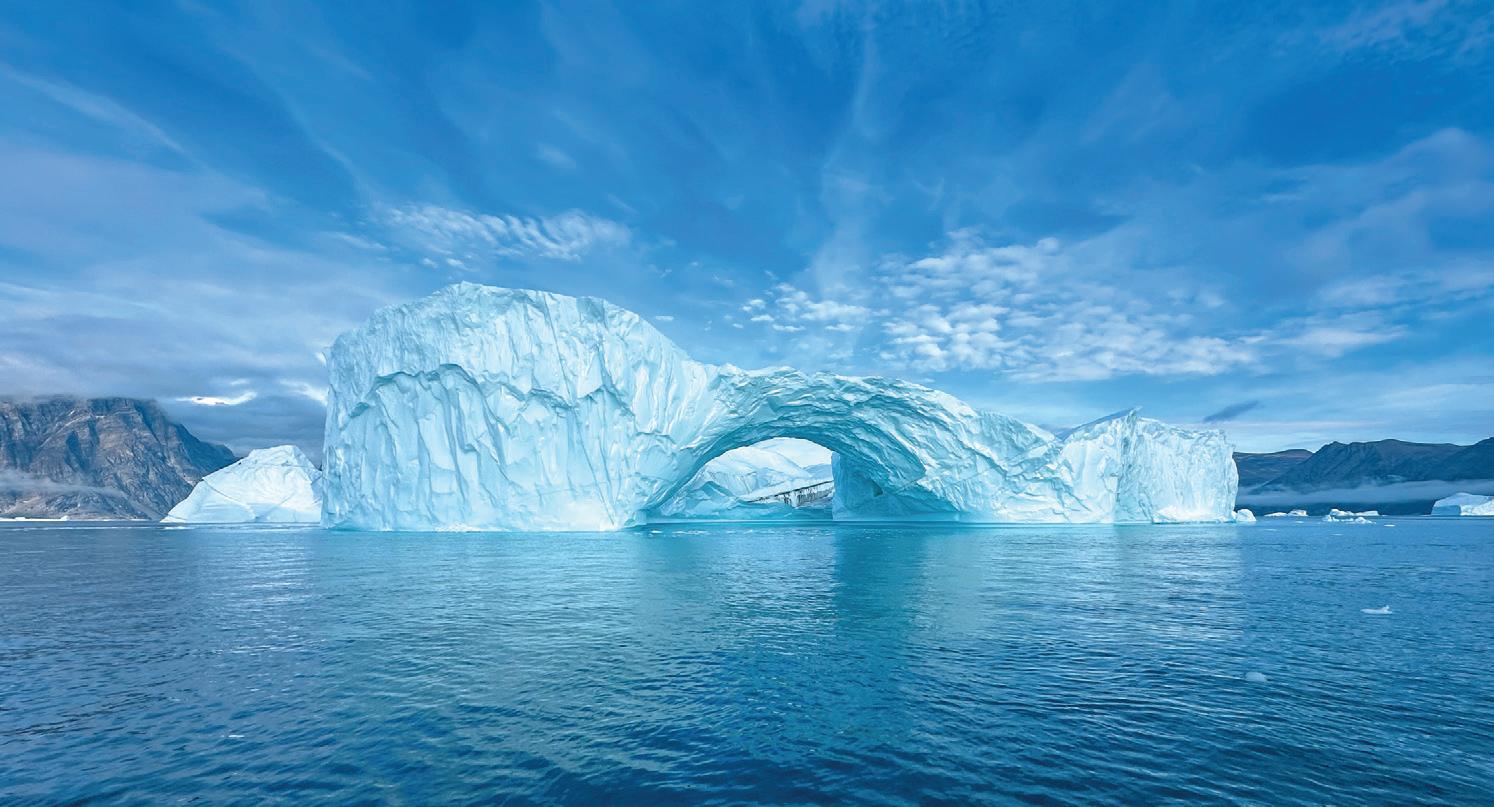
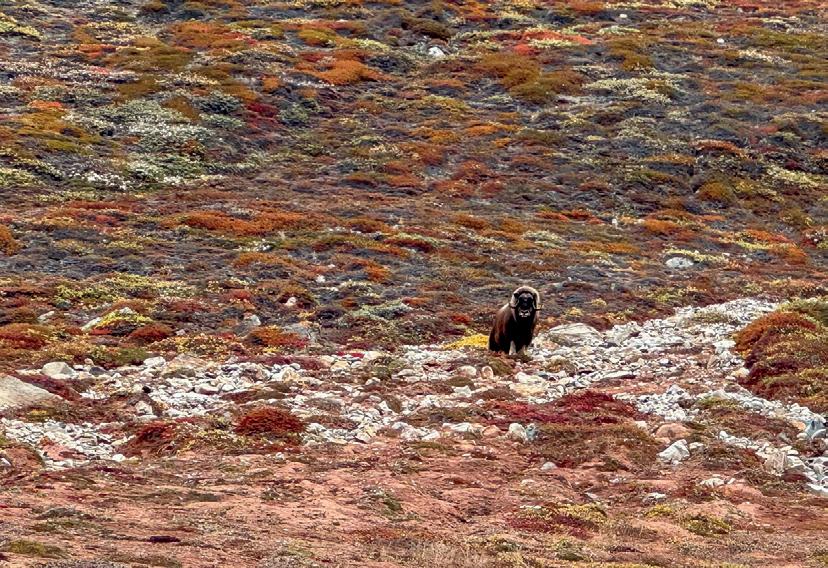
Bundled up in multiple layers, we admire the incredible, majestic ice formations in their bizarre shapes and colors. Between two icebergs, we spot a family of musk oxen on a steep rocky slope. From a distance, they resemble oversized, longhaired guinea pigs, but in reality, they’re massive, shaggy mammals resembling bison. They’re perfectly adapted to Arctic conditions and can survive temperatures as low as -50°C. Their bodies are insulated by a thick, two-layer coat that protects them from the cold. They feed on lichens, moss, and the hardy grasses that grow on rocky outcrops.When threatened, musk oxen form a defensive circle with the calves safely in the center. We watch them from a respectful distance so as not to startle them. Nearby, we spot two small, unmoving white dots – Arctic hares, perfectly camouflaged in their frozen surroundings. Staying perfectly still is their best defense, making them nearly invisible to predators. Despite the harsh climate, both the flora and fauna in this part of the world are incredibly rich and diverse. As we slowly drift away, we keep our eyes on these Arctic creatures, wanting to savor their presence as long as possible. A seal suddenly darts past our zodiac –quick and graceful. It surfaces for just a moment, as if curious to see what’s happening, then disappears without a trace. We continue on, admiring more icebergs. One is strikingly beautiful, glowing with a vivid blue hue. We circle it several times to fully absorb its splendor. Another resembles a massive cathedral, complete with an arched entrance. We are filled with an overwhelming sense of happiness and gratitude for being able to witness such fleeting beauty.
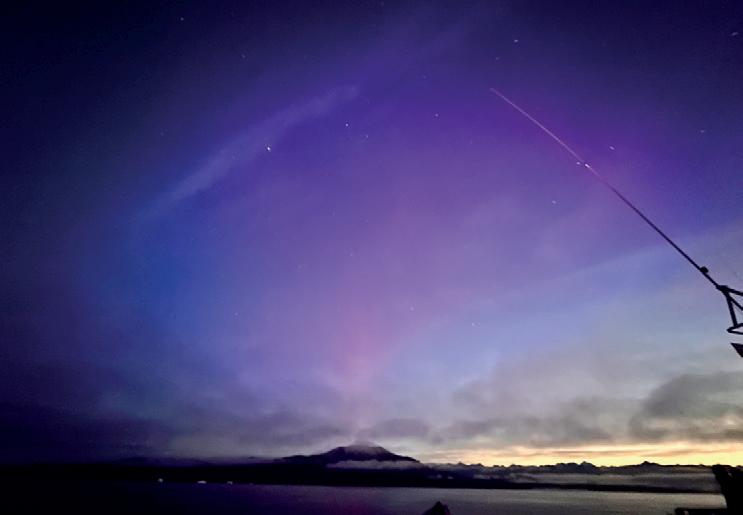
We return to the ship in the late afternoon, the sun already low on the horizon as dinner time approaches. We’ve spent three hours on the zodiac, which seemed to pass in the blink of an eye. Every day of our expedition in Greenland brings a wealth of new experiences. Tonight, dinner is served as an open-air barbecue – the helipad at the rear of the ship is transformed into an elegant restaurant under the stars. The crew sets up tables and benches, while the chef prepares gourmet dishes on the grill. Soft music drifts from the speakers, and we chat, surrounded by towering peaks, while watching a spectacular sunset. A little after 1 a.m., we’re awakened by Claudio over the ship’s intercom – the crew has spotted the northern lights. It’s a rare sight at this time of year. We throw on thick outer layers over our pajamas and rush to the deck. The sky is perfectly clear, filled with stars and streaked with white bands cutting across the deep navy sky. I don’t see the usual green or pink hues typically associated with the aurora. I grab my camera and start taking photos. It’s only when I look at the screen that I realize it’s there – the aurora is faint, still too weak to be visible to the naked eye. Once again, nature surprises us with an unexpected and magical show.
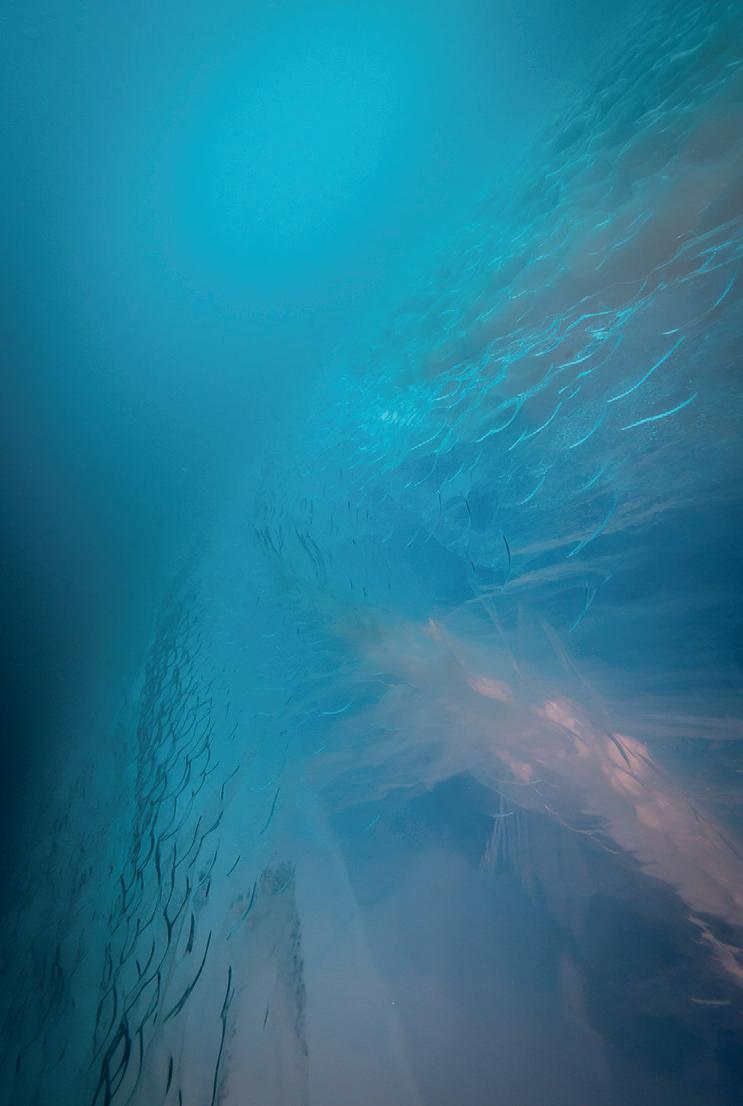
The next day, we complete two dives. The first one is in the morning, beside an iceberg bathed in sunlight. In search of the ideal dive site, we travel about three kilometers from the Ortelius. The iceberg glows with a beautiful blue hue, shining like a mirror in the morning sun. We descend slowly, eyes on our dive computers. We begin to circle the iceberg – it seems similar to the others we’ve explored so far. But suddenly we stop, mesmerized: a wide band of crystal-clear ice slices vertically through the iceberg. We move closer and illuminate it with our torches. As the light hits, magic unfolds. Inside the iceberg, surreal formations appear – like delicate bird feathers layered atop one another. We peer deep into the heart of the ice through the transparent sheet, seeing not our own reflection, but the icy world within. None of us have ever seen anything so breathtaking, so otherworldly, so deeply moving. We spend the remainder of the dive in that single spot, captivated by the play of light, colors, and textures dancing inside the frozen monolith.
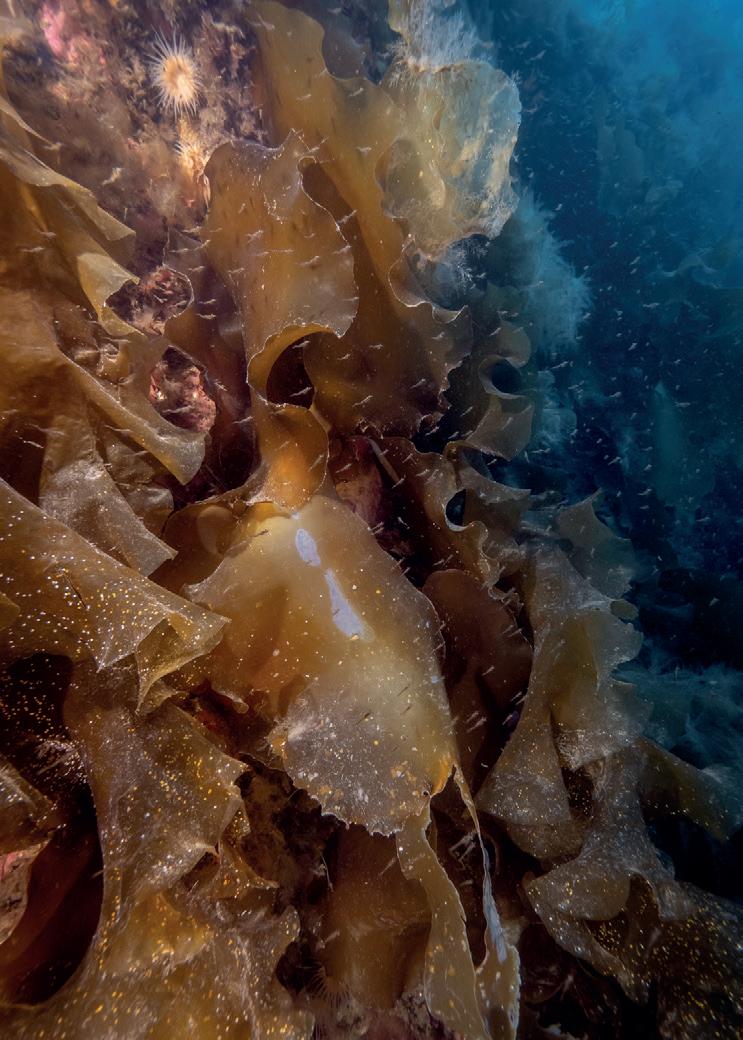
Our afternoon dive takes place along a vertical wall, where we’re amazed by the clarity of the water and the anemone gardens. They look both stunning and surreal in the stark, Arctic waters. We descend slowly, swimming alongside the wall, and soon encounter wide, undulating leaves attached to the rock face – they belong to brown algae. These create beautiful underwater forests, sheltering tiny marine organisms. Every dive in Arctic waters is an extraordinary experience and a lesson in humility. On the one hand, we marvel at the beauty of a world so different from tropical reefs; on the other, we struggle against the cold that pierces our bodies. Despite the discomfort, what we witness beneath the surface of Greenland’s waters consumes us completely. We end this beautiful day with an icy plunge. Standing on the rocky shore, we strip down, lay our clothes on towels, and step into the water wearing only swimsuits. The stony bottom stings my feet, the water is freezing, and we wade in deeper – up to our necks. Within moments, my body goes numb from the cold, my breathing quickens, and I start to wonder how I’ll make it back to shore when I can’t even feel my limbs.
I begin to run, just to reach the shore faster and wrap myself in a thick towel. Cold-water plunges are definitely something
one needs to practice regularly to truly benefit from them. Stepping out of your comfort zone takes courage, but the reward is insight into your own limits and strength. We return to the ship by zodiac and warm ourselves with hot tea.
The next morning greets us with strong winds and pouring rain. The weather has changed drastically. It’s bad news – today we were supposed to visit the village of Ittoqqortoormiit, the only inhabited settlement on Greenland’s eastern coast. The village is known for its large, colorful houses, easily visible from afar. Unfortunately, the worsening weather quickly disrupts our plans. By midday, the wind strengthens and reaches 45 knots. There’s no way we can board the zodiacs and travel to the island under such conditions. The captain and crew make the difficult decision to cancel the shore excursion. We remain anchored for several hours within sight of the settlement, hoping the weather will improve – but it doesn’t. However, part of the crew must get on a zodiac and reach the island regardless. They have to deliver a generator to the village – it’s the only opportunity to do so, as summer is coming to an end in this part of the world, and we may be the last ship to arrive before winter sets in. All of us watch anxiously as events unfold. The generator is carefully loaded onto the
zodiac, and a small group of brave crew members set off. The waves are high, crashing over the deck. They move slowly, struggling against the sea. We follow their progress through binoculars, holding our breath and silently wishing them success. Kapitan zacumował The captain brings Ortelius as close to shore as possible, but there’s still a significant distance to cover. The crew reaches the island’s coastline, but the wind and waves make docking impossible. They steer left, searching for a safer place to land. Finally, they reach a small peninsula jutting into the sea, which acts as a natural breakwater. After a long and difficult struggle with the harsh conditions, they manage to reach the shore, deliver the generator to the locals, and quickly head back. We all wait in anticipation for their safe return to Ortelius. They are, without a doubt, today’s heroes. Once the crew is safely back on board, we eat lunch, secure our belongings in the cabins, and leave the calm waters of the fjord – only to sail directly into a storm. Most passengers retreat to their cabins after taking seasickness tablets, while a few others gather at the ship’s bridge, admiring the towering six-meter waves crashing around us.
The captain and crew handled the rough weather brilliantly, and by dawn the next day we safely reached the northern coast of Iceland. A thick fog covered the entire world, making it nearly impossible to see anything when stepping out onto the deck. We head to breakfast and share our impressions. In the afternoon, the fog lifts, revealing the wild beauty of the surroundings –and then, on the port side, humpback whales appear. Cries of joy echo throughout the ship. Moments later, dolphins join them. They swim very close, so close that we watch them without binoculars. On every side of the ship, something is happening. Several humpbacks pass right by us; we can take a good look at them, see their eyes, even the barnacles on their skin. Thanks to the change of plans and the bad weather that sped up our course, we arrived at the Icelandic coast earlier – giving us more time to enjoy the presence of whales and dolphins.
Encountering wild nature in such a way is an extraordinary experience and a privilege. Later in the afternoon, we raise a toast with the captain and crew, thanking one another for a safe ten-day journey to one of the most remarkable corners of the world. Our hearts are filled with both joy and gratitude for the magical time spent aboard Ortelius. At dawn, we arrive at the Akureyri dock. After breakfast, we disembark and head to the airport – enriched by experiences and memories that will stay with us for a long time, like magical light sealed in ice.
Face to Face
with a HUMPBACK WHALE
Text KLAUDIA KUJAWIŃSKA-NIWIŃSKA
Photos DAMIAN NIWIŃSKI-KUJAWIŃSKI
FRENCH POLYNESIA: for us, the most expensive vacation of our lives – but is it truly a paradise on Earth?
We have to find out for ourselves.
After a year of preparations, we finally set off. Full of good energy, a little stressed, but hungry for adventure, we pack the car and begin our journey.
How do you get there? It’s not an easy task. French Polynesia lies almost 20,000 km from Poland, and the time difference is a full 12 hours. But for us, that’s not a problem – after all, what wouldn’t you do for that one perfect photo?
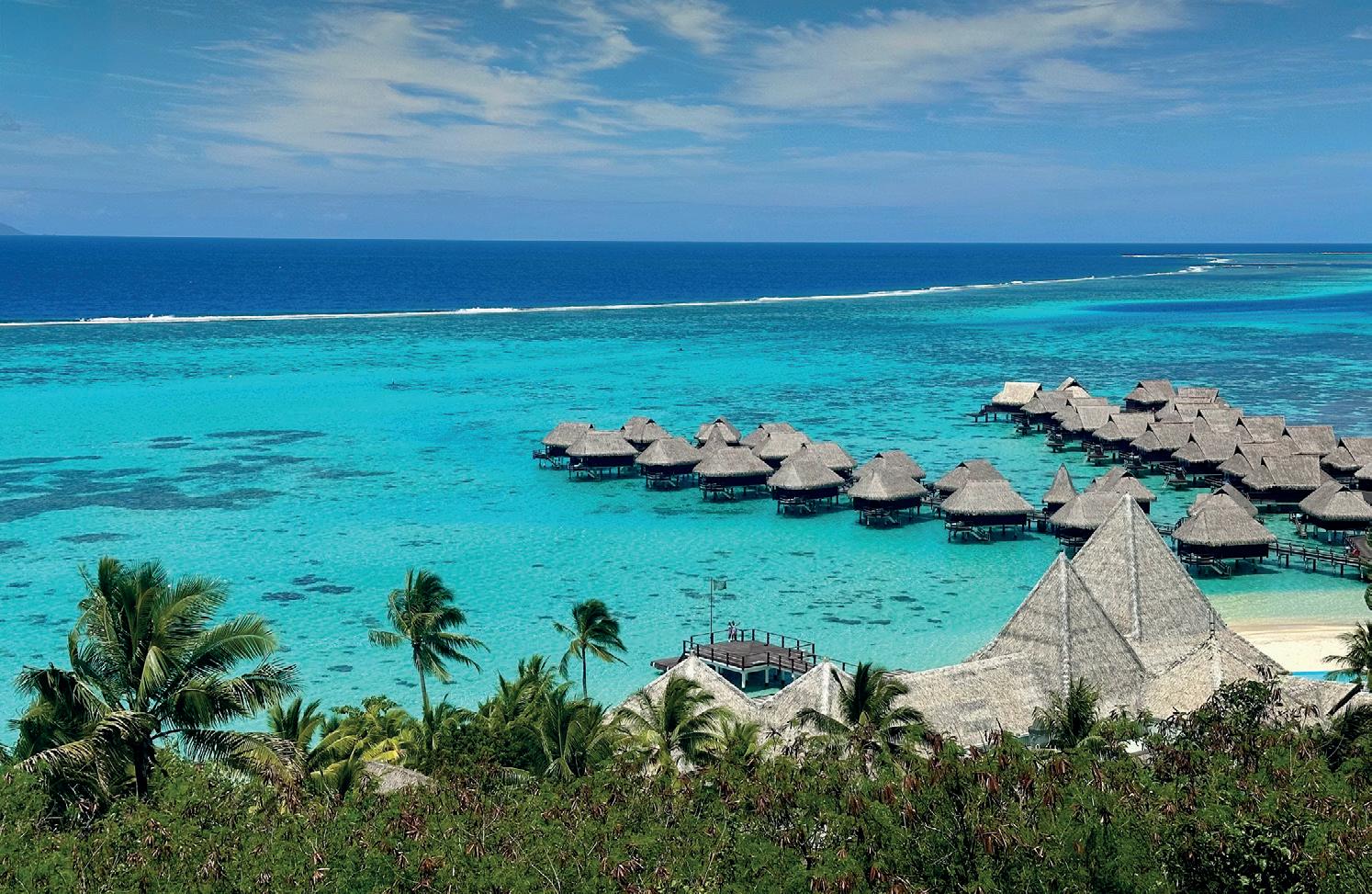
This time, we plan to visit three islands: Moorea, the famous Bora-Bora, and Rangiroa.
We depart from Berlin, then make stops in Copenhagen and San Francisco – where we regain some strength before continuing on – then Papeete, and finally a ferry to Moorea. We left
Poland just after midnight on Thursday, and didn’t arrive at the hotel until Saturday.
When we finally reach the hotel, we’re welcomed with beautifully fragrant necklaces made of Tahitian Gardenia – the national flower of Polynesia, symbolizing love, harmony, and beauty. We can still remember that wonderful scent drifting through the gardens and streets.
Tired, but excited for the adventures ahead, we officially begin our holiday.
The next morning, when it’s already evening in Poland, we’re watching a breathtaking sunrise over Moorea. A group of young dogs accompanies us – there are plenty of them roaming freely on the streets of Polynesia. Of course, when encountering unfamiliar dogs, you need to keep your distance and use common sense. Fortunately, all the dogs we met were very friendly.
Our bodies are struggling to adjust to the new time zone, but we already have plans to fulfill our biggest dream – swimming with humpback whales.
The season for these incredible encounters lasts from mid-July to early November.
As of this year, the rules for swimming with humpbacks in Polynesia have been tightened to protect these beautiful animals: a maximum of 3 boats can be near a whale, and each boat may carry only 6 tourists. Boats must maintain a safe distance of at least 100 meters from the animals – so you have to kick your fins a bit to cover that distance.
Our trip began with an introduction to the boat rules and a briefing full of interesting facts about these magnificent mammals. These majestic giants come to Polynesia to mate and give birth in the warm waters around Moorea, and then raise their calves before the long journey back to the cold Antarctic seas.
During their 8-month migration, humpbacks do not eat; instead, they rely on stored fat reserves, losing up to 25% of their body weight.
A female gives birth to only one calf every 2–3 years. At birth, the calf weighs 2–3 tons and measures 3–5 meters in length. Immediately after birth, the mother pushes it toward the surface so it can take its first breath.
For the first year, the calf feeds exclusively on its mother’s milk, which is 40–50% fat and has the consistency of toothpaste – to prevent it from dissolving in water.
The calf quickly gains weight, eventually reaching 14–17 meters and 30–45 tons as an adult.
Besides humpback whales, the waters around the island are often home to False Killer Whales, Oceanic Whitetip Sharks, Bottlenose Dolphins, Spinner Dolphins, and occasionally the more aggressive Lemon Sharks.
So while we were focused on watching the whales, our guides kept a sharp lookout for any approaching sharks. In case of such an encounter, you must remain calm and maintain eye contact with the shark – most often, the shark will simply swim away.
A week before our arrival, the waters around Moorea were visited by a group of about 40 sperm whales, and for the first time in history, a pod of orcas was sighted there. It was an extraordinary event, as orcas had never been seen in this area before. Unfortunately, their presence made the humpbacks extremely cautious while protecting their young, and for several days they weren’t seen at all.
Once we reached open water, we began our search. Our “targets” were:
´ sleeping humpbacks,
´ singing males,
´ mothers with calves.
We saw many humpbacks coming up for air and lots of tail flukes (as a fun fact: a humpback’s tail is like a human fingerprint – completely unique). But we must remember: these are wild animals, and they are the ones who decide whether they allow us to swim with them. An adult humpback can hold its breath for up to 30 minutes, so when it disappears beneath the surface, you never know whether it is sleeping or has swum off into the deep blue. Every time, you must wait those 30 minutes to see if the same individual resurfaces in the same place.
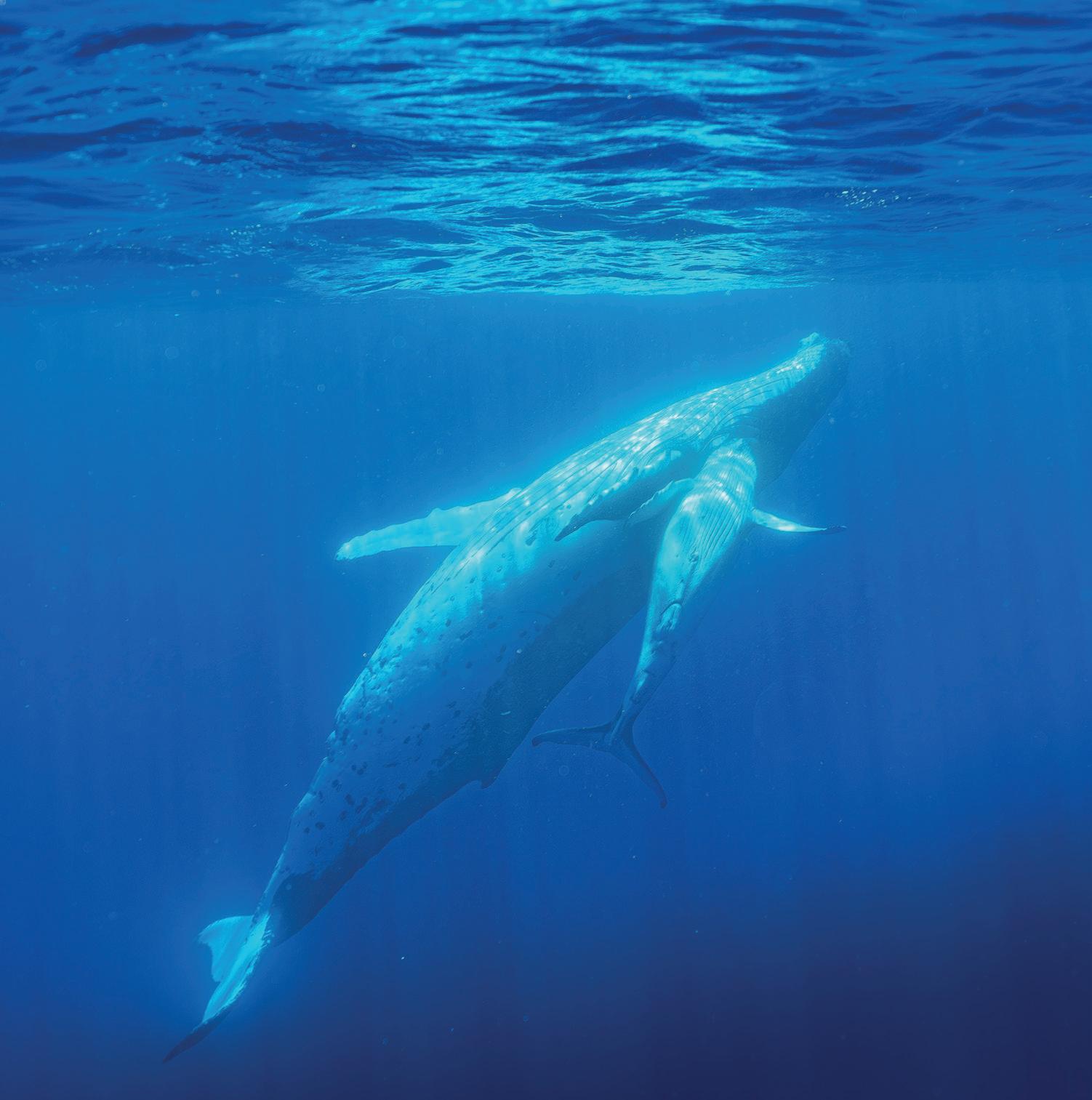
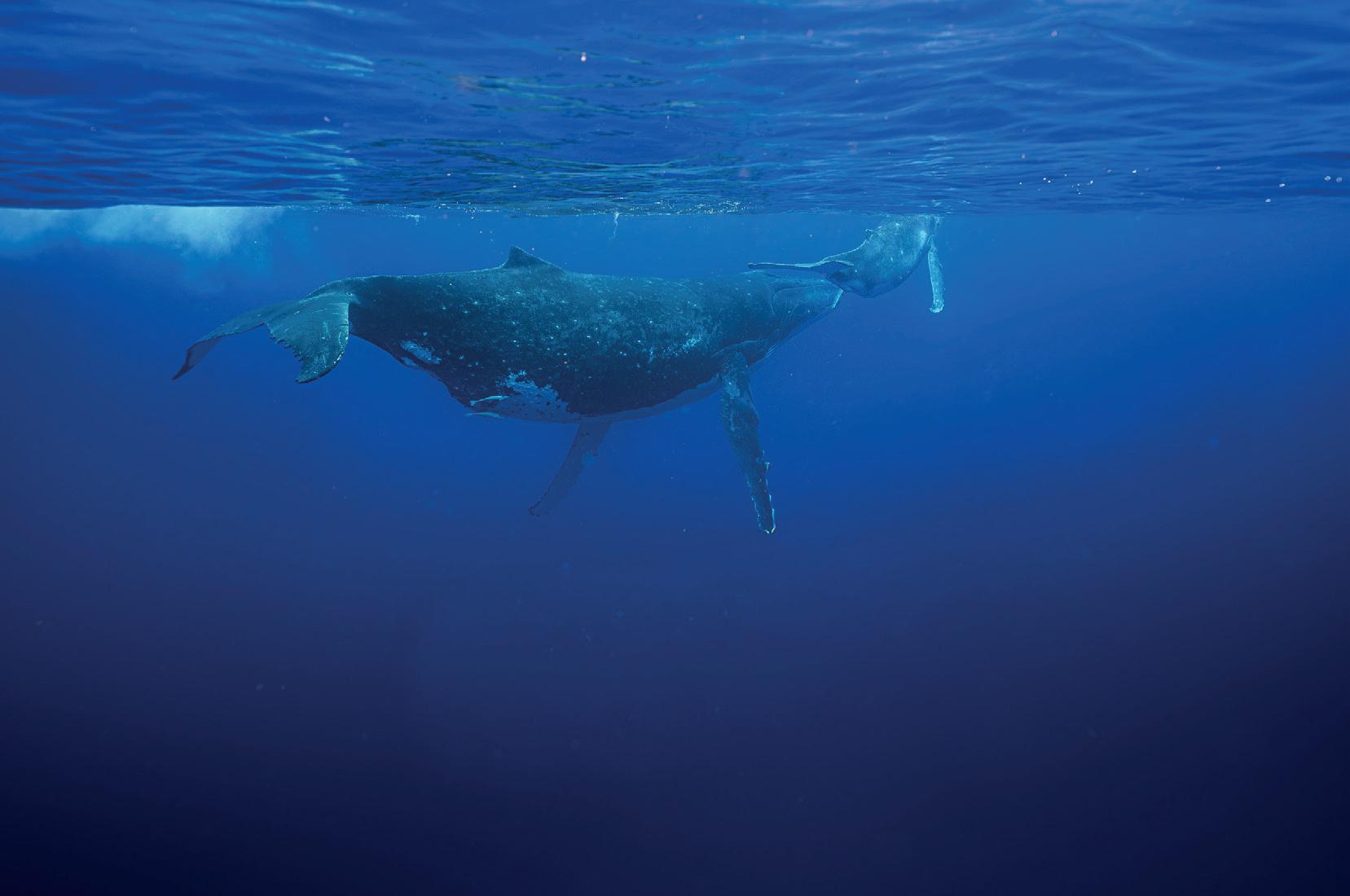
The easiest ones to observe are the calves, which must breathe every 3–5 minutes. A young whale usually plays near the surface while the mother sleeps deeper below – yet always keeping an eye on her baby.
The first humpbacks we managed to find were two adult individuals sleeping deep beneath us, barely visible. After returning to the boat, we continued the search. At one point, we were already losing hope – after three hours on the boat, we still hadn’t had a close encounter with a humpback. But then we spotted a mother with her calf. We quickly put on our masks and fins, grabbed the camera and the GoPro, and jumped into the water. Full of hope, we kicked our fins as hard as we could to reach them.
Suddenly… there they were.
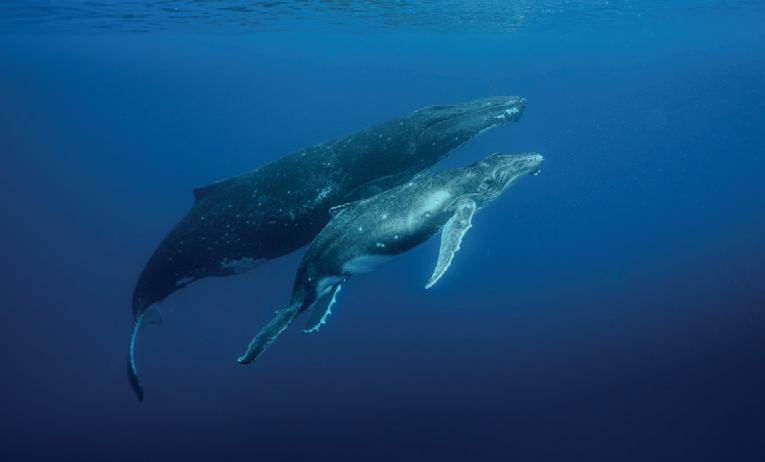
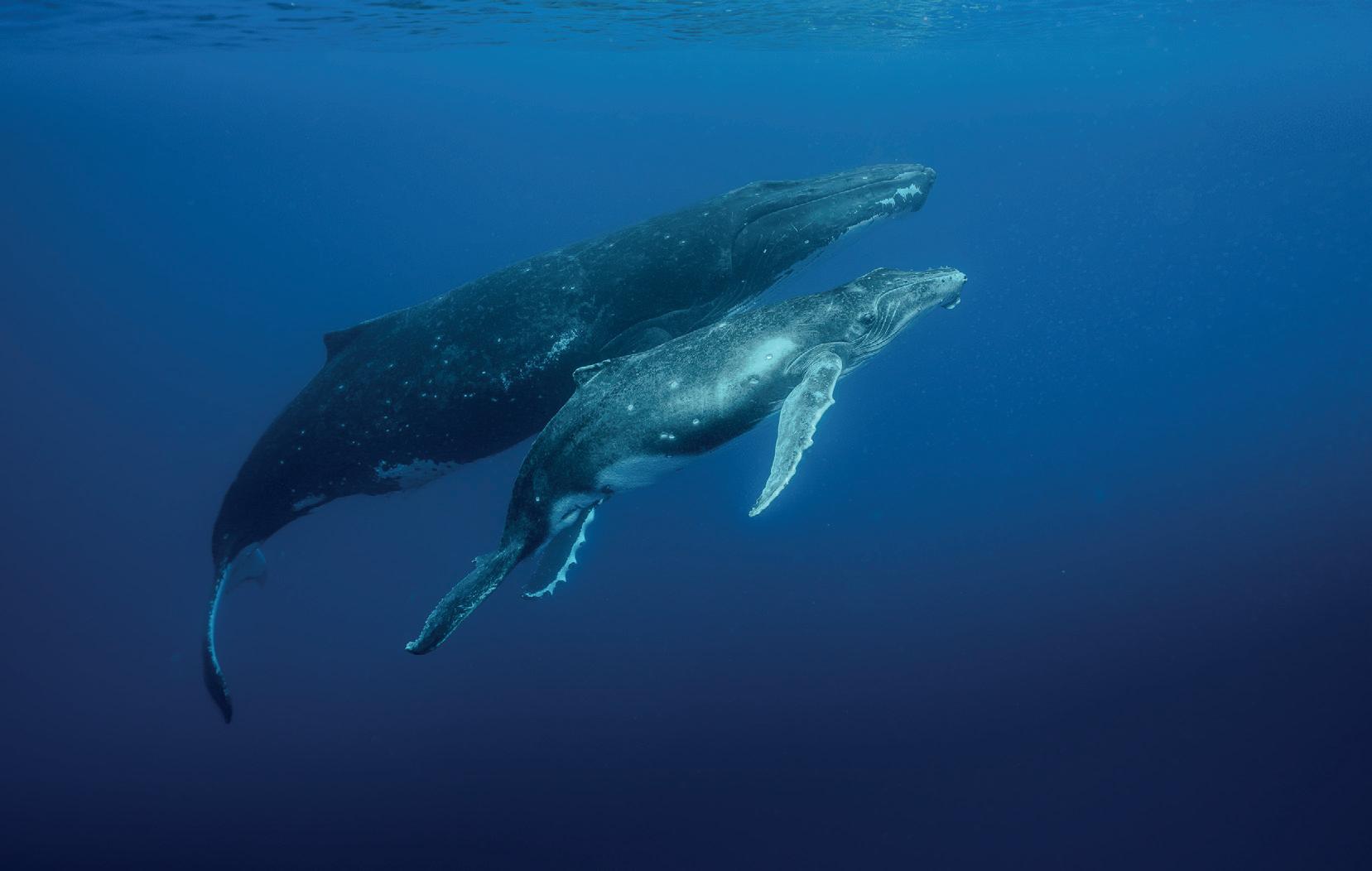
From the depths, the mother emerged, and right beside her – still unsure, flexible, curious – her smaller version. They surfaced literally a meter away from us, took a breath of fresh air, and then disappeared again into their underwater world.
We returned to the boat with huge smiles on our faces. We had all witnessed something extraordinary – a true wonder of nature.
Our first meeting with the humpbacks was with Pacific Attitude. This exceptional team not only organizes whale-watching
and other activities on Moorea, but also donates part of the funds to a foundation dedicated to shark conservation.
Throughout the entire trip we felt very safe, and our guide took special care of those who didn’t feel comfortable in deep water. The whole experience was friendly, cheerful, and full of great energy.
What touched us the most was the passion and respect our guide had for the surrounding nature.
The entire experience was conducted with great care for the animals’ safety and full respect for their natural environment. Thanks to that, we felt that we were part of something meaningful – not a tourist show, but a genuine encounter with nature.
We were incredibly happy that we had managed to see these great mammals up close – but we wouldn’t be ourselves if we stopped there.
Three days later, at 8 a.m., we were back on the boat, heading out in search of whales once again. This time, we circled the entire island of Moorea… and NOTHING. We saw only one humpback passing by. Everyone was discouraged as the minutes went by and we kept rocking on the waves. The sun was merciless, and we were practically cooking inside our wetsuits.
Finally, our guide spotted something on the horizon. We waited to see if the whales would surface again. Suddenly – they appeared. Everyone jumped into the water as quickly as possible, and before our eyes an incredible sight unfolded: a mother with her calf, escorted by another adult humpback.
We were incredibly lucky – they allowed us to enjoy their presence for almost 45 minutes. During that time, the adult humpbacks slept while the calf played near the surface, diving, rolling, and performing its underwater dance just for us. Occasionally it went deeper, slipped between the adults, and then all three surfaced together to take a breath.
The entire time, we could hear soft sounds spreading through the ocean. Only after returning to the hotel and listening to the recordings did we realize that it had been the song of an adult humpback – a calm, long melody that can travel thousands of kilometers underwater.
It is in this very place – warm waters, under the protection of its mother and another adult whale, surrounded by these beautiful songs – that this young calf grows up, preparing for its long journey to the cold Antarctic seas. We were only temporary guests in its world.
To be continued…
DOLPHINS, HUMANS AND A THIN LINE
The Controversy Around Feeding Wild Dolphins in Tin Can Bay
Feeding wild dolphins has been stirring emotions for years.
For some, it is a beautiful tradition and a chance to encounter these extraordinary animals up close.
For others, it’s a risky practice that interferes with the natural world.
Australia knows both scenarios. On one side, Monkey Mia – an example of a place where feeding went wrong. On the other, Tin Can Bay, often presented as proof that with strict rules, a compromise can be found. The question is: for how long?
A Tradition That Started With One Dolphin
The story of Tin Can Bay (Queensland, Australia) began in the 1950s. Local fishermen started feeding an injured female bottlenose dolphin, later named Scarry, who regularly approached the jetty after being hurt in fishing nets. When she recovered, she kept returning – and over time, more dolphins began to appear. What started as a grassroots initiative grew into a local tradition and, eventually, into a tightly regulated program supervised by Queensland authorities.
How It Works Today
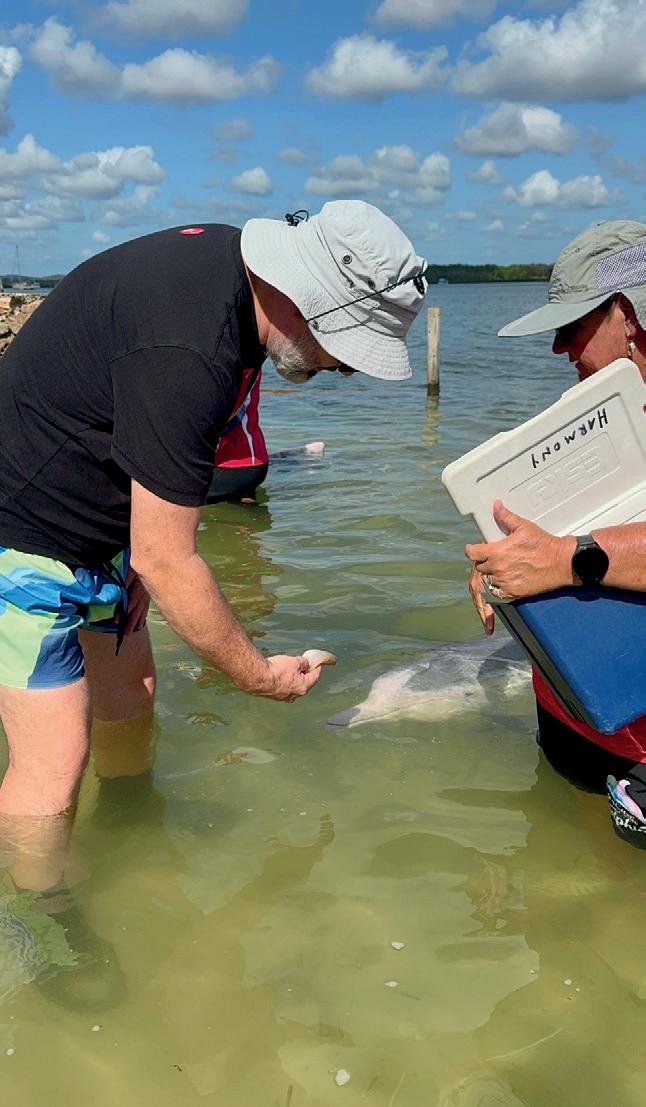
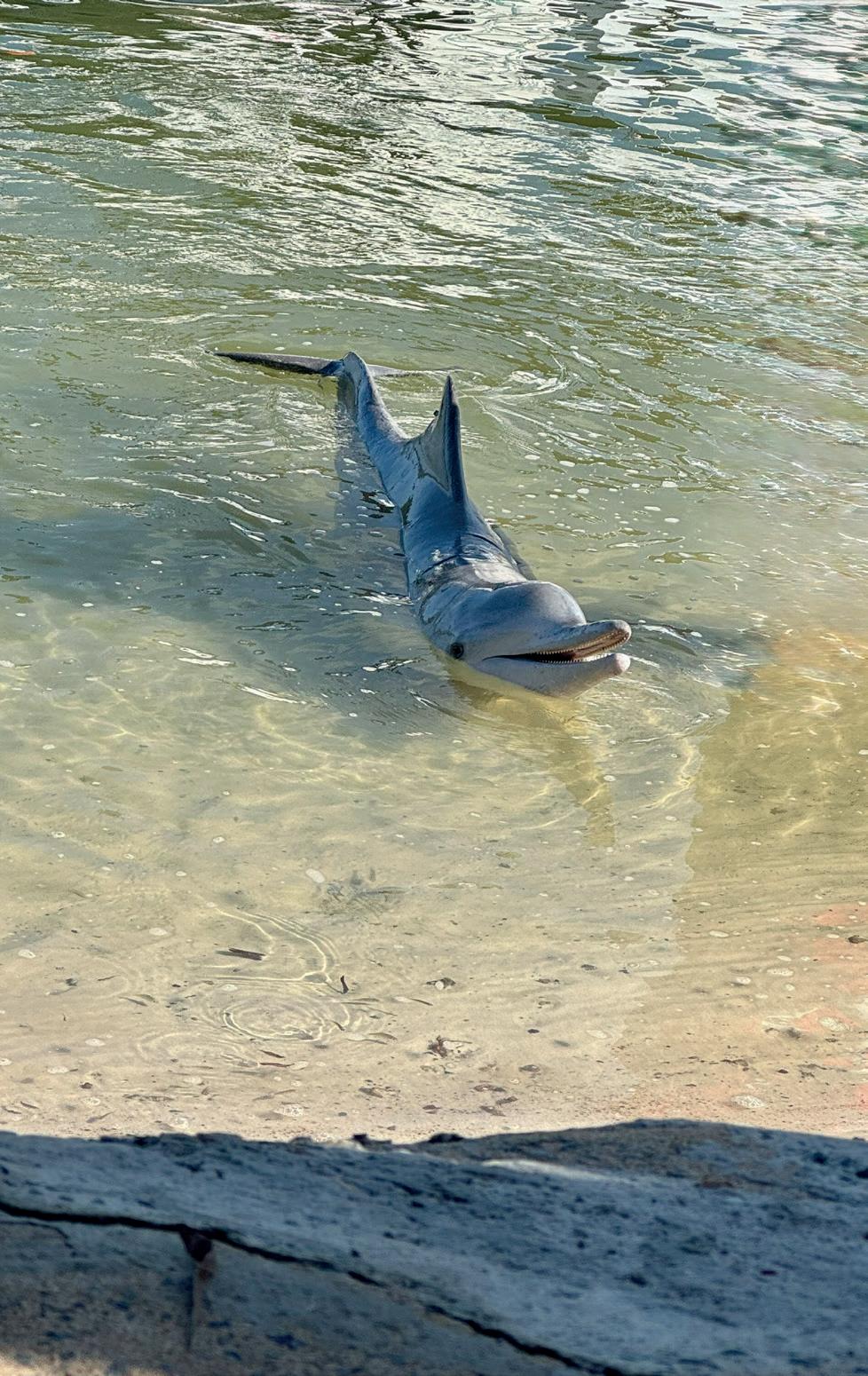
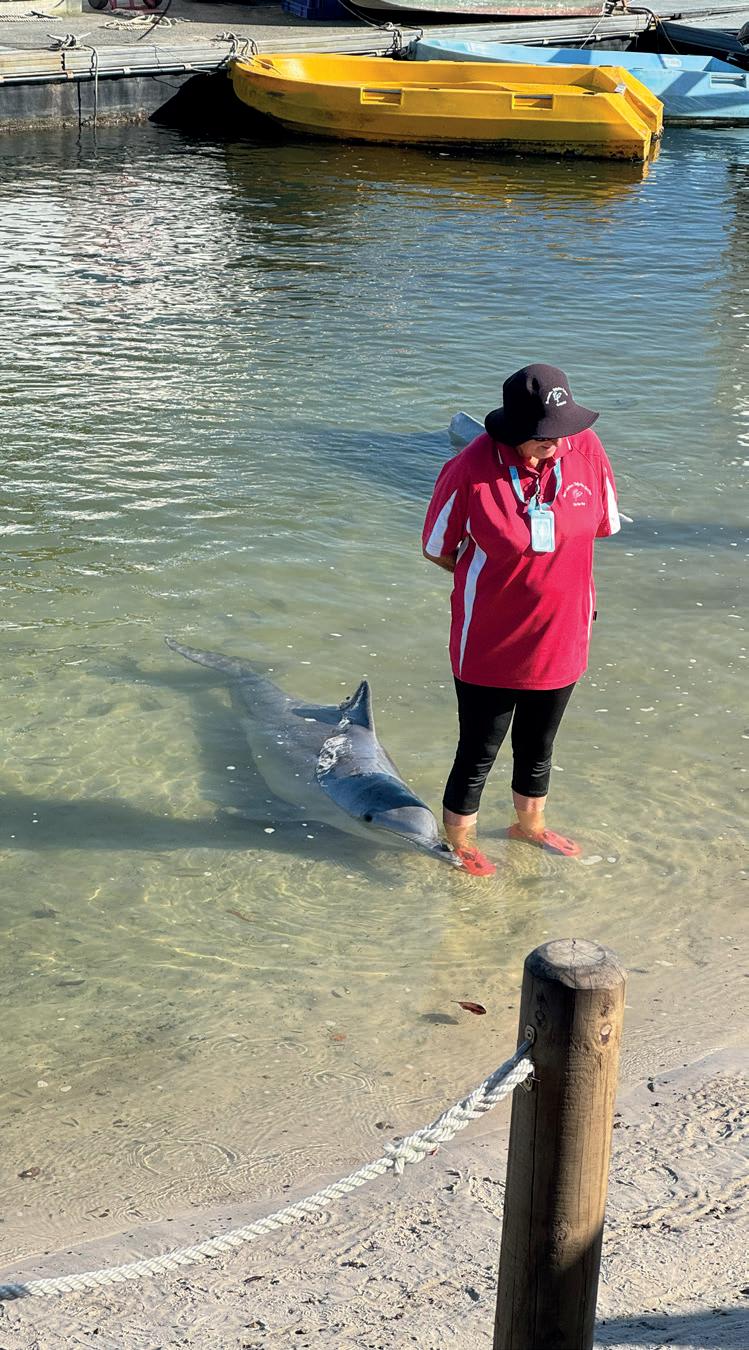
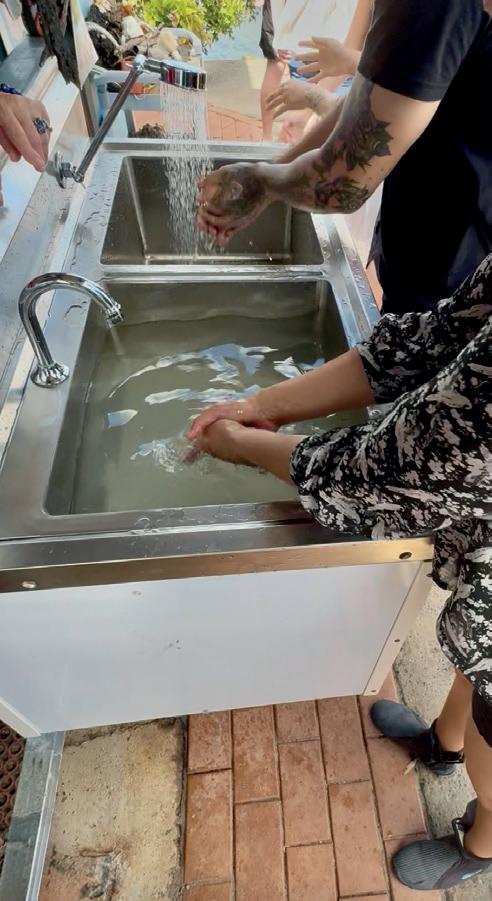
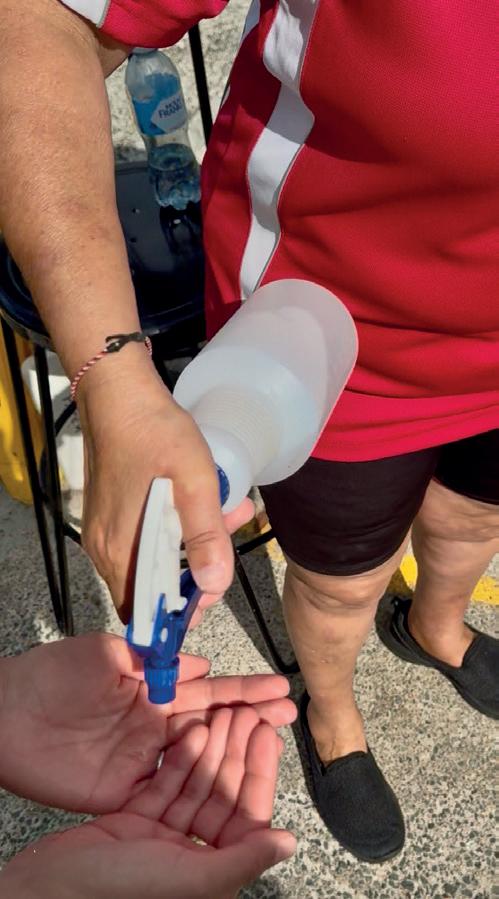
The dolphins that come for feeding today are Australian humpback dolphins (Sousa sahulensis). Tin Can Bay operates under strict rules designed to protect both humans and animals:
´ no touching the dolphins,
´ no entering the water in regular shoes (only dive boots allowed),
´ volunteers keep order and supervise visitor behavior,
´ each dolphin receives only 2–3 kg of fish, depending on age and size,
´ a complete ban on overfeeding.
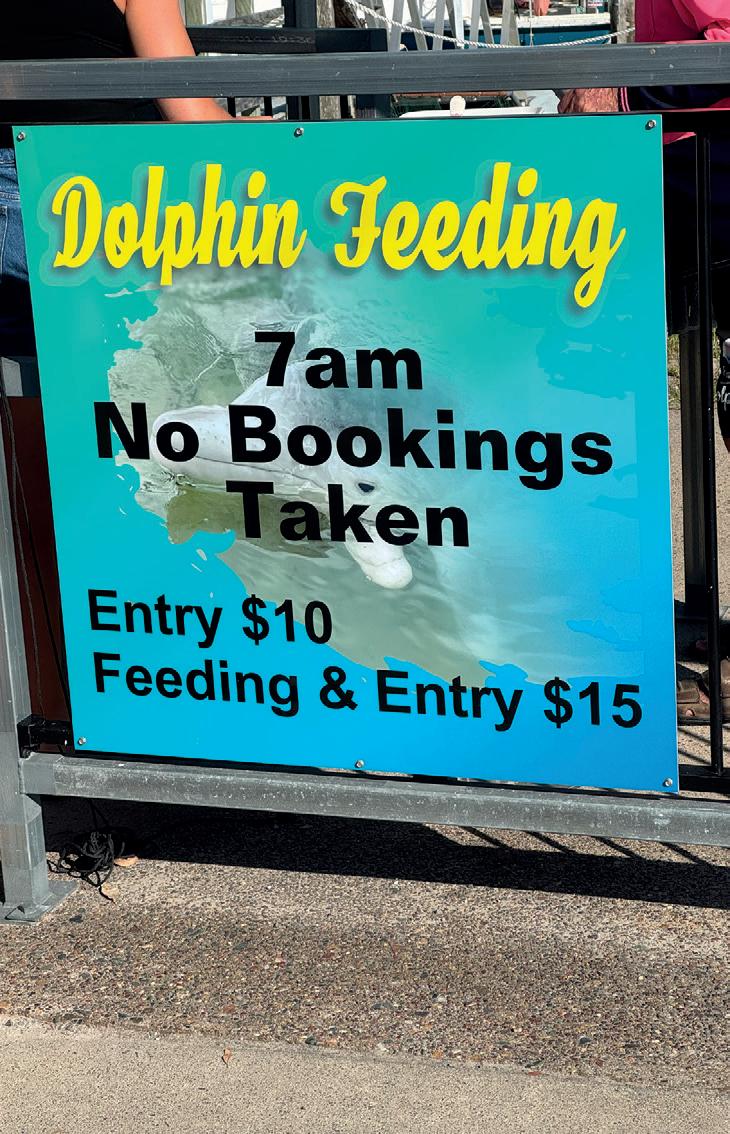
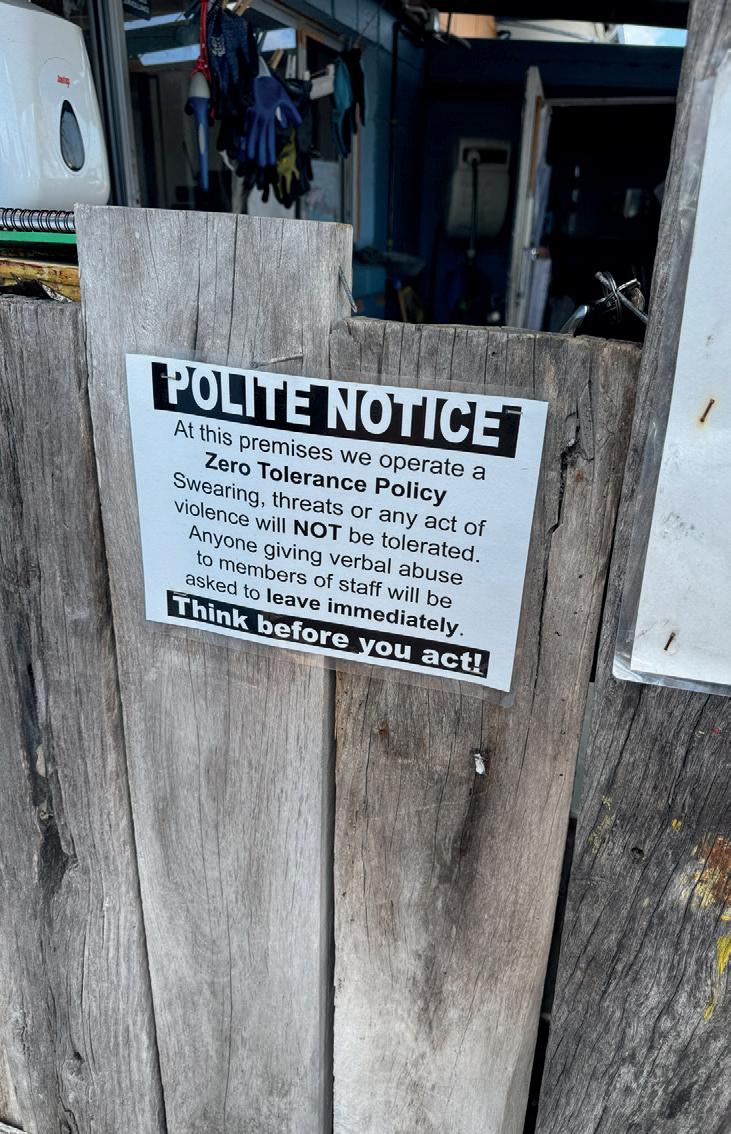
Feeding always begins at 7:00 a.m. with short educational talks explaining the rules, the species’ biology, and the importance of minimal interference. Entry costs 10 AUD, with an additional 5 AUD to feed a fish.
Most importantly: THE DOLPHINS DECIDE WHETHER THEY COME. Sometimes it’s two. Sometimes six. During our visit, there were six. Notably, Tin Can Bay has reported no aggression within the pod and no dolphin–boat collisions.
Why Are the Portions So Small?
An adult bottlenose dolphin needs about 10–15 kg of fish per day (roughly 4–6% of its body weight). The portion given at Tin Can Bay is only 15–25% of the daily requirement. It is meant to symbolize the relationship – not replace natural hunting. This is crucial, because excessive feeding elsewhere has led to behavioral disruptions.
The Mysterious “Gifts”
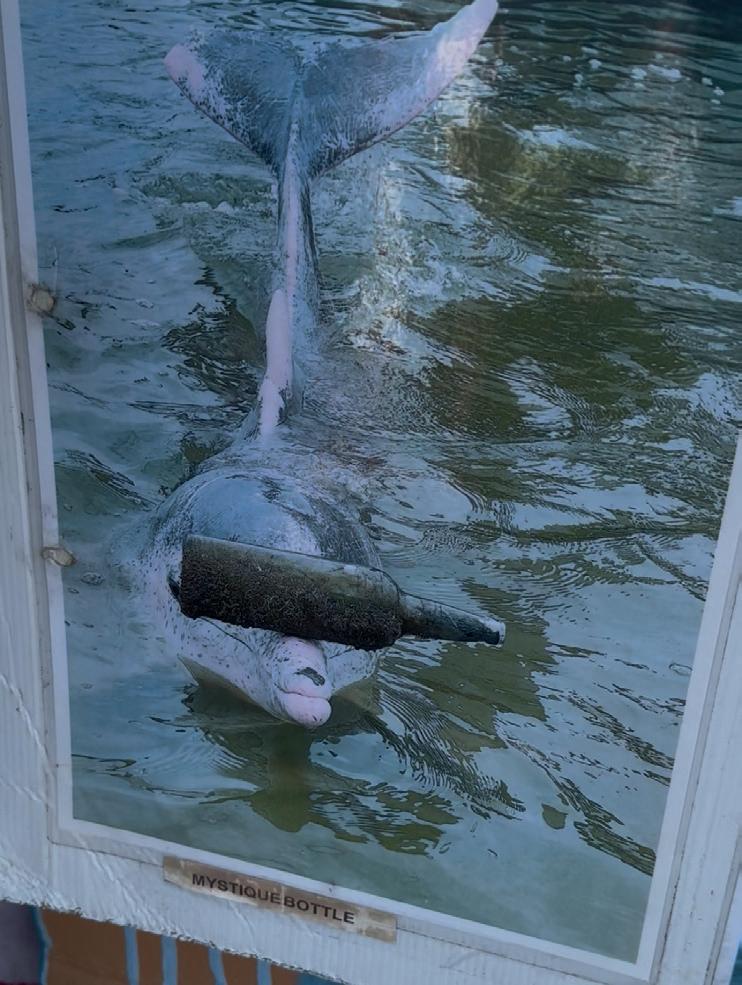
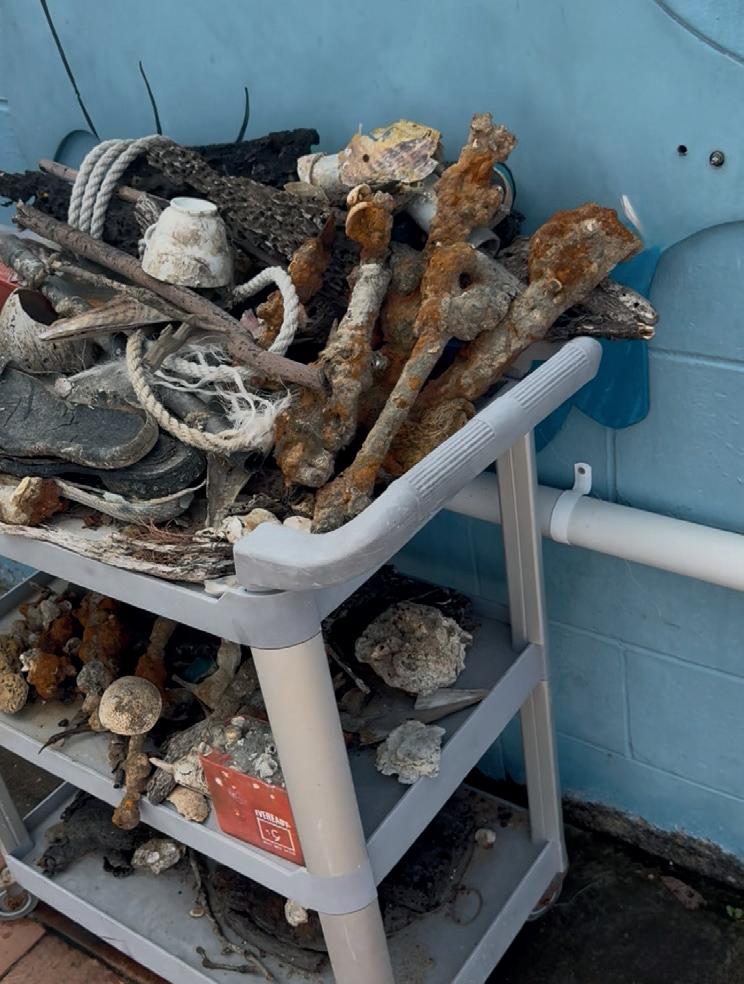
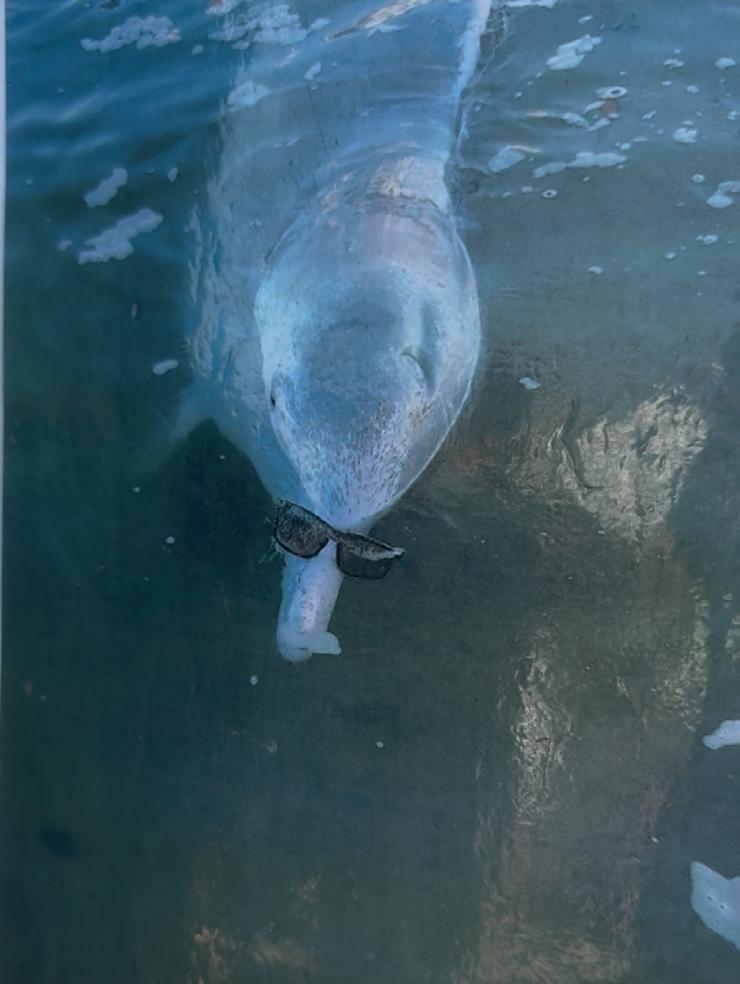
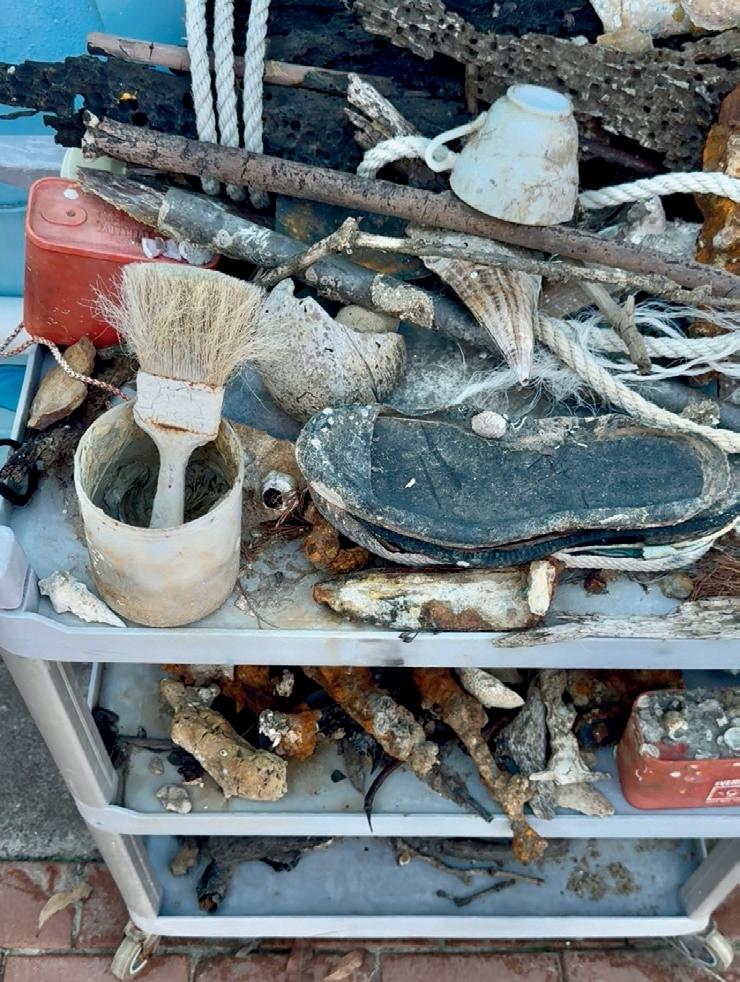
One of the most fascinating aspects of Tin Can Bay is the “GIFTS” DOLPHINS BRING TO PEOPLE: shells, stones, glass –and unfortunately, sometimes trash. These items are displayed
on-site for everyone to see. The behavior has been present for years and was initiated by the dolphins. During the COVID-19 pandemic, it reportedly intensified when dolphins mostly encountered the volunteers. Is it part of their culture? A ritual exchange? Commensalism? Hard to say. But the behavior is consistent and passes between generations. During our visit, 3 out of the 6 dolphins brought something.
Tin Can Bay vs Monkey Mia
The difference between these places shows how deeply management practices affect wildlife.
Long-term research in Monkey Mia has revealed that:
´ females spend less time caring for calves,
´ calf survival rates decline,
´ males become more aggressive (even toward humans!),
´ dolphins restrict their range,
´ injuries related to boats and nets increase,
´ animals lose vigilance and become overly trusting of people.
As a result, local NGOs advocate for a complete ban on feeding. This is also where Janet Mann’s research team documented
tool use – sponges and shells – and the transfer of knowledge between generations. Monkey Mia shows how little it takes for the situation to spiral out of control.
Tin Can Bay represents the opposite approach: restrictions, limits, education, and far greater caution. Another key difference is that here, no aggression or boat-related problems are observed, and the dolphins maintain more natural social interactions.
What Do the Dolphins Choose?
It is unknown whether dolphins treat this place as a form of commensalism, an exchange mechanism, or something entirely different. What is known is that dolphins themselves pass on knowledge about these locations. Similar observations were made in Bunbury, where dolphins “asked for help” from humans when an adult dolphin was sick or when a calf was dying.
It is a complex and far from straightforward relationship. Oceans are becoming increasingly challenging environments – ship traffic, pollution, and reduced fish availability naturally force adaptation.
A Stalemate?
It seems to be a situation that cannot be judged one-dimensionally.
On one hand:
´ feeding alters the behavior of wild animals,
´ disrupts natural vigilance,
´ creates a risk of dependence on humans.
On the other:
´ it allows monitoring of the animals’ condition,
´ supports education,
´ in some cases genuinely helps dolphins survive,
´ creates a safe space – perhaps the very reason they return.
For local authorities, there is also an economic argument. The animals are a tourist attraction – and that won’t change. This is why constantly tightening standards is essential. That is exactly what has been happening in Australia for years: more requirements, more oversight, more work from rangers and volunteers, paired with a growing understanding of the impacts these interactions may have. And this particular government program is not meant to be replicated elsewhere – it applies exclusively to Tin Can Bay.
Summary: Balance on the Edge
Tin Can Bay is a place where – given the level of human interference – balance is still maintained. Not perfect, but functional. The dolphins appear calm, healthy, non-aggressive and, most importantly, free. They come when they choose to, and the tradition of feeding continues mainly because they make that decision.
It is, however, a subject that requires continuous monitoring and discussion, not uncritical enthusiasm. For us, divers and ocean lovers, it remains a valuable lesson: every interaction with a wild animal has consequences – beautiful, difficult, and demanding responsibility.
FARNE ISLANDS
DIVING FOR THE DETERMINED
Seals, Shipwrecks, and the Moody Sea of Northern England
Text & photos BARBARA GLENC
Our journey began in Katowice – a group of five divers set off by car, heading through Germany, the Netherlands, Belgium, and France. We planned to take a ferry from France, but were met with an unpleasant surprise.
The ferry staff refused us entry because we had too many diving cylinders – the rules allowed a maximum of six tanks per car, each up to 10 liters.
Ours were larger. After hours of discussions, we decided to take the Eurotunnel instead. The route turned out to be faster and more convenient, and we even squeezed in a quick stop in London. Then we set our sights on the Farne Islands – the main goal of our trip: an encounter with grey seals.
We reached the port in Seahouses early in the morning, right on time at 8:00 a.m. We unpacked our gear onto the boat and headed out to sea. The plan was to dive with seals right away, but reality quickly adjusted our expectations. For over two hours, we circled the islands searching for spots where the seals might appear. The sea was moody – wind, waves, and shifting currents made the task difficult. Eventually, the captain decided that instead of wasting more time, we’d start with a dive on one of the wrecks.
The moody sea and the first descent
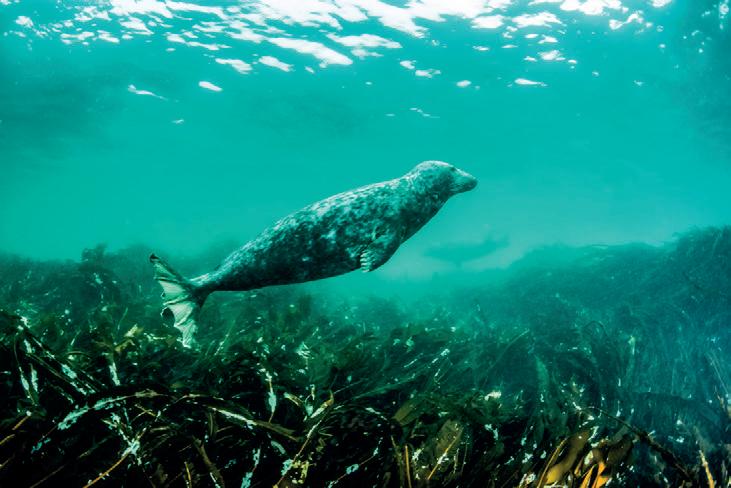
After changing dive sites, we finally descended. The Farne Islands hold traces of history – sunken remnants of ships from World War I. Rather than intact wrecks, they’re scattered fragments, but still incredibly impressive. Dense kelp swayed between twisted metal structures, while fish, crabs, and lobsters darted through the scene. Despite the challenging conditions, the underwater world was full of life.
Only after that dive did the captain signal that we’d try our luck with the seals again. This time, we had to wait another two hours for the conditions to improve. The water was milky, visibility very poor – barely 2–3 meters – and everything swirled, making it feel like we were inside a spinning washing machine.
I jumped in and immediately felt my heart race. Not from the cold – you stop noticing that after a moment – but from
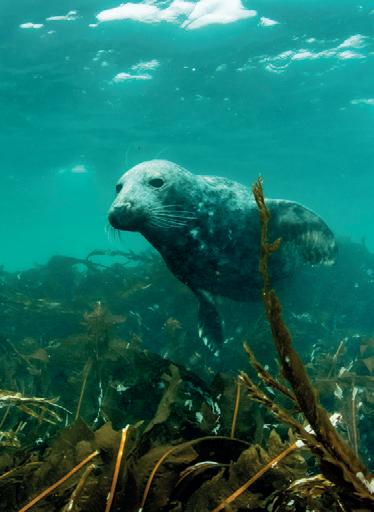
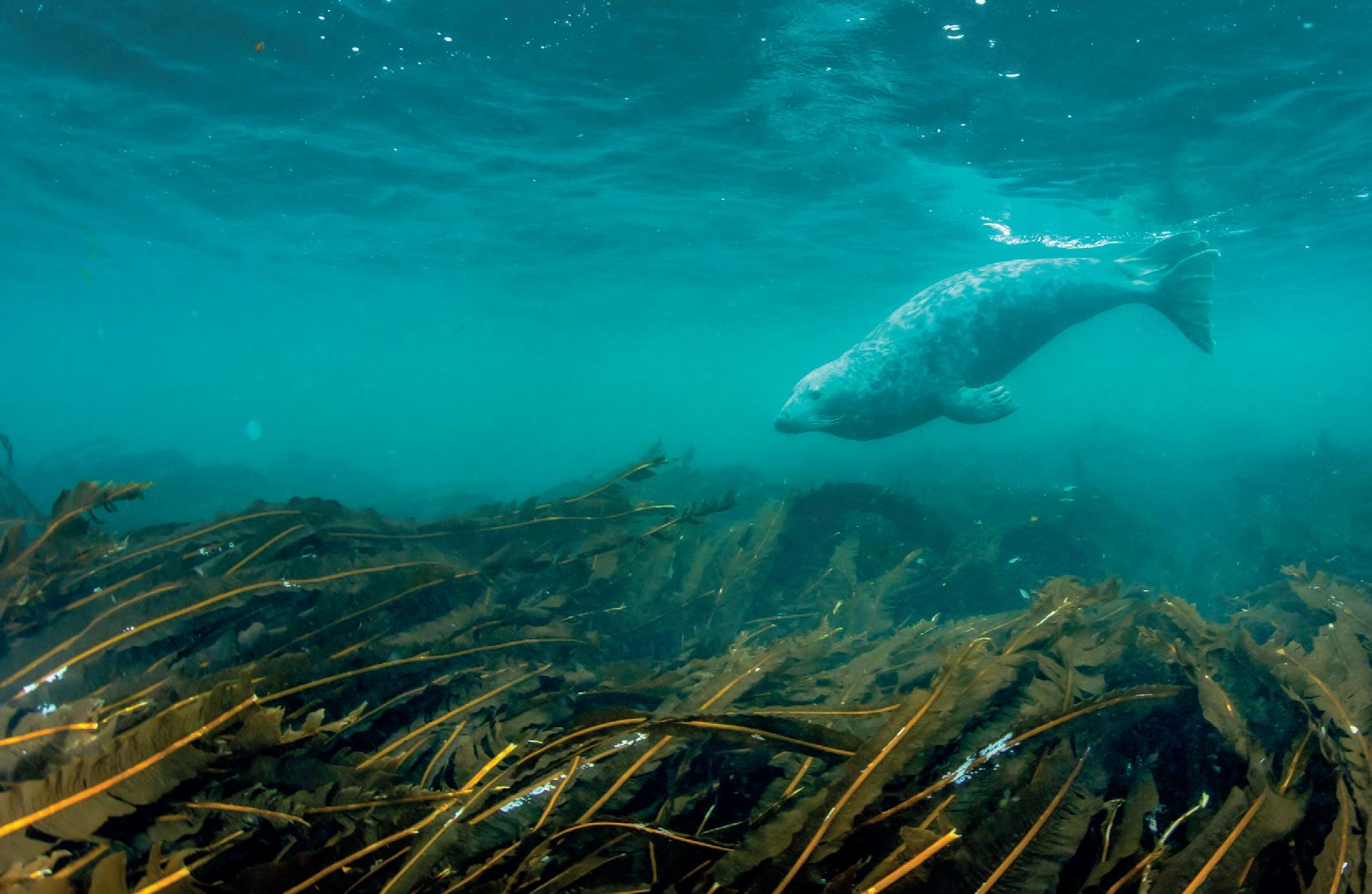
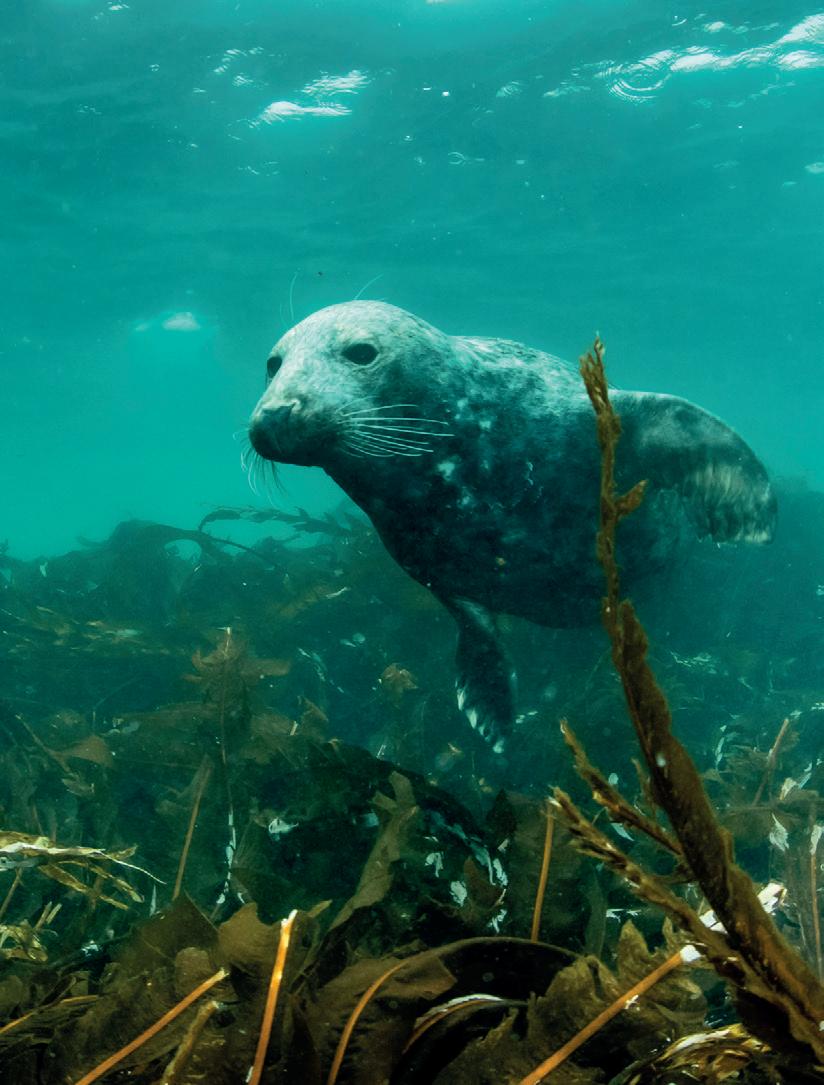
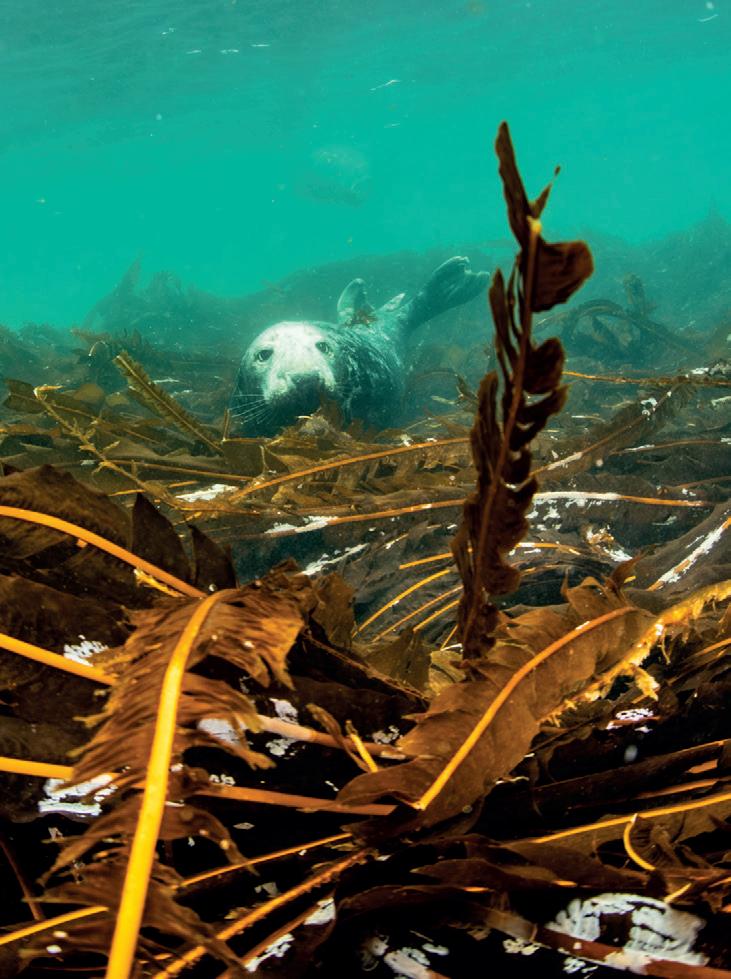
pure excitement. Seals circled around us, curious eyes flickering through the greenish gloom. My camera in hand gave me a sense of focus, as if it were an extension of my body. I took the first shot instinctively, without thinking – just to capture the moment.
But the seals weren’t waiting around. One swam right up to the lens, peeking straight into the viewfinder as if trying to see what I was looking at. Another glided behind me – I only caught a shadow in the green haze from the corner of my eye. I gripped the camera tightly, finger poised for the next frame. Every movement, every flicker of an eye could be the shot – the one that stays with you forever.
I breathed slowly to avoid startling them with sudden movements. I tried to be like a statue, waiting for the seals to choose to come closer. And when they did – when their eyes met mine through the mask and the viewfinder – I felt like nothing else existed. There was only me, the camera, and them.
The seals were like playful dogs – alert and serious one moment, mischievous and joyful the next. They nudged our fins, stared straight into our eyes.
The emotions were overwhelming – the water was just 14°C, the air 26°C, and we felt like we were in the heart of a wild, living world where we were only temporary guests. Every movement, every turn in the water, every reaction from the seals was etched into memory.
The best time to meet the seals
Our trip took place at the beginning of August, still before the peak seal season. The best time for seal encounters is September and October – that’s when they come very close to divers, seek interaction, want to be petted, and curiously examine every piece of gear. A trip during that period guarantees encounters that are truly intense and genuine.
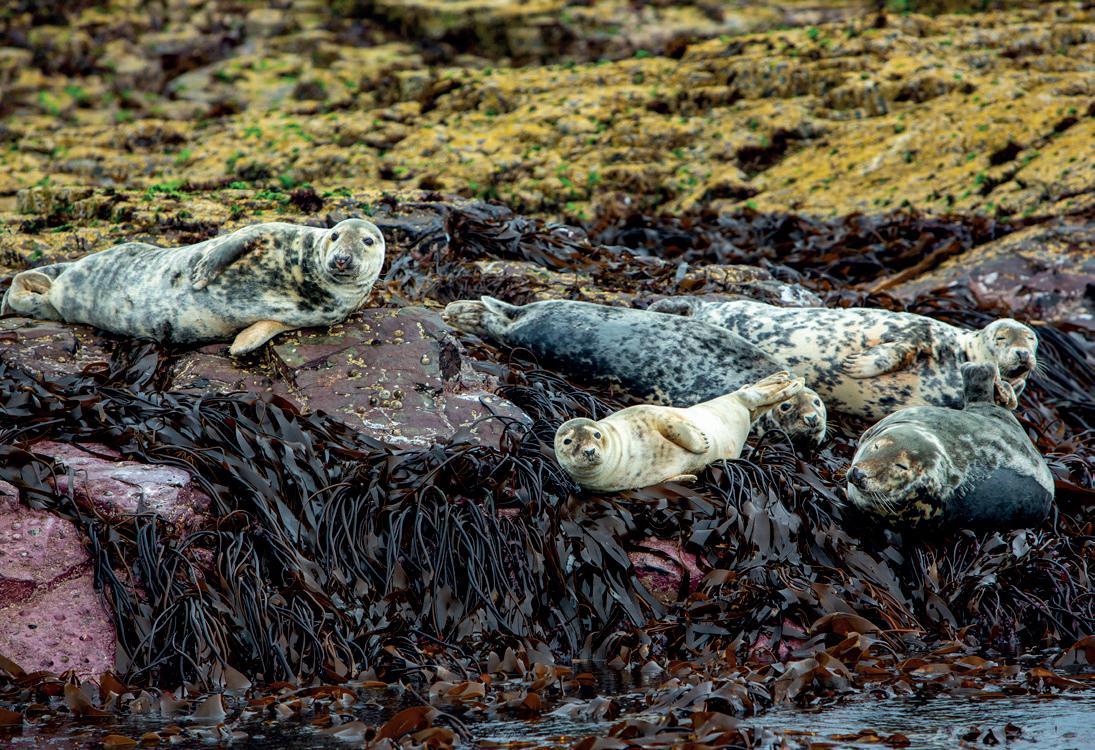
As we approached the islands, we spotted around 150 seals basking on the rocks – lazily rolling over and resting. However, once the boat got closer, part of the colony immediately sprang to life. Dozens of curious individuals leapt into the water, swam under the boat, and observed us up close. Underwater, we encountered both sleeping seals who seemed unaware of our presence, and others that quickly darted away – only to return moments later to check us out from a new angle. The dive lasted about 90 minutes, and we often remained motionless, waiting for the seals to approach us on their own. We adjusted our depth, sometimes swimming closer to the surface, other times diving deeper – each moment was a unique experience.
Independent diving
Farne Islands is also a unique destination when it comes to dive logistics. On the islands, diving is conducted independently, within your own group. The boat captain does not enter the water – their role is limited to giving a briefing before the
dive: they explain what can be seen underwater and where, at what depth the wrecks, seals, or kelp forests are located, and indicate the safest entry points. After that, the dive is entirely up to the group. This requires experience and good coordination – every diver must keep track of their own orientation, depth, and dive time, as well as keep an eye on one another.
This style of organization makes seal encounters more authentic – there are no crowds, everyone has space to observe and take photos, and the animals’ behavior remains natural.
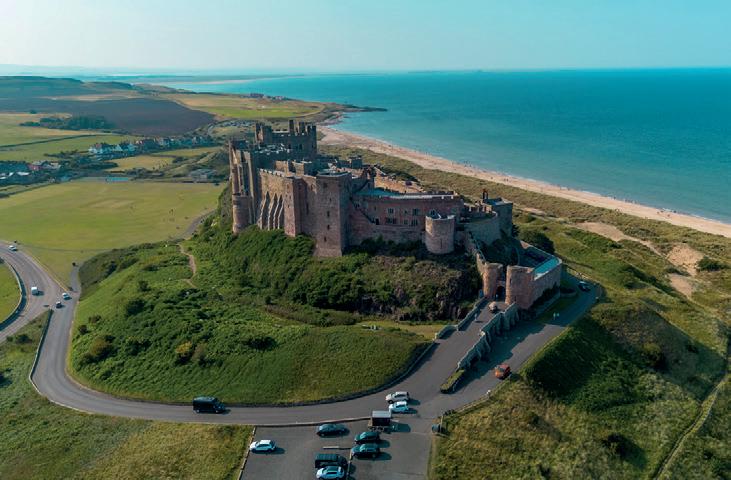
Bamburgh Castle – The “Wawel of Northumberland”
After the underwater excitement, it’s worth coming ashore to visit Bamburgh – a peaceful town crowned by a majestic castle overlooking the North Sea. This impressive fortress, often called the “Wawel of Northumberland,” traces its roots back to the 5th century, when a Celtic stronghold known as Din Guarie stood here – the capital of the kingdom of Bernicia. Since then, it has witnessed Viking raids, Norman conquests, sieges, and conflicts, and in the 19th century it was given a second life thanks to the vision of William Armstrong, who restored it.
Today, Bamburgh Castle is not only a historical museum –it is also a private home. It has been owned by the Armstrong family since the 19th century, and its current resident is Francis Watson-Armstrong, the fifth generation of the family, who lives there with his wife Claire and their rescued dogs. The interiors are stunning, featuring historical armor, weapons, artwork, and exhibits related to the Armstrongs’ legacy in engineering. From the castle walls, you can enjoy spectacular views of the North Sea and the Farne Islands, while the beach below offers a perfect place for a post-dive stroll. The castle is open to visitors year-round and also hosts weddings and various events.
Summary
Farne Islands is a demanding and unpredictable destination, but the reward is well worth the effort – close encounters with wild seals, WWI wrecks, rich underwater life, and unforgettable views of the North Sea. Diving here requires experience and patience, but those who dare return with memories that last a lifetime.
UNDER THE CEILING
TUNA
I See It in Black ;)
Tuna
Is an iron ore mine in Sweden, surrounded by countless diving legends.
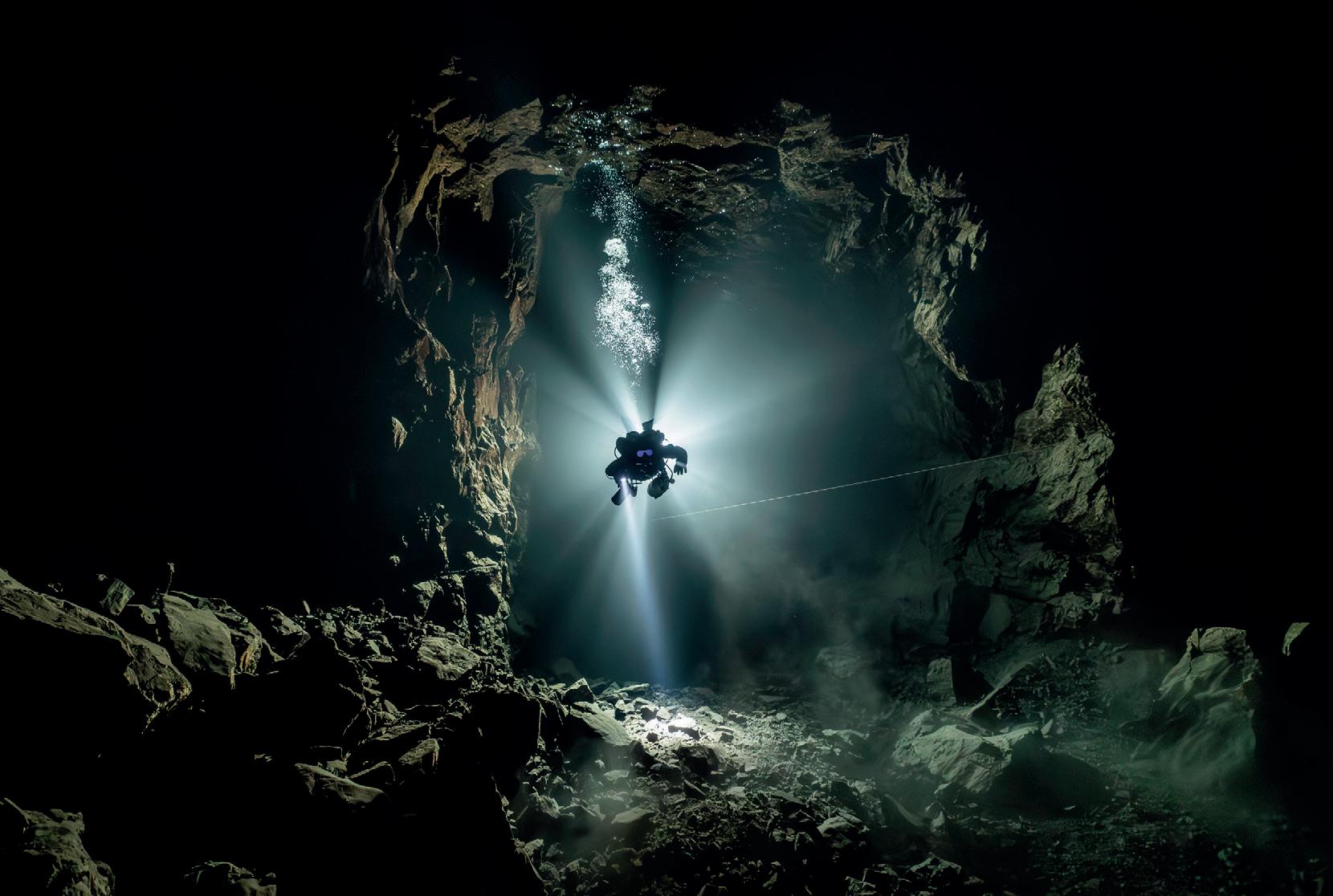
To work up the courage to dive into 3-degree water, you must first conquer 420 steep steps down. Does this place give you goosebumps? Do you feel the icy chill like during your first winter swim? Do the matte black rocks, swallowing the last rays of your flashlight, intensify a sense of panic? Read until the end – you may find yourself wanting to come here too.
Close, yet far away – why?
To reach the mine where we dive, I first need to cover 532 km from Katowice to Gdańsk. Then comes an 18-hour ferry crossing over the Baltic Sea, and after that it’s smooth sailing – only about 300 km left. The logistics take a day and a half. Since the ferry travels overnight, I can sleep comfortably and arrive rested. The journey is very pleasant, especially because I’m travelling with many friends. Sure, you could fly, but the amount of technical gear needed for this type of diving far exceeds an airplane’s cargo limits ;)
Gear logistics
Luckily, the mine is equipped with a large, two-level freight el-
evator, so hauling gear down the stairs isn’t necessary. After loading the lift, it’s time to descend deep into the dark underground. And then the stairs appear… literally!
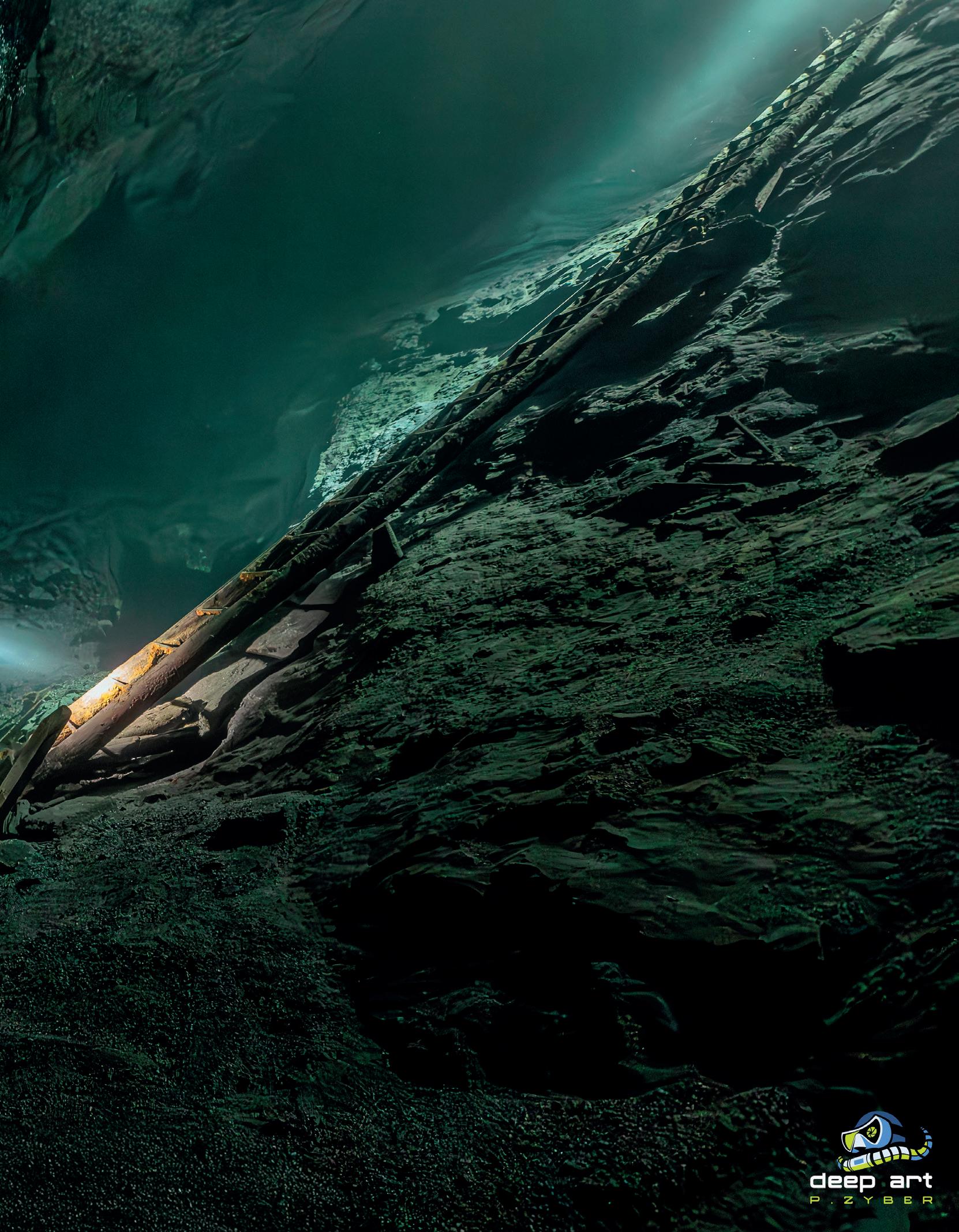
420 steep, wet steps take their toll. Near the bottom, my muscles tremble like jelly. I already know I’ll need painkillers for the soreness tomorrow.
After unloading the elevator, there’s still about 60 meters of carrying equipment to the entry point.
The infrastructure is stunning
I’ve visited many mines, but none were as well prepared for divers as this one.
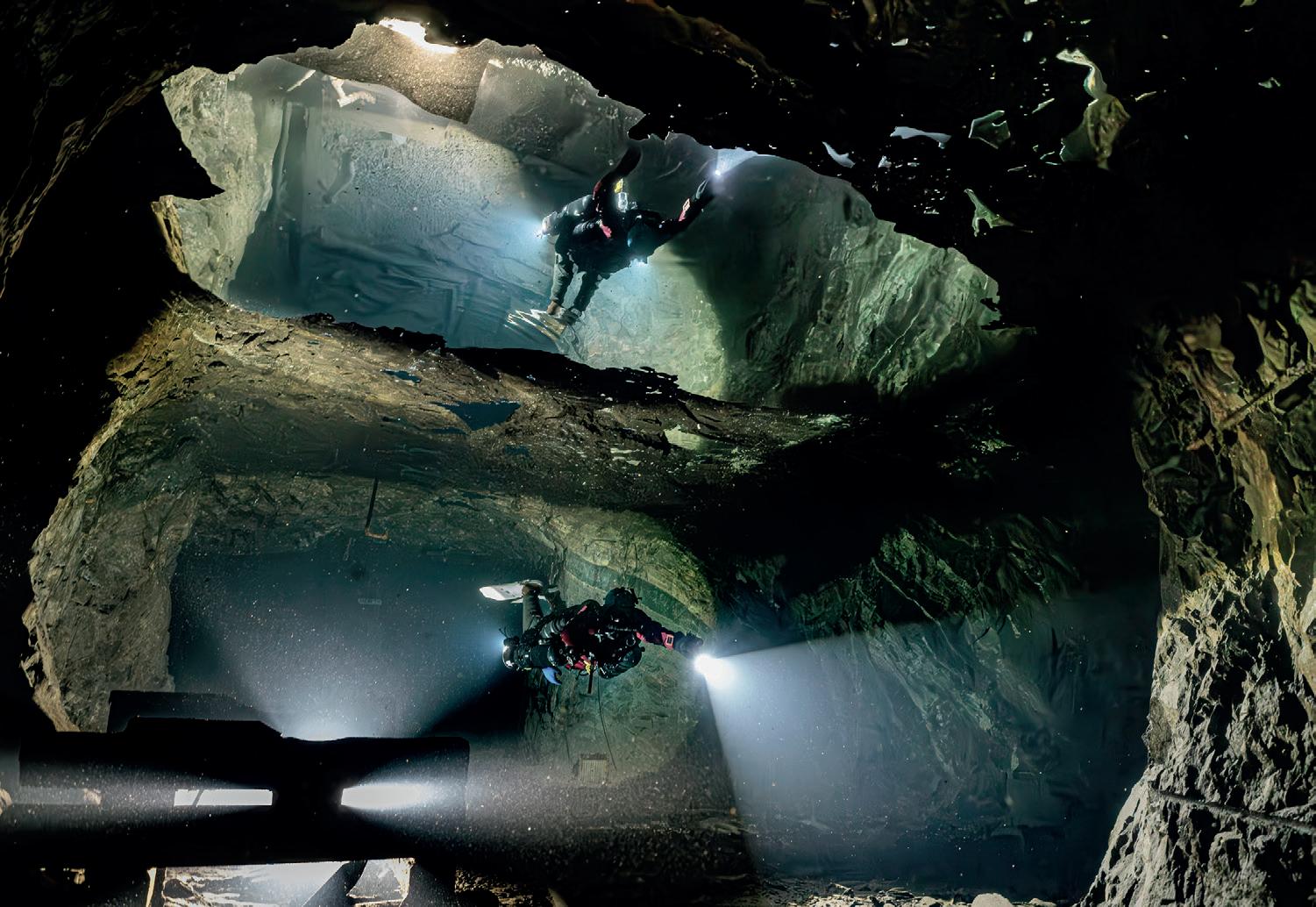
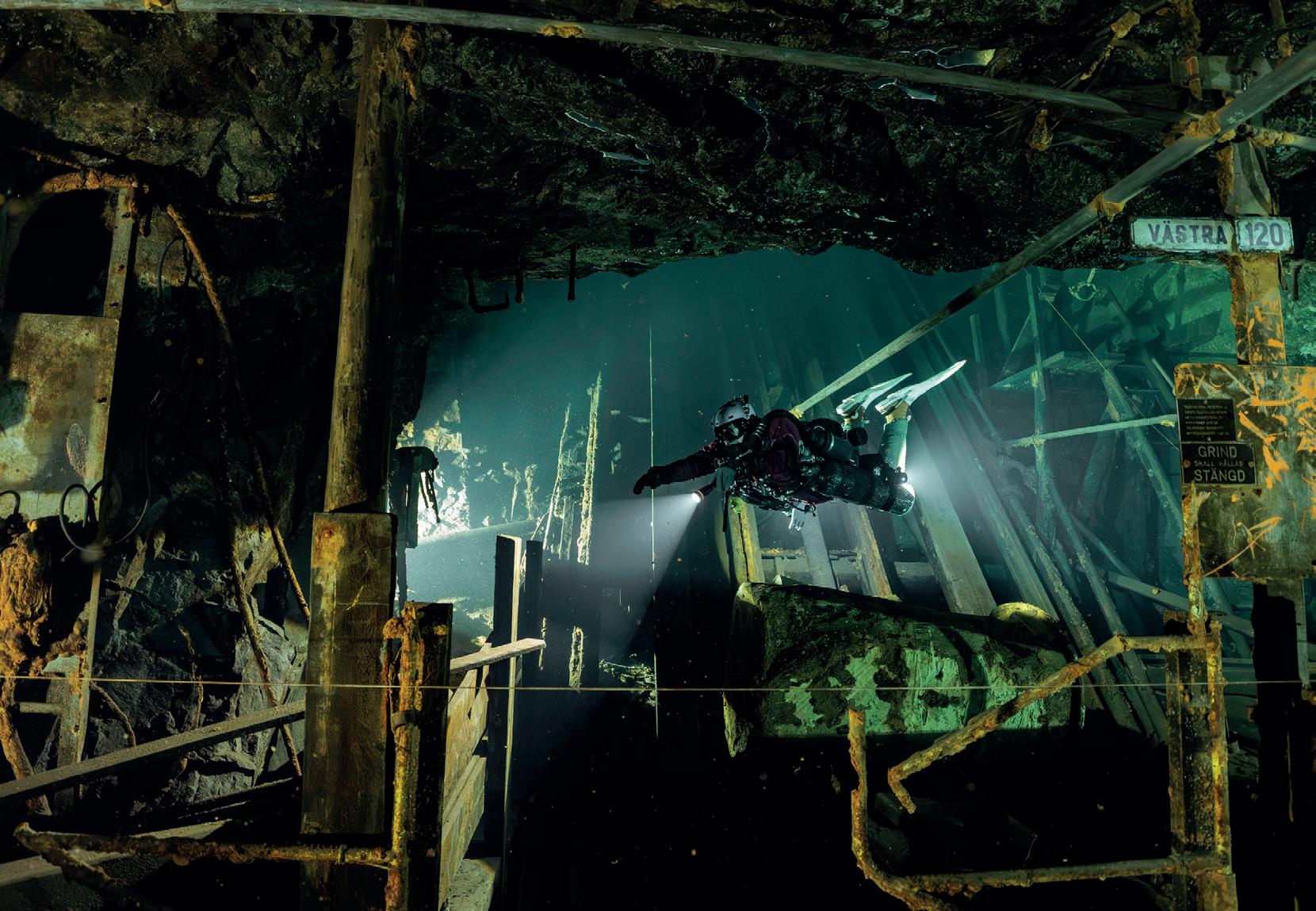
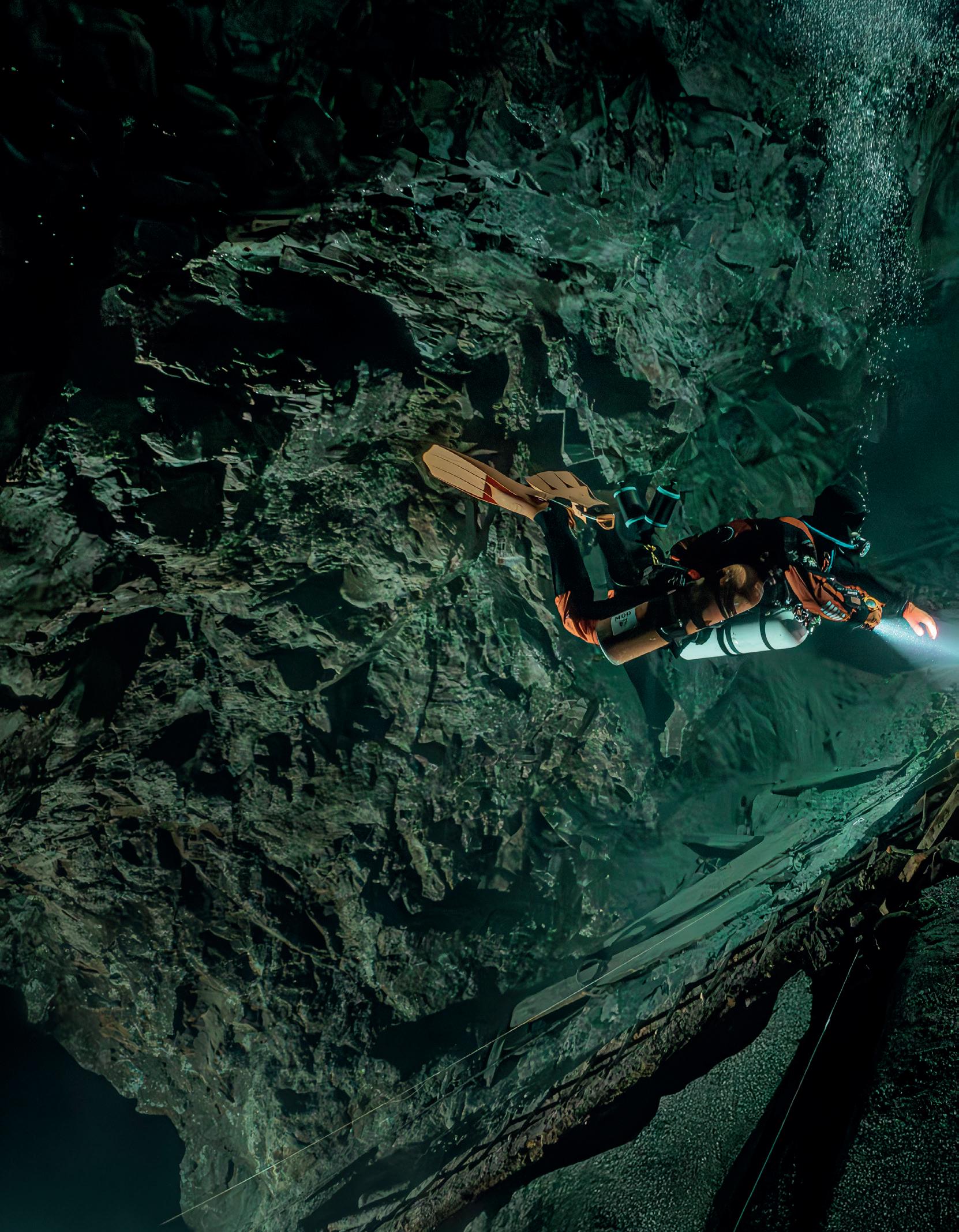
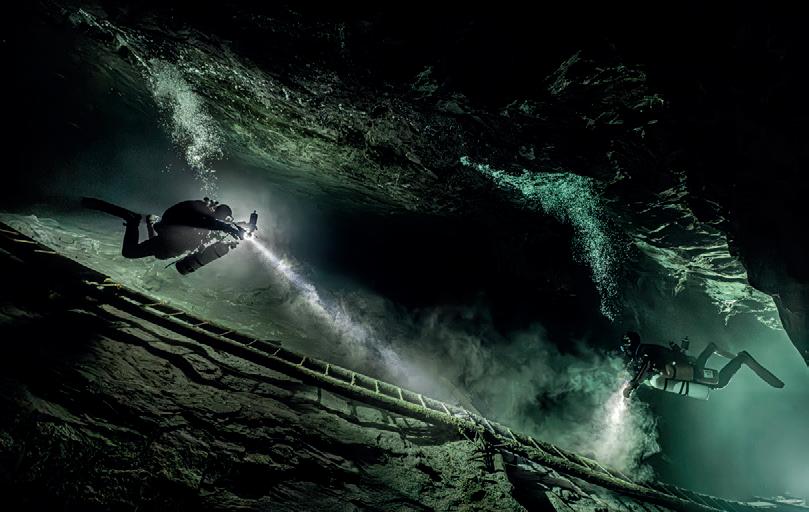
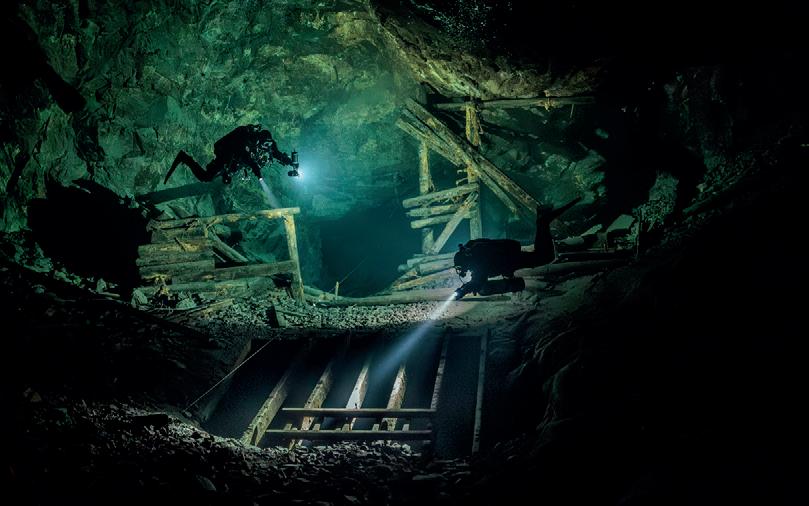
Fantastic platforms, tables, a rope system for lowering cylinders, ladders rising above the water for safe exits. All built from wood and stainless steel, beautifully illuminated. We’re inside a massive cavern, its rock walls displaying a majestic matte black surface. For the cold-sensitive, there’s a heated dry room reminiscent of a sauna. Cylinders are filled on-site, directly at the dive stations – no carrying required. In one word: a dwarven fairy-tale world.
But the most important part is, of course, the diving:) Even from the surface the water looks unbelievably clear.
Text & photos PRZEMYSŁAW ZYBER
With great pleasure I jump in and swim toward my SM cylinders hanging below the platform. Steam rises from my mouth. I feel the cold on my cheeks. My computer shows 3 degrees Celsius.
I love long cave dives – will the temperature defeat me and force me out of the water early? We’ll see. It’s my first time using the Santi BZ 420 X heating undersuit. To extend battery life, I plug into my Seacraft scooter, which has a massive battery –plenty of power for propulsion and heating for hours.
Time to descend:)
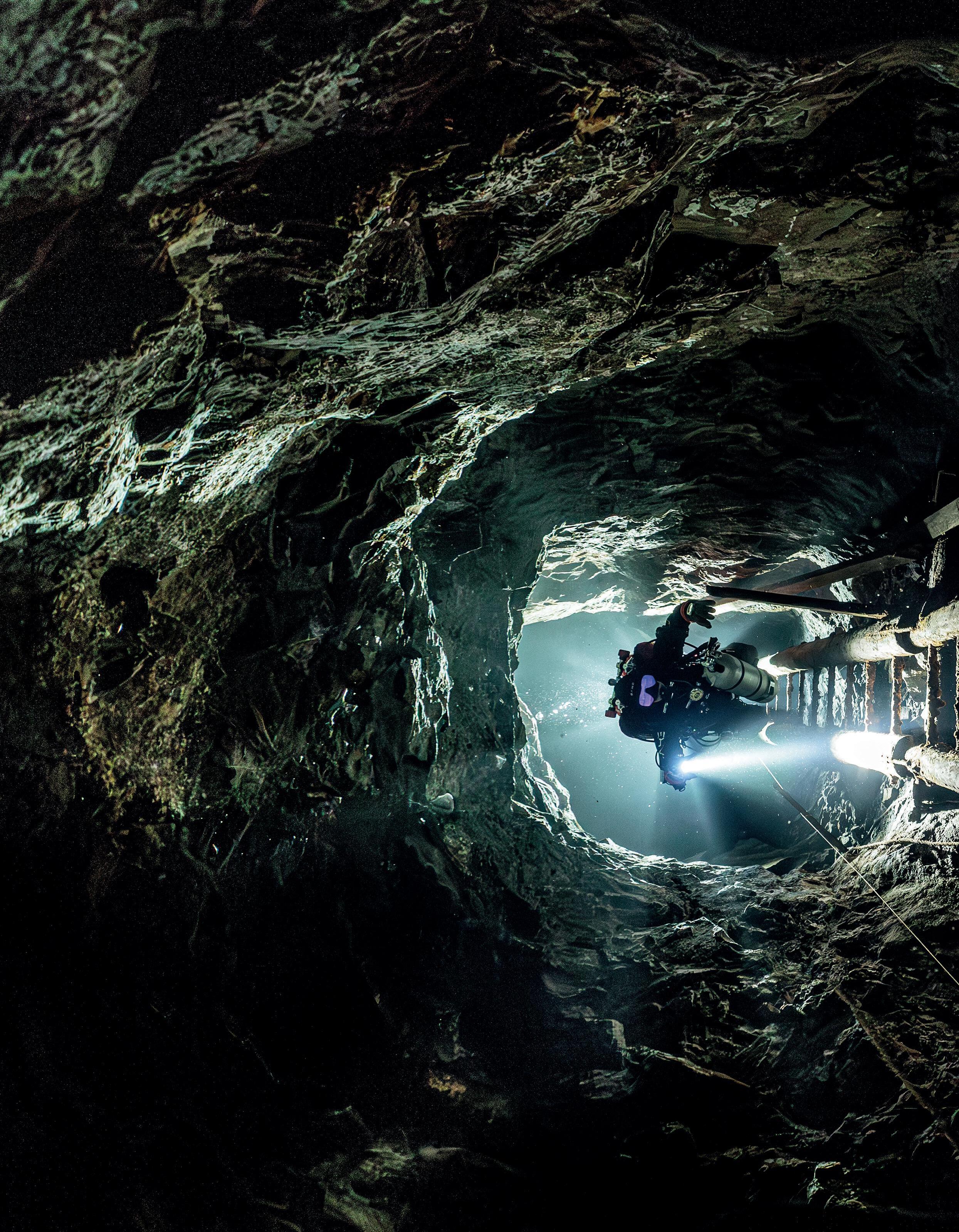
I slowly sink, keeping an eye on my buddies. A simple check dive down to 37 meters to the shaft. The water is as clear as in Mexican cenotes – perfect for photography. Below 30 meters it becomes slightly hazy, giving the scene a mysterious feel.
I enter the corridors. Air trapped at the ceiling reflects divers’ lights like a mirror. I convince my buddies to pose for a few photos – a short session. At this depth you quickly surpass NDL, so to avoid freezing while hanging still on deco stops during the first dive, we begin our ascent. Time passes quickly as I hover on the scooter, filming.
Only when I surface and my friends struggle to unzip their dry suits with frozen hands do I realize that I didn’t feel cold for even a moment.
Warm as a bathtub:)
The heating system works brilliantly.
Despite the critical water temperature, I feel warm and comfortable – I’m the only one who doesn’t need the heated room. I can’t wait for the next dive; the first photos look promising. Between dives, the staff guide us through the mine’s dry corridors. We walk to the other end, where the concert hall is located. A gigantic cavern supported by three monumental pillars – impressive beyond words. Wooden platforms overlook the flooded section of the cave. Underwater lamps reveal the stunning emerald color of the crystal-clear water. There’s even a sauna, after which you can jump into the icy pool. The guide turns on a sound-and-light show. First, deep low tones rumble like a giant growling. The sound intensifies, giving me goosebumps. Moments later, the symphonic music cuts through me completely. The combination of sound and light leaves me awestruck. Only one unsettling thought lingers: Could those low vibrations cause the mine to collapse?
Time for dive number two:)
Since it’s possible to swim from the “diving section” of the mine to the concert hall area, we study maps to reach it. I want to see that emerald glow from below and capture some great footage.
Along the way we encounter interesting spots and stop for photos. After 40 minutes we reach the flooded basements of the concert hall. The illuminated water creates spectacular visuals for filming.
The way back is quicker since we skip photos. After surfacing, I quickly change into dry clothes. Only 420 steps up and I’ll see daylight again. With a few rest stops, I finally reach the surface. Smiling from ear to ear, we return fully satisfied with the dives.
Predictable outcome ;)
The next morning, my first steps raise serious doubts about whether I’ll manage the stairs again. The soreness is like after running a marathon without training. Painkillers to the rescue –and soon we’re heading back to explore more flooded tunnels. This time we visit another section of the mine.
There are so many different routes here that it’s impossible to see everything during three days and six dives. Some corridors are wide and spacious, others twisted and narrow. Although it’s a mine, the walls rarely show marks of tools – it feels more like a natural cave carved by nature. Only the occasional mining structure reveals the place’s history. I’m amazed by the diversity of the routes. I surface satisfied with the photos.
Climbing up, I challenge myself to ascend all 420 steps without stopping. A well-planned technique – placing my feet flat and maintaining a steady pace – works perfectly. No shortness of breath, no exhaustion. The third and final day follows a similar pattern. I zoom through the tunnels on the scooter like a rally driver in a race car. I’m having the time of my life. How could I not, when I’m dry and warm? The scooter opens up completely new possibilities for dynamic cave exploration. The built-in lighting frees my hands from holding a torch. Leaving the water almost feels wrong.
Time to head home – but first...
I can’t skip the Vasa Museum in Stockholm. Inside is the original 17th-century warship, preserved in extraordinary condition. This masterpiece leaves me speechless. The massive vessel, covered in sculptures, was commissioned by King Gustavus Adolphus in 1626. It sank on its maiden voyage.
Because the Baltic Sea is low in salinity, the ship remained perfectly preserved. I highly recommend visiting the museum if you’re near Stockholm. In the evening, after sightseeing, I retreat to my comfortable ferry cabin. The gentle rocking on the rough Baltic feels like falling asleep in a hammock. By noon we reach port, and only the highway separates me from home.
Summary
I am deeply impressed by Sweden. The beauty of nature, the charming small towns, and the incredible diving experiences have me already thinking about returning to Tuna. Interestingly, you don’t need a cave certification to dive here – many cavern-zone tunnels are available to divers with lower qualifications. Just remember to prepare your equipment properly and bring a very warm –or electrically heated – undersuit.
DIVING IS A LIFESTYLE – a way of shaping yourself and your path. It is a passion, a way to pursue dreams and express who you are. Once you enter this world, it becomes very hard to leave it behind. My name is Anna Metrycka, and I am the founder of Umiko Expeditions.
Although Umiko Expeditions is a new brand in the dive-travel market, it is built on experience that is anything but new. I have been diving since 2002, and for over 13 years I have been professionally organizing expeditions to the most remote corners of the world. It is not just my job – it is a journey that led me step by step to where I am today. And I am certain this is its best chapter yet.
Over the years, I have explored destinations from a perspective you cannot gain from behind a desk. I have dived many locations around the globe, observing them not as a tourist, but as someone who returns repeatedly – in different conditions, with different people, and with a curiosity for what lies beyond the obvious. Thanks to this, I know what in each place is truly authentic, what is a beautiful legend, and what is merely a marketing promise. This knowledge and these personal experiences became the foundation of Umiko. I can confidently describe myself as a “diving enthusiast,” someone who has always been connected to the water. I completed my first scuba course at the age of 14. I wrote my master’s thesis on dive tourism while studying geography at the University of Warsaw. Starting in 2013, I wrote for the magazine nuras.info and took part in underwater photo projects. Since 2018, I have been writing articles for Perfect Diver Magazine (previously under the name Ania Sołoducha), and for several years I have also been part of its editorial team. I put my knowledge and experience on paper, promoting what I love most – diving. I participate in trade fairs, diving events, and lake clean-ups. I have had the pleasure of speaking as a presenter at conferences and dive shows. I have hosted several diving webinars where I talk about my divetravel adventures.
On this new path, I am supported immensely by my husband – a partner not only in life but also underwater. Together
we discover new places, share our passion, and have long conversations about diving that inspire me to create even better trips. His presence and his “outside perspective” often bring invaluable balance to my knowledge and experience. Why “Umiko”?
The name is no coincidence. Umiko comes from Japanese and means “child of the sea” (umi – sea, ko – child). It perfectly reflects how I feel. The sea is the space where I grew – as a diver, a trip organizer, and a person. It is my element, my direction, and my home.
“Journeys that are meant to mean more”
Umiko Expeditions was born from a desire to create trips that are more mindful, more individual, and more personal. I wanted – as I always have – for Umiko to build relationships that don’t end at the booking stage, and trips where the focus is on people rather than on checklists. These are journeys in which participants feel truly cared for, not merely “served.”
Journeys that leave room for conversation, for listening to the group’s needs, for that small yet meaningful personal touch. My goal is for every trip to be not just a tour, but an experience –something that stays in the heart, not only in the photo gallery.
This new stage is the result of years of working with people, hundreds of trips completed, and thousands of underwater moments that shaped my perspective on travel. Today, that path opens a new chapter – and I am convinced it will be the best one yet.
Although the heart of the offer is diving expeditions, Umiko goes further. The program will also include non-diving trips: trekking, safaris, adventure expeditions, and journeys focused on sightseeing and exploring new cultures. The sea can be a starting point – but it does not have to be a boundary.
Umiko Expeditions is meant to be a place where I combine my experience with new energy, a fresh perspective, and a deep passion for creating exceptional travel. I hope it becomes a brand through which more and more people discover that a well-designed journey can change not only your perspective, but your life.
SS DUNRAVEN
My first association that comes to mind when I hear the word “wreck” is: A DARK, COLD PIECE OF STEEL, USUALLY RESTING AT GREATER DEPTHS.
Sometimes, you can catch a glimpse of its outline while descending along the downline, in the last bit of light reaching from the surface – though most of the images I associate with it are those seen in the beam of a dive torch.
Of course, that’s just my impression. And what about you–what comes to your mind when you hear the word “wreck”? While pondering my choice for this piece, I decided to shake things up a little – so we’re leaving behind our native Baltic Sea and heading for the warm corners of the Red Sea, specifically northern Egypt – to the wreck of the Dunraven.
Let’s start by saying that Dunraven isn’t exactly a world-famous wreck that every diver has heard of. However, it does enjoy a certain popularity, as it’s included in most wreck safari itineraries. That raises the question: is it really worth writing about? The answer is simple–every wreck is worth visiting. If someone were to ask whether it’s worth returning a second, third, or fourth time–then perhaps other wrecks would be a better choice. But for those who’ve never been to the Dunraven before, the first visit is sure to be an exciting one. So, let’s take
Text & photos TOMASZ KULCZYŃSKI
Source Internet
Source Internet
a closer look at the dive itself, the ship’s history, its current location, and a few fun facts that might come in handy during your visit to this wreck.
The steamship SS Dunraven was built in the English town of Newcastle upon Tyne by the renowned shipyard C. Mitchell and C. Iron Ship Builders. The vessel was launched on December 14, 1872, and its owner was a Mr. W. Milburn. The ship was equipped with both a steam engine and sails, which allowed it to navigate freely in various weather conditions. It was designed to service the trade route from the United Kingdom to Bombay, which at the time was one of the British Empire’s major commercial hubs.
In January 1876, three years after its launch, the Dunraven departed Liverpool on yet another voyage. Onboard was a cargo of steel and timber intended for merchants in Bombay. After reaching its destination, the goods were sold, and on the return trip, the ship was loaded with cotton, spices, and muslin–typical export goods from India at the time.
The return journey proceeded smoothly until the end of April. On April 25, 1876, the vessel reached the area near the
entrance to the Suez Canal in the Red Sea. Captain Care, who commanded a 25-person crew, misjudged the ship’s position, believing they were already farther along in the Gulf of Suez. As a result of this navigational error, the Dunraven struck a coral reef located south of Beacon Rock, near what is today the Ras Mohammed National Park in the Sha’ab Mahmoud area. The crew immediately attempted to save the vessel. For fourteen hours, the sailors tried to free the ship from the reef, but their efforts backfired – once Dunraven slipped off the obstruction, it lost balance and capsized, sinking shortly thereafter to a depth of around 25 meters. Despite the disaster, all crew members survived – they were rescued from the lifeboats by local fishermen.
After the accident, the British Board of Trade conducted a thorough investigation. It concluded that the blame lay with Captain Care, who had failed to exercise proper caution while navigating the treacherous waters of the Red Sea. As a result, the Board revoked his captain's license for a period of one year.
As mentioned earlier, the wreck can be accessed during a liveaboard safari trip. In that case, you spend several days at
sea and are simply brought there by boat – it’s the easiest way. Another option is a one-day trip, usually organized from Sharm el-Sheikh. This wreck is not as crowded as the SS Thistlegorm, located 20 km away. Usually, there aren’t many people here, although it’s not uncommon to encounter a few dive boats already moored at the site.
Can the entire wreck be seen during a single dive? In my opinion, it’s best to start the descent near the stern. From there, you swim toward the bow, gradually ascending. The depth of the Dunraven wreck ranges from 17 to 30 meters. Visibility, depending on the weather, varies between 10 and 30 meters, so it’s worth bringing a dive torch. You can dive the wreck year-round – the better the weather, the
better the visibility. It’s a very interesting site, provided you dedicate enough time and take a close look. The wreck has been completely taken over by underwater flora and fauna. The hull is covered in coral, and on the outside, you can see an impressive propeller and rudder. On the seabed, along the starboard side, the masts lie scattered, offering an excellent view of the entire ship. At the bow, you’ll find anchor chains overgrown with coral.
The wreck can be explored from the inside, although to a limited extent nowadays. In the past, light would enter through openings in the hull, illuminating the spacious interior rooms. Unfortunately, corrosion has caused parts of the structure to collapse, reducing the possibilities for penetration.
However, it is still possible to enter through three openings. Inside, you'll find overturned metal structures, massive boilers, flywheels, and gear systems. Behind them, you can see pipes, valves, the propeller shaft, and the main engine – all teeming with fish. Due to the shallow depth and proximity to the coral reef, many species of colorful reef fish can be found here. The wreck is not only an excellent spot for observing marine life, but also for underwater photography. Around the hull, you're likely to spot Indian glass fish, groupers, jack fish, beautiful scorpionfish, and crocodile fish. Divers often see barracudas, turtles, goatfish, and the extraordinary ghost pipefish (Solenostomus paradoxus). Other species found here include moray eels, nudibranchs, and red-lipped batfish (Ogcocephalus darwini). Dolphins also occasionally appear in the area, and among the vegetation, black corals stand out.
To sum up, I believe Dunraven is a very interesting wreck and well worth visiting while in Egypt. It’s far less crowded than other, more popular wrecks in the area. It’s a great site for beginner divers – easy to navigate and full of life. It also impresses with its size. With good visibility, you can truly appreciate the scale of the ship, which leaves a lasting impression. In my opinion, one dive is enough to explore the wreck thoroughly, although – as is often the case in diving – you can encounter different creatures each time. That’s why the saying “no two dives are the same” is especially fitting here.
UCZYMY, WSPIERAMY, INSPIRUJEMY.
KURSY
NURKOWANIA
REKREACYJNEGO
KURSY
NURKOWANIA
TECHNICZNEGO
POWIETRZE / NITROX / TLEN / HEL DO 300 BAR
WYPRAWY NURKOWE
KURSY
PIERWSZEJ
POMOCY EFR.
AUTORYZOWANY SERWIS
SPRZĘTU
NURKOWEGO
A Decade of FREEDIVING
Text & photos AGNIESZKA KALSKA
2015-2020
It was the year 2015 when I stood at a crossroads, deciding whether to open my own freediving school in Poland. I had already been a conscious freediver for three years, and for a year I had been introducing others to the magical world of a single breath as an instructor certified by Italian champion Umberto Pelizzari. In Mediterranean countries, apnea had long been established. In Poland, it was practiced more or less informally, mainly in lakes, in the form of spearfishing and amateur water sports. But I felt that freediving had far more potential. Even back then, I believed it was “too awesome” to remain an activity only for the brave.
Drawing on my own experiences of deep relaxation in water, I founded “Freebody.” To this day, the mission of my swimming and freediving school is to promote breath-hold diving as a water-based activity for everyone. I spent five years sharing knowledge about the positive effects and safety principles of freediving all across Poland – from Szczecin through Gdańsk to Grajewo, from Poznań through Warsaw to Lublin,
from Wrocław through Katowice to Kraków. Introductory trainings in shallow pools continued in the summer season in lakes and quarries or in warm, coastal waters of Europe and Egypt. Those who were interested in freediving had usually encountered it only in The Big Blue or during vacation trips to popular diving destinations. Some people even traveled to Poznań from other cities for freediving training, as there was no one offering it locally. The number of instructors in Poland was growing very slowly, and no one seemed eager to make freediving their fulltime job. Except me, of course. :)
As an active freediving athlete and member of the Polish national team at various international competitions, I closely followed the sport side of freediving. The first Polish Freediving Championships had taken place in lakes since 1998, and later also in pools. The number of competitors reflected just how little-known this sport was. The organization that supported freediving athletes was “Freediving Poland Association” (Stowarzyszenie Freediving Poland), established in 2004. Thanks mainly to its members, for over a dozen years amateur competitions were
held, judges were trained, sponsors appeared with symbolic prizes for winners, and some funding was provided for sending national teams to World Championships. SFP had an average of several dozen members. Freediving coaches didn’t exist in Poland, and athletes typically trained on their own (always with a buddy). Yet despite all this, several male and female athletes achieved outstanding results! Since 2007, World Championship medals and records – mostly in pool disciplines – were awarded in alternating years. And all this despite the serious obstacles faced by athletes, especially with access to pools for training,
due to the bad reputation caused by drowning incidents unrelated to competitive freediving. These achievements were all the more remarkable. Huge applause is due to the Polish Champions – for their persistence, determination, hard work, and for pushing the boundaries of human potential on a single breath.
Outside of international success, “freediving” barely existed in Poland. Sometimes, only one sporting event took place in the entire country in a given year. Promoting freediving fell primarily to the few instructors who regularly ran beginner courses. And even then, they remained few in number.
2020-2025
March 2020 – I was in Tenerife at the time. As happy as ever when I had the chance to immerse myself in the ocean every day. While running a routine training course for new freedivers – adults seeking an active hobby – everything turned upside down. A widespread virus began to take its toll in Poland. I immediately received word that the pools I worked and trained in were closing. It was an extremely difficult time for most people. But for freedivers preparing for the World Championships scheduled just three months later – myself included – it was especially crushing. We were on track to win a record number of medals, as Polish athletes had been making progress from one competition to the next. I was in the best freediving form of my life. A year earlier, I had become the first female freediver to swim over five Olympic pool lengths underwater and had set a world record. In training, I was hitting top 3 all-time results in other disciplines. I dreamed of winning even a single medal. The World Championships were cancelled.
At the end of 2020, Deepspot opened – a 45-meter-deep pool – in Poland! For scuba divers, it was an additional option to dive and train in Poland year-round. For us freedivers, it opened up entirely new training possibilities. Warm water and over 40 meters of visibility – a dream! And yet, the full potential of this place was not appreciated by the leadership of the Polish freediving community.
In 2022, the Polish Freediving Federation was founded. Applause for everyone who contributed to this milestone. The process took several long years. Finally, freediving officially
entered the path of professional non-Olympic sport. Polish athletes can now receive financial support from the Ministry of Sport for outstanding achievements. Previously, most training and travel costs were paid out of pocket or, rarely, with the help of private sponsors. Freediving enthusi asts could now feel motivated to start regular training with the goal of joining the national team and experiencing competitive events. whom were they supposed to train? There were – and still are – no official training centers for freediving athletes and coaches supported from the top down. Everything still has to be built “from the bottom up.” In other words: funded privately by people who want to build the future of this sport.
Today, there are 7 freediving clubs in all of Poland. They’re attended by adults (18+) and masters (50+). At the Polish Championships, there is no junior category, and no junior national records have yet been set. be difficult to replace our current Champions with a new generation if junior development is lacking. Year-round access to deep water at Deepspot is already yielding results: a growing national team and more success in deep freediv ing disciplines. Some of these athletes began their freediving journey thanks to a “commercial facility” – meaning the money invested in building the deepest pool in Europe and promoting freediving as a sport for everyone. Today, people no longer ask me, “what is freediving?” But we still lack awareness of the positive impact it can have on anyone who learns the safe way to descend into an underwater oasis of calm. I encourage everyone to try freediving for themselves and introduce it to their children. Discovering the magic of a single breath can open the door to adventure – and perhaps an entirely new path in life. Just as it did for me. :)
A DRYSUIT?
I don't think it's for me...
ON WOMEN'S INDEPENDENCE UNDERWATER
Text ALDONA DREGER
Until a few years ago, when I started my diving adventure, I looked at people in dry suits as superheroes from another planet. Layers underneath, valves, cuffs, strength in the legs and arms...
And me?
I just wanted to dive – calmly, safely, on my terms.
Today, as an instructor and founder of the "W Głębi" brand, I know that there is more to the dry suit than technology. It's a symbol. Of comfort, safety, but also independence and courage to occupy a space that until recently was almost exclusively reserved for men
Women underwater – still a minority, but growing stronger
According to data from the Diver's Alert Network (DAN), women currently make up about 30-35% of all certified divers in the world, and in Poland – only about 25%. It is still a minority, but the number of women with a diving certificate is growing every year. Moreover, more and more of them choose the next levels of initiation: technical, wreck, instructor courses or specializations in cold diving.
This change does not happen by chance. It is the result of courage and curiosity. Women are more and more often saying: "I don't want to be just a passenger underwater. I want to be there – fully present." – admits Natasza, a journalist who has undergone such a transformation herself.
"It's not for me..." – where the fears come from During the courses, I often hear the same words:
"A drysuit looks like armor."
"I don't know if I can handle it."
"I think it's equipment for guys."
And indeed – at first glance, a dry suit does not look inviting. Heavy, technical, full of locks, valves and layers. But behind this armor lies something much more important: a sense of agency.
Natasza thinks that woman's anxieties are a mixture of real and emotional fears. "A drysuit sounds seriously, expensively and technically – and we, women, frequently put other people's needs before own passions."
Dominika, who has also gone through that path, adds: "For me a drysuit was supposed to prolong the diving season in Poland and enable me diving in colder waters as I am a terribly chilly person. The first fitting was stressful, but after the first dive, when I left water dry and warm I knew that it would become my good friend."
A woman in a drysuit – captain of her own vessel
"Being a woman in a dry suit is a bit like being the captain of your own ship. You feel power." – Natasza says.
Dominika admits that women are more afraid of new things, technology, and 'extra buttons' than men. But once they overcome their initial fears, they gain new confidence. "It's worth
Photo Michał Bazała
having a choice and the ability to adapt equipment to conditions, so that diving is thermally comfortable – this is important for health, too."
A drysiut is not only a piece of equipment – it is also a tool that offers you freedom, comfort and equality. You no longer have to complete a dive trembling and shivering from the cold. You can focus on discovering, learning and pure pleasure of being underwater.
Practical and emotional aspects – or what the first meeting with a dry suit looks like
There's no denying it – the first encounter with a dry suit is a mixture of fascination and mild panic.
"The hardest part of learning to use the drysuit was the descent. A drysuit follows its own logic – when you want to descent, it rebels and pushes you out like a cork." – Natasza laughs.
Dominika mentions: "With my claustrophobia, squeezing my head through the neck seal was quite a challenge. But over time I got used to that moment and now I put on my dry suit with complete calm."
And then the WOW effect appears: "It doesn't leak! It really works! I felt as if I had discovered the mystery of the world for experienced divers." – Natasza mentions.
"I am warm! I didn't get cold, I don't need to change, only a cap on my head and I am ready." – Dominika adds.
Tips for women who consider diving in a drysuit
1. Take your time. First dives in a drysuit are a lesson on the new balance and awareness of your body.
2. Don't be afraid to ask questions. Instructors are there for that purpose – to help, not to judge.
3. Invest in good undergarments. It is the key to warmth and comfort.
4. Treat a drysuit as your partner, not opponent. The better you know it, the easier it gets to come to terms with each other."
5. Remember, there is no one and only way. Each of us needs her own time and pace to feel confident.
„It is not a space rocket. It's your ticket to freedom.”
"Girls – it is not a space racket. And even so, you already have fuel
to launch it. A drysuit is not a threshold that cannot be crossed, it is a gateway to new possibilities." – Natasza summarizes.
Dominika adds: "We are able to master everything – the key is a positive attitude, time, practice and a patient instructor."
A drysuit is only a tool. The rest happens in the depths.
"I love cold water, but I hate cold. I want to dive more often, deeper, further – not only in summer in warm lake. A drysuit is my ticket to freedom." – Dominika says.
Today I know that women don't need a pink logo on their equipment. They need space – a place, where they can ask questions, try, make mistakes and grow. Not only as female divers, but also as women.
And a drysuit? It is only a tool. The rest happens in the depths.
Immerse yourself to get more
If you think: "It's not for me" – perhaps this it the moment to check if it is not the opposite.
Welcome to my drysuit course in "W Głębi" centre –dedicated to women who want to dive longer, warmer and with more self-confidence.
Photo Jacek Twardowski
In the photo Dominika In the photo Natasza
Safe Diving in Lake ATTERSEE
1. What typical hazards or special conditions exist when diving in Lake Attersee compared to other waters (e.g., visibility, depth, temperature, thermocline)?
The conditions in Lake Attersee can differ significantly from those in other diving locations.
Visibility:
Visibility can vary greatly – from 15–20 meters in winter to less than 2 meters in summer, especially after rainfall or during algal blooms. In deeper zones, visibility may suddenly improve, but light levels drop drastically, leading to near darkness.
Temperature & Thermocline:
Lake Attersee is a cold-water lake. Surface temperatures can reach around 20 °C in summer, but below 10–15 m depth, the temperature often falls below 8 °C. A pronounced thermocline typically occurs around 10–15 m, posing risks such as hypothermia or loss of fine motor skills if divers lack adequate thermal protection.
Depth:
The lake reaches a maximum depth of 171 m, and many dive sites descend rapidly beyond 40 m. Steep walls such as those at Ofen or Schwarze Brücke drop to 80 m and more, easily tempting divers into uncontrolled descents.
Nestled in the heart of Austria’s Salzkammergut region, Lake Attersee is one of the country’s most beautiful and popular diving destinations. Known for its crystal-clear waters, dramatic underwater landscapes, and diverse dive sites, it attracts divers from all over Europe throughout the year. However, diving in the Attersee also presents unique challenges – from cold-water conditions and steep walls to rapidly changing visibility. To help visitors prepare and dive safely, we spoke with Gregor Bockmüller, owner of the Under Pressure Dive Center in Weyregg am Attersee, who shared his insights and professional recommendations for safe and enjoyable diving in this exceptional lake.
2. What physical and technical preparation should divers have before diving in Lake Attersee (equipment, training, fitness)?
Physical Fitness:
Divers should have good cardiovascular endurance, be tolerant to cold, and have no respiratory issues. Physical conditioning is important, as dives often require long ascents while carrying heavy gear. Regular training and cold-water diving practice are strongly advised. Avoid diving directly after long travel or fatigue.
Equipment:
A drysuit is recommended year-round, or a high-quality 7 mm wetsuit with an ice vest during the warmer months ( June–September). Only use cold-water certified regulators (EN 250 A), and ensure you have two first stages. A surface marker buoy (SMB) or other signaling device is essential due to boat traffic on the lake.
Training:
Experience in cold-water diving is mandatory. If you lack such experience, take a local orientation or training course. For dives deeper than 30 m, a Deep Diver specialty and possibly Nitrox certification are required.
3. What are the most common mistakes made by visiting divers that can lead to accidents, and how can they be avoided?
The most frequent causes of accidents among visiting divers include:
● Underestimating the cold and failing to use adequate exposure protection.
● Uncontrolled descents along steep walls.
● Insufficient knowledge of local dive sites and conditions.
● Poor dive planning or lack of preparation.
● Inexperience or overconfidence in deep or cold-water environments.
These risks can be minimized through thorough pre-dive planning, proper training, and diving conservatively within one’s limits.
4. What role do weather, season, and time of day play in ensuring safe dives in Lake Attersee?
Seasonal Conditions:
Winter: Offers the best visibility but requires a drysuit due to low temperatures.
Spring: Generally clear, but meltwater can cause temporary turbidity.
Summer: Warmer and rich in aquatic life, but visibility decreases. Autumn: Typically stable with good visibility.
Weather Factors:
Strong winds–especially Föhn or westerly winds–can create waves and make entry or exit difficult. After thunderstorms, visibility often worsens due to inflow and sediment disturbance.
Time of Day:
Mornings usually offer calmer water and better visibility, while afternoons tend to bring more boat traffic and wind.
5. What specific safety rules, dive site characteristics, or local regulations should visitors know (e.g., parking, entry points, diver zones)?
Divers should familiarize themselves with local rules and site features before entering the water.
● Use designated parking areas, entry points, and diver zones only.
● Always follow Austrian safety and environmental protection regulations.
● Avoid damaging the shoreline or disturbing underwater habitats.
● Parking is limited during summer weekends, so early arrival is recommended.
● Most dive infrastructure, including filling stations and dive centers, is located around Weyregg and Unterach.
6. What recommendations do you have for international guests who are new to Lake Attersee to minimize risks and ensure a safe, enjoyable dive?
Preparation:
Study local maps and dive site descriptions, and check current water temperature, visibility, and weather conditions before diving.
Guided Dives:
For the first dive, it is strongly recommended to dive with a local guide who knows the conditions and entry points.
Language & Communication:
Most local dive centers speak German and English, but always ask for a full safety briefing before diving.
Behavior:
Respect Austrian safety regulations and environmental rules at all times.
Logistics:
Be aware that parking spaces can be limited in summer. Filling stations and dive bases are available mainly in Weyregg and Unterach.
CONTACT for Guided Dives:
Under Pressure Dive Center
Landeroith 1 4852 Weyregg am Attersee Austria
Phone.: +43 650 8000 477
E-Mail: office@u-p.at
Tecline ZOOM
a flashlight for communication, underwater video lighting and… night hikes on land
Is this possible for under 161,07 EUR?
PART 1
LIGHT-BASED COMMUNICATION
Basics
The greatest advantage of good light-based communication is increased freedom for each diver.
During a dive using classic communication, divers constantly search for each other with their eyes.
Light-based communication allows for more opportunities to observe the surroundings and enables a much faster response when a diver needs help.
How to do it?
For every dive, choose a team “leader.” The team should consist of 2 or 3 divers.
4 divers mean 2 independent teams.
Each diver – regardless of their position in the formation – should always try to aim their light beam in front of
the leader so that the leader always sees two light points from the other divers.
Flashlights do not swim on their own, so the leader sees the partners, and they see the leader ahead of them.
If one of the divers on the side wants to change position, drift slightly away, or swim a little shallower for a while – they can safely do so, but should always ensure that the leader does not have to search for their light point.
At the same time, changes in the leader’s position are immediately noticed by the divers swimming slightly behind.
SIGNALS USED IN LIGHT-BASED COMMUNICATION
1. Passive OK
This is the situation described above. Divers do not need to draw circles with the light, because the fact that it remains continuously visible is confirmation that everything is OK.
2. Active OK
An example is the moment after forming the team formation described earlier.
The leader makes a small circle with the light on his right side – asking the diver behind and to the right: “Are you OK?”
The diver responds with the same sign. Then the leader asks the diver on the left in the same way.
3. ATTENTION – look at me!
Whenever a diver wants to attract attention, they begin moving the light slowly (!) from side to side.
Other divers will easily notice this instability and turn toward the signaling diver.
A typical use of this signal might be finding a wreck. If the diver on the left spots a wreck to their left, they begin slow sideways light movement. The rest of the team will turn toward them.
4. HELP – by default this means: I am out of gas!
A fast, dynamic movement of the light in any direction, but with the beam pointed forward toward the other divers. The reaction should always be the same: quickly swim toward the diver calling for help with a regulator ready to donate gas.
5. Direction signal – let’s go that way!
Imagine a guideline on the bottom pointing toward an interesting place. If the other team members are not maintaining the direction you know, first give the ATTENTION signal (slow side-to-side movement). When your team swim toward you, make several movements with the light along the bottom as if pointing to the imaginary guideline – indicating the direction of travel.
Your team confirm understanding by giving the same directional sign.
IMPORTANT
Divers often use dynamic light movements when trying to signal ATTENTION (which should be slow).
As a result, after several such incorrect signals, the true HELP signal (dynamic movement) might be ignored.
To make communication possible, your flashlight should have a beam narrow enough that your partner can easily read your signals.
However, to enjoy the view of a wreck, illuminate a video frame with a small action camera or a phone, it is ideal to have a flashlight with a fairly wide beam angle.
The Tecline ZOOM is a new light that changes beam focus with a single twist of the head. It is a simple and therefore reliable method for both communication and wide-angle illumination.
A significant challenge for communication flashlights is a bright bottom and a sunny day – e.g., diving in the Red Sea. The Tecline ZOOM handles this without a problem. Reduce the beam angle to the minimum – 4 degrees. This creates a point bright enough to remain visible to your partners.
TWO ADDITIONAL, VERY IMPORTANT, THOUGH NON-DIVING FEATURES OF THE TECLINE ZOOM:
1. You don’t need a charger – battery can be charged from a USB-C cable straight from power bank or a phone charger.
2. The Tecline ZOOM will surprise everyone on the surface. The range of the focused beam is over 900 meters! The temperature control system ensures that the flashlight won’t overheat, so…
PART 2
USING ZOOM IN PHOTOGRAPHY AND FILMMAKING
I often hear the question: “Which camera should I buy for underwater photography?“ And I must admit, this question irritates me a bit. The camera – actually the body – is only one part of the rather large puzzles that makes up the equipment you want to take underwater. Equally important are the lenses, the housing, and the lighting. Especially when it comes to lighting, the underwater photography community is just as divided on the question strobe or continuous light as recreational divers are on wing or jacket.
There is, of course, no universal answer, and each solution has its pros and cons. However, some general truths can be stated. Strobe light is stronger than most flashlights. Therefore, in macro photography – where the aperture must be stopped down significantly to obtain sufficient depth of field – strobes clearly outperform flashlights.
Another important feature of good photographic lighting is uniformity and the ability to produce a snoot effect, i.e., a small circle of light with a clean light-to-dark edge.
Using such lighting makes it possible to separate the subject from an uninteresting background such as sand or
rocks. One of the more interesting flashlight innovations is the use of flat Fresnel lenses. This relatively simple and inexpensive solution enables the construction of a flashlight that allows beam-size adjustment while maintaining a snoot-like edge quality.
You may wonder what the point of this long introduction is. Let me explain. A NEW PRIMARY FLASHLIGHT OFFERED BY TECLINE, has appeared on the market, designed for divers of various experience levels. This flashlight can produce either a very narrow beam or a large light spot to illuminate bigger subjects. Great – but what
does this have to do with underwater photography? Well, when this flashlight accidentally ended up in the hands of an underwater photographer, I immediately noticed how it shines, my eyes lit up even more when I learned the price. The clean light-edge cutoff, evenly illuminated beam, sufficient power, and compact size made me instantly want to test it for photography.
I always assumed that everything for photography must cost a fortune. Yet this small flashlight pleasantly surprised me. At settings of f/18, ISO 200, and 1/160 s, the flashlight in maximum focused and brightest mode was able to illuminate the subject well.
Changing the beam angle to slightly wider required raising the ISO to 320. You can judge the results yourself from the attached photos. I don’t like describing flashlight output in lumens or lux. In photography this is secondary.
For me, the key factors are the camera settings I can use with a given type of flashlight. I think all users of Olympus TG-7 to TG-9 cameras – but not only them – will
be satisfied with the light’s power and focusing ability. Anyone who wants more light sources to properly illuminate a scene, or who is just starting their photographic journey, should take a closer look at this flashlight. Owners of larger setups looking for a good AF light will also meet their needs. A final and rather specific application is Black Water diving. During such dives, the guide searches the water column with a searchlight. Once they find a subject, they point a second flashlight at it.
The intersection of the two beams allows the photographer to locate the subject and begin focusing. This new Tecline flashlight is perfect for this, because in focused mode it produces a “lightsaber” effect. As you can see, one simple and inexpensive flashlight has so many applications that I honestly wonder whether the manufacturer fully anticipated it.
Why? Because it can replace many other lights – and now you might need only one or maybe two to evenly illuminate a wider scene.
DIVER'S HEALTH AND PREVENTION
Safety Begins Before The Dive
Text & photos MICHAŁ MUCIEK
Depth and Health – Why Am I Writing About It?
On a daily basis, I work in health care – I have a master's degree in nursing, I am a manager and I run a medical entity in whose structures there is a primary care facility with the "My Health" program and coordinated care. It sounds serious, but in practice it is about one thing: I make sure that patients have access to prevention and good care.
And after work? I put on a mask, instead of going to the office, I go underwater, hide behind the camera – I photograph divers, freedivers and mermaids, capturing fleeting moments of silence and magic in the frames. These worlds – medicine, photography and diving – seemingly distant, are constantly intertwined in my life. And this is what prompted me to write this text – from the perspective of a man who believes that safety begins much earlier than on the shoreline.
Underwater, when the camera goes silent and the only thing I can hear is the rhythm of my own breathing and bubbles escaping to the surface – I feel like I'm in another world. A world of silence, images and moments that are worth capturing in a photo. But this silence can be illusory.
Next to beautiful frames, sometimes more difficult stories appear. Those that begin on the surface and end with drama underwater. Before we see the first bubbles, before we dive into the deep blue, before the camera shutter clicks underwater –there is something more important that many divers still forget.
Health.
More and more often I receive information about diving accidents in which neither the equipment, nor the partner, nor even the technology failed. What failed was... the body. Heart disease, hypertension, diabetes – invisible opponents who can show their most dangerous face in diving conditions.
And this is where the story begins about the fact that the safety of a diver begins much earlier than on the surface of the water.
In Poland, we have something that can save many a diver – and that's before they even think about a cylinder, freediving or a siren's tail. It is a tool that allows you to check your health for free and quite thoroughly. This is the "My Health" program.
Diver examination – how to bite it?
There is no official "dive package", but it can be assembled from what already exists. Sounds like something official and boring? Perhaps. But it works. In practice, these are simple tests. You fill out the "My Health" questionnaire on your Online Patient Account, the mojeIKP application or in the clinic, then the Family Doctor or Primary Care Nurse collects the history and sends you for additional consultations if necessary and finally, assess the cardiovascular risk. The whole thing – available to practically everyone.
For someone who goes underwater – it's like a free equipment inspection service, only... for your own body.
What could a "diver's medical check-up" look like?
Let's imagine that instead of just "fit to dive", we get a simple checklist of tests:
Basic – available from your GP
´ morphology, glucose, lipidogram, liver tests
´ blood pressure, resting ECG
´ medical history, lifestyle analysis, cardiovascular risk assessment.
Additional – if we want to go a step further – worth considering and we can add tests that diving medicine doctors consider to be the gold standard:
´ Exercise ECG or Holter (for cardiac patients and after 40 years of age),
´ spirometry, chest X-ray, abdominal ultrasound,
´ and even Doppler of the carotid arteries and lower extremities (sounds serious, but it's a regular ultrasound, a great test that shows the risk of stroke and blood clots).
This approach is no different from checking the vending machine or jacket before leaving – it just applies to the body.
Such a "combo" not only gives mental peace, but sometimes saves lives.
The Invisible Enemy – Diseases of Civilization
Let's not fool ourselves – we live in an era in which half of the population struggles with hypertension, diabetes or obesity. And the point is not to shamefully look away from these problems, but to take them into account when planning your dive.
´ Hypertension – affects up to one in three adults. Underwater it can lead to a sudden crisis, the consequences of which can be dramatic.
´ Diabetes – an uncontrolled drop in glucose levels is a dangerous game of Russian roulette with yourself. An episode of hypoglycemia at 20 meters? Your partner may consider it a panic attack, but in the meantime it is a state of direct threat to life.
´ Obesity – puts a strain on the heart and joints, and additionally increases the risk of decompression sickness. Adipose tissue acts as a "storehouse" for nitrogen, making it difficult to safely remove it from the body.
´ Atherosclerosis – develops silently, insidiously and often only makes itself known in the form of a heart attack or stroke. Underwater, such an event does not give a chance for effective help.
There is no place for such surprises underwater.
Does this mean that someone with a chronic disease should give up diving? Absolutely not. But it requires a conscious approach of common sense, tests, and cooperation with a doctor who will become a partner in planning safe dives.
Coordinated care – or a family doctor in the role of a diver's partner
Once, going from specialist to specialist was like tedious stamp collecting. Today we have something much better – coordinated care in the Primary Care Centre. This solution is aimed at people with chronic diseases such as diabetes, cardiovascular disease, asthma or thyroid diseases.
It sounds complicated, but in practice it means that your GP can become something of a "manager of your health". This means that the family doctor not only conducts basic diagnostics, but can refer the patient to a cardiologist, diabetologist, endocrinologist or pulmonologist as part of a single therapeutic plan. This is a big change – there is no more chaos and guesswork, there is a holistic view and a coherent path of treatment.
From a diver's perspective – this is a huge advantage. Your GP, who knows your health and has the tools to work with specialists, can look more broadly: "OK, do you have diabetes? Let's check our glucose and learn how to react in crisis situations. Do you have hypertension? Let's do a heart stress test so that you can calmly go down 30, 40 or 50 meters." Thanks to this, the diver is not left alone with the question "can I dive safely?", but has a medical partner who helps them make a sensible and informed decision.
Prevention for healthy divers – why is it worth getting tested despite the lack of chronic diseases?
Coordinated care includes patients with specific medical conditions, but this does not mean that healthy divers can opt out of medical check-ups. On the contrary – diving, freediving or mermaiding pose unique challenges to the body. Pressure differences, increased burden on the heart and lungs, oxidative stress or exposure to cold water – these are factors that can reveal hidden health problems.
Therefore, even a diver who is not undergoing chronic treatment should treat periodic examinations as part of their own "technical service". Resting ECG, exercise test,
blood tests or spirometry – this is not a whim, but a real investment in safety. In practice, it is often such routine tests that detect the first signals of hypertension, metabolic disorders or cardiac problems, which could have serious consequences in the water.
Healthy divers who regularly examine themselves gain something more than "a paper for the course" – they gain confidence that going underwater will not be a game of Russian roulette, but a conscious adventure.
Prevention – not a ban, but an entrance ticket
The word "prevention" is sometimes perceived as a limitation. And yet it's quite the opposite – it's a pass to dive for longer. Because the tests are not to disqualify you, but to make sure that your heart, lungs or metabolism can withstand the conditions of depth.
In the past, diving was associated mainly with young, athletic people. Today, even those who have long known that age is just a number are going underwater. And great! But the numbers have the characteristic that they are worth controlling – which is why a health check is just as obvious as checking diving equipment before diving.
Red Flags – When to Say "Stop"
Divers have something of an explorer in them – we want to dive as often as possible, as deep as possible and for as long as possible. Water is addictive, tempting and difficult to refuse. But sometimes it is the body, like a helmsman on a stormy sea, that gives us a signal that we need to slow down.
These are not trivial signs. Chest pain, sudden palpitations, shortness of breath out of nowhere, fainting or loss of consciousness – these are red flags that must not be ignored. Just like sugar spikes or blood pressure that get out of control. Each of these signals is nothing more than a request from the body: "Check me before you go underwater".
Courage in diving is not about clenching your teeth and ignoring the symptoms. The real strength is the ability to say "stop" to yourself – even though the heart is pulling for the water and the equipment is already packed. Because safety is not a weakness. It is the wisdom that allows you to always return from a trip with a smile, and not in emergency mode.
Camera and stethoscope
When I go underwater with my camera, I know that I am hunting for fleeting moments. A flash of light in the pane, a siren's gaze, a bubble floating to the surface. But in the background, I'm always aware that every diver I photograph has their own body – and it's the first piece of equipment they take underwater with them.
Underwater photography can capture peace and beauty that we see only for a moment. But the photo will not show that someone has just had high blood pressure, that glucose has dropped dangerously, or that atherosclerotic plaque is lurking in the carotid artery.
That's why I believe that real safety is born not at the moment of entering the water, but much earlier – in the laboratory, the family doctor's office and... in our own decision to take care of ourselves.
Blood tests
Blood pressure / heart
Respiratory system
You can have the best dive computer, the most expensive rebreather or a silicone tail with glitter. But if the heart, lungs or vessels can't cope – no equipment can replace prevention.
The "My Health" program and coordinated care of primary care are a bit like good light in photography – it's free, everyone can use it, but you need to know how to capture it.
Because diving starts much earlier than when we put on a mask. It begins in the family doctor's office, with a simple blood test and... in our own decision to take care of ourselves.
And maybe that's where we can save our lives – so that we can then calmly descend into the depths and enjoy the moment.
Diver's Health Checklist (for Self-Checking)
´ Have you done basic blood tests (morphology, glucose, lipidogram) in the last year?
´ Is your blood pressure within normal (<140/90 mmHg)?
´ Have you ever had chest pain, fainting, shortness of breath?
´ Do you have compensated diabetes, thyroid, or other chronic conditions?
´ Does your fitness allow you to climb 3 flights of stairs effortlessly?
´ Has your family doctor seen you in the last 12 months for a preventive examination?
Instead of ending
Underwater, we are guests. It is worth entering there prepared
– not only with good equipment and a partner, but also with the belief that our body will be able to cope.
This ticket of life costs us practically nothing. It's all available here and now, you have to want and devote moments of time. And even if we were to expand the diagnostics, we would still spend less than on our "diving supplies".
Because prevention does not take away the passion of diving. It makes it possible for us to dive longer, safer and with more joy.
You can choose any of them, but… read this before deciding how to treat your own regulator.
YES
Why it’s worth servicing your regulator:
´ Every regulator gradually changes its performance parameters – it’s definitely worth ensuring that it always delivers gas as smoothly as possible.
´ When handing in your regulator for servicing, also check the condition of your diving cylinder. Freezing of the regulator in cold water is often caused by moisture inside the tank – check it along with the regulator.
´ If you haven’t been diving for a long time, make sure your regulator doesn’t have internal corrosion spots, which could even lead to it cracking!
NO
Tips & Curiosities
Why it might not be worth servicing your regulator:
´ You’ve recently completed an annual service (less than a year ago) to maintain the warranty, and the regulator works flawlessly.
´ You don’t know how to find a manufacturer-authorized service technician.
´ You’ve been told by a “technician” that it’s better for the regulator to breathe harder than very lightly.
MAYBE
To service or not to service:
´ It’s been 9 months since the last service, and you're heading on a long safari with many deep dives planned.
´ You've just bought a used regulator with full documentation confirming its good condition.
´ You're planning to sell your regulator and want to preserve the warranty for the new owner.
Manufacturers of regulators include in their warranty terms specific rules for use that help prevent voiding the warranty. Almost all of them clearly state that the warranty becomes completely void if the regulator is serviced by someone who does not hold a current and valid manufacturer authorization.
My regulator’s manufacturer recommends servicing far less frequently than once a year – does that mean my regulator is much better than my buddies’?
Since 2017, the way regulators operate has been verified under strict requirements for being placed on the market. If a regulator meets the EN250:2014 standard, then whichever one you chose – it’s among the best. The main differences come down to color and hose routing.
The longer the intervals between servicing, the greater the risk of more expensive repairs –especially if the regulator is used infrequently. Your regulator performs at its best when it is used regularly.
Is servicing before winter more important than servicing before summer?
If you dive under ice in winter, eliminating water from your scuba tank can be absolutely crucial – it helps prevent your regulator from freezing. Additionally, an experienced technician can remind you how to properly use the breathing resistance adjustment and Venturi assist during extremely cold-water dives.
If you dive only in summer, in waters without a thermocline – or where the temperature below the thermocline is higher than 10°C – you should still treat it like ice diving.
Why? Because if your slightly stressed dive buddy needs to use your octopus, the increased gas flow through the first stage will cause a significant drop in temperature. If there's water in the tank, this could lead to regulator freeze-up – even in warmer water.
Check the marking on your regulator.
If you see this: EN250A <10°C, it means your regulator has been tested and approved for diving in so-called “warm” water – that is, water with temperatures above 10°C.
If your tank contains even a small amount of water and another diver starts breathing from your octopus, it can still cause your regulator to freeze and result in free flow, even in warm water. This can happen even if your regulator just came back from servicing – if the technician didn’t check the condition of your tank.
Authorized Service Technician
This is the person who represents the company that manufactured your regulator.
An Authorized Technician is well-versed in the maintenance standards necessary to keep your equipment in optimal condition and – just as importantly – understands the repair procedures and performance parameters set by the manufacturer.
An Authorized Technician should not only be able to quickly diagnose any issues with your equipment, but also answer any questions you may have about how it works.
You should always verify whether your chosen technician holds a valid authorization from the manufacturer to service the equipment. Ask them to show or send you a copy of their current certification (authorization is typically valid for no more than two years from the last training).
An Authorized Service Technician will never argue about whether they hold a valid certification – they’ll simply show you the document confirming it.
Handing your gear over to Mr. Wojciech just because “he knows his stuff” and happens to live nearby may not be the wisest decision. Authorization means safety above all.
Lack of access to genuine spare parts, offering cheaper alternatives, and, most importantly, the risk of losing your warranty – these are the consequences Mr. Wojciech usually forgets to mention.
Is your regulator performing at its best?
Will it deliver enough gas at 50 meters?
Bring your gear and schedule a visit to the Tecline Academy – we’ll answer all your questions.