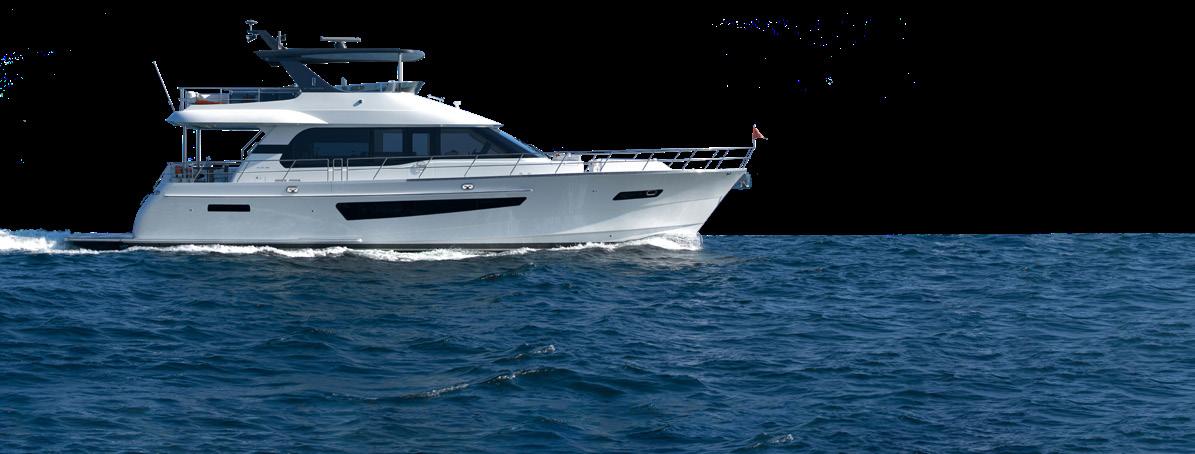
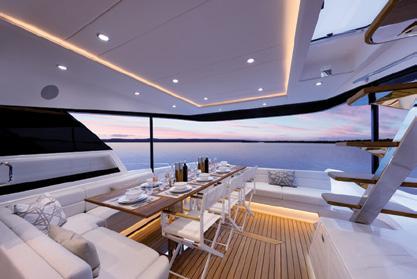
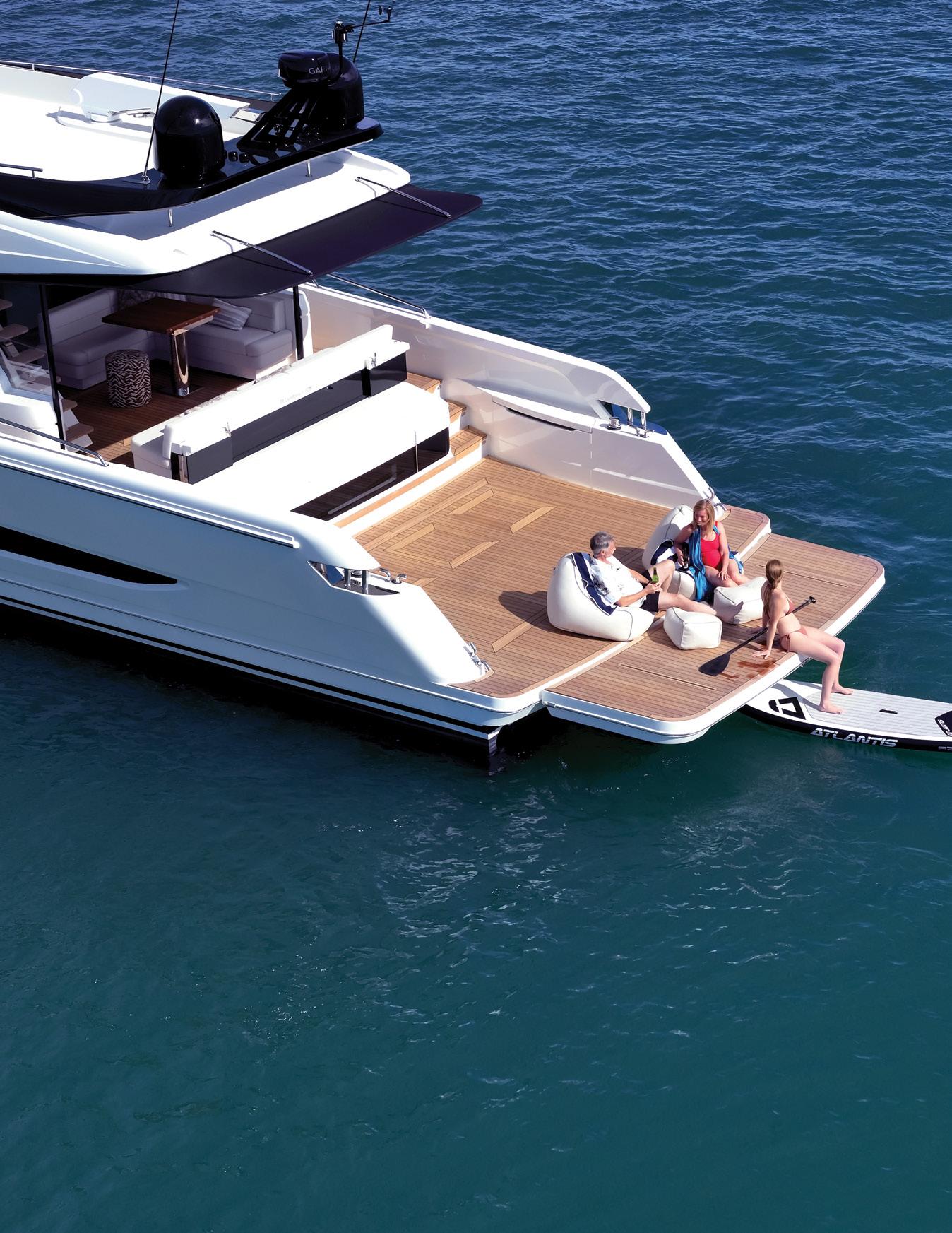
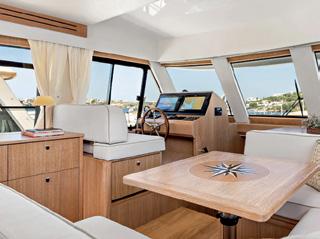
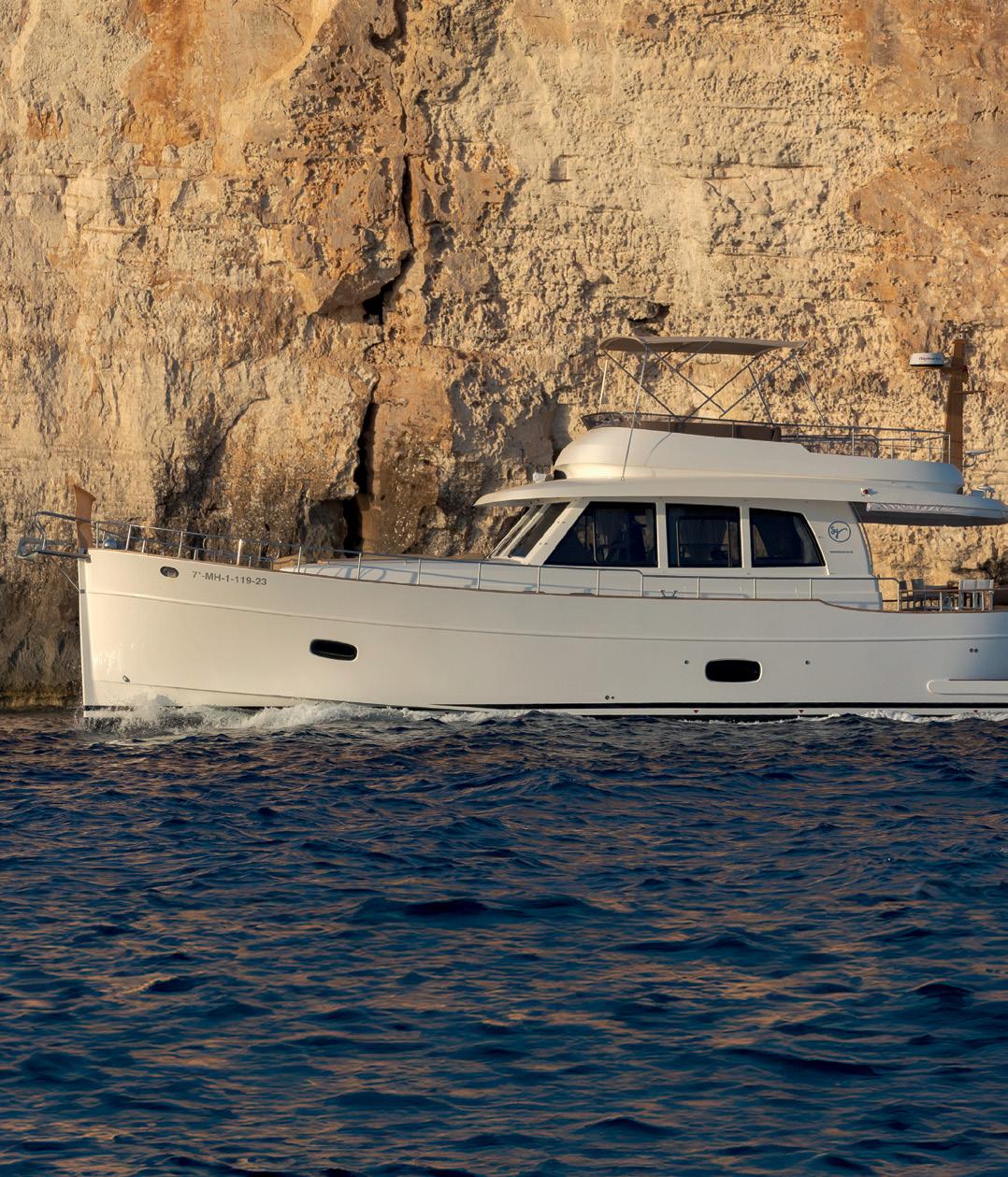
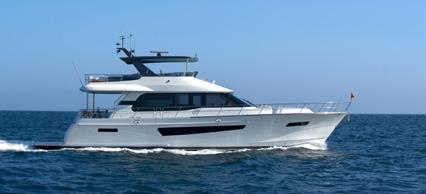
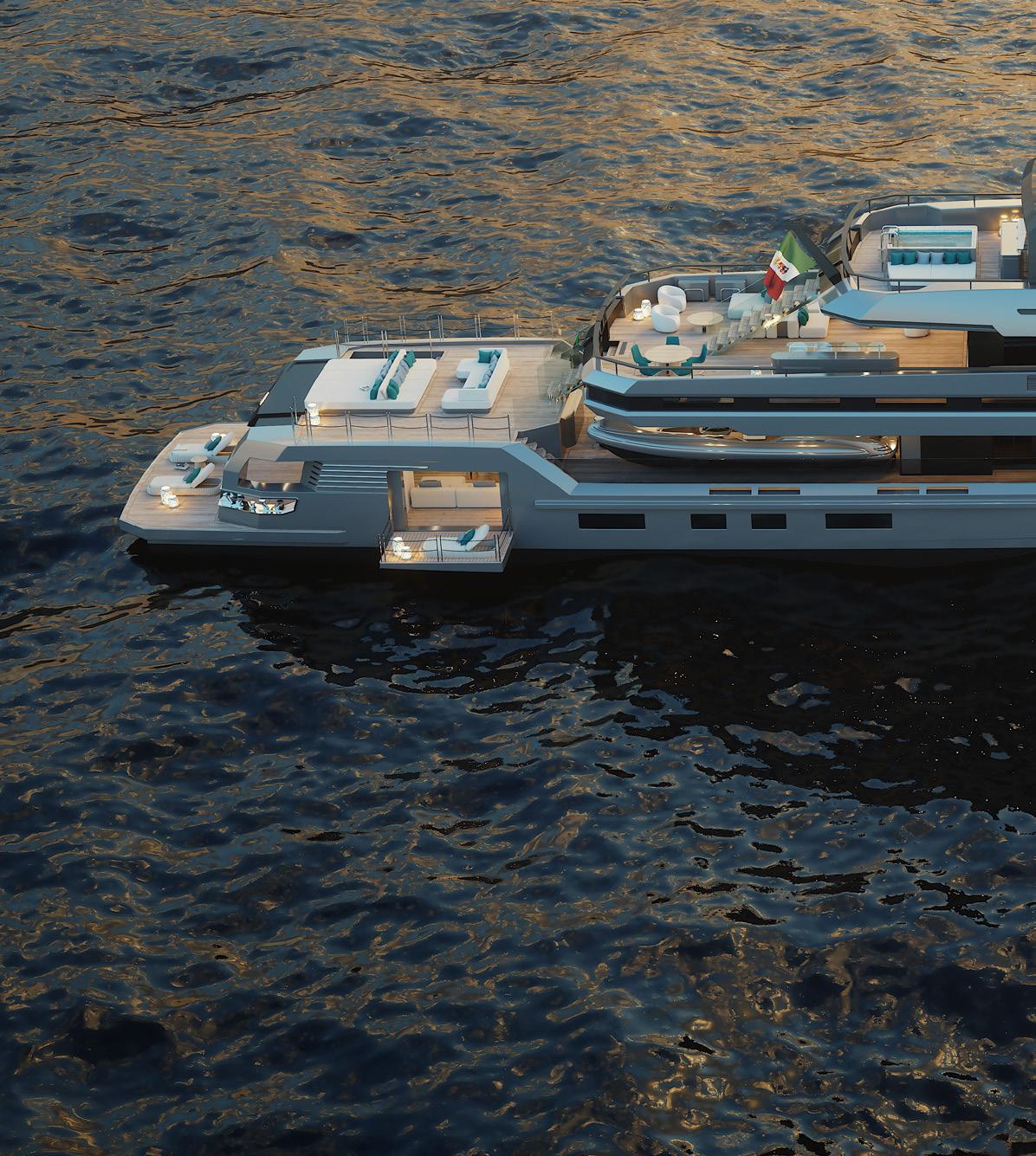
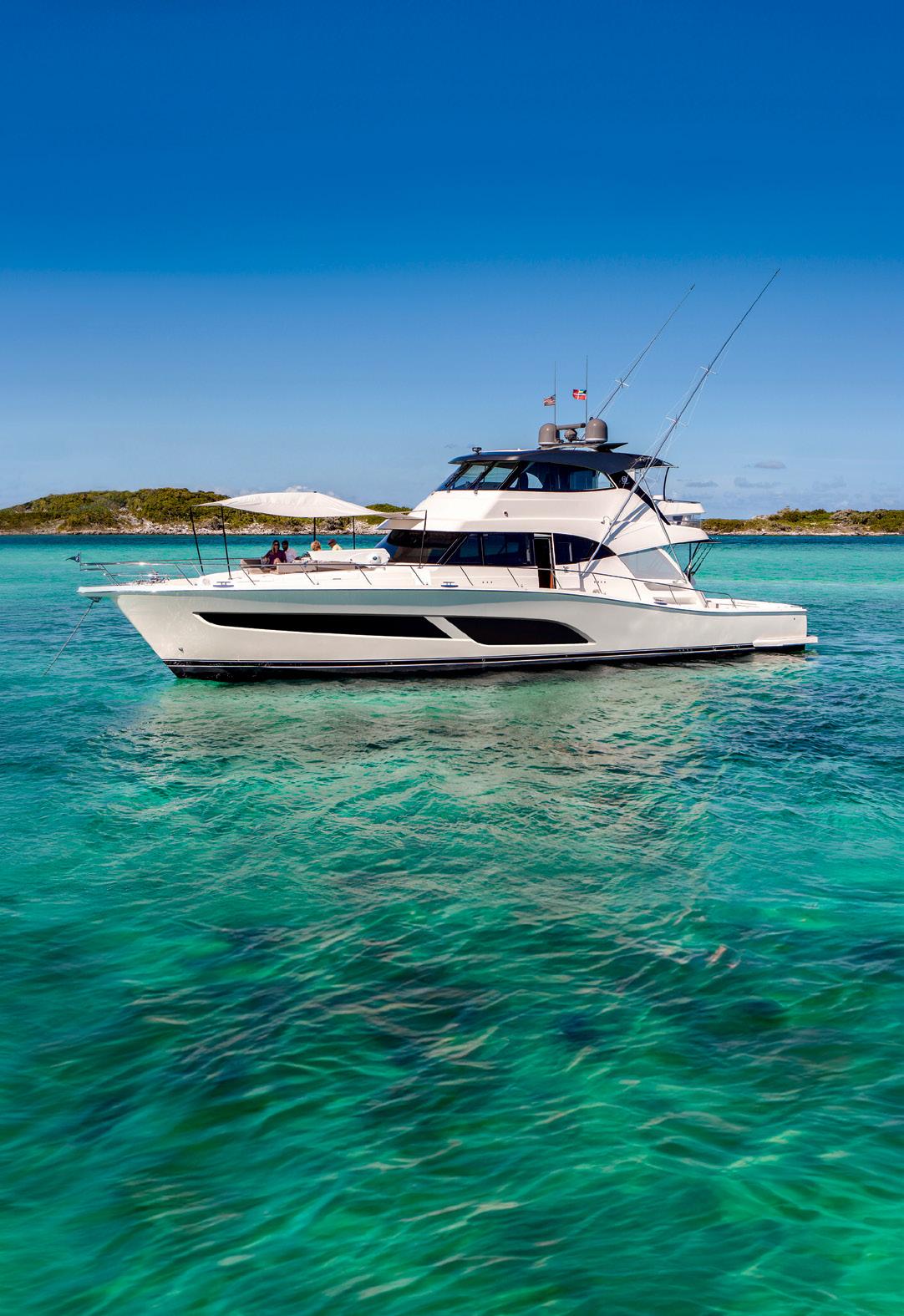
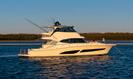
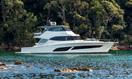
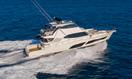
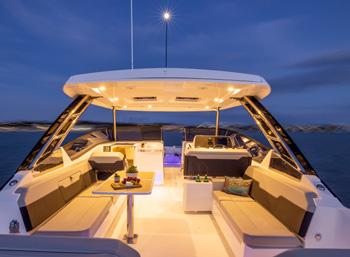
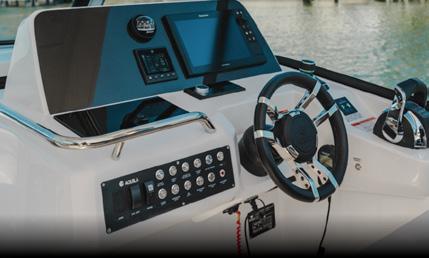
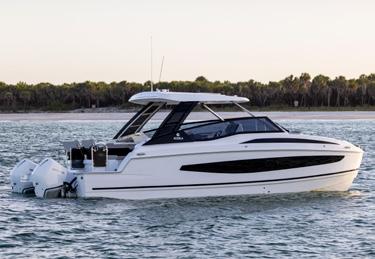
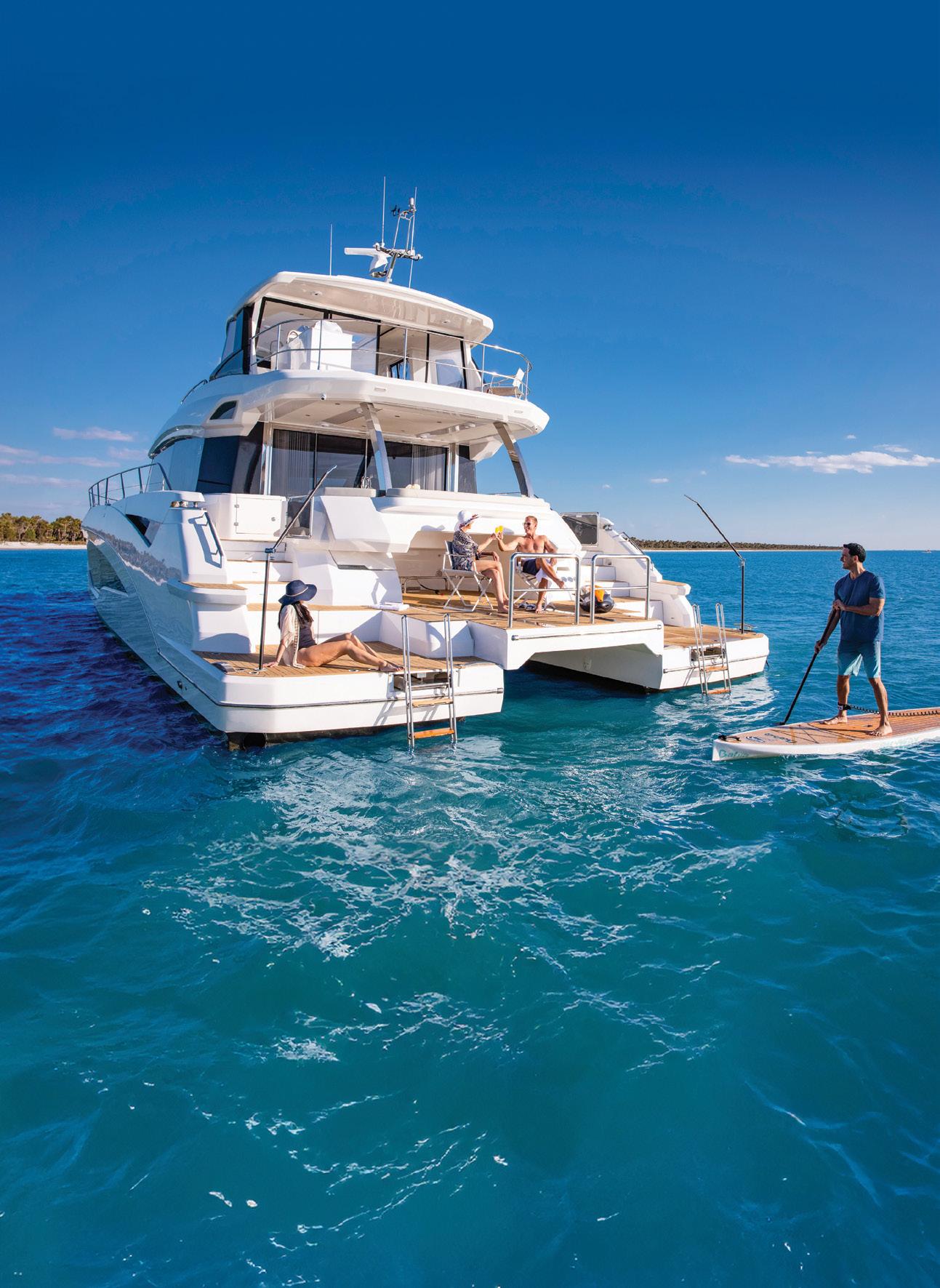
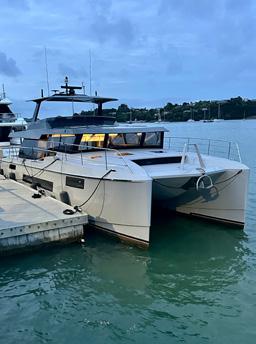
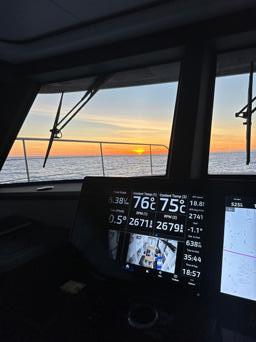
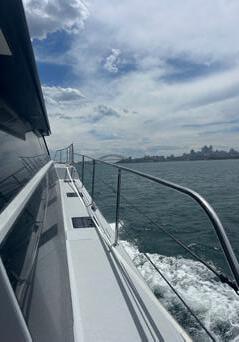
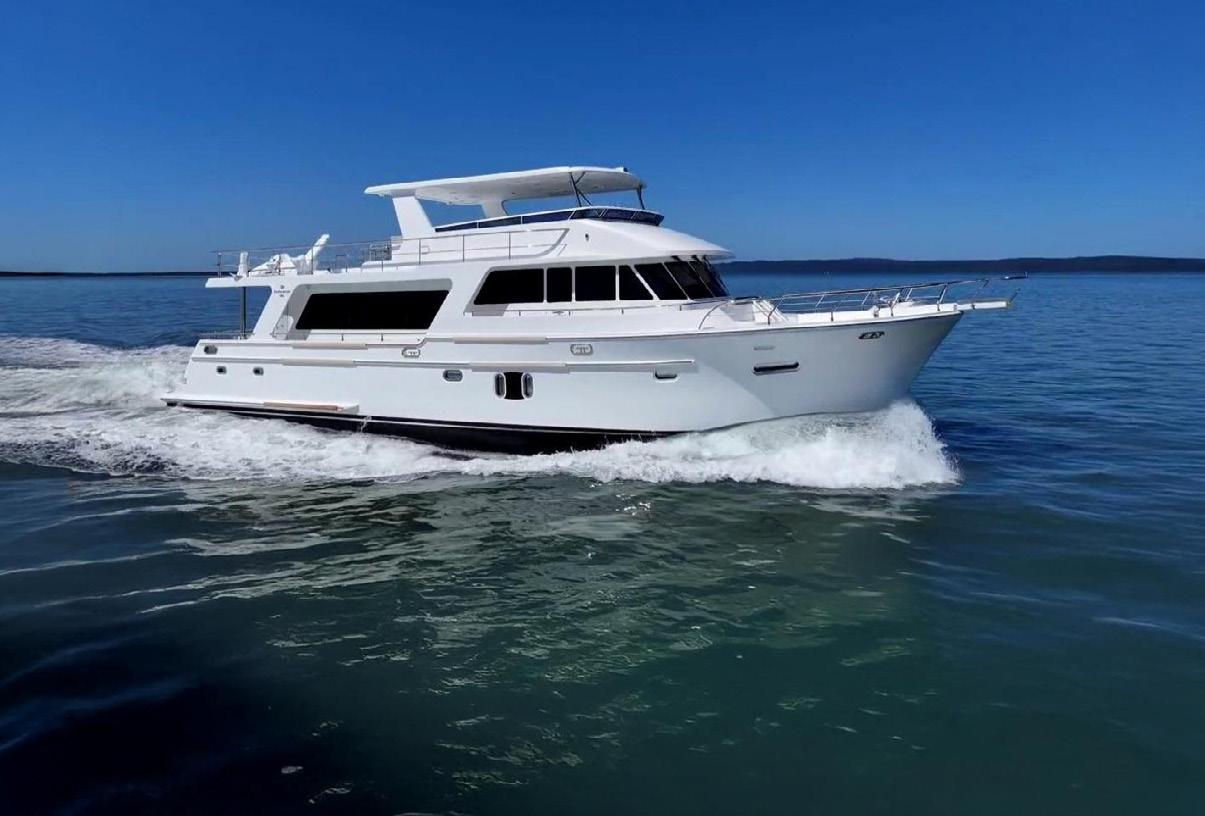
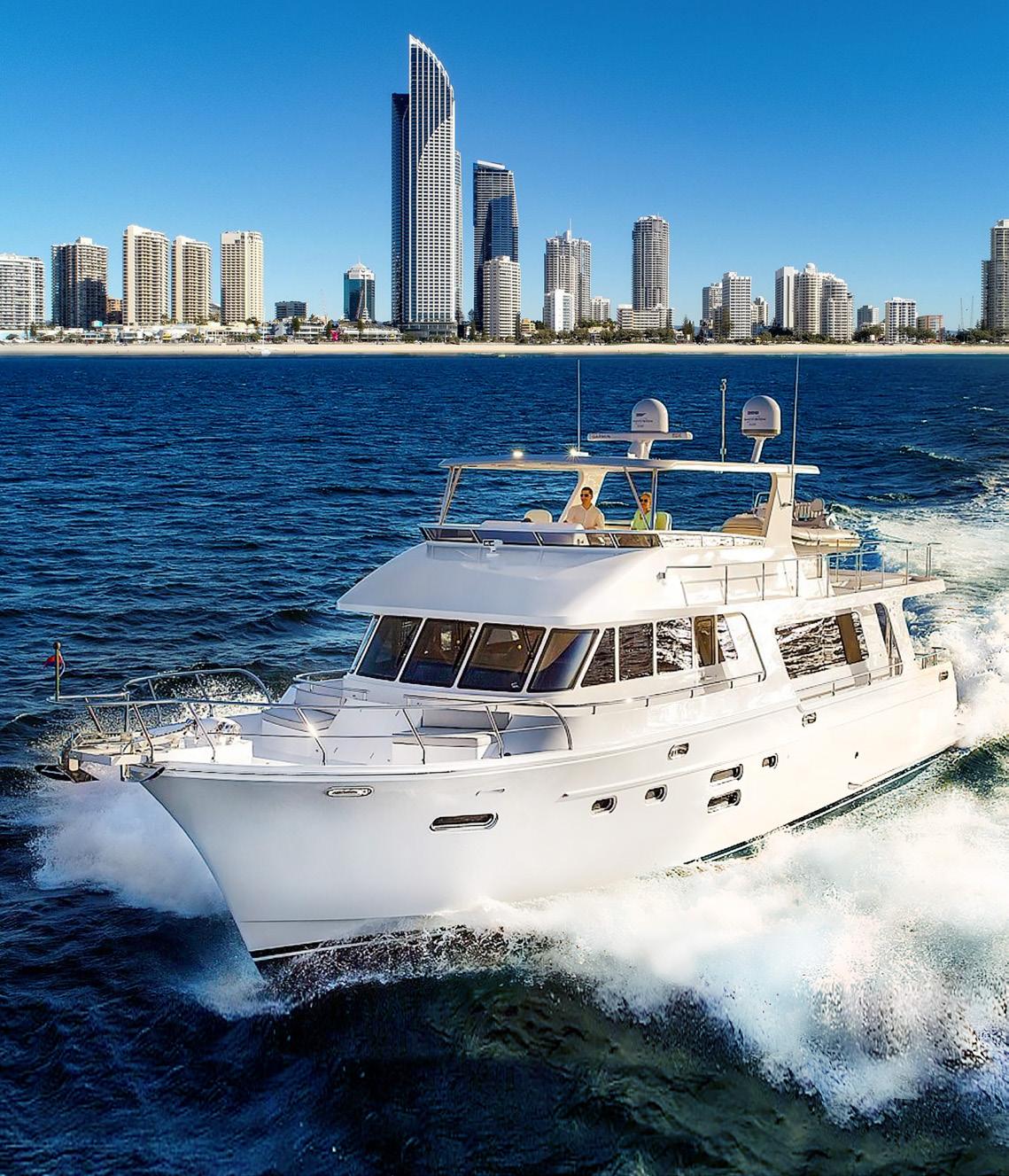
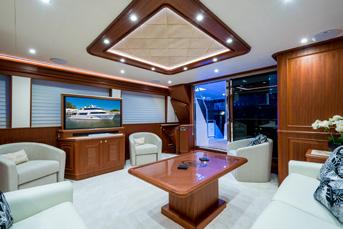
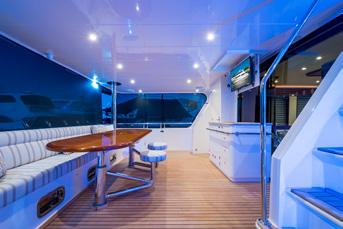
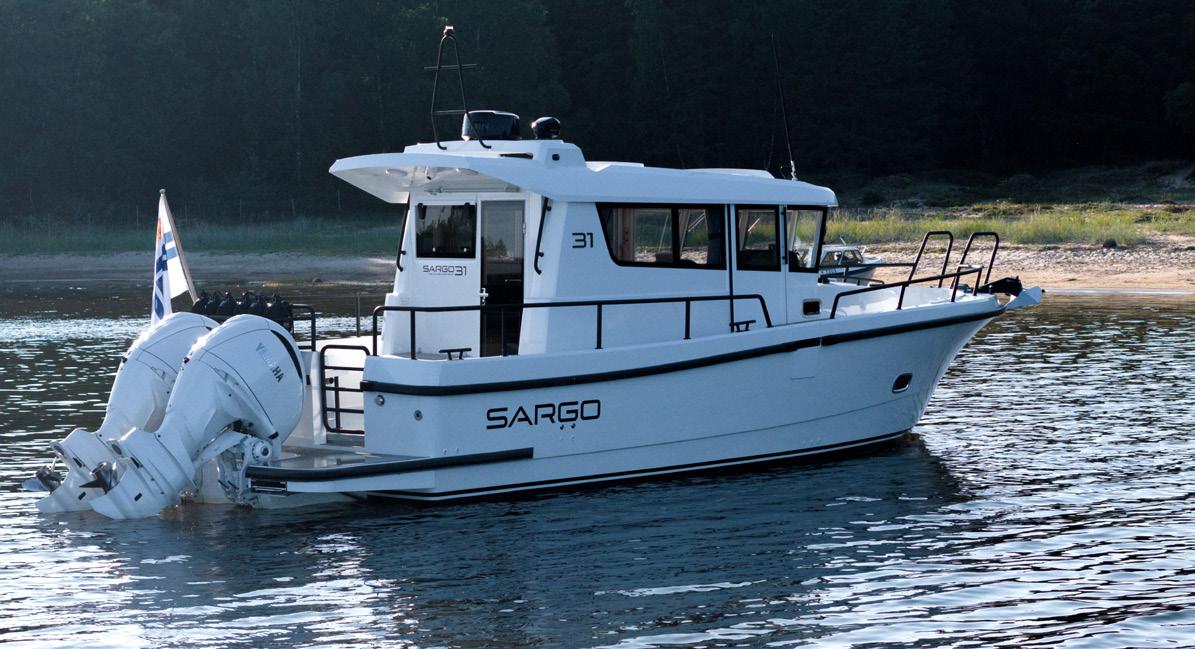
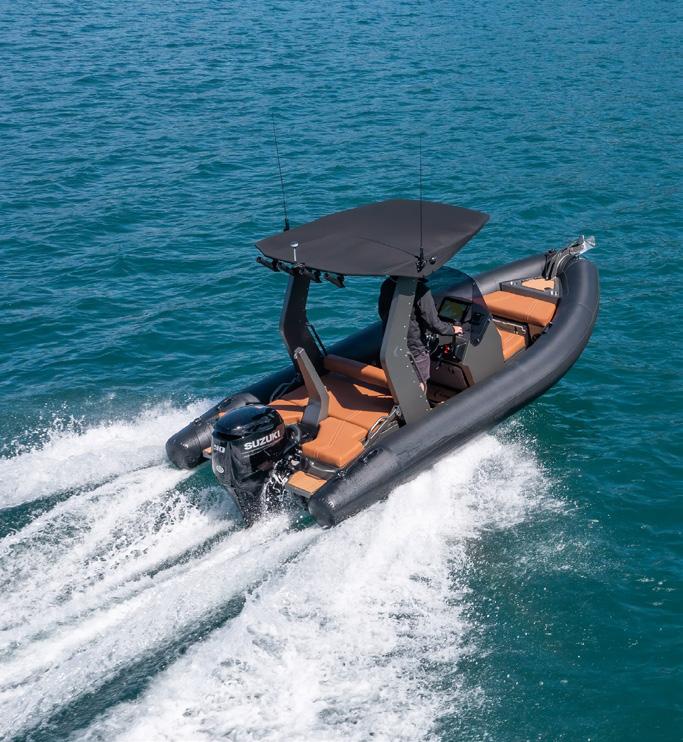
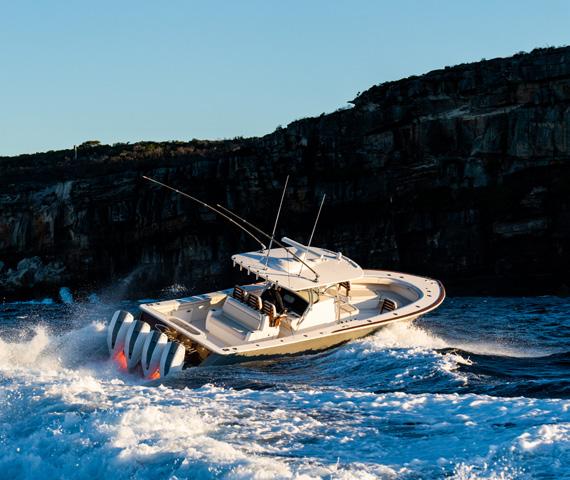
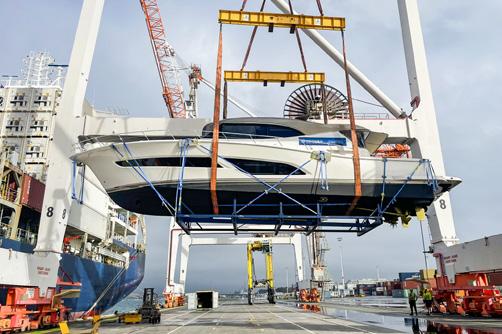
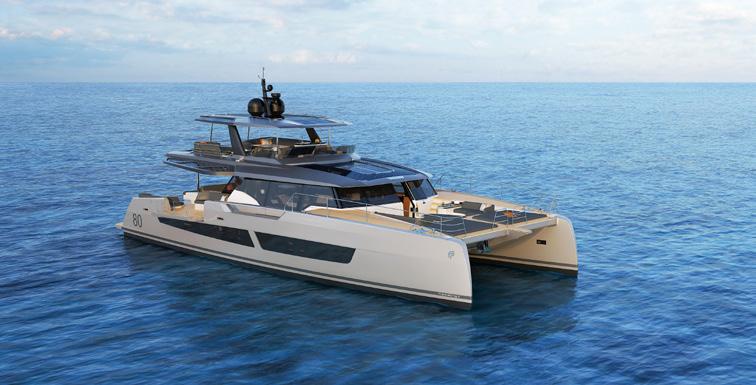
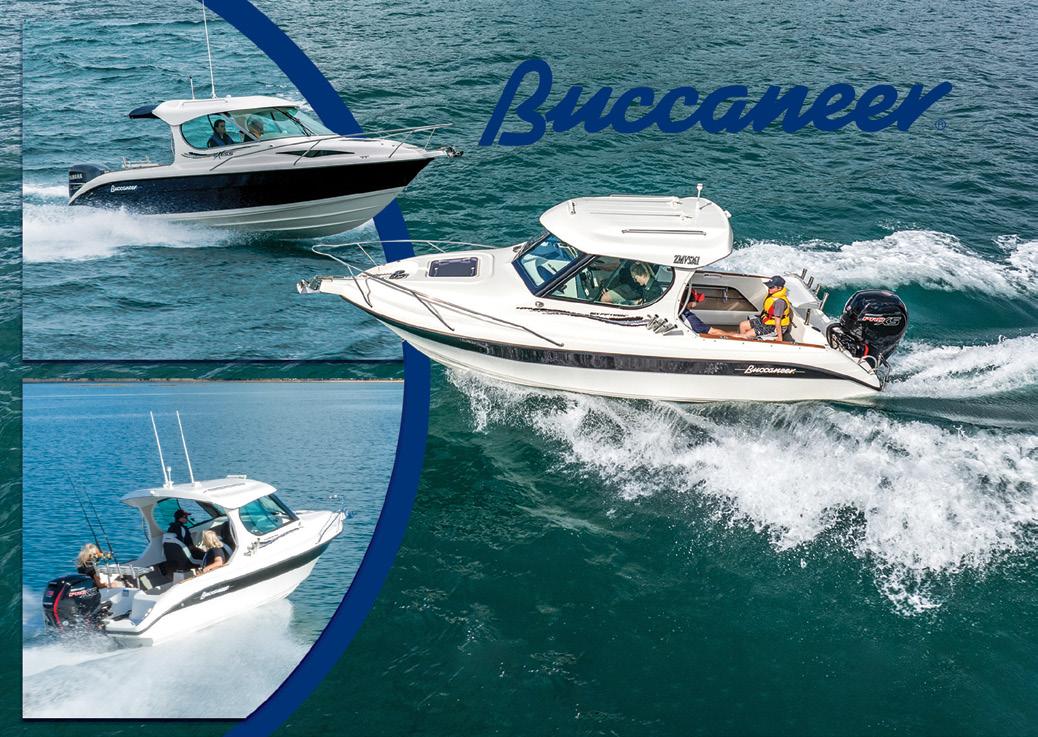
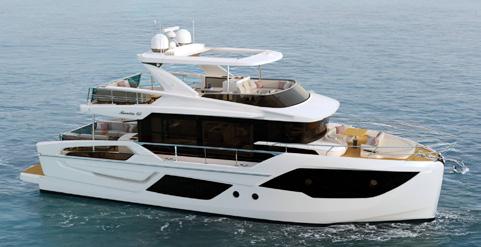
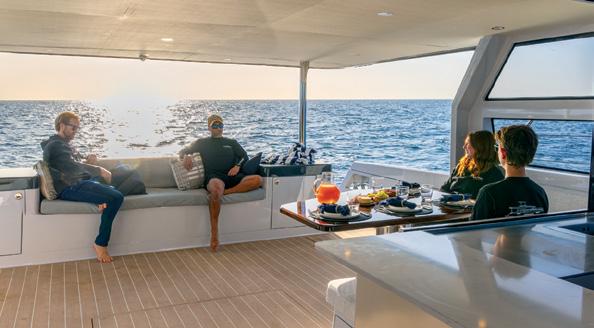
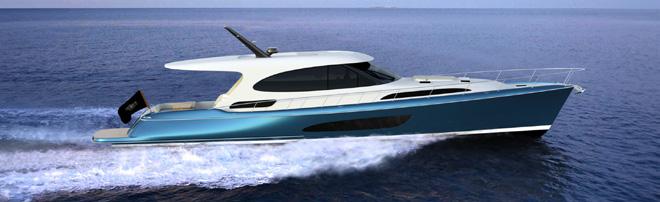
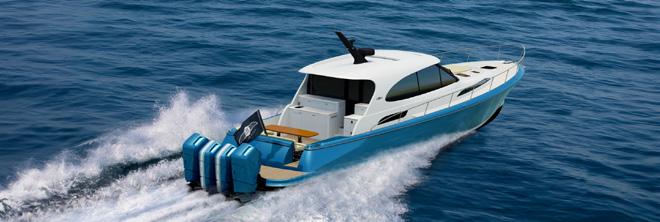
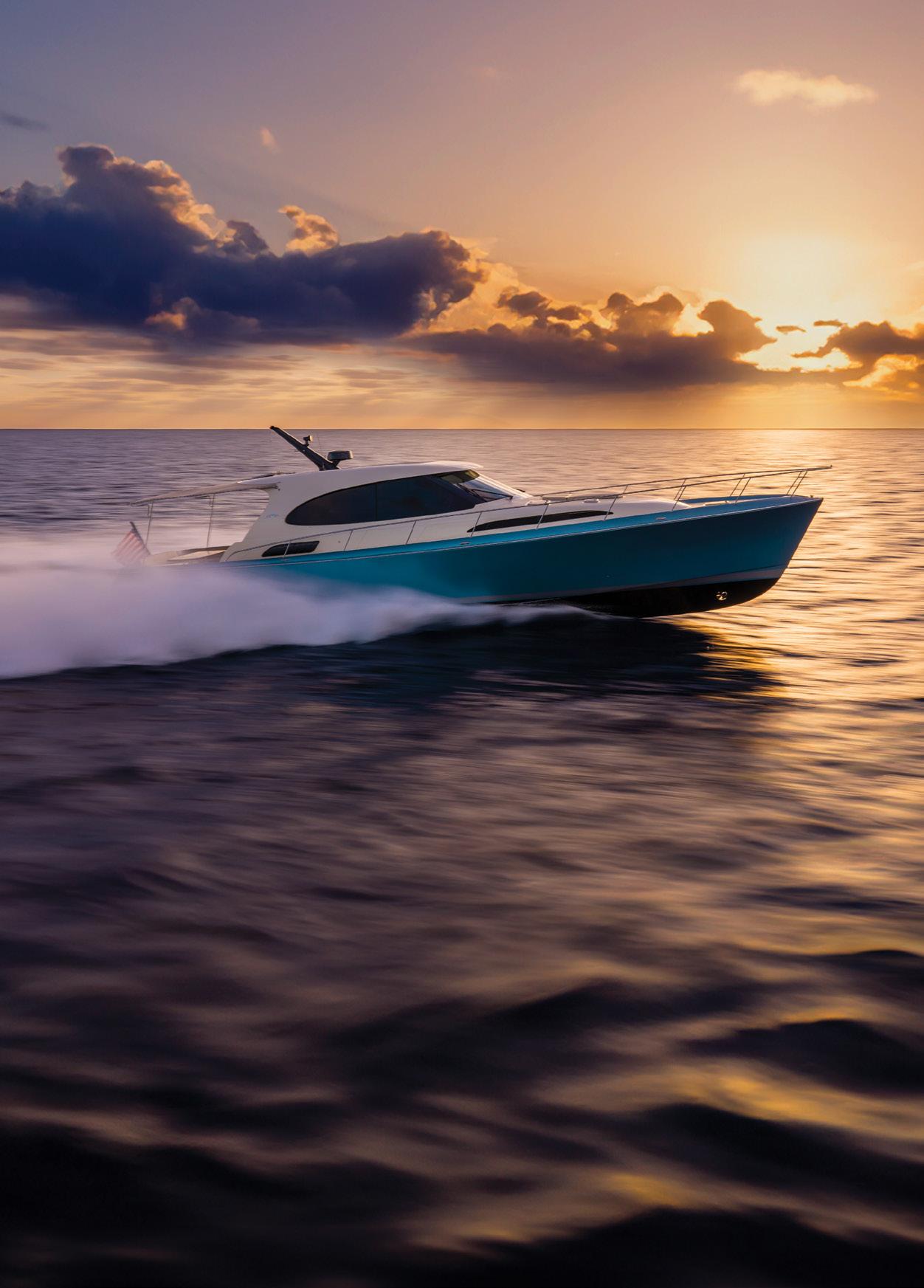
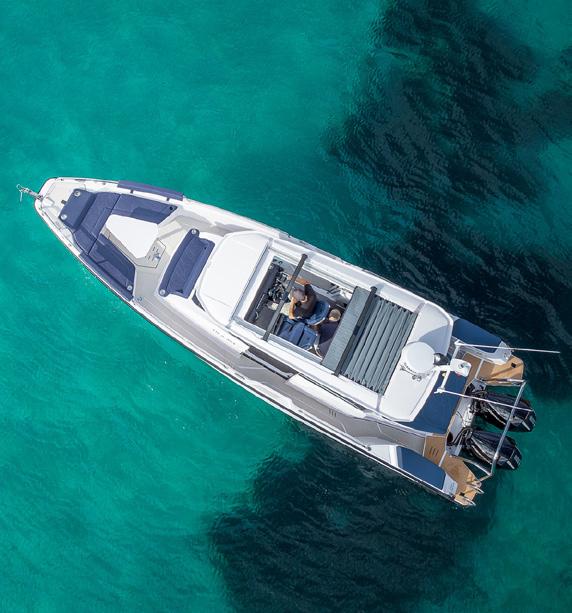
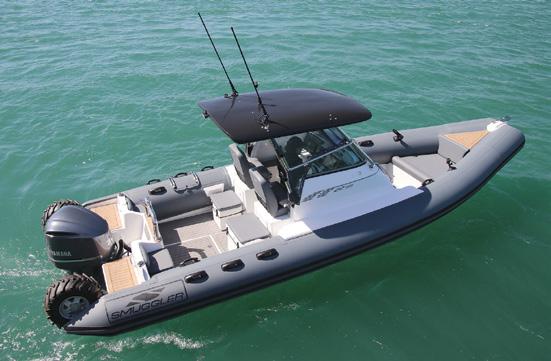
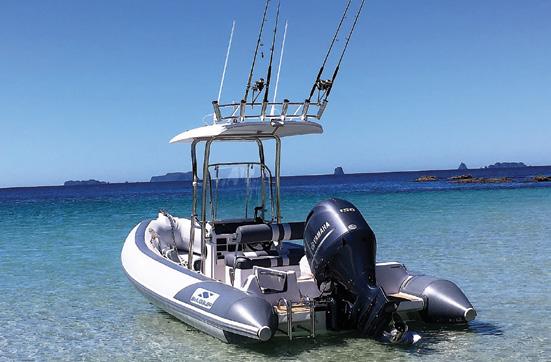
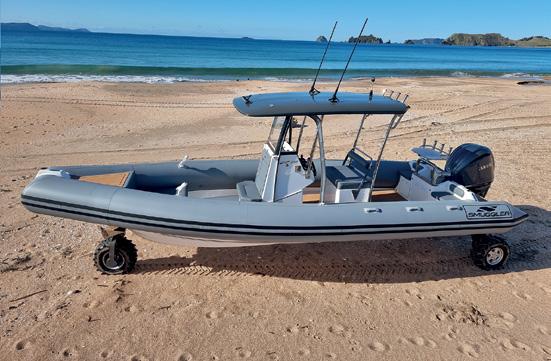
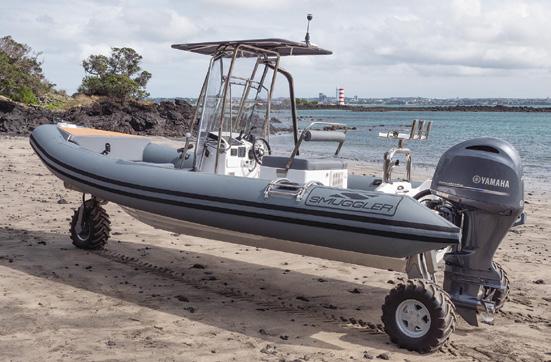
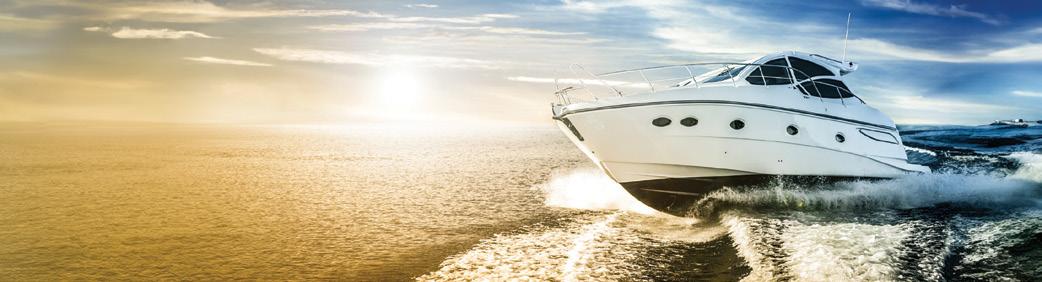
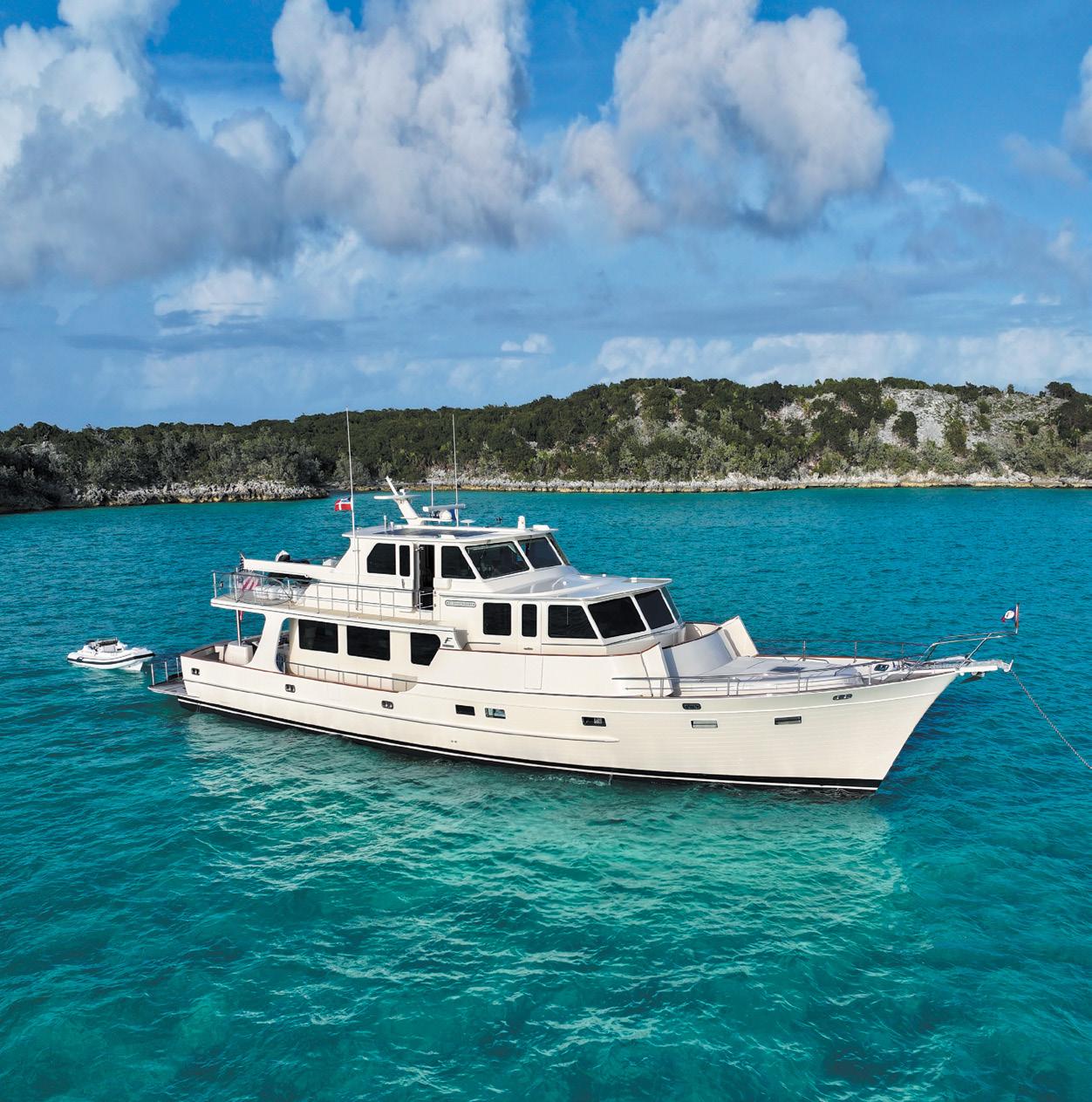
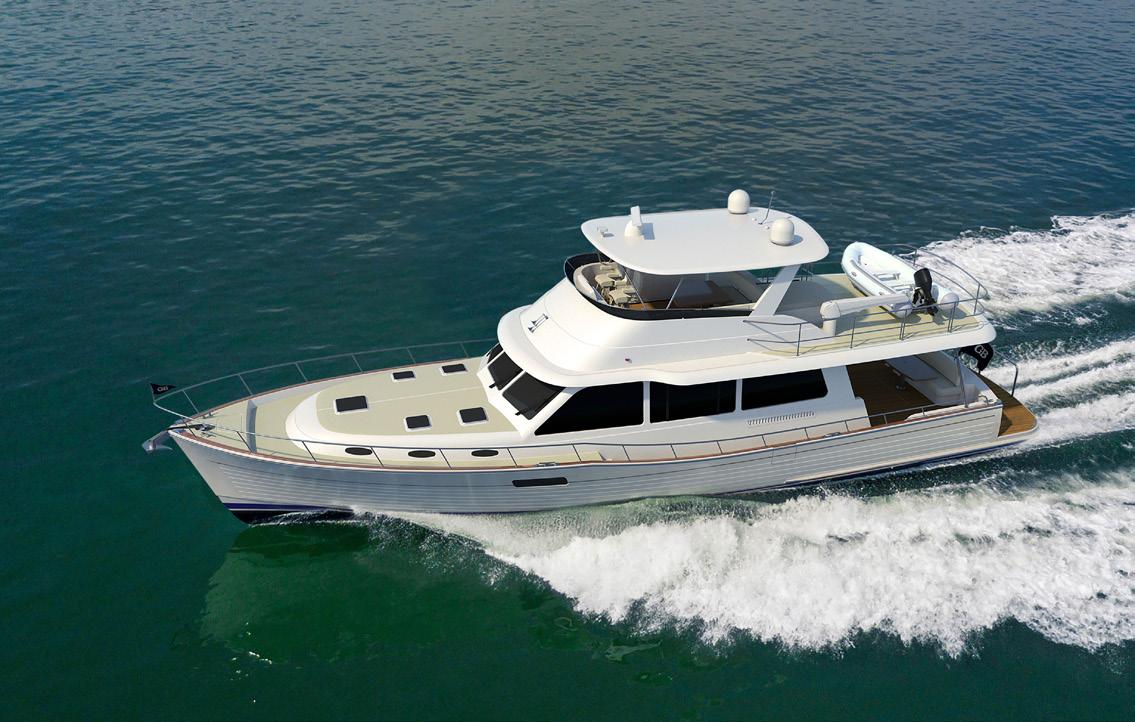
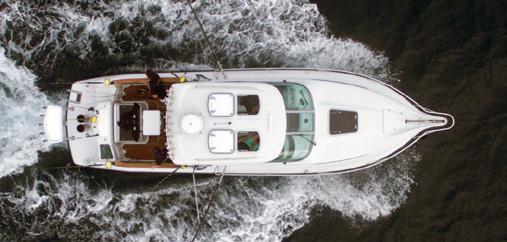
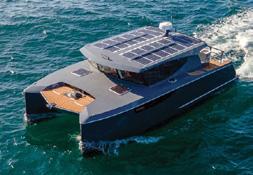
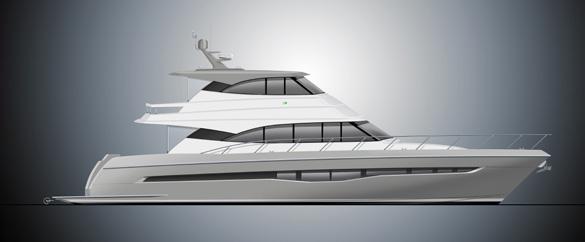
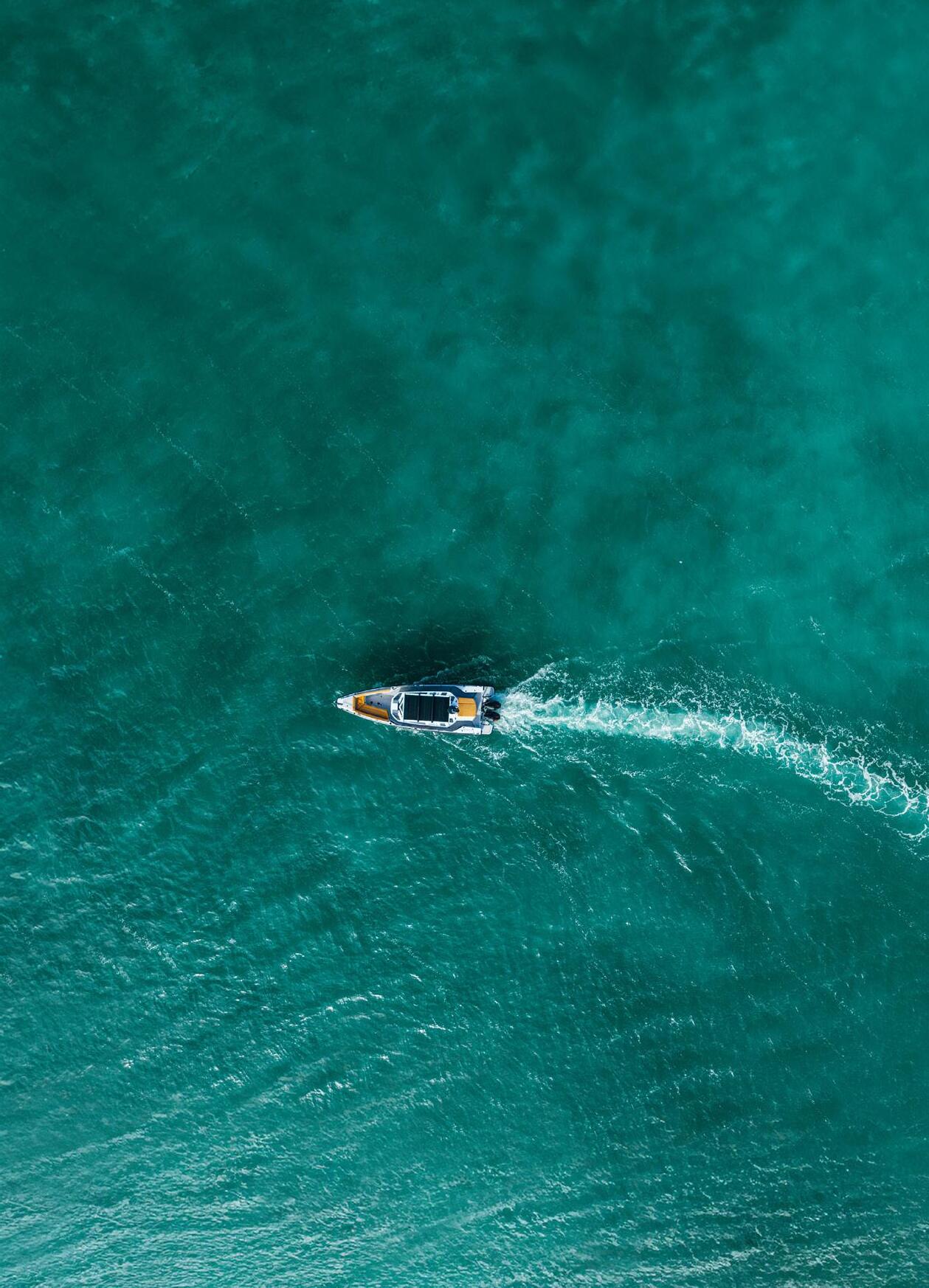
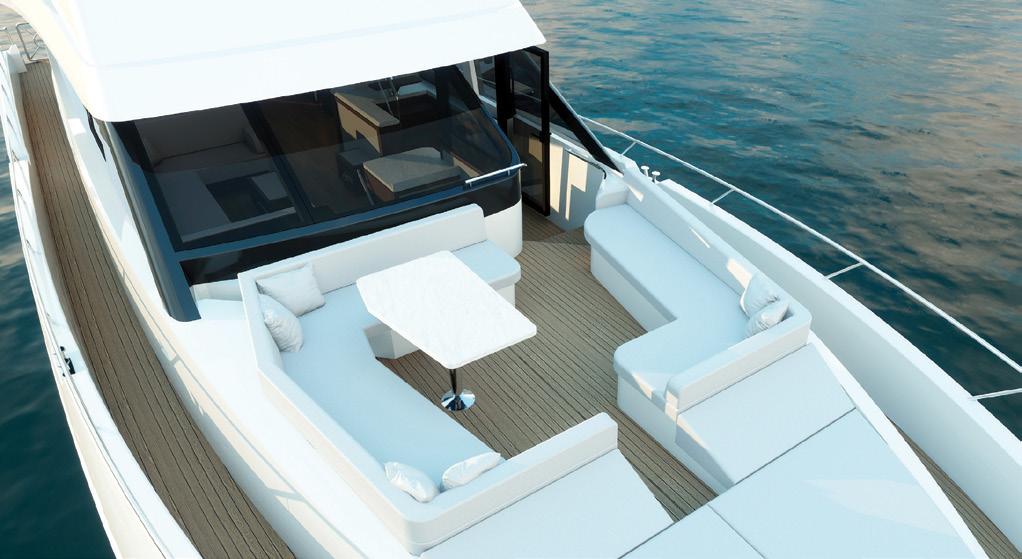
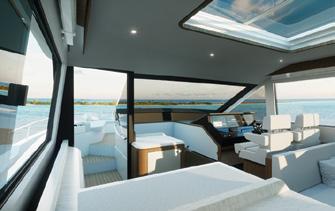
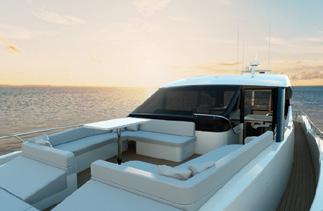
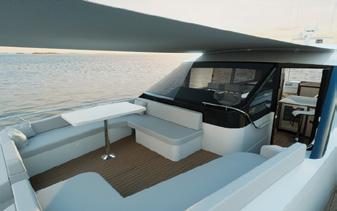
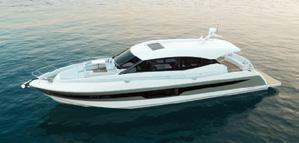
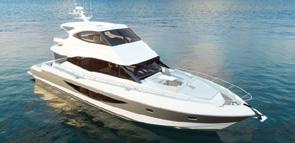
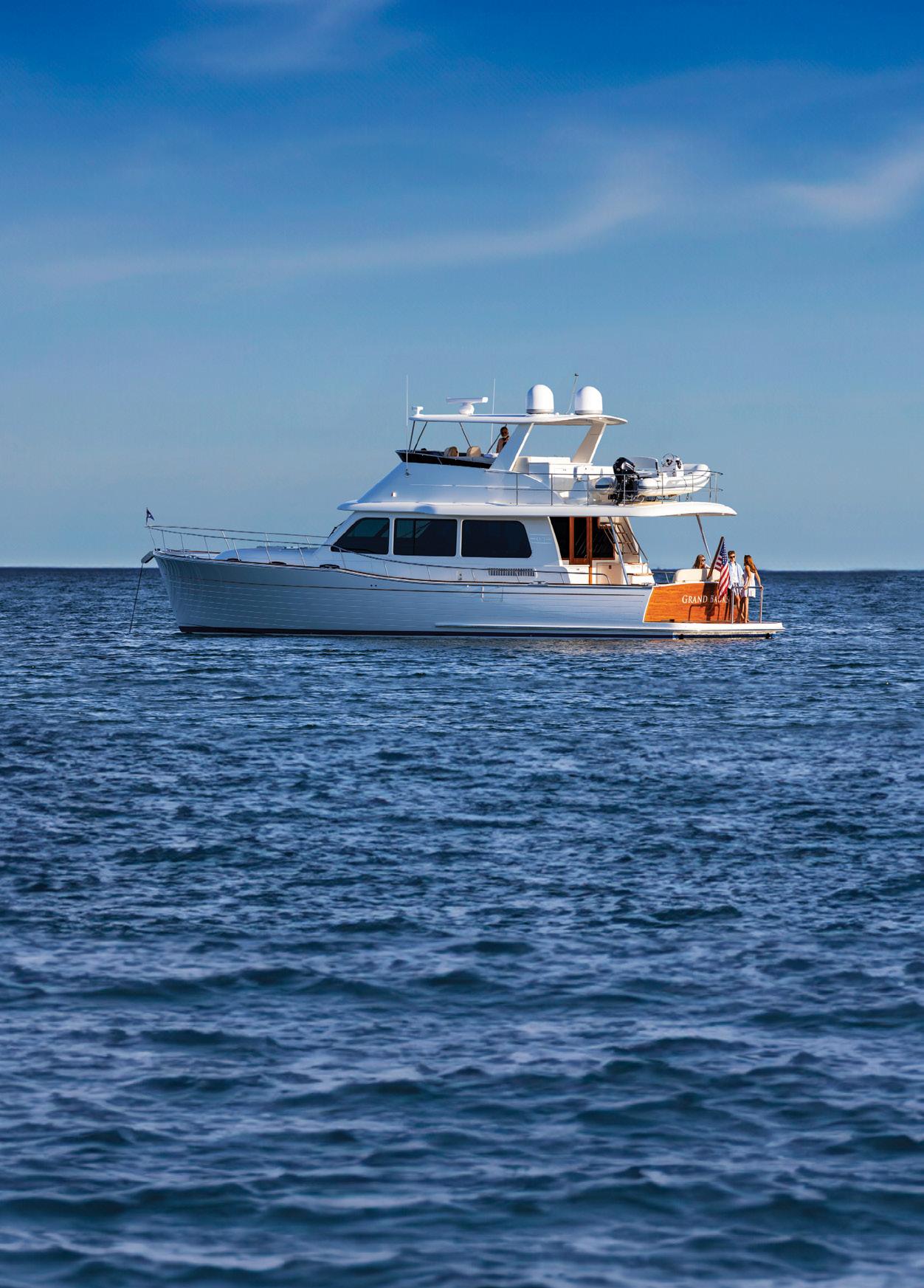
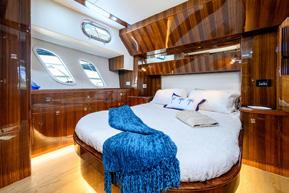
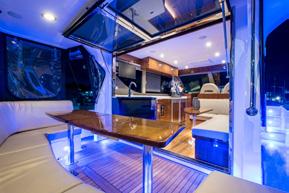
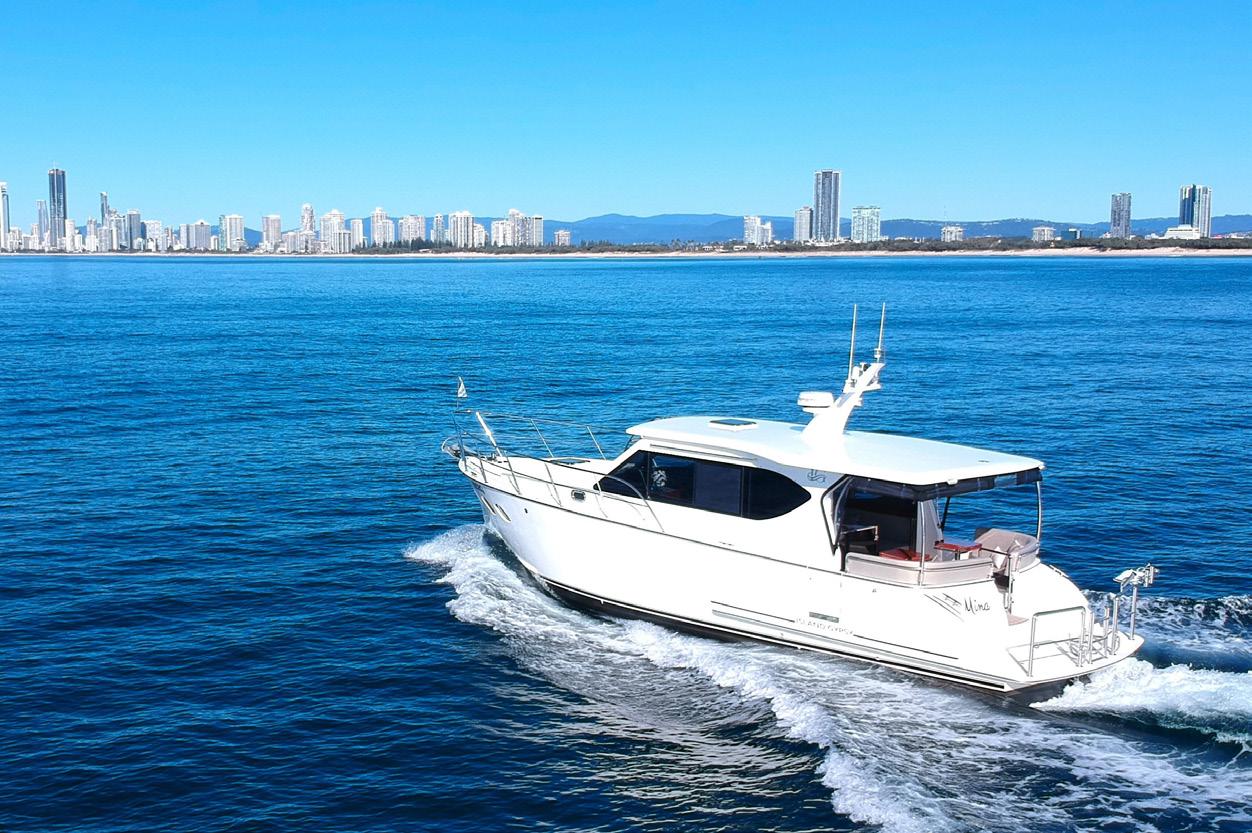
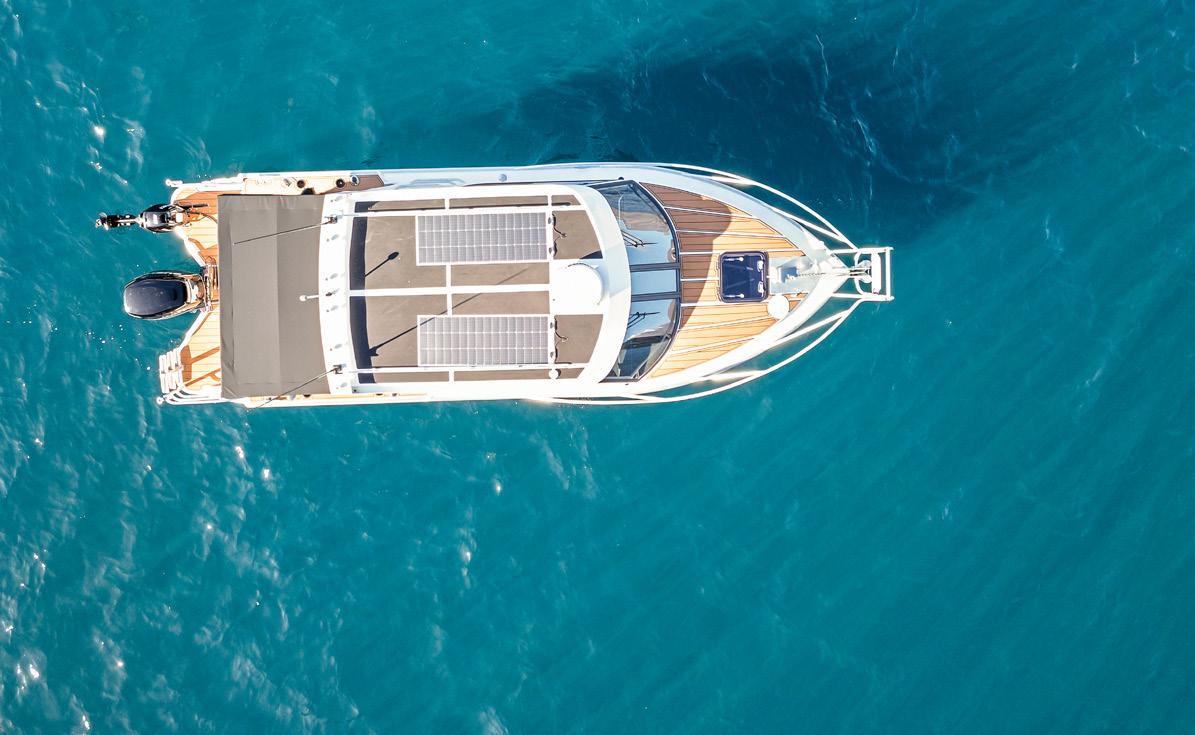
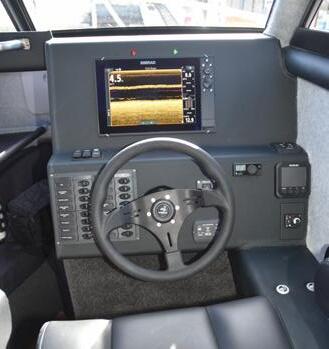
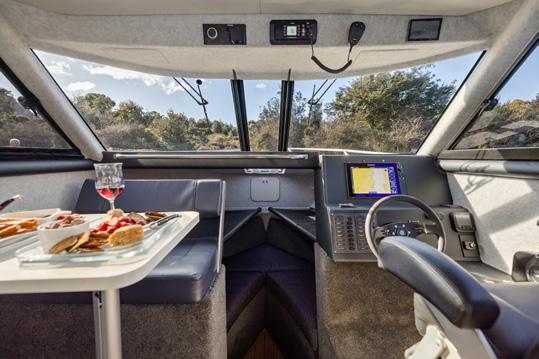
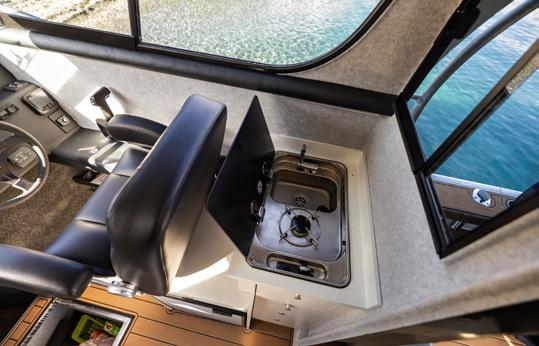
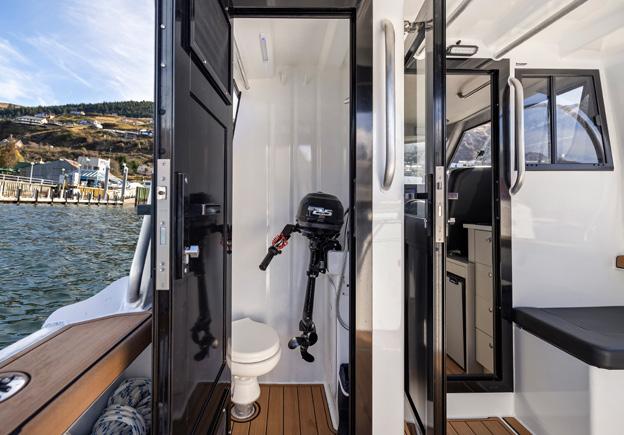
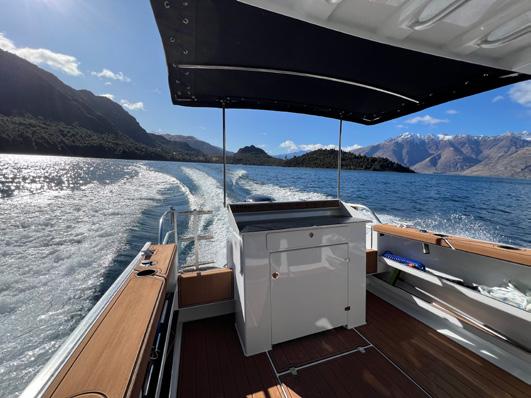
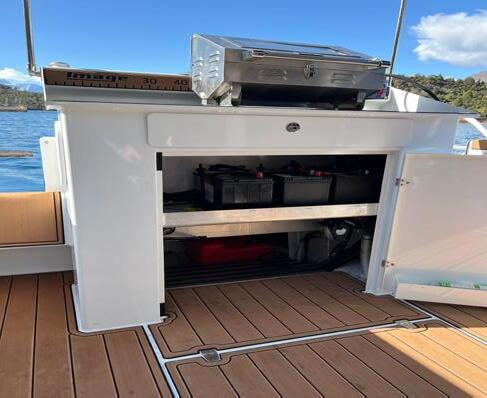
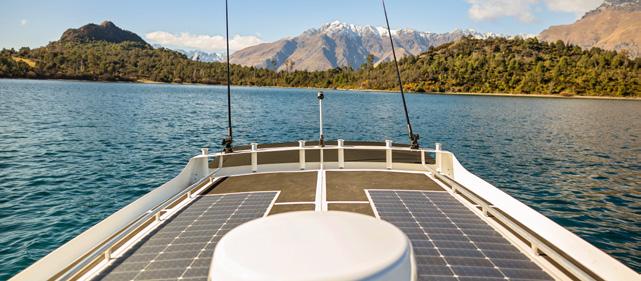
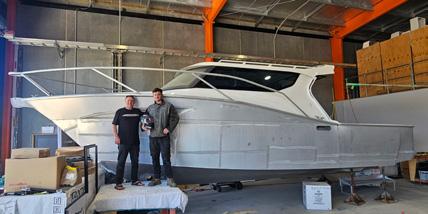
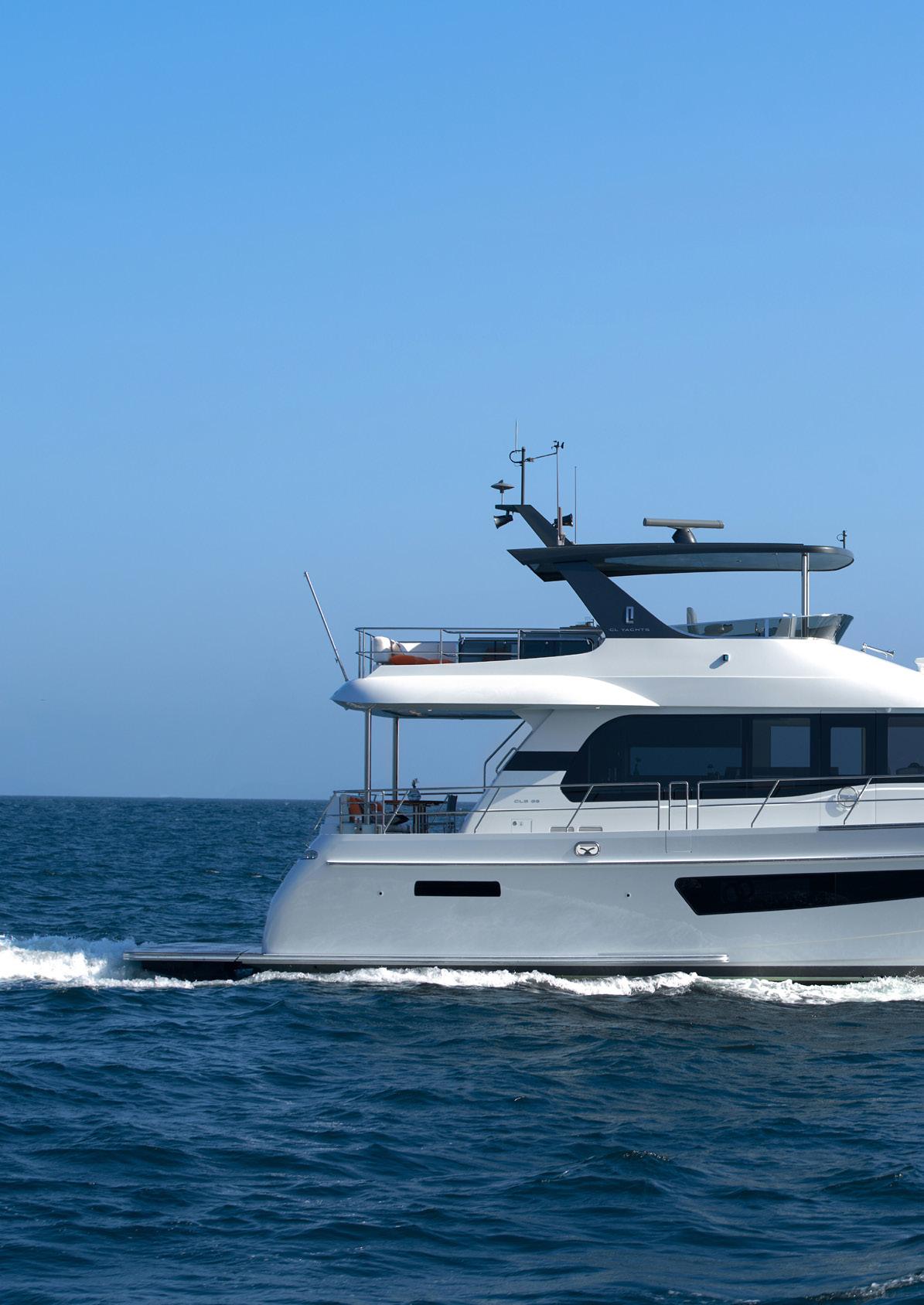
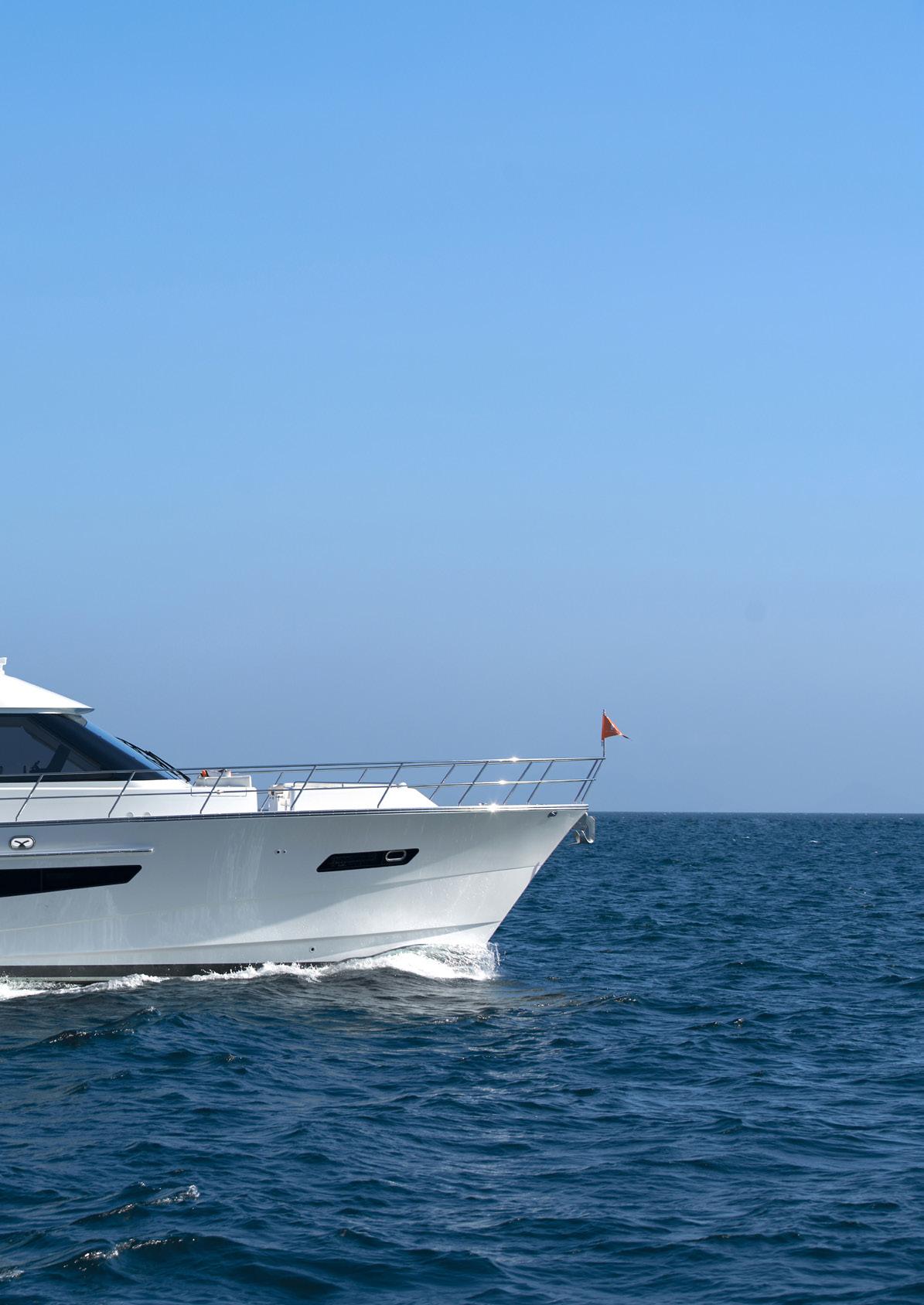
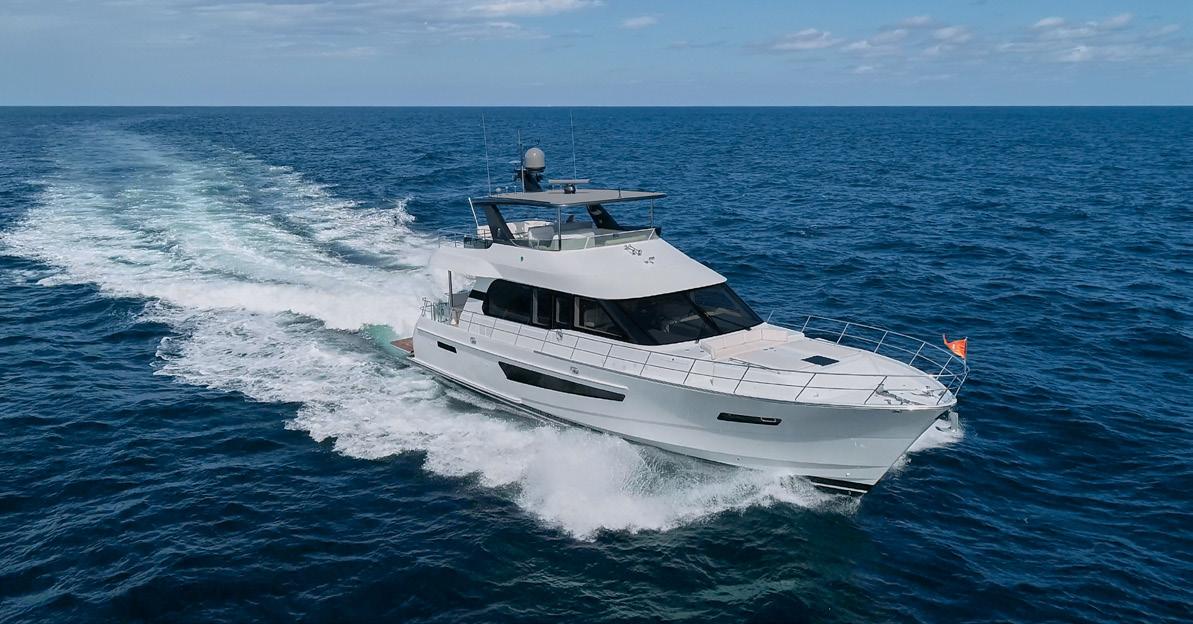
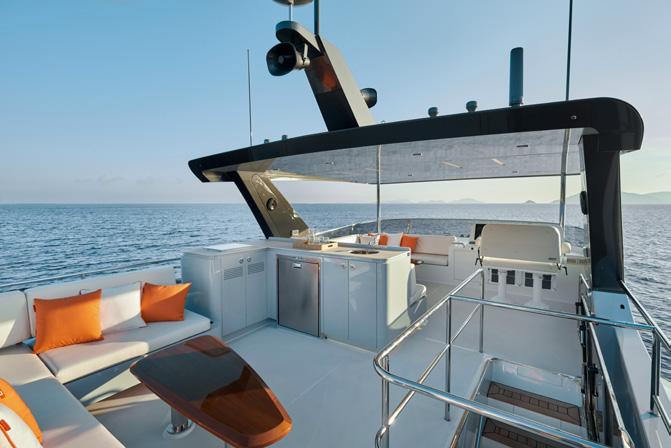
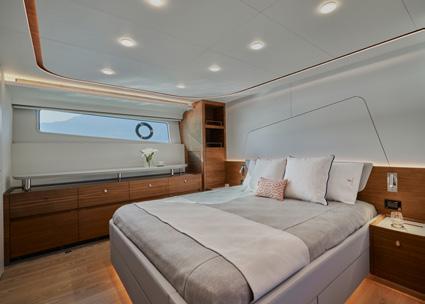
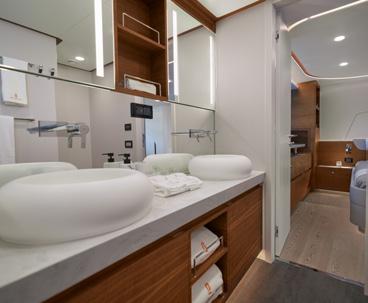
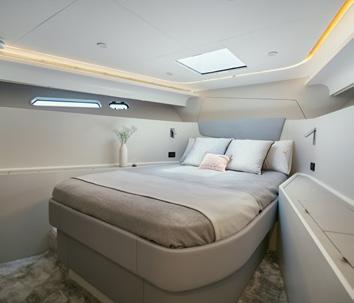
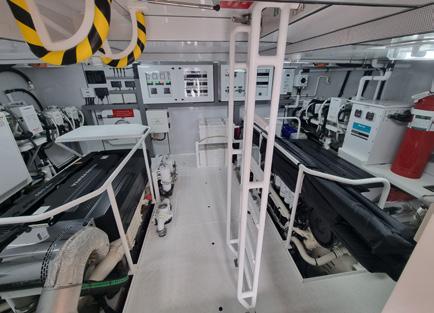
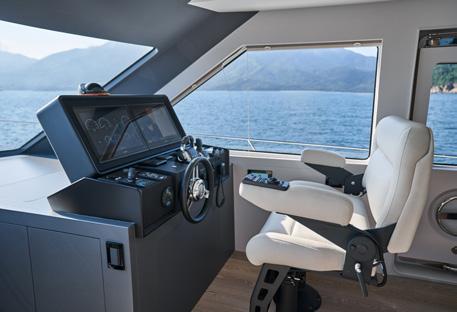
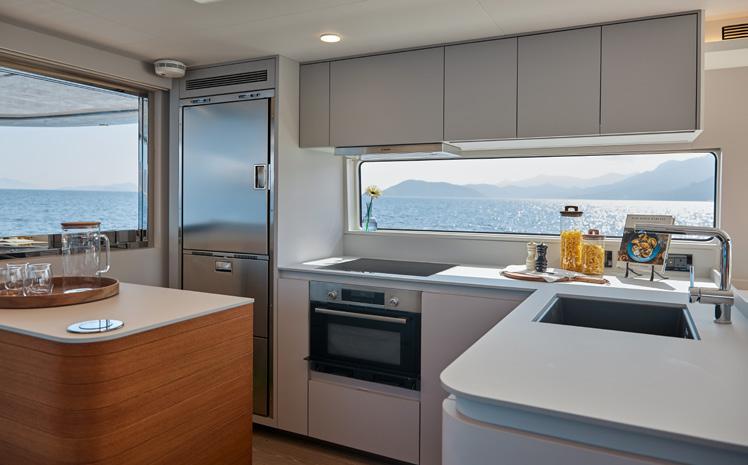
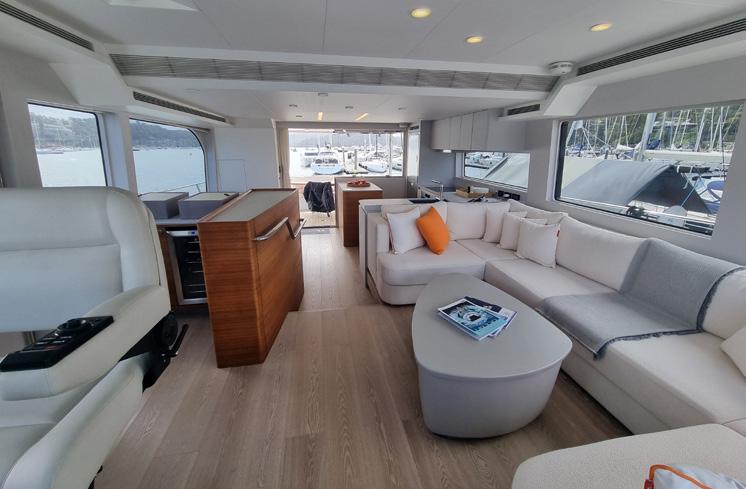
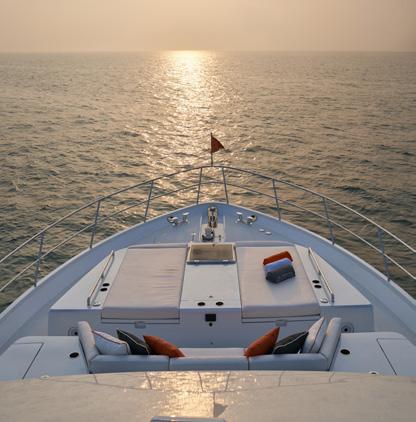
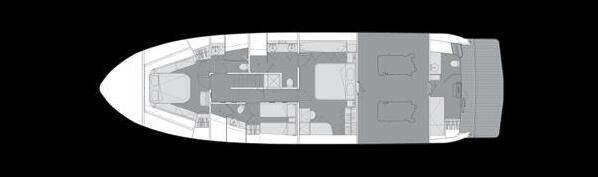
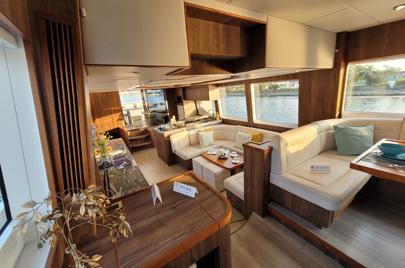
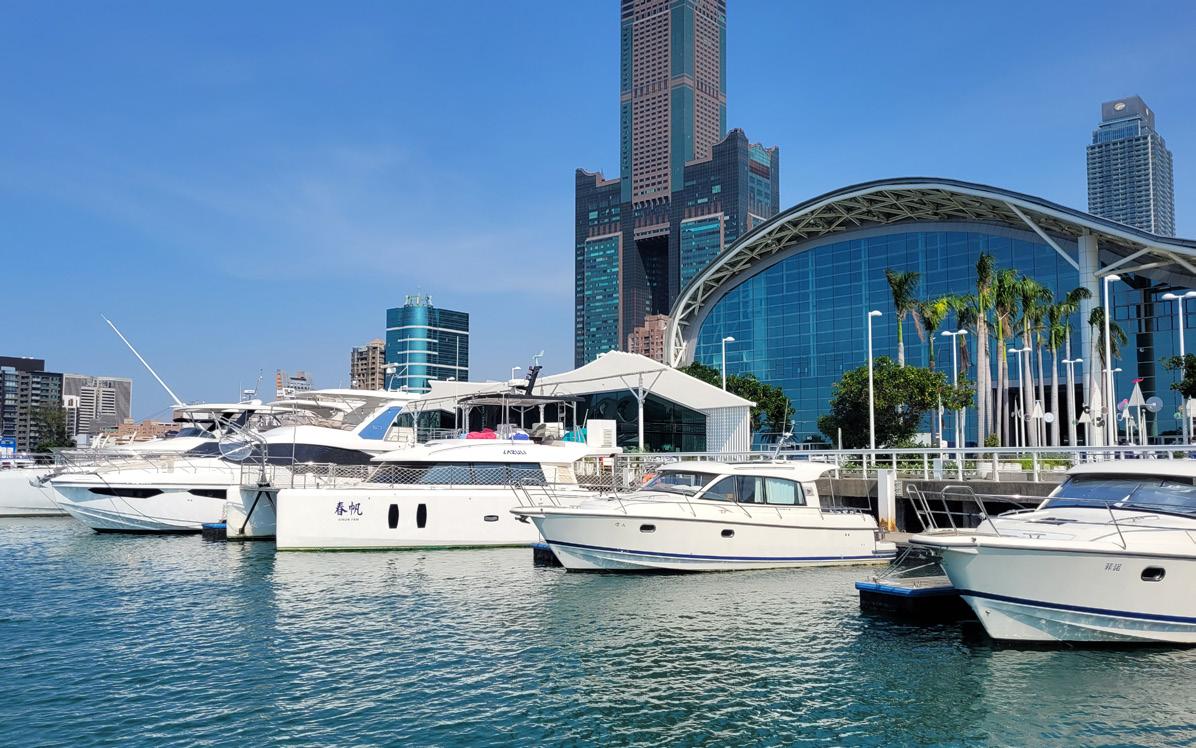
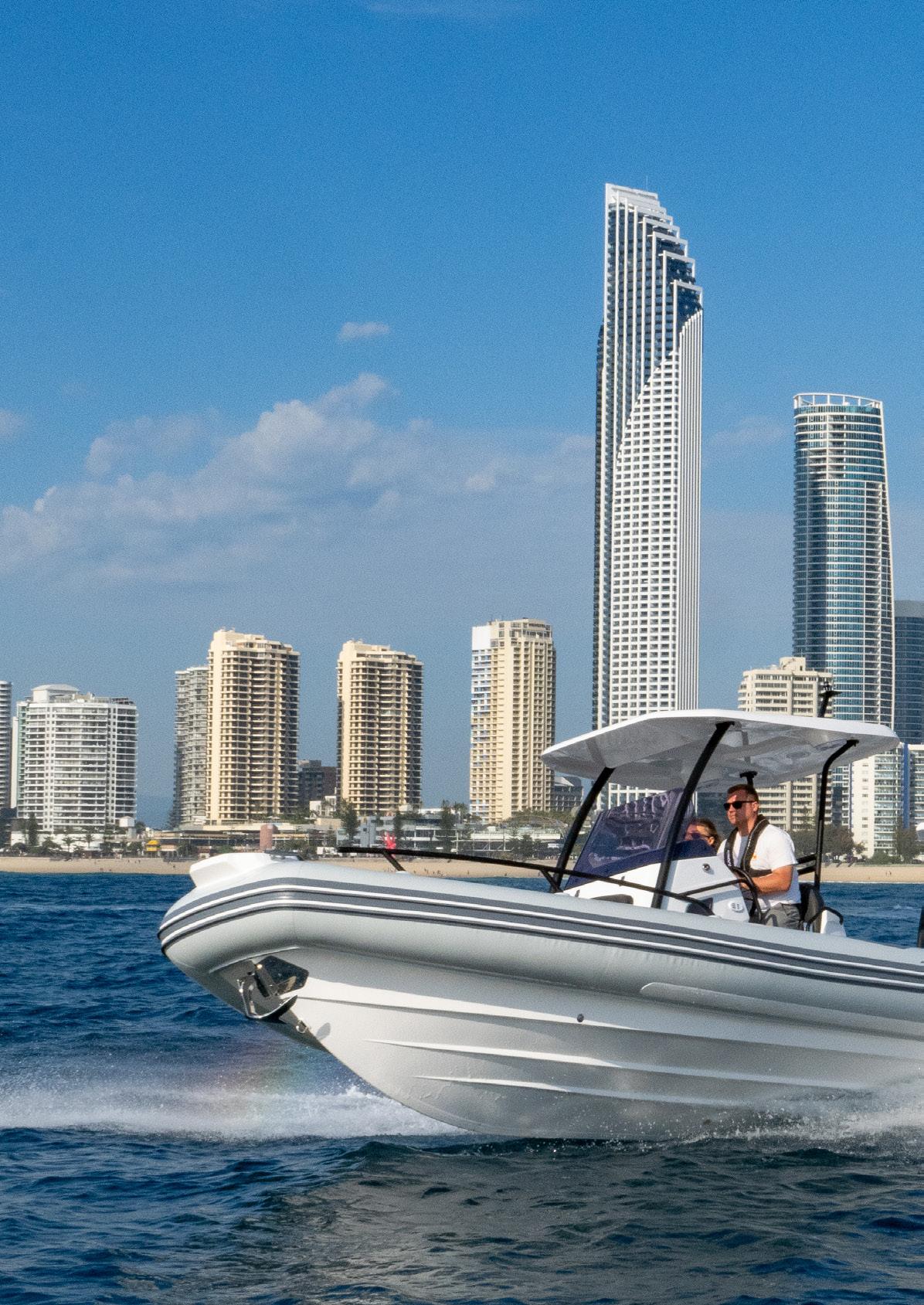
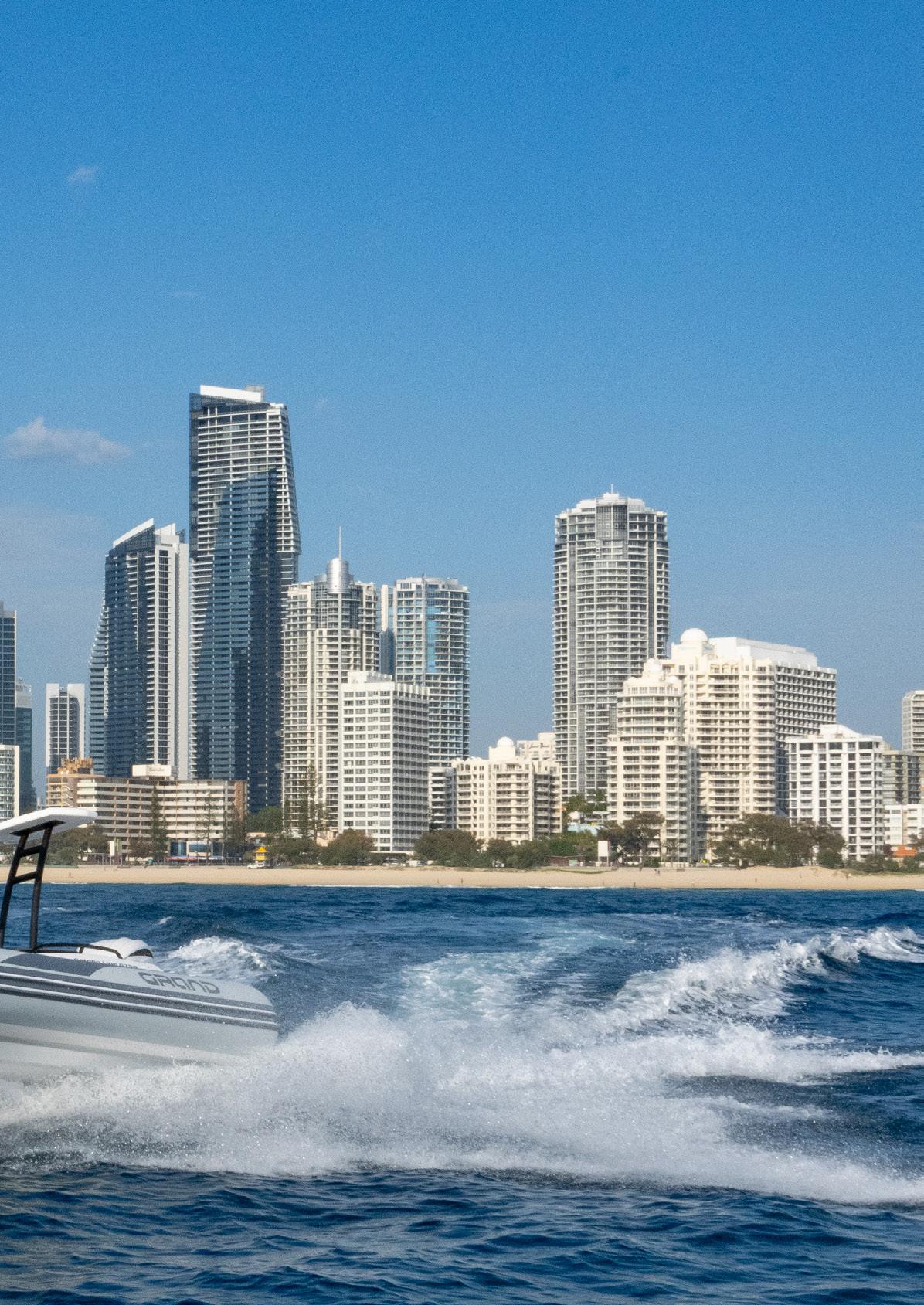
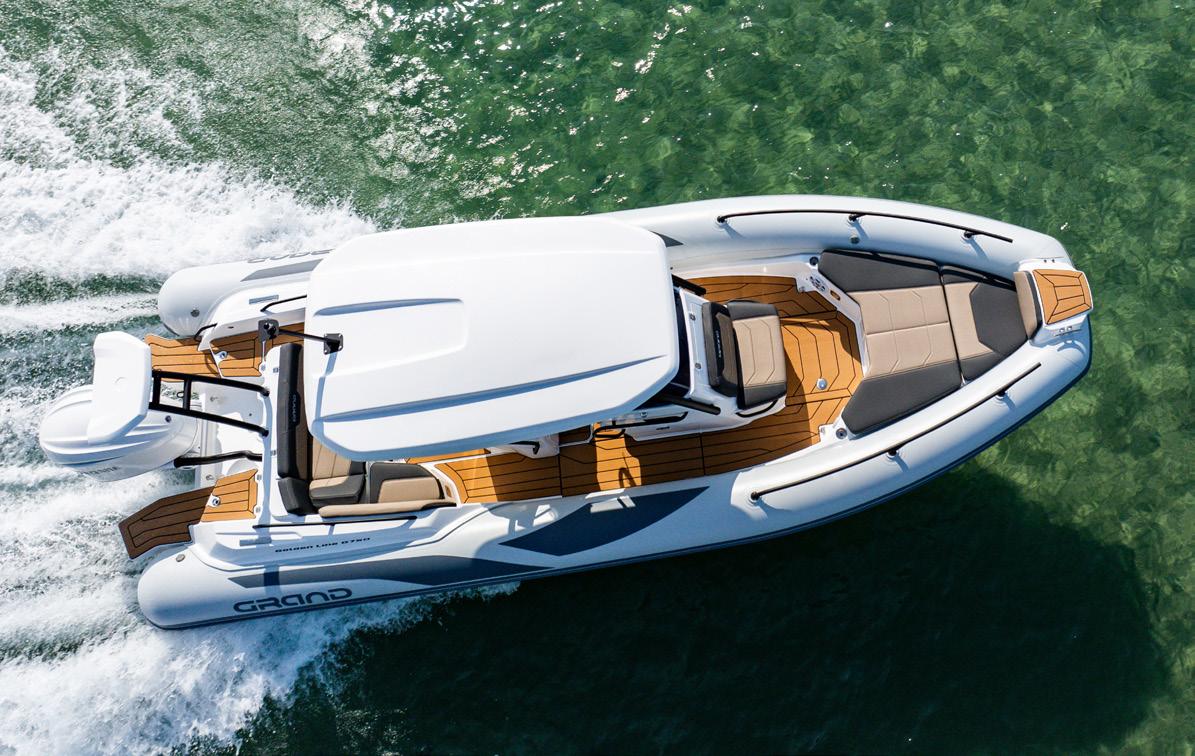
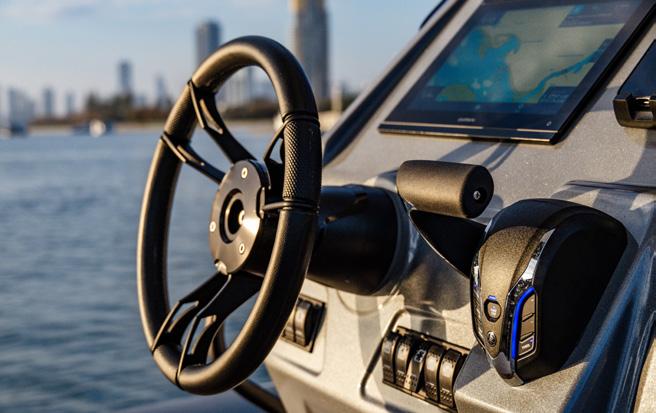
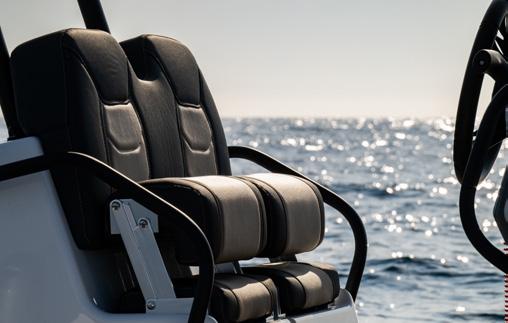
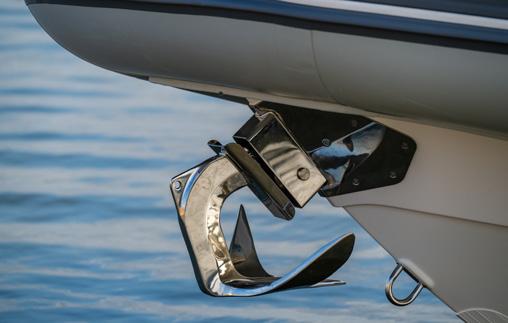
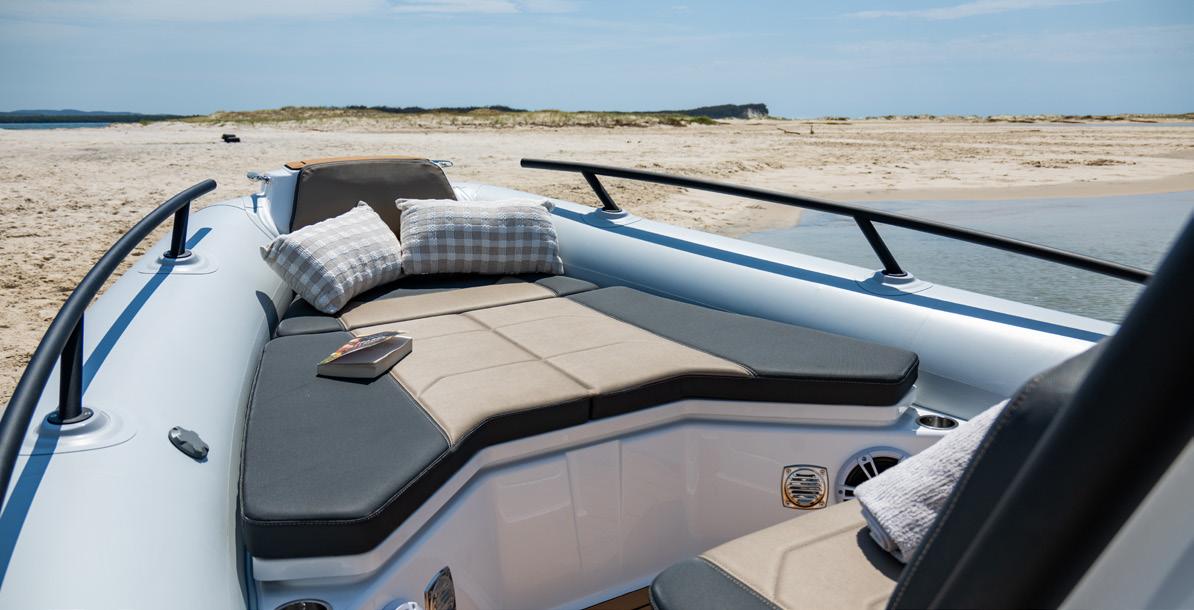
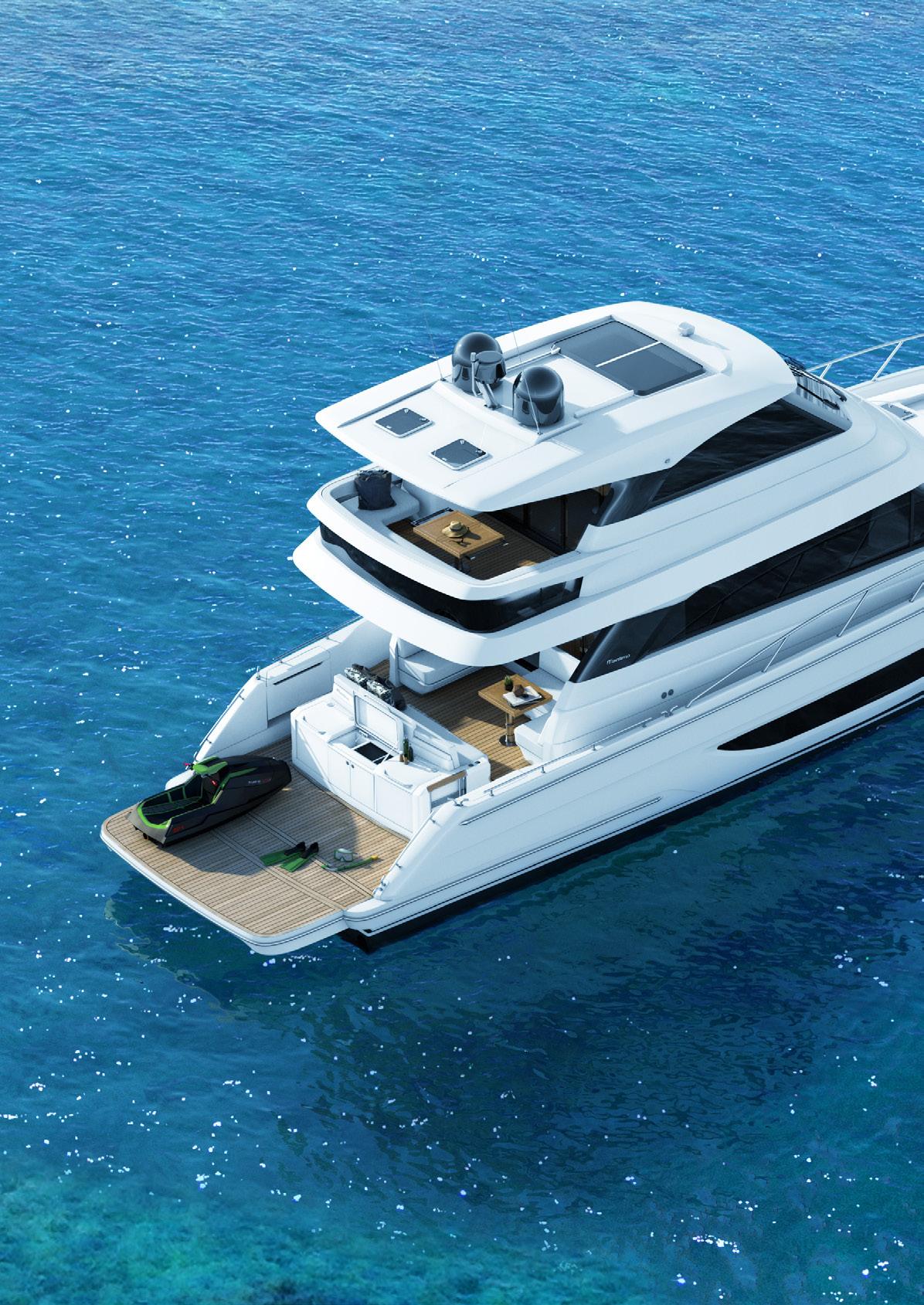
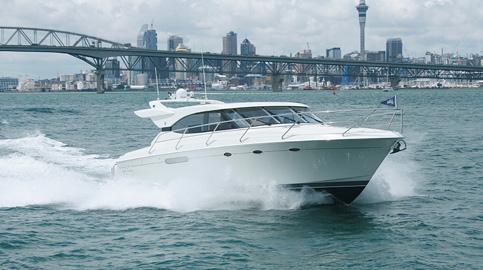
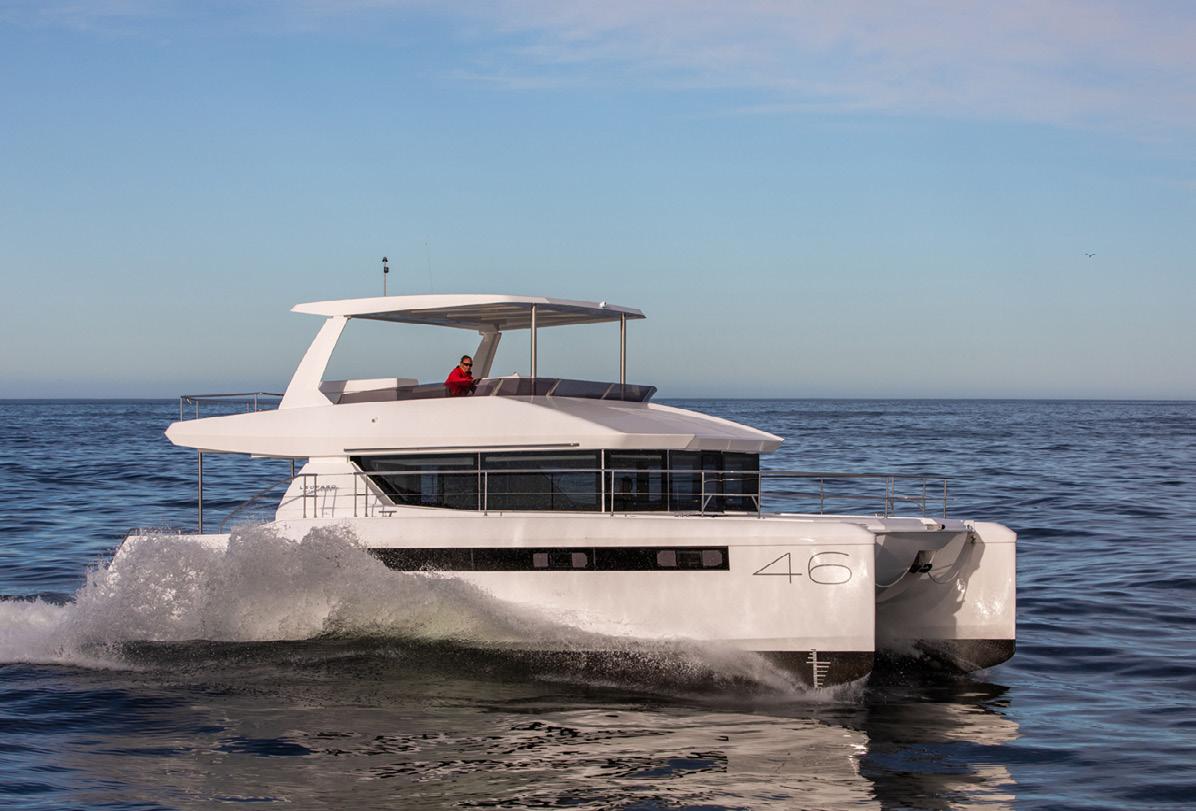
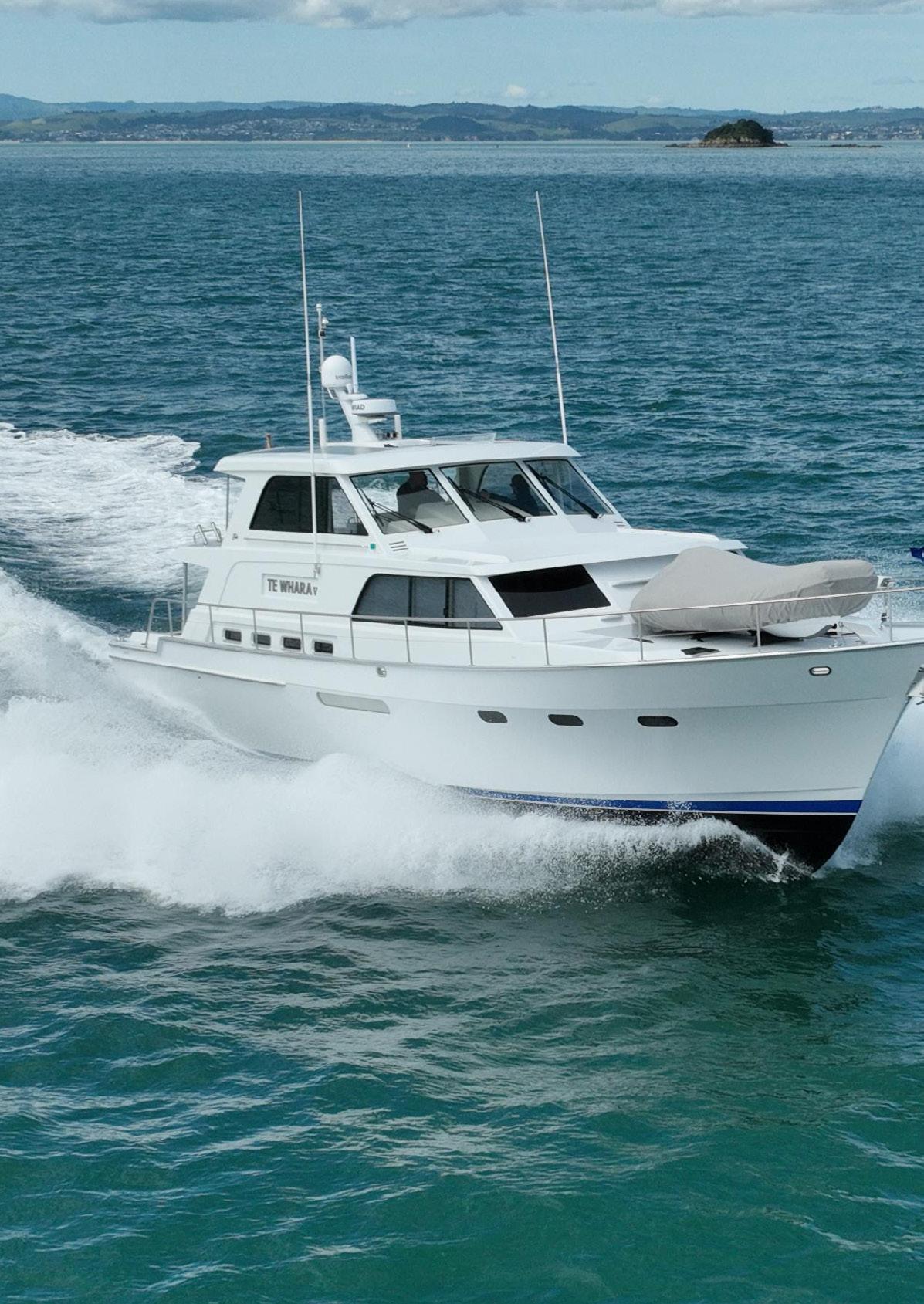
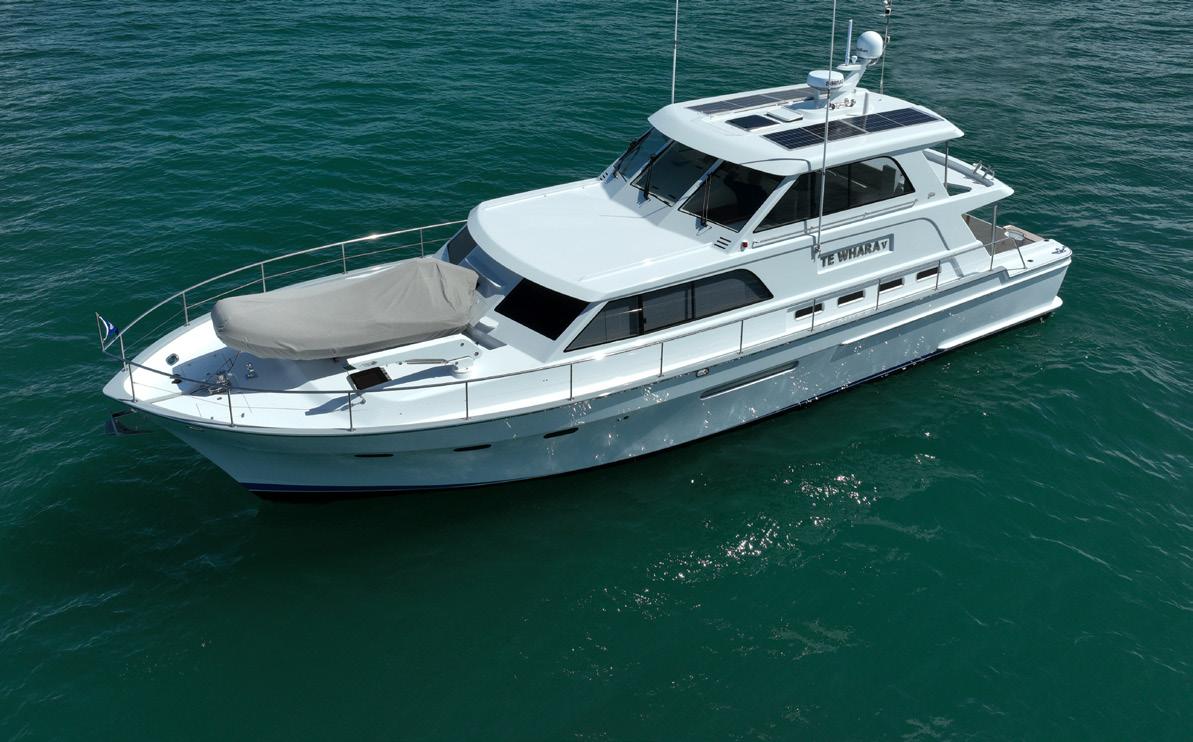
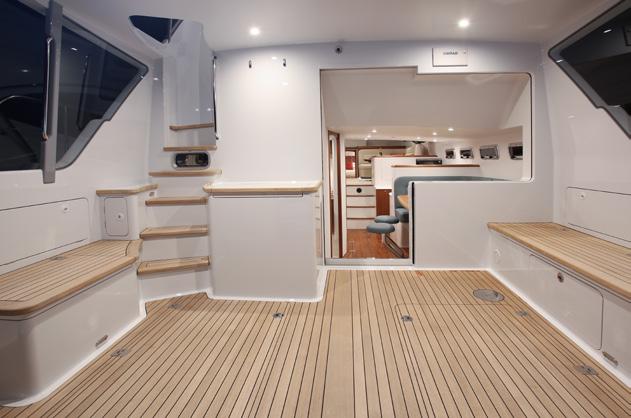
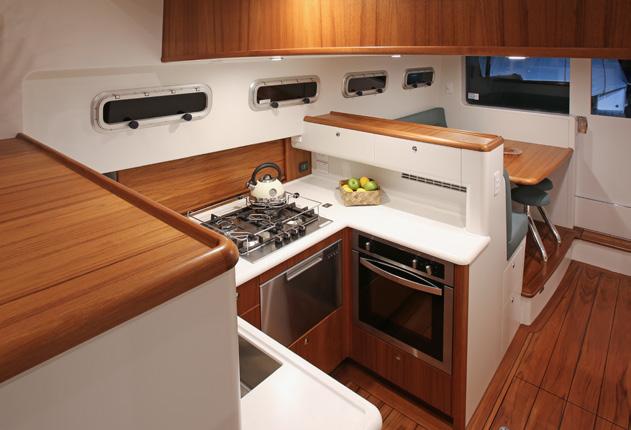
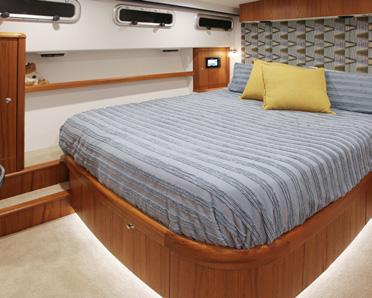
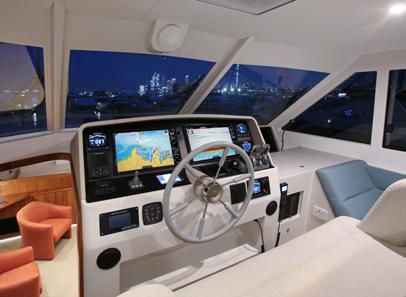
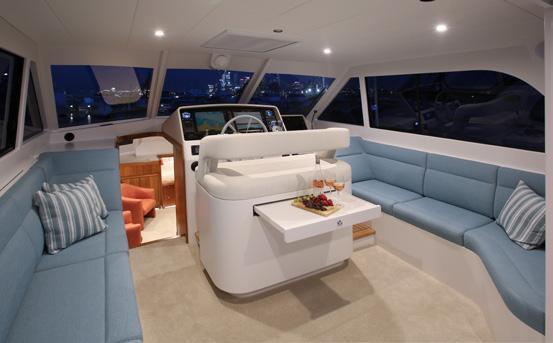
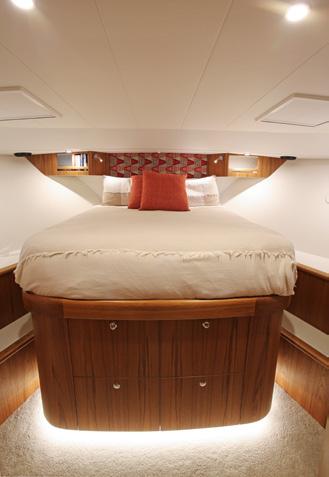
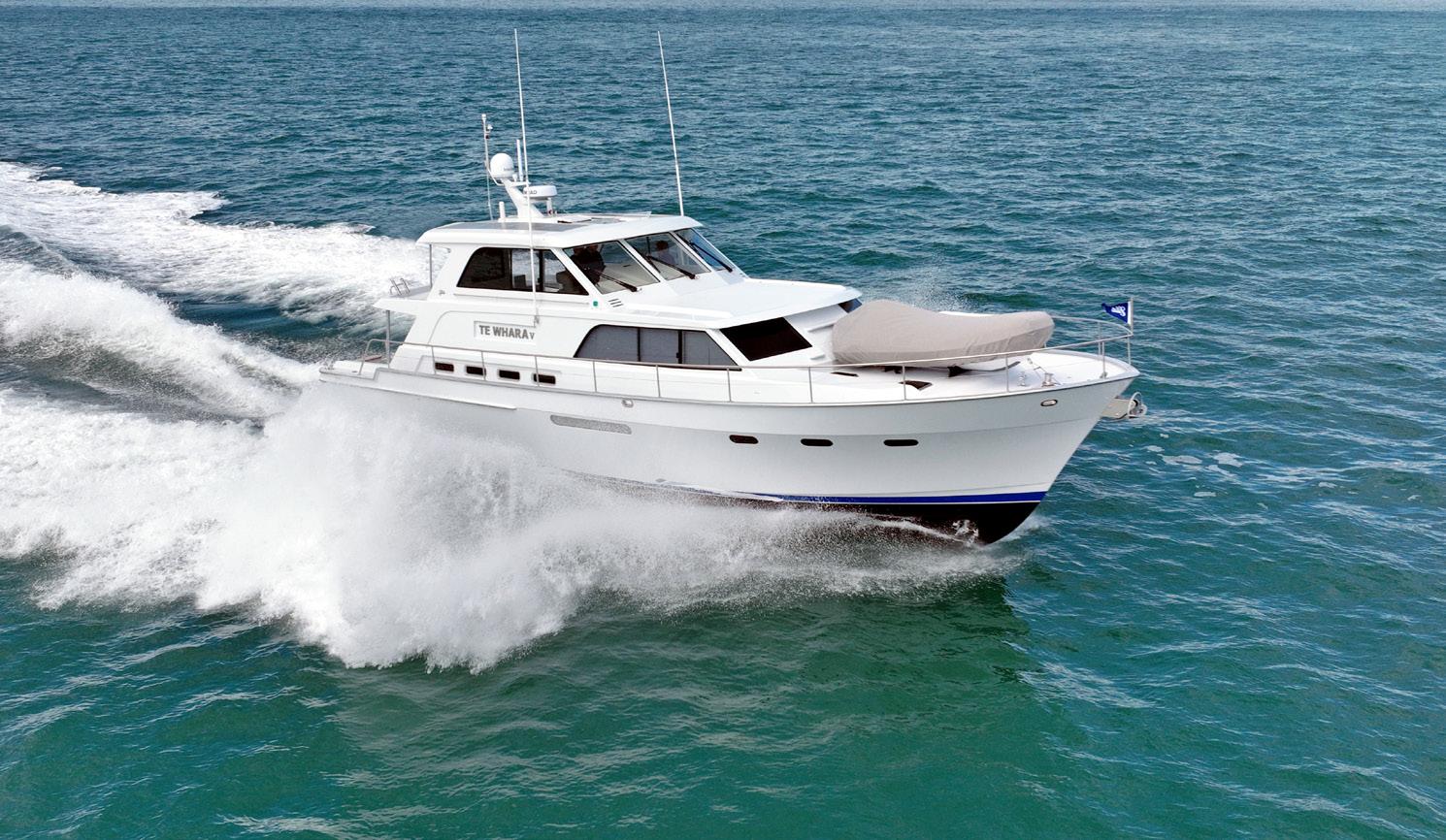
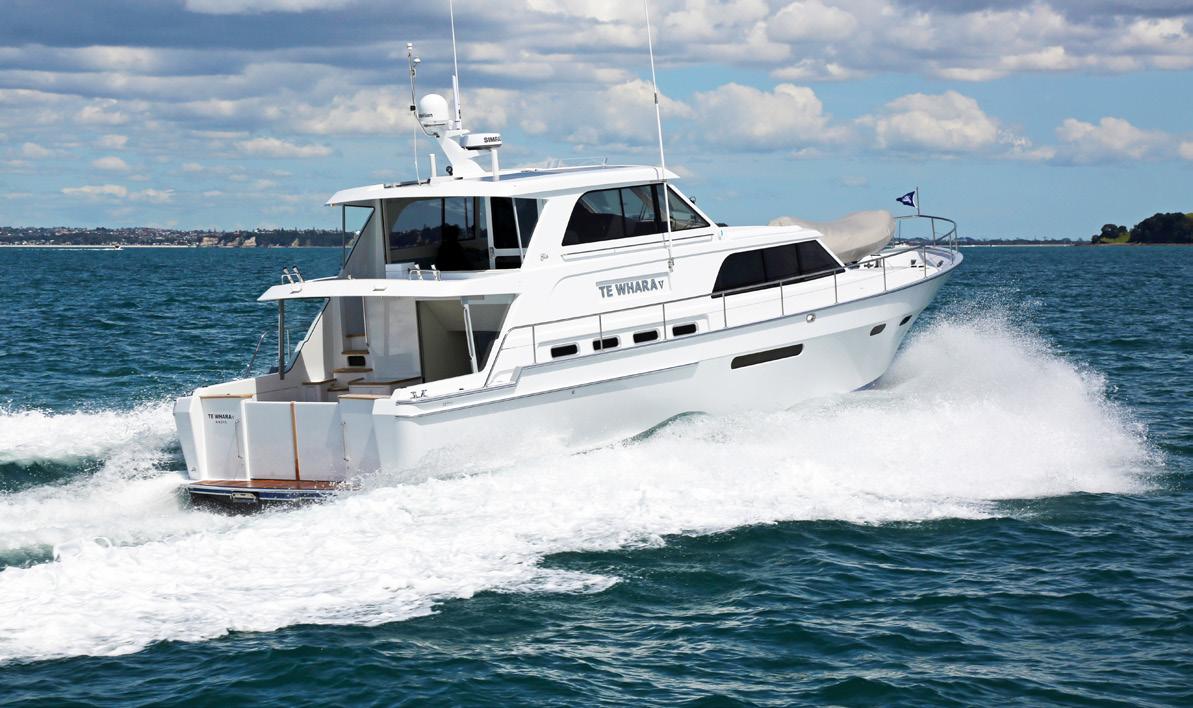
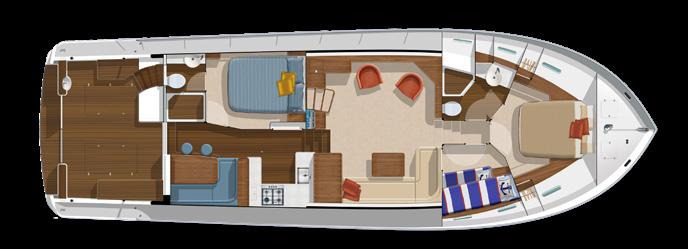
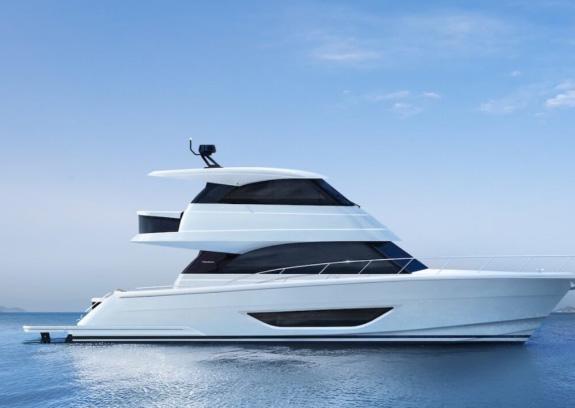
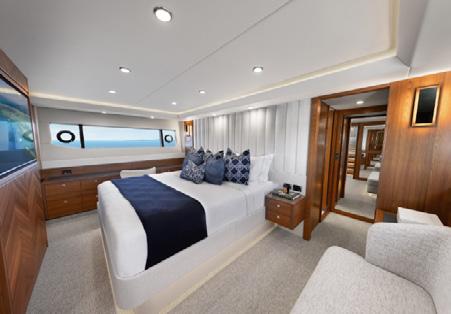
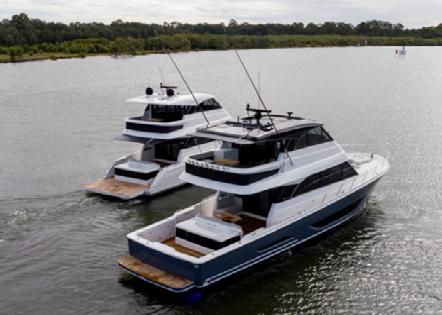
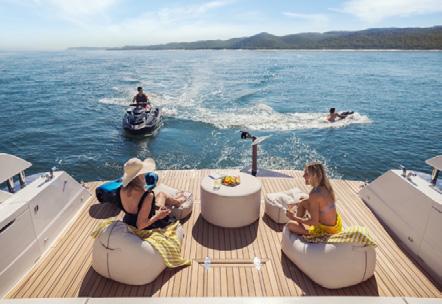
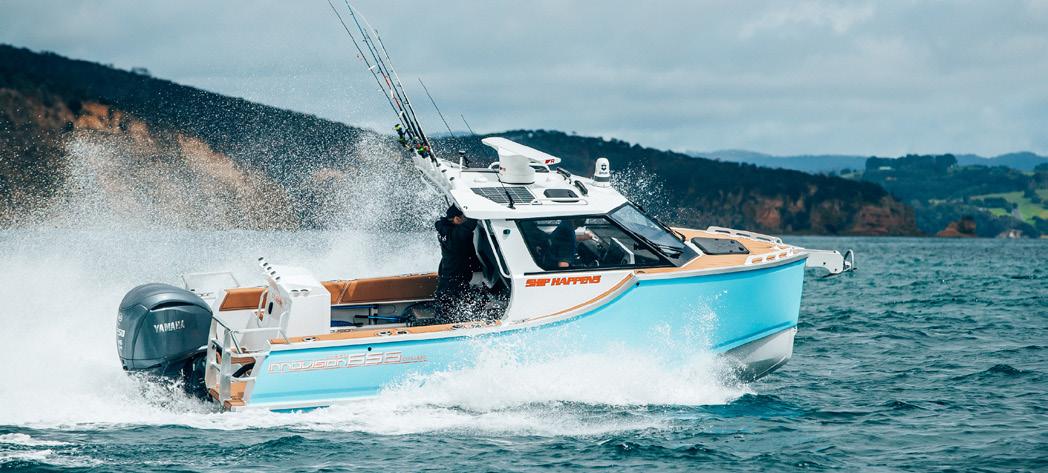
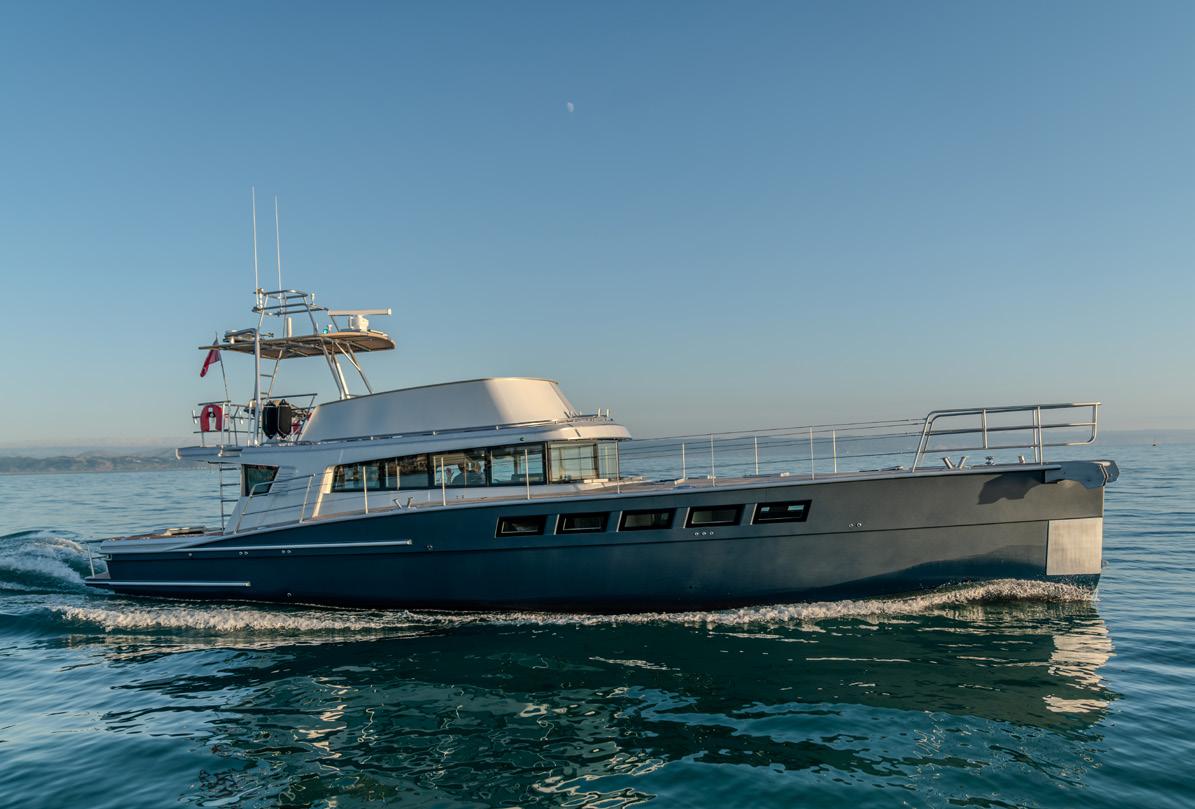
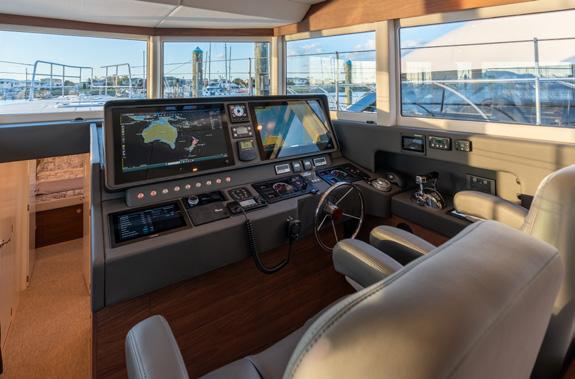
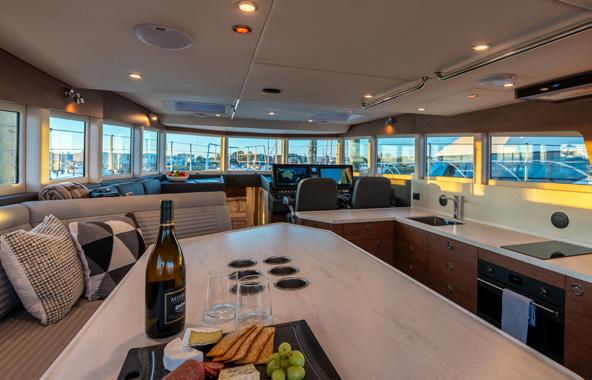
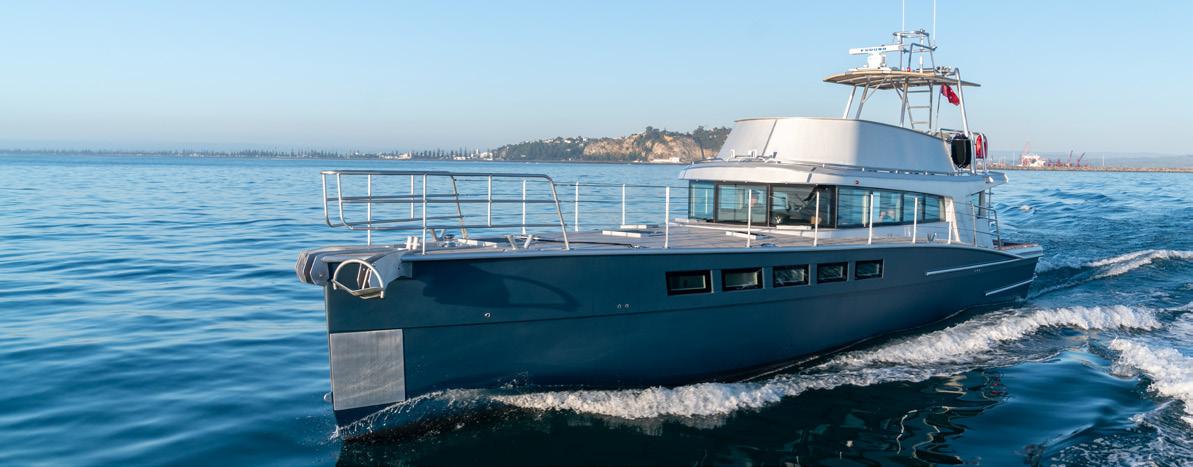
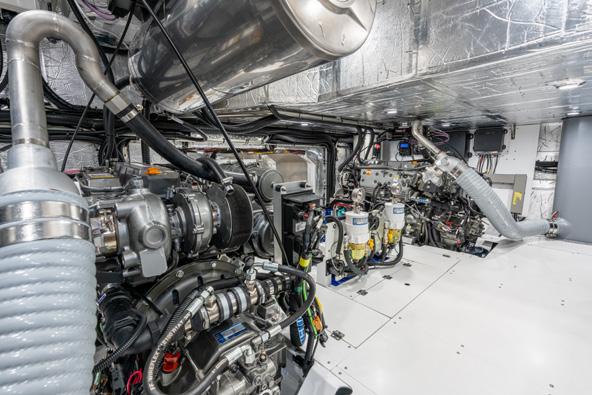
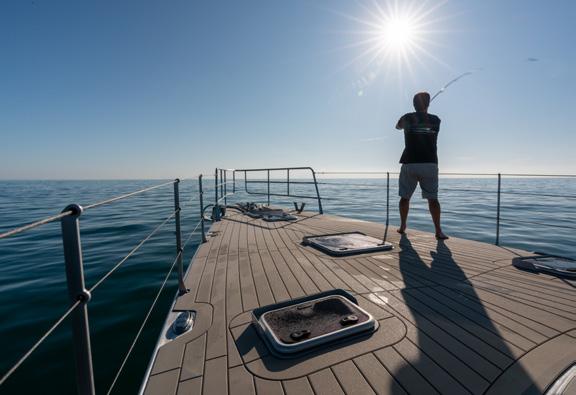
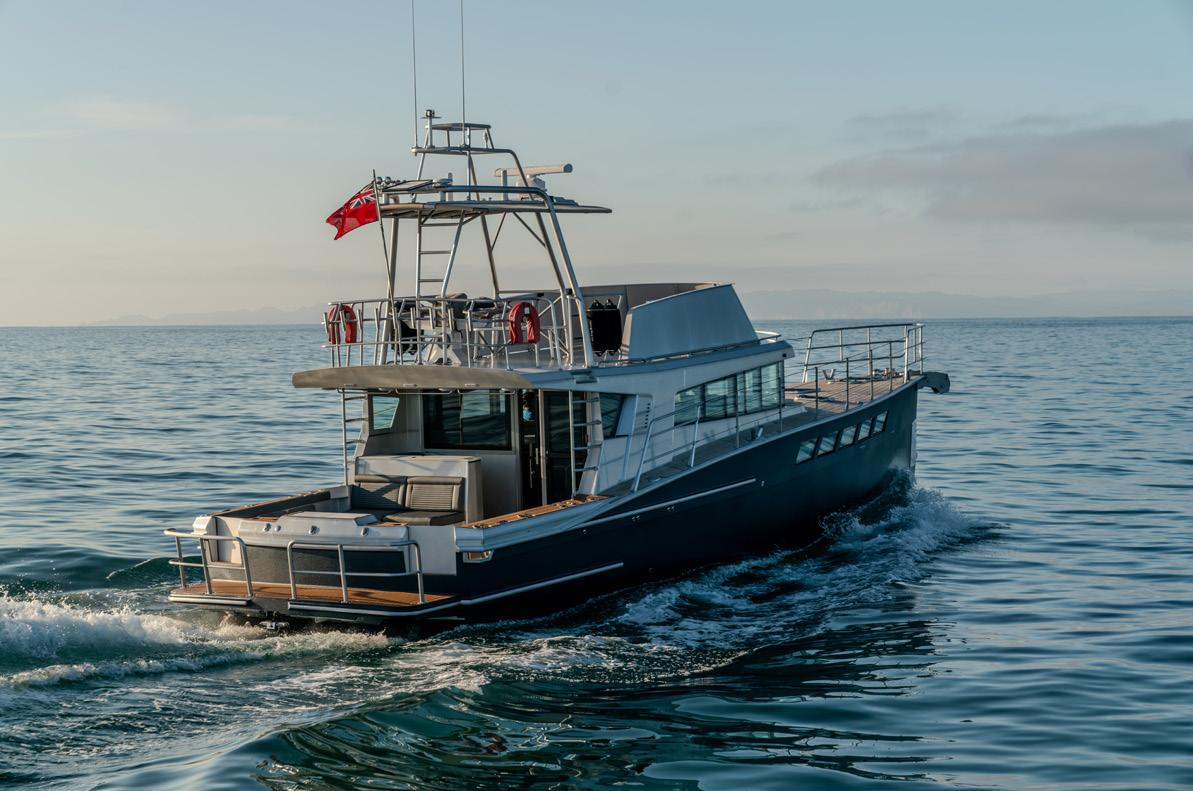
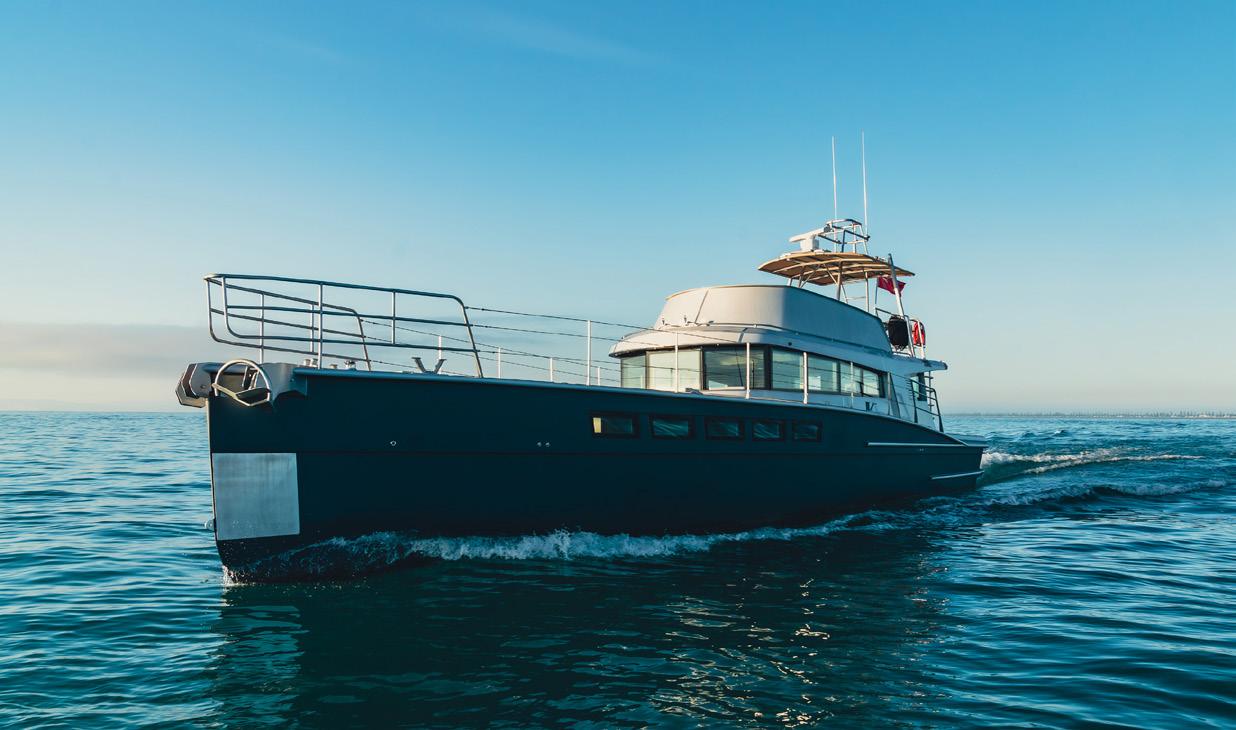
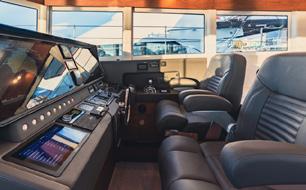
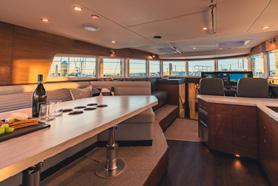
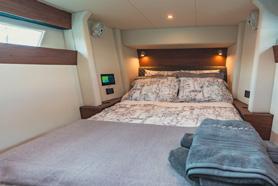
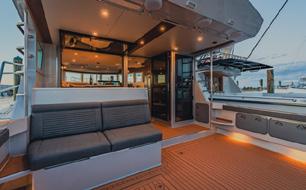
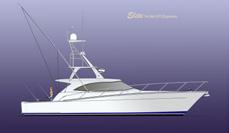
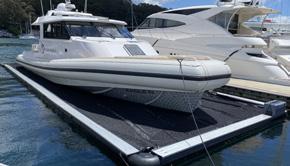
The all new S75 sedan motor yacht combines a synergy of balanced proportions, grace and purpose with an immensity of deck and interior spaces to cater for a vast range of entertaining, relaxation, or adventuring activities. Australian built, its powerful exterior form and grand luxurious interior reset the international standard for cruising sedan motor yachts. maritimo.com.au
FEATURES REGULARS
58 STATE OF THE NATION
We speak with a select of NZ and Australian marine businesses to gain insight into the year that was, & the year ahead!
62 NAVIGATING THE BUILDWEBER MARINE, GULF HARBOUR
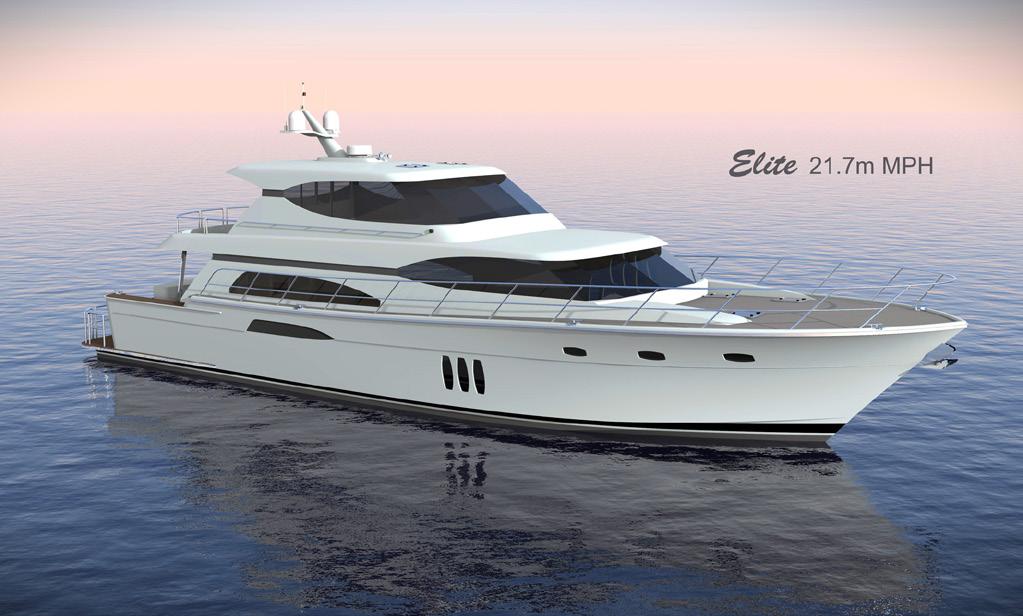
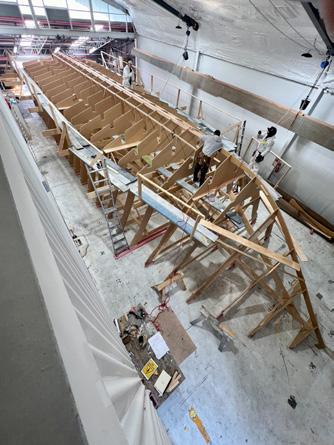
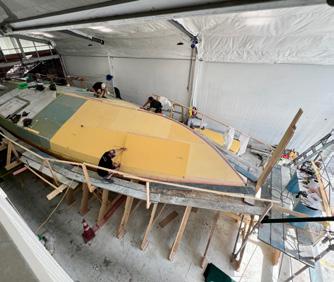
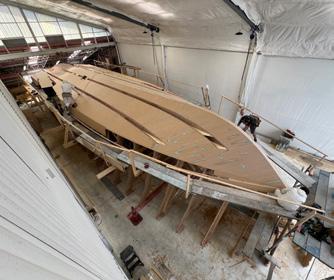
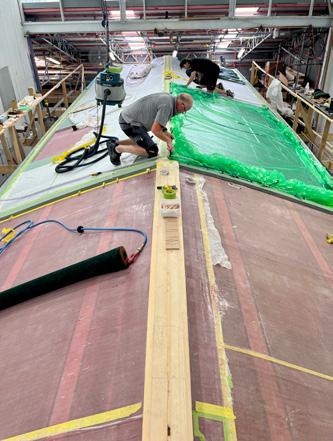
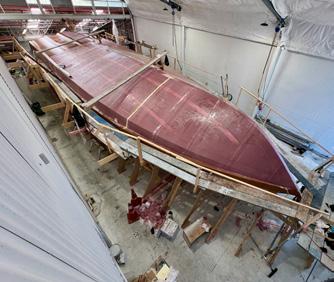
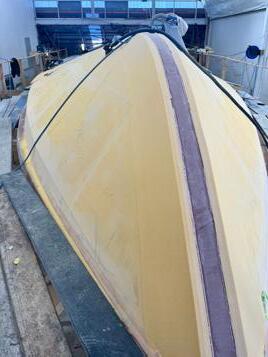
The second part in the series follows the design & build of the Elite 22m flybridge under construction
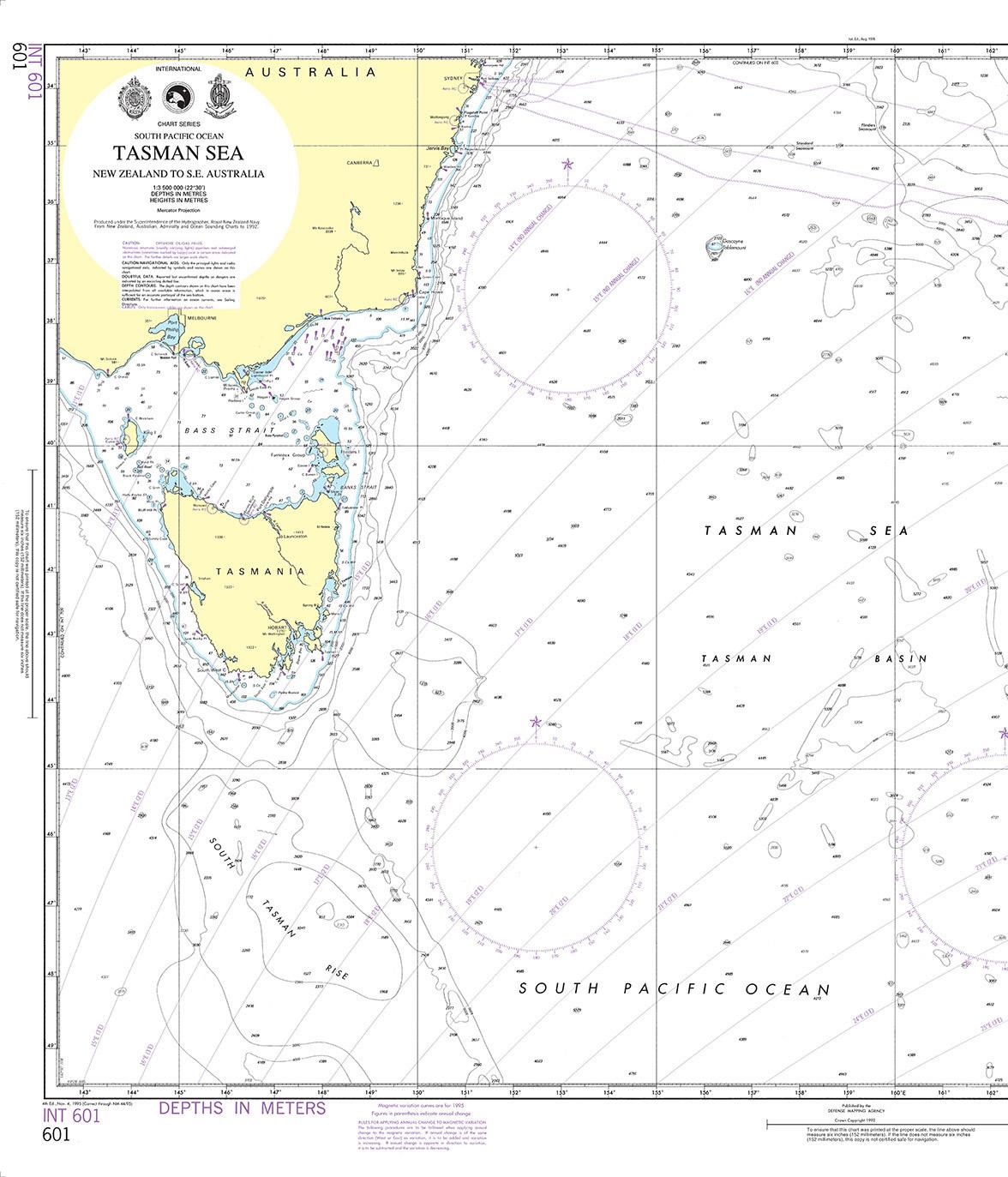
76 CROSSING THE TASMAN – MARITIMO
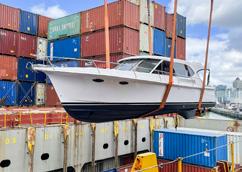
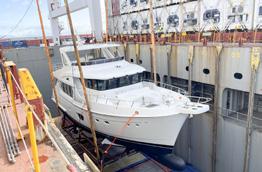
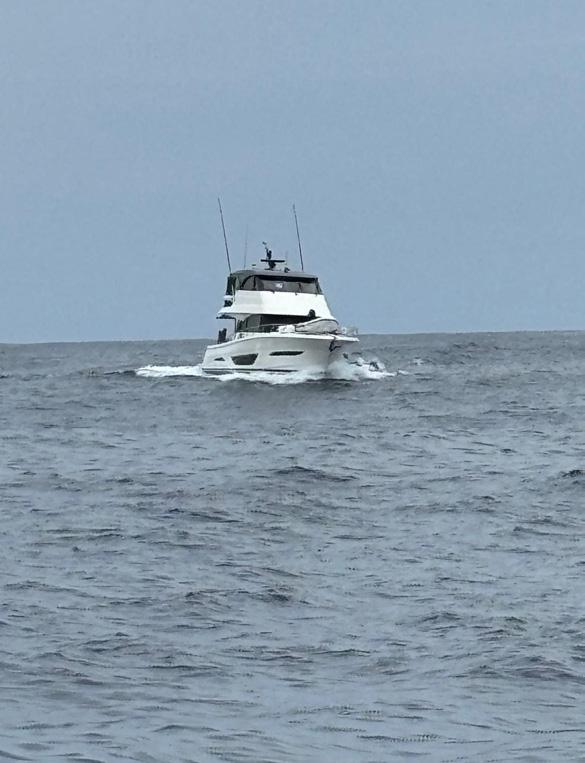
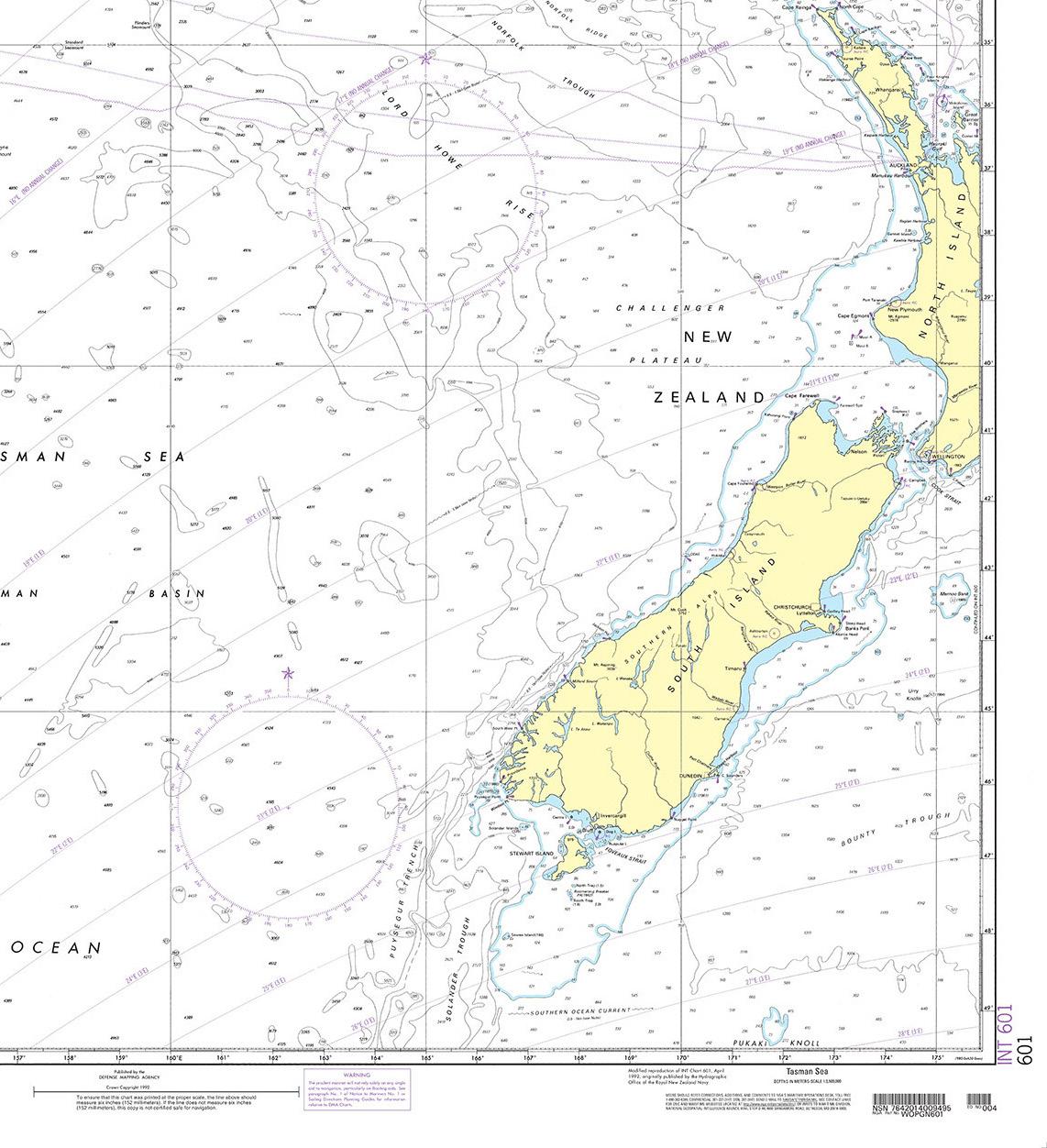
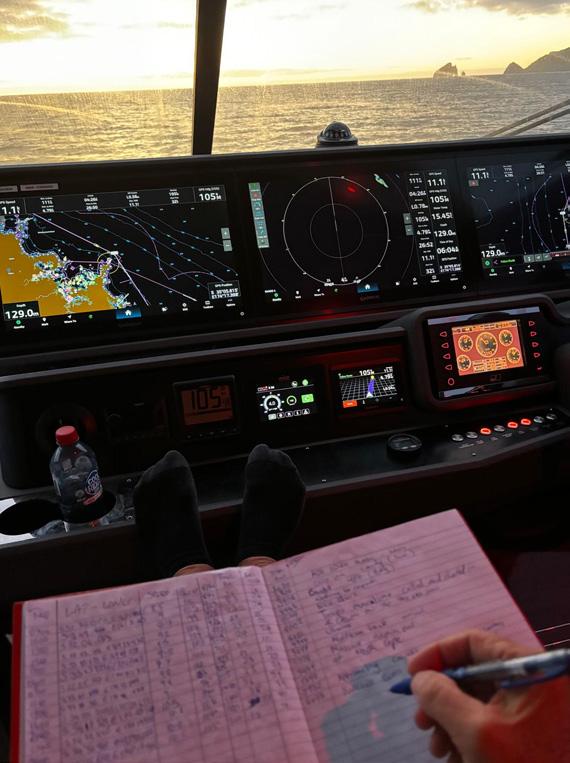
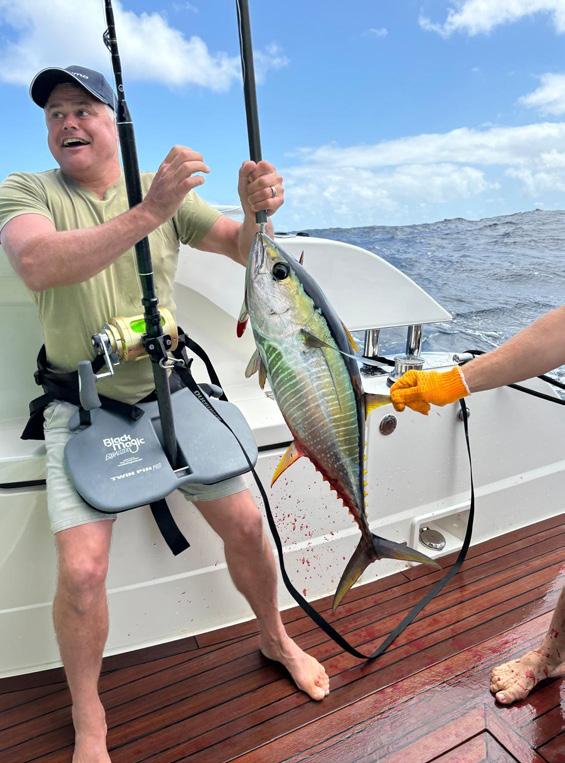
The story of 2 new Maritimos and their journey across the Tasman to their new homes in Auckland
88 DYNASTIES – PART II
The second part of a three-part series exploring both prominent and lesser-known family dynasties within the marine industry
104 TAIWAN BOAT SHOW
Ron Czerniak travels to Taiwan to report on the 2024 Taiwan International Boat Show
114 SHARED BOAT OWNERSHIP
Sharing the Seas, Sharing the Costs - A Guide to Shared Boat Ownership 136 HUNTER GATHERER BOATING & FISHING TIPS
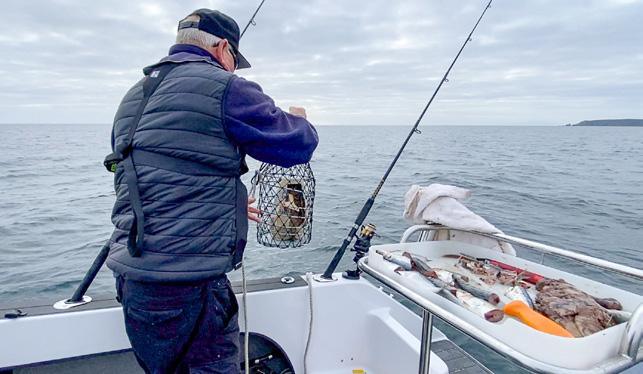
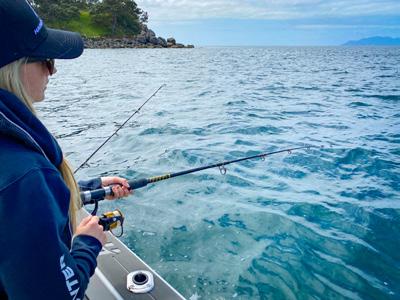
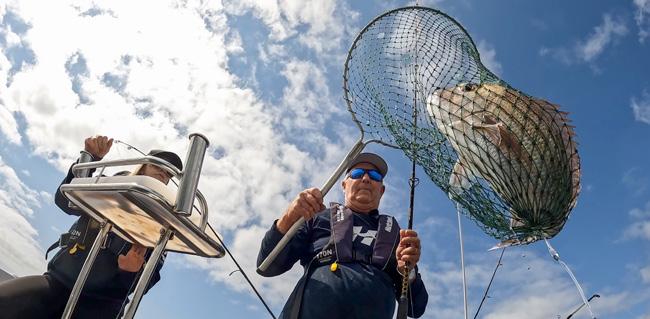
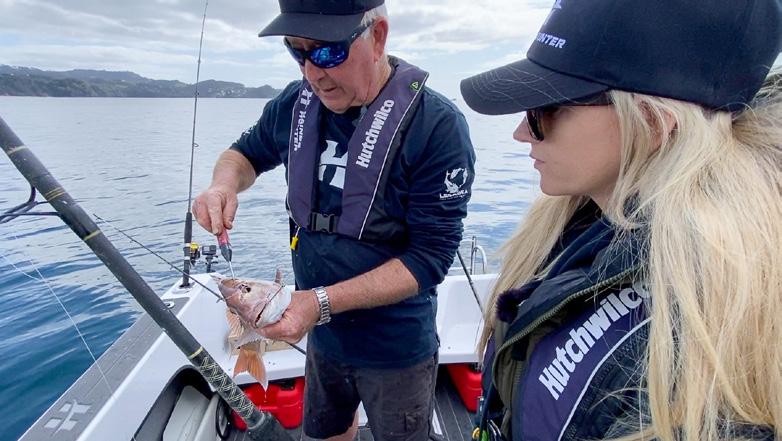
Bruce Duncan shows how to fish from a trailer boat along NZ’s diverse coastlines
142 ALLOY BOAT NEWS & NEW MODELS
We take a look throughout NZ at what’s new and coming up in the Alloy Boat world
158 SUMMER SOFTBAIT FISHING
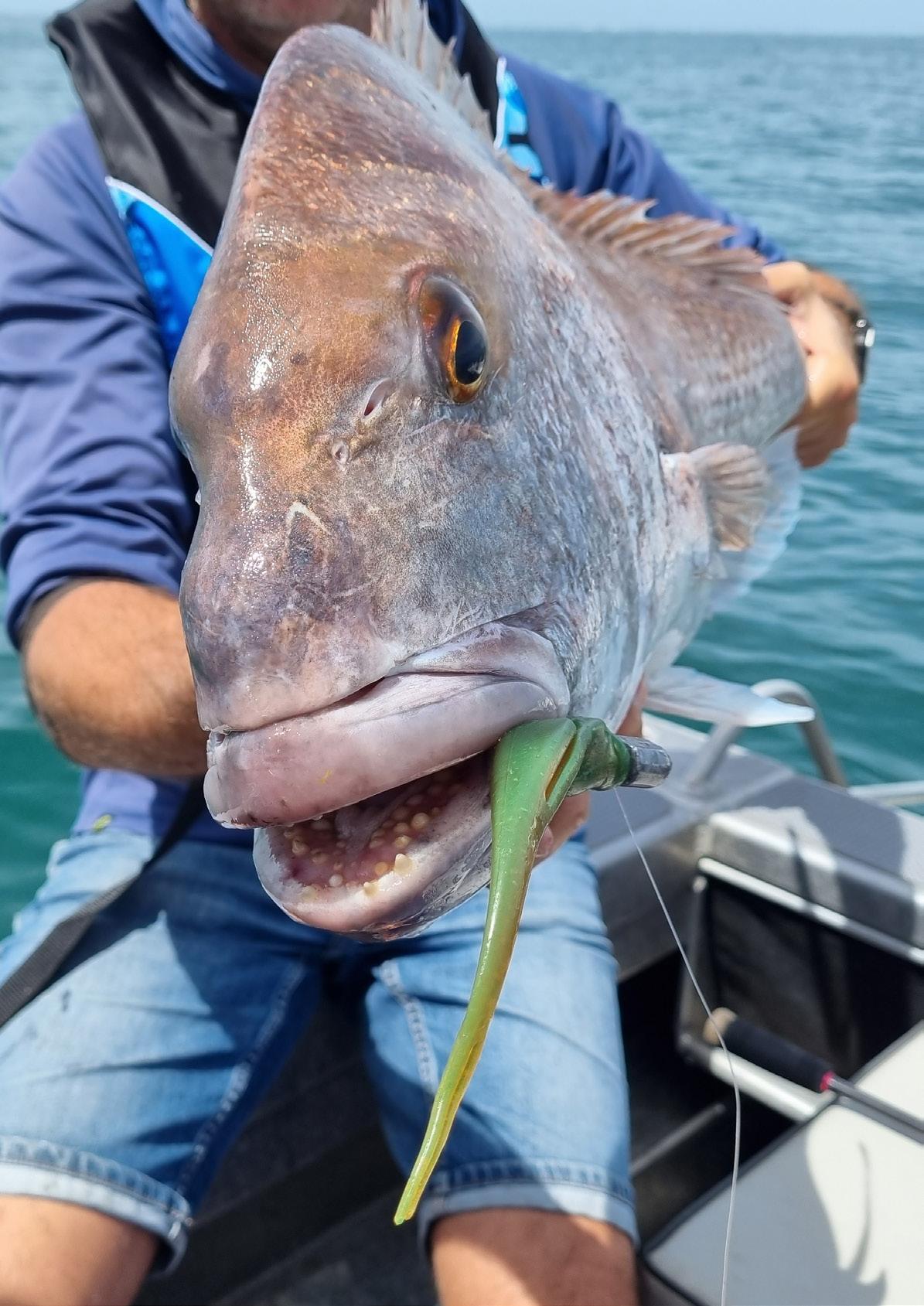
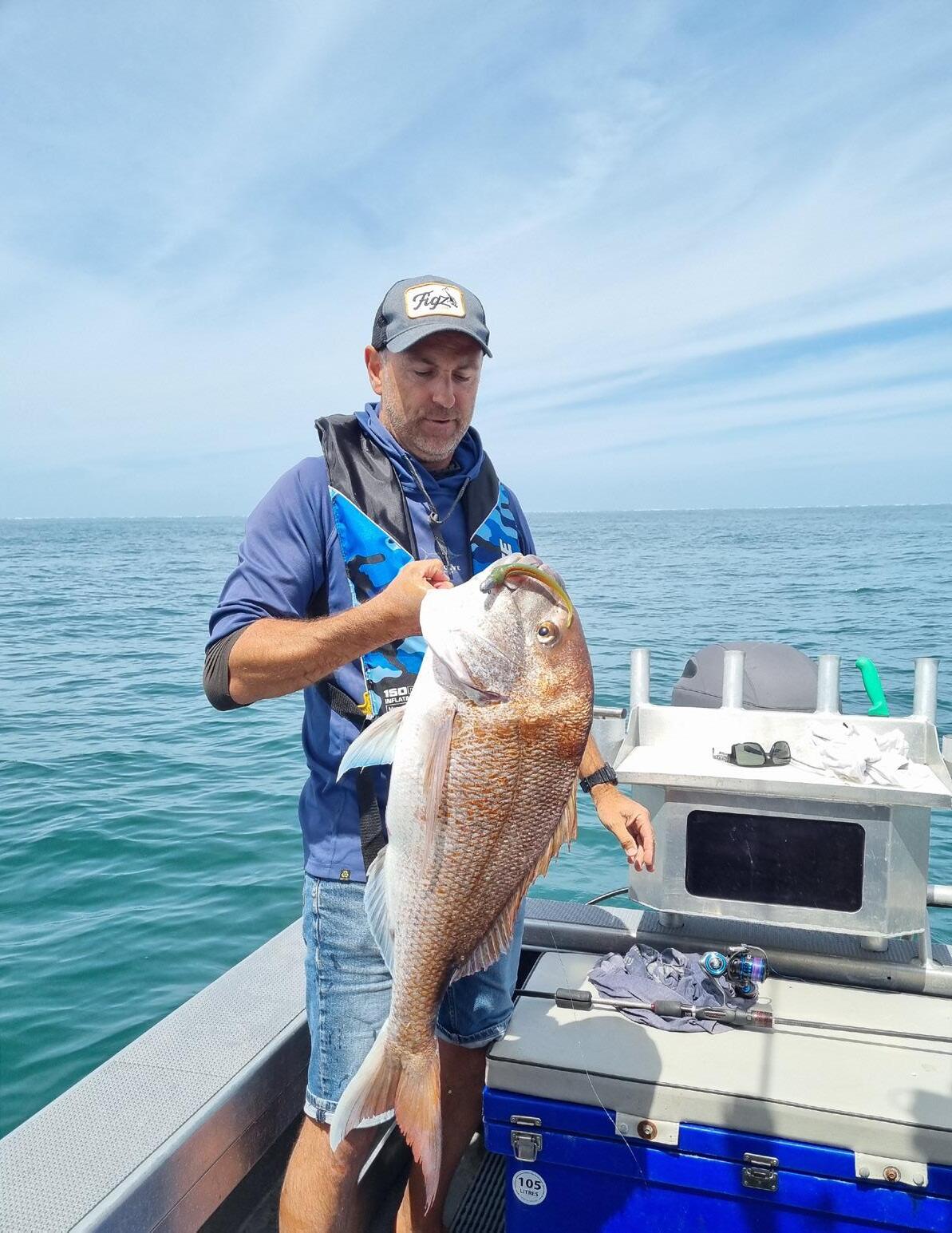
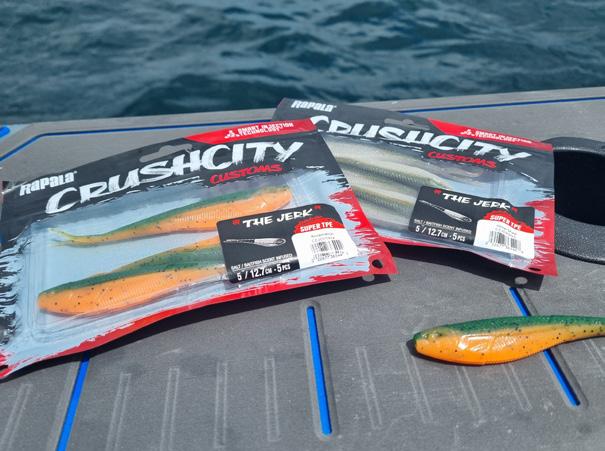
Fishing in Godzone’s editor Mat Hewetson gives us some good options this summer for softbaiting
180 ALLOY BOAT LISTINGS
8 & 9
DESIGN FOCUS: SPORT UTILITY YACHT SUY135
Antonini Navi presents the Sport Utility Yacht – already under construction and due for delivery in 2026 10
PUBLISHER’S COMMENT
Whoop, whoop – summer is here!
12, 14 & 16 SEEN & ADMIRED
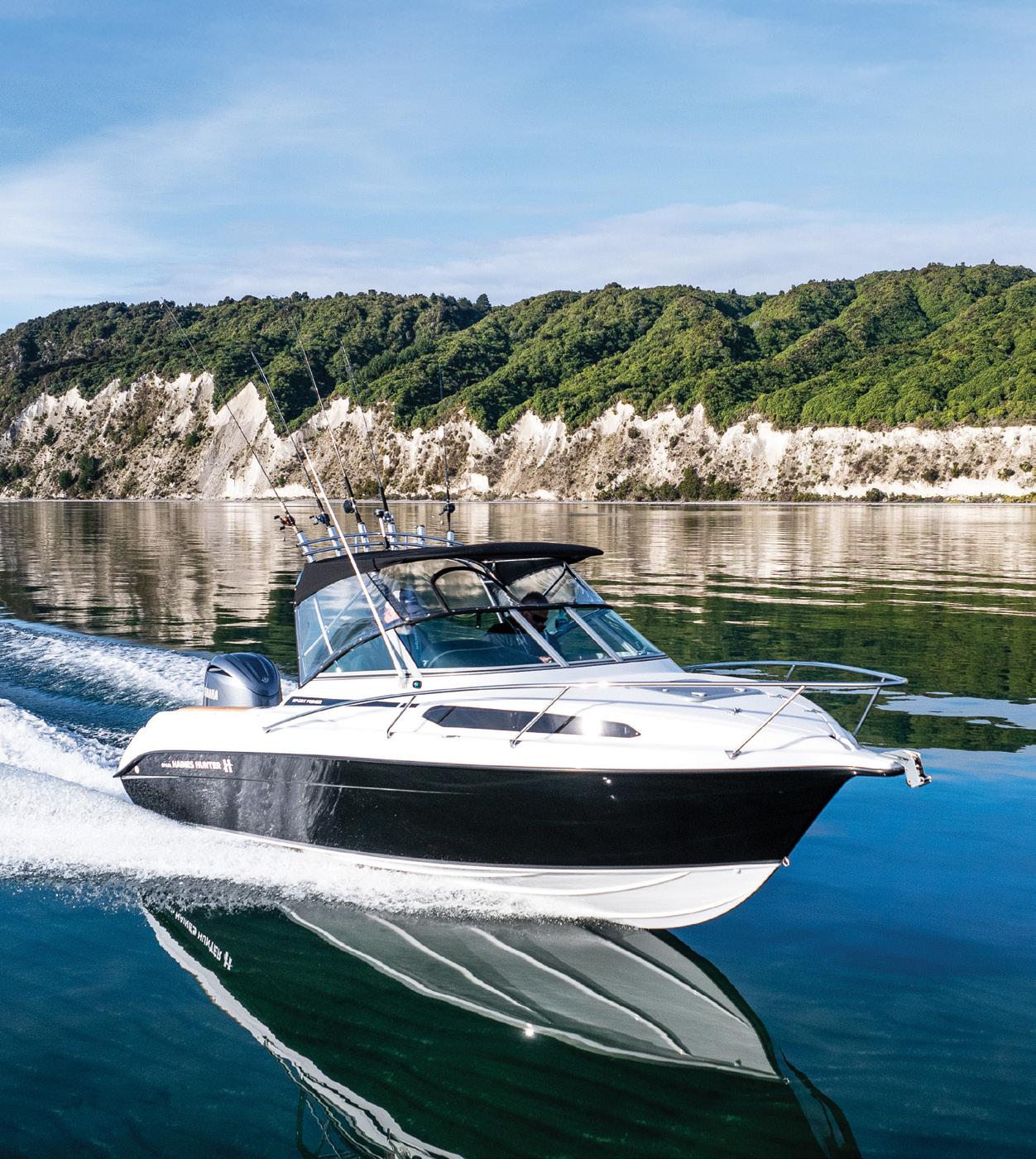
Haines Hunter OP725 Aquila 32 Sport Power Catamaran Rae Line 206 OB
20 NEWS
News, new products, boats and events
66 ELECTRONICS COLUMN
Hot new electronics products from some of the world’s leading brands 68 POWER ON
New products for the powerboating world
TO LAUNCH
From stern to shore 72
PHIL GILBERT Marine brokerage 74 STRAIGHT FROM THE GALLEY
Derek the Chef, prepares Crayfish Chilli and Herb Crust
172
FLETCH’S TIPS
Aaron Fletcher shares his tips learned after years of getting it right and getting it wrong
ISSUE #81
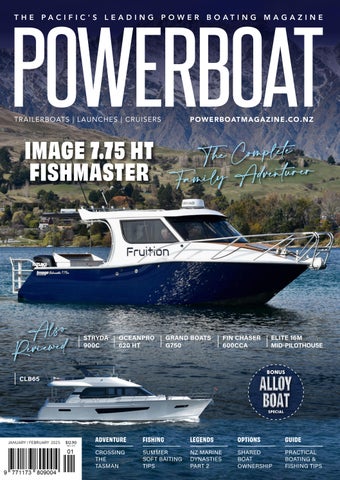
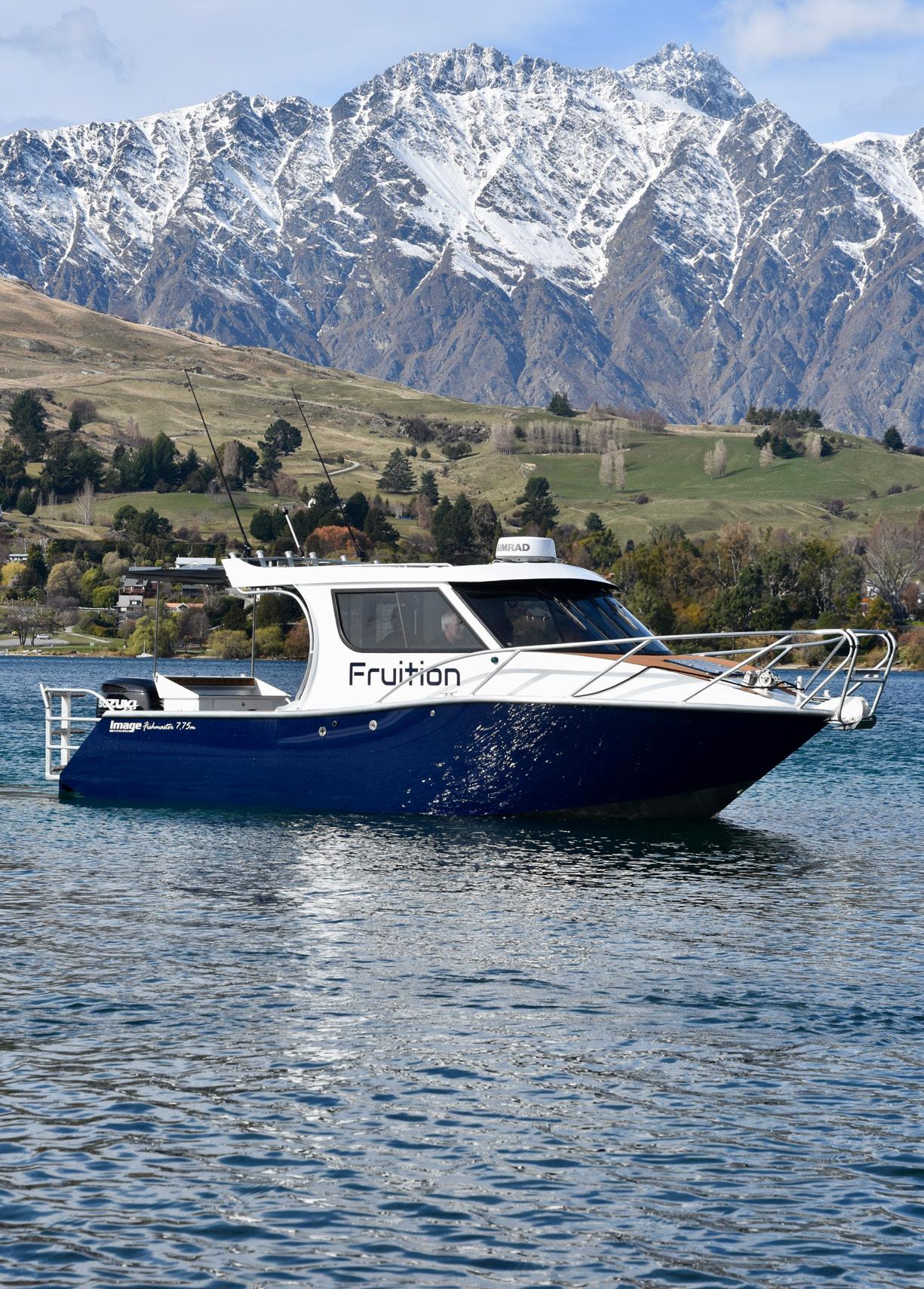
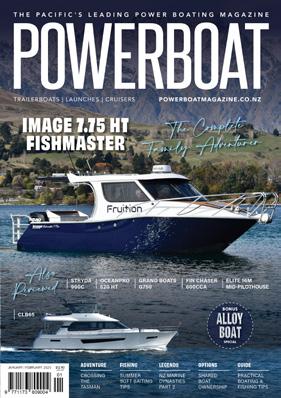
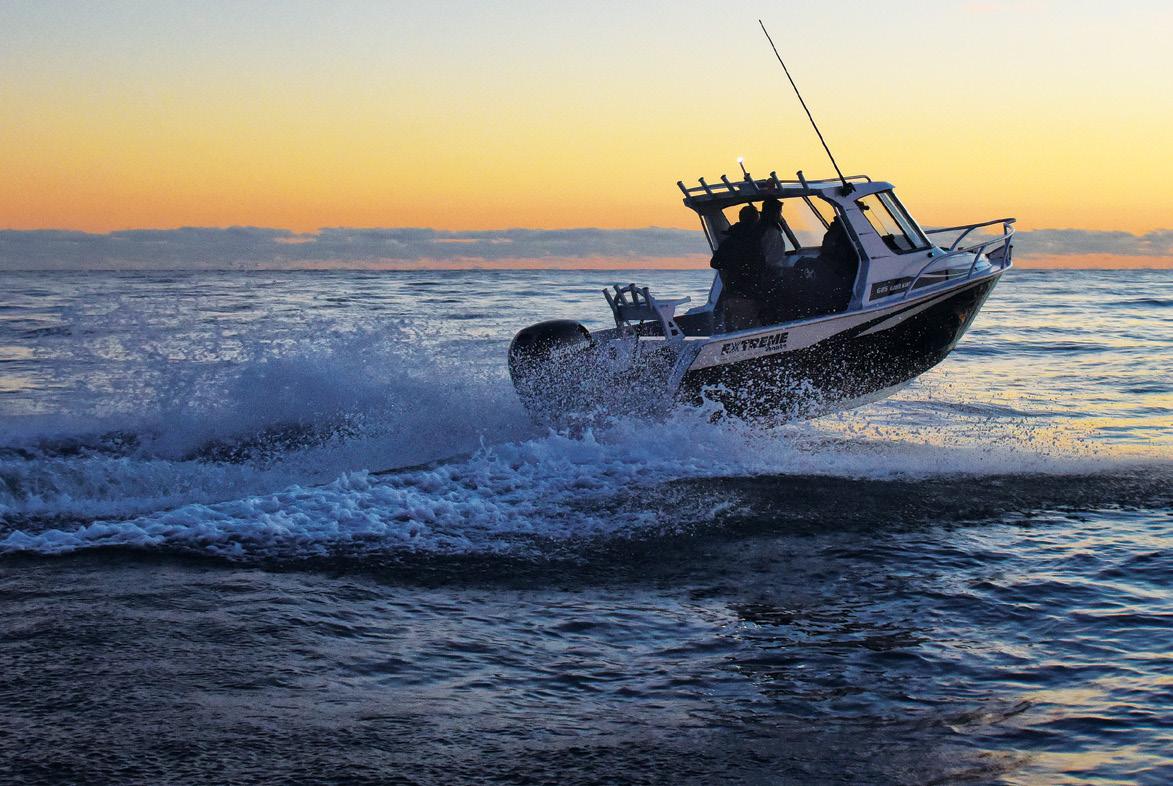
IMAGE 7.75M HT FISHMASTER SEE PAGE 80
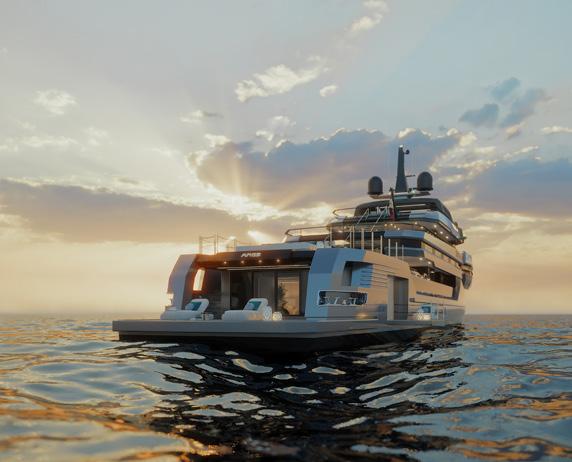
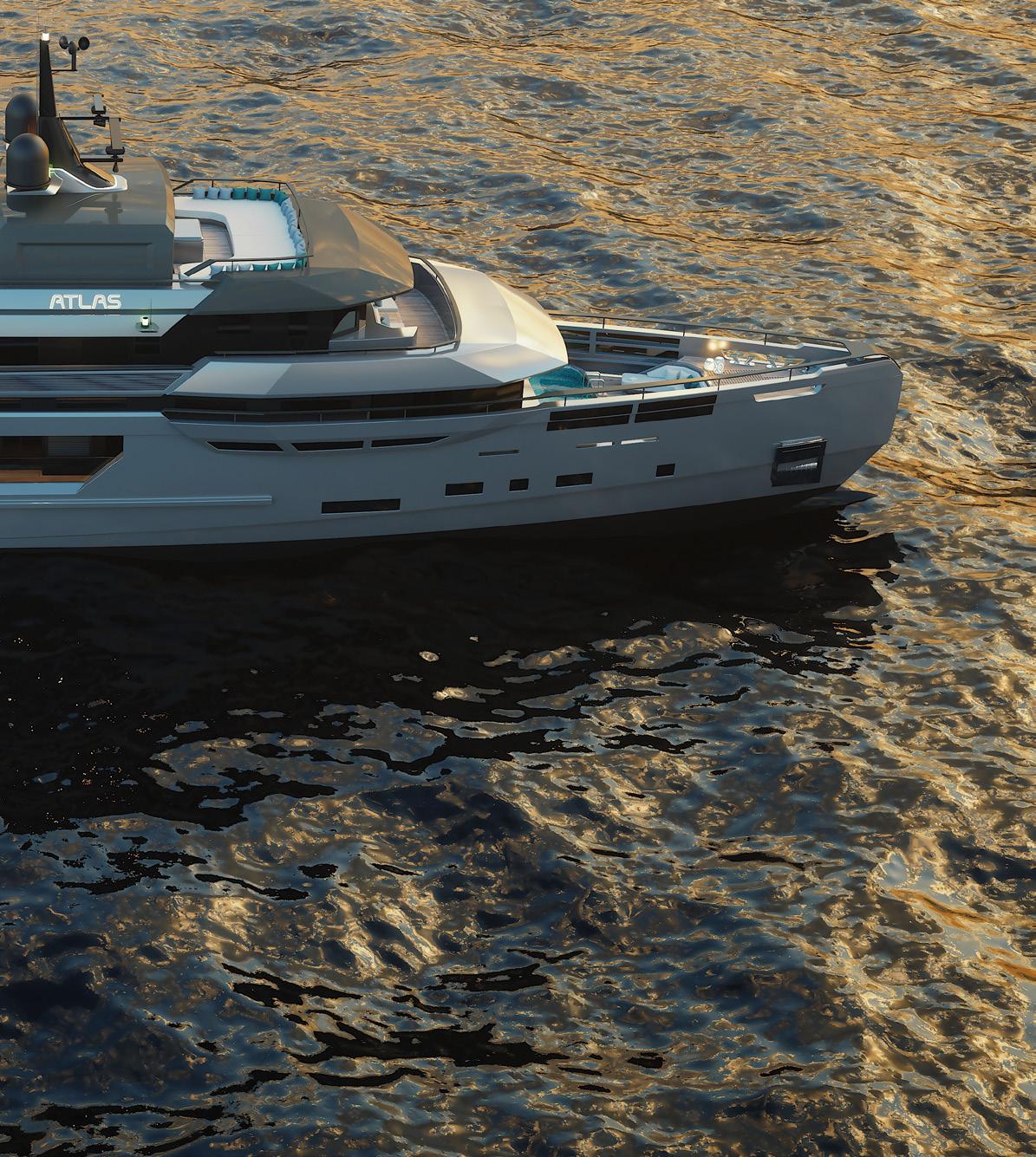
DARES YACHTS CREATES PROJECT ATLAS
ARES YACHTS, part of the renowned ARES Shipyard based in Antalya, Turkey, has released tempting details of its new 54-metre explorer superyacht concept, named ATLAS, for intrepid owners to explore the world in style.
esigned to sit just under the 500-GT threshold while rethinking key areas to deliver an unsurpassed owner and guest experience, ATLAS combines a genuine go-anywhere ethos and superlative guest areas with options for hybrid propulsion and other sustainable solutions. Her lines, developed by Italian design studio Hot Lab–part of the Viken Group–take contemporary styling cues and combine them with efficient naval architecture developed by the renowned Van Oossanen team in the Netherlands. “ATLAS’s unique features deliver something which is both strikingly styled and strikingly practical for owners and guests,” begins Piraye Şahinkaya Orhun, Managing Director of ARES YACHTS.
“Her long-range capability and seaworthy designs will surely deliver extraordinary experiences. We thought of creating a mezzanine structure at the bow, allowing the owner to have a cabin completely open to the horizon, ”Enrico Lumini, Design Director and co-founder of Hot Lab explains. “At the same time, we created what we call the ‘welcome lounge’ aft–a space usually relegated to the secondary role of a beach club. This clever stern design is wrapped in the yacht’s hard yet sensual profile. The bow is high, and the structure solid, as ATLAS has been designed to withstand any conditions, including challenging seas.
Further, each deck is designed to offer ample outdoor spaces. The stern of the yacht is equipped with a platform for
“Her long-range capability and seaworthy designs will surely deliver extraordinary experiences.”
swimming or launching tenders, while the upper decks have incredible lounge areas and spaces for relaxation or outdoor activities. ATLAS offers not only the full-beam owner’s suite with a private foredeck area complete with spa pool, but also four guest suites with direct access to the beach club thanks to the forward location of the engine room. Five crew cabins cater to nine crew for the ultimate superyacht guest experience.
Of course, the interior style will be custom-made according to clients' preferences. Extensive use of neutral colours and high-quality materials will give the spaces an elegant and timeless look, with large panoramic windows along the sides of the saloon, offering spectacular views of the outside and allowing plenty of light to enter. ATLAS is projected to provide a top speed of 17 knots and a cruise of 11 knots with a range approaching 5,000 nautical miles. ATLAS also features extensive storage space for various tenders, toys, and other equipment to maximise the expedition experience and an optional touch-and-go helipad. It could be specified with a hybrid propulsion solution and other elements, such as solar panels, to reduce its emissions footprint further.
“We wanted to develop an expedition yacht range and Hot Lab provided us with a stunning explorer superyacht that comes in under 500GT while also encapsulating the ARES Shipyard’s commercial and naval heritage in her lines,” enthuses Şahinkaya Orhun. We have a really good feeling about ATLAS – we love the project and can’t wait to build it!”
ARESYACHTS.COM
PUBLISHER
Doug Dukeson
D&B Publishing Ltd
EDITORIAL TEAM
Ron Czerniak, Richard Milner, Doug Dukeson, Derek the Chef, Mike Rose, Carla Dukeson, Rebecca Hayter, Phil Gilbert, Aaron Fletcher, Freddy Foote, Peter Morgan, Kyle Barnes, Kevin Green
editorial@boatmags.com
+64 9 428 2328
ADVERTISING
New Zealand & Australia
Doug Dukeson
+64 9 428 2328
+64 21 772 202 doug@boatmags.com
Holly Dukeson
+64 21 028 66849 holly@boatmags.com
PRODUCTION
Annabelle Rose Design design@annabellerose.co.nz
Printer: SCG
WEBSITE
Stealth Media Ltd
Gustav Wentzel
+64 21 0201949 info@stealthmedialtd.co.nz
ACCOUNTS
accounts@boatmags.com
+64 9 428 2328
CIRCULATION
Are Direct NZ
+64 9 979 3018
Are Direct Aust
+61 2 99728886
SUBSCRIPTIONS
(Printed & Digital) subs@boatmags.com
Pacific PowerBoat is published bi-monthly January, March, May, July, September, November
REGISTERED OFFICE
2 McKenzie Ave, Arkles Bay, Whangaparaoa, Auckland, New Zealand.
POSTAL ADDRESS
PO Box 886 Whangaparaoa, Auckland 0930, New Zealand. POWERBOATMAGAZINE.CO.NZ
COPYRIGHT Pacific PowerBoat incorporates: Propeller and Pacific MotorYacht Magazines. The contents are copyright and may not be reproduced without the written consent of the publisher. Unsolicited editorial material may be submitted. While every care is taken, no responsibility is accepted for material submitted. Opinions expressed by contributors are not necessarily those of Pacific PowerBoat Magazine. All rights reserved.
GET READY FOR A HOT ONE...
Whoop, whoop – summer is here!
It looks like we’re in for a pretty good one. After reviewing and analysing various weather sites, I’ve come up with my prediction. And hey, if I get it wrong, what difference does it make? Our so-called weather professionals get it wrong as often as they get it right. My forecast is based on the compilation of several expert’s views. Based on the information on hand in November for New Zealand in January and February 2024, my summer forecast highlights a season shaped by the influence of a strong El Niño event.
TEMPERATURES: Across most of the country, temperatures are very likely to be above average, with warm and humid spells expected, particularly in mid-to-late January. The highest likelihood of above-average temperatures is in the northern and eastern regions of both islands.
RAINFALL: For the North Island, rainfall is expected to be near normal, with heavy rain likely in January, followed by extended dry spells in February and March. For the South Island, the west is more likely to experience normal to above-normal rainfall, while the east may see drier conditions.
WIND AND MARINE CONDITIONS: Unfortunately, wind – the enemy of boating – is forecast to be stronger than usual, especially in the South Island and lower North Island. Localised marine heatwaves may enhance humidity, particularly in the North Island.
This season reflects typical El Niño characteristics, with drier conditions in the north and east and wetter conditions along the western coasts of the South Island. The NIWA outlook offers comprehensive insights for more detailed local conditions, which I find one of the most reliable resources available. One consistent feature will be New Zealand’s extremely strong UV rays during summer. Ensure you’re well-equipped with plenty of sunscreen and protective gear when on the water.
Be safe out there! We look forward to catching up again in March when we celebrate our 200th issue of Pacific PowerBoat Magazine. Make sure you mark the Auckland Boat Show on your calendars, from March 6th to the 9th – come and join us in our 200th Issue celebrations.
Merry Christmas and Happy Power Boating! Doug Dukeson and the PowerBoat Team
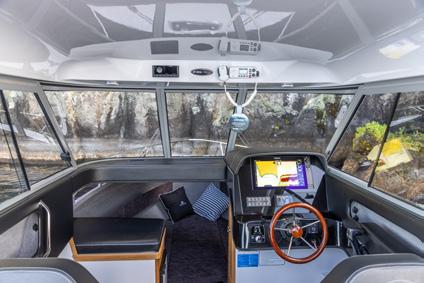
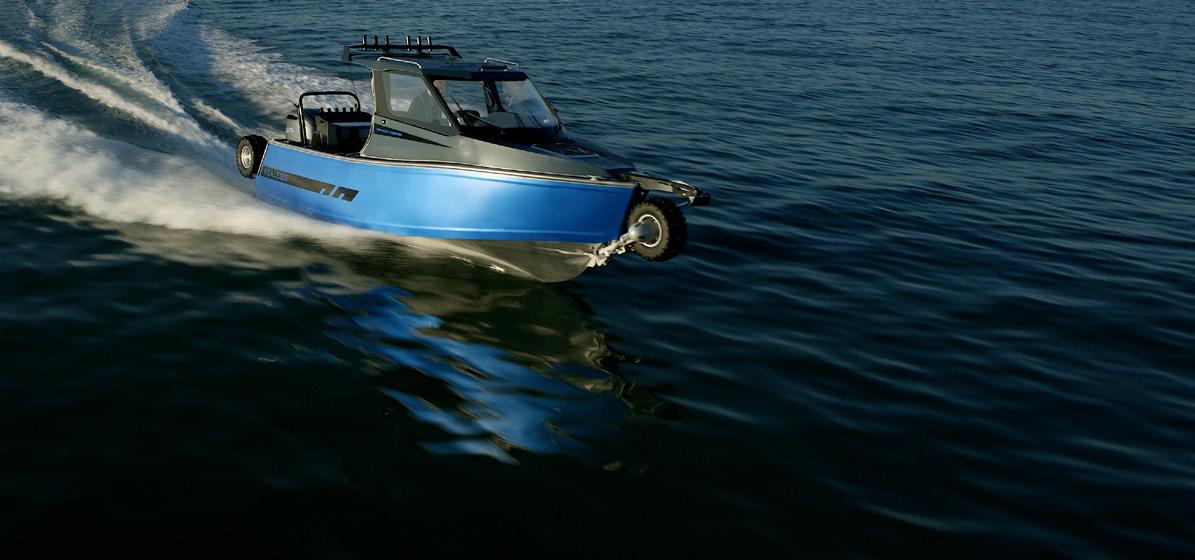
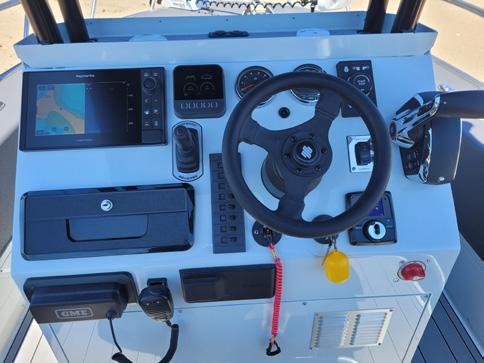
HAINES HUNTER OVERLANDER OP725
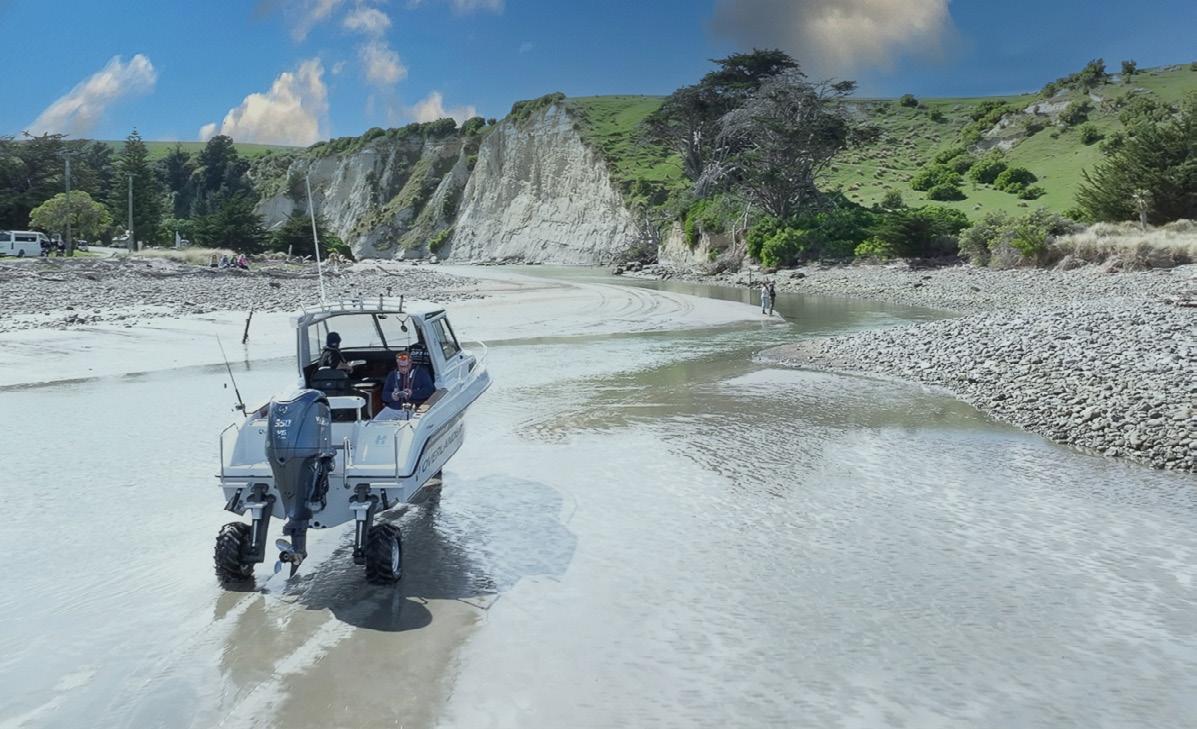
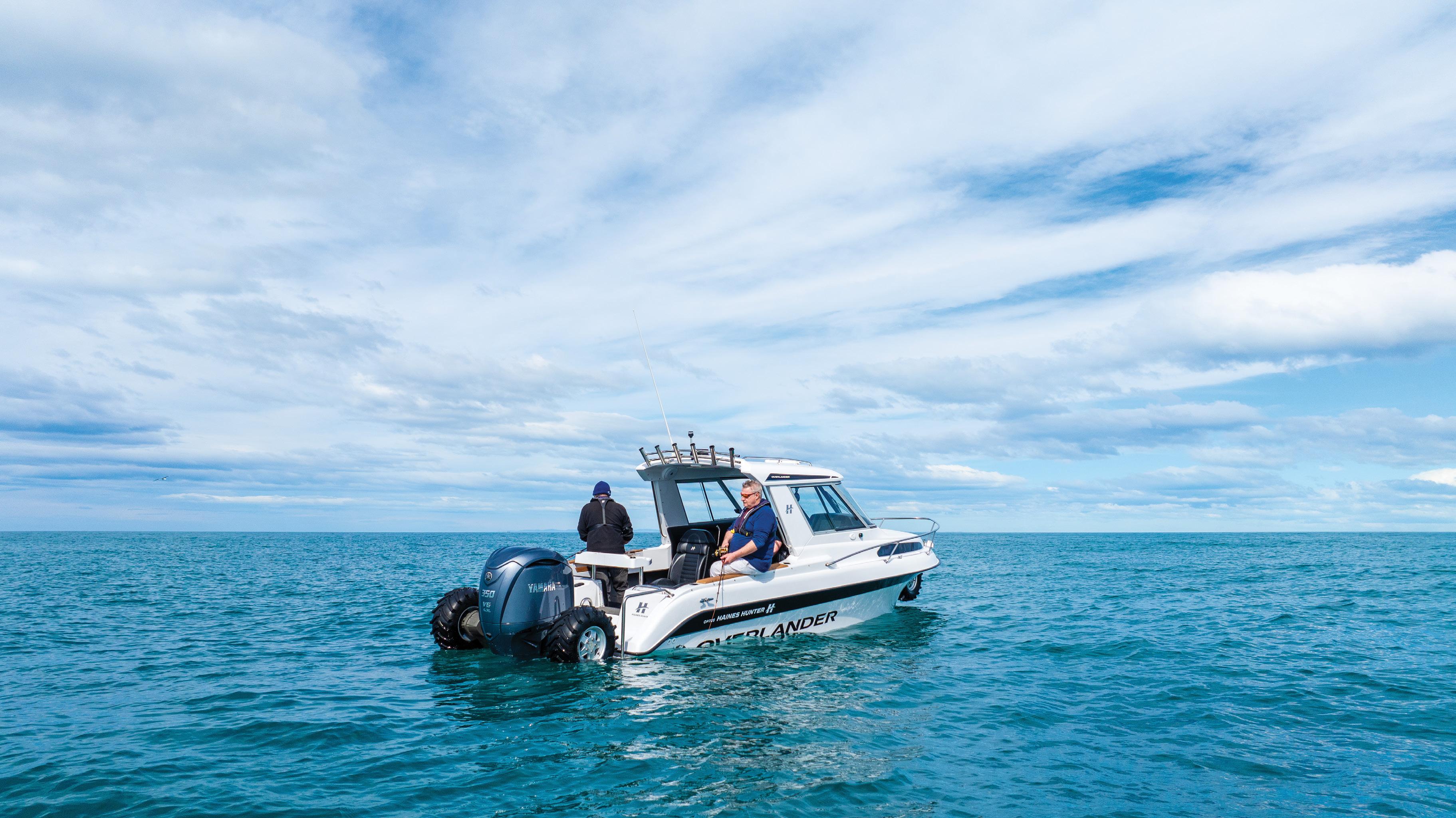
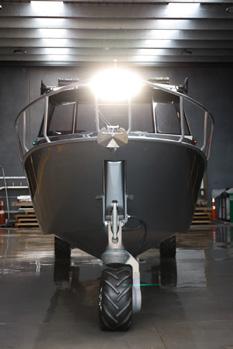
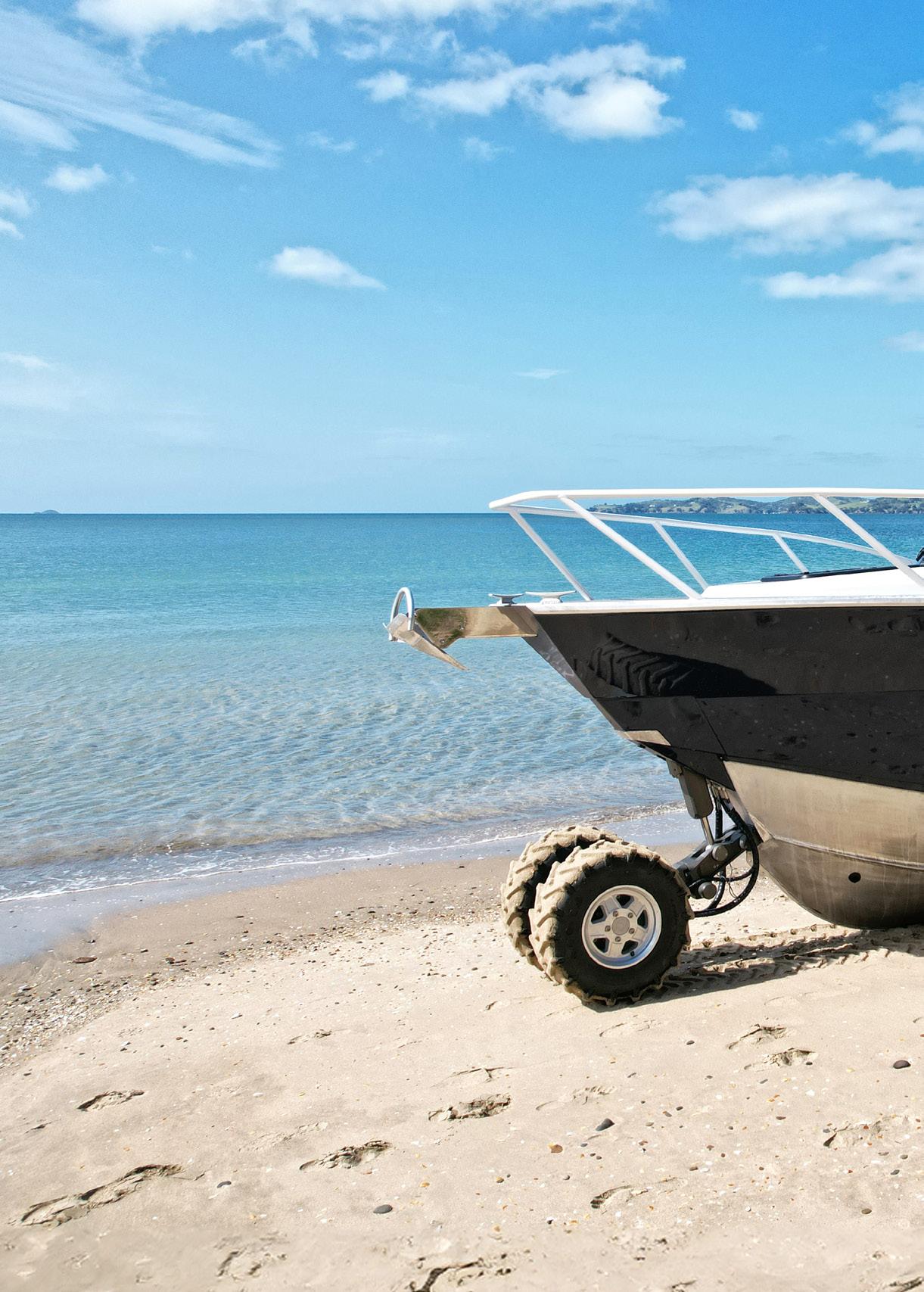
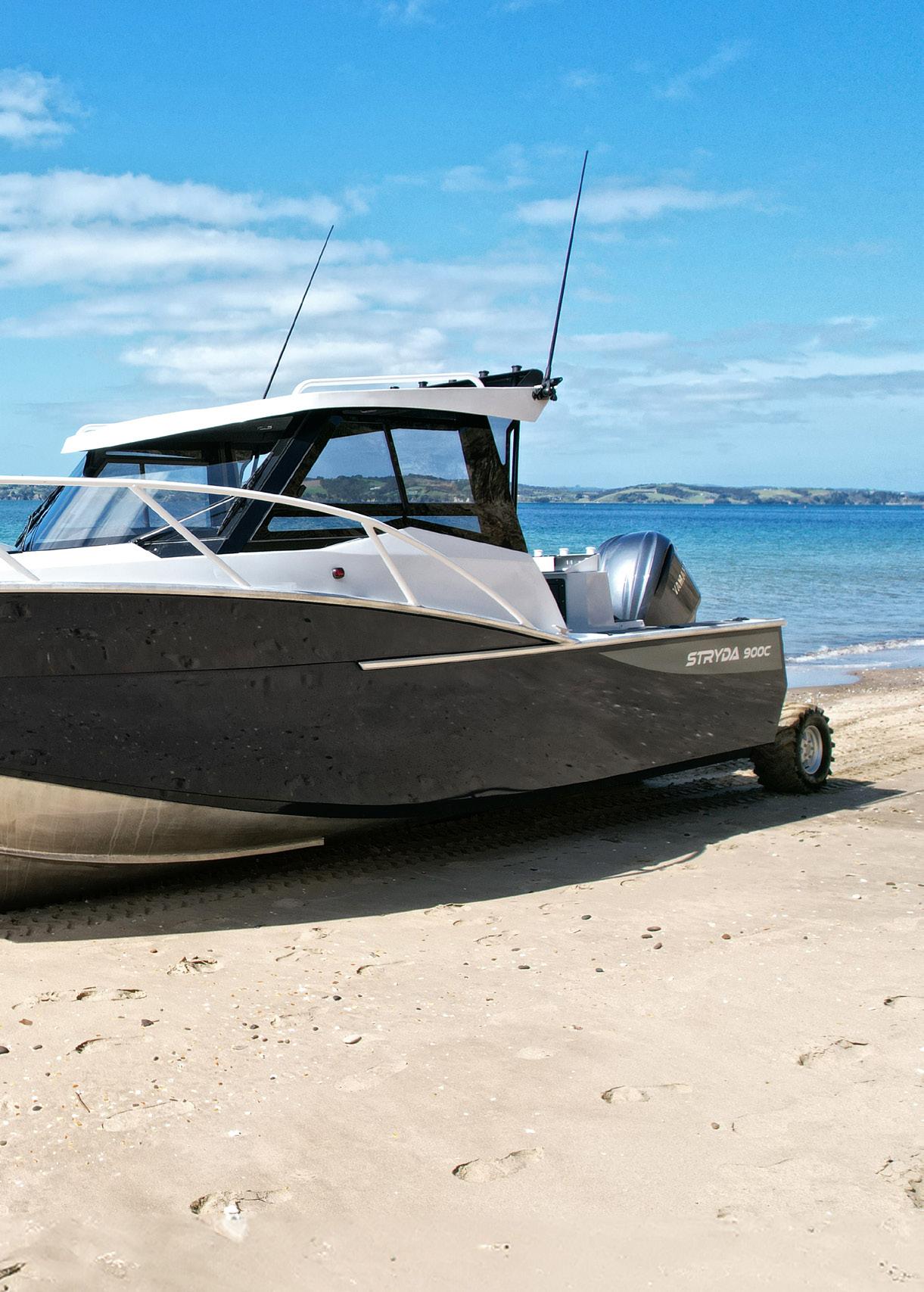
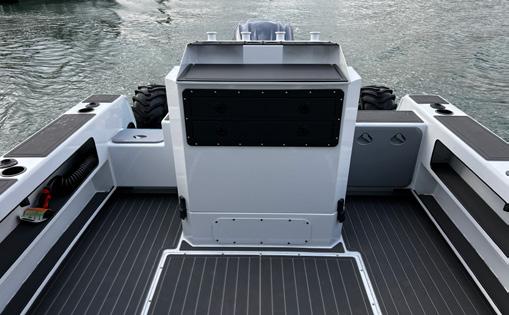
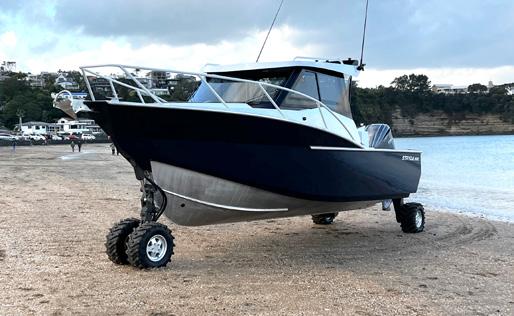
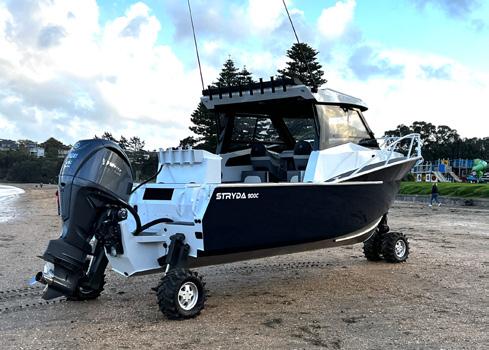
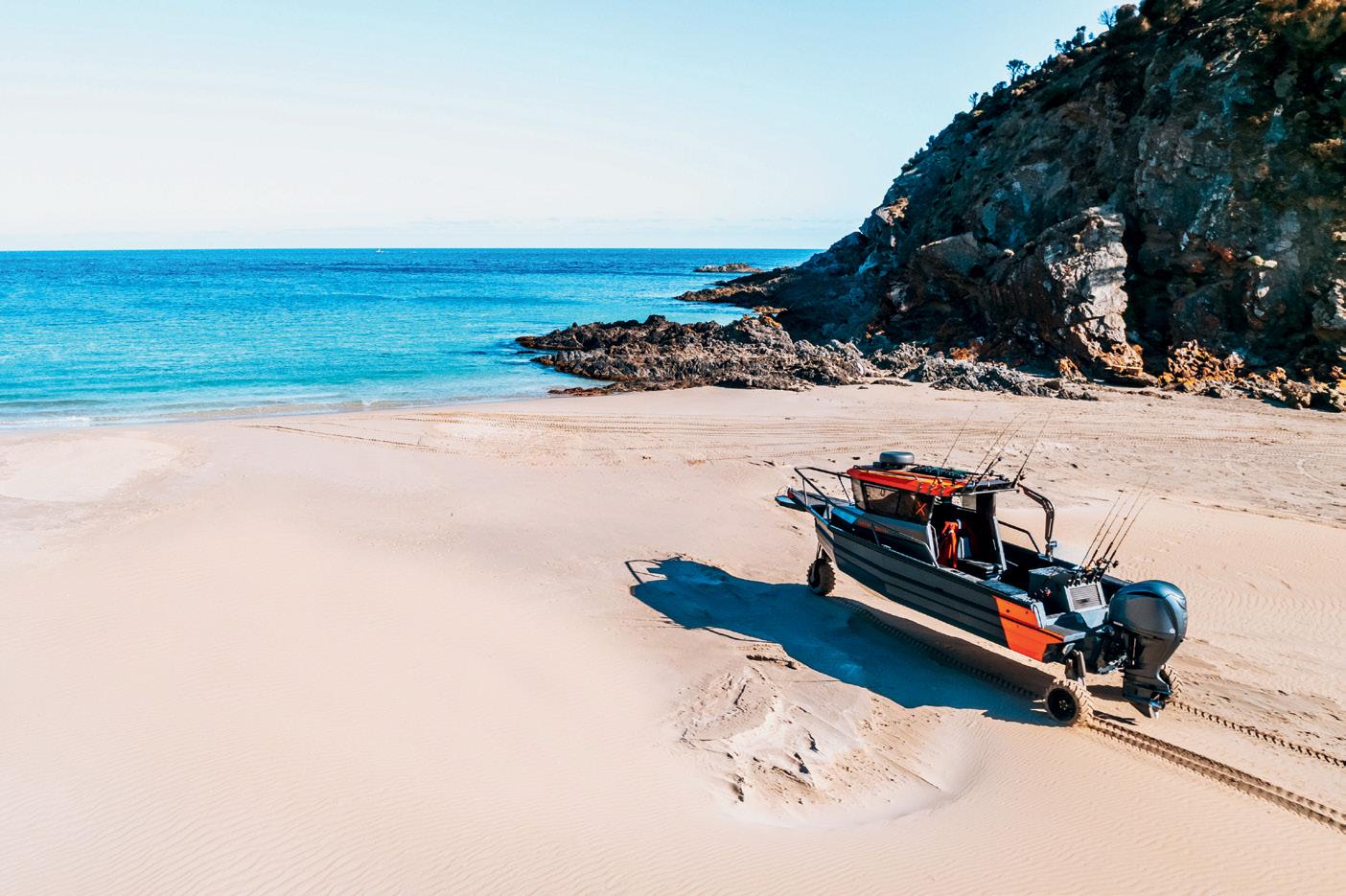
The Haines Hunter Overlander OP725 is a testament to marine and amphibious technology innovation. This 7.5-meter hardtop vessel expertly combines high-performance marine capabilities with seamless land mobility, offering versatility for boaties.
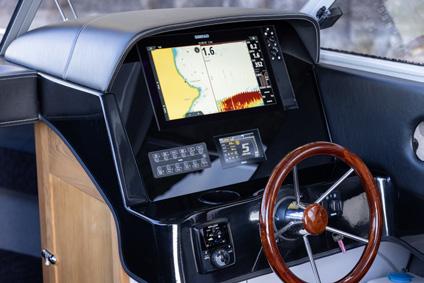
At its core, the Overlander OP725 is based on Haines Hunters’ wellproven 7.5-meter premium hardtop. Its sleek design features a classy mix of teak and quality trim, comfortable seating, and cutting-edge electronics, including C-Zone digital switching and a Simrad multifunction display.
From a technical standpoint, the OP725 impresses with its specifications. Powered by a single Yamaha F300 V6 outboard engine, it boasts a 240-litre fuel capacity and a suggested maximum horsepower of 300. Its 21° deep V hull delivers a dry and stable ride, even in challenging conditions, making it well-suited for various activities, from game fishing to leisure cruising.
On the water, the boat can reach speeds exceeding 44 knots with a recommended horsepower engine of 250-350, offering extra performance when fitted with a 350hp engine, offering extra performance for onwater petrol heads.
What sets the OP725 apart from the
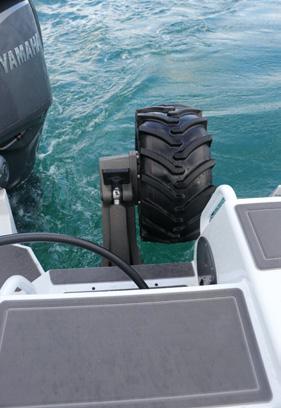
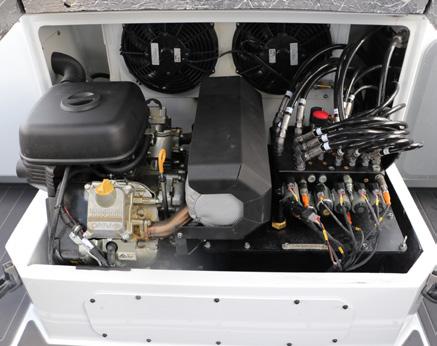
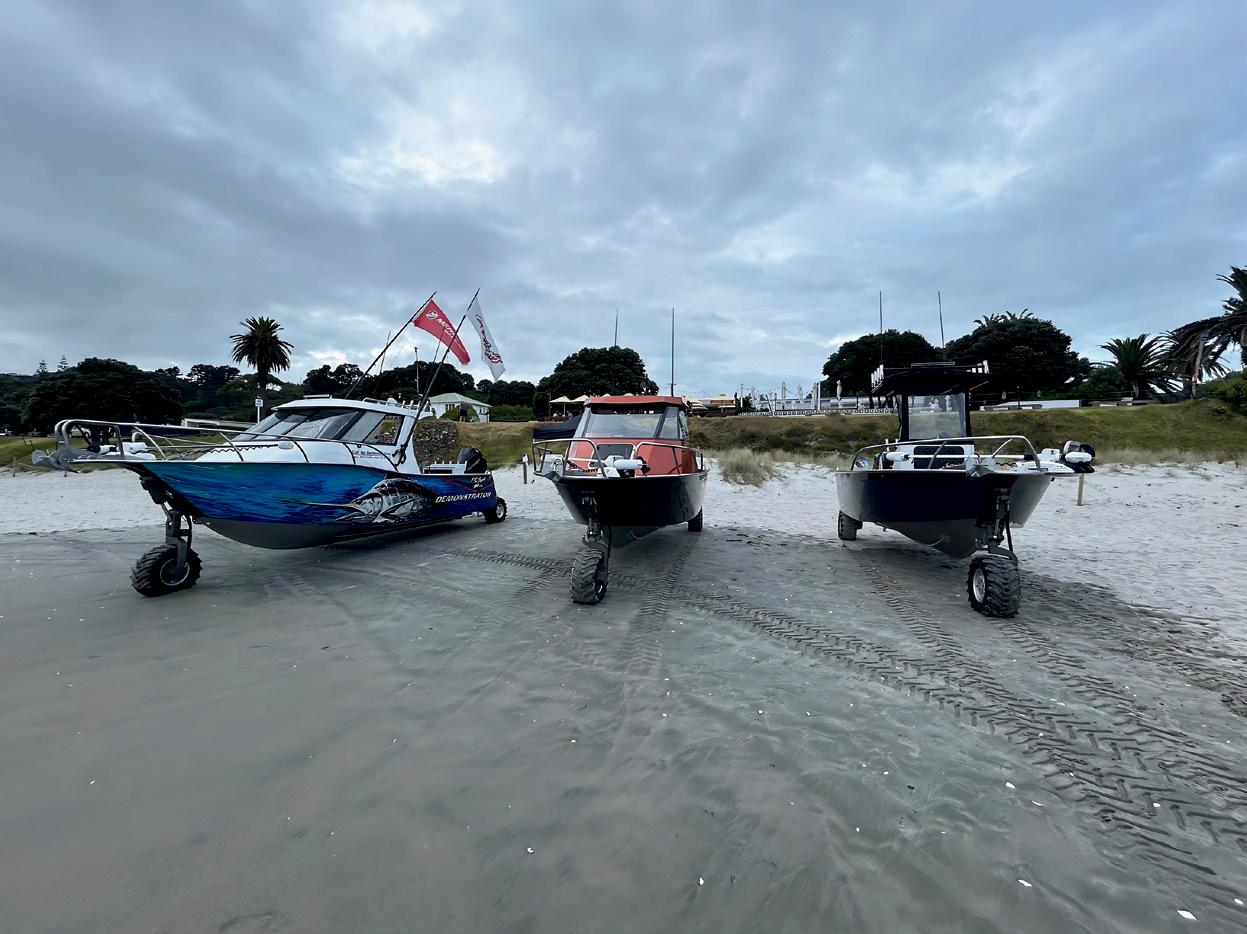
Haines Hunter 725 HT, is its amphibious capabilities, powered by Anura’s S25 electric-over-hydraulic system. This technology ensures smooth transitions between water and land, allowing users to launch and beach the boat effortlessly without extra assistance. On land, its mobility is quiet, efficient, and straightforward, providing freedom and convenience.
Designed for both utility and comfort, the OP725 offers a spacious hardtop with an open-plan layout, customisable to include an enclosed head, fridge/freezer, galley, and full-length V-berth. It balances practicality with social functionality, catering to various needs and preferences.
The Haines Hunter Overlander OP725 represents a significant leap into amphibious boating for Haines Hunter, merging their renowned luxury and performance with versatility. Whether for adventure, sport, or relaxation, it allows users to navigate seamlessly between land and sea.
AQUILA 32 SPORT POWER CATAMARAN
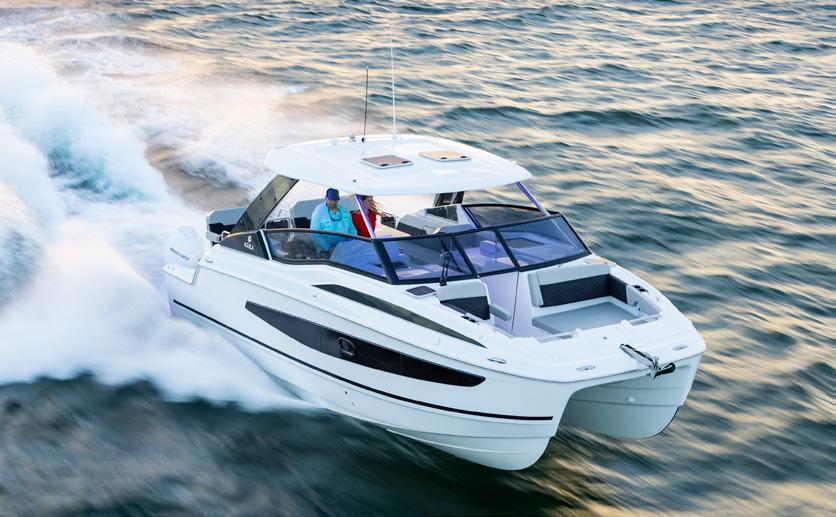
The Aquila 32 Sport Power Catamaran combines style, performance, and comfort, making it a versatile platform for cruising, entertaining, and water sports. With a longer waterline length, this model delivers a smoother ride, improved comfort, and increased onboard space.
Measuring 9.86m in length with a 3.85m beam and a displacement of 6,850 kg, the Aquila 32 offers expansive social zones in the bow, cockpit, and aft, accommodating up to 14 passengers. A fixed swim platform with their "best-in-class" custom ladder ensures easy water access. Below deck, the boat features one cabin, one head, and significant storage, which is ideal for overnight stays. Optional air conditioning is available with shore power or a generator. The InfusiCore hull and deck construction ensures durability and long-term reliability, while CE Certifications for Category B (offshore), C (coastal), and D (inland/ sheltered) highlight its versatility. Powered by twin Mercury Verado 225 or 300
outboard engines, the Aquila 32 is agile and efficient, offering stable performance in various conditions.
This catamaran is perfect for exploring destinations, enjoying dockside dining, or relaxing with friends and family. Its open layout provides ample seating and customisable spaces, including convertible loungers and a cockpit wet bar. Modern amenities, luxury finishes, and innovative features, such as LED lighting, a forward swim ladder, and optional navigation systems, enhance the experience. Whether for day cruising, island hopping, or water activities, the Aquila 32 Sport delivers functionality, comfort, and style.
AQUILABOATS.COM.AU
SPECIFICATIONS
Length Overall 9.86 M
Hull Length 9.82 M
Beam Overall 3.85 M
Length of Waterline 8.09 M
Height Above Waterline with Hardtop (excl. electrics and electronics) 2.92 M
Hull Draft with Outboards up 55 CM
Light Displacement 4,781 KG
Fully Loaded Displacement 7,548 KG
Sleeps 4 (2 in salon)
Max Passengers 22
Cabins/Heads/Showers 1 / 1 / 1
RAE LINE 206 OB
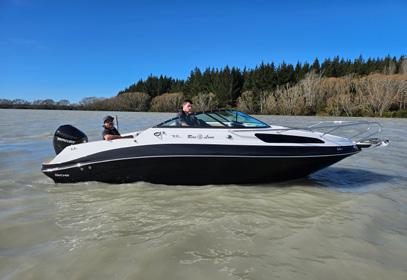
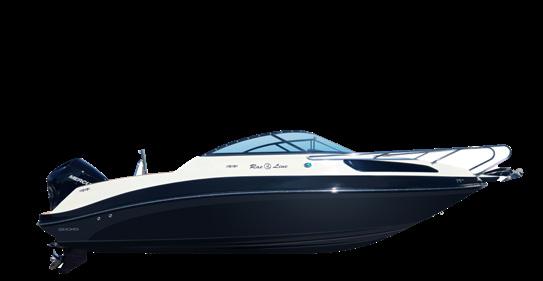
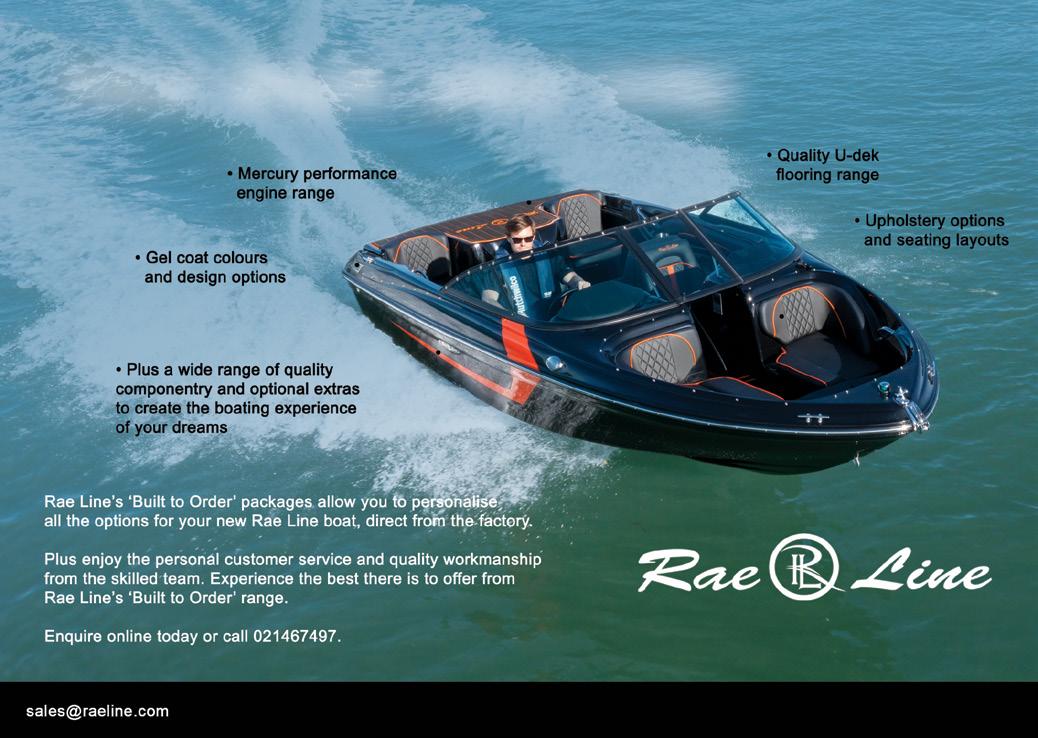
Rae Line is excited to present their newest addition to the cabin boat range, the 206 OB, designed to deliver the latest technological advancements, features, and style.
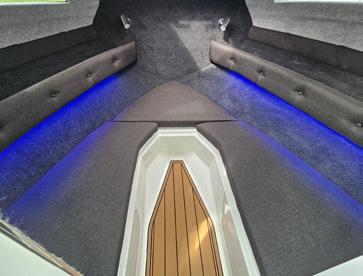
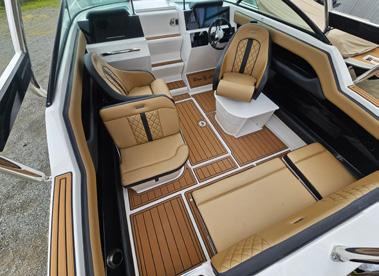
This versatile 6.5-metre cabin boat is built on the proven 205 OB hull, offering the same wide beam platform and aft-end layout while adding a sleek foredeck and cabin space for a sharp, modern look. With a 21-degree deadrise and added weight forward, the 206 ensures an even smoother, more stable ride. The innovative fold-away aft seating system includes a dual-wide centre seat that folds up and a single starboard-side tuck-away seat behind the storage hatch, transforming the cockpit in seconds to maximise space for fishing or easy movement around the boat. The dash features a completely flushmounted display, with optional digital switching, a wireless charging pocket, and USB charging ports on both the dash and glovebox to keep your devices powered up.
hatch into the cabin footwell, helping keep the cockpit uncluttered. The fullymoulded cabin door with integrated steps provides easy access to the foredeck, while the enclosed anchor hatch allows for adding an optional electric windlass, simplifying anchoring. For safety and convenience, the 3-step swim ladder is recessed and covered by a hatch to eliminate tripping hazards. The boat also features the popular starboard-side self-draining aft wet locker from the 205, along with a new port-side ropes locker at the walk-through from the platform to the cockpit.
The 206 also offers an optional king/ queen back-to-back seating arrangement, specifically designed for this model. This setup provides ample internal cockpit storage and a fold-down backrest for the aft-facing seat, which doubles as a prep station for food or drinks. Additionally, the passenger bucket seat can rotate 180
degrees, allowing passengers to sit aft-facing and enjoy the view during water sports activities.
With years of boating experience incorporated into every design detail, the Rae Line 206 OB is an exceptional multi-purpose boat, perfect for families and friends seeking the ultimate on-water experience.
RAELINEBOATS.COM
SPECIFICATIONS
Overall Length 21’ 1” / 6.45m
Beam 8’ 2”/ 2.48m
Draft 17” / 440mm
Dry Weight 3,500 lbs / 1,580 kg
Fuel Capacity 47.5 gal / 180 L
Deadrise 21 degrees
Max. engine weight 617 lbs / 280 kg
Max. power 300hp / 220kw
BUILT LIGHT. BUILT TOUGH. BUILT TO GO THE DISTANCE.
POWERFUL 135/150HP FOURSTROKE
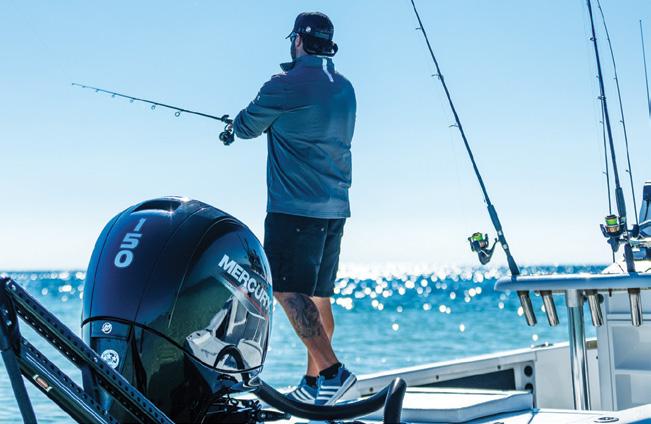
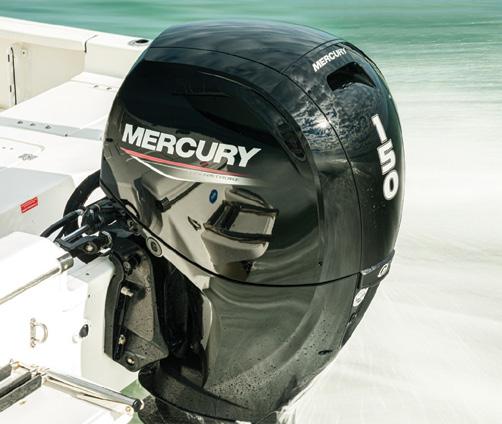
The most durable 135hp & 150hp FourStroke outboards the world has ever seen. The large 3.0 litre displacement produces class leading torque and efficiency from its lightweight compact design. Delivering unbeatable performance, extreme reliability and maintenance free operation to keep you on the water longer.
mercurymarine.co.nz
MERCURY ENGINES ARE MADE FOR EXPLORING. SO ARE YOU. GO BOLDLY.
STRONG NEW ZEALAND CONTINGENT SHOWCASES INNOVATION AT METS
New Zealand companies had a very successful time at the 2024 METSTRADE in late November. The fifteen companies, exhibiting under the aegis of NZ Marine, all share an innovative approach to their products and services, with several world firsts released at this year’s show by Kiwi exhibitors.
“With marine innovation reaching new heights in New Zealand’s marine industry, we pinpoint METSTRADE as the place to be to launch new marine products,” says NZ Marine’s Stacey Cook. “New Zealand exhibitors might have the furthest distance to travel to the show, amongst visitors from around the world, but they don’t let that limit them, and we are so proud to see the number of newto-the-market breakthroughs our companies are exhibiting”.
DIGITAL TECHNOLOGY
Using virtual reality to beat seasickness New Zealand company See-LEVEL introduced its revolutionary solution to seasickness at this year’s show. The company’s innovative virtual reality technology is a medication-free solution to a common seafarers’ affliction, using a VR headset to ease motion sickness and improve enjoyment during long sea voyages. See-LEVEL had its product available for testing during the METSTRADE 2024 offering an efficient new way to enhance the enjoyment of guests, and ability of crew.
WASSP W3
The WASSP W3 system lets you map the seafloor ahead of your main vessel, ensuring safe navigation in uncharted waters. Unlike other systems, WASSP W3 is easy to install on a smaller tender boat and sends real-time 3D maps wirelessly to your main vessel’s bridge up to 2 km away. This allows you to see hidden dangers and find the perfect spots for anchoring, fishing, or diving. Backed by WASSP Ltd.’s expertise in high-resolution multibeam sonar technology and decades of experience in marine electronics, the W3 offers unmatched reliability and precision, enhancing the safety and productivity of your maritime ventures. Whether you’re navigating or surveying, the W3 delivers advanced mapping solutions trusted by marine professionals worldwide.
AMPHIBIOUS TECHNOLOGY
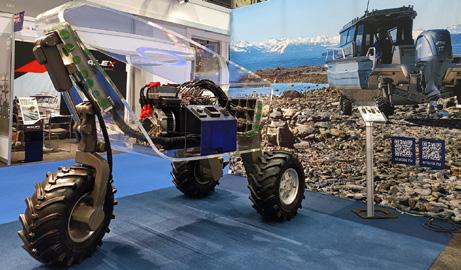
The world’s first purelyelectric amphibious technology. Amphibious systems innovator, Tectrax, presented the world’s first purelyelectric amphibious system. Where traditional amphibious technologies are limited by noisy hydraulic systems, which lack power and compromise performance on the water, Tectrax’s new electric system has no hydraulics, delivering more power and improved manoeuvrability while freeing up vessel space. The company was looking forward to cementing partnerships with boatbuilders globally at this year’s METSTRADE.
Anura (News 1d) adds three additional amphibious systems. Since last year’s METSTRADE Anura has continued to push the development of its amphibious technology. This has included adding to their range three additional amphibious systems, allowing craft manufacturers more options to choose the right amphibious solution for their boat. Each system has had a very intensive focus on the system weight, ensuring that craft manufacturers are able to offer an amphibious version of their boat that still provides the same performance of a nonamphibious boat. The amphibious market is growing from strength to strength every year and demand for amphibious systems has increased significantly, allowing boat manufacturers more room for growth and the ability to unlock new markets.
ELECTRIC TECHNOLOGY
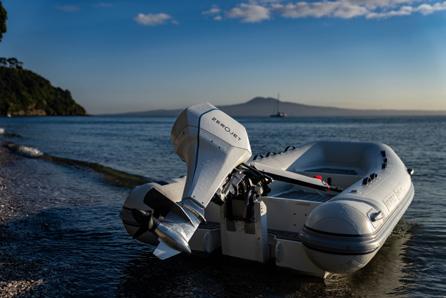
A revolutionary advancement in marine propulsion. ZeroJet is introducing the highest power-to-weight 48V electric outboard in existence, offering unmatched performance and sustainability. The ZeroJet 18kW 48V electric outboard is a revolutionary advancement in marine propulsion, combining exceptional power with the lightest weight in its class. Weighing just 38kg, its unparalleled power-to-weight performance makes it ideal for small boat manufacturers seeking to transition to electric without sacrificing speed or efficiency. This new 25hp petrolequivalent outboard sets a new standard in the marine industry, providing a powerful and lightweight alternative to traditional petrol engines. The world’s first purely-electric amphibious technology.
TENDER INNOVATION
New to-market loading system for yacht tender garages. Balex Marine launched its automatic boat loading system designed for yacht tender garages. Designed for convenience and safety, the system allows yacht owners and crew to load and unload tenders effortlessly with one-touch operation. This cutting-edge system redefines yacht tender management, eliminating the traditional manual handling and lifting process and the dangers accompanying it. With a customisable fit, the Balex system can be tailored to fit most yacht tender garages.
COMPONENTS
INNOVATION
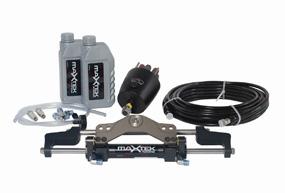
maXtek sets new standards in hydraulic steering.
maXtek Marine introduced its 2024 XP Cylinder Series, setting new standards in hydraulic Steering technology with: 5-Year Seal Life: Utilising advanced sealing technology for unparalleled longevity.
Enhanced Material Integrity: Constructed from premium stainless steel with a highly polished chrome shaft for optimal corrosion resistance and reduced friction.
Robust Design: Features heavy-duty connection points to prevent torsion twists, ensuring structural stability. Triple Seal Configuration: For superior fluid retention and operational efficiency.
Corrosion-Free Performance: Engineered to eliminate corrosion and pitting.
THE PRIMER OF CHAMPIONS
Resene Group brought Durepox to the show; the product of choice for composite marine vessels. Used extensively for foiling, sailing and power boats, Durepox is the product of choice as a primer for all AC40 yachts as well as the Sail GP foiling cats. With an extensive proven track record on race yachts, the Resene team brought Durepox to METSTRADE this year for use on a wide range of carbon applications.
NEW BALL VALVES DESIGNED FOR TIGHT SPACES.
TruDesign launched its new three quarter inch and half inch compact Ball Valve/Seacock range. Designed to fit in tight spaces where room is at a premium, these super small TruDesign Ball Valves come with all the benefits of corrosion-free, six-toone weight saving and smooth handle rotation. The valves are ideal for continuous use air-conditioning and Genset cooling systems and fit TruDesign ISO 9093-2021 compliant Thru Hulls/Skin Fittings.
PROPSPEED
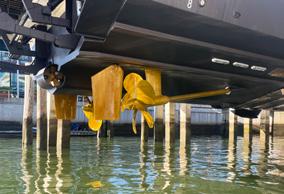
Propspeed’s Like a Pro Toolkit brings industry-leading foul release system to all. The Like A Pro toolkit was developed to elevate confidence, increase accessibility and empower all marine businesses and boaters alike with Propspeed’s industry-leading foul-release system, support and service. The new Propspeed Coverage Calculator gives confidence in quoting how much product is needed for any-sized application, while the Stripspeed is specifically designed to remove old foul-release coatings simplifying the preparation process and saving time. Through the adoption of this combination of tools, anyone can now Propspeed Like a Pro.
COMPOSITE CONSULTANCY
Advance composite structures from the experts. PURE Design & Engineering Limited is a New Zealand-based consultancy with extensive expertise in advanced composite structures, especially for the marine industry. Their team brings years of experience, having worked on prestigious projects like America’s Cup, round-the-world, and record-breaking vessels. They offer flexible, independent engineering services tailored to your project needs—from full engineering, drawings, and FEA to on-site support.
CREW WEAR INNOVATION
Crew uniform that’s gentle on the environment. The VMG Range is an acknowledgment of the pure and the raw of New Zealand. It is their humble attempt to design a range of crew wear that is ingrained with the magnificence, the mystery, and the natural beauty of Aotearoa. But most importantly, it is their way to show the world that producing technical, durable and stunning crew wear can go hand-in-hand with looking after the planet we live on.
NZ MARINE INDUSTRY CELEBRATES
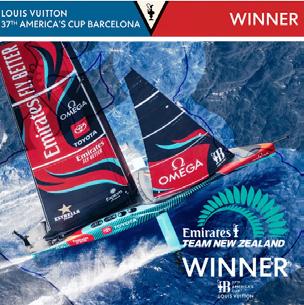
ETNZ’S SUCCESSFUL DEFENCE OF THE 37TH AMERICA’S CUP
Emirates Team New Zealand’s win against the best of the United Kingdom, Italy, Switzerland, France and the USA further evidences New Zealand has the world’s best sailors and is leading the world in boatbuilding innovation and technology.
The NZ Marine Industry Association congratulates Emirates Team New Zealand, winners of the 37th America’s Cup, in a contest which set new records on the water. It was a thrilling week of racing as New Zealand marine innovation enabled new records on the waters of Barcelona. As the globe’s leading sailors battled it out on the water, it was the New Zealand technology behind teams that allowed this pinnacle of human achievement on the water to reach new heights.
While New Zealand sailors are considered among the world’s best, the country’s marine technology and innovation is used both by its own team, and by the teams contesting the America’s Cup.
From the design of AC75s – the yachts which have set a new America’s Cup record speed at a blistering 102 km/h – to the team chase boats behind the race, and the components powering the foiling yachts to greater speeds, New Zealand companies are at the forefront.
It’s the marine equivalent of the Formula 1, and a coup for the small Southern Ocean country for which connectivity to the sea is an integral part of the DNA. New Zealand’s Marine and Specialised Technologies Academy (MAST) trains up to 700 marine innovation specialists and boatbuilders a year in a programme that has now been syndicated worldwide.
With Emirates Team New Zealand bringing foiling to yacht racing, New Zealand companies have pioneered advanced manufacturing techniques, resulting in the lightest, fastest and strongest boats built for purpose.
From Southern Spars’ Auckland headquarters, it has built carbon fibre masts of exactly 26.5 metres for several teams to fit the tight specifications of the class requirement. At the same time, North Sails has supplied sails for both the women’s, youth AC40 and Emirates Team New Zealand. Likewise, Adhesive Technologies New Zealand
supplied the resins and adhesives for the Emirates Team New Zealand boats, hydrogen and land speed record craft and rigs, as well as supplying other teams in the competition.
Gurit has supplied composite engineering services while C-Tech has been supplying battens to the America’s Cup since 2003. It has an advanced research and development focus on pushing the boundaries with not only battens but a number of other composite components capable of withstanding the forces of America’s Cup boats.
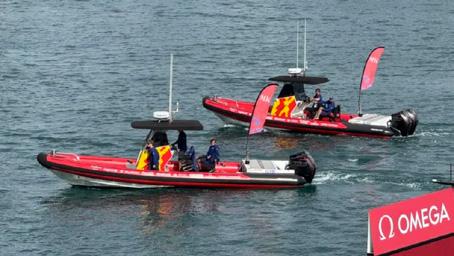
On the water, Rayglass Boats, Salthouse Coach Boats, and Lloyd Stevenson Boatbuilders have all supplied chase and support boats for the Cup. Lloyd Stevenson Boatbuilders has built Catalyst boats for both INEOS and Alinghi, supplying the large support vessels that play a key role during the regatta.
Rayglass Boats has supplied 30 boats, which were seen in the Barcelona race village after they were shipped to the event from the company’s base in Mount Wellington.
New Zealand technology innovator, Predictwind provides categoryleading weather forecasting to both America’s Cup sailors and local boaters alike, providing specific forecasting for 20,000 sites globally.
PURE Design & Engineering is another New Zealand company using innovation to pave the way; it engineered the one design foil arms used by all teams as well as providing engineering expertise across a number of components.
It’s technology for the ocean, by the world’s experts on water. With the America’s Cup reaching an extensive worldwide audience, New Zealand’s ability to push new records for the water is set to reach even greater heights.
The New Zealand Marine Industry; proud to support Emirates Team New Zealand and building New Zealand’s America’s Cup boats for 35 years.
NZMARINE.COM
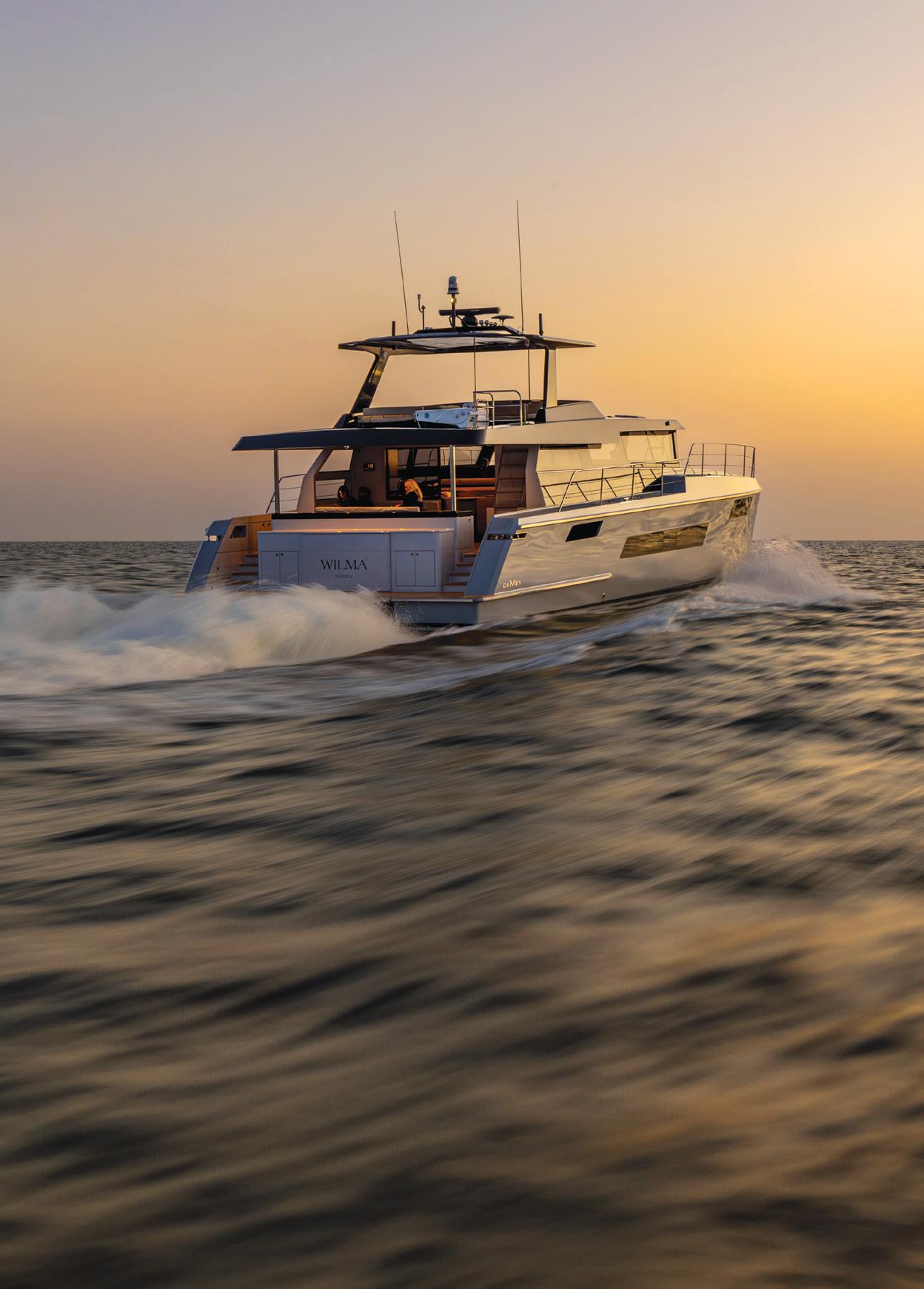
MAIDEN VOYAGE OF WILMA 2, THE NEWLY BUILT DEMEY
60
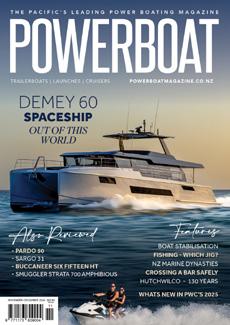
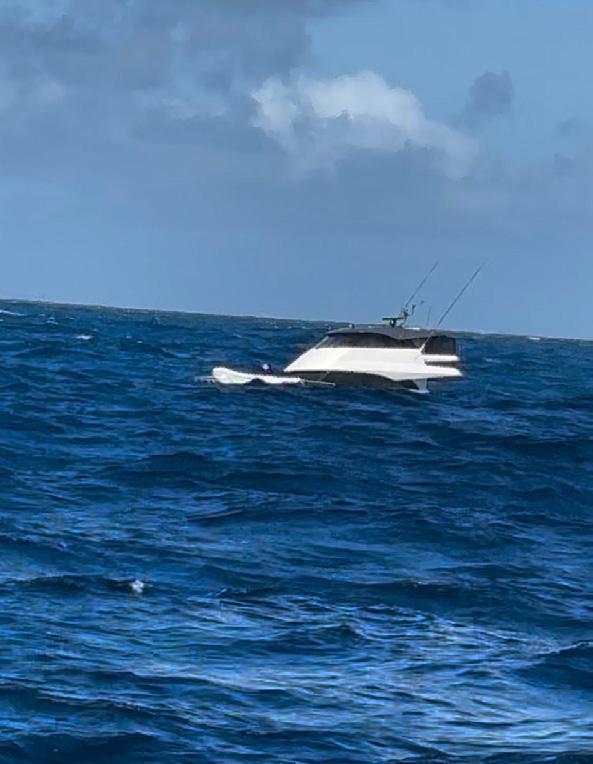
As featured on the cover of the November/December issue of PowerBoat Magazine, the maiden voyage of Wilma 2, a newly built DEMEY 60 semidisplacement power catamaran, marked an unforgettable journey from New Zealand to Australia.
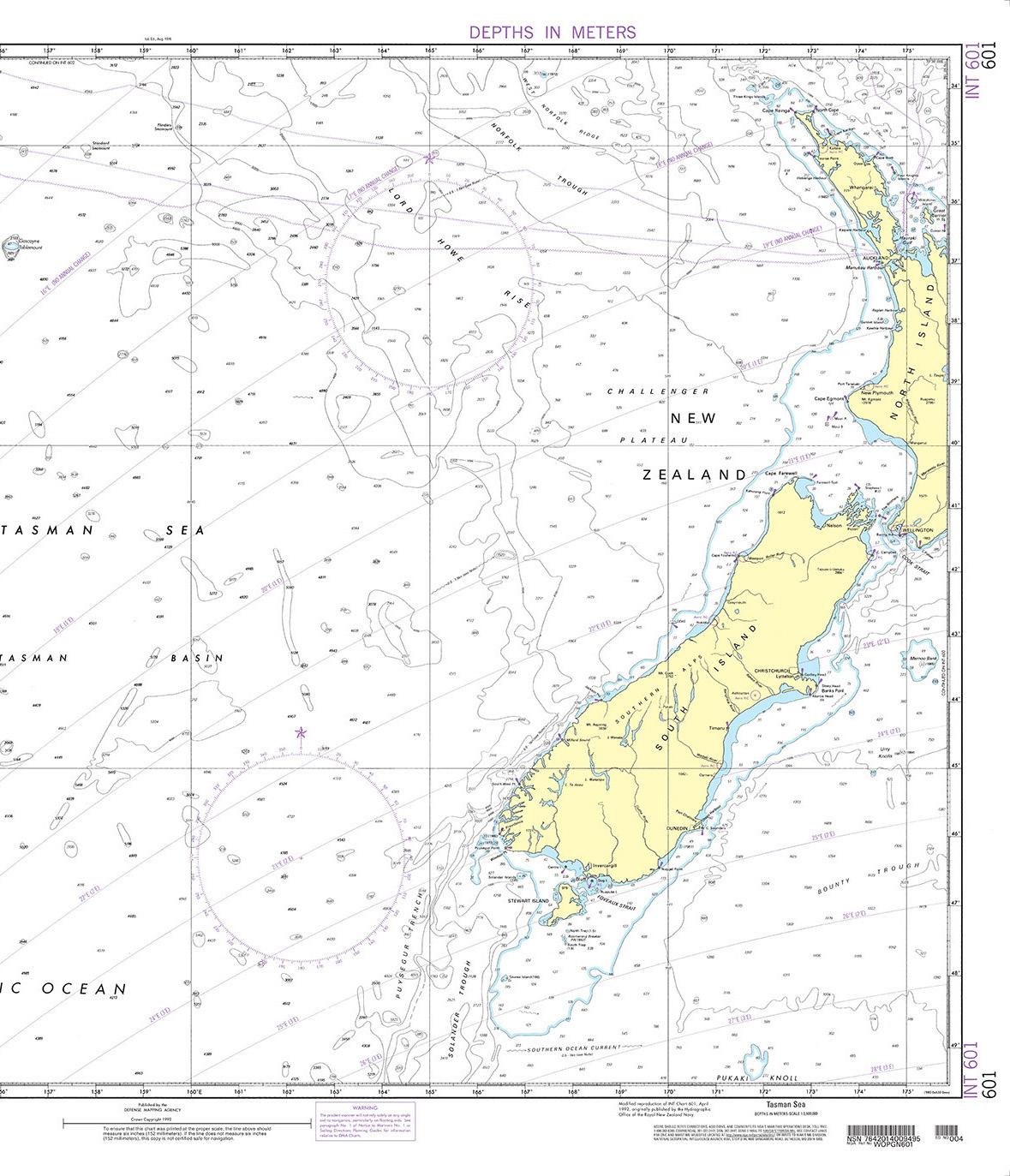
This 1200 nautical-mile passage, completed in three days, tested the vessel’s performance and resilience in diverse sea conditions while delivering remarkable moments for the crew of four, including the owner.
Careful Preparation and Seamless Operation
With only 190 nautical miles previously logged, Wilma 2 underwent meticulous system checks and provisioning. Equipped with 10,000 litres of fuel, advanced navigation tools like PredictWind, and
safety essentials such as dual EPIRBs, the team was ready for the challenge. Departing Opua, New Zealand, they navigated a weeklong weather delay, prioritising safety and optimal conditions for the crossing.
Challenging Conditions and Reliable Performance
The journey featured conditions from calm, moonless nights to 3.5-meter swells and 25knot winds during the final stretch. Despite this, Wilma 2 maintained exceptional handling and efficiency.
Welcoming Arrival in Sydney
Arriving at Sydney’s Customs Dock, the crew celebrated a smooth conclusion to the voyage. This delivery was a testament to the DEMEY 60’s design and capabilities and the synergy of expert craftsmanship and skilled seamanship. Wilma 2 is now poised for many adventures from her home port of Sydney.
NICDEMEYYACHTS.COM
ELITE
Ready to depart Opua
Trans-Tasman
Arriving in Sydney
HAMPTON ENDURANCE 680 ARRIVES
The Hampton Endurance 680, a purpose-built luxurious cruiser, has arrived safely in Brisbane. The team at Leigh-Smith Yachts were underway commissioning the boat this week as we went to print.
Astand-out in its class, combining the ultimate in performance, luxury and functionality, the Endurance 680 is one of the most popular models produced in Hampton’s long-range cruising series. With an open-plan layout, timeless design and the highest-quality finishes, the E680 is purpose-built with serious cruising capabilities in mind.
Comfort on board is at the heart of the E680’s conception, offering owners a
functional, well-thought-out design and an interior brimming with beautifully crafted cherry wood and marble surfaces.
Key features include Twin Caterpillar C18 1000hp diesel engines on straight shafts, Hydraulic bow & stern thruster, ABT Trac at rest stabilisers, dual-wing docking stations, dual Cummins Onan gensets and a four stateroom/four head layout. Hampton’s Endurance model line-up is focused on meeting the requirements for long-distance
cruising in luxury, comfort, and safety. Their mission-specific yachts are designed by noted naval architect Howard Apollonio, an acknowledged expert in producing highly performance-efficient hull forms.
Once the boat is commissioned, the PowerBoat Magazine team look forward to reviewing this luxury cruising yacht in early 2025.
LEIGH-SMITH.COM
The 680 running nicely down the coast from the Port of Brisbane to the Gold Coast.
Leigh-Smith Yachts are excited to announce the addition of a new stock yacht set to be delivered to our shores in 2024. Labelled as “80 feet of yacht in a 68 foot hull” by our friends at BoatTest.com, the four-stateroom, four-head E680 cruises effortlessly at 10 knots in absolute luxury. Comfort on-board is at the heart of the E680’s conception, offering users a functional layout and an interior brimming with the highest quality finishes. With extraordinary sea-keeping ability, twin 1,136hp CAT C18’s on straight shafts and an 8,000L fuel capacity, the E680 is ready to comfortably tackle any journey.
SARGO INTRODUCES THE NEW SARGO 31 OUTBOARD
Sargo Boats is proud to announce the launch of SARGO 31 Outboard, a ground-breaking addition to its rugged, seaworthy fleet and the first SARGO model equipped with outboard engines. Building on decades of excellence in producing all-weather, family-friendly offshore boats, this new release reflects SARGO’s commitment to innovation and performance while maintaining the quality, durability, and comfort that SARGO owners have come to expect.
Outboard power introduces a new dimension of versatility, making this model ideal for faster travel, easier maintenance, and improved shallowwater access. It also expands storage space, enhancing onboard comfort for the whole family or crew. “The SARGO 31 Outboard is an exciting evolution of the SARGO brand,” said CEO, Thomas Sarin at Sargo Oy Ab. “This is a game-changer for adventure seekers who want greater flexibility in their boating experience without compromising safety, stability, or the spacious, all-season comfort that defines a SARGO.”
Engine options and speeds
Yamaha 2 x F250 - 500hp - 35/37kn
Yamaha 2 x F300 - 600hp - 40/42kn
Yamaha 2 x F350 - 700hp - 43/45kn
A look ahead to the SARGO 28 Outboard
Sargo Boats is also pleased to announce that, due to popular demand, the SARGO 28 will also be offered in an outboard version this winter. The SARGO 28 Outboard promises a similar boost in performance and manoeuvrability, appealing to a new generation of boaters who value versatility and powerful design in a compact package. With both the SARGO 31 and SARGO 28 moving into the outboard market, SARGO continues to push boundaries and respond to evolving customer needs, offering adaptable solutions for true offshore explorers.
Availability
The SARGO 31 Outboard is available for order through authorised SARGO dealers, with delivery dates anticipated in late 2024. For more information, contact your local SARGO dealer.
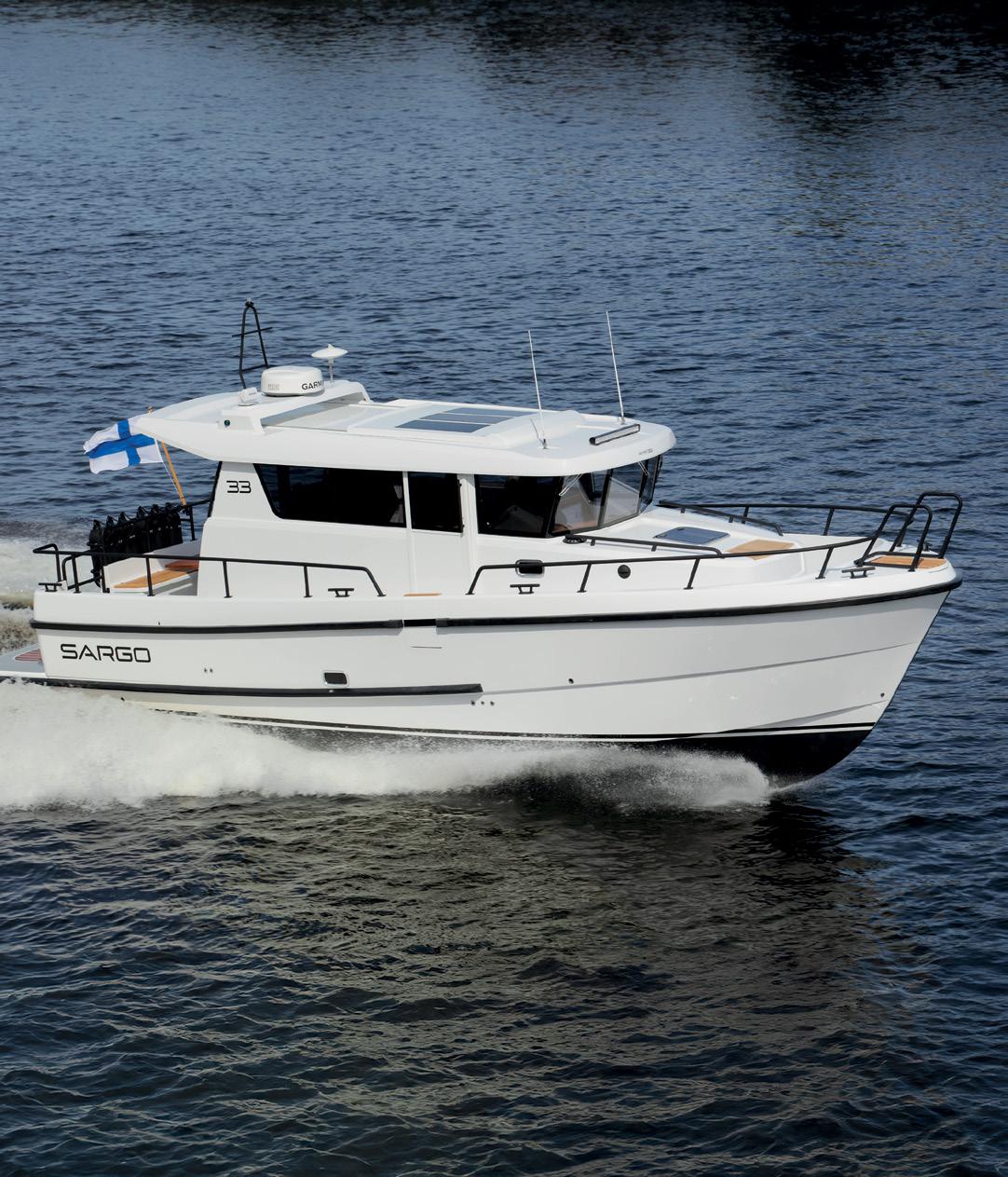
SARGO 33 TO REACH NZ SHORES
The first SARGO 33 to reach New Zealand's shores will arrive this December. This special boat is equipped with twin Volvo-Penta D6-340 giving it a top speed of over 40 knots, and features two double cabins plus a day-head and shower.
SASGA 55FB
The yacht, set to arrive for sale in December 2024 and will be one of only two Flybridge variants in New Zealand, has a galley-aft configuration, allowing for easy indoor and outdoor dining. The yacht also features a full-beam master cabin with ensuite, plus two further double cabins and bathrooms - one being the ensuite for the forward VIP cabin. The flybridge hosts a full Raymarine helm station, dining area, and full wet bar with grill. All modern conveniences are catered for; including induction cooking, dishwasher, washer/dryer, air-conditioning and entertainment system.
CHANGING OF THE GUARD HERALDS A NEW ERA FOR MARITIMO
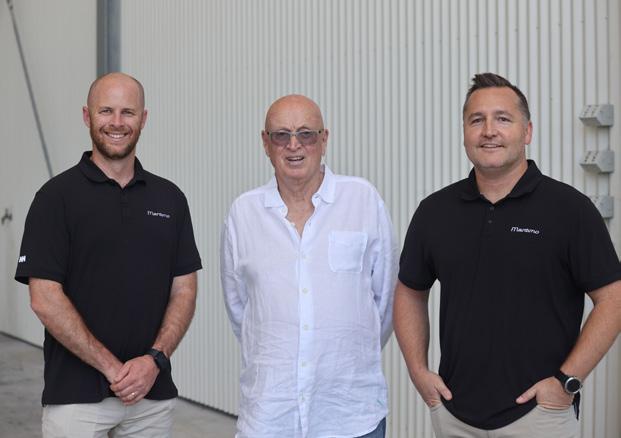
In what is a landmark move in Maritimo’s 20th year, a talented new team has joined Maritimo to take on the sales and business development management throughout Australia and New Zealand. Effective from 7 October, Danny Jordin has been appointed to the role of Australasian Sales Manager, and Sean Savage and Paul Savage are the brand’s Business Development Managers.
“This restructuring is a pivotal moment for Maritimo and one that will set the business on a new trajectory,” stated Bill Barry-Cotter, CEO and founder of Maritimo. “Danny has been in the boating industry for 20 years, specialising in Marketing and Sales for Australian-made trailer boats. Sean and Paul grew up running their family dealership in Victoria. More importantly, they all live and breathe the boating lifestyle with their families and know the Maritimo brand from personal experience.”
Sean and Paul, who own a Maritimo M500 and have been active in waterskiing and boat racing since they were kids, believe boating is “the ultimate family pastime. “A day or a weekend out on the water brings everyone together,” said Paul. “There’s something for each member of the family.” Self-confessed “obsessive about boating”, Sean and Paul say they have long admired Bill Barry-Cotter and his familyrun company. “We have followed Bill Barry-Cotter’s pioneering designs and the development of the Maritimo range ever
since we can remember,” said Paul. “We understand and respect the history of the brand. The opportunity to work directly with Bill and the senior management team is a privilege. It’s a real ‘pinch ourselves’ moment.” Sean added, “Over the past four years, representing Maritimo through Streaker Marine, we have had the perfect apprenticeship to come on board and take the business to the next level.”
MARITIMO.COM.AU
L-R Sean Savage, Bill Barry-Cotter, Danny Jordin
SHORT MARINE’S KIWI EXPANSION
Sydney brothers Sam and Ryan Short of Short Marine are thrilled to announce their further expansion into the New Zealand market, joining forces with Sean Condon and Lauren Thomas, owners of Auckland’s highly regarded Condon Marine Services (CMS).
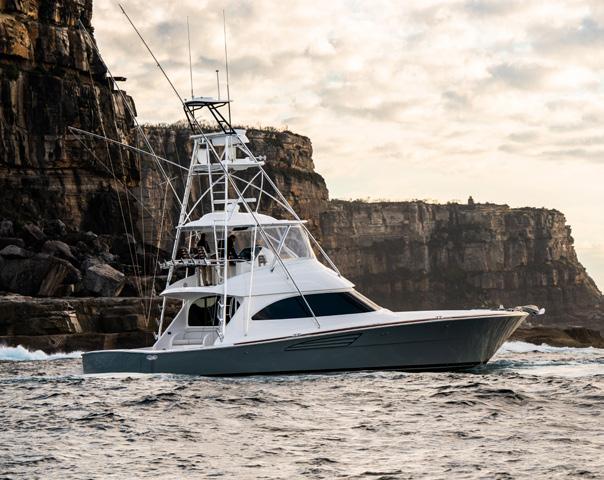
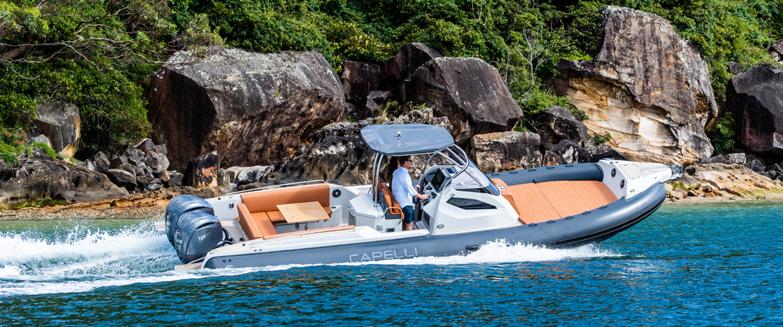
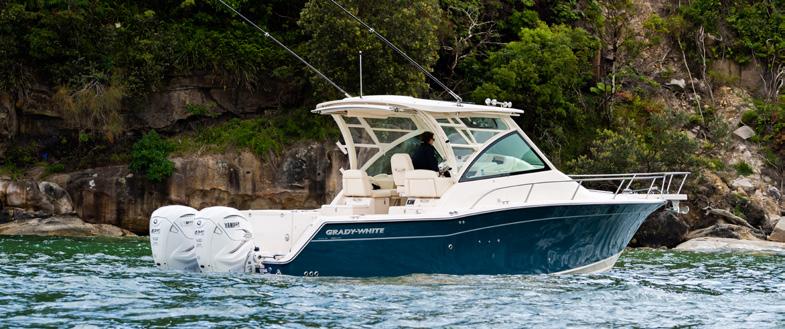
This strategic alliance will introduce New Zealanders to Short Marine’s portfolio of globally acclaimed boat brands: Grady-White Boats, Valhalla Boatworks, Viking Yachts, and Capelli RIBs. Each of these brands has built a solid reputation for their world-class quality and performance. Grady-White’s renowned seaworthiness and diverse range of leisure and fishing boats, Valhalla’s power-packed high-performance centre console designs, Viking’s Yachts highly respected and renowned as the world’s leading boat builder in Luxury Sports Fishing Yacht space, and Capelli’s sleek Italian style make them top choices for those who love life on the water.
“We couldn’t think of a better team than Sean and Lauren to help us make this expansion happen,” said Ryan Short. “They bring the same passion and care to their work that we do, particularly around their industry experience and their end-to-end customer service approach and offering, aligned with Short Marine’s mission. We’re excited to bring world-class offshore performers like Grady-White, Viking and Valhalla to the New Zealand boating community.”
Sean added, “I’m excited to bring these brands to the New Zealand market. It is a real game changer to have these leading fishing and leisure brands on our shorelines.
I’m also looking forward to crossing over into sales while still being able to provide our (new sales) customers with service and maintenance they know and trust.”
Based out of their established service centre in Tamaki Marine Park, Auckland, Sean has already brought in their first GradyWhite, which is now listed and available for inspection. If you’re interested in exploring any of these legendary brands, don’t hesitate to reach out to Sean for more information or to schedule a viewing.
SHORTMARINE.COM sean.condon@shortmarine.com
Valhalla Boatworks
Viking Yachts
Capelli
Grady White
Sean & Lauren of Short Marine New Zealand
DEMEY 60 SPACESHIP
Nic de Mey receiving good enquiry thanks to the PowerBoat Magazine Team!
"Only a week after the publication’s release, we received numerous inquiries (x4) on our recently released deMey 60 Spaceship. Great work by the PowerBoat team in helping us spread the word!"
- NicdeMey
WARREN EVANS JOINS LUSTY & BLUNDELL
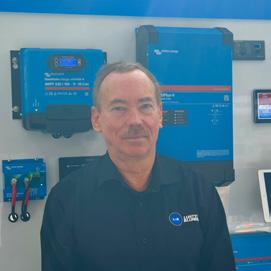
Warren Evans, a vastly experienced systems engineer with a background in both building and integrating electrical and electronic systems, has joined Lusty & Blundell as a specialist service engineer.
Having created and run businesses that designed and built high calibre systems that were sold all over the world, Warren brings a wealth of experience to his new role. “With his 30year history of designing, integrating and troubleshooting advanced electrical and electronic systems (including those integrating optics and AI technology), Warren is the perfect fit for L&B as we pivot more into these areas,” says L&B Managing Director Mark Milburn. “A specialist in Victron applications, his expertise in energy transfer systems, intelligent charging systems and Smart Home systems will be invaluable as we see more and more of these new technologies being integrated into modern mid-sized and larger vessels.” Warren says Lusty & Blundell is the perfect company for him at this stage of his career. “They are an easy company to work for with a great team environment and I really enjoy using my expertise to help them out.” Warren Evans will be based at Lusty & Blundell’s headquarters and showroom in Albany on Auckland’s North Shore.
LUSTY-BLUNDELL.CO.NZ
FOUNTAINE PAJOT ANNOUNCES
NEW POWER 80 SUPERYACHT
Fountaine Pajot Motor Yachts has just announced its spectacular new Power 80, marking the shipyard’s entry into the world of superyachts.
The new power catamaran is the largest model built by the French shipyard and sets a breath-taking new standard in luxury, space and performance. The Power 80 retains the timeless elegance of the shipyard’s lineage with a sleek design and outstanding living space. The luxury yacht is powered by two 750hp engines as standard and two 950hp engines as an option, allowing clients to challenge the boundaries of ocean travel. The yacht can confidently tackle long-distance cruises while affording all the luxuries to make the journey exquisitely comfortable.
The modular layout accommodates up to 12 guests, or for six to sail in the most
exclusive space and luxury. The generous crew quarters are designed to stylishly accommodate five professional crew. The Power 80’s living spaces are astonishing for their size and range. More than 400m² is available for guests and crew to enjoy with its extensive choice of precincts delivering superb entertaining areas while also assuring privacy when desired.
The exterior deck areas span 250m² of entertaining space, all finished with the finest materials, while the immersible rear deck is ergonomically designed to make sea access safe and easy. The Power 80 affords all the features of an exclusive beach club, so clients can take full advantage of the sea
with the many water toys on offer.
The interior is bathed in natural light courtesy of the expansive glass and retractable wings, which deliver stunning views. Her plush carpets and topstitched leather will impress the most discerning cruisers. With the flexibility to choose a lounge/dinette or a galley kitchen layout, clients can customise their Power 80 to suit their particular lifestyle and cruising needs.
A stunning achievement in luxury yacht design, the Power 80 represents the pinnacle of cruising in absolute style.
MULTIHULLSOLUTIONS.COM.AU
Six Fifteen HT
Exess
ABSOLUTE PRESENTS THE LATEST ENTRY IN ITS FLEET - NAVETTA 62
The Navetta 62 is a stunning yacht that embodies the innovative spirit and contemporary elegance of Absolute Yachts. Aptly dubbed “The Absolute Vibe,” this remarkable vessel seamlessly combines cutting-edge design with functional luxury, ensuring a yachting experience like no other. With its sophisticated features and unparalleled craftsmanship, the Navetta 62 redefines the art of luxury on the water.
The cockpit terrace serves as a central feature of the overall design, enhanced for optimal liveability with an electricallyoperated awning that skilfully balances light and shade. This allows guests to bask in the sun while ensuring complete privacy when moored at a marina.
On the flybridge, the Navetta 62 emphasizes effortless comfort. With a step-free teak floor and versatile modular furnishings, this space invites relaxation. Guests can choose between sun or shade, thanks to an innovative awning system with removable poles. A new helm station, located forward on the starboard side, offers ergonomic design with flat-look instrumentation, enhancing both functionality and style. Dimensional lighting and recessed LEDs further elevate the flybridge ambience, perfect for evening gatherings under the stars.
Inside, the Navetta 62 continues to merge opulence with the allure of the sea. The salon, with its floor-to-ceiling windows, offers panoramic views that bring the outside in. This space is designed for both leisure and entertaining, featuring a six-person table with an electrically adjustable top, a suspended-effect sofa, and cuttingedge lighting throughout. The sleek cabinetry opposite the sofa is equipped with a vertically sliding TV, while the helm station positioned on the raised starboard side.
Below deck, the master stateroom at the bow has been completely redesigned, with floor-length curtains, a king-sized bed, and a bulkhead ready for a 50-inch TV. The en-suite bathroom features soft, curved lines, ambient lighting, and generous storage. The full- beam VIP stateroom midship is equally luxurious, offering the feel of a second master cabin with a king-size bed, walk-in closet, and elegantly appointed bathroom. A third cabin with twin berths shares the same attention to detail, including a ceiling height of over 190cm. The crew cabin, located aft, offers flexible accommodations with one or two berths and independent facilities. ABSOLUTEYACHTS.COM
Freedom
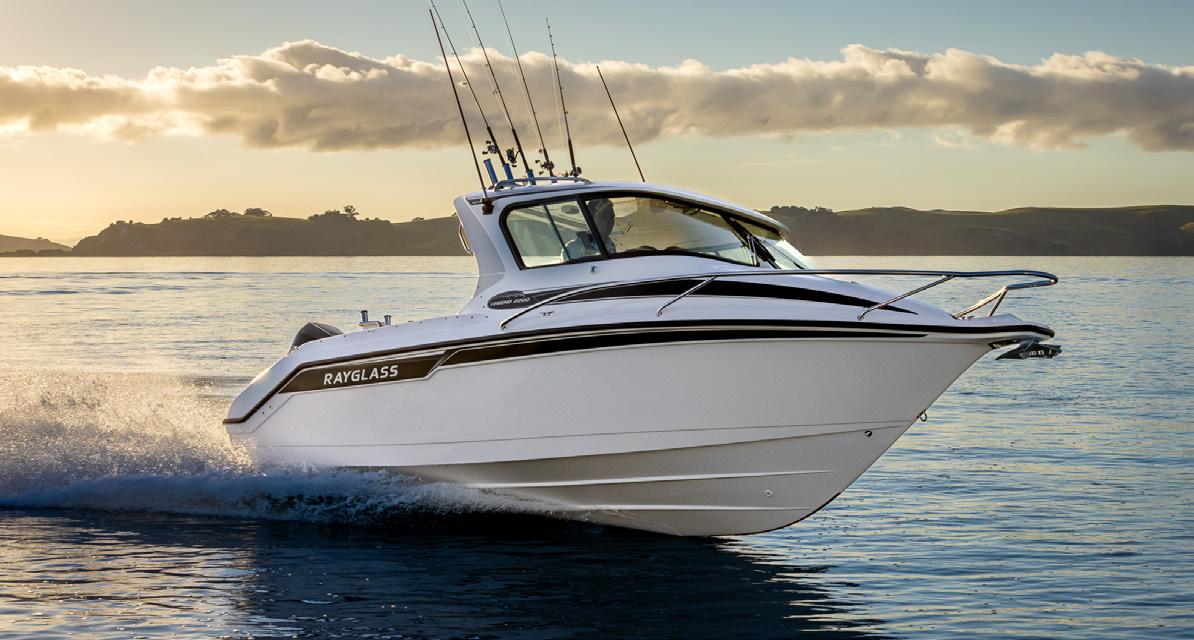
The launch locations will be in Auckland, Christchurch and Queenstown. Each location will highlight the synergies of the Brunswick portfolio, featuring a fleet of Sea Ray and Rayglass Boats, powered by Mercury Marine engines and outfitted with Navico Group electronics.
“We are thrilled to be expanding our Asia-Pacific presence into New Zealand,” said David Kurczewski, General Manager, Boating Services Asia-Pacific. “New Zealand boasts the highest boat ownership per capita in the world at 21%, reflecting an active and passionate boating community. We are eager to introduce our innovative premium boating subscription model, which offers boaters a new way to explore stunning waterways at home and across New Zealand and expand their boating lifestyle with opportunities at hundreds of locations around the world.”
Freedom Boat Club, the world's largest boat club operator, is thrilled to announce its arrival in New Zealand, joining an extensive global network of more than 400 locations across North America, Europe, and Australia. With nearly 100,000 members, Freedom Boat Club is the world's largest boating community, offering a subscription-based model that provides members with unlimited access to their home club fleet of boats.
Membership includes a one-time joining fee and affordable recurring monthly dues.
Freedom members enjoy the ultimate convenience and flexibility, as the club takes care of boat storage, maintenance, insurance, repairs, cleaning, and even fuelling before each outing. Members also receive unlimited training from certified captains to build confidence at the helm and have the unique benefit of reciprocal access to boats at all Freedom locations worldwide.
The New Zealand franchise will be owned and operated by Scott Williamson, a seasoned marine industry expert with over two decades of experience. Scott and his family have been deeply involved in New Zealand’s marine industry, owning and operating their family business, Sports Marine, for more than 45 years.
“The opportunity to join the Freedom family aligns perfectly with our vision for the next phase of our business,” said Scott Williamson, owner of Freedom Boat Club New Zealand. “Freedom’s subscription-based model enables us to connect with a new generation of boating enthusiasts and reach a broader range of boat users. We’re excited to partner with such a globally respected brand and to offer our members incredible benefits, including access to over 400 locations worldwide.”
Will Sangster, President of Business Acceleration at Brunswick Corporation, added: “Forward-thinking operators like Scott are essential to growing boating participation, and we’re excited to welcome Scott into the Freedom Boat Club family. This partnership represents an incredible opportunity to onboard the next generation of boaters and introduce the synergies of the Brunswick portfolio throughout New Zealand”
Freedom Boat Club's first New Zealand location is set to open at Auckland’s Westhaven Marina in early 2025. As the largest marina in the Southern Hemisphere, Westhaven offers direct access to the stunning Hauraki Gulf, featuring countless islands, secluded beaches, and abundant marine life. Popular destinations like Waiheke Island, Rangitoto Island, and the Coromandel Peninsula will be just a short journey away, making Westhaven the ideal starting point for fishing, diving, and exploring New Zealand’s world-class waterways.
FREEDOMBOATCLUB.CO.NZ
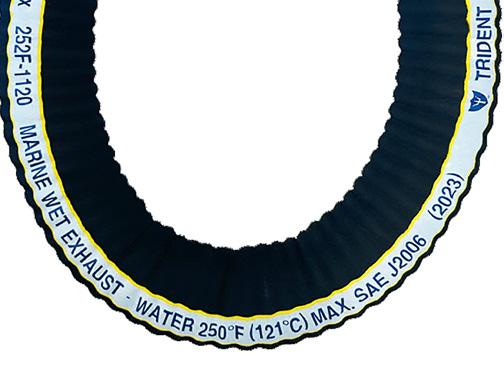
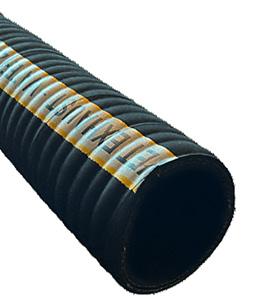
The BEST, longest lasting, safest Corrugated marine hose just got BETTER
• Makes installation extremely EASY with this NEW extra flexibility
• Built with 100% EPDM Rubber Tube and Cover
• Still the Hottest at 250ºF (121ºC) continuously
TRIDENT MARINE ®
Trident Extra-Flex corrugated wet exhaust and water marine hose offers best performance with an incredible bend radius @ 1.5 x the inside diameter and high temp EPDM rubber compounds. This enables it to handle higher temperatures, longer life and durability that its competition. Exceeds SAE J2006-R2, and ABYC & NMMA P-1 exhaust standards and Lloyd's Registry Type Approved. Black EDPM Rubber
continuous.
Trident Extra-Flex corrugated wet exhaust and water marine hose offers best performance with an incredible bend radius @ 1.5 x the inside diameter and high temp EPDM rubber compounds. This enables it to handle higher temperatures, longer life and durability that its competition. Exceeds SAE J2006-R2, and ABYC & NMMA P-1 exhaust standards and Lloyd's Registry Type Approved. Black EDPM Rubber
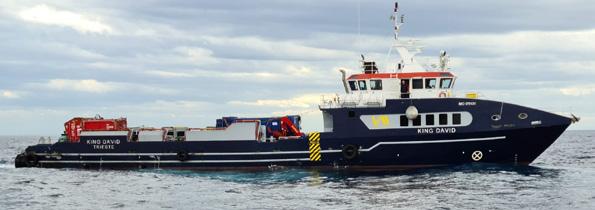
PROPSPEED ENABLES VESSEL KING DAVID TO ACHIEVE SIGNIFICANT FUEL SAVINGS
Propspeed, the leading innovator of underwater foul-release coatings, announced recently the successful evaluation of its coating system on VREMAR SRL's crew support vessel King David.
Conducted by Technical Manager, Massimiliano Rossetti and the vessel owner Marco Vrenna, the study reviewed data from the onboard monitoring system, comparing key metrics such as diesel consumption, speed and distance. The study analysed data from a set period of vessel operational hours, to minimise the impact of uncontrolled variables inherent in performance studies, reviewing data prior to the application of the Propspeed coating
system against data after the application of the Propspeed coating system.
The results revealed a significant 13.5% reduction in fuel consumption, translating to considerable cost savings and reduced associated carbon emissions. Detailed data from the onboard monitoring system confirmed that Propspeed not only enhances fuel efficiency but also contributes to the environmental sustainability of maritime operations. The analysis provided key insights into operational efficiency improvements postPropspeed application:
Fuel Consumption: Specific diesel consumption decreased from 629 kg/hour to 544 kg/hour, reflecting an 85 kg/hour reduction.
Efficiency Gains: Despite increased operational time, total diesel consumption fell, showcasing Propspeed's effectiveness in reducing drag and improving vessel speed.
Environmental Impact: Reducing fuel consumption supports a lower carbon footprint, reinforcing the commitment to sustainable maritime practices.
“We’re thrilled to see the positive results from VREMAR SRL’s evaluation of Propspeed on the King David,” said Marcus Hamilton, CEO of Propspeed. “It’s encouraging to see our coating contributing to improved operational and fuel efficiency, and fleet operators’ sustainability goals.”
These findings position Propspeed as a valuable solution for commercial vessels aiming to enhance operational efficiency while minimising fuel consumption and environmental impact. With a focus on sustainable and cost-effective operations, Propspeed addresses the maritime industry's challenges by improving fuel efficiency and reducing greenhouse gas emissions.
VREMAR SRL has embraced this proven solution across their fleet of four support vessels, confident in the enhanced vessel performance and long-term savings it provides and in alignment with the company’s sustainability goals.
PROPSPEED.COM/COMMERCIAL
Specifically designed for the NZ rugged weather conditions! • Maxwell designed watertight motor cover • Dual speed motor design
it now at your local
Who knows where the urge might take you? A distant port, a tropical island, or even another country. No matter where you choose, the long-range DEMEY 60 Catamaran can get you there quickly, comfortably — and economically.
If you’d like a few more stamps in your passport, call +64 7 281 0078 or office@demeyyachts.com.
nicdemeyyachts.com
OBDSTAR MARINE DIAGNOSTIC SCANNERS NOW IN NZ
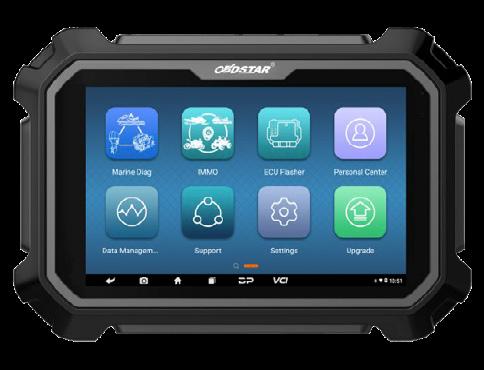
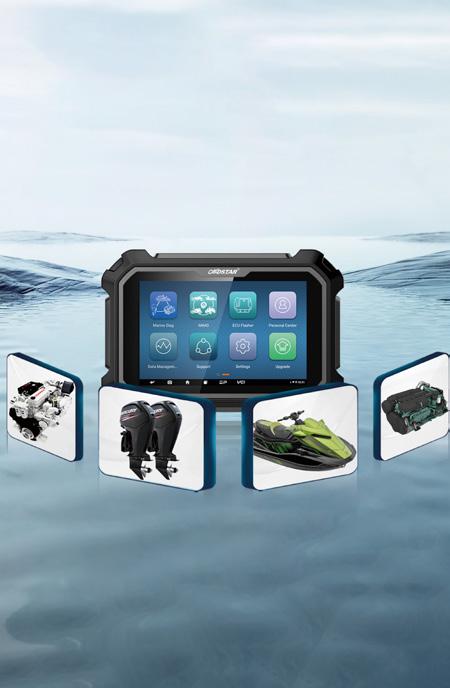
OBDSTAR Marine Diagnostic Scanners, now distributed in NZ by Hurricane Products, offer a significant competitive price advantage in the market.
Powered by a Samsung Exynos processor, the OBDSTAR marine scanner delivers advanced capabilities with a user-friendly interface. It accurately diagnoses issues in marine engines and electronic systems, including outboards, inboards, and jet skis. Whether you’re a marine mechanic or a boat owner, this scanner is an ideal solution. Compatible with a wide range of marine brands and models, the OBDSTAR scanner equips you to tackle any challenge. It features real-time data monitoring and intuitive navigation, saving you valuable time and money. They are priced from just $4,790 excl.
Diagnostic Functions
- ECU information Code reading
- Code Clearing
- Data flow
- Freeze frames
- Action test
- Setting - Coding
IMMO: Enter IMMO; you can perform anti-theft programming
ECU Flasher: This function can read ECU data and program ECU
Personal Centre: User information and the device's configuration information
Data Management: It includes My Data, Data Playback, Uninstall Model, Diagnose Report, Picture Viewer and File Management
Support: Equipped with a powerful database. An extensive collection of how-to videos helps users to operate the device easily.
Settings: It can set VCI Info, Language, Unit, Workshop, Network Test, Clear cache, System
Upgrade: Built-in WIFI mode can realise application downloading and diagnostic functions with a one-click upgrade.
OBDSTAR.CO.NZ
Cost-Effective Marine Diagnostic Scanners for Experts and Enthusiasts
OBDSTAR Marine Diagnostic Scanners offer a significant competitive price advantage in the market.
Powered by a Samsung Exynos processor, the OBDSTAR marine scanner delivers advanced capabilities with a userfriendly interface. It accurately diagnoses issues in marine engines and electronic systems, including outboards, inboards, and jet skis. Whether you’re a marine mechanic or a boat owner, this scanner is an ideal solution.
Testimonies
“I purchased a Marine scanner for $15,000, if I had known this scanner was available I would of taken the Obdstar after testing it and finding it great and half the price”.
– Kane, Kamo Marine
“They are so easy to use. We tried the demo and have now ordered and it gives us great reports we can print out”.
– Brian Marsh, BOI Auto & Marine
“It is great that it works on all makes & models and being portable and fantastic value for money. Once I tried the demo scanner didn’t want to return it so purchased”.
– Nigel, Dinghy & Outboards
www.obdstar.co.nz
RIVIERA AWARDED ‘LARGE
EMPLOYER OF THE YEAR’ IN 2024
QUEENSLAND TRAINING AWARDS
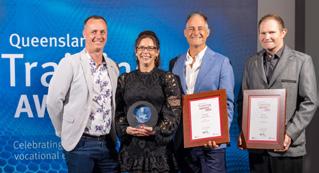
One of Australia’s premium luxury motor yacht builders, Riviera, has been awarded ‘Large Employer of the Year’ in the 2024 Queensland Training Awards, following its award for the South East Region.
The recognition celebrates the motor yacht builder’s commitment to continually raising its training standards and its dedication to enhancing the skills, lives and careers of its 900-strong team.
Also in the 2024 awards, Riviera’s partnership with Major Training Group was recognised as a finalist in the ‘Premier’s Industry Collaboration Award’ and Riviera’s matureage apprentice, Robert Henderson, was recognised as a regional finalist for the Harry Hauenschild Apprentice of the Year.
Hosted by the Department of Employment, Small Business and Training, the Large Employer of the Year award also highlights the exceptional training opportunities provided through the motor yacht builder’s exclusive onsite Riviera Academy of Excellence.
Riviera owner Rodney Longhurst said the award was recognition of the company’s significant investment in the Academy of
Excellence, which, in turn, reflected the investment in developing its team. “It’s immensely rewarding for me, personally, to see our apprentices develop into people with such accomplished and world-leading yacht building skills – and take that forward into their careers with Riviera. “We want each and every person at Riviera to be the best they can be. So many of our senior managers and tradespeople have completed their apprenticeships here, highlighting the rewarding and long-term career pathway that we offer at Riviera.
“We extend our sincere thanks to the Queensland Government’s Department of Employment, Small Business and Training for supporting these awards and for showcasing excellence in vocational training, which is vital to the future of our industry.” Riviera Apprentice and Training manager Keira Badke said Riviera’s holistic training
A NEW GENERATION OF EXCELLENCE
After having spent years refining and developing the proven platform ever further,
program offered strong support for its apprentices “where we teach their chosen trade skills alongside coaching life skills to help nurture world class people that will help build our world-class motor yachts.
“I am excited that our training program, which has been operating for over 30 years, is being recognised for everything that we do and proud of the industry-leading standard of onsite training that we offer through our Academy of Excellence.
“This industry recognition is a great reward for our training team and all the hard work they do to mentor our apprentices; to train them to our international level and our exacting requirements.”
Riviera will now represent Queensland in the national awards for ‘Large Employer of the Year’ at the Australian Training Awards to be announced in December.
RIVIERAUSTRALIA.COM
Accepting the award on behalf of Riviera (from left) Kyle Davison – Manufacturing Director, Keira Badke –Apprentice and Training Manager, Justin Leigh-Smith –Instructor and Darren Kearns – Senior Instructor.
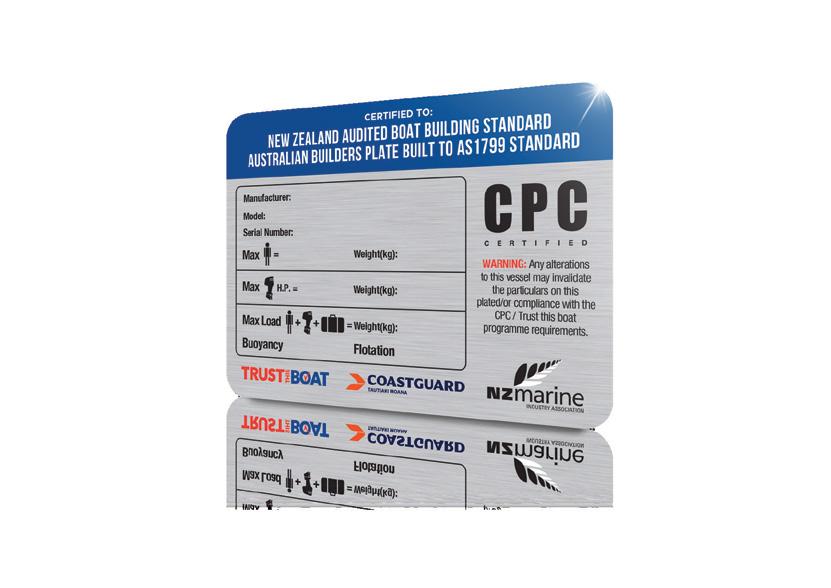
You & your family can trust a CPC Boat.
APPROVED
Companies that are approved to build boats to CPC certified standards are:
Buccaneer Boats
DNA Boats
Extreme Boats
FC Boats
Fi-Glass
FREWZA Boats
Haines Hunter
Huntsman Boats
Innovision Boats
Kingfisher Boats
KiwiKraft
McLay Boats
Marco Boats
Machina Boats
Offshore Boats
Rayglass
Salthouse Boatbuilders
Seaforce Marine
Smuggler Marine
Southern Boats
Stabicraft
Tristram Marine
ANGLER REELS IN POWERFUL PRIZE AT THE 2024 BASS PRO SERIES GRAND FINAL
Central Coast angler Tim Jones was determined to secure a big win at the 2024 ABT BASS Pro Series Grand Final, and he certainly delivered.
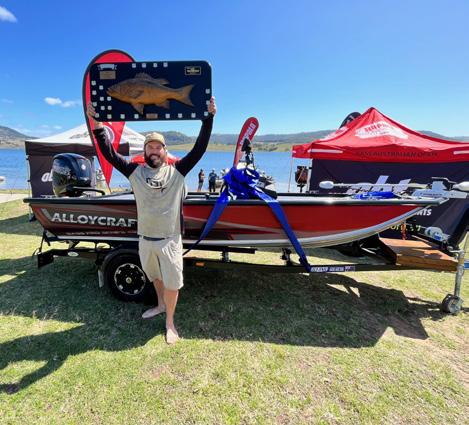
Using a 2010 Mercury 150hp Optimax, Tim led at the end of all three days to capture the championship title and an impressive prize. By taking out the grand finale at Lake St Clair in New South Wales, Tim earned a brandnew Mercury 115hp Pro XS, fitted to an Alloycraft bass boat. “It felt incredible to win,” Tim said. “They say when it’s your time, it’s your time, and I really believe that, everything I did on the water paid off right up until the last session. “On the final day, I caught exactly five fish and missed two good ones, which had me a bit stressed. But thankfully it all worked out in the end.”
He reeled in a total of 11 fish, weighing 12.075 kg to seal the victory. Tim’s catches weighed 3.635 kg and 3.180 kg on day one and two and finished with a total of 5.260 kg on day three. Now equipped with a Pro XS, Tim is eager to have a boat setup he can dedicate exclusively to saltwater fishing. “The Pro XS came on an Alloycraft boat, so I’m going to keep that setup just for saltwater and I’ll use my 150hp Optimax for freshwater,” he said. It won’t just be new environments that Tim’s Pro XS will open him up to, but a whole new outboard performance experience. “I’m excited to use my new outboard because it’s my first four stroke,” Tim said. “My current Optimax is a two stroke from 2010, and has served me well, but I know the four stroke engines are much better in terms of fuel economy and performance. “I can’t wait to test it all out and see how it performs on the water.”
CAD DESIGNED
Computer-Aided Design (CAD) ensures moulding precision and delivers ultimate accuracy for variable weather conditions.
WORLD-CLASS HARDTOP
Featuring curved glass for strength in the toughest conditions, and moulded side and top flares for wind deflection.
GALLEY OPTIONS
Overnight
BLUE WATER PERFORMANCE
Industry-leading offshore
ENVIABLE COCKPIT
Spacious and practical design for fishing, diving, and entertaining.
PALM BEACH MOTOR YACHTS UNVEILS THE GT RS SERIES
Palm Beach Motor Yachts continues to prove its range of bespoke performance motor yachts. Leading the way in this next generation of offshore powerboats is the GT RS Series which includes the new GT50 RS, GT60 RS, and now the GT70 RS.
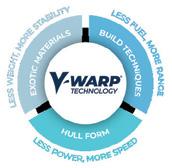
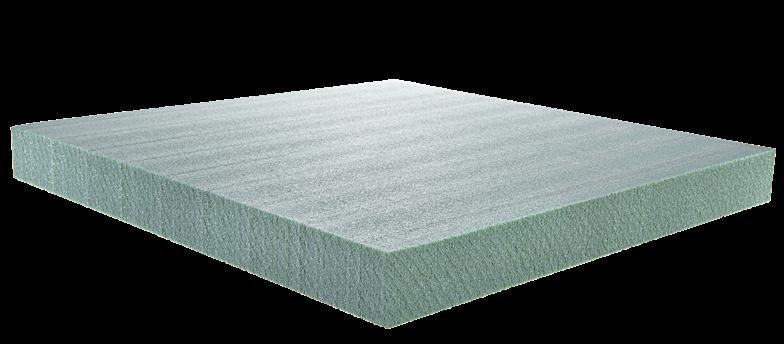
The new GT70 tooling is complete and epitomises the best of Palm Beach Motor Yachts and will be sure to turn heads from Sydney to Sardinia. Mark Richards and team designed her with three sumptuous staterooms, including a full-beam mast cabin amidships. This galley-down layout allows for a luxurious salon area with plush lounging and dining areas, as well as port and starboard double helm seats. In addition, like every Palm Beach Motor Yacht, each GT70 can be custom tailored to the owners’ specific needs and taste. For those seeking additional speed and life in the fast lane, Palm Beach Motor Yachts offers the GT70 RS which features triple 1,000-horsepower Volvo Penta IPS 1350s. This industry-leading performance is delivered thanks to Palm Beach Motor Yachts' proprietary V-WARP®TECHNOLOGY developed by Mark Richards. It’s a combination of hull form, exotic construction materials and the build process itself. Trademarks of the V-WARP®TECHNOLOGY hull utilised on all Palm Beach Motor Yacht models include a fine entry, a graceful curvature amidships, and minimal deadrise at the transom. Each hull is infused with a precise resin-to-E-Glass ratio with unidirectional and multi-axial fibre, resulting in a strong, fast, and efficient hull form. This hull is then fused directly to the carbon fibre structure, bulkheads, deck, and superstructure of the vessel. Following up on the announcements of the Palm Beach 85 and Palm Beach 107 in 2024 (both currently sold and in production), the new GTRS series is poised to captivate yachtsmen with its compelling design, exhilarating performance, and dynamic agility. The GT50 RS, GT60 RS, and the flagship GT70 RS comprise the GTRS range. The GT50 RS is available in Quad V8 500-horsepower outboards. The newly announced GT60 RS is available with Quad V12 600-horsepower outboards, while the GT70 RS will reach exhilarating speeds with Triple Volvo Penta 1,000 horsepower IPS 1350s. Each configuration satisfies the insatiable appetite for intoxicating performance and ferocity of offshore yachting.
“We will never compromise on performance and a superior ride,” says Mark Richards. “With every boat we build, we prove that both of these attributes can co-exist easily when the design and build process are flawless. That’s what excites me every day.”
When a buyer purchases a luxury yacht directly from Palm Beach Motor Yachts, they gain access to a personalised experience that production manufacturers simply can’t match. Working closely with Mark Richards and team ensures every detail of their yacht reflects their vision, from bespoke design features to custom finishes. This collaboration represented by these new models reminds the company’s clients they are not just buying a model off a production line; they’re creating a one-of-a-kind yacht tailored to their lifestyle.
NZ COMPOSITES ANNOUNCE ARRIVAL
IN OF THE NEW GRX
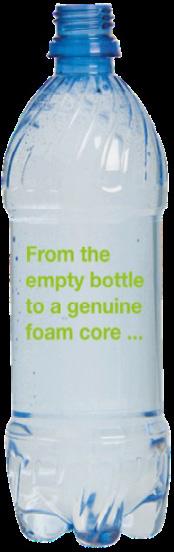
ARMA PET
As current GR stock depletes, the new grade of GRX will offer the following improvements.
• Optimised resin uptake improves the sandwich panel’s weight and cost.
• Excellent thermal and dimensional stability facilitates repeatability in production.
• 100% recycled material supports industry environmental and sustainability requirements.
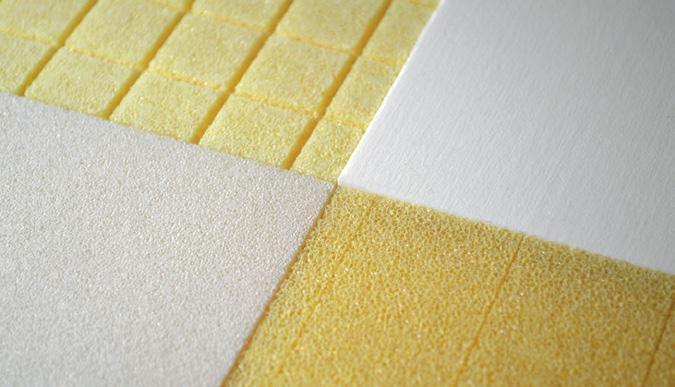
Armacell’s patented rPET foaming technology is going to the next levelArmacell is introducing ArmaPET Struct GRX. With stock now starting to arrive in NZ, this will replace the currently stocked GR grade product. nzcomposites.com dean 021 300 151 pannett.d@xtra.co.nz
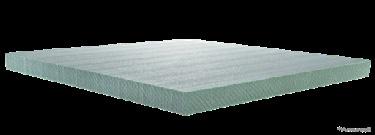
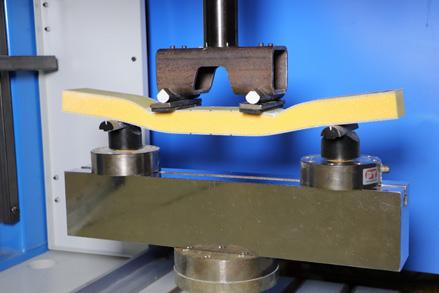
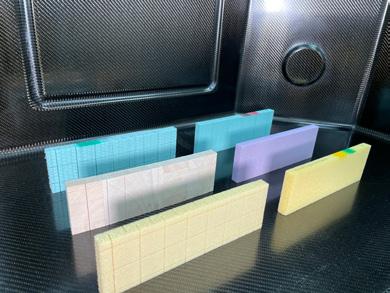
The ArmaPET Struct GRX range features a more homogenous and finer cell structure in combination with improved shear properties. This new generation of structural foam core provides significant savings in resin uptake to further optimise weight and cost savings. Testing has proven that ArmaPET Struct GRX has comparable or higher mechanical performance compared to the current GR grade. Especially in shear properties, the adjusted foam recipe provides an increase of up to 30%. Resin uptake with the new GRX grade will reduce resin uptake by up to 60%. Sheet sizes remain the same at 1008mm x 2440mm as standard. Thicknesses will range from 10mm to 150mm depending on density of the foam. Indented orders for densities not held in stock can be offered on full pallet order or FCL.
NZCOMPOSITES.COM
29 BUILT FOR KIWI ADVENTURES
ELEVATED COMFORT AND VERSATILITY
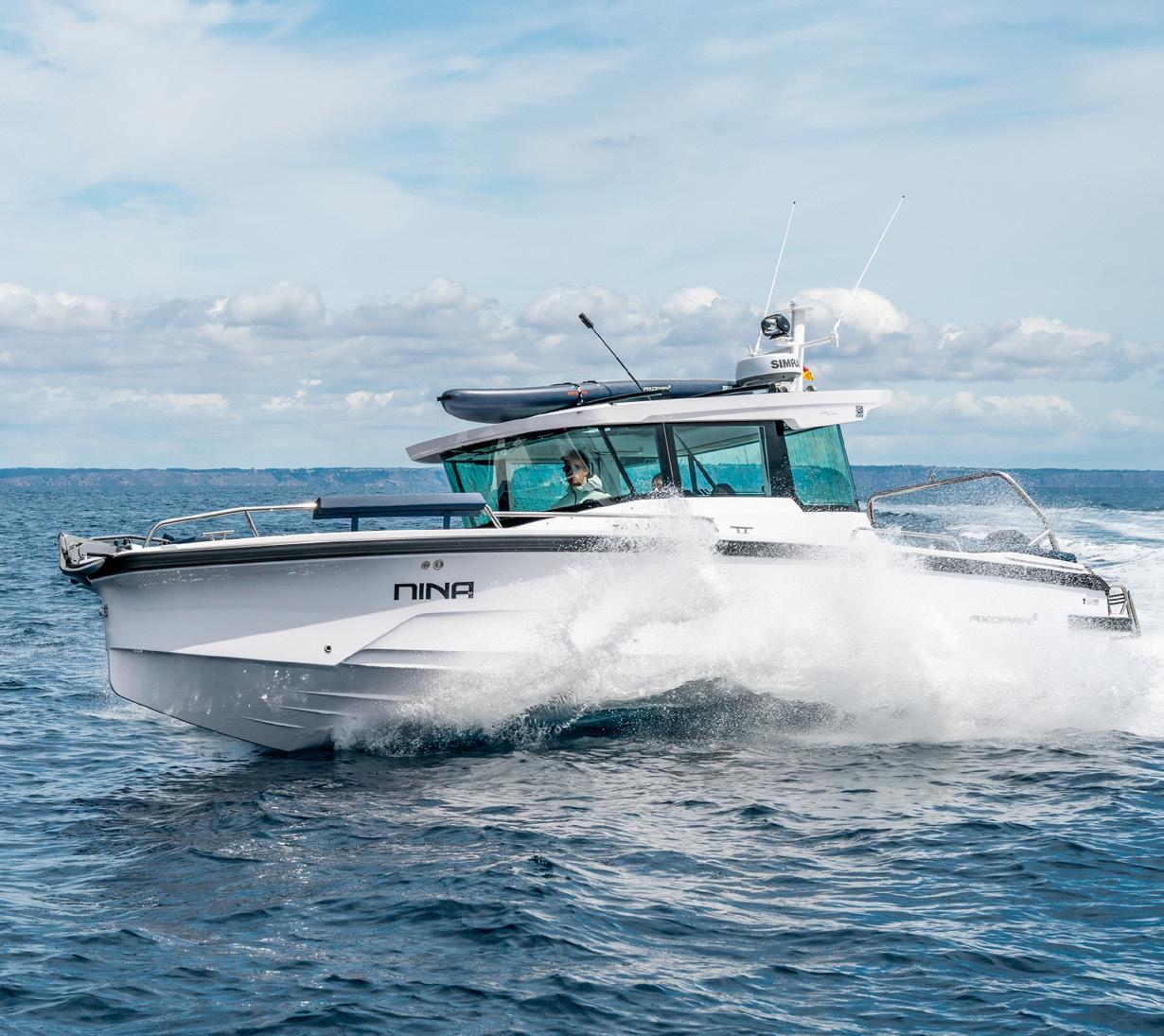
Experience unmatched versatility with the Axopar 29 Cross Cabin, perfectly suited for New Zealand’s diverse waterways. Whether cruising tranquil bays or braving rugged coastlines, with improved hydrodynamics and a cruising range of over 200 nautical miles, the Axopar 29 XC delivers speed, efficiency, and reliability.
Enjoy panoramic 360-degree views from the weatherproof cabin, ensuring all-weather capability for year-round exploration. Its modular aft deck, ample storage, and adaptable cabin layout make it the ultimate choice for adventurers seeking style, performance, and functionality on the water.
ARRIVING SOON - PREMIERING AUCKLAND BOAT SHOW 2025
Ara-Tai Road, Anchor Building, Unit B1, Half Moon Bay, Auckland
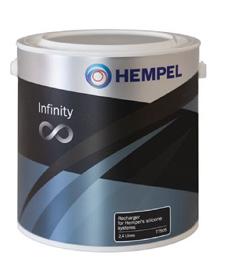
HEMPEL LAUNCHES SILICONE HULL PAINT RECHARGER
Hempel A/S introduces the world’s first and only recharger for Hempel’s silicone systems, ensuring underwater boat maintenance becomes a pain(t)less experience for boat owners.
Hempel’s Infinity is a water-based, biocide-free performance recharger that renews existing silicone paint and prolongs painting-free time for an extra season, every season, enabling boat owners to spend more time sailing and less time painting.
Hempel’s Infinity represents a revolution in the yacht paints industry, delivering continuous unmatched performance that results in time, work, and cost savings for boat owners and applicators.
Hempel’s Infinity builds on the proven success of Hempel’s marketleading, biocide-free silicone systems, launched more than 10 years ago, and can exclusively be used as a recharger for Hempel’s Silic One and Hempasil Pro.
Hempel’s Infinity is a game changer for boat owners and applicators, in line with Hempel’s sustainability ambitions.
“Hempel’s Infinity is our most significant innovation in the Yacht sector since the launch of Hempel’s Silic One back in 2012,” says Thomas Olsen, Marketing Director - Yacht at Hempel A/S. “It has been designed with boat owners’ time and money in mind, enabling them to maintain performance excellence year after year more sustainably. I am excited to introduce this groundbreaking innovation and look forward to following its success and impact on the market.”
HEMPEL.COM
CIRCA 950 - “SKYE” AT WORK IN THE PACIFIC
It’s not often you get the opportunity to be part of something groundbreaking and exciting, so when Circa Marine were chosen to design & build a new research vessel for Science & Oceanographers, Inkfish, Circa Marine jumped at the chance.
The Circa designed and built 9.5m vessel “Skye” was a complicated build with many challenges. “Our team of engineers worked closely with the scientists and team at Inkfish to incorporate all of the systems, equipment and options they needed to undertake detailed oceanography & research in remote locations. We are really excited & proud to know Skye is performing well, exceeding all expectations, and assisting Inkfish to carry out their important research throughout the Pacific and the rest of the world.”
FATCAT’S FOR HIRE
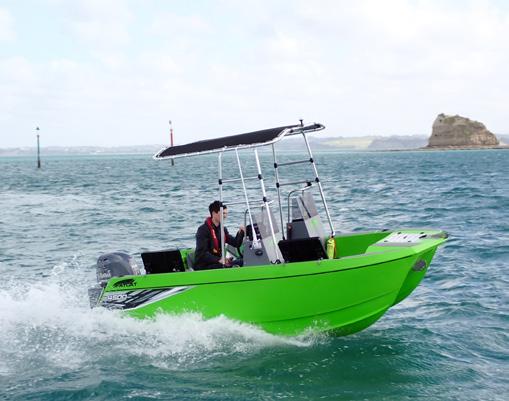
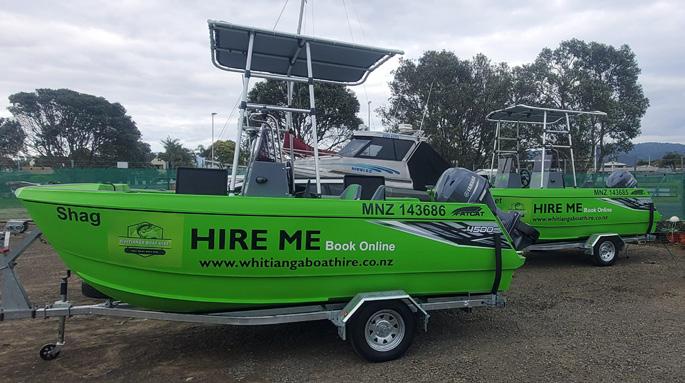
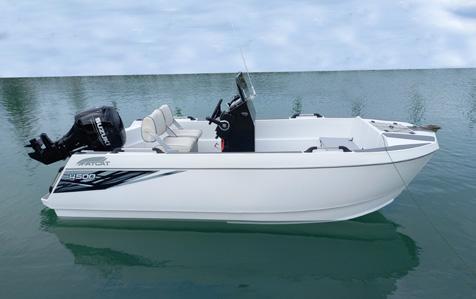
Whitianga Boat Hire just launched two Fatcat 4500’s
Whitianga Boat Hire have just taken possession of two bright green FatCat 4500 Catamaran Boats. Set to fill a need in the beautiful Coromandel Peninsular, Whitianga Boat Hire principal and well-known local identity Tony Marsters chose the boats for their amazing stability, enormous space, tough construction, and striking looks. The Whitianga boats are the double-side console version of the FatCat 4500 and are manufactured by FatCat Boats in Auckland.
The boats have been built to MSA survey with a maximum capacity for up to 6 people per boat. Safety gear on board includes EPIRB, lifejackets, 25W VHF Radio, First Aid kit, ropes & anchor. Built primarily as self-drive fishing boats, there is a fully functional live bait tank, Garmin Echomap plotter/sounder, Fusion Marine Stereo, 2 x bait stations, wash down hose, plus plenty of rod & drink holders. The Yamaha engine pushes the boats along at 20 knots cruising, topping out with a max of 27 knots.
“Working with Fatcat has been an absolute pleasure.” Tony remarked “A great product from a very professional boat builder. We look forward to ordering more vessels in the future.”
If you’re heading to the Coromandel Peninsula and want to get out on the water, look up Whitianga Boat Hire at www.whitiangaboathire.co.nz or phone 0800 000 524. But you’d better be quick, as bookings are filling fast!
FATCAT.NZ or (09) 424 0004
FIRST INDUSTRYWIDE SURVEY REVEALS MARINAS/ BOATYARDS' VITAL CONTRIBUTION TO NZ ECONOMY
Setting a new standard
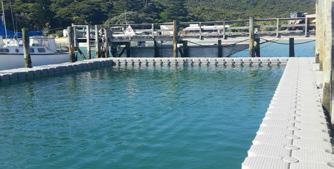
It is one of New Zealand’s oldest industries, providing and operating the waterfront structures that enable safe storage and maintenance of vessels, and now in an industry-first survey, its value to the New Zealand economy has been quantified.
0 New Zealand marinas took part in the first ever Health of the New Zealand Marina Industry Survey, conducted in 2023 for the New Zealand Marina Operators Association (NZMOA) by a specialist department at Michigan State University. The survey showed that the niche industry has gross annual revenue of $153m, supporting more than 470 people in jobs – and to an estimated half a billion dollars in economic contribution. But its value to the wider economy is much further reaching than the marinas and boatyards that comprise it.
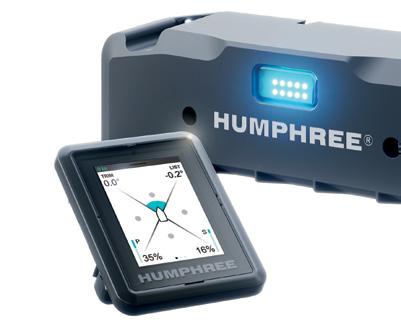
Setting a new standard in trim & stabilization. Again. Priced for 20-45ft boats.
Setting a new standard in trim & stabilization. Again. Priced for 20-45ft boats.
Setting a new standard in trim & stabilization. Again.
Priced for 20-45ft boats.
LIGHTNING by HumphreeTM is an automatic trim & stabilization system that brings world class comfort, increased speed and fuel savings. LIGHTNING is suitable for 20-45ft boats.
LIGHTNING by HumphreeTM is an automatic trim & stabilization system that brings world class comfort, increased speed and fuel savings. LIGHTNING is suitable for 20-45ft boats.
“Marinas and boatyards are hubs of employment and industry,” says NZMOA Chair Chris Galbraith, who is General Manager of Bay of Islands Marina.
“Boat owners need a wide range of maintenance services, and in some cases, we attract large amounts of international boats that come to New Zealand for pleasure, maintenance and refit – also making it part of our export economy.”
Its combination of our advanced technology, user-friendly interface, mobile app integration, and beautiful underwater LED lighting system is what truly sets it apart.
By way of example, Bay of Islands Marina with 420 berths has 28 tenant businesses on its ground including marine trades, cafes, retail and boat sales.
No matter which propulsion system you use; outboards, electric, sterndrive, inboard—this new system will be the perfect choice for new build boats or for when you refit a used boat. It will take you to the next level.
The precinct around Westhaven Marina alone, which is the largest in the Southern Hemisphere, has 2000 contractors, including boat builders, yacht brokers and marine electricians, registered on its database. Nelson Marina’s masterplan predicts it will be home to 40 businesses by 2027. In total, the industry’s marinas support more than 300 small businesses. Individual marinas each engage more than 63 contractors annually for a wide range of services.
At the time of completing the survey in 2023, marinas were well supported by customers, the average operation sitting at 86% occupancy. 71% of respondents were commercial marinas and 22% club/yacht marinas. The balance are predominantely focues on maintenance and refits.
“We are a maritime nation, and boating is a way of life – both for trade and commerce, and for recreation. The marinas and boatyard industry is at the heart of that,” says Galbraith.
NZMOA.COM/HAMI-SURVEY
HumphreeTM is an automatic trim & stabilization system that brings world class comfort, increased speed and fuel savings. LIGHTNING is suitable for 20-45ft boats.
Its combination of our advanced technology, user-friendly interface, mobile app integration, and beautiful underwater LED lighting system is what truly sets it apart.
Its combination of our advanced technology, user-friendly interface, mobile app integration, and beautiful underwater LED lighting system is what truly sets it apart.
No matter which propulsion system you use; outboards, electric, sterndrive, inboard—this new system will be the perfect choice for new build boats or for when you refit a used boat. It will take you to the next level.
No matter which propulsion system you use; outboards, electric, sterndrive, inboard—this new system will be the perfect choice for new build boats or for when you refit a used boat. It will take you to the next level.
AUTOMATIC FUNCTIONS
Chris Galbraith, chair of NZMOA and General Manager of Bay of Islands Marina
EPROPULSION SELECTED TO POWER PADDLE KING’S SOLAR PONTOON BOAT
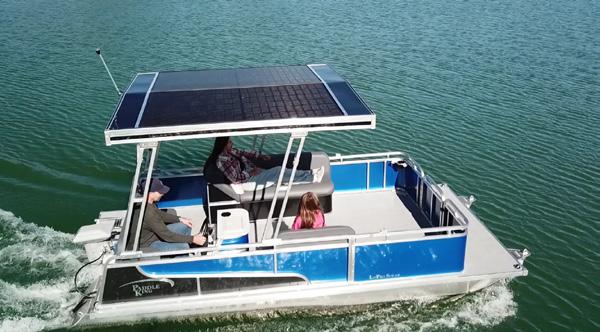
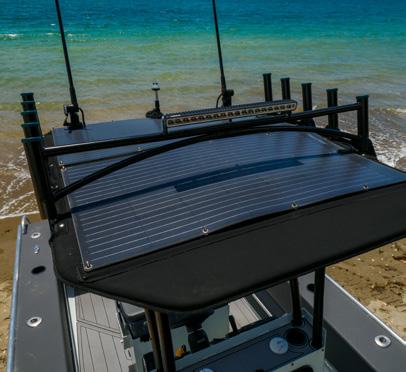
ePropulsion Americas, the global leader in marine electric propulsion systems and services, have announced its Navy 3.0 Evo has been selected to power the new 16-foot 2025 Paddle King Lo Pro Solar pontoon boat.
With a hard top canopy sporting dual 410-watt solar panels providing power, the Lo Pro Solar is fully equipped with a sixhorsepower ePropulsion electric motor, 48-volt lithium iron phosphate battery, and a battery monitor. One of the key benefits of the solar package is its unique self-sufficiency. Its solar array gives owners freedom and independence from gas or even shore power – perfect for isolated or remote locations and extended fun times. It is versatile, durable and affordable, and the Solar's roomy deck and new sun lounge seat make it great for fishing or a quiet sunset cruise.
“ePropulsion Navy motors are proven, reliable and effective and the perfect electric propulsion package for our 16-foot Lo Pro Solar boats,” said Tom Schneider, General Manager, Paddle King. “Offering our customers an environmentally friendly option of a solar powered, electric motor is a big draw for customers that want to have a quiet, exhaust-free time on the water. ePropulsion is the perfect partner for this endeavour, and we look forward to continuing to work together on future models.“The Paddle King Lo Pro Solar fits a unique niche for customers that are on internal combustion restricted lakes or those that are looking for simply calm and
relaxing cruising with family or friends,” said Tom Watson, President of ePropulsion Americas. “We are confident that their customers will enjoy the performance of the Navy 3.0 Evo motors and all of the features they provide.”
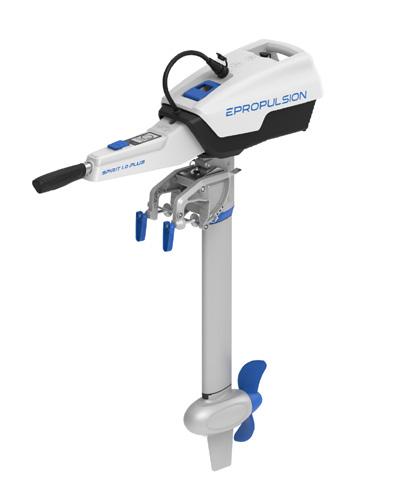
The Navy Evo is a light-duty outboard that is available in two power levels, 3kW and 6kW. The Navy 3.0 Evo has a brushless direct-drive motor – ensuring the entire range benefits from the high reliability and low operating noise of this technology.
EPROPULSION.COM
VICTRON
The Ultimate Cruising Yacht
Fleming Yachts represent the point at which adventure and luxury converge. From the efficient performance that offers unmatched range, to the durability of the construction, to the impeccable comfort found throughout our interiors, Fleming is the Ultimate Cruising Yacht.
Learn why at FlemingYachts.com/Research
The new Fleming 85
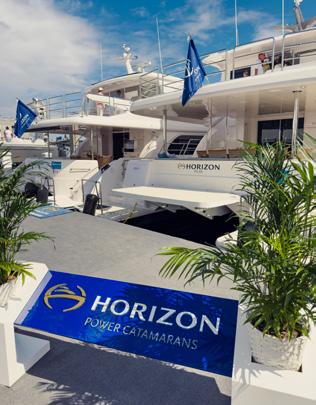
HORIZON POWER CATAMARANS SELLS
FOUR POWERCATS AT FLIBS
Two display boats were sold and two new-build orders signed during the recordbreaking show. The 2024 Fort Lauderdale International Boat Show (FLIBS) was one for the record books for Horizon Power Catamarans, who sold the PC60 and PC68 inventory boats on display and signed contracts for two new PC60 builds during the show.
The PC60 is the first model designed and introduced by Horizon Power Catamarans when the company launched in 2009 and has remained the company’s most popular model, with these latest newbuild orders ratcheting the hull count up to 35. A distinguishing feature of the PC60-and all of the Horizon Powercat models is the variety of layout configurations available to clients. The PC60 is offered with either an on-deck master cabin or an open salon, which sees an expansive lounge, galley, and raised salon area on the main deck with the staterooms in the hulls. The flybridge can be enclosed or semi-enclosed and fitted with a day head as desired. Each of the new-buildPC60s will be configured with an on-deck master layout.
Introduced as a new model in the powercat lineup in 2022, the PC68 made its FLIBS
debut at this year’s show with Hull #3 on display as a spec build. This yacht was sold to first-time powercat owners who plan to cruise Florida and The Bahamas. The PC68 offers generous space within a 68ft x 24ft 6infootprint, wherein a four-stateroom layout, expansive flybridge deck, and the same flexibility of configurations as its sister models afford the same amenities and atmosphere as an 80ft+ monohull.
The Portuguese Deck is a defining feature of the Horizon PC68 and allows for flexible al frescoconfigurations for dining or sunbathing just forward of the flybridge helm. An enclosed or semi-enclosed flybridge area features space for dining and relaxation with a large dayhead and a spaciousboat deck aft for tender and toy storage or entertainment.
“We’ve been exhibiting at boat shows for the last 15 years and we’ve never
seen anything like this,”says Horizon Powercats Founder and CEO Richard Ford. “Oftentimes someone who has expressed interest might sign a deal at the show, or a lead at the show signs weeks or months afterwards, but at this show, we experienced first-time customers walking in off of the dock and signing a contract the next day. “One thing is for certain, power catamarans, with their shallow draft, interior volume, and cruising comfort, are attracting monohull owners in record numbers.”Horizon Power Catamarans plans to debut an exciting new design at the 2025 Palm Beach Boat Show in March.
HORIZONYACHTAUS.COM
Seaforce 530 Skipa
Seaforce 530 Ute
Seaforce 530 Mate
FOUNTAINE PAJOT GROUP CONFIRMS ACQUISITION OF MAJORITY STAKE IN THE YACHT SALES CO
The Yacht Sales Co. and the Fountaine Pajot Group have announced a joint venture in a significant move that will see the two leading companies expand their presence in the Asia Pacific region.
In late October 2024, the Fountaine Pajot Group finalised its acquisition of a majority stake in The Yacht Sales Co. with the development representing exciting prospects for the companies. Encompassing Fountaine Pajot Sailing Catamarans, Fountaine Pajot Motor Yachts and Dufour Yachts, the Fountaine Pajot Group is the world’s leading manufacturer of cruising yachts and catamarans. The French-based Group recorded sales of €350 million for the 2023/2024 financial year, representing a 26.9% growth on the previous year.
The Yacht Sales Co. is Asia Pacific’s leader in new and quality pre-owned yacht sales with 15 sales locations across 11 countries in the region. Formerly Multihull Solutions, The Yacht Sales Co. represents the Fountaine Pajot Group’s brands, as well as ILIAD Catamarans, Absolute Yachts, Maritimo, NEEL Trimarans, LEEN Trimarans and Cora Catamarans. The company also operates a highly successful pre-owned Brokerage division that consistently delivers outstanding sales results. The partnership of the two companies follows a long and successful collaboration between The Yacht Sales Co. CEO Mark Elkington and the Fountaine Pajot Group that spans more than 25 years. The Yacht Sales Co. CEO Mark Elkington said the partnership was an exciting step in the company’s strategy to expand its service offerings throughout the Asia Pacific market. “The Fountaine Pajot Group’s investment in our company is gratifying as it not only recognises the decades of successful collaboration, but it reflects their confidence in our vision to become the industry leader in sales and service excellence throughout the Asia Pacific region,” Elkington said.
Managing Deputy CEO of the Fountaine Pajot Group Romain Motteau said the joint venture would further strengthen the Group’s presence throughout Asia Pacific. “We are delighted to partner with The Yacht Sales Co. to support its continued growth and are looking forward to a commercial partnership that will help reinforce our regional presence while bringing us closer to our customers,” Motteau said.
FRESH FINDS - FRESH FINDS
HUSKI BEER
COOLER 2.0
10x colder beer.
This is not your typical beer cooler. The Huski Beer Cooler 2.0 is an award-winning, highperformance cooler that keeps your beer 10x colder than a non-insulated beer.
HUSKI.CO.NZ
SOLEIL WEEKEND BEACH UMBRELLA
Blending effortless style with durability.
The Soleil weekend beach umbrella captures the spirit of carefree summer days. With a vibrant, sunlit colour palette, it transforms any seaside escape into a dreamy bohemian oasis - blending effortless style with durability. Soleil is the ultimate beach accessory for those who embrace playful colours and the art of relaxing seaside.
ISLALABEL.COM
SILVA’S MARINE COMPASSES
Setting global standards.
In 1933, Björn, Alvar and Arvid Kjellström invented the first liquidfilled compass, which was the starting point of Silva. Not only was it the first compass with that technology, but it also set a global standard for how navigation equipment works. The protective outer layer is made of transparent and scratchresistant acrylic material that lasts year after year. The combination of sapphire jewel and powerful steel minimises friction for the navigation needle, providing fast and precise movements. The gimbal-suspended system provides a stable and precise reading - even under the most demanding conditions on water.
KIWIYACHTING.CO.NZ
ETERNA III MARINE BINOCULARS
Perfect in rough seas.
Time to buy binoculars for the boat? With porro prism design and large light throughput, these binoculars are intended primarily for marine use. A key feature is the individual focusing function that, after a one-off adjustment for individual eyesight, gives the freedom to focus on a desired object without manual focusing directly! Perfect in rough seas. Rugged, robust and waterproof and if you should be unlucky enough to drop them in the water, Eterna Marine will float!
KIWIYACHTING.CO.NZ
HUTCHWILCO’S NEW LIFE JACKET FOR THE SEASON
The Classic 170N Automatic.
New for the 2024 season, the Hutchwilco Classic 170N Automatic lifejacket combines affordability, reliability and quality within their Classic range of lifejackets. With all the Classic features including their patented contoured slim fitting design and signature ARS bladder (Advanced Roll Over System) this new jacket also incorporates the top of the line UML Pro Sensor Elite Automatic inflation mechanism. Designed not to go off until fully submerged, these automatic sensors are perfect for our harsh marine environment. New is our clear viewing window to make sure every time you go to use your lifejacket, it’s good to go. The new 170N inflatable lifejacket features our ARS technology which is an Advanced Roll Over System with a 170N asymmetric bladder for superior self-righting and head up support.
HUTCHWILCO.CO.NZ
GRAND BANKS YACHTS ANNOUNCES
POWER YOUR BOAT WITH CONFIDENCE
Our lithium battery systems from Mastervolt and Victron Energy are ideal for boats, offering faster charging, extended lifespan, and dependable performance when you need it most. From system design to integration, installation, and servicing, contact Beacon Marine for more information.
With the introduction of the new Grand Banks 62, Grand Banks Yachts continues to solidify its near 70-year history of designing and building pioneering longdistance cruising yachts that combine both speed and range. Like all Grand Banks models, the GB62 evolved from the company’s relentless quest to build a new era of performance cruising motoryachts.
Depending upon the engine selection, the Grand Banks 62 can achieve a top speed in the mid 30-knot range, and a high cruise speed of 28 knots. If owners’ adventures lead them farther over the horizon, the GB62 has a range of 2,000 nautical miles with 10-percent reserve at 10 knots. At 20 knots, total fuel burn will average 32 gallons-perhour representing market leading performance. And throughout this speed curve, the running attitude of the V-Warp ® Technology hull remains at about six degrees, keeping the maximum amount of waterline in the water for added efficiency and speed.
Twin Volvo D13, rated at 900-horsepower each on straight shafts, with Twin Disc MGX 5096A marine transmissions are standard. Optional engine packages include twin Volvo D13s with shaft drives rated at 1,000 horsepower each, or Volvo IPS 1200S rated at 900-horsepower each. The experienced Grand Banks team led by CEO and Chief Designer Mark Richards continues to deliver game-changing long-distance cruising yachts with a philosophy that proves that a 20-knot cruising speed can be accomplished efficiently and safely. Like all Grand Banks models, the GB62 is built and infused with a precise resin-to-E-Glass, unidirectional, and multi-axial fibre ratio. This results in a strong, fast, and efficient hull form.
The new Grand Banks 62 builds on the success of the hugely popular Grand Banks 60, launched in 2017. Most noticeable, the additional interior volume of the 62 allows for an enlarged starboard guest stateroom with an athwartships double bed and a single, as well as a utility area that incorporates the standard washer/dryer. With the additional length, Grand Banks added an ensuite head for this starboard guest cabin, creating an extremely comfortable and luxurious three-stateroom, three-head layout to maximise cruising comfort. The amidships master stateroom is built and designed for the ultimate in liveaboard comfort with a king bed, en suite head with large shower, abundant storage, and streams of natural light and fresh breezes through the ports and overhead hatch. Forward, the VIP stateroom is outfitted with a queen berth, abundant storage for extended cruising, and a dedicated head.
On the main deck, large opening windows bathe the saloon, helm area, and aft galley in natural light. Several interior accommodation plans are available, including a Skylounge model, which has proven to be very popular on the company’s Grand Banks 85. “Grand Banks Yachts has evolved into a custom builder over the last 10 years, yet with the advantages and scale of a production builder,” says Mark. “We enjoy working with our owners to ensure we realise their dreams and vision. That’s a really fun part of this process.”
Cule hatches are proudly made in NZ so we can customise to your needs and supply any parts.
Easy online purchasing backed by friendly local customer service and a manufacturers warranty.
Get in touch to discuss your next project.
RACE TIME
SUPERMAN DOMINATES NZ
BRIDGE TO BRIDGE AS RECORDS TUMBLE
The 40th Anniversary edition of the Yamaha Rollo’s Marine Bridge to Bridge Water Ski Classic was the biggest and best version of the event ever. With 14 boats brought over from Australia, including the world’s best ski racing teams, the Waikato River Ski race was one for the ages.
The team of ‘Superman’ dominated the event, winning all three events they ran in, with three course records along the way. Driver, Darren McGuire, Observer Steven Robertson and skier Daniel Graziano won the Masters (Over 40’s) race on Saturday morning in a time of 20:49 for the 56km course. In the afternoon, Daniel Cotton joined the team as a 2nd skier, for the seeding event for the Main race which they bettered the previous record by 2 seconds (15:23), to be number 1 off the grid on Sunday Afternoon. They completed the perfect weekend when they secured the win in open and overall and broke the record with a time of 30:39, taking 20 seconds off the 2018 record time set by Australian boat, ‘Burnin’. 2nd in the main race was another Australian team ‘Sapphire’, towing Aiden Cuff and Lachlan Nix, who also backed up and took out the Open Class Powerboat Sprints title (without skiers on the back). 3rd place in the main race from Cambridge to Taupiri and back to Hamilton, was the NZ team of Nordic Racing towing Connor Strong and Vaughan Hyde.
Team ‘Relentless’, towing the current Junior boys world champion, Kohdi Cartledge, entered into the 1 up class for the main race and came home with an astonishing time of 38:07 which set the new record.
Team ‘Little Man’ after many years of unsuccessful attempts, finally broken the Social record. Perry Jamieson came across the line with a time of 9:14, just 3 seconds under the previous record time. Little Man added to a weekend of success when they managed to come home with a 1st in MOC and then set a new record in Formula 2 class with a time of 37:51. This was towing Kyle Taylor and Nick Taylor.
A big thanks to all the Sponsors and Volunteers that made the weekend the success it was. Bringing 14 boats from Australia was a massive drawcard and raised the bar for future events. All the Australian teams are leaving their boats in NZ and coming back for the Twin Rivers Ski Race from Ngatea to Paeroa on the 7th of December.
NZ POWERBOAT OFFSHORE RACING SHARES SAD NEWS OF JIM MACKAY’S PASSING
It is with deep sadness we announce the passing of Jim Mackay, a respected and beloved member of our community. Jim was not only a skilled driver but also a master boat builder, whose passion for the sport and commitment to excellence have left an enduring legacy. His boats, some of which still race today, are a testament to his craftsmanship and dedication. Thank you to everyone who shared in his journey, both on and off the water. Rest in peace, Jim. You will be forever part of the NZ Offshore Powerboat Racing family.
FACEBOOK.COM/NZOFFSHORE/
NEW ZEALAND WATER SKI RACE
Photos by Tim McWha
NEW ZEALAND OFFSHORE
This season introduces a new format featuring two days of racing at each venue.
January 25-26 – Napier
February 15-16 – Taupo (TBC)
March 22-23 – Whitianga
NZOFFSHORE.CO.NZ
REDHOT MARINE FORMULA V SERIES
HYDRO THUNDER
NEW ZEALAND SERIES
Round Two
18-19 January 2025 Mangakino
Round Three + 100TH MASPORT CUP
8-9 February 2025 Lake Karapiro
GPHYDROPLANE.CO.NZ
The REDHOT Marine Formula V Series returns for the 2024/2025 season. Round one kicked off the season on 23/24 November in Wanganui. Run in conjunction with the New Zealand Powerboat Association. The 5 round inaugural season had 9 entries, providing very close and competitive racing. This season has 13 confirmed entries, which makes it the biggest class of powerboat racing in New Zealand. All competitors are returning from last season, with some new entries moving up from smaller classes and joining the field. Mason Dunlop with his boat Kausin’ Havoc is returning as the defending champion and will be keen to hold off the stiff competition from his fellow drivers! Formula V boats are mono-hull style boats run with a stock 200HP outboard. The majority of competitors have chosen the Bullet 1750 hull with a Mercury 200HP outboard, making this almost a one-make class with a couple of exceptions. The class provides very close racing with the restricted rules, but also provides an opportunity for those with a ski boat to come racing. Come and check out the action and keep an eye on the REDHOT Marine Racing Facebook page for updates over the season.
Round Four + AE BAKER CUP
8-9 March 2025
Lake Rotoiti, Nelson
Round Five
29-30 March 2025
Twizel
Series Dates:
Round 2 - 11/12 January 2025 Manawatu
Round 3 - 25/26 January 2025 Wairarapa
Round 4 - 22/23 February 2025 Arapuni
Round 5 - 15/16 March 2025 Porirua
NAVIGATING THE MARINE INDUSTRY IN
2025
As we bid farewell to 2024, a relatively quiet year for many in the marine industry, we look ahead to the promise of 2025. To gain insight into the market's direction and the strategies shaping the future, we spoke with a selection of marine businesses, both retailers and boat-building companies from New Zealand and Australia. They shared their perspectives on the current market and how they plan to navigate the opportunities and challenges of the year ahead.
LEIGH-SMITH YACHTS (AUSTRALIA)
The past two years have been a period of remarkable growth and achievement for Leigh-Smith Yachts, establishing the company as a prominent player in Australia's luxury yacht industry and solidifying its reputation as one of the country's leading yacht brokerages. A major milestone was reached when LeighSmith Yachts announced the sale of their 100th Alaska motor yacht in Australia, underscoring their success in the luxury boating market.
Adding to this achievement, Leigh-Smith Yachts also delivered a fully custom-built 95-foot Vicem charter yacht, showcasing their commitment to bespoke luxury and quality. The team eagerly awaits the arrival of the newly built 680 Endurance by Hampton Yachts. This stock boat is ready for immediate delivery and is expected to attract significant interest in the growing Long Range Cruiser market.
Even amidst a minor market slowdown in mid-2024, Leigh-Smith Yachts has continued to flourish, leveraging advantageous buying opportunities to meet the needs of discerning yachting enthusiasts. Their adaptability and resilience have positioned the brand well for continued success in the years ahead. LEIGH-SMITH.COM
MARITIMO (AUSTRALIA) M
aritimo’s Marketing Manager, Simon Stewart, shares his views on the path ahead for Maritimo. - As we approach 2025, Maritimo, a leading brand in luxury motor yachts, is well-positioned within the Australasian marine industry, though it faces a mix of opportunities and challenges. The demand for high-end, luxury yachts continues to grow, especially in the Australian and New Zealand markets, where an expanding affluent demographic seeks premium experiences on the water. Trends in 2024 show increasing interest in larger, more customised yachts with advanced technological features, such as shaft driven propulsion systems and smart onboard systems, which are driving design innovations at Maritimo. However, the industry is also contending with economic headwinds, including inflationary pressures and uncertain global economic conditions, which may impact consumer confidence and spending on luxury items like motor yachts. Political challenges, such as evolving environmental regulations around emissions and boating practices, may require Maritimo to adapt its designs to meet stricter standards while maintaining performance and luxury. Supply chain disruptions could continue to affect production timelines and costs, though Maritimo’s focus on quality craftsmanship and high-end materials positions it to weather these challenges. Looking ahead, the company’s focus on innovation, expanding its fleet with new models, and tapping into emerging markets will be crucial to sustaining growth in a competitive luxury yacht sector.
MARITIMO.COM.AU
DE MEY YACHTS (NEW ZEALAND)
Current Trends: Bigger is Better - I'm seeing a significant trend toward larger vessels. Eighteen meters has emerged as an ideal size for couples to operate independently, yet demand for even larger catamarans, around 24 meters, is rising. While these require a crew, owners are increasingly open to this model, drawn by catamarans' added space and functionality, paired with stability and fuel efficiency. The demand for ecofriendly solutions is also reshaping the industry. Although fully electric vessels remain impractical due to cost and infrastructure limitations, hybrid engines will gain traction, especially in semidisplacement catamarans. Hybrids offer a balanced solution, cutting emissions and fuel use without sacrificing power—a sustainable step forward, and I think you will see this market develop further.
Market Growth and Challenges - The complexity and costs of custom-built vessels have grown significantly, reflecting the advanced technology and intricate hardware customers expect. This pushes boatbuilders to innovate constantly and raises the overall build cost. Clear communication is vital for custom and high-end builders—particularly in helping customers understand what they’re getting for their investment. Some production builders often provide an enticing base price that doesn’t cover all essential features; custom builders must emphasise a fully equipped, usable vessel from the start.
specialised roles like boat painting. Recruiting skilled labour overseas has proven effective but costly due to regulatory hurdles. The workforce demands a better work-life balance, further complicating hiring, as custom boatbuilding often requires long hours to meet project deadlines.
Environmental Regulations and Adaptations - Environmental regulations are intensifying, particularly in marina development, and boatbuilders should anticipate future carbon taxes on pleasure boats. Ideally, such taxes would promote eco-friendly hull designs and construction methods rather than imposing a blanket fee on all vessels. This shift toward environmental accountability will likely push the industry toward sustainable practices out of sheer survival; it will also be interesting to see how the big two Australian production builders handle this.
The push for more extensive, accessible marina infrastructure, including designated marine precincts, presents ongoing challenges. For instance, Tauranga's planned marine precinct has faced significant delays, hindering industry growth and becoming a political hot potato. Environmental concerns and the need for more suitable locations further complicate new marina developments. Additionally, marinas require a network of supporting businesses—such as maintenance, fuelling, and other services—to function effectively, adding another layer of complexity.
Labour shortages continue to impact the industry, especially in
HIGHFIELD BOATS (AUSTRALIA)
Peter Pembroke, the General manager of Highfield Boats Australia/New Zealand, made the following comments on the state of the Australian marketThe Australian marine industry has definitely slowed compared to previous years' highs, but that was to be expected. The weather and the start of the summer boating season always have a significant influence on consumer activity and sales, and this year is no exception. With summer seemingly starting early and a stretch of great weather, the local market is very buoyant as we move into the peak Christmas selling period. All of our dealers are experiencing a significant increase in inquiries and sales across the board, with our tender market very active and demand for our larger RIBs very strong. The key is having enough stock to meet demand, particularly in the larger boat range. In a recent review of 2024 and to prepare forecasts for 2025, I met with our dealers, and they all feel 2025 will be positive, anticipating growth from 2024 in the range of 15-25%. With
Future Outlook - It’s a challenging time, and we expect it to continue. We focus on flexibility, getting the basics right, and managing each project well, which is very hard to do given the complexity and detail of the boats we build. It's certainly not for the faint-hearted, and you must always be realistic about long-term viability.
We see sustained demand for larger, more complex vessels, with catamarans gaining appeal for their spacious layouts and fuel efficiency. While monohulls now reach up to 80 feet to meet customer expectations, a 60-foot catamaran provides comparable space with added stability, making it an appealing option. Our current priority is the new DEMEY 60—a semi-repeatable build that aligns with these trends. And as we look ahead, don’t be surprised if you see us working on a 24-meter catamaran next.
Operational costs, fuel range, and efficiency are central considerations when discussing client options. We aim to deliver unique, high-quality vessels that stand out from mass-produced models, leveraging design, craftsmanship, and exclusive features. Also, the stimulation of a build project makes us quite attractive to some clients.
In summary, managing workforce and regulatory pressures alongside innovation and resilience are the keys to moving forward. NICDEMEYYACHTS.COM
a federal election not far away, there is no doubt we will see an easing of interest rates, which will also boost consumer confidence. Although demand for our products is less affected by the cost-of-living crisis many families face, we do see some impact. Hopefully, a reduction in interest rates will provide further positive momentum for our overall economy. When it comes to consumer confidence, the cornerstones for building it never change: offering a product the market wants, meeting the expected quality standards, and providing exceptional sales and after-sales service support. I am extremely confident that we meet these criteria, as our product quality and value for money are second to none. We have the right dealers in the right locations to ensure high levels of service and aftersales support.
Overall, 2025 looks to be a great year for Highfield, as we will also unveil a selection of new products that will undoubtedly make an impact in the already crowded rigid inflatable market.
HIGHFIELDBOATS.COM
MCLAY BOATS (NEW ZEALAND)
Steve McLay explains - McLay Boats now has seven Australian dealers spread across most states and seven in New Zealand.
The Australian market is a vital part of McLay’s business as it spreads the risk across the two countries' economies.
This year, the New Zealand new boat sales market has been slow, but the Australian market has been steady throughout, keeping us busy with a full complement of manufacturing staff.
Although there has been a slight increase in NZ sales as summer approaches, I believe it will take another 12 months before we see significant improvement.
Australia is faring better, and I expect sales there to continue steadily for at least another 12 months.
During these more challenging times, we need to look to reduce overheads as much as possible without diminishing manufacturing capacity so we can take advantage of an improved economy when it arrives.
MCLAYBOATS.CO.NZ
RIVIERA (AUSTRALIA)
As Riviera reflects on 2024 and looks enthusiastically towards 2025, there are several key focus points for us.
Our initiatives in 2025 are created to allow Riviera to meet our growing global demand, continue the expansion of our fleet of worldclass motor yachts, heighten the skills of our 900-strong team and enrich the boating lives of our more than 6,000 owners around the world. We will continue to enhance and expand our training programs.
In January 2024 we officially opened our award-winning Academy of Excellence on-site training facility that this year has trained 150 apprentices across 10 individual trades. In 2025 we will expand our exclusive curriculum to include two new traineeships – Supply Chain Operations – Certificate III and Business Administration – Certificate III.
The automation of our manufacturing process will continue to be expanded in 2025 where we are assisting our master craftspeople by automating the repetitive processes and assisting our New Model Development team in the areas of design. Our design and engineering team have made significant advances this year with the infusion of our hulls, decks, flybridges and small parts and this excellent work will be expanded upon in 2025. This process is highly beneficial in terms of strength, weight saving and environmental health.
As the Riviera fleet has expanded in terms of the size of motor yachts we create today, we are continuing to expand our 16.8-hectare facility and to refine our infrastructure. In 2025
SEALEGS (NEW ZEALAND)
As 2025 approaches, the Australasian amphibious boating market is experiencing significant growth, with Sealegs at the forefront of innovation in this dynamic sector. These versatile vessels, favoured by adventure seekers, families, and commercial operators alike, offer a unique land and water exploration blend, enhancing regional recreational and tourism opportunities.
Current market trends show a rising demand for eco-friendly and technologically advanced designs and a surge in adventure tourism. In response, Sealegs is developing models prioritising comfort, safety, and environmental responsibility. Their boats now feature cutting-edge enhancements, including automated navigation, hybrid propulsion systems, and sustainable materials, aligning with regional conservation goals and meeting the increasing consumer preference for eco-friendly options. By addressing regulatory challenges, promoting consumer education, and making amphibious boating more accessible, Sealegs is working hard on new industry benchmarks for sustainability and innovation. The outlook for Sealegs and the broader Australasian amphibious boating market is bright, promising an exciting mix of adventurous exploration and a solid commitment to preserving the region’s unique natural beauty. SEALEGS.COM
we will expand our lifting capacity to 100-ton on our northern yard facility whilst our southern Aftermarket yard operates a 75ton lift and our partnership with the vast Boat Works refit and service yard adds additional lifting and boat storage capacity to our overall operations.
Other enhancements at our manufacturing facility scheduled for 2025 will further expand our environmental initiatives for a cleaner and greener future relating to environmental waste, such as our innovative partnership with the Men’s Shed organisation, wastewater recycling and solar power.
The Riviera new model development plan will continue its great success in 2025 with a number of new yachts scheduled for release. With each new yacht created, the highly experienced Riviera design team will be drawing on the latest proven technology such as assisted docking, stabilisation, power management and solar to make boating with Riviera even easier and more pleasurable. Riviera has excellent long-term partnerships with leading international suppliers that help drive the utilisation of new and sustainable technology in every new Riviera motor yacht.
Enriching our yacht owners experience is a constant for Riviera and our global network of representatives. As we enter our 45 year, we will officially open a new dedicated centre at our Gold Coast facility that will further our superior owner enjoyment with new commissioning, interior design, equipment selection and training facilities and expertise.
RIVIERAAUSTRALIA.COM.AU
A dirty boat doesn’t only slow you down...
it could see you turned away from marinas or regions around New Zealand
So before you cast off, check out the biosecurity rules here marinepests.nz/rules
NAVIGATING THE BUILD PROCESS
The Weber Marine ELITE 22M FLYBRIDGE MOTORYACHT
PacificPowerBoatMagazine is excited to continue our series on the build process of the Bill Upfold-designed Elite 22M Flybridge Motor Yacht. Currently under construction at Weber Marine in Gulf Harbour, Auckland, this journey takes us from initial concept discussions with the owner to its on-water launch and culminates in a detailed review scheduled for late 2026.
This 22-metre masterpiece combines cutting-edge engineering with bespoke luxury. Constructed using epoxy resin, E-glass, and a PVC foam core over a male mould, the yacht promises to be both weight conservative and robust. The design includes four staterooms:
• A full-beam master suite amidships.
• A VIP stateroom forward.
• Two twin guest cabins, all featuring ensuite bathrooms.
Part Two
Hull Construction Underway
As illustrated, the hull construction is progressing well, using a modern composite foam core build method, which departs from traditional practices.
Full Composite Foam Core Build Method
For this large, fast 22-metre yacht, the team has opted for a full composite foam core for the hull construction, utilising epoxy resins for its superior strength-toweight ratio over polyester resin commonly used for production yachts.
1. Sacrificial Mould: The male frame is covered with 12mm MDF and wrapped with PTFE release tape, allowing the hull to detach cleanly.
2. Fibreglass Layers: Multiple layers of fibreglass form the inside skin of the hull.
3. Foam Core: The core is vacuumed to the inside skin, ensuring even resin distribution and avoiding air entrapment.
4. Reinforcement: High-stress areas, such as rudders, shafts, stabilisers and skin fittings, are reinforced with multiple additional layers of fibreglass.
5. Outer Layer: The exterior fibreglass laminate is applied before the addition of lifting strakes, filling, fairing, and painting.
Benefits of the Upside-Down Build Process
As the build progresses, the intention is to have the hull upside down as long as possible, enabling the internal structure to be installed, including all bulkheads, integral tanks and partitions. Key advantages of this approach include:
1. Dust and debris falls to the ground beneath the hull when working inside. (easy clean up).
2. Internal teams work on a level surface rather than the angle of the hull.
3. Tasks are performed at a comfortable height, reducing strain.
mandiesel.com.au
4. Simultaneous internal and external work accelerates the timeline. The fairing team is on the outside, and the building team is on the inside.
5. Bilge painting in a dust-free environment.
6. Bulkheads and all other structures being already in place ensure a stiff and braced structure for when the hull is turned.
Stay tuned as we continue to follow this innovative build and provide updates on the progress of this exceptional vessel.
WEBERMARINE.CO.NZ
ELITEMARINE.CO.NZ
The male frame is constructed first.
The foam is vacuum bagged and resin-infused.
The male frame is covered with 12mm MDF.
The MDF covered with PTFE Release tape and layers of fibreglass.
High-stress areas are reinforced with extra layers of fibreglass.
A Foam Core is added next.
GURIT PRODUCT DEVELOPMENT AND ENHANCEMENTS
TESTING FOR SAFETY AND RELIABILITY AT SEA
In late November, we had the privilege of being invited to witness Gurit’s impact testing for Corecell™ M & S foam at the Auckland University, Centre for Advanced Materials Manufacturing and Design Testing Laboratory.
The Gurit Engineering team operates its own testing laboratory at their North Auckland facility and has worked closely for over 25 years with the Auckland University Testing Laboratories in Newmarket, Auckland on research and development for marine applications.
During the visit, we observed the testing of Gurits Corecell™ as used in locally-built Kiwi vessels, such as:
• Stimson Marine Design Origami 530 Optimistic, featuring a single-skin bottom and Corecell™ topsides.
• Amphibious tender for the superyacht The Beast, Corecell™ throughout.
• Nic De Mey 60 Spaceship (as featured in our last issue).
• Elite 22m Flybridge Motor yacht currently in build at Weber Marine (as pictured).
At the former Lion Breweries site (where, notably, not a drop of beer remains), we were first shown the large Servo-hydraulic Slam Testing System (SSTS), 14,500L Water test tank. Here, Gurit products are equipped with stress monitors and subjected to forceful impacts by being dropped into the tank, simulating the forces a hull might experience when striking waves at various speeds.
This enormous test rig, developed in 2005, is located in the basement, where it can carry out these violent tests without disturbing the other labs.
Gurit often uses an alternative impact test method, also at the Auckland Uni Lab, that uses a small and faster test. This smaller scale test was developed by a Gurit-sponsored Masters student and has enabled a greater range of projects to benefit from the toughness and reliability evaluation, including the IMOCA60’s and also commercial vessels like ‘ Ika Rere’ Wellington’s electric ferry, Emirates Team New Zealand’s Chase Zero to the 40m ferry fleet for Hong Kong.
We then moved to the main test lab, where Gurit’s Corecell™ structural foam was under going evaluation in the universities instrumented drop tower. This process is used in conjunction with Gurit’s own in house 6m drop tower, fitted with a 16kg sharp and blunt impactors, capable of delivering impact energy of 900J. This testing is used to evaluate the toughness of hull designs, by simulating both water slamming and debris impact.
We were impressed by the product's flexibility during testing. A simulation of debris impact at approximately 40 knots showed that while the foam core was compromised, the Corecell™ product rebounded into shape with its outer layer remaining watertight. In many cases, this should allow vessels to return home for repairs safely. By contrast, similar tests on aluminium resulted in punctures resembling bullet holes from a high-powered rifle. The lighter Corecell™ product’s resilience to impact was impressive, particularly for boat builders
seeking lightweight materials without sacrificing strength.
The testing at Auckland University and Gurit Asia Pacific’s accredited mechanical testing lab is held in such high regard that Gurit’s Canadian manufacturing facility frequently sends materials to New Zealand for evaluation. This collaboration between industry and our Universities is a testament to the skill and expertise of the New Zealand team. After witnessing these tests, I felt a newfound confidence in the strength of Gurit’s modern hull materials. Knowing
their ability to withstand substantial impacts – such as collisions with submerged logs or containers – offering peace of mind when venturing out to sea. In addition to improved slamming performance and increased safety, these materials provide greater durability and longevity, bringing a high performance and lightweight approach to marine construction.
Well done, Gurit! It’s no surprise that the company is a leader in composites, continually advancing quality, strength, and sustainability in its products.
n
n
n
info-nz@gurit.com
SCAN THE CODE TO WATCH THE IMPACT DEMONSTRATION
CLEVER NEW SMARTDRIFT A REAL GAME CHANGER
Smart Drift™, a game-changing new function that eliminates the guesswork when drift fishing, is a key highlight of LightHouse 4.7, the latest update to Raymarine’s acclaimed LightHouse operating system for Axiom MFDs. Smart Drift is an incredibly easy-to-use but highly sophisticated system that allows recreational fishers to drift fish like seasoned pros. With Smart Drift, fishers simply identify a target, mark it on their fishfinder screen and select the Calculate to Drift function. They will then be prompted to put their boat’s engines in neutral and let it move on its own for about 100 metres. This enables Smart Drift to automatically calculate the ideal starting point for the drift and highlight it on the screen with a “ghost ship”. Skippers then simply drive their boat to the ghost ship position put their engines in neutral and begin their drift back over the target. “This is amazing technology,” says Mark Milburn, managing director of Raymarine’s New Zealand distributor Lusty & Blundell. “Normally, trying to accurately gauge the wind, tide and current so you always drift over a target is almost impossible, even for very experienced fishers. “Smart Drift takes away all that guesswork and replaces it with hard science. “Drift, catch, repeat with Smart Drift - it really is that easy.”
LUSTY-BLUNDELL.CO.NZ
MERCURY MARINE ENHANCES
JOYSTICK PILOTING CAPABILITIES
MLOWRANCE EXPANDS THE ELITE FS LINEUP
Lercury Marine recently announced a software update for its SmartCraft operating system that gives Joystick Piloting powerful new capabilities. The system can now automatically counteract the effects of wind, waves and current while a boater is driving with the joystick, giving them the ability to dock and manoeuvre with effortless precision. For more than a decade, Mercury has evolved and grown the Joystick Piloting offering to allow precise 360-degree control and slow-speed manoeuvrability on all primary types of propulsion. The system makes it easier to perform complex manoeuvres, such as docking or navigating in confined spaces. The enhanced software will now be standard on new multi-engine Joystick Piloting installations from Mercury Verado, Mercury Diesel, MerCruiser and Mercury Racing, with next gen Digital Throttle & Shift controls. “We are excited to continue the evolution of our marketleading Joystick Piloting portfolio with this newest software release,” said Jeff Becker, Senior Category Manager. “Mercury continues to make boating easier, and the features included in the new software provide much more intuitive and consistent performance when operating your boat at low speeds.
MERCURYMARINE.COM
L&B TO DISTRIBUTE POPULAR RANGE OF DIGITAL YACHT PRODUCTS
Lusty & Blundell, one of New Zealand’s leading distributors of high-quality marine products and systems, is to distribute the popular range of Digital Yacht products in New Zealand. The Digital Yacht range includes AIS systems, 4G/5G routers providing fast internet access (quicker than common satellite connections), marine PCs and a wide variety of networking devices and NMEA gateways that make it easy to seamlessly integrate mobile phones, tablets, sensors and PCs into boat systems. The company’s navigation systems include advanced
owrance, a world leader in fishing electronics, has just announced the expansion of its Elite FS ® line with new 10 and 12-inch display sizes, giving anglers access to the full line-up of Lowrance fishfinding tools, including live sonar on a larger screen, at an attractive price point. “We expanded our Elite FS family of units to include two additional sizes that give anglers more choices to upgrade their toolkit with live sonar on a larger, more affordable screen,” said Jeremiah Clark, VP and General Manager, Fishing Systems at Navico Group. “Our mission is to empower anglers with gear that drive success on the water. Including our full suite of sonar technology and seamless integration with the boat’s entire system, Elite FS is a powerful fishfinder that delivers exceptional value that performance anglers will appreciate.”
LOWRANCE.COM
GPS and compass technology as well as an extremely comprehensive range of AIS products.
A truly international company, founded in 2010, Digital Yacht has received an incredible 14 DAME Award nominations including a win in 2011. This year, two more of their products have received DAME nominations: One Fix (a high precision GNSS/GPS receiver delivering sub-1 metre accuracy) and MOB Alert (connecting directly into the vessel’s NMEA 2000 system).
LUSTY-BLUNDELL.CO.NZ
PORT JET CRUISES POWER WITH MERCURY SEAPROS
Anthony and Jodi Heeney, owners of Port Jet Cruises in Port Macquarie, needed powerful and reliable engines for their newly custom-built Ocean Rider and older Wave Rider boats, both used for whale watching, dolphin spotting, and scenic cruises. After careful consideration, they chose Mercury’s 350hp V10 SeaPro outboards, which were installed on the Ocean Rider with a triple outboard setup, and triple 300hp V8 SeaPros on the Wave Rider. Port Macquarie's coastal bar presents tough navigation conditions, so the Heeneys need engines that can handle rough seas. Anthony emphasized the importance of speed and torque for safely crossing the bar, and he’s found Mercury engines, especially the V10s, to be the best for the job. "The SeaPros offer a significant advantage— economical and powerful with plenty of torque," he said, highlighting their ability to handle heavy loads, including 24 passengers, crew, and 1,000 liters of fuel, while maintaining high speeds.
The V10 SeaPros are particularly efficient, using just 77 liters of fuel per hour at a cruising speed of 25 knots, making them ideal for longer journeys. Additionally, their smooth and quiet operation is crucial for Port Jet’s busy schedule, which includes multiple tours per day during the summer. "We need motors that can handle everything we throw at them, while supporting our operation," Anthony noted.
The Ocean Rider's design, built with the expertise of Jason Carroll from Grove Maine Fabrication and Primal Craft, was crafted to be fast, powerful, and capable of carrying more passengers. Initially, Jason was concerned that the V10s might be underpowered, but they exceeded expectations, helping the boat reach 49 knots, well beyond its intended 40 knots. The boat's custom specifications, including adjustments to the hull for better maneuverability, make it incredibly nimble for its size, able to turn sharply at high speeds.
The collaboration also involved CNC Marine for design, Rogers Marine for electronics and rigging, and Macquarie Signs for the boat's wrap. Additional features include seating from Beaurtrex, wings from Stern First Inflatables, and a boat lift from Aqua Lift Boats to protect the hull. For engine servicing, Port Jet relies on Thwaites Marine. MERCURYMARINE.COM
EPROPULSION EXTENDS
96V PRODUCT OFFERINGS
ePropulsion Americas, the global leader in marine electric propulsion systems and services, announced today it is increasing its capabilities to serve the OEM market with the expansion of its 96V product offerings. Building on the ePropulsion Smart System Architecture (eSSA), product introductions include the Pod Drive 20 eSSA, G102-230 battery and a comprehensive modularised energy system solution PowerCruise Essential for small electric and hybrid vessels. The model year 2025 offerings were recently on display at METSTRADE in Amsterdam.
“Following the success of our X-Series and I-Series motors and the G102-100 battery, and based on discussions with our boat builder partners, we have enhanced our existing product offerings,” said Danny Tao, Co-founder and CEO of ePropulsion. “We have prioritised our product innovation and increased our R&D efforts to better serve our partners in the development of future boat design. We want to create a one-stop shop for our partners without multiple vendors to manage. All of our products are thoroughly tested, and the plug-and-play designs ensure straightforward installation and seamless integration as a total system based on our advanced system architecture. This opens up new design possibilities for naval architects, setting a fresh standard in marine innovation.”
The Pod Drive 20 eSSA brings on board a new level of luxury and sophistication. It combines the motor, propeller and cooling system into one sleek, compact unit that mounts beneath the hull. It easily fits onto any Volvo or Yanmar sail drive mounting, saving time and ensuring a seamless integration, ideal for elevating any design with minimal effort. The new G102-230 battery has a capacity of 23kWh, supports 3,500 cycles at 80% DOD, and up to eight units can be connected in parallel. It can power the 96V 10kW to 40kW ePropulsion motors including the X- and I-Series, as well as Pod Drive eSSA Series. PowerCruise Essential is a comprehensive modularised energy system solution developed by ePropulsion for electric and hybrid vessels. The solution can work with all the ePropulsion 96V eSSA products including the I-Series inboard, X Series outboard and Pod Drive eSSA Series. Able to be installed in a variety of configurations, the system can offer different functions like automatic power management, hybrid control and can supply the vessel with different AC or DC power needs.
EPROPULSION.COM
Step into a new era of yacht design with the revolutionary Whitehaven Vista Deck. Seamlessly blending the saloon with the foredeck, the Vista Deck offers an elevated, central seating area with panoramic views, ensuring safe and easy passage throughout the living areas. This innovation creates an unparalleled connection with the surrounding environment and enhances social flow. Currently available on the new 7000 Series and soon to
be available on other models, the Vista Deck is just one of many ground-breaking innovations from Whitehaven, including the industry-first Flybridge Atrium and Entertainers Mezzanine.
Discover these innovations and more, redefining luxury yachting with Whitehaven.
Call or visit us today to design your dream Whitehaven with the ground-breaking Whitehaven Customiser.
FROM STERN TO SHORE
No matter how long you own a boat, there will be new ways to get tangled up.
As a relative newcomer to cruising in the Marlborough Sounds, I’m learning to anchor with a stern line ashore. The anchorages are often edged with native bush over rocks and enough depth to tuck close in out of the wind and the famous williwaws. And, since boats with stern lines don’t swing, more boats can fit into a confined area.
For my stern line, I was advised to buy at least 50m of floating line and put it on a garden hose reel. Floating line is less likely to foul a propeller and it’s easier to retrieve than a line that sinks. Adam BonhamCarter of RopeTek in Nelson says the line should be the same strength as your anchor warp and recommends polypropylene or the higher-priced Dyneema. I could see that such an operation involving me, my boat, my dinghy and 50m of line had potential for a tangle, so I sought advice from several sources. Here’s my intel so far.
Firstly, scope out a suitable fixture on shore before you anchor. Some anchorages have fixtures already installed and available if no other boat has beaten you to it. Another option is to drop a large loop around a large rock – make sure it’s above high tide so it doesn’t float off and try to leave it so that you can untie it later from the dinghy. It’s best to use chain instead of line around rocks to avoid chafe. Trees are popular fixtures. Choose a tree that is strong and secure, and use webbing around the tree to avoid damaging it. If tying a knot, an anchor bend is preferable to a bowline
because it has better resistance to chafe. As for setting up the line between the anchored boat and the shore… oh boy, especially if it’s breezy.
About the rope on a reel method: in theory, you secure the garden hose reel to the boat, jump in the dinghy with the free end of the line and it rolls happily off the reel as you head to shore. Make sure the inside end of the line is secured to the reel or boat. In reality, if the boat is swinging on the anchor, the line may not roll off the reel easily unless you have crew to feed off the line.
Others say no to the reel. Instead, flake the line in large figure-8s on the boat’s swim platform, aft deck or cockpit. Make sure the end secured to the boat comes from beneath the pile, and that you take line ashore only from the top of the pile. Never take line from a coil; it will tangle.
As you head ashore, the weight of the line will try to pull you back to the boat; it’s generally easier to use the outboard instead of rowing. It gets really interesting if the boat is drifting around on the anchor, increasing the distance to shore, and possibly even further than the length of your line.
Adam is not a fan of leaving the line flaked on the boat, especially if it is windy. Instead, he flakes the entire line in long loops directly into the dinghy and heads ashore. There, the next step usually involves getting out of the dinghy, holding or securing the
dinghy painter, and taking line from the top of the flaked loops to the shore fixture, while managing chain or webbing as required. All this is easier if the boat isn’t on the other end of the line. That’s why Adam generally likes to bring all the line ashore in the dinghy.
Meanwhile, the boat may have swung out of range which is why it’s helpful to have extra line in the dinghy to make up the distance. Back onboard, tie off tight on the floating line.
There is another option, favoured by Martin Cuthbert of Waikawa Boating Club: take the line from the boat, around a shore fixture and back to the boat. The benefit is that you can release and retrieve the floating line without having to go ashore. Make sure the line is well protected from chafe where it goes around the fixture on shore.
Finally, the floating line is under the least load when it is laying in line with the general wind direction and under the greatest load in big breezes from side-on. If those are forecast, Adam recommends running a second line from the boat’s stern to the shore at 30 degrees to the first line.
‘If a big blow is coming, you want a triangle,’ he says.
Depending on the location, you may need to tie fenders along the floating line so it is visible to small craft passing between your stern and the shore.
As for my favourite method, I’ll let you know after the summer cruise.
MARINE BROKERAGE: LEARNING TO EMBRACE POVERTY
The long suffering Marine Broker is a much maligned creature. Often referred to as ‘car salesmen with fins’, or ‘boat shark’, theirs is the unenviable task of assisting an often emotional party to understand that their pride and joy is not worth its weight in gold or convincing another party to spend ‘way more than that old tubs worth’.
Over too many years in the trade, I developed an enormous group of memories, often hilarious, sometimes sad, which all help to make the extremely low percentage of ‘hits’ to ‘misses’ worth the vitriol.
For me, my first real experience of brokerage was as a buyer. I owned an Atkinson ¼ ton keeler and wanted to move up. I saw a Farr 920 at a Panmure River brokerage. This company was owned in part by an old classmate, which gave me a modicum of confidence, and a deal was formed. Day of survey, the Farr was on its Cockle Bay mooring which meant a 6.30am meet in thick fog, and a row downstream against the tide. The poor broker was buggered when we finally found the boat, and his torment only increased when the diesel would not start. He was a sweaty mess by the time we got her running, we were late, and the fog was 9/10ths. A slow crawl around Music Point using a touchyfeely form of navigation, and by the time we got to Half Moon Bay, I was in awe of the confident demeanour of this broker. During the course of these dealings, my ex classmate had suggested I pack in my employ, and come work in the brokerage trade, a suggestion I stowed in the quagmire of my brain.
Consequently in September 1986, I joined the brokerage industry.
I was educated by these experienced brokers and learnt there were a number of facets in brokerage.
1. Marketing. In the early days, the options were two magazines with very basic print quality, and little emphasis on the brokerage side of things, or the NZ Herald. Recall in days of old the ‘Boats for sale’ column in the Saturday Herald; 3 or 4 pages of yachts, launches, and fizz boats, mandatory reading for any would-be boatie.
2. Introduction. Just telling a potential client about a boat was not an introduction. One must tuck the client under one’s arm (metaphorically speaking), actually put them on the craft, and open the hatch or door. This activity occasioned many an amusing or frightening incident.
3. Negotiations. An exercise in psychological warfare, nobody says ‘Fair price, I’ll pay it!’
4. Survey. An often terrifying ordeal for buyer, seller and broker. Anticipatory nausea when the surveyor’s hammer makes a dull thud, or the moisture meter wails and relief when the report is only 7 pages long, and faults are ‘minor in nature’.
5. Sea trial. Usually an excuse to enjoy ones potential new craft, but fraught with its own dangers.
6. Settlement and handover. Cross the I’s and dot the T’s, and enjoy the winning grins on both parties’ visages. It quickly became apparent that buyers and sellers could not be neatly allocated a category; each had their own agenda and was either reluctantly selling the best boat ever, was the only buyer with any money, or was an expert who was prepared to help some poor victim out of their problem, but nearly all were genuinely nice people.
A very early example of an expert buyer has never failed to amuse, and was also the cause of my first swear word to a potential client.
My career started at the previously mentioned Panmure Bridge marina, a decrepit collection of old piers, most partially sunken, and loosely tied to decayed poles. The eclectic group of vessels tethered there were subject to tidal currents, with the bridge as a backstop or impediment,
depending on how you handled the current. This buyer had painfully extracted a tidy Fleetcraft 26 from its previous owner. The day arrived for his handover, and a stranger appeared at our dock. Resplendent in immaculate clothing, cravat and skippers cap, and with an equally tidy partner in attire not truly apt for a days boating, our expert trooped past the office, down the wobbly gangplank and assisted his partner onto his vessel.
There were a number of ways to leave these docks, and judicious use of nature’s aids was advised. Fighting nature, on the other hand, was sure to cause ‘issue’. Our intrepid buyer totally ignored the brokers’ sage words of wisdom, assuring all in earshot that he knew how to drive.
Immediately in front of the Fleetcraft was a yacht, which the owner had spent the last two months refitting, painting and upgrading. She was a picture.
As the drama unfolded, I was on the telephone in the office, regaling the virtues of a new listing to a potential client.
Our skipper, craft facing downstream with the tide racing out, ignored the advice of backing into the tide and letting nature carry him clear, cast off the bow and stern lines, threw the helm over and applied lots of throttle. Nobly, his steed, unable to turn against the current pushing her, accelerated and climbed up the back of the yacht, taking pushpit, davit, stanchions and nearly its owner with it, left a sizeable portion of its bow on a winch and slid off into the river. Fortunately, she was not holed below the waterline and with much shouting and long ropes, the craft was gathered in and retied to the dock. I became aware the client, who must have thought he was dealing with a Tourette’s syndrome sufferer, was asking why the need to swear in the middle of an otherwise fine presentation.... He understood when I explained.
CRAYFISH CHILLI AND HERB CRUST
INGREDIENTS
1x Crayfish
2x cups fresh panko breadcrumbs
1x tbsp chopped fresh parsley
1x tbsp chopped chives
2x tbsp lemon juice
50g melted Cocavo Light
Coconut and Avocado oil
butter
Grated zest of 1 small lemon
Thai sweet chilli sauce
Cracked Pepper to Season
METHOD
1. Partially cook crayfish in salted water, split in ½ lengthwise. Chop flesh into bite sized portions & loosely pack back into shells.
2. Brush or drizzle with Thai sweet chilli sauce, then top with the crumble mixture sprinkled over and around the flesh.
3. Place under grill & cook for 5 minutes, or until the top starts to brown.
Crumble:
1. Mix breadcrumbs, lemon juice, zest & herbs in a bowl. Season with plenty of cracked pepper.
2. Add melted Cocavo or Butter, just prior to grilling the crayfish. Blend well with breadcrumb mixture.
3. Serve with a crispy salad, and balsamic reduction as garnish.
Pairing perfectly...
Bright, zesty Anchorage Sauvignon Blanc is the perfect match for Derek’s crayfish chilli and herb crust. The wine’s crisp acidity cuts through the richness of the crayfish, while vibrant citrus and tropical fruit notes complement the dish’s hints of spice. The wine enhances the delicate sweetness of the crayfish, creating a refreshing and harmonious pairing that’s sure to impress.
ANCHORAGEWINES.CO.NZ
ISLAND GYPSY
50
Wide Body
This luxurious vessel with traditional lines is gaining popularity for its impressive appearance, speed, and tremendous interior volume. It is perfect for those who love spending time on the water ready for an adventure about to happen.
• Two Cabin Layout
• Full beam master
• Two heads
• 800hp Scania
• Shaft drive
THE NEXT GENERATION OF CLASSIC CRUISERS
ISLAND GYPSY
40
Wide Body
The stunning Island Gypsy 40 features enough space for up to 7 guests, boasting a generous sized cockpit, a spacious saloon for easy entertaining, and stacks of innovative features complete with a luxurious twin cabin fit out.
In mid-October, I (Doug Dukeson) visited Sanctuary Cove while on a business trip to the Gold Coast. There, I noticed a couple of Maritimos docked, one with a substantial fuel bladder in the cockpit. After a brief chat with the crew onboard, I learned that these new Maritimos—Boat 1: Cassana (a Maritimo 75) and Boat 2: Tui (a Maritimo 60)—were preparing for a journey to their new homes in Auckland, New Zealand. These near-new boats had been in the water for a few months, and the owners had taken them up to the Whitsundays for a shakedown cruise to ensure everything was in order before the long trip back to New Zealand. With the shakedown complete and preparations finalised, this is their story...
OCTOBER
DAY 1
DAY 2
The weather was a mixed bag. The window looked promising, with a decent high following us across the Tasman. However, a significant swell had built up and was on our beam for most of the trip. It was quite blowy leaving Southport for the first 80 miles, but it settled down afterwards. We set the throttles to burn 40 litres per hour, giving us a speed of 7 to 10 knots, depending on the currents. It wasn’t long before we hit the swell, and we kept the gyros on for both boats after that, making the ride much more comfortable. The gyros stayed on for the entire trip as the swell grew. We saw an Australian Navy ship pass by, along with a few game fishers and a tanker. These would be the last vessels we encountered until approaching New Zealand. By the first night, conditions had settled nicely, apart from the swell, and the night was uneventful.
DAY 3
Weather conditions were excellent, with the sea like glass despite the ongoing swell. We put the trolling lines out and caught a Mahi Mahi and a few Skipjack tuna. Plenty of marine life was spotted in the clear conditions, including whales, dolphins, and marlin.
The fresh Mahi Mahi served on Cassana was a real treat. The crew on Tui focused on pumping some of the 2000 litres of fuel they carried in bladders into the main tanks, reducing the weight off the stern. This was their primary task for the first few days. We were fortunate on the M75 not to need bladders, as our internal tanks provided enough range to complete the crossing with sufficient reserves.
The day began with fantastic weather, though we knew of a front approaching from the south. The boats adjusted course northward, heading toward a point in line with Norfolk Island, hoping to avoid the worst of the storm before turning toward Cape Reinga. Although clouds were building, conditions remained stable throughout the day. We hooked a large Yellowfin Tuna, the biggest catch so far, but lost it after a 35-minute tussle when it straightened the hook and got away. We were gutted. As night approached, the weather began to change noticeably. It grew colder, and the wind picked up. Our smooth run seemed to be coming to an end. We hoped we were far enough north to avoid the worst of the front. The weather behind the front looked promising, and we anticipated a clear run to Auckland. The night was a bit rough, but the boat handled the conditions well, even in pitch black.
DAY 4
We awoke to gloomy weather as we approached the front. It’s incredible how clearly you can see the weather systems in the middle of the ocean. We could make out the frontal system in the distance and knew we would have to pass through it later in the day. Starlink proved invaluable for receiving constant weather updates, watching the All Blacks game, and catching the F1 race. The enhanced safety and communication it provided were immeasurable. We adjusted our course back toward New Zealand, navigating through the front. Despite the thunderstorms moving quickly, we managed to find a gap and thread our way through. Although we encountered strong gusts and rain showers, it wasn’t too bad. The swell was around 4.5 meters and had become choppy where the Tasman and Pacific Oceans met. The wind gusted up to 40 knots, making for a challenging night. By the next morning, we were approaching the Wanganella Banks, hoping for better conditions to do some fishing.
DAY 5
The weather improved significantly, with clear skies and sunshine, although the swell and wind were still present. Unfortunately, conditions near the Wanganella Banks weren’t favourable for fishing, with the swell still close to 4.5 meters. Even if we had hooked something, landing it would have been impossible. We continued on a direct track to the Three Kings and Cape Reinga. We left the lines out and eventually caught a smaller Yellowfin Tuna, which we could land without much trouble. It was filleted and stored in the fridge, and we enjoyed a barbecue that night despite the ongoing swell.
DAY 6
The morning was beautiful, and we were on track for an afternoon arrival at the Three Kings. Having never been there before, it was a highlight of the trip. We had a first-class lunch of fresh sushi and sashimi from the Yellowfin Tuna, which was exceptional.
We did some fishing near the Kings, chased a massive pod of dolphins, and then resumed our journey south with a customs deadline of 4:30 PM the next day. We increased speed, cruising at 12 knots— noticeably faster than the 9-10 knots we had maintained earlier. As we passed Cape Reinga and headed for Cape Brett, a sense of accomplishment began to set in. We plotted a course well outside Cape Brett for the final leg home.
ARRIVAL
The swell finally dissipated as we entered the coastline, accompanied by a cold chardonnay and a stunning sunset. Conditions continued to improve into the night. We enjoyed a smooth trip down the coast, with the M60 breaking away for some fishing while we pressed on.
At 4:15 PM, we docked at the customs wharf in Westhaven, where we were met by Biosecurity and Customs. Everything went smoothly, and we proceeded to our new home at Orakei, greeted by family and friends. We celebrated the end of an incredible adventure with champagne and an amazing sashimi platter from the Yellowfin Tuna. The crews of both boats were outstanding, and the entire experience was one none of us will ever forget.
STATS
• Departed Southport: 26 October 12:00 PM
• Arrived Auckland: 01 November 4:30 PM
• Total transit: 146 hours
• Average speed: 9 knots
• Distance travelled: 1320 nm
• Boat 1: Cassana Maritimo 75
• Boat 2: Tui Maritimo 60
Both boats had a crew of four, performing 3-hour revolving watches throughout the night
THE COMPLETE FAMILY
ADVENTURER
When given the opportunity to review the latest Image Boats’ release in Queenstown and the offer of a hot mulled wine afterwards, answering Invercargill-based boat builder Dean Wilkes with a “yes” took little time.
BY DOUG DUKESON
A clever feature found standard on every Image Boat, is the bow boarding ladder, great for maintaining dry footwear on beach boarding.
Ample accommodation with two 1.8m pipe bunks above and a comfortable V-berth for two below.
We met on a crisp August Saturday morning at the new Queenstown marina with Dean, his wife Stacey, and the new Image 7.75m Fishmaster’s owner Michael. On viewing the new boat, it was immediately evident that Michael wanted a fully equipped boat for family adventures, enabling him to create memories as he had with his family—complete with all the comforts of home.
Starting in the fully lined forward cabin, we found ample accommodation, including two 1.8m pipe bunks. Below these is a V-berth, with an infill available to convert the area into a double bed. There is good storage under each bunk and side pockets on either side of the cabin. The area is well-lit by an overhead
LED light and a Cule access hatch above. Additionally, there is access to the winch through a hatch on the forward bulkhead.
Stepping up into the well-appointed helm and extended wheelhouse (upgraded from 1.85m to 2.15m), you immediately notice a large storage locker underfoot. Storage is certainly not an issue on the 7.75m, with two larger drawers starboard under the gas cooker/small sink and two large drawers to port under the four-person table and seating area, which also converts into a bed suitable for two children. Additionally, the seating area houses storage for 150 litres of fresh water.
At the helm, you can stand or sit using the very comfortable Hi-Tech sliding bolster seat. Seated, there is excellent 360-degree visibility, with the only restriction being the toilet/shower cubicle (which you wouldn’t want to be without on a Weekender). Due to the generous height of the forward cabin, I felt the urge to get up on my toes, but at 172 cm, that was my issue. In previous instances, Dean has built a small step to offer height-challenged boaters like me a bit more height. Taller boaties would undoubtedly appreciate the 196cm standing head height. A Fridgetech fridge is cleverly positioned below the helm chair.
The instrumentation at the generously sized helm is uncluttered and well laid out, with the Simrad NSS12 MFD taking pride of place up front. The switch panel controls almost every accessory option available, including cabin diesel heating and demister system, wipers, lighting throughout, pumps for bilge, deck wash, fresh water, and holding tank. Also at the
“The instrumentation at the generously sized helm is uncluttered and well laid out.”
helm are the controls for the Lectrotab trim tabs, Profish winch, Battery Condition monitor, diesel heating controller, hot water controller, and wiper/ washer controls. The Fusion Stereo and GME VHF are mounted on the overhead console. A nice feature is the two buttons next to the Suzuki throttle controls, allowing a single wipe of either windscreen wiper. Thanks to the Eberspacher diesel heating system, the cabin was warm and cosy on our 3 degree morning start. As the day warmed up, we soon opened the lockable rear bulkhead door and the sliding windows on both sides and the rear bulkhead. The cabin is well-appointed with grab rails throughout, as is the working cockpit.
THE WORKING COCKPIT
Stepping through to the (2.3m x 2.3m) cockpit, covered in U-Dek (as is most of the boat, including inside the cabin), you’ll find an extended canvas canopy overhead for protection from the sun in summer and dew during morning and evening outings. Centre underfoot is a large storage locker suitable for storing bulky items such as fenders and dive bottles. Forward of this is a 350-litre fuel tank. Plenty of storage is available via two deep side pockets, port and starboard. The owner plans to head into Doubtful Sound for regular fishing adventures and has opted for a large oversized 1200mm transom bait station (efficiently representing a kitchen bench at home), equipped with a sliding tackle tray and a large locker below. This is used for storing the BBQ, auxiliary fuel, two house batteries, and one
The Simrad Radar, various aerials, and solar panels are positioned on the hardtop - the owner also stores the tender up here when on the move.
At the wellappointed helm, you can stand or sit using the very comfortable Hi-Tech sliding bolster seat.
Thanks to the diesel heating system, the cabin was warm and cosy on our 3 degree morning start. As the day warmed up, we soon opened the many cabin window options.
Above the set of drawers and fridge is a one-burner cooker and a small sink. The cockpit BBQ does most of the cooking.
In the cockpit is a good-sized toilet/ shower cubicle - a must, according to our wives onboard on test day.
A chilling 30-knot blustery wind, with a one-meter-plus chop,was an excellent opportunity to put the new Image 7.75m through its paces.
The extended canvas canopy overhead offers protection from the sun in summer and dew during morning and evening outings.
The large oversized 1200mm transom bait station, equipped with a sliding tackle tray and a large locker below to store the BBQ, auxiliary fuel and batteries.
start battery, with the battery isolating switches conveniently positioned on the side of the bait station. There are two-rod holders on the bait station, six on the roof, and two on each coaming, with as many drink holders to match. Under the coamings, I noticed lighting and power outlets to hook up electric reelsbeware, Southern Grouper!
At the extreme aft, stepping over the transom to the boarding platform, we were safely protected by the side cages. Aft starboard, there is a solid boarding ladder ready to welcome even the largest divers; there is enough room to move across the transom past the main Suzuki DF250 engine to where the 20hp Suzuki auxiliary is stored. This auxiliary has its own fuel, battery, and alternator, all hooked back into the central battery system, capable, if needed, of charging the start/house batteries in a worst-case scenario.
Another prominent feature in the cockpit area is the toilet/shower cubicle (which also stores the tender engine)—a must, according to our wives onboard during the test day, and will be appreciated by everyone on a long day or weekend out on the water. Despite the small loss of working space, it’s well worth the compromise. Dean offers the option to move the
bulkhead forward by 500mm (at the cost of 500mm cabin space) for those wanting extra cockpit space. Opposite the head is a 400mm x 600mm upholstered seat, which stores a 9kg LPG bottle and a 10 litre diesel tank for the heating system. This seat can be used to step up onto the side decks and move around outside the cabin. There is plenty of foot space and handrails to make moving forward safe. While moving forward, I noticed the Simrad Radar, various aerials, and solar panels on top of the hardtop - the owner also stores his tender up here when on the move. A welded ladder on the port side allows easy access to the top.
On the U-Dek-covered foredeck, I could easily imagine relaxing on a warm summer’s day, away from all the worries of the world… Whoops, back to it… At the bow, there is the Profish winch and a bow boarding ladder (a clever feature, standard on every Image Boat), which we used effectively boarding from Bob’s Cove, maintaining dry shoes.
PERFORMANCE
The weather was a mix of conditions, ranging from Bob's Cove's still and flat waters to the chilling 30-
knot blustery wind, with a one-meter-plus chop out in the lake's centre. It was an excellent opportunity to put the new Image 7.75m through its paces.
We were well insulated from the harsh conditions outside within the heated cabin, with the windows and cabin door closed. The boat itself handled well. Running with a side wind, being a typical hardtop, we caught some of it, but with a simple adjustment on the trim tabs, we soon had her tracking level. Heading into the rough sea, I was most impressed, not just with the performance of cutting through the one-meter chop but also with the quietness in doing so. Dean attributes this to his Foam Fill Underfloor system, significantly reducing the vibration and pounding noise some alloy boats are prone to.
The 250hp Suzuki delivered all the power needed on our day out. Set up with an 18 ½ x 16 x 3 propeller, the Image 7.75 got up on the plane well and provided good fuel readings. With our team of six onboard, we reached a top speed of just under 30 knots (54 kph), pulling 5800 rpm. Recently re-propped with a 17 x 16 x 3, we are told the top speed increased to 32 knots (59 kph) revs 6100 and climbed up on the plane quicker. The 7.75m is not a high-speed boat but is more geared for cruising family adventures. You can opt for the 325hp or 350hp option, or even twin outboards, if you want more speed.
Aft starboard, there is a solid boarding ladder ready to welcome even the largest divers, with is enough room to move across the transom, past the main Suzuki DF250 engine to where the 20hp Suzuki auxiliary is positioned.
The 17-degree deadrise hull offers a comfortable ride and great stability at rest.
SOUTH
The large oversized transom bait station also acted as a benchtop and an excellent place to socialise.
Solar panels keep the house batteries topped up. A welded ladder on the port side allows easy access to the top when storing the tender on the move.
SUMMARY
PERFORMANCE DATA
When designing and building a boat over seven meters, compromises in space allocation are often necessary. Some owners prioritise a larger work area in the cockpit for fishing and diving, while others prefer more cabin space for weekend getaways, especially in cooler climates. Ultimately, it comes down to personal preference and intended use. Unfortunately, through a lack of due diligence, some learn what they genuinely need later.
In this case, Michael carefully considered his family’s requirements and discussed them with Image Boats, one of New Zealand’s more established (since 2000) and respected custom alloy boat builders. Through this partnership, they have delivered a fully equipped, well-balanced family adventurer ready to create lasting memories for Michael and his family.
Fruition: This name was taken from Michael’s late father's yacht, meaning ‘A combination of ideas and insights brought to reality’.
SPECIFICATIONS
Make Image
Model 7.75m HT Fishmaster
Type Hard Top
Designer Dean Wilkes, Image Boats Ltd
Priced from $280,000
Price as tested $350,000
Construction Aluminium
Hull Alloy 6mm
Deck Alloy 4mm
L.O.A including bow sprit 8.05m
Hull Length 7.1m
Beam 2.7m
Deadrise 17dg
Max passengers 10
Height on Trailer 3250mm
Length of trailer 9m
Trailerable Weight 2.9 tonne
Engine Capacity 250 hp to 400 hp
Power Options Outboard
(Sterndrive option)
Fuel Capacity 350 litres
Water Capacity 150 Litres
ENGINE
Make Suzuki
Model DF 250 TX
Propeller 17 x 16 x 3
Auxiliary Suzuki DF20AEL auxiliary engine
TRAILER
Make Image
Brakes Credo Electric Braking System
Suspension Springs
Bed Skid Pads
NOTABLE OPTIONS ON TEST BOAT:
Large Bait board 1.2m
Bow rail with boarding ladder. Sink/tap & one hob with glass lid
Fridgetech Fridge
2 Cabin Lights and 1 Toilet light
LED Marine Light Bar (at front ladder)
Underwater Lights
NSS12 EVO3S Halo 20+
Active Imaging 3-in-1 transducer
AIRMAR TM185 M Transducer
Fusion MS-RA770 Stereo
GME FX700 VHF Marine Radio Black with 1.8m Whip aerial
U-Dek Flooring
Profish Winch
Jabsco Jet Wash Down Pump
Window wipers with separate switch
Black water tank
Canopy
Boarding Ladder (T-type)
Fishing sockets (electric)
Hi-Tech Executive Bolster seat
Diesel Heater (includes 10L diesel tank)
Contact Image Boats
Ph 03 214 4573
IMAGEBOATS.CO.NZ
MARINE DYNASTIES
YESTERDAYS, TODAYS & TOMORROWS
ALLAN TONGS BOATBUILDERS
Allan Tongs Boatbuilders has been in business building custom composite and traditional luxury boats in Auckland, New Zealand, since 1983.
Allan created a name for himself, building luxury custom boats of various sizes, but more recently, the company has been widely known for the production of their threecabin Elite AT43 model. They have a great team of specialists, qualified boat builders, and marine cabinet makers working from their purpose-built premises on Auckland's North Shore. With Allan retiring in 2022, his son Nigel has taken over the family business with his wife Ester. ALLANTONGSBOATBUILDERS.CO.NZ
The Allan Tongs Boatbuilding Team
dynasty noun
A succession of people from the same family who play a prominent role in business, politics, or another field.
We continue our three-part series with Part Two, delving into both prominent and lesser-known family dynasties in the Marine Industry.
CRUZPRO LTD
CruzPro Ltd. is a family-owned business founded in 1997 by Bert Van Den Berg.
Since its inception, the company has developed over 100 products for the leisure and commercial marine sectors, as well as for emergency vehicles like fire trucks and ambulances. All manufacturing takes place in Whangarei, where CruzPro utilises robotic assembly lines and automated testing equipment.
CruzPro’s product range includes engine, electrical, electronic, fuel and tank gauges, multi-function instruments, gas detectors, and related accessories. Many of these products are exported globally. CruzPro also manufactures and brands products for well-known marine companies, including Coursemaster, Newmar, Si-Tex, Kussmaul, E-marine, and Innovative Marine Safety. The company has supplied products to organisations such as the USA and New Zealand Coast Guards and various offshore navy vessels. For the past six years, Bert’s son Olin and his wife Samantha have been managing the business's daily operations.
CRUZPRO.COM
Olin and Bert Van Den Berg
EXTREME BOATS
From a small shed on a rural property, Extreme Boats founder Glenn Shaw combined his engineering skills with a passion for fishing and boating to produce a few aluminium boats in a market heavily dominated by fibreglass.
Today, Extreme Boats is one of New Zealand’s largest alloy builders, with a team of around 100 staff and a well-earned reputation for quality, innovation, and integrity. The family-owned and operated business has also established Legacy Marine, producing a range of luxury Aluminium Motor Yachts and undertaking larger custom/commercial builds to look after those wishing to travel further for longer. Extreme Boats and Legacy Marine are proudly family-owned and operated, built with passion and backed with pride.
EXTREMEBOATS.CO.NZ | LEGACYMARINE.CO.NZ
FIN CHASER MARINE
Since 1992, Fish City Hamilton has been a cornerstone of the Waikato fishing community, thanks to the dedication of Ross Christensen and his team.
Over the years, they have specialised in fishing equipment and boat retail, earning a stellar reputation.
In 2011, they launched their own boat brand, FC Boats, which has grown exponentially. Today, FC Boats boasts 15 models and has expanded its reach with dealers across New Zealand and recently, in Townsville, Australia.
Now, Fish City Hamilton is embarking on a new journey. This October, they rebranded as Fin Chaser Marine, marking the end of an era for their fishing and hunting department. Ross and his son Max (who joined the team as a boat builder in 2015), have decided to focus entirely on the manufacturing, sales, and service of their (FC)- Fin Chaser boats, including their seven innovative amphibious models.
While it's bittersweet to see the fishing tackle department close this summer, the excitement around Fin Chaser is palpable. Ross and Max are immensely proud of Fish City's achievements and grateful for the support from the Waikato fishing community. They look forward to continuing their relationship with customers through Fin Chaser Marine, which will continue to sell and service Mercury and Suzuki outboards and a full range of accessories to pimp your boat.
FINCHASER.CO.NZ
Ross and Max Christensen
Extreme Boats and Legacy Marine are proudly family-owned and operated
FUTURA TRAILERS
Futura Trailers represents the culmination of over 65 years of trailer innovation. The Reid family’s journey began in 1956 when Alan Reid first started building trailers, eventually growing into one of New Zealand’s largest and most respected trailer brands.
Futura Trailers, a homegrown, familyowned business, was founded by Glen and Jake Reid, who drew upon their extensive hands-on experience from their early years working in the family business, Reid Trailers, which was established and later sold by their father Alan Reid. Glen and Jake recognised the untapped potential for innovation within the trailer industry right from the get-go. Their vision was clear: to transform the trailer experience for discerning car owners. This vision led to the creation of Futura Trailers, where they revolutionised the car trailer market with their groundbreaking lowering trailer design. As they expanded into the boat trailer market, Futura sought to match the sophistication and elegance of the high-end watercraft they would transport. Their boat trailers blend form and function, featuring advanced materials like anodised aluminium and innovative design elements, including aluminium load-sharing
torsion axles, patented weld-less connections, and a sleek aesthetic that complements any vessel.
Today, Futura Trailers is a leading brand in key international markets, including the US, Japan, and Australia. The Reid brothers continue to refine their product range to meet the evolving demands of boat and car owners worldwide. Through their unwavering commitment to innovation, quality, and precision engineering, Futura Trailers has earned a reputation for creating durable, highperformance trailers that embody a legacy of craftsmanship and pride of ownership.
FUTURATRAILERS.COM
Glen, Alan, Jake and Hayden Reid
MOTOR YACHT SERVICE CENTRE
Dean and Glynis Ryder, the founders of Motor Yacht Service Centre, moved to Auckland in 1976, where Dean started his boatbuilding career before eventually running the Riviera warranty and aftermarket service for 10 years – having owned seven Rivieras themselves, boating is in their blood.
Twenty years ago, Dean and Glynis started carving their own path with the then-new Maritimo Luxury Motor Yachts, and they have built a reputable name in the marine industry through their dedicated service, expert craftsmanship, and commitment to client satisfaction. Now, with their daughters and son-inlaw joining the company, the business has evolved into a true family affair, embodying the spirit of a generational enterprise. Dean and Glynis have spent decades honing their skills and building strong relationships with Motor Yacht owners, captains, and suppliers. Known for their hands-on approach and meticulous attention to detail, the Ryders have become synonymous with reliability and quality in motor yacht maintenance, repair, and management. Motor Yacht Service Centre is embracing a new era with their daughters and, more recently, their son-in-law stepping into the family business. Their involvement brings a fresh perspective and new energy while upholding the core values that have made the company a trusted name. Whether it’s handling client communications, assisting with project management, or introducing innovative solutions, the younger generation adds a
HAMILTON JET
Hamilton Jet was founded by William Hamilton, who developed the first jet boat in 1951.
modern touch to the company’s strong foundation.
The addition of the next generation strengthens the team and enhances the client experience. The family’s united passion for Motor Yachts ensures that every project, from routine maintenance to complex refits, is handled with care, expertise, and a personal touch. This transition sets the stage for continued growth while preserving the ethos of a business built on trust, skill, and family pride. Motor Yacht Service Centre continues to offer a wide range of services, including Motor Yacht maintenance and repairs, project management, consultation, and Luxury Motor Yacht Sales.
The involvement of the Ryder family across multiple aspects of the business allows for a level of personalised service that is increasingly rare in the industry. With Dean’s vast experience, Glynis’s keen organisational skills, and their daughters and son-in-laws fresh enthusiasm, the Ryders are steering Motor Yacht Services towards an exciting future. The next generation is poised to continue the family legacy, combining tradition with innovation to meet the evolving needs of the Motor Yacht community.
MOTORYACHTSERVICECENTRE.CO.NZ
Fast-forward 70 years, and Hamilton Jet remains a market leader in waterjets and vessel controls. Hamilton originally set out to build a boat that could navigate the shallow, fast-flowing rivers where he lived. The rivers were too shallow for propellerdriven boats to navigate, as the propeller would hit the river bottom. From there, the company grew and is now a global leader in water jet propulsion.
William Hamilton retired in 1965 and was knighted in 1974 for his ‘valuable services to engineering’. After he passed away in 1978, he was posthumously inducted into the New Zealand Sports Hall of Fame in 1990 and the New Zealand Business Hall of Fame in 2004. Today, Hamilton Jet still remains in the Hamilton family, with William’s son Jon at the helm of the company as Managing Director.
With over 440 employees worldwide, their global network of three regional offices in Europe, Asia, and the Americas, as well as 55 distributor partners, they are the largest waterjet propulsion manufacturer. With this coverage, they can provide round-the-clock support for all their customer’s needs when required.
HAMILTONJET.COM
Back Row: Alice and Glynis Ryder Front Row: Shanon Robertson, Dean and Sophie Ryder
ROGERS BOAT SHOP
Rogers Boat Shop was established in 1973 by Roger Arkell, who set up the boat dealership having worked at Parkercraft for many years and helping establish the brand at the time.
One of the first brands brought onboard was Buccaneer, and Roger’s still are the dealer for the North Auckland region today. Roger’s son Nigel officially joined the business in 1988. Nigel took over the Albany yard in
2000, with Roger based out of the Northshore branch of the business. With Roger passing away in 2010, Nigel now owns and runs Rogers Boat Shop, also with his nephew Alistair working in the business too.
ROGERSBOATSHOP.CO.NZ
Nigel and the late Roger Arkell
VOODOO YACHTS
Voodoo Yachts evolved from Pachoud Yachts, a Kiwi custom luxury composite boat-building company. The story is one of family, innovation, and a profound passion for the sea.
Founded in 1987 by Dave Pachoud in Rotorua, New Zealand, Pachoud Yachts began with a small team of just three. Dave’s vision was to build high-quality, high-tech custom boats, and his dream quickly became a reality. He crafted the first boat—a 36ft monohull motor launch—alongside his wife, Judy, her father, Harold, and a group of family and friends. The launch was such a success that it attracted three buyers eager to own one. Dave sold the boat to one of them, bought a shed, hired staff, and set to work building larger vessels for the other two clients.
And so, with a foundation rooted in family and humble beginnings, Pachoud Yachts was born. As a proud Kiwi in a nation with one of the highest rates of boat ownership in the world, Dave took his passion for boating to the international stage. The company soon became known for crafting luxury catamarans from advanced composite materials. As word spread and their client base grew globally, Pachoud Yachts outgrew their Rotorua facility and relocated to a new, state-of-theart waterfront shipyard in Tauranga. Many of the original team members moved with the company, and Dave’s brother and sister joined the business as well. Throughout the 2000s and 2010s, Pachoud Yachts continued to expand its reputation, mastering technically complex projects such as racing yachts, high-performance vessels, helicats, and even a cutting-edge ocean rowboat. Dave developed a deep passion for
WHITE POINTER BOATS
32 years ago, Rex Briant founded White Pointer Boats. Trained as a diesel mechanic, Rex had a passion for all things mechanical and building, which fueled his dream of crafting boats.
Wdesigning luxury boats that pushed the limits of efficiency and performance, leading him to establish a Research and Development department focused on advanced hydrodynamics and hydrofoil technology. This innovative spirit eventually resulted in the creation of the VOODOO design, marking the next chapter in the company’s evolution. In 2017 Dave’s son, Mitch Pachoud, joined the business, bringing experience from a range of other construction industries around the world. At this point Pachoud Yachts had built 56 new build yachts and carried out many more high-end refits. The tales of Voodoo’s adventures were spreading and orders for more of the same design were flowing in. In 2019 Dave and Mitch founded Voodoo Yachts together to give the Voodoo design the focus she deserved.
They are a family of boaties with a true passion for the water and for nature. They’ve lived and breathed these boats and bring their vast experience on the ocean to bear in the form of continuous design improvements. They design and build such impressive craft because they spend so much time on them and intimately understand them. They are also proudly Kiwis. Much of the Voodoo Xpedition Foiler’s styling and layout draws its roots from the relaxed, easy going Kiwi way of living, and from their deep connection with the ocean. New Zealand is the perfect place for developing boats.
VOODOOYACHTS.COM
ith aluminium boat technology still emerging, he saw a unique opportunity to create vessels capable of navigating New Zealand's challenging waters while delivering an exceptional experience for their occupants. Driven by this vision, he collaborated with expert designers to establish a distinctive hull shape, and one by one, the boats began to materialise. As word spread, the company grew, adding staff and expanding its developments each year. Over the years, Rex also designed Jet Sprint racing hulls for numerous competitors, including his brother, leading the brand to achieve world title status. In the mid-2000s, Rex even competed in Jet Sprint racing himself, achieving world title recognition along with multiple New Zealand championships, balancing boat building by day with racing in the evenings.
As time went on, White Pointer Boats continued to evolve, gaining a reputation for reliability, innovation, and exceptional quality. The company broadened its offerings to include a variety of sizes and configurations, catering to a diverse range of marine enthusiasts. Recently, Rex’s second oldest son, Angus, joined the business, taking on roles in R&D, fabrication, social media, and marketing, and positioning the company for future growth. A passionate hunter and gatherer both on land and at sea, Angus brings a deep understanding of client needs to the team.
WHITEPOINTERBOATS.CO.NZ
Rex, and son Angus Briant
Mitch, Jonné (part of the design team), Dave and Judy Pachoud
LUX
The first of the CL Yachts brand to reach Australia carries on the legacy of this famous yard, reports Kevin Green.
Traveller
WORDS BY KEVIN GREEN PHOTOS BY CL YACHTS & KEVIN GREEN
CL Yachts is the seriesproduction yacht division of Cheoy Lee. CLB65 is built by the experienced Cheoy Lee Shipyards in southern China which carries on a long tradition for this yard stretching back decades in Australia. Yet, nowadays, the category for this type of luxury motoryacht is a highly competitive one, including our own Australian brands. So, new dealer for Australia and New Zealand, Andrew Withers, may well have some work to do: "We wanted a premium level boat that avoids warranty issues, so we wanted an experienced yard like Cheoy Lee that has supplied hundreds of vessels to places like the USA,” said the managing director of Sydney Marine Brokerage. We are talking as I walk around hull number three of the CLB65, near his brokerage at the Royal Prince Alfred Yacht Club on the outskirts of northern Sydney.
CL Yachts brand has an extensive list of hulls, ranging from this 65-footer to a 96-foot explorer model with futuristic styling. My first impressions of CLB65 while walking up the dock were of a fairly classic designed vessel. Raked bows with similarly sloping topsides and squared-off transom; nothing to grab the attention, yet nothing to cause a raised eyebrow among traditionalists in this design by American naval architect Howard Apollonio; an experienced designer who has
The CLB65 with open flybridge is ideal for the tropical waters of the Pacific.
worked with many boatyards in the Far East and America.
This timeless approach should win fans in Australia, especially those familiar with the many Cheoy Lee hulls already here, such as the popular Serenity 68 that had significant Australian design input back in 2008. CLB65 has several of these key features, such as good shade and a sturdy hull designed to cope with coastal conditions. For 2025, an SUV version will join this flybridge hull as well. Available in three or four cabins, our review boat came with three plus crew berth, which felt just right because it allowed for ensuites in all cabins.
SPACIOUS DECKS
Usable deck space is essential for our climate, so the CLB65 is wisely designed to maximise this. A huge flybridge, fully shaded aft deck and sun pads on the bow but with an awning option to minimise the rays when required. In addition, the wide swim platform creates yet more deck space and I noted its thick teak with chocks to support a 680 kg tender; plus shower facilities. The transom engine room door here is a big-boat feature and practical, allowing quick access for maintenance to the twin Volvos. On starboard a few steps up takes me into the aft cockpit which is fairly uncluttered, with transom bench seating and sliding table; leaving generous space to mingle or stand at the bench adjacent to the galley. The flip-up window
allows easy serving of meals to the outside diners.
Underfoot the teak flooring is a hatch to the engine room, one of three entrances to this area. Walking forward, each side has wide side decks with tall bulwarks and rails to guide me to the bow. Here, a large sun pad has storage beneath and mounts for the optional awning with carbon poles. A substantial vertical Maxwell windlass (RC12) is on deck with a chain running out to a 50 kg Bruce anchor, with a deep locker to ensure there's plenty of scope for all conditions. Other good points are the oversized cleats all round and midships.
CONVIVIAL SALOON
Walking back on starboard I duck into the saloon via the heavy-duty side door, an ideal way for the skipper to move around. The entry is located just behind the console, so I move to the double seat to study the controls. Twin Garmin 17-inch screens take precedence with other key controls being the throttles and joystick for the IPS drives on starboard, plus a paddle stick for the bow thruster; the latter ideal for coping in high windage situations. The autopilot controls on the armrest are another good ergonomic idea. The CZONE digital system is controlled via the chart plotter or a mobile iPad, plus a backup screen down on the outside bulkhead. CMC stabiliser fin controls were the last notable item here.
The flybridge offers plenty of facilities, including the wet bar, with room for a
Looking around, the views are superb because of the large front windows, with an opening side one. Alongside on port, the settee extends forward, allowing guests to chat with the steerer. An extendable table gives this lounge area good practicals while opposite is a small alcove with a wine cooler and drawers with a bulkhead containing a 55-inch elevating television. Another versatile layout feature is the small dinette aft, opposite the galley, with a stylish folding table, making this an ideal family setup or multi-guest layout. Walnut veneers contrast well with cream paint and rounded ends on all parts are stylish and practical with a high standard of joinery apparent – all done in-house by Cheoy Lee yard's 800 staff.
The galley has an L-shaped layout and is wide enough for two to prepare food on the Fenix NTM work surfaces with a deep stainless sink. There's a household sized Vitrifrigo fridge with freezer drawers below which gives good storage for those longer voyages. Cooking is done in a Bosch oven with a three hob induction cooktop and a small dishwasher has been optioned on this stock boat. Below decks are separate Bosch washer and dryer (that run off the generator).
TALL FLYBRIDGE
CLB65 flybridge combines a spacious entertainment area with a good navigation console, which is especially useful for the coral-clad waters of the Pacific. Offshore, tall flybridges can create a pendulum effect, but CL Yachts’ design uses carbon to greatly reduce the weight while giving shade. Wide steps inside the saloon bulkhead lead me safely up to the flybridge, and the views are superb, especially while sitting at the starboard-located steering console. A glance aft, through the stair hatch, even allows me to see the swim platform. Most controls are echoed here as well, including the Volvo IPS joystick. In addition, this stock boat comes with two remote joystick stations (on each side of the main deck). Alongside the console on port is a wrap-around couch that adjoins a wet bar and electric barbecue in the aft; where sun worshippers could sip cocktails on yet more comfy seating; or share the area with the optional davit and dinghy.
THREE DOUBLE CABINS
Comfortable accommodations on CLB65 give the owner the most stable space, by being low and in the centre of the hull with a VIP cabin forward and an ensuite guest cabin between them. This creates a usable corridor space with storage that includes the washer and separate dryer. Access to tankage is also easy here, with all liquids, including fuel, stored in moulded-in fibreglass tanks, located low and along the keel, which also aids stability. Other good features are the natural light coming down from the tall front saloon window and the wide stairs for access. Inside the owner's a king-sized bed runs fore and aft with the wide beam really showing here to give generous floor space. On each side, there's stylish walnut-clad cabinetry with cedar-backed closets, while the cream walls contrast well with the darker wood to give a contemporary feel. Generous headroom is another plus, along with the ample natural light from the portlights (with opening portholes). Yet another feature owner-drivers
The Volvo D13800HP diesels are smooth and quiet, while giving 25 knots at full speed.
davit/ dinghy combo as well.
will appreciate is the bulkhead door directly into the engine room, which is also an escape route. Ablutions are on the starboard side towards the bow and maximise the space (that could be a fourth cabin) to create a spacious bathroom. His and her sinks, made in elegant composite curved stone, set the tone, with lockers and generous mirror space, along with a Tecma electric freshwater head.
Moving to the bow takes me to the VIP cabin. With a queen sized bed and ensuite, it does earn its moniker. The opening portlights enhance ventilation, and a man-sized opening skylight greatly helps the natural light. The cream décor sets a modern tone with some good design used in the storage bins, which maximise the usable hull space, along with cedar-lined closets. The ensuite is functional and has a good-sized shower cubicle and a stylish curved sink. Finally, stepping into the guest cabin shows good-sized singles that slip together, and there's wardrobe storage along with plenty of natural light from the elongated portlights (with opening porthole).
SYSTEMS AND BUILD
CLB65’s hull uses multiple hard chines running from the bow – both to add stability and reduce spray – which worked well when encountering some wash during my sea trial. Generous beam adds to this stability, as the mould used came from sister ship CLB72. The cored fibreglass hull has carbon strengthening, along with the carbon superstructure (infused bi-axial and multi-axial E-glass and carbon fibre laminates with vinylester resin). Construction is only from composite materials without any wood inserts. Key structural engineering comes from those smart Kiwis at Gurit, and it clearly shows in areas
such as the integral moulded double-bottom fuel tanks along with fresh water, grey water and black water tanks, with baffles and cleaning manholes. Stepping into the engine room, from the transom door takes me through the crew cabin, with a single bed, bathroom and some adequate living space. Beyond sat the two Volvo D13 IPS1050, 800 HP engines. There are jack shafts between them and the IPS gearboxes, which helps overall trim. An option traditionalists might choose instead is standard shaft drives, powered by Caterpillar C18 1136 HP and set in tunnels.
Elsewhere, the layout looked ideal for service staff to access the Racor filters and saltwater intakes and I noted bronze fittings used in the hull. Also good is the bilge space to cope with any flooding and all electrics are high up, including the CZONE digital switching system to control house systems. Inboard and forward, so well placed, is the Kohler 32kw generator with bank of AGM house batteries opposite. Near here I see the hull extrusions for the CMC stabiliser fins (with floor space aft for a Seakeeper gyro instead). These carbon fins operate both underway and at rest if required. CLB65 is plumbed and ready for a watermaker of the owner’s choice.
AT SEA
Myriad bays and creeks around the Alfred Yacht Club are ideal cruising territory, so it is a great place for dealer Andrew Withers and I to voyage on the CLB65. Clearing the dock, by using the deck located joystick to control the IPS pod drives is done without drama despite the wind; and we were clear. At the flybridge station I watched yachts troop out for their Wednesday afternoon races; my views unobstructed
The owner enjoys the midships berth - low and stable - with fullbeam spaciousness and large ensuite.
The ensuite has stylish twin curved sinks with a large shower cubicle; and good natural ventilation.
The forepeak berth earns its VIP label by having a queen sized bed, good storage; plus a useful skylight.
The CLB65 gives stressfree manoeuvrability thanks to the smooth Volvo IPS joystick system controlling the swivelling pod drives.
There's threedoor access to the Volvos and ample space around them for maintenance, including reaching the stabiliser and IPS pod transmissions.
The starboard main console gives good visibility, including aft.
The aft galley has an induction cooktop and is ideal for serving both inside and outside.
The bow cockpit has plenty of storage for fenders and other gear, plus an optional awning shades it.
The saloon is elevated from the working part of the CLB65 and is stylishly decorated with walnut and contrasting cream soft furnishings.
all round, which gave me the confidence to accelerate towards the open waters of Broken Bay. This was done easily, thanks to the smooth transmission and the CMC fins that had us moving briskly in a straight line without wallowing; while the spray screen deflected most of the apparent wind. Once on the plane, the 40 ton hull used its momentum through some wash to easily sit on a cruising speed of 20 knots, with fuel burn of 213 LP/H, before I put the helm down to execute a fairly flat if wide turn. Beyond that speed, I tweaked the Volvo Interceptor tabs to level us out as we reached a top speed of 25 knots; so enough for the great escape if the weather changes. Slowing down to wave at some friends on Great Mackerel Beach I eased the hull in, using the joystick, spinning it around and going astern despite the strong side wind. 'Well mannered' was the words jotted in my notebook. After that, it was time for home, so it was downstairs to the shelter of the main helm station for me to guide us down the beautiful Pittwater. Again here, the console views were good, aided by the open plan saloon layout allowing me to see astern. Low sound levels (69dba) added to the comfort as we sped along at cruising speed. On the way, I passed yet more of my oft frequented anchorages and could easily envisage anchoring the CLB65 in one for a most enjoyable and luxurious sojourn.
SPECIFICATIONS
Price AUD $6.1m Length Hull 19.70 m/ 64'6" ft Length Waterline 17.10 m
Beam 6.05 m/ 19' 10"
Displacement (at Full Load)
40,900 kg
Engines Twin Volvo D13 IPS1050, 800 HP (shaft drive Caterpillar C18 1136 HP option)
Generator Kohler 32kw (50Hz) / Onan 29kw (60Hz)
Fuel 3,200 l Water 950 l Cabins 3 + 1 Crew
Construction GRP
Classification Rina Hull
Construction Certificate; CE Category B
Naval Architect Howard Apollonio
Interior Design Interiors By Carmen Builder Cheoy Lee Yard, China
SYDNEYMARINEBROKERAGE.COM
PERFORMANCE DATA
Note: Fuel Rate is including Generator @ 75% load (10LPH), 11.7L@100%
THE 2024 TAIWAN INTERNATIONAL BOAT SHOW
An International Gathering of Yachting Legends and a Global Stage for Yachting Excellence
REPORT BY RON CZERNIAK, Marine Journalist
The first Taiwan International Boat Show (TIBS) was held indoors in May, 2014 at the newly constructed Kaohsiung Exhibition Centre. At that time, I was still working as the Sales Manager for Vetus-Maxwell Asia Pacific and, as Taiwan was an important market for the company’s products, particularly Maxwell anchor winches, I was fortunate to attend and represent the company at this inaugural show.
Ten years on, and now retired for several years, when Doug, the owner of PowerBoat Magazine, asked me if I could attend the show and do an article about it, as well as report on the current state of the Taiwanese recreational boat building industry and market, I jumped at the chance. With assistance from the Taiwan External Trade Development Council (TAITRA) and the Taiwan Yacht Industry Association (TYIA), I was off to Taiwan to attend the four-day show from November 28th to December 1st.
Needless to say, I was curious to see how the show, which was originally intended to be held every two years, had progressed a decade on. After a six-year hiatus (remember COVID?), the 4th edition of TIBIS was again ready to make a comeback.
This year’s show, however, unlike the 2014 event, broke new ground by showcasing recreational craft, from trailer boats to superyachts in a fully outdoor setting, with most of the boats displayed on the water at four different, interconnected marina locations in Kaohsiung Harbour.
One may wonder how did a recreational boat building industry, less than 50 years old, and now capable of manufacturing superyachts over 50 metres long, has become the world’s 4th largest superyacht builder, and which, in 2023 exported almost US $450 million dollars’ worth of boats and recreational marine equipment? Although this is a significant figure, it pales in significance when you compare it to the global number one recreational boat building country, Italy,
The 2024 Taiwan International Boat Show was held in Kaohsiung Harbour Taiwan.
who’s exports last year were four billion Euro, much of this revenue coming from the sale of superyachts.
In Taiwan however, the story really began back around the 1980’s when a few overseas boat builders, mainly from the USA, wanted to produce high quality boats at more competitive prices. Turning to Taiwan, they found a diligent work force of skilled people at fledgling boat yards, who they were able to further train and work with. And so were born collaborative boat yards such as Ta Shing, to name but one, who began to build Nordhavn Passage Maker vessels for Pacific Asian Enterprises (PAE) in the United States.
Taking note of these emerging business opportunities, it didn’t take long for visionary Taiwanese business people, such as John Lu of Horizon Yachts, to decide to start their own, independent boat building yards, with the dream of exporting top-quality custom-built craft to customers, not only in the USA, but ultimately around the world.
Fast forward to the TIBS 2024 event and it is plain to see that the dream has become a reality, with new investments resulting in greater capacity and the ability to build larger vessels, as well as enabling increased refit work. During an interview with Mr Jack Chen, chairman of TYIA, it was made clear to invited journalists, including myself, representing PowerBoat Magazine, that Taiwan is eying 3rd place on the world’s yacht building podium. Jack further advised us that: “The Taiwan builders have a particular strength of being able to build full-custom projects for relatively small sizes from around 15 metres (50’) up to Superyachts over 40 metres (130’), an advantage which other yacht building countries do not share. There are 59 such builders in Taiwan, but only about half of these are significant exporters of luxury vessels”.
2. Want a Rolls Royce or Lamborghini boat? No problem at the
3. Opulent interiors aboard superyachts are expected.
4. A number of boats on display were fitted with New
It cannot be ignored that Taiwan is the premier yacht building exporter in Asia and can justifiably claim to be recognised as the “Kingdom of Yachts”. The aim of the 2024 TIBS was: “To gather global industry leaders to showcase excellence in the yachting world”.
This year’s TIBS set a new record with the largest display of yachts in its history, showcasing 77 craft, both power and sail (although power boats outnumbered sail boats by about 10:1), docked across the four major marinas in Kaohsiung Harbour – Horizon City Marina, Kha Shing Pier 22 Marina, Argo Marina and Basin Number 3. These yachts included opulent craft from renowned Taiwanese brands such as Grand Harbour, Horizon, Kha Shing (Monte Fino), Novatec Yachts, Ocean Alexander, and Queen Long (Hylas Yachts), each exemplifying Taiwan’s world-class craftsmanship and innovation. Also exhibiting at the show were domestic recreational yacht producers such as Cadcam Marine (Morningstar Boats), Corum Yacht, Jiou Cing and many more. Rounding things out, a number of local Taiwanese boat equipment manufacturers were also exhibiting their products at the land-based marques alongside the four marina berth locations.
In addition to the Taiwanese companies, a number of global yacht manufacturers, such as Princess Yachts, Ferretti Yachts, Azimut, Sanlorenzo and Beneteau, as well as representatives from 12 other countries, exhibited their superb vessels. This international participation underscored Taiwan’s role as a key player in the global yachting industry and reinforced its position as a boat building powerhouse and the host of one of Asia’s premier yachting events.
But it is not all smooth sailing in the Taiwanese recreational boat building industry. During discussions with Jack Chen he mentioned that there are a number of factors that may influence their future success. Most
1. Great to see a New Zealandmanufactured Stabicraft trailer boat on display.
TIBS.
Zealandmade Maxwell windlasses.
builders export to the USA, with some having success in the South Pacific, primarily Australia – Horizon and Tung Hwa (Fleming Motor Yachts), for example. However it is now difficult for builders to export to the desirable European market, which in the past accounted for up to 30% of their exports. The current two detrimental factors being the exchange rate and duties. Taiwan’s big advantage over other boat building countries is that they can manufacture custom boats at highly competitive prices. But, when it comes to production-line boats, Taiwan is simply not competitive, not having the capacity or production manufacturing tooling. Thus their focus will remain on the custom build market. Asking Jack about the currency exchange rate obstacle, he explained that if the rate is around NT40 Taiwan dollars to 1 Euro, they can start to be competitive. Currently 1 Euro is about NT34. Not good! As for duty, it currently sits at about 22% (19% Import VAT and up to 2.7% Customs duty). Needless to say, like the rest of the world, Taiwan boat builders are very concerned as to what might happen in their most lucrative USA market under the upcoming presidential administration. Ignoring this factuality for the moment, Jack stated that there is a realistic chance that exports could increase by as much as 5 – 10% during the 2024/2025 period, which would bring the USD dollar value of exports up to approximately $500 million. For this hard working marine industry’s sake I hope Jack is correct.
Jack Chen is an industry stalwart, having been in the boat building business for 52 years. He has owned and run Bluewater Yacht Builders for 47 years. His yard creates boats mainly for Mikelson Yachts in the USA, which includes vessels from 50 to 95 feet (15 to 29 metres) and he is closing in on having built close to 1,000 boats, with about 300 of these
1. During the show, visits to several yards, revealed a robust boat-building industry in Taiwan.
2. In addition to the on-water craft, local and international equipment manufacturers exhibited at the four marina locations.
3. Over 70 vessels of all sizes, from trailer boats to Superyachts, were exhibited.
4. Ron with John Kung, Deputy General Manager of Kha ShingMonte Fino Yachts.
exported under the Mikelson brand. So, he knows what he’s talking about. Chen is currently serving his fifth three-year term as chairman of the TYIA, putting his primary emphasis on promotion of the industry, explaining that the TYIA has been and still is, very stable with a solid membership of approximately 70 members, of which however, only about half are boat builders.
Like many other boat building nations, Taiwan faces a shortage of skilled labour, with many of the manufacturers having to rely on overseas workers, such as from Vietnam. I witnessed this first hand when we visited Ocean Alexander’s facility, where I saw that many of the employees were Vietnamese, with numerous instructions about the boats and yard safety issues in the Vietnamese language. Still, the yards are cautiously optimistic about the future and are investing money in expanding their facilities, despite the lack of skilled labour being one of the biggest inhibiting factors to growth. I mentioned to Jack that New Zealand also suffers in this regard, but that the New Zealand Marine Industry Association, back in 1995, initiated the Boat Industry Training Organisation (BITO) to better address the needs and demands of the niche market of boatbuilding. I explained that this highly successful initiative, now known as the NZ Marine ITO, is expressly devoted to training people for the boat building and marine equipment industry via the long tradition of apprenticeships. Jack found this interesting and mentioned that the TYIA and the Ocean & Ship R&D Institute (a government organisation) are now engaged with schools to get students working in boat yards during their summer holidays to learn skills in boat building, which will hopefully get interested young people recruited into recreational marine trades.
Boats of all sizes on display, both from Taiwan and other international boat building nations.
Another advantage that the TIYA is promoting is in regard to environmental VOCs (Volatile Organic Compounds), which are common ground-water contaminants emitted as gases from certain solids or liquids and include a variety of chemicals, some of which may have short and long-term adverse health effects. The industry’s environmental concerns have encouraged boat builders to adopt procedures that are aimed at significantly reducing VOCs and are causing the Taiwanese boat building industry to focus on being ‘greener’. They are now ahead of most other countries in this regard, giving them yet another competitive advantage.
Of peripheral interest is the fact that a few decades ago, quite a few Taiwanese yards opened sister operations in mainland China. At that time, labour and land were much cheaper than in Taiwan and employing Chinese semi-skilled labour from the carpentry, electrical and plumbing professions, and retraining them to Taiwanese standards, enabled the yards to produce even more competitively priced, but still high-quality boats. However, as China progressed, both land and labour became much more expensive, resulting in nearly all Taiwanese yards closing down their ‘sister’ yards in China and bringing manufacturing back to Taiwan. Jack’s Bluewater Company and Ta Shing’s Nordhavn yard in Xiamen, China are good examples. On the other hand, Kha Shing considered manufacturing in China, but felt that the differences in land and labour costs weren’t significant enough, thus focusing on developing a new yard in Xing Da Harbour, about 45 km from Kaohsiung. When completed, it will boast a travel lift capable of handling vessels up to 62 metres (200’). This new yard will focus on services and re-fits, catering to wealthy
Chinese superyacht owners who keep their boats in other locations such as Thailand.
But what of the demand for leisure craft from local Taiwanese? Jack explained that up until recently it was not that feasible to own a boat in the 15 metre (50’) plus range due to so many regulations governing the use of such boats in offshore Taiwan waters. Consequently, the local market remains small as there are not enough interested people, and although this is changing, there is still insufficient infrastructure (i.e. marinas). The mayor of Kaohsiung is aware of this and realises that if infrastructure is provided and regulations lessened, people will be more interested in owning and using boats locally. It is interesting to note that in New Zealand, the situation is the exact opposite, where there are minor regulations and many marinas and boat launching facilities.
Summary: Superficially, an optimistic air of confidence exists in the Taiwanese boat building industry, but in talking to a wide range of people over the course of my stay, those who have been and still are deeply involved in the industry, I sensed a feeling of cautious optimism, with nearly everyone adopting a ‘wait and see’ philosophy until the new American administration comes into office next year. However, many years in the Asia-Pacific marine market, I have witnessed the resilience of Taiwanese boat builders, who have survived SARS, the Great Recession of 2008-2009 and, most recently, COVID. So, although the industry may not be quite as robust as it was in the early to mid-2000s, it is still very healthy, and I believe that (global influences aside) the TYIA predictions of over 5% growth in 2025 are not unreasonable. Fingers crossed.
More than MEETS THE EYE
Sometimes looks can be deceiving. Dan Arscott, managing director of Grand Boats Australia, with a ‘cor blimey’ British accent, tells me not all RIBs are made the same way. In fact, a morning out with Dan on the Gold Coast Broadwater is a truly enlightening experience for someone like me, who has admired the RIB design from afar but has never been on one for more than a few minutes as a photography platform.
The dryness and seakeeping effectiveness is most certainly put down to the deep V in the bow and long chines.
WORDS BY KYLE BARNES
IN THE BEGINNING
“I first started selling for Grand Boats eight years ago, when I worked in the UK managing the brand distribution and sales before Grand wanted to come to the Australian market,” Dan says. “And so my partner Carly, an Australian, and I put ourselves forward to bring the brand out here. We started the Australian distribution with our dealership on the Gold Coast in Arundel, where we’ve got every model of the Grand range in stock. We are in the process of expanding our dealership network now across Australia.”
out, as the Broadwater had put on a 30 knot SE blow against the falling tide. I knew I wasn’t going to get what I needed getting thumped around out there. There was plenty of rough stuff inside with a chop standing straight up at a couple of feet and a phenomenal amount of large wash boats playing around, creating a bit of sport for us being lower to the water.
THE DESIGN
A big drawcard was the universal phone charger that sits flat on the dashboard
KEEPING SAFE
Leaving the boat ramp at Southport we headed out for the open sea, where I made a captain’s call not to go
We first anchored up in the lee of Wavebreak Island, to open up all the nooks and crannies and get a real sense of why this Ukrainian RIB stands out from her competition.
“Grand Boats have been going for nearly 25 years now,” Dan says. “They started in Ukraine 25 years ago when the lead designer at Brig left to take his RIB design in a new direction. And the point of difference is the design. These are designed in an angular, sleek way with a centre console layout meaning that the walk around space is large, practical and safer. They are also brilliantly engineered to last and everything in the build is top quality. For instance, rather than the tube just being glued to the hull, the tube carriers between the tubing and deep V hull are concave, creating a larger surface area for the bond between the tube and hull, and giving the tubes more rigidity and a longer lifespan.”
PRICE AND INCLUSIONS
Regarding the price it’s up there but this thing is fully loaded with a list of extras as long as your arm. You are not going to be left wanting more.
Aloft to complement the ski tower is the T-top
Extras Included in this package:
• Yamaha 250HP Outboard
• Yamaha Digital Electric Steering
• Electric Windlass
• Stern Table & Pedestal
• Fibreglass T-Top
• Shower Kit with Sink, Tap & 75L Water Tank
• Fridge with Freezer Compartment
• Electric Toilet with 75L Holding Tank
• Garmin GPSMAP 1253xsv Chartplotter
• Fusion RA670 Marine Stereo
• 6 x Fusion 7.7” Signature Series Speakers
• Fusion 6 Channel Amplifier
• Scanstrut Rokk Wireless Active Phone Charger & Holder
All this comes in with a price tag of $180,100 or you can choose the standard edition which weighs in at $140,800 with the 200HP Yamaha and Plotter.
ANGLES
“A large part of the price is driven by angles,” Dan says. “To create the negative angles you see throughout these boats requires more workmanship, time and expertise, and so does cost more. But the outcome from this means the design and aesthetics are really elevated – and you gain more space in contrast to a straight or 90-degree angle you often see in fibreglass boat manufacturing.
“The other focus for Grand is on storage and safety. There are rails everywhere, including rails mounted on the tubes at the bow. You don't see them on RIBs very often but they make a lot of sense, especially from a safety perspective.”
STORAGE
I must admit that when we opened this bad boy up in the lee of Wavebreak Island, there was a lot of opening and shutting of flow-coated lockers. This began at the back locker, which had enough space for a couple of toys, life jackets, and even a BBQ. Either side are two more small lockers, with the starboard housing the isolator to the twin 110-amp hour batteries.
Under foot is the 260 litres of fuel, 75 litres of fresh water and 75 litres of blackwater which are all scattered under the floor throughout the hull and perfectly balanced.
The rear ski tower (back post spoiler) is like something off the Star Trek Enterprise but it does have a practical use as a ski pole with a high tow point as it is well braced into the aft locker. By this stage I think I have convinced Dan to fit a Starlink mini router and satellite internet receiver to it to complete the package. (Well, he certainly walked away with one of those ‘aha’ faces.)
Moving forward to the rear of the console seating is a stylish small fridge with a sink on top, pretty much all you need for this sort of adventure day boat. The helm
Bolstered up for that ultimate sit / stand feeling of control.
The direct to water electric anchor with stainless chain
Further towards the bow is the large sunlounge.
was well-appointed and ergonomically pleasing in terms of the two seat positions, with the first being bolstered up for that ultimate sit/stand feeling of control. The second position is sitting in behind the protection of the windscreen. I must admit the big drawcard was the universal phone charger that sits flat on the dashboard not far away from the navigation screen. It had a kung fu grip so there were no problems locking your phone in, and for boaters like me that like to use the Wavve Boating app in conjunction with traditional digital charts, it makes a lot of sense.
I had heard a rumour about an onboard head, and sure enough, in front of the console is not only a head but an entire, massive compartment. I am never one to take the word of a salesman who proclaims the head is a big space, so I wrestled my 187cm large frame in and assumed the position with the door closed. Obviously not a spot you want to spend a lot of time in, but very comfortable if the call of nature arises.
In front of that compartment is a nicely appointed seat and further towards the bow is a large sunlounge. Finally, at the pointy end of this chic 7.5-metre surprise package, between the collision bulkhead and the bow, is the direct to water electric anchor with stainless chain.
TYING THINGS TOGETHER
Finishing off the artful look of the vessel is what really ties it together and that is the SeaDek flooring which is as close to teak as I have felt underfoot, with plenty of grip. Aloft, to complement the aft ski tower (spoiler), is the T-top, which on closer observation has lines and grooves on the top making it quite the aerodynamic cabin top necessary for something of this vessel’s capabilities.
THE RIDE
Finally, with everything packed down again and the deadman switch clipped into the belt, we headed down the Broadwater. The waterway has a maximum speed limit of 40 knots, so of course we never got to play at her maximum speed of 46 knots. When you are outside with your head above the windscreen at those sorts of speeds it is almost like the words are getting pulled out of your
mouth. But once you lower the bolster down and sit properly, it was no effort to have a normal conversation. The sea spray was interesting, as there didn’t appear to be any, certainly none over the bow even when leaping over a couple of huge washes. Towards the stern where you would generally see a bit of spray it was dry. The dryness and seakeeping effectiveness is most certainly put down to the deep V in the bow and long chines. Towards the stern they seem to have a pipeline effect on the water and turn it back into itself, maybe even creating a cushion of air, because this boat definitely did not stick to the surface. The punchy turning was thanks to the Yamaha Digital Electric Steering, an upgrade I’d certainly recommend.
CONCLUSION
The Grand G750 is way more than you would expect and much more than a simple RIB. This vessel has been tastefully refined and designed and would equally be at home pressed into service as a primary boat for the family or as a superyacht tender. It certainly has the aesthetics, power and seakeeping abilities for either role.
SPECIFICATIONS
Overall length 730cm
Overall width 285cm
Bare boat weight 950kg
Loading capacity 1300kg
Passenger capacity 10/13
Engine max 250hp
Engine weight max 300kg
Engine shaft length 25" (extra long)
Midsection/aft deadrise 25°/20°
Fuel tank 260 litres
Tube chambers 5
PH +61481167828
GRANDBOATS.COM.AU
PERFORMANCE DATA
This makes the sweet spot around the early 20 knot cruising mark, so perfectly comfortable without having to have your head on a swivel in the busy waterway.
SCAN THE CODE
Tube mounted bow rails
SHARING THE SEAS, SHARING THE COSTS
While many of us dream of boat ownership, and sometimes, that boat we dream of is just out of reach, there are other options for those a little stretched to get on the water or to enjoy a higher quality or larger vessel than might be affordable individually.
BY CARLA DUKESON
The investment in a boat and our busy schedules often make us question whether we'll use them enough to justify the initial cost and ongoing maintenance. Larger vessels can rack up tens of thousands annually for storage, insurance, and upkeep alone. Even smaller boats and jet skis, while cheaper, still require a financial commitment. And for some, in our urban lifestyles, finding adequate storage at home isn't always feasible.
There are now several options available for boat sharing or shared ownership. These options are for individuals who want to enjoy boating without owning a whole vessel outright. We have explored these options in more detail for those itching to get out on the water!
FRACTIONAL/SYNDICATE/SHARED OWNERSHIP
This involves multiple parties sharing ownership of a single boat. Each owner typically has a set amount of time allocated for personal use of the boat, and responsibilities and costs are shared according to the ownership agreement. For a managed syndicate, all maintenance/service responsibilities are handled by the company, not the owners.
Fractional boat ownership is a concept where multiple individuals or entities collectively own a single boat or a fleet of boats. Instead of owning the entire vessel outright, each owner purchases a fraction or share of the boat, typically divided into percentages or units. Multiple co-owners (sometimes referred to as shareholders) jointly own the boat. Each owner holds a percentage of the asset, which determines their rights and responsibilities regarding the use, maintenance, and costs associated with the boat. For a managed syndicate, all shareholders have an equal share of the boat. Therefore, all of the maintenance costs are divided equally, and they all get given the same amount of usage days.
In many fractional ownership arrangements, a management company or entity is responsible for overseeing the boat. This entity handles scheduling, maintenance, repairs, and other operational aspects. They may also provide management services, ensuring the boat is ready for use whenever an owner schedules a trip. Owners typically receive a predetermined usage time based on their share percentage. Depending on the agreement, this usage can be scheduled in advance, and owners may have access to the boat during specific times or seasons. Costs such as purchase price, insurance, mooring fees, maintenance, repairs, and upgrades are shared among the co-owners based on their ownership percentage.
Owners may have the option to sell their share at any time, subject to the terms of the ownership agreement. The management company or a predetermined process often facilitates the sale to ensure a smooth ownership transition. Fractional ownership provides flexibility compared to sole ownership. Owners can enjoy using the boat without sole ownership's full financial and time commitments. It's also a way to enjoy a higher quality or larger vessel than might be affordable individually. As with any shared ownership arrangement, a legal agreement defines the rights and obligations of each owner. This contract covers usage rules, maintenance responsibilities, financial contributions, dispute resolution, and other important aspects to ensure clarity and fairness.
Fractional boat ownership is popular among individuals who want to enjoy the benefits of boat ownership without the entire cost and hassle of sole ownership. It's particularly beneficial for those who want to use a boat occasionally or seasonally, prefer not to deal with the logistical aspects of boat maintenance, or find the upfront cost of purchasing a boat simply out of reach.
Shared boat ownership, like any arrangement involving joint ownership, comes with its own set of advantages and disadvantages, such as:-
Advantages
• Cost Sharing: Shared ownership allows individuals to split the initial purchase cost and ongoing expenses such as maintenance, storage, and insurance.
• Access to Better Boats: Pooling resources with a group of mates can enable access to a larger or more luxurious boat than one could afford individually
• Shared Responsibilities: Maintenance tasks and responsibilities can be divided among co-owners, reducing the burden on each individual and ensuring the boat is well-maintained or in managed syndicates, the shareholders do not handle any of the maintenance, it is all managed by the respective company.
• Flexible Use: Most shared ownership agreements include a schedule or rotation system that allows each owner to use the boat during specific times, providing flexibility and ensuring fair access to all owners.
• Diverse Expertise: Co-owners may bring different skills and knowledge to the table, which can be beneficial for maintaining and operating the boat effectively.
Disadvantages
• Coordination Challenges: Coordinating schedules and usage among multiple owners can sometimes be challenging, leading to conflicts over usage times or maintenance responsibilities. With managed syndicates, this, of course, does not apply, as each shareholder is given the same amount of usage days and does not hold any maintenance responsibilities.
• Shared Decision-Making: Decisions regarding the boat, such as upgrades, repairs, or selling, often require consensus among all owners, leading to delays or disagreements.
• Unequal Usage: Depending on the arrangement, some owners may feel they aren't getting their fair share of usage time, especially during peak seasons. Once again, in a managed syndicate, all owners are given equal peak/ nonpeak days.
• Financial Liability: If one owner defaults on payments or maintenance responsibilities, it can impact the entire group financially and operationally. In managed syndicates, if one of the shareholders defaults on payments, it does not usually affect the other owner's usage of the boat in any way.
• Resale Complications: Selling a share of a boat can be more complex than selling a whole boat, as it requires finding a buyer who is willing to enter into the shared ownership arrangement.
BOAT SHARE COMPANIES
Companies offering boat share options include:
Yachtshare was one of the pioneers of yacht sharing in New Zealand, launching in 1998 to make boating more accessible and enjoyable. Specialising in both monohull and catamaran sailing boats, Yachtshare provides a seamless way to experience the freedom of sailing without the challenges of full ownership. Offering flexible membership packages, Yachtshare’s annual membership allows you to explore the Hauraki Gulf and beyond with ease. For just a monthly fee, members gain access to a choice of meticulously maintained vessels, ranging from 30-foot cruisers to 52-foot luxury yachts. The membership includes valet services, full maintenance, online bookings and the support of an experienced team, ensuring your time on the water is entirely stress-free.
Daily by Yachtshare is a proudly New Zealand-owned company, offering an innovative approach to boating. With over 25 years of experience in subscription boating, Daily by Yachtshare provides an easy and affordable way for people to enjoy the water without the hassle of ownership. Operating from two premium Auckland locations—Westhaven Marina and Pine Harbour Marina—Daily by Yachtshare gives members convenient access to the region’s stunning coastline and waterways.
The company offers three flexible subscription options: Weekday, Any Day, and Multi-Day packages, allowing full-day bookings to give you the best opportunity to explore the Hauraki Gulf and spend quality time with friends and family. Specialising in boat-sharing, Daily by Yachtshare offers a fleet of meticulously maintained vessels, including the high-performance Buccaneer 635 HT, with more models on the way.
Yacht Syndicates offers a unique and flexible way to enjoy the luxury of owning a high-performance powerboat or sailing catamaran without the responsibilities of full ownership. With over 25 years of experience in the yacht share industry, Yacht Syndicates has become a trusted name for boat lovers who want to enjoy the thrill of the water at a fraction of the cost. The fleet features premium vessels, including the renowned Leopard catamarans, one of the most soughtafter sailing cats on the market. Yacht Syndicates offers 1/6 ownership packages, giving clients access to world-class boating experiences with the freedom to enjoy time on the water without the hassles of maintenance, storage, or cleaning. Their walk-on, walk-off service makes it easy to step aboard
One of Yachtshare's 635 HT models
and set off, knowing everything is taken care of for you. Whether you’re after weekend getaways, day trips, or special events, Yacht Syndicates provides an affordable and hassle-free boating solution.
Freedom Boat Club, the world’s largest and oldest boat club, is revolutionising the way people experience boating. Backed by Brunswick Corporation, a global leader in the marine industry, Freedom Boat Club has already proven its success in over 400 locations worldwide, including Australia, Europe, and North America. Now, this innovative concept is set to make waves in New Zealand, with operations beginning in early 2025. The flagship location will be at Auckland’s iconic Westhaven Marina, with Christchurch and Queenstown following closely behind.
The introduction of Freedom Boat Club to New Zealand is being spearheaded by Scott Williamson, a veteran of the marine industry and a driving force behind Sports Marine’s 45-year legacy. With deep roots in the New Zealand boating community, Williamson aims to make boating more accessible, flexible, and enjoyable for Kiwis. Freedom Boat Club offers an alternative to traditional boat ownership, removing the typical barriers of cost, maintenance, and time commitment while maximising convenience and enjoyment.
Members pay a one-time joining fee and a monthly subscription, which covers everything from cleaning and maintenance to insurance and marina fees. Unlike traditional ownership, there are no unexpected repair bills or storage concerns. The only additional cost is fuel, which is topped up for you after your boating adventure. Freedom Boat Club's New Zealand fleet will include high-quality vessels from leading brands, starting off with brands such as Sea Ray and Rayglass. Whether you're planning a family outing, a fishing trip, or a leisurely cruise, there's a boat in the fleet to suit your needs.
Members can reserve boats using an intuitive online booking system. When you arrive, the team greets you; the vessel is ready and waiting—clean, fueled, and equipped for your day on the water. Simply step aboard and enjoy, with no post-trip cleaning or maintenance required. Safety and confidence are paramount. Members receive unlimited training, including on-water sessions with professional instructors, ensuring that even those new to boating can enjoy their time on the water with ease.
Membership comes with access to Freedom Boat Club’s extensive global network. Whether you’re exploring the coastlines of Australia, cruising in Europe, or holidaying in the U.S., members can reserve boats at any participating location worldwide. Freedom Boat Club is perfect for anyone—from seasoned boaters who want to skip the hassles of ownership to
newcomers seeking a seamless introduction to boating. Even busy professionals and families with packed schedules can enjoy stress-free days on the water.
The launch of Freedom Boat Club in New Zealand is poised to transform the boating landscape. As urbanisation and limited storage options make boat ownership increasingly challenging, Freedom Boat Club offers an innovative solution. For those who dream of boating without the burdens of ownership, Freedom Boat Club provides a simple and revolutionary answer: “The Easiest Way to Boat in New Zealand.”
Ownaship is New Zealand’s longest-running and one of the most successful boat-share companies. They manage a fleet of over 30 boats and 200 shareholders. Their premium syndication options include Rayglass, Maritimo, Elite AT43 and Fountaine Pajot — all topquality luxury brands they are proud to partner with. Their walk-on, walk-off boat shares are all about making boating easy, affordable and hassle-free so you can get out on the water faster, easier, and at a fraction of the cost. How it works – purchase equity in a specific vessel, pay an annual management fee, get either a 1/6 or ¼ share which gives you 57 days a year or a 10% share which gives you 33 days. They offer an online booking system, and with their walk-on, walk-off service, you will never make a bed or wash your boat down again!
36 Degrees Brokers is another Auckland company offering boat syndicates through The Yacht Collective. It provides 1/6 shares in a premium range of sailing yachts, catamarans and motor yachts.
With The Yacht Collective, owners purchase equity in a latemodel boat and pay a monthly fee for maintenance expenses and running costs (excluding fuel). A 1/6 ownership in the boat entitles owners to a minimum of 54 bookable days per year and unlimited standby access. Motor vessels include a Beneteau Gran Turismo 41, Beneteau Swift Trawler 41, and they are currently taking expressions of interest for the brand new Lagoon 43 model released in 2024.
Skipperi is a boat-sharing service with a difference. They offer a membership-type service. This gives members access to Coastguard’s online day skipper course, a 3.5-hour practical training session on the water and utilisation of their new Haines Hunter boats in Auckland at Westhaven, Half Moon Bay and Gulf Harbour Marinas. They offer unlimited boating, 24/7 access to their operations team, booking check-ins and check-outs via the Skipperi mobile app and, best of all, they take care of all maintenance. They offer two different types of membership – the Week Day and the Full Week.
The easiest way to go boating in New Zealand
Freedom Boat Club's Rayglass 2350, one of their first boats based in Westhaven, Auckland
CHARTER COMPANIES
In New Zealand, boat charter companies operate by offering various types of vessels for hire to individuals or groups looking to explore the country's stunning coastlines, islands, and waterways. A charter company typically operates a few different types of charters such as:
Bareboat Charter: Customers rent the boat without a crew and are responsible for operating it themselves. To charter a bareboat, renters often need to demonstrate boating proficiency and experience.
Skippered Charter: This option includes a professional skipper who operates the boat, handles navigation and ensures safety on board. Customers can relax and enjoy the journey without the stress of managing the vessel.
Crewed Charter: For a more luxurious experience, crewed charters provide additional staff, such as chefs, deckhands, and hostesses, to cater to guests' needs.
Destinations: New Zealand's charter companies offer access to diverse and scenic destinations such as the Bay of Islands, Auckland’s Hauraki Gulf, Marlborough Sounds and Fiordland. Customers can typically book charters in advance through the charter company's website or by contacting them directly. Some companies offer customisable itineraries tailored to specific interests, whether it's fishing, diving, exploring remote islands, or simply cruising and enjoying the scenery.
PEER-TO-PEER BOAT SHARING PLATFORMS
Like Airbnb, these platforms connect boat owners with individuals looking to rent boats for short periods. Owners list their boats, and renters can browse options based on location, boat type, and availability. Boat owners can list their boats for rent when not using them, making it a flexible option for both owners and renters.
Renting directly from owners often bypasses the overhead costs associated with traditional boat charter companies, potentially making it more affordable. Many platforms provide detailed listings with photos, descriptions, and reviews, helping renters choose the right boat for their needs. They may also include local tips and recommendations from the boat owners about the best places to explore on the water.
Boat Around, GetMyBoat, Boatify Bay of Plenty Boat Hire, Board My Boat, The Bareboat Hire & Drive, The Boat Hire Company and 37 South are a few of the examples of peer-to-peer boat-sharing platforms that operate in New Zealand and Australia. These platforms typically handle transactions, provide insurance coverage options, and offer customer support to ensure smooth rentals for both parties involved. As with any peer-to-peer service, it's essential for both boat owners and renters to review the platform's policies, understand the terms of rental agreements, and communicate clearly to ensure a positive experience.
BOAT CLUBS
Some clubs offer memberships that provide access to a fleet of boats for a fee. Members can book boats for specific dates or times, typically paying an annual membership fee and sometimes additional usage charges.
CONCLUSION
Each option has advantages and considerations regarding cost, availability, scheduling flexibility, and responsibilities. Before committing to a shared ownership arrangement, research and consider which option best fits your boating needs and lifestyle. Overall, shared boat ownership can be a practical and costeffective way to enjoy boating, particularly for those who don't want the full financial and time commitment.
Included in the Yachtshare Group is a Leopard 46 Catamaran
NOT JUST A BOAT, BUT
A
LEGEND,
A HISTORY, A STORY AND A COLLABORATION
Designed by Bill Upfold and constructed by Lloyd Stevenson Boatbuilders to meet the unique specifications of its experienced owners, the brief called for a highly capable vessel for extended range coastal cruising including a New Zealand circumnavigation.
WORDS BY RON CZERNIAK, Marine Journalist
THE LEGEND: Te Whara or Bream Head is a rich archaeological landscape resulting from more than 500 years of Māori occupation. Te Whara was the principal wife of the Rangatira (chief) Manaia, and it was here that Manaia first met Puhi-moanaāriki. Manaia cautioned him with the words
“Kei whara koe e Puhi i ngā tai e hāruru ana” (“You may meet with disaster from the tides that thunder there”). Manaia’s wife is said to have disrespected Puhi and was turned into stone and she now stands as the spectacular 476m high peak sitting between the Whangarei Harbour entrance and Ocean Beach.
THE HISTORY: Te Whara was and is significant to the owners of Te Whara V. This is the fifth Te Whara with three other boats before her all commissioned and owned by Grant and Raewyn. But what about the earliest Te Whara? Well, such is the strength of the Te Whara connection that Grant, as a child, can be seen in an old black and white photo, standing at
This pilothouse design provides excellent visibility when controlling the boat internally.
the stern of the first vessel. The original Te Whara was built in 1919 by Bailey & Lowe at their yard in Northcote for the Drummond brothers of Whangarei, one of whom, Roy was Grant’s grandfather. Her first engine was a 10hp; probably a Sterling for which Bailey & Lowe were the agents. In February 1919 she was sailed up to Whangarei. Originally flush-decked, Te Whara was taken back to Bailey & Lowe in the 1920’s where the wheelhouse area and companionway to the top deck was altered. In 1972 she was refitted with the current 6-cylinder 106hp diesel which pushes her to around 10 knots and she still plies the waters of Lake Rotoiti.
Te Whara II is a Mark 2 Corsair aft cabin design built by Salthouse in 1992. After owning Te Whara II for several years, Grant approached Bill Upfold (Elite Marine) about 1998 to design Te Whara III, subsequently built by Lloyd Stevenson Boat Builders. Still seeking that ‘perfect’ boat, Grant and Raewyn had Bill design Te Whara IV, built by Alan Tong around 2004. The owners must have felt they were finally onto something, as they owned this iteration until 2023. So, when it came to Te Whara V, they had a pretty good idea of what this penultimate (?) boat needed to be, not only in terms of how she was to be used but also how she was to be designed and built to meet all their needs and the lessons learned from her predecessors. Once again designed
by Bill Upfold and constructed by Lloyd Stevenson Boatbuilders to meet the unique specifications of its experienced owners, the brief called for a highly capable vessel for extended range coastal cruising including a New Zealand circumnavigation. Quiet and economical running, a high degree of system redundancy, and a timeless design style were key requirements.
THE STORY: There is a vast difference between a production line boat and a ‘one off’ custom designed and built boat. This is not to say that a well designed and built production boat is inferior, but only to point out that a custom boat is unique and reflects the owners’ specific needs and wishes down to the nth degree. So, while a production boat will likely appeal to a wide variety of people, a custom boat may not have the same allure.
However, having spent a full day on Te Whara V, this vessel proves to be somewhat of an exception to the above observation. I found Te Whara V to be vastly appealing. But then, after much discussion with Bill and Lloyd, I realised that this appeal was likely due to the fact that, like me, the owners came from a sailing background. Veteran yachties still like the fact that a well-built sailboat can go anywhere and wraps itself around you with a feeling of comfort and security. So, it is with Te Whara V. Although not a sailboat, that same feeling is there. I discovered, after many years in the marine industry, that
time and again seasoned yachties still like large sailboats but are not as confident in their physical capability to handle them, thus often gravitating to a ‘trawler type’ design. In other words, a very distinct type of powerboat designed for long-distance cruising and in many cases, living aboard for significant stretches of time. Think Grand Banks, Nordhavn, Kadey-Krogen, etc. Or, in the case of Te Whara V, a midpilothouse style vessel.
In a mid-pilothouse design the lower control helm, with its full weather protection and easy access to the boat's interior amenities, is transferred up higher and centralised somewhat aft in its own separate cabin, above the main cabin, to provide better visibility while controlling the boat internally.
One of the biggest advantages of a midpilothouse vessel is that the design allows for separate living, entertaining and accommodation spaces. The owners have managed to exploit every cubic centimetre of space on board with clever innovations and ideas; obviously learning from their past vessels and working closely with the designer and the builder. If you were to compare Te Whara IV and V, you would see similarities, not only in the design, but in the design brief, and it is safe to say that the owners have definitively honed their wishes with the natural evolution resulting in their most recently launched vessel.
“One of the biggest advantages of a mid-pilothouse vessel is that the design allows for separate living, entertaining and accommodation spaces. ”
THE COLLABORATION: Right from the get-go, attention to detail and quality of workmanship are immediately obvious. Leaving Westhaven Marina for a leisurely cruise out onto the Waitemata Harbour on a perfect spring day in order to meet up with the crew on the photography vessel off Motutapu Island gave me ample time to have an initial sticky beak throughout Te Whara V.
As one generally enters the stern of the boat from the marina berth via the cockpit, let’s start from there. My first impression of the teak-decked cockpit was that of uncluttered functionality. The adequate duckboard incorporates a concealed, pull-out, four-rung boarding ladder and live bait tank.
Stepping through the broad transom into the cockpit is made easy, even when lugging bulky bags, dive gear and ship’s stores aboard, thanks to the unique ‘pocket sliding gates’, which glide effortlessly open once unlocked and pushed to port and starboard, allowing a gap wide enough to cater for the tender to be pulled into the cockpit if desired, but when shut allow a secure, enclosed cockpit area. Being a SCUBA diver, I was impressed with the ample space available to suit up and prepare for a dive. The port and starboard lockers, while being used for large fender storage and other ships paraphernalia, still provide enough volume for SCUBA cylinders. This boat has storage in spades, and I couldn’t help feeling that the experience gained from their previous boats has allowed the owners, working closely with Bill and Lloyd, to really figure out how to maximise every nook and cranny on Te Whara V. For example, the cockpit sink, and hot/cold shower unit is cleverly integrated into the interior of the transom’s port side. A built-in barbeque is hidden behind a fold down door on the starboard stern quarter of the cockpit, sliding out easily with a slight pull. Everything practical and space saving while aesthetically unintrusive.
Facing forward from the aft of the cockpit, you are presented with the choice of entering the lower interior of the boat or climbing the curved stairway up to the pilot house helm station.
There is a large glass panel to starboard, which allows a wonderful amount of light into the dinette, situated immediately to starboard as you enter. I chose the former route with entry via a sliding glass pocket door. However, what I didn’t initially appreciate is that the adjacent glass ‘window’ actually retracts electrically,
lowering into a portion of the aft bulkhead with the touch of a button, allowing even more light and ventilation into the boat’s interior, giving the galley/ dinette area an open, airy feeling. Additional galley ventilation and light is provided by four large, opening portlights that run the length of this area.
The informal dinette/galley area is yet another masterclass in functional design, with L-shaped upholstered seating surrounding a teak table on two sides, beneath which are stowed two stools, neatly rotating out from under the table to easily allow four or five people to sit and eat comfortably. The galley could easily have been plucked from an offshore sailing yacht; such is the compact and extremely functionally inspired design.
One can easily imagine the chef preparing a meal with ease, even in a heavy sea, in the cleverly thought-out galley area. This well-equipped galley has a plethora of space saving, utilitarian appliances and storage areas. Suffice it to say, I couldn’t think of anything else needed to run a functional and efficient ship’s kitchen. Opposite the galley is a generous but spacesaving pantry, behind which all the concealed wiring to supply the helm station and pilot house electrics are housed.
A large glass panel allows a wonderful amount of light into the galley.
Two steps down from the cockpit is the informal 'breakfast nook' dining area.
A built-in BBQ is hidden behind a fold down door on the starboard stern quarter of the cockpit.
As expected, everything has been well thought out in the aft master cabin.
No entertainment would be complete without a large, flatscreen TV.
This helm station is one of the best I’ve seen.
A duplicate set of aft-facing helm controls is useful when backing the boat.
A handy pull-out shelf table extends aft from under the helm seat.
Opposite the galley/dining area to port is the commodious aft master cabin with a spacious and airy ensuite bathroom/shower, easily accessible from the foot of the double bed. As expected, everything has been well thought out. I particularly liked the way the bed was situated, well away from the port hull, allowing it to be made up with ease while allowing for temporary storage along the shelf between the bed and hull. Light and additional ventilation is provided by three opening portlights in the cabin and two in the ensuite. Exiting the aft cabin and climbing three steps forward into the entertaining/formal dining area, you are greeted with an open space design, allowing interaction between guests and chef during meal preparation and giving a sense of capaciousness.
The advantage of a pilothouse design is that you get separate living spaces, and aboard Te Whara V, the central living space is immense. A large, telescoping starboard teak table, capable of comfortably seating six or more guests by utilising the moveable twin salon chairs, doubles as a dining surface or, at a lowered position, a coffee table for relaxed conversation and snacking. Lounging in this area, you notice that there are limited forward-facing windows with only two (port and starboard) relatively small but 10mm thick apertures, divided by a sloped blank area. This is by design since Te Whara V is intended for heavy weather, and Grant did not want a large forward cabin window that might implode if hit by a huge storm wave over the bow.
This is a live-aboard vessel for extended cruising, and the owners wanted work areas as well as leisure living spaces,
so an inconspicuous ‘office’ has been incorporated in the port forward area of the salon, while just aft is an entertainment bar which houses an additional twin drawer refrigerator for cold drinks and snacks.
No entertainment would be complete without a large, flatscreen TV, which in this case, is fixed on the bulkhead dividing the salon and galley. As mentioned before, access to the helm station/pilot house is either via the main salon or from the cockpit. A slightly curved, four-step stairway leads from the salon, while a highly practical and aesthetical, five-step stairway leads up from the cockpit, curving upwards alongside a voluminous deep freeze unit.
Once in ‘control central’, an impressive, all-inclusive helm station and lounging area confronts you! Remember: “Uncluttered functionality”. When sitting on or standing in front of the two-person, comfortably upholstered bench helm seat, the vast array of instruments, screens and controls at first seems somewhat overwhelming, but spend a bit of time driving this vessel and you quickly realise that everything is there for an essential purpose and there are no unnecessary ‘bells and whistles’.
This helm station is one of the best I’ve seen. Removing the lid on the secondary control box, somewhat concealed at the stern end of the pilot house, reveals a duplicate set of helm controls, allowing you to manoeuvre the boat while facing aft – very handy when backing into a marina berth.
The pilot house area is also a lounging/entertainment space, with comfortable reclined daybeds and a sundeck
aft, partially covering the cockpit for shade on hot, sunny days.
A handy pull-out shelf table extends aft from under the helm seat. The whole area is airy and spacious, and the all-important vantage point forward while underway or at anchor presents an uninterrupted view, even with the 3.1m AB Inflatable, equipped with an 18 Hp Tahatsu outboard, situated on the foredeck alongside its Davco launching crane.
Descending from the pilothouse into the cockpit via the port-side curved staircase equipped with secure grab rails, I worked my way forward to inspect the Guest’s bow stateroom and ensuite. Often, a forward cabin can feel cramped and a little dark, but not so in this case.
A large queen podium bed dominates the cabin area, but still allows ample space on either side for easy movement, dressing and making up the bed. Once again, storage abounds. The ensuite, with a larger shower and more room than the aft head, is tastefully appointed and exudes an air of understated practical luxury without being ostentatious.
The forward ensuite can be accessed from the stateroom or from a corridor door to port, also enabling it to be used by guests enjoying the forward, starboard double bunk cabin. The starboard
bunk and a lower bunk verging on double bed size, has two hull portlights. Additional ambient light, emanating through a translucent ceiling panel from the starboard main salon window above it, provides a bright and airy space. A similar matching translucent panel is found situated in the main ensuite ceiling, again providing additional ambient daylight. This cabin also provides access to the engine room via a large, sound insulated crawl door in the cabin’s aft bulkhead.
The well-ventilated engine room is as impressive as
The guest's bow stateroom features a large queen podium bed.
The forward or guest's ensuite can be accessed from the stateroom or from a corridor door to port, also enabling it to be
REALISE YOUR DREAM
Te Whara V was launched in August 2024, proving to be a very successful collaboration between the owners, the designer and the builder.
Functional and uncluttered. A theme that turned out to be somewhat of a hallmark throughout this craft.
Scania diesel engines dominating the space, but so situated to provide ample room to move around in the engine room for routine maintenance or for extensive servicing. All other equipment necessary to run Te Whara V, including a washing machine/dryer located to starboard, has been installed to best utilise the engine room, while providing trouble-free access.
As with everything aboard this craft, the owners dictated what they wanted and the diesel engines, being the heart of the vessel, were explicitly chosen. Each of these 550 Hp (@2100 rpm) beasts is derated, so in effect, become ‘workboat’ engines, capable of being run all day, every day, but still able to push this craft along at over 21 knots when conditions allow. The drive trains utilising thrust bearings and universal joints enable ‘soft mounts’ to be used, resulting in minimal load, thus dramatically reducing vibration and noise transmission. These heavy engines determined a hull shape having ample forward buoyancy to support them, resulting in a unique hull design, beefed up for the additional weight, but with a ‘silent chine’ tapering towards the stern to stop hull slap while at anchor.
Navigation instrumentation is Simrad utilising a ‘Time Zero’ PC-based computer system that provides navigation redundancy. Communications
utilise Star Link, and there is a separate TV Dome to ensure trouble-free television viewing. Embedded and recessed solar panels atop the pilothouse cabin supply 35 amps on average, which provides basic daily requirements via the house batteries. Ventilation, not only in the engine room but throughout the boat, was a big consideration. A ‘yacht-style’ dorade system was utilised, capable of being shut down in really gnarly sea states, with minimal fresh air flow still provided.
SUMMARY: The mid-pilothouse style, combined with a low centre of gravity, enhances the vessel’s ability to maintain stability in rough waters, reducing rolling and improving overall performance. Additionally, the choice of powerful yet derated 13-litre Scania engines ensures reliable propulsion with optimal fuel efficiency and durability, crucial for longdistance cruising in remote areas where sea conditions can be unpredictable.
Confident in the knowledge that Te Whara V has been built and finished to Lloyd Stevenson Boatbuilder’ highest standards to a design that prioritises stability and seaworthiness, Te Whara V is more than capable of safely navigating the often harsh and varied sea states around New Zealand’s coastlines, making it an excellent choice for navigating challenging conditions and rough seas. The interior exudes contemporary elegance, with teak joinery and warm-toned fabrics creating a relaxing and inviting atmosphere. Equipped with top-of-the-line systems selected by the owners, Te Whara V is both functional and luxurious, reflecting the owner’s deep knowledge and research in yacht outfitting. Its purpose is clear: a comfortable and capable cruiser for long voyages.
Te Whara V was launched in August 2024, proving to be a very successful collaboration between the owners, the designer and the builder.
The well-ventilated engine room is as impressive as the rest of the vessel, with two
“Te Whara V is both functional and luxurious, reflecting the owner’s deep knowledge and research in yacht outfitting. Its purpose is clear: a comfortable and capable cruiser for long voyages. ”
SPECIFICATIONS
Displacement 22500kg (22.2t)
Power Scania L13 550Hp @2100rpm
Fuel 3100L
Water 800L
Max speed 26kt (fully laden)
Cruise 21kt
Construction Timber Epoxy E glass composite
The Scania 9 and 13-litre in-line and 16-litre V8 engines span from 220 hp to 1,200 hp and provide the kind of power needed for demanding applications like sport fishing vessels, passenger ferries, patrol craft, aquaculture vessels, coastguard vessels and pilot boats. The reliability of the engines, as well as their outstanding powerto-weight ratio, immediate response, and exceptional fuel efficiency make them ideal for any operation.
NEW HORIZONS
TAKING THE MARITIMO PEDIGREE AND FEEL TO AN EVEN WIDER RANGE OF OWNERS
As Maritimo’s milestone 20th Anniversary draws to a close, it is time to see how Maritimo is positioned for the next chapter in its evolution.
Innovation, holding fast to the core values that have so successfully underpinned the growth to date, and looking out to new horizons to continue the expansion are very much the key determinants. Robust financials and continual facilities upgrades, along with new models built from customer feedback, are also integral, as is elevating the prestige of the brand’s positioning from a customer journey point of view. Tactilely and visually Maritimo’s new interior packages represent all of the above, as well as increasing the appeal to new-to-the-brand customers in the significant markets that have not enjoyed the full Maritimo development over the last two decades. In a word, it is exciting. Maritimo’s Operations Manager, Phil Candler said, “Customers, dealers, our design team and management all looked at the 50s we have made in the past, and assessed the competition to see where the new craft would fit. The new M and S50 models are currently in customer feedback mode. After sharing the information with them through our dealer network, we are delighted that there are already twenty expressions of interest.”
“Over the course of the next month, we will begin our focus groups to really understand exactly what our customers require. This will mean we will begin manufacture in 2025, with a release date in 2026. Our selection of a pair of VolvoPenta D13 800hp engines, along with the two-cabin layout have been very well received. “The S51 was our largest selling single level vessel of all time, and accounted for 40% of production at the time, so we do expect the new S50 to follow
that mark. Being a bigger volume boat all around and in every space on board will certainly make sure of that, and the pair of 800s have enough power to make it a delight to drive. Of course, both of these new 50s will benefit from our learnings with our Flagship 75s, and you can also see that in the new Black Edition M55, M60, and M600.”
Addressing the future, specifically, Candler added, “I think Maritimo has a significant opportunity globally. We collaborate heavily with engine and technology companies to produce vessels that we have developed; the style, the look, the function, the fit, and the form all has a lot of longevity in it. There are still markets for us to expand into, and we can continue to manufacture at the rate we are going, all the while continuing to service our family of owners.”
Maritimo’s Marketing Manager, Simon Stewart, said,“We are also investigating what new craft will be placed into the lineup between our 60s and 75s. Anything under the 50-foot mark is a bit of an open book at the moment, as we really have a lot to cover with our existing plans. We also have to continue to look at how we incorporate more crew spaces as we grow in certain markets, so there is plenty happening at Maritimo.” So, a lot of what has just been spoken about plays considerably into the continued expansion worldwide of the Maritimo brand. That means Business Development Manager – Global, Derrick Nowak has to have both a keen eye and significant hand in the forward product development.
“Our vessels have unique benefits; enclosed flybridges, big overhangs for sun and weather protection, along with large, multiple interior and exterior spaces. For sure these are distinct advantages, when you know what they are for, but in a lot of emerging markets, the buyers are not traditional boaters. They are new to boating, and therefore may be more used day charters, rather than making a 100 nautical mile crossing to the next private island, or diving site. This, of course, is a very different position for Maritimo to find itself in”, said Nowak.
“Each of the markets we have expanded into recently is incredibly different, and our local partners are very strong in each of them, but the actual proposition of Maritimo, and how we present that to each market is changing. We will need to continue to evolve as this new-to-boating audience expands to become the predominant segment in these new markets.” “So, we have gone from scouting for our partners to signing them on. Now it is about providing support, as we have started to see the beginning of sales and deliveries.”
“In the traditional markets of Australia, New Zealand, and the USA, some customers may have had five Maritimos and be considering their sixth. In the new markets, some owners may have five or six boats at the one time, rather than consecutively. In some cases, they may drive themselves, but literally hand the boat over to crew once they return ashore again for the vessel to be made ship shape once more, ready for the next outing. “Other owners from these markets may potentially have crew on board, and we have to accommodate them. These differences in boating style are as distinct as the benefits a Maritimo offers any owner, it is just a case of advising them of how it applies.”
“Our DNA can provide these new owners with the very experiences they want. It is about transitioning from brief boating experiences to practical boating, so that they move past doing only two or three trips, to utilising the vessel regularly for both pleasure and business. All the while exploring further and further away from their home port. This is what Maritimo is all about: the enjoyment of true luxury, long-range capability, and extended stays aboard.”
Looking even further afield, Nowak is clear that, “We need to ensure we have the required service and support in place in our growth regions before we take on more. Maritimo has been built on customer service, so we are striving to see that continue as part of the Maritimo experience globally.”
“Ultimately, with all our markets changing over time, it becomes more and more about how we convey the benefits of Maritimo lifestyle in a way that they’re understood by these new regions and demographic. There are many people out there who have the wherewithal to buy our boats. They are young and seeking private, luxury adventures on the water. For me, the future is all about seeing the brand get the recognition it deserves as a longrange, Australian luxury motor yacht in these places where we have a market ready for something new.” In closing, Nowak offered, “We have some exciting plans in the works that will be supported by recent and upcoming deliveries into Asia and the Middle East. We are in a similar time zone to these markets, with a relatively short flight required for potential owners to come and see the factory, and this has proven to be a great advantage in our regional growth.”
MARITIMO.COM.AU
“Our
DNA can provide these new owners with the very experiences they want.”
STAY SAFE ON THE WATER
THE VITAL ROLE OF COMMUNICATION FOR BOATIES
As any seasoned boatie will tell you, effective communication is the backbone of a safe and enjoyable journey on the water. Whether you're paddling solo on a small kayak or navigating a motorboat, having the right communication tools and knowing how to use them can make all the difference. Let's delve into the essential communication strategies every boatie should master.
MOBILE PHONES: YOUR FIRST LINE OF COMMUNICATION
While mobile phones are incredibly convenient and are a great way to stay in touch with the whanau ashore, they should not be your sole means of communication due to signal limitations offshore. However, they do remain a valuable tool, especially when enhanced with the Coastguard app. This app not only has up to date weather information it also allows you to log a trip report, and a bar crossing, providing an extra layer of safety when navigating tricky waters.
VHF RADIOS: A BOATIES BEST FRIEND
VHF radios are the cornerstone of marine communication. Unlike mobile phones, VHF radios can broadcast your message to anyone within range, including nearby vessels and the Coastguard. They are also useful to get up to date weather information and learn about any marine incidents near you. Always keep your VHF scanning CHannel 16 as this is the main channel for initiating communication.
IT’S THE LAW!
Under the Radiocommunications Act 1989, it is a legal requirement that anyone wishing to operate a marine VHF radio holds an appropriate operator’s certificate. For operators of marine VHF radios (portable and fixed), the minimum legal operator certification is the Maritime VHF Operator’s Certificate (MVOC). This is a six hour (one day) one day classroom course or you can take it online. For more information head to the Coastguard Education website at boatingeducation.org.nz/ courses/3/maritime-vhf-operators-certificate/
Even if you do not use the VHF radio onboard that much it's crucial to familiarise yourself with emergency procedures such as a MAYDAY and a PAN PAN call, you never know when you might need them!
MAYDAY CALL:
USED FOR LIFE-THREATENING EMERGENCIES.
To make a MAYDAY call, follow these steps:
1. Say "MAYDAY, MAYDAY, MAYDAY" to alert others of the emergency.
2. State your boat name and callsign three times.
3. Provide your position in latitude and longitude, or a clear description of your location.
4. Describe the nature of your emergency and the type of assistance required.
5. Number of People on board
6. Provide any additional information that may aid in your rescue, such as any dogs etc number of people on board.
7. End with "OVER" and wait for a response.
When in distress, it’s important to remember the 4 P’s - Position; Problem, People, imPortant info - in that order!
PAN PAN CALL:
USED FOR URGENT SITUATIONS THAT ARE NOT IMMEDIATELY LIFE-THREATENING.
The procedure is similar:
1. Say "PAN PAN, PAN PAN, PAN PAN" to signal urgency.
2. All Stations x 3
3. State your boat name and callsign.
4. Provide your location and the nature of the urgency.
5. Offer any other pertinent information.
6. Conclude with "OVER" and await a reply.
And again remember your 4 P’s
SECURITE SECURITE:
USED AS A SAFETY SIGNAL AS A PREFACE TO ANNOUNCE A NAVIGATION SAFETY OR WEATHER MESSAGE.
The call is usually put out by an authority such as Coastguard or a harbour master. An example would be:
1. “SECURITÉ, SECURITÉ, SECURITÉ”.
2. “ALL STATIONS, ALL STATIONS, ALL STATIONS” (said three times,“THIS IS… “(Coastguard or coast radio station callsign, said three times).
3. Followed by instructions to change channel to listen to the message).
Always specify who you are calling before your name.
Note: while most Securité calls are issued by coastal stations, vessels who have an urgent message for other vessels may also make Securité calls (for example if a vessel spots a semisubmerged container in the water, i.e. a danger to shipping).
EPIRBS AND PLBS:
EMERGENCY BEACONS FOR CRITICAL SITUATIONS
An Emergency Position Indicating Radio Beacon (EPIRB) is a lifeline in dire circumstances. Once activated, it sends a distress signal with your location to rescue services via satellite. It’s important to make sure that the EPIRB is working properly and is in an easy to reach place.
Personal Locator Beacon (PLBs) serve a similar function on a smaller scale, often used by individual crew members. These devices are worn on your person and again sends a distress signal with your location.
Ensure your EPIRB and PLB are registered, providing up to date and essential information.
THE IMPORTANCE OF CALLSIGNS
Registering your boat with a unique callsign is not just a formality—it's a critical step in ensuring you're easily identifiable in emergencies. This registered callsign acts like a fingerprint, (like a car’s rego plate) allowing the Coastguard to pinpoint your vessel quickly. When you register for a callsign you give details of your vessel such as make, size, colour etc. This information is stored and used to identify your vessel in the case of an emergency.
Getting a callsign is simple and can be done on line at boatingeducation.org.nz/marine-vhf-radio-call-signs/
GET EDUCATED. STAY SAFE.
MEMBERSHIP RENEWAL
Last year we assisted more than 7,196 people home safely and saved 49 lives on the water. Don’t be caught out, maintain your Coastguard membership today and know that there is someone you can call when you need it. To sign up or renew your membership go to membership. boatiesbestmate.nz/
KNOWING THE RULES OF THE ROAD
Whether you are new to boating or have been skippering boats for decades it’s essential that you know what you are doing when behind the wheel or tiller! Understanding the rules of the ‘road’, who gives way to who, what all the buoys and beacons mean is just like understanding your highway code! The Day Skipper course can be taken in a classroom or online making it super easy to be in the know. Take a look at what’s included and enrol yourself and a mate: boatingeducation.org.nz/courses/1/day-skipper/
CONCLUSION:
COMMUNICATION IS KEY
In the world of boating, communication is your most powerful tool. By equipping your vessel with the right devices, staying informed about emergency procedures, and taking advantage of resources like the Day Skipper course and the Coastguard app, you ensure a safer and more secure experience on the water. Remember, the sea is unpredictable, but your preparedness doesn’t have to be. Stay connected, stay safe, and enjoy the waves with confidence.
COASTGUARD.NZ
HUNTER GATHERER
BOATING & FISHING TIPS
Whether you’re a new boat owner, an experienced fisherman, or somewhere in between, learning to fish from a trailer boat along New Zealand’s diverse coastlines is an adventure.
WITH CAPTAIN SWISH
This series, featuring Bruce Duncan, aka Captain Swish, devoted to fishing, invites you to learn essential fishing skills that you can use to create your own unforgettable memories with family and friends around some of New Zealand's most picturesque fishing spots.
Bruce Duncan, respected author of *Hauraki Gulf Fishing Hot Spots* and *Spot X* and an expert in fishing, partners with Haines Hunter for an exciting video series. This series will cover essential skills like planning your trip, boat handling, baiting and burleying, fishing techniques, and caring for your catch.
Here’s a sneak peek into what you'll learn from Bruce and his years of experience in fishing.
1.PLANNING YOUR TRIP
A successful fishing day starts well before you hit the water. Bruce emphasises checking weather forecasts, tides, and fishing reports so you’re equipped to pick the best spots. A comprehensive equipment checklist helps ensure you have everything you need.
2. EFFICIENT BOAT LAUNCHING
Launching might seem straightforward, but there's a technique to doing it right. Bruce walks viewers through the setup and approach for launching in different conditions, from calm days to those a bit more challenging. Knowing how to launch efficiently and courteously also helps make busy ramps more enjoyable for everyone.
3.BOAT HANDLING AND TRIMMING
Once on the water, understanding boat handling and trim makes for a smoother ride and better fuel efficiency. Bruce breaks down the basics of trimming the engine for balance and control, offering tips for new boaters who may be unfamiliar with how boat weight and trim affect ride quality. His choice of the Haines Hunter SF485 powered by a Yamaha F70 demonstrates his preference for reliability and performance.
4. HUNTING FOR FISH
Using his Furuno TZ electronics, Bruce shows how to read the sounder, interpret fish signs, and understand underwater structures that indicate where fish are likely to be. His approach emphasises not just locating fish but understanding why they’re in specific spots, which can transform a casual fishing day into an exciting hunt
5.ANCHORING
Once you’ve found the fish, knowing where and how to anchor is critical. Bruce discusses anchoring techniques that factor in wind, tide, and underwater structure to position your boat ideally for casting. Proper anchoring can be all the difference between a day of constant bites and a day of waiting.
6. BAIT TYPES
Bruce offers expert advice on choosing the correct bait, to match the target species and waters you’re fishing in, increasing your odds of a successful catch.
8. FISHING TECHNIQUES
Bruce’s video series will also delve into different fishing techniques. Each method has its nuances, and Bruce provides guidance on the right techniques based on fish species, tide, and weather conditions. With years of practice and experimentation, Bruce’s techniques are designed to maximize every fishing session..
7.BURLEY
A well-prepared burley trail is Bruce’s secret weapon for bringing fish to the boat. He explains the importance of using the right amount of burley and positioning it to drift naturally with the current, attracting fish without over-feeding them. Bruce’s knack for knowing when and where to drop burley helps even novice anglers draw fish to their spot.
9.CATCHING
With Bruce’s techniques, you’re likely to get bites—but catching the fish takes skill. He walks viewers through setting the hook, fighting the fish, and reeling them in without losing them at the last second. This part of the process is about patience and timing, which Bruce demonstrates with both calm and excitement.
10. HANDLING AND CARING FOR FISH
Once a fish is on board, handling it carefully ensures both quality of the catch and respect for the resource. Bruce discusses proper handling techniques to keep fish fresh and avoid damaging it, as well as how to handle fish for catchand-release scenarios to ensure survival.
11.BOAT RETRIEVAL
As the day winds down, retrieving the boat at a busy ramp can be stressful for beginners. Bruce offers practical tips for smooth, quick retrievals, handling lines, and working with tides. His emphasis on courtesy at the ramp makes this segment invaluable for maintaining a positive experience with other boaters.
13.PREPARING THE FISH
With the catch back on land, Bruce takes viewers through filleting, cleaning, and preparing fish to maximise flavour. His techniques ensure minimal waste and a beautiful presentation for the freshest possible meal.With years of practice and experimentation, Bruce’s techniques are designed to maximize every fishing session.
T12. CLEAN-UP AND FLUSHING
Bruce demonstrates his boat clean-up process, and how he keeps his Haines Hunter SF485 in peak condition. Flushing the engine and cleaning the boat after saltwater exposure is critical for longevity, and Bruce’s routine ensures his equipment remains in pristine shape
14. COOKING THE FISH
Bruce’s passion extends to the kitchen, where he shares a few of his favourite recipes. From simple pan-searing to smoking, he shows how to turn a day’s work into a memorable feast.
15. WHY WE FISH: BRUCE’S PHILOSOPHY
At the heart of this series is Bruce’s “why”— his deep appreciation for fishing as an escape, a passion, and a way to connect while passing on his valuable knowledge to others. Bruce, with his infectious enthusiasm, brings generations together on the water, showing that fishing is about more than the catch; it’s about the journey, the learning, and the laughter along the way.
his collaboration with Haines Hunter has been more than a business opportunity; it’s a chance to celebrate a shared passion with someone who lives and breathes fishing. Time spent with Bruce at his Omaha retreat, away from the hustle and bustle, has been a reminder of the joys of slowing down, learning, and simply being on the water.
Through this video series, viewers gain practical skills while experiencing the deeper reasons that make fishing such a cherished tradition. We
hope Bruce’s teachings inspire new and seasoned boaties alike to get out on the water, care for the environment, and pass on the joys of fishing to future generations.
Join the Hunter Gatherer Series with Captain Swish, where we bring you essential skills for boating and fishing across New Zealand. Scan the QR code to subscribe to our YouTube channel and access the series—free and packed with insights to make every fishing trip a true adventure!
NZ ALLOY BOAT SPOTLIGHT
THE DEMONSTRATOR
Fresh out of the Image Boats Workshop is an Image 8.5m Fishmaster powered by Twin DF200APX Suzuki outboards. Other special features include Twin Simrad NSS12 EVO3S 12" Fishfinder Displays, Autopilot & Radar, Active Imaging 3-in-1 Transducer, 200amp hour Lithium battery, Lewmar VX2 Winch, 2x 150W Solar Panels, Diesel Heater, 500L Fuel Tank, 180L Water Tank, separate toilet/shower cubicle, Blackwater tank, full Kitchen, sleeping for 5, table & seating and much more.
Dean and Stacey will continue the Image Boats tradition of an Xmas Tour around the South Island during late December and most of January where “The Demonstrator” is available for viewing and test drives. The dates for the upcoming Xmas Tour are as follows:
30 December 2024 – Kaikoura
31 Dec 2024 -10 Jan 2025 – Waikawa Marina
11 Jan - 20 Jan 2025 – Nelson
21 Jan - 23 Jan 2025 – Abel Tasman
24 Jan - 26 Jan 2025 – West Coast
NORTH ISLAND SALES TEAM
Dean and Stacey are delighted to officially welcome Kerry and Barbara Poots to the Image Boats family as their North Island Sales Team. Kerry & Barbara have owned two Image Boats and are very excited to showcase their current boat, “Gratitude”, and to share their passion for the Image Boats product. There will be a chance to catch up with Kerry & Barbs as they travel around the North Island, visiting Coromandel Whitianga/Hahei 18-24 Dec and Bay of Islands 18-16 Feb. You can follow their travels on Facebook “Gratitude Image Boats”. Don’t hesitate to contact them on +64 21 790 395 or email northisland@imageboats.co.nz.
PROFILE BOATS
The all-new Profile Boats 785H is a testament to modern boat design, tailored for the avid fisherman and adventure enthusiast. With its lockable cabin and fully opening rear doors, this model promises security and comfort for those overnight stays or long trips out at sea.
The 785H boasts a robust build with a 10-year structural hull warranty, ensuring unbeatable safety and a quiet quality ride. Its Pro-System features, including the Pro-Hull Advantage and Pro-Fit factory fit-out, ensure a high-quality finish and a
ride experience to be envied. The boat's overall length of 7.95 meters, coupled with a 2.5m beam, offers a big volume boat that has a tow weight of 3200kgs, including fuel.
With a 400ltr fuel tank, the recommended horsepower of 300-400hp means it's built to perform easily under various conditions.
The twin walk-thru transoms with duckboard cages further enhance its functionality as a fisherman's paradise.
The transom wave-deflector design, along with the hull’s ability to track straight in a following sea, plus the inherent safety of
the pontoon chambers, means it is ideal in bar crossing situations.
Unique to alloy pontoon style boats is the deck toe-space, for a sure stance when fishing or boating that prize fish. The new large flat bow sprit area offers safe standing room for casting lures with security from the large, raised bow rail. With packages starting from NZ$285,491, the 785H is positioned as a premium offering in the boating market. Profile Boats deals directly with the public from its factory in Napier.
PROFILEBOATS.COM
SEALEGS
The Sealegs 8.6m Alloy MAX is a powerful, versatile amphibious boat that opens up a world of exploration and adventure for recreational boaters. At 8.6 metres in length, it combines durability and performance in a rugged, all-aluminium hull designed to thrive in diverse environments. Whether you’re heading out for a day of fishing, beach picnics with the family, or exploring remote shorelines, the Alloy MAX makes reaching
these destinations easier and more exciting. Equipped with Sealegs’ Amphibious Enablement System (AES), the Alloy MAX allows users to transition effortlessly from land to water with the press of a button. Gone are the days of needing trailers, boat ramps, or complex docking manoeuvres; the AES enables smooth launching and beach landings, letting you reach secluded coves, tidal estuaries, and untouched beaches that traditional boats struggle to access.
Designed with SuperSteering technology, the Alloy MAX offers easy handling, making it accessible even to those new to boating. Its 2.5-metre beam enhances stability, ensuring a smooth experience even in choppy conditions. For anglers, the generously sized bait station and spacious deck layout make this model ideal for fishing excursions, while an ergonomic dashboard keeps all essential controls comfortably within reach.
Powered by a robust 300HP outboard engine, the Alloy MAX is built for speed and endurance, ready to handle varied conditions. With customisable layout options, you can adapt the boat to suit activities such as sunbathing, dining, or setting up fishing gear. Calling all sea enthusiasts: to learn more, visit sealegs.com or contact us on 0800 SEALEGS to book a demo and experience the Alloy MAX firsthand!
SIMPLICITY PRIVATE EQUITY FUND BUYS 35% OF STABICRAFT
Default KiwiSaver and Investment Fund manager Simplicity today announced that its Private Equity Fund has acquired 35.9% of the Invercargill-based Stabicraft Marine. The acquisition is the seventh for the Private Equity Fund, which invests in successful privately-owned New Zealand businesses. Established in 1987, Southland-based Stabicraft has grown significantly to become a household name in New Zealand, renowned for its high-quality fishing and adventure boats.
Stabicraft founder, Paul Adams, remains the major shareholder and director. “We’re excited to have a New Zealand owned private equity shareholder like Simplicity onboard to continue the Stabicraft legacy,”
DREADNORT BOATS
Dreadnort Boats, a brand born from the collaboration between Naval Architects and Superyacht Boatbuilders, is thrilled to unveil the initial design of the Dreadnort V8000 Game Fisher, featuring an inboard diesel shaft drive. Designed for an Australian client, this vessel is intended for long-term use in the water, with the shaft drive chosen for its low-maintenance benefits. Dreadnort Boats is currently in talks with an Australian shipwright about the possibility of building this exciting new model.
he said. “We’re really looking forward to building on our success.” Sam Stubbs, Managing Director of Simplicity said “We’re delighted to make this investment, which is focused on generating long-term returns for our members, while providing equity capital to help Stabicraft expand internationally. Like Simplicity, the people of Stabicraft live and breathe their brand, which has clearly translated into its success over the years,” he said. “It’s wonderful to be investing in an iconic South Island company,” he added.
Following the challenges of the COVID-19 pandemic, Stabicraft is now looking forward to growing its global footprint. Stabicraft’s CEO, Aaron Greene stated, “We have long established relationships within our growing dealer network, a solid supply chain and most importantly, passionate staff dedicated to producing innovative designs for our loyal customers.”
STABICRAFT.COM
The V8000 Game Fisher will feature a separate enclosed head in front of the helm station, a galley to port, and a generously sized forward double berth. For added functionality, there will be a removable game chair on the aft engine hatch and a foldable rigging station located forward. A shower will be integrated into the cabin top overhang in the cockpit. The aft bulkhead will fold down to allow seating for up to four, and there will be kill tanks on either side of the engine box. The Powerboat team are eagerly anticipating the next steps in this project to bring you more on this vessel!
DREADNORT.COM
“The
V8000 Game Fisher will feature a separate enclosed head in front of the helm station, a galley to port, and a generously sized forward double berth.”
STABIX’S UNIQUE
APPROACH TO BOAT OWNERSHIP
StabiX believes that every adventure deserves a boat as unique as the person steering it. This philosophy drives the company’s personalised, hands-on approach to every build, working closely with customers to craft amphibious boats that align perfectly with their environment, preferences, and specific use case. Whether navigating rugged coastlines, fishing in remote waters, or camping on secluded shores, each StabiX boat is tailored to meet their particular needs.
The process starts with the customer. StabiX takes the time to meet with each client, understand their vision, and explore every detail of how the boat will be used. From there, the experienced team collaborates to bring that vision to life. Every design choice and feature is selected with the customer’s unique journey in mind, resulting in a oneof-a-kind StabiX that feels like an extension of their lifestyle.
This level of personalisation is made possible by a small, dedicated team with over 150 years of combined manufacturing experience—an average of 15 years per person. This depth of expertise allows StabiX to deliver unmatched craftsmanship and attention to detail. The company’s size also enables a direct connection with customers, eliminating layers of communication and ensuring that every build is executed to perfection. StabiX takes pride in offering a factoryto-customer experience that emphasizes personalisation, quality, and reliability.
FAMILY BOATS
SERIES
DChoosing StabiX means partnering with a team committed to turning a customer’s vision into reality.
STABIX.NZ
iscover Southern Boat’s renowned hull performance and exceptional craftsmanship with the all-new XF series. Moving away from Southern's traditional aluglass construction, the XF series features an alloy hardtop, offering a low-maintenance interior that gamefishers will love. The spacious cockpit has been further optimised with twin seats and optional removable bins, enhancing its functionality and versatility.
The XF650 is the first model introduced in this new range, built on the proven hull of the XP646, ensuring every trip on the XF650 is one of comfort and reliability. Following the success of this model, Southern has already expanded the line-up with the new XF750 (a metre larger) and a pontoon version of the XF650 to offer even more options for boating enthusiasts.
FAMILYBOATS.CO.NZ
SOUTHERNBOATS.CO.NZ
INNOVISION BOATS
Innovision Boats, renowned for their commitment to cutting-edge marine design and exceptional on water performance, is thrilled to announce the launch of the IV7000 Amphibious Hard Top. This latest model offers boating enthusiasts unmatched versatility, with amphibious capabilities and a durable hard-top design tailored for both adventurous and leisurely outings on the water.
The IV7000 Amphibious Aluminium Hard Top redefines the boating experience by blending top-tier performance with amphibious technology, allowing boaters to launch, beach, and explore with ease.
Key Features of the IV7000 Amphibious Hard Top:
• Amphibious Technology: Equipped with Anura all-terrain wheel system, renowned for its reliability.
• Hard Top Design: Designed with comfort and protection in mind, the hard top offers shelter from the elements, ensuring a comfortable experience in all weather conditions.
• Exceptional Craftsmanship: Built to Innovision Boats exacting standards, the IV7000 provides superior durability, stability, and a smooth ride even in challenging marine conditions. Backed by a 10-year structural warranty.
• Spacious Layout: The 7-meter vessel offers a spacious layout suitable for fishing, family outings, and extended trips, combining functionality, an uncompromised aft fishing platform with loads of style.
“Innovision Boats has always focused on pushing the boundaries of design in the marine industry, and the IV7000 Amphibious Hard Top is a testament to this
vision” said Simon Minoprio, Director at Innovision Boats. “This new model offers unprecedented freedom for our customers, making it fast, easy and safe to head off on boating and fishing adventure. Whether you’re looking to access remote shores or simply enjoy a day on the water, the IV7000 Amphibious Hard Top is designed to exceed expectations”.
The Innovision IV7000 Amphibious Hard Top is now available for order through Innovision’s website. The IV7000 Amphibious Aluminium Hard Top will also be on Innovision Boat’s Auckland Boat Show Stand OS8 6th -9th March 2025.
INNOVISIONBOATS.COM or sales@innovisionboats.com
REDEFINING THE LONG-RANGE SPORT-CRUISER
DICKEY BOATS PACIFIC 62
Dickey Boats is proud to announce the launch of the Pacific 62, a revolutionary vessel designed for sportfishers and passage-makers who demand more blue-water capability and versatility. Soft-launched in October, the Pacific 62 is already exceeding expectations, cementing its place as the most capable and adaptable vessel in the renowned Dickey Boats range.
The Pacific 62 is Dickey's largest and most capable vessel to date.
The helm boasts advanced tech, including Waasp sonar, PC navigation, Starlink, and variable pitch controls.
Dickey Boats is renowned for its premium interior craftsmanship.
A VISION REALISED
Jason and Tristin Dickey, founders of Dickey Boats, envisioned a vessel designed to fit their aspirations for greater exploration and adventure, with the recreational functionality often missing from the passage-maker market. The result is a craft that effortlessly transitions between coastal day cruising, sport fishing, diving, and extended offshore passage-making.
PERFORMANCE TESTING
Following more than 500 nautical miles of sea trials, the Pacific 62 has delivered on its promise of exceptional performance and efficiency. Equipped with twin engines and variable-pitch propellers, the vessel combines remarkable economy with unparalleled comfort, ensuring smooth and efficient sea voyaging.
SEA-TRIAL HIGHLIGHTS:
Superb economy and comfort: While designed to tackle the challenges and distances of the open ocean, the vessel is already proving a pleasure to live aboard. Range: Tested for an effective range of 4,000 nautical miles, perfect for extended adventures across the Pacific and beyond.
Advanced propulsion system: Twin engines paired
with variable-pitch propellers are delivering on the promise of great efficiency and versatility.
The inaugural Pacific 62 will spend the next few months exploring New Zealand’s coastline before embarking on an extended offshore adventure in late summer/early autumn 2025.
BUILT FOR SEAFARERS
Years of development and meticulous craftsmanship have culminated in a vessel that truly stands apart. Developed with the same precision and care as Dickey Boats’ multi-award-winning models.
Designed for blue-water passage-making while accommodating lifestyle and activity needs such as fishing, diving, and exploring.
Tailored for carrying and deploying a full range of equipment, from tenders and kayaks to fishing and dive gear.
Extensively outfitted: The equipment list on board the inaugural vessel includes:
• a Gyro stabiliser
• advanced navigation systems
• WASSP
• water maker
• offshore communications
• fuel polishing,
• plus multiple liveaboard enhancements such as ice maker, TV, cooking, and laundry.
After 500+ nautical miles of testing, performance exceeds expectations.
Engine-room equipment is tailored for long voyages and maintenance at sea.
The builder plans to head north into the Pacific for serious fishing soon.
The Pacific 62 minimises the lifestyle compromises of many passage-makers with generous allowances for fishing, diving, and water toy storage.
HOW THE PACIFIC 62 CHANGES THE EQUATION FOR SERIOUS ENTHUSIASTS
Purpose-built for every adventure: Seamlessly combines long-range passage-making capability with activityfocused features, such as a large cockpit for fishing and diving and innovative storage solutions for all your gear.
Versatility redefined: Equally suited for a day trip, a coastal getaway, or a multi-month Pacific crossing with family.
Customisation options: Layouts and equipment tailored to meet the unique requirements of each owner. Class-leading fuel efficiency: Ensures economical voyages, whether for a few hours or weeks at sea.
EXPERIENCE THE PACIFIC 62
With the second Pacific 62 nearing completion and a third hull in fabrication, this is a prime opportunity to visit the Dickey Boats factory and witness the Pacific 62 in various stages of production.
Vessel #1: Completed and berthed five minutes from the factory.
Vessel #2: In the final stages of fit-out, scheduled for launch early next year.
Hull #3: Currently in fabrication, showcasing elements of construction and potential customisation.
Factory tours: A unique opportunity to see the Pacific 62 at various stages of its build, alongside other Dickey Boats models in progress.
Jason Dickey invites serious boating enthusiasts to discuss the Pacific 62’s potential for their ambitions. Whether you’re seeking a capable passage-maker or an activity-oriented cruiser, the Pacific 62 can be tailored to meet your needs.
To explore the Pacific 62 in detail or arrange a factory visit, contact Jason Dickey directly at: Jason@DickeyBoats.com
MORE INFORMATION
For a closer look at the Pacific 62, including videos and development insights, visit: DICKEYBOATS.COM/BOATMODELS/PACIFIC-62
Contact: Jason Dickey, Dickey Boats Phone: +64 21 577781
Email: Jason@dickeyboats.com
ABOUT DICKEY BOATS
Dickey Boats is a New Zealandbased boatbuilder renowned for delivering world-class craftsmanship and design. With a reputation for exceptional attention to detail, the company continues to redefine what’s possible in custom and semi-custom vessels, catering to serious boaters worldwide.
4WD on land & sea
When a Stryda amphibious craft emerges from the sea, its four-wheel drive capability ensures it can handle a variety of terrain to go exploring. Rebecca Hayter goes for a spin in the flagship of the fleet: the amphibious Stryda 900C with the Anura S25-4N amphibious system.
WORDS BY REBECCA HAYTER
Imet Gordon Lee and Geoff Thomson of Stryda Marine on a stormy day at Browns Bay on Auckland’s East Coast Bays. The Stryda 900C was a sleek, imposing presence on the beach, standing staunch on its three legs: one each side at the stern and one at the bow. Lee obligingly took the boat into a squatting pose so I could easily step aboard.
The Anura amphibious system powered the wheels to take us down the boat ramp. At floating depth, Lee lowered the Yamaha
300 outboard and brought the wheels snug up against the hull, courtesy of a joystick and switches to the right of the helm, to complete the Stryda’s transition from land mode to water mode.
This is why amphibious boats are good for marriages because they avoid much of the drama that is not good for marriages – like backing the trailer down a busy boat ramp and leaving one partner to stand thigh-deep in the waves to tame a bucking boat while the other partner deals with the trailer. One
Stryda customer says that when he had a trailer boat, his wife seldom went boating because of trailer stress; now, she loves boating because it’s easy.
Another customer happily drives her Stryda the 3.5km from her house through a quiet rural area to the boat ramp.
Founded in New Zealand in 2016, Stryda drew its name from the strider insect, famous for its ability to glide effortlessly across water on its legs. This inspired the company’s vision for an amphibious craft
The Stryda 900C in its squatting position on the beach for easy boarding and loading.
capable of seamlessly transitioning between land and water. Today, Stryda remains exclusively focused on developing amphibious craft. The Stryda range includes the 500 and 600 models; the Stryda 900 is the biggest in the range, launched in 2021.
The heart of the Stryda’s land-based operations is a sound-insulated unit which resides in the centre of the transom. It’s a tidy, compact installation of the 40hp Briggs and Stratton, referred to as the inboard engine; hydraulic pump, oil tank, hydraulic hoses and two cooling fans. The Briggs and Stratton powers the hydraulics that raise and lower the legs and their wheels, drive the wheels and control their braking system. The
Briggs and Stratton has a cooling fan to ensure the engine can run all day without overheating. This entire installation is easily accessible for servicing and there is even a bait station on top.
To ensure the Stryda 900C would look good and perform like a champion in blue water conditions, Lee hired naval architect and former America’s Cup designer (GBR 2003) Christian Stimson. The Anura amphibious system accounts for 500kg including the two wheels at the bow, but their weight is countered by the big wheels at the stern and the power unit to bring the centre of gravity aft. That allowed Stimson to draw a fine bow with slightly rounded sections in the forefoot to soften the impact.
‘Boats only slam when they leave the water and come down again,’ Stimson says, ‘so if you can keep the bow cleaving through the waves, rather than rising high and slamming down again, you can achieve a soft ride.’
The Stryda is designed to comply with CE (Conformité Européenne), including the CE safety standards in swamping and draining. The cockpit sole is 75mm above the static waterline at full load so that if the boat takes a wave over the side, it quickly drains out through scuppers. Duck bills keep the water out when backing up.
About that four-wheel drive capability on land. Most amphibious craft have a wheel either side at the stern and a single wheel at the bow, but the Strydas have a pair of wheels at the bow. ‘The extra bow wheel gives 25 per cent more torque,’ says Thomson. ‘At the same time, it requires 25 per cent less hydraulic pressure for steering
At
Former
At sea, the rear wheels stow neatly at the transom.
Robust construction ensures the Stryda can handle a variety of terrain.
sea, the Stryda 900C rides perfectly trimmed with the front wheels clear of the water.
America’s Cup designer Christian Stimson drew the Stryda’s sleek lines.
and more capacity to manoeuvre easily in soft sand, pebbles or challenging terrain such as shallow estuaries and not-too-stony riverbeds. It spreads the load over a greater area so you’re less likely to sink into the sand.’
That means the Stryda can explore its destination instead of just anchoring off a beach. On Queensland’s Moreton Island, Stryda customers easily negotiate sandbanks and shallows while non-amphibious boats are limited to high tide access only.
To ensure safety on sloping ground, the Stryda’s wheels are permanently braked unless power is applied. If the engine stops or a hose fails, the brakes automatically engage. They can be manually released if necessary, including for towing.
When I took my turn at the helm, winds of around 20 knots were kicking up a decent sea, but it was cosy
inside the hardtop. The single-piece, 6mm windscreen in toughened glass is excellent – aesthetically and in providing all-round visibility. The wipers handled the rain. The fly-by-wire steering is super smooth and responsive, and the Relaxn helm and passenger seats are nicely upholstered, comfortable and fully adjustable, fore and aft and swivelling. All of which make the Stryda a pleasure to drive.
The double-chine hull with spray strakes threw the spray clear in the choppy conditions and the bow wheels are stowed high so they don’t ‘catch’ the waves, even when leaning into a hard turn or taking on a head sea.
And if we found really gnarly conditions, we still had the Carolina flare at the bow. The concept is borrowed from the deep sea game fishers in the Carolinas: a graceful, exaggerated flare. ‘If you do stuff it in, the Carolina
The double chine hull and Carolina flare at the bow ensures the spray is thrown clear.
The plumbed-in toilet is under the for’ard berth.
flare throws spray aside rather than taking a wave across the deck,’ says Stimson. It confirms the Stryda 900C’s reputation as a dry, blue water boat.
The IceyTek
The spacious cockpit is ideal for watersports and exploring ashore.
The Yamaha’s 30-inch leg helps to generate lift in a seaway.
Performance-wise, the Yamaha 300hp produces plenty of boogie. It feels like a big boat and handled superbly at speed in the choppy harbour. The Stryda 900C features trim tabs for trimming the boat for the conditions, along with Zipwake, an optional system which can be operated manually or automatically according to settings for roll and pitch.
‘You feel confident that it’s going to get you home, no matter what,’ says Thomson. The Stryda cruises at 25 knots at around 4100rpm, with a top speed of 36 – 39 knots.
As a top-of-the-market candidate at around $400,000, the Stryda 900C has a high level of finish and is built for adventure. It has a handsome suite of electronics, dominated by a large Garmin multi-function screen. Along with navigation, the screen displays the view from the bow camera, equipped with night vision capabilities, allowing the skipper to see obstacles ahead of the craft even in low-light conditions.
The helm console switches include Lumitec Deck lighting, cockpit lights that colour and dim, courtesy light, nav lights, deck wash, bilge pump, and a remote for the Lonestar GX2 winch which handles the Waka anchor. There are 12V USB and USBC charging facilities.
There’s a massive berth in the forepeak; the centre squabs lift up to reveal the plumbed-in electric toilet beneath a foredeck hatch from Cool Marine. A Fusion stereo with all the tricks supplies the sounds.
Although not intended as a hard-out fishing boat, the Stryda has an extremely wide cockpit with full length rod storage either side under the coamings, a rocket launcher, livebait tank, three fishing rod holders and drinks holders in the padded coaming either side. The cockpit has good toe room and thigh-height support either side.
A 90-litre Iceytek chillybin slides out on rollers from under the passenger seat, with a split lid so it can be opened when it’s only halfway out. There are two drawers, also on sliders, beneath the helmseat.
Ergonomically, this boat works well. There are robust handles wherever required and all maintenance areas are easy to access. Since amphibious boats rarely enter a petrol station, the filler for the 300-litre fuel tank is accessible by standing on the ground at the stern.
The spacious cockpit reflects the absence of accoutrements such as a galley area and cockpit furniture. ‘Minimising weight is crucial to the boat’s performance on land,’ Thomson says. ‘The lighter your boat is, the better it will perform and the more fun the owners are going to have. If the boat is too heavy, it might struggle to move through soft sand. We are always thinking about giving the boat the best chance to perform well in a wide range of terrain.’
At anchor, the wheels can be lowered to become seats for swimmers and divers. The boat pops up with the extra buoyancy which is a pretty cool trick.
Stryda owners are mostly retired; they want to go boating without the need for crew to launch and retrieve the boat. As we head back to shore, Lee lowers the wheels and the helm steering transitions automatically from the Yamaha to the front wheels. The PLC has aligned the
A large Garmin screen displays the feed from the bow camera.
chillybin has a split lid for easy access beneath the passenger seat.
boat’s front wheels with the Yamaha outboard, so there are no surprises in direction as we make our way up the boat ramp.
Stryda Marine has boats in Perth and Brisbane and has recently partnered with Amphibious AU in Queensland to sell and provide customer support for Stryda boats. It’s an ideal destination for boats that go walkabout.
PERFORMANCE DATA
SPECIFICATIONS
Maker & Model Stryda Marine,Stryda 900
The Briggs and Stratton 40hp inboard engine and hydraulics are in a compact installation in the cockpit.
With easy transition between land and sea, amphibious boats are good for marriages.
Price as tested $400,000
Type Monohull Cruiser
Construction Aluminium
LOA 9.3m
Beam 2.68m
Deadrise 19.5 degree
Height on legs 3.3m
Weight on legs 2740kg
Test Power Yamaha F300 300hp four-stroke
Power Options Outboard
HP Range 250-350hp
Fuel Capacity 300 L
Manufacturer Stryda Marine
SOFTBAITING FOR SUMMER
Softbaiting can be done year-round in coastal waters from shallow wash fishing and out in deeper water for snapper. However, come summertime and the fishing can often be challenging. Below are options to consider this summer when softbaiting.
BY MATHEW HEWETSON
In summer go deeper when the sun is high, and you will need heavier jig heads up to 1oz.
The sheer increase of water activity over summer is often blamed on the poor snapper fishing by many Kiwi anglers. It makes sense as the coastline where snapper have come in closer for spawning gets a lot of people enjoying the water during the peak of summer.
The fish are there and often in good numbers, it just means you need to change your tactics with softbaits and have your bases covered.
SHALLOWS EARLY
With all the noise from boats, jet skis and swimmers, it is a good idea to target the shallows early before the majority of people are up and heading out on the water. You will need to be at your intended spot early, just as the sun is coming up. Look for islands or bays that offer shade in the shadows to fish in longer and out of the sun’s reach.
I aim to be at my spot casting into the wash or shallow rocks with plenty of kelp early, working the softbait back to the boat and you
need a decent quality spin rod and reel combo. Make sure your 3000 or 4000 sized fixed spool (spin) reel has plenty of drag – at least 10kg. Often big snapper or even kingfish will hit your lure, and you need to stop them quickly in shallow water or the fight will be over quickly.
A good fluorocarbon leader from 25-30lb is a good option to help give you more protection from the rocks and foul when casting into the wash. However, if you are softbaiting in a harbour or over sandy bottoms with a low chance of busting off, you can use 15-20lb leader. The lighter the leader the harder it is for cagey fish to see your line and it also helps the lure swim more naturally.
When casting to prospect in shallow water, you will also only need to use lighter jig heads, from 1/2oz and under to avoid snagging or breaking off. The light jig heads also drop less quickly in the water so give your softbait more
“hang time” for predators to see.
SOFTBAIT COLOURS/SIZES
We all have our favourite softbait colours, but you really need to take a selection of dark and bright colours to see which works best on the day. My favourite
This 7kg+ fish hit the writer’s Z-Man 7” softbait in the middle of the day right on slack water.
The latest Crush City softbaits have scent and salt infused in them to aid buoyancy. A quality line up of spin softbait combos for casting into the shallows or fishing deeper will cover your bases.
“We
all have our favourite softbait colours,
but you really need to take a selection of dark and bright
colours to see which works best on the day.”
2025 is set to be a landmark year for StabiX as we roll out a series of exciting milestones, starting with two major boat shows.
In January, we’ll feature our 250UC model at the Seattle Boat Show, showing off our amphibious boats to the Pacific Northwest. Then in March, we’ll be home for our first ever New Zealand boat show appearance at the Auckland On Water Boat Show
Adding to the excitement is the launch of our new 20-foot amphibious model. Inspired by customer feedback, this model embodies the innovation, reliability, and durability that define StabiX.
This photo shows the extensive trails on the chart plotter as you drift a spot with marks dropping softbaits, then move back to repeat.
With exciting projects in the works and a year full of milestones, 2025 promises to be unforgettable. Stay tuned to see where we’ll pop up—and start your build journey with StabiX!
Try the shallows or wash early in summer as fish will seek cover and deeper water when the sun is up.
Hooked up in deeper water and fighting from the bow of a centre console on the Lanza softbait rod.
Softbaits typically hook fish in the mouth which enable for a quick measure, photo, and healthy release.
Z-Man colours are Motor Oil (dark green), Atomic Sunrise (orange), Bruised Banana (yellow/brown), and Red Bone (dark red/brown).
Often the fish are honed into what they are feeding on, sometimes nothing seems to work until you change to a different colour like white and bang you start hooking up. It could be that whitebait were the species being eaten that day so when offered a white softbait it is gratefully taken.
Changing sizes can also be important when the fishing is hard. If you have been casting bigger 7” softbaits in the hope of landing a big fish but aren’t getting any strikes, dropping down to a 4” paddler style lure that has a great action can suddenly work.
If fishing with a crew it is a good idea to each use different lures, colours, and jig head weights to see what is working best. When you figure out the flavour of the day you can all switch to the same softbait and weight to help fill your fish bin.
Colours and sizes have an important part with softbaiting and taking options to cover the bases can make or break your day.
SOUNDER KEY
When the sun is higher in the sky you will notice the bites taper off in shallow and it is time to head out deeper and this is where a quality sounder will make a substantial difference to your softbaiting by finding fish and working the marks.
Note the number of trails on the screen of the Simrad photo in this story as we moved multiple times while drifting, hooking fish on larger 7” softbaits and then
The writer with a good snapper taken from shallow water (under 6m) in the foul.
If fishing is slow, switch up to different sizes or styles such as this paddle tail softbait.
moving back to continue. The snapper were all feeding on mussels as when landed in the boat, the large green shells were coming out of their asses. The green Motor Oil softbait therefore caught several big snapper over 6kg that day.
Softbaiting in deeper water (20m+) will require heavier jig heads and often 1oz – 1.5oz. As you need to keep the softbait on the bottom as you drift and if the current or wind picks up your drift, you can add a small ball sinker above your jig head to help keep it on the seabed.
The snapper are often hard on the bottom feeding and you need to keep the softbait in the zone and in touch with it so you can strike on the smallest of strikes. Using softbaits ensures they are hooked in the mouth, so is also a great method to measure, photograph and release any unwanted fish unharmed. This helps our fish stocks and is another reason I enjoy softbaiting when fishing, thinking of the future fishery is important for all.
Since 2020, Ultimate Rod Racks NZ by GR8NZLIFE have been the go-to for versatile, durable & game-changing rod storage solutions. Now the 2024 rod rack range is here, it’s even better than ever.
Rod racks from 3 to 10 rods
Game rod racks including BB rods
Perfect for aluminium & glass boats
Custom solutions available Low-rider series for boats with low/angled pockets
Easy installation with no fixings required: simple design sits securely on the parcel tray
ultimaterodracks.nz
sales@gr8nzlife.co.nz
GR8NZLIFE GROUP LIMITED
DESTINED TO MEET
A NICHE MARKET DEMAND
The new Fin Chaser Centre Console Amphibious (FC600CCA) was conceived and designed to fill a unique and hitherto unfulfilled niche market.
WORDS BY RON CZERNIAK, Marine Journalist
The FC600CCA jumped quickly onto the plane while being able to turn sharply and stay under control at speed.
Several years ago, under the guise of FC Boats, the FC600CC (non-amphibious) was launched as quite the revolutionary craft with a lot of features never before incorporated into such a boat. Over the years, the original 600CC ended up turning into the 620 and later the 635. Then, under the ownership of Ross Christensen and his son, Max, the evolution ended, and a completely new design was created. Thus, was born the radically new Fin Chaser 600CCA, based on the combination of the best parts of the 635 and the 595 models. As Max explained to me, “We overlayed both boats in the drawing software, and did a new, from the ground up, design with an amphibious system in mind”.
I must confess from the onset that I have never been much of a fan of centre console boats, as I like to stay dry when I’m out on the water, and I felt that they were just too open to the environment and rough seas. Therefore, I much preferred a cuddy cabin design in this size trailer boat range. But hang on, for a start, this isn’t a trailer boat; it is an amphibious craft and is meant for you and a few of your mates to get out fishing in almost any weather and sea condition; ‘creature comfort, not necessarily being the main criteria. So, would the Fin Chaser 600CCA change my mind about mid-size, centre console boats?
Designed and manufactured in Hamilton, the FC600CCA was conceived to be the ultimate fishing machine for any avid fisher and their family and being fitted with the Anura Amphibious System, allowed it easy, stress-free beach or lake launching.
As Max explained to me as we headed out of Half Moon Bay Marina, south of Auckland on a dropdead gorgeous spring day, the Fin Chaser 600CCA was designed to be the ultimate on-water performer, jumping quickly onto the plane while being able to turn sharply under control at speed, while still being incredibly stable at rest.
True to its heritage, the FC600CCA includes most of Fin Chaser’s unique features. These include, among others, Fin Chaser’s ‘Extended Gunwales’, claimed to provide a dryer ride than most of its competitors. As we set course for Motuihe Island, SE of Rangitoto Island in the Hauraki Gulf, to conduct the sea trial and photo shoot, a fresh NE breeze set in, lumping up the sea against a mid-incoming tide, providing almost ideal ocean conditions to see how effectively the ‘Extended Gunwales’ and overall hull design would react, in regard to stability, and more importantly as far as I was concerned, dryness.
As it turned out, this vessel proved to be remarkably stable and dry as we hammered through the waves,
“Designed and manufactured in Hamilton, the FC600CCA was conceived to be the ultimate fishing machine for any avid fisher and their family. ”
entering the often notoriously rough Motuihe channel. Sensing my quizzical mood, Max explained that the “Carolina” type upswept bow and extended gunwales design combined with large down-turned chines provide the ultimate in dryness for everyone onboard, with a smaller chop being deflected well by the chines, while larger waves are quickly turned around and deflected back down towards the water surface.
Historically, in the years following WWII, backyard boat builders along the shores of the Carolinas (east coast USA) began crafting a new breed of boat, one with a very distinctive design that featured a huge bow with extreme flare. ‘Carolina’ built hulls tend to have a shallower draft with a sharp entry and looking aft from the bow you’ll note a sharp, deep V-hull design that smoothly transitions to a shallower and modified-V as you go aft. So, a deep/sharp V with a large prominent bow flare contributing hugely to a dry boat.
By the time we approached Motuihe Island, I was beginning to warm to this boat and almost forgot she was amphibious. When you set out to design the best possible six-metre fish platform, its fishing functionality must be your first priority. But then, when you also want to make it a practical amphibious craft, you really need to start thinking outside the square!
Most existing amphibious packages were too large and heavy for the FC600CCA, but shopping around, the boys at Fin Chaser had discovered a new Anura S15 Amphibious Package, only released onto the market in 2023 and which they used on their 600HTA model. Weighing in at just 300kgs, it offered a new level of technology that had previously been unavailable to the smaller amphibious craft market. Comprising a 25hp Honda IGX800 EFI petrol engine and hydraulic reservoir and pump system, all encased in a lightweight aluminium box hidden inside the centre console unit, this compact and relatively lightweight arrangement allows you all the 360-degree fishing space you would expect out of a centre console fishing boat while offering a really well-balanced vessel that performs efficiently and doesn’t require huge horsepower to drive it.
All the hydraulics and other engineering for the rear wheels have been hidden under the transom. Although it is pretty easy to access should one need to, it doesn’t impinge in the cockpit, either visually or by taking up
valuable space. Indeed, all one sees when looking aft is the FC Boats bait station.
Having arrived at the wide bay on the western side of Motuihe Island, we began running the FC600CCA through its paces with the dual purpose of allowing me to throw the craft around to judge its performance and manoeuvrability while at the same time getting the all-important images and drone footage for this boat test review article. With the drone operator ashore and ready to film, Max handed me the helm, and so began a series of manoeuvres to test its capability. Being in the lee of the island, I was forced to create our own waves to bounce through as I threw the craft into successive tight port and starboard turns, doing my darndest to test the seaworthiness and dryness of this amphibious vessel.
This might be a boat with protruding wheels front and rear and an additional 300kgs on board, but it sure doesn’t look or perform like it. The ability of the FC600CCA to handle tight turns at almost full throttle is truly impressive and hugely exhilarating. What’s more, thanks to the Zipwake auto trim tabs, the driver need only concentrate on turning the wheel, stroking
Fitted with the Anura Amphibious System, allowed easy, stress-free beach or lake launching.
The FC600CCA allows you all the fishing space you would expect out of a centre console fishing craft.
The lines are clean, whether sitting at anchor, smashing through waves or standing on a beach.
The FC600CCA had no traction issues, even on soft sand.
Hydraulics and engineering nicely hidden, all one sees when looking aft is the FC Boats bait station.
The Fin Chaser helm station also provides an escape from the elements.
the throttle and adjusting the engine trim for the takeoffs, the exceptionally tight turns and whether one is heading into or down the swells.
At one stage, wrenching the steering wheel hard to port, the boat was well heeled, heading into a large swell created by a passing Waiheke ferry, but all that happened is that the stern (no doubt aided by the 60-kilo weight of the stern wheels and hydraulic mechanisms) just dug in with hardly a hint of prop cavitation or a feeling that the stern was going to break loose and have us flailing over the ocean surface. And what was most gratifying, after all this, we were still dry!
On water test performance and handling complete, I was curious to discover how this craft handled its ‘on-land’ duties. Deciding to head around to the eastern side of Motuihe, where the beach was more expansive, Max ran me through the amphibious landing craft procedure. I was pleased to learn that this was actually quite simple, with the controls for the wheels – up/down and driving being intuitive and ergonomically easy to use. One touch panel for up/ down wheel function, a start/stop button to fire up the Anura System and a large jockey stick for fore and aft locomotion.
Following Max’s instructions, as we approached shallower water towards the beach, I pressed the ‘all wheels down’ button and, while continuing to idle
forward, raised the outboard slightly, the prop still pushing us forward until the wheels found grip on the sandy sea floor. Once it was obvious the wheels were doing their job, outboard into neutral and stopped, all I had to do was nudge the joystick forward until I achieved a safe and comfortable speed up the beach. On top of all this, you simply steer it on land as you do on the water. How easy is that? Without belabouring the fact, suffice it to say, that getting back into the water is pretty much a reverse of the above procedure. Just drive across the sand and into the water. Once afloat, raise the wheels and you’re ready to go.
However, while the craft was up on the beach, we took the opportunity to inspect the boat more closely and to take land-based pictures as well as more interior images.
WELL LAID OUT INTERIOR
Considering the amount of “kit” on board, the Fin Chaser 600CCA’s helm station is surprisingly uncluttered and well laid out. Pride of place is taken up with the Raymarine Axiom Pro II Series 9” MFD. However, this boat being a demonstrator, Ross says they are happy to install any brand of MFD that the client prefers, as long as it is a touchscreen model and can take the camera feed from over the for’ard wheel. Immediately to starboard of the MFD, the Anura Display Screen and Drive Control are to be found. To the right of these, and centrally mounted above the
steering wheel are the two Mercury Smart Craft engine gauges (for the Mercury 175hp V6 outboard). Continuing to glance clockwise, you will spot the Anura System Control Panel (Legs Up & Down) and the Mercury Remote Control gear shift/ throttle lever. Just to the left of this will be found the Viper Drum Reel Anchor Winch switch, positioned just above the Zipwake Automatic Trim Tabs control and below these, the Battery Isolator Switch and Ignition Key for both the Mercury and the Anura. Tucked just under the steering wheel to port are the Emergency Kill Switch and Accessory Switch Panel. The lower port quarter of the helm station houses the Fusion Bluetooth Stereo Head Unit, the GME VHF Radio and watertight Glove Box.
This is a centre console boat designed to be open but still provide escape from the elements and allow for the captain and co-pilot to sit behind the sturdy Perspex windshield on a very comfortable helm seat with a backrest bolster that can be swung forward or aft, depending on whether your underway or relaxing at anchor. Located under the helm seat is a large 70-litre, removable chilly bin. The expansive
Helm Station:
1. Raymarine Axiom Pro II 9”
2. Anura Display Screen
3. Glove Box
4. Anura Drive Control
5. GME VHF Radio
6. Fusion Bluetooth Head Unit
7. Accessory Switch Panel and Emergency Kill Switch
8. Mercury Smart Craft Gauges
9. Ignition Key (For Mercury & Anura)
10. Zipwake Automatic Trim Tabs
11. Viper Winch Switch
12. Anura System Control Panel (Legs up & Down)
13. Mercury Remote Control
14. Battery Isolator Switch
Considering the amount of “kit” on board, the Fin Chaser 600CCA’s helm station is surprisingly uncluttered and well laid out.
‘canopy’ roof provides more than ample shade on those hot sunny days and is large enough to protect at least two of the crew from a heavy rainstorm.
The side decks are wonderfully wide and a joy to sit on, meaning there has been no need to install any sort of space-hungry transom seats (although one could if one really wanted to, perch on the top of the centrally positioned live bait tank). Still not enough seating? Fin Chaser offers optional folding rear seats, which also provide great access into the boat. The wide gunwales are also home to much of the FC600CCA's substantial flotation. When looking aft you can’t miss the Fin Chaser bait station. Painted white, this aluminium unit comes complete with a handy open locker under a black hard nylon bait board with for’ard and side slits draining into an aft channel and then overboard, keeping things clean and tidy. Astern of the bait board are affixed four polished aluminium rod holders. There is a total of 22 of these on board!
Besides the four at the bait station, there are four in each of the side decks (with pop-up line cleats in between) and 10 in the rocket launcher atop the centre console roof, which is also home to two large solar
panels. The two large 140-Watt solar panels provide 280W directly into the 100AH Lithium 24V Minn Kota Battery. There is also a 1.5kw 12:24 volt convertor, so there is no house battery, utilising instead the Minn Kota battery, to keep the start battery full at all times.
Other helpful cockpit features are the Seadek floor panels throughout, the forward, underfloor locker (designed to hold two dive bottles), the side shelf lockers (one per side), and the Jabsco wash-down hose. The FC600CCA’s fuel filter, electric connections and start battery are also safely housed in a pair of lockers set high in the transom. A flip-down step inside the port side of the transom provides easy entry through the stern once you’ve climbed aboard (at sea or on land), utilising the two-rung flip-down ladder over the port rear drive wheel and the small, but adequate duckboards on either side of the outboard motor. Being a long-time SCUBA diver, I could not help but analyse this craft for its dive boat potential and, although primarily designed for resolute fisher folk, this boat more than fulfils the needs of any serious SCUBA diver.
The centrally positioned live bait tank also acts as extra seating.
10 rocket launchers atop the centre console roof which is also home to two large solar panels.
Two other features strongly identify the Fin Chaser 600CCA as a fisher person’s craft:
• The Minn Kota Terrova GPS trolling system which is controlled by a separate remote. Ross and his team have also used their redesign process to reconfigure the 600’s foredeck; removing the bow sprit and, instead offset both the Minn Kota and Viper Windlass controlled MaxSet anchor to ensure the boat’s LOA is below 7m, while still maximising bow manoeuvrability and anchoring performance.
• The Fin Chaser Passive Live Bait Tank; a feature in all Fin Chaser models enabling the option of live baiting, without needing pumps, aerators or even a battery. This simple design lets water fill up to the waterline level of the boat. If more flow is needed for full days live baiting or large amounts of live baits then you can add the “Live Bait Pick up” which includes a venturi to keep water circulating in the 140L capacity tank, keeping bait fish alive for hours.
Heading back to Halfmoon Bay Marina gave us the opportunity to check performance figures. This FC600CCA was fitted with a 175hp Mercury V6 outboard (the standard specification is a Mercury 150hp), so figures may differ. However, check out the performance chart below for speed and fuel consumption across the rev range on our test boat.
CONCLUSION:
Your first impression of this boat is one of stark, aesthetic functionality. The lines are clean, whether sitting at anchor, smashing through waves or standing on a beach supported on its three wheels. The interior is equally utilitarian, but comfortable and practical for what this craft was designed for – fishing. Was there anything missing? Not as far as I could see, but should you want extra ‘stuff’, just talk to Max or Ross; they’ll be happy to comply.
Ross Christensen founded FC Boats (Fin Chaser) some 12 years ago in the belief that there was an untapped market for simple, uncomplicated fishing boats; boats that didn’t try to be all things to all people but instead offered just the features and the value wanted by Kiwi fishers and divers. Some 1500odd boats later it is clear that he was right. Which I think that it’s safe to say, is perfectly demonstrated by this new centre console amphibious craft.
In summary, the 600CCA turned out to be more than I expected while dispelling my hitherto misconception in regard to the fact that a centre console craft does not necessarily mean a wet craft. I liked it!
PERFORMANCE DATA
SPECIFICATIONS
Designer Fin Chaser
LOA 6.959m
LOH 6.018m
Beam 2.35m
Deadrise Variable (17 degrees at transom)
Displacement (Dry) 1500kgs
Max Speed 38 knots
Construction Aluminium
Fuel Capacity 150L
Engine Make Mercury 175 V6
Amphibious Kit Anura S15
Trim Tabs Zipwake
Lighting Narva LED
MFD Raymarine
Windlass Viper
Entertainment System Fusion
Flooring Seadek
Prices as tested NZ$285,000
ANURA S15 AMPHIBIOUS KIT SPECIFICATIONS:
Max GVM 1500 - 1700kg (application dependent)
System Weight – ICE Power Unit 300kg
System Weight - EOH Power Unit 310kg (excluding batteries)
Recommended Ground Clearance (Stern) 400mm
Recommended Ground Clearance (Bow)
300 - 400mm
Max Speed 10km/h
Max Drive Torque 2400Nm
Max Brake Holding Torque 1360Nm
Max Drive Incline 25% (14°)
Max Brake Holding Incline 25% (14°)
Drive All wheel drive
User Interface Joystick/Keypad/3.5inch Display
Ambient Operating Temperature -5 to 42°C
Power Unit 20kW (28HP) with EFI
Surface Protection Hard anodising of aluminium parts
Tyre Size 24 x 12
KEY BASE PACKAGE ITEMS:
Mercury 150 Four Stroke
Anura S15 Amphibious Kit
FC Dry Riding Gunwale System
FC Passive Live Bait Tank
Helm 70L Chilly Bin Seat with Squab and Backrest Hydraulic Steering LED NAV Lights
Painted Hullsides and Transom
Charcoal Spray on Deck Liner
T-Top with Canvas and Clears
Underfloor Fuel Tank - 150L
Viper Pro-Rapid 1000W Drum Winch - Dash Operated
Front Facing Camera
OPTIONAL EXTRAS:
Paint Centre Console, T Top, Bait Stations
4 different Bait Stations
Electronics to suit your needs
Lighting, Electric Trim Tab/ Seakeeper Rides
Minnkotas
Many More
DESIGNED BY FISHERMEN, FOR FISHERMEN
MARKET LEADERS IN ALUMINIUM AMPHIBIOUS FISHING BOATS
As we head into the peak of New Zealand's holidays, January and February bring the busiest time on our waters, with families and friends making the most of the warm weather. But with more boats out there and watercraft now a common sight, water safety is becoming more important. Please check life jackets and emergency equipment and plan for changing conditions. A bit of preparation can go a long way in ensuring everyone’s safety. Whether you're fishing, exploring new places, or just cruising, make sure you fully enjoy New Zealand's stunning coastlines.
TIP #166
BEARING COLLAPSE
Always have your wheel bearings professionally checked before any long road trips; a quick inspection could mean the difference between smooth driving and being stranded on the roadside. Just before heading off for a long weekend on the water, I noticed a wobble on one of my trailer wheels (the trailer was only 10 months old). Closer inspection found that the wheel had detached and the bearing stub axel was in rough shape — worn, greasy, and clearly needing replacement - having these checked regularly can be the difference between smooth sailing and being stranded on the roadside. Pro Tip: Regular trailer maintenance can save a whole lot of headaches.
TIP #167
HOLDING TANK INSTALLATION
This last long weekend, I finally tackled a long-overdue project: installing a holding tank in my Rayglass. The boat originally had a direct flush system, which wasn’t ideal, especially when anchored in bays where swimmers are nearby. To solve this, I installed a 10-litre holding tank to store wastewater until we're far enough offshore to safely discharge it. The installation took some careful measuring and a bit of trial and error, but it all came together. I also added a locker to hide the hoses (Tip#169), which not only keeps things tidy but also provides a little extra storage in the bathroom. Overall, it was a rewarding project that boosted both comfort and environmental responsibility onboard.
TIP #168
STICKY LED LIGHTS
To keep things simple with my LED lighting, I created custom light strips and used Velcro to attach them directly to the cabin carpet. It all works perfectly—no drilling or complicated mounting required. This setup makes it easy to adjust or remove the lights if needed, and they stay secure on the go. It's a quick, effective way to add some ambience to your boat without any permanent alterations.
TIP #170
BUNG CHECK
Crucial tip: We have all done this: double-check that your bungs are securely installed before launching your boat.
It’s a small detail, but missing or loose bungs can lead to an embarrassing—and costly—situation if your boat starts taking on water at the ramp.
You can imagine the horror of watching your boat slowly settle on the bottom while everyone else looks on! A quick check could save you from a lot of trouble, not to mention the embarrassment of a soggy start to your day on the water.
Pro Tip: Before backing down the ramp, take a moment to check again to make sure those bungs are in place and tight.
TIP #169
EXTRA BATHROOM STORAGE
After completing the installation of the toilet holding tank, I repurposed the hole I cut in the bathroom bulkhead—I turned it into a handy bathroom storage cupboard! To keep things neat and durable, I lined the interior with foam, secured everything with fibreglass, and finished it off with a smooth layer of Gelcoat. I even found a battery-powered LED light with a push-rod switch, so the light turns on automatically when the cupboard opens. It’s a small upgrade, but it adds a practical and stylish touch to the bathroom!
FISHABILITY & FEATURES GALORE
I can recall when I first met Pauanui based boat builder Mike Bush, it was just after the Covid impacted year back in 2020, and I tested his very first 440 centre console. We took the boat out off the Coromandel coast to Slipper Island and for a small boat, it really impressed with its stability, sea worthiness and fishability.
WORDS BY MATHEW HEWETSON
This new pontoon design retains the Oceanpro signature shear line, but now tapers at the bow.
A great view out the windscreen from the uncluttered helm.
Plenty of rod holders on this 6m+ for fishing.
Mike has been a busy builder since that troubled year, developing a range of pontoon boats which continue to impress and in 2024 they have released a couple of new designs, the first being a new hard top model ready for spring, the Oceanpro 620HT. This boat was quickly snapped up by his Auckland dealer, Family Boats who fitted it with a Yamaha F150hp, so I organised to meet up with Mike to take the boat for its first on water run in the gulf.
HAURAKI GULF RUN
I met Mike at Halfmoon Bay just as he was launching the boat and the new hard top looked stunning in white up close with its full 3m vinyl wrap. The 620 is also the first in the model line-up to receive a good-
looking, fresh style pontoon design. This new pontoon design retains the Oceanpro signature shear line, but now tapers at the bow. This results in a higher pontoon at the bow, and therefore provides a higher hull plate to handle those rougher sea conditions.
The 620 is their largest model which has a large deck area providing great space for anglers for four adults, with a clever fold down bench seat under the live bait tank/bait station for the kids when needed. The 2.42m of internal beam gives the impression of a much larger vessel when climbing into it and the generous U-DEK dual layer decking throughout the boat gives it a practical space for users. I also liked the wide gunnels and high sides, something you always want to lean into when fishing for bracing against.
We loaded up the gear and headed out towards the islands around the Hauraki Gulf in perfect boating
“This new pontoon design retains the Oceanpro signature shear line, but now tapers at the bow. This results in a higher pontoon at the bow, providing a higher hull plate to handle rougher sea conditions.”
conditions, with a clear blue sky and a calm sea. Mike wanted to give the boat a good run and film footage using a drone while I skippered the boat, this sounded like fun to me!
The Yamaha 150hp is an ideal outboard for this boat which sounded great as Mike gunned it out wide at speed. Mike was enjoying himself as he put the boat through the wake of the large Waiheke ferry to test its hull landing ability and as I braced for the impact, it was good and a soft landing. He then put the boat into some tight turns at speed as the hull dug in, we came smoothly out of the sharp angles with the Yamaha’s power keeping us in command of the vessel. Throttling back down to a cruising speed of 23 knots the 150hp was only using 11.3L per hour, a respectable fuel consumption for a speed most boaties would look to sit around when out on the water.
Mike headed into an island to jump off on the wharf to set up the drone while I took over the wheel to take the boat on a few runs in and out of the bay while he filmed.
FISHABILITY
While Mike was setting up the drone, I familarised myself with the boat and liked the pedestal seating and view out the windscreen from the helm. The overhead hard top provided good head space for taller crew members and the helm was uncluttered, I’m not a fan of having dozens of needless buttons or switches.
There was also a respectable number of grab rails for the crew, one in front of the passenger seat, two rails up on the top of the roof in the cabin and along the length of the 8-rod rocket launcher. Always handy
The new 620 hard top model looked stunning in white up close with its full 3m vinyl wrap.
The boat comes with a long list of features including a live bait tank.
There are several grab rails for the crew, including one along the length of the 8-rod rocket launcher.
The Yamaha 150hp is an ideal outboard for this boat.
There are a lot of extras that a 6m+ boat needs for a day’s outing or weekend trips away.
A clever fold-down bench seat under the live bait tank/ bait station for the kids when needed.
The cockpit space is excellent and would easily accommodate 4-5 crew or anglers.
to have these within arm’s reach when going offshore in search of bigger fish and those larger swells that can arise.
Looking around the cockpit, the space is excellent and would easily accommodate 4-5 crew or anglers and again the 620 provides that “fishability” aspect I seek in a boat that also appeals to a lot of boat owners looking for a 6m+ pontoon boat.
The boat also comes with a long list of features including; washdown pump, live bait tank, windscreen wiper, two swivel seats with bolster, two seat boxes to suit chilly bin storage, carpeted roof and dash, carpeted front cabin to pontoon line, cabin forward hatch, cabin storage shelves, alloy fairlead, bow, roof and transom rails, telescopic ladder, rear boarding platform, walkthrough transom door, 6 rod holders, bilge pump, 2 LED cabin lights, 6-way switch panel and 4-way switch panel with USB socket, single battery with switch and hydraulic steering. Mike had put a lot of the extras that a 6m+ boat needs for those successful day outings or weekend trips away with family or friends.
Mike was now ready with the drone, and I drove the boat at speed around the empty bay and out into the channel in flat calm conditions, pushing the boat through tight circles and figure eights. It was fun as I got a good feel for the boat and the Yamaha, and it really is a good package that gives you confidence when boating. Although I wished we had headed out further into the gulf and gone fishing, but putting blood and fish scales all over a brand-new boat isn’t high on the agenda for most boat builders!
After twenty minutes the drone filming was done and Mike jumped back into the boat as we headed back to Halfmoon Bay at a fast rate of knots. Mike advised he is pleased with the finished 620 result and is excited to continue the roll-out of the new models in late 2024 and into 2025, with an upcoming Oceanpro 570 hard top on the plans and 535 centre console to come. I will make sure I stay connected with Mike and put my hand up to take one or both out, and maybe we can stay out longer for a bit of fishing next time.
Putting the boat through its paces, including some tight turns at speed as the hull dug in.
SPECIFICATIONS
Length Hull 6.23m
Length OA 6.38m
Beam OA 2.42m
Beam Internal 1.72m
Deadrise 18 deg at transom
Engine Yamaha F150
Fuel tank 200L
Hull Weight 1225kg including outboard motor and full fuel
Reserve Buoyancy 1860L in four sealed compartments