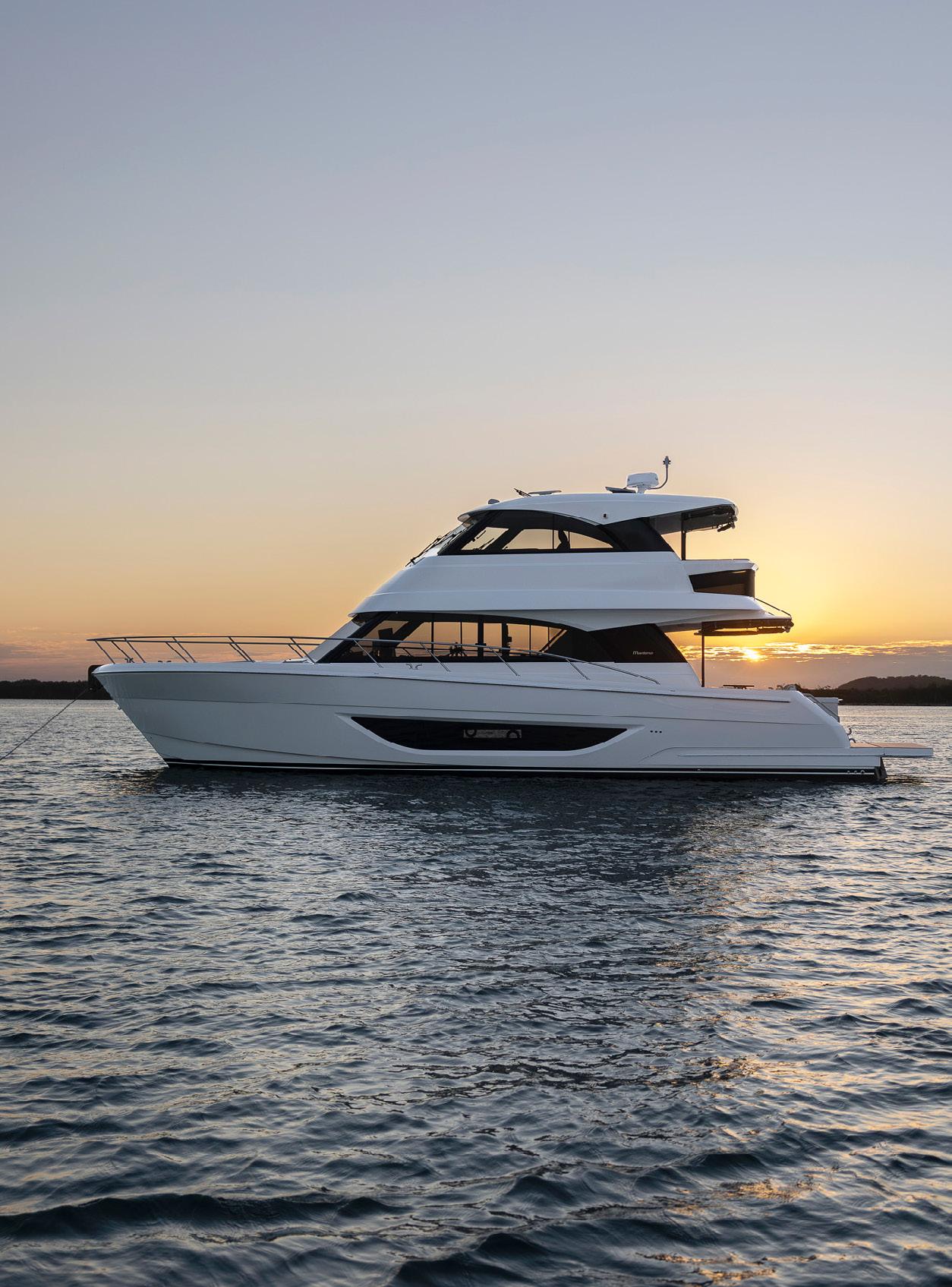

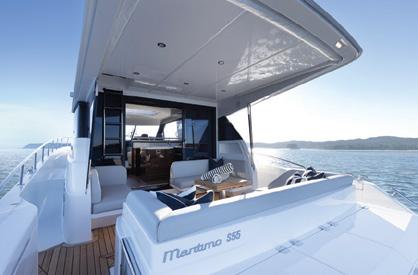
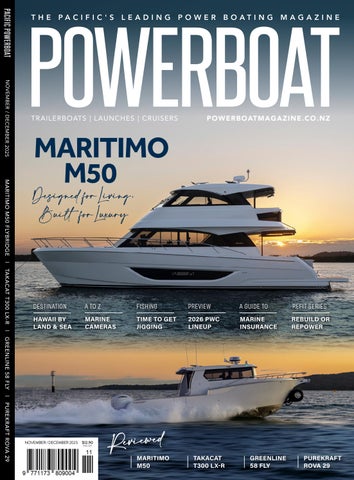
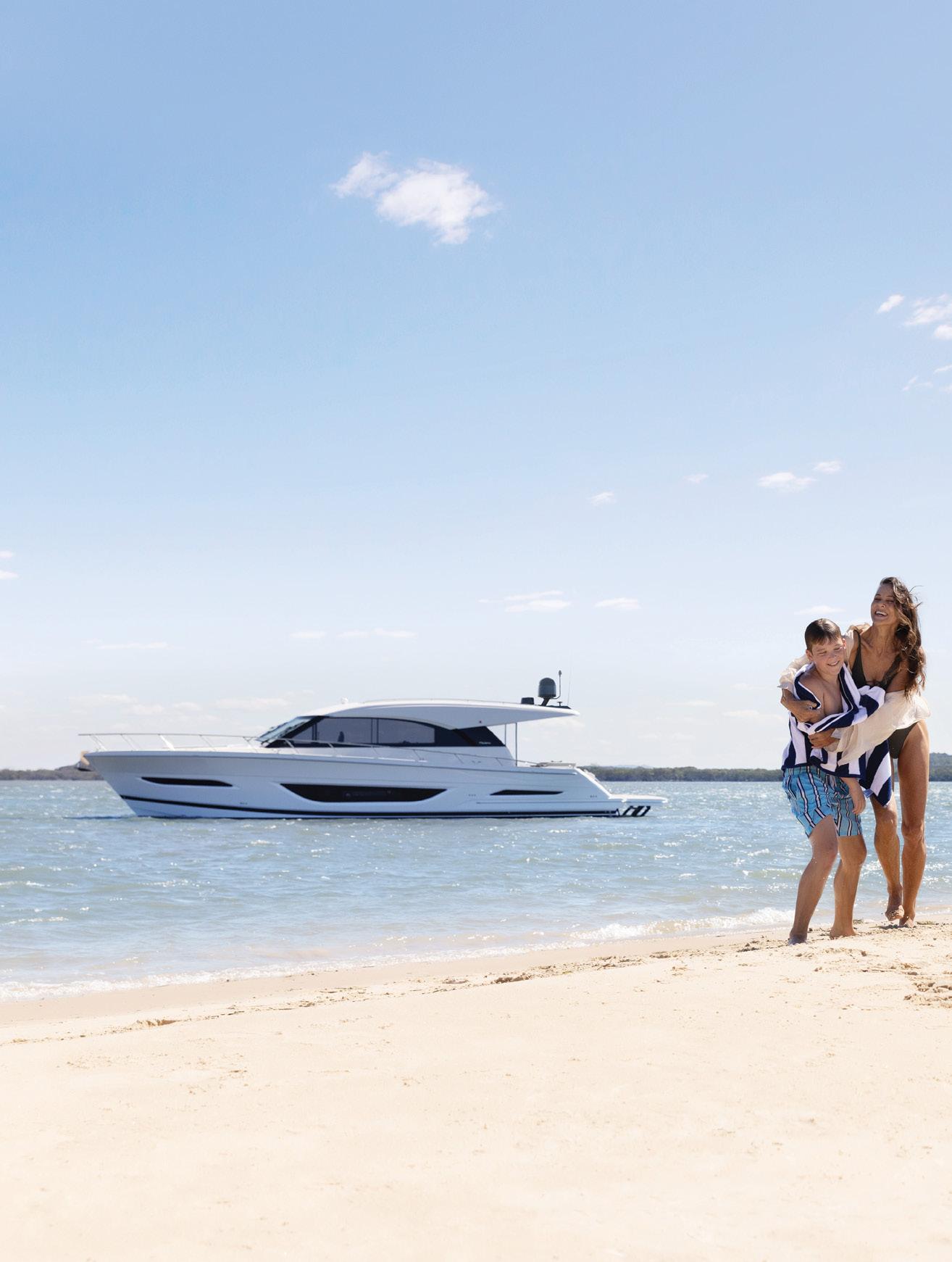
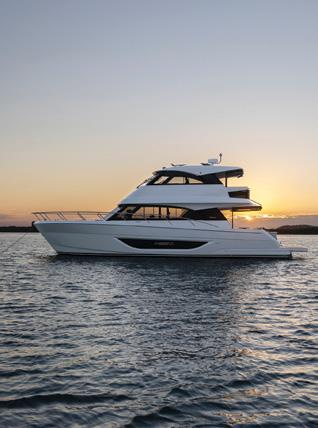
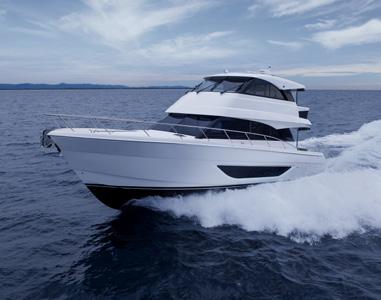
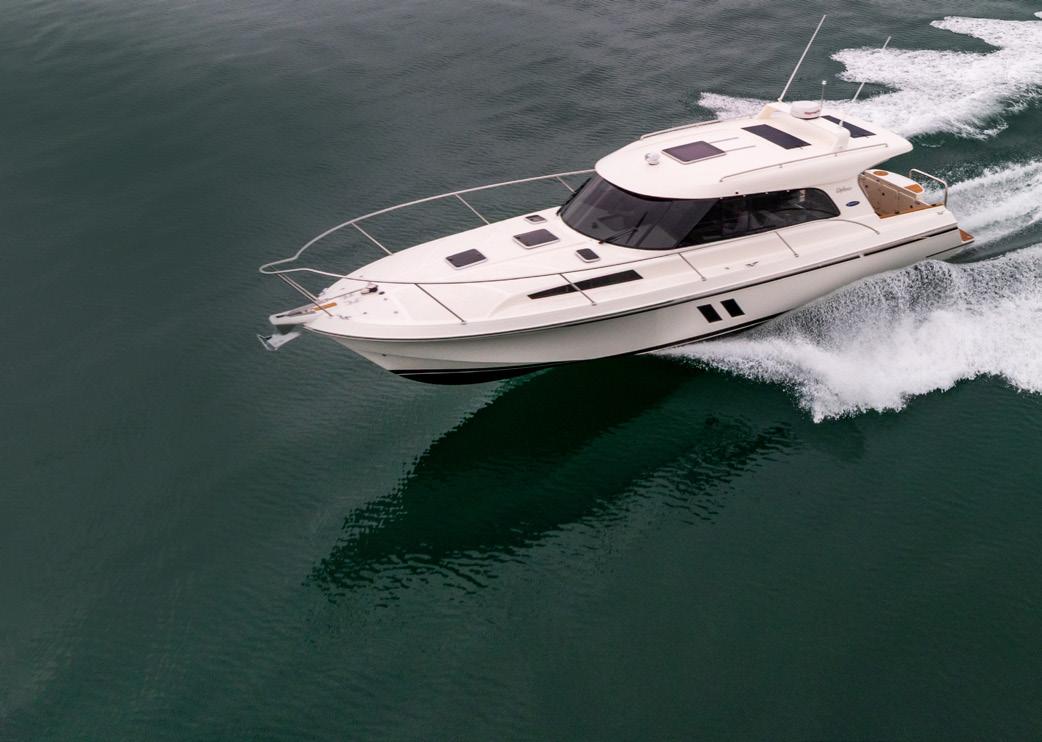
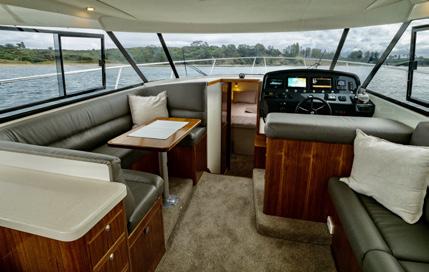
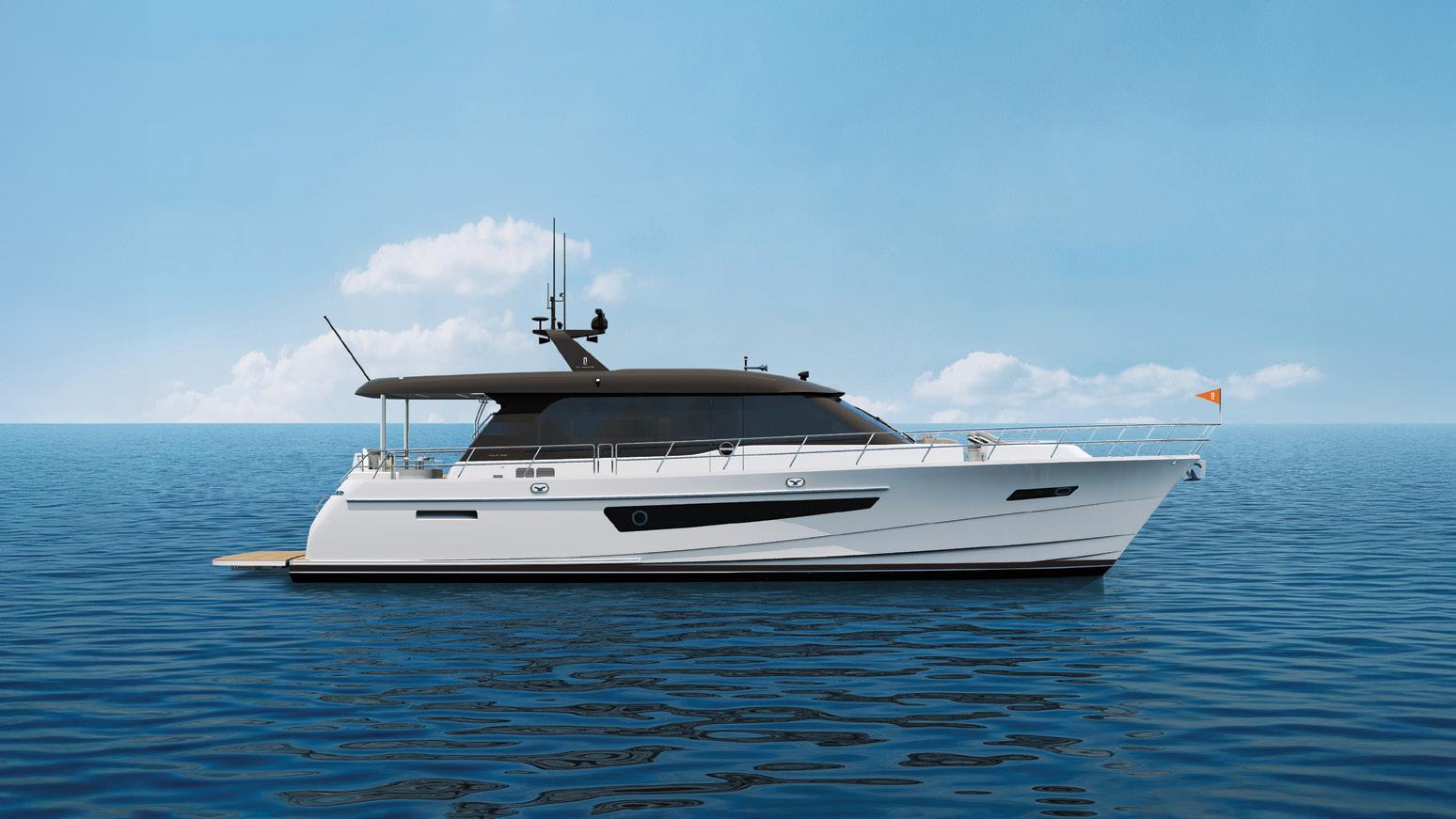
The all new S55 is the latest evolutionary addition to Maritimo’s esteemed sedan motor yacht series, a series renowned for long range adventuring and offshore cruising practicality. Australian built, its powerful exterior form, reimagined entertainment areas, and functional deck spaces reset the international standard for cruising sedan motor yachts. maritimo.com.au

Full throttle into 2026.
We take a look at what every boat owner should know.
Engines – Repower or Rebuild? 148
We delve into safety, security, and situational awareness.
We take a look at some Fascinating Facts about Steve Jobs’ superyacht Venus.
Carla Dukeson escapes the NZ winter and takes us on her journey.
Jigging is a great method to employ in spring and into summer. Mat Hewetson explains how and why.
A new season –A fresh start.
Riviera 72 Sports Motor Yacht – Series II Profile 785 Allan Tongs Elite AT43
New products for the powerboating world.
News, new products, boats and events.
Hot new electronics products from some of the world’s leading brands.
In clear distress.
PHIL GILBERT
Marine brokerage –A Changed Environment. 82 STRAIGHT FROM THE GALLEY
Derek the Chef prepares Pan fried John Dory, Scallop Spinach and Potato Rosti.
BOAT PRINCESS
Touring the European Boat Shows. 168
FLETCH’S TIPS
Aaron Fletcher shares his tips learned after years of getting it right and getting it wrong.


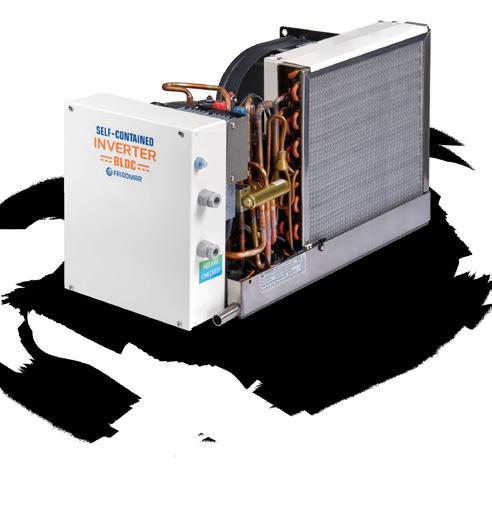
• Cooling and heating in one solution
• Very compact design and low weight
• 50% higher energy e ciency compared to ON/OFF
• Highest comfort: silent operation and stable temperature
• Lowest consumption: 150-200 W max input power in ECO mode
• Elimination of peak current at start-up (only 2 A max)
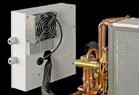
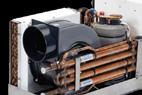
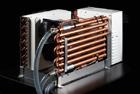

The electrical box can be detached from the main body.
The air outlet can be rotated by 135° allowing an optimal ducting arrangement.
All our SCUs are tested one by one. The testing is not a simple start-stop check, but it is a complete evaluation of product functionalities.
Everything under control. Thanks to the touchscreen thermostat setting temperature and mode is easy and intuitive. ENQUIRE TO
From her subversive use of glass to her boxy profile, Venus is one of the most recognisable yachts on the water.
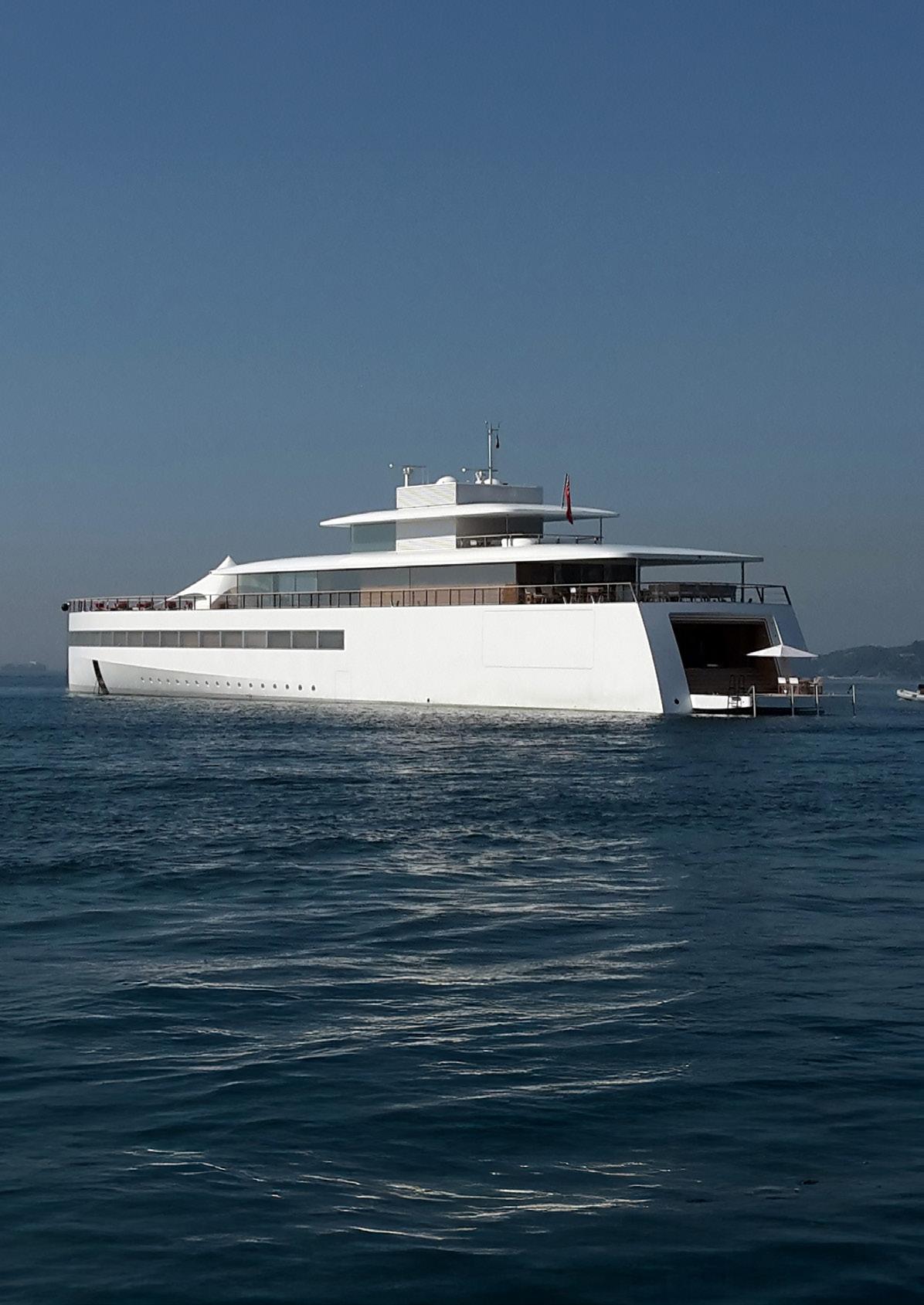
Commissioned by Steve Jobs and codesigned with Philippe Starck, Venus reflects the sleek, minimalist aesthetic of Apple products. Its streamlined aluminium hull, hidden communication equipment, and clean straight lines evoke the feel of a giant Apple device.
Tragically, Steve Jobs passed away in 2011, before Venus was completed in 2012. He reportedly told his biographer, “I know that it’s possible I will die and leave Laurene with a half-built boat. But I have to keep going…”.
Jobs challenged conventional ship design by insisting it “should be all glass.” The yacht features floor-to-ceiling structural glass framed by a hidden 10 tonne aluminium support system, designed by the engineers behind Apple’s Fifth Avenue glass cube and the Steve Jobs Theatre.
The yacht’s bridge is outfitted with seven 27-inch iMacs that manage the ship’s controls, creating what some have dubbed a floating Apple Store.
Jobs demanded perfection, even in the smallest details. Instead of commonplace teak, the yacht features rare poplar wood from León, Spain, prized for being lightweight yet strong.
Now owned by Laurene Powell Jobs, Venus has cruised globally, from the Gold Coast in Australia to Greece and Turkey, drawing admiration wherever it sails.
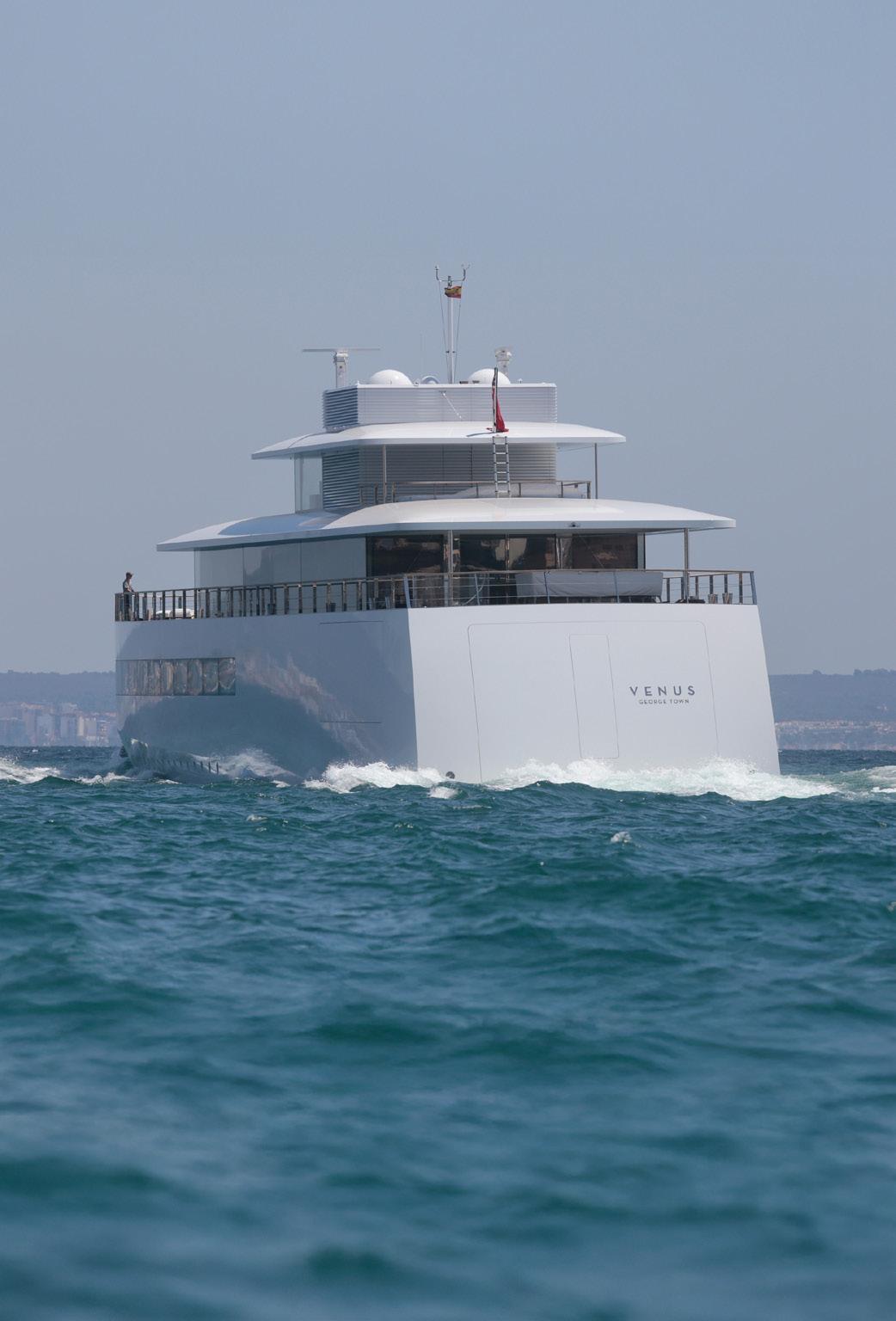
Starck designed a flat, squared stern that opens into a hidden tender garage. A false top deck cleverly conceals satellite/communication hardware, keeping the exterior sleek.
Jobs' obsession with tranquillity influenced the layout: the children’s cabins are placed at the bow, while his personal quarters are at the stern, minimising disturbances.
Venus is entirely private, not available for charter and closely guarded, with no interior photos officially released.
Constructed by Feadship in the Netherlands, Venus measures about 78.2 m (256 ft), with a 1,500 GT volume. Estimates place its cost between €105-120 million (approx. NZ$210 million).
PUBLISHER
Doug Dukeson
D&B Publishing Ltd
EDITORIAL TEAM
Ron Czerniak, Richard Milner, Doug Dukeson, Derek the Chef, Mike Rose, Carla Dukeson, Rebecca Hayter, Phil Gilbert, Aaron Fletcher, Freddy Foote, Peter Morgan, Kyle Barnes, Kevin Green, Robert Daly
editorial@boatmags.com
+64 9 428 2328
ADVERTISING
New Zealand & Australia
Doug Dukeson
+64 9 428 2328
+64 21 772 202 doug@boatmags.com
Holly Dukeson
+64 21 028 66849 holly@boatmags.com
PRODUCTION
Annabelle Rose
Brian Maxwell Printer: SCG
WEBSITE
Stealth Media Ltd
Gustav Wentzel
+64 21 0201949 info@stealthmedialtd.co.nz
ACCOUNTS
accounts@boatmags.com
+64 9 428 2328
CIRCULATION
Are Direct NZ
+64 9 979 3018
Are Direct Aust
+61 2 99728886
SUBSCRIPTIONS
(Printed & Digital)
subs@boatmags.com
Pacific PowerBoat is published bi-monthly January, March, May, July, September, November
REGISTERED OFFICE
2 McKenzie Ave, Arkles Bay, Whangaparaoa, Auckland, New Zealand.
POSTAL ADDRESS
PO Box 886 Whangaparaoa, Auckland 0930, New Zealand. POWERBOATMAGAZINE.CO.NZ
COPYRIGHT Pacific PowerBoat incorporates: Propeller and Pacific MotorYacht Magazines. The contents are copyright and may not be reproduced without the written consent of the publisher. Unsolicited editorial material may be submitted. While every care is taken, no responsibility is accepted for material submitted. Opinions expressed by contributors are not necessarily those of Pacific PowerBoat Magazine. All rights reserved.

As we welcome the arrival of the 2026 boating season, there’s a sense of renewed optimism in the air, something we’ve all been waiting far too long to feel. After two challenging years where confidence was muted, demand was uncertain, and many in the industry were left weathering quieter times, there are at last some promising signs. Retailers report that their phones are ringing again, enquiry levels are lifting, and customers are finally looking ahead with enthusiasm to new boats, equipment, and adventures.
It’s a relief, and a reminder of just how resilient our marine industry truly is. The past two seasons have tested every corner of our sector, from builders and brokers to chandlers and charter
operators. Yet, through it all, innovation has continued, with new models being released, skills honed, and businesses adapting as needed. Now, as buyers and boaters alike return with fresh energy, we can start to look forward rather than back.
We wish every business across the marine sector a successful, prosperous season ahead, you’ve earned it. And to our readers, may the coming months bring fair weather, calm seas, and plenty of time to enjoy what boating is really about: freedom, exploration, and time spent on the water with those who matter most.
Here’s to a fantastic 2026 season. We need it. We deserve it. And together, let’s make it one to remember.
After three decades of tireless dedication to the marine industry, Peter Busfield has decided it’s time to swap the office for the open water.
Peter will officially retire as NZ Marine’s Executive Director on 31 March 2026, though he will continue to share his wisdom on a contract basis until the end of that year.
Peter’s influence has been nothing short of remarkable. His passion for boating, his commitment to the people in our industry, and the steady leadership he has provided over three decades have shaped NZ Marine into the strong, respected organisation it is today. Alongside his
Happy and safe boating all, Doug Dukeson Publisher.
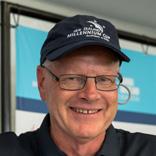
team, Peter has worked to grow our industry, open doors internationally, and ensure New Zealand remains a leader in the global marine world.
On behalf of the NZ Marine industry, I’d like to offer our heartfelt thanks. Peter’s legacy isn’t just measured in achievements and milestones, but also in the countless relationships he has built and the inspiration he has given to so many.
As he embarks on this next chapter, we wish Peter nothing but the best: time to enjoy family and friends, plenty of new adventures, and, of course, many more days out on the water he loves so much.

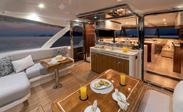
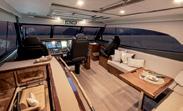

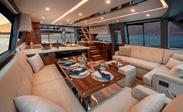
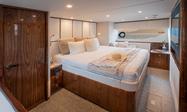
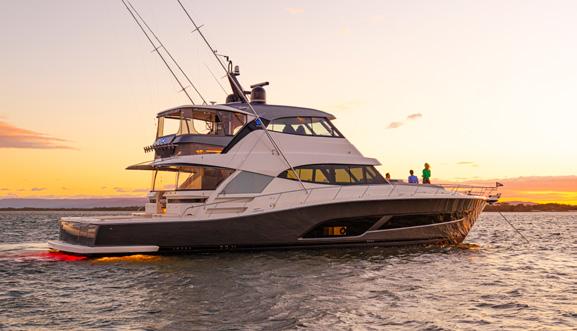
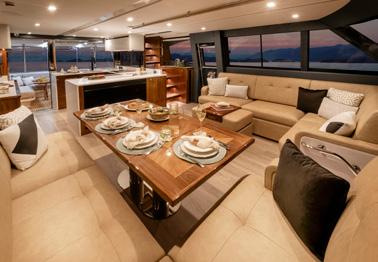
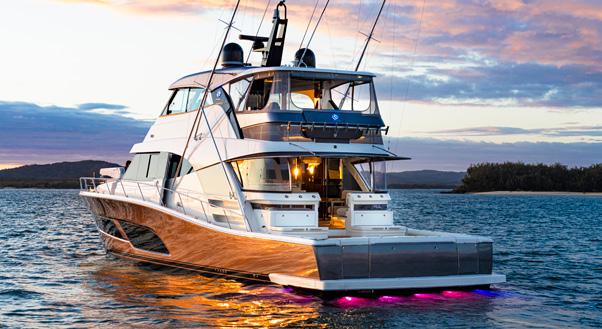
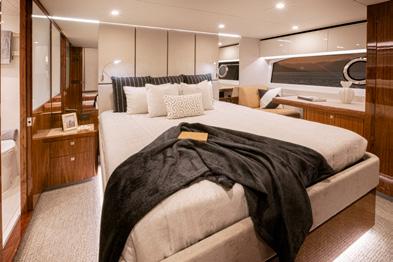
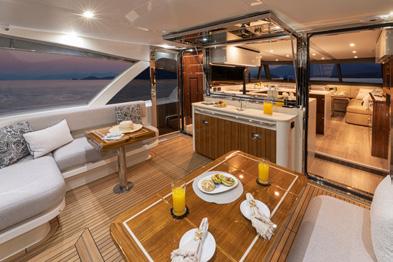
Riviera marked two World Premieres at this year’s Sanctuary Cove International Boat Show, headlined by the launch of the new-generation 72 Sports Motor Yacht – Series II.
Riviera owner Rodney Longhurst said the new model reflects both innovation and evolution: “When we launched the 72 in 2018, it met demand for a luxurious, long-range yacht that excelled in all water sports. That demand is stronger than ever, and our Sports Motor Yacht Collection has since grown to six models, ranging from 46 to 72 feet. Technology has also advanced since 2018, and we have incorporated the latest proven innovations. Feedback from our owners has inspired our engineers and designers to refine the 72 with a contemporary yet timeless aesthetic. The Series II is more functional, more luxurious and more exhilarating, a yacht in a league of its own.”
The first 72 set the standard for blue-water performance with walk-around decks, a foredeck lounge, an all-weather alfresco deck, a luxurious saloon, an enclosed flybridge, and versatile accommodation options. The Series II builds on these foundations, redefining the essentials and raising the benchmark for luxury and performance.
Step aboard via transom doors that extend the cockpit, equipped with BBQ, wet bar, freezer, and teak steps to the alfresco deck. A hydraulic swim platform lowers or raises for easy water access or marina boarding. The alfresco area seamlessly connects to the saloon, offering lounges, fold-out tables, bar fridges, insulated storage, and a drop-down Smart TV. The U-shaped galley, fitted with premium appliances, flows into the saloon’s leather lounges, dining area, and retractable entertainment system. A portside door provides direct deck access. A dual-purpose space accommodates tender storage or entertaining with lounge seating, timber tables, stereo, and optional awning.
The enclosed flybridge offers panoramic views, lounge seating, Smart TV, fridge, and optional double bed. The aft flybridge deck with its new extended hardtop, provides an all-weather retreat with wet bar, joystick station, lounge, and optional enclosures. At the helm, advanced touchscreen displays, leather helm chairs, and Twin Disc Express Positioning deliver fingertip control with GPS and thrusters. A third helm chair is optional.
Owners can choose between a fourstateroom “Classic” or three-stateroom “Presidential” layout. Both include a full-beam master suite with an electric king bed, an ensuite, and smart storage. Separate access leads to a utility room or crew cabin with day head and shower. A washer/dryer is included for extended cruising.
Powered by twin V12 MAN engines (1800 or 2000 hp), the yacht delivers smooth, efficient blue-water performance. The full-height engine room, accessible from the cockpit or crew cabin, reflects Riviera’s hallmark engineering excellence.
Owners also benefit from Sentinel remote monitoring, solar charging, stabilisation options, Starlink internet, and integrated camera systems. Riviera’s warranty covers five years on engines/drives, seven years structural, and two years express. Naval architecture, tank testing, and meticulous construction ensure a smooth, dry ride with enduring reliability.
Keep an eye out for the full review in an upcoming issue of PowerBoat Magazine.


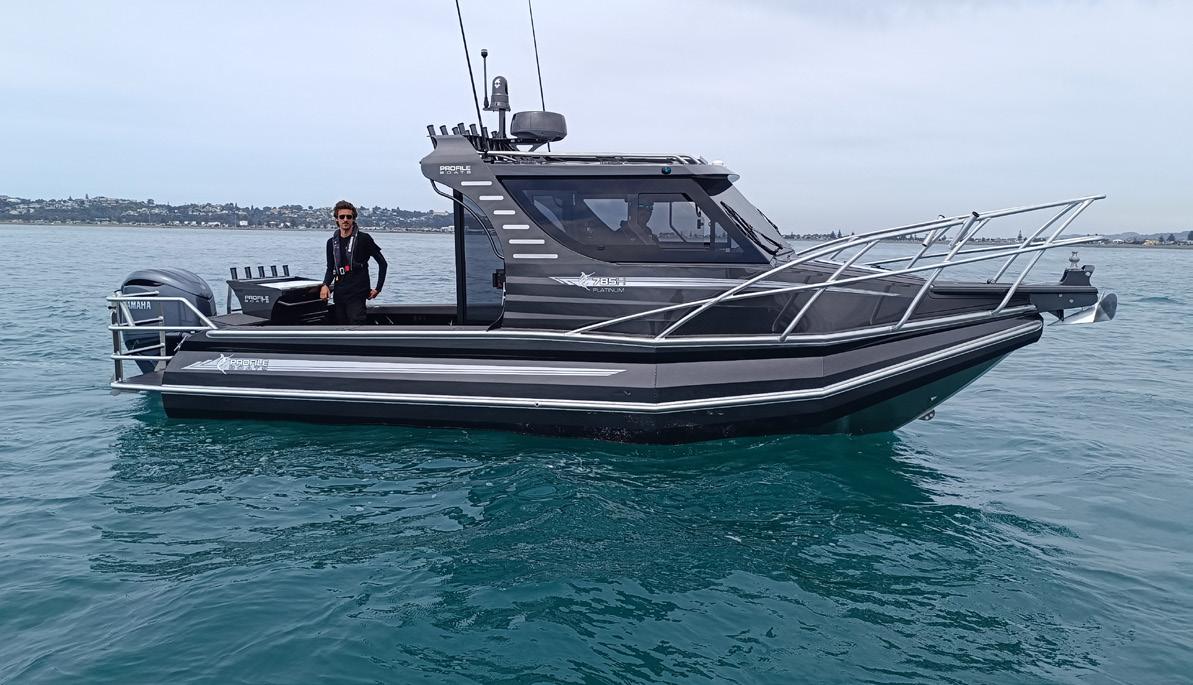
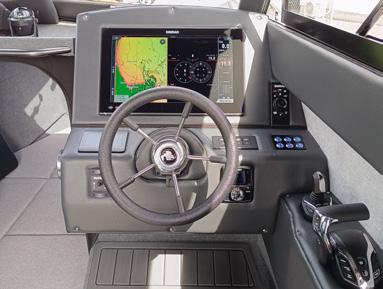

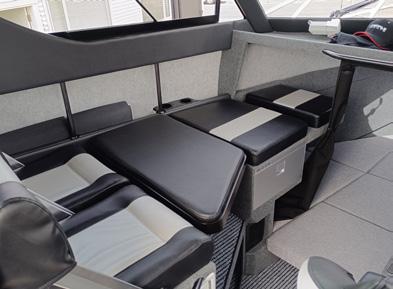
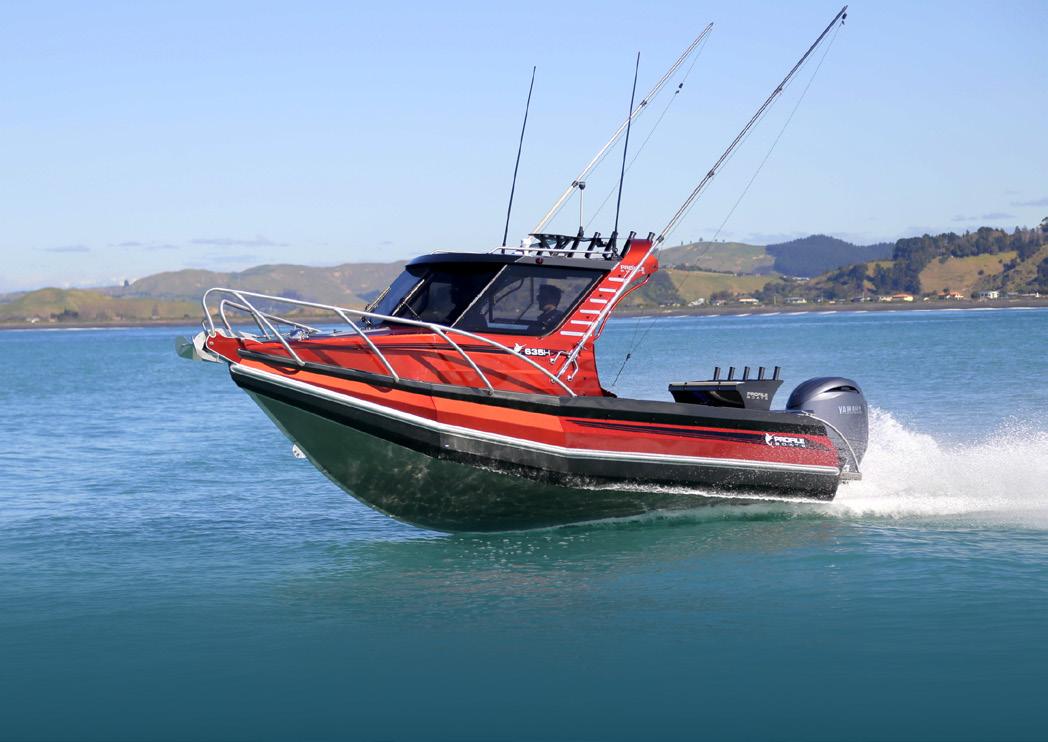
Profile Boats has unveiled the 785H Limited, a model designed for serious anglers, adventurous families, and anyone who demands excellence on the water. More than just a boat, the 785H Limited is a gateway to safe, comfortable, and capable offshore experiences. Built on Profile’s legendary reputation for strength and performance, the 785H Limited combines robust construction with an array of features that make it both a fisherman’s paradise and a secure weekender. At its core is an ultra-tough alloy pontoon hull, foam-filled for maximum buoyancy and safety, backed by an exceptional 10-Year Structural Hull Warranty—a clear statement of enduring quality and integrity.
The boat’s spacious, lockable hardtop cabin, featuring rear glass doors, provides shelter and security, while the fully finished interior—complete with carpeted cabin, hardtop, and dash—adds a touch of comfort. Practical fishing features are everywhere: a super deluxe bait board, live
bait tank, twin walk-through transoms, transom cage, duckboards, and ladders. Generous rod storage and well-planned deck space ensure efficient, uncompromising fishing, with ample toe space for stability when the action heats up.
With a 400-litre fuel capacity, the 785H Limited has the range to chase distant offshore grounds, while its advanced hull design delivers a quiet, soft, and stable ride to keep long passages comfortable for all aboard.
As with all Profile Boats, the 785H Limited is delivered factory-direct, ensuring a turn-key package where every component reflects premium standards of craftsmanship and attention to detail as expected from Profile Boats.
For those seeking a boat that can confidently take them to the canyons and back, deliver an exceptional fishing platform, and comfortably accommodate an overnight stay, the Profile Boats 785H Limited should be on your shopping list.
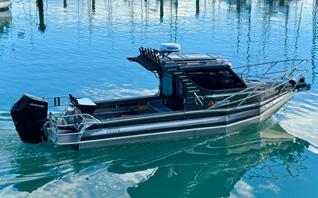
Recommended HP 300 - 400hp
Length overall 7.95
Max safe loading 8 Adults
Height on Trailer 3.35m
Deadrise Rear 17
Tow Weight (Approx) 3200kg
Length on Trailer 9.98m
Width on Trailer 2.55m
Beam External 2.55m
Beam Internal .25m
Hull Thickness 6mm
PROFILEBOATS.COM


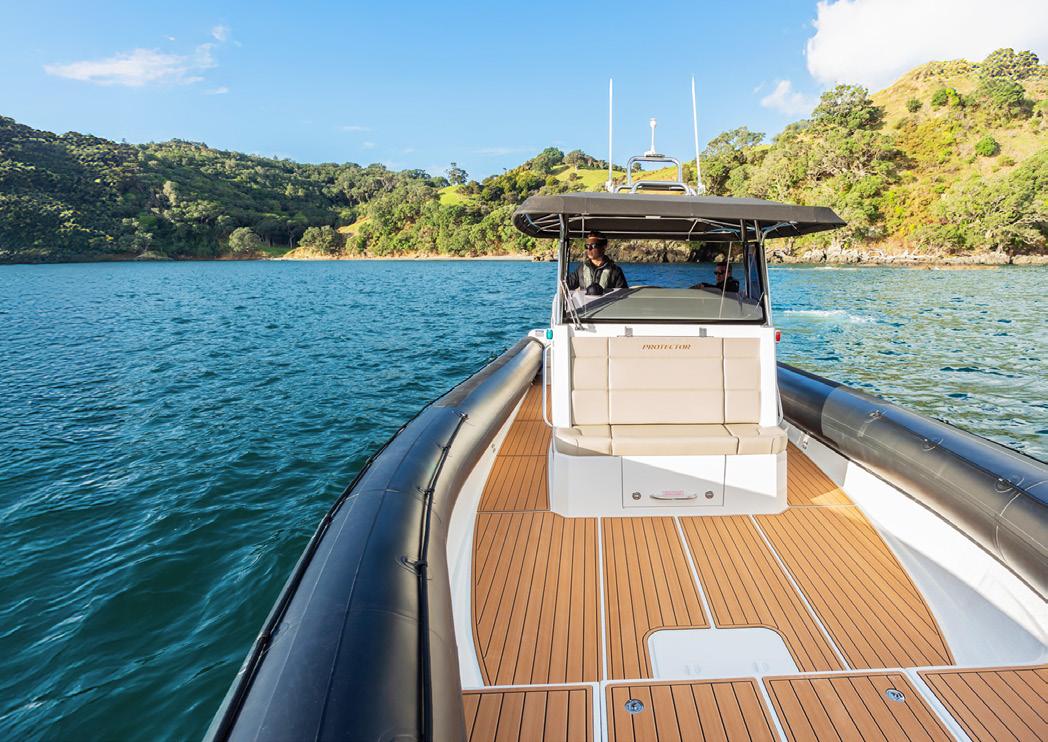
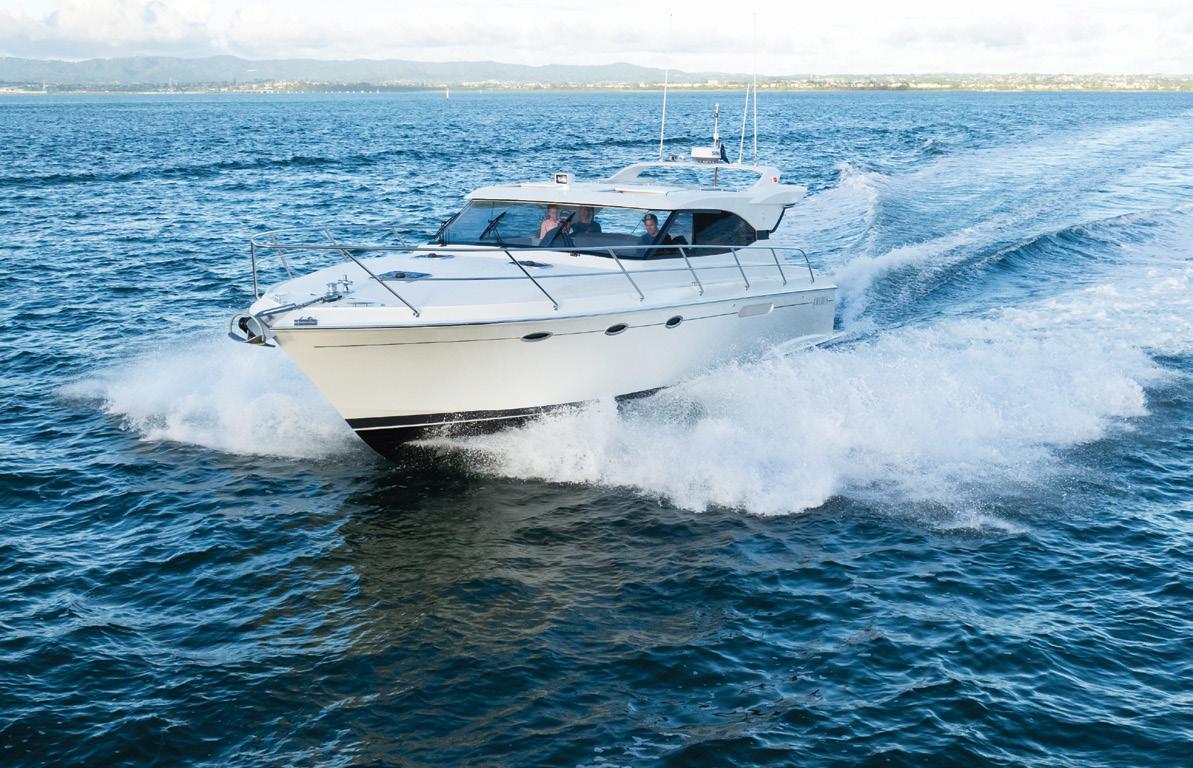
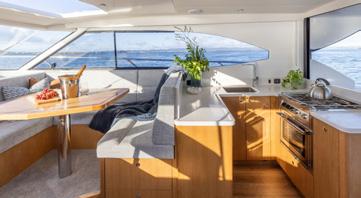
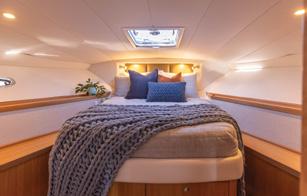
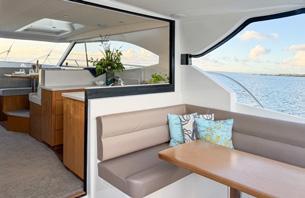
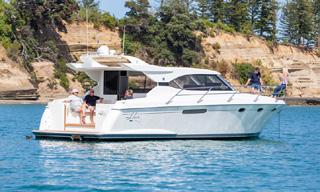
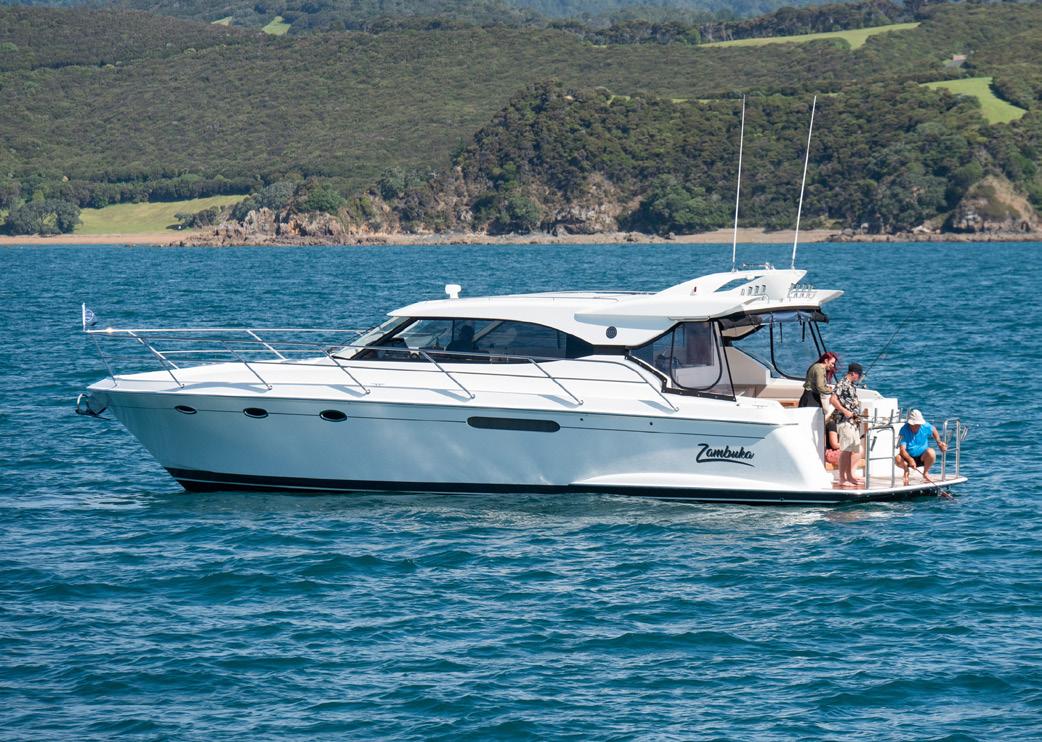
Allan Tongs Boat Builders are proud to be exclusively building their tenth Elite AT43, a 43-foot production (GRP-moulded) motor yacht designed to fit comfortably within a 13.5m or 14m marina berth. With options for single or twin engines, a three-cabin layout, and a wide choice of interior finishes, each AT43 feels closer to a custom build than a production boat.
The sleek lines and intelligent design language are unmistakably Elite Marine, while the craftsmanship and precision of Allan Tongs Boatbuilders elevate the Elite AT43 beyond expectations. Built in New Zealand, it embodies all the hallmarks of a bespoke motor yacht, yet offers the accessibility of a production model. The large, versatile cockpit has been created with flexibility in mind. Whether you’re a keen fisherman or diver, or simply looking for a spacious area for outdoor dining and sunset cocktails, it adapts to every lifestyle. Thanks to uniquely engineered silent chines, nights aboard are quiet and restful, free from the usual slap from a choppy sea. In today’s challenging economic climate, demand for high-quality, Kiwi-built launches remains strong. Allan Tongs Boatbuilders has deliberately kept its focus sharp, producing only the Elite AT43, designed by Bill Upfold. This approach ensures every build is tailored to its owner’s
needs while staying true to a proven, efficient design.
Constructed from female moulds and handfinished to a luxury standard, the AT43 is a capable all-rounder, equally at home on family cruises, weekend escapes, or long-range coastal adventures. Each vessel combines handcrafted interiors, advanced composite construction, and thoughtful detailing that can only come from a dedicated, close-knit team. With more than 50 years of combined experience, supported by skilled tradesmen and developing apprentices, Allan Tongs Boatbuilders has earned a reputation for blending true craftsmanship with production efficiency. The GRP construction allows for faster build times and greater affordability, while still delivering a semi-custom vessel of exceptional quality. Every AT43 is built to order, featuring advanced composites alongside beautifully finished timber interiors, a seamless blend of modern innovation and timeless boatbuilding tradition.
Hull #10 is nearing completion. Keep an eye out for the full review in the JanuaryFebruary issue of Pacific PowerBoat Magazine.
Allan Tongs Boatbuilders has a build slot available to start mid 2026. Each project
takes approximately eight months, with build schedules carefully managed to ensure both quality and customer experience are protected.
ALLANTONGSBOATBUILDERS.CO.NZ NIGEL@ALLANTONGSBOATBUILDERS.CO.NZ
Designer Bill Upfold - Elite Marine
Builder Allan Tongs Boatbuilders
Length Overall 13.5m
Beam 4.5 metres
Draft 1.05m
Displacement 11,000kg*
Fuel Capacity 1300L
Water Capacity 720L
Sleeping Capacity 6 persons in 3 cabins
Engine(s) Single Volvo D8 600hp or twin 440hp D6
Thrusters Bow and Stern
Max Speed 27kts or 32kts*
* depending on engines & options


5TH-8TH MARCH 2026
VIADUCT EVENTS CENTRE AND JELLICOE HARBOUR
AUCKLAND, NEW ZEALAND
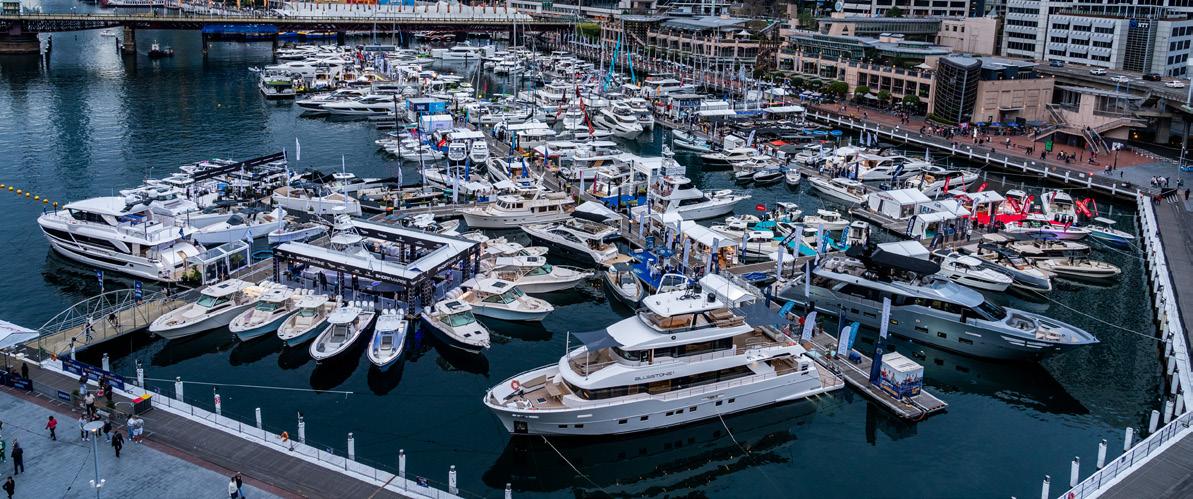
With just a couple of weeks to go, the Sydney International On-Water Boat Show is shaping up as a must-attend celebration of Australia’s marine lifestyle. From 13 to 16 November 2025, Darling Harbour will come alive with an impressive line-up of luxury boats, masterclasses, gourmet food and wine, and live entertainment, creating a vibrant spring festival atmosphere.
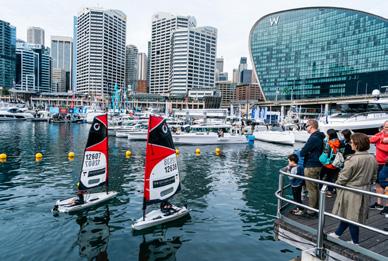
Presented by the Boating Industry Association Ltd (BIA) in partnership with Mulpha Events, the four-day festival will feature a stellar list of exhibitors, which will now also include leading marine brands Princess Yachts and Horizon Yachts. The 2025 show will also mark the return of renowned Australian luxury boatbuilder Maritimo for the first time in five years.
Additional brands and businesses confirmed for 2025 include: 313 Marine, AMI, Amphibious AUS, Austral Propellers, Azimut, Boatology, Boating Co, Boating Partnerships, Carbon Yachts, Charter Boat Central, Club Marine, Cumberland Charter Yachts, DCH Marine, E-Yachts, Fenquin, Fixtech, Flagship International Yacht Brokers, Fleming Yachts, Float Haven, Grand Boats, Henri-Lloyd, Kick n Bak Floats, Leopard Catamarans, Martha Cove Marine, Maritimo, MCT Yachts,
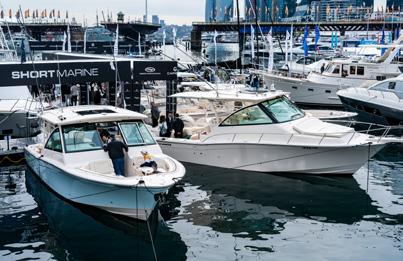
Pacific Boating, Palm Beach Motor Yachts, Pantaenius, Princess Yachts, Ray Marine, Ray White Marine, Sealegs International, Sherlock Industries (Birdboss), Shoreside Clothing, Short Marine, Simpson Marine and Sirocco.
BIA President Adam Smith said industry interest in the new-look format has been excellent, with strong representation from marine, lifestyle and leisure brands. “The response to the new-look Sydney International On-Water Boat Show has vindicated our decision to move the event to November for better weather. It’s exciting to see leading Australian brands on board, showcasing the strength of our boating industry and lifestyle,” Mr Smith said. “By moving beyond the traditional exhibition model, we’re creating a true festival of boating that reflects the vibrancy of Sydney in spring. With more than 200 luxury vessels on display and a variety of major
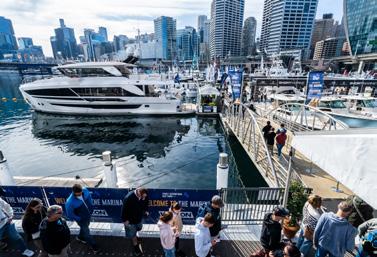
players like Maritimo, Princess Yachts and Horizon Yachts joining the line-up, visitors can expect a world-class experience,” he said.
A purpose-built marina in Cockle Bay will host an array of high-end vessels, from luxury motor yachts and sailboats to cutting-edge marine technology, while an expanded footprint across Palm Grove, Tumbalong Boulevard and Tumbalong Park will deliver gourmet food and wine, interactive activations, roving performers, live music, as well as additional boating and marine accessory exhibitors. Extended opening hours from 11am to 7pm Thursday to Saturday, 11am to 6pm Sunday will take full advantage of Sydney’s twilights, making it easy for visitors to browse, buy or even charter vessels, as well as explore the latest gear, or simply soak up and enjoy waterfront dining and entertainment.
SYDNEYBOATSHOW.COM.AU
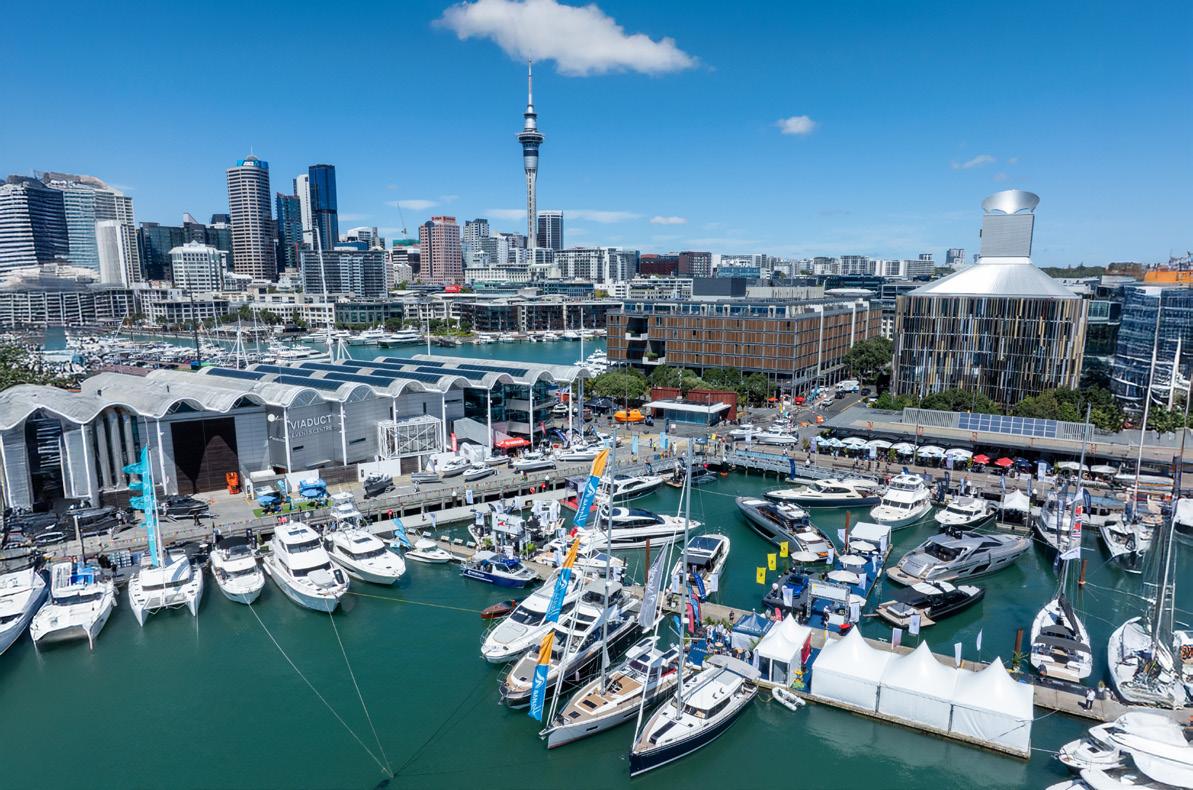
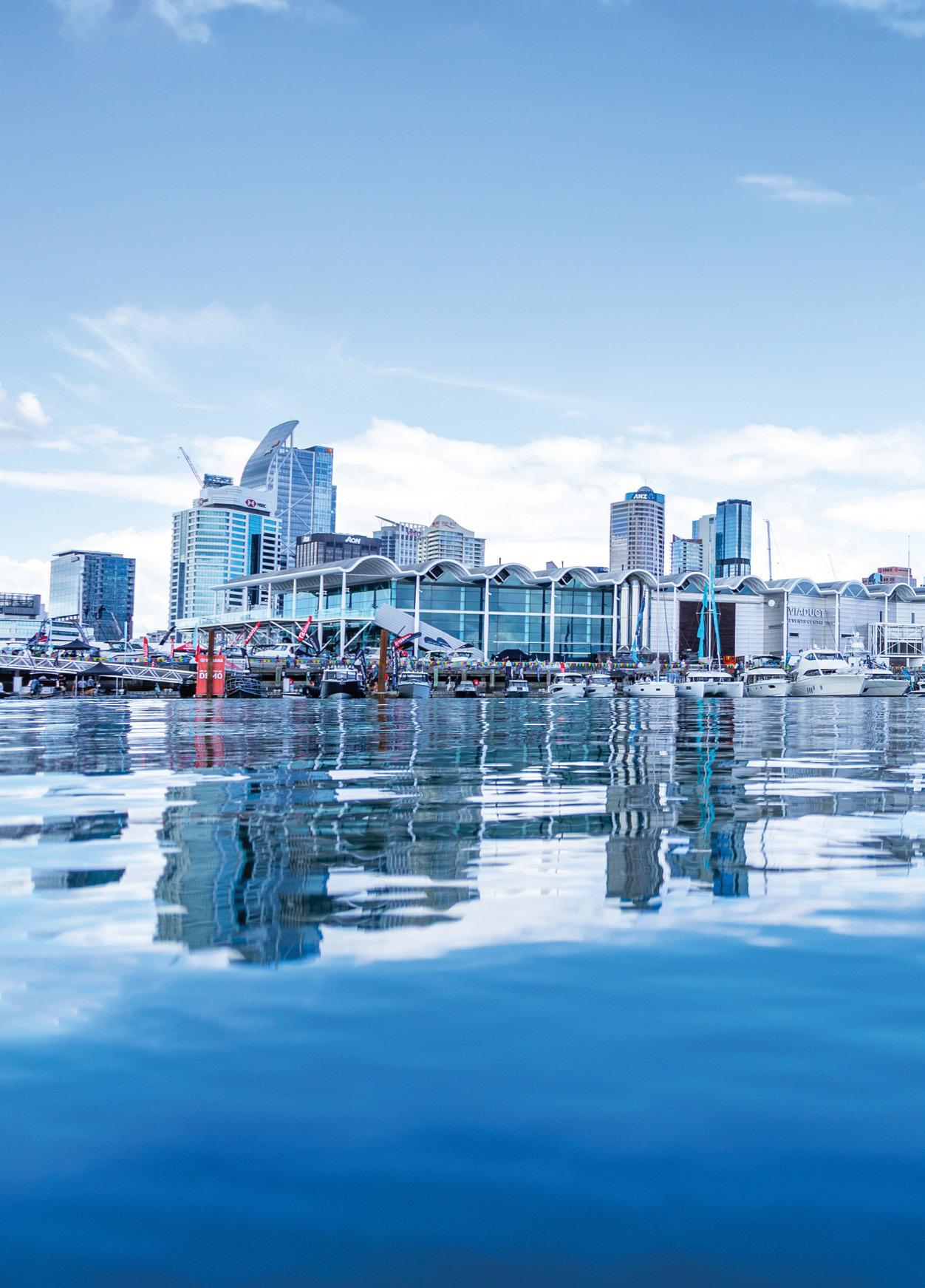
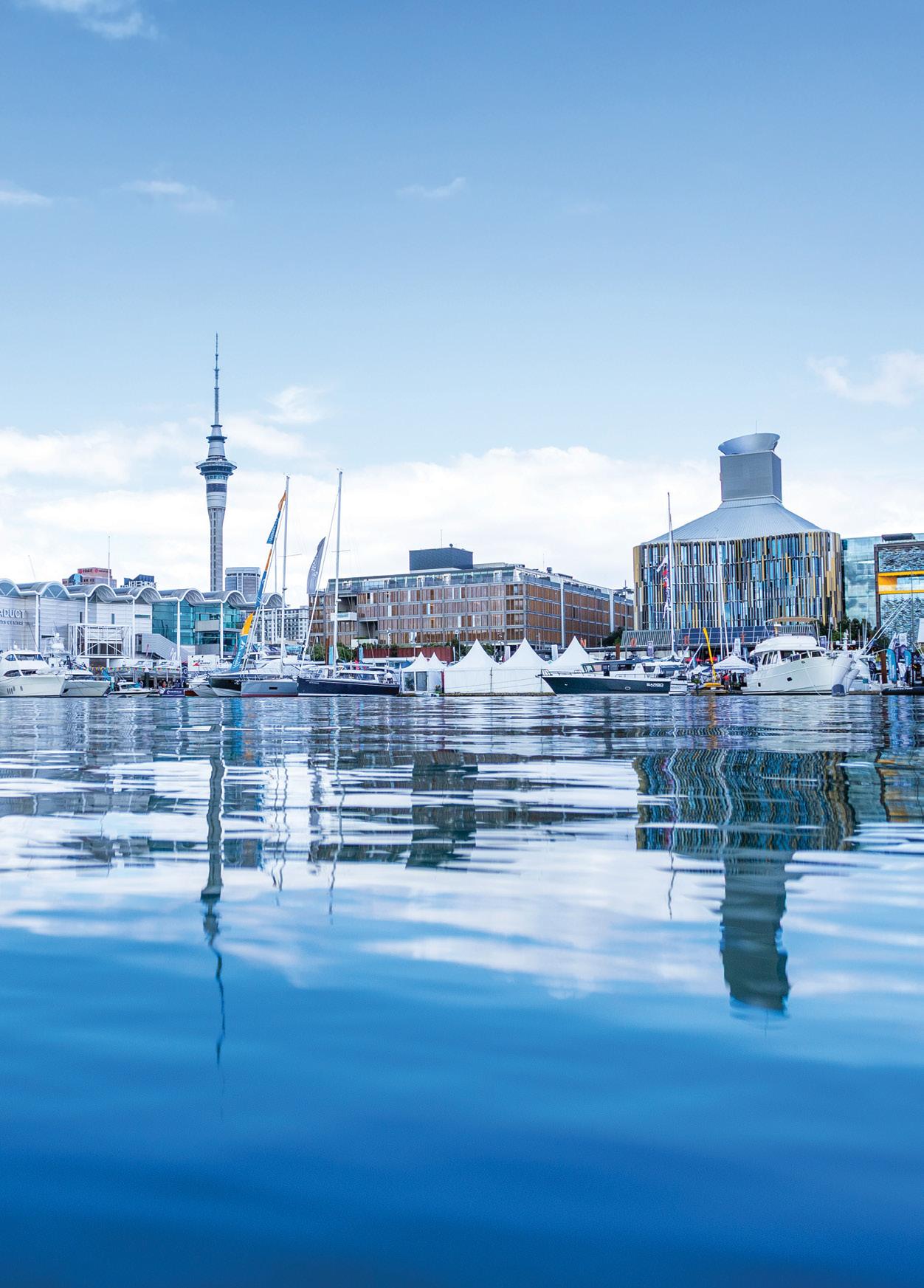
If discovering the latest and greatest from the powerboat world is on your radar, you won’t want to miss the 25th edition of the Auckland Boat Show in March, where at least 150 powerboats – both in the water and on trailers – will be on display as this event gets bigger and stronger.
Centred on Jellicoe Harbour and the Viaduct Events Centre from 5-8 March 2026, 150 exhibitors plus 200 boats on sea and land will be on display for the four-day event. “People come to see what is new, to shop for a new boat, to explore the latest from the marine world, and most importantly, because they love everything about boats and marine, and just want to be part of it,” says Stacey Cook of NZ Marine. “You’ll find just about every type of boat, from trailer boats and amphibious boats to sports fishers, custom New Zealand builds, and the finest of luxury motor yachts and sailing vessels for sale and charter. This includes more than 30 boats available then and there for sea trial, and luxury charter boats that you won’t see anywhere else in New Zealand.”
The first Auckland Boat Show, run by NZ Marine, was held in 1999. Today it has evolved as an event that only celebrates New Zealand innovation and success, it hosts a diverse range of exhibitors across a
range of themes, including marine careers, sustainability and fishing. There are also special zones for high-end charters and sea trials.
“More than 500 brands will be represented at the 2026 show,” says Stacey. “This includes Asia Pacific region premiers and world-leading technology releases sitting alongside home-grown success stories, and all-important sustainability messages.”
Throughout the show’s history, the defining features of industry ownership, a focus on marine excellence and innovation, and boats on display in the water have stayed the same, says Stacey. “It’s what sets NZ Marine’s event apart and why it’s so incredibly popular.”
Tickets are on sale now for the next Auckland Boat Show, which takes place from Thursday 5 – Sunday 8 March 2026 at the Viaduct Events Centre in Auckland. With more than 1.3km of boats on the water, it focuses on supporting industry
growth and sustainability.
The Auckland Boat Show is part of the Moana Auckland, New Zealand’s Ocean Festival which runs from 28 February to 15 March 2026 and which includes the Auckland Wooden Boat Festival and the Z Manu World Championships.
AUCKLAND-BOATSHOW.COM
Simrad Marine Electronics, a brand within Brunswick Corporation (NYSE: BC), has unveiled the Simrad® AutoCaptain™ Autonomous Boating System, a groundbreaking development in marine technology offering fully autonomous docking, undocking, and short-distance manoeuvring. Unlike current assistance-based systems, AutoCaptain delivers true autonomy, developed from the ground up with exclusive Mercury Marine® propulsion integration and a dedicated Simrad® display app for seamless control. This innovation represents a major milestone in Brunswick’s ACES strategy, reinforcing its vision for the future of recreational boating.
“With AutoCaptain, we’re realising Brunswick’s ACES strategy by delivering true autonomy, beginning with one of the most challenging aspects of boating – docking,” said Aine Denari, EVP & President, Navico Group and Brunswick CTO. “As the first commercial solution under the ‘Autonomy’ pillar of ACES, AutoCaptain takes the stress out of closequarters manoeuvring, allowing boaters to focus on enjoying the water. And this is just the beginning — the same hardware
will support future autonomous features through software updates, continually enhancing accessibility and ease of use.”
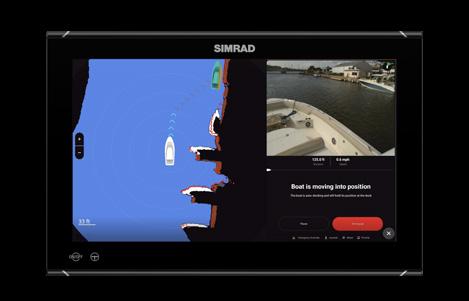
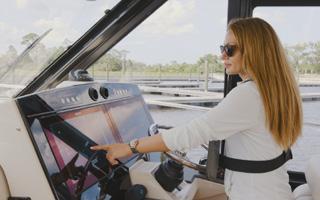
AutoCaptain provides real-time 360° situational awareness, autonomously performing docking and undocking manoeuvres even in tight or difficult conditions. It intelligently compensates for wind, current, and nearby obstacles, ensuring smooth, precise movements under the captain’s supervision. Unlike GPS-dependent systems limited to previously mapped locations, AutoCaptain operates anywhere, adapting dynamically to new marinas and unfamiliar environments. It can even hold the vessel securely against the dock, maintaining position while lines and fenders are prepared.
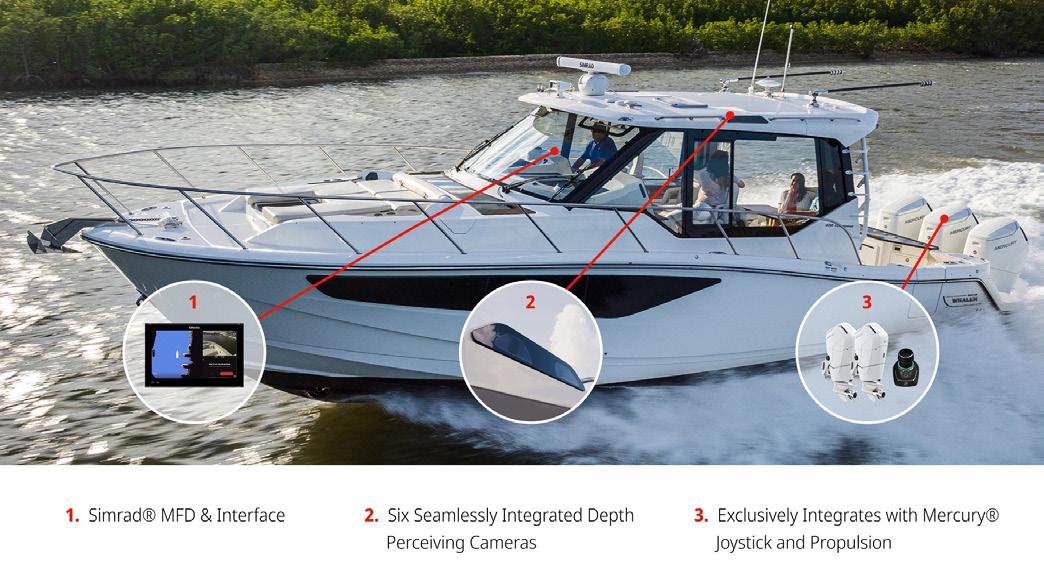
Developed in close partnership with Mercury Marine®, AutoCaptain seamlessly integrates with Mercury’s advanced propulsion systems and intuitive joystick controls. Using a network of cameras, real-time monitoring, and propulsion coordination through a Simrad® display, it provides a unified, built-in control experience that surpasses aftermarket alternatives. The system’s
integration into the vessel’s design ensures both aesthetic harmony and unmatched precision.
Built as a scalable, future-ready platform, AutoCaptain will evolve with ongoing software enhancements, offering increasingly smart, safe, and intuitive boating experiences. “AutoCaptain exemplifies Brunswick’s synergy, creating a powerful platform for OEMs and boaters alike,” said Jeremiah Clark, VP of Product Management, Electronic Solutions, Navico Group. “From new boaters to seasoned captains, AutoCaptain delivers confidence, support, and innovation that will continue to grow with the needs of tomorrow.”
SIMRAD-YACHTING.COM/ AUTOCAPTAIN/






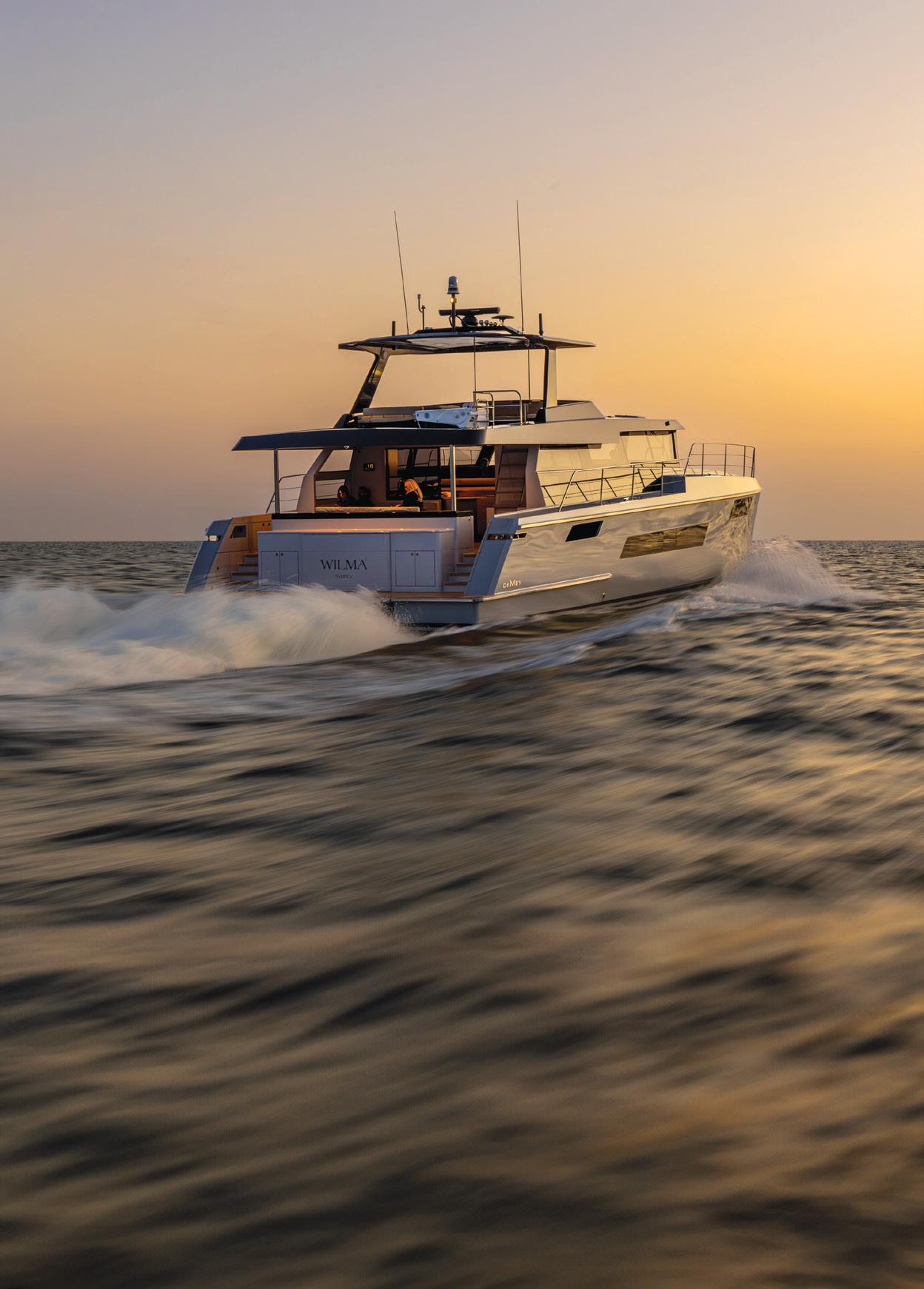
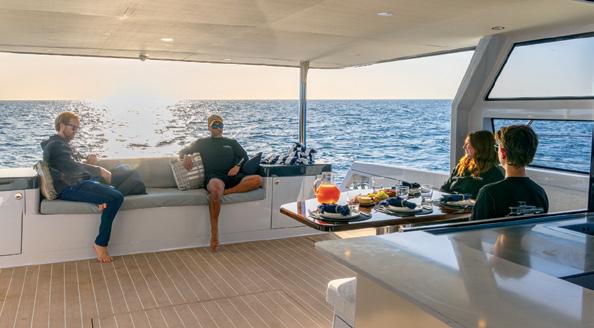
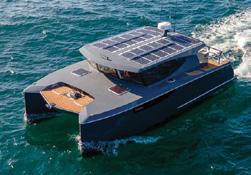
Who knows where the urge might take you? A distant port, a tropical island, or even another country. No matter where you choose, the custom long-range DEMEY power catamaran can get you there quickly, comfortably — and economically.
If you’d like a few more stamps in your passport, call +64 7 281 0078 or office@demeyyachts.com.
demeyyachts.com




The newest addition to the XF60 line represents Voodoo’s continuous evolution - a boat shaped by experience, innovation, and the invaluable input of her future owner.
Key areas have been refined - from custom layout developments to interior comfort - building on enhancements introduced across earlier hulls to create the most accomplished XF60 to date.
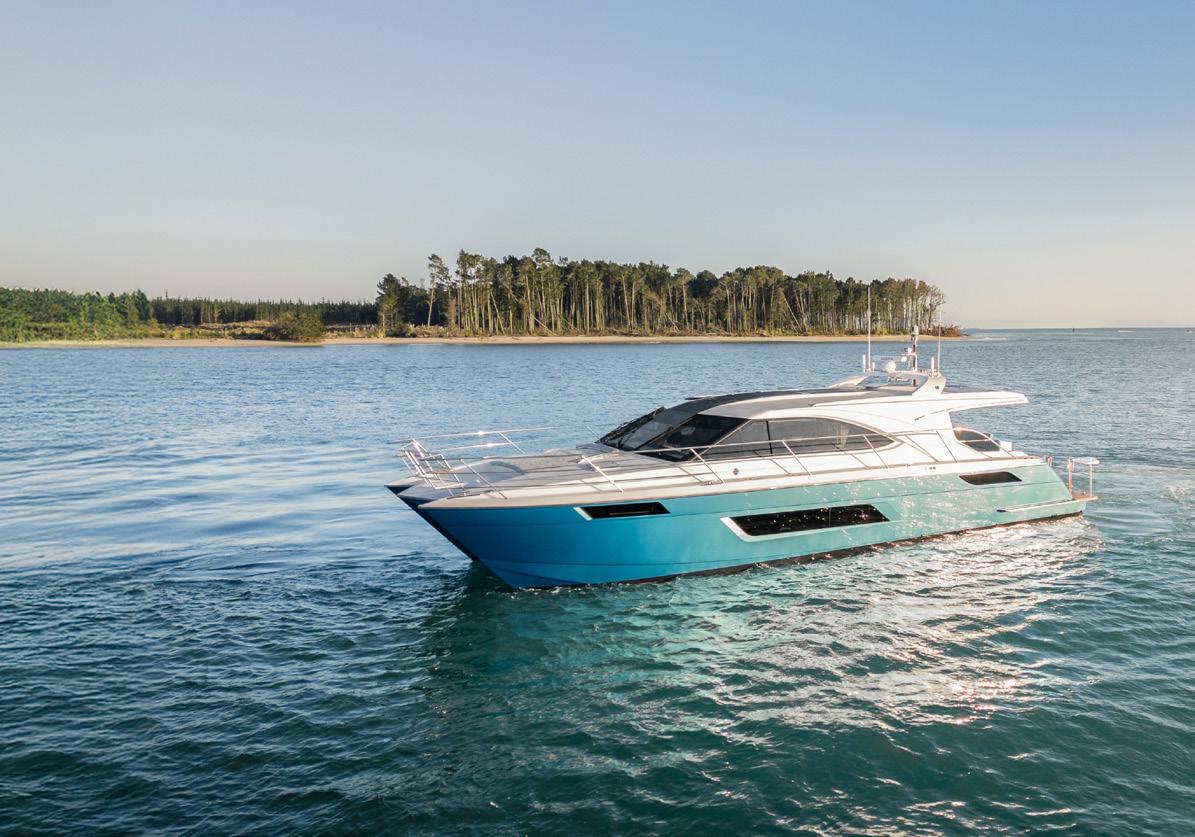
Proudly built in New Zealand by a dedicated team of craftspeople and launched at VesselWorks Tauranga, this latest XF60 embodies the brand’s signature fusion of speed, efficiency, and elegance. Destined for adventures across the South Pacific, she is ready to deliver exhilarating
The Auckland Wooden Boat Festival comes back to the city’s waterfront in March 2026, and organisers are calling for owners of wooden boats, big and small, from sailing boats to runabouts to work boats, to unite in bringing the event to life.
The date is set for 13-15 March 2026, across four neighbouring Auckland venues: the Viaduct Events Centre, Jellicoe Harbour, the New Zealand Maritime Museum and the Percy Vos Heritage Boat Shed. A flagship event of Moana Auckland, New Zealand’s Ocean Festival, the free event is created to tell the stories of the city’s maritime heritage. Nick Hill, CE at Tātaki Auckland Unlimited says: “The Auckland Wooden Boat Festival is a celebration of our city’s maritime culture and a proud feature of Moana Auckland. As an Auckland Council Event it reflects our commitment to showcasing the heritage and stories that connect us to the ocean, while providing a world-class experience for locals and visitors alike.”
performance and ocean crossing range in equal measure.
Another Voodoo Xpedition Foilerunlocking the oceans for her new owners, and setting the course for what’s next.
VOODOOYACHTS.COM
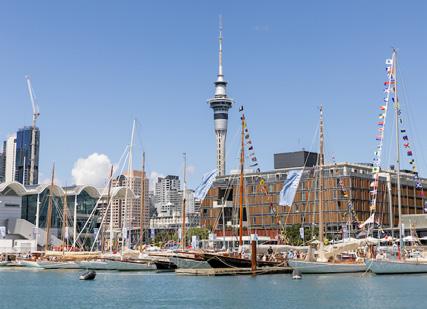
New Zealand has the largest fleet of classic yachts still actively sailing in the world. At the inaugural Auckland Wooden Boat Festival in 2024, more than 200 boats, models and memorabilia were on display, and more than 11,600 people of all ages enjoyed the event. In 2026, event organisers hope to attract an ever-larger fleet of onwater exhibitors, alongside existing and new wooden boat enthusiasts. “This is a reason to be in Auckland that weekend,” says Tony Stevenson, Co-Director of the Auckland Wooden Boat Festival and Chair of the Tino Rawa Trust. “We not only expect our local classic boating community, but we look forward to welcoming Aucklanders from across the region, visitors from around New Zealand, and international enthusiasts
to learn about our maritime heritage.” We are absolutely delighted to be part of Moana Auckland and to have the opportunity to create this event once again for the city.”
The event will include boats and boat tours, seminars, interactive displays, music, food and more. The Auckland Wooden Boat Festival is delivered in partnership with New Zealand Maritime Museum Hui Te Ananui a Tangaroa, one of the substantive cultural institutions that Tātaki Auckland Unlimited owns, operates and maintains for the benefit of Tāmaki Makaurau, Auckland.
AUCKLANDWOODENBOATFESTIVAL. CO.NZ
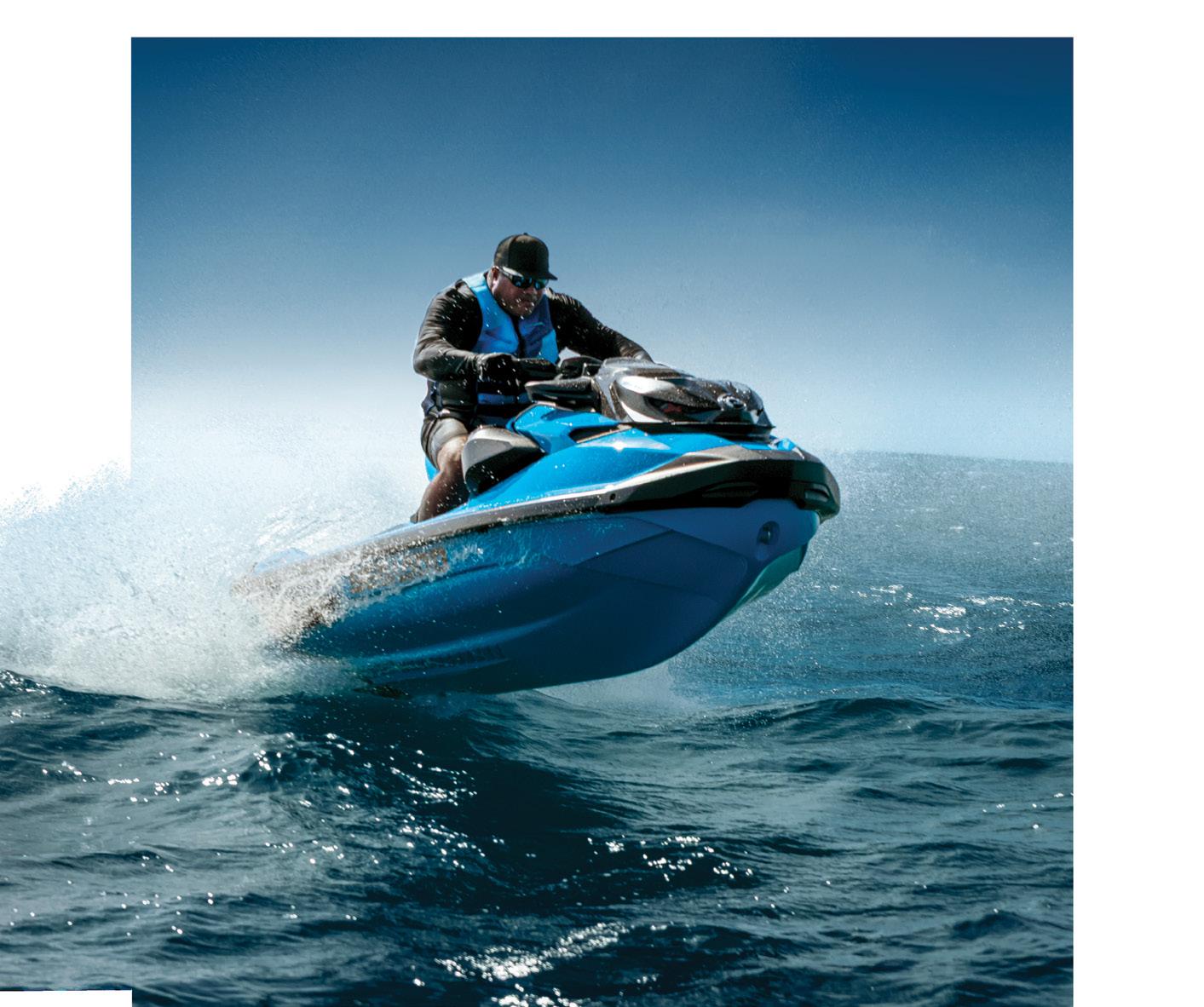

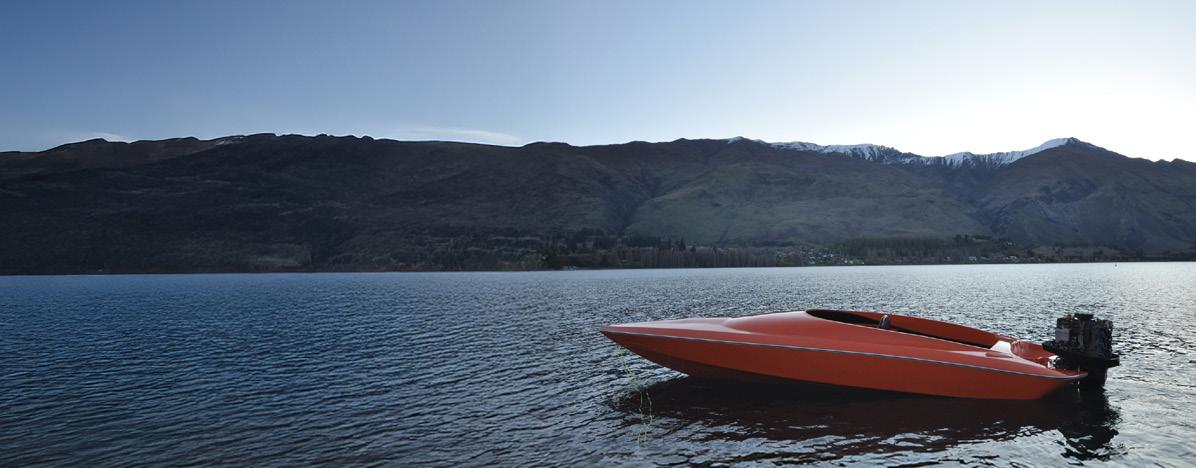
At Huntsman Boats, innovation often starts with collaboration.
Earlier this year, ski racer and race boat driver Luke Faid from Vortex Boats approached Huntsman Boats with a mold and a vision to see it produced to the highest production standards. The mold is that of a proven, well-known racing ski boat, designed by Nic de Mey, with Hunstman’s version rebranded as the Vortex and built to their exacting production standards. The result - a modernised race boat with proven roots and a whole new future. What started as a personal project quickly
caught the eye of the performance boating community. The response has been nothing short of overwhelming, from ski racers to thrill-seekers, it soon became clear this hull deserved a wider stage. That’s why, in partnership with Vortex Boats, the team at Huntsman Boats are excited to announce that the Vortex hull will now be offered as a permanent option, direct from the Huntsman factory. For those seeking more than just the bare hull, they’ll also have selected turnkey packages available (subject to conditions), providing both competitors and recreational users the opportunity
to hit the water with a complete, readyto-run setup. Every build will carry the hallmark Huntsman finish: sharp lines, high performance, and the durability to match. They expect to confirm official pricing and availability in early 2026. Until then, interest is building fast, and they’re confident this revitalised Vortex will carve its own reputation in the modern era of ski racing and high-performance boating. Built in partnership, born to race and now available for everyone.
HUNTSMANBOATS.CO.NZ

The Whiskey Project Group (TWPG), a global leader in high-performance watercraft design and manufacturing, have announced the opening of its new manufacturing facility in Edenton, North Carolina.
The strategic expansion marks a significant milestone in the company’s commitment to the American market and will serve as the primary hub for the build and delivery of its full NAiAD commercial vessel range across the Americas.
This new U.S. base will not only enhance service capabilities but also streamline the delivery of NAiAD’s rugged, operatorfocused Rigid-Hulled Inflatable Boats (RHIBs) to commercial and governmental clients across North and South America.
The facility is a vital part of TWPG’s mission to provide its customers with a competitive advantage through superior design, innovation, and localised support.
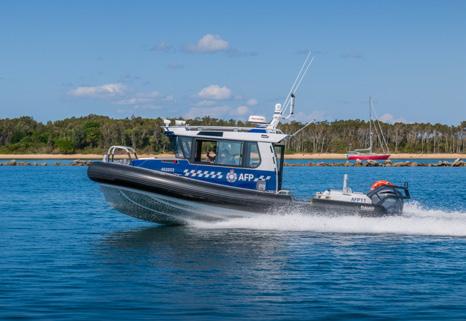
The NAiAD brand, renowned for its exceptional durability and seakeeping, has a proven track record as a trusted platform for search and rescue, law enforcement, and commercial operations worldwide. Known as the “4x4 of the sea,” NAiAD vessels are engineered to withstand the harshest marine conditions, a core principle that will now be instilled in every vessel built in North Carolina.
“Establishing our manufacturing presence in Edenton, NC, is a pivotal moment for The Whiskey Project Group,” said Darren Schuback, Chief Executive Officer. “This is more than just a new facility; it's a commitment to our American customers and partners. We are bringing our proven

expertise and a legacy of building the world’s most capable watercraft directly to the U.S. market, with the ability to offer build slots now to meet the growing demand for our vessels.”
The new Edenton facility underscores TWPG’s strategic vision of global growth and localised service, reinforcing its existing manufacturing footprint in Australia and New Zealand. The expansion is set to create skilled jobs in the local community, leveraging the region's rich maritime heritage and contributing to the local economy. THEWHISKEYPROJECTGROUP.COM
Gurit’s advanced lightweighting solutions provide the strength, performance and reliability you need to succeed.
Structural core materials
Spabond™ epoxy adhesives
Ampreg™ laminating systems
PRIME™ infusion systems
Proven prepreg and SPRINT™ products
Composite engineering support

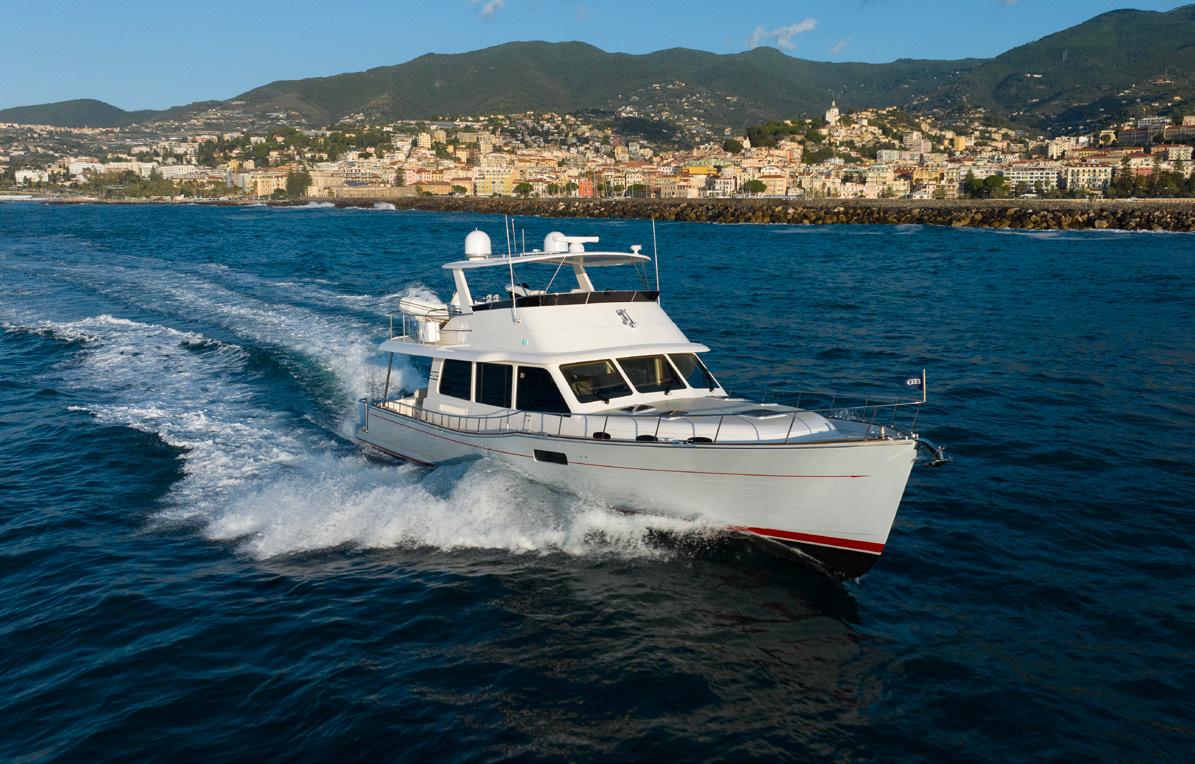
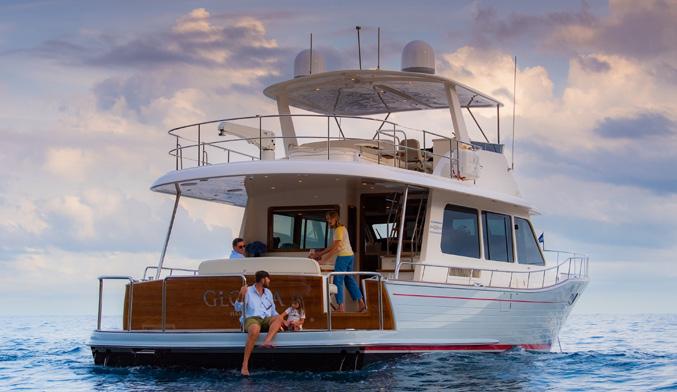
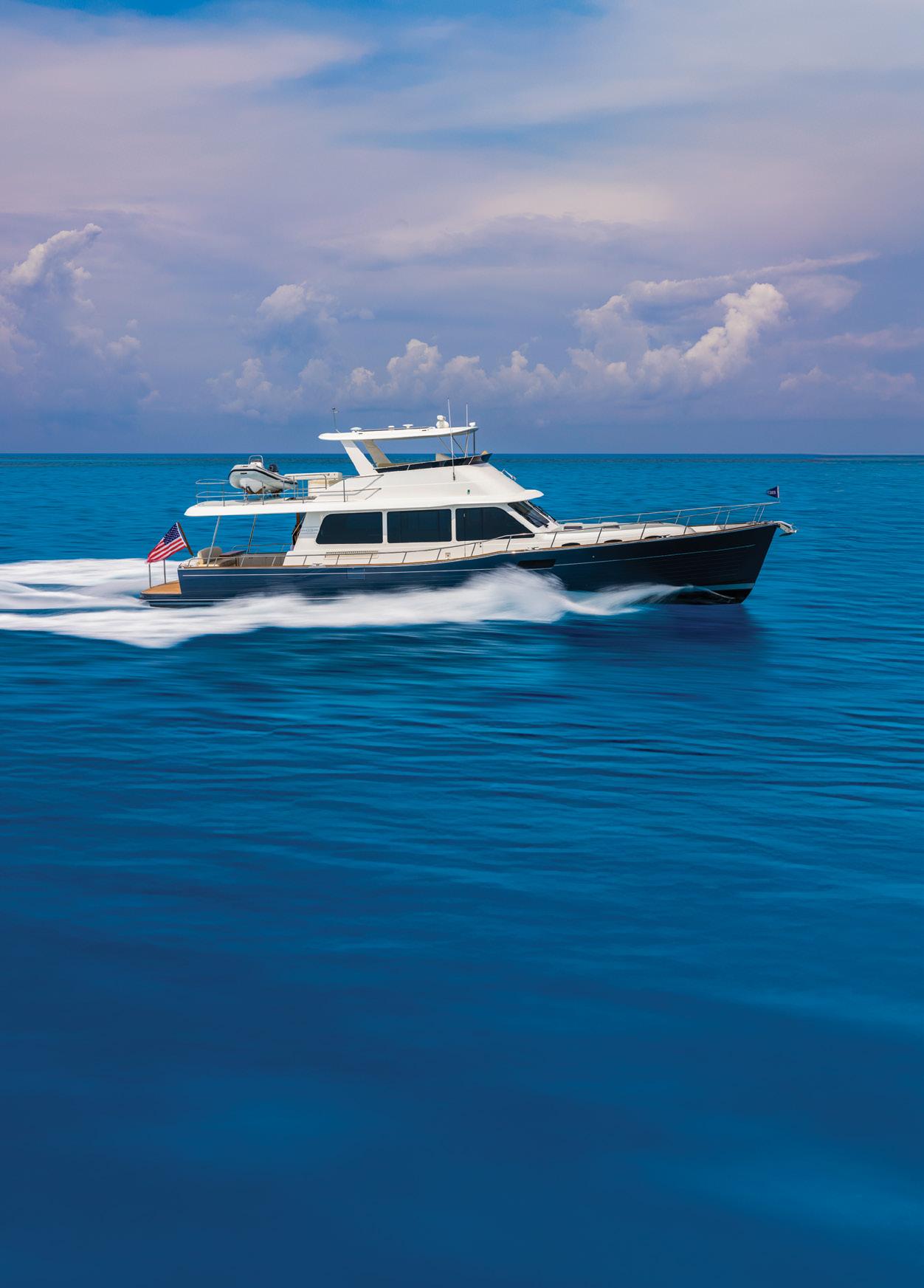
Grand Banks, the venerable builder synonymous with long-range cruising, returned to the Italian market by exhibiting at the Genoa Boat Show recently.
The Genoa Show remains an important cornerstone in the builder’s nearly 60-year presence in the Mediterranean market. As one of the world’s most iconic motor yacht brands, Grand Banks continues to expand its owner experience with a sales and service location in San Remo, Italy opening next season, with more details to come.
On display and making its Italian debut in Genoa, was one of Grand Banks’ most celebrated models, the Grand Banks 60. Launched in 2018 to great acclaim and popularity among owners and enthusiasts, this luxury motor yacht embodies the brand’s enduring values of craftsmanship, design, performance and efficiency. Each Grand Banks 60 is customised for its individual owner and built with meticulous attention to detail, from the precision of its joinery to the elegant flow of its interiors. The GB60’s timeless profile recalls the iconic lines that have long defined Grand Banks, while integrating modern design cues that meet the expectations of today’s most discerning yachtsmen.
Beyond its iconic Grand Banks aesthetic, the Grand Banks 60 sets a new standard for performance. It’s one of the world’s most fuel-efficient motor yachts in its class, thanks to Grand Banks’ ocean-
racing-inspired and proprietary V-Warp@ Technology. This advanced construction process, design philosophy, and extensive use of exotic materials to reduce weight and enhance strength. The Grand Banks 60 is a true standout in its class, blending traditional craftsmanship with modern innovation to deliver high-speed cruising that shortens long-range journeys in comfort with less fatigue.
The Grand Banks 60 is available in two configurations, the Flybridge or Skylounge model. Each version allows for owner customisation and up to three staterooms,
and luxuriously appointed interiors that reflect the timeless hand craftsmanship that Italian yachtsmen will remember from Grand Banks. The debut at Genoa is more than a boat show appearance - it is a statement of Grand Banks’ commitment to its growing European community. The Mediterranean has long been a proving ground for yachts that demand both performance and elegance, and the Grand Banks 60 is perfectly suited to these waters.
GRANDBANKS.COM

Motor Yacht Service Centre (MYSC) is honoured to share with the boating community that they have been appointed by Maritimo as an Authorised Sales Consultant for New Zealand.
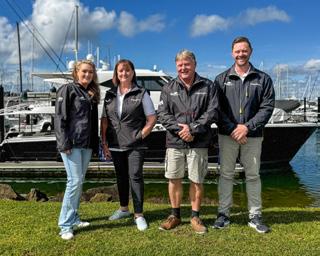
For over two decades, Maritimo owners have trusted MYSC to deliver all warranty work and after-market support for their Maritimo motor yachts. This long-standing partnership with the prestigious Maritimo brand has been built on quality, reliability, and a deep understanding of these passionately crafted boats. The MYSC team are privileged to extend its relationship with Maritimo and play a key role in representing Maritimo in New Zealand.
Customers can expect the same friendly, familiar team they’ve known for years, alongside some new faces who will help shape the next chapter of their growth. With this appointment, Maritimo clients now have one single point of contact for their entire ownership journey, making owning a Maritimo simpler and more seamless than ever before. Their existing service division will continue to operate as normal, maintaining their exceptional standards, including 24/7 support through their annual 250 Point service plan.
MYSC is also excited to announce their new Marine Precinct.
MYSC has recently completed a significant upgrade to their on-water facilities, adding three new berths adjacent to the marina car park. These berths accommodate vessels up to 25 metres in length and have been designed for seamless arrival and departure for all owners.
This milestone marked the beginning of the MYSC Marine Precinct. MYSC are thrilled to announce the next phase of its development: construction of a dedicated on-shore building that will bring all its current operations together under one roof. In collaboration with the marina owner, this facility will streamline their workflows and enhance the overall owner experience. The new building will feature capacity for two Maritimo M75 yachts stacked side by side, a mezzanine-level workshop positioned at the height of the boats’ boarding platforms, and direct walk-on and walk-off access between service areas and vessels. Integrated service and boatbuilding spaces will boost team efficiency. The showroom and Maritimo sales office will include an expansive 12 metre ceiling
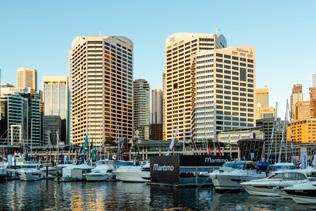
Maritimo Luxury Motor Yachts is proud to announce its return to the Sydney International On-Water Boat Show, marking a significant milestone for the iconic Australian brand after several years away.
With the show’s refreshed format and new November timing, the event provides the perfect opportunity for Maritimo to reconnect with customers and showcase its world-class vessels.
Owner Bill Barry-Cotter shared his enthusiasm, describing the return as a personal highlight. “I’ve been coming to the Sydney show for decades, so it feels like a homecoming to finally return. We’ve all missed it, and our owners have too. Every year since we last exhibited, they’ve been asking where Maritimo is, it’ll be fantastic to stand alongside them again and celebrate everything we’ve achieved.” Maritimo will exhibit two of its most acclaimed models— the M50 and M55 Flybridge motor yachts. Both exemplify the brand’s renowned craftsmanship, innovative design, and
superior on-water performance. Visitors can step aboard to experience the luxurious interiors, advanced technology, and precision engineering that define Maritimo as a global leader in luxury boating.
Marketing Manager Simon Stewart emphasised Sydney’s importance to the brand: “Sydney is a key market for Maritimo, and there’s no better way to reconnect with our owners and the boating community. We’ll be showcasing the new M50 Flybridge, which made its debut at the Sanctuary Cove International Boat Show earlier this year and has been in high demand since its launch.” Stewart also praised the timing of the event: “Holding the show in the warmer November weather makes it even more inviting. For Maritimo, it’s about more than boats, it’s about relationships. We’ve really missed catching
height with floor-to-ceiling glass frontage, offering panoramic views across the marina and extending to Auckland City. Their showroom will offer a Maritimo Experience but will showcase the finest in boating equipment for all luxury motor yachts. By co-locating on-shore and on-water facilities, MYSC will offer one of Auckland’s most comprehensive marine precincts. Their service division will continue to cater for all luxury motor yacht brands. This service will continue with the same high quality expected from their service plan clients. Owners will be able to explore new Maritimo models alongside their expert sales team, while their service specialists demonstrate the full capabilities of each vessel. This building is expected to be completed in approximately 12 months.
MOTORYACHTSERVICECENTRE.CO.NZ MARITIMO.COM.AU
up with our Sydney owners face-to-face.”
Maritimo consultant Josh Nash of Nash Marine echoed the excitement: “Showcasing the new M50 Flybridge at Sydney’s onwater show is a highlight for us. The M50 introduces several new features not seen in other Maritimo models, making it the perfect vessel to present in the new-look show.”
Adding to the excitement, the event will also provide an exclusive preview of what’s next for Caribbean Boats, another celebrated Australian brand. Attendees can expect a glimpse into future models that blend the company’s classic craftsmanship with modern innovations.
MARITIMO.COM.AU
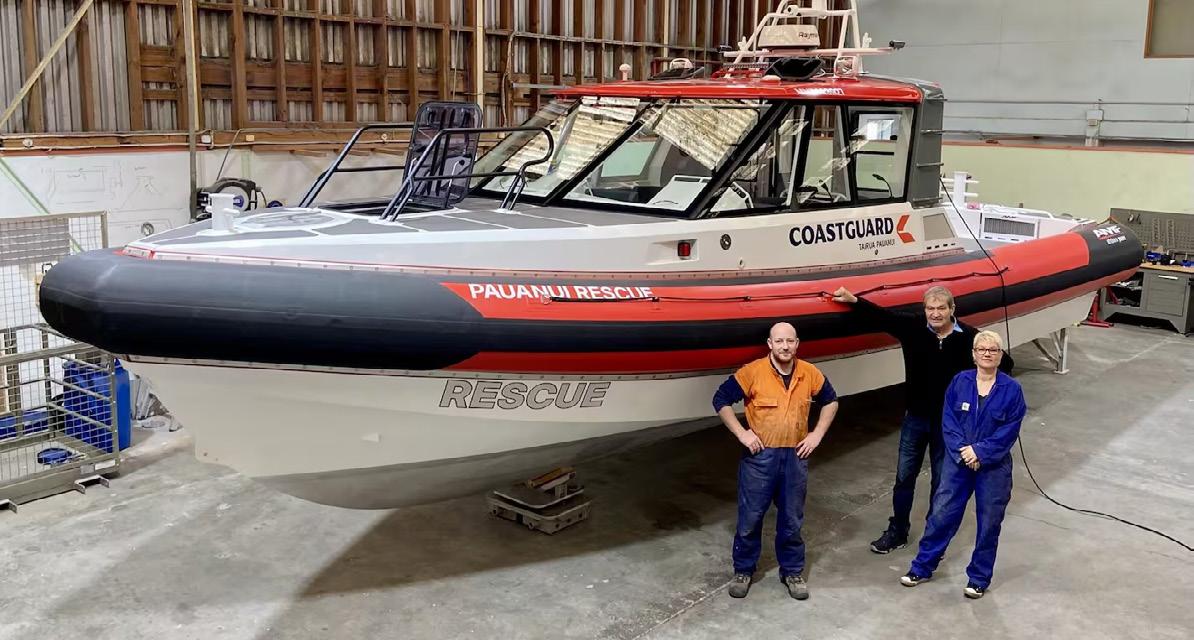
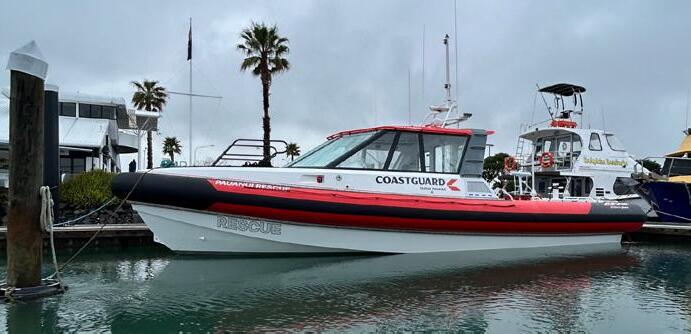
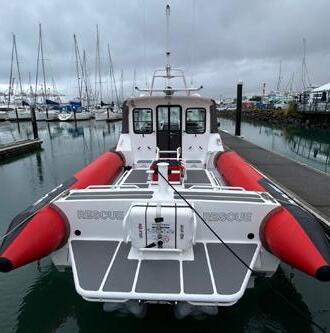
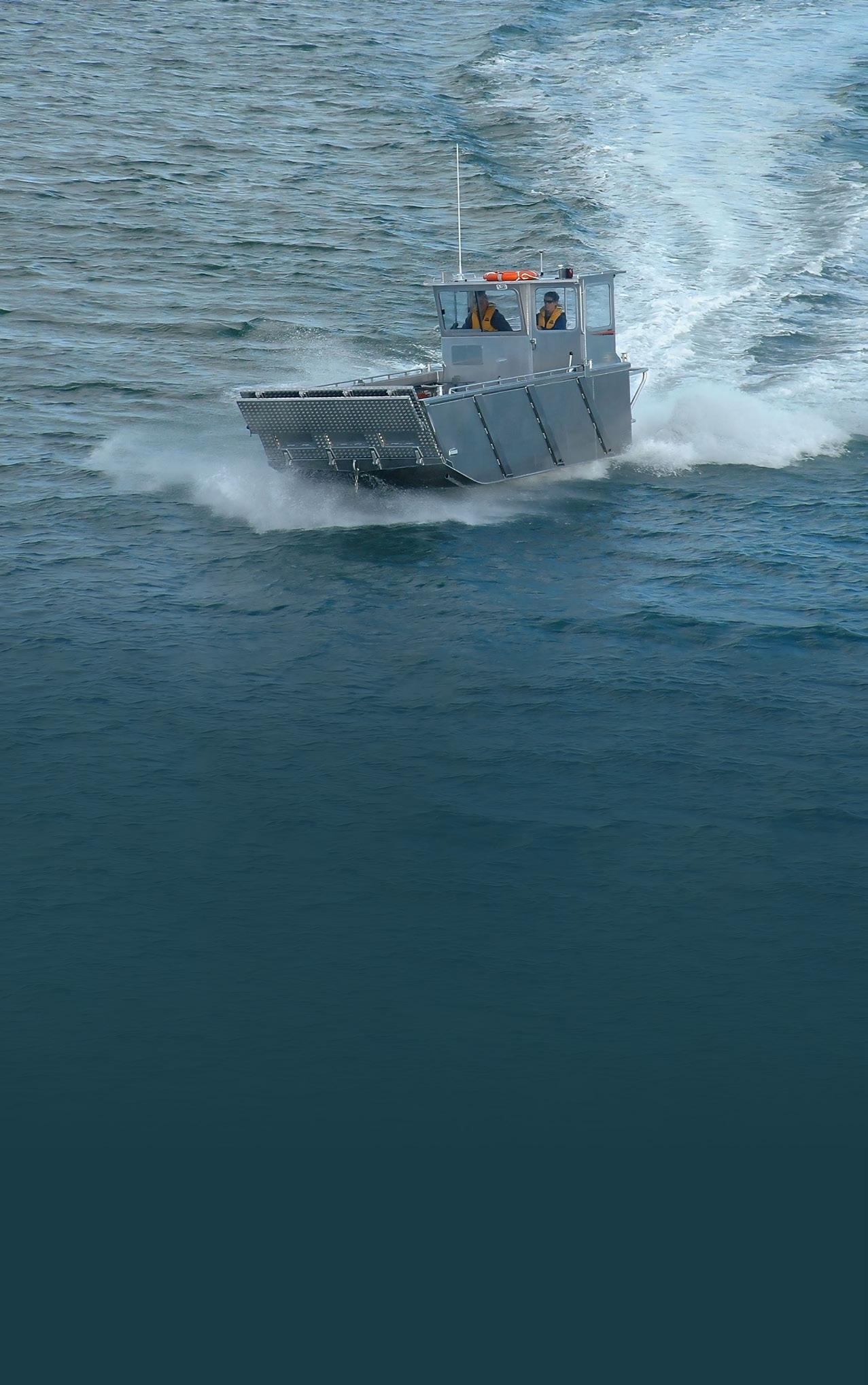
Whanganui-based boat builder AMF has just completed its 388th vessel, an 11-metre rigid inflatable boat (RIB) soon to join the fleet of Tairua-Pāuanui Coastguard.
Powered by twin Yanmar 440hp engines and Hamilton jets, the new craft is survey-approved for operations beyond the 12-mile limit.
It’s a familiar relationship: AMF also built Tairua-Pāuanui’s previous rescue vessel two decades ago, which, according to director Brian Collings, “hasn’t had a single issue in 20 years.” Reliability, he says, has become AMF’s hallmark.
Over its 40-plus years, AMF has exported vessels worldwide, including five delivered to the United Arab Emirates Coastguard. “They found us online,” recalls Collings. “I asked what brought them to New Zealand, and they said they’d searched globally and
what we did stood out. That was nice to hear. We don’t copy, we come up with original ideas.” Notably, AMF’s UAE fleet came with a five-year warranty and has never had a claim.
Collings’ own career has been as varied as his boats. Trained first as an electrician, he moved through machinery repair, industrial sewing machines, and outboard mechanics before founding Rivercity Marine in 1981. His association with AMF began through Tauranga boatbuilder Paul Sharratt, who later sold him first the Pro Sport series, then the company itself. By 2011, Collings had shifted AMF’s base permanently back to Whanganui, where the business continues to thrive.
Today the AMF team is small but skilled: Collings, his wife Jodi (Sharratt’s daughter), and boatbuilder Ryan Cameron, who Collings says “virtually built this boat on his own.” Together they’ve produced 26 Coastguard vessels for New Zealand alone. Looking ahead, AMF is turning its attention to recreational models built to the same rugged commercial standard. Many of their earliest builds from the 1980s are still in service, a testament to a design philosophy Collings sums up simply: “We’ve got something that works, and we’ve kept with it.”
AMFBOATS.CO.NZ
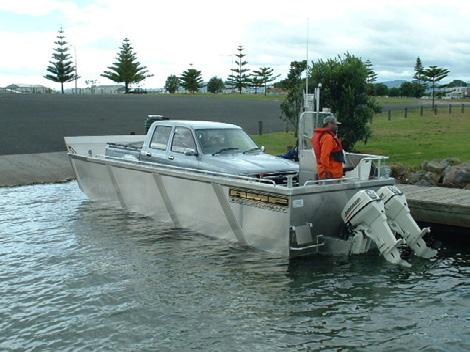
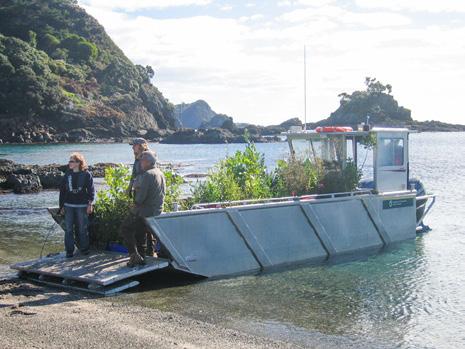
AMF Boat Co Ltd - premier New Zealand manufacturer, designs and builds high-performance custom Aluminium boats ranging from 5.8 to 15 meters. Renowned for their longevity, toughness and soft-riding capabilities, our hand-built vessels are tailored for diverse applications, including recreational, commercial, and specialized roles such as search and rescue or superyacht tenders. Experience unmatched quality and performance with AMF Boats. Built from top quality European 5083 plate.

Customised to your specific needs, find out more at:
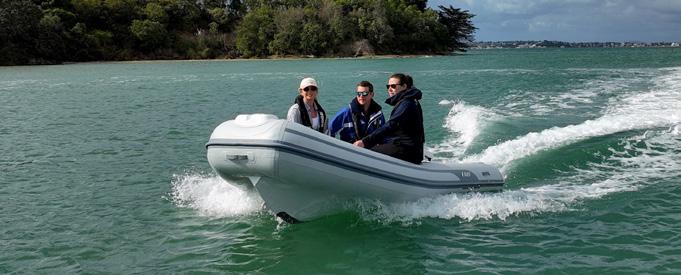
ZeroJet, the pioneer of next-generation electric jet propulsion, has partnered with AB Inflatables to launch a new electric RIB package based on the proven Lammina AL platform.
Tcollaboration combines AB’s renowned hull design with ZeroJet’s integrated electric jet system, creating a high-performance, cost-effective electric tender that raises the bar for performance, safety, and accessibility.
The package comes pre-installed with a ZeroJet Gen-3 Tiller Steer jet drive, offering a smooth, quiet ride with the agility only a jet boat can deliver. With no exposed propeller, the concealed jet drive enhances swimmer safety while enabling easy shallow-water operation, making it ideal for exploring beaches and coastlines. The tiller steer setup also maximises deck space, adding to its practicality and ease of use.
ZeroJet CEO James Morton said the goal was to deliver “a more accessible electric tender—one that performs exceptionally well at a competitive price point.” The lightweight Lammina AL hull is a natural fit, allowing the system to excel even when
carrying passengers and gear.
The Gen-3 jet drive produces 15kW of continuous power, equivalent to a 20hp outboard, and is powered by two 2.7kWh semi-solid-state LiPo4 batteries—the safest available chemistry. Its 48V dual-pack system ensures redundancy, a compact design, and a range of up to 26NM. With optional extra batteries, cruising range extends to over 20NM at 12 knots. At just
180kg fully rigged, it is light, efficient, and virtually maintenance-free. ZeroJet backs the system with a three-year warranty on both jet and batteries, requiring no servicing in that period. The ZeroJetpowered Lammina AL RIB will be available through AB Inflatables and ZeroJet dealers, launching first in the US and Europe before expanding to Australia and New Zealand.
ZEROJET.COM/AB-SHOWROOM

Freedom Boat Club, the world’s largest boat club, is proud to announce its continued growth in New Zealand with the opening of a new location at Te Ana Marina in Lyttelton, Christchurch.
This expansion is complemented by the launch of Freedom Local, a new membership tier designed to provide affordable, easy access to boating for Kiwis eager to explore the country’s iconic coastlines and lakes.
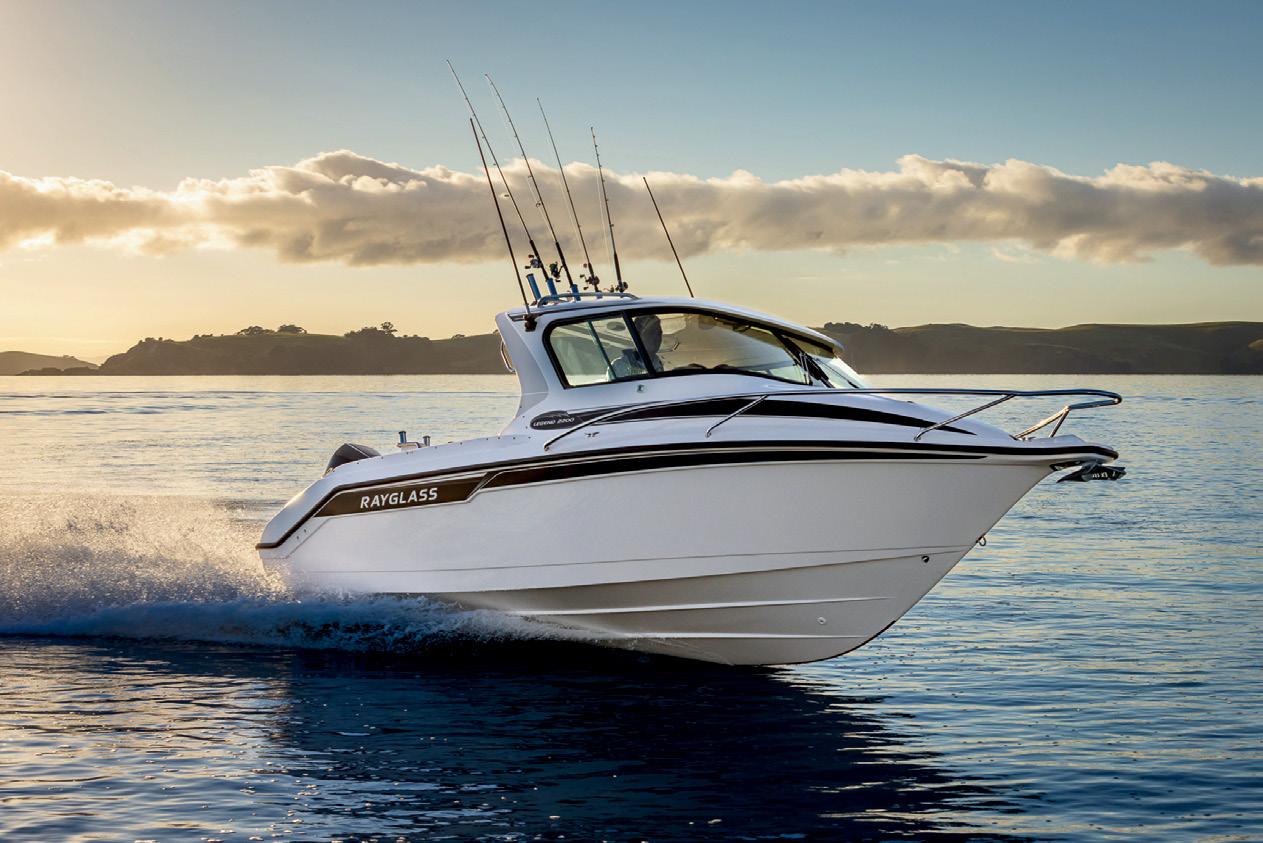
As Canterbury’s only walk-on floating marina, Te Ana Marina offers secure, modern facilities and immediate access to the calm, scenic waters of Lyttelton Harbour. Whether fishing, exploring hidden bays, or cruising with views of the Banks Peninsula, members will enjoy an exceptional boating experience without the commitment of boat ownership. The fleet at the new location will feature a variety of
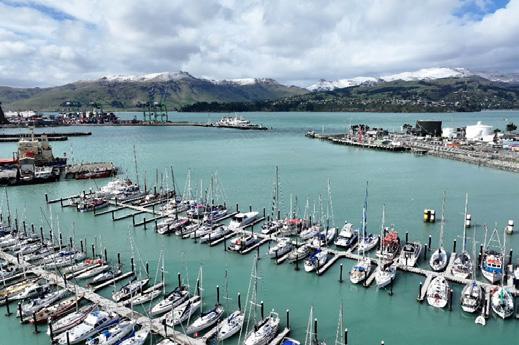
premium vessels including the Sea Ray Sun Sport 230, Rayglass Legend 2350, and for the Freedom Local members, the Stabicraft 1850, and the Rae Line 186.
“We’re incredibly excited to bring Freedom Boat Club to Christchurch and to call Te Ana Marina our newest home,” said Scott Williamson, Owner, Freedom Boat Club New Zealand. “Lyttelton Harbour offers some of the best boating in the country and this location enables us to expand accessibility and deliver a world-class on-water experience to new and seasoned boaters alike.”
To further enhance accessibility, Freedom Boat Club New Zealand has introduced its
Freedom Local membership plan, tailored for local boaters looking for weekday access at a lower-cost entry point into the boating lifestyle. “Freedom Local is our most accessible membership yet, designed specifically for Kiwi boaters who want great value and a simple way to enjoy the water,” Williamson added. “It opens the door to a lifestyle that many thought was out of reach. No maintenance, no storage, no launching – just book, board, and boat.” The new location is now open for membership, and Freedom Local sign-ups are available.
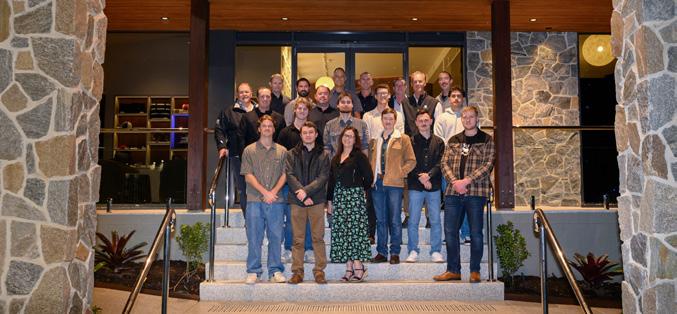
Riviera, one of Australia’s leading luxury motor yacht builders, is celebrating the graduation of 10 apprentices who have completed both their four-year vocational training and the company’s exclusive Propel program.
Since 1993, Riviera’s Academy of Excellence has developed hundreds of marine industry craftspeople through apprenticeships and Propel, a parallel program designed to build life skills alongside technical training. Propel covers leadership, communication, relationship building and personal finance, with guidance from senior trainers including Riviera owner Rodney Longhurst. Graduates were honoured at a special dinner at the new Riviera Yacht Club, overlooking the company’s Coomera marina on the Gold Coast. Addressing the apprentices, Longhurst praised their commitment: “We have given you the opportunity to shine and advance. It has been up to you to grasp this opportunity, and you have done just that. I’ve watched you learn and grow to become not only outstanding individuals, but exceptional tradespeople. You have completed the first chapter of your careers; your second chapter begins now.” Apprentice and Training Manager Keira Bradke also acknowledged their efforts: “Tonight’s celebration is a testament to your hard work, and your unwavering commitment to excellence.” For many apprentices, Propel has been as transformative as the technical training. Timber machinist apprentice Connor Baruksopulo said he began his career “guarded,” but gained confidence and life skills. “Rodney Longhurst gave us examples from his own life about careful use of
money and saving a little every week. I plan to become a CNC timber operator, learn programming, and step up to a leadership role.” Luke Burgess, who joined Riviera as a school-based apprentice, said he was working “on the tools” from day one. “At first I was shy, but Propel has taught me to communicate and handle difficult conversations. I’d like to travel with the company, work in the US, and complete a diploma of management.” Timber machinist Harry Tonks, introduced to Riviera through a family friend, valued the Propel classes. “Rodney Longhurst was great in sharing his knowledge and teaching us how to come up with solutions to difficult problems. I am now much more confident and look forward to learning programming of the timber CNC system.”
Connor Edwards, who discovered Riviera at a school information session, said Propel
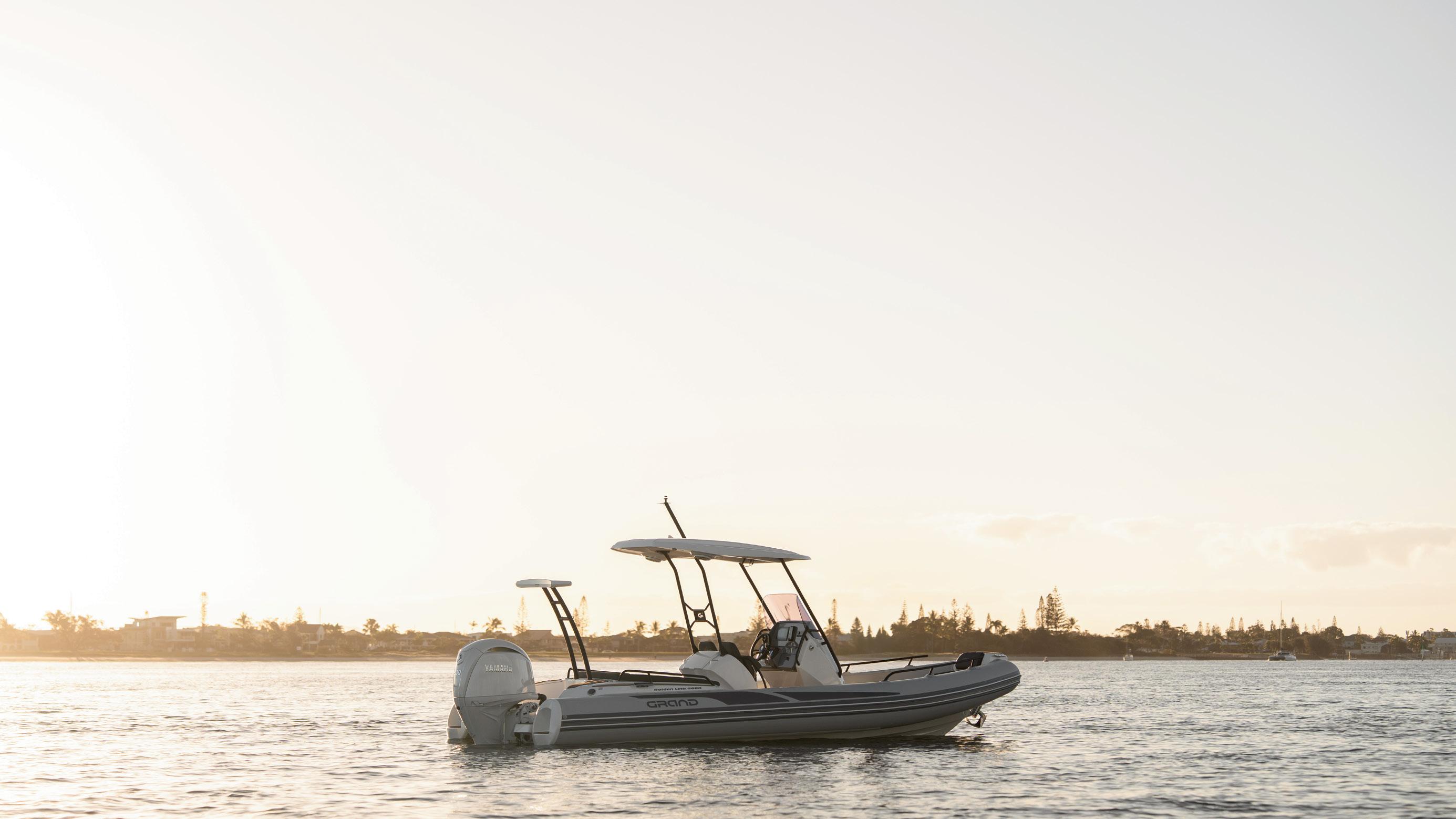
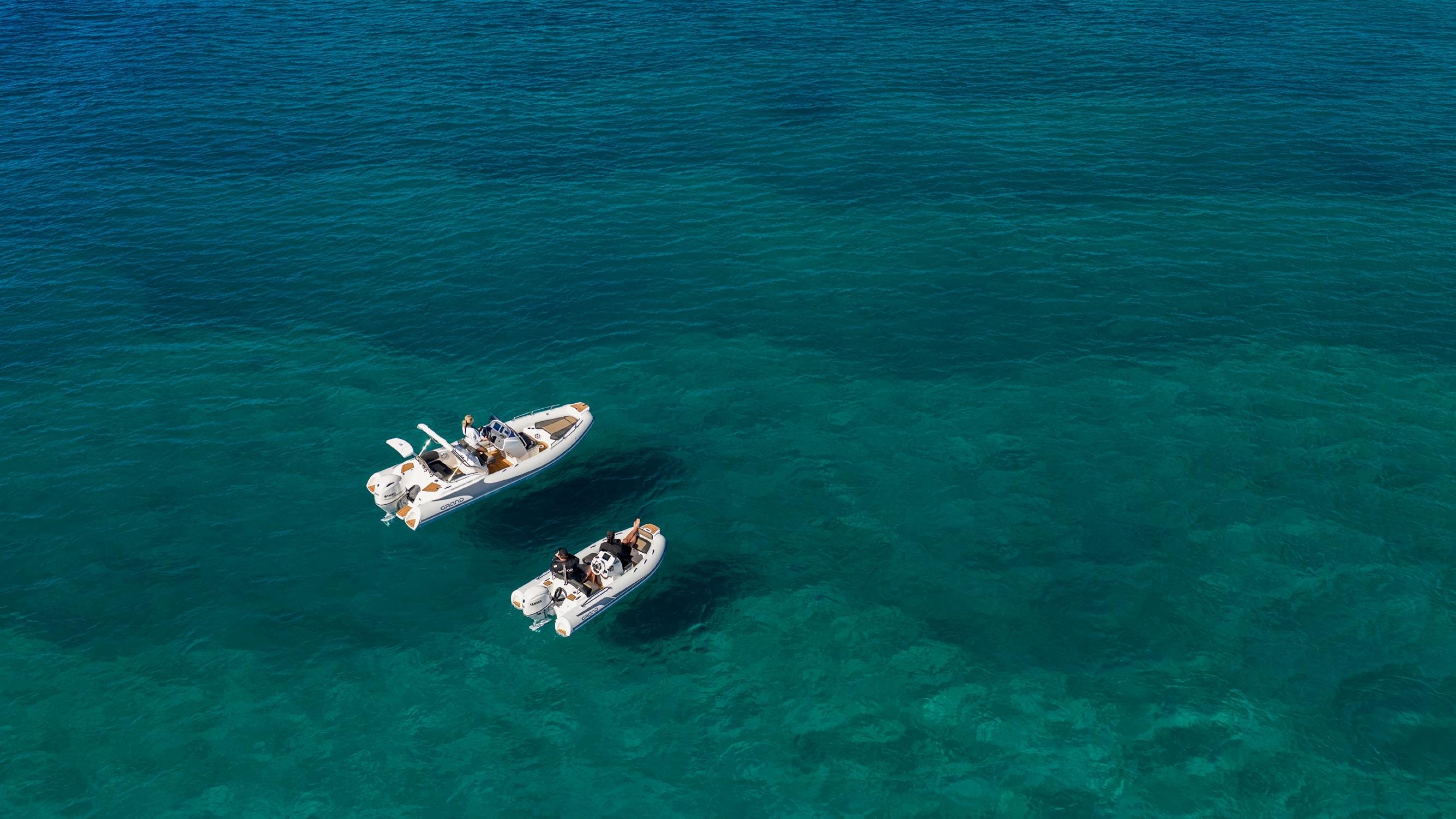
Grand Boats Australia, a leader in premium fibreglass rigid inflatable boats (RIBs) and tenders, has appointed Boat Sales Tasmania (BST) as its exclusive dealer for the Tasmanian region.
Based in Sandy Bay, Hobart, BST has been a trusted, family-owned business since 1988 and represents leading brands including Jeanneau Power & Sail and Integrity Motor Yachts. Principal Matthew Johnston brings extensive marine industry experience, including leadership roles at Muir Windlasses Australia, Tasports, and the Australian International Marine Export
Group (AIMEX). “We’re excited to represent Grand Boats in Tasmania,” said Johnston. “Tasmanians love their RIBs, and Grand offers a quality alternative to other brands on the market.”
Launched in Australia in July 2024, Grand Boats has quickly gained recognition for its European design, build quality, and performance. Grand Boats Australia Managing Director Dan
gave him essential financial and workplace skills. “We also learned about resolving personal and technical disagreements on the factory floor. I’d like to work with the New Product Introduction team, expanding into engineering and electrical.”
Senior instructor Justin Leigh-Smith described Propel as crucial to shaping well-rounded careers. “It’s not simply about helping you be great in your chosen trade but great in life. You’ve tackled big topics like people skills, resilience, and learning that your mindset shapes your journey. These lessons will guide you long after the training floor.” Through its Academy of Excellence and Propel, Riviera continues to equip young people not only with world-class craftsmanship, but also with the personal skills to lead, adapt and succeed in life.
RIVIERAAUSTRALIA.COM
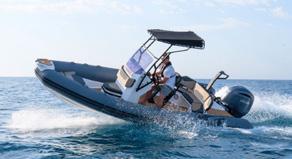
Arscott said, “Boat Sales Tasmania’s strong reputation and customer focus make them an ideal partner. We see great growth potential in Tasmania.” The announcement follows the reveal of Grand’s upcoming flagship model, the Grand G950, arriving in Australia early next year.
GRANDBOATS.COM.AU
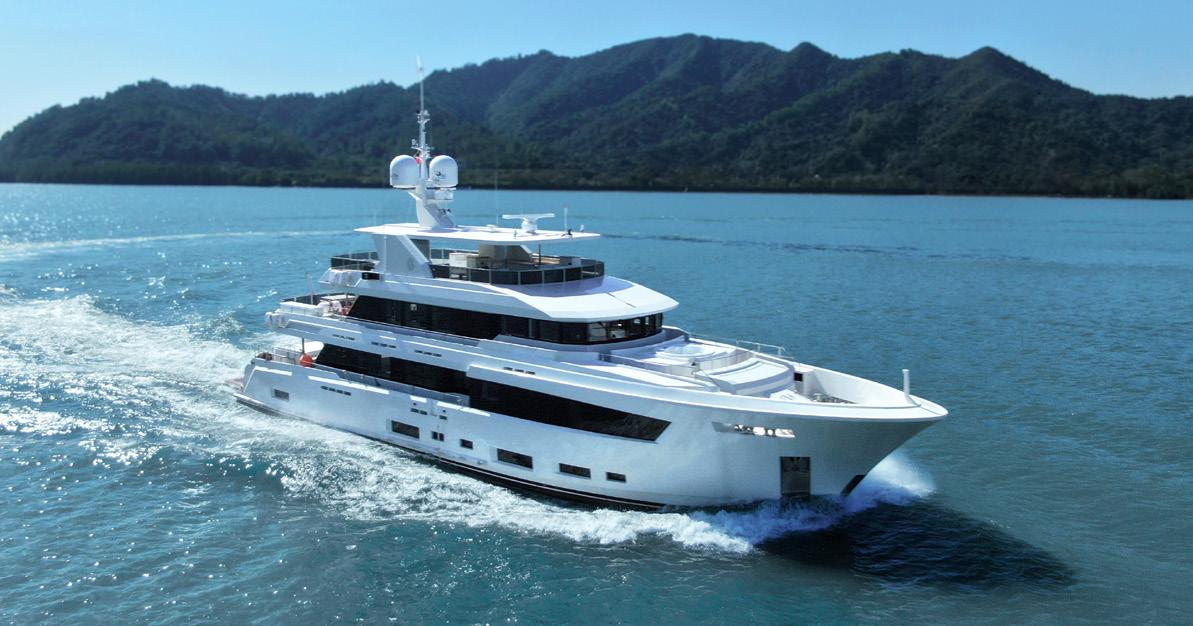
Award-winning megayacht builder Cheoy Lee Yachts showcased detailed plans for the new Cheoy Lee Discovery Series luxury explorer yacht line at the recent 2025 Fort Lauderdale International Boat Show.
The new Cheoy Lee 130 Explorer also made her debut at the show.
“Cheoy Lee has been building large yachts capable of long-range voyaging for more than 70 years, combining fine artisanship and luxury amenities with cutting-edge technology and commercial maritime practicality. We were proud to have had the opportunity at FLIBS to introduce plans for the Discovery Series. This robust new explorer yacht line and the new Cheoy Lee 130 truly showcase the modern yacht building capability of our family shipyard,” said Cheoy Lee Shipyards Executive Director B.Y. Lo.
The 130 Explorer was recently delivered
to her owner and returned from extended cruising adventures. During the show, she was available for viewing by appointment only. Alongside the new 130 Explorer, sister brand CL Yachts also showcased at FLIBS its family-friendly cruisers - CLB72 and CLB65 - each designed for effortless performance and refined living.
The Discovery Series explorer yachts, designed by Nick Boksa of Boksa Marine Design in collaboration with Cheoy Lee Yachts, has evolved into an exciting new line of long-range, steel-hulled megayachts including (to date) the Discovery 115, Discovery 120 and Discovery 127. Boksa, like Cheoy Lee, draws on an extensive
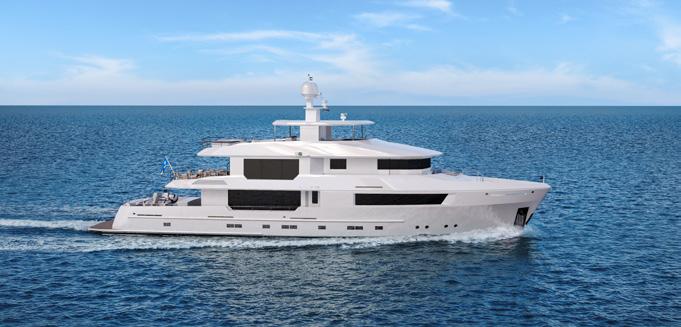
background in both commercial and leisure marine projects in designing these compact and exceptionally efficient, go-anywhere explorers. Their high-volume layouts feature the same level styling and luxury amenities typical of a larger explorer yacht, from the bridge deck master suite on the Discovery 115 to the spacious beach club on the Discovery 120 to the generous sundeck complete with bar, grill, spa tub and multiple seating areas on the Discovery 127. It's not just about style and space, however – Cheoy Lee approaches the engineering and construction of its superyachts in the same way it tackles commercial projects, and that means robust systems design and inherent reliability with commercial-level equipment to ensure self-sufficiency and issue-free operation even when cruising far from the beaten track.
“The Discovery series draws on everything we know about building seaworthy global cruisers and hardy, reliable commercial vessels and workboats, and combines it all into an elegant, contemporary oceangoing yacht that delivers luxurious world cruising without compromise on facilities or service,” said Lo.
CHEOYLEEYACHTS.COM
CLYACHTS.COM
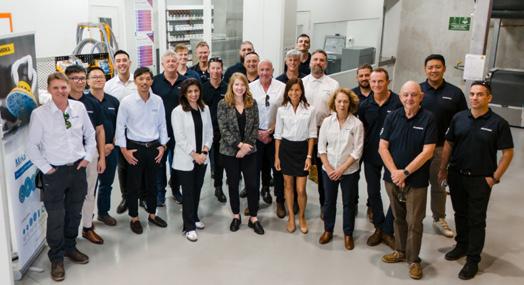
In support of marinas and boatyards throughout the Asia-Pacific, AkzoNobel has become the latest industry support partner confirming Bronze Sponsorship of the Marina Industries Association (MIA).
AkzoNobel proudly brings together three of the most trusted names in yacht coatings: Awlgrip®, International® and Sea Hawk®, each renowned for delivering high-performance solutions that meet the demands of both professional and recreational boaters. On confirming the sponsorship arrangement, Simon Knight, Regional Sales Manager Asia-Pacific, AkzoNobel said, “Marinas and boatyards throughout the Asia-Pacific region are great supporters of AkzoNobel and our yacht coatings brands. Supporting the industry is our way of giving back and acknowledging the trust they place in us. The MIA does a great job championing boatyards, and we’re proud to help ‘propel’ their efforts forward”.
AkzoNobel has also announced that it will be exhibiting at the Marinas26 International Conference & Trade Exhibition. Irina Atanasova, Australia &
Pacific Islands Sales Manager, AkzoNobel, who attended the event for the first time in 2024 in Brisbane said, “This is a great event where the entire industry gathers to meet, network and learn. It is such a collegiate industry and it’s wonderful to be part of it. We're excited to be exhibiting at Marinas26, where we look forward to engaging with our existing customers, meeting new ones and sharing insights into the performance of our products and innovative technologies that support more sustainable solutions."
Suzanne Davies, Marina Industries Association CEO commented, “We are delighted to have AkzoNobel join us as key industry partners. The MIA does a lot of training of boatyard personnel, and it will be great to have the support and involvement of AkzoNobel as we continue to develop our boatyard best practice portfolio.” AkzoNobel recently opened its
Nearly three decades ago, former trainee car mechanic Mike Borrelli launched Metan Marine from a shrink-wrap shed in his backyard.
Inspired by his time as a mate aboard a fishing boat in Scituate, Massachusetts, Mike teamed up with his father and a friend to turn his passion into a business. Today, Metan Marine is one of the most sought-after boat restoration companies in the United States. The company now operates from a 25,000 ft.² facility and restores vessels for clients around the world. With $100,000 spray booths and expert craftsmanship, all documented for thousands of loyal YouTube subscribers, Metan Marine has become synonymous with quality and precision. For Mike, one constant has been crucial to his success from the very beginning: Awlgrip® coatings. Mike said: “I have always used Awlgrip for all my boats. I will never forget the late Steve Smith pulling into my driveway on my second project. He was an absolute
book of knowledge and such a kind gentleman. I was used to the automotive industry, where it was base coat, clearcoat and enamel over it. Steve took the time to explain the difference between linear urethanes and acrylic urethane, and how the clear rises to the surface during the cure process.” Mike quickly saw the benefits of switching to Awlgrip premium polyurethane finishes, known for their ease of application and outstanding gloss retention.
For years you could not wet sand and buff using linear urethane finishes because you would break the surface,” he said. “Awlcraft 2000 changed that, by allowing the new coat to melt into the previous layer during wet sanding, enabling polishing to the point you would not even know the repair is there.”
first Yacht Paint Application Centre (YPAC) in the Asia-Pacific region, offering worldclass product and technical training, along with cutting-edge digital paint application tools. Conveniently located at the Gold Coast City Marina in Coomera, AkzoNobel invites Marinas26 delegates to visit the YPAC while on the Gold Coast next year. Becoming an industry sponsor is an excellent way for suppliers to remain ‘top of mind’ as it provides high exposure in this growing industry. The 2025 MIA Member Survey reported that over 60 per cent of members actively consider MIA sponsors and partners when making purchasing and acquisition decisions in recognition of their industry support.
MARINAS.NET.AU
INTERNATIONAL-YACHTPAINT.COM/ NZ/EN
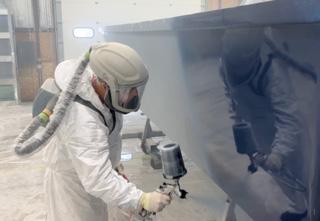
Today, Mike applies the latest topcoat technology, Awlcraft® 3000, in combination with AkzoNobel’s advanced colour platform to deliver flawless results. “We have just completed one of the longest paint runs ever, using both spray booths on five projects. The feedback on the Awlgrip finish and durability has been unbelievable.” From humble beginnings to international acclaim, Metan Marine’s journey is one of grit, innovation and a commitment to excellence, supported by the reliability and performance of Awlgrip coatings. “Awlgrip has been with us from day one. It is more than a product. It is a partnership that allows us to deliver the best possible results for our customers.”
AKZONOBEL.COM
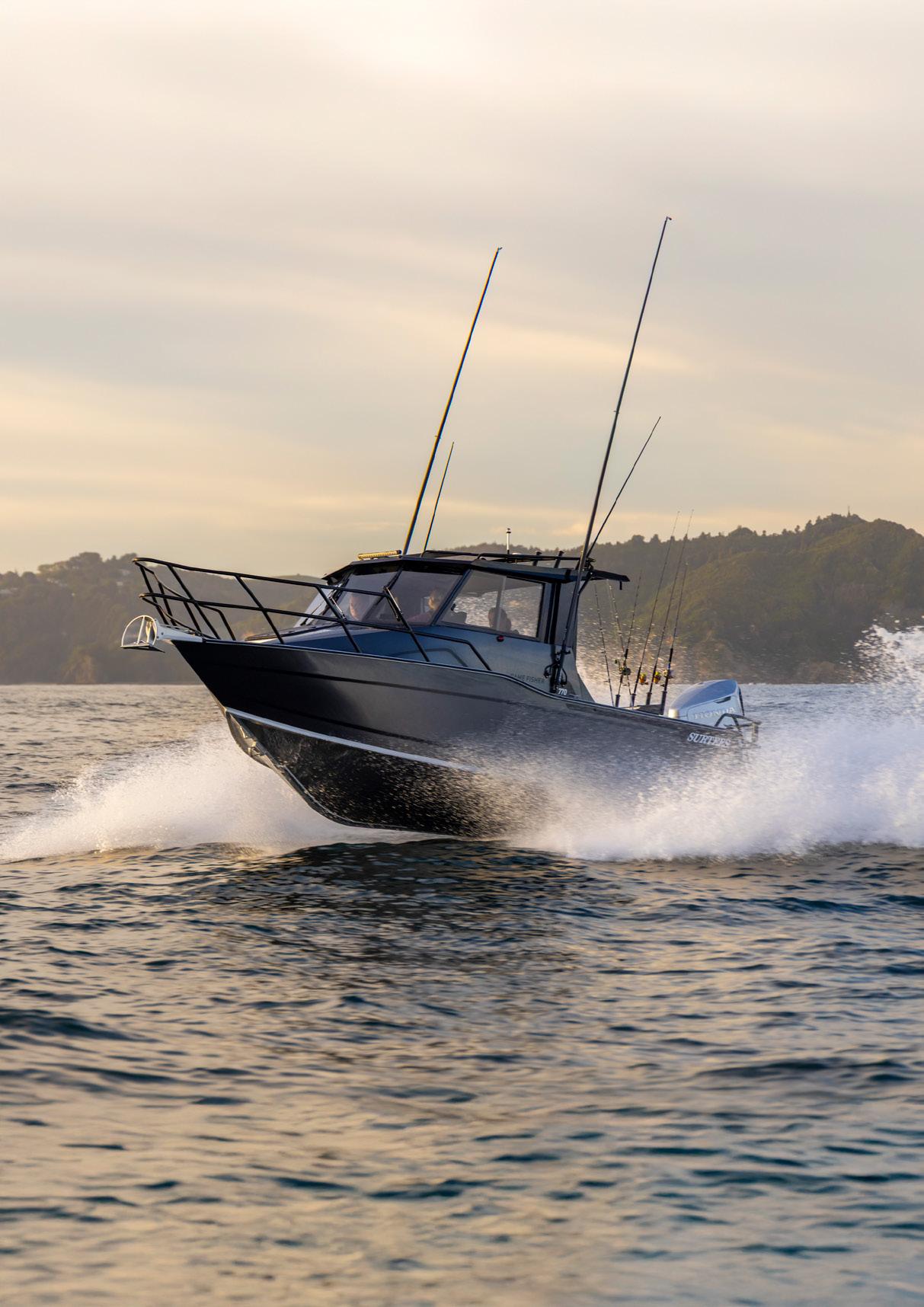
The bar was already high. We raised it again. Introducing the upgraded Surtees 770 Game Fisher. Built tougher, an even smoother ride, and packed with even more innovation - the 770 Game Fisher continues to lead from the front. www.surteesboats.com
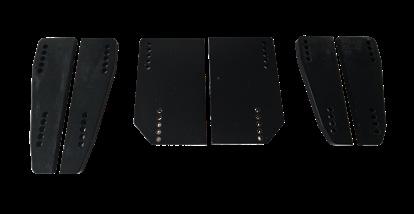
Alloy boats, prized for their strength and lightweight performance, are also notorious for transmitting engine and wave-induced vibrations throughout the hull.
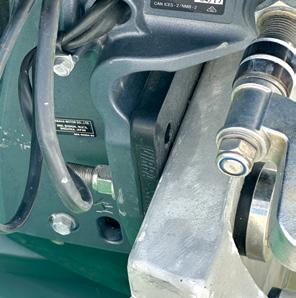
This can lead to increased noise, structural fatigue, and discomfort for boaties. Vibra-Stop’s pads are specifically formulated to dampen these vibrations at their source, offering a quieter, smoother ride and protecting onboard equipment from long-term wear. These pads are a game-changer for anyone seeking better comfort, durability, and acoustic control on the water.
1. HULL-FRIENDLY DAMPING
Reduces vibration transfer from engines into alloy hulls.
2. NOISE SUPPRESSION
Minimises onboard noise for a more enjoyable boating experience.
3. EXCELLENT MEMORY RETENTION
Pads will not compress over time
so a consistent clamping force is maintained between the engine and the boat.
4. HIGH QUALITY MATERIALS
Pads are manufactured from high quality urethane with excellent UV properties so they won’t break down in the sun or absorb water.
5. EASY INSTALLATION
Several sizes available for use with common mounting systems. Backing pads can be purchased as a standalone product or as part of a kit providing the ultimate solution in vibration reduction. Vibra-Stop backing pads and kits are available through select marine suppliers, boat manufacturers or directly.
MARINEXPRESS.CO.NZ
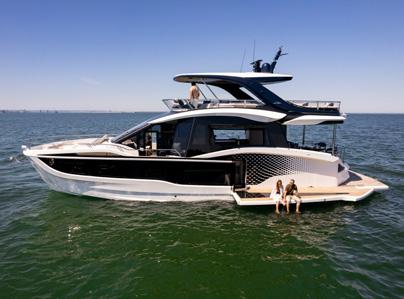
As the exclusive importer and distributor for Galeon Yachts in Australia and New Zealand, Alexander Marine is proud to announce that the Galeon 620 FLY has recently received the Best Innovation Award in the 45’ to 64’ category at the prestigious World Yachts Trophies in Cannes, France.
The World Yachts Trophies celebrate the best motorboats and yachts from 13 to 140 metres launched during the year, with around 30 awards presented during a glittering gala dinner. The event, staged on the beach in front of the Cannes Carlton hotel, welcomed up to 700 guests and culminated with the legendary Yachts Parade—a spectacular night ballet of the most beautiful boats in the bay of Cannes.
Making her world premiere at the Cannes Yachting Festival, the Galeon 620 FLY was an instant standout. Designed to showcase Galeon’s commitment to technical mastery and innovation, she blends sporty elegance with high-end functionality, setting a new
standard in modern yacht design.
Among her most notable features is Terrace Mode, with foldable aft side balconies that create an expansive waterside terrace and provide direct master-cabin access to the sea. An asymmetrical saloon layout further enhances space by removing the port side deck, maximising interior volume while strengthening the yacht’s connection to the outdoors.
Alexander Marine Dealer Principal and Director, Todd Holzapfel, attended the global premiere in Cannes alongside Superyacht Sales Executive Martin Hills.
“The 620 FLY has certainly delivered on the promise to ‘redefine modern yacht design’ made by Galeon Yachts at boot Düsseldorf
earlier this year,” Holzapfel said. Holzapfel also visited Galeon’s shipyard in Poland during the dealer conference, experiencing firsthand the brand’s bold approach to product development. This focus on innovation and luxury design continues to drive Galeon’s global success and reinforces Alexander Marine’s pride in offering these award-winning yachts to clients in Australia and New Zealand.
Alexander Marine congratulates Galeon Yachts on this prestigious award and looks forward to delivering the exciting Galeon range to discerning yacht owners across the region.


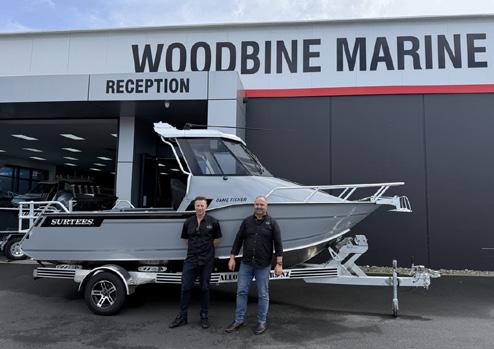
Surtees are excited to announce that Woodbine Marine, Hamilton, has joined their Surtees Dealer Network. Cule hatches are proudly made in NZ so we can customise to your needs and supply any parts. Easy online purchasing backed by friendly local customer service and a manufacturers warranty. Get in touch to discuss your next project.
Woodbine Marine is a family-owned and operated company that has been in the marine business since 2006 and has over 40 years of combined boating experience.
If you're in the Waikato and looking for a new boat, be sure to see Mark, Sam, and the team, as well as the range of Surtees that they have on display.
WOODBINEMARINEAUCKLAND.CO.NZ SURTEESBOATS.COM
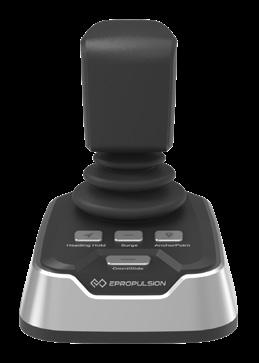
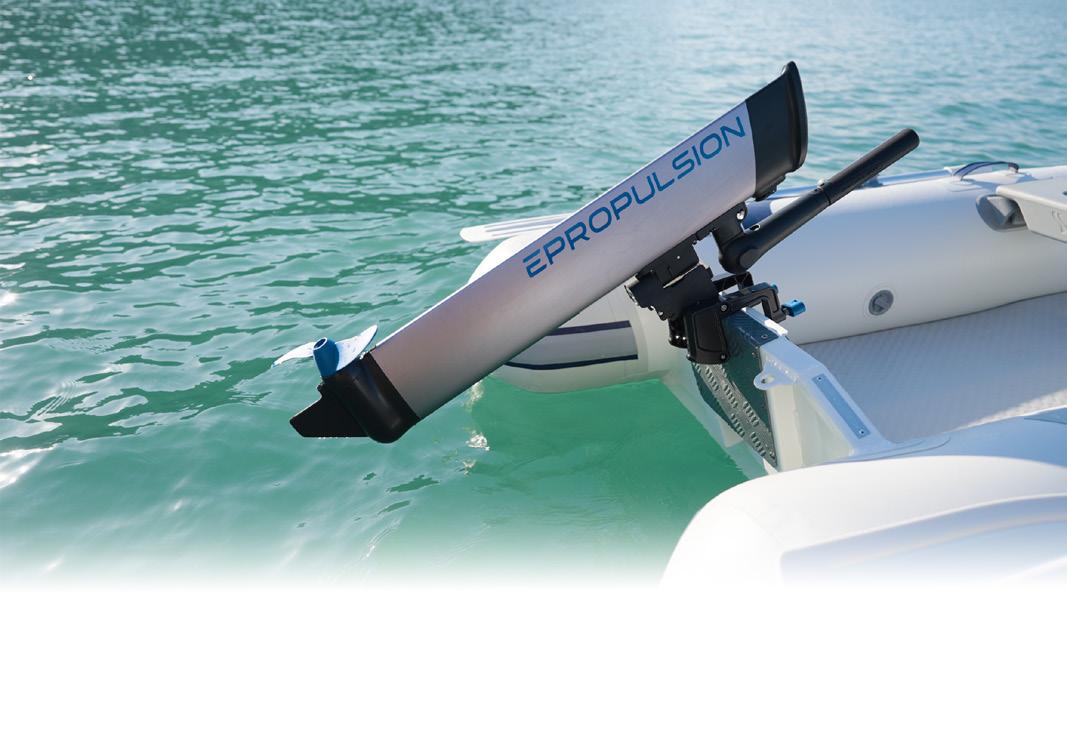
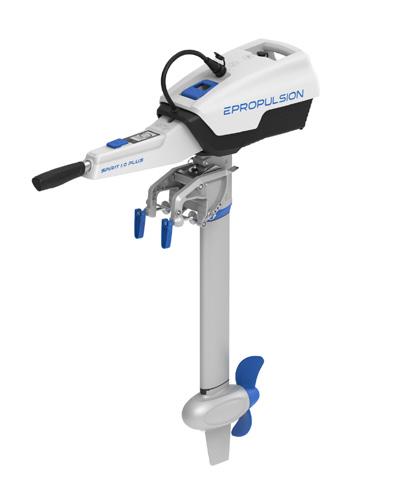
ePropulsion, a global leader in marine electric propulsion systems and services, has announced the next step in total helm control with the debut of its new Smart Control Joystick system, bringing precision and true 360-degree control across electric-powered vessels from small jon boats to larger recreational vessels.
Propulsion’s innovative Smart Control Joystick offers boaters an intuitive alternative to traditional wheel and throttle operation, with the ability to integrate with ePropulsion’s
entire electric propulsion range, including X-Series outboards and soon-to-be-released Pod Drives. The control enables precise lateral and rotational movements to a wide range of engine configurations from single-motor applications to dual powerplants — including dual inboards using differential thrust and boats equipped with bow thrusters. Regardless of motor type or configuration, the Smart Control Joystick features effortless, plug-and-play installation using the EP-CAN network, with no additional setup.
“With advanced manoeuvrability, ergonomic sing-hand control and seamless integration, the ePropulsion Smart Control Joystick transforms the electric propulsion landscape,” said Danny Tao, co-founder and CEO of ePropulsion. “Delivering full 360-degree control through precise movements, this control system enhances flexibility and safety on the water, while enabling boaters to feel confident under any conditions. We’re excited to bring these new capabilities to a diverse range of vessels using ePropulsion’s revolutionary lineup of electric propulsion solutions.”
EPROPULSION.COM
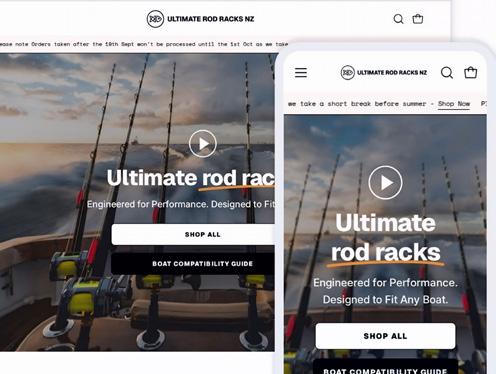
Fishing just got a whole lot tidier. Ultimate Rod Racks NZ has launched their brandnew website – ultimaterodracks.nz –making
rod rack setup.
Proudly NZ-designed and manufactured, Ultimate Rod Racks are built tough for Kiwi conditions, with options ranging from compact 3-rod holders to 10-rod systems, plus specialist game fishing and home storage solutions. The standout feature of the new site is the “Shop by Boat” function. Simply select your boat brand and model, and you’ll be shown the rack and back frame options designed to fit your vessel. Currently limited to the most popular boats we’ve fitted, this tool will continue to grow as more models are added. Whether you’re chasing kingies offshore, setting up for a weekend mission, or looking to tidy the garage with a home storage unit, Ultimate Rod Racks has you covered.

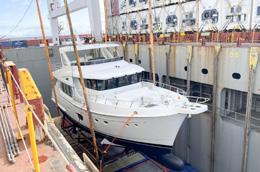
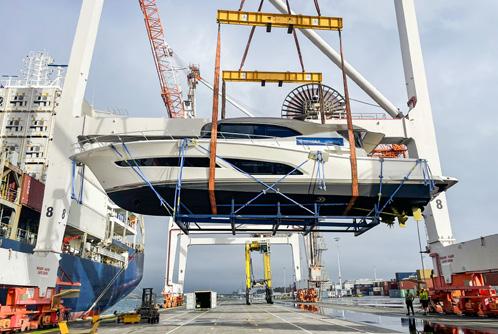

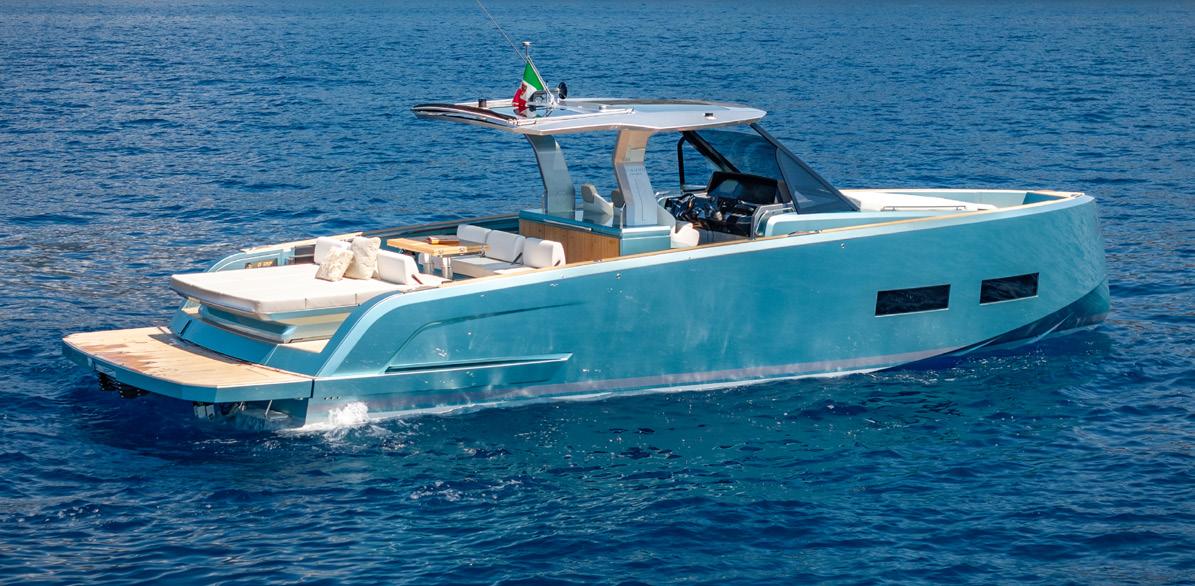
Since its debut in 2017, the Pardo 43 has become one of the world’s most successful walkaround yachts, with more than 333 sold globally.
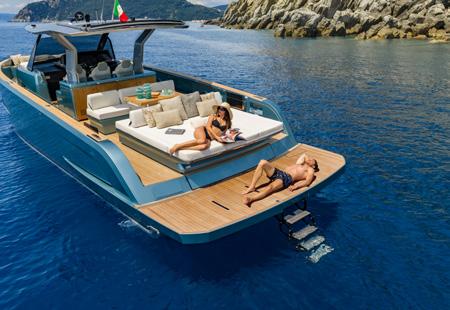
Now, the iconic model has been completely reimagined. Far from a simple facelift, the all-new Pardo 43 ushers in a new era with a redesigned hull, sleeker styling, smarter systems, and significant upgrades throughout. The exterior has been sharpened for both style and function. A more dynamic sheerline and hull profile give the yacht a sportier look, while the integrated “swoosh line” along the sides reduces engine noise in the cockpit. The cockpit itself is larger, with a redesigned table that lowers hydraulically to create a vast sunbed. The expanded wetbar offers more counter space, storage, and options for refrigeration, induction cooking, or a barbecue—ideal for entertaining.
Overhead, the carbon T-Top has grown by 30%, providing more shade, while wider walkaround decks and sturdier handrails improve safety. At the bow, a new lounge includes a forward-facing bench and hidden anchor system to preserve the sleek reversebow lines. Aft, the hydraulic swim platform lowers into the sea with an integrated ladder, and the enlarged garage now features single-level access and a daily hatch for easy storage of lines and fenders.
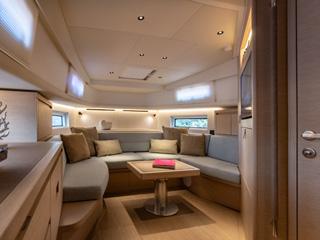
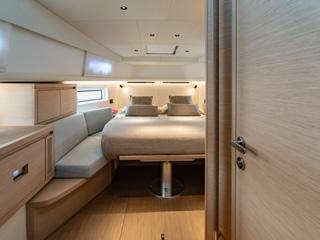
Below deck, Nauta Design has created interiors that feel brighter and more spacious. Enlarged hull windows flood the cabins with natural light, while two layout
options cater to different needs: either a fixed master berth or a convertible dinette. A second midship cabin offers twin beds that can be closed off for privacy. Premium fabrics, soft linings, and refined timber finishes elevate the feel, while an enlarged bathroom with a separate shower enhances practicality. The result is a calm, private retreat that extends time onboard.
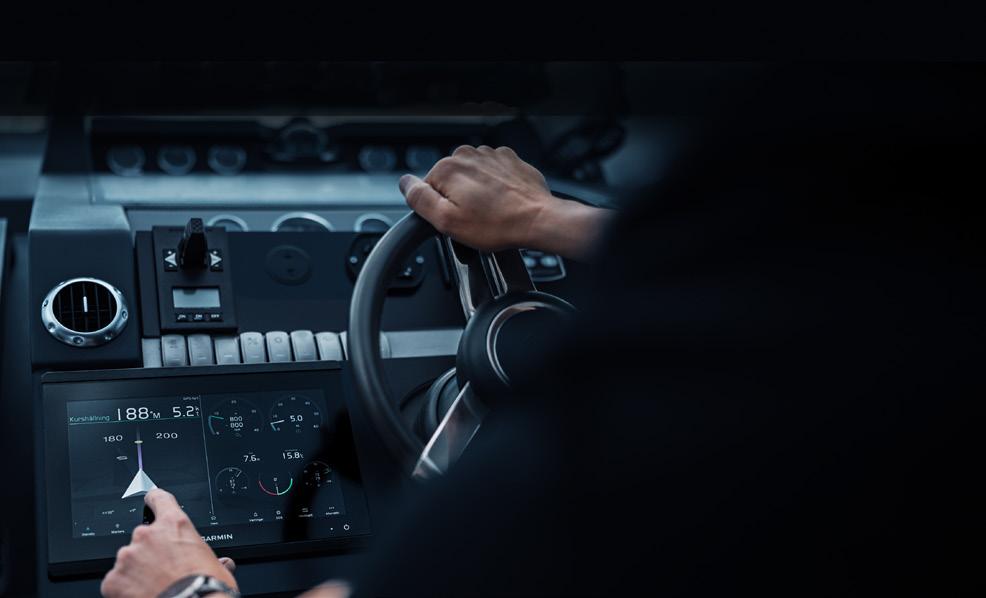
At the helm, the redesigned dashboard integrates three Garmin displays, uniting navigation, engine data, and lighting controls. Customisable ambient lighting enhances the atmosphere, while joystick handling ensures effortless docking. Twin Volvo IPS engines deliver a top speed of 37 knots, backed by larger fuel and water tanks for longer cruising. For thrill seekers, the Pardo 43R outboard version can be fitted with triple Mercury V10 or V12 engines on a dedicated hull, reaching speeds of more than 50 knots.
Joe Fox, Pardo Brand Manager at Eyachts, says the yacht feels “refined and better suited to how Australians enjoy their boats,” highlighting upgrades from the larger T-Top to the improved garage. He describes the new 43 as “the perfect balance between entertaining, performance, and comfort.”
Eyachts Managing Director Peter Hrones adds: “Australian conditions demand more than just good looks. The new Pardo 43 combines Italian flair with robust engineering, making it perfect for Sydney Harbour, Pittwater, or Rottnest Island.”
Unveiled at the Cannes Yachting Festival 2025, the new Pardo 43 is set to arrive in Australia in 2026. With its blend of elegance, performance, and innovation, it promises to be the next icon for boaters who demand it all
EYACHTS.COM.AU
EYACHTS.CO.NZ

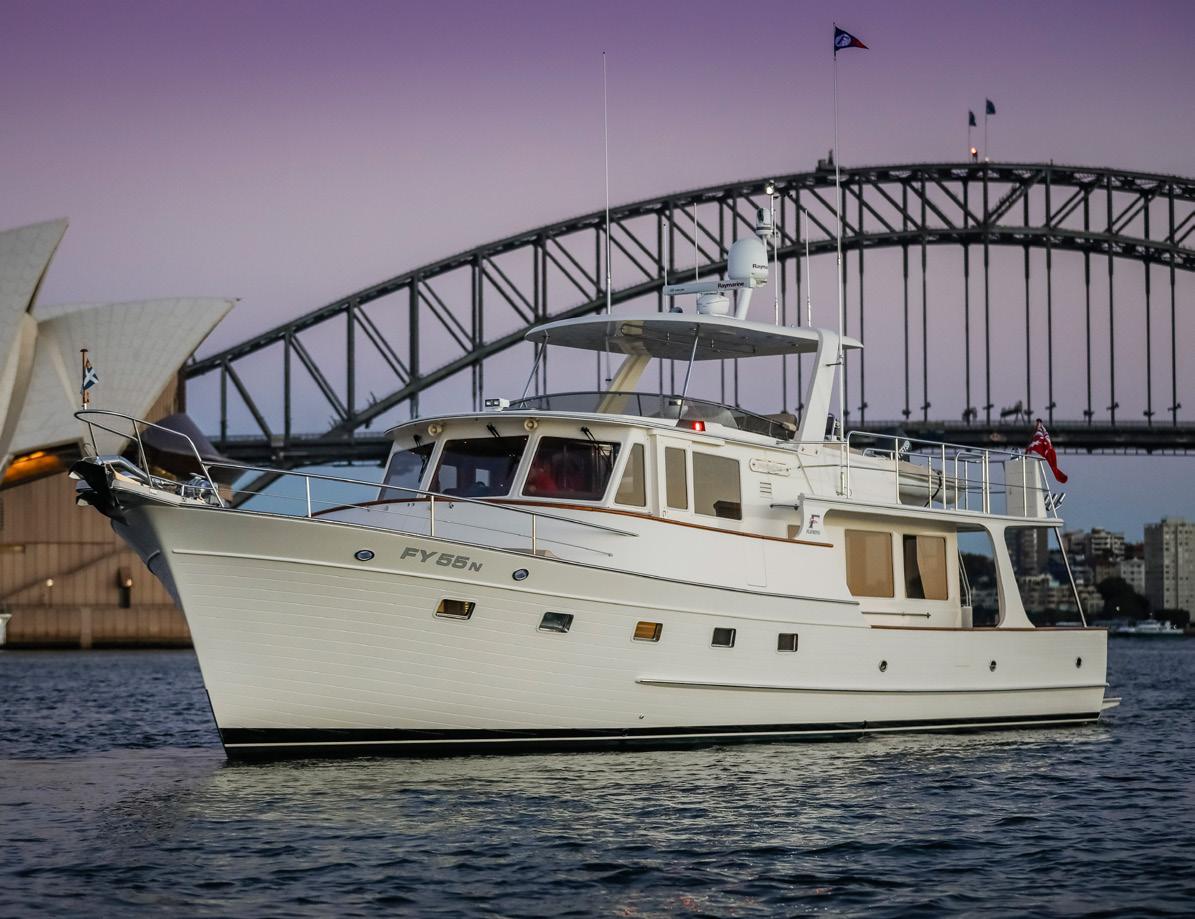
Fleming Yachts has confirmed it will be exhibiting two of its more popular models at the upcoming Sydney International Boat Show this November.
Visitors will have the opportunity to step aboard both the Fleming 55 and the larger Fleming 65, each representing the brand’s hallmark combination of timeless design, seaworthiness, and luxurious comfort.
The Fleming 55, long regarded as the ultimate passagemaker in her class,
continues to set the benchmark for serious cruising yachts. Alongside, the Fleming 65 offers even more volume, range, and onboard amenities, making her a natural choice for those seeking extended offshore adventures with uncompromising style.
Fleming Yachts has built a global reputation for engineering excellence and meticulous
attention to detail, with models renowned for their reliability on long-distance passages. The Sydney exhibition provides prospective owners and enthusiasts alike the chance to experience these yachts firsthand.
FLEMINGYACHTS.COM

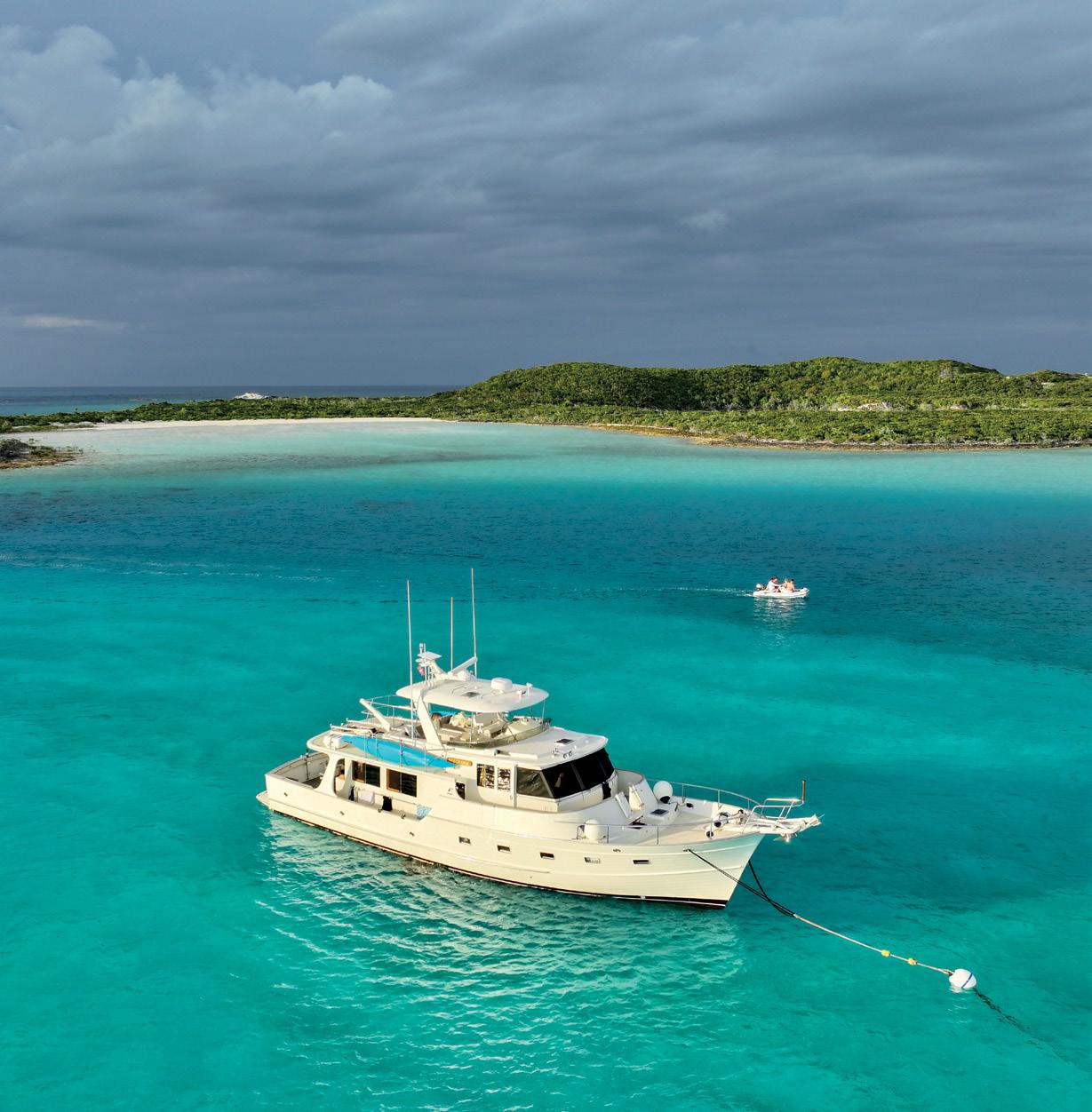
Fleming Yachts represent the point at which adventure and luxury converge. From the efficient performance that offers unmatched range, to the durability of the construction, to the impeccable comfort found throughout our interiors, Fleming is the Ultimate Cruising Yacht.
Learn why at FlemingYachts.com/Research

The first Whitehaven 6500 Coupe is under construction, a collaboration between its experienced owners and award-winning designer Misha Merzliakov.
The first Whitehaven 6500 Coupe is under construction, a collaboration between its experienced owners and award-winning designer Misha Merzliakov. The couple, co-founders and directors of Whitehaven, previously owned the very first Whitehaven 7000 Flybridge, Komotion. Having sold it, they returned to Misha to create their next “dream boat,” designed to combine all the features and comforts they had refined over years of boating. Their brief pushed Whitehaven’s boundaries. Inspired by the 6100 Euro Edition, the new 6500 introduces innovative exterior features, a refined interior, and an emphasis on functionality without compromising style. “The aim is to stretch Whitehaven’s capabilities and elevate every aspect of the design,” said Misha. At over 20 metres, the three-cabin, three-ensuite yacht is tailored for a multi-
generational family who love entertaining from Sydney Harbour to the Whitsundays. Weather protection was a priority, leading to the boat’s most challenging element— the extended roofline with retractable shade. Like a “shooting brake” in the automotive world, it balances sportiness with practicality, ensuring the aft deck can be used year-round.
Other exterior highlights include the latest 6000 series hull windows, a striking mast, ergonomic helm, and Whitehaven’s renowned stable, ocean-going hull. Inside, the owners spent months curating materials and finishes for a cohesive design. Neutral palettes, layered textures, and sophisticated lighting create understated luxury, with Euro-inspired flourishes. A single-level layout enhances both safety and social flow, ideal for canal estates and lowclearance waterways.
Drawing on the spirit of the celebrated Harbour Classic 40, the new Harbour Classic 52 (HC52) represents the next evolution in Whitehaven Motor Yachts’ custom-crafted range.
Due to debut this month, the HC52 reimagines the elegant “gentleman’s cruiser” with greater presence, more space, and enhanced performance. True to Whitehaven’s ethos, the HC52 is bespoke in every detail, timeless in form, and uncompromising in execution. Designed for those who value soul as much as style, it blends retro-modern lines with modern amenities. Extended deck and entertaining zones, a large mid-level galley with switch-glass for separation, generous refrigeration and storage, and refined designer finishes set it apart from competitors. Below deck, two spacious cabins (a luxurious master and versatile VIP with scissor-queen bed) are paired with two large ensuites, all finished with premium materials for comfort and aesthetics. A standout innovation is the fully integrated
The main deck features a spacious galley, seamless cabinetry, Italian fittings, and layered lighting, all designed to set the mood and enhance the space. “Lighting is fundamental to ambience,” said Misha, who carefully integrates elegance and function into each yacht.
Production Manager Ryan Hanson oversees every detail at the build facility, ensuring Whitehaven’s hallmark craftsmanship and customisation. Unlike imported European boats, the 6500 is designed for Australia’s tougher conditions and long passages. “This Coupe embodies those demands in spades,” Misha noted.
Set for launch in time for the 2025 summer season, the Whitehaven 6500 Coupe is built as an heirloom vessel, meticulously crafted, loaded with backup systems, and designed to endure for generations.
WHITEHAVENMOTORYACHTS.COM.AU
tender garage, housing a 2.4-metre RIB with outboard and a push-button launch system, allowing quick access for guests, provisions, or even the family dog. This smart feature preserves clean exterior lines while freeing deck space for leisure and entertaining.
Superyacht-inspired details elevate the HC52 further: discreet Venturi airconditioning vents, expansive glazing, electric skylights, and floor-to-ceiling sliding doors flood interiors with light. At the helm, prestige automotive cues are reflected in the ergonomic dash, leather chairs, and sophisticated navigation package. Cameras at the anchor and engines assist handling, while advanced insulation ensures quiet operation.
Powered by twin Scania DI16 V8 engines delivering 800 hp (588 kW), the HC52
offers reliable performance and fuel efficiency. The generous engine room provides space for a watermaker, stabiliser, or other owner-specified equipment. On deck, the cockpit forms the social hub, while the uncluttered foredeck offers a serene retreat. With only the cockpit table in timber, the HC52 is a lowmaintenance escape.
“Feedback from owners showed demand for a larger version of the Harbour Classic,” said Whitehaven Director Bruce Scott.
“With expanded galley facilities, more storage, and superior entertaining spaces, the HC52 caters effortlessly to six to eight guests for day trips or extended stays.”
Offering freedom, elegance, and effortless operation, the Harbour Classic 52 sets a new benchmark in modern cruising.
WHITEHAVENMOTORYACHTS.COM.AU
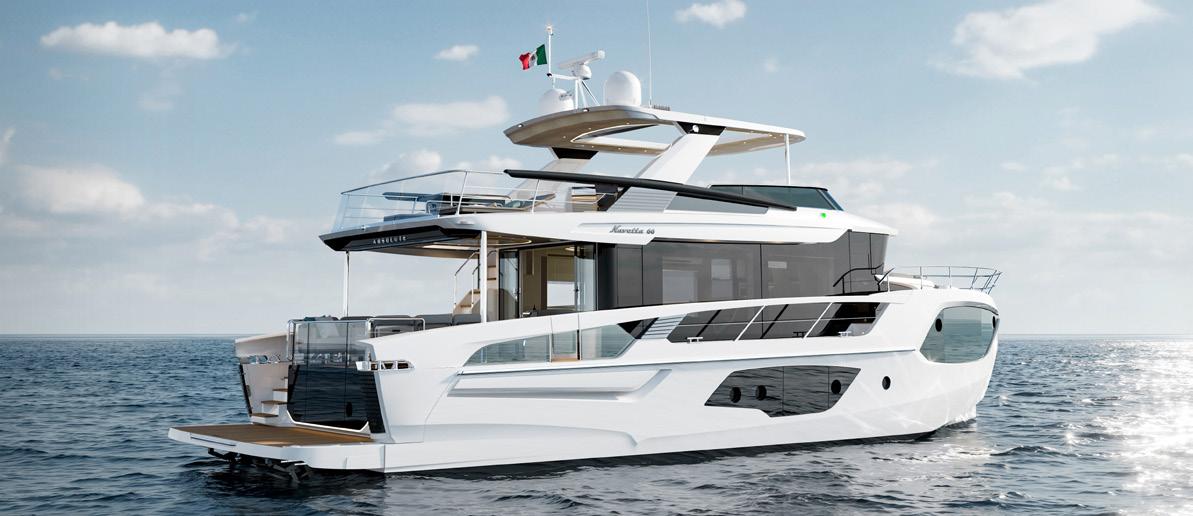
At the recent 2025 Cannes Yachting Festival, Absolute Yachts turned heads by presenting 11 stunning models, including the world premieres of the Navetta 62 and 70 FLY.
But the spotlight fell on two newcomers: the Navetta 66 – Aurora and Navetta 58 – Andromeda, yachts that blend innovation, style, and Italian craftsmanship with pure seafaring soul. Inspired by the mythological figures Aurora and Andromeda, these two yachts are all about elegance, presence, and timeless beauty.
Navetta 66 – Aurora: Luxury, Light, and Space
The Aurora is designed to bring the sea closer than ever. Its bright, open interiors, bathed in natural light, create a welcoming environment for long days on board. The addition of a fourth sea-view cabin raises the bar for comfort in this size range,
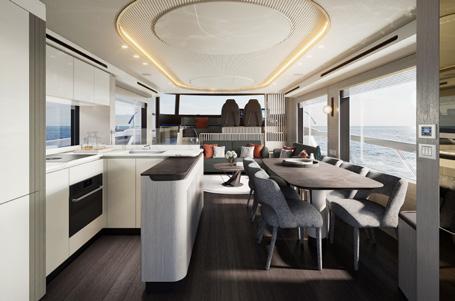
making it ideal for extended cruising with family or friends. Aurora’s design is all about balance - open social spaces for entertaining, private areas for relaxing, and attention to detail everywhere you look. The flybridge and aft terrace provide uninterrupted views of the horizon, while transparent balustrades keep guests connected to the water at all times. In short, every moment on Aurora feels like a celebration of the sea.
Navetta 58 – Andromeda: Compact, Clever, and Captivating Sleek, elegant, and highly functional, the Andromeda proves that great things come in slightly smaller packages. Its exterior lines flow seamlessly into flexible, bright
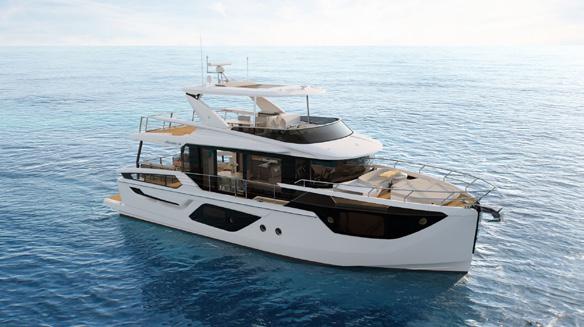
interiors, which can be customised to suit individual tastes. Advanced engineering ensures a smooth, comfortable ride no matter the conditions.
Inside, Andromeda makes clever use of space - airy salons, inviting cabins, and generous lounge areas deliver comfort without compromise. The result is a yacht that feels both exclusive and welcoming, combining style, performance, and personality. With its striking look and refined interior, Andromeda is a true standout, a modern expression of Absolute’s philosophy: smart design, effortless performance, and timeless elegance.
YACHTFINDERSGLOBAL.COM
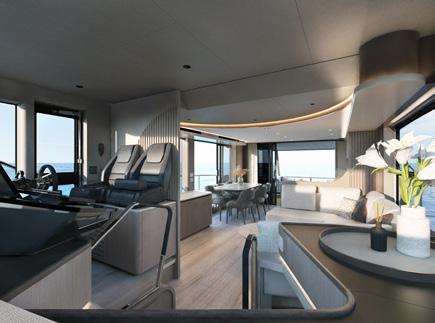
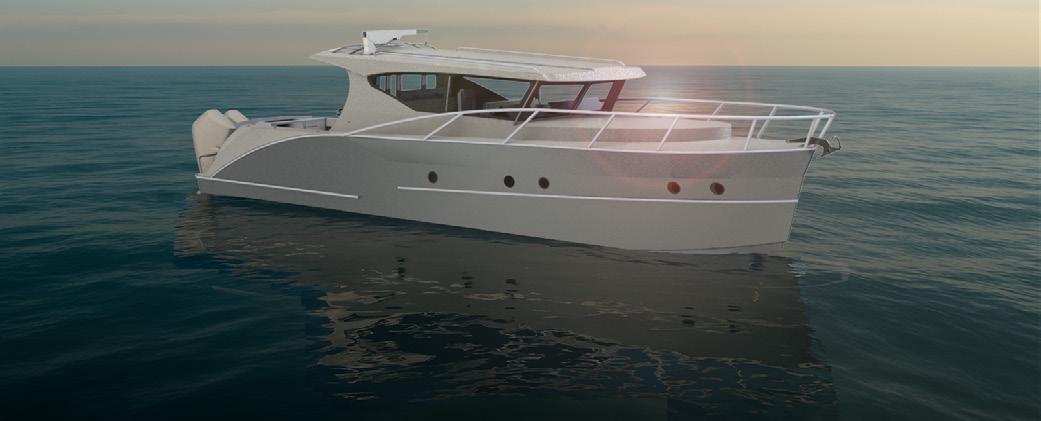
Herley Boats has announced the development of a new 45ft aluminium explorer for an American client on the Oregon Coast, marking another significant step in the company’s growing international footprint. Building on the success of the 11m Explorer, which was recently exported to Canada, the new 45ft model continues Herley’s focus on bespoke adventure vessels that blend performance, craftsmanship, and individuality.
Constructed in aluminium with a custom-built layout, the 45ft Explorer will be powered by twin Mercury 425hp V10 outboards, delivering an efficient 22–25-knot cruising speed and extended range suited to fishing and expeditions as far north as Alaska. The design reflects Herley’s trademark versatility - serious offshore
comfort. Herley has also recently brought all fabrication in-house at its Tauranga facility, ensuring tighter control over quality and allowing greater freedom for customisation. “Every Herley vessel is designed around the owner’s vision,” says the team. “We’re a boutique builder by choice - each project is a collaboration that pushes design,
With the 45ft model scheduled for launch in late 2026, Herley continues to strengthen its position as a boutique boatbuilder with an expanding international presence. The 45ft Explorer represents both a natural evolution of the brand’s design philosophy and a bold step toward the next generation of personalised adventure craft.
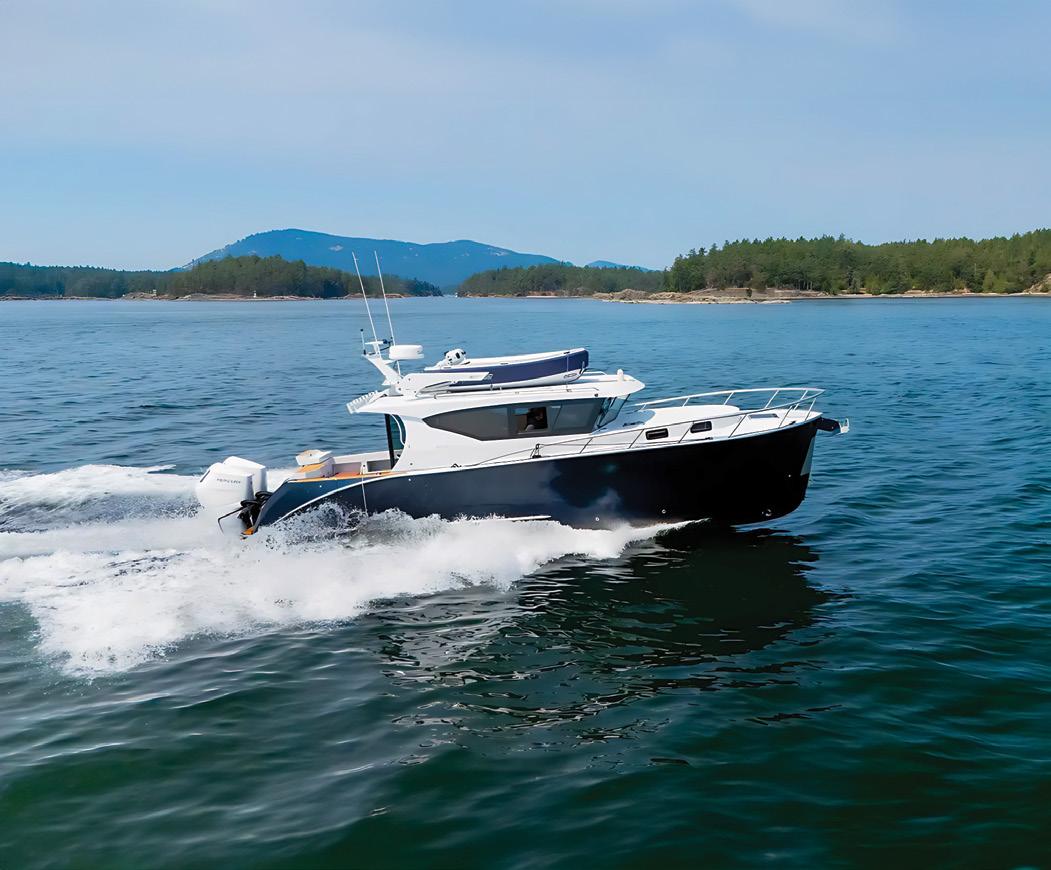
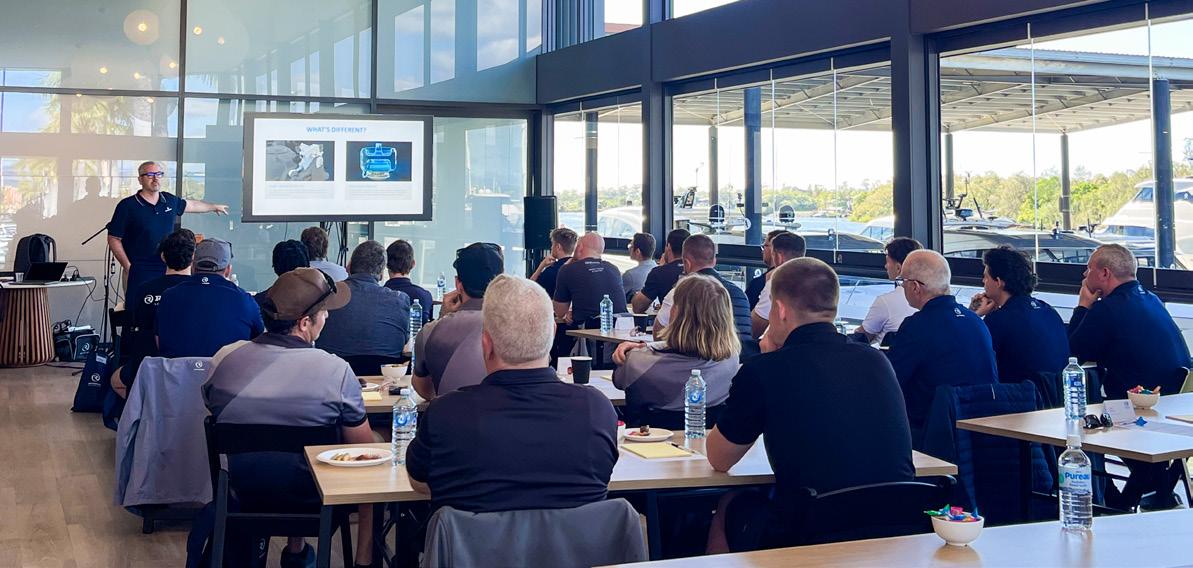
Australia’s luxury motor yacht builder Riviera recently hosted its annual three-day Technician Training Academy for Australia and New Zealand service teams, bringing together 30 representatives from its regional dealership network.
Part of Riviera’s ongoing commitment to owner care, the academy ensures technicians across its global network remain up to date with the latest systems, processes, and technical knowledge needed to support the company’s world-class motor yachts. A second academy for international dealerships will be held later this year. Riviera’s Head of Customer Support, Peter Wheeler, said the event represented a major investment in professional development, giving dealership teams the chance to expand their knowledge of the advanced systems featured aboard today’s Riviera yachts.
The three-day syllabus covered more than 15 specialist subjects and included hands-on workshops in yacht maintenance and repair. Experts from Riviera suppliers such as Twin
Disc, CZone, BEP, Mastervolt, Seakeeper, and Humphree also participated.
Tim Cowen of R Marine South Australia praised the sessions on power management, electrolysis protection, and digital switching, led by Riviera Electrical Design Manager Matt Weetman. “These sessions really helped to grow the knowledge of all our dealerships,” he said. Ben Piggott from R Marine Sydney said the immersive format fostered valuable discussions with Riviera experts and suppliers. “The hands-on sessions at the Riviera Academy of Excellence were particularly helpful,” he said. “We learned new techniques for timber, varnish, infusion, and Corian repairs to keep our owners’ yachts in peak condition.”
Piggott said bringing an apprentice to the
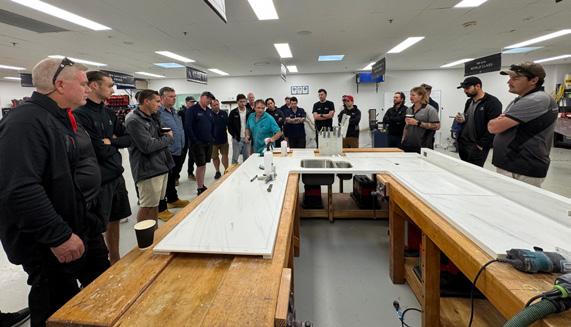
event proved invaluable: “He was inspired by the expertise and the chance to connect with technicians from across Australia and New Zealand.” Jack Jones from R Marine Jones on the Gold Coast said the academy provided insight into how Riviera integrates new technologies and how its craftspeople collaborate throughout the build process.
The program combined training with networking and team building, culminating in a celebratory dinner at the new Riviera Yacht Club. Riviera owner Rodney Longhurst addressed guests, reaffirming his commitment to excellence in design, craftsmanship, and ongoing owner support, values that continue to define the Riviera experience.
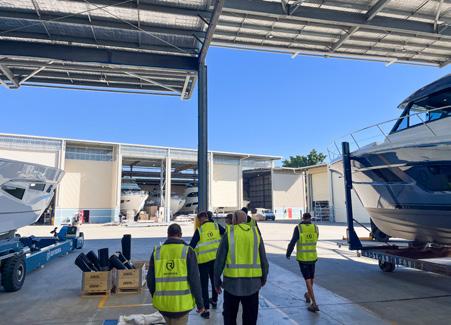
DEMEY Yachts is excited to announce the next evolution of its 17-metre semi-displacement power catamaran design, currently under construction and scheduled for launch later this year.
The new 18-metre version extends the platform’s capabilities, offering even more space and comfort for coastal and harbour cruising with the range and efficiency for extended stays onboard. Developed from the proven principles of the 17m model, the 18m design features a highly efficient semi-displacement hull, optimised for fuel economy and a smooth
ride in a wide range of sea conditions. Construction uses lightweight E-glass and foam panel technology, ensuring strength, durability, and ease of maintenance. The interior embraces a clean, simple aesthetic - practical, stylish, and focused on comfort. By maintaining an efficient build process and sensible material choices, DEMEY Yachts keeps this new design at an accessible price point while still delivering premium
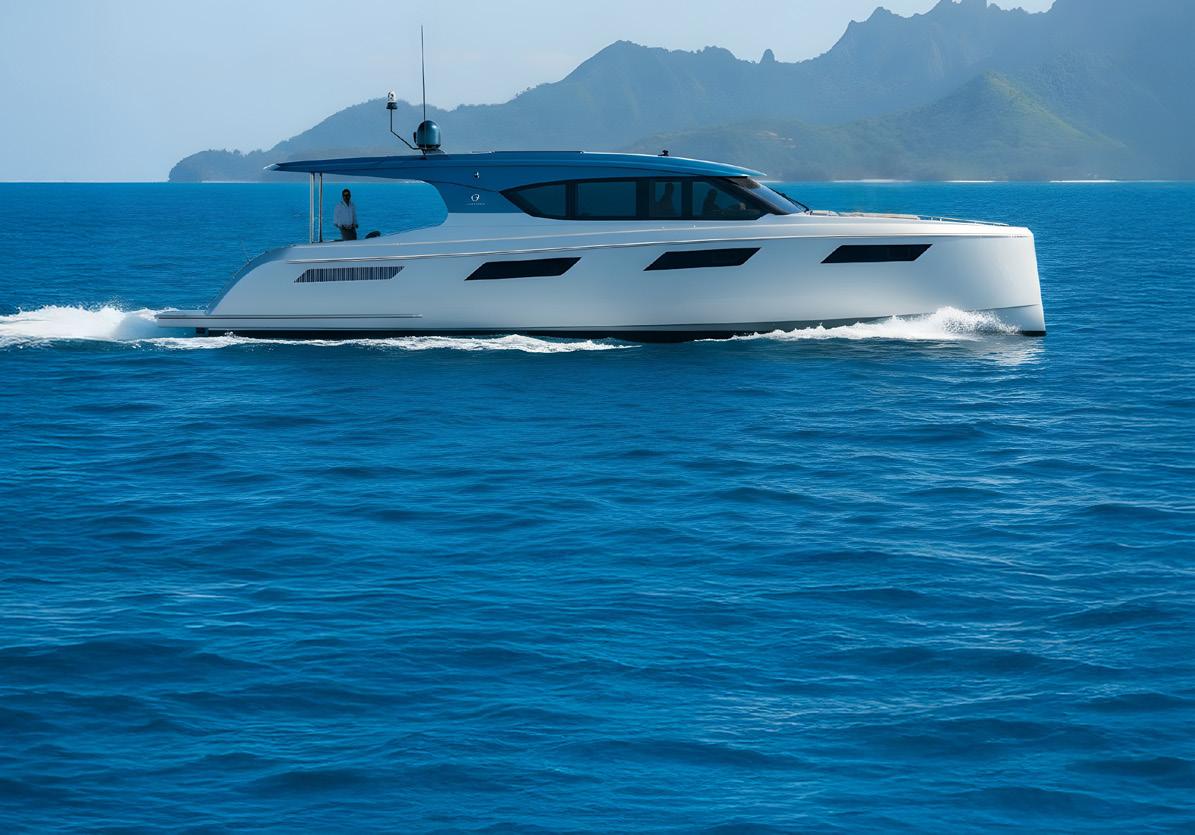
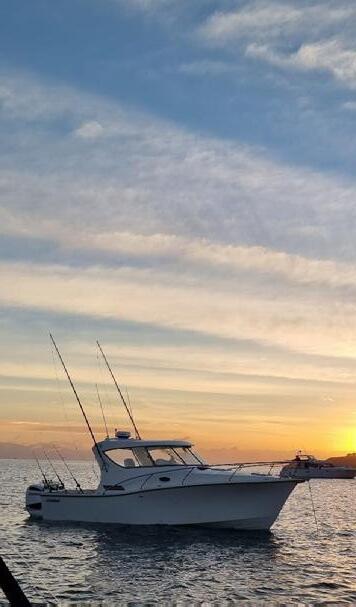

quality and craftsmanship.
“This 18-metre design represents a natural evolution of our semi-displacement range,” said Nic de Mey, Director of DEMEY Yachts. “It’s designed for owners who want to explore further in comfort, while still valuing efficiency, practicality, and understated style.”
DEMEYYACHTS.COM
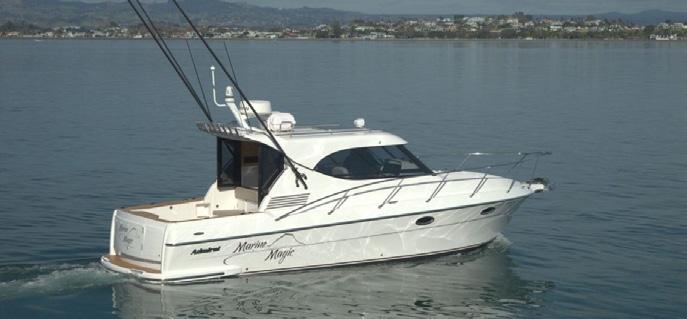


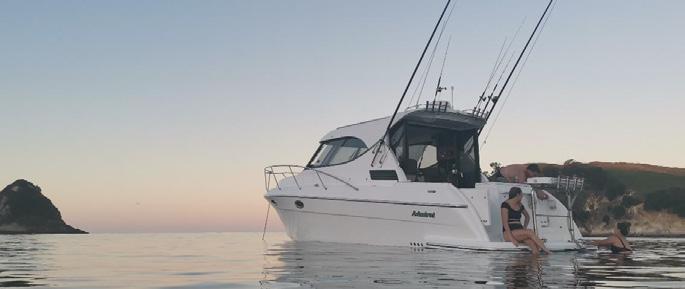

The 23rd of Sept saw all NZ Volvo Penta dealers gather in Tauranga for their annual conference and dealer awards celebrations.
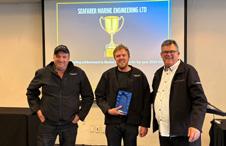

The following week was spent in Australia for a very special night to meet with the President of Volvo Penta Sweden, Anna Muller, along with Volvo Penta Oceania staff and special guests. Again, only four awards were handed out this night, and the New Zealand team walked away with two of them. A very proud moment for all involved. Matakana Marine won the top Marine
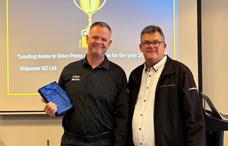
Dealer in the whole Oceania region, which is a massive achievement. For the first time this year Volvo Penta had an award for the top apprentice out of all the Marine and Industrial dealer network across New Zealand and Australia. Wayne Patten, Managing Director, Volpower NZ Ltd was very proud to share that this award was won by Izak Wilson from Heavy Diesel Support, Volpower’s Marine and Industrial dealer in
A very informative day for the network finished off with achievement awards being handed out as follows:
KAIKOURA MARINE was celebrated for their 26 years of dedication to the Volvo Penta product.
SEAFARER MARINE from Picton celebrated for their outstanding achievement in Marine Parts Sales.
Auckland city branch received the award for the top Engine Sales Dealer for the year.
achieved the award for the top Marine Dealer of the Year for their third year in a row. Outstanding effort.
Dunedin, who has also been the recipient of several awards over the past few years. On top of these outstanding achievements as part of their prize, these winners will get to travel to Volvo Penta in Sweden next year to see the plant and production facilities first-hand. Congratulations to the award winners.
VOLPOWER.CO.NZ
Propspeed®, a leading innovator in biocide-free, foul-release coatings, have announced the debut of its newest coating for various surface types, Foulfree™ Multi-Surface System, offering a foul-release solution to a wide range of components fitted to an expanded range of vessel types from RIBs to centre consoles and cruisers to pleasure yachts.
Engineered to adhere to a wide range of substrates, Foulfree brings Propspeed’s proven performance to various underwater components. This system is perfect for the painted aluminium of outboard skegs; plastic, nylon or composite stabilisation systems; as well as thrusters, fins and even RIB tubes. Providing industry-leading foul-release protection, Foulfree Multi-Surface delivers superior adhesion and durability for season-lasting performance in salt or freshwater marine environments. It applies clear, offering invisible, non-invasive protection for a seamless aesthetic that blends naturally for a clean, professional finish below the waterline.
“The marine industry continues to push forward with innovations that provide boaters greater confidence, comfort, and
performance when out on the water,” said Marcus Hamilton, CEO, Propspeed. “Yet, the very components that make this possible, such as thrusters, stabilising systems, outboard skegs and RIB tubes, face constant threats from marine growth that can compromise efficiency and effectiveness. The new Foulfree Multi-Surface System is engineered to keep fouling from adhering to these critical components and safeguarding optimal performance all season long.”
The Foulfree Multi-Surface is available in two kit sizes, Small and Medium, that apply effortlessly. Both kits include all necessary components for quick and easy application, saving time. With only a 10-minute overcoat window (20 °C / 68 °F) and just 12 hours to full cure, boaters can be back on the water the next day.
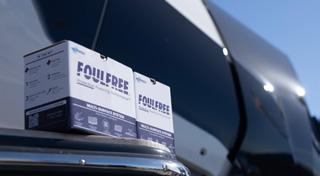
For decades Propspeed has been the go-to foul-release coating for underwater metals, preventing marine growth from adhering to propellers and running gear. This new product opens a whole new segment of boaters to the benefits of biocide-free, foulrelease coatings – from outboard-powered centre consoles and mid-size cruisers, to RIBs of all sizes and missions. It expands the Propspeed product line by extending foul-release protection to components that previously went unprotected or relied on antifouling paints - often invasive, biocide-heavy, and prone to compromising engineered aesthetics.
PROPSPEED.COM
Altex Yacht & Boat Paint introduces the Altex Multipurpose Primer / Undercoat, a versatile single-pack primer and undercoat that simplifies marine painting projects by eliminating the need for separate primers and undercoats.
Formulated for use above and below the waterline, it provides durable protection on steel, wood, and GRP substrates. With excellent adhesion, quick drying, and easy sandability, it’s ideal for hulls, topsides, decks, and interior areas alike.
Multipurpose Primer / Undercoat can be applied by brush, roller, or spray, offering great coverage and a professional finish. Its adhesion and surfacing properties make it perfect for covering minor scratches before top coating.
It can also be used confidently as a tie-coat over existing alkyd enamel systems or as
part of a complete Altex antifoul system, compatible with No.5, No.5 PLUS, Pettit Vivid, and Regatta Gloss Enamel. For application details and local stockists, visit
ALTEXBOATPAINT.COM
Fouling is an unavoidable reality for boat owners in New Zealand’s nutrient-rich waters — but Altex’s high-performance solution has just arrived. Altex No.5 PLUS Antifouling builds on the proven reputation of Altex No.5.
Designed for yachts, launches, tenders, and trailer yachts, No.5 PLUS uses selfpolishing ablative technology with
the highest biocide loading in its class. Ideal for cruisers tackling the harsh realities of South Pacific waters, No.5 PLUS resists fouling where many coatings fail, making it a smart choice for owners who want reliability and lower maintenance costs.
For application details, colour, and local stockists, visit
ALTEXBOATPAINT.COM


Nyalic (NZ) P:0800 692 542
M:0274 351 069
E: sales@nyalic.co.nz
W: www.nyalic.co.nz
Nyalic (Aust) P: 0420 982 329
E: jeff@nyalic.com.au
W: www.nyalic.com.au


There is exciting news for New Zealand’s boating community as Absolute Marine has been appointed the official New Zealand partner for Hertz Marine, the global leader in premium marine audio systems.
This partnership marks an exciting development, bringing the exceptional sound quality, innovation, and reliability of Hertz Marine Audio products directly to local boat builders, dealers, and boating enthusiasts.
Hertz Marine has built a global reputation for producing some of the most durable and best- sounding marine audio systems on the water. Combining precision engineering with true marine-grade durability, Hertz Marine delivers a level of sound and performance that sets a new benchmark. Products like the HMX coaxial speaker series and the Venezia amplifiers deliver powerful, detailed sound and long-lasting
At Huntsman Boats, innovation often starts with collaboration.
Bay Yamaha is proud to join the vibrant marine scene in Tauranga, now operating from the heart of Papamoa. Led by experienced marine technician Steve Lockart, the team is excited to offer boat owners a new option for expert servicing, genuine Yamaha parts, and top-quality outboard engines. They service all major outboard brands. Their focus is simple: deliver outstanding workmanship
performance in real boating conditions.
With their proven resistance to UV, salt, and vibration, Hertz Marine systems are trusted by boatbuilders and owners around the world who demand exceptional sound without compromise.
rugged performance. It’s a perfect match for the expectations of New Zealand boat owners who want great sound that lasts.”
“We’re proud to be bringing another premium product in Hertz Marine to the local market,” says Sales Manager Corey Aucamp. “Hertz is known for its innovation, quality, and
Whether you’re upgrading your sound system or fitting out a new build, Hertz Marine’s Italian-engineered systems deliver crystal-clear audio that performs just as well underway as it does at anchor.
ABSOLUTEMARINE.CO.NZ
and a customer experience that feels personal, honest, and hassle-free.
As an authorised Yamaha dealer, they supply genuine Yamaha parts and brandnew Yamaha outboards, backed by trusted advice and support. They’re passionate about helping boaties find the right fit for their vessel and lifestyle.
Steve Lockart brings decades of marine experience to the helm, and his passion for
boating is matched only by his dedication to customer satisfaction. “We’re here to build lasting relationships with local boaties,” says Steve. “It’s about trust, quality, and making sure every customer leaves with a smile. Whether you’re a seasoned skipper or just getting started, Bay Yamaha is here to help. Pop in and say hello, we’d love to meet you and talk boats”.
BAY-YAMAHA.CO.NZ
Yamaha Marine New Zealand has announced the winners of its #ImRepoweringWithYamaha competition, with Nelson’s Ez Faauli taking home the major prize: a brand-new Yamaha 150hp fourstroke outboard for his Osprey 620.
LIGHTNING by HumphreeTM is an automatic trim & stabilization system that brings world class comfort, increased speed and fuel
TLIGHTNING
he competition, launched in July, invited Kiwi boaties to submit a short video introducing themselves, their boat, and why they needed a Yamaha repower. More than 250 entries were received, with Ez’s story ultimately chosen by the Yamaha judging panel.
Its combination of our advanced technology, user-friendly interface, mobile app integration, and beautiful underwater LED lighting system is what truly sets it apart.
“We are so pleased for Ez and his family,” said Yamaha Marine NZ General Manager Alan Petrie. “His was a very deserving entry. “The quality of videos was so high, though, that we created an extra People’s Choice category, voted on via social media.” That vote saw Emilie Servais named People’s Choice Winner, receiving a Yamaha four-stroke for her 16ft Glasscraft Flash Dance.
No matter which propulsion system you use; outboards, electric, sterndrive, inboard—this
For Ez and his family, the win was a complete surprise. “We were speechless - we didn’t expect it at all. The last competition I won was a colouring contest back at primary school!” he said. The new outboard will make a huge difference to Ez’s boating life, offering better fuel economy, lower emissions, and improved reliability. “It will give us more confidence on the water and help us create many more beautiful memories with friends and family,” he added. Ez’s Osprey is used for a wide range of activities, from fishing trips in Tasman Bay and around D’Urville Island, to water sports at Lake Rotoiti. It also plays an important role in supporting local kaupapa, such as gathering kaimoana for community events and celebrations, sometimes helping to feed more than 400 people. In addition, Ez uses his boat as a tool in his work with vulnerable youth, teaching life skills and building connections through fishing. In the coming weeks, Nelson Marine Centre will repower Ez’s Osprey with the new Yamaha F150hp four-stroke, ensuring many more safe and memorable days on the water.
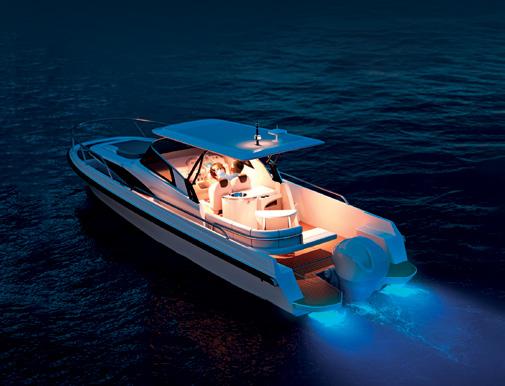
Setting a new standard in trim & stabilization. Again. Priced for 20-45ft boats.
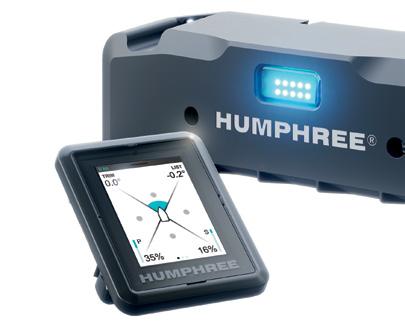
LIGHTNING by HumphreeTM is an automatic trim & stabilization system that brings world class comfort, increased speed and fuel savings. LIGHTNING is suitable for 20-45ft boats.
Its combination of our advanced technology, user-friendly interface, mobile app integration, and beautiful underwater LED lighting system is what truly sets it apart.
No matter which propulsion system you use; outboards, electric, sterndrive, inboard—this new system will be the perfect choice for new build boats or for when you refit a used boat. It will take you to the next level.
the next level.


Gurit has secured a multi-year contract supplying Corecell structural foam core to the subsea industry. Corecell is a market-leading, high-performing core, with a long history of success in extremely highperformance and demanding applications.
Gurit has secured a multi-year contract supplying Corecell structural foam core to the subsea industry. This enables them to further expand its operations in the Asia-Pacific region, specifically Australia, where they will open a new facility to support this new contract, and take the opportunity to relocate our current distribution facility to the new site, expected to be near Brisbane, Queensland. This agreement is projected to generate a low to mid double-digit million CHF in sales within five years.
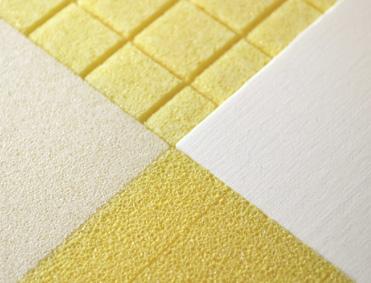
Corecell is a market-leading, highperforming structural core material based on styrene acrylonitrile resin (SAN), originally developed by Gurit in the 1980s and undergoing numerous improvements since then. “It remains unmatched in the marketplace, with a long history of success in extremely highperformance and demanding applications. We are a proven supplier of composite materials with outstanding performance to boundary-pushing applications. This major contract marks a significant step
New Zealand’s waters demand a reel that's as tough and resilient as the fish that swim in them.
The brand new Okuma Ceymar Baitfeeder is precisely that - a reel engineered with precision and packed with innovative features to elevate your fishing experience, whether you're targeting kingfish from the rocks or snapper in the shallows.
What sets this reel apart is its intelligent bait feeding system, allowing you to easily switch between free-spooling and a powerful main drag with the flick of a lever. This gives you unparalleled control, letting a fish run with the bait before engaging the drag for a solid hook set. Paired with multi-disc Carbonite drag washers and a Quick-Set anti-reverse bearing, the reel delivers performance and durability, ensuring you're ready for any battle.
Built to endure harsh saltwater conditions, the Ceymar Baitfeeder features a corrosion-resistant frame, side
plate, and rotor. The Cyclonic Flow Rotor technology (CFR) optimises airflow, shedding water and minimising corrosion while improving casting distance and accuracy. The rigid metal handle and machined aluminium spool provide the strength and stability needed to handle trophy fish, while the RESII computer-balanced Rotor Equalising System ensures smooth, consistent performance with every retrieve.
For New Zealand's dedicated boat and land-based anglers, the Okuma Ceymar Baitfeeder offers a blend of technology, durability and a sleek design that will make it an essential piece of gear on your next fishing adventure.
OKUMA.CO.NZ
in our ongoing strategic realignment, accelerating our transformation into a dynamic, multi-market company. This long-term partnership demonstrates our commitment to diversification beyond traditional markets, leveraging our expertise in advanced composites solutions to capture new opportunities across multiple industries,” says Lance Hill, General Manager Marine & Industrial, Gurit.
GURIT.COM
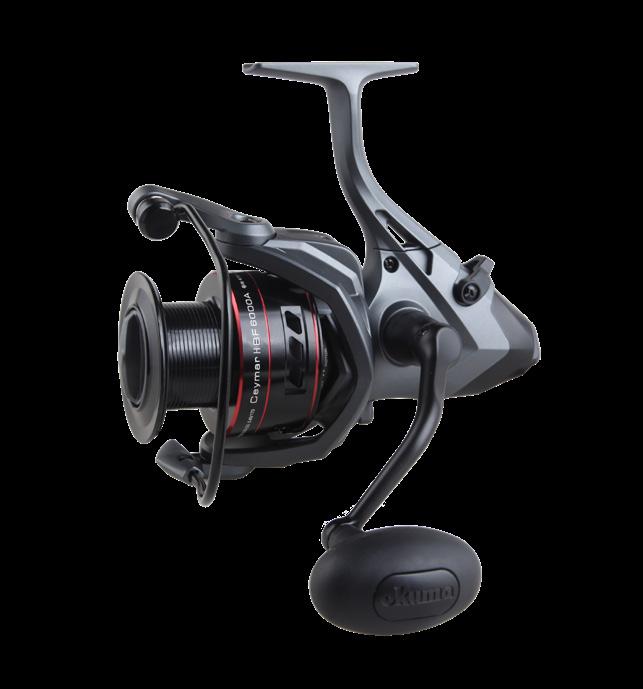

Quick Group and Volvo Penta are collaborating to fully integrate Quick Nautical Equipment’s electric proportional thrusters with Volvo Penta’s Assisted Docking system, aiming to enhance precision, control, and confidence for boaters.
Quick Group, a global leader in marine equipment with operations in over 110 countries, is renowned for innovative products ranging from anchors and windlasses to thrusters. Its electric proportional thrusters, engineered and built in Italy, deliver reliable, highperformance manoeuvring and are trusted by leading boatbuilders worldwide.
Volvo Penta, recognised for pioneering marine propulsion technologies, introduced Assisted Docking in 2021. This semi-
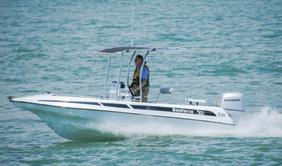
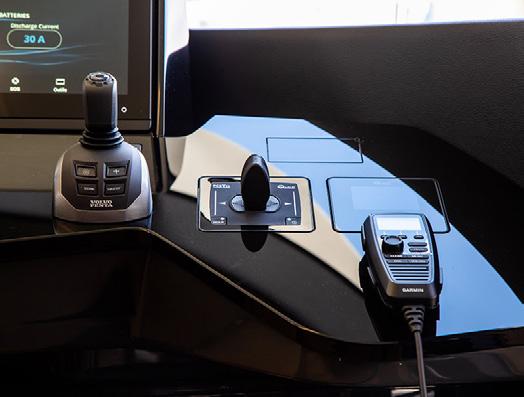
automated system compensates for wind and current, maintaining exact course and heading via GPS while following joystick commands for straight-line movement, rotation, fine alignment, or holding position. Since launch, it has reduced stress and improved confidence for boaters of all levels.
The integration, available via PCS with Volvo Penta’s Aquamatic DPI and IPS propulsion ranges, will be released by the end of 2025. The partnership combines
Quick Group’s engineering excellence with Volvo Penta’s innovation to deliver a seamless, stress-free docking experience.
“Together, we are shaping the future of effortless boating,” said Andreas Karlsen, CCO of Quick Group. Volvo Penta’s Francesco Giudice added: “This collaboration shows how technology integration can make boating easier, more accessible, and more enjoyable for everyone.”
VOLPOWER.CO.NZ
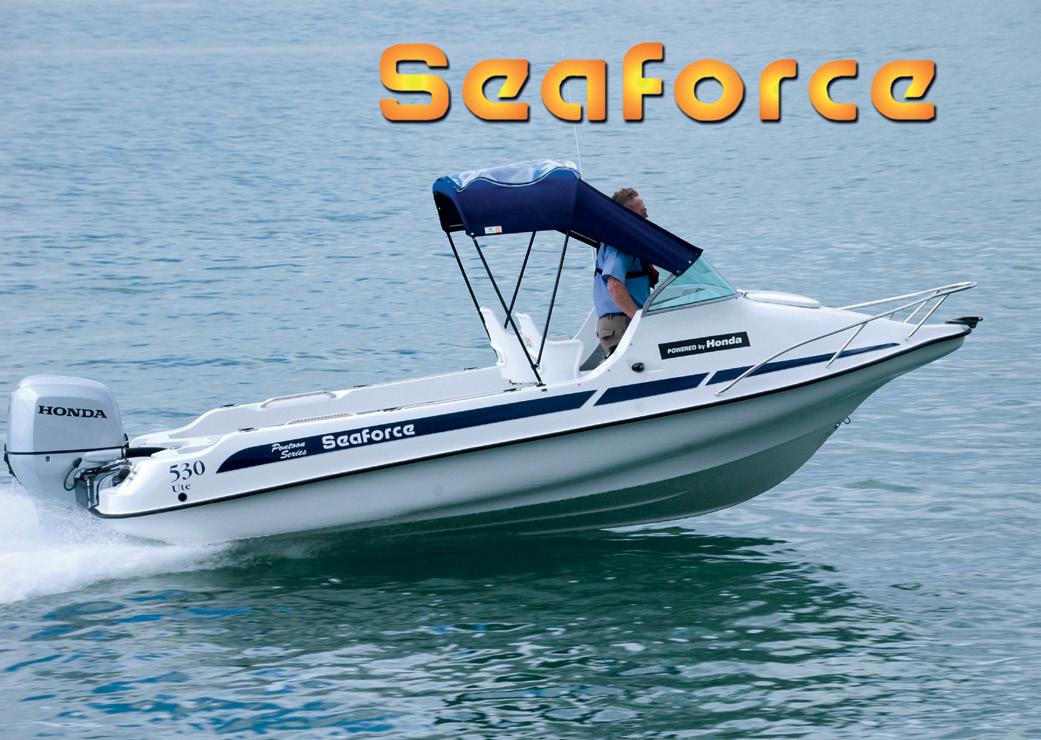


Here are five pro tips all ocean goers should be aware of when it comes to marine weather and leveraging key tech for safer sailing:
1. Know Your Local Marine Weather Inside Out
Marine weather is a beast of its own, far more nuanced than general land forecasts. Pay attention to localised effects like sea breezes and coastal influences, as well as the interaction of wind and currents. Utilise tools like PredictWind to access high-resolution models for a more accurate picture of your specific area, focusing on wind direction and strength at different heights, wave conditions, and the impact of local geography.
2. Stay Ahead of the Curve: Monitor and Adapt
A common mistake is to rely on outdated forecasts or neglect continuous monitoring, as weather at sea can change rapidly. Don’t be fooled by blue skies ahead; it’s dangerous to assume that current calm conditions will last. Be vigilant, use all available resources, and always err on the side of caution by adjusting your plans based on evolving weather information.
3. Leverage Technology for Proactive Safety
Modern marine weather apps are powerful safety tools. PredictWind offers several userfriendly tools designed for a safer voyage. The Daily Briefing simplifies complex
weather data for a quick overview. Weather Routing helps users plan the safest passage by analysing multiple forecast models. Departure Planning assists in choosing the optimal departure time. Additionally, our world-first Extreme Weather Alerts provide real-time mobile warnings of potentially dangerous GMDSS forecasts, allowing for swift action. For those in whale habitats, Whale Watch aids in collision avoidance.
4. Invest in Essential Offshore Tech For those venturing offshore, a layered approach to technology is important. My essential setup includes a reliable satellite communication system for receiving updated forecasts, a high-quality GPS and navigation system integrated with PredictWind, and a well-maintained EPIRB as a critical distress beacon. I also always carry a handheld GPS, paper charts, and a handbearing compass as vital backups. If you have access to Starlink for high-speed internet, consider an Iridium GO! or GO! Exec as a lower-power, truly global backup for essential voice communication in emergencies.
5. When in Doubt, Heed the Warnings and Stay Ashore Ultimately, technology is a powerful aid,
but it should never replace sound judgment. If a forecast looks questionable, or if you have any nagging doubts about the conditions, the safest decision is often to stay ashore. Remember, the sea will always be there, but your safety and the safety of your crew are paramount.
Make safety your priority this boating season. Here's to a safe and enjoyable time on the water!
About Jon Bilger – Founding Director, PredictWind
Olympian, two-time America’s Cup winner, and New Zealand National Champion in multiple classes, PredictWind Founding Director Jon Bilger spent years accessing the very best private wind and marine forecasting tools in the world. Jon founded PredictWind in 2010 to share this potentially life-saving technology with the public at large, and today PredictWind provides the world’s most accurate and reliable forecasting technology to more than a million users. A lifelong competitive yachtsman, Jon lives in Auckland with his wife and two daughters, who share his passion for the ocean and competitive sailing.
PREDICTWIND.COM
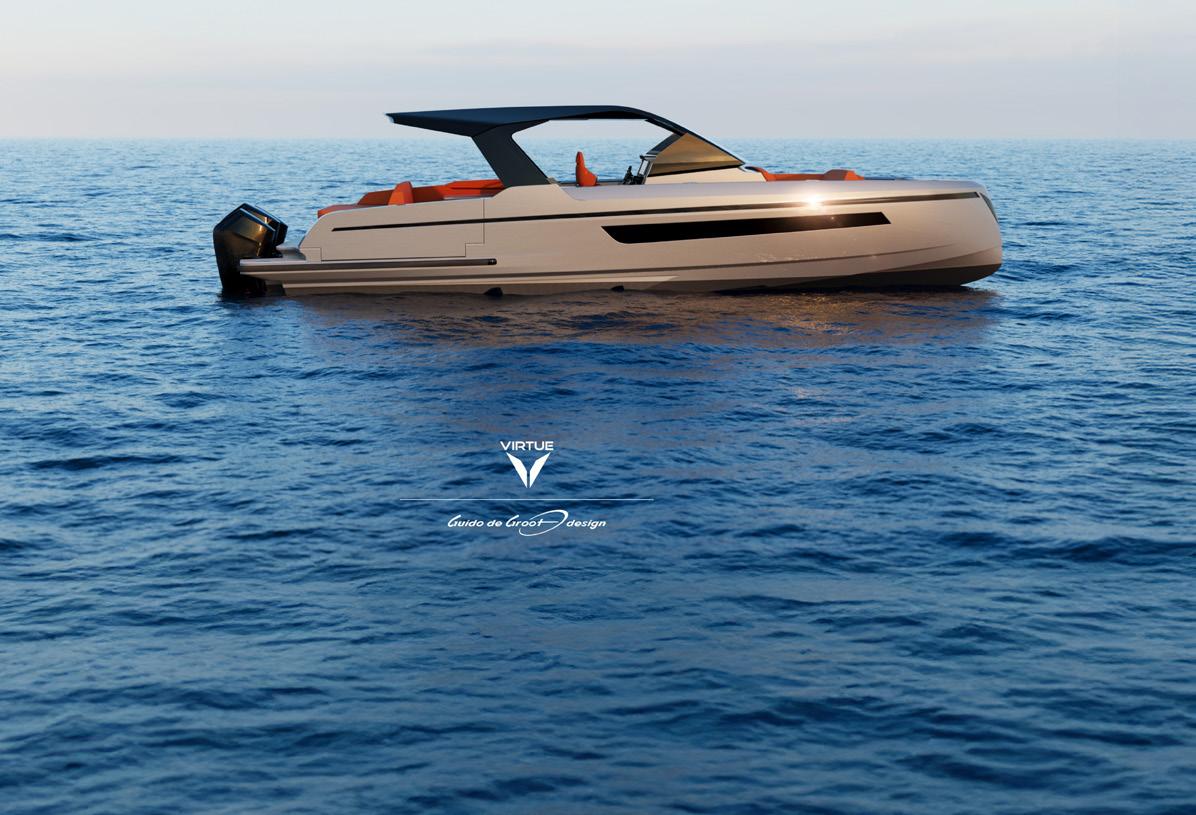
Carbon Yachts, the exclusive distributor for Virtue Yachts in Australia and New Zealand, has announced the forthcoming Virtue V14 Hardtop (HT), a sophisticated new dayboat that embodies Virtue’s design purity, precision, and purpose.
Created by Dutch designer Guido de Groot, renowned for his work with Vanquish Yachts, the V14 features bold, confident lines and an intelligent use of space. Expansive lounging areas flow aft to a wide transom platform that connects seamlessly to the water, while a concealed dinghy garage adds practical versatility without compromising aesthetics. Below deck, the V14 offers a refined, multifunctional layout suited for entertaining or overnight stays. The saloon converts from
a lounge and dining space to an oversized double berth, complemented by a separate aft cabin with twin singles, a private head, and a compact galley. Building on the global acclaim of the V10 series, finalists in consecutive Best of Boats Awards, the new V14 evolves that same DNA, combining bespoke craftsmanship with performance and exclusivity. Its advanced Petestep® hull delivers impressive stability and efficiency, while powerful outboard options enable speeds exceeding 50 knots, ensuring the
V14 is as composed at rest as it is thrilling underway.
Production will remain deliberately limited, reflecting Virtue’s dedication to individuality and quality. “The V14 was created through detailed feedback from dealers, V10 owners, and prospective buyers,” said Peter Hrones. “It’s a truly bespoke creation shaped by the people who will own and enjoy it.”
CARBONYACHTS.COM.AU/VIRTUEYACHTS/VIRTUE-V14-HARD-TOP
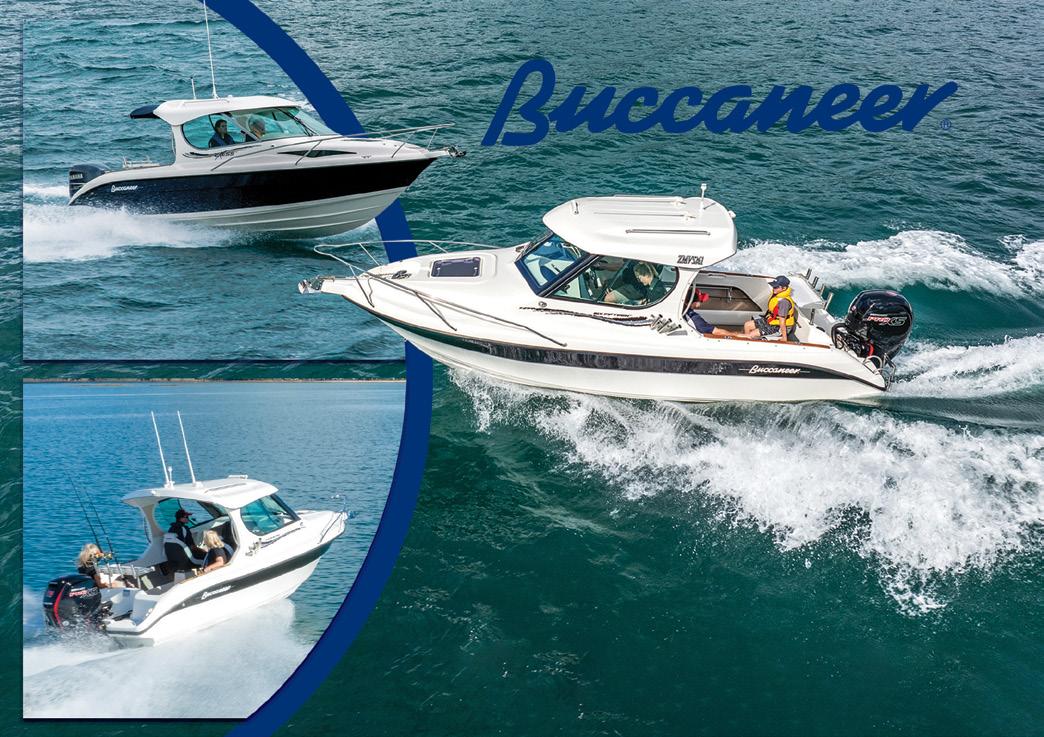
When Steve, the owner and builder of Culprit, first launched his custom-built gamefishing boat in 2024, he knew she could perform better.
Despite looking the part, the original engine wasn’t delivering the power or fuel efficiency needed for long offshore days. “We were burning up to 16 litres an hour while trolling and almost 60 litres cruising,” Steve explains. For a boat that spends 12 hours a day at sea, it just wasn’t sustainable.
As a commercial skipper and maritime police officer, Steve knew exactly what he needed: more torque, better efficiency, and a compact, easy-to-service engine. The NANNI T4.270 was the perfect solution.
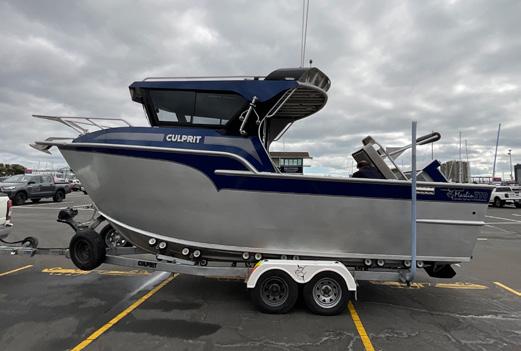
Delivering 265 HP and an impressive 660 Nm of torque at 2200 rpm, it provides the pulling power of a larger block in a lighter, more efficient package. “The torque of the engine is just phenomenal,” says Steve. The installation process was simple, just a minor adjustment to the engine bed and the new NANNI slotted straight in. “We wanted a bolt-in, bolt-out option that we could maintain ourselves at sea, and the NANNI made that possible,” he adds. The transformation has been remarkable. Culprit now cruises comfortably at 22
knots at just over 3000 rpm and can reach 32 knots at full speed, all while operating at only 60% engine load. Fuel burn has more than halved: from 16L to 3.7L per hour while trolling, and 60L to 30L per hour when cruising, meaning more time fishing and fewer refuelling stops.
Quiet, efficient, and powerful, the NANNI T4.270 has completely changed Culprit’s performance, proving that the right repower can bring a great boat to its full potential.
NANNIENERGY.COM
Don’t cut corners with marine cables and terminals. Quality tinned copper cables and terminals are vital for reliability and longevity in harsh marine environments. Boatgear now offers a full range at great prices to boost your GP while ensuring a high-quality electrical system. Marine cables must be tinned, multistrand, and properly sized for load — features that make them far superior to automotive options in durability and performance.
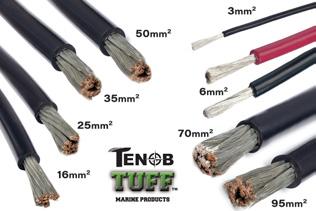
SINGLE CORE & BATTERY CABLESBoatgear has an extensive range of large and starter cables. The choice goes from 3mm2 to 95mm2, which covers most marine requirements up to large inboard engine starting needs.
TWIN CABLE - Boatgear’s twin cable range offers more size options than most, reducing cost and weight by avoiding
oversized cables. Seven sizes are available from 1mm² to 6mm², plus heavy-duty 18mm² and 25mm² options.
TRAILER CABLES - Quality tinned cables, ideal for trailer wiring or other situations where multiple circuits need to be made. Available in a choice of 5-core or 7-core. The 5-core uses individual 2mm2 cables, and the 7-core has 2.5mm2 cables. The outer sheath is white.
BATTERY LUGS - These copper tinned lugs match Boatgear’s cable sizes starting at 6mm2 and ranging through to 95mm2.
The stud size options vary depending on cable size, but range from 5mm to 16mm. The closed end gives a clean finish to the cable.
HEATSHRINK TERMINALS - The range includes joiners, ring terminals, and various tinned spade connectors designed for marine use. With multiple sizes to suit different applications, note that 5mm is the standard for marine fittings like fuse boxes and switch panels.
BOATGEAR.CO.NZ
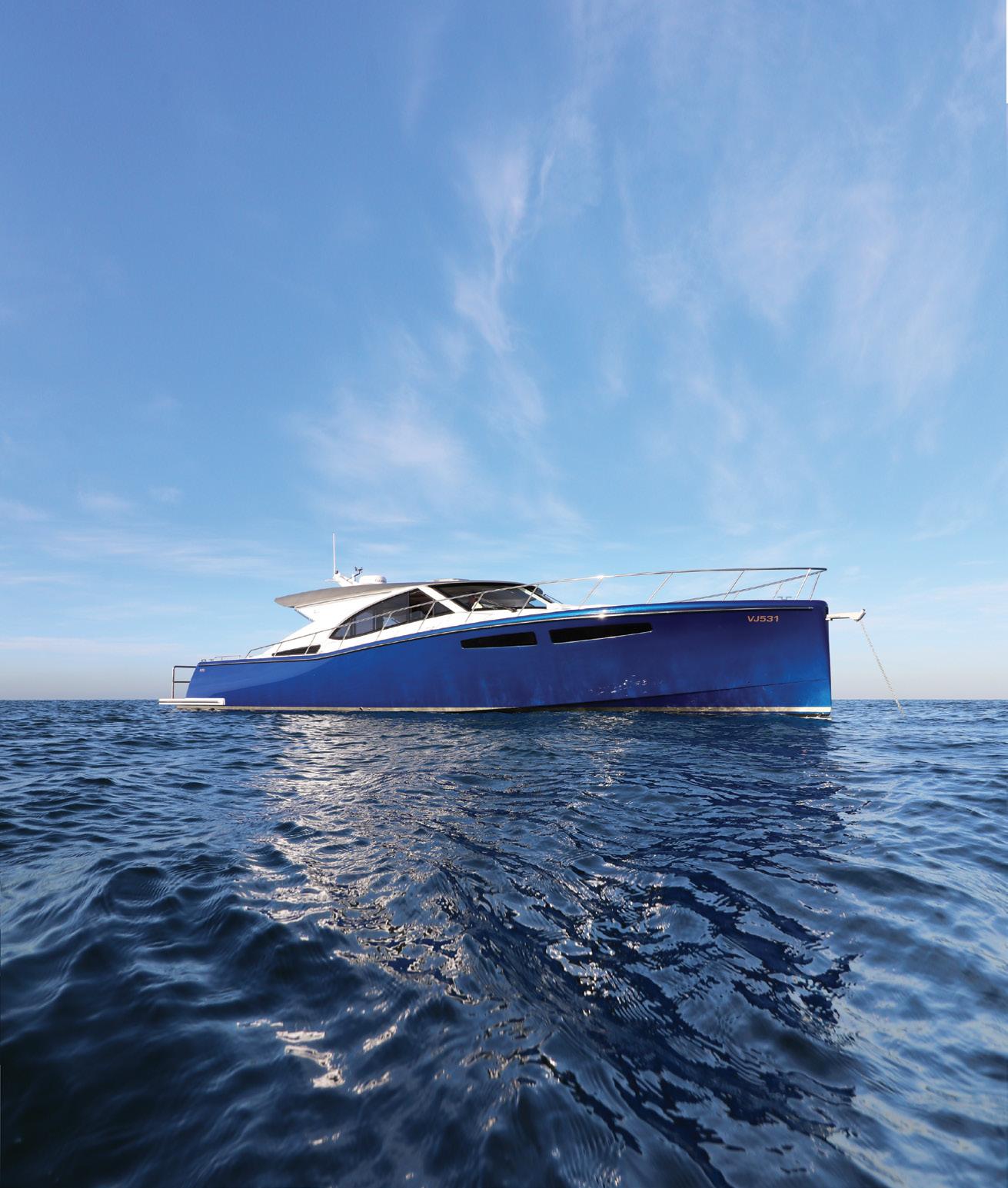
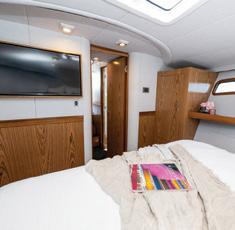
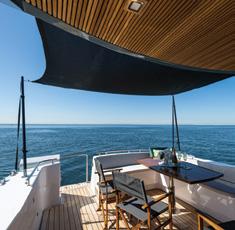
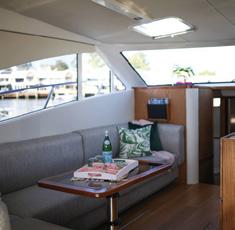
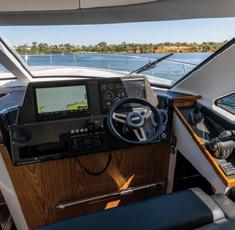
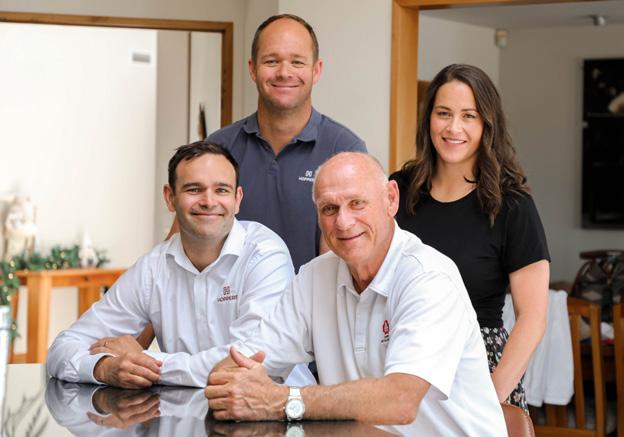
The Hopper Family behind the latest Whitianga development, offering NZ’s very first freehold marina ownership model.
The Coromandel coast has always been about freedom, adventure, and the simple joy of being close to the water. Now, Whitianga is set to lead the way with a landmark development that’s changing how Kiwis can live, invest, and play by the sea.
At the heart of this change is a new marine precinct, located on the site of the former Summer Concert Venue, offering New Zealand’s very first freehold marina ownership model. This truly unique concept redefines waterfront living for current and future generations while securing long-term value and lifestyle certainty. It blends the security of land ownership with an unparalleled coastal lifestyle, transforming how Kiwis live, invest, and play by the sea.
Stage One Auction – 6 December 2025
Stage One is consented and ready to launch in early December, bringing 28 private berths paired with freehold waterfront lots (172–197 m²) to the market. Owners won’t just gain a berth for their vessel, they’ll own a slice of the waterfront itself, and an option to stay-aboard. On this lot, you can build a marina apartment-style dwelling, creating the perfect land base for your marine lifestyle. Imagine arriving late, resting up, and then casting off at first light with the sea at your doorstep. It’s an extraordinary opportunity that marries freedom with
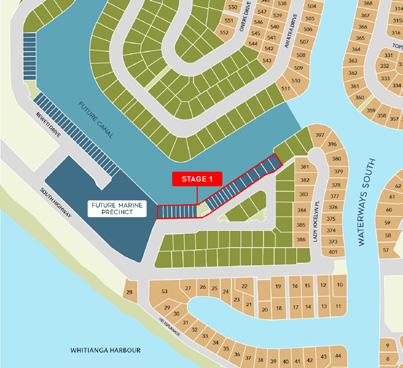
The Marine Precinct at Whitianga Waterways is a premium 28-berth freehold marina development set within one of NZ’s most prestigious coastal communities.
security, lifestyle with legacy – and demand is already building.
The plan is for the Marine Precinct to include a boutique marine-related retail hub with brokerage, chandlery, bait and tackle, and a general store for restocking essentials – making it a true one-stop destination for boaties.
Canal Living – Stage 16
Meanwhile, just along Joan Gaskell Drive, earthworks are well underway. Known as Stage 16, this release features 10 canalfront sections and 7 coastal sections. With land works nearing completion and two canal-front lots already snapped up, the momentum is building fast.
These sites are part of the long-term vision for Whitianga: communities designed for connection, lifestyle, and a future that keeps the Kiwi dream alive.
The Tide Is Turning
Markets move in cycles, and while recent years have been challenging, the tide is turning. Investing in coastal property has always been about more than bricks and mortar – it’s about securing a lifestyle and a legacy. For those ready to act, the opportunities at Whitianga are here today, but they won’t wait around tomorrow.
Anchor Your Place in the Future
Whitianga’s Marine Precinct and Stage 16 release represent a once-in-a-generation
opportunity to combine lifestyle with investment. The question is simple: will you be on board?
“There are very few suitable locations left for new marinas in New Zealand,” says Gray Hopper, Project Manager, Whitianga Waterways. “Boating is integral to the Kiwi way of life, and we believe developers like us have a responsibility to create communities where access to the water isn’t a dream but an everyday reality. The ocean’s a big playground – and it’s right on your doorstep.”
WHITIANGAWATERWAYS.CO.NZ/ MARINE-PRECINCT
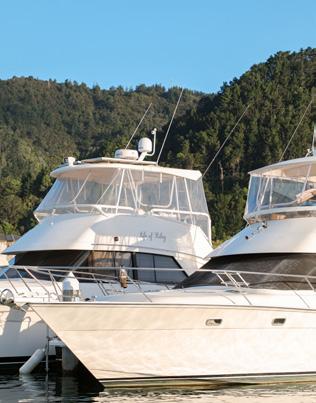
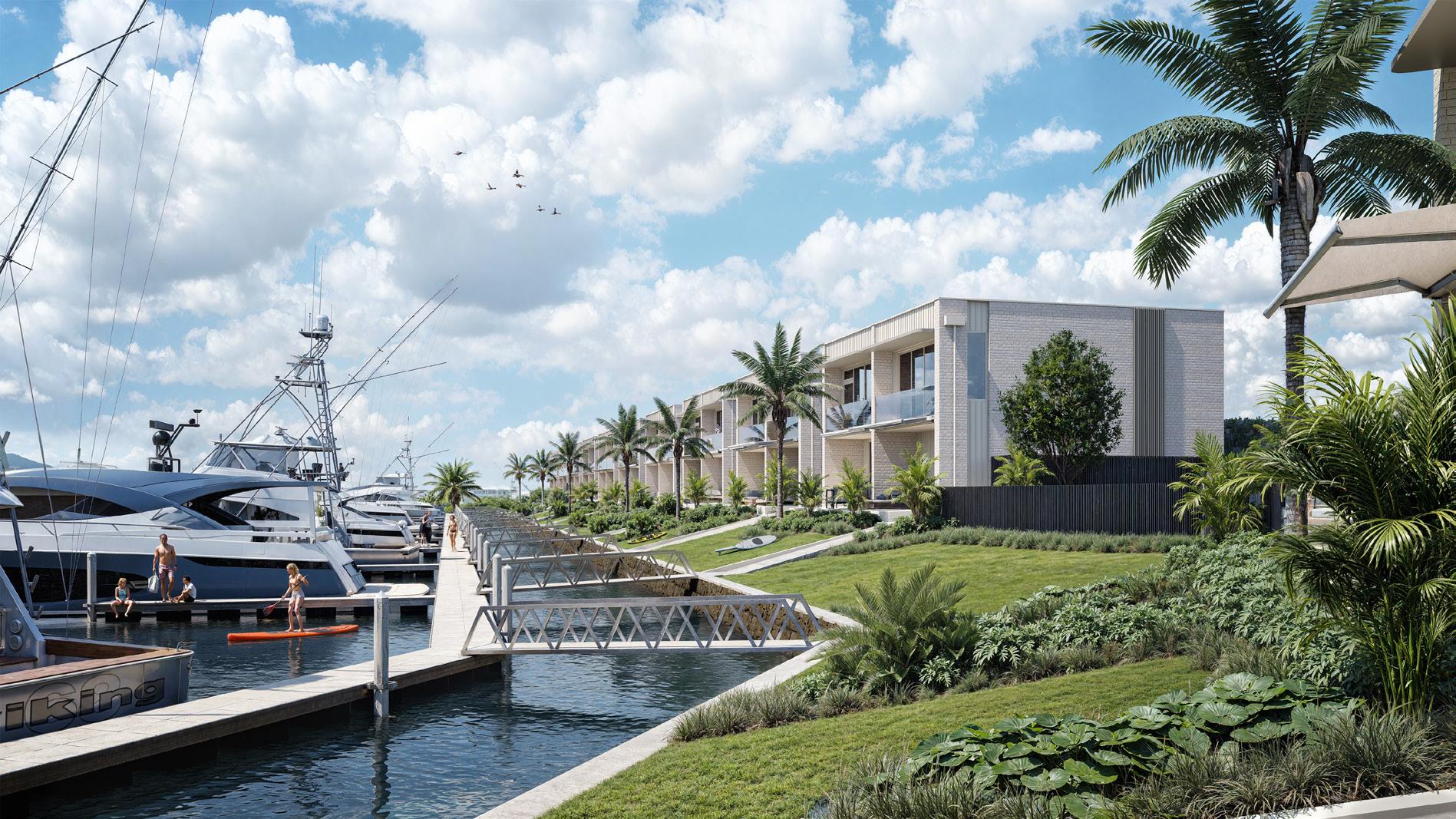


Companies that are approved to build boats to CPC certified standards are:
McLay Boats
Marco Boats
Machina Boats
Offshore Boats
Salthouse Boatbuilders
Seaforce Marine
Smuggler Marine
Southern Boats
Tristram Marine

Ellison Hollands of Tauranga is New Zealand’s latest world champion.
Ellie, 14, is the IWWF World Junior Girls Champion in the sport of Water Ski Racing. Ellie, along with her Dad, Gene, who was her boat driver and her observer, Jeff Weake won 3 out of the 4, 30 minute + 1 Lap races in the World Water Ski Racing Champs in Belgium. The week-long event took place in late August, and Ellie is only the 3rd ever Kiwi to be crowned World Champion. The title of World Champion is even more impressive given the juniors class at a World level is an Under 17 competition and Ellie is young enough to be able to defend her title in 2 years’ time.
Along with Ellie, Amos Ratuki, 15, from Hamilton, also had success, picking up a Bronze Medal for the World Champs along with his team Greg Dutton (Driver) & Brad Dutton (Observer). Amos had to call upon help from an Austrian boat and driver, Gunter Schmutz, as the boat the team was borrowing smashed a gearbox in another race, towing another skier. This meant Amos and Brad had to jump in a foreign boat, with a new driver on race day at the world champs and still managed to get on the podium.
The 3rd NZ team member was Kyle Taylor from Palmerston North, who skied in Mens Formula 2. Kyle placed 8th for the week in a very competitive class, skiing consistently without any falls or issues. At the World Champs, the men race in gruelling conditions for 1 hour + 1 Lap, and in the final 5 minutes of the final race, Kyle performed a very heroic act, throwing his own race away to help a fellow competitor who had fallen off and was face down in the water. Kyle was awarded an Outstanding Sportsmanship Award by the IWWF for his act of kindness. Overall, a very successful campaign by a small, young New Zealand team. The team would like all thank all their sponsors and supporters.

Vetus’ new top-of-the-line BOWPRO & RIM
Drive 48v thrusters employ Vetus’ renowned maintenance-free brushless induction motors to deliver genuine variable-speed, power, greater control and a smoother, quieter experience.
Both the BOWPRO & RIM Drive 48v thrusters require significantly less current to deliver the same amount of power as a 12v thruster. This not only results in less heat generation, reduced resistance loss and far greater efficiency, it also means significantly thinner, lighter and more flexible cables can be used, reducing weight, saving space and lowering material costs. The new thrusters are also noticeably quieter and, in the case of the RIM Drive, virtually completely noiseless, thanks to its cavitation-free propeller and a complete lack of gears.
When combined with the patented Vetus motor controller (MCV), the new thrusters’ motors also eliminate the high
in-rush currents that are often a feature of conventional DC thrusters. This gives owners the flexibility to power their thrusters from a variety of sources: their start bank, a dedicated bank or even their house battery bank (which is not recommended with conventional DC thrusters). The Vetus thruster models are suitable for vessels from 7m to 40m and can be run directly off a 48v bank of batteries. For vessels 15m or more, thruster models from 180kgf have the ability to run off a 48v source and be charged with either 48v or 24v. The BOWPRO 48v models from 180kgf also have an exclusive built-in DCDC smart charger allowing them to be run off a 48v battery bank, with this bank
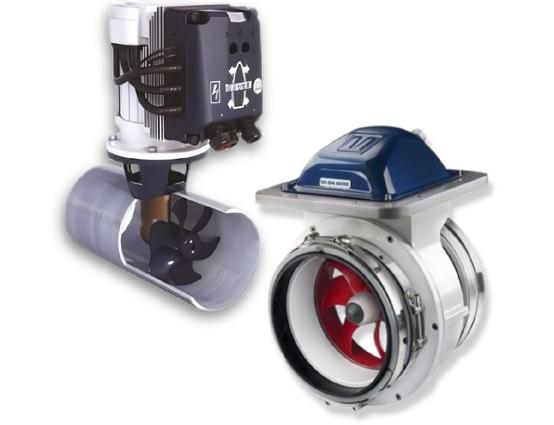
able to be charged from an onboard 24v source.
Vetus’ 48v thrusters will be a welcome option for the increasing number of boat owners now choosing full electric 48vDC power systems. These systems, which are better at handling higher power loads, such as those required to run complete-ship air conditioning and heating systems, powerful bow and stern thrusters and the like, also eliminating the need for costly, spacehungry and noisy 230v generators.
LUSTY-BLUNDELL.CO.NZ





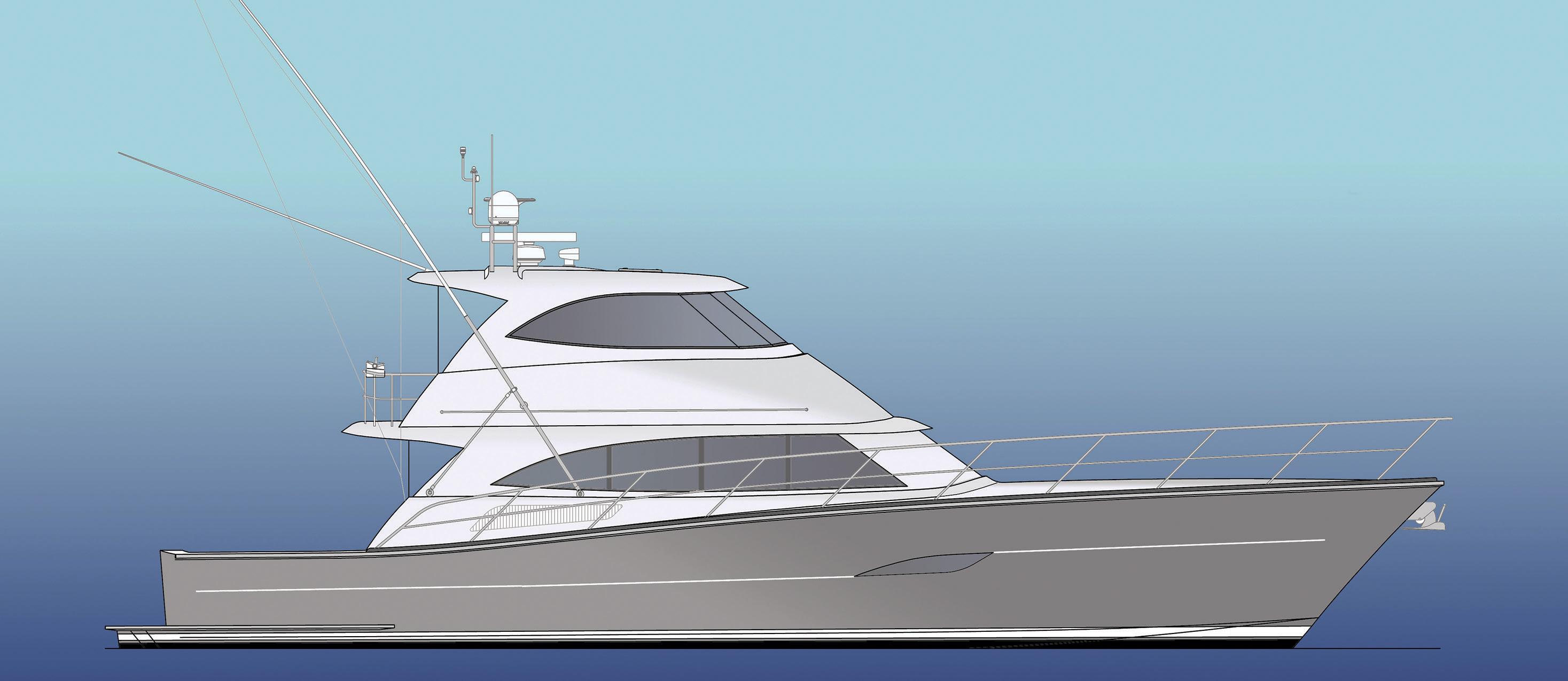
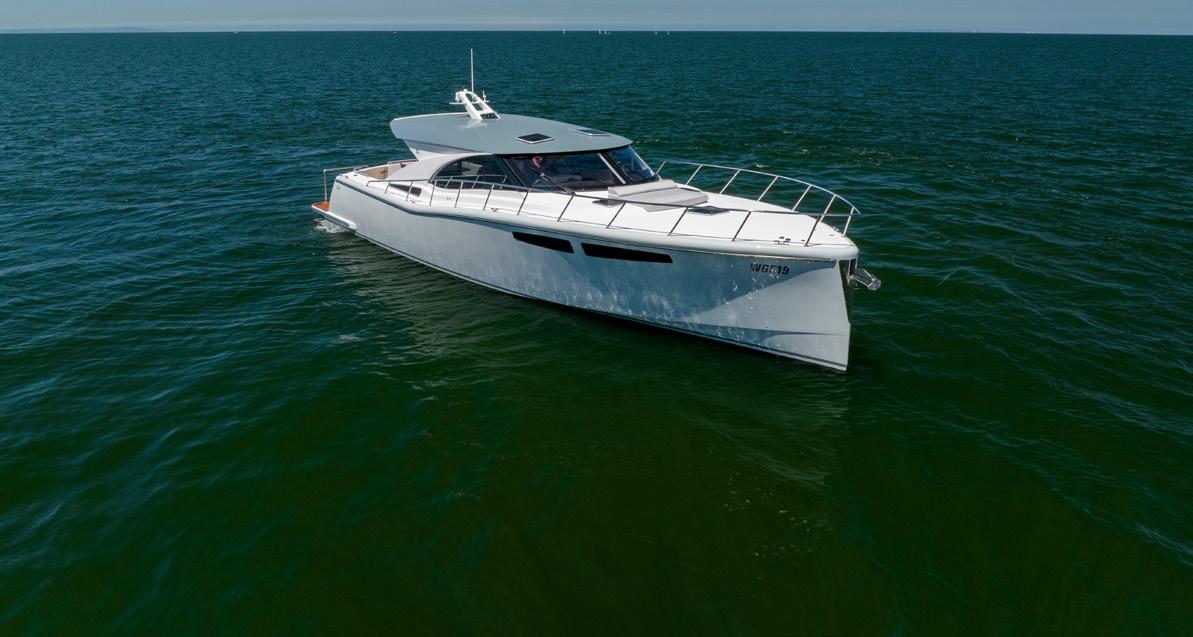
- WHERE PERFORMANCE MEETS STYLE
Steve Campbell’s Composites Constructions has unveiled the impressive new Cape50, a performance cruiser that blends racing pedigree with modern design and craftsmanship.
Campbell, a former ocean racer, has spent decades building specialist boats and carbon components for the marine and aeronautical industries, giving him an unrivalled understanding of how to make boats light, strong, and durable. That experience is now clearly visible in the Cape50. Built for Australasian coastal conditions, the Cape50 has been designed to handle fast-changing weather, wind, and sea states. The plumb bow increases
waterline length and interior volume, while delivering a fine, sharp entry that slices cleanly through the waves. A pronounced chine and muscular flare keep the decks dry, allowing owners to maintain speed and comfort when conditions turn rough. A flat planing area aft, combined with Volvo Penta IPS drives, ensures the Cape50 is fast, efficient, and stable both underway and at rest. Her Downeast-inspired tumblehome and reverse transom tie the design together
with distinctive European flair. “The Cape50 reflects everything we’ve learned from years on the water,” says Campbell. “It’s built to perform, endure, and inspire confidence in real-world conditions.”
The Cape50 represents the perfect meeting point of tradition, seaworthiness, and modern style, a true expression of downunder craftsmanship and passion for boating.
CAPE50.COM.AU
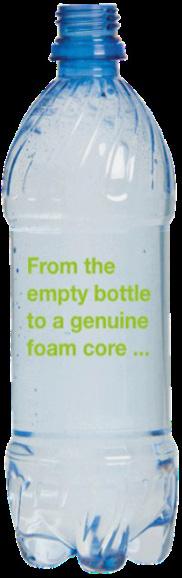

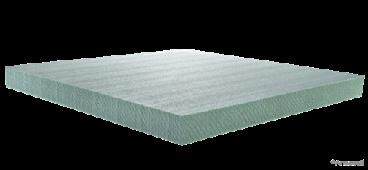


nzcomposites.com dean 021 300 151
pannett.d@xtra.co.nz
Eyachts, the exclusive Australian and New Zealand dealer for Axopar Boats, has announced the Axopar 38, the most advanced and versatile model in the brand’s history.
Building on the success of the legendary Axopar 37, which has sold over 3,000 units globally, the new 38 delivers unprecedented modularity, enhanced comfort, and signature Axopar performance. The model will make its world premiere at BOOT Düsseldorf in January 2026, with Australian deliveries to follow.
At the foredeck, the Axopar 38 offers a new level of flexibility. The standard layout features a forward-facing sofa, with optional upgrades including a full U-shaped lounge with hidden lockers, a multi-position table, or a convertible sunbed.
Inside, the enlarged Cross Cabin wheelhouse provides greater space and light, while the forward cabin now features full standing headroom.
Options such as an enclosed toilet, shower, or kitchenette allow owners to tailor the vessel for day trips or extended cruising. The aft area showcases major innovations, including a choice between a forward-facing sofa, a wet bar, a leaning post, or a full aft cabin with a sunbed. A standout addition is the aft-opening windscreen, which opens fully to the rear deck for natural airflow and seamless connection between interior and exterior spaces, perfect for warmer climates.
Instead of fold-out balconies, Axopar introduces raised activity platforms, offering safe and practical areas for swimming and watersports while maintaining the hull’s structural integrity. “We’ve lifted our activity platforms higher above the water, keeping them reliable, safe, and functional in all environments,” says Axopar CoFounder Jan-Erik Viitala.
Performance remains at the heart of the design. With a newly optimised hull, twin 300 or 350 hp outboards, and expected top speeds exceeding 45 knots, the 38 ensures precise, confidence-inspiring handling. “The 38 is about boiling functionality down to its essence and making it work,” Viitala adds.
Launching first as the Cross Cabin, the 38 range will expand through 2026–2027 to include the Sun Top, Cross Top, and CCX. Eyachts Sales Manager Joe Fox calls the 38 “bigger, smarter, and more versatile” than its predecessor. At the same time, Brand Manager Russell Ayers adds: “It delivers the comfort and capability Australian and New Zealand boaters have been asking forwithout losing the performance that defines Axopar.”
EYACHTS.COM.AU
EYACHTS.CO.NZ
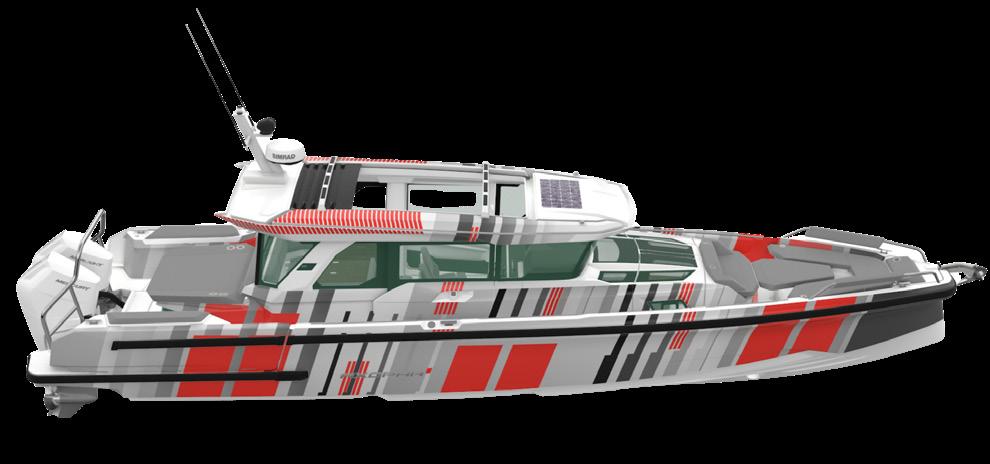
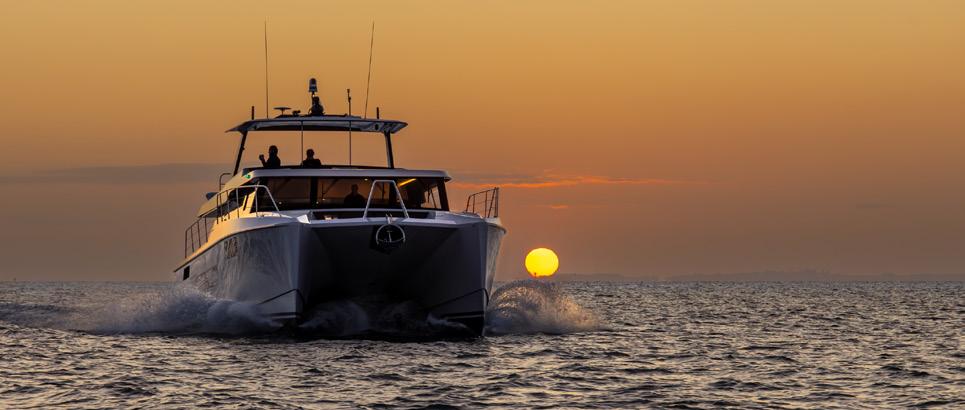

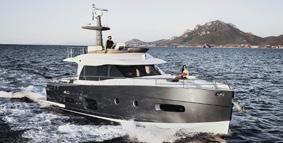
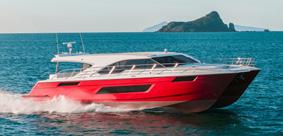

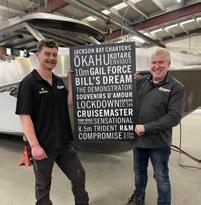
This year marks a milestone for Image Boats as Callum celebrates 10 years with the company. Joining straight from school, he became Image Boats’ first apprentice to qualify as a tradesman and has since become a cornerstone of the team. Calm under pressure and proud of his craft, Callum has shaped the workshop culture with his reliability, commitment, and skill. His workmanship is seen in boats such as Fishmasters Trident, Envious, Lockdown, Compromise, Kotare, R&M, Bill’s Dream, Gail Force, Toby Rose, and Eredita, plus Sensational (2024 demonstrator), OKAHU (10m CruiseMaster), and Souvenirs D’amour (10.5m CruiseMaster).
IMAGEBOATS.CO.NZ
Sealegs has appointed Dave Larsen as Chief Executive Officer of Sealegs International. A proven leader in the marine industry, Dave takes the helm at a pivotal time, bringing a vision for innovation, growth, and global expansion. At just 35, he became CEO of one of New Zealand’s most iconic boatbuilders, guiding it through strong international growth. Known for combining strategic direction with product and people focus, he brings deep industry knowledge, commercial acumen, and global perspective. As Sealegs sharpens its focus on international scaling and advancing amphibious technology, Dave says he’s excited to strengthen products, networks, and reach.
SEALEGS.COM
Volvo Penta has appointed Hanna Ljungqvist as Head of Marine Business and member of the Volvo Penta Executive Group, effective October 1, 2025. Returning after more than a decade with Volvo Penta earlier in her career, Ljungqvist most recently served as Vice President and Head of Volvo Trucks in India and Indonesia. A Chalmers University graduate, she joined the Volvo Group in 2008 and has held senior roles in product, business, and service development, including Vice President, Service Market Marine. Welcoming her back, Volvo Penta President Anna Müller praised her international experience, marine expertise, and leadership.
VOLPOWER.CO.NZ

ePropulsion, a global leader in electric marine propulsion, announced that co-founder and CEO Danny Tao has been named to Fortune China’s 2025 “40 Under 40” list, recognising visionary young leaders shaping the future of business. Tao’s selection highlights his pioneering role in transitioning the marine industry from fossil fuels to clean electric propulsion. He co-founded ePropulsion in 2012 while studying engineering at Hong Kong University of Science and Technology, aiming to create sustainable, high-performance solutions. Under his leadership, the company has grown into a global brand in over 100 countries, advancing innovation, zero-emission technology, and sustainable boating worldwide.
EPROPULSION.COM

Advance Trident (ATL) is pleased to welcome Tom Ritchie as its new Sales and Marketing Manager. With a lifelong passion for the water, Tom brings strong industry knowledge and global experience to the role. He previously spent three years with Garmin NZ, developing expertise in both the marine and tech sectors, before broadening his perspective while working in London. Growing up as the son of Hutchwilco CEO Tim Ritchie, Tom has long been immersed in New Zealand’s marine industry. He now looks forward to combining his local insights and marketing skills to strengthen ATL’s presence and drive new opportunities.
ADVANCETRIDENT.COM

Highfield Boats has announced a new governance structure to support its next phase of growth. Co-founder and CEO Julien Carussi will transition to chairman, focusing on long-term strategy and industrial expansion, while Paul Blanc became CEO in September 2025. Since founding Highfield in 2011, Carussi has grown the company into a global leader with over 60,000 boats produced and a presence in 50+ countries. Blanc, formerly with Groupe Beneteau, brings 20 years of marine industry leadership in global markets, product strategy, and dealer development. Highfield says the transition ensures continuity while driving sustainability, innovation, and expansion.
HIGHFIELDBOATS.COM | AAKRONXPRESS.CO.NZ
Lusty & Blundell has promoted Cayla Moulpied from Auckland showroom manager to Internal Sales Project Manager and head of branch operations at its busy Whangarei branch. With over a decade of experience in wholesaling and retailing marine equipment, Cayla is known for her problem-solving skills, Raymarine expertise, and strong connections across the boating, off-grid, and RV communities. A keen sailor, former Coastguard volunteer, and active yachting member, she also contributes to Learn to Sail programmes and L&B’s boat show team. Sales director Cameron Maher says her promotion reflects sustained regional growth and recognises her significant contributions to both company and community.
LUSTY-BLUNDELL.CO.NZ
Sealegs is excited to welcome Mason Orchard as New Zealand Sales Manager. Mason joins from a leading Yamaha dealership, bringing extensive marine knowledge, technical expertise, and a passion for the water. With a strong sales and customer service background, he’s a great fit for the team. Outside work, Mason enjoys golf, fishing, diving, and exploring New Zealand’s coastline. Global Sales Director Jack Ewen said Mason’s arrival comes at a pivotal growth stage: “His energy, expertise, and customerfirst approach are exactly what we need to keep building momentum – I’m stoked to have him on board for the journey ahead.”
SEALEGS.COM
Raymarine’s latest update for its popular LightHouse operating system includes a new Suzuki App, offering full integration with Suzuki engines; the ability to overlay numerous data boxes; enhanced cyber security and automatic upgrade notifications.
The update, LightHouse 4.10.140, is for all Axiom, Axiom +, Axiom Pro, Axiom2 Pro, Axiom XL & Axiom2 XL Chartplotter MFDs, is free to download and available now.
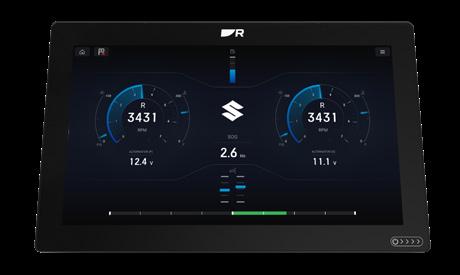
With the new Suzuki App, owners will be able to display vital details such as speed over ground, RPMs, transmission gear, oil pressure, trim/tilt position, alternator voltage, fuel tank levels and rudder position. The integration also supports Suzuki’s Troll Mode status and provides essential warnings, such as oil pressure and engine coolant alerts, systems’ and engine faults and water-in-fuel warnings. The App, which supports up to four
Scanstrut’s new Ventura Series offers a quick, smart solution for boaties and RV owners to connect everything from 12V or mains power and USB-C, to TV antennae, solar panels and even outdoor showers. Compact and low-profile, each socket features a springloaded, click-shut lid with a clever 90° hold to keep showers and spray off the plug while in use. With IP68 and IP69K ratings, Ventura sockets are fully sealed against torrential rain, industrial washdowns, desert dust and road blowback, making them ideal for the harshest environments. Built from rugged marine-grade 316 stainless steel and UV-resistant materials, they’re designed to withstand years of exposure without fading or degrading.
The sleek, consistent design across the range means Ventura sockets can be mounted almost anywhere, even in tight spaces. Standard hole sizes and integrated gaskets ensure fast, watertight installation. The range includes popular options such as the Ventura Dual USB, cold water shower outlet, 50A Andersen Plug Solar Connection, Dual Sat Nav/TV Antenna F-Type connection, 12V Power Outlet Socket, SAE Solar Connection and XT60 Solar Connection. Stylish, durable and versatile, the Ventura Series combines Scanstrut’s proven engineering with user-friendly design for reliable connectivity on land or at sea.
LUSTY-BLUNDELL.CO.NZ
compatible Suzuki engines, also offers a comprehensive trip data page that includes engine hours, trip distance, fuel used, average fuel economy, total fuel, fuel flow and distance to go. The new LightHouse upgrade also allows users to customise their displays to better reflect the type of boating they are doing at the time. This includes the ability to have up to 12 data boxes, positioned wherever they wish, overlaid over their main screen display and the choice of classic or dynamic icons on their home screen.
LightHouse 4.10.140 also comes with enhanced cybersecurity features for even greater protection and automatic notification whenever new software upgrades become available. Raymarine’s new LightHouse 4.10.140 upgrade is available now and free to download.
LUSTY-BLUNDELL.CO.NZ
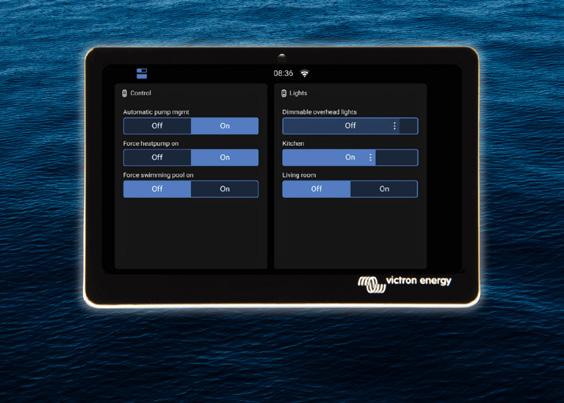
Victron’s Venus OS 3.60 firmware update and its new switch pane combine to offer an effective, relatively low, and easy-toinstall monitoring and control system for use with the Victron IO extender and other switching devices. This combination is ideal for aftermarket digital switching for small vessels and RV’s. The new OS3.60 update also includes a dedicated Electric Boat page. The system, which can be retrofitted DIY, features a new intuitive user interface, allowing users to monitor fuel supply and electrical loads, control navigation and other lighting, and display engine and navigational data such as rpm, speed and heading. It can be used to control load switching and digital output relays, and the information can be displayed through VRM, Touchscreens and GX devices. It also enables three types of output: Momentary, Latching and Dimmable and allows groups of devices to be easily grouped together on the User Interface screen. When linked with an IO Extender, the Venus OS 3.60 expands the Input/Output capabilities of a GX device and offers three additional relays: two bistable replays and one solid state replay. It also offers two 4-Input/Output digital I/Os and 4 adjustable level outputs (suitable for operating fans, lights and the like). The system can also be easily linked to suitable MFDs and tablets. Victron’s new Venus OS 3.60 firmware update is free to download and is available through Victron Professional or the Victron Connect app.
LUSTY-BLUNDELL.CO.NZ
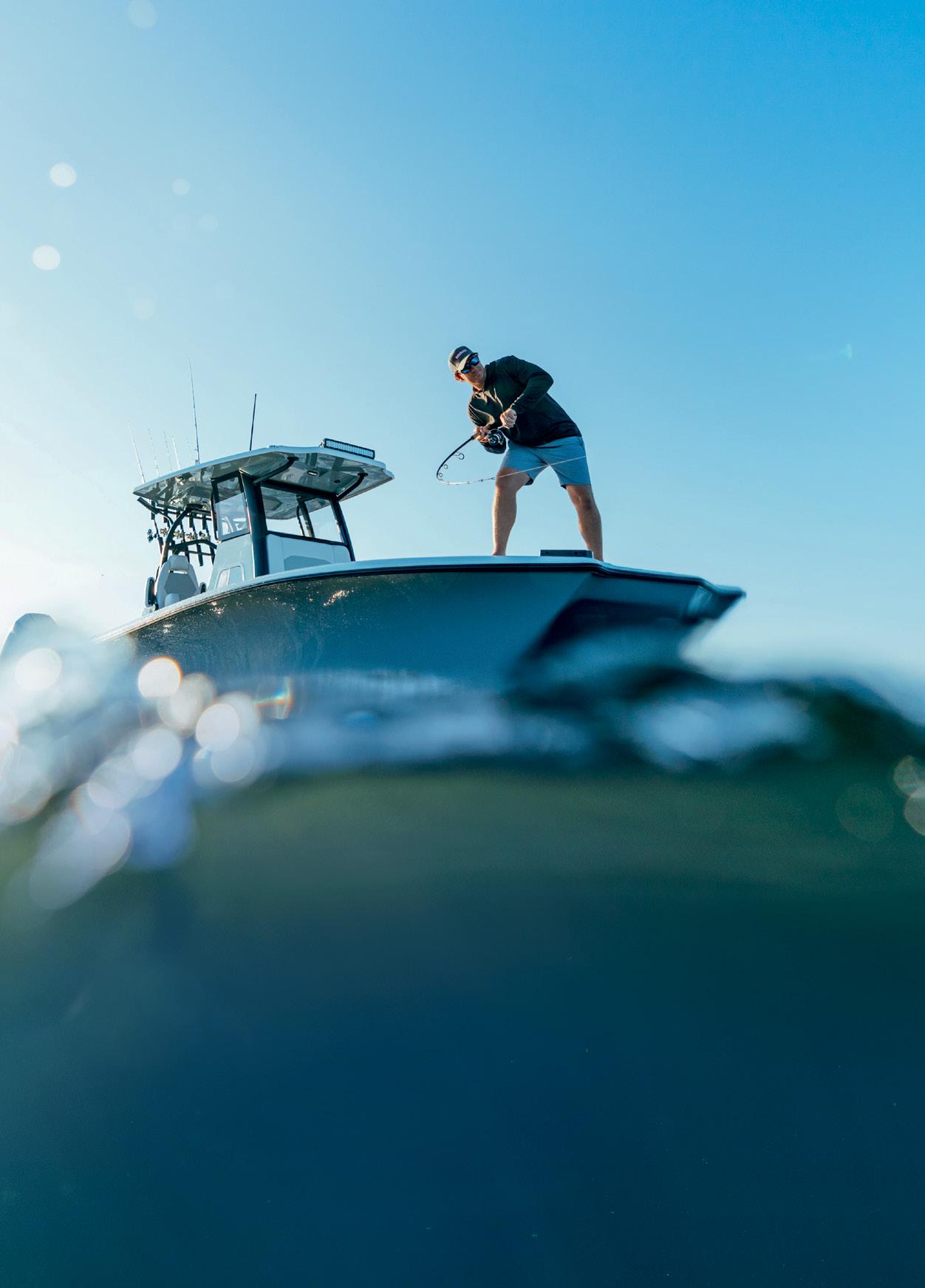
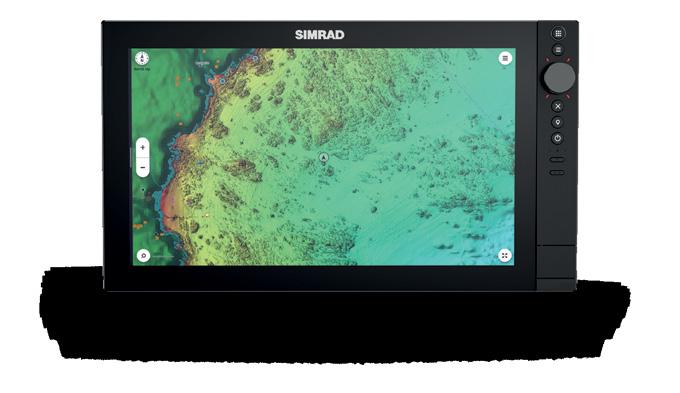
ZF has expanded its pod propulsion range with the new POD 4900, developed for vessels up to 150 feet and engines of 2,000 HP. Delivering 6,107 Nm of torque and speeds of 20–35 knots, it builds on the POD 4600 launched in 2022. The system debuts on the Azimut Grande 30M, paired with Rolls-Royce mtu engines of 1,920 HP each. Flexible layoutstwin, triple, or quadruple - combine with a large gear reduction ratio enabling counter-rotating propellers, boosting efficiency by up to 20% over shaftlines while saving space. Benefits include a +30°/-30° steering angle, integration with ZF’s TotalCommand controls, smoother manoeuvring, and noise and vibration reduction. Certified for 3,000 hours annually, the POD 4900 suits both luxury yachts and medium commercial craft such as ferries and crew transfer vessels.
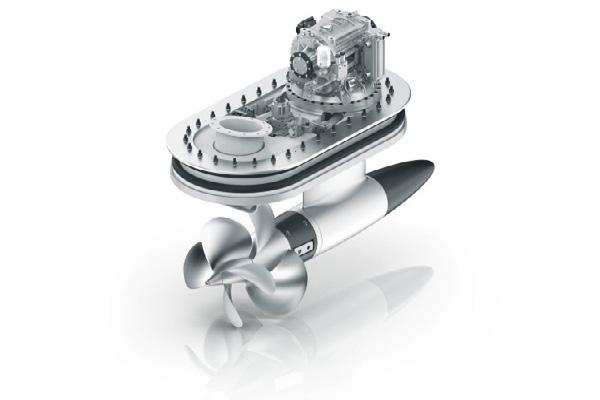
Volvo Penta has introduced the D6 480 DPI, a new Aquamatic DPI propulsion package offering greater horsepower, flexible installation options, and enhanced system integration. Expanding the Aquamatic DPI range, it delivers high performance and versatility for both leisure and commercial vessels, supporting single, twin, triple, or quadruple setups—ideal for repowering projects or new builds. “The D6 480 DPI strengthens our range with a fully integrated package that delivers comfort, performance, and onboard flexibility,” says Ludvig Börjesson, Volvo Penta Product Planner.
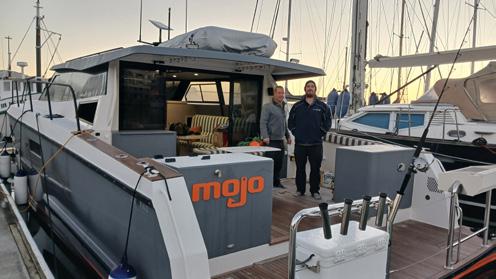
FPT SUPPLIES THE MOJO FOR MOJO
Mojo is a standout example of the Profab 1200 power catamaran, built by Profab Engineering in Palmerston North. Designed by the highly regarded Roger Hill, known for his efficient, high-performance hulls and thoughtful interior layouts, this 12-metre catamaran combines proven design expertise with exceptional craftsmanship. Profab Engineering enjoys an equally strong reputation for precision boatbuilding, and Mojo more than lives up to that standard. The asymmetrical hull design is further enhanced by a hydrofoil, which delivers extra lift to reduce drag, boosting both performance and economy.
With her sleek profile, low topsides, and contemporary colour scheme, Mojo exudes speed and style. Even among larger flybridge yachts, she turns heads. Step aboard and the teak cockpit sole leads you into an interior finished with muted tones and refined details that create an immediate sense of comfort and understated luxury. Here, form and function blend seamlessly with style.
As expected from a company with “engineering” in its name,
The helm-to-propeller system provides rapid acceleration, strong torque, and high responsiveness, improving fuel efficiency and reducing emissions. Duoprop technology ensures exceptional grip and tight turning, crucial for highspeed applications, while hydraulic clutch shifting, electronic steering, and low-speed functionality enhance handling. Its sterndrive configuration frees transom space, improving deck versatility, water access, and onboard comfort, with a low centre of gravity boosting safety in rough seas. Built for speed, performance, and extended cruising, the D6 480 DPI also delivers durability and reliability, supported by long service intervals, global parts availability, and a warranty of up to three years. “From any perspective—operator, boater, or builder—this package offers exciting possibilities and added value on the water,” concludes Martin Jufors, VP of Marine Sales.
VOLPOWER.CO.NZ
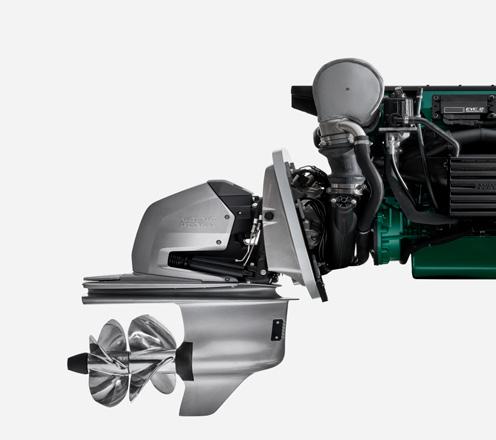
the construction is meticulous. Below deck, every system has been thoughtfully designed, positioned, and installed with precision. From flawless hull welding to bespoke fittings, the workmanship reflects the pride and skill of Profab’s engineers and tradespeople.
The Profab 1200 is an ideal 12-metre platform for those seeking a stable, high-performing vessel capable of both economical long-range cruising and exhilarating high-speed passages. Mojo is powered by twin FPT N60 400hp common-rail diesels, engines that strike the perfect balance of performance, efficiency, and value—further reinforcing the vessel’s all-round capability.
For further details on the FPT engine range, please contact Adrian Penman.
MARINEINDUSTRIAL.ABEQUIPMENT.CO.NZ
Honda Marine has announced significant upgrades across its high-power outboard range, delivering premium performance, enhanced durability, and greater ease of use, designed togive boaters more time and enjoyment on the water.
The updated line-up includes the Honda BF115, BF135, and BF150 inline-four (L4) engines, along with the BF200, BF225, and BF250 V6 models. Each benefits from refinements in styling, comfort, fuel economy, and maintenance accessibility. Both the L4 and V6 engines are available with either Honda Intelligent Shift and Throttle® (iST®) drive-by-wire or mechanical control systems and now feature a sleek exterior inspired by the awardwinning Honda BF350 V8. All models come in Aquamarine Silver or Grand Prix White and include Honda’s industryleading True 7-year non-declining factory warranty, providing the same coverage on the final day as on the first.
Honda Marine has incorporated numerous updates for improved performance and user-friendly operation. The new iST® drive-by-wire system offers ergonomic, plug-and-play controls that make operation intuitive and stress-free. At the helm, operators will find a redesigned side-mount iST® five-button panel, a single-lever neutral lock, and compatibility with the latest 7-inch HD displays for clearer visibility
and improved functionality. Drive-bywire models now include automatic tilt, trim support, and cruise control—features derived from the flagship BF350 V8. Inside the engine, combustion chamber refinements enhance fuel efficiency and consistent performance, while a strengthened starter motor mount and seal ensure reliable starts in all conditions. Honda’s exclusive Lean Burn Control System has also been improved to deliver greater fuel efficiency across a wider range of speeds, with a redesigned mid-section and O₂ sensor that help lower running costs. Proprietary Honda technologies such as BLAST™ (Boosted Low- Speed Torque), VTEC® (Variable Valve Timing & Electronic Control), and PGM-FI (Programmed Fuel Injection) ensure smooth power delivery, faster acceleration, and optimal fuel economy.
Honda’s reputation for long-lasting reliability continues with upgraded internal components designed for marine toughness. New oil pump and gasket designs improve corrosion resistance, while enhanced fasteners and extended maintenance
intervals—combined with iridium spark plugs—mean more time on the water and less in the workshop. Installation and servicing are now easier too. A repositioned transom bolt hole simplifies engine alignment, while a new oil filter placement and bypass system reduce mess and speed up oil changes. An improved vapor separator fastener allows quicker disassembly during maintenance.
All enhanced L4 and V6 outboards are NMEA 2000® certified, ensuring seamless integration with modern marine electronics and compliance with strict safety and communication standards. With their refined design, cutting-edge features, and signature Honda reliability, the new Honda High-Power Series represents the next evolution in marine performance. The range is available now through Honda Marine dealers nationwide.
HONDAMARINE.CO.NZ
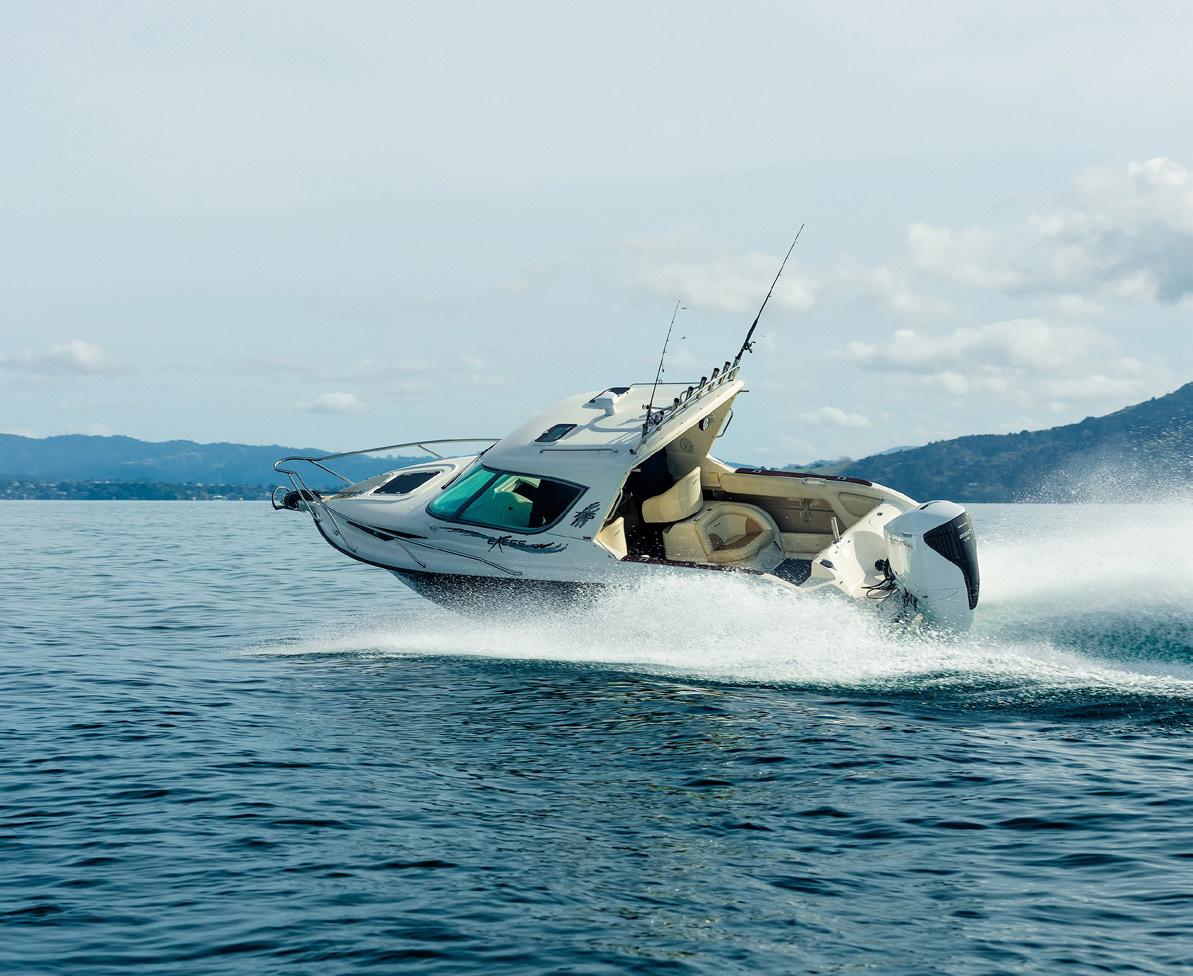

In any rescue situation, there are generally those who play the role of the caped crusader and those in distress calling for the aforementioned hero. Most likely, a marine radio is also a major player.
Here’s one of my stories from way back when my rather ancient VHF radio and its probably rusty wiring only-just played a crucial part in a rescue. Only-just? Yep, for whatever reason, the VHF’s transmission was dodgy and only just managed to transmit a scratchy mayday. Luckily a powerful launch heard the call and saved a life.
My friends Harry and Kay were sailing with me from the bottom end of Waiheke Island to Maharangi Harbour via Tiritiri Matangi Channel, a distance of around 45 miles. The forecast wasn’t great, about 25 knots from the north-east, but within our capabilities.
As we slogged our way through Tiritiri Matangi Channel, largely devoid of other boats, we heard a cry. I dismissed it as a seagull, but Kay was adamant it was a cry for help. Then it came again, unmistakeably human. In distress.
When we looked in that direction, there wasn’t much to see apart from a yellowish blur submerged beneath the waves, so we started the motor and the crew lowered the mainsail as we headed in that direction. Pretty soon we had a trail to follow, like Hansel and Gretel following a trail of breadcrumbs, but in this case it was fishing gear – a tackle box… a fishing rod… a cutting board…
The blur of yellow turned out to an upside down dinghy, submerged. Its owner was floating next to it in full wet weather gear. I don’t remember if he was wearing a life jacket. He was well out of the main channel
to the north of Tiritiri Matangi Island and in more trouble than a salmon at a grizzly bear’s picnic.
I knew my job was to stay on the helm, so I told Harry to call a mayday. Technically, it was a mayday relay since we were sending it on behalf of another vessel, but I thought it was best to keep it simple.
Whenever you do man overboard drills, it’s usually with a life ring on a flat calm day, and it doesn't matter if you don’t get it first, second or third time. In real life, it can be a real person in rough seas. Time was running out, but it was going to be a challenge getting him onboard. If I got close to him, there was a real danger of my boat crashing down on top of him or his submerged dinghy, but if I bounced down the other side of the wave to avoid him, we were still well away from him.
Meanwhile, I could hear bits of Harry’s conversation with Coastguard on the VHF and it wasn’t going well. Coastguard was
struggling to hear him. Another boat was relaying for him, but due to the dubious quality of my ancient VHF and its various attachments, the transmission was patchy. I was scared it was going to go badly wrong.
Then Kay yelled: ‘Look!’
The caped crusader was coming: a big launch, full noise, bow waves flying, boosh… boosh… into the head sea. I’m pretty sure bugles were playing: dootda-dooooooot! I told the guy he would be rescued within minutes and motored clear.
Better than Hollywood: the launch did a powerful wheelie. With a wonderful roar of its twin engines, it backed up to the guy in the water. Two strong men on the boarding platform extended the longest boat hook I’ve ever seen. Our hapless fisherman clung to it like a drowning man. As they dragged him aboard, I could see he was totally exhausted. It had been a close call.
The launch was a much better rescue boat than my boat. Within five minutes, he was probably in a hot shower and heading to Gulf Harbour marina at 20 knots. My boat didn’t extend to such luxuries.
We continued on to Mahurangi Harbour, but every time I thought about what had nearly happened, I had to choke back tears. As soon as I got back to Auckland, I bought a new VHF and wiring. That guy had made some not-smart decisions that day, but we had nearly failed to save him because we didn’t have a reliable marine radio. So that’s the moral of this salty tale, hopefully loud and clear.
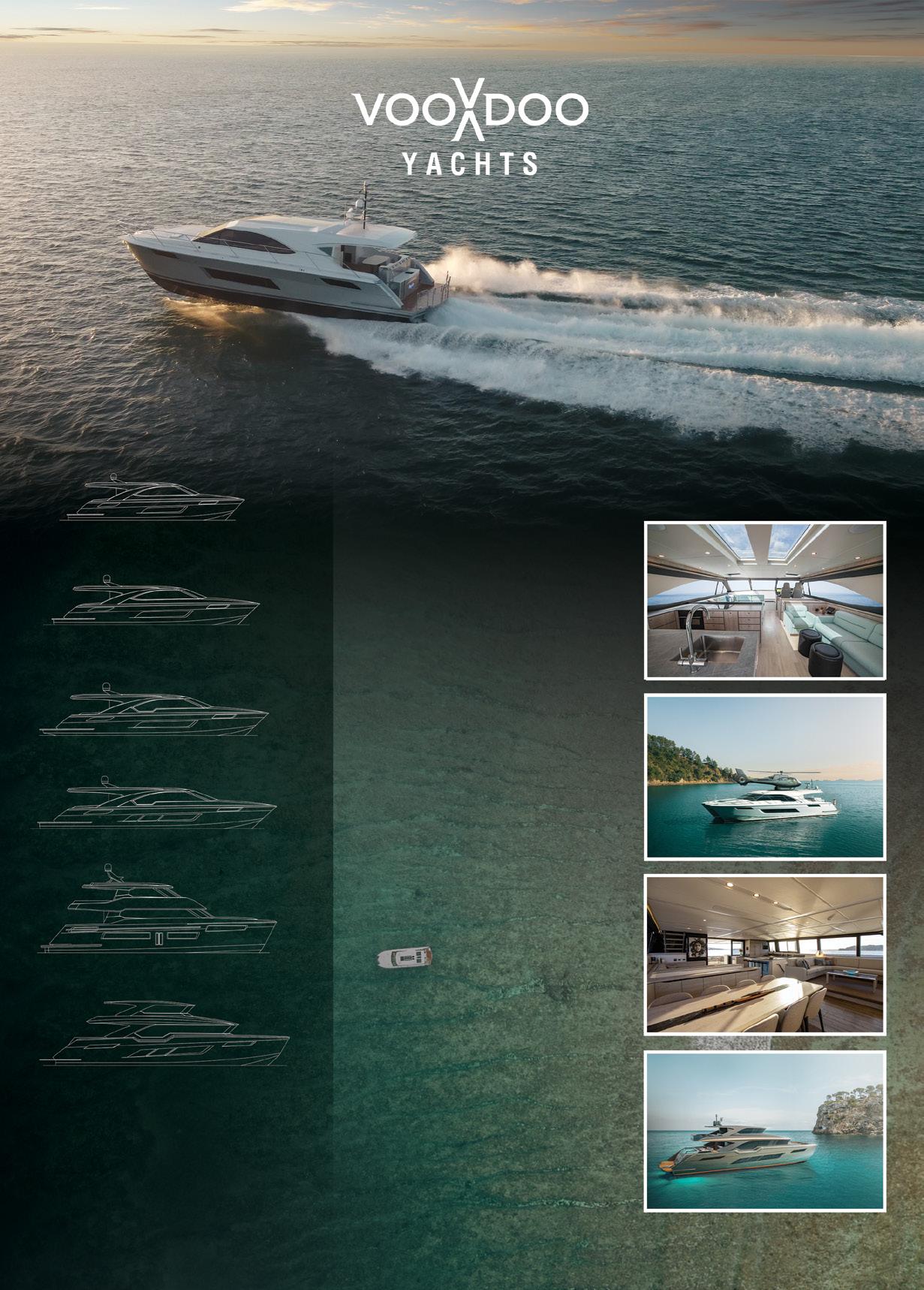

In todays’ refined times, a brokerage introduction can be done digitally. Not so in days of yore, especially on multi listed second hand craft. The tacit understanding twixt brokers was an introduction and exclusive rights to that client (90 days for that craft only) was deemed satisfied once the client had been pushed through the hatchway or door. These boundaries were often tested, not always at the brokers behest it must be stated.
Consequently just telling somebody where a boat is, have them walk by and get back to you if they liked the look, was not a recommended marketing strategy. One took that client by whatever means was required, to the vessel and put them on-board, and opened the doors.
My early days of brokerage were on the Panmure River. Given that boats were many, and marinas’ few, some effort was required. Many of our listings were on pole or swing moorings up and down ‘the creek’. In those days Osh was an exclamation of surprise, and Worksafe was a goodbye epithet to somebody antifouling under a boat. Our limousine was a venerable 12’6” riveted Parkercraft which some may recall were unbreakable but leaked if you looked hard at them. The 15hp Tohatsu outboard was so old that the tilt mechanism had arrows’ pointing both ways with labels saying ‘Rock’, and ‘Lerease’ affixed. (Honestly). It was reliable though. Having had the client remove shoes and socks, helping them over our dangerously broken and sinking pontoon marina and into this dinghy was an exercise in survival, and a good heads up on how to approach the dismount when we arrived at the craft to be viewed. Seating them on 1 of the 2 exWahine lifejackets floating around the bilge, we would ferry them up or downstream. Recall this is in the days when walkthrough transoms were rare, so alongside disembarking was the norm for yachts, or the corner of a skinny boarding platform for launches when available. All of these missions were fraught with danger.
One client I had convinced should view a prime offering downstream duly arrived…
with his mother!! Apologies to any woke readers, but she was one big lady, of well mature years to boot. I suggested she may want to wait in the car, but it evidenced that she was to be a contributor to any purchase, and wanted to see said craft, thank you! He was a sturdy lad also so the passage down to the Bucklands Beach mooring was slow and wet, the brave Tohatsu having given up the battle to achieve planing speed early on. Finally arriving at the yacht, a dawning of understanding re the enormity of the task ahead changed the conversation somewhat. I undid a lifeline, and with him pulling from aboard, and I pushing from below (not a task for the faint hearted) we got this redoubtable woman aboard. They spent an hour on this 28’ yacht before deciding it was too small. Any good climber will tell you the ascent is often way easier than the descent, and this is true for disembarking a vessel too. After a few aborted attempts, we finally had success with the old method of a half roll in the pike position, and 1’ assisted jump onto unhappy rivets. The slow passage back upriver was full of humour as the immediate past actions were analysed.
Another family of 5, blessed with a patriarch who had forgotten more than Sir Peter Blake knew, managed to lose 1 child into the water, standing on the gunnel while disembarking. Given there is always
a tidal current, they moved off fairly quickly, and we recovered said child about 80m downstream. Upon returning to the craft being sold, I foolishly had Sir Peter tie the dinghy while I attended to the damp child. Error! Luckily I noticed the dinghy before it had floated too far away, his running hitch proving to be not up to par. Being a Friday, I was wearing my going out undies, so was not embarrassed as I disrobed and swam after the rapidly disappearing Parkercraft.
Marinas’ provided their own events. There were a number of ways to warn brokers that ‘now is not a good time’ for showing a craft for sale. The accepted methods were leaving your shoes outside and closing the door, or taking the key from its (usual) hiding place on top of the gas bottle, and open a hatch or two. After one big Fonterra butterfat pay-out, I took a couple of very happy garrulous farmers to view an upmarket craft. There were none of the usual warnings so we leapt aboard. As I searched for the keys, they wandered all over the boat, discoursing loudly. The cabin door slid open a wee bit and from behind the curtain a florid faced owner suggested that it was not convenient right now! After I shuffled them off the boat, these farmers, relishing in the occupants’ discomfort, stayed on the marina for at least 20 minutes, talking very loudly about how disappointed they were; how well was the boat ventilated; how long before they could view and many other very funny comments. They then yelled that they wouldn’t be interested in that boat as it was ‘too well used’!
The debrief took quite a few beers.
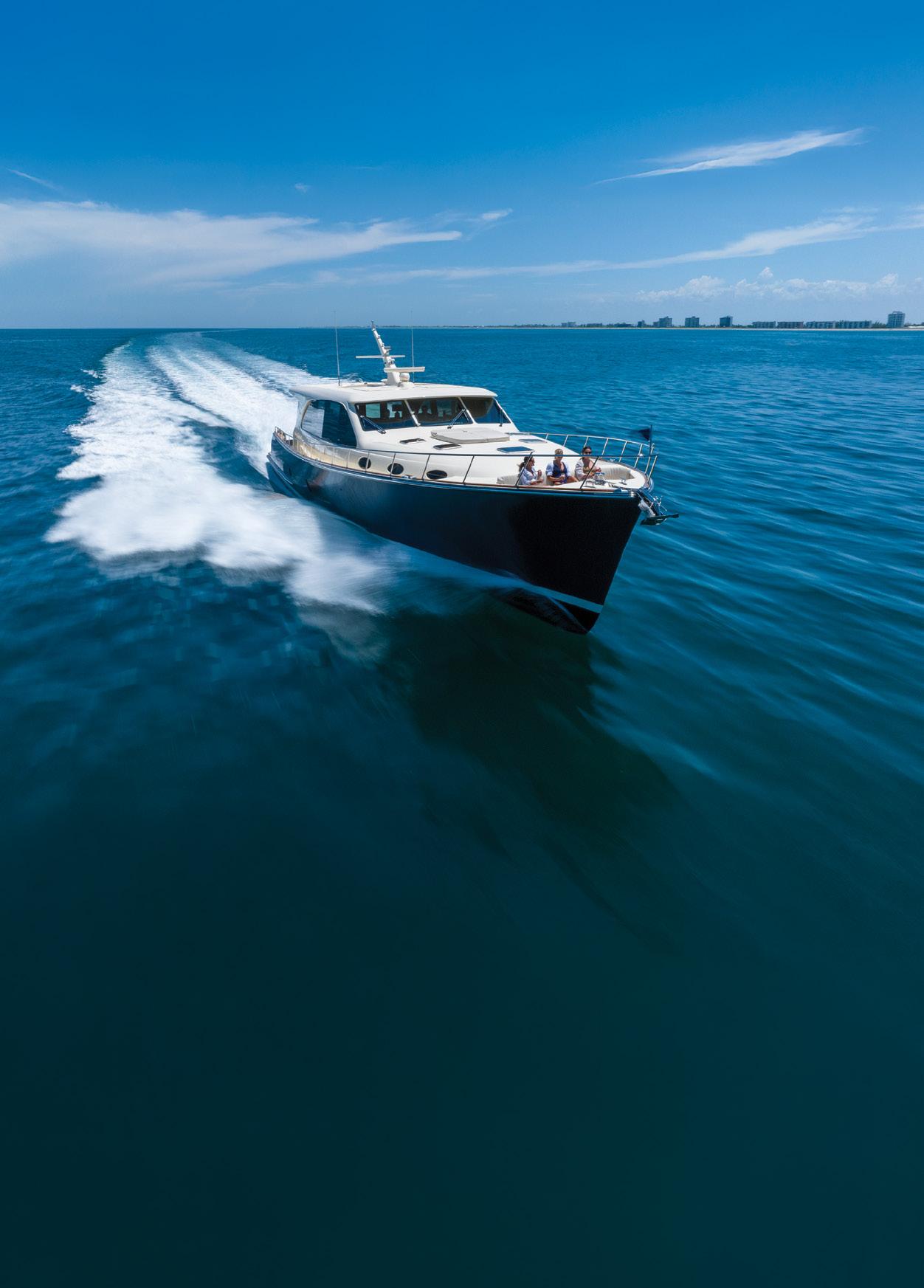
For 30 years, Palm Beach Motor Yachts has united classic form with a rich ocean racing sailing pedigree.
Born of a passion for design, innovation, and performance, every Palm Beach Motor Yacht utilises superior materials to minimise weight and maximise efficiency resulting in a smooth, precise ride at every speed. Tailored layouts, finished with fanatical attention to detail, elevate life underway and at anchor. Direct access to the design-and-build team’s deep knowledge and concierge service delivers an enjoyable and seamless ownership experience.
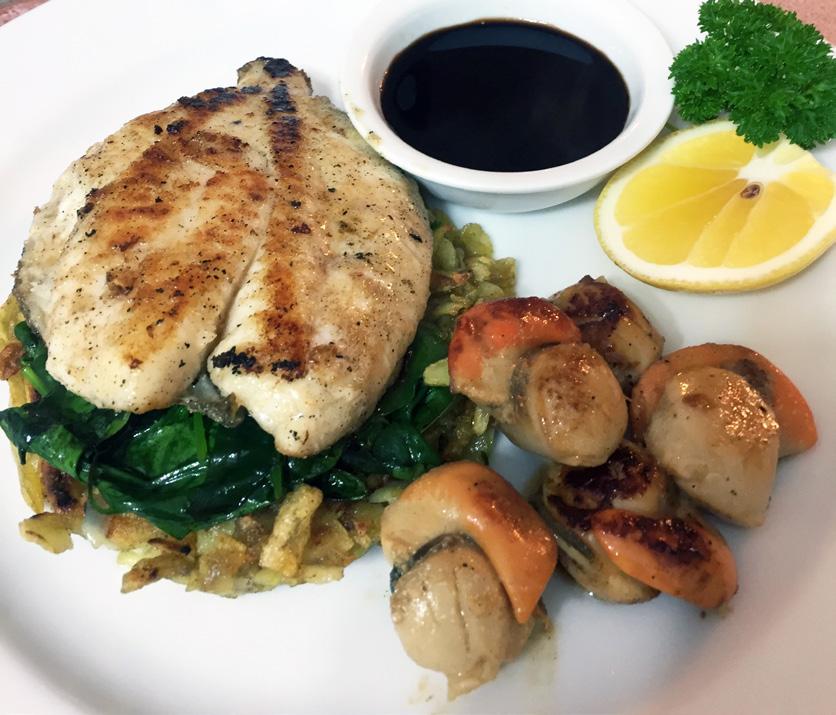
Ingredients
1-2 John Dory fillets
4-5 scallops per plate
Cocavo Lemon infused Avocado Oil
Salt & pepper to taste
2-3 handfuls of spinach leaves
1x Tbsp butter (Cocavo Garlic Ghee)
Potato Rosti
5x Agria potatos
3x tsp chopped fresh thyme (Substitute Mrs
Rogers dried thyme)
3x tsp chives fresh (Substitute Mrs
Rogers dried chives)
1x egg
1x Tbsp Cocavo Olive / Avocado oil
Knob butter (Cocavo Garlic Ghee)
Sea salt and freshly ground black pepper
Method
Wash, then pat dry the John Dory fillets, season with fine salt and white pepper, set aside. Season the scallops with fine salt and white pepper, set aside.
Method for the Potato Rosti
1. Peel, then grate potato, squeeze out in paper towel or tea towel any juices.
2. Combine grated potato, thyme, chives, egg, Cocavo Olive / Avocado oil, and seasoning together in a bowl.
3. Turn out into patties by dividing mixture evenly using 2x Tbsp per pattie.
4. Heat the oil and butter together in a fry pan, then cook until golden brown, turning once or twice until cooked through.
Method for the John Dory / Scallops
5. Bring 1x Tbsp Cocavo Lemon infused Avocado Oil to temperature in a skillet. Place the fillets in and allow to cook for 2-3 minutes, turn and repeat until fish is cooked to opaque in the middle and may be pulled apart with a fork. DO NOT overcook.
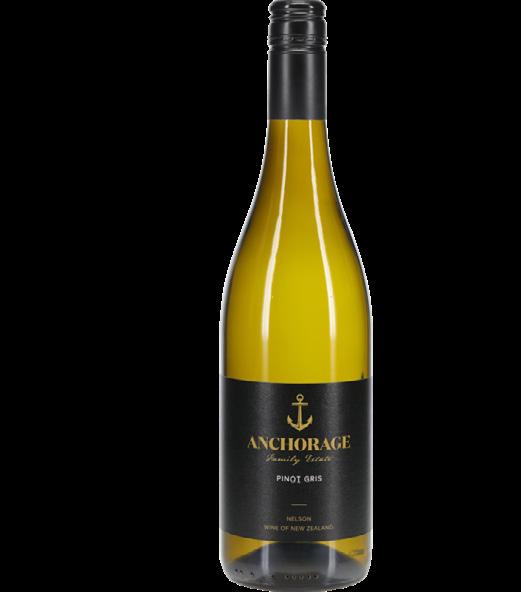
6. Set aside to stay warm while you quickly grill / pan fry the seasoned scallops. (Add a little extra oil or butter if required).
7. Wilt the spinach in butter.
To plate
Place the Potato Rosti in the middle of the plate, top with wilted spinach, then place the John Dory fillets on top of this with Scallops alongside.
I like to serve this with Citrus infused Soy Sauce (a mixture of 2-1, 2 x Parts Light Soy sauce to 1 x Part Lemon or Lime Juice) or a Beurre Blanc Sauce.
Serve along Side Anchorage Family Estate 2025 Pinot Gris.
Pairing perfectly...
The lifted pear and stone fruit notes of Anchorage Pinot Gris complement the delicate sweetness of John Dory and scallops, while its crisp acidity cuts through the richness of the potato rosti. A gentle spice on the finish enhances the earthy spinach, creating a balanced and elegant pairing.
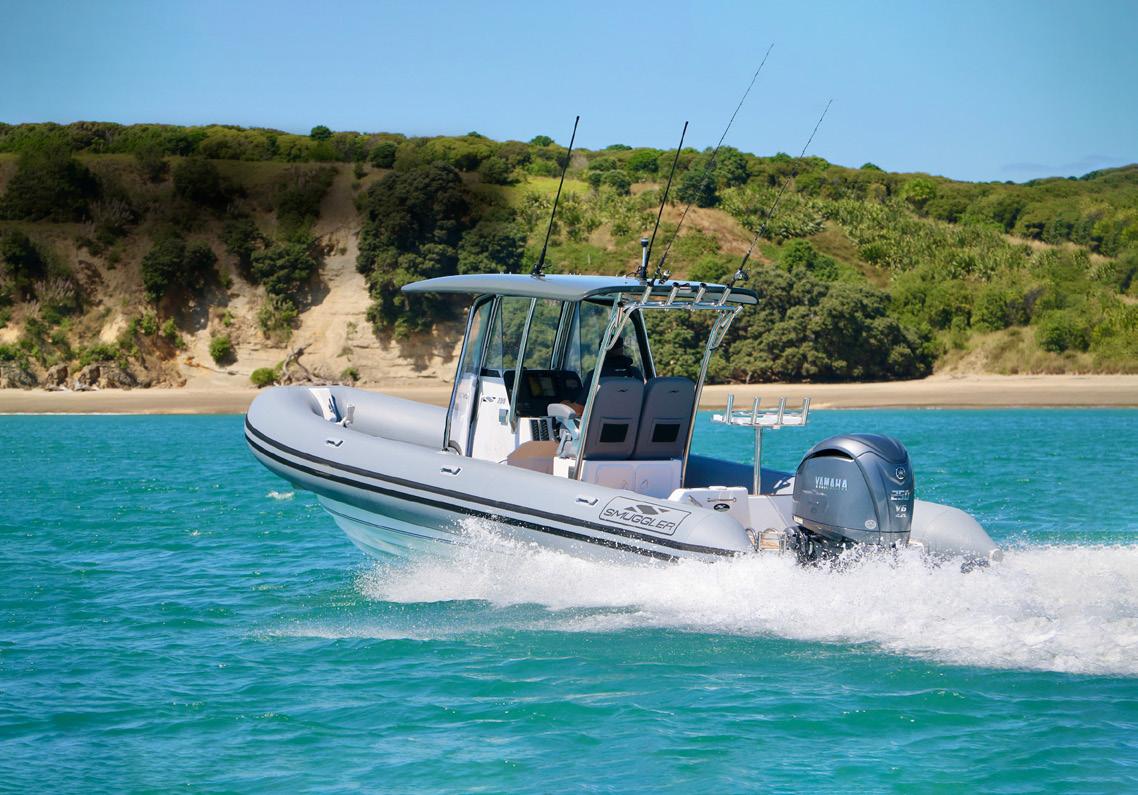

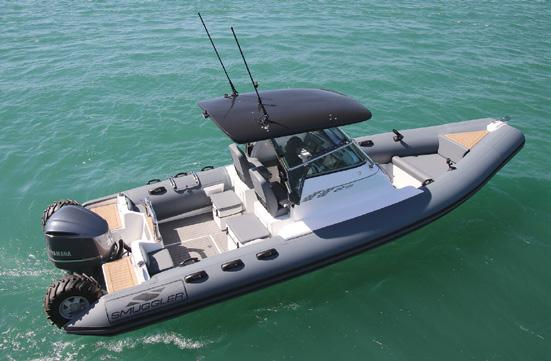
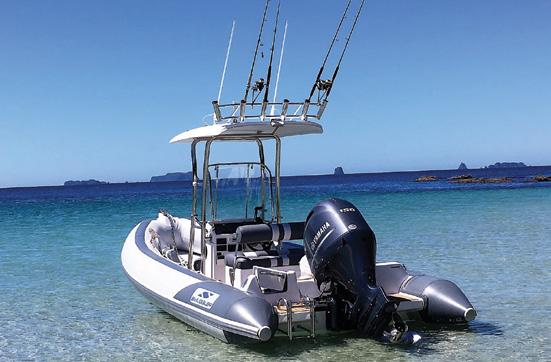
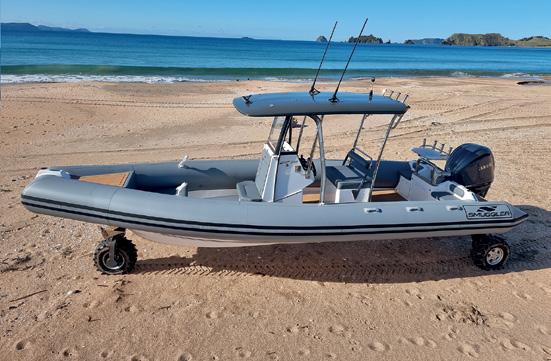



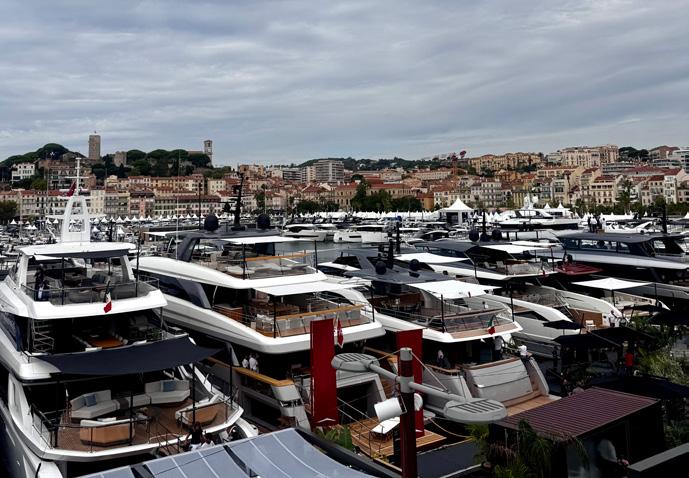
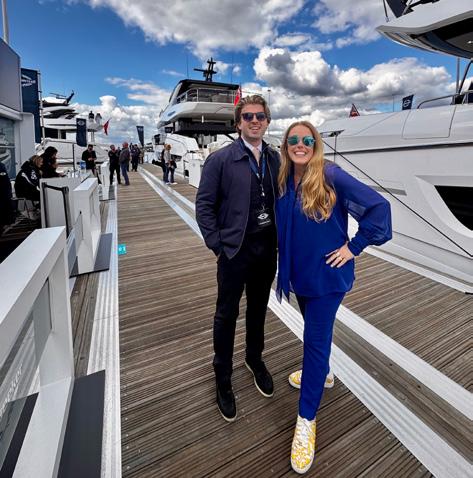
Which one suits you for next year?
Whilst we have some great Boat Shows in Australia and New Zealand it’s always a good idea to venture a little further if you can for inspiration and a sheer volume of models of boats and brands to see. This year we have taken on a tour to see Cannes Yachting Festival, Southampton Boat Show, and Monaco Yacht Show.
What’s fascinating is how very different each of them is, despite the content essentially being the same. Each drives it’s own character and feel and is directed at a certain client group, thus I thought I would share my opinion (and it is purely my opinion others may feel very differently) to help you in the future decide if one may be of use to you to attend.
Cannes is pure fun. The location right on top of an abundance of restaurants, beachside bars and cafes means that between boat viewings you can enjoy extended lunches with friends and colleagues and an evening of perusing the streets in the warmth of the festoon bistro lights and late summer temperatures. The weather can be hot and steamy, and the show is HUGE, so light, easy-to-walk-in shoes and clothes are a must, along with a hat and sunscreen. Plan ahead, as there are usually around 750 boats or so to see, and they have two different port locations which you travel between by boat transfer (which is a nice touch to actually be out on the water), and some brands will have test runs arranged, which you need to book in advance with
your broker. The French brands, of course, dominate in numbers here, so if you are a Beneteau/Jeanneau tragic, this is the place for you. This is the first show of the European season, so the exhibitors are relaxed and happy to see you and keen to get a good start to their run of shows.
Southampton offers more activity than I have seen at other shows, with on the water displays, live music in the food trucks area and celebrity visitors you can meet (this year’s was our very own Aussie Jason Chambers from Below Decks). The weather, of course, being the UK, can be changeable – we went in a few days from glorious sunshine to cool drizzle – so a waterproof jacket and “layers” to get warmer/cooler are essential. This one has a real “day out” feel and is not as big as Cannes, thus not so overwhelming. British brands, of course, dominate at this one, with Sunseeker, Princess and Fairline showing off their best, hoping to close a deal after “warming up clients” in Cannes. There are some fantastic events and educational pieces on the stage, including a very good Women in Marine event which I had the privilege of compering this year with interviewees on the stage such as such as Aircraft Carrier Captains and Stunt Boat Drivers! You can hone in on what you are looking for, and spend some time with the brokers asking questions and taking advantage of those that provide relaxed hospitality lounges.
Monaco is something else. It’s huge, majestic, next-level exhibitions and a
little more “serious” with the brokers keen to make a return on their fairly solid investment in the show. There is also a substantial entry fee of around 800 Euros a day, although if you are a genuine prospect, your shipyard will get around that for you, but you need to arrange this in advance. As a result, Hermes slides are abandoned on the pontoon without fear of disappearing and restaurants in the evening should be booked well in advance (I recommend La Mome, which has a spectacular view overlooking the show, incredible pasta and a great atmosphere.) You should also book accommodation well ahead (like a year ahead) as the hotels just get more and more expensive the closer they get to the show and availability becomes zero too. Menton is an alternative location to stay, but be mindful that the last trains are around 9.40pm and taxis are few and far between.
So, if you are planning your adventure to explore the European shows next year hopefully this will give you some insight as to which might suit you best. You’ll see some brands that simply never appear in Australia and some different models of brands we do see too. Of course, one can explore ordering a boat in Europe and keeping it there for a while before shipping it over to our parts of the world – what an adventure that is in itself to explore. Enjoy the planning, and I will see you on the water soon.
Nicky x

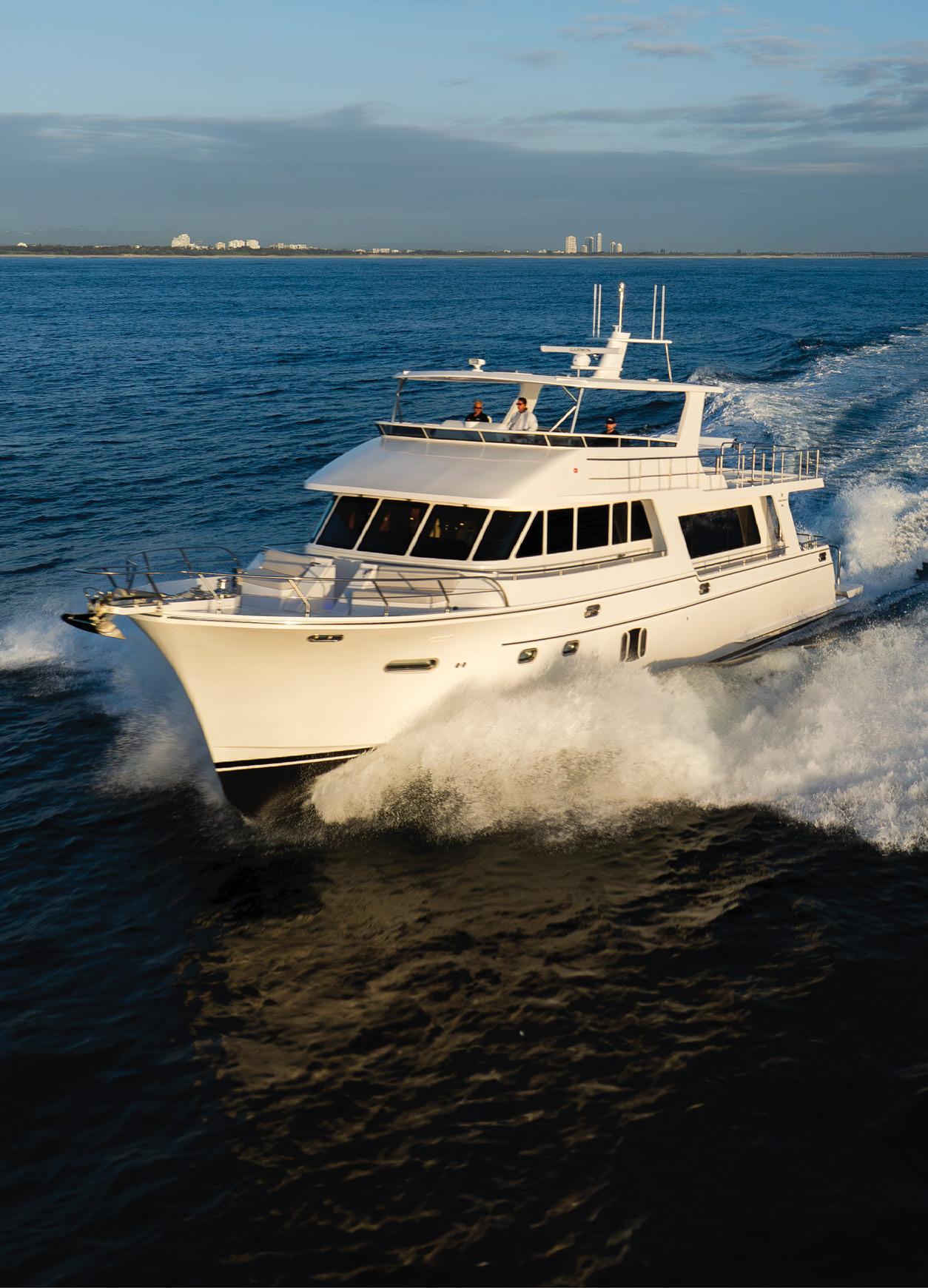
The new 2025 Hampton Endurance 680 long-range cruiser embodies a legacy of excellence, craftsmanship, and innovation, setting a new standard for the ultimate cruising experience. This world-class motor yacht combines steadfast performance with luxurious living, featuring a full-beam master, expansive saloon, gourmet galley, and versatile open flybridge. Step aboard and discover unmatched comfort, capability, and elegance on the water.

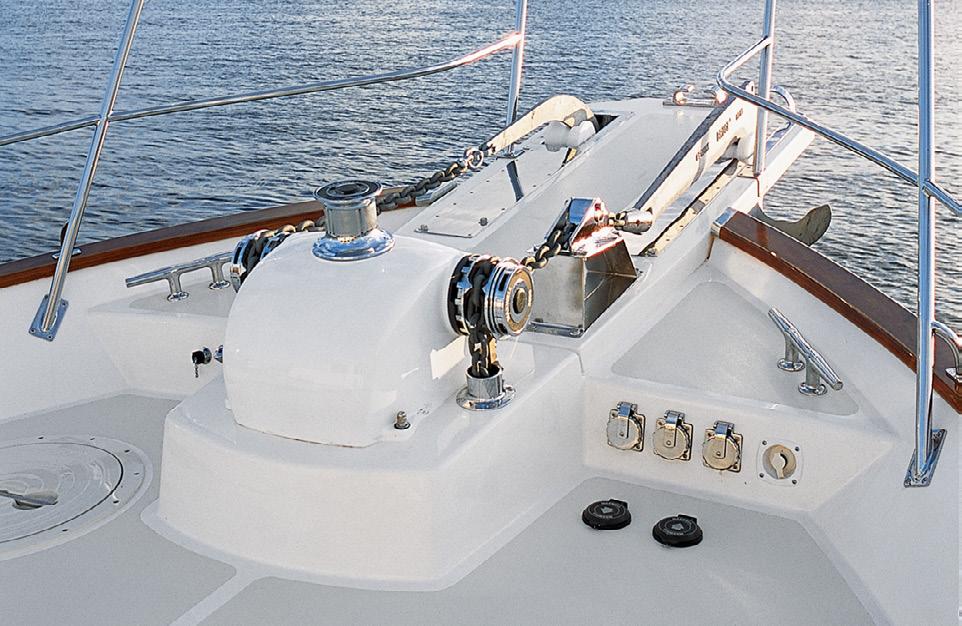
When it comes to a product that people immediately identify within their sphere of interest, two words often come to mind: Brand and Icon. A person often thinks, “That’s an iconic brand”. But what do these two words really mean, and how do they apply to Maxwell Marine? First, some definitions.
WORDS BY RON CZERNIAK , MARINE JOURNALIST
BRAND: Essentially, the public or consumer’s perception and identity of a company, product or service. Brands are not just logos or names; they encompass the entire feeling and perception associated with a product or company, including its values, reputation, and how it is marketed. It is important to note that a brand is earned.
ICON: An iconic brand is one that is already widely recognised and wellestablished, but it goes beyond its products or services to become a symbol of industry relevance, values, and aspirations, fostering deep emotional connections and loyalty with its audience through a compelling identity and story. An iconic brand is synonymous with quality and reliability, building strong trust that allows a company to maintain their status over time. Most importantly, the company maintains consistency across all aspects of its operations, from products and customer service to its overall branding.
I was asked to write this article not only as a regular contributor to this magazine, but also because of my background serving for more than twenty years as the IndoPacific Sales Manager for Maxwell, which later became Vetus-Maxwell. Although I have been retired for several years, I remain closely connected to the company through longstanding relationships with former colleagues and associates, as well as through my comprehensive understanding of the organisation and its products. So, as I lead into the story about this New Zealand company, I can honestly say that Maxwell Marine is the embodiment of innovation, reliability, customer service, and heritage in marine windlasses, anchoring and associated deck equipment. They aren’t afraid to take chances and push boundaries, thus setting themselves apart from all other competitors. Renowned for its high-quality anchoring and mooring solutions, the company has developed a reputation that extends well
beyond the harbours of its New Zealand birthplace. This profile explores Maxwell Marine’s journey, its product range, commitment to engineering excellence, and its enduring influence on marine operations worldwide.
Founded in the late 1960s in Auckland, New Zealand, Maxwell Marine emerged from a culture deeply connected to the ocean. New Zealand’s reputation for yachting and boatbuilding created fertile ground for a company intent on producing world-class marine deck equipment. Initially focused on sheet winches for sailing boats, the company turned to the design and manufacture of anchor windlasses for smaller recreational craft, with Maxwell quickly pivoting to serve a broad spectrum of vessels; from modest trailer boats to luxurious super yachts up to 100 metres in length as well as catering to commercial vessels.
Maxwell New Zealand has a long history of working closely with OEMs nationwide, delivering anchoring solutions tailored to meet specific needs. The company’s RC range, along with its predecessor, the Freedom, has been the preferred choice of boatbuilders and service agents for many years. Many Freedom winches remain in service more than 20 years later, a testament to their reliability and durability.
Almost six decades ago, after having served his apprenticeship at the New Zealand Naval Dockyards in Devonport, Auckland, Graeme Maxwell Cundy, started to design and manufacture sheet winches for the active and rapidly emerging yachting market in New Zealand. Back in the 1960’s, New Zealand was subject to import licensing and tariffs on boating equipment, which forced many Kiwis to come up with innovative solutions for designing and manufacturing their marine gear.
Graeme Cundy, with that legendary Kiwi ‘fix anything with a length of #8 fencing wire mentality’, incorporated Maxwell Winches in 1969, and with the help of Bruce Farr (a promising young yacht designer and boat builder), launched the first range of Maxwell sheet winches. Maxwell Winches gained such a great reputation for design and innovation, that in 1977 Maxwell gained the New Zealand Design Mark and Graeme Cundy was personally given the Prince Phillip Award for Industrial Design by His Royal Highness.
By 1978 Maxwell Winches (soon to be known as Maxwell Marine Ltd) made its first thrust into the American market with the establishment of Maxwell Marine Inc. in California. The subsequent establishment of a Southern California office saw Maxwell winches making their way on board a number of Southern Californian boats. But it was not until a branding shift, removing the “Made in New Zealand” stamp (and thus appealing to the patriotic sensibilities of 1970’s America) that the Maxwell sheet winch range began to be incorporated into distribution lines in both the United States and Canada.
Soon thereafter, Maxwell established itself as an international player in the recreational marine market, phasing out its
sheet winches in favour of more profitable anchor winches which had a far greater potential for growth. The demand for sheet winches was restricted to only sail boats, whereas all types of boats required anchor winches. Through decades of innovation, the company expanded its product line and entered global markets, earning respect for engineering prowess and customer-centric design and aftermarket service.
As the anchor windlass side of the business continued to grow and expand, in April of 1985 Maxwell initiated the outright purchase of all anchoring systems and designs from Nilsson (a New Zealand windlass company). The name Nilsson was soon dropped and Maxwell Marine Limited subsequently emerged. By the late 1980’s Maxwell had distributors covering every state in the US and throughout Canada, as well as distribution in Japan, Korea, Taiwan, Hong Kong, Singapore, Greece, Turkey, Germany, UK, Sweden, UAE, South Africa and Australia. Maxwell supplied the majority of boat builders in Taiwan building for the US market, as well as supplying product to the largest boat builders in the USA. One of these was building over 1600 yachts a year, all fitted with Maxwell winches of one type or another.
This expansion continued into the new decade, but the 90s would prove a challenging time for the Maxwell brand. Although the demand for Maxwell products was strong, the amount of cash needed to fund work in progress and stock in the USA was an economic burden that could not be sustained without external assistance. Maxwell was floated on the stock exchange to raise capital to fund development and increase manufacturing capacity; however, both the incoming Board of Directors and existing management were unable to see eye to eye over the future of Maxwell resulting in Graeme Cundy’s departure, a state of affairs that did little to improve the company’s overall stability at the time.
As is true of most business, the road forward was often rocky but setting an unusual precedent for the early 1990’s marine industry, two women, Ms Christine Beckett and Ms Claire Matthews, were appointed as General Manager and factory Production Manager respectively. Maxwell Marine soldiered on through this difficult period until September of 1992 when the company was acquired by the Fairthorne Group. After another re-structuring phase the company started to experience a period of rapid growth unencumbered by financial constraints.
From 1995 up until the early 2000’s Maxwell sales in the Asia-Pacific Region increased, on average, by approximately
20% per annum, with the most dramatic growth being in the Asian Region which grew by over 300% during this period. Back in New Zealand, with a carefully instigated strategy in force, sales in the domestic market increased significantly to the point where it was estimated that Maxwell controlled in excess of 70% of the New Zealand anchor winch market. Consequently in 2000, a decision was made to build a new, purpose-built factory and office on Auckland’s north shore to allow for ongoing growth. The business was relocated to the new facility in 2001 and shortly thereafter the Fairthorne Group sold approximately 60% of Maxwell shares to Fyers Wickham Investment Bankers. Immediately following the new ownership in 2001 a number of big changes and improvements were made to the Maxwell product line-up, including a product development project expanding the superyacht range and introducing the SY (Super Yacht) Series models: SY26 in 2002, SY32 in 2003, SY22 in 2004 and SY38 in 2008.
By way of interest, the numerical value after the ‘SY’ reflects the millimetre diameter of the anchor chain used with the respective SY windlass models referred to above.
To put this in context, the average 7 to 9 metre trailer boat would typically use 8mm diameter short link chain. A superyacht in the 80 to 100 metre range would likely use up to 38mm diameter stud link chain. A metre of 8mm short link chain weighs about 1.4kg/m, whereas a metre of 38mm stud link chain weighs approximately 34 kg. So, a Super Yacht fitted with a Maxwell SY38 windlass system is employing anchor chain approximately five times larger and twenty-four times heavier!
But, back to our story. In 2003 Maxwell decided to open an office for European technical support based in Italy, which made up the lion’s share of the European market at the time. The following two years saw the sales revenue double in Italy, reaching over 1.5 million euros, and in 2004 SY offices were also opened in Fort Lauderdale, Florida. On February 23rd, 2008, the well-known Dutch Boating Systems and Engine Manufacturer by the name of VETUS acquired Maxwell, and the Company became known as Maxwell Marine International Ltd, later changed to VETUS-Maxwell APAC (Asia/Pacific) Ltd, which began operating under the overall VETUS group of companies.
2008 was the start of a new era for Maxwell, now becoming part of the VETUS group, precipitating tremendous growth in the European market in both the Power & Sail and Superyacht range of anchoring products. The New Zealand engineering
team responded to this market expansion with the introduction of several new rope/ chain windlasses and an increase in their SY capabilities. One only has to look at the timeline stretched across the bottom of these pages to see how much further Maxwell has come in the ensuing years. Maxwell has never forgotten its roots. Supplying anchoring solutions to New Zealanders was where the company began, and it continues to innovate for both the international superyacht sector and everyday Kiwi boaties alike.
One example of this innovation is the intermediate roller designed for the Tasman drum winch. This unique component not only assists with rope lay by sliding back and forth across the drum, but also incorporates a guide to prevent the rope from jumping free in heavy swell or rough conditions - one of the many ways Maxwell continues to deliver stress-free, reliable boating experiences.




At the heart of Maxwell Marine’s portfolio are its anchoring systems, particularly its windlasses and capstans. These devices enable safe and efficient anchor handling for boats of all sizes. Maxwell’s windlasses, available in both vertical and horizontal configurations, are engineered to withstand
1969: Maxwell Marine is founded in Auckland, New Zealand
by Graeme Maxwell Cundy
the demanding conditions of saltwater environments. Their unique design features and the highest quality marine-grade materials ensure dependable performance even under extreme loads and the most adverse ocean conditions, underscoring Maxwell’s commitment to longevity and safety. Beyond anchoring, Maxwell provides a range of mooring solutions, including chain stoppers, deck cleats, fairleads and anchors. Each product is crafted to maximise strength and durability while minimising maintenance requirements.

Recognising the vast diversity within the marine sector, Maxwell offers custom engineering services tailored to meet unique vessel requirements. Whether outfitting superyachts with bespoke windlasses or supporting commercial fleets with heavyduty anchoring solutions, the company’s engineering team collaborates with clients to deliver tailored outcomes. This adaptability has positioned Maxwell as a go-to choice for boat builders, shipyards and private owners seeking individualised anchoring and related deck equipment. The company not only provides one-off
solutions but also produces a full range of ‘production line’ windlasses and capstans, enabling them to supply a continual source of product to a wide range of production boat builders anywhere in the world.
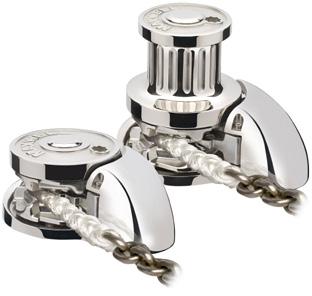
Maxwell Marine’s reputation is built on the pillars of engineering excellence and innovation. Its research and development division continually refines product designs, integrating the latest technologies and materials. The company’s embrace of computer-aided design (CAD) and rigorous testing protocols ensures that every piece of equipment meets, and often exceeds, international standards such as the Lloyd’s Register and American Bureau of Shipping (ABS).

1978: Maxwell opens a sales office in California, USA
1982: Maxwell gains a foothold in Southeast Asia after partnering with Mercury Marine in Taiwan
1983: MaxwellNilsson Marine is formed by the merging of the assets of Maxwell and Nilsson Winches
1985: Maxwell purchases Nilsson outright
1992: Maxwell consolidates with new shareholders
1992: One of the world’s first rope/chain windlass produced, the SRC (shackle rope/chain) 500 and 800
1994: Maxwell purchases their first CNC machining centre and introduces CAD software
1994: The ‘Freedom’ 500/800 windlasses are introduced into the range
1995: Maxwell shifts its focus exclusively to anchor windlasses and sheet winch manufacturing ceases
1998: A sales office/ warehouse is established in Brisbane, Australia
One of Maxwell’s hallmark innovations is the modularity of their windlass systems, allowing for easier installation, maintenance, and upgrades. Additionally, the integration of smart controls and monitoring solutions, such as digital load sensors, has enhanced user safety and operational efficiency. These advancements are particularly valued in the superyacht sector, where reliability and aesthetics must harmonise.
Emerging trends such as electrification, automation, and interconnected vessel technologies are shaping Maxwell’s future product roadmap. The integration of ‘Internet of Things’ (IoT) devices for remote monitoring and predictive maintenance reflects the company’s forward-looking vision. Maxwell’s adaptability ensures that it will remain a pivotal player in the marine anchoring and deck equipment market for years to come.
While Maxwell Marine’s roots are firmly planted in New Zealand, its influence spans the globe. The company maintains distribution networks and service centres across North and South America, Europe, Africa, Indo-Asia and the Austral-Pacific region, ensuring that customers receive prompt support and spare parts no matter where their vessels are located. Leading boat builders and shipyards trust Maxwell for original equipment installations, and countless aftermarket customers return for upgrades and replacements.
approximately 75% market share in New Zealand and commands significant market share around the globe. Maxwell has long realised that word of mouth endorsement is its best advertising.
Maxwell Marine has always recognised the importance of sustainability and environmental stewardship within the marine industry. And in recent years, they have initiated programs to reduce its manufacturing footprint, embracing energyefficient processes and recyclable materials. Product longevity further decreases waste, and innovative designs minimise the risk of oil leaks or metal fatigue, which can harm aquatic ecosystems. Fortuitously, Maxwell’s philosophy is reflected and maintained under the ownership of its (and Vetus’s) parent company, Yanmar Marine International (YMI), based in Holland. YMI, in turn, is incorporated within Yanmar’s global operations, spanning seven business domains on land and at sea. With its beginnings in Osaka, Japan in 1912, Yanmar went on to become the first company to succeed in making a compact diesel engine of practical size in 1933. Committed to the development of advanced technology for the best and most sustainable solutions to meet the evolving needs of boat owners and OEMs, YMI’s mission is to enhance the entire boating experience for all its customers. This also, is a mission to which both Maxwell and Vetus are deeply dedicated.
apparent when, recently, Maxwell worked closely with the well-known New Zealand aluminium trailer boat manufacturer, Stabicraft, who wanted to fit a Maxwell Tasman Drum windlass to their range of boats. The unique layout of their hulls dictated that Maxwell had to tweak the design to ensure a snug fit in the anchor locker. In addition, being an aluminium craft, the die-cast aluminium brackets of the Tasman Winch ensured that galvanic corrosion was prevented. Most competitors use stainless steel mounting brackets, which pose a significant issue when combining stainless steel with aluminium.
Maxwell’s service teams are known for their expertise and willingness to go the extra mile, whether troubleshooting an anchor malfunction or assisting with system installations and upgrades. Technical resources, detailed manuals, and training sessions help customers operate and maintain their equipment with confidence. 2001: Maxwell moves to a new, purposebuilt facility in Mairangi Bay, Auckland
: The stainless steel Rope Chain (RC) range is launched
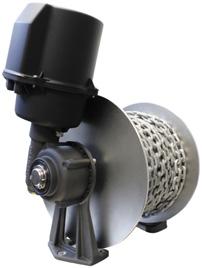
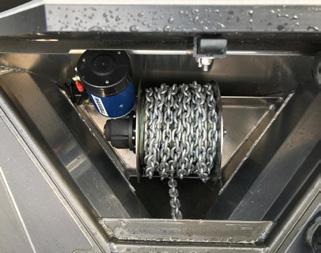

: VETUS and associated companies (including Maxwell) join the Yanmar Group
2018: Maxwell moves to a larger facility in Auckland to accommodate increased growth 2017: The Drum Winch (Tasman) series is launched
in industry publications as benchmarks for reliability and performance. The company’s legacy is evident in both its accolades and its enduring popularity among vessel owners.
Looking ahead, as the marine sector evolves - driven by technological advances, regulatory changes, and shifting owner expectations - Maxwell Marine remains firmly committed to its founding principles of innovation, reliability, and customer service. The company continues to develop new products, invest in research, and expand its global footprint. Currently Maxwell is contracted to supply a complete SY38 Anchoring System to the largest superyacht presently under construction in Italy. This 100-metre hybrid superyacht project, by The Italian Sea Group, has now progressed to outfitting at the yard's facility in Marina di Carrara, Italy. Delivery is scheduled for 2026.
Regardless of a superyacht’s size, The Italian Sea Group chose Maxwell principally for the superior quality and reliability of their products, as well as the comprehensive global support and service offered, other than just competitive pricing.
2001: Maxwell moves to a new, purposebuilt facility in Mairangi Bay, Auckland
2001: Two New Zealand marine manufacturing companies are purchased; Weaver Hatches and Southern Ocean Ropes (SOR)
2002: The new SY range is launched
2003: A sales office is established in Italy
Today, almost six decades on from the company’s inception, the name Maxwell has become synonymous with the highest standards of performance and reliability in providing anchoring solutions. For this, they thank their people. There is one member of the team who has been with the company for almost 40 years and with several for at least half that time - Gavin
Barton, head of engineering and Josip Maurovich (General Manager), for even longer. More than 50% of the Aucklandbased staff have been with the company for nearly two decades. That sort of continuity engenders huge customer confidence and loyalty. Maxwell’s ‘people philosophy’ mirrors what Henry Ford emphasised a century ago, that without his employees to make and manage things, his businesses would fail; stating, "Nothing can be made except by makers, nothing can be managed except by managers. Money cannot make anything, and money cannot manage anything".
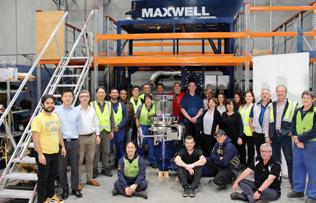
2004: A SY sales office is opened in Ft Lauderdale Florida
Andy Stephens, CEO of Maxwell Marine International, recently stated; “Today, the company’s governance has never been so stable since its inception almost 60 years ago, with the existing senior management steering a steady course into the future”. Andy, who joined Vetus-Maxwell in 2008, was brought on as a New Zealander with extensive international marine experience in order to complement the company's strong engineering capabilities. He goes on to provide the following current perspective: "We consider it a privilege to lead such an iconic New Zealand company, widely respected within the global recreational marine industry, into the future."
2008: Maxwell is incorporated into the Dutch marine company VETUS
2009: The stainless steel Rope Chain (RC) range is launched
Maxwell products are currently sold worldwide through three global sales divisions of the Vetus/Maxwell Group. EMEA (Europe, the Middle East and Africa), the Americas, the Caribbean and APAC (Asia/Pacific). Although Maxwell and VETUS are now incorporated within the gigantic Yanmar umbrella, the Maxwell Superyacht Division remains separate. It operates globally out of New Zealand under the leadership of Maxwell Marine International CEO, Mr Andy Stephens and Vetus Group CEO, Marcel Borsboom.
“Fiercely defensive of Maxwell’s quality and reputation, the New Zealand-based team continues to work closely with all types of boaties ranging from trailer boats, larger pleasure craft and superyachts to commercial charters and military vessels, thus ensuring that Maxwell engineering and product development remains as dynamic and innovative as the industry it serves.”Andy Stephens.
2013: VETUS and associated companies (including Maxwell) join the Yanmar Group
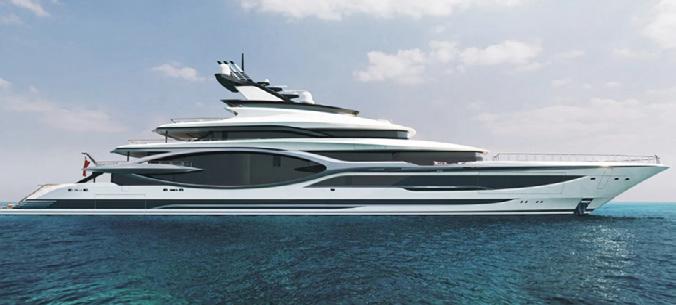
2019: Maxwell celebrates its 50th Anniversary

2017: The Drum Winch (Tasman) series is launched
Maxwell Marine’s journey, from humble beginnings in Auckland to a globally recognised leader in anchoring and mooring solutions, is a testament to the power of innovation, craftsmanship, and customer dedication. As recreational and commercial vessels voyage upon the world’s oceans, lakes and rivers, Maxwell anchors their passages with equipment that blends technological sophistication with unwavering reliability. For those who demand excellence at sea, Maxwell Marine remains the trusted name on and beneath every vessel.
2018: Maxwell moves to a larger facility in Auckland to accommodate increased growth
P.S. You will recall that at the beginning of this Maxwell story, I mentioned that I had spent over twenty years with the company, promoting and selling their products globally. So, am I a bit biased with this report? Probably. But in my defence, during my time with the company, wherever in the world I advocated and sold Maxwell products over the years, my core ethos was: “Would I sell this product to my best friend?” The answer should, by now, be obvious. I strongly believe that the positive answer to this question is still at the core of Maxwell’s customer philosophy.
2021: The First Superyacht submarine anchor system is created
2022: Maxwell’s custom titanium anchor arms for a Superyacht are installed
2025: A range of different power and sail hidden anchor arms are showcased

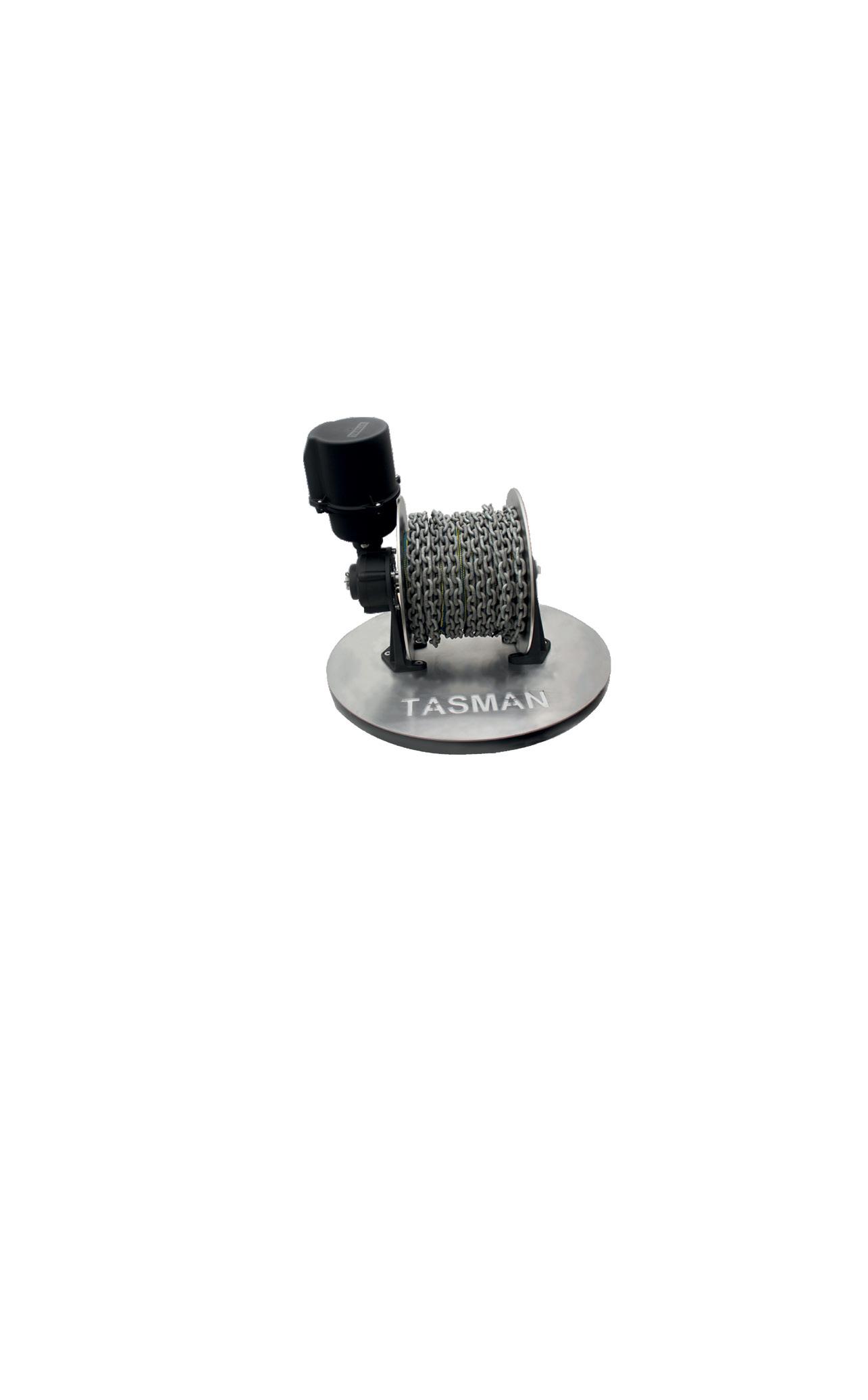

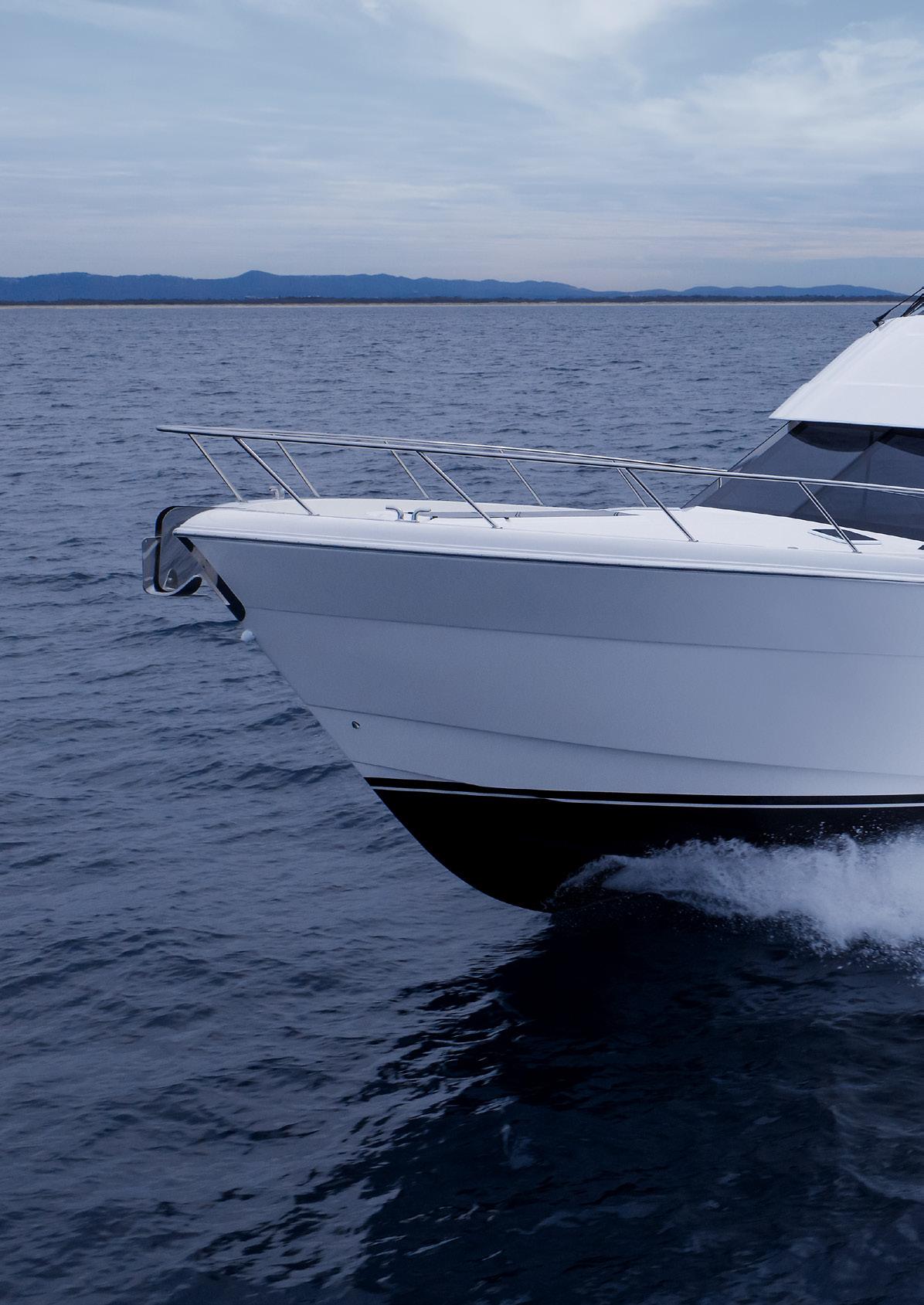
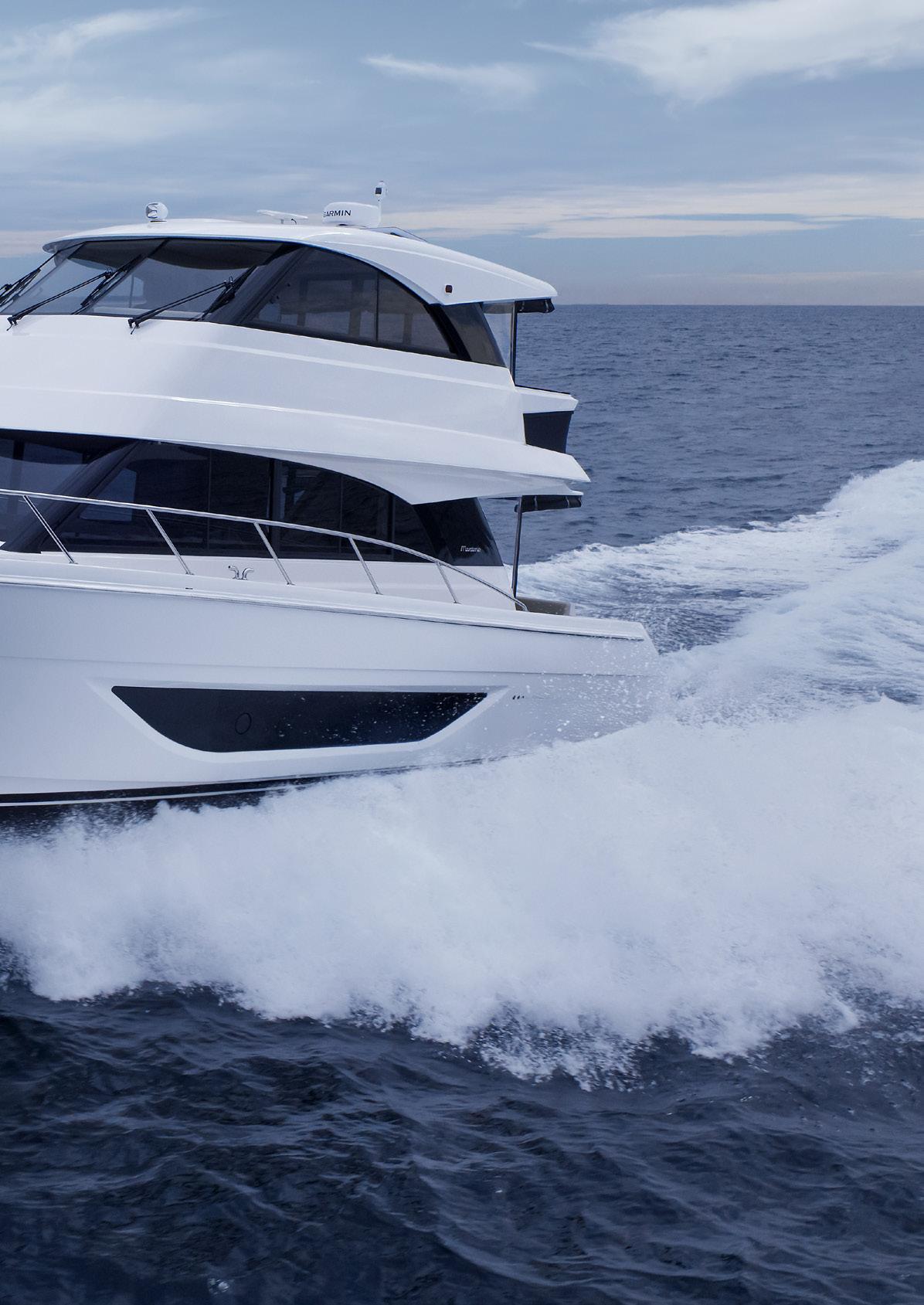
The latest in the Maritimo line is the M50... which could almost be described as a Journey through Innovation.
BY KYLE BARNES
The platform possesses a unique dual functionality, the ability to go up and down and the flip up function.
The similarity to Maritimo's 55-footer is apparent, with both hatch and door openings providing access to the storage compartment below. A spacious entertainment zone integrated with a built-in barbecue and refrigerator.
Maritimo has integrated the engine room air intake directly into the quarter panel structure.
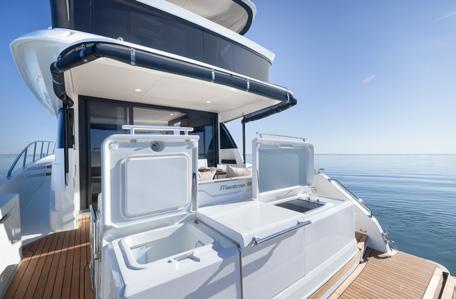
The name Bill Barry-Cotter is one of the more prominent names in the Australian boat building industry, one could say an oracle of the industry without being hyperbolic. By the age of 19, Bill had constructed his first boat, taking over Mariner Cruisers when his employer retired. Mariner flourished under his leadership, becoming Australia's largest boat manufacturer by 1978. Bill then successfully founded Riviera in 1980 and sold it in 2002. Not being content to stay home and water the roses, Bill created and still resides over Maritimo, a brand inspired by a lifelong passion for performance, build integrity and innovative design that stands the test of time. The latest in the Maritimo line is the M50. We take a walkthrough of the vessel, which could almost be described as a “Journey Through Innovation”.
Our tour of the Maritimo M50 Flybridge begins at the stern, with mine host and tour guide General Manager Phil Candler, where the newest feature immediately catches the eye: the high-low platform. This isn't just any swim platform – it's a Maritimo-designed and manufactured innovation that represents years of engineering refinement. The platform possesses a unique dual functionality, obviously the ability to go up and down, but what sets it apart is the function to flip up. The engineering brilliance becomes clear as I watch the demonstration. When a tender is secured to the platform, it operates in its traditional horizontal position. But here's where the genius lies – when no tender is present, the entire platform can flip vertically, reducing the boat's overall length. This means that the hull goes from a hull ISO length of 16.82 metres down to 15.7 metres. And when deployed, it transforms the back area into a spacious entertainment zone perfect for water activities,

integrated with a built-in barbecue, refrigerator and easy access to the lazarette. This seemingly simple innovation also solves a realworld problem that many boat owners face daily - marina berths are expensive, and every foot counts. The ability to take a shorter berth while maintaining full functionality when needed is the kind of practical thinking that defines the brand. It also works as a safety rail while out on the remaining flat piece of the platform, and I am sure, although not demonstrated on the day, would work well in breaking up a wave-pooping situation. But the platform isn't a onesize-fits-all solution either, with some US customers preferring fixed platforms, while others choose to forgo the platform entirely.
Moving toward the cockpit, we encounter another significant modernisation – the lazarette access. The similarity to Maritimo's 55-footer is immediately apparent, with both hatch and door openings providing exceptional access to the storage compartment below. But the real trick in the trunk lies beneath our feet. The back floor has been raised substantially compared to previous models, creating a seamless transition into the galley area. Gone are the awkward steps that plague many boats this size. Instead, there are just two well-proportioned steps up to the cockpit level, a design choice that yields tremendous benefits in the huge lazarette storage compartment.
Descending into the lazarette reveals a space transformed. With nearly six feet of headroom at the highest point, this is far from a cramped, uncomfortable storage area. The additional height means stand-up paddleboards, kayaks and other bulky water toys can be stored with ease. And because there are dual access points, from both inside and outside the cockpit, you are ensured that retrieving gear never requires moving half the contents of the compartment. The engineering extends to water management as well, with every
hatch featuring rubber sealing, and the design virtually eliminating the possibility of water ingress.
A raised rubber seal, standing 150 millimetres high, creates a barrier that prevents water flowing down the side decks from entering the storage areas. The outdoor galley area features a lift-up barbecue with integrated lighting for evening cooking, a fixed sink and a flip-down stainless-steel tap with automatic shut-off. Everything is designed for serious offshore cooking, not just harbour entertaining.
As Henry Ford famously said: "Any customer can have a car painted any colour that he wants so long as it is black." Here, the same philosophy applies to the engine configuration and horsepower setup. I guess when you think about it, this is a company with decades of experience, millions of dollars invested in naval architecture and thousands of hours of customer feedback. According to Phil: “The decision reflects Maritimo's philosophy of optimisation rather than endless choice. By standardising on proven, reliable power, they can focus their engineering efforts on integration and efficiency rather than accommodating multiple engine configurations.” You can’t argue with that. And this is where they landed on twin Volvo D13 800-horsepower engines – the standard and only powerplant option for the M50. The engine room access follows conventional Maritimo practice, but the layout incorporates lessons learned across their entire range. The engine room liner extends from the aft bulkhead all the way to the forward cabin, creating a unified structural approach that seems to significantly enhance the vessel's integrity. This threepiece construction – hull, deck and liner – represents a structural philosophy throughout that reveals a boat that feels solid and substantial, with none of the flexing or creaking that characterises lesser vessels.
Another significant innovation lies in the quarter panel construction. Unlike traditional designs that require external grills and stainless-steel fittings, Maritimo has integrated the engine room
air intake directly into the quarter panel structure. The multi-part panels create clean, flowing lines while ensuring optimal airflow to the engines. This design eliminates potential failure points while reducing maintenance requirements. There are no external grills to corrode, no stainless-steel trim to polish, and no complex routing to service. The air intake sits at the perfect height to avoid water ingestion while maintaining the aesthetic flow of the vessel's profile.
The deeper walk-around side decks extend further forward than on other Maritimo models, creating enhanced safety for children and older passengers. Two teak-topped steps lead up to the foredeck, providing easy access while offering secure handrails. They are well above my hip at some points, and although I didn’t break out the ruler, they are a good width, making it an easy trek to the bow.
Stepping into the main cabin reveals the benefit of the raised pocket floor design. The seamless transition from cockpit to cabin creates a true indoor-outdoor living experience. Built-in drains in the cabin floor handle any water intrusion, directing it through scuppers that exit aft without requiring through-hull fittings. This self-draining system eliminates potential failure points while maintaining the clean interior aesthetic. The twin sliding doors can remain open in most conditions, creating an expansive living space that extends from the cockpit seating to the forward cabin.
The galley island dominates the centre of the space, offering remarkable functionality in the compact footprint. Standard equipment includes a dishwasher, while options allow for standup units or additional storage configurations. I have to say I am not a big fan of the island, for me it seems to interrupt the flow of what is trying to be achieved, but in terms of adding an extra bit of benchtop and a place for the dishwasher to call home, functionality wins over fashion. The refrigeration is comprehensive, with separate fridge and freezer drawers providing ample cold storage. The pull-out pantry replaces the traditional swing-out units with fullextension slides that provide complete access to stored provisions. Combined with the ice-maker and Fusion stereo system controlled

Maritimo designers have modified the chines and strakes, angling them down slightly more, which causes the water to flow further aft.
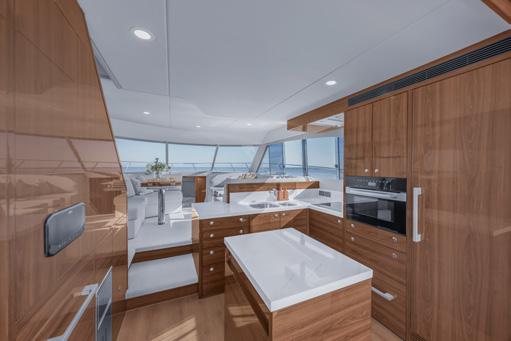

The galley island dominates the centre of the space, offering remarkable functionality in the compact footprint.
The main cabin pairs a port-side dining area with a starboard lounge that converts into extra sleeping space via a nifty slideout bed.
The forward cabin offers flexible sleeping arrangements with twin beds up against the port side of the hull, maximising the space where a traditional island bed would have once been the answer.
The king-size bed is above the fuel tank
- very common in a vessel of this size - and boasts large walkaround spaces on both sides.

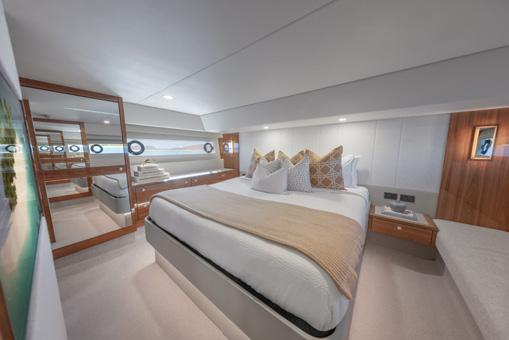
via iPhone, the galley provides everything needed for serious cruising or entertaining.
Stepping up from the galley is the saloon where the layout maximises every inch of available space while maintaining comfort. The main cabin features a dining area on the port side, and to the starboard is another lounge with a nifty slide-out bed system that transforms the social area into sleeping quarters when needed. Or perhaps simply a great space to curl up in the sun - a pop-up TV completes the afternoon soporific post-lunch sleeping station. The most surprising, and it must be said the best bit of innovation for me, was the seating design where lower covings provide exceptional visibility throughout the main cabin, so seated guests both in the saloon and in the flybridge have a clear view of their surroundings. (Many designs of vessels that have dispensed with the lower helm have just torn out the helm and left the saloon levels and design as is, leaving poor visibility.)
And despite the compact overall dimensions, the headroom remains generous – impressive for someone standing 6'1".
The forward cabin offers flexible sleeping arrangements with twin beds up against the port side of the hull, maximising the space where a traditional island bed would have once been the answer. They
can separate for individual use or slide together to create a double berth. Extensive storage includes both pigeonhole lockers and under-mattress compartments, with the en-suite doubling as a day head. The switchback separate washer and dryer, initially mounted high but relocated in response to customer feedback, provide the convenience of home laundry facilities.
The stairs from the saloon switchback to the stateroom and with three steps down you find yourself under the main saloon, just after passing the full-sized washer and dryer that is hidden behind the panelling in the hallway. The king-size bed is above the fuel tank - very common in a vessel of this size - and boasts large walkaround spaces on both sides. The port space also includes a daybed with an option to mirror the starboard with an extra drawer unit. Through the portside door we find the ensuite featuring stone surfaces which are manufactured in-house. The walkin shower requires no door, as the design ensures there are no splash issues.
The internal stairwell on the port side leads us up to the flybridge, a big space where they have squeaked around a foot extra each side on the wings. Plenty of large couches sprawl over either side and that view for the passengers is fabulous, all finished with the
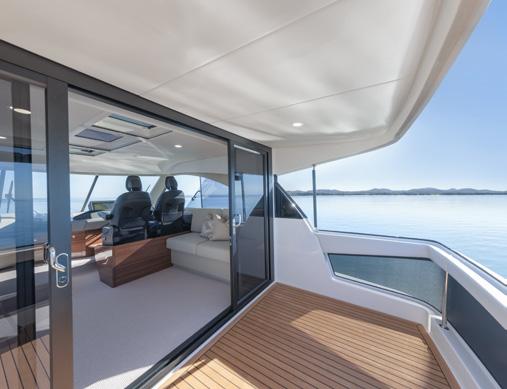
generous with doors leading out to a balcony. The starboard side is where I find two Garmin 22-inch screens dominating the dashboard, with standalone autopilot, a standalone engine display, and the controls all laid out under the steering. The Yacht Controller compatibility gives you everything you need for long range cruising with a perfect balance between fashion and functionality. The Vetus variable thrusters are all controlled through one control for both bow and stern. The grid can control all the screens, so you don't need to reach forward. The captain’s seat is near the starboard wall and the solid diamond stitched helm seats are fully electric and adjustable, with a heating function as well.
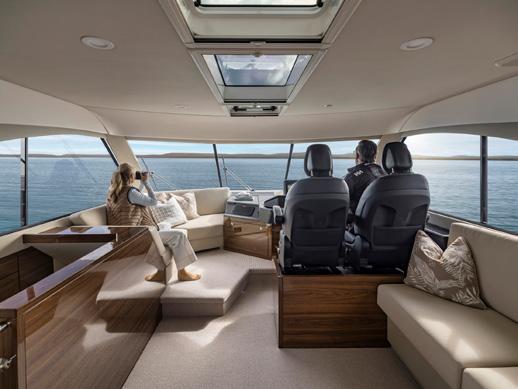
With a fuel capacity of 3700 litres and 800 litres of drinking water fully pressed up, we were sans the almost 900-kilo gyro, which was to be fitted later, and hit the Broadwater. A consideration, or even a trap for not-so-young players, is that this thing steers like my Tesla. There are only two turns of the wheel from lock to lock. You don’t have to touch the helm much to upset the apple cart and have people yelling at you. This was made clear during my attempt at a Williamson Turn, a manoeuvre used to recover a person overboard, particularly in situations of reduced visibility. The idea is to turn your vessel hard to one side until your course has changed 60 degrees and hard down to the opposite side until your vessel is back on its reciprocal course.
The internal stairwell on the port side leads us up to the flybridge, a big space where they have squeaked around an extra foot each side on the wings.
There’s a great feeling of space throughout the vessel.
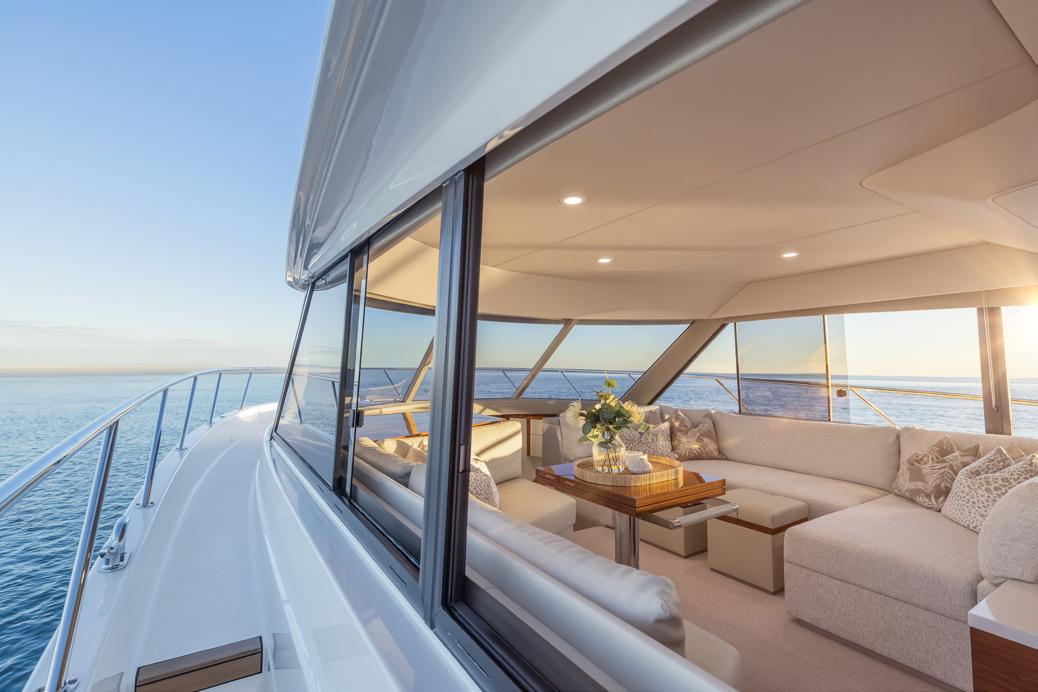
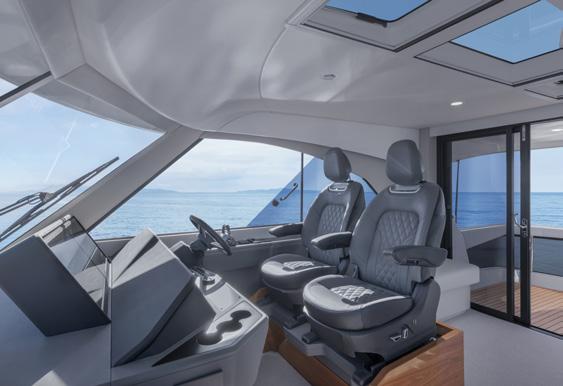
Suffice to say, it was not appreciated by my fellow passengers, although the steering response was excellent. According to Phil: “On the 55 and the 50 we changed the chines and the strakes and angled them down a bit more, which throws the water further aft. We put a bigger radius so the flow of water is just a cleaner flow off the chine and the strakes, so it gives you a drier boat and the ability to trim it up or down. The cleaner trims do that and depending on the sea conditions, it works really well.” At cruise in its natural state (without trims), we seemed to be running around eight degrees bow up, but applying the trims to around 80 per cent, the bow altitude melted away to about four per cent.
The captain’s seat is near the starboard wall and the solid diamond stitched helm seats are fully electric and adjustable, with heating function as well.
The M50 represents the culmination of decades of Australian boat-building expertise. Every innovation, from the revolutionary swim platform to the integrated air intake system, reflects real-world experience and customer feedback. This isn't a boat designed by committee or focused purely on specifications – it's a vessel crafted by people who understand how boats are actually used. Standing on the flybridge as our tour concludes, the view encompasses not just the technical achievements but the philosophy behind them. Maritimo has created a 50-footer that punches well above its weight class in terms of what they have packed in. Offering the functionality and luxury of much larger vessels while maintaining the practicality and handling of a 50-footer.
The M50 doesn't just represent the current state-of-the-art – it points toward the future of premium power cruising, where innovation serves practicality and luxury enhances, rather than complicates, the boating experience.
The twin Volvo D13 800-horsepower engines – the standard and only powerplant option for the M50 pushes the vessel through the water with ease.

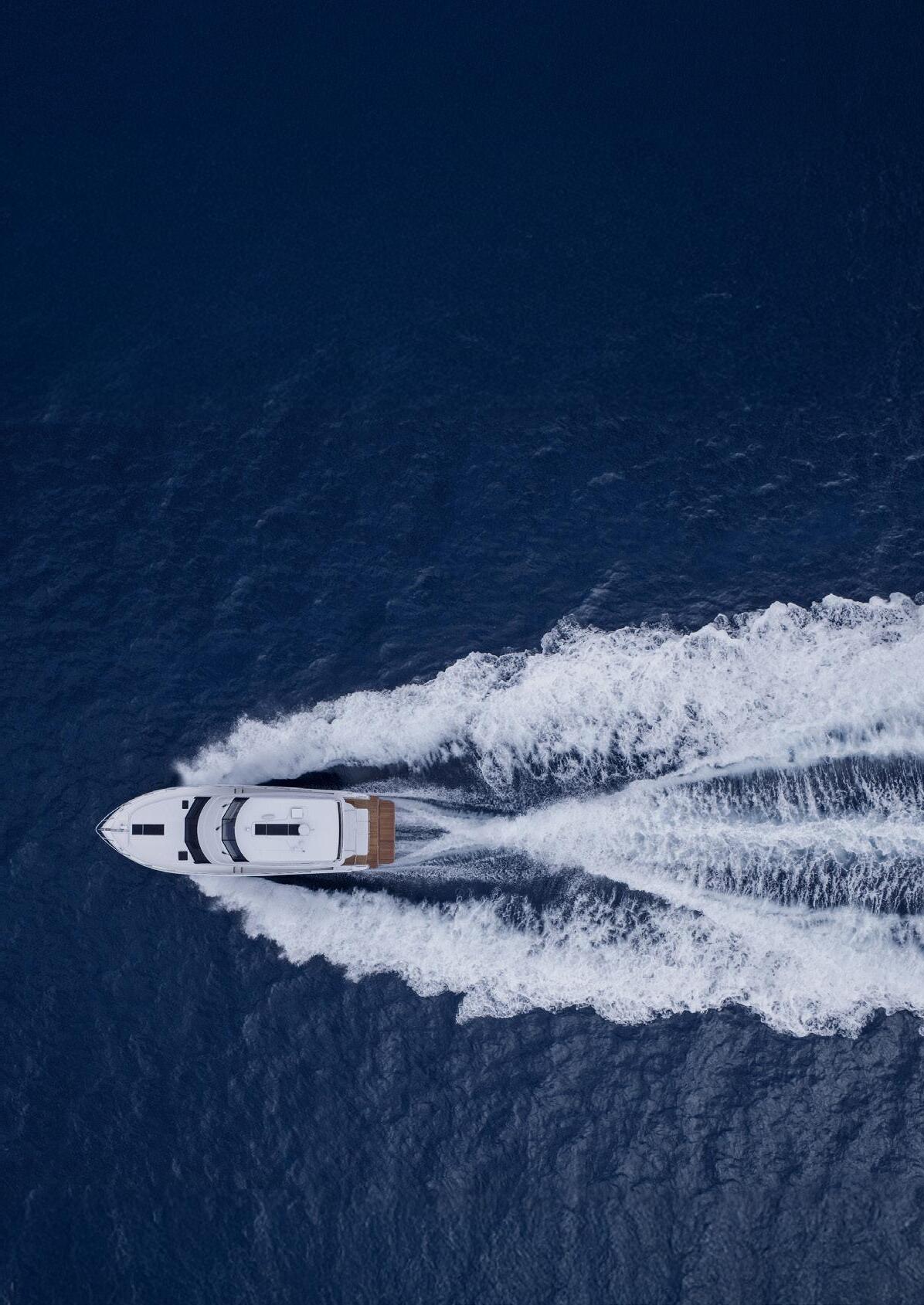
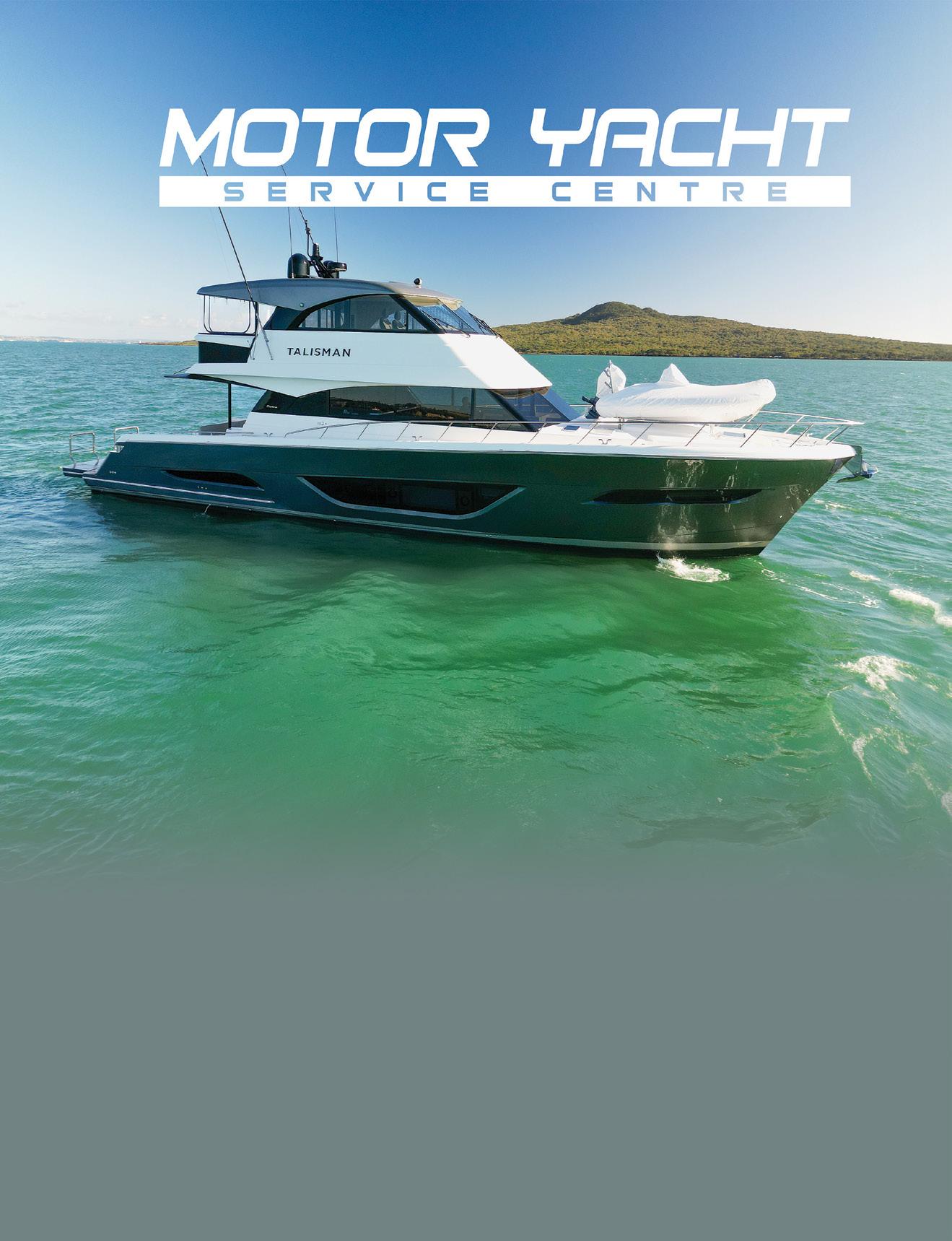

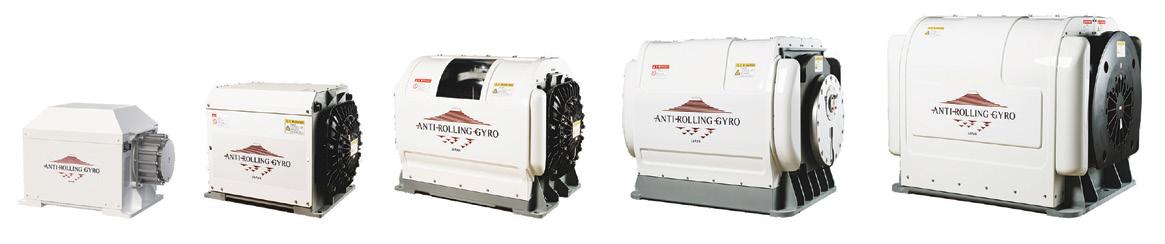
Motor Yacht Service Centre (MYSC) is proud to announce its acquisition of the exclusive New Zealand distributorship for ARG Gyro Stabilisers. With over 14 years of experience installing the ARG range on luxury motor yachts, MYSC has built a strong reputation for delivering reliable, high-performance stabilization solutions. Designed originally by Mitsubishi for use on the space station, ARG gyros are renowned for their rugged simplicity, functionality, and cost-effectiveness — making them a serious option for boat owners seeking a heavy-duty, no-maintenance stabiliser. To learn more, visit www.mysc.co.nz
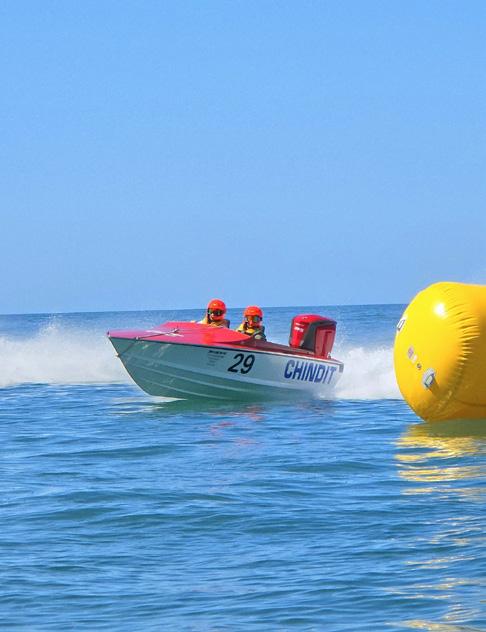
The New Zealand Offshore Powerboat Racing Championship returns for the 2025/26 season with five exciting events across the North Island. With a proud history of racing in Auckland, the first race was held in Gulf Harbour on October 11th.
This season’s calendar promises plenty of action, and new drivers, crews and fans are welcome to come and be a part of the events.

November 7,8 & 9
February
December
March 7 & 8
March
December
April 11 & 12
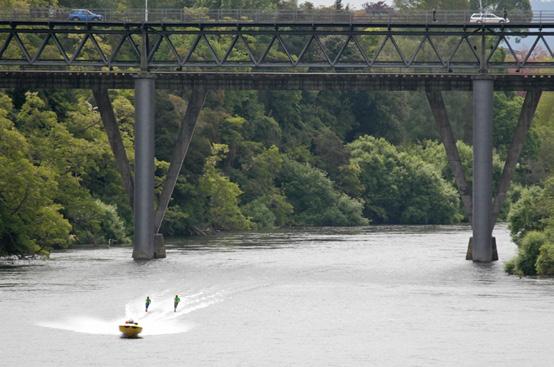
April
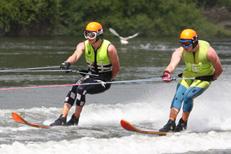
The 2025-26 Lucas Oil NZ Hydro Thunder Series is here, and it’s going to be bigger, faster, and louder than ever!

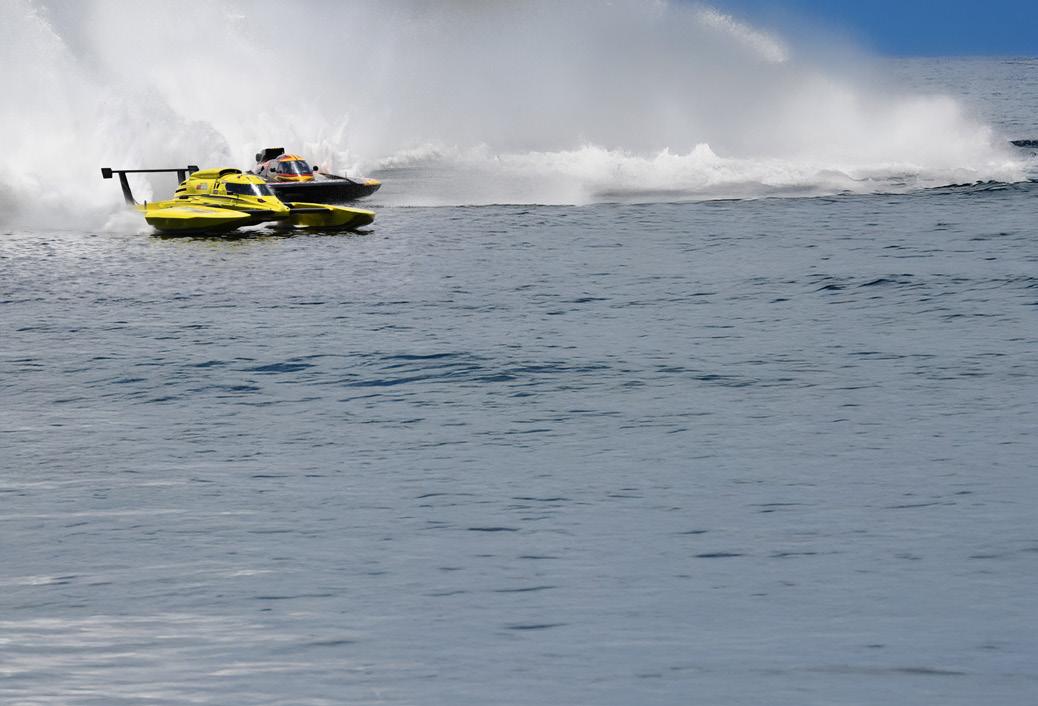
Rob and Ange Coley in their Superboat “Poison Ivy” demonstrate the value of safety equipment.
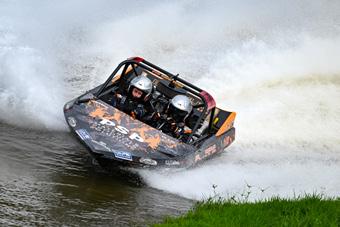
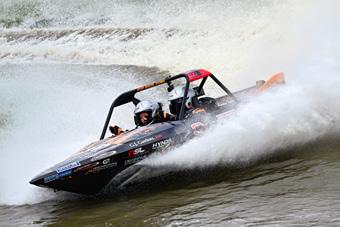
Kicking off in early December, the 2025-2026 New Zealand Jet Sprint Championship guarantees maximum adrenalin from go to whoa. With six race meetings at four purpose-built jet sprint tracks, the series brings jet sprinting to spectators from all over New Zealand and around the world.
Jet sprint tracks are about the size of rugby fields, giving every spectator a great view of the action. Each boat makes timed runs around the track, hitting 130 kilometres per hour in less than 2 seconds.
Racing around a complex network of channels, the driver and navigator negotiate at least 20 corners in less than a minute. There’s a lot of action. Thirty or more teams each make four qualifying runs. Then the competition heats up, with three elimination rounds featuring the quickest 9, 6, and finally 3 boats in each class. Racers compete in one of 4 established jet sprint classes, or the new junior class, “Nextgen”. The new class creates an opportunity for drivers from 8 to 16 years to compete against their peers in a newly designed single-seater jet sprint boat.
In the 1000+ horsepower Southern Jet Superboats, 2024-2025 runnersup Sam Newdick (from Hamilton) and navigator Shama Putaranui (Ashburton) face stiff competition as they try to avenge last year’s loss to Australian Phonsy Mullen and navigator Niketa Wells.
Ollie Silverton (Hamilton) and navigator Amanda Kittow (Tikokino) will be defending their 2024-2025 Group A title against a strong field of challengers in the 600+ horsepower Group A class. Last year’s second and third placed LS teams of Patrick and Jay Haden, and Tim and Debbie Edhouse face another tough field in the 580 horsepower LS class. Also new for this summer, the Mountain View track near Stratford will make its debut, hosting rounds 4 and 6 in February and March 2026. The championship also includes meetings at Featherston, Wanaka and Whanganui.
NZ Jet Sprint Championship meetings are also live-streamed on the “The Broadcast Co” website at THEBROADCASTCO.CO.NZ/WATCH
JETSPRINT.CO.NZ
SATURDAY 11TH APRIL
LAKE DUNSTAN
SUNDAY 12TH APRIL
LAKE ROXBURGH
SATURDAY 9TH OR SATURDAY 16TH MAY
LAKE TE ANAU
SATURDAY 6TH JUNE
LAKE BENMORE
SUNDAY 7TH JUNE
LAKE AVIEMORE
SATURDAY 27TH JUNE
LAKE RUATANIWHA
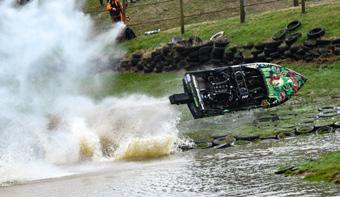
Navigator Amanda Kittow (left) signals a turn to 2024-2025 Group A champion driver Ollie Silverton at Whanganui’s Shelter View Jetsprint Track during a championship meeting on 23 February, 2025.
2025-2026 New Zealand Jet Sprint Championship
SUNDAY 7 DECEMBER 2025
Round 1, Featherston Jetsprint Track, Tauherenikau Race Course, 1498 S.H 2 Featherston. Racing starts 9 am.
Saturday 27 December 2025
Round 2, Shelter View Jetsprint Track, 598 S.H 4 (Parapara Highway), Upokongaro, Whanganui. Racing starts 9 am.
Saturday 17 January 2026
Round 3, 995 Wanaka-Luggate Highway, Wanaka. Racing starts 9 am.
Saturday 14 February 2026
Round 4, Mountain View Jetsprint Track, 382 Croydon Road, Stratford. Racing starts 9 am.
Sunday 1 March 2026
Round 5, Shelter View Jetsprint Track, 598 S.H 4 (Parapara Highway), Upokongaro, Whanganui. Racing starts 9 am.
Saturday 21 March 2026
Round 6, Mountain View Jetsprint Track, 382 Croydon Road, Stratford. Racing starts 9 am.
SATURDAY 11TH OR SATURDAY 18TH JULY TIMARU
SATURDAY 1ST AUGUST
LAKE WAIHOLA

BY ALTEX YACHT & BOAT PAINTS – PROUDLY PROTECTING NZ AND AUSSIE BOATS, COAST TO COAST
For many boat owners in New Zealand and across Australia, applying antifoul is one of those "love to hate" jobs. But with the right know-how and a few clever tricks, it can be a smooth, satisfying process that keeps your pride and joy cutting cleanly through the water all season long. At Altex Yacht & Boat Paint, we’ve spent decades helping Kiwi and Aussie boaties get the most from their antifoul - and we’re sharing our top tips to make your next haul-out a breeze.
1. Choose the Right Antifoul for Your Boating Lifestyle
Different boats and usage patterns call for different types of antifoul. If you’re a regular cruiser, or spend most of the time moored, a high-performance ablative like Altex No.5 will keep your hull clean and sleek with minimal buildup. For racing yachts, a harder coating like Pettit Vivid would be better suited. Chat with your local Altex stockist to get the best match for your vessel and usage.
2. Timing is Everything Plan your haul-out carefully. Antifoul works best when applied during moderate temperatures—too hot and it flashes off too fast, too cold and it won’t cure properly. Generally, early autumn or spring is ideal. Avoid the midday sun – preferably paint early in the morning. Ensure the surface is dry and free from the morning dew. A small amount of thinner may ease application in warmer temperatures – Check the product label or PDS for the appropriate thinner and thinning percentage.
3. Surface Prep is the Secret Weapon
A good finish always starts with great prep. That means removing old, flaking antifoul, sanding back to a sound surface, and cleaning thoroughly.
4. Antifoul is a coating, not a mist
Apply it thick enough to build a protective layer - check the can for correct film build and coverage rates. Use a roller for even application, and don’t stretch it too far. If you’ve skimped in the past, you’ll know: thin antifoul wears off faster and leaves you vulnerable to early marine growth. Check the product label or PDS for recommended film builds. In most cases, two rolled coats plus a third around leading edges and turbulent areas is ideal.
5. Mask Smartly for Sharp Lines
If you’re fussy about your waterline (and who isn’t?), use a high-quality tape to mask it off cleanly. Remove tape shortly after the final coat while the paint is still tacky - this avoids tearing or jagged edges. Bonus tip: run a fingertip along the tape edge after applying it to ensure a crisp seal.
6. Mix and Stir Like a Chef
Before you pour that first tray, give your antifoul a thorough stir. Pigments and biocides settle at the bottom, and uneven mixing can mean patchy protection. Use a proper paint stirrer or mixing paddle—your boat will thank you.
7. Check for Compatibility
If you’re overcoating an existing antifoul, make sure the new one is compatible. Not all products play nicely together. If in doubt, apply a tie coat like Altex PrimaShield Antifouling Sealer or strip back and start fresh.

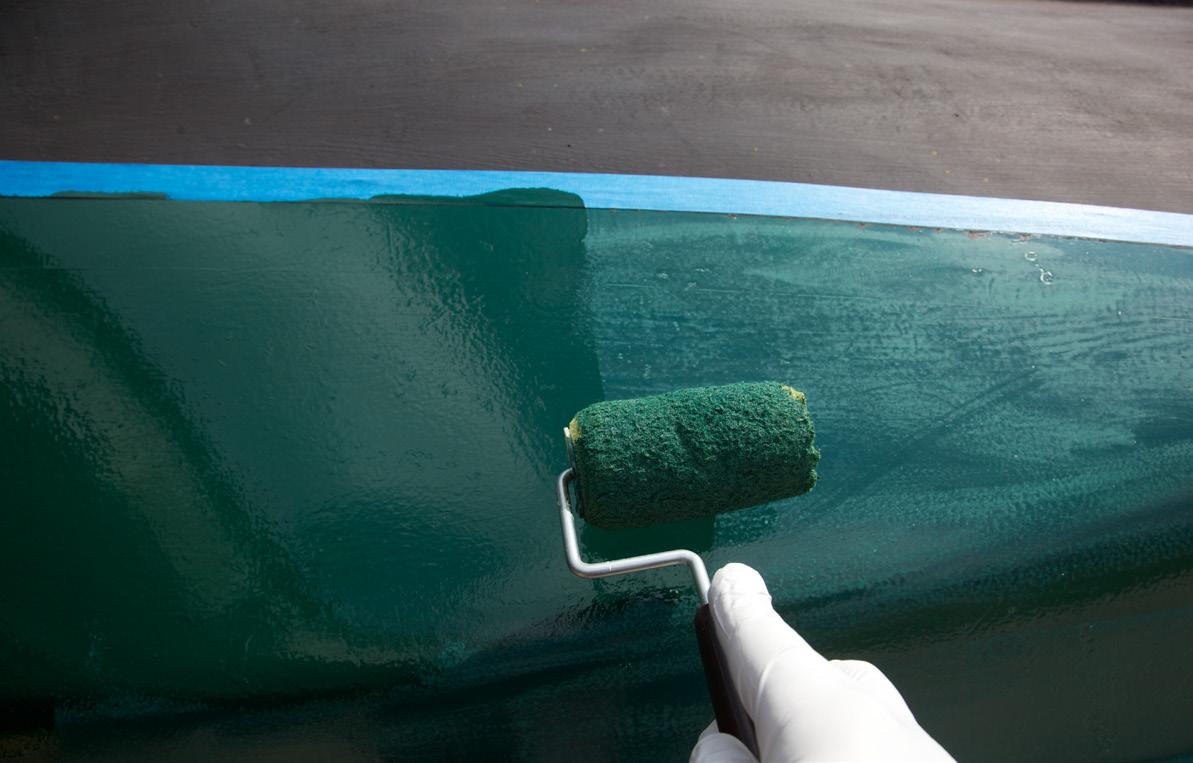





Relax in style with the Luxe Floating Chair! It’s a stylish addition to your poolside retreat. Lounge in luxury and soak up the sun! RRP $219 SHUTTHEFRONTDOOR.CO.NZ
Take photos of your boat out on the water, or capture great moments while out on your boat, with the Fujifilm X-E5. This camera boasts a subject detection system that uses deeplearning AI technology to detect animals, birds, sea life, as well as boats and jet skis, with a setting that automatically detects and tracks moving objects, making it the perfect camera accessory for out on the water. RRP $2,899
FUJIFILM.COM
The BIRKENSTOCK Arizona is a genuine classic that has been delighting both men and women for decades. This simple sandal with two straps stands for timeless design and has long held cult status thanks to its comfort factor. The upper is made from the skinfriendly, hard-wearing synthetic material Birko-Flor®. RRP $280
BIRKENSTOCK.CO.NZ
The Ultimate Ears BOOM 4 is a rugged, portable Bluetooth speaker built for adventure. With 360° sound, punchy bass, and waterproof design, it’s perfect for the boat, beach, or backyard. Long-lasting battery life keeps the music going, while its bold style makes it stand out anywhere. RRP $279.95
ULTIMATEEARS.COM
Prada Linea Rossa embodies sporty elegance with matte black rectangular frames, accented by the iconic red stripe. Solid dark grey polar lenses provide style and UV protection, while the design blends timeless allure with modern innovation—a perfect choice for those who love fashion-forward sophistication. RRP $685 SUNGLASSHUT.COM
Bring nautical charm to your table with this buoy-shaped chip and dip bowl. Crafted from durable stoneware, it effortlessly blends coastal style with everyday functionality. The centre bowl is perfect for any range of dips, while the surrounding space offers ample room for chips, veggies, or bread. RRP $79
MARKANDGRAHAM.COM
The EcoFlow Delta 3 Plus 1800W Portable Power Station is ideal for boating adventures, with 1,800W output and 1,024Wh capacity to run fridges, lights, navigation gear, or even a coffee machine. It recharges to 80% in just 50 minutes, and depending on load, can power essentials for several hours to over a day. RRP $1849
ECOFLOWTECH.CO.NZ
Nab yourself the ultimate beach umbrella this Summer season & add another layer of lux to your sun protection. Taking inspiration from the 70’s beach scene, our premium quality sun umbrellas have exaggerated, scalloped edges & natural cotton fringing. Made from SPF50 premium-grade fabric, this sun umbrella will help block out the sun’s UV rays while adding style to your days. RRP $399
HOMELABSTORE.CO.NZ
Create the perfect social environment on the water. With room for eight and a cup holder for each person, the O’Brien 8 Person Party Lounge makes it easy to throw a floating party. Its comfortable seats, backrest, and armrests make the Party Lounge the perfect hangout spot for enjoying the water, the sun, and good company.
OBRIENNEWZEALAND.CO.NZ
The DJI Osmo Action 5 Pro is a tough, featurepacked action camera built for creators and adventurers. It uses a 1/1.3-inch sensor to capture 40MP photos and crisp 4K video at up to 120fps, supported by advanced RockSteady stabilisation for smooth footage. Dual OLED touchscreens make framing easy, while its rugged design is waterproof to 20 meters. Notably, it features a built-in water pressure gauge that detects and displays real-time underwater depth, making it ideal for divers and water sports enthusiasts. RRP $689
DJI.COM/NZ

Spinlock’s Venture Bags are designed for adventure - tough, lightweight, and made from durable nylon ripstop fabric. The 27L Deck Pack suits day trips, featuring a breathable mesh back, sternum strap, laptop sleeve, and multiple compartments. The 55L Cabin Duffle offers cabin-sized convenience with removable backpack straps, carry handles, and internal mesh pockets. For extended journeys, the 100L Kit Bag offers generous space, featuring strong handles and external pockets. Built to last and thoughtfully designed, the Venture range is ideal for boating, travel, or outdoor adventures - and with summer coming, they make a stylish, practical Christmas gift for adventure lovers.
LUSTY-BLUNDELL.CO.NZ
Yamaha’s New Crosswave PWC Features Unique WalkAround Deck
Yamaha has released a new addition to its popular WaveRunner personal watercraft (PWC) product line that it says will redefine the entire segment with unrivalled versatility. The company’s new CrossWave WaveRunner “combines Yamaha’s legendary performance with full walkaround versatility, expansive deck space, and true multi-use capability,” says the company.
Built on Yamaha’s longest and widest PWC hull to date at nearly 13ft in length and with a 67-inch beam, the CrossWave features a unique, flat, marine-matted walkaround deck from bow to stern for 360-degree mobility. The only four-seat PWC currently available, the unit’s third and fourth seats are removable, allowing the stern to be transformed to open deck space or used to accommodate fishing gear. The helm arrangement features a floating console with dual seven-inch touchscreen displays.
Offered in a single, premium
configuration, the product is designed to allow end-users to customise the vessel as desired through a catalogue of modular aftermarket accessories including fishing kits, casting decks, leaning posts and additional seating. The entire deck surface is lined with Yamaha’s integrated T-Track system, which accepts accessories from washdown kits and rod holders to trolling motor brackets and shallow water anchors.
With 311 litres of storage space, the CrossWave includes a fishing rod compartment, an anchor locker in the bow and twin in-hull stern compartments. A 52-litre cooler, which mounts to the bow or stern deck, comes standard. Standard power in the CrossWave WaveRunner is a 1.9-litre,
Forget the typical noise and vibration. The Orca delivers her power from a purpose-built electric powertrain that provides instant throttle response—an entirely different kind of thrill on the water. Her liquid-cooled motor generates up to 160 hp, with three selectable ride modes to dial in the perfect response, from calm cruising to fullthrottle excitement. It’s a powerful push forward that lets you feel the wind and the water without the distractions of a combustion engine.
Perhaps the most surprising aspect
of the Orca is the silence. The only sounds you'll hear are the water splashing and the wind. This quiet operation allows for a new level of immersion, letting you take in the sights and sounds of your surroundings. With no fumes or oil to worry about, you can explore sensitive waterways and leave nothing but a ripple in your wake.
four-cylinder, four-stroke, high-output jet pump.
“This isn’t about going faster or carving harder,” said Yamaha Watercraft general manager, Bryan Seti. “The CrossWave is about going farther and doing more – with the space, flexibility and purpose that a growing segment of the PWC industry has been waiting for. It’s part utility vessel, part explorer, and 100% Yamaha.”
Yamaha has announced that the CrossWave will begin shipping in the US in Spring 2026, with pricing to be revealed closer to launch. While there are currently no plans for a New Zealand or Australian release in 2026, it remains an exciting concept— definitely one to watch.


Taiga has engineered the Orca to be as simple to own as she is to ride. With no engine, there is no need for oil changes, spark plugs, or belts. Her advanced closed-loop cooling
never have to worry about flushing her after a ride. Charging is also straightforward, with the option to plug into a standard outlet overnight or use a fast-charging station to get back on the water in as little as 40 minutes. It’s a simpler, smarter way to play.

An early leap toward personal watercraft
Before the word “Jet Ski” entered everyday boating vocabulary, there was the Hydro-Cycle Barracuda, a curious, short-lived watercraft that helped pave the way for the personal watercraft revolution. Launched in the late 1960s by Hydro-Cycle Inc., the Barracuda was marketed as a new kind of small, fun machine for the water. Built from fibreglass and measuring just nine feet in length, its compact form was paired with foam-filled construction that made it virtually unsinkable. Instead of a jet pump, it carried a small outboard motor, often up to 35 hp, which gave it the look of a futuristic runabout more than the stand-up PWCs that would follow a few years later.
Production was brief, running only from around 1969 to 1971. But during that short window, the Barracuda captured imaginations with its sleek profile and promise of freedom on the water. While it never achieved mainstream popularity,
New Jet Ski Anchors –NOW AVAILABLE!
Jet skis are great for exploring, so when it’s time to stop and enjoy the scenery, make sure you have an anchor on board. MarineXpress now offers 3 sizes of anchor kits ideal for jet skis or kayaks
Why You’ll Love Them:
• Compact & Lightweight: Easy to store and transport.
• Multi-Surface Hold: To perform in diverse seabed conditions.
• Quick Deploy & Retrieve: Designed for effortless handling.
Choose Your Size:
1. 0.7kg folding grapnel - 7m, 7mm
it stands today as one of the first serious attempts at what we now recognise as the personal watercraft. Surviving examples are rare, with only a handful known to collectors. Restored models occasionally surface, drawing attention not only for their rarity but also for the role they played in shaping recreational boating.
More than half a century later, the Hydro-Cycle Barracuda remains a significant historical footnote—a bold experiment that foreshadowed
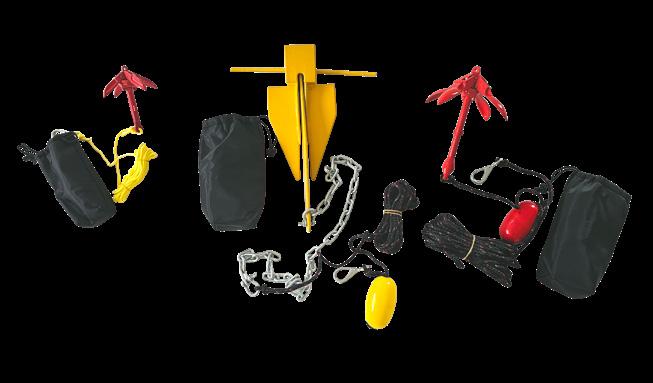
Celebrating 40 years since the release of the original WaveRunner 500, Yamaha is excited to announce the 2026 WaveRunner line-up, which includes fresh new colours and striking graphics.
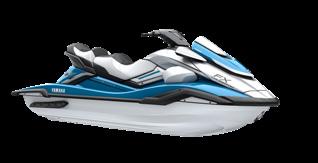
The 2026 line-up includes the FX Cruiser HO and FX HO models which come with the industry’s largest capacity and most powerful, 1.9 litre naturally aspirated marine engine. All FX models come with the factoryinstalled audio system by Yamaha, a feature-rich 7-inch extra-large touch screen, smartphone integration, built-in GPS, 168 litres of storage and heaps of additional features for those wanting to experience big horsepower combined with luxury performance.
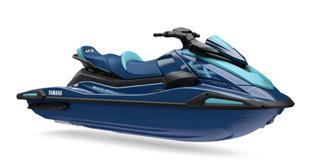
The 2026 VX series comes with new colours and graphics and includes the 1.9 Litre big horsepower VX Cruiser HO, and the 1049cc Litre, VX Cruiser with the factory-installed audio system by Yamaha and VX Deluxe models. All VX Series models feature a 4.3-inch colour Connext display, Yamaha’s RiDE dual-throttle controls, and 114 litres of storage, delivering the all-round versatility and performance the range is renowned for.
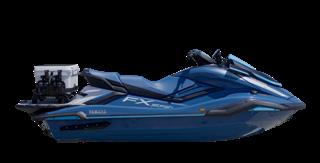
Yamaha’s dedicated fishing ski, the 2026 FX JetFish comes with Yamaha’s exclusive JetFish package, which includes the Yamaha RecDeck, premium fishing kit, Garmin fish finder and GPS, and custom FX JetFish graphics. Combined with the industry’s largest-capacity 1.9-litre marine engine, this craft delivers the power, ride performance, and manoeuvrability to reach any fishing spot - from small creeks and estuaries to offshore fishing grounds.
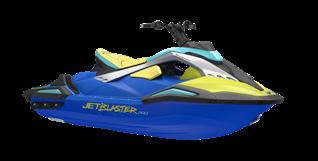
New to New Zealand for 2026, the compact yet powerful JetBlaster range introduced a whole new generation of riders to the WaveRunner brand, combining affordability with playful performance. The 2026 range kicks-off with the two-seater JetBlaster, which comes with Yamaha’s award-winning TR-1 marine engine and durable highquality SMC painted hull. This ski is the most affordable in Yamaha’s line-up.
The 2026 WaveRunner lineup is expected to hit New Zealand shores in late 2025.

With multiple World Championship winning credentials, the 1.9 litre naturally aspirated GP 19HO continues the unbeatable legacy in 2026. This race performance model comes with the factory installed audio system by Yamaha, a 4.3-inch Connext featurerich colour display, mobile phone connectivity and race-winning drive controls.
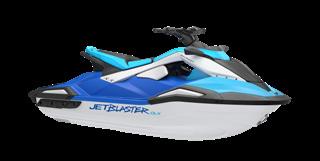
Next is the three-seater JetBlaster DLX, which includes Yamaha’s patented RiDE dual throttle controls, bow storage, reboarding step, mirrors and two-tone stern mats.Topping the series is the exciting JetBlaster Pro model, available in three-person configuration. The JetBlaster Pro offers enhanced freestyle performance for tail stands, spins, and other adrenaline-pumping manoeuvres. These models also feature the more powerful TR-1 High Output (HO) marine engine, a featurerich 4.3-inch display, RiDE controls and a host of premium upgrades.

The new FX JetFish is the Real Deal. Yamaha’s legendary FX HO WaveRunner purpose built for Kiwi anglers, with all the features and functionality needed for those epic days chasing Kingies, or fishing your favourite reef for Snapper and Tarakihi. Game on!



RecDeck including a sturdy multi-use rack, 45L Engel chilly bin, U-Dek brag mat and 4 x rod holders.
Integrates directly with swim platform and a built-in reboarding ladder and brackets.


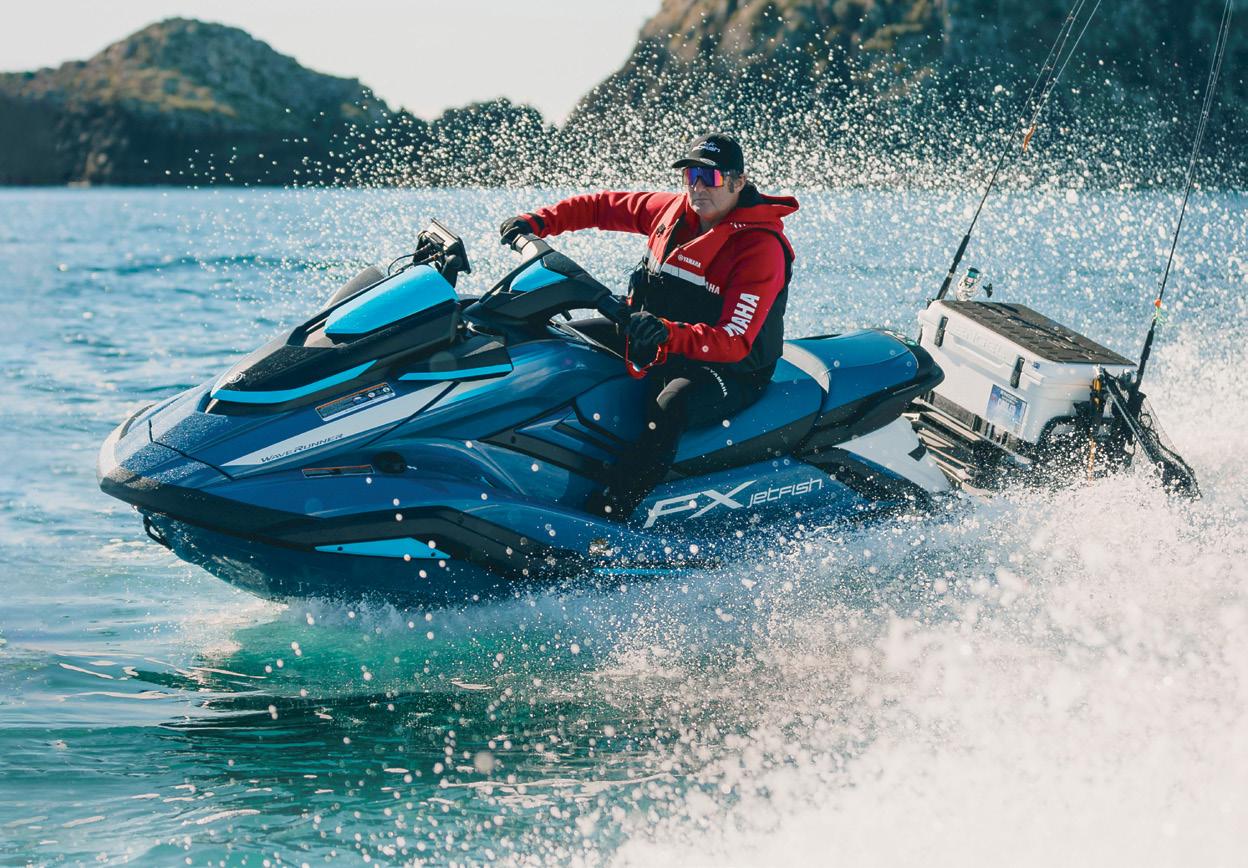
The ultimate purpose built fishing machine.
Sea-Doo were delighted to showcase their full PWC range at the recent Sydney Boat Show. From the fun and nimble Sea-Doo Spark, designed for those who love agility and excitement, to the top of the food chain RXP-X 325, there’s a Sea-Doo for everyone this coming season!
The Spark range offers lightweight, nimble and affordable fun—perfect for first-time riders. With flashy looks, easy towing, and peppy handling, Sparks deliver maximum on-water excitement. Powered by the fuel-efficient Rotax 900 ACE engine, they provide great value without compromising performance, ensuring every ride is fast, fun, and unforgettable.
When we say ‘performance’, we mean it. The RXP-X 325 is the fastest, most powerful PWC available, built for riders who crave speed and adrenaline. The Sea-Doo Performance range delivers high-octane fun with power and precision. The GTR enhances this thrill, combining exhilarating acceleration with a nimble, predictable hull for ultimate control.
The GTI platform redefines family fun on the water with unmatched stability, versatility, and style. Perfect for cruising, tow sports, fishing, or spirited riding, both GTI and GTI SE deliver exciting performance. Powered by Rotax 1630 ACE–130 engines, they let you choose between mild cruising or wild adventure.
Sea-Doo pioneered PWC fishing with a purpose-built range designed with NZ PWC angler, Andrew Hill.
Sea-Doo offer a model for every type of fisherman, with the limited-edition FishPro APEX, with 300hp, ensuring you reach prime fishing spots, fast.
The GTX and GTX Limited PWCs blend comfort, performance, and style. Spacious and versatile, they offer three Rotax engine options for a customizable ride. The GTX Limited adds a 10.25-inch touchscreen with navigation, audio, and riding stats via BRP GO!, delivering the ultimate onwater experience.
The Sea-Doo Explorer Pro is the first PWC built for true adventure, featuring a windshield, 170 hp engine, and fuel efficiency. With added space for gear, towing power, stability, and comfortfocused features, it’s designed for distance riding and exploring with confidence.
Sea-Doo continues to push the boundaries of what personal watercraft (PWC) life on the water can be through innovative new connectivity features and improvements to the entire Sea-Doo lineup.
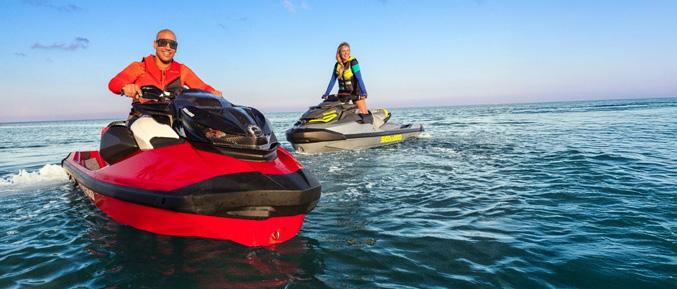
Every year, we push to elevate the Sea-Doo experience for our new and loyal customers alike, who are looking to live their best Sea-Doo Life. We listen carefully to their feedback and respond through continuous improvements to our products featuring innovative and industry-leading technologies with the goal of making our communities feel closer than ever before,” says James Heintz, Global Product Strategy Director, Sea-Doo and Vehicle Connectivity.
Riding a Sea-Doo is all about the experience and sharing it with a community of like-minded friends and family. In 2026, more models are getting the intuitive 10.25’’ Touchscreen Display. First introduced on the 2025 GTX Limited 325, the larger screen was an instant hit with Sea-Doo riders and is now standard equipment on the 2026 RXT-X, FishPro Trophy, Wake Pro (230) and Explorer Pro, and available as an option on the RXP-X 325.
Customisable with smart connectivity functions, it includes driving statistics, compass, marine navigation with the BRP GO! App which can be enhanced with a Navionics™ subscription, music, plus more. The larger screen not only provides more information at a glance, but also allows riders
to track each other on water as well as plan and create itineraries. This technology delivers some unique features for specific models. For example, on the RXP-X, it adds one more high-performance feature to the mix with Launch Mode managed directly from the gauge for blistering holeshots, giving riders a jump on the competition.
On the FishPro Trophy, the 10.25 inch screen provides anglers the opportunity to follow a detailed marine navigation map on the main screen using the BRP GO! Mobile App and then use the Garmin GPS, which has been upgraded from a 7 inch to 9 inch screen exclusively for the 2026 Sea-Doo FishPro Trophy, in fish finder mode to improve the odds of catching the big one. The FishPro Trophy also now has a Hydraulic steering dampner making it easier to handle high speeds and rough conditions, and improved handlebar ergonomics. Additionally, on the Wake Pro, the
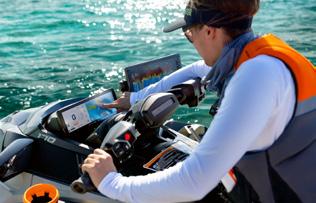
Ski Mode is now controlled directly through the touchscreen, offering 5 different ramps that provide unique speed and acceleration to improve rider safety based on a variety of rider skill levels. BRP is bringing the noise with upleveling your experience on the water with the introduction of the Platinum BRP 80W Speakers, an upgrade from the legendary 50W speakers. Combined, this gives a total of 160W of sound delivered by two speakers.
IDF (Intelligent Debris-Free Pump System, introduced in 2021 for the FishPro and GTX models is now standard on the GTI-SE. This innovation helps riders clear debris from the intake grate, such as weeds or rubbish, with the push of a button. Riders no longer have to manually remove blockages that require them to get off their PWC and enter the water. It also reduces wear and tear; prompt debris removal can prevent mechanical issues that occur if blockages are left untreated, protecting the pump and cooling systems.
Sea-Doo has the right vehicles, apparel, and accessories to ensure the whole family makes the most out of their time on the water, creating memories that will last a lifetime. For more technical details and product specs, as well as information about thecomplete lineup of Sea-Doo personal watercraft and pontoon boats, visit SEA-DOO.BRP.COM

PWC (Personal watercraft) fishing has become increasingly popular over the last few years, with anglers recognising the benefits they provide.
PWCs allow access to new waterways, are easy to launch and operate, and are more cost-efficient than owning a boat. Not to mention the thrill of the ride for those more adventurous fishing enthusiasts. Andrew Hill, a pioneer of PWC fishing and founder of Adventure Fishing, has a wealth of experience and advice when it comes to PWC fishing, having spent years fishing in New Zealand’s diverse waterways. Andrew also played a pivotal role in developing the market-leading SeaDoo FishPro.
Here are a few of his top tips:
Check the conditions
Always learn the local navigation rules and be aware of weather, tides, and hidden hazards in your riding area.
Stealth Manoeuvring
Avoid racing around at high speed when hunting for fish. When approaching a fishing spot, Andrew Hill recommends moving slowly and quietly to minimise any disturbance.
Gear Selection and Setup
Ensure you have the correct gear for the fishing trip you are undertaking. The Sea-Doo FishPro comes with a Garmin fish finder and GPS. The Garmin system offers real-time insights into underwater terrain, fish location, and structure. This empowers you to make informed decisions and maximise your chances of a successful catch. Safety equipment is vital, including a PFD, personal locator beacon, VHF Radio and phone in a waterproof container.
Other necessary fishing equipment may include a knife, a landing net, a short gaff, spare leader, braid scissors, and a compact tackle bag with various jig heads and lures.
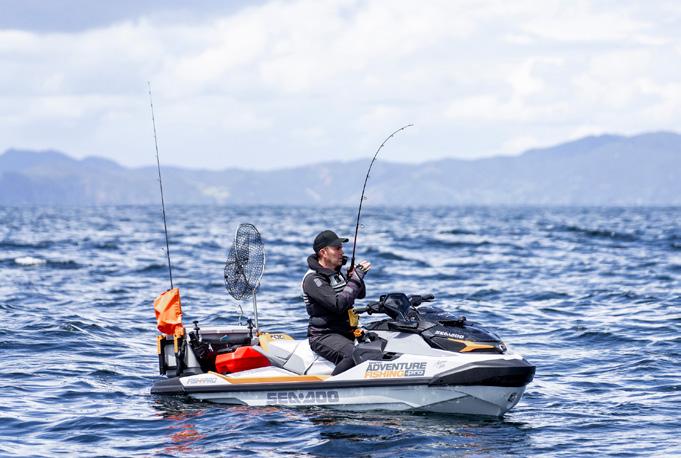
Hill’s go-to soft bait for big snapper is the Gulp 7" King Shrimp, which he finds most attractive to fish due to its likeness and action of what larger Snapper enjoy feeding on.
For jig heads, he prefers longer hooks (such as 7/0 Berkley Nitro jig heads) to ensure better hook-ups, especially with larger baits. He typically uses 1-3 ounce jig heads to match the drift and current conditions. He also highlights the effectiveness of lures and softbaits for PWC fishing, as they are simple, effective, and create less mess compared to bait fishing.
Sun protection is critical year-round.
Hill advises wearing a hat, footwear, fingerless gloves, buff, sunglasses, long-sleeve shirts, sunscreen and neoprene shorts. In colder conditions, thermals and waterproof outer layers are recommended.
Andrew Hill is a Sea-Doo Ambassador. For information on Andrew Hill’s adventure fishing tours visit JETSKIFISHING.CO.NZ
To see Andrew Hill’s story visit YOUTUBE.COM/ WATCH?V=FVCNWUE6NM0&T=6S
For more information on the Sea-Doo FishPro range visit SEA-DOO.BRP.COM
“DID
1. PWCs are Kiwi inventions (sort of!)
The first commercially successful stand-up PWC was developed by Kawasaki in the US, but the idea came from Clayton Jacobson II, whose prototypes were partly inspired by motorcycle culture. Interestingly, New Zealand engineers later made a name for themselves by custom-modifying and racing them, helping to push the sport in the Southern Hemisphere.
2. Sheep rescues on PWCs
In rural parts of NZ, farmers have actually been spotted using jet skis to herd sheep stranded on river flats or even rescue livestock during floods. Not the usual surf lifesaving image!
3. Sydney Harbour Showdown
In the late 1990s, PWCs were banned on Sydney Harbour after noise complaints and reckless riding. They’ve since been allowed back under strict licence and behaviour rules, but it’s still one of the quirkiest bans in Australian boating history.
4. Speed demons
Modified PWCs in Australia and NZ have hit insane speeds. Racing models can clock over 120 km/h, and drag-style PWCs have been known to outpace offshore race boats in short bursts.
5. Movie stunt doubles
PWCs have been used in Aussie and Kiwi film productions as camera platforms for water action scenes, because they can get close, move fast, and spin around way easier than boats.
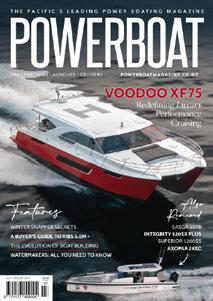
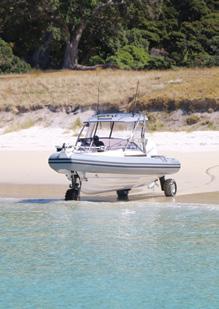
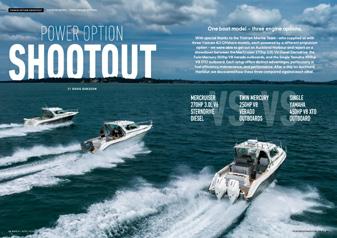

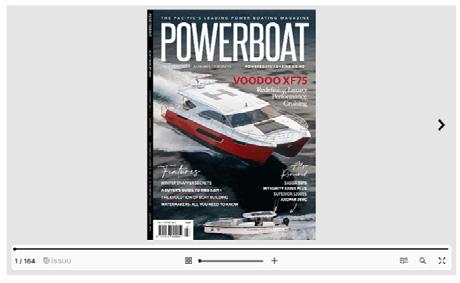
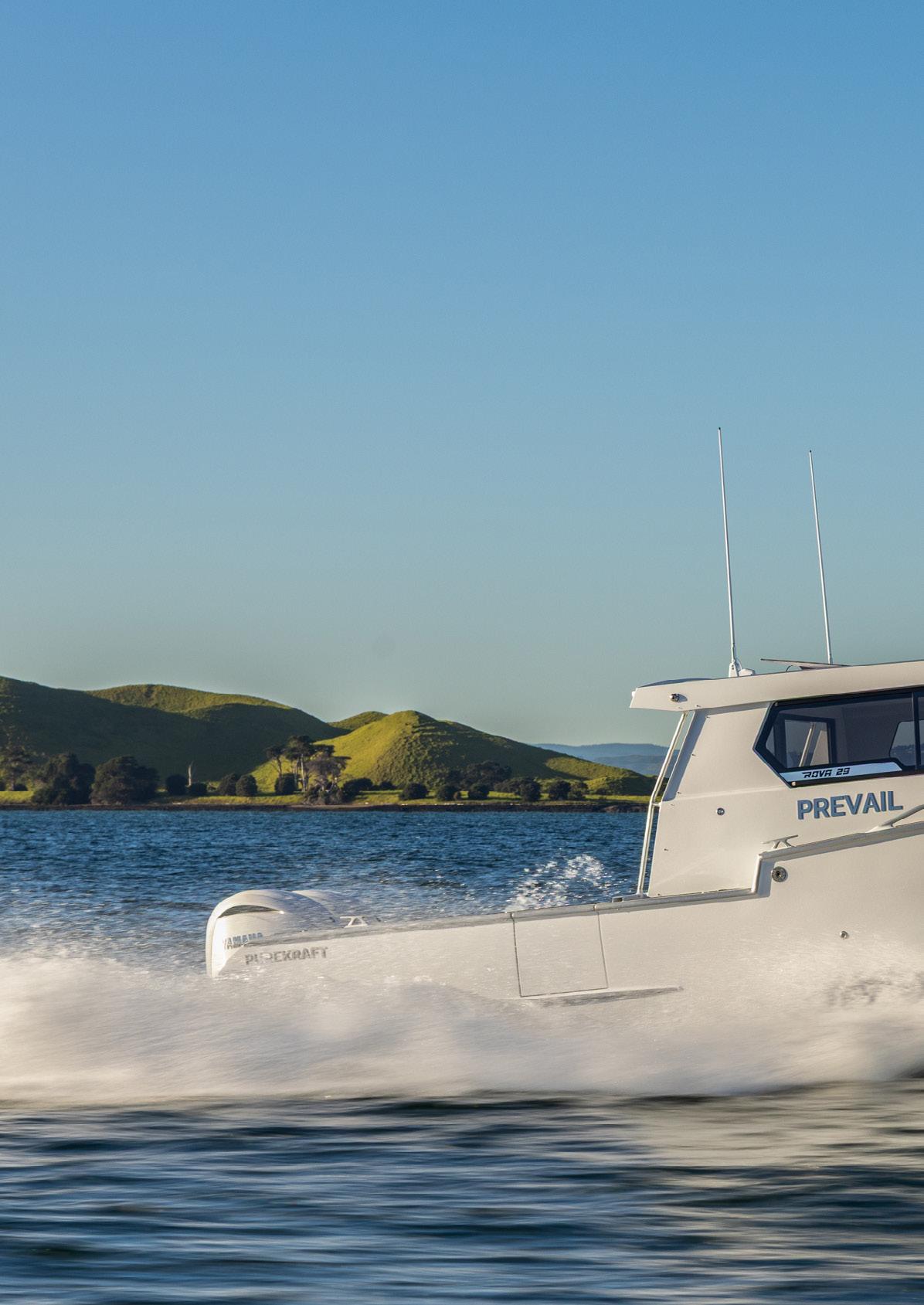

If you’re seeking a less expensive option to an Airbus H130 Executive helicopter to get you from Waiheke Island to downtown Auckland, you may want to consider the Purekraft Rova 29 Amphibious.
BY RON CZERNIAK / MARINE JOURNALIST
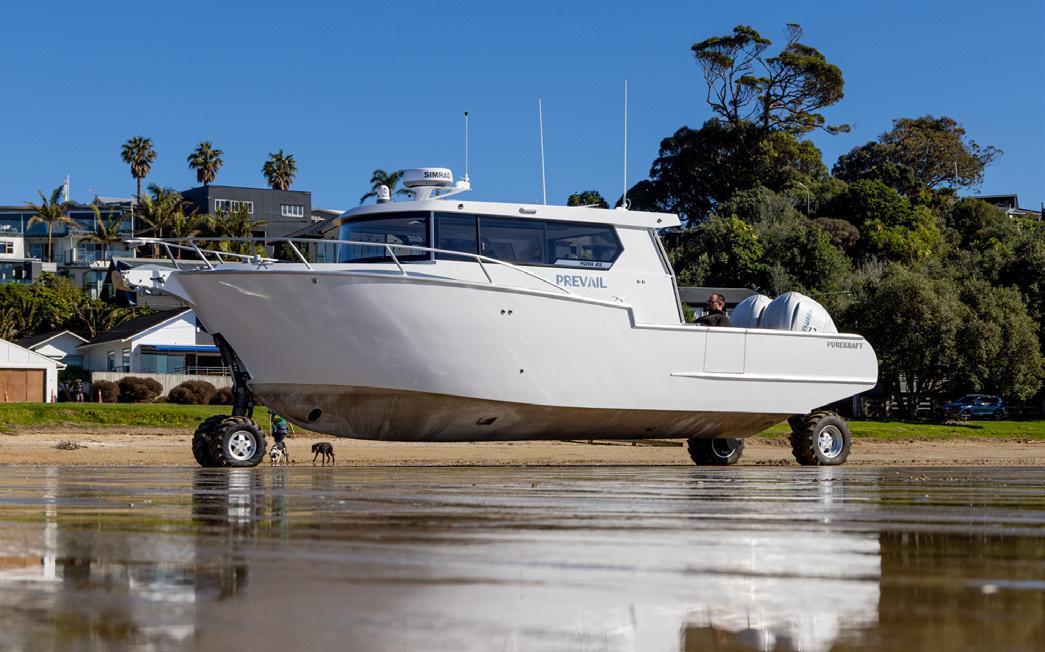
Back in July, I spent a few hours out on the Hauraki Gulf on Purekraft’s new, purpose-designed Rova 29 Amphibious on one of those spectacular, Auckland winter days that we don’t often experience, but when we do, they are stunning. So, what’s this boat all about? In a nutshell, it is a privately owned ‘commuter boat’, designed and built to the discriminating owners’ wishes, who wanted to be able to get back and forth between their property on Waiheke Island and downtown Auckland 24/7, if necessary, without the hassle and time-consuming process of using the regular ferries that run between the island and downtown. Commuter boat it may be, but this is a “Business Class” craft without being ostentatious. Designed to allow the owners not only convenient and fast passage (it tops out at 44 knots in good conditions), but also to allow them to work while on route between destinations. We’ll get to how it’s kitted out in order to achieve this goal, but for now (for any cinephiles out there), think of the ‘Lincoln Lawyer’ film that came out back in 2011. If you know the film, you’ll understand what I’m getting at. If you don’t, watch it, it’s worthwhile.
“Prevail”, a Rova 29, is a collaboration between four parties - Hall Marine Design, Purekraft Boats, Anura Amphibious Systems and, of course, the owners. The former two entities share design and production facilities located in sunny Papamoa, New Zealand. Here, against the backdrop of stunning landscapes and pristine waters, it is easy to understand the inspiration that drives these two companies, and which has led them to become industry leaders in marine innovation and design. Rova 29 by Purekraft is a range of new amphibious boats, with “Prevail” being the first. Recently unveiled, the Rova 29 is the flagship of the new Rova line-up. Designed and built entirely in-house, the Rova 29 redefines
what’s possible in amphibious boating. With a length overall (LOA) of 9.9 metres, it is powered by twin Yamaha 300 outboards featuring full Helm Master EX integration for unmatched control and maneuverability. A state-of-the-art electronics suite pushes the boundaries of onboard technology. The first Rova 29 is likely to become somewhat unique simply because the owners of “Prevail” had a number of specific requirements to suit their particular needs. This was to be a boat primarily for business commuting, but still eminently suitable for recreation. Were these objectives met? Read on and you be the judge.
I had arranged with Jarrod, of Hall Marine Design (HMD) to meet him and his crew at the Browns Bay Coastguard boat ramp on Auckland’s North Shore, which was most convenient as I live in the area and, the Rova 29 being an amphibious craft, made getting aboard no more difficult than stepping aboard a bus – albeit “Prevail” being a different sort of ‘commuter’ conveyance.
At first glance, its sleek, sculpted lines and premium finishes evoke the elegance of a luxury motor yacht. But its actual distinction lies in its dual amphibious capability, seamlessly transitioning between land and sea to offer a level of freedom and convenience few vessels can match. Although the vessel was designed primarily for business commuting, as mentioned previously, it is also perfectly suited to recreational use.
Inside, the experience is exceptional, with every detail of the interior considered, from the ergonomically designed helm to the hand-stitched leather handrails and premium materials throughout. The spacious deck layout and refined fit-out create an ideal setting for both a professional aquatic office and relaxed cruising, as well as sophisticated entertaining.
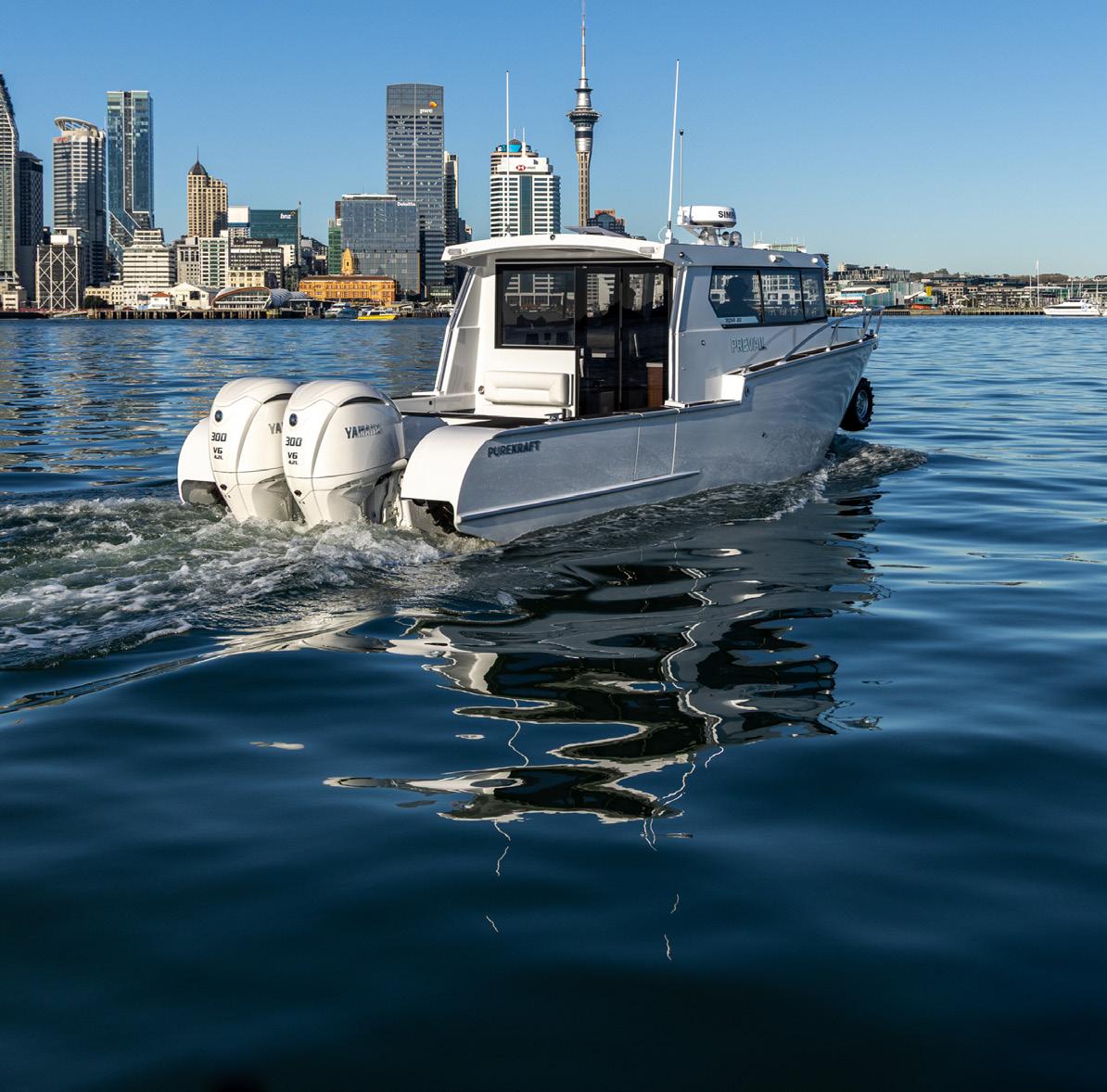
“The voyage from Waiheke Island to downtown Auckland is made safe and easy aboard the Rova 29.”
Having enjoyed the benefits of transiting from land to sea on many other different amphibious craft, I fully expected that my time on the Rova 29 would be equally enjoyable. I was not disappointed, and I would go as far as to say that the ‘on land’ performance was unrivalled. The S45 Amphibious System, newly developed by Anura, performed smoothly and quietly. It is, after all, electric, as the owners did not need the range of an ICE engine, and they did not want the solitude of their beachfront home shattered with the noise of a diesel or petrol engine when ‘Prevail’ trundled down to the water, or came back ashore. The craft is not only quiet on land. With the cabin doors and windows closed, it is also incredibly quiet inside the boat.
The transformation of the craft from land to water was seamless, and in no time, wheels fully retracted, we were accelerating rapidly out into the Hauraki Gulf, the twin Yamaha 300’s pushing this large and somewhat heavy craft smoothly onto the plane. One interesting thing I noted as I glanced astern once up on the plane was that the stern wheels, when fully retracted, tuck into their own wheel wells, giving the boat a clean, clutter-free appearance. Obviously, the boat builder and engine supplier had worked out the perfect power units for this vessel. As in Goldilocks and the Three Bears; not to small, not too large – just right.
After Jarrod gave me a crash course on how to master the controls and understand the vast array of helm station instrumentation, he handed me the helm. More about the helm station when we get to exploring the interior of this craft. Teaser alert. It’s impressive. Although this is a comparatively heavy boat for its size, it certainly
didn’t seem like it was as substantial or as long as it actually is while you are sitting at the well-laid-out helm station. There is a clear line of sight not only forward, but also to port and starboard. Although at first glance the helm area may seem somewhat intimidating, one soon comes to appreciate that a lot of thought has gone into laying everything out in an ergonomic, instinctive and logical arrangement. Even for an old bugger like me, it didn’t take long to master this control centre.
Large and small Multi-functional Displays (MFDs) dominate the helm layout. They are easily accessible and provide a plethora of information relating to the boat’s functions. It is important to note that on any amphibious craft, you are dealing with two systems: the boat and its engine(s) plus the amphibious drive system. Hence, there are more controls and instruments than on a non-amphibious boat. An analogy. If you’ve only ever driven an automatic automobile, and then you are confronted with a manual ‘stick shift’, it may take you a bit longer to learn how to drive the manual shift vehicle properly and instinctually. The same is true of an amphibious boat. And, in the case of “Prevail”, there are a lot more bells and whistles to absorb. But, harking back to my earlier comment, the helm is so well laid out that it doesn’t take one long to master it.
The ’Captain’s Helm Chair’ is extremely comfortable and fully adjustable, allowing an almost ‘fighter plane’ cockpit environment in which to smoothly operate this craft, no matter the weather or seaway. While the adjacent guest (co-pilot’s) seat is less elaborate, it proved more than comfortable and both have well-designed foot rests (one permanent, the other flips down), allowing comfortable
Even for an old bugger like me, it didn’t take long to master this control centre.
Large and small Multi-functional Displays (MFDs) dominate the helm layout.
The port chair’s backrest slides forward for a bow view underway, or flips to provide support at the dining/work table.
A spacious, doubleberth forward cabin is more than suitable for overnighting.
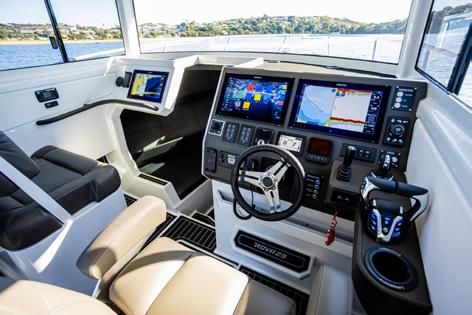
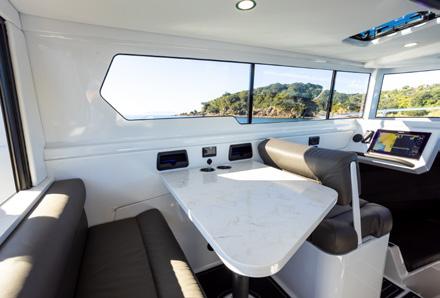
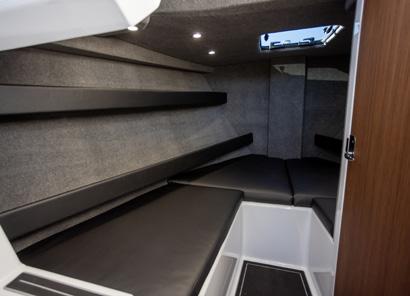




































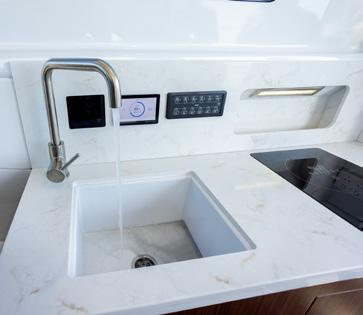
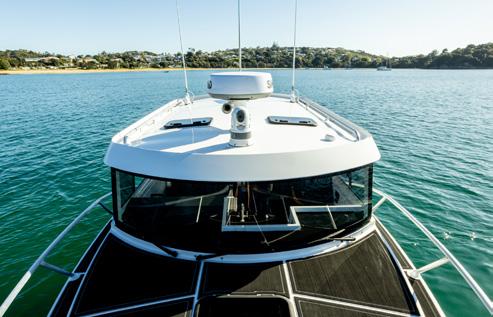
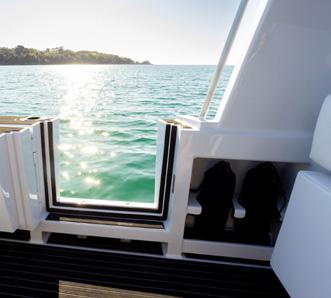
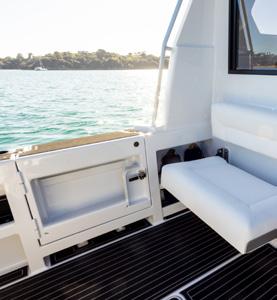
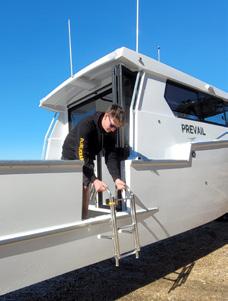
Behind the helm seat, the seemingly simple galley is fully equipped with everything you might expect in the galley of a bigger boat.
The vessel’s roof houses the FLIR Systems’ advanced infrared imaging technology and electric roofmounted aerials controllable from the cabin. It’s also wired for shore power and equipped with Starlink, providing 24/7 satellite internet access.
The side doors make boarding or disembarking easy, whether from a wharf, land or at sea.
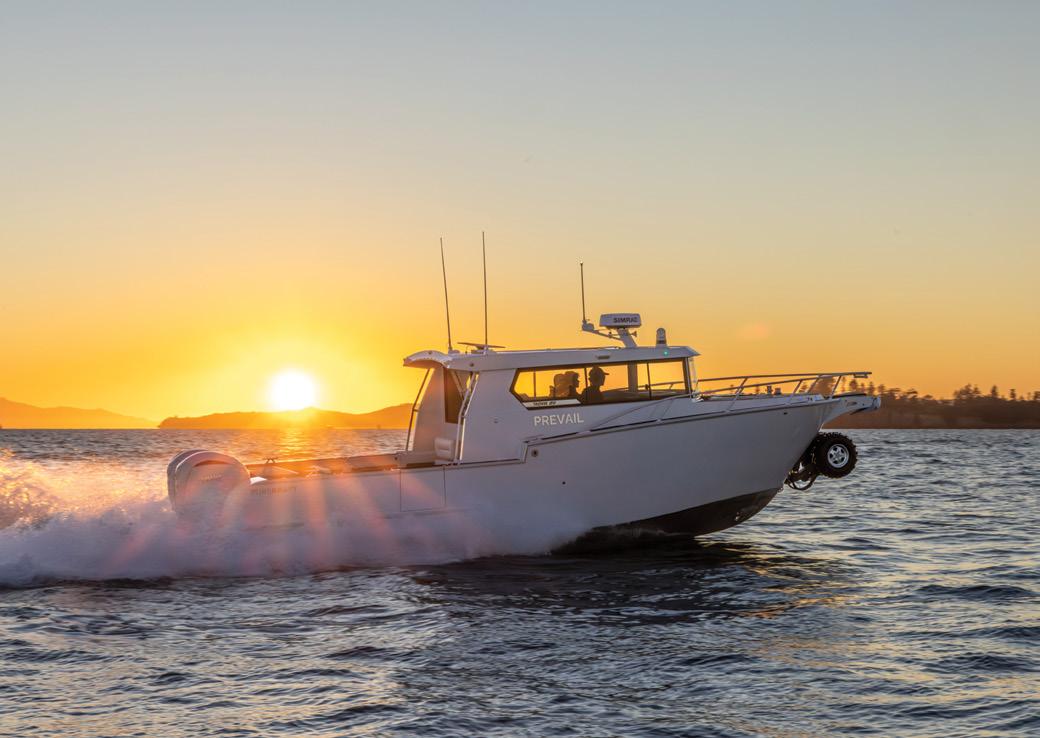
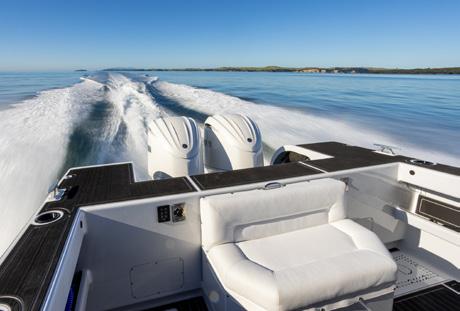
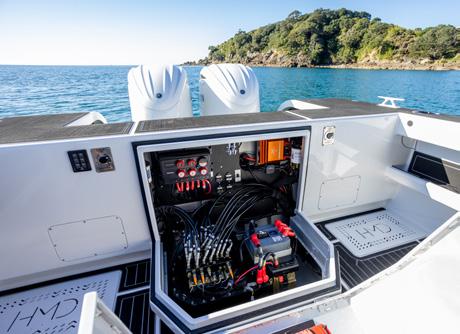

The Anura S45 housing, when not removed, provides a comfortable aft seat in front of the twin Yamaha 300 HP outboards.
Onboard is a large (for a boat this size), full-headroom electric toilet cabinet.
The amphibious drive unit, Anura’s recently developed S45 electric over hydraulic (EOH) all-wheel-drive system, is one of the neatest installations I have ever seen.
seating while underway. Should you wish to stand in particularly rough seas, or for a better view forward in adverse conditions, the pilot seat has a flip-up/down seat bolster allowing for a comfortable stance with backrest support. The port chair’s back rest can be moved forward or aft in order to allow a bow view while underway, or when flipped the other way, gives you a back rest while sitting at the dining/work table. While sitting in the helm area, carefully noticing the fine details, you observe attention to detail everywhere. For example, all grab rails are finished with hand-stitched leather coverings, here and elsewhere throughout the boat. USB, wireless phone charging pads and electrical outlets abound. This, after all, is an office work space boat.
Behind the helm seat is a galley area, which initially appearing to be a bit Spartan, is actually equipped with everything you might expect in the galley of a bigger boat. Aft of the co-pilot chair is a large, combined dining/work table, ample enough to provide enough room for two people to use as a work station, while equally suitable as a dining, entertaining table.
When sitting on either of the two helm seats, a glance below to port reveals a spacious, double berth forward cabin, more than suitable for overnighting, whether on business or enjoying a relaxing weekend away. Not only is the forward cabin quite spacious, but as you enter this cabin, you will find a large (for a boat this size), full headroom electric toilet cabinet to starboard. Comfort and convenience reign aboard this craft. Moving aft towards the spacious cockpit, folding double doors provide easy access to the exterior of the boat, and a careful scrutiny of the cockpit reveals a host of carefully thought-out, functional details. The list is long, but a few that caught my attention were the cockpit side entry doors, both port and starboard, providing easy entry/exit on a marina berth, or climbing aboard (by means of a removable S/S
ladder while up on its wheels), and the fold-down seat on the port side, aft of the cabin. But the one aspect, not to be ignored, is the superbly integrated electric drive Anura Amphibious System, shown here with housing cover removed. The housing, when not removed, provides a comfortable aft seat in front of the twin Yamaha 300 HP outboards.
The amphibious drive unit, in this case, Anura’s recently developed S45 system, is one of the neatest installations I have ever seen. Talking to Angus, one of Purekraft’s talented young technicians, I listened carefully as he explained that there had been a very close collaboration between Purekraft and Anura right from the get-go. From initial concept to final launch of the craft, the two companies worked closely together, figuring out and designing how everything would go together in order to ensure that the boat and amphibious system would work in flawless harmony. Angus further explained that one of the key things that everyone kept in mind during the design, build and installation was that there had to be easy access for repair and maintenance. I’ve owned and crewed on enough boats to appreciate why this simple ethos is so important.
I was curious as to why the Anura S45 Amphibious Electric System had been chosen. As is often the case, it was pretty simple. After a great deal of research into available amphibious systems, Jarrod approached Darren at Anura to discuss whether or not the S45 System would be suitable for a boat the size and weight of the Rova 29. Cutting a long story short, the answer was yes, as the electric S45 system (which, by the way, is available in either a diesel or petrol engine option if so desired) provided everything Jarrod wanted and needed. In brief, the S45 unit was ideal for Jarrod’s unique application, offering a compact solution, both size and weight-wise, weighing in at only 600kg. In summary, it was the smallest and lightest system currently on the market to carry the

maximum weight required. Anything heavier and larger would not function as effectively, and even then, the S45 system was near the maximum upper limit of its capabilities. Once decided that the S45 unit was going to be used, both PureKraft’s and Anura’s designers and engineers worked in close collaboration from start to finish to ensure that every aspect was taken into consideration, including actual installation, supervised by Anura technicians, as well as conducting final sea trials and training. Such was the success of the collaboration that when the S45 system was installed, everything fit like a glove. As is typical with most amphibious craft, the Rova 29 has large, knobby tire stern wheels to port and starboard, while at the bow it was decided to fit dual wheels, which gave more design freedom for the boat builder, allowing a slight design advantage, as smaller twin wheels/tires could tuck in further when retracted, and not stick out as far when the boat was underway - advantageous in rough seas and large waves.
The Rova 29, as with every vessel bearing the Purekraft badge, is a testament to the company's unwavering commitment to excellence. They understand that it's the little things that make the biggest difference, and the Rova 29 exemplifies this philosophy. A healthy obsession over every detail, from the sleek lines to the ergonomic layout of the cockpit, illustrates their dedication to perfection, ensuring that each Purekraft boat delivers an unparalleled on-the-water experience. From beach to open water, the Rova range stands alone: purposebuilt, performance-driven, and engineered to lead. This is more than just a boat; it’s a bold statement in design, capability, and craftsmanship.
Designer Hall Marine Design
Builder Purekraft
Hull Length 9.0M
Hull length overall 9.92m
(incl fairlead & rear wheel arch)
Length Overall 10.5M
(incl outboard motor trimmed down & anchor)
Beam 3.05M
Displacement 5000 kg
Fuel Capacity 450 litres
Water Capacity 50 litres
Engines 2 x Yamaha F300 V6 O/B
Horsepower 600 HP
Amphibious System Anura
S45 EOH
Passengers 8
PUREKRAFTBOATS.CO.NZ

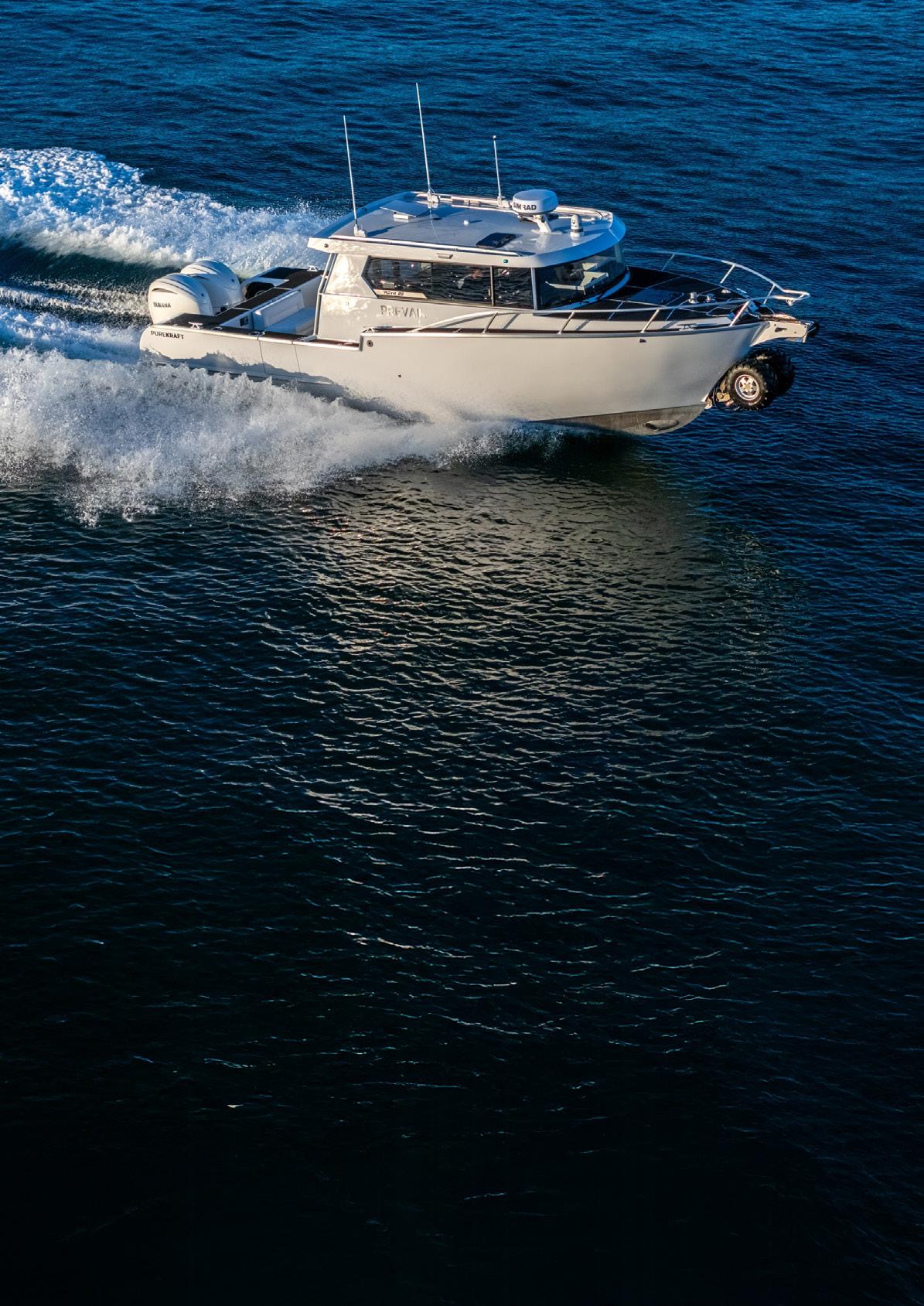
“Purpose-built, performancedriven, and engineered to lead.”
When was the last time you read the fine print of your marine insurance policy? For many boat owners, the real test of their cover only comes when disaster strikesa collision, theft, storm damage, or worse. That’s when the unpleasant surprises surface, as policyholders discover gaps or exclusions they didn’t know existed.


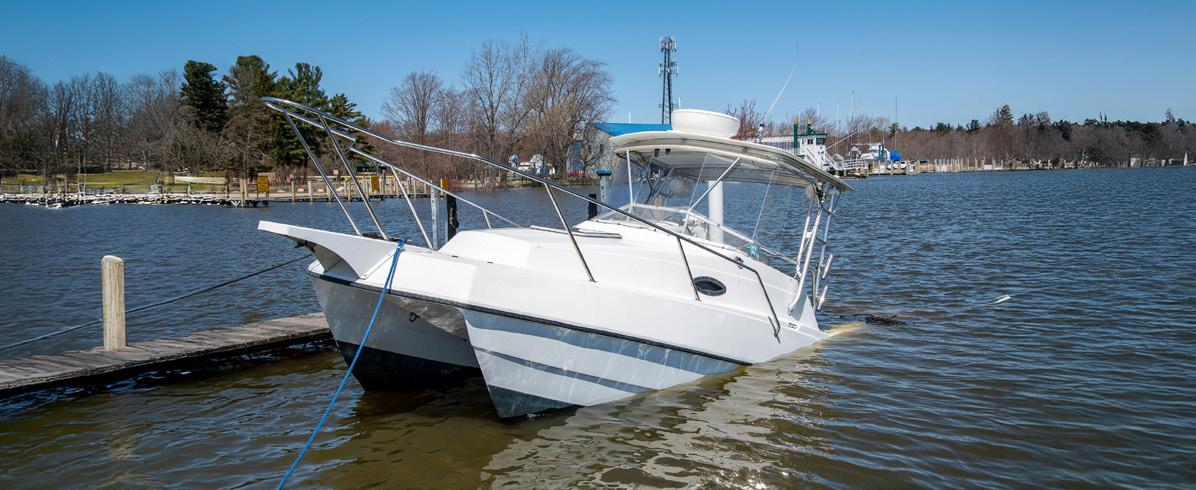
Insurance can feel complicated, but at its heart, it is a contract between you and your insurer. The law requires that insurers clearly state rights and obligations before a policy is signed. Nothing is hidden, but the responsibility lies with you, the policyholder, to read carefully, ask questions, and understand what you are buying.
This guide won’t replace reading your own wording in detail, but it will help you navigate the key considerations when insuring your boat, equipment, and liability.
The starting point is to be clear about what exactly you want covered. This may sound obvious, but it’s easy to overlook future plans.
• Upgrades and modifications: If you’re planning structural changes, engine replacements, or adding electronics, check how your policy treats new or additional gear. Some have limits on unspecified equipment.
• Third-party liability: This should be included automatically, but confirm it. Liability claims can far exceed the value of the boat itself.
• Personal effects and accessories: Policies vary. Some cover these generously, others impose strict limits. Remember, marine insurance is primarily for your hull, not a substitute for household contents cover.
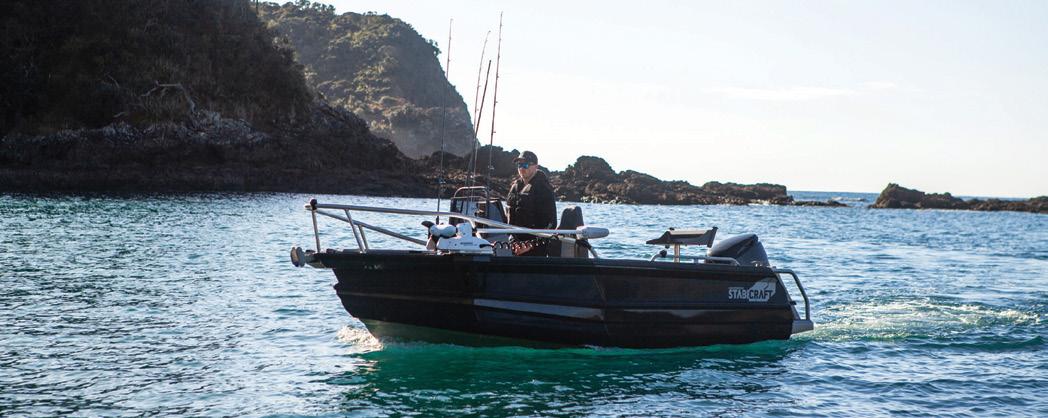

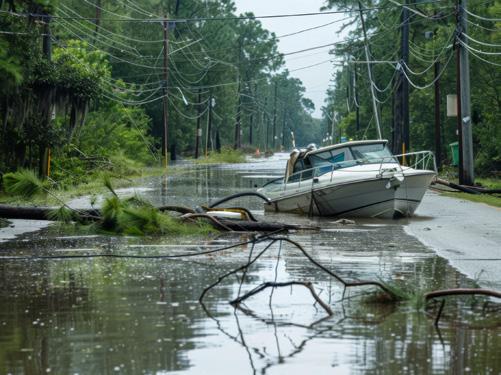
One of the biggest decisions is how your boat’s value is set in the policy.
• Agreed Value
- Your boat is insured for a fixed sum, typically the purchase price or a professional valuation.
- If the boat is a total loss, you receive that sum (from policy inception or renewal).
- Often seen as the most predictable option, but not always available - some insurers restrict it to moored craft rather than trailer boats.
• Market Value
- Pay-out is based on the boat’s worth at the time of loss, considering age, condition, and market conditions.
- Insurers may commission their own valuations; you can also supply independent assessments.
- Premiums may be lower, but pay-outs less certain.
The majority of claims are for partial losses, not totals, and this is where depreciation bites. Policies often reduce pay-outs on items that age quickly: sails, rigging, outboards, covers, and electronics. A three-year-old dinghy lost in a storm may be compensated as a threeyear-old dinghy, not a new replacement. Electronics, in particular, depreciate rapidly due to obsolescence rather than wear. Some insurers allow a grace period of two or three years before depreciation is applied. Others handle electronics differently. Always ask the question before signing.
The consensus in the industry is that Agreed Value is usually better, but there is no universal rule. Each insurer has its own approach, and the distinction between the two types of cover isn’t always clear-cut.
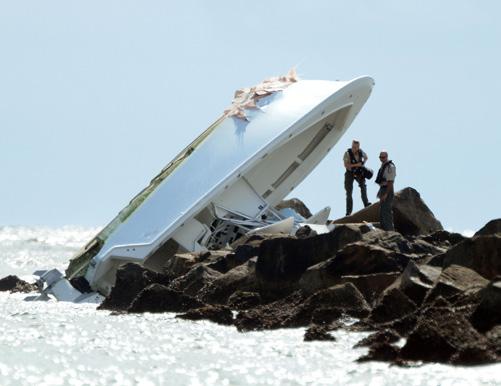

The Temptation of Cheap Premiums
It’s natural to look for the lowest premium, but the cheapest policy may leave you dangerously exposed. For instance:
• Liability limits differ widely.
• Not all insurers include personal injury cover.
• Personal effects allowances can be small or excluded altogether. Even the sum insured can be misleading. A common mistake is to base insurance on a boat’s listing or asking price, rather than the actual purchase price. A yacht advertised at $100,000 but sold at $80,000 should be insured at the true market value - otherwise, you risk paying higher premiums for cover that may not be honoured at claim time.
The key principle is simple: premiums reflect risk. If your boat is insured above its real value, you’re not just wasting money; you may also complicate the claims process.
Where your boat is, and where you intend to take it, matters enormously in marine insurance.
• Domestic limits: Some policies exclude higher-risk areas such as New Zealand’s west coast or impose conditions beyond territorial waters.
• Onshore & transport: Check if your policy covers trailering, storage ashore, or while under repair in a workshop.
• Offshore cruising: Standard cover usually ends at NZ waters. Offshore extensions may be possible, but they must be applied for well in advance. Insurers will want assurance that both vessel and crew are capable of long voyages.
• Cyclone season restrictions: Planning to sail the Pacific between December and April? Many insurers will decline cover outright during this period.
Never assume your policy follows you wherever you go, always confirm the geographical scope.
Insurance companies, like any business, want to minimise risk. The more you demonstrate competence and responsibility, the more likely you are to earn favourable terms or discounts.
• Experience and qualifications: List your boating background, years on the water, and any formal qualifications. Coastguard certificates or Safe Boating courses carry weight. Don’t just write “lots” of experience on your proposal; detail it.
• Crew capability: Human error accounts for most marine accidents. Demonstrating that you and your crew are competent reassures insurers.
• Mooring arrangements: Where your boat lives is critical. Marina-berthed boats generally attract the lowest premiums thanks to security. Pile moorings cost slightly more, while swing moorings, exposed and less secure, carry the highest loadings.
• Vessel build & compliance: Boats built to survey or complying with safety programmes qualify for reduced premiums. Diesel engines are generally cheaper to insure than petrol. Certain construction types, ferro-cement or multihulls, may be excluded or attract surcharges.
Insurers reward those who make their lives easier. Demonstrate good maintenance, strong safety standards, and prudent seamanship, and you’re likely to see that reflected in your premiums.
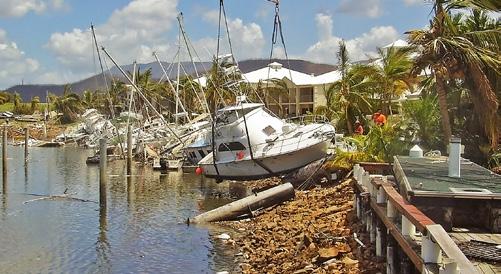
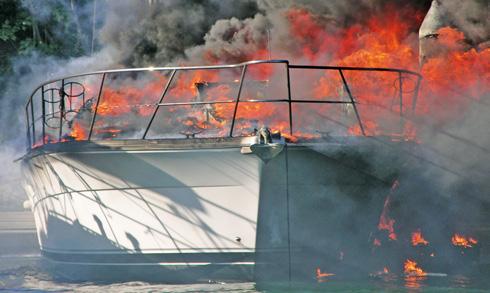
Marine insurance today is more accessible and, in some cases, cheaper than in the past. Globalisation and competition mean premiums are kept competitive. At the same time, regulators such as the Maritime Safety Authority have become stricter, pushing higher safety standards onto vessel owners.
This benefits responsible boaters: insurers are increasingly willing to reward proven competence, good records, and wellmaintained vessels.
• Know what you need insured: Hull, gear, accessories, and liability.
• Understand how your boat is valued: Agreed Value gives certainty; Market Value reflects current conditions but may disappoint at claim time.
• Don’t chase the lowest premium: Cheap cover often means cut-down benefits or exclusions.
• Check the fine print on depreciation: Especially for sails, outboards, and electronics.
• Clarify geographical coverage: Onshore, offshore, and during cyclone season.
• Prove you’re low-risk: Experience, training, and secure mooring can all lower your costs.
• Stay up to date: Policies evolve; review yours regularly, especially after upgrades or new purchases.
The “moment of truth” in marine insurance comes only when you make a claim. By then, it’s too late to discover that your policy excludes the damage you’ve suffered.
The good news? With preparation, honesty, and attention to detail, you can secure insurance that genuinely protects you, your passengers, and your vessel. Take the time now, before you leave the dock, to ensure your cover is as seaworthy as your boat.
The information provided in this article is for general informational purposes only and does not constitute financial, legal, or insurance advice. While every effort has been made to ensure accuracy at the time of publication, Powerboat Magazine and the article’s contributors accept no liability for any loss, damage, or reliance arising from the use of this information. Readers should be aware that marine insurance products, terms, and regulations may vary, and are encouraged to seek independent professional advice or consult directly with a qualified insurance provider before making any decisions regarding coverage.
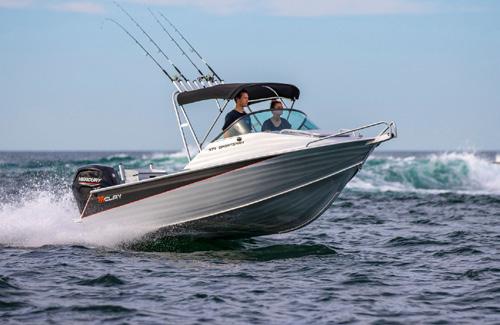

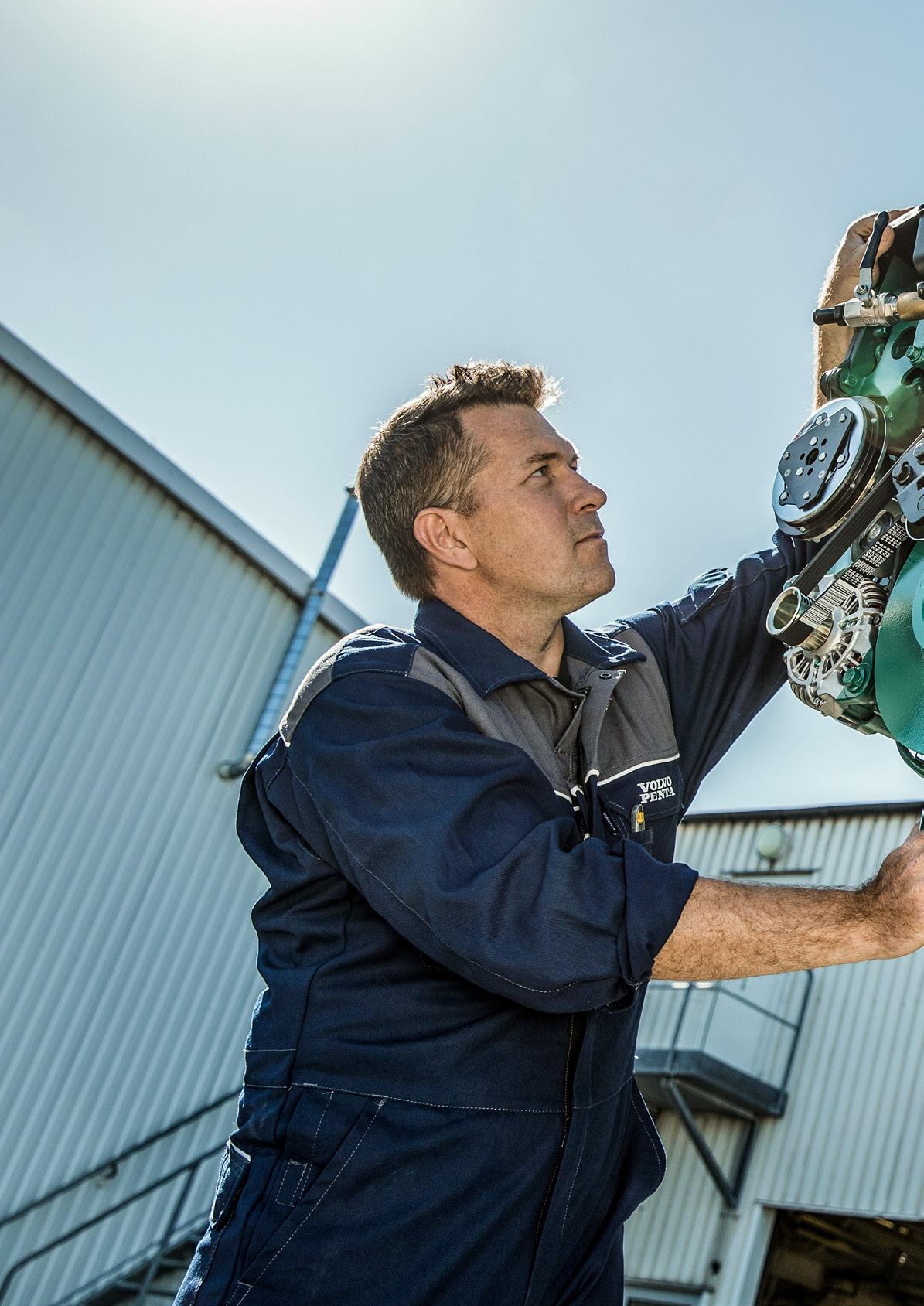
We understand that not all of our readers are in a position to invest in a brand-new boat. And many owners are more than satisfied with their current vessel, but may be looking to give her a fresh lift. In this series, we’ll explore practical ways to do just that, helping you breathe new life into your boat and extend her years of enjoyment. PowerBoatMagazine is excited to highlight the many options available to spruce up an existing vessel without the cost of buying new. After all, if you love the boat you have, but it’s beginning to show its age, there are countless innovative solutions worth considering.
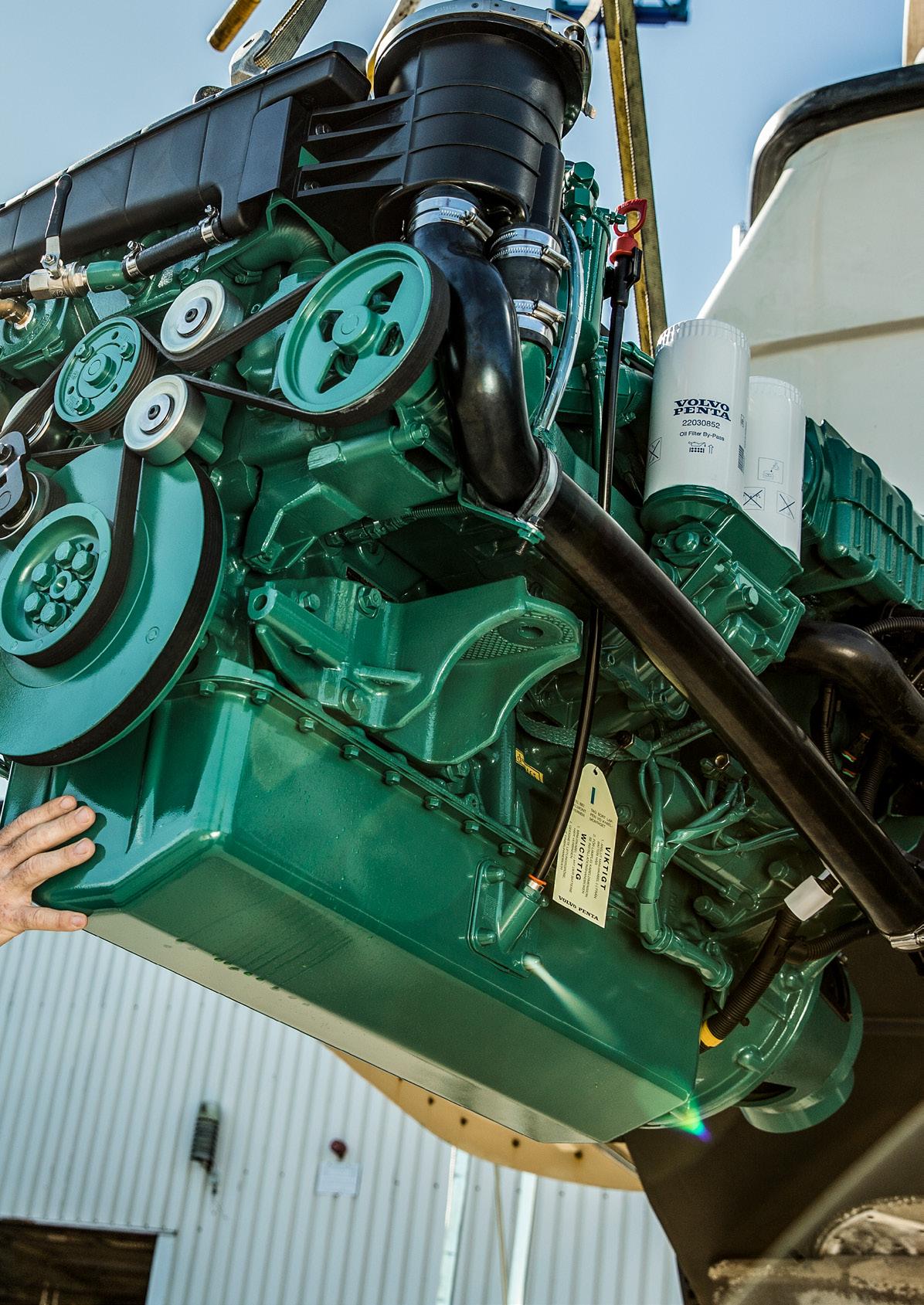
In this issue, we’re pleased to launch the first part of our From Worn to Wow refit series:
– REPOWER OR REBUILD?
BY DOUG DUKESON
For many boat owners, the engine is more than just a mechanical component; it’s the lifeblood of every adventure on the water. Unlike cars, which are often replaced every few years, boats are built to last. A well-maintained fibreglass hull can survive decades, weathering storms and sun alike, while still turning heads at the marina. It’s not uncommon to see vessels launched in the 1980s, or even earlier, looking almost showroom-new after a repaint or cosmetic upgrade.
Yet beneath that polished exterior, one thing often determines whether a day on the water is joyous or frustrating: the engine. A tired motor can sap performance, reliability, and even the pleasure of boating itself. That’s why the question of whether to rebuild or repower is one of the most important decisions an owner can face. In this feature, we’ll explore the options, technical considerations, and broader implications that extend beyond the engine itself, guiding you toward a confident decision.
The engine is the heartbeat of a boat, and when that heartbeat falters, even the most luxurious vessel becomes a liability. Repowering, installing a new or late-model engine, can transform both performance and peace of mind.
Owners often report dramatic improvements after a repower: smoother operation, more consistent speeds, and reduced vibrations. Beyond comfort, modern engines offer environmental benefits, improved fuel efficiency, and seamless integration with the latest electronics, including digital throttles and advanced diagnostic systems. Perhaps most importantly, a repowered engine restores confidence. Knowing that your boat is less likely to break down mid-cruise or mid-fishing trip changes how you approach every outing. For families, it means safer adventures. For
long-distance cruisers, it means reliable range. For commercial operators, it means fewer unplanned repairs and increased productivity.
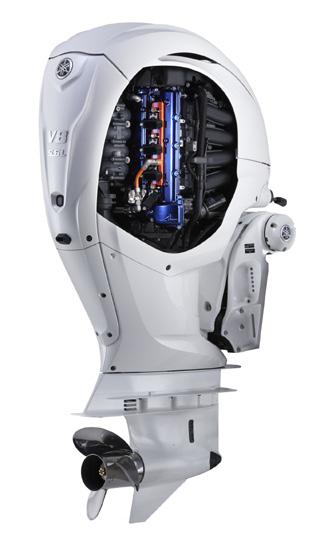
Rebuilding: Pros and Pitfalls
A complete engine rebuild can extend the life of an older motor, but it’s a complex, labour-intensive process. Stripping the engine, machining major components, replacing worn parts, and reassembling can be expensive and time-consuming. Labour often represents the majority of the cost, regardless of whether you’re dealing with a small 100hp unit or a larger 400hp-plus engine.
Partial rebuilds, where only worn or obviously damaged components are replaced, carry significant risks. Mismatched wear can result in a motor that runs “well enough” at first but fails sooner than expected. One common refrain from experienced mechanics is: “Do
it all or don’t do it at all.” A patchwork approach rarely achieves the longevity or performance benefits a complete overhaul can deliver.
Repowering: The Complete Upgrade
Repowering avoids the compromises of rebuilding. A new engine arrives with fresh components, modern technology, and often a warranty, peace of mind that no rebuild can fully provide. Even when factoring in the cost of installation and supporting systems, a repower can be more cost-effective in the long term, particularly when compared to the repeated repairs or recurring failures associated with an older engine.
Many boat owners discover that the decision to repower is ultimately an investment in enjoyment, reliability, and longevity. While rebuilding might suffice as a stopgap, replacing the engine can transform a vessel from “worn” to “wow,” ready for years of trouble-free operation.
Engines rarely fail at convenient times. Mid-season, mid-holiday, or mid-cruise is often when a motor decides to quit. Waiting for total failure can mean stranded trips, expensive rescues and emergency repairs, lost weekends and embarrassment. Planning a repower before failure ensures better access to installers, improved scheduling flexibility, and sometimes even trade-in value for the still-functional engine. Off-season repowers also allow owners to approach the project methodically, researching engine options and supporting upgrades rather than rushing a decision in a crisis.
A new engine is only part of the puzzle. Several interconnected systems often need attention during a repower:
• Electrical Systems: Wiring degrades over time. Insulation can crack,
WITH ADVANCED LIGHTWEIGHT DESIGN AND BIG DISPLACEMENT FOR MORE TORQUE, SPEED AND ACCELERATION
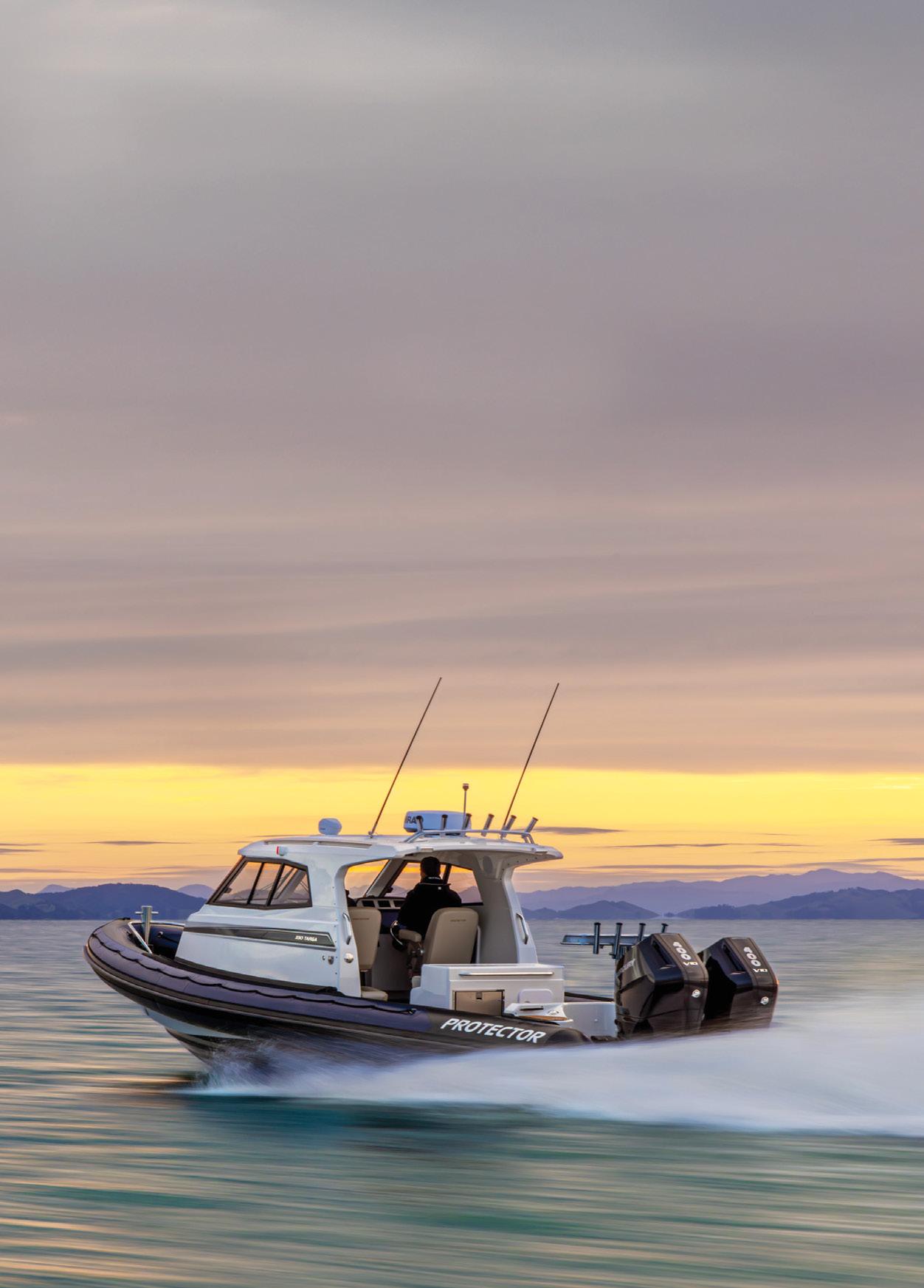


connections corrode, and electrical failures become more frequent. Upgrading wiring ensures reliability and safety.
• Airflow and Cooling: Engines require clean, unobstructed air and appropriately sized cooling systems. Different engine models may demand unique intake or exhaust configurations.
• Fuel Delivery: Tanks, filters, and fuel lines should be inspected for leaks or contamination. Converting from petrol to diesel usually requires additional plumbing and filtration modifications.
• Exhaust Systems: Exhaust design affects noise, vibration, and comfort. Hoses should be inspected or replaced, and the system correctly sized for the new engine.
• Many of the points above do not apply when replacing an outboard motor.
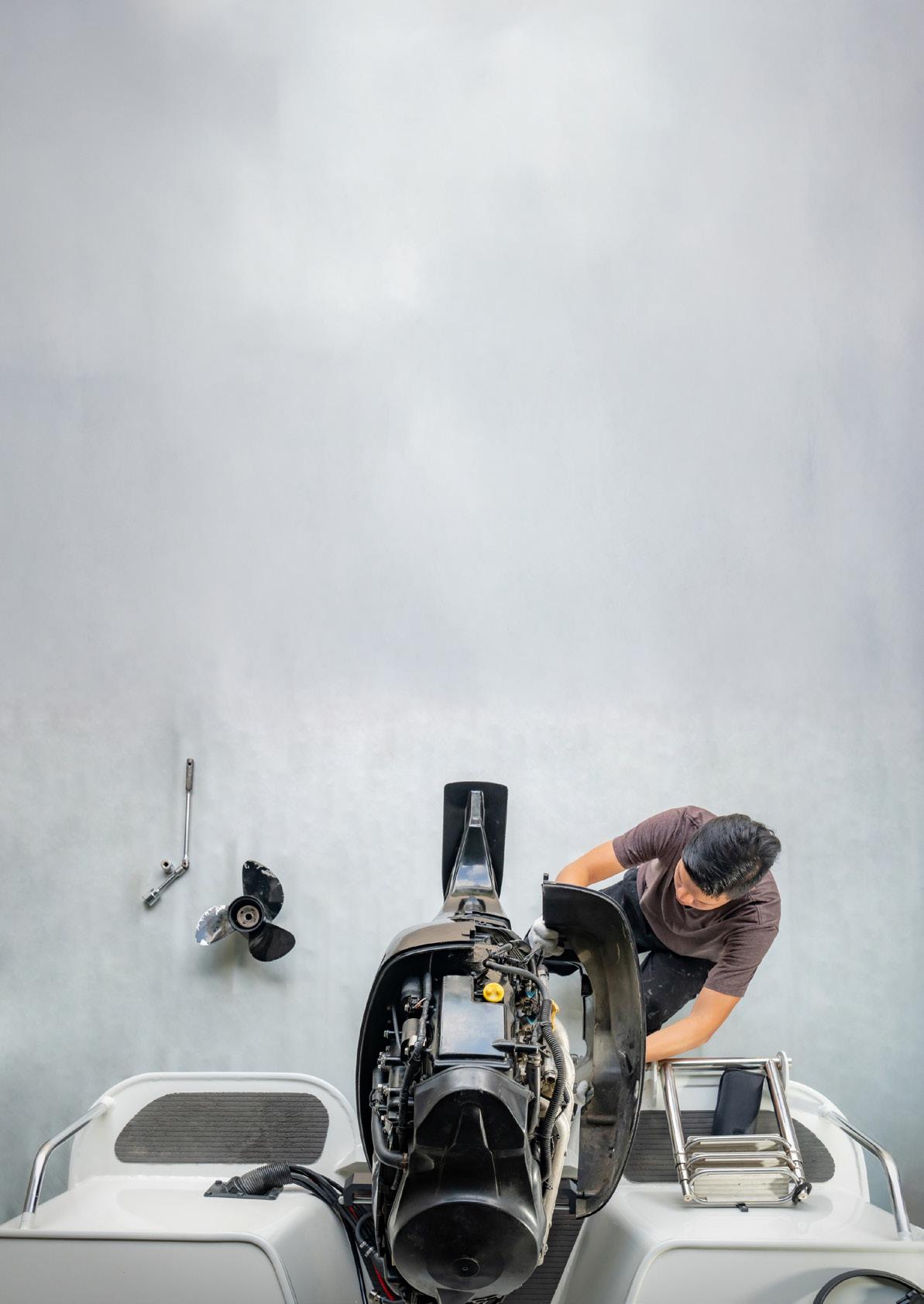
Repowering is also an opportunity to modernise other elements of the boat, including helm electronics, soundproofing, auxiliary systems like bow thrusters, and even safety features such as upgraded bilge pumps. Every upgrade contributes to a more comfortable and reliable boating experience.
Even the best engine is only as good as its installation. Partnering with an experienced, knowledgeable dealer or installer is crucial. Key considerations include:
• Full inspection: A thorough evaluation of the hull, engine mounts, driveline, and auxiliary systems.
• All-inclusive proposal: Labour, modifications, and ancillary components should be clearly detailed.
• Expert matching: Correctly pairing the engine, transmission, and propeller ensures optimal performance and efficiency.
• Turnkey guarantee: A reputable installer provides confidence that the project will be completed to the specified standards.
Owners planning to tackle some installation steps themselves should clearly define responsibilities in writing to prevent disputes or overlooked tasks.
Repowering involves more than the sticker price of a new engine. Key factors include:
• Labour and installation costs.
• Modifications to fuel, cooling, air, and electrical systems.
• Transmission and propeller matching.
• Trade-in value of the old engine.
• Dealer support, warranty, and postinstallation service.
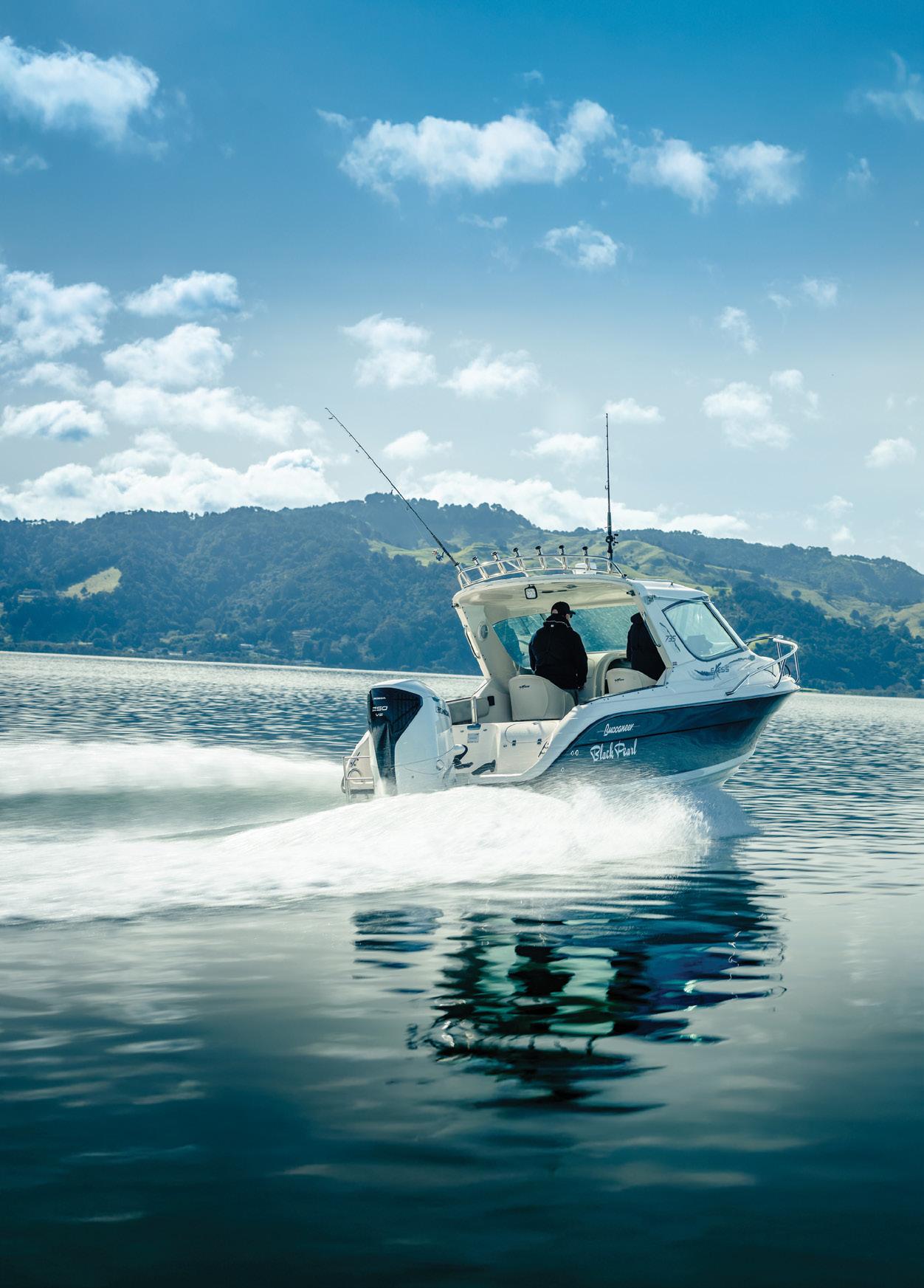
You don’t have to look further than these sleek and stylish models to know they’ll help you stand out on the water while being a reliable partner for every adventure. We’ve innovated and advanced an industry-leading lineup, allowing you to get the most out of every cast, cruise and moment spent outdoors. For those who draw a line in the sand for a life lived on the water, Honda Marine is the best behind you.
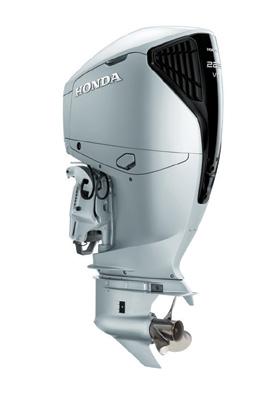
Comparing like-for-like proposals is critical. The cheapest option may not deliver long-term reliability or ongoing support. In many cases, investing a little more upfront translates to years of stressfree operation and reduced maintenance costs.
Choosing an engine involves understanding your boat’s needs, hull type, and usage.
• Fit and weight: The new engine must physically fit within the allocated space without altering the boat’s balance.
• Power range: are often certified for specific horsepower ranges; exceeding these can impact handling and safety.
• Torque vs speed: Displacement hulls benefit from torque at low revs, while planing hulls require higher output for speed.
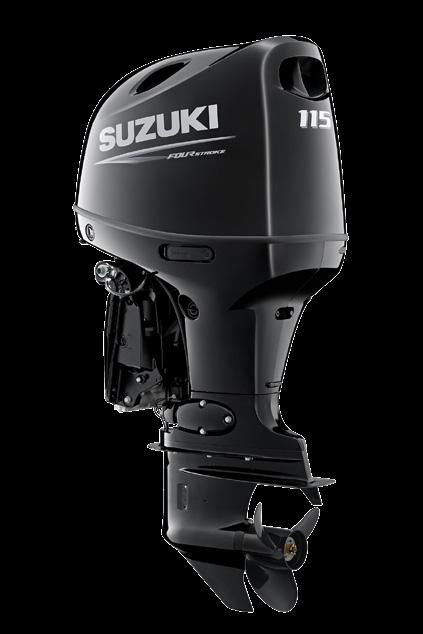
• Transmission and propeller matching: Specialist expertise ensures optimal performance and efficiency.
Diesel vs Petrol
Diesel: High torque, fuel-efficient, long lifespan, and excellent resale value.
Ideal for displacement hulls and long-range cruising.
Petrol: Lighter, lower upfront cost, and responsive throttle. Suited for planning hulls or smaller recreational boats.
Modern engines of both types feature electronic fuel injection, turbocharging, and compliance with emissions regulations. Diesel may allow a lower horsepower rating to achieve similar performance thanks to its
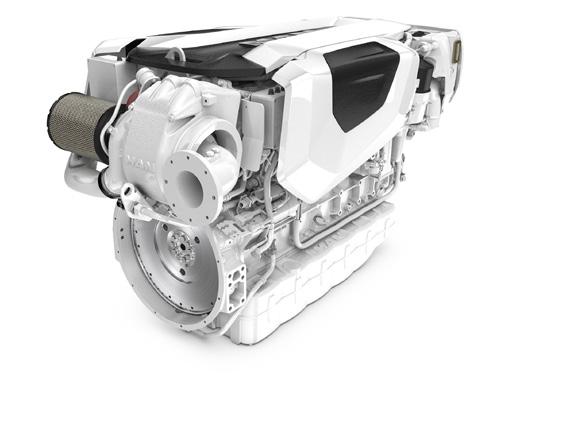
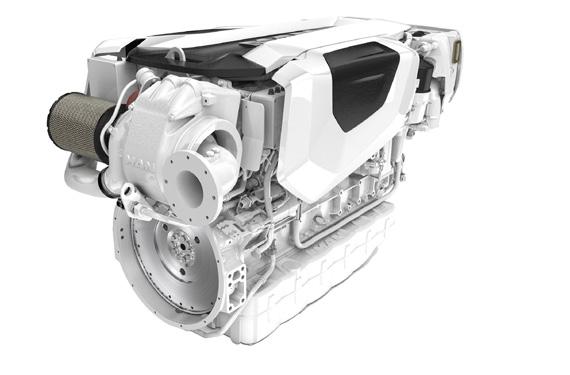

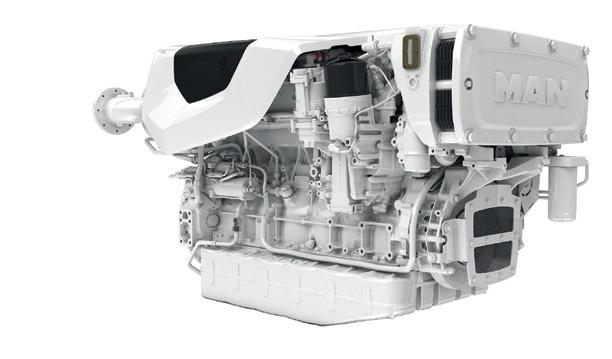


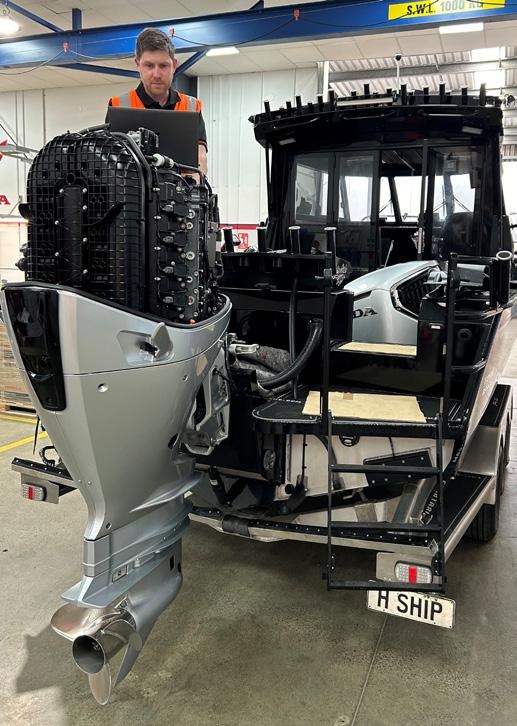
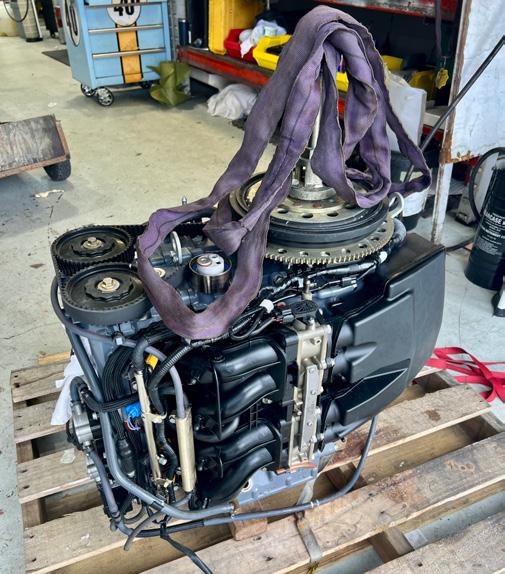

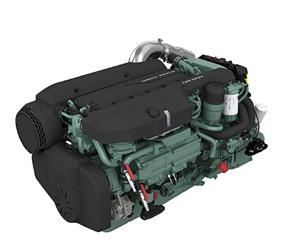



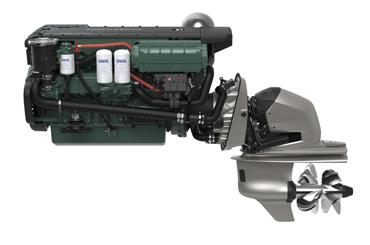


torque advantage, while petrol engines deliver nimble acceleration and lighter weight for speed-focused craft.
Repowering often introduces electronic management systems, bringing a host of benefits:
• Reduced emissions and fuel consumption.
• Integrated diagnostic and safety systems.
• Easier installation with fewer cables and connectors.
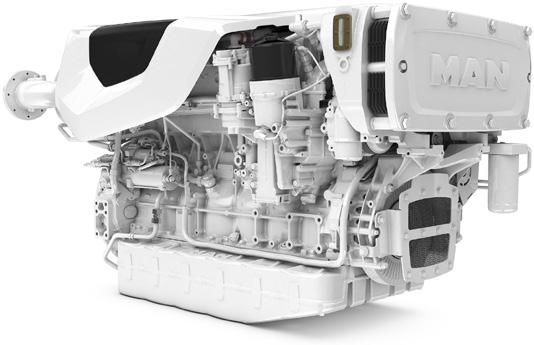
• Compatibility with digital instruments and controls.
• Smooth, precise throttle and shift for better manoeuvring. Noise, vibration, and harshness are significantly reduced compared to older engines. Generally, modern engines also substantially cut emissions.
• Displacement Boats: Diesel is usually the optimal choice. Oversizing adds weight and
increases fuel consumption without yielding significant benefits. Matching torque curves to cruising RPM is key.
• Planning Boats with Sterndrives: Modern engines and drives provide higher top speeds, smoother handling, and better acceleration. Choosing between petrol and diesel depends on whether light weight or efficiency is more important.
• Planning Boats with Inboards: Performance gains are possible, but overpowered
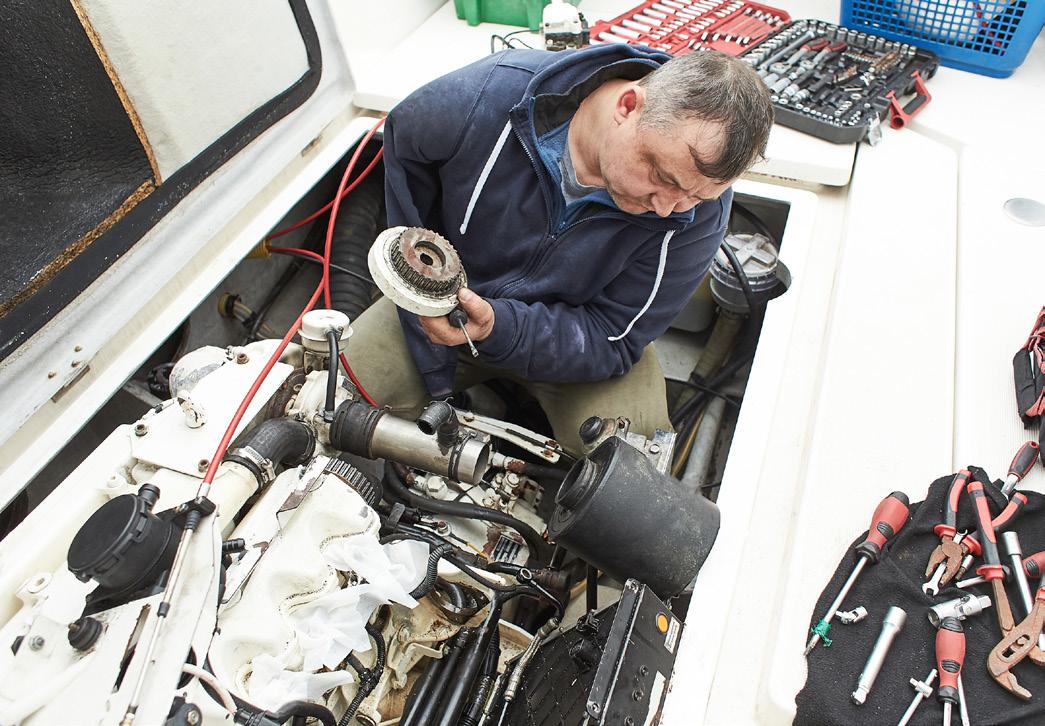
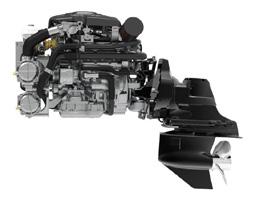

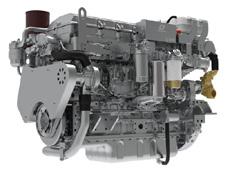
engines can reduce hull efficiency and handling. Correct engine, transmission, and propeller matching is essential.
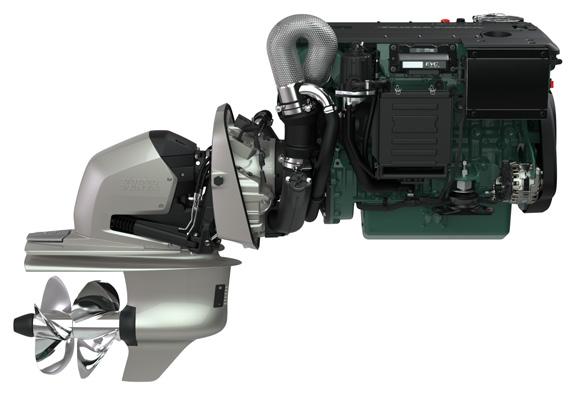
• Planning boats looking for an easy fit-up and lighter weight performance should consider outboards or petrol sterndrives as an option. However, if your current boat is equipped with shafts and underwater mechanicals, these may not be a viable choice.
• Confirm all work meets specifications.
• Collect full manuals and documentation.
• Learn the operation and maintenance requirements of the new engine.
• Follow running-in and preventive maintenance schedules.
With proper care, a repowered engine can deliver decades of safe, efficient, and enjoyable boating.
• Underestimating installation complexity or cost.
• Choosing horsepower based on “bigger is better.”
• Neglecting auxiliary systems, such as electrical or cooling.
• Rushing into the cheapest quote.
• Overlooking long-term resale and reliability factors.
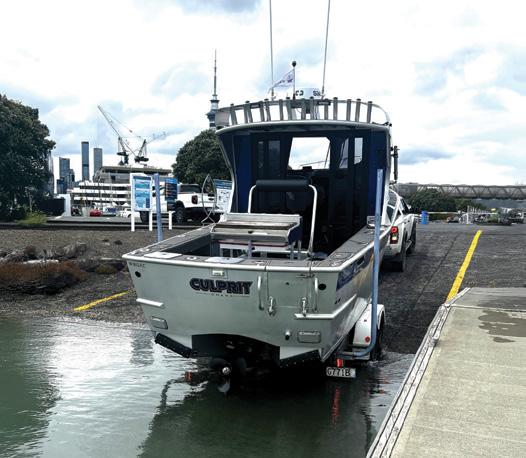
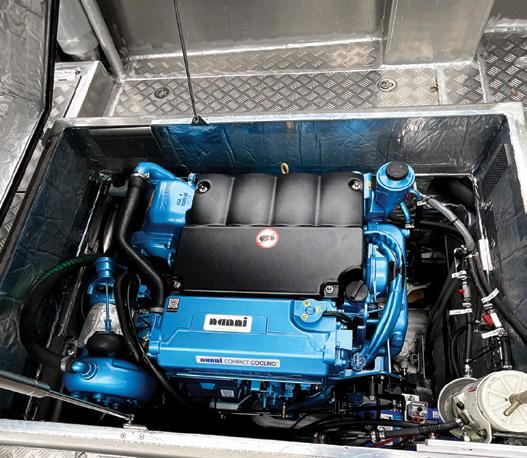

For one family, weekends on the water used to be a gamble. Their small outboard engine was temperamental, leaving them wondering if each trip would end in fun or in a tow back to the ramp. After replacing the old motor with a modern, lightweight outboard, everything changed. Suddenly, the boat leapt onto the plane with ease, ran quietly, and sipped fuel rather than
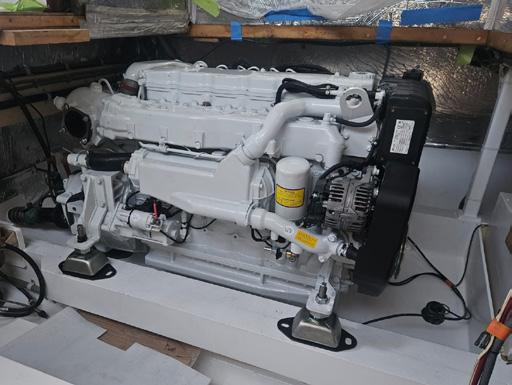
guzzling it. What had been stressful family outings quickly turned into effortless, carefree adventures. The transformation was so complete that the family now looks forward to using the boat more often, confident it will deliver safe, reliable fun every time.
Their ageing diesel engine was holding back a couple who loved long coastal passages. It was thirsty, slow to start, and left them constantly calculating whether they had
enough fuel to make their next destination. The decision to invest in a new mid-sized diesel proved to be a game-changer. The replacement engine not only doubled their cruising range but also ran cleaner and quieter, with significantly reduced fuel consumption. The added confidence meant they could tackle longer routes, spend more time exploring, and truly enjoy the freedom that had first drawn them to cruising.
Rolls-Royce Power Systems’ mtu brand is the first-class choice globally for high-performance yacht propulsion systems. Penske is your exclusive mtu regional distributor supplying and servicing New Zealand, Australia and Pacific Islands.
Contact us for all your marine power needs: marine@penske.co.nz penske.co.nz 0800 782 762
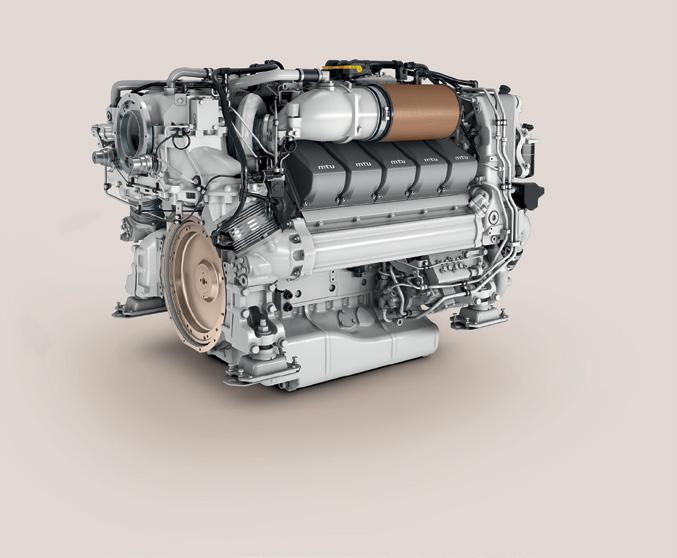
“With a thoughtful repower, your boat isn’t just functional, it’s renewed... you can look forward to many more years of safe, efficient, and enjoyable time on the water.”
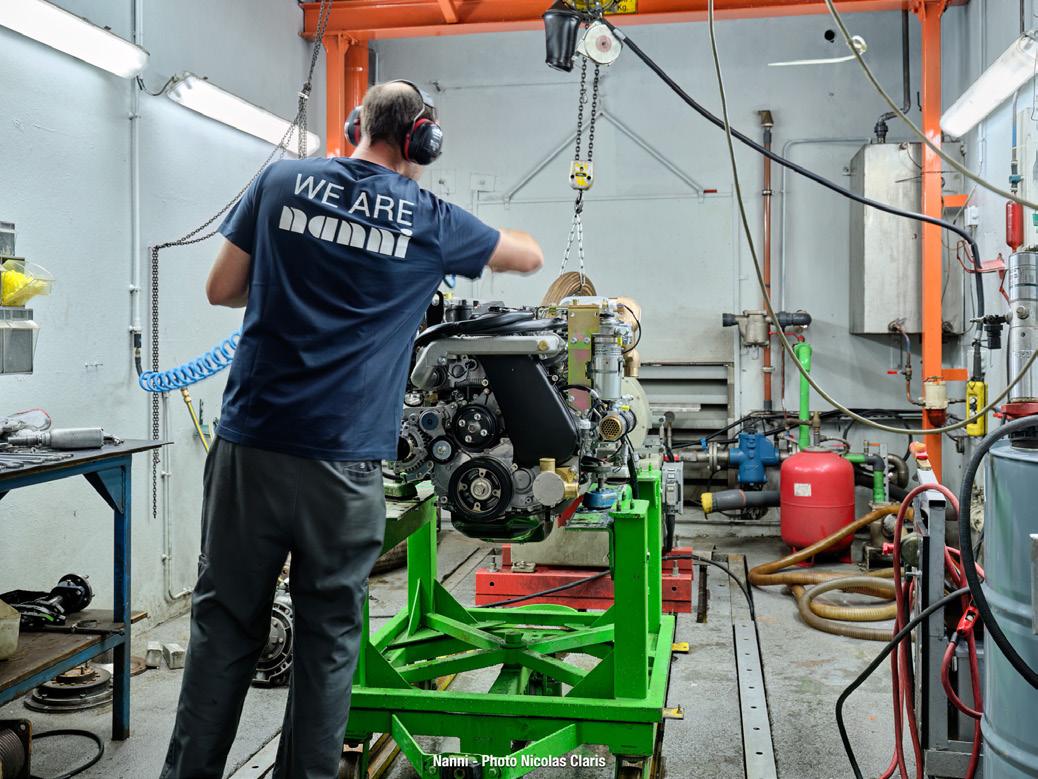
For a small-scale commercial operator, time is money, and reliability is a matter of survival. His boat’s old petrol engine was becoming increasingly expensive to run, with frequent breakdowns cutting into both fishing time and profits. The decision to repower with a durable diesel engine reshaped his business overnight. Fuel costs dropped by nearly half, downtime all but disappeared, and productivity climbed as he could stay out longer with greater
confidence. In his words, “The boat isn’t just working better - it’s working for me again.”
These stories illustrate how the right repower extends a boat’s life while transforming the owner’s experience.
A rebuilt engine may keep a boat operational for a few more seasons, but repowering delivers a complete transformation. Modern engines offer
improved performance, reduced emissions, enhanced reliability, and integration with today’s technology. By carefully planning the project, choosing the right engine, and working with an experienced installer, owners can enjoy the confidence and pleasure of a truly rejuvenated vessel. With a thoughtful repower, your boat isn’t just functional, it’s renewed from “worn” to “wow,” you can look forward to many more years of safe, efficient, and enjoyable time on the water.

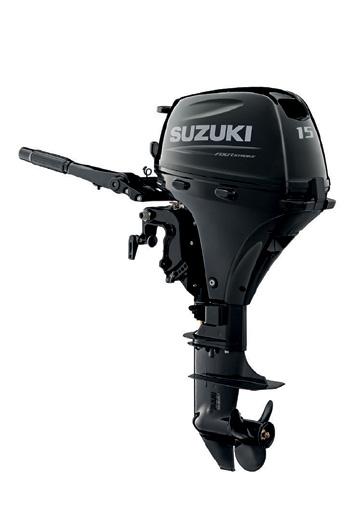


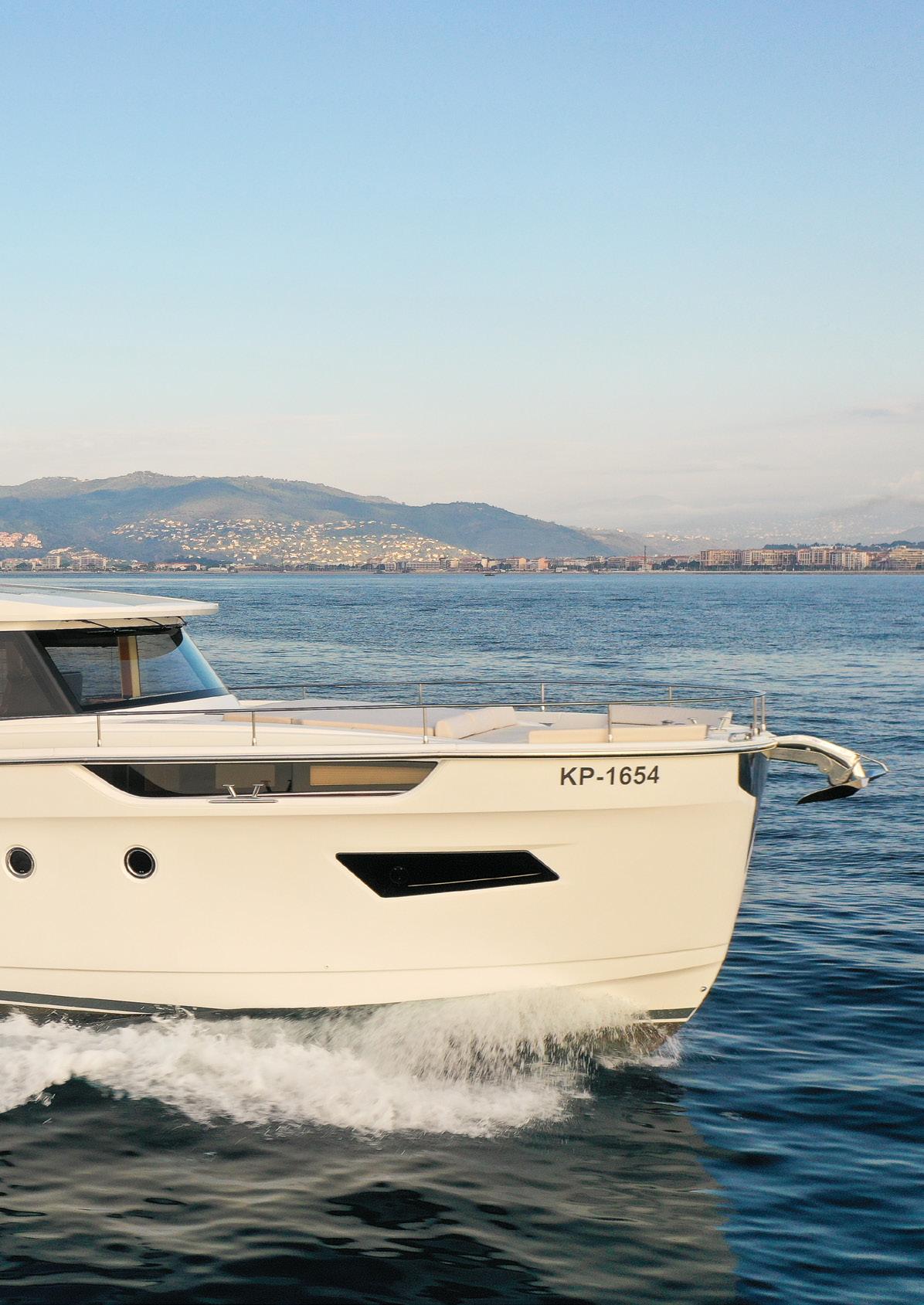
With sleek lines that immediately announce its Greenline pedigree, the 58 Fly is a luxurious coastal cruiser, a high-tech hybrid pioneer, and a spacious long-range explorer. Below deck, it offers more room than many yachts in its class, and above, it promises a boating experience that balances comfort, performance, and economy in equal measure.
BY DOUG DUKESON / BOATTEST.COM
A highlight of the 58 Fly is its onelevel deck design – not a single step from cockpit to helm.
Flybridge seating includes a portside wrap-around banquette, a bench with a café table.
The opulent master stateroom is accessed aft and down three steps, framed by the same vertical-grain rosewood and warm teak as the salon.
The galley is wellpositioned, giving both main dining and entertaining areas easy access.
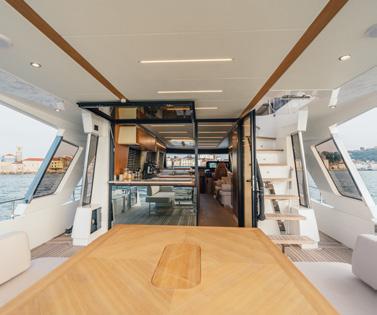
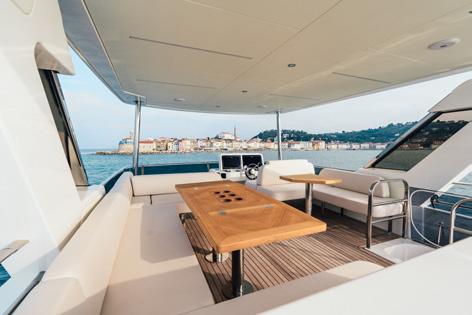
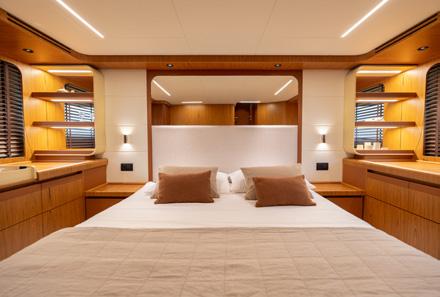
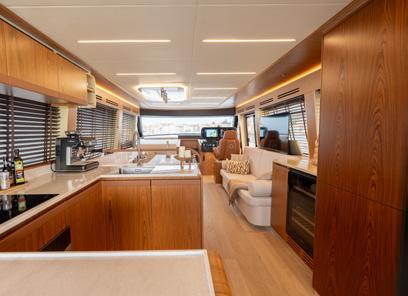
“Changes happen as time passes by,” Kermit the Frog once said. While we doubt he ever cruised a 58-foot semi-displacement yacht, the sentiment perfectly captures the philosophy behind the Greenline 58 Fly: a vessel that embraces modern technology while charting a new course through the conventional motor yacht market.
The 58 Fly is a semi-custom, semi-displacement yacht that intentionally diverges from the high-speed chase that defines much of its competition. In a world where many 18-metre motor yachts boast top speeds of 30 knots plus, Greenline has chosen a different path. And it’s a path that pays dividends. After all, pushing offshore at 30+ knots is often uncomfortable and extremely fuel-thirsty. Since most yachts in this category are mostly used for coastal cruising, fuel tanks rarely exceed 2,220 litres, limiting both range and necessity for extreme speed.
Rather than aiming for the extremes, the 58 Fly occupies a thoughtful middle ground between slow, displacement-style trawlers and the jet-setters of the fast motor yacht world. It is designed to cruise comfortably at 15-20 knots in semi-displacement mode. However, for those considering long-range voyages, Greenline’s optional hybrid power system offers a remarkable solution that extends range far beyond conventional thinking. By integrating an electric motor between the engines and transmission, coupled with a bank of Lithium-Polymer batteries, the 58 Fly Hybrid introduces a level of versatility unseen in this class. By alternating between diesel fuel and electricity, the yacht can extend its operational range in both practical and impressive ways.
Greenline first embraced hybrid power roughly 15 years ago, and the company has since refined the system through six generations. While most builders have avoided hybrid technology for cost or complexity reasons, Greenline has pioneered its use with motor/ generators and high-capacity lithium batteries.
The yacht’s synchronous electric motors, each producing 25 kW at 60 V, operate with permanent magnets. In generator mode, each unit provides 14 kW. Standard Lithium-Polymer batteries have a 55 kWh capacity. For context, LiPo batteries utilise a polymer electrolyte instead of a liquid one, forming a highly conductive semisolid gel that delivers more specific energy per kilogram than other lithium battery types, ideal for applications where weight is a critical factor.
Complimenting the electric system are standard Cummins QSM11 engines, rated at 715 hp at 2,500 RPM. These marinised units are EPA Tier 3 and IMO Tier II compliant and are known for their durability and longevity. Designed to operate under continuous heavy load, they give the 58 Fly the ability to cruise confidently, whether near shore or across extended passages.
The 58 Fly’s potential shines for long-range cruising. Whether it’s the 5,214-nm American Great Loop, the 6,083-nm around the Caribbean, an 8,690-nm Mediterranean circumnavigation, the 7,821-nm “Big Lap” around Australia, or exploring the Indonesian archipelago, the 58 Fly Hybrid is ideally suited for the adventurous boater seeking both economy and comfort.
The 58 Fly Hybrid is ideally suited for the adventurous boater seeking both economy and comfort.
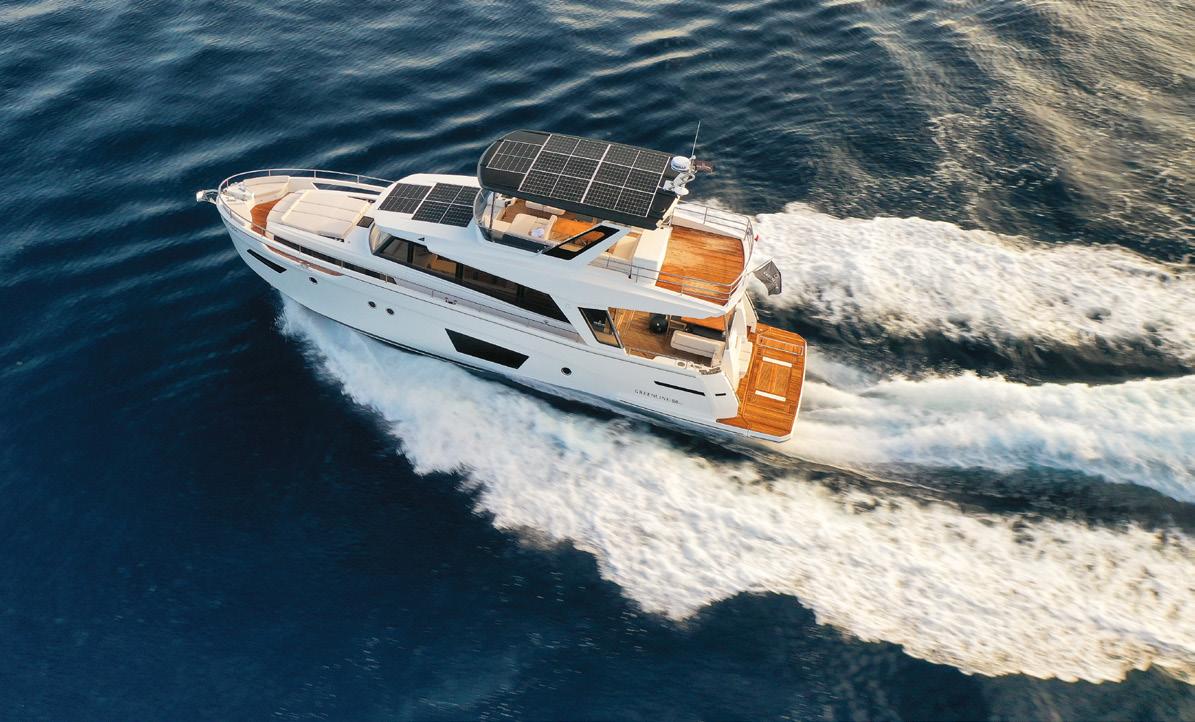
On test, with a 50% fuel load and five aboard, the 58 Fly achieved a top speed of 23.1 knots at 2,540 RPM. Semi-displacement hulls don’t plane, so there isn’t a single “best” cruising speed; fuel efficiency was largely linear across the spectrum:
• 2,000 RPM / 15.3 knots: 0.10 nm/L ~321 nm range (3,500 L, 10% reserve)
• 1,250 RPM / 9.3 knots: 0.20 nm/L ~628 nm range
• 1,000 RPM / 7.6 knots: 0.31 nm/L ~972 nm range
Switching to electric-only revealed one of hybrid’s quirks: there’s no idle; the boat either moves or doesn’t.
• 400 RPM / 3.4 knots: ~38 nm range
• 500 RPM / 4.1 knots: ~22 nm range
• 600 RPM / 5.0 knots: ~12 nm range
Effectively, 600 RPM represents the practical top end under battery power, a balance of speed and endurance. Faster speeds would rapidly deplete energy reserves, rendering range moot.
To maximise fuel efficiency, Greenline recommends a rhythm: cruise at 7.6 knots on diesel to charge batteries, then switch to 5 knots on battery power until near depletion, and repeat. With 3,150 litres of usable fuel (90% of the optional tank), the system can theoretically cover 1,727 nautical miles by alternating diesel and electric power. For context, diesel alone at 7.6 knots provides 972 nm; battery power alone extends 756 nm. These numbers assume attentive operation and are theoretical, but they highlight the strategic advantage of hybrid propulsion for long-range cruising.
Bow: The forward trunk cabin features a wide sun pad for three, ideal for decadent luxury at anchor. What sets the 58 Fly apart are the two aft-facing love seats port and starboard, providing unique forward-facing relaxation. Underneath is a spacious chain locker, housing a 50 kg galvanised anchor and 50 m of 12 mm chain, robust for long-range cruising.
Aft Deck: The aft deck is fully configurable.
On our test boat, two love seats sat perpendicular to the transom, which features a large safety-glass window to keep occupants aware of activity on the aft deck. Large bollards replace standard 250 mm cleats, allowing for heavier mooring lines to be handled efficiently.
Galley: Greenline has positioned the galley aft within the deckhouse, allowing both main dining and entertaining areas easy access. The U-shaped galley offers 1.14 m of space between counters, ample for two people to work side by side or back to back, a significant improvement over the “alley-galley” style standard in this class. A fold-down platform doubles as a bar or serving station.
Saloon: A highlight of the 58 Fly is its one-level deck design- not a single step from cockpit to helm. The salon is situated flush with the aft deck and galley, providing unobstructed sightlines and ample headroom. Low side-window sills afford excellent visibility without the need to raise the dining area, ensuring the interior feels both spacious and connected to the outside.
Lower Helm: The helm is thoughtfully laid out. Optional 19” SIMRAD MFDs provide vital system monitoring, while control sticks and bow/stern thrusters are reachable from the side deck. The starboard sliding door enables single-handed tie-up without extra aft-deck controls or remotes.
Accommodations: The 58 Fly offers a three-stateroom, threeensuite-head layout, all surrounded by the vertical-grain rosewood and warm teak woodwork seen in the salon.
The master stateroom is reached by going aft and down three steps. The deck is built atop the boat’s floors and extends between the stringers, which are outboard and don’t get in the way. This design element provides the cabin with 1.93 m of headroom. The standard configurations of this cabin call for cabinets and drawers to port and starboard from the stringers outboard. The sofa to port is an option. The hull side windows are large, and each has an opening port on both sides of the cabin for fresh air. There are three insulated bulkheads between the master suite and the engine room, making it very quiet. This is unusual because not only does
the 58 have the fuel tank directly behind the cabin’s aft bulkhead (a common practice), but it also has the utility room/crew cabin in between, which is the unusual aspect.
VIP Stateroom. Most motor yachts have a VIP in the bow, but because the Greenline 58 Fly has a rather blunt bow, and the beam is carried forward above the chines farther than most, there is more room in the forward cabin. As a result, the island berth does not need to be tapered at the foot, which is often seen on boats in this class. There is more room to port and starboard of the island berth, making it easier to make up. Greenline has placed horizontal windows on the sides of the trunk cabin overhead, which let in lots of light and keep the cabin from feeling like a dark cave. With the sun cushion removed from the pad on the deck, light can also come in through the forward hatch.
The Guest Stateroom. All third cabins in this size motor yacht have a compromised width, and the Greenline 58 is no exception; however, it has actually performed better than many models. We measured the width of the inboard and outboard beds at 71cm and 66cm, respectively, with 30cm in between. What is unusual about the layout is that this stateroom has its own private head with a separate shower.
The flybridge extends approximately 7.6 m fore to aft. A hydraulic davit at the aft third accommodates the tender, keeping the swim platform free. Seating includes a port-side wrap-around banquette, a bench with a café table, and two forward-facing fixed benches on the bridge deck. The upper and lower helm layouts mirror each other, and a 5.6m carbon-fibre hardtop provides UV protection while maintaining a low centre of gravity.
Three standard photovoltaic panels (1.230 kW/h) are mounted forward of the flybridge, with an optional seven-panel hardtop extension, bringing total power to 4.100 kW/h. This is sufficient to operate essential systems for days while the yacht is unattended, a wise choice for long-range cruisers.
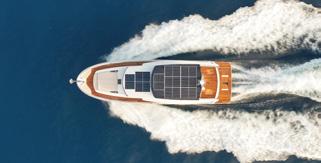
It also makes for peaceful stays at anchor as regardless of whether you choose the Hybrid or standard Diesel, the Greenline collects and stores power from the sun. Enough to enjoy the onboard appliances without a noisy generator.
The engine room, accessible via a gas-assisted aft hatch, offers 1.80 m of headroom. Its uncluttered layout owes to the absence of a conventional diesel generator and the use of an optional 70,000 BTU reverse-cycle chiller. Electric Humphree interceptors provide stabilisation, eliminating the need for gyros or hydraulic fins.
Owners may forgo hybrid power, saving around $300,000, with space available for 11–25 kW diesel generators. The advantages of solar power are maintained, but while more straightforward and more cost-effective, this option sacrifices the extended range benefits of hybrid propulsion.
Even without hybrid power, the Greenline 58 Fly excels. At 5.12 m beam, it is the widest in its comparison group, and only the second heaviest. Its three ensuite staterooms and 100% vinylester hull and deck set it apart from competitors. Vinylester construction, rare in this class due to cost, provides superior strength and resistance to water ingress.
Greenline deserves credit for pioneering hybrid power in the motor yacht sector. Initially valued for quiet, low-speed cruising, hybrid technology now enables remarkable long-range economy when used strategically. Whether hybrid or diesel-only, the 58 Fly offers comfort, range, and versatility for the discerning cruiser, delivering an experience that blends adventure, sustainability, and the pure pleasure of being on the water.
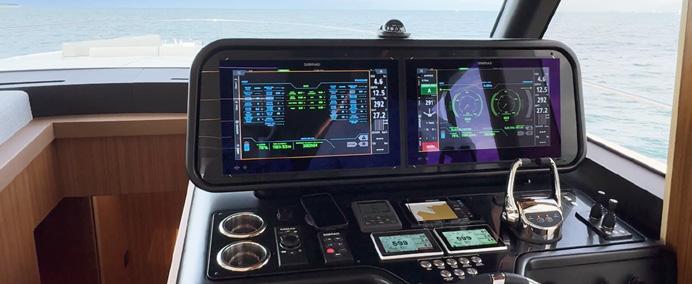
From quick runs to Waiheke to rugged offshore trips to Great Barrier Island, every Axopar is built to inspire confidence, go anywhere and do anything.
Discover a new way to explore with award-winning design, offshore performance, and fuelefficient range that takes you further.
Are you ready to experience adventure boating like never before?
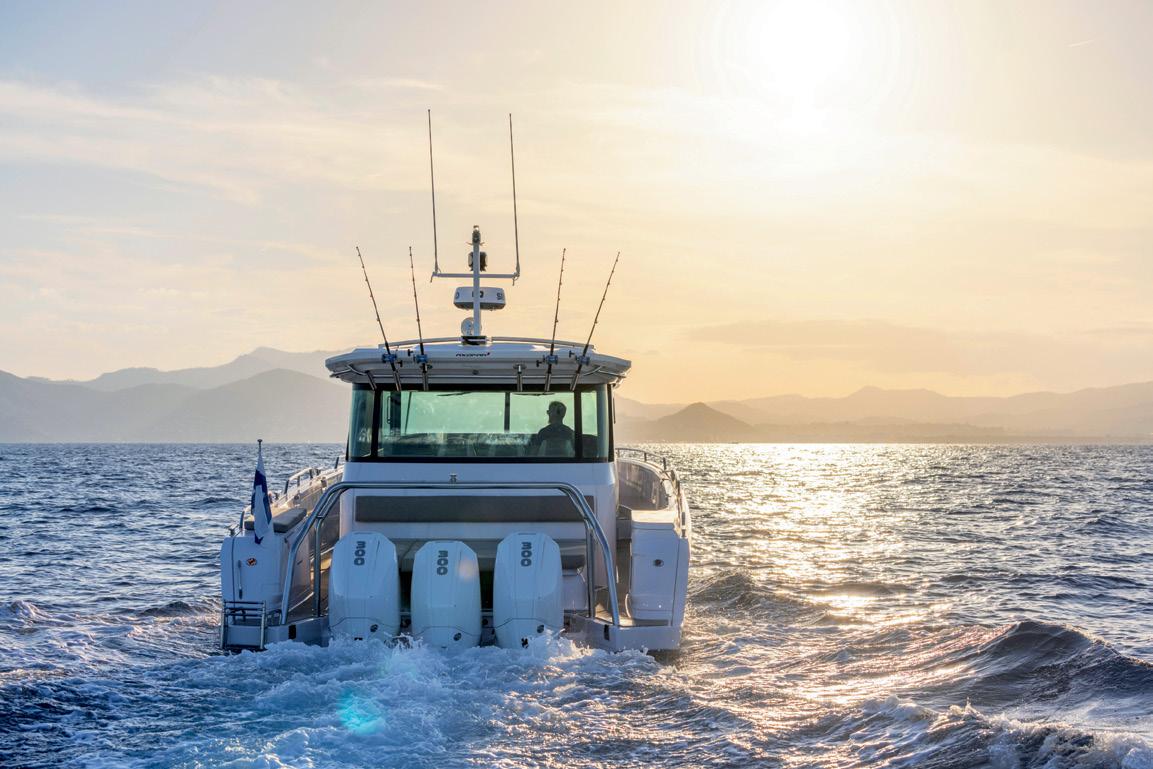


Marine cameras have become an increasingly important tool for boat owners, operators, and crew, offering a combination of safety, security, and convenience on the water.
BY DOUG DUKESON
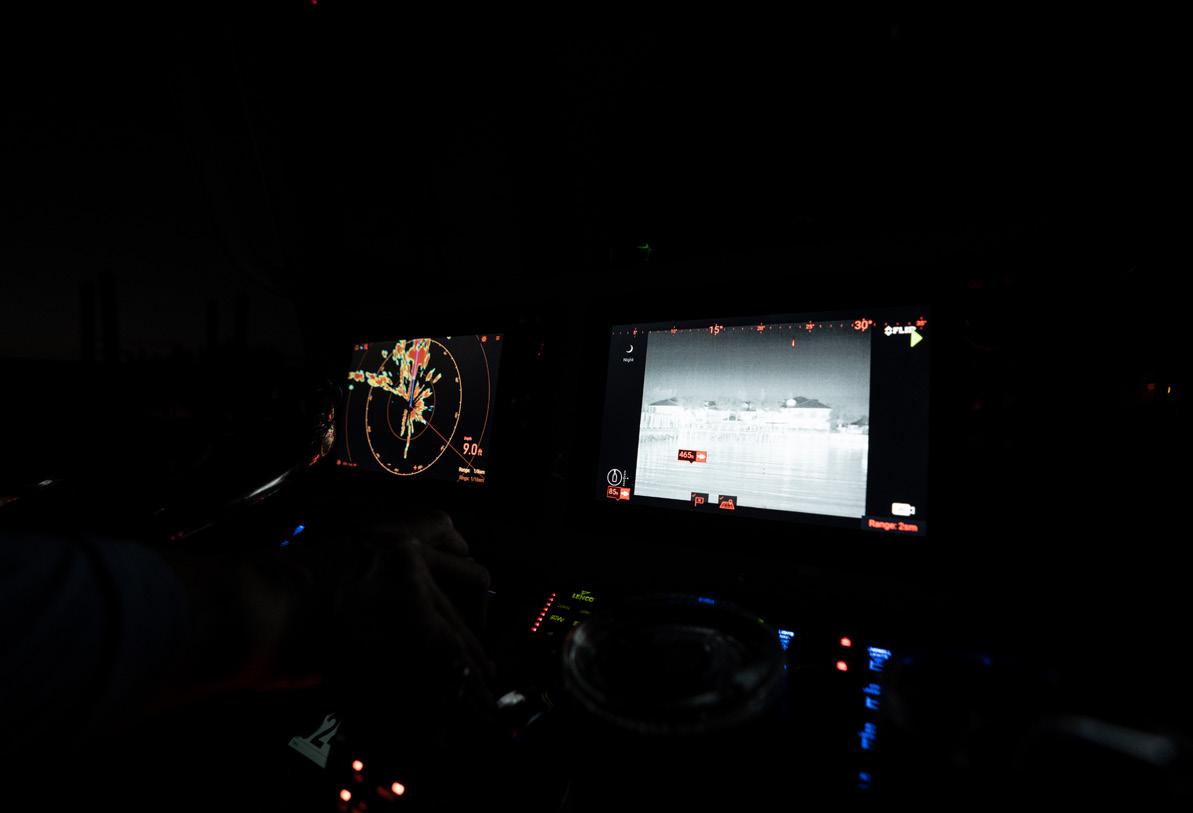
Whether leaving a boat unattended at the marina or cruising offshore, cameras provide peace of mind.
Modern marine cameras are purpose-built to withstand the harsh marine environment.
They’re designed to resist salt, spray, vibration, and UV exposure, with many models offering fully waterproof housings and anti-fogging lenses. From compact dash-mounted units to highdefinition, gyro-stabilised systems, marine cameras now deliver crystal-clear images in virtually all conditions, day or night.
There are two main types of marine cameras:
Visible Light Cameras operate like conventional video cameras but are engineered to withstand saltwater conditions and perform effectively in
low-light environments. Some Low-light cameras have an effective range of up to 450 metres for medium size targets under lightly star-lit, clear night conditions, they also capture real-time images in natural colour using sunlight and onboard lighting. Many feature low-light sensors and rugged waterproof housings to ensure reliable performance. Some have high zoom & stabilisation as a “better than optical tool” when compared to binoculars, mostly in daylight conditions, even in rough seas. Prices typically range from $4,800 to $12,000. Visible light cameras can clearly detect object details, such as identifying people on board and the name on the side of the vessel. They are helpful when arriving & departing from the ramp or marina &
provide far better performance than the naked eye in the right conditions at lower boat speeds.
The range and detection ability do reduce as vessel speed increases and conditions deteriorate; examples include rain, fog, and sea spray, resulting in significantly reduced performance.
Thermal Cameras detect heat emitted by objects rather than relying on visible light. This allows skippers to see better at speed and at night, through haze, rain, sea spray, rough sea conditions or in glare conditions where standard cameras struggle. They are the best for spotting smaller craft, such as PWCs and kayaks, in poor light conditions at dawn, dusk, or in complete
360-degree monitoring systems as found in the automotive industry offer all-around visibility and assistance during docking.
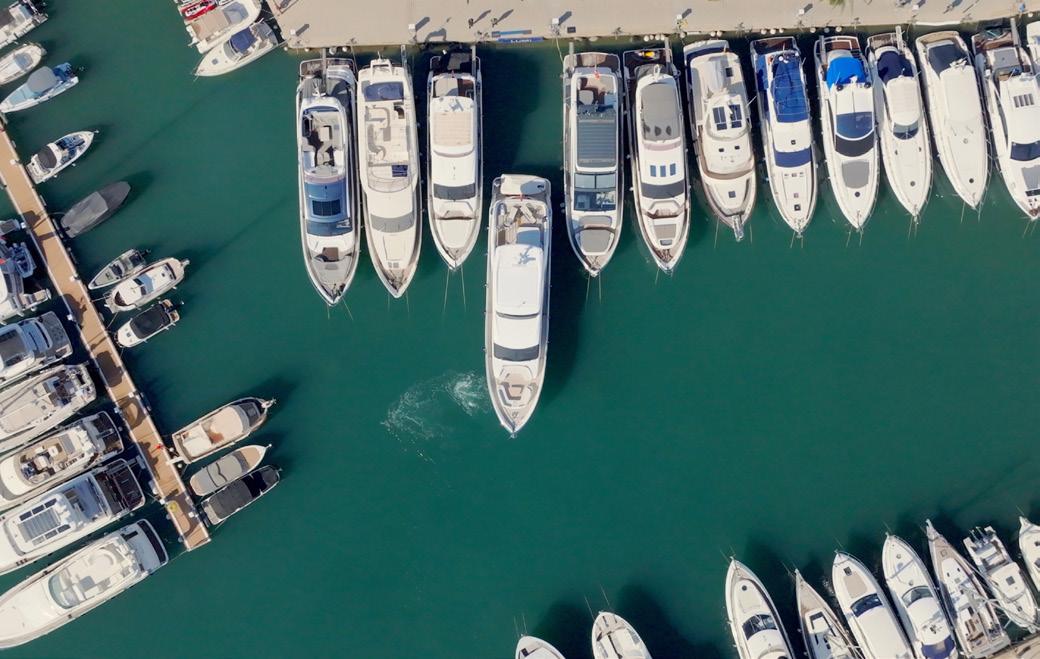
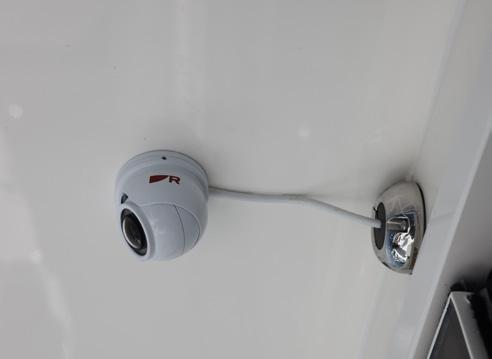

darkness. With a detection range of up to 2.4 km for smaller target models, they can highlight the heat signatures of vessels, people overboard, or floating obstacles. They can also proactively alert the user to targets of interest in the field of view when integrated with the appropriate technology, essentially becoming the spotter under challenging conditions. This makes them invaluable for search and rescue operations, collision avoidance, and night-time cruising. Prices start at around $ 5,000 to $6,800, depending on whether the device is handheld or fixed-mounted.
There are also dual-payload cameras, which combine both visible and thermal technologies in one unit.
• Safety at sea: Cameras positioned around the vessel assist with docking, anchoring, and monitoring blind spots, reducing the risk of accidents. Night-vision and thermal cameras further enhance safety in poor visibility conditions.
• Security and surveillance: Whether leaving a boat unattended at the marina or cruising offshore, cameras provide peace of mind by recording activity and deterring theft. With connectivity solutions such as Starlink, monitoring can now be done from anywhere on board or even remotely via the cloud.
• Fishing advantage: For sport fishers, underwater and deck-mounted cameras capture the action and offer insights into fish behaviour, improving techniques and results. Thermal cameras can even indicate surface water temperature gradients.
• Onboard monitoring: Cameras in the engine room, machinery spaces, and anchor well allow skippers to check on critical systems without leaving the helm. AI-enabled visible light & thermal systems can now monitor the engine room, setting alarm thresholds on each pixel in real-time, alerting the helm to any irregularities.
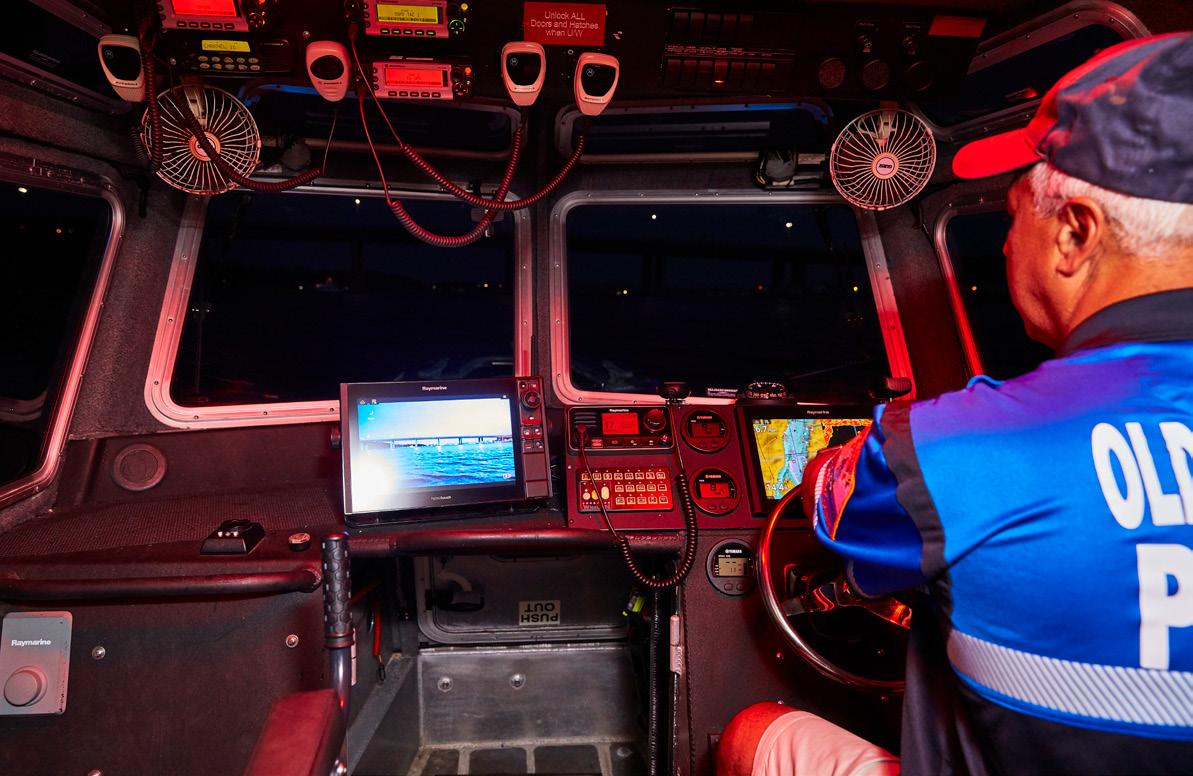
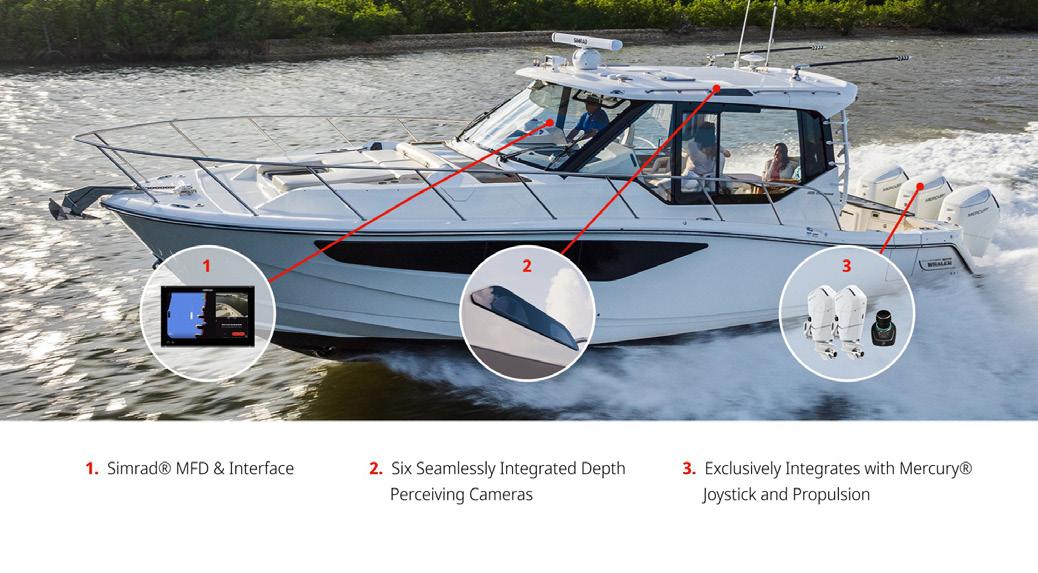
360-degree monitoring systems, similar to those used in the automotive industry, are now emerging, offering all-around visibility and assistance during docking. When paired with digital video recorders, they also provide incident documentation. According to Mark Milburn of Lusty & Blundell, the distributors of FLIR camera systems, selfparking capabilities could soon be available. Watch this space.
Many of today’s cameras are gyro-stabilised (2-axis gimbals) and feature pan-tilt-zoom control via helm stations. They can also integrate with multifunction displays (MFDs), radar, and chartplotters via NMEA or Ethernet connections. This enables live video feeds to be overlaid on navigation screens, providing skippers with real-time visual confirmation alongside digital charts and radar plots.
AI is also playing an increasing role. With smart tracking, cameras can now lock onto approaching vessels or floating debris, further enhancing situational awareness. Companies such as SEA.AI Technologies have built massive databases of sea-state images. When a camera detects an object that doesn’t match recorded wave or sea patterns, such as a log, container, or another vessel, it can trigger an alarm to alert the crew.
Modern marine cameras are purpose-built to withstand the harsh marine environment.


360-degree monitoring cameras relay images to the MFD. Confident night-time navigation with crystal-clear thermal imaging

BY DOUG DUKESON
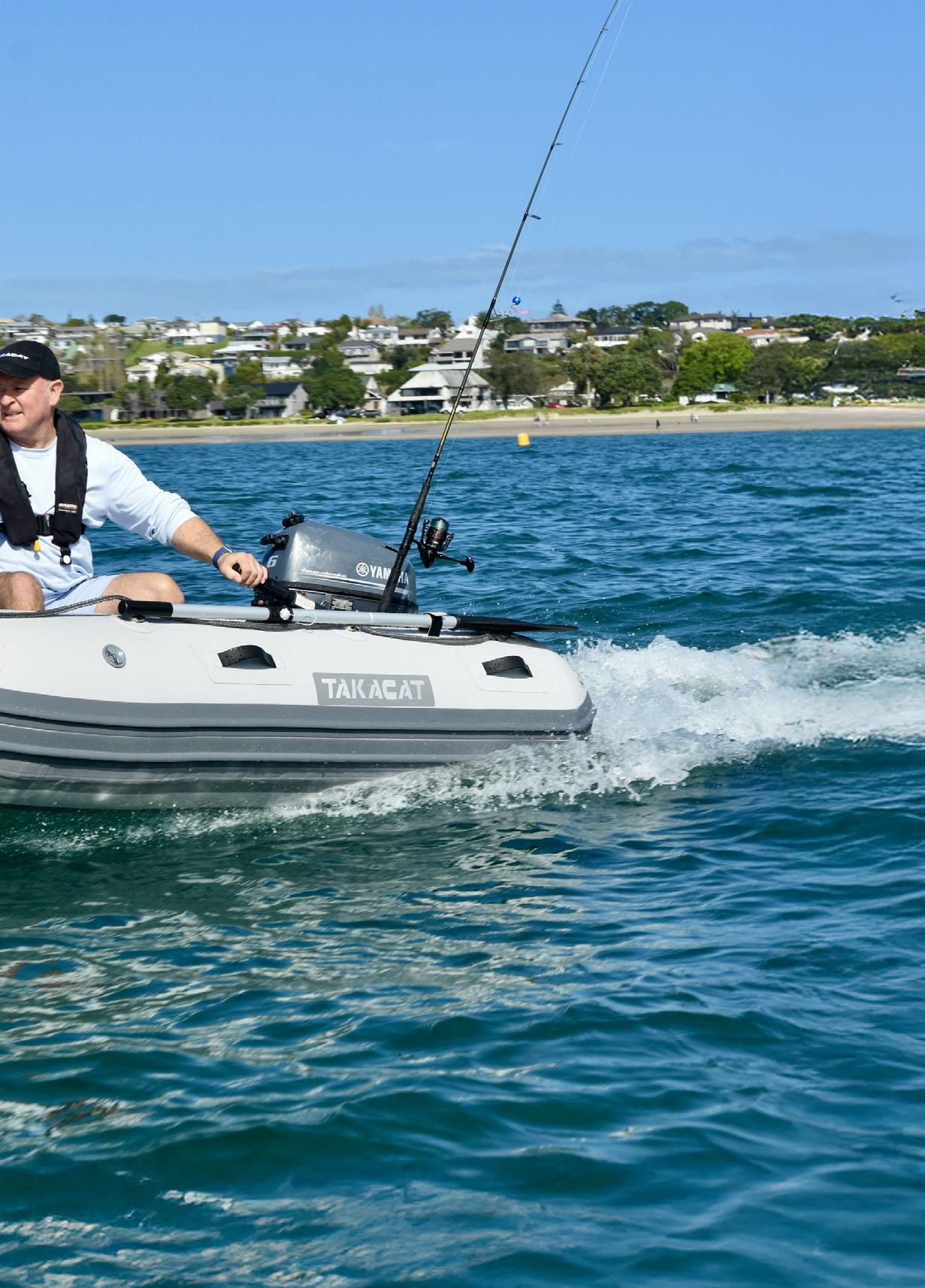
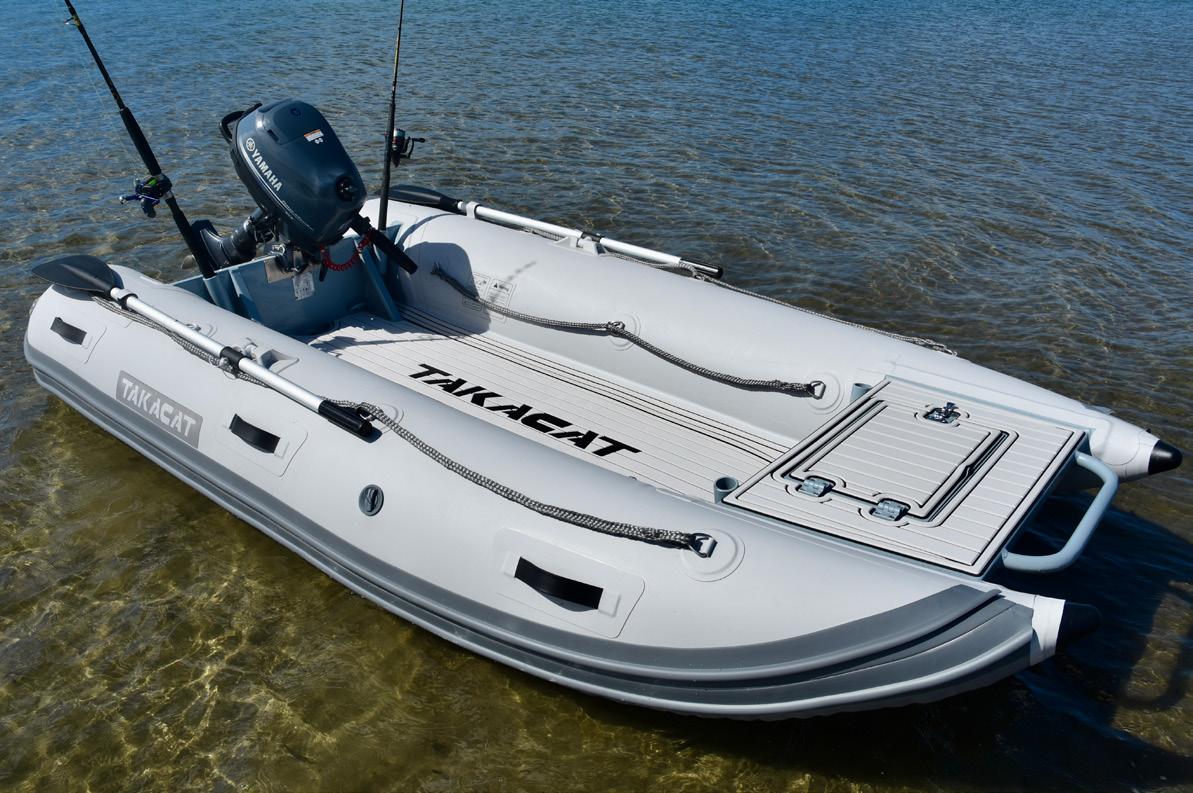
New Zealanddesigned inflatable catamaran RIB is a compact tender.
The anchor locker and casting platform provide storage for anchors and gear, as well as a convenient step when boarding.
With a beam of 1.66 metres, the hull provides impressive stability.
Practical touches include four lifting eyes for davits and rod holders forward and aft.
Climbing aboard the new Takacat T300 LX-R, the first thing you notice is how solid and well-built it feels. This New Zealand-designed inflatable catamaran RIB is a compact tender, but it carries itself with the confidence of a much larger craft. The dual 3mm alloy deck and rigid central hull give it a reassuring heft underfoot, while the oversized 1.2mm TPU tubes provide excellent buoyancy and stability
that you can feel immediately. We set off from Manly Beach, Whangaparaoa, and right away, the 300LX-R showed its strengths. The ride is remarkably dry, both with a load and when we pushed it up on the plane; the hull and deck combination kept spray to a minimum. The T300 LX-R popped up on the plane, and at just 5 knots, and with two up, we got along at a good 11- 12 knots. The
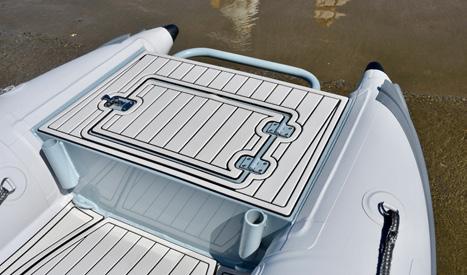
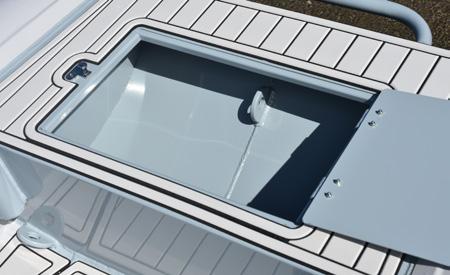

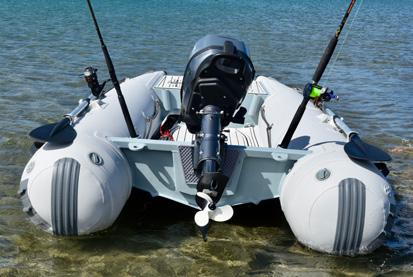
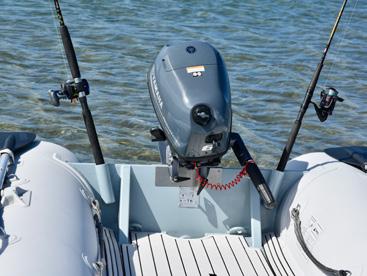
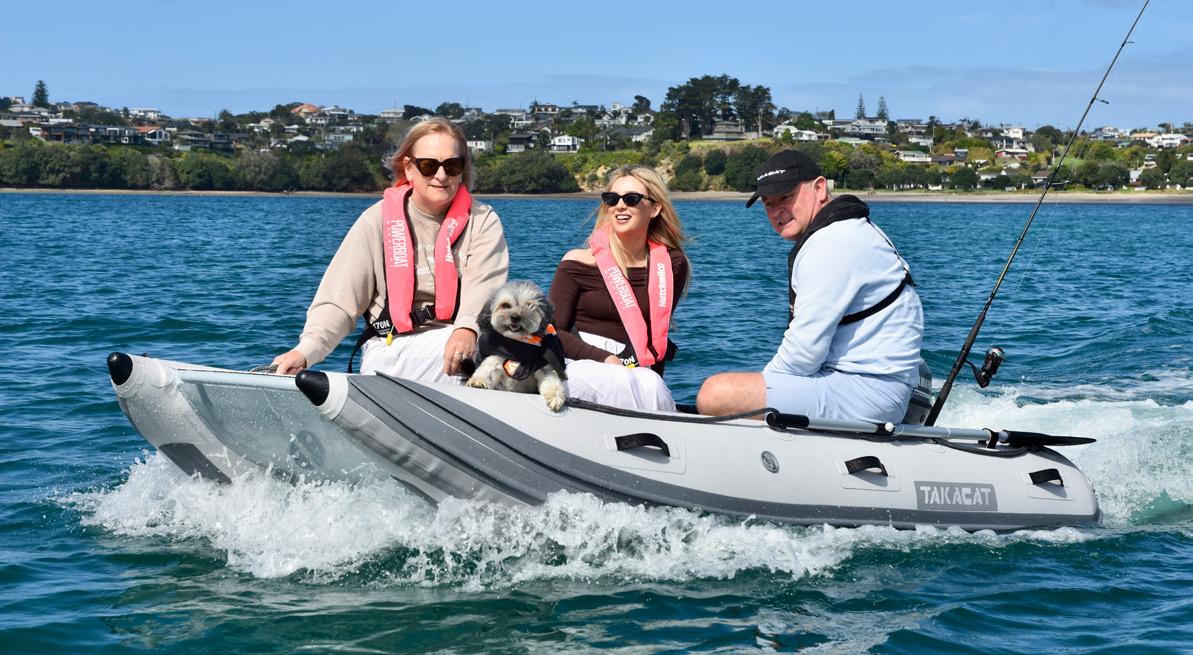
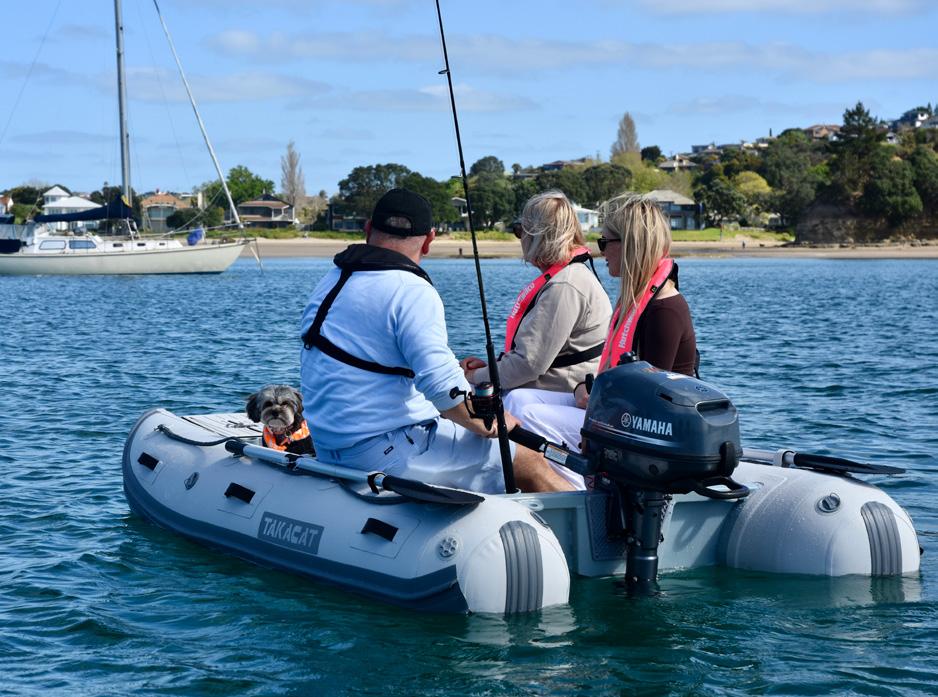
composite deck feels tough underfoot, uncluttered, and easy to clean after a morning of fishing, saltwater, and sand. With a beam of 1.66 metres, the tubes provide incredible stability, and even fully loaded with four passengers, the boat felt impressively buoyant, stable and handled well.
Forward, the anchor locker and casting platform prove their worth, providing easy storage and access for anchors and gear, as well as a convenient step when
boarding from another boat, jetty, or the beach. About the tender, practical touches like four lifting eyes for davits, rod holders forward and aft, and tow eyes fore and aft, all combined in 3 meters, make the LX-R feel ready for anything a three to four-meter tender would ever be asked to do, from ferrying passengers to coastal diving adventures or just an afternoon out fishing.
Lightweight, weighing in at just 68 kg, the 300LX-R can be easily lifted on and off a boat or trailer by two.
Rated for four passengers, three up and a pooch, the 6 hp fourstroke engine pushed us along at a reasonable speed.
A versatile, fun little tender that punches well above its weight.
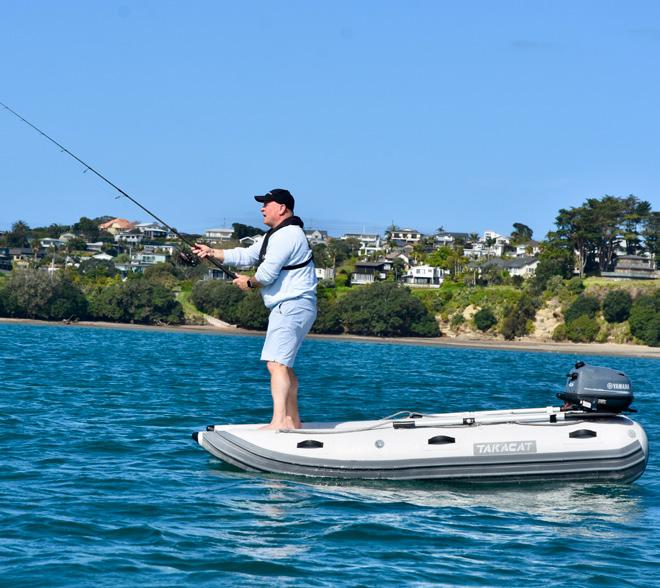
The anchor locker also acts as a stable casting platform.
Whether fishing or serving as a tender, the T300LX-R is a versatile craft.
Out on the water, it’s clear why the T300LX-R is an evolution of Takacat’s popular T300LX. This (-R ridged hull option) has a dual-plate hull and large tubes, which, as mentioned, provide a smooth and stable ride, whether at rest or running. The compact size makes it surprisingly agile and easy to handle. By the time we returned to the dock, it was apparent that this little RIB is more than just a tender; it’s a versatile, tough, and fun little boat that punches well above its weight. Certainly worth considering when shopping for your next boat or holiday home tender.
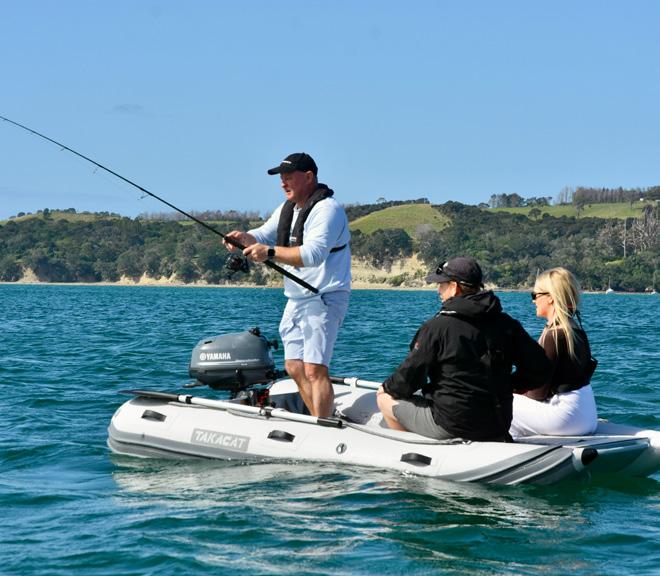
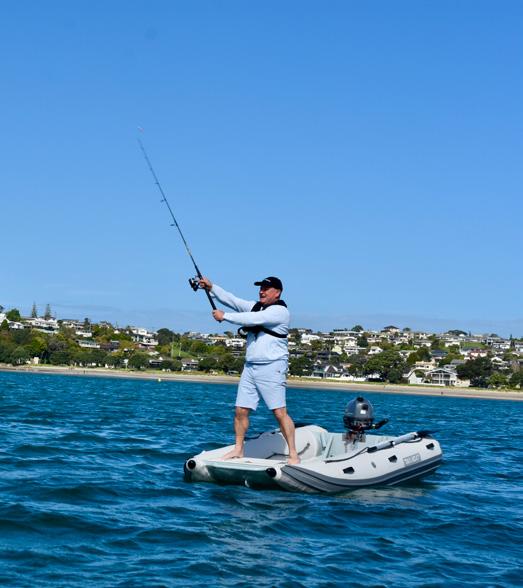
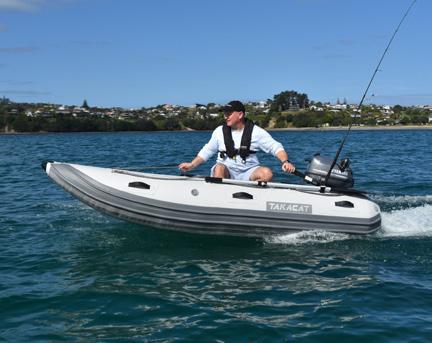
3.0m x 1.66m x 480mm
4 Pax / 400kgs
1.2mm TPU Inflatable Tubes
Strong welded seams
Pressure relief valves on both tubes
4 x Air Chambers
Fabric: 1.2mm TPU
3mm alloy deck
Boat Weight 68kgs / 94kgs with engine
Recommended Engine 2.5 – 15 hp
Notes: 4 x Rod holders, 4 x Davit lifting eyes, 2 x Tow eyes welded on the stern for pulling water toys, Protective rubbing strips along both tubes, Rubber keel protection, Non-skid - soft composite decking, Oars and fitted oarlocks
T300LX-R 3.0m $7,995.00
As tested, a Yamaha 6 hp 4-stroke NZD $10,685 incl GST
Boat/Engine Packages from $10,195 incl GST TAKACAT.CO.NZ
FEATURE
MATERIAL COMPOSITION
DURABILITY
UV RESISTANCE
CHEMICAL RESISTANCE
WEATHER RESISTANCE
WEIGHT
COST
REPAIRABILITY
FLEXIBILITY
ENVIRONMENTAL IMPACT
LIFESPAN
BEST USE CASES
Chloride)
Synthetic plastic polymer, often reinforced with polyester or nylon mesh.
Good durability; resistant to abrasions and punctures but less robust than Hypalon.
Moderate; can degrade over time with prolonged sun exposure unless UV stabilizers or covers are used.
Good resistance to oils, fuels, and mild chemicals but can degrade with strong solvents.
Performs well in moderate climates but may stiffen in cold temperatures.
Lightweight, making it easier to handle and transport.
Most affordable option, ideal for budget-conscious buyers.
Easy to repair with adhesive patches; widely available repair kits.
Good flexibility but can become brittle over time, especially in cold conditions.
Less eco-friendly; production and disposal can release harmful chemicals.
5-10+ years with proper care, depending on usage and storage conditions.
Recreational boating, calm waters, occasional use, budgetfriendly applications.
KEY BENEFITS SUMMARY
• Pros: Cost-effective, lightweight, easy to repair, widely available, and suitable for casual or recreational use. Seams/Fabric can be thermally welded.
• Cons: Limited UV and temperature resistance, shorter lifespan, less eco-friendly.
• Ideal For: Budget-conscious users, inland or calm water boating, and those prioritizing portability.
(CSM - Chlorosulfonated Polyethylene)
Synthetic rubber with a neoprene base, coated with chlorosulfonated polyethylene.
Excellent durability; highly resistant to abrasions, punctures, and harsh conditions.
Exceptional; highly resistant to UV rays, maintaining integrity in intense sunlight.
Superior resistance to chemicals, oils, and fuels, ideal for harsh environments.
Excellent; withstands extreme temperatures (hot and cold) without losing flexibility.
Heavier than PVC, which can make boats less portable.
More expensive due to superior durability and longevity.
Repairable but requires specific adhesives and expertise; patches bond strongly.
Highly flexible, maintaining performance in extreme conditions.
Moderate; durable but non-recyclable, with complex manufacturing processes.
10-20 years or more with proper maintenance; ideal for long-term use.
Commercial, military, or heavy-duty use in extreme environments (e.g., tropics).
• Pros: Exceptional durability, UV and chemical resistance, long lifespan, and reliable in extreme conditions.
• Cons: Higher cost, heavier, and repairs require specific expertise. Seams/Fabric must be glued.
• Ideal For: Professional, commercial, or heavy-duty applications in harsh environments.
Polyurethane)
Thermoplastic elastomer, combining flexibility and durability.
Very good durability; strong resistance to abrasions, punctures, and wear.
Very good; better UV resistance than PVC, though slightly less than Hypalon.
Good resistance to chemicals and oils, comparable to PVC but slightly better.
Very good; maintains flexibility across a wide temperature range.
Lightweight, similar to PVC, enhancing portability.
Moderately priced; more expensive than PVC but often cheaper than Hypalon.
Easy to repair with heat welding or adhesives; repair kits are becoming more common.
Excellent flexibility, even in cold temperatures, with good elasticity.
More eco-friendly; recyclable and often produced with fewer harmful chemicals.
7-15 years, depending on quality and maintenance; a good middle ground.
Versatile; suitable for recreational and semi-professional use, ecoconscious buyers.
• Pros: Lightweight, flexible, ecofriendly, good durability, and versatile across various conditions. Seams/ Fabric can be thermally welded.
• Cons: Slightly less durable than Hypalon, less common, and moderately priced.
• Ideal For: Environmentally conscious users, recreational to semi-professional boating, and varied climates.
• Maintenance: All three materials require proper cleaning, storage away from direct sunlight, and regular inspections to maximize lifespan. Hypalon demands more careful maintenance due to its cost and longevity.
• Customization: PVC and TPU are easier to manufacture in various colours and designs, while Hypalon is typically limited to fewer colour options.
• Availability: PVC is the most widely used and available, followed by TPU, while Hypalon is less common due to its higher cost and specialized production.
Picture this, you’ve just dropped anchor in a quiet bay. The sun’s sliding down behind the hills, there’s a light breeze ruffling the water, and someone hauls up a chilly bin of freshly caught snapper. The only thing missing? A hot grill to turn the day’s catch into dinner.
Introducing the COBB Grill, the portable, do-it-all cooker that’s fast becoming every boatie’s favourite bit of kit. Compact, clever, and ridiculously versatile, the COBB makes cooking on board as easy as it is at home (maybe easier, since the view’s better).
If there’s one thing every skipper knows, it’s that gear onboard needs to earn its keep. The COBB ticks that box.
• Safe & Cool to Touch: Its doublewalled design means the outside stays cool while the inside gets roaring hot — so you won’t melt your deck, or your fingers.
• Windproof: Anyone who’s tried to light a BBQ in a stiff sea breeze will know how valuable this is. The COBB’s dome lid keeps the heat in and the wind out.
• Portable & Compact: At around 3.6–7kg depending on the model, it tucks away in a carry bag and doesn’t take up precious space on board.
The Swiss army knife of grills, a BBQ, oven, smoker, frying pan, and pizza oven all in one tidy unit. The fuel efficiency is legendary, a single 445g gas canister gives you up to 8 hours of cooking on low. That’s plenty of time to get through the weekend’s catch.
This is where the COBB really shines for boaties. The flat Griddle+ is perfect for searing scallops or crayfish tails straight out of the pot. Snapper fillets? Toss them on the frying pan accessory with a splash of butter and garlic. Keen on something fancier? The roast rack lets you smoke mussels or even slow-cook a whole fish while you sip something cold in the cockpit.
And yes, you can even deep-fry on it. Fish and chips at anchor? Absolutely.
While the COBB might be a seafood-lover’s dream, it’s no one-trick pony. Families use it to cook everything from roasts to pizzas, stir-fries to freshly baked bread. Imagine anchoring up in the Marlborough Sounds and pulling a hot, crispy pizza out of the oven — all without stepping off the boat.
Here’s where the fun really begins. COBB have created a whole suite of accessories, each designed to make cooking on board easier and more adventurous:
• Griddle+ – Perfect sear marks on your steak or seafood.
• Pizza Stone – Crispy bases, even in the middle of the ocean.
• Frying Pan & Wok – Stir-fries or bacon and eggs for the crew.
“Just good food, good company, and a great view.”
• Roast Rack & Dome Extension –Roast chicken or lamb on a boat? Yep, it’s possible.
• Carrier Bag – Keeps everything neat and tidy when you’re short on space. It’s a bit addictive, once you get the grill, you’ll probably want the lot.
Boaties all over New Zealand are singing the COBB’s praises:
• Bay of Islands: “We grilled crays on deck while watching the sun set. The whole bay smelt jealous.”
• Hauraki Gulf: “We smoked snapper fillets while under sail — no fuss, no flare-ups, the best dinner of the trip.”
• Fiordland: “After a long day fishing, nothing beat frying up blue cod straight on the COBB. Fresh as it gets.”
And for families, it’s become a staple: “The COBB’s the first thing we pack. Keeps the crew happy, no matter what we catch (or don’t catch).”
COBB Grill NZ isn’t some faceless import — it’s a Kiwi-owned business based in Auckland, shipping grills and accessories across the country (and abroad). They’re also proud partners of Legasea, helping protect our marine environment for future generations. So when you cook with a COBB, you’re also supporting sustainable fishing and ocean health.
For boaties, the COBB Grill is more than just another gadget, it’s a game-changer. It takes the hassle out of cooking on the water, lets you whip up restaurant-quality meals at anchor, and adds a whole new level of fun to a day on the sea.
Whether you’re frying snapper in the Sounds, roasting lamb in the Bay of Plenty, or baking pizza in the Hauraki Gulf, the COBB makes it happen. No fuss, no flames, no burnt decks, just good food, good company, and a great view.
COBBGRILLNZ.CO.NZ
As winter well and truly settled into New Zealand earlier this year, Doug and I finally had the chance to escape to the warmth of Hawaii. It was a trip long in the making, originally meant to celebrate my 50th birthday, before Covid postponed everything. Five years later, the dream became a reality, and we were on our way to the Hawaiian Islands for the very first time.
BY CARLA DUKESON
The Hawaiian Islands were formed by a volcanic hotspot on the ocean floor. As the Pacific Plate slowly drifts northwest, at roughly the speed that human fingernails or hair grow, the hotspot creates a chain of islands. Each island is carried away from the hotspot over time, and a new one begins to form. Another island, called Lo‘ihi Seamount, is currently building to the south, though it won’t break the surface for thousands of years, so it’s far too early to buy real estate just yet!
The beautiful beach of Waikiki, Honolulu, with Diamond Head in the background
Set adrift in the heart of the Pacific Ocean, Hawaii is a captivating archipelago of volcanic islands that stretches across more than 2,400 kilometres. As the 50th state of the United States, it offers an extraordinary mix of natural wonder, rich cultural heritage, and vibrant island life. Known for its stunning landscapes, towering volcanic peaks, lush rainforests, and sunkissed beaches, Hawaii is a dream destination for travellers seeking both adventure and serenity. This remote island chain, formed by volcanic activity over millions of years, is the exposed crest of the vast Hawaiian Emperor seamount chain. Its eight main islands—Hawai‘i (the Big Island), Maui, O‘ahu, Kaua‘i, Moloka‘i, Lāna‘i, Ni‘ihau, and Kaho‘olawe— each offer their own unique charm and rhythm.
Hawaii is a place where Polynesian roots run deep, interwoven with influences from American, Asian, and other cultures. Despite its geographic distance, nearly 3,000 kilometres from the nearest continent, Hawaii has played a central role in Pacific history, from its early Polynesian settlement to its pivotal position in U.S. history. Today, it stands not only as a world-class tourist destination but also as a living example of cultural fusion and environmental preservation, with much of its northwest reaches protected as a UNESCO World Heritage Site.
After an 8.5-hour flight from Auckland, we landed in Honolulu, the capital of O‘ahu. O‘ahu is the third-largest, with an area of approximately 1,545 km². Despite being smaller, O‘ahu is the most populous island and home to Honolulu, Waikīkī, and Pearl Harbour.
A short transfer brought us to our first base, the Outrigger Beachcomber Hotel, right in the heart of Waikīkī. The hotel was comfortable, modern, and perfectly placed for exploring the shops, eateries, and golden sands that make Waikiki so famous.
Waikiki felt like a gateway to Hawaii’s contrasts. It buzzed with visitors, beachfront hula shows, and street performers, yet turn your head and Diamond Head’s volcanic ridge rose up as a reminder that this island is as much about nature as it is about nightlife.
One evening, we attended Auana, Cirque du Soleil’s production staged at our Outrigger Beachcomber Hotel.
We joined locals paddling outrigger canoes, gliding in sync while experiencing this blend of sport and Hawaiian heritage.
Our Ocean View Room with balcony aboard NCL’s Pride of America was spacious and comfortable.
Combining Hawaiian stories (or mo‘olelo) with Cirque’s artistry, it was a mesmerising performance of acrobatics, hula, and live music. More than just entertainment, it felt like an introduction to Hawaii’s deep cultural roots and resilience, a thoughtful way to begin our journey.
After three days of enjoying the hospitality of our first Outrigger Hotel and soaking in Waikiki’s beaches, food halls, and vibrant energy, it was time for the next stage: a seven-night cruise on Norwegian Cruise Line’s Pride of America, the only ship that sails year-round, around the Hawaiian Islands.
Boarding in Honolulu was easy, and we were greeted with big smiles and a loud “Alooooha!” from the crew, we were also excited about the luxury of knowing we’d only unpack once for the next week. We celebrated embarkation with a steakhouse lunch at Cagney’s and a glass of merlot in hand, before settling into our cabin. That night, we watched a magician perform at the main stage and went to bed early, excited for the adventure ahead. One of the beauties of Pride of America is its itinerary. Unlike many cruises, this one doesn’t waste days at sea. Instead, the majority of travel is covered overnight with every sunrise, delivering us to a different island, each with its own pace and personality.
of the islands’ fiery origins.
Our first stop was Maui, where we docked in Kahului. The island was lush and varied, though still marked by the scars of recent wildfires in Lahaina. Norwegian Cruise Line had contributed to relief efforts, and locals spoke about the challenges the community faced in rebuilding.
Excursions were plentiful, as they are in most ports – here we had the options of whale watching, snorkelling with turtles, visiting Haleakalā’s volcanic crater, cycling down its slopes, exploring gardens and waterfalls. After sitting about for a few days we wanted something hands-on, so we chose to join locals paddling outrigger canoes. Sliding across the water in sync with seasoned paddlers, we caught a glimpse of how these canoes remain both a sport and a link to Hawaiian heritage. It was one of those experiences that lingers, the rhythm of paddles, the crash of waves, and the pride of being welcomed, even briefly, into a tradition.
Because the ship stayed overnight in Maui, we had extra time to explore, shop, and take in the island’s unique character.
Our next stop, we woke to find ourselves in Hilo, on the Big Island’s lush eastern coast. With rainforests, gardens, and waterfalls everywhere, it felt like walking into a greenhouse. We joined a tour to Hawai‘i Volcanoes National Park, home to Kīlauea. Our guide, Robert, was a character in his own right - knowledgeable, witty, and seemingly with a story for every corner of the globe. Standing at the rim of an active volcano was
with rainforests, gardens, and waterfalls everywhere, it felt like walking into a greenhouse.
humbling. The air was crisp, the ground warm in places, and the vast crater below reminded us of the islands’ fiery origins.
Later, we visited Rainbow Falls, where sunlight transformed the spray into shifting colours, and Akaka Falls, which plunged dramatically 442 feet into a gorge. Time didn’t allow us to soak in Hilo’s natural hot springs, but we left with a vivid impression of a place where fire and water meet in spectacular harmony.
From the rainforest east, we sailed to the dry western coastKona, famous for coffee.
Visiting a local farm, we traced the journey from bean to cup. Sampling Kona coffee at its source was a delight - smooth, rich, and distinctly different from anything at home. For coffee lovers, it’s a pilgrimage worth making. Kona also offered a chance to explore underwater. We boarded Marian, a timber glass-bottom boat built by our guide Amy’s father, right there on the island. Floating above coral gardens, we saw yellow tang in their hundreds, orange band surgeonfish, pufferfish, and even a sea turtle gliding serenely below. The clarity of the water and the abundance of life made it feel like looking into another world. Whether you're a seasoned diver or a first-time snorkeler, Kona's underwater spectacle is a sight to behold.
Kaua‘i
Our final stop was Nawiliwili on Kaua‘i, the oldest island in the chain. Its beauty is legendary - emerald valleys, jagged cliffs, and dramatic coastlines shaped by time.

Above: Hawaii is well known for its distinctive ukulele music and tunes.
Above Right: Kona, famous for its coffee, was the only port we anchored in the harbour and were shuttled in by the ship’s tenders.
Right: Enjoying dinner in one of the many restaurants on board the Pride of America.
Bottom: Standing at the USS Arizona Memorial, where oil still rises from the sunken battleship, where over 1,100 sailors rest, a solemn reminder beyond words.
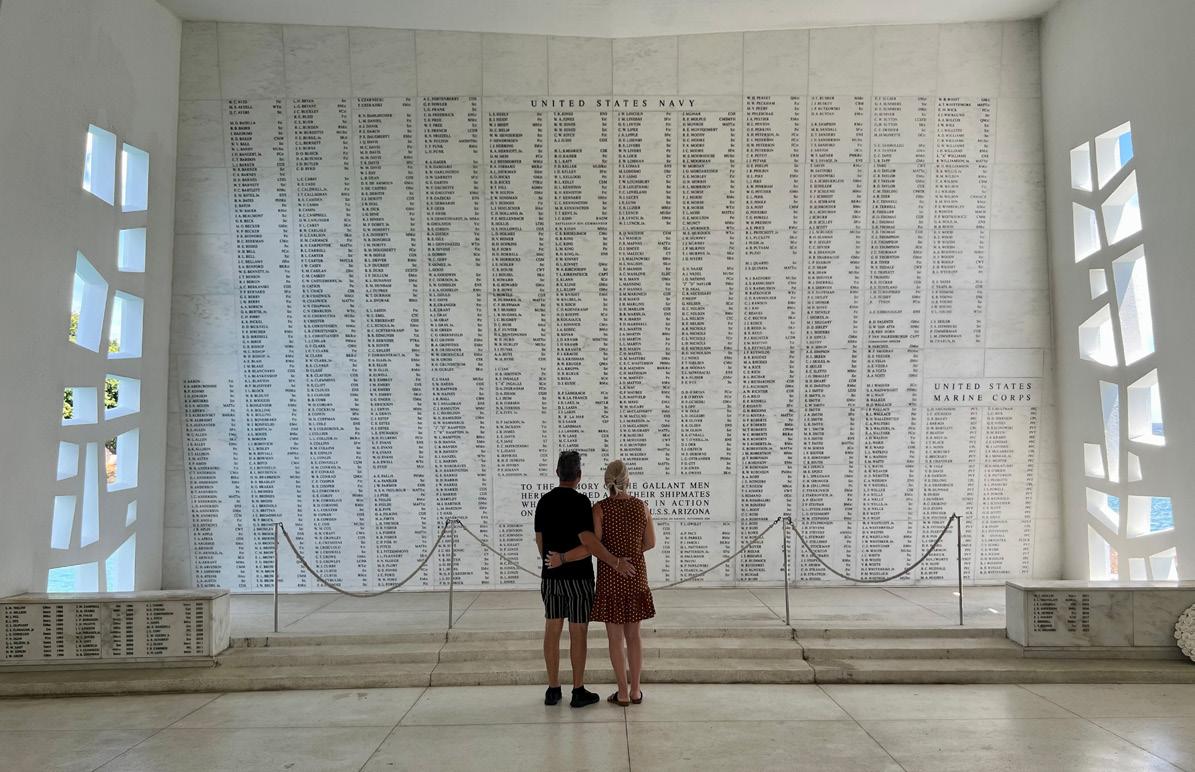
We boarded Kamoauli, a traditional double-hulled canoe, for a sunset sail where stories, song, and taro preparation immersed us in living culture as the sun set along the coast.
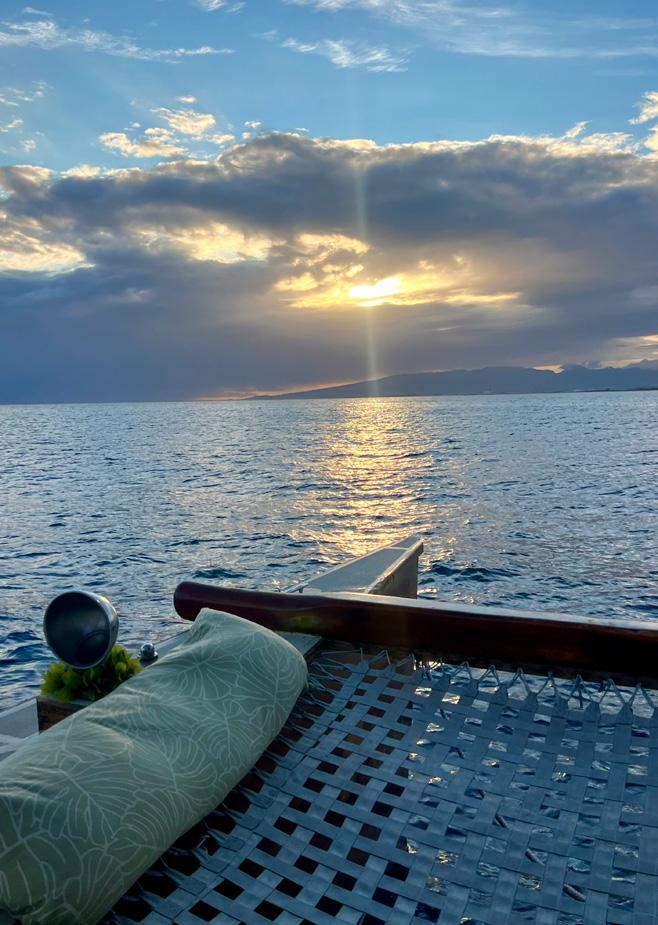
We took a hop-on hop-off bus to explore at our own pace, visiting Smith’s Gardens, Kukui Grove Centre, and the Coconut Marketplace. The highlight was Kilohana Plantation, once a working sugar estate, now offering a glimpse into Kaua‘i’s agricultural past and cultural traditions.
Nature here was the true star. Waimea Canyon stretched vast and red, earning its title “Grand Canyon of the Pacific.” The Nā Pali Coast, visible from the ship, was a tapestry of steep cliffs and deep valleys dropping straight into the ocean.
That evening, the crew staged a farewell show - hundreds of staff filling the stage to wave us goodbye. It was both warm and bittersweet, a reminder that our week afloat had flown by. We couldn’t thank the crew, particularly Christopher Torbik, our Concierge, and Luis Principe, the Group Service Coordinator & Access Officer, enough for going the extra mile to ensure we had the best experience possible.
Disembarking in Honolulu, we checked into the newly renovated Outrigger Paradise Hotel, a stylish retreat with a calm poolside area and spacious suite – we were very impressed. From here, we set out for one of the most anticipated parts of our trip: Pearl Harbour.
We were fortunate to have a private guided tour with Chief of
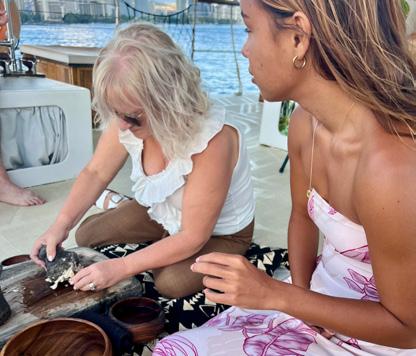
Staff Lee John Collins Sr. He walked us through the Visitor Centre’s exhibits, explaining the lead-up to the Japanese attack on December 7, 1941, and its aftermath.
At the USS Arizona Memorial, built above the sunken battleship, we stood in silence as oil still rose from the wreckage below. Over 1,100 sailors rest there, and the site carries a weight words can hardly capture.
Nearby, we toured the battleship USS Missouri, the site of Japan’s formal surrender in 1945, marking the end of World War II. Walking her decks and standing on the exact spot of the ceremony felt like stepping directly into history. We also explored the USS Bowfin submarine and the Pearl Harbour Aviation Museum, with its restored planes and control tower overlooking the harbour.
The day was sobering yet profoundly meaningful. Hawaii isn’t only about beaches and volcanoes; it’s also a place of memory, sacrifice, and resilience. A place that changed the future.
For our last two nights, we stayed at the Outrigger Waikiki Beach Resort, right on the sand. From our room, the Pacific stretched endlessly, waves rolling in under a golden sky.
On one of the evenings, we boarded Kamoauli, a traditional Polynesian double-hulled canoe, for a sunset sail. As the crew shared stories, sang songs, and offered taro prepared in the traditional manner (which we actually participated in), we felt immersed in living culture rather than just observing it. Sailing the coastline as the sun dipped behind the horizon was the perfect blend of beauty and meaning.
Our final day was deliberately slow: swims in the pool and ocean, last-minute shopping, and a farewell dinner at the famous Monkeypod Kitchen which was within our hotel complex. With ocean views, farm-to-table cuisine, and a warm breeze on our skin, it was hard to imagine a better ending.
Hawaii more than lived up to its reputation. Each island offered something distinct: Maui’s culture and resilience, Hilo’s volcanic power, Kona’s coffee and coral reefs, Kaua‘i’s wild beauty, and O‘ahu’s blend of energy and history. The cruise proved to be the ideal way to see it all, without the need for multiple flights or constant unpacking. Waikiki added vibrancy, Pearl Harbour added reflection, and the Polynesian canoe sail gave us cultural depth.
What tied it together was the aloha spirit, a warmth that went beyond greetings:
- Outrigger Group hotel staff (our stay in all three properties was excellent. It was great to experience the varied properties at different price ranges – something for every budget, with little or no obvious compromise)
- Norwegian Cruise Line crew (couldn’t do enough to make sure our cruise was memorable)
- Uber drivers (so friendly and helpful)
- the locals (who shared their traditions).
It was this hospitality that made the islands feel less like a destination and more like an embrace.
“A place to rest, a place to gather.”
“Yellowstone Lodge offers something truly special.”

“We’ll be back - next time, for even longer.”
“A place to breathe deeply, relax, laugh and to connect.”
The peak of summer brings the busiest boating season of the year in New Zealand. We are already underway, enjoying warmer water, longer days, and plenty of opportunities to get out fishing with friends and family. But more boats on the water also means more potential for mishaps if you’re not prepared. From safety checks to small upgrades that make life easier. A little prep now means more time for fishing, exploring, and enjoying those perfect summer afternoons.
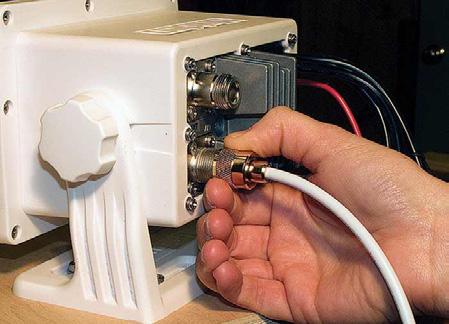
Your VHF is your lifeline on the water, so test it before heading out. Make a quick radio check call to a local marina or coastguard channel to confirm it’s transmitting and receiving clearly.
Pro Tip: Check that your MMSI number is correctly programmed if you have DSC capability; this speeds up distress calls.

Your anchor chain takes a beating over time, especially the first few metres closest to the anchor. Inspect each link for thinning, cracks, or rust pitting, as weak spots can fail when you need holding power the most. Replacing worn sections now is far cheaper than recovering a lost anchor—and far less stressful if the wind picks up.
Pro Tip: Give the chain a freshwater rinse after each trip and a light spray of lanolin to keep corrosion at bay.

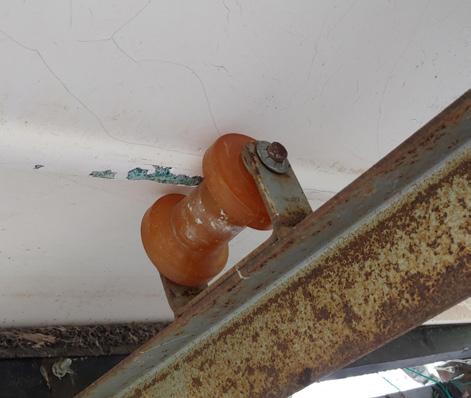
Worn or seized trailer rollers can make launching and retrieving harder than it needs to be. Inspect them for cracks, flat spots, or stiff movement, and replace as needed. Smooth rollers not only protect your hull but make solo launching far easier.
Pro Tip: A dab of marine grease on roller spindles will keep things turning freely
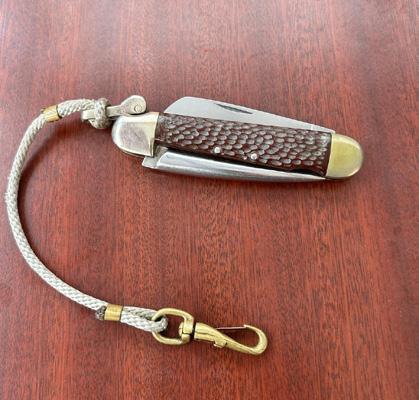


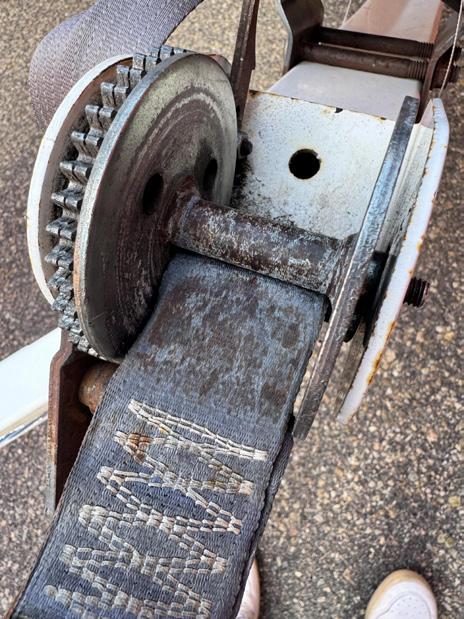
Your trailer winch works hard every time you launch or retrieve, and a bit of maintenance goes a long way. Check the strap or cable for fraying, rust, or broken strands, and replace if needed. Inspect the winch gears for wear, clean them, and apply a coat of marine grease to ensure everything runs smoothly.
Pro Tip: If your winch handle wobbles or slips under load, replace the pawl spring before it fails, it’s a cheap fix that can save a lot of grief at the ramp.
A sharp, corrosion-resistant knife within arm’s reach of the helm can be a lifesaver if you need to cut a fouled anchor rope or tangled line quickly. Mount it in a sheath for quick access, but make sure it’s secure while underway.
Pro Tip: Rinse and dry after every trip to keep the blade ready for action.


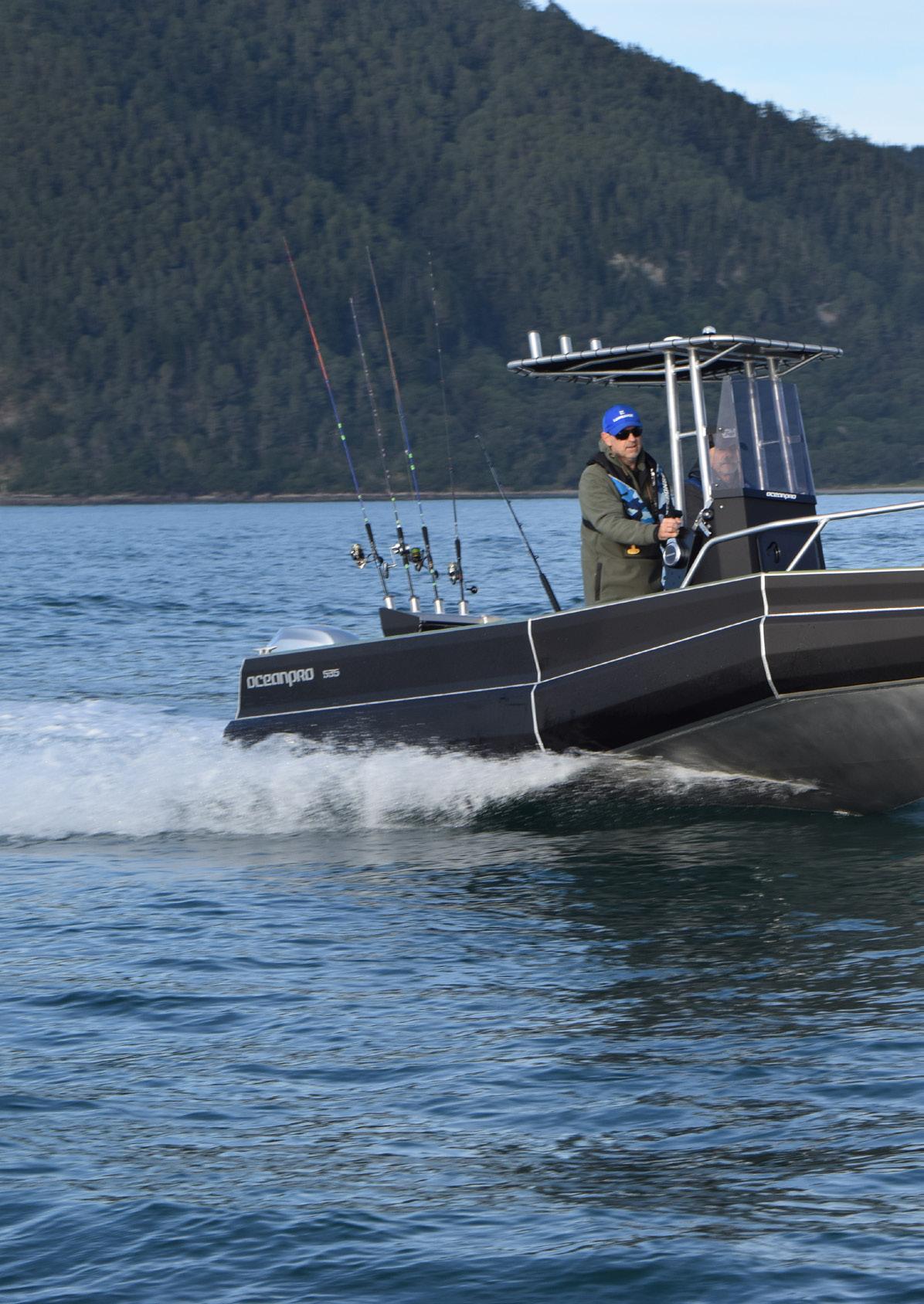
Heading out in the boat early you should have a plan to target fish out wide using jigs and a plan B if the weather changes.
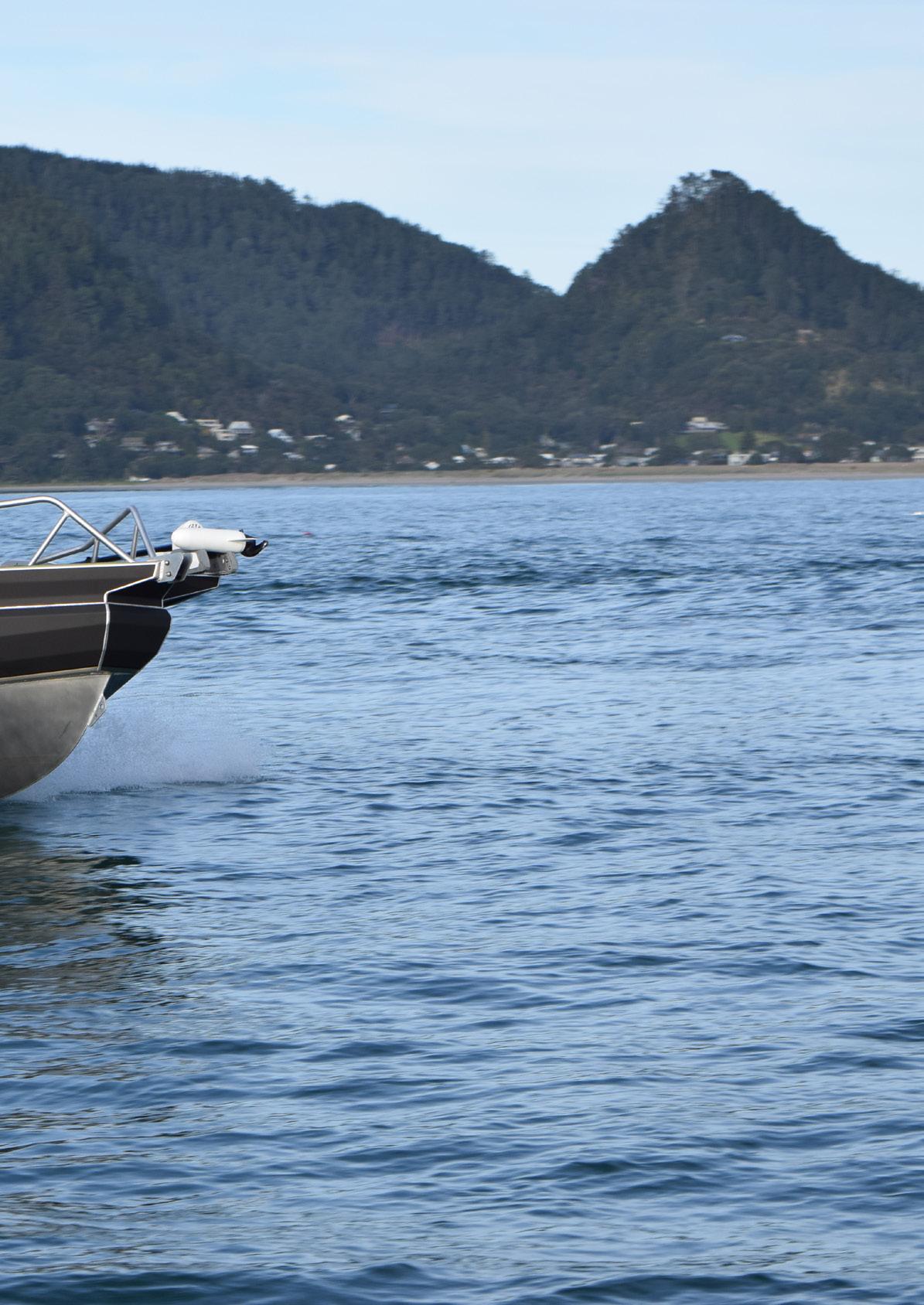
Jigging is a great method to employ in spring and into summer with many benefits over the old school bait and berley approacah.
BY MATHEW HEWETSON
Many older kiwi fishos will remember the Grim Reaper and Lethal Lure NZ made jigs that were popular in tackle stores from the 80’s. These basic jigs were pretty simple, often just silver with a single or treble hooks and they worked fine on snapper and other popular fish species.
Jumping forward in time over forty years later and walking into your local fishing store the walls are packed with shiny lures of all kinds and colours. If you were new to fishing and didn’t know any better, you would think fish must be very cunning as the sheer number of jigs for sale is because they are so hard to catch. Well, the good news is that fish haven’t evolved much in the past forty years and jigs are so good at hooking fish, that all the tackle brands are fighting for wall space and offering the next best lure on the market. In my opinion, after years of testing jigs for the fishing media landscape, I can say that they all work fine, especially in a work-up situation but on some days when the fishing can be slow, some jigs will out fish others.
Kiwis still love bait fishing, and most tackle shops sell a lot of pillies, tuna, mullet, and squid every month which helps keep the tills ringing. However, the cost for bait has gone through the roof and if you bought a bag of berley, pilchards, tuna, and salt ice for a day trip then you wouldn’t have much change from $100.
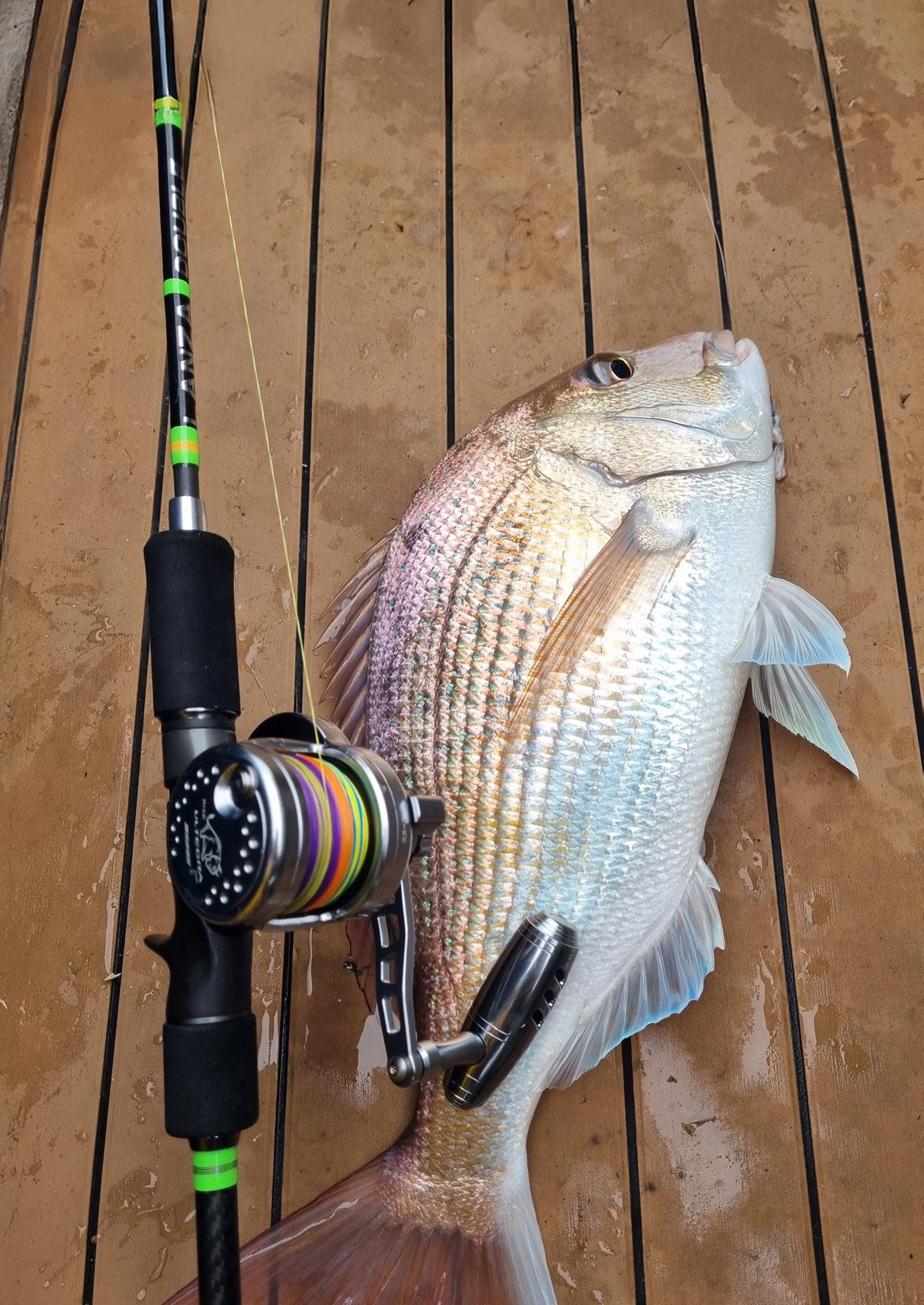
Respool your favourite jigging combos with fresh braid before hitting the water ready for action.
For the same amount spent on buying a few jigs of different weights/ and or colours, if you look after them and don’t lose them on fish, they will produce fish over multiple trips and can be used to catch your own fresh bait! I personally have jigs that are over 6-7 years old that have caught dozens of fish in this time and have been refreshed with new assist hooks along the way.
Jigs are simply just painted metal and function as the sinker to reach the bottom, often the assist hooks with rubber/plastic skirts or tinsel are what will need replacing after several trips and fish with teeth like snapper doing the damage. But the point is jigs can serve you well over a longer period and turn out to be a more affordable option over bait.
Always look for good fish sign or baitfish schools on your sounder to find the larger predators.
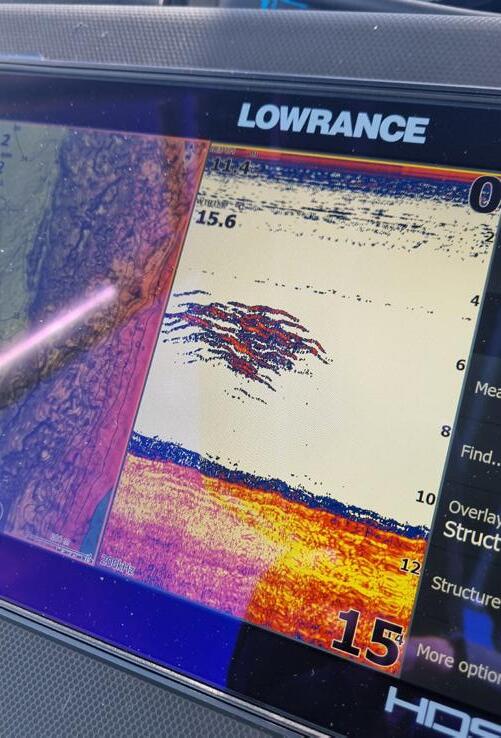
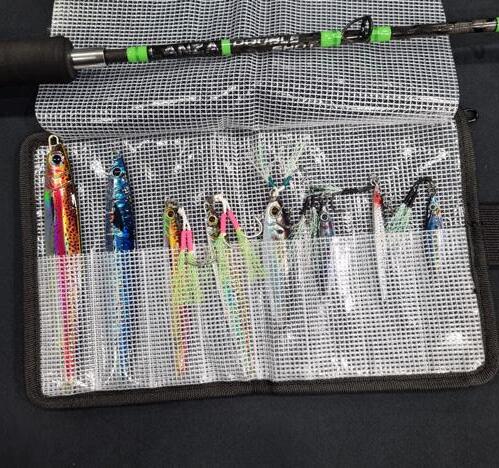
Take a jig bag with different weights and colours from 30g up to 150gm.
I always use lures to catch fresh bait or live baits when out in the boat and if you come across a kahawai or trevally school, it is fun catching your bait that can also be filleted and vacuum sealed for the freezer for later trips when needed.
During springtime there is a lot of larger baitfish schools gathering in force, with anchovies and pilchards that also attract dolphins and gannets which turn into a work-up. The common dolphins are key for rounding up the baitfish to drive them up to the surface, where
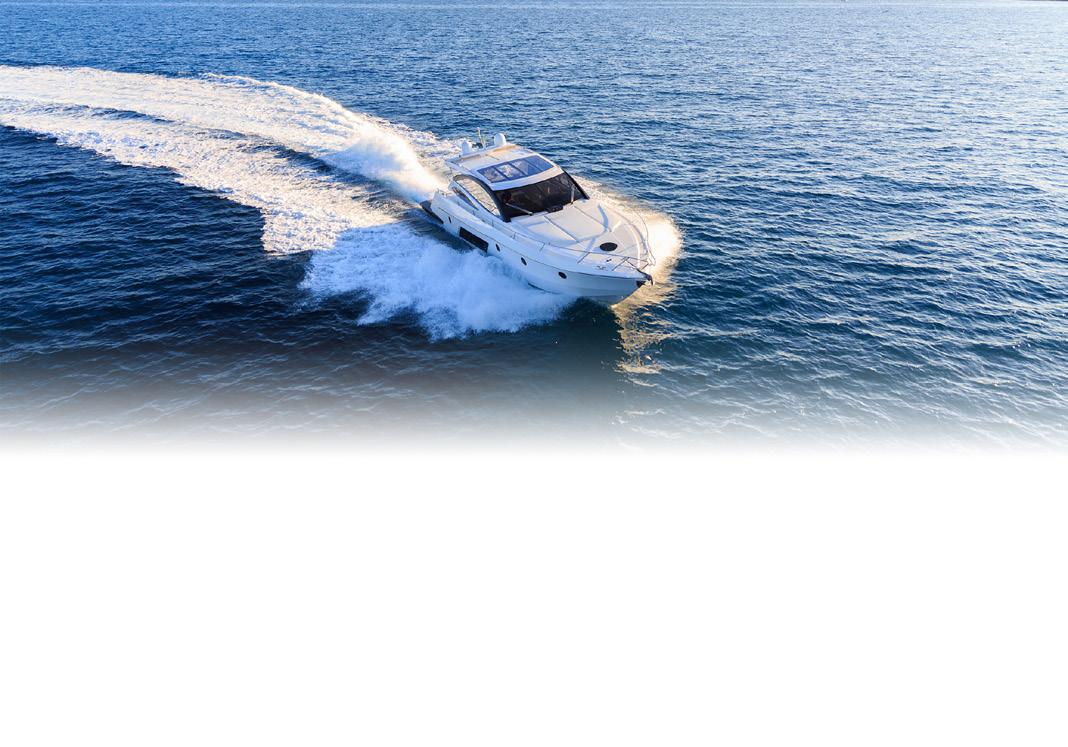




Our lithium battery systems from Mastervolt and Victron Energy are ideal for boats, offering faster charging, extended lifespan, and dependable performance when you need it most. From system design to integration, installation, and servicing, contact Beacon Marine for more information.

Bust up! You found the fish with birds working, deploy a fast-dropping slim jig through the action and often it will be hit on the way down.
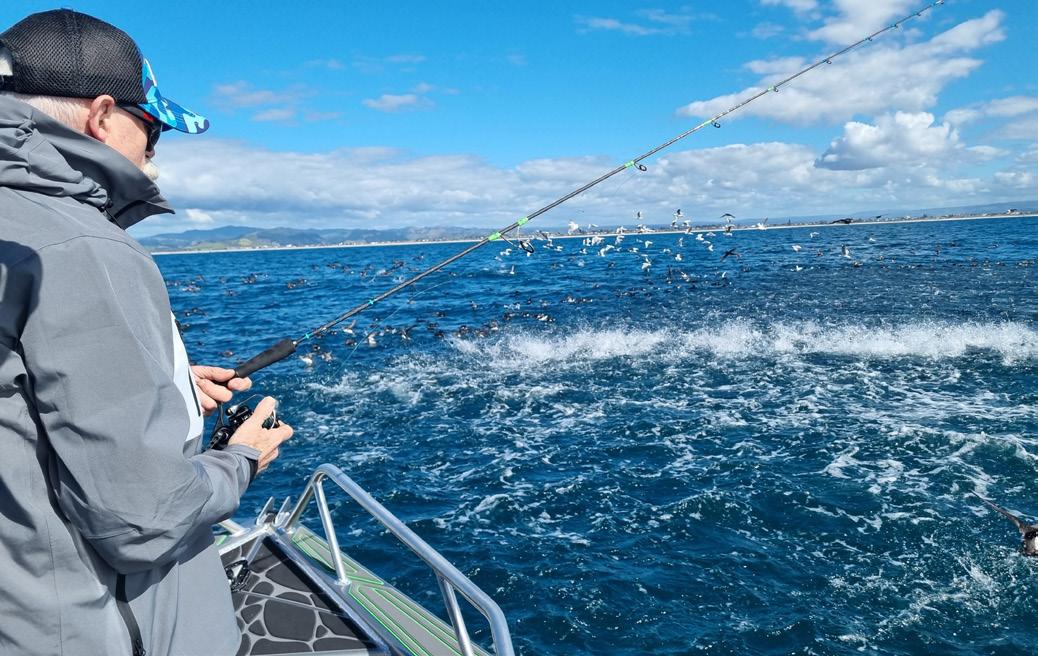
they hold the baitfish so the gannets can dive down from above. The resulting work-up then attracts the larger fish that feast on the wounded or fleeing baitfish with snapper the main target for anglers. In this situation, any jig will be smashed as you send it down near the work-up action.
Often kahawai are also in attendance and trying to get through them near the surface and to the bottom to hook snapper can be the problem. So, it pays to look at using the slim, faster dropping jigs to get down quickly and away from the kahawai.
Using a round slider type jig with plastic skirt wont sink as fast and so with more “hang time,” they are easily attacked by faster moving kahawai. A slider type jig or slow jig would be best used away from the main action, often snapper are slower and following on behind picking up the scraps, so these jigs fished hard on the bottom can work well.
The slim jigs are designed to either flutter or flash when on the drop and their erratic action attracts the attention of fish to entice a strike. Once you reach the bottom, lift the jig back up and create a yo-yo action. This can be done using an overhead or baitcaster combo and/ or spin combo, and the key is to keep an eye on your sounder, to watch for the telltale fish sign hard on the bottom or use the sounder to pinpoint the depth of the baitfish schools to target and drop your jigs through to work them for predators.
Colours aren’t as important as anglers think and I place more importance on the range of weights available to fish with. This is important as you can jig in shallower water or when the wind and current drops with small, lighter jigs from 20 – 60gm, while you need to move up to heavier jigs from 80 – 150gm when the wind and drift out in deeper water increases.
Jigs are more effective when fished vertically and so if slow fishing,
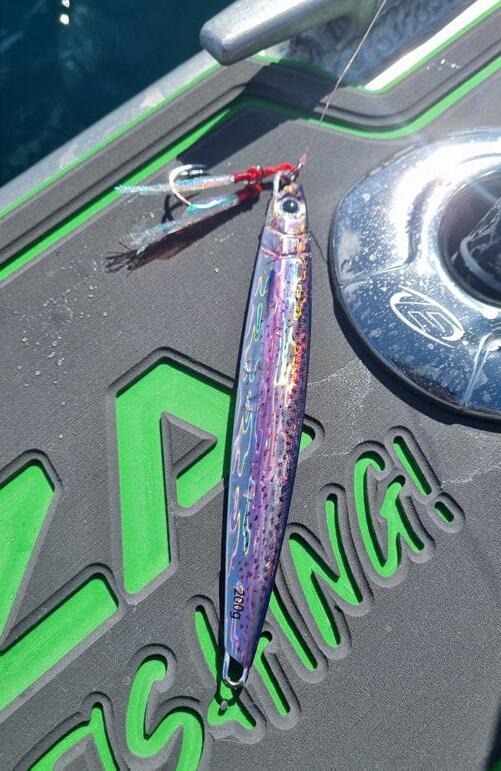
If the wind picks up with stronger currents, then larger jigs (200gm) can be used to reach the bottom and fish.
Flat calm days means you can go right down in weight and try smaller jigs to reach the bottom as they surprisingly catch big fish.

you need to change and try things to make the jig look more natural but also stay connected with your lure and strike on fish that become interested.
Trying different colours on slow days can help but I have found that the jigs with the small tinsel around the assist hooks seem to work a lot better than jigs without. These little shiny pieces must look like tiny fish or are shrimp-like and bigger fish are attracted to them moving in the current. We have hooked fish many times by simply leaving the jig still and the slow-moving assist hooks have attracted snapper to strike.
Make sure you take a selection of jigs with different weights and get your crew to all fish with assorted colours and weights to determine

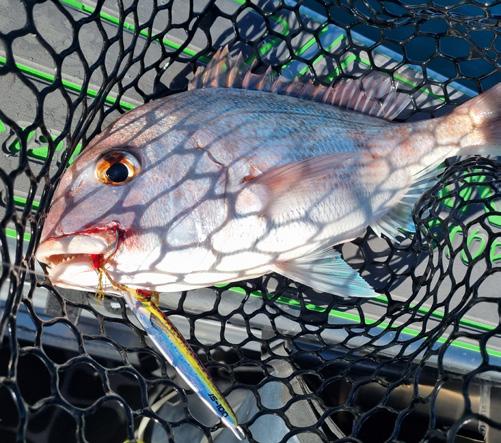
After using your landing net to secure the fish, use pliers to carefully remove the small assist hooks and check they are still fine to continue using.
which lure is working on the day. Also ensure you take a pair of pliers on the boat, as these are invaluable when removing the assist hooks from struggling fish. You can also replace hooks that are damaged using split ring pliers, so they are handy to have onboard.
Lighter jigs under 40gm are also quite effective to cast like a softbait and work back to the boat, just ensure that this is for areas of seabed with a sandy or muddy bottom. You will lose jigs in reefy country, and this will become an expensive exercise.
Jigging is a viable method all anglers should adopt through springtime and into early summer being one of the best periods for success.