Anastasiia Gerasimova, Mariapaola Michelotto, Hanna Skapska_Negotiate Villardjournal 04.025
OO9
negotiate: an introduction anastasiia gerasimova, mariapaola michelotto, hanna skapska
O17
cultures of assembly: a conversation anastasiia gerasimova, markus miessen, giuditta trani
O31
turn up the volume: basic rules for condominium design in jesolo giulio marchetti
O57 the negotiated territories between architecture and information technology giacomo de caro contents
O45
the greater number: display as a site of negotiation marta atzeni
O67 negotiating realities: fiction as a tool of the architect
jana čulek
O77 doing architects a favour: the funambulist, a political architectural magazine
martina dussin
O87 reversing the roles: urban-rural negotiations in italy
marco de nobili
O99 crutches
anastasiia gerasimova
113 bargaining power: what is the value of calculation?
jesse honsa
125 iba 1981-1987: mediated city chiara carrera
135 the negotiated time: temporal politics in cross-border urban spaces
yi guo
151 in the ‘real world,’ nothing is neutral: design schools, conflict, and the question of palestine noemi biasetton
171 (n)ego-otiation: schools, spaces and mediations
alessandro de savi
185 architecture with(out) fire: uncanny burning and new social rites riccardo del fabbro
193 forward thinking: a conversation meriem chabani, david naglic, hanna skapska
negotiate: an introduction anastasiia gerasimova, mariapaola michelotto, hanna skapska
abstract The etymology of the word suggests an active state of being: from Latin neg (not) -otium (ease, leisure), negotium meaning also occupation, affair, be it public or private. Today, the word is mainly used to indicate a continuous confrontation with something considered as ‘other,’ a confrontation between beings, ideas, an act of exchange, of communication, that always implies the mutual interest in finding a common ground.
discourse As architects, we are constantly asked to negotiate our position in order to align with stakeholders, with clients; but, simultaneously, we feel the need to constantly negotiate stereotyped definitions and approaches. The core of negotiating could be identified with a state of suspension: in the moment an agreement is reached, the environmental conditions surrounding it would have changed already, calling for a new evaluation, a new negotiation. This ‘enervating mobility’ which Derrida refers to in Negotiations: Interventions and Interviews, is what prevents thought to crystallise into dogmas; again, neg-otium, restlessness.1 The project itself is the negotiation of the architect with normative restrictions and site limitations. Negotiation is an adjunction of all those factors – even the
cultures of assembly: a conversation anastasiia gerasimova, markus miessen, giuditta trani
abstract Markus Miessen is an architect, a spatial designer, a consultant, and a writer – and an alumnus of the Glasgow School of Art (BArch), the Architectural Association (AADiplHons), and the London Consortium (MRes). He defended his PhD, supervised by Eyal Weizman, at the Centre for Research Architecture at Goldsmiths, London, in 2015. Markus is the founder of Studio Miessen (studiomiessen.com) and the initiator of the platform Cultures of Assembly (culturesofassembly. org), which forms part of his Chair for Urban Regeneration at the University of Luxembourg, where he is currently running the multi-year research project The Esch Clinics as principal investigator, together with César Reyes. He has been involved in teaching and organising educational programmes in various universities and art schools around the world, including the Berlage Institute (Rotterdam), the Städelschule (Frankfurt), the University of Southern California (Los Angeles), and the Harvard Graduate School of Design (Cambridge, MA).
anastasiia gerasimova Many examples of participatory practices and critical urban interventions often lack the design aspect. Although the political and social value of the gesture
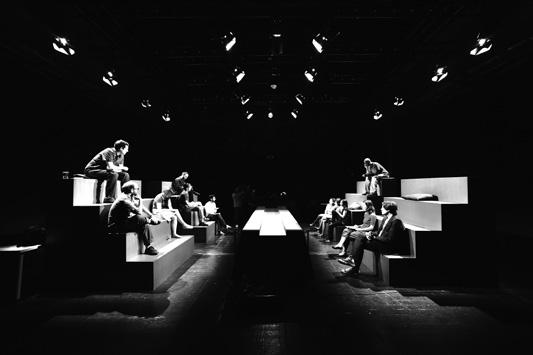
1 Backbench, Manifesta Murcia 2010. Photograph by Pablo Ferao.
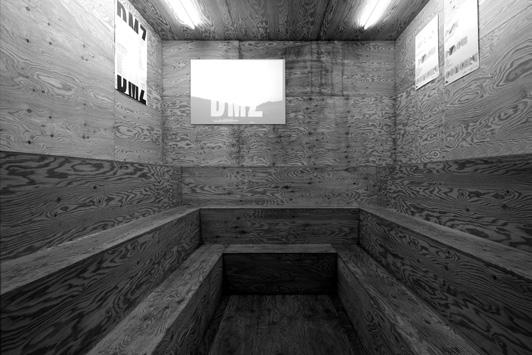
2 Discursive Sauna, Artsonje Center, Seoul, 2014. Photograph by JongOh Kim.
3
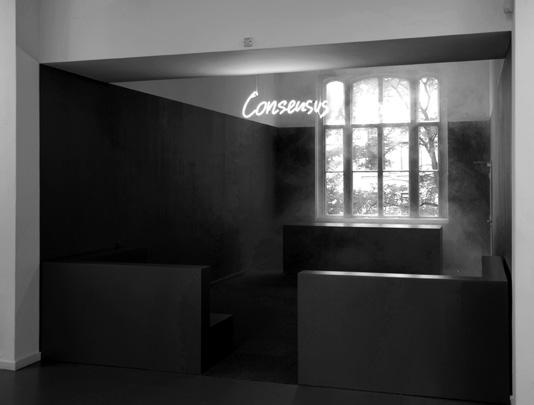
Consensus Bar, Witte de With, Rotterdam, 2012. Photograph by Bob Goedewaagen.
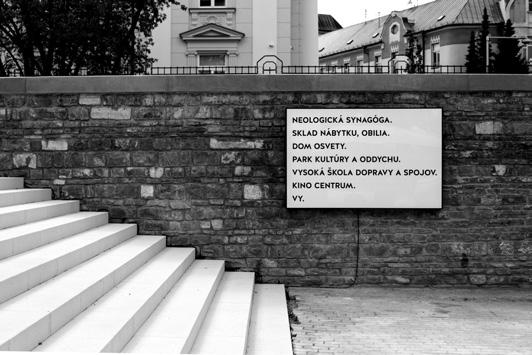
Nová Synagóga in Žilina, Slovakia, 2017. Photograph by Kathrine Thude.
turn up the volume: basic rules for condominium design in jesolo giulio marchetti
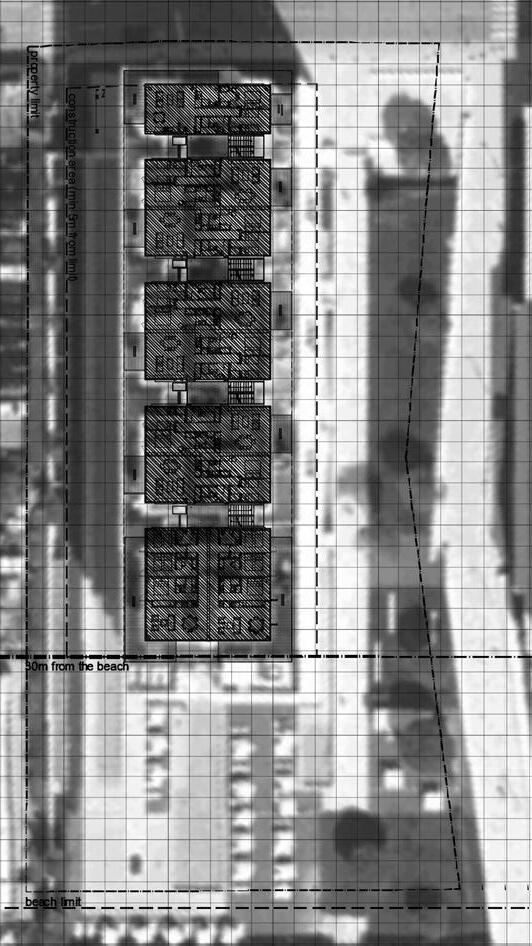
abstract The Beach Houses is a residential condominium designed by Richard Meier, located on the shores of Jesolo, a popular tourist destination along the Adriatic Sea. This article describes the negotiation process that brought together multiple stakeholders and ultimately led to the building’s construction. It specifically details the steps taken to determine the building’s volume in compliance with local regulations, with a particular focus on architectural elements that, while permitted to exceed the building’s approved volume, effectively act as implicit surface bonuses. These elements significantly influence the architect’s design process as well as the building’s functional and market value.
General references to Jesolo’s urban development history help contextualise this case study, along with brief mentions of the history of the condominium, both as a physical structure and as a legal concept within Italian legislation, underscoring its role in post-war urbanisation. The role of the architect as a negotiator takes on a particular importance in complex, speculative contexts, working to address the contentious implications of such spaces. This experience ultimately underscores the role of design in mediating between market requests and urban quality.
1
2
3
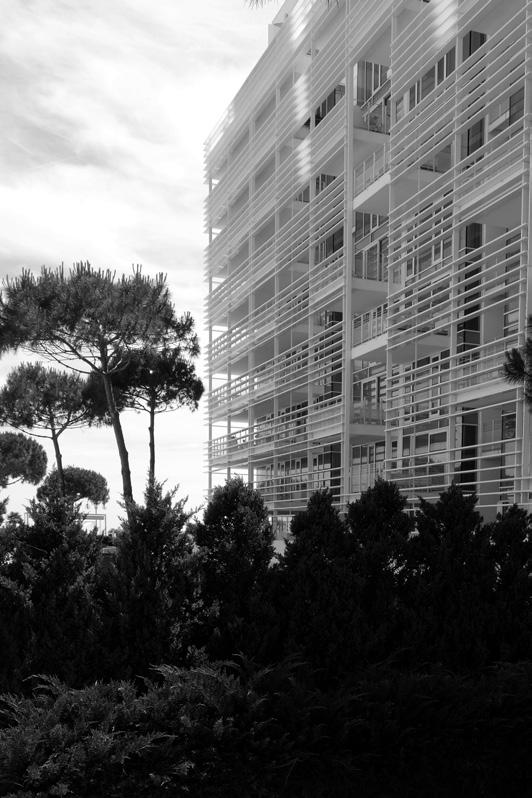
The Beach Houses, Jesolo. Photograph by the author, 2023.
The Beach Houses, Jesolo, Photograph by the author, 2023.
The Beach Houses, Jesolo. Graphic reconstruction by the author, 2024.
reversing the roles: urban-rural negotiations in italy
marco de nobili
abstract The longstanding negotiation between the city and the countryside is facing now a historical shift. Traditionally, power dynamics between these two spheres have seen the city’s dominance over rural areas. In Italy, the 20th century marked the peak of this trend, with architecture largely focused on urbanisation, sidelining countryside for nearly a century. The onset of the new millennium, alongside emerging environmental, food, and health crises, has cast a new light on rural architecture figures. Nowadays, the city still adheres to 20th-century paradigms but looks to the countryside for support, seeking ways to counteract the processes that are making urban life increasingly unsustainable. Throughout the last century, various Italian architects proposed ways to resist urban hegemony. In 1994, Giancarlo De Carlo’s Second Master Plan for Urbino laid the groundwork for an alliance between the historic center and the surrounding countryside to stop the suburban sprawl. Today, an ‘anti-city’ doctrine, with Milan as its current symbol, emphasises the emerging phenomenon of urban ‘ruralisation.’ Beneath this role reversal lie prospects for new alliances between city and countryside, but also hints of underlying exploitation.
revitalising the neglected historic center by repurposing it for student hospitality. The second, 1994, shifted the focus to the surrounding territory. Co-authored with Paolo Spada, the 1994 plan was visionary in recognising the territory as an active component of urban transformation. It acknowledged that the large-scale exodus to the coast could be mitigated only by enabling habitation in the countryside.8
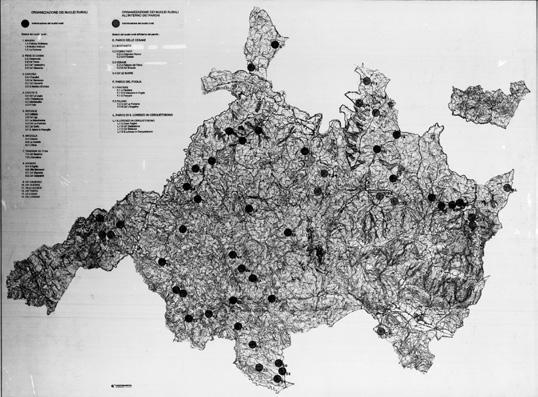
This second plan reimagined the entire municipal territory as a system of parks and identified an archipelago of ‘Rural Clusters’9 in the countryside as key elements in future planning. The plan proposed improving transport systems to enhance access to these rural villages (though the railway was never activated) and allowing new construction to ensure a sufficient population could reside there.
Notably, the historic center itself was integrated into this park system as an ‘Urban Park.’10 New constructions in the center and its peripheries were denied, and a series of ‘pilot projects’ was developed to explore the relationship with the territory. The transition from a city-centered plan in 1964 to a territoryfocused plan in 1994 provides a thirty-year timeline for analysing this shift. Now, another thirty years later, Urbino offers a unique opportunity to assess the outcomes of the latter intervention. While the contemporary awakening to the evolution of the countryside has only recently been documented through internationally significant exhibitions,11 De Carlo has already taken a forward-thinking stance. In this sense, the 1994 plan marked a turning point in Italian architectural culture. Before the World Wars, the countryside had been idealised as a symbol of national identity, but it later became the subject of collective neglect – an issue only a few architects, including De Carlo, addressed.
De Carlo’s interest in the countryside can be traced back to his early career and his relationship with Giuseppe Pagano, who conducted research on Italian Rural Architecture for the 6th Triennale di Milano in 1936.12 Pagano’s fieldwork documenting rural architecture through photography and ethnography was later expanded upon by De Carlo in the 9th Triennale di Milano in 1951 with an exhibition on ‘Spontaneous Architecture.’
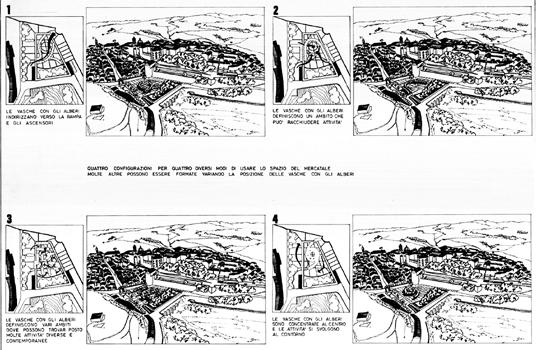
1, 2 Giancarlo De Carlo and Paolo Spada, PRG, Urbino, 1994. Urbino as an archipelago of rural clusters. The territory towards the city: possible configurations for the Mercatale area. Courtesy Università IUAV di Venezia, Archivio Progetti, Fondo Giancarlo De Carlo.
crutches anastasiia gerasimova
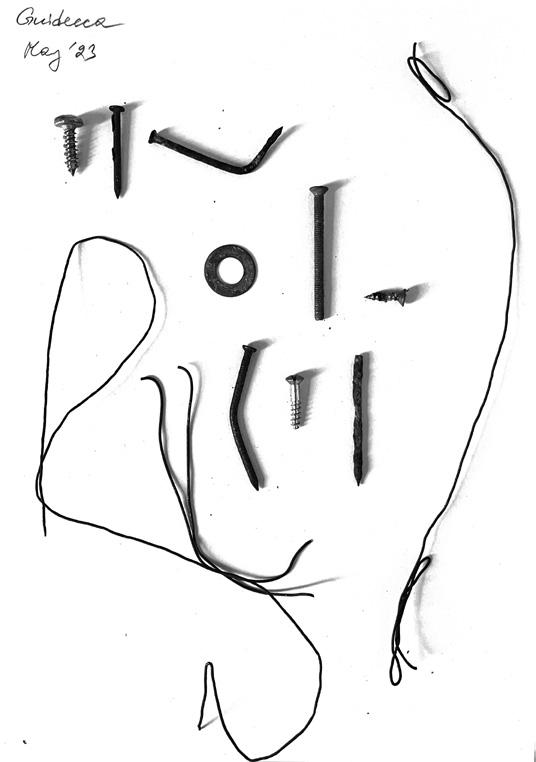
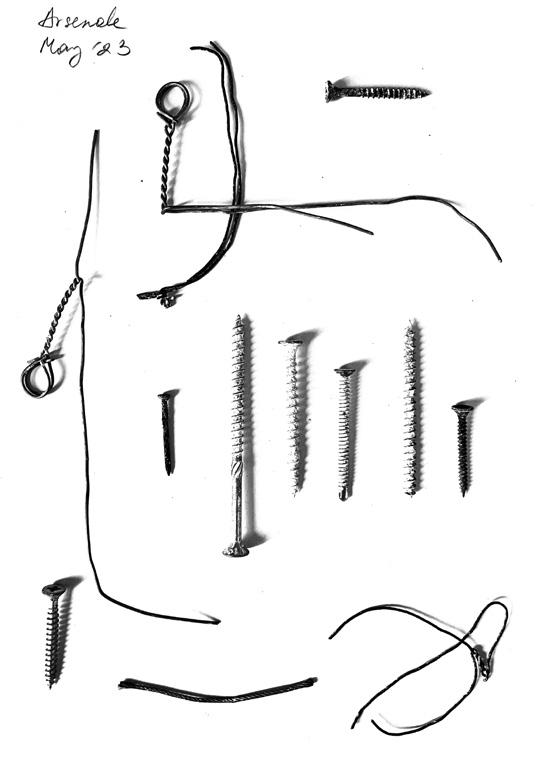
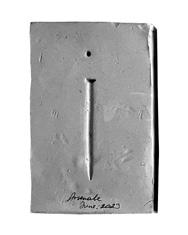
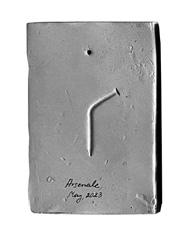
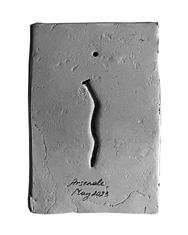
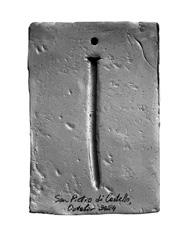
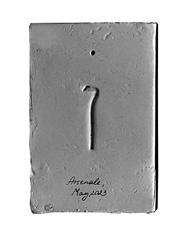
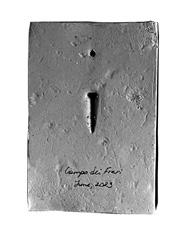
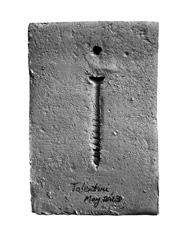
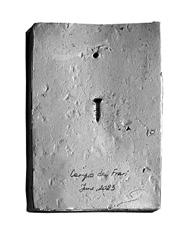
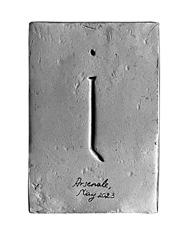
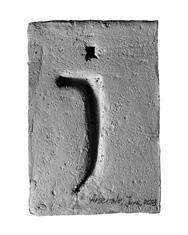
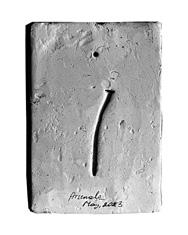
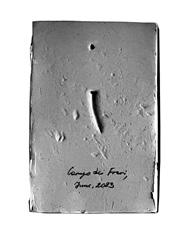
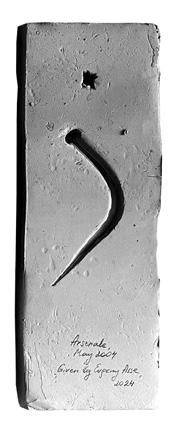
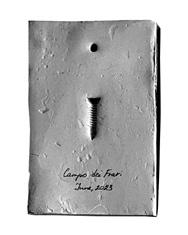
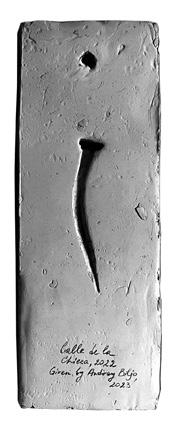
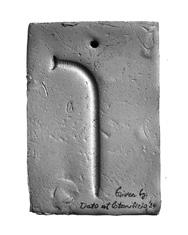
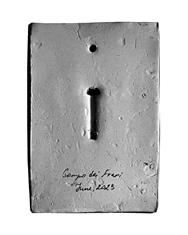
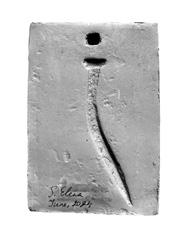
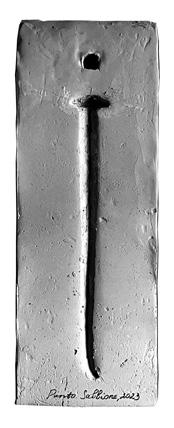
abstract I have started collecting nails in Venice. At least one every day kept showing on the way somewhere, probably because of constant restoration works in the city. They are crutches of Venice and are one of the few things that get replaced in buildings all the time. Nails are not usually considered in preservation processes, yet they are fundamental joints in construction that solve the negotiation between various materials. This brings on the question of heritage: to what scale do we keep architectural elements authentic? There are exceptional examples, when the nails are being forged following the form of the old ones, such as for the dome of the Basilica di San Marco. All the nails I have collected are from different periods, yet they carry the same function. Therefore, in order to equalize them, they had to be represented as typology. The clay casts have been made to give them the same language. Each of the clay plates serves as the orthogonal projection plane for the nails. The section shows the nail in its length and its specific bending, making the whole collection look like an unknown alphabet. The plan shows the nail hole’s diameter in the plate. The hole resulting from the nail on the wall is a known trope of a trace of something that is no longer there.
iba 1981-1987: mediated city chiara carrera
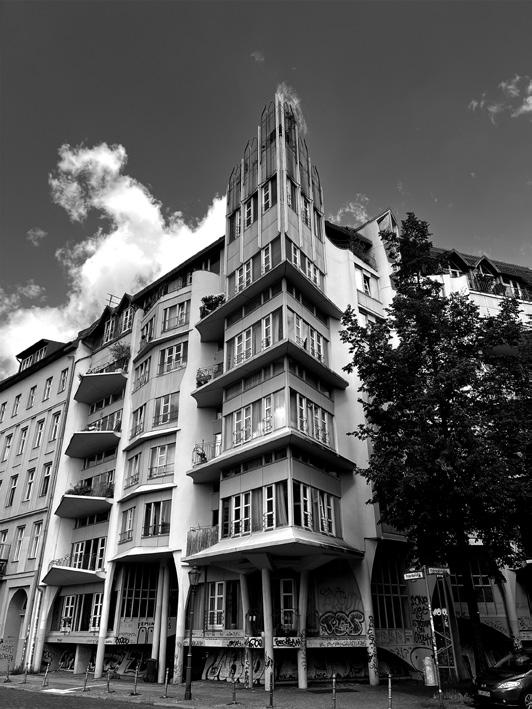
abstract The current contribution proposes re-reading Berlin’s ‘Internationale Bauausstellung’ 1981-1987 as a simultaneously extraordinary architectural, political and media event with no historical counterpart in other countries. In a highly isolated Berlin, IBA was conceived as a significant negotiating effort to respond to the reconstruction of the historical city, involving the most well-known international urban and architectural practice exponents. Its repair and reconstruction became inseparable from Berlin’s political history and of divided Germany, in which the ‘architecture of the city’ was called upon to mediate between the prospect of a reunited future and the adaptation to the borders reduced by the wall, driven by a national program of moral and cultural reconstruction (in the footsteps of the German bauaustellung). IBA saw the collaboration of cultural institutions, political agendas, and architects’ stances. Hence, a close alliance was defined between exhibition and territory in which exhibitions constituted little more than a pretext for a lasting and farreaching intervention, both in terms of practices and theories, whose influence unfolds far beyond the spatial and temporal limits of the baustellung.
1 Hinrich Baller, Wohnbebauung between Fraenkelufer and Admiralstr., IBA 1987, Berlino. Photograph by the author.
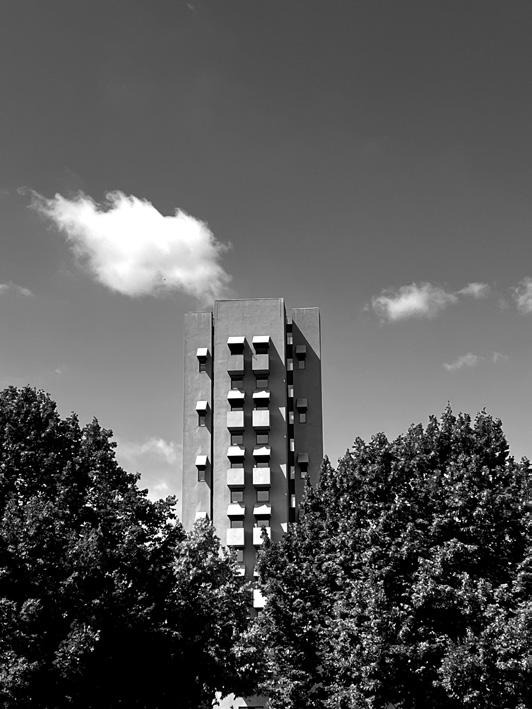
2 John Hejduk, IBA Neubau, The Kreuzberg Tower, 1988. Photograph by the author.