INFLUENCE ME COMPONENT ONE LEAH JONES
WHAT IS AN INFLUENCER?
An influencer is a person who is regarded as an expert within their particular field that also has a steady following. People trust their opinions, and thus their endorsements carry a considerable amount of weight. There is a growing interest in experts who have a large social influence and presence via social media.
The bulk of influencer marketing today occurs in social media. Micro-influencers and bloggers are a more cost-effective way to access instant credibility for growing brands.
Influencers are valuable because they offer instant access to the credibility a growing company needs. 70% of millennials are influenced by recommendations from their peers. Influencers provide a connection point between companies and their target market
Influencers have specialized knowledge, authority or insight into a specific subject. Their pre-existing presence in a niche makes them a useful launching pad for brands in search of credibility. 85% of marketers engaged in influencer marketing in 2017 and 92% said their campaigns were effective.
Today, influencers fit into the following categories:
• Celebrities: Artists, athletes, and pop culture stars.
• Industry experts and thought leaders
• Micro-influencers: Individuals with impact on social media
• Bloggers and content creators
Influencer marketing is a collaboration between popular social-media users and brands to promote brands’ products or services. These partnerships have been going on informally since the dawn of social media. The market has grown astonishingly quickly: since 2019, it has more than doubled on the strength of platforms such as Instagram and YouTube. In 2023, the influencer marketing economy was valued at $21.1 billion.
Influencer marketing acknowledges that need for trust and recommendations that consumers want to see.
Since people already follow the influencer and regard them as an industry leader, the recommendations that they make about brands are very important. When you develop a relationship with an influencer, you can tap into that power and grow your own brand. There are a several ways that influencers can help promote you and your business.
A decade ago, the influencer marketing arena was limited only to celebrities and a few dedicated bloggers. Now, social media influencers have risen and saturated the market. And while their followings may vary in size, these influencers pack a punch. Their tight-knit communities foster authentic connections, leading to higher trust and engagement. Influencer marketing works because of the high amount of trust that social influencers have built up with their following. And recommendations from them serve as a form of social proof to your brand’s potential customers.
The more personal the recommendation the influencer makes, the more value it will hold for your efforts. Some studies have found that the average engagement rate for influencer marketing is 16 times higher than it is for other forms of marketing, such as paid advertising. You can find the best influencers for your brand or business through contractors or an influencer agency. Working with an influencer agency may provide you with a more structured relationship.
The bulk of influencer marketing today occurs in social media. Micro-influencers and bloggers are a more cost-effective way to access instant credibility for growing brands.
Influencers are valuable because they offer instant access to the credibility a growing company needs. 70% of millennials are influenced by recommendations from their peers. Influencers provide a connection point between companies and their target market.
INFLUENCER MARKETING

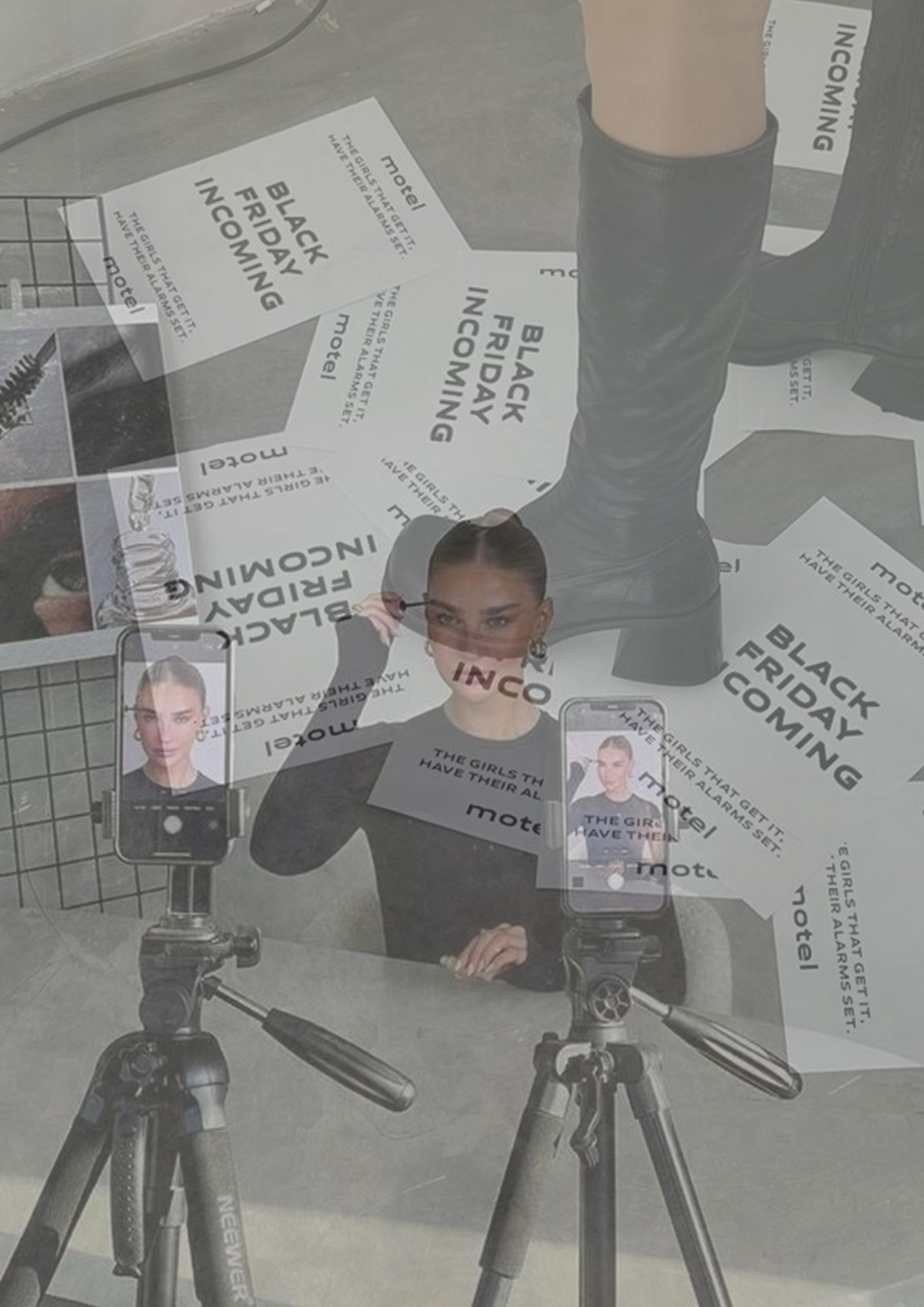
INFLUENCER MARKETING AGENCY
An influencer marketing agency is a creative marketing agency focused on bringing brands together with online influencers and content creators. Whether working with YouTube influencers, TikTok influencers, gaming influencers, food influencers, or content creators in any other category, the aim is to build successful marketing campaigns that leverage the creative partner’s content, following and voice.
Getting an influencer marketing campaign right requires a great deal of understanding, creative expertise, and data insights, so a dedicated influencer marketing agency should be the most qualified team to deliver a campaign that really works.
An influencer marketing agency’s responsibility is to find the right, most natural and effective matches between brand and influencer, and be capable of generating creative ideas and campaign formats that serve both parties in the most harmonious and mutually beneficial manner possible. Able to provide the insight, data, and creative and cultural understanding to help brand clients navigate the relatively new and always evolving influencer landscape, they’re a vital partner to those wanting to achieve the most effective marketing results and enjoy the most fruitful creative relationships with influencers.
Influencers need to feel supported, creatively understood, and never pushed into campaigns or branded content ideas that don’t gel with their values, style of content, or audience tastes. An influencer marketing agency’s brand clients need to feel informed, have their specific campaign needs and KPIs understood and served, and feel assured and looked after with absolute transparency through what is, to many, still a relatively new process.
Influencer marketing agency pricing varies from project to project. Influencer marketing agency fees should usually be built out of a combination of the fees of the influencer talent involved in the campaign, alongside any production service costs, with an agency fee on top. An influencer marketing agency should have a standard rates card covering all their services in order to maintain consistency and transparency. And an influencer marketing agency should tailor its choice of influencers and campaign ideas to gain the optimal results for each individual client’s budget and needs. As with every part of how a good influencer marketing agency should work.
Influencer marketing case studies should always cover three main factors. Firstly, they should clearly explain the client’s needs and any unique challenges involved in the project. Then they should detail not just which influencers were chosen, but exactly why, paying close attention to the channels’ culture, audience, native content, and voice of the content creators brought onboard for the collaboration. And then, of course, they should show good results. But these should not simply relate to scale, views, or superficial vanity metrics. They should also confirm and explain effects of real engagement and effective, resonant messaging.
In the mid-2000s, platforms like Facebook and Twitter began to gain popularity, and influencers started to build their followings on these platforms. This inspired brands to begin partnering with social media influencers to promote their products, and influencer marketing was born in the form we know today.
In 2010, the social media app Instagram was launched. Instagram gave users the ability to connect with one another; posting pictures and sharing products that they enjoyed. Influencers utilized this platform as an opportunity to connect with their followers on a new level. Social media influencers shared their daily lives and fans quickly began to take notice of the products they were using, although these influencers were mainly already known celebrities such as Kim Kardashian.
In 2013, Instagram introduced the feature of paid advertisements, easily connecting brands to various influencers across the platform. Selling products was easier than ever, with just a click of a button, influencers could share what they enjoyed and get paid for it too.
Founded in 2011, Twitch brought in a whole new element of social media with live stream gaming. It gave gamers the opportunity to connect and livestream them playing while simultaneously allowing viewers to interact and comment while they play. This brought about a whole new category of social media influencers, gaming influencers. Gamers now had the ability to make money from streaming their content and sponsoring different games. The platform has grown past gaming with live streams that focus on other topics such as sports and music. Today, the platform is the world’s leading live streaming platform for gamers with 9.36 million active streamers.
In 2016, TikTok was founded. What sets TikTok apart from other platforms is that the content you see is truly specific to you. Through the “for you page”, users can gain a unique experience that is highly entertaining. Not only is it specific to you, but there is a wide variety of content, constantly keeping you entertained. Influencers have utilized the platform to grow their following and connect in a unique way. Through various song and dance trends, it gave influencers the opportunity to follow the trends while also putting their own spin on them.

INFLUENCER HISTORY

BRAND BUILDING
A personal brand is what people perceive about you based on your experience, expertise, competencies, actions, and achievements within a community, industry, or the marketplace. It’s the unique story about you that you want to tell the world. Personal branding is the process and strategy that helps you build your personal brand. If done well, it will be a powerful tool for you to grow your reputation and become successful as an influencer.
What you demonstrate in your personal brand, either the pink pants you wear in an Instagram photo or your soft voice in a YouTube video, will make you memorable to someone else, even if you haven’t met them in person. The pictures you post, the stories you share, and the collaborations you take can help you build a level of trust and connection with your followers. If your content is genuine and authentic, people will trust you more. For example, posting photos of your daily life proves that you are a real person and makes you more approachable to your followers. Good personal branding lets you showcase your uniqueness, proves your knowledge and skills, and makes it easier to pitch yourself to brands.
Tips for building a good personal brand:
1 - Know yourself and how you want to present that
First and foremost, you need to find your niche: what’s special about you, what you are passionate about, and what you are good at. In short, your personal brand needs to be about you. Don’t try to imitate another person, you won’t succeed. If you try to focus on too many things at the same time, you won’t make an impact either. Just one thing, the most special thing about you, is going to work.
2 - Know your target audience & build your brand to match their needs
While your personal brand is about you, it needs to be relevant to the target audience. You should make sure your content is inspiring to your followers and encourage them to take action. For example, if you are a beauty blogger who wants to promote organic skincare, research the most trending products and recommend them to your followers.
3 - Be consistent from copy to visuals
If you are wearing a green hat today, people may forget it the next day. But if you consistently wear a green hat 365 days of the year, “green hat” may become your style icon. When building your personal brand, being consistent is the key to success. You need to act in a way that matches your personal brand. For an influencer, it’s not just about the content you share, but also your tone of voice, the colour scheme, and the fonts you use in your marketing materials. It will be helpful to write down a set of branding guidelines that you can follow all the time.
4 - Don’t focus too much on selling
Sharing sponsored content is generally expected (and accepted) because it’s part of your job as an influencer. However, to successfully endorse a product, good personal branding needs to come first. One good strategy is to create a mix of useful and relevant content for your audience. By posting this content, you focus on your audience rather than yourself. That’s how successful personal branding should be.
SOCIAL MEDIA HIERARCHY
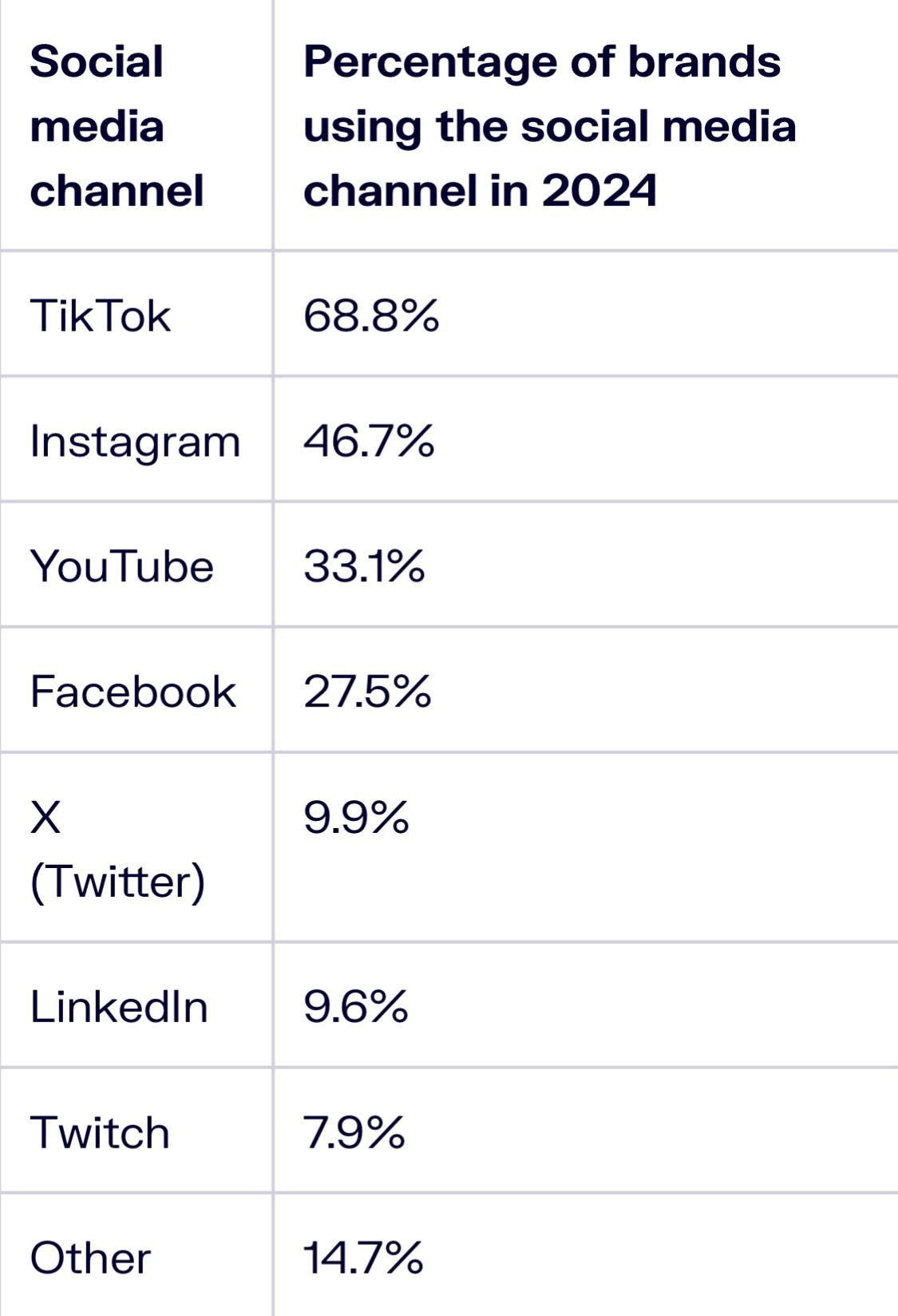
Recent research shows that TikTok leads the list of the top influencer marketing platforms brands use. More than two-thirds (68.8%) of marketers are expected to use it for their campaigns in 2024, a 13.3 percentage point annual increase.
TikTok is followed by Instagram, which just under half of brands (46.7%) plan to use for their influencer marketing efforts in 2024. Video-sharing channel YouTube and social media giant Facebook rank next on the list of the top influencer marketing platforms. They are expected to be used by 33.1% and 27.5% of brands, respectively. Incidentally, recent data shows that YouTube boasts the highest average influencer engagement rates. With an engagement rate of 8.2%, it’s just ahead of Instagram’s 7.4%.
X, formerly known as Twitter, rounds out the top five influencer marketing platforms of 2024, with around one in 10 brands (9.9%) intending to use it. X’s falling popularity as an influencer marketing channel over the past few years has been notable. In 2022, as many as 23% of brands used it for influencer marketing campaigns. By 2023, this figure had fallen to 14.4%.
Professional network LinkedIn follows close behind X, with 9.6%, and live-streaming network Twitch completes the list, with 7.9%.
As popular and effective as influencer marketing may be, there are obstacles to be aware of. Brands rank measuring results, finding influencers, and managing contracts and deadlines as some of the top influencer marketing challenges they currently face.
Generational marketing is a strategic approach that involves segmenting audiences by age groups and targeting them based on the values and experiences that resonate with their generational cohort. Generational marketing strategies help brands craft unique messages that speak directly to each generation’s values, preferences and experiences. They create meaningful connections that inspire and drive brand loyalty. As time passes, the individuals within your target audience will age, and new generations will emerge as potential consumers. These new generations bring unique experiences that influence their interests and preferences—and those are often considerably different from those who came before. Generational marketing plays a key role in maintaining an up-to-date understanding of your customers. It’s a framework that will help you understand how different age groups perceive and interact with brands.
Generation Z are extremely online. In fact, most of these digital natives have had some kind of social media presence for more than half their lives. Gen Z social media usage won’t be slowing any time soon. When asked about their social media usage for 2024, 41% of Gen Z consumers say they anticipate using more social networks than they do today.
Millennials are often saddled with outdated stereotypes from their early years on social, which doesn’t give marketers an accurate picture of who they are today. Most are navigating early adulthood and the excitement and uncertainty that comes with it, including job milestones, parenthood and eldercare.
Seventy-two percent state that social is an essential part of their lives, the highest of all age groups. When identifying the most common ways Millennials use social media, our survey also found that:
* 61% use social to communicate with family, friends and acquaintances
* 51% use social to kill time
* 47% use social to learn about new trends
* 43% use social to get breaking news
Generation X is sandwiched between the much larger Millennial and Baby Boomer generations. Although this group is small, they make up a large number of users across top social networks. According to a recent survey from Wavemaker, 92% of Gen Xers use social media every day. They’re even the fastest-growing generation on TikTok, a platform more closely associated with Gen Z. However, just because they share the digital space with their younger counterparts doesn’t mean they seek the same content. The survey highlighted another notable trend—influencer marketing campaigns featuring Gen X creators not only resonate 73% more with Gen X audiences but also drive a 43% increase in website visits for advertisers. Although Gen X represents a smaller generational subset, their appetite for tailored, relevant content can’t be ignored.

GENERATIONS AND SOCIAL MEDIA
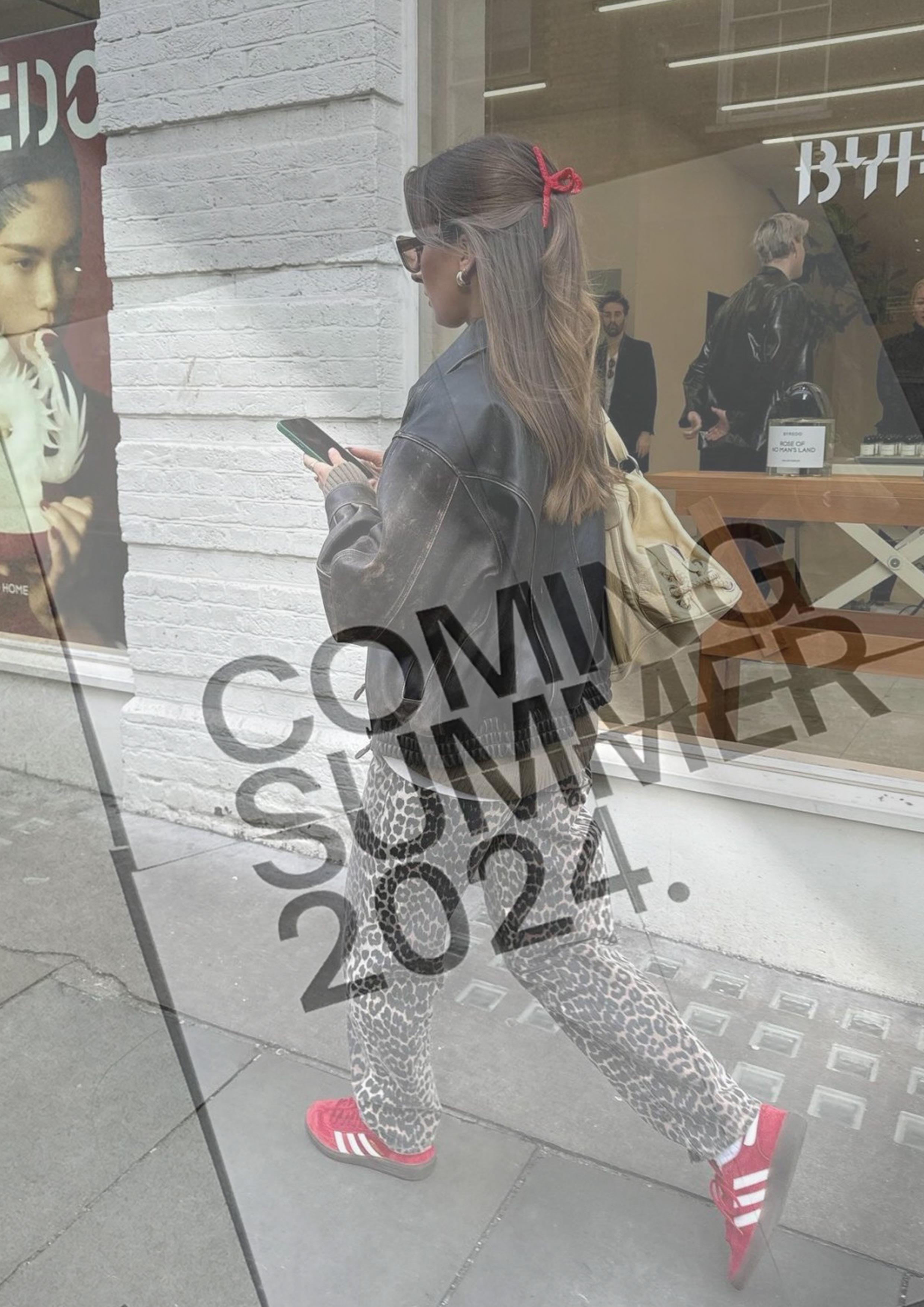
SS24 FASHION TRENDS
1. MASC/FEM DRESSING
At the back end of last year there’s no denying that skirts seemingly replaced trousers as the everyday go-to. Think ultra mini, super sheer or flowing an elegant, this skirt is an integral part of an overall aesthetic trend which will be huge come summer. Crucially, the pairing piece for these skirts is no longer a cute, cropped cardigan or a sexy vest. Instead, oversized shirts, menswear sweaters and bulky blazers
2. BUSINESS CASUAL
SS24’s workwear look is all about relaxed tailoring, this business casual is taking things to the extreme, with super oversized suiting, blazers that fall to the top of your thigh, and maybe even an elasticated waist.
3. SHEER WHITES
Sheer fabrics have been big news on the evening-wear scene for several seasons now and never more so than on our favourite red-carpet celebrities, but for 2024 there’s a very specific way to wear the trend. Giving angelic white a sexy twist, there’s nothing hotter come summer than a sheer white dress, whether you’re heading out for dinner, off to the beach.
4. HIGH-RISE TROUSERS
Perfect for everything from office wear to dinners, date night to days out, the high-rise rule can be splashed out across your entire trouser repertoire whether you’re wearing jeans, sweats or tailoring.
5. ELEVATED
SPORTSWEAR
Gone are the days when sportswear was reserved solely for sporting activities. Hooded sweatshirts are now supersized and have taken the place of casual day dresses, zip-up track-tops in monochrome are the perfect pairing piece for your favourite denim, and cropped leggings.
6. COMING UP ROSES
This trend is strictly all about roses. Endless designers promoted the world’s most traditionally romantic stem on their spring/summer runways, with Simone Rocha, as ever, going one step further by incorporating real roses within many of her stunning, sheer gowns.
7. METALLICS
In fact, metallics will serve you and your outfits well for months to come as golds and silvers look set to be one of the hottest colour trends of 2024. Of course, this trend lends itself most comfortably to eveningwear, but with Miu Miu and Rabanne offering up perfect dressed-down iterations with clever layering there’s no excuse to skip this trend come summer.
8. SHORT SHORTS
Micro shorts have been having a real moment ever since these looks hit the runway, with everyone from Kendall Jenner to Beyoncé joining the street style set in trialling the trend.
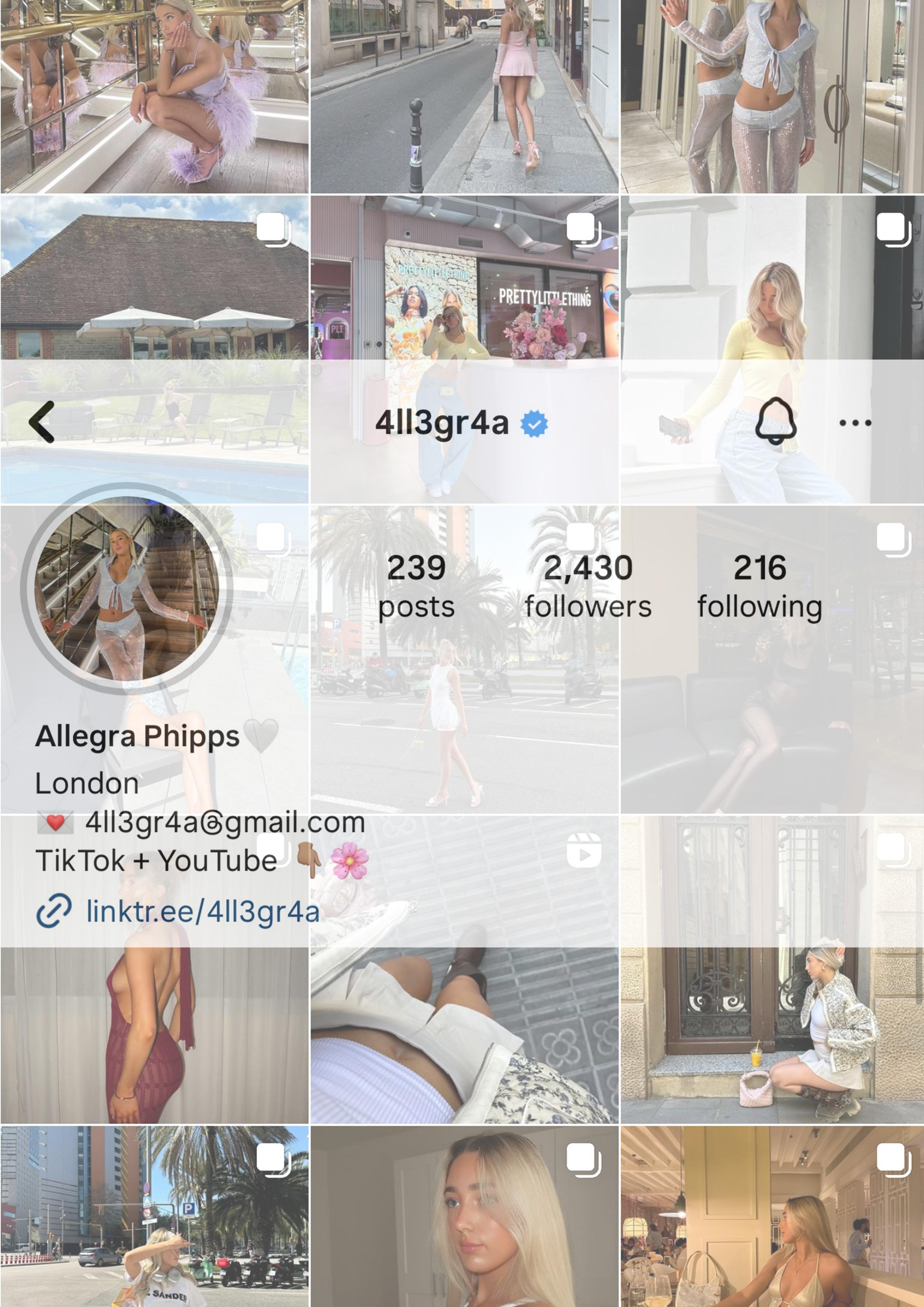
Allegra Phipps a 22 year old London based Influencer, She studied at Northumbria University studying Business with Marketing Management.
Allegra is classed as a nano influencer on Instagram as she has just under 2.5k followers. Allegra’s account was made verified in April 2024, although with Instagram’s new feature, this could have been bought. Her Instagram content consists of the basic fashion content such as daily outfit pictures, and also holiday outfits, and gym content on her Instagram stories. On average Allegra gets 100 likes on each post and an average of 15 comments.
Although on her TikTok she has 28.3k followers classing her as a Micro Influencer on this platform. Allegra has a couple ‘viral’ videos, reaching up to 1.3 Million likes through her TikTok. Allegra started taking TikTok seriously in November 2021, and since them has been growing her account. Her content consists of clothing hauls, get ready with Me’s, a day in a life, and out fit of the days, skincare and haircare routines, and just the basic lip-syncing videos.
Allegra also has a YouTube channel with 1k subscribers, filming things such as her new home, and a day in her life, although she hasn’t posted on this platform for over a year.
Allegra is her own management as her email is in her Instagram bio, this makes sense as her following is only small and doesn’t really need management until her following gets a bit bigger.
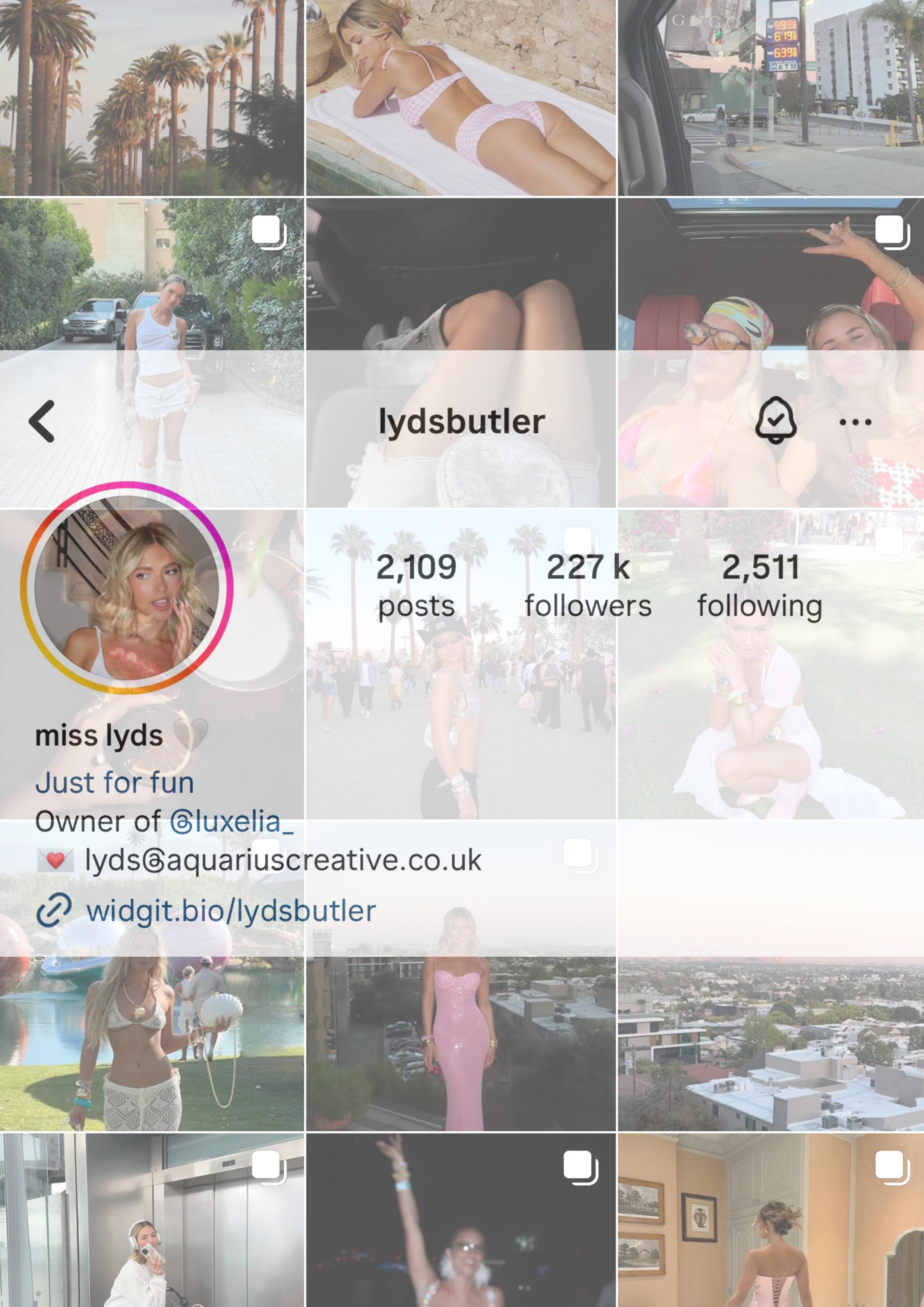
Lydia Butler is a 24 year old London based influencer. Lydia is a full-time content creator covering all social media platforms. Although she previously worked as a model before pursuing social media.
Lydia is classed as a Mid Tier Influencer on Instagram and Tic Tok as she has 227k on both platforms. Lydia’s Instagram consists of fashion and beauty content, such as day to night outfit pictures, holiday staples, scents and body glows. On average Lydia gets 4800k likes on her Instagram posts and 36 comments.
On Tic Tok, Lydia has had a few ‘viral’ videos with one video reaching over 5 million views, reaching up to 11 million likes over all her videos. Her videos consist of life updates, fashion and beauty content and ‘day in a life’ videos. On average her recent 6 videos have a like count of 1,600, which is less than her Instagram, although her video views do range from 2000 all the way up to 5 million.
Lydia also has a joint Tic Tok account with her bestie Jasmine Green, although that only has just under 5k followers. Their videos again consist of fashion and beauty content, as well as their outings together. Although the accounts overall like count is 472k, so the pair must have had a few viral videos.
Lydia also has YouTube channel with over 11k, with videos such as holiday vlogs, clothing hauls and beauty tutorials, although she hasn’t posted on this platform for over a year.
Lydia is managed by a marketing agency called Aquarius. The company expertise’s in Social Media Management, Influencer Marketing, Content Creation, Events, Branding, Strategy and Consultancy.
Lydia also owns her own fashion brand called Luxelia, which consists of summer and holiday type clothing, and jewellery. Jewellery prices range from £5 up to £15. Alot of Lydia’s pieces have sold out, although the items that are in stock range from £8 up to £50.
Lydia has been involved in multiple brand deals, with the most recent one being a sustainable clothing brand called Kasela. Although most of her brand deals have been fast fashion, these include Ego, Boohoo, Superdry, White Fox, Bo&Tee and ASOS.
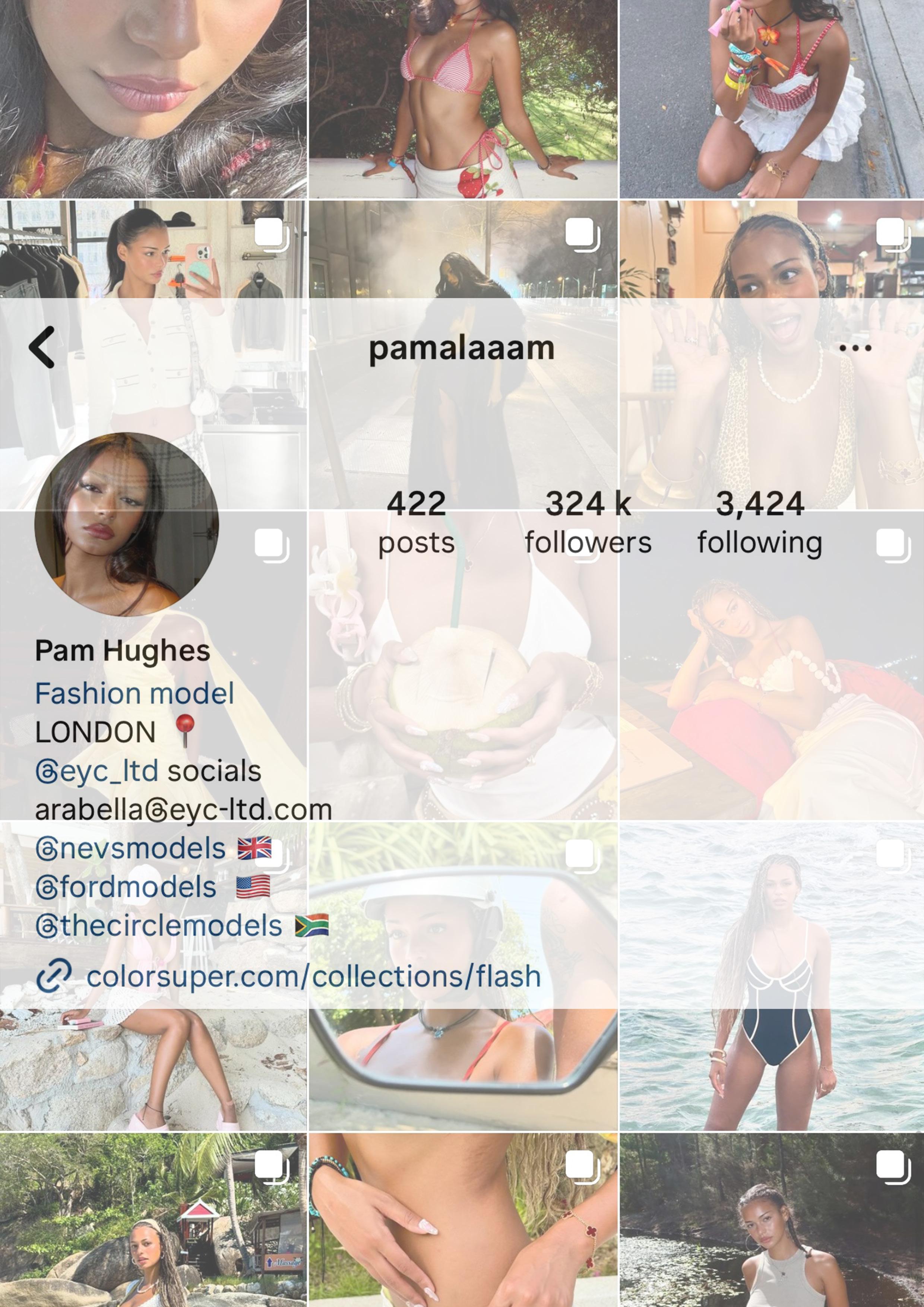
Pam Hughes is 22 year old London based Model and Influencer. Pam is a fulltime content creator, although she also works as a model full time also. Pam has 3 modelling agencies, NEVS based in London, Ford Models based in New York, LA, Chicago, Miami, Paris and Barcelona and The Circle Model Management based in Cape Town, South Africa.
Pam is classed as a Macro influencer on both Tic Tok and Instagram as she has between 100k and 1 million on both platforms. Pam’s Instagram has 324k followers and consists of Travel, beauty and Fashion content, such as Holiday photos, outfit inspiration and just overall model content. On average Pam gets 8150k likes and 46 comments per post.
On Tic Tok, Pam has 416k followers and has had multiple ‘viral’ videos with one reaching over 16 million views. Aswell as reaching up to 20 million likes on her videos overall. Her videos consist of fashion and beauty content, holiday content, and behind the scenes modelling content. On average her recent 6 videos have a like count of 754 and an average of 8 comments, which considering her following isn’t high. Although her views do average from a low of 1000 up to 16 million.
Pam is with a creative agency called EYC, a London based agency, specialising in influencer, talent and brand management, creative and image consultancy, creative strategy and event planning.
Pam has been involved in Luxury brand deals such as Michael Kors, Paco Rabanne. While also working with high street brands such as Revolve, CereVe and Jack Wills. While also doing her own swimsuit collaboration with Colorsuper.
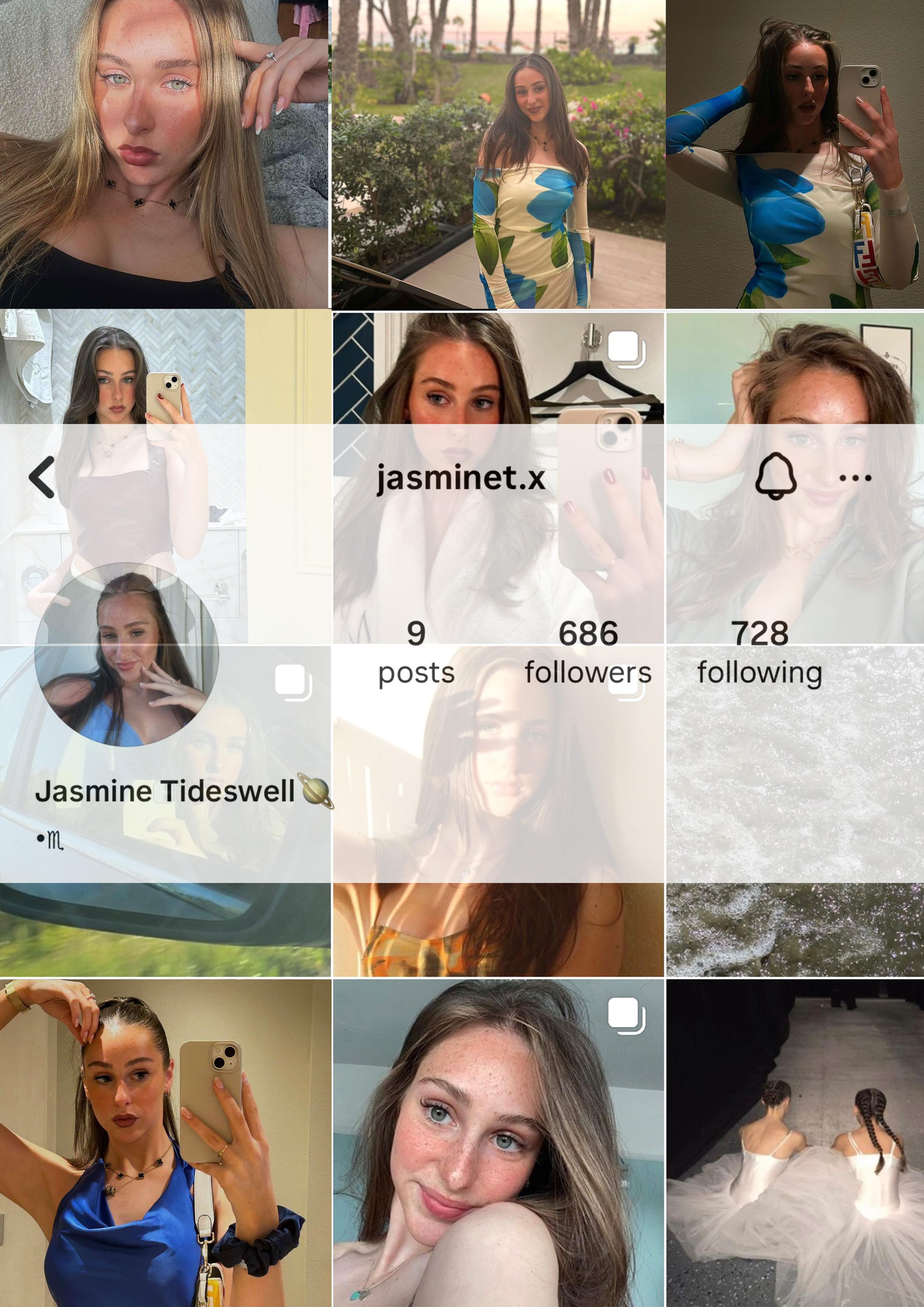
Jasmine Tideswell is a 19 year old, North Wales based Nano Influencer. Jasmine currently studies Fashion, Marketing and Communication at Chester University with Me and I have decided to research her as one of my influencers as her page is still so small I’d like to help her grow.
On Instagram Jasmine gets an average of 152 likes per post, and an average of 22 comments. Considering Jasmine’s following is only small, her engagement is very high. Jasmine posts a mix of different selfies and photo dumps to reflect her recent life for her followers to see.
Jasmine also has a fashion Tic Tok account which has 36 followers, although has racked up a few views with a total of 37.5k views altogether, with a total of 5k likes. Jasmine has just started out on the platform and aims to gain a bigger following by staying consistent with her fashion content. Her content consists of new fashion pieces, beauty inspiration and styling videos.
I’ve decided to use Jasmine as my Topic Influencer as i wanted to use someone with good viewer engagement, and I also wanted someone who relates to me also, as I know Jasmine personally. Whereas the influencers I had researched are just face value and don’t really know what they are like. I also wanted to make my content relatable and start on a base level, which I feel like I can achieve by using Jas as my influencer as visions with my upcoming work would be do able.
Fast fashion describes low-priced but stylish clothing that moves quickly from design to retail stores to meet trends, with new collections being introduced continuously. Innovations in supply chain management among retailers make fast fashion possible. Zara and H&M are two giants in the fast fashion field.
Fast fashion resulted from cheaper, speedier manufacturing and shipping methods, the consumer’s appetite for up-to-the-minute styles, and increasing purchasing power—especially among young people.
Due to the impacts on the environment, fast fashion consumers can investigate the brands to see if they use sustainable processes and fair labour practices.
Shopping for clothes at second hand stores helps to reduce the amount of garment waste and extends their usage. According to statistics from the United Nations Environment Programme and the Ellen MacArthur Foundation:
* The industry uses 93 billion cubic meters of water per year.
* It takes 3,781 litres of water to make one pair of jeans.
* Of all the wastewater in the world, 20% is from textile dyeing and is highly toxic—many countries where clothes are made have reduced or no regulations for wastewater disposal.
* Microplastic fibres used in clothing make their way to the ocean, amounting to about 500,000 tons—close to 50 billion plastic bottles.
* Fashion emits more than 10% of global carbon emissions.
With clothing being so cheap, consumers can buy more. An entire industry surrounding seasonal trends has grown up, replacing a previous focus on quality and durability. Today, the average American purchases about 70 pieces of clothing each year, but spends less than 3.5% of its budget on clothes. Now only about 2% of clothes sold in the U.S. are made in the U.S.
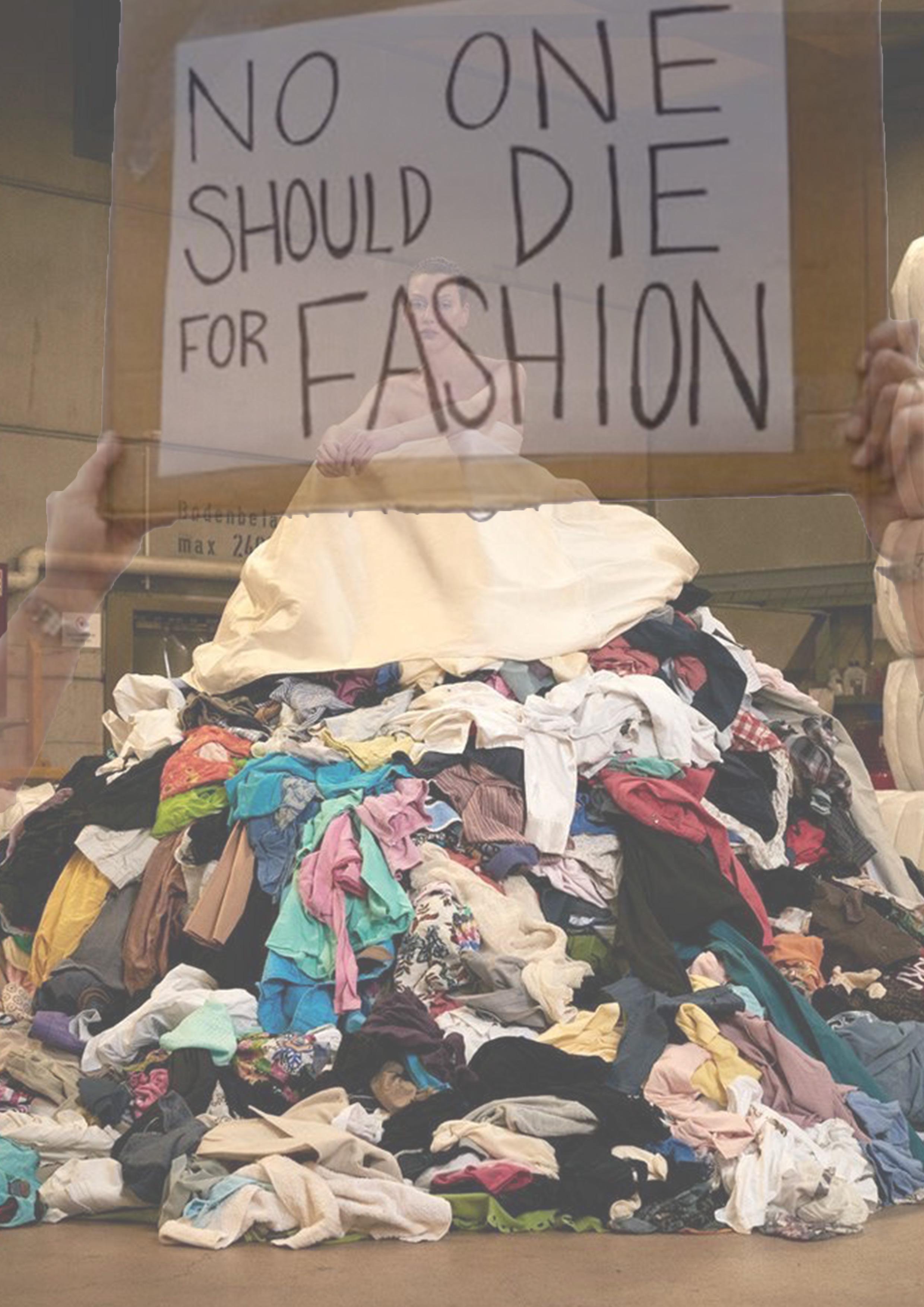
The rise of fast fashion is intertwined with social media and celebrity/influencer culture. A celebrity posts a photo wearing a new outfit, and their followers want it, so fast fashion brands rush to be the first to provide it. Fast fashion brands often target young people - so called Gen Zs -, who have been brought up amongst social media and influencer culture.
FAST FASHION
EGO
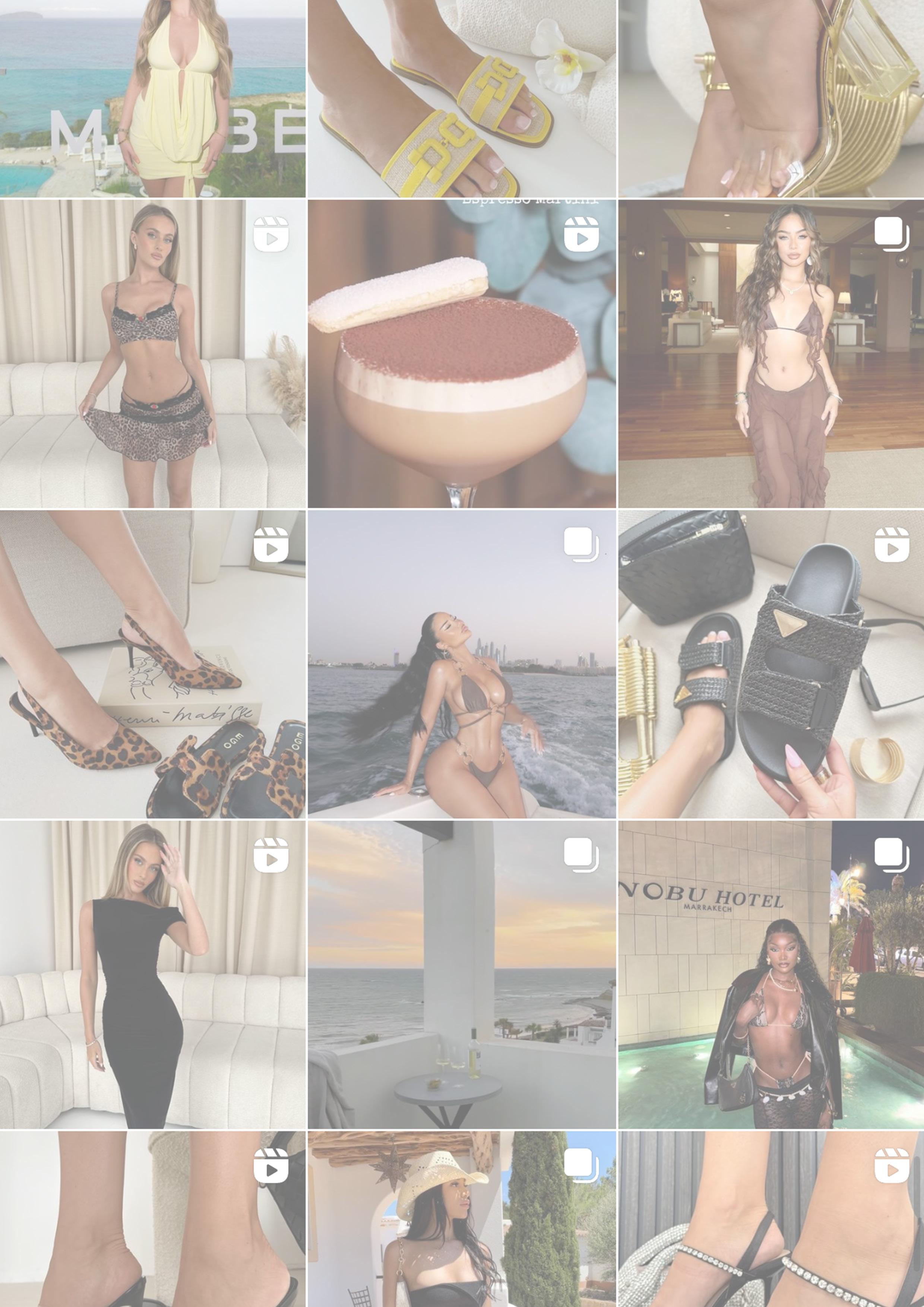
Founded in Manchester, May 2015, Ego’s story starts on social media, as they shared photos of shoes on Instagram. Then people wanted to buy their shoes and so began the online shopping store for a target of 16-25 year-old female students and young professionals that want fashion shoes that are a bit risky and not in your everyday shoe shop. Once the home of everything but the dress, EGO has branched into the clothing industry evolving from a footwear brand into the number one destination to shop affordable fashion-forward looks. Their mission is to stay ahead of must-have trends and bring you pieces that make you feel like the best version of yourself.
EGO is a favourite with the world’s most influential women including the Kardashians, Lizzo and Winnie Harlow. After doubling revenue to £20M in 2020 and projected sales revenue at £40M for 2021, EGO is one of the fastest growing retail brands in the UK.
Paid social media advertising played a crucial role, delivering exceptional increases in both traffic and sales. The holistic approach to digital marketing allowed Ego Shoes to captivate their target audience with authenticity and resonate with millennial shoppers.
They cater to fast growing trends such as the ‘clean girl aesthetic’ and the ‘mod wife aesthetic’. They market the brand through TikTok, making videos and doing sales on TikTok lives. As well as this they use influencers on Instagram to tag their items to grow their brand presence.
Ego also drive people to apply for their affiliate, so promote their brand and earn up to 10% commission with each sale. This drives influencer marketing up as to promote the brand they gain commission. Creating higher brand awareness to a new audience on social media
Ego have created multiple collaborations with famous celebrities, love islanders and influencers such as Jess Hunt, Stassie Karanikolaou, Maura Higgins, Millie Court, Lydia butler and Jasmine Green.
Each collection consists of clothing pieces such as staple dress, co ord, the basic top and bottom. As well as creating staple footwear such as a knee-high boot or classic heel. Bags were also apart of af ew of the collections too.
Victoria’s Secret is an American lingerie, clothing, and beauty retailer. Founded in 1977 by Roy and Gaye Raymond. From 1995 through 2018, the Victoria’s Secret Fashion Show was a major part of the brand’s image, featuring an annual runway spectacle of models promoted by the company as fantasy Angels. In 2002, Victoria’s Secret announced the launch of PINK, a brand that was aimed to teenagers and young women. Starting in 2008, Victoria’s Secret expanded internationally, with retail outlets within international airports, franchises in major cities overseas, and company-owned stores throughout Canada and the UK.
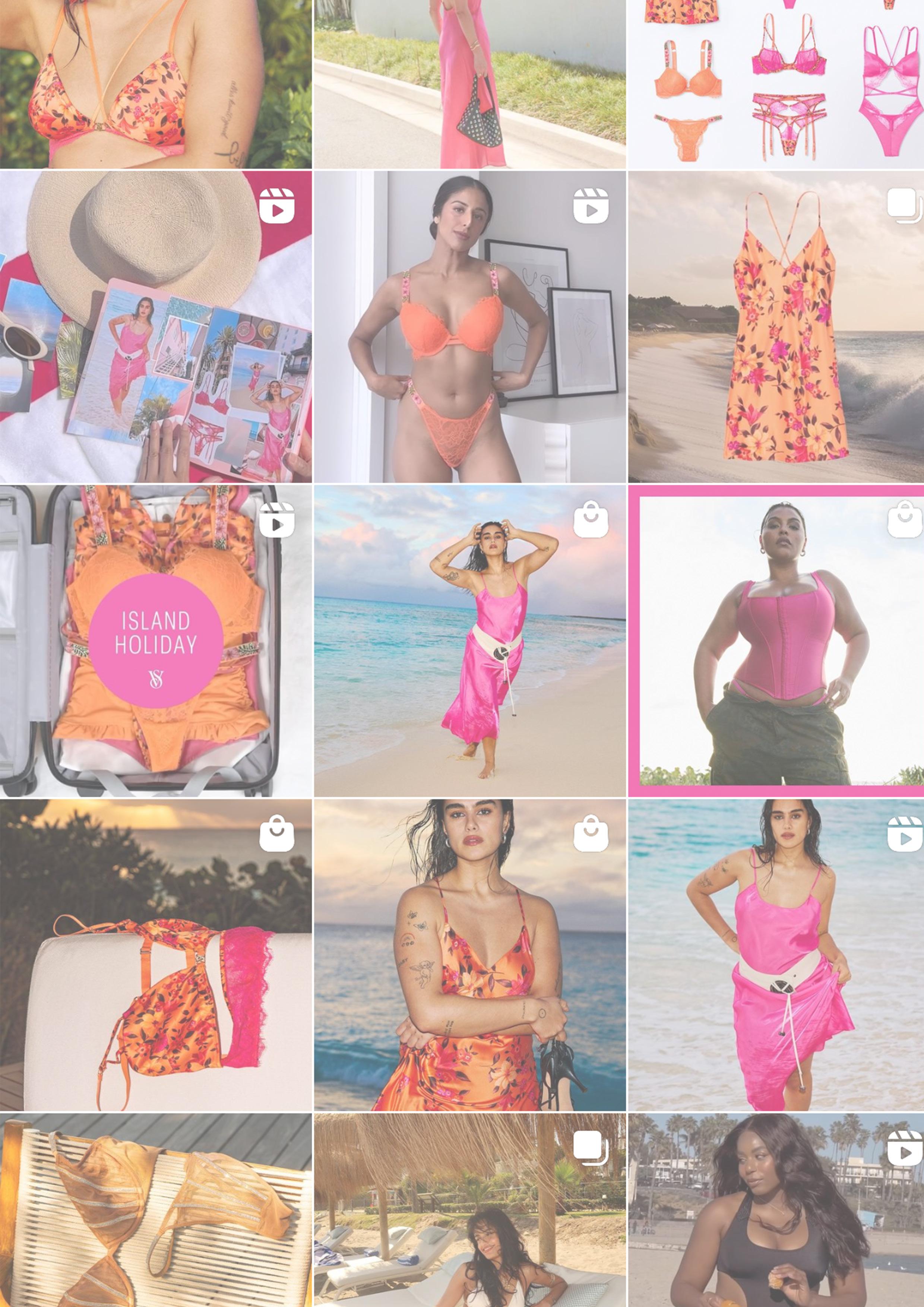
In order to reach its target audience and spread its brand message, Victoria’s Secret uses a variety of marketing channels. The brand invests in high-profile advertising campaigns featuring its iconic angels and models, showcased across multiple platforms. Active engagement on social media platforms fosters a sense of community and connection with its followers. Strong email marketing keeps customers informed and engaged with the brand, while in-store events create unique shopping experiences, driving foot traffic and generating excitement.
Email marketing has become an exciting Victoria’s Secret marketing strategy. This allows you to preview your new collections to your email subscribers, they also offer newsletters and coupons with very attractive offers. However, your email marketing campaign has attracted more people to sign up for the newsletter, which automatically translates into new sales for the company.
Victoria’s Secret lives on various social networks such as Facebook, Pinterest, YouTube, Twitter, and Instagram. In this way, they have acquired a significant commitment in these communication channels, with Instagram being the social network with the largest number of followers with 76 million. This is because your sales are a conversion from your social media posts and engagement with your content. As a result, these types of content have effectively increased engagement with their target audience. Most social media platforms are about visual appeal, and brands need to understand this to get noticed and increase revenue.
The so-called “angels” have been the brand ambassadors and influencers for the brand.
For the year 1997, the brand launched a product called “Angel’s underwear,” which was marketed through a TV commercial in which supermodels participated. Each year they had a runway promoting the lingerie which many supermodels participated in. They are the spokespersons for the brand by participating in fashion shows, talk shows, marketing campaigns, and much more.
The reason for this dream is that Victoria’s Secret selects models who have relatable lives and personalities. They choose rising models and train them to represent the brand. These angels are incredibly beautiful but also relatable, striking a balance between being attractive and approachable. Women around the world admire angels like Adriana Lima and Miranda Kerr not only for their looks but also because they can relate to them as mothers and wives.
Interestingly, unlike other big brands that use famous celebrities as ambassadors, Victoria’s Secret chooses lesser-known models and helps them become famous. This strategy works well because customers love the fairy-tale story that comes with their purchase.
VICTORIA’S SECRET