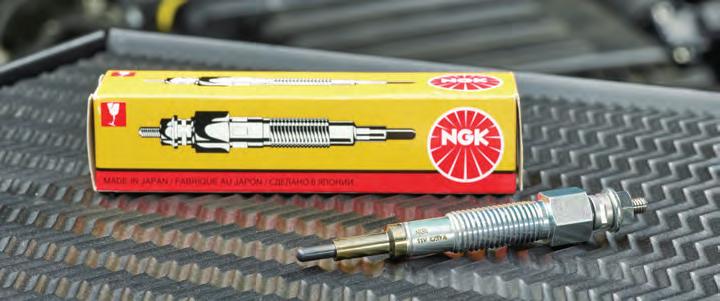
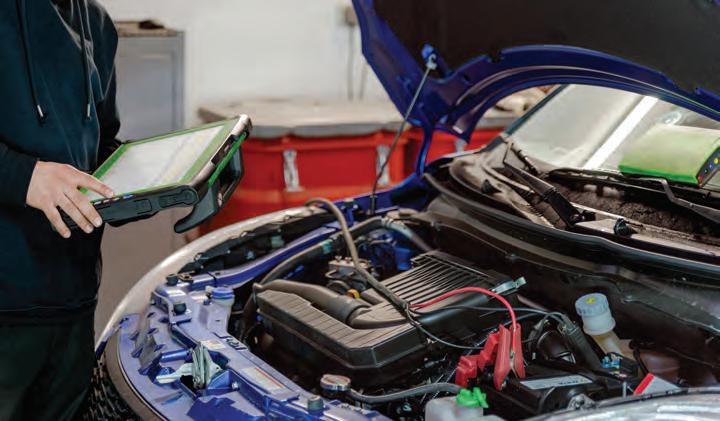
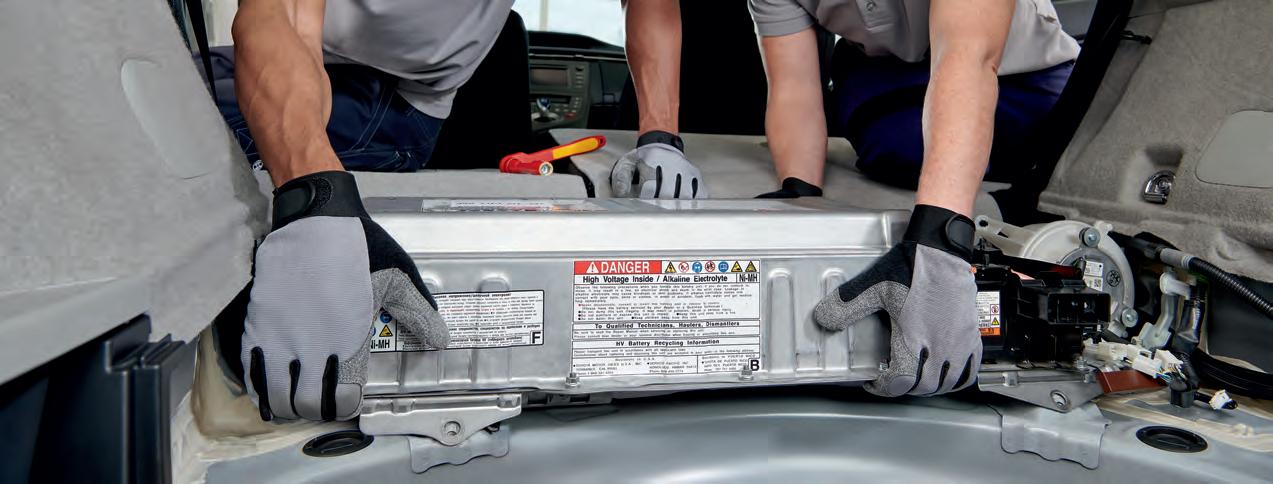
Welcome to the latest issue of Professional Motor Mechanic! I hope you had a very merry Christmas and, who knows, maybe you’re still in the festive spirit? We’ve got lots of really in-depth technical articles in this issue that will surely raise your spirits if a visit from Santa didn’t do the job. We’ve got Morris Lubricants talking antifreeze coolant on page 23, Niterra discussing NGK glow plugs on page 38 and febi delving into all things sensor related on page 18. Lastly, former Denso Mechanic of the Year and friend of PMM, Edd Hunt, is back this issue and this time, he’s bringing us a diagnostics troubleshooter, so be sure not to miss that on page 12
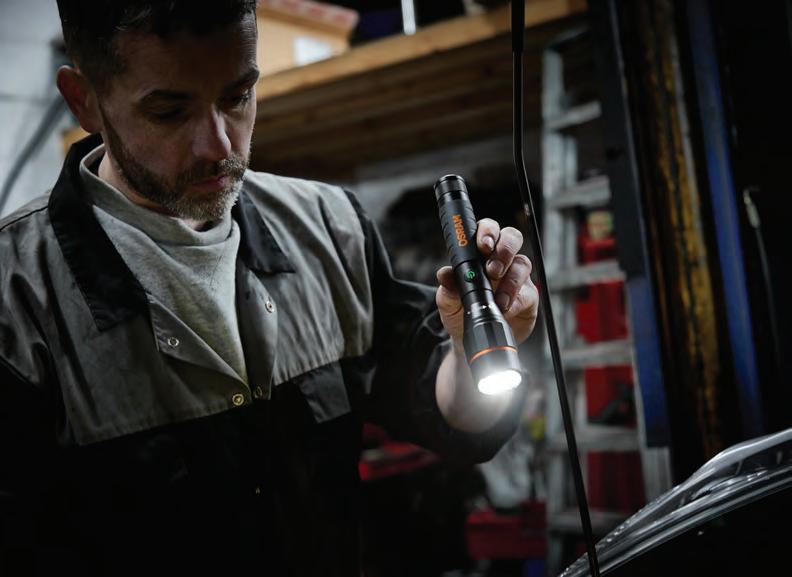
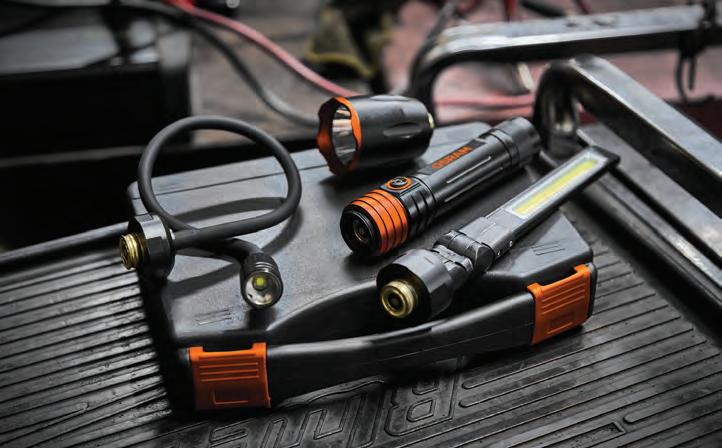
Light at the end of the tunnel: Brighten up the dark days with OSRAM’s new worklight range. Turn to page 30 to find out more.
Editor KIERAN NEE
Digital Manager
KELLY NEWSTEAD
Group Manager
ALEX DILLEIGH
Senior Account Manager
MATTHEW BOASE
Magazine Designer
GEMMA WATSON
Group Production Manager
CAROL PADGETT
Production Assistant
CLAIRE SWENDELL
Distribution Manager
KARL CLARK
Subscriptions
PROFESSIONAL MOTOR MECHANIC is a business magazine for firms and individuals involved in all aspects of the motor trade. It is published eleven times a year and is available nationally FREE to the trade through leading motor factors. It is also available through the post at a cost of £30.
t’s not me who’s changed, it’s everyone else.” The refrain heard since time immemorial. Usually said by those who refuse to move with the times. Change, they say, is the only constant, however, and to stay the same, to be stuck in your ways, is nothing to boast about.
Now, that’s not to say the new ways are always the best ways and anything that went before needs to be consigned to the dust bin labelled Ancient History. There are many instances where the tried and true method holds firm: Look at a plumb-bob for instance – no need to complicate things when gravity has you covered. For the reverse, we need look no further than the NHS. I think you’d be hard-pressed to find anyone who thinks modern innovations like phone call appointments and filling out forms on an app are a better solution than the old-fashioned way. As I write this, I am at Automechanika Shanghai. This is a city where you need to download two whole apps just to order a cup of coffee, so a demonstration that modernisation is not without flaws.
But the times move and sometimes, even if you can’t see the logic of the new ways, the logic is there. In this issue of the magazine, as with most issues these days, we cover the growing gap between ADAS technology and those in the aftermarket ready – or perhaps, prepared, would be the better word – to calibrate it. The EV debate is never far from our pages and a recent episode of the PMM Podcast centred on the impending SERMI scheme. For those of you that don’t know about SERMI, it’s essentially a portal that enables independent garages to access security data from all of the vehicle manufacturers via one log-in. Whether you like it or not, this is the new reality: log-ins, autonomy, high-voltage; less elbow grease, more diagnostics.
Many will tell you it’s a young person’s game these days, that if you haven’t studied computer science you might as well not bother. I think that’s cobblers. No one knows cars better than the readers of PMM and at the end of the day, a car is still a car. We call it a computer on wheels, but the fact that it still has wheels means that it’s still a car and faces the usual car-related issues they always have. When you’re fixing these so-called computers on wheels, you’re never going to rely on your own ability to write code or do some programming. No, you’ll be relying on your knowledge of the automotive industry: the car manufacturers and their attitudes, the way your customers use their cars, what diagnostic tool companies are providing, known faults and fixes. In short, the whole range of skills you’ve always used, just applied to more modern technology.
So to move with the times, do you need to buy more tech? Well, inevitably, yes. As cars become more technologically advanced it only makes sense that the tools you use move with them. But if Santa didn’t get you what you want this Christmas, why not treat yourself to something new and shiny?
KieranNee Editor
JOIN
PMM NEWS
IGA fights against counterfeiters as £100,000 of fake parts seized
The Independent Garage Association has said it is proud to continue its work with the Intellectual Property Office in supporting the national ‘Fake Always Breaks’ campaign, after a mega-haul of counterfeit auto parts was recently seized by police.
The campaign highlights the dangers of counterfeit vehicle parts and the importance of vigilance across the motor trade, a message which has been underscored by the recent seizure of over £100,000 worth of fake automotive components in South Gloucestershire, including spark plugs, filters and sensors. The discovery demonstrates the persistent threat posed by counterfeit vehicle parts to both motorists and the independent garages that serve them.
Counterfeit parts are often made from inferior materials and do not undergo the rigorous safety testing required of genuine components. As a result, they are far more
likely to fail, putting drivers, passengers and other road users at serious risk.
The IGA works closely with the IPO to raise awareness across the independent garage sector, ensuring that workshops can identify, report and avoid counterfeit vehicle parts. Through regular communications, guidance and educational resources, the IGA
“Counterfeit parts are often made from inferior materials and do not undergo the rigorous safety testing required of genuine components. As a result, they are far more likely to fail, putting drivers, passengers and other road users at serious risk.”
is helping members remain vigilant when sourcing and fitting parts, particularly as demand increases during the busy winter service season.
Jonathan Douglass, director of the IGA, said: “This recent seizure is a stark reminder of the risks counterfeit parts pose to motorists and garages alike. Independent workshops are on the frontline of vehicle safety, and it’s vital they have the knowledge and tools to protect their customers.
The IGA is urging all independent garages to familiarise themselves with the IPO’s guidance on how to spot and report counterfeit parts. Warning signs include vague product descriptions, poor-quality packaging, missing safety information, and unfamiliar or misspelled branding.
For more information on the IGA WWW.RDR.LINK/ACA001
Standardise MOT training, new association tells DVSA
A group of the UK’s leading MOT training organisations has formed a new industry body – the MOT Training Providers Association (MTPA) -–to work collaboratively with the Driver and Vehicle Standards Agency (DVSA) on improving and standardising MOT tester training across the country.
The formation of the group, which includes MOT Juice, The Test Centre, MOT Learning Services, Protech Academy, VOCS, MOT Group, follows recent discussions between the association’s founder, Barry Babister of MOT Juice, and senior representatives within the DVSA. Both parties recognised the need for clearer, more detailed and more consistent training guidance for the MOT industry. MOT Juice and Protech Academy have
appeared on the PMM Podcast in the past two years to discuss the need for more robust and standardised training and oversight from the DVSA.
Every year, DVSA issues an annual MOT training curriculum that all MOT testers must complete. Historically, according to the group, the wording of this curriculum has been “intentionally broad, leading to varying interpretations among training providers”. As a result, testers completing their mandatory training have not always been up-skilled on the same topics or to the same depth. Something which the new group aims to rectify, as chair Barry Babister commented:
“For the industry to maintain credibility and safety standards, MOT testers must receive consistent, accurate training. MTPA
“For the industry to maintain credibility and safety standards, MOT testers must receive consistent, accurate training.”
Barry Babister, MTPA
will work with DVSA to help shape clearer annual curriculum guidance so that every training provider teaches the same material to the same standard. This collaboration benefits everyone - training providers, MOT testers, and ultimately the motorists who rely on the MOT system.”
For more information on the MTPA WWW.RDR.LINK/ACA002
PMM NEWS NEWSIN NUMBERS
15 %
more pothole prevention work carried out in 2025 compared to 2024, according to the RAC. This is still 32 per cent below 2012 level.
1 IN 10
The proportion of Chinese-branded cars registered in the UK in 2025. This compares to 1 in 100 in 2020, as revealed by GiPA and IAAF.
71 %
of Brits are worried about the safety aspects of autonomous vehicles according to a new survey from Allianz. This puts the UK at the top spot within Europe.
21.1
The number of days it takes a used Nissan Leaf to sell on average in the UK. New research from Indicta indicates EVs sell faster in the UK than anywhere else in Europe.
1 IN 3
Drivers admit to skipping annual servicing on their car, according to FixMyCar.
UK not ready for ADAS, Autotech Training survey reveals
A new survey by Autotech Training has exposed a stark readiness gap in the UK’s independent automotive aftermarket, with two-thirds of garages lacking any vehicle technicians qualified to carry out ADAS calibrations and repair work.
More than half of respondents either outsource this work, at a cost of up to £300 per vehicle, or don’t offer it at all, while just 17.5 per cent plan to invest in ADAS training over the next 12 months.
Significantly, every single garage that does not currently offer ADAS calibration selected “not applicable” when asked why they don’t provide this service. This strongly suggests that customers are unaware of ADAS calibration highlighting a serious gap in public understanding of these essential safety systems. Despite Advanced Driver Assistance Systems now coming as standard in all new modern vehicles, the survey found that more than 12 per cent of respondents were unaware that calibration is even required following common jobs, such as windscreen replacements, bumper work, and wheel alignments.
the nation’s automotive workforce, alarmingly low when compared to the projected requirement of nearly 97,000 trained technicians by 2032.
This highlights the widening gap between the rapid adoption of advanced vehicle technology and the industry’s readiness to support it.
Meanwhile, a growing “trust gap” between drivers and the automotive industry risks undermining public confidence in advanced vehicle technologies. Autotech Training’s findings highlight this concern, showing that fewer than half of garages (48 per cent) feel very confident explaining ADAS calibration to customers. As a result, many drivers remain unaware that these systems must be recalibrated after certain repairs to ensure they function correctly and safely – and that their vehicle insurance may not cover them if their car has not been properly calibrated.
Lost business
The findings also reveal that most independent garages are still underprepared to meet the growing demand for ADAS services. High equipment costs, staff shortages, and a lack of perceived customer demand remain significant barriers, leaving many businesses unable or unwilling to invest in the tools and training needed to provide this vital work.
The survey mirrors warnings from the Institute of the Motor Industry, which recently reported that just 7,572 technicians in the UK are currently qualified to work on ADAS. This represents only 3 per cent of
Nearly 15 per cent of garages reported losing business or experiencing delays because they lacked the capability to perform ADAS calibrations in-house. Despite this clear evidence of missed opportunities, the vast majority of workshops have no immediate plans to invest in either equipment or training, underscoring a worrying lack of urgency. Respondents pointed to several barriers holding them back. The high cost of specialist equipment was cited most frequently, with many garages struggling to justify the upfront investment. Staff shortages compound the problem, making it difficult to release technicians for training without disrupting day-to-day operations.
COMMON FAULTS
Timing chain and camshaft kits
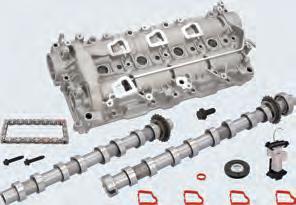
Febi discusses an issue with certain pre-2023 vehicles’ timing systems. This article refers to parts 196827, 1000002, 1000003 and 1000004, which fit various Citroën, DS, Peugeot, Fiat, Ford, Toyota, Vauxhall and Opel models fitted with the four-cylinder 16 valve 1.5 HDi engine
PROBLEM
Engine unable to start or rattling noise from the engine bay.
Disruption or offsetting of the camshaft drive chain setting can cause the chain to jump teeth on the sprocket. This causes incorrect valve timing, leading to the engine running rough and the illumination of the check engine light. It can also result in contact between the valves and pistons, causing serious engine damage.
CAUSE
Engines manufactured before January 2023 are susceptible to elongation of the timing chain which drives the camshafts.
SOLUTION
The vehicle manufacturer introduced a reinforced timing chain to address this issue, increasing the size of the chain and camshaft sprockets. The condition of the camshaft drive chain and tensioner must be checked before commencing any repairs on an engine presenting these symptoms. To identify which camshaft drive chain is fitted, locate the part number for the camshaft carrier which can be found near the oil filter. The part number for vehicles fitted with the 7mm camshaft chain drive is 9812647280, and for vehicles with the 8mm camshaft chain drive it is 9830580480.Check the engine management ECU software and update if required to improve the oil pump lubrication of this engine.
Note: The condition of the combustion chambers will determine whether the camshaft chain drive can be updated or if the internal combustion engine needs to be replaced.
PRODUCTION CHANGES FROM JANUARY 2023
A completely updated timing chain kit for the 1.5 HDi engine was introduced with the changes listed below:
● Wider timing chain 7-8mm with increased tensile strength and tensioner
● New camshafts
● New camshaft carrier
● Sprockets with an enhanced tooth design
Engines produced postJanuary 2023 – or those updated in service prior to the production change with the new wider camshaft drive chain – are not susceptible to the start-up rattling noise typical of the earlier engines if maintained regularly. However, the recommended oil replacement interval is now every 20,000 miles/32,000 km for this engine, and the manufacturer recommends using 5W30 grade oil (febi oil part numbers 198691, 198692, 198693) instead of the original 0W30 specification. febi offers a complete range of Timing Chain Kits for this engine, incorporating all technical improvements made throughout its production run. This includes the upgraded and reinforced Camshaft Kit 1000004 for engines produced before 2023 which features an 8mm camshaft chain, tensioner, inlet and exhaust camshafts, camshaft carrier, fixings and seals. This kit can be retrofitted to earlier engines to take advantage of the improved performance characteristics. Note: It is recommended to use replacement Timing Belt Kit 183551 at the same time when replacing the camshaft drive chain drive.
TROUBLESHOOTER
Why was the 2019 VW Sharan TDI’s cooling fan running continuously?
Diagnostics
expert Edd Hunt, the Car Consultant, details his recent effort to get to
the bottom of a bothersome blower.
Having been ranked number one in the UK on Denso’s League of True Mechanics for three years running and going on to then win ‘Auto-Mechanik of the Year’ at last year’s Automechanika, I figured it wouldn’t be long before I got fame, fortune and fans… So far there’s been no sign of fame or fortune but I have managed to get fans… Well, a job fixing an issue with over-active cooling fans that is!
Ok, not quite what I imagined but I do love a good challenge and this job certainly proved to be an interesting one so I figured it was worthy of a write up for PMM. The car itself is a 2019 Volkswagen Sharan TDI and the customer was complaining of the cooling fans running continuously for a long time after the engine was turned off every time, even on cold days.
Before even looking at the car, my initial thoughts jumped to DPF regeneration. As we all know, fans running continuously after switching off the engine on a cold day could be attributed to DPF regeneration, as that causes excessive heat which needs to be cooled down. But in theory this could explain it happening now and again, not every journey.
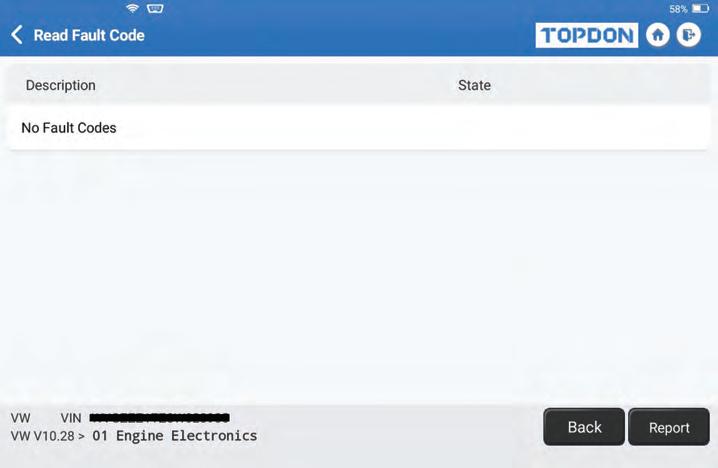
The car arrives after a modest journey and sure enough, even after the engine is switched off, the fans run at high speed for a considerable amount of time. The first thing I do is plug in the diagnostics and check for fault codes: No codes registered (Fig.1).
I’ve been caught out with this one in the past so I access the live data menu and check when the last delete of the fault memory occurred in case the owner or another mechanic has just cleared the fault codes, having attempted to fix it first before bringing
it to me. The last fault code delete was over 2,000 miles ago so we now know there are genuinely no fault codes. Looks like I’m on my own here with no fault codes as guidance! While I’m in the live data menu I check the recent history of DPF regeneration and find the last recorded regen to be over 300 miles ago and no recent failed regens so this disproves the DPF theory. I then check the readings for coolant temperature and both coolant temps are reading below 70 at this point yet the fans are still running.
A wiring issue?
On to the next theory of a possible wiring issue. I download the wiring diagram for the vehicle and meticulously check and trace all of the wiring for the fans for any possible short circuits and guess what… none found! Next, I allow the vehicle to cool completely overnight with a view to starting it the next day and monitoring what happens right from a cold start.
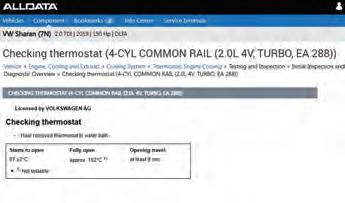
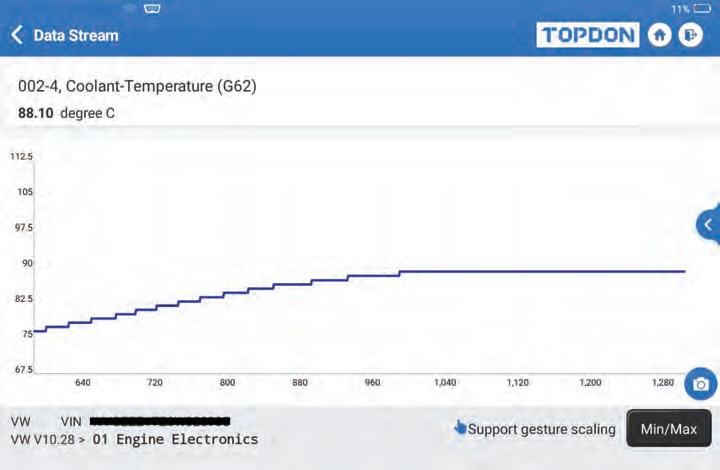
Next morning comes, I start the engine and monitor the cooling system as the engine warms up. All is operating as it should. The thermostat should open between 85 and 89 degrees (reference ALLDATA [Fig.2]) and it opens when you’d expect at 88 degrees so almost smack bang in the middle of the range where it should (Fig.3).
Water pump flows, cooling fans cut in and there are no blockages around the system so the cooling system is functioning exactly as it should and regulating the temperature of the engine.
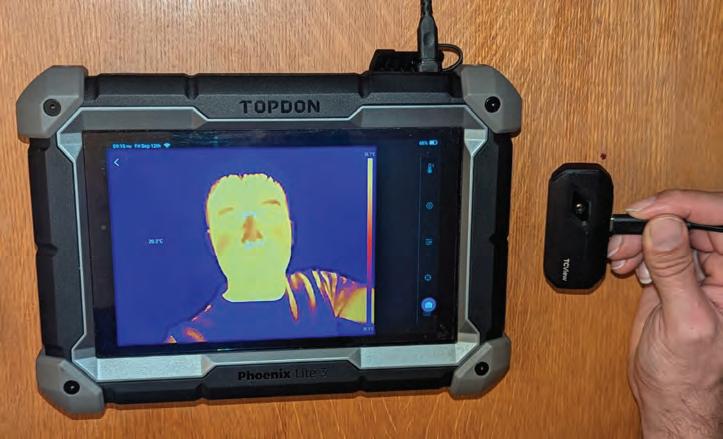
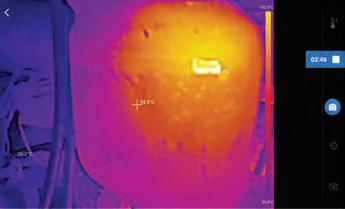
Before I start getting hot under the collar and needing to turn on the workshop fan myself I pull out the thermal imaging camera. I use a Topdon TC001 camera (Fig.4) as it works perfectly with my Phoenix Lite 3 diagnostic machine, I like
seeing the thermal imaging on a bigger screen and it also works with my mobile too but other models and brands are available to do a similar job.
I start around the top of the engine looking for anything getting too hot, all looks good, moving round to the front I poke the camera through the grille and check the radiator etc, all good. But as soon as I get underneath the car, the problem becomes instantly apparent when looking through the
“The last fault code delete was over 2,000 miles ago so we now know there are genuinely no fault codes. Looks like I’m on my own here with no fault codes as guidance!”
thermal imaging camera. As you can see from the screenshot I’ve taken (Fig.5) there is a huge heat spot inside the catalytic converter. Presumably a faulty CAT has melted internally and formed a lump inside that is creating a localised area where an excessive build-up of heat is occurring and taking a lot longer to cool down after the engine is switched off, or a hot spot if you will which is being detected and causing the cooling fans to run after switch off to cool down the exhaust exactly as they would if the heat had been generated by a DPF regeneration. Replacement of the faulty catalytic converter remedied the issue and stopped the overrunning of the fans after switch-off. What a ‘fan’-tastic result! A job well done. The trick to dealing with problems like this which require a little outside-the-box thinking is to ‘stay cool’ and not ‘blow’ it out of proportion (couldn’t resist the puns, insert groans/eye roll here). Joking aside though, when dealing with an issue like this a thermal imaging camera can really save time and help get you to a definitive diagnosis quicker! I’m still waiting on the fame and fortune but when you think about it, who needs lots of adoring fans, I hear some of them can be ‘viscous’!
STEP-BY-STEP Programming a spare key for the Volkswagen Golf GTE Mk7
Autowave is helping workshop technicians and locksmiths use an ACDP solderless programmer to produce a spare remote key for a 2018 Volkswagen Golf Mk7 GTE with a virtual cockpit. This is a digital screen that replaces traditional analogue dials and gauges behind the steering wheel.
The following will be needed for this spare key:
■ Original working key
■ New aftermarket key (AUTRK0079)
■ ACDP device with MQB module
■ Stable laptop connection via USB
■ Access to the vehicle’s OBD-II port
■ Tools to remove the instrument cluster (Torx drivers, trim tools)
Step : Confirm original key functionality
Test the original, working key by locking and unlocking the vehicle then starting it. Test over, place the new AUTRK0079 key in the ignition and attempt to start it – it shouldn’t work! ‘Immobiliser active’ should be displayed, confirming it is not yet programmed.
Step : Connect ACDP device
Connect the ACDP device to a laptop via USB and plug into the OBD-II port. Turn the ignition on with the working key. On the ACDP interface, navigate: VW → MQB IMMO → MQB 48 IMMO → OBD Identify. This reads the instrument cluster’s part number, VIN and key data. Confirm that the device can communicate with the cluster.
Step : Attempt OBD read
Select ‘Read IMMO Data’ via OBD. If unsupported, the procedure requires removal of the instrument cluster for direct data reading.
Step : Remove instrument cluster
Remove the trim around the radio, unclip surrounding panels and undo the cowling. Then remove the Torx screws securing the cluster and carefully detach the cluster –noting connectors for the top plug and fibre optic connections. Take the cluster inside and remove the back cover, speaker and fan connector to expose the circuit board.
Step : Access the MCU
Strip the casing from the instrument cluster, then disconnect the ribbon and red plug connectors to lift the circuit board. Carefully remove the plastic trim and metal casing with a flat blade to expose the microprocessor. Identify the microprocessor type (in this case, D70F3526) to determine the correct ACDP connection procedure.
Step : Read dashboard data
Connect the MQB adapter to the ACDP device following the on-screen diagram. Use the path: MQB IMMO → MQB 81 ICP → Read Dashboard.The device will decrypt the chipand save all instrument cluster data automatically.
Step : Obtain IMMO data and generate dealer key
Open the saved dashboard data and select ‘IMMO’. Confirm no external EEPROM is present. Calculate immobiliser data then insert the working key into the PCF adaptor. Select the saved IMMO data and continue. Next, remove the working key and insert the new AUTRK0079 key. Generate the dealer key and write key data.
Step : Reinstall instrument cluster
Carefully reconnect all connectors and secure the cluster back into the vehicle. Restore all trim and panels removed during disassembly.
Step : Program keys via OBD
With the instrument cluster reconnected, navigate to OBD Learn on the ACDP device. Insert the working key, turn ignition on and select saved IMMO data. Next, follow prompts to learn all keys: number of keys was two. Insert each key in turn until the device confirms “Keys learned: 2/2”.
Step : Test functionality
Test central locking with both keys to ensure lock/unlock works, then start the vehicle with each key to confirm the engine starts successfully. During this procedure, a 2018 VW Golf GTE’s virtual dashboard and immobiliser system were accessed using the ACDP device. The new AUTRK0079 key was generated as a dealer key, successfully programmed, and it now fully operates the vehicle for both locking/unlocking and starting.
THE SECRETS TOASUCCESSFUL GARAGE
Is poor phone etiquette costing you customers?
We’ve already talked about digital journeys and the importance of first impressions when a customer walks through your door. There is however another first impression that often gets overlooked, it’s the one made on the phone.
For many customers their first real contact with your garage will not be in person. They may have checked you out online, but it will be a call
to check a price, book an MOT, or ask for advice.
That moment is as important as the reception desk. If the tone of voice is rushed or distracted, the impression is that service is rushed and distracted too. If the person answering does not listen properly or fails to take down details accurately, trust starts to evaporate.
Do you have a template on how a call should be answered?
That way, brand expectation is reinforced, the right questions are asked at the right time, and
the customer feels valued from the start.
A structured approach also stops missed opportunities. That one caller booking a single MOT might be responsible for a fleet of twenty vehicles. If the conversation ends too quickly, you will never know what a call should go like? At Oldfields we know that every call counts and it’s vital it’s dealt with correctly.
Active listening, noting details correctly, and following
up are not extras. They are core parts of professional service. Just as we would not accept a messy reception or an unclear booking process, we should not accept poor phone etiquette either. The phone is not a distraction from the job. It is the job. Done well it builds confidence, drives bookings and opens doors to bigger opportunities. Done badly it slams the door before it’s even opened.
DIAGNOSTICS for Teslas
In the last issue of PMM we briefly covered Bosch’s new diagnostic offering for Teslas. In this issue we find out more about how the ESI[tronic] platform enables all service and diagnostic tasks on Tesla vehicles.
Tesla pursues different solutions for diagnostics and service work compared to traditional vehicle manufacturers. With the help of a customised diagnostic approach from Bosch, ESI[tronic] will support the challenge of diagnosing the manufacturer’s Model S, X, Y, and Model 3. Work on Tesla vehicles can be logged and saved as usual. All data received from the vehicle can also be logged.
ADVANTAGES AT A GLANCE
■ Read out error messages
■ Performing tasks, functions, tests and adaptions offered by the car
■ Live stream actual values
■ Guided instructions
■ Original documents of the manufacturer for all error messages and repairs
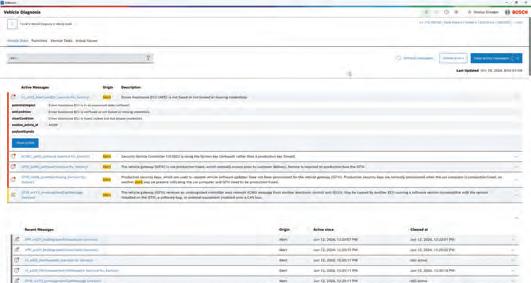
Diagnostics (Fig 1)
Switching from ECU-based diagnosis to vehicle diagnosis due to use of HPCs (HighPerformance Computers) in the vehicle. Main functions of vehicle-based diagnostics:
■ Vehicle State: One sight overview of the alerts and errors in the car with links to the original troubleshooting instructions.
■ Functions: Perform adjustment, maintenance and repair tasks, e.g. brake pad replacement or 12V battery change.
■ Actual Values: Display a series of live actual values.
■ Service Tasks: A pre-filtered list of service-relevant tasks with links to the necessary instructions.
■ Logging: You can log all data and your work on the Tesla vehicle with the ESI[tronic].
Original documents (Fig 2)
■ Integrated repair information from Tesla
under the Original documents function in ESI[tronic]
■ Display service and repair information for identified Vehicle
■ Bi-directional linking of diagnostic content: Performing tasks directly on the vehicle without leaving the Original documents
■ Print manuals for flexible working
Connectivity
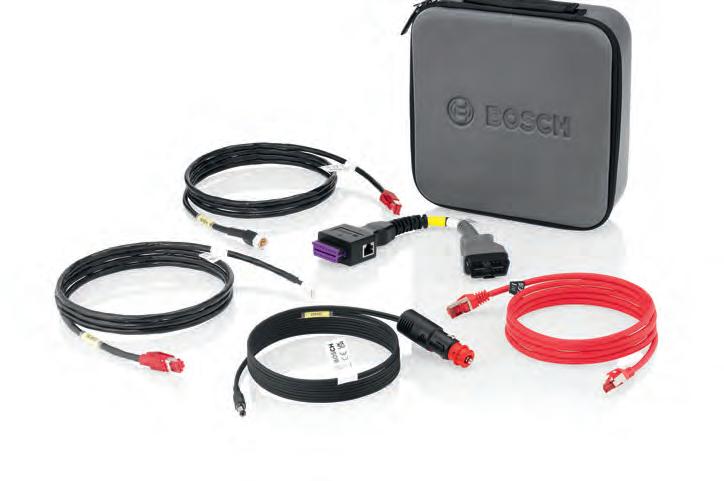
■ Connect Tesla via KTS 560/590 Vehicle models up to 2023 are connected to the KTS 560/590 via a special adapter and an additional cable. Vehicle models up to 2024 are connected directly to a KTS 560/590 as usual via the OBD interface. No additional cable is required.
■ Connection from Network plug on PC/Laptop/ DCU to Ethernet-Plug in Tesla also possible with Tesla specific adapters.
■ Since software update 2025/1 Full Support on Model 3, Model Y, Model X and Model S
ALL UNDERCONTROL!
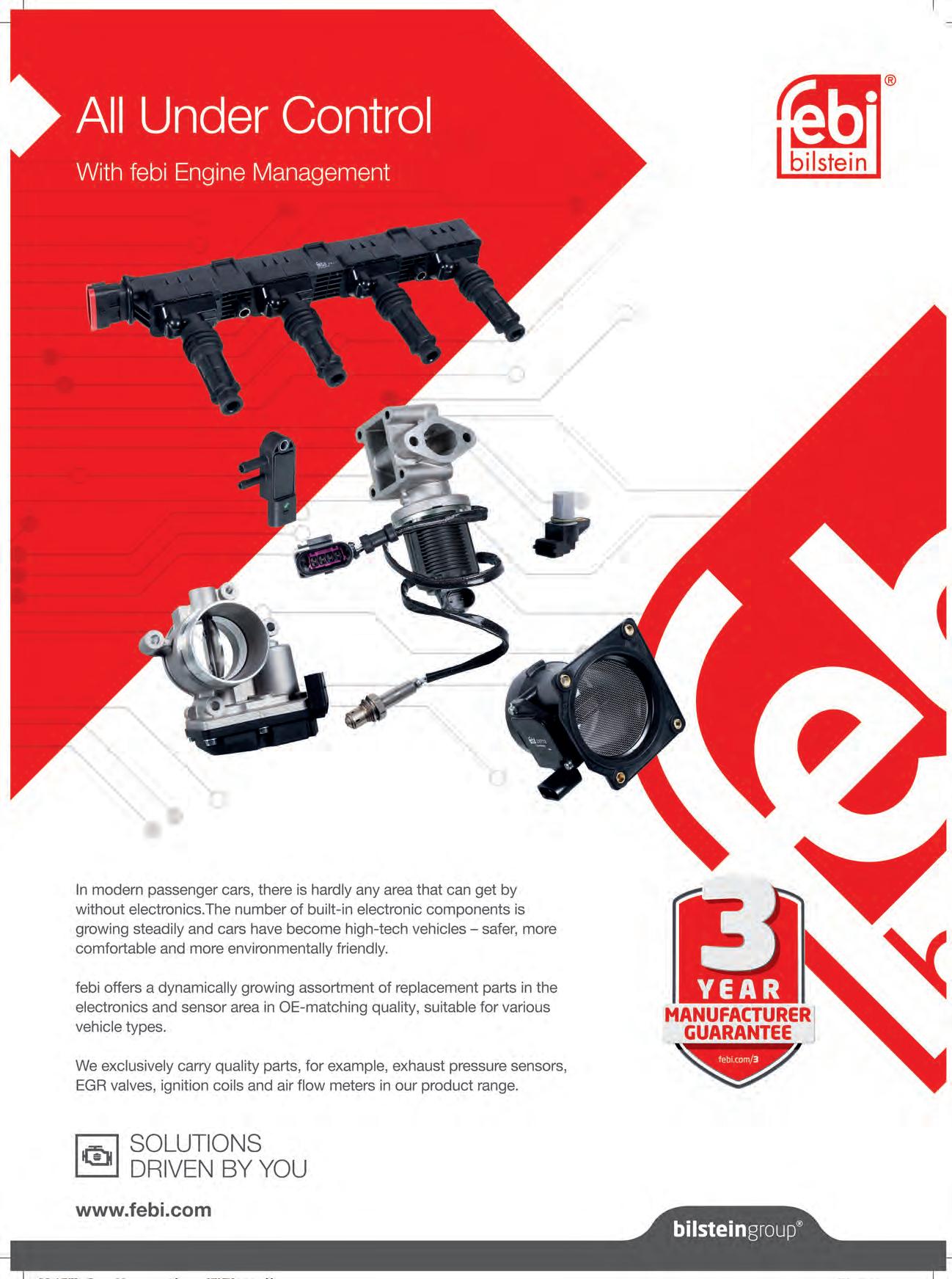
Febi outlines the role sensors and electronics play in engine management.
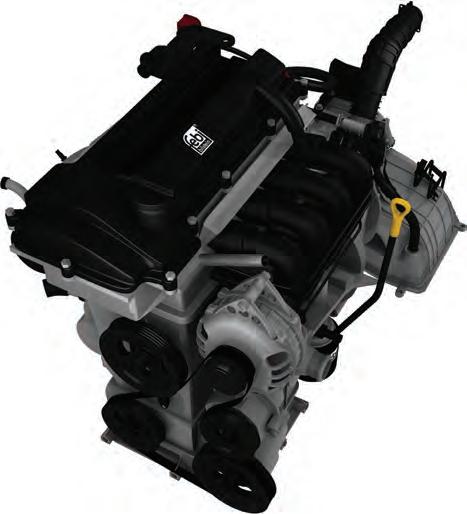
Due to the evolution of the internal combustion engine, continuous enhancements to the efficiency and performance of vehicles have been paramount. This was achieved by improving the internal components and adding electronic engine management.
Today the electronic control of the engine requires a wide variety of different sensors to monitor the performance of fuel, air, ignition and emission-related events. This vital data is received by the vehicle’s control units which act on this information to control the many engine sub-systems using the various actuators that regulate the engine.
Modern engine management systems can assimilate megabytes of sensor information quickly, and control a multitude of engine actuators, whilst evaluating both sensor input and actuator data for plausibility and integrity.
EGR valve
This all forms the management system of the engine, which enhances the engine performance and provides smooth delivery of power and economy to meet the emissions standards and the driver’s expectations.
Sensors and actuators
Sensors, and the technology they use, control and regulate engine management systems.
A sensor is a device able to acquire one or more physical parameters and convert them into another, which can be used more effectively to sense specific physical characteristics such as temperature, position, movement, speed etc. Sensors convert these characteristics into an electronically usable signal for the ECU to process.
Actuators are components which convert the electrical output signals from the ECU into physical quantities in order to control the internal combustion engine for efficiency, economy and performance. This includes parts such as fuel injectors, ignition coils and electro pneumatic valves. Actuators send feedback to the ECU on variables such as position, power consumption and load to give greater control. Some of the core components include:
The purpose of the Exhaust Gas Recirculation (EGR) system is to reduce the emissions of oxides of nitrogen (NOx) from the engine’s exhaust. There are two main types of EGR Valve. One is vacuum operated, which uses an electropneumatic pressure transducer, controlled by the ECU to open and close. The other is operated by a DC electric motor, or stepper motor. Both electronic and vacuum types are opened and closed subject to engine load.
Pressure sensor
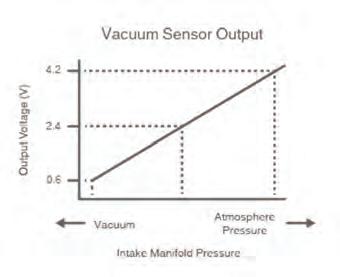
The Manifold Absolute Pressure sensor (MAP sensor) measures the pressure in the inlet manifold, providing instant manifold pressure information to the engine’s electronic control unit (ECU). The data from the MAP sensor is used to calculate air density and determine the engine’s air mass flow rate. The data from this sensor can be used for diagnostic purposes as it measures the throttle and turbo performance, as well as to diagnose unmetered air leaks in the inlet manifold.
Crankshaft and camshaft sensor
These sensors measure the speed and position of the cam and crankshaft. Their signal is processed by the engine management ECU to improve the accuracy of the ignition and fuel timing.
The two main technologies used in these sensors are typically of a hall or inductive type. The operations of these sensors are fundamentally similar.
Air mass/air flow meter
Its signal is used to calculate the injected fuel quantity, and for regulating the exhaust gas recirculation in diesel engines.
There have been several different types of sensor used over the years, depending on the systems vehicle manufacturers used. The two main types are air flow meters, or air mass meters. The terms air mass sensors and air flow meters are often used interchangeably. However, this is incorrect as the air flow
meter only detects the air volume, whereas air mass sensors are significantly more precise because temperature and pressure are also taken into account.
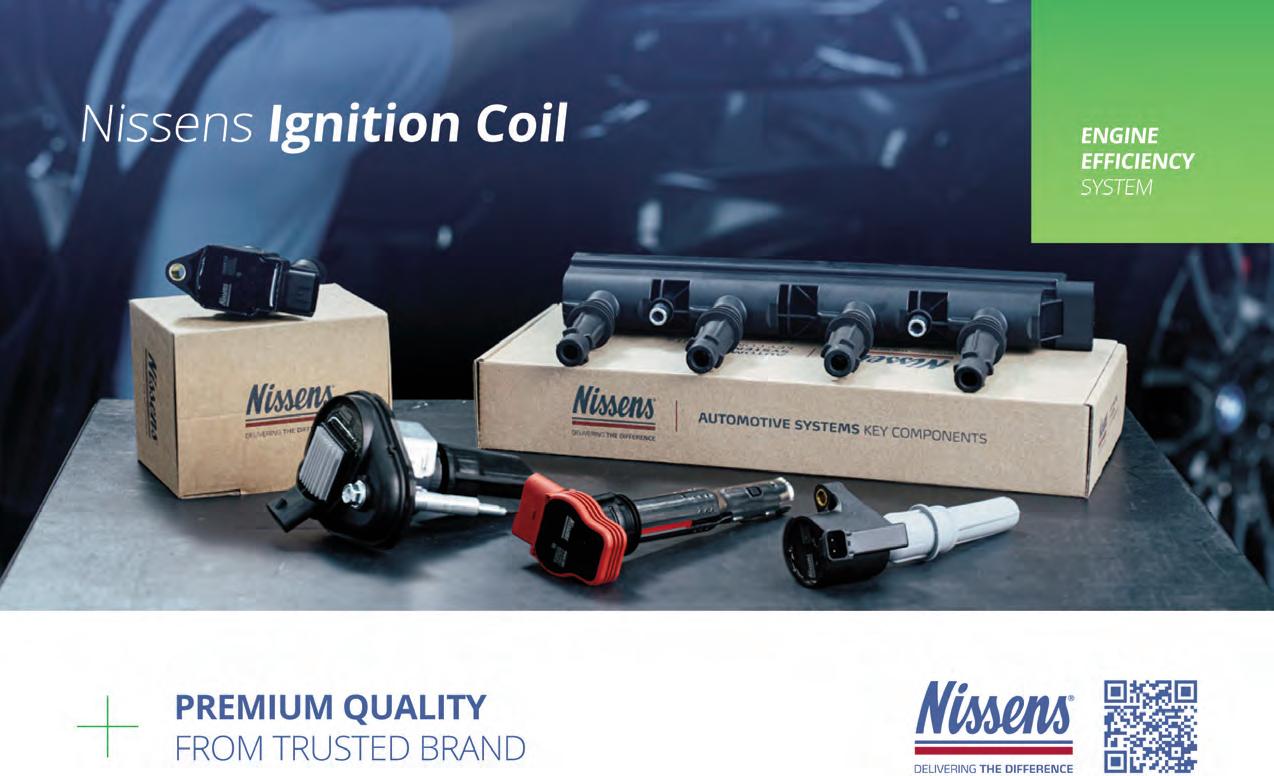
Ignition coil
There are several design variations of the ignition coil and also, the technology used is dependent on a variety of criteria. Engine environment: temperature, installation, space allocated. Performance: Current supply requirements, ability to filter interference.
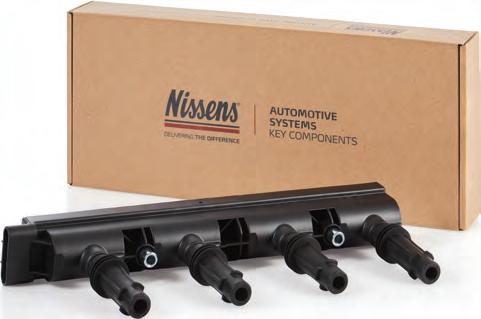
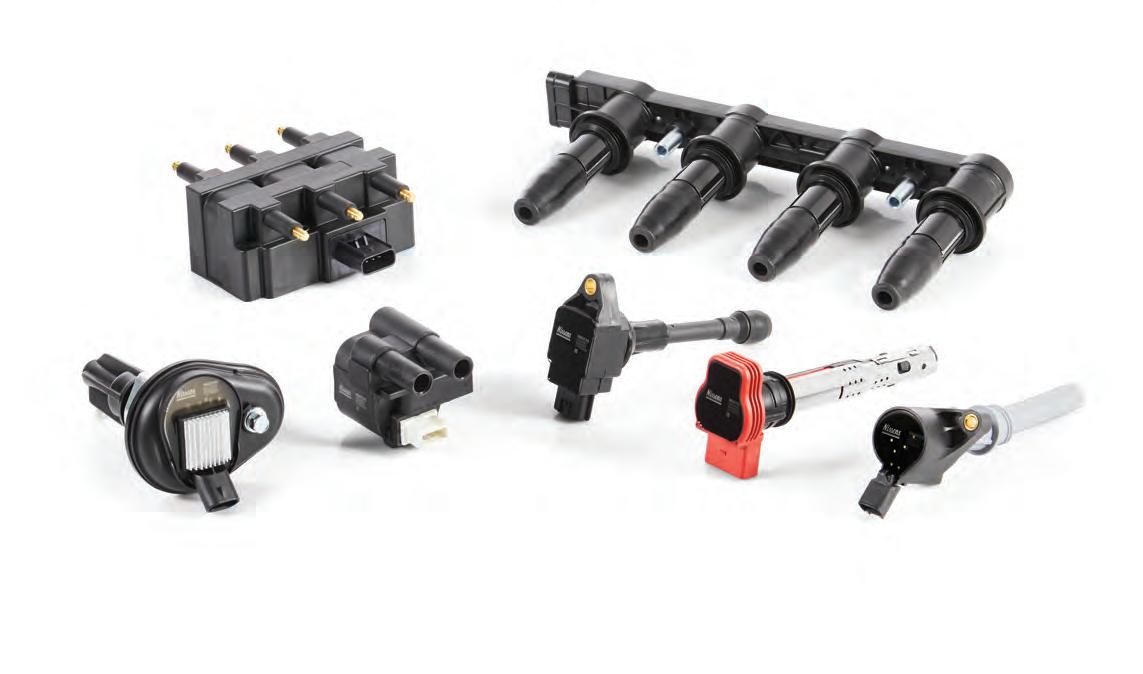
An ignition module has multiple ignition coils that are arranged in a common housing. The amount of coils depends on the number of cylinders an engine has; however these coils are functionally independent and operate like single spark ignition coils.
Double spark ignition coils generate two sparks per crankshaft rotation. The voltage is distributed so that the air/fuel mixture of a cylinder is ignited at the end of a compression stroke. The other cylinder’s ignition spark on the exhaust stroke is known as a ‘wasted spark’.
In pencil coils, each spark plug has its own ignition coil which is located directly above it. This design is modular and compact and is especially suitable, due to its spacesaving geometry, for modern downsized engines. This single ignition coil system supports misfire detection on both the primary and secondary winding. Any issues
Throttle body
unit.
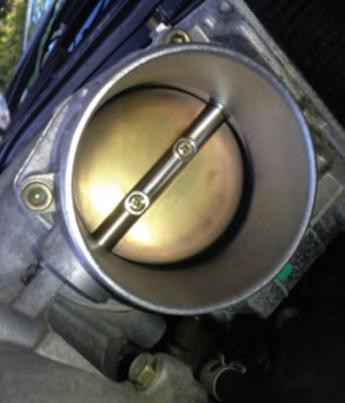
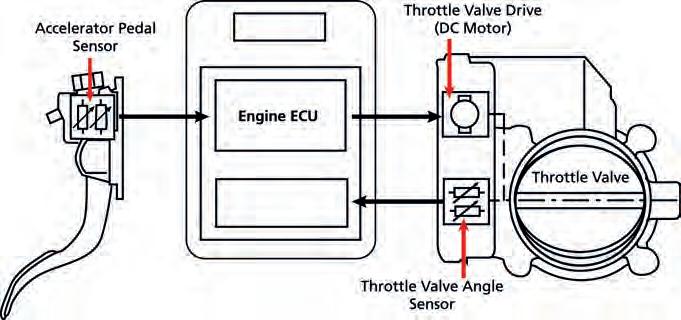
The engine management ECU has total responsibility for controlling the throttle valve inside the throttle body, with a DC motor to control the throttle valve angle. Feedback is then given to the ECU via a throttle position sensor. Together, these components make up the electronic throttle control.
The throttle control also plays an important role in emissions reduction, particularly in direct injection petrol engines when switching between homogeneous or stratified modes, as well as to control fresh air for the EGR.
“The in-house quality control of febi electronic components is carried out with the help of a highresolution X-ray machine.”
All of these products and more are available in the febi engine management range. The range features over 3,300 engine sensors and actuators covering more than 60,000 European and Asian vehicle applications and provided in OE-matching quality.
What is OE matching quality?
febi rests its reputation firmly on the quality of the products provided to the automotive aftermarket. Every febi part is submitted to intensive and regular quality checking and electrical components are no exception. Every part has been designed and manufactured to meet Original Equipment standards. With regular destructive and nondestructive testing, febi ensures a continued supply of quality products to the aftermarket. The in-house quality control of febi electronic components is carried out with the help of a high-resolution X-ray machine. Its use ensures the non-destructive representation of the internal structures of parts with plastic coating as well as aluminium or thin-walled sheet steel housing. In this way the internal structure can be checked without damaging the product.
that occur are monitored and recorded in the engine control
Can AI make diagnostics easier?
Automotive diagnostics brand, Thinkcar, is extending its offering to the market with its new AI-powered tools, the Thinktool Euro 399 and 394.
According to Thinkcar, these diagnostic machines have been designed to allow technicians to be “at the forefront of the ever-evolving industry.”
AI isn’t the future of diagnostics, they argue, it’s already here. The Thinktool 394 and 399 aim to put the power of AI right at the technician’s fingertips. With built-in Thinkcar AI, these advanced diagnostic tools make faultfinding quicker, smarter and easier than ever.
“The
AI technology automatically scans the whole vehicle, explains fault codes in plain language and offers a step-by-step guide through repairs for many vehicle systems.”
The AI technology automatically scans the whole vehicle, explains fault codes in plain language and offers a step-by-step guide through repairs for many vehicle systems. Plus, coverage improves regularly as the AI gathers information from all users.
High capability
Made to OE-level specifications, the THINKTOOL Euro 399 and 394 are equipped with full system diagnostics, advanced coding, actuation tests, and bi-directional control. The tools feature the Thinkcar operations system (TCOS) and a brand-new UI interface to provide an optimised user experience. Its innovative AI diagnostics provide a streamlined workflow, allowing the device to quickly and easily follow instructions.
Thinkcar’s THINKTOOL 394 offers a high-performance device with a clear 12-inch screen allowing for fast, everyday diagnostics. And its THINKTOOL 399 takes things to the next level with a 14-inch screen,
“Coverage improves regularly as the AI gathers information from all users.”
dual vehicle diagnostics and wider coverage. Both tools are also fast-charging for the ultimate in efficiency.
Alex Gillbanks, owner of Thinkcar UK, said: “By leveraging these advanced features, workshops are empowered to stay ahead of the curve in the industry and confidently tackle the complexities of modern-day vehicle diagnostics. This commitment to AIdriven solutions ensures that we can streamline complex tasks, perform precise repairs and ultimately help technicians to reduce vehicle downtime and enhance their workshop efficiency.”
Device coverage on the 394 includes passenger cars, electric vehicles (EV) and commercial vehicles (CV). The THINKTOOL 399 has all of the above, plus, HGV coverage as standard and enhanced EV software as standard which allows in depth EV diagnostics.
Thinkcar also offers a two-year free software update for passenger cars on both the 394 and 399, as well as access to its live remote programming network and remote support diagnostics from its well-trained experts, providing technicians with everything they need to carry out diagnostics quickly and efficiently.
TEAMWORK makes thedreamwork...
At Oldfields Garage, ALLDATA Europe and Schaeffler Vehicle Lifetime Solutions demonstrated how the power of OE repair data and solutions assisted the repair on a Škoda Kodiaq.
Recently, ALLDATA Europe was invited to Oldfields Garage, alongside Schaeffler Vehicle Lifetime Solutions, to carry out a repair on a Škoda Kodiaq 2.0 TDI with DQ500 DSG gearbox – using Schaeffler’s new LuK RepSet 2CT DMF clutch kit.
Spearheaded by Alistair Mason –Schaeffler VLS technical service manager –and joined on the ramp by an Oldfields technician, ALLDATA Europe provided the OEM repair information. Its regional sales manager, Eric Ware, was present to support the technicians through the process and demonstrate the practical value of integrating the data into everyday workshop repairs.
Held at PMM regular columnist Tim Benson’s workshop in Leominster, the repair also highlighted that independent workshops don’t need to solely rely on main dealers for parts, oil and specialist tools when carrying out OE-level repairs.
Always be prepared!
The alliance between ALLDATA Europe and Schaeffler also substantiated the former’s recurring message that preparation makes a vital difference to an independent workshop’s ability to quote, diagnose, repair and complete a job. Utilising ALLDATA Repair before a car is even touched increases transparency.
In this case, Alistair consulted Schaeffler’s REPXPERT information portal and ALLDATA Repair in advance to locate OEM procedures, meaning he could map out every step of the Škoda Kodiaq DSG gearbox and clutch repair. He identified that while conventional assumptions might lead to the removal of the transfer box – adding up to three hours of labour – repair instructions showed that it could remain in place.
These preliminary steps also allowed the technicians to confirm the required tooling, oil types and quantities, as well as check for
or simply scan the QR code
relevant technical bulletins or OEM updates – again on ALLDATA Repair – all before the vehicle was placed onto the ramp.
Eric said: “One of the biggest frustrations for workshops is inaccurate labour times. With ALLDATA Repair, technicians know exactly what is required before they start. It saves time, saves money, and builds trust between themselves and the customer – a win-win for everyone.”
Complementary strengths
Alistair thanked ALLDATA Europe for participating in the repair, emphasising the importance of OE repair information in today’s climate of complex vehicle repairs.
He said: “Our focus is on providing OEquality repair solutions – the parts, the training and the tooling – but modern vehicles are increasingly complex, and ALLDATA Repair fills the gap with wider OEM vehicle data.
“With ALLDATA Europe and Schaeffler together, workshops know they can tackle even the most complex repairs. That’s what the future of the independent aftermarket looks like – strong partnerships built on trust, expertise and quality.”
Keeping the FLOW going
It is commonly known, given the product category name, that antifreeze coolants help protect the engine against freezing in the winter, but it is often the misconception that this is the sole benefit. There are a lot more features and benefits to these functional fluids.
Antifreeze coolants are not just used for the winter to protect against freezing, they also help keep the engine from overheating during the summer months, when the ambient temperature is hot or when a car is running yet standing still in heavy traffic for long periods of time.
Question one:
Why not just use water to cool the engine?
Water is a fantastic cooling medium for a car engine as it is very effective at removing heat from around the engine’s combustion chamber and hence keeping the engine at an optimised running temperature. However, if
Choosing and using the correct antifreeze coolants can be confusing. To give you a better understanding of them, Morris Lubricants’ technology manager, Adrian Hill, answers some FAQs and gives his top ten tips.
the ambient temperature drops below 0ºC, water will freeze and ice crystals will form. Ice is less dense than water and takes up more volume in the engine cooling system. With nowhere for this ice to go, it will force its way out, damaging the engine and the cooling system. Conversely, water boils at 100ºC, and since the combustion process in a car engine can reach several thousand degrees, even in a pressurised system, the water can be lost as steam.
This is where antifreeze coolants and their carefully balanced formulations take over from just pure water alone. To combat these physical challenges, monoethylene glycol (MEG) is used as the base for antifreeze coolants and for good reason. Monoethylene glycol disrupts the formation
of ice crystals and will protect down to -40ºC (by using a 50 per cent mixture for example, with distilled, deionised or demineralised water), preventing damage. When the engine reaches operating temperature, monethylene glycol (within the pressurised cooling system) increases the boiling point and temperatures can reach 110ºC.
Question two:
What other functions do antifreeze coolants perform?
To protect the different metals and alloys used in the construction of the engine, the antifreeze coolant must also contain rust and corrosion inhibitors. Rusting and corrosion can happen due to the presence of oxygen or
other contaminants, but the inhibitors either form a chemical barrier or neutralise the rusting and corrosive reactions. Rust and corrosion can also be prevented if the antifreeze coolant mixture has a slightly alkaline pH, usually around 8.5. This will also control the degradation of rubber and plastic components such as hoses, seals, gaskets, etc. Therefore, antifreeze coolants are enhanced with chemical additives such as pH buffers to help to control this rusting, corrosion and degradation.
As the antifreeze coolant is pumped and churned around the cooling system, air can become entrained, and so the product also must have antifoaming properties. Foam is basically air bubbles, and air is not very good at removing heat. This will not only lead to overheating, but also cavitation that will impede antifreeze coolant flow, making matters even worse. Antifoam chemical additives ‘break’ the foam and release the air.
Question three:
Why are there so many antifreeze coolants available in the market?
ADE’S TOP TEN TIPS
Don't select based on colour: Colour is purely cosmetic and does not contribute to performance.
Never mix antifreeze coolants with different specifications: They may react and cause system issues. Never mix with tap water. Hard water salts can block the cooling system. Always use distilled, deionised or demineralised water.
Follow the service guidelines set by the OEM and change accordingly: 2 years or 5 years, depending on the antifreeze coolant specifications.
If the vehicle is new to you without any service history, change the coolant as an insurance policy.
Routinely check the cooling system, looking for leaks, split or cracked hoses, etc. This will ensure maximum system efficiency.
WATCH!
Over the past 15 years, the development of engine technology has been very fastpaced, and many different engine designs have emerged. On the roads today, there are so many different engine types, such as petrol, diesel, and hybrid, each with their own ways of developing power to the wheels. This complexity is a result of Original Equipment Manufacturers (OEMs) taking different approaches to help improve efficiency, reduce fuel consumption, improve reliability and lower emissions. To deliver on these new engine platforms, the OEMs are using innovative materials, alloys, etc, in the manufacturing of these new engine designs.
Head over to Morris Lubricants YouTube channels for more in-depth information on coolants, simply scan the QR code below.
The antifreeze coolants, therefore, must be manufactured to perform in engines made from these differing materials and not corrode the engine, its components or parts of the cooling system, such as the water pump, hoses, radiator, etc.
What does this mean?
This means that there is not one antifreezecoolant that will suit all types of engine design. Antifreeze coolant formulations are developed and tailored to meet the strict demands of the OEMs, of which there are many.
The market consists of
traditional two-year antifreeze coolants, with ‘old school’ fast-acting chemistry and fiveyear coolants that manage protection in a more controlled way. But as the metallurgies used in engine designs continue to develop,
If you are unsure of the OEM specification required, seek technical advice. The correct specification will ensure maximum protection. The Morris Lubricants’ online Whatoil tool is an ideal place to find the correct antifreeze coolant needed.
Check and maintain the coolant level all year round. The coolant is essential for both hot weather as well as cold.
Use the correct mix ratio with distilled, deionised or demineralised water (50:50, for example) to ensure high and low temperature protection is achieved. Correct coolant selection contributes to optimised engine operation and efficiency.
alongside changing duty cycles, antifreeze coolant technology has needed to evolve in parallel, to help maximise engine protection as well as to prevent freezing and overheating. This delicate balance of chemistry is essential to protect engine platforms and ensure maximised operating efficiencies. The OEMs drive the development of these formulations, targeting which chemical additives are needed and hence buying and using the correct antifreeze coolant is essential.
Ultralife range
Morris Lubricants has developed the Ultralife range of antifreeze coolants to cover a broad range of car engines and across many different manufacturers. The Ultralife range is ideal for fleet managers, dealerships and mechanics that are maintaining a variety of different vehicle technologies, OEM brands and vehicle models.
FOR MORE INFORMATION ON MORRIS LUBRICANTS WWW.RDR.LINK/ACA012 or simply scan the QR code. Also contact the team on 01743 237541 or email them at technicalhelpdesk@morris-lubricants.co.uk
ALL CHANGE
2025 was another year of change in an increasingly complex oils and lubricants market, as VLS Chairman Darren Frogson explains to PMM
Not quite an ‘annus horribilis’, but 2025 certainly posed continued challenges for the automotive aftermarket, and particularly for engine oils and lubricants. These essential components of modern vehicles play a vital role in delivering fuel economy gains and emissions. But with more OEM-specific specifications, combined with an increasingly diverse and ageing vehicle parc, engine oil selection for mechanics is more difficult than ever.
Add to that cost pressures, with a static MOT fee and ongoing inflation affecting labour and parts, and it might feel like a perfect storm. Many workshops are looking to save costs where they can, while motorists are increasingly reticent to spend on anything but essential, minimum vehicle maintenance.
At the independent membership body VLS, the Verification of Lubricant Specifications, we have worked hard over the year to uphold standards in this increasingly complex industry, so that end users can have confidence that the products they select for use in customer vehicles are fit for purpose and deliver what they claim.
Last year, we opened 16 new cases, investigating complaints about a range of passenger vehicle and heavy-duty vehicle engine oils, including 0W-20s, a 0W-30, and
several 5W-30s. Every single one of those cases has been related to conflicting or unevidenced OEM approvals, and in some cases, non-compliance with ACEA specifications and low temperature properties as well. Some of the cases have been resolved; however, most remain under investigation.
Market trends have prompted some of these cases.
In October, VLS launched a widespread market investigation and issued a caution over engine oils making claims against the Stellantis FPW 9.55535/03 specification, used by vehicles including Peugeot, Citroën, DS, Fiat, Vauxhall and Opel models.
The specification was initially launched in July 2023 and revised in June 2024. Four products have been approved against the 2023 specification and have until June 2026 to be re-approved against the 2024 revision. However, our research identified more than twenty other brands making product claims against this specification.
VLS believed that the technology to support this specification was not yet widely available to the general market. Industry experts were concerned that claims to meet the specification might be being made without the support of the additive company or technology provider, or in the absence of the supporting technical performance data to demonstrate that the formulation can meet the specification. VLS has already proactively contacted several companies to request evidence to support their product claims against the specification, and the technical review panel is considering their responses.
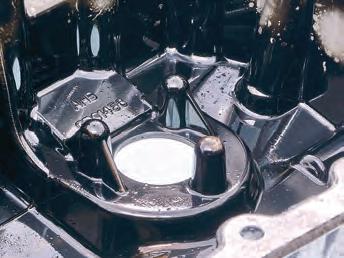
Effects of suitable-for-use oil (bottom) vs OEM-approved (top) on the oil sump. Image used courtesy of Lubrizol.
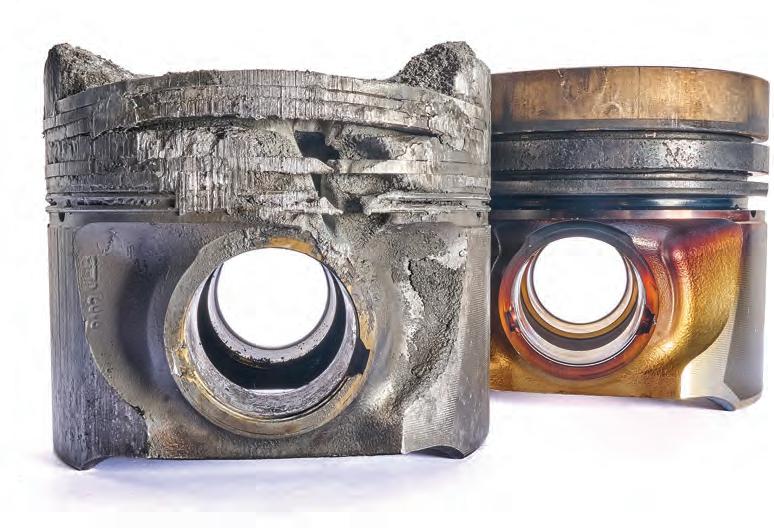
Suitable-for-use engine oil vs OEMapproved. Tested at Lubrizol’s test facility, the piston on the left failed after 23 hours while the one on the right completed the full 96 hour trial. Image used courtesy of Lubrizol.
Real consequences
This isn’t just a matter of technicality. It really matters. Using oils that fail to meet the requirements of the intended specifications can cause accelerated wear to engines, reduce the effectiveness of emission control systems, invalidate warranties, and ultimately result in long term engine damage and unhappy customers. All of which could have been avoided. Mechanics and vehicle owners must be able to have confidence in the lubricant products used in their vehicles.
During the year, VLS issued two safety warnings relating to brake fluid and hydraulic fluid, as well as escalated these and an engine oil case for action, after the company involved failed to take sufficient action during the VLS investigation process.
Untested additives were another market development causing concern.
During the year, experts at Lubrizol, a major global organisation supplying additive technology to lubricant blenders, published an article on the real-world performance gap between some engine oils labelled ‘Suitable for Use’ (SFU) and fully OEM-approved products (see pictures).
Scientific testing uncovered several issues with the SFU oils tested, including piston failure, significant increases in viscosity, enough to impact the oil’s ability to circulate efficiently within the engine, inadequate oil flow at low temperatures, a higher risk of sludge buildup, and seal degradation. In an extreme case, Lubrizol witnessed catastrophic engine failure as a direct result of a low performance SFU oil.
At VLS, we recognise that SFU oils can be excellent quality products and meet the requirements of OEM specifications. However, like any marketing claim, marketers must be able to support it with valid technical data.
The concern is that some products may be using untested additive packs, a market
development that VLS has been following closely over the past twelve months. VLS, in conjunction with our European partners at SAIL/ATIEL and UEIL, recently published Additive Pack Guidance. The guidance clearly states the difference between tested and untested additive packs and that, regardless of the additive pack type, the lubricant marketer holds full legal responsibility for all product performance claims.
Additive suppliers are not legally responsible for the quality or performance of the final lubricant. While additive companies are responsible for providing available performance test data, the ultimate accountability remains with the marketer. If the additive supplier cannot supply adequate validation data, the blender and/or marketer must conduct their own testing to substantiate any performance claims. Depending on the performance specifications claimed, this could require extensive performance testing, likely to cost in excess of a million US dollars per product. Lubricant marketers must ensure their claims are fully supported by credible, comprehensive technical data, which can be provided on request.
As we look ahead to 2026, I am delighted to be leading VLS over the next 12 months, having become Chairman at the end of September. A VLS Board member since 2015, I am passionate about our independent organisation’s work to maintain a fair and open lubricants market that benefits end users by assuring the performance claims made on lubricant products are valid and reliable.
“Scientific testing uncovered several issues with the Suitable-for-use oils
tested,
including piston failure, significant increases in viscosity, enough to impact the oil’s ability to circulate efficiently within the engine, inadequate oil flow at low temperatures, a higher risk of sludge buildup, and seal degradation.”
Darren Frogson, chairman, VLS
In my time as Chairman, I am keen to support VLS members and the wider lubricants industry through the transition to net zero, with its increasingly complex vehicle parc, and to maintain VLS’s track record in managing non-compliance and supporting end users. As we start 2026, just four years remain until the sale of new purely internal combustion engine (ICE) cars will be banned by the UK government, and just nine years remain for full and plug-in hybrid vehicles to be sold, which have become such a popular choice for new vehicle registrations. More change is to come.
Why UKMANUFACTURING is important
David Valentyne, aftermarket sales manager at TotalEnergies Marketing UK, takes us through the company’s approach to British manufacturing.
2025 marked 55 years of TotalEnergies manufacturing in the UK at its Ferrybridge plant in Yorkshire, with the company continuing to bring together lubricant technology, unrivalled OEM coverage and supply chain reliability to deliver a premium range of products that the aftermarket can trust.
In 2020, TotalEnergies celebrated its 50th anniversary at Ferrybridge, the blending plant in Yorkshire which it acquired from TH Newsome back in 1970. In this time, TotalEnergies has significantly invested in Ferrybridge, and its almost 100-strong team, which produces premium lubricant products supplied into the UK aftermarket both directly through TotalEnergies channels –including its network of service stations –and its trusted partners.
Workshops are dealing with an increasingly complex lubricant landscape. New sequences are emerging – the ACEA currently defines 12 – while OEM requirements are constantly evolving in line with new models and modern engine technologies. Lubricant technology is accelerating too, with a huge range of viscosity labels covering engine types and working conditions.
TotalEnergies recognises this challenge, with the Quartz range providing coverage across 99.9 per cent of the UK car parc.
70 years of R&D
TotalEnergies has seven decades of research and development experience and over 130 researchers working across global R&D centres. This relentless focus on innovation is why Quartz lubricants are approved by leading carmakers including BMW,
Mercedes-Benz, Stellantis, Renault, Volkswagen, Porsche and many others, and recommended for use by many others.
Modern engines are smaller, hotter and more highly stressed than ever before.
TotalEnergies’ Age-Resistance Technology helps them stay cleaner and perform for longer. By forming a resilient oil film that protects against wear, oxidation and sludge, the technology provides outstanding durability even under stop-start or hightemperature conditions.
“Our relentless focus on innovation is why Quartz lubricants are approved by leading carmakers including BMW, MercedesBenz, Stellantis, Renault, Volkswagen, Porsche and many others.”
David Valentyne, TotalEnergies
Meanwhile, Eco-Science Technology, developed for the Quartz Xtra range, targets efficiency head-on. In ACEA testing, Quartz Ineo Xtra Dynamics 0W-20 achieved up to a 4 per cent fuel-economy improvement versus the industry reference standard, while maintaining oil stability up to 15 times higher than standard limits.
Sustainability is now intrinsic to the lubricant lifecycle – from raw materials to packaging. TotalEnergies has committed significant investment in circularity, spearheaded by Quartz EV3R.
Quartz EV3R products were the first
engine oils on the market formulated with up to 100 per cent regenerated base oil (RRBO). Through advanced re-refining processes, used oils are given a second life while maintaining equivalent performance to virgin base stocks. With robust OEM approvals –EV3R is proof that environmental progress and engine performance can go hand-in-hand.
New tools to support garages
TotalEnergies complements its lubricant range with digital tools developed specifically for busy workshops:
LubConsult – an online recommendation platform that allows garages to instantly identify the correct oil for any make and model, reducing the risk of mis-fill and improving service efficiency.
LubPilot – a smart tank monitoring system enabling distributors and workshops to track lubricant levels remotely, helping avoid shortages and optimise reordering.
MyLubPortal – a centralised digital platform for order management, stock control and account support, designed to make working with TotalEnergies faster and more efficient.
From its UK blending plant to global R&D centres and wider supply chain, TotalEnergies continues to combine local footprint with global innovation. With the Quartz range providing OEM approved assurance and the long-term savings that come from advanced engine protection and reduced environmental impact, TotalEnergies’ commitment to UK manufacturing delivers premium solutions that workshops and their customers can rely on.
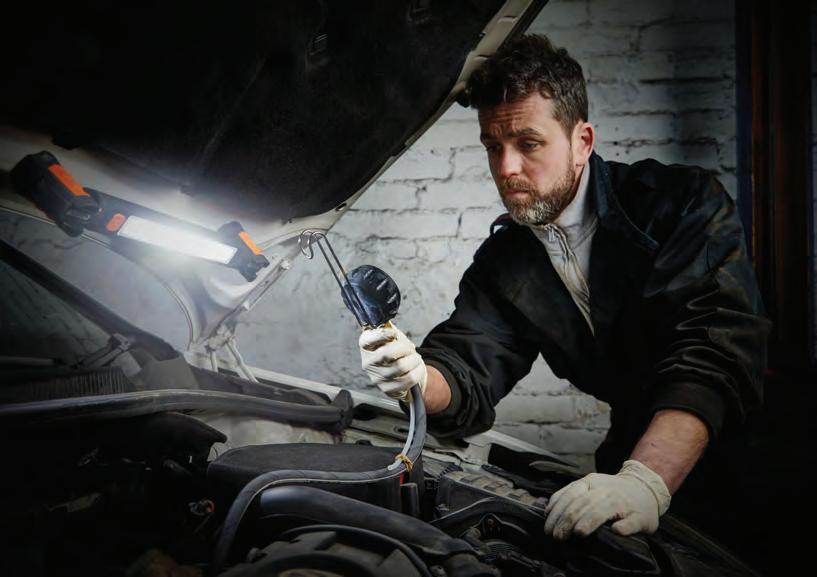
LIGHT years ahead!
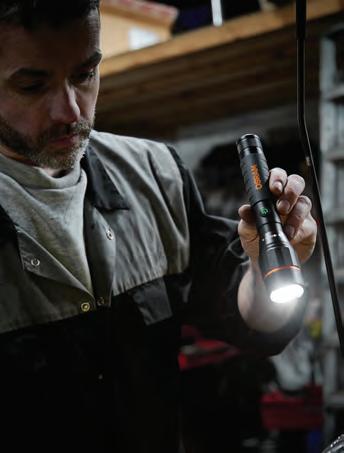
OSRAM explains the versatility of its inspection lights.
With limited space available in an engine bay, ensuring there is a convenient light source is important for efficiency and safety. Renowned lighting manufacturer, OSRAM, has a vast array of new inspection lights that provide a variety of options for technicians. Due to the work undertaken by technicians, there are a variety of inspection lights that will assist them. As every technician has a different preference when it comes to inspection lights, OSRAM’s range should provide a suitable option for them all, whether that’s a lamp that attaches to the bodywork of a vehicle, a head torch or one with multiple attachments.
“With three light functions, the brightest providing 115 lumens and a low setting providing 50 lumens, as well as a red flashing function at the rear, this head torch offers various settings for a variety of tasks.”
LEDinspect 3-in-1 inspection light kit
OSRAM’s inspection light that has three separate attachments, creating a 3-in-1 solution for a variety of tasks. Coming in a handy and compact case, the LEDinspect 3-in-1 inspection light kit is the first of its kind in the OSRAM portfolio. Included are three attachments: a standard torch attachment, a thin inspection light attachment; with two hinge positions, which rotate 180° and 230° respectively, and a gooseneck light attachment, that can bend and twist to illuminate hard to see locations across the whole car.
The same handle base is used for each of the three attachments, with all having four lighting modes, high, medium, low and flash. There is a magnet on the handle base for hands-free working and the end of the gooseneck light attachment is also magnetic, which is helpful if the user needs to retrieve screws or small objects in hard-to-reach places. The key benefit of the OSRAM 3-in-1 kit is its adaptability within the professional workshop environment, whether that’s using it as a simple light source to direct light into tight spaces or to see round a bend, the 3-in1 will accommodate every need.
LEDinspect flexible inspection light
Launched with high uptake is the flexible inspection light, an LED strip light, that can be twisted, bent and contorted into any shape, making the LEDinspect flexible inspection light unique.
It also comes with a stretchable strap with fixing hooks at either end that twist 180N, allowing it to span a wide area, such as under the bonnet, between vehicle doors when doing interior work, across the underside of the car or mounted to the ramp as a site light. It has four light settings, which changes how long it can be used before needing a charge. For instance, on the low light setting (400 lumens), it can last for 20 hours, on the middle setting, it’ll give light for six and a half hours and on the highest light output, which is 1,000 lumens, it’ll last for three hours. The fourth light setting is a red light option. Once the lamp has discharged, it’ll take just seven hours’ charging until it has a full battery again.
LEDinspect flexible head torch
One that allows for complete hands-free working, is the head torch. With three light functions, the brightest providing 115 lumens and a low setting providing 50 lumens, as well as a red flashing function at the rear, this head torch offers various settings for a variety of tasks.
The head torch is similar to the flexible inspection light, in that it’s a flexible and adjustable headband with a strip of LED light. It also has soft pads inside and additionally an adjustable strap for optimal wearing comfort. With a weight of only 62g and a flexible, foldable design, the product is easy to store and transport. The rechargeable battery allows up to four and half hours of operation at high power or up to five and half hours at low power and with a charging time of one and half hours.
LEDinspect rechargeable under bonnet light
This rechargeable under bonnet light from OSRAM is perfect for professional and DIY use. With two light functions up to 1,200 lumens and 600 lumens, and a light bar that can be rotated up to 360º, this lighting fixture offers different adjustment options for a variety of tasks.
The LEDinspect rechargeable under bonnet light is particularly impressive with its great flexibility, as it can be extended to a length of up to 1.8 metres and can therefore provide optimum lighting in the engine compartment in a wide range of vehicles.
The rechargeable battery allows up to two hours operating time at high power or up to four and a half hours at low power and with a charging time of only three hours.
LEDinspect torch range
Earlier in 2025, OSRAM launched its LEDinspect torch range of reliable and innovative products, designed to deliver consistent performance and peace of mind. Compact, lightweight and easy to carry, the portable LEDinspect torch range provides the perfect companion for technicians.
There are two options in this range of six, the ESSENTIAL range, which consists of three battery operated torches and the PRO, which features three torches that are rechargeable via USB-C. The ESSENTIAL torches are the 250, 350 and 450 and the PRO torches are the 500, 800 and 1200, with the number associated with the torch referring to the maximum number of lumens it produces.
Getting into the WINTER spirit
Automotive tool specialist, Draper Tools is outlining some of the key considerations for garages this winter.
Winter brings mixed fortunes in the garage, working conditions get colder and darker and extra precautions are needed to keep the garage safe, compliant and comfortable. Equally, the colder months can offer opportunities to give your customers added peace of mind and boost your bottom line at the same time by offering a winter health check and cross selling seasonal maintenance jobs.
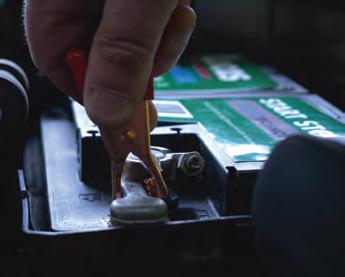
Offering a winter health check presents an opportunity for garages, alongside giving motorists some much needed reassurance. Include essential checks such as battery health, tyre condition, fluid levels, lights, brakes, windscreen wipers and anti-freeze to help give your customers confidence. These simple but important checks can be a significant source of added income, whilst also helping to make a real difference to road safety at this time of year.
Once you provide these services, you need to make sure you communicate the importance of these added safety checks during winter to your customers. According to data from Direct Line Group, the top reason for a winter breakdown is a flat battery, which accounts for over 440,000 (35 per cent) of call outs in winter. As a garage you’ll likely have your own experience of how frequently you deal with battery problems during the winter months too, you can use this knowledge to highlight how vital battery care is.
The age of the customer’s vehicle battery is a key consideration too, if it’s older than four or five years, it could be nearing the end of its life – meaning it’s well worth recommending a battery check-up. Don’t forget to offer your customers some advice on best practice for batteries too, such as using a trickle charger and minimising the use of power-hungry accessories.
To perform a battery check, ensure you check battery condition with a visual inspection and a test of the voltage output and charging rate of the battery, using a multimeter or basic battery tester.
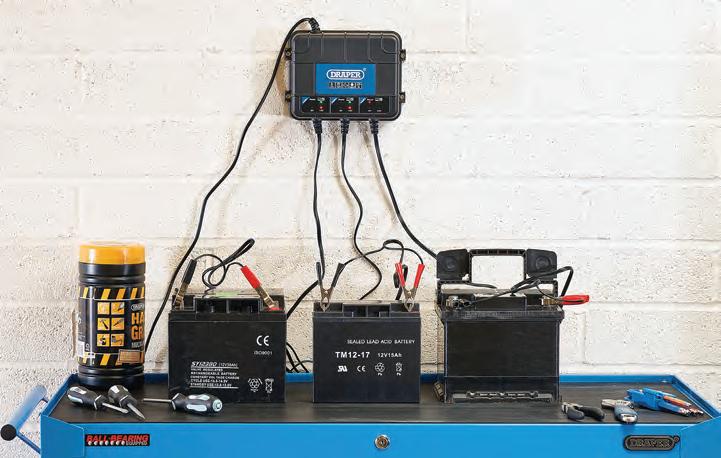
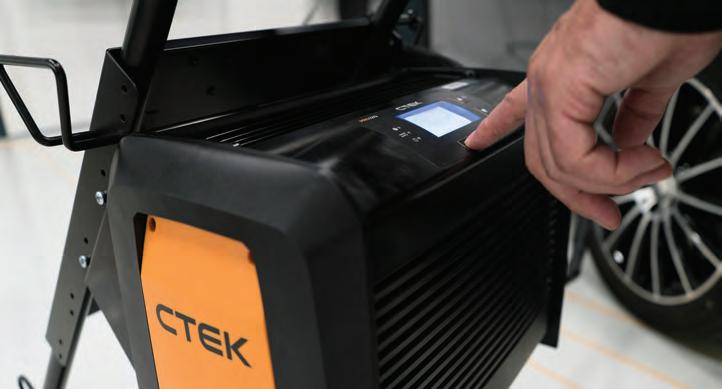
Make sure you’re well-stocked with battery charging equipment and jump starters to help you deal with the winter influx of battery related issues. A battery charging station to charge multiple vehicle batteries at once is a good investment for any garage.
Talk about tyre safety
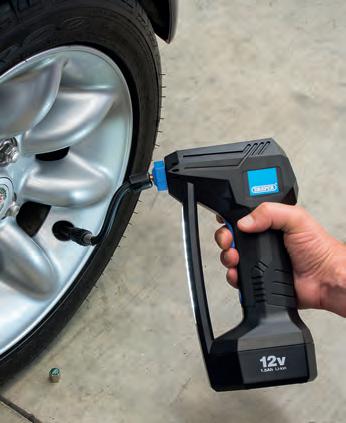
Tyre pressure notifications are easily ignored by many motorists and tread depths often go unchecked, partly because people are unaware of the serious dangers that unsafe tyres pose. There’s a lot of confusion on this topic for consumers, allowing garages to become a local source of expertise on the subject. For instance, while the legal limit for tread is 1.6mm, most of us in the trade understand that once tyres are below 3mm, stopping distances increase dramatically.
When you combine this with winter’s wet and icy road conditions, it makes for a real risk to road safety. So, be sure to talk about tyre safety and let your customers know that stopping distances, grip and braking control are all affected by poor tyre condition. In any winter service or health check, make sure you pay extra attention to overall tyre condition and check the wheel nuts too. But preparing for winter doesn’t just mean providing extra care for your customers’ cars. Working conditions and onsite customer safety are essential to consider alongside vehicle checks. When cold temperatures set in, a good pair of mechanics gloves will keep hands warm during pre-drive vehicle inspections and during deliveries. An electric heater is another worthwhile investment when the weather turns. Look for energy efficient models, such as PTC heaters to keep costs down.
Winter’s poor lighting conditions can make it worth considering some extra lighting options, these could be anything from site and flood lights or simply some compact magnetic inspection lamps, allowing for hands free working under the bonnet.
Tool storage is another area to think about when the weather turns, especially power tools. Extremes of temperature should be avoided, along with any kind of damp, moist environment. Choose a secure tool chest for storage when not in use and this will also avoid dust and debris.
Be sure to prioritise your customers safety on the premises. In winter, flooring could be wet for example, make sure you’ve got adequate safety signage, lighting and first aid kits on site – and check these haven’t expired.
DRAPER’S TOP TOOL PICKS FOR WINTER:
Draper 3 bank charger station: This is a high quality, microprocessor controlled 6V/12V bank charger station with capacity to charge and maintain three vehicle batteries simultaneously. It is a fully automatic smart charger, capable of continuously monitoring and reacting to battery condition to prevent overcharging, reverse polarity and short circuits. A handy addition for any garage, it comes fitted with lead connectors and supplied with terminal rings and alligator clips.
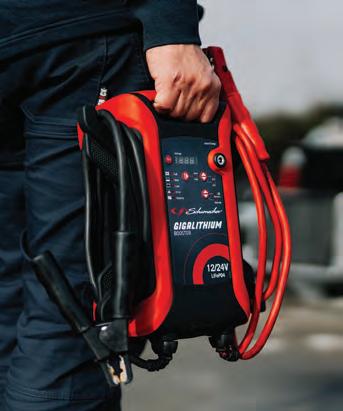
Schumacher Giga 12/24V Lithium
Booster: Thanks to a partnership between global battery care brand Schumacher and Draper, you’ll find greater availability of their industry leading chargers and boosters. This professional jump starter is suitable for starting difficult vehicles, and with the built-in memory saver, the vehicle's parameters such as the radio and clock settings are preserved during the battery charge. Additionally, it features an override mode, allowing the vehicle to be started without the battery.
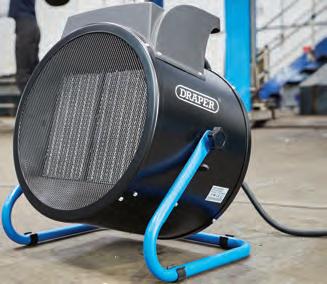
Draper 230V infrared cabinet heater: This heater is highly efficient and converts 95 per cent of the input electricity to heat. It is the ideal solution for larger garages where heating the entire area is either impractical or too expensive.
Draper COB LED rechargeable 2-in-1 head torch with wave sensor: This adjustable headband is fitted with a bright LED spotlight and COB floodlight to create a powerful head torch. The LED headlamp is great for long distances, while the wide-area COB light offers an incredible field of view and eliminates the need for head movement to illuminate the desired area.
Draper Expert USB Rechargeable Inspection Light with Charging Station: This durable inspection light provides a wide angle of illumination and features a longdistance torch beam for added versatility. It includes a 180° swivel stand for adjusting the beam direction, as well as strong magnets on the back and base, and an integrated hook for hands-free use.
Draper 400V PTC Electric
Space Heater: This energyefficient PTC heater is a great option for the garage and able to self-regulate in order to warm up your space (and keep it that way) quickly and efficiently.
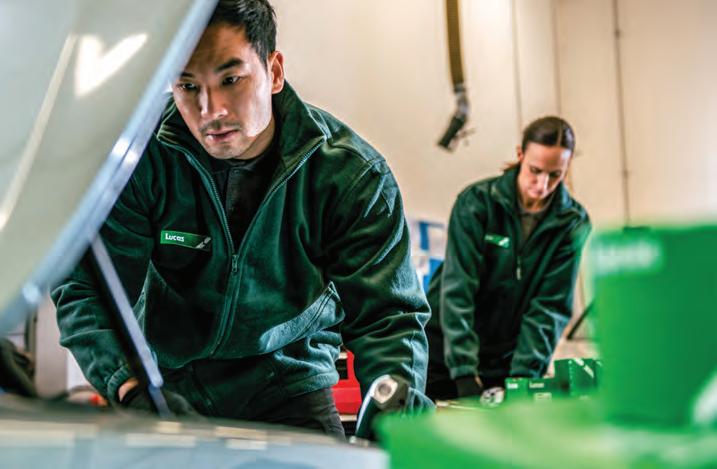
The longer nights and older cars we’re experiencing this winter makes reliable bulbs a must-have. But do you have to pay OE prices? ELTA Automotive, the official licensee and custodian of the Lucas lighting brand in the UK, argues that you don’t.
A match made in the WORKSHOP
With the UK vehicle parc ageing rapidly and lighting technology becoming more advanced, workshops need reliable, tested, road-legal bulbs they can fit with confidence. Elta explains why quality aftermarket lighting is more important than ever; and how the Lucas programme delivers the perfect balance of performance, value and trust.
With the average UK car now almost 10 years old, lighting issues are becoming a routine part of daily workshop life. Older bulbs, ageing wiring, UV-faded lenses and moisture-affected housings all contribute to an increase in failures.
At the same time, cost-of-living pressures mean many motorists are more costconscious, relying increasingly on their trusted independent garage for safe, effective, good-value repairs. For workshops, this means more lighting jobs, but also a greater need for components that perform reliably, install correctly, and maintain customer confidence.
To avoid comebacks and MOT issues, workshops need bulbs that meet the same technical expectations as the vehicles they’re fitted to. Beam patterns, filament alignment, colour temperature and electrical compatibility are all critical aspects when considering MOT compliance, on-road safety, glare control and long-term reliability.
This level of precision demands bulbs that have been properly engineered and validated, rather than simply supplied to a price point. Independent garages rely on this balance every day and, according to Elta, the aftermarket is uniquely positioned to provide high-quality, road-legal bulbs that still represent genuine value for customers. The term “aftermarket”, the company points out, doesn’t have to mean compromise. What it does require, however, is a brand with proven testing, manufacturing consistency and regulatory compliance.
OE-matching quality
Some technicians believe OE bulbs are the only safe option, especially as lighting technology continues to evolve. Elta’s position is clear: You do not need OE bulbs to deliver OE-matching performance.
“Some technicians believe OE bulbs are the only safe option, especially as lighting technology continues to evolve. Elta’s position is clear: You do not need OE bulbs to deliver OE-matching performance.”
As custodians of the 150-year-old Lucas lighting programme, Elta works closely with longstanding, trusted manufacturing partners and every bulb is validated in ELTA’s own dedicated photometry laboratory. Elta tests and confirms the following before any release:
■ Beam pattern
■ Lumen output
■ Colour temperature
■ E-mark compliance
This gives workshops thereassurance they need, without asking customers to pay OE prices. For technicians, Lucas lighting offers:
■ Consistent, predictable performance
■ Reliable fit and beam accuracy
■ Verified, road-legal compliance
■ Better value for motorists
■ Healthier margins for the workshop
For vehicles over 8-10 years old, a replacement bulb may not be the whole solution. ELTA recommends checking:
■ heat-damaged bulb holders
■ lens fading or oxidation
■ voltage irregularities
■ corroded earth points
■ moisture inside the lamp unit
These quick inspections help prevent repeat failures, reduce diagnostic time, and increase customer satisfaction.
Putting the spark back in SPARK PLUGS
During their normal use, spark plugs gradually wear and will need to be replaced, sometimes for engine performance reasons they may also need to be upgraded, but whatever the reason, Denso spark plugs should be the first-choice replacement.
Put in its simplest form, the purpose of a spark plug is to provide the spark – a high voltage electrical charge that ‘jumps’ the gap between its electrodes – that ignites the fuel and air mixture that enters the combustion chamber in the cylinder head, to power the engine.
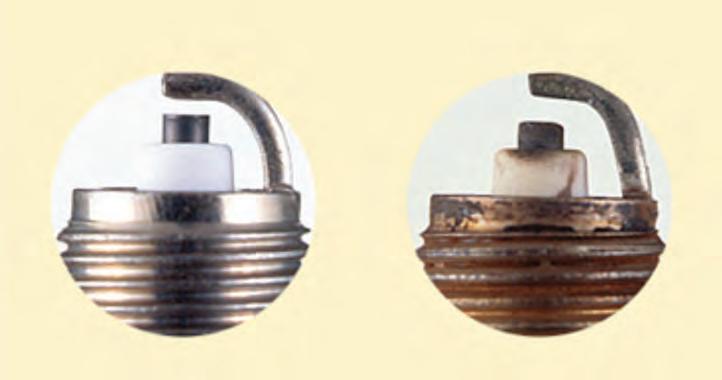
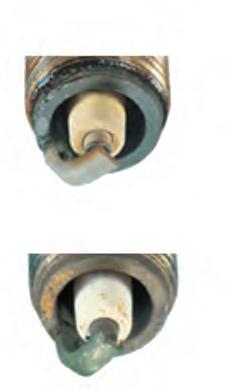
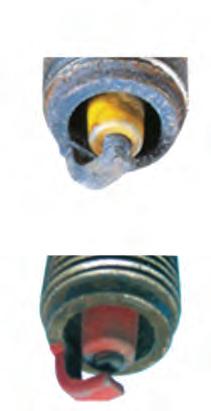
The primary reason that spark plugs need replacement is due to erosion to the electrode, which is caused by the aggressive nature of the spark itself. Each time the spark jumps the gap, it erodes an almost immeasurably small amount of material from the electrodes. Over its lifespan, this will happen millions of times, which gradually increases the gap and reduces the efficiency of the spark, affecting engine performance and increasing exhaust emissions and fuel consumption. In addition, if the gap becomes too wide, as well as a drop in engine efficiency, extra strain is put on the ignition coil, as it needs to generate a higher voltage for the spark to jump the larger gap.
The amount of wear that the electrodes suffer is primarily governed by the material they are made from. With the development of nickel electrodes, which incidentally, is now considered to be the basic automotive spark
In addition to replacing the plugs more frequently, there is another way to actually make the ignition more resistant to these factors, namely to upgrade the spark plug with one of a different technology.
ELECTRODE WEAR
plug technology, the previous requirement to periodically reset the gap was superseded, primarily as the material is more hardwearing. However, erosion still occurs, to the extent that after around 50,000km, the electrodes will be so worn that the plug will have reached the end of its service life.
It is worth mentioning that although this wear is completely normal, there are factors such as modern driving habits, new fuel types and variable weather conditions, that can accelerate the rate of wear and will mean that the plugs will have to be changed more frequently.
Effect on the engine
Worn electrodes can cause rough engine running, misfires and starting issues, although there are also other factors related to spark plugs that cause starting issues. Under certain conditions, moisture can build up in the combustion chamber, which then gathers on the electrode, and makes it more difficult for the spark to jump the gap until the moisture is blown off.
In regions where there can be big swings in day and night temperatures for example, the phenomenon is perhaps more understandable and it can be seen when the surface of the vehicle is wet with condensation, which is roughly what happens inside the engine. This problem is made worse with the recent change in the specification of petrol from E5 to E10, which is prone to attracting higher levels of moisture. However, modern, post-pandemic driving habits, which have seen vehicles used less frequently and for shorter journeys, also have a similar effect, as the engine often doesn’t reach its optimal operating temperature before it’s parked, and fuel in the tank takes longer to be used, so over time, more water accumulates in the tank. All of these issues primarily reveal themselves in engine starting difficulties and fitting fresh spark plugs may be the correct solution. In addition to replacing the plugs more frequently, there is another way to actually make the ignition more resistant to these factors, namely to upgrade the spark plug with one of a different technology.
Denso’s patented twin tip (TT) spark plugs circumvent these issues by not only using thinner electrodes made from more durable materials such as platinum or iridium, but also by increasing their length, which reduces their surface area and means that the moisture cannot ‘hang’ on the top electrode, or ‘sit’ on the bottom one.
These thinner electrodes produce a more concentrated spark, which is more powerful and consistent across its 360 degree circumference, and maximises the combustion efficiency of the fuel/air mixture. This increases power, while reducing exhaust emissions and improving fuel consumption, as well as requiring less energy from the ignition coil. With the Denso Iridium TT types, the benefits do not finish there however, as these hardwearing materials mean that at around 120,000km, they also have a much longer service life.
Although modern engines benefit from the use of electronic control for fuel injection, ignition and other engine related systems, which significantly reduces the risk of poor combustion compared to earlier generations, problems can still occur.
Typical failures
Despite being different symptoms, preignition and knock are both caused by faults that affect the combustion process. Preignition is where a hot spot in the combustion chamber can ignite the air/fuel mixture before the spark plug provides the correctly timed spark, and has the same effect as the ignition timing being too advanced. Early combustion causes premature pressure and excessive temperatures in the cylinder, which can eventually lead to more damaging detonation.
Detonation is where small pockets of air/fuel mixture are independently ignited by high pressures, after combustion has started. During normal combustion, as the flame progressively grows and spreads throughout the combustion chamber, the pressure and
The appearance of the spark plug can provide an indication of some types of engine, fuel system or ignition related faults.
Note however that is normal to see a corona stain especially when a higher voltage is used
Studying the electrodes, insulator nose and plug housing can reveal many ignition-related problems, and is often referred to as ‘reading’ the plug.
temperature in other parts of the chamber rise. However, during detonation, the pressure and temperature in sections where the flame has not yet reached, become too high and detonate independent of the flame. This can cause rapid pressure waves, which creates a detectable knocking or pinging noise. Prolonged detonation can cause serious engine damage, such as melting of pistons and even the exhaust valves.
It is important to highlight that there are various ignition related symptoms that can occur that might initially appear to be spark plug related faults, but can also be caused by other vehicle system faults or other problems that affect spark plug operation.
When problems occur, start by making sure that the spark plugs being used are the correct type for the engine, but also check their condition. Begin with the electrodes,
but also check for cracks or damage to the insulator. Studying the electrodes, insulator nose and plug housing can reveal many ignition-related problems, and is often referred to as ‘reading’ the plug.
Installation
Further issues can arise, which relate to the torque applied to the spark plug during installation. Done properly and the gasket will not be fully compressed, but still ensure the combustion chamber is air tight during engine operation and correctly transfer the heat generated through the engine casing. If, however, the spark plug is too tight, the gasket will be compressed beyond its tolerance and the metal housing can be deformed. If it is stretched, not only can the insulator crack or become loose, but the housing can have an adverse effect on the heat transfer through the cylinder head and engine casing affecting the engine’s thermal management.
To prevent damage to the insulator in particular, the socket used to install the spark plug must be located correctly, and should remain in parallel with the plug as it is being tightened to the correct torque value.
3 steps to glow plug GLORY
Niterra UK, the company behind NGK, provides the three non-negotiable steps you need to follow to achieve precision glow plug fitment.
You are midway through a routine service when it happens: a glow plug refuses to budge. A little more pressure and it snaps, leaving part of it trapped in the cylinder head. What should have been a straightforward job has now become hours of extraction work, head removal and an unhappy customer.
It’s an unfortunate scenario and one that’s entirely avoidable. Glow plug replacement isn’t a simple swap but a precision maintenance task. Following three essential steps ensures correct fitment, protects the cylinder head threads and delivers reliable cold-start performance for years to come.
STEP
Preparation and extraction
Every good job starts with preparation. Just as a chef begins with a clean kitchen, servicing should begin with a clean working area. Before attempting removal, apply penetrating fluid and allow it to soak. This helps loosen carbon deposits around the glow plug threads and reduces the risk of seizing. Work slowly with even pressure; if resistance is felt, stop and reapply fluid. Forcing removal is what causes plugs to shear.
Once removed, check the old plug is intact. Missing tips or distorted threads suggest underlying issues such as injector problems or excessive combustion chamber carbon. Clean the glow plug bore thoroughly to remove soot and oil residue. Excessive
deposits can affect heat transfer and may point to other faults needing attention.
A clean, carbon-free bore allows accurate seating of the new plug, ensuring correct temperature transfer and consistent ignition performance.
STEP
Correct voltage and current
Even a perfectly installed plug will fail early if supplied with the wrong voltage or current. Glow plugs are designed for specific electrical parameters, commonly 5V, 7V or 11V, as set by the vehicle manufacturer. Too low a voltage or a weak battery prevents the plug from reaching its operating
temperature, leading to hard starts and increased emissions. Too high a voltage can melt the heating coil or shorten the plug’s life. Check system voltage, battery health, and the glow control unit before replacement. Many modern systems use pulse-width modulation, so the ECU precisely manages heat-up time. Using the wrong plug type can upset this balance. Always cross-check part numbers and specifications ensuring the correct match for the application.
STEP
Correct tightening torque
The final, and often overlooked, step is applying the right tightening torque. Glow plugs are precision components; incorrect torque can cause expensive damage. Over-tightening can strip or deform the cylinder head threads, dropping metal into the combustion chamber and affecting sealing. Under-tightening can cause compression leaks and poor cold starts. Always use a torque wrench and follow manufacturer recommendations, typically between 10 and 20Nm depending on the plug and engine type. Correct torque ensures the plug seats properly, allowing efficient heat transfer and long service life.
Why quality is important
Glow plugs play a vital role in diesel performance and emissions control. When installed correctly, they deliver smooth cold starts, efficient combustion and reduced exhaust smoke.
NGK’s OE-quality glow plugs are engineered to meet the same standards required by vehicle manufacturers worldwide. Each plug delivers rapid heat-up, stable postglow function and exceptional reliability.
or simply scan the QR code
The range includes advanced ceramic types capable of exceeding 1,000°C in less than two seconds –ideal for modern engines that demand fast starts and low emissions. Whether it’s a family diesel or a high-performance LCV, NGK offers the right solution backed by decades of ignition expertise.
Combine these premium components with the three non-negotiable steps and every replacement becomes a confident, time-saving fit –not a risky repair.
THE THREE STEPS IN BRIEF
Preparation and extraction
Apply penetrating fluid, remove slowly and clean the bore thoroughly. Inspect the old plug for signs of carbon or thread damage.
Voltage and current
Check the system voltage matches the plug specification. Too low prevents heating; too high can damage the coil.
Correct torque
Use a torque wrench and follow the manufacturer’s specification. Overtightening risks thread damage; under-tightening can cause leaks and misfires.
Follow these steps for precision, reliability and fewer workshop headaches.
After testing every battery, support every battery, says Veloris’ Andy Waite, as he follows up with Silver Street Motors, a garage which has been doing just that.
SUPPORT where it’s needed
Despite the proven revenue generating opportunities, not to mention the reputational benefits that come with it, there are many independent workshops that are still not proactively testing the condition of the batteries in the vehicles that are coming to them for service or repair. What’s more, those workshops that provide support for the battery with a supply charge during diagnostic processes, or prolonged servicing procedures, are few and far between.
With this in mind, we as Veloris, formerly Ecobat Battery, the UK’s largest battery distributor, continue to raise the issue as we don’t want the workshop community to continue losing out when the evidence that both battery testing and battery support are financially and operationally beneficial, is undeniable.
To further endorse the ‘test every battery’ principle, I recently returned to Silver Street
Motors in Tiverton, where owner Steve Webber had trialled it last spring. The initial findings showed that testing each battery with an EBT780 battery tester had helped to build stronger relationships with Steve’s customers, as well as increase the business’s battery sales.
The purpose of this second visit wasn’t just to find out whether Steve was still benefitting from the battery testing policy, but to follow up on a second trial, which centred on the battery support principle.
Although Steve doesn’t currently do much diagnostic work, largely because the previous owner of the business that he recently acquired didn’t offer the service, the principle of battery support extends beyond diagnostics to an increasing number of standard service and repair procedures.
Using a commonplace example, it is now not unusual for the manufacturer’s service instructions to require the vehicle’s ignition to be on, when undertaking standard servicing procedures. These include everyday jobs, like changing the rear brake pads.
Expect unexpected delays
Workshops don’t need me to tell them that very often jobs like this can have complications that mean it takes longer to complete than the time officially specified by the vehicle manufacturer’s data, which means that there is a greater drain on the battery. Left unsupported, should the job take longer than expected, or the battery already be partially discharged, the result can have a huge impact on the battery and potentially leave the technician unable to complete the job, or in extreme cases, unable to start the vehicle. Returning to the subject of diagnostic processes. With the increasing complexity of vehicle electronics and electrical systems, the length of time that these procedures, and the associated software updates, can take is extending and can now take several hours, sometimes they are even carried out overnight. Maintaining the correct voltage into the system during these often-prolonged periods, is therefore vital to enable technicians to perform them successfully. This demands a stable source of power, at
the correct voltage, to be constantly supplied to the vehicle’s electrical system and that requires the right equipment, which is where we are steering the conversation, and alongside our primary automotive sector charging partner, CTEK, providing workshops with the hardware and the additional information they need, specifically highlighting the dangers of de-rating.
De-rating is the process by which electronic equipment reduces its output capacity to prevent overheating or protect
internal components from damage due to excessive load or temperature conditions. In the workshop this phenomenon can have a significant impact. When chargers or battery support units de-rate, they may fail to provide the stable voltage required for critical vehicle operations. This can lead to disrupted diagnostics, aborted ECU programming, or malfunctioning electronic systems.
Given the sensitive nature of modern automotive electronics, avoiding de-rating during servicing is crucial. This underscores the need for high quality, reliable battery support units that can maintain their output even under demanding conditions.
Investing in reliable battery support systems ensures that technicians can carry out diagnostics, software updates, and complex repairs without the risk of voltage drops. A stable and consistent power supply prevents unnecessary disruptions and protects sensitive vehicle electronics.
So, when selecting a battery support unit, workshops should only consider units that maintain a stable voltage, even under heavy loads, and prevent heat buildup that could lower output and disrupt operations. In addition, the unit must be designed to handle diagnostics and ECU programming, and provide a precise voltage control, to protect sensitive vehicle electronics.
The sheer number of electronic components now utilised in vehicles has made stable voltage a critical factor during many service and repair processes. From the infotainment system to ADAS (advanced driver assistance systems), virtually every area relies on it because voltage fluctuations during servicing can corrupt data, damage sensitive components, and lead to unwanted extra costs.
In the real world
Bringing the focus back to Steve and his experiences at Silver Street Motors, is the
battery testing model still paying dividends, and does battery support add to his business’s efficiency?
“Well, the answer to the first question is an unequivocal yes,” says Steve, “as the ability to provide our customers with an accurate measure of the condition of their vehicle’s battery continues to be a service they like. It may not sound that important, but they really appreciate the fact that the tool clearly demonstrates whether the battery is good, bad or in decline.
“This gives them the facts to allow them to make an informed decision to either replace it or not, and as our month battery sales figures can tell you, most take the safest option and buy a new battery, rather than risk the car not starting when they need it.
“When it comes to battery support, the truth is I don’t currently do much diagnostics work, but I know this will come as I develop the business, and when it does, I’ll certainly follow the practice to ensure the processes are completed successfully. In the meantime, by retiring the old and unreliable 15amp charger I inherited, and using the CTEK charger I was loaned, we’ve been able to further help our customers by, after running the battery test, giving their battery a high-quality charge while the vehicle has been in the workshop.
“This has meant that we can confidently carry out those ignition on jobs that Andy was referring to, but also hand the vehicle back to the owner with the battery in its peak condition, which further endorses our growing reputation for customer service. So, for us, the test every battery, support every battery message, is nothing but good news.”
COMMON FAULTS Ignition Coils
Nissens has added ignition coils to its portfolio. Here, the company goes into detail about some common issues this essential part faces.
The typical ignition coil consists of a primary winding, secondary winding, iron core and housing, and is enclosed in a durable, heatresistant casing filled with epoxy for insulation.
The primary winding receives low voltage current from the battery, which builds a magnetic field around the iron core. When the current is interrupted, the collapsing magnetic field induces a high voltage surge in the secondary winding. This high voltage is then sent to the spark plug to ignite the air/fuel mixture in the combustion chamber.
Most contemporary engines utilise a coilon-plug (COP) design where the spark plug has its own coil mounted directly on its top, eliminating the need for spark plug wires and improving ignition precision. The pencil coil is a slim, elongated version of COP designed to fit deep into narrow spark plug wells, commonly used in compact engine layouts, and the rail coil design is a single unit with multiple coils mounted together, supplying several spark plugs from a centralised location.
Common symptoms of failure
The ignition system and coil issues directly affect the engine's operation. Besides noticeably affecting the overall drivability, ignition coil failures can ultimately result in severe damage to the engine. Recognising the symptoms of a coil problem early is key to preventing these issues. A faulty or nonperforming ignition coil is generally easy to recognise from a range of symptoms:
Check engine light (CEL): Often the first indicator. Diagnostic trouble codes such as P030X (misfire) or P035X (coil circuit fault) point to specific cylinders or coils.
Hard starting or no start: A weak or failed coil can cause extended cranking or prevent the engine from starting, especially in cold conditions.
Engine misfires and rough idle: Misfiring cylinders result in rough idling, shuddering and poor acceleration.
Backfiring: Unburned fuel igniting in the exhaust system produces loud pops and can damage the catalytic converter.
Engine stalling: Intermittent coil failure may cause the engine to stall unexpectedly, posing safety risks.
Loss of power and poor fuel economy: Inefficient combustion due to weak spark leads to reduced power output and increased fuel consumption.
Common causes
Ignition coils are subject to various stress factors that can lead to failure.
Understanding these helps in accurate diagnosis and prevention:
Internal coil damage: Open or shorted windings disrupt the coil’s ability to generate a spark. Overheating and age are common contributors.
Insulation breakdown and arcing: Cracks in the coil’s resin casing or carbon tracking allow voltage to escape, causing misfires and visible sparks. Connector and wiring issues: Loose, corroded, or damaged connectors can mimic coil failure by interrupting power or signal flow. Multiple coil failures: Often linked to underlying issues such as excessive spark plug gaps, lean fuel mixtures, or faulty ECU drivers. These conditions overstrain coils and lead to repeated failures.
Internal structural failures
Physical or electrical faults within the coil’s components:
Internal short circuit: Current bypasses windings, weakening spark output; caused by insulation breakdown or overheating.
Open circuit in windings: Broken wire prevents voltage generation, resulting in no spark and misfire or no start.
Carbon tracking or arcing: Spark diverts from plug path due to surface burns or cracks; often triggered by moisture or contamination.
Cracked housing or boot: Allows voltage leakage or environmental intrusion, leading to misfires and coil degradation.
Epoxy insulation failure: Breakdown of internal insulation material causes overheating and electrical instability.
Connector damage or corrosion: Interrupts electrical contact, causing intermittent coil operation or complete failure.
Review of incorrect performance parameters
Functional deviations of the coil:
Incorrect coil impedance: Disrupts voltage buildup, causing weak spark and misfires; often due to winding damage.
Incorrect charge current: Insufficient magnetic field buildup leads to low spark energy and poor combustion.
Incorrect discharge timing: Spark occurs too early or late, causing misfires, knocking, or rough running.
Voltage leakage: High voltage output
“The initial Nissens ignition coil range caters for more than 230 models, covering in excess of 1,000 OE references across passenger car and light commercial vehicle applications.”
escapes before reaching the plug, reducing spark strength and efficiency.
Overheating under load: Coil fails to maintain output during high demand, leading to misfires or stalling.
Inconsistent dwell time: Coil charging duration varies due to ECU or driver faults, affecting spark reliability.
Diagnostic methods and tips
Effective diagnosis of ignition coil issues involves a combination of visual inspection, electronic testing and practical techniques:
OBD-II scan: Retrieve misfire (P030X) and coil circuit (P035X) codes to identify affected cylinders.
Visual inspection: Check for cracks, carbon tracking, oil contamination and connector corrosion.
Spark test: Use an inline spark tester to verify spark strength and consistency.
Coil swap test: Move suspect coil to another cylinder and observe if the misfire follows.
Resistance measurement: Use a multimeter to check coil windings against the manufacturer’s specifications.
Replace all coils if one fails: In high mileage engines, a single coil failure often signals that others are nearing the end of their life. Replacing all the coils ensures balanced performance and avoids repeated labour costs.
New coil range
Nissens ignition coils are purpose built to meet the demands of modern engine systems and the aftermarket’s need for durable, high performance ignition system components. Developed through rigorous engineering and validated in advanced, among others, European manufacturing facilities, Nissens coils incorporate a series of targeted design enhancements that directly address the known failure modes of original equipment (OE) and other aftermarket coils.
Engineered for right first-time repairs and manufactured to the highest Genuine Nissens Quality standards, Nissens ignition coils are produced in-house, generally in an ISO and IATF 16949-certified European plant. They are thoroughly constructed using the latest technology, premium grade raw materials and proven engineering, and cover various design types from standard to pencil, COP, rail and block.
The initial Nissens ignition coil range caters for more than 230 models, covering in excess of 1,000 OE references across passenger car and light commercial vehicle applications, and offers 65 per cent plus coverage of the European car parc.
Keepingyour customers CURRENT
Carwood is urging garage owners to switch themselves on to the potential offered by high-voltage
battery repair.
As the transition to electric vehicles continues apace, independent garages face a growing risk of losing yet more business to VM dealer networks due to a lack of high-voltage expertise. With Bosch’s new high-voltage battery repair programme, Carwood is intent on reversing this trend; allowing non-EV qualified workshops to add EV battery capability and tap into a new revenue stream, with minimal risk.
With approximately 1.3 million battery electric vehicles (BEVs) on the UK’s roads at the end of 2024, and over one fifth of new car registrations now electric, the shift to zero-emission vehicles is clear. Although still largely driven by fleet adoption, this represents a growing opportunity for the IAM.
And as EV adoption grows, so too will the demand for high-quality, affordable EV servicing. Whilst there are arguably fewer items that require servicing in an EV – an electric motor has only a handful of moving parts compared to hundreds in an ICE powered vehicle – there are several highticket items. One of these being the highvoltage battery. Indeed, a new battery can cost from £2,000 to £20,000, a sizeable chunk of an EV’s total value. This also makes it a highly lucrative opportunity for independent garages – think of it an engine, gearbox and fuel tank in one – a job you won’t want to miss out on.
Breaking the VM monopoly
Until now, this opportunity has largely been satisfied by the VM dealership network due to the complexity of HEVs, a lack of qualified independent garages, and few, if any, viable service options; either replacing the complete battery pack, which is both inefficient and expensive, or replacing only individual faulty modules, which risks compromising the batteries performance and lifespan.
“Until now, this opportunity has largely been satisfied by the VM dealership network due to the complexity of HEVs, a lack of qualified independent garages, and few, if any, viable service options.”
To ensure the IAM can tap into this revenue stream, Carwood has launched highvoltage battery repair for Toyota Yaris, Prius, Auris and Lexus CT. Using Bosch’s OEgrade solution, our EV trained technicians can swap out all of the old modules with brand new nickel metal hydride modules. Each module is voltage and capacity matched, just like in a new battery pack, ensuring better capacity, faster charging and a
longer battery life. By replacing all modules, instead of just faulty ones, it also helps to eliminate the risk of voltage, internal resistance and state of charge imbalance, that comes from mixing old and new modules. Because Carwood reuse all other functional components such as the housing, fan and electronics, the solution saves money and valuable resources. A repaired highvoltage battery from Carwood costs on average 25 per cent less than a new unit, whilst preventing otherwise good parts from going to landfill. So you’re saving, you, and your customer, money, and at the same time, doing your bit for the planet.
The repair also meets OEM-equivalent safety, performance, and durability benchmarks, and is approved by the UK Road Vehicles Regulation. This avoids the need for additional checks post repair, saving you time and hassle too. By partnering with an EV battery repairer, independent garages without the necessary training and skills can still position themselves as an EV-capable workshop without having to handle the repair themselves in-house.
To take advantage of this opportunity, either refer the vehicle to our Coventry workshop, or if you’re qualified to do so, remove the battery and send it to us to repair locally – we can arrange a free collection and delivery and have an as-good-as new battery back to you within 48 hours.
New BATTS on the block
Castrol launches its own range of vehicle batteries.
Castrol has launched its own range of car and commercial vehicle batteries, with 90 new products introduced to date, ensuring compatibility with a broad selectionof passenger cars and light commercial vehicles.
These new products are available to new and existing workshops and consumers through Castrol’s established network of distributors and retail partners. The new battery range includes SLI-EFB-AGM batteries for automotive use, and SLI-EFB batteries for commercial vehicle use.
Vesna Di Tommaso, CEO of Castrol Europe, comments: “The introduction of
Castrol batteries highlights our commitment to partnering closely with workshops by providing them with trusted aftermarket products, branded assets, and ongoing guidance. All of our new batteries are built to meet Castrol’s stringent quality standards, and we are taking measures to ensure consistent supply and competitive pricing to deliver value to our partners across the industry.”
Marta Lozano Barrero, head of masterbrand and communications at Castrol, added: “Batteries are a critical part of the product offering for workshops and parts retailers, so it makes sense that they feature in our plans to further diversify beyond our core categories. Our new range of premium
yet competitively priced batteries will deliver proven performance and reliability, all from a brand that consumers know and trust.”
Produced by Mutlu Akü, a leading Turkish manufacturer, Castrol’s new range of batteries are designed to deliver premium performance and reliability, ensuring vehicles operate at optimum efficiency.
What’s new IN THE WORKSHOP?
New products
Opus IVS launches CarDAQ-Pro, a J2534 pass-thru solution for independent workshops
As the evolution of the CarDAQ-Plus 3, the CarDAQ-Pro delivers multi-brand coding, programming, and advanced service functions in one powerful device. From complex diagnostics to full module programming, workshops can now repair more vehicles in-house, manage more jobs effectively, and reduce their reliance on third party services.
The tool is designed to meet the needs of today’s and tomorrow’s vehicles, with support for the latest standards and protocols, including FD-CAN,
DoIP/Automotive Ethernet, and PDU. Key features include:
■ Full SAE J2534 v05.00 + latest protocols
■ OEM pass-thru application support across multiple brands
■ OE-level diagnostics: read/clear codes, perform health checks, access live data, and run bi-directional controls using OE pass-thru applications
■ Service functions, coding, and full module programming
■ Future-proof technology designed for upcoming vehicle platforms
Beyond the hardware, CarDAQ-Pro gives technicians the confidence to take on challenging jobs with:
■ IVS 360 live support from brandspecific master technicians
■ On-demand RAP Remote Services for coding and programming when OEM apps aren’t available in-house
■ Toolbox resources including help guides, tutorial videos, and real-time updates
ALLDATA Europe releases Maintenance Schedules to empower independents with OEM information
Designed to close the critical data gap for the independent aftermarket, ALLDATA Maintenance Schedules provides direct access to original manufacturer maintenance procedures for 61 vehicle brands in 14 languages. The solution guides technicians from service planning to final inspection, ensuring every job is performed with confidence and warranty compliance. From routine inspections to advanced EV maintenance, workshops gain efficiency and OEM-level precision in every repair.
“The launch of ALLDATA Maintenance Schedules marks a major step forward for independent workshops across Europe,” said Karol Englert, managing director of ALLDATA Europe. “As vehicles become increasingly complex, workshops need accurate, up-to-date OEM information. This solution gives technicians clear
guidance to perform every service correctly, safeguarding warranties and building trust with customers.”
Integrated into ALLDATA Repair, Maintenance Schedules fits seamlessly into existing workflows, eliminating timeconsuming manual cross-referencing and streamlining service processes. The solution is designed to scale for workshops
of all sizes, delivering consistent results across every technician and bay.
“ALLDATA Maintenance Schedules significantly enhances our European product portfolio alongside ALLDATA Repair and ALLDATA Labour Times,” added Satwinder Mangat, Global President of ALLDATA. “This unified, end-to-end platform enables workshops to plan, execute, and maintain vehicles with full adherence to OEM standards, while building customer confidence. It’s a transformative tool that strengthens service quality and workshop efficiency. We continue to evolve our products by listening to our customers and enhancing our solutions based on their needs.”
TO FIND OUT MORE WWW.RDR.LINK/ACA025
What’s new IN THE WORKSHOP?
Niterra expands NTK range
to
include throttle bodies
The new line-up features an initial 74 part numbers covering mechanical, hybrid and electronic throttle bodies, ensuring compatibility with both older and modern vehicles.
Drawing on NTK’s precision engineering DNA, the new throttle bodies are designed to meet high standards of performance and reliability across diesel and petrol applications. The hybrid and electronic components deliver fast, accurate and dependable performance, enabling the ECU to optimise power delivery, correct idling, and fuel efficiency.
TO FIND OUT MORE
Motaquip introduces fuel vapour valves
A fuel vapour valve is an electronically heated glow plug, positioned before the catalytic converter in the exhaust system. Its main purpose is to aid the regeneration process of the diesel particulate filter and reduce harmful emissions. Clearly a crucial component, Motaquip’s new range reduces oil dilution and engine wear, supports fuel efficiency, and is designed to prevent clogging and reduce back pressure. From a technician’s perspective, no specialist tools are required when fitting the FVV.
TO FIND OUT MORE
The kit includes a filter dryer with accessories (item no. 7.14833.00.0, OE reference 1597579-A0-A) and covers more than 3.7 million vehicles from the electric vehicle manufacturer worldwide. It is suitable for the Tesla Model 3 (from 06/2017), Tesla Model Y (from 01/2020), Tesla Model S (from 02/2021) and Tesla Model X (from 03/2021). The Pierburg filter dryer included in the kit features high-quality filter media and meets all OE specifications.
CDTi, a catalyst materials technology company developing products for emission control, clean energy and decarbonization markets today announced the expansion of its PatFluid bag range with the launch of four new bags and the introduction of a new tank range.
The four new bags complete the range, providing high-quality aftermarket replacements for a variety of vehicle
applications with full parts coverage. In parallel, the new PatFluid tank range debuts with two empty replacement tanks, designed to be filled with PatFluid and installed when original equipment tanks are damaged or faulty.
The range includes standard kits, gearequipped options, and full VVT solutions – each manufactured to OE-quality for consistent, reliable performance. Enhanced thermal durability and rigorous thermal shock testing ensure the components remain robust and dependable, even in varying weather conditions.
FIND OUT MORE
The all-new portfolio includes thermal gap fillers, gasketing solutions, threadlockers and retaining compounds, each engineered to support the unique requirements of electric vehicle (EV) battery and e-Drive system repairs. These solutions help extend the lifespan of critical components while supporting broader sustainability goals. TO FIND OUT MORE
MESSAGE
Product Spotlight
Laser Tools: Pneumatic needle descaler
Laser Tools has added a high-force, compact needle descaler to its air-tool range: the Pistol-Grip Pneumatic Needle Descaler (part number 9227).
Built to deliver effortless heavy rust and scale removal in confined areas, the 9227 combines aggressive descaling performance with a user-friendly pistol grip and vibration-reducing handle for safer, more controlled operation. Unlike grinders or wire wheels, the 9227 attacks corrosion and weld spatter mechanically with 11 specially shaped needles that chip away scale without excessive heat or material removal.
Key specifications:
Needles: 11 × 3.0 mm Ø × 115 mm long
allied to a piston stroke of 20 mm.
Performance: 3,300 BPM. Noise level: 92
dB. Air consumption: approximately 1.0 CFM. Working pressure: 90 psi workshop compressed air supply.
Air inlet: 1/4" BSP. Weight: 1.4 kg.
Length: 220 mm.
Compliance: CE compliant. Service note: oil daily. Always wear eye and ear protection.
Typical applications
■ Heavy rust and scale removal on chassis, suspension and underbody components.
■ Cleaning weld spatter and seam edges after fabrication or repair.
■ Surface preparation for primer, paint or protective coating in tight or awkward positions.
WANT TO KNOW MORE?
WWW.RDR.LINK/ACA032
Here is a useful summary of all the adverts that appear in this issue of Professional Motor Mechanic. Each is listed with its page number and a direct URL that will get you straight to the relevant online information