001_CVW_JAN26_Layout 1 17/12/2025 19:52 Page 1
The trade magazine for servicing and repair professionals
COMMERCIAL
VEHICLE WORKSHOP JANUARY 2026
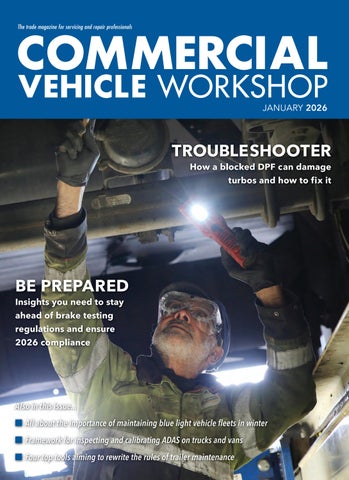
TROUBLESHOOTER How a blocked DPF can damage turbos and how to fix it
BE PREPARED Insights you need to stay ahead of brake testing regulations and ensure 2026 compliance
Also in this issue...
■ All about the importance of maintaining blue light vehicle fleets in winter ■ Framework for inspecting and calibrating ADAS on trucks and vans ■ Four top tools aiming to rewrite the rules of trailer maintenance
CPN.PEW full page_Layout 1 05/11/2024 12:11 Page 1
003_CVW_JAN26_Layout 1 16/12/2025 14:32 Page 3
CONTENTS
Volume 23
Issue 1
REGULARS 5
Viewpoint
16 Business & Training
7
News
41 What’s new?
9
Tech Tips
42 Digital Digest
12 Special Reports
BRAKES
24
19 ZF Aftermarket looks at the demands of modern commercial vehicle brakes, with heavier loads, mixedduty cycles, denser traffic and longer operating hours all adding to the pressure on braking systems. 22 Tips on the best ways to keep SAF Holland’s Intradisc axles performing their best, including a detailed guide on brake disc inspection. 24 Everything you need to know to ahead of brake testing rules and how they’ll shape compliance strategies going into 2026, as reported by MAHA UK. 26 BPW advises workshops should continuously monitor trailer brakes to help detect issues early and avoid costly downtime. 27 febi’s Truck range contains a lineup of 1,600 OEmatching braking components, covering over 97 per cent of the European ‘Big 7’ manufacturers.
BATTERIES & LIGHTING 28 Ring details the benefits of its UltraCharge smart chargers, joining the UltraInflate tyre inflators and the UltraBoost jump starters as the most recent addition to its Ultra line up.
28
30 Andy Waite from Veloris, formerly Ecobat, argues against a like-for-like battery replacement but instead upgrading the batteries. This article is here to assist in the tricky decision-making process. 32 We find out more about Banner Batteries’ Buffalo Bull battery range, aiming to address the growing energy needs of trucks, buses and fleets. 33 A look inside Truck-Lite Europe’s new testing hub, all about raising the bar for LED lighting. 34 Following the recent launch of its battery range, CVW spoke with Marta Lozano Barrero, Castrol’s head of masterbrand, and Vesna Di Tommaso, Castrol’s VP for Europe, to learn more.
TRAILER SERVICING
37
37 Read all about how TIP Group supports operators across the UK and Europe, offering solutions to minimise downtime and extend trailer lifespan. 38 Dr Air Brake details its four top tools that are aiming to rewrite the rules of trailer maintenance. JANUARY 2026 CVW 3
CPN.PEW full page_Layout 1 10/12/2025 09:22 Page 1
005_CVW_JAN26_Layout 1 17/12/2025 17:58 Page 5
VIEWPOINT
www.cvwmagazine.co.uk
CVWmagazine
@CVWmagazine
NEW YEAR, NEW OPPORTUNITIES
Editor FREYA COLEMAN cvw@hamerville.co.uk Group Editor KIERAN NEE Digital Manager KELLY NEWSTEAD Digital Assistant JOE CLARKE Senior Account Manager MATTHEW BOASE Group Manager ALEX DILLEIGH Graphic Designer GEMMA WATSON Group Production Manager CAROL PADGETT Subscriptions Commercial Vehicle Workshop is a business magazine for companies and individuals involved in all aspects of commercial vehicle servicing. It is published 11 times a year and is available on free subscription to qualified readers. Subscription rates: UK £30 post paid Airmail £99 post paid Europe £70 post paid To be removed from this magazine’s circulation, please call 01923 237799 or email circulation@hamerville.co.uk. Printed by Stephens and George Published by HAMERVILLE MEDIA GROUP Regal House, Regal Way, Watford, Herts WD24 4YF Tel: (01923) 237799 Website: www.hamerville.co.uk Copyright © 2026
10,190 From July 2024 to June 2025
Associate member
The publishers and editor do not necessarily agree with the views expressed by contributors, nor do they accept responsibility for any errors of translation in the subject matter in this publication
I
often approach the new year with a sense of optimism, and there is a lot to look forward to! But January is usually a mixed bag for workshops. On one hand, it’s the time for planning, reflection and fresh starts. On the other, it often lands right in the middle of winter pressures, packed diaries and vehicles that don’t always appreciate the cold mornings – but who does? But as 2026 begins, there’s a strong case for seeing the new not just as another busy stretch, but as a real opportunity to reset and get ahead. The commercial vehicle world is changing, but not in the way the headlines sometimes suggest. Diesel is still dominant, electrification is growing steadily, and alternative fuels are starting to move from theory into reality. For workshops, this creates a wider range of work than ever before. Fleets are running vehicles longer, systems are more complex, and uptime has never been more critical. That all adds up to opportunity for workshops that are prepared. The new year is a good moment to look at how work is actually flowing through the business. Are technicians spending too much time waiting on parts or paperwork? Are bays being used efficiently? Much like spending that extra 10 minutes in the gym in the morning, like many often do in the new year, even small changes such as clearer communication with customers can make a noticeable different over the course of a year. As they say consistency is key and in 2026, efficiency isn’t about working harder but working smarter. There’s also a big opportunity around skills and services. Fleets are increasingly looking for workshops that can do more than fix a fault when something breaks. Preventative maintenance, accurate diagnostics, emissions system expertise and clear reporting are all becoming selling points. Adding services like winter health checks, compliance support or telematics-informed maintenance can help workshops stand out in a crowded market. Perhaps the biggest opportunity of all is building stronger relationships with customers. Fleets want reliability, transparency and honest advice. Workshops that communicate well, explain issues clearly and help operators plan will earn trust, and repeat business. A new year doesn’t mean reinventing everything. Sometimes it’s about fine-tuning what already works and being open to new ways of doing things. As 2026 gets underway, workshops that take a moment to look ahead, make small improvements and back their expertise will find plenty of opportunities waiting. I promise I’ll do some self-reflecting, if you do too! And with that, here’s to wishing you a happy new year.
Freya Coleman Editor
Image credits: Page 39: © @Gumpapa/AdobeStock
GET IN TOUCH AT CVW@HAMERVILLE.CO.UK
CPN.PEW full page_Layout 1 16/12/2025 12:23 Page 1
007_CVW_JAN26_Layout 1 16/12/2025 14:35 Page 7
CVW NEWS NEWS IN
BRIEF
■ Electric van proposal marked as victory by Logistics UK. The government’s proposals to stop treating electric vans as HGVs is a “victory for common sense” says the business group, The comments follow the outcome of the consultation on regulatory flexibility for zero-emission vans that recommends changing legislation which classifies electric vans as HGVs due to extra battery weight.
CVWmagazine @CVWmagazine www.cvwmagazine.co.uk
UK HGV drivers report dissatisfaction Nearly two-thirds of UK drivers are unhappy with the availability and standard of facilities, according to a new survey by Transport Focus. This growing dissatisfaction, up on last year’s figures, comes at a time when the commercial fleet industry is grappling with major staffing pressures, despite ongoing Government investment in driver facilities. Discontent among lorry drivers has risen sharply, with the proportion dissatisfied with roadside facilities increasing from 49 per cent to 62 per cent over the past year. Additionally, 61 [er cent of drivers say there are not enough suitable places to stop, compared with 49 per cent the year before.
The UK logistics sector contributes around £170 billion to the economy, employs more than 8 per cent of the national workforce, and is integral to the Government’s growth ambitions. With freight crime costing an estimated £700 million a year, Transport Focus stresses that reliable access to secure, good-quality facilities is critical to safeguarding this essential industry and supporting economic growth. Its Lorry Drivers’ Facilities Survey, drawing on feedback from more than 13,000 HGV drivers over the last two years, also underscores the strong link between driver rest and perceived safety. Nine out of ten drivers who rated vehicle security as good said they were also able to rest properly.
■ First hydrogen internal combustion facility opens in Gothenburg. Johnson Matthey has officially opened its first hydrogen internal combustion engine (H₂ICE) facility. H₂ICE uses zero carbon hydrogen fuel in tried-and-tested engine technology, presenting a viable path for decarbonising medium and heavy-duty transport, such as trucks and buses.
■ Electric HGV put to the test by Mercedes-Benz. Mercedes-Benz Trucks has become the first manufacturer to drive an electric HGV from John O’Groats to Land’s End, completing the 1,378km (854-mile) journey in just over 24 hours using its new eActros 600.
Glasgow-based furniture and home-delivery specialist Brian Adam’s Transport has taken delivery of five dry-freight trailers from Krone Trailer UK for its Executive Home Delivery operation.
LCV market continues to decline In November, light commercial vehicle dealers registered 23,570 new vans to 3.5T, a decline of -22.2 per cent compared with the same month last year. The majority of vehicle segments recorded lower volumes. Small vans up to 2.0 tonnes saw the sharpest contraction, falling to 462 units from 999 last year (-53.8 per cent). Medium vans between 2.0–2.5 tonnes dropped to 3,976 units, down from 4,999 (-20.5 per cent). Heavier vans in the 2.5–3.5 tonne category, which make up the largest share of the market, also declined,
registering 16,463 units compared with 20,504 previously (-19.7 per cent). The 4×4 segment was also lower, down -10.3 per cent, with 705 units registered. Pick-up registrations continued to weaken, reaching 1,964 units, a reduction of -34.8 per cent, with retailers reporting that changes to double-cab taxation earlier this year remain a key factor in buyer hesitation. Furthermore, November saw a contrasting picture for battery electric vans. BEVs under 3.5 tonnes increased 30.1 per cent to 2,799 units.
JANUARY 2026 CVW 7
007_CVW_JAN26_Layout 1 16/12/2025 14:42 Page 8
FOR UP-TO-DATE NEWS, SIGN UP FOR OUR WEEKLY E-NEWSLETTER. SIMPLY SCAN THE QR CODE
NEWS IN
NUMBERS
15 % more pothole prevention work carried out in 2025 compared to 2024, according to the RAC. This is still 32 per cent below 2012 level.
25.9% of 2021 registered LCVs failed compared to 12.6 per cent for non-LCVs in the same age group according to findings from a new 2024 MOT data analysis report from TyreSafe. The data points to systemic neglect, with brakes and tyres identified as the primary failure points.
4.4% the amount van insurance premium fell in Q3 of 2025, down 19 per cent yearon-year. Pearson Ham Group’s Van Insurance Price Index shows that prices are now -7.6 per cent lower than six months ago and –19 per cent down compared to the same period last year.
8 CVW JANUARY 2026
Kernow Oils appointed exclusive UK ambassador distributor for Castrol CV products Kernow Oils is proud to announce its appointment as the exclusive UK Ambassador Distributor for Castrol’s Commercial Vehicle lubricant portfolio. For decades, Kernow Oils has collaborated closely with Castrol as a trusted industrial ambassador distributor. This new appointment expands that relationship into the commercial vehicle arena, formalising the company’s role in delivering not only premium oils but also best-in-class technical support. As part of the ambassador programme, Kernow Oils’ engineering and advisory teams receive ongoing training directly from Castrol’s global experts, ensuring customers benefit from the latest developments in lubricant technology, application knowledge, and industry trends. The enhanced partnership brings three major benefits to UK operators. First, Kernow Oils will hold exclusive access to selected Castrol commercial vehicle products, enabling fleets and heavy-duty equipment operators to adopt nextgeneration lubricants ahead of the wider
market. Second, through direct collaboration with Castrol’s technical and R&D teams, Kernow Oils can offer insight to help customers optimise maintenance intervals, improve equipment efficiency, and reduce operating costs. Third, customers will benefit from stronger pricing advantages, as savings associated with the agreement are passed directly to the market. Kernow Oils’ extended product offering spans a comprehensive range of commercial vehicle applications, including HGVs, construction plant, tracked machinery, cranes, buses, excavators, and off-road equipment. With tightening emissions legislation, rising fuel-efficiency demands, and increased expectations for extended drain intervals, the importance of selecting the right lubricant has never been greater. Castrol’s advanced formulations – delivered with Kernow Oils’ technical expertise – provide proven engine cleanliness, enhanced component protection, optimised cold-start performance and long-term reliability under demanding conditions.
Ecobat relaunches as Veloris Following its sale from the Ecobat Group, the independent battery distributor will now go by Veloris. Veloris’ CEO, Russell McBurnie, explained: “After separating from an industrial group, we are now free to pursue our own priorities and by regaining our independence, we are reenergised and able to use the skill, knowledge and experience embedded in the business, to drive growth and fulfil our potential. “Although the Veloris name is new, our commitment to delivering exceptional service standards and to add value to our diverse customer base remains the constant. Over many decades we have built on these foundations and they have served us well as we’ve developed lasting relationships with both supply partners and our many valued customers. “As Veloris we can further capitalise on these strengths and, combined with the depth
and diversity of our stock, as well as our European network infrastructure, we have the ingredients and the ambition to further enhance our reputation as a reliable partner, fully able to fulfil our customers’ energy storage requirements with complete certainty. “As battery technology has developed and the legal requirements have increased and become more complex, it is now more important than ever to have a battery supply partner that understands the details, whatever the sector. This is an added value service that we have always provided because our philosophy is, and will remain, to help our customers grow their battery business.”
009_CVW_JAN26_Layout 1 17/12/2025 18:48 Page 9
TECH TIPS
TROUBLESHOOTER Troubleshooting turbos: DPF related failures Whilst it is known that a faulty turbo can damage the DPF, the opposite is also true. So, Carwood are here to guide you on how to diagnose this fault by understanding the causes and symptoms.
I
t is widely understood that a faulty turbo can damage the DPF, however, did you know that the reverse is all also true; a defective or blocked filter can cause premature turbo failure. Although not as common an issue, and sometimes a tricky one to spot, by understanding the possible causes and symptoms below, technicians can make a more informed diagnosis, helping to ensure a right-1sttime turbocharger service.
How does a blocked DPF damage the turbo? Fitted to diesel vehicles from 2009, the diesel particulate filter, or DPF for short, is designed to stop soot, and other harmful particles produced during the combustion cycle, from exiting the exhaust. The trapped soot must then be periodically emptied or ‘burned off’ through regeneration. Yet just like any other filer filter they can
easily become blocked and obstruct the flow of gas through the exhaust system. If the gas cannot be expelled from the engine quickly enough, it will start to build up, creating back pressure. And as the pressure increases, so does the temperature of the gas in and around the turbo’s turbine housing. Whilst this may only cause problems such as oils leaks and coking initially, if left unchecked, the turbo can very quickly fail, or the ECU may put the vehicle into limp mode. Either way your customer is liable for an expensive repair bill.
What causes a blocked DPF? There are several factors that can cause the DPF to block prematurely and/or stop DPF regeneration from working effectively or even starting. These include: ● Frequent stop-start or short journeys at
low speeds, where the engine fails to
reach the optimum temperature for regeneration. ● A dashboard warning light or a diagnostic trouble code stored in the ECU can also prevent regeneration. ● Sulphated ash and/or additives contained in some oils can block the filter prematurely – to prevent build-up a low ash, low sulphur engine oil should always be used. ● A faulty fuel injector or turbocharger can cause the vehicle to run rich creating excessive soot. Similarly, a faulty EGR valve can increase the production of diesel particulates, both causing the DPF to become blocked quicker than normal. ● Many vehicles will not initiate an active regeneration if the fuel or Eolys additive tank is less than a quarter full. ● The DPF on a poorly service vehicle may fail sooner since factors such as oil quality and level can also prevent regeneration.
JANUARY 2026 CVW 9
009_CVW_JAN26_Layout 1 17/12/2025 18:50 Page 10
TECH TIPS
What are the signs of turbo damage due to a blocked DPF? Oil in turbine housing and on nozzle ring
Wear in the middle of thrust bearing
Journal bearing has a mushroom effect as a result of the fretting due to back pressure.
Nozzle ring seized due to heavy carbon build up.
The following signs are good indicators of a DPF related issue. The amount of damage this will cause largely depends on how much the DPF is restricting the flow of exhaust gas. ● Fault code triggered – this may include
exhaust pressure control, EGR, DPF regeneration and/or turbo boost control related codes. ● DPF warning light illuminated. ● In severe cases it may cause the vehicle to go into limp-home mode, limiting it to certain speeds or revs, to protect it from further damage. ● Reduced turbo efficiency given the exhaust’s inability to remove gas from the engine. ● Discolouration of parts within the CHRA due to heat transfer – whilst this is typical of other issues, mainly oil starvation, the pattern will help streamline your diagnosis. Discolouration that starts at the turbine wheel and continues through the shaft to the compressor side is a clear signal of excessive temperatures caused by rising back pressure. ● Oil leaks can occur when the rising back pressure forces the exhaust gas past the shaft seal on the turbine side, and into the CHRA, displacing the oil, and pushing it through the seals on the compressor side. ● The additional back pressure can also push exhaust gas through the small clearances in the wastegate, creating a build-up of carbon in and around the
wastegate and its control mechanisms. If bad enough, the wastegate door can stick in the open or closed positions and the ECU will no longer be able to control boost pressure. ● Excessive temperatures, again due to the backpressure, can also cause the oil within the CHRA to carbonise. Often misdiagnosed as insufficient lubrication or oil contamination, this causes premature wear to the shaft, thrust plate, seals, and bearings and restrictions in the feed lines. ● Carbon build up in the turbine side piston ring(s), piston ring grooves, oil flinger groove and nozzle ring, preventing effective oil control. ● Over time, the excessive heat inside the turbine housing can cause the turbine wheel to fail from high cycle fatigue.
How to prevent DPF related turbo failures? Although it can take some time for a DPF to block, once this happens, turbo failure can occur very quickly. Therefore, it’s always advisable to follow some simple measures when replacing or refitting a turbo. First, always check the vehicle’s DPF – if the soot levels are high enough to stop the DPF from regenerating on its own, a forced regeneration, usually via a diagnostic scan
WANT TO KNOW MORE? Make sure to scan the QR code!
10 CVW JANUARY 2026
tool, may be required. If the blockage is severe, the only way to completely remove the particles is to either fit a new OEquality filter, or have it professionally cleaned by a company like Carwood. Next, encourage your customer to drive for 30 minutes or so, at speeds over 50mph, every few hundred miles – this will allow the exhaust temperature to get hot enough to burn off any excess soot. Always use manufacturer approved engine oil – this is designed to produce as little diesel particulate material as possible.
How to resolve Firstly, remove the DPF and have it professionally cleaned off vehicle. Then, thoroughly check and clean the entire exhaust system – replace components as required. Then fit new oil feed and return pipes whenever installing a turbo. Lastly, check and clean the intercooler and pipes – replace if needed. Whilst this may add additional expense to your customer’s bill, it is far more cost and time-effective than having to fit another turbo, and potentially an engine, when they return with the same issue soon after. So, remember to always diagnose and fix what caused the original unit to fail, before fitting a new turbo.
011_CVW_JAN26_Layout 1 16/12/2025 14:49 Page 11
TECH TIPS
COMMON FAULT Power steering pump Steering specialist febi shares a common failure on power steering pumps. Function
Cause of failure
The steering of heavy trucks is almost impossible to move without steering assistance. In order to relieve the driver and keep the necessary force on the steering wheel low, most vehicles use hydraulic steering assistance. The hydraulic pump driven by the engine, usually a gear pump or vane pump, provides the necessary oil pressure in the hydraulic system and thus enables steering power assistance through a hydraulic cylinder in the steering gear.
Power steering pumps are generally designed to be very stable – at least as long as they are supplied with sufficient hydraulic oil which provides the necessary lubrication. Air can enter the system through leaks in the suction area or through inadequate venting after a repair. If the pump sucks in air, it runs dry and the lubrication breaks off. At high speeds this means serious damage within a very short time. Dirty hydraulic oil can also damage or destroy the pump.
WANT TO KNOW MORE? Make sure to scan the QR code!
Febi’s power steering pump, part number 176331, fits Mercedes-Benz Trucks Actros IV, Antos and Arocs.
012_CVW_JAN26_Layout 1 17/12/2025 20:00 Page 12
SPECIAL REPORT
SHOCKED INTO THE FUTURE: CV SECTOR TAKES STOCK AT THE IAAF CONFERENCE At the tail end of 2025, CVW ’s Freya Coleman was lucky enough to attend the Independent Automotive Aftermarket Federation’s annual conference. Whilst mainly aimed at the aftermarket and passenger vehicles, there’s a lot for fleet technicians and managers to takeaway.
A
s 2025 draws to a close, the Independent Automotive Aftermarket Federation (IAAF) used its annual conference in Milton Keynes to issue a wake-up call: change isn’t coming, it’s already here. And for the commercial vehicle sector, where uptime is currency and disruption is constant, the messages landed with particular force.
Resilience: The new core skill Former rally driver and performance coach Penny Mallory set the tone from the outset. Her message was blunt: talent matters far less than resilience. “Mental toughness isn’t a superpower,” she told the packed auditorium. “It’s a skill you train daily.” Her framework – Control, Challenge, Commitment, Confidence- felt tailor-made for an industry wrestling with electrification targets, cyber threats and shifting customer expectations. Mallory’s reminder that only 30 per cent of success is down to intelligence or skill resonated strongly with the CV delegates in the room. The rest, she said, comes from grit, mindset and the ability to hold steady under pressure. For fleet operators and workshop managers, this isn’t abstract advice. It’s operational: controlling what’s influenceable, challenging engrained habits, committing to long-term strategy, and staying confident when policy and technology shift overnight.
12 CVW JANUARY 2026
012_CVW_JAN26_Layout 1 17/12/2025 20:00 Page 13
The economics: No smooth road to electrification If Mallory laid the psychological groundwork, automotive economist Professor David Bailey supplied the reality check. His assessment of the UK’s automotive landscape was clear-eyed and unsparing. The UK’s zero-emission mandate, 80 per cent EV sales by 2030, remains, in Bailey’s words, “a date without a plan.” Infrastructure is nowhere near where it needs to be, and for commercial vehicles the gap is larger still: megawatt charging, depot grid upgrades, and predictable energy supply top a long list of unresolved challenges. Bailey also pointed to the wider fragility of the industry. JLR’s cyberattack, which froze production for five weeks and cost nearly £500m, is no longer an isolated cautionary tale. It’s a warning about supply chains where a single failure can ripple across the entire sector. And then there’s the skills gap. Battery manufacturing, diagnostics expertise, high-voltage safety the UK trails behind, and heavy-duty electrification will expose every weakness. Still, Bailey urged pragmatism, not pessimism. Fleet electrification is already cost-effective in predictable, urban routes; hydrogen deserves attention for heavy duty; and energy planning must become a core operational competency.
A more complex, more competitive aftermarket Next, Roland Berger’s Max Wegner painted a picture of an aftermarket under pressure
from all sides. Electrification is multiplying vehicle variants. Chinese OEMs are reshaping EV segments with competitive pricing and new supply routes. OEM margin compression is forcing fresh competition in the aftermarket. And digital platforms are now the default starting point for B2B parts sourcing. For CV operators, the implications are immediate: more complexity, more choice, more risk. Wegner’s prescription was simple enough on paper – predictive maintenance, dual-sourcing, digitised procurement – but implementation will separate those who stay ahead from those who fall behind. Despite the hurdles, Wegner noted that electric CV success stories already exist, and crucially, every major manufacturer he speaks to believes the shift to electrification is unavoidable.
Fleet: The bright spot everyone overlooks But the most upbeat message of the day came from Tim Guidotti, better known as The Fleet Guy. Guidotti’s presentation, “The Future is Fleet,” argued that independent workshops are sitting on an overlooked goldmine. Fleet servicing, he said, offers everything retail work does not: recurring revenue, predictable workload, and customers who value uptime over price. And isn’t that something the commercial vehicle industry is already familiar with? Drawing on 25 years in LCV fleet repair, and a family business that grew into a £3m operation, Guidotti showed how
workshops can evolve culturally and operationally to meet fleet expectations: faster response times, data-driven reporting, and an obsession with reliability. As delivery vans, municipal vehicles and service fleets continue to multiply, Guidotti believes the workshops who shift early will be the ones who stay profitable through the industry’s transition.
Looking forward: talent and authenticity After a lovely lunch and some networking, the day closed with Mickey Wilson from business growth consultancy Firestarter, who turned attention to the next generation. Her advice to an industry struggling to attract young talent was uncomplicated: authenticity wins. “Gen Z expects honesty and purpose,” she said. “Influence belongs to those who tell the most authentic story.” Speaking as a Gen Z myself, this definitely has an element of truth to it and with the industry struggling with a skills crisis, it’s important to look at sustaining ourselves for the future.
The bottom line Across every session, the message was consistent: resilience is the new strategy. For a CV sector facing electrification, digitalisation, supply chain volatility and labour shortages, the winners will be those who stay mentally tough, operationally disciplined and open to change. The future may be a shock, but it’s one the industry can prepare for.
WANT TO KNOW MORE? Make sure to scan the QR code!
JANUARY 2026 CVW 13
014_CVW_JAN26_Layout 1 16/12/2025 14:57 Page 14
SPECIAL REPORT
WEATHERING THE STORM Totalkare’s Adam Bowser emphasises the importance of maintaining ‘blue light’ vehicle fleets in winter months.
and death, ensuring critical response teams are ready to act without delay when every second counts.
Fire
N
ew research conducted by Totalkare, specialists in equipment for heavy duty and light commercial vehicle workshops across multiple industries, delved into the UK’s historic emergency service operations during autumn and winter, also exploring specific seasonal risks for the coming months. Whilst each season carries hidden risks, some unique hazards present themselves during the winter months - including health risks, fire hazards, and police matters. Plus, seasonal events – such as Halloween, Bonfire Night, Christmas, and New Year – also come with their own unique risks. With this in mind, we investigated emergency service call outs between October and December 2024 to get an idea of the scale of the issue.
Ambulance Data from Association of Ambulance Chief Executives showed that there were more than a quarter of a million category 1 (lifethreatening emergencies) incidents between October and December 2024, with the figures climbing on the previous each
14 CVW JANUARY 2026
month – October (~84,000), November (~84,000), and December (~93,000). Plus, a Freedom of Information request to NHS England revealed that more than two and a half million (2,671,109) 999 calls were answered during October-December last year (2024) – equating roughly 29,000 per day – with an average call answer time of 7 seconds. As urgent and emergency care services perform a critical role in keeping the population healthy, ensuring consistent vehicular availability in emergency service fleets can mean the difference between life
The wider research found that fire and rescue services (FRSs) in England attended 603,942 incidents in the year ending March 2025 – of these incidents, fires accounted for 24 per cent (142,494), which was an increase of 2.5 per cent compared with the previous year. More than 60,000 (61,649, or 43 per cent of the fires recorded) if these were ‘primary fires’ – which are high-risk incidents involving property, casualties, or large numbers of fire appliances. Sadly, in the year ending March 2025, there were 271 fire-related fatalities in 247 fatal fires. With much of the essential equipment and apparatus being vehicle-based on fire engines, having access to operational emergency vehicles is of utmost importance... Without this, fire services are unable to fulfil their core mission during critical incidents – to protect lives, property, and the environment – and a lack of available vehicles can lead to gaps in coverage and slower response times.
Police There were almost three million (2,901,147) 999 calls between October and December in 2024 across the 44 police forces in the UK, equating to roughly 32,000 per day. The police service works closely with fire, ambulance, and social services in crisis situations, and are often first on the scene in cases where emergency response is required (such as accidents, violent incidents, or natural disasters). Therefore, in order to serve and protect the public, access to an operational fleet of vehicles is essential to ensure the safety and security of all individuals and communities.
014_CVW_JAN26_Layout 1 17/12/2025 16:53 Page 15
So, what can the workshop do? As standard, workshops dealing with emergency service vehicles will require essential supporting equipment, such as tyre changers, support stands, trolley jacks, and so on. However, when it comes to maintaining and checking ‘blue light’ vehicles in your own workshop, some specialist workshop equipment is also required... Generally, for police and ambulances, our light commercial equipment – which is expertly designed for busy vehicle workshops maintaining long wheelbase vans, minibuses and other LCVs – will do the trick. Specific products might include the two post lift and lightweight four post lift ranges. For fire services, our heavy duty vehicle lifts are more appropriate for lifting heavier goods. Our range caters to lifting loads from 12,000kg to 60,000kg. Specific products
Data showed that there were more than a quarter of a million category 1 incidents between October and December 2024. might include mobile column lifts, Y-MECH Lift, and even possibly a vehicle inspection pit – which makes it possible to work underneath a vehicle at the same time as above the vehicle which can increase productivity in your workshop. Bowser added: “Emergency services are one of our core business sectors at Totalkare – from fire engines to ambulances, our lifting and brake testing equipment (as well as a host of other specialist workshop
WANT TO KNOW MORE? Make sure to scan the QR code!
equipment) helps these vital services to maximise vehicle availability through routine service and maintenance. Our service is one of the most appealing aspects to a ‘blue light’ workshop – with some of our Aftercare repairs and maintenance service packages you’ll get nationwide coverage to ensure that your products, if they break down, are up and running again as quickly as possible. Having the expert eye of a professional engineer and regular service visits can help to prevent breakdowns and minimise your equipment repairs. But there are several everyday practices that can help avoid repairs on your vehicle lifts - for example, smooth operation, regular cleaning, and daily inspections can go a long way to keeping your lifts healthy and long-lasting.
016_CVW_JAN26_Layout 1 16/12/2025 15:03 Page 16
BUSINESS & TRAINING
ADAS GUIDANCE OUTLINED The VBRA’s new Commercial Vehicle ADAS Guidance 2025 aims to provide the industry’s first comprehensive framework for managing, inspecting and calibrating advanced safety systems on trucks, vans and specialist commercial vehicles.
A
DAS now plays a central role in the safety performance of modern commercial vehicles. Features such as autonomous emergency braking, lanekeeping assistance, adaptive cruise control and blind-spot monitoring are increasingly critical, yet their growing complexity demands a structured, disciplined approach to repair and calibration. Recognising this need, the VBRA has released the Commercial Vehicle ADAS Guidance 2025, a document designed to provide clarity, consistency and accountability across the entire CV repair and bodybuilding sector. The guidance acknowledges the unique challenges commercial vehicles present. Unlike cars, commercial vehicles often incorporate a mix of manufacturer-built components, multi-stage bodybuilder installations and varying chassis configurations. ADAS sensors on these vehicles are influenced by structural alignment, body modifications, ride height differences and mounting tolerances. As a result, calibration requirements can vary dramatically between manufacturers. The VBRA’s guidance reinforces that repairers must always follow the specific technical instructions issued by the vehicle manufacturer to ensure the safe restoration of these systems. Any repair, replacement or adjustment that affects a sensor – or the geometry the sensor relies upon – must be assessed, documented and, where required, calibrated correctly.
Competence is key A key theme throughout the guidance is competence. ADAS calibration is no longer viewed as a technical extra, but as a safetycritical requirement. The document outlines what constitutes a “competent person”, highlighting recognised qualifications and
the essential knowledge needed to identify ADAS fitment, determine calibration requirements and produce robust calibration evidence. Repairers are expected to maintain detailed proof of technician competence, equipment capability and calibration outcomes as part of a comprehensive audit trail.
ADAS calibration is no longer viewed as a technical extra, but as a safety-critical. The guidance also establishes a clear, structured process from vehicle triage to final verification. Repairers must first identify whether ADAS systems are present using VIN lookups, OEM data, visual inspection and diagnostic tools. Once the repair is mapped out, they must determine whether their facility has the capability to complete the calibration or whether it needs to be subcontracted. Every decision – from initial inspection through to postrepair calibration – must be fully documented and auditable. The guidance specifies the required calibration evidence in detail, including technician credentials, measurement data, equipment used and the exact system calibrated.
WANT TO KNOW MORE? Make sure to scan the QR code!
16 CVW JANUARY 2026
Equally important is the emphasis on collaboration with manufacturers. The VBRA encourages OEMs to support the repair community by providing ADAS fitment information, digital repair instructions, calibration requirements and relevant training. The guidance calls for the strengthening of relationships across manufacturers, equipment suppliers, insurers, fleets and repairers to ensure the consistent and safe operation of ADASequipped vehicles. The result is a practical, realistic framework that reflects the real-world challenges of commercial vehicle repair. It supports repairers who handle ADAS inhouse as well as those who outsource calibration, and it recognises that multistage builds and body adaptations often complicate sensor behaviour. The guidance does not attempt to replicate technical repair manuals; instead, it provides a structured, governance-based approach that reinforces safety, competence and accountability. Ultimately, the Commercial Vehicle ADAS Guidance 2025 aims to set a new benchmark for the sector and demonstrates the VBRA’s commitment to improving safety, providing consistent standards and supporting repairers as ADAS continues to expand across the commercial vehicle landscape. With ADAS now critical to preventing collisions and maintaining operational safety, this guidance offers the industry the clarity and structure it needs to manage increasingly complex systems while protecting repairers, operators and road users alike.
CPN.PEW full page_Layout 1 09/12/2025 09:36 Page 1
018_CVW_JAN26_Layout 1 16/12/2025 15:21 Page 18
BUSINESS & TRAINING
‘TRAILERED’ FOR PRODUCTIVITY Logistics and haulage specialist A Salvatori & Son has invested in Webfleet’s electronic brake performance monitoring system to enhance trailer productivity, reduce downtime and ensure compliance with April’s new DVSA legislation.
T
he family-owned, Canterburybased firm operates 120 flatbed, curtain-sided and double-decker trailers, serving customers across the UK and Europe. In 2024, the company fitted its trailer fleet with Webfleet’s Link 350 trailer tracking units and EBPMS technology ahead of the new DVSA requirement for trailers to undergo four annual laden roller brake tests. “The Webfleet system is already proving an excellent investment,” said Remi Martysz, director at Salvatori. “We expect it to pay for itself in less than three years through greater efficiency, less downtime and better utilisation of our trailers.” By continuously collecting real-time data from each trailer’s braking system, Webfleet’s EBPMS enables Salvatori to remotely monitor brake performance and run DVSA-approved, load-simulated tests. With every brake event recorded and analysed digitally, the system automatically alerts the fleet team to any issues, eliminating the need for depot visits for quarterly manual roller brake tests. “Drivers no longer have to return trailers to base just to manually brake test them at the workshops,” added Martysz. “That alone has saved significant time and reduced unproductive mileage.”
With 24/7 visibility and bespoke alerts, Salvatori has maximised trailer utilisation across its fleet. Geofences around UK and EU ports help verify demurrage charges, while automatic alerts confirm when trailers are loaded or unloaded. Monthly reports provide full traceability and evidence of DVSA compliance. The company now plans to trial Webfleet’s tyre pressure monitoring technology across 15 double-decker trailers, providing early warnings of abnormal tyre pressure to help prevent
blowouts and avoid late arrivals at the Palletways hub in the Midlands. “We’ve been particularly impressed with training support,” said Martysz. “Webfleet made it simple for our workshop team to install the equipment ourselves, giving us the flexibility to expand the system in-house.” Alex Crane-Robinson, regional director, Webfleet UK and Ireland, added: “Salvatori’s adoption of EBPMS shows how digital trailer monitoring can deliver measurable gains in both compliance and productivity. “By bringing real-time insights to the fleet team, Webfleet helps operators make smarter, safer and more efficient decisions.”
About Webfleet Webfleet is Bridgestone’s globally trusted fleet management solution. Over 50,000 businesses across the world use it to improve fleet efficiency, support drivers, boost safety, stay compliant and work more sustainably. For more than 25 years it has been empowering fleet managers with data-driven insights that help them optimise their operations.
WANT TO KNOW MORE? Make sure to scan the QR code!
18 CVW JANUARY 2026
019_CVW_JAN26_Layout 1 16/12/2025 15:26 Page 19
BRAKES
UNDER PRESSURE ZF Aftermarket looks at why modern commercial vehicle braking demands a new engineering mindset.
B
raking systems on commercial vehicles have never faced greater pressure than they do today. Heavier loads, mixed-duty cycles, denser traffic, longer operating hours and the early effects of electrification have reshaped how brakes wear, behave and interact with the vehicle’s wider safety systems. Once viewed as a mature, predictable category, CV braking has evolved into a precision engineering discipline where thermal behaviour, machining accuracy, material science and electronic system compatibility all determine how safely and efficiently a fleet can operate. ZF Aftermarket, drawing on the strength of TRW’s century-long braking expertise, sits at the centre of this transformation. Through its extensive braking portfolio for trucks, trailers and buses, the company has a clear view of the challenges that modern fleets and workshops face, and why the aftermarket must now treat braking with the same rigour once reserved only for engines or driveline components.
Thermal load has become one of the defining stresses for heavy-duty braking systems. A fully laden 44-tonne vehicle travelling at motorway speed generates enormous kinetic energy; the moment the driver brakes, this energy is converted into heat. Temperatures can exceed 500°C, and repeated cycles of intense heating and cooling cause microstructural fatigue, glazing, fade and eventually distortion. In drum systems, heat is trapped for longer, further accelerating wear. ZF’s response to these realities is grounded in materials engineering. TRW high carbon brake discs, for example, are designed to offer higher thermal conductivity and greater stability under extreme temperature changes. They aim to cool faster, resist cracking more effectively and maintain consistent friction characteristics during sustained braking, making them particularly valuable for long-haul fleets and vehicles operating on demanding, hilly routes. Increasingly, vehicle manufacturers specify high carbon
JANUARY 2026 CVW 19
019_CVW_JAN26_Layout 1 16/12/2025 15:23 Page 20
BRAKES
discs for these very reasons, and TRW ensures the aftermarket has equivalent technology with the same performance expectations. But heat alone doesn’t tell the whole story. Modern braking systems rely on extraordinary precision. Even small deviations in disc parallelism, pad shape, piston travel or lining curvature can alter braking torque and disrupt the finely balanced interaction between the mechanical components and the vehicle’s ABS, EBS or stability control systems. Issues that workshops describe as judder, drag, imbalance or weak pedal feel often originate in subtle but crucial tolerance variations. TRW brake discs address this with CNCcontrolled machining, guaranteeing uniformity and surface accuracy. Disc positioning holes are milled with tight repeatability, and every casting undergoes strict metallurgical checks before machining. This ensures low Disc Thickness Variation and maintains braking comfort while supporting the vehicle’s electronic systems, which are calibrated to very specific torque responses. Friction materials are equally important. TRW CV brake pads use advanced formulations designed to outperform OE Service parts in independent tests. Their friction stability across heat cycles, fade resistance under extreme braking and fast recovery in wet conditions contribute to predictable braking torque — especially important for vehicles equipped with sophisticated control systems. TRW’s patented backing plate design further enhances heat dissipation and bonding strength, reducing the risk of shear, cracking or delamination during high-stress braking. These materials and manufacturing principles are validated through rigorous testing programmes. TRW components undergo high-performance dynamometer tests, Alpine descent simulations and independent evaluations from leading institutes such as Fraunhofer. These assessments push components far beyond typical real-world braking demands to ensure they not only meet international
standards like ECE R90 but exceed them. Results consistently show TRW brake pads and discs delivering longer life, greater stability and reduced wear compared with rival products, including several OE alternatives. Electric and hybrid commercial vehicles introduce new braking challenges. Regenerative braking transfers much of the deceleration load to electric motors, meaning friction brakes often operate cold for long periods. This can lead to increased corrosion, uneven wear or glazing – and when friction braking is finally needed, typically in higher-load scenarios, the system must respond instantly. ZF engineers are developing friction materials and disc formulations that maintain torque predictability even when braking events are infrequent or irregular, ensuring the aftermarket keeps pace with the shift to electrified platforms.
“Even small deviations in disc parallelism, pad shape, piston travel or lining curvature can alter braking torque.” Trailers present another persistent challenge. With variable loading, extended periods of inactivity and exposure to harsher environments, trailer brake systems frequently become imbalanced. MOT data continues to highlight trailer brake performance as a key concern, underscoring the importance of quality replacement components. TRW’s drum and lining sets are engineered with the same OE-derived methodology that governs its disc systems, ensuring stable performance even under inconsistent operating conditions. Beyond engineering, ZF Aftermarket understands that workshops need support that ensures correct fitment and fast turnaround. TRW brake pads, discs and calipers are supplied with all essential accessories and fitting kits, helping
WANT TO KNOW MORE? Make sure to scan the QR code!
20 CVW JANUARY 2026
technicians avoid delays and minimising the risk of comebacks. With wide coverage across Europe’s commercial vehicle parc, the TRW range enables workshops to find the correct component quickly and carry out repairs with confidence. The caliper programme reinforces ZF’s commitment to quality and sustainability. TRW remanufactured calipers are restored to OE specifications through a controlled, fully audited process. Each caliper is disassembled, cleaned, re-machined, rebuilt and 100 per cent end-of-line tested to ensure it performs exactly as the manufacturer intended. By controlling the entire remanufacturing chain, ZF delivers calipers that combine performance, reliability and environmental responsibility. In a sector where vehicle uptime, safety and operating cost are critical, braking systems can no longer be viewed as commodity components. They form part of an advanced safety architecture that relies on material quality, thermal stability, machining precision and electronic compatibility. ZF Aftermarket and TRW bring together OE-level engineering, rigorous validation and a full-service aftermarket support network to help workshops meet these increasing demands. As braking technology continues to evolve – driven by higher payloads, stricter regulations, electrification and more complex vehicle control systems – the industry will depend on suppliers capable of matching the engineering sophistication of the vehicles themselves. ZF stands firmly in that space, ensuring fleets and workshops have the braking solutions required to keep Britain’s commercial vehicles safe, compliant and consistently on the move.
CPN.PEW full page_Layout 1 17/10/2025 12:23 Page 1
022_CVW_JAN26_Layout 1 16/12/2025 15:51 Page 22
BRAKES
INSPECTOR BRAKE DISC Keep SAF-Holland Intradisc axles performing at their best with simple, effective maintenance checks. Here are some practical tips for technicians to ensure safety and reliability during servicing.
T
o ensure your SAF Intradisc axles consistently perform at their peak, regular yet straight forward maintenance is essential. Workshop insights such as this are designed to help technicians and engineers work quickly and effectively when servicing SAF Intradisc products.
BRAKE PAD INSPECTION ��� Inspect the position of the visual wear indicator (VWI), as located and shown in figure 1. This check can be done with either the wheel fitted or removed. The VWI provides an indication of pad wear condition, it does not provide an accurate measurement of Figure 1: Inspection of the pad wear on both pads. visual wear indicator. To obtain and accurate wear measurement of both pads continue with the instructions which follow. ��� Remove the wheel according to procedure. ��� Remove brake pads. ��� Look for unusual conditions like excessive corrosion and high heat cycles i.e. delamination, Figure 2: Measuring the discolouration etc. pad wear condition. ��� On both brake pads, measure the distance from back play (A) and wear surface (B) of the brake pad in four places, see figure 2. Minimum permitted lining thickness (friction material is 2mm. ��� Measure and compare differential brake pad thickness between the inner and outer brake pads. Up to a 5mm difference is normal. ��� Check the condition of the back plate (A). ��� Replace brake pads if they are worn out or if they are expected to be so before the next inspection.
WANT TO KNOW MORE? Make sure to scan the QR code!
22 CVW JANUARY 2026
BRAKE DISC SAFETY CHECK In order to be able to inspect the friction surface of the brake pads, the pad retaining bracket has to be removed and the brake caliper adjuster backed off.
Brake pads: Only install brake pads approved by SAFHolland. When replacing brake pads due to wear, the pads on both sides of the axle must be replaced. Brake pad wear difference: max 5mm (inner/outer pad) Brake disc: Carefully inspect the braking surface of the brake disc for further serviceability. A1 Mesh-like cracking is permissible. B1 Cracks running to the hub centre to a max 1.5mm (width and depth) is permissible. C1 Unevenness of the disc surface is permissible. D1 Through cracks are not permissible. Measure the brake disc thickness and polish, if necessary. For safety reasons, the minimum thickness for polishing the brake discs is defined as 39-50mm.
Web Ad_Layout 1 23/01/2020 12:15 Page 33
For all the latest industry news, business advice and technical guides from the trade magazine for CV servicing and repair professionals
w ww.cvwmagazine.co.uk CV Wmagazine
@CV Wmagazine
024_CVW_JAN26_Layout 1 16/12/2025 16:00 Page 24
BRAKES
FUTURE-PROOFING BRAKE TESTING A fter adapting to new brake testing changes in 2025, workshops and operators are now moving into a new phase: optimising for long-term compliance, efficiency and data quality. While it may seem business-as-usual, MAHA UK believes the real beneficiaries will be those that future-proof their workshop capabilities – so, what changed in 2025 and what matters in 2026? The Driver and Vehicle Standards Agency approved the use of loadsimulation brake rollers for annual testing¹. This means that most vehicles – with some exemptions such as ADR and dangerous goods vehicles – do not need to be physically loaded to 65 per cent of their axle weight for a compliant test. According to a DVSA bulletin, laden brake testing can “take a long time” and can be “costly” for operators. The bulletin also cited potential time and money savings, as well as a reduction in environmental impact from heavily laden vehicles driving for testing. This change provides flexibility for testlane design. MAHA UK has received many enquiries and undertaken projects where its rising roller systems have been preferred. MAHA UK, in collaboration with Premier Pits, installed a new ATF lane at
24 CVW JANUARY 2026
Brake testing rules evolved significantly in 2025, and their impact will shape compliance strategies in 2026. Here’s what workshops and operators need to know to stay ahead according to MAHA UK. Manchetts Group’s Sleaford depot last year. This installation was in response to demand for brake testing and vehicle inspections, and MAHA was chosen for its reliability, longevity and aftersales support. Meanwhile, the deadline to update roller brake testing software has now passed². All ATFs and workshops conducting tests were required to update their systems by 31 December 2025. Citing a DVSA bulletin, these upgrades include: ● Updates to service brake efficiencies,
including draw bar trailers. ● Changes in how secondary brake
performance is measured. ● Key programme changes to prevent tyre
damage. ● Improved workflows to aid consistency
of brake testing at test and preventative inspection. ● The inclusion of advisory items, to better support wider preventative maintenance of vehicles/trailers and road safety.
024_CVW_JAN26_Layout 1 16/12/2025 16:02 Page 25
Most roller brake testers will have been upgraded during calibration. MAHA UK encourages any workshops that have not yet completed the update to schedule it immediately. Lastly, the updated Guide to Maintaining Roadworthiness came into force in April 2025, emphasising the importance of laden brake tests during routine inspections. Unless an Electronic Brake Performance Monitoring System (EBPMS) is installed, DVSA expects four laden brake tests every year, including the annual MOT. The tightening of the rules means brake performance – and, ultimately, safety – is under greater scrutiny than ever. The guide aims to ensure that brakes are assessed under realistic load conditions, reflecting actual on-road performance. Approved methods include EBPMS, a laden roller brake tester and a decelerometer with temperature readings. These changes place strong emphasis on the operator. Anyone conducting and interpreting brake test data needs to be competent, sign and date the evaluation, and ensure results are stored with the vehicle’s safety records. From MAHA UK’s perspective, rising roller brake testers can improve the accuracy of measurements on lightly loaded vehicles by simulating some of the vertical
load experienced when laden. This helps workshops generate results that more closely reflect real-world performance and reduces the risk of false lockups during testing. WG Tanker Group, a supplier and installer of pressure-discharge and vacuum equipment, recently completed a new service lane – the second in 18 months – to support increased demand for inspection, servicing and MOT preparation. With the new rising roller brake tester, the team can carry out faster, accurate and compliant brake tests, supporting fleet safety and operational performance.
A compliant solution MAHA UK supplies DVSA-approved workshop equipment and offers solutions to help workshops meet updated requirements. The MBT 7250 brake tester is recognised for its accuracy in assessing brake system performance. It features a large roller sensor (100mm diameter) and an axle load capacity of up to 20 tonnes, providing consistent coverage across each tyre. Its robust electronic, temperaturecompensated strain gauge system is designed to ensure accurate measurements regardless of external conditions.
The MBT 7250 also offers a rising roller bed option. The rollers can be lifted up to 250mm to simulate an axle load of up to 13 tonnes, providing a reliable alternative to traditional laden testing methods. While this method is useful in many cases, additional equipment – such as hydraulic rams or fixed anchor points – may still be required to ensure the necessary load is applied. MAHA UK managing director, Neil Ebbs, said: “Last year saw the enforcement of guidelines and legislation affecting both suppliers of brake testing equipment and those conducting inspections and repairs. This year, we expect demand to continue, and, if anything, increase. Workshops and operators are seeking equipment and solutions that not only meet compliance requirements but also deliver efficiency, reliability and accurate data to support fleet safety and operational decision-making.” Thanks to rising roller technology, updated software and DVSA guidance, there is now a clear path for workshops to ensure brake tests are conducted precisely, professionally and in compliance with regulations. MAHA UK is conscious of the investment required and aims to partner with customers to deliver the right solutions.
WANT TO KNOW MORE? Make sure to scan the QR code!
JANUARY 2026 CVW 25
026_CVW_JAN26_Layout 1 16/12/2025 16:05 Page 26
BRAKES
STOPPING PROBLEMS BEFORE THEY START Reliable braking is essential for trailer safety and compliance. Continuous monitoring helps detect issues early, reducing risks and avoiding costly downtime, argues BPW.
A
s the demand for efficient transportation grows, reliable trailer braking systems are now more critical than ever. However, even the most robust trailers can face braking system challenges. Identifying issues early is key to maintaining safety, compliance, and operational efficiency. To help overcome these braking challenges, BPW’s idem telematics electronic brake performance monitoring system (EBPMS) provides real-time insights into trailer braking performance. The system collects and processes data directly from the trailer’s electronic braking system (EBS) and analyses it using an advanced algorithm to generate clear, detailed, and actionable brake performance reports. By continuously monitoring braking activity, EBPMS can identify irregularities or potential faults, enabling users to take prompt corrective action. Should such issues arise, the BPW technical service team is available to provide expert diagnostic and technical support.
Put to the test A company operating over 1,000 trailers follows a 12-week maintenance inspection schedule. During a routine inspection, BPW idem telematics EBPMS detects a gradual decline in braking efficiency on one specific trailer. The combination braking threshold was below the legal requirement of 45 per cent, raising safety and compliance concerns. Following this, the fleet manager contacted the BPW technical service team for further investigation. The customer provided roller brake test (RBT) results for further evaluation, and BPW arranged a site visit to begin a diagnostic investigation. As part of the initial investigation, focus turned to the trailer’s EBS, including system
The diagnosis
parameters, fault reports and operational data, which store historical braking data and diagnostic information. BPW downloaded and reviewed the fault report and operational data for in-depth analysis. In some cases, these reports can often highlight abnormal braking behaviour, confirming an issue beyond normal wear and tear. In this case, however, the analysis revealed only minor inconsistencies, with no clear fault identified at this stage. With no active EBS faults detected, the BPW technical service team progressed to a physical inspection of the foundation brakes. This included close examination of the friction material (brake linings or pads) and the friction surfaces of the drums or discs, to assess for brake under-utilisation or uneven wear that could explain the reduced braking performance. The inspection confirmed that the foundation brake components were in generally good condition and not the primary cause of the reduced braking performance. However, the team identified two critical issues: one component was incorrectly fitted, and another had become detached. Both were immediately replaced, and a further RBT was conducted to compare performance.
WANT TO KNOW MORE? Make sure to scan the QR code!
26 CVW JANUARY 2026
On review, the BPW technical service team determined that a replacement brake chamber had been incorrectly mounted and did not match the original trailer brake calculation, reducing braking force and causing the gradual performance decline detected by EBPMS. Additionally, the slack adjuster reaction bracket had detached, preventing the automatic slack adjuster from correctly functioning. After correctly installing the brake chamber and securely refitting the reaction bracket, braking performance returned to above the legal minimum, as confirmed by subsequent EBPMS data. Without BPW idem Telematics EBPMS, this issue could have remained undetected. Poor brake performance can lead to: ● Increased stopping distances and higher
accident risk. ● Excessive wear and overheating,
resulting in costly repairs. ● Unplanned downtime and disruption to
important delivery schedules. ● Regulatory non-compliance, leading to
fines or vehicle restrictions. This case study highlights the importance of regular maintenance inspections, diagnostics, and telematics reporting. Remember, BPW idem telematics not only identifies potential braking issues but also enables operators to schedule maintenance checks, preventing problems from escalating and causing prolonged downtime. This allows fleet managers to make more informed decisions regarding their trailers, leading to increased efficiency, improved safety, and reduced operating costs.
027_CVW_JAN26_Layout 1 16/12/2025 16:11 Page 11
BRAKES
BR AKING NEWS febi details its ever-growing brake discs and pads range.
B
raking is one of the hardest working systems on a commercial vehicle. With heavy loads, long distances and constant stop-and-go demands, every component must perform without compromise. febi Truck supports that reliability with a line-up of more than 1,600 OE-matching braking components, now covering 97 per cent of the European “Big 7” manufacturers. It’s the highest VIN coverage available in the Independent Aftermarket. All febi brake discs and pads are built to meet or exceed UN/ECE R90 requirements, ensuring consistent
performance and safety. During braking, compressed air applies force to friction surfaces that can reach extreme temperatures. Over time, this heat can lead to brake fade, reducing friction and braking efficiency. febi components are developed to withstand these conditions and maintain stopping power when it matters most.
What additions were made in 2025? Last year, febi has further expanded its range with 135 new additions, including:
WANT TO KNOW MORE? Make sure to scan the QR code!
● 17 Wear Indicators ● 52 Cover Plates for brake drum ● 6 Brake Camshaft Bush Kits
Other key highlights braking for 2025 include: 192955 Wear Indicator to fit: Renault C-Series, K-Series, T-Series; Volvo FM4, FH4, FM4 Electric, 196444 Brake Caliper Repair Kit for Renault C-Series, KSeries, T-Series, Volvo FE, FH, FM, 182880, Cover Plate, MAN TGA, TGS, TGX and 172615 Brake Pad Set for Krone, SAF Holland, Schmitz Cargobull.
028_CVW_JAN26_Layout 1 16/12/2025 16:14 Page 28
BATTERIES & LIGHTING
To complete its Ultra line up, Ring has introduced its UltraCharge smart chargers to join UltraInflate tyre inflators and UltraBoost jump starters.
ALL CHARGED UP
T
he UltraCharge range is Ring’s most advanced smart charger range to date, engineered for effortless and intelligent battery maintenance. It consists of two products, the UltraCharge 5A (RSC1005) and UltraCharge 10A (RSC1010), both of which optimise performance through a nine-stage charging cycle for lead acid, AGM and calcium batteries, as well as a dedicated safe sevenstage cycle, specifically for lithium, with both suitable for stop/start systems. With built in battery repair and alternator test functions, the UltraCharge range helps
diagnose faults, restore performance and extend battery life, making it the ultimate all in one charging solution. Both products come with extra-long cables to provide flexibility for easy reach into most engine bays, while automatic maintenance mode prevents overcharging once the battery is fully charged. To ensure the offering if durable and dependable, both are IP65 weatherproof, guaranteeing safe use in all conditions.
UltraCharge 5A (RSC1005) The UltraCharge 5A is 6V and 12V compatible, ideal for charging and maintaining the vast majority of vehicles with engine sizes up to three litres, including motorcycles, cars and light commercial vehicles.
UltraCharge 10A (RSC1010) The UltraCharge 10A has a slightly larger capacity than its counterpart, and is 12V and 24V compatible, and so can charge and maintain all the vehicles the RSC1005 can, as well as commercial and construction vehicles. It also has an LCD display that shows real time voltage and charge status that can be read in any light.
WANT TO KNOW MORE? Make sure to scan the QR code!
28 CVW JANUARY 2026
The key difference is the UltraCharge has a power supply function that allows a regular support voltage for diagnostic and data upload work. Ring is a leading vehicle lighting and electronics supplier to the automotive aftermarket, with over 40 years of lighting experience. Since 1974, Ring has constantly innovated to advance vehicle lighting, and later expanded into supplying a wider range of vehicle electronics and workshop equipment. This includes Ring’s range of LED inspection lighting, professional battery tools, tyre inflators, dash cameras and other automotive accessories. Ring is a an OSRAM business, having been bought by the company in May 2019. Ring is the distributor of OSRAM and NEOLUX branded products in the UK.
MX HOUSE AD CVW & PMF - JAN26_Layout 1 09/12/2025 11:18 Page 1
THE HANDS-ON TRADESHOW FOR INDEPENDENT WORKSHOPS
PROFESSIONAL MOTOR MECHANIC
MECHANEX The regional Tradeshow for aUTo rePair Professionals
TOP AUTOMOTIVE BRANDS ● LATEST PRODUCTS AND INNOVATIONS
● SPECIAL SHOW DISCOUNTS ● FREE CPD TECHNICAL SEMINARS ● FREE ENTRY
● FREE PARKING ● FREE PROFESSIONAL MOTOR MECHANIC T-SHIRT ● FREE BACON ROLL
YORKSHIRE EVENT CENTRE
SANDOWN PARK
14TH & 15TH MAY 2026
10TH & 11TH NOVEMBER 2026
HARROGATE
SURREY
REGISTER FOR FREE AT WWW.MECHANEX.INFO
030_CVW_JAN26_Layout 1 16/12/2025 16:18 Page 30
BATTERIES & LIGHTING
DON’T JUST REPL ACE – UPGRADE! Fleet operators often assume a like-for-like battery replacement is easiest, but that’s not always the best solution. So, Veloris’ Andy Waite is here to offer practical battery advice and support.
W
hen it comes to choosing the most appropriate replacement batteries for their commercial vehicle CV fleets, operators face a number of challenges through which they have to navigate, to arrive at the best solution. Although opting for a direct, like for like replacement, might seem to be the most obvious and easiest option, there are several factors that need to be considered, and sometimes compromises also have to be made. To assist decision making process Veloris, Europe’s largest battery distributor, steps in, by providing independent advice that can help them to identify the most important factors to consider, saving them both time and money. Although many operators will face challenges, three key factors are very often in the mix, and these are vibration resistance, the total cost of ownership (TCO) during the lifespan of the battery and, at the top of the list, high levels of electrical demand. Helping them recognise the key issues and providing a solution that best meets that issue is where we can make a practical difference to the fleet manager’s working life. And, as we distribute a wide range of brands, we are not tied to one manufacturer to resolve the problem.
Working together However, in addition to the batteries themselves, we have many working relationships with specialist businesses that are part of the wider power storage industry, without which the story wouldn’t be complete. One such relationship is with battery management specialist, Rotronics.
30 CVW JANUARY 2026
Specialising in battery management solutions that extend vehicle battery life, cut costs and boost efficiency, Rotronics is a natural partner because, with the experience within the business allied to the very best equipment, we are able to work together with fleet operators and independent CV workshops to optimise
battery performance and identify and fix issues, to reduce costly downtime. Each solution is built around a specific business need, whether that’s fleet management, routine maintenance or vehicle efficiency and is therefore tailored to suit. So, addressing the primary issue, despite the increasing electrical demands of modern CVs, which are multiplied by key-out functions enforced by low-emission zones, for example, and mean that many can become so discharged that they struggle to restart the engine, many CVs still have traditional starting, lighting and ignition (SLI) batteries as their OE fitment. Looking at these demands, the most efficient answer could well be to replace the
030_CVW_JAN26_Layout 1 16/12/2025 16:20 Page 31
SLI batteries with top of the range ODYSSEY AGM batteries, as the savings they’ll deliver in terms of call out costs and unprofitable downtime, as well as a minimum four-year service life, makes their TCO less than the OE batteries. However, the initial outlay might be prohibitive, so a compromise required, which is how our approach of working alongside our partners to find the most appropriate solution, pays dividends.
For example A recent example of this practical ideology can be provided when a major national haulier and long-term customer of CV parts factor Fleet Components, went through its fleet’s replacement cycle. As a result of our excellent working relationship with Fleet Components, Veloris was recommended as the company to help resolve the issue.
Although opting for a direct, like for like replacement, might seem to be the most obvious and easiest option, there are several factors that need to be considered.
After analysing the problems and following consultation with the customer, it was evident that many of the vehicles in the fleet had extremely high levels of electrical demand due to their reliance on numerous power consuming functions. When all things were considered, and the day-to-day business realities applied, the Exide PowerPRO EF2353 was the battery selected to help resolve the issues, due to its combination of capabilities and its OE pedigree, making it a cost-effective solution. Since the switch, another major benefit for Fleet Components has been the battery return rate, which has dropped to just over 0.5 per cent, an impressive result that has also been replicated by Fleetwheel Cardiff, another one of our satisfied customers. This example of customer consultation is not an uncommon occurrence for us and proves that despite being a relatively big business, we are still able to respond to the specific needs of our customers to ensure the most suitable solution to a given problem, or set of challenges, is found.
WANT TO KNOW MORE? Make sure to scan the QR code!
JANUARY 2026 CVW 31
032_CVW_JAN26_Layout 1 16/12/2025 16:23 Page 32
BATTERIES & LIGHTING
POWERING THE FUTURE With features such as vibration resistance, cyclical stability, and maintenance-free operation, the Buffalo Bull range addresses the growing energy needs of trucks, buses, and distribution fleets. CVW finds out more.
D
emands made upon modern truck batteries have continued to evolve. In line with such progression has been evolution of Banner Buffalo product range that aims to meet the starter and onboard power supply of today’s CVs. Designed to perform with maximum operational reliability even under the toughest and most extreme conditions, the Buffalo Bull range is reputed for features such as increased vibration resistance, particularly where rear installation is concerned, optimised current dissipation and the product’s inbuilt safety concept. As Andreas Bawart, Banner’s Commercial CEO, points out, “In addition to specific technical performance features, the Buffalo Bull range is equipped and capable of dealing with a growing number of CV comfort or onboard hotel functions, coupled with optimised cold-start performance.”
Accommodating different power requirements The Buffalo Bull series offers a wide range of battery types for a diverse range of applications. The Buffalo Bull AGM battery was specially developed for long-distance trucks and coaches with the highest energy requirements and aims to offer three times the cyclical stability of conventional batteries. When employed as a starter battery, it aims to deliver maximum power for both starting and supplying on-board equipment. As a result, sufficient energy is constantly available even when the systems such air conditioning, auxiliary heating, refrigerators and entertainment systems are extensively used. Furthermore, the battery can also be utilised purely as a service battery for on-board power supply in highly
electrified, premium class CVs. Maintenance-free, the Buffalo Bull EFB battery is designed to offer cyclical stability, and its robust design featuring secure pack fixation and optimised active mass formulation make it the ideal solution for long-distance trucks and coaches with high energy requirements. Buffalo Bull SHD/SHD PRO batteries have been developed for modern distribution trucks and buses by providing additional cyclical and vibration resistance. Calcium technology and central degassing guarantee minimal water consumption, while maximum safety is provided by features such as shortcircuit protection and ESD plugs. The battery represents a solution for vehicles that require increased cold-start current, for example during hydraulic unit operations. A combination of high vibration resistance, calcium technology and innovative safety components means that the battery impresses even under extreme load conditions. Accordingly, the Buffalo Bull high current serves as a supplementary variant for niche applications in agricultural machinery or special commercial vehicles.
Tips for long service life Whether used for frequent short journeys during distribution transport, stop-and-go operation, or the intensive use of additional electrical consumers in long-distance vehicles, regular battery checks and periodic external equalisation charging are recommended. Moreover, other important measures include the examination of the electrolyte
WANT TO KNOW MORE? Make sure to scan the QR code!
32 CVW JANUARY 2026
level before charging. If topping up is required, demineralised or distilled water should be used, although in the case of AGM batteries this is unnecessary. It is also advisable to charge the battery actively using a suitable device such as a Banner Accucharger PRO 25A. This prevents sulphation and maintains the battery capacity even during longer downtime periods. Furthermore, modern displays provide information about charge and power consumption levels in order that countermeasures can be taken at an early stage prior to critical values being reached. In conclusion, the Buffalo Bull range not only offers maximum safety and reliability for existing vehicle technologies, they also function in temperatures range below 0° Celsius without a heating function or the use of monitoring electronics. The dual use of AGM technology as either a starter battery or as a service battery for the onboard power supply also enables commercial vehicle manufacturers to provide economic and resource-saving energy solutions in hybrid and e-trucks. Furthermore, their extended service life and maintenance-free operation help to reduce operating expenses, whilst supporting sustainable and economical fleet management.
033_CVW_JAN26_Layout 1 17/12/2025 19:55 Page 33
BATTERIES & LIGHTING
TESTING TESTING CVW takes a look inside Truck-Lite Europe’s new testing hub that’s aiming to raise the bar for LED lighting.
W
hen it comes to commercial vehicle lighting, reliability isn’t just a nice-to-have – it’s a matter of safety. That’s why Truck-Lite Europe has invested in a testing facility designed to push LED technology to its limits. The goal? To ensure every light that leaves its factory performs flawlessly, no matter what the road throws at it. But why does testing matter? LED lighting has transformed the automotive world, offering brighter illumination and longer lifespans than traditional bulbs. But with innovation comes responsibility. Truck-Lite’s new facility in Harlow, UK, is all about proving that its products can withstand the harsh realities of life on the road – from pounding rain and freezing temperatures to relentless vibration.
But the real action happens in the endurance labs. Here, lights undergo a grueling 2,000-hour static LED test, simulating thousands of on/off cycles and thermal stress between +23 °C and +60 °C. It’s a marathon designed to expose weaknesses before they ever reach a vehicle.
Simulating the worst conditions Road spray? Covered. The IPX4 water-spray test blasts products with 30 rotating jets for an hour while spinning them 360 degrees. Extreme weather? No problem. A 96-hour environmental chamber cycle subjects lights to -40 °C cold snaps, -60 °C heat waves, and humidity levels up to 95 per cent. Add vibration to the mix, and you’ve got a recipe for identifying any potential failure points.
Beyond compliance Every test aligns with UN ECE regulations, but Truck-Lite doesn’t stop there. “Our new facility allows us to go beyond standard validation and replicate the diverse environments our products face every day,” says Robert Field, validation and legislation manager. “From electronic reliability to optical performance, we test to the highest possible standards.”
The bigger picture This isn’t just about ticking boxes. The data gathered feeds back into product development, helping Truck-Lite refine designs and improve long-term LED performance. For fleet operators, that means fewer breakdowns, lower maintenance costs, and safer roads.
Setting the standard What’s inside the facility? Step inside, and you’ll find an optical testing tunnel where engineers measure light output and colour accuracy with pinpoint precision. There’s also a reflex testing zone to check reflectivity – critical for visibility and compliance with global safety standards.
With a portfolio that spans lights, mounting systems, wiring harnesses, mirrors, and more, Truck-Lite Europe is positioning itself as a leader in lighting innovation. And with this latest investment, it’s clear the company isn’t just keeping pace – it’s aiming to set the standard.
WANT TO KNOW MORE? Make sure to scan the QR code!
JANUARY 2026 CVW 33
034_CVW_JAN26_Layout 1 17/12/2025 19:09 Page 34
BATTERIES & LIGHTING
JUMP STARTING A BATTERY PRODUCT RANGE Following on from the recent launch of its battery range, CVW spoke to Marta Lozano Barrero, head of masterbrand at Castrol and Vesna Di Tommaso, VP Europe, Castrol to find out more.
Q
In what ways does this new battery range complement Castrol’s existing portfolio of lubricants, coolants, and other workshop solutions? Castrol already has a comprehensive range of lubricants, coolants, brake fluids and transmission oils. Supplying automotive batteries is part of our strategy to expand beyond our core product categories to encompass a wider range of aftermarket products. As part of this strategy, we have in recent times launched automotive filters and car care products in various geographies across the globe. We aim to appeal to consumers with a range of premium yet competitively priced products designed to keep their vehicles running at optimum performance levels.
Q
What benefits do SLI, EFB, and AGM battery options provide for modern fleet and commercial vehicle operations?
Castrol’s commercial vehicle batteries with Ca-Ca alloy are maintenance-free under normal usage conditions and have longer shelf life due to a low self-discharge rate, ideal for fleet operations. EFB commercial batteries have two-times longer lifespan and superior charging characteristics compared to SLI batteries, in part due to their reinforced internal structure.
Q
How does the new battery range support workshops and fleets in maintaining a wider variety of vehicles? We intend to introduce products that cover all popular models of major OEMs in Europe. This will enable workshops to source most of their batteries from us, as they will cater for a wide variety of vehicles. All of our commercial batteries are maintenance free, with no need to add water under normal usage conditions.
Q
How do you plan to ensure consistent supply and competitive pricing for workshops and fleet customers? We ensure consistent supply and competitive pricing through fully integrated production and forecasting. Our demand planning is aligned with market
34 CVW JANUARY 2026
requirements, allowing us to maintain adequate stock levels at all times. Additionally, our long-term commercial agreements secure stable and competitive pricing, enabling workshops and fleet customers to benefit from reliable availability without cost fluctuations.
Q
Speaking with Irem Rodoplu Atay, vice president of sales at Mutlu, we asked what quality assurance does Mutlu Akü provide for the new Castrol batteries? We have full confidence in the quality and durability of these products. All our batteries are produced to OE specifications in accordance with international standards such as ISO and EN, ensuring reliability, long service life, and consistent performance. Additionally, each product undergoes final quality control checks before shipment, guaranteeing that Castrol batteries meet the highest industry standards.
034_CVW_JAN26_Layout 1 17/12/2025 19:10 Page 35
Q
Also speaking to Irem Rodoplu Atay, we asked what training, support, or branded materials will Castrol Batteries provide to help workshops promote and install the new batteries effectively? We are able to deliver comprehensive onsite and online training sessions to our distributors, with topics including correct battery usage, maintenance, storage, best practices, and safe replacement processes. These learnings will then be passed on to their retail partners and workshops.
Fleets and workshops will be able to access the expanded Castrol batteries range through our authorised distributors across each market. We work exclusively with selected partners to guarantee efficient nationwide coverage, fast delivery, and professional technical support.
Q
How does this product expansion reflect Castrol’s long-
Q
What distribution channels will fleets and workshops use to access Castrol’s expanded battery range?
WANT TO KNOW MORE? Make sure to scan the QR code!
term strategy to become a comprehensive partner for vehicle workshops? As part of a long-term strategy, we aim to diversify into more aftermarket product areas to create a comprehensive carservicing portfolio. We already have a complete range of lubricants, coolants, brake fluids and transmission oils. We have launched in recent times Castrol batteries, automotive filters, car care, car accessories and paint protective films across various global markets. We aim to appeal to consumers with a range of premium yet competitively priced products designed to keep their vehicles running at optimum performance levels.
CPN.PEW full page_Layout 1 12/12/2025 13:40 Page 1
037_CVW_JAN26_Layout 1 17/12/2025 17:04 Page 37
TRAILER SERVICING
SIMPLE STEPS FOR
SAFER TRAILERS K
eeping a trailer well maintained is paramount to maximising safety, reliability and compliance – which ultimately has a positive effect on fleet uptime. Regular inspections and servicing can identify wear and tear, tyre and brake issues or structural weaknesses before they become major issues that are costly to repair, potentially taking the trailer off the road for a period of time. TIP Group, the largest trailer fleet rental provider in Europe, boasts the strongest service network across the UK and mainland Europe, consisting of TIP-owned workshops, mobile service units and thirdparty authorised service providers. 24/7 breakdown cover is often a standard arrangement with TIP. Customers hiring trailers from TIP will receive the same level of service across Europe and can utilise the entire TIP service network. For operators who can’t easily get to one of TIP’s 30 UK workshops, the company’s extensive mobile service capability provides a convenient alternative. With more than 100 mobile service units and further support from hundreds of authorised service partners, TIP can deploy a trailer technician directly to an operator’s site to carry out inspections, maintenance and repairs. Such regular activity minimises downtime by keeping trailers off the road only for the duration of the work and allows multiple trailers to be serviced in a single visit, maximising fleet uptime and reducing overall operating costs. This service is not limited to the UK roads, however, as customers will have access to TIP’s service network coverage across the UK, Ireland and 15 mainland European countries. “Trailers only deliver value when they’re on the road, so our priority is catching issues before they turn into costly downtime,” said Roy Thomas, TIP engineering leader UK & Ireland. “With the scale of our workshop
network and our extensive mobile service capability, we can support operators wherever they’re working, keeping trailers safe, compliant and performing at their best.” Operators can also choose to add BrakePlus – TIP electronic braking performance monitoring system – to their trailers, which replaces the need for regular roller brake tests due to its continual monitoring of brake performance. In addition to reducing downtime for fleets, EBPMS’ always-on monitoring can alert fleet managers to potential braking performance issues, meaning the trailer in question can be scheduled for a service or repair with enough notice to minimise business impact. Another option for fleet operators looking to extend the lifespan of their trailers through proactive maintenance is trailer refurbishment. With prices consistently rising and eating into profit margins for operators, trailer refurbishment offers a financially attractive alternative to replacing older trailers in a fleet. The process for a complete refurbishment involves stripping down a trailer to its bare chassis, performing damage repairs, repainting, including full pre-preparation, re-fitment of parts, whether new or existing, and potentially re-branding / re-livery. Trailer refurbishment can considerably increase the lifespan of a trailer whilst boosting an operator’s fleet sustainability credentials. TIP’s calculations show that a refurbished trailer can save over 15 tonnes of CO2 over its lifetime, when compared to the environmental cost of manufacturing a new trailer. Non-TIP customers also have the option to sell their trailers to TIP and lease them back once refurbishment has been completed. This eliminates the need for significant upfront investment, reduces maintenance costs versus ownership and frees up capital tied to fleet assets.
Routine inspections and servicing help prevent costly breakdowns and keep trailers safe and compliant. With a wide network of workshops and mobile units, TIP Group supports operators across the UK and Europe, offering solutions to minimise downtime and extend trailer lifespan.
WANT TO KNOW MORE? Make sure to scan the QR code!
JANUARY 2026 CVW 37
038_CVW_JAN26_Layout 1 17/12/2025 17:08 Page 38
TRAILER SERVICING
Dr Air Brake takes CVW through its four tools that are aiming to rewrite the rules of trailer maintenance.
TOOLS FOR TRAILERS disappoints in the bay. It's a portable tractor unit simulator that creates a fully electrical and pneumatic environment, and suddenly a single technician becomes completely autonomous. No tractor unit. No driver. No shunter. No waiting. The trailer thinks it's talking to a live unit, and the technician is free to run lights, brakes, ABS and CAN diagnostics at full tilt without anyone else involved. That's when you realise something uncomfortable: half the obstacles in trailer servicing were self-inflicted. “Service engineers were effectively tying up expensive units in bays for no reason” states Jeff Lowe managing director of Dr Air Brake. Fleet managers were expected to move trailers around like chess pieces because "that's just how you do it” and effectively throwing bodies at processes that is effectively is now a one-man job. The VTC doesn't ask for fuel, it doesn't need a coffee break, and it doesn't cause a traffic jam in the yard. It just gets on with the job while your actual tractor unit stays on the road earning money.
W
alk into almost any workshop on a Monday morning and you'll see the same scene play out: a tractor unit idling in a bay when it ought to be on the road, two technicians circling a trailer like they're performing the usual maintenance ritual, and someone shouting “BRAKE!” across the floor like it's a military drill. It's familiar, it's comfortable, and it's a colossal, unnecessary drain on time, labour and money. For years, nobody questioned it. It was simply “This is how trailer checks were done.” But the industry has changed.
38 CVW JANUARY 2026
Labour is thin on the ground; tractor units are too valuable to waste on MOT preps and operators are under pressure to squeeze more out of every hour and every technician. Which is why what's happening now matters: a complete rethink of how one technician can do what used to need three people, a driver, and half a morning vehicle shuffling.
The VTC moment The moment you plug in a VTC, the old rules die. This isn't some conceptual tool that looks good in a brochure but
Wireless control changes everything The wireless remote doesn't just streamline work; it exposes how primitive the old method was. The moment a technician controls every lighting function and every brake command from wherever they're standing, the absurdity of the traditional becomes impossible to ignore. No more running back and forth between the control unit and the rear of the trailer. No more miscommunication. No more squeezing under a trailer only to realise no one pressed the brake.
038_CVW_JAN26_Layout 1 17/12/2025 17:09 Page 39
The job becomes cleaner, quieter, faster and safer because the technician stays at the point of work with total control in their hand. Checking for binding brakes? Activate them while you're watching the wheels. Recording air pressures? Do it without walking anywhere. Inspecting hub assemblies? Keep the remote in your pocket and work uninterrupted. One technician does all of it without choreography, without help, without wasted steps. Cut half an hour of labour from every trailer check and multiply that across twenty units a week. The numbers add up fast.
Diagnostics without the drama Then there is Code Talk II which has been dubbed as the technician's secret weapon. Forget the laptop drama, forget software updates, forget waiting 48 hours for someone with the right system to show up. The tech plugs in Code Talk II and is said to get dealer-grade diagnostics instantly: wheel speeds, voltages, pressures, fault codes, live data. If a fault needs clearing, it's cleared right there on the spot. This is where the cost savings get brutal. A main dealer call-out for EBS diagnostics can easily get very expensive and a multibrand laptop diagnostic system? Several thousand pounds plus annual software subscriptions that make your accountant wince. Code Talk II aims to deliver the same intelligence for a fraction of the cost, and it doubles as an advanced controller for the VTC. Suddenly mobile techs aren't limited, workshops aren't held hostage by laptops, and trailers don't sit around waiting for crucial diagnostics. The one-man system rolls on without interruption.
“Labour is thin on the ground; tractor units are too valuable to waste on MOT preps and operators are under pressure to squeeze more out of every hour and every technician.” Safety that actually works While all that is happening, ISO Check sits quietly ensuring everything is safe enough to move. A simple green light confirms the trailer's ISO 7638 connection is healthy. A red light tells the technician something's wrong before a driver pulls out, before an EBS system throws a tantrum, before DVSA gets involved. The premium version even identifies which specific pin has failed, slashing diagnostic time and preventing the kind of roadside prohibitions that cost operators a fortune in downtime and reputation damage. It's brutally simple, and the best safety systems always are. This isn't fancy kit trying to impress anyone. It's unglamorous insurance against the kind of failures that turn routine deliveries into expensive disasters. Compared to a trailer arriving at
a customer site with dead EBS or a prohibition notice, ISO Check is cheap and offers peace of mind. Put it all together and you realise something huge: this isn't four tools, it's a complete teardown of the old workshop model. One technician now does what used to require a driver, a second tech, and a tractor unit. The shouting stops. The waiting stops. The wasted labour stops. The excuses stop. In their place: speed, precision, autonomy, safety and control. Run the numbers on a medium-sized operation doing thirty trailer services a week. Strip out the second technician, the shunter time, and the tractor unit availability issues, and you're looking at 1520 hours of recovered labour weekly. That's essentially a full person's worth of productivity handed back. For mobile technicians the calculation is even simpler: either you can test trailers on-site or you can't. If you can't, they're getting towed to a workshop at £150-200 a vehicle This isn't built on gimmicks, it’s built on common sense that the industry somehow missed. The era of the one-man trailer service has arrived, not quieter or softer, just smarter. One man, four tools, zero compromise, and no more standing around shouting about brake lights.
WANT TO KNOW MORE? Make sure to scan the QR code!
JANUARY 2026 CVW 39
040_CVW_JAN26_Layout 1 17/12/2025 20:41 Page 40
PRODUCT SPOTLIGHT
PRODUCT SPOTLIGHT Mirka sanders and abrasives Channel Commercials Plc has been using Mirka’s tool portfolio for the past 13 years. Here, CVW finds out why it’s a cut above.
K
ent-based Channel Commercials Plc, with five locations in Sevenoaks, Ashford, Strood, Canterbury and Maidstone, provides a onestop shop service for new and used truck sales, parts and accident repair. For the past 13 years, Channel Commercials has been using Mirka products, recommended by its paint suppliers LKQ Coatings and Kent Refinishing Supplies. Combining highquality, continuous product development and an industry-leading three-year warranty on its sanders, the Mirka portfolio aims to enable the technicians to reduce prepping time significantly, making jobs easier for the operatives. Amy Taylor, office supervisor for Channel Commercials Paintshop, said, “We employ
the Mirka PROS 650, Mirka ROS 2 air sanders, and Mirka DEROS RS 600 electric sanders as well as flexible sanding blocks, combined with a variety of its abrasives, including Mirka Gold, Iridium, and Mirlon. The products have an excellent cut and help our technicians prep jobs more quickly, which means less downtime on customers’ vehicles. The sanders and abrasives are so efficient, they allow us to book more work in and become more productive. “Our Mirka rep Zach Smith visits us regularly to demonstrate the company’s new products and is very knowledgeable. He has visited us recently to show us Iridium Soft, which is a premium foam abrasive pad, ideal for precise, clean and efficient dry sanding, and we are very interested in exploring how it can produce
WANT TO KNOW MORE? Make sure to scan the QR code!
40 CVW JANUARY 2026
exceptional results for our customers.” Zach Smith, technical sales development collision repair for Mirka UK Ltd, comments, “Channel Commercials has a strong reputation for high-quality accident repair, so we were delighted when the company chose to work with Mirka’s sanders and abrasives to improve its efficiency and productivity. As a forwardthinking company, it is constantly looking for ways to become even more efficient to reduce prepping time and make its technicians’ lives easier, so the company is very open to trialling our new products with a view to moving to them permanently. This is a very proactive and productive business partnership.”
041_CVW_JAN26_Layout 1 17/12/2025 17:17 Page 41
WHAT'S NEW?
씰 SHOCK
ABSORBERS NEW-TO-RANGE
UPG UK & IRELAND
쑿 TYRE RANGE POINT S With more than half of its European points of sale offering truck tyre services, Point S has now launched its own dedicated truck tyre range, Point S Tyres Truck. The Point S Tyres Truck tyre range delivers regroovable, retreadable solutions designed for lasting value for independent tyre retailers. By extending its private label offering beyond passenger car and premium tyres, Point S is now equipping global members with a complete portfolio. The range includes the Point S Mixed Service tyre, developed for demanding conditions with durability and protection against stone penetration. Alongside this, the Point S Regional Haul tyre offers full 3PMSF certification across all sizes. Covering eight key references, including 385/65R22.5, 315/70R22.5, and 315/80R22.5, all tyres are 3PMSFcertified for winter performance. Production will take place in Poland and Turkey by a TBR manufacturer. Owing to the manufacturer’s consolidated logistics system, Point S members can combine orders of tyres from both production sites within a single truckload order. WANT TO KNOW MORE? GO TO WWW.RDR.LINK/VCB020
UPG UK & Ireland has released a comprehensive range of Monroe truck shock absorbers in its latest newto range expansion, catering to popular truck manufacturers such as DAF, Iveco, MAN, Scania, Mercedes and Volvo. The new-to-range additions include shock absorbers for both front and rear CV applications, covering a large number of vehicles including the Mercedes Actros, Iveco Eurocargo, Man TG and more. The new range covers DAF truck models such as the CF (T5365, T5447, V2142, T5180), LF (T5365, T5447, V2142, V2140, V2141, T5180), XB (T5447), and the XF (V2142, T5180). Monroe’s IVECO coverage stretches to both van and truck applications, with front and rear shock absorbers provided for the Daily (V1191, V2152, V2518), as well as the Eurocargo (T1244, T5427, V2107, V2108). Part number T1137 also provides coverage for the Stralis, Eurostar and Trakker. A plethora of new part numbers for MAN vehicles has also been featured in the latest update, providing coverage for models such as the TGA, TGS and TGX (T1321, T1333, T5263, T5276, T5350, T5388). Front (T1345) and rear (T1344) shock absorbers for the MAN TGL have also been included, as well as the Lion Star bus (B1290) and TGM (T1397 – front only). WANT TO KNOW MORE? GO TO WWW.RDR.LINK/VCB021
씱 TOOL PROMOTION SEALEY Sealey is kicking off the new year with a major tool promotion, delivering exclusive savings across more than 1,390 products. Spanning trusted everyday essentials through to high-performance specialist equipment, this edition includes standout seasonal offers on heating, air treatment, lighting, and power solutions. Customers will also find over 85 brand-new additions, further strengthening an already extensive and diverse product line-up. The AP5210KBE mobile tool cabinet A highlight of the promotion is the 10 drawer mobile tool cabinet, designed to offer an exceptional blend of storage capacity, durability, and refined styling. This heavyduty workstation features a robust wooden worktop and a built-in power bar with 230V and USB charging points, keeping tools and devices ready to go. Finished in a rust and solvent resistant matt khaki coating and complemented by black anodised drawer pulls, it brings both practicality and a premium aesthetic to any workshop. Jacking and lifting Sealey has expanded its jacking and lifting range with impressive new arrivals, including the 2500RG Big Wheel Trolley Jack. Engineered for smooth manoeuvrability and enhanced reach, it features oversized fixed castor wheels that tackle rough and uneven surfaces with ease. A quick-change adjustable height extension with saddle offers an added range of 126–194mm, providing a total lifting span from 150mm to an outstanding 714mm. The new Tool Promotion is available from 1st January to 31st March. WANT TO KNOW MORE? GO TO WWW.RDR.LINK/VCB022
JANUARY 2026 CVW 41
042_CVW_JAN26_Layout 1 17/12/2025 17:20 Page 42
5 DIGITAL DIGEST
2
WINTER'S
4
TOP FIVE
1
Those of you not taking advantage of the CVW website are truly missing out. With an array of technical articles, breaking news and helpful business tips, it’s a great source of information right at your fingertips. If you’re not already convinced, this month, CVW takes a look back at the most popular articles on the website from the past month.
1
2
ELECTRIC DRIVE AND SUSPENSION SOLUTIONS
WHEELY GOOD SERVICING
3
4 3
RETREADING THE PATH
BELT-IN-OIL VALIDITY
Rounding off this list of popular online articles, Prometeon Tyre Group UK explores five key areas where workshop expertise can make a real difference to customers’ bottom line and build lasting loyalty in the process.
WWW.RDR.LINK/ VCB027
Kicking off this month’s list of popular online articles is ZF Aftermarket, detailing three key product and service developments engineered to increase efficiency and reduce downtime. To find out more, make sure to follow the link below!
Next up, read all about how family run Sandbach Tyres Ltd has helped improved its operations and LCV services with the help of Davanti Tyres. Inside, owners Dan and Ian emphasise how “It’s the supplier support that makes the difference” when working with Davanti.
Have you ever doubted the validity of the belt-in-oil concept and wondered why several vehicle manufacturers have embraced the technology? Well, Dayco is here with the answers, explaining how it developed the oil pump belt.
In a world where sustainability, efficiency, and resource management have never been more important, retread tyres serve a vital and often underappreciated role. Continental Tyres argues retread tyres give workshops and fleets a smarter way to cut waste AND running costs.
WWW.RDR.LINK/ VCB023
WWW.RDR.LINK/ VCB024
WWW.RDR.LINK/ VCB025
WWW.RDR.LINK/ VCB026
42 CVW JANUARY 2026
5 TYRE INVESTMENT
043_CVW_JAN26_Layout 1 17/12/2025 18:25 Page 43
ADVERTISEMENT INDEX Here is a useful summary of all the adverts that appear in this issue of Commercial Vehicle Workshop. Each is listed with its page number and a direct URL that will get you straight to the relevant online information.
Dr. Airbrake Ltd .................................................... (page 36)
Mechanex .............................................................. (page 29)
www.rdr.link/VCB100
www.rdr.link/VCB105
Eminox .................................................................. (page 15)
Premier Pits .......................................................... (page 35)
www.rdr.link/VCB101
www.rdr.link/VCB106
Febi ........................................................................ (page 4)
Stertil UK Ltd .............................. (page 2 inside front cover)
www.rdr.link/VCB102
www.rdr.link/VCB107
MAHA ...................................................................... (page 6)
Totalkare ................................................................ (page 11)
www.rdr.link/VCB103
www.rdr.link/VCB108
Mann+Hummel (UK) Ltd ........................................ (page 17)
Totalkare ................................ (page 44 outside back cover)
www.rdr.link/VCB104
www.rdr.link/VCB109
KEEP UP TO DATE WITH CV W
B
FOLLOW US ON X
LIKE US ON FACEBOOK
VISIT OUR WEBSITE
@CVWMAGAZINE
@CVWMAGAZINE
WWW.CVWMAGAZINE.CO.UK JANUARY 2026 CVW 43
CPN.PEW full page_Layout 1 10/12/2025 09:24 Page 1