To be removed from this magazine’s circulation, please call 01923 237799 or email circulation@hamerville.co.uk.
Subscriptions to Professional Builder are available at the following rates:
UK: 1 year (11 issues) –£30.00 post paid Europe & Overseas: 1 year (11 issues) –
£70.00 post paid
Airmail: 1 year (11 issues) –
£99.00 post paid
viewpoint
serious on safety
New figures from the Health and Safety Executive (HSE) have revealed that 50,000 construction workers suffered a workplace injury in 2024-2025. To add to that, research from Direct Line business insurance shows that over a quarter of tradespeople (26%) have suffered a workplace injury that left them unable to work for over six months. A further 29% have had an injury that prevented them from working for between a week and a month and almost all tradespeople (95%) said they’d been injured at work at some point. Falling from height is the most common cause of injuries on construction sites. Injuries whilst lifting or carrying account for the most injuries that result in a week or more off work.
Mark Summerville, SME Product Manager at Direct Line business insurance, commented: “Whilst the trend in construction injuries and fatalities is downwards, the numbers are still too high.
“Health and safety awareness in some businesses remains inadequate, resulting in preventable workplace injuries and, in some rare cases, fatalities. Neglecting to implement and adhere to health and safety regulations can lead to physical harm, avoidable business interruption and potentially significant legal repercussions.
“It is essential for businesses and their employees to ensure that they have the correct health and safety training and that they are up to date on current regulations. Equally important is fostering a culture where safe working practices are deeply embedded in the day-to-day.”
Whilst it’s true that accidents can happen, these figures seem to represent a larger problem within the industry. Only 39% of those surveyed said they were fully aware of health and safety rules, and of that amount, just 39% stated that the rules were adhered to all the time. The very phrase ‘health and safety’ is often met with a scoff or even used as a punchline itself in the industry. Our industry is one that has
cemented itself (quite literally) in tradition and heritage. While methods may change or update, it’s still an industry as old as time; one that doesn’t always enjoy change or welcome it with open arms. The natural reaction to change is often to push back against it, particularly if it feels invasive.
It’s important that research like this from Direct Line is brought to the fore. It paints an eye-opening light on attitudes towards health and safety and the consequences that come with it. Six months is a long time to be off work, particularly for those that are selfemployed and not eligible for Statuatory Sick Pay. We all know the adage, ‘if you’re not working, you’re not earning’. Compound this with potential long-term physical effects and possible mental health implications, and the joke of health and safety starts to feel a little more serious.
The likes of HSE is right to try and promote safer working practices and environments and has carried out a number of successful campaigns to do just this. However, many of you readers won’t be working as part of a multi-person business, which begs the question: How do you promote a safe working practice when you’re just by yourself? Who holds you accountable when you’re on a job that’s getting later by the minute and feel the urge to cut corners?
Injuries and fatalities in construction are falling, but still remain too high. Health and safety may feel over the top and silly at times. But injuries can happen in an instant and have serious ramifications. So, whether you’re employed by someone else or you’re on a job on your own, stay safe out there. Guidance is there for a reason. HSE rules may feel like a faff, but they’re always better than the alternative.
For more information on the research by Direct Line visit WWW.RDR.LINK/BBW040
For more information on HSE visit WWW.RDR.LINK/BBW041
FINDING THE POSITIVES
Sigh of relief as landfill tax dropped, says FMB
The Federation of Master Builders (FMB) has welcomed measures in the Autumn Budget, including pulling back on the landfill tax, £48 million to boost planning capacity, and free apprenticeship training for under-25s in SMEs. However, the previously announced wage rises will hit small business squeezed bottom lines and the lack of action on domestic retrofit and dropping of ECO scheme leaves a gap in how the country will upgrade it’s old housing stock.
Brian Berry, Chief Executive of the FMB, commented: “Today’s announcement on landfill tax reform is a big win for small house builders, saving them thousands on new build costs. Alongside this, making apprenticeship training for under-25s in SMEs free from paying in the co-investment sum when hiring under 25’s will be a boost, alongside much needed simplification of the apprenticeship application process.”
CHECK IT OUT
Checkatrade’s UK Top Tradespeople named Hosted by Sky News presenter Darren McCaffrey, the Checkatrade Awards final brought together hundreds of the UK’s most skilled tradespeople to celebrate excellence, craftsmanship, and outstanding customer service across the trades industry.
Following four regional awards nights held across the country, 14 exceptional tradespeople were crowned winners in categories recognising their expertise, professionalism, and dedication to their craft, with Dean Staniland, Pro Property Ltd, in Sheffield chosen as the overall Trade of the Year.
MENTAL
HEALTH MATTERS
FMB Supports joint survey to improve industry mental health
The FMB is joining forces with the Construction Leadership Council (CLC) and the Builders Merchants Federation (BMF) to help shape a new Mental Health Joint Code of Practice (JCOP) for the UK construction and building materials sectors.
The CLC, supported by the University of Warwick, has launched a new consultation survey to gather views from across the industry on the primary causes of poor mental health and what the sector can do to address them. The findings will inform the new JCOP, which aims to create a consistent standard for managing mental health in the workplace across all parts of the industry.
HOT TOPIC
Actis pushes for speedy Warm Homes Plan publication
The Autumn budget’s announcement that a scheme designed to fund energy efficiency measures for those on low incomes will not be renewed next year means the government’s delayed Warm Homes Plan must be published in early 2026.
While the money saved by not renewing the Energy Company Obligation scheme will instead be used to help reduce fuel bills and thus offer immediate financial help, it is vital to tackle the root of the problem to provide a long-term solution to unnecessary energy use, says Actis UK and Ireland sales director Mark Cooper.
THE WHEELS ON THE BUS
Only 5% of government’s heat pump target being met under Boiler Upgrade Scheme (BUS)
The Government is targeting 600,000 heat pump installations annually by 2028. However, a review of publicly available MCS data by Hewer Facilities Management shows that on average only 36,167 units have been installed per year in the three years since the BUS launched. The BUS launched in 2022 and replaced the Domestic Renewable Heating Incentive (DRHI).
A RISING THREAT
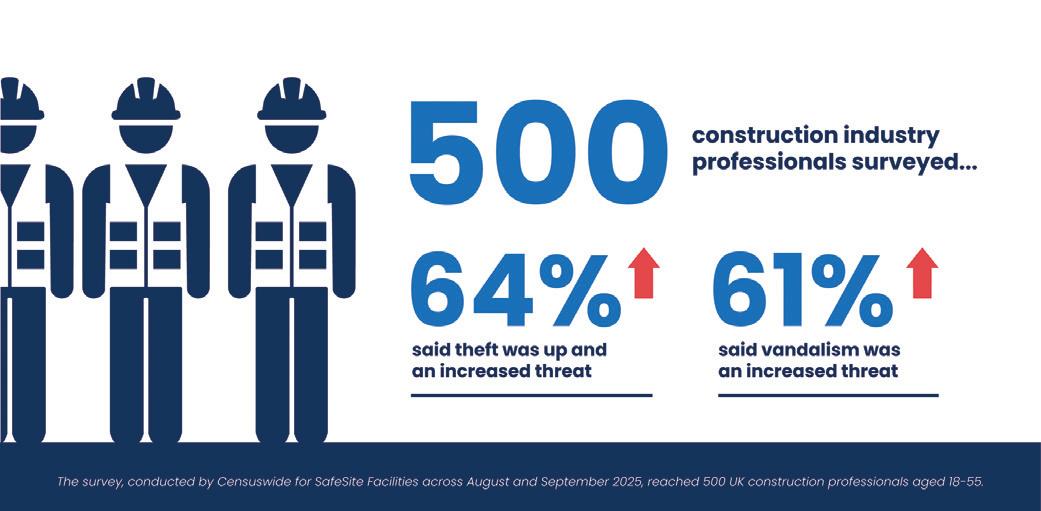
Construction industry reports escalating site theft and vandalism
This comes from a survey of 500 construction industry professionals, comissioned by SafeSite Facilities. 64% of respondents said theft was on the up and 61% said vandalism was an increased threat. In addition, 56% of management said they were worried about the issue.
Dr Lowellyne James, HSEQ manager at SafeSite Facilities, said: “During challenging economic times, feelings of insecurity around theft and vandalism reflect deeper societal concerns and financial uncertainty.”
A CLASS ABOVE
Home building
Masterclass series reaches 15,000 delegate milestone
NHBC’s Masterclass series has reached an important milestone, having now provided expert training to more than 15,000 delegates. A Home Builders Federation (HBF) initiative, the Masterclass series offers fully funded training courses delivered by experts in their field covering roofing, bricklaying and dry lining. Aimed at professional tradespeople looking to keep up to date with the latest industry practices, they provide practical skills and improved knowledge to support the delivery of high-quality new homes.
INJURY TIME
Over a quarter of tradespeople have had a workplace injury that has prevented them from working for over six months
As new figures from the Health and Safety Executive reveal 50,000 construction workers suffered a workplace injury in 2024-2025, research from Direct Line business insurance shows that a further 29% of tradespeople have had an injury that prevented them from working for between a week and a month and almost all tradespeople (95%) said they’d been
COMING OUT ON TOP
LCB Roofing Apprentices Scoop Gold and Silver at SkillBuild 2025 National Final
Two Leeds College of Building (LCB) apprentices were crowned winners at this year’s SkillBuild national final, securing first and second places in the Roof Slating & Tiling category.
Dalton Roofing apprentices
Samuel Jinks and Levente Szasz won gold and silver medal places respectively at the event held at Arena MK, Milton Keynes.
SkillBuild is the UK’s largest construction skills competition.
Delivered by the Construction Industry Training Board (CITB), the competition brings together the brightest new industry talent to battle it out and showcase career pathways across the industry.
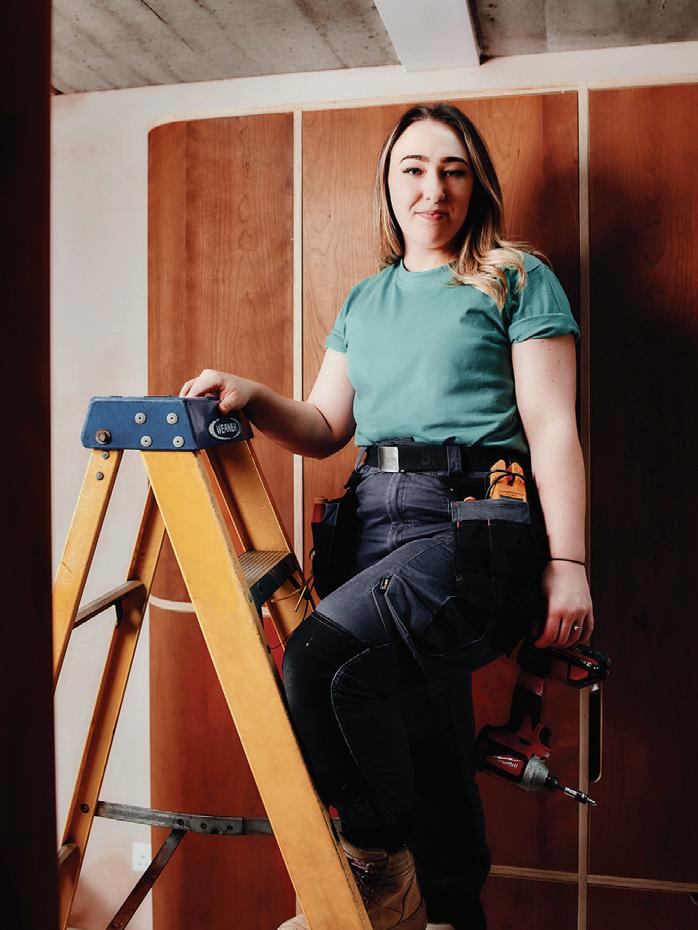
Tduring a home renovation that should have been straightforward. My husband, Paul, and I were mid project when I noticed something that stayed with me. Even though I was the one arranging the trades, managing timelines and making most of the decisions, contractors instinctively directed questions toward Paul. It revealed something about the way women are often perceived in the home improvement space and the unconscious bias I had for not even thinking about the fact I could hire a woman.
At the same time, I was struggling with the usual hurdles that many homeowners face. Finding the right person for a job required too much trial and error, quotes varied wildly, and the process lacked the clarity and reliability I needed. I kept thinking there had to be a better way.
That renovation experience prompted Paul and me to look more closely at the industry. The UK has a huge amount of
talent and craftsmanship, with many tradespeople delivering exceptional work every day, but the hard fact is that only around 5% of that workforce is female. That imbalance was not only limiting opportunities for women, but it was also reducing choice for customers at a time when the sector needs more people entering the trades.
TaskHer was created to help address both sides of that challenge. We launched in 2022 with a simple aim. To make it quicker and easier for homeowners to find verified local trades and to highlight tradeswomen in particular, whose visibility has traditionally been low despite their strong skills and credentials.
Our goal has never been to replace or sideline anyone. Instead, we see TaskHer as a way to add capacity, support existing tradespeople and widen the talent pipeline. The industry has well known labour shortages, so encouraging more women into the trades benefits everyone. It strengthens the workforce, increases availability for customers and helps raise
Relieving the pressure
On the customer side, we focused on building an experience that removes friction. Homeowners can choose their job, receive a clear quote and book with confidence. We wanted to create a platform that respects the time and professionalism of the trade, while giving customers the transparency they expect.
On the trade side, we prioritise fair pay, a free to use the platform, proper verification and a supportive community. We speak to every tradesperson who joins us and check insurance and qualifications before they take bookings. Many women told us they struggled to gain visibility, not because of a lack of ability, but because they were rarely seen by homeowners. By putting them front and centre on a trusted platform, we are helping level the playing field within a sector that has been slow to modernise.
One thing that has struck me is how positive the response has been from men in the industry. Many tradesmen have told us they want more women joining the workforce, because they see firsthand the shortages and the pressure on teams -
almost all of the tradewomen we work with have been trained in their trade by a male counterpart. Good tradespeople, regardless of gender, want to deliver great work and build long term relationships with clients. We see TaskHer as supporting exactly that.
Since launch we have grown steadily. We have secured support from impact focused investors who believe in the importance of strengthening skilled trades. We are expanding our coverage area, adding more services and building partnerships that showcase the trades as a modern, inclusive and rewarding career path.
For me, the founding story of TaskHer is rooted in something very simple. A
personal frustration became a wider curiosity, and that curiosity led to a solution that aims to support both homeowners and the people who keep the built environment running. We are reshaping the home improvement process by championing the talent within it and helping more people thrive in it. If the future of the sector is one where customers enjoy a smoother experience, tradespeople are valued and visible, and women feel encouraged to enter and stay in the field, then that is the future TaskHer is proud to help build.
THE WOW FACTOR
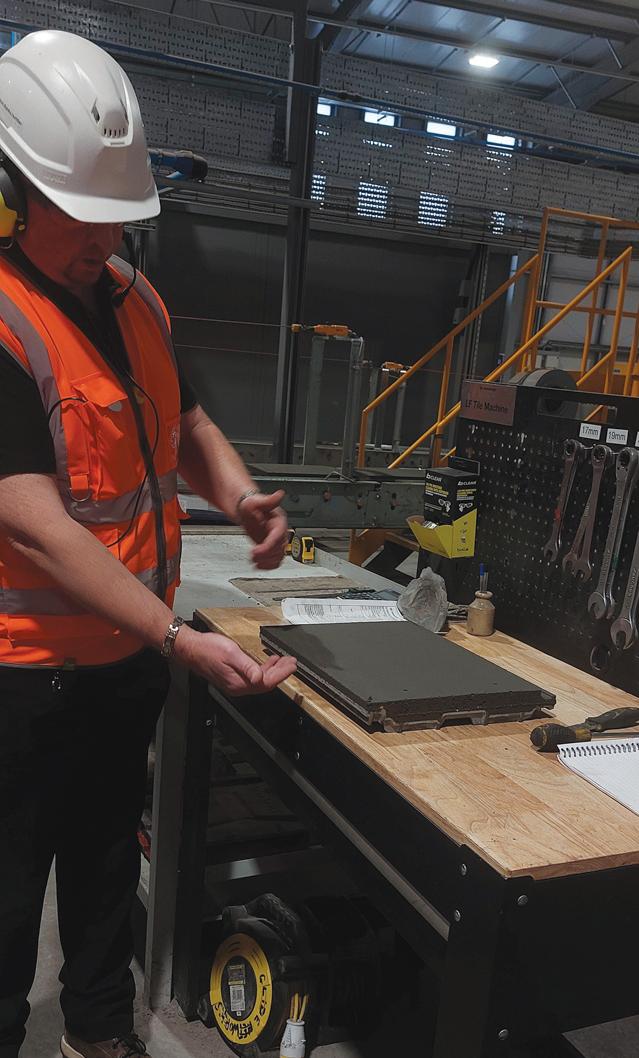
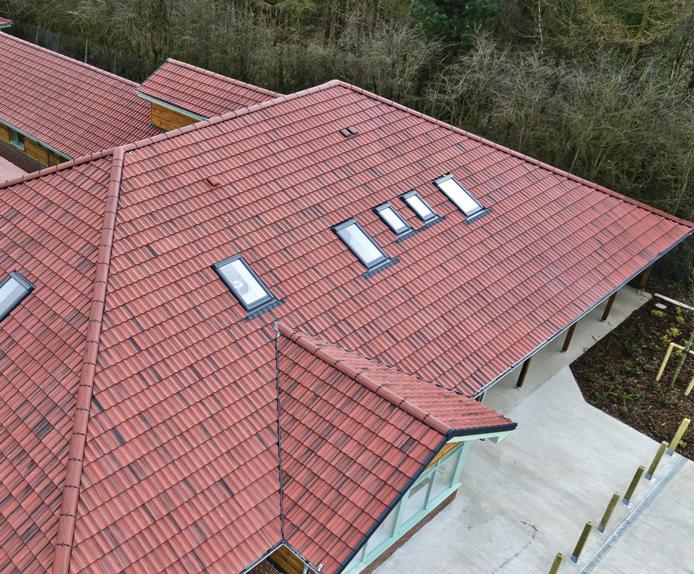
PB visits wienerberger’s new state-of-the-art concrete tile factory
Take a walk through the streets of London and you’d find it difficult not to walk past the familiar hue of a building built with London Yellow Stock bricks. These traditional bricks were widely used during the 19th century, with their familiar yellowy look coming from chalk added in the production process. One site that specialised in this particular form of brick was the Smeed Dean works in Sittingbourne, Kent. While London stock bricks are no longer produced as they were traditionally (due to the enormous carbon emissions emitted in production), the site of the old brickworks is not going to waste.
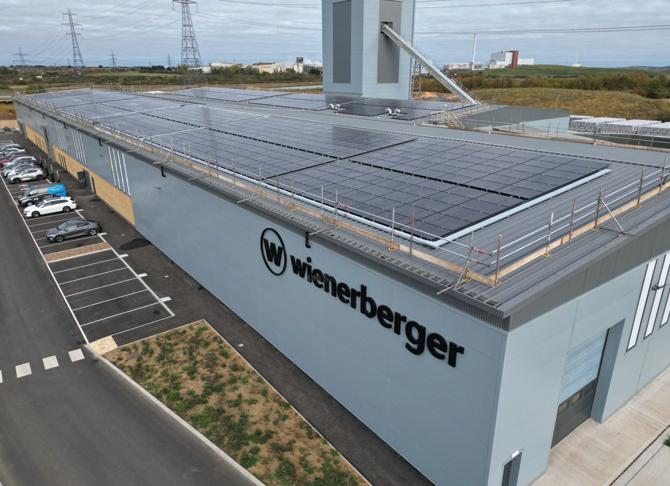
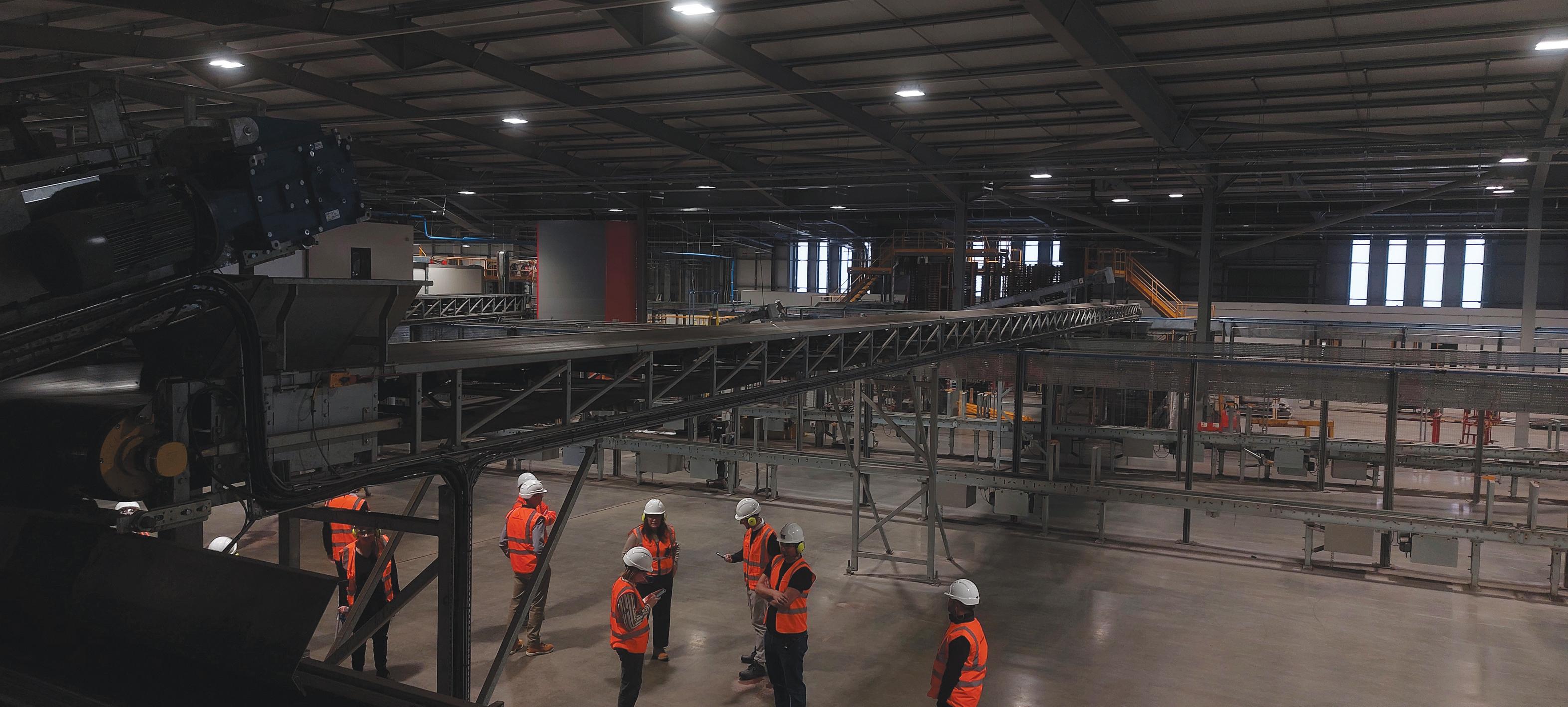
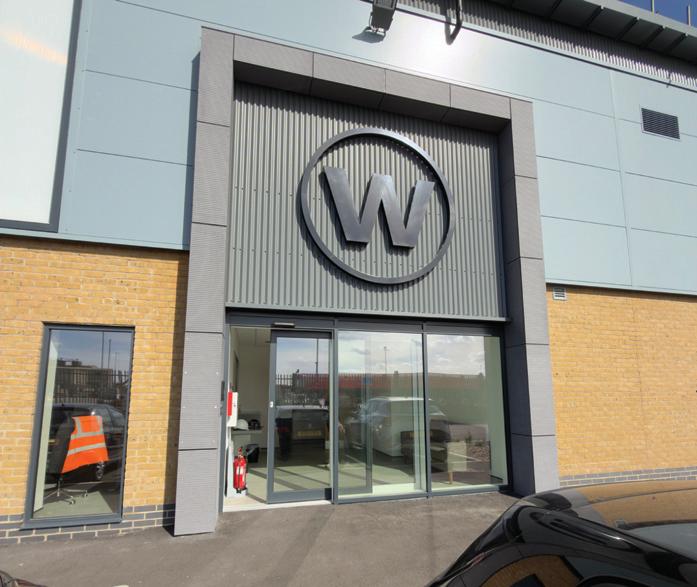
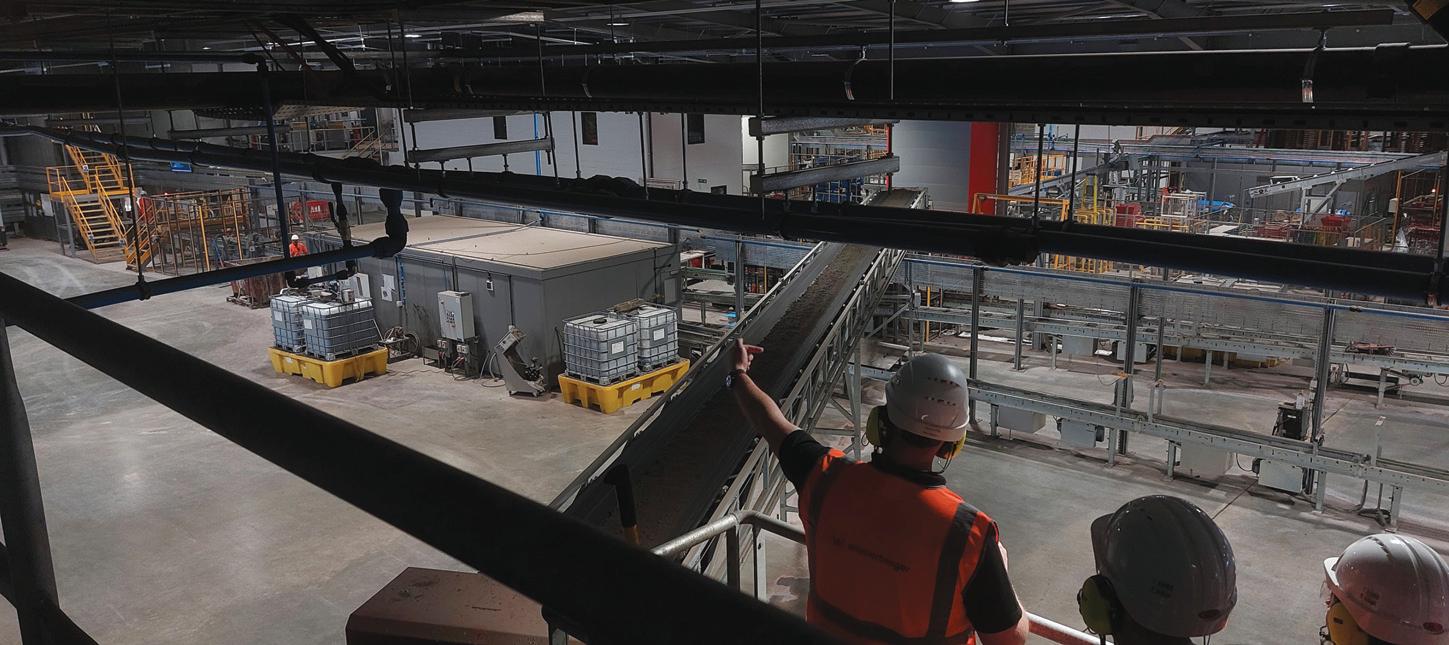
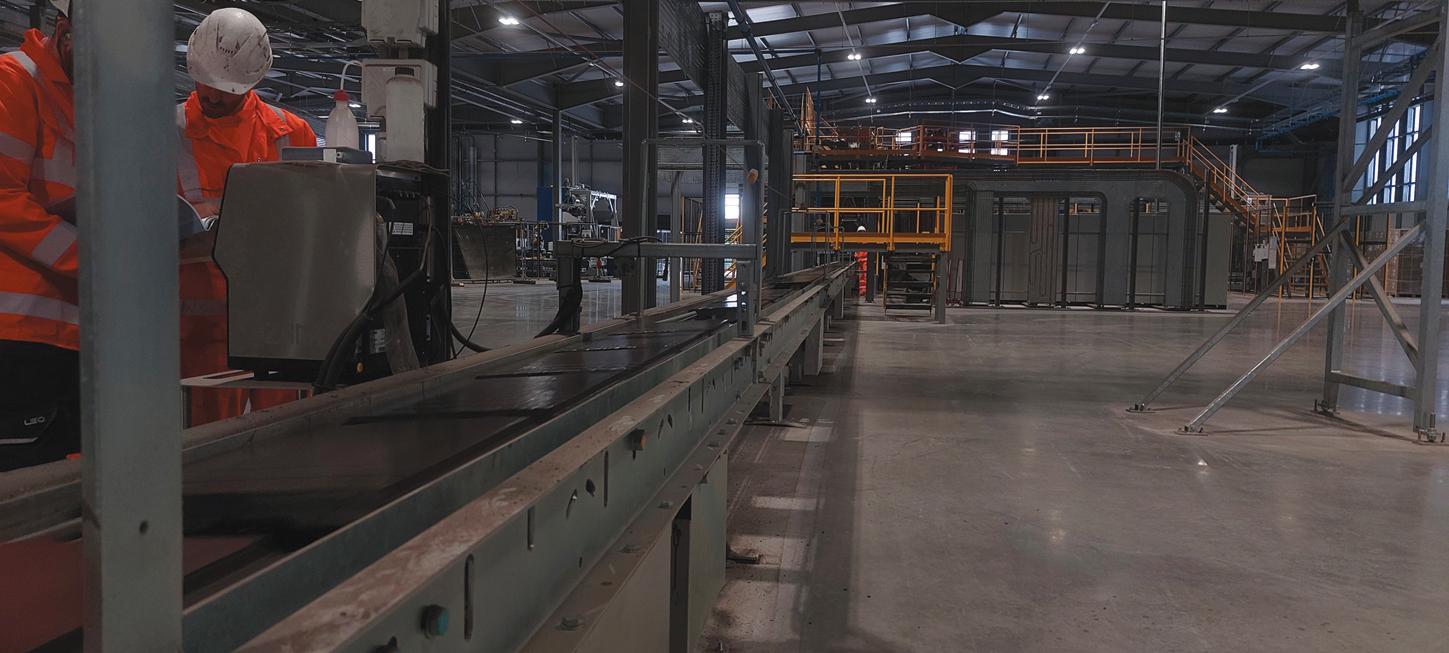
The Smeed Dean works is owned by wienerberger and its new owners are certainly making the most of it. Next to the old works, the manufacturer has now developed a state of the art concrete tile factory; its first in the South of England. The 7,800m² state-of-the-art production facility has the capacity to produce 94 million roof tiles annually, enough for 32,000 semi-detached homes.
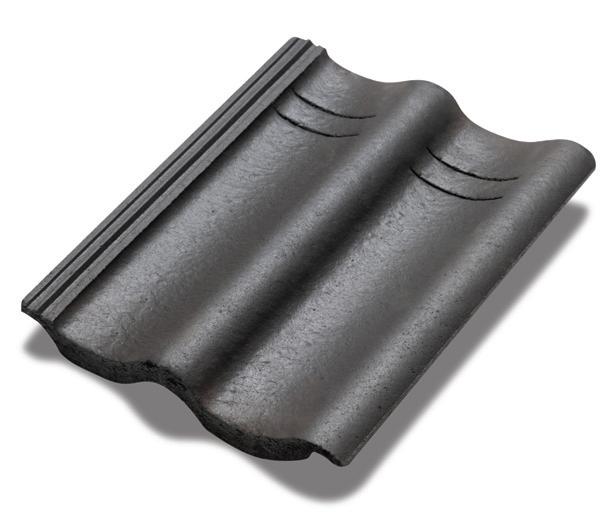
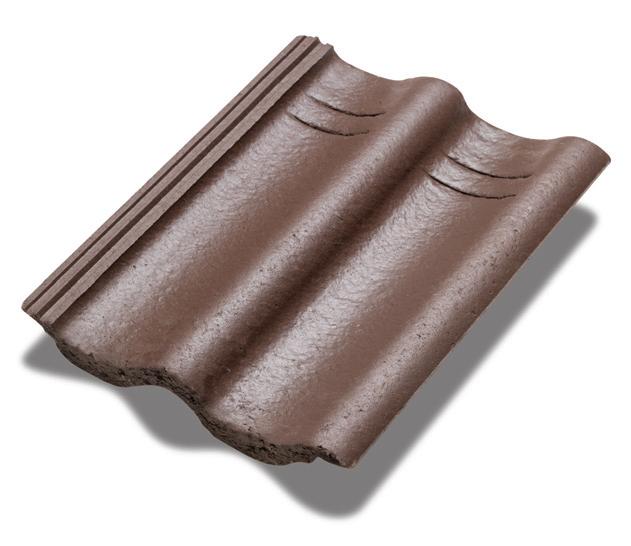
This marks a significant milestone for wienerberger, demonstrating its ongoing commitment to low-carbon construction, regional investment, and advanced concrete tile production. Manufacturing both Danum TLE large format concrete
tiles and plain concrete tiles on two production lines, the factory will complement existing sites in the North and reduce average transport distance to southern markets by over 200 miles.
Building for what’s next
Keith Barker, Chief Operating Officer from wienerberger, said: “Launching Smeed Dean is about more than expanding our national manufacturing footprint – it’s about building for what’s next. Increasing our production capacity in the South and investing in decarbonised operations have been key priorities for us, so it is extremely rewarding to see these cutting edge production lines up and running to deliver products that will support the UK’s evolving housing needs.”
The site is wienerberger’s first fully electrified concrete tile facility, harnessing renewable energy and embedding
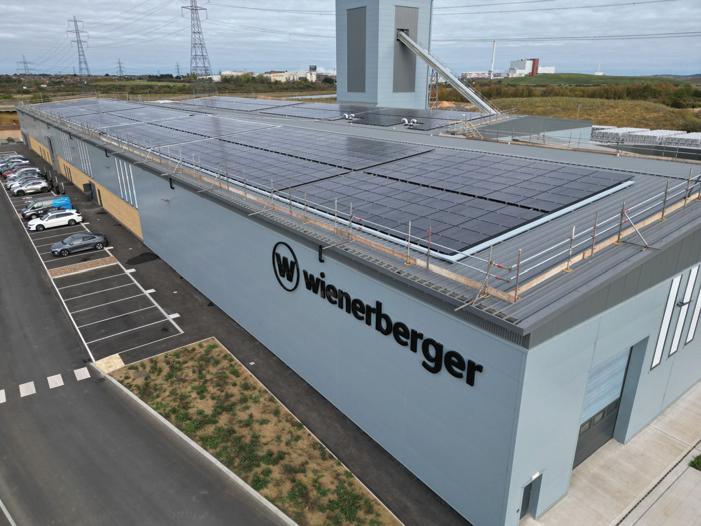
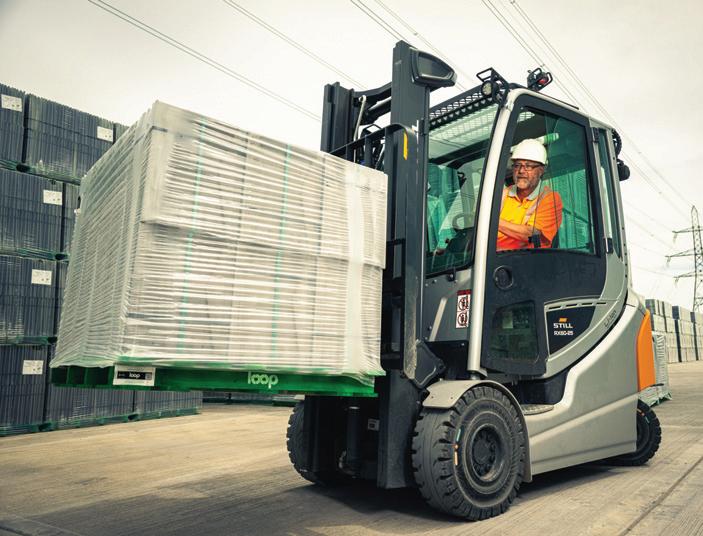
sustainability into every layer of its operations. This includes smart lighting, heat recovery systems for energy efficiency, a 10,000-litre rainwater harvesting system, and participation in The Pallet LOOP scheme to minimise pallet wood waste. The site’s highly skilled team completed extensive training to support advanced and sustainable concrete tile production. It’s an impressive show of force, and the size of the solar array on the, what would otherwise be unused, roof is absolutely immense.
The construction and commissioning process was completed without a single lost time accident and the factory layout was carefully designed around machinery to enhance safety and streamline operations.
Smeed Dean is operated by a highly skilled team, many of whom previously worked in brick production at the same site. To ensure excellence in production, wienerberger implemented a comprehensive training programme tailored to the specialised requirements of plain tile and large-format Danum TLE tile manufacturing.
The factory’s positive social impact extends beyond the investments in its workforce. 50 pence from each pallet sold of Danum TLE tiles will support Emmaus, a charity working to combat homelessness and social exclusion, embedding long-term community support into factory operations.
Setting a new standard
Smeed Dean is the company’s largest self-managed build in the UK to date, setting a new standard for sustainable, future-ready manufacturing.
The new factory isn’t forgetting its London Stock roots though. In fact, the outside of the building (seen to the left) boasts a familiar yellow facade. Using modern printing technology, it has a brick slip around a portion of the building that’s designed to look just like the traditional yellow London Stock. It’s impressively accurate too and if I’m honest, I’m not sure I would’ve been able to notice the difference.
This in itself seems to encapsulate the spirit of what wienerberger is trying to do. Its heritage is that of a brick and tile
manufacturer and like this digital brick skin, it is building from this heritage to continue to work towards more than what came before. The launch of Smeed Dean is another tool on wienerberger’s increasingly impressive belt.
One of the latest additions to this belt is its Renatus whole house retrofit system. With this, wienerberger is actively working with builders and social housing providers to retrofit old homes with a fully specified array of solutions, from heating systems to solar PV. Its the next step on from the company’s widely successful full-roof system.
In a world of increasing regulations, like the Future Homes Standard and Building Safey Act, there is a larger responsibility on the trades to deliver performance that they can provide evidence for. Lots of regulation and effort is being placed on new build being where we can make these huge carbon savings, but the reality is the actual battle will be fought in the housing stock we’ve already got. If we’re to get to net zero by 2050, we need to do something about the almost 80% of homes that are here now and still will be by then (numbering close to 30 million).
Simplifying this retrofit challenge and making it as user friendly as possible is the way to go.
Renatus means born again in Latin. It is a fitting name for this retrofit service; breathing new life into what is already there. With this new factory, wienerberger is showing that it is preparing itself and stands ready to deliver on the challenge of 1.5 million homes by 2029. At the same time, it’s not forgetting what is already here and doing what it can to work with the past in bringing it into the future.
We give our verdict on new products in our unique site tests, but now we want to give you the chance to try them – AND KEEP THEM – for yourself! All you have to do to enter the free draws is simply just type in www.rdr.link followed by the unique code.
FREEFOR ALL!
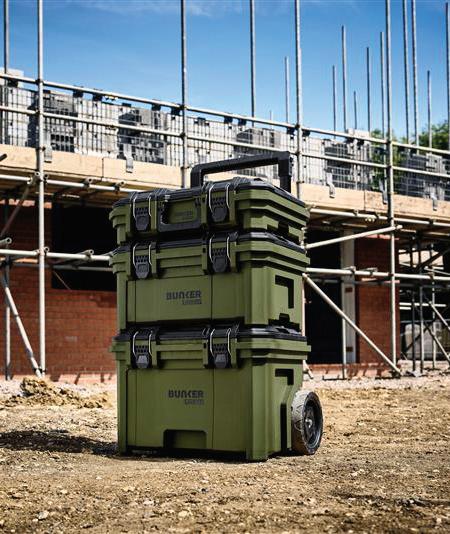
1X 9-PIECE TOOL STACKING
BUNKER LOAD-UP SYSTEM
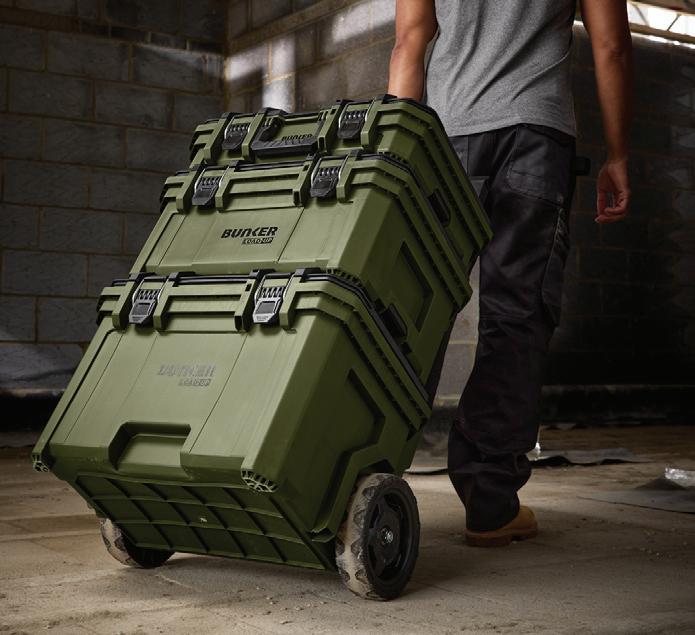
Whatever and wherever the job, you can securely transport all your tools and essentials with ease thanks to BUNKER. The Load-Up boxes seamlessly stack together, attaching securely to each other, whichever way around they’re facing. Storage has never looked so good.
The prize: Transport your tools with ease with this incredible prize of a comprehensive 9-piece BUNKER Load-Up System –which includes: - 100mm Stacking Tool Box
- 230mm Stacking Tool Box
- 340mm Rolling Tool Box
- 2-piece Hook Set
- Accessories Bin - x2 Clear Organisers
- Waterproof Organiser
Load-Up, lock and land with BUNKER
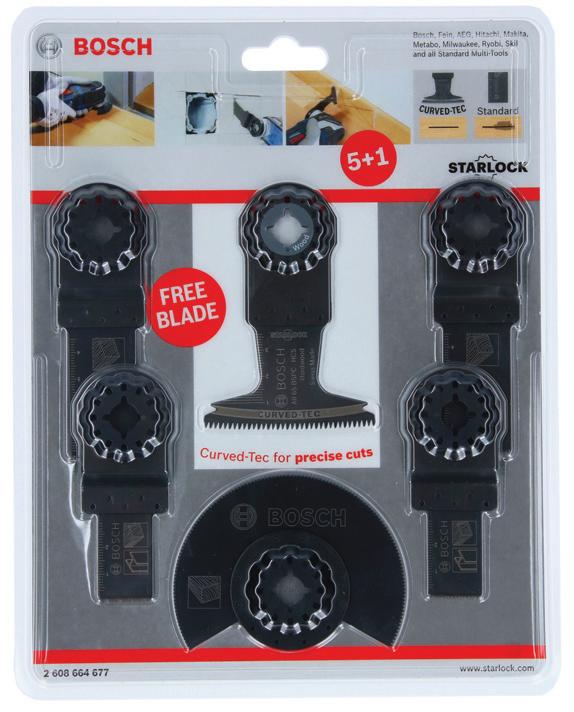
20 X MULTI-TOOL ACCESSORY SETS
BOSCH STARLOCK
Win one of 20 Bosch Starlock 5+1-Piece MultiTool Accessory sets! This kit gives pros the precision, versatility and durability needed for every job. Don’t miss your chance to upgrade your toolkit with high-performance Bosch accessories.
Enter now and take your work to the next level!
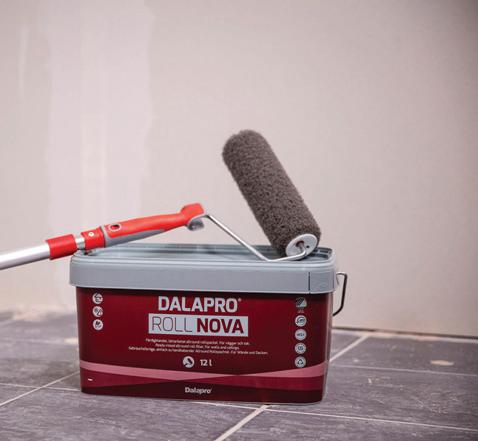
3 X READY-MIXED ROLLER-APPLIED WALL COVERING KITS
DALAPRO ROLL NOVA
Win one of THREE Dalapro Roll Nova kits!
Dalapro Roll Nova is a readymixed roller-applied wall covering that is time saving and easy to work with. Perfect for smoothing over walls, ceilings, plasterboard, minor cracks and more. The giveaway includes a 12-litre resealable tub of Dalapro Roll Nova (covers 12m² at 1mm thickness), one Dalapro Speed Max Roller and a replacement roller sleeve. Roll up, roll up, this is one giveaway you can’t miss!
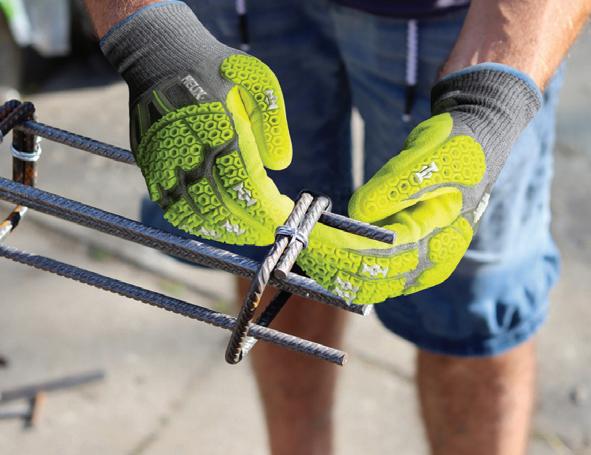
5 X IMPACTRESISTANT GLOVES
UVEX
HEXARMOR HELIX 3014 IMP
Think impact-resistant gloves are always bulky, heavy, hot and a pain to work in? Think again. The new uvex HexArmor Helix 3014 IMP is built to change your mind, offering 360 cut protection, breathability AND impact protection, all while still giving you the dexterity and control you need on site.
And you don’t just have to take our word for it. uvex is giving 5 Professional Builder readers the chance to try these next-generation gloves for themselves. Want to put them to the test and tell us what you think? Enter using the link below.
Be one of the first to get your hands on uvex’s revolutionary new impact-resistant glove.
HERITAGE ACT
Professional Builder looks at how a barn conversion development in Norfolk is integrating low carbon heating into the build.
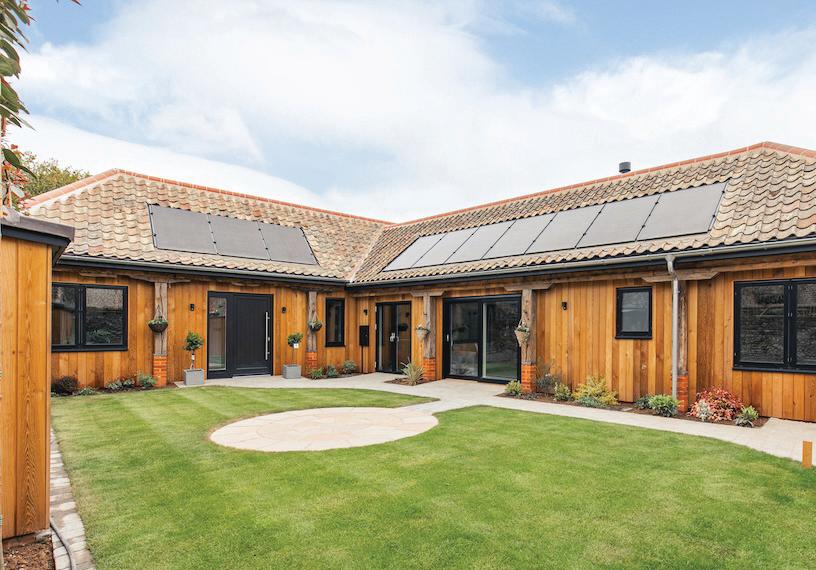
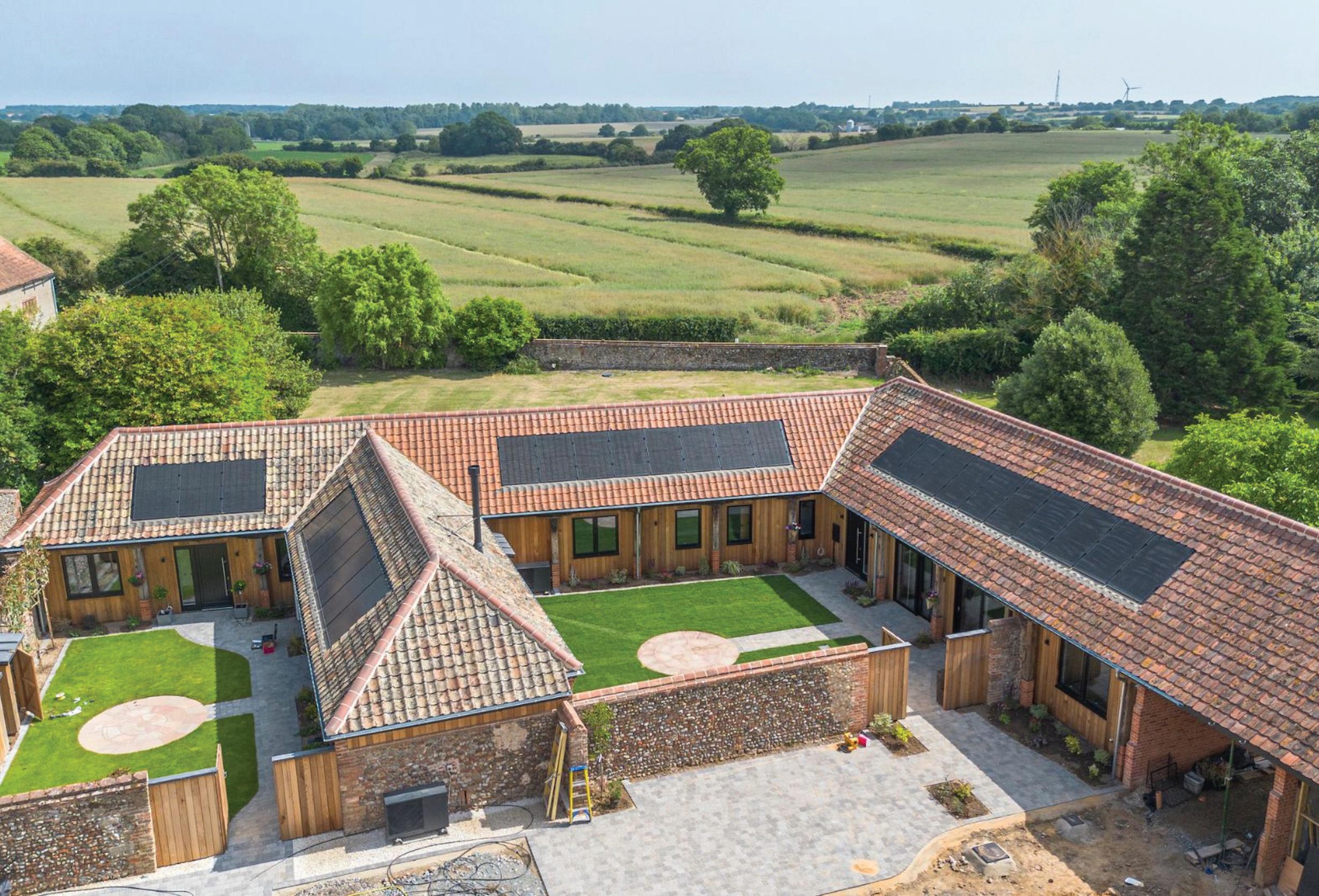
Nestled in the Norfolk countryside, a collection of historic barns is undergoing a striking transformation.
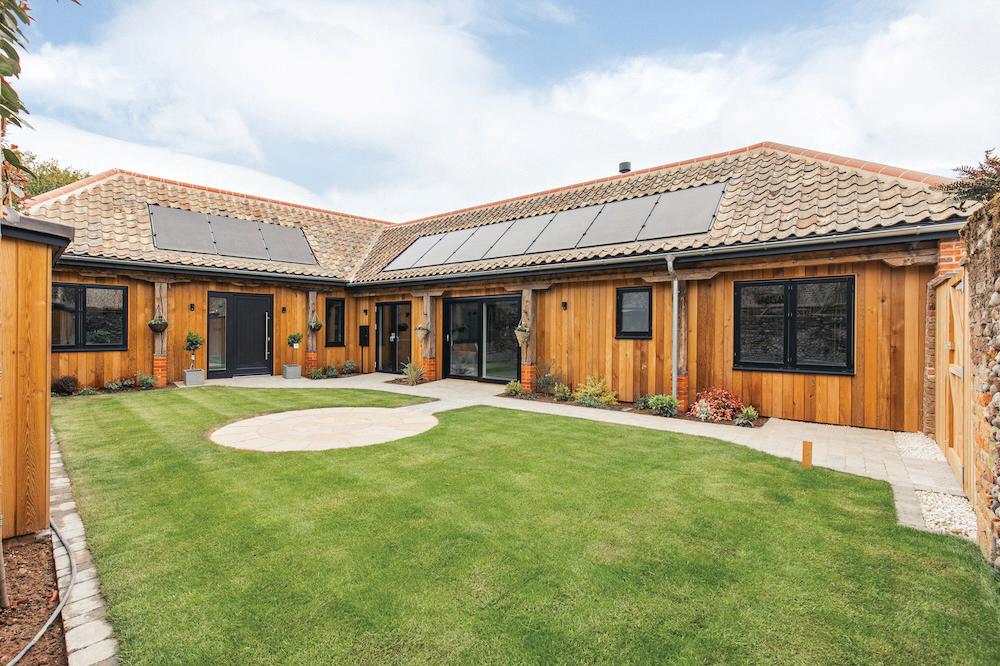
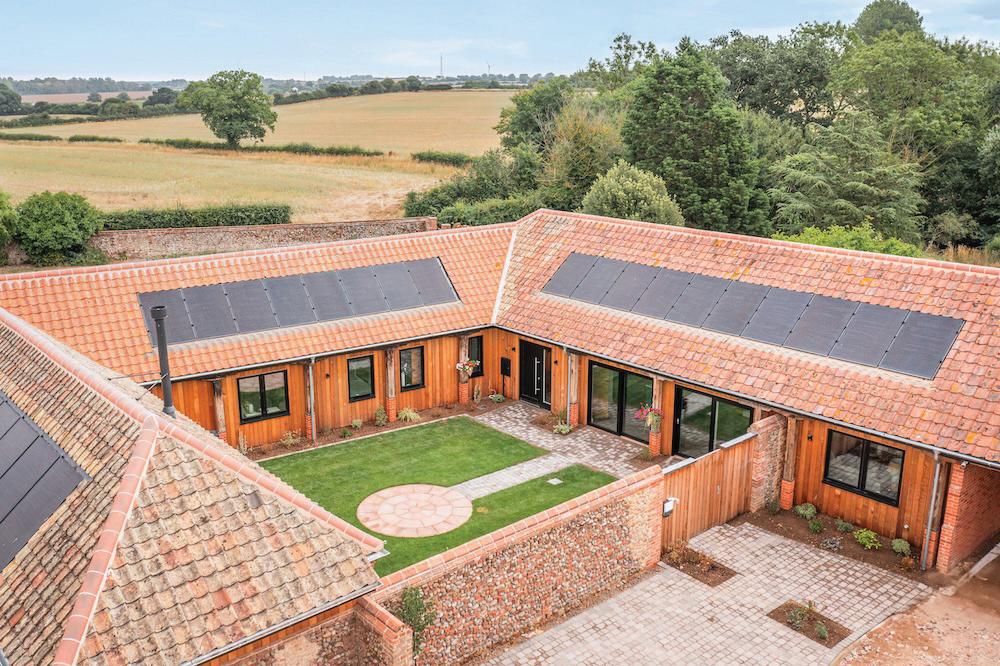
Meadow Grange, a five-home development by B Beales Developers Ltd, blends 17th-century architecture with 21stcentury low carbon heating.
The site, located near the market town of Holt, comprises a series of traditional red-brick granary barns. These are being sympathetically redeveloped across two phases into five individual residences. With the first two homes now completed, the project offers a real-world example of how renewable heating technologies are being deployed effectively in characterful new builds.
For B Beales Developers, sustainability isn’t an afterthought, it’s a core factor of every decision. “Over the past few years,
we’ve always specified low carbon systems,” explains Claire Hendrick from the company. “But with the Future Homes Standard due to come into force, we’ve made sure that Meadow Grange not only meets current requirements but is well prepared for the changes ahead.”
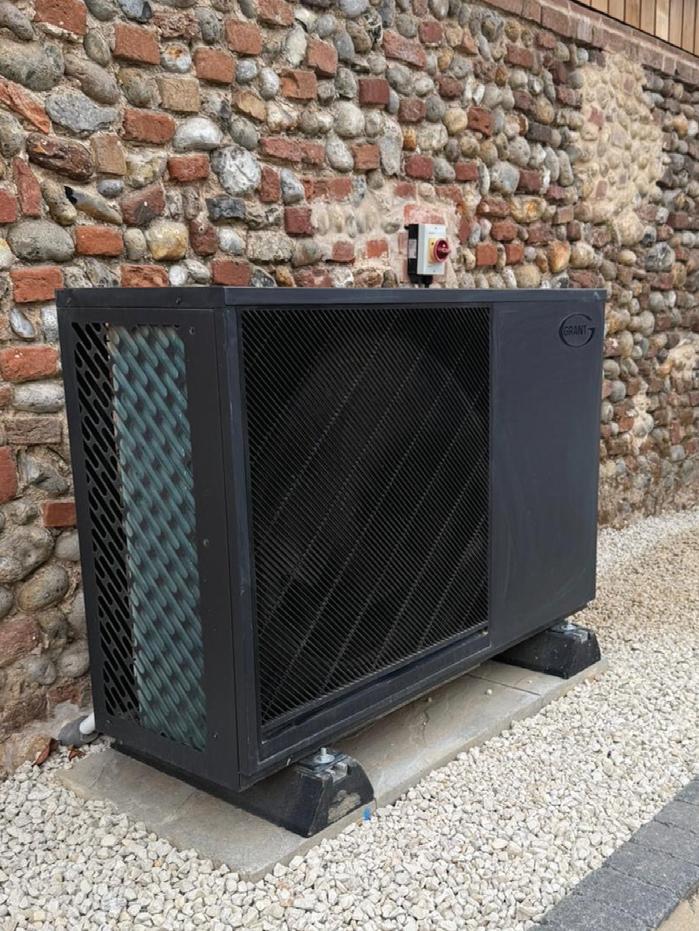
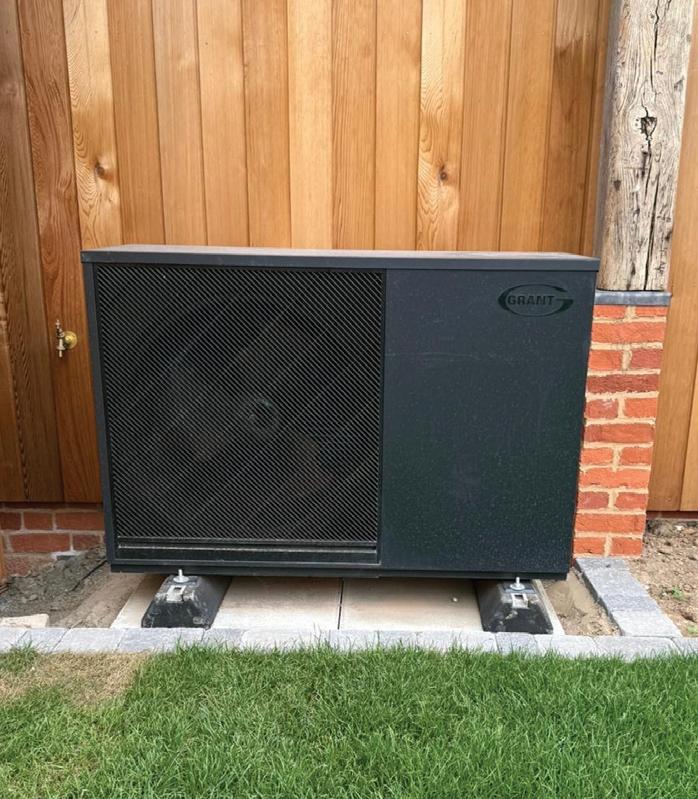
With this in mind, the homes have been built with triple glazing, high levels of insulation, and no connection to the gas grid. Instead, every property is served by a Grant Aerona R290 air-to-water heat pump, ensuring efficient, sustainable heating and hot water from day one.
This isn’t the first time B Beales have turned to Grant UK. The relationship began in 2022 at their Steading Mews development and has since evolved into a trusted specification partnership.
The first two barns completed at Meadow Grange include a two-bedroom
and a three-bedroom property, both single-storey, with each fitted with a 9kW Aerona 290 unit and Grant’s Aerona Smart Controller.
based King and Gale Services, who are part of Grant UK’s G1 Installer Network.
Director Steven Gale was impressed by the simplicity of the install process and the functionality of the system.
“This was our first time fitting the Aerona 290 and its Smart Controller,” says Steven. “It’s a quality bit of kit. The user interface is really intuitive, and the diagrams help guide you through set-up. Plus, with the WiFi-enabled Smart Hub, we can monitor the system remotely, ideal for offering homeowner support without needing to visit site.”
Each install used Grant’s tailored Heat Pump Installation Pack P, designed for a Direct S-Plan configuration. These packs streamline the ordering and installation process, helping developers and installers ensure compliance and best practice from the outset.
One of the development’s key challenges was preserving the barns’ character while integrating modern systems. “We’ve reused as much of the original red brick and building materials as possible,” says Claire. “It was important to us that these felt like homes with history, not just replicas.”
Aesthetics were an important consideration for this development and this extended to the heating design. The Aerona 290 is compact and discreet, with low operating noise that suits the peaceful setting. All models are MCS and Quiet Mark accredited, with outputs ranging from 4kW to 15.5kW, offering flexibility for developers working across a range of building sizes.
Critically, the unit uses R290 refrigerant—a low-GWP (Global Warming Potential) alternative that is both more efficient and more environmentally
friendly than traditional heat pump refrigerants. As regulatory and planning pressures increase, this kind of foresight will prove vital.
Support
One of the standout aspects of this project has been the ongoing support provided by Grant UK’s in-house teams.
“Aesthetics were an important consideration for this development and this extended to the heating design. The Aerona 290 is compact and discreet, with low operating noise that suits the peaceful setting.”
Grant’s Specification Team worked with B Beales and the installers to design the full heating layouts, specifying all components to suit each dwelling. Steven Gale and his team also attended a dedicated R290 training course in Norwich, hosted by Grant UK, to ensure they were fully up to speed with the technology.
“We had great support from Grant throughout,” Steven notes. “Their technical team were always available. When I had a couple of questions while installing the Smart Controllers, I got a response right away. And they even came to site for final checks before handover. That kind of backup makes a real difference.”
For Claire and the team at B Beales Developers, it’s a natural continuation of the successful formula already in place. “We’re really pleased with how phase one has gone. Buyers are increasingly asking about energy performance and heating systems, and we’ve been able to offer homes that are ready for the future, without compromising on style or comfort.”
The Meadow Grange development is a timely example of how rural new builds and conversions can embrace low carbon heating—without losing their identity or appeal. With legislation pushing the industry further towards net zero, solutions like the Aerona 290 offer developers a compliant, efficient, and proven pathway forward.
PANEL SHOW
Roly Ward, Head of Business
Development, MEDITE SMARTPLY
discusses specifying exterior panels for the garden-room boom
Garden rooms have become one of the UK’s most desirable home upgrades.
According to Rightmove, listings that mention “garden offices” have increased by over 1,000% in the past ten years. What began as a response to remote working has evolved into a broader lifestyle trend, with homeowners now investing in pool rooms, studios, gyms, and outdoor retreats.
This growing interest is showing no signs of slowing. The UK outdoor building sector is expected to reach £742 million by 2027. For homeowners, a well-built garden room can boost property value by 5–15%, sometimes adding £50,000 or more, depending on size and location.
As more people invest in garden rooms, expectations are rising. It’s no
longer just about how a building looks — it’s about how well it’s made and how long it lasts. Buyers are paying attention to the quality of the paint finish, how neatly everything fits together, and whether the structure can handle rain, sun, and seasonal changes without needing constant repairs.
need to think carefully about the materials they use.
Garden rooms face the same performance challenges as any external
Delivering all requires careful specification and an understanding of how materials perform outdoors.
To meet these demands, professionals are now focusing on materials that offer:
• Weather resistance: Panels must withstand year-round exposure to wind, rain, and sun, with swelling and shrinking dramatically reduced.
• Durability: Structures are expected to last far longer than a typical five- or ten-year lifecycle. Materials with multidecade service guarantees provide valuable assurance.
• Finish quality: A clean finish helps paint go on evenly and look good for longer.
• Design freedom: Materials should be easy to cut and shape for custom and intricate detailing and precision joinery.
• Low maintenance: Homeowners value minimal upkeep as much as performance.
• Sustainability: With growing environmental awareness, more people are choosing wood-based materials over plastics and composite options.
A new benchmark for performance
This is where acetylated wood-fibre MDF options such as MEDITE TRICOYA EXTREME (MTX) demonstrate what’s possible when durability meets design freedom, boasting high resistance to swelling, shrinking, and warping even in the most challenging outdoor conditions. Engineered specifically for such applications, these panels can combine the machinability of traditional MDF with exceptional dimensional stability. And, in the case of MTX, it is backed by a 50-year guarantee above ground and 25 years inground — with independent BRE testing reporting a service life of up to 60 years.
The material’s stability also enhances coating performance: paints and finishes adhere more evenly and last longer, while any surface damage does not compromise the integrity of the core.
For landscapers, designers, and garden-room builders, this means creative potential without compromise. MTX can be cut, shaped, and joined with the precision of MDF, but with the added
benefit of a perfectly smooth, knot-free surface that allows for fine detailing and a high-quality finish.
Real-world example: Bakers Garden Buildings
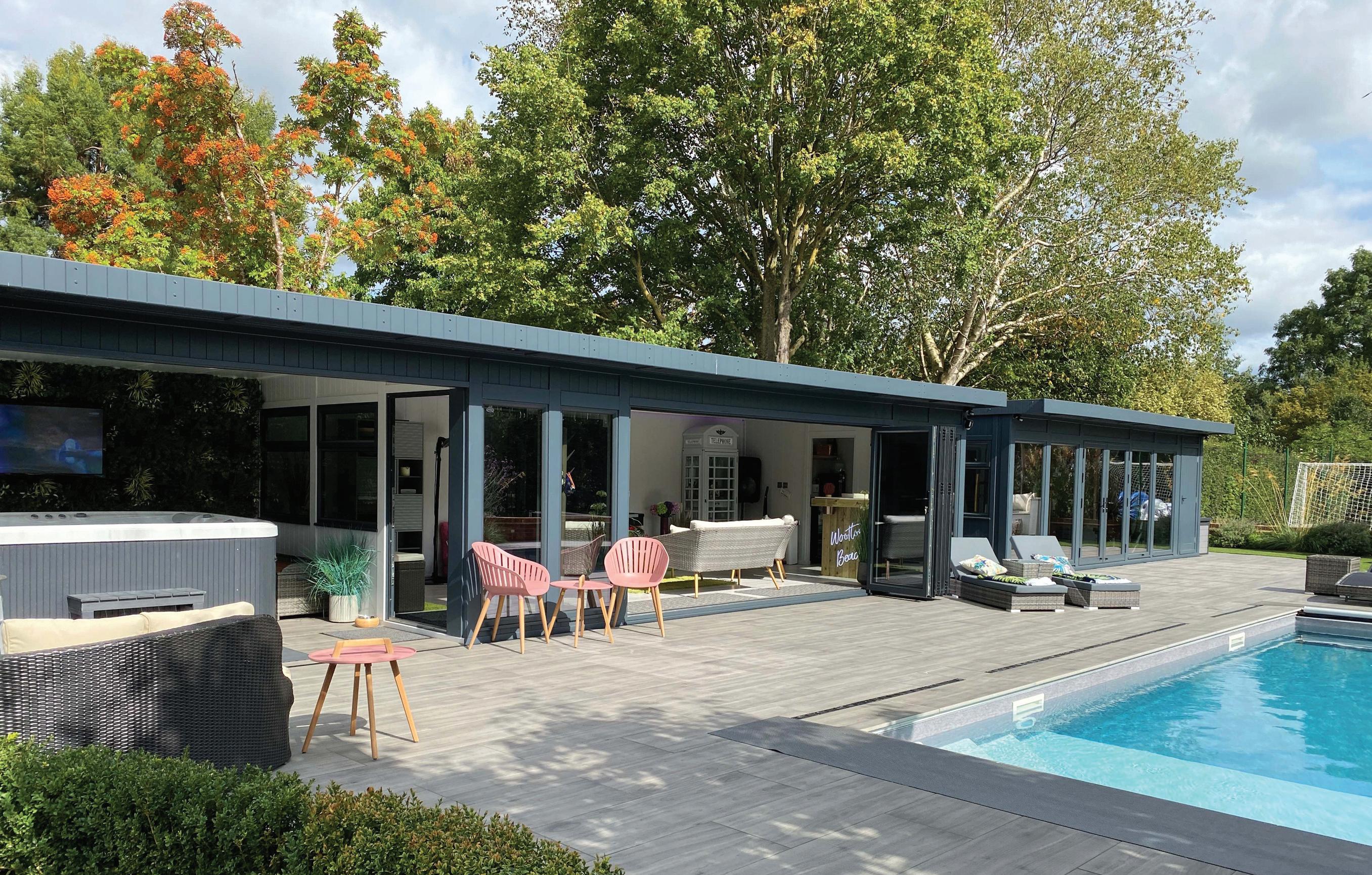
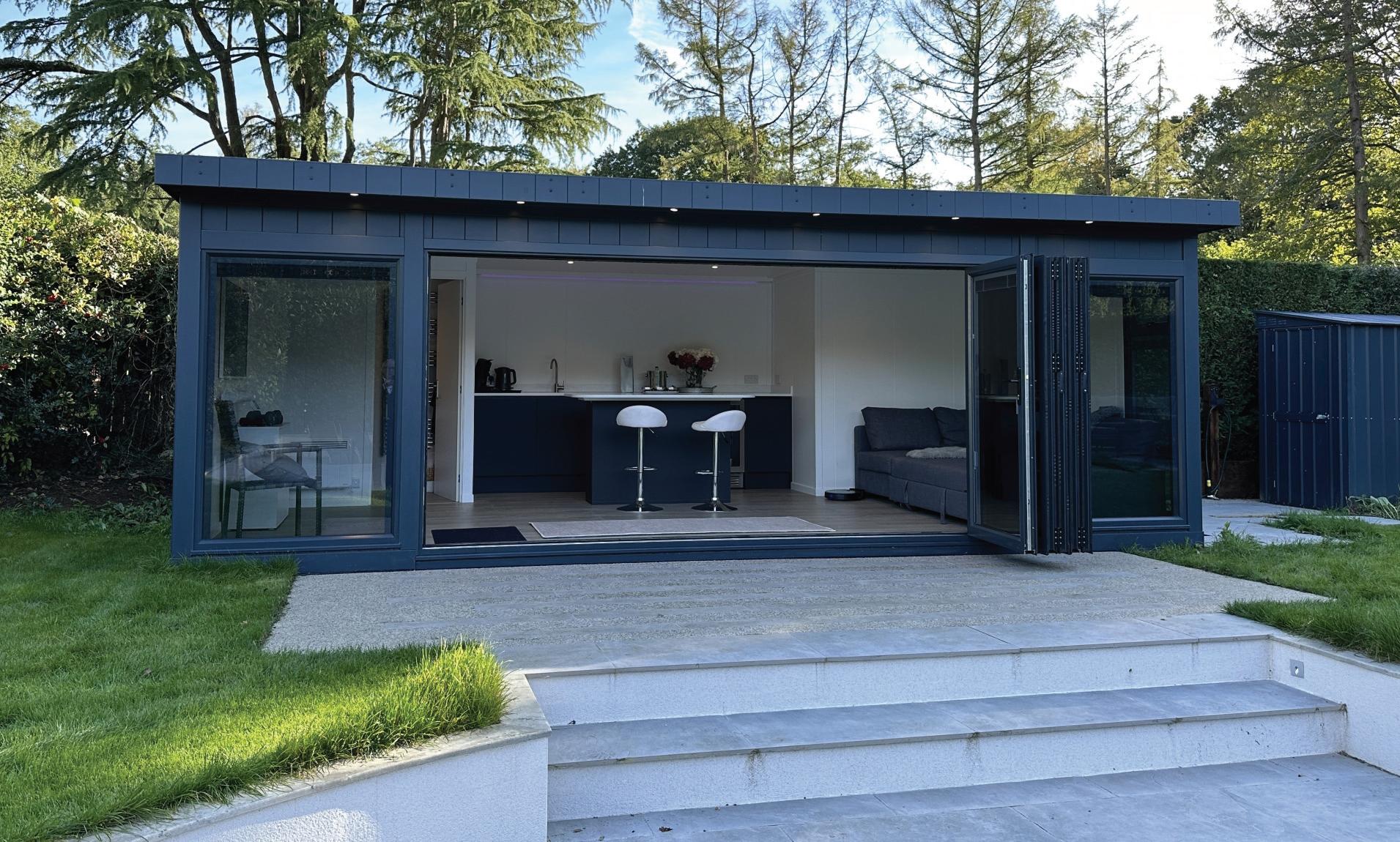
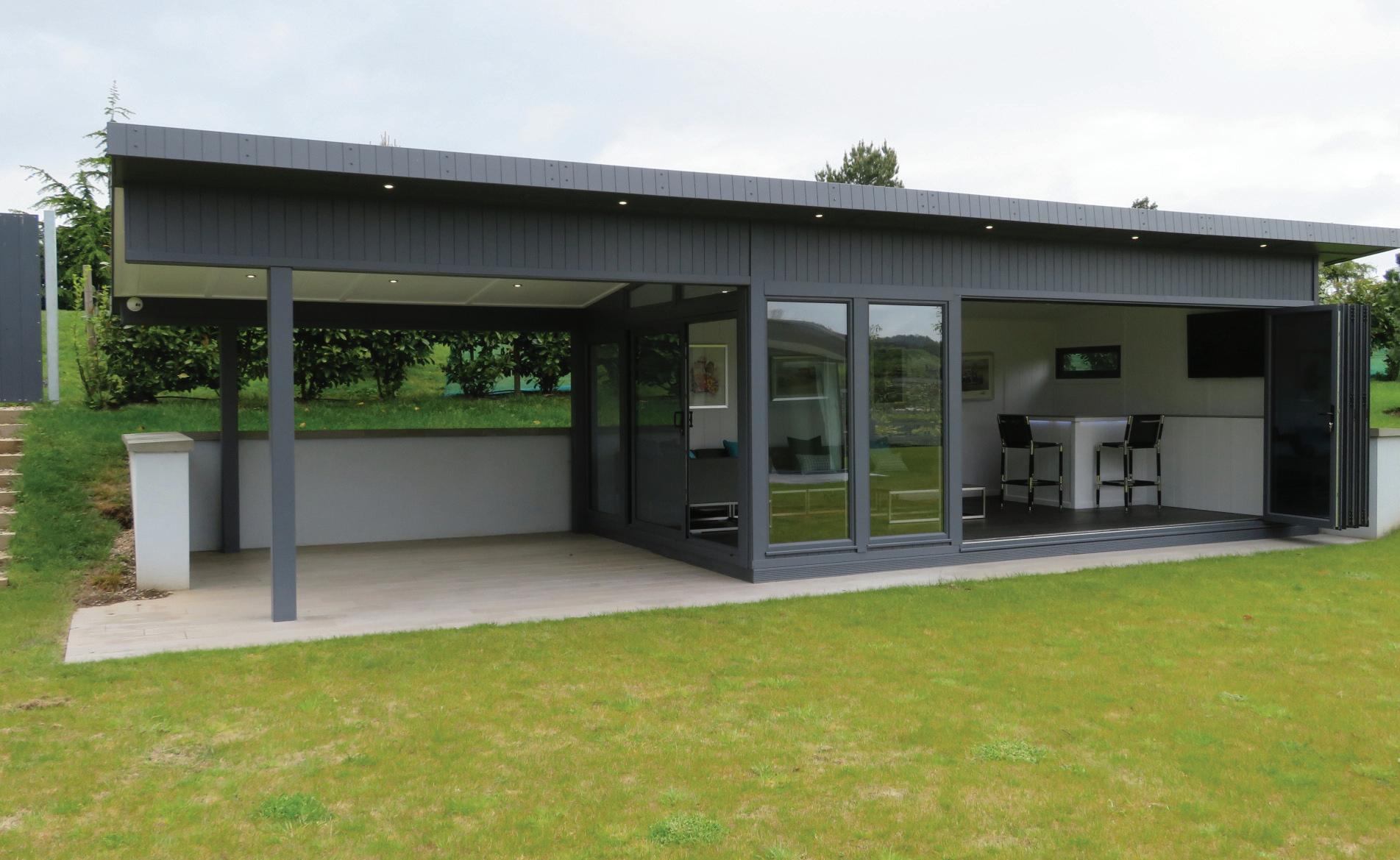
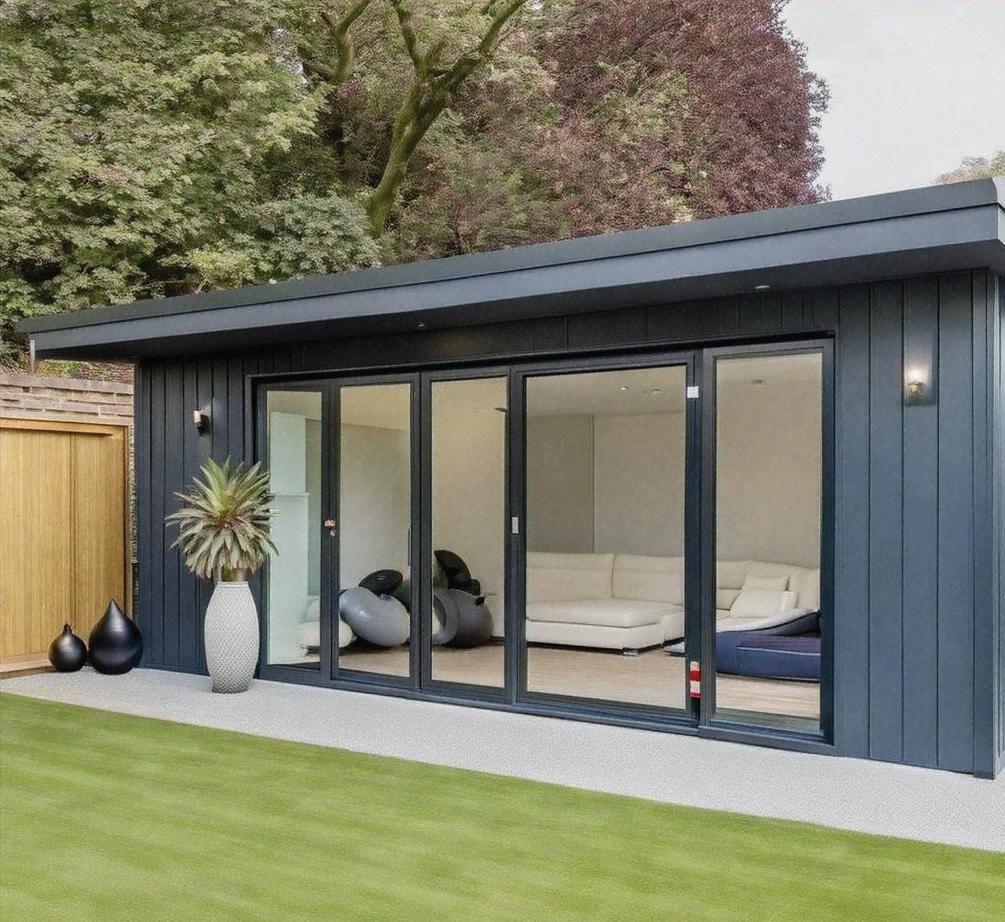
One company leading the way is Bakers Garden Buildings, which designs and builds bespoke outdoor spaces across the South of England. Their projects range from poolside lounges and home gyms to garden offices and studios — all built to look great and perform well with minimal maintenance.
To meet these high standards, Bakers uses MTX for nearly every external feature of its builds, including horizontal and vertical cladding, bespoke trims, and canopy soffits.
The reason is straightforward: stability. MTX’s engineered composition keeps paint lines crisp, joints tight, and upkeep minimal — even after years of exposure.
As Martin Baker, Director of Bakers Garden Buildings, explains: “MTX gives us the finish and flexibility we need to deliver truly bespoke buildings with confidence. It machines beautifully, paints cleanly, and performs brilliantly in the toughest conditions. It’s simply the best product for what we do.”
To explore real-world examples, please follow the link here.
WWW.RDR.LINK/BBW020
Ease of use meets performance
For installers, MTX also brings practical
advantages. Its consistent density and ultra-smooth surface reduce rework and take paint evenly, helping exteriors maintain their colour and precision detailing over time. Lighter than many composite or fibre-cement alternatives, MTX is easier to handle and fix, shortening build times and reducing the likelihood of callbacks.
For specifiers, this means fewer surprises on site and more reliable results — a big advantage in the fast-growing premium outdoor living market.
Sustainability and longevity
Garden rooms are part of a bigger shift in home design — towards lighter, lowcarbon construction. MTX fits right in. It’s made from sustainably-certified wood and comes with a durability guarantee, offering both renewable sourcing and long-term performance.
As the garden-room market continues to grow, the focus is shifting to lasting quality — creating structures that endure rather than age. The most successful builders will be those who understand that great results depend on smart material choices.
With its unique mix of stability, weather resistance, and smooth finish, MTX shows how advanced timber panels can help the garden-room market meet this new standard — where design and durability go hand in hand.
As demand for garden rooms is set to rise through 2026, professional builders have a prime opportunity to expand their offering and tap into this market. Paul Higgins, Commercial Director at TuffX, explores how innovative glazing technologies are helping to deliver modern, energy-efficient garden living without compromising design or usability
Garden rooms have become one of the fastest-growing home additions in the UK, with Google searches for ‘garden offices’ up 22% compared to pre2020 levels. The pandemic reshaped working habits across the UK, and even now, many people continue to split their week between home and the office. With hybrid working here to stay, homeowners are increasingly looking for ways to create clear boundaries between their professional and personal lives.
As a result, demand for purpose-built garden offices has surged. Rightmove reports that the number of property listings featuring a garden office has risen more than elevenfold over the past decade - an impressive 1,046% increase.
These statistics also reflect homeowners’ ongoing desire to make the most of every inch of space. Whether used as offices, gyms, studios or simply as spaces to relax, garden rooms offer flexibility and year-round usability. For professional builders, this growing demand represents a significant opportunity to expand services and deliver high-margin projects.
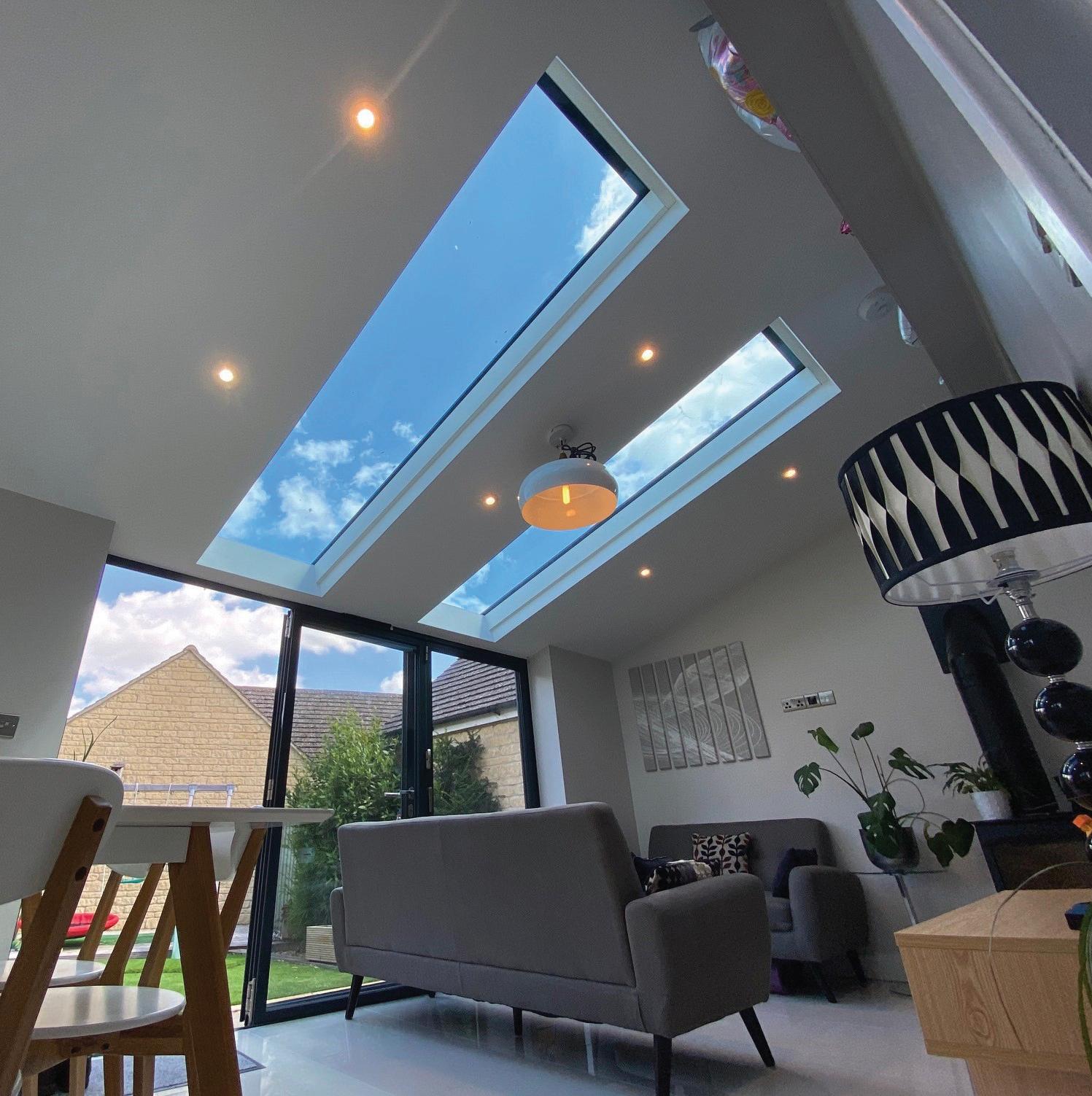
In contrast to traditional garden sheds, modern garden rooms place a strong emphasis on natural daylight. Large
glazed areas, bi-fold doors, and roof panels create open, airy interiors that feel far larger than their footprint suggests.
It’s also key to ensuring thermal efficiency, comfort and heat retention, without compromising views or the flow of natural light.
Off-mains heating solved
One of the biggest challenges in garden rooms is providing effective heating without relying on mains gas solutions or extending a home’s central heating system. Because these structures are detached from the main property, traditional solutions are often impractical or expensive.
One solution that ticks every box is heated glass, which provides an innovative primary heat source by transforming bi-fold door glazing into an invisible, primary electric heat source. TuffX’s innovation
delivers consistent, radiant warmth throughout the room, allowing homeowners to enjoy year-round comfort without the need for wall-hung units, which can limit interior layout options.
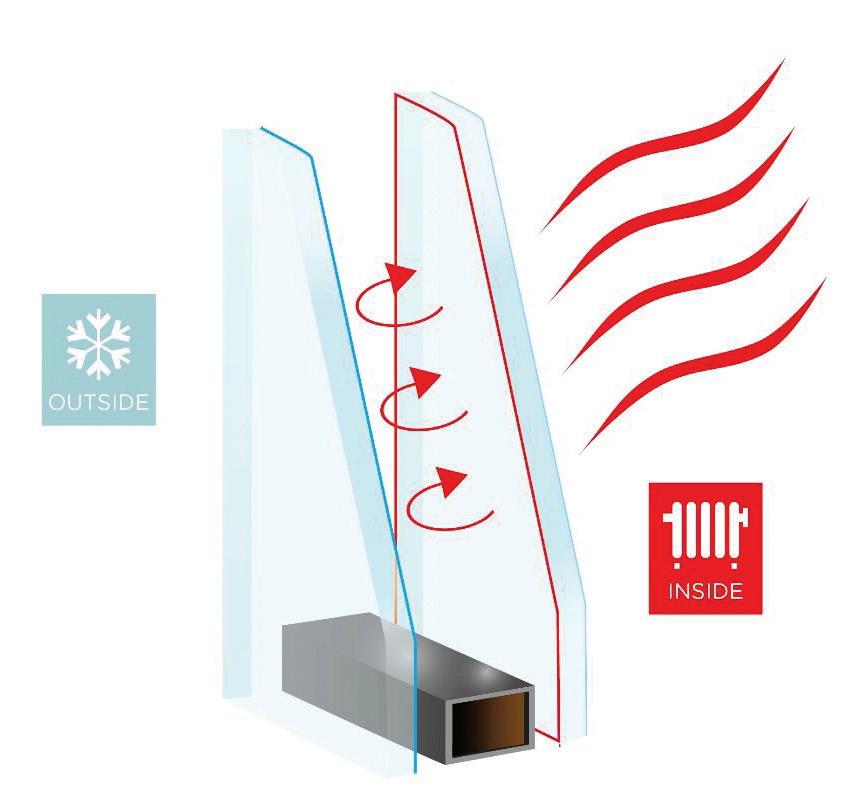
The Glow technology is a sealed glass unit layered with an invisible conductive coating that converts electrical power into radiant heat. Designed for bi-fold doors and roof infill panels, it evenly warms the room while reducing condensation and maintaining uninterrupted views of the garden.
The glass surface temperatures reach 35-40°C, and the system is conveniently controlled via a wall-mounted thermostat or a smartphone app, with an average hourly cost of around 9p per bi-fold door. For example, a three-door bi-fold configuration running five hours per day will cost around £1.35 (based on an electricity cost of 25p/kWh).
Double-duty glazing
By allowing the garden room glazing to serve as a dual-purpose feature, Glow provides both daylight and heat simultaneously. This means the large, glazed areas, which are already a popular design element in modern garden rooms, can now contribute directly to thermal comfort. This gives homeowners and builders alike confidence that the expansive panels can be specified without worrying about heat loss, creating spaces that are light, open and fully usable throughout the year.
Retaining heat efficiently, Glow boasts U-values as low as 0.7 W/m²/K to ensure optimal warmth without the risk of overheating, and it also conforms to EN 12150 and EN 1279 Parts 1-4. This ensures compliance with building standards (EN 12150 and EN 1279 Parts 1–4) and provides homeowners with energy-
ongoing maintenance is required, just a standard electrical connection. This reduces time on site, lowers project complexity and minimises disruption for homeowners. Because the heating is integrated into the glazing, walls remain free for furniture or storage, allowing flexible layouts and maximising the usability of smaller garden pods. As with
optimise both natural daylight and heating efficiency.
Looking ahead, those who can combine technical knowledge with innovative solutions, such as Glow, are well-positioned to capitalise on the opportunity to deliver garden rooms that offer both aesthetic appeal and yearround comfort.
WEATHERING THE STORM
As extreme weather – from searing heat to named storms –is now the norm in the UK, converting or extending buildings to cope with all the climate has to throw at us can be challenging.
But builders, from the professional to the enthusiastic amateur, are finding products which are effective in all weather conditions, despite seemingly conflicting requirements.
Let’s start with storms and roofs, as fears of another summer heatwave are a few months off.
Increasingly frequent storms mean roofs must be able to withstand strong winds, with builders needing to comply with building standard BS5534:2014 slating and tiling for pitched roofs and vertical cladding code of practice specifying criteria
Builders must take extreme weather into account when
This addresses every component of the construction of a standard roof such as mortar bedding, battens, flashings, structural sheathing fixings –and underlays.
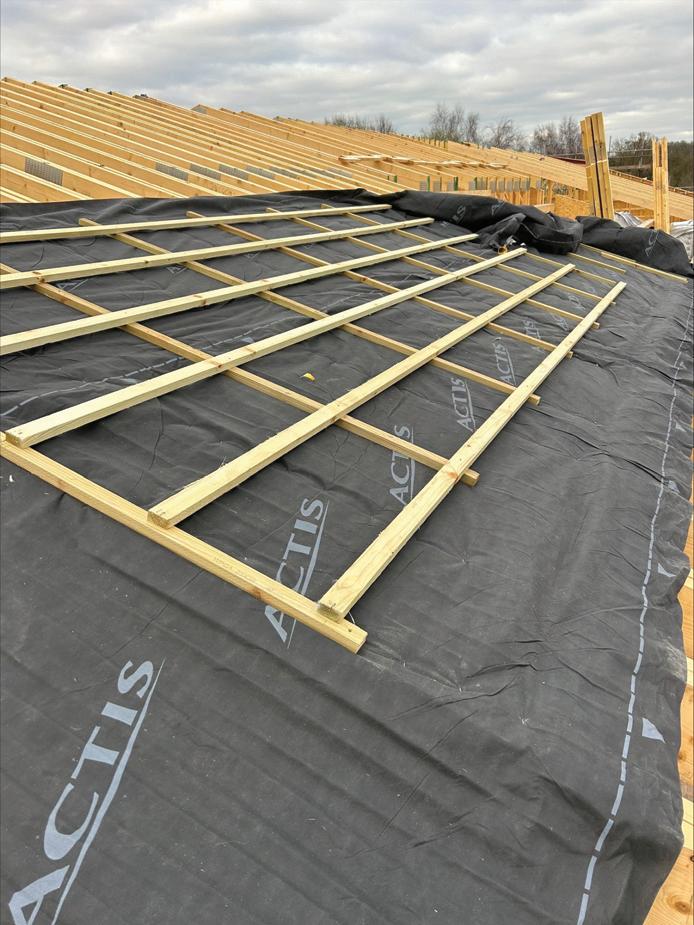
When it comes to the latter, BRE wind uplift resistance labelling is designed to help builders decide on the most appropriate product for the geographical region in which they are working to minimise the ‘ballooning effect,’ which sees the underlay force tiles and slates off the roof in high winds.
Some are labelled as suitable only for zones 1 – 3, while others, such as Actis Boost R Hybrid Roof are approved for all five zones, the windiest of which, zone 5, includes the far north of Scotland and Northern Ireland.
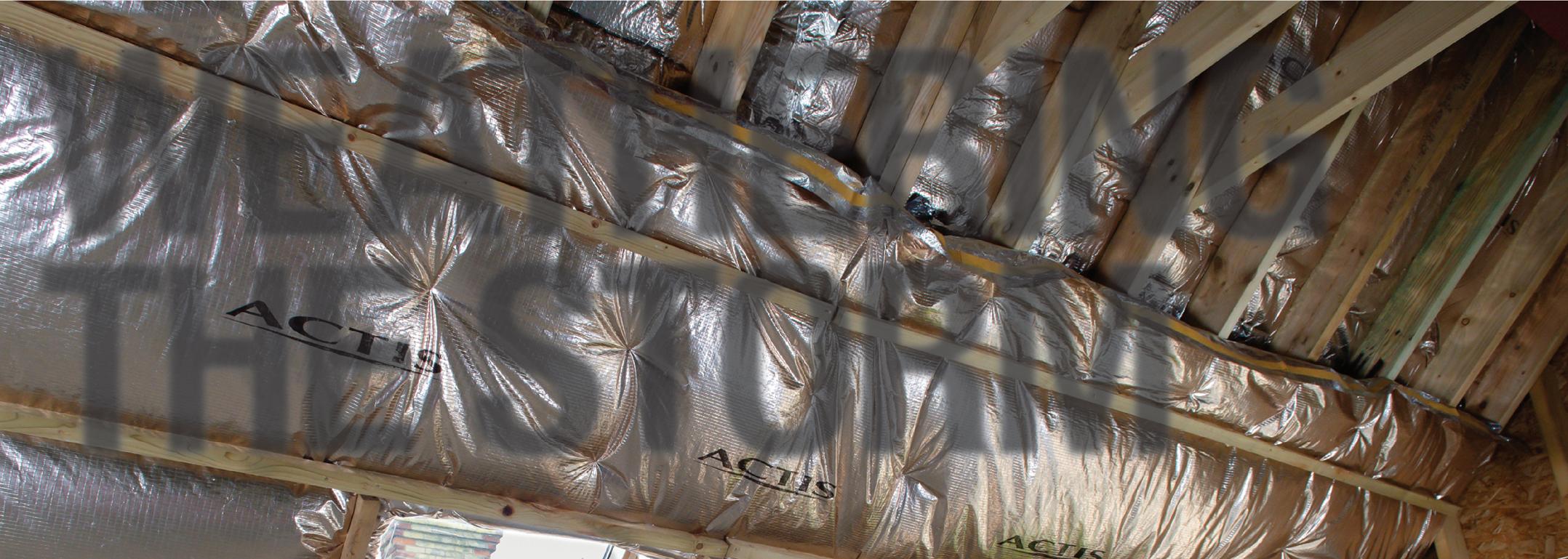
Pairing Boost R Hybrid Roof with Actis’ two-in-one reflective insulation with integrated vapour barrier Eolis HC is an ideal combo when preparing a winterproof roof.
It’s an easy to use and thermally extremely effective way of eliminating condensation, preventing moisture entering the building and being resistant to high winds.
Boost R Hybrid Roof has the highest thermal resistance of any insulating breather membrane of the same thickness on the market and minimises the ‘ballooning effect.’
As well as ensuring the property is warm in winter it‘s also important to ensure the occupants don’t roast in the summer, both for health and comfort reasons and to reduce the need for electricity-guzzling air conditioning.
Under Part O of the building regulations architects are obliged to limit unwanted solar gains and provide a way to remove heat from residential dwellings.
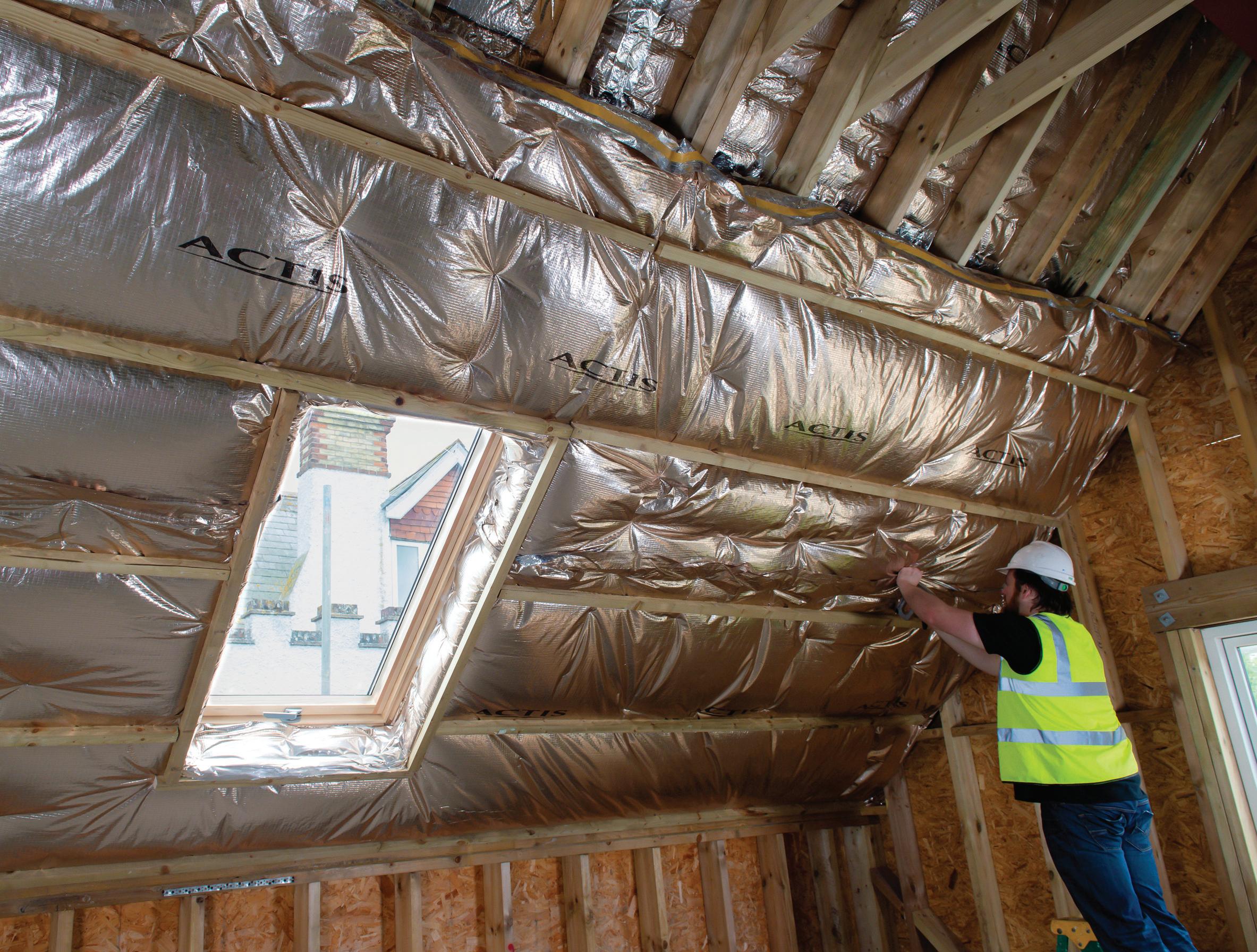
While some forms of insulation can make homes unbearably hot during heatwaves, others, such as those in the Actis Hybrid range and Eolis HC, can actually keep them cool, as well as still performing their traditional warmthmaintaining duties in the winter, with Eolis HC reflecting 95% of infrared radiation.
Many builders swear by the ‘easy to use’ Actis Hybrid system.
Arjen Westerdijk, who is converting a 500 sq m barn in North Dorset for his family, says: “I chose Actis because of its
“Boost R Hybrid Roof has the highest thermal resistance of any insulating breather membrane of the same thickness on the market and minimises the ‘ballooning effect.”
performance credentials, ease of working and because it offers the complete insulation package. The ease of use is fantastic. The how-to installation videos are helpful. Actis is quite straightforward to install even for someone who is not a construction professional. It’s quick, easy to use, clean and thermally efficient.“
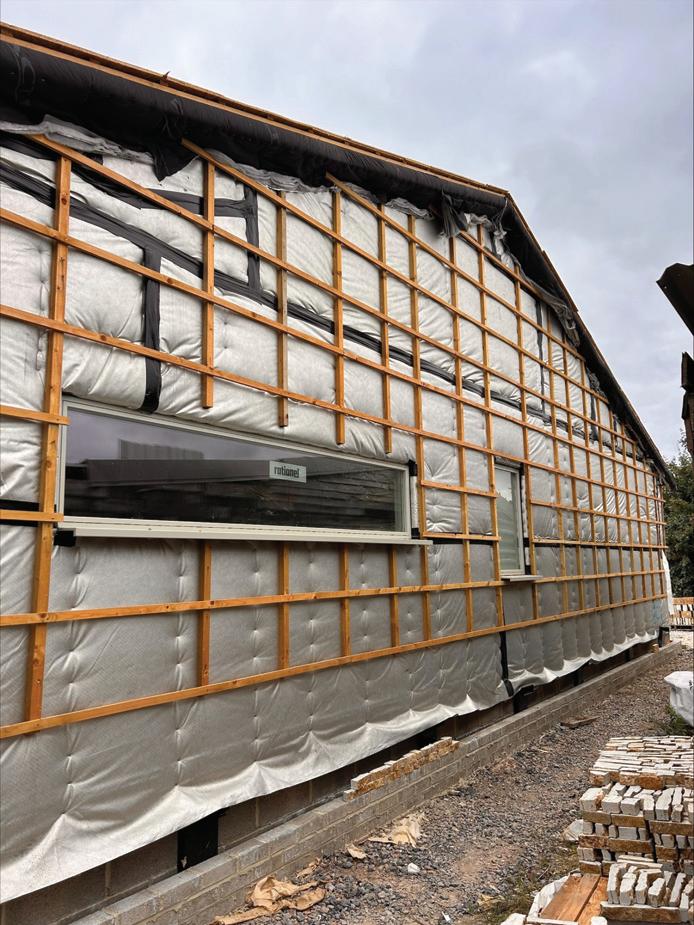
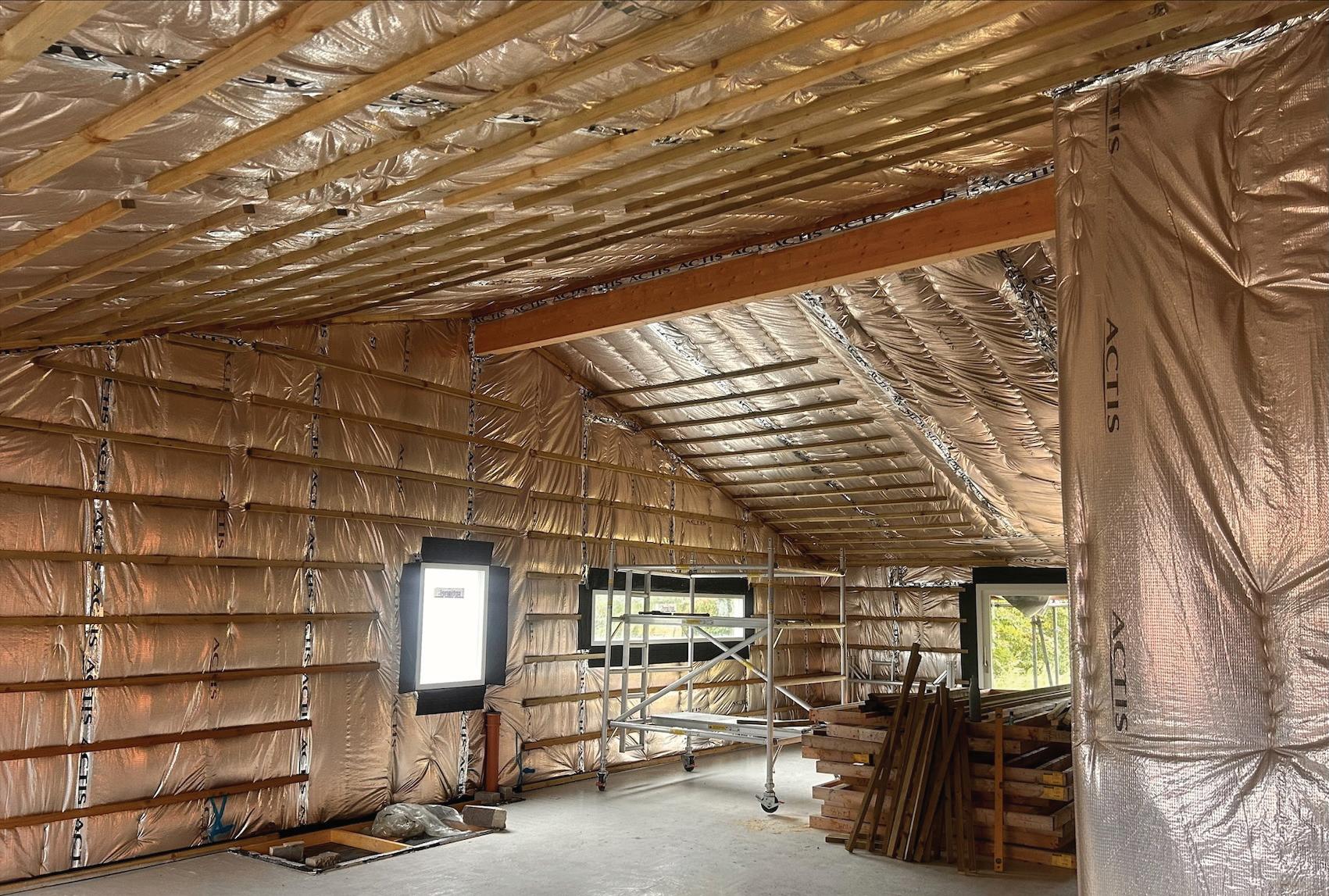
Arjen is using a three-part system – a combination of 90mm and 105mm honeycomb structured Hybris to create a total 195mm thickness in the roof, 105mm Hybris in the walls, insulating vapour control layer H Control Hybrid in the roof and internally in the walls, and insulating breather membrane Boost R Hybrid Roof on the roof, and Boost R Hybrid in the walls.
The end result should see U-values of 0.11W/m2K in the roof and 0.15W/m2K in the walls.
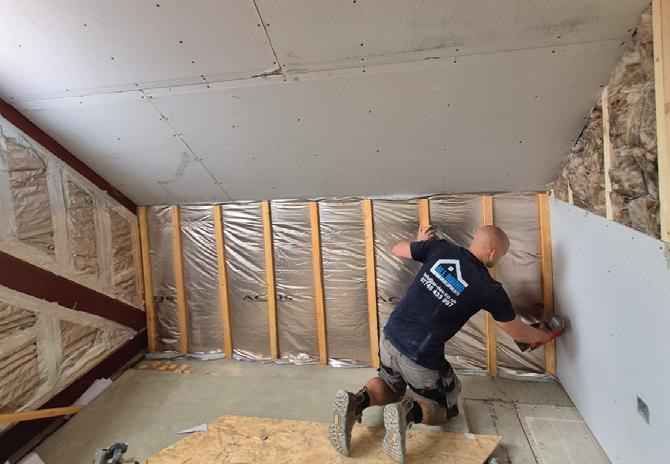
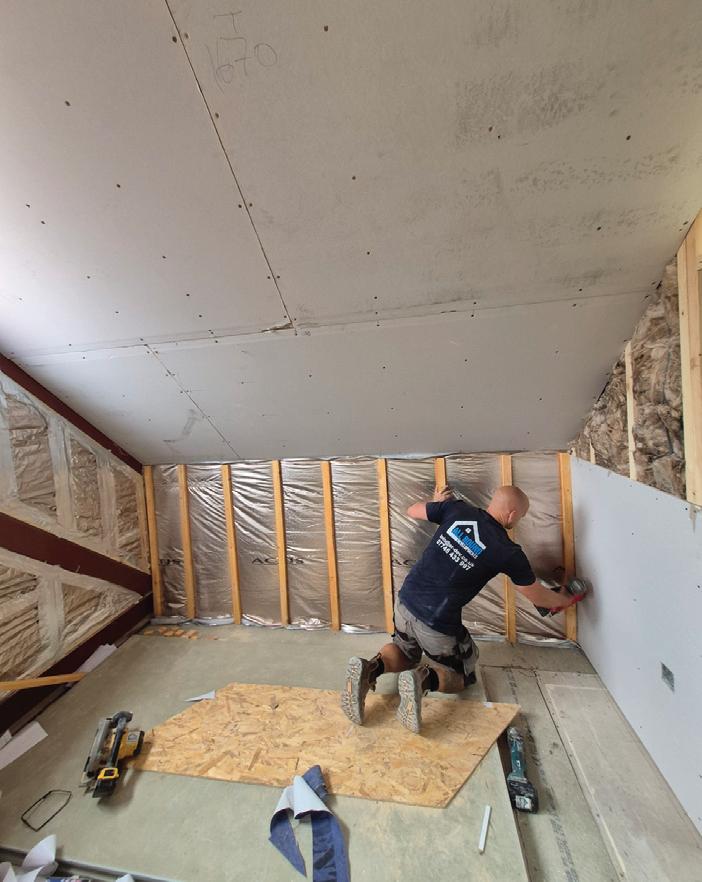
York builder Ben Wardell from All Round Developments, who is seeing growing demand for loft conversions, says using Actis Hybrid insulation and
membranes helps him avoid mess and waste and work more efficiently.
“Loft conversion insulation is mainly PIR board and glass fibre. With PIR board, cutting creates dust and rigid waste that’s hard to reuse. Glass fibres can become airborne and irritate the lungs, skin and eyes. It becomes difficult to contain once disturbed as it starts to travel through the air,” he said.
“Since switching to Actis, we’ve seen a significant reduction in waste, as every piece can be used. We’ve also saved on labour time, as the material is much quicker to fit. It’s a high-quality product.”
A WIN ALL-ROUND
ISO-Chemie’s WINFRAMER delivers energy efficiency boost for major Edwardian house retrofit
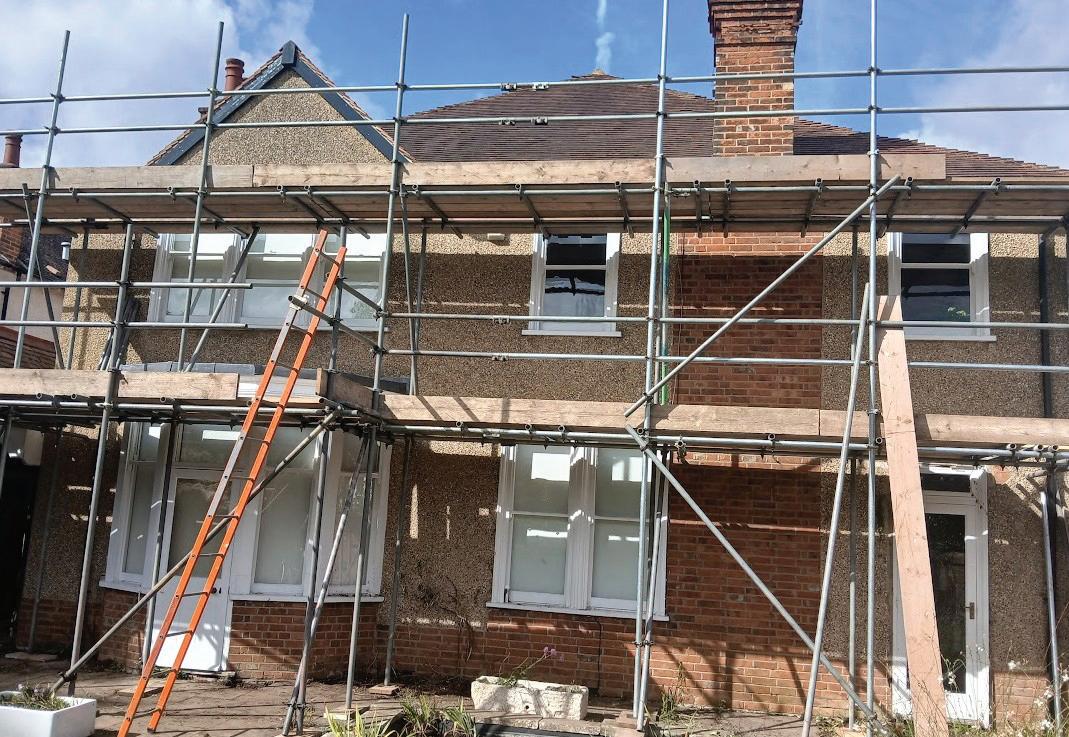
ISO-Chemie’s thermal insulating and load bearing bracket support system has been specified to provide energy efficiency improvements to an Edwardian property in Oxfordshire.
The move sees WINFRAMER units retrofitted as part of an initiative to bring the poorly insulated solid walled house built in 1909 in Oxford, up to current energy efficiency standards, providing better quality accommodation for the homeowner along with long-term cost savings.
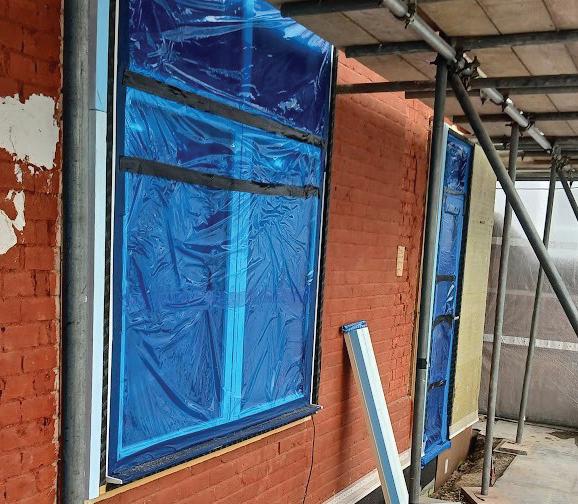
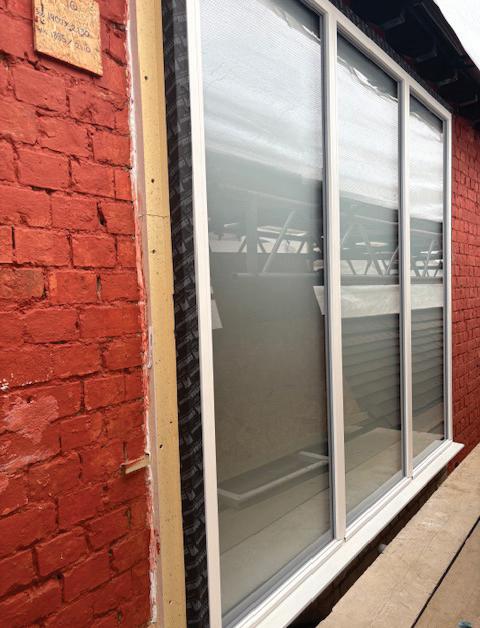
Passivhaus certified and fire rated to up to 30 minutes, WINFRAMER is a prefabricated installation frame, manufactured to accommodate cavities up to 250mm that allows windows to be supported independently from the face of the wall regardless of any external cladding being in place.
Retrofit made easy
Quick and easy to install, the product’s application in Oxford is seen as part of a solution to meet a wider Government strategy to reduce carbon levels in housing that has single skin walls or noncavity walls - these buildings have a reputation for leaking considerable amounts of energy, heat and sound.
Nikki Lambert of development contractor Lambert Home Builds said the project was a whole house retrofit and
“Using
added: “Using the WINFRAMER system is a game changer for us as the existing windows are being replaced with new high performance triple glazing. They are then moved into the external wall insulation system, where it’s integral to have a secure fixing system as well as a means to mitigate thermal bridging.”
Andy Swift, ISO-Chemie’s sales and operations manager – UK and ROI, added: “Using WINFRAMER as a platform for the windows to be moved forward, allows a cavity wall to be created outside the existing one. This can then be filled with insulation to massively improve thermal efficiency. As it’s thermally efficient and airtight, WINFRAMER is
WINFRAMER as a platform for the windows to be moved forward, allows a cavity wall to be created outside the existing one. This can then be filled with insulation to massively improve thermal efficiency. As it’s thermally efficient and airtight, WINFRAMER is proving to be an easy and costeffective way to improve the quality of properties.”
proving to be an easy and cost-effective way to improve the quality of properties.”
The composite WINFRAMER brackets can bear heavy window loads, including bi-fold doors, to provide a reliable, strong and high-performance support frame. Installation is quick with windows attached directly and secured mechanically using either standard fixing screws or fixing lugs in the usual manner.
A hinged insulation core combines with the composite structural bracket to become an integral part of the overall wall structure, providing compliance with Building Energy Act requirements and the RAL quality assurance association.
ISO-Chemie is one of Europe’s main producers of impregnated foam sealants, specialising in the manufacture of foam products from polyethylene (EPE), polypropylene (EPP) and polyurethane (PUR) using the latest production techniques.
HIGH PERFORMANCE SOLUTIONS FROM YOUR DISTRIBUTOR OF CHOICE
Plasterboard is a widely used material for home improvement projects, often considered an all-round solution for builders, regardless of application. However, significant shifts in homeowner lifestyles means a ‘one size fits all’ isn’t always the best approach.
In most cases, tradespeople will choose standard plasterboard, but the right board for the job can make a huge difference to performance in areas such as sound, moisture and fire protection, with specialist drywall systems including characteristics that meet specific project needs.
Fully warrantied systems, comprising of high-performance plasterboard, metal tracks and studs, fixings, powdered or ready-mixed jointing compounds, tapes and beads, tested as a complete system, also allow builders to choose solutions that demonstrably meet performance requirements and building regulations.
Tailored Solutions
Knauf drywall systems have been developed to perform in specific environments commonly found in conversions, extensions and retrofit projects. As the leading distributor of Knauf products, our branches stock a range of high-performance plasterboard, as well as all the necessary ancillaries and accessories to complete the system. Key Knauf ranges, ideal for home improvements include:
• Knauf Moisture Panel suitable for areas exposed to high humidity, including kitchens and bathrooms. The moisture-resistant plasterboard can be finished seamlessly, offering both performance and aesthetics.
• Knauf Soundshield Plus delivers the right acoustics, ensuring clear separation between rooms. This is particularly important in family homes to limit noise transfer between bedrooms, or where homeowners are looking to balance work and family life.
• Knauf Fire Panel has been tested to
the latest EN standards, offering superior fire resistance and strength over standard plasterboard. This makes it ideal for separating walls, garages and corridors, helping slow the spread of fire and allowing for the safe evacuation of the building. The boards’ high strength is ideally suited to high traffic areas such as corridors and entranceways in family homes.
A System Approach
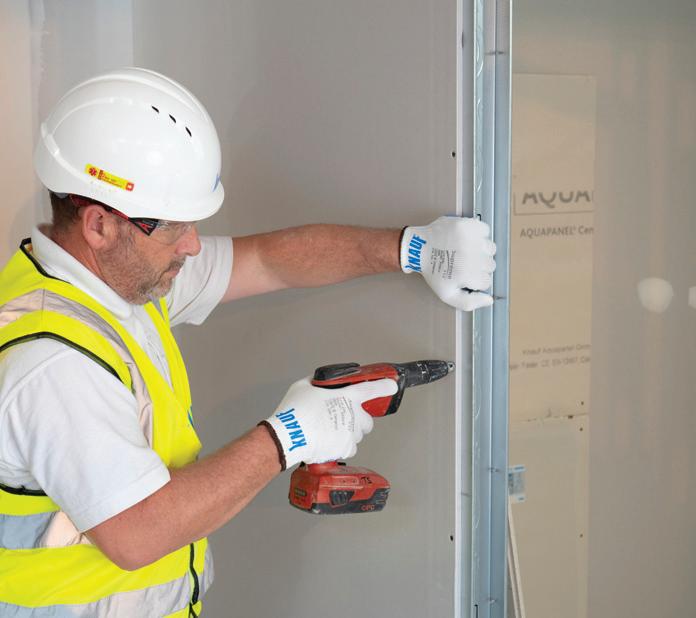
Knauf’s metal framing and studs are manufactured from high-quality galvanised steel rather than traditional timber frames. The metal does not warp and won’t be affected by wet or dry rot, while also being easier to install on site. Metal is significantly lighter and easier to cut, meaning metal framing can be up to four times quicker to install than timber partitions.
A system approach ensures individual component products work together as a whole. Knauf offers fully tested partition
systems that achieve a range of fire and acoustic performances to suit your specific project requirements. A full Knauf system requiring fire and acoustic properties can be constructed using one or more of Knauf’s performance plasterboards.
In addition, Knauf’s performance warranty when their specialist plasterboards are installed as a full system provides peace of mind that their drywall solution will perform as required.
Outstanding Support
The Encon Group, the No.1 independent distributor of building materials, supplies builders across the UK from our 22 nationwide branches. Builders benefit from working with a trusted and established distributor partner, with a wide choice of products from leading manufacturer brands and reassurance of supply.
Encon’s experienced teams support projects across a range of solutions and our longstanding relationship with Knauf means customers can also access reliable technical support from Knauf’s technical team.
Find your local Encon branch at www.encon.co.uk or email info@encon.co.uk to discover how highperformance boards can make a difference to your next project.
HOT STUFF
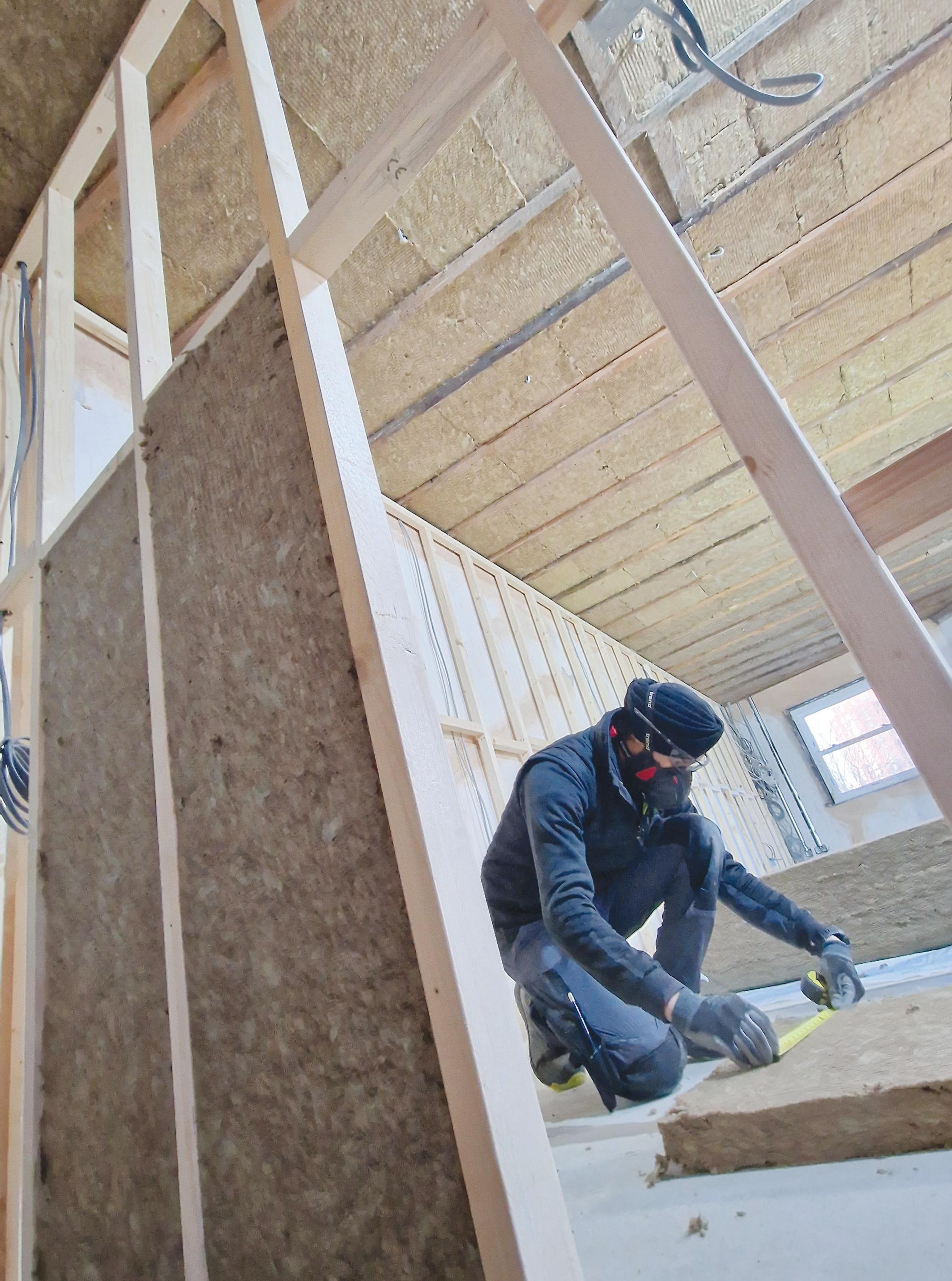
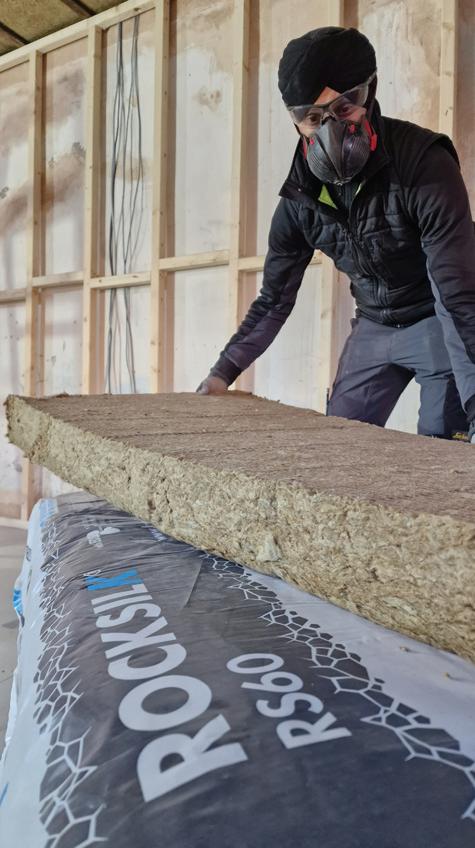
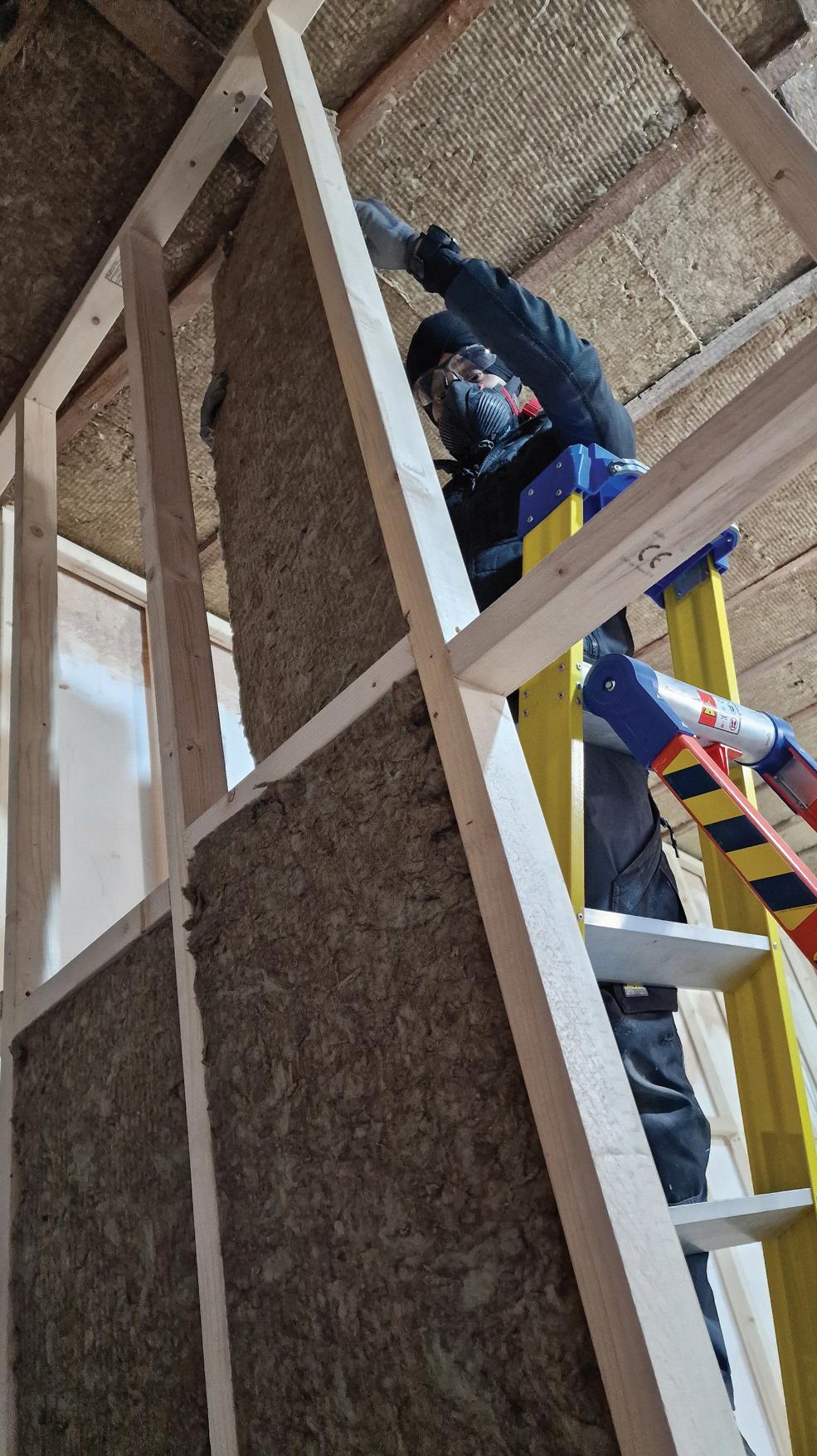
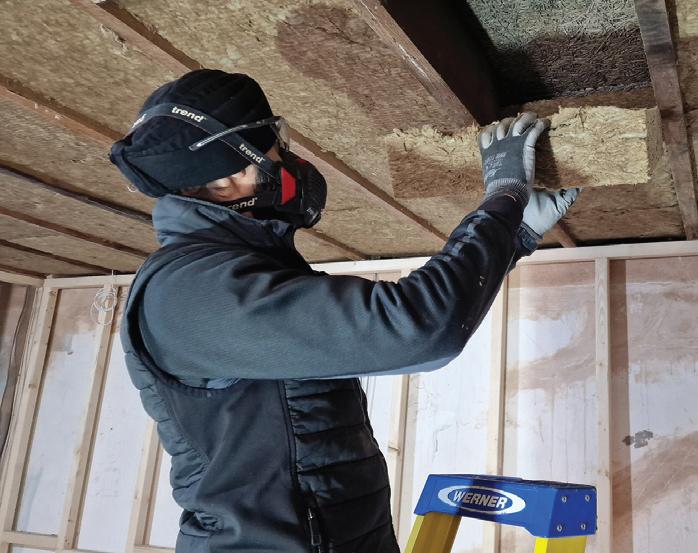
When it comes to building a new building or renovating an existing one, insulation is imperative. Insulation provides resistance to heat flow and lowers the heating and cooling costs. Not only does using the right insulation reduce costs but it also improves comfort. Knauf Insulation have 40 years of experience in the industry and what they don’t know about insulation you could write on a pin. Choosing the correct insulation for the job can be confusing but don’t worry we’ve got you covered as I’ll be working through the insulation I used in the ceiling and walls for our recent renovation project.
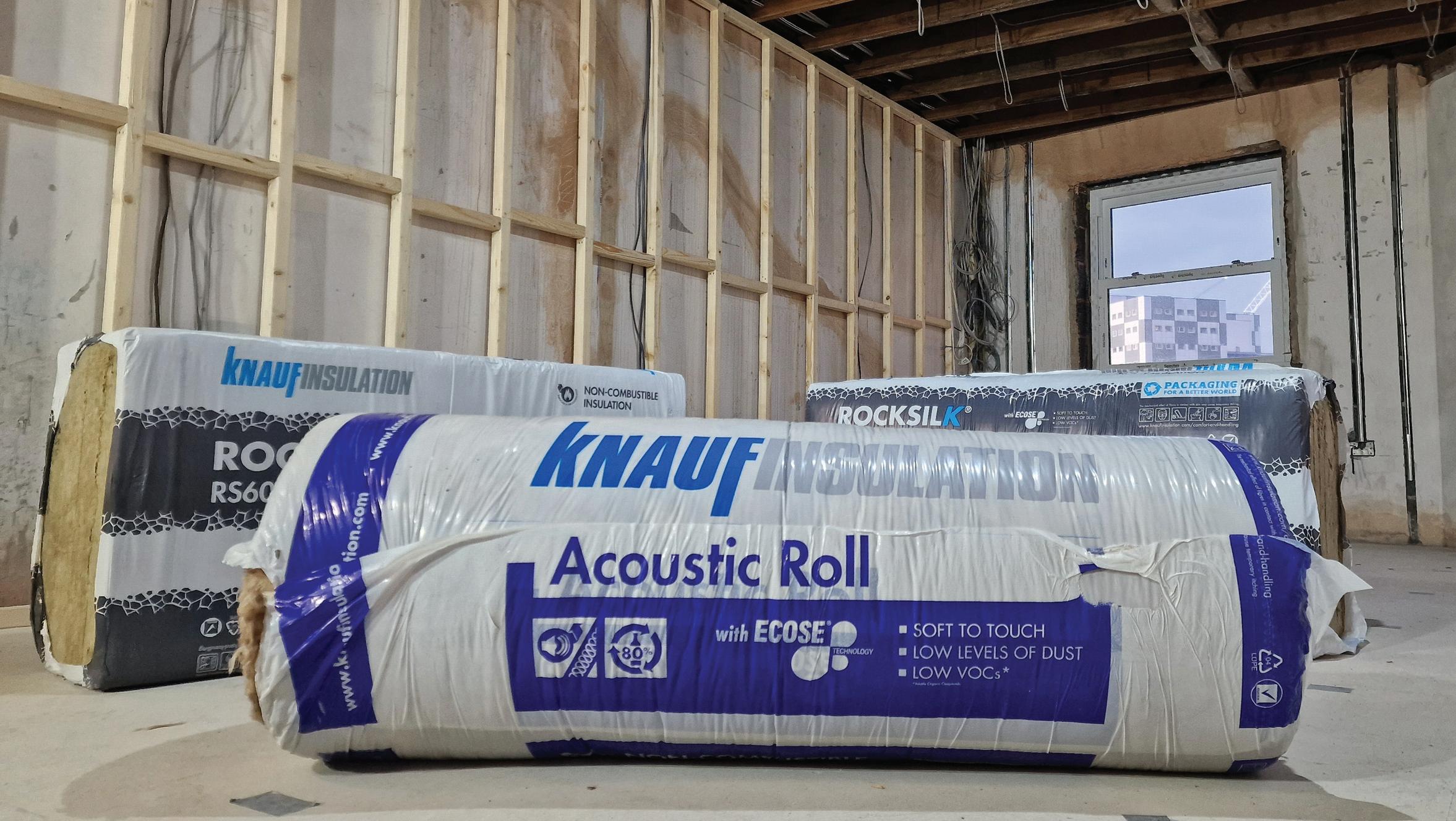
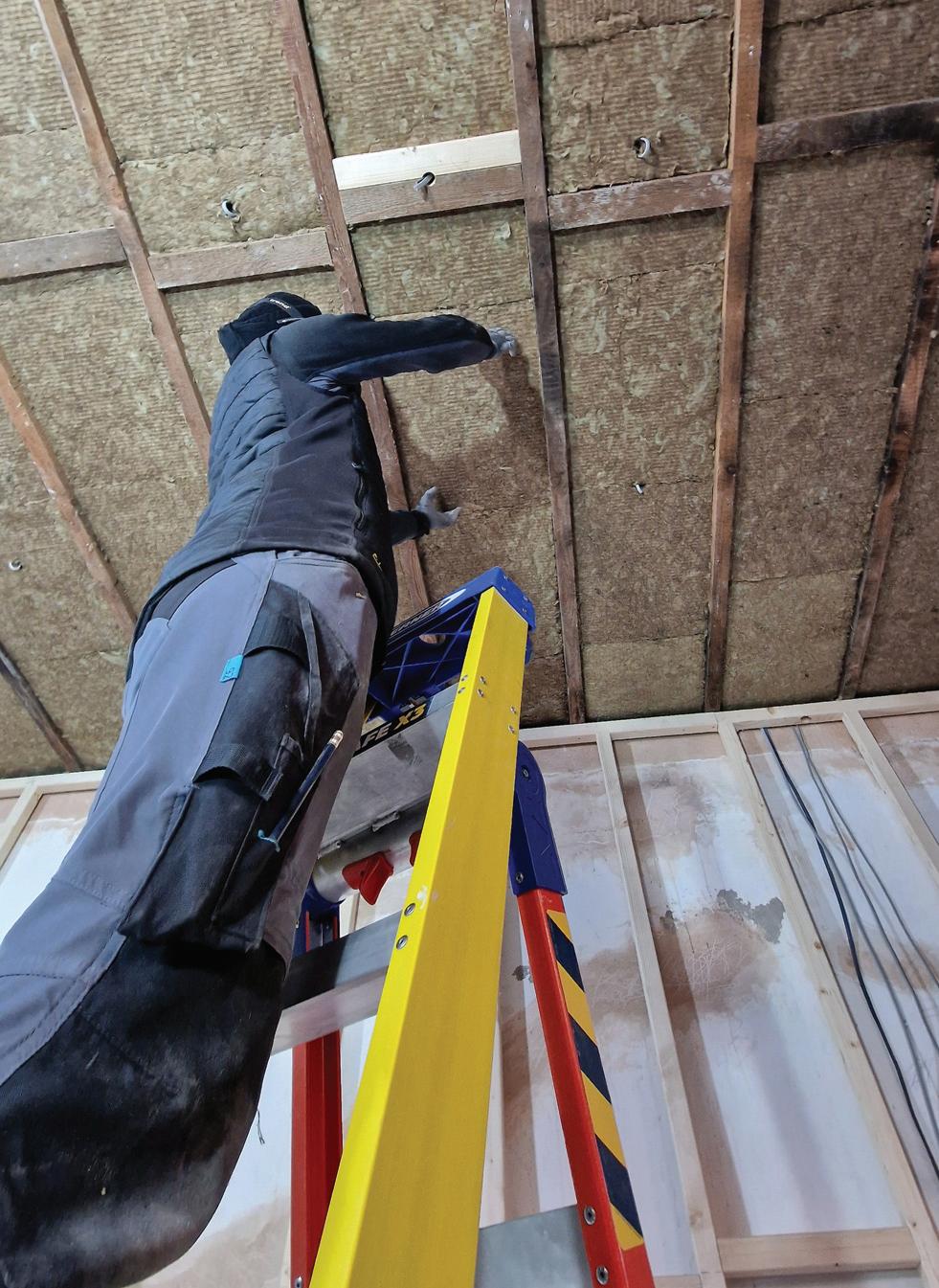
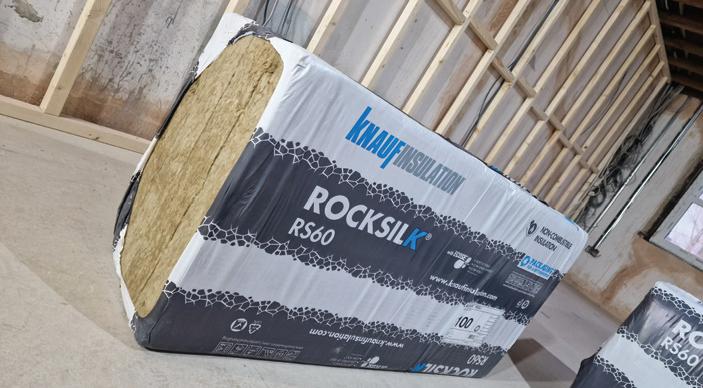
In the flat ceiling and some stud work we used Knauf’s Rock Mineral Wool Rocksilk RS60. The great thing about this insulation is that it’s very versatile and can be used for several applications such as:
✔ Ground floors
✔ Internal floors
✔ Separating floors
✔ Fabrication
✔ Pitched roofs at rafter level
✔ Internal walls/partitions
✔ Light steel frame walls
✔ Timber frame walls
The benefit of using this insulation is that it has thermal, acoustic and fire protection properties. This makes it ideal for the flat roof we used it on as not only does it dampen the rain noise coming through but also provides thermal properties. It comes in a 600mm width and 1200mm length, so it’s ready to work with. It’s available in a range of thicknesses from 25mm to 100mm depending on your application. Each having a different R-value, which is used to measure how effective a material can
resist the flow of heat. The higher the Rvalue, the better the thermal resistance, meaning it is a more effective insulator. The RS60 is the density of the insulation and in this insulation Knauf do a range from RS45, 60, 80, 100 and 140.
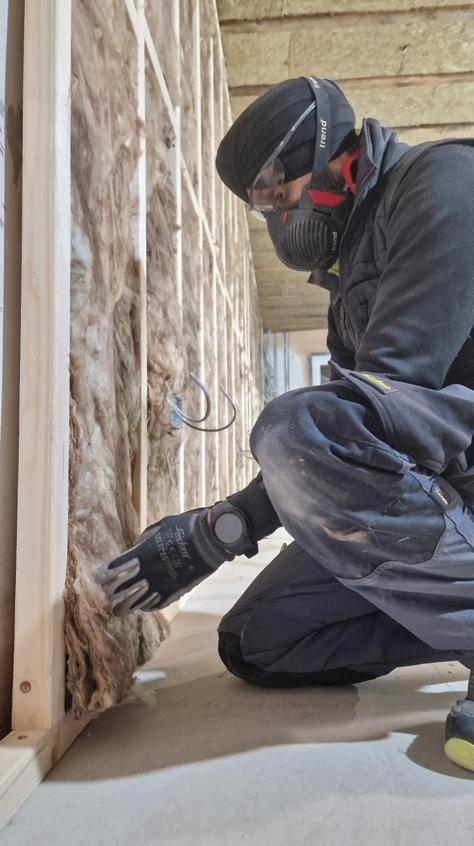
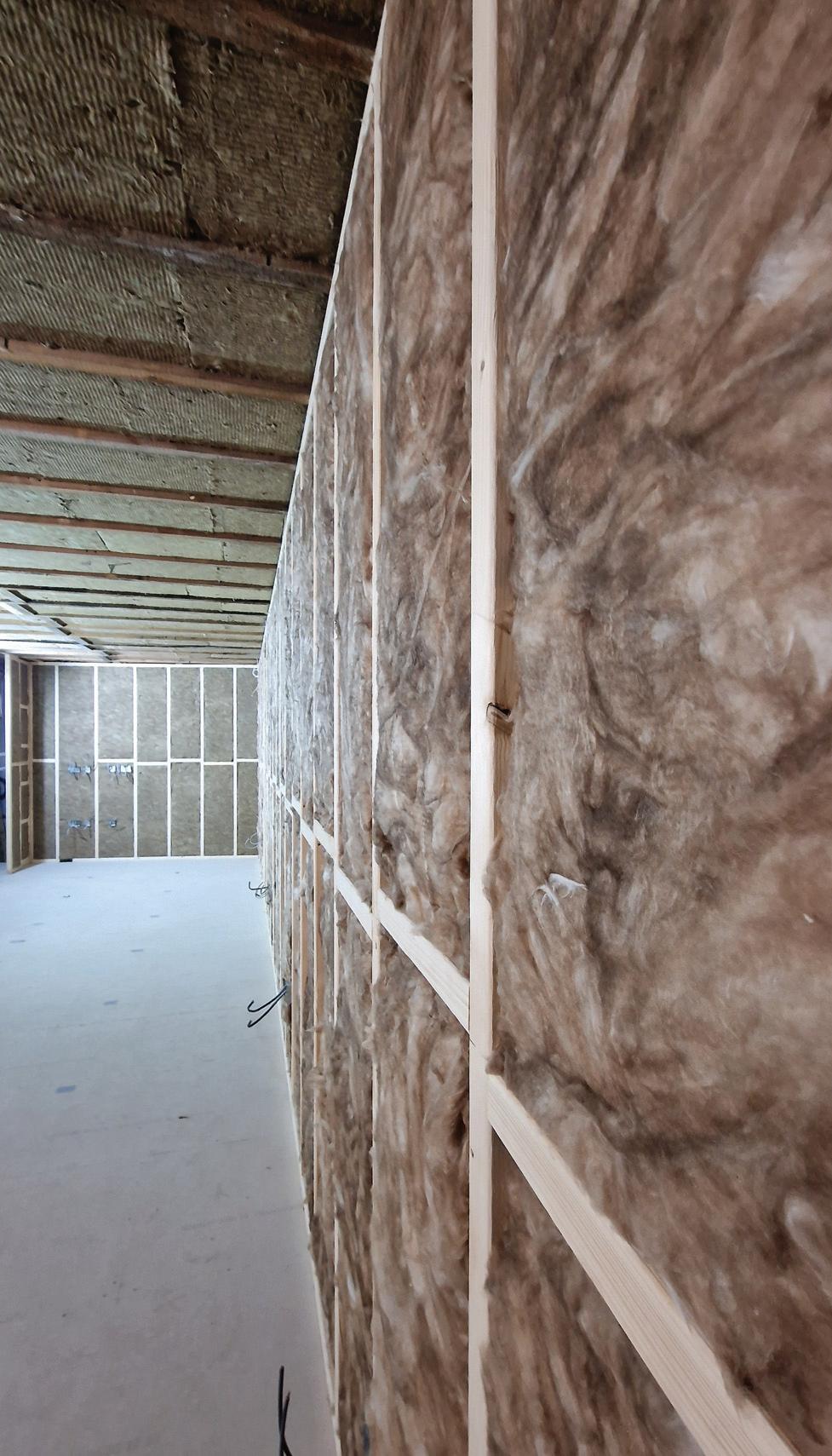
On the party wall, which is a wall that separates two buildings on the boundary, we decided to construct a stud wall and install the Glass Mineral Wool – Knauf Insulation Acoustic Roll. Using this offers excellent sound absorption properties, so perfect for internal walls and floors and
separating floors. They come in 1200mm width rolls with varying lengths, which depends on the thickness of the material, with the range going from 25mm to 100mm in thickness. To meet building regulations, the manufactured density is in excess of 10kg/m³. This insulation has also been tested with all major brands of plasterboard to achieve compliance with Part E of the building regulations, which is the code for ‘Resistance to the passage of sound’.
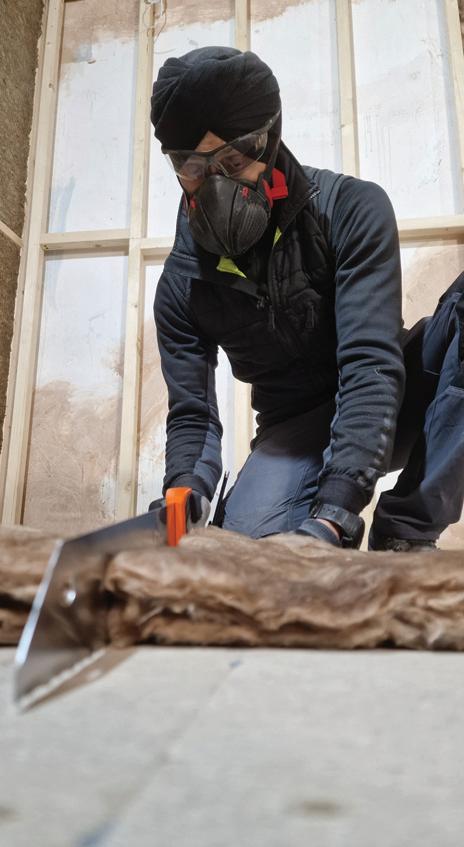
Both of these insulations are noncombustible with the best possible Euroclass A1 reaction to fire classification. So, if there was a fire it’s not capable of igniting and burning. These are also made using Knauf’s own unique plant-based binder, ECOSE Technology, which contains no added formaldehyde or phenol. The benefits of this are that it generates very low levels of dust, increasing the comfort when handling it. However, it’s still recommended to wear the correct PPE from gloves, glasses, and a mask. It also helps wearing long sleeves.
Once all the insulation was fitted not only could you feel the difference but also hear the difference. I’ve certainly warmed to the Knauf insulation and it’s not the first and the last time I’ll be using Knauf insulation. Finally, I’ll be marrying this up with the Knauf plasterboard and looking forward to sharing the final results.
TO LEARN MORE ABOUT KNAUF INSULATION VISIT:
WWW.RDR.LINK/BBW025
THE INSULATION USED
Rocksilk RS60 (100mm) – Ceiling
Rocksilk RS60 (50mm) – Stud walls
Acoustic insulation (50mm) – Party wall
extensions, conversions & garden rooms
PUMP ACTION
We look at the conversion of an original lean-to that has added value to a farmhouse thanks to a Saniflo pumping solution
To the east of Nottingham, in the village of Normanton, a local farmhouse has undergone a useful renovation that has added not only facilities to the property, but also increased its value.
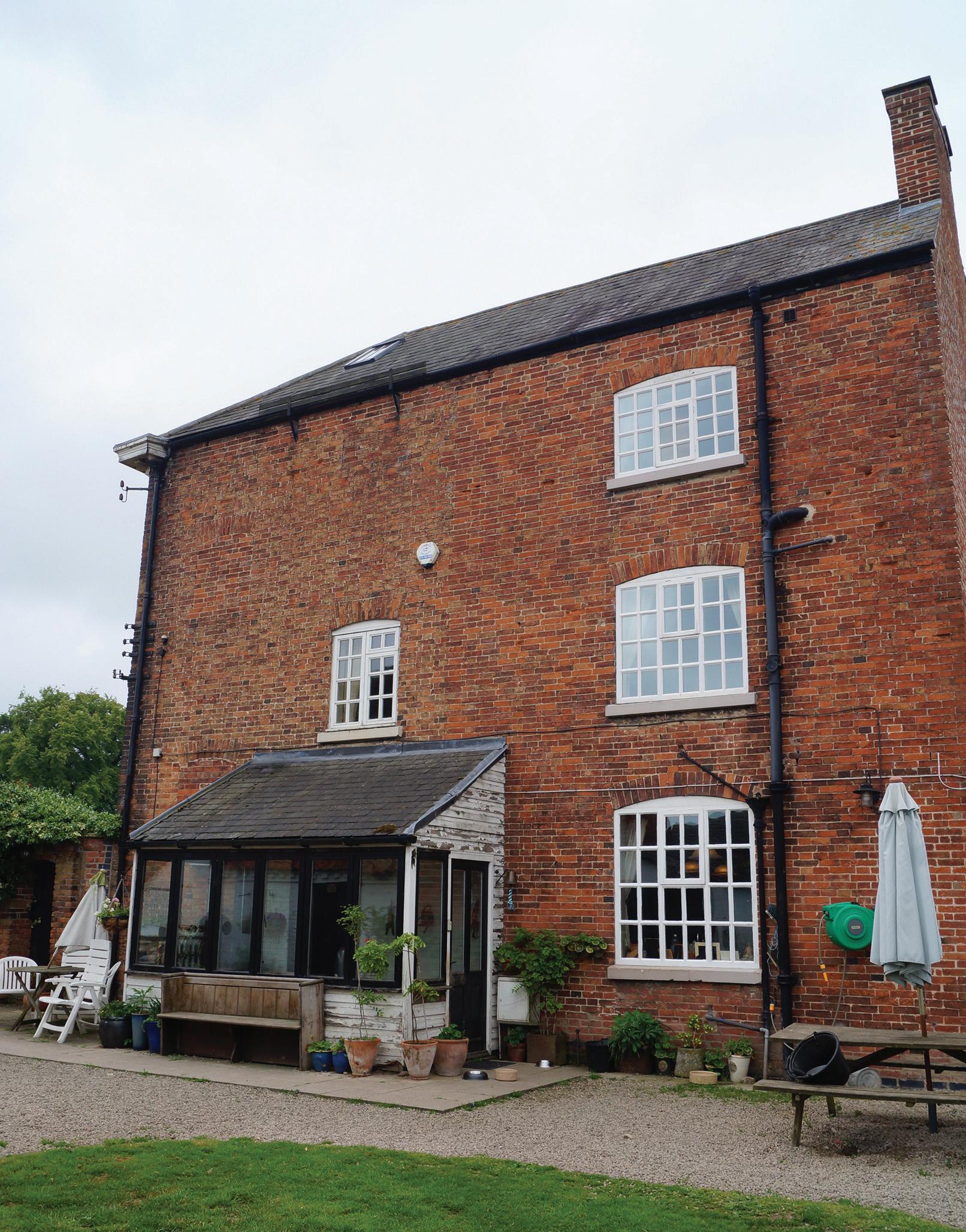
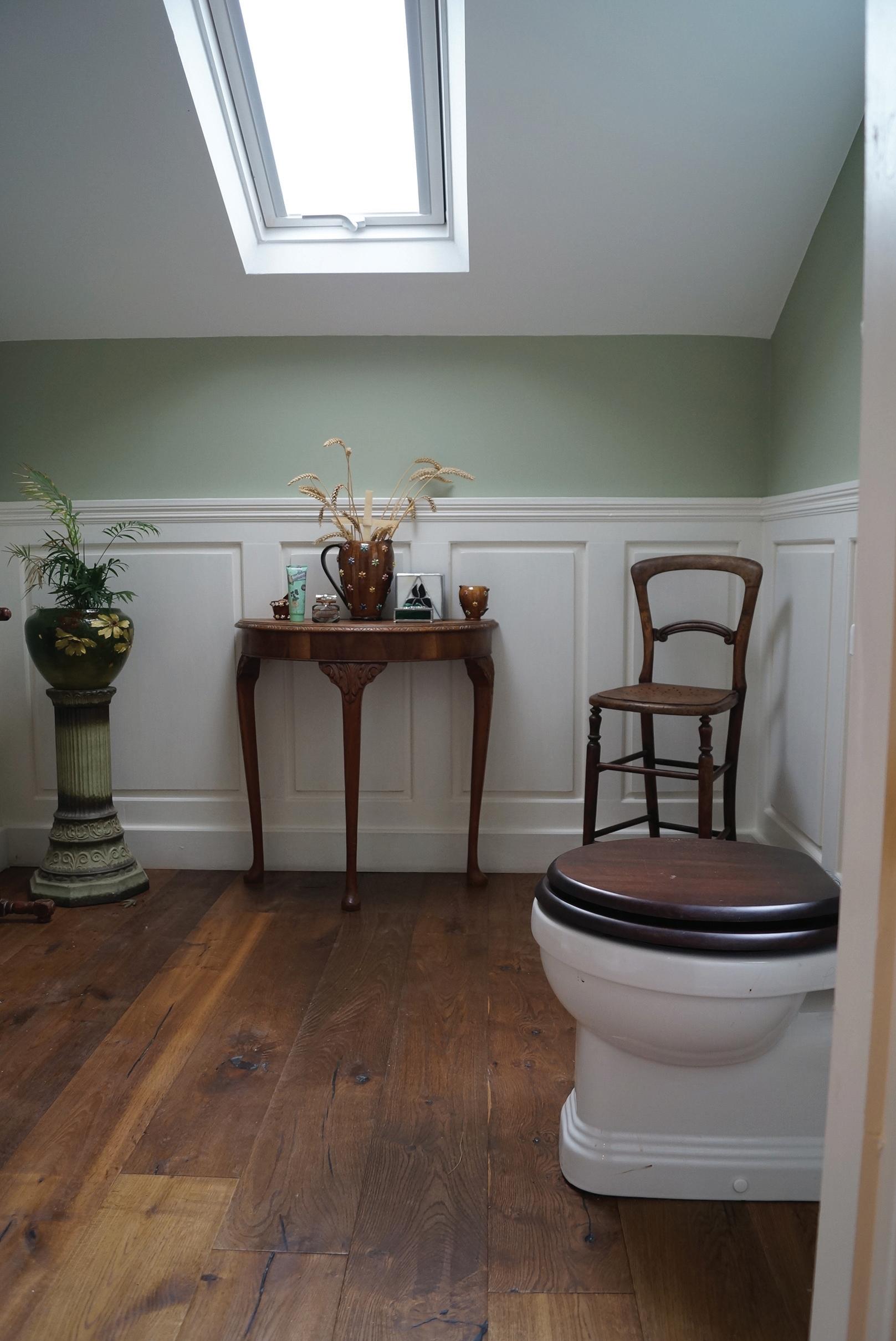
Attached to the rear of the attractive detached building, a brick-built lean-to that has been used as additional storage space for many years, but was more recently converted into a downstairs cloakroom thanks to a pumping solution from Saniflo.
The original purpose of lean-tos on farmhouses was to provide practical, functional space for farm-related activities such as housing animals, storing equipment or processing milk. Those built near the back entrance were often also used as cool storage rooms for food and dairy, or as wash houses and coal sheds. Built as an addition to the original building, a lean-to would have been a simple, costeffective extension, built against the main structure of the house with its roof rafters leaning against the larger structure and allowing for rainwater drainage to run off the existing roof. Hence the term ‘lean-to’. As farming and modern building techniques evolved, the use of the leantos for such purposes has declined and today many have been re-purposed to add useable living facilities to the property.
At the house in Normanton, still a working farm, the owners only had upstairs WCs and bathrooms, but frequently opened their doors to local children and teenagers offering hands-on working experience working in agriculture. The addition of a downstairs cloakroom would eliminate the need for the visitors to go upstairs, whilst making use of redundant space.
Drainage problems
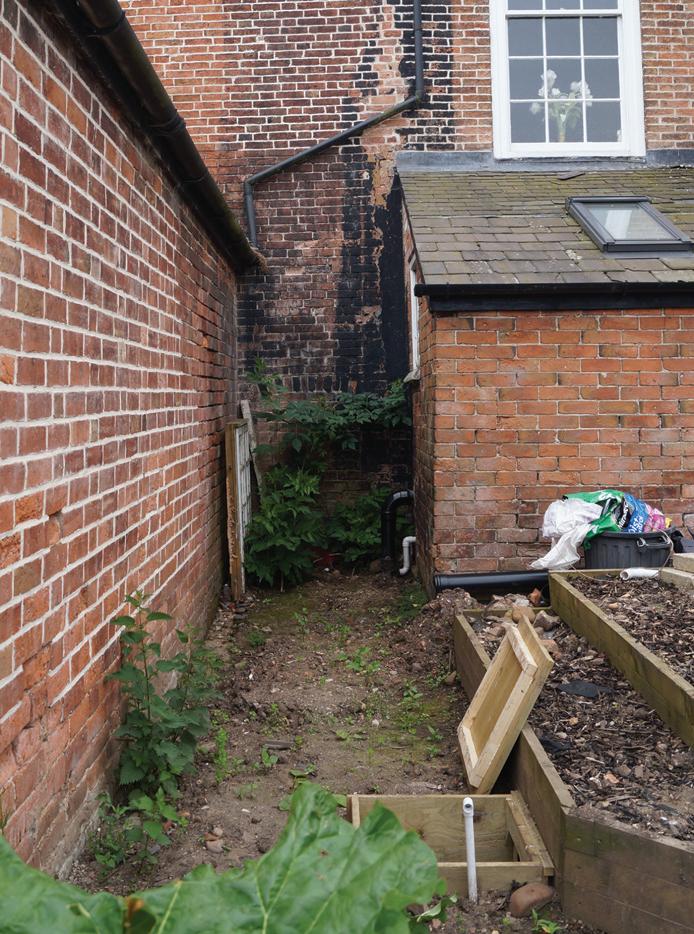
A builder was brought in to assess the most viable solution to undertaking the conversion and it was the drainage that was the biggest impediment to the project. With the septic tank located in a small courtyard at the side of the house and the existing drainage infrastructure too far away for a gravity solution the need for a pumping solution was identified from the outset.
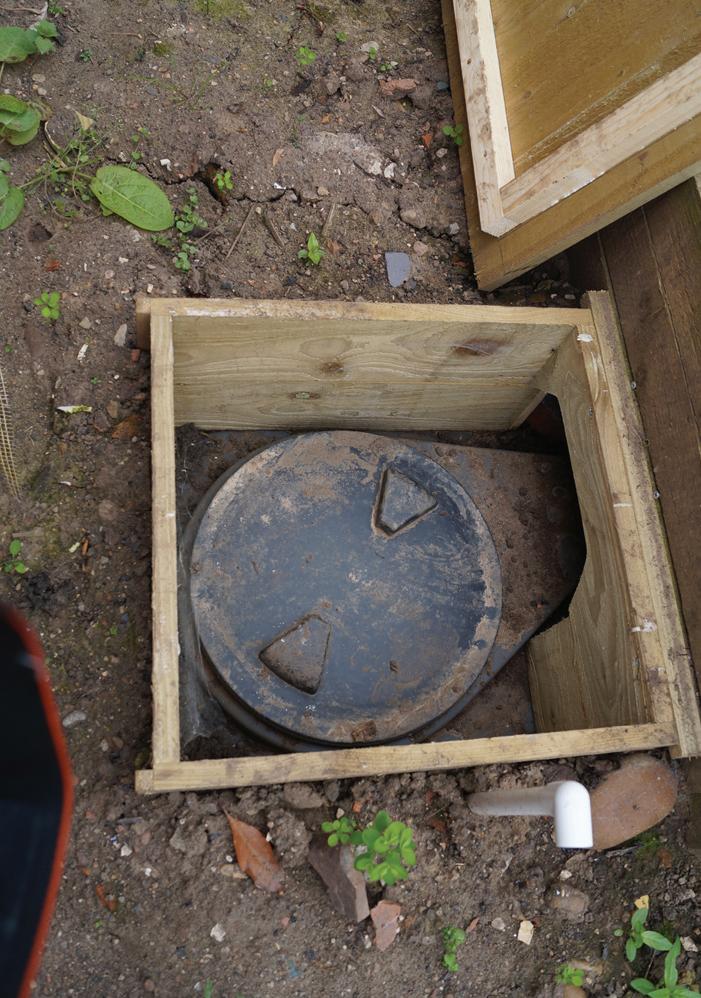
A standard Saniflo macerator behind the WC was initially considered but the internal routing of the discharge pipes would have been an expensive and disruptive challenge, whilst the option to dig up the garden to reach the septic tanks was just as prohibitive. In the event, the drains that once served an outdoor
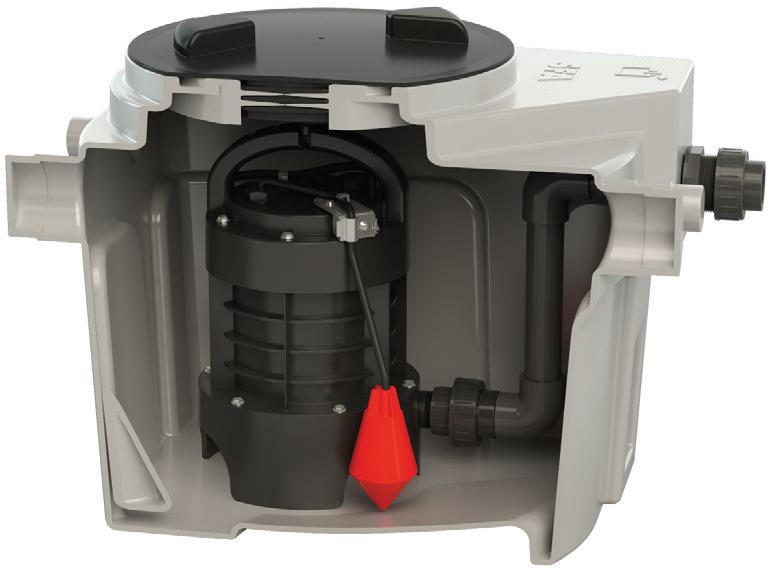
WC just 20m from the lean-to looked to be the best solution. With a pumping height of 1.5m from the new cloakroom up to the old drains, a Sanifos 110 underground pump was chosen for the job. The ability to place the unit out of sight, whilst maintaining excellent service access to the unit via a hatch to the accessible lid, was key to the decision. The discharge pipes were run across the garden, up and across some footings being dug for a new conservatory (that project, thankfully, was stalled to make way for the cloakroom as it would have made the drainage route far more complex) to the mains drains. A local plumber was called in to make the final connections.
The owner is very pleased with the additional facilities which has not only made it easier to take in working groups, but has provided a pleasant and useful addition to the house.
The Sanifos 110
The smallest underground pumping station in the Saniflo range, the Saniflos 110 lifting station provides a highly efficient and flexible solution for wastewater removal when gravity drainage is not possible. It has a 110-litre tank and a built-in grinder pump that enables the discharge of black and grey waste through small-diameter pipes. Operated automatically via a float switch, the unit also has up to four inlets offering
the ability to connect multiple fixtures if required, such as WC, sink, shower, washing machine etc. Designed for discreet installation below the ground, it is easy to install and also very quiet. Ideal for conversions, extensions, outbuilding and even whole single dwellings, it can pump waste vertically up to 14m with a
FINDING THE RIGHT FIT
Key vs keyless: when should you use each type of fitting?
Demand for plumbers is soaring, and in a market where time is money, efficiency is everything. Installers need products that help them work quickly and confidently –and that’s where merchants play a vital role. By guiding installers to the right solution for each job, merchants’ advice can make a real difference on site.
One area where this advice is crucial is push-fit fittings. Keyless systems are becoming increasingly popular thanks to their speed and simplicity, but that doesn’t mean keyed fittings are outdated. Both systems have distinct advantages, and choosing the right one for the job at hand is where merchant knowledge and advice becomes invaluable to any installer.
Here, Steve Harris, Technical Support Engineer at leading plumbing and drainage manufacturer, Wavin, explains when and where to use each push-fit system.
Fast and functional
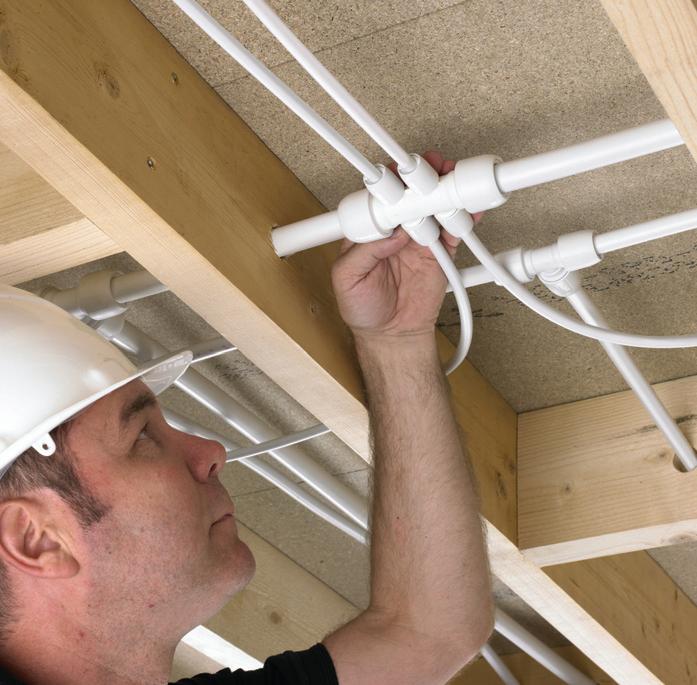
When it comes to repair, maintenance, and improvement work, speed and flexibility are everything. Installers often face tight deadlines, awkward spaces, and unexpected challenges –so finding ways to work faster without compromising reliability is essential.
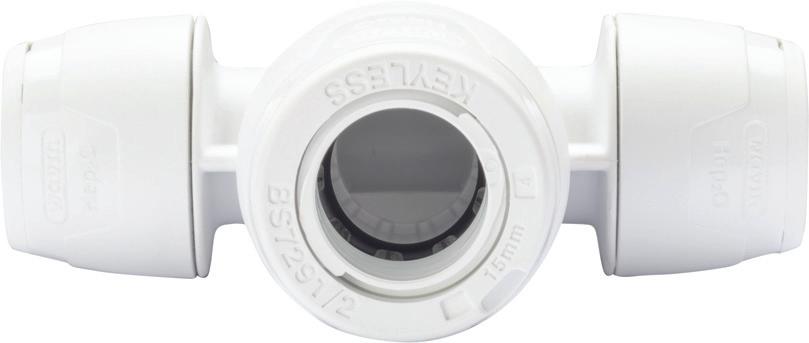
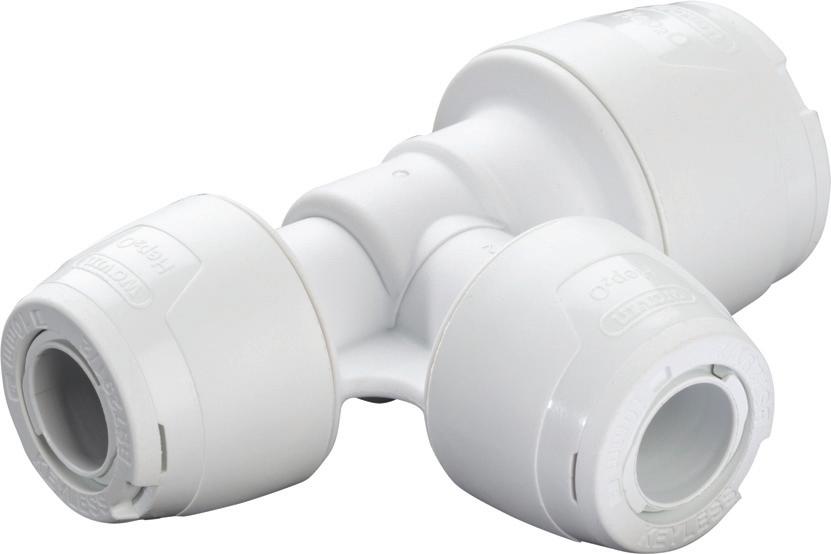
Keyless fittings are designed for exactly these type of situations. With no demounting key required, adjustments can be made quickly and confidently, helping projects stay on schedule. Products like Hep₂Okeyless fittings feature an intuitive twist-and-push mechanism that simplifies both installation and removal, even in confined areas. Backed by a 50-year guarantee and In4Sure technology, which provides a tactile “rumble” to confirm a secure connection, the system provides installers both confidence and speed with every joint.
By removing the need to manually lock each fitting and eliminating delays caused by lost keys, these systems help projects
stay on schedule and keep other trades working efficiently. Systems like Hep₂O Keyless fittings also have a compact design and come in a pre-locked position straight out of the bag - meaning installers can simply insert the pipe and move onto the next fitting.
Lock and key
While keyless fittings have many benefits and are growing in popularity in some cases the traditional keyed fitting will be more suitable.
On commercial projects such as public buildings, high-rise apartment blocks, schools, hospitals, or care homes, systems may be subject to tampering or vandalism. In these cases, the security provided by a keyed system is particularly valuable, giving installers confidence that the water supply remains robust and reducing the likelihood of costly callouts or rework.
The added layer of protection is especially important in environments
disconnection. Even if unlocked, advanced systems like Wavin’s Hep₂O Keyless remain leak-proof and will not detach unintentionally, ensuring a reliable connection.
Real-world experience supports this balance between speed and security.
Professional plumber Steve Gray (@stevegrayservices) said: “In domestic jobs, where there’s little risk of tampering, the keyless system is perfect. The timesaving aspect really comes into play –especially when you’re under pressure to get the job done quickly. Whereas in public spaces where fittings could be with tampered with by members of the public, the security of having the key would make me opt for the keyed version of Hep₂O.”
“In domestic jobs, where there’s little risk of tampering, the keyless system is perfect. The time-saving aspect really comes into play –especially when you’re under pressure to get the job done quickly.”
A solution for every job
Every installation comes with its own set of requirements and challenges, meaning installers need to weigh up multiple factors before choosing between key or keyless systems. Whether the priority is speed, security, or flexibility, there’s a solution designed to meet the demands of the job.
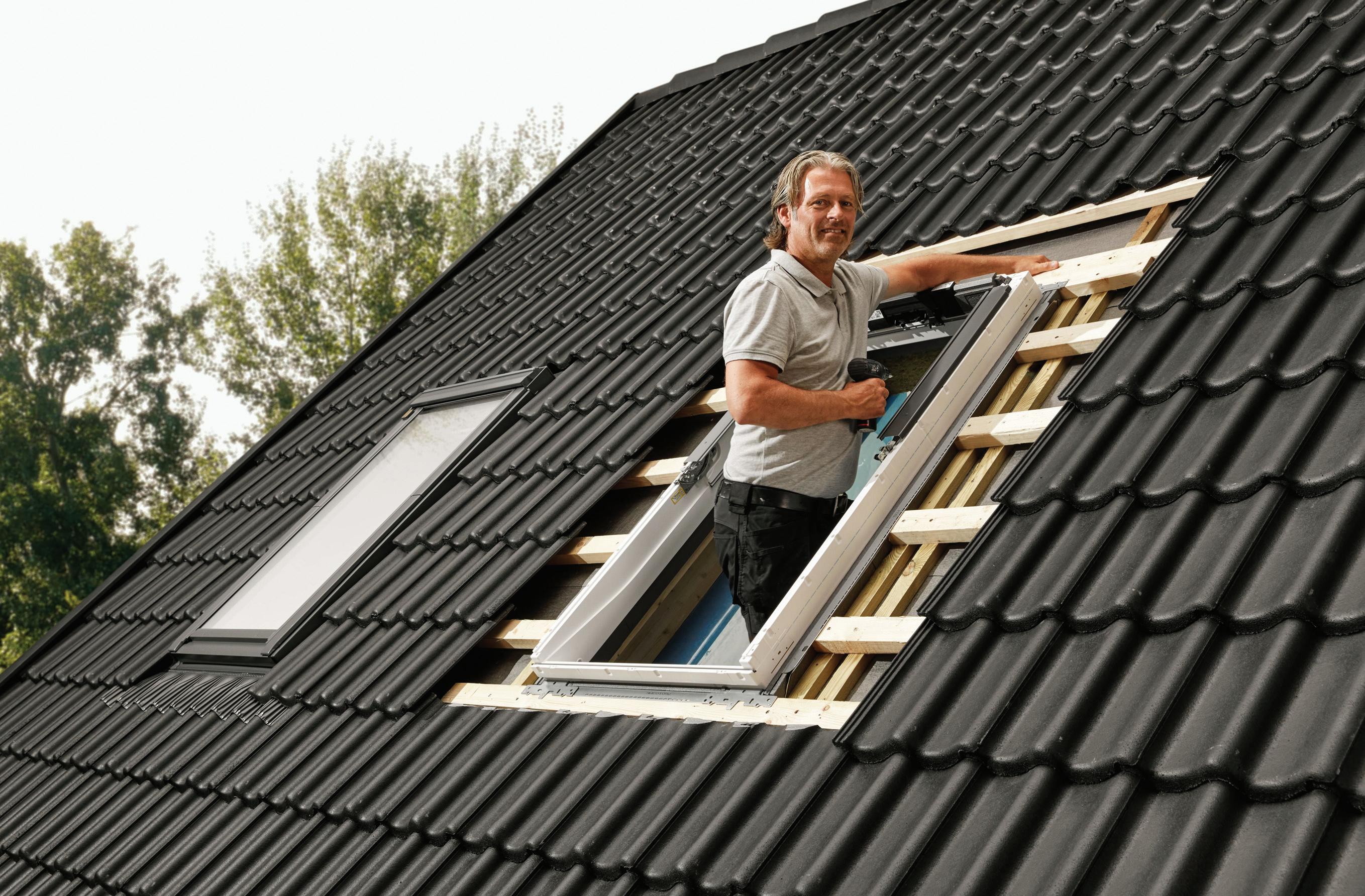
VELUX explains why a roof window is not just a roof window, and how to choose the right one
A WINDOW OF OPPORTUNITY
We don’t need to dwell on the choice of roof windows – just the standard version will do, won’t it?”
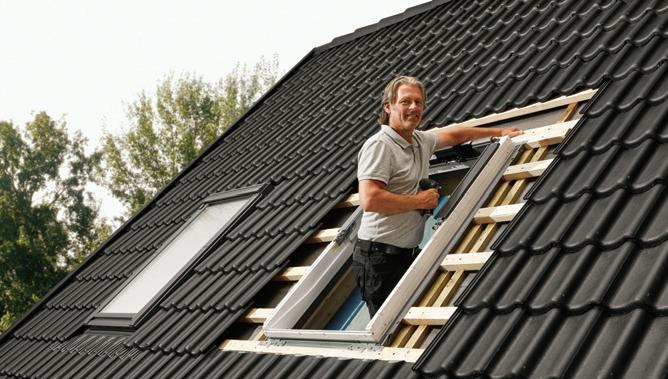
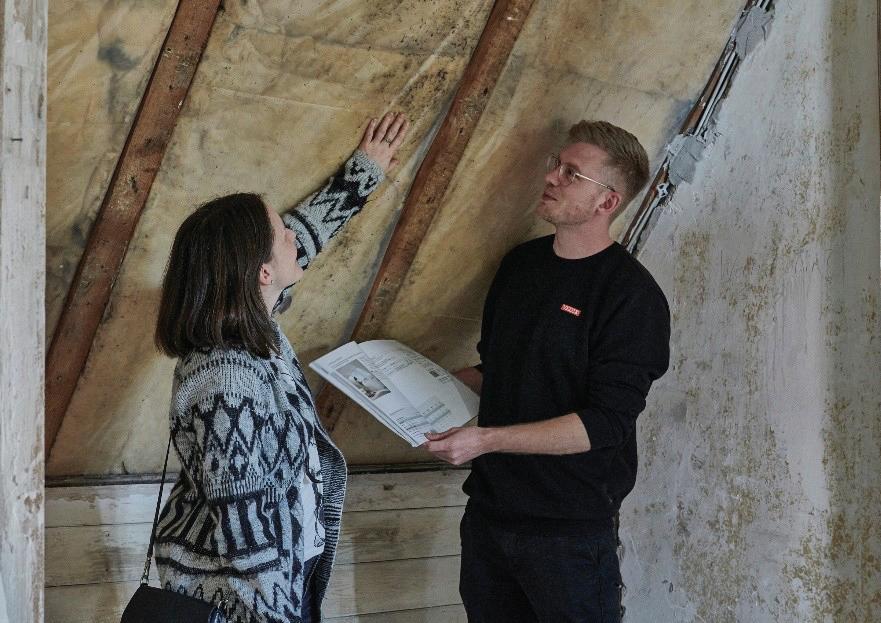
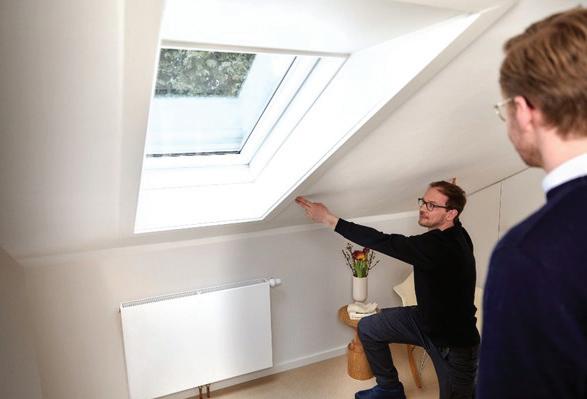
If a homeowner or even a builder responds like this during a consultation, it’s your cue to step in and explain why there is no such thing as a single “standard” roof window. Every building project is different, and every customer has unique needs and expectations. Most homeowners are not experts – they won’t know what benefits various roof window options can offer in the long term. They need clear, well-argued advice from a
specialist company.
By providing this kind of professional guidance, you not only help the customer find the best solution but also strengthen satisfaction, increase the value of the sale, and open opportunities for further business.
Wood or PVC?
The first decision is the material: PVC or timber (in natural pine or white-painted finishes). Customers may assume it’s purely about looks – the warmth of wood versus the clean, subtle lines of white –but functionality is just as important.
What many don’t realise is that timber requires far more maintenance. Wooden windows must be sanded and re-coated every four years (or every seven for white-painted), using water-based acrylic paint. In humid rooms such as kitchens and bathrooms, the upkeep is even more demanding: repainting may be needed every two to three years to prevent damage. Neglecting this can lead to premature replacement.
PVC, on the other hand, is virtually maintenance-free. It’s especially wellsuited to damp environments but also ideal for anyone who would rather avoid regular repainting. These windows offer durability without the extra effort.
There are other advantages too: the smooth, robust surfaces of PVC frames are easy to clean, and their rounded edges make it harder for dust and dirt to collect compared to timber.
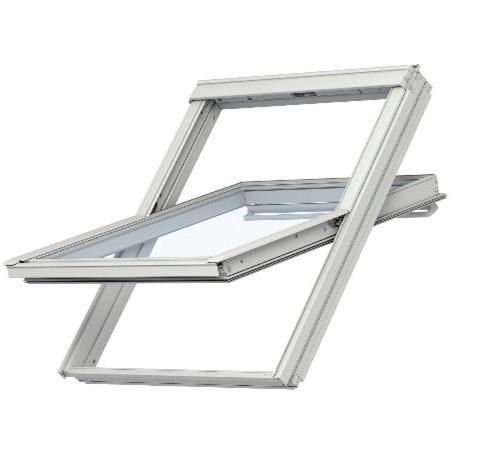
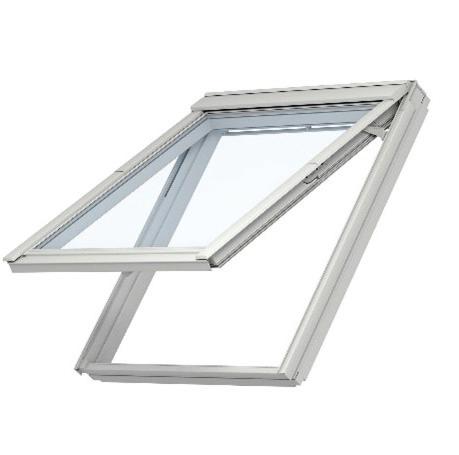
Centre-Pivot or Top-Hung?
VELUX distinguishes between centrepivot windows, operated by a top control bar, and top-hung (or dual-function) models, which can also be opened at the bottom handle up to 45 degrees, giving a
“
clear view outside.
Here, installation height plays a big role. Can children, shorter adults or those with accessibility needs comfortably operate the window? That often depends on whether you go for centre-pivot only, or the combined top and bottom option.
As a rule of thumb, if the window’s top edge is around 200 cm or higher, it’s worth considering bottom operation as well – or even electric/solar options, since manual reach may be impractical.
Manual, Electric or Solar Operation?
The choice between manual, electric, or solar-powered operation is another important topic. While automatic models cost more, they provide major benefits:
✔ Rain sensors automatically close the window if it starts raining – even when nobody’s home.
✔ Remote control and smart features allow operation via smartphone, app, or even voice command.
✔ Scheduled ventilation can be set for regular fresh air.
✔ VELUX Active integrates with sensors that monitor indoor climate (temperature, humidity, CO₂) and adjust
ventilation automatically for comfort and health – even helping to prevent damp and mould.
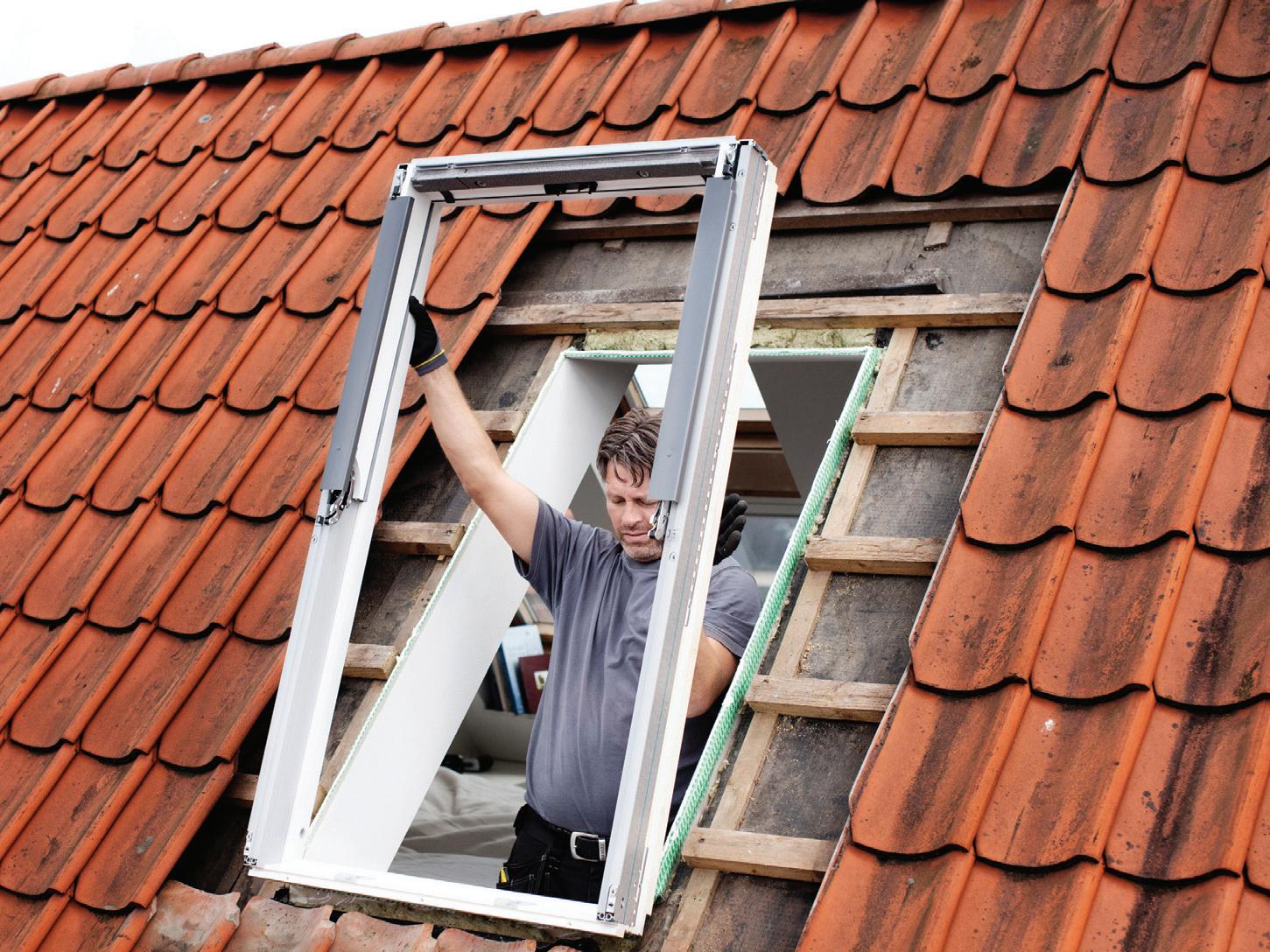
✔ Solar-powered models are particularly useful for retrofits, as no wiring is required. For new builds or major refurbishments, mains-powered electric models may be more practical, and they can be installed directly by the roofer.
One Window – or More?
Most people are familiar with the classic single roof window. Fewer realise that several can be combined for stunning results.
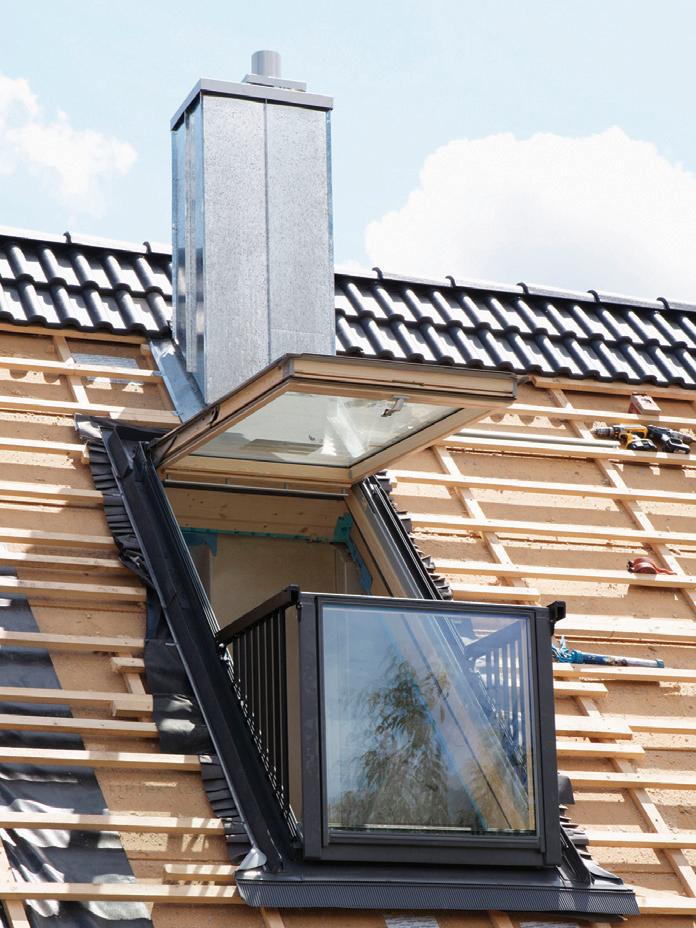
Current design trends favour floor-toceiling glazing in facades – but with VELUX solutions, you can achieve the same in loft spaces. Extending windows downwards creates views at child height, while VELUX balcony systems allow two elements to fold out into a small balcony in seconds.
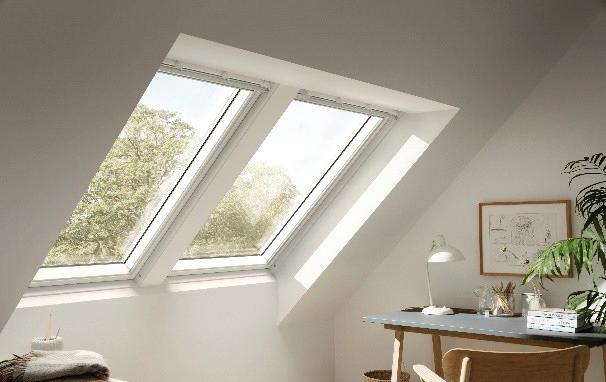
There are also light-enhancing options such as the “room-in-roof” solution, where two adjacent roof windows are installed at steeper angles using a wedge frame, increasing both daylight and usable space.
These are features most customers won’t know exist – and highlighting them can greatly increase both satisfaction and perceived value.
Final Thoughts
Roof windows aren’t a one-size-fits-all purchase. With so many options in materials, operation, and design, professional advice is essential. Clear explanations of the benefits and added value of modern roof windows not only help customers make the right choice but also create opportunities for higher-value sales and additional business.
How
ECLISSE
pocket and flush hinged door systems transform modern spaces
In the world of interior construction and design, details matter. The difference between a good finish and a great one often comes down to the finer points — how spaces flow, how light travels, and how every element works together to create a sense of quality and intent. For professional builders, joiners, and installers, achieving this level of refinement means choosing systems that perform as well as they look.
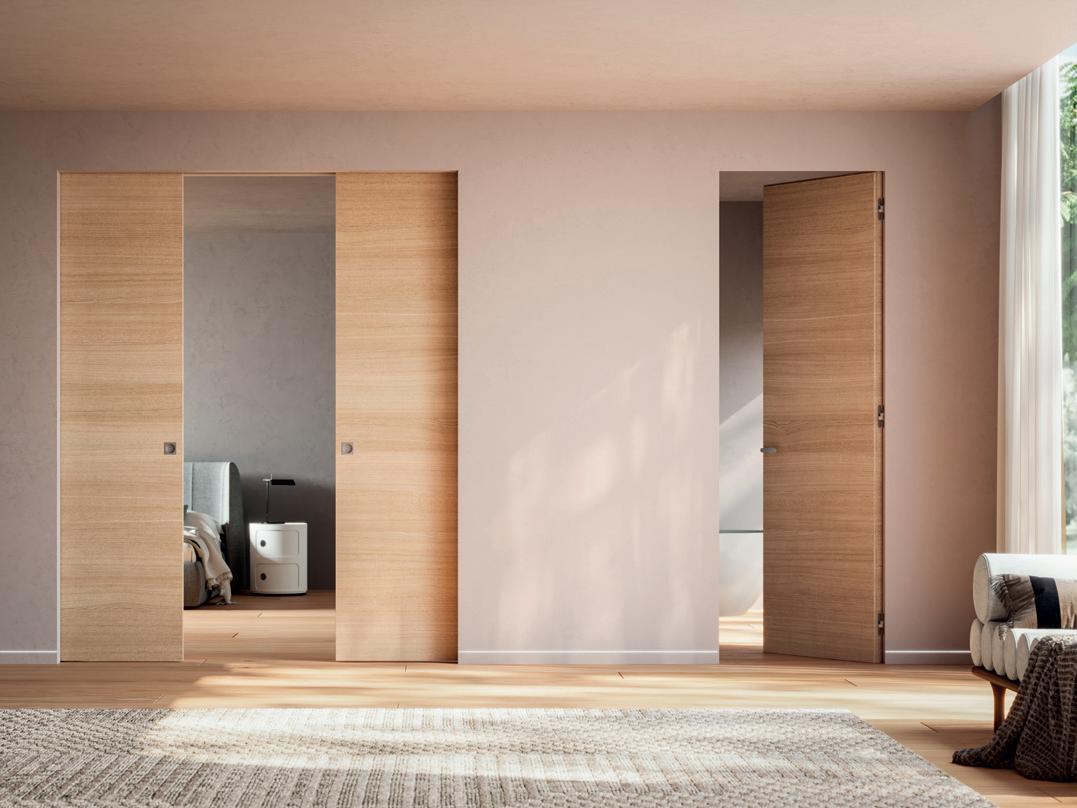
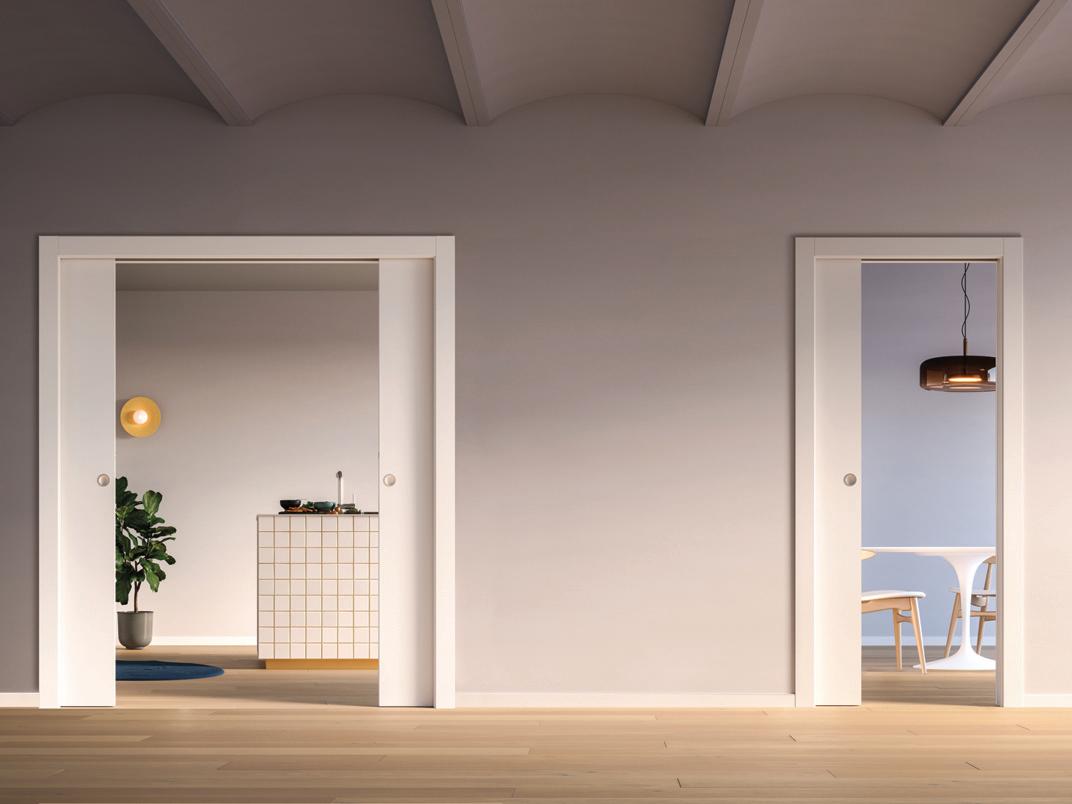
That’s where ECLISSE’s range of pocket door systems and flush hinged door frames come into their own — designed to combine sleek aesthetics with robust performance and ease of installation, helping tradespeople deliver high-end results with confidence.
Smarter Space Solutions
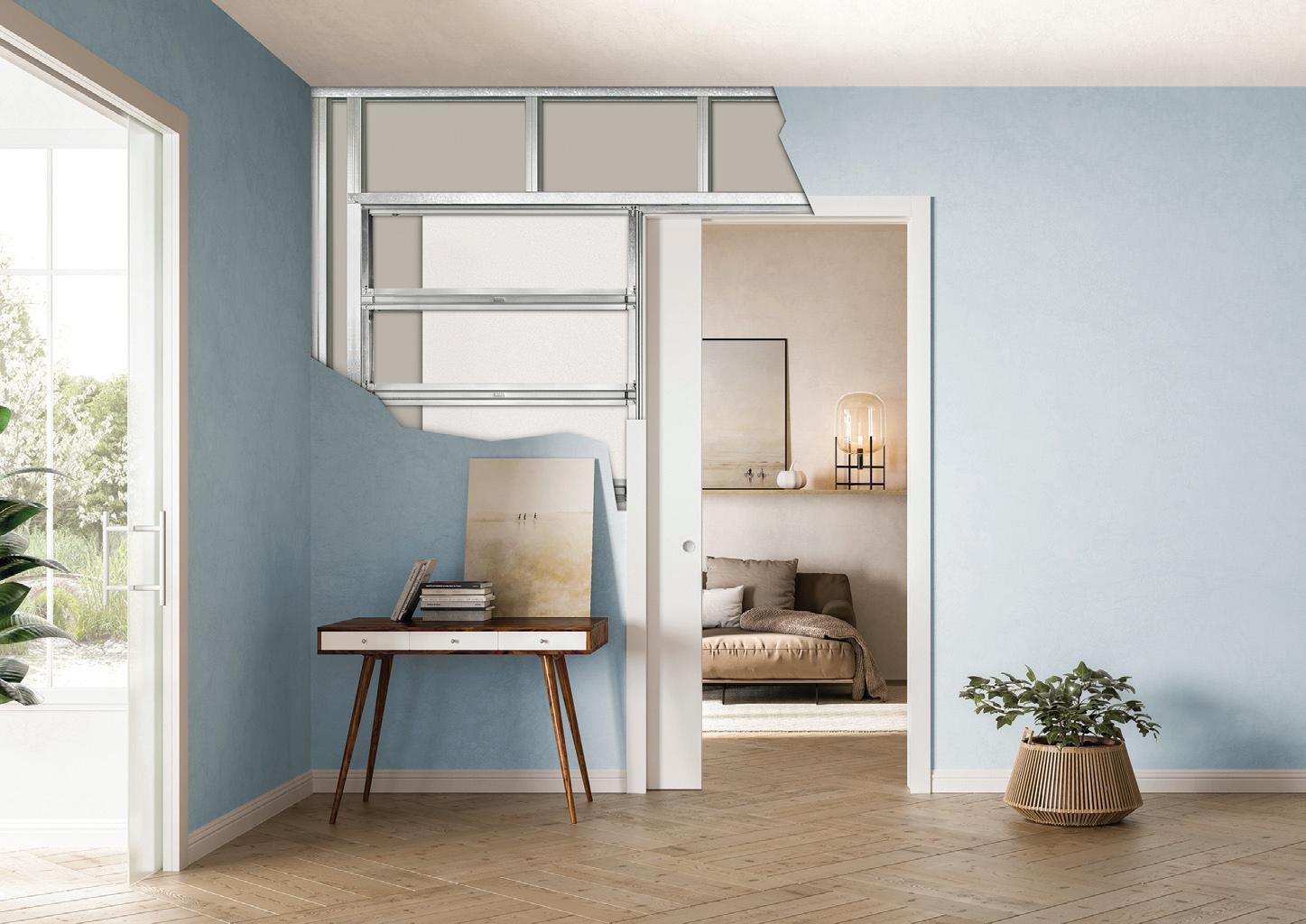
Space is a premium in both residential and commercial projects, and builders are increasingly asked to find clever ways to maximise usable square footage without compromising on style. A pocket door offers a simple but transformative solution. By sliding smoothly into the wall cavity rather than swinging into a room, it can free up to 8% of floor space compared to a traditional hinged door — a real advantage in smaller homes, ensuites, or open-plan designs where every inch counts.
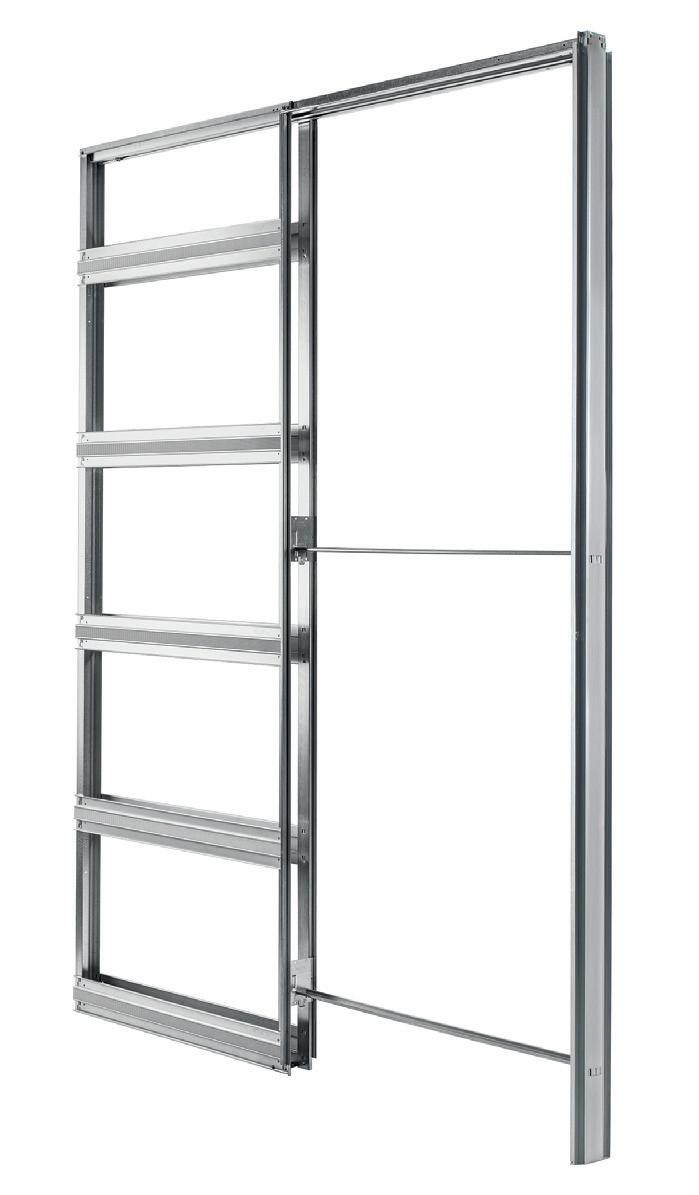
But not all pocket door systems are created equal. ECLISSE has engineered its systems to meet the demands of the trade, offering exceptional strength, adjustability, and precision alignment. The galvanised steel pocket structure is designed to prevent flexing or warping over time, ensuring a perfectly smooth sliding action even after years of use.
Every ECLISSE pocket door kit comes with clever features that make life easier on site. A removable and extractable track means it can be maintained or replaced without opening up the wall — saving time, cost, and hassle. Alignment tools and clearly marked fixing points ensure a straightforward, reliable fit, whether you’re working with stud or solid walls.
ELEVATED INTERIORS
Clean Lines, Seamless Finishes
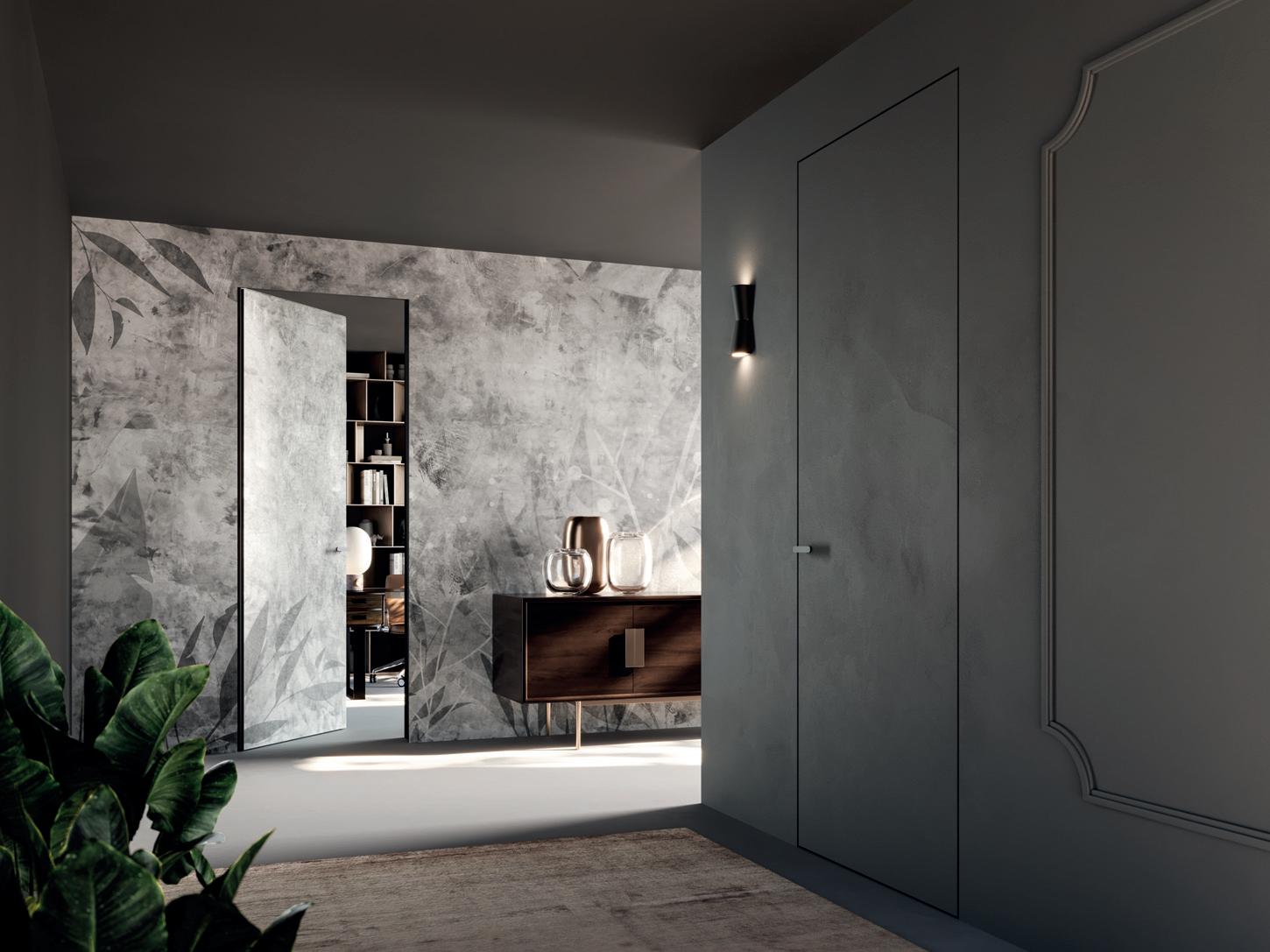
While pocket doors excel at creating space, flush hinged doors bring a different kind of sophistication to interior projects. With the ECLISSE Syntesis Flush Hinged Door Frame, the goal is minimalism — achieving a clean, continuous wall surface where the door blends perfectly into the architecture.
Gone are the days of visible architraves and bulky frames. The Syntesis system allows the door to sit flush with the wall, creating a seamless, contemporary finish that’s increasingly in demand in high-end residential, hospitality, and commercial interiors. For installers, the pre-aligned frame and adjustable hinges make it easy to achieve precision results on site.
Designed for the Trade
At ECLISSE, we know that great design is only half the story. The other half is
practical performance — and the needs of the people who install our products every day. That’s why all ECLISSE systems are designed with installation efficiency in mind, helping you save valuable time while delivering a professional finish your clients will notice.
For pocket doors, options include single and double door systems, soft-
has been carefully engineered and tested to meet rigorous standards for durability, alignment, and ease of maintenance. What sets ECLISSE apart is not just product quality but support. Our UK based customer service team, online Installation Hints & Tips hub and detailed step-by-step guides are designed to help builders and joiners get the best out of
files, and downloadable fitting instructions to make specification and planning straightforward.
Elevating Expectations
As clients become more design-savvy and space-conscious, the demand for smart, minimal, and efficient door solutions is only growing. Builders who embrace this trend can add real value to their projects — offering not just function but a finish that feels bespoke and carefully considered.
Whether it’s creating a more open-plan feel with a sliding pocket door or delivering the seamless sophistication of a flush hinged design, ECLISSE systems make it easy to elevate interiors without adding complexity. It’s about giving your clients something that feels exceptional — and giving you the tools and confidence to deliver it, every time.
ECLISSE has been pioneering pocket door systems and flush-fitting frames for over three decades, supplying the trade with precision-engineered solutions that combine Italian design with practical know-how. With a comprehensive product range, technical support, and nationwide availability, ECLISSE helps builders, architects, and interior designers bring their vision to life — beautifully, efficiently, and with lasting results.
“It’s about giving your clients something that feels exceptional — and giving you the tools and confidence to deliver it, every time.”
LOCK & LOAD
The darker, winter months are statistically the worst time of year for residential burglaries and while the overall number of incidents has fallen steeply over the years, the latest figures are still alarming, with 166,577 break-ins reported in England and Wales in 2025/2025.
Averaged out, that’s 456 home burglaries a day or one every 189 seconds. With 70% of criminals reportedly gaining access through the front door, it’s unsurprising that security remains one of the top priorities for consumers when it comes to new and replacement entrance doors.
According to the latest UK Consumer Fenestration Trends Report, which surveyed over 5,300 homeowners from across the UK – gathering valuable data on product preferences, demographics and spending projections – ‘quality’ was rated as the most important factor for consumers, followed very closely by ‘security’.
While this would imply that homeowners are going out of their way to select the most robust front doors on the market, the same survey also reveals that PVC and composite doors as clear leaders in terms of volume sold.
This is despite the fact these doors offer varying degrees of security and the reputation of composites, which are well
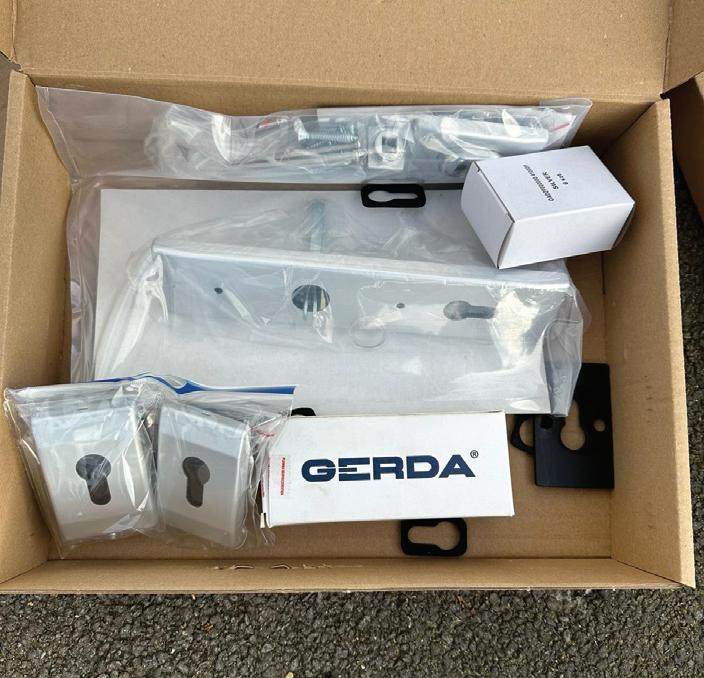
How to guarantee security with Gerda
known to be vulnerable to warping and twisting. In some extreme cases, they can get so out of shape that hardware no longer even engages properly.
A superior solution
For Danny Williams, managing director of Essex trade fabricator, Pioneer Trading Company, poor quality, underperforming composites are a personal bugbear and are the reason he was inspired to introduce a superior solution to the UK with the introduction of the Gerda brand.
“Composites are inherently prone to warping because they’re constructed from a variety of different materials,” he says. “Those components will react differently to temperature extremes on the internal and external sides of the door and this is what causes them to twist.
“The rise in demand for grey, black and darker colour finishes, especially on south facing properties that will retain heat has exasperated the issue. It’s a well-known problem in the trade and was a major headache for my customers –
which is why I felt compelled to find an entrance door that would eliminate costly remedial work once and for all.”
Originally developed for mainland Europe, Gerda Doors are engineered from steel and aluminium – built around a
Danny Williams, managing director of Pioneer Trading Company
highly energy efficient polyurethane core that can deliver U values from as low as 0.8 W/m2k – and as a result, are immune from the warping and bowing found in lesser composites.
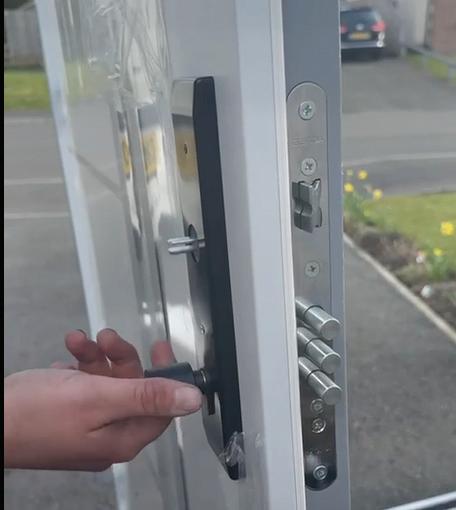
This strength also means that they are highly secure as standard, boasting PAS24 accreditation and the European RC3 burglar-resistant classification.
Gerda Doors are also compatible with Tedee smart locks, an advanced security solution that integrates mechanical and digital protection that is designed to give homeowners a seamless and secure way to control access to their property.
“Tedee was developed by Gerda’s hardware division, so the technology is a natural fit, is quick and easy to install and adds real value for homeowner customers that are looking for smart security options,” says Danny.
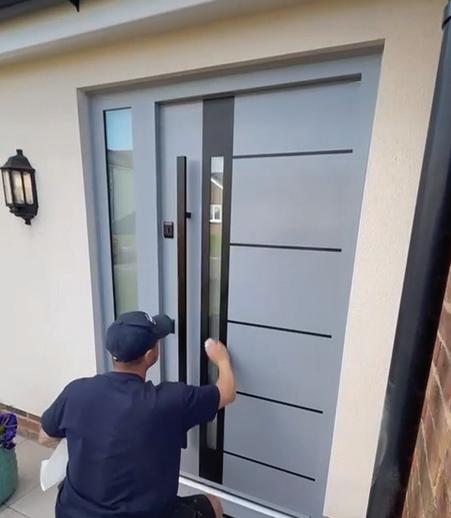
And while a door constructed from steel and aluminium may sound like a product more suited to a commercial environment, Danny is quick to point out that Gerda Doors are actually presented in a range of stylish and contemporary designs and finishes perfectly suited to the UK residential door sector.
“Gerda Doors are a premium retail
had a chance to physically operate one, to feel the weight and hear the ‘thunk’ when closed.
“It’s a visceral experience but it absolutely communicates that this is a door that is going to properly secure a property, no matter what you throw at it.”
The reassuring Gerda ‘thunk’ is a marketing theme that has already been successfully communicated to a trade audience, as well as directly to homeowners via showrooms up and down the country thanks to Gerda’s growing retail network.
But it is now due to be amplified considerably, thanks to the launch of a new TV advertising campaign, launching on GB News in the New Year.
“When you consider that homeowners
“It helps establish an emotional connection to the brand and ultimately it will deliver real value to our trade partners as consumers actively seek out Gerda retailers.
“And while the ‘thunk’ is an effective marketing hook, it’s also the perfect way to impress on people the difference between a Gerda door and a regular composite. After all, you can have the best hardware in the business, but if it’s fitted to a composite, there will always be a concern that it could be compromised.
“For a relatively modest additional premium, Gerda Doors takes away all that doubt, with levels of security, energy efficiency and aesthetics that some composites door brands can only dream about.”
‘WOOD’ IDEA
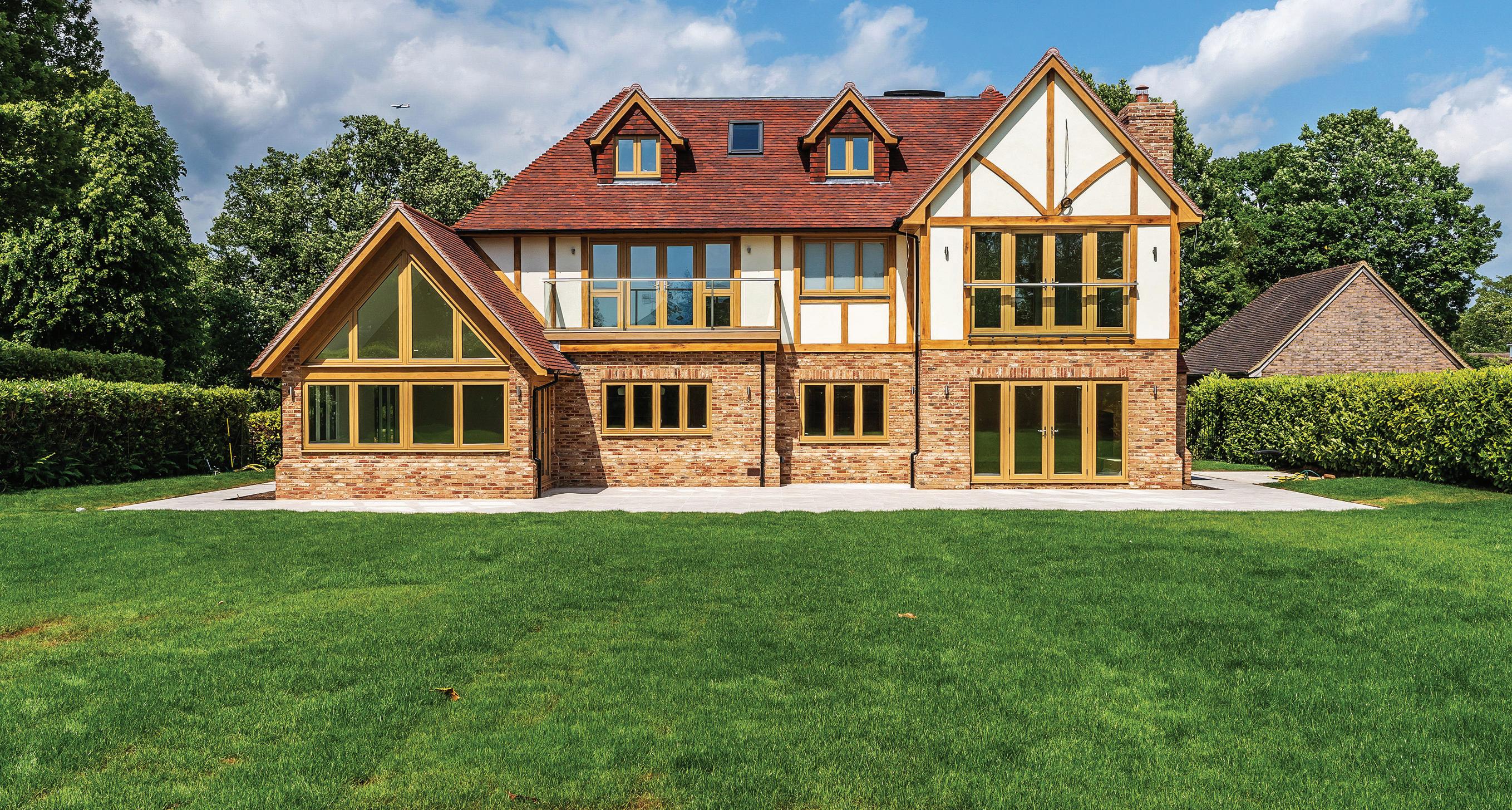
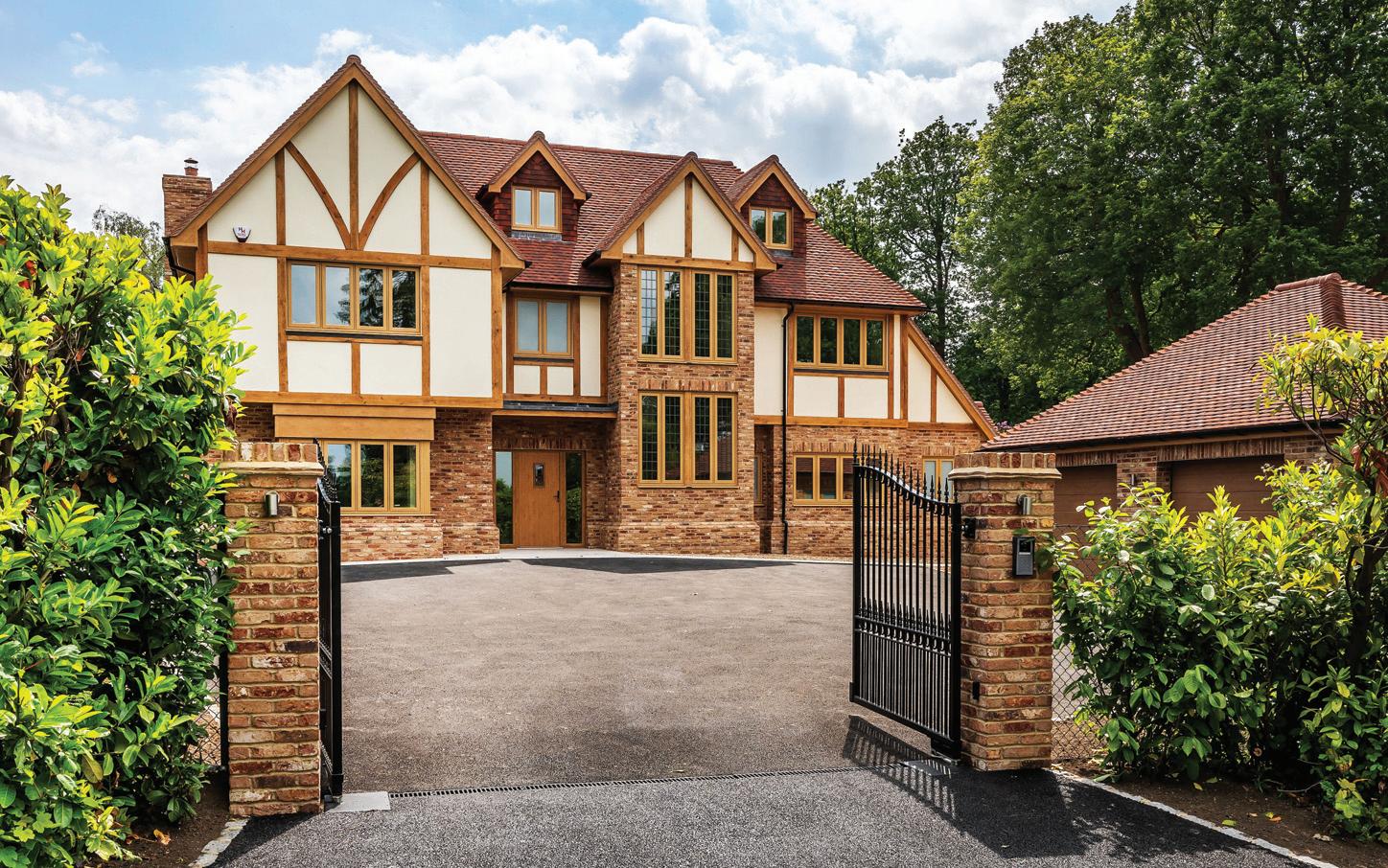
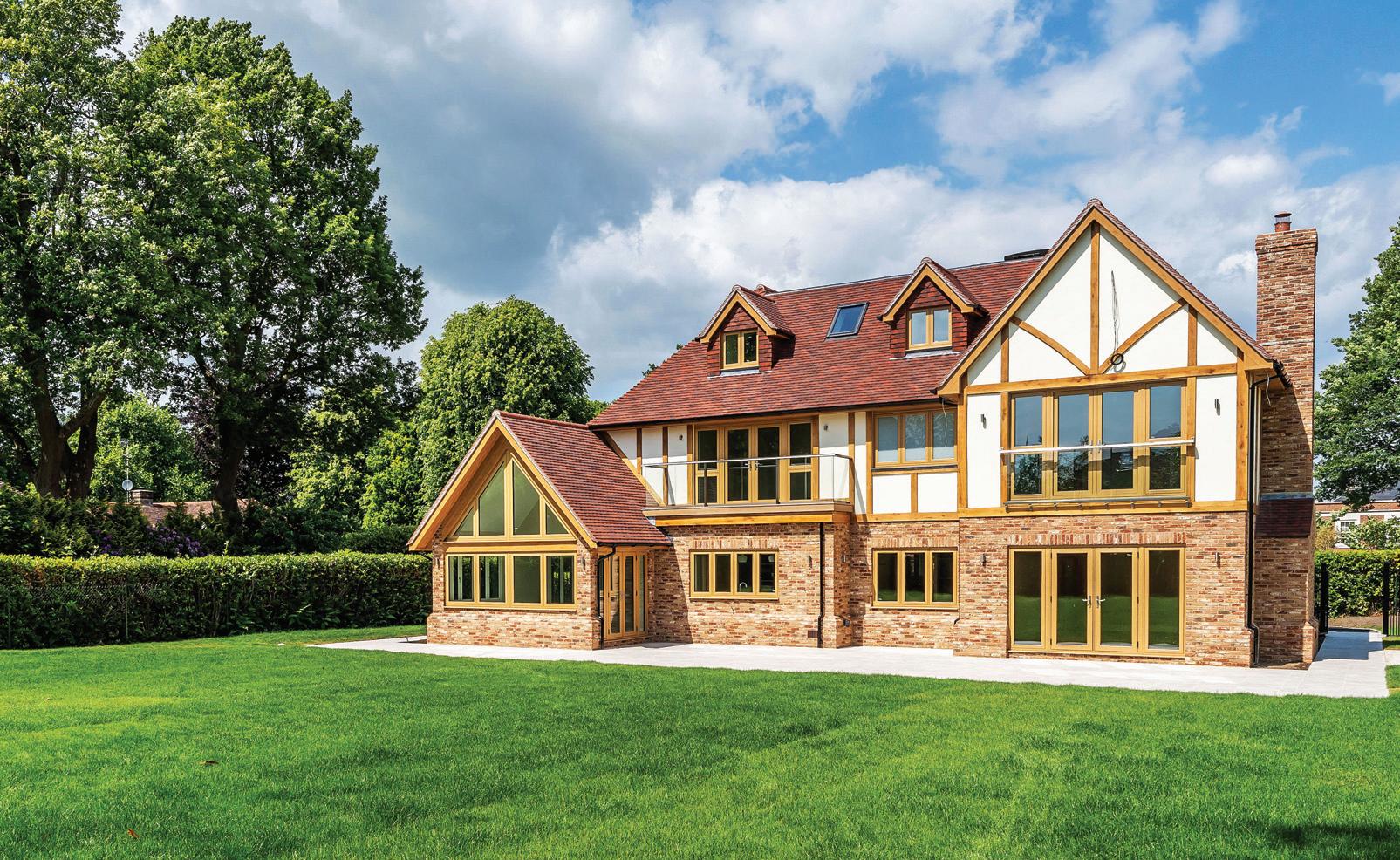
Nestled in the Sussex countryside, a newly built red-brick home has been carefully designed to echo the character of a traditional Tudor property, while meeting the expectations of modern living. Featuring Residence 9 windows and French doors in an English Oak finish, the project is the perfect demonstration of how contemporary construction can still deliver an authentic, heritage-led aesthetic, with the benefits of an easy and seamless install.
Traditional timber aesthetics made practical with Residence 9 windows and doors
The property incorporates a classic half-timbered façade, decorative gables and jetty detailing - all hallmark features of Tudor architecture - with the windows and doors playing a pivotal role in
ability to replicate the proportions, detailing and visual depth of traditional 19th-century timber joinery.
Finished in English Oak on Grained White, the windows and French doors deliver the warmth and variation associated with painted or stained timber, while Regency-style pear drop hardware in an iron finish further reinforces the building’s period character. Timberweld jointing® has been used throughout, creating a seamless, butt-jointed appearance that is virtually indistinguishable from traditional timber frames - both internally and externallywhile providing the strength and consistency of a modern welded system. While the aesthetic focus was firmly on tradition, practicality was equally important. Residence 9 offers the flexibility needed for contemporary lifestyles and construction methods, with a mix of fixed and opening windows chosen to balance appearance, ventilation and usability. A considered range of glazing options was also specified across the property, including low-iron Low E units for thermal efficiency,
satin obscure glass where privacy was required, and leaded detailing to enhance the sense of heritage. Clear glazed units were used strategically to maximise natural light and countryside views.
The inclusion of Residence 9 French doors adds further functionality, offering ease of access for everyday use and seamless indoor-outdoor connection for entertaining - all without compromising the traditional look of the elevation.
Installer friendly
Developer Scandia Hus selected Residence 9 for its ability to deliver an authentic flush timber aesthetic while remaining installer-friendly and durable for the homeowner. The system’s modern construction ensures consistent installation, low ongoing maintenance and high levels of energy efficiency and security - key considerations for new-build projects with a heritage-inspired design
performance hidden behind period styling. Carl Robinson, Managing Director at Provincial Windows commented “We take real pride when installing The Residence Collection windows, as the results are always flawless and leave homeowners pleased with their properties. R9 in particular checks all the requirements for a project like this, and the homeowners were very pleased with the outcome.”
Jo Trotman, Marketing Manager at The
has, and the finished product is truly beautiful.
This collaboration with Scandia-hus, Provincial Windows and Window Tech Trade has been a huge success to showcase how effective the timber alternative is and we look forward to working on many more projects with them in the future, helping homeowners to achieve their renovation dreams.”
SASH IS KING
Quickslide: How smart technology brings modern security to traditional sliding sash windows – without adding extra work on site!
What’s changed with Sash Windows
Sliding sash windows have evolved far beyond their Victorian origins. Timber sash windows were charming but prone to rot, draughty and low on security. Today’s uPVC designs combine traditional looks with durability, energy efficiency, and now, smart security. As smart-home tech becomes commonplace, the trade has a fresh opportunity to respond to what homeowners actually want.
Smart Tech: A Builder’s Asset Homeowners increasingly expect connected homes. From smart heating and lighting to security systems, technology is now part of the package. Offering future-ready windows and doors gives you a competitive edge and lets you deliver more value without adding extra time on site.
Quickslide is leading the way. In the first quarter of 2026, the manufacturer is set to launch Legacy Protect, the
How Kubu Works
The windows leave the factory ready for Kubu, with all housings pre-installed. Homeowners buy the sensors directly from Kubu and attach them themselves. Once in place, the sensors can detect whether the window is open, closed, or
being tampered with, sending real-time alerts straight to an app. Beyond security, the app can remind homeowners about the open and closed status of their windows: to shut them when leaving the home, open them for ventilation, or respond to bad weather or pollen levels
for those with hay fever. In short, Legacy Protect is designed around the homeowner’s lifestyle - always with one primary goal in mind: to protect the home.
Selling Points for Your Projects
Security is a growing priority for homeowners. Stats from the Met Police show a home is burgled every 173 seconds in the UK. “The importance of
daily lives, it is time for the industry to get to grips with it once and for all.”
For builders, Kubu-ready sash windows offer a clear advantage: you can provide a modern, high-spec product without changing how you work on site. The sensors are subtle, unobtrusive, and installed by homeowners themselves, while the sash itself works exactly as normal. It’s a simple way to add value to your projects, giving homeowners peace of mind and boosting the overall appeal of the home improvement. The best part? The window installs just like any other
sash: no extra work, no technical knowhow, and no extra labour needed.
Why
Quickslide
chose Kubu Quickslide’s existing range of uPVC and aluminium casement windows is already compatible with Kubu, so extending the technology to our sliding sash range just made sense. When we launch beginning of 2026, Quickslide expects to be the first and only UK manufacturer to supply uPVC sliding sash windows designed to work with Kubu as standard. We’re committed to preserving traditional aesthetics while adopting modern technology, and Legacy Protect is our response to the growing homeowner demand for smart home security, without adding any complicated extra steps for the trade.
What it means for Builders
Smart and future-ready windows and doors are part of today’s home improvement conversations. Offering Kubu-compatible sash windows gives you a simple, attractive way to take on high-value refurb jobs that meet growing homeowner expectations – without changing how you work on site, while adding real value that sets your projects apart.
TO FIND OUT MORE ABOUT QUICKSLIDE VISIT
WWW.RDR.LINK/BBW032
To celebrate its centenary last year, Purdy launched a competition to give one lucky winner the chance to make their own handmade brush at its factory in Portland, Oregon. We caught up with the winner, Simon Walker, about the experience and take a closer look at why many decorators are moving away from disposable paint tools.
BRUSHING UP NICELY
For many years, the painting supplies market has been dominated by inexpensive multipacks of brushes and rollers designed for single-use jobs. While these options might seem budget friendly at first glance, many decorators have already learned the lesson that buying cheap means buying twice. But dig a bit deeper and it’s about much more than just up-front cost – investing in better tools improves finish quality, time efficiency, and long-term value.
So, what should you look out for when choosing an investment tool? Quality brushes feature more densely packed bristles or filaments, properly secured with reinforced ferrules and bolstered epoxy to prevent shedding during application. This translates directly to superior paint lifting capacity, meaning fewer trips back to the paint pot and smoother, drag-free brush strokes. For more challenging tasks like cutting in with deep colours or achieving flawless finishes with water-based trim paints, this can be the difference between a job that’s done and dusted in a matter of hours, or one that takes a full day.
It’s this commitment to quality craftsmanship that has kept manufacturers like Purdy at the forefront of the professional decorating market for a century. When decorator Simon Walker won the competition to visit the Purdy factory in Portland, Oregon, he jumped at the chance to see how these handcrafted tools are made – and to try his hand at making one himself.
Simon, tell us about your history with Purdy brushes.
I’ve been using Purdy products since they first hit the market in the UK. I was lucky enough to be on holiday in Bermuda years ago and there were a couple of guys painting the lobbies in the hotel. Being a painter myself, of course I had to talk to them and compare notes! They were using Purdy brushes and when I said they weren’t available in the UK at the time, they gave me one to take home – I’ve still got it in my garage now. It was a great brush, so I bought more as soon as they launched here, and I’ve been using them ever since.
QHow did it feel to win the competition?
I was overwhelmed to be honest. It was amazing to have the chance to make my own brush and have that little sticker on it with my name on it. I think it’s amazing that Purdy has been going for 100 years
and the brushes have stood the test of time. Hopefully they’ll go for another 100 years.
QHow did you find the brush making experience?
It was awesome, but a lot harder than I thought it would be actually! The professional brush maker made it look so easy, but I was all over the place. I didn’t realise how complicated the process is –there’s a lot involved in making one of these brushes. The quality control is absolutely next level. I couldn’t believe how rigorous they are, even a slight mark on the handle means the brush won’t pass the inspection checks and will get boxed up to be donated.
QWhat makes Purdy your brush of choice?
You get used to the feel of a brush and for me, the Purdy Pro Extra is my weapon of choice. I just feel really comfortable with it in my hand, and I know exactly what I’m going to achieve with that brush. I know I can get fantastic results, especially cutting in. I’ve had so many comments that people think I tape my lines, but it’s all down to the brush that I use. The results speak for themselves and to be honest, it’s made me the decorator that I am today. I just wouldn’t be without it.
TAKING IT TO THE MAX
Tax legislation changes in April 2025 have presented a bit of an irritation for pick-up manufacturers in the UK. Under these changed rules, double and extended cab pick-ups are now considered cars (or passenger vehicles) by HMRC as opposed to the prior
clever solution to this conundrum, one that is a direct response to feedback from SMEs and the industry at large.
The Isuzu D-Max V-Cross Commercial is a purpose-built model based off of the flagship, top-of-the-range V-Cross model. What’s different? You may ask. Well, the back row of the double cab has had its
PB test drives the new Isuzu D-Max V-Cross Commercial
The result is a cargo area that benefits from the central locking system of the vehicle itself. Tinted windows add an extra layer of protection and a grate and back window allow for rear mirror visibility. This is a permanent commercial conversion from the factory and so entirely aligns with the changed HMRC guidelines. As such, the DMax V-Cross Commercial retains its full commercial vehicle tax status. VAT is reclaimable for VATregistered businesses making fully taxable supplies, while road tax is kept at a fixed rate of £345. It also continues to qualify for Plant & Machinery Allowance under Capital Allowances, retaining 100% writing down status. For company drivers, the model keeps its flat-rate £4,020 Benefit in Kind for the 2025/26 tax year. These benefits are particularly significant for SMEs and self-employed professionals looking to reduce the potential costs introduced under the April 2025 legislation changes.
This built-for-business mindset doesn’t just stop at the new load zone. The V-
Cross Commercial comes equipped with a comprehensive commercial-ready specification as standard. This includes a lightweight commercial canopy, tow bar with towing electrics, load bed liner, and protective driver and passenger seat covers. To further underline its identity as a serious business tool, the vehicle is registered exclusively as a commercial model and carries distinctive “Commercial” badging.
The specs
This new model retains the proven strengths of the award-winning D-Max range. With a 1-tonne payload, 3.5-tonne towing capacity and full four-wheel drive, the V-Cross Commercial is ready for tough jobs across worksites. For even greater control in challenging conditions, it also comes with Rough Terrain Mode and a rear differential lock, delivering ultimate confidence when tackling demanding off-road environments. Indeed, our test drive took place on an incredibly wet and windy Winter’s day, which worked as the perfect testing ground. It feels a little sill to admit, but navigating through all manner of mud and water down country lanes actually became something rather fun. Despite the size of the D-Max, it never feels overbearing behind the wheel. In fact, there’s a suprisingly impressive manoeuvrability and nippiness off the line thanks to a responsive automatic gear box. The aforementioned rear view mirror visibility adds another dimension to
Ownership Package
driving. While this might not provide as much visibility as a small hatchback rear mirror would, there is a reversing camera for extra support (plus all round vehicle sensors) and the side mirrors are suitably sized and shaped to provide a wrap around view of the entire vehicle.
Driving in comfort
Built on Isuzu’s highest trim level, the VCross Commercial ensures that long days behind the wheel remain comfortable. Drivers benefit from leather upholstery trim, dual-zone climate control (and heated lumbar-supported seats!), a fully wireless 9-inch infotainment system with wireless Apple CarPlay™ and Android Auto™, two USB-C ports and a new 7-inch Multi-Information Display. Thankfully, this is all really easy to use and navigating the test drive with my own phone took seconds to set up.
An upgraded ADAS suite is on board too, including Intelligent Adaptive Cruise Control and Traffic Jam Assist. If any of these aren’t to your fancy (Lane Assist or a Speed Limit chime for example), these can be turned off with straightforward menus. There’s a healthy amount of actual physical buttons in the cab too.
Alongside its tax and financial advantages, the V-Cross Commercial offers the reassurance of Isuzu’s marketleading ownership package. Every model comes with a five-year/125,000-mile warranty, plus five years of UK and European roadside assistance. With a kerb weight under 2,040kg, it also qualifies for passenger car speed limits on dual carriageways and motorways, helping business users get where they need to be quickly and efficiently.
Managing Director at Isuzu UK, Alan Able, commented on the new model launch: “The New Isuzu D-Max V-Cross Commercial is the perfect solution for SMEs, trades, farmers and construction professionals who need a tax-efficient pick-up that works as hard as they do. We’ve listened closely to feedback from our loyal customer base, who told us they wanted all the key attributes of a rugged 4x4 pick-up combined with the premium features of our flagship model. The VCross Commercial delivers exactly that, while also ensuring it is built as a serious, permanent commercial vehicle that businesses can rely on with confidence and make use of the commercial vehicle benefits.”
Professional
Podcast
AND YOU CAN TOO, AS WE CATCH UP WITH SOME OF THE CONSTRUCTION INDUSTRY’S MOST INTERESTING AND KNOWLEDGEABLE CHARACTERS ON THE NEW GROUND BREAKING PROFESSIONAL BUILDER PODCAST WITH LEE JONES AND EDWARD KELLY LEARN A NEW BUSINESS SKILL OR FINE TUNE AN OLD ONE FROM THE GUYS AND GIRLS AT THE SHARP END, WHO HAVE BEEN THERE, DONE IT AND GOT THE PB T SHIRT TO BOOT!
PITCH PERFECT
Kevin Taylor, Training & Technical Support Manager at Marley, outlines how concrete interlocking tiles can deliver pitch flexibility and roof protection to ensure excellent low pitched roofing installations
Taking on a low-pitched roof project means builders have to contend with how best to create a visually appealing finish, whilst being aware of the additional risks of water ingress. This is particularly important as low pitched roofs tend to shed water at a slower rate, which increases the risk of water creeping up between the laps in the tiles via capillary action. Unless the eaves detail is properly formed, they can be prone to water pooling at the eaves, which will eventually leak into the building.
appearance to the main roof without the need to consider other solutions such as flat roofing materials or metal sheets. It is quick and easy to install and can be used in conjunction with dry verge systems and top edge ventilated abutment systems.
But the correct installation of concrete interlocking tiles suitable for low pitches, such as Marley’s Mendip 12.5 range of concrete interlocking tile, provides a proven answer to ensure a low pitch roof not only looks good, but provides excellent levels of water management over the long term.
Flexible pitch and visual appeal
The Mendip 12.5° is suitable for installation at pitches as low as 12.5°, through to 44° with a rafter length up to 6m and requires a 100mm minimum headlap. It can be especially effective when planning for a single-story lean-to extension where the roof must fit under a first-floor window.
It also helps maintain a similar
The Mendip 12.5°adapted from Marley’s Mendip range – also offers an attractive aesthetic appeal with the availability of three popular colourway options designed to suit a variety of roofing projects in differing locations. With Old English Dark Red, Smooth Grey or Smooth Brown options, the colour range enables builders to match the local roofscape vernacular.
Easy installation, long term performance.
The design of the Mendip 12.5° has removed the requirement for builders to use nail holes, thereby mitigating against water ingress, especially during times of heavy wind-driven rain. In addition, the tile offers four anti-capillary grooves to reduce the chance of rainwater seeping between overlapping tiles through capillary action. This is key for low pitches where water remains on the roof for longer timescales.
Finally, to guarantee strong fixing for long term effectiveness, the Mendip 12.5° is mechanically clipped twice with a
Mendip head clip and a SoloFix clip. They ensure quick fixing for builders on site and provide the certainty that the tile is firmly and safely secured for long term performance.
Key installation considerations when using Mendip 12.5° for low pitch roofs.
• Always check the minimum pitch for all other roof components is no less than so they match that offered by the Mendip 12.5°before specifying or installing.
• The Mendip 12.5° must be installed at 100mm minimum headlap to ensure a reduced risk of water getting into the roof.
• The maximum rafter length is 6m to limit water volume expected on the roof.
• At the eaves, the fascia board, plus any eaves vents, need to be positioned high enough to support the tiles in the same plane as the rest of the roof, but it should not kick the tiles up. This is to remove the possibility of introducing flat spots or even negative falls at the eaves and where water could pond. There should always be a degree of fall on the support tray to enable effective water drainage into the gutter.
ADVERTISER INDEX
Here is a useful summary of all the adverts and advertorials that appear within this issue of Proffesioanal Builder. Each is listed with it’e page number and a direct URL that will take you straight to the relevant online information.
This month, we are going to talk about another serious topic: brain tumours. Although they remain a relatively rare kind of cancer, each year over 12,000 people are still diagnosed with brain tumours in the UK, according to Cancer Research UK. Having a brain tumour can be a devastating diagnosis for people, depending on what kind of tumour they have. Tumours in the brain may be defined as primary or secondary. Primary brain tumours are growths that start from abnormal brain cells. There are over 120 different types of primary brain tumour- some are benign (noncancerous), and some are malignant (cancerous). Secondary brain tumours are tumours that form in the brain from another cancer that has spread from its source, like a lung cancer or a breast cancer.
Brain tumours can affect people of any age. Over 25% of cases are seen in older people over the age of 75 years, but it also important to know that they are the second most common kind of cancer in children, with 500 cases diagnosed each year. We are going to focus on symptoms in adults in this article; however, if you want to find out more about brain tumours in children, the Brain Tumour Charity has lots of useful information:
WWW.RDR.LINK/BBW038
The symptoms of a brain tumour can vary, depending on where the tumour is, how quickly it grows, and whether it is growing into or pressing on other parts of the brain. If a tumour grows into certain parts of the brain, it can cause symptoms specific to the part of the brain it controls, for example, eyesight, balance, or speech. Symptoms can develop very suddenly out of the blue or very slowly over months and even years.
So firstly, let’s talk about headaches. Millions of people have headaches and do not have brain tumours. Brain tumours may cause headaches due to increased pressure inside the head. Headaches due to raised pressure may feel dull or throbbing, are worse in the morning and
may wake you up during the night. Constant headaches with these features, or worsening headaches, are worth seeing a doctor about. Feeling sick and vomiting or developing blurred or double vision may also be associated with headaches due to raised pressure- these are other signs to look out for.
Seizures (fits) are another symptom of brain tumours. Sometimes people will have no other symptoms and then present with a fit. Seizures are a medical emergency and must always be investigated to determine the cause if they happen in someone who is not known to have epilepsy. Brain tumours can also cause changes in personality or
behaviour. There may be confusion, speech issues such as word-finding difficulties (mixing up words or using the wrong ones), or unsteadiness and loss of coordination, causing clumsiness.
So how do brain tumours get diagnosed? Because symptoms can vary from person to person with a brain tumour, people may be diagnosed in different ways. Sometimes the first sign of raised pressure in the head may be picked up by opticians when they examine the back of your eye. This is one thing they check for on a regular eye examination. Brain scans diagnose brain tumours- either CT scans or MRI scans. Often, a tumour needs to be sampled (biopsied) to find out what type of tumour it is and to work out which treatment might be best. Depending on the site of the tumour in the brain, how it is growing, and its type, surgery may be possible to remove some or all of it. Some tumours grow in places where it is impossible to operate. Some aggressive brain cancers grow in such a way that it is impossible to cut them out of the brain tissue.
Radiotherapy and chemotherapy may be offered as treatments too.
Brain tumours remain uncommon. It can be hard to reduce the risk of getting one as they are related to getting older, having previous radiation treatment to the head or neck (which was needed to treat another cancer), genetic syndromes and family history. Keeping a healthy weight, not smoking, exercising frequently and looking after your health will reduce your overall cancer risk. If you are worried about any of the symptoms mentioned above, or if something is worrying you, please speak to your GP for further assessment.
HOT ON THE SCENE
Professional Builder is excited to announce the launch of Professional Builder Weekly a brand-new mobile first digital platform designed with the UK’s trades in mind.
Working in the construction industry often means being on the move a lot. The trades are out and about, not sat at a desk behind a computer screen. That means that when it’s time for a break, or you’ve got a spare 5 minutes when you get to a job too early, the main thing you’ll have to hand in the van to pass the time is your phone (or perhaps even the latest issue of Professional Builder!).
It’s with this scenario in mind that we’ve cooked up PB Weekly platform that is designed specifically for those who want to consume their content quickly, visually and on the move. It is a scrollable, fast, video rich, editorially-led mobile experience.
Features at a glance
✓ New exciting competitions and giveaways each week
✓ Videos of tool reviews, product tests and more
✓ Brand new entirely fresh and up-todate feed every 7 days
✓ Viewable anytime, anywhere
✓ Questions and polls
Simple & practical
Being user-friendly was incredibly important when designing this new platform. There are few things as irritating as trying to navigate something incredibly complicated on your phone. As such, PB Weekly is laid out simply and clearly. It’s easy to read, with no pinching and zooming required and presented in a straightforward, sensical manner that boasts scroll-and-go layout, bitesized, fast-loading content. Those who sign up will be treated to a scrollable feed of content that’s been hand picked by the Professional Builder team to be worthwhile and interesting. It’s quick, easy and visual and works wherever you do –be that in the van, on site, or during a tea break.
SO, IF YOU’RE NOT ALREADY RECEIVING PB WEEKLY, WHY NOT SIGN UP AT PBWEEKLY.CO.UK AND JOIN THE 120,000 UK TRADESPEOPLE ALREADY MAKING THE MOST OF IT.