
ELECT RICIAN & INSTALLER

SWINGING INTO 70
HOW NICEIC HAS BEEN RAISING ELECTRICAL INDUSTRY STANDARDS FOR OVER SEVEN DECADES
TRAINING
EXPANDING YOUR SKILLSET SO YOU CAN EARN AS YOU LEARN

at


Catching up with the founders of a new electrical training business that’s aiming to “Renew” confidence and skills across the industry
Is training the key to a future-proofed and successful electrical industry?
What’s behind Matthew Davies’ passion for interactive teaching?
Why employer collaboration is vital to raising standards across the
Should homeowners be getting more from their lighting than simply a standard solution? 56 The team at Enkin recap a successful 2025 and look forward to an exciting 2026
How can we ensure that EV ‘charge anxiety’ is put firmly on ice?
Rounding up the newest products, tools and equipment to help you with your work


Meet the team
Editor
RICHARD BOWLER
email: pe@hamerville co uk
Digital Manager
REBECCA MCGEOCH
email: rmcgeoch@hamerville co uk
Digital Assistant
ADAM ROBERTS
email: aroberts@hamerville co uk
Advertisement Manager
ANTHONY SCOTT
email: ascott@hamerville co uk
Assistant Advertisement Manager
IAN TURNER
email: ianturner@hamerville co uk
Design
ADEEL QADRI
Production Assistant
KERRI SMITH
Group Production Manager
CAROL PADGETT
Distribution Manager
KARL CLARK
Printed by:
PCP TELFORD
Published by:
HAMERVILLE MEDIA GROUP
Regal House Regal Way
Watford, Herts, WD24 4YF
Tel: 01923 237799
Fax: 01923 246901
Email: pe@hamerville co uk
PROFESSIONAL ELECTRICIAN is the business journal for the electrical contracting industry It is available to the trade at leading electrical wholesalers throughout the UK © 2026
Subscriptions to PROFESSIONAL ELECTRICIAN are available Please contact us for rates

Image References (Adobe Stock):
Pg 23 CPD sign © TreenaBeena
Pg 17 Dublin © Madrugada Verde
Editor ’s Viewpoint
Winter Budget provides (net) zero clarity
If you were hoping that the hotly debated winter Budget would finally give EV drivers –and those trade professionals who are expected to help build the required infrastructure to keep them running – a bit of certainty, you’ll have come away feeling much like someone staring at a half-finished rewire: lots of exposed cables, no clear labelling, and a nagging suspicion that something important has been left live.
The Government continues to insist that it’s “fully committed” to net zero That’s all fine and dandy, but then came the new measures on EV owners: higher Vehicle Excise Duty than expected, reduced purchase incentives, and a delay to planned charging-network investment If that wasn’t enough, the introduction of a new road-pricing scheme, effectively charging EV drivers 3p per mile, has left many wondering whether owning a clean car is becoming less of a climate choice and more of a financial penalty
It’s a strange strategy – like telling everyone to move to electric cookers, then quietly switching off half the circuits in the kitchen
And let’s be honest, this has the potential to hit electricians with a double-whammy Firstly, many sparks have been encouraged to spend time and money upskilling EV chargepoint installation has been sold as the big growth area (and rightly so), but when Government policy wobbles, the whole business case has the potential to wobble with it
Secondly, any potential slowdown in EV adoption, as a result of these recent measures, means fewer installs, reduced maintenance contracts, and less opportunities for professionals to put the skills they’ve invested in to good use If ministers really do want thousands more EV chargers in homes, workplaces and commercial sites, they need a stable, confident market
What’s really frustrating is the mixed messaging One minute we’re told the country must electrify everything – transport, heat, industry – and electricians are the backbone of that transition The next minute EV drivers are hit with new costs that has you wondering if going green just makes you a softer target for tax rises You can’t blame households for asking whether the Government is fully behind the shift, or just behind the revenue it brings in.
The irony? Hitting EV drivers now doesn’t just slow adoption – it risks pushing net zero further out of reach Every delay today means more pressure tomorrow It’s the same lesson every apprentice learns in their first week: do the job properly the first time, or spend twice as long fixing it later
Electricians aren’t wanting a magic bullet, they’re simply asking for the same thing they’ve always needed: clarity and the confidence that if they invest in new skills, the work will actually be there Because right now, a lot of people are staring at their training invoices, wondering if the Government’s appetite for hitting net zero targets is as strong as has been communicated previously
There’s no doubt the transition can work The industry is ready for it, customers are prepared for it and the technology to make it all possible is in place. What’s missing is the political courage to stick to a plan without constantly tinkering around the edges to plug short-term Budget gaps
If those that run the country want electricians to power a green future, they need to quickly give the people who carry out the actual work something that’s been in short supply lately: confidence
Have a good month, and enjoy the issue
Richard B o wler

ECA receives SELECT Lifetime Achievement Award
SELECT has honoured fellow electrical trade association the Electrical Contractors’ Association (ECA) with its prestigious Lifetime Achievement Award, recognising more than 120 years of outstanding commitment to the electrotechnical industry.
The accolade was presented at SELECT’s glittering 125th Anniversary Grand Ball, where 300 guests gathered at the Glasgow Marriott Hotel for an evening hosted by TV and radio favourite Fred MacAulay and sponsored by the Scolmore Group
Introducing the award, SELECT President Mike Stark paid tribute to the ECA’s unwavering support since its formation in 1901 – just a year after SELECT was founded. He said: “As well as being a great supporter and ally of SELECT over the years, tonight’s winner has worked tirelessly to improve standards in the electrical industry
“They are patient, knowledgeable and always willing to go the extra mile to help electrical contractors of all sizes work safely and to the highest standards SELECT is proud to call our winner a close friend – and a younger sister I am delighted to present the 2025 SELECT Lifetime Achievement Award to the ECA ”
Accepting the honour on behalf of the
organisation were ECA Group CEO, Steve Bratt, and President, Ruth Devine MBE
Steve Bratt said:
“Everyone likes a prize, especially from an elder sibling, but to receive one from an organisation that is 125 years old and has done amazing things for the Scottish electrical contracting industry is a real honour. On behalf of our President, all our staff and members, a big thank you – and we look forward to working with you for another 125 years ”
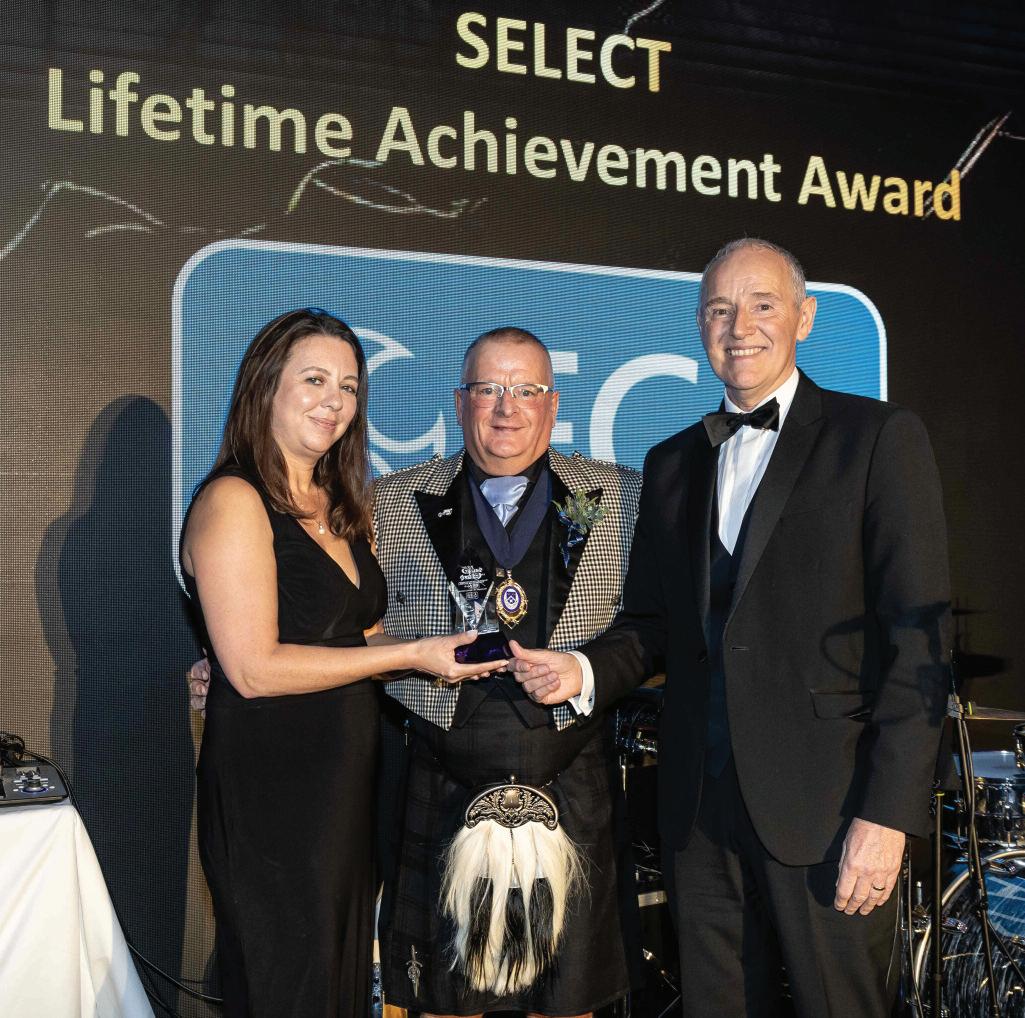
Ruth Devine added: “This award is especially meaningful because it recognises the long-standing collaboration between our two associations. Together, we have championed apprenticeships, strengthened competence and supported businesses as the industry evolves ”
SELECT Managing Director, Alan Wilson, said the accolade was richly deserved: “The ECA has been a steadfast
partner and a vital force for good for more than 120 years Its leadership, expertise and commitment to raising standards have benefited the entire electrotechnical sector across the UK ”
Founded 124 years ago, the ECA has helped shape the industry from early domestic electrification to today’s world of high-performance buildings, renewables and low-carbon innovation
Aico’s Community Awards to return in 2026
Aico is bringing back its biennial Community Awards this coming year, with the event set to take place at The International Convention Centre in Birmingham on 16th April. The event celebrates excellence and inspirational achievements from across the UK housing industry, honouring those

making a real difference in their communities
Open to all, Aico’s Community Awards provides entrants with the opportunity to showcase inspirational colleagues, projects and innovations from the housing sector
The last awards, held in 2024, raised over £9,000 for the Electrical Industries Charity (EIC), with Aico matching the donation to result in a total contribution of £18,000 to this worthy cause Since 1905, the charity has offered vital support to those who work within the electrical and energy industries
This year’s ceremony will welcome over 450 guests, including the inspirational finalists from all award
categories
Continuing its support for the EIC, the evening will feature a formal dinner, influential guest speakers, and live entertainment, all hosted by Carl Jones from SBLTV

“We’re proud to bring the Community Awards back for 2026,” said Neal Hooper, Managing Director at Aico “These awards are about recognising the real difference individuals and organisations make every day in improving lives and communities across the UK ”

WD24 4YF
STOP campaign aims to highlight hidden electrical hazards
Martindale Electric has launched a new awareness campaign – “STOP No Check No Contact! – which urges anyone working on or near electricity to always check exposed metal parts before touching them
“Standard industry safe isolation procedures disconnect the circuit to allow work, maintenance, or installation safely,” explains Steve Dunning, Managing Director at Martindale Electric
“They do not cover checking for live metal parts Incorporating this discipline into established work practices minimises risk and ensures safer working If metalwork is not checked, don’t touch it: Stop No check No contact!”
A common risk is a Protective Earth Neutral (PEN) fault, where a break in the
PEN conductor – serving as both neutral and protective earth – can make metalwork live, posing electric shock and equipment damage risks For instance, EV chargers on PME networks must have PEN fault protection devices to detect breaks and disconnect power automatically

electricity, and cannot reliably prove a circuit is dead
Performing a touch test is essential for potentially live metallic items Single-pole contact indicators, such as the Martindale VT7, should be checked for functionality before each use, with correct use included in safety training Non-contact voltage devices may also be used, but require batteries, are sensitive to static
C-TEC updates technical support number
C-TEC has announced that its new dedicated technical support telephone number is now live
The new number – 01942 366328 –will give customers direct access to C-TEC’s technical support team and is part of the company’s recent large-scale investment in its technical support and professional help desk services
Other initiatives recently introduced include a Cloud-based AI-enabled call
logging software system, the creation of a specialist CAST technical team to deliver tailored support on its powerful own-protocol life-safety systems and the appointment of additional technical experts to strengthen the existing team
A series of help videos to provide customers with clear, visual, on-demand guidance on the installation and operation of C-TEC's systems are also in progress and will be released this year
Metway enters employee ownership
Metway Electrical Industries, a mainstay of the UK electrical sector since 1937, has announced the successful transition of its business into an Employee Ownership Trust (EOT)
The move marks a defining moment in the company’s long history, ensuring Metway’s continued independence and reinforcing its commitment to long-term stability and customer service
The EOT structure means Metway’s employees now hold a controlling interest in the business, aligning ownership directly with the people
responsible for its success The transition was carefully planned to preserve Metway’s core values of quality, innovation, and reliability – principles that have guided the company for more than 85 years
Steve Chessell, Managing Director, commented: “Our people are at the heart of Metway’s success, and moving to employee ownership reflects that reality
“This transition safeguards Metway’s independence, strengthens our collaborative culture, and ensures that
Martindale’s campaign links awareness to its full range of safe isolation products, reinforcing the importance of vigilance when working near electricity
FOR MORE SAFETY ADVICE AND DOWNLOADS VISIT: WWW.RDR.LINK/EBU002

our customers and partners continue to receive the consistent service and support they expect from us ”
Metway continues to design, manufacture, and supply a wide range of electrical connectors, lighting connection systems, and lighting controls from its Brighton headquarters.
The shift to employee ownership positions the company for a strong and sustainable future within the UK manufacturing landscape
WMC guide will help insurers understand fire-resilient cabling
Wrexham Mineral Cables (WMC) has released a new technical guide designed to help insurers, underwriters, and risk consultants understand how electrical cabling impacts building resilience and life-safety integrity.
Titled How MICC Fire-Survival Cables Support Safer, Lower-Risk Buildings, the guide highlights why electrical cabling is often the weakest link in both fire and electrical safety strategies and explains how this can influence insurance exposure and risk assessment
Developed by WMC, a leading UK manufacturer of Mineral Insulated Copper Clad (MICC) cable, the publication provides clear, evidence-based insight to support more accurate underwriting, fairer premiums, and stronger protection for people and assets
“This guide helps insurers see beyond basic compliance,” says Gareth Edwards, WMC Commercial Manager
“It shows how specifying true fire-survival
cabling can reduce loss potential, protect life, and improve resilience for building owners and insurers alike ”
Key learning points include:

● The fundamental differences between polymer-based “fire-resistant” cables and true MICC fire-survival cables
● How MICC supports UK and international fire safety and electrical reliability standards
● Measurable ways MICC reduces insurance exposure and strengthens risk profiles
● Where and how MICC should be specified within fire and electrical resilience strategies
● Best practice for design, installation, and retrofitting to maintain long-term circuit integrity
The guide forms Part 1 of the WMC
Powered Now announces ‘Friends with Benefits’ scheme
Powered Now has launched ‘Friends with Benefits’, a referral scheme giving users the chance to win prizes while helping peers discover a smarter way to run their businesses.
The scheme invites existing customers and prospective users to refer friends or colleagues to Powered Now’s job management tools, including its paperwork template library, job scheduling system, and customer update features.
Each successful referral earns a £50
cash bonus and automatic entry into a prize draw with top giveaways such as SumUp card readers, AirPods Max, Just Eat vouchers, Powered Now merchandise, tool bundles from CT-1 and Fischer, and a PlayStation 5. There is no limit on the number of referrals a participant can make Prospective customers can sign up to receive a unique referral code to share with friends or colleagues, who register by providing their name, company, and contact details
Insurer Series, focusing on fire resilience and life-safety integrity Part 2, Electrical Faults, Corrosion & Rodent Damage: The Hidden Threat to Reliability, will cover fault prevention, corrosion resistance, and rodent protection in commercial environments
Understanding how cabling affects building resilience is key to reducing long-term insurance exposure. WMC’s guide bridges the gap between compliance on paper and performance in practice

Professional Electrician & Installer has launched the fifth edition of its ‘CPD Book’ online-only publication, which offers industry professionals the opportunity to earn 6 x CPD credits, or the equivalent of six hours’ learning/reading time.
The regular PE ‘CPD Zone’ section (starts on page 23) contains content and articles from leading industry authorities
and contributors that are collectively deemed worthy of CPD recognition
This book wraps up the content from the first six ‘CPD Zone’ sections of 2025 to offer professionals a valuable 98-page resource
The CPD Book: Volume One 2025 is free to access and is available now on the PE website You can also request a download link while you’re there.

Ovia unveils brand new emergency lighting portfolio
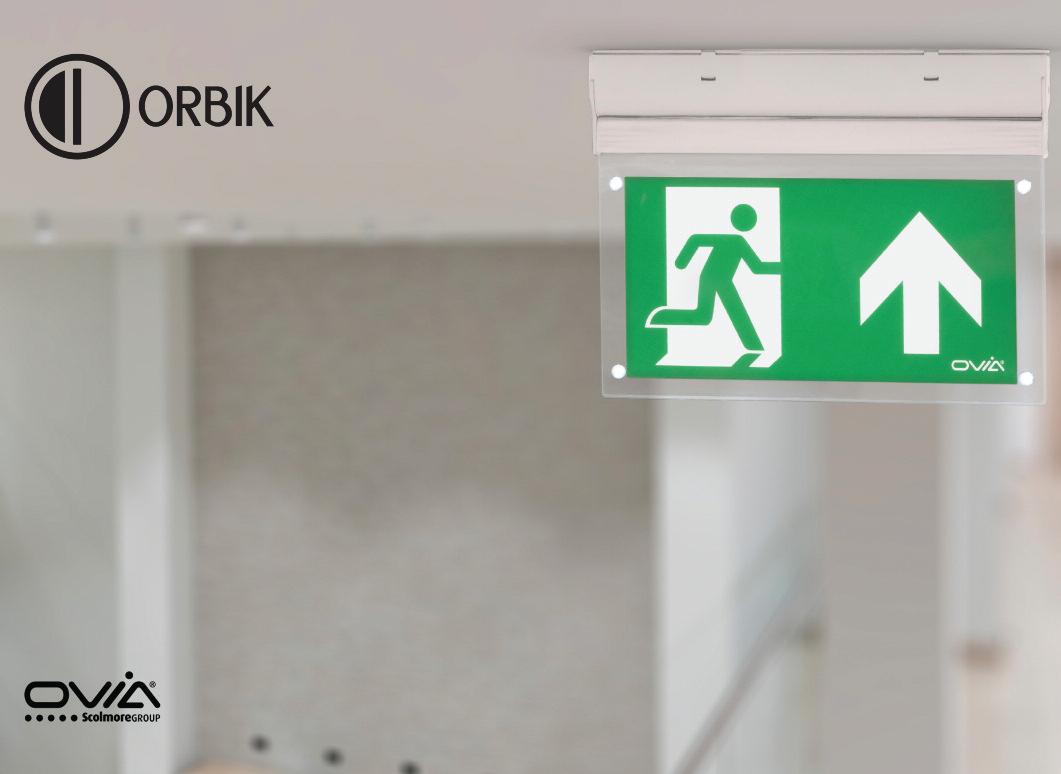
Ovia, part of the Scolmore Group, has launched its newly enhanced Orbik by Ovia emergency lighting range, marking the next chapter for the long-established Orbik brand since its integration into Ovia’s lighting portfolio earlier this year.
The redevelopment combines Orbik’s trusted reputation with Ovia’s focus on innovation, performance, and compliance, delivering a refreshed collection of emergency lighting solutions for commercial, industrial, and residential environments
Four new flagship products headline the upgraded range: Novem HO5: A high-output emergency bulkhead producing 920 lumens at 115 lm/W, over seven times brighter than the standard Novem5, ideal for larger or high-ceilinged spaces
Calvip 65: A slimline IP65-rated exit box, robust and reliable for damp or humid areas such as changing rooms
Synex5: A five-in-one exit sign offering ceiling, wall, suspended, recessed, or side-mounted options for maximum flexibility
Vipex5: A 4 W polycarbonate exit box with a 36 m viewing distance, sleek modern design, and simple retrofit capability
Standout features across the range include: enable/disable self-test for automated compliance, long-life LiFePO4 batteries, optional black finishes on select models, and a five-year warranty
The complete Orbik by Ovia range also includes upgraded exit signs and boxes, twin spots and pin spots, bulkheads and circular/square spots, and control gear and accessories – all supplied in eco-friendly recyclable packaging
Ovia also offers bespoke emergency lighting design services compliant with BS 5266, producing tailored layouts for optimal safety, compliance, and performance
The relaunch represents a new chapter for Orbik, providing a comprehensive, compliant, and future-ready emergency lighting solution backed by Ovia’s technical expertise and UK-based support network

For 70 years, NICEIC has had a clear mission: helping to ensure high-quality electrical installations that keep people safe. Here the organisation reflects on seven decades of change.
RAISING STANDARDS, BUILDING TRUST
If you look back over NICEIC's history, you'll see an industry transformed. New technologies, smart homes, and renewable energy have reshaped how we live, work, and travel But when it comes to electrical installations, some things never change: strong technical skills and a commitment to professionalism remain as vital as ever, and certification remains the anchor that embeds these principles at the heart of the trade
“As someone who began as an apprentice and worked hands-on as an electrician, I’ve seen first-hand how much this industry has evolved,” says Paul Collins, Technical Director at NICEIC.
“70 years ago, who would have thought electric vehicles would be commonplace on our roads, or that
domestic heating and lighting could be controlled from an App?”
The unprecedented and often unpredictable nature of technological and societal change over the past 70 years has made the role of certification even more vital, providing stability and trust in an industry where innovation has been ever present.
The people behind the progress Demands on electrical contractors have grown enormously Customers expect more, safety standards keep evolving, and new regulations redefine how contractors work None of this happens overnight; it takes hours of training, hands-on experience, and a commitment to getting things right
From the introduction of Part P in 2005 to
recent rules tightening electrical safety in rented homes, progress doesn’t happen with the click of a finger or the signing of a law Instead, it’s built on continuous learning and development, something NICEIC has championed for seven decades
Paul says: “We’re fortunate to hold a unique position in this industry Every day, we meet businesses doing remarkable work, building respected companies and nurturing new talent
“Sometimes the incredible work happening in this industry goes unnoticed Let’s not forget how important electrical contractors are
“For us, reaching 70 years is a milestone but what really matters is everything that’s been achieved along the way: businesses built, apprentices trained, renewable energy projects delivered, and homes made safer
“Certified businesses have led the way on all of that, and this anniversary is our chance to thank them and recognise their contribution ”
A mark of reassurance
From the 1950s, when post-war household coal rationing was still in effect, to today’s era of smart homes and low carbon technologies, the NICEIC badge has been a constant It has provided a benchmark for safety and technical integrity in an evolving world
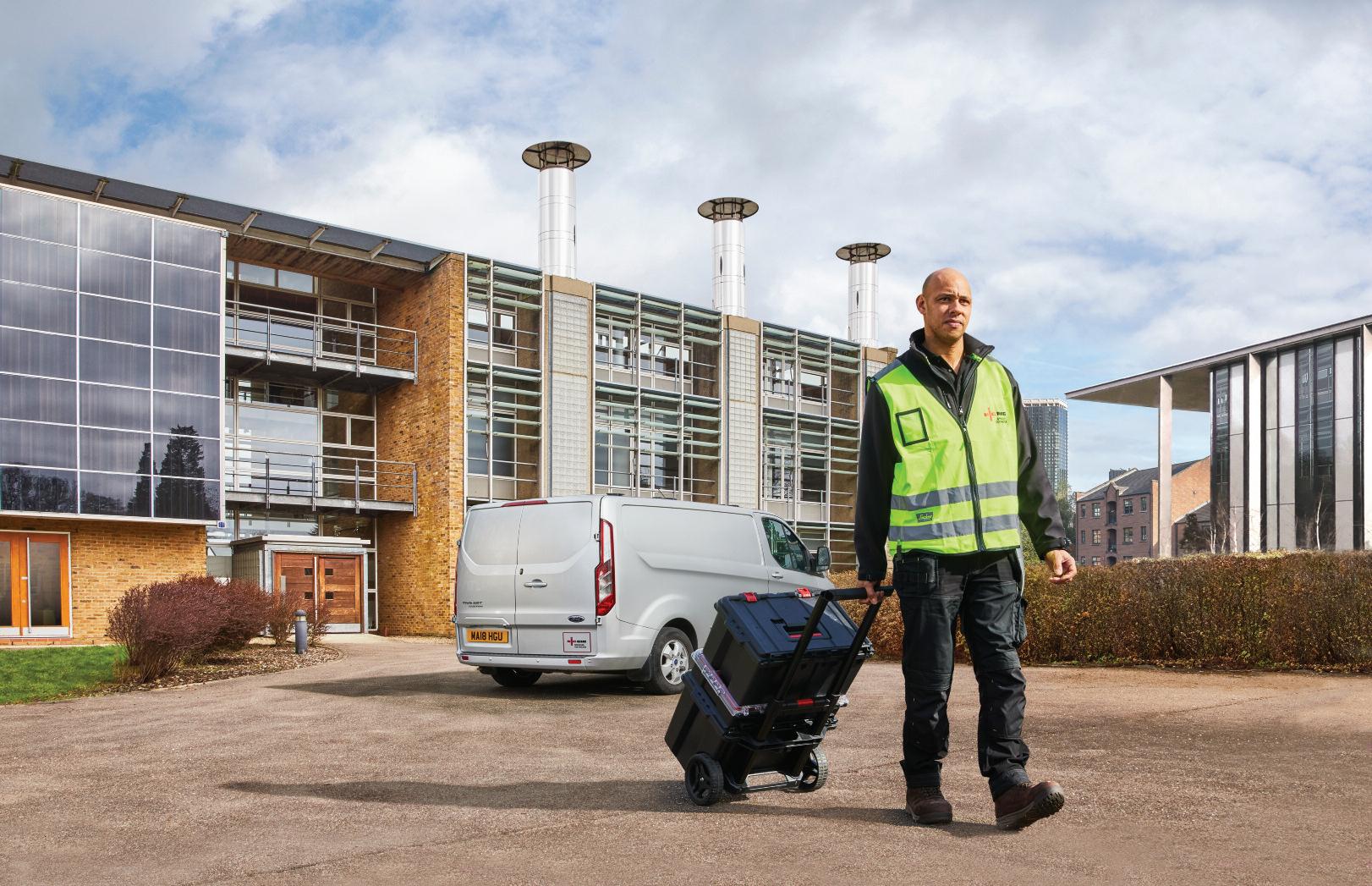
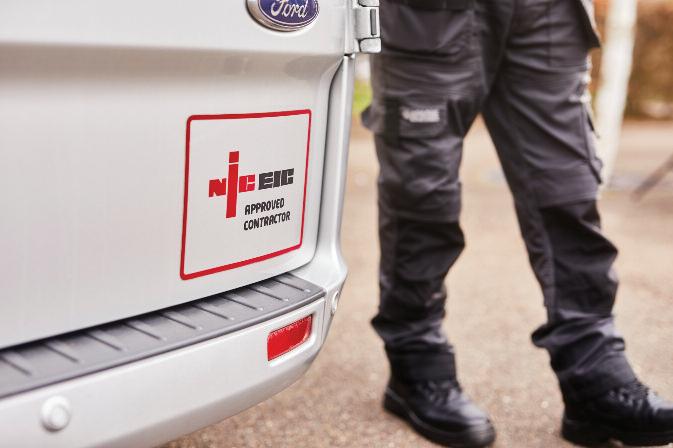
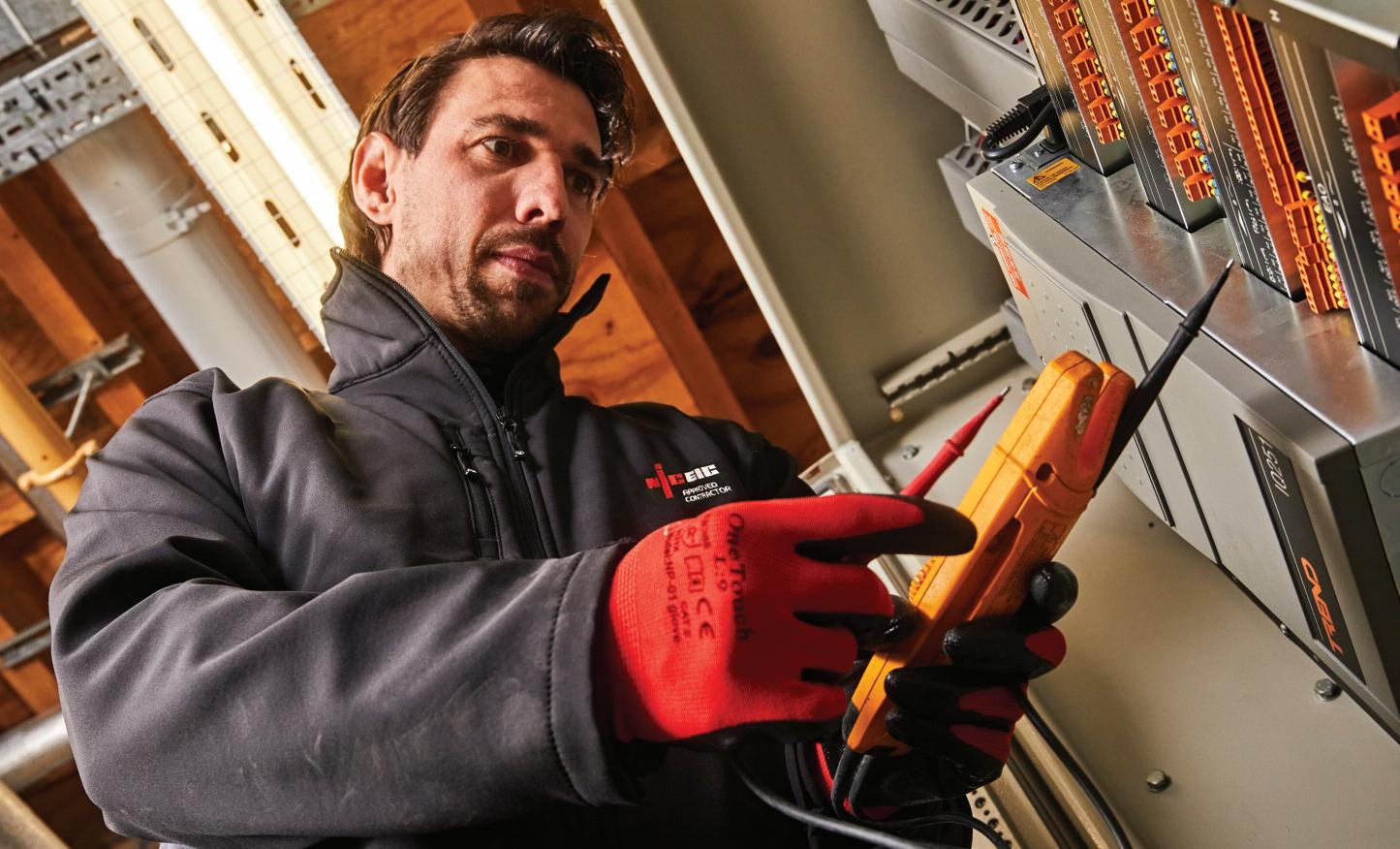
Businesses proudly display their certification on their vans and workwear because they know what it represents:

rigorous checks, high standards, and trust.
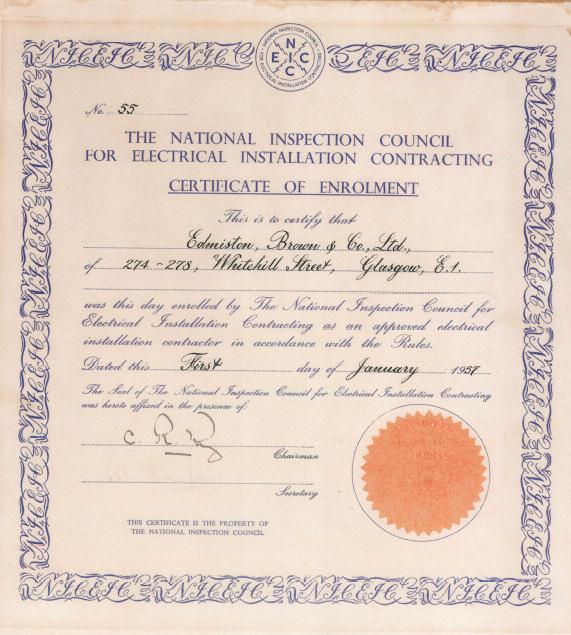
Cameron Lister, Director at Edmiston Brown, an electrical contracting business certified by NICEIC since 1957, says: “We’ve seen huge changes in the world and on the job, with new techology, regulations, and ways of working. Through all of that, our core values have stayed the same: doing great work and maintaining high standards
“Certification has always been part of that It’s a mark of quality and professionalism that our customers recognise If anything, it has become more valuable over time as we’ve moved from communities having access to just one or two local sparks, to the endless choice presented by online reviews and social media ”
He continues: “No matter what the future brings, your name and your reputation is what the business lives or dies by The fact people associate us with quality work is what’s helped us survive and thrive over so many years ”
Martin Pearce, at Martin Pearce Ltd agrees, stating: “NICEIC, in my opinion, is the most recognisable certification organisation for the electrical industry in the UK
“When meeting potential new customers, I always make a point of explaining the importance and benefits of being an NICEIC-approved contractor That
trust is invaluable in an industry where reputations are hard-won – and easily lost ”
Long-term thinking
Over 5,000 businesses have been certified with NICEIC for 20 years or more, a clear signal of long-term thinking and multi-year business planning It’s also a sign of businesses who are motivated to do things right – not just today, but in the future.
Over the last 70 years, with the introduction of new standards – including major changes to the IET Wiring Regulations – and new technologies –such as the connection of domestic solar to the grid in the 1990s – this commitment has remained crucial.
NICEIC-certified businesses must also make sure that employees carrying out electrotechnical work complete ongoing professional development (CPD) This is a key measure introduced to keep their skills and knowledge up-to-date.
Whilst the system has been formalised over time and the delivery of CPD material has changed, the core principle remains the same: our certified businesses are dedicated to honing their craft and learning new ways to do a better job
Safety is absolutely paramount in electrical contracting and over many decades, certification with NICEIC has helped keep thousands of businesses compliant with the latest regulations and standards This compliance has never been a tick-box exercise; it has made a material difference in protecting people's lives and property
Looking ahead: the next 70 years
We’re proud of our history, but the future is our focus Advances in electrification, smart technologies, and sustainability are accelerating the rate of change, while new safety requirements are reshaping our industry
Paul Collins sees a future where technology and standards go hand in hand: “Even with the technology that we have today, we can see how buildings could be capable of generating their own power, storing it, and using it in the most efficient way possible We’re just starting to tap into this potential now with solar PV and energy storage systems
“Electricians will be at the heart of the Net-Zero transition, and their expertise will






















Y EARS standards Raising electrical since 1956.
turn ambitious sustainability targets into practical, safe solutions for homes and businesses ”
He adds: “In time, houses will be increasingly self-sufficient and AI will be the ‘brains’ driving many of these changes It will understand what’s happening in a property and optimise everything, from heating water to managing energy use
“For contractors, AI could help design circuits and installations, validate designs, and help with reports and documentation at speed For complex projects especially, it has the potential to be a game-changer
“As technology evolves, the fundamentals don’t change Safety, competence, and professionalism will always matter Certification is how we make sure those principles stay at the heart of the industry ”
Cameron Lister echoes this sentiment: “The world will keep changing, but people will always want a job well done.”
More change is guaranteed, and likely in ways we can’t yet imagine So too is NICEIC’s commitment: to continue raising standards and supporting the industry through every new chapter







CHOOSING THE RIGHT PIECES
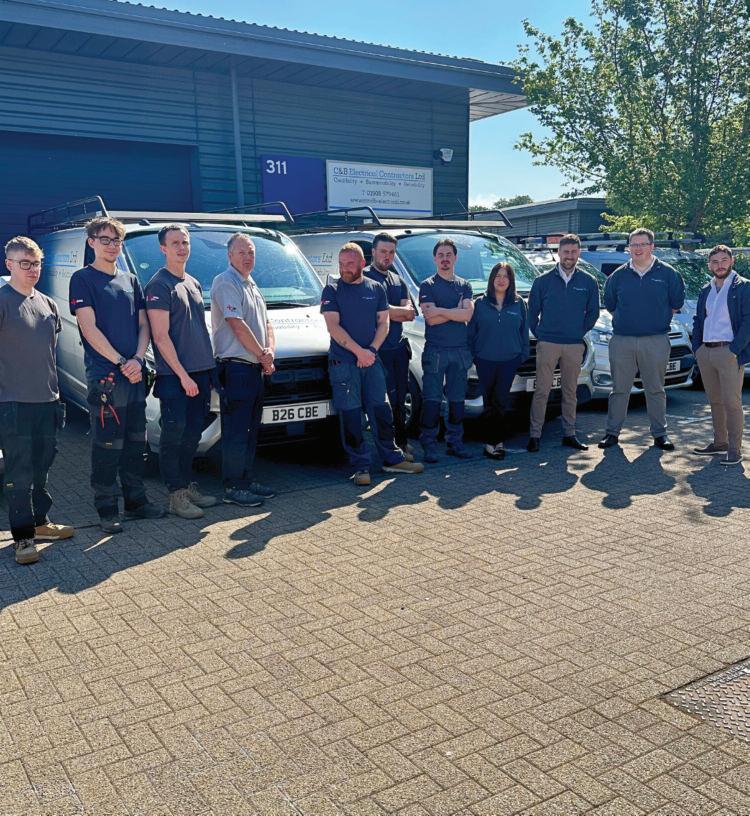
Callum Biscoe, Director of C&B Electrical Contractors, identifies the
five key attributes that he looks
for when recruiting new staff.
Anyone who plays chess will appreciate that only when every piece – from pawn to king – interacts together fluently do you have a chance of winning
And it’s a bit like that in business; every person in our firm must fit in and play their part, whatever their level of seniority or experience.
That’s why I look for the following attributes when assessing a potential recruit:
1. Strong team player
If you’re an apprentice, that means supporting more experienced professionals while you learn the skills you will come to rely on For more experienced recruits, it could be that you pick up the slack on a job without being asked. Just little things that show you are a team player.
2 Reliability
Our clients depend on C&B to complete whichever project they have been set, so why shouldn’t that be part of the culture in our own behaviour? Reliability is our mantra here, and we expect it in new recruits
3. Attention to detail
Given the nature of an electrician’s job, this should be a no-brainer We pride ourselves on focusing on the tiniest detail at work, because to do otherwise would introduce an element of danger Think of it this way: which other job can be kyboshed because of a misplaced wire or cable?
4. Staying up-to-date
A willingness to keep up with current regulations and commit to continuing professional development (CPD), regardless of your level of experience, because the technological landscape is always shifting Whether it be BS 7671 (the IET wiring regulations) for installation safety, or electrical sections of the building regulations, an experienced potential recruit must demonstrate knowledge. Apprentices will learn.
5 Risk aware
And finally, they have to show that they are aware of risk A bit like being a stickler for detail (point #3), awareness of risk comes with the territory for a good electrician I would be looking for that in anyone who wants to work at C&B
Skills England (the Department for Education’s executive agency that provides labour-market intelligence on skills needs) has highlighted that demand for proficient electricians will only get higher in the years ahead
That brings challenges to electrical contractors such as C&B that are looking to grow, but it is no excuse for putting up with second best – and potential recruits should consider these five points
Then it’s over to you: your move!
STARK LIFE
We catch up with a husband and wife team who have built a thriving electrical empire and find out why, sixteen years after launching their first business, they’re now looking to embark on their boldest venture yet.
Most electrical business
owners will tell you that the journey from a fledgling upstart to an established and viable company has taken a familiar path: learning the ropes on the tools, juggling the demands of new customers, managing admin late into the night, and gradually discovering what it takes to run a business in a demanding trade
But for Lisa and Stuart Starkey –founders of Starkey Electrical and StarkEV – the path to success began somewhere far less conventional: around the dining table, surrounded by nappies, paperwork, and a newborn baby
Lisa recalls: “It was 2009, just nine months after our first child was born I never thought we’d get off that dining room table – I had a bottle in one hand and the phone in the other!”
Although most new companies experience a slightly less chaotic start to their existence, the couple, determined to build a firm that offered both a livelihood and a real work-life balance, leaned into it

all Stuart grew the business locally in Halesowen while Lisa juggled nappies, invoices and 24/7 callouts – all while carrying out the night feeds
Two years later, baby number two arrived, the workload had exploded, and things were starting to get interesting
“I remember standing on the landing with both babies crying in their cots while I was on the phone to a new law firm client,” Lisa says
“I ended up leaning out of the bedroom window so they wouldn’t hear the babies screaming!”
It was in that moment – one foot out of the window, quite literally – that the couple realised they needed some help An apprentice soon joined, and before long, they moved into their first office
Fast forward to today, and Starkey Electrical sits proudly in its fourth premises, with a core team of loyal staff in place, plus a trusted network of subcontractors who’ve become part of the furniture.
Lessons learned
Sixteen years on from those halcyon days,


the Starkeys have accumulated more lessons than most couples ever will – both personally and professionally.
Stuart says: “The biggest lesson for us has been trust – trusting each other, trusting our instincts, trusting our team and building trusting relationships with clients and suppliers ”
This ethos has become a cornerstone of the business Indeed, the clients they started with many years ago are still with them today. They’ve also learned how to stay married while running a business together – no small feat in itself.
“We don’t discuss work in the evenings or at weekends if we can help it,” Lisa explains “And if we need to, we book time in to talk about it Otherwise you’re trying to juggle family commitments with a business conversation, and that’s when things get stressful ”
From local sparks to national recognition
St



“We’ve always grown at our own pace,” Stuart says “It was important that we didn’t expand too quickly and lose the quality and professionalism we’re known for ”
Quality, in fact, seems to be stitched into every corner of the business. Both Lisa and Stuart continue to be hands-on, ensuring that no matter how large the company becomes, the customer experience never deviates from the standard they set on day one
Lisa adds: “We’re only as good as our last job As such, our team is everything to us and we treat them how we’d want to be treated – flexibly, fairly and with trust ”
This includes family-friendly working arrangements, support for school events, flexible appointments and the understanding that life doesn’t stop just because a job needs quoting or a consumer unit needs replacing
Rising to the challenge
When COVID hit and many businesses were forced to hit the pause button, Starkey Electrical accelerated its efforts –not necessarily by choice, but by demand – with key clients working in food distribution and logistics, sectors that were stretched to breaking point
“It was the busiest we’ve ever been,” Stuart explains “We delivered a 24/7 service, even through Christmas and New Year, and we saw ourselves as key partners to our clients’ success ”
The pressure was immense, but the relationships forged during that period are likely to stand the test of time Better still, the success enabled Lisa and Stuart to launch a second business: StarkEV
StarkEV officially launched in 2021, following an opportunity that was presented to Lisa and Stuart to become an exclusive UK partner with a wellknown EV manufacturer What began as a local operation has since grown to national installations at workplaces, schools, hospitals, hotels and supermarkets
The real boom, however, has been in renewable energy and off-grid solutions
Lisa says: “Our biggest area of growth is solar and renewables. We’re especially proud of our off-grid projects, as these systems are revolutionary ”
Each one is tailored to the client’s site and needs, using cutting-edge technology and full project management
Always learning
With renewables and EV technology evolving constantly, staying ahead of the curve isn’t optional – it’s essential. At Starkey Electrical, training is a constant investment and is actively encouraged
“Our staff are our biggest asset,” Stuart says “We invest in their training, we ask them what development they want, and then we make it happen ”
From open days to manufacturer training, appraisals to weekly meetings, the message is clear: you
can’t install tomorrow’s technology with yesterday’s knowledge
Since day one, Starkey Electrical has also focused on local causes, donating a percentage of profits to charities and raising thousands over the years – all part of giving something back to a local community that supported the business so well when it first started.
The future’s bright
Despite sixteen years in business, three children, four office moves and more installations than they can possibly remember, it appears that Lisa and Stuart are only just getting started
Their goals for the coming year include growing StarkEV and continuing their offgrid innovations. There’s also something even bigger on the horizon
Lisa explains: “We’re launching another arm to the business this year It’s a new era of Starkey collaboration – something that reflects both of us ”
The new venture – Stark Life – will build on everything Starkey Electrical and StarkEV have become known for: trust, quality, professionalism and tailored solutions. But it will also open the door to something more holistic and lifestyledriven which, in Lisa’s words, “is very different and life-changing for clients ”
So, next time someone tells you it’s impossible to run and grow a thriving electrical company from a dining room table with a baby on your arm, just point them in the direction of Hagley!
Working on your own? Need some technical advice? Don’t know where to turn? Ask Megger What it doesn’t know about installing and testing electrical systems isn’t worth knowing Every question will be answered by the Megger Technical Team, and the best will be published in Professional Electrician So, take advantage of the ‘ every question answered’ guarantee today Email your questions to: meggermeasures@hamerville co uk

You ask:
LOOP TESTING IS THE THING I LIKE LEAST WHEN I’M CERTIFYING ELECTRICAL INSTALLATIONS. IF I REPEAT A TEST, I OFTEN GET DIFFERENT RESULTS THE SECOND TIME, AND IF THE INSTALLATION INCLUDES CERTAIN TYPES OF RCD, I GET REALLY STRANGE RESULTS. CAN YOU HELP WITH THIS? IT’S DRIVING ME CRAZY!

Megger says:
What you need is our new MFT-X1 multifunction installation tester
It’s the only MFT on the market with True Loop three-wire non-trip loop testing technology and our patented Confidence Meter, both of which have been developed to solve just the sort of problems you ’ re having These features mean you will always get accurate and repeatable results, even in electrically noisy environments They also take care of the RCD uplift you ’ re seeing, where the internal impedance of some types of RCD leads to inaccurate measurements And they do all of this even on circuits protected by 6 mA and 10 mA devices The Confidence Meter works with all the MFT-X1 loop test options – two-wire, three-wire and high resolution As you ’ re performing a measurement, the Confidence Meter constantly checks its stability and provides you with a display that goes from red to amber to green as stability improves When it gets to green, you can be sure the measurement is stable and correct The MFT-X1 will cure your loop testing headaches –and you’ll also find it’s a great instrument for every other aspect of installation testing
VISIT THE MEGGER MFT-X1 MULTIFUNCTION INSTALLATION TESTER PRODUCT INFORMATION PAGE AT: WWW.RDR.LINK/EBU007

ENTER THE CPD ZONE AND EARN 1 CPD CREDIT
TOWARDS YOUR PROFESSIONAL RECORD!
continuing professional development (CPD) can be broadly defined as any type of learning you undertake which increases your knowledge, understanding and experiences of a subject area or role. To help professionals to better document and prove this process, our CPD Zone contains content and articles that have been checked, verified and accredited by a third-party specialist organisation
Collectively, the content within this section has been deemed worthy of 1 x CPD credit, or one hours’ worth of CPD
Once this content has been consumed, readers will have the opportunity to scan a QR code which will provide a bespoke, downloadable certificate that can be used as part of a

professional’s ongoing CPD record
This means that if you’re a monthly reader of PE, you could earn up to 11 credits, or 11 hours’ worth of CPD, just by reading a regular copy of your favourite independent industry magazine in 2026
DO
NOT SCAN THE QR CODE
UNLESS
YOU HAVE READ ALL OF THE CONTENT WITHIN THIS SECTION!
A large element of CPD involves self-certification and relies on professionals being honest about what they have actually read, consumed and digested A QR code and RDRLink code have been placed with the final article in this month’s CPD Zone and ONLY once you have read ALL of the articles within this section, should you then scan/enter the code to receive your bespoke certificate
By skipping any of these steps, you’re not just cheating the system, but yourself and your fellow professionals at the same time!
NEW USERS – ACCESS YOUR BESPOKE CPD CERTIFICATE IN FIVE STEPS
1. Read ALL of the content and articles included within this month’s CPD Zone
2. Scan the QR code or enter the RDRLink code with the last article in this section
3. Enter your email address.
4. Fill out your details on the contact form.
5 Download your certificate for use as part of your annual CPD record
PREVIOUS USERS – ACCESS YOUR CPD CERTIFICATE IN FOUR STEPS
1. Read ALL of the content and articles included within this month’s CPD Zone
2. Scan the QR code or enter the RDRLink code with the last article in this section.
3. Enter your name and email address.
4. Download your certificate for use as part of your annual CPD record
All certificates are valid for one year from the issue date If you’re having any issues with downloading your certificate or using the system, please email us at: pe@hamerville.co.uk

THE CODEBREAKERS

ROGER NIGHTINGALE: THIS IMAGE IS OF A REPLACEMENT GAS BOILER IN A SCHOOL WE WERE ASKED TO LOCATE THE MAINS CONNEC TION FOR THE ORIGINAL GAS BOILER YOU CAN SEE HOW THE PLUMBER AND OURSELVES HAD TO CUT OUT THE WALL TO EXPOSE THE CONNEC TION PLATE, WHICH WAS FULLY CEMENTED IN

Par t of the periodic inspec tion and testing process involves carr ying out a sample of the terminations within the elec trical installation When terminations exist, such as the connec tion plate for the boiler – where it has been concealed within the fabric of the building, preventing accessibilit y for inspec tion purposes – there may be potential damage to the flexible cable which has been buried within the cement/plaster without any means of protec tion


The original installation of the connec tion plate and back box has not been installed to the correc t depth to allow the connec tion to be mounted above the level of the tiles As a flex connec tion it would not have been installed with maintenance -free terminations, so would not conform with the requirements of BS 7671
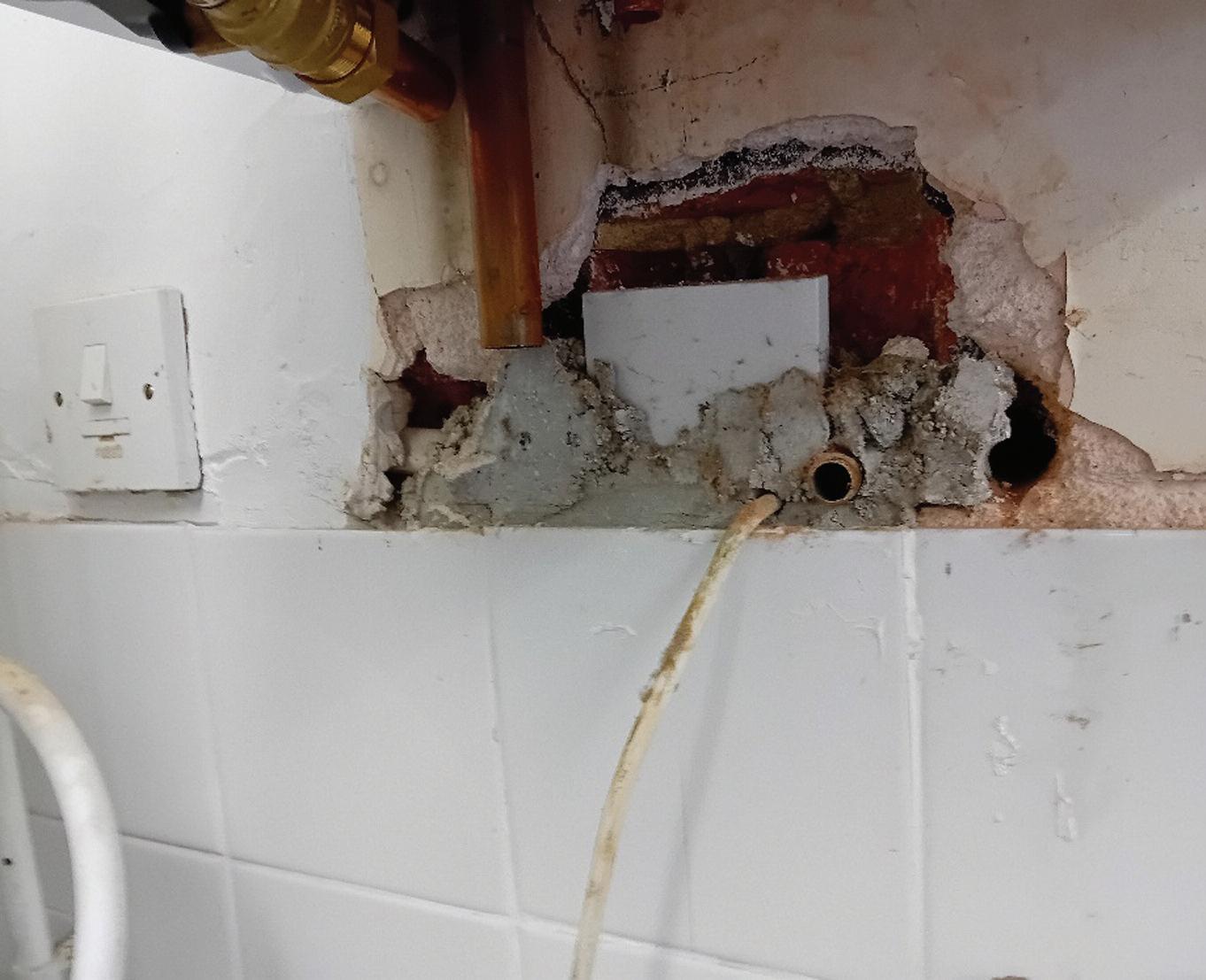
Therefore, the classification code would be a C2, Potentially dangerous, urgent remedial ac tion required due to the lack of access to the terminations for inspec tion, maintenance and produc t replacement
The Observations, Regulation infringements and Codes applicable to this observation would be: R
Lack of accessibility to terminations 513.1, 134.1.1 C2

GET THE BOOK AND CRACK THOSE CODES!
Updated for BS 7671:2018+A2:2022, NAPIT ’s EICR Codebreakers publication is purpose -written to aid contractors, inspectors and clients, and now includes updates to align with Amendment 2 of the IE T 18th Edition Wiring Regulations The book is the per fect technical aid for electrical professionals and their customers



Need help with cracking those all-impor tant EICR codes? Ever y month the technical team at NAPIT will be studying your latest ‘Caught on Camera’ photos and offering advice on the next steps, should you find a similar installation. If you want the team at NAPIT to help crack your codes then send your pic tures through to us at: pe@hamer ville.co.uk



JUSTIN ROBERTS: I WAS CALLED OUT TO A QUOTE FOR A NEW BOARD CHANGE AND FOUND THIS… WESTON POWER HAD TOLD THE CUSTOMER SHE NEEDED A BOARD CHANGE!
I n cer tain circumstances, when conduc ting an EICR, the condition of the installation and associated equipment may be so poor that car r ying out a full per iodic inspec tion and testing would ser ve little prac tical pur pose.
Par t of the design condition is to consider the ex ter nal influences that can affec t the elec tr ical installation I n this case, we would have to assume that water ingress was not a fac tor in the or iginal design based on the metal enclosures on the switch-fuses
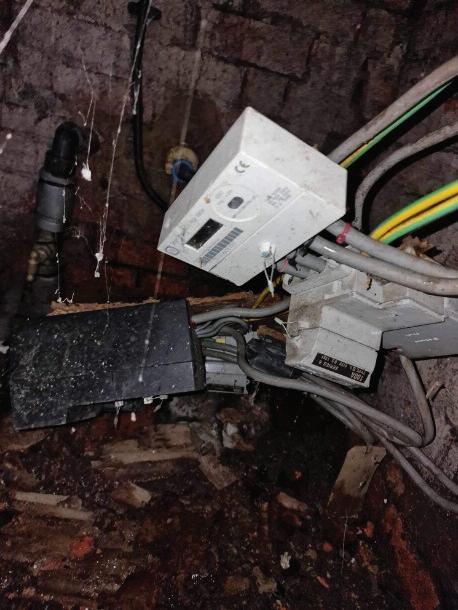
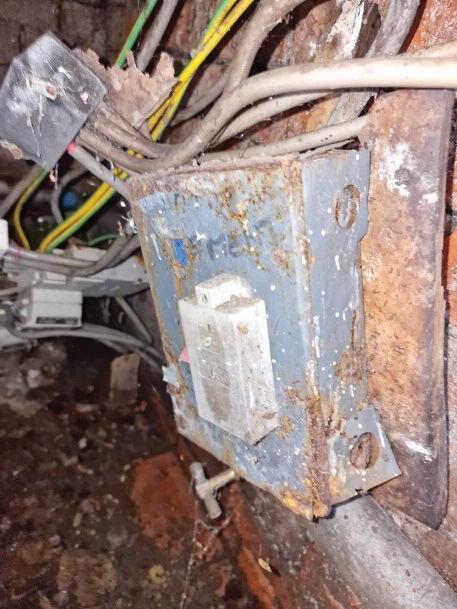
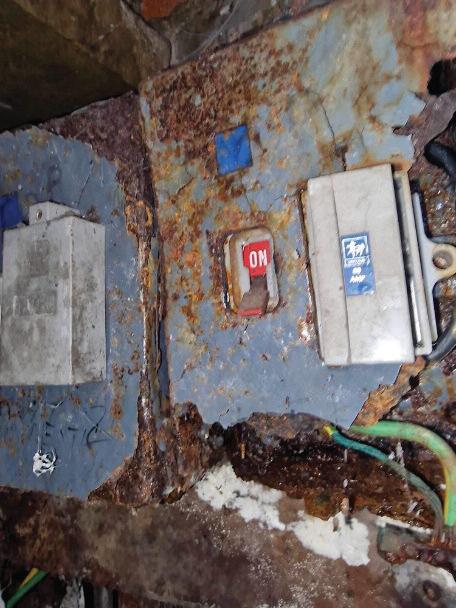
There has been a change to the installation which has ser ious degradation from either flooding or water leak age, creating a fire or shock r isk to anyone using the installation
The obser vations on the EICR would cover t wo areas:
a) The ser vice cable, intake and meter ing equipment are affec ted by the water ingress, with the equipment floating where the fixings have failed, resulting in strain and stress on the cables and ter minations.
b) The switch-fuses for the sub mains to the individual flats have suffered ser ious cor rosion to the enclosures, resulting in access to live par ts and increased r isk of fire or shock
Therefore, the classification code would be a
par ts and continuing water ingress With the intake equipment we would nor mally apply the X and for the person order ing the

k to infor m the appropr iate author it y I n this case, however, it would be justified for a C1 to be issued
The Observations, Regulation infringements and Codes applicable to this observation would be:
Intake equipment not secured, subject to water ingressESQCR Switch-fuses subject to corrosion and access to live parts, not supported
The A2:2022 18th Edition Codebreakers publication is priced at £22.00 (members) and £24.00 (non-members). It is available in both hard copy and digital versions * Price is VAT exempt and excludes postage and packaging.






WHAT’S CHANGED WITH BS 9991?
Jake Green, Head of Technical Engagement with Scolmore Group, considers the impact of BS 9991 on the design of a fire detection and fire alarm system conforming to BS 5839-6.
BS 9991 has been updated from the 2015 version to the 2024 version. The standard is labelled BS 9991: 2024 Fire safety in the design, management and use of residential buildings – Code of practice
BS 9991 is a ‘code of practice’ and as such provides guidance and recommendations It is not a specification and should not be treated as such
The scope of the standard is to provide guidance on the design, management and use of dwellings, blocks of flats, residential accommodation blocks having individual bedrooms, specialised housing and care homes, to achieve reasonable standards of fire safety for all persons in and around buildings
BS 9991 is not applicable to HMOs, hotels, caravans, mobile homes, hospitals, places of lawful detention or hostels
Grade and category of system
BS 5839-6 provides guidance in Table 1 on the minimum recommended grade and category of system for a range of domestic premises Furthermore, Approved Document B (England and Wales), Technical Handbook (Scotland), and Technical Booklet (Northern Ireland) also detail minimum recommendations to conform to the relevant Building Regulations legislation BS 9991 provides further minimum recommendations for grade and category of system for a range of domestic premises types.
Flats entered from a floor above or below the flat – situated more than 4.5 m above ground level
For flats entered from a floor above a Grade D, Category LD1 fire detection and fire alarm system should be provided
Open-plan flat design
Open-plan flats should be fitted throughout with a Grade D, Category LD1 fire detection and fire alarm system
Cluster accommodation
Cluster accommodation is often found in purpose-built student accommodation Typically, such arrangements will be a series of bedrooms opening onto a

common corridor with a shared kitchen and no additional living spaces
Where this is the case the category of system should be LD1 (BS 5839-6) or L1 (BS 5839-1) for the simultaneous evacuation of residents in the cluster
A smoke detector should be provided in each habitable room and a heat detector in the kitchen The system should also be linked to the management responsible for the building.
Maisonettes – situated more than 4 5 m above ground level
Fire detection and fire alarm system should conform to Category LD1
Active fire protection
In line with the recommendations of BS 5839-6, clause 16 1 of BS 9991 recommends that all dwellings are provided with a fire detection and fire alarm system. Where automatic fire detection and fire alarm systems are for mixed-use residential buildings, that is having non-

residential as well as residential elements, great care should be taken to ensure that the appropriate standard is applied to each element of the premises (clause 16 2)
Annex E – Private balconies and terraces and communal balconies, terraces and roof gardens
The normative Annex E details many recommendations and details some specific issues concerning BS 5839-6.
For the means of escape from private balconies and terraces more than 4 5 m above ground level either the interior of the access room should be clearly visible from all parts of the balcony, or as part of the fire detection and fire alarm system a means of detection should be provided in the access room as well as giving warning that is audible on the balcony with the doors closed.
The same provision exists where the distance to travel from the balcony access door to the furthest point on the balcony;
and there is no alternative escape route.
For the means of escape from communal balconies, the automatic fire detection and fire alarm system serving the protected corridors and stairs giving access to the terrace or roof garden should be supplemented by audio and visual alarms
Conclusion
Care should be taken by the designer of a fire detection and fire alarm system to not only consider the recommendations of BS 5839-6 (or BS 5839-1 where relevant) but also other relevant standards and codes of practice
BS 9991 provides additional recommendations which should be taken into account by designers of relevant domestic premises

GET MORE DETAILS ON ESP’S RANGE OF FIRE PROTECTION SOLUTIONS BY VISITING: WWW.RDR.LINK/EBU009
Q & A
NICEIC FAQs
Each month, our team of expert, technical engineers answer essential questions
Each month, our team of expert, technical engineers answer essential questions from NICEIC-certified businesses – here is one of the latest queries.
Q We are working in a domestic apartment block and have been questioned over the types of cable supports that we have installed. Within the communal area where a suspended ceiling is to be installed, we have supported the cables using steel ties to a cable tray system. Within the individual apartments, where a solid plasterboard ceiling is to be installed, we have used cable anchors and plastic ties. Should these also be steel ties?
What would be the maximum disconnection time permitted for a device providing protection against overcurrent, e.g. a short-circuit current?
The answer is not a fixed time.
Regulation 434 5 2 states that: “A fault occurring at any point in a circuit shall be interrupted within a time such that the fault current does not cause the permitted limiting temperature of any conductor or cable to be exceeded”
So, there is not a fixed time, it is dependent on the magnitude or size of the fault current, the type and construction of the conductor and the cross-sectional area of the conductor.
A Regulation 521.10.202 requires that all wiring systems shall be supported in such a way that, in the collapse and result in an entanglement risk.
Typically, for cables that are installed above a plasterboard ceiling, it is likely that the means of
The time t, in which a given fault current will raise the live conductors from the highest permissible temperature in normal duty to the limiting temperature can, as an approximation, be calculated from the formula:
where t is the duration in seconds,
the cables are contained within the ceiling void, and the plasterboard is intact, they are protected from the
S is the cross-sectional area of conductor in mm2,
It should also be noted that even in the event of the plasterboards failing, the cables will pass through joists, where this is necessary for their routing, further limiting
I is the effective fault current, in amperes, expressed for AC as the rms value, due account being taken of the current limiting effect of the circuit impedances,
Q We have been asked to install some additional lighting on existing circuits within a school. All of the additional lighting will be installed using surface-mounted conduit. However, the existing circuits that we are extending are wired using thermoplastic insulated and sheathed cables buried in the walls. Do we need to upgrade the circuits to include additional protection?
k is a factor taking account of the resistivity, temperature coefficient and heat capacity of the conductor material, and the appropriate initial and final temperatures For common materials, the values of k are shown in Table 43 1
For a fault of very short duration (less than 0 1 sec), for current limiting devices k2S2 shall be greater than the value of let-through energy (I2t) quoted for the Class of protective device to BS EN 60898-1, BS EN 60898-2 or BS EN 61009-1, or as quoted by the manufacturer
A The alterations/additions that you are undertaking on the existing circuit(s) would need to meet the requirements of BS 7671 (641.5).
However, this would not necessarily require the existing circuit to be upgraded, provided that there
Example: If a 2.5 mm2 70°C copper cable with a final temperature rating of 160°C is carrying a fault current of 200 A, we can use the aforementioned formula to calculate how long it will be before the cable will reach its limiting temperature, after which it will suffer thermal damage
From Table 43.1, the k value for a 70°C copper cable with a final temperature rating of 160°C is 115
t = k2S2 I2 I2
in accordance with the requirements of regulation
The question tells us that the cross-sectional area S = 2 5 mm2 and the fault current I = 200 A
k2S2
t = = = 2 07 seconds
1152×2.52 2002 = 13,225×6.25 40,000
Therefore if the overcurrent protective device disconnects the fault current in less than 2 07 seconds, the cable will be adequately protected against thermal damage from the 200 A fault current
If you are an NICEICfor convenient CPD resources, scan the QR



EARTH, WIND AND WIRE
Andrew Duffen, Technical Commercial Engineer at NAPIT, takes a closer look at UK earthing systems, explaining their applications, safety considerations and regulatory requirements to ensure compliant electrical installations.
An earthing system refers to the method by which an electrical installation is connected to a means of Earth. This connection is primarily for safety reasons, although in some cases, such as telegraph systems, the ground can serve functional purposes –acting as a conductor to reduce the cost of a return wire over extended circuits
In case of a fault in the electrical installation, touching a live metal part can result in an electric shock, as electricity can travel through the body to the ground Earthing offers an alternative route for fault currents to safely dissipate into the earth
Earthing arrangements
For earthing systems, a series of letter coding is used:
● T = terre (Earth)
● N = neutral
● C = combined
● S = separate
● I = isolated (referring to the connection of the source to Earth)
Five types of earthing systems are defined in BS 7671:
● TN-S
● TN-C
● TN-C-S
● TT
● IT
TN systems
In TN systems, the distribution network operator (DNO) is responsible for earthing, with the two types commonly used within the UK being TN-S and TN-C-S
TN-S system
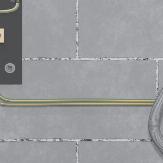
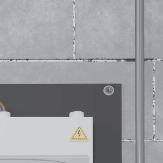
In a TN-S system, there is only one
neutral-to-earth connection, located as close as practical to the source (supply transformer).








Within a low-voltage supply, a consumer’s earth terminal is connected via the metallic sheath of the distributors supply cable. The metallic sheathing maintains the separation from the insulated neutral conductor within the cable, back to the supply transformer
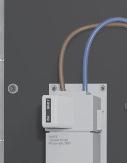
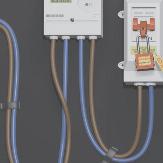
As this protective conductor is usually metallic (such as steel), the distributor typically declares a suggested maximum external earth fault loop impedance (Ze) of 0 8 Ω A detailed example of this is displayed in Fig 1 and Fig 2





























































TN-C-S systems


















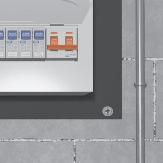
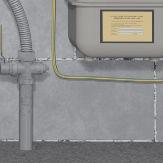
The TN-C-S system is now quite common in the UK; it allows the distributor to provide a low-voltage supply, due to a reliable earthing arrangement One form of the TN-C-S earthing arrangement is known as Protective Multiple Earthing (PME), while another is Protective Neutral Bonding (PNB)
On the supply side of the system, it relies on the neutral being connected to Earth at the transformer and then combined as one conductor through the supply network – this is known as a Protective Earthed Neutral (PEN) conductor As part of the system, there are multiple earth electrodes connected to maintain the connection to Earth
At the intake equipment of an installation, this separates into a neutral and earth conductors Due to the distributor using the PEN as a combined neutral and earth return path, the

Fig 1: Circuit diagram of a TN-S Earthing system
suggested maximum Ze being declared as 0 35 Ω See Fig 3 and Fig 4
TT systems
A TT earthing system is typically found in more rural areas in the UK, the neutral reference earthing arrangement is configured in a similar way as the TN-S, although the distributor does not provide the consumer with an earth connection
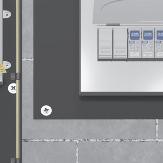
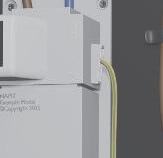
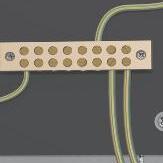
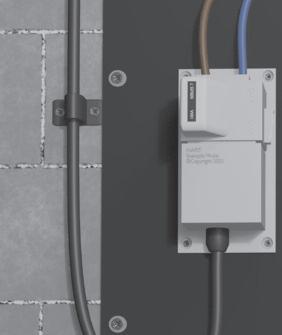
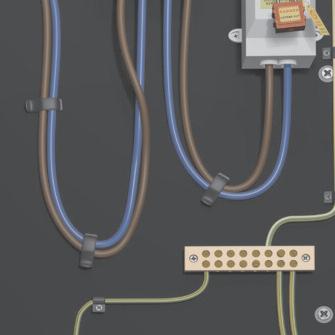
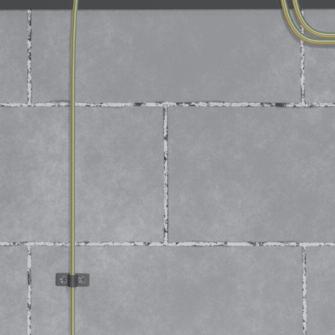
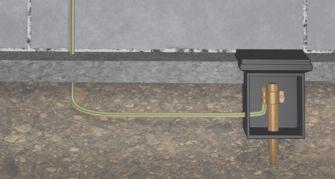
The earth connection for the installation is derived from earth electrodes using earth rods or by burying metallic plates/strips/discs into the ground (known as the general mass of earth), which is shown in Fig 5 and Fig 6










Why use a TT system?
A TT earthing system is generally installed where a TN-C-S arrangement is not permitted, for example rural installations where the supply cables are via overhead lines or special locations or installations















For a TT arrangement:
● 21 Ω is the usual stated maximum resistance of the distributor’s earth electrode at the supply transformer









Due to the earth return path being provided through the general mass of earth, Ze values may fluctuate where soil types vary, which will require fault protection measures such as Residual Current Devices (RCDs) to provide Automatic Disconnection of Supply (ADS)
● The resistance of the consumer’s installation earth electrode should be as low as practical


Conclusion































● If the measured Ze exceeds 200 Ω, it may not be stable due to environmental changes, such as drying out in the summer and freezing in the winter
IT systems




An IT earthing system is uncommon and quite specialist This is because an IT system is either isolated from earth or is connected to earth through a high impedance (normally above 1,500 Ω)
A key characteristic of an IT earthing system is its ability to continue operating without disruption if a fault occurs between lines and Earth, this type of fault is known as a “first fault”
With an IT system, certain specific measures need to be in place This will include permanent monitoring by a maintenance regime to identify the occurrence of a “first fault” This must be an audible or visible signal to identify the fault location.
IT systems are not permitted for low-voltage public supplies in the UK under the Electricity Safety, Quality and Continuity Regulations (ESQCR) Due to conventional earthing protection being ineffective for this system, this makes it unsuitable for consumer power supplies.
An IT earthing arrangement may be












selected for certain parts of electrical installations, when an unexpected disconnection of a circuit could cause danger. This could include medical locations within hospitals, where an IT system is used for circuits supplying medical equipment used for life-support of patients See Fig 7
When designing an electrical installation, one of the first considerations is determining the type of earthing system
This information can be obtained from the electricity distributor
For low-voltage supplies provided in accordance with the ESQCR 2002, the typical earthing systems are:
● TN-S
● TN-C-S (PME)
● TT
The TN-C system requires an exemption from these under UK regulations, while IT systems are not permitted for low-voltage public supplies As a result, both TN-C and IT systems are very uncommon in the UK
Understanding and recognising the different types of earthing arrangements used in the UK is a key requirement for all electricians. These various earthing arrangements are crucial for ensuring safety and efficiency in installations
Each earthing arrangement offers distinct advantages tailored to different scenarios, ensuring a robust and adaptable approach to earthing in the UK.
This article was designed to help you recognise and understand the different types of earthing arrangements used in the UK
Fig
Fig
Fig 7: IT system showing the use of
Fig 6: TT system showing MET connected to Earth Electrode



THE EVOLUTION OF CLAMP METERS
In 1937, Chauvin Arnoux invented the Transformer Clamp, which was the first current clamp to utilise the “split core hinged jaw” system that we see in nearly all clamp meters today. When connected to an appropriate external ammeter, this enabled the AC current flowing in any cable or busbar to be measured quickly and non-intrusively for the first time
Not surprisingly, the transformer clamp and ammeter were soon combined to produce a stand-alone clamp meter, often referred to back then as a ‘tong tester’, with the current directly readable on an analogue display
Novelly, to hold a reading on the display a slider on the back of the clamp meter could be pushed, which literally clamped the display needle in whatever position it was pointing The operator could then remove the clamp, note the reading, and release the needle
Over the decades clamp meters have evolved to include digital displays, hall effect sensors for DC measurement, and often include a range of typical multimeter functions such as the measurement of voltage and resistance
More recent developments can also calculate and display other more complex functions such as power, power factor, and harmonics Throughout the decades of evolution, they have all continued to use hinged iron core clamps
That was until recently
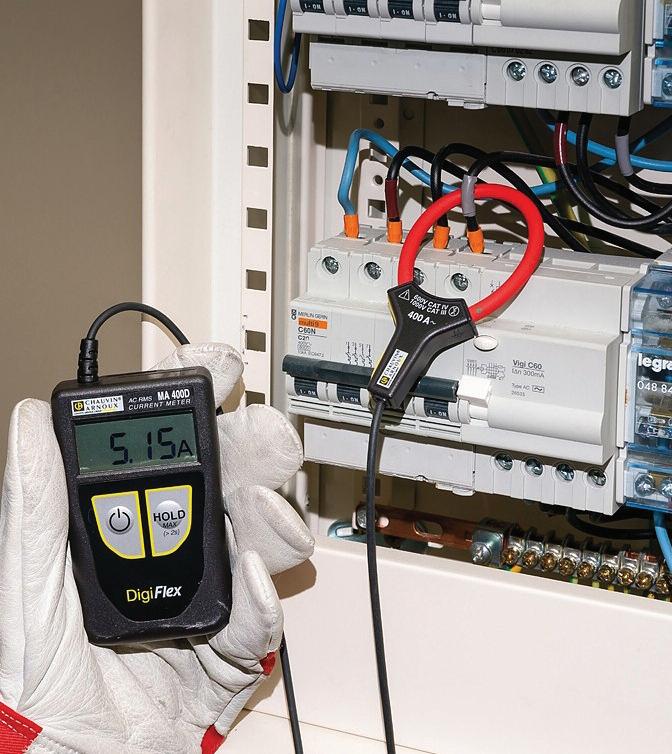
In this article the late Julian Grant gives a potted history on the evolution of the clamp meter.
The first transformer clamp invented by Chauvin Arnoux in 1937
The first analogue and digital clamp meters from Chauvin Arnoux
Chauvin Arnoux MA400D flexible clamp meter
Introducing the Rogowski Coil
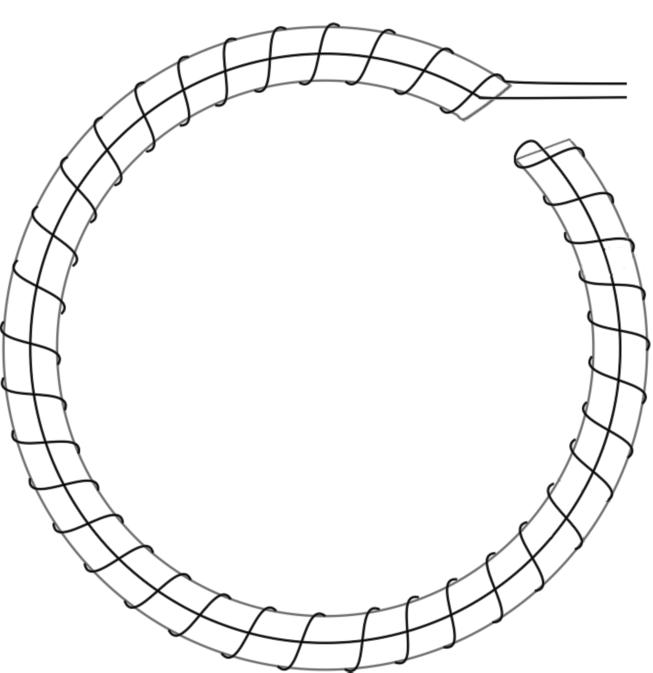
Originally invented in 1912 by German physicist Walter Rogowski, a Rogowski coil consists of a helical coil of wire contained in a flexible sheath There is no iron core
Unlike a traditional current transformer, a voltage is induced in the Rogowski coil, which is proportional to the rate of change of current in the conductor that it surrounds. The voltage output from the Rogowski coil is passed through an integrator circuit, which converts it to provide a current output proportional to that in the conductor
A derivative of the original coil, sometimes referred to as a counter-wound Rogowski, employs a method where the wire from one end returns through the centre of the coil to the other end such that both connections to the coil are made at one end. Being now both open-ended and flexible the Rogowski coil can be looped around a live conductor without disconnecting or disturbing it
Originally somewhat cumbersome devices that could be affected by nearby electrical noise, in more recent years Rogowski coils have reduced in size and increased in performance Offering much improved immunity to external fields, they are now the current sensor of choice for many test instruments.
Compared to a conventional clamp, they are slim, lightweight and bendable, allowing the sensor to loop around conductors in cramped, hard-to-reach spaces or where multiple cables are closely bundled together
In contrast, an iron-core clamp meter requires enough space to fit its rigid jaws around the conductor while ensuring they are closed properly. Any gap or misalignment in the jaws would result in potentially significant reading errors
Flexible clamps can often accommodate much larger conductor
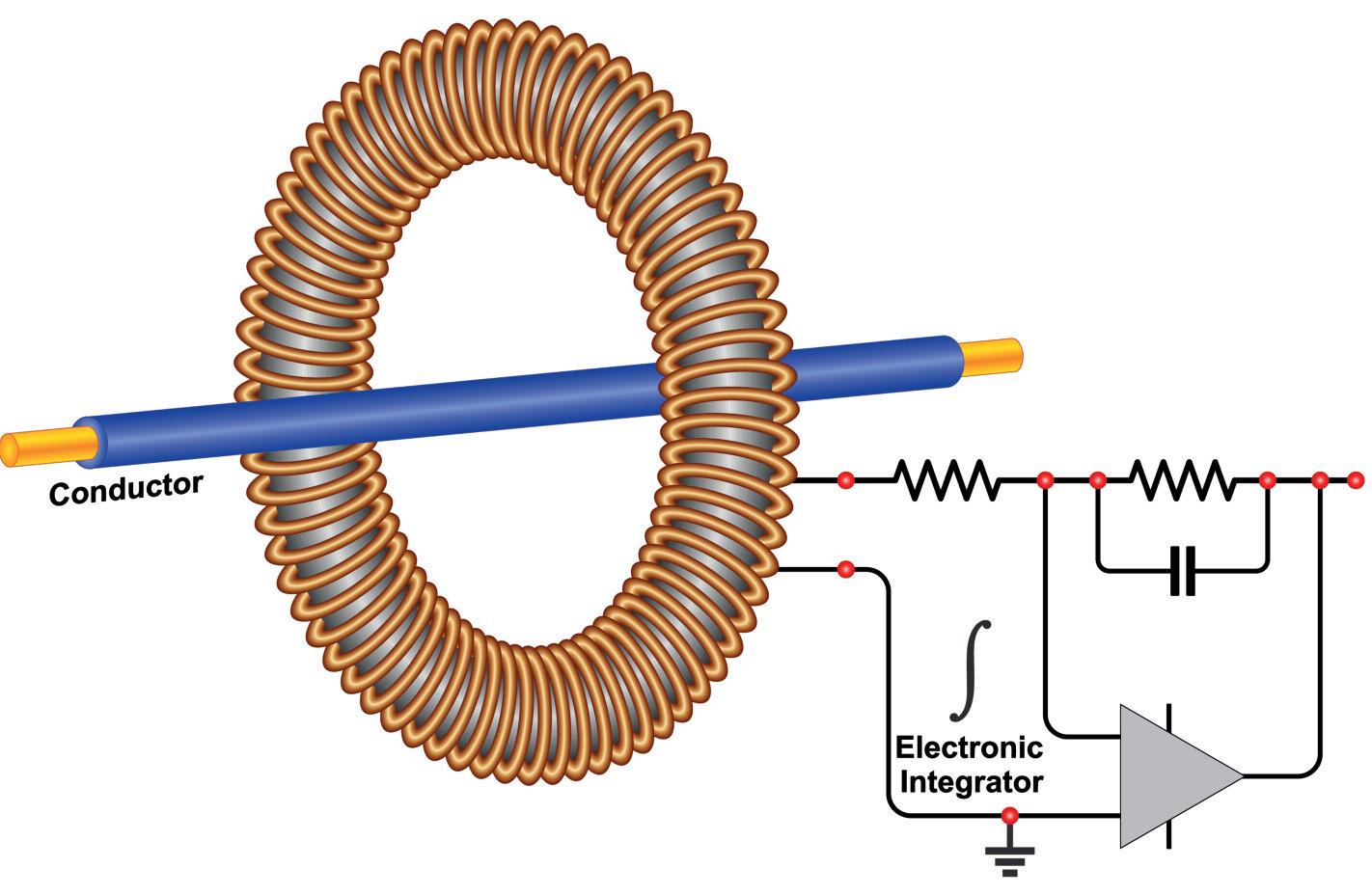
diameters than conventional clamps and can measure a broader range of current –particularly very high currents – where iron-core clamp meters may saturate or become less accurate This makes them ideal for measuring currents in large cables or busbars found in industrial and high-power installations
They are also, however, entirely suitable for looping round much smaller cables, such as those found in domestic and light commercial installations, and in this scenario, could be looped around a cable several times to multiply the current reading and improve the Rogowski coils’ bottom-end measurement capability
Rogowski coils typically have a higher frequency response than iron-core clamps, making them suitable for measuring transient currents or highfrequency currents such as those caused by harmonics or switching devices. This is particularly important in modern installations that contain increasing numbers of non-linear loads which produce harmonic currents
Currents with frequencies of up to 5 kHz could be being generated, representing the 100th harmonic in a 50 Hz supply, and this is well within the measurement bandwidth of a Rogowski coil. So many of the conventional clamps in use and available today can only measure currents with frequencies up to 400 or 500 Hz, which will underreport (read low) if higher frequency harmonics are present
The absence of a heavy iron core makes flexible clamps more portable and easier to carry for field engineers or
technicians, and their flexibility further enhances safety in difficult or hazardous environments Flexible clamps also tend to be more resistant to mechanical damage since they don't have rigid moving parts, like the jaws in a conventional clamp meter
In fact, the only real downsides to a flexible clamp when compared to a rigid iron jaw clamp is that they are not great at very low current measurements, bottoming out at about 100 mA. Multiple wraps around the conductor being measured can reduce this, however Perhaps more crucially, they also can’t measure DC current
For everything else, perhaps it’s time to ask yourself why you would ever need to use a conventional clamp again
Julian Grant
It is with great sadness that PE has to report the death of Julian Grant, after a short battle with illness
Julian, whose career spanned many years at the coalface of the test and measurement sector – most recently with Chauvin Arnoux UK – was well liked and widely known by so many in the industry
He has also generously contributed articles and shared his extensive knowledge with readers of this publication over the last few years
PE extends best wishes and condolences to Julian’s family, friends and colleagues GET MORE DETAILS ON THE CHAUVIN ARNOUX RANGE OF DIGITAL CLAMP METERS AT: WWW.RDR.LINK/EBU011
Rogowski coil with integrator circuit
Counter wound Rogowski coil

CONNECTION OF DC ISOLATORS
This article from the experts at NICEIC explores some of the considerations involved when specifying and installing a DC switch-disconnector, also known as a DC isolating switch, as a means of isolation between the solar photovoltaic array and the inverter.
Where a Solar PV inverter is installed, a means of isolation from both the AC and DC supplies is required (712 537 2 101) This article will focus on DC isolation, which is achieved through a switch-disconnector on the DC side of the inverter (Fig 1)
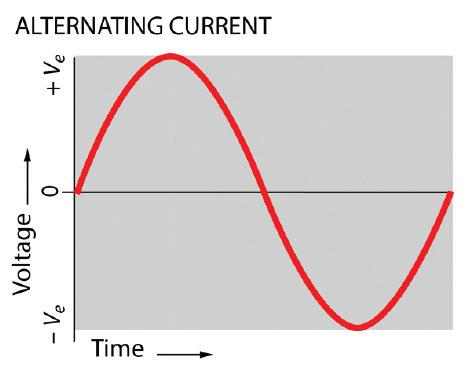
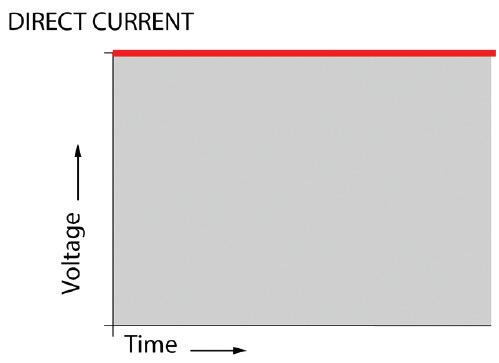
lacks this zero-point crossing (Fig 2 (b)), making arc extinction more difficult
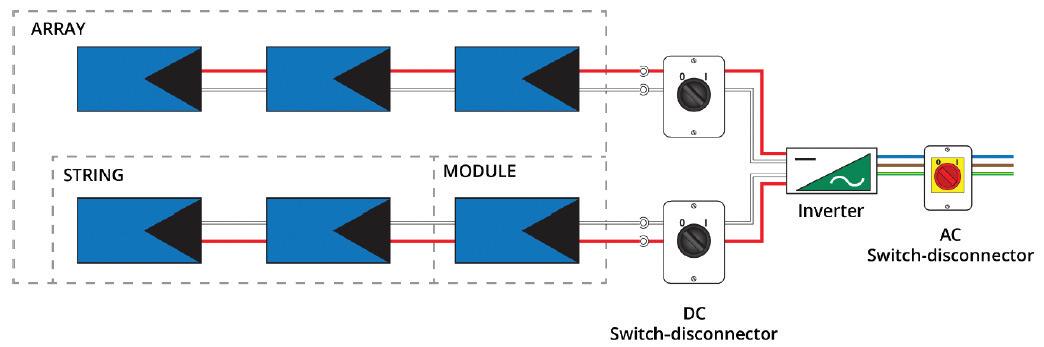
AC vs DC switching
A DC switch-disconnector faces greater challenges than its AC counterpart With an AC system operating at 50 Hz, the voltage crosses zero twice per cycle, occurring every 10 milliseconds (Fig 2 (a)), which helps suppress electrical arcs. However, DC voltage is constant and
a t i n g a s t r o n g
e l e c t r i c f i e l d w i t h i n t h e a i r g a p T h i s i n c r e a s e s t h e l i k e l i h o o d o f a i r
i o n i s a t i o n b e t w e e n t h e s w i t c h i n g
c o n t a c t s , a l l o w i n g c u r r e n t t o b r i d g e
t h e a i r g a p c r e a t i n g a n a r c
To c o m b a t t h i s , D C s w i t c h e s m a y i n c o r p o
What is a switch-disconnector?
A switch-disconnector is required for isolation of the inverter, but what exactly is a switch-disconnector?
Part 2 of BS 7671 defines a switch disconnector as: “A switch which, in the open position, satisfies the isolating requirements specified for a disconnector NOTE: A switch-disconnector is otherwise known as an isolating switch”
Switch-disconnectors, or isolating switches, conform to BS EN IEC 60947-3 and are designed for isolation, functional switching, and emergency switching They are also capable of switching under load Table 537 4 of BS 7671 provides guidance on selecting devices for these purposes
Switch-disconnectors are categorised for utilisation, the categories for solar PV applications are split into DC PV 0, DC PV 1, and DC PV 2
DC PV 0 is unsuitable for switching on-load and therefore not permissible DC PV 1 is used for single strings, whereas DC PV 2 is necessary when multiple strings are connected in parallel and there is a risk of overload
DC voltage of a PV string
When selecting a DC switch-disconnector, it is crucial to consider the steady-state voltage of the system. A PV system, unlike a
conventional AC electrical system does not have a set nominal voltage; it depends on the number of PV modules that are connected in series
When specifying a DC isolator, the maximum open circuit voltage (UOC MAX) shall be used (712.512.1.1). This value for a PV string can be determined using Formula 1
Another method for determining UOC MAX is available, although this requires knowledge of the module temperature coefficient and minimum site temperature.
Formula 1:
UOC MAX = No of modules × UOC STC × 1 2
Where:
UOC MAX is the maximum string open circuit voltage.
No of modules is the total number of modules on the string
UOC STC is the open circuit voltage of the module under standard test conditions as declared by the manufacturer 1 2 is a multiplier to take account of the voltage rise under a temperature lower than that of standard test conditions
DC current of a PV system
Knowing the value of DC current that the disconnector will have to interrupt is critical when selecting a switch-disconnector, as higher currents generate more heat in the arc.
The magnitude of this current is proportional to the number of PV modules or strings connected in parallel When selecting equipment for PV arrays, including DC isolators, the short-circuit maximum current (ISC MAX) shall be used (712 512 1 2) Formula 2 can be used to calculate this value
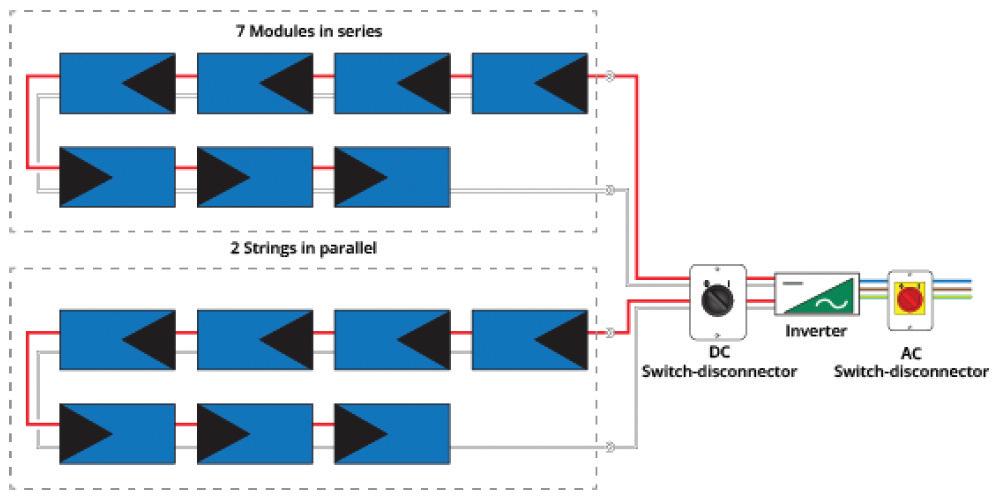
2:
ISC MAX = No of strings × ISC STC × 1 25
Where:
ISC MAX is the array maximum short-circuit current.
No of strings is the total number of strings in parallel
ISC STC is the short-circuit current of the module under standard test conditions as declared by the manufacturer 1 25 is a multiplier to take account of the higher irradiance than that of standard test conditions
Determining the maximum current and voltage
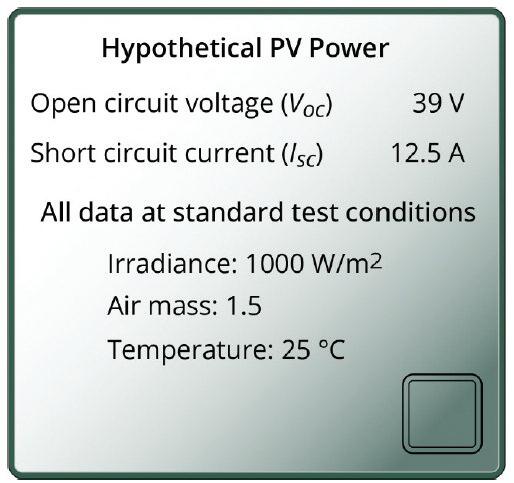
In order to determine the maximum current and voltage for a DC switch-disconnector, the manufacturer’s details of the PV module are required An example of this is shown in Fig 5
Using the example data given in Fig 5, determine the maximum voltage and current for selecting a switchdisconnector for a single string containing 20 of the PV modules wired in a series configuration, with no other strings
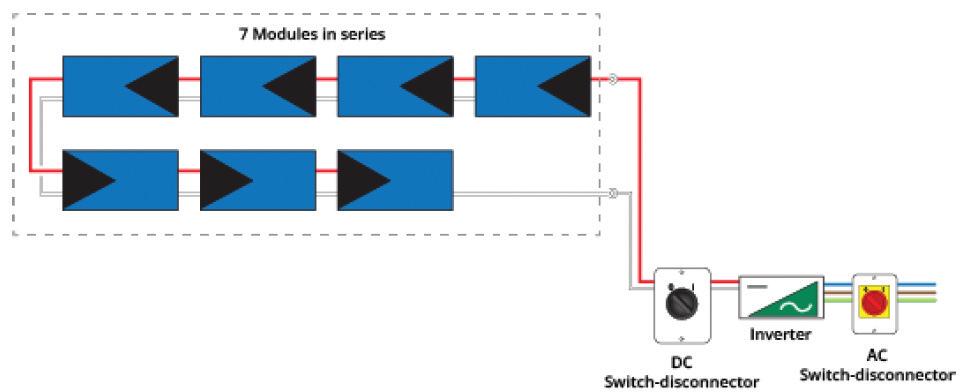
connected in parallel Formulas 3 and 4 can be used to calculate the maximum voltage and current respectively
Formula 3:
UOC MAX = No. of modules × UOC STC × 1.2
UOC MAX = 20 × 39 × 1 2
UOC MAX = 936 V
Formula 4:
ISC MAX = No of strings in parallel × ISC STC × 1 25
ISC MAX = 1 × 12 5 × 1 25
ISC MAX = 15.6 A
Selecting a switch disconnector
Once the voltage and current of the system have been determined, the appropriate disconnector can be selected
Firstly, the chosen device must conform to BS EN IEC 60947-3, ensuring it is suitable for on-load switching The device will bear markings indicating its function; for a switch-disconnector, these markings are illustrated in Fig 6, indicating its capability for making, breaking, and isolating operations.
Once the maximum current and voltage have been determined, the appropriate switch-disconnector can be selected The device’s capability to safely make and break current depends on the system voltage.
Due to the differing voltages in PV systems, manufacturers specify a range of voltages along with corresponding safe operating currents for each voltage, tailored to different switching configurations
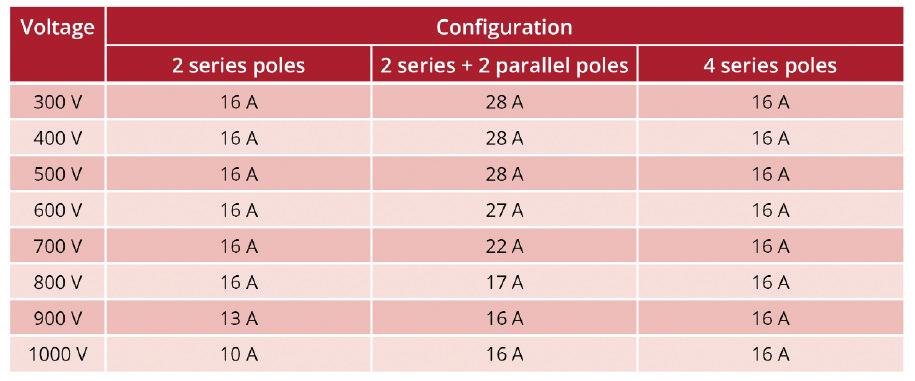
Table 1 represents hypothetical manufacturer’s data for a DC
Formula

disconnector
Using the voltage and current values determined previously, the appropriate wiring configuration can be selected from Table 1
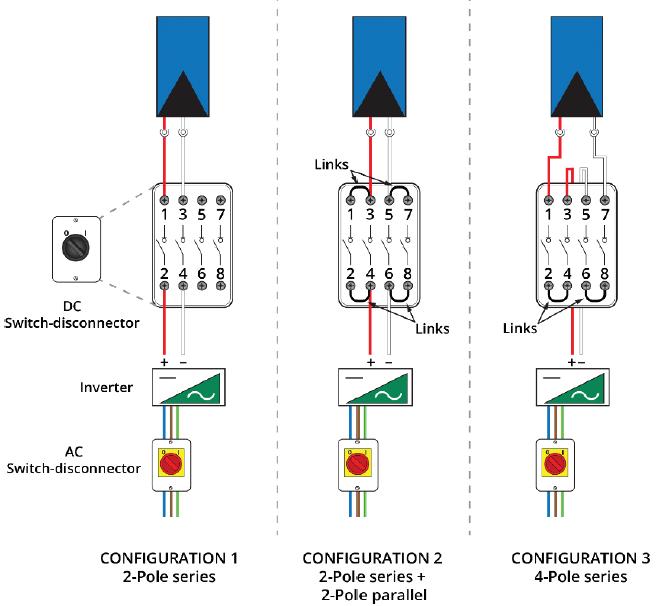
For switching 15 6 A at 936 V, the disconnector should be wired either in a 4-pole series configuration or a 2-pole series + 2-pole parallel configuration However, it's important to note that this device is not suitable for making and breaking when wired in a 2-pole series configuration
The wiring configurations from Table 1 are illustrated in Fig 7 It should be noted however that these examples are not exhaustive in terms of configurations Full details should be available in data published by the switchgear manufacturer
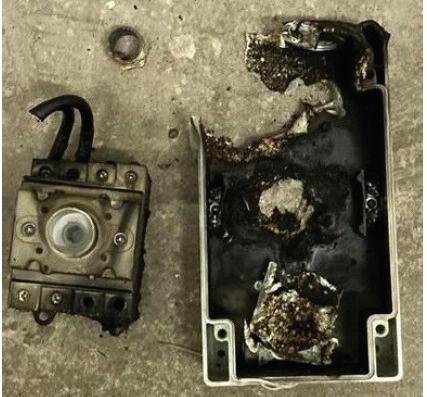
It is important that the manufacturer’s instructions for DC disconnector configuration are followed to avoid failure of the device An example of a burnt-out DC isolator is shown in Fig 8
Other considerations
The previous sections described the selection process of a DC isolator, there is clearly more to specifying the correct device compared to its AC counterpart Consideration should also be given to the termination of the DC conductor in the isolator’s terminals (526 9 1) DC cables generally use class 5 (flexible) conductors. Where equipment terminals are unmarked, they should be suitable for all conductor classes without modification (526 2 Note 2)
Some equipment terminals are only suitable for certain classes of conductors without further treatment. Where this is the case the terminals, or if space is insufficient on the product, the immediate unit packaging or technical data sheet should be identified with appropriate markings Where terminals are only suitable for Class 5 flexible conductors they will be identified with the symbol “f ” . Where treatment of the conductors at the terminations is necessary reference should be made to manufacturer’s data, which may state that a fine wire conductor requires a sleeve or ferrule.
Where the DC disconnector is located outdoors, it shall be rated for the possible external influences (712 512 102) It is good practice to have the cables entering the bottom of the enclosure through suitably rated stuffing glands.
Summary
Selecting a DC switch-disconnector for a Solar PV system presents unique challenges The maximum voltage and current must be determined before selection of the appropriate device. The configuration at the switch terminals must also be determined to ensure the device can safely make and break the system’s maximum voltage and current When using fine stranded wire, the terminal of the disconnector shall be suitable, or the cable shall be suitably treated




RENEW KIDS ON THE BLOCK
In this article, we catch up with the founders of a new electrical training business to examine how flexible, learner-focused training can “Renew” confidence and skills across the industry.
If there’s one thing the electrical industry doesn’t shy away from, it’s a challenge
Whether it’s regulation updates arriving more regularly than a wholesaler’s burger van, or the ongoing mission to keep standards high in an ever-evolving sector, sparks across the UK know that staying ahead means learning constantly
And while the willingness to train has never really been the issue, access to good training – the kind grounded in genuine site experience, delivered by real electricians –hasn’t always been as easy to find
Enter Renew Elec Training – a new training provider founded by two well-respected names in the industry: Sam Lawler and Alex Tranter.
Between them they’ve built careers as electricians, trainers, assessors, mentors, content creators, and – in the eyes of a growing online following – two of the most accessible voices in electrical education
Now, having recently opened their own dedicated centre, they’re on a mission to reshape how training is delivered and who feels welcome accessing it.
Initial online sparks
Interestingly, Renew Elec didn’t begin with a business plan, but with a Tik-Tok channel instead, providing a simple way for Alex to help her classroom apprentices with bite-sized tips and revision support
She recalls: “What was really amazing was seeing how quickly it resonated
beyond my own learners Electricians and apprentices from all over were reaching out, asking for content, advice and courses ”
That steady wave of messages soon became a tide. The more learners engaged, the more obvious it became that online support alone wasn’t enough.
“It became clear that this wasn’t just about teaching; it was about responding to what learners actually wanted,” Alex adds “The enthusiasm from the community naturally led us to the next step ”
That next step is now a fully equipped training centre grounded in a learner-led ethos
Two journeys, one shared vision
Before they ever thought about running a training centre, Sam and Alex were both on the tools Like countless electricians before them, they grafted through apprenticeships, built site experience, and eventually transitioned into training and assessment
They only crossed paths later when working at the same training provider –Sam as a Training Centre Manager and Alex as an IQA and Trainer Assessor. It didn’t take long for them to realise they shared the same frustrations, and the same ambitions
“We quickly realised that we both wanted a training environment that was practical, supportive and accessible to all,”
Sam explains “Our approaches are different, but that’s exactly why it works ”
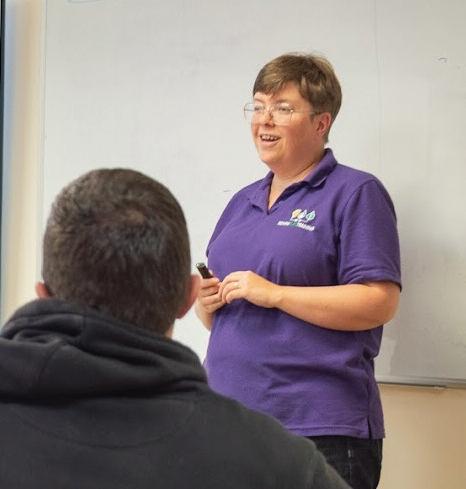
That balance has become one of Renew Elec’s defining strengths Sam specialises in making complex content practical and relevant – especially for corporate clients – while Alex drives online presence, quality assurance and long-term initiatives like their Armed Forces
Covenant work
“One of us can always support the other, challenge an idea or bring a new perspective,” Alex adds “It’s at the heart of our training offering ”
Welcoming all
When Sam and Alex entered the trade, neither had met another female electrician before. Even now, the industry remains heavily male-dominated, though progress is being made thanks in part to online communities, visible role models and a shift in public perception
Sam says: “Our followers are around 20% female, which is much higher than the industry average It’s brilliant to see that shift happening ”
TRAINING

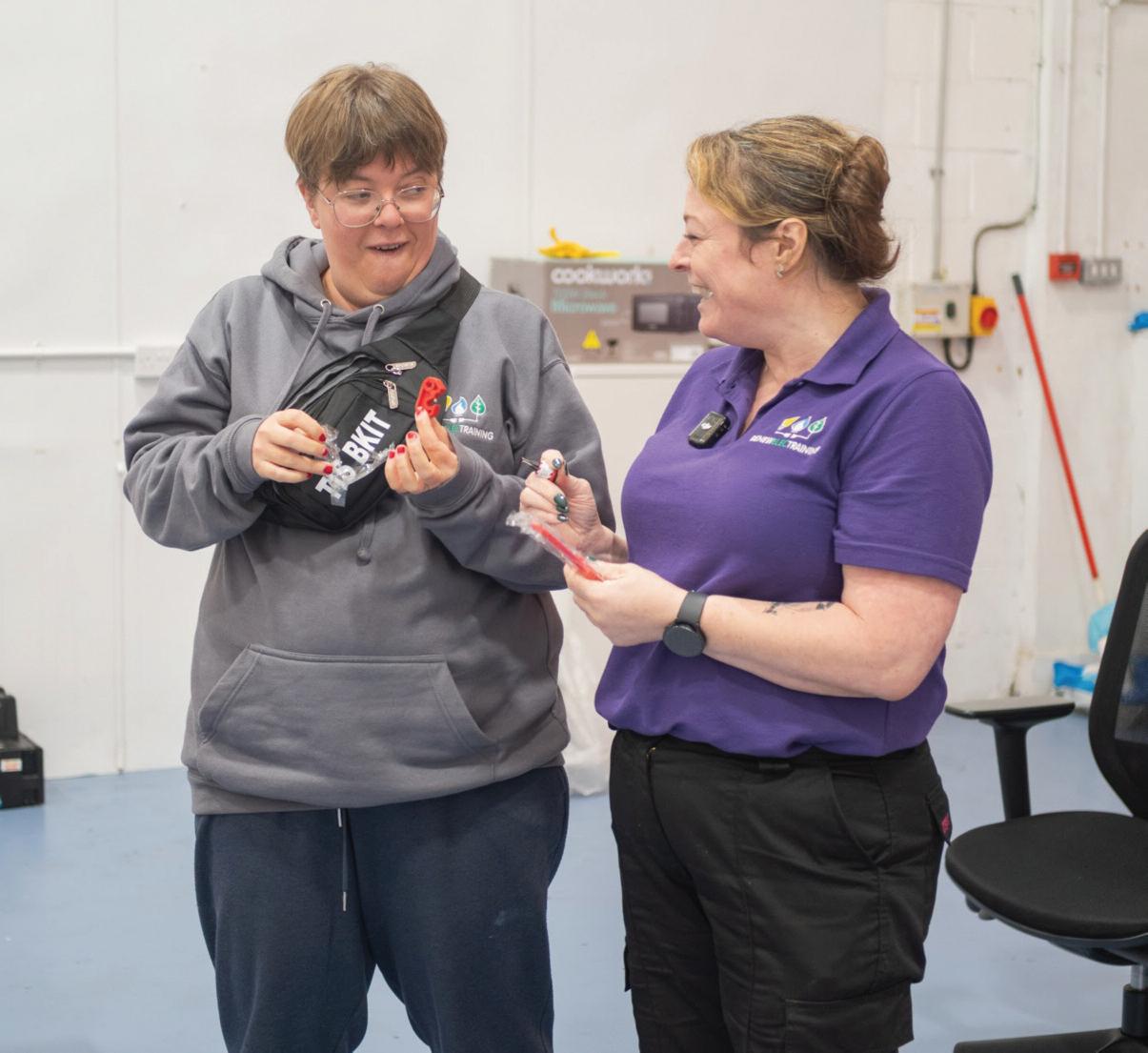
guidance, questionable training routes, and learners ending up with expensive certificates that don’t take them where they need to go
A l e x s a y
o f g e n d e r. Good site practices, mental health, ongoing learning, career development… these things matter to everyone ”
Blending online with in-person learning
If the past few years have proved anything, it’s that flexibility matters With many sparks juggling jobs, families and other commitments, finding time for investment in their skills can be a challenge
That’s where Renew Elec’s hybrid model comes in.
Sam says: “The reality of modern life is that it’s much harder to find the time to retrain Micro-learning in bite-sized chunks lets learners access information whenever it suits them ”
But when hands-on training is needed, Renew Elec offers evening and weekend sessions to accommodate the demands of real-life schedules – all led by feedback from the online following.
Improving reputations
The training sector seems to have courted many inches of column space over the last number of years, and not all of it positive
To this end, Sam and Alex are vocal about the problems caused by misinformation in the industry – poor
Working closely with suppliers and organisations like LCL Awards (Renew Elec is an LCL Awards approved centre) has enabled Renew Elec to offer qualifications that are genuinely aligned with industry needs, not outdated templates
While the founders originally expected most of their learners to be experienced electricians pursuing things like 2391 or the Experienced Worker Assessment, the demand from newcomers has been significant
Alex says: “We’ve seen a huge amount of interest from people wanting to become electricians. As part of this, we’re able to complete full skill scans to work out the best route for each individual ”
Alongside its traditional training offering, Renew Elec will also offer safe isolation courses for non-electricians, demonstrating a commitment to improving safety beyond the core electrical workforce
Carry on in the classroom
Though Renew Elec now has a physical space in which to undertake its training, the supportive tone that helped to build an online following hasn’t been lost in translation Instead, small class sizes, experienced trainers and a culture of encouragement underpin the entire centre
“We want learners to feel comfortable asking questions, trying things out and
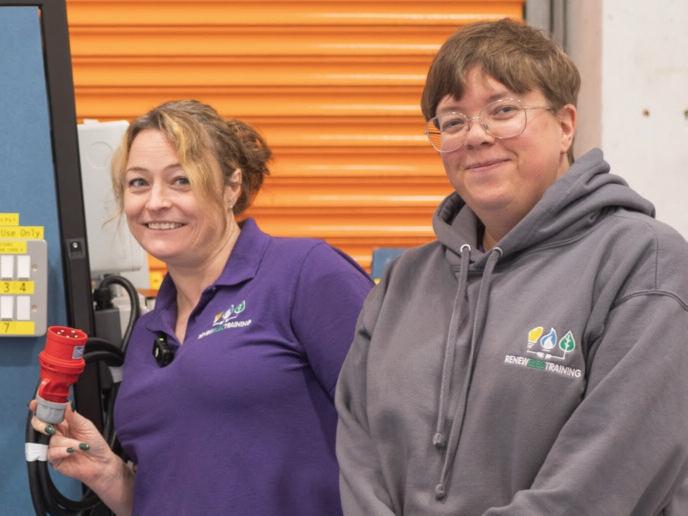
growing in confidence – not just ticking boxes for a qualification,” says Sam “That sense of community people felt online –we want them to feel it the moment they walk through the door ”
And, for anyone who finds themselves in the same boat as Alex and Sam –considering teaching, mentoring or starting something of their own – the message is simple: do your homework, surround yourself with supportive people, and don’t be afraid to grow along the way
Sam concludes: “We can testify first-hand that the journey isn’t always an easy process, especially with some of the everyday challenges we’re all facing currently. Nonetheless, when we step back and consider how far we’ve come, it’s an incredibly rewarding feeling ”



THE ONLY WAY IS UP(SKILL )
Is training the key to a future-proofed and successful electrical industry? The team at City & Guilds explore the subject further.
The recently collated Professional Electrician & Installer Reader Survey (thanks to all who took part) show that 78% of respondents intended to invest in training to improve their skillset and expand their business offering.
At City & Guilds, we see this as a clear signal: electricians across the UK are recognising the pace of change in the industry and are ready to meet it
From advancements in electrical standards to the rapid growth of green technologies, the electrical sector is evolving fast
For electricians, staying up-to-date isn’t just about compliance, it’s about opening new opportunities, building business resilience, and staying competitive in a changing market
The evolving electrical landscape
Electrical installations aren’t what they used to be Today’s electricians are expected to work across a wider array of
technologies than ever before
Smart systems, Power over Ethernet (PoE), battery storage, and EV chargers are becoming more common in both domestic and commercial settings As a result, there’s a significant need to keep pace with new technologies and regulations.
This is why regular updates, such as updated Codes of Practices and the IET Wiring Regulations matters to today’s electricians These updates and amendments are designed to keep pace with technological developments, ensuring safety and compliance in an increasingly complex environment
We reflect these changes in City & Guilds qualifications to ensure electricians are not only up-to-date with the latest regulations but also confident to apply their knowledge in real-world scenarios
Green skills: a growing opportunity
The UK is currently pushing toward net zero The demand for solar PV, EV charging and battery storage continues to grow, as
does the need for qualified professionals who can install and maintain these systems
This shift is creating a clear need for multi-skilled professionals who can integrate renewable technologies and deliver future-ready installations
Continuous training will be essential to stay ahead. But where are electricians focusing their development?
According to the 2025 PE Reader Survey (491 respondents), the most in-demand areas of training are:
● EV charge point installation & maintenance – 45%
● Solar PV panel installation & maintenance – 41%
● Smart home installation & maintenance – 41%
●
These figures reflect the growing appetite for training in areas that are central to the UK’s energy transition and future infrastructure
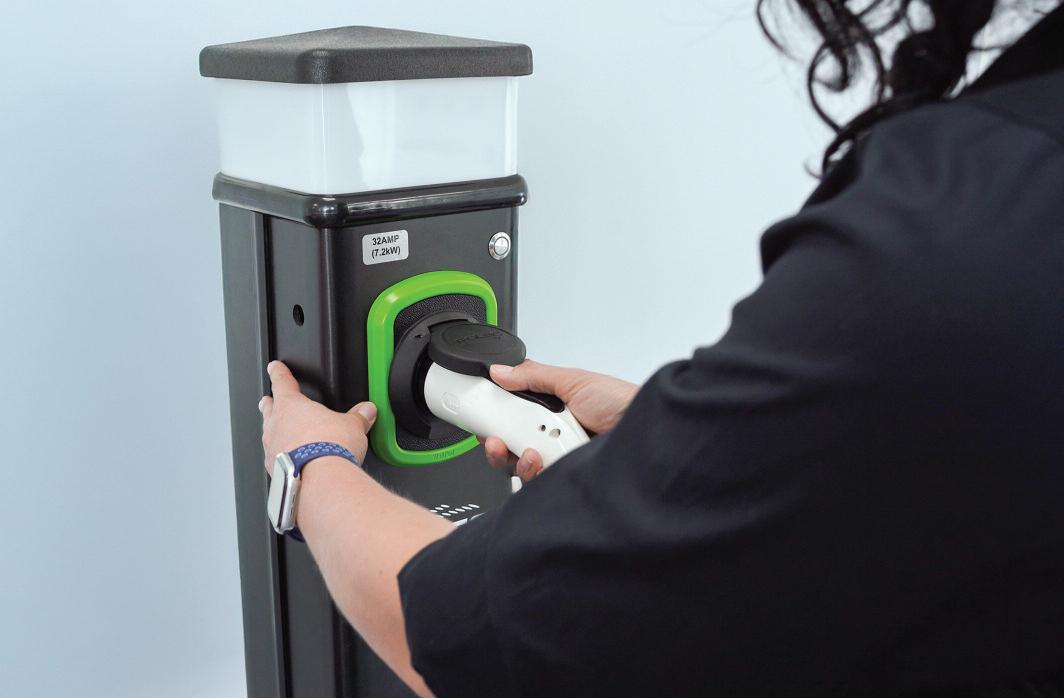
Our commitment to the sector
To support this skills shift, City & Guilds offers a range of green technology qualifications that reflect the latest industry standards and are recognised by the Electrician Plus scheme
Through industry partnerships, training programmes and digital learning tools, we’re working with electricians, colleges, and employers to make training something that is practical, accessible, and relevant
Our qualifications are designed to do more than tick regulatory boxes; they help electricians diversify into new markets, gain recognition through ECS and Electrician Plus pathways, and build confidence for real-world work.
As one learner told us: “Completing the City & Guilds 18th Edition qualification had a very positive impact on both my life and career It boosted my confidence and credibility in the electrical field, making me more employable and better prepared for on-site work ”
Investing in the workforce of the future
Training isn’t just a regulatory necessity; it’s a strategic investment The 78% of electricians who plan to upskill are positioning themselves at the forefront of the industry’s next chapter.
Upskilling supports:
● Business diversification into high-growth areas like EV charging and solar installations
● Commercial advantage through access to retrofit and new build opportunities
● Compliance and safety, ensuring work meets the latest standards
● Staff retention and morale, by fostering a culture of development and progression
Upskilling isn’t just about meeting demand; it’s about staying relevant and competitive in a rapidly changing industry
At City & Guilds, we’re here to support electricians at every stage – building the skills, confidence, and recognition they need to thrive in a changing world

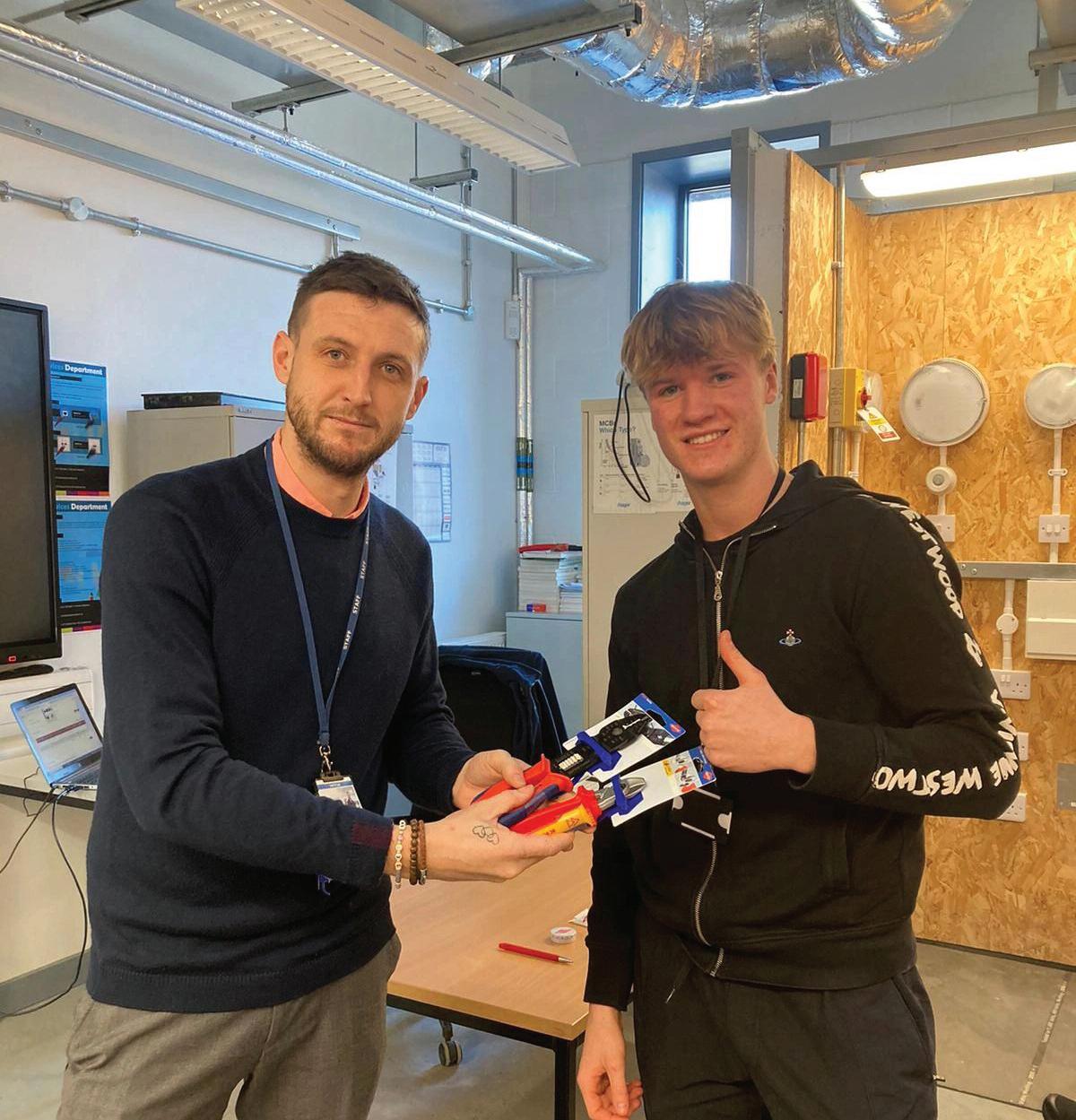
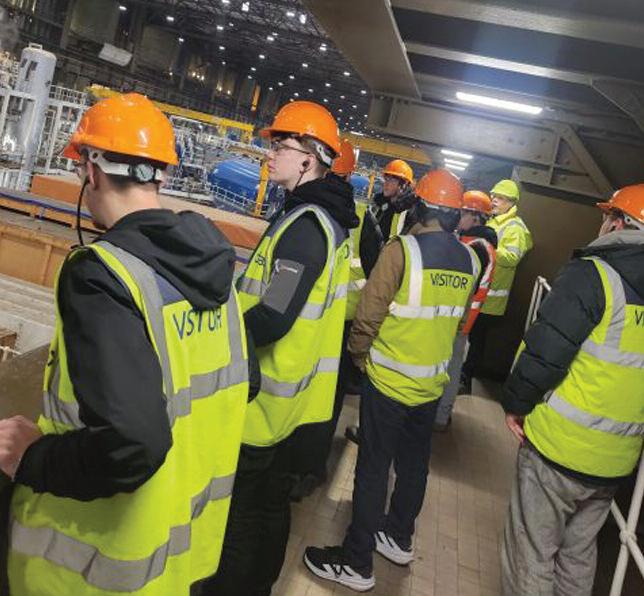
Having previously profiled Matthew Davies, Teacher and Lead in Electrical Installation at Tameside College, and his passion for interactive teaching, we revisit the subject a year later to find out whether this really is the spark that can switch on a new generation of electricians.
ACTIVE MINDS = BRIGHTER SPARKS
If you’ve been in this trade for long enough, you’ll know that nothing stands still for long, whether that’s updated regulations, new technology or rising expectations from clients –it’s shifting all the time And inside the classrooms where tomorrow’s electricians are being trained, things are evolving just as quickly.
At
Since then, things have only stepped up a gear Digital tools, simulated environments, Apps,
competitive quizzes, VR experiments –if it's interactive, odds are Matthew’s learners are using it
h e a d e d n e x t ?
From being taught to actually remembering things
One of the biggest questions around interactive learning is whether it genuinely improves knowledge retention, or whether it’s just a flashy add-on to appeal to a younger generation
According to Matthew, the difference is clear: “In my experience, engagement in the main is greater with interactive methods Put simply, it allows learners to retain knowledge better because it
becomes a memorable experience as opposed to just being taught ”
It’s something most sparks will recognise from their own careers The first time you successfully completed a tricky installation or correctly implemented a safe-isolation procedure, it’s unlikely you were sitting quietly reading from a textbook Instead, you were hands-on, figuring things out. That’s the experience Matthew wants his students to have –even before they step onto site
And it turns out a little competition really does light a fire
“The interactive knowledge tests, for example, will often bring out a nice competitive streak in the group, meaning learners try harder to retain knowledge in order to win!” he explains
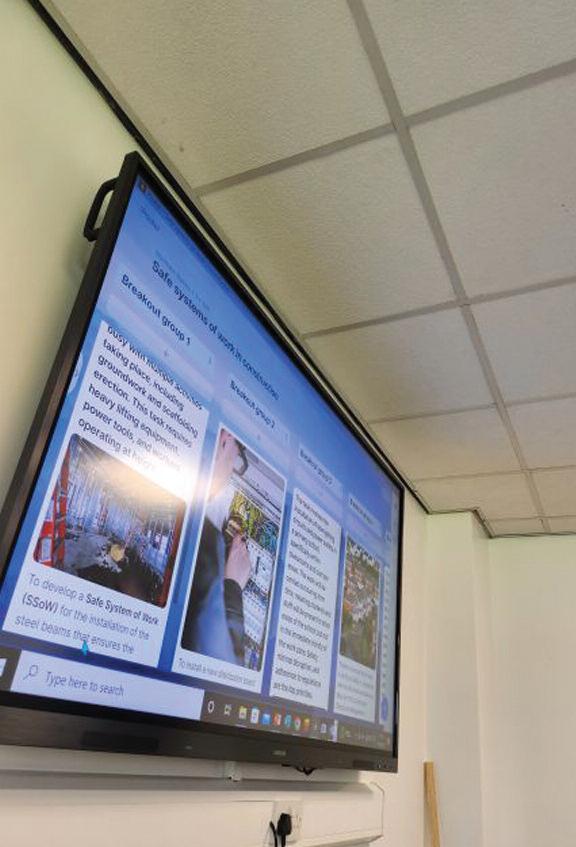
Tools that make a real difference Matthew’s department uses everything from immersive digital spaces to Apps like Canva, Padlet, Quizlet and, of course, Tradefox – the safe-isolation simulator that was crowned as a PE Top Product award winner last year
The secret, he says, is that all these tools can be adapted for different levels without needing to reinvent the wheel each time: “You can easily tailor questions to different levels without having to start everything from scratch ”
He continues: “Interactivity allows learners to virtually remove themselves from a purely classroom base and simulate being out on-site This peaks their interest because they put themselves in that place ”
It's a simple idea: if you can safely “trialrun” a task dozens of times, you’re far more likely to make a success of it when it really matters on-site And sometimes, it leads to those proper “lightbulb moments” teachers live for
Matthew gives us one example: “When we have the learners working with the Tradefox safe isolation simulator you can see the penny drop as they’re using it, helping them to understand and master the process.
“This then allows learners to move onto the next stage of the topic and evaluate the principles and processes on why it is important and the consequences of not following safe isolation procedures,” he says Additionally, the Inspection and Testing App is another useful aid: “Learners can simulate various tests You then see that
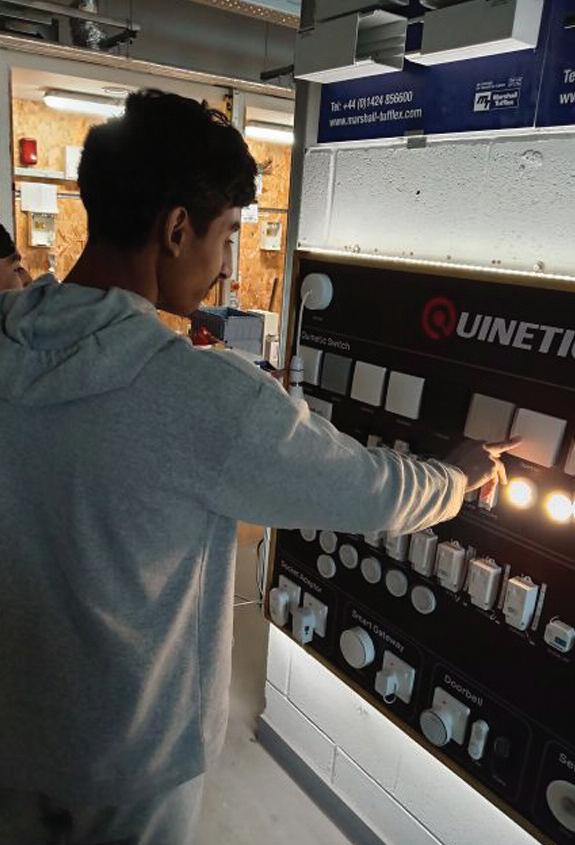
when they physically undertake Inspection and Testing they have greater confidence and fluency ”
If you’ve ever mentored an apprentice who suddenly “gets it”, you’ll know exactly what Matthew is talking about!
A results business
One concern many sparks share is that digital tools might start replacing physical skills –and in a practical trade, that’s a no-go.
Matthew agrees entirely, stating: “I obviously believe nothing will replace the hands-on skills that are taught The trick is using digital tools to enhance confidence – not replace the real thing ”
Whether you’re on board with this level of interactive teaching or not, it’s clear that the results – at least in Matthew’s case –speak for themselves Earlier this year, his Level 3 group delivered an eye-catching achievement – around 26% above the national pass rate
So how much of it comes down to interactive learning?
“I would like to believe quite a lot!”
Matthew answers “From talking to learners directly, I regularly receive positive feedback from using these tools They’ll often tell me that it’s helped them to understand a topic better.”
For employers and apprentices alike, this raises a fair point: interactive learning isn’t just a gimmick It’s producing jobready electricians with a deeper grasp of the work they’ll be trusted to carry out
Technology keeps moving, so will training With 2026 and the next wave of electrical innovation ahead of us, Matthew isn’t
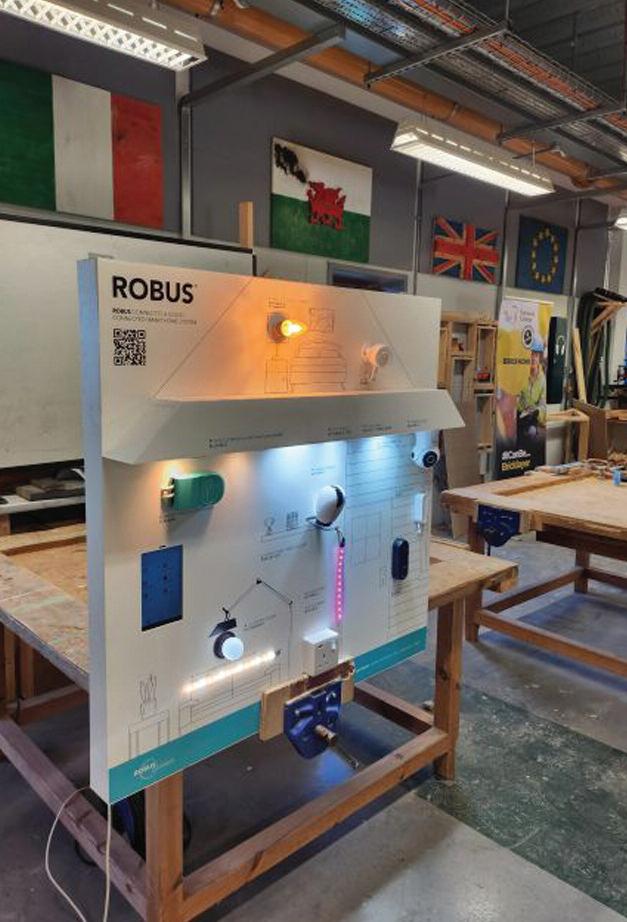
slowing down. Tameside College is investing heavily in this direction, including immersive spaces that simulate full construction environments
“I want to keep developing my interactive approach and explore more of the VR software and programmes that are out there,” he says
“We have some fantastic resources available, so embedding these further into curriculum would be great.”
If VR can help learners safely explore fault-finding, unfamiliar installations, or even emergency situations without risk, it’s easy to see why Matthew wants more of it
The new norm?
Ask around the trade, and opinions vary when it comes to interactivity
Some teachers are all-in, while others prefer more traditional methods. In Matthew’s case he believes we’re heading toward a blended future – and that teachers themselves will need to lead the way
He says: “It’s evident that it will be up to us as teachers to drive innovation forward It’s not about replacing spanners with screens – it’s about using both effectively to bring out the best in a new generation.
“
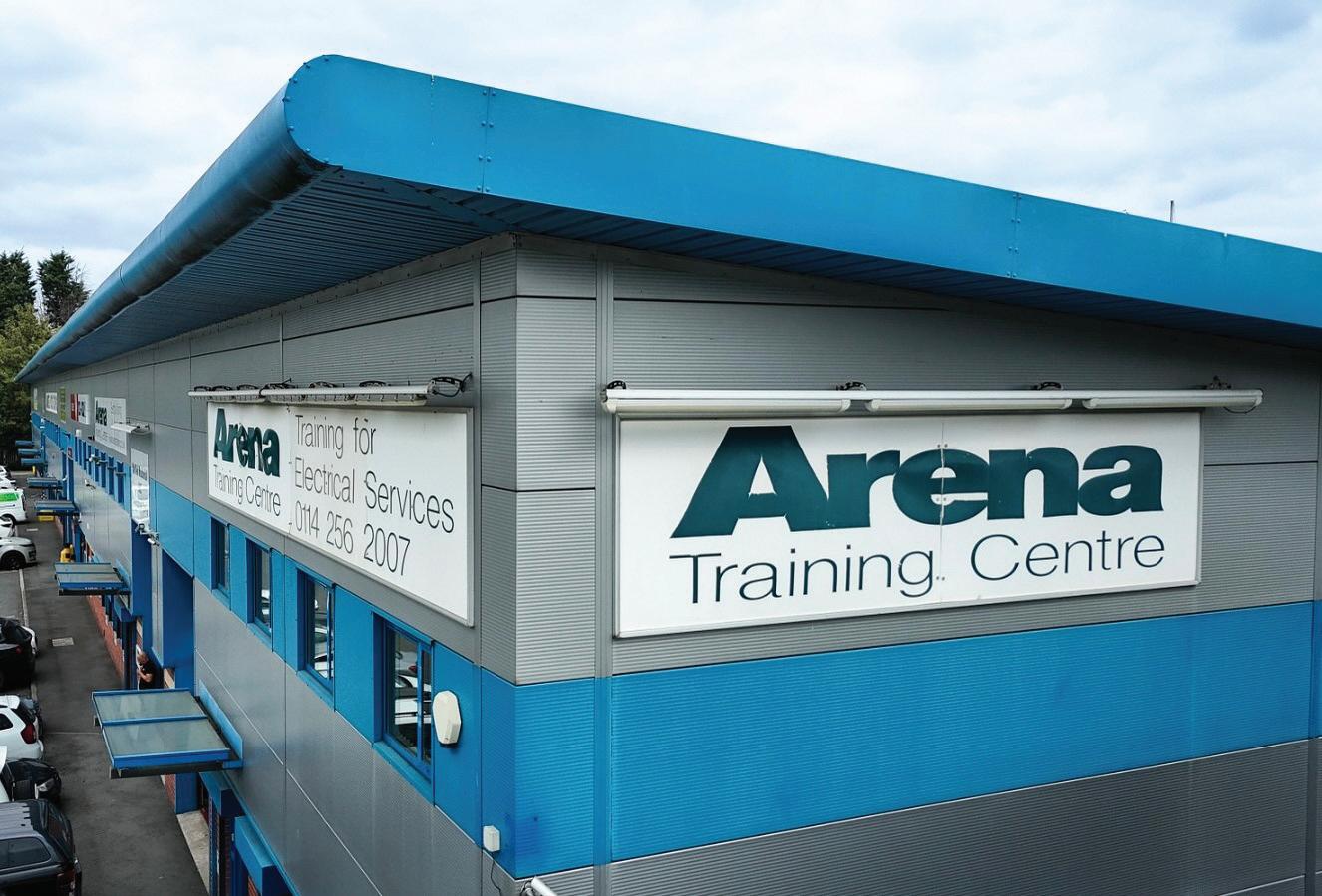
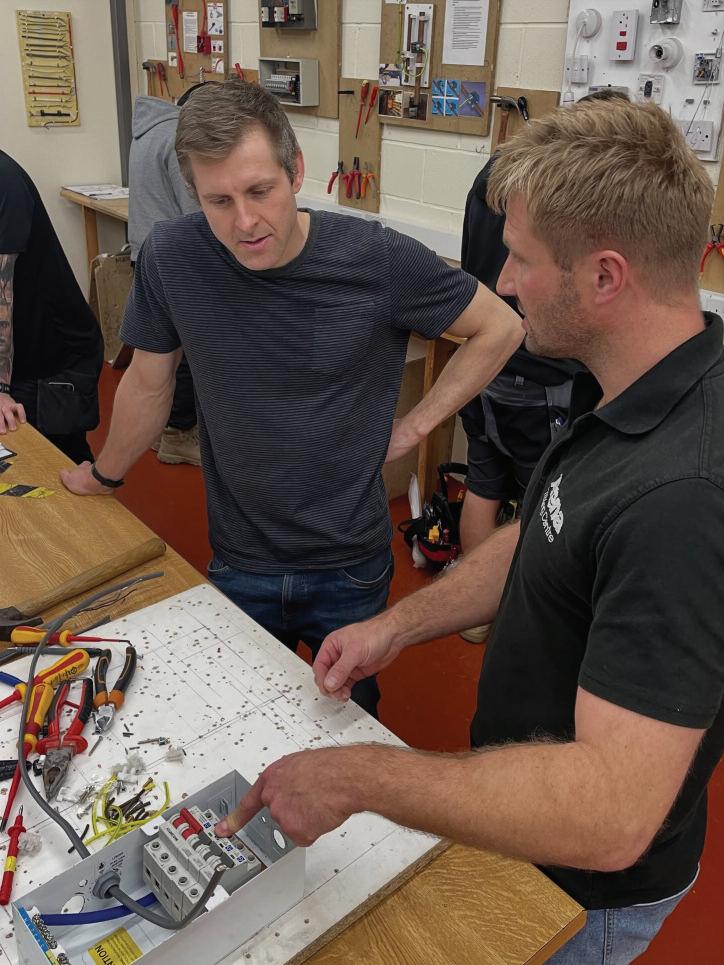
OHM-GROWN TALENT
Pete (Monty) Monfort, Director of Arena Training Centre and Monty Electrics, discusses the centre’s growing course offering, its partnership with Sheffield College, and why employer collaboration is key to raising standards across the electrical industry.
QFor readers who may not be familiar, can you give us an overview of the courses currently offered at Arena Training Centre and the types of learners you cater to?
We cater to everyone – from new entrants to mature qualified electricians Our current offering includes:
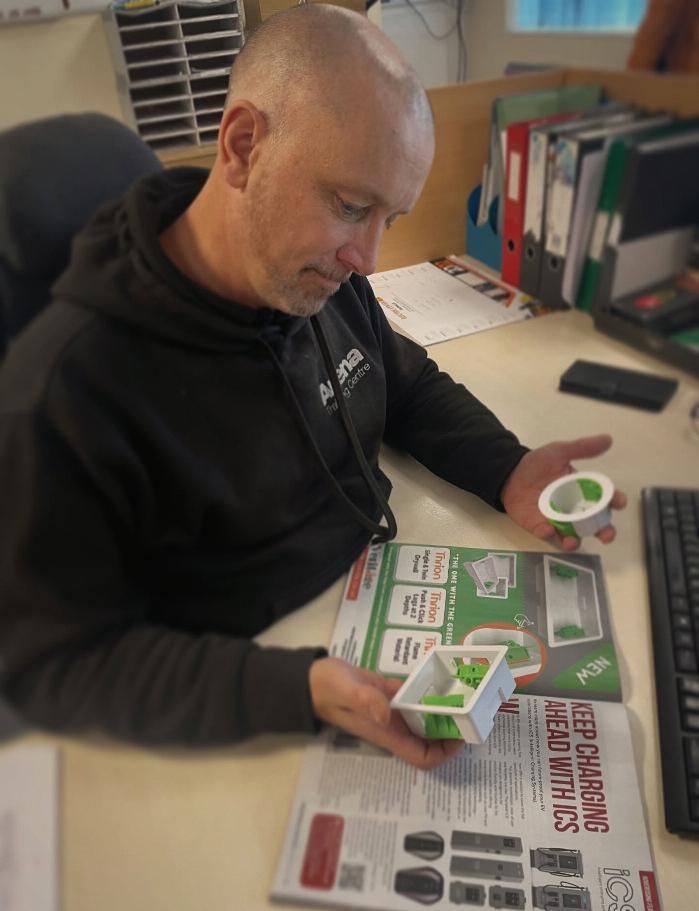
● 2391 Initial and Periodic Inspection
● Small Solar Photovoltaic Systems
● Small Electrical Energy Storage Systems
● Level 2 and 3 Diploma in Electrical Installation
● Level 3 Award in the Requirements for the Design and Installation of Domestic and Small Commercial Electric Vehicle Charging Installation
● Portable Appliance Testing (PAT)
● NVQ and Experienced Worker NVQ
● AM2 Prep Days
● Installation Electrician Apprenticeships, including the Accelerated Apprenticeship
QArena has built a strong reputation in vocational and skills-based education. How do your programmes help bridge the gap between training and real-world employment?
We offer private courses and fully funded apprenticeships in partnership with Sheffield College
We have lots of employers who regularly visit to recruit, and the possibility to move
learners into accelerated apprenticeships is starting to interest businesses since they get students who are committed (because they have paid for training) and they get qualified quicker
The employer also doesn't lose them on paid college leave for 20 weeks because they have passed the technical components already.
Don’t forget also that most of our tutors are still actively on the tools, with many sharing time between being on-site in their own businesses and blocking out time to teach and assess It’s rare that you’ll find tutors with that much connection between real world and class
QAsyou’ve mentioned, you’ve recently partnered with Sheffield College to support and place apprentices How did this collaboration come about, and what benefits does it bring to both students and employers?
Electrotechnical training is a specialist area Colleges have many struggles delivering high-quality training in these types of areas as it is expensive and difficult to recruit and
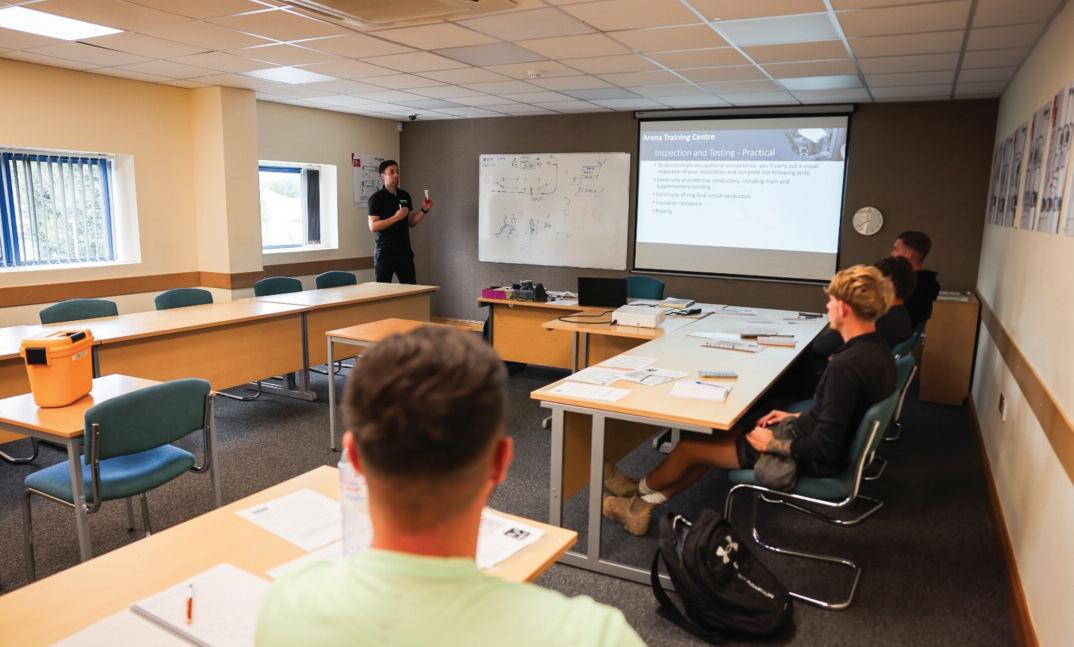
retain staff The Sheffield College had a forward-thinking leadership team that realised a partnership with a successful private training provider was sensible
With growing numbers of employers getting on board, we’re seeing apprentices on track to achieve 100% pass rates, with all making End Point Assessment within the required time frame
QWhat subjects or specialisms are seeing the greatest demand for training right now, and how is Arena adapting to meet that demand?
The changes to the EAS specification mean that electrical sector workers must be qualified electricians and, where they undertake specialist work such as solar, battery, EV, and inspection and testing, they must have the additional professional certification required to practise Companies must, therefore, use fully qualified staff
We’re seeing lots of interest in the Electrician Plus courses, Inspection and Testing, as well as the Experienced Worker Qualification.
QArena has announced plans to expand its offering to a new site in York in 2026. What prompted that decision, and what will the new facilities offer that the current site doesn’t?
Arena hosts the amazing Sheffield
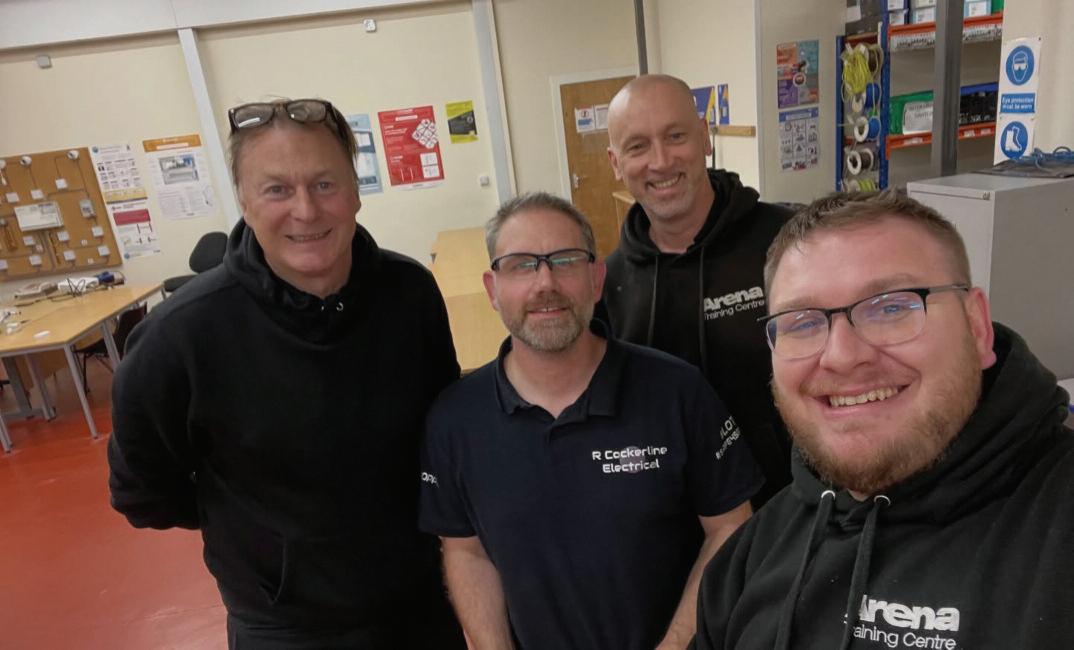
Meadowhall AM2 centre, which forms part of NET’s network of End Point Assessment centres
Discussion about the waiting times for AM2s led us to develop our partnership with NET and has seen us planning a new AM2 centre in York, as well as expanding provision at our Sheffield Meadowhall branch
In our view, the AM2 is a gold standard in end point assessments, which falls in line with our attitude toward training and high standards, so we were delighted to have the opportunity to support and work with NET at another venue.
QHow will the move to York affect your presence in Sheffield? Will the Sheffield operation continue or evolve?
The Sheffield centre will continue to operate as before, covering both training and hosting an AM2 centre The move to York, however, may permit us to offer some training in York, where we plan to offer regulations courses and Inspection/Testing if there is demand.
QYou’ve worked closely with employers and local authorities in recent times. How important are those partnerships in ensuring that training remains relevant and impactful?
Employer relationships and local authority relationships are vital National progression
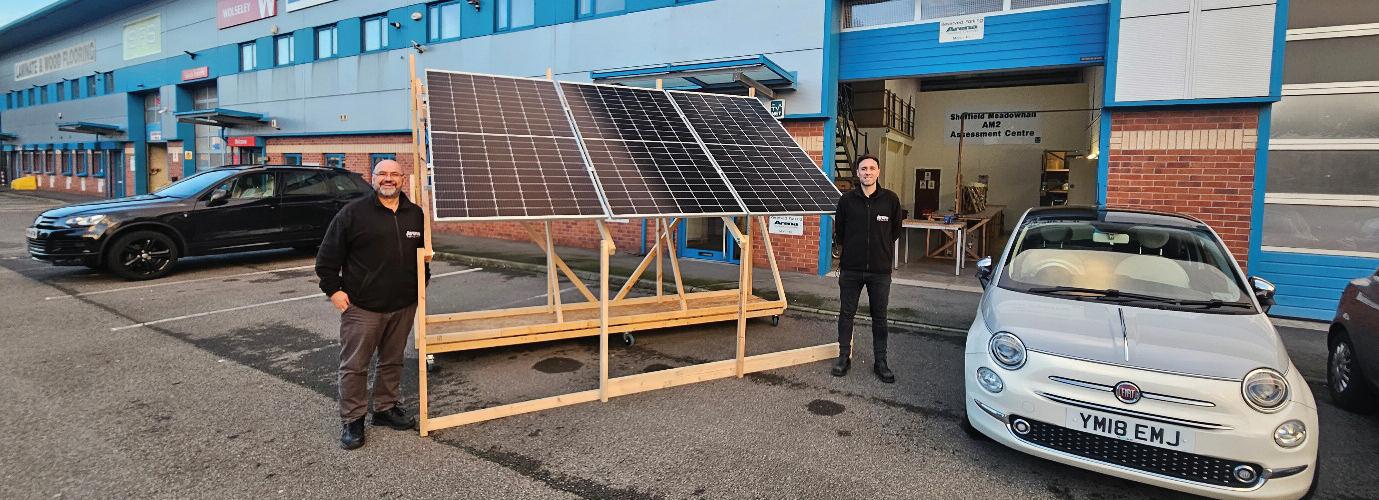
rates from training into employed roles are abysmal in places, but we do very well in progressing learners into paid employment As a result, growing numbers of employers are dropping in at our centre to scout for talent.
We also continue to work with, and champion, organisations such as the ECA, NICEIC, NAPIT and the IET
QYou’ve committed to a presence at the ELEX trade shows in 2026. Which shows will you be attending, and what do you hope to achieve?
We will be attending the Harrogate show, presenting our partnership with Sheffield College.
Arena has the capacity to take in a cohort of about 80–100 apprentices per year, and we’re keen to see our history of exceptional pass rates continue Basically, we’re looking for employers who are genuinely interested in quality and looking to work with us
QLooking
ahead, what’s your broader vision for Arena Training Centre over the next five years – in terms of student experience and your contribution to the regional skills landscape?
The focus remains quality and enjoyment There are no grand plans to transform into a national company – just a focus on quality outcomes for those who work with us in South Yorkshire
Many of our staff continue to work both professionally and voluntarily for much larger trade bodies, and we will continue to support the industry as best we can



ROINTE invests in installer training and next-gen heating technology
Building on its long-standing partnership with the trade, ROINTE is continuing to expand its support through the ROINTE PRO programme. T
The ROINTE PRO platform provides electricians with free access to training materials, installation guides, and digital tools to help simplify specification and installation.
Developed specifically for professionals, it supports compliance with new energy efficiency regulations and provides insights into ROINTE’s latest technologies
Registered installers benefit from extended warranties (four years), cashback rewards of up to 5%, and inclusion in the official ‘Find an Installer’ directory on the ROINTE website –helping to generate business visibility and customer trust.
Through the ROINTE PRO App, available for iOS and Android, users can log their installations, complete product training, and stay up-to-date with the latest brand and technical updates – all from their mobile devices
At the product level, ROINTE continues to drive innovation with the latest KYROS WiFi radiator range. This evolution of the brand’s best-selling model introduces Inverter Smart Adaptive Technology, enabling dynamic power adjustment to maintain a stable room temperature while using less energy
Build a better business with new training series
Schneider Electric has unveiled ‘Build My Business’, a new training programme designed to help electricians start, manage, and grow their businesses.
This flexible eLearning series provides essential skills and practical guidance for both newcomers and experienced professionals in the electrical industry
The 'Build My Business' programme features five modules covering everything from business planning and financial management to digital marketing, customer relations, and leadership
Electricians can choose the modules most relevant to their needs and business, including:
1. Start My Business: Key considerations
for launching a business, including marketing, budgeting, and insurance
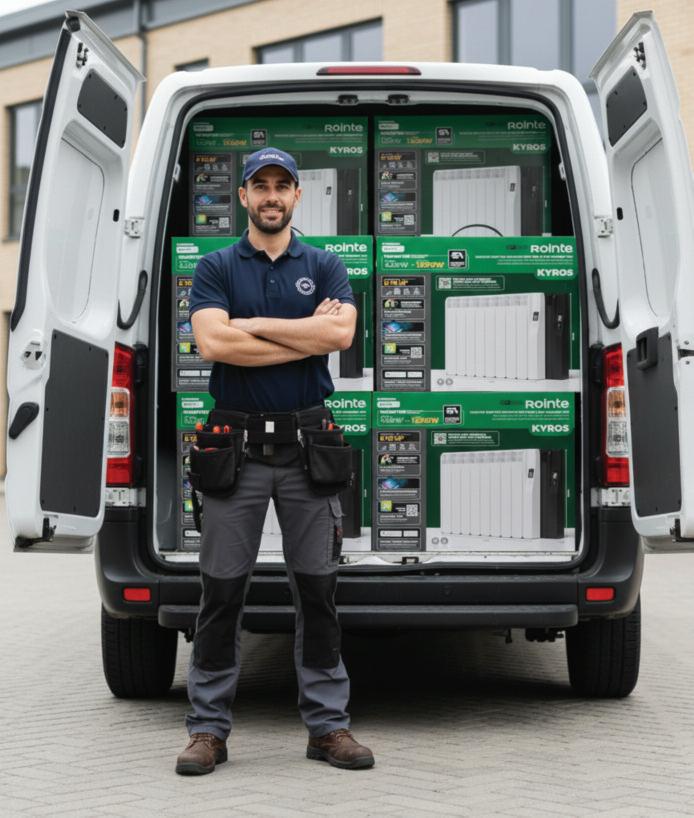
The result is up to 35% greater temperature stability and rooms that heat up 25% faster compared to the previous generation
The range has also been streamlined with three key power options per model, making it easier for installers to select the right unit for each space
Most importantly, the new KYROS integrates WiFi Direct, eliminating the need for external gateways or hubs –making setup faster and more reliable on-site.

2. Finance My Business: Practical advice on budgeting, pricing, cost control, and using online tools for profitability
3. Promote My Business: Strategies for building an effective online presence, leveraging websites, SEO, social media, and customer reviews
4 Run and Grow My Business: Advice on customer service, adopting new technologies, and staying ahead of industry trends
5. Lead My Business: Guidance on team management, leadership skills, and motivating staff for long-term success
David Williams, Schneider Electric’s Vice President for Transactional Business, said: “Our Build My Business training combines presentations, videos, templates, and expert suggestions to support electricians at every stage of their business journey.
Schneider Electric's goal is to equip electricians with the knowledge and confidence to thrive in a competitive market ”
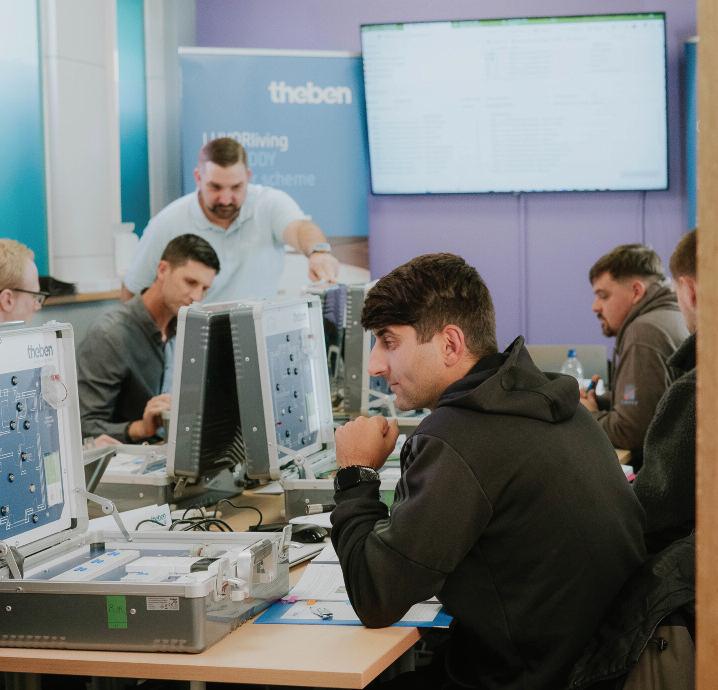
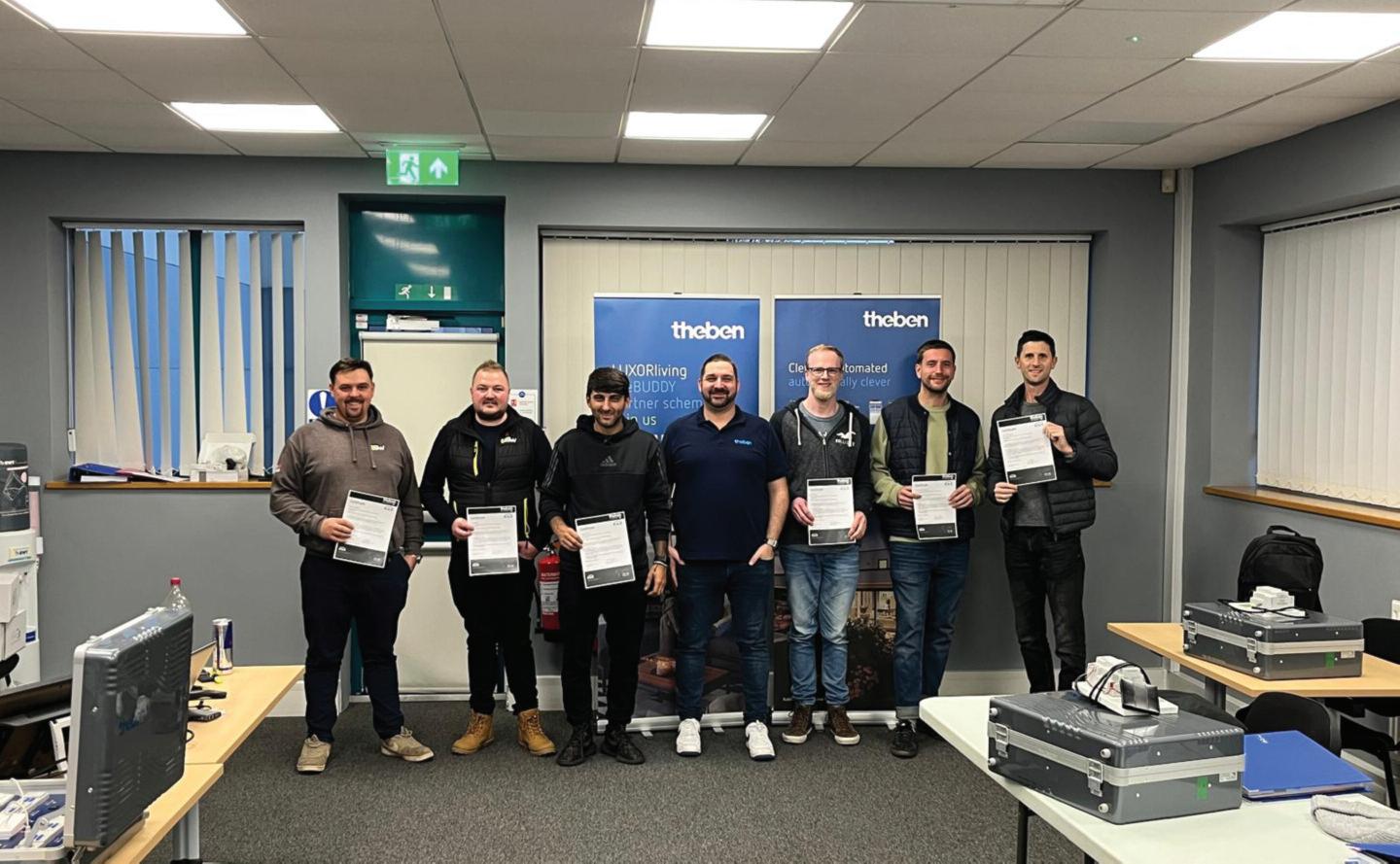
Electricians get hands-on at Theben Academy
If you’ve been thinking about getting into KNX but weren’t sure where to start, the first Theben Academy KNX Basic Course proved exactly why now is the time to dive in
Theben ran its first KNX training course at the National Self Build & Renovation Centre (NSBRC) in Swindon, and the feedback from the electricians who attended was simple: “Why didn’t I do this sooner?”
The course is designed with working sparks in mind. No over-complication. No jargon for the sake of it. Just practical, hands-on learning that shows you how KNX really works on-site
Across the week, every attendee built and commissioned their own KNX setup from scratch, covering lighting, heating,
shading, sensors, and more By the final day, everyone had passed with flying colours – a 100% success rate.
What electricians liked most was how quickly everything clicked KNX can look complicated from the outside, but once you get stuck in, it’s straightforward, logical, and incredibly powerful
With smart homes becoming standard in both retrofit and new-build projects, the course showed exactly how open-protocol systems like KNX can future-proof your business and cut down on callbacks.
Theben Academy is set up to support installers who want to grow their skillset without the hard sell or hype Backed by more than 100 years of engineering
INSTALLERS CAN BREATHE EASY
NAPIT Training, in partnership with Elmhurst Energy, is offering a brand-new course on Domestic Ventilation
Responding to growing industry demand, the BPEC Domestic Ventilation course has been designed for experienced electricians, plumbers, ventilation installers, and heating engineers seeking to enhance their knowledge and understanding of domestic ventilation systems.
The course covers the installation, inspection, testing, commissioning, and provision of information for fixed Domestic Ventilation Systems With this course, tradespeople will be qualified to test and commission ventilation systems for retrofitting and offer ventilation reports in addition to the other services they provide A ventilation report is carried out to
show compliance with Approved Document Part F of the Building Regulations It is a requirement for new build properties to have a ventilation report as part of new build compliance
The Domestic Ventilation course has been structured to meet the requirements of the Approved Document Part F of the Building Regulations 2020 and is recognised as an approved demonstration of competence for Competent Person Schemes
NAPIT Training will offer the course across four training centres: Mansfield, Bristol, Oldham, and Potters Bar It will take place over two days, and the assessments consist of a combination of practical and theoretical examinations
experience, the training focuses on real-world know-how, proper commissioning practice, and the confidence to take on your first job straight after the course
If you missed the first course, there are more dates already lined up for 2026:
KNX Basic Certification Course: 20th - 24th April
KNX Advanced Certification Course: 20th - 24th July
KNX Basic Certification Course: 2nd - 6th November

The course covers:
● The requirements of the Approved Document Part F of the Building Regulations 2020
● The installation, inspection, testing, commissioning, and provision of information for fixed Domestic Ventilation Systems
● Domestic ventilation in context
● Airflow requirements and calculations
● Health and safety

Anthony Martindale, Product Manager at Collingwood, looks at why homeowners should be getting more from their lighting than simply a standard solution.


MAKE BETTER LIGHTING SIMPLE
People spend time on their decoration and furnishing to create the right atmosphere in a room Lighting contributes significantly to that, not just from the aesthetic of the fitting but from the type of light it produces
For too long we’ve relied on outdated rules of thumb such as providing a colour temperature of 3000K for the home and 4000K for commercial installations. In reality people use different rooms and spaces in different ways
A good lighting setup combines general lighting with accent lighting to highlight features and task lighting to enable specific tasks
But even if you’re only providing general lighting, what you specify and install can make a real difference. There will be spaces where people want to relax such as their living room or bedroom, and more task orientated spaces like the kitchen and a home office
Even in the kitchen, there may be a dining area where people want to relax and socialise, so the same room may need different lumen levels and colour temperatures If you really want to
demonstrate your expertise, the lighting can also affect how a room’s decoration appears
Switching options
Interestingly, you don’t need to carry dozens of different fittings to provide such choice Many downlights allow you to switch between wattages to alter the lum output and to select different colour temperatures
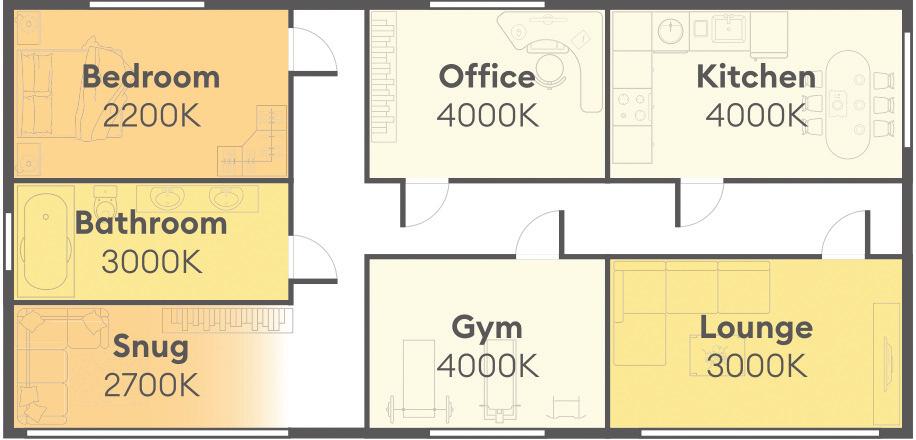
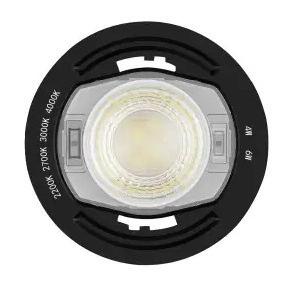
Our own H2 CSP downlight, for example, has two switches behind the bezel One allows yo to change the wattage between 4 - 6 W to produce 460 or 780 lumens, the other gives you a choice between four different colour temperatures, ranging from a very warm light of 2200K, a warm 2700K and 3000K, and a cooler white light of 4000K
What light to use and where While the choice of colour temperature and lumen levels is subjective, you can
est different options according to w your customer uses the room
Generally, rooms where people want to relax and socialise are better with a warmer light and lower illumination And if they have decorated a room with warmer tones ch as yellows, oranges, or reds, or if is a lot of wood, then a warmer colour temperature of perhaps 2700K is a good option to enhance the effect.
You might even suggest an even warmer light of 2200K for a bedroom’s ambient light, which is good for circadian rhythms before people go to sleep or as they wake up It’s a similar light to a sunset or dawn and, don’t forget, they can supplement this with additional task lighting
For rooms that are more task
orientated, such as the kitchen, you might specify 3000K and a higher lumen output for the food preparation areas, but then, using the same downlight, you can reduce this to 2700K with lower light levels for the dining area
For a home office you may even suggest a cooler white light of 4000K to aid concentration, while if they have decorated a room in cooler colours such as blue, green, or even white then a cooler white light of 3000K or even 4000K will add vibrancy
Lighting control
Of course, customers can also manage light levels themselves if you install dimming control, but some fittings take this further with dim to warm technology
For example, at full brightness our 1901 range can provide a light with colour temperature of 3000K but you can dim this to 10% for a romantic meal and get a very warm cosy 1800K light
Try before they buy
Many downlights offer you and your customer the option of switching the
wattage and lumen output, plus the colour temperature from the same fitting
This makes it simple to show them the effect of different light within their room before they decide. If they change a room’s function or decoration then this flexibility also allows them to change the type of light they get in a room
Modern downlights enable you to offer a customer real choice from the same fitting, so it’s time to embrace this and to really add value for them Your reputation and business will benefit from the positive reviews that you get, and best of all, it’s a simple and inexpensive thing to do
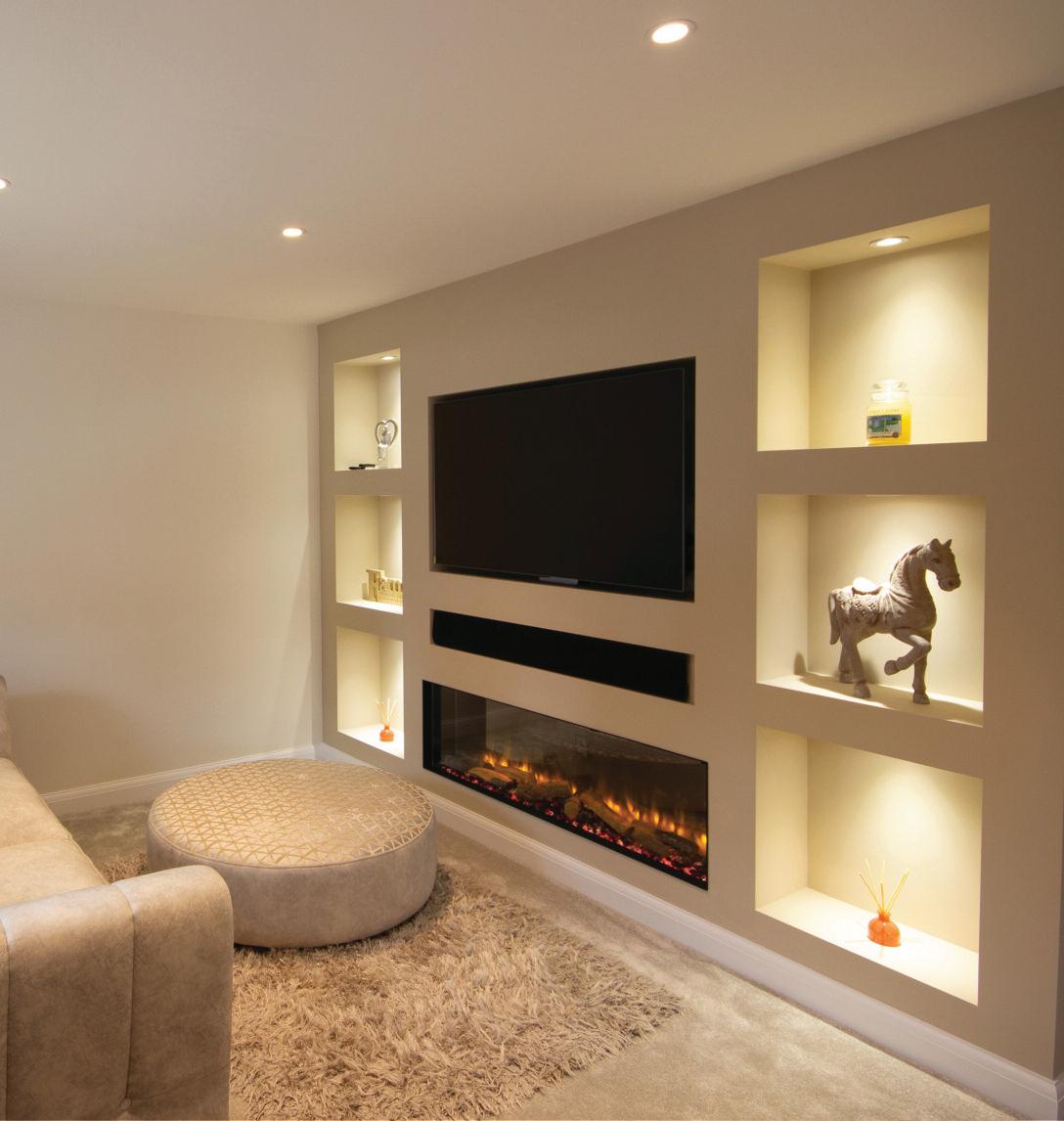

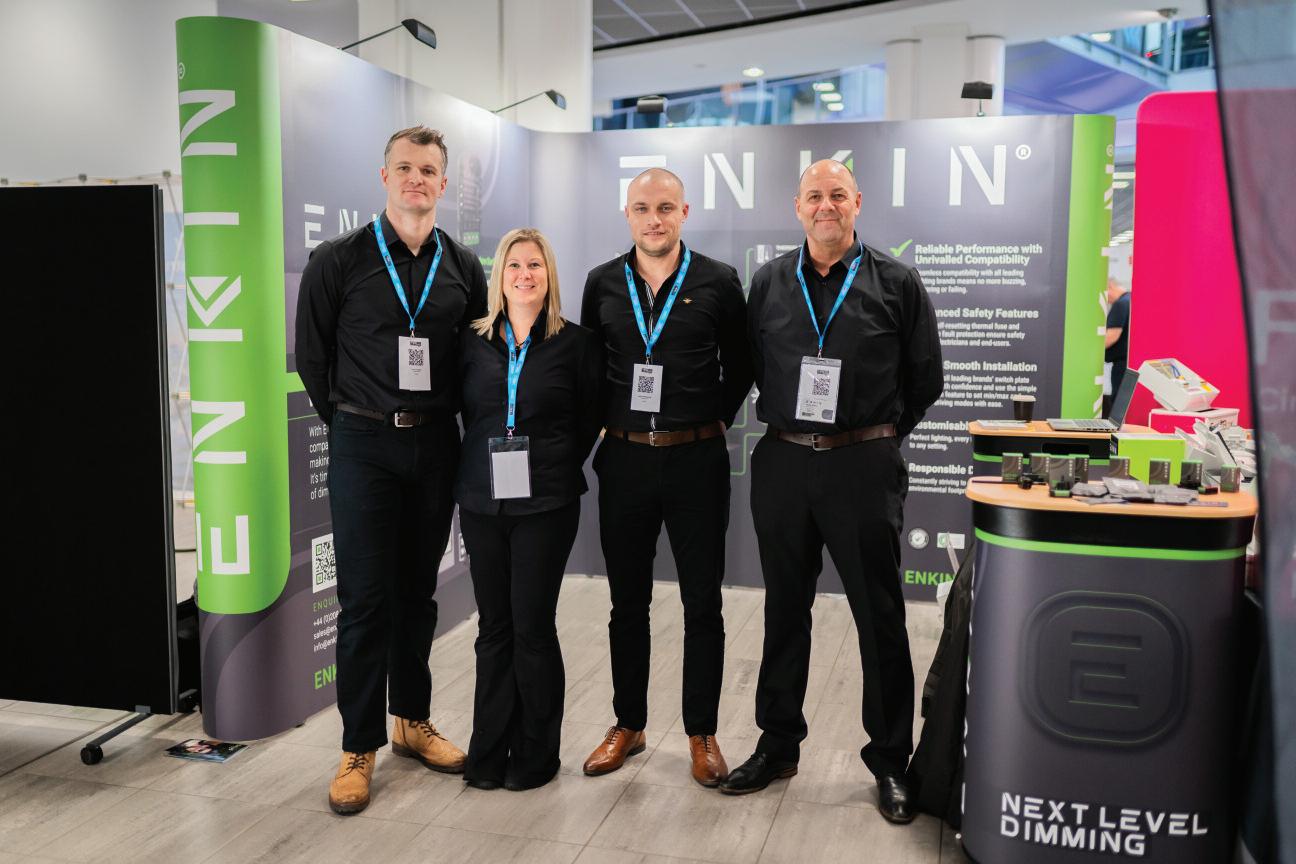
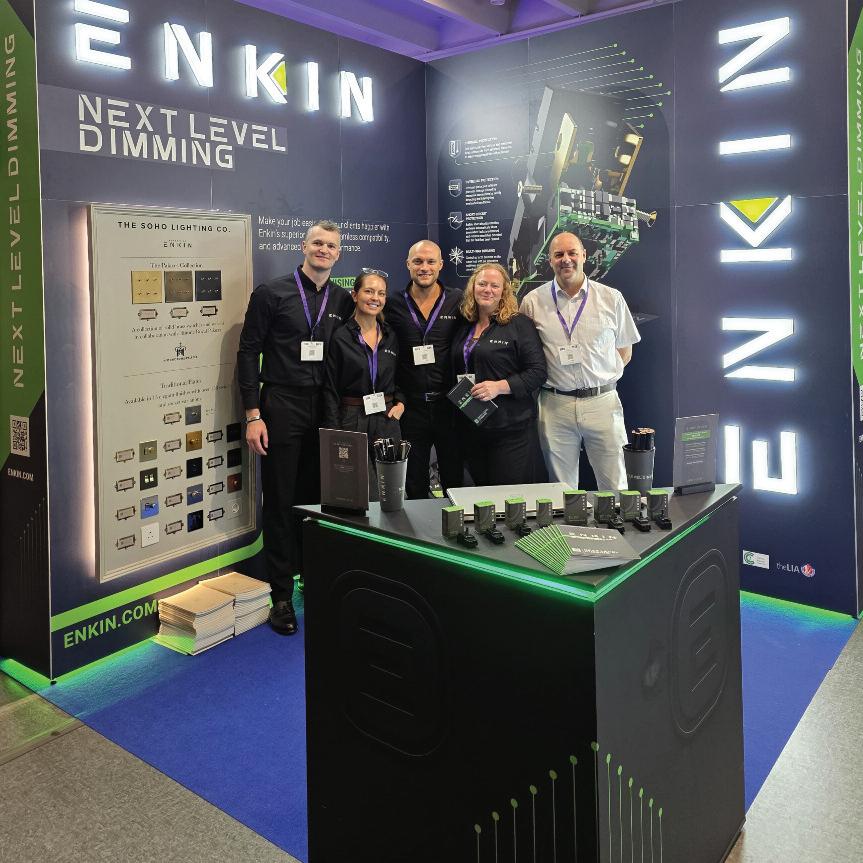

A TRULY ELEX-CELLENT YEAR
continued growth and a new product launch, as Co-Founder, Joshua Hammerton explains.
2025 was a landmark year for Enkin, defined by growth, stronger industry presence and a surge in market recognition. From product innovation to brand visibility, our team are proud of the steps we took to support other electrical professionals across the UK
The shows must go on
A highlight of 2025 was Enkin’s strong presence on the trade show circuit, exhibiting at six ELEX trade shows across the country.
These electrical trade events provided a perfect opportunity to showcase Enkin’s
award-winning product range and connect directly with customers, electricians and industry professionals. The shows helped Enkin reinforce its reputation for reliability, innovation and user-friendly design
Each show saw larger crowds at our stand, deeper conversations and stronger brand recognition, demonstrating just how quickly Enkin’s presence has grown within the electrical community
Exhibiting at the six regional ELEX events last year was an incredible experience for us. The engagement, conversation and genuine interest from electricians, wholesalers and other electrical industry professionals were
ELEX RETURNS IN MARCH WITH SIX SHOWS IN 2026
The ever-popular ELEX trade shows are returning again for 2026 with stops at six key regional venues and a bigger and better line-up than ever before Commencing in March with a trip to both the Bolton Arena and the iconic Alexandra Palace, the calendar consists of:
Bolton Bolton Arena 5th & 6th March
London Alexandra Palace 26th & 27th March
Exeter Westpoint Arena 23rd & 24th April
Harrogate Yorkshire Event Centre 14th & 15th May
West Midlands Stoneleigh Park 22nd & 23rd October
Surrey Sandown Park 18th & 19th November
REGISTER FOR A FREE ELEX SHOW TICKET OR GET MORE SHOW
beyond anything we could have hoped for previously.
We were given the chance not only to showcase our products, but to connect with the people who use them daily The feedback, enthusiasm and support we’ve received have been invaluable and ultimately played a huge part in Enkin’s growth in 2025
We’re proud to be part of the ELEX community and can’t wait to build on this momentum in 2026
Growing gains
At the start of 2025 Enkin was selling through a handful of local wholesalers Fast forward 12 months and we’ve made a monumental leap, expanding into multiple major electrical wholesalers nationwide
This transition to widespread national distribution was a major milestone, demonstrating industry trust in Enkin and significantly increasing market reach.
With an exciting new product range set to launch in the next few months the Enkin team are buzzing and ready to see what the next 12 months will bring!


PUT CHARGING ANXIETY ON ICE
Theo Brillhart, Fluke Corporation’s Technology Director, R&D, examines why effective maintenance is the key to eliminating EV charging anxiety.
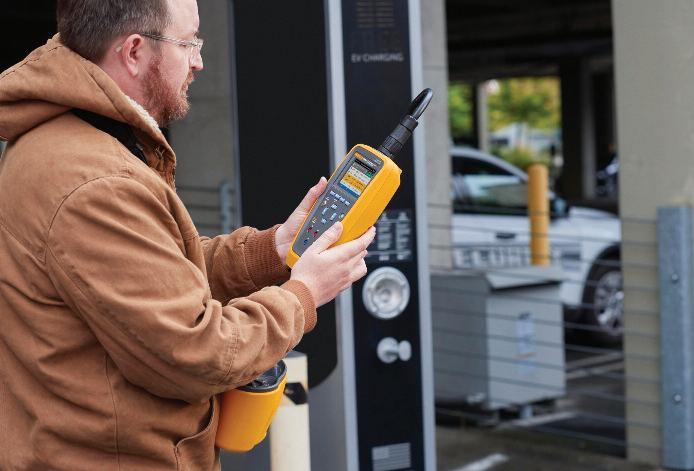
Electric vehicle (EV) adoption is no longer hypothetical The UK was the biggest EV market in Europe in 2024, and we now see over 1 5 million EVs on UK roads The transition is well underway
What’s less certain is whether the charging infrastructure can keep pace. Without reliable, accessible, and well-maintained charging stations, momentum could falter
From range anxiety to charging anxiety
For years the dominant barrier was “range anxiety”, but the new concern is “charging anxiety ” Drivers must now consider: “Will I be able to find a working charger when I need one?” It is a shift that moves the focus away from the vehicle and onto the reliability of the infrastructure behind them
If EV adoption is to scale, reliability must become universal That means any driver should be able to pull into any charging station and expect it to work Initiatives such as CharIN are pushing interoperability standards and running cross-platform trials Progress is visible, but technical standards alone will not solve the problem.
Maintenance as a reliability strategy
Effective strategies require a balance of reactive maintenance – responding quickly to vandalism, collisions, and unexpected failures – and preventive maintenance, which builds resilience into daily operations Predictive maintenance goes further by
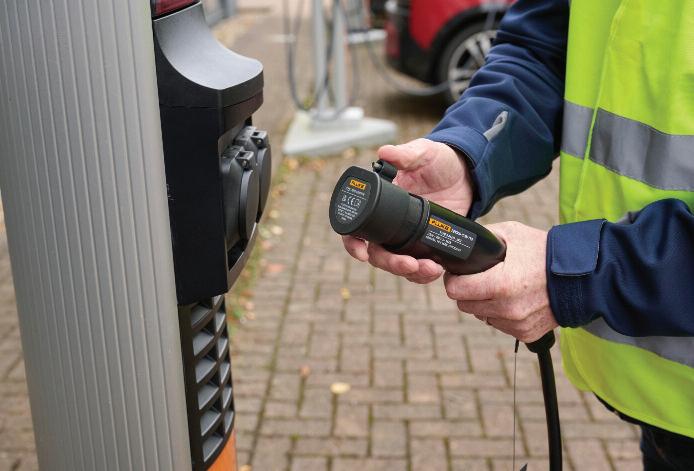
leveraging data and analytics to identify problems before they lead to outages
This need is reinforced by a recent Fluke survey: 36% of respondents cited charger maintenance as a top industry challenge, 44% pointed to inoperable chargers as a major hurdle, and 40% flagged software incompatibility.
Preventive work should include remote monitoring of charger performance, scheduled inspections of safety systems, regular servicing of cooling systems and power electronics, and testing of payment systems
Remote analytics are also valuable They give operators 24/7 visibility into charger status, reduce unnecessary site visits, and allow failures to be diagnosed before users encounter them.
To make this progress possible, there are three further areas that must be addressed:
1. Standards and tools
Servicing EV chargers requires a workforce trained to original equipment manufacturer (OEM) specifications, armed with advanced diagnostic tools, and working under consistent standards. Without that alignment, outcomes vary, maintenance costs increase, and the inconsistency breeds consumer frustration
2. Building the workforce
A dependable charging ecosystem relies on a trained and continually certified workforce Firmware updates, higher-power

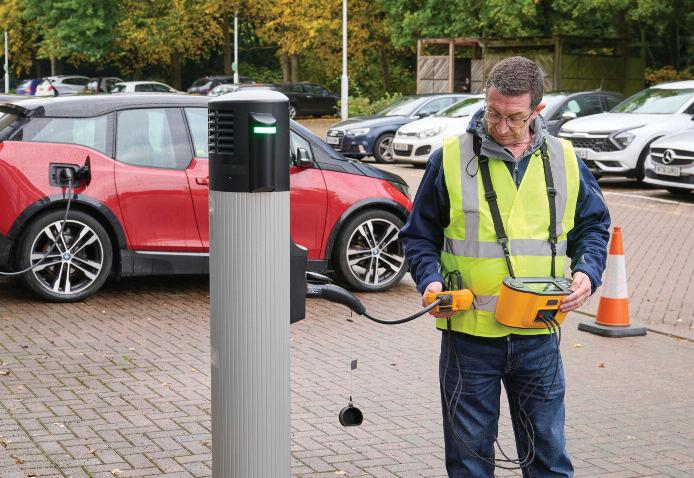
charging, and advanced thermal systems change the skill requirements every year, so training must evolve accordingly
3. Aligning incentives
Well-crafted service-level agreements (SLAs) set expectations for response times, resolution targets, and uptime guarantees. Maintenance teams must also have access to diagnostic codes, error logs, and performance data, so that operators and service providers are working from the same real-time information
Designing for the future
Every new charging station built today must be designed with long-term reliability in mind, from having equipment certified to ISO and IEC standards, and mandating compliance with the Open Charge Point Protocol (OCPP), to ensuring OEM-certified training for service providers, and structuring warranties and contracts so that uptime is rewarded At its core, this is what EV adoption depends on
The industry is successfully tackling range anxiety by delivering longer-range vehicles and expanding home charging. It must now bring the same urgency to the charging infrastructure
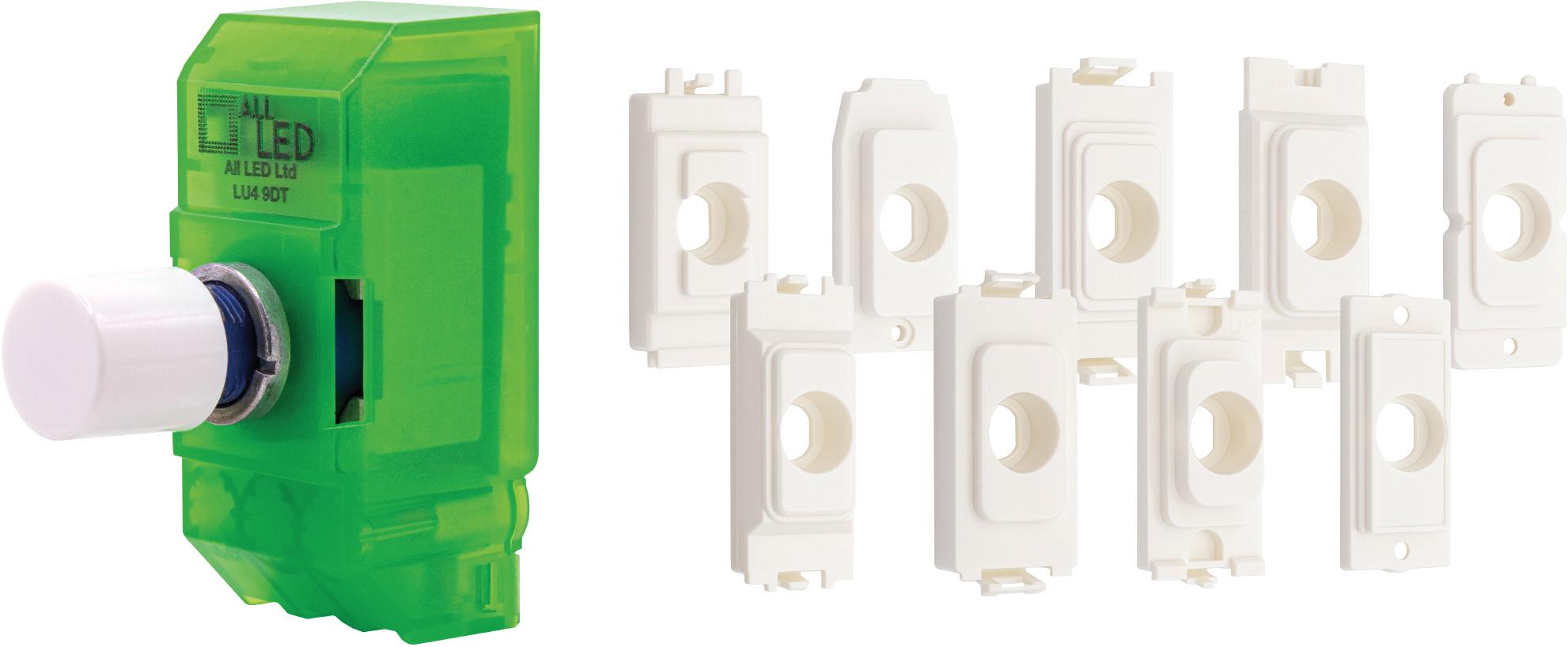
The smart choice for smooth control
In the fast-moving world of lighting technology, the difference between a good install and a great one often comes down to control. Smooth, flicker-free dimming is not just about convenience, it is about delivering the professional finish that clients notice and electricians rely on
The All-Dim range from All LED was designed with that exact purpose in mind: to give electricians a reliable, adaptable, and easy to use dimming solution that performs perfectly with today’s LED lighting
The All-Dim family includes three core products – the All-Dim 150 W 2 Way LED Dimmer Module, the All-Dim 6 A (1,000 W) Dummy Dimmer Module, and the All-Dim 150 W 2 Way LED Grid Dimmer with Adaptor Plates – each designed to make dimming simpler, smarter, and more dependable across every type of installation
At the heart of the range is the All-Dim 150 W 2 Way LED Dimmer Module, a compact but powerful unit that combines precision engineering with All LED’s signature reliability Using programmable leading edge and trailing edge modes, it allows installers to tailor performance to match any LED load
With advanced OptiDim technology at its core, the All-Dim ensures wide compatibility across brands and fittings, minimising the risk of flicker or dropout –two of the most common frustrations on-site Installers can easily fine tune the minimum brightness setting, achieving smooth control even with low wattage loads from as little as 5 W
Importantly, there is no maximum luminaire quantity, giving electricians full freedom to design and scale lighting layouts without the guesswork. The compact module size, combined with an
off-centre slim spindle makes it an ideal retrofit optio crowded back boxes modern faceplates a Enlarged terminals s wiring, while the eart provides additional space during installation, saving time without compromising safety
For multi-way circuits or decorative the All-Dim 6 A (1,000 Dimmer Module com system Designed to appearance of the main dimmer, it allows for push on off control w maintaining visual co across the plate
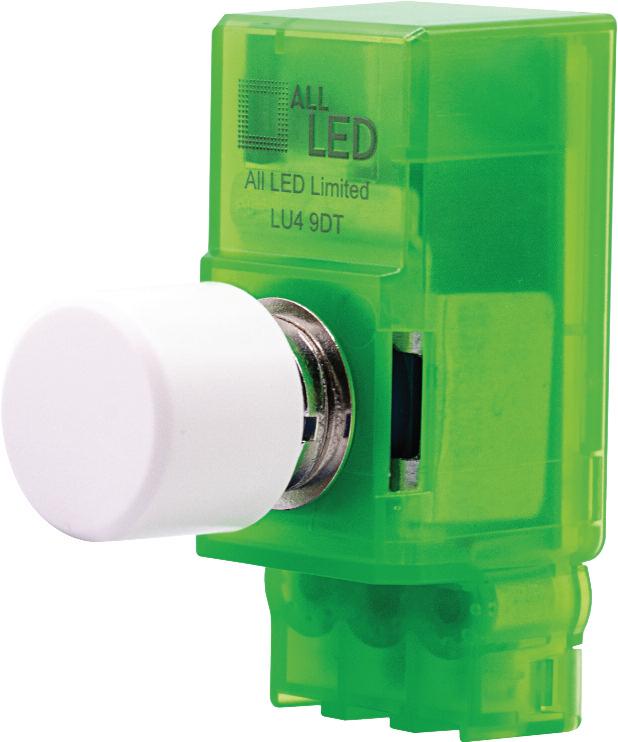
With a slim, off-ce spindle and compact body, it fits neatly into most standard dimmer plates, offering straightforward integration with both new and retrofit proj Capable of handling (6 A), it delivers the s build quality and relia installers expect from the All LED brand
By pairing the 6 A Dummy Dimmer with the 150 W LED module, electricians can create flexible multi-point control systems that look uniform and perform flawlessly A subtle but significant touch that elevates the finish of any installation
Completing the range is the All-Dim 150 W 2 Way LED Grid Dimmer, supplied with a full set of nine white adaptor plates
for leading grid systems, including BG, Crabtree, Deta, Hamilton, Hager, MK Logic, Schneider Lisse, Schneider Ultimate, and Wandsworth For installers who prefer a coordinated look, black adaptor options are also available.
This versatility means the All-Dim Grid Dimmer integrates easily into existing grid setups, whether in domestic projects or arge-scale commercial environments It features the ame OptiDim technology, adjustable brightness control, and wide dimming compatibility as the standard module, ensuring consistent performance across every type of installation
Across the range, every feature has been considered with real world use at the forefront The All-Dim modules are equally suited to retrofit or new installations, designed to make upgrades quick and straightforward while maintaining a professional finish. Their ompact design, reliable load handling, and intuitive setup help electricians save time, reduce call-backs, and deliver a higher standard of lighting control.

GET MORE DETAILS ON ALL LED’S ALL-DIM RANGE BY VISITING:
CLICK SCOLMORE Matt Black Finish for New Media Modules
Click Scolmore has upgraded its New Media module range
with the introduction of a stylish new matt black finish –delivering the same trusted functionality with a more sophisticated modern style. Designed to complement modern interiors, the new matt texture offers a sleek, low-sheen appearance that blends effortlessly into contemporary environments – perfect for applications where elegance and performance are essential The matt black finish will be available across a comprehensive selection of New Media modules This enhancement reflects Click Scolmore’s ongoing commitment to innovation and meeting the evolving demands of the market with high-quality, design-conscious solutions
CED
ELECTRICAL Axent Wiring
Accessory Range
Ultra-flat and ultra-matt, this comprehensive range of switches and sockets redefines minimalism through precision engineering and flawless craftsmanship – making it easier and faster to install The range is meticulously conceived to adorn the most sophisticated interiors and will be available in two versions –a screwless option with soft curved corners and flush insets plus a screw-down option with defined corners for a more contemporary look. Available finishes for the Axent range include matt black, matt white, satin chrome and antique brass -– the four most popular decorative options in the market today Quality is assured with the Axent range, complying with all relevant UKCA, BS, BS EN standards and CE approvals The new Axent range of decorative wiring accessories will be available in the first quarter of 2026

Products round up
LEDVANCE Direct Easy System
The Direct Easy system from LEDVANCE delivers multiple energy-saving functions, including daylight harvesting to automatically dim lighting when natural light is sufficient, and presence detection to switch off or reduce lighting in unoccupied areas. Using Zigbee 3.0 wireless control with simple Bluetooth setup, the system avoids complex wiring and reduces installation energy Up to 40 luminaires can be grouped per zone, ensuring only areas in use are illuminated Direct Easy also supports dimming, Tunable White and RGB control, allowing light levels and colour temperature to be tailored to specific tasks Compatible Zigbee 3 0 luminaires offer high efficacy and low flicker to minimise wasted energy. Combining simplicity, flexibility and strong performance, the system delivers energy savings comparable to other lighting management systems but with the added advantage of quick, App-based configuration.

ESP
Espire Alarm Finder Tool
ESP’s Espire Alarm Finder helps homeowners, landlords and businesses identify the correct smoke, heat and Carbon Monoxide alarms for their property. By answering a short set of guided questions, users receive tailored product recommendations and clear advice on alarm placement to support compliance and maximise safety The tool first determines the property’s location – England, Wales, Scotland, Northern Ireland or Ireland – to apply the correct regional standards It then covers key details such as property type, size, required system grade, monitored risks, power options and features including RF-Link interconnection and a Remote-Control Switch RF-Link allows alarms to communicate for improved protection, while the controller enables easy testing in line with BS 5839-6:2019 Users can request personalised documentation for their installation ESP’s Espire range includes Grade D1, D2 and F1 alarms, offering smoke, heat, CO and combined units with features such as auto-dimming LEDs, insect mesh, 24-hour memory, RF link and lock-in bases

THEBEN
DIMAX 540 APP B Mini Dimmer
Smart lighting control in older buildings can be challenging, especially where space is limited or no neutral conductor is available. Theben’s DIMAX 540 APP B mini dimmer solves this by bringing modern, App-based control to existing installations without altering cabling or chasing walls At just 32 5 × 26 6 × 9 6 mm, it remains one of the smallest smart dimmers on the market A key upgrade is Bluetooth Mesh Multiple DIMAX 540 APP B units can communicate across the property, providing extended range and strong reliability If one device fails to respond, another seamlessly relays the signal For retrofit projects, this enables robust smart control without WiFi or a central hub Setup is handled via the App or a standard push button, allowing installers to configure groups and scenes for bathrooms, kitchens, or open-plan areas. Users benefit from preset moods for dining, working, or relaxing. The new astro function adds automatic switching based on sunrise and sunset, ideal for outdoor lighting, shopfronts or interior schedules The unit retains the core features of the original DIMAX 540 plus B, including smooth 0 - 100% dimming, extended five-second dimming for fine adjustment, minimum brightness settings, and protection against overcurrent, overheating and short circuits It supports LEDs, halogens and incandescent lamps, works without a neutral conductor, fits behind a standard switch, and handles cable runs up to 100 metres For installers seeking a compact, reliable and future-ready retrofit solution, the DIMAX 540 APP B brings modern control to the buildings that need it most.


OVIA
Inceptor Hi-Bloc Industrial Highbay
Ovia’s Inceptor Hi-Bloc is a CCT- and power-switchable linear Highbay designed for high-ceilinged industrial and commercial spaces Delivering strong, controlled illumination for warehouses, factories, gymnasiums and similar environments, it features a distinctive diffuser that provides enhanced glare reduction with a UGR ≤22 for improved comfort and visibility Its slim, linear design and narrow 72° beam angle focus light effectively down long aisles and rectangular spaces for targeted coverage Installer-friendly elements include an easily accessed CCT/power switch positioned behind an IP65 threaded cap, two mounting hooks for chain installation and an integrated spirit level for precise alignment An optional mounting bracket adds further flexibility. For advanced control, a programmable remote adjusts PIR range, sensitivity, daylight thresholds, hold times and standby settings. The Hi-Bloc also works with Ovia’s 5 W 3 Hour Maintained IP65 Emergency Pack for consistent emergency lighting.
ROBUS LIGHTING DALLAS 30 W

ROBUS has refined its DALLAS range to offer a simple, reliable solution for everyday panel installations Suitable for offices, hospitals and similar environments, the 600 × 600 mm backlit panel delivers consistent 4000 K neutral white light and avoids the ‘yellowing’ often seen in edgelit designs A white powder-coated steel frame ensures a clean match with standard ceiling grids For secure surface installation, the new quick-fit aluminium Surface Mounting Box assembles without screws and allows the panel to slide neatly into place Optional upgrades include the Dual Test Emergency Pack and Universal Dimmable Driver, providing both manual and automatic energy-saving control. Designed for dependable performance and straightforward fitting, the DALLAS 30 W panel remains a versatile choice for commercial lighting projects
LEDLITE LTFL Floodlight Series
The LTFL Floodlight Series from LEDLite offers a durable, high-performance solution for residential, commercial and industrial outdoor lighting IP65 rated and fully CCT switchable (3000 K, 4000 K, 6000 K), the range includes three models: the LTFL10 10 W unit for smaller spaces, the LTFL235 with selectable 20/30/50 W outputs, and the LTFL810 delivering 80/100 W for larger sites Each model is available in Standard, PIR Sensor and Microwave Sensor versions The PIR option offers motion-activated control with adjustable time, LUX and sensitivity; the Microwave variant adds high-frequency detection through glass or thin partitions, with remote adjustment of sensitivity, hold time and colour temperature Installer-friendly features include a slide-in mounting bracket, adjustable swing bracket and an additional round bracket for ceilings or poles. Robust construction and flexible control make the LTFL Series suitable for security, visibility and general exterior lighting
ELUCIAN Power and Lighting Distribution Boards
Elucian Three Phase Power and Lighting Distribution Boards offer an installer-focused solution for commercial, industrial and large residential projects Each board features independently isolated power, lighting and accessory sections, allowing one area to be switched off while the others remain live – supporting safer, more efficient maintenance than conventional boards requiring full shutdown A built-in energy meter enables separate monitoring of power and lighting loads on a single device, saving space and cabling All boards come pre-installed with Type 1 and Type 2 SPDs for faster installation and enhanced surge protection The range includes 24 configurations, from 8 Way (4 Power/4 Lighting) 125 A units up to 32 Way (20 Power/12 Lighting) 125 A versions Quick-release, spring-clip doors provide easy access, while consistent device alignment ensures a clean, professional finish
C AM E RA CAUGHT ON

PAUL SHACKLETON: I’VE NEVER SEEN THIS BEFORE THERE WAS AN UNDERGROUND CABLE FAULT AND THE SUPPLY AUTHORITY INSTALLED A TEMPORARY GENERATOR TO THE HOUSE WHILST DIGGING THE ROAD THEN, WHEN THEY RE-INSTATED THE MAINS SUPPLY THEY SWAPPED THE LINE AND NEUTRAL LUCKILY THE CUSTOMER NOTICED! (THE PICTURE WAS TAKEN WHEN THE ENGINEER ARRIVED TO CORRECT IT) IT JUST SHOWS THAT YOU NEED TO CHECK EVERYTHING!
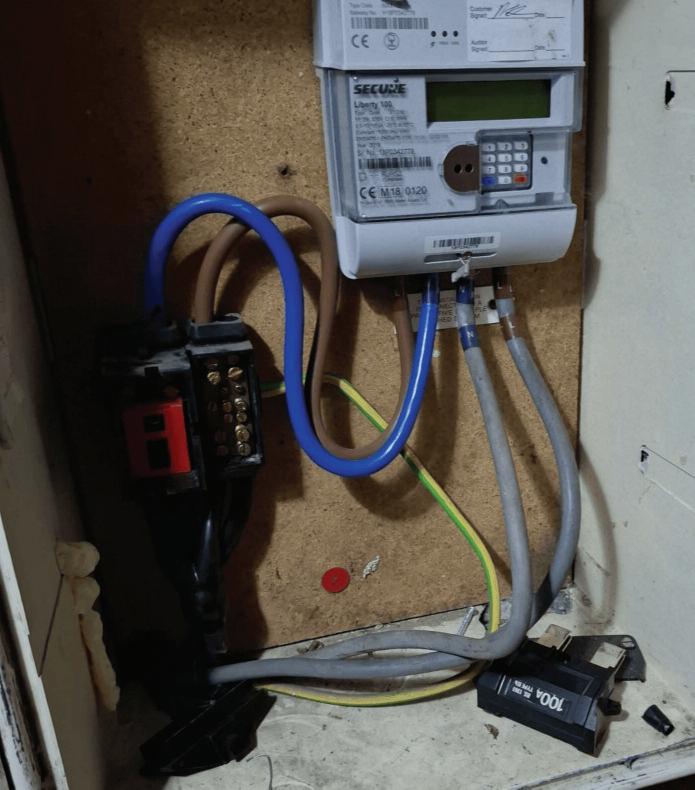
GAVIN WARREN: WE FOUND THIS IN A CABIN THAT WE VISITED RECENTLY APPARENTLY IT WAS INSTALLED BY AN ‘ELECTRICIAN’.


SOCIAL SNAPS!

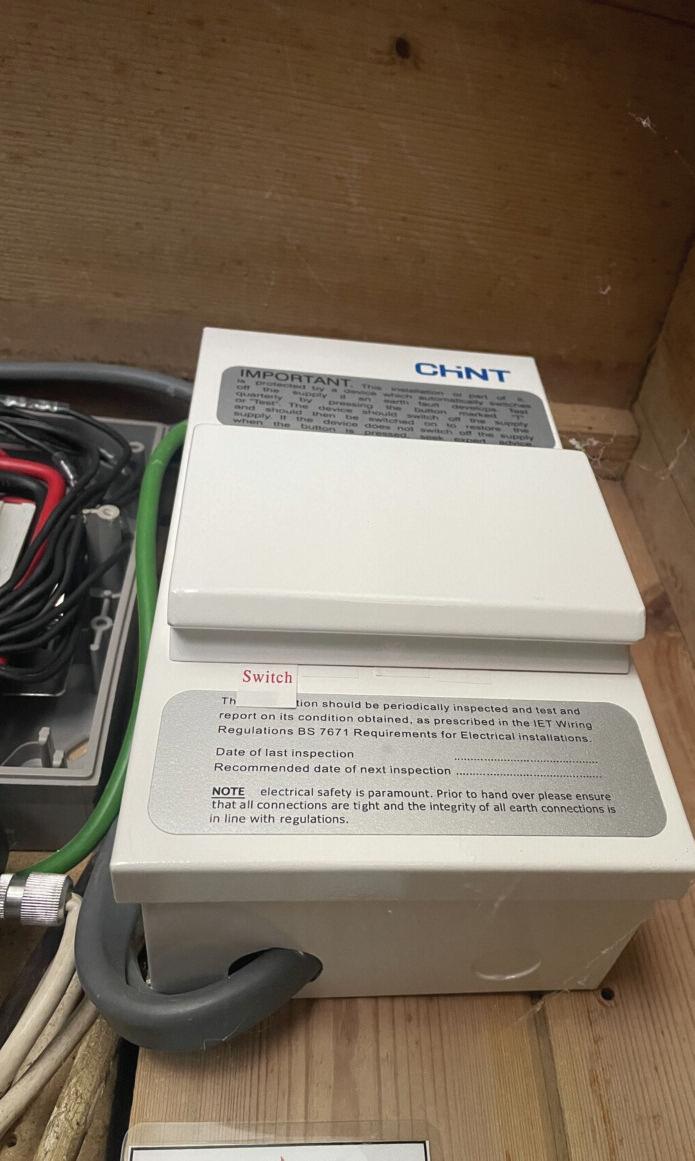
WARD: NO PROVISION FOR CABLE ENTRY PROTECTION INTO THIS RAZOR SHARP METAL ENCLOSURE
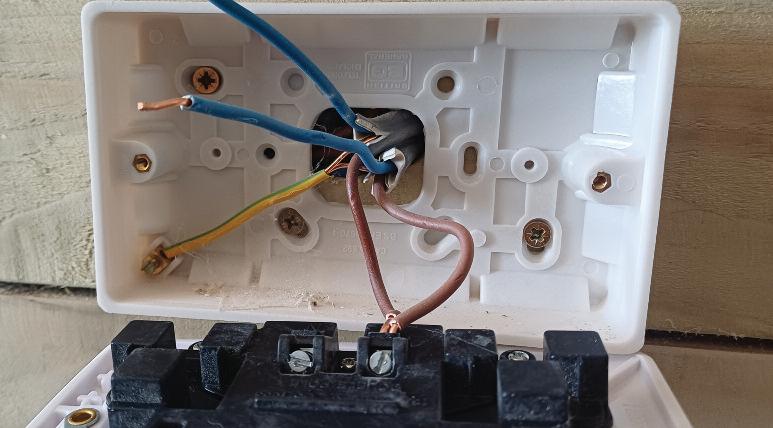

CHARLIE JONES: TAKE A LOOK AT THIS NEW EV CHARGER INSTALLATION THE CONTRACTOR EVENTUALLY CAME BACK TO RECTIFY BUT HOW IS THIS KIND OF WORK BEING SIGNED OFF? THE MORE YOU LOOK AT THE IMAGE THE MORE YOU FIND
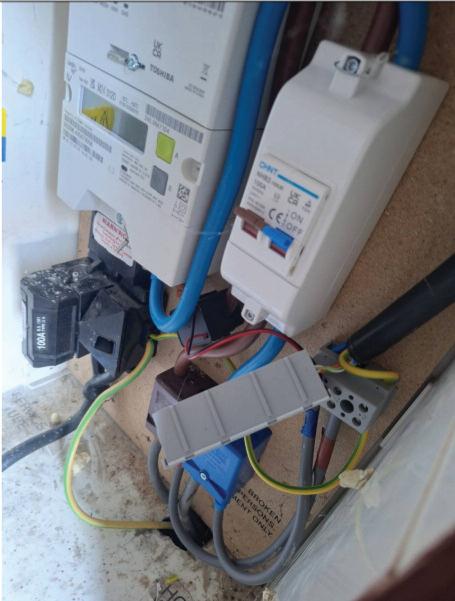
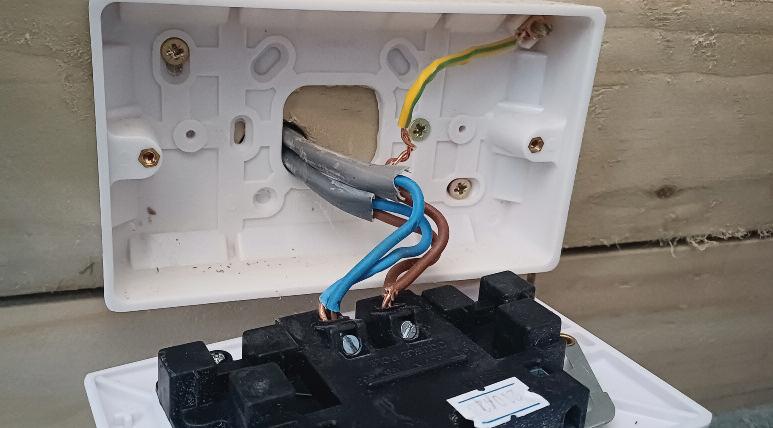

ADVERTISER INDEX
Here is a useful summary of all the adverts that appear in this issue of Professional Electrician. Each is listed with its page number and a direct URL that will get you straight to the relevant online information.
Aico Ltd ...........................................................page 36
www.rdr.link/EBU100
ALL LED Ltd .....................................inside front cover
www.rdr.link/EBU101
CED Electrical Group ......................................page 63
www.rdr.link/EBU102
Centrica Hive Ltd ..............................................page 4
www.rdr.link/EBU103
CHUMPFix .......................................................page 62
www.rdr.link/EBU104
City and Guilds of London Institute (CGLI) ....page 53
www.rdr.link/EBU105
Collingwood Lighting Ltd .................................page 6
www.rdr.link/EBU106
CTEC Ltd .................................................pages 26, 27
www.rdr.link/EBU107
Electrorad UK Ltd .............................................page 9
www.rdr.link/EBU108
ELEX ................................................................page 57
www.rdr.link/EBU109
Elite Security Products Ltd .............................page 40
www.rdr.link/EBU110
Fibre4Sparkies ................................................page 50
www.rdr.link/EBU111
IDEAL INDUSTRIES EMEA ................inside back cover
www.rdr.link/EBU112
Kempston Controls .........................................page 22
www.rdr.link/EBU113
Logic4training .................................................page 50
www.rdr.link/EBU114
Metrel UK Ltd .................................................page 40
www.rdr.link/EBU115
Ovia Lighting ...................................................page 61
www.rdr.link/EBU116
Powered Now .................................................page 31
www.rdr.link/EBU117
Rointe ............................................outside back cover www.rdr.link/EBU118
Scolmore International Ltd ............................page 31
www.rdr.link/EBU119
Scolmore International Ltd ............................page 53
www.rdr.link/EBU120
Selectric ..........................................................page 21
www.rdr.link/EBU121
Sevadis ............................................................page 45
www.rdr.link/EBU122
Switchtec Ltd ..................................................page 55
www.rdr.link/EBU123
Theben Automation Ltd .................................page 16
www.rdr.link/EBU124
Tradecert ........................................................page 29
www.rdr.link/EBU125
Trade Skills 4U ................................................page 50
www.rdr.link/EBU126
UNICRIMP Ltd .................................................page 58
www.rdr.link/EBU127
Zemper ...........................................................page 58
www.rdr.link/EBU128
Zurich Insurance Company Ltd and
Catalina Worthing Insurance Ltd ...................page 11
www.rdr.link/EBU129
Zzeus Training Ltd ..........................................page 43
www.rdr.link/EBU130