Roma magazine 44

Page 1


winter 2026

COVER STORY

26 JENNIFER LAWRENCE

She shines...

PEOPLE

10 GABRIELE VERGERIO

Contemporary identity

Identità contemporanea

12 JACOPO JENNA

The third dimension

Terza dimensione

AGENDA

14 ART ROMA

15 EVENTS ROMA MUST

80 FOR YOU

81 THE SLOPES AWAIT YOU

82 LITTLE ESCAPES

83 THAT EXTRA TOUCH

FASHION & BEAUTY

17 IT OBJECT

84 SHOOTING

The street as a catwalk

ITINERARIES

34 LUCE CARDINALE

A journey to Rome Un viaggio a Roma

LIFESTYLE

30 ROBERT DE NIRO

48 extraordinary hours 48 ore straordinarie

96 AURO MONTANARI

The custodian of time

Custode del tempo

112 HELEN PAPAGIANNIS

Preserving soul Conservare l’anima

JACQUES MARIE MAGE | CHROME HEARTS

KUBORAUM | AHLEM | MATSUDA | CUTLER AND GROSS MYKITA | SATO | MR.GENTLEMAN

DIFFUSER TOKYO | MEO FUSCIUNI PARFUM

HANDMADE EYEWEAR & ACCESSORIES

winter 2026

120 TENUTA FRATINI

Where art meets nature

Dove l’arte incontra la natura

MOVIE, THEATHER & MUSIC

46 ANGELIQA DEVI

My emotional geography

La mia geografa emotiva

48 FLAVIO GISMONDI

Back to the important things

Il ritorno alle cose che contano

50 LILIANA FIORELLI

Possible lives

Vite possibili

94 IMMORTAL VIBES

From Marley to Milano Cortina

Da Marley a Milano Cortina

104 RICCARDO VITANZA

The art of communication

L’arte della comunicazione

ART, DESIGN & CULTURE

52 BERNINI AND THE BARBERINI

At the sources of the baroque

Alle sorgenti del Barocco

58 EXHIBITIONS

A spectacular programme Calendario di meraviglie

64 HOTEL D’INGHILTERRA ROMA

The Contemporary Grand Tour Grand Tour contemporaneo

68 ROMA SU MISURA CRAFT SHOPPING GUIDE

Eternal mastery Eterna maestria

TASTE

74 ICONIC CAFÉS

A warm embrace Caldo abbraccio

122 SHOT ON SITE

136 RESTAURANTS GUIDE

ROME VIEW FROM THE MOST GLAMOROUS MAGAZINE OF THE CITY quarterly

PUBLISHER

Gruppo Editoriale

Alex Vittorio Lana, Matteo Parigi Bini

CAPRI CORTINA DUBAI FIRENZE FORTE DEI MARMI

MILANO ROMA SICILIA VENEZIA

EDITOR IN CHIEF

Matteo Parigi Bini

FASHION DIRECTOR

Marta Innocenti Ciulli

MANAGING EDITORS

Teresa Favi, Francesca Lombardi

EDITORS

Sabrina Bozzoni, Virginia Mammoli, Martina Olivieri

EDITOR AT LARGE Slim Greige

CONTRIBUTORS

Giovanni Bogani, Luce Cardinale, Auro Montanari, Helen Papagiannis, Riccardo Vitanza

COVER PHOTO

Gianluca Minchillo

PHOTOGRAPHERS

Alberto Novelli and Alessio Panunz, Marco Cremonesi, Andrea Dughetti, Dario Garofalo, Serafino Giacone, Alessandro Moggi Pasquale Paradiso, Marco Melfi, New Press Photo, Niccolò Rastrelli, Simone Ridi, Valentina Stefanelli

GRAPHIC DESIGNERS

Melania Branca, Clelia Giardina

TRANSLATIONS

Centotraduzioni, Tessa Conticelli, Landoor

ADVERTISING AND MARKETING DIRECTOR Alex Vittorio Lana

ADVERTISING

Nicola Brigandì, Gianni Consorti, Pino di Persio, Holding Communication, Lisa Katsogiannou, Emanuela Mattioli Alessandra Nardelli, Monica Offidani, Paola Paciotti, Anna Repellini

EDITORIAL OFFICE via Cristoforo Landino, 2 - 50129 Firenze - Italy ph +39.055.0498097 - redazione@gruppoeditoriale.com

SOCIETÀ EDITRICE

Alex Vittorio Lana & Matteo Parigi Bini via Cristoforo Landino, 2 - 50129 Firenze - Italy ph +39 055 0498097 www.gruppoeditoriale.com

PROPRIETÀ DELLA TESTATA

FM publishing srl

Registrazione Tribunale di Prato - n° 9/2006 del 15.12.2006 Spedizione in abbonamento postale 45% art. 2, lettera b - legge 662/96 - Filiale di Firenze - Contiene IP

PRINT

Baroni & Gori

Questo periodico

è associato alla Unione

Stampa Periodica Italiana

copyright © Gruppo Editoriale srl

Where does your passion for eyewear come from?

From my grandfather and my father, both opticians: you could say it’s a ‘family affair’. I’m a collector and a specialist in the field. I travel between fairs, ateliers and independent studios around the world to discover new releases from established brands and emerging talents. Monocle’s selection brings together rare and limited-edition frames from some of the most prestigious names in contemporary eyewear – from Jacques Marie Mage to Chrome Hearts, Kuboraum – along with other creators who focus on design, local manufacturing and artisanal craftsmanship

And where does the inspiration for the Monocle Eyewear collection come from?

Each model is named after a district of Rome and reinterprets, in a contemporary way, its blend of history and art.

Your most iconic designs?

Suburra and Campo Marzio.

What does luxury mean in eyewear today?

Monocle proves that, in a market saturated with mass production, the desire for authenticity is growing: handcrafted objects, culturally meaningful limited editions, brands that honour their own story and identity. And an in-store experience that is both curated and international. Luxury is shifting: from the logo to its meaning, from standardisation to individuality. Monocle doesn’t just sell glasses. It cultivates a way of seeing.

Your ideal day in Rome?

I was born and raised just a few steps from the boutique, on Via Campo Marzio, so my ideal day unfolds in the city centre where, between an aperitivo in a historic wine bar like Il Goccetto and a family lunch at the restaurant Pierluigi, every corner reminds me of something and still manages to surprise me.

MONOCLE DOESN’T JUST SELL GLASSES. IT CULTIVATES A WAY OF SEEING

CONTEMPORARY IDENTITY

GABRIELE VERGERIO SHARES THE VISION

BEHIND MONOCLE AND ITS COLLECTION

GABRIELE VERGERIO RACCONTA LA VISIONE

DI MONOCLE E DELLA SUA COLLEZIONE

text Virginia Mammoli

Come nasce la sua passione per l’occhialeria?

Da mio nonno e mio padre, entrambi ottici: si può dire che sia una ‘questione di famiglia’. Sono collezionista da sempre e specialista del settore. Viaggio tra fiere, atelier e studi indipendenti in tutto il mondo per scoprire novità di brand affermati e nuovi talenti. La selezione di Monocle riunisce montature rare e in edizione limitata di alcune delle firme più prestigiose dell’occhialeria contemporanea – da Jacques Marie Mage a Chrome Hearts, Kuboraum – e altri creatori che puntano su design, manifattura locale e lavorazione artigianale.

E per la collezione Monocle Eyewear, da dove prende ispirazione?

Tutti i modelli portano il nome di un rione di Roma e reinterpretano in chiave moderna il connubio tra storia e arte che è proprio della città.

I vostri modelli più iconici?

Suburra e Campo Marzio Cos’è oggi il lusso nell’occhialeria?

Monocle è la dimostrazione che, in un mercato saturo di produzioni in serie, cresce il desiderio di autenticità: oggetti artigianali, edizioni limitate con spessore culturale, brand che valorizzano la propria storia e identità. E un’esperienza in boutique curata e internazionale. Il lusso sta cambiando: dal logo al significato, dalla standardizzazione all’individualità. Monocle non vende solo occhiali. Coltiva un modo di vedere.

La sua giornata ideale a Roma?

Sono nato e cresciuto a pochi passi dalla boutique, in via Campo Marzio, la mia giornata ideale si ‘vive’ quindi in centro, dove, tra un aperitivo in un’enoteca storica come Il Goccetto e un pranzo in famiglia al ristorante Pierluigi, ogni angolo mi ricorda qualcosa e continua a sorprendermi.

@MONOCLEROME

THE THIRD DIMENSION

CHOREOGRAPHER JACOPO JENNA TELLS US ABOUT HIS WORK IN THE WORLD OF ART AND DANCE

IL COREOGRAFO JACOPO JENNA CI RACCONTA

IL SUO LAVORO TRA ARTE E DANZA

text Francesca Lombardi

Corpo – movimento – emozioni… come è nato il suo lavoro?

Body – movement – emotions… how did you start this career?

By chance… I wanted to enrol in Science Communications in Siena but there was limited access and I did not pass the admission test. So, I opted for Sociology in Urbino. My idea was to stay there for a year so as not to waste any valuable time. At the same time, I started to study dance and attend many performances, progressively becoming enamoured with this very strong language. Then I graduated and had the opportunity to audition for a major Dutch Academy of Contemporary Dance. Everything just fell into place like the pieces of a jigsaw puzzle…

Live dance but at the same time dance edited by video filters: this is the duality of your art. Almost a short circuit…

Exactly. Dance pushes you to live in the present but time has a different meaning on the screen. The viewers’ feelings exist in this space and with their perception, they create a third dimension that not even I am able to control.

Dancer, choreographer, artist: what word identifies you best?

All three of them are part of my life. Today, however, I think I am mostly a choreographer: my job enables me to create a new language that is also accessible to the public, using the body and dance as a means of expression. A new dimension that people can identify with… and maybe get lost in it.

When did you realise your job had reached a turning point?

Thanks to Alcune Coreografie, a meta cinema and live dance project designed to look like two dancers are on stage at the same time: a real one and a virtual one. It consists of a collage of 150 video clips of various types of dances, shows, videos downloaded from the internet and famous ballets edited to create a harmonious and sometimes unpredictable dancer which follows the movement of the live dancer. We have done more than 50 performances around the world; it is still very popular.

DANCE PUSHES YOU TO LIVE IN THE PRESENT. TIME HAS A DIFFERENT MEANING ON THE SCREEN

In maniera casuale… Volevo fare Scienze della Comunicazione a Siena, ma era a numero chiuso. Non sono entrato. Ho optato per Sociologia a Urbino, con l’idea di stare un anno e non perdere del tempo prezioso. Negli stessi anni ho iniziato a studiare danza e a vedere molti spettacoli, è avvenuto un processo di fascinazione verso questo linguaggio molto forte. Con la Laurea è arrivata anche la possibilità di fare un’audizione per una importante Accademia di Danza Contemporanea Olandese. Le cose si sono ricomposte come le tessere di puzzle…

Danza live e insieme danza filtrata da un video: è il doppio codice della sua arte. Quasi un cortocircuito… Esattamente. La danza ti porta al qui e ora, a vivere il presente. Nello schermo il tempo ha un valore diverso. E in questo spazio si inserisce lo sguardo dello spettatore, che con la sua percezione crea una terza dimensione che non controllo neanche io.

Ballerino, coreografo, artista: quale definizione sente più sua? Fanno tutte e tre parte del mio percorso. Ma oggi mi sento soprattutto un coreografo: il mio lavoro mi permette di creare un linguaggio nuovo e allo stesso tempo accessibile al pubblico, che usa il corpo e la danza come mezzi di espressione. Una nuova dimensione in cui è possibile riconoscersi… e anche perdersi.

Quando ha capito che il suo lavoro era a un punto di svolta?

Con Alcune Coreografie, un’opera di meta cinema e danza dal vivo in cui è come se sul palco ci fossero due ballerini. Uno reale, e l’altro virtuale che nasce da un collage di 150 spezzoni di filmati di varie tipologie di danze, spettacoli, filmati rubati dalla rete, balletti celebri rimontati a formare una danza armoniosa, a tratti imprevedibile che dialoga con la parte live. Abbiamo fatto più di 50 repliche in tutto il mondo, è tutt’ora un successo.

@JACOPOJENNA

NOT TO BE MISSED DATES

EXHIBITIONS THIS WINTER LE MOSTRE DELL’INVERNO

JANUARY

The Language of Ideas, the title chosen for the Picasso exhibition hosted at the Museo Storico della Fanteria until 25 January, encapsulates the meaning of this project, which aims to present Picasso as a complete and highly talented artist through lithographs, etchings, ceramics, drawings for stage sets and theatrical costumes. Also at the Museo della Fanteria, again until 25 January, Gauguin. The Noa Diary and Other Adventures. On display until 3 May at the

of th-century art, the Fondazione Roma presents the exhibition Dalí: Revolution and Tradition at Palazzo Cipolla until 1

February

From 12 February to 14 June, Palazzo Barberini hosts the major exhibition Bernini and the Barberini, a journey to the origins of the Baroque through the privileged lens of the sculptor Gian Lorenzo Bernini.

MARCH

At Palazzo Bonaparte, until 8 March, Alphonse Mucha. A triumph of beauty

GENNAIO

Il linguaggio delle idee , titolo scelto per il percorso espositivo su Picasso ospitato al Museo Storico della Fanteria fi no al 25 gennaio , racchiude il senso di questo progetto, che intende presentare Picasso come un artista completo e di grande talento attraverso litografi e, acqueforti, ceramiche, disegni per sceneggiature e costumi teatrali . Sempre Museo della Fanteria , sempre 25 gennaio per Gauguin. Il diario di Noa Noa e al-

dei protagonisti assoluti dell’arte del Novecento, la Fondazione Roma presenta fi no al 1 febbraio la mostra Dalí. Rivoluzione e Tradizione , a Palazzo Cipolla. Nelle sale di Palazzo Barberini , dal 12 febbraio al 14 giugno la grande mostra Bernini e i Barberini , un viaggio alle origini del Barocco attraverso lo sguardo privilegiato dello scultore Gian Lorenzo Bernini

MARZO

A Palazzo Bonaparte, fi no all’8marzo un trionfo di bellezza e seduzio-

Ara Pacis Museum, the masters of Impressionism: Degas, Renoir, Matisse, Picasso, Van Gogh, Kandinsky, and Beckmann in an extraordinary selection of masterpieces. Treasures of the Pharaohs at the Scuderie del Quirinale from 24 October to 3 May: the exhibition is an extraordinary journey into the heart of ancient Egyptian civilization.

FEBRUARY

With a major exhibition dedicated to one of the undisputed protagonists

and seduction the largest and most comprehensive exhibition ever devoted to the Czech artist. Palazzo Nuovo of the Capitoline Museums, which will host the exhibition Cartier and Myths at the Capitoline Museums until 15 March

Until 12 April, an exceptional collection of original Greek masterpieces at Villa Caffarelli, reveals the artistic encounter that redefined identity, power, and beauty in ancient Rome.

tre avventure. Fino al 3 maggio al Museo dell’Ara Pacis in mostra i maestri dell’impressionismo: Degas e Renoir Matisse e Picasso, Van Gogh Kandinsky e Beckmann in una selezione straordinaria di capolavori. Tesori dei Faraoni alle Scuderie del Quirinale dal 24 ottobre al 3 maggio: la mostra è un viaggio straordinario nel cuore dell’antica civiltà egizia FEBBRAIO

Con un grande evento espositivo dedicato a uno

ne, presentando non solo la mostra più ampia e completa mai realizzata su Alphonse Mucha. Fino al 15 marzo , il Palazzo Nuovo dei Musei Capitolini ospiterà la mostra Cartier e il Mito ai Musei Capitolini. Fino al 12 aprile un corpus eccezionale di capolavori originali greci, alcuni mai esposti prima, svela a Villa Caffarelli l’incontro artistico che ridefi nì identità, potere e bellezza nella Roma antica.

Ara Pacis
Museo Storico della Fanteria
Villa Caffarelli Scuderie del Quirinale

OPEN THEATRES

CONCERTS AND SHOWS NOT TO MISS IN ROME I CONCERTI E GLI SPETTACOLI DA NON PERDERE A ROMA

DECEMBER

From 17 to 31, at Teatro Costanzi, The Nutcracker by Tchaikovsky takes the stage, by the Ballet of the Rome Opera. On the 25th, at the Auditorium Parco della Musica, Sala Sinopoli, the Harlem Gospel Choir returns for a double concert, for the Gospel Festival. On the same afternoon, at Sala Santa Cecilia, Gerardo Di Lella conducts the GrandÒrchestra, an ensemble of 9 musicians and singers, in the concert The Best of Disney Music. On the 31st, at Sala Sinopoli, Marquis Dolford & The Cap-

Jovinelli, Valerio Mastandrea stars in Migliore, written and directed by Mattia Torre.

From 22 January, at Teatro Sistina, the musical Tootsie opens with Paolo Conticini, in a production directed and adapted by Massimo Romeo Piparo. FEBRUARY

From 19 February to 7 March, at Teatro Costanzi, the new Italian version of Inferno, composed by Lucia Ronchetti, premieres, conducted by Tito Ceccherini, starring Laura Catrani, Leonardo Cortellazzi, Andreas Fischer and the en-

DICEMBRE

Dal 17 al 31, al Teatro Costanzi, va in scena Lo Schiaccianoci di Tchaikovsky, con il Balletto dell’Opera di Roma. Il 25, all’Auditorium Parco della Musica, Sala Sinopoli, torna l’Harlem Gospel Choir per un doppio concerto pomeridiano e serale per il Gospel Festival. Stesso pomeriggio, Sala Santa Cecilia, Gerardo Di Lella dirige la GrandÒrchestra, formazione americana composta da 9 elementi e voci, nel concerto The Best of Disney Music. Il , Sala Sinopoli, è la volta di Marquis Dolford & The

e diretto da Mattia Torre. Dal 22 gennaio, al Teatro Sistina, va in scena il musical Tootsie con Paolo Conticini, per la regia e adattamento di Massimo Romeo Piparo. FEBBRAIO

Dal 19 febbraio al 7 marzo, al Teatro Costanzi debutta la nuova versione italiana di Inferno, opera di Lucia Ronchetti, sul podio Tito Ceccherini, protagonisti Laura Catrani, Leonardo Cortellazzi, Andreas Fischer e l’ensemble Neue Vocalsolisten. Dal 24 febbraio al 1° marzo, al Teatro Brancaccio, va in scena il musical La Divina

ital Gospel Group. JANUARY

From 14 to 25 January, at Teatro Costanzi, Carolina López Moreno performs Mimì in Puccini’s La bohème, directed by Davide Livermore

From 15 to 17, at the Auditorium, Sala Santa Cecilia, the Orchestra and Choir of Santa Cecilia, conducted by Rinaldo Alessandrini, perform Vivaldi in the Concerto di San Lorenzo and Bach in the Magnificat

From 21 January to 1 February, at Teatro Ambra

From 24 February to 1 March, at Teatro Brancaccio, the musical La Divina Commedia opens, directed by Andrea Ortis. MARCH

From 1 to 10, at Teatro Costanzi, Ariadne auf Naxos by Richard Strauss, returns to the stage, conducted by Maxime Pascal, From 4 to 15 March, at Teatro Ambra Jovinelli, Anna Ferzetti stars in People, Places & Things by Duncan MacMillan, directed by her husband Pierfrancesco Favino

Capital Gospel Group. GENNAIO

Dal 14 al 25 gennaio, al Teatro Costanzi, Carolina López Moreno interpreta Mimì ne La bohème di Puccini, con la regia di Davide Livermore Dal 15 al 17, all’Auditorium, Sala Santa Cecilia, l’Orchestra e il Coro di Santa Cecilia diretti da Rinaldo Alessandrini eseguono Vivaldi nel Concerto di San Lorenzo e Bach nel Magnificat Dal 21 gennaio al 1° febbraio, al Teatro Ambra Jovinelli, Valerio Mastandrea porta in scena Migliore, scritto

Commedia, per la regia di Andrea Ortis. MARZO

Dal 1° al 10, al Teatro Costanzi, torna Ariadne auf Naxos di Richard Strauss su libretto di Hugo von Hofmannsthal, sul podio Maxime Pascal, protagonisti Axelle Fanyo, Tuomas Katajala, Ziyi Dai, Angela Brower e Adrian Eröd. Dal 4 al 15 marzo, al Teatro Ambra Jovinelli, Anna Ferzetti interpreta People, Places & Things di Duncan MacMillan, diretta dal marito Pierfrancesco Favino

semble Neue Vocalsolisten.
Auditorium
Teatro A. Jovinelli
Teatro Brancaccio
Teatro Costanzi

Via Labicana, 125, Roma

Tel. +39 06 77591380 - Email: info@palazzomanfredi.it www.palazzomanfredi.com

THE SPIRIT OF THE TIMES

Since 8, Fendi’s luxury Peekaboo icon has been taking on new transformations. This one with sparkling sequins embodies the classic style with a twist. At Palazzo Fendi, Largo Goldoni, . Dal 8 l’icona del lusso Peekaboo di Fendi assume nuove trasformazioni. Questa con paillettes luminose incarna la classicità con un twist. A Palazzo Fendi, Largo Goldoni, .

Fine Roman and Mediterranean Cuisine

25 YEARS OF EXCELLENCE

Ristorante Vattani for authentic traditional food

In the beating heart of Rome there’s a place that has been passionately serving authentic Roman food for over twenty years. This is Ristorante Vattani, a delightful and delicious place at Via del Viminale 2, welcoming guests with informal warmth and elegance since the year 2000. Here, every detail – from the attentive service to the choice of furnishings – is designed to make customers feel truly at home, pampered in simple yet beautifully curated surroundings. The icing on the cake is the delightful outdoor dining room, framed by a stunning array of plants; a green corner exuding freshness and harmony and the perfect place to enjoy traditional food under the Roman sky among natural scents and colours. The food is rooted in the most authentic Roman dishes such as carbonara, amatriciana and saltimbocca alla romana, but alongside the tradition, there’s plenty of room for creativity, with surprising new interpretations that never betray their origins, including cacio e pepe with crispy rocket, paccheri with prawn gricia or pennoni all’arrabbiata with fresh tuna and escarole. Main courses are a true homage to Roman lifestyle and fresh ingredients, from artichokes prepared Roman or Jewish style to roasted veal breast and fish of the day – oven-cooked or fried crisp – which arrives every morning to ensure superb quality. Completing the experience are delicious home-made desserts, a comprehensive wine list featuring a selection of prestigious labels and fabulous cocktails. Vattani is not only about great food; it’s an experience that combines flavour, atmosphere and hospitality, proudly telling its 25-year-old story of dedication, quality and love of good food.

A special thank you to our Lord and Savior Jesus Christ, without whom nothing would be possible. (Giovanni 15,5)

VIA DEL VIMINALE, 2 | TEL. 06 4818229

Open every day 11am - 12midnight. All credit cards accepted

GLAMOROUS KNIT

The My Sicily shoulder bag by Dolce&Gabbana is adorned with colorful knit appliqués to evoke festive feelings. At 9 - Piazza di Spagna. La shoulder bag My Sicily di Dolce&Gabbana si riempie di applicazioni colorate in maglia per evocare sensazioni festevoli. In piazza di Spagna, 9 - .

VARA FOREVER

The Florentine Ferragamo maison’s cult bow, on the black slingbacks, perfectly balancing feminine harmony and up-to-date modernity. At 7 /7 Via Condotti. Il focco cult della maison forentina Ferragamo, sulle slingback nere, perfette tra armonia femminile e modernità up to date. In via Condotti, 7 /7 .

Incastonato fra le piazze più belle ed i vicoli più affascinanti di Roma, Il Falcheto propone una cucina curata, atenta alle materie prime. Nato alla fine dell’800 come distilleria, Il Falcheto è uno dei più antichi ristoranti di Roma e vanta il primato di “Antica Botega Storica”, onoreficenza riconosciutagli dal Comune di Roma per i suoi 100 anni di atività.

Montecatini,

REINVENTING BEAUTY

The Rolex Oyster Perpetual Land-Dweller rewrites the canons of female elegance with this model in 8 ct Everose gold, its jewel-like dial embellished with sparkling diamonds. Offcial Rolex retailers on rolex.com Il Rolex Oyster Perpetual Land-Dweller riscrive i codici dell’eleganza femminile, con questo modello in oro Everose 8 ct, con quadrante gioiello impreziosito da scintillanti diamanti. Rivenditori autorizzati Rolex su rolex.com

LIMITED EDITION

Hand-processed, aged for months, preserved in extra-virgin olive oil.

Reserva Vintage, Cantabrian Sea anchovies, size 00. Produced by LA NEF SPA, shopmosaicofood.it

Lavorate a mano, maturate mesi, conservate in olio extravergine di oliva.

Reserva Vintage, acciughe del Mar Cantabrico, calibro 00. Le produce LA NEF SPA, shopmosaicofood.it

Jennifer Lawrence premiered in Rome her new psychological drama
Die My Love by Lynne Ramsay, where she plays a new mother battling depression alongside Robert Pattinson (ph. Gianluca Minchillo)

SHE SHINES...

JENNIFER LAWRENCE CAPTIVATES ROME WITH HER LATEST FILM AT THE FESTA DEL CINEMA

JENNIFER LAWRENCE CONQUISTA ROMA

CON IL SUO ULTIMO FILM ALLA FESTA DEL CINEMA

text Giovanni Bogani

The brightest presence on the red carpet of the Rome Film Festival last October was Jennifer Lawrence. A long dress, focks of selfes in fight. The -year-old actress, Academy-Award winner for Silver Linings Playbook and an absolute protagonist on the international flmmaking scene of the last decade, presented her latest flm, Die My Love. A flm in which she had to reach heights of raw, heart-wrenching emotional intensity. The flm’s journey began in the summer of , when Martin Scorsese sent a copy of the novel by Argentine writer Ariana Harwicz to Jennifer Lawrence’s production company, Excellent Cadaver. Scorsese had envisioned a version of the flm with Lawrence in the leading role. The book – published in Italy under the title Ammazzati, amore mio – tells the story of a woman who, after giving birth, moves with her partner to an isolated house in the countryside. There, she loses all mental and emotional balance, falls apart, disintegrates. “I had just had my frst child when I got my hands on Harwicz’s book,” Jennifer Lawrence told the international press at the time of the flm’s world premiere at the Cannes Festival. She added: “I found it devastating, powerful, alive. And it hit the mark: there is nothing as terrible as the feelings you experience after childbirth. You feel isolated, anxiety and depression make you feel like an alien.” “That story,” the actress continued, “reminded me of A Woman Under the Infuence by Cassavetes, an extraordinary flm from 97 . I found Grace’s ferocity, her wild nature, extremely moving. But, at the same time, I knew it would be very diffcult to make a flm based on that book, for it tells everything through the character’s inner world.”

Becoming a mother played a role in her choice to act in and produce the flm. “It’s the frst flm I’ve made as a mother, playing a mother,” Jennifer Lawrence told the American press shortly before the flm’s release in the United States on November 7.

Right afterwards, she suggested the novel by the Argentine writer to the Scottish director Lynne Ramsay – the

Sul tappeto rosso della Festa del cinema di Roma, lo scorso ottobre, la presenza più luminosa è stata quella di Jennifer Lawrence. Abito lungo, stormi di selfe in volo. L’attrice, anni, premio Oscar per Il lato positivo, protagonista assoluta dell’ultimo decennio del cinema internazionale, ha presentato il suo ultimo flm, Die My Love. Un flm nel quale deve toccare vette di cruda, lacerante intensità emotiva. Il viaggio del flm inizia nell’estate , quando Martin Scorsese invia una copia del romanzo della scrittrice argentina Ariana Harwicz alla società di produzione di Jennifer Lawrence, Excellent Cadaver. Scorsese aveva immaginato una versione cinematografca, con la Lawrence nei panni della protagonista. Il libro – uscito Italia col titolo Ammazzati, amore mio – racconta la storia di una donna che dopo il parto si trasferisce con il suo uomo in una casa isolata in campagna. Lì perde ogni equilibrio mentale e affettivo, si disunisce, si disintegra. “Avevo appena avuto il mio primo fglio quando ho avuto fra le mani il libro della Harwicz”, ha detto Jennifer Lawrence alla stampa internazionale al momento della prima proiezione mondiale del flm, al festival di Cannes. Ha aggiunto: “L’ho trovato devastante, potente, vivo. E ha colto nel segno: non c’è niente di così terribile come le sensazioni che si provano dopo il parto. Ti senti isolata, l’ansia e la depressione ti fanno sentire un’aliena”.

“Quella storia – ha proseguito l’attrice – mi ha ricordato Una moglie di Cassavetes, un flm straordinario del 97 . Ho trovato la ferocia, la natura selvaggia di Grace estremamente emozionanti. Ma, allo stesso tempo, sapevo che sarebbe stato molto diffcile girare un flm da quel libro, che racconta tutto attraverso il mondo interiore del personaggio”.

Diventare madre ha avuto un ruolo nella sua scelta di interpretare e produrre il flm. “È il primo flm che ho girato, da madre, interpretando una madre”, ha raccontato Jennifer Lawrence alla stampa americana in prossimità dell’uscita del flm, avvenuta negli Stati Uniti lo scorso 7 novembre. Subito dopo, ha proposto alla regista scozzese Lynne Ramsay – l’autrice di We Need to Talk About Kevin – il romanzo della

1. 2. Die My Love, 2015
3. X-Men: The Beginning, 2011
4. Hunger Games, 2012
5. Silver Linings Playbook, 2012
6.Winter’s Bone, 2010

THE OSCAR-WINNING ACTRESS, IN ROME, CONFIRMED HER STATUS AS A LEADING FIGURE ON THE INTERNATIONAL SCENE L’ATTRICE PREMIO OSCAR, A ROMA, SI È CONFERMATA

PROTAGONISTA DELLA SCENA INTERNAZIONALE

author of We Need to Talk About Kevin. “I had wanted to work with Lynne for years, I thought it would never happen, and I still can’t believe all of this actually happened,” Lawrence says. “Lynne is so instinctive: she knows how to observe, to set her ego aside. Some directors don’t even let you enter their fow: she is the opposite.”

Grace, the character she plays in the flm, experiences a psychological devastation that Jennifer Lawrence has not experienced in real life. “Grace is also facing an identity crisis: who am I as a mother? Who am I as a wife? Who am I, sexually, for my husband?”

When Die My Love was flmed, Jennifer Lawrence was four months pregnant with her second child from her marriage with art gallery owner Cooke Maroney. The balance was completely different for her: “I had hormones that made me feel great, and they allowed me to tap into emotions as visceral as those of the character in the flm.”

But Jennifer is very clear when she says: “Having children changes everything for you, it completely changes your life. It’s something huge, incredible: children have taught me so much, even for my job, which deals with emotions. They have opened up a whole world for me, given me a sixth sense, an extreme sensitivity. They are the best thing in my life.” And, lighting up, she says: “Children teach you emotions. If you want to act, have children!”.

But if for her, Jennifer, there is light, for her character, Grace, there is darkness. Grace enters an obsessive state, marked by fts of anger, self-harming moments, small and large acts of violence, in a flm disturbing even in its sounds, very loud, from the buzzing of insects to the cries of the baby, to the barking of a dog.

The husband, played by Robert Pattinson, remains unable to get close, to empathize with her and her obsession. He proves incapable of facing the fury and breakdown of an animalistic and aggressive wife. “Working with Robert was amazing because we were both at very similar points in our lives. We both had recently born children, and we were both very happy with our partners. We had to work on the contrast: what would happen if someone behaved in a way completely opposite to how they should? Our job was to look, in reverse, at our lives.”

After being released on November 7 in the United States, Die My Love hit the big screen in Italy on November 7, distributed by MUBI.

scrittrice argentina. “Volevo lavorare da anni con Lynne, pensavo che non sarebbe mai successo, e ancora non riesco a credere che tutto questo sia accaduto”, dice Lawrence. “Lynne è così istintiva: sa osservare, mettere da parte il suo ego. Alcuni registi non ti lasciano nemmeno entrare nel loro fusso: lei è l’opposto”.

Grace, il personaggio che lei interpreta nel flm, vive una devastazione psichica che Jennifer Lawrence non ha vissuto nella realtà. “Grace sta anche affrontando una crisi d’identità: chi sono come madre? Chi sono come moglie? Chi sono, sessualmente, per mio marito?”.

Quando è stato girato Die My Love Jennifer Lawrence era incinta di quattro mesi, del suo secondo fglio avuto dal marito, il gallerista Cooke Maroney. L’equilibrio era, per lei, del tutto diverso: “Avevo ormoni che mi facevano sentire benissimo, e mi hanno permesso di attingere a emozioni così viscerali come quelle del personaggio nel flm”.

Ma Jennifer è molto chiara, quando dice: “Avere dei fgli ti cambia tutto, ti cambia completamente la vita. È qualcosa di immenso, di incredibile: i fgli mi hanno insegnato tanto anche per il mio lavoro, che ha a che fare con le emozioni. Mi hanno aperto un mondo, mi hanno dato un sesto senso, una sensibilità estrema. Sono la cosa migliore della mia vita”. E, illuminandosi, dice: “I fgli ti insegnano le emozioni. Se volete recitare, fate dei fgli!”.

Ma se per lei, Jennifer, c’è la luce, per il suo personaggio, Grace, c’è il buio. Grace entra in uno stato ossessivo, scandito da scatti d’ira, momenti autolesionistici, piccole e grandi violenze, in un flm disturbante anche nei rumori, fortissimi, dal ronzio degli insetti ai vagiti del bimbo, all’abbaiare di un cane.

Il marito, interpretato da Robert Pattinson, rimane incapace di avvicinarsi, di empatizzare con lei e con la sua ossessione. Si rivela incapace di affrontare il furore e il crollo di una moglie animalesca e aggressiva. “Lavorare con Robert è stato fantastico perché eravamo entrambi in momenti molto simili nelle nostre vite. Avevamo entrambi dei fgli nati da poco, ed entrambi eravamo molto felici con i nostri partner. Abbiamo dovuto lavorare sul contrasto: cosa succederebbe se una persona si comportasse nel modo diametralmente opposto a come dovrebbe? Il nostro lavoro è stato guardare, al contrario, le nostre vite”. Dopo essere uscito il 7 novembre negli Stati Uniti, Die My Love è uscito in Italia il 7 novembre, distribuito da MUBI.

Robert De Niro attended the opening of the Nobu Hotel Rome on Via Veneto.
The Italian-American actor is a co-founder of the brand together with chef Nobu Matsuhisa and entrepreneur Meir Teper

48 EXTRAORDINARY HOURS

DE NIRO IN ROME FOR HIS NEW NOBU HOTEL ON VIA VENETO

DE NIRO A ROMA PER IL ‘SUO’ NUOVO NOBU HOTEL IN VIA VENETO

text Roberta Petronio photo Valentina Stefanelli

Rome and the vita dolce in its most iconic hotels.

A tale of romance, refned hospitality, and glamour, continuously renewing the city’s long-established tradition of exceptional hospitality.

The most recent episode is on Via Veneto, the quintessential street of the Dolce Vita, a phenomenon that reached its peak in the early 96 s but continues to be evoked seamlessly up to the present s, creating a collective imagination flled with paparazzi, cinema, fashion and nights of entertainment.

It is precisely in this context that a Hollywood star played, for one evening, the role of a successful entrepreneur and cut the ribbon of a new hotel dedicated to sophisticated and cosmopolitan travelers: the star is Robert De Niro, one of the main fgures of the Roman October events, appearing on the ‘set’ of the brand-new Nobu Hotel and Restaurant Roma (housed in the building of the former Grand Hotel Via Veneto) in Rome to redefne Italian luxury “by blending the grandeur of the 9 th century with Omotenashi, the Japanese spirit of hospitality”.

The event marks an important milestone for the Nobu Hospitality brand (46 hotels, 57 restaurants and residences worldwide) as it opens its frst hotel in Italy – where it has been operating since with the Nobu Restaurant in Milan at Armani’s – and continues its European expansion.

The long wait ended when the drumbeats announced the Sake Ceremony , an ancient Japanese tradition symbolizing new beginnings and good fortune.

The breaking of a sake barrel with small wooden mallets took place before an audience of fans gathered on Via Veneto in front of the hotel entrance, eager to capture every moment of the ritual and meet the American actor known for cult flms, from

Roma e la vita dolce nei suoi hotel più iconici. Una storia d’amore, di accoglienza sofsticata e di glamour, che sta rinnovando giorno dopo giorno una consolidata tradizione capitolina d’ hotellerie L’episodio più recente in via Veneto , strada per eccellenza della Dolce Vita, fenomeno che ha toccato l’apice nei primi anni Sessanta ma che continua ad essere evocato senza soluzione di continuità fno agli attuali anni Duemila, generando un immaginario collettivo fatto di paparazzi, cinema, moda, notti di divertimento.

È proprio in questo contesto che una star hollywoodiana ha vestito per una sera i panni dell’imprenditore di successo e tagliato del nastro di un nuovo hotel dedicato a viaggiatori sofsticati e cosmopoliti: la star è Robert De Niro , tra i grandi protagonisti dell’ottobrata romana, apparso sul ‘set’ del nuovissimo Nobu Hotel and Restaurant Roma (insediato nell’edifcio dell’ex Grand Hotel Via Veneto), nella Capitale per ridefnire il lusso italiano “fondendo la grandiosità del XIX secolo con l’Omotenashi, lo spirito giapponese dell’ospitalità”. L’evento segna una tappa importante per il marchio Nobu Hospitality (46 hotel, 57 ristoranti e residenze nel mondo) che inaugura così il suo primo hotel in Italia – dove dal è presente con il Nobu Restaurant di Milano chez Armani – e prosegue nella sua espansione europea.

La lunga attesa è terminata quando i colpi di tamburo hanno annunciato la Sake Ceremony , antica tradizione giapponese simbolo di nuovi inizi e buona fortuna. La rottura con piccoli martelli di legno di una botte di sakè va in scena davanti ad un pubblico di fan assiepati in una via Veneto curiosa, davanti all’ingresso dell’hotel, per catturare ogni passaggio del rito e incontrare l’attore americano interprete

ROBERT
ROBERT

1. 2. 4. 5. 6. Some moments from the Japanese Sake Ceremony (an ancient tradition symbolizing new beginnings and good fortun), in front of the Nobu Hotel Roma, with Nobu Matsuhisa (4) and Meir Teper (5) also in attendance

3. Robert De Niro at the Capitoline Hill receiving the Lupa Capitolina, the highest honor bestowed by the city of Rome, from Mayor Roberto Gualtieri

ROBERT DE NIRO BRINGS NEW GLAMOUR TO ROME’S DOLCE

VITA WITH A MILESTONE IN LUXURY HOSPITALITY

ROBERT DE NIRO CELEBRA A ROMA LA DOLCE VITA: LUSSO, GLAMOUR E NUOVA OSPITALITÀ INTERNAZIONALE

Once Upon a Time in America and The Godfather Part II to Taxi Driver , who raised a toast with his partners, flm producer Meir Teper and Chef Nobu Matsuhisa, and with guests at the opening party, including many celebrities such as Alessia Marcuzzi, Elena Santarelli, dancer and choreographer Giuseppe Giofrè (Jennifer Lopez’s stage partner).

F orty-eight hours in the Eternal City spent by De Niro between offcial appointments and gourmet social gatherings. At the Capitol , he received the Lupa Capitolina from Mayor Roberto Gualtieri, Rome’s highest civic honor awarded to distinguished individuals: “It is a recognition of his extraordinary talent, his legendary career and the deep bond that has always connected him to our country and our city,” the Mayor said.

The response of the Academy-Award winning actor: “Rome is more than a city, it is a living work of art. Being recognized here is truly moving.” Then he stopped in Trastevere , where he enjoyed an informal dinner at Taverna Trilussa with the Italian flm director Paolo Sorrentino, leaving a dedication on the wall of the restaurant (“What a great Restaurant!”) after tasting traditional Roman dishes: Jewish-style artichokes, carbonara pasta and tiramisu

Among the diners was Chef Nobu Matsuhisa , who became a celebrity thanks to his Japanese cuisine infused with Peruvian infuences , with an innovative style showcased in his signature dish, Yellowtail Jalapeño.

Now in Rome, his other signature recipes- Black Cod Miso and Rock Shrimp Tempura- can also be enjoyed, along with seasonal creations celebrating Italian products, all within the walls of the Nobu Hotel , designed by the acclaimed Rockwell Group , blending warm Roman textures with the Nobu style to create a contemporary and relaxing cultural fusion in 117 rooms and suites

Towering above is the spectacular Nobu Villa , with three bedrooms and a panoramic terrace overlooking Via Veneto and Rome’s vita dolce . Another unmissable classic.

di pellicole di culto, da C’era una volta in America e Il padrino-Parte II a Taxi Driver , che brinda insieme ai soci, il produttore cinematografco Meir Teper e lo chef Nobu Matsuhisa, e agli invitati al party di inaugurazione che coinvolge tanti volti noti tra cui Alessia Marcuzzi, Elena Santarelli, il ballerino e coreografo Giuseppe Giofrè (partner sul palco di Jennifer Lopez). Quarantotto ore nella città eterna trascorse per De Niro tra appuntamenti istituzionali e incontri conviviali d’autore. In Campidoglio riceve dal sindaco Roberto Gualtieri la Lupa Capitolina , massima onorifcenza cittadina di Roma conferita a personaggi illustri: “È un riconoscimento al suo straordinario talento, alla sua carriera leggendaria e al profondo legame che da sempre lo unisce al nostro Paese e alla nostra città” ha dichiarato il primo cittadino.

La risposta del premio Oscar: “Roma è più di una città, è un’opera d’arte vivente. Essere riconosciuti qui è proprio commovente”. Poi la tappa a Trastevere dove si concede una cena informale alla Taverna Trilussa insieme al regista italiano Paolo Sorrentino, lasciando una dedica sul muro del locale (‘What a great Restaurant!’) dopo aver assaggiato i piatti tipici della tradizione romana:  carciof alla Giudìa, carbonara e tiramisù . Tra i commensali, lo chef Nobu Matsuhisa , diventato una celebrità grazie alla sua cucina giapponese intrisa di infuenze peruviane , con uno stile innovativo, che manifesta nel suo piatto forte, la ricciola con jalapeño. Ora anche a Roma si potranno gustare le sue ricette signature - Black Cod Miso, Yellowtail Jalapeño e Rock Shrimp Tempura - insieme alle creazioni stagionali che celebrano i prodotti italiani, il tutto tra le mura del Nobu Hotel progettato dall’acclamato Rockwell Group puntando sulle calde texture romane che incontrano lo stile Nobu, creando una fusione culturale contemporanea e rilassante nelle 117 camere e suite . Svetta la spettacolare Nobu Villa , con tre camere da letto e una terrazza panoramica su via Veneto e sulla vita dolce di Roma. Un altro classico irrinunciabile.

A JOURNEY TO ROME

THROUGH THE EYES OF LUCE CARDINALE, IN MYSTERIOUS AND MAGICAL ROME

CON GLI OCCHI DI LUCE CARDINALE, NELLA ROMA MISTERIOSA E MAGICA

text Francesca Lombardi photo Valentina Stefanelli

Luce Cardinale, protagonist of our report in Rome, which begins at the Hotel d’Inghilterra in the heart of the city (outfit Ermanno Scervino resort 2026 collection, styling Alice Chiappini, assistant Stylist Sara Grieco, Make-up Eleonora Staccini and Hair Alessandra Romano for Beautick, Interior car repair Antonio D’Emilio)

The Spanish Steps, built between 1723 and 1726 based on a design by Roman architect Francesco De Sanctis, form a spectacular link between the Church of the Holy Trinity and the Piazza di Spagna below

In this article we bring you the sentimental side of Rome, which we explored with an exceptional guide: actress Luce Cardinale, niece of the late great Claudia and a young woman who astonished us with her fresh approach and the allure of her gaze.

Luce was born in Rome in 99 , in a family for whom acting is more than a job, it’s in the genes. Luce decided to use this heritage as a guide to fnding her own path on screen and stage. A multi-faceted and constantly developing artist, Luce Cardinale has worked in a variety of languages and cultural landscapes.

In October 5, she staged La Cité des Arts – La Regina di Saba, a visionary piece that blends myth, spirituality and contemporary narrative. Alongside her acting career, Luce turns her passion for Rome into a real job. In her mother’s vintage Cinquecento, meticulously restored, she organises short tours of the city she loves so much. We took a drive with Luce on a warm afternoon in early winter. The meeting place was the recently refurbished Hotel d’Inghilterra near Via dei Condotti, the perfect spot to begin our historical tour. With Luce – wearing Ermanno Scervino – we headed to Piazza di Spagna, thinking of the unforgettable scenes in Roman Holiday; then to Trinità dei Monti, the Janiculum with its famous Fontanone, and the Colosseum, which becomes a dense interweaving of memories. The authentic Rome of Trastevere, with the romantic Piazza Trilussa, the surrounding streets dotted with green spaces, and Ponte Sisto conclude our sunset excursion. Along the way we interview our charming guide.

Where did you get the idea of combining performance and private yours?

It came from a very simple idea: every city has a soul. I’ve always seen Rome as a living creature that can dialogue with those who come here. One day I realised I could place my artist’s sensibility at the service of others and turn an ordinary tour into an emotional experience. My work in acting has taught me to observe, listen, pick up nuances, and Rome is made, above all, of nuances.

What kind of people choose your tour?

People who are curious, looking for genuine contact with the city. The people who come to me want a Rome you don’t fnd on Google. I get travellers, couples, photographers, people seeking a lasting memory. Many of them tell me: “We want to see Rome through your eyes”.

In questo articolo vi regaliamo una Roma sentimentale. L’abbiamo percorsa con una guida d’eccezione, Luce Cardinale, attrice e nipote della indimenticabile Claudia. Una giovane donna che ci ha sorpreso per la sua freschezza e l’incanto del suo sguardo. Luce nasce a Roma nel 99 , in una famiglia in cui il cinema non è soltanto un mestiere, ma una questione di Dna. Luce decide di far diventare questo heritage una guida per trovare la propria strada nel cinema e nel teatro. Artista poliedrica e in continua espansione, Luce Cardinale ha attraversato linguaggi e paesaggi culturali differenti. Nell’ottobre 5, ha portato in scena La Cité des Arts –La Regina di Saba, un’opera visionaria che fonde mito, spiritualità e narrazione contemporanea. Accanto alla sua professione, Luce trasforma la sua passione per Roma in un vero e proprio lavoro. Con la 5 d’antan della madre completamente restaurata organizza dei tour nella città che tanto ama. Siamo saliti anche noi con Luce, in un pomeriggio di un tiepido inizio inverno. Ci siamo incontrati vicino a via dei Condotti, all’Hotel d’Inghilterra appena restaurato, luogo perfetto per iniziare a respirare questo tour nella storia. Con Luce vestita dalla maison Ermanno Scervino ci siamo diretti verso Piazza di Spagna, ripensando alle indimenticabili scene di Vacanze Romane; poi Trinità dei Monti, Il Gianicolo e il celebre Fontanone, il Colosseo che diventa un pattern denso di memorie. La Roma autentica di Trastevere, romantica in piazza Trilussa e nelle stradine intorno punteggiate di verde e Ponte Sisto chiudono il nostro tour al tramonto. In viaggio intervistiamo la nostra guida d’eccezione.

Da dove nasce l’idea di unire la tua arte al mondo dei tour privati?

Da un’intuizione molto semplice: ogni città ha un’anima. Io ho sempre percepito Roma come una creatura viva, capace di dialogare con chi la attraversa. Un giorno ho capito che avrei potuto mettere la mia sensibilità artistica a disposizione degli altri, trasformando un normale tour in un’esperienza emotiva. Il mio lavoro di attrice mi ha insegnato a osservare, ascoltare, cogliere le sfumature, e Roma è fatta proprio di sfumature.

Che tipo di persone scelgono il tuo tour?

Persone curiose, che cercano un contatto autentico. Chi mi sceglie vuole una Roma che non si trova su Google. Arrivano viaggiatori, coppie, amanti della fotografa, persone che cercano un ricordo per la vita. Molti mi dicono: “Vogliamo vedere Roma attraverso i tuoi occhi”.

Quanto conta la tua formazione artistica nel modo in cui racconti la città?

Da attrice ho imparato a entrare nei luoghi, a sentire l’energia

The beautiful looks in this shoot are part of Ermanno Scervino’s Resort 2026 Collection. We chose them because they combine reminiscences of yesteryear with a contemporary twist. Just like Luce. At the cinema, Cardinale plays the lead role — in a combative and intense part — in Luca Tartaglia’s film Un posto sicuro (A Safe Place)

CITY ITINERARY

How much does your artistic training infuence the way you talk about the city?

As an actress I’ve learned to go into a place, feel the energy and turn every space into a minor scene. When I’m taking someone down a narrow street or into an artisan workshop, I’m doing more than just describing, I’m creating an atmosphere, a rhythm, an emotion. I narrate Rome as if it were a flm, and my clients become part of the story, rather than mere spectators. What’s the most magical moment of the tour?

When we stop in a little-known place, perhaps a hidden courtyard or an atelier where a craftsperson is at work, and I see real wonder in my guests’ eyes and feel the energy of the city. How do you choose which places to include?

They have to have soul. It might be a restaurant where they still have grandmother’s wooden chairs, a bar where the owner knows everyone by name, or a workshop smelling of leather and memory. I never do two tours the same; in part, I’m guided by the energy of the people in front of me.

What does the Fiat 500 mean to you?

The Cinquecento is a bridge between ages: past and present come together. And on a tour, that’s pure magic. Your tour is often described as ‘an emotional journey’; what does that mean?

Rome isn’t only made of monuments, it’s made of aromas, changing light, voices. Driving my Cinquecento, I feel people are touched my something deeper. It’s a journey through a city, but it’s also a journey inside yourself. I take then to storied coffee shops where the baristas tell anecdotes handed down through the generations, to small restaurants where the sauce cooks for hours on end, to workshops scented with leather, wood or paper. My tour is a sensory symphony that changes depending on the time of day and the people with me.

Meeting craftspeople is an important part of your tour. Why is that?

Makers are the breathing heart of Rome, so it’s like savouring the most authentic face of the city. Artisans don’t just offer products, they offer stories, identity, roots.

The most gratifying reaction you’ve received after a tour?

An American couple told me “We haven’t seen Rome, we’ve felt it”. Someone else wrote, after spending a morning together: “Thank you, you’ve brought poetry back into my life”. Words like that are the reason I do this. Rome moves people, and when I can get people to experience that emotion, it feels like a gift to me.

di un ambiente, a trasformare ogni spazio in una piccola scena. Quando accompagno qualcuno in un vicolo o entro con loro in una bottega di artigiani, non sto solo descrivendo: sto creando un’atmosfera, un ritmo, un’emozione. Racconto Roma come se fosse un flm, e loro diventano parte della storia, non semplici spettatori

Qual è il momento più magico del tour?

Quando ci fermiamo in un luogo poco conosciuto, magari un cortile nascosto o un laboratorio dove un artigiano sta lavorando, e vedo negli occhi dei miei ospiti la sorpresa vera e sento l’energia della città.

Come scegli i luoghi che inserisci nei tour?

Devono avere un’anima. Può essere un ristorante che conserva ancora le sedie di legno della nonna, un bar dove il proprietario conosce tutti per nome, una bottega che profuma di pelle e ricordi. Non preparo mai due tour identici: mi lascio guidare anche dall’energia delle persone che ho davanti.

Che cosa rappresenta per te la Fiat 500?

La 5 crea un ponte tra le epoche: il presente e il passato si toccano. E questo, in un tour, è magia allo stato puro. Il tuo tour è spesso defnito ‘un viaggio emotivo’. Cosa signifca?

Roma non è fatta solo di monumenti: è fatta di odori, di luci che cambiano colore, di voci. Quando guido la mia 5 sento che le persone vengono toccate da qualcosa di più profondo. È un viaggio nella città, ma è anche un viaggio dentro sé stessi. Li porto in caffè storici dove il barista racconta aneddoti tramandati di generazione in generazione, in piccole osterie dove il sugo cuoce da ore, in botteghe che profumano di cuoio, legno o carta... Il mio tour è una sinfonia sensoriale che cambia a seconda del momento della giornata e delle persone che ho con me.

L’incontro con gli artigiani è una parte importante del tuo percorso. Perché?

Sono l’anima viva di Roma, è come assaporare la Roma più autentica. Gli artigiani non offrono solo oggetti: offrono storie, identità, radici

Qual è la reazione più bella che qualcuno ti abbia mai dato dopo il tour?

Una coppia americana mi ha detto: “Non abbiamo visto Roma, l’abbiamo sentita”. Un’altra persona, dopo una mattina passata insieme, mi ha scritto: “Grazie, hai riportato poesia nella mia vita”. Queste parole sono il motivo per cui faccio questo lavoro. Roma emoziona, e quando posso far vivere questa emozione a qualcuno, per me è un dono.

The Janiculum Hill, an iconic location in the city chosen by Luce for her itinerary, where you can enjoy a special view
Piazza Trilussa and Trastevere: a tour of authentic Rome cannot end without visiting these streets that invite you to relax and enjoy yourself
Spotlight on Ponte Sisto with another outfit
by Ermanno Scervino, seduction and beauty illuminated by the blue light of the Roman sunset

1. Born in Southport (England) to Bengali parents, actress Angeliqa Devi chose Rome as her home and career base (ph. Marco Melfi)

2. 6. In Sandokan she plays Hita 3. 5. Those About to Die 4. With the cast of The Order of Time at the Venice Film Festival 2023

MY EMOTIONAL GEOGRAPHY

ANGELIQA DEVI: THREE CONTINENTS, AN IRRESISTIBLE CALL AND A CITY THAT BECAME HOME

ANGELIQA

DEVI: TRE CONTINENTI, UN RICHIAMO INEVITABILE E UNA CITTÀ CHE DIVENTA CASA text Sabrina Bozzini

Cosmopolitan in outlook and subtly powerful, the actress Angeliqa Devi spent time in academia, research and international flm sets before fnding her equilibrium in Rome. In Sandokan she plays Hita, a character with inner vision and strength, meanwhile she prepares for a new role in an international project alongside a well-known Hollywood actor and director whose name she cannot reveal yet. Your story crosses three continents. What’s the signifcance of Rome in your career?

To me, Rome is a landing place and a departure. Having lived in a huge variety of places, I was looking for somewhere with real depth and a more human rhythm. And the city welcomed me with unexpected kindness: this is a city that doesn’t ask you to rush, just to be there. These days Rome is my grounding, a place where I can grow while fnding a more personal sense of home.

Academia, research, acting… when did you realise you needed to go back to the flm set?

When I understood that however much I love teaching and research, nothing conveys reality with the same truth that acting does. As a language it’s primitive, physical, emotional. Denying it would have been to

betray an essential part of myself. It was an irresistible call.

Playing Hita in Sandokan, where did you begin?

With her silence; her ability to observe and understand before acting. I wanted her strength to emerge in her presence, her gaze, her inner rhythm. I worked on breath, posture, subtle details. She’s a character who’s rooted in tradition, yet courageous and self-reliant.

What did you take away from working with Anthony Hopkins?

It was a gift. Everything about him, his generosity and his minimalism of expression reminded me that truth comes before anything else, without artifce or ego. Every international flm set confrms my cosmopolitan identity as a creative resource.

What’s your day-to-day life like in Rome? Are there any places or rituals that make you feel part of the city?

I love the small rituals: a walk at night when the city’s quiet, a coffee in the sunshine at my local bar. Having played a Roman patrician in Those About to Die, walking among the ruins has become almost an intimate thing; it’s like fnding an echo of a past era where I lived as an actor. Quite honestly, I’m truly and eternally grateful to this city.

Attrice cosmopolita e potente nella sua delicatezza, Angeliqa Devi ha attraversato accademia, ricerca e set internazionali prima di trovare in Roma un punto di equilibrio. In Sandokan è Hita, presenza di sguardo e forza interiore, mentre si prepara a un nuovo ruolo in un progetto internazionale, a fanco di un noto attore e regista hollywoodiano di cui non può ancora svelare il nome.

La sua storia attraversa tre continenti. Che cosa rappresenta oggi Roma nel suo percorso?

Roma, per me, è un approdo e una partenza. Dopo aver vissuto in contesti molto diversi, cercavo un luogo con profondità e un ritmo più umano. Mi ha accolto con una dolcezza inattesa: è una città che non ti chiede di correre, ma di esserci. Oggi è il mio radicamento, un luogo in cui posso crescere mentre ritrovo un senso più intimo di casa.

Accademia, ricerca, recitazione: quando ha capito che tornare alla scena era una necessità?

Quando ho realizzato che, pur amando la ricerca e l’insegnamento, nulla raccontava la realtà con la stessa verità della recitazione. È un linguaggio primitivo, fsico, emotivo. Ignorarlo avrebbe signifcato tradire una parte essenziale di me. È stato un richiamo inevitabile.

Per interpretare Hita in Sandokan, da quale elemento è partita?

Dal suo silenzio: dalla sua capacità di osservare e comprendere prima di agire. Volevo che la sua forza emergesse nella presenza, nello sguardo, nel ritmo interiore. Ho lavorato su respiro, postura, dettagli sottili. Una fgura radicata nella tradizione ma autonoma e coraggiosa.

Lavorare con Anthony Hopkins: quale traccia le ha lasciato?

È stato un dono. La sua presenza totale, la generosità e l’essenzialità dei suoi gesti mi hanno ricordato che la verità viene prima di tutto, senza ego né artifcio. Ogni set internazionale conferma la mia identità cosmopolita come risorsa creativa.

Come vive la sua quotidianità a Roma? C’è un luogo o un rituale che la fa sentire parte della città?

Amo i piccoli rituali: una passeggiata notturna quando Roma si fa più silenziosa, un caffè al sole nel mio bar di quartiere. Dopo aver interpretato una patrizia romana in Those About to Die, camminare tra le rovine ha assunto un valore quasi intimo: è come incontrare un’eco di un passato che ho abitato artisticamente. A questa città sono, davvero, eternamente grata.

BACK TO THE IMPORTANT THINGS

FLAVIO GISMONDI: TRAVELS, IDENTITY AND HIS ROME FLAVIO GISMONDI: VIAGGI, IDENTITÀ E LA SUA ROMA text Sabrina Bozzini

Flavio Gismondi has appeared on a variety of stages in many countries, but everything brings him back to where it all began: Rome, his roots and discovering who he was as he developed as an artist and an individual. His time is split between musicals, television studios and teaching, with each role adding a new facet to his identity. Where do you mainly fnd your identity as an artist?

In the US I found extraordinary artistic freedom, in which everything’s linked to everything else. But if I’m totally honest, my identity lies

touches me deeply, because we’ve both lost our fathers.

I get the opportunity to turn that lack into narrative power with every performance. The most seminal thing you’ve learned?

It came from Riccardo Cocciante when I was playing Romeo: “Be generous with the audience. Give it everything you’ve got, hold nothing back”. At the age of seventeen, this struck a deep chord in me, and to this day it guides my way of being on stage. What’s it like to return to Un Posto al Sole? It’s as if I’d never left. The pace

‘THE ART COMES FROM OWN INNER WORLDS’ ‘È DAL PROPRIO MONDO INTERIORE CHE NASCE L’ARTE’

in Italy. Despite the diffculties and contradictions, I’ve always wanted to work here, and to try and bring authenticity and something new. You’re busy with the musicals Lupin – Il Musical and Fame. What attracted you to two characters so different? They’re both searching for their own identity. Nick Piazza pursues it in study and discipline, and realises that his place in the world is through love. Lupin, on the other hand, follows his instincts; he seeks his lost family in order to fnd himself. It’s a role that

is intense, but at the frst “action”, it all came back naturally. Finding the audience still like me has been a real gift. When you teach acting, what do you try and get across? Discipline and curiosity. Perfection doesn’t exist, but excellence does. I encourage them to know their own inner worlds: emotions, fragility. That’s where art comes from. Is there somewhere in Rome that speaks of who you are? Prati: it’s where my grandparents, my parents and I all grew up. It’s my place of origin, the root I carry everywhere.

Flavio Gismondi ha attraversato palcoscenici e paesi diversi, ma ogni esperienza sembra riportarlo dove tutto è iniziato: Roma, le radici, la scoperta di chi si diventa mentre si cresce come artista e come persona. Oggi è diviso tra musical, set televisivi e insegnamento, in un percorso in cui ogni ruolo aggiunge un tassello alla sua identità. Dove ritrova maggiormente la sua identità artistica?

Negli Stati Uniti ho trovato una libertà artistica straordinaria, dove tutto comunica con tutto. Ma se parlo con il cuore, la mia identità risiede

in Italia. Nonostante diffcoltà e contraddizioni, ho sempre desiderato lavorare qui, cercando di portare autenticità e qualcosa di nuovo. È impegnato nei musical Lupin – Il Musical e Fame. Cosa l’ha conquistata di questi due personaggi così diversi? Li unisce la ricerca della propria identità. Nick Piazza la cerca nello studio, nella disciplina, e scopre che il suo posto nel mondo passa dall’amore. Lupin invece segue l’istinto: cerca la famiglia perduta per ritrovare sé stesso. È un ruolo che mi tocca profondamente,

perché siamo entrambi orfani di padre. Ogni sera ho la possibilità di trasformare questa mancanza in forza narrativa.

L’insegnamento più prezioso che ha ricevuto?

Me lo ha dato Riccardo Cocciante quando interpretavo Romeo: “siate generosi con il pubblico”. Donare tutto, senza trattenere nulla. A diciassette anni mi colpì profondamente. Ancora oggi guida il mio modo di stare in scena. Com’è stato ritrovare il set e il pubblico di Un Posto al Sole? È stato come non essersi mai lasciati. I ritmi sono intensi, ma al primo “azione” tutto è

tornato naturale. E ritrovare l’affetto del pubblico è stato un regalo sincero. Quando insegna, cosa cerca di trasmettere?

Disciplina e curiosità. La perfezione non esiste, ma l’eccellenza sì. Li incoraggio a conoscere il proprio mondo interiore: emozioni, limiti, fragilità. È da lì che nasce l’arte. C’è un luogo di Roma che racconta davvero chi è?

Prati. È dove sono cresciuti i miei nonni, i miei genitori e io. Ogni strada è un ricordo. È il mio punto d’origine, la radice che porto ovunque.

In this season he

Since May 2025,

Flavio Gismondi, Roman actor, between musicals, television studios and teaching.
is busy with Lupin – Il Musical (on the previous page) and Fame.
he has returned to the cast of Un posto al sole
Liliana Fiorelli, Roman actress and writer between film, theatre, television and digital platforms. Starring alongside Giorgio Pasotti in the series L’Appartamento – Sold Out (ph. Serafino Giacone)

POSSIBLE LIVES

LILIANA FIORELLI TELLS HER STORY, COMPLETE WITH IRONY, FRAGILITY AND HER ROMAN SLANT ON THE WORLD

LILIANA FIORELLI SI RACCONTA. TRA IRONIA, FRAGILITÀ E IL SUO SGUARDO ROMANO SUL MONDO

text Sabrina Bozzoni

The actress and writer Liliana Fiorelli is Roman in her gait and her sensibility, one of those performers who can cut across expressive languages without losing her authenticity. She moves effortlessly between flm, theatre, television and digital platforms, revealing different nuances of herself with each; from the sharpest satire to unexpected tenderness, from the depths of drama to the lightness of the everyday. She is currently starring alongside Giorgio Pasotti in the series L’Appartamento – Sold Out, which was presented at Rome Film Festival; the role confrms a versatility that’s not by design, but arises from her spontaneous way of seeing and narrating reality.

You’re considered a ‘cross-media’ artist who can move between flm, stage, TV and internet. Is that a conscious choice or does it come naturally to you?

It’s a natural instinct. I’ve always felt that every medium conveys a different facet of me: flm gives me depth, theatre truth, the internet freedom, TV rhythm. Moving between these different worlds has become my way of breathing as an artist. How much does Rome infuence your way of acting and writing?

Rome reared me with its coarse irony and hidden tenderness. It’s a generous and cynical city, beautiful and twisted. All this feeds into my way of being onstage and observing characters.

You’re starring in the series L’Appartamento – Sold Out. What most appeals to you in the leading character you play?

Her combative fragility. She’s a woman who stumbles, gets things wrong, endures and laughs at herself. I enjoyed giving her a voice that’s imperfect, ordinary, alive.

In parallel with the acting, you’re also an author. What do you fnd in writing that you don’t get on the set?

Slowness; the time to examine ideas before they become a voice or a body. Writing gives my life order, allows me to delve deeply into why things happen.

How do you recharge your batteries and fnd inspiration?

By walking, observing, slowing down; going back to the books, faces and stories of ordinary people. Inspiration nearly always comes when I stop looking for it and start living.

Attrice e autrice, romana nel passo e nella sensibilità, Liliana Fiorelli è una di quelle interpreti capaci di attraversare i linguaggi senza perdere autenticità. Si muove con naturalezza tra cinema, teatro, televisione e web, restituendo ogni volta una sfumatura diversa di sé: dall’ironia più tagliente alla tenerezza più inattesa, dalla profondità del dramma alla leggerezza del quotidiano.

Oggi è protagonista della serie L’Appartamento – Sold Out, accanto a Giorgio Pasotti, presentata al Roma Cinema Fest. Un ruolo che conferma una versatilità non costruita a tavolino, ma nata da un modo spontaneo di osservare e raccontare la realtà.

È considerata un’artista ‘crossmediale’, capace di muoversi tra cinema, televisione, teatro e web. È una scelta consapevole o un modo naturale di esprimersi?

È un istinto naturale. Ho sempre sentito che ogni linguaggio racconta una sfumatura diversa di me: il cinema mi dà profondità, il teatro verità, il web libertà, la TV ritmo. Muovermi tra questi mondi è diventato il mio modo di respirare artisticamente. Quanto questa città infuisce sul suo modo di recitare e raccontare?

Roma mi ha cresciuta con la sua ironia ruvida e la sua tenerezza nascosta. È una città generosa e cinica, bella e storta. Tutto questo entra nel mio modo di stare in scena e di osservare i personaggi.

È protagonista della serie L’Appartamento – Sold Out. Che cosa l’ha attratta maggiormente della protagonista che interpreta?

La sua fragilità combattiva. Una donna che inciampa, sbaglia, resiste e ride di sé. Mi piaceva darle una voce imperfetta, quotidiana, viva.

Parallelamente alla recitazione, coltiva la scrittura. Che cosa trova nella scrittura che il set non le offre?

La lentezza. Il tempo di ascoltare le idee prima che diventino voce o corpo. Scrivere mi restituisce ordine, mi permette di approfondire il perché delle cose.

Qual è il modo in cui si rigenera e ritrova ispirazione?

Camminare, osservare, rallentare. Tornare ai libri, ai volti, alle storie delle persone comuni. L’ispirazione arriva quasi sempre quando smetto di cercarla e ricomincio a vivere.

AT THE SOURCES OF THE BAROQUE

BERNINI AND THE BARBERINI: ROME’S SECRETS BETWEEN ART AND POWER

BERNINI E I BARBERINI: IL SEGRETO DI ROMA TRA ARTE E POTERE text Teresa Favi

Pietro Bernini, Adam and Eve with the Serpent, circa 1620, Le Mans (FR), Musée de Tessé

1. Gian Lorenzo Bernini, Bust of Pope Paul V, 1621 – The J. Paul Getty Museum, Los Angeles

2. Gian Lorenzo Bernini, Model for the Funerary Monument of Matilda of Canossa, circa 1634–1637, private collection

3. Gian Lorenzo Bernini, Portrait of a Beardless Young Man, uncertain date, private collection

4. Pietro Bernini and Gian Lorenzo Bernini, Putto with Dragon, circa 1617

The J. Paul Getty Museum, Los Angeles

5. Gian Lorenzo Bernini, Bust of Pope Paul V Borghese, 1621–1622

Statens Museum for Kunst

6. Gian Lorenzo Bernini, Portrait of Costanza Bonarelli, circa 1637–1638 – Florence, Museo Nazionale del Bargello

CARDINAL BARBERINI’S ABILITY TO RECOGNIZE THE GENIUS IN BERNINI SHAPED 17TH-CENTURY ROME LA CAPACITÀ DEL CARDINALE BARBERINI DI RICONOSCERE

IL GENIO DI BERNINI PLASMÒ LA ROMA DEL XVII SECOLO

Rome is a city of secrets hidden behind every travertine corner, where the past never ceases to whisper. Yet, rarely do these whispers become such a lively dialogue that they thrill the eyes and hearts of art lovers as much as the investigations of experts. This is what happens in the halls of Palazzo Barberini, from February 12th to June 14th, when the National Galleries of Ancient Art open the doors to the major exhibition Bernini and the Barberini, a journey to the origins of the Baroque through the privileged lens of two key fgures: the sculptor Gian Lorenzo Bernini and Maffeo Barberini, the future Pope Urban VIII

Imagine an earlier, 17th century Rome, with narrow streets and crowded squares, where the echo of bells reverberates off the gilded facades of noble palaces. It is here that Bernini, still a fedgling artist, meets Cardinal Barberini, a man of keen intelligence and refned taste. Their encounter is destined to change the course of art: the cardinal immediately recognizes the genius of the young sculptor, and their alliance will mark a turning point in European artistic language.

The exhibition, curated by Andrea Bacchi and Maurizia Cicconi, is more than just a display of works; it’s a narrative unfolding across six sections, each devoted to a pivotal moment in Bernini’s career. Sculptures, portraits, and even paintings recount the metamorphosis of an artist under the infuence of an enlightened patron, and his transition from the late Mannerist language of his father to the emergence of his own powerful expressive idiom. Among works on display, Saint Sebastian from the Thyssen-Bornemisza Museum and Putto with Dragon from the Getty Museum capture the moment Baroque sculpture truly came into being, while exceptional loans such as The Four Seasons from the Aldobrandini collection trace the connection between Bernini and his sculptor father Pietro.

The exhibition offers unexpected revelations: the portrait gallery of Barberini ancestors, now dispersed among public and private collections, returns to Palazzo Barberini in all its magnifcence. Alongside marble and bronze busts of Urban VIII, is one of the few paintings defnitively attributed to Bernini. A unique opportunity

Roma è una città di segreti nascosti dietro ogni angolo di travertino, dove il passato non smette mai di sussurrare. Eppure, raramente, questi sussurri diventano un dialogo così vivo da far vibrare tanto gli occhi e il cuore degli amanti dell’arte quanto le indagini degli esperti. È ciò che accade nelle sale di Palazzo Barberini, dal 12 febbraio al 14 giugno, quando le Gallerie Nazionali di Arte Antica aprono le porte alla grande mostra Bernini e i Barberini, un viaggio alle origini del Barocco attraverso lo sguardo privilegiato di due protagonisti assoluti: lo scultore Gian Lorenzo Bernini e Maffeo Barberini, futuro papa Urbano VIII. Immaginate una giovane Roma del Seicento, tra vicoli stretti e piazze affollate, dove l’eco delle campane risuona sulle facciate dorate dei palazzi nobiliari. È qui che Bernini, ancora agli esordi, incontra il cardinale Barberini, uomo di intelligenza acuta e gusto raffnato. L’incontro è destinato a cambiare il corso dell’arte: il cardinale riconosce subito il genio del giovane scultore, e la loro alleanza segnerà la svolta del linguaggio artistico europeo.

La mostra, curata da Andrea Bacchi e Maurizia Cicconi, non è solo una rassegna di opere; è un racconto che si snoda in sei sezioni, ciascuna dedicata a un momento cruciale della carriera di Bernini. Dal tardo manierismo paterno all’esplosione di una potenza espressiva personale, le sculture, i ritratti e persino i dipinti raccontano la metamorfosi di un artista sotto l’infuenza di un mecenate illuminato. Tra le opere esposte, il San Sebastiano del Museo Thyssen-Bornemisza e il Putto con drago del Getty Museum testimoniano la nascita vera e propria della scultura barocca, mentre i prestiti eccezionali come Le Quattro Stagioni della collezione Aldobrandini tracciano il legame tra Bernini e suo padre Pietro, anch’egli scultore. Il percorso espositivo sorprende con rivelazioni inattese: la galleria dei ritratti degli antenati Barberini, oggi sparsi tra collezioni pubbliche e private, torna a Palazzo Barberini in tutta la sua magnifcenza, e accanto ai busti in marmo e bronzo dedicati a Urbano VIII, si ammira uno dei pochi dipinti attribuiti con

MAFFEO BARBERINI, FUTURE POPE URBAN VIII, WAS A TRUE TALENT SCOUT AND A CULTURAL VISIONARY MAFFEO BARBERINI, FUTURO PAPA URBANO VIII, FU UN VERO TALENT SCOUT E UN VISIONARIO

to understand how the artist’s genius intertwined with the fgure of the pope, and his role in the major building sites of St. Peter’s and funerary monuments that still impress today with their grandeur and delicacy.

The exhibition also explores Bernini as a painter, encouraged by the cardinal to experiment with canvas. Alongside works exhibited for the frst time in public, the only signifcant public painting by Bernini, displayed together with its counterpart created by Andrea Sacchi, on loan from the National Gallery in London, allows us to perceive the creative tension that animated 17th-century Rome. Drawings, engravings, and models complete the picture, revealing the meticulousness with which Bernini orchestrated his creations, from reconfguration of the transept to the Baldachin and the minutest details of the monuments.

The exhibition concludes with a broader look at Barberini taste and his infuence on the arts, fltered through Bernini’s eye and comparisons with artists such as Guido Reni, Alessandro Algardi, and François Duquesnoy. Rarely exhibited busts, such as those of Thomas Baker and Costanza Bonarelli, enrich the experience, while the catalogue published by Allemandi offers essays and analytical notes for those wishing to delve deeper into the complexity of this extraordinary period.

Bernini and the Barberini is not just an exhibition: it’s an invitation to breathe in art and power, to perceive the Rome of centuries past through the eyes of those who shaped it with marble, bronze, and colour. For every curious visitor and lover of beauty, Palazzo Barberini becomes a place where time shifts, and where the Baroque comes to life before our eyes. Visitors can experience Bernini’s great innovation and his concept of the total work of art (beau composé), in which sculpture, architecture, and painting merge to create an immersive, emotional and scenographic experience. And to understand how his artistic, theatrical, and illusionistic language transcended the static limits of the Renaissance, transforming every space into a stage, where movement and dynamism became the absolute protagonists, to the point of defning the very aesthetics of Roman Baroque and Papal Rome.

certezza a Bernini. Un’occasione unica per comprendere come il genio dell’artista si sia intrecciato con la fgura del papa, tra grandi cantieri di San Pietro e monumenti funebri che ancora oggi impressionano per grandiosità e delicatezza. Ma non è tutto: la mostra esplora anche il lato pittorico del Bernini, incoraggiato dal cardinale a cimentarsi con la tela. Accanto a opere esposte per la prima volta in pubblico, il confronto con un dipinto di Andrea Sacchi, proveniente dalla National Gallery di Londra, permette di percepire la tensione creativa che animava la Roma del Seicento. Disegni, incisioni e modelli completano il quadro, svelando la meticolosità con cui Bernini orchestrava le sue creazioni, dalla rimodellazione della crociera al Baldacchino fno ai dettagli più minuti dei monumenti. Infne, il percorso si allarga al gusto barberiniano e alla sua infuenza sulle arti, fltrato attraverso l’occhio di Bernini e il confronto con artisti come Guido Reni, Alessandro Algardi e François Duquesnoy. Busti raramente esposti, come quelli di Thomas Baker e Costanza Bonarelli, arricchiscono l’esperienza, mentre il catalogo edito da Allemandi offre saggi e schede analitiche per chi desidera approfondire la complessità di questa stagione straordinaria. Bernini e i Barberini non è solo una mostra: è un invito a respirare l’arte e il potere, a percepire la Roma dei secoli passati attraverso lo sguardo di chi la plasmava con marmo, bronzo e colore. Per ogni visitatore curioso e amante del bello, Palazzo Barberini diventa un luogo dove il tempo si piega, e dove il Barocco prende vita sotto i nostri occhi. Fino a toccare con mano la grande novità del Bernini e il suo concetto di opera d’arte totale (bel composto), in cui scultura, architettura e pittura si fondono per dare vita a un’esperienza emotiva e scenografca immersiva. E a comprendere quanto, il suo linguaggio artistico, teatrale e illusionistico, abbia saputo oltrepassare i limiti statici del Rinascimento trasformando ogni spazio in un palcoscenico, dove il movimento e il dinamismo diventavano protagonisti assoluti, fno a defnire l’estetica stessa del Barocco romano e della Roma papale.

Gian Lorenzo Bernini, Monsignor Francesco Barberini, c. 1623
The National Gallery of Art, Samuel H. Kress Collection

A SPECTACULAR PROGRAMME

THE BEST EXHIBITIONS IN ROME UNTIL MAY LE MOSTRE DA VEDERE A ROMA FINO A MAGGIO text Francesca Lombardi

Impressionismo e oltre.

– Until 3 May

Capolavori dal Detroit Institute of Arts
Museo Ara Pacis

1. Cartier e il Mito ai Musei Capitolini

Until 12 April

2. Gauguin. Il diario di Noa Noa e altre avventure

Until 25 January

3. Alphonse Mucha Un trionfo di bellezza e seduzione

Until 8 March

4. Giorgione da Budapest a Roma Until 8 March (ph. Alberto Novelli and Alessio Panunz)

5. La Grecia a Roma

Until 12 April

6. Picasso. Il linguaggio delle idee

Until 25 January

FROM ANCIENT GREECE TO THE MASTERS OF THE 20TH CENTURY

DALLA GRECIA ANTICA

AI MAESTRI DEL XX SECOLO

Between modern masterpieces and celebrated artworks from the past, a wonderful programme of exhibitions to discover in Rome each day.

IMPRESSIONISMO E OLTRE.

CAPOLAVORI DAL DETROIT INSTITUTE OF ARTS

Museo Ara Pacis – Until 3 May

A wonderful selection of ffty-two masterpieces by the great masters of European art from the 9th to the th centuries borrowed from the Detroit Institute of Arts will be at the Ara Pacis Museum. The exhibition will feature the pioneers of impressionism Degas and Renoir, the protagonists of the Parisian avant-garde Matisse and Picasso, as well as ground-breaker artists such as Van Gogh and innovators such as Kandinsky and Beckmann. Highlighting the contrast between light and colour, nature and city, reality and abstraction, the exhibition will focus on a period in which European painting questioned academic models, researching new ways of observing reality which paved the way for the artistic revolutions of the th century.

ALPHONSE MUCHA UN TRIONFO DI BELLEZZA

E SEDUZIONE

Palazzo Bonaparte, Roma – Until 8 March

At Palazzo Bonaparte, the focus will be on Art Nouveau with Alphonse Mucha. A spectacle of beauty and seduction. This will not only be the largest and most complete exhibition of Mucha ever created, but it will also put the spotlight on great artists who have dealt with the theme of beauty and female seduction throughout different periods. The highlight of the exhibition will be Venus by Botticelli from the Musei Reali of Turin: a symbol of timeless beauty famous worldwide. The exhibition will feature more than 150 masterpieces by Alphonse Mucha from his entire artistic career, as well as works by Giovanni Boldini, Cesare Saccaggi, ancient statues, Renaissance works, Art Nouveau furnishings and objects and much more.

GIORGIONE DA BUDAPEST A ROMA

Gallerie Nazionali di Arte Antica – Until 8 March

The National Galleries of Ancient Art continue to trade artworks with the most important Italian and international institutions. Until 8 March, the exhibition at Palazzo Barberini curated by Michele Di Monte will host the famous Portrait of a Young Man attributed to Giorgione – also known as Portrait of Antonio Brocardo – borrowed from the Museum of Fine Arts of Budapest. The piece dated around 5 represents a rare opportunity to see in Italy, one of the most notable paintings created by the Venetian master.

Tra capolavori moderni e illustre passato, un bellissimo itinerario di mostre romane da scoprire giorno dopo giorno.

IMPRESSIONISMO E OLTRE.

CAPOLAVORI DAL DETROIT INSTITUTE OF ARTS

Museo Ara Pacis – Fino al 3 maggio

Dal Detroit Institute of Arts arriva al Museo dell’Ara Pacis una selezione straordinaria di cinquantadue capolavori, dei grandi maestri dell’arte europea dal XIX al XX secolo. In mostra i pionieri dell’impressionismo Degas e Renoir, i protagonisti delle avanguardie parigine Matisse e Picasso, passando per le innovazioni di Van Gogh e infne arrivando agli sperimentatori dell’arte tedesca come Kandinsky e Beckmann. Attraverso il dialogo tra luce e colore, natura e città, realtà e astrazione, la mostra ripercorre un arco temporale in cui la pittura europea mette in discussione i modelli accademici e, sperimentando nuove modalità di osservazione, apre la strada alle rivoluzioni artistiche del Novecento.

ALPHONSE MUCHA UN TRIONFO DI BELLEZZA E SEDUZIONE

Palazzo Bonaparte, Roma – Fino all’8 marzo

Palazzo Bonaparte si trasforma nel tempio dell’Art Nouveau con Alphonse Mucha. Un trionfo di bellezza e seduzione, presentando non solo la mostra più ampia e completa mai realizzata su Mucha, ma allargando il panorama ai grandi artisti di ogni tempo che si sono confrontati con il tema della bellezza e della seduzione femminile. Ospite d’onore della mostra sarà la Venere di Botticelli dei Musei Reali di Torino, icona e testimonial mondiale della bellezza senza tempo. In mostra vi saranno oltre 150 capolavori di Alphonse Mucha, a ripercorrere tutta la sua storia, e anche opere di Giovanni Boldini, Cesare Saccaggi, statue antiche, opere rinascimentali, arredi e oggetti Art Nouveau e tantissimo altro.

GIORGIONE DA BUDAPEST A ROMA

Le Gallerie Nazionali Di Arte Antica – Fino all’8 marzo

Le Gallerie Nazionali di Arte Antica proseguono la politica di scambio con le più importanti istituzioni italiane e internazionali e fno all’8 marzo, con la curatela di Michele Di Monte, Palazzo Barberini accoglie il celebre Ritratto di Giovane – noto anche come Ritratto di Antonio Brocardo e attribuito a Giorgione – proveniente dallo Szépmüvészeti Múzeum / Museo di Belle Arti di Budapest. L’opera, databile intorno al 5 , rappresenta una rara occasione per vedere in Italia un dipinto di grande rilievo nella produzione del maestro veneto.

GAUGUIN

IMPRESSIONISM, ART NOUVEAU, PAINTING, SCULPTURE… A TRUE CONCENTRATE OF ART IMPRESSIONISMO, ART NOUVEAU, PITTURA, SCULTURA... UN VERO E PROPRIO CONCENTRATO D’ARTE

IL DIARIO DI NOA NOA E ALTRE AVVENTURE

Museo della Fanteria – Until 25 January

Entirely dedicated to the French artist Paul Gauguin, this exhibition is returning to Rome. Until 5 January, the rooms of the Museo Storico della Fanteria will host 65 artworks, all of them coming from Italian, French and Belgian private collections, as well as some from French and Italian museum collections.

PICASSO. IL LINGUAGGIO DELLE IDEE

Museo della Fanteria – Until 25 January

Also at the Museo Storico della Fanteria, there will be an important exhibition celebrating the famous Spanish artist. It will be divided into six different sections with more than 100 pieces from private collections, including graphic artworks, ceramics and photographs

DALÌ. RIVOLUZIONE E TRADIZIONE

Palazzo Cipolla – Until 1 February

Organising this major event dedicated to one of the most important protagonists of th-century art, Fondazione Roma presents Dalí. Rivoluzione e Tradizione at Palazzo Cipolla. The exhibition is divided into four sections, each one focusing on one of the masters who inspired Dalí’s art. There will also be artworks showing the evolution of Dalí’s style from academic painting to experimentation on the most current trends.

CARTIER E IL MITO AI MUSEI CAPITOLINI

Palazzo Nuovo dei Musei Capitolini – Until 15 March

Until 5 March, Palazzo Nuovo dei Musei Capitolini will host the exhibition Cartier e il Mito ai Musei Capitolini. Some of Cartier’s creations – mostly from the Cartier Collection heritage – will be displayed along with marble sculptures from the collection of Cardinal Alessandro Albani (the original pieces of the Palazzo Nuovo collection) – and a selection of valuable ancient artefacts.

LA GRECIA A ROMA

Villa Caffarelli – Until 12 April

An outstanding collection of 5 original Greek masterpieces on display at Villa Caffarelli – some never exhibited before –delineating the artistic environment which redefned identity, power and beauty in ancient Rome. Curated by Eugenio La Rocca and Claudio Parisi Presicce, the exhibition shows the fate of the Greek artworks brought to the Eternal City in the period between the foundation of Rome and the imperial age through commercial trade, military conquests and a passion for collecting.

GAUGUIN.

IL DIARIO DI NOA NOA E ALTRE AVVENTURE

Museo della Fanteria – Fino al 25 gennaio

Torna nella Capitale una mostra interamente dedicata all’artista francese Paul Gauguin. Fino al 5 gennaio, le sale del Museo Storico della Fanteria accolgono 65 opere, tutte provenienti da collezioni private italiane, francesi e belghe, e da alcune collezioni museali francesi e italiane.

PICASSO. IL LINGUAGGIO DELLE IDEE

Museo della Fanteria – Fino al 25 gennaio

Sempre il Museo Storico della Fanteria ospita la prestigiosa mostra che celebra il geniale artista spagnolo. Un percorso espositivo in sei diverse sezioni, oltre 100 opere, provenienti da collezioni private, tra opere grafche, ceramiche e fotografe

DALÌ. RIVOLUZIONE E TRADIZIONE

Palazzo Cipolla – Fino al 1° febbraio

Con un grande evento espositivo dedicato a uno dei protagonisti assoluti dell’arte del Novecento, la Fondazione Roma presenta la mostra Dalí. Rivoluzione e Tradizione, a Palazzo Cipolla. L’allestimento della mostra si articola in quattro sezioni, ciascuna dedicata a uno dei maestri che hanno plasmato l’arte di Dalí. Si integrano nel percorso opere che testimoniano l’evoluzione di Dalí dalla pittura accademica alla sperimentazione verso le tendenze più attuali.

CARTIER E IL MITO AI MUSEI CAPITOLINI

Palazzo Nuovo dei Musei Capitolini – Fino al 15 marzo

Fino al 5 marzo, il Palazzo Nuovo dei Musei Capitolini ospiterà la mostra Cartier e il Mito ai Musei Capitolini. Le creazioni della Maison Cartier, per lo più provenienti dall’heritage Cartier Collection, saranno in dialogo con le sculture in marmo della collezione del cardinale Alessandro Albani – nucleo originario della collezione museale di Palazzo Nuovo – e con una selezione di preziosi reperti antichi.

LA GRECIA A ROMA

Villa Caffarelli – Fino al 12 aprile

Un corpus eccezionale di 5 capolavori originali greci, alcuni mai esposti prima, svela a Villa Caffarelli l’incontro artistico che ridefnì identità, potere e bellezza nella Roma antica. Il progetto espositivo, curato da Eugenio La Rocca e Claudio Parisi Presicce, narra la fortuna delle opere greche giunte nella Città Eterna nel periodo tra la fondazione di Roma e l’età imperiale grazie a contatti commerciali, conquiste militari e passione collezionistica.

Dalì. Rivoluzione e tradizione Palazzo Cipolla – Until 1 February
A refined restoration project has returned this iconic hotel opened in the early nineteenth century to its former glory

THE CONTEMPORARY GRAND TOUR

HOTEL D’INGHILTERRA ROMA, UN COFFEE TABLE BOOK PER CELEBRARE UN’ICONA STORICA DELL’OSPITALITÀ ROMANA

A year after its reopening, Hotel d’Inghilterra Roma – Starhotels Collezione marks the anniversary of its major refurbishment with Hotel d’Inghilterra Roma. Grand Tour Collection, the new coffee table book published by Gruppo Editoriale, which narrates the history and present of one of the most iconic addresses for Roman hospitality, a building that has hosted centuries of illustrious travellers yet remains true to its original spirit.

Located in Via Bocca di Leone, just metres from Piazza di Spagna and Via Condotti, Hotel d’Inghilterra opened in the early nineteenth century as ‘Locanda d’Angleterre’. This was the Rome of the Grand Tour, when artists, aristocrats and intellectuals from all over Europe chose the city as a favourite stop on their educational journey.

Louise Colet, the French poet and Flaubert’s muse, describes it in her L’Italie des Italiens: “We follow Via del Corso as far as Via dei Condotti, at the end of which appear Piazza di Spagna and the great staircase leading up to Santa Trinità de’ Monti. The carriage turns left onto the short yet wide Via Bocca di Leone, fanked on one side by the palace of Duke Torlonia; opposite this is the delightful Hotel d’Angleterre. [...] Here I am lodged in an elegant room in this hotel, the best-kept and most hospitable place of all those I have seen on my travels.”

Like her, countless prominent Italian and international guests have stayed here, turning Hotel d’Inghilterra into an emblematic place for hospitality: Oscar Wilde

A un anno dalla sua riapertura, l’Hotel d’Inghilterra Roma – Starhotels Collezione ha celebrato questo importante anniversario di rinascita con Hotel d’Inghilterra Roma. Grand Tour Collection, il nuovo coffee table book edito da Gruppo Editoriale, che racconta la storia e il presente di uno degli indirizzi più iconici dell’ospitalità romana, un palazzo che ha attraversato secoli di viaggiatori illustri, rimanendo sempre fedele al suo spirito originario.

Situato in via Bocca di Leone, a pochi passi da piazza di Spagna e da via Condotti, l’Hotel d’Inghilterra nasce nella prima metà dell’Ottocento come ‘Locanda d’Angleterre’. È la Roma del Grand Tour, quando artisti, aristocratici e intellettuali europei scelgono la città come tappa prediletta del proprio viaggio di formazione.

Louise Colet, poetessa francese e musa di Flaubert, lo descrive così nel suo L’Italie des Italiens: “Seguiamo via del Corso fno a via dei Condotti, al termine della quale appaiono in prospettiva piazza di Spagna la grande scalinata che conduce a Santa Trinità de’ Monti. La carrozza svolta a sinistra imboccando la breve e ampia via Bocca di Leone, delimitata su un lato dal palazzo del Duca Torlonia; di fronte a questo palazzo si trova il grazioso Hotel d’Angleterre. [...] Eccomi accolta in un’elegante stanza di questo albergo, il meglio curato e il più ospitale tra tutti quelli in cui ho soggiornato durante i miei viaggi.”

Come lei, molte altre personalità italiane e internazionali hanno qui soggiornato, trasformano l’Hotel d’Inghilterra

HOTEL D’INGHILTERRA ROMA, A COFFEE TABLE BOOK TO CELEBRATE AN ICONIC STORY OF ROMAN HOSPITALITY
ph. Alessandro Moggi

2. The project also included the creation and repositioning of the plaster palm tree, a symbol of Rome and journeys to faraway worlds, which was originally located in the hotel’s foyer

3. Hotel d’Inghilterra Roma. Grand Tour Collection, published by Gruppo Editoriale 4. Refined colourful wallpaper designs evoke themes and imagery from 19th-century botany and distant cultures

5. Cafè Romano restaurant

6. One of the Junior Suites

1. Villa Medici seen from the new Terrazza Romana rooftop bar

NINETEENTH-CENTURY ATMOSPHERES BLEND WITH A CONTEMPORARY CONCEPT OF HOSPITALITY LE ATMOSFERE OTTOCENTESCHE INCONTRANO

QUI UN CONCETTO CONTEMPORANEO DI OSPITALITÀ

and Ernest Hemingway, Italo Calvino and Giuseppe Ungaretti, Elizabeth Taylor, Audrey Hepburn and Sir Alec Guinness

The recent refurbishment has returned the building to its original splendour and provided a showcase for Italian savoir-faire. The meticulous conservative restoration was carried out with the help of archive documentation and involved the input of Italian master craftspeople who were brought together and celebrated by Starhotels in its arts patronage initiative La Grande Bellezza – The Dream Factory. These included the experts at nearby Fersini Restauro, who worked to restore furniture, stucco and other features, sometimes using gold leaf supplied by the long-established Florentine company Giusto Manetti Battiloro. This creates a bridge of artisan excellence between Rome and Florence, the city where the Starhotels dream originated. An extraordinary example of Italian savoir-faire, interweaving tradition, innovation and cultural continuity.

Today Hotel d’Inghilterra is a meeting point between past and future, and the experience is that of a genuine contemporary Grand Tour. Storied spaces coexist with the new Cafè Romano restaurant, the Spa and the Terrazza Romana rooftop bar, which offers spectacular views over the capital’s roofs and domes.

The book Hotel d’Inghilterra Roma is an elegant collector’s item, proudly promoted by Elisabetta Fabri, President and CEO of Starhotels: “I’m delighted to celebrate all this with a book that tells the story of this building, the intense yet exhilarating and gratifying restoration project and everything it has brought: the ‘new’ face of Hotel d’Inghilterra, and a snapshot of the beauty of the city as seen from a privileged perspective, thanks to our enviable location a stone’s throw from Piazza di Spagna.”

The book is part of the Grand Tour Collection series, a publishing project that tours Italy with Starhotels, revealing the stories and identities of places that have written the history of hospitality, genuine custodians of memory, art and culture. The series began with a book on the Helvetia & Bristol Firenze, and the third chapter will look at Hotel Gabrielli Venezia.

The book is produced in a gorgeous limited edition, and is available for sale at Hotel d’Inghilterra.

in un luogo simbolo dell’ospitalità: Oscar Wilde e Ernest Hemingway, Italo Calvino e Giuseppe Ungaretti, Elizabeth Taylor, Audrey Hepburn e Sir Alec Guinness La recente ristrutturazione ha restituito all’edifcio il suo splendore originario, elevandolo a manifesto di savoir-faire italiano. Un restauro conservativo meticoloso, condotto attraverso l’analisi di documenti d’archivio e realizzato grazie al lavoro di maestri artigiani italiani, riuniti e celebrati da Starhotels nel progetto di mecenatismo La Grande Bellezza – The Dream Factory. Tra questi, i maestri di Fersini Restauro, che nel loro laboratorio a pochi passi dall’hotel hanno riportato alla luce decori, stucchi e arredi, modellando foglie d’oro realizzate da Giusto Manetti Battiloro, storica manifattura forentina. Creando così un ponte all’insegna dell’eccellenza artigiana, tra Roma e Firenze, la città dove ha avuto origine il sogno Starhotels. Un esempio straordinario di savoir-faire italiano che intreccia tradizione, innovazione e continuità culturale. Oggi l’Hotel d’Inghilterra è un punto di incontro tra passato e futuro, dove vivere un’autentica esperienza di Grand Tour contemporaneo. Gli ambienti storici convivono con l’atmosfera del nuovo ristorante Cafè Romano, della Spa e del rooftop bar Terrazza Romana, che regala viste incantevoli sui tetti e sulle cupole della Capitale.

Hotel d’Inghilterra Roma è un elegante volume da collezione fortemente voluto da Elisabetta Fabri, Presidente e AD di Starhotels: “Sono felice di celebrare tutto ciò con questo libro che racconta la storia di questo palazzo, l’intenso quanto emozionante e gratifcante intervento di restauro, e ciò a cui ha portato: il ‘nuovo’ volto dell’Hotel d’Inghilterra, con uno spaccato sulla bellezza della città su cui si affaccia come fnestra privilegiata, grazie alla sua invidiabile posizione a un passo da piazza di Spagna.”

Il libro fa parte della collana Grand Tour Collection, un progetto editoriale che attraversa l’Italia insieme a Starhotels, raccontando la storia e l’identità dei luoghi che hanno segnato la storia dell’ospitalità, autentici custodi di memoria, arte e cultura. A inaugurare la serie, il volume dedicato all’Helvetia & Bristol di Firenze, mentre il terzo capitolo sarà dedicato all’Hotel Gabrielli di Venezia.

Il volume è stampato in una preziosa edizione limitata ed è disponibile alla vendita presso l’Hotel d’Inghilterra.

Vincenzo Piovano & Figlie, master in carving and sculpture

ETERNAL MASTERY

ROMA SU MISURA. CRAFT SHOPPING GUIDE, A JOURNEY THROUGH THE EXCELLENCE OF ROMAN ARTISTIC CRAFTSMANSHIP

ROMA SU MISURA. CRAFT SHOPPING GUIDE, UN VIAGGIO TRA LE ECCELLENZE DELL’ARTIGIANATO ARTISTICO ROMANO text Virginia Mammoli photo Dario Garofalo

1. Gaetano Aloisio Atelier
2. Vincenzo Piovano & Figlie
3. Calzoleria Petrocchi
4. Forlenza 1960 (jewellery)
5. Antica Manifattura Cappelli
6. Fabio Bordi | Mosaici Artistici

Rome, monumental and powerful, the grandiose work of master craftsmen who forged its eternal beauty. Rome, city of cinema and heart of Christianity, has become a hub of elegance and style, from tailoring to sacred art, jewellery, mosaics and sculpture.

Roma su misura. Craft Shopping Guide describes this Rome: a city made by skilled hands and savoir-faire, through ffty carefully selected master craftsmen –guardians of centuries-old traditions and an inexhaustible contemporary creativity – who open the doors of their workshops, ateliers, and archives, revealing a city that still thrives on creativity and traditions that are passed down, renewed, and reinvented here.

Roma su misura is available at major Italian bookshops, online bookstores and gruppoeditoriale.com

An immersive experience in the temples of craftsmanship that tells of faces, stories and cult objects, captured by Dario Garofalo’s lens and collected in a fascinating 240-page book in Italian/English. This small but invaluable guide, published by Gruppo Editoriale, is created in collaboration with the Cologni Foundation for the Métiers d’Art and with the support of Maison Cartier, a long-standing leader in the world of excellence.

FACES, STORIES AND CULT OBJECTS OF FIFTY SELECTED MASTER

CRAFTSMEN

Roma su misura. Craft Shopping Guide leads lovers of all things beautiful through the streets of the historic centre to discover the great names of Roman craftsmanship.

From Diego Percossi Papi’s Oscar-winning jewellery worn by Cate Blanchett in Elizabeth: The Golden Age, to contemporary pieces by Paolo Mangano, inspired by artists like Ai Weiwei and Jannis Kounellis, to the sacred art of Fratelli Savi Gioielli – who have served popes such as Benedict XVI and Leo XIV – and sophisticated micro-mosaic creations, where Romanesque-Byzantine charm survives, reinterpreted with poetic modernity.

The guide then explores the creations of master tailors such as Gaetano Aloisio, one of the most respected ambassadors of Italian bespoke tailoring and President of the World Federation of Master Tailors, and the bespoke footwear that

Roma la monumentale e potente, grandiosa opera di maestri e maestranze, che hanno saputo plasmare una bellezza eterna. Roma città del cinema e cuore della cristianità, diventata fulcro di eleganza e stile, dalla sartoria all’arte sacra, che passa dalla gioielleria al mosaico e la scultura.

Roma su misura. Craft Shopping Guide racconta proprio questa Roma: una città fatta di mani, gesti, savoir-faire, attraverso cinquanta selezionatissimi maestri artigiani – custodi di tradizioni centenarie e di un’inesauribile creatività contemporanea – che aprono le porte delle loro botteghe, dei loro atelier e dei loro archivi, mostrando una città che ancora oggi vive di creatività e tradizioni che qui si tramandano, rinnovano e reinventano. Un’esperienza immersiva nei templi dell’alto artigianato, di cui si raccontano volti, storie e oggetti cult, catturati dall’obiettivo di Dario Garofalo e raccolti in un elegante volume di 240 pagine in doppia lingua (italiano/inglese). Una piccola ma preziosa guida edita da Gruppo

Editoriale, realizzata in collaborazione con Fondazione Cologni dei Mestieri d’Arte e con il supporto della maison Cartier, da sempre protagonista nel mondo dei saperi d’eccellenza. Roma su misura. Craft Shopping Guide conduce gli amanti del bello nelle strade del centro storico alla scoperta dei grandi nomi dell’artigiano romano.

Dai gioielli premio Oscar del maestro Diego Percossi Papi indossati da Cate Blanchett in Elizabeth: the Golden Age, a quelli contemporanei di Paolo Mangano, nati anche da contaminazioni con artisti come Ai Weiwei e Jannis Kounellis, passando per l’arte sacra dei Fratelli Savi Gioielli – che ha servito papi come Benedetto XVI e Leone XIV – e le sofsticate creazioni in micromosaico, dove sopravvive il fascino romanico-bizantino reinterpretato con poetica modernità.

La guida racconta poi gli abiti dei grandi maestri come Gaetano Aloisio, tra i più autorevoli ambasciatori del su

Aldo Vitali, excellence in goldsmithing and silversmithing

A must-have for lovers of beauty and the incredible traditions

has written pages of cinema history, such as those by Marini and Petrocchi, worn by legendary stars like Marcello Mastroianni, Anna Magnani, Audrey Hepburn, and Gregory Peck, as well as prominent fgures in today’s show business and political worlds. Then there are hats by Antica Manifattura Cappelli, the on-screen companions of stars like Lady Gaga, and those by Laboratorio Pieroni and Move Offcine del Cappello, featured in epoch-making flms such as Titanic, Megalopolis, and Poor Things

We continue with mosaics – an art form rooted in ancient Rome and now being produced in new creative forms – and marble artefacts, the same material that has shaped the city’s dazzling identity for millennia. Picture frames that are works of art in themselves, like those from the Paolo Mancini workshop, capable of enhancing paintings by Leonardo da Vinci or Modigliani. Not to mention the delicate ceramics, wooden sculptures that capture the poetry of the living matter, and iconic locations like Litografa Bulla lithography studio, founded over two hundred years ago and frequented by artists such as Giorgio de Chirico, Lucio Fontana, Alighiero Boetti, Mimmo Paladino, Louis Fratino, and Giorgio Andreotta Calò.

This is the new and highly anticipated chapter in the su misura series published by Gruppo Editoriale – following those dedicated to Milan, Florence, Venice, Naples, and Italy as a whole – Roma su misura. Craft Shopping Guide is an invitation to discover the city through its most authentic art, that created by the hands of its artisans, on sale in Italy’s fnest bookstores, on the website gruppoeditoriale.com, and in leading online bookshops

misura italiano e Presidente della Federazione Mondiale dei Maestri Sarti e le calzature bespoke che hanno scritto pagine di cinema come quelle di Marini e Petrocchi, ai piedi di icone come Marcello Mastroianni, Anna Magnani, Audrey Hepburn e Gregory Peck, ma anche di fgure di spicco del mondo dello spettacolo e della politica di oggi. E ancora, i cappelli di Antica Manifattura Cappelli, compagni di scena di star come Lady Gaga, o quelli di Laboratorio Pieroni e Move Offcine del Cappello, apparsi in flm epocali come Titanic, Megalopolis e Poor Things

Si prosegue tra mosaici – arte che a Roma affonda le sue radici nell’antichità e che oggi vive in nuove forme creative – e manufatti in marmo, lo stesso materiale che da millenni scolpisce l’identità luminosa della città. Fino alle cornici che sono opere d’arte a sé, come quelle del laboratorio Paolo Mancini, capaci di valorizzare dipinti frmati da Leonardo da Vinci o Modigliani. Senza dimenticare le delicate ceramiche, le sculture in legno che trattengono la poesia della materia viva e luoghi iconici come Litografa Bulla, realtà con due secoli di storia frequentata da artisti come Giorgio de Chirico, Lucio Fontana, Alighiero Boetti, Mimmo Paladino, Louis Fratino e Giorgio Andreotta Calò.

Nuovo e attesissimo capitolo della collana su misura edita da Gruppo Editoriale – dopo i volumi dedicati a Milano, Firenze, Venezia, Napoli e all’Italia tutta – Roma su misura. Craft Shopping Guide è un invito a scoprire la città attraverso la sua arte più autentica, quella delle mani, in vendita nelle migliori librerie d’Italia, sul sito gruppoeditoriale.com e nei più importanti bookshop online

Caffè Doria

A WARM EMBRACE

ICONIC COFFEE SHOPS AND STORIED SALONS: THE IMPORTANT PLACES TO KNOW FOR WINTER IN ROME, AMONG TEA BLENDS, STEAMING CUPS AND ELEGANT SURROUNDINGS CAFFETTERIE ICONICHE E SALOTTI STORICI: GLI INDIRIZZI DA CONOSCERE PER VIVERE L’INVERNO A ROMA TRA TÈ, TAZZE FUMANTI E ATMOSFERE ELEGANTI text Martina Olivieri

1. Caffè Doria 2. Giolitti
3. Sant’Eustachio Il Caffè
4. La Casa del Caffè Tazza d’Oro
5. Galleria Iginio Massari 6. Said

IN THESE CITY SALONS THE ROMAN WINTER IS GENTLER, MORE SOPHISTICATED, ALMOST GLAMOROUS IN QUESTI SALOTTI URBANI L’INVERNO ROMANO SI

FA PIÙ DOLCE, SOFISTICATO, QUASI GLAMOUR

In Rome, winter never comes all at once: it slips gradually through the streets, softening the colours and turning everything into the set of an art flm. In this season, the city seems to move to a different, more intimate rhythm, as if wishing to reveal its more delicate side only to those who know how to look. And this is when the coffee shops become beloved destinations: warm, elegant havens where the aroma of coffee mingles with the rustle of coats and the subtle clatter of cups. Places where a visit is not only a welcome break, but an act of self-care. An invitation to slow down, look out of steamed-up windows and return to a time that has seemingly disappeared elsewhere. In these city salons – historic, contemporary, iconic – the Roman winter is gentler, more sophisticated, almost glamorous. It’s the season to enjoy, one cup at a time.

BABINGTONS

A stone’s throw from the Spanish Steps, Babington’s is a timeless and iconic establishment. Founded in 89 by two young English women, it remains a place where tea is a ritual and every blend speaks of a visionary female legacy. The Victorian-style decor, natural aromas and discreet elegance makes this the perfect refuge from the Roman cold, with a pot of Earl Grey and a slice of spiced cake.

SANT’EUSTACHIO IL CAFFÈ

A fragment of genuine Rome. Ever since 9 8 this roastery has served a blend of % organic Arabica from South America, which the Ricci brothers continue to treat with meticulous care. The counter, the unmistakable aroma, the ritual of properly-made coffee: winter here is warmed with aromatic beverages that taste of tradition, history and devotion.

LA CASA DEL CAFFÈ TAZZA D’ORO

The gold of freshly-roasted coffee, the marble counter that speaks of decades of use, sacks of beans scenting the air: Tazza d’Oro is an essential stop for anyone who loves a genuine Roman espresso, but also for seekers of the best hot choc-

A Roma l’inverno non arriva mai di colpo: scivola lentamente tra le strade, ammorbidisce i colori, rende ogni angolo un set di un flm d’autore. È la stagione in cui la città sembra avere un altro ritmo, più intimo, più raccolto, quasi volesse svelare soltanto a chi sa osservare la sua parte più delicata. Ed è proprio adesso che le caffetterie diventano piccole destinazioni del cuore: rifugi eleganti, caldi, dove il profumo del caffè si mescola al fruscio dei cappotti e al tintinnio discreto delle tazze. Luoghi in cui sedersi non è solo una pausa, ma un gesto di cura verso sé stessi. Un invito a rallentare, a guardare fuori dalle vetrine appannate, a ritrovare un tempo che altrove sembra sparire. In questi salotti urbani - storici, contemporanei, iconici - l’inverno romano si fa più dolce, più sofsticato, quasi glamour. Una stagione da vivere una tazza alla volta.

BABINGTONS

A due passi dalla Scalinata di Trinità dei Monti, Babingtons è un’icona senza tempo. Fondato nel 89 da due giovani imprenditrici inglesi, resta un luogo in cui il tè è un rito e ogni miscela racconta un’eredità femminile visionaria. L’atmosfera vittoriana, i profumi naturali e l’eleganza discrete lo rendono il salotto perfetto per proteggersi dal freddo romano, tra un Earl Grey e una fetta di dolce profumato di spezie.

SANT’EUSTACHIO IL CAFFÈ

Un frammento di Roma autentica. Dal 9 8 questa torrefazione custodisce una miscela % arabica biologica che arriva dal Sud America e che i fratelli Ricci continuano a trattare con la stessa cura di un tempo. Il bancone, il profumo inconfondibile, il rito del caffè preparato ‘come si deve’: qui l’inverno si scalda con sorsi aromatici che sanno di tradizione, storia e dedizione.

LA CASA DEL CAFFÈ TAZZA D’ORO

L’oro del caffè appena tostato, il marmo che racconta decenni di passaggi, i sacchi di chicchi che profumano l’aria: Tazza d’Oro è una tappa imprescindibile per chi ama l’autentico espresso romano, ma anche per chi cerca una delle migliori cioc -

WARM, ELEGANT HAVENS WHERE THE AROMA OF COFFEE MINGLES WITH THE SUBTLE CLATTER OF CUPS

RIFUGI ELEGANTI, CALDI, DOVE IL PROFUMO DEL CAFFÈ SI MESCOLA AL TINTINNIO DISCRETO DELLE TAZZE

olate in town. Very close to the Pantheon, it’s a safe haven on winter afternoons, when time seems to expand.

GIOLITTI

Giolitti has been synonymous with pastry-making excellence since 89 . Here the winter cold melts away among fresh cream, cocoa, Sicilian pistachios and cakes whose recipes are handed down through the generations. It’s the perfect spot for an elegant afternoon break, perhaps with a hot chocolate or a traditional sweet, in an ambience that has never lost its original charm.

CAFFÉ DORIA

Located in Palazzo Doria Pamphilj, one of the most delightful buildings in the historic centre, Caffé Doria is a bistro that combines the classic and the modern. Among the wood panelling, tucked-away rooms and a hidden cloister, the menu celebrates comfort food with a contemporary slant. The ideal place to take refuge on a cold afternoon, with a steaming drink and a view of one of Rome’s most delightful private museums.

GALLERIA IGINIO MASSARI

In Galleria Alberto Sordi in the beating heart of the city, Iginio Massari’s cake shop showcases all the art and precision of Italian pastry-making. Here visitors can sample the chef’s iconic creations and also, in winter, traditional Christmas treats. Don’t miss the Caffè 895, created by Massari himself: a blend of Arabica from Brazil and Colombia with notes of berries, plums, chocolate and honey. A favour experience that turns a simple coffee break into an exquisite moment.

SAID

Founded in 9 , Said is much more than a hot chocolate emporium: it’s a minor Roman temple aimed at those who think of chocolate as a universal language. In the heart of San Lorenzo, this former industrial space retains its soul with period furniture, a warm atmosphere and an irresistible aroma that envelops you the moment you cross the threshold.

colate calde della città. A un passo dal Pantheon, è un porto sicuro nei pomeriggi d’inverno, quando il tempo sembra dilatarsi.

GIOLITTI

Dal 89 Giolitti è sinonimo di eccellenza dolciaria. Qui il freddo dell’inverno trova conforto tra la panna fresca, i profumi di cacao, i pistacchi di Sicilia e una pasticceria che si tramanda di generazione in generazione. È il luogo ideale per una merenda elegante, magari con una cioccolata calda o un dolce della tradizione, immersi in un’atmosfera che non ha mai perso il suo fascino originale.

CAFFÉ DORIA

All’interno di Palazzo Doria Pamphilj, uno dei palazzi più affascinanti del centro storico, Caffé Doria è un bistrot che unisce classicismo e modernità. Tra boiserie, salotti raccolti e un chiostro nascosto, offre un menu che celebra il comfort food con un tocco contemporaneo. Perfetto per rifugiarsi durante i pomeriggi freddi, tra una tazza fumante e la vista su uno dei musei privati più preziosi della città.

GALLERIA IGINIO MASSARI

Nel cuore pulsante della città, all’interno della Galleria Alberto Sordi, la pasticceria di Iginio Massari porta tutta la precisione e l’arte dell’alta pasticceria italiana. Qui si possono assaggiare le sue creazioni iconiche e, in inverno, anche i dolci della tradizione natalizia. Da non perdere il caffè 895, studiato dallo stesso maestro: una miscela di arabica brasiliana e colombiana con note di frutti rossi, prugna, cioccolato e miele. Un’esperienza di gusto che trasforma una semplice pausa in un momento prezioso.

SAID

Fondata nel 9 , Said è molto più di una cioccolateria: è un piccolo tempio romano dedicato a chi considera il cioccolato un linguaggio universale. Nel cuore di San Lorenzo, questo ex laboratorio industriale conserva ancora l’anima della sua storia, con arredi d’epoca, atmosfere calde e un profumo avvolgente che accoglie appena varcata la soglia.

Above: Said (ph. Valentina Stefanelli)
Below: Babingtons

EMPORIO ARMANI Flowers armani.com

4

FERRAGAMO Pendant ferragamo.com

6

FENDI Ties fendi.com

GUCCI Just for night gucci.com

3

MAX MARA Rocking horse maxmara.com

5

CHEERFUL, PLAYFUL SMALL PIECES OF JEWELLERY TO ADD A TOUCH OF BRIGHTNESS TO CASHMERE SWEATERS AND TWEED JACKETS PICCOLI GIOIELLI ALLEGRI E GIOCOSI CHE RENDONO LUMINOSI MAGLIONI DI CACHEMIRE E GIACCHE IN TWEED

ANGELA CAPUTI GIUGGIÙ Just one angelacaputi.com

7

DOLCE&GABBANA Charms dolcegabbana.com

8

CELINE Precious doughnuts celine.com

Turn static files into dynamic content formats.
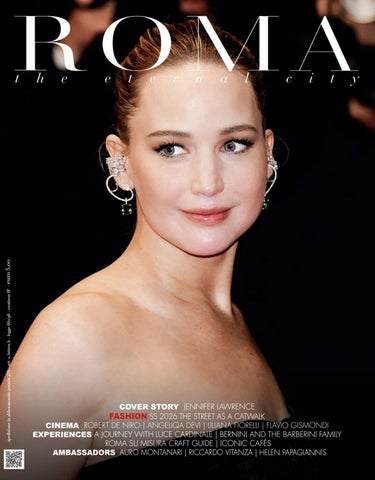
Create a flipbook
Issuu converts static files into: digital portfolios, online yearbooks, online catalogs, digital photo albums and more. Sign up and create your flipbook.
Roma magazine 44 by Gruppo Editoriale srl - Issuu