
BONNHANNAHBYILLUSTRATION 104
G105 rowing Pains
106
G107 rowing Pains
108
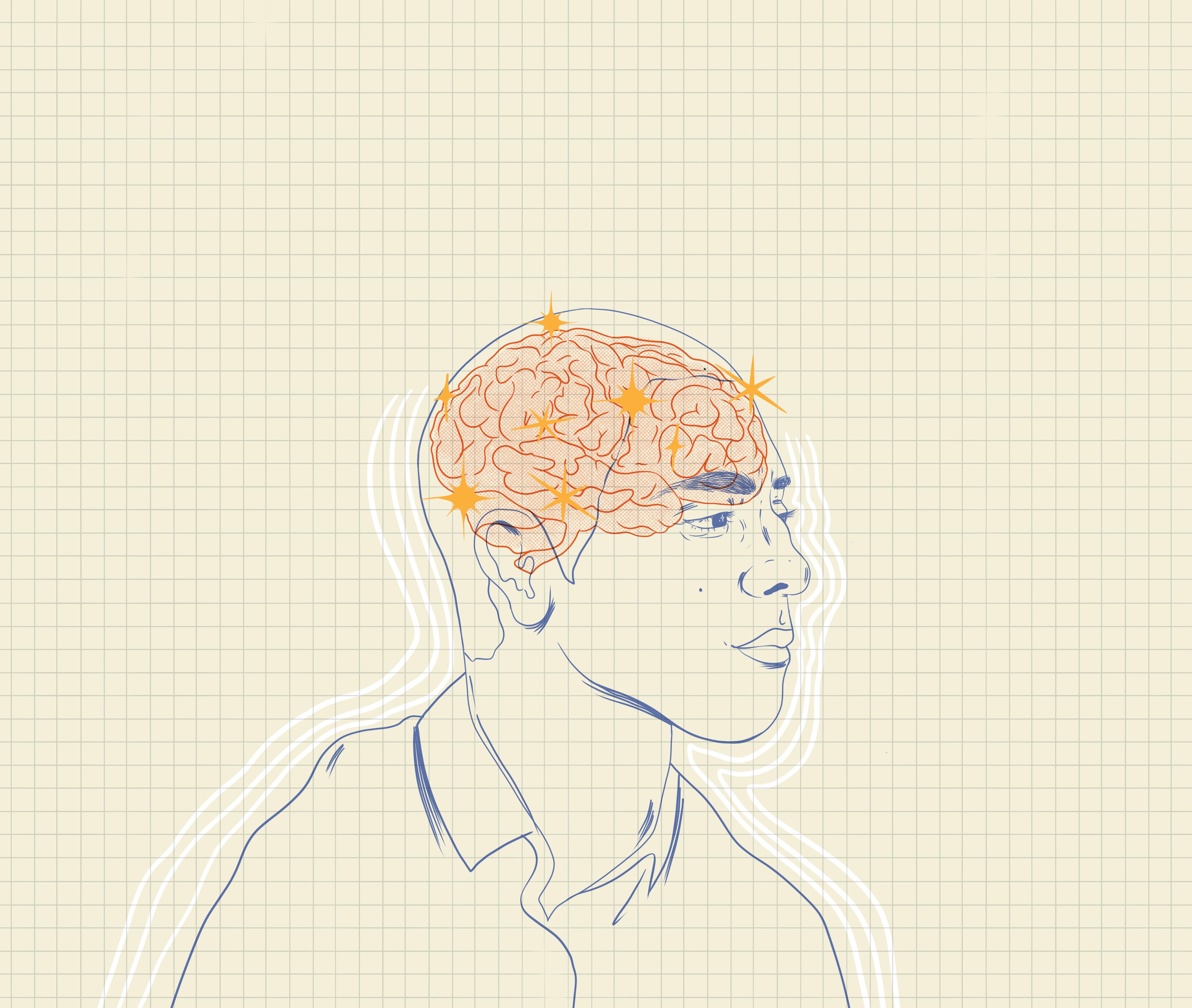
Diagnosis “I had seizures for five years and every time I had one, I was taken to hospital. Despite this, I wasn’t fully diagnosed and put on medication for five years.
I do think that part of the reason it took so long was because I didn’t have seizures regularly and over the period of five years, there were some years that I went without having one. I would start to think I’d finally gotten over it, but they always did come
Having a seizure is like a full body work out as you flex every single muscle in your body. During my last ‘episode’ before I was diagnosed, I had four seizures in a row and I felt like I couldn’t move for a long time afterwards. I always went to the gym to help with my mental health but recovering from seizures made it hard to work out. When I went to the hospital at first, I wasn’t put under any tests and was simply advised ‘change your lifestyle’. I personally felt this was because I was open with the neurologist about the fact that I liked to party a bit too much and she blamed it on my lifestyle without considering anything else.
Epilepsy WITH ROSS DUCKERMABELBYILLUSTRATIONS G109 rowing Pains
What is epilepsy? “Epilepsy is a neurological disorder where there is an irregularity in your brain activity. This irregularity manifests itself physically through epileptic seizures. There are a few different types of seizures, but I’ve been affected by two: tonic clonic and nocturnal seizures. Both seizures have the same effect on your body, only tonic clonic seizures can happen at any time, while nocturnal seizures happen in your Sincesleep.both seizures cause unconsciousness (the tonic stage), it’s impossible to be aware of what’s happening. You then move into the clonic stage which is where you convulse, you intensely clench all your muscles and bite your tongue. I only knew what had happened when I started to come back to normality and then everything was explained to me. When you wake up from a seizure, it’s hard to see, breathe, speak and you’re completely disorientated. To begin with I thought I was losing my mind, but the more seizures I experienced, the more I recognised what had happened when I awoke.” Signs and symptoms “What made it so scary was the fact that I didn’t experience any signs or symptoms and a lot of the time it felt like I was living in fear waiting for it to happen at any moment with no idea when it might come. Some people experience an ‘aura’ which is when you can tell you’re about to have a seizure, but I personally don’t have any signs or symptoms and I know that’s the same for many other people too.”
Theback.hardest part of having a seizure for me was the recovery period after it. Sometimes it took me weeks or even Firstly,months.you go through a period of depression and anxiety after a seizure, partly because it’s a direct side effect and partly because you’re upset about the fact you’ve had another seizure, and anxious about possibly having another one.
Secondly, you feel physically drained.
110
I saw this neurologist twice after having seizures and she still didn’t put me through any tests and continued to blame it on my life choices.
If something doesn’t feel right or you don’t agree with something, ask to speak to another doctor for a second opinion (if possible). I would also say to remain positive because when you’re diagnosed you can start to make progress. There are lots of different medications that treat epilepsy effectively. Make sure you have reviews with your doctor about your medication incase any changes are needed. Seizures caused by epilepsy are a lot easier to manage than seizures caused by other factors, which means you can take control of your life again quickly.
Advice “My advice would be to trust your instinct and remember that you know your own body more than anyone else, even medical professionals.
You should call for an ambulance if; the seizure lasts more than five minutes, it’s the person’s first seizure, the person does not regain full consciousness or continues to have more seizures, the person sustains an injury during the seizure or if it happens when they are in Ifwater.aperson is in their wheelchair, put the brakes on and support their head gently but don’t move them. Always call an ambulance if the person is diabetic, has a heart disease or is pregnant.”
I didn’t completely disagree because I knew I hadn’t necessarily been living the healthiest lifestyle. Hearing the neurologist say this prompted me to start making changes in different areas of my life; healthier diet, exercise, less drinking, getting enough sleep, meditating. You name it, I’d try it.
I didn’t have any seizures for another couple of years and by the time I had another I had moved to a another area and I was taken to a different hospital. This time I was seen by a new neurologist who told me they were surprised I hadn’t already been tested and that I’d definitely need to undergo some tests in order to be diagnosed. In one test I had a strobe light in my eyes at different speeds while my brain activity was recorded (during a CT scan). I also had an MRI scan, both of which came back showing that I had irregular brain activity.”
Treatment “I have been on two different types of medication but I had difficulty with the first one, I always felt exhausted and had terrible mood swings. I currently take four Epilim Chorno tablets per day, they work really well with me and I’ve never had a seizure since I was Idiagnosed.amstillsuper careful with triggers but as I’ve not had a seizure in almost five years I am confident in my medication. I always remind myself not to worry, and if it happens it happens. Being diagnosed and having an explanation changed everything as I no longer felt I was living in fear.”
If you see someone having a seizure, stay with them and speak to them calmly. Time how long the seizure lasts and move them only if they are in a dangeous place like a road. If they are on the ground try to cushion their head and loosen any tight clothing around their neck. Put them into the recovery position when they have stopped convulsing - this will keep their airway clear in case they are sick.
G111 rowing Pains
LOCKMANHEEDAYAHBYILLUSTRATION 112

DISORDERSPECTRUMWITHKYLE
G113 rowing Pains
AUTISM
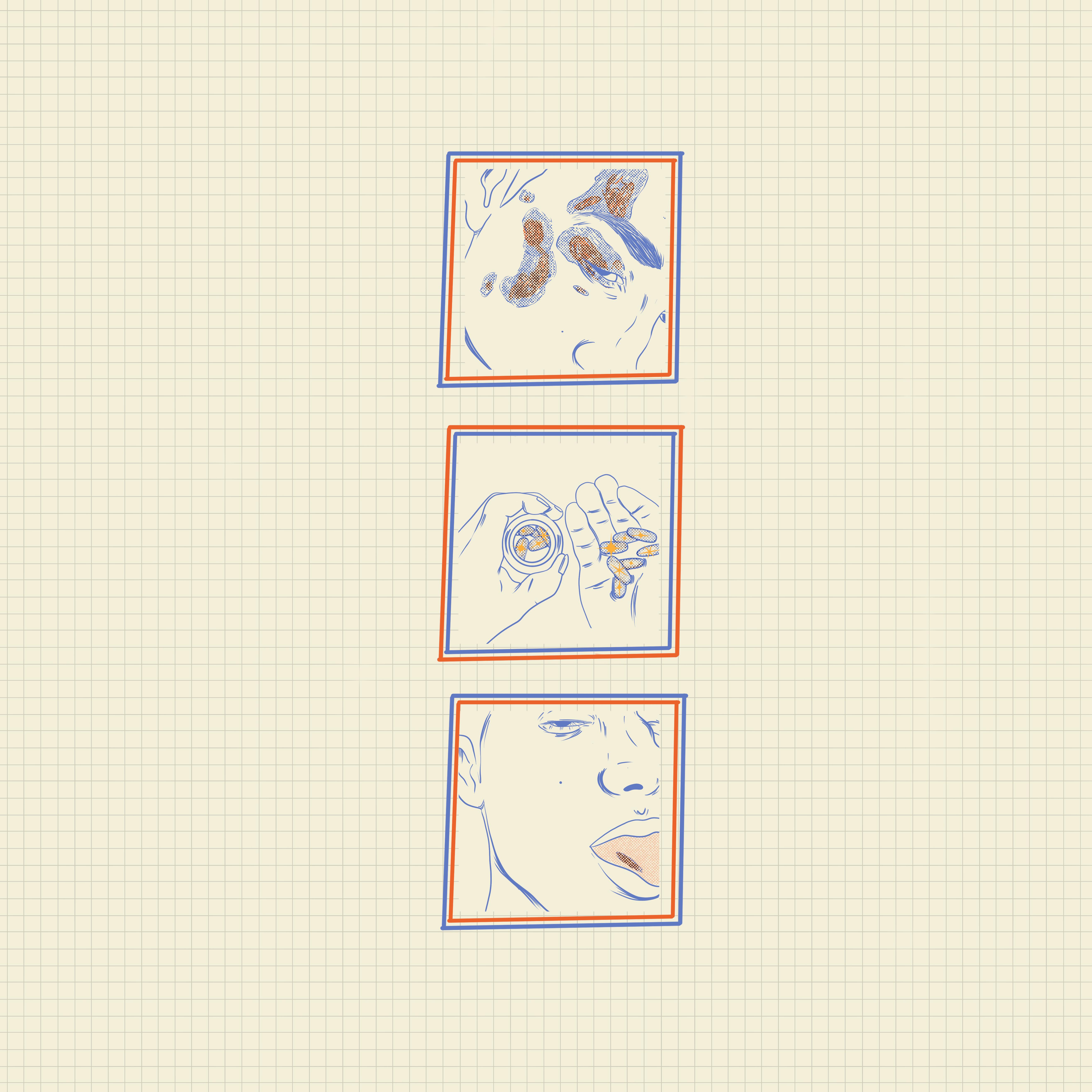
“Autism is a neurological condition that is with the person from birth. It’s usually defined in a spectrum known as ASD, or autism spectrum disorder. No two autistic people are the same and can vary greatly in their own struggles. I have what is known as Asperger’s syndrome, a high functioning form of autism. People with autism can struggle with day-to-day tasks that neurotypicals take for granted. Something as simple as going to the shop for messages can seem like the most terrifying, daunting task as we are very sensitive to loud noises and bright lights. It’s like my hearing is amplified tenfold when I hear things, so I’m very easily startled. My hearing is so sensitive, I can hear the electricity buzzing in my fridge when I’m trying to sleep at night. Also, social skills are non-existent. I had to learn all that stuff at school like emotions and body language. It’s like having to learn an entire new language for us. Confrontation can be terrifying for most autistic people, as we don’t really know how to react when situations go south. These little, tiny things can make it really difficult for autistic people to become independent and live on their own. We depend on our families a lot for support usually.”
What is autism?
“The biggest indication of autism is complete emotional meltdowns. When situations turn quickly for us, it is very hard for autistic people to adapt to change. Many of us have routines and find comfort and stability within them. Once those routines are changed, it can sometimes be too much to cope with and we explode.
“When I was younger, parents of other kids would often pass comments on my behaviour to my mum. They would always say I was some ‘spoilt brat’ who was ‘having a tantrum’. This simply wasn’t the case. I was diagnosed almost twenty years ago when I was around five after my primary school teacher noticed I wasn’t interacting with my class as much as the other children were, wasn’t actively trying to make friends, and showed hyperfocus on my special interests. Special interests for autistic people are subjects that we are intensively interested in. We find it easier to engage with tasks if it involves an application of our special interests. I was apparently ‘in my own world’ back then. I’ve been through psychologists, social workers, doctors, speech therapists, language therapists, behavioural school etc. I never fully settled at school. I hated how binary the education system was and how teachers set tasks, I loved learning on my own accord about what I was interested in. I got bullied at primary and high school but most people have been really supportive and understanding.”
SymptomsDiagnosis
114
Personally, I have meltdowns every so often but this behaviour shouldn’t be punished or scolded. We aren’t in control of our bodies when we have a meltdown, it's some sort of emotional instinct that has to be released. There are ways around it of course: weighted blankets, sensory toys, dimmed lights, candles. It’s about trying to remove the person who’s having the meltdown away from the situation and calm them down, reassuring them that everything will be okay. Reassurance is like liquid gold to an autistic person and we constantly ask for it.”
“Take each day at a time and try not to let the diagnosis worry you too much. It should never be seen as a negative thing, but rather a positive. Usually when autistic people receive their diagnosis, it’s like a weight being taken off of their shoulders. ‘I understand now; it all makes sense’ is what usually comes to mind.
Treatment
“Treatment for autism is usually behavioural and communication training and therapies like CBT (Cognative Behavioural Therapy) but personally this didn’t work for me. I have used breathing exercises I learned in school to help me for years now but they’re starting to be less effective.”
advice
It always helps to have family and friends who are sympathetic and understanding. If your loved one is diagnosed with autism and you want to be there for them, listen to them. Don’t just naturally assume what works for most autistic people will work them. Be there for them, support them, love them. Make sure that they have as much support as they need. They will appreciate it. Understanding and compassion is all we look for in a support network.”
G115 rowing Pains
SMITHKATIEBYILLUSTRATION 116
with Georgia
The extensive list of symptoms is one of the things that makes fibromyalgia hard to diagnose as it is so individual to each person, and the symptoms overlap with so many other possible conditions.”
“There are many symptoms of fibromyalgia - the main ones are widespread pain, fatigue, brain fog and depression. For me, I suffer from headaches and poor sleep, but I also experience extreme sensitivity to light, touch, and sound too. Other people may also experience numbness, burning sensations and so many other symptoms.
Fibromyalgia is so much more than that. It is a disorder based on the nervous system; it is thought the nervous system amplifies pain sensations which interferes with the wiring of the brain over time”.
Symptoms
“Fibromyalgia can be really difficult to explain because when you tell someone that fibromyalgia is widespread pain and fatigue, they normally reply along the lines of ' oh yeah I ache and get tir ed too! ' .
G117 rowing Pains
What is fibromyalgia?

“I am very fortunate in the way I was diagnosed ‘quickly’ in relation to a vast majority of the chronic illness communit y. Three years ago in July/August I started to feel tired all. the. time. Everything also started to hurt in a way I couldn’t really explain. So, I left it and just carried on but in September I went back to school and it was just too much, so we went to the GP who did so many blood tests, all of which came back normal so he referred me to a rheumatologist.
It is hard to diagnose fibromyalgia because there is no official test, it is diagnosed based on having a certain amount of the pain points I mentioned earlier and no other tests showing a reason for your symptoms. This meant that even after being diagnosed, I was having MRIs and other blood tests to see if it was possibly other conditions instead.
Treatment “There is no ‘treatment’ for fibromyalgia, instead it is about self-management and so everyone finds different things work for them. For me, rest is so important in a flare. I really listen to my body and take the time to stay in bed and nap when I need to.
Diagnosis
This is really hard to deal with mentally as there is always an uncertainty as to what is actually wrong with you. There’s the possibility that the next test will show something all the previous ones haven’t, and your diagnosis you have worked to accept and educate people about will be wrong.”
I also use a transcutaneous electrical nerve stimulator (tens) machine which I find so beneficial. It uses electrical impulses to create substances which act as pain killers for the body and lessen the intensity of pain signals. It doesn’t stop the pain but it is a really good distraction. In a flare, I also wear compression socks and gloves - the pressure helps reduce the pain and gives me more mobility in my hands as they often seize if the pain is too bad.”
I then had that appointment in December , where they gave me the pressure point examination which is used to help diagnose fibro, and I had 16/18 of the pain points so I was officially diagnosed.
118
Some areas do have in person support groups, but I found that the group in my area consisted of people much older than me who talked about things like work or kids which I just couldn’t relate to. So for me, online community was the best.
G119 rowing Pains
Advice
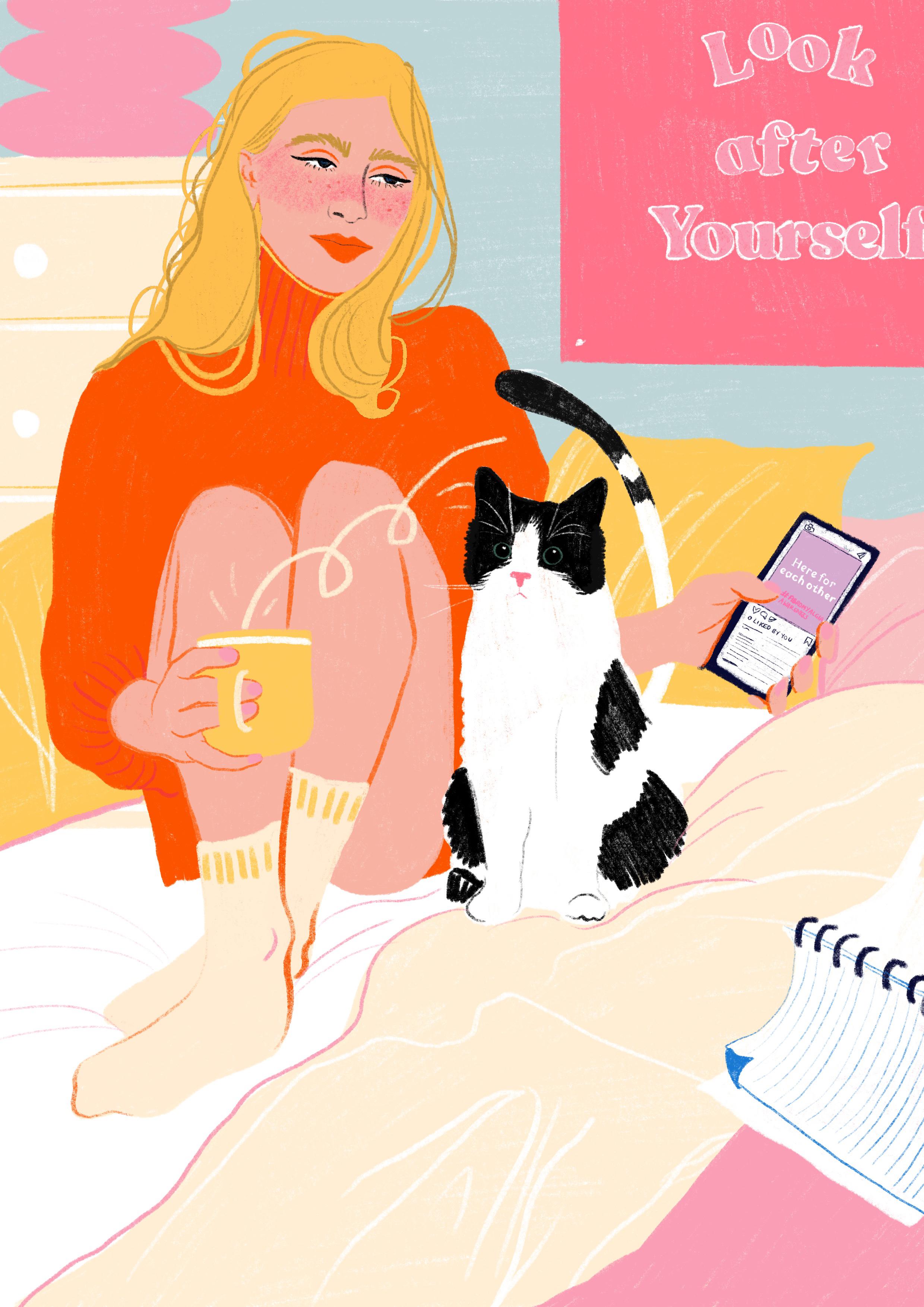
“The most important thing is finding your community. Being diagnosed with a chronic illness can feel so isolating because even if your friends and family are supportive, they can never really understand what you’re going through. Finding a community of people dealing with chronic illness can give you a safe space to vent and also seek advice regarding your conditions.
I really think the best way to be there for a loved one is to look after yourself. We sometimes forget the physical and emotional toll being sick can have on our loved ones. So taking time to look after yourself, making sure you’re staying healthy and that you have someone to talk to about your loved one’s illness is so important.
Facebook has lots of private groups and Instagram also has an amazing chronic illness community. I love how safe Instagram can feel, and I’ve met some incredible people who have become such close friends. This has helped me accept being ill and feel less alone on my bad days, which is so important in coping with chronic illnesses like fibromyalgia.
There are many great online support groups which would be worth joining so you can talk to people who can relate to what you’re going through. You can’t be there for your loved one if you’re not there for yourself as well.”
KATERYNABILETSKABYILLUSTRATION 120
I waited a week for my GP appointment and when the doctor felt the lump, she seemed concerned about what it was. She took my bloods, gave me them and sent me straight to the ear, nose and throat specialist (ENT) at the hospital.
real part of Sjögren’s as well, many people with the syndrome are diagnosed with rheumatoid arthritis and have a higher risk of developing lymphoma and lupus due to the level of inflammation in their glands. My bones ache most of the time and I have a bone spurt in my arm which causes me discomfort from time to time, but I’d say I’ve been luckier than most with my symptoms.”
The ENT immediately tried to convince me I was too young to be experiencing anything serious. They told me I was just anxious and sent me to the dentist, dismissing the lump as something related to my teeth, so that was my next move.
I had an X-ray and the dentist told me I had an impacted wisdom tooth which might explain the lump and referred me back to my doctor to get some antibiotics to stop the swelling.
WITH
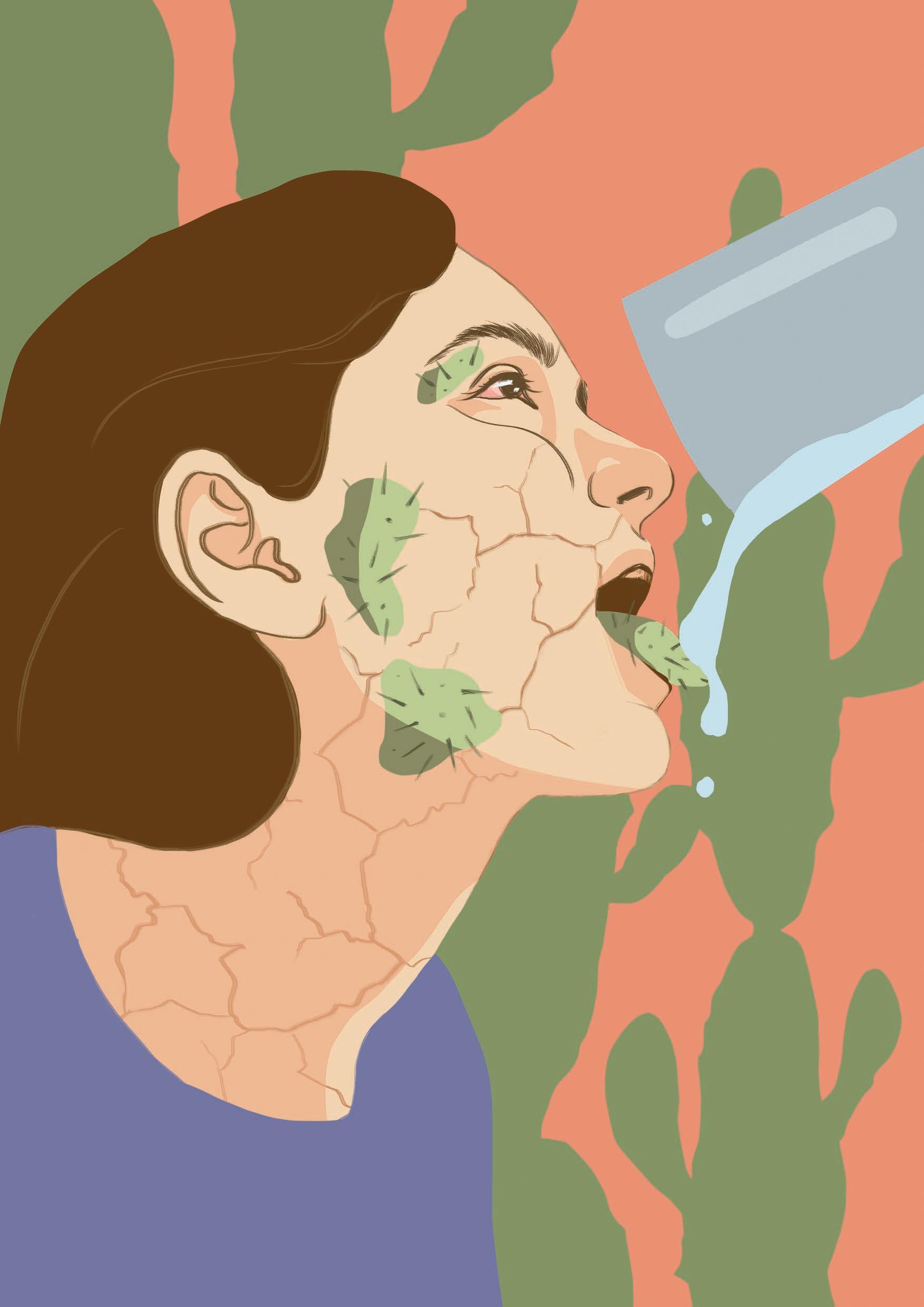
What is Sjögren’s syndrome? “Sjögren’s syndrome is an autoimmune disease which affects glands throughout the body. It affects my skin, bones, eyes, internal organs... the list goes on and on. Even the amount of saliva I’m able produce is affected.”
Fatigue is a big one. It’s not just feeling tired, it’s a total loss of energy and moving at all can feel impossible. Brain fog affects me as well - I struggle with my memory and getting my words out in the right order, which is amusing for others and I can see the funny side but it’s frustrating for me Jointsometimes.painisavery
Diagnosis “Reaching a diagnosis was one of the hardest times of my life. It all started with a lump I found one day on the side of my face. I’d been feeling run down at the time so I thought it would be connected to that. It was the weekend so I went to the out of hours service where a doctor suspected I had mumps and recommended I should make an appointment with my GP to have my blood taken.
So, I visited my GP again who gave me antibiotics which didn’t work. Then I tried a different course of antibiotics but those didn’t work either. I went back to the GP again and was referred for an
SyndromeSjögren’sHANNAH
G121 rowing Pains
Symptoms “The symptom most people notice first is dryness. The tear ducts in my eyes weren’t producing enough intraocular fluid which meant my eyes were being damaged over time, which affected my eyesight. Now I use eye drops to prevent any further damage. The same goes for my mouth, I have artificial saliva I can use when I need to.

Unfortunatel y, Sjögren’s is not well known and there isn’t a lot of information available.
I’ve learn ed- most of what I know from other people who have it and even though reaching a diagnosis took two years of my life, I still feel lucky to have a diagnosis so young. Most people aren’t diagnosed until they are in their forties with a lot of other health issues, and only find out the root of their problems after having a lip biops y. Some people are in their sixties before they get an answer as to why they’ve struggled with these symptoms for their entire life.
Bysyndrome.thispoint
It’s scary to see the stories of other people and how it progressed with them. I’m glad that I pushed for my doctor to run more tests, repeatedly visiting the doctor’s office every week until they acknowledged something wasn’t right.
DUCKERMABELBYILLUSTRATION122
Now I was being told the lump wasn’t a cyst and a biopsy would have to be taken. I had my face numbed and a tool was punched into the lump to remove some tissue for tests. The biopsy had a horrible crunching sensation that still gives me shudders to think of now, and after all that waiting, the results were inconclusive. My doctor asked me to decide between an MRI scan, another CT scan or surgery to remove the lump and find out once and for all what it was, but they told me they strongly believed the underlying cause was lymphoma or Sj ö gren’s
I had been waiting for a year and a half, worrying that I was walking around with a tumour. The toll on my mental health was increasing, resulting in endless panic attacks which left me unable to work or even leave the house, and I desperately wanted an answer. At the time I was going through this, I was in a fairly new relationship and waiting for a diagnosis destroyed the way we felt about each other My partner had started to become more like my carer , holding me as I panicked, checking me all over for lumps and trying to support me whilst I was convinced that I was dying. The relationship ended because they felt this wasn’t what they signed up for and I can’t blame them.
I decided to go for the surger y The side of my face was cut open and the lump was removed and yet another waiting game ensued. I felt sick with worry all da y, every day waiting for the call. Eventually it came and I was told I had Sj ö gren’s syndrome, and now it was time for me to find out what that really meant for me and my future. I was assigned a rheumatologist who tested my blood every week for any changes in swelling throughout my bod y, but to be honest they didn’t help me understand what was happening to me.
I had an ultrasound with the NHS to be sure I just had a cyst that could easily be drained and then I would be sorted, however that was not the case.
I’ve had doctors who didn’t have a great understanding of it and nurses who didn’t know what it is.

M y imm une system still isn’t great. I tak e iron and v itamins to c ombat that and I’m very stable in the c ancerous s ide of things. I have my blood tested every three months now instead of weekl y. I hate going because it’s always the s ame thing ' we can’t do anything, we are just keeping an eye on you '. Of c ours e I’m glad because if any of my lymph nodes became c ancerous they c ould c atc h it earl y, but s ometimes it feels like I’m just waiting for the disease to attack another part of my body I always think about if it will affect me getting pregnant too. B eing diagnosed with an incurable disease has been difficult to adjust to and the effect on my m ental health has made it hard for me to feel like I’m m oving forward in life. I still struggle with panic attack s and leaving the house, at times I’v e had to take tim e off work to recover which c r eates a c y c le of s tress as a homeowner with bills to pay s ick pay doesn’t even c ome c lose to helping me through those times. S ince m y diagnosis, I take betablockers which help with the feelings of anxiet y Counselling will help further but I still feel that a lot of people don’t understand. How c ould they really? I look healthy but m y body feels broken every da y M y mum has s aid s he wishes s he had been more understanding with me when I was young, because s he now understands that I wasn’t a lazy child who wanted off school, I was sick. It c an be hard try ing to explain how I feel, especially in the workplace s o it’s easier to just give up and let people m ake their jokes about how much rest I need or the aches and pains I feel. It’s not easy to understand when y ou c an’t feel what another person feels.
" Treatment "Th ere is no c ure or one s pecific treatment for S jögren’s s yndrome, it’s about managing symptoms and trying to live the best quality of life that you can. I tried an anti-malaria medication c alled hydroxy c hloroquine for m y s wollen glands, but it didn’t m ake any difference s o instead I try to follow an anti-inflammatory diet to lessen the inflamm ation in m y bod y I rest when I have to and take pain medication when needed. Ex erc ise helps when I have the energy to do it also. In a sense I’m happy to know why I’ve always felt this way but it’s tough not k nowing what the future holds. I can’t remember a day where I haven’t felt unwell and that can get me down s ometimes, but I hav e great people around me s o I’m very lucky for that. It brings me a lot of hope that people are talking more now on social media and spreading awareness of invisible illnesses. " Advice "Wh at I would s ay to s omeone who is at the beginning of that journey is to reach out. I found Sjögren’s s upport groups on Facebook and it was a wealth of information that I never k new existed. It was full of so many people who I could relate to, struggling with the s ame things as me and they were there with advice or help with any question I wanted to Don’task put pressure on yours elf. If you need time and rest, take it. You need to look after yours elf and your health firs t. If somebody you care about has been affec ted by Sjogren’s, try to listen and have an open mind. Even if y ou don’t fully understand, just know that nobody wants to feel this way and your love and support goes a long wa y " Jo in " Sjo gren 's S ynd r o m e S u p por t Grou p" o n Fa ceb ook.com for advice and support on living with , or c aring for someone with Sjögren's syndrome.
G123 rowing Pains
SMITHSOPHYBYILLUSTRATION124
I explained my sy mpt oms, even the ones I felt embarrassed to talk about and I was told t ha t I ha d Irritable Bowel Syndrome ( IBS). Around this time, I was still on my init ial probationary period a t work and I was worried about whet her I would pass, so t he doctor suggest ed my weight loss was jus t down to work -relat ed stress. I felt lik e I had been dismissed so I made anot her appointment , where I was told the same t hing by a different doctor. I mentioned tha t my aunt ie had Crohn’s disease and I tried t o emphas ise that I relat ed to those sy mptoms but again the doctor dismissed my concerns.”
Crohn's Disease with Eilidh What is Crohn’s disease?
G125 rowing Pains
Some day s I’ ll have no pains and other day s I can be in agon y. Often the pain will be t riggered by eating, which in turn has nega t ively impa cted my a ppetite. A nother symptom is the urgent need to go to the ba t hroom, whic h is emba rrassing to talk about but it’s t he reality of having Crohn’s disease.
I t ry not to let it affec t my work and social life but there are times where I’ll be in tears a t my desk unsure how t o cope wit h the pain I’ m experiencing. There isn’t a cure for Crohn’ s whic h is a struggle for me beca use I know I’ m rea lly just at the st art of my diag nosis ”
Three y ears ago in November, I noticed a drastic change in mys elf. I developed a nea r consta nt pain in my st omach that was unbeara ble at times, espec ia lly aft er I ha d eaten. I would be curled up in a ball unable to leave my bed with t he pa in. I norma lly loved food but my appet it e was disappearing and I wa s losing a lot of weight I hat e visit ing t he doct or but I felt lik e something wasn’t rig ht and made an appointment for lat er in t he month t o find out what wa s going on.
“Crohn’ s disease is a long-term c ondit ion which affects the digestive syst em. It bec omes inflamed a nd irrit ated on a regular basis . The exact cause of Crohn’ s disease is still unknown but it’s t hought to ha ve link s with an individual’s genes and immune syst em. ” Symptoms
“The sy mpt oms of Crohn’s are gast ro- intestinal and bowel issues like aches, cramps and bleeding in the digestive t rack. The main symptoms for me are pains in my st oma ch which come and go.
Diagnosis “I won’ t sugar coat it , t he road to diagnosis was the wors t time in my life.
was so worn down that I had a chest infection which developed into sepsis. Sepsis happens when an infection travels into the blood stream and it can be life threatening because major organs can begin to sh ut down.
On 19th November I had been suffering for an entire year and was due to have a colonoscop y, where a small camera would be used to view my intestines. The night before the procedure I was awake for hours searching my symptoms on Google, sure that I would be diagnosed with Crohn’s.
“I can laugh now but there are nights where I felt so anxious, I would ask my mum to sleep in my room. I was constantly worried I would get sepsis again and end up back in hospital.”
Throughout this I started to realise tha t I hadn’t been myself for quite a while and it was obvious to everyone around me. I started counselling and realised I had been struggling with anxiety about my health. I had never experienced anxiety before so it was terrifying, I couldn’t sleep and I was avoiding everything I used to like doing. I would keep to myself and if I did go anywhere, I was miserable. Looking back now counselling was the best thing I could have done and helped to prepare me for when I did reach a diagnosis.
A fter the procedure a doctor finally confirmed what I suspected, which was a bit t er-sweet feeling.
In July I was back in hospital with a stomach bug, where a consultant finally referred me to a gastrointes t inal team. I was prodded at with needles, ultrasounds and tests from then until November, with the team trying t o eliminate an alterna t ive diagnosis like Coeliac disease.
126
“I left t ha t a ppointment feeling annoyed. I knew there must have been an underlying reason for the sudden weight loss, fatigue and stomach pains I was experiencing.ByFebruaryI
I had to stay in hospital to recover so whilst I wa s t here, I asked the doctor about my other symptoms and again I was dismissed. Eventually I was discharged from hospital but the weight loss and stomach issues continued for months.
I didn’ t understand much about the condit ion at first. When I wa s first given my diagnosis, I’ d just woken up post-procedure and t he doctor may as well ha ve been spea k ing a different language to me. It was week s before I had an appointment with the specia list Irritable Bowel Disease ( IBD) t eam who advised me on how to manage my condition. They expla ined the link between Crohn’ s and anaemia ( which explained some of the fa t ig ue I had been feeling a nd my inabilit y t o fight infections) , as well as pres cribing me a st eroid t o help me gain weight, which in turn helped to build up my confidence. Wait ing so long for a diagnosis t ook a t oll on my mental health - it wa s challenging not only for me but for my family and friends to s ee me suffering. Over t he yea r where I wa s losing weight rapidl y, I felt uncomfort able t hat people would always ask about my weight loss and I had no expla nation for them. It added to t he anxiety I wa s feeling about my health and made me want to hide my bod y Init ially a ft er a ll of t rips ba ck and forth t o the doctor, the chang es in my body and the time wasted feeling unwell, having a diagnosis at last felt like a weight had been lifted off my s houlders. Yet at the same time, I felt c heated. Nobody had taken my concerns seriously for a yea r and it was hard to come to t erms wit h having a chronic illness. There are still day s where I cry a nd I feel guilty about it but I think being given a diagnosis without a cure at a young age is difficult to a ccept. In February I had an appointment wit h a c ons ultant who brought up motherhood, which left me in t ears des pite the fact I’ve never wanted children. It was t he moment t hings bec ame real for me and hit home just how much this will affect me for the rest of my life. It als o brought up the question of how I would t ell a ny pot ential partners about my condition. I wondered whet her they would underst and, since there are days where I can’t ea t and I don’t have the energy t o do anything a part from st ay in bed and watch Netflix t o pass t he time.
G127 rowing Pains
Tr eatment
“The main treatment for Crohn’ s disease is medicines which reduce t he inflammat ion in t he gut for as long as possible. Some people need to have surgery but the severity of treatment differs from person t o person. I try to think day-to-day instea d of long- t erm becaus e realist ica lly nobody can tell me what will happen, all I can do is take things as t hey come.
So much about dating revolves around meals too so it’s da unting wondering wha t someone would t hink about my Crohn’ s disease.
I only told my close friends at first but after a while I organised a meet ing at work t o t ell my tea m, which felt amaz ing to open up and explain why I hadn’t been myself latel y Luck ily my work created what’s called a dy namic work ing arrangement where I can work Monday to Friday 10am-6pm, whic h was a massive help. Having consistency ha s ma de it a lot easier to manage my condition and symptoms ”
The immunosuppress a nt drugs work together to reduce inflammation in my gut I don’ t absorb enough nutrient s which mea ns I need folic acid t ablets, weekly blood t es ts, regular vit amin B12 injections and iron infusions to keep me healt h y. My immune sy stem is low which means even just a cold will floor me a nd I won’t be allowed my infusions until I have recovered. Honest l y, it’s exhausting keeping up wit h a ll these treatments . Somet imes I’ ll have a doctor’ s appoint ment every day of t he week but ensuring I’ m managing my condition is my priority so that I can enjoy my life.”
Beginning t he treatment for my condition improved my appetit e and my menta l healt h t oo, I definit ely worry less now t hat I k now I’m on t he right t rack wit h managing my sy mptoms. It helps t o have a dedicated IBD team who I ca n c ont act whenever I have questions or need some s upport. I t ak e t wo immunosuppressa nt drugs - an Azathioprine tablet once a da y and an infus ion of Infliximab bi-weekly for a few months. After that , I’ ll have it once every eight week s. The infusion proces s t a k es t wo hours and I’ m kept in t o be monit ored for an hour aft erwards t o make sure there aren’t a ny complications.
128
R ealistically I know I may need operat ions in the future but I’ve learned to worry less about t hat. You can’t control t he future and you can’t change what is in the past. Cheesy but true.
For anyone who has ever considered counselling, do it. Sitt ing in an office with a stranger ta lking about my situation was something t hat I never thought could benefit me until I tried it. If I can do it so can you. It’ s normal to still get upset and angry about being dismissed and wonder why this happened. On particularly hard day s I rely on my sense of humour to get me t hrough, I’ve learned not to take myself too seriousl y.
G129 rowing Pains
“ To anybody going through a similar situat ion, know that things get better.
On days where I feel like not doing much, my self-care routine involves lots of cups of tea, face masks and plenty of TV in bed. Find what makes you feel good and what doesn’t, y ou might ha ve to avoid certain foods a nd alcohol which felt devastating to me at first – I love Chinese food and having a drink but it is what it is! Your health is worth making sacrifices for.”
Advice
Strangely I feel like my confidence has grown since my diagnosis, I think I’ve learned to stop caring so much about things that don’t matter.
The earlier you do this, t he quicker the diagnosis will come and you will get access to proper treatment and help.
To those who have symptoms or have been dismissed, you know your body better than anyone. Continue to pressure your doctor until you get tests and answers.
Don’t be afraid to talk about your condition either, if people judge you or do not support you then you don’t need those people around you. At twenty-five I’ve learned quality over quantity is what matters when it comes to friends.
disabilitydisability BYEALICEBYILLUSTRATION 130
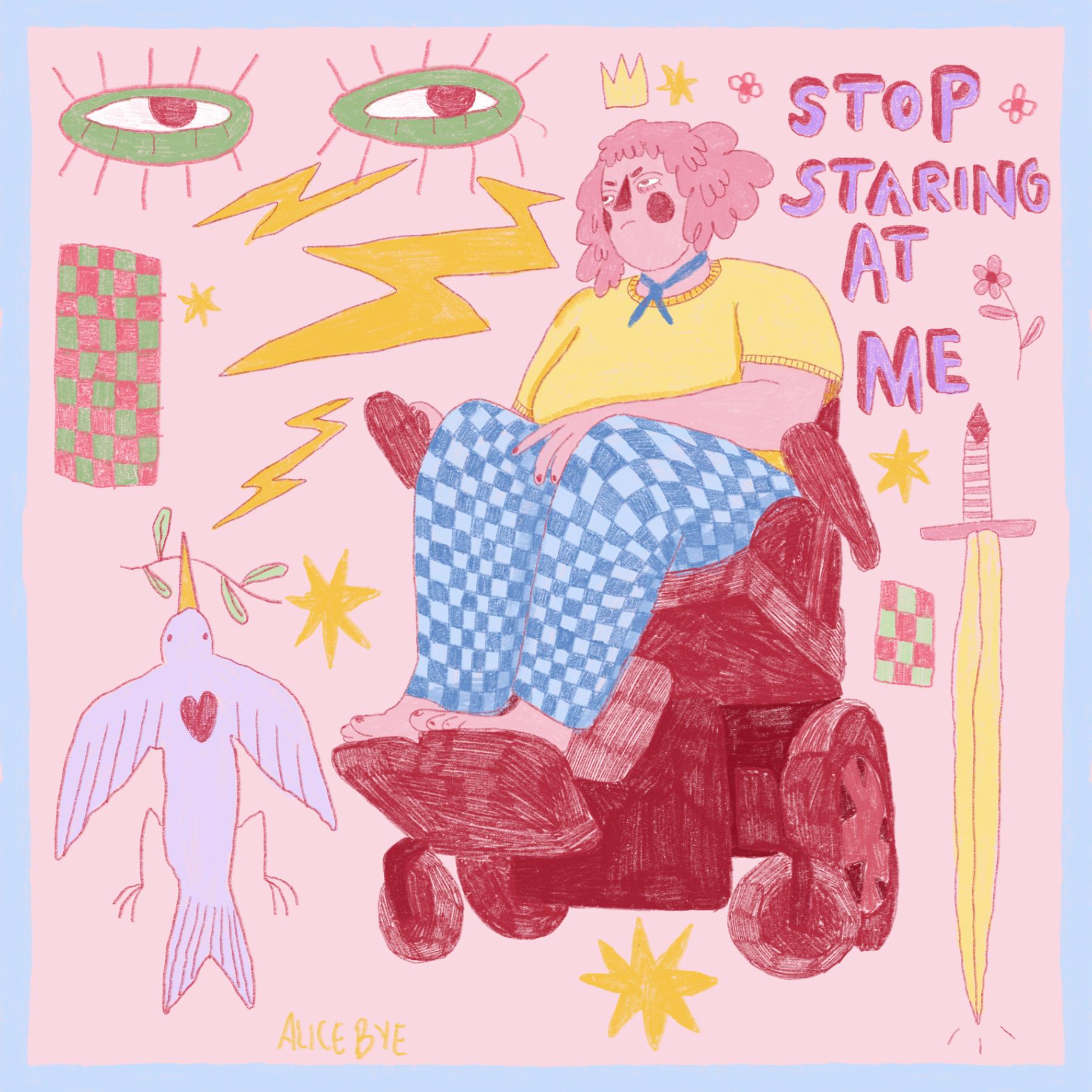
Holly is a woman with a neurological condition which has caused paralysis from the waist down. She uses her Instagram @Holly.osullivan_ to document her path towards acceptance and pride.
G131 rowing Pains
Deborah is a mother to Arizona, her wonder boy. He is two years old, and because his brain didn't grow as it should while Deborah was pregnant, he is significantly disabled. She uses their Instagram page @DeborahAndAZ to share her journey of becoming a parent carer and give/get support from the additional needs community.
Nicole, Ruby, Holly and Deborah discuss some of the common misunderstandings people have about disabilities and how harmful these can be.
Nicole is a woman who suffered a spinal cord injury due to a fibrosarcoma tumour, which created severe pressure on her spinal cord and left her permanently paralysed from the waist down. She uses her Instagram page @beauticoleex to raise awareness of disabilities and encourage conversation about issues that the disabled community face.
Ruby is an autistic blogger and disability activist who uses her Instagram account @Rubyofmyeye to shed light on her story of being diagnosed later in life, as is common with neurodiverse women in the autism community. She also created a support group for others with autism which can be found at Instagram.com/cheerfullyauti.
Holly: “People automatically believe my relationship with my wheelchair is a sad, angry tale. In reality it is the complete opposite! Although it took some time to feel this way, I have great love for my chair, it allows me to be independent, leave my bed, and be a social person. Perhaps one of the biggest misconceptions is that I’m ‘stuck’ in my chair or ‘wheelchair bound’. I can transfer to other surfaces, and I get out of my chair many times a day! An important thing about me and my chair that I don’t think many non-disabled people understand is that my chair feels like an extension of me and when someone touches it, pushes it or moves it (especially with me in it) without my permission I find it very challenging to explain to them that it feels like a violation of my space. After all, my back rest is relatively low so they are inches away from grabbing at my waist!”
Holly: “I definitely experience strange things in public! A lot of staring, but it’s not the kind of glance stares or children staring that gets to me, it’s when adults actually stop in their tracks and completely follow me with their Peopleeyes!often ignore me and speak to the people around me as if I can’t hear or speak. Other experiences I have had include people saying, ‘I’d hate to be you’ or ‘I think I’d rather die’. These statements are so unnecessary as those people have no idea what my life is like and how being paralysed affects my daily life. All of these micro-aggressions come from a complete lack of education when it comes to disability.”
Do people ever dotowmicro-aggressionsusedsyouahowtheseaffectyou?
Nicole: “I definitely do experience belittling sometimes, with people talking to those around me rather than myself – I can speak you know! It’s just frustrating when all I want is a voice and to represent my own Theopinions.classic comments about attractiveness, such as ‘you’re pretty for a disabled girl’. I know it can be meant as a compliment but I mean is it really? It’s just plain rude to be honest. Disabled women are beautiful, in just the same way as non-disabled women. We need the media to represent us as powerful and sexy more often.”
132
Deborah: “I really feel for Nicole and Holly, because we get these all the time too. It ranges from the most obvious - like saying 'at least he doesn't look disabled' - to giving us the sympathetic head tilt and 'awww' when we explain that he can't talk or walk yet. I often try to use these situations as opportunities to educate people about ableism, but it depends on how much caffeine I've had that morning! I don't mind explaining why these kinds of reactions are inappropriate if the person is willing to learn and if I know their sentiment is one of complete kindness. But sometimes there's a level of wilful ignorance or a response like 'can't say anything these days' that infuriates me.”
What e misconceptionssome people have about yourrelationshipyourwithwhlchair?
Nicole: “That I’m completely ‘wheelchair bound’, as much as I am theoretically, I can still transfer out of it and sit in a different chair
Deborah: “Absolutely. It seems to be that people think you're either physically disabled or you have learning difficulties - but it's not either or. Disability comes in all different forms. It can be immediately obvious or it can be completely hidden. And often, people's main point of reference for disability is the mass media representation of what that means.
Holly: “I think education is needed in terms of ‘not everyone is the same’. Wheelchair users have such different disabilities and even people with paralysis have completely different experiences. There are different types of wheelchairs, such as active wheelchairs, which are ideal for those with upper body mobility and more independent lifestyles. Power wheelchairs don’t need any manual propelling or pushing, which gives those with upper body paralysis freedom to control their own wheelchair using a set of user controls like a joystick, as well as offering more comfort and support.
Ruby: “I find that even in the subgroup of neurodiversity we are grouped together, and even just in autism. Everyone has an assumption thinking everyone is the same with the same experience and traits and it’s just not true. This has caused huge problems in the diagnostic process and research itself into autism, so it’s a wider issue. I think the world does recognise subgroups of disability but wont then go further to see that everyone is just their own person.”
G133 rowing Pains
DUNCANAJBYILLUSTRATION
for example. You wouldn’t say that an able-bodied person is bound to a bicycle when they use one! It does essentially act as my legs though, allowing me to access places and be independent. It provides me with freedom and I’m forever grateful for that, so why should I not embrace it? There are lots of things I still can’t access but being able to get out and about is a positive in itself. My chair really doesn’t define me, it helps me continue to do the things I still can do.” Do you fi that disabilitiesdifferent e often grouped together a what ki of effect or consequences can this have for people?
I find many places accessible as an active manual wheelchair user that a power wheelchair user couldn’t. The people designing the accessibility and requirements can often make buildings unsuitable for those with disabilities by assuming that everyone has the same needs.”
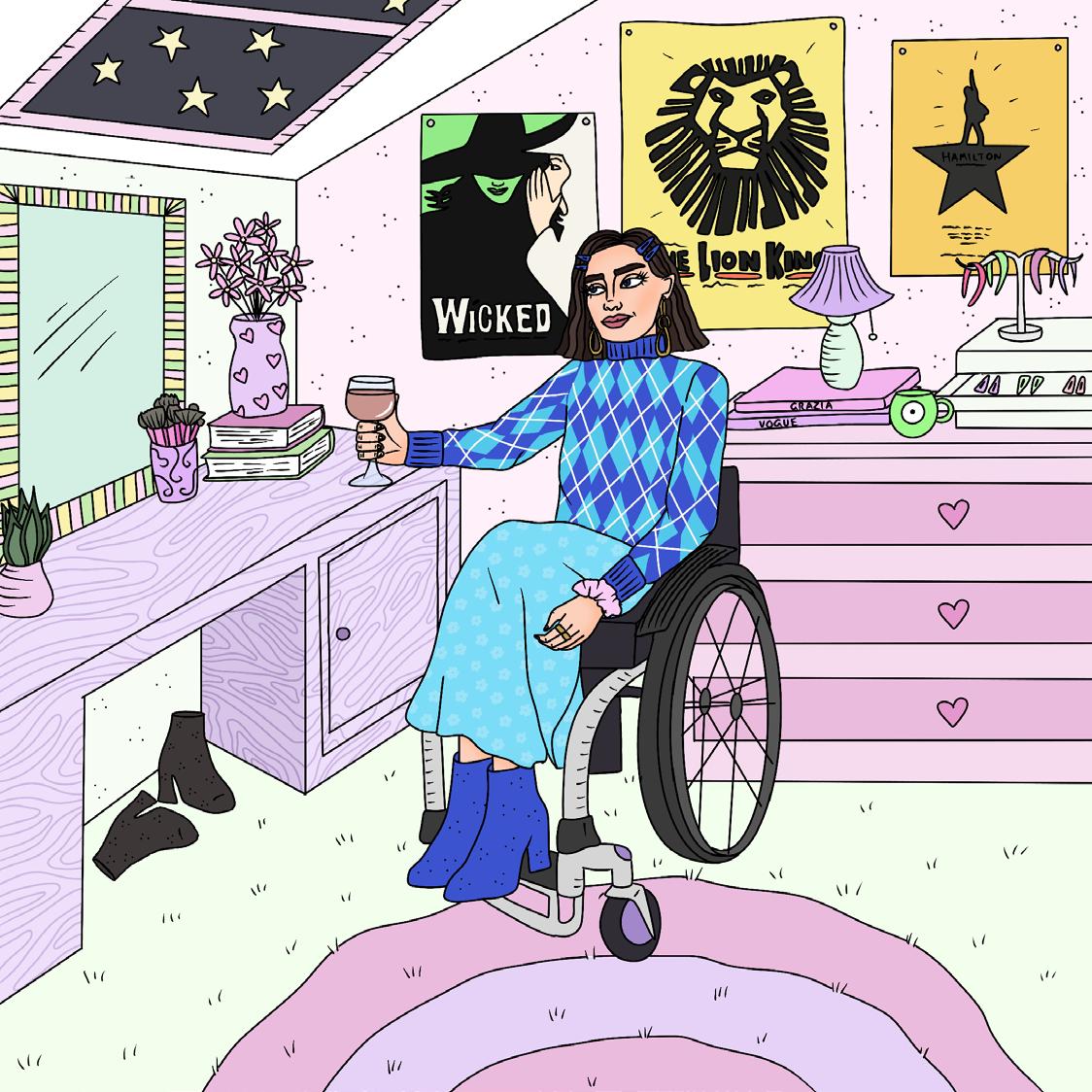
MAXWELLRAEBYILLUSTRATION 134
Deborah: “For my son, I'd echo Nicole's sentiments and say that 'disabled' isn't a dirty word. Just use it. My husband and I are not offended by it - it's simply a fact and it's a much more constructive, supportive label than 'special needs'. Our son is a regular kid who happens to be disabled. And for myself, as the parent of a disabled child, I'd like to see the well-worn adage of 'special children are given to special parents' die out. We are not special - we were thrust on a wild journey for which we had no preparation and it's a struggle, every day. It's really, really hard. I think that kind of sentiment is popular because it provides a sanitised version of being a parent carer that makes people feel more comfortable about it. But we're not superheroes and implying that we are diminishes the hard work we put in every day. We're just regular people trying to get by, raise our son as best we can, and navigate a world that really isn't made for disabled people.”
For example, they might think all autistic people avoid eye contact, or that people who use a wheelchair should be in it 24/7. It's a dangerous form of gaslighting and ableism that can lead to disabled people not being taken seriously when they voice their needs or seek a diagnosis.”
What do you wish people u erst d be er about being disabled?
Nicole: “Ultimately that disabled isn’t a bad word! We need to start removing the stigma that disabled is a dirty or bad word and something that needs to be whispered. A lot of people may think that using the phrase ‘differently abled’ is preferable but it’s completely up to the individual and it’s important that if someone identifies as disabled, this is how they should be addressed. Why shouldn’t we use the word? To most of the disabled community it really isn’t offensive and we embrace our differences. After all, they make us who we It’sare!also important that you see the person not the disability. People need to be aware that disabled individuals aren’t completely helpless. Most of us have learnt routines that allow us to do things and if we tell you we don’t need help, we really don’t and please believe us. Don’t insist on helping, even though we appreciate your kindness in asking, helping doesn’t always actually help us, so don’t be offended if we politely decline your We’reoffer.also not necessarily brave, courageous or inspirational. Yes, many of us have been through a lot and it mainly comes from a loving place but we’re certainly not any braver for just being out in public and living our lives. Try and see us as ordinary people, as after all we are just like anyone else.”
Ruby: “I wish people understood that the world really is made for non-disabled people, it’s everywhere you are. The music is loud, the steps don’t have ramp access, even jobs will all be set to accommodate non-disabled Sopeople.when we need support society thinks we want more, but in reality we just want to be given the same opportunities. Just respect every single disabled person!”
G135 rowing Pains
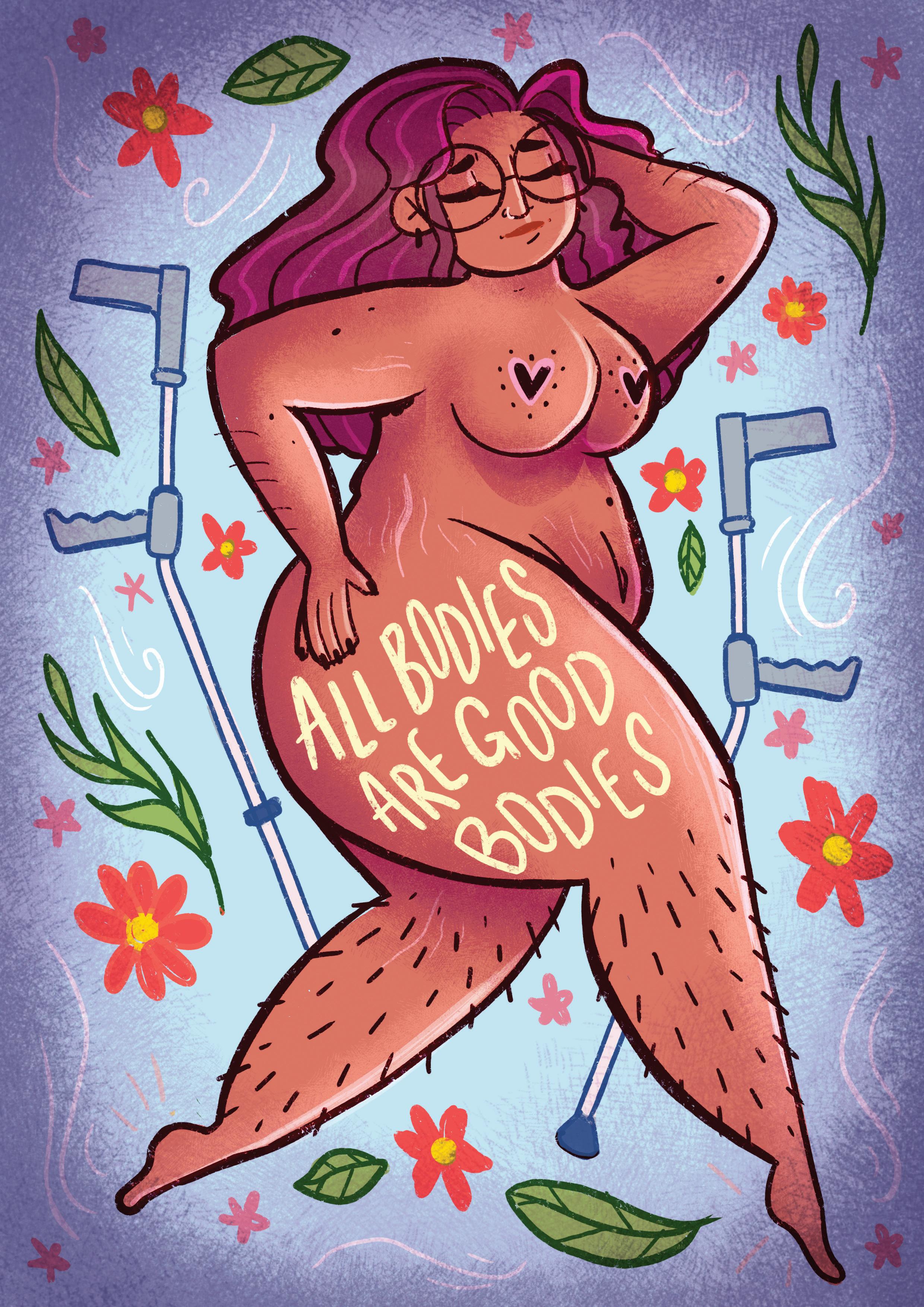
SMITHKATIEBYILLUSTRATION 136
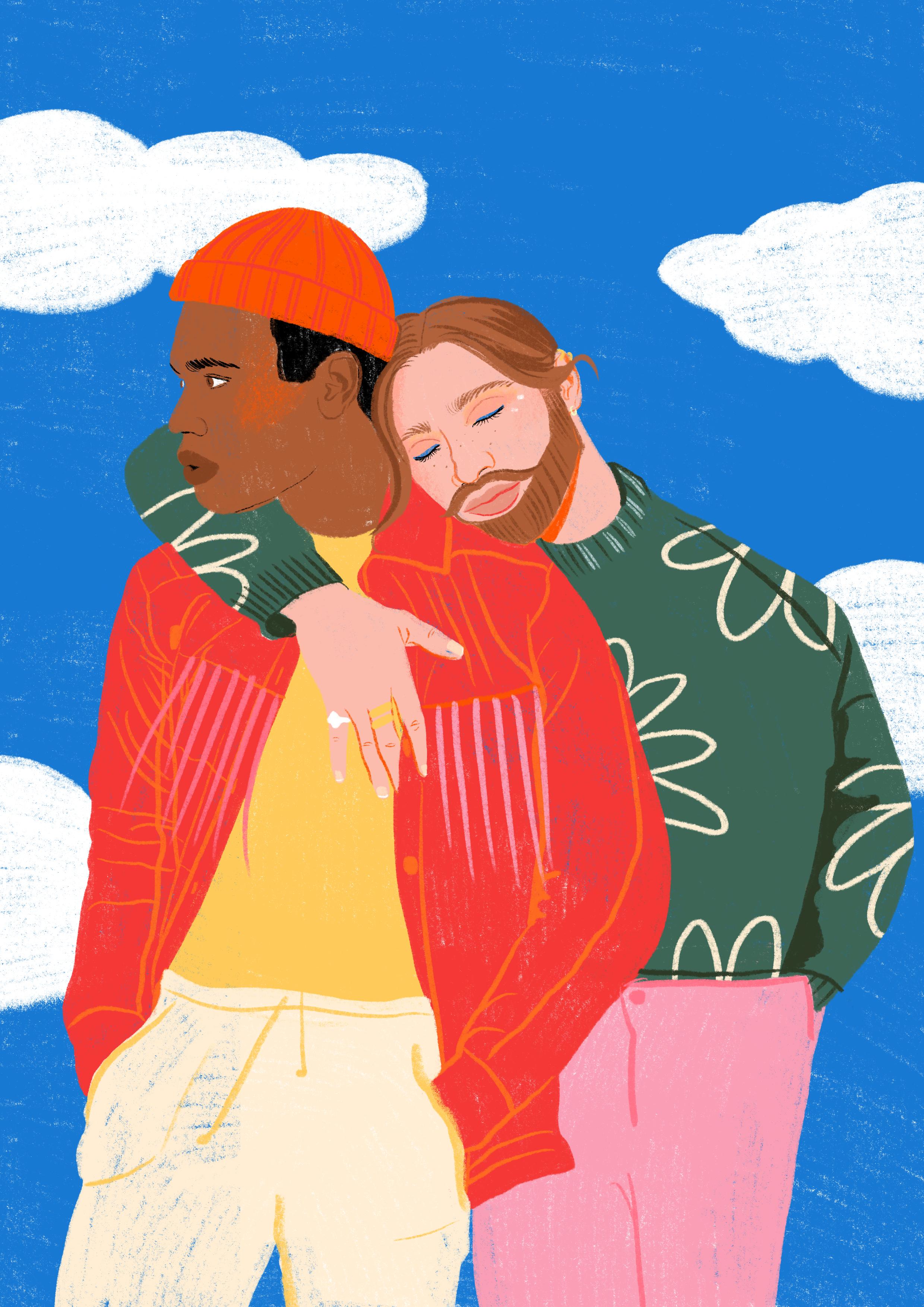
Eleven people talk about their interpretation of sexuality and reflect on how their perceptions have changed as they ’ ve grown up.
Brian “I guess growing up I had a form of internalised homophobia as a gay man, my own misconceptions were believing that being gay was a certain thing, i.e. flamboyance and camp behaviour. I believed these were the reason people hated others for being gay. As I’ve gotten older and gained a few friends who do like to be themselves I think that it’s absolutely amazing for people to be able to be themselves in a world that can oppress them. As for current misconceptions I guess I’m unsure as they are my own misconceptions and I won’t know until I learn better.”
G137 rowing Pains
What misconceptions have you had to deal with about sexuality and what ones do you think still exist?
Lewis “People most of the time will consider me to be over the top, obnoxious and ridiculous at all times (which I am), but there are so many different sides to me that make me a fully realised human other than being just those things. I think this comes with the whole masculine and feminine aspects of being ‘gay’. My sexuality has nothing to do with the way I act, it’s just a stereotype and so what if I’m femme I’m not hurting anybody.”
Emma “I think from conversations I’ve had with people my age, the common playground insult for a boy was ‘gay’ and for a girl it was ‘slut’. I think people were always modifying their behaviour to avoid being called those things – boys would try to hide any feminine aspects of themselves and girls would avoid saying things that were sexual. I think that follows people into adulthood too.
I’ve definitely noticed times where men were comfortable acting feminine and silly around me when other men weren’t there.
I’ve also definitely been a part of conversations with women reflecting on being afraid to seek out pleasure or to be direct with someone when they were younger in case their partner thought they were a ‘slut’ or told other people that they were. It seems like younger people are more accepting now and aware of the damage that weaponising sexuality can do to people later in life.”

Who has been the most supportive person in your life?
“By far my mum. My mother grew up with a gay uncle, it has always just been part of life for my mum - the way it should be for everyone because that is the reality. My mum always wanted me to tell her I was gay so that she could have that gay son and probably bond with me more over it. I remember the day I finally came out and said I had a boyfriend I was so upset because I had been ditched by him and all she focused on was making sure I was okay and talked through what happened with him that day with me. My sexuality wasn’t brought up once. She has been amazing and I’m thankful she is in my life every day. Everyone should have a mum like mine.”
Ross “The idea that HIV/AIDS is a ‘gay disease’ is certainly not as commonly believed as it used to be, but it does still exist. TV shows such as ‘It’s a Sin’ and ‘Pose’ are hugely popular and have played a part in educating the public, but despite this, the misconception definitely still exists. Recently rapper DaBaby caused worldwide outrage from celebrities and the public due to his homophobic comments about HIV and AIDS. A lot of straight men hold a misconception that anyone who is gay will make advances on them and view them as sexual predators. Obviously, a lot of gay men find straight men attractive, however, this doesn’t mean that they will actually take any action upon this attraction (unless, of course, the straight man is interested too).”
Brian
Sarah “My late Nana. She was lovely in every way, and while we got into arguments aplenty that’s just how it goes. I never came out to her in the end, but even still I think she knew. She’d asked me one day in the car if I liked women, and that if I did it was okay, that she loved me very much no matter what. I didn’t admit to it at that point, I wasn’t ready to, but I think despite my denial she knew anyway. She supported me with everything while she was alive, anytime I wanted to learn something new, she was there encouraging me. Piano, guitar, violin. Gymnastics in the living room, shuffle dancing like dafties in the kitchen. Art supplies, my writing. She supported it all and more often than not gave me the means to do it all.
Alex “Both of my schools were Catholic and I think that definitely had an impact on how I viewed sexuality. I wasn’t raised to be anti-LGBT in any way but it just wasn’t spoken about and pretty much everything I learned from the ages of twelve to sixteen was through self-research. In terms of sex education, we weren’t told about contraception and the only type of sex we were taught about was between a penis and a vagina. The obvious result of this shoddy education was that there were a few teen pregnancies and each time the girl in question would be seen as a ‘slag’ and the guy would be seen as a bit of a legend. I think that by trying to ‘protect’ children from sexual education we end up with generations of kids who don’t have the knowledge they need to protect and understand themselves.”
SMITHKATIEBYILLUSTRATION 138
It was definitely more of a rocky time my mum who in the beginning struggled come to terms with the fact I was attracted to anything other than straight men. However, the love for her child eventually outweighed anything else and she made massive steps to accommodate make me feel loved over the years. really to answer the question my family is my most supportive and “My mum is so supportive and is always the first person I call when I need advice. remember when my cousin tried to force me to come out and I was upset, she him that if I was going to come out, it would be to her, and not to him. From moment forward I felt less scared to admit the truth to my family. My group of friends always reminded me that it’s fine to who you truly are. My sexuality means nothing to them and they are always there
G139 rowing Pains
140
I won’t go into the details of why this was a surprise, but I was outed to him by his friend one night and he took me aside and told me that I’m his baby girl no matter what, and he loves me all the same - that who I fall in love with made no difference, and that I can talk to him always if I need to. There was no ‘maybe you’ll meet a nice bloke some day’ from him, or anything of the sort. Just complete acceptance and support.” Alex “My friends from secondary school have been consistently supportive, even though some of us have drifted. Over the past few years, my immediate family have grown to be incredible too. Teenage me didn’t quite understand how your child coming out can impact a parent so I got so upset that my parents’ reactions were more focused on my age and that they felt I was too young to know. I think that my two sisters had a positive impact on my parents too as they were slightly older and could explain it to them without getting as emotional as I would have.”
Strangely enough with regards to being bisexual, my dad of all people was also one of the more supportive people I know.
I’vecommunity.hadalot of people say to me that I’m a ‘cool’ trans person because I don’t jump down their throats if they misgender me It was definitely more of a rocky time with my mum who in the beginning struggled to come to terms with the fact I was attracted to anything other than straight men. However, the love for her child eventually outweighed anything else and she has made massive steps to accommodate and make me feel loved over the years. So really to answer the question my core family is my most supportive and I’m thankful for them every day.” RosS “My mum is so supportive and is always the first person I call when I need advice. I remember when my cousin tried to force me to come out and I was upset, she told him that if I was going to come out, it would be to her, and not to him. From that moment forward I felt less scared to admit the truth to my family. My group of friends always reminded me that it’s fine to be who you truly are. My sexuality means nothing to them and they are always there for me when I need them.”
Kayleigh “Unlike many people I have been extremely fortunate when it came down to my sexuality and my family. It's hard to pick one person. If it weren't for my older sister who outed me to my parents, I'm unsure if I ever would have had the courage to do so myself. My father has always been supportive and actively comforting and positive with me, even telling me before I admitted to him that ‘it’s okay if you're gay’ and as per usual of him adding the humour of not worrying about me getting pregnant and being a teen mum. Was it challenging to find other people to relate to about your sexuality as a young queer person, and how did you find them?
Alex “Without a doubt. Even now I find it difficult to make friends with other queer people because it feels like everyone else has known each other for years. A lot of the time I don’t feel like I’m queer enough either (which I know is ridiculous) because I’m in a straight passing relationship and I think a lot of people don’t see me as someone who fits into the queer
FALCOBETSYBYILLUSTRATION G141 rowing Pains

are essentially on these apps for one thing. I’ve always tried to play it safe on dating apps when it comes to meeting up with strangers, if I’m meeting someone then they’ve got to back up who they say they are with photos, video calls etc. and if they can’t then I just stop all contact. I get that some people might not want their partner/friends/family to find out that they’re on a dating app but I’m not about to die for a penis appointment. I’ve had mostly positive experiences with online hookups but at the end of the day it just comes down to taking care of yourself,
but in reality, I don’t do that because I feel incredibly uncomfortable and just sort of shut down when that happens. My partner is non-binary and the majority of their friends are queer as well so through being with Rosie I’ve met a lot more people in the queer community.” Ross “Looking back, I can’t think of anyone who I related to as a young queer person, and this probably made it more difficult to accept myself. One of my closest childhood friends came out as gay, and he introduced me to his group of friends who were the most diverse group of people I’d ever met. To this day they are still my best friends. I also joined a theatre company as I had an interest in acting and this introduced me to more queer people.” Brian “Throughout almost all of my life I’ve never had many gay friends, specifically male friends, especially ones like me who don’t like to make their sexuality so open for people to see. So I found it really difficult and had to figure things out for myself mostly. I guess I learned from boyfriends along the way, most of them were a bit older and had the experience to share “ Lewis “Definitely. There were times when I felt so alone and like there was absolutely nobody like me, but I think that was more of a self-sabotage thing. I thought I was the only one who was into these things and just didn’t look hard enough for the people who were. Now when I think about it, most of the friends I had who I’m still close with today all embraced my likes and interests as much as me, and are destined for amazing things in the worlds of fashion, performing, writing etc. They all coincide.”
What is dating like in the queer community, and what advice would you give younger people looking to explore their sexuality? Lewis “Without being shunned like the James Charles’s of today, I have the unfortunate burden of being interested in pretty much exclusively unattainable men A.K.A straight identifying men. I don’t know how I managed to get myself in to that habit, it just sort of happened and weirdly isn’t something I actually seek out at this point. Which means my dating experiences are non-existent and I’m pretty much always the dirty little secret – sometimes a blessing but mostly a curse. So, asking me for dating advice is probably dumb but I’m well versed in hookup app etiquette. In my experience, if you’re looking for something serious on an app, you’re in the wrong Guysplace.
142
acknowledging what sort of mental state you’re in and being sure of what you want to get out of the experience before you go into it.”
G143 rowing Pains
David “I think there can be a toxic side to the queer community. Personally, I’ve never had any hate from straight people. Any hate or criticism I’ve ever had was from the gay community - you’re either too fat, or too feminine, or you don’t fit in because you’re not a tanned ‘twink’. Or you don’t look a certain way. That sort of stuff has always annoyed me. The fact that we have pride events asking for equality, yet we don’t treat our community as equals is such a contradiction and it really annoys me. We’ll all call each other names because you don’t look the way you’re ‘supposed’to look to fit in with a certain tribe or community. Or the kind of people who will block you on Grindr because you don’t look a certain way but on pride day it’s okay because we’re all allies, we’re all one person for one cause, but as soon as pride is over it’s back to those ways.”
Did you ever feel any pressure to “come out” to your family and friends and how did that pressure affect you? Ross “I definitely did feel pressure. When I was bullied in school for my sexuality people would tell me to 'just come out'. My cousin also done this at a family party, and it was the most horrible thing. Funnily enough he is also gay, looking back he should’ve had more understanding of how difficult it can be coming to terms with who you are. The pressure took a toll on my mental health and made it even more difficult to face coming out.” Brian “I never felt I had to come out to anyone. From my perspective it was no one’s business who I kissed or slept with. I felt very confident on that front and still do to this day. I always believed if you have to concern yourself with knowing if someone is gay or not for your own self-satisfaction then you are not worth my time and I’m more likely to not tell you. I don’t believe anyone should need to come out. You live your own life as does every other human being on this planet from the beginning of time to the present day.” Derek “Coming out was a very intense, terrifying time, a moment I will remember for the rest of my life. I remember sitting down with a friend one night and it was at the tip of my tongue. I had chills down my spine, it was so scary and in that moment I remembered a friend once told me, ‘the minute someone tells someone else they’re gay, that means there’s no going back’. I stopped and thought, ‘am I doing the right thing?’. I had to go with my head or my heart. I chose my heart and sobbed to my friend ‘I am gay and I don’t know what to do’. She
Ross “Dating in the queer community comes with its challenges. I feel that if you’re not skinny or muscly, then you’re not desirable to a lot of gay men, so I’ve found the body image standards difficult to cope with. There’s a saying that goes ‘straight skinny, gay fat’, suggesting that you look thin to any other person, but within the gay community, you can still be deemed as overweight. It’s also hard to tell if people are interested in you, or just sex, but I suppose this also applies to all sexualities.
Having said that, I’ve also had a lot of fun, whether it be serious or casual. My advice would be to always be safe and try not to compare yourself to others or the body ideals within the community, people should and will love you for who you are, and if they don’t then they’re not worth your acknowledgingtime.” what sort of mental state you’re in and being sure of what you want to get out of the experience before you go into it.” David “I think there can be a toxic side to the queer community. Personally, I’ve never had any hate from straight people. Any hate or criticism I’ve ever had was from the gay community - you’re either too fat, or too feminine, or you don’t fit in because you’re not a tanned ‘twink’. Or you don’t look a certain way. That sort of stuff has always annoyed me. The fact that we have pride events asking for equality, yet we don’t treat our community as equals is such a contradiction and it really annoys me. We’ll all call each other names because you don’t look the way you’re ‘supposed’to look to fit in with a certain tribe or community. Or the kind of people who will block you on Grindr because you don’t look a certain way but on pride day it’s okay because we’re all allies, we’re all one person for one cause, but as soon as pride is over it’s back to those ways.”
Ross “Dating in the queer community comes with its challenges. I feel that if you’re not skinny or muscly, then you’re not desirable to a lot of gay men, so I’ve found the body image standards difficult to cope with. There’s a saying that goes ‘straight skinny, gay fat’, suggesting that you can look thin to any other person, but within the gay community, you can still be deemed as overweight. It’s also hard to tell if people are interested in you, or just sex, but I suppose this also applies to all sexualities.
Having said that, I’ve also had a lot of fun, whether it be serious or casual. My advice would be to always be safe and try not to compare yourself to others or the body ideals within the community, people should and will love you for who you are, and if they don’t then they’re not worth your acknowledgingtime.”
Having said that, I’ve also had a lot of fun, whether it be serious or casual. My advice would be to always be safe and try not to compare yourself to others or the body ideals within the community, people should and will love you for who you are, and if they don’t then they’re not worth your time.”
Ross “Dating in the queer community with its challenges. I feel that if you’re not skinny or muscly, then you’re not desirable to a lot of gay men, so I’ve found the body image standards difficult to cope with. There’s a saying that goes ‘straight skinny, gay fat’, suggesting that you can look thin to any other person, but within the gay community, you can still be deemed as overweight. It’s also hard to tell if people are interested in you, or just sex, but I suppose this also applies to all sexualities.
what sort of mental state you’re in and being sure of what you want to get out of the experience before you go into it.” David “I think there can be a toxic side to the queer community. Personally, I’ve never had any hate from straight people. Any hate or criticism I’ve ever had was from the gay community - you’re either too fat, or too feminine, or you don’t fit in because you’re not a tanned ‘twink’. Or you don’t look a certain way. That sort of stuff has always annoyed me. The fact that we have pride events asking for equality, yet we don’t treat our community as equals is such a contradiction and it really annoys me. We’ll all call each other names because you don’t look the way you’re ‘supposed’ to look to fit in with a certain tribe or community. Or the kind of people who will block you on Grindr because you don’t look a certain way but on pride day it’s okay because we’re all allies, we’re all one person for one cause, but as soon as pride is over it’s back to those ways.”