36
How did you know it was the right time to leave the industry you were working in?
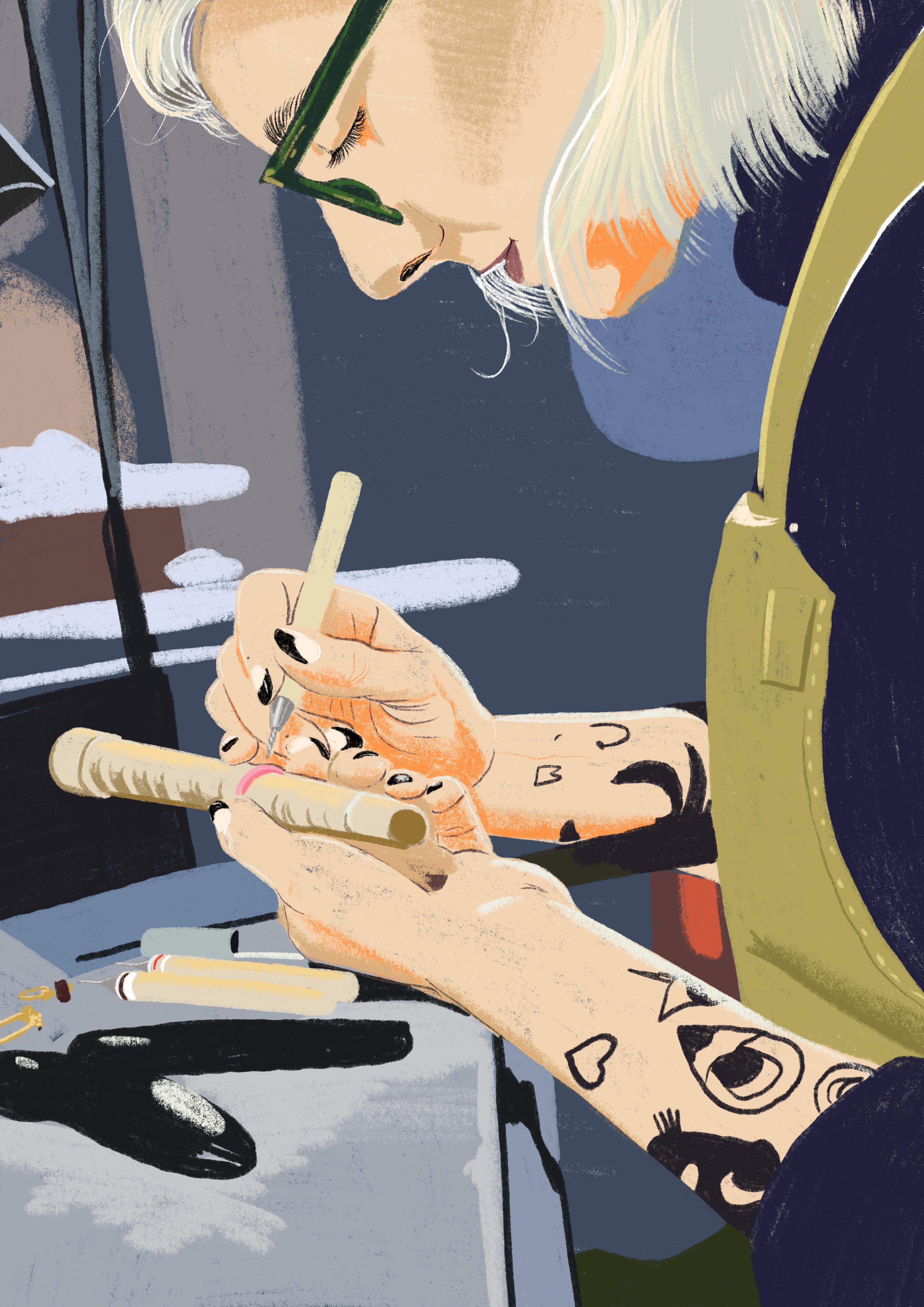
I had been dreaming of a change and fantasising about another career for a while, but I thought that I wasn’t capable of doing it, and it felt like my hard work and sacrifice until now could be all for nothing. I kept asking myself, do I see myself doing this in fifteen or twenty years? And I didn’t. Every day I would ask myself that same question and the answer didn’t change. There was one very specific moment that cemented everything I had been feeling; when my two little cousins who I hadn’t seen in months decided to visit me and I couldn’t take more than two minutes to go and say hi to them because it was my day to make staff dinner. This was the exact moment that I knew I had to make a change, and that night I applied for college courses.”
What helped you to build confidence in your choice to change career? “Spending so much time in the middle of nowhere working long hours in a kitchen gives you a lot of time to think. Going over the situation in my head, day after day was tough at times. But after a while it gave me clarity. Once I had worked it out myself, I talked to my friends and my coworkers and I was welcomed with nothing but positivity and reassurance.
HUGHESANNABYILLUSTRATION Career Change WITH JACK 37G rowing Pains
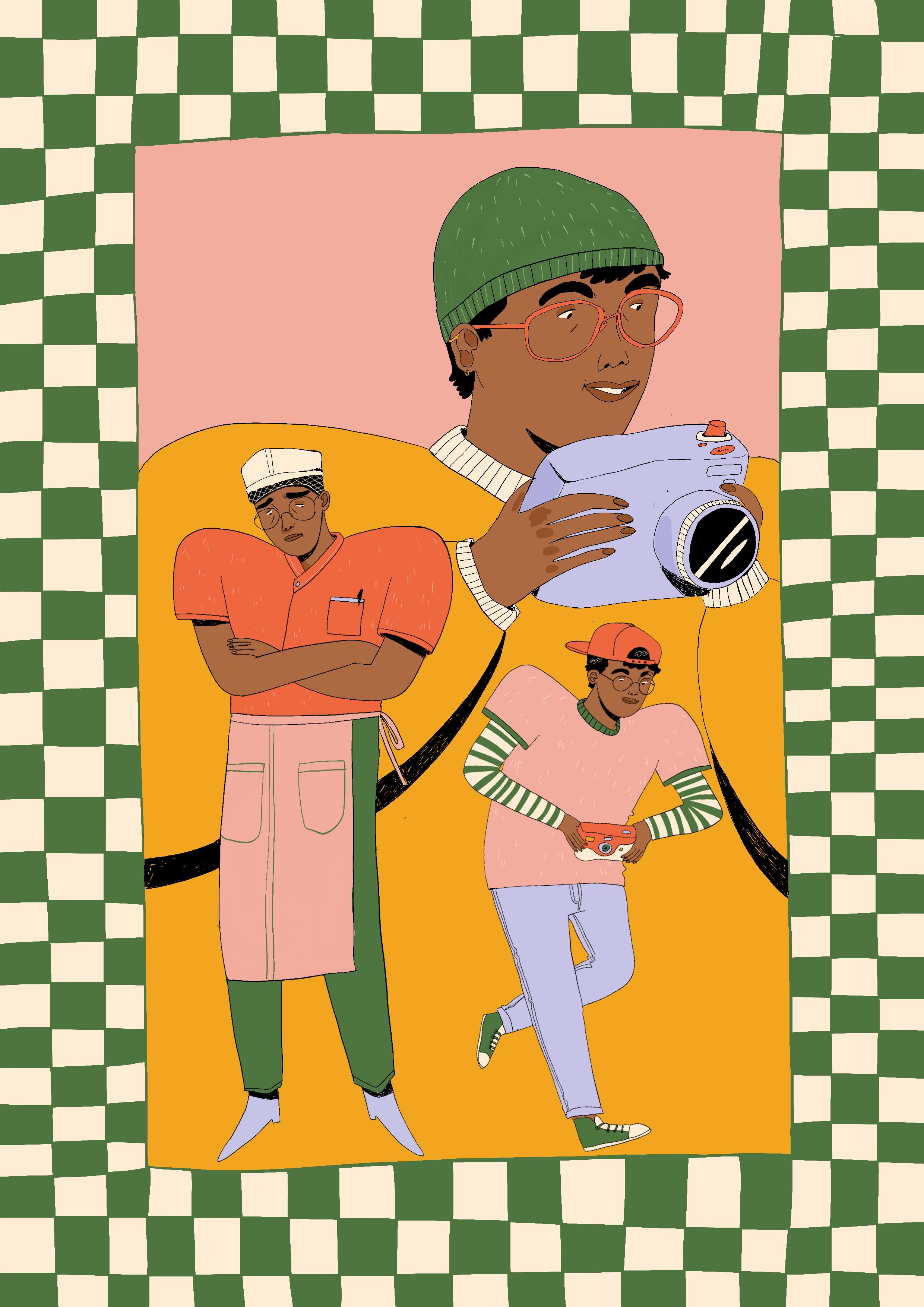
“Leaving school, I never really knew what to do. I had always wanted to be a photographer but never saw it as a viable career path. I fell into a job as a commis chef and I kind of fell in love with it. There was massive highs and lows, a real sense of achievement and camaraderie between all the chefs. It felt good to be someone’s Padawan and to have an interest taken in you because you’re good at something. I had been working hard for a good number of years, I had made sacrifices for the job and had made it to a position I had fantasised about for a long time. While I found the work rewarding and in general I enjoyed what I was doing for the most part, I couldn’t help but feel there was something missing in my life.
I was faced with a decision that was mine and only mine to make, although knowing you have support from the people you care about really helps build up the courage to make the change. Growing up with parents who worked corporate jobs, I saw first-hand what being in a job you didn’t absolutely love could do to you. A year before this, my Mum had been made redundant and she started her own Seeingbusiness.how happy this made her and how she changed as a person cemented in my head that chasing the cheddar doesn’t make people happy. I wanted to find that thing - the thing that I could wake up in twenty years time and still be excited to pursue.”
What did you expect the benefits of changing career to be and did they turn out to be true? “For me it was all about happiness. Being able to plan my time better, being able to go to things I would have usually missed out on, being present in the moment instead of feeling like I always had my mind on work. Getting to scratch that itch I’d had for so long. Proving to myself that I might be able to make career out of photography, and knowing that even if it didn’t work, I would be happy that I Andtried.yeah, they did turn out to be true. It was empowering. I felt human again when I left that job. I felt like I was in charge of myself again. Making that decision helped me prove to myself that if I ever had to make a choice that hard again, I would be able to and I honestly haven’t looked back since.”
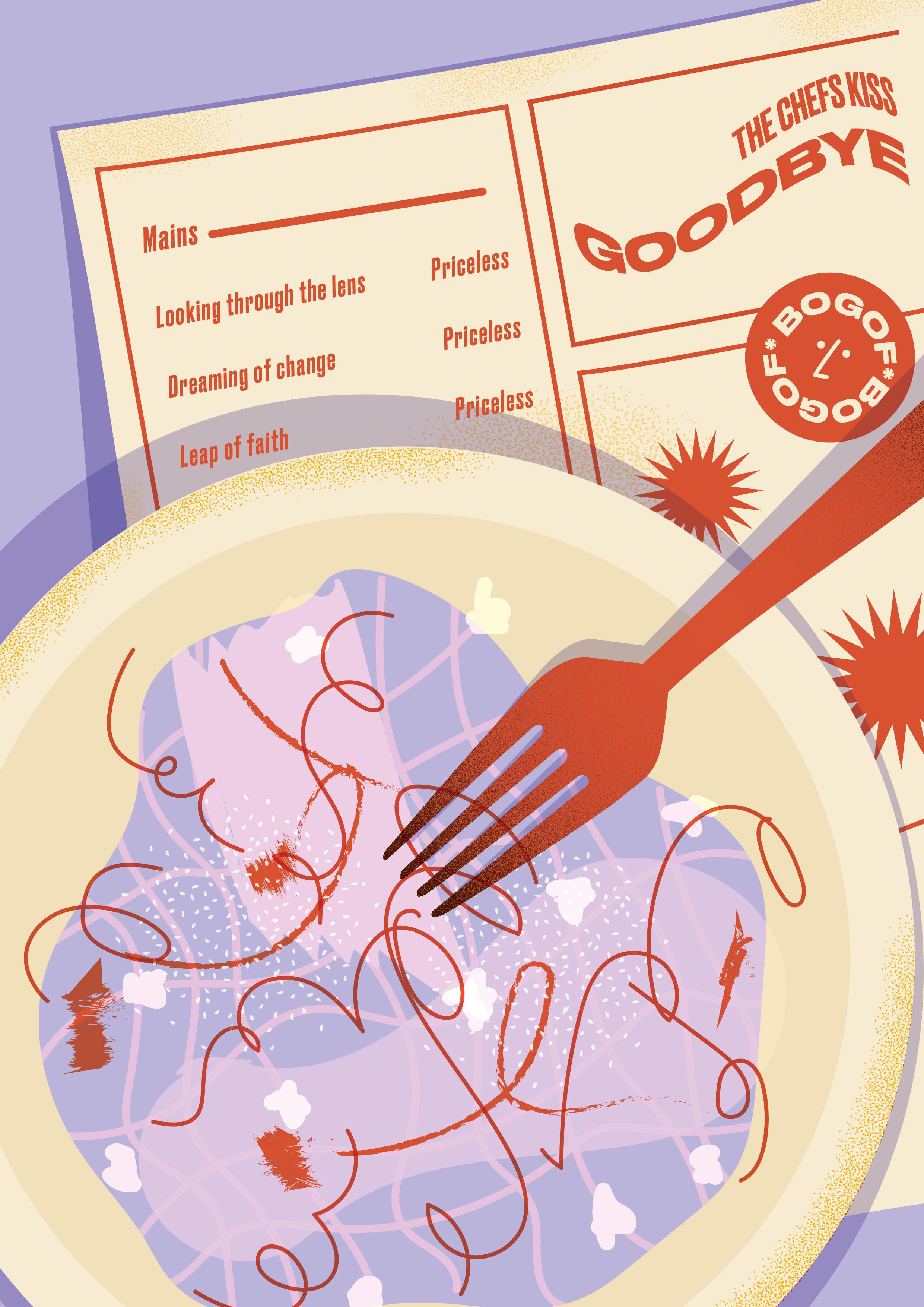
Looking back now what would you have done differently to prepare for the change? “I’m not sure that mentally or emotionally you can ever fully prepare for a change like that. You have to take a leap of faith and once you do, you’re just along for the ride. It’s freeing and scary at the same time. The only advice I could give you is to give it your all when making the change. Try not to doubt yourself and go for it, surround yourself with people that support you and don’t give up.”
PETTENGELLSTEPHBYILLUSTRATION
38
39G rowing Pains
40
Career
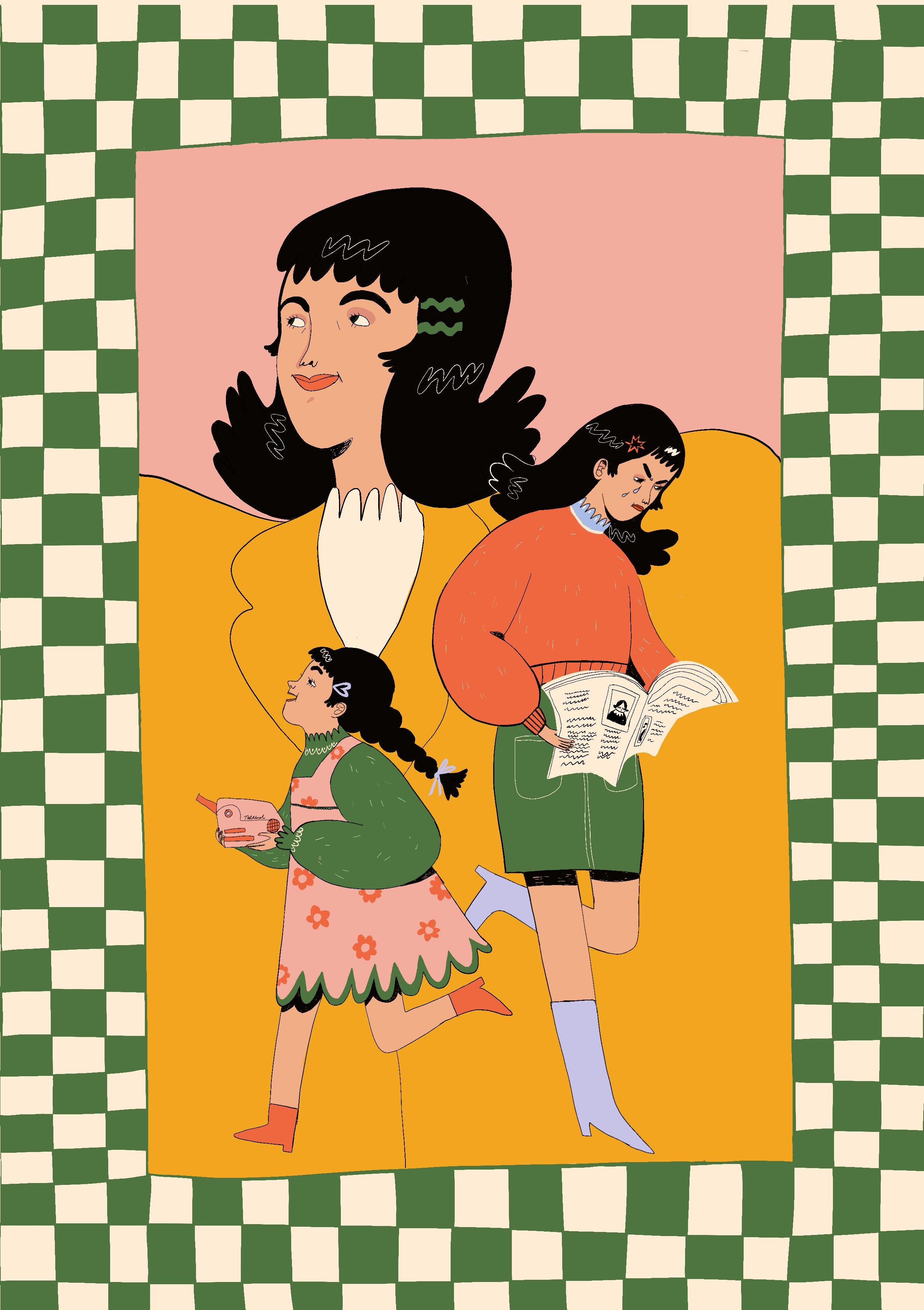
What disappointed you about the previous industry you worked in and how did it affect you? “I wanted to be a journalist from a very young age. I used to walk about my house with my pink ‘Talk Girl’ and interview my family members for my news show called ‘The Galaxy’ I(cringe!).thinkIbecame enchanted with the job from all of the movies that painted a drastically inaccurate picture of what being a journalist was like. Alas, I was not Jennifer Garner in 13 Going on 30 when I started my first job in the Initiallyindustry.I was, understandably, given 150-300 word articles to write. Gapfillers. Stories about hedgehogs found by the side of the road (seriously, that was my first ever article published in a national newspaper). Half the time, sub-editors would completely change what you had written and then publish their own version of your article. What I found odd was that in an office of 150 reporters, only about 5 of them were held in any sort of regard. They got the big scoops and the glamorous event invitations. Granted they had worked hard for years on end, but at what cost? There is a massive air of arrogance in a tabloid news room. Your colleagues are rarely your friends, but in fact inconveniences who might get a better piece to write than you. I was given an opportunity to write an article with a very well-known and well-respected reporter. I was given a dictaphone and I conducted all interviews that would be used, as well as co-writing the article itself. It was front page news and a double page spread. But the following day, my subbyline was nowhere to be seen. It could have launched my career but instead it was where I began to rethink my whole lifelong career decision. I guess I wasn’t cut out for the dog-eatdog, every man for himself, mentality.”
HUGHESANNABYILLUSTRATION
Change WITH KIM 41G rowing Pains
Have you noticed a change in yourself since moving into a new industry? “When I first made the switch into finance I noticed a number of changes, good and bad. I felt like I was less outgoing and less talkative; my whole life at university and the beginning of my career was essentially spent talking to people from all walks of life 24/7, and now I was working in an office 9-5.
But eventually I realised how resilient it had made me. I jumped into an industry that I had very little knowledge of and learned everything from scratch. I used transferable skills and applied them in any way that I could, adapting to completely new scenarios, and it made me feel like I could really take on anything head-first if I had managed to do this. Which was subsequently a very effective line to use in interviews as it got me jobs with the world’s leading investment firms!”
42
I moved around companies a lot, each year actually, to new departments in the hope that I would learn about different aspects of the industry in each of them. It didn’t look great on my CV and I was often questioned as to why I had a new job every year, but I’m glad I did this. Not only did I move up the ranks quicker than I would have if I stayed within a company, but it has been 6 years since I made the change and I’m finally at a place where I am confident in my knowledge and abilities to perform my job at the level expected.”
PETTENGELLSTEPHBYILLUSTRATION
I often even wondered why the company who first offered me a job took that chance, knowing they would be training me from scratch. I was lucky to have colleagues who quickly became some of my closest friends, and spent a whole year teaching me everything they knew. It’s not easy when you think you have finally finished years of school and university, to then have to start something from the beginning again. My company gave me a lot of reading materials to take home, introductions to investments, some of which wasn’t even relevant to the role I was doing but they knew would aid me in my career in the future.
How difficult was it for you to adjust to a different career and what do wish you’d known beforehand?
“It was tough at first. On a number of occasions I considered just going back as I really had no knowledge of the industry I was trying to work in (all of my colleagues had degrees in economics and finance, they knew their stuff!).
43G rowing Pains
44
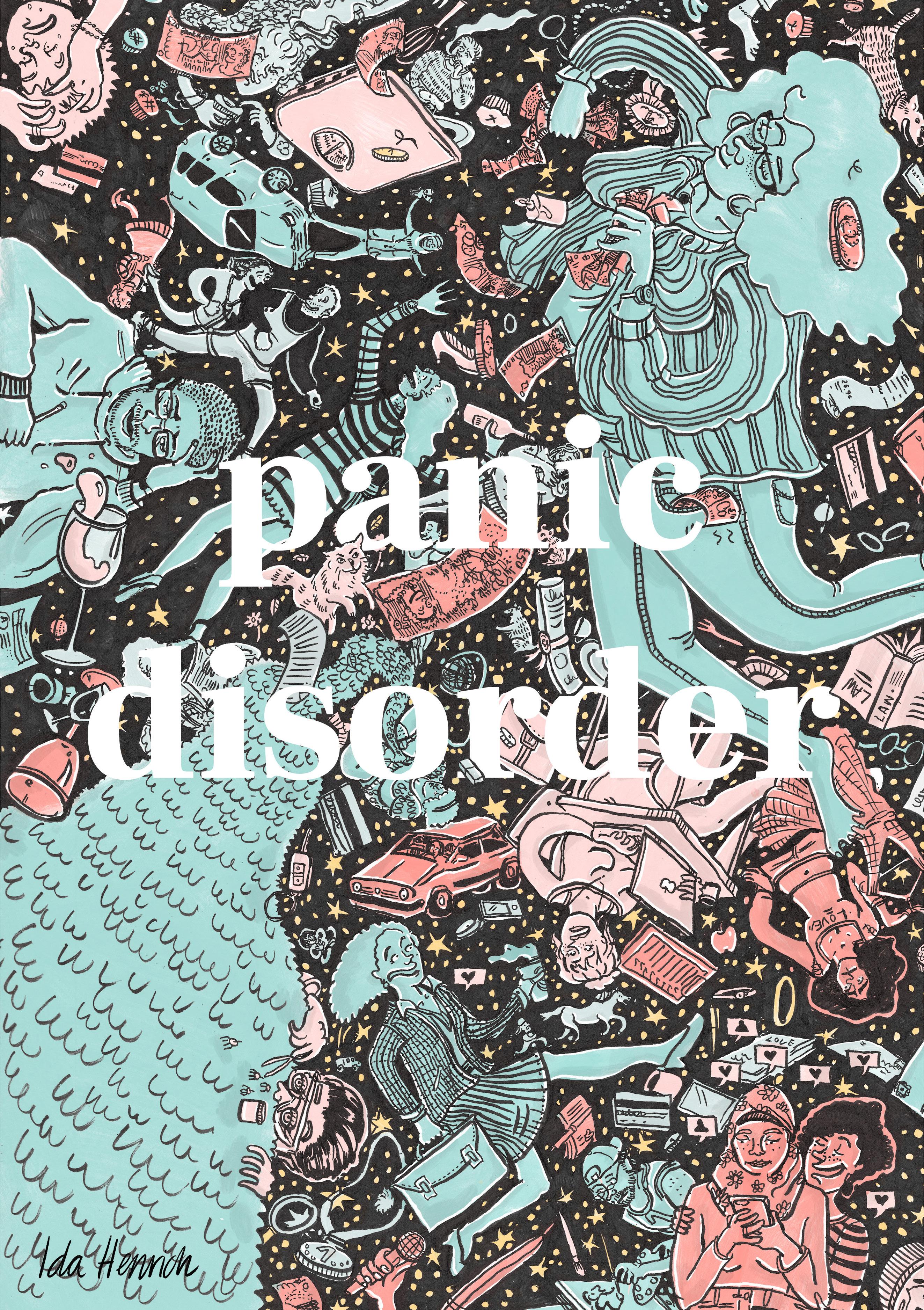
“Most people will be familiar with generalised anxiety disorder, which causes a person to excessively worry about everyday life events such as health, finances, children and work. The feelings are difficult to manage and control, they often interfere with day to day life. A panic disorder is a similar but different mental health condition, where a person experiences recurring and unexpected panic attacks. Everyone will experience feelings of anxiety and panic as a natural response to stressful and dangerous situations, however for someone diagnosed with a panic disorder, these feelings consistently appear in non-threatening situations.” Symptoms “I was slow to notice the symptoms because they started off small. I would feel overwhelmed walking in crowded areas, constantly looking over my shoulder and feeling on edge around loud noises. Initially the feelings were fleeting enough that I could ignore them and avoid certain situations. Over time I started to have regular panic attacks which would begin the same way. First, I become overly aware of my heartbeat. Then I feel as though the world around me is closing in. I become aware of my eyes and how much I’m blinking. I’ll start to fidget with my hands in order to distract myself from thinking about my heart beating faster and faster. The physical symptoms will fill me with dread and the unshakable feeling that I’m about to die will take over.
People can still be reluctant to discuss their own mental health but the subtle signs that someone is struggling with a panic disorder can be changes in their social interactions and behaviours, such as cancelling plans without solid reasons why or abruptly leaving gatherings. People may also become distant and withdrawn, less talkative, or less excited about the future in general. Personally, I will be keen to make plans but when the day comes, I regret scheduling anything for fear of having another panic attack and I will often avoid going.
It’s difficult to explain what that feels like to someone who hasn’t experienced it. The symptoms sound imaginative and dramatic but the overwhelming feeling of dread is a very real and physical reaction to the adrenaline in my body. My mind strongly tells my body that I’m in danger and after so many panic attacks, I soon learned that fighting the feeling only intensifies it. The initial symptoms are usually followed by hyperventilating, being sick, crying, fainting or dissociating.
What is Panic Disorder?
My surroundings become secondary whilst my brain shuts down to wait out the panic attack, which can last from minutes to hours.
WITH ROSEY HENRICHIDABYILLUSTRATION 45G rowing Pains
Diagnosis Panic attacks seeped into my life around ten years ago. I’d left school where I was the big fish in a small pond and went straight to university where I quickly became a small fish in a very, very big pond. At the same time my heart was broken by my first love and it tore me in two. I lost weight and stopped caring about myself. It was a horrible time. I didn’t feel settled at university. I felt inadequate and I panicked all day long about bumping into anyone who knew what had happened in my personal life. I was struggling and every shadow felt like a threat. I cried constantly, often unable to cross the threshold into my lecture hall. I felt like I needed to map out an escape route everywhere I went, which was affecting my social life too. I wanted to get in and out of class as quickly as possible so I hadn’t been making any friends. It was the loneliest I had ever felt. One day I’d had enough and visited my general practitioner, who hugged me and told me that I was going to be fine. She prescribed me a betablocker to stabilise my heart rate and also prescribed an antidepressant to improve my overall mood. I was directed to the community mental health team where I was seen within two weeks, which is lucky as sometimes the wait can be up to six weeks. I was given a sick line from my doctor for two weeks off from work to rest. Treatment The first therapist I met didn’t gel with me. She diagnosed me with a panic disorder and generalised anxiety disorder but her only help was workbooks on mindfulness and breathing techniques. Frankly it was not enough. I persevered with another therapist and I’m glad I did. He was a delight, he listened and made me feel calm. I realised after my sessions with him that I hadn’t felt truly calm for a long time. I had weekly appointments for a year where I learned some tools to deal with the panic attacks on my Acknowledgingown. what doesn’t work for me anymore helped too. The cinema is a place I don’t enjoy much now, I don’t enjoy being cut off from the world and I can’t help but bombard myself with worst case scenarios; from not being able to answer my phone if somebody needs me to a potential massacre happening outside. I miss a time when I enjoyed the escapism of the cinema but I find it increasingly difficult to enjoy myself there as time goes on. I don’t enjoy being in busy places but I try to be positive and still make them work for me. I’ve come to realise that I don’t need to make myself go into big buildings if they don’t make me feel safe (especially crowded Primarks). If I visit a city, I try to go on a weekday when it’s less crowded. I avoid travelling during peak times and if I have to be in work during a loud and busy period, I know I can just take a seat somewhere quiet until the physical symptoms subside.
46
Advice “The best thing I can recommend is some sort of release for your energy.
I try to cut myself some slack and not beat myself up if I don’t feel like I can commit to something. Learning to live with regular panic attacks was a massive hurdle for me to overcome but I had a lot of support. My boss was understanding and told me to stop coming in and take as much time as I need to sort this out. My friends are incredibly compassionate which helped me to adjust. My best friend is a nurse and she’s brought me a lot of comfort, she can tell when I’m having a bad day and will shower me with love. My family were always there for me but honestly, I don’t want to worry them and that often stops me from sharing how I really feel. My boyfriend is incredibly supportive though and intuitively knows when to give me space and when to push Relaxingme. is something I need to get better at but I just can’t switch off, my mind is constantly zipping from one thing to another. Exercise has been a powerful tool to get rid of a lot of the anxious energy so I exercise almost every day. Medication has really helped to stabilise the condition for me too. I don’t have the luxury of staying home when I’m having a bad day, I get up every day and if I’m on the rota then I still go in to work. Even though I’m diagnosed with a long term condition, I would still feel guilty and like I was letting my co-workers down if I was to tell them I couldn’t come in because of anxiety or a panic attack.”
For me it was bullet journaling, which developed into a calligraphy hobby and now it’s grown into not only a creative outlet but something I can make some money from. Get outside every day, make a point of getting some fresh air, treat yourself like an animal who needs walked because you are. Read the books or watch the films that you love for comfort. Be gentle to yourself. If you don’t feel up to something, own it. Be honest and communicate how you feel. People will be more understanding than you think. If you have a friend or a family member who is going through something similar, be kind to them. Before you react to cancelled plans, try to understand why they were cancelled and ask if there is an alternative option.
47G rowing Pains
Crowded places can be overwhelming for someone who is struggling to control a dysfunctional fear response. Ask if you could hang out on the couch at home or come over to cook instead. Let your loved one vent, be there for them and don’t try to make them do something they don’t want to.”
dementia WITH JOAN 48
“Most people still consider dementia to be an illness that exclusively affects older people but that’s been proven to be Thereuntrue.are over 42,000 people in the UK diagnosed with dementia under the age of 65, known as ‘early onset’ or ‘working age’ dementia. This is now so common that the latest research shows 1 in 3 babies born since 2015 will go on to develop dementia at some point in their lives, unless a cure or vaccine can be found.
Dementia is an umbrella term for a complex set of diseases which affect the mind, and they are not a normal part of ageing. They are terminal illnesses caused by diseases which change the structure and chemistry of the brain. Some types are more common than others, although the average person who has no experience of family members with dementia is often unfamiliar with the differences. It is possible for a person to be affected with more than one type of dementia at a time too. The word ‘dementia’ describes a group of progressive symptoms including memory loss, mood changes, unusual behaviour and difficulties with planning and problem solving. The most common form of dementia is Alzheimer’s, which can start slowly and progress very gradually. Another common form is Vascular dementia, which can develop after blood flow to the brain is interrupted during a stroke, or when blood vessels in the brain become too narrow.
49G rowing Pains
Lewy-body dementia and Pick’s disease are other forms of dementia which specifically affect the frontotemporal lobe. This area of the brain is responsible for controlling a variety of functions; emotional expression, language, social and sexual inhibitions, judgement, and motor Degenerationskills. of these tissues can result in behavioural changes that are uncharacteristic and very distressing for family and friends. REM Sleep Behaviour Disorder is common amongst people affected with these types of dementia too, which can cause a person to act out their dreams, sometimes violently. Regardless of the specific type of dementia a person is diagnosed with, they will experience the disease in their own way. How it affects them over time is unique to their own attitude, their relationships with others, their environment and any other health conditions. These will all have some impact depending on what stage of the illness they are experiencing.”

50
“Dementia can affect the way someone speaks, thinks, perceives, feels and behaves. People associate dementia with memory loss and usually the disease begins to manifest this way by affecting an individual’s short-term memory. Someone with dementia might repeat themselves and have problems recalling things which happened recently, although this is not a definitive symptom; some people with dementia can easily remember things from a long time ago. Sometimes it can be easier to talk with them about the past, especially a significant memory or an area of familiarity. This can be a way to make the person feel included in day-to-day life and not treated as though they are unable to communicate anymore. Talking slowly and keeping sentences short can help to keep communication flowing too.
For more information on living with dementia, visit Dementia UK which has information and advice on many matters affecting those diagnosed or caring for a loved one with dementia. They can also assist with things like blocking cold callers and blocking outgoing calls to specific premium rate numbers, give access to locked public bathrooms through the National Key Scheme and provide information on the Herbert Protocol for missing vulnerable people.”
Correcting someone about things in the past may make them feel distressed. For example, reminding a person with dementia that someone close to them is no longer living can be confusing and cause them to relive the loss. It can be better to continue to let them speak and focus on another element of the conversation such as the weather that day or what they had to eat. If you are taking care of someone with dementia, try to think ahead about what your plans will be for the day. Think about where you are going and ask yourself three questions - is this going to cause them distress, does they need to go through this and how can you present them with less opportunities for confusion or conflict.
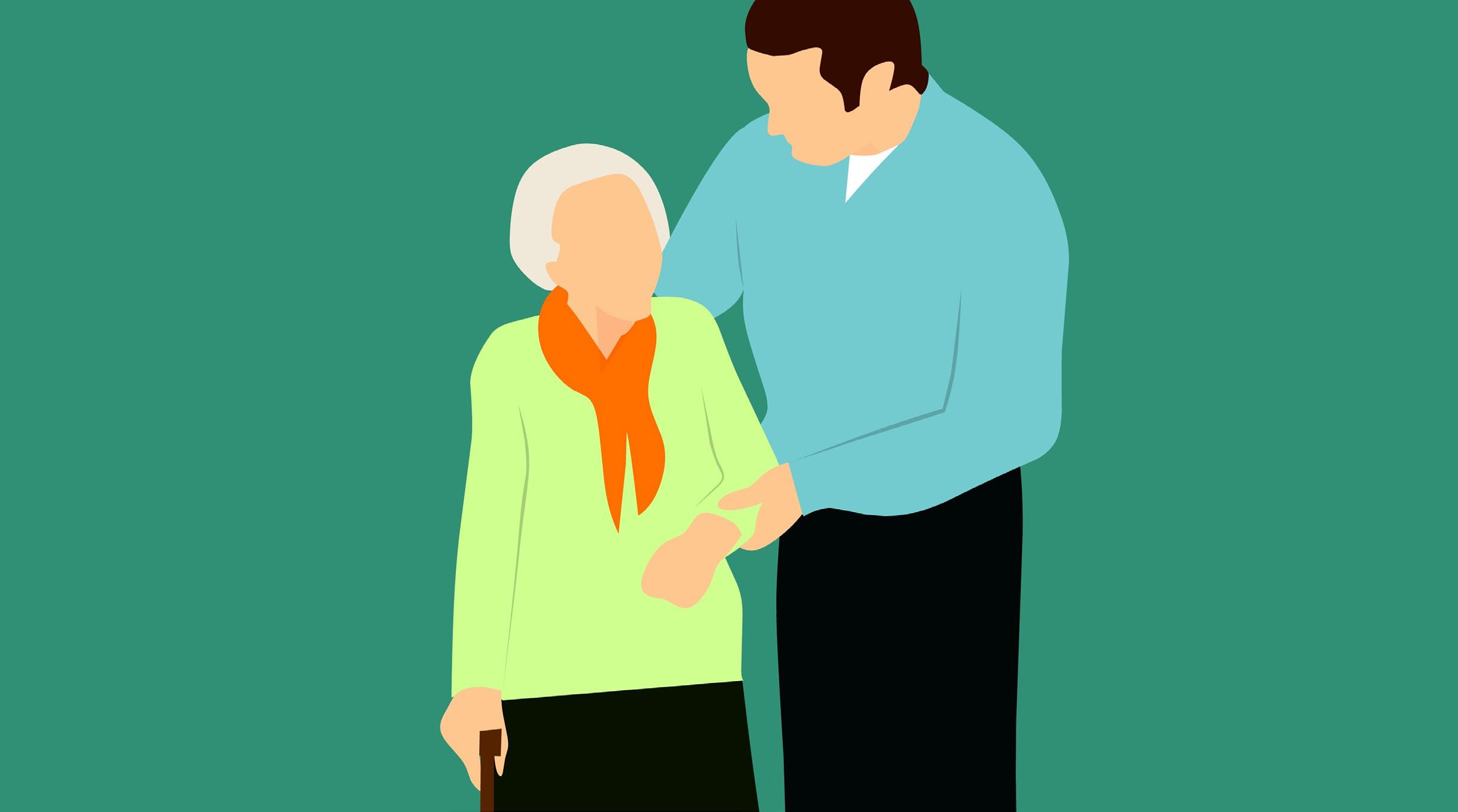
During the final stage of the disease they will lose their abili ty to communicate, interact with or respond to their environment. They may be able to speak words and phrases but they will require assistance with all activities of daily living. It’s common to succumb to a chest infection or pneumonia due to a lack of internal communication between the brain and body, which interferes with the immune system’s ability to fight off physical ailments.
Stage 2 – Very Mil d Decline
Cognitive problems begin to show which may be noticed by family and friends. They may have difficulty with organising and planning their daily activities, remembering the names of new acquaintances, finding the correct word to use in conversation and keeping trac k of personal possessions. They will score lower on memory tests and impaired cognitive function will be dete cted by medical staff.
Assistance will be required with day-to-day tasks such as getting dressed. They will still be able to independently bathe and use the bathroom. They may experience significant confusion and an inability to remember simple details about themselves, such as their telephone number but usually they can still recognise family members and recall details about the ir youth.
Stage 6 – Severe Decline
Stage 7 – Very S e vere Decline
Minor memory problems like losing items around the house. The affected person will score well on memory tests. The disease is unlik ely to be detected by medical staff or loved ones.
Stage 3 – Mild Decline
Symptoms are apparent. They may have difficulty with simple arithmetic, show signs of poor short-term memory, forget details about their past and struggle to manage their own finances an d bills.
The Seven Stages of Dementia 51G rowing Pains
Stage 5 – Moderately Se vere Decline
Stage 4 – Moderate Decline
Stage 1 – No impairment Dementia is undetectable. There are no memo ry problems or evident symptoms.
Constant supervision and often professional care will be required. Symptoms can include confusion or unawareness of their environment, an inability to remember most details of their personal history, major personality changes, an inability to recognise faces and potential behaviour proble ms such as aggression and wandering.
depression Symptoms – how you might feel A loss of pleasure in things which normally bring you happiness Feeling upset, empty, numb or hopeless A sense of unreality or feeling far away Restlessness, agitation or irritability An inability to relate to other people Low self-confidence or self-esteem Feelings of guilt or worthlessness Suicidal thoughts or actions Signs – what behaviour other people may notice Appearing constantly tired Abusing alcohol and drugs Engaging in risky behaviour Restless or agitated behaviour Self-harming or suicidal behaviour Avoiding social events and activities Moving or speaking slower than usual Changes in weight – weight gain or weight loss Changes in appetite – avoiding food or overeating Physical aches and pains with seemingly no direct cause Changes to sleeping patterns – sleeping more or less than usual Difficulty holding conversation, concentrating or making decisions 52
Depression is a mood disorder characterised by a low mood on a regular basis which affects a person’s everyday life. With mild depression, there’s a persistent low mood, lack of motivation and a feeling that tasks seem less worthwhile to complete, but there is no disruption to aspects of normal life like work and child-care.
What is depression?
Severe depression disrupts normal life and can eventually be lifethreatening, as the persistent low mood can cause suicidal feelings to increase.
Depression can also negatively affect conditions like arthritis, asthma, cancer, diabetes, obesity and cardiovascular disease. There are a few different types of depression currently recognised by mental health professionals; Dysthymia is a form of continuous mild depression which has lasted for two years or more. This type of depression is also known as persistent depressive disorder or chronic depression. Seasonal Affective Disorder (SAD) occurs during a particular season and affects 1 in 3 people in the UK, with women being 40% more likely than men to experience SAD symptoms such as anxiety, low energy and low self-esteem. Prenatal depression occurs during pregnancy, sometimes referred to as antenatal depression. Postnatal depression appears in the weeks and months after becoming a parent, and it can affect parents of any gender.
Signs of depression in the elderly – empty fridges and cupboards, neglected appearance, poor hygiene, showing little joy in receiving visitors
53G rowing Pains
Diagnosis A doctor will try to determine if there is a physical cause like a vitamin deficiency, a thyroid issue or an adrenal gland disorder. Depression can also be caused by asthma and rheumatoid arthritis medication, appetite suppressants, illegal steroids and amphetamine withdrawal. One of the most widely used tools for diagnosing depression in the UK is the Beck’s Depression Inventory, which asks a series of questions and scores the answers to determine the severity of symptoms a person is suffering from.
Don’t be critical – avoid statements like “snap out of it”, “cheer up” and “get over it”
Gently encourage physical activity and a balanced diet, which can improve symptoms
Make a plan with a health professional to reduce the dosage over time and have as much support as possible in place from family and friends.
Don’t feel pressured to provide a solution, sometimes it’s not possible or helpful Keep in touch and try not to take any isolating behaviour personally
Take care of yourself too. Don’t lose sight of your own mental health in your attempt to help someone else
54
Talking treatments such as cognitive behavioural therapy or interpersonal therapy
Changing existing medication or Antidepressantscontraception
There are different groups of antidepressants and what works for one person might not work for another. It’s important to find the right prescription for each individual. It might take a few different prescriptions to find what works for you.
Antidepressants should be taken for a minimum of six months after an episode of depression ends. It is dangerous to suddenly stop taking psychiatric medication as the withdrawal symptoms can have a negative effect on mental health.
How to help a loved one suffering with depression
Physical activity to boost endorphins and ease insomnia
Treatment
Listen without judgement Practice patience
supportforResources BigWhiteWall.com An anonymous online community for members to support one another, with trained professionals available to talk, self-assessment tools and self-guided courses to do at your own pace. Sane.org.uk A mental health charity offering emotional support and information using a support forum, helpline and textline. Papyrus-UK.org Confidential support for under-35s at risk of suicide and those who are concerned about their wellbeing. BACP.co.uk Professional talking therapy and counselling services. Provides information and a list of local accredited therapists. TheCalmZone.net Listening services, information and support for men at risk of suicide, with a web chat option available. DepressionUK.org A support outlet with a penfriend scheme for members who would like to write and receive letters. DUCKERMABELBYILLUSTRATION 55G rowing Pains
LOCKERBIECALLUMBYILLUSTRATION 56
57G rowing Pains


58


59G rowing Pains


SMITHKATIEBYILLUSTRATIONS 60