

The Intern Mindset: Leveling Up for the Acting Internship

Eric Barna MD
Director of Education, Division of Hospital Medicine
Director of Education, Mount Sinai International
Associate Residency Program Director
Acting Internship Clerkship Director
Mount Sinai Hospital/ICAHN School of Medicine


What comes to mind as you think about your upcoming clerkship/elective experiences?
Know…
Understanding the overarching goals of the clerkship paired with preparation are the keys to success.
Do…
Hone your organizational skills and embrace your role as an educator—remember that feedback is a powerful tool to guide and enhance your development.

Feel You’re equipped with the insight, preparation, and tools needed to not just survive—but truly conquer—your clerkship journey.

Preparation is Key!


❑ Who is your contact person?
❑ Where are you meeting on the first day?
❑ Reach out to your resident for a brief introduction
❑ Think about your organizational toolbox
Remember…..
This is going to be a fun and amazing time in your career, so take a deep breath, relax and enjoy the opportunity for growth.
Core Goals of an Acting Intern
❑ Derive and report clinical data from the history and physical exam thoroughly and succinctly
❑ Prioritize problems by acuity and severity
❑ Interpret clinical data effectively
❑ Formulate differential diagnoses and management approaches to common medical problems on the inpatient service
❑ Demonstrate independent thinking at the level of an intern

Building Your Foundation
Transitions of Care
Experience
Personal organization and time management optimization
Cross Disciplinary Communication

Procedural Training
Complex Discharge Planning Autonomy

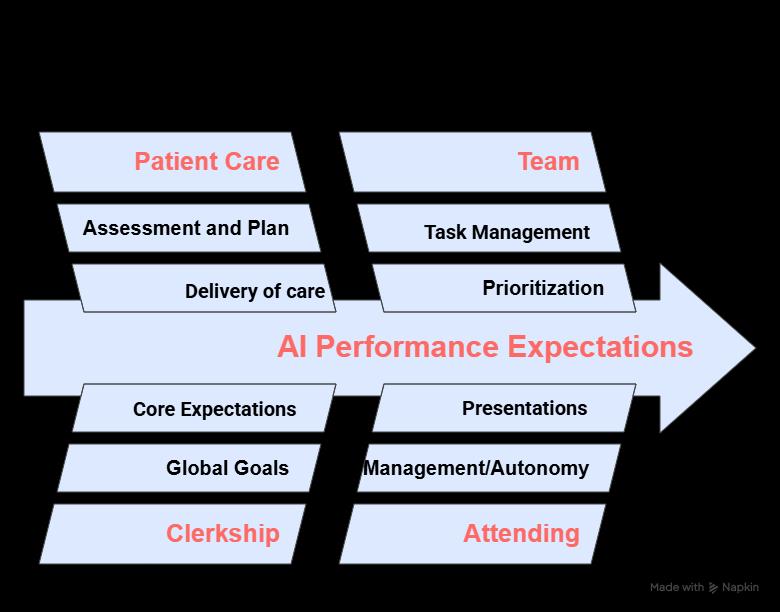
Expectations
R-I-M-E
RReporter (MS3)
I
Interpreter (MS4)
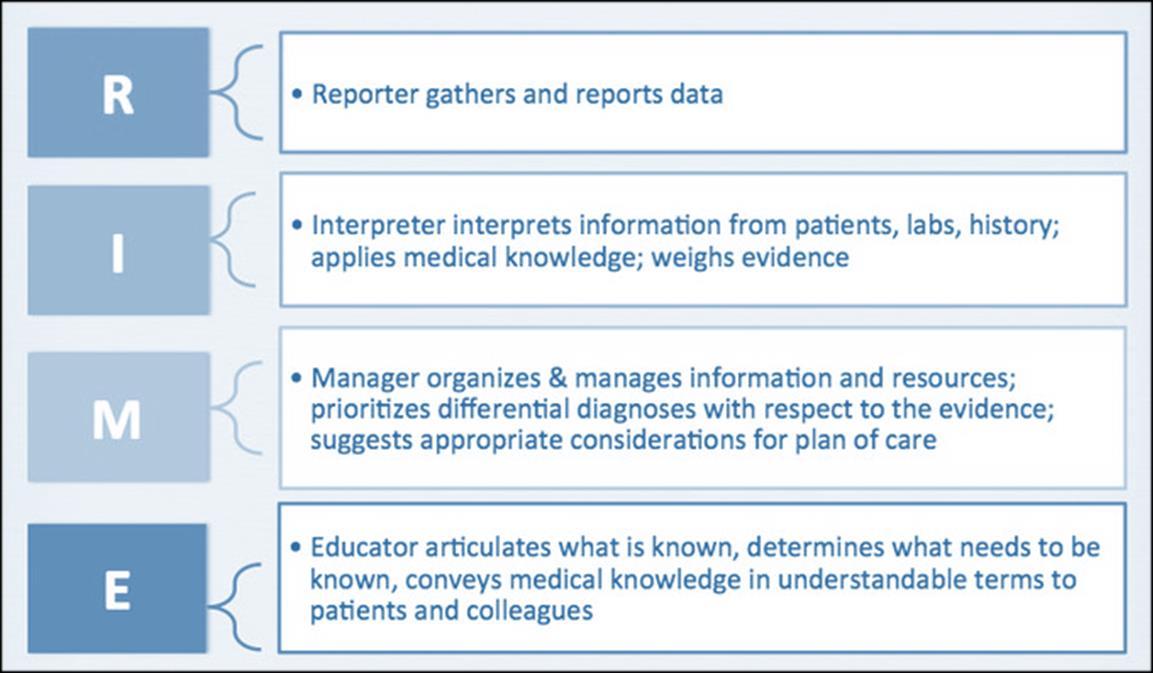
Manager Educator
Acting Intern Core Duties
❑Pre-round
❑Chart Check
❑See patients
❑Resident Rounds/Huddle
❑Attending Rounds
❑Start executing time sensitive orders
❑Call time sensitive consults
❑Attend Conference
❑Take a break to eat/hydrate
❑Follow up tasks/re-huddle with your resident
❑Work on any new incoming admissions
❑Chart check for pending labs/consult notes
❑Sign-out (depending on call schedule)
SIGNOUT
SIGNOUT

Pre-Rounding
Look through the chart for interval events
Touch base with nursing they are your biggest allies
Get the most recent vital signs and look at the trend. Don’t forget I/O’s
See your patient
If there is an acute change, worrisome finding, something doesn’t seem right… GET HELP
Prepare your SOAP

During Rounds

❑ Every Attending is different
❑ Ensure that you are clear on how presentations are to be formatted for rounds
❑ Generally, follow up cases are presented using the SOAP format
❑ New admissions may be presented in more detail
TIP: Patient Safety and Quality may be a part of your daily rounds
TIP: Do not forget to think about the patients immediate and longerterm disposition plan.

Post Rounding Checklist

❑ Create a visual and written map for the rest of your day
❑ Touch base with your resident to ensure that you are clear on the 2P’s Plan and Priority
❑ Active medication changes
❑ Call consultants early
❑ Organize necessary imaging
❑ Think about scheduled discharges
Interdisciplinary Rounds

Social Work: Assists with reinstatement of home services, new services, long term care facility (skilled nursing), Short term rehab facility (sub acute rehab -SAR), acute rehab facility and transportation home.

Case Manager: Nursing background, needs to know brief acute clinical issues, helps with PRI ( application to any facility other than home) including acute rehab or subacute rehab.
The Interdisciplinary Team
Physical Therapist: Determines need for facility-based rehab, home PT, or acute rehab which is clearly documented in the PT initial evaluation and documentation.
Unit Leadership: This may include a Unit Medical Director, Nurse Manager or both. They may be focused on quality and safety concerns (foleys, telemetry, central lines).
Anticipation is Key
❑Think about your patient's disposition needs early
❑Can they go home?
❑Communication with family and PCP’s is a must for seamless transitions to occur
❑Review their medications with them
❑Explain Explain Explain!
❑Early Discharge planning

Medical Student as Educator

❑Timing is everything
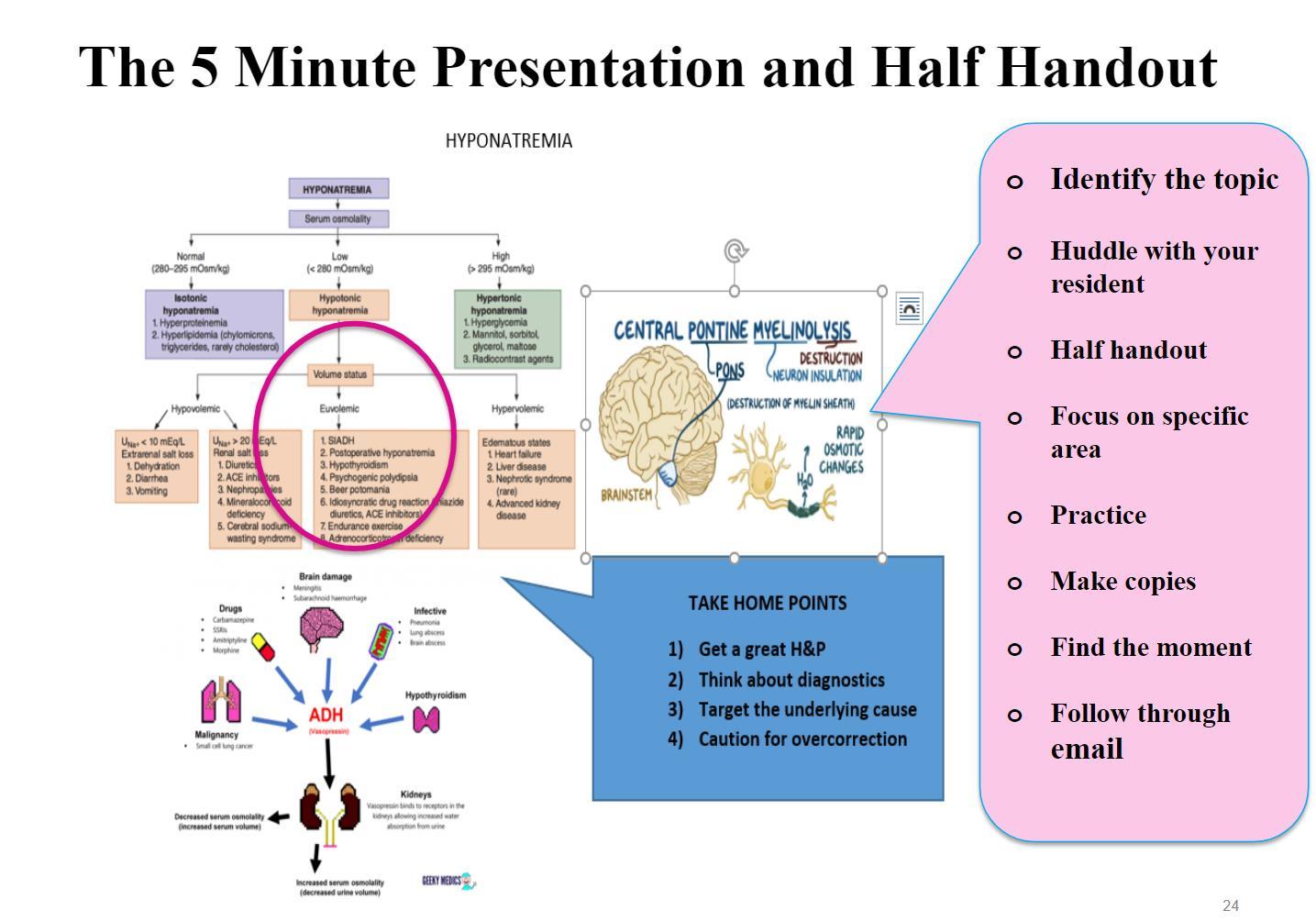
❑Review your list of patients working diagnoses, anticipate educational points, and evidencebased medicine
❑Short and targeted presentations
❑The “Half Handout”
❑Email chains are powerful tools
❑Practice your skills with the third year

AI-Open evidence
Organization is Half the Battle

Where are you on the organizational spectrum?
What tools can you use to stay organized?
Find Your Own Organizational Rhythm
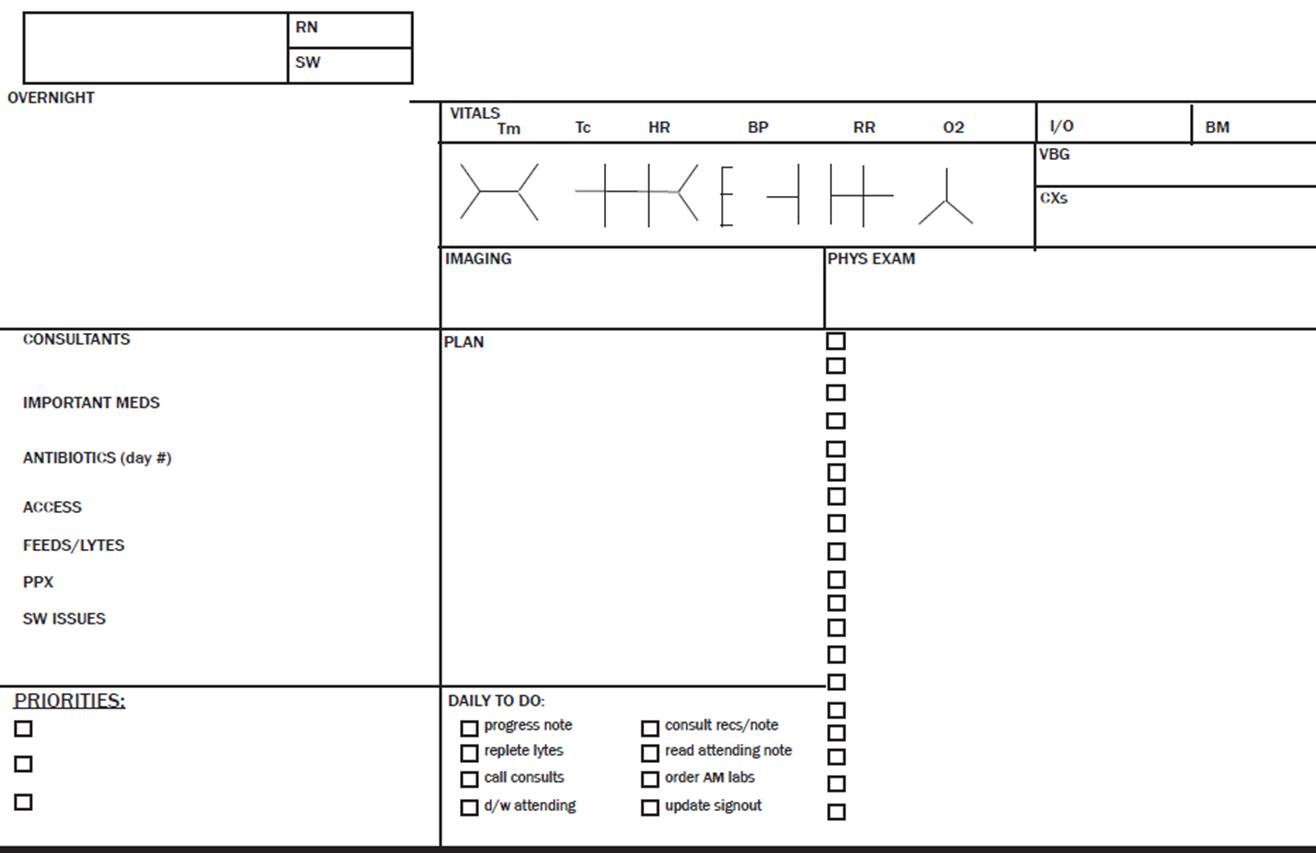
Tech Tools for Organization

❑Notion AI –general organization
❑Motion-time blocking/intelligent schedule
❑Reclaim.ai- smart calendar management
❑LLM generated organizational tool (no patient info)
❑To do lists (Siri, Notion)

Have you called a consultant?


Calling a Consultant (Step 1)
Calling a Consultant (Step 2)
❑Clearly identify yourself and the service you are on. “My name is ______ and I’m the acting intern on the ______ (e.g., Medicine, etc.) service at ______ (Hospital name) this month, and I would like to request a consult.”
❑State your question (or reason) for the consult up front—be as specific as you can. This crucial step immediately captures your consultant’s attention and helps him/her focus in on the presentation you are about to give.
“Our team is requesting your help for Advice on management of our patient who has a small bowel obstruction.”
Advice on diagnosis for our patient who we suspect has systemic lupus.”
Scheduling/performing a colonoscopy for our patient who is having persistent rectal bleeding.”
Calling a Consultant (Step 3)

❑ Provide your best contact information
Take a deep breath.. Its over…
Feedback

❑Getting feedback is a crucial part of your education
❑Ideally your resident and Attending should each provide midpoint and end of block feedback
❑If it is not happening autonomously schedule protected time for feedback. Avoid the “on the fly” method.
❑Try to get specific feedback and come prepared
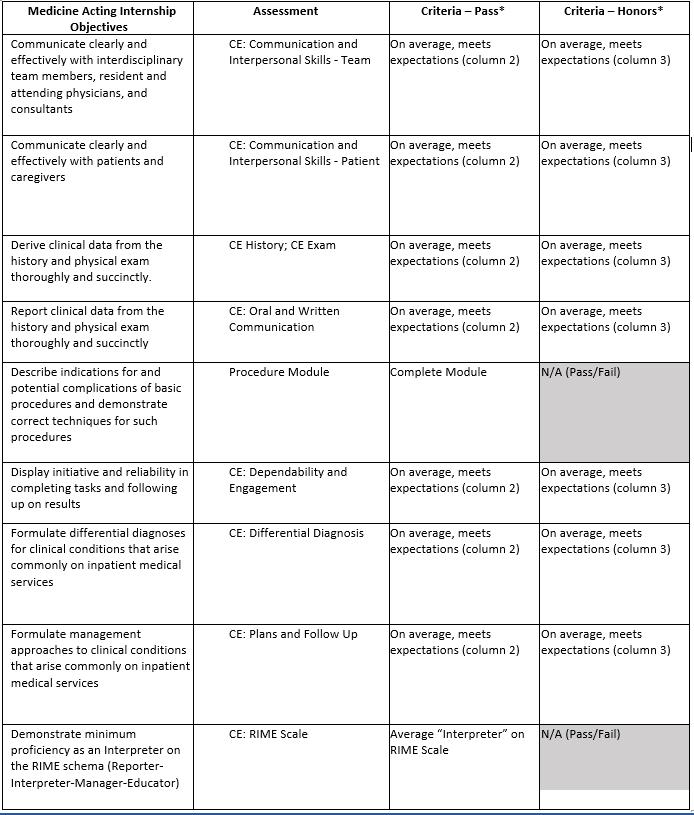
Know your Grading Tool
To achieve a grade of Honors for the clerkship, students must demonstrate honors-level performance in 4 out of 7 of the tiered objectives.

Know…
Understanding the overarching goals of the clerkship paired with preparation are the keys to success.
Do…
Optimize your organizational skills and remember your role as educator and recognize that feedback will help guide and develop your skills.

Feel That you have the
skills, foresight and key tools to truly conquer your clerkship experience.