Louis Emit Stern
Pre-eminent Local Playwright and Tony Craze Award Winner
Llanitos por el Mundo
Simon Dumas: From The Frontiers to Jimmy Kimmel
Going for Gold
Gibraltar’s First Olympian Georgina Cassar

Pre-eminent Local Playwright and Tony Craze Award Winner
Simon Dumas: From The Frontiers to Jimmy Kimmel
Gibraltar’s First Olympian Georgina Cassar
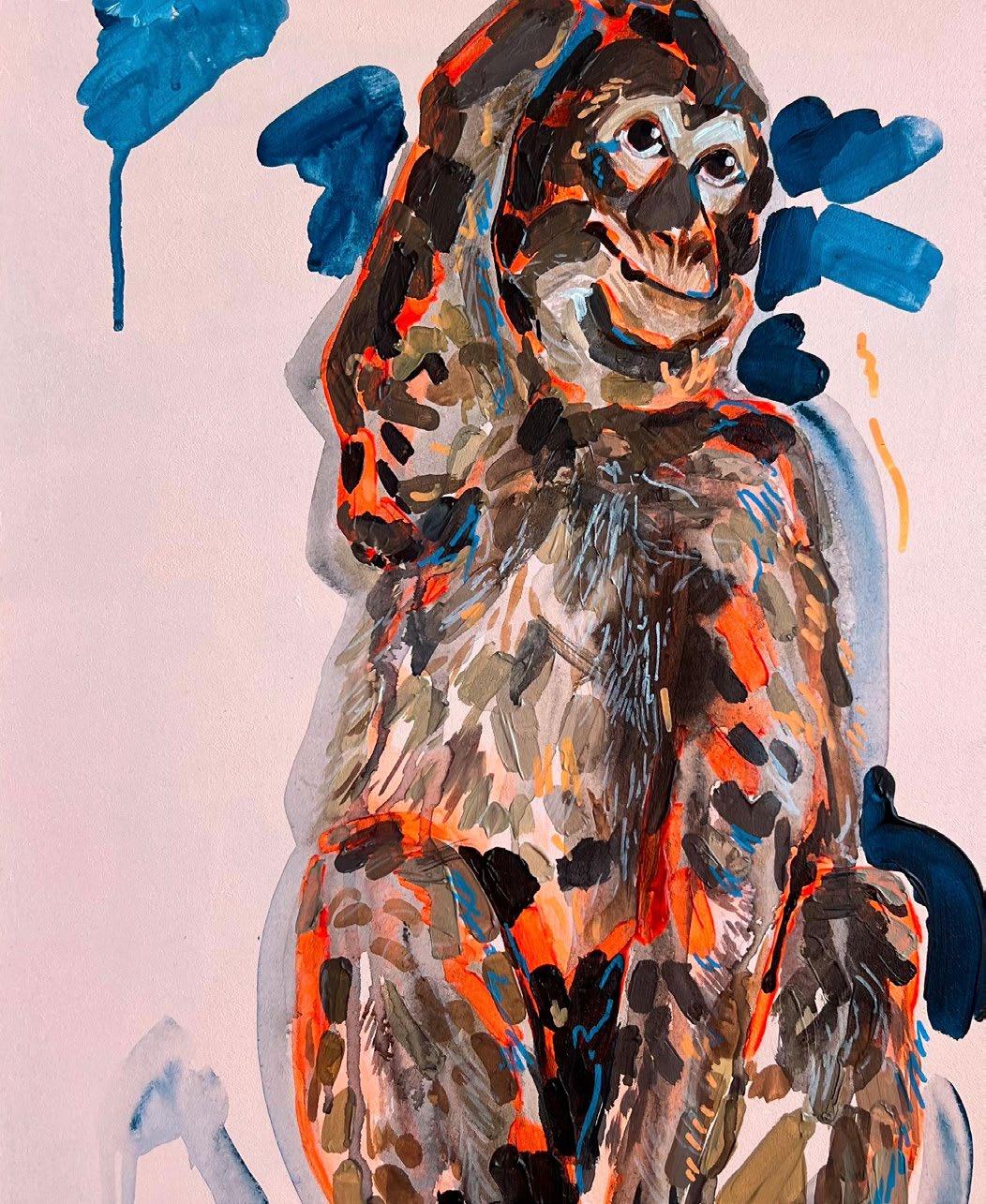
Welcome to the latest edition of Inside Magazine! As you may have noticed, we’ve given our cover a fresh new look. From now on, each edition will showcase the work of a talented local artist, putting their vision front and centre.
This new direction aligns perfectly with our Growing Artists Programme, which is dedicated to nurturing local artistic talent and ensuring that the next generation of Gibraltarian artists have every chance to be creative. For this edition, we’re thrilled to feature the incredible Phoebe Noble, whose eye-catching cover design presents a true symbol of Gibraltar, a Macaque.
As ever, the Growing Artists team is committed to bringing you the very best of our community: its stories, its voices, and its creativity in every edition. In our Community section, we sit down with the ever-familiar Dr Ryan Asquez, local historian and vlogger, whose passion for sharing Gibraltar’s stories has made him a beloved figure both online and in person. His insights remind us that history isn’t just in the past but alive in the streets around us.
We also catch up with singer-songwriter Simon Dumas, who shares his journey of relocating to the US and how the move has shaped his music. From across the Atlantic, we also meet Carolyn Castagna, whose infectious enthusiasm for books keeps her YouTube followers eagerly turning pages and pressing play.
In Culture, we speak with acclaimed playwright Louis Emit Stern, winner of the prestigious Tony Craze Award, who discusses his creative process and the thrill of seeing his plays première in London. We also spotlight the next wave of talent: painter Jack Hernandez, whose unique style is making waves, and graphic designer Gabriel Devincenzi, whose striking visuals are impossible to ignore.
Our Sports section also brings you an inspiring interview with Georgina Cassar, Gibraltar’s first Olympian and James Scanlon, an impressive footballer who became the first Manchester United player to represent Gibraltar while at the club.
We are so excited for you to read our latest edition, which includes so many more interviews and pieces by our brilliant writers. Thank you for joining us in celebrating Gibraltar from the inside out.
Kindest regards,
Sophie Macdonald sophie@growingartists.com

EDITOR OF INSIDE
Sophie MacDonald sophie@growingartists.com
EDITOR OF ART & CULTURE
Tamara Bell tamara@growingartists.com
MAGAZINE DESIGNER
Emma Long Graphic Design emma@growingartists.com emmadesign.co.uk
ARTICLE CONTRIBUTORS
Tamara Bell
Sophie Macdonald
Jo Ward
Anna Macdonald
Aiden Bell
Evelyn Aylén Heis
Francis Devincenzi
Jonathan Pizarro
Joel Francis
Anthony Loddo
Ian Law
Harry Meenagh
Clara Chimeru Awuse
Terence Dickson Holliday
Paul Gibbens, Richardsons
Rebecca Calderon
Gianna Stanley
Jonathan Pizzaro
Abraham Levy, Attias & Levy
Aaron Payas, Hassans
PHOTOGRAPHY
Stock photography by Shutterstock & Unsplash. Other image credits on relevant pages.
INSIDE GIBRALTAR
Published by Growing Artists, 120a Irish Town, Old Police Station, Gibraltar, GX11 1AA.
Printed by Roca Graphics Limited, 21 Tuckey’s Lane, Gibraltar GX11 1AA.
Copyright © 2025. All rights reserved.
The name INSIDE GIBRALTAR is a mark of Growing Artists, used under exclusive licence. No part of this publication may be reproduced without written permission from the publisher.
INSIDE GIBRALTAR places great importance on the accuracy of the information contained within this publication but cannot accept responsibility for any errors or omissions. Views expressed by contributors and/or correspondents do not necessarily reflect those of the publisher. Neither INSIDE GIBRALTAR nor Growing Artists is responsible for any claims made, or material(s) used in advertisements.
For permission to copy cuttings for internal or client use, please contact gibraltar@growingartists.com
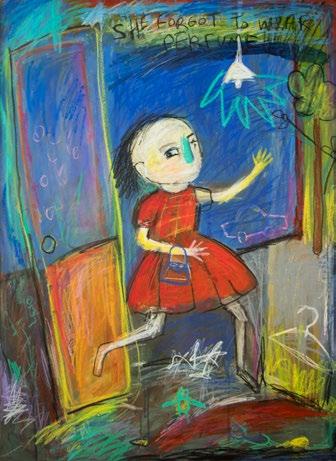

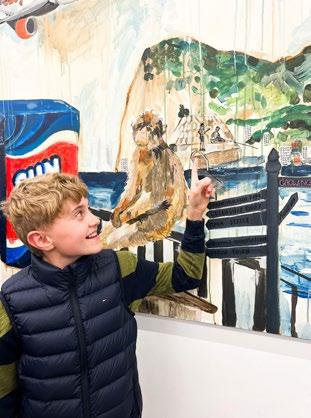


Phoebe Noble is an emerging artist whose work bursts with neon tones and the joyful spirit of summer. Inspired by her love of photography and everyday life, she transforms bright imagery into eye-catching, spray-painted canvases that capture the essence of sunshine and warmth. Her debut collection, DRIFT, was recently exhibited at the Growing Artists Programme Cultural Hub. As our cover artist for Issue 3, she invites viewers to share in her care-free celebration of light and life and describes how living in Gibraltar has impacted her work.

Q. Can you walk us through your process: from conceiving an idea to applying layers of spray paint, and how you transform a blank canvas into such vivid, energetic pieces?
A. It all begins in the moment. I love photography and I am always capturing photos of my life and the world around me. When I get home, I bring together those images and sources of inspiration. I naturally lean towards bright colours because they reflect the mood of the original photo. I want to capture that happy feeling of summer.
Q. You often work with vibrant neon tones using spray paint. What drew you initially to that medium, and how does it help convey your artistic vision?
A. The vibrant tones in my work weren’t intentional at first, it’s simply what I instinctively gravitated towards. As I developed my debut collection DRIFT, I began experimenting with spray paint, which became another exciting way to inject colour into my work.
Q. Summer imagery is a recurring motif in your work. What does summer represent to you creatively and personally?
A. Maybe it’s because I’ve always been a summer baby, but summer has always been when I feel my happiest. That’s exactly the feeling I want to bring into people’s homes, a little glimpse of summer joy.
Q. The front cover of Inside features a monkey rendered in your iconic style. What inspired you to choose a monkey, and how did you adapt it to your artistic language?
A. Living in Gibraltar, everyone knows the iconic Barbary Macaques. My piece Barbary Einstein, though not part of the DRIFT collection, is a playful, experimental work that I hope the people of Gibraltar will connect with and love.
Q. What was it like exhibiting at the Art Space Gallery/Growing Artists Foundation Hub for the first time, and in Marbella?
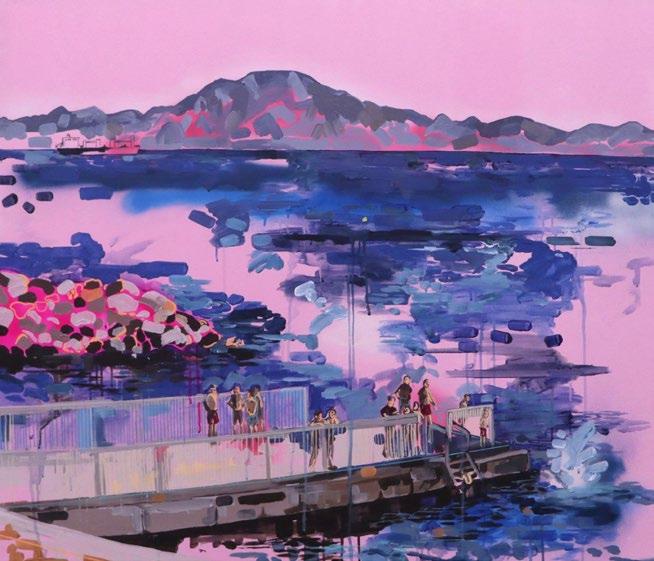

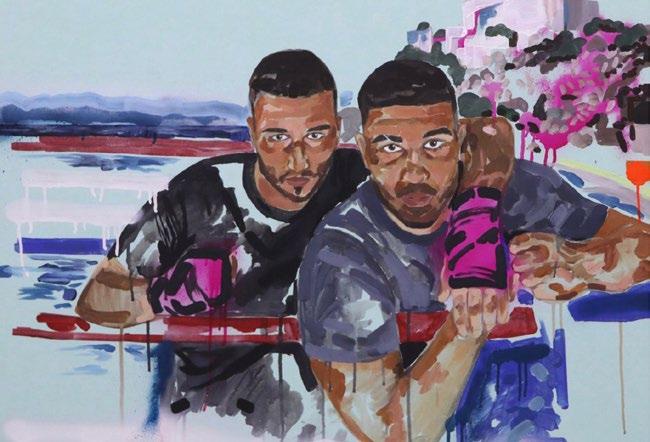
A. Bringing two of my artworks to the Marbella Art Space Fair was a dream come true. Showcasing my work alongside so many talented artists felt surreal, especially when I learnt that both of my pieces had sold! I was truly over the moon, and connecting with people on the VIP night was such a special experience.
Q. Are there specific artists, designers, or environments that you consistently draw inspiration from?
A. The artist who always comes to mind when I think about inspiration is Sophie Tea. It’s not only her stunning art but her mindset and approach to her work that I find so motivating.
Q. How do viewers typically react when they first see your neon-infused works?
Are there any memorable responses that stand out?
A. I know the vibrancy can be a love-orhate thing, but seeing everyone enjoying themselves on the night of my debut exhibition made it all worthwhile. A moment that stood out was when the Montegriffo brothers saw their self-portrait for the very first time that evening. Watching their reaction and appreciation was a truly unforgettable moment for me.
Q. What emotions or messages do you hope to evoke in your audience through your radiant, summery pieces?
A. Simply, happiness. Whether someone finds a deeper connection in the work or enjoys it purely for its aesthetics, I just want my art to make people smile.
A moment that stood out was when the Montegriffo brothers saw their self-portrait for the very first time that evening. Watching their reaction and appreciation was a truly unforgettable moment for me. “ “
Follow Phoebe on Instagram: @phoebenobleart
Q. Looking ahead, are there new themes, techniques, or mediums you’re eager to explore beyond your current neon-spraypaint signature?
A. Absolutely. I don’t think I’ll ever top the experience of painting on a real surfboard, but I love experimenting. I’m also hoping to scale up my work, as creating larger pieces is what excites me most.
Q. For emerging artists what advice would you offer based on your own experiences?
A. Create for yourself first. Don’t try to make what you think people want. Make what excites you. Authenticity always shows in your work.
By Sophie Macdonald

Devon is a talented member of the Growing Artists Programme. He regularly attends and is an active member of the Youth Group. His progress has been incredibly impressive, and has culminated in displaying his art at Art Space Fairs’ Marbella art fair.
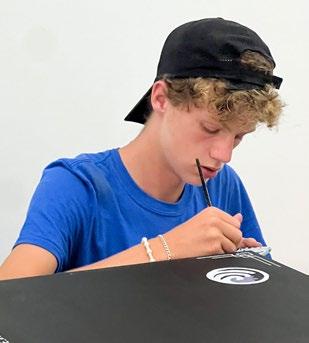
Q. Can you tell us a bit about your experience with the Growing Artists Programme so far? What has been your favourite experience?
A. I have been involved with the Growing Artists Programme since it started. I have attended a number of workshops and worked on different projects but my favourite has been the Marbella Art Fair, where I had the chance to have two pieces on display.
Q. Have you learned anything new about art since joining?
A. I enjoyed learning about using ink and water to create pieces.
Q. Do you like meeting other artists your age?
A. It is nice to work in an environment with people of similar ages and interests as it makes it an enjoyable space.
Q. What kind of art do you like to make? (painting, drawing, sculpture, digital art, etc.)
A. My preferred style is drawing but I also enjoy painting and sculpture.
Q. When did you first start making art?
A. During COVID was when I first started to get more involved in art as my other hobbies had stopped.
Q. You’re a regular attendee of the Programme youth group classes. How are you finding these?
A. I find it is a place to feel comfortable and relaxed, which helps me when completing works. I like the opportunity to try new things.
Q. Has the Growing Artists Programme encouraged you to keep creating art and helped you along the process?
A. Being part of the programme has encouraged me to pick Art at GCSE as I had previously been unsure if I wanted to do the subject. I hadn’t worked on any art for a few months previously, but the Programme really helped engage me again
Q. Do you have an artwork that you’re most proud of so far, and why?
A. I am most proud of a painting inspired by bank notes and money that I did for the opening night of the Growing Artists and it is now hanging in the art space.

Q. If you could design the cover of Inside Magazine one day, what would it look like?
A. I am into cars so maybe I would use that as inspiration for a cover.
Q. Would you recommend joining the Growing Artists Programme and attending the youth group and other classes?
A. Yes, I would recommend that if children have an interest in art then they are good groups to be involved in.
By Sophie Macdonald

Find out more about The Growing Artists Programme on pages 50-53.
Gibraltar has secured a major regulatory and reputational milestone. The European Parliament has now formally rejected attempts to keep Gibraltar on the EU list of high-risk third countries, paving the way for its removal following a recommendation from the European Commission. This marks the final institutional step in recognising Gibraltar’s strong performance in addressing anti-money laundering (AML) and counter-terrorist financing (CTF) obligations.
This follows the Financial Action Task Force’s (FATF) decision in 2024 to remove Gibraltar from its grey list, after a period of increased monitoring. Together, these developments confirm what many in the financial and professional services sectors have already experienced on the ground: these developments reaffirm Gibraltar’s position as a well-regulated and internationally respected jurisdiction.
In June 2022, Gibraltar was placed under increased monitoring by the Financial Action Task Force (FATF), which recognised that while the jurisdiction had made significant progress on a number of recommended actions, just two areas required further focus, namely, enforce-
ment related to supervisory actions and the pursuit of final confiscation judgments.
In response, the Government of Gibraltar and relevant authorities implemented a coordinated response, delivering structural and operational improvements across the financial system. In February 2024, the FATF confirmed that Gibraltar had addressed both outstanding issues and had demonstrated that it is continuing to strengthen the effectiveness of its regime.
Gibraltar was, therefore, removed from the list of jurisdictions under increased monitoring. That decision then formed the basis for the European Commission’s proposal to delist Gibraltar from the EU’s list of high-risk third countries under its Anti-Money Laundering Directive. That
proposal was initially rejected in April 2024 by the European Parliament by what can only be described as a politically motivated determination to keep Gibraltar on the list but has now been confirmed by the European Parliament following the rejection of a last-minute amendment submitted, once again, by a group of MEPs led by a Spanish MEP of the far right Vox party.
This marks the culmination of another affirmation of Gibraltar’s regulatory maturity. It also clears the way for Gibraltar to be treated on par with other leading financial centres by EU-regulated entities.
Removal from both the FATF grey list and the EU’s high-risk third-country list means that Gibraltar is no longer subject to the enhanced due diligence and friction that typically accompany these designations.
Gibraltar-based financial institutions and investors continued to operate with confidence throughout the FATF monitoring period. However, the formal removal from both the FATF and EU high-risk thirdcountry lists provides welcome clarity and simplifies cross-border processes, particularly in terms of compliance and due diligence requirements.
Gibraltar’s licensing and supervisory regimes for funds, cryptoassets and financial services have long been respected for their structure, accessibility and legal robustness. That standing is now reinforced by global and EU recognition, removing any residual procedural friction in dealing with EU-regulated entities.
For firms operating in digital financeincluding crypto, blockchain and fintech - Gibraltar’s consistent appeal has been its combination of regulatory clarity, responsiveness and commercial alignment. These latest developments further confirm its status as a jurisdiction capable of balancing innovation with internationally recognised standards.
This regulatory development comes alongside a separate, but equally important, political milestone: the agreement in principle between the UK and the EU regarding Gibraltar’s post-Brexit relationship with the EU.
The framework agreement is set to deliver a unique outcome. Under its terms, Gibraltar residents will benefit from significantly enhanced mobility across the Schengen area. In practical terms, this means that residents of Gibraltar, unlike residents of mainland UK, will enjoy near full freedom of movement within the EU’s borderless travel zone.
When combined with Gibraltar’s existing UK market access (via the Gibraltar
Authorisation Regime), this creates a highly distinctive position. Nowhere else offers the same combination of:
• UK-aligned financial services market access
• Legal and regulatory standards aligned with the UK and EU
• Physical and commercial access to the Schengen area
• A mature yet agile legal and professional ecosystem
For international financial and digital asset firms looking for a European base with global connectivity and long-term stability, Gibraltar’s proposition is increasingly difficult to match.
These developments mark a turning pointnot just for how Gibraltar is seen externally, but for what it can now offer to the global business community.
The FATF delisting confirmed the credibility of Gibraltar’s enforcement regime. The EU’s confirmation removes the final formal restriction within the single market. The political agreement with the EU adds long-term mobility and strategic access to the picture.
For business leaders, investors and entrepreneurs looking for a base that blends certainty with opportunity, there has never been a better time to look at Gibraltar.
At Hassans, we continue to advise clients across the financial, crypto, gaming, funds and private client sectors who choose Gibraltar for its integrity, access and adaptability.
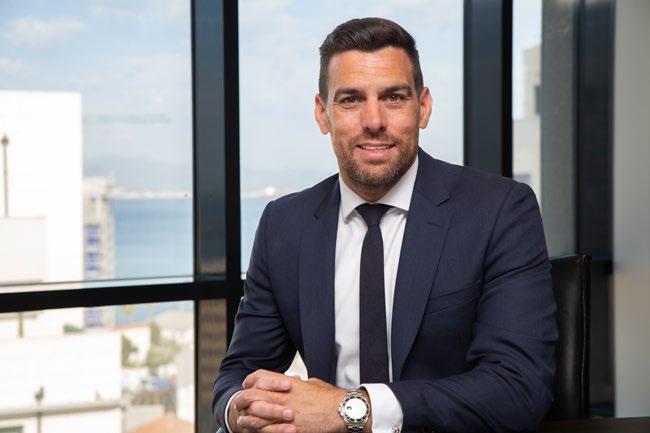
By Aaron Payas Partner at Hassans
For business leaders, investors and entrepreneurs looking for a base that blends certainty with opportunity, there has never been a better time to look at Gibraltar. “ “
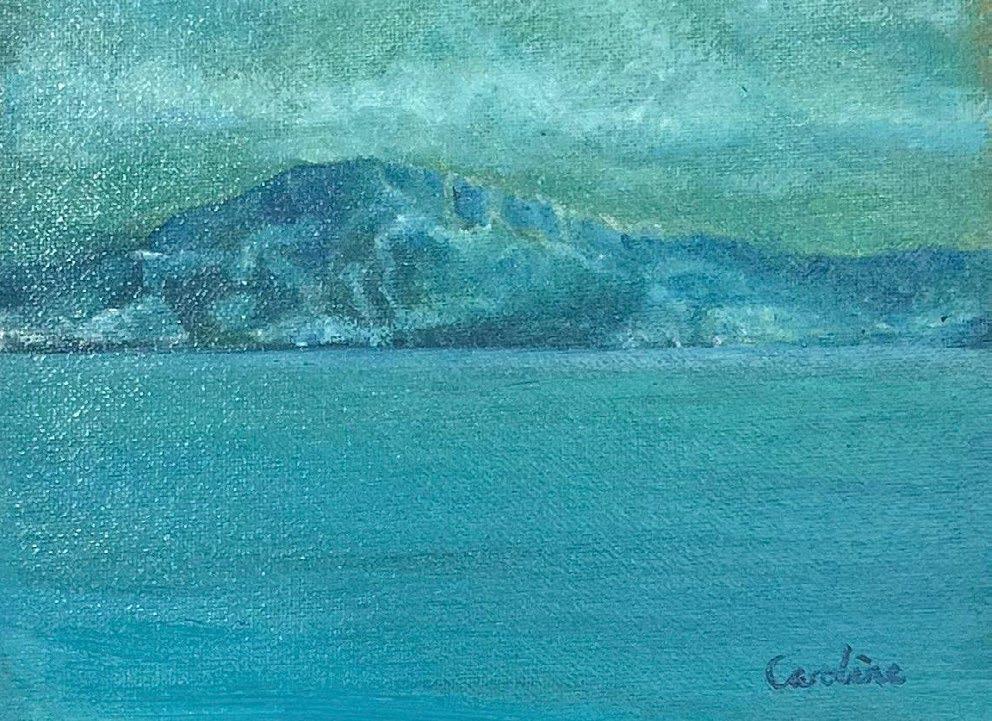
Colour and brush marks are key to my work, I’m a colourist at heart. “ “ Caroline Canessa
This year marks the 40th anniversary of the full opening of the frontier with Spain. It also coincides with the establishment of the law firm Attias & Levy, which was registered as a business in Gibraltar on the 9th of April 1985. Spain’s entry into the European Economic Community (EEC) meant that it was required to have an open border with Gibraltar, a jurisdiction that was already part of the EEC.
Gibraltar-based businesses, and particularly the financial services industry, were enthusiastic to develop the services offered by Gibraltar, in light of an open frontier. New possibilities and a wide market right on Gibraltar’s doorstep were available to be tapped into; both the corporate industry and its professionals were keen to offer their services, both to Spanish nationals and a wide expat community, resident on the Costa del Sol.
In the years after the opening of the frontier, a vibrant financial services industry developed, successfully consisting of banks, lawyers, accountants and other professionals in the field. It both attracted and represented an international clientele, opting to use Gibraltar as a jurisdictional financial base from which to conduct their business. Thus, Gibraltar was open for business.
Legal practitioners were advising clients on a wide variety of internationally related transactions, and lending institutions were active in lending money to clients, assisting in the purchase of new developments that were sprouting in Gibraltar. New estate agents set up business, in line with a growing property market, and conveyancing lawyers were fully engaged in this demanding market. The 1980s and 1990s were busy years, during which law firms, like Attias & Levy, developed and established themselves as prominent providers of legal services both locally and internationally.
Gibraltar continued to attract international investment. Regulatory requirements
Gibraltar welcomes such a historic agreement... and it certainly looks forward to many more successful years. “ “
implemented and supported by legislation meant that Gibraltar had become a jurisdiction that was designed to attract blue chip business. Moreover, Legal practitioners assisted clients in corporate structuring and the jurisdiction flourished. It developed a reputation as a robust financial centre, offering innovative structures for online gaming, fintech, cryptocurrency and blockchain technology, as well as other sectors of the economy.
The role of legal practitioners in assisting clients to set up business in Gibraltar, as well as using the territory as their financial base, has been of paramount importance. The exponential growth of legal professionals in Gibraltar over the past forty years propounds this. Lawyers have been instrumental in attracting financial services business to Gibraltar, in addition to providing the necessary advice and stewardship to ensure that clients are well-equipped to conduct their business in Gibraltar.
Although the United Kingdom voted to leave the European Union (BREXIT) Gibraltar did not vote to do so. The United Kingdom continued to negotiate with the European Union a final status for Gibraltar within the ambit of BREXIT and on the 12th June 2025
the Government of Gibraltar published a joint statement on the agreement reached for the future relationship between the European Union and the United Kingdom in relation to Gibraltar.
It was declared that the main objective of the future agreement was to secure the future prosperity of the whole region and that it was without prejudice to the respective legal positions of Spain and the United Kingdom with regard to sovereignty and jurisdiction. It was agreed that fluidity of people crossing between Gibraltar and Spain on a daily basis was of paramount importance, therefore checks at the crossing point are to be removed. On the other hand, Schengen checks are to be carried out by Spain at the Gibraltar port and airport. With reference to the movement of goods the same to be subjected to future customs union between the European Union and Gibraltar, thereby removing checks on goods and improving cooperation between the respective customs authorities. Indirect taxation by way of a transaction tax is also to be implemented in Gibraltar.
Everyone is hopeful that the agreement will bring prosperity, legal certainty and stability to Gibraltar and to the wider region. Gibraltar welcomes such a historic agreement and is confident that it will successfully adapt to the new circumstance. It certainly looks forward to many more successful years.
By Abraham Levy
Attias & Levy, Barristers & Solicitors info@attlev.gi
www.attiaslevy.gi


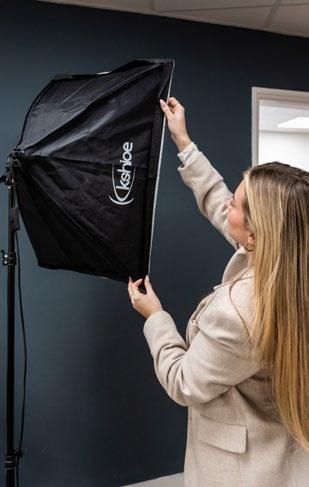
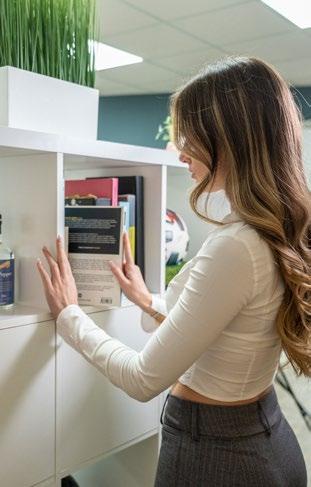
Meet the team behind award-winning marketing agency The Bulb.
The Bulb is an award-winning creative marketing agency based in Gibraltar that endeavours to create brand narratives through creativity. They have gained significant traction for their TikTok campaigns, becoming a business recognisable for their remarkable ability to capitalise on trends and produce entertaining content. We spoke to the CEO, Dylan Trenado and the rest of the team about the realities of digital marketing in Gibraltar, as well as the possibilities that a female-dominated team offers.
Q. What inspired the creation of The Bulb, and what gap were you aiming to fill in the market?
A. (Dylan) The Bulb was born out of a desire to bring a fresh, energetic, and collaborative approach to creative services in Gibraltar. We noticed a gap in the market for a modern, multi-disciplinary agency that could blend innovative thinking with deep local insight. Our goal was to offer comprehensive branding, digital marketing, and design support for businesses looking to stand out and connect authentically with their audiences.
Q. How would you describe The Bulbto someone hearing about it for the first time?
A. (Bella) The Bulb is a creative agency that delivers bold, strategic marketing and design solutions for clients across Gibraltar and beyond. We’re passionate about storytelling and creating campaigns that resonate with audiences. Whether it’s launching a new restaurant, driving social media engagement, or managing a major event, our team thrives on collaborating with clients to bring their ideas to life.
Q. What are some of the most exciting projects that you’ve worked on?
A. (Bella) Recently, we worked on the Netball World Youth Cup, which was a huge and challenging project for us, but one we absolutely loved. We’ve also carried out some exciting work with Visit Gibraltar, helping to showcase Gibraltar’s unique culture and experiences. Our portfolio is quite diverse, and we have some big things in the pipeline, stay tuned! It’s exciting to be part of such a dynamic and ever-evolving landscape.
Q. How do you balance creativity with the demands of running a business?
A. (Dylan/Mollie) It’s all about striking a balance between vision and pragmatism. We’re passionate about ideas, but we’re

also driven by results. We’ve built a team that’s creative and strategic. We encourage experimentation, but we’re always clear about timelines, budgets, and deliverables. It’s a constant learning process, but we find that setting clear goals and being open to collaboration makes all the difference.
Q. How important is social media to your brand visibility and engagement?
A. (Julia) Social media is central to our brand and the work we do for clients. It’s where conversations happen and where audiences are most engaged. For us, it’s not just about posting content. It’s about
fostering real connections, understanding what resonates, and adapting quickly to trends and feedback. It’s a powerful tool for visibility, storytelling, and building longterm relationships with our community.
Q. What trends in digital marketing are you currently paying close attention to?
A. (Daisy) We’re always tracking what’s next in digital marketing. Right now, we’re particularly interested in how AI and automation are shaping content creation and campaign management. Short-form video content, particularly on TikTok and Instagram Reels, is also a big focus - as is the
It’s all about striking a balance between vision and pragmatism. We’re passionate about ideas, but we’re also driven by results. “ “

Diversity is at the heart of innovation. When you bring together different perspectives and life experiences, especially from women who are often underrepresented in creative industries, you open new ways of thinking and problem-solving. “ “
growing emphasis on authentic, transparent brand messaging. Sustainability and social impact are also areas that are increasingly important for audiences, and we’re paying close attention to how we can help brands communicate these values effectively.
Q. TikTok has become a significant platform for engaging younger audiences, and one that The Bulb is using wonderfully. How does The Bulb approach TikTok marketing to effectively reach and resonate with this demographic?
A. (Daisy) TikTok is all about authenticity, creativity, and tapping into cultural moments in real time. Our approach is to create content that feels organic and speaks directly to the audience’s interests and values. We prioritise storytelling and visuals that are fun, engaging, and shareable. We also love experimenting. TikTok gives us the freedom to be more playful and human, which really resonates with younger audiences.
Q. It’s exciting to see that most of the front-facing team at The Bulb is composed of women. What is it like working in an empowering female environment, and is
fostering female positivity a main aim at The Bulb?
A. (Mollie) It’s incredibly energising to be part of a team that’s so supportive and collaborative. Fostering a positive, inclusive environment where everyone feels empowered is one of our core values. For us, it’s not just about representation, it’s about making sure every voice is heard and valued. Female positivity and mentorship are woven into how we operate, and we’re proud to be part of a workplace where women uplift and champion one another.
Q. In your experience, how do diverse perspectives, particularly from women, contribute to innovation and creativity at The Bulb?
A. (Mollie) Diversity is at the heart of innovation. When you bring together different perspectives and life experiences, especially from women who are often underrepresented in creative industries, you open new ways of thinking and problem-solving. At The Bulb, we see this every day. The more diverse our team, the richer and more resonant our ideas become. It’s a real strength and one of the
reasons we’re so committed to fostering diversity in everything we do.
Q. What challenges has The Bulb faced in digital marketing, and how have these experiences shaped your current strategies?
A. (Julia) One of the biggest challenges is how quickly digital marketing evolves. What worked six months ago might not work today. We’ve also had to navigate platform changes, algorithm shifts, and the increasing noise of the digital space. These challenges have pushed us to be even more data-driven and agile. We’re constantly testing, analysing, and refining our approach to ensure that we’re always delivering value and staying ahead of the curve.
By Sophie Macdonald

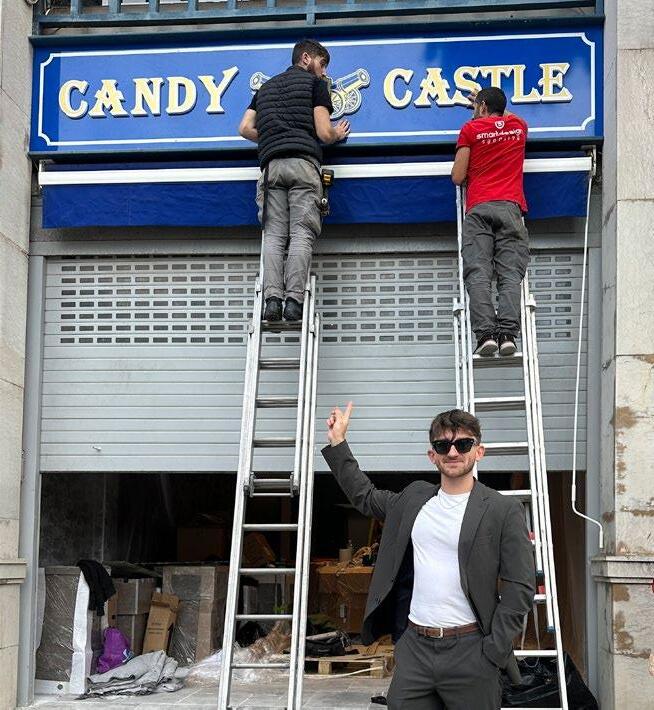
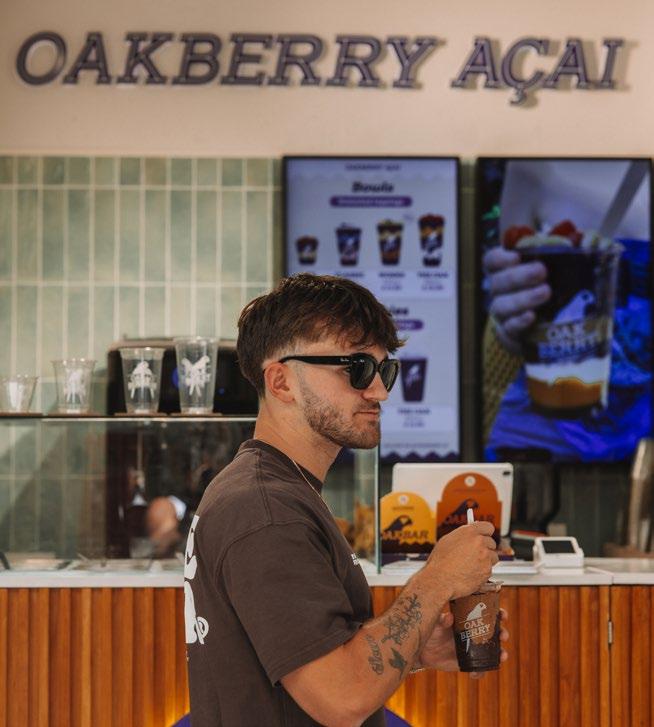
James Barton is the young entrepreneur behind Candy Castle and Oakberry in Gibraltar. He is also the CEO of Barton Solutions, a Gibraltar-based digital agency that assists businesses and individuals in building their digital presence. From sweet treats to 3D web services, James brings passion and modern flair to Gibraltar’s evolving business landscape.
Q. What inspired you to become an entrepreneur at such a young age?
A. The idea of starting and running my own business has been a goal of mine for as long as I can remember. I spent a lot of time in my dad’s office watching him work on his own business, so being in that environment became part of me from a young age. I’ve always been fascinated by building things, and at 14 or 15 I launched Gibraltar’s first online directory website with an older business partner. That was my first real taste of business - it didn’t last long, but it gave me the bug for creating something from nothing.
Q. Can you share the story behind founding Barton Solutions?
A. When I started Barton Solutions, I just knew I wanted to build something linked to technology. I’ve always been passionate about tech and fascinated by the latest trends. I decided to focus on web development at first, and I was lucky to have my childhood best friend, Jarod Vassallo, on board. By combining his skills in 3D design with mine in web development and business management, we spotted a gap and a chance to bring something new to Gibraltar. That’s what led to our focus on 3D virtual tours and fully immersive experiences for industries like hotels, real estate, and historical sites.
Q. What gap/need did you see in Gibraltar that Barton Solutions fills?
A. Barton Solutions fills the gap between one of Gibraltar’s biggest industriesproperty and real estate - and how it’s marketed. We looked at cities like London and Dubai and saw how innovative they
were at showcasing properties, helping people explore them even before they’re built. We wanted to bring that here with services like drones, 3D virtual tours, and other tech solutions, which have grown into a full offering that we’re proud of.
Q. How did the opportunity to bring Oakberry to Gibraltar come about?
A. It all started on a trip to Madrid when my girlfriend convinced me to try an açaí bowl. I was sceptical at first, but after trying one I realised it was a brilliant product. It ticks all the boxes: nutritious, satisfying, and you feel better after eating it.
Back in Gibraltar, I saw a gap straight away. Hardly anyone stocked açaí, and no one
was offering something authentic. I ended up travelling to Marbella most weekends just to have an Oakberry bowl. After a while, I thought: why not bring this here?
Q. What makes Candy Castle stand out in Gibraltar’s retail landscape?
A. Candy Castle stands out because it’s more than just a shop, it’s an experience. These days, to stand out you need to offer more than a product. People want something that makes them feel something. That’s why we went all in on the castle theme, tying it to Gibraltar’s Moorish Castle and our location in Casemates Square.
We’ve also invested in a freeze-drying machine to create new sweets made right here in Gibraltar. We design all our packaging in-house too, so although we’re local, we work at a standard that matches much bigger players.
Q. What were some challenges you faced in launching your businesses?
A. Every business comes with its challenges, but some have been consistent. For Barton Solutions, it’s been about offering something innovative in a market that can be slow to adopt new ideas. Virtual tours, for example, are still new here, and with a strong property market, people haven’t always felt the need to invest in marketing. Now, Barton Solutions is tackling the next challenge - our European expansion - and that’s something we’re genuinely excited about.
Q. What’s a lesson you’ve learned that you wish you knew at the beginning of your entrepreneurial journey?
A. What I enjoy most is creating something from nothing. That’s what I’m good at, and I love the process. But one of the biggest lessons I’ve learned is the importance of spending more time than you think on strengthening what you’ve built before moving on to the next idea. When you’re driven to create, it’s easy to keep pushing for the next big thing, but if you don’t put enough focus on what you’ve already started, it can hold you back. Now I’m focused on solidifying the four businesses I’ve built so far - Barton Solutions, Oakberry Açaí, Candy Castle, and SnackStation.
Q. What does your typical day look like as a multi-business founder?
A. No two days are the same. Some days I’m sorting stock or dealing with operations; other days it’s strategy or marketing. I usually work well into the evening, but the flip side is I have the flexibility to take time off when needed. A big part of my focus has been building systems that can run without me for at least a few days when needed.
Q. How do you define success for you and your companies?
A. For me, success is mainly about strong financial performance - that’s always the main goal of a business. But beyond that, I want to create places where my team feels happy and supported. We’re a young team of over 10 people across the four businesses, all aged between 18 and 26.
Every business comes with its challenges, but some have been consistent. For Barton Solutions, it’s been about offering something innovative in a market that can be slow to adopt new ideas. “ “
Another key part of success is brand recognition. Even in a small place like Gibraltar, you realise there’s always more work to do to make sure everyone knows your name.
Q. What advice would you give to other young entrepreneurs looking to start something bold in a small community?
A. It really depends on the kind of business you want to build. If your aim is to make a lot of money, go for something that’s scalable beyond Gibraltar so you’re not limited by the size of the market. That said, you can do very well here if you come up with an idea that meets local needs. Gibraltar’s future is exciting, and with the disposable income and tourist flow, ideas that wouldn’t work elsewhere can work here. Whatever you do, protect your reputation - in a small place like this, it’s one of your biggest assets.
By Sophie Macdonald
Ria Thomas, the Founder of Random Fun Adventures joins us at the Inside Magazine to discuss her journey in starting up a unique business model, as an expat who fell in love with Gibraltar and Spain in 2017.
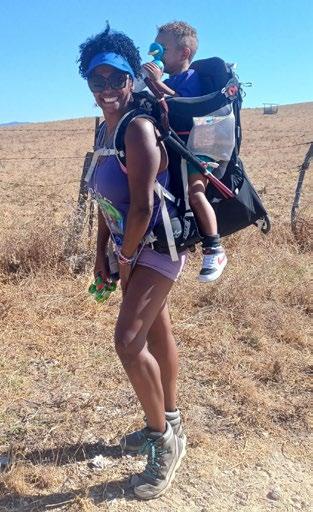
Originally from the UK, Ria ventured out and explored this part of the world, whilst attracting like-minded people who simply wanted to have a fun time and meet others with shared interests. Socialising and making new friends is at the core of Ria’s business model. By creating a platform where people can join forces, travel, and enjoy the hidden gems that both Gibraltar and Spain have to offer, Random Fun Adventures offers a wonderful way to foment community engagement and a positive social experience.
Q. Tell us about yourself and what inspired you to start a business in Gibraltar.
A. Hey! I’m Ria - a 40 year old, mother, traveller, dreamer, business owner and optimist. I absolutely love exploring new
places and ticking things off my bucket list. I’m passionate about creating unforgettable experiences that bring people together, and also help them chip away at their own bucket lists too. When I moved to Gibraltar 12 years ago, I was looking for something a little more exciting than spending all my weekends in Molly Blooms Square! Which I absolutely loved by the way, but after 2-3 years of that, I didn’t want to think that’s all I’d seen of the area. So I started Random Fun Adventures to find other like-minded people that wanted to make the most of their time here. It was initially a way to fill that gap — not just for myself, but for other expats, locals, and explorers looking for something different, exciting, and fun.
Q. Tell us about the nature of your business, Random Fun Adventures.
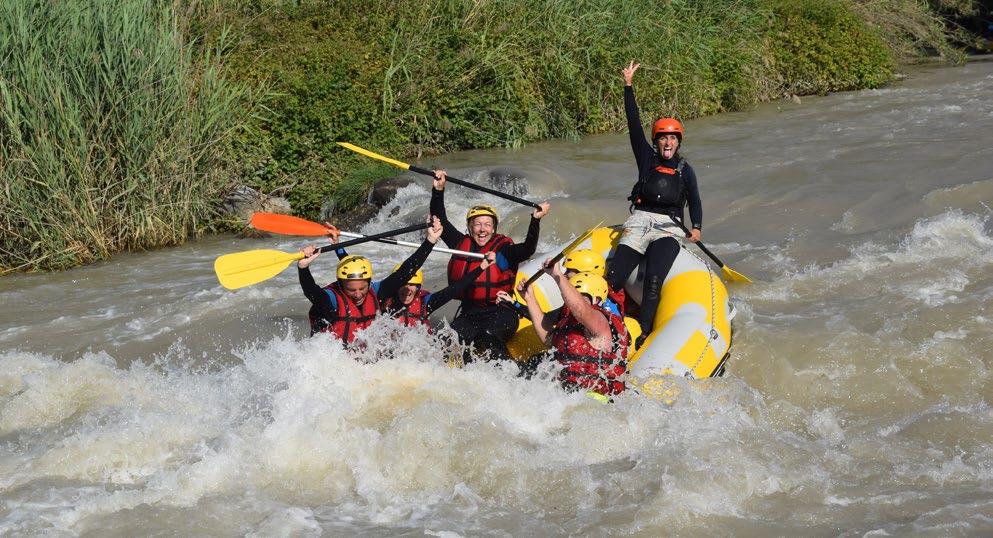
A. Random Fun Adventures is exactly what it says on the tin! My aim is to create random, fun and adventurous experiences for everyone here in Gibraltar & Southern Spain. From sunset sailing, white water rafting, kayaking, hot air ballooning, waterfall hikes and epic day trips to Morocco. The list is endless! And that’s the beautiful thing about Random Fun Adventures, so many experiences can
I can’t tell you how many incredible messages I’ve received stating the impact Random Fun Adventures has had on peoples lives. “ “
fall under our umbrella, so I get to dive into absolutely everything! I create fun, welcoming spaces where people of all ages, backgrounds, and walks of life can connect, explore, and make memories. Whether they come solo or with friends, it’s about adventure, community, and a little bit of randomness along the way.
Q. What were the first steps you took to get your business off the ground?
A. To be honest, Random Fun Adventures was never set up to be a business. It was a little passion project to get myself out and about doing new things. And the more I started exploring, the more people would ask if they could come along too. So I started contacting companies in advance and asking for group discounts or if I could go along for free if I brought them a group of clients. And the answer was normally always yes! So I was just happy to be out and about, doing new things, with new people and getting these incredible experiences for free. Then after a year or two of doing this, I decided the time I was investing in my full- time job, could be better invested in creating these experiences on a full time basis! And after a lot of pep-talking, I took the plunge!
Q. What challenges have you faced during this process, and how have you overcome them?
A. The biggest challenge of all was lockdown! Three months after going self employed, we were all thrown into a Global Pandemic! And businesses like mine had to come to a complete standstill. Luckily I still managed to engage my community, by doing a lot of online activities, like yoga, cooking classes, bake off competitions, paint nights, fitness classes, game nights
and all that jazz. A few local business owners helped me keep these experiences going during lockdown. But it was a blow for the big dream I had for Random Fun Adventures! Then more recently, balancing motherhood and the business as a co-parent has been a challenge. As I want to show up fully for my son and my business. So balancing the two wholeheartedly has been crazy at times! Having my dad here in Spain has been a godsend and learning to ask for, accept and receive help has also supported me in overcoming these challenges.
Q. From event planning to branding and now even selling merchandise, did you take on all aspects of starting up the business yourself, or did you co-found with likeminded adventurers?
A. Random Fun Adventures is my first baby (My son Ace is officially my real baby). But Random Fun Adventures was birthed first! I’ve built everything from scratch. Including my Social Media Pages, Website, Email List, WhatsApp Groups, the works! Luckily I have incredible local businesses who have helped me bring the adventure experiences to life. And without these local

I’m passionate about creating unforgettable experiences that bring people together, and also help them chip away at their own bucket list too. “ “
businesses, I wouldn’t have the events to offer to my Random Fun Adventure members. There are also Ambassadors that help me with events too, when I’m with my Son. A Graphic Designer who has started designing some marketing materials for me, and also most recently a Social Media Manager who has started posting on behalf of Random Fun Adventures. So for the last 7 years, I’ve worn all the hats. But coming into my 8th year, I’m finally being intentional
about building a support team around me, so I can grow sustainably and have even more fun along the way.
Q. What advice would you give to an expat looking to start a business in Gibraltar?
A. Start small, and don’t be afraid to be the only one for a while. I think people see Random Fun Adventures, and they see 10, 20, 30, 100+ members at an event, and Continued...
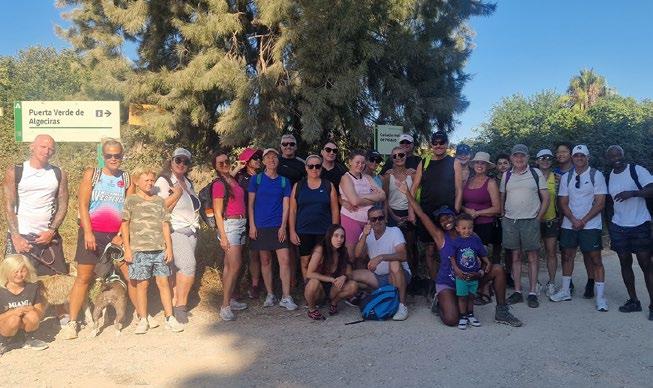

they must think... WOW! But there were many events in the early days when it was just me! But even in those early days, I learnt so much. So don’t worry about the numbers to start with. Just do what you love, and the right people will start showing up for you. Gibraltar is unique, it’s a closeknit community, so word of mouth and trust go a long way. Build real relationships, listen to people, and be consistent. Luckily I absolutely adore people, so this part has been easy! But don’t wait for everything to be perfect. Just start and adjust as you go.
Q. Random Fun Adventures is such a unique concept, especially for a small community like Gibraltar. Tell us a bit more about how you found your first clients, and how you got involved in this niche sector which aims to build community engagement.
A. I simply put out the kind of events I wished someone else was offering - naturebased, social, zero-pressure, and fun. My
first clients came from people I used to work with, or friends I’d met in my first few years of being here. My very first event was a trip to Morocco to do the Jebel Musa Hike. And that group was made up of all my friends, colleagues or friends of friends. And it went from there. They each told someone about Random Fun Adventures and it just grew organically like that. That’s when I knew I was onto something. This ‘niche’ of connection and community is something we all crave, especially in an expat community like this - it just needs someone to spark it off!
Q. What has been the most rewarding part about your entrepreneurial journey?
A. Seeing genuine connections form! One of the biggest things that bring me the most joy, is seeing strangers who become travel buddies, best friends, or even couples. Hearing people say, ‘This is exactly what I needed' or ‘I finally feel like I belong' or ‘This has been on my bucket list for years, thanks for helping me tick it off' or ‘Random Fun Adventures has saved my mental health' I can’t tell you how many incredible messages I’ve received stating the impact Random Fun Adventures
Most recently, I’ve started creating adventures for the singles who want to mingle! No more Tinder - just real people, in real life, having real fun. “ “
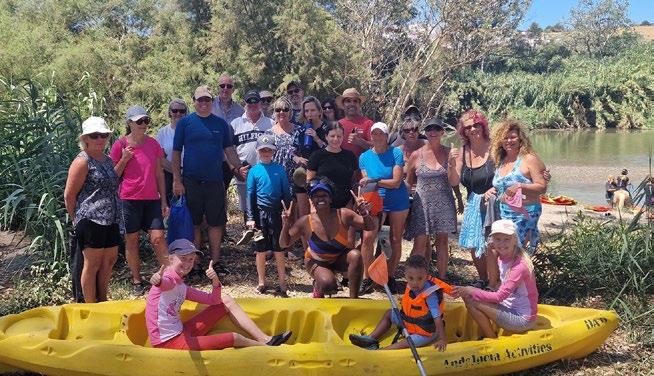
has had on peoples lives. Also, it’s a little cheesy... but showing my son that it’s possible to build something incredible from scratch. That you can have fun whilst you work and also have a positive impact on the people around you. Bringing him on as many adventures as possible, has also got to be the most rewarding part by far!
Q. What has been your favourite/most memorable Random Fun Adventures holiday you’ve been on?
A. Our Moroccan adventures will always be a huge favourite of mine. Especially the trips to Jebel Musa as that was my very first Random Fun Adventure. Every time I go to Morocco, I fall more in love with the country and my gratitude grows. I’m now an affiliate for the local ferry company and have guides available in every major city, which just blows my mind! We have private trips over to Morocco every single week, sometimes multiple times a week and I’m just so proud and excited to give our members a taste of such an incredible country!
Q. What’s next for Random Fun Adventures? Any big goals or projects on the horizon?
A. Yes! My goal is to start expanding across the Costa del Sol and grow a team of ambassadors to help make this possible. I currently run a few team-building events for companies in Gibraltar, and my aim is to widen my client base there. I want to be known as the go-to company for epic adventures during their quarterly teambuilding sessions. No need to plan yet another 'drinks after work' kind of event! There’s so much more out there to enjoy, and it’s my mission to show as many companies as possible - what’s possible. I’m also venturing into international group holidays, with Peru, India, and Turkey on the agenda - just to name a few. I want people to feel comfortable and confident exploring the world, and sometimes going as part of an organised group can make that so much more accessible and fun. And most recently, I’ve started creating adventures for the singles who want to mingle! No more Tinder - just real people, in real life, having real fun. What more could you want?
By Tamara Bell
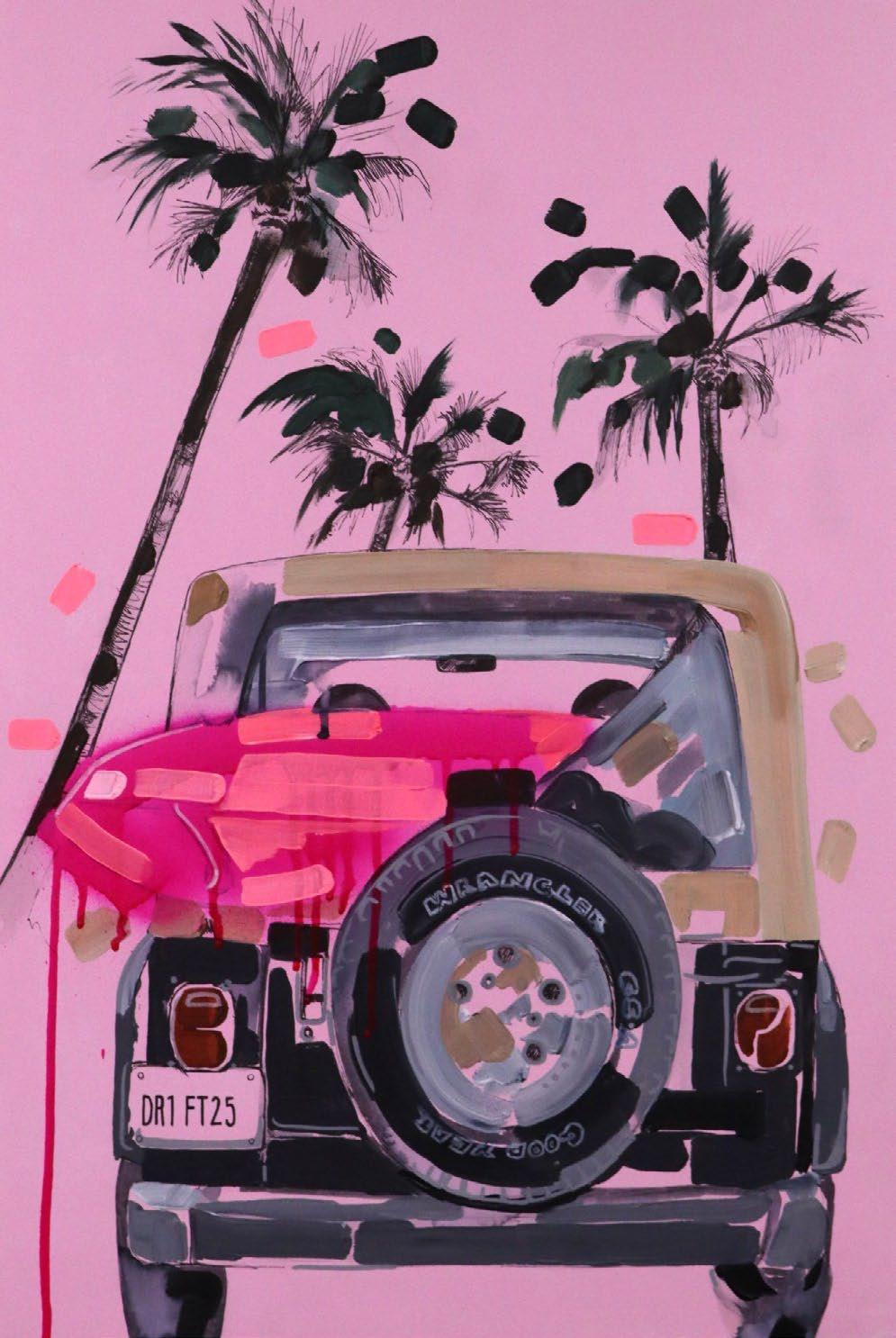
Guy Fawkes Little Bay

Guy Fawkes Night, also known as Bonfire Night, is an annual event celebrated on the 5th November, commemorating the failed Gunpowder Plot of 1605, when Guy Fawkes and his fellow conspirators attempted to blow up the Houses of Parliament and assassinate King James I. The plot was discovered and thwarted, leading to the celebration of the King’s survival with bonfires and fireworks.
5th-15th Nov
Gibraltar International Art Exhibition
Gustavo Bacarisas Gallery
The Gibraltar International Art Exhibition is an annual event, organised by the Gibraltar Cultural Services (GCS), on behalf of the Ministry of Culture. Both local and international artists typically submit their works, and it is open to the public.

Gibraltar Literary Festival various venues
The Gibraltar Literary Festival is held by GCS annually. This year, its headliners include celebrity comedian, David Walliams and renowned dancer, Wayne Sleep. The Gibraltar Festival is guaranteed to provide wickedly funny stories, moments of introspection and inspiring journeys.
Ed Gamble
St Michael’s Cave
After selling out five nights at London’s Hackney Empire and a filled-out Palladium, the Taskmaster star and Off Menu podcast legends is bringing his hilarious stand-up comedy to stages across Europe. Don’t miss out, grab your tickets and enjoy!
Christmas on Strings Cathedral of the Holy Trinity
Christmas on Strings brings an enchanting experience, providing an evening of candlelit music, where a string quartet performs cherished Christmas classics in a beautifully illuminated setting. It offers an incandescent glow that will undoubtedly stay with you for many Christmases to come.

New Year’s Eve Casemates Square
Ring in the New Year on Casemates Square, where live music from local bands will help you dance the night away! Celebrate among your family and friends and enjoy the electric atmosphere this event offers!


Pablo Picasso: Structures of Invention Picasso Museum Malaga
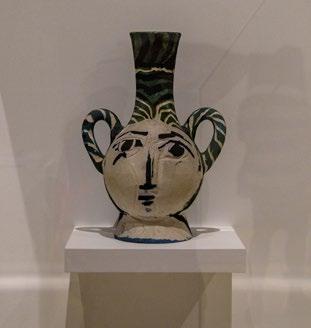
144 works of art, revealing Picasso’s exceptional ability to create the original structures that helped him rise to prominence, will be displayed at the galleries. This new installation has been devised to involve the viewer in the artist’s creative process and to stimulate our imagination: it breaks down conventional divisions of Picasso’s work and presents his career as a unified body of work. Don’t miss it!
It’s Playtime: An Exhibition by Guda Koster Centre Pompidou Malaga
This immersive installation by Dutch artist Guda Kosta is composed of seven colourful play-sculptures. From crawling and climbing to interacting with what is can be perceived, her textiles allow for the interplay of light and shadow in a way that performs a hide-and-seek effect. Visit while you still can!
Christmas Wonderland
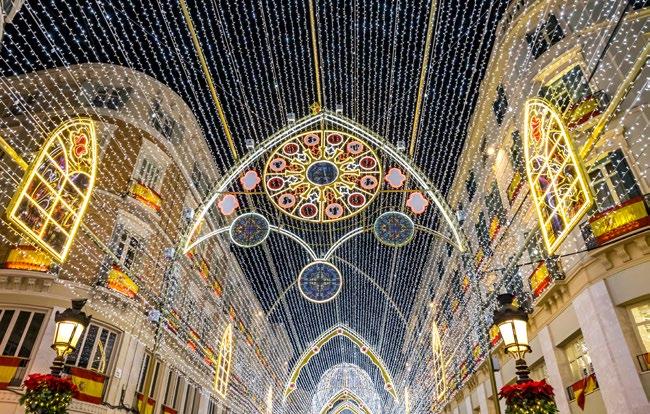
The Christmas period promises an array of events, filled with an abundance of festive magic. The Christmas Festival of Lights continues to stun its audiences every year and amasses huge crowds that eagerly await this Christmas spectacle. GCS also hosts Christmas Attractions, Christmas Saturday and a Christmas Party in Town, ensuring that we all get into the Christmas spirit.
Christmas Markets Malaga
Visit Malaga’s Christmas markets and enjoy its pastries, liqueurs and chocolates that will have you daring for the festive season. The markets feature a selection of stalls, selling handmade items and decorations, as well as vintage books and accessories. They will certainly get you into the Christmas spirit.
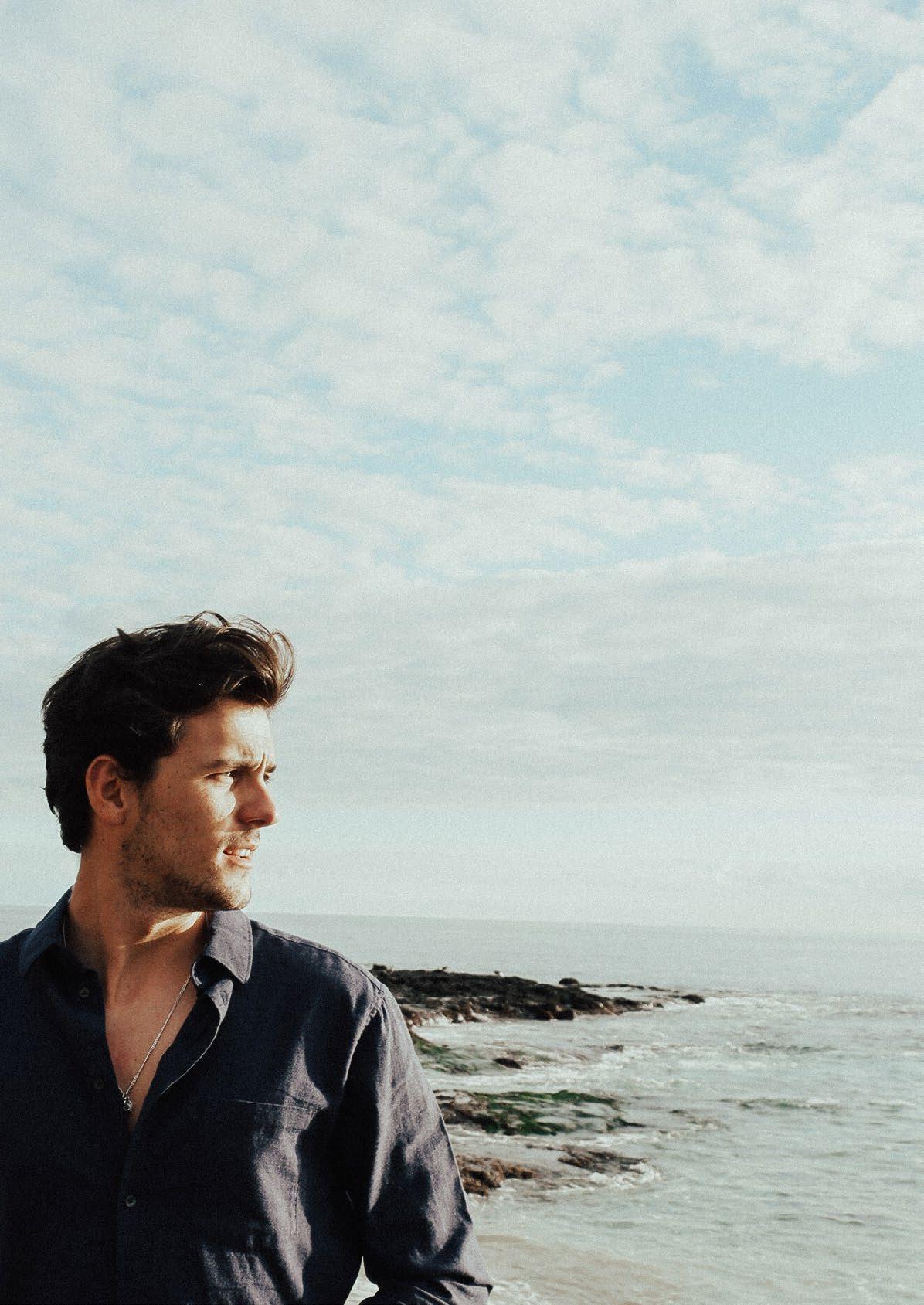
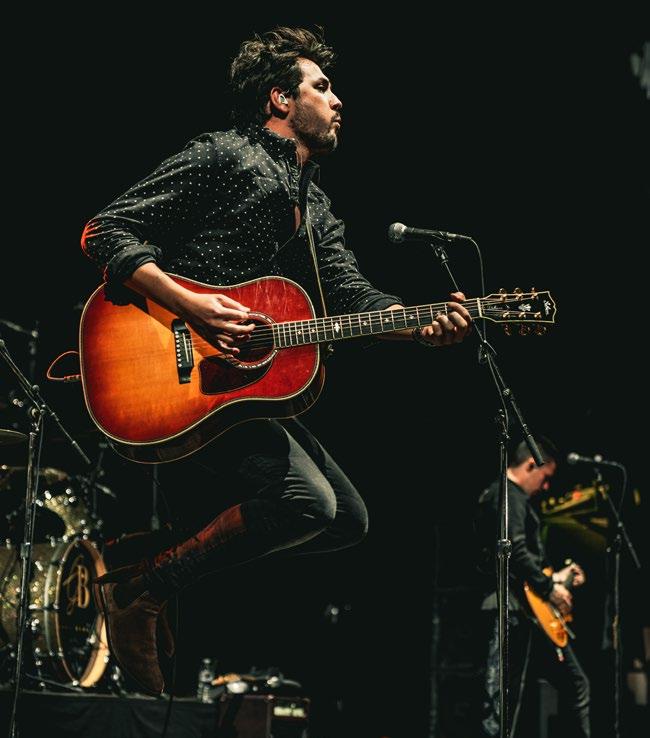
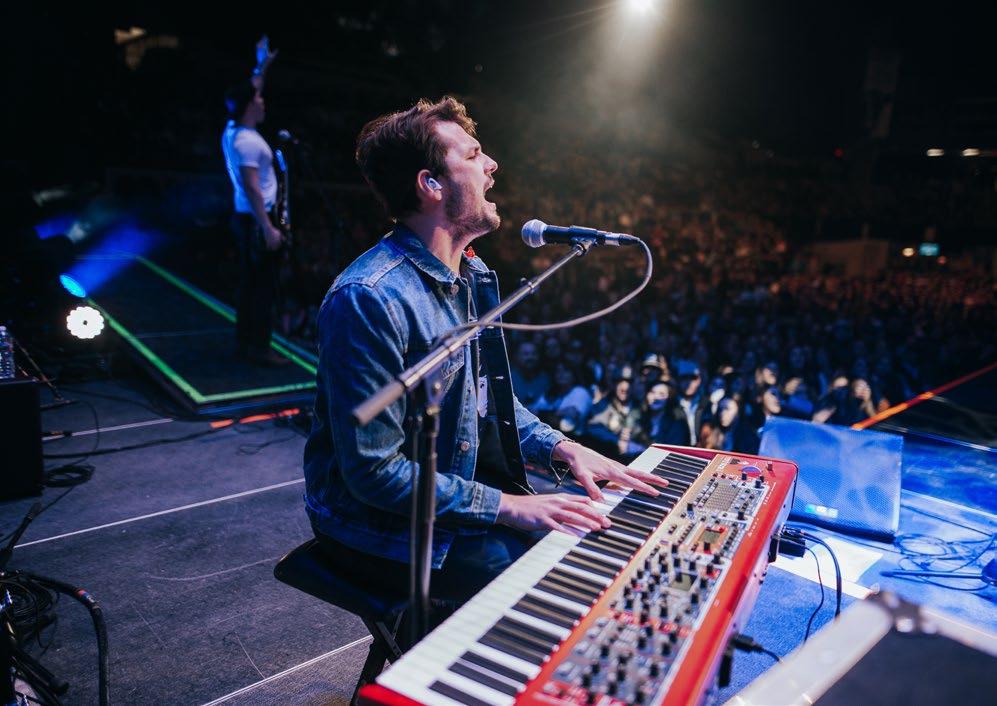
I hadn’t even spoken to Simon Dumas, and I was already struck by how affable he is. The United States has about six time zones, so we spent some time back and forth working out exactly what time it will be where we are. He is nothing but gracious and easygoing. We all want the artists we admire to be nice people, but touring the world and being on Jimmy Kimmel can easily go to a person’s head. Not so here. We had a great conversation about music, chicken empanao, and what life is like on the other side of the Atlantic:
Q. How did you go from Gibraltar to living in Nashville?
A. It’s quite unique in that I wasn’t necessarily looking to pursue country music, but I was studying music in England and one of my tutors, Jon Shone, who was One Direction’s musical director, introduced me to some people in Nashville. That’s how King Calaway came to be. I knew of Nashville as a place where people made music and where the best songwriters were. So yeah, I kind of jumped at the opportunity to move here.
Q. Do you see similarities between the south of the US and the south of Iberia?
A. I would say there are not that many. The biggest one being it’s a little slow paced. People who come to Nashville from LA or
New York are always like, oh my gosh, things definitely move pretty slowly here. When people ask where I’m from, I say I’m from the Deep South of Europe.
Q. How do people react when you say that you’re from Gibraltar?
A. I could swear more people know about Gibraltar here than when I was in Manchester. People are like, 'Oh, the Rock of Gibraltar!' They’re extremely fascinated by it. And then they always triple check, 'is English your first language or Spanish your first language and what side of the road do you drive on?' To people who really can’t get their heads around it, I’ve found the quickest way to describe it is to say we’re like the Puerto Rico of the UK. I found since moving here that they really like a holiday. There’s always a holiday.

Q. What’s your favourite?
A. I love Thanksgiving. I just love that it builds the excitement for Christmas. Fall as a season in the States is a really exciting time, because you’ve got college football, and they really lean into Halloween and pumpkin spice lattes and it’s a whole time of year. With Thanksgiving, you have this extra holiday where you don’t have to worry about presents, but you just eat like you’ve never eaten before.
Q. Do you celebrate Gibraltar National Day here?
A. I get emotional, so I’ll put on Gibraltar songs. I’ll listen to Melon Diesel and the national anthem. But I don’t dress in red and white and parade in town because there’s no one else around. My wife and I will try and make the effort, so we’ll have chicken empanao and torta aselga. So, yes, we celebrate it in that way.
Q. And is there anything from Gibraltar you get a craving for?
A. I would say I really miss the convenience of getting a packet of crisps that’s a regular size. You go to the petrol station here and every packet is what we would call the big family size. So often I’m like, I just need a normal-sized packet of prawn cocktail crisps.
Q. Now that you are releasing solo work, do you feel like you’ve moved away from country music?
There’s always a longing and then a sense of responsibility. So that’s one thing culturally, being proud of who we are as a people, and wanting to carry that. “ “
A. I think it’s more pop rather than country or even rock or any one specific genre. I think I feel most like pop music gives me the opportunity to write with some of my country influences, and reggaeton influences from growing up.
Q. You’ve released a couple of songs, is the plan to have an album?
A. There’s probably going to be an album on the way, but that’s kind of still in the making. There was a time when I felt like, oh, I need to do an album and all of that, but I think the world we live in today, it’s harder to ask anyone to consume an album.
Simon's music is available on streaming platforms including Spotify and Apple Music. Click here to listen to Simon Dumas on Spotify
Dropping singles every couple of weeks is probably a better way to engage with listeners.
Q. What dream venues would you love to play?
A. I’m very fortunate that in the States with King Calaway, we played a lot of venues. So in America, I feel like I’ve taken a lot off the bucket list. There’s one that I never got to play, which is the Troubadour in LA. And the Royal Albert Hall in London. I know it’s a huge stretch, but it’s a dream.

I think I feel most like pop music gives me the opportunity to write with some of my country influences, and reggaeton influences from growing up.
“
Q. What does Gibraltarian culture mean to you?
A. I think as Gibraltarians, we have this unique thing where we feel a lot of civic pride and national pride in who we are and where we come from. I think that’s deeply embedded in us, and for any of us who leave, you kind of carry a lot of that responsibility. It’s like, okay, I’m out here and as much as I’m representing myself, I want to be putting a good foot forward for Gibraltar. There’s always a longing and then a sense of responsibility. So that’s one thing culturally, being proud of who we are as a people, and wanting to carry that.
Q. You released your latest song, Pictures, at the end of June. What’s next for you?
A. The Netball World Youth Cup happened in Gibraltar in September, and I was commissioned to write the theme song. It’s a song that I ended up writing called Mighty As A Rock. It’s meant to be this very uplifting, empowering song. I found myself with an opportunity to write a competition anthem, but that I wanted to be a summer song and even a cultural song that you can put onto a National Day playlist. Beyond that, I have two more songs coming out later this year.
Q. What’s your summer playlist looking like?
A. Last night I went to a show here in Nashville by this incredible singer-songwriter called Zander Hawley. He’s incredible. He’s what I’m listening to right now.
See what I mean? He didn’t even mention that you can add Simon’s debut single
Bonfire, and Pictures, his newest release, to your summer playlists. Simon’s music is available on streaming platforms including Spotify and Apple Music.
Follow Simon on Instagram: @simondumas_
By Jonathan Pizarro
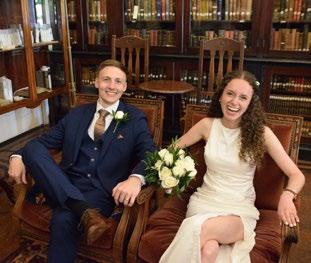
Born in Long Island, New York, Carolyn Castagna is an illustrator, book YouTuber, and reader extraordinaire. Through her love of books, Carolyn connected with a reader from across the pond, the Gibraltarian, Leon Wellstead. Much like a Jane Austen novel, their love story transpired beautifully, and they tied the knot last year. Living in between the States and the UK, Carolyn and Leon are writing the next chapter of their lives as Llanitos por el mundo.
Q. Prior to meeting Leon, had you ever heard of Gibraltar?
A. Yes, I had heard the name ‘Gibraltar’ mentioned in a Frank Sinatra song titled Love Is Here to Stay. The lyrics are, ‘But oh dear, our love is here to stay. Together we’re going a s way. In time The Rockies may crumble, Gibraltar may tumble, they’re only made of clay, but our love is here to stay.’ I mentioned this song to Leon (early in our relationship), and I found his reaction very funny. He was aghast by the lyrics and adamant that Gibraltar will never ‘tumble’. “And it’s not made out of clay,” Leon explained, with sweet Gibraltarian pride filling his voice. “It’s made out of limestone.”
Q. As you’ve previously mentioned, Gibraltar is somewhat of a legend in your
family because of a connection your grandparents share with the Rock. Can you tell us a bit more about this twist of fate?
A. Without my realising it, I had actually heard of Gibraltar years before listening to that song. I was too young and lost in the daydreams of childhood to remember, but my grandfather used to talk about Gibraltar quite often. My grandfather was born in New York, but his parents were both born and raised in Sicily. Through a mutual friend – and a dash of destiny – my grandfather was shown a photo of my grandmother. This mutual friend immigrated to New York from a small town outside of Naples, Italy, where my grandmother was born and raised. Her friend praised my grandmother for her kind heart and her striking beauty.
My grandfather listened, looked at the photo, and soon after travelled by boat across the Atlantic Ocean, through the Mediterranean, to meet and marry my grandmother. As you might have guessed, the boat my grandfather travelled on stopped in Gibraltar. As a great lover of history, my grandfather was fascinated by Gibraltar’s history and its Mediterranean charms. Gibraltar became part of my grandparent’s story years before it became part of mine and Leon’s story. As my family often says, we are following in their footsteps.
Q. Can you recall what your first time visiting Gibraltar was like? What were the things that stood out to you and made you fall in love with the place? How would you describe Gibraltar to someone who has never been here before?
A. My initial visit was incredibly exciting. It was the first time I had travelled so far from home on my own. I was terrified and exhilarated all at once. On my first full day, Leon showed me around Casemates and further into town. As we walked through main street, I fell in love with the architecture. Every time I tell someone about Gibraltar, I always mention how unique it feels. The mixture of British, Spanish, and Moroccan culture is unlike any other place I’ve ever been.

Over time, more and more people found my videos, and, before I knew it, thousands of fellow readers were connecting with me online. Eventually, as fate would have it, one of those readers became my husband. “ “
Q. I know that your grandparents migrated from Italy. Have you felt like Gibraltar — a country whose dialect and culture has traces of Italian and other European influences — reminds you of your heritage or your grandparents’ background?
A. One of my favourite things about Gibraltar, because it reminds me of my childhood and my Italian heritage, is how everyone hangs out their clothes to dry in the sun. Although my grandmother left Italy to live and raise a family in New York, she never lost her Italian spirit. In the back yard, in the basement, and even while travelling, she always hung her clothes out to dry. Some of my fondest memories are from when my parents, sister, and I would travel to my grandparent’s summer home in Florida. The image is still so clear in my mind. In the back yard, tied from one palm tree to another is a clothesline. Silhouetted behind the fluttering white bedsheets is the shadow of my grandmother.
Q. How is life in Gibraltar different to your life in Long Island? Are there any cultural similarities between your family/life abroad and Gibraltar? (Castagna is a surname present in Gib!)
A. It’s extremely different, in more ways than I can mention here. The biggest difference is the size of both places. As you can imagine, everything in New York (the roads, the cars, the landscape itself,) is grand and vast. Living on Long Island, I have to drive everywhere I want to go. I could walk into town, but it would take me far longer than it would in Gibraltar. Unlike families in Gibraltar, who live down the road from one another or a short car ride away, my sister lives 65 kilometres from where I live, which is about a 50 minute car ride. (Although, most of my family lives closer).

There is one similarity which is Leon’s family life in Gibraltar and my family life on Long Island. We both come from very loving, loud, and caring families. Thankfully, Leon wasn’t scared off by my big Italian family, and I equally wasn’t scared off by his big Gibraltarian family. We both feel extremely lucky to have such wonderful support systems on both sides of the Atlantic.
Q. Can you tell us a bit about your career? Spotlight YouTube channel, art and illustration sales, and career aspiration (children’s author and illustrator).
A. My career as a reader, writer, and illustrator started when I was a child. For as long as I can remember, I’ve felt a need to hear and tell stories. While working toward my undergraduate degree in Illustration and Writing at The Fashion Institute of Technology in New York City, I began a YouTube channel where I read and review
books. Soon enough, I discovered a world of voracious readers who were sharing their love of books with the online world. Over time, more and more people found my videos, and, before I knew it, thousands of fellow readers were connecting with me online. Eventually, as fate would have it, one of those readers became my husband.
Because of this lovely bookish community, I’ve also had the opportunity to share my artwork online. I began selling my artwork on Etsy in 2020. Again, I had no expectations for my small business. To my utter delight and surprise, I was met with an overflowing amount of support and kindness. Since then, I’ve made almost 9,000 sales and have mailed my artwork around the world.
Being an author and illustrator has been my dream since the day I learned how to dream. For the past few years, I’ve been in the process of writing my first illustrated novel. It has been quite the journey, filled with inspiration, self-doubt, and perseverance. This story means more to me than I can express, and I’m currently wishing on every star in the night sky that I’ll one day be able to share it with the world.

By Evelyn Aylén Heis
’We can take it, Franco!’ was the breaking news headline of a Gibraltarian newspaper four days after the border dividing Spain and Gibraltar was permanently closed by Spain’s dictator, General Francisco Franco. This was captured by photographs, through which we, as spectators can observe the battle for Gibraltarian sovereignty and the formulation of Gibraltarian identity under tyranny.
In The Civil Contract of Photography, Ariella Azoulay proposes that photography is not static; rather, photography is a dynamic product that can be imagined, reimagined, and watched. It unfolds through viewing and interpreting images. Photography becomes the product of an encounter between the photographer, the photographed subject, the camera, and that of the spectator. In turn, this transforms the
photographic material and photographic act into a framework, offering an alternative to the institutional structures that have abandoned and injured photographed subjects. In many ways, the photographs taken during the border-closure transcend time and movement, becoming an encounter between various participants, even today.
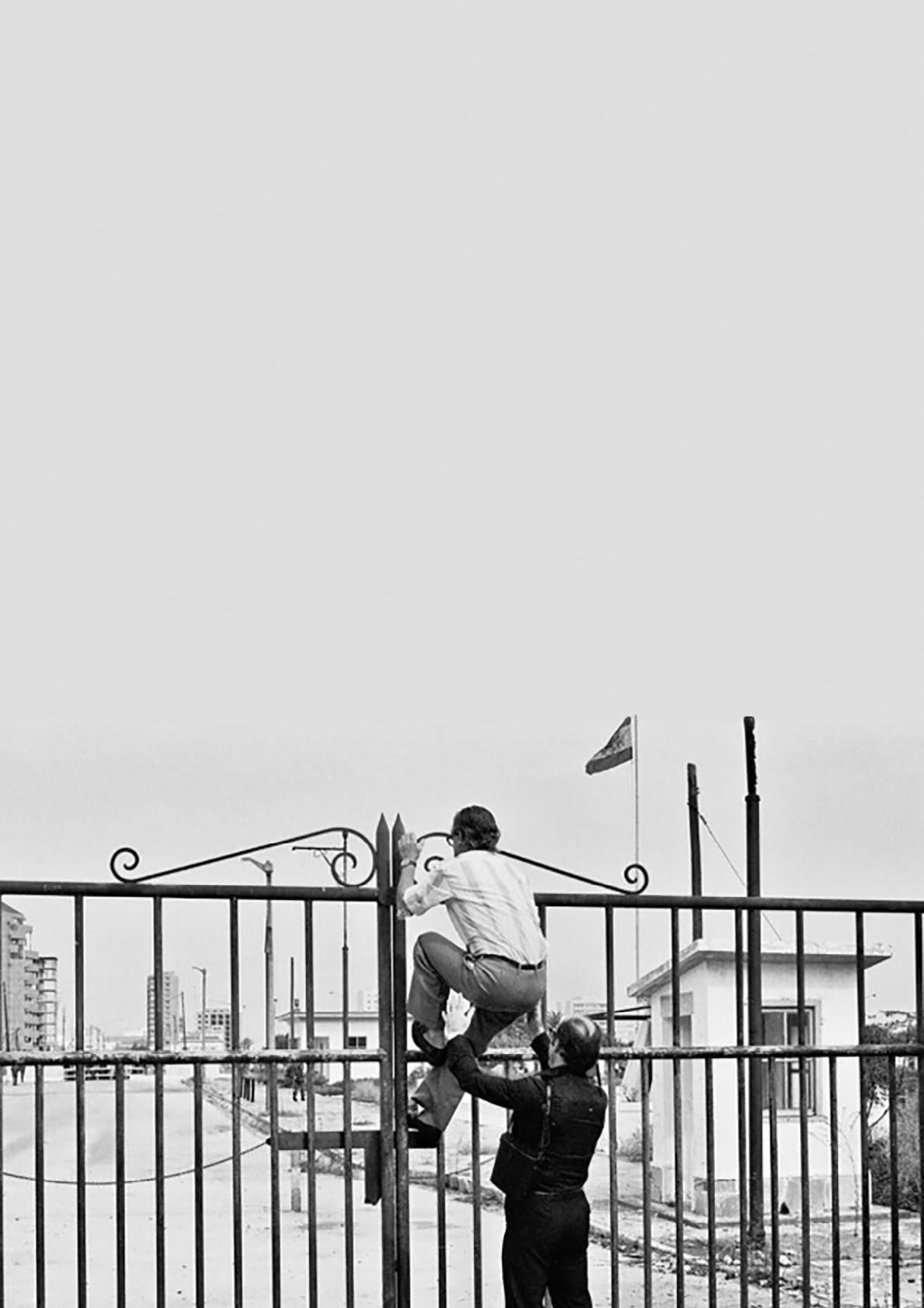
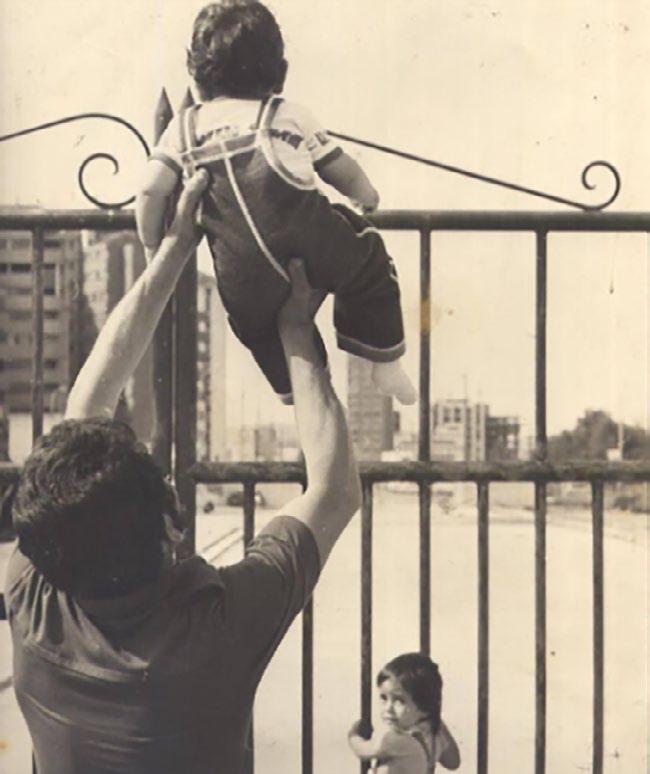
The photograph of Gonzalo Arias climbing the iron fence echoes a powerful sentiment against Franco and illustrates the strength of Gibraltarian sovereignty. Here, we see two men at the frontier: one man is hoisting the other, aiding his pursuit to climb over the fence. With the Spanish flag waving on the opposite side of the frontier, it is evident
The photograph of Arias communicates the need to reunite with his family on the other side of the border as greater than the fear of being arrested for illegally crossing.
“
that he is crossing from Gibraltar and into La Linea. In the near distance, we can see the back of two Guardia Civil officers, seemingly unaware of the monumental crossing. Arias’ illegal border-jumping was successful: he later influenced others to retaliate against the frontier’s closure through attempted crossings in a political movement known as Operación Anti Verja The photograph of Arias communicates the need to reunite with his family on the other side of the border as greater than the fear of being arrested for illegally crossing. It is an encounter that speaks to the realities of various Gibraltarians separated from their families. In the words of Azoulay, this photograph demands something elseas watchers, we can comprehend what extends beyond both the photographer’s and Arias’ action is a retaliation against the state; against Franco’s closure of the border.
In 2019, Gibraltar’s National Archive held a photographic exhibition to commemorate fifty years since the border closure. The conscious decision to use photography as a medium to celebrate this painful aspect of Gibraltarian history affirms the impact of photography in the construction of political relations and civil negotiations. It signifies the ability of the photographs to transcend ownership, communicating the experiences of many, and thus creating an encounter which calls for the re-interpretation, re-imagination, and recognition of the Gibraltar-Spain border conflict. Here, the watcher gains new possibilities for political action and forms alternative conditions for its visibility within this encounter. The iron gate in front of the photograph evokes the new possibilities for political action opened in this civil space while equally symbolising its intrinsic role in Gibraltarians’ conceptualisation of their national identity. Perhaps one of Gibraltar’s most famous photographs, where a father hoists his child over the fence so that his family on the Spanish side can look at him, we
can regard this as an encounter between father and son, between the older and younger generations, as a symbol of the future and growth of the nation. Despite the impediment of the border, in both their familiar and political civil relations, the gesture of raising the child above the border transforms the oppressive experience into one of hope: surpassing the physical barrier that was imposed on them, Gibraltarians will not be brought down to their knees, for they will continue to persevere.
The photographic encounters created by the photographs of the Gibraltar-Spain border closure create a civil contract between the active participants in the process and contemporary spectators. Azoulay defines this encounter as one that enables concepts of citizenship and political injustices to be reconstructed, reframed and transformed. Rather than exclusively belonging to one person or narrative, these photographs become
voices for the collective experience of Gibraltarians. In most of the photographs, we rarely get to see the faces of the subjects: they stand with their backs to the camera, facing the border. Unable to identify the photographed subjects, they become emblems of the shared cultural trauma. These photographs reiterate the complexities of Gibraltar’s identity as a nation with wavering cultural ties to Spain and Britain. Watching the photographs of the frontier closure, we can see the suffering of the two nations, conveying the sentiment that the human cost is at the forefront of the state’s political subjugation. The photographs of the closure shed light on the collective, creating a space of political relations that encompasses the multiple facets of the Gibraltarian identity and conveys the determination to strengthen Gibraltarian sovereignty despite the physical and political obstacles they have faced.
By Evelyn Aylén Heis
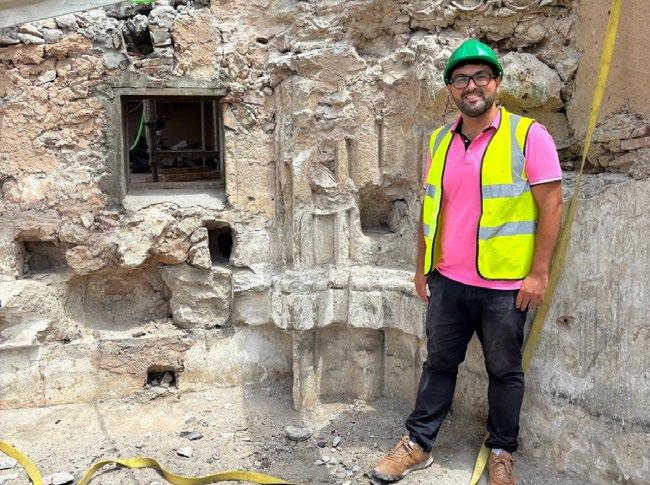
Dr. Ryan Asquez, known by his social media tag ’The Llanito History Doctor’, has helped revitalise interest in Gibraltar’s local history through his short-form vlogs on Instagram and ’Tours of the Town’. Inside Magazine spoke to him to discover where his passion for history came from, explore his academic endeavours, and ask how he kickstarted his foray into the world of social media.
Q. To kick off, where do you think your passion and interest for History came from?
A. When I was a child my granny, Janet lived in a Castle Road patio - generations of my family lived (and died) there - and she would take me around the streets and patios of the Upper Town, sharing anecdotes associated with the area and the people who had lived there over the years. I think that really piqued my interest in stories, especially those from our past.
Q. Could you give us some insight into your doctoral thesis on images of the suffering Christ in Western Europe from 1450 to 1550? What drew you to this topic?
A. My interest in this topic began with a case study in a seminar at the University of East Anglia back in 2015. It was a late fifteenth-century German print of the Man of Sorrows - a depiction of the suffering Christ which is commonly encountered in late medieval devotion. It absolutely fascinated me.
I decided to focus on the subject for my postgraduate studies at Oxford. My MSt thesis comparatively analysed printed images of the suffering Christ from England, the Holy Roman Empire and Spain from c.1450-c.1550. Being a sucker for punishment, I widened the scope of my research for my doctoral thesis, supervised by Professor Lyndal Roper. Researching a much wider range of media from across Western Europe - Gibraltar included - I now looked at a whole host of objects depicting Christus patiens, such as prints, sculptures,
paintings, jewellery, and even tiles. I also compiled a database of 500 images of the suffering Christ as part of this project. So, you could say, my research included the digital humanities and an element of statistical analysis. In a nutshell, my thesis argued that the suffering Christ was at the heart of piety and identity before the Reformation.
Q. Were you able to explore many other research interests as a postgraduate at Oxford? Are there any memories that stand out in particular?
A. I spent very happy years at Oxford, so it’s difficult to choose which memories
to highlight! Research at the Bodleian and Weston Libraries, exploring nearby Abingdon with friends, my graduationsthose are definitely a few.
Being invited by my College supervisor, Dr. Ian Archer, to dine at High Table in Keble College was definitely a special moment. Delivering my first paper as a doctoral student at the Early Modern Britain Seminar in Merton College was also a great - albeit nerve-racking - experience. In my free time I would often also research Gibraltar’s history.
Q. Your Instagram account, The Llanito History Doctor, has become a phenomenon
in Gibraltar, helping to make local history accessible – what motivated you to reach out to a broader audience through social media, and did you expect such a positive response?
A. I launched The Llanito History Doctor back in 2022, but how we got there is something of an interesting story. As anyone who knows me will know, hablo por los codos, especially when it comes to Gibraltar’s past! I would occasionally post about local history on social media, and a friend suggested that I do this in video format. I decided to take the plunge and give this a go, and my first video was about the old aqueduct on Rosia Road! These first videos were received well by friends and family, and it was at this point that I started using my ’Que pasa!’ catchphrase! Another friend then encouraged me to set up a public page: the rest, as they say, is history. A lot of work goes into preparing my videos and content, so it makes me very happy to see that people have been enjoying the page. I am extremely grateful for the positive response that I have received so far. The support that people have shown really means the world to me.
Q. In tandem with your highly informative videos on local sites of historical interest, you have organised Tours of the Town’ –what’s this experience been like, and do you think it helps bring local heritage ’alive’?
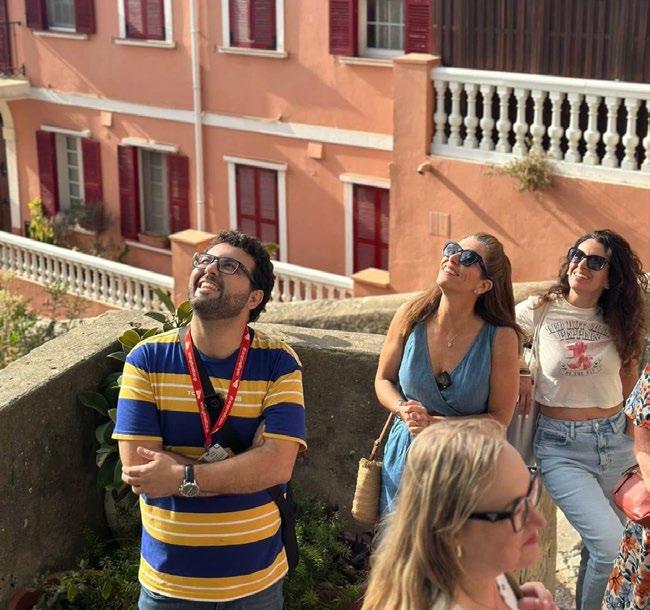
A. I’ve really enjoyed doing the Town tours! There is just so much history in the area, and it’s great fun to explore the hidden histories of Main Street. ’La Calle Real’ is familiar to all of us: a place where many of us work, shop and socialise. But the stories embedded in its lanes and historic buildings also allow us to appreciate the area as a space which has seen the comings and goings of Gibraltarians over time. A place where people have for centuries walked the same paths and side streets that we walk today. We might walk into a shop that was once a church or a barrack building (or both!), and I find it fascinating to look at familiar spaces through this historic lens.
My Granny would take me around the streets and patios of the Upper Town, sharing anecdotes associated with the area and the people who had lived there over the years. “ “
Q. Are there any sites or stories of historical significance in Gibraltar you think are under-appreciated or that you find particularly fascinating?
A. I’ve always been drawn to ruins - I suppose there’s something romantic about them. Perhaps it’s the fact that they tantalisingly point to something that once was, inviting our imaginations to fill in the gaps. I remember exploring the Northern Defences - el Jungle de toda la vida - when I was younger, and encountering the Gate of Granada site. I was absolutely blown away by the fact that these stone ruins were the vestiges of a once-important fourteenth-century gate. My 18-year-old imagination ran wild trying to picture what the gate originally looked like, and how each part of the ruin would have fit into a larger complex or structure. Ruins are sometimes overlooked, but there are just so many stories embedded in them. If only they could talk!
Q. Do you think there is scope for further engagement with Gibraltarian history in schools?
A. I was taught about Gibraltar’s history at school, but unfortunately it really took a back seat to other topics in the curriculum. We have, thankfully, come a long way since then, and it’s encouraging to see our schools engaging much more closely with local history. There are fantastic history
teachers here and it’s brilliant to see the interest shown among local students for the subject. The future is looking bright on that front!
Q. What books or resources would you recommend to a reader who would like to develop their knowledge of local history?
A. Where to begin? The works of Dorothy Ellicott, Tito Benady, Sam Benady, Manolo Galliano, Kevin Lane, Richard Garcia, Darren Fa, Claire Montado, Professors Clive and Geraldine Finlayson, to name but a few. Sir William Jackson’s The Rock of the Gibraltarians is a great book and a good place to start. Manolo Galliano and Victor Hermida have recently published two important volumes on the history of Gibraltar’s streets. And although they are hard to find, I’d definitely also recommend all of George Palao’s books.
Q. What can we expect from The Llanito History Doctor for the rest of 2025 and into 2026?
A. I’m currently working on publishing some of my research and turning one of my thesis chapters into an article. I’m also now an Adjunct Researcher at the University of Gibraltar. I’ve also got some fun ideas for new tours and videos - as always, stay tuned for more! Enga!
By Francis Devincenzi
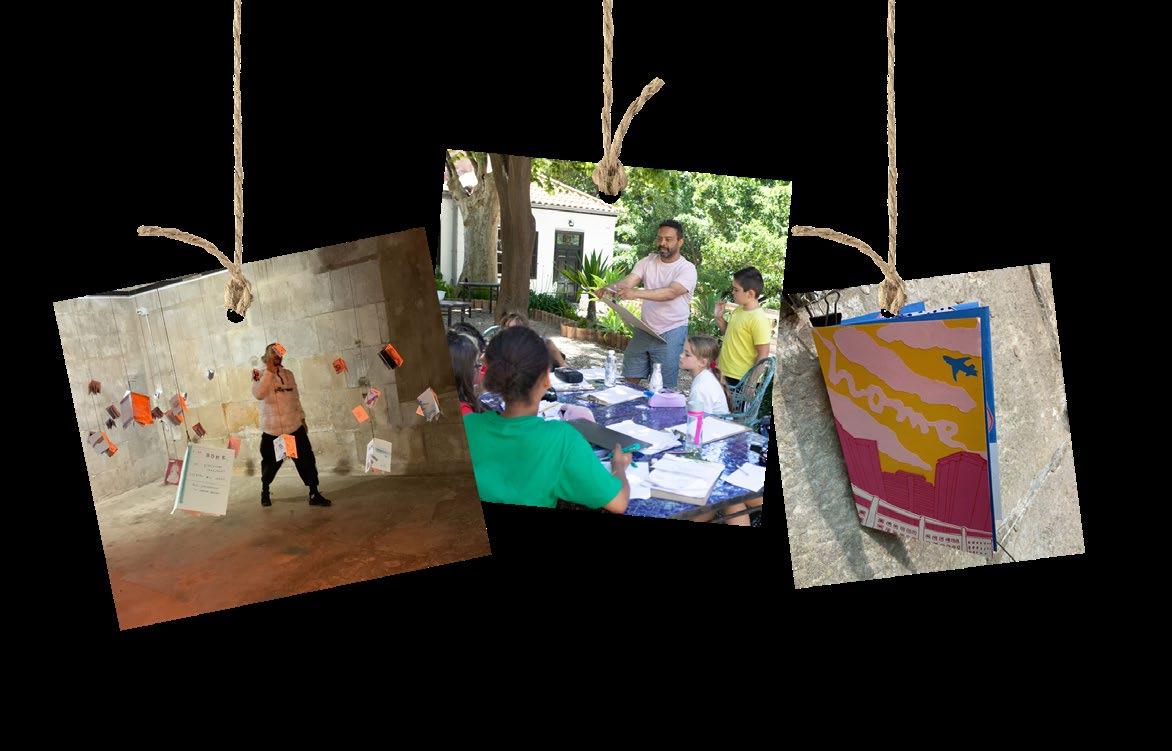
Eleanor Dobbs is the co-founder of Rock Retreat, an international arts initiative which has cultivated a creative community that bridges borders through residencies, workshops, and collaborative projects in Gibraltar. With a strong focus on inclusion and connection, Rock Retreat supports emerging voices and fosters cross-cultural artistic exchange worldwide. Eleanor shares insights into the inspiration behind Rock Retreat and its ongoing impact.
Q. What inspired the launch of the Rock Retreat in Gibraltar?
A. The Rock Retreat was founded by my sister, Sarah Odedina and me in response to the isolation of COVID. We believe that creativity thrives through connection and community. From the start, we partnered with Accord Literary, aiming to be truly international and inclusive
Q. How has Rock Retreat Gibraltar evolved since its inaugural year, especially in its approach to international collaboration and local outreach?
A. In our second year, Rock Retreat was invited by Accord Literary to the World
Book Events in Accra, Ghana. We ran workshops and created an anthology through a three-school collaboration between Gibraltar, Bermuda, and Accra — building international links that continue to grow from a local foundation.
Q. Tell us about your favourite projects Rock Retreat has launched so far.
A. Working with young people, especially in Gibraltar, is one of the greatest joys of the Rock Retreat. Their openness and willingness to experiment is always inspiring. In February 2023, we held an incredible week of workshops with authors from around the world, both in person and via Zoom, including the late Benjamin
Zephaniah, who was an inspirational contributor. The project brought together children from Bermuda and Gibraltar to create narrative fiction, which we later compiled into an anthology celebrating young voices across the Atlantic.
Q. How have your writing retreats influenced the trajectory of Rock Retreat itself?
A. Last year, we hosted a Ghanaian illustrator for a residency in Gibraltar, along with other authors who’ve joined us for week-long stays to exchange stories and cultures. Cecil Brown, winner of the Commonwealth Short Story Competition for Europe and North America, visited in October 2023, leading to meaningful
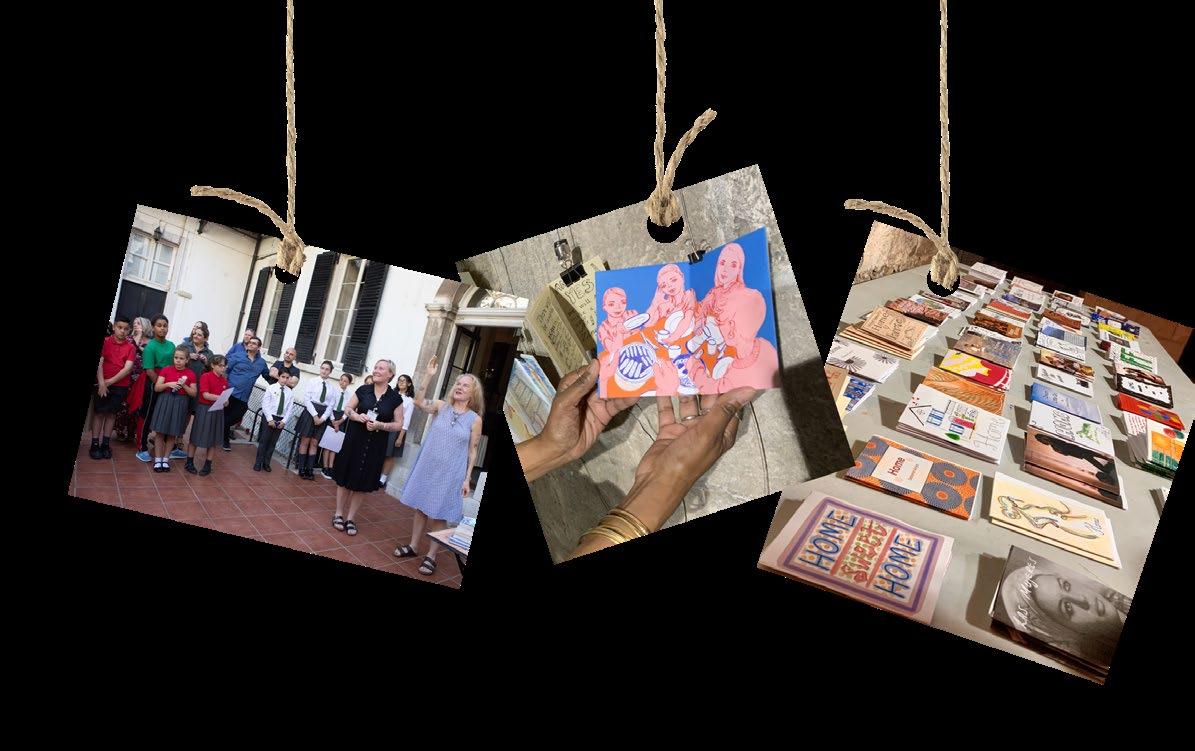
connections with his community in St. Vincent. These residencies bring together around twenty people from around the world, including Gibraltarians, and are always a joy to host each May
Q. What inspired the Zine Project 2025 collaboration with Youlou Arts in St Vincent, and why was ’HOME’ chosen as this year’s theme?
A. After Cecil Brown’s visit, he introduced us to the Youlou Arts Centre and its inspiring director, Camille Musser, now a good friend of The Rock Retreat. We were eager to collaborate with her on her theme of ’Home,’ aimed at showcasing female artists at her centre over the summer.
The Zine project emerged as a way to bring together the Rock Retreat’s creative community, both in Gibraltar and internationally, for a Caribbean exhibition. Having made Zines before, I realised how perfect they are: portable, collaborative, and expressive. Each artist worked within the A4 format to create immersive, individual worlds. We displayed them in a hanging installation and held a Zine competition judged by Christian Hook, which added extra excitement.
Q. What are your hopes for creative expression and community-building through participating women’s zines, especially across two countries?
A. They say we have more in common than what separates us, and this project
proved it. The connection and participation between women crossed borders, breaking down barriers and sharing heartfelt stories.
People were struck by how many women submitted zines from around the world, over seventy from Mauritius, India, the Caribbean, the USA, Gibraltar, and Europe. Bringing the Gibraltar zines to a sister exhibition in St. Vincent was incredibly meaningful. We also included an oral account curated by Lizanne Figueras to give voice and context to the exhibition.
Q. What has been the reception of these zines, especially considering they have travelled all the way to Vienna?
A. We were proud to share the Zines with other communities and see their response. At the Vienna Zine Festival, we had pride of place and a steady stream of visitors engaging with the work. It was especially meaningful to bring contributors aged eighty-three and eighteen, bridging generations, and to have Gibraltarian participants and their families represented in the stories.
Q. How do you ensure opportunities for local creatives from Gibraltar, including fully funded places, amid growing international interest?
A. We always reserve places for Gibraltarian creatives, with support from Gibraltar Cultural Services and Masbro Insurance. Their backing helps us run exhibitions and vital community work
alongside the residencies. We’ve had some amazing participants, like Monica Popham, who attended our first residency and has since become a full-time artist.
Q. Looking ahead, how do you see Rock Retreat Gibraltar expanding — whether through new residency models, international pairings, or digital offerings?
A. We started to bring people together in the same room, something our handson, analogue approach makes possible. We aim to build community and break down traditional publishing gatekeeping by connecting participants directly with incredible facilitators like Sarah, Ken, Victoria, and myself. Gibraltarians such as Beatrice Garcia, Gabriella Chipol, and Shane Dalmedo have worked rigorously in publishing. I love seeing where the retreats lead, whether through exhibitions, publishing, or simply ensuring Gibraltarian stories are told.
Q. How would you describe the legacy of Rock Retreat for future participants or local creatives?
A. Success isn’t just about residencies or publications - though many participants have found agents and been published. It’s also about the personal impact: people gaining confidence, pride in their work, and finding a supportive community of writers, even if they never publish.
By Sophie Macdonald

For all your cake needs, from party cupcakes to luxury celebration cakes. Now with an extended bakery and cafe serving hot and cold drinks. pieceofcake.gi cakes@pieceofcake.gi +350 20043856
The Residence 29-35 Engineer’s Lane, GX11 1AA, Gibraltar
The Residence, 29-35 Engineer’s Lane, GX11 1AA COMPETITION
a £10 voucher to use at Piece of Cake
Across
2 A very popular cupcake flavour is salted _______ (7)
4 Famous hazelnut chocolate bar in cupcakes (6)
5 Red ______ a classic crimson cupcake flavour (6)
7 What pistachios and peanuts are (4)
8 First word in a milk chocolate brand cupcake (5)
9 Cupcakes can often be found at a birthday _____ (5)
10 Utensil used to mix up your cake batter (5)
Down
1 Crumbly chocolate topping used for decoration and often ordered alongside soft serve in an ice cream van (5)
2 Piece of Cake sells cup_____ (5)
3 Flavour in Aero cupcakes, fresh and green.(4)
6 Type of sponge cake named after a queen (8)
9 Nut used in green-tinted cupcakes (9)
Please email your completed crossword to: sophie@growingartists.com by the 27th February 2026 with your contact details. A winner will be drawn at random from the correct entries. Entrants must be over 18 years old.

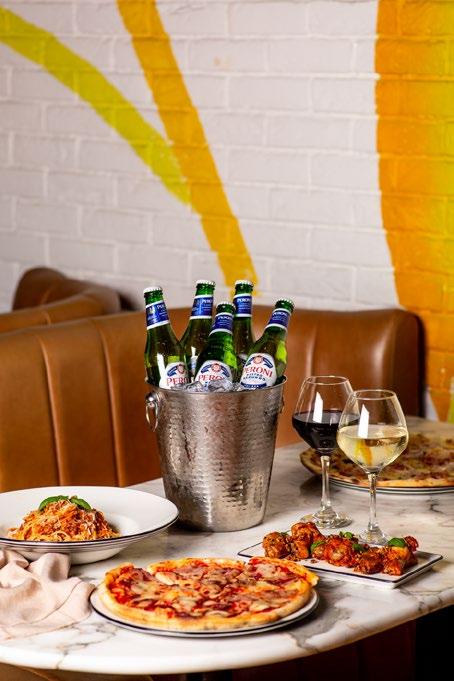

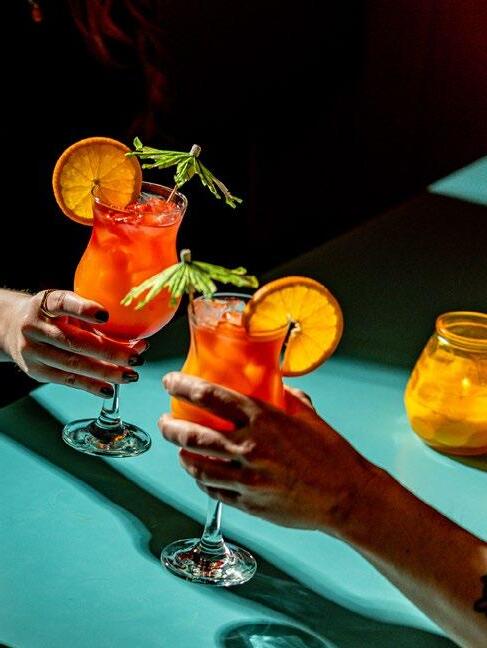



Gabriel Devincenzi’s work presents graphic design as a mode of quiet introspection. Rather than asserting fixed narratives, Devincenzi’s practice favours suggestion and ambiguity, allowing humour, intuition, and musical influence to guide his forms. His growing body of work reflects not only a distinct and evolving voice, but also speaks to a broader emergence of graphic design as a serious and exploratory medium on the Rock.

Perhaps no piece more clearly embodies Devincenzi’s affinity with circular motion and tonal gradients than Intergalactic Vinyl (shown on following page). In this image, the viewer is drawn to a spiralling interplay of form and chroma: overlapping concentric circles dissolve into one another through subtle, vinyl-like textures, evoking both cosmic disruptions and analog nostalgia.
“It started off with me playing around with gradients, and when I got bored of that, I started trying to add some texture... it felt like a distortion/anomalous event that could be in a sci-fi setting, whilst also reflecting a weird musicality because it reminded me so much of a vinyl record.”
This reference to music is far from incidental. For Devincenzi, music epistemologically defines the very ethos of his process. “Music is almost always the catalyst for anything I make,” he explains, noting that much of his work begins not with sketches or visual themes but with the intangible feeling sound evokes.
Further to this, his obsession with circularity is not rooted in conceptual symbolism but in effect: “I guess circles are ‘organic’ feeling, and I like curves and bends. Gradients are also just nice to look at.” This candid admission reveals a vision guided more by instinct than the weight of symbolism.
Humour is also central to Devincenzi’s works. This is striking in his decidedly surreal, noir-toned figure of Smokey Joe (shown left), who appears to have stepped out a 1950s film reel. With its flat colour palette of yellows and blues - an echo, albeit accidental, of the Ukrainian flag - the composition fuses irony with ambiguity. “Smoking is cool!” Devincenzi quips, “At least aesthetically.” Yet it is this humorous self-awareness that allows the piece to transcend cliché.
“It’s pretty cliché, so I quite liked that the man in question has a sense of comedy about him - and then I just went down a surrealist rabbit hole.”
The reflective doorway in the distance also invites a host of interpretive possibilities: escape, confrontation, or ambiguity. But Devincenzi resists fixing its meaning. “I just like leaving something in my work for the viewer to think about what it could

mean - I don’t really attribute any meaning to it myself.” The doorway, like his works, opens itself to a multitude of interpretive possibilities.
In this vein, withholding of narrative resolution seems typical of Devincenzi’s work: figures often feel both confident and absurd, grounded yet ephemeral. The Suburban Jazz (shown above) is no different. Here, a woman with curlers and a cigarette is duplicated across a red background; shrinking, multiplying, and creating a quasi-hallucinatory effect.
“I just thought the photo was funny,” he admits. “It felt slightly Alice and Wonderland to duplicate and shrink her, like she’s looking in the mirror and caught in an optical illusion.”

This playfulness extends to his use of simplified line and geometry. The central white circle, stylised like a child's sun drawing, oscillates between whimsy and surveillance. Though Devincenzi hadn’t consciously drawn from punk zines, he concedes, “I see both!”
The humour in the design gives way to a quiet disorientation, where repetition turns uncanny and scale begins to subside. The woman, multiplied, floats against a saturated red background, like a glitch in memory.
Moreover, Cryptic Chess employs a different register: minimalist but calculated, grid-based yet purposefully tampered with. It emerged, like many of his pieces, from accidental discovery. “Originally there was just one ‘panel’, but I liked the texture and look so much I thought it would look good as a repeated pattern.”
“Digital art is often too perfect, so I thought this was a way to make something be highly symmetrical but distorted.”
That contradiction, between algorithmic precision and human imperfection, is central to this work. Photoshop, for Devincenzi, is a medium for experimentation rather than execution, where mistakes and repetitions become tools for making something meaningful.
One of his more atmospheric works, Talking to the Moon (shown below), explores solitude through silence and scale. A faceless man with glowing eyes stands under an enveloping sky: “He’s a lonely looking figure but seems in awe of something, and I quite liked that.”
Devincenzi describes this scene as highlighting “a sense of scale that planetary things give,” offering both wonder and existential smallness. “It gives a sense of awe but also humbling insignificance,” he says, echoing the Romantic sublime.
As for Devincenzi’s technique, it is unpretentious and collage-like. “I treat it like using stencils or making a collage,” he explains, which exclusively involves Adobe Photoshop. His method blends digital dexterity with human feeling, resisting the sterility of perfection.
“The software I use can give me a perfect line, or a perfect circle, but that’s not what I want my work to represent, because it was made by a human who is listening to some kind of Country music and trying to translate that feeling somehow into what he’s making.”
The notion that human glitches exist in the digital world is where Devincenzi’s work finds its most poignant resonance. As a self-taught artist, his progression has been marked not by formal instruction but by exploration and error. “Sometimes that means I’m inefficient... but it also means I spend more time playing around with things.”

The prominence of graphic design on the Rock is moving at a fast-pace, quickly affirming itself alongside the seriousness of fine art and sculpture. Devincenzi stands as a compelling figure in this growing movement, combining solitary introspection with doubling imagery in a way that demands that viewers stop and contemplate with him.
By Sophie Macdonald

Forming part of alternative rock band ‘cedar’, touring the UK, Gibraltar and Spain, and releasing numerous singles and an EP, I’ve had the opportunity to experience the magic of local and international music scenes. These music scenes are special in their own way, but in Gibraltar there is a raw, grassroots energy flowing right through Gibraltar's music scene. Its history is well established; Melon Diesel, Taxi, Breed 77, Jetstream, Albert Hammond Senior, and Gabriel Moreno are notable legacy acts that constitute the immutable record of artists that are forever woven into Gibraltar’s DNA.
For anyone looking to earnestly explore the best of Gibraltar’s music scene, the following recommendations go far in solidifying Gibraltar's place in the world as a small yet passionate space for musical innovation and originality. All these artists have and continue to navigate challenges unique to the territory, which must be understood to grasp a better sense of the local music scene.
It is not just the bands that predominate the Gibraltar music scene - solo artists are just as ubiquitous. Most prominently, Savannah Lauryn is an artist who skilfully weaves alternative, indie and folk sensibilities into a wholly unique form of solo artistry. A onewoman musical army in her own right, you’ll easily find yourself captured emotionally rich vocal performances and understated yet effective guitar playing. She’s also a prolific music writer, having released a full solo album, The Demos in 2024 to rousing praise, and most recent single A World Spinning in July of 2025 to further plaudits. These have marked her out as an exciting local talent bursting with creativity. Keep an eye out for any of her future performances - you will not be disappointed.
Gibraltar’s rich musical heritage, rooted in metal, is championed by local band We Can Divide by Zero. The band elegantly fuse Metalcore, Deathcore and Djent into uncompromising and ear-shattering performances. In the last couple years, they’ve pushed themselves further through sheer graft, making themselves equally as magnetic on the humble Rock On The Rock
“
In Gibraltar there is a raw, grassroots energy flowing right through Gibraltar's music scene. Its history is well established.
“
Stage as gigging across Spain – although ear protection is recommended.
In the world of alternative rock, we also have the impressive Best Before End Hailing from the Campo de Gibraltar, the band has spent the last few years gigging relentlessly across the local and broader Spanish scenes, cementing themselves as one of the most promising cross-border talents. Their sound is an impressive and wholly original take on alternative rock – so distinct, in fact, that I can, in good faith, say I’ve found no easy comparison. While they currently have no presence on Spotify, their material is easily found on SoundCloud and YouTube. And if that isn’t convincing enough, seeing them live will do nothing short of putting a smile on your face.
However, the fundamental problem bands must navigate in Gibraltar is, by virtue of the craft, making a serious amount of noise within earshot of increasingly encircling residential areas. It’s a problem of geography and space. Places like Rock On The Rock (R.O.T.R.), a bastion for music performance and creation since the early noughts, and
the Musicians Association of Gibraltar (M.A.G.) rehearsal spaces offer some muchneeded hope. But that hope comes at a cost many young bands may not be able to afford and depends on a free space being available. In short, the growth of a band is, in many ways, bottlenecked by Gibraltar’s own geographical shortcomings, and the fact that loud noise and increasingly tighter spaces seldom make for fond bedfellows.
Despite its size, Gibraltar offers a wealth of opportunities for gig-ready bands. While not purpose-built music venues like R.O.T.R., places like the O’Reilly’s Arena Stage, The Lord Nelson, The Ivy Sports Bar, Boyds, Hall of Fame, The Hendrix, and the MAG Club are regular, accommodating haunts for gighungry acts. Events like the FutureSoundZ Weekender and M.A.G. Sound Festival –private enterprises dedicated to uplifting new bands and artists - further energise the scene. On the institutional side, government-backed events like National Day and New Year’s Eve celebrations scout and platform notable local talent. Currently, the overarching problem of making too much noise threatens the existence of these venues, however, the inviting optimism of a Schengen-aligned open border could also pave the way for greater cross-border movement of bands, ushering in a promising new status quo for artists and live music. As such, one can hope that we can look forward to efforts being made to accommodate artistic development and growth!
By Harry Meenagh
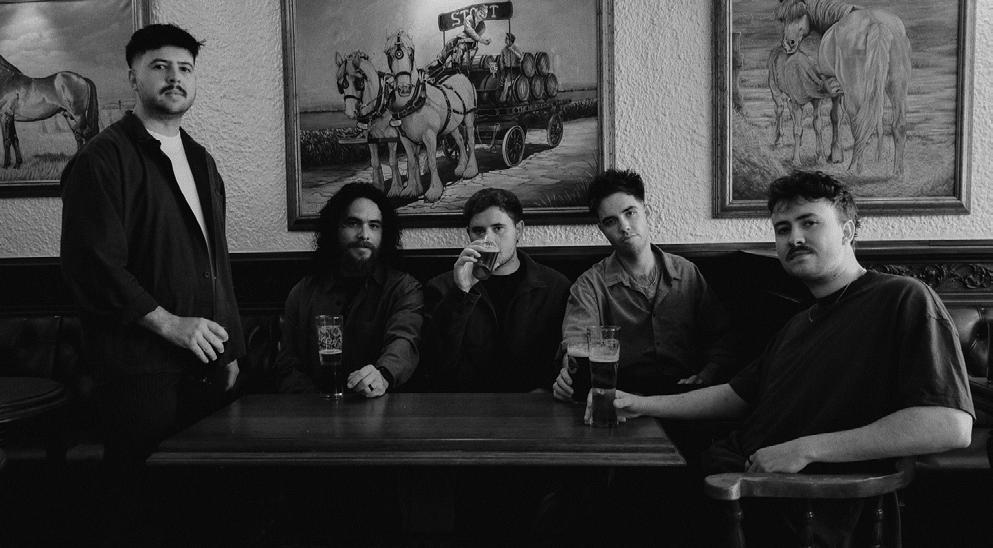
Louis Emit Stern is a playwright known for his bold, genre-bending work. He won Soho Theatre’s prestigious Tony Craze Award for Slippery and premièred I Fucked You in My Spaceship to a sold-out run at VAULT Festival. He is a stand-out, emerging voice from Gibraltar poised to make a significant impact on the theatre scene internationally. Inside Magazine spoke to Louis to find out more about the personality behind the play.
Q. What attracted you to drama, and have you always known you wanted to produce plays?
A. I’ve always loved stories. I’m dyslexic, and growing up I found novels dense and intimidating - especially being neurodiverse and a slow reader. But plays? It was just dialogue and action. What people are doing and saying. Pure storytelling. That’s how I connected with the narrative. When I was a teenager, I did at least one play with every amateur drama group in Gibraltar - Dramatis Personae, GAMPA, Trafalgar Theatre Group (now Theatre Makers), etc.
When I was 18, I set up my own theatre group and put on my first play in the space where BOOKgem is now, which isn’t a theatre space. We screwed in stage lights to the ceiling. Argos gave us some wooden pallets to build a seating bank. What I love about theatre is the sense of building something together from the ground up. Making something out of nothing. People in a room telling a story. Even in one of my last professional jobs as a playwright, I came in to help lay the flooring for the set. We had production stage managers and carpenters, but I wanted to be there, doing it with them. That community spirit I experienced doing theatre at home - the sense that we’re all in this together, building something (literally and metaphorically)has never left me. I think that’s what really drew me in.
Q. What has the journey been like in transferring your plays from script to stage? Has Slippery seen its debut?

A. I’m actually still waiting for Slippery to have its world première! The script won the Tony Craze Award in 2021, but it hasn’t reached the stage just yet. It has been a long road. And I think it’s important to be honest about the state of the industry right now. Every play you see in London has probably been through years of ups and downs to get there. It‘s tough for writers to get things over the line.
My second play, I Fucked You in My Spaceship, made it to the stage within a year of being written - which, I later learned, is incredibly rare. Everything just
aligned at the right moment. Slippery is more ambitious - artistically, financially, logistically (it has a full working kitchen on stage!). Theatre is deeply collaborative. Finding the right team is like solving a Rubik’s Cube. You could have eight out of nine squares in place, but until it all clicks, you’re not there yet.
Slippery has been a bit like that. But I believe it’s worth the wait. We want the production to be in the strongest possible positionartistically and commercially. We’re close. I can’t say much (I’m under strict lock and key), but keep your eyes peeled...
Q. How did it feel finding out that you, unsurprisingly, won Soho Theatre’s Tony Craze Award for Slippery?
A. You say ‘unsurprisingly’, but I was completely shocked! I was in a taxi on the way to the airport, heading back to Gibraltar, when the Soho Theatre called to tell me I’d won. I spent the whole week expecting them to ring again and say it was a mistake. I wrote Slippery on Soho Theatre’s Writers’ Lab, a nine-month program that supports writers through a full-length play. I loved everyone working in that building at the time. It’s where Slippery had its first workshop and rehearsed reading. I was then invited to join Soho Writers Alumni Group, and my second play was staged there in 2023. Soho was the first theatre that really held me up and told the world I was a voice worth listening to. I always joke it’s my second home - but honestly, I’m so grateful to the team there for championing me and the play.
Q. Your play I Fucked You in My Spaceship received a sold-out première at VAULT Festival in 2023. What inspired it, and what’s your writing process like?
A. Spaceship started as two separate plays. I wrote the first scene in 2020 during a lockdown playwriting course. We read each other’s scenes aloud, and I remember mine kept getting interrupted because people were laughing so much. As a writer, that’s a very addictive feeling. A year later, I began writing a totally different play with different characters. I workshopped it with actors and realised… I was writing the same play twice. The surface was different, but the emotional core was identical. So, I merged them. And Spaceship was born.
It’s about the metaphor of invasion - what it feels like to have an outsider enter your world, your home, your relationship, your life. I think it’s partly inspired by my generation’s anxiety around never feeling ‘enough,’ and a universal (often comical) struggle to actually talk about how we feel, especially with our partners. It starts as a romantic comedy, shifts into a psychological thriller, and ends as a sci-fi. It blends and bends genres, but somehow, it works.
Q. Your adaptation of Mansfield Park premièred at Austen’s House. How did that go?
A. I consider myself fairly well read, but for whatever reason Jane Austen totally passed me by. Even the film versions! When I was pitched Mansfield Park, I thought the gesture was incredibly bold. I’m a fringe artist. I mean, wrote a play called I Fucked
You in My Spaceship. I’m hardly the obvious candidate to adapt Austen! But that’s exactly what excited me. I read the book in three days. It’s an (unsurprisingly) brilliant novel, which is the problem.
Why adapt something that already works so well in its original medium? I didn’t want to ‘improve’ Austen (you can’t), but I did find something the novel says uniquely about theatre - about acting, about social performance in the 1800s and now. It’s her most theatrical work - the characters in the novel put on a play. That became my way in. I reframed the story through a group of modern-day actors rehearsing scenes from Mansfield Park - within which, Austen’s characters are putting on their own play, Lovers’ Vows. It’s a play within a play within a play. It’s Austen Inception! Austen’s irony, wit, and satire, but with Starbucks cups and Nike trainers.
It’s Austen Inception! Austen’s irony, wit, and satire, but with Starbucks cups and Nike trainers. “ “
Q. Your latest original play, Snakes and Ladders, was commissioned by the Oxford School of Drama. What was that like?
The commission was for 19 graduates. I walked into a room with a full cast, but no script. Seven months later, we opened in London. That’s not how plays usually get written. I’d never worked with a cast before writing a draft. Originally, I planned to write a corporate thriller. Then I met the cast, and they were hilarious. I thought ‘this needs to be a comedy’. Each month, I’d bring in the next chunk of script and we’d workshop it. I had a loose story outline but stayed open to what the actors brought to the room. If someone flubbed a line and it ended up funnier than what I’d written? It went in. This continued throughout rehearsal. I rewrote the ending three times during the last week. One actor got new lines two hours before curtain-up. It sounds chaotic - but everyone just ran with it. It was like the writing equivalent of a HIIT workout: terrifying, but ultimately a very formative experience.
Q. What are the challenges of breaking into theatre — and what advice would you give others trying to do the same?
A. You’ve got to be emotionally resilient. People warn you about rejection, but I didn’t fully grasp it until I was in the thick of
it. The emotional volatility is real, especially when you care deeply about your work. I try to be honest about that, especially with my students. It’s easy to spiral about the state of the arts - theatre is on its knees - but that mindset doesn’t help me write. I try to hold onto a kind of blind optimism. Otherwise, what’s the point? In an age of well-meaning cynicism, I think hope might be the most radical thing we’ve got.
Q. Your plays have been well-received in the UK and US. How has it felt to have your work recognised internationally?
A. Honestly, it’s hard to say. I’m always inside it, looking out - so it rarely feels the way I imagined it would. It can feel slightly disjointing when everyone tells you you’re doing brilliantly, but you don’t quite feel that about yourself. That’s not how I feel all the time, but it comes in waves. I don’t say that for sympathy. I’m incredibly grateful that my work is received well. But I think it’s important to acknowledge, because as an artist, you’re always chasing the next thing. I’d be lying if I said I didn’t still feel like an imposter sometimes. And I think it’s important for younger artists to know that.
That said, I never take the opportunities I’ve had for granted. I’ve got to work with the most incredible people, on and off stage. At VAULT Festival, we sold out the entire run of Spaceship before we opened. I turned up every night, desperately trying to be present and soak it all in. I try to hold onto those moments, because they carry me through the quieter times, which can last years. I’m unbelievably grateful for everyone who’s worked on and supported my plays. I can’t do any of it without an incredible cast and creative team - and an incredible audience. I’ve been lucky enough to have both so far.
Q. And lastly, the dreaded question: are you working on anything else at the moment?
A. Yes! I was on attachment to the Oxford Playhouse last year, where I wrote a new original play. We’ve started conversations about what’s next, and hopefully a production is on the horizon. Slippery is also on the horizon. Beyond that, I’m in early stages with other projects for stage and screen. I’m always a bit protective of that stuff - it’s still growing and shifting. Oh, and I’m working on a musical! Totally new territory for me. It’s more collaborative, and much harder to get right. But I love not being alone in the room. We’re discovering the story together, me and the composer. Musicals famously take forever to write and get on, so nothing for the near future on that front. But I’m loving the process so far.
By Sophie Macdonald
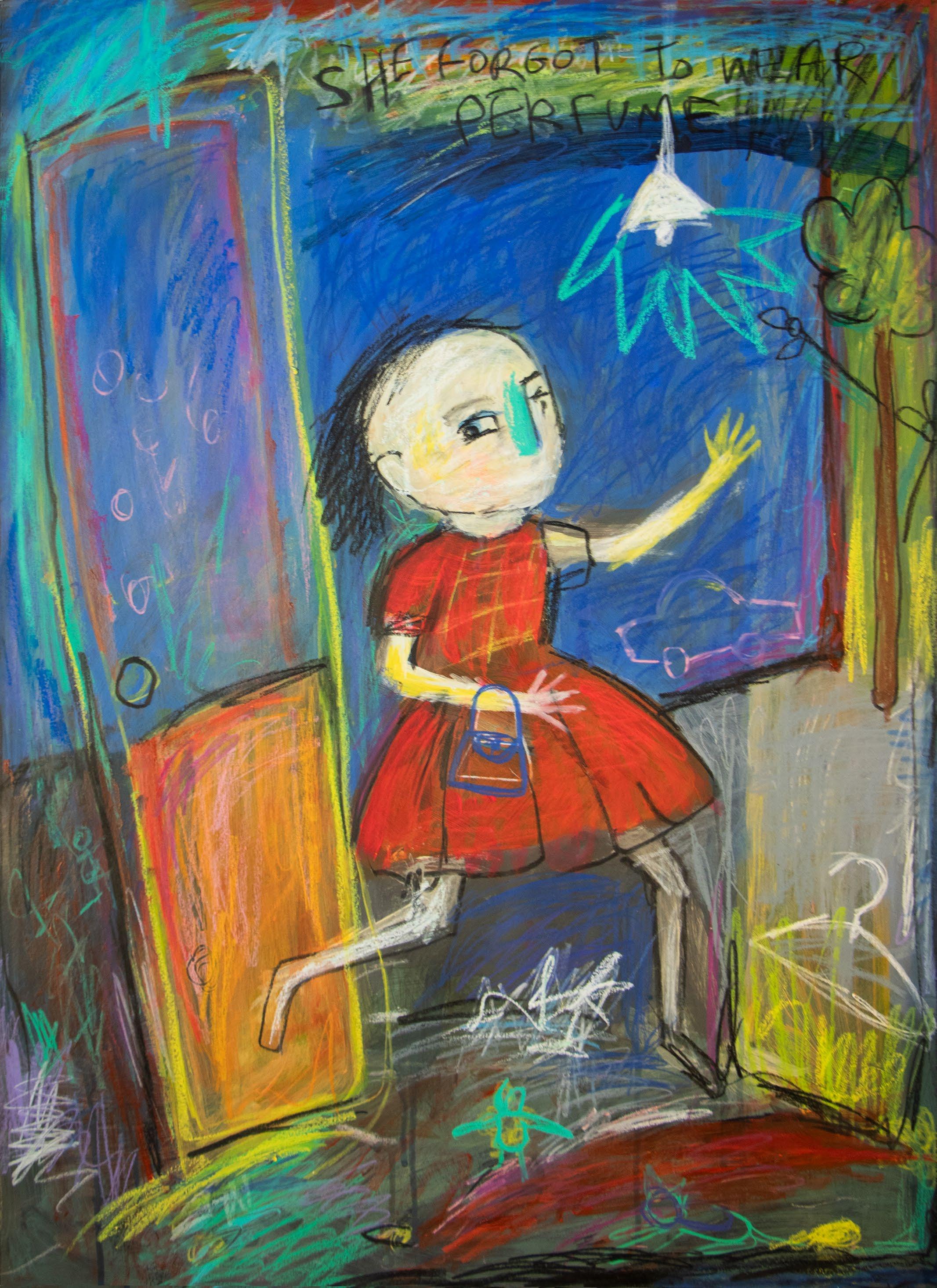

Gibraltar-based artist Shane Dalmedo is renowned for implementing bold and luminous colours in her large-scale canvases. Immediately recognisable for her playful scenes imbued with a sense of childhood nostalgia, Shane’s work encapsulates whimsical, free and primitive stylistic tendencies resulting in her own unique genre.
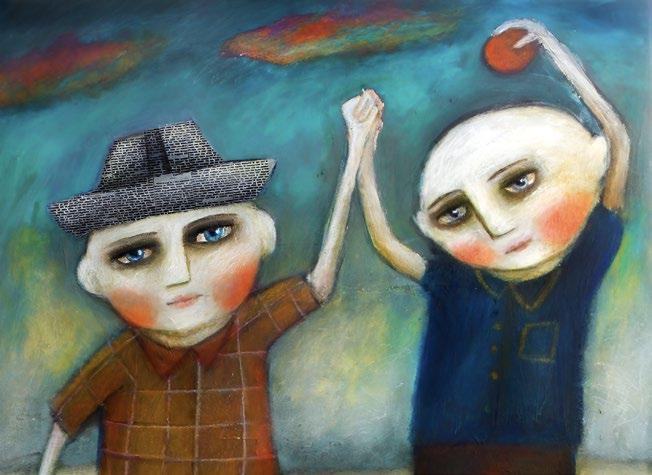
Filled with personal symbolic references which lend themselves to be dissected and further explored, Shane’s work depicts a multifaceted paradox ranging from freestanding sculpture work to wall canvases exhibited in gallery settings.
Shane’s piece titled Not Without Her Perfume (shown right) is a mixed media artwork depicting a free-standing figure in mid-run. Framed with complimentary colours to include red and green, the young female in the centre of the composition runs towards the right-hand side of the canvas with limbs outstretched, thus creating a sense of urgency. Depicted against a backdrop of cobalt blue hues, Shane’s figure adopts a caricature and cartoon-like quality, almost reminiscent of the Cubist and Fauvist styles of art.
Much like the pioneers of Cubism such as Pablo Picasso and Georges Braque, Shane too implements a fragmented quality and childlike spirit to her compositions. Upon analysing Not Without Her Perfume, Shane implements stylistic elements which are akin to that of Picasso’s famous Guernica mural. Much like the geometric shapes found in Picasso’s large central lightbulb framed by jagged edges, Shane depicts a hanging lamp surrounded by light blue pointed shapes reminiscent of a star or celestial entity. In the same way that Picasso heavily features crisp outlines and silhouettes, Shane also depicts a simplistic and stark quality to her vibrant pieces. Devoid of recognisable facial features, her figures are shrouded in anonymity and rendered in a stylistic paradox of disquieted vulnerability amidst
a draping curtain of vertical lines and textured turbulence.
Shane’s painting titled The Wedding the Honeymoon and the Embryo (shown over the page) is another example of fusing together innocence and the unsettling. This amalgamation of contrasting impressions is found in her use of bright complimentary colours and playful textures which instantly attract the viewer’s gaze, juxtaposed with jarring figures almost reminiscent of Mexican sugar skulls, used as iconography for the famous Dia de Los Muertos (Day of the Dead). The composition depicts a figure resembling the character of Corpse Bride in Tim Burton’s 2005 fantasy film (on the left-hand side), kneeling beside a larger seated figure. Cloaked in black and depicted with exaggeratedly large yellow hands extended towards her, the duality between a welcoming scene of comfort where one arrives home and yet is received by a haunting presence is certainly at play in Shane’s aesthetically explosive piece.
Indeed, Shane’s work is a masterful union of pivotal movements throughout the history of art in which colour and exuberance prevail. Her modernist compositions herald the Cubists, Fauvists and Colour Field painters spanning the entirety of the 1900s. Drawing key parallels between her contemporary work with that of the master’s that preceded us not only places Shane’s canvases into a subjective lens from which to view it, but also creates an enticing dialogue of larger social and political issues which exacerbate subconscious thought and reason.
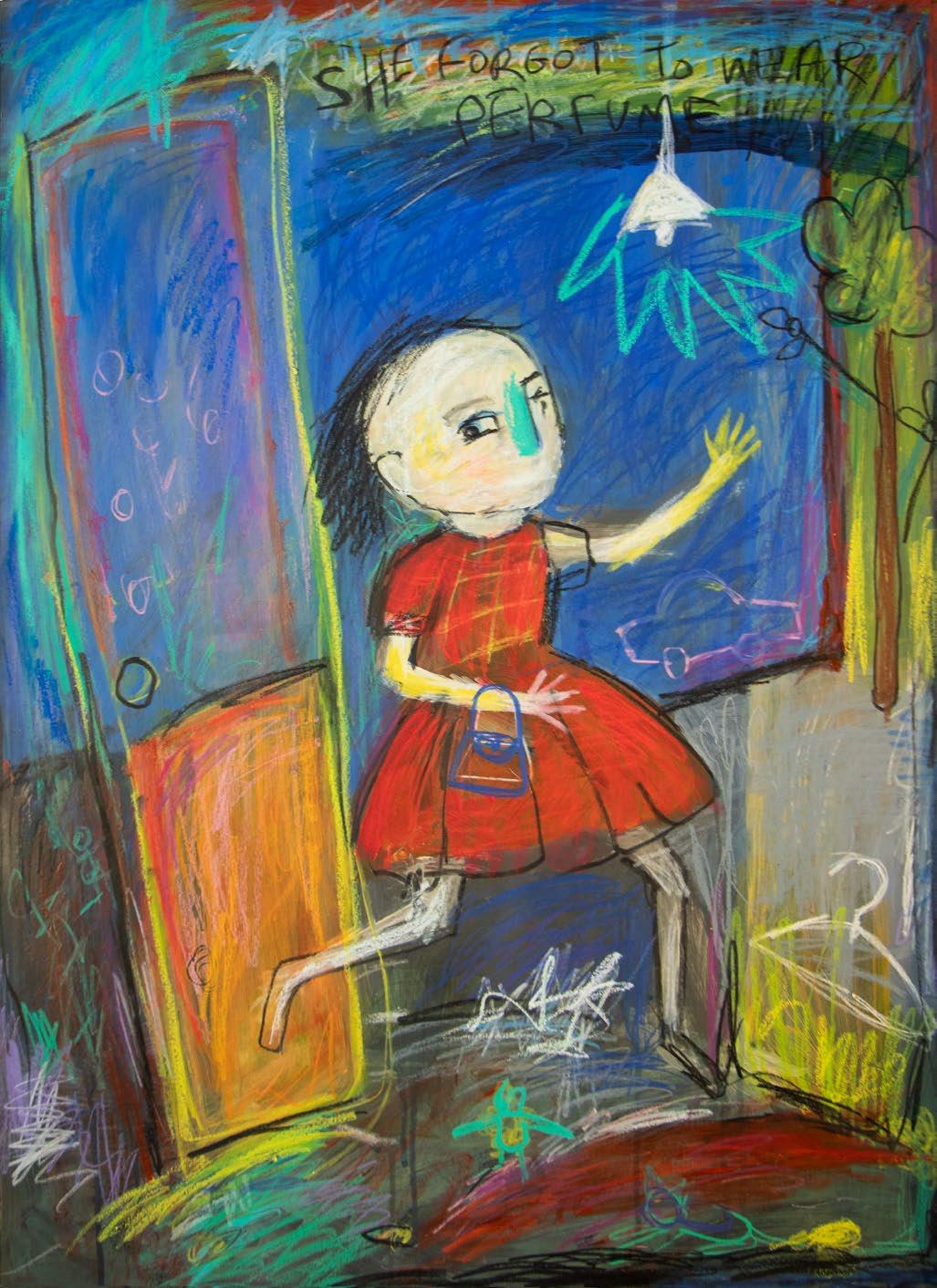

The Growing Artists Programme is fast establishing itself as a cornerstone of Gibraltar’s cultural and educational landscape. The programme is designed to nurture emerging talent and provide accessible opportunities for artistic expression; the initiative is also multidimensional in scope, encompassing competitions, workshops, exhibitions and community engagement projects. Importantly, the programme does not solely endeavour to foster creativity, it also enriches Gibraltar’s cultural scene and strengthens its artistic infrastructure at a grassroots level.
In this vein, the program is committed to supporting younger and developing artists. The flagship Triay Art Competition, organised in partnership with Triay Lawyers, exemplifies this mission. Open to Year 12 and 13 students, the competition challenged participants to design an artwork for the firm’s refurbished façade, with a first prize of £1000 won by Stella Bossano. All submissions were displayed at the Growing Artists Creative Hub before judging, ensuring that every entrant received exposure.
The programme also partnered with the Gibraltar Horticultural Society to deliver the annual ‘In Nature’ competition. This contest invited participants of varying ages to explore environmental themes through art, photography and mixed media. Categories such as ‘Gibraltar Wildlife’, ‘Nature’s Textures’ and ‘Native Plants’, underscoring the role of art in ecological awareness and community dialogue. Winning works were exhibited in the Growing Artists Creative Hub.
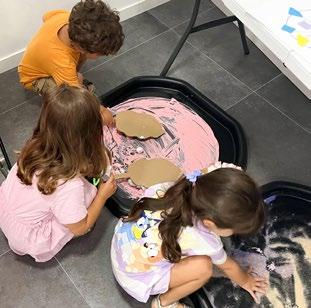
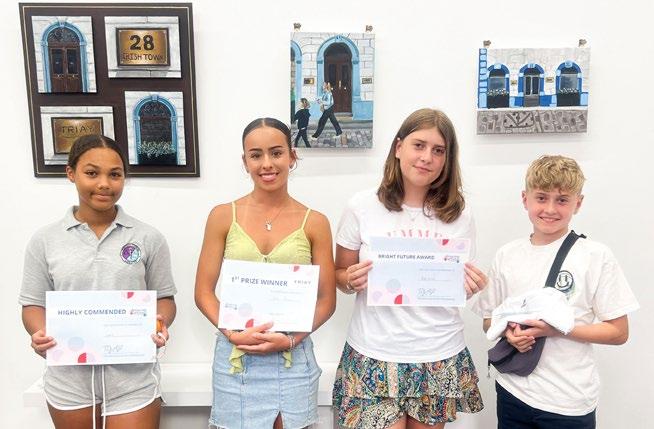
Tangentially, the Growing Artists Hub offered a Kids Nature Art Workshop, where children aged 5 to 12 were able to experiment with natural materials, such as sand, leaves, twigs and shells, to create
original pieces. The workshop concluded with a celebratory exhibition, offering young participants both artistic skill-building and the pride of public presentation.
The Growing Artists have also recently showcased their work at Art Space Fairs successful art fair in Marbella, marking a significant step in providing local talent with international exposure. This presence reflects the programme’s ambition to situate Gibraltar within wider creative networks, ensuring that its artists are both contributors to and beneficiaries of Art Space Fair’s exhibitions.
Back home, the Growing Artists have already left a visible imprint on the local landscape. Notably, they painted a striking
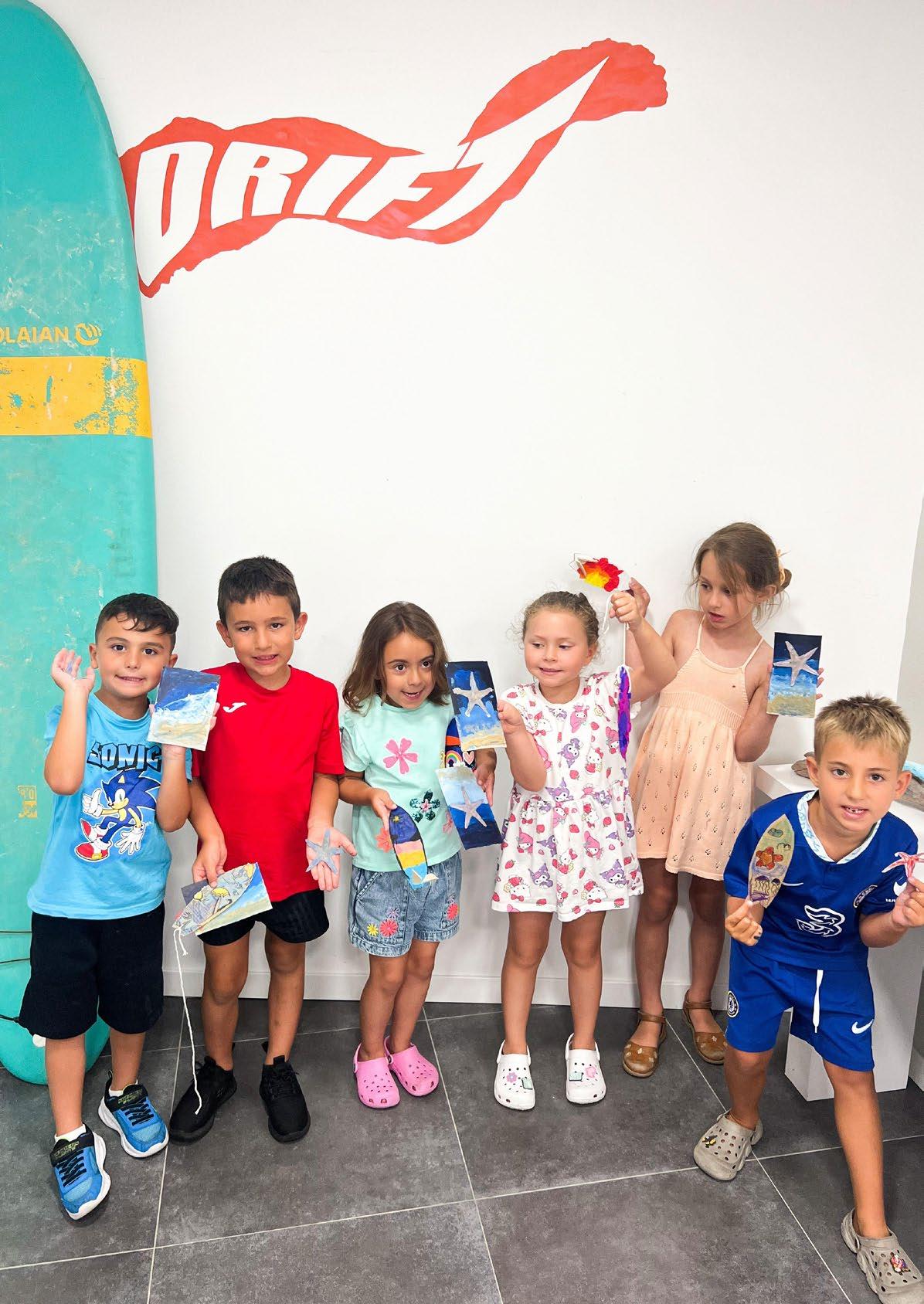
The Growing Artists Programme is committed to using art and its history for both educational and creative engagement. It hosts regular classes that introduce children and teenagers to different techniques and traditions.
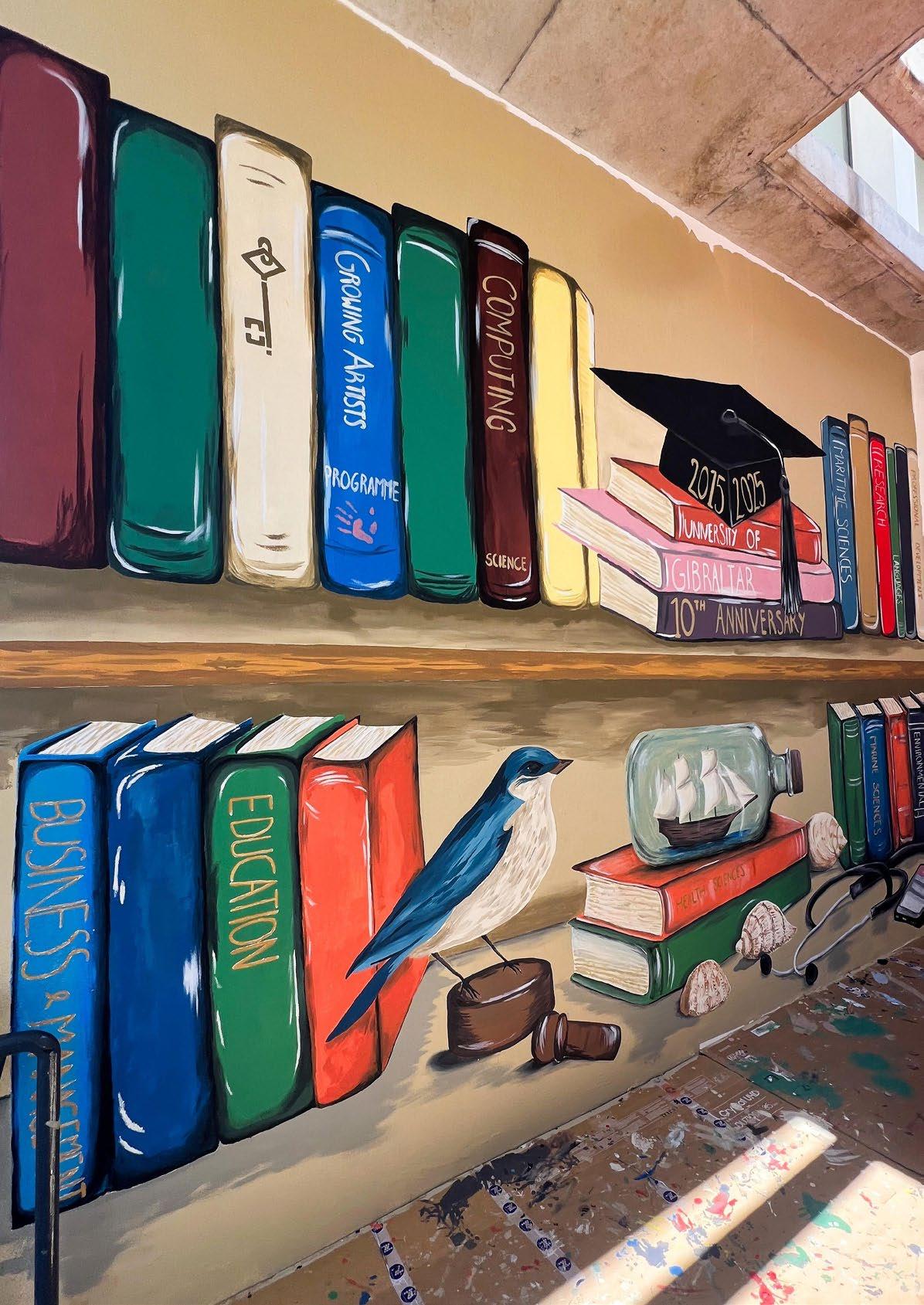
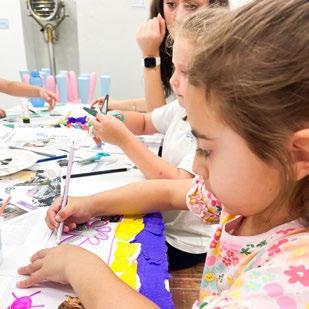
mural at the entrance of the University of Gibraltar, a project that illustrates the programme’s commitment to integrating art into public spaces. The Programme also hosted a summer camp for MH Blands, filled with summer-themed activities and ocean-inspired lessons. In tandem, the Programme also held their own half day summer camp, where students interacted with Phoebe Noble’s DRIFT exhibition at the Hub. Looking ahead, the Programme will further consolidate its local impact by hosting an Art Festival next year. The event promises to be an exciting weekend of workshops and exhibitions, extending access to creativity across the community.
The Growing Artists Programme is committed to using art and its history for both educational and creative engagement. It hosts regular classes that introduce children and teenagers to different techniques and traditions. Among these are ‘Mini Makers’, designed for younger children to explore creativity through play, and ‘Art Squad’, where children develop technical proficiency. Techniques taught include Pointillism, offering students a grounding in both practical skills and
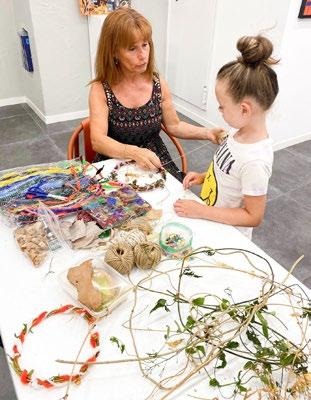
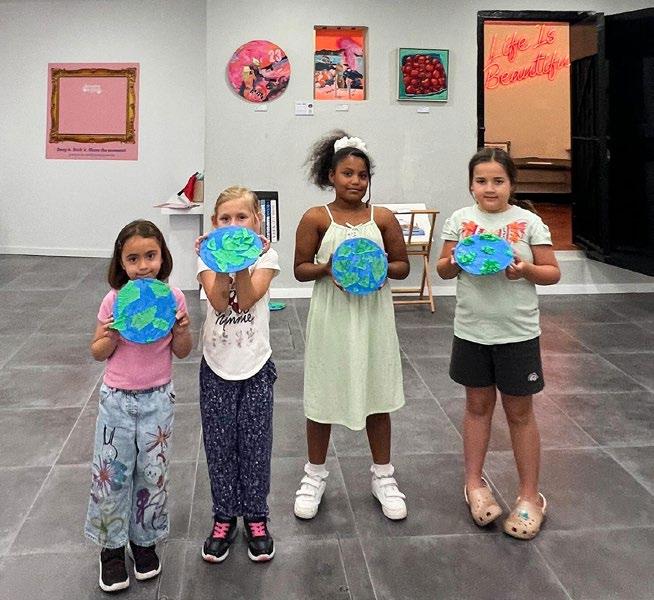
art history. These classes exemplify the programme’s dual aim: to cultivate individual talent while fostering awareness of artistic traditions.
The Growing Artists Programme is far more than a collection of events; it is our investment in the cultural capital of Gibraltar. Our work engages with every demographic, from schoolchildren and teenagers to emerging professionals and established practitioners, helping to build a solid foundation for long-term engagement with the arts.
By Sophie Macdonald
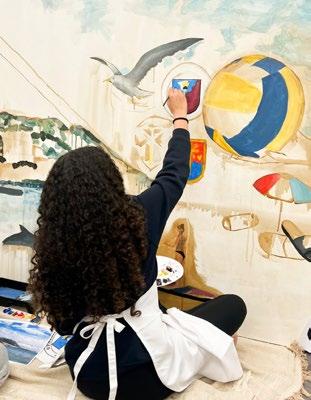
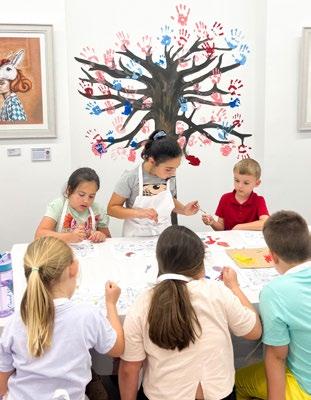
Gibraltar-born artist Jack Hernandez exhibited his seascape paintings at the London Art Fair by Art Space earlier this year. His work captures the dynamic interplay between sea and sky, evoking both a sense of serenity and movement.
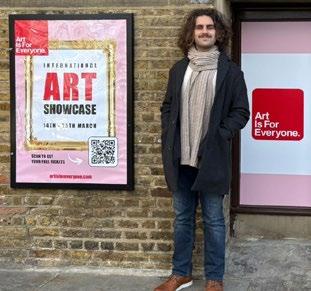
With a cool colour palette dominated by blues and punctuated by thick flickers of white-coloured impasto, Jack achieves a three-dimensional effect in his work, contributing to a powerful immersive experience. Delving into Jack’s inspiration behind the unpredictability and beauty of the ocean, he joins Inside Magazine to take us on a personal journey of creativity.
Q. Tell us a little bit about yourself, and when you first began to gain an interest in art and painting.
A. I’m big on painting and reading, and I’m a student at the University of Northampton completing my final year of studying art. I would say my interest in art came from sketching cartoon characters as a child, though my interest in painting came from a growing appreciation of nature. I’ve been travelling to beaches all around the world for as long as I can remember, and I’ve found myself attracted to the outstanding nature that makes this world. I wanted to relive and better appreciate my travels whilst hoping to return after exploring and painting what else the world offers. Nature
calls to be painted by its admirers to pass on its beauty to the rest of the world.
Q. You exhibited some of your paintings with Art Space in London. Tell us a bit about what inspired you to create these pieces, and what it was like participating in the London art show.
A. The works I exhibited were based on memories of the sea. My works After Noon (shown below) and The Swimming Pool (shown on page 2) were the first of my beach paintings in my course. My initiative was to recall my best memories of beaches, and I found myself looking back at my summer in Portugal in 2020. Feeling View was based on my trip in 2024 to Fuerteventura in the Canaries, to which I anticipated painting a new scene. Bench (shown above) was my favourite to paint. It wasn’t some
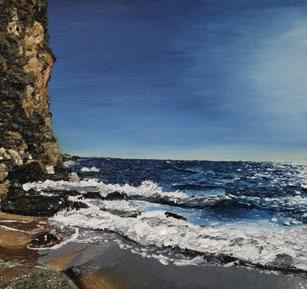
extravagant experience abroad, it was five minutes away from my house in Gibraltar, and it worked out perfectly in capturing my memory by the sea at home. Taking part in the London art show was honestly intense. I’ve never had my paintings that I’m so proud of exhibited in such a brilliant
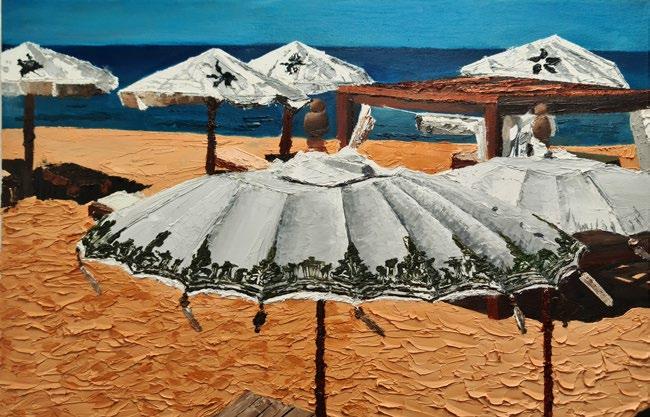
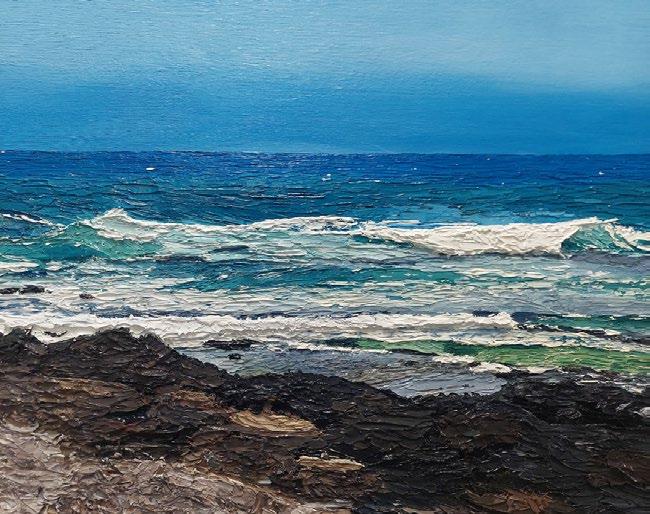
place before, though I gained a boost in confidence from watching people walk by my paintings to look and smile at the scenery.
Q. What would you like to accomplish with your art, and what are your future goals?
A. My current work’s goal is to bring people to the sea. For me it’s my whole life, even when I’m far from it, my intention is to have my works act like a window into scenes that beach-lovers would like to see. My personal goal would be to present my works everywhere. I think everyone deserves an experience by the sea, so for people to see my paintings and then want to go to the beach would be a dream come true.
Q. Do you have any specific artists or art-historical movements that have influenced your work?
A. I’m interested in artists who’ve had direct experiences with nature or their surroundings and how it’s affected their lives, like David Bomberg with his yearlong stay in Ronda, or a personal favourite of mine Emil Nolde with his life by the sea.
Q. Is there a particular message or emotion you aim to communicate through your work?
A. I’m more about emotions than messages. For me my paintings represent a nostalgic feeling towards the sea, but for the viewers, I’d like a feeling of wonder to cross their minds while looking at my scenes.
Q. What challenges have you faced as an emerging artist, and how have you overcome them?
A. My challenges were overthinking my scenery and a reliance on my references rather than a focus on the scene itself. Truthfully, they’re ongoing challenges, but they get easier with enough patience and practice.
Q. Tell us a bit about the process you use to create your body of work. Are there any specific mediums you prefer over others?
A. My preferred medium is oil paints and the use of thinning white spirit. My skies are made from thinning the paint on the brush, and for the rest of the painting I use palette knives to build thick layers
over time, creating a three dimensionality capturing my memory.
Q. If you could collaborate on a project with any artist (past or present), who would it be and why?
A. If he were alive, I’d say Caspar David Friedrich, as he combines story and emotion in his works, to which I would love to contribute to. I’d also love to work with Bozhena Fuchs, as her works on nature are physically impressive and visually stunning. She is my best modern influence so I would be delighted to make a seascape with her.
Q. Can you give us an insight as to any projects or new pieces you’re currently working on?
A. I’ve made two pieces since the London show, one of Fuerteventura titled Con La Brisa (shown left) and one of Gibraltar titled On the Rocks (shown below). I’m ecstatic to present them in my end of year degree show. For future projects I would like to explore the greener side of nature to challenge myself in painting all that nature has to offer.
Q. What advice would you give to an emerging artist, who’s just starting out in this line of work?
A. I have learnt from experience that fear is a mind-killer that blocks creativity and can hold you back from taking chances, so I would advise any aspiring artist to silence their fears that hold them back, build up their portfolio with everything that they love to paint or draw or sculpt, and to get themselves out there. The world is waiting for you.
By Tamara Bell
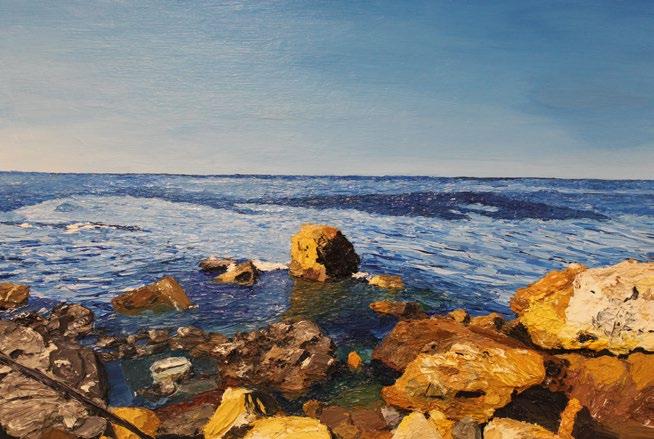
Meet Johan Wickholm’s, the type of driven performer who doesn’t merely wait for the spotlight, he crafts it. He writes screenplays, creates the stage, and steals the show. He has written, directed, and starred in his own project with an unwavering vision and passion for storytelling.
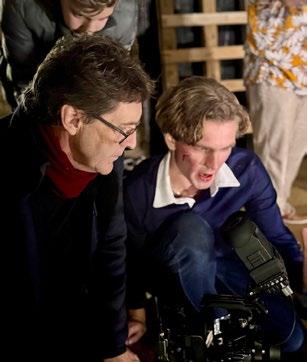
For now, it stands alone as a feature-short with ambitions to develop it into a featurelength movie. It’s rare to discover someone who not only talks about making a movie but actually sits down and accomplishes it by themselves, initially with just a concept and the courage to see it through. It’s a bold move in an industry that often waits for approval. What comes next is a closer and more detailed examination of how this piece of cinema was made, and the creative individual behind it.
“The initial inspiration came from working and being around the talented crew behind ‘Creep House Entertainment’. Just knowing that the director had an idea and just made it happen, made me feel like I could do that too. I knew I wanted to write something for myself, to see where it could possibly go and use it as another opportunity to further break into the film industry; both as an actor and a writer. Behind the script, I took ideas, themes and motifs from the likes of Purple Noon, Good Will Hunting,
City of God, as well as Romeo and Juliet I knew I wanted to star in it. I wanted it to be quite a dramatic story, and as I was writing this, I wanted it to feel real. There are a few elements I’ve combined from personal experiences and stories into the script, helped along by fiction and my own imagination. Hypothetical scenarios, circumstances and other people’s lives are combined into one. It was a long process, but I’m proud of it.“
The short is told temporally, in a series of past and present events that follow young teens that have somehow crossed paths with a drug dealer, after a reckless decision that seems to have spiralled out of control. This fractured timeline reveals addiction, broken trust and a desperate attempt to escape a life they never meant to enter. When asked what Letters of Love is really about, Johan really led into the emotional core of the film: “The most powerful feeling
in the world is love, and this really drives people’s emotions everywhere. We are all surrounded by drama, romance and action on a daily basis - these are crucial to one's being in life”.
Moreover, when talking about the filmmaking process Johan revealed that the first part of his journey was focusing on creating prototype characters and then building a story around them. He also mentioned the importance of sticking to themes and ideas for visualisation. Combined, characters and themes become the driving force of a potential narrative. Naturally, I asked him how he goes about casting his actors.
“Using casting call websites like StarNow, Backstage, Actors Access and numerous social media platforms we asked for self tapes of them reading bits of the script. We had over 650 submissions from actors from all over the world. Some read for
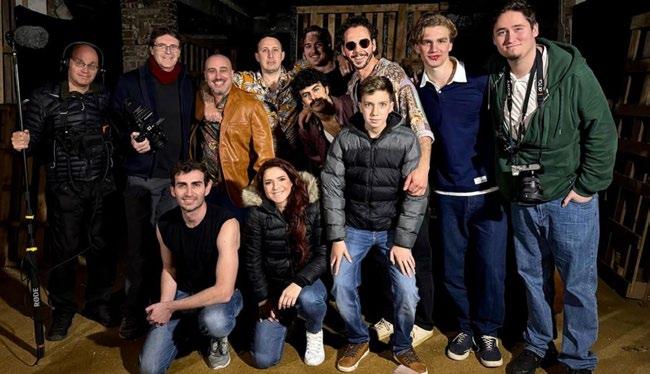
more than one role, which made choosing the final cast quite a vigorous challenge, but ultimately we wanted hungry, talented and passionate actors who could really fit into the character’s mould, regardless of their experience. There was a lot of tough decision making, and losing sleep over these decisions, but we just wanted that ’it’ factor and that spark that would be shown on screen”.
With the same passion, vulnerability, and vision that defined the original idea, his current objective is aiming to turn Letters of Love from a compelling short into a full-length feature film. Making a longer movie isn’t the only goal of this next chapter; it’s also about expanding the tale, connecting with more people, and delving deeper into the unseen realities that bind us all together.
Johan’s journey is inspiring for all young filmmakers, and I asked him about the best ways to make creative dreams come true: “You have to surround yourselves with creative individuals, connect and network with people. Through sites like Spotlight, LinkedIn and Backstage you can then discover and find other passionate creatives who believe in your project and find a dedicated cast and crew to help you along the way. Through a lot of trial and error, rejection and denial and persistence you can make something for yourself”.
Letters of Love stands as a reminder that the words we write, together with the feelings that are behind them, have the capacity to bring people together: to heal, and inspire in a world that frequently lacks real connections. This project isn’t just a film, it’s a love-sealed message to the world.
By Anthony Loddo


“ “
The most powerful feeling in the world is love, and this really drives people’s emotions everywhere. We are all surrounded by drama, romance and action on a daily basis - these are crucial to one’s being in life.
Languages are borne out of a historical past with which they remain perpetually in communication. As a British Overseas Territory, Gibraltar’s linguistic past is characterised by a multitude of tongues and perspectives; it is imbued with narratives of migration, colonial structures and a struggle for the recognition of its peoplehood. Together, these factors have contributed to one of the local languages we speak in Gibraltar today, Llanito.
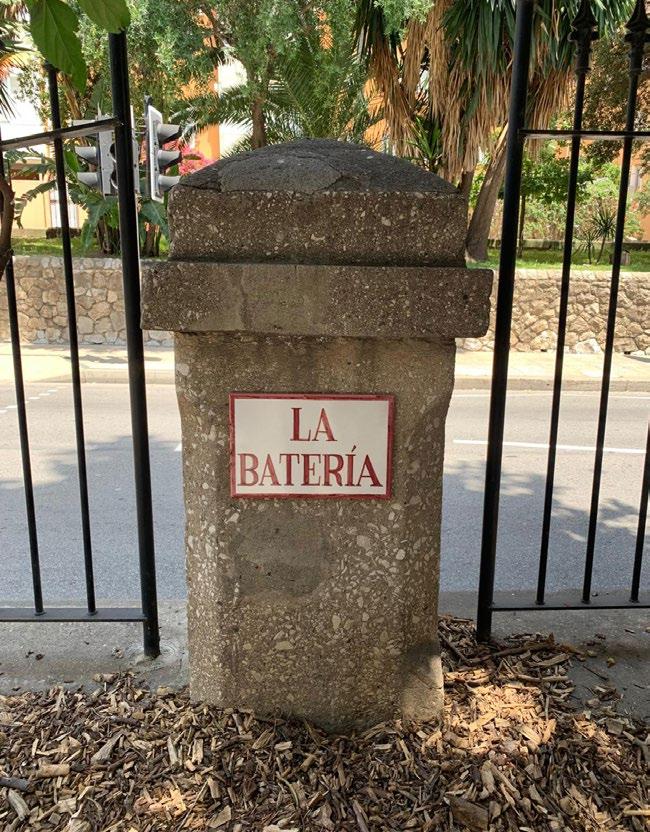
Llanito has become a heritage language for Gibraltarians: it is an amalgamation of Western Mediterranean linguistic varieties present in Gibraltar, such as Genoese and Haketia, as well as Andalucían Spanish and English. All these varieties in Gibraltar as a result of Gibraltar’s storied cultural history. Gibraltar was ceded to Britain after the War of Spanish Succession in 1704, after which 25 and 16 individuals remained on the Rock, whose type of Andalucían Spanish formed the basis of Gibraltar’s main language at the time. By 1725, the number of residents on the Rock expanded: now, the 1,113 residents included speakers of English, Spanish, Genoese, Catalan, Darija Arabic and Haketia. Over time, language contact between all these varieties would evolve into Llanito: a localised, code-switched variety.
Whether you prefer to spell it as Llanito or Yanito, it is a language with which locals in Gibraltar resonate deeply - it has a grammar and its speakers have an accent that is local to the Rock. For many, Llanito is associated with their grandparents, with stories from their childhood and everyday life. It’s special to know that, throughout generations in Gibraltar, code-switching
Throughout Gibraltar's history as a fortress, several designated saluting batteries were established for ceremonial gun salutes, with their locations changing over the years. One of the most notable saluting points was the New Battery along the line wall, overlooking the dockyard. It became known simply as La Batería, due to the frequent salutes fired from the location.
The Waterport Fountain was erected in 1955 at the intersection of Queensway, Glacis Road, and Waterport Road. Its design, resembling a flower bud, led to it being colloquially called La Fuente del Capullo (The Bud Fountain), as 'capullo' in Spanish translates to 'bud'.
has been a cultural phenomenon, an experience that has long contributed to Gibraltarian identities.
In fact, Gibraltar’s code-switching has also been reflected topographically. As was detailed in Cambridge University’s Llanito Exhibition in Gibraltar last summer, 55 historic Gibraltar street names contain British, Genoese, Sephardic, Catalan, Spanish and Portuguese surnames, surnames that occur in 18th century lists of inhabitants. For example, Ansaldo’s Ramp has Genoese origins, while Callejón Benzirma is Sephardic in nature. Cuesta de Carlos Maria also highlights the Spanish surnames present in Gibraltar, and Passage Carreras emphasises a Catalan presence. Dr Laura Wright, who has launched a project on Llanito, points out how Llanito has informed perceptions of place in Gibraltar. City Mill Lane, historically known as La Calle de las Siete Revueltas shows this development: ‘city’ here acts as an Anglicised spelling of ‘siete’.
Multilingualism has long been commonplace in Gibraltar, even though Llanito has traditionally lacked prestige in the local community. The territory’s colonial past saw English become its only official language, however, Llanito remains the standard means of communication between Gibraltarians of older generations. Studies have shown that Llanito is dying out among younger generations: little awareness that Llanito’s intergenerational
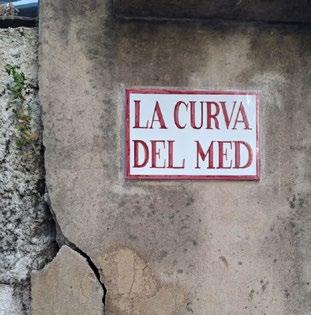
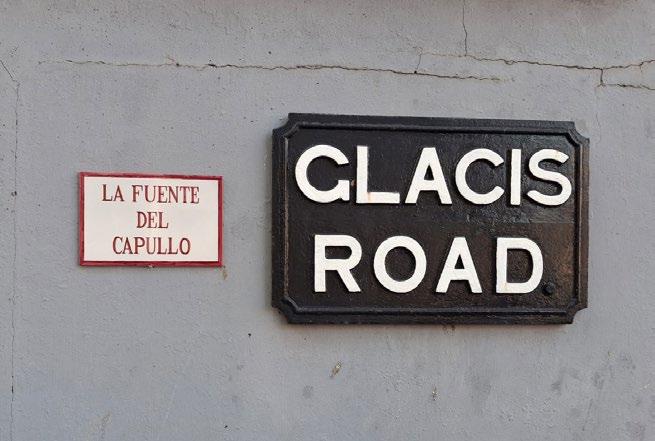
transmission occurs through the maternal line has contributed to Gibraltarians speaking Llanito to each other, but not to children.
Currently, Llanito stands at a turning point. Languages die in just three generations, and children are crucial to language maintenance. Llanito might be in decline among younger generations, but it’s not too late to save it. There have been global success stories of language revitalisation. For example, Modern Hebrew has been revitalised as a common language for Israelis, and efforts to revitalises New Zealand Māori are ongoing.
There are various initiatives that support the preservation of Llanito in Gibraltar. Efforts by the Gibraltar Government has seen the inclusion of a ‘Llanito’ category in the Gibraltar Cultural Services’ annual Short Story Competition, and Multilingual Gibraltar is an NGO that lobbies for a Languages Act to protect Llanito. Organisations like Patuka Press also strive to protect Llanito through literature, and actively encourage Gibraltarians to put their languages to pen. There are also international endeavours: Cambridge University launched the first Llanito and Gibraltarian Literature Conference in 2023, which produced a manifesto for its
protection. Since then, other universities in Vigo and Basel have pledged to host their own Llanito conferences, with a different location assigned every year.
Llanito holds within it a Gibraltarian culture that is unique and celebrated. It is a culture that has encouraged literary and artistic expression. While its effect on Gibraltarian art may not be explicit, the culture with which it is associated contributes to the themes and feelings generated by various local artists. Llanito harbours artistic expression: its culture provides a unique insight into the Gibraltar we are in today.
By Sophie Macdonald
Gibraltar’s linguistic past is characterised by a multitude of tongues and perspectives; it is imbued with narratives of migration, colonial structures and a struggle for the recognition of its peoplehood. “ “
La Curva del Med referred to the sharp bend in the road around the western extremity of the glacis that protected the north-west counterguard, commonly known as West Place of Arms. This bend was located near the premises of the Mediterranean Rowing Club, which stood opposite the glacis. The rowing club's location gave the bend its name, as the club was a well-known landmark.
Click here to see more Llanito street signs on the Gibraltar Heritage Site

The Crooked Timber Giordano
80 pages
Non-Fiction
There is a notion that literary and artistic movements are dead. What we have instead are trends, things that are 'a thing' right now. So, gone are the days when artists and writers and deep thinkers sat around a dinner table in a house in Bloomsbury or attended salons in Paris to discuss their work and very deep thoughts. Nowadays, we are driven by algorithms, pushing us in a marketing spree to convince us that tortured-life memoirs, or spicy dragon fantasy, or first-person unpunctuated literary fiction aesthetics are the thing, and here are fifteen books you can buy and receive tomorrow.
Reading these free-wheeling letters between Gibraltar poets Giordano Durante and Gabriel Moreno in Crooked Timber: Letters Between Two-Middle Aged Poets, written in an online document on buses and trains and AirBnBs in Gibraltar, Spain and England, there isn’t quite the romantic vibe of quills and pots of ink at writing desks, but there is a sense of a movement. And it’s refreshing that this movement is profoundly Gibraltarian.
Both poets mash together ideas of what it means to be a poet, what poetry can do for the soul, and gild the edges of a warm and humorous correspondence with a passionate and insightful knowledge of modern poetry. There is an effort here, in some part unconsciously, to anchor the idea of Gibraltar literature but more specifically poetry, with the canon of Western poetry. And why not? Why can’t whatever a Gibraltarian poet produces sit next to Lorca? Why has that border fence held us back for so long?
Both men have some ideas on the reasons why, and what can be done about it. There are some terrific pedestals for the Gibraltarian language, a still-unresolved and hot-issue for so many around the classism of properness and the supposed validation of Llanito by outside academia, but both Durante and Moreno argue that no, it is right at the centre of our experience
that we have a wealth of linguistic treasure that we should revel in. Less fretting about whether a writer’s interpretation of Llanito is correct, and more making use of our mongrel vocabulary, championed as an excellent thing here, to stretch the limits of poetry and return to those ideas of fearless literary exploration that created masterpieces like The Wasteland
There is a call for bravery here too. 'Enough with the trite depictions of a cute village life,' Moreno almost shouts off the page. Can Gibraltar handle being depicted in literature beyond its myth and through the lens of a singular experience? It’s a question we always seem to be on the verge of, three steps forward and two back, evidenced here by the volley of ideas between these two charming and creative friends, who don’t quite have all the answers and often write themselves into a frustration that things could be different.
And there’s a vulnerability within these pages, that perhaps as much as poets wish to push the envelope and reveal the beating and messy insides of a Gibraltarian life, smuggling and toxic machismo and all, there is also an incessant need in the creative person for validation. “If only our poems could connect with someone too!” Moreno cries out, while Durante considers how, with a body of work now at his feet, it might be possible to take a scalpel and
Both poets mash together ideas of what it means to be a poet, what poetry can do for the soul, and gild the edges of a warm and humorous correspondence with a passionate and insightful knowledge of modern poetry. “ “
condense what his poetry is about to its very essence. As the book gets close to reaching its hesitant end, both consider their middle-aged lives and the passing of time, alongside a Gibraltar that no longer exists or seems close to slipping through their fingers, noted in details, such as the closing of Sacarello’s, an unspoken spot for the creative people of Gibraltar for decades.
What now? The book does not promise to even dabble with the idea of providing answers, but I get the impression that there is a next step in its irresolution, for Gibraltar literature. Patuka Press has been established as a home for Gibraltar writing. A manifesto, next? A meeting place? Or are creative people in Gibraltar so disparate in their visions and so irregular in their language, that this will never happen?
For now we are left with a literary movement of two. Having spoken to both poets, and despite their wit and wisdom evident on each page, I left the book wishing for more of their voices. Quite literally. It seems trite to decry the lack of love for Gibraltar books and then ask for this, but I wish the next step in their creative collaboration is some sort of regular podcast. Until then, this is a book that as a creative Gibraltarian I will dip into regularly, when I need some validation and a little bit of home.
Reviewed by Jonathan Pizarro


Hunchback
Saou Ichikawa 112 pages
Fiction
Longlisted for the International Booker Prize 2025 and a literary phenomenon in Japan, this Hunchback challenges societal views on sexuality and disability in a way never seen before in literary circles.
In Hunchback, Japanese author Saou Ichikawa delivers a novella that explores the intersectionality of disability and sexuality. In just 112 pages, she refuses to adhere to the conventional rules of disability narratives. Instead, she focuses on the question of what life looks like when society decides you should not, or cannot, fully participate within it.
Born with a congenital muscle disorder, Shaka Isawa lives within the limits of her care home. Longing but unable to participate in Japanese Society that refuses to accept her existence due to her severe spine curvature and electric wheelchair, she is viewed as an inconvenience instead of a participant. Instead, she lives online, tweeting incessantly, studying and posting erotic stories to an online forum.
Her life goes through the same tired routine day after day, moving in predictable and tired circles, until a new carer reveals that he has read everything: the smut, the dirt, and the stories. Shaka sees an opportunity and gives him an indecent proposal that will broaden her life experience, with almost deadly consequences.
Hunchback is one of the boldest and most original works of contemporary Japanese fiction in recent years. Drawing from her own lived experience, Saou Ichikawa creates a protagonist rarely seen in literature - unapologetically disabled, defiantly sexual and well aware of the erasure in society of people like herself. She is a female character with agency, intelligence, and sexual hunger, something that still seems to be lacking in modern literature as a whole.
This novella tackles many topics, but the most interesting and poignant, in my opinion, is the infantilisation of the disabled community and especially disabled women, something Ichikawa subverts by making Shaka a ‘smut’ author, even if she has never experienced it.
While this book does have themes and scenes of a sexual nature, it is essential in the story to give Shaka agency. Hunchback is so much more than that; this novella effectively focuses the reader's attention on the ways that even a seemingly inclusive community, such as the literary community, can perpetuate ableism through language, assumptions and gatekeeping.
One scene in particular has stayed with me and changed the way I think about different types of reading experiences. Shaka describes how difficult it is for her to hold and read a physical book, and how alienating it feels when book lovers romanticise the weight of a hardback book, the smell of the pages when you open it for the first time and the feel of turning the pages, all things she cannot experience. When online spaces are filled with the fetishisation of culture and the dismissal of accessible alternatives, such as audiobooks and ebooks, it serves as a stark reminder of whose voices get amplified in community spaces and how exclusion can quietly go unnoticed.
Moreover, this novella's strength lies in the author's prose: Ichikawa creates an insular and sparse world through the language she uses. Refusing to shy away from the stark realities of living with a congenital muscle disorder, she focuses on the gritty details of clearing breathing tubes and the
The writing in this novella is multifaceted, often humorous, yet severe and stark. Ichikawa manages to balance the serious with the humorous, which is usually the way life is. “ “
difficulties of moving out of her wheelchair, making the reader truly empathise with both her and Shaka's plight.
The author does not create Shaka as a character to inspire or admire; she makes her a character merely living her everyday life. The reader is confronted with this, seeing her in all of her flawed glory as she fixates on writing tweets fantasising about having an abortion, while writing stories entitled 'My Steamy Threesome with Super-Sexy Students in One of Tokyo's Most Sought-After Swingers' Clubs (Part I)'.
The writing in this novella is multifaceted, often humorous, yet severe and stark. Ichikawa manages to balance the serious with the humorous, which is usually the way life is. This is not a comforting read, but it is a unique and essential one, aiming to challenge cultural attitudes of disability in Japan and perhaps globally.
Hunchback is a book about agency, resistance and self-determination. It is a meditation on disability and sexuality, exploring the intersectionality of these two aspects within the broader societal context. This is a story about rights: the right to take up space, the right to feel pleasure, the right to write smut, and the right to be flawed, complicated, and unashamed.
For readers who are willing to engage in a slightly uncomfortable read, it will prompt you to ask difficult questions about whose story gets to be told in fiction and who is allowed to tell those stories, while also encouraging you to reflect on your own life experiences and the experiences of those around you.
Reviewed by Joel Francis

The Genoese Maritime Empire Echoes in Gibraltar
In 1298, off the coast of Curzola (modern-day Korčula), a fierce naval battle between the Genoese and the Venetians unfolded amid the churning Adriatic Sea. It was here that Genoese sailors captured Marco Polo in an episode more often remembered for its literary consequences rather than its political ones. Yet it also symbolised something greater: Genoa’s command over Mediterranean waters, its assertive hand stretching across lanes and its name respected in every port.
Rather than seeking vast territories, the Genoese maritime empire prioritised economic outposts that facilitated trade and exerted soft power. These nodes became cultural melting pots, where Ligurian merchants intermarried, negotiated and adapted to their surroundings, often without relinquishing their Genoese identity. While much scholarly attention has been given to Genoa’s workings in the eastern Mediterranean and the Levant, its presence in the western Mediterranean was no less significant. Among the lesser-known but enduring stories of Genoese influence lies in Gibraltar, where Genoese culture quietly embedded itself into social life, most vividly in the local dialect of Llanito.
Although Genoa never officially governed Gibraltar, the Genoese footprint remains unmistakable. By the mid-18th century, Genoese families formed a prominent part of Gibraltar’s demographic mosaic. So prominent, in fact, that British administrators would often colloquially refer to ‘the Genoese’ when speaking about local civilians. La Caleta, now known as Catalan Bay, was home to a substantial Genoese fishing community, and many street names and parish records still reflect their surnames: Parody, Canepa, Baglietto, and others. The Genoese contributed to the physical and cultural foundations of Gibraltar, laying the stones for buildings that still stand today.
Perhaps the most intriguing legacy of the Genoese in Gibraltar lies in Llanito, a creole-like dialect unique to the territory. Characterised by rapid code-switching between Andalucían Spanish and British and Gibraltarian English, Llanito contains words and phrases borrowed from Ligurian, the Genoese dialect. These aren’t mere
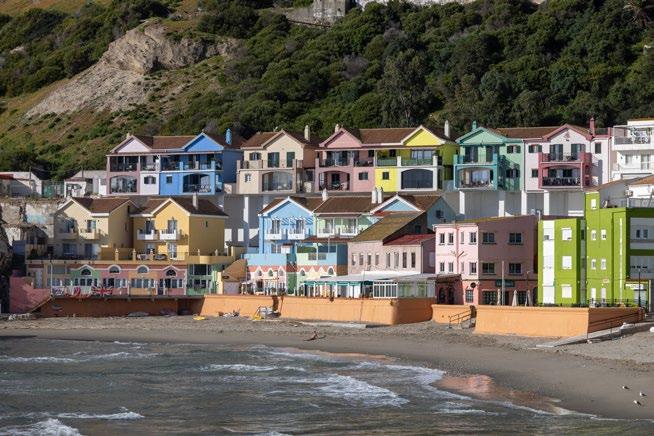
linguistic fossils; they are everyday words and idioms still used by Gibraltarians, often unknowingly echoing their Genoese ancestry.
Llanito terms, such as babucha (slippers), trincar (to snatch something), and Gibraltarian dishes, such as rosto and torta verde (or aselga) bear Ligurian roots. The influence may be subtle, filtered through Spanish phonology and local context, but it is firmly Mediterranean. In Gibraltar, language has become a reflection of lived hybridity.
The Genoese, by preserving fragments of their dialect even as they assimilated into a multilingual society, contributed to the contemporary linguistic fingerprint of the Rock. The Genoese settlers, while gradually adopting Spanish and English, contributed to this polyglot environment and helped shape the creole-like characteristics of
Llanito. This dialect, while often perceived as informal, serves as a profound testament to Gibraltar’s layered history and function as a Mediterranean crossroads.
The survival of Genoese linguistic elements in Llanito, centuries after the peak of Genoese maritime dominance, underscores the unwavering power of cultural transmission through migration and community life. In an era when the dynamics of empire and identity are being re-evaluated, the Genoese-Gibraltarian connection offers a compelling example of how historical processes shape local cultures. Gibraltar today stands not only as a bastion of British sovereignty but also as a living artefact of Mediterranean hybridity, one in which Genoese voices still echo in the rhythms of everyday speech.
By Sophie Macdonald
The Genoese, by preserving fragments of their dialect even as they assimilated into a multilingual society, contributed to the contemporary linguistic fingerprint of the Rock. “ “
Emma Rose Ocaña has just completed an MSc in Environmental Science and Climate Change at the University of Gibraltar. In doing so, Emma sought to investigate the relationship between species and their ecosystems at a deeper level.
Q. What drew you to pursue a degree in environmental studies and zoology? Can you recall an early memory that made you want to pursue this study?
A. For as long as I could remember, I have been interested in the environment, the earth and how it functions, in ecosystems, and marine life - partly because my dad has a doctorate in marine biology; we always had nature television programmes playing, and I began to watch them with him. This was a great inspiration for me, and it meant I always had a connection to nature.
My undergraduate degree in Zoology allowed me to study what lives within the environment, and now, for my Masters, I study the environment. We need scientists out there to help guide how we can protect our planet and the species that are living within it.
Q. Do you feel that growing up in Gibraltar, with its unique biodiversity, was an ideal environment to nurture your interests in environmental studies?
A. One of Gibraltar’s luxuries is its Upper Rock Nature Reserve, a protected area which allows for different species to thrive. We are the only place in Europe that has free ranging primates, like the Barbary macaques, and this is extremely unique to Gibraltar.
Gibraltar has a very diverse environment: there are so many varied species of flora and fauna I didn’t know about until I pursued my studies at the University of
Gibraltar. It helped me to become aware of environmental and conservation work, and the vast biodiversity that we foster here. We are very lucky to have access to all of this from our tiny rock.
Q. What is your thesis exploring and how do you think it will benefit Gibraltar’s understanding of its environment?
A. The MSc in Environmental Science and Climate Change at the University of Gibraltar provides a multidisciplinary foundation in topics like ecology, environmental policy and sustainable management, with a strong emphasis on local and regional environmental challenges.
My dissertation focuses on the presence of a widely invasive crab (the Atlantic blue crab, Callinectes sapidus) in Gibraltar’s coastal waters. Early detection and community awareness are key to preventing the blue crab from disrupting native biodiversity, something it is well known for in other invaded areas of the Mediterranean Sea and coastal waters of Iberia. Assessing early invasion stages by integrating in-field approaches with citizen science for ecological monitoring supports the proactive management of its marine nature reserves and allows for sound scientific research to inform policy and early management strategies.
Q. What is a fact or discovery that most Gibraltarians aren’t aware of, regarding their history of Gibraltar’s landscapes?
We need scientists out there to help guide how we can protect our planet and the species that are living within it.
“ “
A. Despite its small size, the Upper Rock Nature Reserve is home to hundreds of species of flowering plants, with several being endemic.
One example being the Gibraltar Candytuft which naturally grows only on the limestone cliffs of the Rock. Gibraltar is the only place in Europe where it wildly grows, which I think symbolises Gibraltar’s resilience and identity.
Another important one is the Gibraltar Campion flower, once thought to be extinct worldwide until it was rediscovered on our Rock in 1994. It is now protected and cultivated in Alameda Botanical Gardens!
Q. Do you have any advice for how people can aid the conservation of Gibraltar’s natural and marine reserves?
A. One of the most powerful ways people can support Gibraltar’s conservation efforts is by becoming more environmentally and ocean literate. Awareness is the first step toward action. This links to citizen science too, which is what I am encouraging in my research. It is a great gateway for public involvement and Gibraltar has several initiatives - like marine species monitoring, beach clean-ups. These efforts help bridge the gap between science and the community, and in Gibraltar, our strong community can help contribute meaningfully to environmental monitoring and research.
Q. Do you have any advice for people who are interested in pursuing zoology, marine, or biological studies?
A. If you’re curious about how life works, then fields like zoology, marine biology, or environmental science are incredibly rewarding. My advice is to stay curious, ask questions, and try to get involved in fieldwork or citizen science projects early on.
Whilst this degree is no means easy, it is a very important field that needs to be studied. Our planet faces various challenges and the benefits of studying these fields goes beyond science, they teach you how to think critically and work across disciplines like policy and education. It helps you gain a deep respect for the natural world and your role in protecting it. There is a real chance to make a difference at both the local and global scale. This is something that I am striving towards, and I encourage others to do the same.
By Evelyn Aylén Heis

Sail Training International is a charity dedicated to the personal development of young people through sail training experiences aboard tall ships. Since 2002, the organisation has led the development of the iconic Tall Ships Races, using these high-profile international events to drive youth involvement, promote cross-cultural collaboration and celebrate maritime heritage. These transformative voyages provide young people, especially disadvantaged students, with life-changing experiences through teamwork at sea.
The organisation frequently visits Gibraltar with their sailing school, offering Gibraltarian students the opportunity to board their vessel. Gibraltar is often a stop on their journey of many, and one Sail Training International hopes to further collaborate with in future. Inside Magazine interviewed their Deputy CEO and Commercial Director, Vanessa Mori, to highlight their impactful work.
Q. Why do you think it’s important for disadvantaged young people to participate in sail training?
A. It is as important for disadvantaged young people as any young person to take part in a sail training voyage. Being on board a vessel and part of the crew running the vessel is a great equalisereveryone has a role to play and everyone depends on each other for the safe functioning of the ship. Through sail training, young people learn about teamwork, they develop communication skills, and they are encouraged to challenge themselves in a safe environment - by the end of their voyage they feel a real sense of achievement and of belonging.
Q. How would you reflect on the evolution of Sail Training International as a company since 2002?
A. As an organisation, we try to continuously evolve in order to remain relevant, particularly to young people. To do this, we rely very much on feedback from our stakeholders, particularly from the ships, the host ports and the young people who take part in our events. I believe we have become much better at listening to feedback and acting upon it in recent years. We are a small team of 7 permanent staff
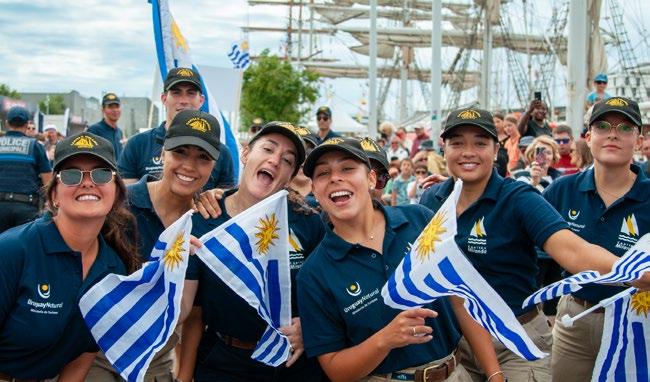
and we are all involved in delivering events. This allows us to both keep in touch with our stakeholders and to quickly respond when necessary.
Q. It seems like The Tall Ships Races have gone from strength to strength since the first event in 1956 – why do you think it remains such a popular, growing activity?
A. The benefits of taking part in The Tall Ships Races are as relevant today as they have always been. The Races are organised in order to promote youth development and to foster international friendship and understanding. We are always humbled to hear how profound the impact of a sail training voyage can be on young people. For most it is the adventure of their life, for many it is truly life changing.
Q. Organising and coordinating these races must be as exciting as it is complex: can you describe your role in setting up the events?
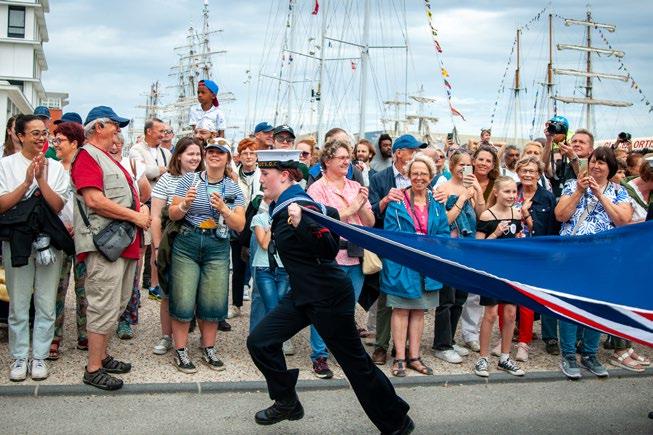
A. I am very lucky, and I often feel that I have the best job in the world. I get to work within a truly international environment and to see first-hand how our events impact young people, which is something of which I’ll never tire. I am responsible for recruiting and supporting host cities for The Tall Ships Races, along with my colleagues, to prepare for the events. It is very important for us that the host cities embrace our charitable values of youth development, international friendship and understanding - we encourage that they keep young people at the core of their events. I am also responsible for ship recruitment and for many of our external relationships.
Q. For trainees, what might an average day involve when the ship is at sea?
A. A trainee can expect to be fully involved with the running of the ship. They will be included in the watch system, which might mean getting up in the middle of the night for their watch; they will have the opportunity to helm, hoist sails, pull on lines, navigate, watch out for hazards, among other exciting things. They will also be involved with cooking and cleaningand of course they will experience life at sea, observe wildlife, beautiful sunsets and sunrises. They will also be living without a phone signal for a few days! They can also expect magic moments which will often allow them to consider life from a different perspective and give them the courage to dream about what they might be able to achieve.
Q. Part of Sail Training International’s mission seems to be bringing together diverse crews to help build understanding and connectivity – how valuable do you think this is in an increasingly fractured world?
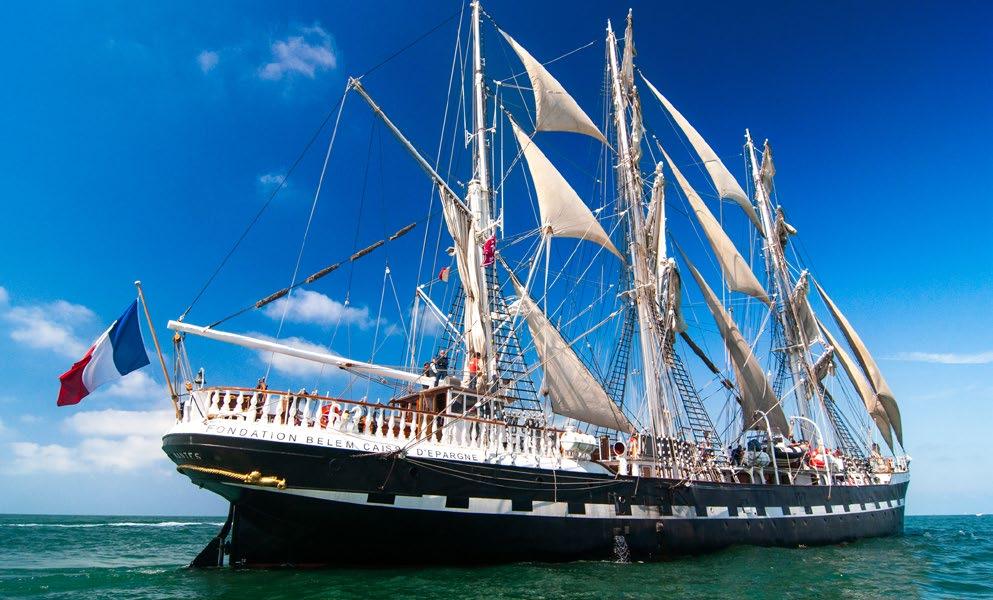
A. It is incredibly valuable. We truly believe that giving young people the opportunity to meet other young people from different cultures and nationalities is hugely beneficial, not only to them, but to society in general. In 2007 we were nominated for the Nobel Peace Prize for our efforts to bring together East and West in The Tall Ships Races - we hope we will be able to do so again as soon as it becomes possible.
Q. What would you say to someone who’s considering applying to be a trainee, particularly someone who may not have any experience of the sea?
A. Just do it! No experience is necessary – there is a permanent crew on board who

will teach you and support you all the way. You will have an incredible time, you will make new friends, and you will never forget it. If you need financial support, there are bursaries available, or you can fundraisewe are here to help.
Q. Sailing is an ancient human activity that has diminished since the advent of enginepowered vessels – how would you reflect on Sail Training International’s position in helping people appreciate and experience both maritime history and the sea itself?
A. Whilst it is not our primary objective, inevitably, by taking part in The Tall Ships Races, young people experience life at sea, and it encourages them to find out more about possible maritime careers. Every year we hear of trainees who have gone on to become crew on board ships, join the merchant navy, undertake sailing qualifications, among other careers.
Q. One Sail Training International vessel, the Gunilla, visited Gibraltar last year – how much do you know about Gibraltar, and is it a regular destination for tall ships?
A. I was lucky enough to have visited Gibraltar a few years ago. I was fascinated by how the blend of British, Spanish and Mediterranean cultures coexist and there is no doubt that Gibraltar is in a great position to attract Tall Ships who are either entering or exiting the Mediterranean. I would love to imagine that one day we could see The
Tall Ships Races fleet stopover in Gibraltar and help celebrate its strategic seafaring position.
Q. What events are coming up on the calendar for Sail Training International that people should look out for?
A. The Tall Ships Races take place every summer. We are now inviting bids to host The Tall Ships Races 2029, which will be sailed in North West Europe, and also looking for a fourth port for The Tall Ships Races 2027.
By Francis Devincenzi
Aarhus, Denmark
Wed 24 June to Sat 27 June
Harlingen, Netherlands
Fri 3 July to Mon 6 July
Antwerp, Belgium
Sat 11 July to Tues 14 July
Stavanger, Norway
Wed 22 July to Sat 25 July
Aalborg, Denmark
Thurs 30 July to Sun 2 August


Nicknamed ‘Little Britain’, with its unique peninsula-form and location on the southern tip of Spain, Gibraltar is a popular choice for travellers coming in through the sea. Especially due to its striking landscape, marina opportunities, and its rich local culture, it is no surprise that Gibraltar has become an iconic getaway for mariners – with many even choosing to stay and live here after their visit.
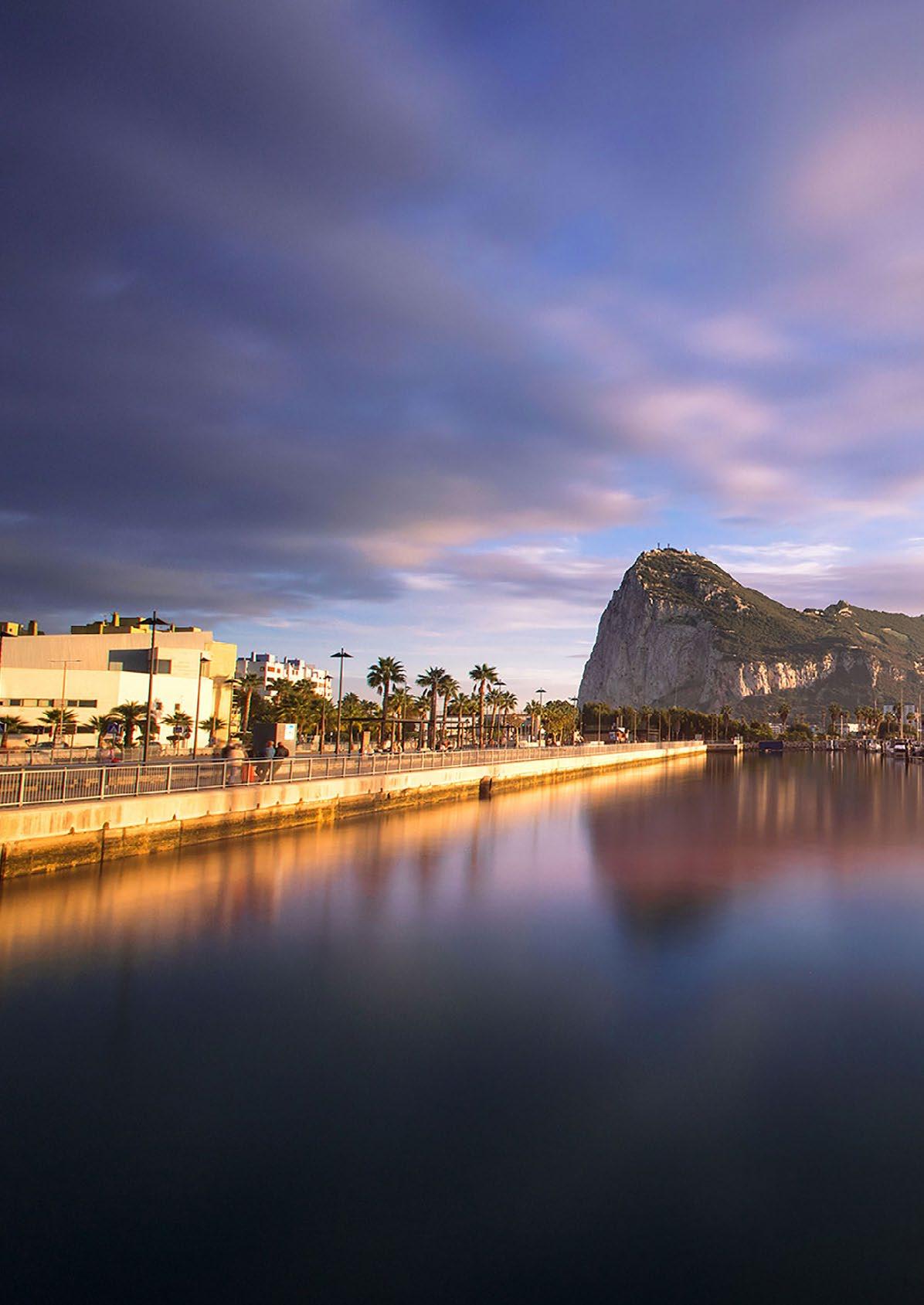
There are three main points of entry to Gibraltar; from Morocco, the Mediterranean, or the Atlantic. There are also opportunities for different sailing routes within Gibraltar once you are here, which are both memorable and beautiful.
Sailing from Morocco into Gibraltar is a popular choice because of the chance to experience two continents and two cultures in just one day - not to mention the sights you would experience whilst crossing the straits! Whilst this may seem an easy option due to the short distance, navigating your way through the bumpy straits might include some level of difficulty.
It might be best to plan your trip in the early morning, to avoid any strong winds; the weather across on this route could be quite temperamental and you may experience some strong currents. It would be preferred to travel with westerly winds (poniente) as it will make northbound sailing easier than the easterly (levante). This is also a popular route for ferries coming into the ports of Tarifa or Algeciras so you will have to navigate and manoeuvre around them!
You may also choose to sail in from the Mediterranean; perhaps you are already docked at the nearby ports of Marbella or Malaga and want a day trip to Gibraltar, or
have decided to leave the Mediterranean entirely perhaps from the Balearic islands. This route takes you from East to West and allows you to travel the gorgeous coast of Spain on your way.
From wherever your starting point may be, it is best to avoid travelling during strong levante episodes: even the largest yachts struggle entering with these winds. You may also experience some water traffic through large commercial ships, so it may be best to stay nearer the coasts. Perhaps coast hopping would be a fun idea for your trip, allowing you to visit small Spanish towns on your travels!
Lastly, you may be travelling from West to East, choosing the Atlantic path. This may be an option if you are travelling from Portugal, or perhaps Barbate. For this journey, you ideally want to avoid any strong wind conditions, especially wind going against tide conditions. The best bet would be light levante: it favours this route, but a light westerly would not be too problematic. This may appear to be a challenging journey, but your reward is being greeted by the beautiful shady underside of the Rock!
Now what to do when you have already arrived in the Bay of Gibraltar? Where should you dock? If you want to spend the night, there are of course docking opportunities at the different marinas, all of which are nearby amazing restaurant facilities. The Queensway Quay marina is located on a street with four top quality restaurants, but only a short walk to Gibraltar’s town. You may choose this when arriving in through the Atlantic route. The other option, which is the Ocean Village Marina, is also conveniently located in Gibraltar’s main social buzz. Here you will find restaurants, bars, and clubs galore! This
would be the easier option when coming in through the Mediterranean. Whichever marina you decide to dock at, just make sure you plan ahead of time and adhere to any regulations of the law.
No matter the route you take into Gibraltar, and wherever you decide to dock, you will undoubtedly witness the most breathtaking views, experiences, and learn a lot about different cultures. Sailing into this tiny peninsula is a bucket-list worthy experience.
By Gianna Stanley
On a frigid February morning at the Baltic port of Ust-Luga, three explosions ripped through the engine room of the MV Koala, an Antigua and Barbuda-flagged oil tanker carrying 130,000 tons of fuel oil. The ship was disabled and has remained under repair since. Up to six other ships have suffered similarly unexplained explosions since January 2025, ranging in location from Libya to Italy to Turkey.
Although it has not been definitively confirmed what caused these explosions, it is widely suspected to have been the work of the Security Service of Ukraine. What these ships all have in common is their suspected involvement in the seaborne trade of Russian oil, an activity which has been sanctioned by the European Union, the United Kingdom, and the United States since the invasion of Ukraine by Russia in 2022. Revenues derived from trade in Russia’s abundant oil and natural gas account for an estimated 60% of export earnings and 40% of budget revenues, directly helping Putin fund his war.
To circumvent restrictions placed on the trade of Russian oil, Russian entities have established a ‘shadow fleet’ of vessels, characterised by lax or absent insurance provisions, flag hopping to avoid flag-state scrutiny, opaque ownership structures, and aging carriers whose seaworthiness is highly questionable. The International Maritime Organisation offered a non-binding definition of the term in 2023, namely ‘ships that are engaged in illegal operations for the purposes of circumventing sanctions, evading compliance with safety or environmental regulations, avoiding insurance costs or engaging in other illegal activities’. G7 countries have extensively sanctioned vessels and corporate entities that have been positively identified as forming part of this ‘shadow fleet’, which is estimated to comprise well over six hundred ships, but many continue to operate with minimal interference.
Shadow fleets have been used by various states to evade international sanctions for years. Iran, Venezuela, and North Korea have all employed networks of vessels to trade in oil, weaponry, and other sanctioned goods. Gibraltar’s seizure of the Grace 1
in 2019, which was Singaporean-owned and Panama-flagged, was in response to it carrying Iranian oil to Syria, the latter of which was sanctioned by the EU. North Korea has extensively employed a ‘shadow fleet’ to avoid UN sanctions against it, which place limitations and embargoes on the trade of oil, luxury goods, weaponry, and technology. In the wake of North Korea’s support for Russia in Ukraine, various opensource intelligence organisations have reported on the two countries' increasing co-operation. The Maia-1, a cargo ship identified in facilitating arms transfers between the Russian port of Vostochny and North Korean port of Rajin, transited the Suez Canal in February on its way to Ust-Luga: the first time a ship sanctioned for facilitating North Korean trade had entered the Mediterranean.

One of the more farcical elements of shadow fleet strategies is the use of flags of convenience. Landlocked countries with no maritime traditions like Mongolia and Eswatini have seen their flag registries abused by bad-faith actors. Other registries like Liberia, Panama, and the Marshall Islands are also favoured by sanctions evaders because of the anonymity and lax oversight they afford, although all three have been
cooperating with international partners to try and reduce their exploitation. Using these flags is a first step in obscuring a vessel’s connections to Russia or sanctioned states. To avoid enforcement, owners will change between these flags regularly, resetting investigative efforts. More directly insidious tactics include disabling the ship’s automatic identification system (AIS) (or spoofing it) to fake their locations. This can be done for legitimate reasons: vessels traversing the Red Sea are turning off their AIS to avoid being attacked by the Houthis. In specific locations, however, it can be indicative of suspicious activity, including to disguise illicit ship-toship transfers (STS).
The Strait of Gibraltar is a major maritime waterway. A considerable portion of global trade, perhaps as much as 30%, passes through the strait on its way to Mediterranean ports and beyond via the Suez Canal. Included in this flow are approximately three suspected shadow fleet tankers passing the Strait daily. The Russian shadow fleet in particular poses an environmental threat to coastal areas, as many of the ships employed in this fleet are not properly maintained and are fifteen or more years old. Nor are they often sufficiently insured: rather than reputable Western insurers, many of these vessels have subpar or insufficient providers. These risk factors pose a stark environmental threat to coastlines, and the cost for any spill or sinking will likely be incurred by the coastal state. Helping monitor and enforce these sanctions could be an important method for Gibraltar to preserve its coastlines and contribute to helping choke off a key source of income that sustains Russia’s occupation and invasion of Ukraine.
By Francis Devincenzi
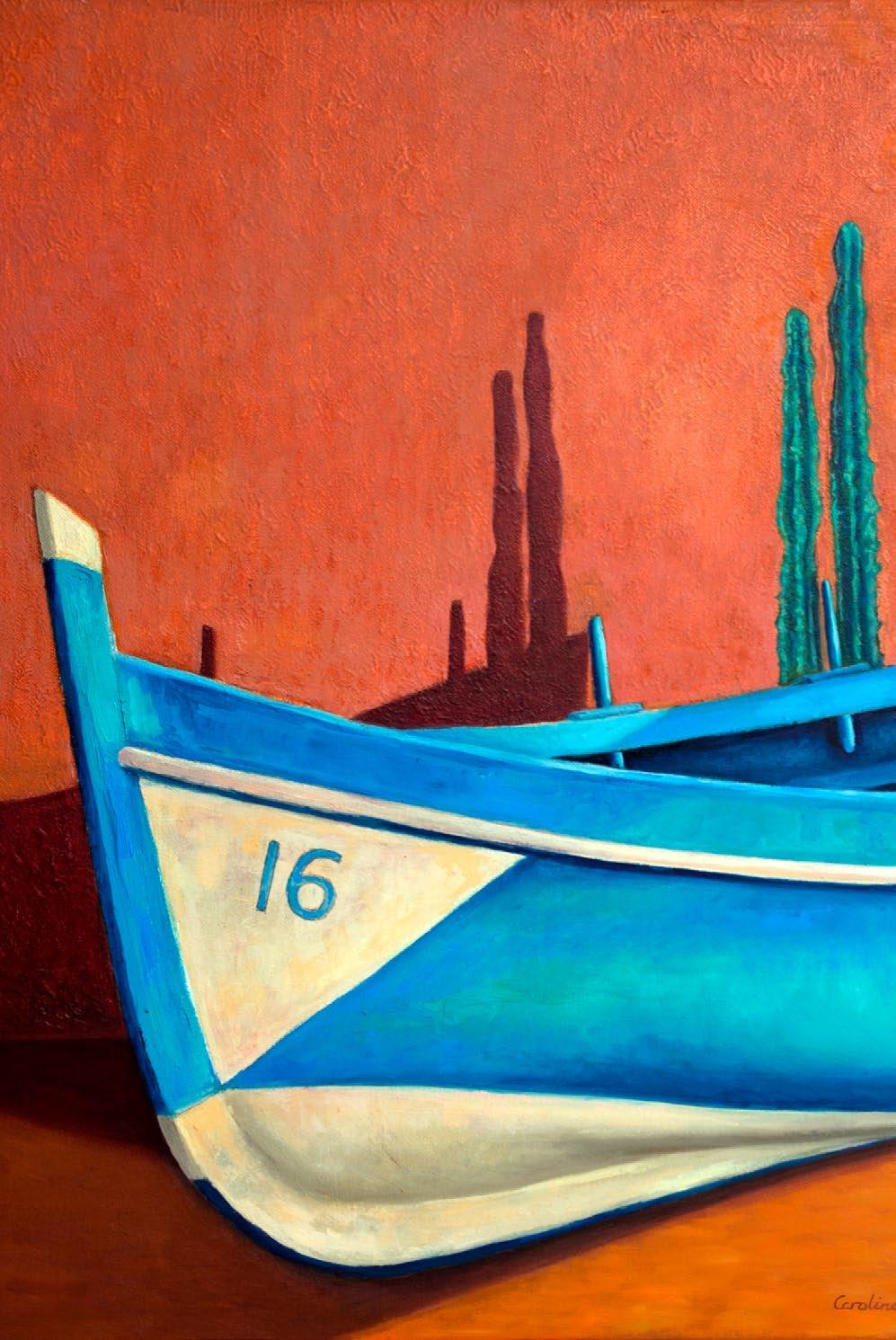
The world right now is so focused on sustainability that it’s becoming increasingly difficult to find transportation solutions that work for everyone. The catch is that there is no ‘one size fits all’ approach when it comes to sustainable travel.
I’m aware that not everyone can take a casual stroll up Devil’s Tower Road without the temptation for a well-earned spa treatment at E1 wellness club, or carry six Morrison’s bags through Upper Town while questioning all your life choices. In all seriousness, every day we are inching closer to a critical juncture, propelled
by the advancement of conventional transportation. The world is calling on us to reflect on our travel habits and the legacy we aim to form. Pursuing sustainable transport is imperative, echoing a call to action to help settle the stage for a brighter future. Take it from someone who still can’t ride a bicycle and never learned how to drive, but supports your right to do so sustainably.
On pen and paper, living in a place where you can walk from the airport to Main Street faster than you can say ‘Calentita’ doesn’t make you think that we have a major congestion issue.
However, with little arena for roads and no space to grow, our famous rock seems to host enough traffic jams to rival downtown Los Angeles…with the extra feature of a few apes and less pollution. But, worry not, as sustainable transportation can be a way of life, we just have to get rid of the myth that being eco-friendly is difficult.
Who knows, you may encounter familiar faces that you may have missed being stuck in that border queue. “ “
In reality, it has a sense of community. It’s the new luxury. You can breathe in fresh air and arriving at your destination stress-free is the ultimate power move. Slowing down and really taking in the beauty all around us can be something quite magical. So, join me in exploring transportation options and systems which might help us solve some of our problems while also improving our quality of life.
For some, that might involve a leisurely walk to work, school or to the shops where it becomes less of a responsibility and more of a time to relax, ‘get your steps in’ as they say. Who knows, you may encounter familiar faces that you may have missed being stuck in that border queue. The protection of the environment and the
You can breathe in fresh air and arriving at your destination stress-free is the ultimate power move. Slowing down and really taking in the beauty all around us can be something quite magical. “ “
climate has remained at the heart of Green Gibraltar’s initiative which has seen experts redesign the streets for people and not cars, making it safer and more convenient for pedestrians.
Also, at its very core, walking also offers physical and mental benefits: it boosts our mind, helps us maintain healthy bodies and improve our cardiovascular health. For those who require a vehicle, electric cars present a solution that alleviates some environmental guilt. While they do have their downsides, such as limited charging stations and potentially high costs, they significantly cut down on emissions and noise levels. In areas where air pollution from vehicles can feel particularly distracting, transitioning from gasoline to electric can lead to a noticeable, fresher and more breathable environment.
Moreover, conversations about sustainable transportation should address the topic of accessibility, since achieving a greener future is pointless if it excludes certain
individuals. Electric mobility scooters, community car-sharing programs with accessible vehicles, and infrastructure that prioritises pedestrians are not mere conveniences, they are essential. A genuinely sustainable transportation system must accommodate everyone, regardless of their age, abilities, or financial situation. The ability to move freely, safely, and with dignity is a fundamental right.
All things considered, these benefits are practically achievable. Yes, you do reduce your carbon footprint. It’s true that the air gets cleaner, but you also start to regain something deeper, though. You have more time to think while you walk. You observe your surroundings while riding the bus. You feel more like an active member of your community rather than just a visitor. You save money, lessen stress, and encourage a better quality of life.
Gibraltar may be small, but its size actually serves as an advantage for adopting sustainable initiatives and systems that
we have seen across the world. A number of different strategies could be adapted to fit Gibraltar’s needs. Oslo for example, completely withdrew the majority of its cars from the city centre in order to create space for pedestrians, cyclists and clean public transportation.
This could serve as a starting point. While it may be difficult to implement and could cause many disagreements, Gibraltar could consider car-free zones or ‘greenzones’ during specific hours. One city in Colombia called Medellin introduced cable cars connecting neighbourhoods in the mountains to main metro stations, which reduced travel time significantly and opened up doors for jobs and services. Yes, we already have one, and yes this a wild idea, but picture a second cable service line connecting throughout different locations in Gibraltar. That would definitely be a Gibraltar I’d like to see.
By Anthony Loddo
Have you ever thought about what car emblems actually mean and how they came about? Gibraltar certainly has an affinity with cars: wherever you look, there’s an eclectic mix of brands and models. So, here, a journey through some of the most interesting stories behind existing car marques that are popular among Gibraltarian psyches is provided.
ALFA ROMEO hailed originally from Milan, Italy. The Biscione is the green serpent on the right. This is the symbol, together with the red cross on the white background, that represents the city of Milano and the Visconti family that once ruled it. A.L.F.A. is an acronym for ‘Anonima Lombarda Fabbrica Automobili’ (‘Lombardi Car Factory Limited Company’) and Nicola Romeo, who acquired ALFA gave his surname to the marque in 1915. The essence of Alfa Romeo is ‘beautiful Italian style, racing heritage and driving dynamics’. It is part of the Stellantis N.V. multinational automaker formed in 2021.
AUDI has four rings interlaced on its badge that symbolises the merger of four German carmakers: Audi; Horch; DKW, and Wanderer in 1932 to form Auto Union. Those four rings were used on Auto Union racing cars. In the 1960s Volkswagen acquired the Audi brand and resurrected the four rings emblem. Interestingly, August Horch, who founded Horch, left the company and set up Audi after disputes over the use of his surname. ‘Horch’ means ‘listen’ in German and translates to ‘Audi’ in Latin.
The history of ASTON MARTIN originally dates back to 1913, when founders Lionel Martin and Robert Bamford built their first car. The name ‘Aston’ was adopted in 1925, because of their success in the ‘Aston Hill’, speed hill climbs in England. The Aston Martin ‘wings’ badge was first introduced in 1927 and is quintessentially ‘British’. It symbolises speed, freedom and dreams. The colour green also signals British elegance and luxury refinement.
BENTLEY Motors was founded by Walter Owen Bentley (‘W.O. Bentley’) in 1919, after having built aero component engines for warplanes in World War 1. The large ‘B’ is a bold statement for Bentley and its winged motif pays homage to the aeronautical roots in Bentley Aero, its predecessor. This signified his pursuit to push the boundaries of performance. The winged motif also symbolises classic ‘Britishness’. The Volkswagen Group has owned Bentley since 1998.

BMW stands for Bayerische Motoren Werke AG, (‘Bavarian Motor Works Company Limited’) and dates back to 1917. Originally, stemming from an aircraft engine manufacturer, the company's round logo bore the letters BMW. The emblem has the German State of Bavaria flag’s colours of Blue and white. The brand symbolises quality engineering with ‘Sheer Driving Pleasure’. BMW owns the Mini brand and Rolls-Royce marque.

BUGATTI is a French car firm founded by an Italian, Ettore Bugatti in 1909. The Bugatti Emblem is composed of a horizontally located oval with sixty dots around its perimeter. The dots are set on a contrast outline of the oval. The black ‘EB’ emblem represents Ettore Bugatti as the founder of the company. The models are primarily design-focused supercars with exceptional performance. It is a hyper luxury brand. The Volkswagen Group acquired the marque in 1998.
CITROËN was founded by Andre Citroën in 1919 in France. The ‘double chevron’ emblem is the symbol for his pioneering car company that originally made metallic gears using chevrons. Citroën represents ‘Audacity. Creativity. Technology’. In 2009, Citroën developed its premium brand ‘DS’ as ‘Spirit of avant-garde’. It is part of the Stellantis N.V. multinational automaker formed in 2021.
CUPRA is a name meaning ‘Cup Racing’ and was introduced by SEAT on its performance models in 1996. The Cupra marque became a standalone brand in 2018 and the logo is a ‘tribal inspired design’. The intersecting triangles symbolise dynamism, clear direction and a modern style. It is owned by the Volkswagen group.

DACIA was established in the Socialist Republic of Romania in 1966 and its name is inspired by the historic old Roman name for part of modern day Romania. The Renault Group acquired Dacia in 1999 and is part of the Renault-Nissan-Mitsubishi Alliance. The logo image of the brand is to deliver ‘simplicity, durability and accessibility’. The logotype’s geometrical lines aim to give a ‘mechanical movement feel’ to the chain of letters.
DAIHATSU. In 1907, Hatsudoki Seizo Co. Ltd was founded in Osaka, Japan. It started making combustion engines and vehicles in the 1930’s. The name ‘Daihatsu’ was a nickname by customers as an abbreviation for ‘Osaka-based engine (hatsudoki) manufacturer’. The Japanese kanji character for ‘o’ in ‘Osaka’ is also pronounced ‘dai’. It officially took the Daihatsu name in 1951. The Daihatsu logo is a simple capital letter used from 1963 representing a rocket shape and right arrow as ‘spirit to move forward with excellence’. Daihatsu is owned by Toyota and has not officially sold cars in Europe since 2013.

FERRARI, the badge features the ‘Prancing Horse’ or the ‘Cavallino Rampante’. Enzo Ferrari, its founder, adopted the prancing horse as a good luck charm from an Italian Count named Enrico Baracca. The yellow background comes from Modena, his hometown and the Italian national flag colours are placed at the top. The letters 'SF' mean ‘Scuderia Ferrari’. Ferrari started making cars in 1940 and symbolises the spirit of racing, ‘the power of a lifelong passion and the beauty of limitless human achievement, creating timeless icons for a changing world’.
FIAT is an acronym for ‘Fabricca Italiana di Automobili Torino’ (Italian Car Factory of Turin). The aesthetics of the letters reflect the brand’s ‘passion and power’. The company was founded in 1899. It is a major part of the Stellantis N.V. multinational automaker formed in 2021 with its merger with PSA (Peugeot S.A.) group.
FORD. Henry Ford set up the Ford Motor Company in Detroit, USA in 1903 and became a major international manufacturer with its innovative mass production. The company developed its oval signaturelike emblem known as the ‘script with wings’ in 1917. The deep royal blue oval shape motif symbolises ‘excellence, innovation, expertise and reliability’. The italicised script font was popular in the early 1900’s and similar to the ‘Coca-Cola’ handwriting style.

The ‘H’ of the HONDA motif dates from 1962. It gets its initial name from the surname of the company founded by Soichiro Honda in 1946. He was a Japanese engineer turned industrialist that made Honda the world’s largest motorcyclist manufacturer and a major carmaker. The surname is a popular surname in Japan and conveys the importance of hard work and perseverance in Japanese society.
The HYUNDAI logo represents the letter ‘H’ and is meant to show two people shaking hands as a commitment to meeting customers' needs. Hyundai Motor Company was founded in South Korea in 1947. In English, ‘Hyundai’ means ‘modernity’. Hyundai Motor Company owns KIA.
The British car maker has a leaping JAGUAR as its emblem. It became known as Jaguar Cars Limited in 1945 and its founder Sir William Lyons believed ‘it should be a copy of nothing’ emphasising ‘elegance, performance, power and the ambition to leap forward’. It merged with Land Rover to form Jaguar Land Rover (JLR) in 2013. It is owned by the Indian Tata Group.
JEEP was born from the US Army contracting the American Bantam Car Company, Willys-Overland and Ford to make a ‘general purpose’ vehicle or ‘GP’ for use in World War II. The word ’jeep’ was a shortening of ‘GP’ and also a character in the ‘Popeye the Sailor’ comic called Eugene the Jeep. The word ‘Jeep’ was trademarked by Willys-Overland in 1950. The logo is set in Helvetica bold font to be simple and easy to recognise symbolising its origins in ‘off-roader ruggedness’. It is part of the Stellantis N.V. multinational automaker formed in 2021.
The KIA logo is an italicised script spelling of the word, which has its origins in the Chinese language. The first syllable ‘Ki’ means to arise out of Asia, represented in the second part of the word by the letter ‘A’. The emblem symbolises modern constant motion with the slogan ‘movement that inspires’. KIA Corporation was founded in 1944 in South Korea and is owned by Hyundai Motor Company.
KGM stands for KG Mobility Stock Company and re-branded in 2022 from its former name: SSANGYONG Motor Company. KGM is a South Korean car maker originally established in 1954. Its logo is a double dragon wing design symbolic of ‘strength, resilience and future innovation’ with its design motif heritage in the SsangYong brand.
LAMBORGHINI was set up by an Italian, Ferruccio Lamborghini who started making tractors in 1948 and set up his car firm ‘Automobili Feruccio Lamborghini S.p.A’ in 1963 to compete with Ferrari. He was fascinated by Spanish bullfighting. He adopted the raging bull as the crest for his cars symbolic of ‘strength and bravery’. The marque’s model names are inspired by fighting bull breeds or by a bull that bore the name. Lamborghini has been owned by the Volkswagen Group since 1998.
By Terence Dickson Holliday
To live in Spain is to live in synergy with its hot summers, relatively low cost of living, and motor vehicles for transportation. In this landscape, there are many places a car ride’s distance away, where one can hitch up for a long weekend and enjoy a relatively inexpensive holiday. Spain’s car campsites have a lot to offer, including noteworthy holiday routes through the western face of southern Spain for the intrepid car camper.
Situated on the very southern tip of the Iberian Peninsula and approximately 56 minutes worth of a car journey on the A-7 motorway from Gibraltar lies the coastal town of Tarifa, one of the worldwide centres for wind sports. If you’ve never ventured to this area of Spain, you’re in for a treat. One of the most appealing aspects of car camping here is the impressive selection of sites to choose from, all centred around Tarifa’s status as a coastal surf haven.
They can be split up into two categories. The first concerns campsites forming part of larger sites found along the town's coast. Camping Tarifa and Camping Rio Jarra, both situated around the El Estrecho Natural Park, hide amongst dense tree spaces with tightly knit plots for cars and motor homes to safely park. A short walk from the beach in either case and holding all the basic amenities (electrical charging ports, laundry areas, common room social areas and restaurants) for a short-term or long term stay, they’re about as basic and foundational as car camping sites will get you in Tarifa whilst still offering all the beauty of the surrounding area.
The second category concerns campsites on their own terms. Camping Valdevaqueros and Camping El Jardin de las Dunas are for the campers that came to surf; the former located adjacent from the renowned Playa de Valdevaqueros, and the latter having the pleasure of being the campsite closest to the sea out of the lot. Camping Paloma is a relatively short walking distance from the beach with dedicated private plots for motor vehicles and notably shielded from the high winds common to the area. Finally, Camping Torre de la Peña de Tarifa arguably offers the best views of the campsites on offer, and deliberately separates the parking plots between those that want a better view, or those that want easier access to the nearby beach.
Connecting all these sites is the town of Tarifa. Should you find yourself in need of something removed from the conventions of car camping, you’ll find a worthy and truly beautiful town to get lost in close by. Explore the tightly packed and winding streets dense with shops and restaurants, admire the well preserved and historic Guzman Castle, or simply admire the pearly, whitewashed stone of the town's architecture, all within a leisurely walk or short car ride from your chosen site.
Continuing our journey roughly 57 minutes northward on the A-48 motorway, along the western face of southern Spain lies the domineering white town of Conil. A popular holiday destination for Northern Europeans seeking a quieter, quaint form of Spanish holiday, and offers much of the same coastal excitement you will find in Tarifa, save that it's not as intensely sought out for wind sport activities. The Calle Puente de Cadiz will offer a seemingly endless supply of restaurants and bars that will keep you fed all evening long, and it is all within a short walk from the picturesque Playa de Los Bateles and Playa de la Fontanilla
Likewise, steeped in history, you’ll find yourself wandering through this white town, too busy to notice how much time has passed. In fact, the town itself is only half the story here. Located ten minutes northward is TAIGA Conil, a campsite hidden away in forested Andalucían countryside. Potential car campers will enjoy a removed and quieter experience with dedicated parking plots, alongside amenities that mark the site as truly self-sufficient. The onsite supermarket and restaurants will keep you fed should your supplies start dwindling, and the sports courts, bike rentals and swimming pools offer activities for sportsoriented lodgers.
The location sometimes makes you forget that you are in a rather arid and dry part of Spain, as the dense pine forest offers near permanent shaded protection from the sun. What is more, should you wish to explore further north from this hub, the booming provincial capital of Cadiz lies only a thirty-minute drive away. All in all, it's an ideal, more relaxed conclusion which nicely dovetails the more active offerings of Tarifa. It is a site situated between two distinct towns, steeped in varied cultures and heritages, with a memorable location that will have you longing to return.
By Harry Meenagh
Whether you are stuck in traffic, you have a long journey, or just feel anxious about driving, the music you play whilst on the road can directly influence your journey. In Gibraltar, going for ‘spins’, or a ‘vuelta around el monte’, in your car is simply a part of life; an integral part of being and growing up Llanito is hour long drives around the same three-mile radius.
However, it never gets boring. This is because music transforms a menial, repetitive journey into one of discovery or emotion. Music can evoke nostalgia through vintage tones, upbeat melodies can prepare you ready for a party or exacerbate your sorrow through heartfelt ballads.
Music can transform your journey by creating an emotional tone and atmosphere for getting from A to B - the right playlist can become a companion and passenger. If you want to calm your nerves for a long trip, you may want to stick to something slow and mellow, as upbeat tempos may increase your anxieties. Songs like Vienna by Billy Joel, or maybe even Clair de Lune for our classical fans, would take your mind off your nerves and the longevity of the drive, encouraging you to feel the music and lyrics instead. On the other hand, some people may choose something entertaining and upbeat when stuck in traffic, such as the frontier queue. Songs like Don’t Stop Believin’ by Journey or Do I wanna Know? by the Arctic Monkeys would be more fitting. These music choices would, in turn, boost your mood and turn an annoying traffic-jam into a jam-session.
Sometimes, when heartbroken or sad, especially in Gibraltar, all you need is a
I remember being in the Morrison’s car park with my parents when I first heard Mika’s Lollipop on our CD player, which became my favourite song at the age of five. “ “
drive, a cry, and a Johnny’s ice-cream to cheer you up. On this occasion, songs like Silver Springs by Fleetwood Mac or the popular Drivers Licence by Olivia Rodrigo are ideal. There is nothing more therapeutic or cathartic than driving past your ex's house at midnight and blasting a heartbreak song. Studies have shown that music does indeed have a positive effect on driving and our moods by reducing fears and even increasing alertness. This could be why we are all so intent on creating the perfect playlist: it ensures that our driving is at the best level possible.
Interestingly, some may even relate their music choices to the terrain or sights they may drive through. In a place like Gibraltar, where we can go from seaside to a mountain face or neighbourhoods, this could not be more applicable. By doing this, you get to enjoy your surroundings and environment by matching the music accordingly, rather than using music to take your mind off the drive. Some beachy, summery songs may include Island in the Sun by Weezer, August by Taylor Swift, or When I met you in the Summer by Calvin Harris. These songs would turn your focus towards the beautiful coasts of Gibraltar and transform driving from a task to an experience.
When going up the Rock, you may want something a little more upbeat to reflect the rocky drive. Noah Kahan’s Northern Attitude or Sugar We’re Going Down by Fallout Boy might be the choices for you. Again, by choosing music that fits your surroundings you can capture the beauty of nature on your drive by appreciating it more through its reflective music. You may even want to experiment with local music to fully appreciate Gibraltarian culture through identity in music! Seven Seas by This Side Up anyone?
However, is the relation of music and motoring generational? What came before Spotify and AUX? Some may remember rushing to Morrison’s to buy the new CD of your favourite band. Before this came cassettes, proving that music for the road is not something that has only evolved recently. We can see it in movies from the past, with drivers passing by in Back to the Future blasting La Cucaracha. For me, artists like Queen and Bon Jovi are a positive blast to the past, when spins with my dad were the only concern I had in my life. Certain locations or music may even trigger memories, I remember being in the Morrison’s car park with my parents when I first heard Mika’s Lollipop on our CD player, which became my favourite song at the age of five. Music has the ability to turn movement into a memory, which is quite special.
The correct playlist transforms driving; it’s no longer simply pushing the pedal, it is an activity whereby we can discover music, feel emotions and connect with the past. Music has been an expression of identity and culture for generations, and whether it is played through Spotify or a cassette tape, it will never lose its power.
By Gianna Stanley

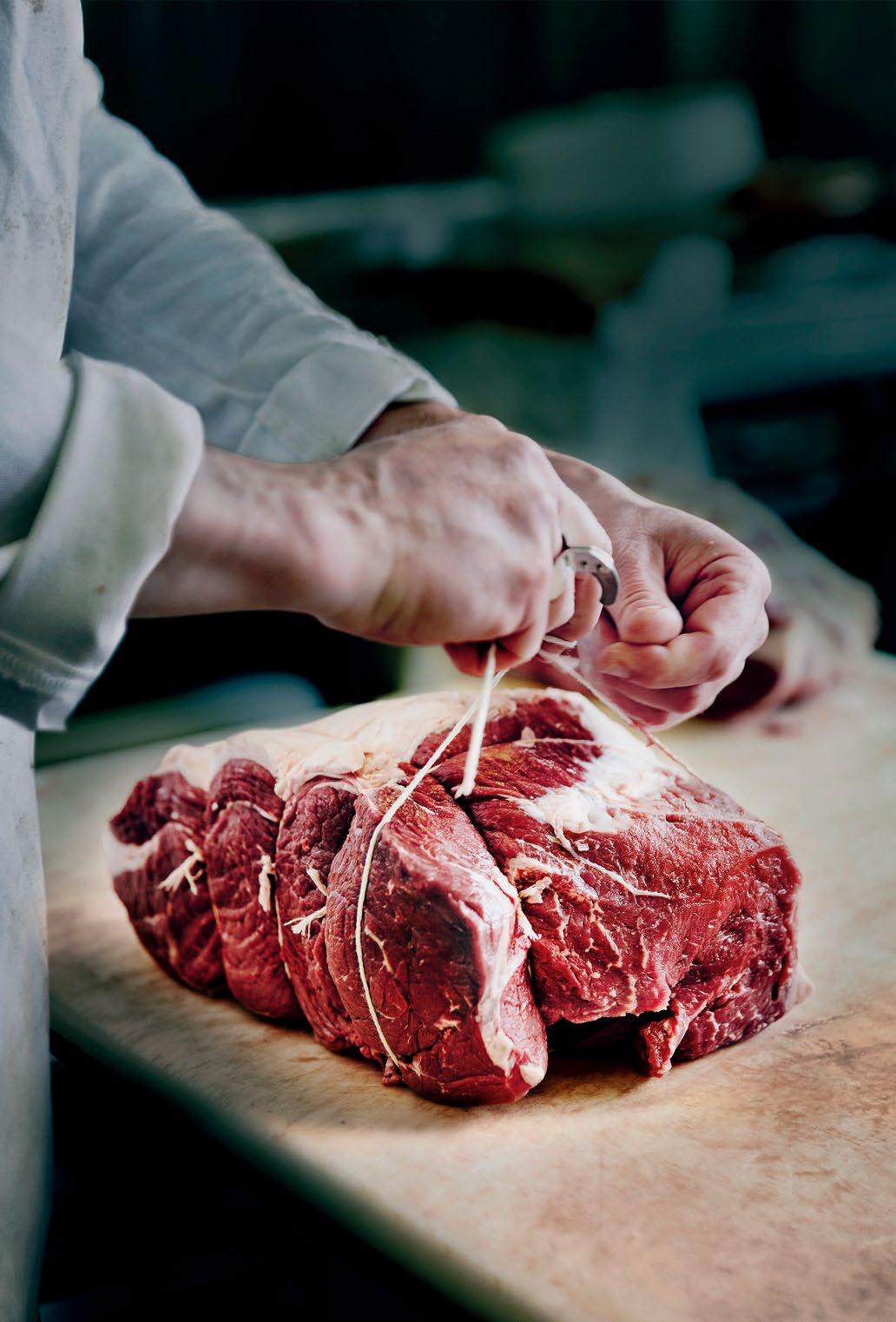
We work hand in hand with British farmers to bring you fresh meat.
At the age of nineteen, rhythmic gymnast Georgina Cassar competed as part of Team GB at the 2012 Summer Olympics. Two years prior to her Olympic debut, Georgina represented Gibraltar at the 2010 Commonwealth Games in Delhi, India. Today, she stands proudly as the first and sole Gibraltarian to have competed at the Olympic games.

Q. Could you tell me a little bit about what the training process in preparation for the Olympics was like? At 18 years old, how did you find it juggling school, training, and social life?
A. Juggling everything was very intense, especially from ages 16-18 years old, when you’re going through the major exams. I sat my GCSEs the same year that I participated in the Commonwealth Games. They ended up being held in October, due to the monsoon season in India, so I sat my exams alongside the most intense training I had done at that point. I was in the gym all day, every day (or at least that’s what it felt like!)
After my GCSEs, I had already been semitraining with Team GB. I was flying back and forth with my teammate, Nicola BosioSmith, for training camps. When I was
selected to be a part of the team. They told me I would need to be living and training full-time in the UK, that I would no longer be able to just fly over on the weekends. I had to take a year out of school, and I moved into a shared house in Bath with my teammates. We trained all-day and had a very rigorous training program filled with strength and conditioning training, ballet, apparatus practice, nutritionists, and more. During this time, my social life was pretty much non-existent. To this day when my friends talk about memories and the things that they did at that age, I really can’t relate. Juggling school and training was difficult, but I had very understanding and supportive teachers.
Q. What is one of your most memorable moments from the Olympics?
A. My most memorable moment from the Olympic games is walking out onto the carpet. I still have that moment etched in my mind. I can close my eyes and see and feel that moment. We walked out together, and I was the last one in the line. I remember stepping out and feeling like ‘this is the moment.’ All eyes were on us as we reached the carpet. It was an insane feeling. Also, the Spice Girls came out after
You have to be able to commit. You need to give your full time, attention, and mind to the sport. “ “
the closing ceremony. That was a pretty memorable moment as well!
Q. How does it feel to have represented your country in such a large scale?
A. Representing Gibraltar at the Commonwealth Games was incredible. We represent Gibraltar in many Spanish and local competitions but doing our first large multisport competition at that scale was amazing. Wearing the uniform and taking part in the welcome ceremony while parading under the Gibraltarian flag is an incredible feeling.
When representing Team GB at the Olympics, again, you feel so proud and honoured to be able to wear the flag on your shoulder and be surrounded by athletes that you look up to. Being part of a team and having that sense of unity, especially to represent your country, is incredible.
It’s also worth noting that we were rubbing shoulders with the most insane athletes. You’d be walking through the Olympic village, and you would run into Chris Hoy or Usain Bolt. We’d be having breakfast alongside Mo Farah! It’s an absolutely surreal experience, but you’d be so focused on your training that you’d kind of need to acknowledge that you were one of them, you were one of the Olympians taking part in the Games too.
Q. What is something you wish you could have told your younger self, knowing that you would make it to the Olympics?
A. A lot of people say that when they were
younger, they always dreamed of being an Olympian. I loved Rhythmic Gymnastics. I was obsessed with the sport. I don’t think it's a sport that you can pick up as a casual hobby, it’s something you have to be devoted to. You’re either all in, or all out. Getting as far as I did was just a massive benefit. When I first started out in my career, the Olympics or the Commonwealth Games were never something I actively set out to do, but after years of training, my coaches and I began to see it as a more attainable goal. That’s when it started to feel more real.
I would probably tell my younger self to enjoy it more. When I look back, it was such an incredible part of my life, but it was also exhausting, tiring, and painful. I would tell her to make the most of it. Also, living with my teammates, who became my best friends, was really special. Those were some incredible years that I won’t get to experience again. I learned so much from the Commonwealth Games, the Olympics, and from being a gymnast; from discipline to being part of a team, I attribute so much of how I carry myself in my day-to-day life to what being a gymnast taught me.
Q. What was your favourite apparatus and why?
A. I would have to say hoop. You can do so much with it, it’s so versatile. It’s a really fun apparatus. I also love ribbon; it is so beautiful and elegant. While I didn’t compete with hoop or ribbon at the Olympics, they are my two favourites. I’d say clubs still terrify me! There’s two of them flying at you: they are very hard,
My most memorable moment from the Olympic games is walking out onto the carpet. I still have that moment etched in my mind. I can close my eyes and see and feel that moment. “ “
and they hurt. And the ball can roll away in any direction, if you misjudge a catch by a centimetre, it’s gone.
Q. What is a common misconception about RG? What is something you wish more people knew about the sport?
A. I get a lot of ‘Oh is that the one where you prance around with the ribbon?’. First of all, we don’t prance. RG is so much more than just dancing with apparatus. There is so much training, time and pain that goes into this sport! It’s a lot of hand-eye coordination with your apparatus, strength and flexibility for the movements. You’re smiling on the outside but holding yourself together and squeezing everything on the inside. It’s not just a performance, but an art.
Q. Having retired, what is something that you miss the most about being a rhythmic gymnast?
A. What I miss the most is being as flexible as I once was. After the Olympics, my plan was to attend the 2014 Glasgow Commonwealth Games, but my body had other plans. In 2014, I had a hip operation from the wear-and-tear of extreme gymnastics. The doctors advised me to retire, and so I didn’t get to do that. I still suffer from hip pain, and I would love to go back to a time where my body was able to move to that extent again. I also miss being able to play with the apparatus, getting to try different things, throws, catches, and moves. In my day-to-day job, it’s not acceptable to break into a handstand or cartwheel at any given moment! I miss doing that!
Q. Do you have any advice for Gibraltarian athletes who hope to compete in the Olympics one day? What structural changes, do you think, can be implemented for Gibraltarian athletes to be able to compete at the same large scale as other countries?
A. You have to be able to commit. You need to give your full time, attention, and mind to the sport. You need to fight against your urges to do the social things your peers and friends are doing for that time that you’re training and look towards your goal of making it to those high-level competitions. With those goals comes sacrifice, but also discipline. You need to be willing to do that!
By Evelyn Aylén Heis

Gibraltar Netball has transformed from its modest origins into a recognised European competition host and continues as a well-organised organisation that prioritises inclusion and performance excellence. A rich history of dedication and innovation combined with strong community spirit fuels its success.
The international turning point occurred in 2012, when the Gibraltar netball team, known as the 'Campions,' entered a European tournament alongside eight other un-ranked nations. After four days of competition, Gibraltar secured its initial international ranking, marking the start of Gibraltar's ascent in the netball world.
After this initial success, Gibraltar positioned itself as a dependable host for major events and joined England, Northern Ireland, Wales and Scotland as one of the regular
locations for European competitions. The territory of Gibraltar stood alone as the sole country outside of the UK mainland to achieve this status, demonstrating Netball Europe's trust in its capability to host premier events.
The year 2019 marked another significant milestone for Gibraltar when they secured Netball Europe Open Challenge hosting rights. The event achieved significant success through both its organisational execution and sporting achievements.

'Gibraltar won the silver medal, based on goal difference, but that was a highlight for us, although frustrating because we just missed out on gold,” explains Moira Gomez, President of the Gibraltar Netball Association. The disappointment acted as a motivational force that built resilience and raised the popularity of netball in Gibraltar. Through live-streamed matches and YouTube videos, combined with active social media engagement, people learnt about the fast-paced and competitive nature of modern netball. “We overcame
the stigma that netball was a very slow, peaceful sort of game,” Moira says: it is now recognised as a strategic game requiring physical fitness and teamwork alongside decision-making skills
Gibraltar Netball owes its success to a robust grassroots movement that starts with the Netball Tots programme, which was started three years ago to teach children of three years and over important movement skills, balance, spatial awareness and coordination within a supportive environment. While these sessions teach children to play netball, they also develop physical literacy, as well as social skills that children can apply to various life areas.
The programme includes family engagement opportunities that let parents, grandparents and siblings take part in sessions to build stronger connections while creating a community spirit. Netball Tots quickly gained popularity after they started, and its positive effects are clearly visible. Children who started early have demonstrated considerable improvements in their confidence levels along with better teamwork abilities and motor skill development.
At seven years old, children can transition to the Junior Development Academy, allowing those who need more time to
We overcame the stigma that netball was a very slow, peaceful sort of game. “ “
remain in the Tots program until they are ready. “We focus on supporting the child at their current development level, and as children move to the High Fives League, they start participating in game-based learning through weekly sessions that provide supportive environments,” states Moira Gomez.
The junior league expands through participation in the Central League, Super Teams and through the new Saavy Youth division (so called because they are ‘savvy’ and “at an age where they think they know everything,” Moira says,) which functions as an intermediate level for athletes who have surpassed junior age requirements, while still needing support before joining senior competitions. Players develop more responsibility through adult conduct codes and accountability processes which prepares them for senior league admission. Gibraltar currently operates a senior league that includes
32 teams which is remarkable for its tiny population size. The league structure includes multiple divisions where Division One showcases elite players who represent the national squad and play for different teams, ensuring competitive balance and high-level performance.
Gibraltar maintains its international success even after achieving domestic achievements. The Performance Pathway provides development opportunities for athletes who have not been selected by national squads. Performance coaches and league coaches establish feedback mechanisms which enable continuous improvement across all teams and players. Earlier this year, the Gibraltar Netball Under 17 squad won Silver in Division 2 at the Europe Netball Under 17 Challenge held in Belfast, Northern Ireland. The team beat Isle of Man and Switzerland but fell to France. More recently, the Campions also competed in four international ranking matches at senior level in Cardiff and remained undefeated.
Gibraltar Netball is a success story run by passionate volunteers. With more international wins, an evolving player development structure, and a World Cup on the horizon, the future is bright for this small but mighty netball nation.
By Jo Ward


James Scanlon has taken Gibraltar’s national football team by storm, having had an immediate impact since making his first appearance for the senior squad in 2024, which proved to be part of a seismic season for the youngster. He scored a memorable first international goal versus Liechtenstein in a tightly contested UEFA Nations League tie, before making the Manchester United first team squad for a Europa League match-up against Real Sociedad.

From his earliest footballing memories, his connection to the Rock, and his experiences in the Derby and Manchester United academies, Inside Magazine picks the brain of Gibraltarian football’s rising star.
Q. What’s your earliest footballing memory?
A. The earliest memories of playing football I have are playing in my garden with my dad and brother when I was about four or five. It is a faint memory, but I do remember passing it back and forwards and we would do it for ages.
Q. How would you describe your connection to Gibraltar? Are there any specific fond memories you have from visiting?
A. I have been coming to Gibraltar every summer since I was born and it is a second home for me. I have lots of family in Gibraltar so it is a place I have loved coming to, and to now be able to play for the national team is an honour. I have fond memories of playing football on the pitch right outside my grandparents' house and playing football on the beach.
Q. Was it an easy decision to opt to play for the Gibraltar national team, and how did the opportunity come about?
A. I knew someone in the GFA who asked me if I would want to play for the Under 17s, and it was an easy ‘yes’ for me. I then quickly progressed through the ranks and didn’t require much thought when asked to play for the seniors, as it was something I had aspired to do for a long time.
Q. How would you describe your football journey - from Derby to the Manchester United academy?
A. I joined Derby County when I was eight and had many valuable years there. I have many fond memories from my time there but when I heard Manchester United wanted me at fourteen it was a no-brainer and I quickly made the move. I have been settled at United ever since. Playing at one of the biggest clubs in the world has been great for both my development as a player and as a person. Being able to test myself against some of the best players in the UK and the world has helped me enormously and is something that I can take with me whenever I play.
Q. Has your preferred position evolved? Do you perform similar roles for the national team versus for the Manchester United academy teams?
A. I think of myself as quite a versatile attacker who can contribute in many different ways, so where I play has not been a massive problem for me. I am comfortable both on the wing and in a more central role so between United and the GFA I don’t mind where I play. Regardless of where I play, I always want to contribute goals and assists and I want to create chances for the teams I am playing for.
Q. You were included in Manchester United’s senior squad for a Europa League tie with Real Sociedad – what was that experience like?
A. It was an amazing experience for me to get on the bench and something me and my family are very proud of. It was great to see how some of the biggest names in the world operate on match day and getting the feeling for a full Old Trafford was incredible. Hopefully next time I get on the pitch I will be able to show you what I can do.
Playing at one of the biggest clubs in the world has been great for both my development as a player and as a person. “ “
Q. Your first senior international goal came in a hectic draw against Liechtenstein last September – can you give us some insight into that game and your emotions surrounding your goal?
A. It was a rollercoaster of a game that gave both the fans watching and us players many different emotions. To score my first senior goal, for what I thought would be the winner, was an incredible feeling that was unfortunately cut short by their equaliser. Nevertheless, it was an extremely proud moment for me and is something I will carry with me for the rest of my life.
Q. Are there any players, in the Gibraltar national team and/or at Manchester United, who you’ve looked up to in terms of their careers or playing styles?
A. I try to be original and be myself as much as I can on the pitch, but off the pitch I always try to learn from successful players such as Bruno and Casemiro. Watching how they prepare and recover for games and how competitive they are even in training is something that I try to incorporate into my routines.
Q. What do you think the Gibraltar national team can achieve in the next four FIFA World Cup Qualifying matches?
A. I think we are a team that is progressing nicely, and we are playing with a lot more bravery and positivity. We’re aiming to compete much more in all four games and hopefully we can see the improvements we’re making when we look back on the campaign.
Q. Who would you say was your footballing idol growing up?
A. My two favourite players growing up were always Messi and Neymar, especially when they were both at Barcelona. They are two players who have had an enormous impact on football, and to achieve a fraction of the things that they have would be incredible.
By Francis Devincenzi
In 1957 a European Championship was staged in West Berlin by the International Ladies Football Association (FA). Four teams, West Germany, the Netherlands, Austria, and England, played at a time when women's football teams were officially forbidden by most FAs. Women, of course, defied these bans.
Italy hosted a European Championship in 1969 and then a World Cup in 1970. None of these tournaments were sanctioned by UEFA or FIFA, in fact, the first ‘official’ Women’s Euros was in 1984, and their first World Cup was as late as 1991. Today, then, when you witness record-breaking crowds and across-the-board TV and press coverage, think back to how female footballers around the globe have fought tooth and nail (sometimes literally) to get to here.
Women began to play professional football in the late 19th century at the same time as men and were drawing huge 50,000+ crowds. However, in 1921 the English FA banned women’s football; patriarchal values, institutional sexism, and a desire to maintain male dominance in sports got in the way. The ban on English women’s football wasn’t lifted by the FA until 1971, by which time it had done severe damage which would take generations to heal.
Fast forward to Switzerland 2025 where top-quality football action has silenced the naysayers. Well, not quite... In the run up to the Women’s Euros some press ran a story about the Swiss Women’s team being beaten 7-1 by an U15 boy’s side. It even singled out one player and suggested her skills were ‘better used by opening an Only Fans account’. Men on social media jumped on it with glee; it went viral. It soon transpired that the game had been played years before and was a training match, where it’s common for a national U15 selection to train against a women’s team. Misogynistic trolls take great pains to try and undermine women’s football, and the irony is they end up watching it because
they want to criticise it. Why is women’s football so threatening to some men? It’s 2025!
Female football mania has dominated our screens this July. Seeing women presenters in TV studios, pitch side and hearing them commentate is very refreshing. Some men have remarked to me ‘How come women get to pundit the men’s games but the men can’t do the same for the women’s games?’ Actually, men do. Notably Ian Wright, Jonas Eidevall and newcomer Nedum Onuoha.
Fans of all genders and age groups have flocked to Switzerland. Supporters have packed out the fan zones all over Europe, while the marches to the stadiums have buzzed with noise and colour and not a hint of hooliganism. You don’t hear the swearing or singing of nasty songs and the referees are not chanted at with profanities. The group stages were thrilling with longrange screamers, red cards and shocking upsets paving the way for the quarterfinals where goalkeepers stole the show. England erased a 2–0 deficit to Sweden and won on penalties marking the first time a team has overturned a two-goal deficit in Euro’s knockout history. Who can forget Germany’s Ann-Katrin Berger and her incredible leaping save before stopping two penalties in the shoot out and scoring one herself?
The semi-finals were no less entertaining. Italy led with a Suor Bonansea goal and had one foot in the final until England equalised in the 97th minute via super sub, Michelle Agyemang. The Germans kept Spain at bay deep into extra time with a tight, tactical
battle only for Ballon d’Or holder Aitana Bonmatí to score in the 113th minute.
So, to the final. All eyes were on St Jakob Park in Basel for a mouth-watering prospect with defending champions England facing Spain. The two sides met in 2023 at the World Cup Final and La Roja worked their magic in 90 minutes and lifted the trophy. Both sides wanted to write their names in the record books. Spain were aiming for a historic triple crown (World Cup 2023 + Nations League 2024 + Euro 2025). England wanted to retain the title and be the first ever English side to win a trophy on foreign soil while head coach Sarina Wiegman was going for an incredible three-peat (she won with the Netherlands in 2017 and England in 2021).
Spain dominated possession and made the breakthrough in the 25th minute as Mariona Caldentey headed the ball past Hannah Hampton. Alessia Russo levelled for England in the 57th minute with another impressive header. Spain continued to monopolise the ball but could not break through the English defence. After 120 minutes of tense football penalties beckoned, and in a tournament loaded with ‘fight to the death’ matches it was inevitable. Lioness legend Chloe Kelly scored the decisive spot kick in the penalty shootout, as England won 3-1 on penalties.
Women’s football is football. It’s the same game played on the same pitches as men and is equally entertaining. For true football fans it means there’s a tournament to look forward to every summer. What’s not to like?
By Rebecca Calderon

Women’s football is football. It’s the same game played on the same pitches as men and is equally entertaining. “ “
Tiffany Viagas is a Gibraltarian midfielder for Cádiz CF B and the Gibraltar women’s national team. She began playing at age seven and began to overcome gender barriers from an early age. With experience in Gibraltar, England, and Spain, she is one of Gibraltar’s most capped players and a passionate advocate for women’s football development.
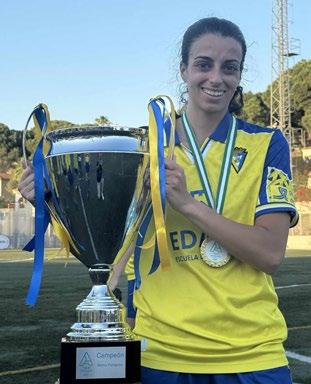
Q. Tiffany, you began your football journey with Lincoln Red Imps. Can you share what inspired you to pursue football and how your early experiences shaped your career?
A. I first started playing football at the age of seven, but before then the sport never really interested me as much as gymnastics and ballet. That all changed when, one day, my older brother, Stefan, took me to play football on the patio of my estate with his friends. That’s when I knew I wanted to play football and join a team. However, the journey wasn’t smooth.
There were no all-girls football teams at the time, and I faced constant rejection from the boys’ teams in my age group, with the response being 'porque es una niña'. My dad refused to give up, and after a few months, Richard Manning from Lions FC, an all-boys team, signed me. This is where my football journey began, and I will be forever grateful to him.
After years of playing in a boys’ team, I moved on to the Gibraltar Women’s League with Lincoln Red Imps Women once I was old enough. The early rejections hurt, not because of my talent, but my gender. This made me work harder and let my football do the talking, something I still carry with me today.
The early rejections hurt, not because of my talent, but my gender. “ “
Q. After your time with Lincoln Red Imps, you had trials with Everton and Liverpool FC. What were those experiences like, and how did they influence your development as a player?
A. Those experiences were amazing, and I learned so much about myself as a player and a person. With Everton, I trained with the Under-17 squad, and it was the first time I was in a professional environment. It all felt very surreal.
Being with Liverpool was a dream come true: it’s the club I’ve supported all my life. The facilities, coaching, and training standard were unlike anything I’d experienced. However, this all happened during the COVID-19 pandemic. After a few months, lockdown hit, and I was released - this was the end of my journey with Liverpool.
Although my time there was short, it made me realise that if I wanted a career in football, I had to work even harder. The standard was incredibly high, and it showed
me that training couldn’t only happen on the pitch. I had to put in the extra work on my own time.
Q. Transitioning from Gibraltar to playing in Spain with Cádiz B must have been a significant change. What motivated that move, and how have you adapted to playing in a different football culture?
A. After three years playing Tier 3 football with Liverpool Feds, I felt it was time to move closer to home and try something new. I like to challenge myself in different environments, and I’d never played in Spain before. It also felt like the right moment, as I had just finished university in Liverpool. The transition to Cádiz was smooth. Both clubs play possession-based football and have a strong family atmosphere. My teammates and coaches made me feel like I’d been there for years, which helped me settle in quickly.
Q. Representing your country is a significant achievement. What does playing for the Gibraltar women’s national team mean to you personally and professionally?
A. It is an honour to play for Gibraltar; I play with so much pride and passion every time I put that kit on. To represent Gibraltar at any level is special and to see all those
Being with Liverpool was a dream come true: it’s the club I’ve supported all my life. “ “
young girls come and excitedly support the team when we play at home is the biggest reward. I do it for them, to show them that one day they can also do this, and they can also live their dream of representing Gibraltar.
Q. As one of the most capped players for Gibraltar, how do you view the growth of women’s football in Gibraltar, and what changes have you observed over the years?
A. Women’s football in Gibraltar is growing, but there’s still a long way to go. Growth needs to be sustainable, not rushed. A big positive is the rise in all-girl GFA teams across age groups - something I didn’t have growing up.
This year, the GFA Under-14s joined the Women’s League. They were competitive and held their own. A pathway is slowly being built for girls who want to play. Women’s national team matches are now shown on GBC, giving young girls role models - something I lacked, as there was no national team or televised games when I was little.
The women’s league only has five teams, unlike the men’s. We need more clubs to join and raise competition. The aim is for the league winner to eventually qualify for the Champions League. Right now, there’s little incentive to play locally, which is why many girls move abroad.
Q. What challenges have you faced as a female footballer in Gibraltar, and how have you overcome them?
A. Like every footballer, I’ve had low moments - many out of my control. When I started playing, teams rejected me without seeing me play, just because I was a girl. I didn’t understand it then, but I knew I wanted to play.


It is an honour to play for Gibraltar; I play with so much pride and passion every time I put that kit on. “ “
At Liverpool, I was released due to COVID-19, not my ability. At Cádiz, Brexit rules meant I couldn’t join the first team without a Spanish residency card. But none of this broke me - it made me more determined.
If those things hadn’t happened, I wouldn’t have met Richard Manning, played for Liverpool Feds, or won the Copa Andalucía with Cádiz B.
Q. What role do you think female athletes play in inspiring the next generation, and how can the football community support and empower women in the sport?
A. We all play a huge role in inspiring the next generation. We are role models for younger girls wanting to play football and we need to make sure we leave the sport a better place than when we first arrived. The football community can help by coming to the Women’s national team games at the Europa Point Stadium, which has seen a great turnout for our Nation League games.
Q. How do you balance your athletic commitments with other aspects of your life, and what advice would you give to young women aspiring to pursue football professionally?
A. Over the years, balancing everything has become harder as responsibilities grow, but I’ve learned that with good planning and a strong support network, it’s possible. I don’t believe in excuses; I’d never miss a training session because of a university assignment or an exam the next morning. I make sure I plan ahead so I can train and meet deadlines.
My commitment to football meant missing group outings, weddings, and birthdays, especially at university, but my friends never made me feel guilty. They always encouraged me to chase my dream.
With the support of family, friends, and teammates, it was possible. My advice to every young girl pursuing football is: never give up, enjoy every moment, work hard, and step out of your comfort zone.
Q. What has been the most defining moment in your football journey so far?
A. It’s hard to pick just one moment, but two stand out for me. Making my debut for Liverpool Feds against Blackburn Rovers in the 3rd round of the FA Cup was incredible. It was the moment I had worked toward my whole career: playing in the FA Cup’s third round against players I’d watched on TV. I remember it like it was yesterday of my proudest moments as a footballer.
The other was last season, when I won the Copa Andalusia with Cádiz. It was my first season with the club and my first year playing while working full-time. It was the perfect reward for all the late nights, early starts, and the hard work my teammates and coaches put in.
Q. Looking ahead, what are your personal and professional goals in football, and how do you plan to achieve them?
A. At 22, I’m proud of my journey so far. I’ve played club football in three countries, won trophies with every team, and represented Gibraltar in the Nations League. While I love winning, success isn’t just about trophies, it’s more than that for me.
My goal is to keep playing at a high level and enjoy the game while balancing a full-time job. It won’t be easy, but with planning, support, and love for the sport, I’ll keep going. Most importantly, I want to leave Gibraltar Women’s Football better than I found it and show girls that if they want to play football, she can.
By Anna Macdonald
In today’s culture, sustainability and technology are interlinked. Whilst some may say technology has doomed our climate, there is the very big argument that it is in fact aiding us more than it is hindering us with regards to a greener future. Whether it be simply promoting a more sustainable lifestyle through social media with rising activists like Greta Thunberg, more eco-friendly technological advancements, or smarter sustainability systems, the argument is that technology is in fact helping us achieve a greener environment.
One of the biggest modern technological innovations that contributes towards a more sustainable future has been that of renewable energy. For example, there have been advancements to solar panels which have increased efficiency and lessened costs. Perovskite solar cells are proving to have a lot of potential for the future due to their flexible and lightweight design, making them more versatile than traditional silicone solar cells. This also makes them cheaper to produce whilst also proving to be more efficient; reaching power conversion levels that are sometimes higher than traditional cells. Bifacial solar panels are also much more efficient as they can absorb sunlight from both the top and underside of the panel, allowing it to produce more electricity. In addition, developments with offshore wind turbines allows them to produce more energy, require less maintenance and have a longer life expectancy than ever before, whilst also damaging less of the surrounding environment. Advancements in technology have paved the way to positively impact renewable energy - every small step counts.
Perhaps one of the most simple technological advancements has been that of greener mobility; a change that people can make within their own lifestyle. Electric vehicles are reducing reliance on fossil fuels and decreasing greenhouse gas emissions. Instead, fast-charging batteries make these vehicles more eco-friendly and practical for the future. Cities are also taking an approach towards greener mobility, even Gibraltar, establishing more bus routes and greater public transport. Some buildings are also going greener using passive technological advancements like smart heating, thermostats, and efficient insulation.
The agricultural sector is also ironically facing a ‘greener’ revolution through technology. There are now drones that are equipped with AI that are effectively monitoring crop health, pest activity and water needs which contributes efficient treatment of the environment and leads to increased yields, reduced costs, and improved sustainability. Smart irrigation systems use technology to optimise water usage, applying it precisely where and when needed, conserving our water usage, and in turn, energy consumption. By reducing water usage and runoff, these systems also help protect local ecosystems from pollution, leading to a more sustainable agricultural service and natural environment.
Perhaps the most important technological advancement that benefits a greener environment is the rise of social media and easier access to information. Social media platforms along with apps have become crucial for the spread of educational material, especially with content relating to the climate and sustainability. Apps for children, such as Earth Rangers and JouleBug teach eco-habits in a fun, engaging way, ensuring the next generation is informed and motivated to live sustainably.
Activists such as Greta Thunberg are gaining immense popularity on social media and greatly impacting our youth to make a change in their daily lives. In 2018, Thunberg held her first ‘School Strike for Climate’ in Sweden, a strike which spread globally and witnessed children even here in Gibraltar taking part in ‘Fridays for Future’ strikes. In encouraging world leaders to change towards a more sustainable future, she has encouraged the younger generation to do the same and to become educated on the issues that will face them in the future. The rise of social media is also allowing for real videos of the state of our environment to be released, allowing society to see the truth behind what the news fails to show us, and to really hold officials accountable.
Inevitably, the link between technology and sustainability is a double-edged sword. The increase in technological productions and big companies will also contribute to a rise in emissions, pollution, and waste. The short life-span of many devices also increases waste and emissions, whilst things like streaming, cloud storage, and AI can have hidden energy footprints. However, it is important to see the advantages that can come with the advancements in technology for a greener future - we can only hope that it will further progress to improve our climate for good. In terms of sustainability, we are definitely taking a step in the right direction. Through the help of modern appliances and social media, society is becoming more educated and making conscious decisions.
By Gianna Stanley
From the Gameboy to the DS and the current Switch, Nintendo has always been popular for its handheld gaming devices. Rising in popularity especially during the pandemic, where it seemed like the only care in the world was building an island from scratch on Animal Crossing, the Nintendo Switch is still a highly sought product today. With the release of the Switch 2 in June of 2025 many people are left wondering: is it worth the upgrade?
In Gibraltar, the Nintendo Switch 2 is priced at £359.99, or £389.99 as a joint package with Mario Kart World - one of the games exclusive to the new device. Comparatively, the Switch Lite is priced at £139.00 and the Switch 1 at around £230. There is a decent price increase between versions one and two, so deciding which console fits you best is essential before making a big purchase.
Although visually you might not be able to tell much difference between consoles, the details reside within the specs of the Switch 2, with some considerable improvements from its previous counterpart. The new system is said to provide a much better graphics quality, no doubt being aided by its larger screen size of 7.9 inches, whilst the Switch 1 is a smaller 6.2 inches. Thus, if you crave enhanced visuals and a better
overall visual experience, then maybe the upgrade would be worthwhile. However, whilst the Switch 1 has an OLED display option, the Switch 2 does not yet have this feature, so perhaps the Switch OLED might be a better, yet cheaper upgrade purely for visuals. Whilst the joy-cons on the original Switch were held in place through a slide-in technique, the new ones are now magnetic and have buttons to allow easy withdrawal and insertion. The new joy-cons are also larger and can also be used as mice by placing the edges on a flat surface, which improves the experience overall.
Importantly, if storage is a dealbreaker for you, then the Switch’s successor is definitely an upgrade. The RAM has improved from 4GB to 12GB, and we now move from 32GB of internal memory to 256GB. This new and enhanced internal system would lead to a longer-lasting switch as you would be able to run games quicker and also store more in general within your console. However, this advantage needs to be weighed up against the battery performance, where interestingly, the original seems to present more efficient. With the original Switch, you could have from 4.5 hours to 9 hours of continuous play, depending on the game. In comparison, Switch 2’s battery life seems to run lower, with a range of 2-6.5 hours depending on the game, but it should be noted that both consoles charge at the same rate.
Both Switches have similar models when it comes to USB-ports, headphone jacks, and Bluetooth connection. However, the new Switch 2 has a new USB-C port on top to connect with additional accessories like the Nintendo Switch Camera - a webcam like camera that allows you to play games with your friends whilst what appears to be a video call. This could be a huge positive addition if you enjoy gaming with your friends and could make this more accessible. However, there are always other means to enjoy gaming with friends.
Perhaps the best-selling point would be the games that are being created solely for the Switch 2, exclusive to only this device. As mentioned above, this includes a new Mario Kart World, but also games like Kirby Airriders, and Donkey Kong Bananza. This will surely increase in the future, so keep that in mind if you don't want to miss out on a lineup of new, exclusive, releases.
Whilst on the surface Switch 2 might seem like a definite upgrade and purchase, when analysing the details, the conclusion is
that it only has limited benefits. There are likely more positives to come as I assume more games will be released that are exclusive to Switch 2 only, and that might be what flips the tide. However, if you are not a professional gamer who really needs the upgrade, or unless you really want to appreciate the limited additions along with the advanced and enhanced visuals, you could probably get more bang for your buck by keeping the original switch!
By Gianna Stanley

As artificial intelligence grows more sophisticated, its ability to generate and manipulate content is outpacing our ability to verify what is real. Deepfakes are among the most controversial of AI developments. They are synthetic media produced by machine learning that can, both convincingly and concerningly, mimic people’s real faces, voices and mannerisms. These technologies are rewriting what it means to trust what we see online, and not for the better.
Originally developed as a research tool in computer vision, deepfake technology has expanded rapidly into mainstream culture. Some of its uses are harmless, creative even. Comedians have used deepfake overlays for parody videos, filmmakers have resurrected deceased actors for final cameos, and voice cloning has enabled personalised audiobooks. However, the darker applications of this technology have quickly overshadowed its novelty.
In early 2024, several inappropriate deepfake images and videos of Taylor Swift circulated widely on social media platforms such as X (formerly Twitter), Reddit, and other platforms. The material was entirely fictitious but portrayed the pop icon in sexually explicit scenarios. Swift, who did not consent to any aspect of this content, became a high-profile victim of deepfake abuse, highlighting the harms that such fabrications can inflict. The incident also laid bare the inadequacy of social media moderation tools. Despite widespread outcry and takedown requests, the images proliferated rapidly and were viewed millions of times before platforms intervened. This shows how the technology is developing far quicker than the regulatory and ethical frameworks designed to contain it.
In fact, similar instances abound. Deepfake videos have placed President Joe Biden and Ukraine’s Volodymyr Zelensky in counterfeit speeches calling for surrender to Russian forces, were designed to
destabilise and mislead during moments of heightened political tension during the 2022 invasion. Though quickly debunked, the video revealed how synthetic media can be weaponised to sow damage before the truth can be cleared up during moments of crisis. In a different context, AI generated clips of politicians making inflammatory or fabricated statements have been used to discredit them or influence public opinion.
Furthermore, AI-generated videos of newsreaders presenting biased content have also circulated, showing consumers that the threat to factual integrity is profound. These developments raise urgent questions: how can we trust what we see and hear? Who do we believe when even video can lie? Moreover, the liar’s dividend further destabilises discourse. A politician caught on camera making an offensive comment might plausibly be denied as a deepfake, muddying accountability.
Women are also disproportionately targeted by deepfake abuse, particularly through non-consensual sexual imagery, as Taylor Swift’s case demonstrates. After a 2021 study by Sensity AI, Karen Hao AI found that over 95% of deepfakes online involved pornographic material, with the vast majority targeting women without their consent. The psychological trauma inflicted by such abuse is real, even when the content is not. There are also broader philosophical concerns. Deepfakes challenge long-standing assumptions about
the integrity of the human image. When someone’s likeness can be repurposed by another without consent or control, ethical concerns come to the fore of the discussion.
On the technical front, detection tools are improving, but they are not foolproof. Some platforms now use AI to scan for signs of manipulation, but the race between creation and detection is ongoing. Deepfakes are evolving in tandem with the tools built to fight them. The playful uses once employed for deepfakes now pale in comparison to how it is being weaponised. Deepfakes sit in the uncanny gap between what is real and what just looks real.
We’re entering a moment where even video footage, once considered unimpeachable evidence, can’t be taken at face value. The ability to manipulate reality so precisely raises existential questions about what it means to see, believe, and bear witness. Responding to this threat requires a coordinated effort of technological innovation, legal reform, public education, and ethical accountability. Deepfakes are not inherently evil; their consequences depend on the intent behind their use. But without safeguards, transparency, and a reassertion of ethical norms, they risk becoming one of the most corrosive tools of the digital age. If we don’t act, the line between the real and fabricated will blur so heavily that we won’t be able to tell when it has been crossed.
By Anna Macdonald
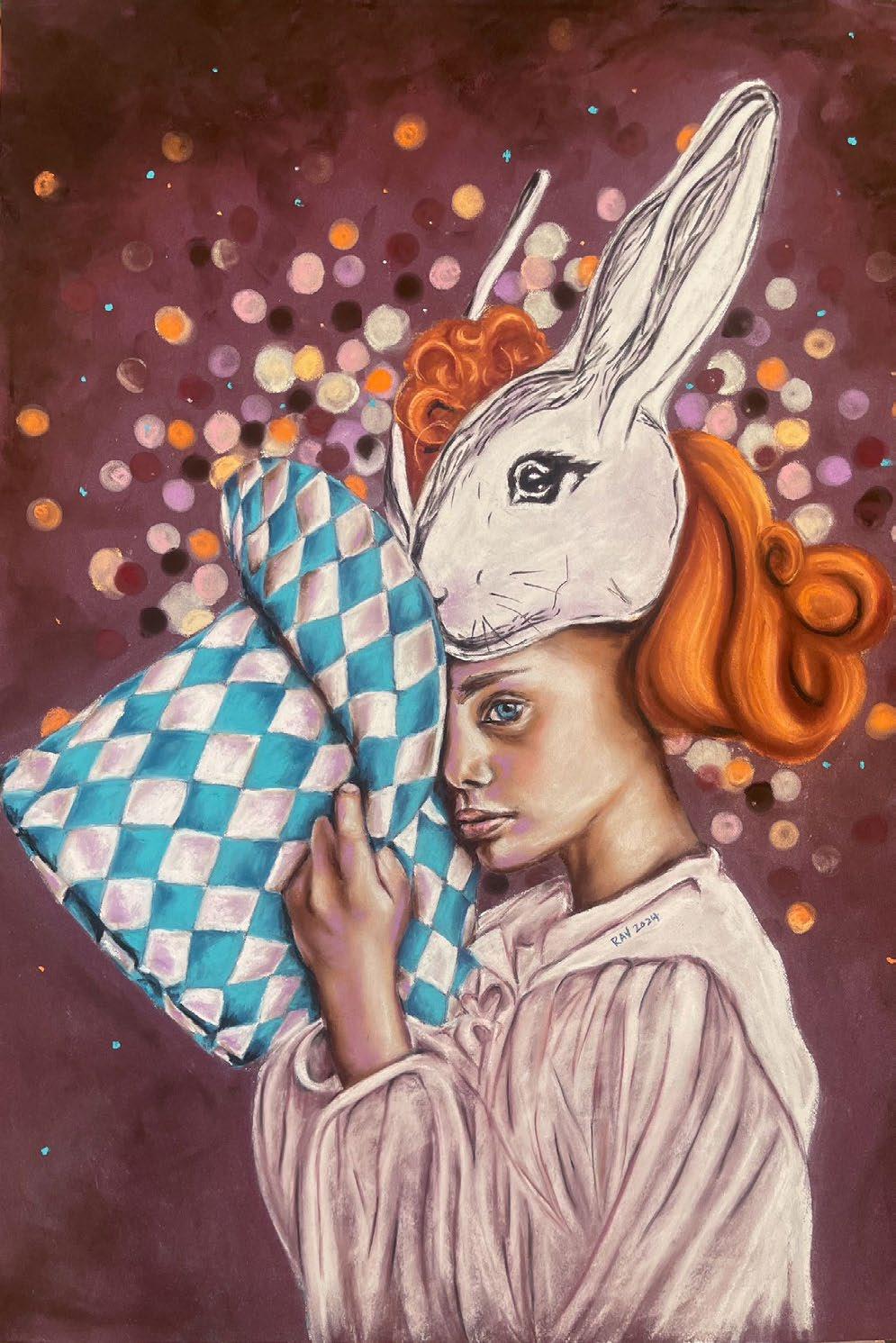

A dream coming alive? Possibly, although we have a long way to go before the masses can enjoy smart home technology as a reality. “ “
The rate and pace at which technology flourishes and further integrates into our day-today lives is nothing short of rapid. We bear witness to innovations that, in years past, would have remained safely consigned to the realm of science fiction. Nevertheless, here we aresurrounded by these fictions turned realities.
Artificial intelligence, a now essential academic, financial and business resource, also charges ahead with breakneck pace, imitating and extrapolating with a narrowing uncanny ability our many languages, arts and philosophies. Automation, a crucial industrial development that heralded the exponential flourishing of globalised manufacturing and production, is now being steadily integrated into service and hospitality industries once thought a definitionally human domain. With these continued technological breakthroughs, we must reconcile their irrefutable benefits with the potential drawbacks. In the space of smart-home technology, these reconciliations are found even here.
Interconnectivity and convenience are the main draws for modern smart home infrastructure. In the modern home, where separate systems work in tandem to automate home living, energy efficiency is the most tangible of benefits. The most ubiquitous of smart home innovations are automated thermostats that, depending on the user’s individual interfacing and preference, will limit or regulate household internal temperature depending on time of day, ambient external temperatures, and (in their most sophisticated iterations,) changes in weather forecast. Done correctly, this technology can automate a household's carbon footprint and in the long term yields positive returns on energy savings.
Broader, more esoteric conveniences also yield net positive outcomes. In the case of household automation, the elderly and differently abled are considered. Already available technologies like the Google Home or Amazon Echo allow for voice controls over basic tasks that would have required a level of physical interfacing in previous years. Playing music, setting timers, regulating heat, cold or light sources, and door locking controls from the convenience of a smartphone app bring
controls over these systems into the palm of your hand.
Questions of security are also answered by smart-home technology. It broadly improves security concerns for the elderly, differently, and regularly abled alike. For example, more readily available technology like the popular Amazon owned Ring doorbell, alarm and camera software allow complete access to and controls over home security systems. The benefit of home safety with devices already relatively inexpensive in the modern day must be counted as hugely beneficial.
However, it’s not all blissful convenience and security. As a slowly integrating, if fledgling, evolution of home living, there are likewise numerous, interconnecting disadvantages to smart home technology that may or may not outweigh the positives.
Perhaps the most overarching negative is the associated cost of smart home technology on the cutting edge. Limited systems like voice activated controls via the Amazon Echo or Google Home already fall well into the imaginings of the twentieth century mindset, however, these are not the pinnacles of smart home innovation. Full installation of smart home hardware tends to lean on the expensive side, and despite claims of a broader sense of convenience, it nonetheless necessitates a learning of the technology that will become integrated into the home. In other words, while the technology is exciting and perhaps the future of home living, the current associated costs mean it hasn’t yet transcended through the society as quickly as the motor vehicle or smartphone did, and the time spent on learning and understanding the technology may prove, in the current state, unappealing to most.
Relying too much on fully integrated smart home systems dependent on external resources, and threats, heralds
further consequences. Most, if not all the interconnected conveniences brought by smart home systems rely on a stable internet connection. Therefore, the technology is only as good as the other systems it relies upon. Unless you have a source of backup power generation for the home, a timely power outage may render all the expensive conveniences integrated into the home functionally useless. Perhaps your front door should remain secured by lock and key until the systems supporting the evolving alternative are more secured.
There’s also questions of data protection and privacy. Many of the smart home technologies on the market are provided by third parties, and many of these third parties collect and use data to enhance the functionality of the technology provided. The problem here is that this collected data is also susceptible to being stolen or made public by a data breach, meaning that your home will become another avenue by which data is siphoned and held by other parties.
In conclusion, there are objective positives associated with smart home technology that nevertheless exist alongside prominent negatives. The allure of total convenience via automation and system interconnectivity exists at odds, with the valid concerns over other systems smart home technology relies on, potential data risks, and the steep learning curve the technology can demand. Similarly, the potential longterm savings on energy and reduced carbon footprint is balanced on the negative end by the hefty immediate investment that many people simply cannot afford, thereby consigning this investment to the realm of the wealthy. A dream coming alive? Possibly, although we have a long way to go before the masses can enjoy smart home technology as a reality.
By Harry Meenagh
<
The first known concept of VR was in ‘Pygmalion’s Spectacles’, a story from 1935 about Dan Burke, who wears goggles to go into a movie about themselves. From there it developed into a type of 4D cinema experience called ‘Sensorama’. Head mounted displays (HMD) came a little later for viewing simple images, then the military developed a HMD with motion tracking to analyse hazardous situations remotely, and created the first flight simulator. From there gaming companies, NASA and the military continued to develop the technology and eventually in 2014 Facebook (pre-Meta) bought the Oculus VR company and voila, VR as we know it became a popular household gaming item!

What can happen, however, if VR is abused? There's a plethora of books and movies that deal with this question, admittedly most are sci-fi horrors, which don't end well for most of those involved… but that's just the nature of the genre. The Lawnmower Man gives us a tale of the possible enhancements a human could benefit from through virtual reality, and the dangers of abusing the platform. Moreover the Striking Vipers episode of Black Mirror shows how VR can be used to connect physically with others across the net and change our entire perception of ourselves, and Olivia Wilde’s Don't Worry Darling shows us how virtual reality could be used as a form of control over individuals, without their consent or knowledge. Some might argue that fiction is just that but unfortunately there are those that have already gone too far into the realm of virtual reality.
In today's world, gaming addiction is an increasing problem especially in the younger generations and VR has many concerned. People are losing or never developing their social skills, and actually prefer staying in their own homes, interacting solely through VR. Some have developed complex relationships with in-game avatars and even gone as far as legally marrying someone they have never actually seen or met in person. There are those that claim to have developed ‘phantom sense’, the sensation of feeling physical touch in virtual reality.
Studies are being held on the possibility of this phenomenon being a side effect of too much time in a VR world, and whether it is a psychosomatic response or a deeper connection between what is seen and what is real. Concerns have been raised around the sharing of private information against
a person's will (doxing) and unwanted attention in virtual chat rooms where anyone can enter and interact. Bullying and trolling can be an issue as ‘casuals’ find these virtual safe spaces and cause havoc among the (normally passive) community.
‘Catfishing’ is also a rising issue, where people are creating false identities and using attractive avatars for romantic purposes, or not actually being the person they claim to be. For those with social difficulties or social anxiety, feeling ‘at home’ and safe in this digital environment. This has caused people to increasingly fall back on VR as their chosen reality, which further serves to affect their social skills. Like all great things in life, moderation is the key and virtual reality is no different, you don’t want to lose yourself in it.
By Ian Law


I made my first rosto in the USA a couple of weeks ago, and I am pleased to report that, even though in true Llanito fashion I made three times more than I needed to, the pot was empty by night’s end. Although, how wrong can a dish with pasta and cheese go?
More than my culinary endeavours, I am proud to be able to bring a national dish of Gibraltar with me across the Atlantic. What are now embedded cultural touchstones of American life were once recipes brought over on ships by immigrants hoping for a better life, making changes as necessary. And thus, we have the famous New York or Chicago pizza.
Italian-American culture is where I have felt the most at home. When I first arrived in Washington DC almost a year ago, I attended Sunday mass at the church closest to me on Capitol Hill. I felt so out of place in my jeans, when everyone was dressed up in suits or dresses, and the women wore veils. Very nice if it works for you, but this boy is from Patio Policia and if it’s not a wedding, a baptism or a communion I am not dressing up for church.
I eventually found Chiesa del Santo Rosario, a church by Italian immigrants, at a time when they were not even considered white, as a place to gather and find community. You can even have an espresso afterwards in the community centre next door. But what struck me the most was walking through the doors and seeing all those chest-height mamas with their perms and pearls, and the abuelos with their flat caps and their hands behind their backs clearly itching for their next cigarette. That’s home to me.
The thing about America is that everyone brings that piece with them, and it stays with them, but they are still American. It’s not so different in Gibraltar, if you think about it, although we maybe don’t shout about it so loudly. I wasn’t that surprised to find that the Greek region of Naxos
has its own version of rosto, only slight in its difference. The more you look at Mediterranean cuisine, the more you see tomatoes, garlic, and chickpeas on the menu. And an egg, if you’re feeling fancy.

The biggest difference between the USA and Gibraltar is its size. Which seems almost redundant to point out, but it’s a state of mind beyond geography. Everything here is huge, and the further south you go, the crazier it gets. The cars, the roads, the portion sizes in Texas are almost comical. It’s perfectly normal here to ask for a box to take your leftovers home in at a restaurant, because you will not finish the meal. Drink refills are normal, and you will get them whether you want them or not. I’ve been lost in a supermarket more than once. There’s a chain of petrol stations and convenience stores called Buc-ee’s that pride themselves on their enormity. The largest one, in Texas (of course) has 120 petrol pumps. I went into one of their smaller locations and came away in a daze. They sell everything you could possibly ever need on a road trip, from bibles to cones of hot sugared almonds.
Ultimately, though, I don’t know that there’s that much difference between Gibraltar and America. We even get levante in Washington DC, and everyone complains about the humidity in the same way. I had more of a culture shock living in England. People here greet you on the street and talk to you with no filter, which is not much different to Main Street. They love a good holiday as an excuse to eat and drink. I went to see baseball for the first time and I had no idea what was going on but it didn’t matter, it was all about hot dogs and canned cocktails. If there’s anything my heart aches to miss it’s the sea, even if the people who came through Gibraltar to get to Ellis Island brought a little bit of the Mediterranean with them, living on in every pizza place that screams 'Authentic New York Pizza!'.
By Jonathan Pizarro




While I’m no travel agent, this particular route, interrailing across Europe, is an intriguing journey that feels quite unexpected, totally random but very endearing. Picture this: starting in Gibraltar, heading to the enchanting canals of Amsterdam, then east to the fairytale beauty of Prague and finally ending up on the sunny shores of Cyprus. Hopefully, this route has got your imagination buzzing with excitement. This adventure offers travellers a chance to experience the true magic of diverse cultures and traditions. The contrast between these destinations – each with its own unique history and wonder - makes this an adventure worth considering for anybody with a sense of spontaneity and curiosity.
If you are kicking off your trip from home, you would first need to connect to a nearby train station in Spain. A short bus/taxi or drive to Algeciras, which is the nearest station, is a great start. From here, board a direct train to Madrid. This will take you around five to six hours, but don’t worry it’s a smooth ride through the Andalucían landscapes, with whitewashed villages and olive groves and plenty of animals to spot on the way.
Two Lively Cities

If you have enough time, a night in the majestic capital Madrid to soak in its lively tapas bars and grand boulevards is totally worth it. Since the journey now involves passing through two more major cities via a high-speed train to Paris, why not make the most of it? A word of warning – it is a very long ride - around 12-14 hours in total. However the train scenery alone makes it worthwhile. Jump off at Barcelona and take a stroll down Las Ramblas and take in every detail of the surreal architecture of Gaudi’s Sagrada Familia church. Or, if you just want to stretch your legs, the beach isn’t far from the train station.

The City of Love
A croissant in Paris sounds like a must right? With a few hours to kill before your connection up north, enjoy that tasty snack whilst you hop on the metro and quickly see some of the city’s highlights. The Louvre Museum, Notre-Dame, the Eiffel Tower or even a quick walk down the Seine River. Or if time is too tight, treat yourself to a baguette and coffee at the Gare du Nord station, which is one of Europe’s leading train stations and third busiest in the world. Breaking up the long train journey with these stops turns the trip into part of the adventure, letting you experience two countries before heading up north.





Stepping
The city’s canals, historical buildings and remarkably big cycling culture have made it one of Europe’s most charming destinations. With more bikes than cars in the city, it’s become the most popular mode of transport. Thanks to the city’s flat terrain, you can pedal around the picturesque and colourful streets. Or if you never learned to ride a bicycle (like myself), take a canal cruise so you can really appreciate all the spectacular views. History lovers wouldn’t want to miss the Anne Frank House while art enthusiasts may opt for the Van Gogh Museum.

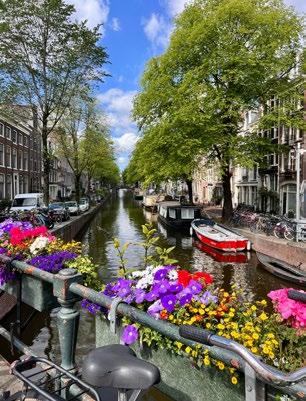
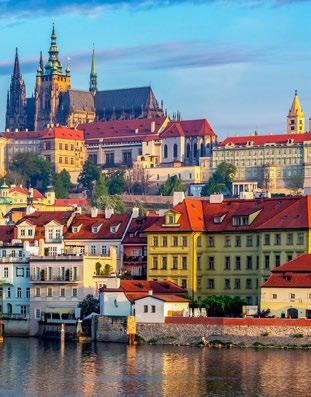
Next, it’s time to head east. This leg of the journey is also quite a long one. The train from Amsterdam to Prague will take about 9-10 hours, so you can take the overnight train and kick your feet up, relax and sleep through it. The Old Town Square is home to the Astronomical Clock which apparently puts on a little show for you every hour. Prague’s Castle and St Vitus Cathedral offer some wonderful views that overlook the city. One day trip that's worth exploring is Cesky Krumlov, which is one of Prague’s hidden secrets truly looking like something out of your favourite fantasy novel.
The
Here is where things get a little tricky. Your train pass has been your golden ticket, so from here, you will need to trade it in for a short flight to Cyprus, it’s the only way to get to the island, and there are some direct flights from cities like Vienna, Athens, Budapest which are all easily accessible from Prague by train. Once here, the vibe from paintings and storybooks shift into golden beaches, crystal-clear waters and endless sunshine. Paphos is the legendary birthplace of Aphrodite. Aphrodite’s Rock or ‘Petra tou Romiou’ is an iconic spot where you can snap a holiday selfie that will make the most popular of influencers envious. Limassol and Larnaca offer archaeological sites, with cliff top views over the sea and palm-lined promenades and historical sites.

This journey is all about contrasts. The mix of train and air travel makes it all possible. Interrailing can connect you across mainland Europe, giving you the freedom to hop on and off at your own pace, and one flight completes the adventure. What do you think? You can’t get more diverse than cycling down Amsterdam’s canals, wandering around Prague’s cobblestone streets, or watching the sunset with a cocktail (or a mocktail) over the Mediterranean paradise of Cyprus. Remember, the journey is just as important as the destination. Let the adventure begin.
By Anthony Loddo


As a Gibraltarian, venturing to the glaciers and wilderness of Alaska might seem a world away from our Mediterranean home. In this context, flip flops are replaced with snow boots and crop tops with winter coats. Yet, it is precisely this dramatic change in environment that makes this journey so remarkable.
In the summer of 2024, we boarded on an unforgettable Cunard cruise through the Inside Passage of Alaska, departing from Vancouver, Canada. Upon arrival in Vancouver, one is not left with a dearth of opportunities to experience Canadian culture and landscapes. While some may choose to travel by rail through the mystified Rocky Mountains, it is also possible to experience (as we did,) a brief taste of Canadian life by enjoying a meal at a local diner - a small but appropriate glimpse into everyday life in British Columbia.
Once aboard the ship, every corner of the ship offered something to admire. One may have thought the ship itself was the main attraction, but this was quickly dispelled by our first day at sea. This provided an abundance of whale and glacier spotting which proved both tranquil and exciting. The fresh northern air, experienced while whale-watching, was just a prelude to the
breathtaking scenery that would follow. Binoculars proved indispensable and, with each stride, the grandeur of the landscape made it impossible to resist an eager sense of anticipation.
Our first port of call was at a quaint port village, Ketchikan, which is replete with Indigenous culture. Our excursion through the surrounding forests and waterways
gave us an initial taste of Alaska by land and by sea. While our hopes of seeing bears went unfulfilled due to their presence in the wilderness, the experience was far from disappointing. We were instead treated to the sightings of seals, sea lions, bald eagles and an array of salmon which made the trip worthwhile, even if we didn’t quite get the chance to see any bears.
Despite the initial disappointment of a cancelled helicopter tour to a glacier, this did little to dampen our spirits since we rescheduled an excursion that led us deep into the mountains for a memorable husky sledding experience in Juneau. This experience not only allowed us to learn about the historical significance of sled dogs in Alaskan culture but also provided a unique, contemporary encounter with historical tradition. Later on, we were also able to meet and bond with the huskies and their playful puppies, adding a particularly joyful dimension.
Naturally, this excursion caused us to build up an appetite and led us to one of the most delicious meals imaginable. I highly recommend enjoying a hearty meal at
Tracy’s King Crab Shack, where the sheer size of crab legs is almost unfathomable until you see them for yourself. This was followed by an exploration of the capital’s shops, which offered a variety of local goods and souvenirs.
In Skagway, an exhilarating zipline adventure through the temperate rainforest provided an added burst of adrenaline to the trip. However, what stood out the most were the conversations with local residents, who shared their perspectives on life in the Alaskan frontier. These exchanges provided an interesting insight into their lifestyle, which differs greatly from our own in Gibraltar. Our conversations sparked an equal amount of curiosity about Gibraltar’s unique cultural blend and the Rock’s own quirks too.
The journey continued with a scenic navigation through Glacier Bay providing perhaps one of the most visually striking segments of the trip. This allowed us to hone in on the details of each glacier, and the increasing chill in the air as we neared the ice was a visceral reminder of nature’s scale. Glacier Bay was one of the highlights of this trip; spotting sea otters over breakfast and hearing other people’s excitement when they saw a whale breach underscored the shared wonder of the experience.
At Wrangell, we took part in a catamaran whale-watching expedition which far exceeded our expectations. While bear
sightings had eluded us, the frequency of whale breaches during this excursion more than compensated for one visit. These moments are fleeting, which made me grateful for my professional camerain fact, I would highly recommend taking one should you embark on this trip. I can guarantee that you’ll be able to capture moments that otherwise only last for a second.
Our final port was Victoria, where we were able to explore the city through a beautiful bicycle tour (and were also provided with more excellent photo opportunities). Interestingly, docking here allows one to contrast the vastly different atmospheres between Victoria and the rugged wilderness of Alaska. Victoria’s British colonial heritage and architectural style felt somewhat familiar, offering a subtle reminder of Gibraltar’s own historical ties to Britain.
Reflecting on this journey, I could not recommend a trip to Alaska enough.
The serenity of the open sea and Alaska’s untamed beauty leave a lasting impression. For Gibraltarians accustomed to Mediterranean lifestyles, Alaska fosters a deeper appreciation for the diversity our world has to offer. Alaska encourages its visitors to explore beautiful locations and provides amazing, indelible memories to recall for the rest of their lives.
By Anna Macdonald

Whenever I book a holiday, a significant part of my decision is influenced by the density of museums nearby. For me, a city trip is incomplete without gawping at some ancient coins or stumbling across some historic monument. While this type of sightseeing might not be for everyone, those who do share my fascination with history will hopefully find some interesting recommendations below for their future consideration. Part of the beauty of modern travel is the world’s increasing connectivity: for those so inclined, almost everywhere can be reached. The wealth of cultures and histories that can be experienced and explored is endless. <
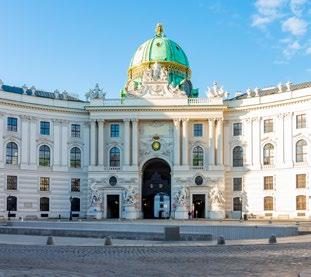
Vienna has been at the heart of European history for centuries, and, unsurprisingly, the city is an endless treasure trove of historic sites. In the Hofburg alone (pictured above), the former imperial palace in the centre of the city, there are half a dozen museums, including the Imperial Treasury. This exhibition puts on display two imperial crowns (one dating from the eleventh century), as well as the Burgundian Treasury and the Treasury of the Order of the Golden Fleece. The Kunsthistorisches Museum has an enormous collection, comprising artefacts from five millennia, from Ancient Egypt to the late eighteenth century. The Leopold Museum has an unparalleled collection of early twentieth-century central European art, including pieces by Egon Schiele and Gustav Klimt. Once this marathon is finished, a trip to Vienna is incomplete without a visit to a Viennese café. Café Central, originally opened in 1876, was a hub of Viennese society, arts, and cuisine, and counts among its former patrons Leon Trotsky, Sigmund Freud, and Stefan Zweig.
As China continues to grow as a tourist destination, few sites will impart as deep a sense of lineage and grandeur as the Forbidden City (shown left), the world’s largest preserved royal complex. Constructed between 1406 and 1420 under the Ming emperor Yongle, the complex of over nine hundred buildings was the heart of imperial China until the overthrow of the Qing dynasty in 1911, when the last Emperor, Puyi, abdicated, and was finally expelled from the palace in 1924. The walled ‘city within a city’ was inaccessible for centuries to laymen and was the heart of China’s bureaucracy and elite. Tourists nowadays can enter through the Meridian Gate (formerly an entrance reserved for the emperor), and walk through the Three Great Halls, Imperial Gardens, and Treasure Gallery, getting a flavour of China’s rich and complex history.
Perhaps it’s more accurate to say the ‘ruins of’ Carthage (shown below), a city destroyed at the end of the Third Punic War in 146 BC. As any aficionado of ancient history will know, the rivalry between Rome and Carthage was a defining feature of Mediterranean politics for centuries. Originally founded as a Phoenician city, Carthage was an affluent trading hub with a cosmopolitan population. Its rivalry with Rome is encapsulated in Cato the Elder’s infamous refrain at the end of his speeches, Carthago delenda est. Destroyed it was, but there remains an immense sense of history at the archaeological site. The Carthage Museum houses archaeological fragments from the era, and climbing the Byrsa Hill will give you a sense of scale, letting you survey the former extent of the ancient maritime power.
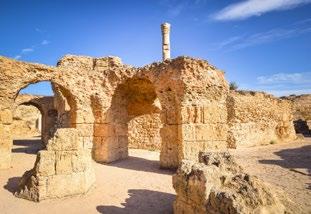

A road trip across North America is on many people’s bucket lists. Some of the most beautiful vistas in the world are best reached by car: the otherworldly beauty of Banff National Park is only a few hours west of Calgary, in Canada’s province of Alberta. Travelling a few hours south of Calgary, towards the Great Plains, will take you into the territory of the Blackfoot. Indigenous history in North America is as enthralling as it is tragic. Travellers can immerse themselves in the culture of the Blackfoot through a visit to Head-Smashed-In Buffalo Jump, a UNESCO World Heritage Site that preserves and interprets over six thousand years of Plains Buffalo culture. The visitor centre includes exhibitions on Blackfoot society, and the viewing platform brings to life traditional methods of Buffalo hunting that were used for countless generations before the animal was brought to near extinction by industrial-scale hunting in the 1880s.
By Francis Devincenzi
Nestled between two peaks in the eastern slopes of the Andes, the Historic Sanctuary of Machu Picchu (shown below) has long fascinated travellers since its rediscovery was brought to international attention by Hiram Bingham in 1911. Once a royal estate of the infamous Incan emperor Pachacuti, it was abandoned in the mid-sixteenth century during the Spanish conquest of the region. It is remarkable for how well preserved it is: the famous stepped terraced design has survived the heavy rainfall and earthquakes that can afflict the area. Tourists can walk up to the ruins or take a bus: either way, you are treated to views of lush environs of eastern Andes and western Amazon basin. For those looking for a bigger adventure, following the Inca Trail up can involve a three to six-day hike, through which you can tread the same paths as the region’s former inhabitants.
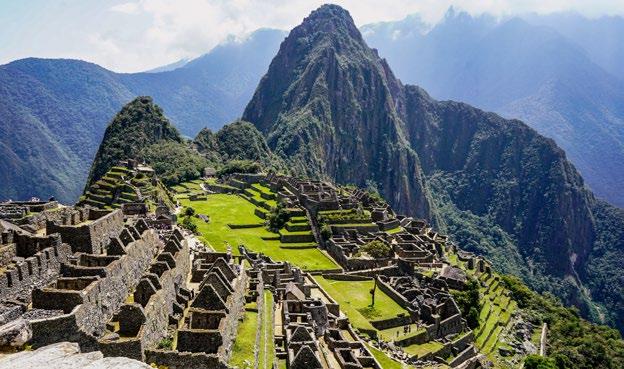
As the chill of autumn creeps in, it’s hard not to daydream about the true heights of summer, and with them, festival season. Now is the perfect time to start planning; to throw all your well-earned savings into a couple of excursions, after working up a musical appetite that can only be satiated after a long winter and spring. Here, we look ahead at the festivals you might not have heard of, the hidden havens that offer real value for money, and might just have you coming back for more.
Born from the inspiration fostered by regularly attending music festivals in London and Leeds, the FutureSoundZ Weekender is best summed up as a bringing together of up-and-coming UK talent and the best of Gibraltar's music scene into a small, yearly music festival. Conceived in equal measure as something that would help to reignite the local music scene in Gibraltar's post-COVID landscape, and as a cultural service that won’t see the attendees bank accounts in the red, the event has become a mainstay of local music culture.
Regularly organised in the bustling Ocean Village at the O’Reilly’s Arena Stage, the festival offers a mix of the notable bands and artists dominating Gibraltar’s music scene, alongside bands and artists from the UK on the edge of mainstream breakthrough. For the holiday goer, The Weekender promises a music festival offering an exciting fusion of homespun and international music talent centred around Gibraltar’s summer apex.
Live at Leeds in the City
If you’re a music lover, the likelihood is that you will immediately think of the iconic Leeds Festival. What you may not know is that, in 2007, a day festival emerged in the heart of Leeds aiming to platform those up-and-coming bands and artists circuiting the UK music scene, dreaming of that lofty festival height. With Live at Leeds in the City (not to be confused with its festival counterpart Live at Leeds in the Park), and at a modest £47.50 fee, you’re able to watch potentially hundreds of bands and artists, at tens of venues big and small, spanning the length and width of the greater Leeds area and beyond.
Timetables logging each performing band and artist are spread along a dedicated twelve-hour event time. Once you have the access via wristband, you are not obliged to go from venue to venue at pace to catch each act. You can just as easily pivot from the track laid out by the event and wander through the bustling northern centre to its many pubs, bars and restaurants. The whole event can be thought of as a musically oriented pub crawl, where you can wander through the city at a chosen pace, decide on a venue on a whim, and watch a band or artist you’ve had your eye on for a while, or perhaps never heard of.
A Gem on the Costa Del Sol Canela Party
We need not travel far for this final offering. Situated outside Plaza de Toros de Torremolinos, Canela Party is a fourday indie and alternative rock festival that has grown in popularity and acclaim over the last few years. On pure location, you couldn’t ask for more. In walking terms, you can find yourself sunbathing on the local beach and then attending the festival within about half an hour. From the bustling town centre to the festival site, roughly fifteen minutes. It's a remarkably easy festival to get to, and it doesn’t end with the local town. Half an hour by car rests the criminally underrated and undeniably worthwhile port city of Malaga.
For the festival itself, there’s more to say. Day one of the event is traditionally a free day, so anyone holidaying in Torremolinos who missed the memo still gets to enjoy the fun. For the other days, you would be paying in the range of €80 to €120 for full entrance. It’s deliberately small-scale and capped at around four to five thousand attendees. This means you can be in the middle of a crowd-surf and then catch your breath in the food court or drinks tent within minutes.
Moreover, there are two adjacently located stages for the bands and artists which cycle between each other, so you won’t have much distance to cover to get situated for the next act. You’ll be treated to a blend of alternative rock, indie, hardcore, punk and post-punk, brought to you by bands local and international. A notable bastion for national music platforming, bands on the Spanish music circuit travel far and wide to attend and play this festival.
Above all, there’s day four: costume day. You don’t have to partake, but you’ll be surprised how much effort people put into it - the festival transforms from what you’d normally expect to see into some wondrous, abstract theatre performance. Speaking from experience, there’s nothing quite like watching a life-sized Mr. Peanut clamber atop the shoulders of Michael Jackson, while Shaggy and Scooby-Doo generate a mosh-pit close by.
By Harry Meenagh
Winter in Gibraltar still sees the rock basking in the golden kiss of Mediterranean sun. However, there comes a time, especially around December, when you start to crave something quieter, and seeking snow seems irresistible. Perhaps it’s longing for frost-laced rooftops, or the romance of wearing a snug wool coat in the Alps. Whatever the impulse, wintery escapes offer the perfect counterbalance to the limestone cliffs and balmy vistas of the Rock. Whether you prefer cinematic ski slopes or fireside fantasies, these destinations offer a feeling only the cold can bestow.
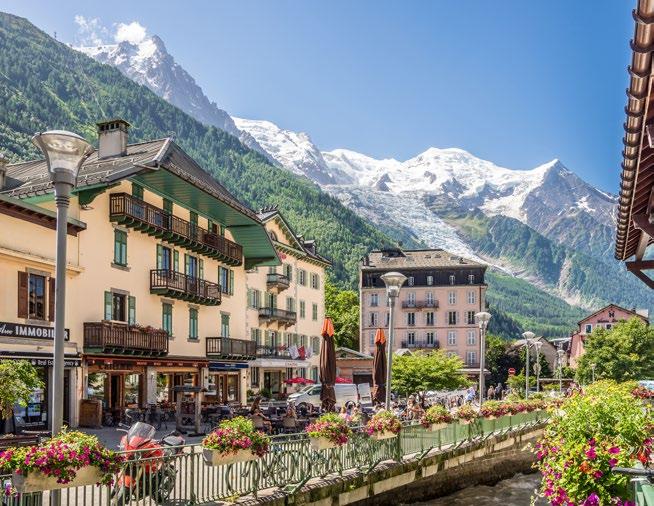
There are ski resorts and then there is Chamonix: a fabled alpine retreat that feels plucked from the pages of a vintage travel poster. Cradled beneath the indomitable Mont Blanc, this French commune is equal parts savage beauty and refined luxury. One can fly into Geneva and wind their way through pine-dropped valleys until the peaks rise like cathedrals. Staying at the renowned Hotel Mont-Blanc, a 19th century jewel, is also an option; its exterior presents as something out of a Baz Luhrmann film, as if it were sandwiched between East and West Egg.
For the adventurer, the legendary Vallée Blanche, a 20 kilometre off-piste descent flanked by glacial walls and cerulean ice caves stands proudly. Or, if the safety risks involved in skiing are off-putting, leisureminded travellers will be enchanted by a ride on the Aiguille du Midi cable car, standing nearly 4,000 metres high with clouds dangling beneath your feet. In the evenings, one can also stroll down cobblestone promenades, warmed by the scent of venison in juniper jus and soufflés that permeate the snow.
There are
and
“ “
ski resorts
then there is
Chamonix: a fabled alpine retreat that feels plucked from the pages of a vintage travel poster.
Beneath the chiselled profile of the Matterhorn, Zermatt also unfolds in silence. No cars, no noise; just the crunch of snow beneath your boots. This secluded Swiss village feels more like a dreamscape than a destination. It’s a destination worth facing the biting cold for. In fact, one can arrive via a winding alpine train from Zurich, where red railcars thread through snowy gorges as if they had just stepped out from The Grand Budapest Hotel
On the mountain, the skiing scene transcends hundreds of kilometres of well-trodden trails, many of which cross into Italy and allow you to stop for a cross-border lunch of handmade pasta and Barolo in Cervinia. Non-skiers alike will enjoy the Gornergrat Railway, a vintage cogwheel train that ascends past frozen waterfalls to panoramic viewpoints of 29 peaks over 4,000 metres. At night, adore fondue at Chez Vrony, perched above the little town and lit by lanterns - the fondue here is exquisite, and the views are operatic.
Closer to home but no less of a getaway, the Sierra Nevada offers an unusual proposition: skiing within sight of the sea. A short hop to Malaga or Granada opens access to this sunny mountain range as Europe’s southernmost ski resort, an element worthy of a visit in itself. It’s a surreal and seductive contrast, sun-drenched Spain dressed suddenly in snow. The resort is compact but surprisingly high, with peaks above 3,000 metres offering snow well into the spring. The terrain is ideal for relaxed skiers and families, and its relative quiet gives it an unhurried charm. Its proximity to Granada also allows one to hop off the slopes and
tour the Alhambra: few places in Europe offer such fluid access to both natural and architectural impression.
Moreover, for a winter that borders on myth, head far north to Rovaniemi, where Arctic forest and celestial fire cross over. Known as the gateway to Lapland, this Finnish town offers not just snow but a different way of life. The days are short and the light is crepuscular: from your bed you can witness the aurora borealis weaving green streaks across the sky, an experience that must feel like a fairytale. Fly in via Helsinki and spend your days mushing your own team of huskies through dream-like scenes and sleep in Nordic-
cool cocoons with floor-to-ceiling glass walls that open onto boreal pines.
One can also explore the wilderness by husky sled or snowmobile, or take a reindeer sleigh ride guided by Sámi herders. Alternatively, one can also warm up in a lakeside sauna, then roll in the snow and follow the old Finnish ritual that is believed to heal. Winter in Rovaniemi offers an almost child-like experience, where one can revel in the stories that cemented Saint Nicholas’s infamous reputation.
For those accustomed to Gibraltar’s perennial warmth, the idea of trading the sun for snow may seem counterintuitive. Yet, there is an appeal in deliberately departing from life’s familiar sounds and scenes. From the dramatic Alpines to Arctic stillness, each of these snowy escapes offers a wintery sanctuary. And, from Gibraltar, they are close enough to reach but far enough to relish. So, take those colourful scarves and hats that we so rarely get to use in Gibraltar out of your wardrobe, and start planning your winter escape.
By Anna Macdonald

Monique Grambow is the founder of Mind Body Soul (MBS), a charity and wellness centre based in Gibraltar. As a former teacher, she turned to holistic health after healing from a condition deemed incurable. Her journey inspired the MBS Self-Healing & Wellbeing Method, which empowers individuals through energy work and mindfulness.
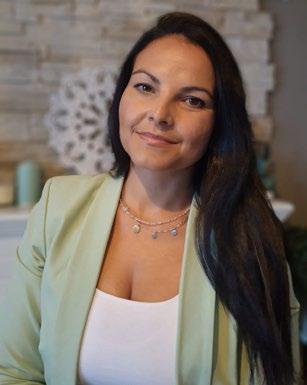
Q. Can you tell me a bit about MBS and why you started this charity after your career as a teacher? Was there a standout moment that ignited your desire to create this positive change?
A. As a teacher, I became deeply passionate about supporting children’s wellbeing as a foundation for learning and life. Alongside teaching, I studied holistic practices: Mindfulness, Breathwork, Sound Healing, EFT, and more - and began offering sessions during school breaks. Soon, over 60 children were attending weekly. It was clear they needed a space to regulate emotions, connect inwardly, and feel empowered.
I saw how valuable it would be to connect trained practitioners with schools - especially after school, when children often need extra support. It would also give parents peace of mind, knowing their children were in a safe, nurturing environment.
But truly supporting children meant supporting adults too - parents, carers, teachers. That’s when MBS expanded to offer wellbeing programs and one-to-one support for families and staff.
Then came my own healing journey. Diagnosed with a condition deemed incurable, I studied holistic health even further; not just as a practitioner, but as someone seeking healing. I experienced firsthand the power of the mind, energy, and holistic practices, achieving what was medically thought impossible. MBS was born from love, purpose, and a belief in the healing power we all carry within.
Q. What makes MBS unique compared to other wellness or meditation centres?
A. Our uniqueness lies in the range and depth of our services, offered by a versatile team of practitioners. We support wellbeing across mind, body, emotions, and energy with Breathwork, Meditation, Pilates, Yoga, Tai Chi, Creative Arts, neuroscience-based strategies, trauma release techniques, energy medicine, coaching, and more.
Importantly, our practices are non-religious, ensuring inclusivity. We meet people where they are, offering what resonates most with their individual needs.
MBS is rooted in empowerment. Wellbeing isn’t a luxury, it’s a birthright. Finances should never be a barrier, which is why we sponsor those who need support. Our core is love and purpose, guided by our motto: ‘Each of us can make a difference, but it is together that we can make a change.’
Q. What have been some of your biggest challenges and rewards since starting MBS?
A. When your work is your passion, drawing boundaries can be difficult. MBS isn’t a job to me - it’s a calling. Over time, I’ve learned the importance of protecting personal time, for myself and my loved ones.
The rewards are countless. Seeing transformation in someone’s energy, the joy in a child’s face, the relief in a parent’s sigh. Those moments are everything. Watching people reconnect with their true selves is profoundly fulfilling.
Q. What are some common issues you see in Gibraltar and how has MBS helped address them?
MBS is rooted in
empowerment.
Wellbeing isn’t a luxury, it’s a birthright. Finances should never be a barrier, which is why we sponsor those who need support. “ “
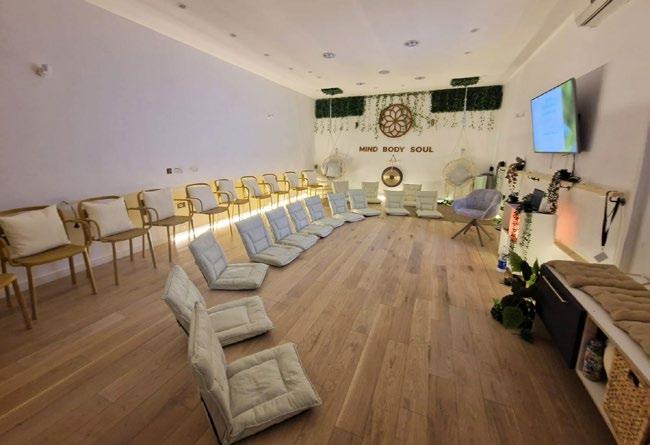
A. Gibraltar is becoming more open to mental and emotional wellbeing, but stigmas remain, especially around vulnerability and energy-based practices. These modalities are still often misunderstood, despite being safe and effective.
At MBS, we aim to shift the conversation from ‘what’s wrong’ to ‘what needs healing’. Vulnerability is not weakness; it’s a gateway to growth.
In smaller communities like Gibraltar, social perceptions can heavily influence whether people feel safe seeking help. That’s why community education and inclusivity are key parts of our work.
Q. Do you believe physical health impacts mental health? How do movement-based practices compare to energy-based ones?
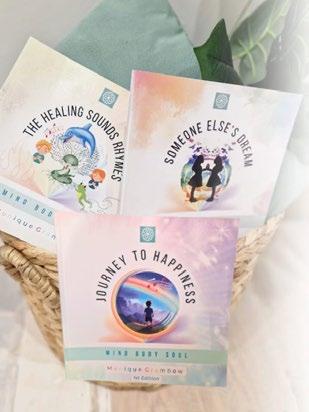
A. Absolutely. I believe every physical symptom has a mental or emotional root. They’re deeply connected. Practices like Yoga, Tai Chi, and fitness support physical vitality while calming the mind. Animal therapy provides emotional safety and comfort, particularly for those who struggle with verbal expression.
Energy-based practices, like Silent Counselling, Pranic Healing, and Reiki, work directly with the body’s energy system to release blockages and support natural healing. Each approach offers unique pathways to balance, resilience, and holistic health.
Q. How do children in Gibraltar respond to these holistic approaches?
A. Children respond incredibly well, often more so than to conventional methods. These approaches meet them where they are, through play, art, movement, or stillness, in ways that feel natural and safe.
Energy-based tools like Silent Counselling and Mindfulness don’t require children to verbalise pain. They allow release without reliving trauma, making the process safe and deeply healing, especially for neurodiverse or sensitive children.
Q. If you could share one piece of advice for someone beginning their wellness journey, what would it be?
A. Be open. Let go of control, expectations, and judgment. Know that everything you need is already within you. Visualise your goal daily, embody it, and follow what resonates with your inner guidance. Take
MBS was born from love, purpose, and a belief in the healing power we all carry within. “ “
Follow us on Instagram: @mbswellnesscentregib @mbswellbeinggibraltar
one step at a time with gratitude: your lows will provide wisdom and your highs will increase vibrations.
Q. What’s next for MBS - any exciting projects ahead?
A. So much! With the MBS Centre running smoothly and new team members on board, we’re now focused on sharing our work more widely. We’re expanding both locally and globally, growing our one-toone support services and soon launching the MBS App, giving people access to wellbeing practices from home.
It’s a privilege to walk this journey with our community, and we’re excited for what lies ahead.
By Gianna Stanley
FromRoutinetoRitual:MakingGratitudeJournallingMeaningful Repetitionisthementalequivalenceofbrushingyourteeth;amundaneandmindlessactinthe moment,butvitalovertime.Thetermusedbyneurologistsforthisisautomaticity,whichoften referstoataskwhichiscarriedoutrepeatedlyandrunsonmusclememory.Aguided,structured andunchangingtemplatewillturnasimpleyeteffectiveactivityintoadailyhabit.
TheFiveMinuteJournalisanunparalleledwellnesstoolcreatedbyIntelligentChange,which fomentspersonalgrowth,gratitudeandintrospection.Takingnomore than five minutes out ofone'shecticschedule,ithelpsonetopauseforreflectionandtopracticetheartofmindful living.Itisscientificallyproventoincreaseoptimism,improvesleep,andevenreducesymptomsof anxietyanddepression.
InthewordsofDr.TylerVanderWeele,‘gratitudeispowerful:powerfulforhappiness,powerful foraddressingatleastminordepressivesymptoms,powerfulforimprovinghealth,powerful forprotectingagainstprematuredeath-anditissomethingthatanyonecando’.Hiswords alsoringtrueinpractice.Aftersignificantdatacollectionandconductingvariousstudiesinthe fieldofpsychology,aperson’sdispositionforgratitudeandexperiencing positive emotions has beenfoundtoevenlengthenone'slife.Theneuroscienceofwell-beingcontinuestobestudied acrossinstitutesaroundtheworld.Practicingtheartofgratitudeandrecognisingthingstobe thankful for amidst a chaotic world of desensitisation is not onlybeneficialforthemind,butalso tostrengthenone'simmunesystem,lowerbloodpressure,increaseself-esteem,andimprove physical health simultaneously.

AspertheadviceofDr.EmilianaSimon-Thomas(UniversityofCalifornia),‘it’ssoimportant foreachindividualtostartfromaplaceoftheirowncomfortzone.Itcouldbe(assimpleas)the feelingofwarmsunthroughawindowonyourshoulder-it’sjustamatterofreallynoticingthat therearethingsaroundyoueveninmomentsthataredifficult’.Thethreestrategiessuggested byDr.SimonThomasinvolveskeepingagratitudejournalwithusefulpromptstoguideyouinto thedailypracticeoffeelinggrateful,positiveandmindfulaboutthethingsaroundyou:writing letterstopeoplewhohavemadeapositiveimpactonyourlifeandsimplysayingthewords‘thank you’.Recognisingwhensomeonehascarriedoutanactofserviceforyouisalsoakeymethodto positivelyaffectone'srelationships,andachieveanoptimisticoutlookoneverydaylife. Gratitudethrivesinitssimplicity.Allowingyoursensestotaketheleadandbecomingmindful aboutasight,taste,smell,touchorsoundaresimplethingsto recognise. Whether it’s that first sipofcoffeethatwakesyouupinthemorning,anewsongthat’scaughtyourattentionorasmell thatoverwhelmsyouwithasenseofcomfortingnostalgia,feelinggratefulforseeinginandliving anewdayisacrucialfirststeptopositivereinforcementandan eventual life-changing practice.
By Tamara Bell
"The art of peaceful living comes down to living compassionatelyandwisely".
Allan Lokos
Once upon a time, staying connected meant handwriting letters, face-to-face conversations, and evenings filled with stories rather than screens. But today, we carry entire worlds in our pockets - endless scrolling, notifications and a constant stream of information at our fingertips. With just a swipe or a tap we can catch up on personal or work emails, check the news, pay bills, share memories and stay linked to the world in ways unimaginable generations ago. But what if, just for a moment, you could step away from the digital noise and rediscover the beauty of the world around you?
So, what exactly is a digital detox? Just as the name implies; it's the intentional act of stepping back from electronic devices-smartphones, tablets, computers and even televisions - to reduce screen time and minimise the influence of digital distractions. It’s about creating a healthier boundary between the digital world and real life. We can become so distracted that it's becoming more difficult than ever to step away from our screens. Technology has become so deeply woven into our daily lives, that disconnecting can feel like a genuine struggle because of our easy access to literally everything. Our phones hold our wallets and contact lists, emails, calendars, games, the list goes on. Society's subtle but constant expectation to ‘check your phone’, respond quickly and stay available, whether for personal or professional matters feels like an added extra pressure. It’s no wonder this detox can feel so difficult, as we are surrounded by convenience, but convenience often comes with a price - our peace.
Just like the heroes of our favourite stories who discover their strength when they step away from the familiar, a digital detox can work wonders on your body, mind and spirit. Overuse of digital devices can create a mental fog, making it hard to focus, think creatively or find peace. A digital detox can lift that haze, restoring mental clarity and focus. Without the constant pings and pop-ups, your mind can finally breathe, allowing space for creativity to flourish and ideas to bloom.
Time is valuable. Studies reveal that an average person spends over seven hours a
day on screens (guilty). Imagine what else you could achieve in your day if some of those hours were reclaimed for personal growth, adventures or quality time with loved ones. By reducing screen time, you open the door to richer experiencesexploring hobbies, enjoying nature and making memories no digital filter can capture. Excessive screen time, especially on social media can contribute to stress, anxiety and comparison traps. By stepping back, you gain the power to rewrite your narrative - choosing self-care, mindfulness and positivity over the digital ‘perfections’ with which we find ourselves infatuated.
For those unaware, the blue light emitted from screens can disrupt our natural sleep patterns, making it harder to drift off into dreamland. If you put the phone down and replace it with a book or a crossword puzzle for example, it will allow your body to sync with its natural rhythms. Say goodbye to restless nights and get ready for some beauty sleep. You deserve it, give it a go.
While technology does connect us in many ways, it can also create some invisible barriers between those right in front of us. Have you ever noticed friends or family gathered together at a dinner, lost in their individual screens? Quite a sad sight! Gone were the days of storytelling, word games or even simple discussions to help develop memory, vocabulary and critical thinking skills. I say, put down the phones during dinner and rediscover the magic of face-to-face interaction, heartfelt laughter – the simple joy of being present. Real connections, after all, hold a power far greater than a Wi-Fi signal.
Embarking on a digital detox doesn’t require much - just a sprinkle of genuine intent and an adapted mindset. Here’s a few tips to help you get started:
• Think about the ‘why’ you are detoxing. Is it for better focus, deeper connections or improved health? A clear purpose will guide you through moments of temptation.
• Like I mentioned above, establish areas where screens should take a backseat, like at the dinner table or bedroom.
• Venture outside and let the beauty of the natural world recapture your attention. A walk in the park, a hike or stargazing can remind you about the wonders of the world beyond the screen. Please resist the urge to take a photo.
• Instead of removing screens completely, find a nice compromise and replace them with fulfilling activities that you love. Let the void be filled with a purpose.
The goal of a digital detox is to rediscover the magic of balance. Like the stories we hold dear to our childhood, life is about harmony, with moments of adventure balanced by quiet reflection. So, if you are considering it, remember that the greatest stories aren’t lived behind screens, they unfold in the moments where you’re fully present. It’s time to press pause, step away from the endless scrolling, and rediscover the beauty of your own extraordinary story. The end- or perhaps, just the beginning.
By Anthony Loddo

In Gibraltar, The Muscle Bakery is redefining what it means to indulge. Known for their mouth-watering creations that are gluten-free, high in protein and often vegan-friendly, this innovative bakery proves that you do not have to sacrifice flavour for nutrition.
Elke, the founder of The Muscle Bakery, was in the middle of making muffins when she realised she was missing a tray to put them in. She decided it was time to put her creative brain to work, and voila! The sweet pizza was born. Crafted with wholesome ingredients like oat flour, whey protein and egg, this sweet pizza offers a soft, cake-like base that is both gluten-free and high in protein. The inclusion of natural sweeteners, such as maple syrup and agave nectar ensure a delightful sweetness without refined sugars. Optional additions, like chocolate chips, can also enhance the indulgence factor.
INGREDIENTS:
1 cup oat flour (or ground oats)
1 scoop whey protein*
1 tsp baking soda
1/2 cup oat milk (or milk of choice)
1 egg (or 2 x egg whites)
1/4 cup maple zero syrup
1 tsp vanilla
1 tbsp agave nectar
* You can omit this completely, however the whey protein will give it a sweeter flavour so you will want to add some more sweetener – I would recommend a powdered stevia or xylitol.
EQUIPMENT: Round tray.
METHOD:
1. Pre-heat oven: 170˚C.
2. Mix: Chuck all your ingredients in a bowl and mix until well combined.
3. Line your tray: I only had one size which is approx 10" - line with greaseproof baking paper and pour your mix into it. Spread to the edges with a spatula – it should spread enough.
4. Optional: Sprinkle choc chips into batter.
5. Bake: Approx 10mins, until baked through the centre.
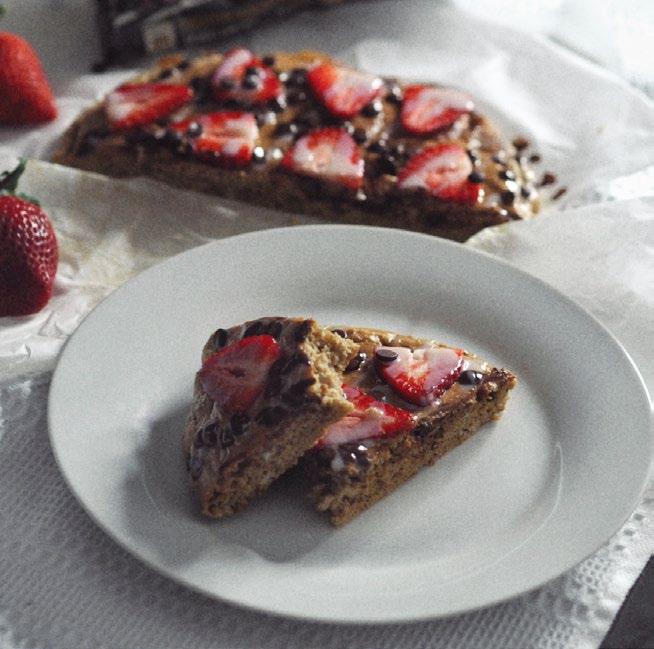
6. Remove from oven: I would say leave to cool, but is anyone ever patient enough to do that? Melted chocolate chips > not melted chocolate chips. YGM?
7. Top: Spread your desired toppings; I used peanut butter, strawberries and white choc drizzle.
4
The Muscle Bakery. Redefining what it means to indulge. “ “
Bollycao is a soft bread-like bun, filled with chocolate cream and is traditional to Spain. It is, however, also a treat most Gibraltarians enjoy. So that one can enjoy this treat, free-from refined sugars, The Muscle Bakery have created a ‘fit’ version to delight in too.

INGREDIENTS:
65g gluten-free ground oats or oat flour (or use normal oats if you don’t need recipe to be gluten-free)
1 scoop vanilla whey protein
2 tbsp xylitol (or granulated sweetener of choice)
100g non-fat Greek yoghurt
1 egg white
1 tsp vanilla extract
1/4 tsp baking powder
1/4 tsp baking soda spread of choice for the filling
EQUIPMENT:
Any silicone mould of preference.
METHOD:
1. Pre-heat oven: 180˚C.
2. Mix: In no specific order, chuck all the ingredients into a bowl and mix until well combined.
3. Fill your mould: Grab your desired silicone mould of choice and using a small spoon, place a bit of mix in each fill and spread upwards against the sides. Place a teaspoon-full of chosen spread in the centre of each and cover with more mix, making sure all the spread is covered.
4. Bake: Approx 10mins (until the sides have started to brown).
5. Remove from oven: Eat immediately while scalding your mouth OR leave to cool and enjoy like a normal person. Yields approximately 6 pieces (depending on size of mould you use).
6. Optional: Sprinkle with stevia icing sugar.
Determined to create a delectable chocolate spread after being disappointed at store-bought ones, Elke sought to create her own and, of course, she excelled.
INGREDIENTS:
60g dates (pitted)
1 tbsp agave nectar
1 tsp oil of choice (I used olive oil because coconut oil solidifies, however you can use any you like. You can also add more oil if you’d like to make the spread creamier)
400g natural peanut butter (100% peanuts)
100g milk chocolate spread
Sprinkle of salt
EQUIPMENT: 1 Jar (label optional).

METHOD:
1. Soak: Soak the dates in boiling water until they soften.
2. First mix: In a high speed blender (or using a hand held blender) blitz together the soaked dates with 100g of the peanut butter, agave, oil and a sprinkle of salt.
3. Second mix: Pour into a bowl and mix together with a spoonful of chocolate spread.
4. Fill your jar: Grab your jar and layer the date mix, chocolate spread and remaining peanut butter until all peanut butter is used up.
5. Final mix: Mix slightly and done!
My spread went a bit pasty overnight, this is normal due to the dates – you can blend or mix in more oil, and it will become creamy again.
Since pre-historic times, evidence of early humans, known as Homo-genus, eating meat can be found by observing distinctive cut marks on ancient animal bones. This indicates the presence of primitive stone tools used for butchering, dating back roughly 2 million years ago. This very likely lends itself to the significant role that consuming meat from large animals has had in the neurodevelopment and evolution of modern humans. This is largely due to the provision of nutritional proteins and fats assisting in the growth of larger muscles and brains, enabling us to become the dominant species on planet Earth today, Homo Sapiens.
Fast forward 2 million years, our keen intellect as a species has enabled the rapid and widespread cultivation of crops to sustain billions of people. Furthermore, we have designed a system to provide an abundance of meat, conveniently stored and available for our convenience. However, this convenience has come at a cost: the industrialisation of livestock. To meet demand and maximise profit, animals, such as pigs, cows, and sheep, are raised in vast numbers on factory farms, confined and slaughtered as and when needed. Without delving too much into the ethical matters involved in this method of cultivating nutritional animal-derived foods, there is no doubt that the constant and increasing demand for such products has proven unsustainable for our planet. Moreover, lands are cleared for grazing and the production of soy and other plant feeds to raise the animals we consume, contributing to vast deforestation and the release of stored carbon into the atmosphere.
Greenhouse gases, which are occupying an ever-increasing proportion of the air within our atmosphere, are produced by both biological processes. These include the high counts of methane emissions from livestock and human activities, including the burning of coal and fossil fuels for industrial processes and transportation. These gases are the culmination of concentrated molecules in the atmosphere which absorb the heat being emitted from the surface of the planet and are prevented from exiting into space. The consequences of this could be catastrophic: evidence
of this can already be seen by observing the rise of global temperatures, which contribute to climate change and the subsequent melting of the polar ice caps and glaciers.




These concerning points have ushered in an age of human vegetarian and vegan activism, driven by the belief that reducing the consumption of such meats and animal products will lessen the grave environmental impact of human industrialisation on the earth. In doing so, substitute plant and mycelium (fungi-derived) based food products have been designed with the aim to imitate the textures, flavours and nutritional benefits of meat. These have become increasingly popular, appealing not only to those with herbivorous dietary needs, but also those seeking to reduce their ecological footprint. Many of these are inclusive of myco-proteins and fibre, offering a similar, although arguable source of nutrition.
Many lab researchers and companies are actively studying the very promising potential of lab-grown meat. This new technology involves harvesting the cells from certain livestock animals and placing them in large, controlled, environments that are essential to support their growth. By introducing amino-acids, glucose, vitamins and other vital compounds, these cells are able to multiply and differentiate into muscle, fat and connective tissue. The result of this innovation is synthetic meat that shares the same cellular structure and nutritional benefits as conventional meat. This also emphasises the ability of researchers to engineer specific variations for differing nutritional profiles and needs. The process of this can be easily scaled to produce large quantities without further deforestation and greenhouse gas emissions being emitted into our air. This offers a far more sustainable alternative to the immense ethical and ecological issues that traditional animal agriculture and the current meat industry presents.
By Aiden Bell
The consequences could be catastrophic: evidence of this can already be seen by observing the rise of global temperatures. “ “

We work hand in hand with British farmers to bring you fresh veg.
Despite sharing a border, two neighbouring worlds couldn’t feel more different. On one side is a bustling community with a British-Mediterranean appeal that is close-knit, fast-paced, and quite eccentric. Across the border the world opens up to an adventure; there are longer sections of shoreline, wider streets, and a more relaxed pace.
Gibraltar is small and unique, almost like a mini ‘city’, where everyone knows your name, every street has a purpose, and the map is condensed but full of side quests and rich with history. In contrast, Spain is like stepping into an open-world video game, with towns extending to several zones, each with its own quirks; a place where you can start your own story, because its map doesn’t box you in. So who wins?
Well, there is no ultimate champion: you should do what works best for you. Whether you’re eyeing up real estate for investment or dreaming of a place to call your idyllic escape, we’re delving deeply into the benefits and drawbacks of residing in these two Mediterranean destinations.
Let’s begin with the most important factor: cost! How much must you spend before you and your wallet both start to cry? Whether you’re interested in Spain’s expansive affordability or Gibraltar's small exclusivity, each has advantages (and price tags that come with them). Gibraltars space is premium, stunning and exclusive, which means property prices do sit on the higher end, but remember that you are paying for convenience, community and sea views all wrapped up in a walkable city with tax perks.
Investing in Gibraltar means solid resale value and a lifestyle where everything is within reach. Spain can provide you with more space, sprawling villas, breezy beachside apartments and lower costs. Whether it’s a coastal villa in Sotogrande or an apartment in La Linea, Spain’s property market serves up room to roam without the sky-high prices. What’s the catch I hear
you saying? Well, a little more commuting depending on where you live and work, a touch of Spanish bureaucracy and perhaps too many ‘siestas’ when trying to deal with adulthood on a daily basis.
Asking yourself how you want to live, rather than where is, ultimately, a crucial question. “ “
Whether you are buying or renting, choosing a home involves more considerations than just price; it also involves your own space and style. Modern apartment buildings, high-rise homes, and small townhouses and penthouses that truly dominate the market are all examples of Gibraltar’s more vertical lifestyle. This makes it ideal for people who enjoy city convenience without requiring that outdoor area.
Spain has a wide variety of properties that are ideal for everyone. Whether you want a seaside apartment, a country getaway, or a contemporary luxury property with enough space to accommodate a large group of guests fighting for the last batch of nachos you’ve painstakingly cooked for them, you do have more possibilities. From high-end estates in Sotogrande to golfside properties in Alcaidesa are a great option for those seeking a more sedate and picturesque getaway that is still close to Gibraltar, or if you don’t mind a longer drive, Estepona - its eastern side offers luxurious coastal living with gorgeous beachside
properties, but be aware, these come at competitive prices.
Neighbourhoods and a feeling of community must be included. Who are your neighbours? You may be persuaded to carefully consider where you want to be living by the people, the atmosphere, the rhythm of daily life, and a few friendly faces. As everyone is aware, Gibraltar is a social centre where the majority of people know one another. It’s the ideal place for people who like a more regular structured and connected setting because living in this wonderful ‘bubble’ will ensure relationships, local companies that remember you, and a social scene where connections can be made effortlessly.
There is greater movement, privacy, and variety in Spain’s residential scene. You have the option to ‘switch off’ and unwind in the coastal villages, you can opt for privacy in an estate, or take in the vibrant social life of the larger towns in the area. There are more opportunities to stretch out and join new circles or take in the peace and quiet on your own terms. The lifestyle tends to be more open, allowing you to be as outgoing or as reclusive as you like.
Asking yourself how you want to live, rather than where is, ultimately, a crucial question. I am afraid I can not help you with that, but you should think about your priorities, the kind of life you want to lead, and understand that there is no rush; take your time. Also, what could possibly go wrong when you are surrounded by views of the Mediterranean?
By Anthony Loddo
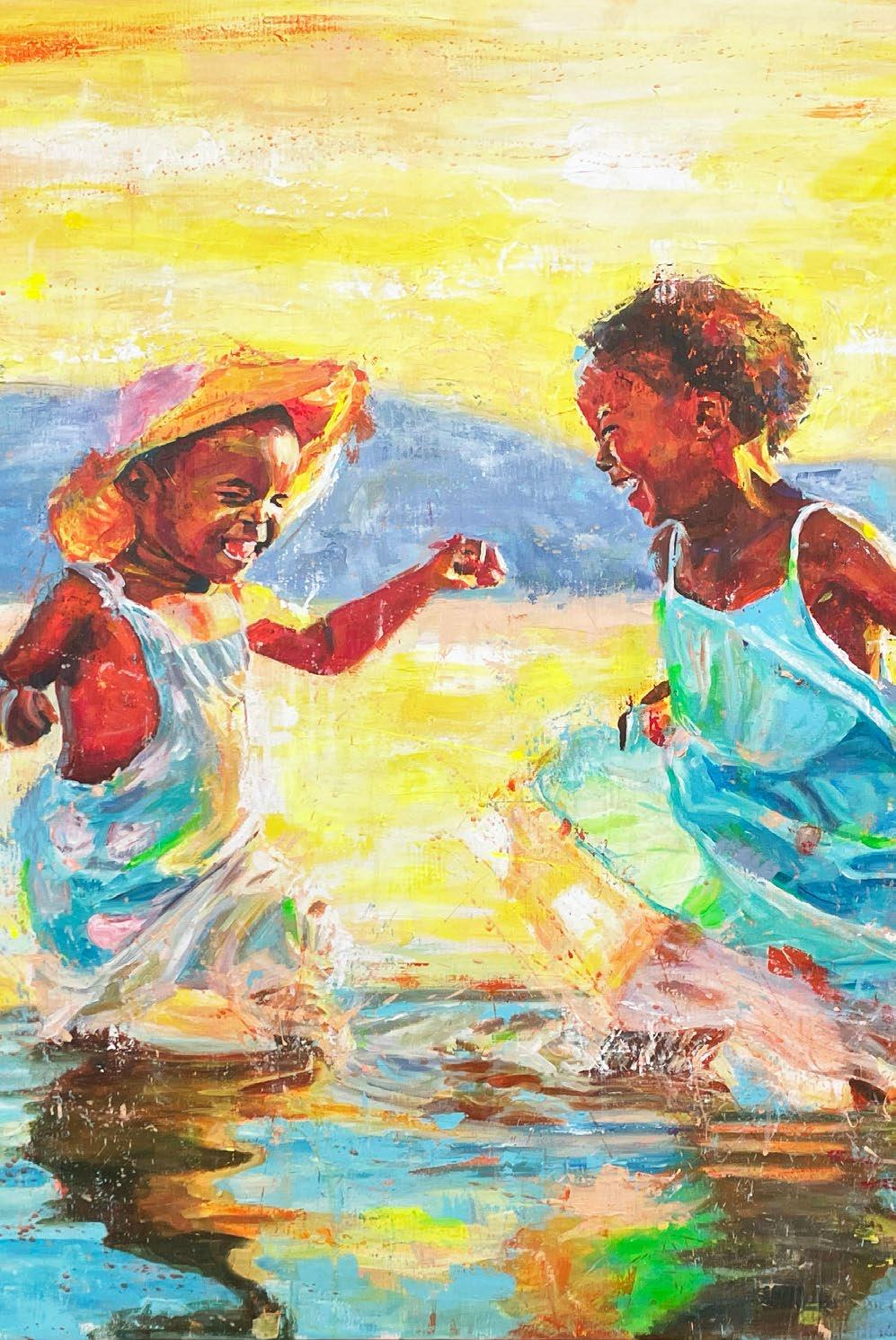
<
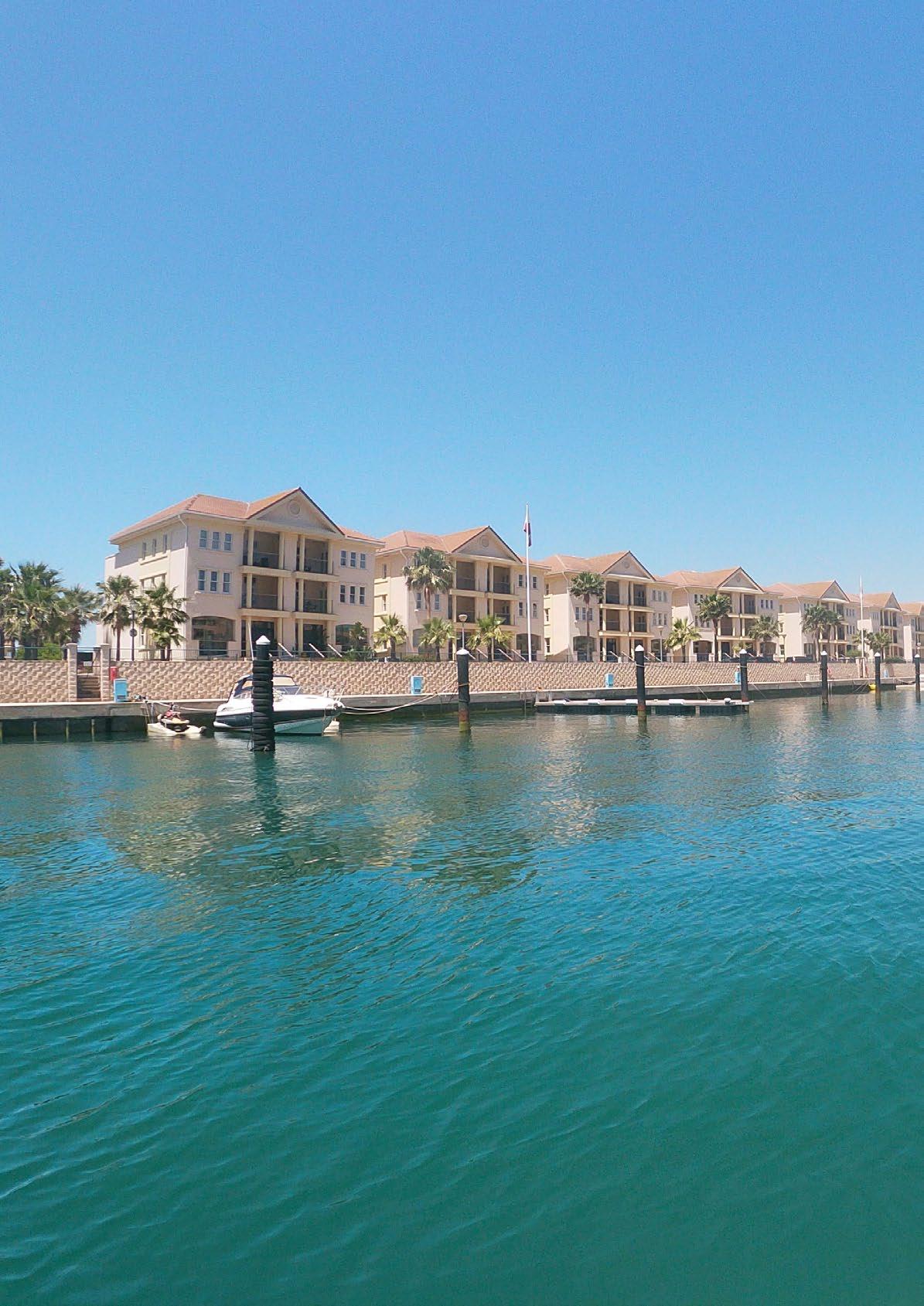
If life’s a beach, then why are you still stuck in the city? Coastal surroundings enhance our physical and mental well-being: science has backed this up with professionals detailing how it boosts our mood, reduces stress and even improves our sleeping habits. At this point, they should prescribe us with a daily dose of ‘Seas The Day’ tablets and refer to it as a public health necessity. Side effects may include sudden bursts of happiness, the urge to take incredible sunset photos and heightened mindfulness. As humans, we always feel the pull of the sea, no matter how we are feeling. Maybe it’s because the ocean just makes you feel inadvertently humble - everything just seems better with a sea view.
At this point, they should prescribe us with a daily dose of ‘Seas The Day’ tablets and refer to it as a public health necessity. Side effects may include sudden bursts of happiness, the urge to take incredible sunset photos and heightened mindfulness. As humans, we always feel the pull of the sea, no matter how we are feeling. Maybe it’s because the ocean just makes you feel inadvertently humble — everything just seems better with a sea view.
The same goes for living by the water, which to most is a great luxury. Or, maybe, the real luxury is finding a desirable place that fills you with awe and inspiration. Whatever your understanding is, a spot by the sea seems to have an edge over other natural environments. Perhaps it’s because the coast has been a place of healing dating back to the 18th century. Doctors recommended and prescribed ‘seaside escape time’ to treat tuberculosis and leprosy. Back in the day, patients would bathe and sometimes drink the seawater that was rich in minerals - they’d doze off to the sound of the waves kissing the shore. I mean, I personally wouldn’t recommend taking ‘medicine shots’ from the ocean, but if you’re out here channelling your inner sea itch, who am I to judge right? Moving on, research shows that listening to the sound of waves alters your brain patterns and places you in a state of relaxation that rejuvenates your mind.
If you want to get more technical, according to a 2013 study, listening to the sound of waves calmed participants more than listening to calming music, and those who heard rippling water had the lowest cortisol levels. In a subsequent study, sounds from the sea triggered the parasympathetic nervous system, which in turn lowered blood pressure, slowed the heart rate, and relaxed the body.
Side effects may include sudden bursts of happiness, the urge to take incredible sunset photos and heightened mindfulness. “ “
Moreover, most of the world’s iconic views feature the ocean; views of cities like San Francisco and Sydney, to picturesque towns of the Amalfi coast in Italy or Dubrovnik in Croatia. We should add Gibraltar to that list as we boast Mediterranean views on one end, and the Atlantic on the other. On a clear sunny day you can see both Spain and Africa right at our doorstep: we’re spoiled for choice. Living by the ocean has a particular allure that makes it feel like daydream. Whether you’re in Ocean village with its yacht-dotted balconies, Rosia Bay with its serene seaside appeal or sipping a cocktail at ‘Kokonut Bar’ in Sandy Bay, they all share a sense of visual therapy; not to mention that fresh salty air which, you might know, contains negative ions that actually help you absorb oxygen faster and balance your serotonin levels, helping you feel more cool, calm, and collected.
Now, there is of course a literal and symbolic financial association around this kind of lifestyle. These properties are high in demand and have a certain exclusive appeal which can also vary in price depending on location.
Swimming is also one of the best forms of exercises for you. As well as a full body workout, it also helps your circulation and gives your immune system a boost. According to a 2019 study, more physical
activities were linked with time on the beach. People feel more inclined to go for a swim, surf, sail, paddle board and even put on their best hiking boots or roller skates to enjoy exploring the boardwalks.
Salt water is also very good for your skin. Rich in nutritious minerals including magnesium, calcium, zinc, and selenium, seawater is revitalising. Many of these minerals have potent anti-inflammatory and skin-healing properties. According to an assessment of its advantages, taking a sea bath helps to relieve dry, sensitive skin, lessen allergic skin reactions, and ease psoriasis and eczema symptoms.
Even though living by the water feels like you’re in the opening credits of The OC or The Hills (my millennials should get this) there are factors to consider. If you are right by the ocean, get ready for sandy balconies, and a huge impact on your windows due to humidity and salt spray. Make sure you have that glass cleaner and that trusty dustpan and brush set at the ready. Once you’re done, sit back and unwind at the endless horizon which really provides an insight into how big the world actually is. In a place like Gibraltar, the water is a huge part of our identity, and if life’s a beach, why not make it your front garden?
By Anthony Loddo

Paul Gibbens MNAEA, Sales & Lettings Manager at Richardsons, is a member of PropertyMark and has been helping clients sell their homes in London and Gibraltar for nearly two decades.
It has been a long road of uncertainty for Gibraltar’s property market over the past few years, but it finally feels like the clouds are lifting. The big moment came in June, when the long-awaited Treaty framework between Gibraltar, the UK, and the EU was announced. At Richardsons, we felt the change almost immediately - the phones started ringing, email enquiries picked up overnight, and buyers who had been sitting on the fence suddenly jumped into action. June ended up seeing the highest number of monthly sales agreed post-pandemic.
Truth be told, the market had already started to show signs of life in late 2024. Prices had been gradually softening since their peak in 2022. And with Bank of England base rates falling since mid-2023 and wages on the rise thanks to inflation, Gibraltar property was becoming more affordable than it had been for quite some time. That naturally brought some momentum, especially in the sub-£500,000 bracket, where local buyers were either upsizing or downsizing based on life stage and need. Then came March 2025, and with it, the end of the UK’s stamp duty holiday. That had prompted many British retirees to cash in on slightly inflated home prices back home and look to Gibraltar for their next chapter. Warm climate, familiar culture, no language barrier, low taxes, and a strong legal system - it’s an easy sell.
But the real game changer? The Treaty. Within days of the announcement in early June, market confidence was back. Interest surged across the board - from compact one-beds to high-end marina properties. It was the signal the market had been waiting for. Over the past 12 months, the sub£500,000 market has been the real engine of activity. These properties have been flying off the shelves when priced correctly.
We’ve seen steady demand from local families on the move, older Gibraltarians looking to downsize, and of course, those UK retirees bringing funds from home sales. This part of the market has become the backbone of activity, and with rental yields pushing around 5%, even buy-to-let investors are once again taking a serious look; especially now that the Treaty adds an extra layer of long-term confidence.
As 2025 has rolled on, that confidence has spread. Buyers who had been watching from the sidelines are now getting serious, particularly in the £600,000 - £1 million range. Developments like Kings Wharf, The Anchorage, and Arengos Gardens are back on the radar. But this time, it’s not speculators making quick plays. It’s people looking to put down roots - long-term residents, professionals, and those planning for the future. There’s no doubt the Treaty has been the missing piece. Gibraltar’s sovereignty certainly hasn’t changed, but what we do have now is clarity. Crossborder movement, customs, and EU cooperation have all been addressed in a way that reassures residents and international buyers alike. It’s the kind of stability that makes people feel safe putting their money into property again.
The positive ripple effects are also being felt in the rental market. Professionals relocating to Gibraltar are once again looking for quality long-term lets. This has driven up demand in the one to three-bed range, particularly around the town centre and marina areas. Stock is tight, and prices are firm. One thing we’ve noticed in recent months is that the gap between asking prices and final sale prices has narrowed considerably. After a couple of years of buyers pushing for heavy discounts, we’re now seeing most deals being agreed at or
very close to the asking price. In fact, our current pipeline shows an average of 98.1% of asking price being achieved. That shows confidence on both sides - and less time wasted in negotiations.
Now, let’s be clear, I’m not predicting a runaway boom (and frankly, I wouldn’t want one). What we are seeing is a sensible, sustainable resurgence. A recovery based on real people with real needs, rather than speculation or hype. That’s exactly what Gibraltar’s small, land-limited market needs. It’s healthy, it’s grounded, and it has room to grow.
Of course, some challenges remain. New supply is limited, and planning continues to be a delicate balancing act. Eastside development plans are promising, but still early days. In the meantime, the lack of larger family homes and premium stock will likely keep prices supported.
Looking ahead to the rest of 2025, I’m feeling optimistic. Once the treaty gets formally ratified (and assuming interest rates stay steady) I expect activity to remain strong. The lower and mid-market will continue to flourish, while the highend segments will gather further pace too. Despite suggestions by those dealing with specific sections of the market, if the top end goes up by 10%, so will the bottom. Market confidence is good for everyone.
In short, Gibraltar’s property market has turned a corner. The mix of political clarity, buyer confidence, and practical economic support has laid a solid foundation for growth. At Richardsons, we’re proud to be part of this next chapter - and we’re here to help buyers and sellers make the most of it. Here’s to a strong finish to 2025.
By Paul Gibbens
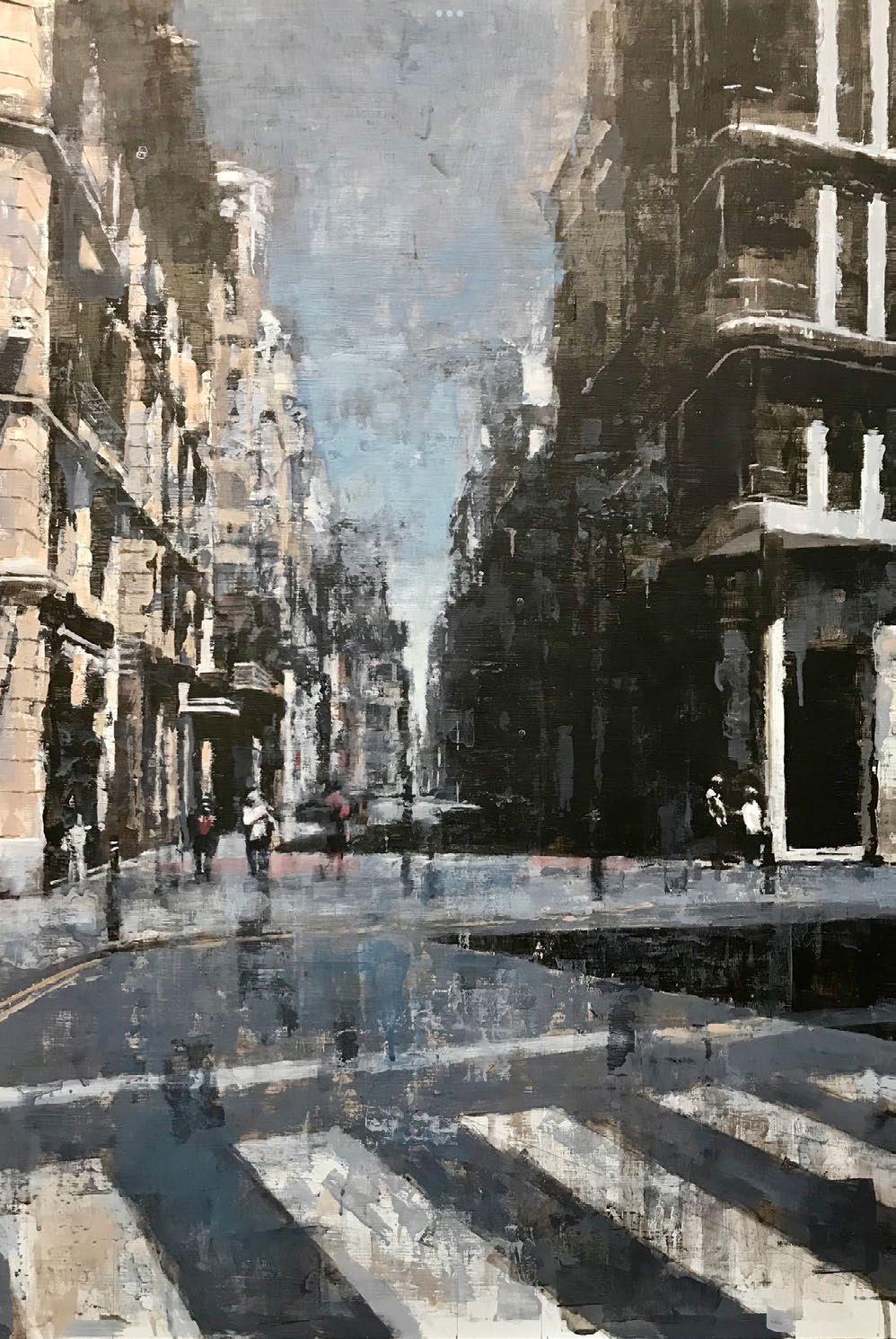
Ruth Greenberg, founder of Gamma Architects, has been steadily influencing Gibraltar’s architectural environment with a thoughtful, contextual approach to design.

“I’m originally from Gibraltar,” she says. “My family’s been here since the 1700s.” Ruth’s path into architecture came by osmosis. “My father was a developer, and I didn’t realise until later how much that must have influenced me. I also loved art and maths equally and architecture was a natural meeting point for both.”
After studying and working in the UK, Ruth returned to Gibraltar with her young family. It was here that her perspective deepened. “As a young architect, your focus is often on the building itself. Over time, I began to understand the wider impact - how a building fits within the economic, cultural and environmental context of Gibraltar.”
Taking Ownership
“When I returned, I worked for a local practice and I really enjoyed my time there, but my main driver was that I wanted to take ownership of the creative direction of what I was doing,” she explains.
It was in 2013 that Ruth established Gamma Architects, initially working alone from home. “I started small, but the firm has since grown organically, taking on about one or two people a year into what is now a fifteen person team,” she says. “We have expanded to include conservation architecture and sustainable design, and every new team member brings something special.”
Designing landmark projects in Gibraltar comes with unique regulatory and environmental market challenges. Ruth indicates that when it comes to construction, even building regulations are loosely based on the UK: “the difference is that obviously our climate is very Mediterranean, so that makes us quite unique in that sense.”
Gibraltar’s residential and commercial property landscape has shifted significantly over the past decade. “Historically, if you look at the census, there was very little home ownership in Gibraltar,” she explains. “That’s changing, and there are a lot more private developments, but we’re also seeing a strong influx of inward investment, and as someone from here, it’s incredibly affirming to see others believe in the potential of this place.”
Post-COVID priorities have also altered the way people think about space, and Ruth comments that there’s been a noticeable increase in demand for private outdoor
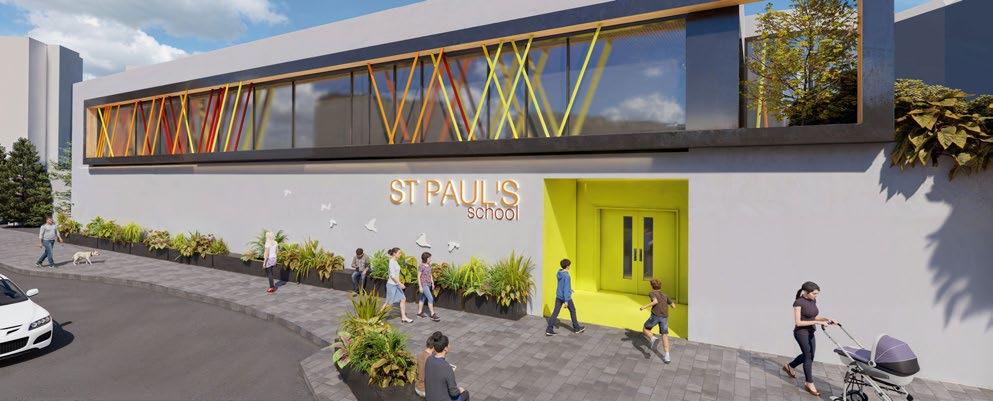
space. She cites the area of Devil's Tower Road and the St. Michael’s Citadel project as a key point of focus for regeneration for Gibraltar: “it’s about providing spaces which are not just buildings where people live, but also buildings that serve the inhabitants as well, which I think is very important, especially when space is at such a premium.”
Gibraltar may be small, but it’s dense with activity, both economic and historical. Ruth claims this “brings incredible challenges and opportunities. When you’re designing in a place with this much history and such limited space, every decision matters,” she states.
Urban regeneration is not confined to new developments; the old town is undergoing its own quiet renaissance. “It’s like a game of Tetris,” Ruth laughs. “One house gets refurbished, then another, and suddenly you’re seeing whole rows of restored buildings. It’s changing the face of the old town.”
So what are developers focusing on today? “Outdoor space is a big one, but so is sustainability”, Ruth explains. She adds that “It’s great to see that this isn’t just being driven by regulations and that developers themselves are setting ambitious environmental goals.”
Moreover, Gamma Architects has been involved in initiatives like the Aspire Conference, a local event dedicated to sustainable construction. “It’s exciting to be part of that conversation, and it’s about more than just energy ratings or green credentials”. Ruth explains that the main objective here is “about changing how we build. There’s so much waste in traditional construction, now is the time to get creative in our processes, not just our aesthetics.”
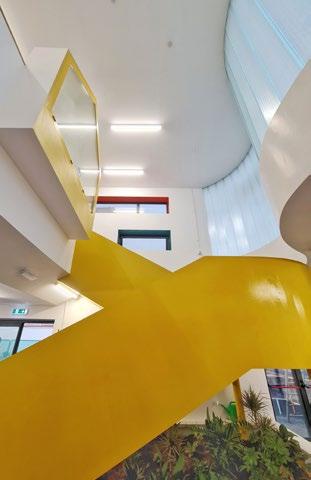

When asked where she sees the next big area of growth in Gibraltar, Ruth’s response is thoughtful: “it’s not so much a specific location, although places like Devil’s Tower Road and the old town will continue to evolve, it’s more about our approach. Affordability, sustainability, smart land use… these are the challenges we need to tackle creatively.”
That being said, with the new Development Plan, the next phase of Gibraltar’s physical expansion is already on the horizon - “there are definitely areas that are being looked at. The Development Plan will be key in guiding how and where that growth happens. The last one was in 2009, and the world has changed so much since then, especially Gibraltar.”
Ultimately, that may be what defines Gamma Architects the most, not a signature style, but a thoughtful, collaborative ethos grounded in local knowledge and futureforward thinking.
By Jo Ward