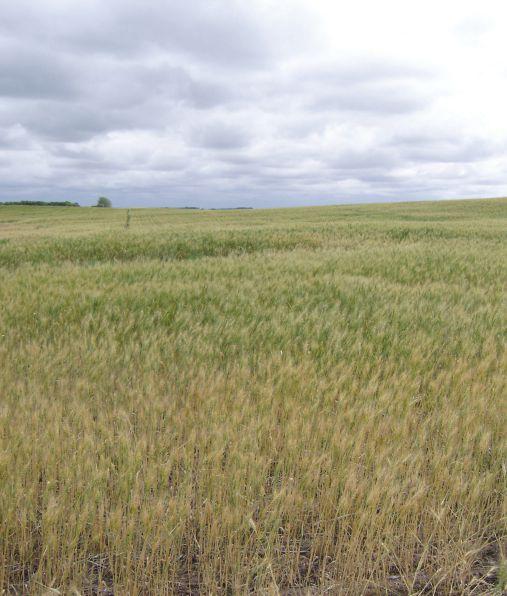
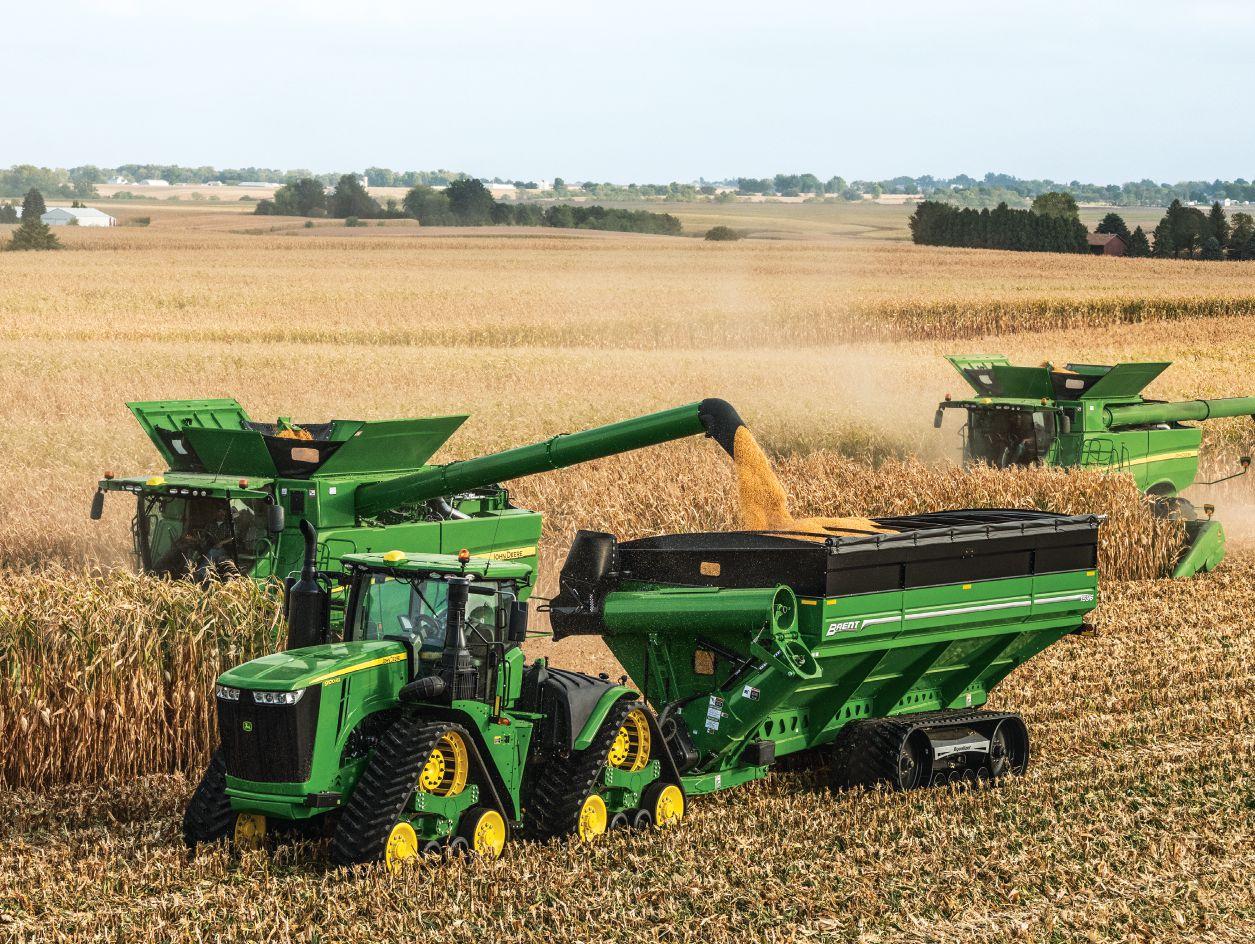
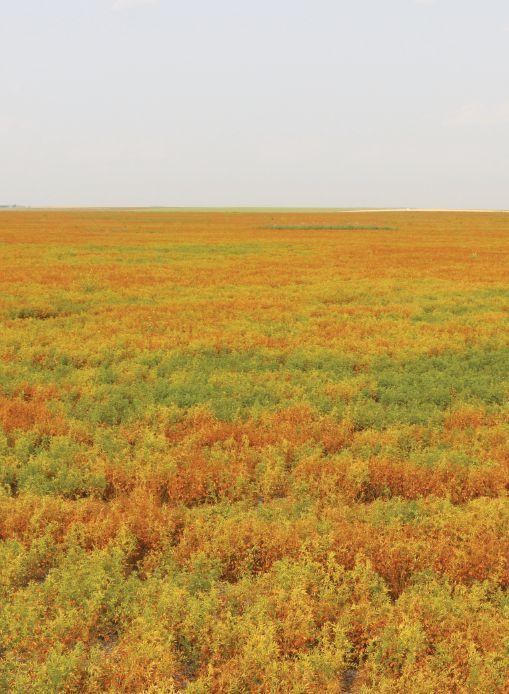
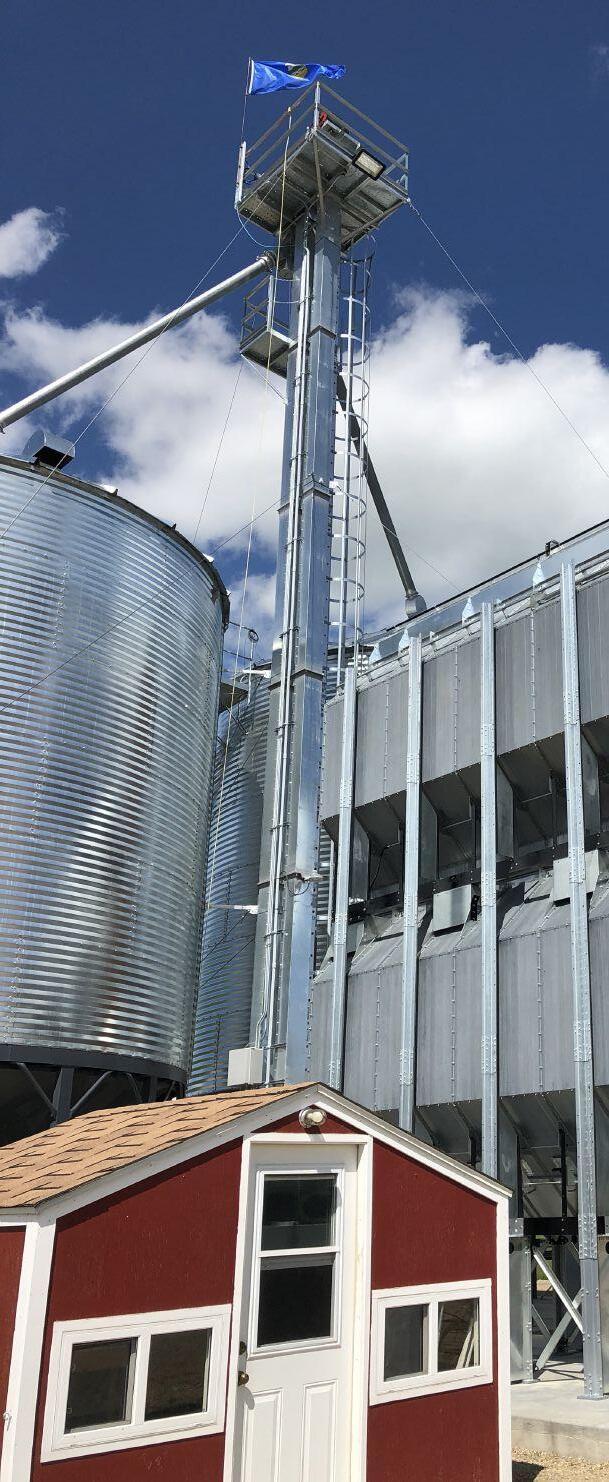
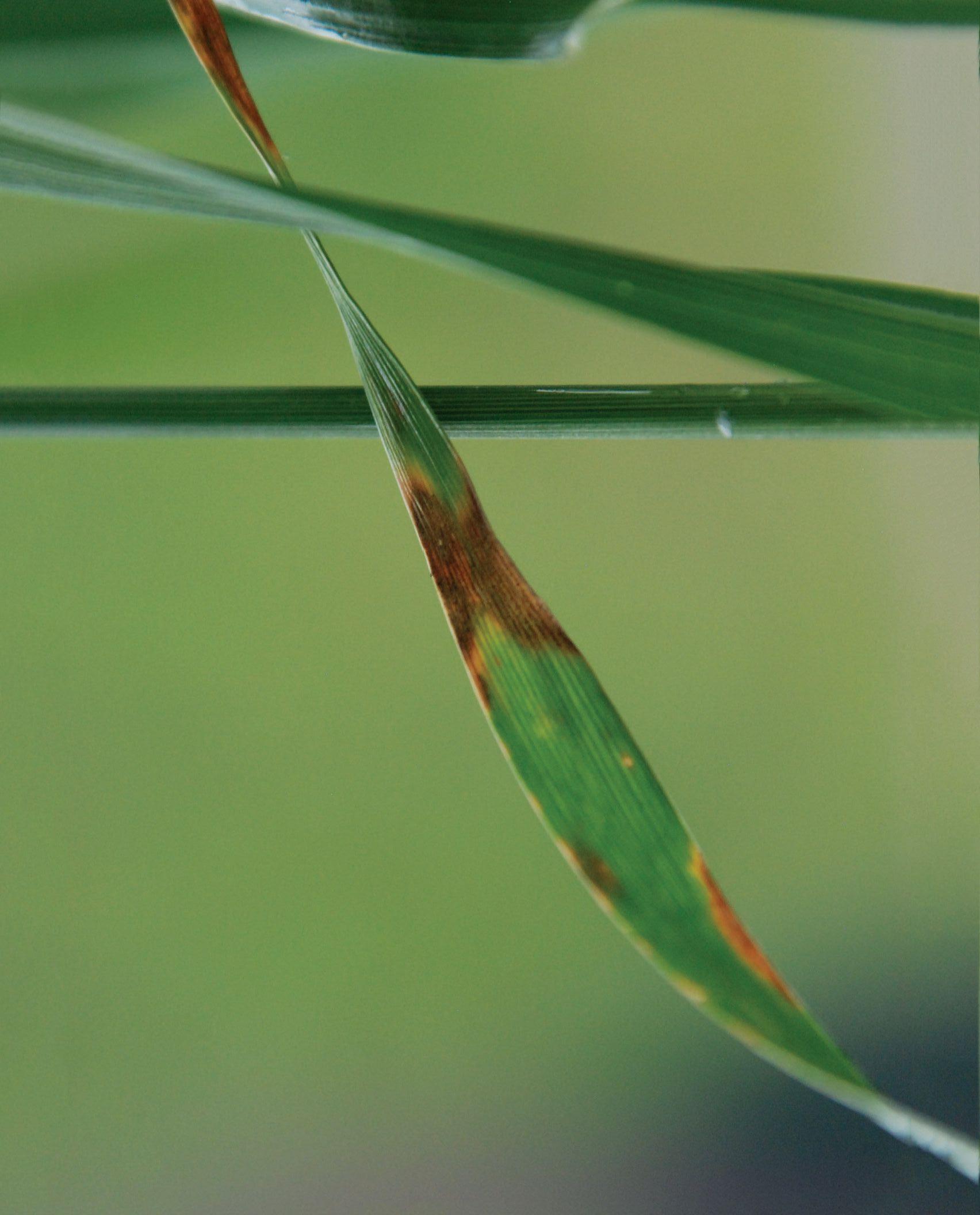
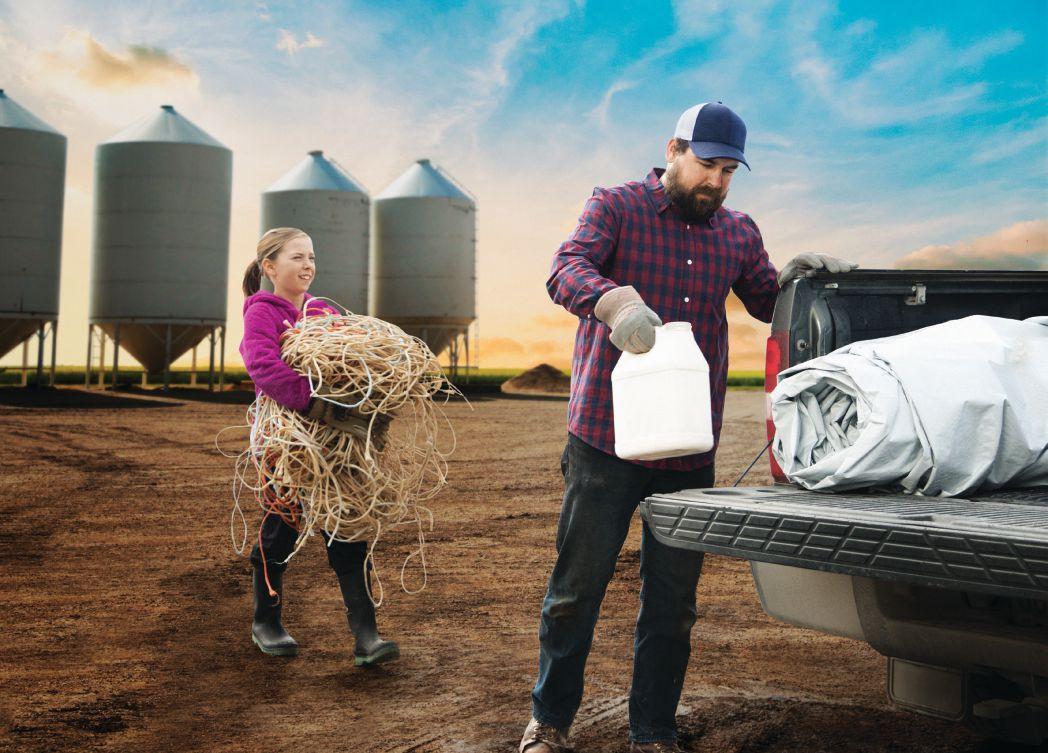
Grain drying systems may pay for themselves over time
PG. 10
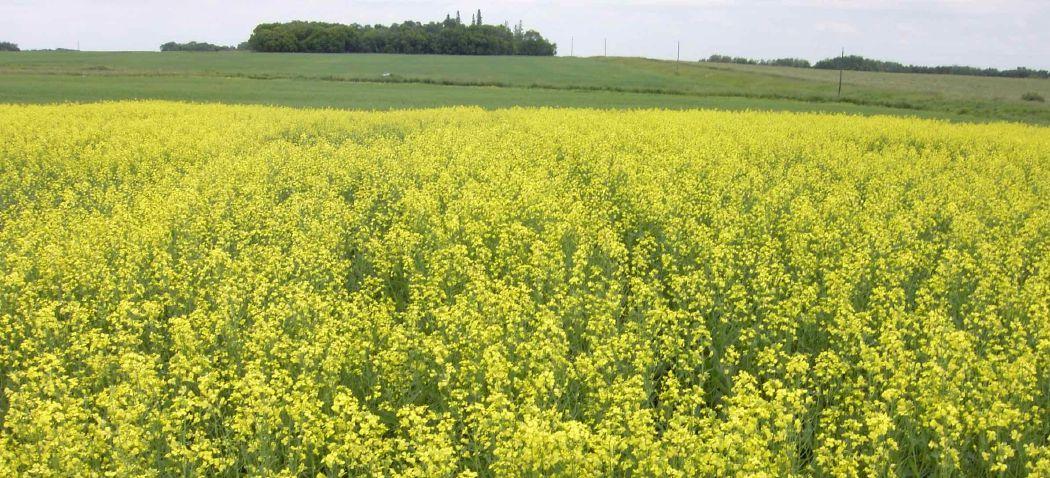
N FERTILIZERS ON CANOLA
How source and placement impact yield and quality
PG. 14
DESICCATION TIMING
Early application can reduce fababean yield and seed size
PG. 20
WITH YOU EVERY STEP OF THE WAY
At Richardson Pioneer, we know that choosing the right product is only part of your success. We’re here to help you increase your yields profitably with expert agronomic advice and fully integrated service. From crop planning to grain marketing, we’re with you every step of the way. Contact your local Richardson Pioneer Ag Business Centre for more information.
TOP CROP
MANAGER
10 | Preparing for a wet harvest
Grain drying systems may pay for themselves over time.
By Julienne Isaacs
SEPTEMBER 2019 • WESTERN EDITION
FERTILITY AND NUTRIENTS
14 | N fertilizers on canola
The impact of source and placement to improve N use efficiency, crop yield and quality.
By Donna Fleury
FROM THE EDITOR
4 Let’s talk about it by Stefanie Croley
FERTILITY AND NUTRIENTS
5 Developing variable rate prescriptions by Donna Fleury
WEED MANAGEMENT
8 Stay on the safe side with pre-harvest glyphosate by Julienne Isaacs
ON THE WEB
FOCUS ON DIGITAL EDITIONS
ISSUES AND ENVIRONMENT
18 Be aware and prepared by Julienne Isaacs
SOIL
22 Getting the most from soil sampling by Ross H. McKenzie
CEREALS
24 Advanced agronomics for malt barley by Bruce Barker
PULSES
20 | Ensure correct timing for fababean desiccation
Early application can reduce yield and seed size.
By Bruce Barker
CROP MANAGEMENT
26 Plant twice, harvest three crops? by Carolyn King
PRECISION FARMING
28 Controlling traffic to boost soil health by John Dietz
Throughout the summer, we released several exclusive digital editions. Don’t miss extra insights on crop management, soybeans and succession planning available only online. Visit TopCropManager.com/digital to view.
Readers will find numerous references to pesticide and fertility applications, methods, timing and rates in the pages of Top Crop Manager. We encourage growers to check product registration status and consult with provincial recommendations and product labels for complete instructions.
STEFANIE CROLEY | EDITOR
LET’S TALK ABOUT IT
Though every year brings challenges, 2019 has been particularly difficult for Canadian crop producers, and the latest news headlines haven’t been so positive.
Little progress has been made regarding the trade dispute between Canada and China, according to the latest update from the Canola Council of Canada, who report a small amount of canola seed sales to China have recently occurred. However, Richardson and Viterra’s licenses to export canola seed to China are still suspended, and Chinese buyers are reluctant to purchase a variety of Canadian agricultural products.
To add insult to injury, the volatile weather that producers experienced during the spring and early summer will likely stick around through harvest. Many regions were desperate for even the smallest amounts of rain through July, while others – like Lac Ste. Anne County in Alberta, which recently declared a state of agriculture disaster due to flooding – were begging for respite from rainfall. Changing market prices as harvest approaches will surely heighten tensions.
These are all topics that are likely to be discussed when chatting with neighbours, family and colleagues, and you’ll surely hear a lot of the same sentiments spoken by your peers. But less likely to come up in conversation are the long-term implications of these challenges on one’s mental health. Just because there’s almost nothing you can do to control weather or trade wars, doesn’t mean those events don’t affect you.
I was browsing Instagram one evening a few weeks ago when I came across a photo that read, “Check on your strong friend.” This simple phrase serves as such an important reminder that the hardest battles are oftentimes fought silently. So many of us, even the seemingly “strong” ones, struggle with things each day. Pain – whether physical or emotional – is relative; meaning what doesn’t hurt you could be crippling for your neighbour. And though it’s easy for some to talk about the devastating effects of a flooded field, others may keep those feelings to themselves for fear of judgment or lack of resources to help them.
That’s why I was thrilled to read that the Do More Agriculture Foundation and Farm Credit Canada are extending their partnership to provide more mental health awareness and training to rural Canada in 2020. Do More Ag, a Canada-wide not-for-profit organization, focuses on bringing awareness to the mental health and wellbeing of Canadian producers. Stress, burnout, emotional exhaustion and depression are high among Canadian producers, according to the foundation, and the continued partnership with Farm Credit Canada means more rural Canadians will receive mental health first aid training through a two-day program developed by the Mental Health Commission of Canada.
Programs like this are monumental steps to break the stigma around mental health, but so much work needs to be done. If you’re having a hard time, please reach out to a loved one for help. And conversely, don’t forget to check on those “strong” friends – they just might be in need of some support, too.
and
– 1
- $48.50 Cdn. plus tax Top Crop Manager East – 6 issues Feb, Mar, Apr, Oct, Nov and Dec – 1 Year - $48.50 Cdn. plus tax
Potatoes in Canada – 1 issue Spring – 1 Year $17.50 Cdn. plus tax
DEVELOPING VARIABLE RATE PRESCRIPTIONS
Understanding variability in soils and formulating a VR fertilizer plan.
by Donna Fleury
Variable rate applications and precision agriculture tools keep advancing, as more growers across Western Canada look for opportunities to improve yields and optimize inputs. However, the continued challenge across most systems is really understanding the variability and being able to translate that into management plans and VR prescriptions.
“To understand variability, it’s important to think about the sources of variability that exist on different scales, from regional soil variability across several kilometers to macro and micro scale variability on farms and within individual fields,” explains Jeff Schoenau, professor of soil science at the University of Saskatchewan and Saskatchewan Ministry of Agriculture chair.
“At the macro scale, variability can occur over several metres in a field, often strongly related to topography and landscape position within individual field. Soils can also vary at a micro scale over a few centimeters, which can influence how to best sample a field to account for that variability. The goal is to convert what appears to be random variability into something more systematic that we can manage.”
There are several different approaches and a range of tools that can be used to divide a field into separate areas to be
managed differently. These may include soil type and property maps, combine yield maps, protein maps, satellite and aerial imagery such as NDVI, LIDAR and other technology.
In Saskatchewan, soil type maps have recently been digitized and are available through the Saskatchewan Soil Information System (SKSIS). On the ground, soil testing and plant tissue analysis can inform about nutrient availability and soil properties across the various areas. Other measures such as soil electrical conductivity (EC) can be another way of dividing the field into zones.
“Topography maps can also be used to assess variability across a field to help identify the impact that landscape has on important plant growth influencing factors such as soil organic matter content, water holding capacities and accumulation patterns within a field,” Schoenau says. “However, it’s important to also look beyond just the difference in elevation, and consider the impact of soil surface curvature, which controls where water runs off and where it accumulates in the landscape. In areas where the surface curvature is concave, then water will accumulate, however convex areas are where runoff can occur, and are typically
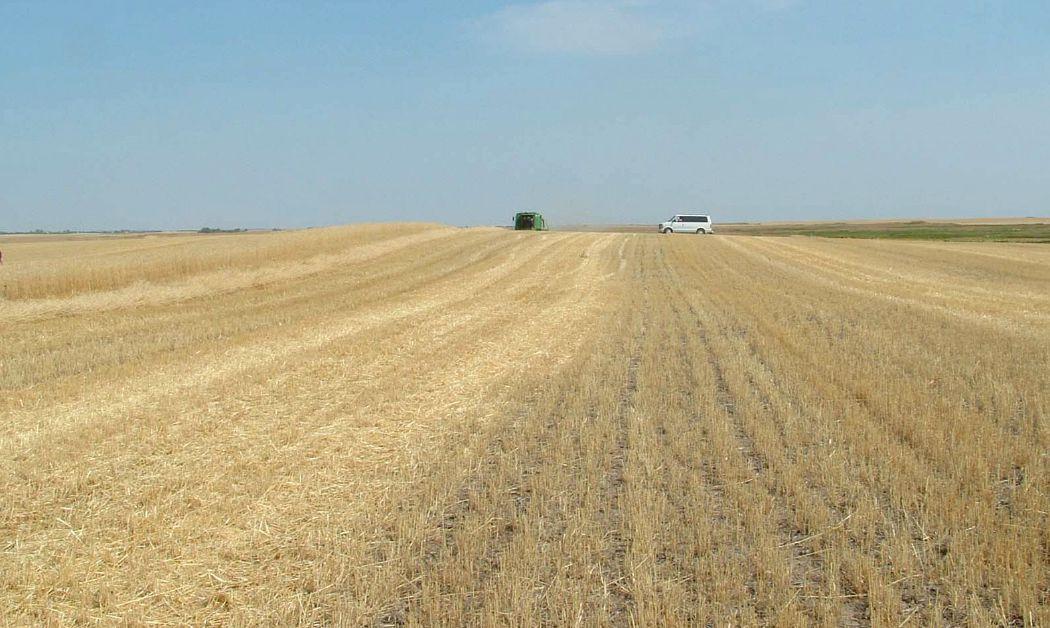
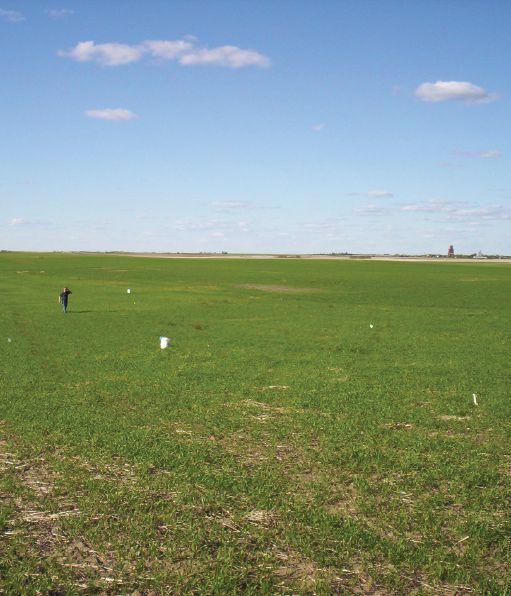
ABOVE: Wheat landscape transect used in study to examine relationship between soil properties and yield.
PHOTOS COURTESY OF JEFF SCHOENAU.
drier and of lower productivity, impacting management strategies on those areas.”
A major challenge is in the next step of developing the variable rate prescription for the different management areas and the equipment in the system. This requires an understanding of all of the different factors that control productivity and the response to an imposed management practice, such as fertilization or different seeding rates, or even different rates of water in an irrigated field. There are many ways to identify differences in productivity that exist across a field area. For example, using yield maps or long-term satellite imagery combined with information on soil parameters or soil types that reveal patterns in fertility, moisture holding capacity, salt content, and so on.
Identifying and creating meaningful management units or zones in the field based on the variability will help in developing the variable rate prescription. Apart from the soil, other factors affecting production potential such as weeds, disease, insects need to be considered. They also often have spatial dependence and their effects can be magnified within different regions of the field. Understanding and addressing all limitations that may exist within and among management zones is important.
“I think the best prescriptions are developed using multiple sources of information and tools available, including historical and local knowledge,” Schoenau says. “It is not an easy task and takes some time and patience.
“There are some gains that can be made for precision applications of an input, such as fertilizer. A single year of evaluation is not enough, we need to be considering patterns over a long period of time, how fluctuations in growing season conditions are influencing the response. The challenge is reliably predicting those upcoming growing season conditions when making decisions at the beginning of the season.”
Although we have better predictive models of upcoming season conditions, there is so much variability on the Prairies from year to year, it is really difficult. Weather is always unknown, and can change things significantly in terms of variable rate prescriptions depending on a wet year or dry year scenario. For example, in drier years, the low spots may be where inputs should be increased due to higher productivity potential, but in a wet year those low areas may flood out with inputs lost. Enhanced efficiency products that reduce loss would be especially appropriate in those areas under those conditions. Unknown future conditions are always a challenge when making decisions at the start of the season.
Implementing precision applications of an input can involve some fairly sophisticated approaches with high-tech equipment, or in some cases can be quite simple. Schoenau notes, approaches like overwintering cattle on fields and field areas where fertility is poor, or using low spots in a field with excess soil moisture to seed late for green feed. It may be taking a standard input package for a particular crop and fine-tuning it to vary rates across a field or making adjustments among different fields as a good first step. Or it may be a very sophisticated VR prescription for the several management areas across a farming system.
“It’s important to recognize that there isn’t one silver bullet or simple formula, one size does not fit all. That’s why there are a number of service providers that come at it from different angles using different approaches,” Schoenau explains. “They all have their specific advantages and fit to customers with different needs. To really make it work there needs to be knowledgeable people who understand the biology, chemistry and physics of what is happening out in that field to develop robust variable rate prescriptions. There will be benefits to prairie cropping systems, but it takes time and effort by everyone to figure it out.”
Landscape-based soil sampling for study.
Uneven wheat growth across field, reflecting variability in depth to hardpan B horizon in soil profile.
RAISING EXPECTATIONS AND AUGER HEIGHT
The S700 Combines just got even better, with better harvest data accuracy and improved residue management. Make on-the-go crop residue management changes as conditions warrant by changing knife bank position from the cab. Automatically swap your residue offset when your combine makes headland turns with Auto Swap. And of course, get more productive unloading with up to 12 more inches of auger height.
To learn more about how the S700 Combine can elevate your harvest, see your dealer today.
Nothing Runs Like a Deere.
STAY ON THE SAFE SIDE WITH PRE-HARVEST GLYPHOSATE
Improper usage could impact export markets and product longevity.
By Julienne Isaacs
Glyphosate is just about the most important crop protection tool in a producer’s arsenal. But improper usage could threaten market access for Canadian grain and, ultimately, limit its longevity in Canada, according to experts.
“Farming practices are under greater scrutiny around the world, and the ability to test for residues has grown considerably,” says Cam Dahl, president of Cereals Canada.
2019 will mark the fourth year of Cereals Canada’s Keep it Clean campaign to protect the quality and reputation of Canadian pulses, canola and cereals. The campaign is focused on maintaining market access through outreach and education.
Internationally recognized (Codex Alimentarius) maximum residue limits (MRLs) are available for Canada’s principal field crops, according to Sheryl Tittlemier, program manager for grain safety at the Canadian Grain Commission (CGC). For cereal grains and canola, the Codex MRL for glyphosate is 30 milligrams per kilogram (mg/ kg); for soybeans, it’s 20 mg/kg; for maize and dry lentils, the figure is five mg/hg.
The CGC analyzes grain exports for pesticide residues as part of its Cargo Monitoring Program, Tittlemier says. “Throughout the year, vessel loadings are systematically selected and grain is collected using automatic samplers to ensure the tested portion is representative of the whole lot,” she explains. “Samples are tested at the CGC Grain Research Laboratory in Winnipeg using state of the art methods that are very sensitive and very selective.”
Dahl says new testing technology can detect residue levels of one part per billion. This figure translates, says Dahl, to “one second in 33 years.”
According to Chris Willenborg, associate professor in the University of Saskatchewan’s department of plant sciences, when glyphosate is applied correctly, “we tend not to see any issues when we look at the data,” he says.
“One of the biggest challenges that we have with residue levels as an exporting country is when they are applied at the wrong time. For producers, this can happen when you have a lot of acres to cover and you can’t wait for everything to reach appropriate maturity – but with glyphosate you really have to do that.”
Timing guidelines
Glyphosate is not registered as a desiccant, but some producers use
A lentil field at the appropriate stage for a pre-harvest glyphosate application.
it as a dry-down aid as well as for weed control, which is where they can run into problems.
In most of the crops in which it’s registered for pre-harvest weed control, Willenborg says, glyphosate can’t be used until the crop reaches about 30 per cent seed moisture content. Visual guides for application are recommended in the Crop Protection Guide.
Specific indications of crop maturity differ across crop types, but if producers apply glyphosate prior to 30 per cent moisture, there’s a greater likelihood that the chemical will move into the seed. “This tends to be fairly consistent across crops,” he says.
The physiology of this process can be explained using what scientists call “sources” and “sinks.” Toward the end of the growing season, annual plants are moving most of their nitrogen and sugars out of the “source,” or the leaves, and into the seed itself, the “sink.”
“Because glyphosate is systemic, it moves in the plant’s vascular tissue, or phloem, and that transports it into the seed itself,” Willenborg explains. “The less mature the seeds, the more sugars that translocate into them. That level of movement of sugars declines substantially when the plant is getting to be physiologically mature and it’s drying down.”
Willenborg currently has a project underway in oats to determine the impact of applying glyphosate at various seed moistures.
In 2016, Canadian oat millers decided they wouldn’t purchase oats treated with glyphosate pre-harvest due to fears about market access and baking quality. Willenborg’s project began in an attempt to look at pre-harvest timing of glyphosate in relation to yield, kernel plumpness and thousand seed weight “and assuage fears,” he says. He’s collaborating with Agriculture and Agri-Food Canada research scientist Nancy Ames, who is looking at baking and milling quality parameters, and Tittlemier, who is looking at residues.
A few years ago, before key foreign markets began demanding quality assurances, there weren’t many guidelines available in terms of glyphosate timing based on crop type, but industry groups have quickly developed their own guidelines.
Some plants have clear maturity indicators, such as pulses, when the bottom third of the seeds rattle.
According to the Canola Council of Canada, glyphosate is to be applied when the majority of seeds are yellow to brown in colour and
WHAT ARE YOU WAITING FOR?
seed moisture is less than 30 per cent (which typically occurs seven to 14 days before harvest).
According to a representative for Manitoba Corn Growers Association (MCGA), in both wheat and barley, guidelines dictate that producers should not apply glyphosate as a pre-harvest aid before achieving 30 per cent moisture content in the latest-maturing portion of the field.
“This year will be another tricky year to time a pre-harvest application because of uneven emergence and maturity, but it is important to be watching for that very last part of a field to reach 30 per cent moisture before spraying,” says Morgan Cott with the MCGA.
It can be tricky to assess when cereals have reached maturity; Willenborg and his colleagues typically dry them down in the microwave and measure their seed moisture content.
But this is a labour-intensive process for producers with large farms, says Willenborg – and this is where they can run into problems.
Thirty per cent
Glyphosate is not actually an effective desiccant, Willenborg says, because it takes several weeks to fully work and can’t rapidly dry down the seed. Producers should only be using it in crops where there are perennial weed challenges at harvest, he says, when perennial weeds are putting sugars into their root systems to overwinter. Producers using glyphosate to control perennial weeds should time application very carefully to avoid problems.
Continued
You’re not just open to new ideas. You’re obsessed with them.
The latest ag tech doesn’t phase you. It excites you. And when the going gets tough, you roll up your sleeves and get to work. Because change isn’t easy, but progress is always worth the effort.
You’re a different breed. And so is our seed. Let’s make it happen.
PREPARING FOR A WET HARVEST
Grain drying systems may pay for themselves over time.
By Julienne Isaacs
Western Canada has seen wet harvests for a few years in a row.
“It all depended on location. Last year, the southern part of Western Canada was pretty good but toward the north there were many producers who needed to dry grain,” says Lorne Grieger, assistant vice president for the Prairie Agricultural Machinery Institute (PAMI’s) research and development services in Manitoba.
In Alberta, 2018 was one of the wettest harvests in years for many producers.
According to PAMI, 489 million bushels of grain remained unharvested in Alberta by early October, compared to 208 in 2017 and 370 in 2016.
In many ways it’s impossible to plan for a wet harvest, because nobody knows exactly what conditions Mother Nature will send year-to-year. But there are a few ways producers can plan for the worst and maximize their profit potential no matter what comes.
According to Kenton Possberg, a Saskatchewan director for Western Canadian Wheat Growers, harvest planning should begin many months before the crop is ready to come off the field.
Possberg runs a grain operation in Humboldt, Sask., growing canola, malt barley, spring wheat and oats. “For us, harvest planning actually starts with planning crop rotations the previous winter, and deciding when to start seeding,” he says. “We start planting malt barley first because the crop matures earlier and we can get it off in August, and then we can usually hold the quality. Then we go into oats and wheat and canola.”
Harvest conditions in the Humboldt area have been variable in the last few years, but last year was very challenging for some producers. “The whole month of September was a write-off because of rain and damp conditions,” Possberg says.
Innisfail, Alta., farmer Wade McAllister is the director-at-large for the Alberta Barley Commission. McAllister grows malt barley as
well as CPS feed wheat, canola and oats on his operation. He says farmers in his area have seen snow every harvest for the past four years, and the only way to prepare for harvest is to start as soon as possible.
Last year, McAllister’s grain dryer started running in August. “Everyone said we should let the grain dry naturally,” he said. “But then it snowed all through September, and our malt was already in the bins in perfect shape.”
Understand equipment
Grieger says it’s absolutely key for producers to understand their equipment so they can successfully harvest as much of the crop as possible – and maintain its quality once it’s in the bins.
Wet grain can cause hot spots in bins, which can quickly lead to spoilage. According to PAMI, cereals are typically considered dry at about 14 per cent moisture, while canola is considered dry at 10 per cent moisture.
Producers can dry grain by using aeration or natural air drying in the bin, adding supplemental heating to improve drying capacity of the air. They can also purchase grain dryers, which quickly heat grain to dry it and then cool the grain down prior to storage. There are unique benefits to each of these systems, and Grieger says PAMI maintains resources on its website to help producers make decisions.
Producers should look to have equipment in place well before harvest, he says. If they are considering adding a heating or drying system, they should be aware of regulations that go with it before harvest heats up.
For grain dryers, he says, “make sure it’s a CSA approved system, and get it set up and certified for use through the office of the fire commission (in Manitoba). If you’re installing it you should understand the approval process in advance.”
PAMI has been working on research projects related to grain storage systems for several years. One recent study compared continuous fan operation in an aeration and natural air drying system to the Australia-
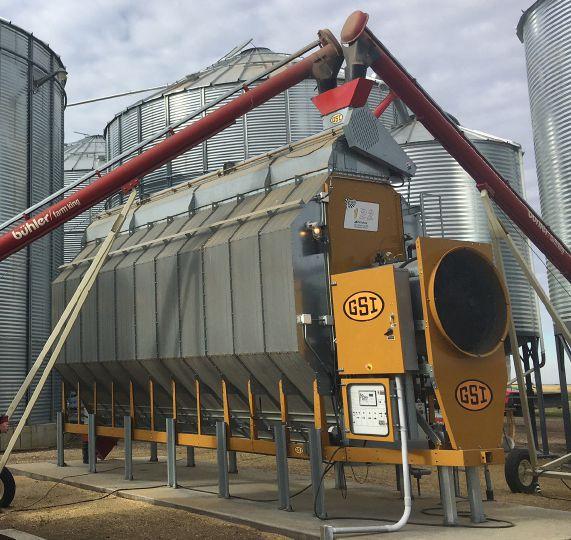
< LEFT:Kenton Possberg’s grain drying system
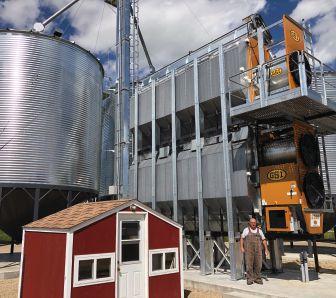
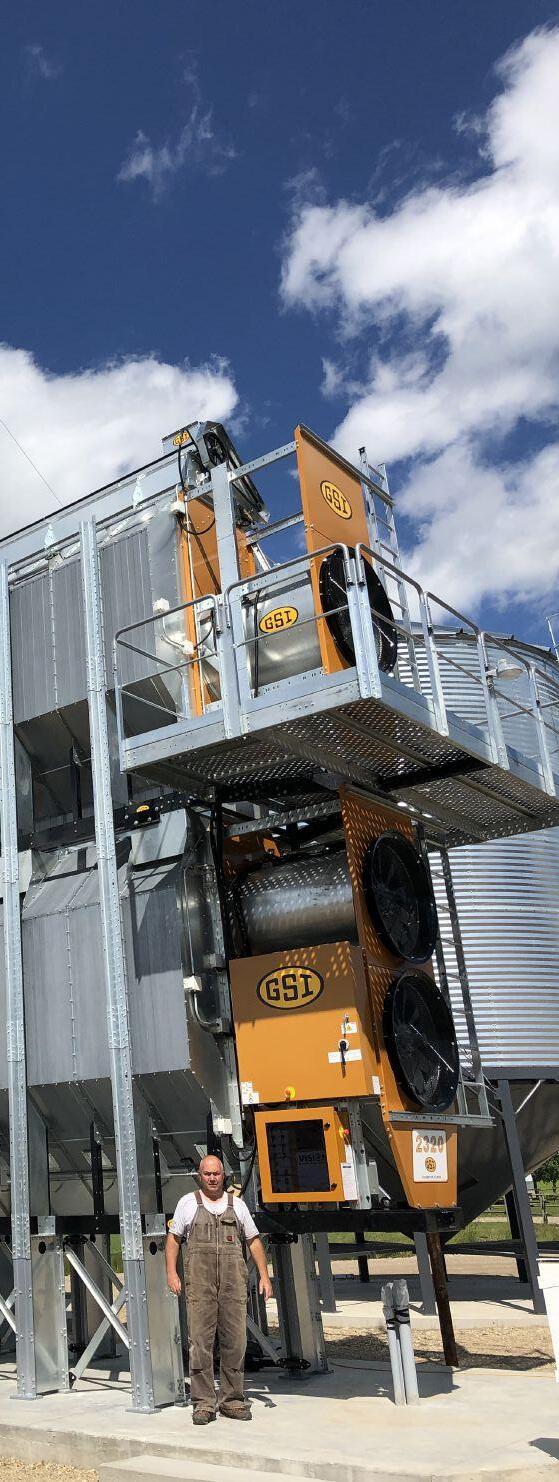
< LEFT: Wade McAllister’s grain drying system (McAllister pictured in the foreground).
PHOTO COURTESY OF KENTON POSSBERG.
COURTESY OF WADE MCALLISTER.
developed Aeration Manager (AM) system, which uses an algorithm to predict grain temperature and moisture and can cool or dry the stored grain.
The latter system was more effective at dropping grain temperature quickly, Grieger reveals.
But Grieger says producers can successfully use whatever equipment they have if they understand it and pay attention to temperature and moisture parameters in the grain relative to ambient conditions. Once it’s in the bin, their best strategy is to regularly monitor temperature and moisture in the bin.
Grain drying benefits
McAllister says his operation invested in its first grain dryer ten years ago. It was a large capital investment, but it paid for itself within a year or two, he says. That system could handle 300 bushels per hour, and by 2018 it was running day and night for six days straight.
This year, McAllister replaced it with a much larger GSI system that handles 1,100-1,500 bushels per hour. The new system can be controlled remotely and offers regular updates and readings by mobile app. “With the expanding acres, the old dryer was getting too small and we were getting a backlog of grain so we put the new one in to speed up the drying process at harvest,” he explains.
McAllister estimates that only about 35 per cent of producers in his area have their own grain dryers. They still have options for drying – most elevators have dryers, for instance, or they can have custom drying done at a neighbours’.
This fall, Alberta Wheat and Barley is embarking on a grain conditioning study that will assess the on-farm energy consumption and efficiency of a variety of systems.
McAllister says grain drying is critical for malt barley production, because quality parameters are so strict: wet grain can stain or begin chitting, or pre-germinating, so the best thing producers can do is get the crop off as soon as possible. On McAllister’s operation he takes it off as soon as it can go through the combine – at around
18 per cent moisture – and dries it down to 13.5 per cent moisture in the dryer. Each year McAllister’s operation puts at least a third of its malt barley through the dryer.
“This way we can take it off and do it ourselves. And we just know that we’re going to get that heavier grain, with better quality. It takes a lot of the stress away,” he says.
He believes more producers should make the investment – it’s a large startup cost, but it can pay for itself in only a year or two if producers currently can’t get their grain off the field in time and their crop is sold as feed.
Possberg’s operation also runs a GSI dryer, but he says he doesn’t look at it as a way to manage a wet harvest – for him, it’s a way to maintain better equipment utilization. This year, Possberg upgraded his dryer system to a larger Farm Fans dryer, which should add 30 to 40 per cent greater capacity. He says his operation plans to run the dryer every year, harvesting malt at the 17 to 18 per cent moisture mark so they can get out in the field earlier.
“If you plan to use it only as a last resort it can get expensive because you’ve already probably seen drops in quality,” he says. In addition, if the dryer isn’t set up properly and is labour intensive to use, it probably won’t be used and the system won’t represent a return on investment.
“With the dryer, you can start earlier in the morning – if you have a heavy dew you don’t have to wait as long for it to dry down – and you can take a few loads off and run them through the dryer. You can get started with harvest two or three days earlier. Sometimes that makes all the difference in the world,” he says.
Possberg doesn’t chalk recent wet harvests up to climate change – or, more specifically, he doesn’t think knowing the cause will change the way farmers tackle challenging farming conditions. Whatever happens, it’s farmers’ job to be able to roll with the punches.
“You just have to manage with the weather, and ultimately weather is the major factor in what we do. You have to be prepared for whatever comes,” he says.
STAY ON THE SAFE SIDE WITH PRE-HARVEST GLYPHOSATE
Continued from page 9
“I suspect that it’s those one or two low spots where some plants are still immature but the rest of the plants are ready for applications – those are the areas that are creating the issues,” he says, because they are sprayed too early. “Try to wait until those low spots have hit 30 per cent. It’s not 30 per cent across the field – it’s 30 per cent on your greenest spots. Otherwise we get those hot spots that can be detected by our importing nations.”
Willenborg says producers can also choose to spray around these “potholes” and return to spray them later, or direct harvest them at a later date.
“We’re risking not only our stature as the best exporting nation in terms of quality and quantity but also we’re risking glyphosate as a product in public perception,” he says.
Ten to 15 years ago, Willenborg says, the scientific community considered glyphosate one of its safest products, and it’s still considered safe by Canada’s Pest Management Regulatory Authority when used appropriately. But there’s growing scrutiny on
glyphosate, partly because of the farming community’s reliance on glyphosate year-in, year-out, he says, which makes it crucially important for farmers to play it safe when it comes to application timing.
“There’s a narrowing focus on the molecule itself, and the unfortunate part is that it’s been the most transformational molecule developed for farming in the last 60 years. No other product can do what it can do at very low prices,” he says. “We have to take any step we can to extend the life of this molecule as an exporting nation.”
Dahl says the Keep it Clean effort is not solely focused on glyphosate, but the product is a key driver.
“What happens on the farm really does matter in international marketplaces,” he says. “The attention farmers pay to ensuring crops are ready for customers and meeting the requirements for pesticide residues and mycotoxins is critically important, and what individual famers do matters.”
THE IMPACT OF SOURCE AND PLACEMENT OF NITROGEN FERTILIZERS ON CANOLA
Improvements in nitrogen use efficiency, crop yield and quality.
by Donna Fleury
As a best practice, in-soil banding of nitrogen (N) fertilizer has long been recommended on the Prairies.
Research has shown a number of benefits of in-soil banding, including reduced potential for N losses, improved nitrogen use efficiency (NUE), and also improvements in crop yield and quality. However, with growing farm sizes in Western Canada, there has been some movement back to broadcast application of N for various operational reasons.
“In Manitoba, in-soil banding close to or at the time of seeding is really considered the gold standard of N management,” says Ramona Mohr, research scientist with Agriculture and AgriFood Canada (AAFC) at the Brandon Research Centre. “Putting that N fertilizer into the soil through banding can help reduce volatilization losses, immobilization losses and denitrification, and can provide many other benefits. However, recently some farmers have moved back to broadcast application of N due to larger farm size and various operational reasons such as reducing the handling of fertilizer during the seeding operation. Broadcasting N may speed up spring seeding operations, and under wet conditions, not having to carry that fertilizer means farmers can probably get on to the field earlier.”
However, surface application of N fertilizer can increase the
potential for volatilization losses. This raises some questions about what that means for NUE of the crop and whether or not some of the enhanced efficiency products that are now available could be used to reduce that gap between the performance of in-soil banding compared to surface application.
To try to answer some of those questions, researchers initiated a four-year project with several components to gain more information about the effect of fertilizer placement and also the performance of different fertilizer products. The goal was to look at placement, fertilizer source and the effect on volatilization losses early in the growing season during the first month after seeding. The project also assessed the NUE of the crop, as well as crop yield and quality.
In one set of trials, small-plot field experiments were conducted in Brandon, Man., in 2017 to identify fertilizer management practices that reduce the potential for volatilization losses and improve fertilizer nitrogen use efficiency for canola. The objective of the study was to determine the effect of fertilizer source and placement on canola yield. The study also looked at nitrogen use efficiency by the canola crop and nitrogen volatilization losses on both calcareous and non-calcareous soils.
There can be a greater potential for volatilization losses on calcareous soils, so comparing the two soils under the same
PHOTO COURTESY OF RAMONA MOHR, AAFC.
environment was important. The study compared fertilizer placement, looking at either in-soil banding or surface application of N. It also compared the performance of different fertilizer products, either conventional products including UAN and urea, or enhanced efficiency products with either nitrification inhibitors and/or urease inhibitors.
“We recently finalized the field work for this set of experiments and are still bringing other site years of data into the final analysis,” Mohr explains. “Our preliminary findings so far do indicate that in-soil banding of N consistently performed as well or better than surface applications. However, we still need to take a closer look at all of the data,” Mohr says.
“Decisions regarding surface-application versus in-soil banding of fertilizer N require consideration not only of operational requirements and the direct costs of fertilizer applications, but also of the relative risk of N loss of surface-applied N and the implications with respect to return per fertilizer dollar.”
Mohr notes that for growers, that means balancing operational requirements against N management practices. Although surface application may appear to improve overall efficiency, there are a lot of factors to consider.
For individual farm and field conditions, understanding the likely ways that N might be lost is important, as well as evaluating what products or management practices can help reduce the risk of those pathways of N loss. Losses can be a function of both environmental conditions and individual management practices on the farm. Balancing the potential N losses of surface application against how important saving time is, along with draft
requirements, fuel costs and equipment costs is key. The goal is to try to get the best balance for the overall operation of your farm.
“However, the final decision is not clear cut and growers have to very much look at their own situation and make a decision for what is best for their operation,” Mohr says. “It comes back to the question of NUE, crop yield and quality, N losses and then looking at all of the costs and benefits. Consideration for the many growing seasons and other factors that may influence N volatilization, fertilizer use efficiency and yield response also need to be addressed. As a general rule, approaches to N management practices will be similar for most of the field crops grown in Western Canada including canola and wheat, although there might be some differences with longer season crops such as corn or potatoes.”
Although the study findings are preliminary, Mohr points back to some previous research conducted by Cindy Grant, research scientist with AAFC, which included a review of several studies comparing in-soil banding and surface banding. The review suggested that in-soil banding is still the gold standard for NUE in Manitoba based on the research available. Although enhanced efficiency fertilizer didn’t fully make up for the gap between in-soil banding and surface application, if used properly those products may be able to narrow the difference.
“To date, our preliminary study findings reflect the previous research in Western Canada, which supports the use of in-soil banding of N fertilizers during seeding or near seeding as a best management practice to enhance nitrogen use efficiency in canola and other crop production systems.” Final study results will be available in the fall of 2019. Let’s make it
Check out our full 2020 lineup.
New InVigor L345PC offers a significant jump in yield potential over InVigor L233P and features our patented Pod Shatter Reduction technology plus first generation clubroot resistance. This hybrid is suitable for all growing zones.
InVigor L352C offers yield potential that exceeds InVigor L252. It is suitable for all growing zones and is ideal for growers that prefer to swath.
InVigor Choice LR344PC, the first InVigor Choice hybrid, has both the LibertyLink® technology system and TruFlex™ canola with Roundup Ready® Technology. You have the option to use Liberty® herbicide or Roundup WeatherMAX® herbicide on your canola.
InVigor L233P was grown on more acres in Western Canada than any other canola hybrid in 20193. This early-maturing, high-yielding hybrid provides exceptional harvest flexibility for growers looking to straight cut or delay swath. Winner of 2017 and 2018 Canola 100 contest.
With both the patented Pod Shatter Reduction technology and second generation clubroot resistance, InVigor L234PC offers outstanding yield potential and strong standability similar to InVigor L233P. This hybrid is a great fit for growers in known clubroot-affected areas.
111.9% of the checks
(InVigor 5440 and Pioneer® 45H29) in 2017/2018 WCC/RCC1 trials
111.4% of InVigor L233P (n=28 trials, 2018)
108.6% of the checks (InVigor 5440 and Pioneer 45H29) in 2017/2018 WCC/RCC trials
104% of InVigor L252 (n=28 trials, 2018)
104.1% of the new checks (InVigor L233P and Pioneer 45H33) in 2018 WCC/RRC trials
103.6% of InVigor L233P (n=12 trials, 2018)
One day earlier than InVigor L252
Half-day later than InVigor L252
Patented Pod Shatter Reduction
First generation clubroot resistance2
Rated R - for Blackleg
108.8% of checks
(InVigor 5440 and Pioneer 45H29) in 2014/2015 WCC/RRC registration trials
104% of the checks
(InVigor 5440 and Pioneer 45H29) in 2017 WCC/RRC registration trials
Over one day earlier than InVigor L252
Over three days earlier than the average of checks
First generation clubroot resistance2
Rated R - for Blackleg
Patented Pod Shatter Reduction
First generation clubroot resistance2
Dual herbicide trait systems: LibertyLink® technology system and TruFlex™ canola with Roundup Ready® Technology
Rated R - for Blackleg
Three days earlier than the average of checks
Patented Pod Shatter Reduction
Rated R - for Blackleg
Patented Pod Shatter Reduction
Second generation clubroot resistance2
Rated R - for Blackleg
InVigor L255PC is a medium-height hybrid that has separated itself from others due to its very impressive standability and performance. It is well suited for growers in mid- to long growing zones.
You can expect strong standability and high yields from this mid-maturing hybrid that’s well suited to all clubroot-affected regions. InVigor L241C won the 2016 Canola 100 contest with a yield of 81.43 bu/ac.
A consistent top performer, InVigor L252 continues to offer incredible yield performance and strong standability with mid-season maturity. InVigor L252 won the 2018 third-party Canola Performance Trials (CPTs) for the sixth straight year (average of all growing zones in small plot swath trials).
Early-maturing InVigor L230 displays outstanding yield potential with excellent standability. This hybrid is ideal for growers who prefer an early-maturing hybrid that consistently performs.
109% of checks
(InVigor 5440 and Pioneer 45H29) in 2016 WCC/RRC registration trials
102% of checks
(InVigor 5440 and Pioneer 45H29) in 2012/2013 WCC/RRC registration trials
110% of checks
(InVigor 5440 and Pioneer 45H29) in 2011/2012 WCC/RRC registration trials
One-and-a-half days later than the average of checks
One day earlier than the average of checks
One day later than the average of checks
103.9% of checks
(InVigor 5440 and Pioneer 45H29) in 2014/2015 WCC/RRC registration trials
Over three days earlier than the average of checks
Patented Pod Shatter Reduction
First generation clubroot resistance2
Rated R - for Blackleg
First generation clubroot resistance2
Rated R - for Blackleg
Rated R - for Blackleg
Rated R - for Blackleg
Success for you is facing your challenges head on and still getting the results you strive for. So why should your canola be any different? At the heart of every InVigor® canola hybrid are advanced trait technologies and innovative genetics that
Winners of the Canola Performance Trials from 2013 to 2018 2016 to 2018 Canola 100 contest winner
Three NEW 300 series hybrids that raise the bar even higher
Patented Pod Shatter Reduction technology 1st and 2nd generation clubroot resistance
To
BE AWARE AND PREPARED
Stay on alert for invasive species in cropland and field grain.
by Julienne Isaacs
When it comes to controlling invasive animal species threatening agriculture, Alberta’s Norway rat program is second to none.
Norway rats – commonly referred to as sewer rats – are non-native to Canada; they moved into the Americas from Europe along new trade routes in the 1700s. Champion “gnawers,” these pests live where humans live and can cause serious property damage. They are classified as invasive pests in Canada – a designation that means local and national governments work together to eradicate populations.
Norway rats were discovered at the province’s eastern border in 1949, and by 1950 the province had set up a control program, says Phil Merrill, Alberta Agriculture’s rat and pest specialist.
“The program has a pest control officer in every county who is automatically the pest control manager for rats. If we get a call from that county, that officer is responsible to check it out. Ninety-nine per cent of our calls are misidentified rodents, but we get a couple of calls per month for confirmed rats,” he says. The program occa-
sionally runs public awareness campaigns and maintains a hotline (310-RATS) Albertans can use to report rat sightings or infestations.
Due in large part to this program, Alberta is virtually rat-free. There’s some rat pressure in a 30-kilometre stretch of the Saskatchewan-Alberta border, but Merrill says any infestations are typically controlled within the first six miles inside the Alberta border.
Why so much energy focused on one pest? According to Merrill, only this level of proactivity can prevent a small problem from becoming a large one.
“When pests are found in low numbers, nobody is concerned, but you can still do something about them. When they reach high numbers, everyone is concerned, but by then they’re really difficult to deal with,” he says.
Norway rats aren’t the only invasive animal pest threatening Western Canadian agriculture. Invasive pests can threaten both
PHOTOS
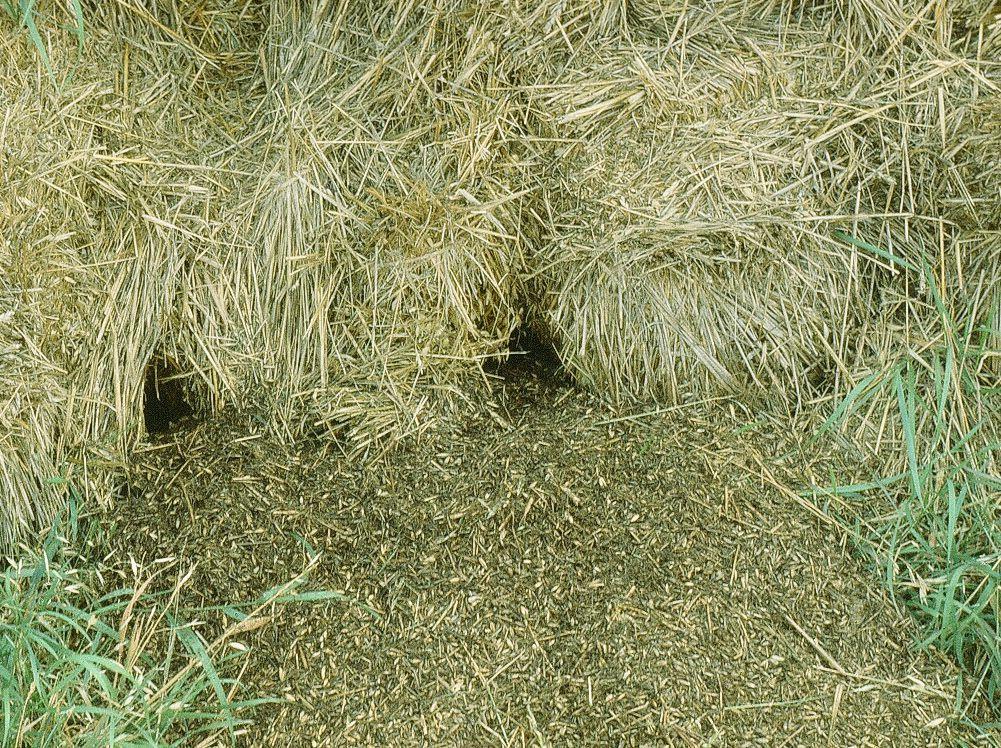
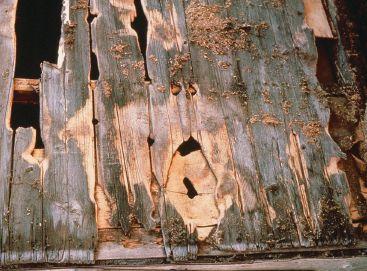
TOP: Norway rats can cause damage in feed bales (top) and in wooden bins (inset).
cropland and stored grain, and producers’ best weapon against them is awareness.
Wild boar
In Alberta, wild boar made national news in 2018. The animals are farmed in the province, but when they escape, turn feral and multiply, they are considered an invasive pest by the province, says Perry Abramenko, an inspector with Alberta Agriculture.
Wild boar can survive by eating any organic matter, and they can reproduce up to twice a year. They can cause extensive damage to stored grain and feed, cropland and waterways. When hunted, the wild boar threat actually worsens; hunted boar will scatter and infest new zones and become warier of human activity, Abramenko says, which can mean they become nocturnal.
A few years ago, Abramenko and his colleagues put together a working group that developed a pilot project for wild boar eradication and public education in the province.
The pilot relies on public co-operation – for example, the counties in question agreed to suspend the bounty during the pilot project. But public reportage of wild boar sightings is also crucial, so Abramenko’s team can build a map of affected areas.
“Up until we started the pilot we had no idea of the scope of the issue and we had very limited data on where there were issues with wild boar,” he says.
The pilot is testing different surveillance methods, including drone-mounted infrared cameras that can capture wild boar movement from their nests to cropland where they’re feeding. It’s also testing practical methods of eradicating whole “sounders,” or groups, such as baited corrals with remotely controlled gates.
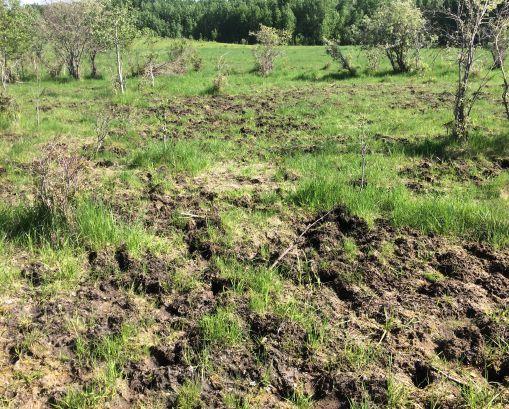
In cropland, wild boar damage caused by rooting is visible during the growing season. “It will look like a rototiller has gone through,” Abramenko explains.
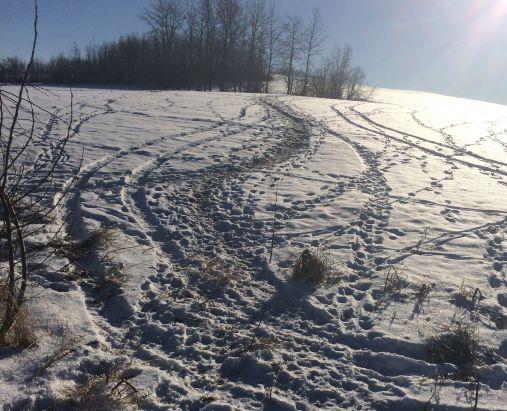
It’s easier to look for signs of wild boar in the wintertime, when wild boar tracks layer in trails from nest to feeding site.
“Wild boar tracks look a lot like deer tracks, but they are more rounded than deer tracks. The dewclaws show above the hoof in wild boar tracks, but they don’t normally appear in deer tracks,” he says.
Abramenko says if they’re facing animal pest problems in the field, producers’ best bet is to report any damage to his team so they can help producers diagnose and deal with the problem.
“If a producer has damage from wild boar we’d like to work with them to resolve the problem. We’re not getting a lot of reports but that will hopefully improve as producers become more aware of the issue,” he says.
Stored grain
Cropland can be vulnerable to pests such as birds, deer and other wild animals, but it’s stored grain that attracts most invasive pests, says Blaine Timlick, program manager for infestation control and sanitation at the Canadian Grain Commission.
Most invasive pests of agriculture in Canada are actually insects, diseases and weeds, and this is where Timlick’s program concentrates. But Timlick says there are a few basic issues for producers to be aware of when it comes to protecting stored grain from all kinds of pests.
“The biggest issues are associated with temporary storage,” Timlick says. “A lot of people are using grain bags, and that’s a good thing – about 22 years ago people were just leaving wheat piled on the ground, and deer were getting into it.”
When grain bags are filled properly, it’s harder for pests to penetrate the plastic, but Merrill says rodents can chew through the bags no matter how much care producers take.
If producers are using grain bags in the “risk zone” near the Saskatchewan border, Merrill strongly recommends they check all facilities and ensure they –and their neighbours – don’t have a rat problem. Old granaries with wooden floors are often hotspots for rat activity, but so are silage pits, feed lots and stored feed such as green feed bales.
“Grain bags are a real risk and concern to us. A grain bag doesn’t take long to penetrate and then they dig holes in the ground under the grain bags,” he says.
Timlick says that grain stored in grain bags does not give much of an odour to attract pests, and respiring grain can actually create a “modified atmosphere” that helps to kill insect pests trapped inside.
Hot temperatures prior to harvest can mean greater insect pressure, but the western Canadian climate can work in producers’ favour: if producers can get temperatures in stored grain below 15 C, insects can’t reproduce or feed.
“Grain is food and stored grain is an ecosystem unto itself, so if you leave it unmanaged and the temperatures start to aggregate, you’re going to get moisture, which allows fungal growth and starts to cause putrefaction of the grain, and then the insects come in as well as other animals that want to eat that grain,” he explains.
Merrill’s advice to producers using grain bags is to check them for signs of rodent infestation or damage every two weeks at least, until the grain is marketed. And if pest problems are noticed, they have resources at their disposal.
“We’ll handle it on a case-by-case basis,” he says.
Wild boars can seriously damage cropland through rooting. Wild boar sounders move along the same tracks, so their pathways become visible in the winter.
ENSURE CORRECT TIMING FOR FABABEAN DESICCATION
Early application can reduce yield and seed size.
by Bruce Barker
Adesiccant is useful for speeding harvest timing of a long-season crop like fababean. But accurate application timing is critical to ensure uniform seed quality and maturity. Go too early and risk poor seed fill. Go too late and crop drydown isn’t achieved without the possibility of reduced yield and quality from frost and pod shattering.
“With contact desiccants, you have to be careful to hit correct timing,” says Mason Jackson, pulse crop technologist with Alberta Agriculture and Forestry in Edmonton. “Our research saw a yield loss when applying diquat too early.”
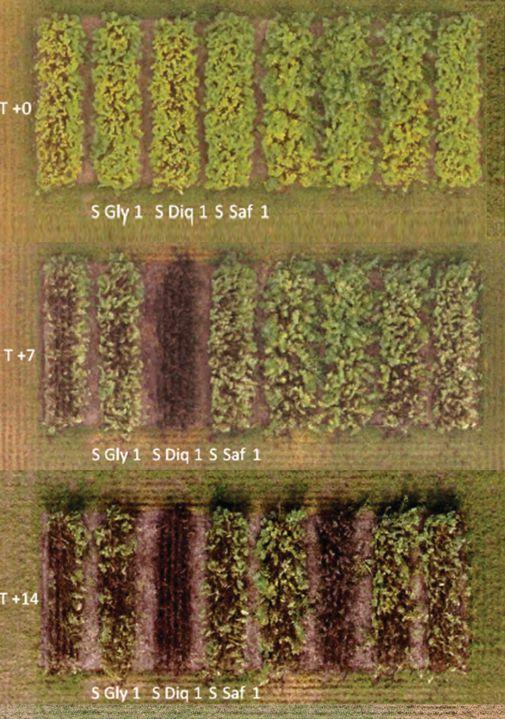
Jackson was part of a research trial in Barrhead and Namao, Alta. that compared application timing of diquat (Reglone), glyphosate (Roundup) and saflufenacil (Heat) on two varieties of fababean (Malik and Snowbird). Four application timings were conducted at very early (14 days earlier than recommended), early (seven days earlier), recommended timing, and seven days after recommended.
An important consideration is the mode of action. Diquat is a contact herbicide that quickly desiccates the crop and weeds. Application timing for diquat is when most plants are ripe and dry. Pods are fully filled, and bottom pods are tan or black in colour.
Glyphosate moves throughout the crop and weeds, resulting in slower drydown than a contact desiccant. It has a minor use registration on fababean for pre-harvest weed control and should be applied when grain moisture is less than 30 per cent. At this stage, stems are green to brown in colour, pods are mature (yellow to brown in colour), and 80 to 90 per cent leaf drop (original leaves) has occurred.
Despite being registered on other crops, saflufenacil is not registered on fababean as a harvest aid. Its mode of action is a combination of contact with some translocation and it works faster than glyphosate but slower than diquat.
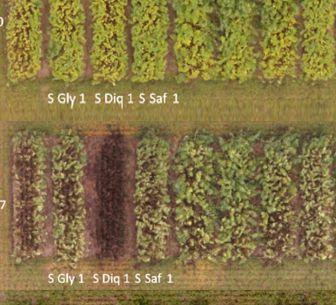
Photos taken on the day of application, seven and 14 days later show that seven days after diquat application the fababeans were dried down completely. Even after 14 days, glyphosate and saflufenacil still had green plant material. When the herbicides were applied very early, yield was significantly lower than the other treatments, ranging from 10 to 22 bushels per acre less on yields of up to 146 bushels per acre. Thousand seed weight (TSW) were also lower with early applications. Differences in mode of action showed in results. Diquat had significantly lower yield and TSW than glyphosate and saflufenacil. However, the lower diquat yields are indicative of early application timings when diquat prevented complete seed fill. With the other slower acting herbicides, seed fill was complete so yield loss didn’t occur.
and 14 days after spraying.
Choice comes down to intended purpose. Applied at the correct timing, Diquat will quickly drydown the crop to speed harvest timing, and can help get the crop into the bin sooner with better yield and quality. Glyphosate is used for pre-harvest weed control, with a secondary benefit as a harvest aid that more slowly dries down weeds and crop. Accurate timing will also minimize market access issues.
“Herbicide choice and timing play integral roles. Desiccating too early leads to harvesting immature seed, reducing average seed size (TSW) and overall yield,” Jackson says. “Desiccating late can lead to reduced yield and quality from frost damage and pod shattering.”
PHOTO COURTESY OF MASON JACKSON.
Glyphosate, saflufenacil and diquat plots at time of spray (T+0), and seven
GETTING THE MOST FROM SOIL SAMPLING
Good soil sampling practices produce more reliable results.
by Ross H. McKenzie, PhD, P. Ag.
Many farmers do not soil test due to past frustrations of perceived variability with soil analytical results and huge inconsistencies in fertilizer recommendations by soil testing labs. But not assessing soil nutrients and soil quality of fields is a missed opportunity. The concern of analytical variability can be reduced by ensuring fields are soil sampled properly, samples are handled correctly and analyzed by soil testing laboratory that is accredited by the North American Proficiency Testing Program (NAPT). Farmers should work with a qualified professional agrologist (P. Ag.) or Certified Crop Adviser (CCA) with a 4R Nutrient Management Specialty to develop fertilizer recommendations specifically for their local soil, crop and agroecological conditions for their farm.
Sources of soil testing variability
In soil testing, three major sources of variation are: spatial or field variability, seasonal changes and laboratory analytical variation. Generally, laboratory variation should be relatively low if a lab has very good quality control to kept analytical error to a minimum.
Seasonal soil variation is expected. For example, significant shifts in nitrate nitrogen or soil pH are expected over a growing season. Plant available soil P levels may change from fall to spring. Therefore, selecting the proper to time soil sample is important.
By far the greatest variation in soil testing is due to spatial or field soil variation. The spatial pattern of soil heterogeneity, both across a field and with depth, can affect the accuracy of soil analysis.
When topography is rolling, soil variability is often a result of slope position, which affects how soils form and develop. Lower soil moisture conditions on upper slope positions meant less native vegetation growth and less soil development on upper slopes versus lower slope positions over hundreds of years. Soils on upper slopes have been affected by greater soil erosion and soil deposition is greater in lower slope positions. Sometimes soils are variable across landscape due to differences in geologic deposition. Soils may be sandy loam in texture due to deposition by moving water (fluvial deposition) at one end of a field but glacial till deposited fine textured material may occur in other areas. Sometimes the parent material may be higher in sodium and Solonetzic soils have developed due to the high presences of sodium. There are many factors that can cause a profound range of different types of soil variation in cultivated fields.
Dealing with soil spatial variation
Farmers who are concerned with soil variability should consider
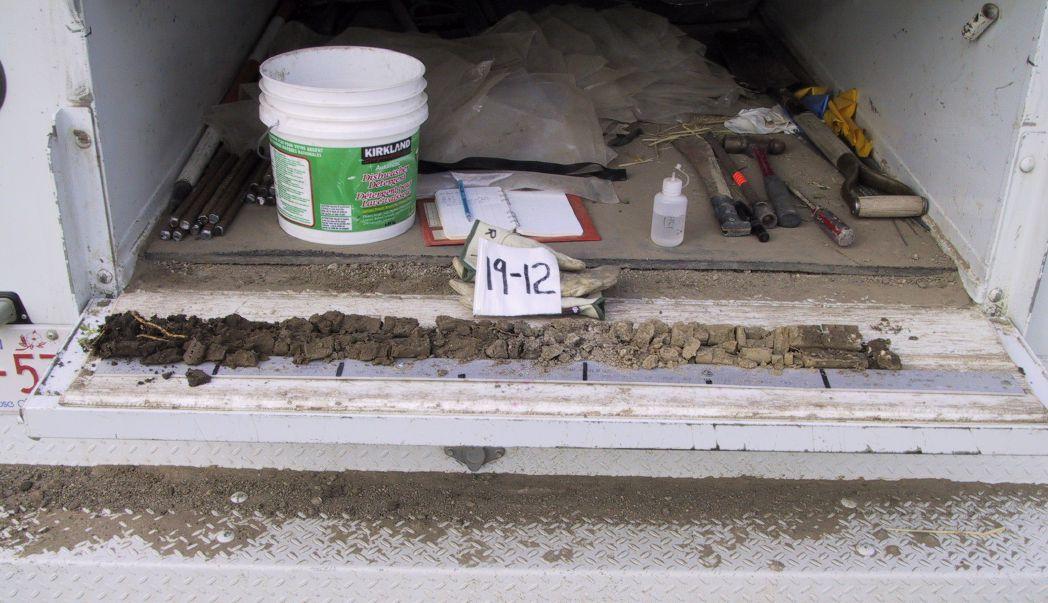
ABOVE: Three major sources of variability in soil testing are: field variability, seasonal changes or lab analysis variation. Photo courtesy of Ross McKenzie.
working with an unbiased P. Ag. or CCA to decide which fields are uniform enough to be soil sampled as one unit versus fields that have two or more different soil areas. This would include deciding if soil areas are difference enough and large enough to be managed separately.
A number of companies provide services to prairie farmers to develop field variability maps with different soil/crop management zones. Various techniques are used to develop management zones, including crop yield maps, topographic maps, soil salinity maps and soil electrical conductively (EC) maps. Remote sensing imagery, such as NDVI (normalized difference vegetation index) can be created from information collected from satellites or drones to identify relative lushness of crop growth, greenness of crop or estimate crop biomass.
The most common error made by soil samplers is not taking enough samples. Shortcuts at this stage result in increased variation, causing increased error.
Timing of soil sampling
Ideally, fields that will be seeded in spring should be soil sampled just prior to seeding in spring to most accurately assess nutrient levels. But this leaves little time to develop specific fertilizer management plans for each field and order fertilizer.
Ideally, a layered mapping approach is needed to accurately develop a field variability map with unique soil/crop management zones. An experienced agronomist will use a good topography and elevation map, and electrical conductivity map as a starting point. Crop yield and imagery maps can be included in the layering to assist in identifying crop production differences, depending on how consistent the information is from year to year. As technology improves, soil carbon, soil pH and soil texture mapping can be added to the layered maps, to help to develop accurate soil/crop management zones in a field.
For each field or management zone, soil samples can be taken using random sampling or benchmark sampling. Random sampling collects soil samples from locations that are randomly distributed across a field or within each management zone of the field. Using a zigzag sampling pattern often works well. Avoid sampling non-representative areas of the field or zone.
For benchmark sampling, a single representative site is selected for each field or management zone of a field. The benchmark site is usually about .25 to one acre in size. The same location can be sampled each year to accurately reflect soil nutrient changes.
A number of studies have been conducted to determine the number of samples required to obtain are reasonable estimate of mean for various analyses. Ideally, the value for nitrate-nitrogen should be within 10 pounds of nitrogen per acre, and phosphorus should be five pounds of phosphorus per acre of the true mean of the field. Typically, between 20 and 30 samples must be taken per field or soil management zone to achieve a reasonable estimate of the mean.
The most commn error made by soil samplers is not taking enough samples. Shortcuts at this stage result in increased variation, causing increased error.
Soil sampling depths
Soil samples should be taken to a 24-inch (60 centimetre) depth. Ideally, soil samples should be taken at zero- to six-, six- to 12- and 12- to 24-inch (or zero- to 15-, 15- to 30- and 30- to 60-cm) depths. Deeper sampling to 36- or 48-inches (90 or 120 cm) may be necessary for manured fields or for deeper-rooted crops.
Keeping the zero- to six-inch sampling depth separate is important, as all soil test and fertilizer calibration research conducted across Western Canada with phosphorus (P) and potassium (K) has been done with the zero- to six-inch depth. To accurately assess nitratenitrogen (NO3-N) and sulphate-sulphur (SO4-S) levels, it is important to sample to 24 inches, as both nutrients are mobile in soil. Sampling to 24 inches helps to more accurately develop N and S fertilizer recommendations.
From a practical standpoint, spring-seeded fields can usually be soil sampled after early to mid-October, when surface soil temperature has declined to lower than 5 C to 7 C. When soils are moist, waiting until soil temperature has declined is important to ensure soil microbial activity is low. Then, any changes in plant available nutrients between late fall and spring should usually be minimal. Soil sampling frozen ground can be challenging due to the difficulty to obtain accurate and representative sampling depths.
Soils are usually drier in fall, resulting in less problems with soil compacting in the core tube. When soil compacts in the core tube, this compromises accurately knowing the soil sample depth and greatly increases error in estimating nutrient levels. In southern prairies, winter conditions are sometimes very mild and significant changes in soil nutrient levels may occur between fall soil sampling and spring. In situations when fields are soil sampled in fall, then followed by a mild winter, selected fields should be re-soil sampled in spring to estimate the potential nutrient level changes over the winter.
Soil sample handling
After 20 to 30 sites have been sampled, the sampler must mix the composite soil sample for each depth thoroughly and a half-kilogram subsample should be collected, bagged, labeled and placed in a cooler. As soon as possible, all collected soil samples must be laid out in a thin layer on clean plastic or in aluminum containers, in a clean room to allow the soil samples to completely air dry at room temperature. Samples must be dried to terminate microbial activity and prevent changes, then repackaged and sent to the lab. If moist soil samples are left in bags in warm conditions, considerable chemical change may occur over several days, resulting in inaccurate nutrient or chemical determinations.
Most soil testing laboratories accept moist samples, but these samples must be delivered to the laboratory in coolers within a day of collection. Then, the lab can handle the samples properly.
Sampling your fields
I always encourage farmers to ride along with the person sampling their fields. This provides the opportunity to see the soil cores taken from their fields. Farmers can observe that depths are sampled properly, see if soil compaction in the core tube is a concern and most important, that 20 to 30 samples are taken in each field or management zone. Make sure to view the variance of topsoil depth, depth to subsoil, changes in soil colour and differences in soil texture across the landscape of the field. This is an excellent chance observe differences, ask questions, and learn as much as you can about the soils on your farm.
ADVANCED AGRONOMICS FOR MALT BARLEY
Investigating nitrogen, PGRs and pre-harvest agronomics.
by Bruce Barker
With 15 different quality targets, a moderate grain protein of 11 to 12.5 per cent and the need for uniform maturity, the margin for error is slim for malt barley production in Western Canada.
John O’Donovan, a retired research scientist with Agriculture and Agri-Food Canada (AAFC) in Lacombe, Alta., investigated if high yield and malting quality could be more easily achieved. O’Donovan lead three agronomic trials across Western Canada, says Breanne Tidemann, a fellow AAFC research scientist in Lacombe. Research was conducted at seven AAFC locations across the Prairies and the first trial looked at nitrogen rate interaction on malt varieties and the effect on yield and protein content. The trial was conducted over four years under direct seeding conditions.
“With malt barley, there is a nitrogen conflict. When you increase nitrogen to increase yield, you can also increase protein, which decreases the chance of getting malt quality,” Tidemann says.
Investigating nitrogen rates
Five varieties were compared with four N rates of zero, 25, 50 and 100 kilograms per hectare (kg/ha; multiply by 0.89 to get pounds per acre). The varieties were AC Metcalfe, AAC Synergy, CDC Kinders-
ley, Voyager and Cerveza. Preliminary analysis found that all varieties responded linearly with higher yields at increasing N rate. Synergy was the highest-yielding variety, at approximately 100 bushels per acre at the 100 kg N fertilizer rate, while Metcalf was significantly lower yielding than the others, at around 90 bushels per acre.
Average across all sites and all N rates, Voyager had the lowest protein and Synergy also had fairly low protein. Tidemann says these two varieties did not exhibit as much N x Variety response as the others. “It is important to note, that all varieties had protein content below 12.5 per cent even at the highest N rate of 100 kg.”
Maturity increased by about two days for all varieties when moving from a 25 to a 100 kg N application rate. Synergy and Voyager had significantly higher plump kernels, which Tidemann attributes more to the variety attribute than N fertilizer rates.
“AAC Synergy was the highest yielding across all fertilizer rates, and Synergy and Voyager performed well in quality, but were a day or two later maturing,” Tidemann says. “Voyager is a U.S. variety, but AAC Synergy may be quite successful for Canadian growers.”
ABOVE: Achieving uniform maturity is a key step towards making the malting grade.
Currently, CDC Copeland and AC Metcalfe are the top malting varieties grown in Western Canada. AAC Synergy is on the Canadian Malt Barley Technical Centre’s list of recommended varieties, and the Centre indicates that the demand for AAC Synergy is growing.
Three plant growth regulators (PGR) were compared on CDC Copeland over 15 site years. Seeding rate was at 200, 300 and 400 seeds per square metre. Ethrel (ethephon) was applied at the flag leaf to swollen boot stage. Manipulator (chlormequat) and Moddus (trinexapac) were applied at the third node stage. None of the PGRs are registered on barley.
In preliminary results, Ethrel significantly reduced barley height at maturity at nine of 15 sites from approximately 32 inches down to 30 inches. Moddus also reduced height down to 30 inches at nine of 15 sites, while Manipulator only reduced height at three of 15 sites.
Lodging ratings showed that Moddus reduced lodging significantly, but only at three of eight sites. Ethrel also significantly reduced lodging at two of eight sites. Overall, Tidemann says the effects on lodging were not very consistent.
PGR applications resulted in significantly later maturity for Ethrel (three days) and Moddus (one day). Ethrel had significantly lower plump kernels at 84 per cent plump, compared to almost 89 per cent plump without PGR, at seven of 15 sites. Moddus was also significantly lower at seven of 15 sites with an average of 86.5 per cent plump. Kernel plumpness following Manipulator application was not significantly different than the control. Moddus had significantly higher yield at four of 10 sites while the other sites were statistically similar.
Overall, there were inconsistent benefits from the use of PGRs on height, lodging and yield, and more consistent risk to later maturity and plumpness. While there was little to no negative effect on malt quality, there was increased variability. “We saw more consistent risks than benefits with the use of PGRs in malt barley,” Tidemann says.
A third trial looked at the impacts of pre-harvest glyphosate on AC Metcalfe and CDC Meredith. Two glyphosate rates of 900 and 1125 grams of acid equivalent per hectare (g ae per ha; equivalent to 0.675 l/ac and 0.843 l/ac of 540 g ae/L found in Roundup) were compared at three application timings of soft dough (35 to 40 per cent moisture), hard dough (25 to 30 per cent moisture) and maturity (20 per cent or less moisture). The registered timing for barley is less than 30 per cent grain moisture content at 0.675 litres per acre (540 g ae per litre). However, the malt barley industry does not accept barley that has been treated with pre-harvest glyphosate.
With 20 site years of data, preliminary results found when glyphosate was applied at the correct stage of less than 30 per cent moisture, there were seldom significant effects on yield or quality. However, yield reductions occurred when applied at the soft dough stage. Yield increases occurred about 15 per cent of the time when applied after the hard dough stage.
Germination energy, an important quality attribute, was found to be adequate at glyphosate residue levels of less than 40 parts per million (ppm). The Maximum Residue Limit (MRL) established for barley is 10 ppm. When glyphosate was applied at the correct rate and timing, residues were almost always below the MRL, but were higher when applied at the high rate or soft dough applications.
The difficulty with pre-harvest glyphosate is correct timing. When a field is not uniform, part of the crop may receive an application at a higher moisture content resulting in higher residues than the MRLs.
“Until uniformity issues are solved, glyphosate won’t be accepted as a pre-harvest aid in malt barley production,” Tidemann says. “I know that’s not the message growers want to hear.”
PLANT TWICE, HARVEST THREE CROPS?
A U of S researcher is experimenting with novel cropping systems.
By Carolyn King
Chris Willenborg is testing an out-there idea that just might work. He calls his concept “accelerated cropping systems” – systems that involve planting twice but getting three crops in two years.
“The hope is that these systems will provide a greater overall yield with three crops rather than two; higher yield tends to translate into higher revenue for the growers,” explains Willenborg, an associate professor at the University of Saskatchewan. “We’re also hoping that these systems will provide some ecosystem services to growers, like reducing weed populations, improving beneficial organisms, and enhancing soil properties.”
In Year 1 of his accelerated system, you would plant a spring crop and a winter cereal crop both at the same time in the spring, in alternating rows. The winter cereal would grow prostrate between the spring crop rows, suppressing weeds. Ideally, the spring crop would hold back the winter cereal so it wouldn’t become too large and wouldn’t vernalize and go to seed production in that first year. You would harvest the spring crop for grain when that crop is mature, and you would let the winter cereal overwinter. Then in Year 2, you would harvest the winter cereal and seed a spring crop.
With funding from the Western Grains Research Foundation and Saskatchewan’s Agriculture Development Fund, Willenborg and his
research team are exploring this idea in a Saskatchewan field trial that started in 2018.
This project involves two experiments. In both experiments, they are using spring wheat as the setup spring crop in Year 1, interseeding it with a winter cereal. “We used spring wheat as the setup crop just because of logistics,” Willenborg says. “This system, if it works, may well work with a broadleaf setup crop like canola or pea [as long as you don’t spray a desiccant on the pea crop].”
They have chosen winter triticale, hybrid fall rye and open-pollinated fall rye for the project’s winter cereals. “The old lines of fall rye tend not to vernalize and would overwinter. So we thought some of those open-pollinated varieties might be better choices for this cropping system,” he says.
Looking at the winter cereal growing in the spring wheat crop, Willenborg notes that it can be hard not to feel that the winter cereal is competing with your main crop. “But competition from the rye or triticale is not necessarily a bad thing because the winter cereal is going to produce a crop for you as well. So what one giveth, one
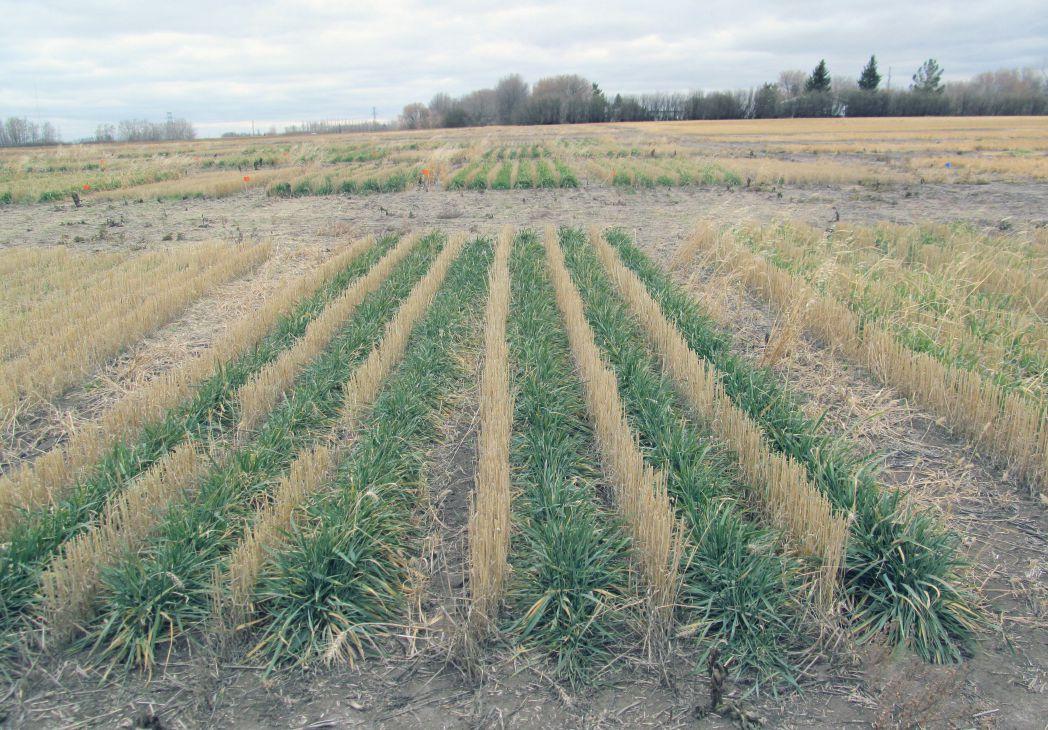
ABOVE: Last October, after the Year 1 spring wheat crop was harvested, the interseeded winter cereal was in a vegetative state ready to overwinter.
CONTROLLING TRAFFIC TO BOOST SOIL HEALTH
Controlled traffic farming improves soil structure; other benefits mixed.
By John Dietz
Controlled traffic farming (CTF) is possible in Western Canada and can take management up a notch, but it takes a big up-front commitment to see the long-term results, according to a University of Alberta study released in 2019.
Eight farm operators made the CTF study commitment, and seven are continuing. The measurable yield benefits were small at best in the short term, but the long-term prospects are quite good.
CTF began in Australia in the 1970s – around the same time that zero tillage began in Western Canada – and it has been widely adopted there. To make the system work, the tractors, sprayers, carts and combines all must have a common wheelbase, and the working widths must be in matched multiples (usually 30 or 40 feet). Once the machinery is sized to match and synced by GPS, the operator restricts field traffic to distinct permanent lanes or tramlines, leaving the crop area free of traffic. Field traffic never leaves the tramlines and the tramlines remain in place year after year.
Steve Larocque, Nuffield scholar and independent crop advisor, brought the technique back to his own farm near Drumheller, Alta., in 2010 after a study tour in Australia. Since then, a handful of pro-
ducers in the Prairie provinces have adopted CTF for their own farms.
Shortly after Larocque made the transition into CTF, the Agricultural Research and Extension Council of Alberta co-ordinated a farmer-led initiative to evaluate the system on a province-wide basis.
The project was led by Peter Gamache from late 2010 until he retired in 2018 and at which point the research was completed.
The Controlled Traffic Farming Alberta (CTFA) study involved eight farms and six soil types. Conditions ranged from the light, irrigated land of Rolling Hills in southeast Alberta to dark grey clay soils of Cleardale in the northwest Peace River region. Five farms were using system before the study began in 2014, and three were newly committed. All eight operators committed a quarter-section for randomized full field-length plots, followed guidelines and shared data.
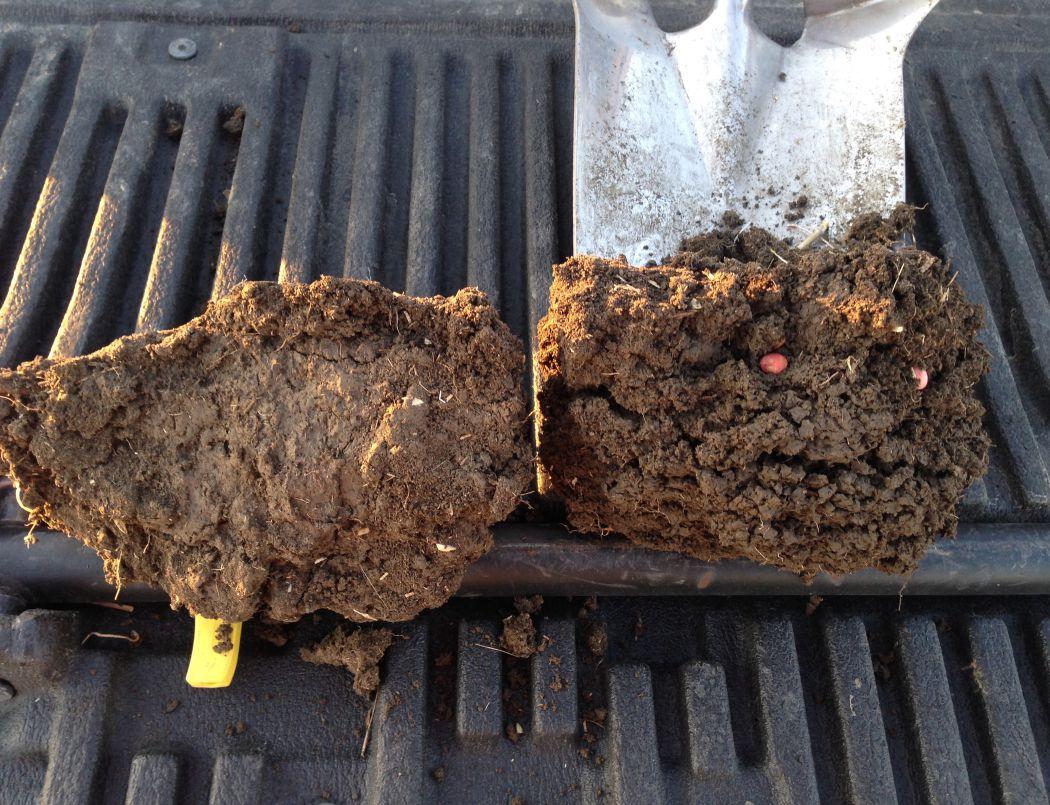
ABOVE: Soil structure differences in clay soil after five years of CTF taken 12 inches apart. The soil on the left has had a castor wheel from an air seeder run over it for five seasons. The soil on the right, taken 12 inches over, hasn’t seen any wheel traffic in five years. You can see the difference in porosity and aggregation in the untrafficked soil.