With 5-year finish warranty and 10-year structural, you can be assured AGI Westeel has you prepared for the long-haul.
STEFANIE CROLEY | EDITOR
EMBRACING FARMER 4.0
The world population will reach 9.7 billion people by the year 2050, according to a June 2019 report from the United Nations Department of Economic and Social Affairs. With a number that high, the agriculture industry will, without question, play an even larger role in sustaining and supporting the world’s people and economy. But is the industry prepared to take on such a huge responsibility? When it comes to Canada, economists and researchers say the answer to that question is “no.”
That’s according to Farmer 4.0, a report released by RBC in September 2019, which argues that with the correct skillset (i.e. the adoption of more technology), agricultural GDP could reach $51 billion, making the industry “more productive than auto manufacturing and aerospace combined.” But before that happens, Canadian farmers have lots of work to do.
The report details the three technological revolutions that Canadian agriculture has seen over the last century: the boom of the seed and fertilizer industries in the early 1900s, tractor advancement in the 1950s, and developments in software and crop genetics some 20 to 30 years later. But today, the fourth revolution is data-driven, and the farmer of the future – or Farmer 4.0 – will be innovative, highly skilled and forward thinking.
The challenge, however, lies in the centre of the crossroads Canadian farmers are currently facing. Some of the report’s findings aren’t shocking – specifically the skills and labour shortage in the industry (for example, by 2025, one in four farmers will be 65 or older, and fewer young people than ever are joining the sector). Those demographics, combined with the changing skills required to succeed in agriculture means the industry leaders of the future will look quite different than they have in the past. Going forward, farm owners and operators –what the report refers to as the “deciders” – will need to be sharp thinkers, with strong digital and leadership skills. Those who service farm equipment – the “enablers” – will need software knowledge and technological expertise in order to keep up with smart machinery. And more jobs will be available for the “specialists” – the scientists and geneticists, who play an equally important role.
These are solid recommendations, but I’d argue that Canadian producers are already on the right track. Nearly half of agriculture workers under 40 have a post-secondary education, and enrolment in such programs has increased by 29 per cent in the last decade. Furthermore, as we like to report about, Canadian crop scientists are making great strides in plant breeding, soil fertility and crop management research to help you make better decisions on your farm.
A lot of this seems like big-picture talk, but the onus is on you right now to make small changes to keep the momentum going. Seek out new learning opportunities, collaborate with your peers, and promote the benefits of agriculture to your neighbours. Perhaps most importantly, approach change with an open mind. If we’re going to keep feeding a growing population, we have to embrace the whole range of solutions.
TOP CROP
rthava@annexbusinessmedia.com
416.442.5600 ext. 3555 Fax: 416.510.6875 or 416.442.2191 Mail: 111 Gordon Baker Rd., Suite 400, Toronto, ON M2H 3R1
SUBSCRIPTION RATES
Crop Manager West – 9 issues Feb, Mar, Mid-Mar, Apr, June, Sept, Oct, Nov and Dec – 1 Year - $48.50 Cdn. plus tax
Top Crop Manager East – 6 issues Feb, Mar, Apr, Oct, Nov and Dec – 1 Year - $48.50 Cdn. plus tax
Potatoes in Canada – 1 issue Spring – 1 Year
INTERMEDIATE WHEATGRASS AS A DUAL-USE CROP
A major study is evaluating this perennial crop for both food grain and grazing in each year.
by Carolyn King
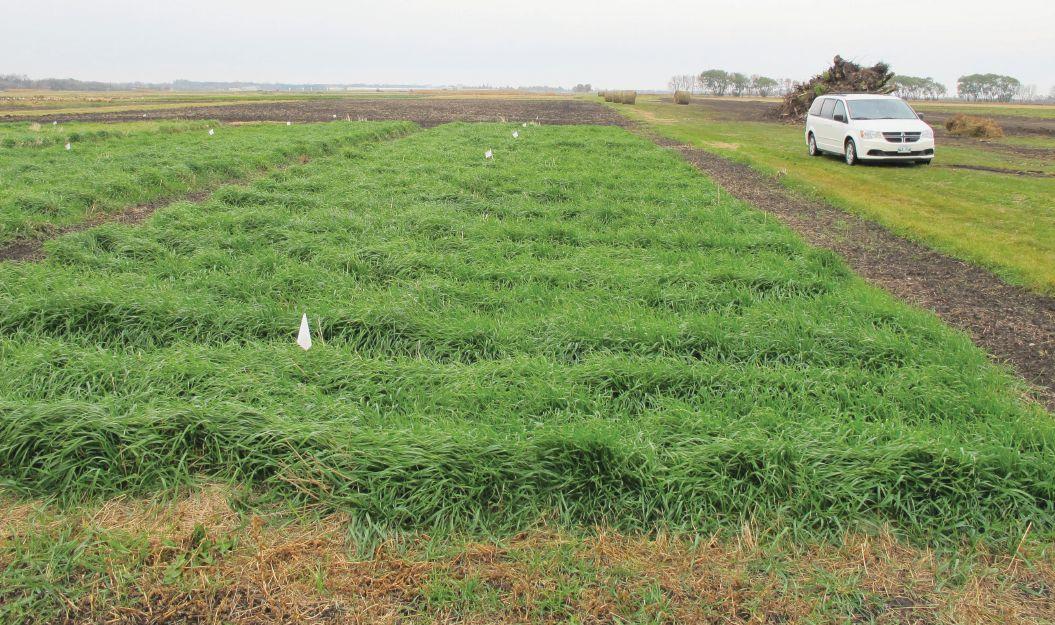
Intermediate wheatgrass has been grown as a forage grass in Western Canada for many decades. But in recent years, the University of Manitoba’s Doug Cattani has been developing the crop for Prairie grain production. Now, Cattani is coleading a new multidisciplinary project to investigate the intriguing possibility of having both uses in a single year – harvesting the crop as a food grain, and then using the forage regrowth for highquality, late-season cattle grazing. Theoretically, a producer could have two ways to earn income from an intermediate wheatgrass field, each year for multiple years.
Cattani’s perennial grain breeding research includes both cereal and broadleaf crops. In his perennial cereal work, he has experimented with perennial wheat and perennial cereal rye, but neither performed very well under Manitoba conditions. However, his intermediate wheatgrass (IWG) work could result in the release of Canada’s first commercial IWG grain variety within about six more years.
“Intermediate wheatgrass was one of the species I thought had
the greatest chance of success as a perennial grain crop on the Prairies,” he says. “I’ve worked for many years in perennial grass seed production, so I had a good idea of the production system we would probably need to use for grain production. Also, forage breeders had previously selected intermediate wheatgrass for persistence in Western Canada, and several forage varieties [had already been] released by Agriculture and Agri-Food Canada and/or the University of Saskatchewan. So there was already some knowledge about it as a forage grass.”
Like other perennial crops, IWG has a long list of possible agroecosystem advantages compared to annual crops, such as reducing soil erosion and increasing soil organic matter. A perennial may enhance snow trapping to boost spring soil moisture, and there’s a living crop in place to take up that early moisture. Adding a perennial into a spring-seeded annual crop rotation may help break
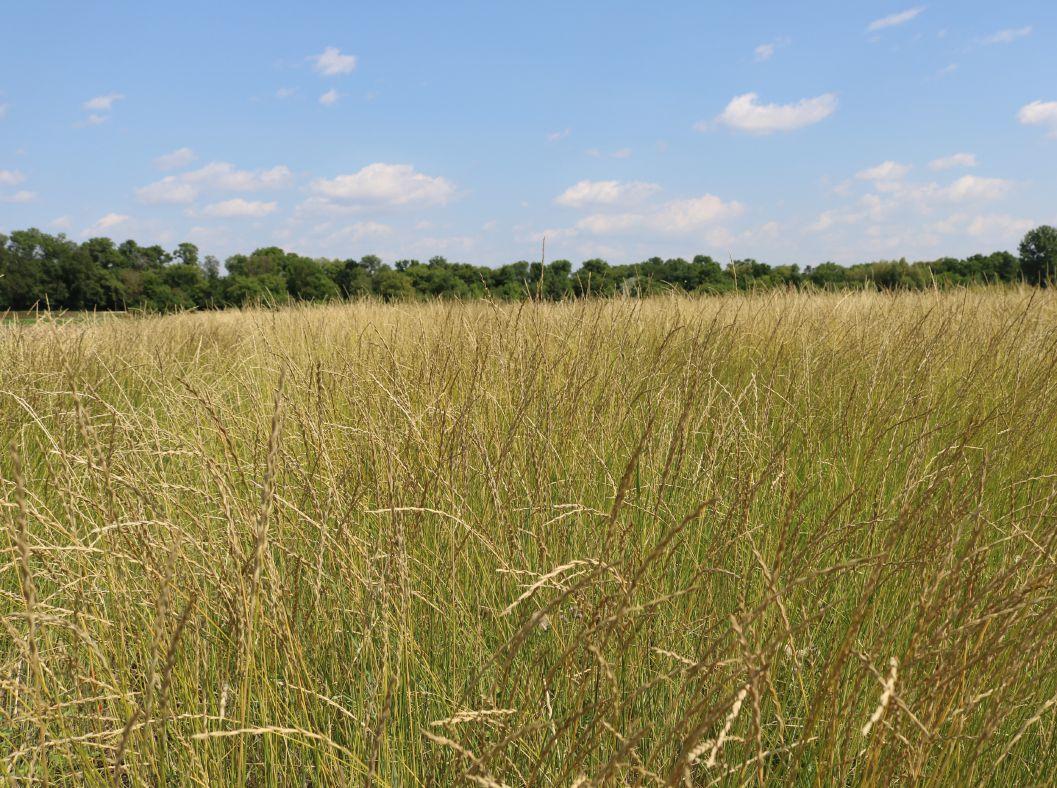
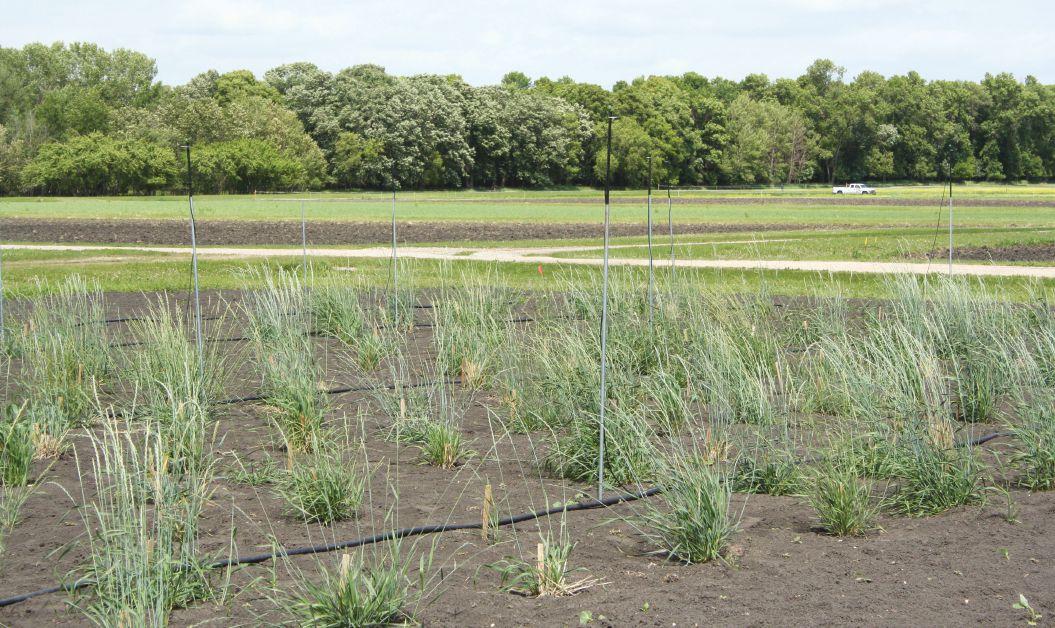
ABOVE: Doug Cattani is co-leading a Manitoba project to develop intermediate wheatgrass as a perennial grain-and-forage double crop.
PHOTOS BY DOUG CATTANI.
the growth cycles of the weed species that plague annual crops. And having some perennial fields reduces a grower’s spring seeding workload.
Cattani also notes, “Once you get intermediate wheatgrass established, it will probably last for at least five to six years. So it provides growing-season-long green cover, which allows you to capture light and turn it into carbohydrates [over a longer period than an annual crop].”
Further, perennial crops can improve nutrient use. He explains, “Root systems of perennial crops, especially the grasses, tend to have very low leaching rates so very little nutrient can get below the root system. On top of that, if nutrients have leached below the root systems of annual crops in the rotation, then as the root systems of perennial plants continue to explore deeper into the soil year after year, they can recapture those nutrients.”
At present, IWG has potential as a specialty grain, especially in marketplaces with an interest in enhancing environmental sustainability and ecosystem services. The Land Institute, a Kansas-based research organization, has been breeding IWG for grain since 2003, and its IWG grain, called Kernza, is starting to find a place in niche markets like craft beers and speciality breakfast cereal and pasta products.
IWG for grain: breeding and agronomics
Cattani and his research group are laying the groundwork for successful IWG grain production on the Prairies through both breeding and agronomic research.
Since 2011, they have been selecting IWG lines for adaptation to western Canadian weather conditions, higher grain yields, larger seed sizes, higher grain protein content and non-shattering seed heads, as well as other traits like disease resistance.
Currently, his most advanced lines are yielding about 30 bushels per acre under good growing conditions, with a bushel weight of about 40 pounds. A perennial crop tends to have lower grain yields than a similar annual crop because a perennial can’t put as much of its resources into seed production; it needs to put some reserves into maintaining itself into the next year. On the other hand, a perennial plant provides several years of grain production, with seeding costs only in the initial year.
From his experience in grass seed production, Cattani knew that most perennial grasses have higher seed production if you clip back the canopy immediately after seed harvest and then apply nitrogen fertilizer to improve fall regrowth. So Cattani and his group have managed their IWG nurseries, at Carman and Winnipeg, using this management strategy.
“That fall regrowth becomes the next year’s seed crop. So you want to get the crop to its best position before winter sets in, because that will dictate your seed head density, which is one of the most dominant of the seed yield components,” he explains.
Cattani and his group have been doing a number of agronomic studies since 2016. For example, they have assessed various postharvest management practices, like comparing different fertilizer and residue management options, and they have tried interseeding IWG with different legumes.
They are currently working on a new IWG grain breeding and agronomics project. This three-year project is funded through the Canadian Agricultural Partnership (CAP).
Their breeding work under this project continues to develop lines with higher yields and better adaptation to Prairie conditions. Cattani notes, “This year we’re tweaking our most advanced line. Next year, we’ll put out our first breeders’ plots. Then, in another four or five years after that, we could have a commercial variety.”
Cattani and his group are selecting intermediate wheatgrass lines for higher grain yields, adaptation to Prairie conditions, and other important traits.
For 23 years, InVigor® hybrid canola has been known for pushing the limits of innovation – and yield. The 2020 season is no exception with the addition of three NEW 300 series hybrids to our already impressive lineup, all featuring advanced trait technologies like our patented Pod Shatter Reduction or 1st generation clubroot resistance.
Exceptionally high yield potential with internal trial results at 111.4% of InVigor L233P.
*To predominant clubroot pathotypes identi ed in Canada at the time of their registration. InVigor L345PC, InVigor L352C, and InVigor Choice LR344PC all have the same 1st generation clubroot resistance. It yielded 104% of InVigor L252 in internal trials and features 1st generation clubroot resistance*. L352C
The first InVigor hybrid to feature both the LibertyLink® technology system and TruFlex™ canola with Roundup Ready® Technology.
To learn more, visit agsolutions.ca/InVigor or call AgSolutions® Customer Care at 1-877-371-BASF (2273).
Always read and follow label directions. AgSolutions, INVIGOR, LIBERTYLINK, the LIBERTYLINK logo, and the Water Droplet
Roundup Ready
and TruFlex™ are trademarks of
After the intermediate wheatgrass’s grain is harvested, the fall regrowth sets up next year’s grain yield.
Their CAP agronomic studies include assessing the effect of the timing of nitrogen fertilizer applications on grain yield in the following year, and evaluating a wheat/IWG interseed in IWG’s establishment year. Since IWG doesn’t produce seed heads in its establishment year, interseeding IWG with wheat could be a way for a grower to get some income from the field in that initial year. Cattani’s group will evaluate the impact of the wheat crop on IWG’s growth in its establishment year and its grain yield in the second year.
In another component of this CAP project, four Manitoba producers will be growing Cattani’s most advanced IWG line for grain. He says, “Producers are applied researchers in a lot of ways. They try things out on their crops and see what the impact is, and they usually have a very good reason why they’re trying those things. I’m hoping these four growers will help in getting a better handle on things like the timing of fertilizer in the fall, or whether it helps to top up the fertilizer in the spring.”
The project also includes a study to gain a deeper understanding of IWG’s growth stages. This phenological research will delve into the relationship between reproductive growth and factors like precipitation and temperature. The resulting information could help in predicting and enhancing the crop’s reproductive performance.
Multiple benefits from dual-use?
Dual-purpose IWG production could be an innovative way to improve the success of this crop. Cattani outlines how this production system would work: “You would harvest your grain crop, and then manage your stand for fall forage regrowth. Then, once you get the heavy frosts that really stop the growth, the cattle can graze the field. Next spring, you would manage it as a grain crop, harvest it, get it ready for fall regrowth, and at the end of the fall regrowth, graze it . . . and so on for multiple years. So each year,
you’ll have two benefits: a cash crop from the grain and a forage crop for your cattle.”
IWG could work well in this dual-use system. “Intermediate wheatgrass seems to respond well to fertilizer and moisture after harvest. If we have a good or even a normal fall, we’ll get a fair bit of regrowth,” he says. “And because it is a perennial grass, it doesn’t produce seed heads at that point. So the regrowth will be predominantly leaves, which provide higher quality forage with more digestible nutrients than the stems. So we think intermediate wheatgrass can be a relatively high feed value pasture in the fall.”
This dual-purpose system has other advantages. Cattani notes, “Every day that the animal is out on the pasture and not in the barn, the producer saves money. And, by having the animals graze the crop, we’re adding nutrients back into the system. We’re hoping the stands will take up the nutrients returned by the animals and therefore will be more productive.”
Cattani and Emma McGeough, an animal scientist at the University of Manitoba, are the co-principal investigators for the dualpurpose project. The Natural Sciences and Engineering Research Council of Canada (NSERC) and Manitoba Beef Producers are the project’s main funders.
“This is a multi-faceted project with plant scientists, animal scientists, soil scientists, environmental scientists and economists. We want to look at it as holistically as possible, to get a snapshot of all the potential outcomes,” Cattani explains. The project team includes researchers from the University of Manitoba, Agriculture and Agri-Food Canada, University of Saskatchewan, Ducks Unlimited Canada, and The Land Institute.
“We’re establishing IWG this year for this three-year project. So next year, we’ll have our first grain harvest, then we’ll implement our post-harvest treatments, and then graze it in late October 2020. Then, we’ll evaluate the impacts of the grazing on the next
grain harvest,” Cattani says.
In this project, Cattani and his plant science group are using his most advanced IWG grain line and comparing three treatments. “One treatment will involve our usual practices: harvest the grain, cut back the crop, fertilize it, and allow it to regrow into the fall,” he says.
“The second treatment is to interseed alsike clover with the perennial grain, seeding them both at the same time in the spring. Having a legume intermixed with intermediate wheatgrass should increase the forage value because of the higher protein content. In the past, we’ve tried growing IWG with other legumes. Alfalfa and sweet clover were too competitive with IWG if you didn’t fertilize it, and white clover wasn’t competitive enough. Alsike is in between white clover and the other two in terms of competitiveness.”
The third treatment is to just let the IWG grow after the grain harvest, without applying fertilizer or cutting back the stand.
Cattani’s plant science group will be measuring grain yields and analyzing the nutritional value of the forage regrowth samples, to compare the different treatments. The control treatment is a standard forage that they have grown before.
McGeough and her animal science research group will be evaluating such factors as cattle performance, grazing behaviour, forage intake, and methane emissions, for the different treatments.
A soil scientist will assess carbon and nitrogen cycling. Environmental scientists will investigate considerations like the greenhouse gas footprint and wildlife habitat potential. A crop modeller will evaluate IWG’s phenological development. And an economist will determine the profitability of both the grain and the cattle components.
“We’re trying to get a good assessment of not just the grain and cattle production, but also the effects on ecosystem services and the cost-effectiveness of the different practices. That should provide a good starting point for producers, giving them an understanding of the overall impact this dual-purpose crop may have on their production system.”
Cattani is hopeful that this novel research could eventually lead to a valuable opportunity for Prairie grain and cattle producers.
STAND YOUR GROUND.
Lower the boom on your most serious weeds and safeguard the yield potential of your LibertyLink® canola with the powerful protection of Liberty® herbicide. The Group 10 chemistry behind Liberty gives you a unique and highly-effective mode of action that tackles weeds, even if they’re resistant to glyphosate or other herbicide groups.
To learn more visit agsolutions.ca or call AgSolutions® Customer Care at 1-877-371-BASF (2273).
RECOVERING FROM HAIL DAMAGE
The time of a hail event is more important than the level of damage or use of recovery products.
by Bruce Barker
When the Great White Combine moves in, there is little anyone can do but take cover. But after the storm passes, farmers face difficult management decisions on what to do with what is left of the crop. Research in Alberta – otherwise known as the hail capital of Canada – sought to answer some of the commonly asked questions following a hailstorm.
“One of the main purposes of the research was to evaluate some of the hail rescue products that are promoted as a way to help a crop recover after a hail storm. Farmers are bombarded with sales information, and there are some ‘big fish’ stories about how great those products are,” says Ken Coles, general manager of Farming Smarter in Lethbridge, Alta.
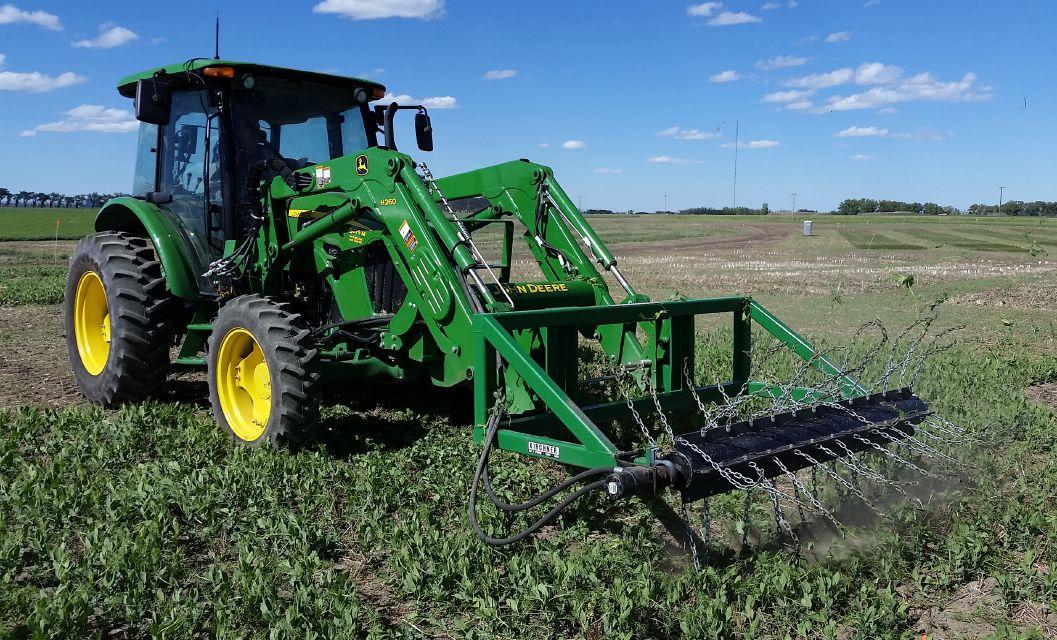
Coles says a local farmer tried to conduct on-farm trials looking at hail recovery products, but the results were too variable, so small plot research trials were established. Building off of hail simulation studies at InnoTech in Vegreville, Alta., Farming Smarter first built a hail simulator that would mimic hail damage in a crop. The hail simulator consisted of a series of short chains attached to a rotating drum that was mounted on a front-end loader.
Farming Smarter worked with Alberta’s Agriculture Financial Services Corporation (AFSC) to ensure that the mechanical dam-
age from the hail simulator closely resembled hail damage. With funding from Alberta Wheat Commission and Alberta Pulse Growers, Farming Smarter led a three-year study through the 2016 to 2018 growing seasons to assess crop recovery from hail damage, and if there were any agronomic or economic benefits from using hail recovery products after a hail storm. In addition to the Lethbridge site, InnoTech conducted research at Vegreville, and SARDA Ag Research in Falher, Alta., also participated in the trials.
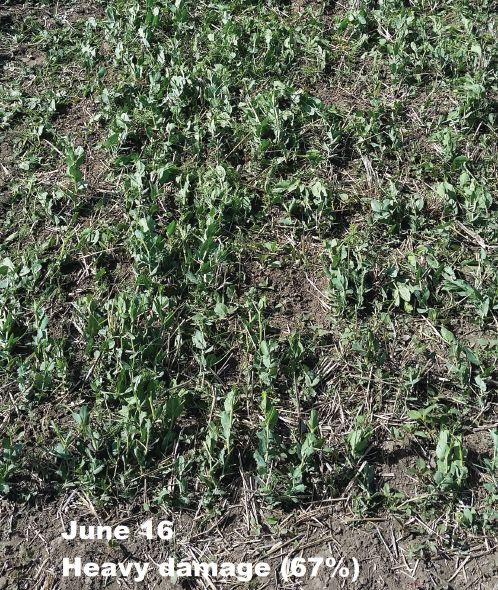
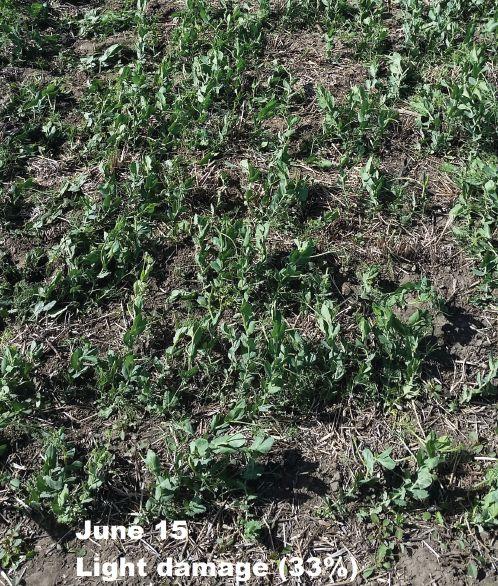
The hail simulator was used to cause light (33 per cent) and heavy (67 per cent) defoliation at tillering, flag leaf and flowering in wheat. Similar levels of damage were simulated on pea at all three sites and dry beans at Lethbridge, at early four- to six-leaf, flowering and podding stages of the pulse crops.
Crop adjusters with the AFSC assisted with calibrating the hail simulators and by assessing actual crop damage on research trials.
In wheat, the nutrient recovery product used was Alpine G22 at three litres per acre (L/ac) plus boron and the fungicide was Prosaro at 320 millilitres per acre (mL/ac). In pea, ReLeaf Canola at
Continued on page 40
TOP: Farming Smarter’s hail simulator.
RAISING EXPECTATIONS AND AUGER HEIGHT
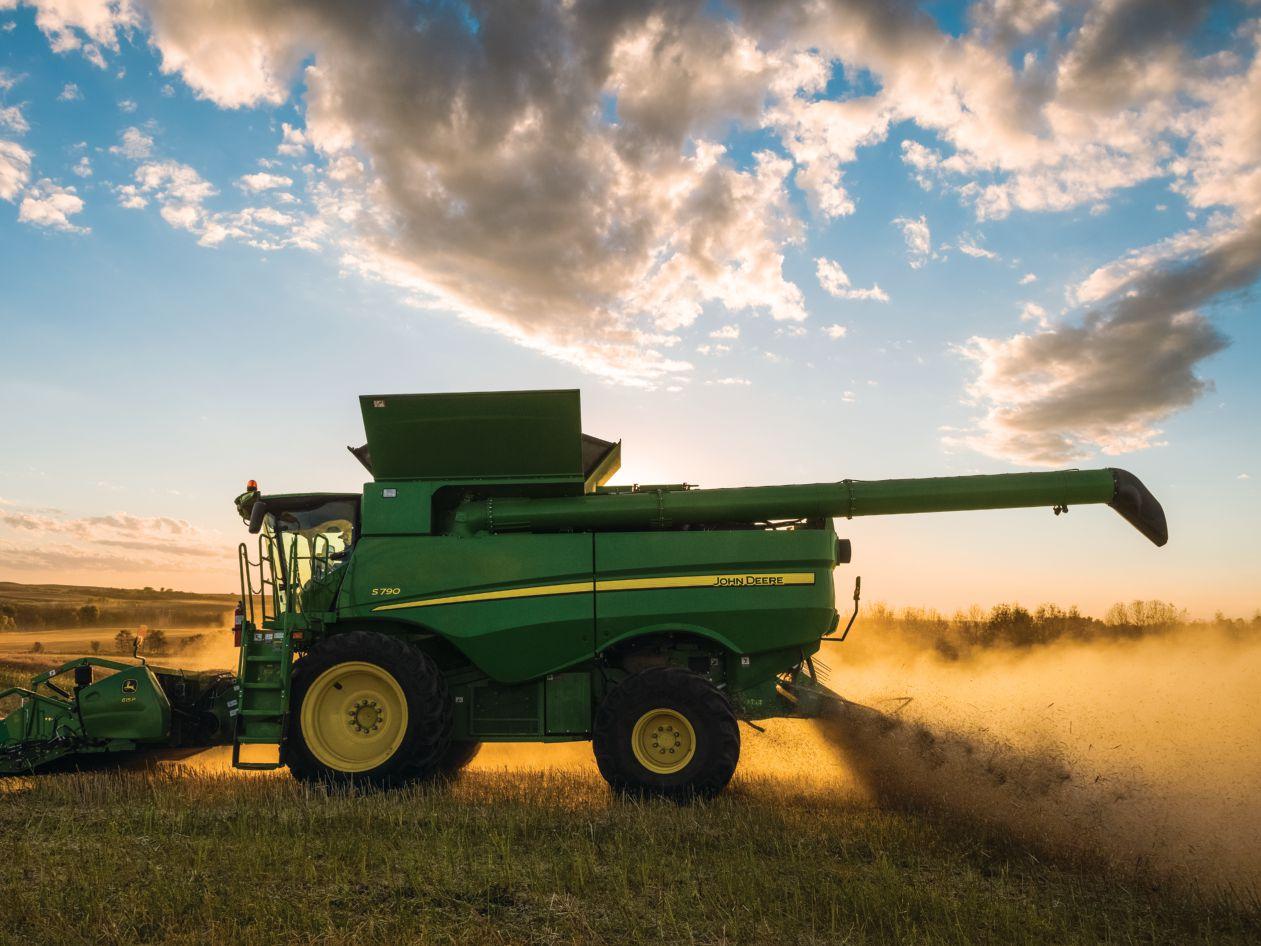
The S700 Combines just got even better, with better harvest data accuracy and improved residue management. Make on-the-go crop residue management changes as conditions warrant by changing knife bank position from the cab. Automatically swap your residue offset when your combine makes headland turns with Auto Swap. And of course, get more productive unloading with up to 30 more centimeters of auger height.
To learn more about how the S700 Combine can elevate your harvest, see your dealer today.
Nothing Runs Like a Deere.
IMPROVING PRODUCTIVITY AND PEST CONTROL
Crop rotation systems can provide an integrated approach to crop and pest management.
by Donna Fleury
Well-planned crop rotations can provide many agronomic and economic benefits to wheat and other crops in rotation. In a recent project, researchers wanted to assess whether longer crop rotation intervals could lead to increased crop productivity and stabilize economic returns while reducing input requirements compared to more typical summer annual crop rotations.
“We initiated a five-year crop rotation study in 2013 focusing primarily on wheat and canola rotations of different intervals between various host crops,” explains Kelly Turkington, plant pathologist with Agriculture and Agri-Food Canada (AAFC) in Lacombe, Alta.
The project was conducted at three AAFC locations including Lacombe, Alta., Melfort, Sask., and Normandin, Que., and funded by the Western Grains Research Foundation. “We wanted to determine if longer crop rotation intervals with a range of crops including wheat, barley, canola, field peas and flax could lead to increased crop productivity and stabilize economic returns, compared to more typical rotations of canola-cereal-canola-cereal, or continuous cereal or canola. As well as comparing 10 different host crop rotation combinations, we also compared a fungicide application versus no fungicide treatment for each crop in rotation. We also assessed other factors such as influence on pest abundance, soil microbes and soil quality.”
The rotation trials compared one versus two years between wheat crops, as well as different pre-crop treatments including flax, canola, barley and field peas. In Normandin, flax was not included in rotation as it is not a crop commonly grown or adapted to that region. In the final year of the study in 2017, wheat was grown in all rotations. Various factors were assessed and data collected for plant development, weed infestations, canopy disease
severity (canola and wheat only), crop yield and kernel characteristics, and soil microbial characteristics. Canopy diseases assessed for wheat included Fusarium head blight (FHB) and leaf diseases, while blackleg and sclerotinia disease severity was assessed for canola.
“Throughout the project, disease levels tended to be low to moderate in most locations, with 2017 disease levels somewhat lower,” Turkington says. “Rotational effects on disease were limited, although there were indications that wheat following barley may be at an elevated risk of increased Fusarium-damaged kernels [FDKs], which would result in downgrading the subsequent wheat crop. The alternating wheat-barley rotation tended to have the lowest yield, and perhaps this rotation had an impact on soilborne disease issues, such as root rot and take-all, but these were not measured in the current experiment.
“Wheat and barley have a similar spectrum of seed and seedling disease issues and the risk of these issues was likely higher in wheat following barley versus broad-leafed crops. Overall, fungicide application tended to have the most consistent effect on grain yield and thousand kernel weight, especially when the risk of leaf disease and Fusarium development is moderate to high and resulted in direct protection of upper canopy leaf and head tissues.”
There definitely was a benefit when alternative crops of canola, field peas or flax, and particularly canola was grown before wheat in terms of dealing with issues of FDKs and the potential impact on root health in the subsequent wheat crop. Trying to extend the rotation interval between wheat crops or susceptible crops by at least two years is recommended particularly for leaf spots and
ABOVE: Crop rotation trials at AAFC Lacombe Research and Development Centre.
FHB. A single year between wheat crops for example is not long enough for decomposition of any wheat residues that might carry Fusarium or other pathogens. As well, dockage was an issue at Lacombe and largely reflected volunteer barley development in succeeding wheat crops. This can also be an issue in malting barley crops that follow wheat, where wheat volunteers can increase dockage.
In the canola plots, low to moderate levels of sclerotinia and blackleg were observed, with very low severity rating for both diseases in all years. Fungicide applications included Headline at the two- to six-leaf stage, and Proline at the early bloom to full bloom in canola, the recommended timing for sclerotinia. Turkington notes even with both of those fungicide applications, they did not see any significant increase in canola yield compared to the untreated plots. Canopy diseases were also not prevalent for flax or field peas and therefore no significant impact of a fungicide application in either crop. However, in field peas in some years leading up to 2017, there were issues with aphanomyces root rot disease that had a big impact on yield in those fields. Looking at this trial and others in fields with aphanomyces disease, rotations of at least five-years between field pea crops is recommended to reduce the potential for disease losses.
“We also had weed competition challenges in both field peas and flax, in particular with Group 2-resistant cleavers that had a significant impact on yields in those plots, as well as a significant negative impact on subsequent wheat crops,” Turkington explains. “Flax is not very competitive with weeds, and field peas to a certain extent, combined with the fact that both crops had large populations of Group 2 resistant cleavers meant we did not see the benefit we expected by having a non-host crop like flax or field peas in the year prior. Certainly, field pea and flax are excellent rotation crops from a disease perspective, but there may be other issues like weed competitiveness that need to be considered. Rotations with canola prior to wheat helped to limit weed development likely via competitive crop stands and more effective herbicide options.”
In the final year of the study, soil microbial assessments indicated that fungicide application reduced microbial biomass C
(MBC) at Normandin, and increased MBC at Lacombe. Crop rotation effects were also variable: at Lacombe, pea-based rotations had higher microbial biomass contents and sulphur cycling activities than the other rotations, and canola-wheat-barley-canola and wheat-flax-wheat-flax rotations had the lowest; and rotation effects at Normandin were different from those at Lacombe even though the low sulphur cycling activities in the canola-wheat-barley-canola rotation was also low.
“Overall, we didn’t see huge impacts on yield due to rotation except where issues of weed competition, in particular Group 2-resistant cleavers in flax and field peas, and less effective herbicide options resulted in significant weed populations and weed interference,” Turkington adds. “Although rotation can be an effective strategy for improving crop productivity in wheat, avoiding non-competitive crops as well as monitoring shifts in herbicide sensitivity will be critical in terms of avoiding a negative impact due to weed competition on wheat productivity. When thinking about crop rotations, be cognizant of the weed population
and the history of the use of particular active ingredients in a field. If weed resistance issues are suspected, monitor populations and have suspected resistant populations tested. Also look at modifying the rotation and agronomics to produce more competitive crops, such as narrow row spacing with flax and higher seeding rates, and look at regularly changing pest control active ingredients.”
Turkington notes that when planning crop rotations, growers need to look over the long term and at crops they know they can be successful at growing, as well as being successful in relation to access to a reasonable market. “It is as important for a farmer to be able to grow a crop successfully as is the ability to sell the crop. This may impact some excellent cropping options, but a variable and inconsistent market may not make them as favorable an option in some rotations. Overall, an integrated approach to crop and pest management including long-term crop rotation intervals of at least two years between wheat crops and other susceptible crops, is important for promoting higher yields and productivity.”
RESTORING PERENNIAL PLANT COMMUNITIES
Researchers say wild crop relatives are at risk in Canada.
by Julienne Isaacs
Aresearcher at Agriculture and Agri-Food Canada’s Swift Current Research and Development Centre in Saskatchewan says some of Canada’s native plant species are at risk of dying out – but these species have a lot to offer plant breeders and farmers in Canada.
Michael Schellenberg, a range and forage plant ecologist, has spent much of his career studying neglected forage perennials in order to restore perennial plant communities.
“Grasslands are one of the most endangered habitats in North America,” Schellenberg says. This is partly due to the infringement of invasive species, he says, but it also has to do with massive changes in the landscape due to conventional agriculture.
Some of these non-native species are conventional crops that have economic value. But many are major pests of agriculture that also displace native plants.
“Some invasive species, like leafy spurge or downy brome, are a major issue in some places. South of the border, the latter has devastated large tracts of native range,” he says. “These species invade and change the environment – including the soil environment.”
Schellenberg, with AAFC research scientist Axel Diederichson, is the co-author of a chapter in North American Crop Wild Relatives that reviews the potential of native rangeland plants or weeds to be used as genetic resources in breeding programs in Canada.
“Canada is home to about 5,087 species of higher plants, of which 25 per cent were introduced to Canada either deliberately or by accident,” they write. “It is remarkable that 1,229 vascular plant species, which amounts to about 25 per cent of the total Canadian flora, consist of alien species that were introduced to Canada.”
The authors also note that roughly 364 native Canadian species have direct or potential use for crop development in the following categories: forage and turf grasses (138 species); fruit crops (111 species); cereals, oilseeds and other field crops (18 species); special and minor crops (86 species); and nut crops (11 species).
However, the authors note that only a few native species are crop wild relatives of major agricultural crops. One example is species of the genus Helianthus L., which are related to sunflower.
It’s for this reason that Canada’s major field crop breeding programs do not tend to explore the genetic potential of native plant varieties, says Schellenberg; even though they often incorporate resources from wild types, that plant material is usually sourced outside Canada.
“Canada is not unusual in this,” he adds. “Worldwide, compared to the species available, a very few plant species are utilized
for crops. The plants that are of major production interest – those are the ones where you get the work done.”
Perennial plant breeding
Despite this, Canada is home to vast genetic resources that are worth preserving. Many native Canadian plant species have importance for food and agriculture, says Schellenberg.
He is the lead on AAFC’s native perennial plant breeding program, which focuses on forage utilization of perennials as well as re-establishing perennial plant communities.
The program attempts to find the best combinations of native and non-native forage species to improve forage and grasslands across the Prairies.
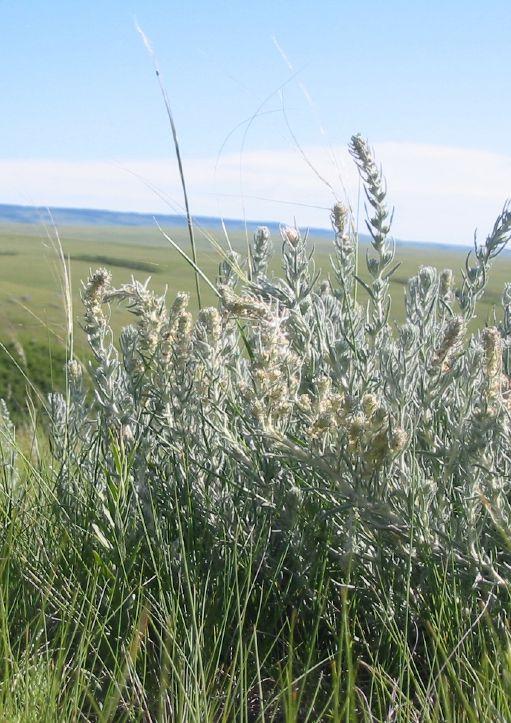
Winterfat (Kraschenninnikovia lanata).
He works with Prairie clovers, which tend to have health benefits for grazing animals, as well as winterfat, a fall-grazing food protein that also improves the digestibility of lowerquality forages.
Other crops in the roster include Prairie sandreed, rough fescue and blue bunch wheatgrass. Schellenberg’s program is close to releasing the latter variety, he says.
Most of the crops he works with are perennial plants rather than shortseason crops, but Schellenberg says there are native annual plants that have the potential to be used as cover crops in the shoulder seasons.
One challenge is that trends in cover crop use follow seed availability; if there is no seed, producers can’t use native varieties as cover crops. It takes five to six years to get seed up to production levels, he says; meanwhile, seed suppliers in are happy to meet demand with non-native species. But Schellenberg says there’s growing interest in sourcing native material over introduced species, which is a hopeful sign.
“And if you talk to producers with native rangeland, they identify the key role that those grasslands have to their production system and rely heavily on native grasslands for fall grazing because they recognize there’s potential there. And cover crops are being
used to bring cattle back on annual croppers’ land to improve the nutrient flow,” he says.
When it comes to preservation of genetic resources of native species, Schellenberg sees less to celebrate.
Canada’s national seedbank is called the Plant Gene Resources of Canada. Located in Saskatoon, the PGRC’s mandate is to “acquire, preserve and provide access to genetically diverse plant material (germplasm) of cultivated plants and their wild relatives with an emphasis on germplasm relevant to Canada,” according to its website.
The material in the genebank is available for research and plant breeding, Schellenberg says.
“The PGRC has the capability of preserving native species, but the problem that goes along with collections is the need to make sure that your seed stays viable,” he explains. “What we’re doing at Swift Current is taking that material and reproducing it before it dies. We’re also attempting to collect and identify some of those key species that will make contributions to agriculture.”
Schellenberg believes Canada has a valuable resource in our native plant species and communities, and we need to pay attention to these before they disappear.
“Those acres of native communities are shrinking. We need to capture what we can before it’s gone,” he says.
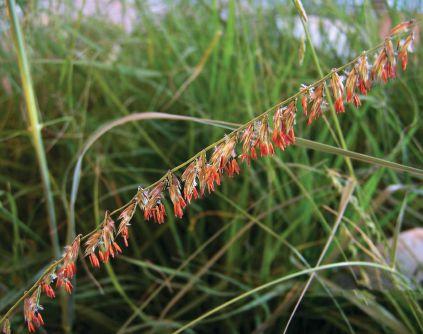
Sideoats grama (Bouteloua curtipendula).
USING BIOBEDS TO DISSIPATE PESTICIDE RINSATE
A new manual provides details to construct a biobed.
by Bruce Barker
One of the least favorite parts of pesticide application is sprayer clean out. Typically, farmers rinse the sprayer with water and cleaning agents and then spray the rinsate out on the field that was just completed – three times for best safety. Biobeds are a new and convenient way to prevent pesticide rinsate from entering the environment and contaminating water.
“The main advantage of using a biobed is that the pesticide residues are contained in one location rather than being sprayed out, so we know exactly where they are and where they go,” says Claudia Sheedy, research specialist with Agriculture and Agri-Food Canada (AAFC) in Lethbridge, Alta. “Spills and equipment washings can also be collected and processed rather than contaminating the pesticide handling areas.”
Biobeds are already popular in Europe, where there are more than 3,000 biobeds in use on farms. Sheedy is part of a group of researchers at AAFC who are proving that biobeds work in Canada.
AAFC currently has five experimental biobeds in Alberta and Saskatchewan. These include two biobeds at AAFC research sta-
tions in Lethbridge and Outlook, one municipal biobed in the County of Grande Prairie, one biobed on a private farm in Vegreville, Alta., and one biobed at an Environment and Climate Change Canada (ECCC) site in Simpson, Sask.
“Currently we have tested 175 pesticides, over half of which are herbicides. The biobeds are suitable to handle any pesticide, but the performance in removing each will differ,” Sheedy says.
How they work
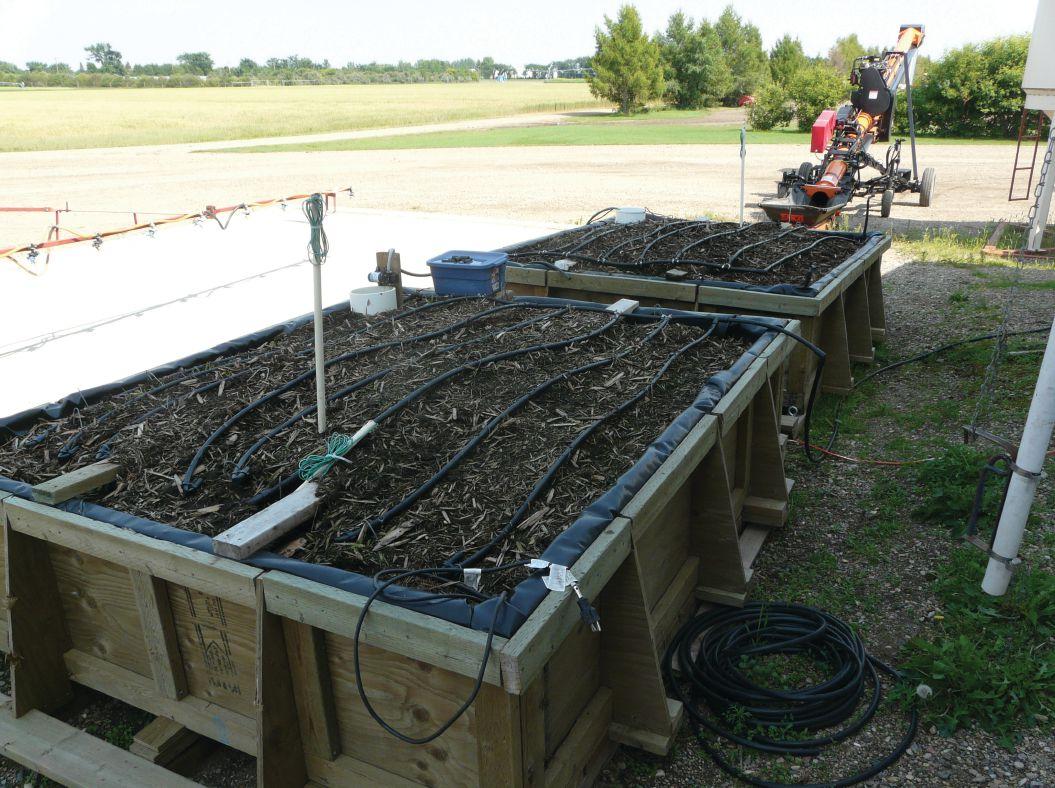
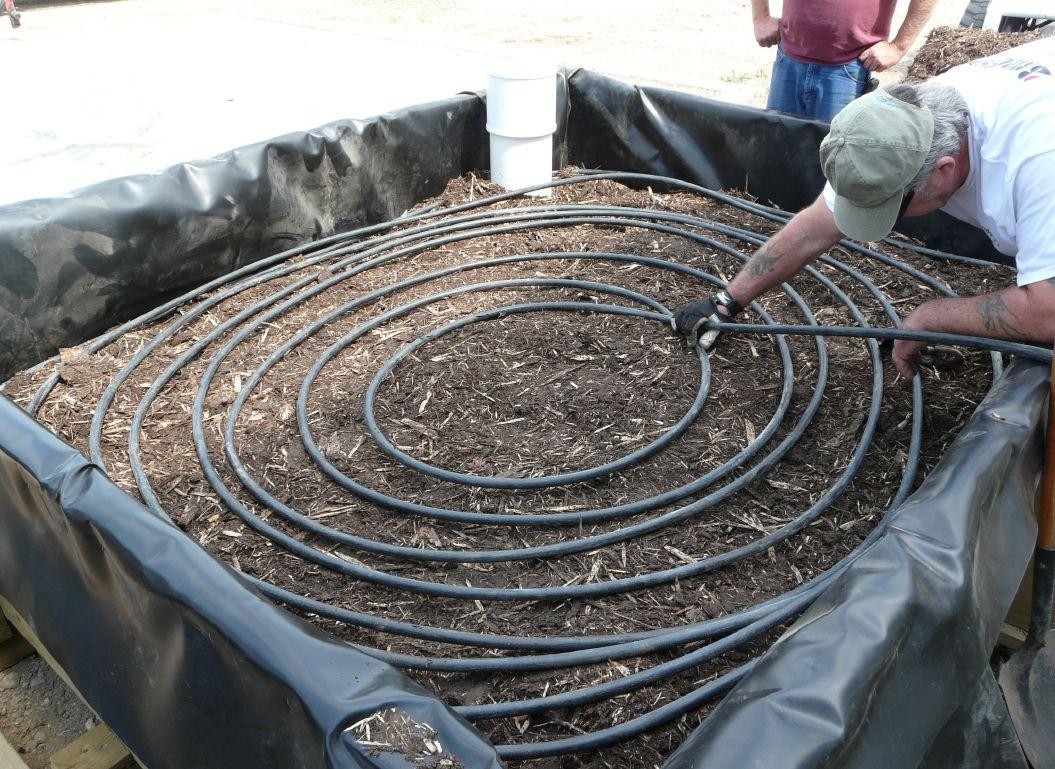
A biobed is an open tank or a lined pit in the ground filled with a mixture of 50 per cent straw or wood chips, 25 per cent topsoil, and 25 per cent peat. A sloped pad collects rinsate and spills, and drains into a sump. The rinsate is pumped into a holding tank large enough to collect a season’s worth of rinsate. Each day during the spring, summer and fall, about 0.4 inches (one centimetre) per day of rinsate is applied to the biobed.
ABOVE: Biobeds can remove up to 98 per cent of pesticides in rinsate.
LEAD THE FIELD.
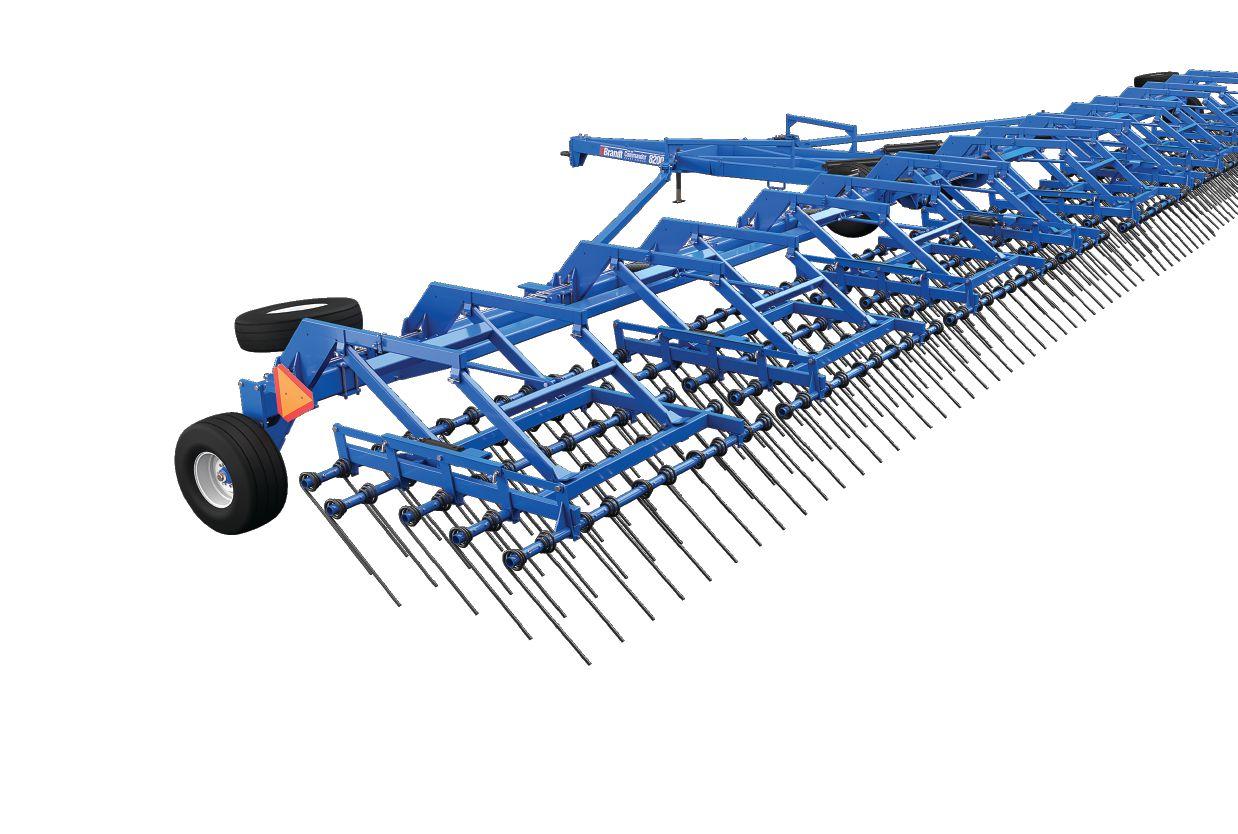
Farming is a competitive business. You’ve got to have tough, reliable equipment like Brandt’s Contour Commander heavy harrows if you want to Lead the Field. Rugged and designed to deliver perfect seedbed preparation, even in non-uniform terrain, Brandt heavy harrows always produce the ideal field finish. Easy-to-use and adjustable from your tractor cab, the Contour Commander delivers optimal results every time.
The result? You get smooth, trouble-free seeding and enjoy years of worryfree productivity from Brandt. That’s Powerful Value. Delivered.
Pesticides are removed from the rinsate through adsorption to soil particles and organic components in the biobed. Naturally occurring bacteria and fungi also break down pesticides in the biobed.
The rinsate either evaporates or percolates through the biobed. The rinsate that collects at the bottom of the biobed can be used to irrigate grass or shelterbelts.
Do they work?
Allan Cessna, a retired research scientist at AAFC in Saskatoon, led a study on the effectiveness of biobeds on the degradation of seven common herbicides in Western Canada. Biobed temperature and duration affected degradation because microbes thrive in a moist and warm (20 C to 30 C) environment. 2,4-D, bromoxynil, and thifensulfuron-methyl dissipated completely during the 35-day incubation at 13 C and 20 C. Other herbicides dissipated more slowly at 20 C; tribenuron-methyl by 93 per cent, pyrasulfotole by 70 per cent, thiencarbazone-methyl by 64 per cent, and metsulfuron-methyl by 34 per cent. At 20 C, the halflives of all herbicides was less than 70 days.
The research also found that the biobed temperature was less than 20 C for much of the growing season. As a result, construction recommendations for Canada include installing a heat tape or solar heating coil near the bottom of the biobed to provide supplemental heat to speed pesticide dissipation.
Other AAFC research also found that herbicides clopyralid, bentazon and imazethapyr were only removed by up to 60 per cent.
“We are studying this through a variety of projects, hoping to find microbes that can degrade clopyralid more rapidly and ef-
ficiently,” Sheedy says.
Single and two biobeds in series with various depths were tested by AAFC. The results showed that the single biobed could remove about 90 per cent of the pesticides, but using two biobeds would usually remove up to 98 per cent of the pesticides. Two biobeds in series were also found to often remove higher rates of challenging pesticides with longer half-lives.
“I think they are proven in Western Canada, although we are looking at other components of biobeds such as aging, temperature, and ultraviolet light, that could help further increase their performance. Our opinion is that it is better to use a biobed and get rid of a large proportion of the pesticides rather than leave these pesticides out in the environment at large. European studies have hypothesized that up to 70 per cent of pesticide contamination in surface waters could be arising from pesticide rinsate on farms,” Sheedy says.
This summer, AAFC is building two biobeds in British Columbia at Summerland and Agassiz research stations, one in Carman, Man., and one in Frelighsburg, Que. There are also plans to build biobeds in Prince Edward Island and at Farming Smarter in Lethbridge, Alta.
AAFC has developed a construction manual that provides detailed information and illustrations for sizing and building a biobed system. The manual, a robust biobed design for managing pesticide rinsate under Canadian conditions, is available on the Agriculture and Agri-Food Canada website by searching for “Biobeds for managing pesticide rinsate in Canada.”
Depending on the size of the system and the construction materials used, the cost can range from $6,000 to $23,000, according to AAFC’s construction manual.
A biobed constructed in Outlook, Sask.
READY WHEN YOU ARE
LET THE TIMES
PROVEN
PERFORMANCE YOU CAN COUNT ON.
With so many factors that can impact the success of your growing year, it’s nice to know that when it comes to crop nutrition, MicroEssentials® phosphate-based fertilizer has you covered. With proven technologies like uniform nutrient distribution and season-long sulfur availability backed by over 12 years of performance data, you can spend less time stressing over the fruits of your labor, and more time enjoying them.
GOOD GROW
PESTS AND DISEASES
RUST-PROOFING PRAIRIE OAT VARIETIES
Oat breeders and pathologists battle to keep up with the changing races of crown rust.
by Carolyn King
Resistant cultivars are a great tool for dealing with oat crown rust, but the pathogen is troublingly fast at overcoming resistance genes deployed in these cultivars. Continually fighting back, Prairie researchers are testing the pathogen’s hundreds of changing races for virulence, screening oat lines for resistance to the current races, creating oat varieties with multiple resistance genes, and developing markers for these genes to enable more efficient breeding.
“Crown rust is the most important disease that oat growers have to deal with,” says Aaron Beattie, an oat breeder at the University of Saskatchewan. “It is the most prevalent disease, and it has the biggest impact on decreasing yields. The disease also impacts seed quality, causing a higher percentage of thins and a lower test weight. Both of those factors impact a grower’s ability to get the highest grade for the crop. And if a variety has no resistance to crown rust and a farmer has to use fungicides, then that can delay maturity in the crop, which can impact timely harvest and crop quality.”
“Crown rust can cause yield losses of up to 40 to 50 per cent under severe epidemics,” notes Jim Menzies, a plant pathologist with Agriculture and Agri-Food Canada (AAFC) in Morden, Man. “Generally over the last 10 to 15 years, it is estimated that losses caused by crown rust averaged about five per cent per year, with some years being higher, while others are lower. For instance, in 2018, the losses were likely low because of the hot, dry weather.”
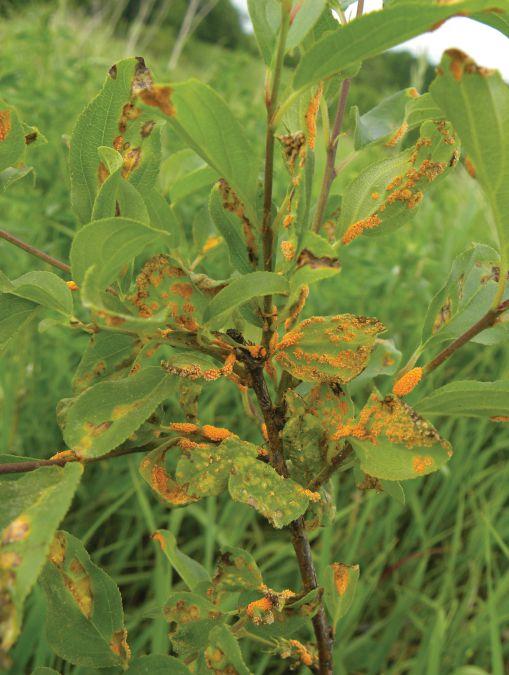
Crown rust is caused by Puccinia coronate, a fungus with a complex life cycle involving both asexual and sexual reproduction. In the asexual reproductive cycle, which occurs on oat plants, the spores are clones so one generation is mostly the same as the next, but mutations produce new races. Sexual reproduction occurs on the pathogen’s alternate host, buckthorn (Rhamnus cathartica), and adds a lot of variation to the pathogen’s population.
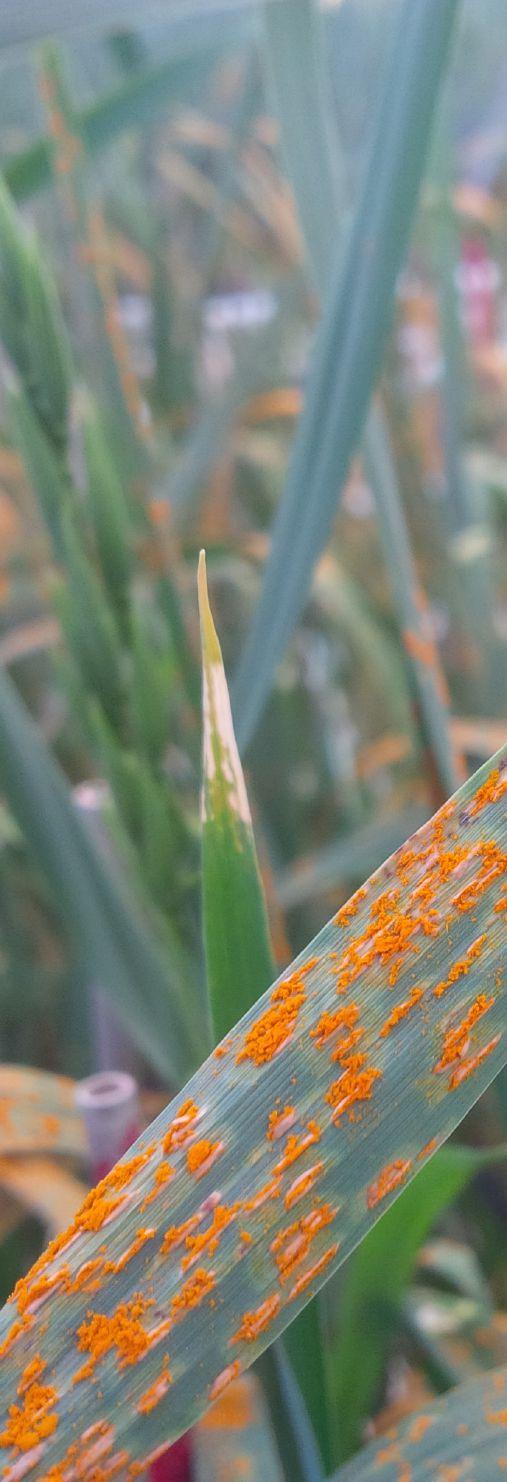
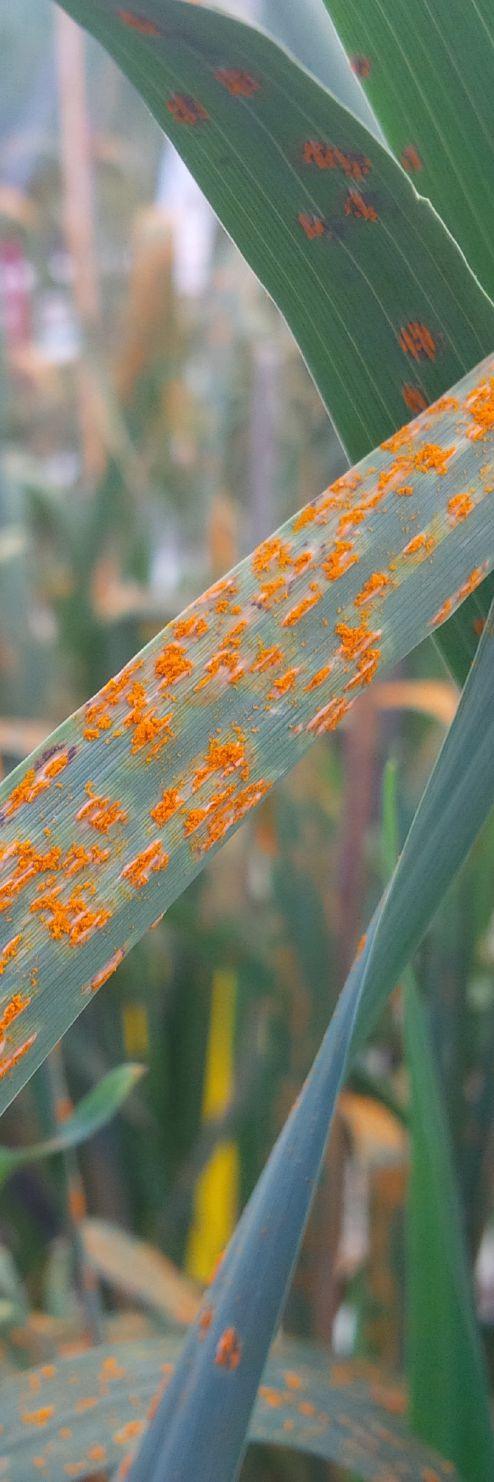
The disease is favoured by mild to warm days and mild nights with dews. Infected oat plants develop orange spore-filled pustules, which occur mainly on the leaves. The spores can be carried by the wind for hundreds of kilometres.
Crown rust spores are typically blown northward into Canada each year from oat-growing areas in the southern United States. The Canadian regions most prone to crown rust include Quebec, Ontario, Manitoba and eastern Saskatchewan.
Menzies explains the pathogen’s races in the eastern Prairies are distinctly different from those in Eastern Canada. “For Eastern Canada, the spores come up the
<LEFT: Crown rust is the most important oat disease, affecting both yield and quality.
<LEFT:Beattie’s oat lines are screened for their response to crown rust in several crown rust nurseries, including this one in southern Ontario.
eastern seaboard of the U.S. For the eastern Prairies, they come up through the Great Plains. So the two populations are affected by different selection pressures.” Most of the oats produced in North America are grown in the Prairies and the Great Plains, so the pathogen population that follows the western pathway is probably exposed to many more crown rust resistance genes. As a result, the Prairies have more complex races of the pathogen that have evolved to overcome various resistance genes. However, in Eastern Canada, buckthorn is much more common than on the Prairies, so the crown rust population in the East has more races that arise through sexual reproduction.
Ever-changing races
AAFC personnel have been conducting crown rust surveys in Canada since 1929. The surveys monitor the incidence and severity of the pathogen, identify the pathogen’s races to see if current oat varieties have effective resistance against these races, and determine which resistance genes should be incorporated into new varieties. Menzies has been leading these surveys in recent years.
Rust pathogens have a reputation for diverse populations with many races, but Menzies says the oat crown rust population is probably the most diverse.
“In the eastern Prairies and Eastern Canada, we identified 700 different races from collections made between 2010 and 2015,” he says. About 600 of the 700 races were identified in the samples collected from the eastern Prairies.
“About 80 per cent of the 700 races were detected only once in these six years of the survey. Races that were identified more than once were quite rare compared to what you would find with other pathogens. The most common race we observed was found to be only about three per cent of the isolates we tested.”
A key trend in the pathogen’s changing population is the increasing frequency of virulence to different resistance genes. “For instance, the frequency of virulence to the resistance gene Pc91 has increased dramatically since 2010, when we could not detect virulence to this gene in the Canadian crown rust population. Now, more than 70 per cent of isolates collected in the eastern Prairies have virulence to Pc91,” Menzies says, concluding Pc91’s effectiveness has plummeted within only nine years.
“This major change has resulted from the cultivation of oat lines possessing Pc91 in the eastern Prairies on large acreages, such as HiFi and Souris. This has resulted in a heavy selection pressure on the pathogen population to adapt by selecting for races with virulence to Pc91.”
PHOTO COURTESY OF DUANE FALK, UNIVERSITY OF GUELPH.
He adds, “This type of selection pressure has been seen before. It led to the pathogen population evolving in the 1980s and 1990s when oat lines with the resistance genes Pc38 and Pc39 were released and grown on large acreages in the eastern Prairies and the U.S. Now, virulence to Pc38 and Pc39 is found in close to 100 per cent of all isolates collected in the eastern Prairies.”
The AAFC survey tests the races for virulence against 24 different resistance genes. “On the eastern Prairies, in the last few years, we have been able to find virulence to all of the 24 resistance genes used in these tests,” says Menzies. So, none of the resistance genes are effective against all of the pathogen’s races.
“For some of these genes, such as Pc38 and Pc39, virulence is at very high levels. But in other cases, such as Pc50 and Pc94, the frequency of virulence is quite low, probably less than 5 per cent. So Pc50 and Pc94 would still be quite effective if incorporated into a new oat line.”
Striving for durable resistance
Given such a rapidly evolving crown rust population, Menzies explains that oat breeders need to use several strategies to try to prolong the effectiveness of resistance genes. One approach is to use multiple resistance genes in an oat variety. Another strategy is for breeders to use two or three different resistance gene packages in their oat breeding programs.
And a further strategy is to use both types of crown rust resistance – seedling resistance and adult plant resistance – in an oat variety.
“Seedling resistance is effective throughout the entire life of the plant. It also tends to be controlled by single genes more often
than not. Although adult plant resistance does provide resistance throughout the life of the plant, the effectiveness of that resistance increases as the plant gets older. Adult plant resistance isn’t typically controlled by single genes; more often, multiple genes with smaller effects are contributing to the resistance,” Beattie explains.
“Adult plant resistance is not as strong as seedling resistance, so the pathogen is able to cause some disease on the oat plant, but not a lot. However, adult plant resistance tends to be more durable than those single seedling resistance genes.”
Using all these strategies for durable resistance really increases the challenge for breeders. Menzies says, “The more resistance genes a breeder tries to use and the more complex the combinations, the greater and more difficult the work becomes. And it becomes very difficult to assess if the new oat lines have all the different resistance genes you are trying to incorporate into them, and if not, which resistance genes the lines actually have.”
Germplasm sources
Most of the crown rust resistance genes that Beattie uses in his own oat breeding program are from North American breeding programs. “The pathologists and breeders in both Canada and the U.S. have been the ones working on crown rust the longest and with the most intensity. We don’t find a lot of useful germplasm coming out of Europe, Australia or South America,” he says.
“The breeding program in Brandon, Man. [led by Jennifer Mitchell Fetch with AAFC], works quite heavily on crown rust resistance. And the University of Minnesota, North Dakota and Wisconsin are all really good places to find rust-resistant germplasm.”
Beattie notes that many of the crown rust resistance genes can ultimately be traced back to various wild relatives of cultivated oat (Avena sativa). “Many of the genes that we are using these days have come out of species like Avena sterilis, Avena strigosa or Avena magna Breeders and pathologists have spent quite a number of years bringing those resistance genes from wild sources into the tame gene pool so the breeders can use them.”
Testing breeding lines
Beattie tests his oat lines over multiple years and multiple locations to get a sense of how stable the crown rust resistance is. “Randy Kutcher, a plant pathologist at the University of Saskatchewan, runs a crown rust nursery here in Saskatoon. But our main nurseries for evaluating crown rust reaction in our germplasm are in southern Ontario, which has a really good environment for developing crown rust, and at the University of Minnesota, because they get some pretty strong crown rust epidemics there.”
Menzies’ research group evaluates crown rust resistance in oat lines for a number of breeding programs in Eastern and Western Canada each year. “This data is used by the breeders in making decisions on which lines should be promoted through their breeding programs. It is also used in the registration process in evaluating new oat lines for their suitability for registration in Canada. Also, the crown rust ratings for the different varieties published in the provincial seed guides every year are the data that we provided to breeders on the relative resistance of their lines to oat crown rust.”
Markers for resistance genes
Beattie is currently leading a five-year project to develop DNA markers for crown rust resistance genes. Breeders use markers to rapidly screen breeding materials for specific traits in the lab, rather than
The crown rust pathogen can reproduce sexually on buckthorn, its alternate host.
having to take weeks or months to grow seeds into plants and check them for the traits.
Beattie explains that crown rust markers are really helpful in his breeding work. “Especially in this part of Saskatchewan, we don’t always see much crown rust. So in years when there is no crown rust infection pressure, we can’t tell whether or not the lines carry resistance [just by looking for symptoms in the field]. But by using markers that are tied to particular resistance genes, we can select for lines carrying these genes even in the absence of disease pressure,” he says.
“Also, markers allow breeders to incorporate two or three different sources of resistance into the same variety. If you’ve got a marker specific to each of those genes, you can select for each gene in your germplasm. In contrast, if you see a resistant line in a disease nursery, you can’t tell if the line carries just one of those genes or two or all three of them.”
Beattie’s group at the University of Saskatchewan is collaborating on the project with Menzies and Mitchell Fetch with AAFC in Mani-
toba, and with Kathy Klos, a scientist with the United States Department of Agriculture in Idaho. They are also working with a number of groups from other countries on the project. They have divvied up more than 20 crown rust resistance genes and will be developing markers for as many of these genes as possible.
“The project includes some older seedling resistance genes that have been around for a while and some newer ones that maybe haven’t been introduced into oat varieties yet, and also some adult plant resistance genes. We hope to develop markers that will allow breeders to introduce new genes more easily into future varieties,” Beattie says.
“This project will also give us some information about how the old genes relate to the new ones because we are unsure if some of the older genes are actually the same as some of the newer ones.”
Menzies adds, “From a pathologist’s point of view, developing these markers will aid us in the identification and development of
Continued on page 37
PROVEN BY DESIGN
The way we see it, the Proven® Seed lineup is state of the art. Proven Seed offers leading edge technology you can count on in canola, cereals, corn , soybeans and forages. You get choice in herbicide systems, disease management, high yields and performance from every seed, across all your acres. No matter how you look at it, there’s a Proven Seed that fits your farm.
ROBO SAMPLING IMPROVES ACCURACY
Eliminating human error reduces sampling variability by a minimum of 10 per cent.
by Bruce Barker
Acompany in West Lafayette, Ind., is transforming the accuracy and convenience of soil sampling.
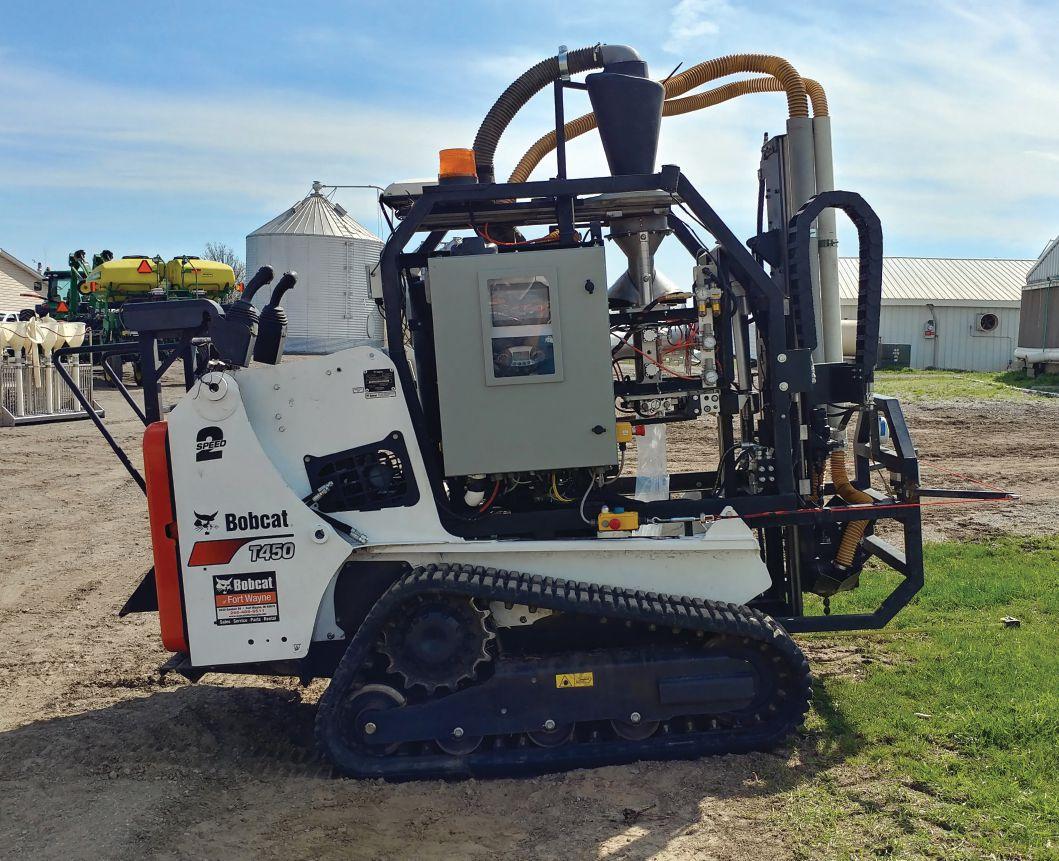
Rogo is building robotic soil sampling machines on top of a Bobcat skid steer platform that autonomously works a field, pulling soil samples, and bagging them.
“We built the soil sampling technology from the ground up, including the hardware and software required to allow the robot to work autonomously. The sampling grid is pre-programmed, and once the robot is unloaded at the field, it works on its own,” says Drew Schumacher, president of Rogo. The autonomous soil sampler is called the SmartCore.
A few key components allow the robotic sampler to operate independently. A self-cleaning, high-speed auger is at the core of the sampling system, ensuring fast sampling and eliminating cross-contamination between samples. A proprietary bagging system that collects individual samples and heat-seals them in
sequence ensures accurate identification of each sample.
In the Corn Belt of the United States, soil sampling is typically done on a 2.5-acre grid to a specific depth, usually zero to 12 inches. Currently, the machine cannot do a split sample, such as a zero- to six- and six- to 12-inch sample, but Schumacher says that technology is on their development list. SmartCore can cover a 500-acre field on a 2.5-acre sampling grid in about five hours –about twice as fast as a human sampler. The machine can hold 250 samples.
SmartCore is guided by RTK-GPS and navigational algorithms, which provide accuracy and repeatability from year to year to within inches. Obstacles are avoided using a variety of sensors, and in the worst case, the robo sam-
ABOVE: SmartCore robots sample faster and more accurately than humans.
PHOTO COURTESY OF ROGO.
pler immediately shuts down if an obstacle is contacted.
Unparalleled accuracy
A key benefit of SmartCore is accurate soil sampling depth and year-to-year repeatability at the same location in the grid. Using a ground sensor, SmartCore accurately samples to a specified depth within one-eighth of an inch.
In 2019, the Practical Farm Research Group of Becks Hybrids, the third largest seed brand in the United States, in Atlanta, Ind., conducted research on the accuracy of SmartCore compared to human samplers. Three human samplers were provided a 2.5-acre sampling grid with GPS. Their soil samples were analyzed and compared for variability. SmartCore conducted the same sampling grid three times and also compared the samples for variability. Even though the humans knew they were being tested, the human variability was 15 per cent across the samples. SmartCore had an average of five per cent variability between the three sampling sets.
“Our value proposition is that if you can eliminate 10 per cent [or more] of sampling error, that will make nutrient planning much more accurate and allow growers to increase input utilization – putting it in the right spots in the right amounts,” Schumacher says.
For corn growers, nutrient input costs can easily reach $125 per acre. Reducing or optimizing those costs by only 10 per cent
can save $12.50 per acre. SmartCore is competitive with most soil sampling programs, at around $4 per acre based on a 2.5-acre grid.
Explosive growth
Rogo has been working on SmartCore for several years. In the fall of 2018, the company did 20,000 acres. Schumacher expects to do 125,000 to 150,000 acres in 2019, mainly in Illinois, Indiana, Ohio and Iowa. They already have 115,000 of that goal sold.
“When we did a full launch in 2018, the demand really started to take off. We had so much demand that we had to focus on product development and manufacturing and pull back on sales and marketing efforts,” Schumacher says.
For 2020, the company hopes to be able to scale up across the Corn Belt in the United States. Beyond that, plans are to expand to Canada, Brazil and Australia.
The company isn’t selling SmartCore robots to crop consultants or farmers. Rather, Rogo hires staff to operate them. That helps manage costs and maintain consistency.
“We believe this business model is better for everyone. It ensures better accuracy and efficiency,” Schumacher says. “When we talk to the market, the people that soil sample are really just doing it on a break-even basis for the clients. They are happy to have someone else do the sampling so they can focus their time on helping their farmers make more profit.”
Interest-bearing portion at prime less 0.5%
Your better beans are here.
Better genetics. Better yields. Better for your community. Introducing Enlist E3™ soybeans, a more advanced seed with the highest yield potential and a robust herbicide tolerance. Pair it with Enlist Duo™, part of the Enlist™ weed control system, for a better low drift, near-zero volatility solution.
Enlist E3™ soybeans are now available for 2020 planting. Talk to your local seed supplier. SOYB EA NS
Simply Better Soybeans. Learn more at enlistcanada.ca
Advancing Modern Farming
The Enlist™ weed control system will change how you think about weed management in soybeans. Farmers can NOW purchase Enlist E3™ soybean varieties and take control of resistant and hardto-control weeds.
INTRODUCING THE ENLIST™ WEED CONTROL SYSTEM
The Enlist weed control system will help growers meet the challenge of farming today, and in the future.
Key Benefits of the Enlist weed control system:
• Provides robust crop tolerance to Enlist Duo™, a new herbicide featuring glyphosate and new 2,4-D choline, containing Colex-D™ Technology
• Enables the use of a multi-mode of action herbicide approach against hard-to-control and resistant weeds.
• Includes a stewardship initiative to promote responsible use and sustain long-term performance
Enlist E3 soybeans provide elite, high yielding soybean genetics and industry leading multi-mode of action herbicide tolerance.
• Enlist E3 soybeans provide robust herbicide tolerance to 2, 4-D, glyphosate and glufosinate
• Enlist Duo herbicide can be used in Enlist E3 soybeans with confidence as a pre-emergent or post-emergent herbicide
• Enlist E3 soybeans provide an alternate glyphosate tolerance trait source
• A multi-mode of action program approach is recommended to minimize the potential for the development of resistant weeds. This includes the use of residuals and complementary effective modes of action for pre-emergent and in-crop weed control
• Enlist E3 soybeans are not tolerant to dicamba
ENLIST DUO™ HERBICIDE
Enlist Duo herbicide, a proprietary blend of glyphosate and 2,4-D choline, contains Colex-D™ Technology. Enlist Duo has two modes of action to provide exceptional weed control and herbicide resistance management.
WHAT GOES INTO IT
2,4-D choline with Colex-D Technology Latest formulation science Proprietary manufacturing process
WHAT IT DELIVERS
Near zero volatility
Minimized potential for physical drift Low odour Improved handling characteristics
KEY WEEDS CONTROLLED BY ENLIST DUO
Enlist Duo controls more than 70 weeds, including the toughest to control. Here’s a snapshot of some of the most important.
WEEDS CONTROLLED
Grass Weed Species
• Barnyard grass
• Crabgrass
• Fall panicum
• Green foxtail
• Quack grass
• Volunteer barley
• Bluebur
• Volunteer wheat
• Wild oats
• Wild proso millet
• Yellow foxtail
• And many more…
Broadleaf Weed Species
• Hemp-nettle
• Buckwheat, tartary & wild
• Canada fleabane*
• Canada thistle
• Chickweed
• Cocklebur
• Common ragweed*
• Corn spurry
• Dandelion
• Eastern black nightshade
• Field horsetail
• Flixweed
• Giant ragweed*
• Kochia*
• Lady’s-thumb
• Lamb’s-quarters
• Morning glory
• Palmer Amaranth
• Red root pigweed
• Smartweed
• Sow thistle
• Velvetleaf
• Vetch
• Volunteer canola*
• Waterhemp
• And many more…
*Including biotypes resistant to glyphosate and ALS modes of action
MAINTAINING RUST RESISTANCE IN MODERN FLAX CULTIVARS
Characterization for rust resistance genes in flax and development of molecular markers for screening.
by Donna Fleury
Screening for resistance for rust, Fusarium wilt and other pathogens remains a priority in flax breeding programs. Although there hasn’t been an outbreak of flax rust since the 1970s, plant breeders of modern flax cultivars still need to ensure that all registered flax varieties are resistant to rust and must have moderate resistance to fusarium wilt.
“In our crossing program, we previously had to focus on using North American germplasm to maintain the needed disease resistance traits, which limited the selections for crossing,” says Helen Booker, flax breeder with the Crop Development Centre (CDC) at the University of Saskatchewan. “For example, resistance for Fusarium wilt comes from one cultivar, Bison, which has been around since the 1930s, and this cultivar is found in all the pedigrees of Canadian flax cultivars. In order to broaden the genetic base in the working collection, it became important to look at developing molecular markers so we could look outside of North American germplasm and cross with ‘exotic’ material from Europe or China or other parts of the world in order to improve traits such as yield and seed quality, while still having the needed resistance genes in the material. Firstly, we started work on rust resistance genes in flax because there is a good body of research on the disease in flax.”
The early work on flax rust dates back to the 1940s and 1950s, where plant pathologist Harold Flor from North Dakota State University postulated the gene-for-gene interaction theory between the plant and its pathogen. The model is that for every gene for resistance in the crop plant, there is a corresponding and matching gene for avirulence in the pathogen, which continues to be the foundation for disease resistance breeding and genetics today across all crops. Flor applied this model to his flax work and characterized different rust pathogen races and rust resistance genes.
“We initiated a project in 2017 to gain more detailed information about the genes responsible for flax resistance to rust and to identify possible molecular markers to assist with our screening efforts,” Booker explains. “There are five known rust resistance genes that reside in five different locations in the flax genome K, L, M, N, and P, and our goal is to map these genes in the flax genome and determine the specific alleles at each location. The current flax cultivars in North American possess at least two resistance genes, and the last known race of flax rust in North America is isolate
371. Our work shows that in most Canadian cultivars the alleles at L6 condition resistance to that race and we have developed a molecular marker for the L6 allele. We now know where all the major resistance genes are in the flax genome, most of the alleles for the L locus and are trying to fine-tune the M and K loci as well.”
At the end of the project, Booker expects to have more molecular markers in place to assist with the screening for rust.
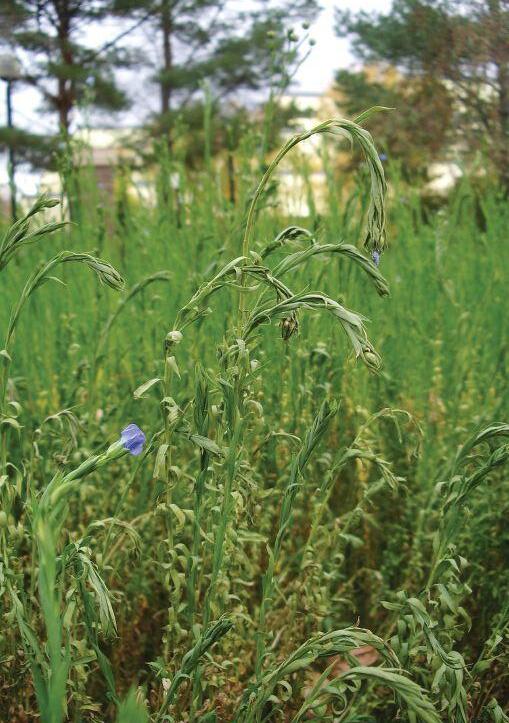
Fusarium wilt symptoms in flax with the typical shepherd’s crook quite visible.
Utilizing genomic DNA extraction and multiple markers for screening diseases such as rust are considerably less labor-intensive and time-consuming, and therefore are cheaper and more efficient. Traditional screening done at a phenotypic level is more time consuming and costly because allelic identification requires repeated inoculation with individual races followed by visual scoring of infection rate and type. Biosafety equipment and procedures also need to be in place when using ‘exotic’ or nonendemic rust races. Booker works closely with the CDC cereal and flax pathology program and the Morden Research Centre on disease resistance investigations.
“Our goal in the flax pathology program is to maintain that successful history of rust resistance and fusarium wilt resistance in flax,” says Randy Kutcher, professor and chair of the Cereal and Flax Pathology Program at the University of Saskatchewan. “The largest flax pathology program was led by long-time flax pathologist Khalid Rashid at Agriculture and Agri-Food Canada’s (AAFC) Morden Research Centre until he retired this year. Along with maintaining all of the differential lines and rust races, he did all of the screening work at Morden on all of the parent lines and lines proposed for registration in the growth chamber to make sure they were resistant to rust isolate 371. His work is a real success story, as we haven’t seen rust in commercial flax production since the 1970s, maintaining rust resistance in all of the commercial varieties. He also maintained the longest running fusarium wilt nursery at Morden.”
With Rashid’s retirement however, the AAFC flax program at
Morden has been closed down and the rust screening moved to Kutcher’s program at the University of Saskatchewan. With funding under the Canadian Agricultural Partnership Program, AAFC has committed to continuing the Fusarium wilt nursery component of the flax program and technical staff for four more years at Morden. “We now do all of the rust screening for lines proposed for registration and the parent lines that Helen Booker is using for breeding. Last year was the first year for us and everything went very well. We will continue to do the rust phenotyping screening in the growth chambers as well as utilize molecular markers as they become available.”
At the University of Saskatchewan, a second Fusarium wilt nursery has been in use for many years. Kutcher expects in the future all of the material will eventually be screened in Saskatchewan in his program and possibly at Indian Head where a nursery exists, which is relevant as about 90 per cent of flax production in Canada is currently in Saskatchewan. The Fusarium wilt nurseries at both Morden and Saskatoon are rated three times a year, with Kutcher’s team assisting in the third rating at Morden later this growing season.
“We also do annual disease surveys and find Fusarium wilt on occasion in commercial flax fields, so it is definitely part of the breeding program to make sure we reduce it as much as possible,” Kutcher adds. “In most cases, Fusarium wilt is not severe, although for a particular grower it can be a problem with the typical shepherd’s crook symptoms quite visible. We also survey for pasmo, which is probably the most wide-spread flax disease currently and
DAWSON CREEK
October 17
Richardson Pioneer 250-782-9264
FALHER October 17
St. Isidore Coop
780-837-2205
GRANDE PRAIRIE October 18
UFA
780-532-1281
RYCROFT October 18
Cargill
780-765-3771
ST. ISIDORE October 16
St. Isidore Coop
780-624-3121
ALIX
October 9
Richardson Pioneer
403-747-3000
ALLIANCE October 9
Meadowland Ag + Chem LTD
403-741-8963
BARRHEAD October 10
Nutrien Ag Solutions
780-674-3511
BENALTO October 7
Benalto Agri Services 403-746-2012
BOYLE October 9
Nutrien Ag Solutions
780-689-3650
CAMROSE October 11
UFA Camrose Farm Store
780-672-1115
EDGERTON
October 10
Nutrien Ag Solutions 780-755-3734
KILLAM October 7 Nutrien Ag Solutions 780-3852230
LACOMBE October 10
Richardson Pioneer 403-782-9554
LAMONT October 7 Richardson Pioneer 587-987-8973
LEDUC
October 11
Cargill Ag Horizons
780-985-3601
LEGAL
October 11
Sturgeon Valley Fertilizers 780-961-3088
PENHOLD October 8
Nutrien Ag Solutions 403-886-4326
PROVOST October 8
Richardson Pioneer 780-753-2511
ROSALIND
October 10
Nutrien Ag Solutions 780-375-3966
SMOKY LAKE
October 8 Nutrien Ag Solutions
780-656-4343
ST. PAUL
October 8 UFA
780-645-7700
TWO HILLS October 7 UFA 780-657-3333
VERMILION
October 9
Cargill 780-853-3200
VIKING October 11
Cargill 780-336-2292
ARNAUD October 24 GJ Chemical 204-427-2337
BALDUR October 25
Pembina Coop 204-535-2598
BEAUSEJOUR
October 21
Nutrien Ag Solutions 204-268-3497
BRANDON October 23
Richardson Pioneer 204-727-5353
CARMAN
October 22
Nutrien Ag Solutions 204-745-3939
GLADSTONE October 25
Nutrien Ag Solutions 204-385-2349
GROSSE ISLE
October 23
Nutrien Ag Solutions 204-467-8026
GRAND VIEW
October 24
Richardson Pioneer Grand Plains 204-546-2800
HARTNEY October 22
Redfern Farm Services 204-858-2038
INGLIS October 22
Jackson Seeds 204-564-2293
MINTO October 24
Pembina Coop 204-776-2353
PORTAGE LA
PRAIRIE
October 24
Portage Agri Sales 204-857-7838
SHOAL LAKE October 21
Shur-gro Farm Services 204-759-4240
STARBUCK
October 25
Richardson Pioneer 204-735-2302
STE. AGATHE
October 25
Nutrien Ag Solutions 204-882-2567
SWAN LAKE October 21
Pembina Coop 204-836-2109
SWAN RIVER October 23
New Era Ag Technologies 204-734-6222
TEULON October 22
Willis Agro
204-461-0386
VIRDEN October 21
Redfern Farm Services 204-748-1122
WINKLER October 23
Nutrien Ag Solutions 204-325-6498
NORTHERN ALBERTA PEACE REGION
MANITOBA
can be a problem under some conditions. We usually see pasmo in almost every field, but often it is late in the season with marginal impact, but in some instances fungicides can make quite a difference. So far breeding efforts are finding little resistance or differences among cultivars for pasmo. Powdery mildew can also be a problem under more humid conditions, particularly in Manitoba. Through our flax program, we will continue to work with the breeder and the industry to screen for rust and fusarium wilt and monitor diseases through the annual surveys.”
Flax cultivar screening and development
Through the CDC Flax Breeding Program, several recent cultivars have been released and commercialized, consistently providing improved genetics to producers and end users. Booker notes that in 2012 CDC Glas was released, which was the second most popular cultivar in Western Canada in 2018. CDC Neela followed, with a larger seed size and a yield advantage. “In 2015, we released CDC Plava, which was the first northern adapted flax cultivar for the shorter season northern Prairies,” Booker adds. “Other registrations followed including CDC Buryu, CDC Melyn, CDC Dorado and in 2018 CDC Rowland was released, the first variety that I was the sole breeder for. This variety has a significant yield advantage of 112 per cent of CDC Bethune across western Canada, and also has a very large seed size. It takes about 10 years from the first crosses to registration.”
Booker explains that all of that material would have been tested at AAFC Morden by Dr. Rashid. “Although we have recently moved the rust screening to our CDC Flax Pathology Program and some of
the wilt screening, we are still concerned about the long term strategy for maintaining the differential lines and rust races and evaluation of Fusarium wilt. The Fusarium wilt nurseries are fixed assets and the Morden facility has been in place for over 100 years, so hope to find ways for it to continue. We have established one here at CDC and have earmarked some resources for the development of another wilt nursery, which are very important for our research and breeding efforts going forward.”
These traditional screening methods combined with the new molecular markers and tools under development will help speed up the early stages in the breeding program, particularly with ‘exotic’ materials from outside North America. “We can quickly test new flax lines by first screening for rust race 371 in Randy Kutcher’s program, and then screening the parental lines with molecular markers and only advance materials that have L6 alleles for rust resistance,” Booker says. “Usually about half of the materials won’t have the resistance allele, so we are saving time by only planting out and testing materials that most likely will become cultivars. Using the molecular markers helps ensure we start with the resistant genetic background we require and then advance materials with other traits we are looking for such as climatic adaptation, maturity, yield, seed size, oil content and profile into multi-location testing.”
Booker’s rust resistance characterization project has been extended for another year into 2020 to resolve the M locus and develop specific molecular markers for some of the alleles. All of this information will reside in a data library for genes and alleles related to all known flax rust-resistance genes and help inform flax breeding efforts in the future.
Flax seedlings at the Fusarium wilt nursery at the University of Saskatchewan Crop Development Centre.
TOP CROP
MANAGER
HARVESTING
RISE UP, RISE UP
Seeking a solution to soybean header losses by raising the height of the lowest pods.
by Carolyn King
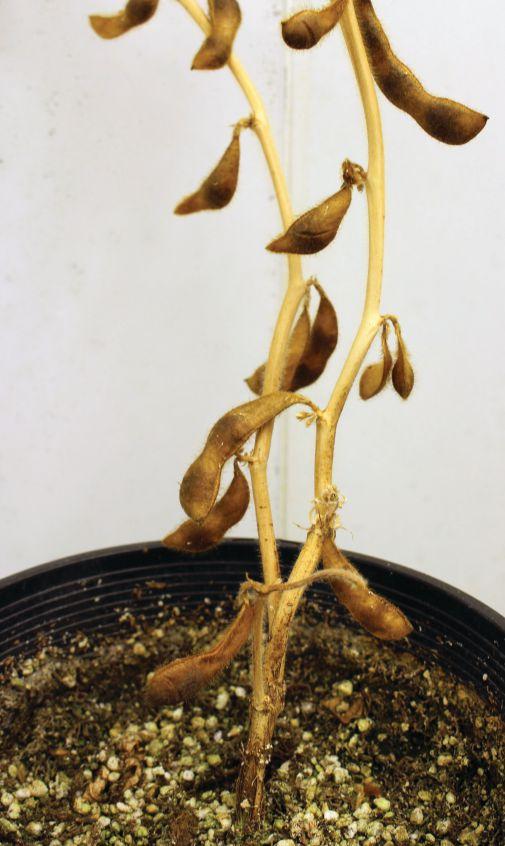
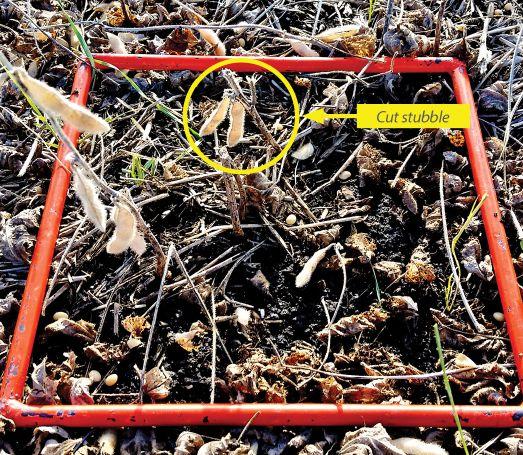
Stubble loss – where the lowest pods on soybean plants remain attached to the stubble after harvest – can be a costly and frustrating yield loss problem. And it’s a problem that is a particular concern with the soybean varieties grown on the Prairies. So a Manitoba research project is determining whether plant growth regulators (PGRs) might offer an effective way to increase pod height.
“Some studies in North America estimate that up to about 20 per cent harvest losses can occur in soybean fields. About 80 to 85 per cent of those harvest losses occur at the header. And one of the main header losses is caused by low pod height. Very low pods cannot be captured by the cutter bar, so those pods usually remain on the cut stubble,” explains Belay Ayele, an associate professor at the University of Manitoba, who is leading this project.
“Low pod height is a more common problem with early maturing varieties because they are shorter than the later maturing varieties. Manitoba soybean growers have to use early maturing varieties because of our short growing season, so stubble loss is an ongoing concern here.”
Cassandra Tkachuk, a production specialist with the Manitoba Pulse and Soybean Growers (MPSG), says, “We get questions every year about low soybean pods and what causes the problem and how it can be avoided. Setting the cutter bar low enough to capture really low pods can result in mechanical damage to the equipment from taking in soil and rocks. So growers are looking for other ways to deal with this issue.”
She notes, “With the really dry spring in parts of Manitoba this year, I was hearing some early reports of low pods and worries for the upcoming harvest. But then I also heard reports of high pods.”
That prompted Tkachuk to review the findings from many different soybean studies to see what has been learned about the impacts of genetics, environment and management on pod height. These studies include Manitoba research like a 2016 MPSG study comparing pod height across the varieties grown at two soybean variety trial sites in Manitoba and Tkachuk’s master’s research on the effects of plant population and planting date on pod height.
“From what I can tell, there’s not a lot a grower can do in terms of crop management. Pod height is not influenced by factors like planting date, plant population, row spacing [and tillage],” she summarizes.
“Genetics does play a role in pod height. For instance, we saw some differences between the varieties at the variety trial sites. However, the genetic expression of pod height seems to be influenced by the environment because the varieties behaved differently depending on the site.
“And in terms of environmental effects, there are a lot of un-
To reduce stubble loss, a Manitoba study is testing PGRs as a way to increase the height of the lowest pods on soybean plants.
knowns.” For instance, limited information indicates that cool weather during early growth may reduce pod height, but hot temperatures have been shown to reduce height too. Similarly, the effect of moisture is not clear, although some evidence suggests that moisture extremes, either very dry or very wet conditions, might reduce pod height.
“The long-term solution to stubble loss is to breed new soybean varieties that have both early maturity and higher pod heights,
so they set their first pods high enough to avoid stubble losses. But breeding new varieties takes time,” Ayele says.
“While we are waiting for new cultivars with both those traits, we can apply some short-term strategies. One strategy is to carefully adjust combine settings, but combine adjustments can only go so far. The strategy that I am looking at is to increase the height of the lowest pods by using PGRs.”
The PGR project
Ayele explains that PGRs are synthetic compounds that mimic the function of plant-produced hormones. “Every plant produces plant hormones, but some crop varieties produce more and some produce less. Usually these plant compounds play important roles in regulating a wide range of plant growth and development processes including plant architecture characteristics, such as plant height or podding height,” he says.
“Some soybean varieties may not produce enough of some of these compounds, so they remain shorter or dwarf. As a result, they have low pod heights. Other varieties produce more of these compounds, and they grow taller and set their pods at a higher level. If a plant has an optimal amount of these compounds, it will have optimal pod heights and optimal growth and development.”
However, a plant with an excess of these compounds may have problems with lodging and other negative impacts on its growth and development, and may not mature within the short Prairie growing season.
So Ayele and his research group want to increase the length of the stem only up to the first node.
They are testing a number of PGRs on different soybean varieties with a wide range of pod heights. Working under controlled environment conditions, they have identified promising PGRs and optimized the concentrations of these PGRs. They are currently finetuning the applications of these PGRs to make them more efficient and effective.
At present, Ayele and his group are applying the PGRs as seed treatments to try to target the height of the lower nodes. Depending on how well the seed treatments work, Ayele and his group may also
Stubble loss, when pods remain on the cut stubble, is one of four types of header losses in soybean crops.
PHOTO
experiment with applying the PGRs during the very early stages of plant growth.
Their preliminary results show that their approach could work: a PGR seed treatment can increase the height of the plant’s first node without affecting the lengths of the subsequent internodes.
Once Ayele’s group has optimized the most promising PGR treatments under controlled conditions, they will test the treatments in the field.
Ayele notes that PGRs are not yet registered for this use in Canada. “We have been in discussion with some companies about the project. Hopefully, if they see promising results from our research, they would be open to pursuing registration.”
This project is jointly funded by MPSG and Ag Action Manitoba, a Canadian Agricultural Partnership program. Tkachuk says, “I think Dr. Ayele’s work on PGRs to increase pod height is another management factor that we definitely need to explore, to see whether PGRs might be something that could work for farmers.”
For now, and looking ahead
At present, the main thing that growers can do about stubble loss is to take steps to reduce their overall header losses at harvest. Tkachuk offers a few tips.
“First and foremost, we recommend direct combining using a flex header – something that can hug a little closer to the contours of the ground.”
MPSG also advises keeping combine speeds below five miles per hour (mph). “Prairie Agricultural Machinery Institute (PAMI) has looked at the effects of harvest speed on header losses. [In a 2016 field trial using an auger header,] they found similar losses between two, three and four mph, but the losses increased at five mph,” she explains.
Equipment choices also make a difference. Tkachuk says, “PAMI has also compared auger headers and draper headers. They found that the use of an air reel, which is an attachment you can put on the header, reduced harvest losses with both types of headers. The draper header was better than the auger header. And the draper header plus an air reel gave the best results in terms of reducing harvest losses.”
She also suggests using the Soybean Harvest Loss Assessor, one of the tools in the MPSG Bean App. The Harvest Loss tool includes all four types of header losses: stubble loss, where the pods remain attached to cut stubble; shatter loss, where the impact of the header hitting the plant knocks beans and pods onto the ground; loose stalk loss, where the stalks are cut, but not sent into the combine; and lodged stalk loss, where the stalks slip under the cutter bar, instead of being cut.
The Harvest Loss tool makes it easier to assess header losses during combining. Ideally, growers would check their losses whenever their field or crop conditions change. Tkachuk says, “We know harvesting can be ‘go’ time; you don’t want to stop the combine to do seed counts. But knowing what kind of losses you’re having at the time of harvest can help you adjust your combine settings more precisely, or maybe decide to slow the combine down a bit more, and just understand how much yield loss you are incurring at harvest.”
Looking ahead, Tkachuk says, “Stay tuned for the results from Dr. Ayele’s PGR work. I’m also hoping other researchers might be interested in looking at the environmental effects on pod height to get a better understanding of that issue.” And of course, soybean breeding to increase the height of the bottom pods in Prairie varieties continues to be an important goal.
RUST-PROOFING
PRAIRIE
OAT VARIETIES
Continued from page 25 new resistance gene sources because we can quickly screen the sources to find out are if they are new genes or just different combinations of already known genes. That allows us to move forward on some of these new sources if we think they could be effective.”
For this marker project, the researchers inoculate various oat populations with certain crown rust races and assess the populations for disease reaction. Using the DNA from these oat populations, they can identify the genomic locations of the resistance genes and then develop markers for the genes. The goal is to develop reliable, highthroughput marker assays so breeders will be able to quickly check thousands of oat lines for the presence of each resistance gene.
Saskatchewan’s Agriculture Development Fund, the Prairie Oat Growers Association and the Western Grains Research Foundation are funding the marker project. Researchers are striving to meet the ongoing challenge posed by the rapidly changing crown rust pathogen population, to ensure that Prairie growers have access to crown rust-resistant oat varieties – the most effective and economical way to control this important disease.
Trait Stewardship Responsibilities Notice to Farmers
Monsanto Company is a member of Excellence Through Stewardship® (ETS). Monsanto products are commercialized in accordance with ETS Product Launch Stewardship Guidance, and in compliance with Monsanto’s Policy for Commercialization of Biotechnology-Derived Plant Products in Commodity Crops. These products have been approved for import into key export markets with functioning regulatory systems. Any crop or material produced from these products can only be exported to, or used, processed or sold in countries where all necessary regulatory approvals have been granted. It is a violation of national and international law to move material containing biotech traits across boundaries into nations where import is not permitted. Growers should talk to their grain handler or product purchaser to confirm their buying position for these products. Excellence Through Stewardship® is a registered trademark of Excellence Through Stewardship.
ALWAYS READ AND FOLLOW PESTICIDE LABEL DIRECTIONS. Roundup Ready® Technology contains genes that confer tolerance to glyphosate. Roundup Ready® 2 Technology contains genes that confer tolerance to glyphosate. Roundup Ready 2 Xtend® soybeans contains genes that confer tolerance to glyphosate and dicamba. LibertyLink® Technology contains genes that confer tolerance to glufosinate. Glyphosate will kill crops that are not tolerant to glyphosate. Dicamba will kill crops that are not tolerant to dicamba. Glufosinate will kill crops that are not tolerant to glufosinate. Contact your local crop protection dealer or call the technical support line at 1-800-667-4944 for recommended Roundup Ready® Xtend Crop System weed control programs. Insect control technology provided by Vip3A is utilized under license from Syngenta Crop Protection AG.
FOR CORN, EACH ACCELERON® SEED APPLIED SOLUTIONS OFFERING is a combination of separate individually registered products containing the active ingredients: STANDARD offering for corn without SmartStax® Technology: fluoxastrobin, prothioconazole, metalaxyl and clothianidin. STANDARD plus DuPont™ Lumivia® offering for corn: fluoxastrobin, prothioconazole, metalaxyl and cyantraniliprole. STANDARD plus Poncho®/VOTiVO® offering for corn with SmartStax® Technology: fluoxastrobin, prothioconazole, metalaxyl, clothianidin and Bacillus firmus I-1582. COMPLETE offering for corn with SmartStax® Technology: metalaxyl, clothianidin; prothioconazole and fluoxastrobin at rates that suppress additional diseases. COMPLETE plus Poncho®/ VOTiVO® offering for corn with SmartStax® Technology: metalaxyl, clothianidin, Bacillus firmus I-1582; prothioconazole and fluoxastrobin at rates that suppress additional diseases. COMPLETE plus DuPont™ Lumivia® offering for corn: metalaxyl, cyantraniliaprole, prothioconazole and fluoxastrobin at rates that suppress additional diseases. Class of 2019 and 2020 base genetics are treated with BioRise 360 seed treatment. FOR SOYBEANS, EACH ACCELERON® SEED APPLIED SOLUTIONS OFFERING is a combination of separate individually registered products containing the active ingredients: BASIC: prothioconazole, penflufen and metalaxyl. STANDARD: prothioconazole, penflufen, metalaxyl and imidacloprid. STANDARD plus Fortenza®: prothioconazole, penflufen, metalaxyl and cyantraniliprole. FOR CANOLA seed treatment offerings can include: Prosper® EverGol® seed treatment containing the active ingredients clothianidin, penflufen, metalaxyl and trifloxystrobin. Fortenza® Advanced seed treatement consisting of Fortenza Seed Treatment insecticide containing the active ingredient cyantraniliprole and Rascendo® Seed Treatment insecticide containing the active ingredient sulfoxaflor. Helix® Vibrance® seed treatment containing the active ingredients thiamethoxam, difenoconazole, metalaxyl-M, fludioxonil and sedaxane. Jumpstart® XL inoculant containing the active ingredient penicillium bilaiae.
Jeff Schoenau | Professor of Soil Fertility/Professional Agrologist
University of Saskatchewan
Investigating PGRs
Sheri Strydhorst | Agronomy Research Scientist
Alberta Agriculture and Forestry
Amy Mangin | PhD Student
University of Manitoba
Insect threats and beneficials
Tyler Wist | Research Scientist, Field Crop Entomology
Agriculture and Agri-Food Canada Saskatoon Research and Development Centre
Evaluating root rot and other pulse diseases
Syama Chatterton | Plant Pathologist
Agriculture and Agri-Food Canada Lethbridge Research and Development Centre
The future of neonics
John Gavloski | Entomologist
Manitoba Agriculture
Smart farming and a glimpse into the future
Joy Agnew | Director of Applied Research
Olds College Centre for Innovation
Maximizing fungicide use
Tom Wolf | Spray Application Specialist
Agrimetrix Research and Training
Tackling clubroot: disease updates, reducing risk and practical management
Dan Orchard | Agronomy Specialist
Canola Council of Canada
Curtis Henkelmann | Farmer
Alberta
RECOVERING FROM HAIL DAMAGE
Continued from page 10
two L/ac plus Boron Boost at 0.33 L/ac was applied, along with Headline fungicide at 0.16 L/ac. Bean foliar treatments included copper hydroxide (Parasol) as the fungicide/bactericide at two L/ ac and Omex P3 at 0.25 L/ac. Crops were sprayed on average three days after hail damage. Check treatments were included for no hail damage, and no nutrient or fungicide applications.
Timing more important than level of damage
In all three crops, the biggest impact on crop yield was time of the hail event. In wheat, the undamaged check plots yielded 74 to 81 bushels per acre (bu/ac). Yield loss at the early damage timing was minimal, but increased as the season progressed. At the early damage timing, 33 per cent simulated hail damage resulted in a yield loss of three per cent (76 bu/ac), and 67 per cent damage resulted in yield loss of six per cent (73 bu/ac). However, yield losses were much higher at flag-leaf and flowering stages, ranging from 34 per cent up to 58 per cent yield losses.
For pea, yield loss at the early damage timing was minimal, but increased as the season progressed. At early damage timing, the check yielded 49 bu/ac. Yield loss at the four- to six-leaf stage was 10 per cent (44 bu/ac) for both damage levels. At flowering, the yield loss was 30 per cent (35 bu/ac) for light damage and 38 per cent (31 bu/ac) for heavy damage. At podding, the yield loss was 53 per cent (23 bu/ac) for light damage and 71 per cent (14 bu/ac) for heavy damage.
Bean plants were affected by hail damage at each timing, however, the response varied between the two varieties at early timing. For Resolute beans, hail damage at vegetative plant stage produced a decreased yield as damage level increased. For Island beans, an increased yield occurred at light damage followed by a decrease at
heavy damage. The increased yield at moderated damage was most obvious on fungicide treated plants. Coles says this suggests that application of fungicide/bactericide may help to improve plant recovery at early foliar stages. At flowering and seed stages, yield losses increased as hail damage intensity increased.
“As farmers, we get hung up on how much damage there is, but timing is much more important than the level of damage,” Coles says. “Once plants get to the reproductive stages, the plants won’t have time to recovery and yield losses become high.”
Hail recovery products ineffective
Overall, neither nutrient nor fungicide applications helped the crops recover after a simulated hail event. Coles says they could not conclude that a timely application may not result in a benefit. However, after nine site years of data, he believes the likelihood of a positive response is very low, as is a return on investment.
“If we had used the recovery products under a greater range of different conditions, we might have seen a better response. But based on what we saw, one out of nine site years with a yield response, that is too low to justify their use,” Coles says. “Farming is risk management and I would like to see responses at least 60 or 70 per cent of the time.”
Coles recognizes there are many more questions to consider following a hail event, including what level and timing a crop should be terminated, when a crop should be reseeded, or should the crop be harvested for feed.
“The chances of recovery from hail go down really quickly as the crop matures. It happens in a matter of weeks so we need more answers on what to do after a hail storm,” Coles says.
Peas were able to recover from early hail damage but not as well as wheat.
Beans. Yield. Easy.
We cut the fluff, because you need seed that delivers reliable results. Brevant™ provides the latest in soybean technology, in a range of maturities, for all regions. So, when you pull into your local Brevant™ retailer, you get the right variety for your farm, and you can get back to work.
We work hard to make your job easy.
Brevant™ soybeans are now available with Roundup Ready 2 Xtend® technology.
Visit your retailer or learn more at brevant.ca
TAKE YOUR FIRST STEP WITH US
We know that choosing the right product is only part of your success. Richardson Pioneer offers expert agronomic advice and fully integrated service to help you profitably increase your yields.