Canadian printers are creating elegant and extraordinary sensorial experiences through print enhancement
16 Colour measurement
Exploring new portable colourimeter tools that have created new opportunities for accurate colour measurement
19 Cannabis packaging to evolve
Highlights from Health Canada’s regulatory updates
DEPARTMENTS
GAMUT
5 News, Calendar, People, Installs
TECH REPORT
22 A sneak peek at some of the new technologies and services on display at Print 19, running October 3 to 5
SPOTLIGHT
26 Renée Yardley, Senior Vice President of Sales and Marketing, Sustana Group
COLUMNS
FROM THE EDITOR
4 Alyssa Dalton
How data analytics and personalized customer experiences can help brands cast a niche audience net
SALES
8 Minuteman Press International
Six proven strategies for better customer retention
CHRONICLE
10 Nick Howard
How two odd bedfellows joined forces to take on the ‘Big Three’ 6 12 19 26
Casting a niche net
Hearst Magazines, one of the world’s largest publishers of monthly magazines, recently announced a new product designed to help its advertisers reach potential customers through targeted print advertising. Created by Hearst Data Studio, MagMatch will use first-party data to track readers’ online behaviour to understand what products they are interested in. It will then work with the brands of those products to deliver customized ads to the same readers through the print magazine.
dividuals from more than a dozen countries including Canada, the 2018 report finds consumers are demanding greater personalization and will often disclose the kind of personal information needed to create more personalized experiences if they feel the business is being transparent about how the data is used.
Zac Bolan, Wayne Collins, Victoria Gaitskell, Martin Habekost, Nick Howard, Neva Murtha, Abhay Sharma
Associate Publisher Stephen Longmire slongmire@annexbusinessmedia.com 416-510-5246
Ninety-five percent of customers are more likely to be loyal to a company they trust, while 92 percent will purchase additional products and services from trusted businesses, according to Salesforce’s 2018 Trends in customer trust report.
The first brand to buy into the ad offering is skincare company StriVectin, and the print ad – which addresses the subscriber by name and includes a brief message from the magazine – will be available with the latest issue of Elle.
“Researching and shopping for skincare is a personal journey. We’re always looking for ways to make 1:1 connections with consumers…Harnessing the power to target and personalize the insert took a great campaign concept to the next level,” said Alison Yeh, Chief Marketing Officer at StriVectin in a statement.
The MagMatch ads could also appear in other Hearst brands, according to Adweek, including Car & Driver, Cosmopolitan, Esquire and Food Network Magazine. Charles Wolrich, Head of Hearst Data Studio, told Adweek that under MagMatch, a magazine like Car & Driver could distinguish whether a reader should receive a print ad for a SUV or a sedan, depending on their online behaviour. While most subscribers aren’t logged onto Hearst’s magazine websites, the company anonymously matches their behaviour through third parties, he explained.
With many advertisers in the same market segments, Elle publisher Kevin O’Malley told Adweek the offering is a way for Hearst Magazines to stand out from the crowd. “It’s not just about scale. It’s about mining and creating audience segmentation within that,” he said.
As author and entrepreneur Seth Godin puts it: “Personalization wasn’t supposed to be a cleverly veiled way to chase prospects around the web, showing them the same spammy ad for the same lame stuff as everyone else sees. No, it is a chance to differentiate at a human scale, to use behaviour as the most important clue about what people want and more important, what they need.”
Trends in customer trust by Salesforce Research reinforces the notion that brands can win more business by creating personalized customer experiences — a message we’ve heard for some time now. Based on a survey polling over 6,700 in-
“Welcome to the Fourth Industrial Revolution, an era defined by continuous technological innovations that are transforming customer expectations. As lines between digital and physical worlds blur, today’s customers demand deeply relevant, personalized experiences across devices, channels and interactions,” according to the report. “In fact, the average customer uses 10 different channels to communicate with companies. Despite this, today’s customers expect tailored engagement across all channels.”
Fifty-four percent of respondents say the marketing messages they receive aren’t as relevant as they would like them to be – suggesting that some companies drastically need to improve their personalization capabilities – while 84 percent say “being treated like a person, not a number” is very important to winning repeat business and maintaining brand loyalty. “Customers expect businesses to understand not only what they are purchasing, but why, as well as how they use products and services, and they expect it fast,” the report reads.
The majority of survey respondents say they are willing to share personal information if it is used to deliver more personalized engagements, and expect that personalization to be coupled with transparency. What’s more, 51 percent of respondents across all age groups say they are comfortable with companies “applying relevant information about me in exchange for personalized engagement,” as compared to 64 percent of millennials and Gen Zers.
What’s interesting is 86 percent of total respondents – and 91 percent of millennials and Gen Zers – say they are more likely to trust companies with their personal information when they explain how it is being used to deliver a better experience for them, suggesting that strict security and privacy protocols alone may not be enough to dispel fears of data misuse and breaches.
“As time goes on, businesses will contend with a more savvy customer base that expects greater personalization, along with respect for the data they swap for it,” the report concludes.
PrintAction is printed by Annex Printing on Creator Gloss 80lb text and Creator Silk 70lb text available from Spicers Canada.
ISSN 1481 9287 Mail Agreement No. 40065710
A Two Sides study finds 68 percent of Canadians believe in the importance of “switching off” their digital devices and reading more in print.
The results of a recent survey commissioned by paper advocacy group Two Sides reveal that the North American public largely believes in the use of paper products, but that it has some misconceptions about print and the paper industry. The study was conducted by independent research company Toluna, who surveyed consumers from across the U.S. (2,094 respondents) and Canada (1,044 respondents) on environmental topics and preferences relating to paper and print. The survey indicates consumers are concerned about the environment, but there are some gaps between consumer environmental perceptions and facts. According to Two Sides, this is particularly evident for questions related to forest management and recycling. Fifteen percent of Americans and 21 percent of Canadians think the paper recovery rate exceeds 60 percent. The paper recovery rate is over 68 percent in the U.S. and 70 percent in Canada. Out of six choices, Americans and Canadians rank urban development first, construction second, and pulp and paper third as having the most impact on global deforestation. Agriculture was ranked as having the least impact. However, according to Two Sides, agriculture is the top cause of global deforestation and, in most developed countries such as the U.S. and Canada, pulp and paper is not a cause of forest loss due to government regulations, sustainable forestry practices and forest certification programs. When it comes to paper purchasing behaviour, 70 percent of Americans and Canadians believe it is
CALENDAR
October 3-5, 2019
important to use paper products from sustainably managed forests. However, only 22 to 27 percent pay attention to forest certification labels when purchasing paper. Out of eight common materials and products, wood is considered the most environmentally friendly material, followed by paper and glass. Plastic and electronic devices are considered the least environmentally friendly. Further to print being the preferred medium for reading, the digital push by many corporate service providers (for example banks, telecoms, utilities and insurance) appears to be unpopular with many consumers. Eighty-two percent of Canadians and 86 percent of Americans believe they should have the right to choose how they receive their communications (electronically or printed), and a further 66 percent (Canada) to 74 percent (U.S.) agree they should not be charged to receive paper statements.
Quebec printer Solisco has acquired Norecob of Saint-Jules, Que., growing its workforce from 340 employees to nearly 400. The additional facility increases Solisco’s capacity with its printing and binding equipment, as well as the expertise of its 60 employees. The acquisition brings two changes to Solisco’s management.
Marie-Claude Laberge becomes Vice President of Culture and Organization, which leads her to hand over the reins of operations to Pierre McCann. Norecob’s former president will therefore bring more than 30 years of experience to his new position as Solisco’s Vice President of Manufacturing Operations.
Canon Canada has been awarded LEED Gold for New Construction and Major Renovations 2009 certification for its corporate headquarters in Brampton, Ont. Surrounded by communityaccessible green space, the 180,000-square-foot building includes elements designed to foster well-being and promote practices that reduce its carbon footprint. LEED-certified buildings meet one of the highest environmental performance standards in the world, assessed for site development, water efficiency, energy efficiency, material section, indoor air quality and innovation in design. Some features of the headquarters include: LED lighting that saves 70 to 80 percent of energy (compared to traditional 60W incandescent lights); building systems that shut off after hours; natural light and solar-adaptive shading; rooftop greywater collection system that saves 20 percent of the building’s annual domestic city water usage; a kitchen digestion system that reduces organic waste from landfills; and phasing out the sale of single-use plastic water bottles and plastic straws.
BillerudKorsnäs and Bosch Packaging Technology are releasing a new sustainable paper-based packaging solution as part of their ongoing partnership. The concept is called Pearl, and aims to show how specially formed and correctly sized small packages – called shaped paper pods – can contribute to a more sustainable future by using the formability of a 3D, formable paper patented by BillerudKorsnäs named FibreForm. The material is processed on machinery from Bosch Packaging Technology, which offers its expertise on forming, filling and sealing of a wide variety of materials to the partnership, and ensures the subsequent industrialization of the newly developed technologies for commercial production.
The Specialty Graphic Imaging Association (SGIA) has acquired NAPCO Media. Under the terms of
Print 19 Chicago, Ill.
October 23-25, 2019
Printing United 2019 Dallas, Texas
November 7, 2019
Canadian Printing Awards Palais Royale, Toronto, Ont.
November 25-28, 2019
Shanghai World of Packaging Shanghai, China
June 16-26, 2020 drupa 2020 Düsseldorf, Germany
September 15-17, 2020
Labelexpo Americas 2020 Rosemont, Ill.
the agreement, NAPCO Media –owners of Printing Impressions, Packaging Impressions, PromoMarketing, In-Plant Impressions,TotalRetail, Target Marketing, and Wide-Format Impressions – will become an LLC and will continue to operate as an independent entity. In 2017, SGIA and NAPCO Media formed the Printing United tradeshow, which builds on the foundation of the former SGIA Expo. The new tradeshow is scheduled for this October in Texas.
Drytac is moving its Canadian operations into a single facility spanning over 70,000 square feet. The new Brampton, Ont., location consolidates the manufacturing and distribution operations into one building and will accommodate the entire Canadian workforce under one roof. The move will take place in stages to promote uninterrupted material supply and production, the company explains. The space also provides increased production and converting capacity for roll and sheet products, 32-foot-high ceilings that allow for the storage of more raw materials and finished goods, 10 dock-level loading bays and easier access from a major highway.
Metropolitan Fine Printers (MET) is welcoming two new members to its sales team: Jeff Crossley and Jonathan Riggs. A sales executive in the printing industry for almost 20 years, Crossley, Senior Account Executive, brings significant management and sales expertise to his new role, MET explains, noting that his “relentless approach to customer experience, relationship building and solving challenges has consistently helped to grow businesses and deliver strong results.” Most recently the Wine Director for the Nook group of restaurants in Vancouver, Riggs, Account Executive, says he is thrilled to bring his customer service experience to MET. A veteran of the hospitality industry, Riggs has held various positions for notable restaurants including Bishop’s, The Flying Pig group, and the Nook group.
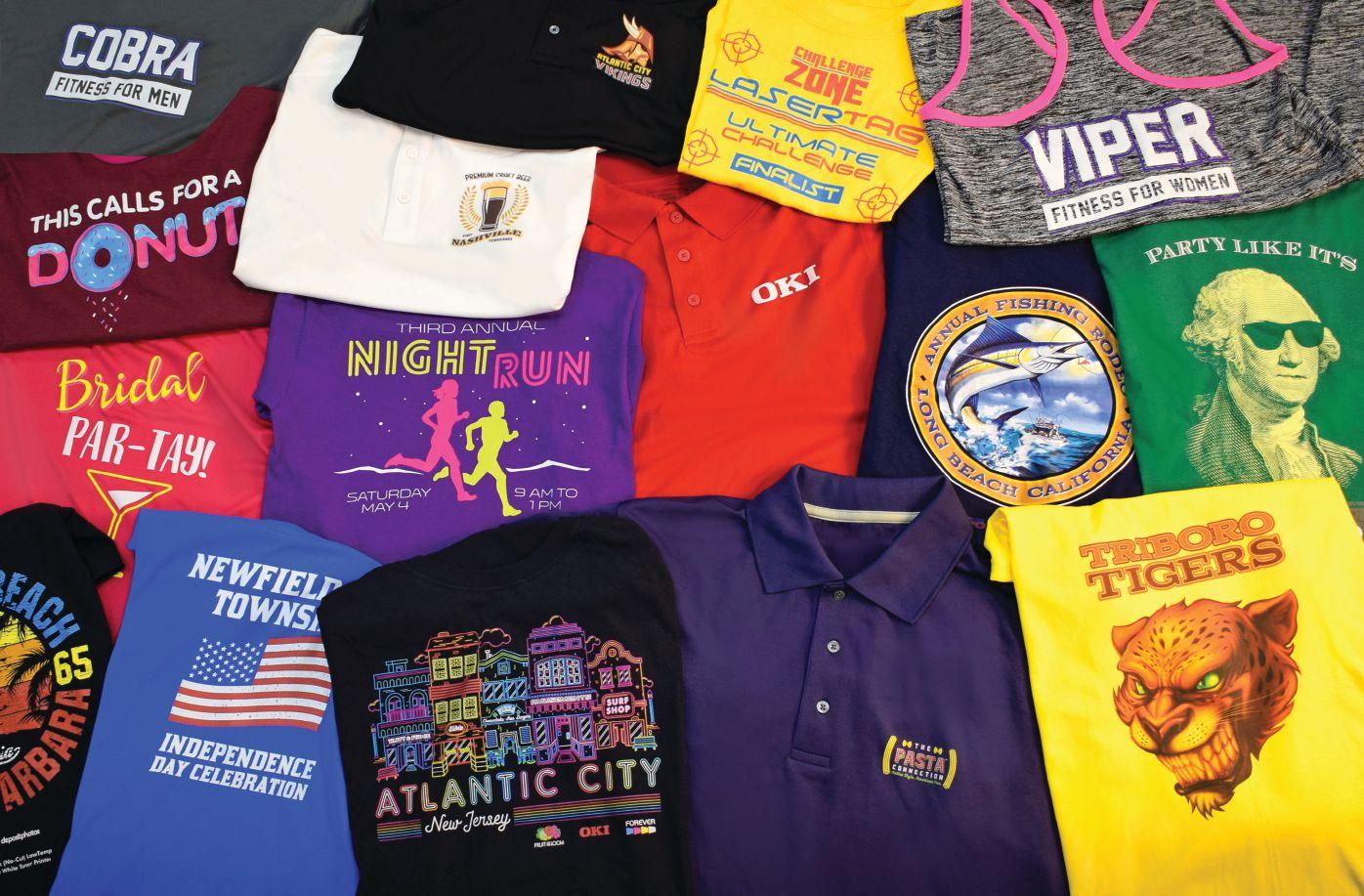
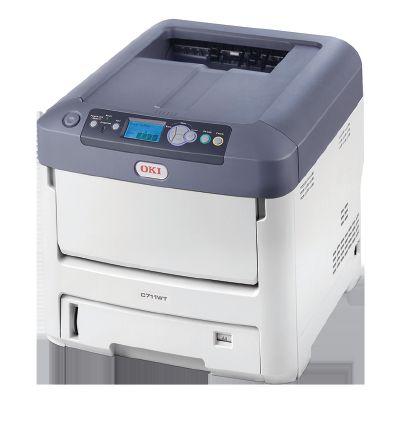
PDS has announced the addition of Sebastion Dignoti to the sales team. He has a degree in Criminology and has also won athlete of the year in university and will be responsible for the Ontario region, handling sales for OKI, Duplo, Multigraf and MBM.
Durst and Koenig & Bauer have appointed Robert Stabler as Managing Director of the new joint venture. Koenig & Bauer Durst GmbH was officially established early May, following the clearance of antitrust regulations from the relevant authorities. Stabler, who grew up in the U.K., has global experience in technology companies servicing the graphic arts and document management industries. Before joining Koenig & Bauer Durst, he was Senior Vice President with Xerox’s Continuous Feed Business based in Rochester, N.Y.; his previous executive roles also include HP and Agfa.
INSTALLS
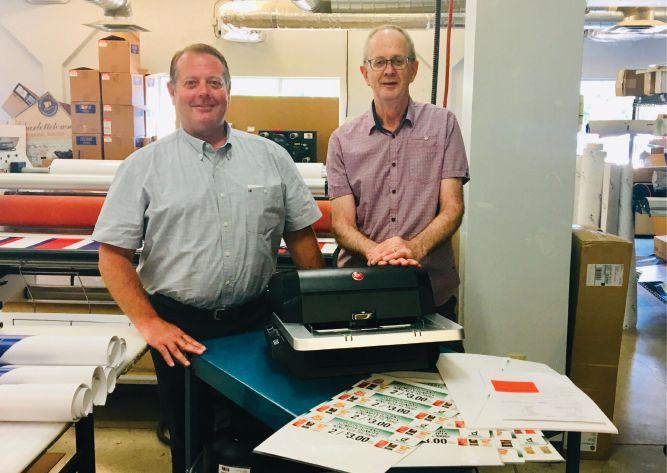
KKP in CharlotteTown, P.E.I., has acquired the first Foton 30 automatic laminator in the country from GBC Canada, which features pouch-less, automated lamination and trim. It previously had a 38-inch laminating film that runs on a large-format laminator, and documents were lined three up and trimmed by hand.
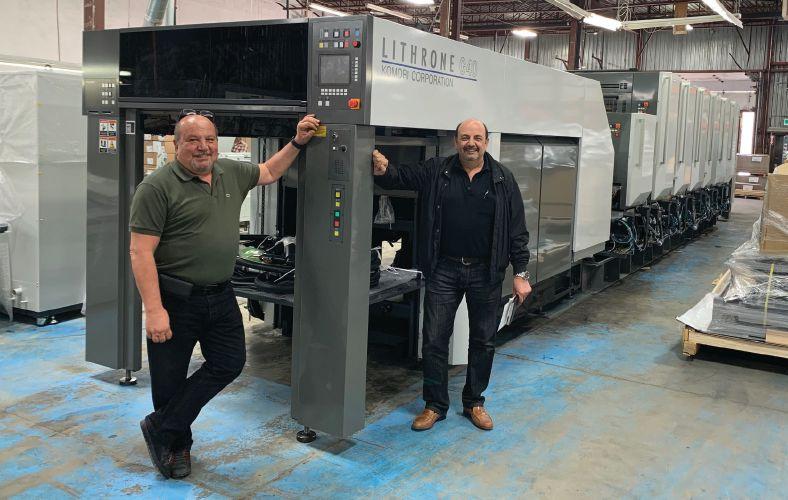
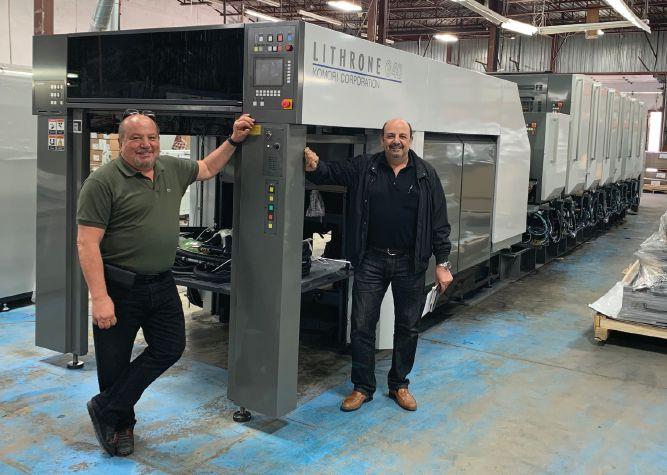
Graf-Pak Inc. of Pointe-Claire, Que., has acquired a new Komori GL640C, purchased through Komcan Inc. Automation and reliability were key factors in the decision, it explains, as the GL640C utilizes automatic plate changers and KHS-AI, which is designed to optimize press presets by self-learning.
Andre Blake has joined the AlliedFlex Technologies sales and marketing team as Regional Sales Manager, Canada. He is described as bringing years of packaging equipment and automation sales experience to his new position with AlliedFlex Technologies, having worked in domestic and international sales positions.
Electronics For Imaging (EFI) in mid-August announced Jeff Jacobson, Executive Chairman, will take on additional responsibilities as CEO. He succeeds Bill Muir, who is stepping down for personal reasons. Prior to joining EFI, Jacobson served as CEO of Xerox, as well as President of Xerox’s Technology Business and President of Xerox’s Global Graphic Communications Operations. Before joining Xerox in 2012, he was Chairman, President and CEO of Presstek, a manufacturer of digital offset printing solutions.
MPI Print has installed an Agfa Tauro largeformat press and an Esko fully automated C64 digital cutter for its Concord, Ont., plant. Over the next year, the trade printer plans to introduce several other machines to help supplement its expansion in the large-format and packaging markets.
Jeff Crossley
Jonathan Riggs
Keep your clients
Six proven strategies for better customer retention
By Minuteman Press International
A
sk any small business owner and they will tell you it’s much more costly to acquire a new customer than to retain and grow a current customer. However, many companies still place a huge emphasis on obtaining new customers through sales, marketing and advertising, yet pay little attention to their actual customer retention strategies. Businesses promote the sale, make the sale and then leave their customer behind, blowing in the wind. Customer retention should not only be high on your list of priorities, but it should require actual strategies in mind. Fortunately, there are ways to keep your current clients happy, satisfied and coming back for more. Here are six tips for better customer retention.
1. Follow through on your sales pitch
The quickest way to lose a customer is to make a promise in a sale, then not follow through once he or she has signed on. While it might seem simple, many businesses often fall short on following through with their initial sales pitch. Instead, carefully track and deliver what your sales team include in their conversation, so clients never feel deceived.
2. Set realistic expectations
As you walk potential clients through your products or services, set realistic expectations for both yourself and the business. For instance, customers might become upset because they believe the business can deliver on “x” results immediately, when in reality those results could take months. By setting clear and achievable expectations, clients understand exactly what they sign up for.
Customer retention should not only be high on your list of priorities, but it should require actual strategies in mind.
3. Create perks in the customer experience
Customers love feeling appreciated, so be intentional about creating perks throughout the customer experience. For instance, if a customer buys a set of business cards, the organization could throw in a perk for the customer such as a free card holder. Small gestures like this help to create a positive customer experience.
4. Establish a loyalty program
When in doubt, a customer loyalty program is always a great way to increase retention rates. These programs reward your loyal customers for shopping with you by giving them incentives to keep coming back. Once clients opt into the loyalty program, be sure to give them the royal treatment with special deals, discounts and free prizes.
5. Experiment with email strategies
Email marketing plays a huge role in customer retention, which is why it’s important to consistently experiment with your email strategies and see which ones clients respond to best. Discover
According to Gong.io, a salesperson is 40 percent less likely to secure a meeting by asking “Did I catch you at a bad time?” during a phone call, while asking “How are you?” can increase the likelihood of booking a meeting threefold.
which email strategy increases customer engagement so you can better tailor the content and product recommendations to keep customers coming back.
6. Communicate regularly
Finally, be sure to communicate regularly with current clients. Check in to see how they enjoyed the product or service they purchased, and share with them any upcoming deals or opportunities to try new items. Utilize an effective system for tracking and reporting customer metrics, so you can be in consistent communication whenever your customers need it.
Businesses know it is much more costeffective to keep a current customer happy than it is to acquire a new account. This is where customer retention strategies come in. Keep these best practices in mind for retaining your top customers and see how your business grows because of it.
The mouse and the elephant
How two odd bedfellows joined forces to take on the ‘Big Three’
By Nick Howard
Five years have passed since the dramatic announcement between Mitsubishi Heavy Industries and Ryobi Limited to form a unique partnership and combine their offset press resources under a new name: RMGT. Let’s look back at how this came about, and what the future holds for the steadily shrinking offset segment.
Mitsubishi traces its roots back to 1870 with the formation of Tsukumo Shokai. The early years centred on shipping with repairs and re-fitting of marine transport vessels. Quick expansion led Mitsubishi into virtually every other engineering sector, such as machine tools, steam turbines, vehicles and aircraft. The feared A6M Zero fighter aircraft of World War II still remains a vivid memory for many today. If the projects were massive, Mitsubishi would be right in the middle of it.
After Japan’s surrender, virtually all the colossal Japanese conglomerates were forced to break up. Reluctantly, 1947 saw the group scattered into dozens of smaller entities, only to reunite in 1952. Referred to today as the ‘Three Great Houses,’ Mitsubishi is made up of Mitsubishi Heavy Industries, Mitsubishi Corporation, and MUFG Bank Ltd. MUFG is also Japan’s largest bank. If virtually any material is punched, bored, reamed, injected, electrified, driven, flown or financed, Mitsubishi probably supplied it. Sales of Mitsubishi Corporation alone clock in at US$128 billion today. Then we arrive at the Mitsubishi printing press segment referred to as Mitsubishi Lithographic Presses (MLP). It wasn’t until 1962 that Mitsubishi Heavy Industries (MHI) set up shop to manufacture offset printing presses. Ironically that same year Heidelberg built its first offset. A single-colour resulted with the mangled name: Super Bijou. Other than the use of a brush dampener pan roller, this little 22 x 33inch single-colour pretty much stayed at home in Japan. The following year, a first offset web press was built and by 1965, the brand Daiya (its rough Japanese translation means ‘diamond’), was
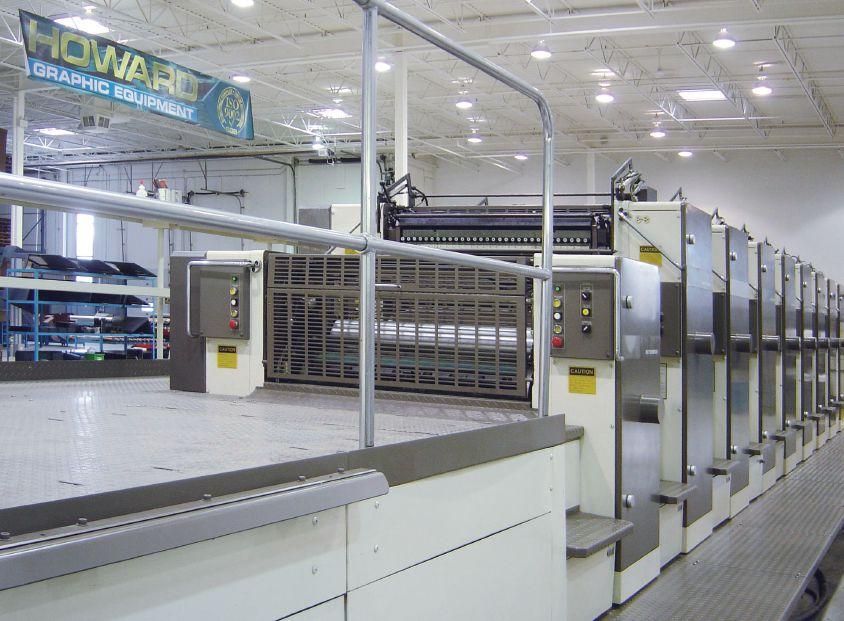
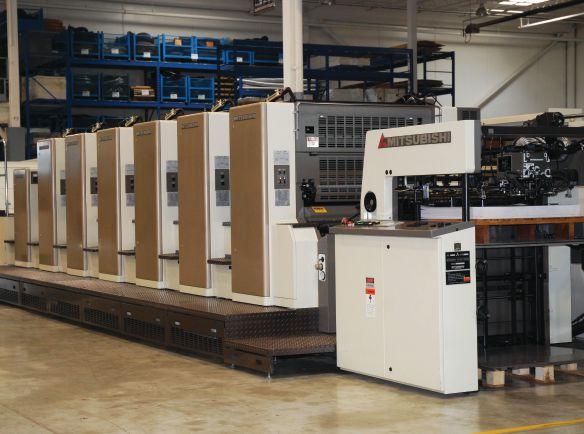
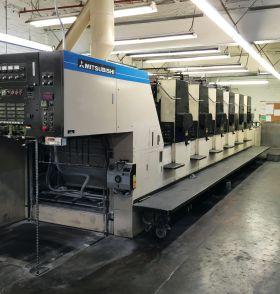
A Mitsubishi 3H-8C offset press (1997), photographed at Howard Graphic Equipment.
selected as the sheetfed handle. I once saw a press in a printing plant outside Jakarta, Indonesia. On closer inspection, what I assumed was a Roland Rekord two-colour turned out to be a Mitsubishi!
RMGT, a joint venture company, was established on January 1, 2014, between Ryobi and Mitsubishi Heavy Industries Printing and Packaging Machinery.
In 1976, an existing MHI factory in Mihara, Japan, was chosen to relocate the fledgling printing division. By 1979, MHI had sold its first web offset to the United States, but it would not be until 1983 that a significant push to export presses to the west would draw any attention. That year, a revised multicolour model designed to supplant an earlier D series began popping up all over America and parts of western Europe. The press, known as the E series, performed quite well in spite of first distribution channels and virtually no advertising. Soon, full factory-owned sales organizations sprung up, and new and better models flooded the West in the coming two decades; 1985 to 2000 would go down in history as the best years of the offset press.
For MHI, a US$38-billion enterprise, the print division was never anything more than a squashed bug on a windshield. Sales tapered by 2001, despite the fact that its Diamond series sheet and web presses performed so well. MHI had also expanded the offering to include 51-inch and 57-inch sheetfeds, as well as specially modified carton sheetfeds.
Ironically, one perhaps forgets that Mitsubishi brought many innovations to the offset press. These include the first
full and semi-automatic plate changers, formatting automation, inker disconnect, and variable adjustment of oscillation. The print world soon appreciated the first plate cocking from console feature, which was a godsend. All of these features can be found in today’s competitive presses. Regardless, MHI could see that even though the Mitsubishi name was on all of its equipment, it would never be a number one or two vendor on a worldwide scale without plowing more money and resources into a perceived dwindling segment that returned – at best – meek ROI. The print industry’s sun was setting, in MHI’s mind. The future market for offset equipment would be nothing more than a rounding error on MHI’s balance sheet. Resources could be better deployed elsewhere. Now, what could be done about that?
Where do we find a partner?
In 1943 in Hiroshima, Japan, a company was formed amid the war specifically to supply die-cast products. This technology is usually for aluminum or magnesium metals that are forced under enormous pressure into a steel mold. The process is extremely fast as compared with traditional sand-cast methods but restricted in non-ferrous metals. Think of your car transmission housing, for example. Ryobi is that company, and jumping ahead to 1961, it entered into the duplicator offset press business.
ELEGANT ENHANCEMENTS
Canadian printers are creating extraordinary sensorial experiences through print enhancement. Here are five reasons to update your finishing services.
By Lynn Kolevsohn
There’s no denying the impact the digital revolution has had on the printing industry: Shorter turn times; shorter print runs; the rise of big data and personalized communications. Have your print finishing services kept up with this shift in demand? Digital enhancement equipment is an excellent way to provide an economical solution for these shorter runs that trade finishers and commercial printers are faced with today. Here are five ways a digital enhancement press could change your print finishing business for the better.
1. We live in a sensory-driven world
Researchers everywhere are releasing studies on how sensory marketing impacts the experience consumers have with brands. Sappi’s book, The neuroscience of touch, written in collaboration with neuroscientist Dr. David Eagleman, takes a fascinating dive into why we respond so well to haptic brands. Digital enhancement technologies allow you to provide this sensory appeal to so much more than just your customer’s direct mail projects. Packaging, magazine covers, collateral — the sky is the limit. Consumers will be dying to get their hands on your work.
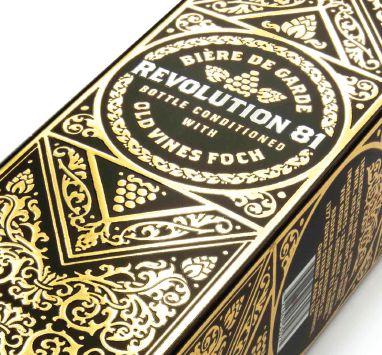
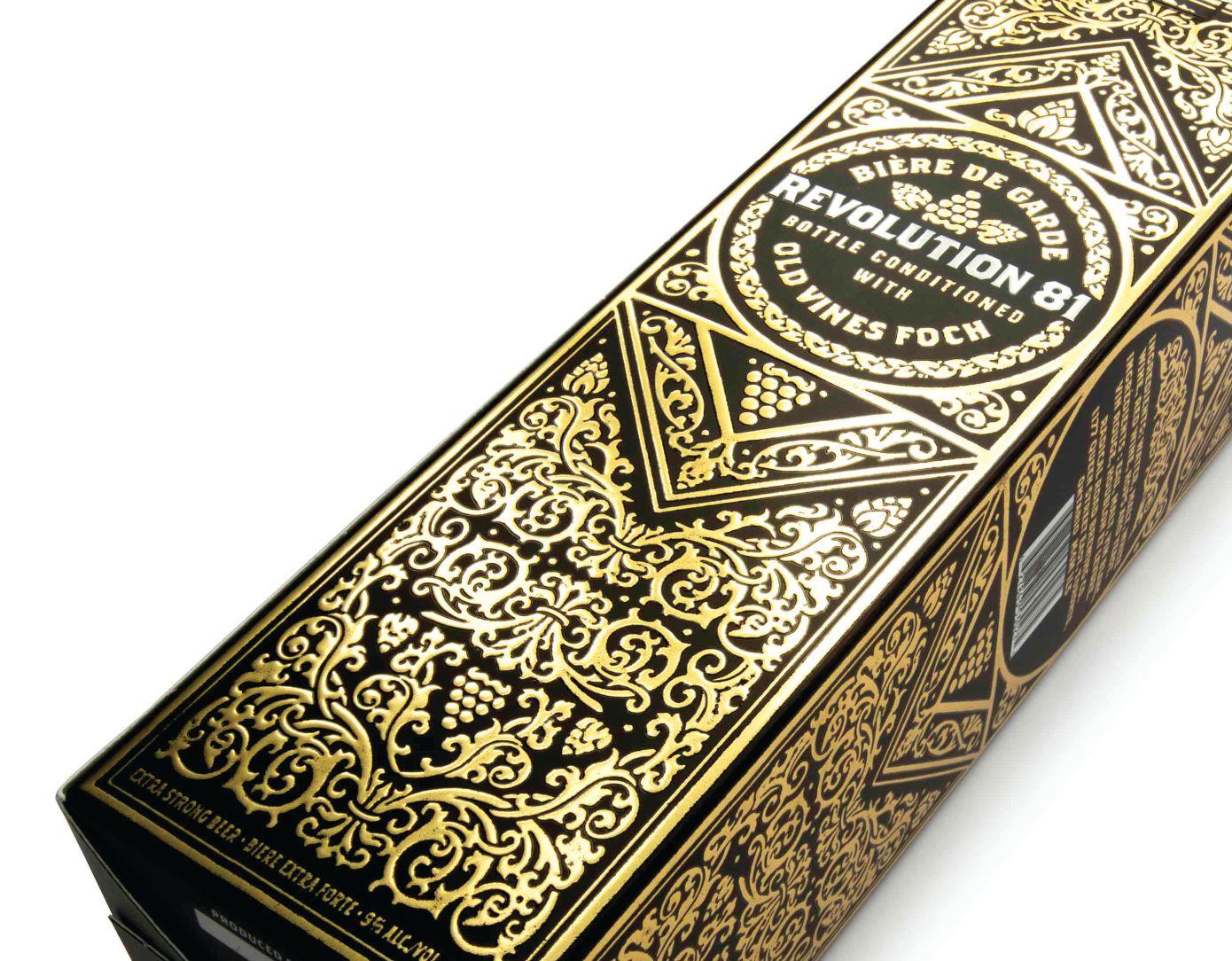
The Revolution 81 wine box, produced by CJ Graphics of Mississauga, Ont., in collaboration with design agency Bridgemark and brand owners Radical Road Brewing Co. and Malivoire Wine Company, makes an exquisite statement. Featuring Scodix Ultra Pro Gold and White foil on black stock, the box was printed on a Heidelberg XL106 press then laminated using a scuff-free laminate. The laminated sheets were run on a Scodix Ultra2 Pro with Foil press, where a raised matte gold foil was applied for all decorative elements; a second pass added a raised clear enhancement to the ‘Revolution 81’ wording. The boxes were laser die-cut and glued in-house on a Highcon laser diecutter.
2. Short-run? No problem.
As requests for smaller and smaller production runs come in, the conversation can shift from “You can do that, but it’s going to cost this cringe-worthy number” to “Short-run? No problem! Check out the dimension we can also bring to your design.” Suddenly, customers are less focused on price, and more focused on how they can best utilize the technology to their advantage.
3. Relevance is driving the way brands communicate
Everywhere you turn, personalization and relevance are being talked about. For the longest time, personalization could only be added via digital printing production or a pass through the inkjet machine. Now you can add a touch of personalization to any project — from direct mail and packaging, to presentation folders and personalized magazines.You’ll become the go-to resource for innovative ideas on making relevant communications stand out like never before.
The rise of big data and personalized communications, shorter print runs — have your finishing services kept up with this shift in demand?
4. Offset, digital and beyond compatibility
If you are a trade finisher, chances are you have no control over how your customers produce printed sheets and that’s okay. For example with Scodix digital enhancement presses, you’re able to run offset and digitally printed sheets. Take laminated sheets to new heights, or even projects using synthetic leather and PVC substrates. Maintain the flexibility to work on a project no matter how it’s produced.
5. Decrease makereadies, no dies needed
Extend the PDF workflow into production by eliminating the need for die creations. By running computer-to-press, you’ll achieve the variable flexibility of digital printing while maintaining the superb quality of UV coatings.You’ll love the ease of registration, and the decreased makeready times will enable you to enhance your business like you never imagined.
PROJECT SPOTLIGHT
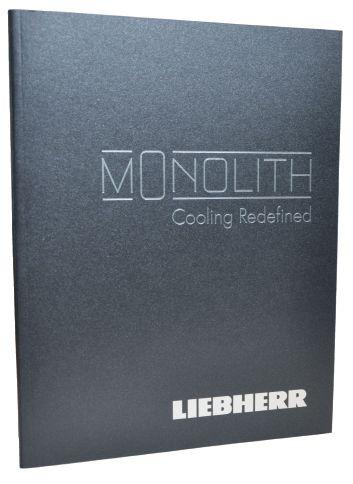
The Liebherr Image Brochure, produced by Simpson Print of Kitchener, Ont., won bronze in the softcover offset books category at PrintAction ’s 2018 Canadian Printing Awards. Project partners include Lehmann Bookbinding of Kitchener, and Belmont Press of Markham, Ont. The piece was produced printing 4/4 on a Komori UV Lithrone S40 press on Supreme Gloss stock, and silver foil stamping on vellum insert and on a 28lb cover. Specialty smyth-sewn binding adds to the luxurious design.
Copper foil gives a sophisticated touch to Salt & Seaweed Apothecary’s skincare product packaging. Produced by Hemlock Printers of Burnaby, B.C., the job – consisting of 15 unique labels and a run length of 500 each – was printed on an HP Indigo 7900 digital press, with digital 4-colour process and copper foil on 60lb Metro Uncoated Label stock; all pieces were combined onto a combo sheet. Partners for the project include Laura Prpich (designer), Caribou Creative (agency) and Paige Owen (photographer).
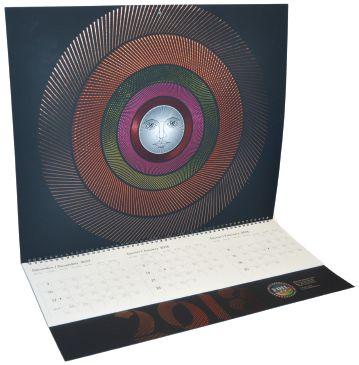
The Foil FX calendar produced by Gravure Choquet of Montreal, Que., and designed by François Martin, won gold in the calendar category at PrintAction’ s 2018 Canadian Printing Awards. Using Thompson and Sheridan hot stamping presses, the piece was produced on black board and soft touch lamination. The team foil stamped eight different foils and then embossed two passes to create an embossed and debossed crosshatch effect; material was duplexed for rigidity. All copper dies were produced by Gravure Choquet.
Maritime Labels & Packaging of Bedford, N.S., recently produced its first post-printed enhancement job. The Honey Shine label for Still Fired Distilleries Inc. was printed on an HP Indigo ws6900 digital web press using 4-colour process on Classic Crest Solar White pressure-sensitive label material. Enhancement was done using Grafisk Maskinfabrik’s FB330 semi-rotary hot foil and screen embellishment equipment, with hot-stamp bright gold foil and .015” 45º emboss on the bee. Maritime says the next run will feature a higher emboss depth and greater angle to enhance the bee more dramatically.
LYNN KOLEVSOHN is Director of Marketing at Scodix, the pioneer and leading provider of digital print enhancement presses in graphic arts. This article was originally published on the Scodix website. Reprinted with permission.
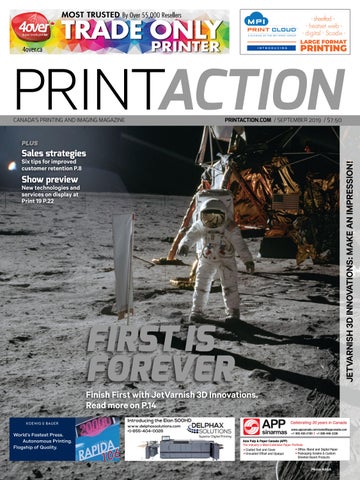
First Step. July 1969. Buzz Aldrin. The Moon. September 2019. JetVarnish3D Innovations produces an exclusive cover for PrintACTION Magazine.
Next-generation technology, expert craftmanship and a dedication to our printer and ad agency partners across North America has made JetVarnish3D Innovations (JV3Di) the most unique finishing house in North America. JV3Di eliminates expensive and ine cient plates, screens, dies and set-ups by combining a total digital process with technical expertise. Our breakthrough finishing process takes variable data and personalizes every piece. We create exact prototypes for you to touch, feel, test and evaluate. Whether your need is a single example, or one-hundred, our rapid prototyping ability allows you to get perfect prototypes into the hands of your clients, fast. Nothing replaces the feeling of a finished product, and with JV3Di, you can now create that feeling faster than ever before.
Make Impression
When you make a strong impression, Let us help you make your impression as powerful
JetVarnish3D Innovations is here to take the entire finishing
Founded by a team, with over four decades of combined business, the company is driven by a vision of new opportunities technological breakthrough and the changing landscape
Whether its spot UV coating, UV texture, 3D raised e in UV or foil, the vision of JV3Di combines a completely prototyping, rapid speed, and exceptional customer service future of the finishing business.
In addition to an ability to produce a wide array of prototypes, provide bulk, ready-to-go themed products for any special The result is that your client’s ideas can now be transformed masterpieces that can be touched, felt and experienced placed, reducing leadtimes and raising standards. This cost e cient way to prototype and produce jaw dropping
All of this is facilitated by our state of the art production supported by sales o ces in New York City and Toronto JV3Di to cover all of North America and Mexico.
«Old ways won’t open new doors». Looking for opportunities? JETvarnish3D Innovations finishing business in exciting new ways. Do you want to you like to become a part of that future? Visit us at our
photo: NASA
Make an Impression
impression, it lasts forever. powerful as Buzz’s.
finishing process into the future. combined experience in the finishing opportunities created by landscape of the entire industry. ects, or any variable data completely digital process, perfect service to help create the prototypes, JV3Di can also special occasion or holiday. transformed into vivid, tactile experienced before a large order is This result is a more fluid and dropping creations.
production facilities in Laval, Quebec, Toronto (soon to open), allowing
With nearly 50 years of success in print finishing, Stylex was looking for ways to extend their expertise in traditional finishing to include digital finishing and better support their clients. After numerous consultations, Stylex determined that Konica Minolta, with its long history of partnering with innovative companies at the forefront of the Graphic Communications industry to bring game changing technology, sales, and service support, was the ideal partner. With the acquisition of Konica Minolta’s MGI JETvarnish 3D Evolution, JetVarnish3D Innovations (JV3Di) was formed.
Committed to helping JV3Di succeed, Konica Minolta’s involvement didn’t end after the sale. News of the acquisition was distributed through Konica Minolta’s o cial communications channels, including a global press release. J3VDi was also publicly recognized by Konica Minolta at the Print18 conference in Chicago, Illinois for being the first company in Eastern Canada to acquire the flagship MGI JETvarnish 3D Evolution.
Konica Minolta’s PowerUp Business Builder Program o ers an industry leading portfolio of marketing services designed to help accelerate business. Through introduction of these types of programs and disruptive technologies, Konica Minolta continues to help its customers accelerate their business and promote their new capabilities.
“Innovation happens slowly, until suddenly all the small steps combine to create one gigantic leap forward. That is exactly what JetVarnish3D Innovations is. We’re a company with 43 years of steady progress, now propelling forward rapidly thanks to this technology from our partner, Konica Minolta.”
Massimo Papalia, CEO
“I’ve been in the printing business for over 30 years. A lot has changed, but one thing has not: the thrill clients get when they open a newly delivered project for the first time. With this technology, even veterans like me are blown away.”
Stéphane Marcil, VP Sales and Partner
“Growing up in the finishing business taught me a lot about the value of craft. This technology is the digital evolution of that craft. For the first time, our print partners can deliver spectacular and unique e ects through an entirely digital workflow.”
Yoan Robitaille, Creative Director and Partner
For all technical information, visit www.jvinnovation.ca
Contact us today to find out how to make your own print stand out from the crowd.
In accreditation procedure
is helping to change the to learn more? Would our o ce in Laval.
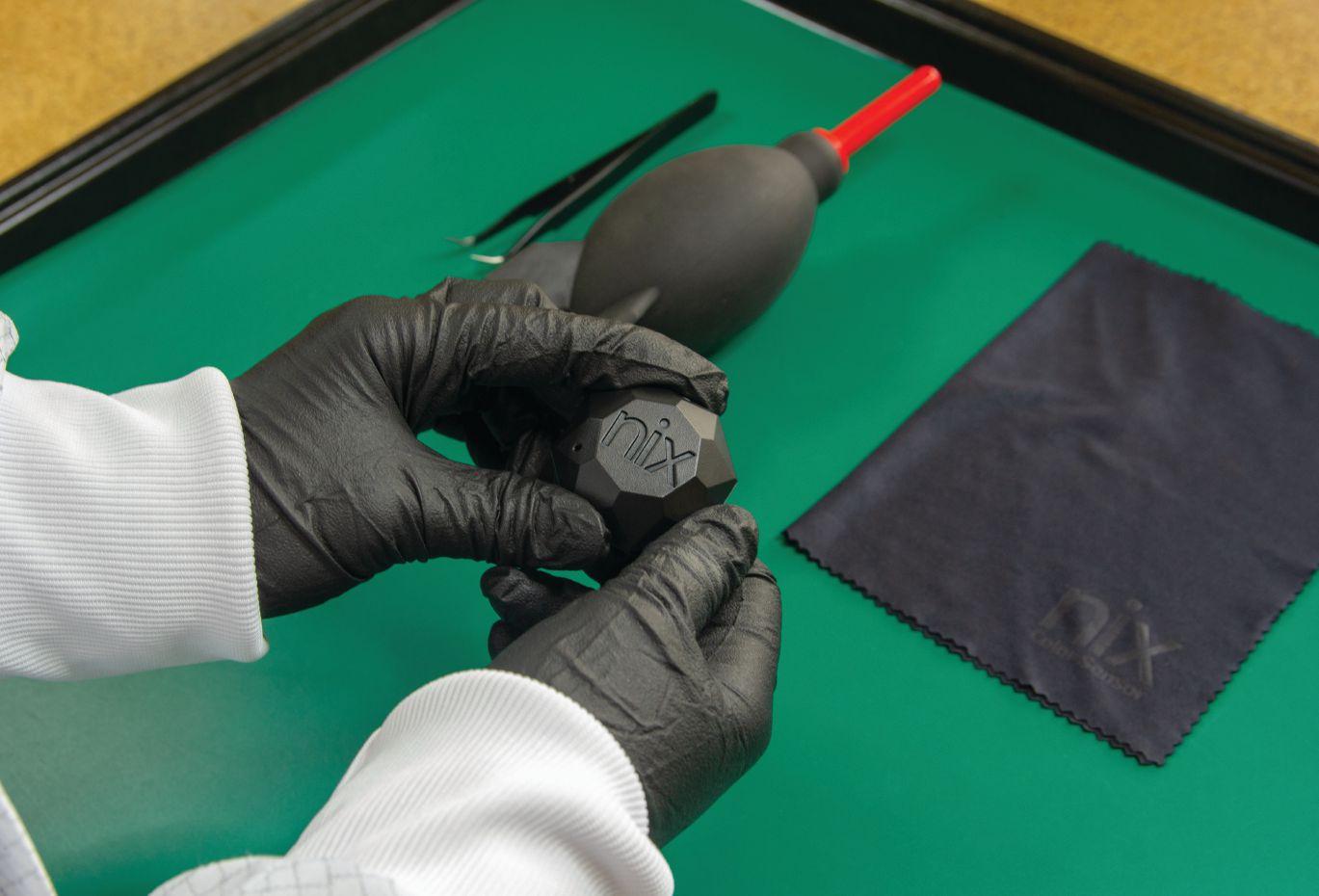
The Nix Color Sensor does not require calibration tiles, as it comes factory calibrated. To ensure the product is ready to be shipped, it goes through many inspections — one of which is performed by production technicians under Nix inspection lights.
A NEW WAY TO MEASURE COLOUR
Exploring new portable colourimeter tools that have created new opportunities for accurate colour measurement
By Janyne Leonardi and Elaina Klimek
The world is surrounded by colour: From the animals and plants in nature, to the products we interact with everyday. Colour is a major qualifying component for various industries all over the world, and as a result, these colours are a very important part of our society. That is why it is so vital we understand how they are perceived, since colour perception is not an exact science, but an experience that happens on an individual level. An item’s perceived colour can drastically change depending on the individual’s vision and the surrounding light. This process of measuring colour by eye will often lead to costly errors and disputes. So how do we minimize this room for error? We have to look to colour measurement tools that remove the subjective
The Nix Mini was awarded in two categories of the 2018 German Design Award: Excellent Product Design and Workshop and Tools.
nature of reading colour by eye. Two classifications of tools that can be used for colour measurement are colourimeters and spectrophotometers. Spectrophotometers perform full spectrum colour measurement and record the re-
flectance of an object across the full spectrum of visible wavelengths, whereas colourimeters imitate the human eye’s three-cone method of seeing colours and result in a measurement that closely mirrors what a human would perceive the colour to be. These tools provide objective measurements in various colour systems and are used in many industries, such as food and agriculture, fashion, print and graphics.
Historically, these devices were deemed as high-ticket items, often bulky, delicate and difficult to use. They were typically used in controlled lab settings, where they are fixed to a single location. However, a new generation of portable colourimeter tools has opened up new opportunities for accurate colour measurement in a variety of industries, both for lab and field use.
Nix Sensor Ltd., based in Hamilton, Ont., is leading the industry with its portable colourimeters and reshaping society’s perception of classic colourimeters. Its patented diamond-shape devices fit in the palm of your hand and connect to smartphone apps via Bluetooth. Its smallest device, the Nix Mini Color Sensor, was designed to be durable, portable and affordable. It has no moving parts, does not require user calibration, and comes with a lanyard for easy carrying.
Devices like the Nix Mini and Nix Pro Color Sensors are examples of measurement tools that allow for portable and accurate colour readings that harness the power of smartphones. The benefits of innovative technology, like Nix devices, are user-friendly functionality and durability that do not compromise colour accuracy. Since these tools interface with smartphones and tablets, you are no longer tied to a fixed location and can bring them to jobs in the field. Due to the devices’ shape and built-in calibrated LEDs, the Nix Mini Color Sensors can block out ambient light and provide a controlled lighting environment. These features have allowed for a much wider range of uses in industries that previously would not have been able to obtain expensive colour measurement tools.
Nix Digital
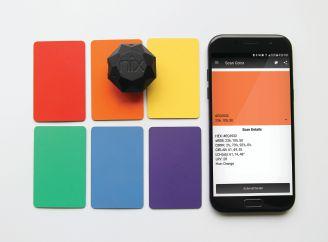
One of the smartphone apps created by Nix Sensor Ltd. is Nix Digital. It is available for both Android and iOS devices, and connects to the Nix device through Bluetooth. Once the Nix colourimeter is paired with the app, it is ready to be used. To gather colour readings, users place the Nix Mini on any surface and initiate the scan from within the app. After that, it provides the colour measured in different colour units, such as sRGB, HEX, CIELAB, CMYK, LCH and Light Reflectance Value (LRV). LRV is the amount of visible and usable light that is reflected from a surface after being illuminated by a light source. It is useful for lighting de-
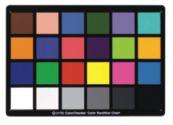
E to 24 patches of Macbeth ColorChecker measured with TECHKON SpectroDens
Above: The low-cost systems were tested in their ability to measure 24 patches of a Macbeth ColorChecker. The reference instrument was a Techkon SpectroDens commercial spectrophotometer. In this graph a shorter bar, lower ΔE, is better.
(Reference instrument)
Average Delta E (CIEDE2000) Maximum Delta E (CIEDE2000)
Alongside with the Nix online store, you can also find Nix Color Sensor devices for sale in about 100 stores across Canada and the U.S.
signers, interior designers and architects. You also have the ability to share the measured colour and use the application algorithm to generate colour palettes, such as monochromatic, complementary and triadic colours.
The app can be useful for professionals who work in both physical and digital colour spaces, such as graphic and web designers. With the Nix Digital app, you can scan real-world colours and incorporate them into their digital designs.
“We love that we are able to support professionals in so many industries that we initially didn’t consider when developing the device,” says Katie Myciak, Director of Marketing at Nix Sensor Ltd. “We’re constantly discovering new and exciting ways people are using our products and learning from their feedback.”
Nix Paints
Another app from Nix Sensor Ltd. is Nix Paints, which has a database of almost 30 paint brands available on the market internationally. With the Nix Paints app, users can scan any surface with their Nix Mini and find the nearest available match to the selected paint brand or collection. When a colour is scanned, the app organizes the results by nearest to furthest match. Paint colours can be saved into folders and shared through email to clients, friends or even directly to the paint store. Similar to the Nix Digital app, users can find automatically generated colour palettes that work well with their selected paints. This changes the process of finding a colour match to repaint a wall, saving trips to and from the paint store. It also opens the possibility of finding new ways to pull inspiration from one’s surroundings, like fabrics, nature or foods.
A world of possibilities
The biggest difference between Nix devices to other colourimeters in the industry is its capability to measure not only solids, but also liquids, powders, gels and soft or textured surfaces. With special adapters, they can measure the colour quality of blood, concrete, skin and more.
The industries that can benefit from this are: Health and beauty, food and beverage, fashion, agriculture, painting and industrial quality control, to name a few. The Nix Sensor Ltd. team is challenging the capabilities of measurement for colour quality control. Over the past several years, they’ve developed methods to measure translucent liquids, like whisky, and worked to guarantee colour uniformity in mass-produced products.
Focusing on the future
When looking at the future, the team sees a bigger focus on building exciting new software updates and improvements for the industry. Myciak says we can expect a shift to user experience: “Our hardware pairs with the Nix apps that we provide for free and that isn’t going to change. We have grown our in-house software development team to expand and improve the capabilities of each app, continuously innovating and updating the user experience.”
At the faculty of Graphic Communications Management at Ryerson University, there is growing interest for the applications of Nix devices in student learning and education. Prof. Dr. Abhay Sharma teaches a course in colour management and uses 25 Nix Mini colourimeters to measure L*a*b* values and compare colour differences between print samples.
“The students enjoy being able to use their smartphones in class for a valuable purpose, and the affordability of the device means that the students can have more of a hands-on experience in colour management,” Sharma says.
He also conducted a study that evaluates the accuracy of devices like the Nix Pro Color Sensor. He gathered the L*a*b* values from the measurement of many colour samples to calculate and compare the ΔE between the Nix and a competitive colourimeter to see if there was a match between measurements. He published the results in his new book, Understanding color management, 2nd Edition, a guide for users in all market segments.
CANNABIS PACKAGING TO EVOLVE
Is your cannabis packaging compliant? Review these highlights from Health
Canada’s
regulatory updates
By Andrew Wong
In June of this year, Health Canada released amendments to the Cannabis Act and Cannabis Regulations. These changes take effect on October 17, 2019, and cannabis products in the Canadian market will have one year after this date to comply. Below are key updates that those involved in cannabis packaging in Canada should consider when preparing for compliance.
New cannabis classes
The current Cannabis Act allows for the legal sale of specific groups of cannabis products described as “classes,” which currently include dried cannabis, fresh cannabis, oils, plants and seeds. This year’s regulatory amendment introduces edible, extract and topical classes, while oils will be reclassified as either extracts, edibles or topicals depending
$1.6B
According to the 2019 report The State of Legal Marijuana Market, Canadians spent $1.6 billion on legal cannabis last year, more than double the amount that was spent on medical cannabis in 2017.
on their method of consumption.
Analysis: New cannabis classes and resulting products will create new packaging format opportunities. As is the case with current regulations, each cannabis class will have its own requirements for packaging and labelling, and careful examination of these differences will be required for proper cannabis packaging execution. For example, edibles will require food-grade primary packaging/immediate containers, as well as a cannabis-specific Nutrition Facts Table (NFT). Those currently producing cannabis packaging – especially for oil, which will be reclassified – should thoroughly examine the updated regulations to ensure compliance.
Maximum THC limits per container
Currently, an immediate container can hold up to 30 grams of dried cannabis (or its class equivalent as per the regulations). Products within new cannabis classes each have their own maximum weight limits based on the THC content of a given product.
Analysis: Knowing the maximum THC amount for each type of cannabis product helps to inform packaging development, particularly with respect to determining packaging dimensions. There will be a 10 milligram THC limit introduced for cannabis edibles — and
this causes some concern given legal products may not be able to compete with the black market, where edible THC content can often approach 40 milligrams. The 10-milligram limit for edibles also effectively limits the number of units per container, which indirectly impacts packaging cost and efficiency.
Control measures required for dispensing cannabis extract
Not all cannabis extracts will be packaged in discrete units, such as capsules. For extracts that are not packaged in discrete units, are not intended to be inhaled and/or contain at least 10 milligrams of THC, immediate containers must:
• Be designed to ensure the extract cannot be easily poured or consumed directly from the container, and
• Include an integrated dispensing mechanism (e.g., a metered spray) or accessory that dispenses no more than 10 milligrams of THC of the extract.
Analysis: The updated regulations will eliminate certain packaging formats currently used for cannabis oil (e.g. bulb dropper bottles). Metered spray bottles or bottles that include a syringe for dispensing will also have to be examined to ensure they dispense no more than 10 milligrams of THC at once.
Matte finish no longer required
Updated regulations eliminate the current requirement for matte finish on cannabis packaging.
Analysis: This update will reduce confusion surrounding packaging materials that are naturally glossy (e.g., glass) and will eliminate the need for additional matte varnishes and coatings.
Fewer rotating health warnings
An updated set of Cannabis Health warning messages will accompany this cannabis regulatory update. There is now a maximum of eight health warnings that must be displayed in rotation on any given cannabis product, compared to 14 warnings currently.
Analysis: Lowering the number of warnings reduces layout variables per SKU, which will translate into improved packaging efficiencies.
Expanded labels and fold-out panels now allowed
Updated regulations will allow expanded panels and alternative display formats in cases where the immediate container is too small to accommodate all required information on the exterior display surface.
Analysis: It is now possible to use smaller packaging formats that could not previously accommodate the high volume of required regulatory copy. This update also nicely co -
incides with Health Canada’s Plain Language Labelling (PLL) regulations, which require significantly more information to be printed on over-the-counter drug product packaging. As a result, pharmaceutical brands and manufacturers have required new packaging formats to accommodate more information while minimizing supply chain impacts and shelf footprints.
Final word
This upcoming regulatory update addresses many complaints surrounding current packaging regulations for cannabis products in Canada, but also introduces new complexities. For anyone involved in packaging cannabis products, understanding these updates will be essential to ensure continued compliance. For those suppliers whose solutions do not satisfy current requirements, these updated regulations may create an opportunity to participate in the cannabis market.
Please be aware this article does not cover all of the upcoming regulatory updates — for example, wording for THC and CBD amounts have been updated to facilitate easier comparison between products. Another major update are the new requirements surrounding “wrappers.” Unpacking the implications of Health Canada’s new wrapper requirements will require further time than this article allows. I would highly recommend that anyone plan -
ning to use wrappers examine the new regulations carefully and if possible, confirm their application with your Health Canada contact. It is also important to remember that cannabis regulations, like any other regulation, are written with room for interpretation. Reviewing the actual regulatory documents is essential to ensure compliance and maximize value for your packaging solutions.
Further investigation
By the time this article is published, the updated regulations and all of its supporting documents should be freely accessible on Health Canada’s website. These documents can be found by entering their name on any major search engine:
• Directory of Nutrition Facts Table Formats for Edible Cannabis
• Cannabis Health Warning Messages
• Cannabis Regulations
• Cannabis Act
Review the publishing date of those documents to ensure you are referencing the latest version.
ANDREW WONG is Manager of the Innovation Solutions Group at Jones Packaging (www.jonespackaging.com), a developer of packaging solutions for complex, highly regulated industries, such as healthcare and cannabis.
Extensive line of products
We offer solutions ranging from coated and uncoated text and cover papers; custom boards for standard and specialty printing; product packaging for a variety of applications, including food and pharmaceuticals; to high quality bonds and digital paper products for commercial and personal printing jobs.
Sustainably Sourced
Extensive line of products
Extensive line of products
APP sources its fiber from plantations and not from high conservations or high carbon stock areas, ensuring a sustainably sourced product. Further, the Company offers a full complement of PEFC certified papers.
Nationwide
Extensive line of products
We offer solutions ranging from coated and uncoated text and cover papers; custom boards for standard and specialty printing; product packaging for a variety of applications, including food and pharmaceuticals; to high quality bonds and digital paper products for commercial and personal printing jobs.
We offer solutions ranging from coated and uncoated text and cover papers; custom boards for standard and specialty printing; product packaging for a variety of applications, including food and pharmaceuticals; to high quality bonds and digital paper products for commercial personal printing jobs.
We offer solutions ranging from coated and uncoated text and cover papers; custom boards for standard and specialty printing; product packaging for a variety of applications, including food and pharmaceuticals; to high quality bonds and digital paper products for commercial and personal printing jobs.
Sustainably Sourced
Sustainably Sourced
Sustainably Sourced
APP sources its fiber from plantations and not from high conservations or high carbon stock areas, ensuring a sustainably sourced product. Further, the Company offers a full complement of PEFC certified papers.
APP sources its fiber from plantations and not from high conservations or high carbon stock areas, ensuring a sustainably sourced product. Further, the Company offers a full complement of PEFC certified papers.
APP sources its fiber from plantations and not from high conservations or high carbon stock areas, ensuring a sustainably sourced product. Further, the Company offers a full complement of PEFC certified papers.
APP has strategically located national presence - Toronto, Montreal, Vancouver, Calgary, Winnipeg, Edmonton - with the ability to meet your 'Just-in-time" needs from our large warehouse inventories.
Nationwide
Nationwide
One of Canada's largest providers of paper, board and packaging products since 1998. APP Canada is part of one of the world's largest integrated pulp and paper manufacturers with operations in over 65 countries.
For more information, please contact your local merchant or visit us at www.appcanada.com
Nationwide
APP has strategically located national presence - Toronto, Montreal, Vancouver, Calgary, Winnipeg, Edmonton - with the ability to meet your 'Just-in-time" needs from our large warehouse inventories.
APP has strategically located national presence - Toronto, Montreal, Vancouver, Calgary, Winnipeg, Edmonton - with the ability to meet your 'Just-in-time" needs from our large warehouse inventories.
APP has strategically located national presence - Toronto, Montreal, Vancouver, Calgary, Winnipeg, Edmonton - with the ability to meet your 'Just-in-time" needs from our large warehouse inventories.
For more information, please contact your local merchant or visit us at www.appcanada.com
For more information, please contact your local merchant or visit us at www.appcanada.com
For more information, please contact your local merchant or visit us at www.appcanada.com
The way we used to drum up business just won’t cut it anymore. Our industry has changed, along with our clients’ needs. The future belongs to bold, innovative companies willing to embrace digital technology to create a whole new set of offerings. They’re already out there, promoting exciting new products, thriving. At PRINT® 19 we’ll tell you how you can join them.
Print 19 preview
Running October 3 to 5 in Chicago, Ill., Print 19 will feature new technologies and services from more than 200 exhibitors. Here are some show highlights that will be on display.
Quadient
At booth 443, Quadient will showcase its Customer Communications Management (CCM) solutions, including: Quadient Inspire, designed to enable quick and easy repurposing
of existing print-based content into high-impact digital communications; and Quadient Interactive, which enables digitalization of key processes and empowers business users within service providers and their enterprise clients to streamline content change management.
Koenig & Bauer
Koenig & Bauer, at booth 1221, welcomes Print 19 attendees to witness its full display of commercial sheetfed and digital printing technology, boasting the “highest productivity and print quality, the fastest makeready, and lightning fast press speeds at 20,000 sph.” This past year, the company has expanded its reach into new postpress products, including the formation of Koenig & Bauer Duran and its Omega line of folder-gluer products. This new introduction, Koenig & Bauer explains, complements the Iberica flatbed diecutter line to offer printing and processing solutions for folding boxes from a single source.
Visitors are invited to relax at the booth and enjoy cold beers and traditional German brats while learning about its customer service program.
Colter & Peterson
Colter & Peterson, a distributor of paper cutters and paper handling
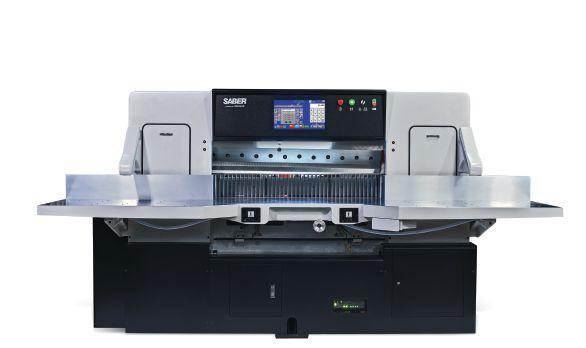
equipment, plans to demonstrate three new products at booth 405. The Challenge 305 full-cut clamp control system includes a retrofit package with a 10-inch touchscreen display system and automated programs for print shops of all sizes, while the 45-inch SABER and 30inch PRISM paper cutters are
Koenig & Bauer plans to showcase its full range of new technology at Print 19.
equipped with the latest Microcut electronics. Microcut is said to deliver increased productivity with reduced setup time, while the SABER and PRISM boast high-speed and trimming accuracy; stack lifts allow for cutting up to five inches of material at a time.
Crawford Technologies
In booth 541, Toronto, Ont.-based Crawford Technologies will present the PRO Conductor workflow management system, a solution designed to automate and drive the efficiency of any production workflow. With PRO Conductor, users will be able to manage the entire workflow process, simplifying process management by orchestrating total command and control over one or multiple workflows, it explains. Additionally, the solution offers visibility into individual and multiple jobs through a dashboard that makes it possible for internal operations, as well as customers, to view real-time status of work in progress. As well, visitors will be introduced to PRO Inkjet Express, a solution designed to leverage the efficiency of inkjet when converting to inkjet presses. Suitable for print and mailing service providers and in-plant operators, PRO Inkjet Express aims to ease the complexity of migrating processes by eliminating the need to recompose print streams or go back to original applications.
Xerox
From Beyond CMYK output to batch personalization capabilities, Xerox’s latest graphic communications solutions aim to help print providers set themselves apart from their competition. New disruptive technologies are “must-see” attractions at the Xerox booth. New extra-long sheet capabilities, and a new Beyond CMYK entry technology with fluorescent, gold and metallic stations will be on display along with opportunities to experience the new Baltroro HF Inkjet Press. In a move to push the bound-
aries of workflow automation, Xerox brings the best of its technology and software to work together from front office administration and online storefronts, to production printing and finishing, saving time and cost. Red Hot Technology winners will be making a comeback with the Iridesse Production Press and XMPie Circle PersonalEffect Edition.
EFI
The latest version of the EFI Midmarket Print Productivity Suite workflow, set to be on display at Print 19, is designed to help print service providers further their productivity by eliminating touchpoints and increasing efficiencies and margins. By integrating processes from e-commerce and job submission through shipping, the workflow aims to give users “critical control and visibility” of their business. Meanwhile, the EFI Quick Print Suite provides users with a web-enabled digital printing and business management workflow. Built around EFI PrintSmith Vision MIS/MES and EFI MarketDirect StoreFront web-to-print software, it is designed to remove IT worries so users can focus on their customers.
MPI Print
MPI Print Inc. of Toronto, Ont., describes itself as the largest trade printer in Canada. Since 1999, it has grown into two plants and almost 100,000 square feet. “At MPI, we continuously strive to find ways to lower print costs. We have invested heavily in automation, bulk paper purchasing and converting, and we bring those savings to our trade clients,” it says. With capabilities in offset sheetfed, high-volume web, full bindery and bookbinding, digital and large-format as well as specialty finishing on a Scodix Ultra Pro 2, the trade printer goes by the motto: “From 100 business cards to 1 million magazines, all under one roof — now two.”
Colter & Peterson will demonstrate several paper cutters at Print 19, including a new 45-inch SABER.
ONE-STOP SHOP — Die Cutting, Bindery, Data & Lettershop.
2. SUPERIOR TECHNOLOGY — Die crease without a die, then fold and even glue all on the same machine, up to 30 pt.
3. INTEGRATED MODULAR UNITS — Combined in-line finishing: crease, fold, glue, tipping, envelope inserting, ink jetting (Duplex), clip seal (3 sides), mail prep.
4. SAVE ON POSTAGE COSTS
—As a Certified Canada Post Direct Marketing Specialist, we get contract pricing reductions.
5. RETURN MAIL PRODUCTS — Customized “Return Mailers” created in-line with “U” or “BOX-shape” remoistenable glue, time perfed applications and envelope formation.
6. MINI-BOOKLETS — Saddle-stitch and trim 2-up booklets in-line to the size of a business card. No need to trim off-line, or do 2 passes. 7. HIGH SPEED EQUIPMENT — High speed Tipping, Folding, Saddle-stitching and soft folding ensuring on time delivery.
Continued from page 11
wanted to know, “are you staying or going, Mitsubishi?” For such a well-organized conglomerate, how could it be that non-transparent in communicating just where it was and what it planned to do? If a clear message wasn’t possible, then both parties should have sped up the joint venture in absolute stealth mode.
Mitsubishi sold plenty of presses between 1983 and 2012, and in the process, made a great many printers loyal in the process. Oddly though, its presses never commanded the respect of others and I could never understand why. We sold a lot of types and models, and to loyal customers. In some regions, such as South Korea and northern China, Mitsubishi was a top seller, to say nothing of Japan where its reckoned MHI held a 45-percent market share. Perhaps it came down to the sales approach — especially in developed countries, Mitsubishi’s initial sales strategy was price. A common Japanese marketing tool is to buy your market share then raise prices as your user base gets more significant. In North America in particular, Mitsubishi seemed never to appreciate just how good its presses were and how loyal its base was. Had it taken more interest and hired the right staff, as it finally did, results may have been quite different, and MHI might not have lost interest. The series 3F, and the later series 3000, were great low cost-of-ownership presses that could match speed and quality with anyone.
As the mouse in this union,
Ryobi, with total corporate sales of all its entities – not just printing –of US$2.25 billion seems dwarfed by that of its elephant partner, MHI. RMGT being the junior in this game, is now dominated by the ‘Big Three’: Heidelberg, Komori and Koenig & Bauer, which may not be such a bad thing.
With claims of more than 60 presses sold in the American market alone, it appears these outliers who dared to offer untraditional choices of sheet size and drying enhancements show no signs of going away.
NICK HOWARD, a partner in Howard Graphic Equipment and Howard Iron Works, is a printing historian, consultant and Certified Appraiser of capital equipment. nick@howardgraphicequipment.com
A Mitsubishi Diamond 3000S-6 (2006) at Howard Graphic Equipment.
A Mitsubishi 3E-6D (1987) offset press at Howard Graphic Equipment.
Solutions for the Printing Industry
One program manages entire company
Enter data once and use it many times Enhances client service
Increases speed - accuracy from estimates to invoices
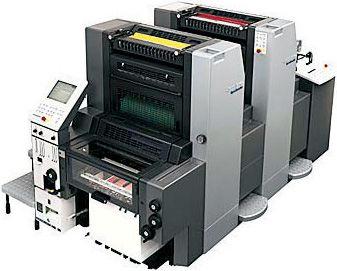
Sakurai: 1, 2 or 4 colours and any size (newer model)
Polar: any size/older or newer models (66/72/76/78/82/90/92/107/115)
Horizon-BQ: 220/240/260/440/460
Renée Yardley / Senior Vice President of Sales and Marketing / Sustana Group
Renée Yardley serves as Senior Vice President of Sales and Marketing for Sustana Group, a producer of sustainable, recycled fibres and paper products, and parent company of Rolland and Sustana Fiber. She has more than two decades of experience in global organizations, including Tembec, CCM and General Motors, and holds a Bachelor of Commerce and MBA from McGill University, and a MA in General Management from Harvard University. In this Q&A, Yardley shares her perspectives on supplychain-wide sustainability.
PA: How would you describe the future of the paper industry?
RY: Across all industries, today’s consumers are expecting more transparency, meaning and simplicity from the brands they trust. Here at Sustana Group, we’ve always believed that businesses can do more — and data shows that consumers’ priorities are continuing to shift toward that end too. Specifically looking at the pulp and paper industry, it’s an exciting time of change, innovation and transformation. The paper and forest-products industry overall is evolving, and it has major changes in store and exciting prospects for new growth. These changes include shifting global recycling mindsets and the rise of a more circular economy. For example, China’s restrictions on the import of recyclables have led to a pileup of recycled materials and forced changes in North American attitudes towards recycling. Advocates for a circular economy see an opportunity to rethink domestic recycling and to stimulate job growth in a global market. Wise businesses seeking to establish new markets will increasingly leverage post-consumer materials as valuable commodities. In some cases, new online marketplaces have been created for buying and selling recovered materials. As the number of new materials produced by modern economies continues to increase, so too does the opportunity to repurpose those materials.
PA: The rising cost of paper is a common challenge for many printers — what can be done to combat this?
RY: From our perspective, implementing sustainable practices can add to a brand’s overall value. Consumers want a company’s sustainability efforts to be obvious and visible to them. And they are putting their money behind it. Studies show consumers will leave a brand based
on their values, and global consumers are willing to pay more for sustainable goods. Across the board, they are demanding eco-friendly business practices, and sustainable packaging demonstrates a deeper level of commitment — one that is tangible and that customers can literally hold in their hands, like paper and packaging.
This past June, Canada announced it plans to ban single-use plastics, including bags, straws, cutlery and stir sticks, as early as 2021.
Environmental impact measurement will not only be a means of competitive advantage — it will become a necessary requirement for organizations to remain competitive. More and more, businesses are looking for real sustainability strategies that have a meaningful impact through the entire supply chain.
PA: What can printing companies do to be more sustainable?
RY: Choose the right paper! Paper collection and recycling are far more energy efficient than virgin fibre production, and paper is one of the most recycled materials on earth. Aside from paper production, transportation and recycling using less energy, paper also biodegrades more quickly and efficiently when compared to synthetics. After you’ve chosen the right paper, it’s important to
arm yourself with data whenever possible. Using an eco calculator to help quantify your impact helps you understand how different manufacturing processes compare. Whether it’s to determine the ROI of a purchase decision, meet print policy goals, or communicate with shareholders, our eco calculator can help quantify the number of trees, gallons of water and other savings gained from using recycled papers.
PA: What sustainability trends do you see in the industry right now?
RY: Consumers are more issue-driven than ever before. They are looking for brands that support their core values — and one of their top concerns is the environment. As consumers become more aware and demand transparency into supply chain decisions, simply being “recyclable” is no longer enough. True efficiency is achieved only when products are able to be recovered, recycled and turned into new products that are sold on the market, and recycled again.
Responses were edited for length. For Yardley’s complete Q&A, please visit www.printaction.com/profiles
Introducing the third generation J Press from Fujifilm.
The J Press 720S set the industry standards for print quality, color reproduction, repeatability and reliability. Now, the new J Press 750S incorporates exciting new advancements like an increased sheet size of 23” x 29.5” and a running speed of 3,600 sheets per hour, effectively doubling letter-size output. Just imagine where the new J Press 750S can take your business. By pushing the envelope of inkjet technology, the J Press 750S invites you to rethink what you can do using the world’s fastest full color B2 sheetfed inkjet press.