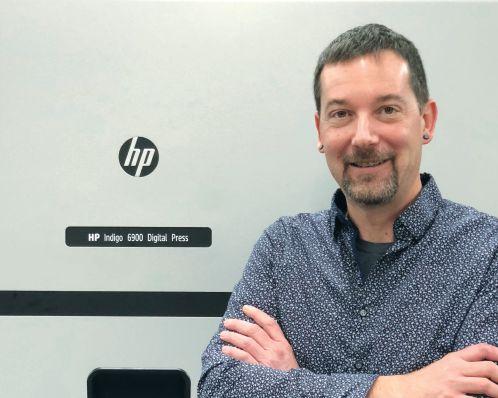
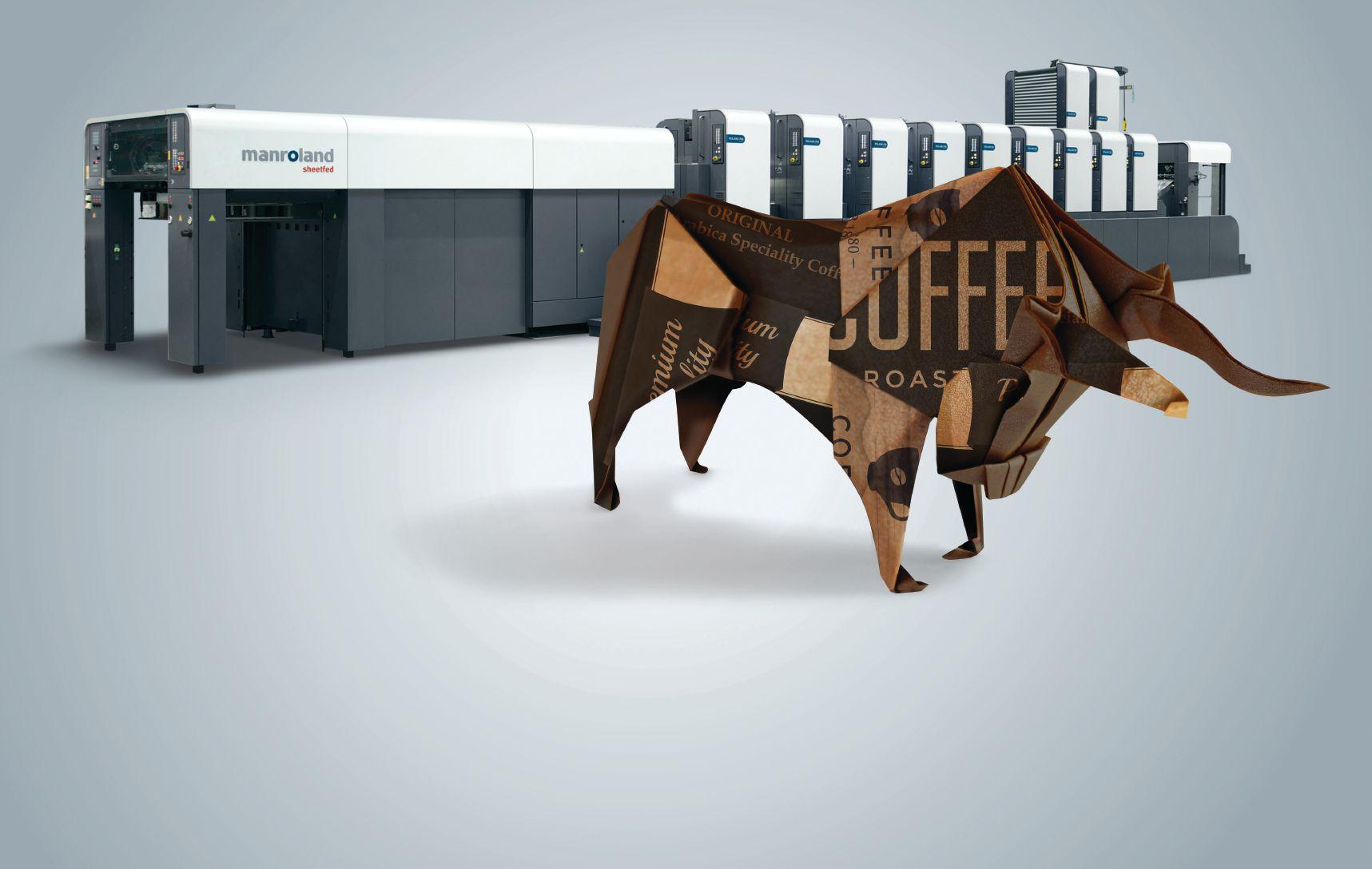
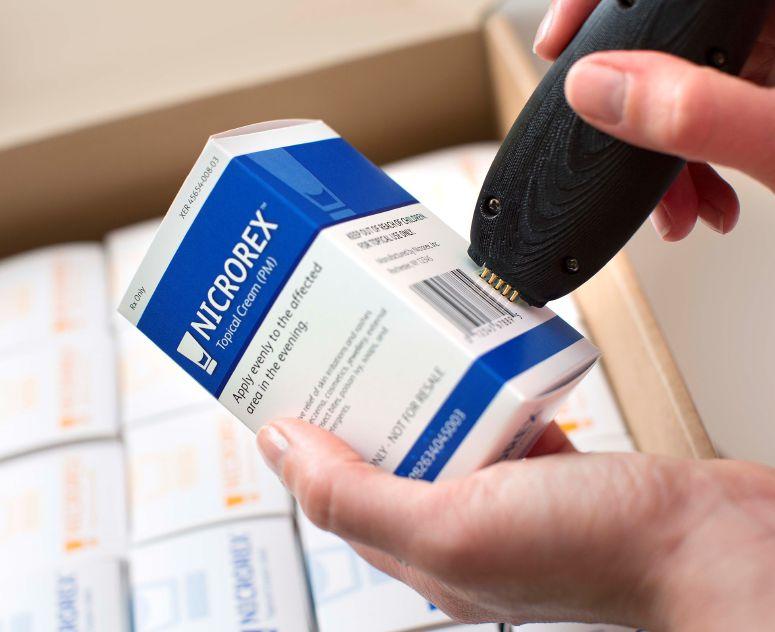
Q&A interview with Patrick Kerrigan, president of Alpha Poly P.11
Packaging strategy
Key considerations for profitable digital adoption in packaging P.14
New products
Latest packaging products and solutions from Asia Pulp & Paper, EyeC, HP, Intec, Sun Automation, Tetra Pak and Xeikon P.17
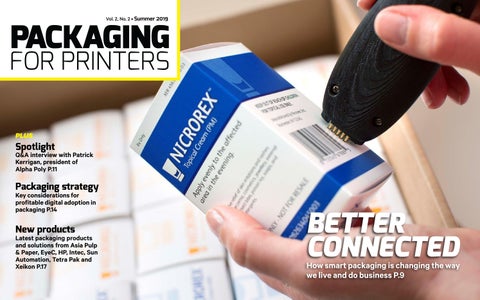
How smart packaging is changing the way we live and do business P.9
Editor
Alyssa Dalton
adalton@annexbusinessmedia.com
416-510-5225
Associate Publisher
Stephen Longmire
slongmire@annexbusinessmedia.com
416-510-5246
Media Designer - Team Lead
Lisa Zambri
lzambri@annexbusinessmedia.com
Account Coordinator
Alice Chen
achen@annexbusinessmedia.com
416-510-5217
Circulation Manager
Barbara Adelt
badelt@annexbusinessmedia.com
416-442-5600 ext. 3546
Circulation
apotal@annexbusinessmedia.com
Tel: 416-510-5113
Fax: 416-510-6875 or 416-442-2191
Mail: 111 Gordon Baker Rd., Suite 400, Toronto, ON M2H 3R1
Group Publisher
Diane Kleer
dkleer@annexbusinessmedia.com
COO
Scott Jamieson
sjamieson@annexbusinessmedia.com
FEATURES
How smart packaging is changing the way we live and do business
Vol. 2, No.2 printaction.com
Annex Business Media
111 Gordon Baker Rd., Suite 400, Toronto, ON M2H 3R1
printaction.com
Tel: 416-442-5600 • Fax: 416-442-2230
Patrick Kerrigan, President, Alpha Poly Corp.
Key considerations for profitable digital adoption in packaging
DEPARTMENTS
NEWS
3 North America’s market for value-added flexible packaging increased by 3.9 percent, Diageo to remove plastic from its beer packaging, TC Transcontinental strengthens packaging leadership, and more
INSTALLS
7 Best Color Press, Graf-Pak, Ingersoll Paper Box, Label Resources, Rootree and Maritime Labels & Packaging NEW PRODUCTS
17 Latest packaging products and solutions from Asia Pulp & Paper, EyeC, HP, Intec, Sun Automation, Tetra Pak and Xeikon
North America’s market for value-added flexible packaging increased by 3.9 percent to US$25.3 billion in 2018, according to a new report from Wood Mackenzie Chemicals, with sales in the North American region accounting for almost 30 percent of total global sales of around US$90 billion. “Despite environmental concerns over packaging sustainability, par-
ticularly with regard to the use of plastics, flexible packaging demand in North America will continue to grow at above GDP over the next five years,”
Wood Mackenzie analyst
Paul Gaster said. He predicts the North American flexible packaging market will achieve a compound annual growth rate of 3.8 percent over the next five years, to reach over US$30 billion in 2023. As
noted in the report, the industry continues to be a hotbed for mergers and acquisitions, which is changing the structure of this still fragmented and over-supplied industry. In particular, the impending completion of Amcor’s acquisition of Bemis; TC Transcontinental’s acquisition of Coveris Americas; together with a flurry of other deals, is realigning the ranking of North America’s top converters. “Value growth in North America has resulted from a combination of factors, including the trend in many applications from rigid to flexibles, underpinned by environmental and legislative pressures to reduce packaging volumes,” he continued. “We are also seeing the wider adoption of higher added-value materials and formats. This includes improved presentation with higher quality graphics as brand owners increasingly recognize the importance of flexible packaging as a marketing tool for brand differentiation. In addition, there has been a trend towards smaller pack sizes, as well as the passthrough of increased raw material and other costs during the year.”
Netpak Packaging of Anjou, Que., has obtained its sixth consecutive BRC Grade AA certification by the Global Food Standard Initiative (GFSI). Setting the standard in the food industry, the British Retail Consortium (BRC) is a globally recognized organization that establishes a series of standards to help companies be compliant with food
safety laws at all levels of the supply chain. Many food manufacturers are now requiring their suppliers to implement rigorous quality control programs and obtain highly recognized certifications. “To be accredited with the highly coveted BRC certification is among one of our many industry achievements and a true testament to our outstanding performance and quality,” according to a statement from the company, explaining that six years ago, Netpak was among the first in North America to successfully complete the BRC auditing process.
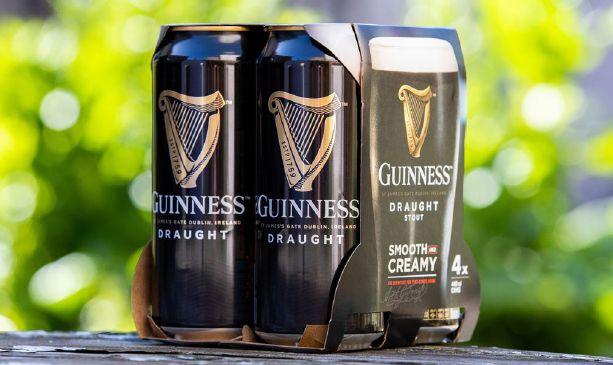
British spirits company Diageo has announced plans to remove plastic from its beer packaging. The £16-million (C$28-million) investment will
North America’s market for value-added flexible packaging increased by 3.9 percent to US$25.3 billion in 2018, according to a new report.
see the introduction of 100-percent recyclable and biodegradable cardboard to replace plastic, and the replacement of multi-can packs by cardboard packs that sustainably sourced, recyclable and fully biodegradable. Plastic ring carriers and shrink wrap will be removed from multipacks of its beer brands, including Guinness, Harp and Smithwick’s. The new sustainable beer packs will be on shelves on the island of Ireland from August 2019 and from summer 2020 in Great Britain and other international markets. Individual cans are fully recyclable, including the widget which is contained inside cans of Draught Guinness. The company says the investment will result in a reduction of plastic waste that is the equivalent of removing 40
million 50-cl plastic bottles from the world.
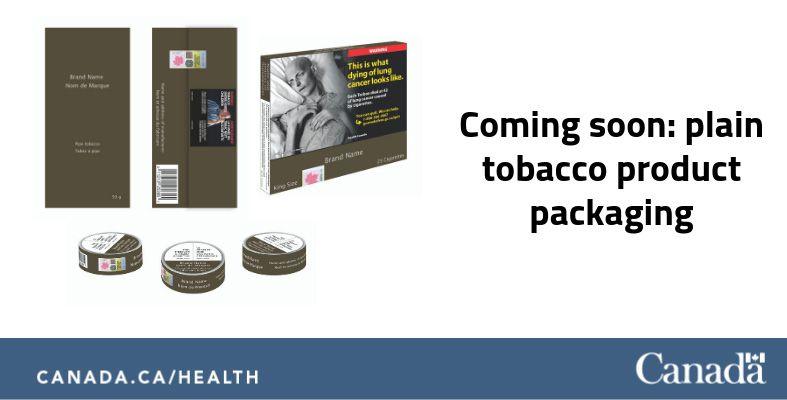
Cigarette packs sold in Canada will sport a plain drab brown with standardized layouts and lettering, starting this November. Minister of Health Ginette Petitpas Taylor in May announced new regulations for plain and standardized appearance of tobacco packages and products in a move
to reduce their appeal to Canadians. Coming into effect November 9, the new plain packaging guidelines include removing “distinctive and attractive features” from packaging and products and requiring all packages to be of the “same drab brown colour.”
Only the permitted text may be displayed on packages, in a standard location, font, colour and size. Cigarette packaging will be standardized to a slide-and-shell format, and the appearance of cigarettes and other tobacco products will be standardized as well. The new Tobacco Products Regulations (Plain and Standardized Appearance) are a key measure under Canada’s Tobacco Strategy, designed to protect Canadians from tobacco-related death and disease. Health Canada estimates more than 4 million
Canadians still use tobacco, about 17 percent of the population. The strategy aims to drive down tobacco use to 5 percent of the Canadian population by 2035.
Supremex Inc., a North American manufacturer and marketer of envelopes and a provider of paper-based packaging solutions, has received BRC Certification after a rigorous audit, in recognition
Starting this November, cigarette packs in Canada will adhere to new guidelines include remove “distinctive and attractive features.”
British spirits company Diageo is investing C$28 million to remove plastic from its beer packaging.
of the compliance of its folding carton packaging manufacturing facility in Laval, Que., accomplishing the highest AA grade status. The BRC Global Standard is part of an independently audited safety and quality certification program. Food industry experts from retailers, manufacturers, and service organizations developed this management system, and it is the first packaging standard in the world to be recognized by the GFSI committee. Supremex explains the AA status will help provide protection to the consumer, verifies technical performance, and demonstrates competence in maintaining product safety and integrity.
Transcontinental Inc. has appointed Thomas Morin Presi-
dent of TC Transcontinental Packaging effective July 1, 2019. Based in Chicago, Ill., Morin will report to François Olivier, President and CEO, and will be part of the executive management committee. Since 2014, this position has been held by longstanding executive Brian Reid, who has been with the corporation for over 25 years. Moving forward, Reid will dedicate his time exclusively to his role of President of TC Transcontinental Printing, a position he has held for more than a decade. As President of TC Transcontinental Packaging, Morin will have full profit and loss responsibility and provide strategic and thought leadership to the sector’s operations and plants around the world. He will be in charge of establishing long-term
goals and strategies as well as executing business plans, aiming for further efficiency and profit maximization, the company explains. In support of the corporation’s vision, Morin will be responsible for overseeing the expansion of the packaging business in all its markets through organic sales growth and acquisitions, as well as managing investments by ensuring that proposed capital expenditures are in line with the strategy.
AVT, a provider of print inspection, print process control and quality assurance solutions, has hired industry veteran Hans-Peter Stockkamp as Global Accounts Director where he will oversee global partnerships with global players in the label and packaging converting markets, including in Canada. Before joining AVT, Stockkamp spent nine years in sales leadership positions with BST eltromat. Since the company merger in 2014, he served as Global Sales Director responsible for BST eltromat’s worldwide product sales, including direct-to-customer sales and initiatives to incorporate solutions with OEMs.
Cascades Sonoco, a joint venture of Cascades and Sonoco Products Company, has in-
augurated the expansion of its facility in Birmingham, Alabama, and its new production line of eco-friendly packaging. The US$17-million investment will allow the facility to produce a water-based functional coating solution to create recyclable, repulpable and compostable containers. The equipment allows for the production of 50,000 tonnes per year of coated paper and paperboard using the company’s FlexShield, FluteSHIELD and SurfSHIELD waterbased coating technology. These water-based functional and barrier coatings are designed to replace the non-compostable applications traditionally used in the design of folding carton takeout containers; the coatings can also replace the wax used in the corrugated industry.
Peter Stockkamp
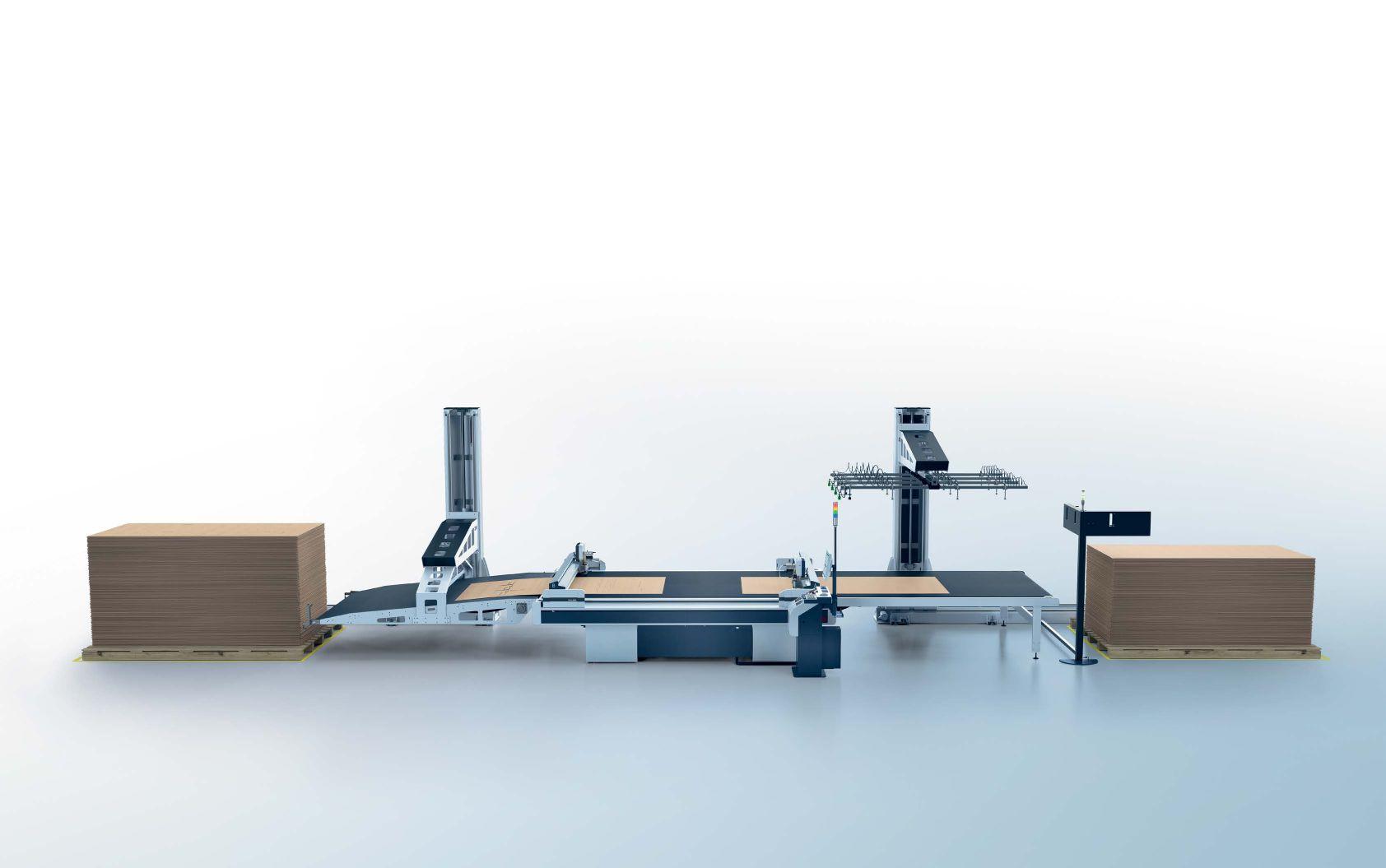
– Zünd Board-Handling System BHS150 for industrial-level automation – Ultimate non-stop productivity with 1.5m stack height, automatic job retrieval, D3 dual-beam production capacity – Find out more at www.zund.com/en/bhs
and
m
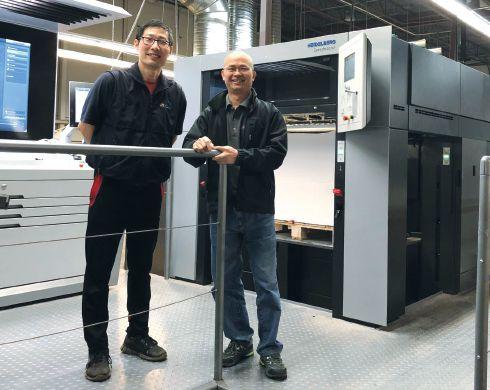
B.C. trade printer Best Color Press has invested in a Heidelberg Speedmaster XL 106-6+L press. Producing at 18,000 sheets/hour, it features an elevation kit for taller stacks, is able to produce conventional print with water-based coating and UV-printed jobs with high gloss UV coatings with a complete IST UV system. Data is transferred into live work with the AutoPlate Pro plate changing system, the Inpress Control spectral colour measurement and automatic register system, automated wash-ups and the new Quality Assist program for autonomous progression from makeready to good sheet production.
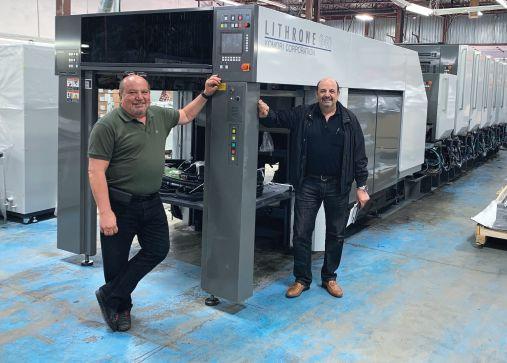
Graf-Pak Inc. of Pointe-Claire, Que., has added a new Komori GL640C to its operations, purchased through Komcan Inc., the exclusive distributor of Komori presses in Canada. The new Komori, which replaces a competitive press, is currently being installed.
Owners Gerry and Raffi Djerrahian say they were in need of a new technology solution to continue their plan for growth and continuous improvement and opted for the Komori GL640C. Automation and reliability were key factors in the decision, they explain, as the GL640C features fully automatic plate changers, PDC-SX closed loop colour control, Komori’s Automatic Makeready System (AMR), as well as KHS-AI, Komori’s productivity enhancement system.
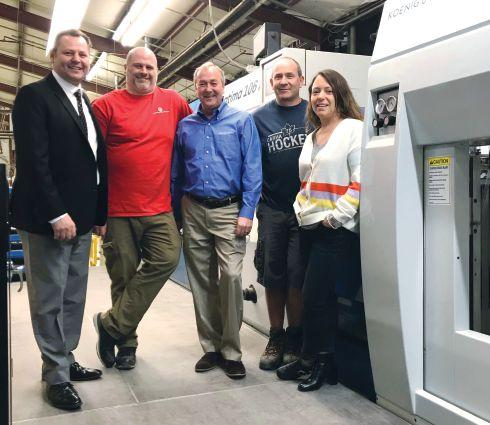
97-year-old Canadian firm Ingersoll Paper Box has installed a new high-speed Koenig & Bauer-Iberica Optima 106K die-cutter which went operational in January. IPB President Sarah Skinner says she chose the Optima 106K because of its quick turnaround, fast speed, user friendliness and blanking capability.
Although the Ontario firm has only had the Optima 106K in operation for a few months, she has found that production in the postpress department has increased exponentially and feels that it will continue to be boosted even further.
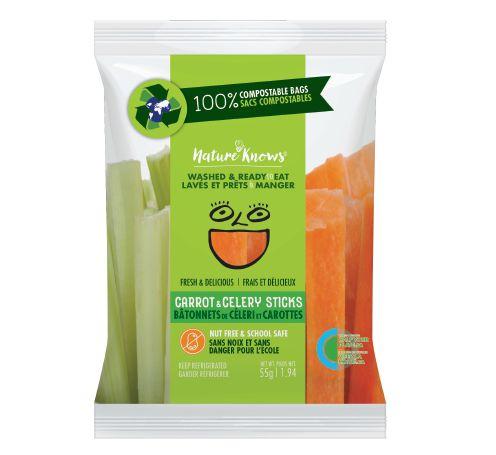
Rootree, a Canadian provider of digitally printed flexible packaging, is expanding its operations with a second HP digital printing press as it strives toward greener packaging.
The Ontario converting and packaging house is doubling its print capacity with the addition of a second HP Indigo 20000 digital press for flexible packaging. Installed at its Hamilton, Ont., location, the higher capacity will support increasing demand for fully compostable flexible packaging using various technologies, including the HP Indigo Pack Ready Lamination Solution, the company explains.
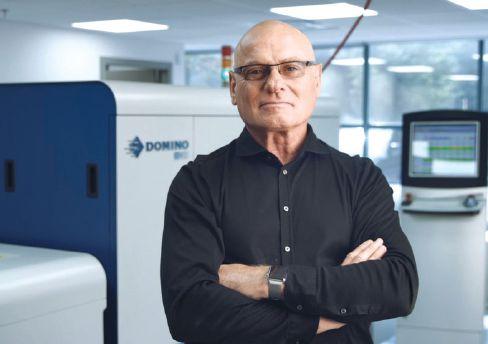
Langley, B.C., label printer converter Label Resources says it has seen a 40-percent growth in new sales and production since implementing its new Domino N610i 7-colour digital UV inkjet press last year.
“The entire implementation process from Domino was really made easy. Not just for myself but, more importantly, for my operators. They describe running the Domino like playing video games. In fact, I am wondering maybe I should charge them to work here,” says Label Resources’ President Jerry Marincelj.
Established in 1994, Label Resources is a high-capacity label printing company with full-colour flexographic and digital printing capabilities.
Maritime Labels & Packaging of Bedford, N.S., has chosen the HP Indigo 6900 digital press for high-volume variable printing of digital shrink sleeves, making it the first supplier of digitally printed shrink sleeves in the region to its clientele, it says. “After considering the available technologies, we concluded the print quality and flexibility the new HP Indigo 6900 shines,” Paul Sproule, Operations Manager, Maritime Labels & Packaging, says.
Maritime will also use the new HP Indigo 6900 to print on premium label substrates, while adding embellishments such as foiling, embossing and screen printing.
Better connected
How smart packaging is changing the way we live and do business
By Dr. Paul Smith
Labels. We see them every day on routine items we depend on to get through life.
There are labels on our food, medicine, clothes and technology. They tell us crucial information to help guide our decisions: nutritional information about the food we consume; how to wash our clothes; how and when we should take medicine; and potentially life-saving warnings about certain products, such as chemicals or prescription drugs.
How often do we actually read these labels? How much information do we actually absorb? For most of us, the answer is, “very little.”
Today, brands deliver a disconnect-
ed customer experience. They rely on the consumer to make purchasing decisions and understand a product’s intended use by piecing together information from labels, packaging and traditional retail displays. While some of us may read the fine print or visit the brand’s website to learn more, many of us buy what is familiar or perhaps what is on sale. We assume we know how to use a product based on what we’ve done in the past.
But what if our labels, packaging and retail displays could be smarter?
Instead of us mining the fine print for information, what if these intelligent devices could simply tell us what we need to know?
As it happens, Xerox scientists and engineers are digging into that question right now. They are carrying out groundbreaking research that promises to bring intelligent elements, such as printed electronics and smart sensors, to product labels and packaging that they say will revolutionize
business operations and help make the Internet of Things (IoT) a reality.
Imagine a world where a simple cardboard shelf displays product information – benefits, ingredients and even special offers – on a screen the moment you pick up a package or touch a sensor. Technology embed-
ded in the display would detect your smartphone’s signal and immediately direct you to the brand’s website for more information about the product you have just selected or similar products that might be of interest to you.
And, if you choose to receive more information, the brand could customize discounts and offers specific to you before you even leave the store.
This connected customer experience could even continue beyond the
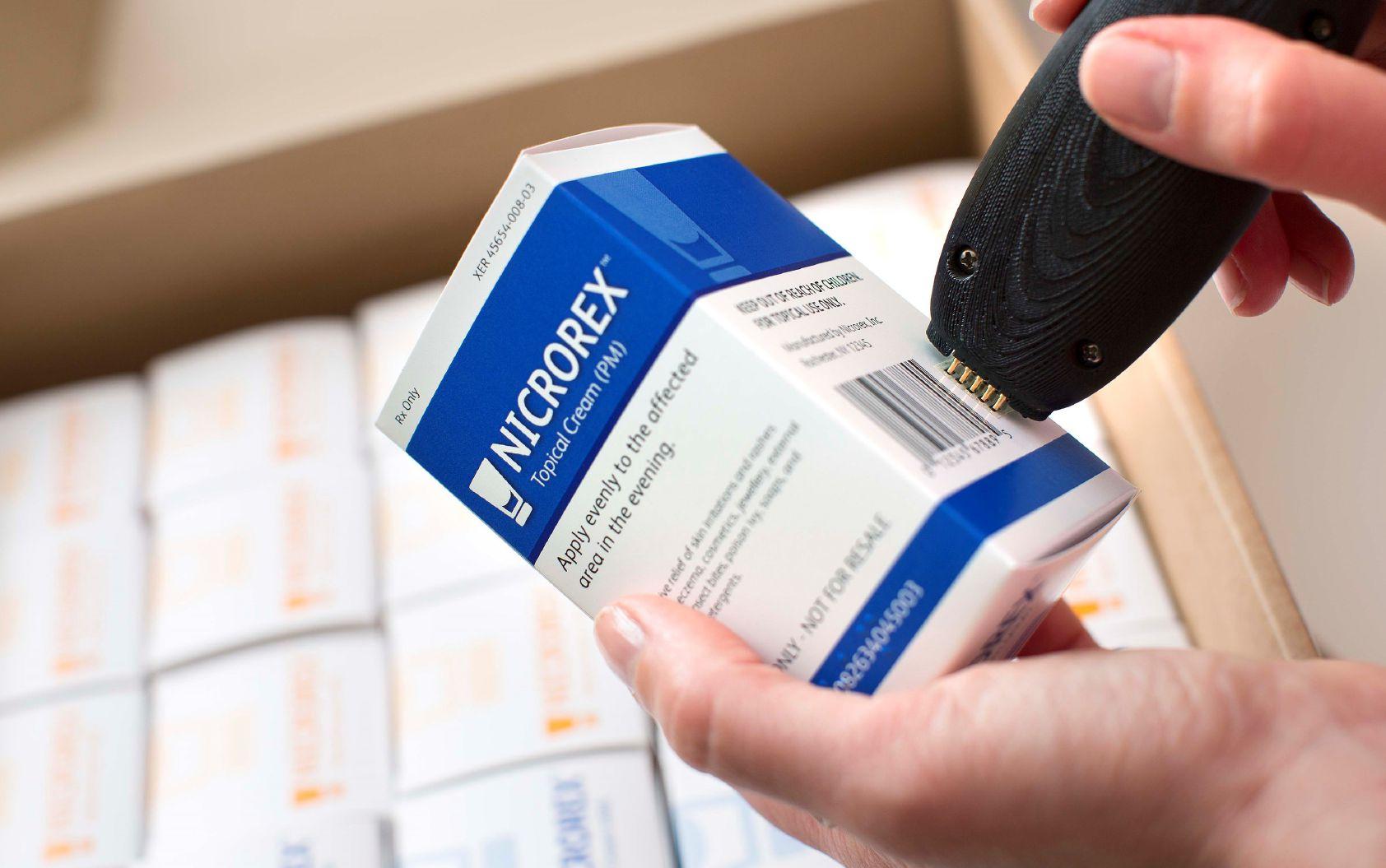
store. For instance, a smart drug package could remind patients when and how to take their medication. It would also send information directly to their pharmacy about when a dose has been taken, if the patient needs a refill and even how the patient feels.
Patients could connect to their pharmacist and receive ongoing support, and pharmacists could monitor medication adherence and know if the treatment needs to be adjusted.
Meanwhile, the brand and their retail partners gain a better understanding of how customers engage with products. They would know which products its customers purchase, and which ones they pick up and put back on the shelf. They would learn how long customers look at the display and what information is considered most important. They could use this information to improve pricing, discounts and future interactive displays.
Batteries and wires wouldn’t be a problem — they would be printed right
onto the shelf and package. Assembly of the smart displays would be completed in mere minutes.
As these technologies mature, new opportunities will become available for players across the value chain, from print providers that create these smart, customized displays and packaging, to retailers and brand owners who hope to create a more meaningful experience for customers by connecting their physical world to the digital realm.
What may have sounded too farfetched a decade ago is now not only credible, but also well within reach.
Dr. Paul Smith is Vice President and Centre Director of the Xerox Research Centre of Canada (XRCC), one of Canada’s leading materials research centres. With more than 40 years of innovation research experience, XRCC’s mission is to drive business growth through the commercialization of breakthrough materials, technologies, and services.
Patrick Kerrigan / President / Alpha Poly Corporation
From its establishment in 1989, flexible packaging manufacturer
Alpha Poly Corp. has focused its business on its commitment to customer service and quality, plus the use of up-to-date HD technology. A push for strategic investing led Alpha Poly to install a large 8-colour Miraflex AM from Windmöller & Hölscher in 2013. Then in December 2018, Alpha Poly ushered in a new wave of strategic investment with the installation of a Windmöller & Hölscher Miraflex II 10-colour press. The Brampton, Ont., company manufactures roll-stock, bags and pouches boasting HD printed quality to food manufacturers, industrial manufactures and private label brands. PrintAction spoke with Patrick Kerrigan, President and successor to the business’s founder, his father Paul, for his thoughts on the company’s strategic investment plan.
PA: What does the new installation mean for Alpha Poly?
PK: Number one for us is to always bring on more capacity and look for growth — strategic planning is important for us [and]allows us to continue to grow. It also adds greater capabilities by moving us from and being able to print up to eight colours. Now we can print up to 10 colours and capabilities wise, that’s great as designs get more complicated and the requirements for those stations. Also, bringing on more capacity as we look to grow as well. It brings us a huge amount of capacity as we look to grow our business.
PA: What is Alpha Poly’s long-term investment plan and vision?
PK: We have a pretty aggressive strategic plan over the next four years of imminent growth, and this is one asset of a multi-asset capital purchase over
the next four years. There is significant capital in other areas in pouch-making and lamination that we’ll look to in the next few years. When we look at where we want to go and what we want to do, a big thing for us is we’ve moved into the markets of multi-laminate, rollstock, and stand-up pouches. We look to continue to grow that area and that segment because we see that as an area of growth where we traditionally had passed various focuses on print and poly bags. We find that the laminate market is the growth segment. That is, strategically, where we’re focusing on. You hear about employee engagement, atmosphere and environment. For me, a big thing is that we’re a family business, but I look at it as it’s an overall family business for everyone who works here and their ex-
tended families. My dad’s always been a visionary and he’s always been looking at the next thing. Taking over from him and continuing in his vision is also important to me.
capabilities to grow in that segment.
PA: Why should traditional commercial printers diversify into the packaging space?
market grows by about five percent a year, which is pretty significant. For us, we’re looking for growth in the range of 20-percent plus. That’s the kind of growth we’re looking for.
PA: Are commercial printers focused on packaging growth?
PK: Most of the people who play in our space, they’ve been set up to do this type of packaging. We’ve always done packaging from a flexible standpoint, it’s not like we were in corrugated and decided to move over into plastic. We’ve targeted an area of stand-up pouches as an area of growth. So that’s why we’ve invested assets that allow us to continue to sell to those segments. I don’t have experience with other converters that weren’t in this market that are moving into it — it’s more so adding
PK: For us, as an example, we’re primarily in the food market and food manufacturers. We’re finding that a lot of companies are moving away from rigids – like glass and plastics – and moving toward more laminated and pouch, stand-up pouch or rollstock to help with shelf presence and reduce costs. Rigids can cost a lot of money in terms of their prices, but also their storage in their warehouse, storing the goods before they are packaged, and from a shipping standpoint. There are a lot of advantages to moving toward that kind of growth.
PA: What growth do you see in flexible packaging?
PK: I think the number that we’ve thrown around is that the American
Another thing, in terms of strategic planning, is that the U.S. market is huge for us. We have sales representatives in the U.S. selling for us, that part of strategic planning where we see a lot of growth in the U.S. market.
PA: What are the key factors that are driving this growth?
PK: I think the U.S. economy is growing, they’re on a roll, and I think that helps. I think transitioning from rigids and such over to flexibles is big, as well as consolidation with our customers. What we find is when there is a lot of consolidation acquisitions happening, that opens up the door to get things moving.
By Stefano Ruccia
The North American food and drink market is expected to see a 19.6-percent increase in demand for packaging by 2022, according to Smithers Pira. 20%
Empower your packaging strategy
Key considerations for profitable digital adoption in packaging
Change can be difficult and sometimes overwhelming, but when broken down into smaller segments and a simplified language, it can be much easier to navigate. Transitioning from traditional print approaches and adopting digital or more specifically inkjet printing can be profitable and enable growth. Consider the following three thoughts: Optimizing production costs, transforming operational flow, and driving revenue and growth.
Optimize production costs
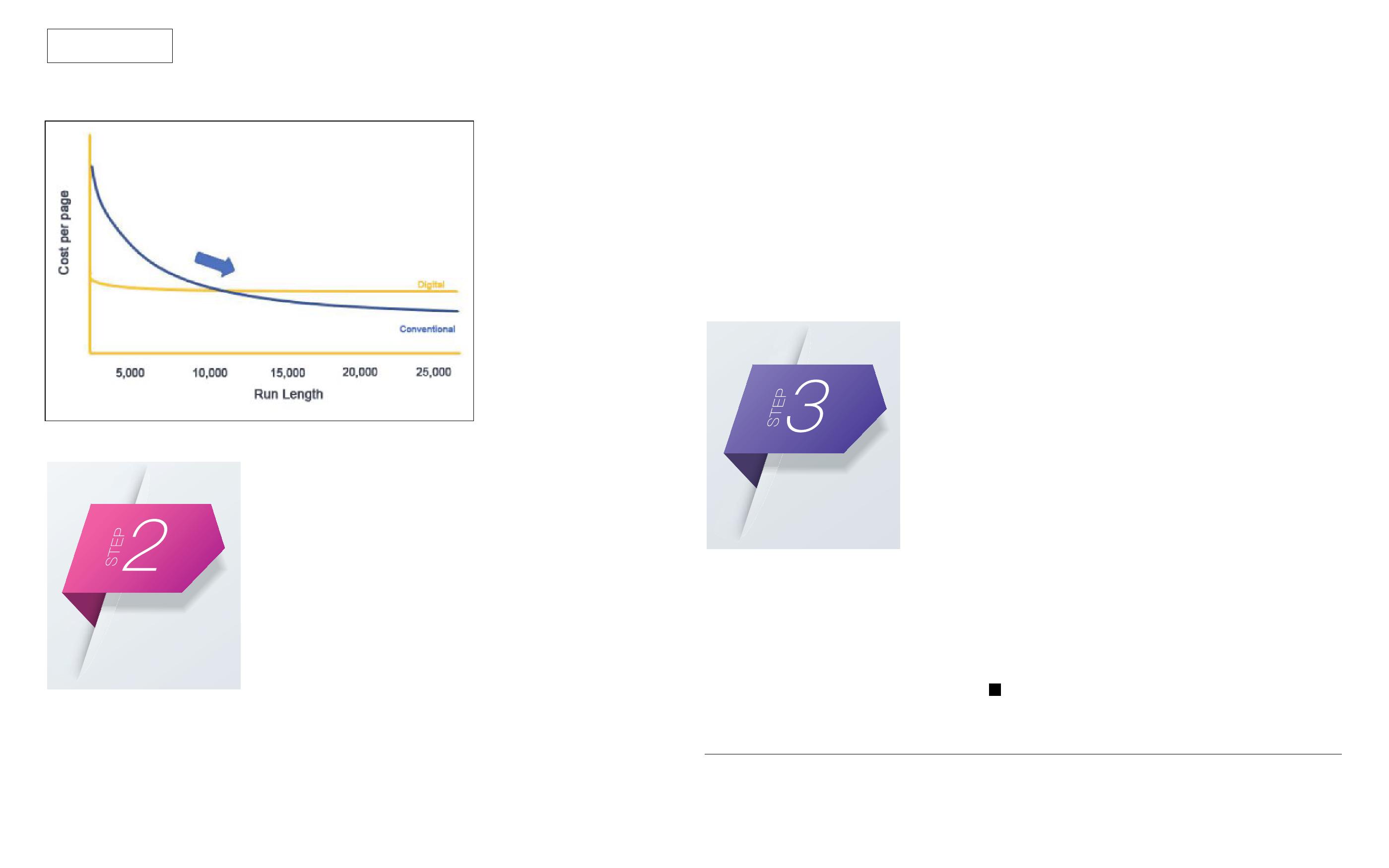
• The objective is to identify what jobs are best to produce digitally, evaluate your job mix, based on cost per page, where there is a clear economic benefit by eliminating plate making, reducing set up time and tooling costs with digital production.
• Establish decision KPIs for Overall Equipment Effectiveness (OEE), breakeven points for digital
A Smithers Pira study finds that total sales for flexible packaging worldwide will grow at an annual average rate of 3.3 percent, reaching US$269 billion in 2024.
versus conventional jobs.
• Formulate these actions and agree on key metrics with newly formed digital operational team, comprised of cross functional stakeholders that will drive the transition to digital.
Transform your operation flow
Ask and answer these questions and operationalize:
• Ask the question every day – How do we make short-run fast and efficient?
• Where can we automate and streamline job production and approvals?
• Identify specific areas to reduce finished goods inventory and waste by using on-demand printing.
• Set targets to reduce conventional supplies.
• Where can we increase savings by media downgauging?
• How can we reduce equipment setup time and downtime?
• Where can we optimize supply chain flow for print, pack, fill production?
• Develop/document workflow SOPs with your digital supplier(s) for accelerated speed to market.
• Conduct a “dry-run” or two print projects and assess.
• Brands key value vectors are cost of production, speed to market and sustainability. Continue to share digital capabilities with your brand partners to educate and support their transition.
Drive revenue and growth opportunities
• There are tools and capabilities that have been developed in the commercial market for data management, colour and zero touch prepress that are immediately transferrable for packaging converters.
• Value services such as “web to package” capabilities focus on speed to market. Surveys show that brands recognize the premium associated with reducing time to market.
• Value added capabilities of track/trace, authenticity.
• Marketing campaigns, promotions and segmentation.
• Package design and prototyping – With digital equipment, converters are in the best position to add value.
M o re p ro fi t f ro m your cur rent fl ex o p ress ?
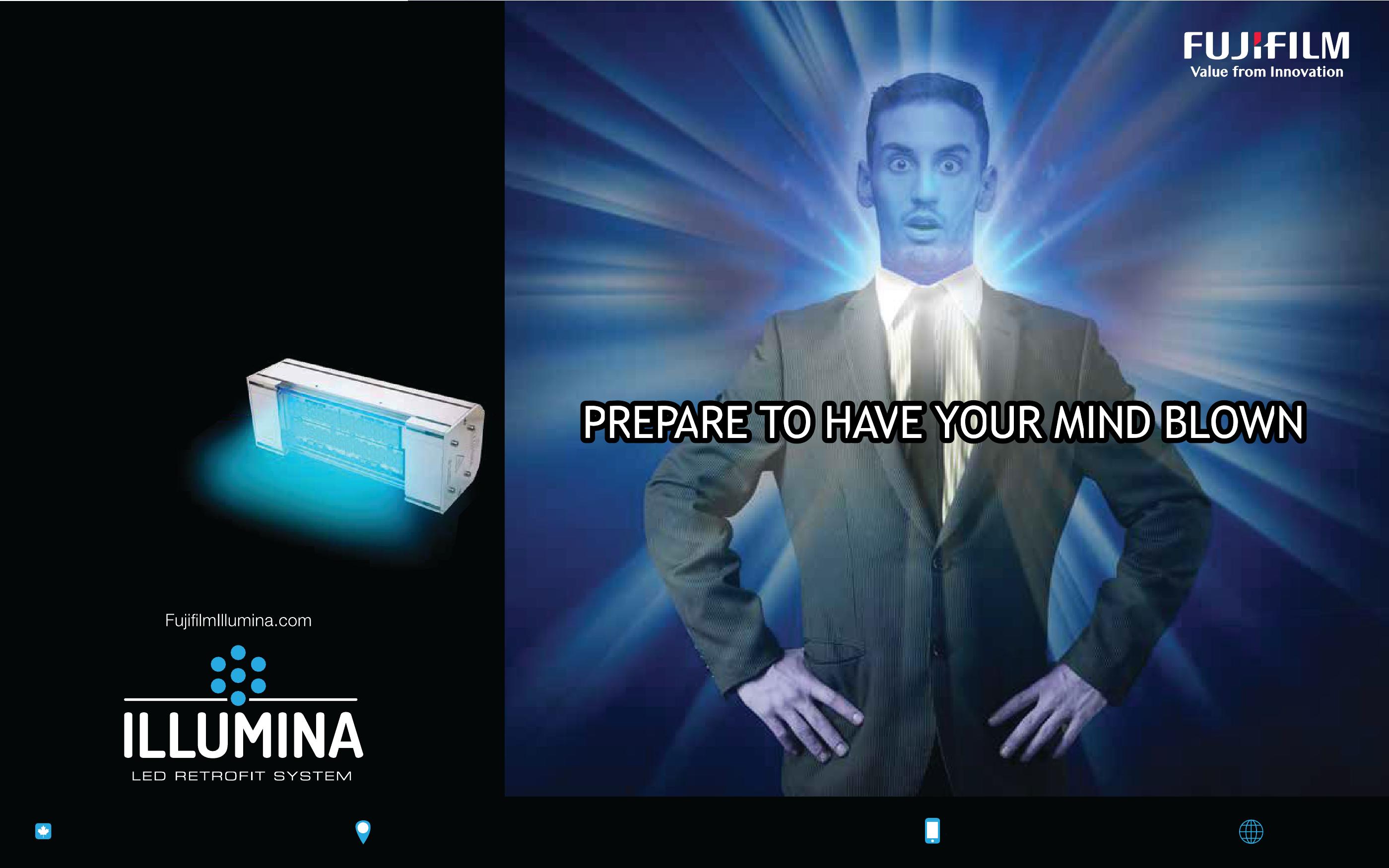
We kn ow i t ’s ha rd to believe . It really is as amazing as it sounds. The Illumina UV-LED retrofit curing system from Fujifilm expands production capabilities while reducing energy costs up to 94% – all on your existing flexo press. With the rapidly growing number of installations, the system has increased running speeds up to 70%. And, when paired with Fujifilm 300 Series inks, Illumina enables you to print on vir tually any substrate without ever worr ying about adhesion issues.
EyeC Proofiler 900 DT
EyeC has extended the range of its scanner-based inspection systems for half-size formats of 36 x 25 inches with the EyeC Proofiler 900 DT, making print sample testing possible on all types of printed products, such as leaflets, flexible packaging and the printed sheets of folding boxes, it says. The series can be used in quality checks on the output of multiple machines during printing, as well as during incoming quality control. EyeC says the system detects all relevant printing defects and provides traceable results, which are documented in a comprehensive report.
The EyeC Proofiler 900 DT inspects print samples for half-size formats of 915 x 635 mm.
Intec ColorCut FB8000PRO
At FESPA 2019, Intec introduced the new ColorCut FB8000PRO auto sheet-feeding flatbed cutter. The digital cutter features the ASF8000 high-speed auto sheet feeder and the digital FB8000 digital flatbed cutter for a comprehensive packaging cutting solution, it explains. The feeder, Intec says, can stack up to 25 kg of media to a depth of 22.5 cm and automatically feeds and places the printed sheets onto the flatbed’s conveyor cutting table. The cutter uses a dual tool-cutting and creasing head to deliver 1 kg of force on up to 600 micron media; cut jobs are advanced to the collection tray. Using ColorCut Pro3 software, operators get a live view of the process through the onboard video camera, which reads QR codes to retrieve the associated cut file and smart marks to compensate for sheet skew or printer stretch. SmartLine colours are used to determine the specific cutting/ creasing/perforating functions and their preferred order.
APP folding boxboard biodegradable container
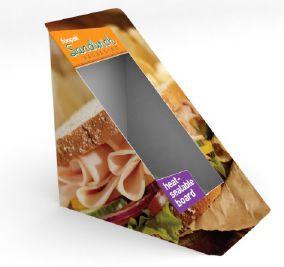
Asia Pulp & Paper (APP) is expanding its packaging portfolio for takeaway food with the Bio Container, an addition to its Foopak suite that will be available in Canada by the end of the year. Constructed with folding boxboard, the box offers a fully biodegradable and compostable solution for takeaway containers, trays and other direct food-contact items. Described as being highly durable paper stock, the solution is capable of breaking down naturally in 12 weeks, making it an alternative to commonly used plastic boxes. The Bio Container’s double coating has an outside layer with a white surface suitable for multi-colour lithography, letterpress and flexography. The inside layer provides level nine grease resistance and is designed to protect against water and grease absorption. The Bio Container is formulated for high-speed bar heat-sealing at 80°C for converting, finishing and hot gluing applications. FDA-compliant and ISEGA-certified for compostability within 12 weeks, the offering is available in 260 to 370 gsm, and 13.3 to 23.6 caliper.
The new APP Bio Container is suitable for both microwave and freezer use.
Tetra Pak explains its new packaging platform will turn cartons into full-scale data carriers and digital tools.
Tetra Pak interactive packaging
Tetra Pak says its new connected packaging platform will transform milk and juice cartons into interactive information channels. For producers, the platform will offer traceability to help improve production, quality control and supply chain transparency, Tetra Pak says, noting it will have the ability to track and trace the history and location of products. For retailers, it will provide greater supply chain visibility and real-time insights, enabling distributors to track stock movements and be alerted when issues occur. Meanwhile shoppers will be able to access vast amounts of information.
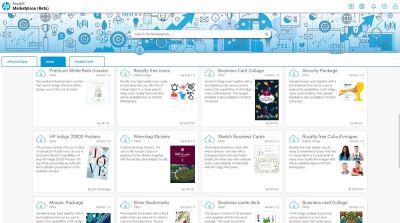
HP PrintOS Marketplace
At Dscoop Edge in March, HP announced the expansion of HP PrintOS Marketplace, an ideas store designed to inspire HP print service providers to collaborate and innovate, while implementing Industry 4.0 for automated printing. More than 50 free projects and design tools are now available for download for PSPs using PrintOS. Resources in the new PrintOS Marketplace ideas store include projects-in-a-box for labels and packaging, commercial and photo printing. Ready-to-go projects include HP Mosaic and HP Collage packaging templates, seed patterns, sample files, and royalty-free images and icons. Members are also invited to share or sell their print ideas in the store.
Sun Automation
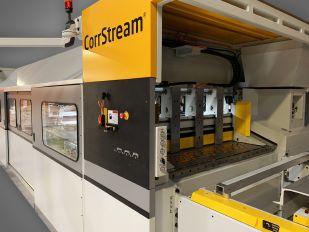
CorrStream is said to be the first single-pass digital printer built for the corrugated industry.
CorrStream Sun Automation Group featured the new modular design of its CorrStream technology at FESPA 2019. It features aqueous inks, an operational speed up to 75 m/min, and includes a complete front-end workflow including colour management, RIP and screening. The CorrStream’s CMYK colour digital printers for corrugated shortens the graphics-to-press time, allowing for personalization and graphic changes, data merge capabilities, wide formats and mass customization.
HP has expanded the HP PrintOS Marketplace, an ideas store designed to inspire HP print service providers to collaborate and innovate.
Xeikon digital printing
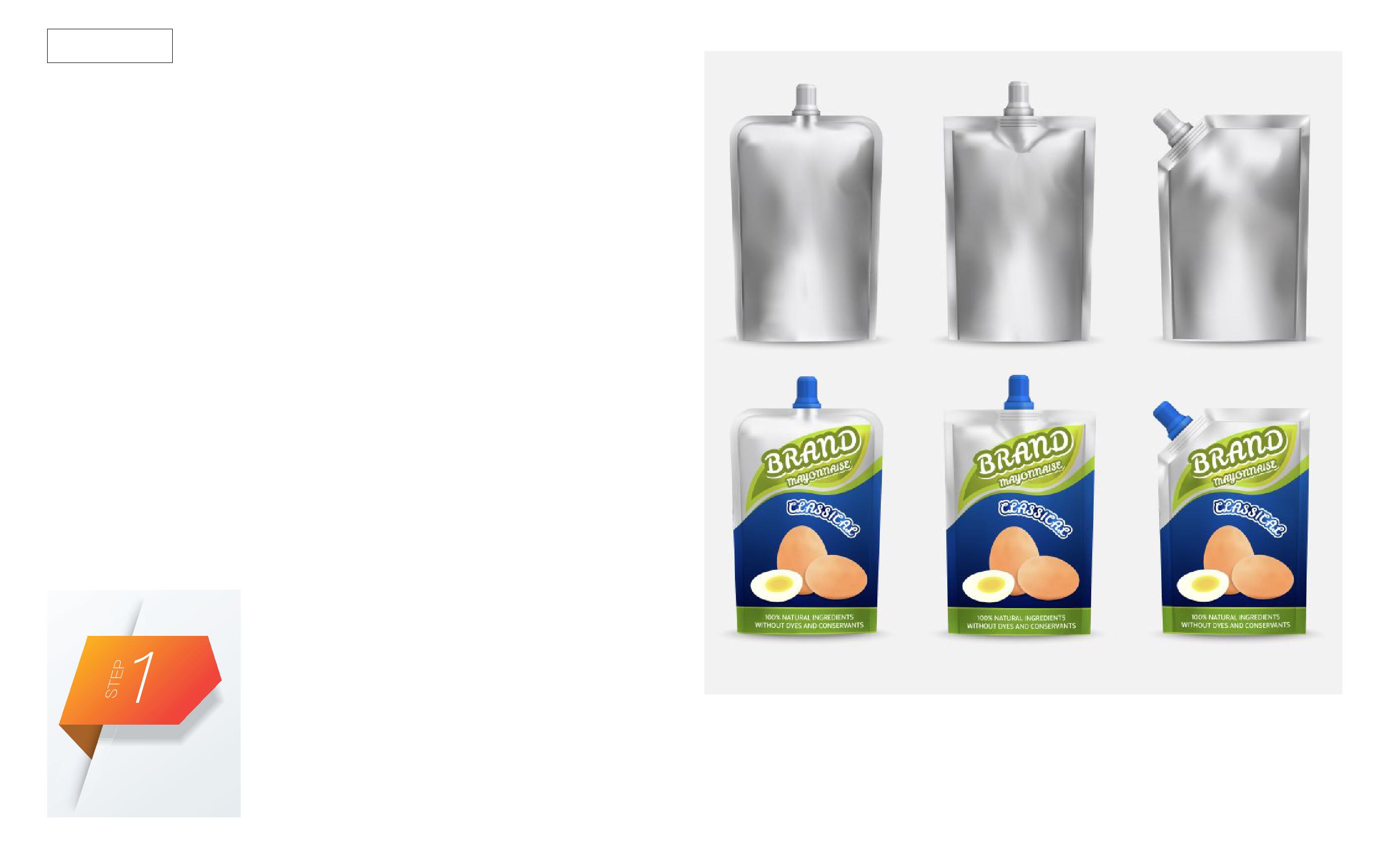
solution for pouches
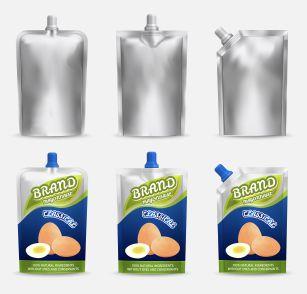
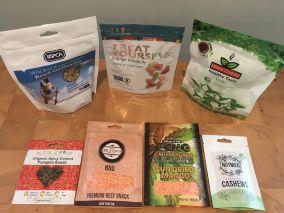
Xeikon’s digital process for printing on pouches was developed for consumer goods markets: food, beverage, chemical and pharmaceutical industries.
Xeikon says it has developed a digital printing solution for pouches that will result in reduced lead times, while also increasing the number of SKUs to better meet the demand from brand owners. By firstly digitally printing on a thermal laminate, the outside layer of the pouch is prepared and ready for the next steps. A variety of different layers is then constructed by lamination with a series of barriers for protection before the pouch is finally put together in the manufacturing process.