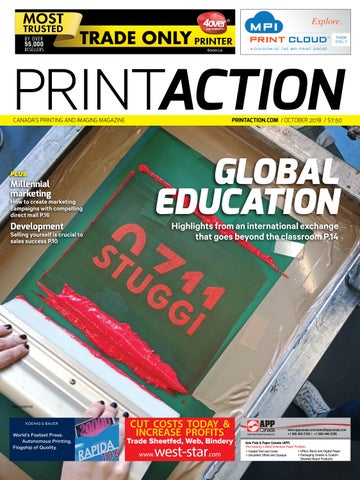
Highlights from a memorable international exchange that goes beyond the classroom
16 Engaging with millennials
Research shows marketing campaigns with compelling direct mail components hit the spot with today’s largest consumer generation
DEPARTMENTS
GAMUT
5 News, People, Installs, Globe, Dots, Calendar
TECH REPORT
19 A range of specialized technologies and solutions designed to optimize fulfillment and direct mail operations
NEW PRODUCTS
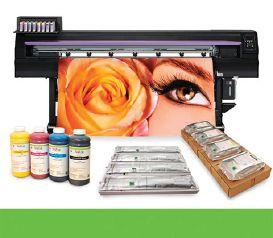
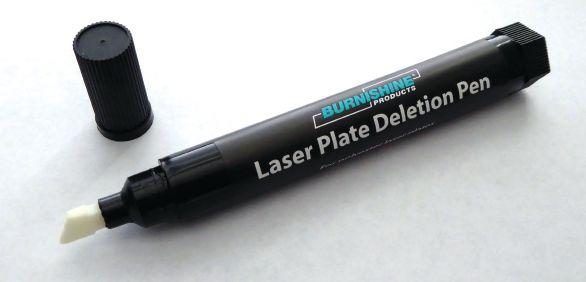
21 Detailing new technologies from Agfa Graphics, Avery Dennison, Burnishine, Esko, Fujifilm, Keyline, Kocher+Beck, Laetus, Mac Papers, Mediaclip, Nazdar, Phoseon, Rollem, Scodix, Weilburger Graphics, Windmöller & Hölscher and Xerox
SPOTLIGHT
26 Debbie Gilbert, Owner and Co-founder, PRX Print
COLUMNS
FROM THE EDITOR
4 Alyssa Dalton
Strengthening your company culture
SALES
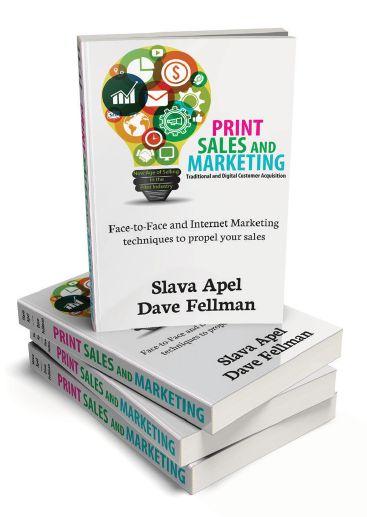
10 Dave Fellman
A reason to respond
The art of selling yourself is crucial to sales success
CHRONICLE
12 Nick Howard
The power of the printed book
Recent figures show physical book sales are climbing
COMMUNICATIONS
14 Bob Kalenka and Gary Abitz
Managing print in a digital age
Many organizations are turning to digital as a way to create value and revenue by also leveraging print communications
Building company culture
At Kicking Horse Coffee in Invermere, B.C., new team members – affectionately known as ‘Green Beans’ – are set up with a different lunch buddy every day of their first week so they can connect with different colleagues.
Toronto, Ontario-based marketing solutions company Klick turns the Klick Café into a charity tavern every Friday at 4:30 p.m. where beer, wine and snacks are provided by partners and Klicksters “give what they can” to charity.
According to a 2016 Deloitte report, only 19 percent of executives believe their company has the “right culture.”
Meanwhile at every five-year anniversary milestone, Axis Communications in Mississauga, Ont., offers its full-time regular employees a three-week paid sabbatical and $2,000 to spend during the time away from work.
“Customers will never love a company until the employees love it first,” advises Simon Sinek, author, motivational speaker and organizational consultant. While company culture is instilled and driven through leadership, employee support and confidence is critical in maintaining a successful culture.
“By setting the mission of an organization and empowering employees to achieve that mission, leadership builds the foundation of company culture — and plays an important role in changing it when it needs to be changed,” writes Sarah Greesonbach, CultureIQ writer, in the article, Importance of Leadership in Changing Organizational Culture.
The first step to building your company culture? “Determine what behaviours and beliefs you value as a company, and have everyone live true to them. These behaviours and beliefs should be so essential to your core, that you don’t even think of it as culture,” says Brittany Forsyth, VP Human Relations at Shopify.
Released in June, the 17th annual Best 50 Corporate Citizens in Canada by Corporate Knights ranking includes Canfor, Cascades, Kruger Products and Transcontinental, among others. On average the Best 50 Corporate Citizens had significantly more female leaders and generous pensions, lower employee turnover, earned a higher percentage of their revenue from clean sources, used a higher percentage of renewable energy, and had a much smaller gap between CEO pay and average worker pay than their large Canadian peers, Corporate Knights says.
Quebec-based Transcontinental took the 29th spot, while the forestry and paper products sector had a strong showing, with Kruger Products, Canfor and Cascades taking 40th, 46th and 48th respectively.
The methodology for the Best 50 Corporate Citizens is based on social and environmental performance as well as governance of Canadian companies found in the public domain. This year, Corporate Knights updated its weighting system from equal weight for each metric to a rules-based weighting guided by the relevance of each KPI for each industry, placing more emphasis on metrics that matter most for each industry.
Another well-known Canadian program that measures high-performance company cultures is the annual Best Workplaces in Canada list, compiled by Great Place to Work Institute Canada. The process is based on two criteria: Twothirds of the total score comes from confidential employee survey results; the remaining one-third comes from an in-depth review of the organization’s culture, including an evaluation of HR policies and procedures. Designed to offer a representation of the organization from an employee perspective as well as an overall portrait of the workplace culture, the application process collects data relative to the five trust-building dimensions: credibility, respect, fairness, pride and camaraderie.
Kicking Horse Coffee, Klick and Axis Communications were all named on the 2018 list of Best Workplaces in Canada.
“Employees who trust their managers give their best work freely, and their extra effort goes right to the company’s bottom line. Managers who trust their employees allow innovative ideas to bubble up from all levels of the company. Employees who trust each other report a sense of camaraderie and even the feeling of being part of a family. Together, they deliver far more than the sum of their individual efforts,” Jen Wetherow, Director, Great Place to Work Institute Canada, says.
According to Bain & Company research, over a period of seven years, companies with more engaged workers grew revenue 2.5 times as much as companies with less engaged workers. This reinforces the Fast Company finding that happy employees are 12 percent more productive than their unhappy counterparts.
“Building workplace trust is the best investment an organization can make,” Wetherow continues. “Doing so leads to better recruitment, lower turnover, greater innovation, higher productivity, more loyal customers and higher profits. Around the world, companies with high-trust cultures deliver stronger results.”
Hemlock Printers is celebrating its 50th anniversary this year, recognizing a half-century of growth to become one of Canada’s most recognized printing companies. Founded in 1968 by Dick Kouwenhoven, and joined soon after by his brother John, the two built a company focused on integrity, craftsmanship, and technical innovation. Over five decades, Hemlock says it has continued to navigate numerous advancements in technology while focusing on delivering added-value to customers. The company also recently announced it will install a Heidelberg XL 106 8-colour press equipped with UV LED technology in January 2019.
The U.S. International Trade Commission (ITC) on August 29 unanimously voted to block tariffs imposed by the Trump administration on Canadian imports of uncoated groundwood paper, or newsprint, finding the imports aren’t harming the U.S. industry. Earlier this year the U.S. Commerce Department imposed anti-dumping and countervailing duties on newsprint produced in Canada in response to a petition filed by North Pacific Paper Company (NORPAC) that alleged it was facing injury from unfair trade practices by Canada. The ITC disagreed with those allegations and eliminated the duties, ruling that U.S. newsprint producers were not materially harmed by imports from Canada. In contrast, the increase in newsprint costs from the imposed duties was harming printers, publishers, newspapers, technology suppliers and consumers in the value chain.
businesses. The new company will operate under the brand name manroland Goss web systems Alexander Wassermann, CEO of manroland web systems, will become CEO of the new company with global headquarters in Augsburg, Germany. The company’s North American headquarters will be in Durham, N.H. Mohit Uberoi, previous CEO of Goss International, will stay connected with the business as a board member and assist the management team with business integration. The new company will concentrate on four main areas: System Solutions, Engineered Solutions, Service Solutions and E-Commerce Solutions.
Starting October 1, Sun Chemical has increased its entire portfolio of ink, coating and consumable products prices in North America. The company explains a number of factors continue to challenge the supply chain and drive up the cost of products, including ongoing raw material supply disruptions, the escalation of transportation costs, and governmental initiatives ranging from tariffs to changes in environmental regulations.
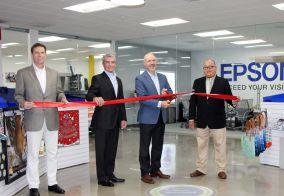
Epson America has opened the Epson Technology Center in Carson, Calif., showcasing a range of printing solutions and applications in a hands-on environment
West Canadian Digital Imaging Inc.’s Edmonton team has a new home. The team recently moved out of its 8,000-square-foot space into a new 31,000-square-foot production facility. The new facility, located at 11755 108 Avenue NW, Edmonton, reopened for business August 20.
PHOTO: WEST CANADIAN DIGITAL IMAGING
Software, hardware and service provider Cansel is introducing Cobalt Graphics Distribution, a new company that will operate as a national distributor of wide-format, flexographic and offset products to the print communications market in Canada. With the launch of Cobalt, the Cansel Geospatial division will continue to distribute wide-format products to its architecture, engineering and construction customers while the new, independently-run Cobalt will retain the employees, suppliers and relationships that are focused in the reprographics, wholesale distribution and printing markets.
Manroland web systems and Goss International, both long-time web offset printing manufacturers and service providers, have completed the transaction to combine their
Black Press has taken over the printing of the Times Colonist newspaper beginning October 1. In July, Glacier Media announced it would shut down the press room of the Times Colonist on September 30, saying it sold the building last year to a developer with plans to transform the press hall into a brewery. According to Unifor Local 2000, the closure leaves 18 press workers without jobs. A privately held printer in Western Canada, Black Press says it is consolidating all of its Island press operations in Ladysmith, B.C., where it will print all of Black’s Island papers, some other weekly newspapers and commercial jobs as well as the Times Colonist.
In late August Komori Corp. announced plans to initiate field testing of its new Impremia NS40, a 40-inch sheetfed Nanographic Printing System, next spring. First shown at drupa 2016, the Komori Impremia NS40, a sheetfed inkjet press equipped with Landa Nanography technology, has been in development in Japan for more than two years. The press manufacturer explains the NS40 aims to combine the versatility of digital with the quality and speed of offset printing at a low cost per page, adding it can print on coated and uncoated paper stocks as well as synthetic substrates and paperboard of up to 32 point. Based on the progress of the development of the Impremia NS40, Komori plans to carry out the first field test of the beta press in the Japanese market in the spring of 2019. This will be followed by similar plans to further test the NS40 in other countries as well. General availability is planned for late December 2019.
President/CEO of Epson America
for customers and dealers. Highlighting the full Epson wide-format printing portfolio, the new Carson Epson Technology Center is designed to give customers and dealers a deeper look into how to expand their services and improve workflow with Epson solutions, including the SureColor F-Series dye-sublimation and direct-to-garment printers for textile applications; the SureColor T-Series wireless technical printers; SureColor P-Series aqueous printers for photography, proofing and graphic design; and the SureColor S-Series solvent printers for signage, vehicle graphics and fine art reproduction.
Effective immediately, KBA North America Inc. is now named Koenig & Bauer (US) Inc., while KBA Canada, Inc. is now named Koenig & Bauer (CA) Inc. On the occasion of its 200th anniversary last year, the company went back to its roots and returned to its founding name Koenig & Bauer as part of a global brand relaunch. In a continuation of the rebranding this year, the company explains it will be changing the names of all global business units, subsidiaries and agencies to be aligned with this new brand and to better reflect its international stature in the graphic arts industry.
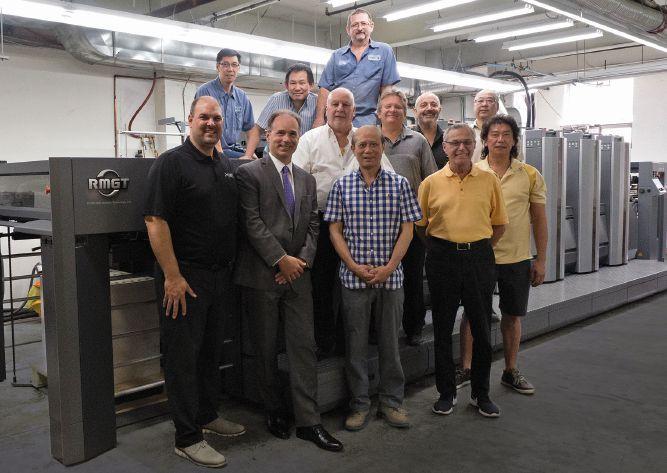
Frits Kouwenhoven of Hemlock Printers USA and Jeff Taylor of Hemlock Printers Inc. at a recent BBQ celebration.
Keith Kratzberg cuts the ribbon at the opening.
Founded in 1952, West Canadian operates production locations in Calgary, Edmonton, Fort McMurray and Joffre, Alta., and Sarnia, Ont.
INSTALLS
Xerox has named Joanne Collins Smee Chief Commercial Officer and a member of the Executive Committee, where she will be responsible for sales excellence, channel strategy, order to cash and technology, services, software, and future solutions offerings. Collins Smee joins Xerox from the U.S. Federal Government where she was leading Technology Transformation Services, overseeing technology and process design teams focused on transforming the way federal government agencies build, buy and use technology.
Heidelberg North America has appointed Chris Brooks Vice President of Label Products, where he will work to integrate Gallus into Heidelberg North America and expand the Gallus product line in Canada and the United States. With 24 years of experience in the printing industry, Brooks has spent the entirety of it at the former Heidelberg Web Systems, now manroland Goss web systems, working in the web offset segment.
The Association for Print Technologies is welcoming Sondra Fry Benoudiz to its Business Development Team, where she will be responsible for building new relationships within the print community, developing new sponsorship programs, creating new business opportunities, and helping members meet their business needs. Benoudiz has an extensive association background and more than 20 years of print industry experience. Most recently, she worked at the Specialty Graphic Imaging Association (SGIA).
Kernow North America, a producer of digitally printable synthetic substrates, is welcoming John Danio as its new Vice President of Sales and Marketing. This newly created position is designed to place a dedicated sales resource in the North American market to support Kernow’s growth plans. Having recently introduced various new products including the KernowPrint for HP Indigo line of printable synthetic materials featuring Cobalt Coating Technology, FloorSharK and the MetaliK line to its offering, Kernow says Danio will provide the additional expertise to help commercialize its print solutions.
Transcontinental has appointed H. Peter Brues to its Board of Directors. With a career spanning over 20 years in the Americas and Europe, he most recently served as a senior executive in the packaging industry at Amcor, a multinational company that produces packaging for a variety of end markets.
Mutoh America welcomes Miguel Gonzalez as the company’s new Director of Sales. Working under the guidance of Mutoh America President and General Manager Brian Phipps, his main responsibilities will be to grow sales throughout Canada and the U.S., as well as develop and cultivate relationships with the distribution network. Gonzalez comes to the company with more than 20 years of experience in the wide-format printing industry.
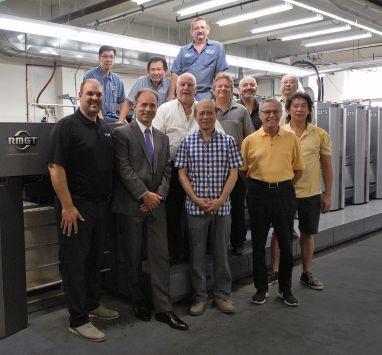
Laser Reproductions located in Toronto, Ont., has installed a new RMGT 9 series sheetfed offset press, replacing its 12-year-old RMGT 7 series press. Manufactured by Ryobi MHI Graphic Technology and purchased through distributor KBR Graphics, the press is equipped with automatic plate changing and LED-UV instant curing.
Burnaby, B.C., Westkey Graphics has installed Canada’s first HP Indigo 6900 digital label press and an SEI Laser LabelMaster for laser die-cutting and finishing. The investment will allow Westkey to produce “any label and packaging application, with any colour, at any run length,” HP explains.
PrintPro Digital & Offset
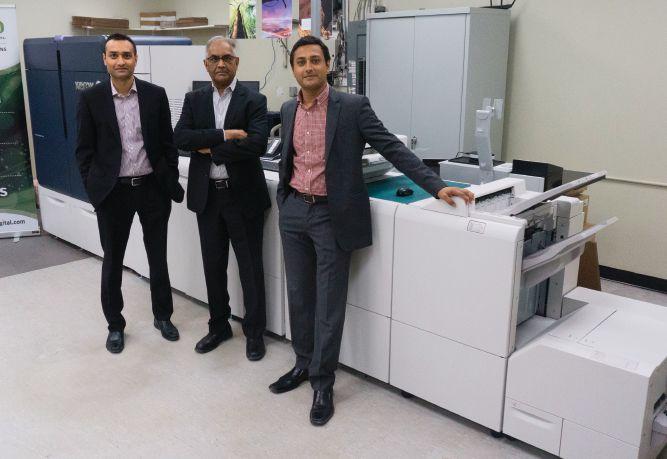
Printing has acquired the first Xerox Iridesse production press in Canada, a move it says will help achieve the double-digit annual revenue growth it has maintained since 2012. The Winnipeg, Man., firm plans to take advantage of the press’s metallic hues by entering the packaging market
Israel-based Carmel Frenkel has purchased a 71-inch-wide EFI Nozomi C18000 single-pass LED inkjet corrugated packaging press, equipped with an EFI Fiery NZ-1000 DFE print server and production system.
Vietnamese printer expands into packaging
Phu Thinh Printing, a commercial printer in North Vietnam, has invested in a new six-colour Roland 700 Evolution with coating module press which will be operational in the fall.
Founded in 2005, Phu Thinh Printing specializes in book, magazine, catalogue and calendar printing and employs more than 150 staff members. With the country’s first Roland 700 Evolution installation, Phu Thinh Printing says it plans to expand into the label and packaging field and focus on the growing domestic market for plastic and foil printing.
Offering a printing speed of 16,000 sheets per hour, the Roland 700 Evolution features combi-inks with three LED Interdecks and LED UV EOP, as well as an additional washing line, TripleFlow inking system, and a SmartCard printing performance package with ink blowing devices.
How will Avanti Slingshot Print MIS help your print shop succeed?
Within the first three months of going live with Avanti Slingshot, we had saved as much as eight hours/day just in order input, tracking, and managerial tasks.“
Armando Pena, COO of Printing and Marketing Group, Inc.
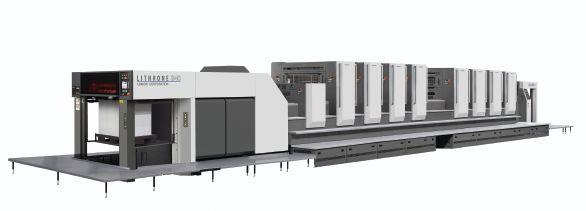
The Komori Lithrone investment, CEO and Co-owner of NextPage Gina Danner says, allows the firm to offer more value-added services to its clients through “sophisticated printing applications.”
NextPage installs second eightcolour Komori Lithrone GL40
NextPage, a provider of data-driven multichannel direct marketing, has installed its second eight-colour Komori Lithrone GL40 perfecting press with coater (GL840P/C) and Komori’s H-UV technology. Over the last five years, the Kansas City, Mo., firm has grown through mergers, acquisitions, equipment expansion and additional service offerings, and its purchase of its second Komori press is another step in its continuous investment strategy.
The GL840P/C features intuitive technology and subsequent efficiency with automated features, such as the KHS-AI integrated control system and the fully automatic plate-changing system (APC) designed to cut make-ready time in half, the company explains. Adding H-UV technology to the new press will help NextPage expand its capabilities by shortening time to market with the ability to go straight from the press to bindery, Komori says.
Additionally, H-UV will enable NextPage to produce specialty print effects and coating techniques for targeted direct mail campaigns and other marketing materials.
TPC installs North America’s first Scodix E106
Scodix has announced the sale of the first E106 system in North America to TPC Printing & Packaging, a producer of custom folding cartons and promotional packaging. The installation is planned for November, replacing the UltraPro with Foil the company installed in May 2017.
The Chattanooga, Tenn., company installed the UltraPro to expand the range of effects it offers to its clients, and within a year, TPC Packaging President Joseph A. Schmissrauter III says, the company realized that client demand necessitated an even larger and faster system. The original purchase agreement allowed for an upgrade once the E106 became commercially available, and after a visit to the Scodix facilities in Tel Aviv this past summer, TPC made the decision to authorize the switch.
Designed in B1 format for up to 4,000 sheets/hour, Scodix E106 supports short to medium run lengths.
In addition to running jobs with special effects, TPC Packaging plans to transition all short-run foil work to the E106, which it anticipates will help cut down on the costs to produce those jobs. “That will automatically feed business into the E106,” Schmissrauter says. “We should have a sizeable amount of machine hours already booked on day one, when the press hits the floor. And we anticipate some larger programs coming in that will utilize the unique combinations we can produce on the E106 shortly after that.”
He estimates that by next year, a quarter of the work that will be run on the E106 will be traditional capacity pulled from other equipment, while the rest will be jobs that are specifically designed to take advantage of the E106’s capabilities.
Phu Thinh Printing is described as one of the top three commercial printers in North Vietnam.
CALENDAR
Developing the brand identity for a Canadian cannabis company
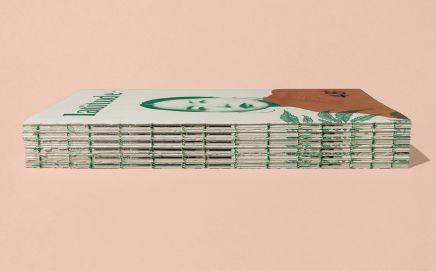
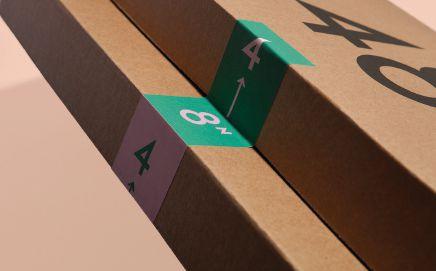
48North Cannabis Corp., a Canadian women-led cannabis company, describes itself as the country’s only licensed cannabis producer focused on the female health and wellness market. Determined to reimagine the landscape of cannabis for women, it recently worked with Toronto-based Blok Design to create a brand identity that would reflect its distinct philosophy and visionary approach.
“With [its] main focus being women, we set out to create a brand that would represent the expansiveness, the boldness and the clarity of a company that is challenging preconceptions and opening possibilities,” says the design studio, adding that its intent was to create a “deeply personal, intuitive experience.”
Featuring a warm colour palette of pink, beige, tan, orange and green, the new brand identity was unveiled this summer, showcasing how design plays a critical role in establishing new ways of communicating.
The identity unveiling coincided with the launch of Latitude, 48North’s new online platform intended to empower, educate and break taboos by sharing experiences, infographics and photo essays of women and their cannabis use.
In addition to Latitude, Blok Design also created postcards, packaging for boxes, business cards and a line of products.
Toronto-based Blok Design recently created a new brand identity for 48North, a women-led company working to rethink the landscape of cannabis in Canada. Blok also created packaging for boxes, postcards, business cards, a line of products, and Latitude, a new online platform.
October 18-20, 2018
SGIA Expo Las Vegas Convention Center, Nev.
October 24-28, 2018
All in Print China Shanghai, China
November 5-7, 2018
Digital Packaging Summit Ponte Vedra Beach, Fla.
November 8, 2018 Canadian Printing Awards Palais Royale, Toronto, Ont.
November 12-16, 2018 IS&T Color and Imaging Conference Vancouver, B.C.
April 11-13, 2019 Graphics Canada The International Centre, Mississauga, Ont.
April 24-25, 2019
AICC Canada Trade Show and Conference Toronto, Ont.
October 3-5, 2019 Print 19 Chicago, Ill.
October 23-25, 2019 Printing United 2019 Dallas, Texas
November 25-28, 2019 Shanghai World of Packaging Shanghai, China
June 16-26, 2020 drupa 2020 Dusseldorf, Germany
A reason to respond
The art of selling yourself is crucial to your sales success
By David M. Fellman
In my column last month, I started a series on The top 5 ways to talk yourself out of a sale. As you may remember, they are:
1. Too much talk, too little listen
2. Too many features, too little benefits
3. Pitching vs. storytelling
4. Making it all about price
5. Blind persistence
I promised to write about all five of those selling sins over the next few months. Last month it was too much talk, too little listen This month, it is too many features, too little benefits. I am hoping to turn you away from one of the most common mistakes I see printing salespeople make.
It has been said a printing salesperson has to make three sales. First, you have to sell yourself. Then, you have to sell your company, and then you have to sell the printed product. But if you do not sell yourself, is any of the rest likely to happen?
Selling yourself
As you surely know, it is difficult to get prospects to even return your calls and/or emails. Why is that? I think it is mostly because you do not give them very good reasons to respond.
One of my clients had a more-or-less standard introductory email. In three to four paragraphs, she would highlight her company’s capabilities, note how long they have been in business, identify some of their past and current customers, and make liberal use of phrases like “we know how to make you look good on paper” and “we are committed to your complete satisfaction.”
Another client laboured extensively over his ‘elevator speech’ and came up with something similar. In 25 seconds, he could tell you who he is, who he represents, what they are capable of printing, and how he would love to sit down and talk to you about your printing needs. This elevator speech was also the core of his voicemail message.
I asked both of them how their strategy was working. The answer was, “Not well.”
That did not surprise me, as I found nothing in either message to provide a truly compelling reason to respond. Beyond that, they put their cart before their horse, trying to sell the company before selling themselves.
provide you with a competitive Advantage and provide a Benefit to your customer as well. If there is no Advantage, you are probably selling a commodity, and the only Feature that is likely to help you there is a low price.
21%
According to HubSpot Research, salespeople spend one-third of their day actually talking to prospects. They spend 21 percent of their day writing emails, 17 percent entering data, and another 17 percent prospecting and researching leads.
I suggested adding something like this: “I am the point person for an organization made up of people who are skilled and professional in the arts of printing and customer service. My job is to see if there are ways in which we can bring value to your situation, and to improve on what you are doing or what you are getting from your current suppliers. I have XX years of experience at this, so I would like to think that I represent a good investment of your time. Can we talk further?”
Features, Advantages and Benefits
Everyone in sales should be familiar with the FAB formula. The basic idea is that every product or service offering has features, which in turn create advantages that ultimately provide benefits. It has been my experience though, that few printing salespeople use the FAB formula effectively in their selling, and many do not really understand the way it works in the first place.
The confusion seems to centre on the Advantage part of the formula, and specifically about who gets this advantage. It is not the customer! When FAB is applied properly, it is the salesperson! The key to making the FAB formula work for you is to identify Features of your offering which
In the examples above, both salespeople were stressing the Features of their companies. I added the specific role of the salesperson (point person), an Advantage statement (XX years of experience) and connected the Features to the Benefit (value and improvement). Remember, at the stage we are talking about, you are not trying to sell your products or services, or really even your company. Before you can do that, you have to sell them on the idea of responding to your email or calling you back, right?
You will have better success with that if you stay focused on the idea that you have to get them to engage further with you. It is not the company you have to sell at this point, it is yourself! Give them a good reason to talk further with you, and I predict more of them will.
DAVE FELLMAN is the president of David Fellman & Associates, a graphic arts industry consulting firm based in Raleigh, N.C. He is a popular speaker who has delivered keynotes and seminars at industry events across the United States, Canada, England, Ireland and Australia. He is the author of “Sell More Printing” and “Listen To The Dinosaur.” Visit his website at www.davefellman.com.
The power of the printed book
Recent figures show physical book sales are climbing
By Nick Howard
Printed books are on the rise. I was driving home from an appraisal in central New York; it was September 11 and we all have that day etched in our collective consciousness. Bob Woodward was being interviewed on National Public Radio (NPR). What an opportunity to buy his book, which was being released that very day, so I made a quick detour into the picturesque city of Oswego to look for a bookstore.
As luck would have it, I found one on the main street and strode in assuming I could buy a copy before it would be available in Toronto. I looked and looked, finally going up to the sweet older lady at the till and asking. “No,” she said. “We are supposed to get a shipment this afternoon but it hasn’t shown up yet. Even the prince-of-darkness (Amazon) is telling everybody one to three weeks for delivery.” Brick and mortar bookstores have no love for Amazon’s blitzkrieg approach to price-cutting. And so I left disappointed.
This got me thinking about the power of the printed book and our preference of physical books over e-books. Bob Woodward has created quite a stir in America with his new book, FEAR – Trump in the White House. Already, even before the official release date of September 11, the publisher, Simon & Schuster, is on its ninth printing. On the very first day, 750,000 books were sold and the totals for print reached 1,150,000 just a week later. This breaks Simon & Schuster’s all-time record for pre-orders.
But downloading to Kindles, and audible versions are instantly available. Still the preference is clear and the winner by far is the printed version. Harry Potter and the Deathly Hallows (2007) sold 15 million copies worldwide and holds the record for the highest initial print run of any book in history. Adding all the Harry Potter books together, the series is the best-selling of all time with 500 million copies. J.R.R. Tolkien’s Lord of the Rings (1954) sold 150 million copies and remains the largest selling book
books, often assumed as dead as the newspaper, are becoming difficult to ignore. Amazon, who started out just selling books, holds a 41-percent share of the book market and 67 percent of the e-book sales.
of fiction ever. To date, Think and Grow Rich by Napoleon Hill (1937) has 60 million copies printed and is the largest selling non-fiction book ever printed. Guinness World Records is another type of classification and since 1955, is estimated to have sold 124 million copies by 2010. Of course this excludes religious books such as the Bible. Estimates are between 2.5 billion to 5 billion Bibles have been printed since Gutenberg’s initial 1455 print run.
In the last year, another rather salacious book about the American president was released by author Michael Wolff. Fire and Fury sold 1.7 million copies in all formats just in the third week of its January 5, 2018, release. E-books and audio books represent between 400,000 and 500,000 of the total 1.7 million copies.
Physical books are proving difficult to ignore
According to NDP Bookscan, 2017 printed book sales increased 1.9 percent compared to 2016. If we go back to 2016, sales jumped 5.2 percent. E-books fell 7.7 percent during the same period. Adult non-fiction books led all growth categories with a 6.85-percent increase from 2015 to 2017. How big is the printed book market? It’s tough to gauge as there are so many variables and types of books, but information available indicates for the U.S. alone the printed book represents revenues of US$3.3 billion. A billion paperbacks are in these figures. Physical
Deloitte’s 2015 research paper, Print is alive and well—at least for books, discovered sales of the printed book are four times larger than e-books and in all countries. Deloitte also pegged the U.S. total sales as much, much higher. They reckon that in 2013, over $14.6 billion in sales with print sales representing 79.5 percent and e-books only $3 billion of the $14.6 billion totals. Citing the obvious difficulty using a smartphone to read books, Deloitte discounts phones ever replacing a book. Tablets, Kobos or Kindles are another story perhaps. But even with these devices, which can download in seconds, enlarge font sizes, adjust for poor lighting and hold hundreds of volumes, printed books not only hold their own but are actually stealing back market share.
Deloitte goes on to say that “the aversion of millennials to physical CDs, DVDs, print newspapers or magazines does not extend to print books. Ninety-two percent of 18-to-29-year-old book readers in the U.S. read in print in 2013... Only 37 percent read an e-book.”
All this good news fortifies an industry. Books can also be valuable. First editions always garner great interest and there are hundreds of thousands of rare book collectors pounding the pavement, rummaging through thousands of used book stores hoping to find a rare edition such as Senator John McCain’s favourite, For Whom the Bell Tolls. In today’s world and especially for those living in open societies, free time is not a luxury any longer. Mass automation is now the norm — not the exception. Free time will only increase as more and more of our jobs succumb to intelligent processes and machines. We all have more leisure time to fill.
Large book runs are only a part of overall book sales. Small presses and private publishers produce titles constantly but with much smaller runs. A great many more books are printed digitally in tiny quantities. I know one artist who does all the work himself. He sets his own type, engraves his own illustrations, binds by hand and makes a bespoke box. These are treasures.
With more time and money, the populace will seek out real experiences and physical things to enjoy, collect and exhibit — things you can’t always do with e-books. Still we must consider that a printed book is not the saving grace for
Continued on page 20
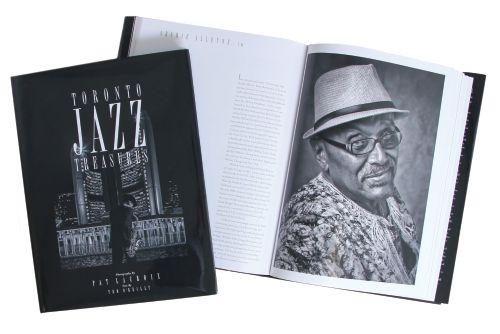
A selection of hardcover and softcover offset books printed by Canadian print providers.
Managing print in a digital age
Create value by leveraging print products with digital methods
By Bob Kalenka and Gary Abitz
According to a 2018 Keypoint Intelligence-InfoTrends survey, 70 percent of consumers choose to receive their most essential communications, such as statements and bills, in print. Contrary to popular belief, in today’s hyper-digital age, the printing industry is still active.
That said, it’s not just a case of print versus digital — continuously changing consumer preferences and regulations make it difficult to enhance the customer experience and maintain satisfaction while determining the optimal communications strategy.
Across all industries, companies are facing increased pressure to lower print and mailing costs while addressing declining volumes, outdated equipment and upcoming lease renewals. As a result, many organizations are naturally turning to the digital platform as one way to offset these costs, but creating value – and revenue – by leveraging print communications could be a smarter, longer-term strategy.
It is important for companies to keep up with changing trends and stay ahead of business needs. Here are some ways organizations can succeed as they manage their print strategies and get the most out of essential communications as they “go digital.”
Data-driven targets
With enterprise-wide data initiatives, companies are opting to move away from mass mailings and their associated expense. With propensity modeling and analytics tools, companies can identify their most profitable, qualified prospects and target those mailings. We anticipate this trend will continue, as data-driven efficiencies are creating measurable ROI.
A personal presentation
Personalization plays an important role in purchasing decisions, as noted by 86 percent of survey respondents. With this in mind, many companies are adding personalized marketing offers on every component of the print package, from documents to envelopes.
As colour becomes more cost-effective and continuously important to the overall
Even in today’s hyper-digital world, print remains an active and, for many industries, a vital customer touchpoint.
presentation, companies are also leveraging its power. An article by Colorcom notes that colour can improve readership by 40 percent, learning by 55 to 78 percent, and comprehension by as much as 73 percent.
Cutting costs through packaged deals
To cut through the clutter, a creative way to capture attention is to combine sealed envelopes in one larger mailing package going to the same address. This provides companies with a way to optimize mailings and reduce costs while offering customers one convenient delivery.
Creative packaging has also been added to the mix. For example, a new approach for proxy communications is to send investors a clear polywrap of their annual report to showcase the mailing contents and entice investors to vote their proxy.
Sticky messages will naturally stick
It is easy for repetitive messages to become noise to clients. Take “go digital” for example – this is on many envelopes and inserts we mail on behalf of our clients, but customers eventually tend to overlook it.
Regularly updating the message – in copy and design – helps keep the message fresh. One unique print technique that has
proven to grow digital adoption is embedding a sticky note within the wall of an envelope via a die-cut section that remains smooth and secure, but can be easily removed and used as a sticky note. By doing so, one company saw its digital adoption rate more than double within the first two months of making this change.
Improved onboarding; improved outsourcing
Historically, the conversion effort created the biggest barrier for in-house print operations to outsource jobs. Now, with the introduction of advanced technologies that support faster onboarding, the heavy lifting is removed from the company’s IT resources. Onboarding time was reduced by 40 percent for one of our clients, making outsourcing increasingly attractive. Even in today’s hyper-digital world, print remains an active and, for many industries, a vital customer touchpoint. As companies work to effectively manage print, it is increasingly important to understand the true costs and quality of communications, as well as the value they are creating for customers. In order to prepare for tomorrow’s next channel and new challenges, businesses need to stay ahead with innovative technologies that will help them prepare and capitalize on what’s ahead.
BOB KALENKA is Chief Operations Officer at Broadridge Customer Communications, and GARY ABITZ is Senior Vice President of Operations at Broadridge Customer Communications.
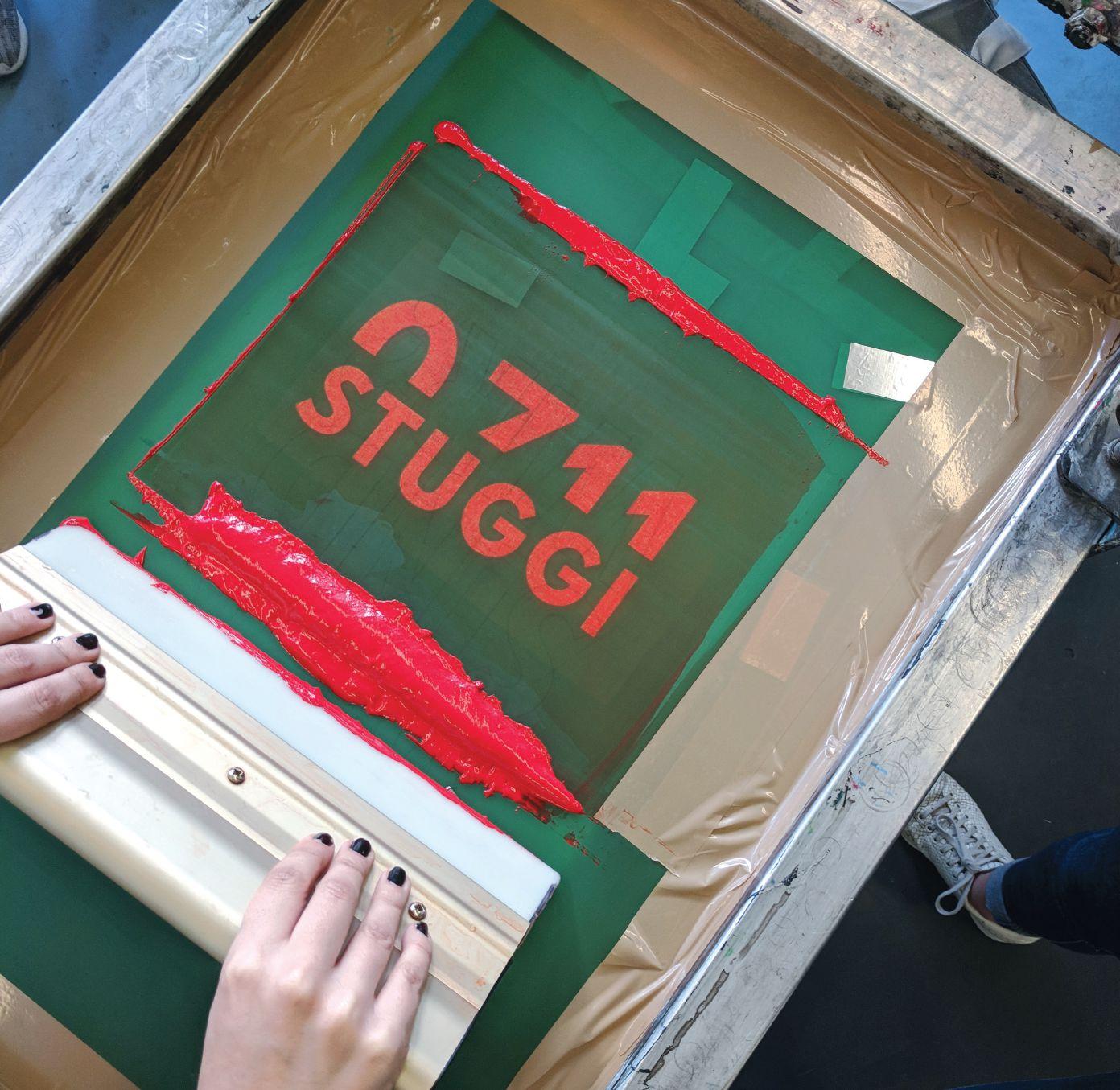
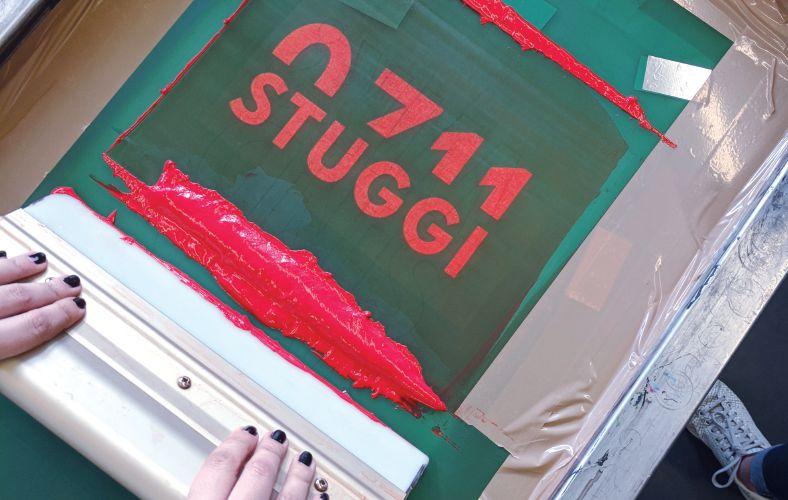
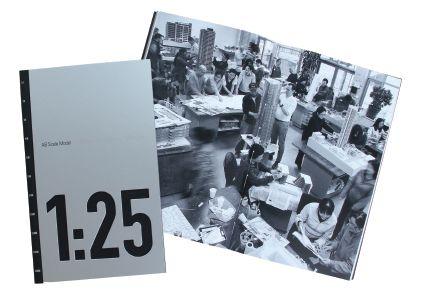
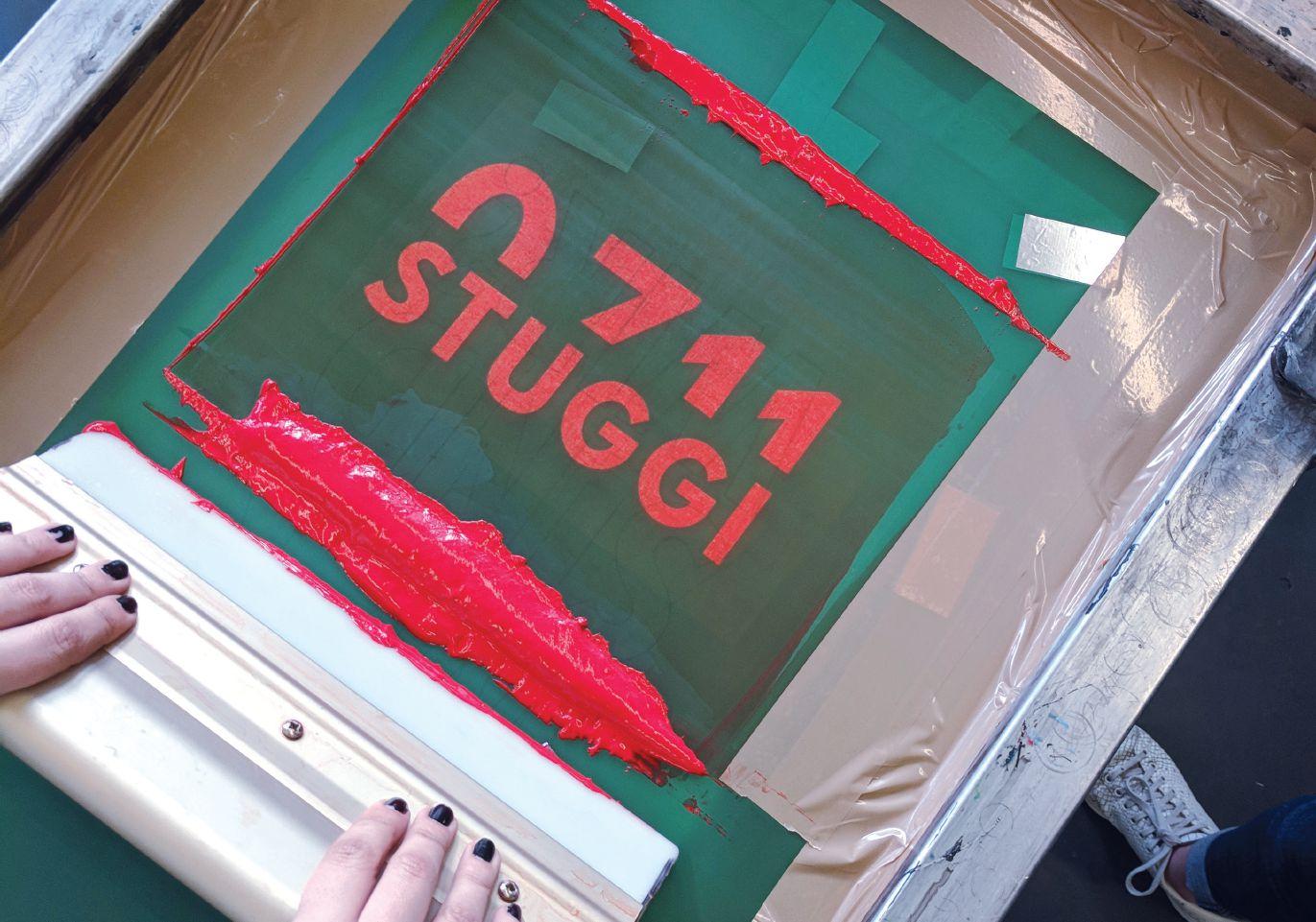
Students put screen printing theory into practice by creating their own line of textiles focused on the numbers 0711, Stuttgart’s calling code.
GLOBAL EDUCATION
Highlights from a memorable international exchange that goes beyond the classroom
By Jeremy Page
Standing on the platform of the Stuttgart main station – hair matted against my forehead from the long flight and following train ride, sleep in my eyes, and clutching a packet of papers bearing the familiar red stripes of the Hochschule der Medien logo – I knew things were different. This was my second time in the city, but an excitement separate from my first visit buzzed in my chest. I was stepping off of this particular train not as a tourist, but as a student. Specifically, I was travelling from Ryerson University’s Graphic Communications Management (GCM) program to study print media production, advertising and publishing in Germany’s Stuttgart Media University.
My first days in the city were a whirlwind — bank accounts, transit passes, course registration, and countless other administrative details needed to be handled before I could begin my exchange semester in earnest. A welcome week of sorts was planned by the local students’ union, and I had the good fortune to be in a small program with some brilliant women from the United States, Spain, The Netherlands, Chile and even my home university back in Canada. Now, coming into this specialized ‘minor program,’ as it was called, we all had vastly different skillsets, and it was plain to see this would either be a blessing or a curse in the coming months. From web design and coding, to layout and typography, to marketing and communications, to colour and material science, we all had our interests and our specialties.
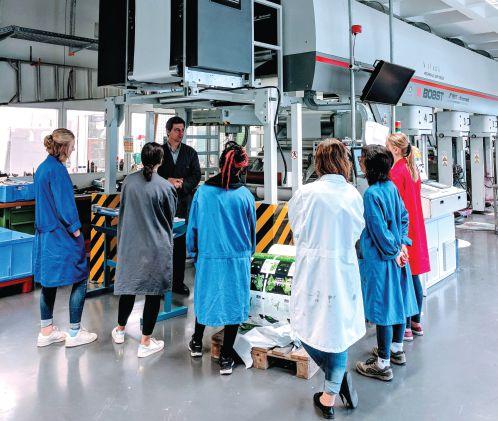
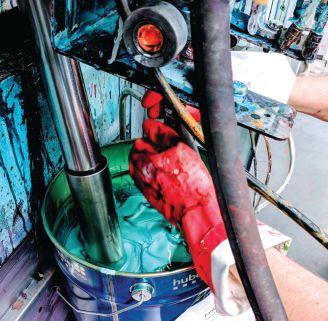
Above: Students are briefed on the operating conditions of the Bobst Rotomec MW60 rotogravure press before producing their own line of decorative gift wrap. Right: Instructors work alongside students to ensure the metallic cyan ink is properly mixed before being fed into a printing unit of the Bobst Rotomec MW60.
Our minor, officially called Advertising & Publishing, would prove to be a hardy mix of each of these facets which would have all of us off-balance, excited, apprehensive and inspired in equal measure. We would touch upon aspects of our program that were familiar, something we could personally excel at in the company of each other, while breaching new grounds in topics we had never before covered. One key example of this was to be found in the eyes of a Chilean student – fluent in graphic design and elegant typography, with a keen eye for politically charged messages beneath her magenta dreadlocks – lit up in childlike wonder upon seeing and having the chance to work with a commercial offset lithography press. Some of us had spent years around machines such as these by this point, but to be thrown back to our first encounters with these whirring, groaning beasts of machines that spat full-sized artworks faster than we could count? It inspired in all of us the same wonderment and appreciation that it did in our South American classmate. The weeks that followed were full of these moments, and our bond as a class deepened. The seeds of collaboration, competition and comradery had been planted within us, and were slowly beginning to creep up from the soil of our established educations.
One of my fondest memories of my time in Germany will always be the af-
ter-hours session we spent as a class in a screen-printing lab, making gifts for friends and family alike. To be given the freedom to use these tools we were learning so much and so quickly about was an amazing opportunity, and a smile still lingers on my lips when I see the stains of neon pink inks across the pair of blue jeans I was wearing that day. In working together, we found ourselves realizing this collaboration is what the industry that ties us together is all about. When the day was done, a small mountain of T-shirts, textiles and canvas bags laid in a cardboard box, ready to be divvied up and taken to our dorm rooms. Static-laden music from a German pop radio station filled the air as we washed the inks from our hands and our forearms, but we couldn’t wash the
until it was perfect. And perfect it was. To an onlooker it may have been comical, watching this group of eight students in mismatched lab coats wearing rubber gloves up to our elbows run from end to end of the press, craning our necks to monitor every inch of web that passed through the machine. However to us, it was exhilarating.
The opportunities for collaboration didn’t stop in the classroom and lab sessions though. I found myself working with a team of talented writers, designers, and production specialists on one of the HdM’s student publications, Vielseitig. In its 10th production cycle, the magazine’s special edition Sex Sells was overseen by students from every program of the Hochschule from concept to design, to a
Our academic experience was one of growth and challenges – stepping out of our comfort zones and exposing ourselves to technologies, workflows and people who we otherwise would never have explored or met.
smiles from our faces. We knew at this moment the Hochschule der Medien was giving us more than the chance to expand our knowledge in the printing and allied industries — it was giving us the networking opportunity of a lifetime.
Our academic experience together was one of growth and challenges, stepping out of our comfort zones and exposing ourselves to technologies, workflows and people who we otherwise would never have explored or met. I remember how nervous I was, looking down the length of the behemoth Rotomec MW60 rotogravure, or Tiefdruck press. Never before did I have the opportunity to work with, on, in and around such a machine, and the smell of the solvents in the air while the device purred to life was intoxicating. Although I have nothing but praise for the instrumentation labs of the Ryerson GCM program, there simply isn’t the space for such a commercial-sized machine in our academic buildings, and to have the chance to aid in the running of one had me giddy with excitement. After a lengthy lecture on rotogravure theory, forms making and ink mixing, we were let into the lab to work on our own projects. Eight of us worked in tandem to mix two batches of metallic inks by hand, figuring out a sample recipe to be used in the multi-litre batch that would facilitate our press run the following week. Lab coats on, spectrophotometers active, and with a trusty pantone guide in hand, we worked tirelessly to create a product we could be proud of. It was never explicitly said by any of us, but we each knew as this was our last major collaborative academic effort of the semester, we wouldn’t stop
painstaking production process involving offset and digital printing, as well as using the in-house bindery to fully produce and deliver hundreds of finished products to our fellow students. Seeing the passion which redoubled the confidence of these students as they engaged with equipment and industry in the pursuit of making this production meet their high standards was breathtaking, and the excitement of holding a finished copy in our hands at the end of the process was nothing short of awesome.
International exchanges are many things, and as I reflect upon my time abroad and the experiences I had, I know that I am lucky. The printing and allied industries are not as siloed as a young student coming into university may believe. The potential for cross-border collaboration is immense, and with such a rapidly changing, dynamic and diverse industry, we can lift each other up to create more, better things than we ever could alone. Though it was hard to part with the amazing women I had the chance to spend the last six months with, not one of us saw it as a goodbye. We knew – and know – we will see each other again. You never know where opportunity may take you, but I know with people like them going into the workforce, the industry is in good hands.
Auf wiedersehen, Hochschule der Medien — I’ll be back.
Jeremy Page is a fourth-year Graphic Communications Management student at Ryerson University where he is an advocate for early student industry involvement through various student groups.
ENGAGING WITH MILLENNIALS
Research shows marketing campaigns with compelling direct mail components hit the spot with today’s largest consumer generation
By Canada Post
Millennials are being hailed by marketers as the largest consumer generation in history. There are roughly 9.8 million of them in Canada, and they make 33 percent of our online purchases, according to 2017 Canada Post research. In 2015 they became the biggest generation in the Canadian workforce, accounting for roughly 35 percent, and by 2025, they will make up 75 percent of the global workforce and will be the most vital demographic for retailers to attract. So the big question on most marketers’ minds is, how do I attract them?
Millennials are the first generation to grow up immersed in digital technology,
so most marketers believe email and digital advertising is the best way to break through to them. Digital channels are important when it comes to reaching out to them, but research suggests a digital-only approach may not be the most effective way to connect.
Direct
mail should be in your millennial marketing strategy
Direct mail might not be something you are considering adding to your millennial marketing strategy, but it should be. Here are a few compelling reasons why you should incorporate it into your next campaign.
Millennials’ inboxes are full
Millennials are bombarded with advertising from every angle online, and they’re not amused. In fact, they’ve become
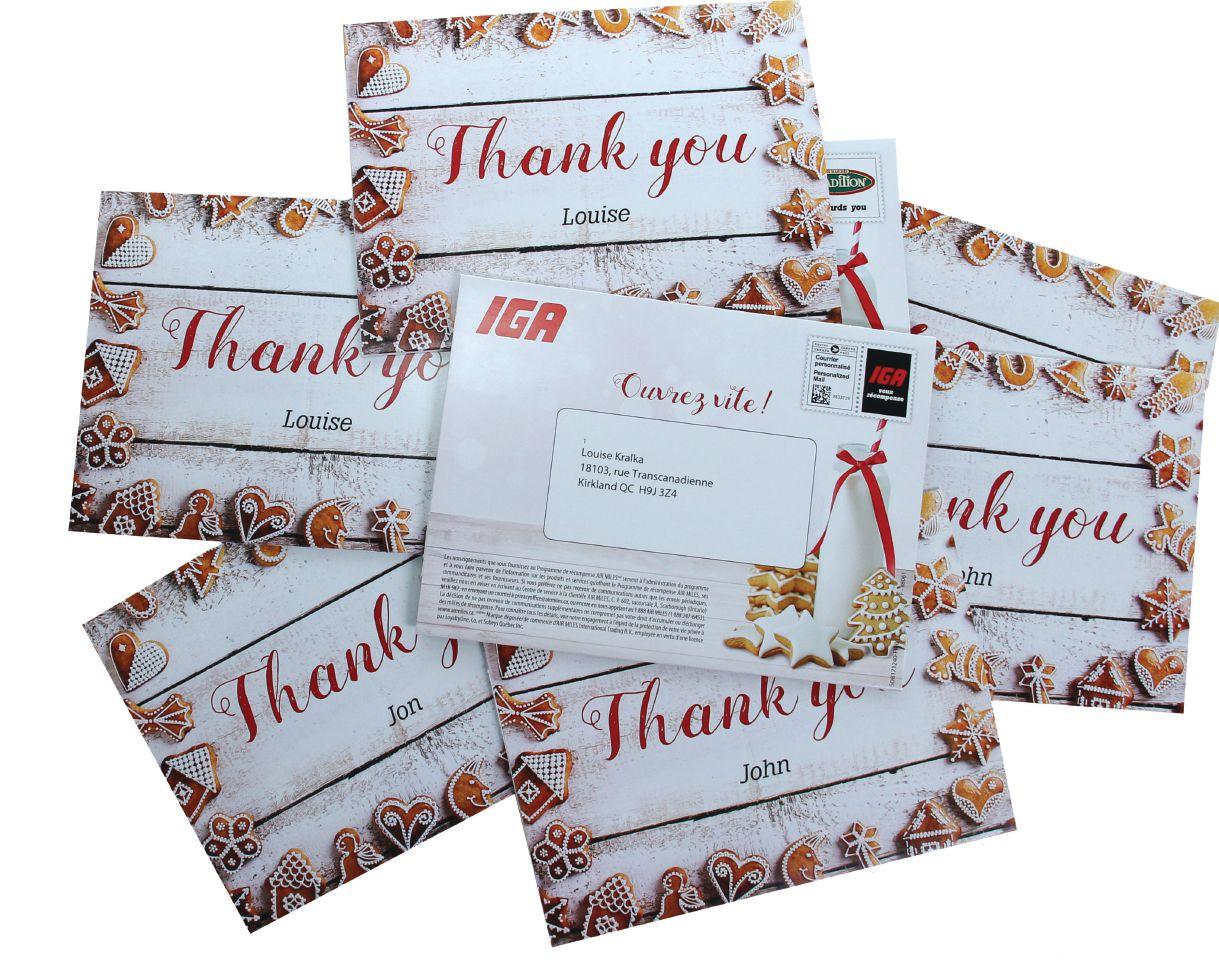
Sobeys Best Clients 2016, printed by PDI Inc., won gold for direct mail at the 2017 Canadian Printing Awards for its focused IGA holiday promotion.
#SmartPrintShop
Providing a unique end-to-end workflow, Prinect is driving the Smart Print Shop – reducing touchpoints, boosting productivity, and controlling your business in realtime. Maximize your margins and exceed customer requirements with our all-in-one workflow solution, Prinect Production Manager. Simply Smart. Is Prinect Production Manager Right for You? Take Our Free Assessment at http://bit.ly/PrinectProMan
www.heidelberg.com/ca
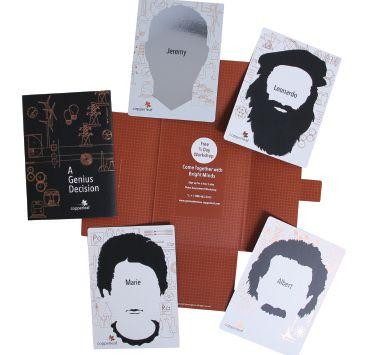
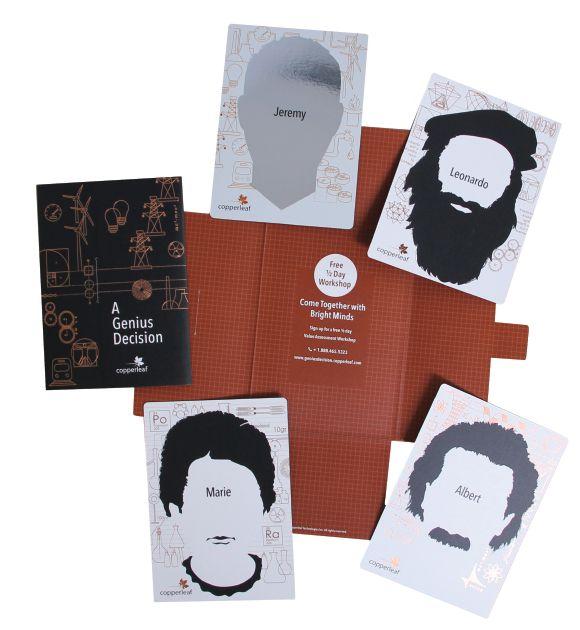
Winning silver for direct mail at the 2017 Canadian Printing Awards, the Copperleaf Mailer project by Hemlock Printers features the use of digital and UV offset. Three static cards were printed on the Heidelberg Speedmaster XL UV six-colour and one variable card was printed on the HP Indigo Digital using silver foil board to create a mirror effect.
highly efficient at weeding out unwanted marketing. According to eMarketer, a whopping 46 percent of them use ad blockers on their desktop, 17 percent use them on their mobile device, and 14 percent use them on both their desktop and mobile device.
Their mailbox isn’t
Sending direct mail creates an opportunity for a brand or business to be welcomed into the homes of millennials. Despite what you might think, they value it. In fact, most of them pay attention to it – almost all of them think it’s reliable, over half of them have made purchases based on direct mail offers – and the majority of them say they like receiving it, according to an article by the U.S. Postal Service.
Millennials pay attention to direct mail
77%
Quad/Graphics research finds 77 percent of millennials pay attention to direct mail advertising.
Millennials are more responsive to direct mail than older generations. The U.S. Postal Service article notes millennials are more likely to scan it, less likely to discard a piece without reading it, and tend to organize and sort what they get. They also take more time to read the mail, and enjoy showing what they receive to others.
Digital mail and direct mail work better together
Canada Post conducted Neuromarketing research that revealed direct mail and digital are stronger together. When paired with digital advertising in integrated campaigns, direct mail optimized consumer action, emotional engagement and brand recall. People paid 39 percent more attention to integrated direct mail and digital campaigns than to single-media digital campaigns, and consumers had 40 percent higher brand recall when direct mail followed email. Better brand recall improves the odds that a customer will trust a particular company, associate the brand with a product, and ultimately buy from them.
By reaching out to millennials both digitally and through physical mail, marketers can send a stronger message. This two-pronged approach can increase brand recognition and recall, and garner more attention for a campaign than sending an email alone.
Sending direct mail to reinforce an email campaign targeted to millennials is a great way to ensure that your email actually gets opened. The recipient will be more likely to recognize your brand, and therefore more inclined to open and read what you send.
Five tips for better direct mail marketing
If you’re ready to explore direct mail marketing for millennials, here are a few tips to keep in mind when creating and sending your campaign.
Tip #1: Send something entertaining
Be real and engaging with your messaging and presentation. The more authentically you present your brand, products and/or services, the more they will resonate with millennials who crave authenticity. Millennials also respond well to experiential marketing and love to be entertained — that’s why many of them go to big events, conventions and festivals. Make your campaign fun and interactive to drive better results. Be as creative as possible and think beyond the letter.
Tip #2: Send something personal Millennials respond well to personalized marketing materials. If you target them as individuals, you can show each customer that they are more than just another name on your list. A personalized direct mail piece can show your customers that you ‘get’ them, you know what they want, and you’ve got it ready and waiting. To get personal with your marketing, you need to keep thorough data on your customers.
advancements in print technology, marketers can send pieces enhanced with exciting things like scented ink and textured paper.
Tip #4: Send something worth saving
A huge advantage of direct mail is the fact that people like to hold onto it. According to The Private Life of Mail, a whitepaper from UK Royal Mail, advertising mail is kept in U.K. households for an average of 17 days. Because it tends to linger in the home, a piece of mail can have a pretty significant impact on a recipient over the course of days and weeks. Increase the odds of your mailer sticking around by sending something useful or informative. A product catalogue is a great example of a direct mail piece that has a good chance of lingering in a millennial’s home. According to a Quad/Graphics whitepaper, Millennials: An Emerging Consumer Powerhouse, more than 50 percent of millennials enjoy and look forward to receiving retail catalogues; 49 percent wish certain companies had a catalogue and 40 percent buy more from companies when they receive a catalogue.
Tip #5: Send your campaigns to millennial influencers
Millennials are big fans of peer-to-peer marketing. They greatly value reviews and referrals, especially when purchasing expensive items. Instead of mailing ads to a large volume of recipients, consider trying your hand at an influencer marketing campaign. Reach out to millennials who have a significant following who might like your products. Mail them a special selection of your products for a review or giveaway. Encourage them to create content around your products, or to offer their followers a special discount code or rate. You can also tap into peer-to-peer marketing by mailing a refer-a-friend offer to your customers or prospects. A campaign like
If you target them as individuals, you can show each customer that they are more than just another name on your list. A personalized direct mail piece can show your customers that you ‘get’ them, you know what they want, and you’ve got it ready and waiting.
Good data will help you tailor your communications to each customer, and enable you to share enticing special offers with them based on their shopping preferences, purchase history, and search history.
Tip #3: Send something tactile
An extension of tip #1, explore the tactile nature of direct mail to engage and entertain millennials. They respond well to highly visual and tactile communications, so send something that might catch their eye and engage their senses. Thanks to
that will help you attract new leads for your business, and keep your customers happy with a discount.
Millennials may be the most important consumer group to attract to your business. Use these tips and insights to break through to them with your marketing campaigns.
This article was originally published on the Canada Post blog.
Fulfillment systems
A range of specialized technologies and solutions designed to optimize fulfillment and direct mail operations
Taradel Snap Admail Plus
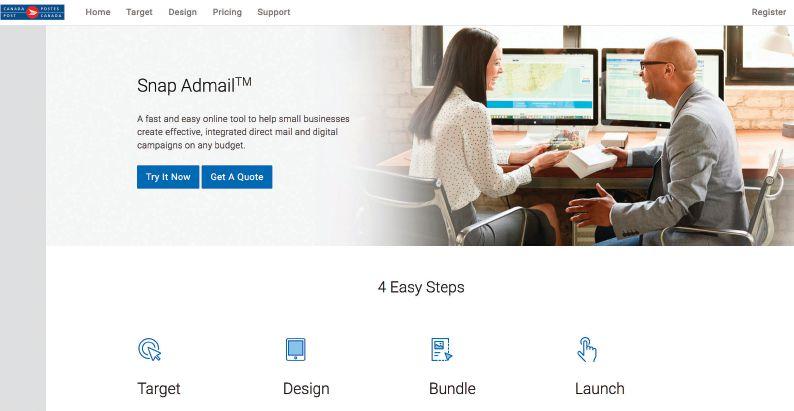
In September Taradel LLC announced the release of Snap Admail Plus, a multi-channel marketing solution designed to help advertisers target the same prospects with direct mail offers and online display advertisements, for Canada Post. Snap Admail Plus campaigns include design, coding, hosting and distribution, along with post-deployment performance reporting. The service is available to advertisers anywhere in Canada and the ads are designed to closely match their printed counterparts. As a licensed vendor for the Canadian Census, Taradel and its partners compile offline data in Canada at both the household and postal code level. This includes demographics such as home value, household income, and other data. Then, the data is aggregated and de-identified to comply with Canadian laws and local regulations, Taradel explains, saying the solution will enable marketers to send display advertising to the exact same households receiving their direct mail offers.
Messagepoint offers Salesforce connectivity
Messagepoint expanded its platform connectivity to Salesforce in June, explaining the new functionality enables non-technical business users to deliver interactive, one-to-one communications across both print and digital channels within a single, integrated platform, by enabling business users to order and interactively customize a Messagepoint Connected email or other communication directly from the relevant location or record in the Salesforce Sales and Service Clouds without having to sign in or out of Messagepoint. Meanwhile, Messagepoint’s Journey Builder connector allows a pre-configured email, letter, or other communication to be triggered automatically at exactly the right time in a customer’s journey. With Messagepoint as an object that can be
included in a journey, communications can be composed and delivered through the customer’s preferred channel of communication without user intervention, it explains.
W+D haptic direct mail marketing
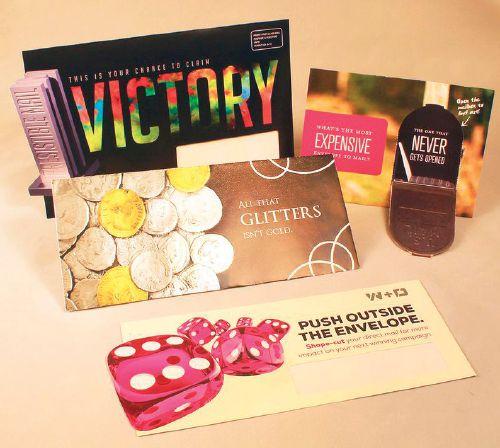
At Print 18 direct mail solutions provider W+D premiered several new technologies and direct mail applications that feature haptic marketing, which features the use of touch to influence purchasing. W+D says recent research shows the neuroscience of touch as a marketing tool has shown improvement in direct mail lift and branding and it has become a sought after value-add in the direct mail production.
At the show, W+D ran its new BB700 S2 performance class inserter with a read and print direct mail application on a USPS full automation rate approved shape-cut envelope. Each envelope and content will be tracked as well as 1:1 colour personalized messaging will be added both inside and out, explains the company. The BB700 S2 read and print
Available through Canada Post’s website, Snap Admail Plus is a multi-channel solution designed to help advertisers achieve better ROI from direct mail campaigns.
system, which also incorporates a Lake Image Discovery camera and print solution, is designed to ensure the correct variable information, graphics and addresses are printed on the correct matching envelopes with minimal interruptions and that the full direct mail package, including the return BRE, is IMB trackable.
Avanti-BCC Software integration
Avanti announced in May the integration of its Slingshot’s Print MIS software to BCC Software’s BCC Mail Manager postal software, a USPS CASS/PAVE certified platform. The integration, Ontario-based Avanti explains, will provide print and mail shops with “seamless communication” of the mailing and production requirements for a job and is designed to eliminate risk and errors that typically result when mailing lists are processed.
W+D haptic direct mail marketing.
Postage, reports and production mail files will now be added directly to an Avanti Slingshot Order so that mission critical information will be centrally located. Business requirements that impact mail sorting rules will be communicated automatically to Avanti Slingshot to create correct mail drop and postage information, it explains.
Neopost MACH 6 with Memjet technology
Memjet in June announced that Neopost has incorporated Memjet’s printing technology into its MACH 6 digital colour thick-media printer for mailing, printing and packaging applications. According to Neopost, the MACH 6 represents Neopost’s next evolution in its short-run, digital colour printing portfolio.With a new design that includes a seven-inch colour touchscreen interface, electronic media thickness control and a wider feed throat, the MACH 6 can run a range of materials, the company says. In addition to traditional applications such as envelopes, station-
ery, greeting cards and special event invitations, print providers can use the MACH 6 to produce stuffed envelopes, chipboard, corrugated cardboard and folding cartons up to 3/8-inches thick.
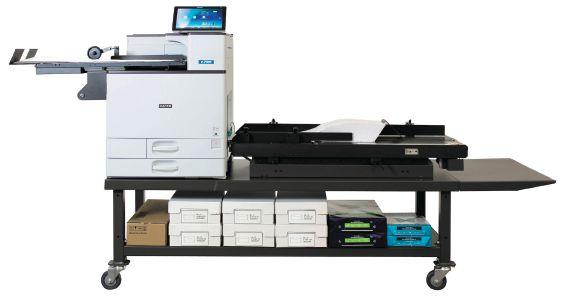
En/Press is a four-colour process press built around an Adobe PostScript controller that delivers full-colour output at up to 60 letter-size pages per minute or 4,000 #10 envelopes per hour with variable data.
Xante En/Press for envelopes
Xante in February released the En/Press as its next-generation digital envelope press. En/Press is a four-colour process press built around an Adobe PostScript controller that delivers full-colour output at up to 60 letter-size pages per minute or 4,000 #10 envelopes per hour with variable data. Powered by iQueue workflow software, En/Press produces print quality of up to 4,800 dpi. It includes PlateMaker 8 computer-to-plate technology, meaning the same press that produces envelopes, NCR forms and stationery, can also produce polyester plates. PlateMaker 8 takes advantage of the En/Press technology to produce Myriad2 plates on sizes up to 13 x 19.38 inches that are suited for one- or two-colour jobs. The Enterprise Feed System has been redesigned with a slimmer profile. While handling the same 1,000 envelope capacity, Enterprise now accepts media as small as 3.5 x 3.5 inches.
Böwe Systec Direct Mailer
Last September Böwe Systec introduced its Direct Mailer inserting system to the North American market. Described as a flexible system capable of processing #10 and 6 x 9-inch envelopes at up to 15,000 per hour, the system features an optional flats capability at up to 10,000 per hour. Available as a base inserter with rotary and friction feeders or combined with Böwe Systec’s input channels and controlled by the Cockpit operator interface, the Direct Mailer is designed to be easy to operate and economical to maintain.
EFI MarketDirect Platform
During its annual Connect conference in January, EFI debuted its new MarketDirect platform to help printing companies and marketing service providers drive integrated customer engagement. Described as a customer engagement platform, it gives users the ability to develop, distribute and track customer communi-
cations for loyalty programs, newsletters, surveys and communications. The software includes cross-media/multi-channel technologies available from EFI, building on the company’s DirectSmile platform for lead generation, new customer acquisition, and prospecting. The software is available as a standalone application or alongside EFI’s web-to-print software employed in its Productivity Suites. MarketDirect also includes EFI SmartCampaign, a new HTML5-based crossmedia design tool. With a new storyboard automated campaign-creation feature, EFI explains, customers can build and visualize a campaign in a matter of minutes using simple drag-and-drop tools.
Quad/Graphics Accelerated Insights
Quad/Graphics in March introduced Accelerated Insights for testing direct marketing designed to lift response rates, increase reliability and shorten time to market. Designed to test up to 20 content variables in one pass, the virtual platform uses a persona matrix that combines demographics with emotional characteristics to predict what factors motivate someone to act on an offer, Quad/Graphics explains, noting that all of this can be accomplished without a physical mailing.
As well, the Accelerated Insights platform relies on a vetted pool of millions of survey respondents, differentiated based on hundreds of characteristics, explains Quad/Graphics. The technology draws from that pool to create survey panels that mirror direct marketers’ target consumers. The panels are presented as mailing packages that each have multiple variables. Based on the panels’ responses, an algorithm predicts which combination of format, messaging and imagery will be most successful. With that information, marketers will be able to determine the most cost-effective package before sending out a single piece of mail.
Barometric Direct Mail suite
Barometric Direct Mail released a solution that tracks and measures the effectiveness of direct mail in online and offline conversions, without the need to capture user data, use tracking codes, or create custom URLs. The Barometric Direct Mail suite allows for customized targeting of a user who has digitally or physically engaged with a brand. With Barometric’s Device Graph, marketers can view their online and direct mail campaigns to see how they work together and understand consumer behaviour across all environments. For example, when consumers open shopping carts and do not complete their purchases, the Barometric Device Graph can match those consumers to their household addresses and re-engage them with direct mail to increase brand interaction and drive form completions.
CHRONICLE
Continued from page 12
the rest of print because it isn’t.
Once younger people enter positions of authority, especially in education, there will be a further elimination of [text] books. Nothing can stop that once the hard accounting comparisons are analyzed. Digital books, especially in schools and universities, have no manufacturing costs and hardly anyone picks a chemistry book off a shelf for enjoyment. I recently sat in on a few classes at my daughter’s university. Watching other students interfacing with tablets and laptops – smartphones too, of course –made me realize their accrual of knowledge is completely different from when I went to school.
If what we print is disposable and has no redeeming qualities after a “sell-bydate” then big offset press commercial printing will continue to decline. Talk to almost any commercial printer and they will tell you they make their highest margins on their lowest cost equipment: Digital copiers and wide-format inkjet. Who wants to keep a real estate flyer for a house already sold?
Books have more to offer, with its combination of a best-selling author and a format that continues to captivate future generations. It’s been doing that since books were as valuable as a RollsRoyce back in the 15th century. There is a lot of skill needed to write, then produce, a book. That’s a major difference. Books need authors. One of the reasons why printed book sales are climbing is because an author, such as Bob Woodward, writes something we really want to read. The Internet, social media, TV and radio do the heavy lifting that drives us to want to buy that book. Most important of all is our need to own things. Leisure time just exacerbates our ability to accumulate anything unique. Books, well-written and well-produced, are ideal just as rare paintings and sketches have shown us. We can scrawl in the book, have it signed by the author, give it as a gift or adorn a library.
Just look at book sites such as Abebooks.com and Vialibri.net and you will see the power of the printed book. Signs indicate that’s not changing anytime soon. Make your customer want your stuff because he or she can’t get it anywhere else.
NICK HOWARD is a partner in Howard Graphic Equipment and Howard Iron Works, is a printing historian, consultant and Certified Appraiser of capital equipment.
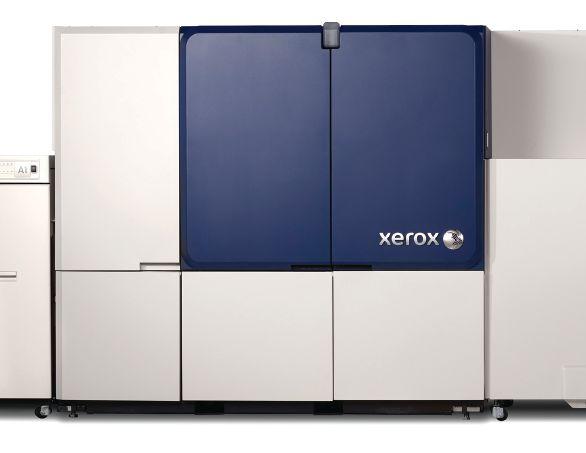
With the demand for colour inkjet pages expected to grow more than five-fold through 2022 as predicted by IT Strategies, Xerox says it is responding to the demand by increasing output capacity for the Xerox Brenva HD Production Press by more than 50 percent, along with offering expanded stock choices and adding a roll feed capability for continuous operation. With the new duplex speed kit, Brenva HD’s output speed increases from 182 to up to 275 pages per minute, suitable for book, transactional and direct mail segments. The new kit, Xerox says, is designed to increase productivity by speeding up duplex (twosided) printing for books and manuals, as well as many transactional jobs. Depending on the sheet size used, print providers can now achieve up to 300 letter size impressions per minute with the Brenva HD, the company explains. Working with technology partner Tecnau, Xerox now offers the Tecnau SheetFeeder BV roll feed system for up to nine hours of non-stop cut sheet paper feeding. According to Xerox, Brenva HD is the first sheetfed inkjet press to offer a roll feed option, helping print shops produce longer run jobs without frequent paper tray restocking. Additionally, Brenva HD can now
include product enhancements such as special inks, varnishes, foils and other finishing effects. A subset of Scodix applications is now included in the Visualizer library and aims to eliminate the need to print and manually reproduce special finishes during the prototyping and presentation stage. Print samples can now be designed and viewed on Esko Studio and then printed on a Scodix Digital Enhancement Press, using real foil, without the need for molds or dies.
Weilburger Graphics coating quantity calculator
Phoseon TargetSure UV irradiance monitor
print on heavier weight stocks up to 270 gsm, suitable for postcards, ID cards, and other jobs that utilize thicker media.
Scodix applications added to Esko Studio
Esko and Scodix have announced a collaboration to include Scodix packaging enhancement applications within the Esko Studio suite including, Scodix Foil, Scodix Embossed Foil, Scodix Sense for UV embossing and Scodix Spot for varnish applications, a move they say will make it easier for brands and packaging converters to prototype and present digital enhancements without the need to run them on press. Esko Studio software is designed to let designers present and test their ideas and designs by turning them into high-resolution virtual 3D prototypes, which can
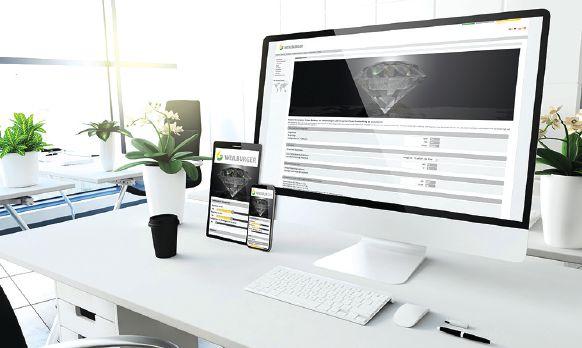
Weilburger Graphics GmbH, a maker of coatings, water-based flexo inks and adhesives, says its new coating quantity calculator helps customers calculate the coating quantities required for print jobs by considering sheet format, area coverage for coating and run length, including make-ready and expected waste sheets. The most common anilox rollers with GTT, Hexagonal, Hashur and ART gravures are taken into account. The coating quantity calculator also offers the option of calculating the required coating quantities for straight and perfecting jobs, if these are to be produced with the same coating and same anilox roller, in just one calculation run. With different coatings and/or anilox rollers for perfecting, the user can also calculate these quantities by means of a second calculation run, without having to re-enter all parameters. Only the additional amount of coating required for filling and circulation per print run must be added by the user, as this varies depending on the system and the peripherals used, such as coating temperature control, for example. Now available, the coating quantity calculator is suitable for common, unpigmented coating systems (UV-, dispersion-, solvent-, oil-based).
At Labelexpo Americas 2018, Phoseon Technology introduced TargetSure Technology, a technology that monitors UV irradiance in real-time. TargetSure, the company explains, provides integrated real-time irradiance and Semiconductor Light Matrix (SLM) monitoring for the family of Phoseon UV LED products by detecting if UV output is within the expected defined range. If yes, it then notifies the user of UV output degradation and inconsistencies. According to Phoseon, TargetSure technology is particularly useful for factories that are fully automated and have little to no human interaction during material processing. Low-migration printing – the process of applying and curing specially formulated inks used in packaging so there is minimal to no migration through the packaging materials and into the product – also benefits from TargetSure. Low-migration printing requires stable, constant curing as a key part of the process, explains Phoseon, saying providing real-time SLM output will help ensure label runs are fully cured with consistent, output.
Avery Dennison reflective films
Avery Dennison in September announced a new portfolio of reflective vinyl films, consisting of V2000 Beaded Reflective Film, printable V4000 Beaded Reflective Film and Visiflex V8000 Series Prismatic Reflective Vinyl. Featuring 17 colours across three different film constructions, the new reflective films are described as providing increased visibility in a range of applications, including indoor signage, outdoor signage, striping and fleet wraps. V2000 film is engineered specifically for flat surfaces, while V4000 and V8000 films can be applied to mod-
Brenva HD’s new duplex speed kit boosts output speed from 182 to up to 275 pages per minute, suitable for book, transactional and direct mail segments.
Esko Studio lets designers present and test their ideas by turning them into virtual 3D prototypes.
The Weilburger calculator is suitable for desktops, smartphones and tablets.
erate curves and vehicles, Avery Dennison explains. V4000 and V8000 are the first digitally printable, reflective vinyl films from the company and are designed to be compatible across all digital printing platforms.
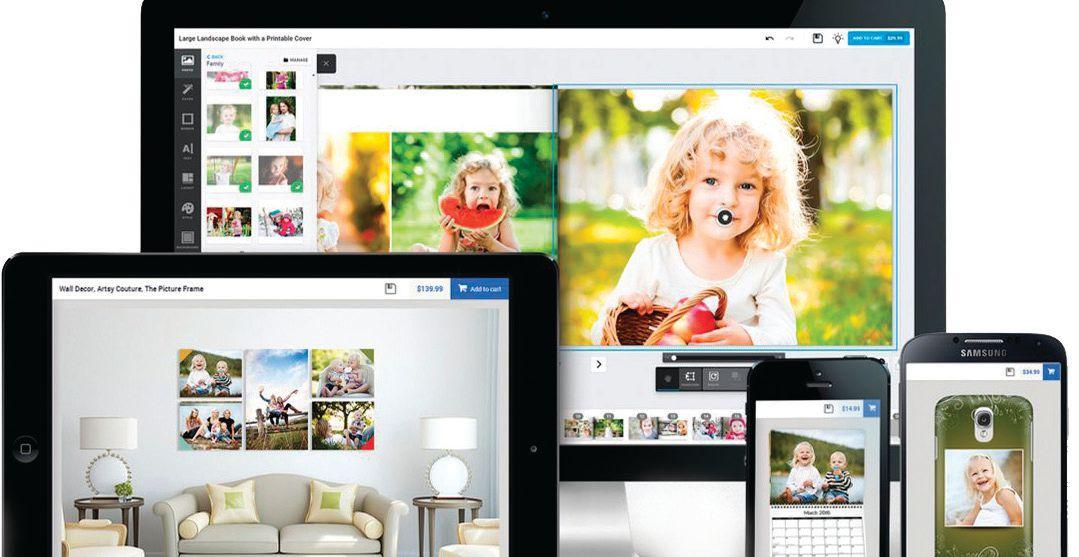
Mediaclip Photoshop Extension
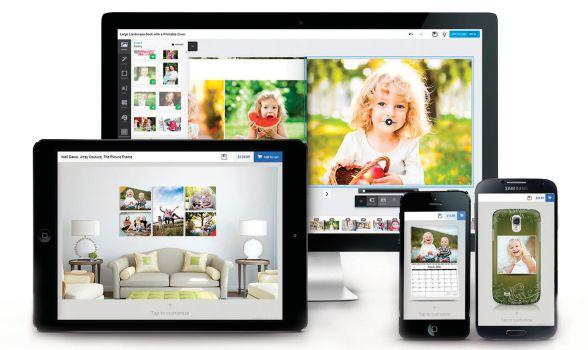
Mediaclip, a developer of whitelabel software solutions that help create personalized printed products, has released the new version of its Photoshop Extension, explaining the tool allows customers to design new themes that can be incorporated into their product selection.
The Mediaclip Photoshop Extension supports a range of graphic elements, such as text strokes, monogram, embellishments as well as static elements that help users manage licensed content. Working with the latest version of Adobe Creative Cloud, the extension was improved with several new features that make it more flexible in terms of design functionalities and optimize the connectivity between the extension and other components of the Mediaclip environment, the company explains.
Laetus SmartSpect camera
Laetus says it has brought to the market the next generation of fully integrated smart cameras for optical quality control with the new SmartSpect. Suitable for checking-type tasks on packaging lines
that can only be covered by a single camera, it features CMOS sensors that generate and process high-resolution images inside a single unit, while the integrated Intel dual-core embedded processor processes the image data obtained, with no need for an additional PC or controller, Laetus explains. The package contains vision-inspection applications for checking barcodes and both OCV and OCR reading. Two different resolutions, both monochrome, are available at the time of launch, as well as a choice of different lighting versions. All versions feature a C mount lens as standard and a connection for a liquid lens.
Kocher+Beck TecScreen
The TecScreen Processing Unit from Kocher+Beck made its first public debut at Labelexpo Americas in Chicago. Designed to be compact and economical, the device is suitable for fully automated washing and drying of nickel-based screen printing plates. The company says the unit guarantees consistently high results in the prepress stage.
Fujifilm Samba Mini 4300
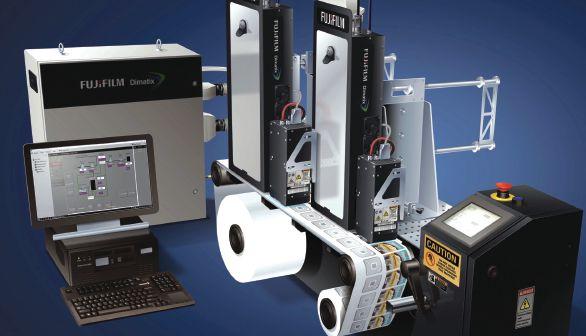
Fujifilm Dimatix describes the Samba Mini 4300 Printbar System as a manufacturing tool for companies looking to jet a variety of Fujifilm or other fluids for in-line jetting applications and single-pass high volume manufacturing. Specializing in drop-on-demand inkjet printheads, Fujifilm Dimatix says
The SmartSpect camera boasts a compact design, making it easy to install in confined spaces and challenging industrial environments,
Mediaclip Photoshop Extension 2.0 aims to help users create new theme designs easily.
says Laetus.
the tabletop system includes one printbar, a control cabinet, PC and software, and the option to purchase additional accessories. Samba dropon demand inkjet printheads can print drops at over 100 khz, Fujifilm explains, each directed to a location and is described as producing high resolution single-pass imprints at high speed. Meanwhile, the RediJet recirculation system enables printbars to be quickly primed, and is designed to result in faster print readiness time, minimal ink waste, and improved reliability, the company says. Each Silicon MEMS constructed printhead has 2,048 nozzles to deliver a native 1,200 dpi resolution with an ink drop as small as three picolitres.
Agfa Avatar V-ZH plate
Agfa Graphics has launched Avatar V-ZH, describing it as a chem-free violet newspaper CtP plate that doesn’t require pre-heating. As well, it boasts a “very high image contrast” after clean-out, allowing a visual image inspection to avoid mix-ups on press, Agfa explains. Avatar Z-VH is suited for high-quality Arkitex Sublima screening. Using it with Arkitex OptiInk software, the company explains, will result in a more economical use of ink, higher colour fidelity, and improved make-ready time with less
paper waste. Other features of the plate include daylight compatibility, high scratch-resistance, and robustness on press (run length, dot gain, press start-up). The plate is flexible, as it can be used with either conventional or UV inks for semi-commercial or special applications. The plates work with all violet CtP units currently in use at newspaper print sites across the world, Agfa says.
W&H
selects Xaar 5601 for new digital printer
Windmöller & Hölscher is developing its first digital, single-pass press for flexible packaging using Xaar 5601 printheads. According to Xaar, W&H is the first OEM to publicly announce its next generation of printers will be driven by the Xaar 5601. The new development, the companies explain, is a first step into digital solutions for W&H. Using Xaar’s new Thin Film Piezo Silicon MEMS technology, the Xaar 5601 printhead features over 5600 nozzles, capable of jetting up to 8 litres of fluid per hour. New innovations such as AcuDrp Technology enable complete control over greyscale drop ejection, as well the Xaar printhead incorporates TF Technology designed to help maximize production up time, print quality and lifetime, explains Xaar.
1. ONE-STOP SHOP — Die Cutting, Bindery, Data & Lettershop.
2. SUPERIOR TECHNOLOGY — Die crease without a die, then fold and even glue all on the same machine, up to 30 pt.
3. INTEGRATED MODULAR UNITS — Combined in-line finishing: crease, fold, glue, tipping, envelope inserting, ink jetting (Duplex), clip seal (3 sides), mail prep.
4. SAVE ON POSTAGE COSTS
—As a Certified Canada Post Direct Marketing Specialist, we get contract pricing reductions.
5. RETURN MAIL PRODUCTS — Customized “Return Mailers” created in-line with “U” or “BOX-shape” remoistenable glue, time perfed applications and envelope formation.
6. MINI-BOOKLETS — Saddle-stitch and trim 2-up booklets in-line to the size of a business card. No need to trim off-line, or do 2 passes.
7. HIGH SPEED EQUIPMENT — High speed Tipping, Folding, Saddle-stitching and soft folding ensuring on time delivery.
Samba drop-on demand inkjet printheads can print drops at over 100 khz, Fujifilm explains.
W&H selected Xaar 5601 after a series of successful tests were conducted.
Solutions for the Printing Industry
Keyline print shop management software
Printing management software Keyline can now be integrated with other systems through apps available from Keyline developer Crispy Mountain’s AppStore. Intended to offer a holistic approach, Keyline covers various areas of a print shop, from quoting and calculating to production planning and control, warehouse management, packaging and logistics, accounting, statistics and analysis. Keyline is described as a lean management system that can communicate with other applications and machines through open interfaces. The system permanently sends events, such as when objects are created, changed or deleted. An app can pick up on these events to trigger processes and workflows. That way, event-driven process chains can be designed and processes can be automated, explains the company.
Rollem InsigniaX3 die-cutter
media, which includes digital banners, pressure-sensitive digital vinyls, digital imaging papers and UV laminates.
Nazdar 184 Series solvent inkjet ink
Nazdar Ink Technologies has announced the 184 Series, a newly developed digital imaging ink formulated specifically as a high-performance alternative for Mimaki JV150/300 and CJV150/300 digital printers using Mimaki BS4 ink. Nazdar says users will benefit from low odour and enjoy the convenience of a range of packaging options, including 600-ml bags and 2,000-ml bags compatible with MBIS.
Rollem International has launched its latest Insignia die-cutter model just in time for Print 18. Designed to die-cut materials up to 30 pt. thickness, the system is suitable for ID cards, gift cards, school IDs and memberships. The ISX3, the company explains, is suitable for flexible sheet sizes of 24 x 24 inches, enabling the ability to feed sheets either portrait or landscape. Performing functions including die-cutting, kiss cutting, embossing, creasing and perforating in a single pass, Rollem says the Insignia is also suitable for customized products such as folded cartons for cosmetics, soaps, beverage labels, and retail hang tags, promotional products and more. The InsigniaX3 is the newest model to join the IS5, the IS6 and the IS7 sizes.
Mac Papers Argent wide-format media
Mac Papers has launched its exclusive Argent brand of wide-format
Burnishine LP6000 deletion pen
Burnishine Products has released a new single-tip deletion pen formulated specifically for use on polyester laser plates.The Burnishine LP6000 deletion pen, the company says, is suitable for every polyester laser plate available and effectively removes unwanted images thus eliminating the need to make new plates. “Most manufacturers are abandoning the market for polyester laser deletion pens. We wanted to fill that void and developed our own pen to help the many printers still using polyester laser plates,” President Roger Giza says.
The Burnishine LP6000 deletion pen is designed
Nazdar says the 184 Series is suitable for a range of packaging options.
classifieds@printaction.com / Tel 416-442-5600 / Fax 416-442-2230
Place your own ad and view the latest postings: printaction.com/Marketplace
In August, Mississauga, Ont., full-service label manufacturer and print agency
PRX Print announced it had installed the Mark Andy Digital One, an investment it says will result in 50-percent growth. PRX Print Owner and Co-founder Debbie Gilbert researched a variety of digital label printing technologies and product offerings, and her search led her to the recently launched Mark Andy Digital One hybrid label press.
Why did PRX Print decide to go with the Mark Andy Digital One?
DG: We began as a brokerage in 2010 and identified a need in the marketplace for a single-source packaging company that could integrate all of the packaging services clients need: Consulting for form and function, concept, design and printing. Using a traditional “push” strategy, we created sales opportunities by looking at packaging we thought could be improved and going to see the clients, rather than just trying to sell labels. We were brokering most print services but adding value by being a packaging consultant [with the goal of] helping customers market their products on the shelf more effectively to increase sales and market share.
Over the last four to five years as the [global] digital market has exploded, demographics and the market for retail products have also changed dramatically. We now have a retail landscape that demands just-in-time products, a demographic with a desire for specialty and ethnic foods, and [trends] such as small-quantity, multiple-version printing and specialty effects, which have all combined to make the perfect storm for digital printing. To answer the demand for fast turnaround times and economical yet high-quality print solutions, last year we decided to look for an in-house label printing solution.
People today are bombarded with special effects in everything they see — whether it’s video games, movies or packaging on the shelf. We’ve even had the advent of virtual reality packaging. Now that consumers are getting used to it and are expecting it, wherever we can add these elements to labels creates a great opportunity-solution for customers. We have a blended desire for short-runs that can [accomplish] that, so flexo isn’t the only solution any longer — new digital presses offer embellishment like cold foils, spot colours and virtual reality.
What makes PRX Print unique?
DG: We take a consultative approach with our clients – looking at everything from the way their product is packaged and labelled, to the way it’s displayed on a shelf or in their tradeshow booth. And we have the
2010
Established in 2010, PRX Print’s product offering includes labels (digital, flexo and imprinting), shrink sleeves, printed retail boxes, forms, bags and various marketing collateral materials.
expertise to help them increase sales or penetrate new markets through improving their packaging. We also offer solutions that are cost effective for their specific needs – sometimes digital printing is best and sometimes flexo suits their needs better – we offer both solutions. Sometimes a label is best, and sometimes a printed cardboard sleeve is more suitable, or even a uniquely designed box – we provide solutions for any of them and guide the customer within their budget.
How important is the print+design collaboration?
DG: Very — and it really wasn’t a collaborative [effort] for a long time. You had designers sitting in one area, print people in another and the marketing department down the hall. Everything has now become one. [The key is] for everyone to work together in an integrated approach. Design isn’t isolated; it is integral to the form and function of the finished product. Having the marketing resource collaborate with designers and a knowledgeable print resource ensures there are no surprises for customers and they get exactly what they need and want. [All parties have] to work together from the start.
How does print fit into a digital future?
DG: I think print will [continue to hold] a big role in packaging, and in our lives in general, going forward. Print is a primary means of communicating a message or a brand. People can see [a product] online but they still want to feel it and see it on the shelf. [Consumers] are savvier than ever today — they demand information quickly, and it is important to provide clear and compelling information that conveys benefits to consumers as soon as they pick an item up of the shelf. With just a few seconds to do that, there is no better way to accomplish that than through effectively designed printed packaging.
What’s next for PRX Print?
DG: We’re in rapid growth mode right now and are still exploring the full features of the Mark Andy Digital One. We’re definitely going to focus on digital because we believe there’s so much potential out there and that’s only going to grow. [If you look at] the capabilities of the new digital presses coming to market today, they continue to offer [faster] speed, more and more features, and increased high-quality output – all of this means we can offer customers what they want at a price they can afford.
Be a star producer with the most complete line of innovative coatings from Sun Chemical. Our full cast of special effects includes scented, tactile, glitter, thermochromic and so much more. It’s everything you need to make your product pop on the shelf. Count on high-quality service and innovation from a single source for inks and coatings — Sun Chemical.
What could a J Press do for your business?
Imagine what a state-of-the art single-pass B2 digital printer could do to supercharge your production and increase profitability. This is a digital inkjet printer that’s reliable and ultra high quality, like you’ve never seen before.
Better than offset? See for yourself and imagine the possibilities.