After switching to InDesign in 2002, Zac Bolan takes QuarkXPress 10.2, a native Cocoa application harnessing the reengineered Xenon Graphics Engine, for a test drive to see if you can go home again 10
14
Packaging for Commercial Printers
From folding cartons to prototypes, Soren Larsen, Senior VP of Sales for KBA North America, discusses the barriers to entry for commercial printers wanting to gain a foothold in the lucrative packaging market
16
technology report
Detailing key new printing products, including Kodak NexPress upgrades for 2015, Sun Chemical Rubber Flood Plates, Ricoh’s Pro VC60000, and MGI’s JETvarnish 3D Evolution T Option and upcoming Meteor DP1000 XL
6
News
Postmedia CEO Paul Godfrey moves to acquire Sun Media’s English-language assets, HP begins to separate into two new publicly traded companies, and a13-pound, 960-page Bob Dylan book of lyrics
7
Market
Moveable Inc. of Toronto installs Canada’s first two Xerox Versant 2100 presses, Albion Screen Printing of Gatineau expands with an Agfa Titan HS, and Canadian Printing Industries Scholarship Trust Fund awards $52,500
NiCk Howard where Have all the New Presses Gone
Assessing the viability of litho presses in a world where media companies are constantly finding new methods to spread information quickly and cheaply, without a need for putting ink on paper
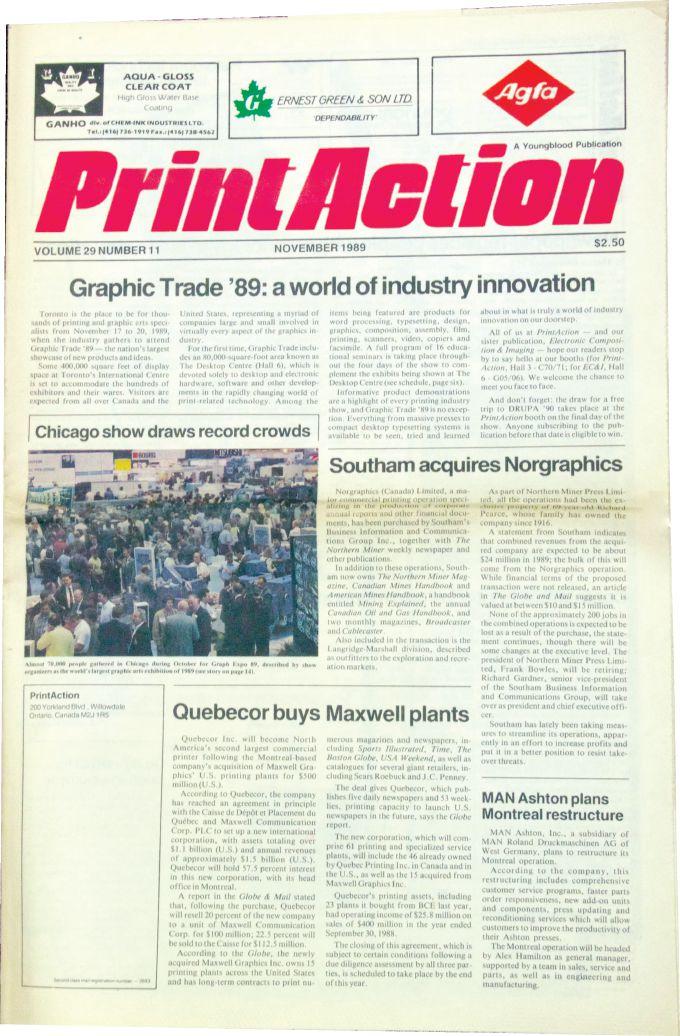
November 1989
26
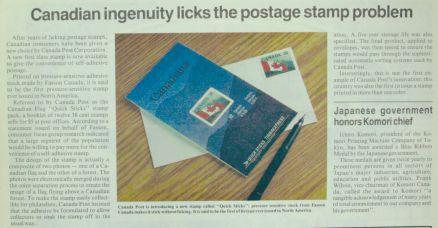
The Berlin Wall begins to fall, Canadian Olympic swimmer Victor Davis is killed at age 25, and Canada Post trumpets success in issuing North America’s first ever pressuresensitive stamp
Market Leading Substrates
• Pearlescent
• Textured Uncoated
• Fine Art Cover
• Colour Cover
• Starlight Photo Lustre Cover
Quebecor Medium Shift
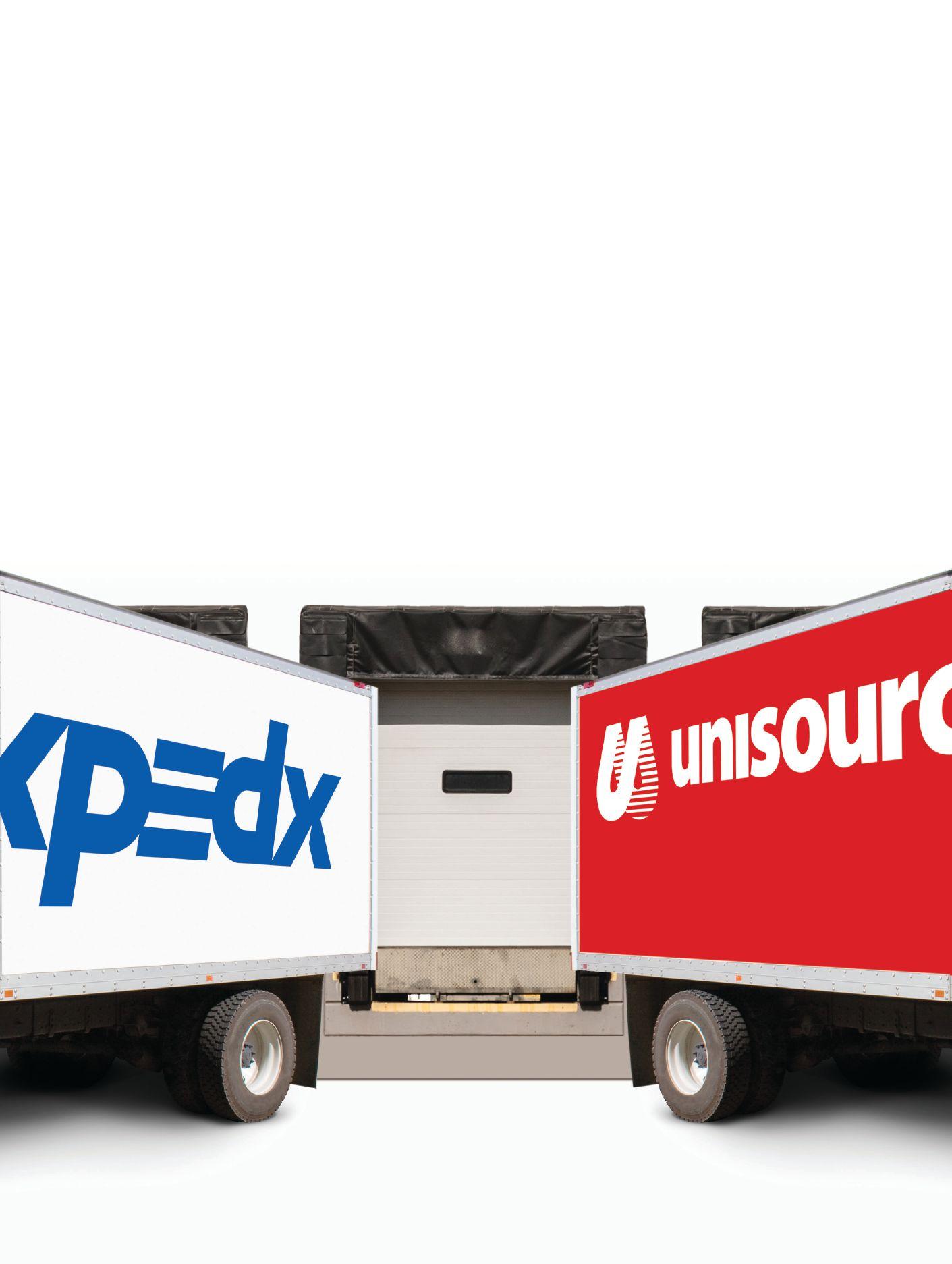
One of the most-significant changes in the history of Canadian media is underway as Quebecor sells off its English- and French-language newspapers to two domestic media giants. It also signals an end to arguably Canada’s greatest printing dynasty started in 1950 by Pierre Péladeau, founder of Quebecor, when he purchased a small weekly neighborhood newspaper called Le Journal de Rosemont.
Non-Adhesive
Films
• Polyester Specialty Fine Papers
• Silver Mirri® Board
Pressure Sensitive Films
• Flex Vinyl
• Permanent Block-out
• Window Cling Vinyl
• ClingZ® Vinyl Magnetic Substrates
• Synthetic
• Ultra Green Film®
• Styrene
• Rigid Vinyl
• Teslin®
Pre-Converted Substrates
• Ultra Digital®
• FlexBind® Layflat Pages
• Mazina® Specialty
• Book Finishing Papers
• Specialty Application Substrates
• DigiMag® XTRA Flex Magnetic Material by Magnum Magnetics No charge Auto Desk Magnetizer Usage Available
In early September, TC Transcontinental finalized its $75-million purchase of 74 weeklies in Quebec from Sun Media, a company controlled by Quebecor. The purchase ultimately resulted in Transcontinental closing 20 weeklies, while another 11 newspapers were sold off and destined to become online-only properties. Quebecor’s new $316-million deal to sell Sun Media’s 175 English-language publishing entities to Postmedia Network Canada is under review by the Competition Bureau.
These two huge newspaper deals seem to have barely registered on the radar of Canadians, which speaks to our 140-character news attention span and, more alarmingly, a growing demographic disinterest in printed newspapers – even if these assets remain as the driving force behind online news credibility. Hours after Postmedia’s purchase of Sun Media assets, Toronto Star columnist Rosie DiManno wrote: “I have no idea how Postmedia and its flagship National Post has managed to stay afloat in these desperate newspaper times, though delighted by that paper’s continuing presence in the free-for-all that is the Toronto newspaper scene.
“Few cities can boast four dailies – six when factoring in the freebies – and their ultra-competitive digital platforms (how I hate that word, platforms) – slugging it out for subscribers while simultaneously gutting their own budgets,” she continues. “Readers win. But Postmedia has been particularly ruthless in eliminating jobs, including the recent layoff of 54 full-time staff and 61 casual staff at the company’s Montreal printing press, 48 at a call centre in Calgary and 60 at Calgary’s printing press.” DiManno notes Sun Media’s sell off will only lead to further job eliminations and news degradation.
Quebecor’s move to rid itself of these final print assets is not a surprise to anyone in the industry, which saw the company begin to divest its commercial printing interests in 2008 during an 18-month bankruptcy protection process, at the time led by Pierre Karl Péladeau, who took over Quebecor after his father’s death in 1997. He steered head on into telecommunications and Internet infrastructure. It is incredible Quebecor hung on to its newspaper assets until now – a strategy likely precipitated by crashing value after 2008. It will be interesting to see where Quebecor, a renewed communications company without print, stands a decade from now.
Jon Robinson, Editor
Canada’s Graphic Communications Magazine. Proudly published for two generations. Editor Jon Robinson • 905.713.4302 • jrobinson@annexweb.com
Contributing Writers Zac Bolan, Peter Ebner, Chris Fraser, Victoria Gaitskell, Dr. Martin Habekost, Nick Howard, Thad McIlroy, Nicole Rycroft, Dr. Abhay Sharma, Trish Witkowski
Publisher Sara Young • 905.726.5444 • syoung@annexweb.com
Associate Publisher Stephen Longmire • 905.713.4300 • slongmire@annexweb.com
Group Publisher Paul Grossinger • 905.713.4387 • pgrossinger@annexweb.com
Advertising Sales Sara Young • 905.726.5444 • syoung@annexweb.com Stephen Longmire • 905.713.4300 • slongmire@annexweb.com
Media Designer Katerina Maevska • kmaevska@annexweb.com
Be a star producer with the most complete line of innovative coatings from Sun Chemical. Our full cast of special effects includes scented, tactile, glitter, thermochromic and so much more. It’s everything you need to make your product pop on the shelf. Count on highquality service and innovation from a single source for inks and coatings — Sun Chemical.
To learn more, visit our website at www.sunchemical.com/naicoatings or contact us at 1-708-236-3798.
working for you.
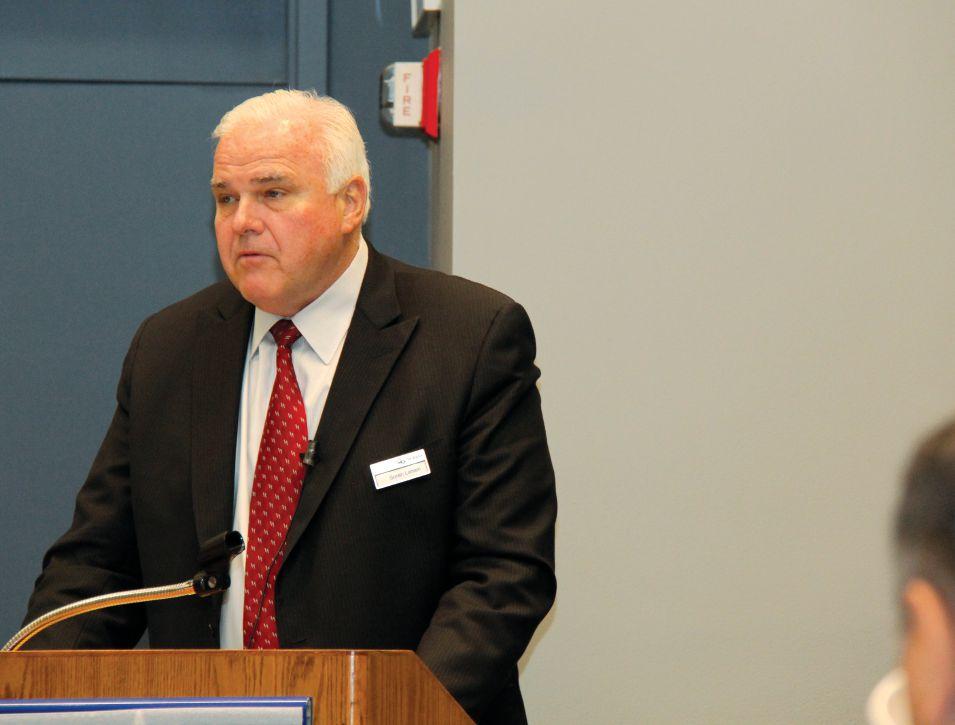
Kenneth Garner on January 12, 2014, is to become the CEO of the National Association for Printing Leadership (NAPL), which earlier this year merged with two other prominent printing associations. He succeeds Joseph Truncale, who spent 30 years with the NAPL and is set to become CEO of the Public Relations Society of America in New York City. In February 2014, the NAPL merged with the Association of Marketing Service Providers (AMSP) and National Association of Quick Printers to create what the new partners refer to AMSP/NAPL/NAQP. Garner became CEO of AMSP in late 2008, leading it through a significant name rebranding from the Mailing and Fulfillment Service Association. A statement from the newly merged association states it is embarking on a similar path.
Paul Godfrey, President and CEO of Postmedia Network Canada, moved to acquire the English-language publishing operations of Quebecor’s Sun Media Corporation for $316 million. Subject to approval by Canada’s Competition Bureau, Postmedia is to acquire Sun Media’s 175 newspapers and publications, including the Sun chain of dailies (Toronto Sun, Winnipeg Sun,
Edmonton Sun and Calgary Sun), as well as The London Free Press, the 24 Hours dailies in Toronto and Vancouver, and community dailies and weeklies, buyers’ guides and specialty publications. At the beginning of September 2014, Quebecor finalized its sale of 74 Quebec-based weeklies to Transcontinental for approximately $75 million.
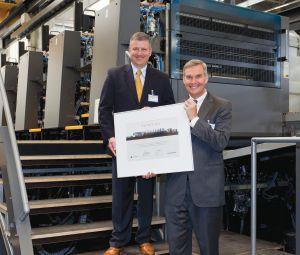
Craig Gunckel, Executive VP with Heidelberg (left), and Steve Voorhees, CEO of RockTenn, celebrate the purchase of the 100th Heidelberg Very Large Format (VLF) press. To be installed at RockTenn’s Clinton, Iowa location, the sale was highlighted during a final press inspection at Heidelberg’s Hall 11 assembly centre, part of the press maker’s Wiesloch-Walldorf factory in Germany. The XL VLF platform, rated for running 18,000 sheets per hour, was launched in 2008. In recent years, RockTenn has invested in numerous Heidelberg VLF presses for both its folding-carton and merchandising-displays facilities. RockTenn has 27,000 employees at locations in Canada, the United States, Mexico, Chile and Argentina.
HP, in the fourth year of its five-year turnaround plan, is to separate into two new publicly traded companies: one comprising enterprise IT, which will do business as Hewlett-Packard Enterprise, and one that will comprise HP’s personal systems and printing businesses, which will do business as HP Inc. and retain the current logo. CEO Meg Whitman will lead HP Inc. Immediately following the transaction, scheduled for completion by the end of fiscal 2015, HP shareholders will own shares of both Hewlett-Packard Enterprise and HP Inc. HP expects its separation into two companies to
result in eliminating approximately 5,000 more jobs.
MGI Digital Graphic Technology of Paris, France, reached an agreement to have Agfa Graphics distribute its technologies throughout the United States. This is the second major printing player to leverage MGI products following Konica Minolta’s January 2014 purchase of a 10 percent minority interest, valued at €13.7 million ($20.4 million), in the French company. In Canada, KBR Graphics continues its now 5-year-old distribution agreement with MGI, which accounts for all of Canada except British Columbia. MGI’s North American operation is based in Melbourne, Florida.
Simon & Schuster plans to publish a 960-page book containing all of Bob Dylan’s lyrics for a November launch. According to Elmore Magazine, the 13-pound book, called The Lyrics: Since 1962, will initially be printed in a limited run of only 3,500 copies. Dylan over his career has sold over 125 million albums worldwide. The collector’s item is expected to sell for $200, while Dylan plans to sign about 50 copies that are to sell for around $5,000. The Harvard-produced book features commentary about each song, as well as reproductions of the original cover art for each of Dylan’s albums.
Peter Cober, President of Kitchener’s Cober Evolving Solutions (below), was named as PrintAction’s 2014 Printing Leader of the Year, presented at an early November gala in Toronto. Carl Pauptit, Founder of Toronto’s Flash Reproductions, receives the PrintAction Lifetime Achievement Award for his significant contributions to Canadian printing. At just 34 years of age, Nikos Kallas, President of Vancouver’s MET Fine Printers, receives the Emerging Leader of the Year Award. Harmony Printing’s President Don Gain receives the Community Leader of the Year Award for his work as Chairman of the Canadian Printing Industries Scholarship Trust Fund.
Haymarket Media Group of London, United Kingdom, sold its used graphic arts equipment platform, www.pressxchange.com, to the Website’s previous owner, John Roadnight. He founded pressXchange in 2000 and
Haymarket bought it seven years ago. “pressXchange is the world’s most successful used printing equipment site with the best search engine results, highest visitor numbers, the largest database and the very best and most respected international dealers advertising on it,” said Roadnight. “It sells many millions of euros’ and dollars’ worth of equipment every year.”
Express Newspapers of Colombo, Sri Lanka, ordered the Southern Hemisphere’s first Goss Magnum Compact press for the production of daily and weekly newspapers and semi-commercial magazines. The purchase includes three four-high Magnum Compact towers with one folder for 24-page single-width production with 546-mm cut-off. Installation is scheduled to begin in spring 2015. Goss describes Magnum Compact as the world’s first – and only – 2x1 web offset press with an automatic plate-changer. Express Newspapers, which owns Virakesari , a 28-page Tamil-language daily with a circulation of approximately 65,000 copies, plans to change a full set of 24 plates in less than five minutes, including ink presets, using the Magnum Compact.
Tempt In-Store Productions, a Quad/Graphics company, completed the installation of a KBA Rapida 205 in its Milwaukee-area facility. In addition to its large-format sheetfed presses, Tempt also recently added four high-speed large-format digital UV presses to its North American and European facilities.
Vistaprint, regarded as one of the world’s most successful Web-toprint operations, has acquired a $25 million minority stake in Brazilian Web-printing startup Printi. The purchase marks Vistaprint’s entry into Latin America, after assuming market leadership in the United States, Europe and Asia. The $25 million investment from Vistaprint is to fund the construction of a primary fulfillment factory in São Paulo, in addition to marketing and adding more production scale.
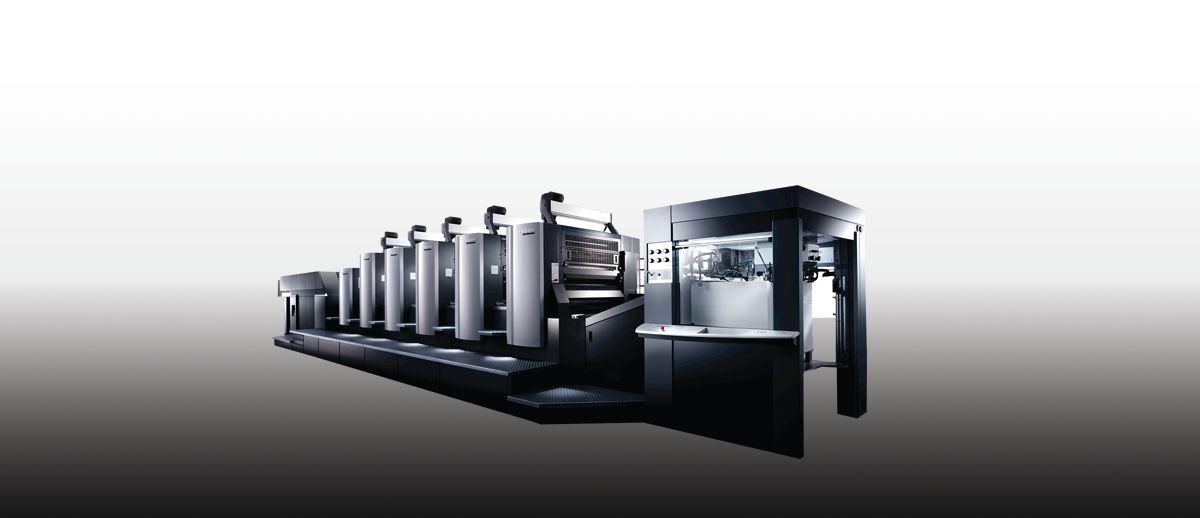
Huashang Digital Information Corp., a Chinese printer of newspapers and commercial work, has installed two Roland 700 presses over the past six months. Based in Xi’an, Western China, Huashang Digital ordered a Roland 700 HiPrint 4-colour for its Changchun branch, half a year after installing the same press at its Chongqing branch. While the 700s are to be aimed at commercial printing, Huashang Digital prints newspapers for a number of business sectors as well as dozens of domestic newspapers like Hua Shang Bao, Chongqing Times and Xin Wen Hua Bao.
Moveable Installs Versant 2100
Moveable Inc. of Toronto has installed two Xerox Versant 2100 presses, which represent the first installation in Canada of this new toner printing platform first unveiled in April 2014. The redesigned imaging system of the Versant press uses a new compact belt fuser handling substrate weights from 52 to 300 GSM at 100 pages per minute (ppm), as well as weights of up to 350 GSM at 80 ppm. The press prints with what Xerox labels as new Ultra HD Resolution, allowing reproductions to be rendered at 1,200 x 1,200 dpi at up to 10 bits.
Joe Kotler, Principal of Moveable, shared three key advantages that the Versant systems will provide Moveable, including image quality: “These presses boast double the output resolution of our previous Xerox 7000s.” In terms of stock range, Kotler says, “We recently ran a job on 130-lb Cougar Cover and it ran like a charm. We could not have done that on our previous machines. The Versants also perform well with linen sheets.”
Kotler then points to the Versant not requiring fuser oil: “This is a big one. Unlike previous generations of toner-based digital presses, the Versants do not apply fuser oil to the surface of printed sheets. Rather the fusing agent is built right into the toner, avoiding that oily sheen that characterized output from older digital devices. Sheets coming off the Versant 2100s are hard to tell
Albion Grows with Agfa Titan HS
apart from offset.”
Moveable, founded in 1983, is one of Canada’s earliest adopters of digital printing technology having installed Canon 500s systems more than 20 years ago. Moveable then upgraded to the Canon 550s before moving to Xerox technology with the DocuColor 40. The company’s digital-printing platform change was soon enhanced with an upgrade installation of two Xerox 2045s, then two Xerox 7000s, and now the two Versant 2100s.
Today, Kotler explains approximately 25 percent of Moveable’s overall printing revenue is generated through the Xerox toner presses, while 75 percent remains offset produced by Heidelberg technology. “Our digital printing focus has always been on high-quality projects that require fast turnarounds. Our clients are mainly designers and creative agencies who are very demanding when it comes to colour fidelity and image quality, but at the same time are always under the gun to get projects turned around quickly,” says Kotler. “That’s the sweet spot for us and for these new Versant 2100s. They are 50 percent faster than our previous generation Xerox machines, and the output quality is superior. Those attributes go to the heart of our service offering, which is why it was an easy decision for us when it came time to replace our old 7000s.”
Albion Screen Printing of Gatineau, Quebec, expanded its wide-format-printing capabilities with the recent installation of a new Agfa Titan HS inkjet system. Founded 40 years ago, Albion, using traditional screen-printing methods and wide-format inkjet systems, produces applications like labels, decals, nameplates, displays, signs, murals and vehicle graphics.
Building on Agfa’s existing Jeti Titan series of UV-curable wide-format printers, the new Titan S and HS machines incorporate the latest generation of Ricoh Gen 5 print heads with 1,280 nozzles. The Jeti Titan S is equipped with one row of print heads, but it is field upgradeable to two rows. The Jeti Titan HS (highspeed), such as the machine purchased by Albion, is equipped with the two rows from the outset. The ink system on both the Jeti Titan HS and Jeti Titan S is set at six colours plus white (CMYKLcLmWW). Both Jeti Titans feature a 2x3-metre flatbed design and produce a 7-picoliter droplet size, which allows for the production of photorealistic images with fine 4-point text.
CPISTF
Provides
$52,500 to 39 Printing Students
The Canadian Printing Industries Scholarship Trust Fund (CPISTF) is awarding $52,500 in scholarships to post-secondary students pursuing graphic communications education for the current school year. A total of $15,000 was awarded to nine new students enrolled in the first year of an approved course of study. A further $37,500 was provided to 30 continuing students already enrolled in the scholarship program.
The majority of each annual scholarship is $1,250, while the $5,000 Warren Wilkins Prestige Scholarship has been awarded to Samantha Tully, who is attending Ryerson University’s School of Graphic Communications Management program. “Every year the Board of Trustees is challenged to select the best and brightest as recipients of our scholarships and this year was no exception,” said Don Gain, Chairman of the fund. “We are pleased to be able to support 39 students in their pursuit of a career in the graphic communications industry.”
CPISTF Board of Trustees
CPISTF was initiated in 1971 and has since generated over a million dollars of funding. Current members of the Board of Trustees include:
• Richard Armstrong, Heidelberg Canada, Mississauga, ON
• Mary Black, Mary Black Recruiting, Toronto, ON
• Tom Blockberger, Vancouver, BC
• Bruce Bond, Toronto, ON
• Wayne Burroughs (Treasurer), Burlington, ON
• Bob Cockerill, Schawk Canada, Mississauga, ON
• Don Gain (Chairman), Harmony Printing, Toronto ON
• Michael Hill, Mississauga, ON
• Sean Murray, Advocate Printing and Publishing, Pictou, NS
• Rob Young, Pollard Banknote Limited, Winnipeg, MB
• Ron Schroder, Canadian Flexographic Training Committee, Toronto, ON
• Jeff Taylor, Hemlock Printers, Burnaby, BC
• Warren Wilkins (Past Chairman), Richmond Hill, ON
• Willy Wilkins, Richmond Hill, ON
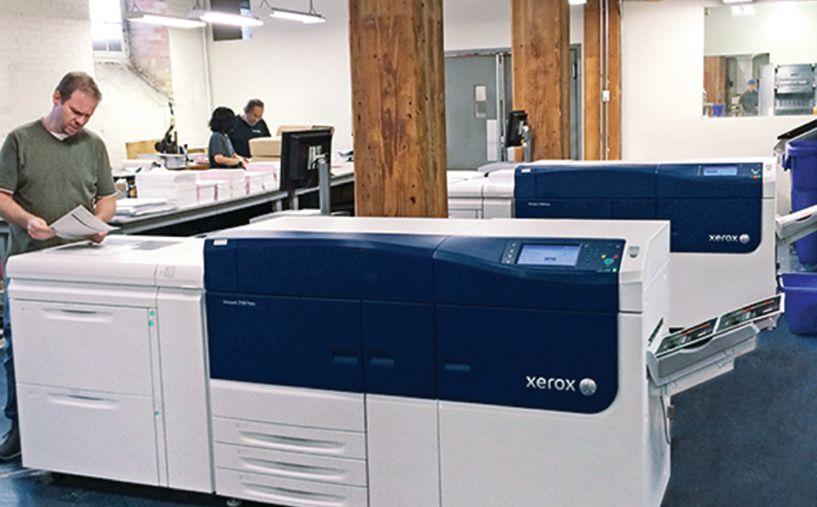
Brian Torrens, Moveable’s digital printing operator, with the Toronto company’s two new Xerox Versant 2100 presses.
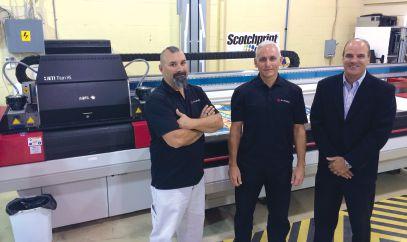
Albion Screen Printing owners Alain Deschamps (left to right) and Michel Valiquette with Stan Tranter, Agfa Account Manager, and the Titan HS.
PRINT MARKET
Massilly Installs Esko Premedia Workflow
Massilly North America based in Brantford, Ontario, has installed Esko’s software suite to drive a new computer-to-plate system focused on print-packaging work in the food and beverage industries.
Massilly North America, a subsidiary of The Massilly Group, a France-based supplier of closures, food cans, decorative tins, and aerosol cans (with 20 subsidiaries located around the world), is focused on metal twist closures and sealing machines. Last May, the Brantford operation installed Esko’s DeskPack, Plato, FlexRIP, and FlexProof products to drive the then newly installed CTP system, based the company’s decision to bring platemaking in-house.
“For starters, we wanted a one-click step-and-repeat operation, from a one-up image to a full sheet layout, integrated with print production controls, such as colour bars and trim marks,” stated Julius Stampacchia, Quality Assurance Manager, Massilly North America. “We did not want to manually manipulate files of all artwork sizes to make a plate. We wanted something that was quick, consistent and repeatable.”
Stampacchia explains the operation also needed a workflow to integrate with Adobe Illustrator and supporting plug-ins. At Massilly, Adobe Illustrator is
BELLWYCK Continues Packaging Growth
BELLWYCK Packaging Solutions of Toronto continues a year of strategic growth with new company branding, a new Manroland HiPrint sheetfed press, and the September opening of an innovation centre in New York. BELLWYCK on September 2 announced the opening of its Center for Innovation & Design at its newest location in Long Island, New York, to introduce emerging packaging applications to clients in the North East.
“New York exerts a significant impact upon global commerce, technology, and art – something we absorb and apply in our innovations to help companies not only grow their business but present their packaging in a luxurious and high-quality manner,” said Greg Keizer, BELLWYCK’s Executive VP, Business Development & Innovation.
The Center for Innovation & Design facility includes a CAD department for structural design, as well as an Innovation Showcase. It is the Toronto-based company’s seventh facility in a network highlighted by two Ontario manufacturing operations.
BELLWYCK’s Premium Packaging plant in Toronto services the folding carton, set-up box, and fulfillment needs for cosmetic, fragrance, personal care, wine and spirits, and confection markets. In August of 2013, BELLWYCK completed the installation of a new 8-unit Manroland 700 HiPrint sheetfed perfecting press, featuring QuickChange and UV capabilities, in this marquee facility.
“Ever since we installed our first Manroland press, we have experienced steady growth through our growing customer base, expanding production capabilities and new services,” said John Vella, Co-CEO of Bellwyck Packaging Solutions. “Speed to market is critical and the Manroland HiPrint has made a positive impact on
used for design and trapping, driven by Esko DeskPack (PowerTrapper for Illustrator). He continues to explain Esko’s Automation Engine is then used to take the file and drive the rest of the process. Plato software automatically conducts the step-and-repeat functions, providing optimized sheet layouts. FlexProof provides contract proofs. Device-independent FlexRip delivers flexibility and quality-control tools to ensure plate consistency and accuracy during RIPping, sending the final file to the platesetter.
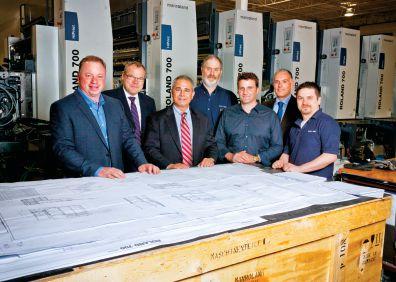
With the Manroland 700 HiPrint, during its late-2013 installation, are (left to right): John Vella, CEO of BELLWYCK; Peter Conrady, Head of Sales, Manroland Sheetfed GmbH; Michael Mugavero, Managing Director, Manroland North America; Gary Tenhaaf, Field Technician, Manroland; Jerry Malfara, Operations Manager, BELLWYCK; Sean Springett, Sales Manager, Manroland Canada; and Jason Ransome, Senior Technician, Manroland.
our ability to meet our customer’s requirements.”
BELLWYCK has been focused on growing its production capabilities beyond folding-carton manufacturing to become a full-service contract packager offering primary, secondary and clinical trial packaging and logistics services. The printed component divisions include cGMP folding carton and label facilities that provide all of the required printed materials for packaging projects.
BELLWYCK’s new logo is designed to better reflect its position as an integrated packaging provider. To reinforce its full-service strategy, BELLWYCK in mid2014 launched a new brand identity, inclusive of a refreshed corporate logo, evolved message platform and re-designed Website. The company states it was important to unify its organization since making numerous acquisitions over the past few years.
CALENDAR
November 9 – 11
BMI Annual Conference
Hyatt Regency Coconut Point Resort, Bonita Springs, FL
November 12
CMA 2014 B2B Conference Allstream Centre, Toronto, ON
November 14 – 17
All in Print China 2014
Shanghai New International Expo Center, Shanghai, China
November 27
Xplor Canada Annual Holiday Meetup
Details to come
December 5
2014 Canadian Marketing Awards Westin Harbour Castle, Toronto, ON
February 23 – 26, 2015
Hunkeler Innovation Days Luzern, Switzerland
February 26 – 28, 2015
Graphics of the Americas 2015
Miami Beach Convention Center, Florida
March 1 – 3, 2015
Print UV
Las Vegas, Nevada
March 5 – 7, 2015
DscoopX Conference
Gaylord National Hotel & Convention Center, Washington, DC
March 9 – 11, 2015
Printing South China 2015
Area A, China Import & Export Fair Complex, Guangzhou, China
March 22 – 25, 2015
67th Annual TAGA Technical Conference Hotel Albuquerque, Albuquerque, New Mexico
April 8 – 11, 2015
Sign Expo 2015
Mandalay Bay Convention Center, Las Vegas, NV
April 16 – 18, 2015
Graphics Canada International Centre, Toronto, ON
May 7 – 9, 2015
Grafik Art Montreal 2015
Place Bonaventure, Montréal, QC
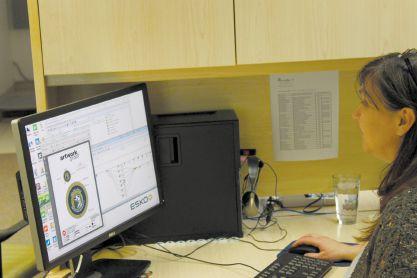
While new to the Brantford plant, Massilly’s head operation in France has been running Esko software for a number of years.
ONLY PRESS OF THIS CLASS IN NORTH AMERICA
Let PointOne help you break through conventional printing stigmas.
RECORD MAKE READY TIMES. BLAZING FAST SPEED. SHARPER COLOUR CONSISTENCY.
THE ALL NEW BEST IN CLASS FOR NORTH AMERICA UNIQUELY AT POINTONE GRAPHICS.
Heidelberg XL106
18,000 SHEETS PER HOUR 8 COLOR PERFECTOR
Peak Performance Class Technology and Productivity That Know No Compromise
18,000 sheets per hour in straight printing and in perfecting mode are unrivaled peak values. A 20 percent higher production means new opportunities The perfect interplay between preset functionality, a sheet travel optimized for maximum production speed and a machine that is consequently designed for top print quality as well as straightforward operation make the Speedmaster XL 106 the Peak Performance machine
Prinect Inpress Control
The Spectrophotometric Inline Measuring System for Maximum Productivity
Prinect Inpress Control automatically measures and controls colour and register on the fly and at any speed. Integrated directly into the press, the measuring unit measures process colours, spot colors and register in the print control strip. Any corrections required are forwarded directly to the Prinect Press Center for adjustment. As the press does not need to be stopped for either make-ready or monitoring of the production run, Prinect Inpress Control achieves maximum productivity.
EQUIPMENT FOR TODAY’S PRINTING
At PointOne there are no sacrifices for quality. We offer trade competitive prices without going over your budget, while still keeping the environment in mind. We have leading edge technology to keep our cost and our quality in line. Come in and work with us to make your print job a work of art.
FINISHING
• 3 saddle stitchers
• 8 folders
• 3 cutters
• Drilling and shrink wrapping
• Climate control
• VideoJet capabilities
• Perfect binding and die cutting available at trade partners
• Online spectrometer to monitor ink densities and control colour consistency
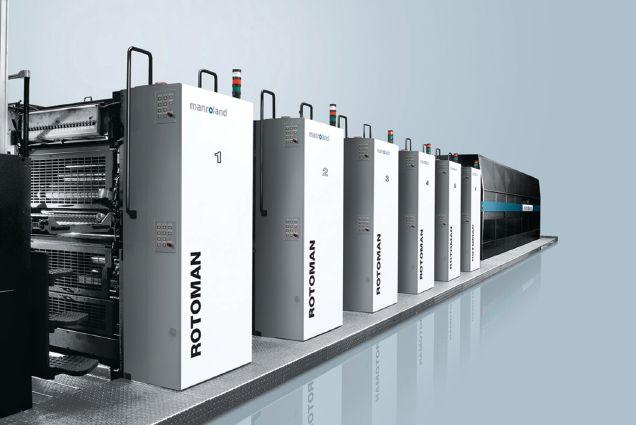
2007 MAN Roland Rotoman 5 printing units + aq with remoistenable gluer, pattern perf, spine gluer, inline folding and sheeting capabilities.
2014 Heidelberg XL 106 4 Color perfecter with auto colour and registration system, 28 x 40 with roll to sheet
2014 Heidelberg XL 106 4 Color perfecter with coater, 28 x 40 with roll to sheet
2013 Heidelberg XL 105 5 Color with coater, 28 x 40 with roll to sheet
Heidelberg Suprasetter 40 plates/hr 30 x 40
Where Have All the New Presses Gone
“Those were the days my friend, we thought they’d never end…” The song popularized by Mary Hopkin in 1968 waxed over youth, lost opportunities, passions and a life now well past it’s prime. Cycles of every form have a beginning as well as an end. Technology breeds new revenues and fills scrapyards with redundancy. For the printing machinery industry there is a lot of reminiscing about good times back in the day. The great period of litho printing press sales, what almost became an annuity business for press makers, is long over and will not return. Oh how painful it is to say that. It seems like only a few years ago we were so excited to embrace a device that, either by violet or thermal laser, entirely eliminated a labourious step of the production cycle and make offset plates perfectly, without fit issues, and at incredibly fast speeds as lasers advanced by the month. Digital technology was our friend. Prior to CTP, the Macintosh computer also eliminated a huge chunk of the typesetting industry by letting us do it all ourselves. Fantastic new devices were going to rid us of waxers, light tables, film, cameras, plate-makers and a great deal of expensive labour. Everybody knew that strippers and other prepress employees commanded large paychecks. Wasn’t this future fabulous?
As I look back at some of the projects we were involved with at Howard Graphic Equipment, I find that no one re-
ally had any idea of where mobile computing, particularly the smartphone and tablet, would take communications. We once had a customer who had a rather simple contract to print a 10-point cover and then stitch it onto popular magazines. It was for a now-defunct airline, to be used on the aircraft. The airline wanted to ensure these magazines were returned and so had produced the magazine with its logo emblazoned on the false cover. In time, the costs proved too high and the airline asked instead for a sticker to be tipped onto the cover. Finally, the magazines as a cost were dropped altogether.
Another customer produced a weekly sports betting card. These were perfected one over one and printed in the millions. Again costs and technology overtook print and now all the betting is online, no day-changing betting cards, just a receipt with the details.
In the early 1980s, we did quite a lot of business with an accounting publisher. Every time there was a change in Canada’s revenue act new sections had to be printed.
Even then hot metal Linotypes were used to make copy. It was proofed and then film and plates were made to run on a web. The bindery was enormous to handle the accounting publisher’s work. It had separate lines for side stitching, hole punching and perfect binding. The annual tax-code book was almost two inches thick and expensive. Accountants, who were members, bought special binders
for all of the inserts of changes that would occur each year. The Internet almost overnight eliminated all of this mechanical work and hundreds of jobs.
Many printers found themselves in the same situation with legal books and court decisions. Changes in the law created a great deal of print and case-bound work.
Think of the law offices up until recently, where huge libraries stored the requisite purchases for dozens of sets
Continued on page 24
David Carr of The New York Times discusses the challenges of print news distribution at the PuSh Arts Festival in Vancouver. (Photo by Ian Linkletter)
The Quark Alternative
After switching to InDesign in 2002, Zac Bolan takes QuarkXPress 10.2 for a test drive to see if you can go home again by Zac
Bolan
On Friday, November 8th, 2002, I made the switch to Adobe InDesign. After spending a week building a print flyer for a local drugstore chain in QuarkXPress 5, I sat down to export a press-ready PDF. Three frustrating hours later I still hadn’t managed to squeeze a PDF, or even a usable postscript file, out of the buggy XPress release. I threw up my hands in despair and at that moment decided to spend the weekend learning InDesign and rebuilding my job.
That decision was not made lightly, as I had been a stalwart XPress user since 1988. With the release of XPress 5 in January 2002, however, Quark faced a barrage of criticism from its dedicated Mac users. After all, launched only days before XPress 5, InDesign 2 was OS X native – something Quark had failed to accomplish with its release. Like many in the design and prepress community, I resented being denied the benefits of Apple’s
new operating system. At the time, Quark’s dominance of the Mac desktop publishing market was such that Apple Computer actually cited XPress 5 as a factor slowing adoption of OS X within the design community. It’s been more than a decade since I (and many others) made the switch. During that time InDesign matured into a leading desktop publishing solution while QuarkXPress quietly persevered – after a painful transition to OS X, XPress gradually improved. Following iterations empowered the faithful while adding features to entice users to return. But for many the draw of Adobe’s Creative Suite seemed to say ‘you can’t go home again’, that is, until the advent of Creative Cloud and Adobe’s software as a service (SaaS) business model. Now designers seeking to own their workflow are taking a second look at QuarkXPress, and with version 10.2 they will find a stable, capable and fully-featured page layout application.
New XPress tricks and tips
I won’t try to summarize five full upgrade cycles in a few hundred words, but some key enhancements in recent XPress versions are worth mentioning. When I reviewed XPress 8 for PrintAction (August 2008) Quark had significantly overhauled its Graphical User Interface (GUI), vastly improving user efficiency while removing workspace clutter. Additionally, XPress 8 offered in-app image manipulation, built-in Flash authoring, as well as support for Asian fonts. In a nod to the changing publishing landscape, XPress 9 added: ePub and Kindle export; App Studio for tablet publishing; numerous new layout features like anchored callouts; a shape wizard; and enhanced bullets/numbering.
Then in October 2013 Quark made an ambitious leap forward with the release of XPress 10 (recently updated to 10.2.1), the first version developed as a native Cocoa application. Cocoa is the Application Programming
Interface (API) for Apple’s OS X operating system. In most cases, software produced with Cocoa development tools has a distinct and familiar feel to Mac users, as the application will automatically comply with Apple’s human interface guidelines. From the developer’s perspective, being Cocoa native ensures the ability to leverage the latest OS X features, maximize performance and fast-track support for new OS X versions. For example, while not officially supported on Apple’s recently launched OS X 10.10 Yosemite, based on my initial trials QuarkXPress 10.2.1 appears to run quite well. Quark will be releasing XPress 10.5 with full Yosemite support in early November.
This formidable undertaking required Quark engineers to update more than 500,000 lines of code in addition to writing 350,000 new lines. To fully leverage Apple’s latest hardware enhancements, developers had to create more than 500 dialogues and palettes in multiple languages as well as incorporating 1,300 new icons enabling Retina Display resolutions.
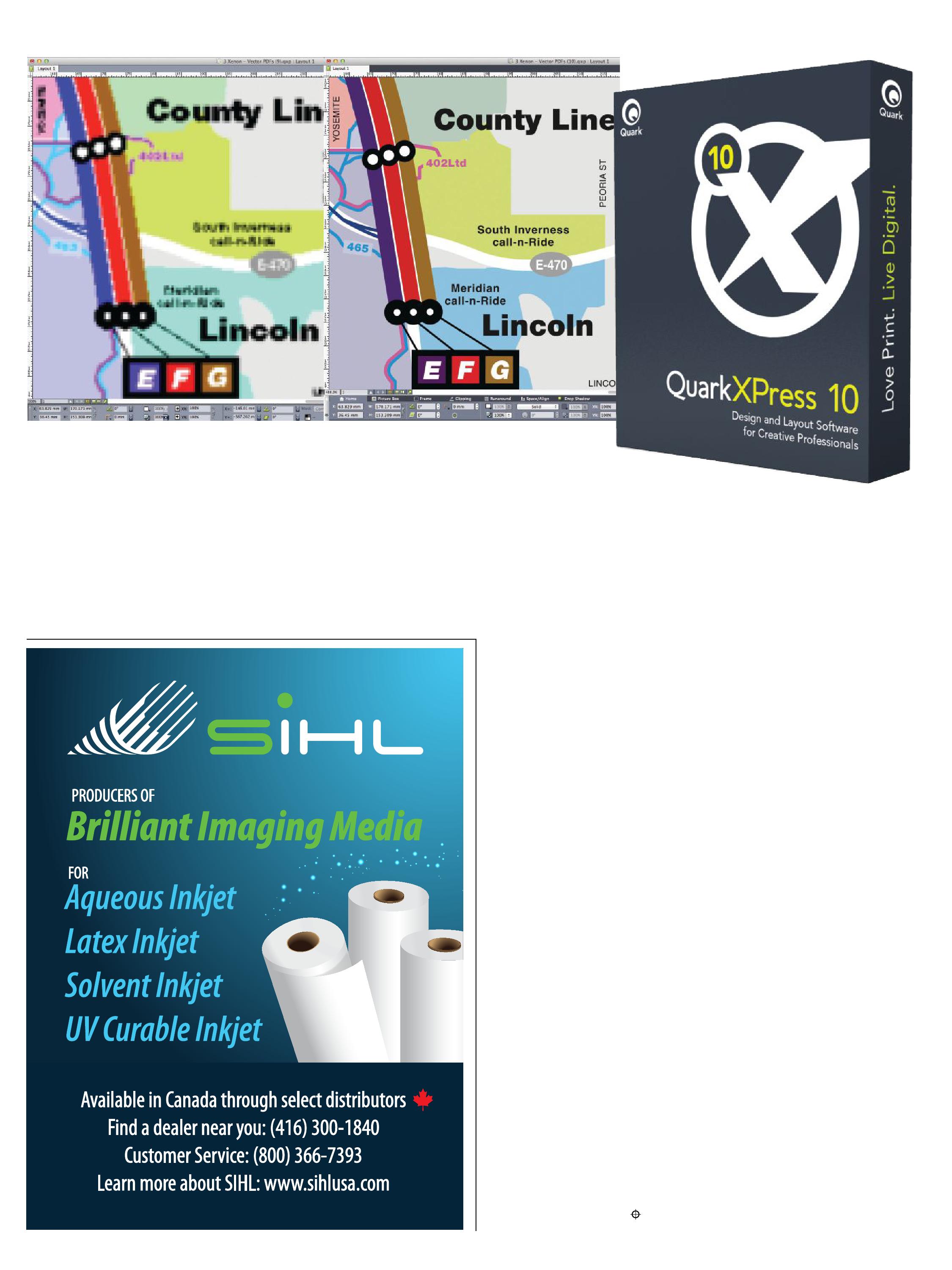
Besides going Cocoa, Quark engineered a completely new graphics engine for QuarkXPress 10 that will ultimately be implemented across a wide range of Quark products. The new Xenon Graphics Engine enables users to see stunning highresolution renderings of imported raster and vector files on screen, including rich PDF, Photoshop and Illustrator files to name a few. Using Quark’s Adaptive Resolution technology, graphics can be rendered instantly to the resolution required for professional image zoom (up to 8,000 percent). Being able to zoom into highresolution graphics onscreen while creating page layouts is a real advantage to visually oriented designers like myself. Additionally, the Xenon Graphics Engine seems to really improve overall screen re-drawing times.
In addition to optimization for HiDPI and Retina Displays, XPress 10.2 features Advanced Image Control enabling users to control several aspects of embedded PDF, PSD and TIFF files, such as layers, channels and clipping paths without bouncing out to Photoshop. With advanced illustration tools XPress users can now accomplish quite a few basic image editing and vector drawing tasks without Adobe’s help – saving time and reducing reliance on the Creative Cloud. These features combined with multiple simultaneous document views, robust shortcut and palette management, make XPress 10 an attractive alternative to renting page layout software.
Perhaps the most significant tool Quark brings to the publishing market is not actually a QuarkXPress feature at all. App Studio is a standalone cloud-based service for converting publications to digital editions for tablets and smartphones. While initially limited to producing Apps based on QuarkXPress documents, App Studio now creates rich and interactive HTML 5 publications from a variety of sources including InDesign and XML.
Making the jump
With the refined and polished GUI of QuarkXPress 10, anyone familiar with InDesign or other page-layout applications should be able start building pages in fairly short order. By default, the XPress toolbar displays the most commonly used tools but can be configured to access a variety of other functions such as Grid Styles and Advanced Image Control. The Measurements palette along the bottom of the default workspace provides access to content-specific functions in one convenient location. For example, when selecting a text frame, the user can tab between controls for text box, frame, runaround, space/align and drop shadow.
As a former XPress jockey, I found I still recalled many of the old keyboard shortcuts and was zipping between XPress functions within a few minutes of starting a document. However, those used to InDesign keyboard shortcuts will have some relearning to do. Within InDesign, for example, Command D conjures the Place dialogue – while in XPress Command D duplicates any selected element.
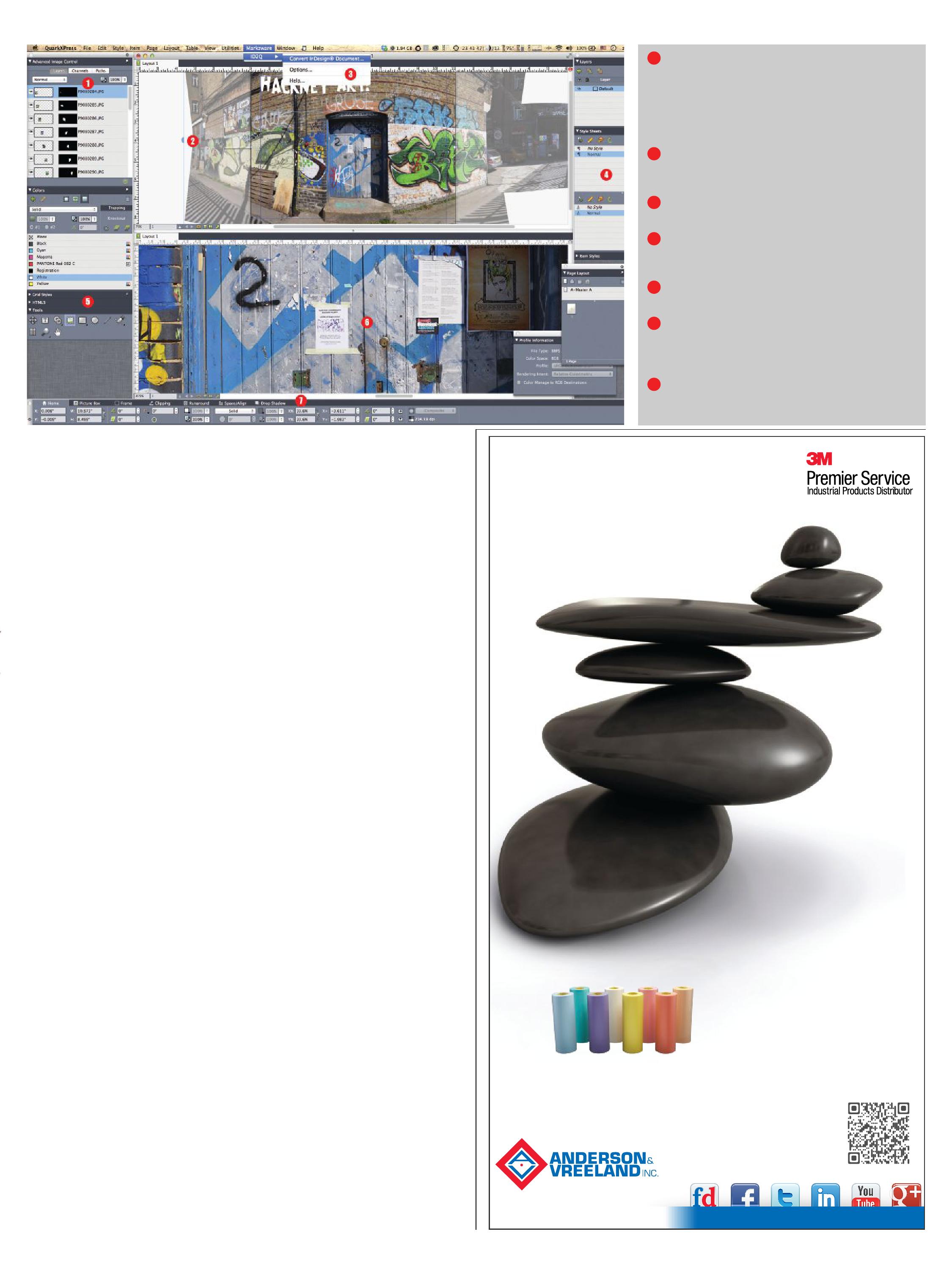
Users can configure any assortment of tool palettes on either the left or right side of the workspace. Shown here is the Advanced Image Control palette, enabling the user to work directly with Photoshop Layers, Channels, Paths and blending modes without leaving QuarkXPress.
The entire image is shown outside the pictureframe for ease of positioning. The blue handles are used to rotate and scale the image.
This user layout features Layer, Style Sheet, Item Styles, Page Layout and Colour Profile palettes in the right palette area.
QuarkXPress features full support of HTML5 functions for publishing fully interactive tablet editions.
The XPress workspace supports split windows –showing different views of the same document. With Adaptive Resolution graphics, users can zoom into images up to 8,000 percent.
The Measurements Palette displays options for the selected object or tool. Displayed here are the options for images. The tabbed interface is new for version 10.2.
Improve your balance at any speed
3MTM Flexographic Plate Mounting Systems give you flexibility - a choice of adhesives, foams and thickness to better balance solids and dots to meet increasingly higher customer expectations.
Air-release EASY Mount Adhesive provides faster set-up and smoother surfaces for improved productivity and print qualityat any speed.
Best of all, 3MTM Flexographic Plate Mounting Systems are brought to you by Anderson & Vreeland, with 50+ years of flexo experience.
For many considering QuarkXPress, the next question will invariably be, ‘What about my legacy InDesign documents?’ While Quark does not offer direct access to .indd format files within XPress, a third-party plug-in is available enabling InDesign document import. Well known in the prepress world, Markzware made its name with the popular Flightcheck document preflight application. Additionally, Markzware produces a number of plug-ins for importing various file formats into both XPress and InDesign. While working with XPress 10.2
I tested ID2Q, the Markzware XTension for converting InDesign files to QuarkXPress file format.
Once installed, ID2Q can be launched from the newly added Markzware submenu in the QuarkXPress menu bar. The process is quite simple: The user navigates to the InDesign document they wish to open in XPress, selects the appropriate conversion options and clicks OK. Depending on InDesign file size and complexity, conversion time can vary between seconds and minutes before the document opens in QuarkXPress.
While ID2Q has little trouble getting your InDesign file into XPress, it is important to remember that the two page layout applications do not always handle things the same way. For this reason, your imported .indd file will need some work in QuarkXPress before going to print, ePub or tablet. Layout grids created with InDesign, for example, do not survive the transition to QuarkXPress. Similarly, InDesign offers a few page layout options not found in XPress, such as a maximum page dimension of 216 inches and support for multiple page sizes within a single document. Having said that, most users will likely be using this XTension to move legacy documents over to QuarkXPress as a template for new projects rather than starting from scratch. For that, ID2Q is the perfect solution.
Listening to the users
Quark recently unveiled QuarkXPress 2015, due for release in Q1 2015. According to Quark, this iteration will deliver increased performance from a new 64-bit architecture in addition to a bevy of enhancements based on user feedback. New features will include support for larger page sizes, a format painter, user definable shortcut keys and table styles.
Also, several Designer-Controlled Automation improvements for long documents will debut including: automated footnotes and end notes; a new table tool with improved Excel integration; and text variables for automatically populating reoccurring fields such as running headers. And bucking the SaaS trend, QuarkXPress 2015 will continue to be sold as a perpetual license or as a paid upgrade. New retail users who purchased QuarkXPress 10 after October 1, 2014 will receive the 2015 release as a free upgrade.
You can go home again
If you asked me a few years ago whether I felt Quark could stage a return to dominance in the desktop publishing space, I would have expressed serious doubts. Despite the fact that Quark has evolved to equal or best InDesign in many ways, Adobe has done a remarkable job of embracing the ecosystem approach with its wildly successful Creative Suite. And while reliable metrics of InDesign versus QuarkXPress usage do not exist, your prepress manager will likely tell you that the majority of client files these days are built with InDesign rather than QuarkXPress.
With the arrival of Creative Cloud, however, that could easily change as not everyone will want to rent software from Adobe. Also, given the maturity of QuarkXPress in addition to Quark’s focus on dynamic publishing and the enterprise, many may see XPress as a preferred option, rather than just an alternative to InDesign. And for old Quark refugees like myself, it looks like you really can go home again!
Harnessing the Xenon Graphics Engine, QuarkXPress 10.2 displays sharp and detailed renderings of imported vector artwork such as PDF and EPS files.
Packaging for Commercial Printers
As the world’s number one installer of large-format presses, KBA has decades of experience of working with some of the world’s largest folding-carton printers, whose manufacturing infrastructure often took just as long to develop and hone. During Graph Expo in Chicago, PrintAction spoke with Soren Larsen, Senior Vice President of Sheetfed Sales for KBA North America, discussed the barriers of entry for commercial printers wanting to gain a foothold in the lucrative packaging market. Larsen discusses the folding-carton landscape, high-end production, prototype printing and the changing press environment.
Printaction: Is there enough space in the packaging market for commercial printers?
soren Larsen: The packaging industry is already extremely competitive but does show higher growth rates than traditional commercial printing. It is natural that commercial printers will look towards new opportunities such as packaging. If by packaging you are primarily talking about folding carton, there are approximately 450 to 475 printing plants in North America producing folding cartons – that is all. And folding carton is about a $10 billion market covered by these plants. If you look at the [North American] commercial printing market, even though it is shrinking in terms of offset, it is probably at about $80 to $90 billion, instead of $10 billion.
Printaction: Is packaging a market for commercial printers to enter?
soren Larsen: Packaging printing has many different attributes than commercial printing that must be understood
”Out of that $10 billion, 60 percent of it is pretty much volume-based business. What is left is more of the higher-end sophisticated market, such as pharmaceutical, cosmetics or hair colouring.”
Soren Larsen, Senior Vice President of Sheetfed Sales
are crossing borders now. Out of that $10 billion, 60 percent of it is pretty much volume-based business. What is left is more of the higher-end sophisticated market, such as pharmaceutical, cosmetics or hair colouring, etcetera.
Printaction: Why is the specialized packaging market presumably just as challenging for commercial printers, even if they understand producing high-end work?
soren Larsen: Yes – In the highly specialized market, you really need to know what you are doing. While it is very tempting to get into such a market, you must take your time and perform extensive background research and preparation works before entering the market. A ‘build it and they will come’ approach will not work.
Printaction: Can prototype packaging be a long lasting revenue opportunity?
and adapted into any organization to succeed. The 475 plants that are pretty much covering the market, of course from their perspective, believe we do not need any more competition. But you see the ratio there, so is it something for a commercial printer to go into? Certainly it is something to think about, but you better know what you are getting into.
Printaction: What production challenges would a commercial printer face getting into packaging?
soren Larsen: While it is certainly still ink on a substrate, there are new pieces of equipment to purchase and employees who need to be trained to handle different substrates. You still have to go out and buy a die-cutter if you do not have one. You still have to buy a folder/gluer if you do not have one. The finishing of a folding carton may not be that easy and, to farm that work out, may be cost prohibitive. So, again, I think the homework a commercial printer has to do is quite substantial before they jump into it.
It is tempting because everybody talks about the growth in packaging and we all know the data. Packaging is another attractive avenue for additional revenue and profit.
Printaction: Entering packaging production is not like going out and buying a sign shop to get into display graphics. Is existing competition the biggest barrier to entry?
soren Larsen: Sure, that can be a problem. Existing packaging firms could pose a threat as newcomers don’t have any experience in packaging or haven’t established any credibility. That can be changed when commercial printers put together the right equipment and team of employees. Another hurdle is overcoming the already established large multi-national packaging firms. If you look at the [folding-carton] market, probably close to 60 percent if not more are powered by the big integrated companies – without mentioning names. You have them in Canada, you have them in the U.S., and more of them
soren Larsen: In terms of test-marketing types of boxes, I think this is where the digital end of printing can be helpful. If you only need 500 boxes, for example, and you may go into downtown Toronto and see how a new package appeals to consumers. We’re also seeing packaging printers who need to do short-run jobs because their client likes to change the box according to the season, where it is being sold, or to just keep it fresh. Our presses are so automated that they can easily change the plates and print high-quality boxes with very fast make ready.
Printaction: Are you seeing existing packaging printers starting to develop a level of animosity toward commercial printers trying to get into packaging, much in the way a mistrust has developed between commercial and trade printers?
soren Larsen: I do not have any specific examples of it. I meet with a lot of big packaging printers, and also smaller independents, but – yes – it again comes down to how many more printers are needed in [packaging]. Animosity is a strong word, but they do not want more competition and so forth.
Of course, the commercial printers want to dip their toes in and want to try to convert. I am sure there can be some pushback from [packaging]
guys. They are specialists in their world and when someone is very good at something, they want to keep it for themselves.
Printaction: How are modern press capabilities providing more opportunities for commercial printers to produce packaging work?
soren Larsen: For the majority of presses in the packaging market, you are looking at nothing less than a six-colour press with coater. I would say in the packaging market 65 percent of the presses have UV of some shape or form. No presses today are sold without at least UV preparation. The basic press configuration for the packaging market, and I would say it is the same for commercial printing, is at six to eight colours in North America. In addition, we offer a wide range of accessory equipment to enable KBA Rapida presses to be configured as highly specialized means of production, and thereby matched perfectly to the precise demands of the cosmetics, food, non-food or pharmaceuticals segments.
Printaction: Are more packaging printers installing unique machines?
soren Larsen: It depends on what type of packaging work they are doing. We have been blessed with some very interesting orders from some big packaging houses.
In the commercial world, one-pass productivity used to refer to long perfectors, with or without coating on both sides of the sheet inline. One pass is quick and efficient; it is highly productive for signature work. What we see happening now is that you have more and more exotic presses where multiple coaters are required in the press. As an example, a coater up front, a couple of drying stations, then printing units, another coater or another drying station, printing unit, and then a coater at the end.
Printers are trying to get all of the special effects that normally would go through many processes, whether that means going through a hot-foil-stamping machine or through UV. Now we want to finish that all inline. Particularly on the eastern seaboard of the U.S., we have been blessed with several orders where you have very unique configurations for the purpose of finishing highend jobs inline in one-shot, one-pass productivity.
Printaction: Are most of these exotic presses purchased based on one particular, reoccurring job, which can also be risky?
soren Larsen: Typically the printer has at least one very specific job probably locked in, because you are talking millions and millions dollars for this equipment. But don’t forget, due to
their high flexibility, a variety types of work can be produced on these exotic presses, thus minimizing the risk.
Printaction: How much does modern make-ready aid an exotic packaging press?
soren Larsen: The make-ready time of these machines is unbelievably fast. For example, we’ve sold many presses that are equipped with a
highly automated feature called SPC – Simultaneous Plate Change. A 12-colour Rapida with SPC will be installed in Canada. Unfortunately we are not able to share the name of the company at this time, but the makeready features enable plates to be changed in 50 seconds on all 12 units. This kind of fast make-ready is exactly what printers need to be able to meet their customers’ demands on fast turnarounds.
Printaction: This trend in exotic press configurations must also present a major hurdle for commercial printers?
soren Larsen: If you are a commercial printer trying to get into the packaging market, you are going to face not only ‘ordinary’ competition trying to keep commercial printers out, but also packaging printers that have technologies commercial printers cannot go out and buy without a back up of orders or customer bases.
This month’s Technology Report includes a range of technologies introduced in September at Graph Expo 2014 in Chicago, as well as printing technologies released outside of the show over the past few weeks.
Sun Chemical Rubber Flood Plates
Introduced in September 2014, Sun Chemical’s new SunGraphics Rubber Flood Plates are designed for the corrugated market, specifically to accommodate the growing need to print large sheets for POP displays and other applications without joining together multiple smaller plates. The company explains SunGraphics plates work with a conventional press set-up, requiring no special configurations for the press, and are a one-piece flood coat plate that can provide coverage of up to 62 x 110 inches. Rubber Flood Plates are part of a glue-free system that uses standard materials and normal mounting procedures. They are recommended for waterbased ink applications as they are made of natural rubber.
Heidelberg Linoprint CV/CP
In the spring of 2015, Heidelberger Druckmaschinen, three years after launching its Linoprint C series, plans to introduce a new generation of printing systems with the Linoprint CV and Linoprint CP models. The devices also include a new Prinect Digital Frontend for RIPping and colour management. The new Linoprint models are to replace the Linoprint C 751 and Linoprint C 901.
Linoprint CV, with a maximum speed rated at 90 pages per minute, is available as a five-colour system to provide white printing and coating (high gloss) functions. The system can run paper formats of up to 700-mm long, suited for applications like 3-page folding brochures or posters.
Linoprint CP, rated for a printing speed of up 130 pages per minute, is aimed at inline finishing for high-capacity stacking, perforating and folding, as well as producing leaflets and books with adhesive binding. Its image transfer and fusing units are physically separate, which reduces heat. The standard configuration includes a vacuum/suction-tape feeder.
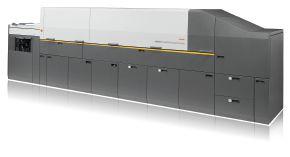
Kodak NexPress Upgrades
Beginning in 2015, all NexPress presses built by Kodak are to feature three new printing capabilities: an expansion of long-sheet capability to one metre; the addition of Dura Coat Mode; and the inclusion of Light Black HD Dry Ink for the NexPress’ fifth imaging unit. Kodak states most currently installed
Technologies Featured
• Agfa Arkitex Production
• Epson SpectroProofer-UVS
• Goss Vpak Alwan Integration
• Heidelberg Linoprint CV/CP
• Highcon Euclid II
• INX IOS UV
• KBA Rotojet L Series
• Kiian Digistar Fluorescent Inks
• Kodak NexPress Upgrades
• MGI DF Pro
• MGI JETvarnish 3D Evolution T Option
• MGI Meteor DP1000 XL
• Mimaki JV150
• Ricoh Pro C7110X
• Ricoh Pro VC60000
• Roland Texart
• Sun Chemical Rubber Flood Plates
• Sun Chemical SunUno Solimax
• Tilia Labs Phoenix 4.0
• AVT Gallus Inspection
• Coveris Magic Substrates
• Drytac JetMounter Fuzion XD
• Fujifilm Acuity F
• GMG DIC COLORCLOUD
• MAPP tesa Softprint Secure
• Screen TruePress Jet 520 HD
• Screen W3200UV HS
NexPress systems can also be integrated with the new features. An automated imaging cylinder cleaning system will also be added to all presses using HD toners. The NexPress’ current long sheet capability of 36 inches will be expanded to support sheets up to one metre (39.37 inches) in length, with the use of an optional long sheet feeder. Kodak explains the currently available long sheet delivery unit already supports 1-metre long sheets.
The NexPress Dura Coat Mode uses Clear Dry Ink to produce a clear thin matte layer over locations on the sheet that have CMYK ink. Dura Coat Mode is available on presses configured with System 15.1 software. NexPress presses built in 2015 will also be configured with a Light Black HD Dry Ink Station, designed to reduce the amount of CMYK ink used on a sheet. The new cleaning system will be standard on all presses using HD inks and optional for presses using non-HD inks.
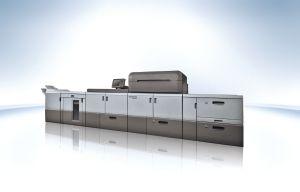
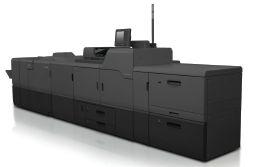
Ricoh Pro VC60000
To be launched in early 2015, Ricoh’s new Pro VC60000 is based on Ricoh’s next generation drop-on-demand print heads and high-density pigment inks, resulting from its 25 years of experience in developing core inkjet technologies. These new print heads are capable of physical resolutions up to 1,200 x 1,200 dots per inch.
The Ricoh Pro VC60000 system features dynamic variable drop technology and is rated to print more than 100,000 A4 pages per hour. With the optional undercoat unit, commercial printers can run a range of offset coated gloss stocks. An optional inline coating unit provides scratch and scuff resistance to protect critical documents.
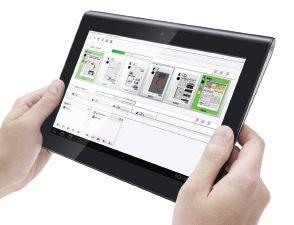
Agfa Arkitex Production
Agfa Graphics, during the midOctober World Publishing Expo 2014 in Amsterdam, planed to launch its new Arkitex Production workflow software for newspaper manufacturing. Available via Agfa’s cloud-based offering, Arkitex Production provides a browser-based user interface designed to keep all departments informed about all operations. Based entirely on HTML5, the interface can
Graph Expo 2014 took place in late September and featured approximately 450 exhibitors and 50 co-located events at Chicago’s McCormick Place. For the second year, the CPP EXPO, which serves package printers and converters, was co-located with Graph Expo.
Heidelberg first launched the Linoprint line three years ago.
The Pro VC60000 is based on Ricoh’s next generation of print heads.
Arkitex’ interface is based on HTML5 and allows users to preview pages and forms and track approvals on a range of devices.
The 2015 NexPress models will feature an extended long-sheet to one metre.
Bringing inkjet productivity to life
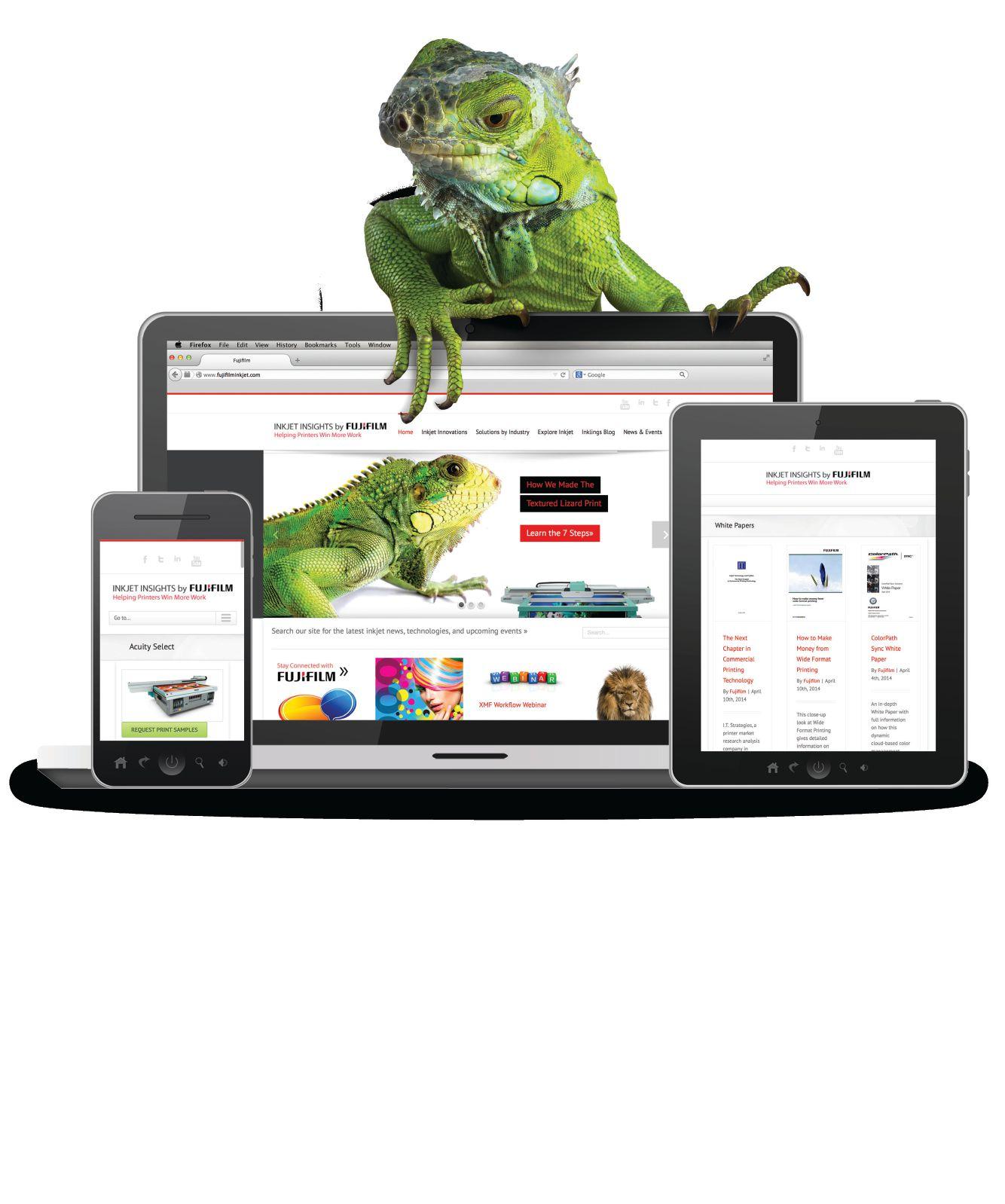
Now there’s a website dedicated to helping printers win more of their customers work by providing the latest insights in inkjet technologies. Visit fujifilminkjet.com for:
• White papers
• Videos
• Printer testimonials and case histories
• Latest inkjet solutions by industry
• Inkjet education and webinars
• Print samples and demonstration opportunities
• And more
One site dedicated to keeping you up to date on the latest inkjet innovations, trends and information. Visit fujifilminkjet.com today to experience inkjet productivity coming to life!
INKJET INSIGHTS by Helping Printers Win More Work
fujifilminkjet.com
Coming Spring 2015
Technology report
be accessed via laptops, tablets and smartphones, or touchscreens in pressroom environments.
Arkitex Production automatically processes pages and plates based on deadlines allowing for control of both platemaking and the pressroom. Arkitex Production can also extend tracking through the punch/bender system to the press. The soft proofing and approval system lets users preview pages and forms and track approvals. Quality enhancements within Arkitex Production include IntelliTune for image enhancement and optimization, Veripress for soft-proofing at the press console, OptiInk for ink saving, and Sublima screening.
Roland Texart
Roland in late-October introduced the 64-inch Texart dye-sublimation transfer system available in four- or eight-colour ink configurations, using ErgoSoft Roland Edition RIP software.
The Texart RT-640 incorporates goldplated, anti-static print heads capable of printing seven different droplet sizes. A new feed adjuster, which in combination with a more powerful fan and an included TU-3 take-up system, is designed to provide stability for high-speed printing at up to 351 square feet per hour.
Roland’s RT-640 is equipped with the Roland Ink Switching System allowing users to load a fresh pouch without stopping the printer. In four-colour CMYK mode, this system provides two liters per colour and automatically switches to a backup ink pouch when the primary pouch runs out.
MGI DF Pro and JETvarnish T Option
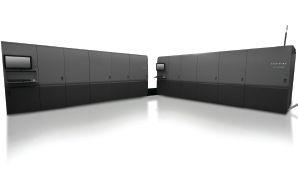
At Graph Expo, MGI also announced its first inline finishing unit for use on the Meteor Series of digital presses. The DF Pro is a unit capable of cutting and trimming, full and strike perforation (allowing for knockouts), as well as up and down creasing. All functions can be performed inline in one pass on formats of up to 1,200 mm (47 inches) long.
At Graph Expo, MGI also launched its JETvarnish 3D Evolution T Option which allows for either the doubling (T2) or the tripling (T3) of production speeds, giving the JETvarnish 3D the ability to digitally emboss up to 300 microns in one pass on formats up to 52 x 105cm (20 x 40 inches). It provides production of up to 2,400 B2-size sheets per hour with embossed 3D effects and 3,000 B2s per hour with traditional flat effects.
MGI Meteor DP1000 XL
MGI, at Graph Expo 2014, showcased its new Meteor DP1000 XL to be released sometime in 2015. The fifth generation of Meteor Series features an increased format size of up to 47 inches long. It has the ability to print substrate thicknesses ranging up to 16-point board and 450 Microns on plastic substrates. The Meteor DP1000 XL was previewed for the first time at the MGI’s Graph Expo 2014 booth. This new press, which will be available sometime in 2015, can print 100 A4 pages per minute in thicknesses of up to 16-point board.
INX IOS UV curable inks
In October, INX Digital launched its new IOS UV inkjet ink set with UV curable CMYKLcLm and white inks, which the company states to be designed for use with the Inca Onset series of printers. Manufactured to the same guidelines INX applies to its TRIANGLE brand inks, IOS usage includes INX Outdoor Durability and Ink Train warranties. INX states IOS has advantages
The Texart RT-640’s gold-plated print heads produce seven droplet sizes.
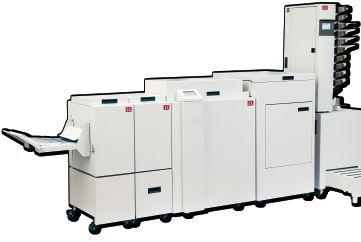
The DF Pro, MGI’s first inline finishing unit, is capable of cutting and trimming, full and strike perforation, and creasing.
IOS UV is designed for Inca Onset printers.
over other OEM inks based on colour and chemical compatibility. INX also points to what it describes as an easy conversion done by draining the OEM ink and changing the filters. The ISO product is aimed at the POP and packaging markets including corrugated work.
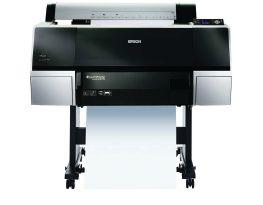
Epson SpectroProofer-UVS
Epson in September introduced its new SpectroProofer-UVS, described as an inline spectrophotometer for its 17-, 24- and 44-inch Epson Stylus Pro printers. Developed jointly with X-Rite, these optional SpectroProofers provide automated colour management and verificationrelated tasks in a range of proofing applications. Epson explains the UVS models support up to 50 percent more patches per scan and slightly faster measurement times.
The new SpectroProofer-UVS models support the M1 measurement illumination standard and are UV selectable between M1 and M2. The series is designed for providing colour consistency when producing commercial graphics, package proofing, and remote proofing applications. Current SpectroProofer owners have the option to upgrade to the new ILS30EP component of SpectroProofer-UVS models.
Goss Vpak
Alwan Integration
Goss International reached an agreement to integrate its Sunday Vpak presses with Alwan Color Expertise technology. The agreement is designed to provide on-press colour matching, press calibration, and print proofing and verification, all of which are available for CMYK and extended gamut printing, spot colour and HiFi colour production.
Goss Sunday Vpak 500 and Vpak 3000 web offset press models for folding carton, flexible packaging, pre-print and label applications are available in web widths from 520 mm to 1905 mm (20.5 to 75 inches) and print at speeds of up to 457 metres (1,500 feet) per minute. Key features include quick-change sleeve adapter technology for what the company describes as cost-effective size changes, and advanced offset inking, tension and control systems.
KBA RotoJET L
At Graph Expo, KBA North America provided more specifications for its new RotaJET L Series Inkjet Press, to be commercially released in 2015. Designed as an upgradeable press series, RotaJET L will be available with various web widths, maximum printing widths and colour capabilities. The series is aimed at markets like book, direct mail, magazine, newspaper, packaging and industrial printing.
7 Ways RS Superior Saves You Time and Money
1. ONE-STOP SHOP
Die Cutting, Bindery, Data & Lettershop –all under one roof.
2. ONGOING INVESTMENT IN SUPERIOR TECHNOLOGY
Die crease without a die, then fold and even glue all on the same machine, up to 30 pt.
3. INTEGRATED MODULAR UNITS
Combined in-line finishing: crease, fold, glue, tipping, envelope inserting, ink jetting (Duplex), clip seal (3 sides), mail prep.
4. SAVE ON POSTAGE COSTS
As a Certified Canada Post Direct Marketing Specialist, we get contract pricing reductions.
5. RETURN MAIL PRODUCTS
Customized “Return Mailers” created in-line with “U” or “BOX-shape” remoistenable glue, time perfed applications and envelope formation.
6. MINI-BOOKLETS
We can saddle-stitch and trim 2-up booklets in-line to the size of a business card. No need to trim off-line, or do 2 passes.
7. HIGH SPEED EQUIPMENT
High speed Tipping, Folding, Saddle-stitching and soft folding ensuring on time delivery.
The new KBA press series includes five RotaJET printing systems that can handle web widths ranging from 895 to 1,300 mm (35.2 to 51.1 inches). KBA explains it is possible to upgrade a KBA RotaJET 89 (web width 895 mm/35.2 inches) to a RotaJET 100, RotaJET 112, RotaJET 123 or the high-end RotaJET 130 (web width 1,300 mm/51.1 inches). It is also possible to modify a monochrome system into a four-colour system. KBA’s existing RotaJET 76 system is still available but its printing width of 781 mm (30.7 inches) cannot be extended. The RotaJET platform was first unveiled at drupa 2012. In early 2013, KBA introduced a new pigment ink called RotaColor, designed to extend the printable range of untreated papers.
Goss and Alwan team up for on-press colour matching and press calibration.
The RotaJET L series will be available with various web widths, maximum printing widths and colour capabilities.
SpectroProofer-UVS is jointly developed with X-Rite.
Twice
Highcon Euclid II
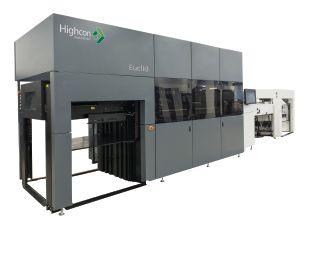
At Graph Expo, Highcon launched the Highcon Euclid II series of digital cutting and creasing machines. The company’s second generation of Euclid machines incorporates a range of new features, including, perhaps most prominently, the Integrated Digital Stripping Unit (IDSU). The built-in IDSU stripping mechanism automatically removes waste from internal cutouts, eliminating the need to buy, setup or store a separate stripping tool. Euclid II also now includes optical registration of the sheets, as opposed to mechanical only, which adds the ability to align creasing and cutting to the image.
New software for the Euclid II, described as the Fine Cutting Accelerator, is designed to provide more flexibility and speed for laser cutting and marking. At Graph Expo, Highcon will also demonstrate new Web-to-pack software that can be combined with the digital cutting and creasing of Euclid II. The Euclid II also includes a new substrate handling system to work with substrates like paper, folding carton, labels and micro-flute. The system includes additional sensors for registration accuracy and sheet flow.
Highcon states it has also enhanced the quality of the crease line by developing a new polymer formula and implementing optimized rule geometry, which provides a new ability to produce curved lines. Cutting algorithms for laser power control have also been improved for Euclid II.
Tilia Labs Phoenix 4.0
Ricoh Pro C7110X
At Graph Expo, Ricoh expanded its press portfolio with the new Pro C7110X cut-sheet system, which produces up to 90 pages per minute. The Pro C7110x, with a maximum sheet size of 13 x 19.2 inches, prints at 1,200 x 4,800 dpi on a range of papers and synthetics. It has a maximum monthly volume rated at 240,000 A4-size sheets.
In October, Tilia Labs of Ottawa launched Phoenix version 4.0 with new imposition and planning features, including gang-running tools, for signage and greeting card work, which builds on its more traditional folding carton and label focus. Phoenix 4.0 has enhanced Nested Ganging functions in Auto Impose and Auto Optimize to work with layouts for irregular shaped products. Nested layouts can be exported as CFF2, PDF or PostScript for cutting.
The software’s Auto Impose and Auto Optimize tools can now be run simultaneously across multiple jobs. Results are available in a persistent panel, allowing users to more readily apply ganged layouts. As well, lock-bottom folding carton pairs can be automatically detected and grouped during ganging. In relation to post-press work, Phoenix 4.0 features new guillotine-based layout generation of rectangular products. The system considers sheet turns versus using lower complexity cuts.
Mimaki JV150 Series
In October, Mimaki expanded its JV printer series and CJV cut-and-print series with new JV150 and CJV150 devices, designed for light production signage and graphics, or textile and apparel environments. The JV150 Series of printers is based on the JV300 Series platform introduced earlier this year. The inkjet system is available in two sizes, including the 54-inch JV150-130 and the 64-inch JV150-160.
The JV150 Series is based piezo technology with print heads capable of reaching speeds of up to 605 square feet per hour. These printers can use either SS21 ecosolvent inks or Sb53 dye-sublimation inks.
Kiian Digistar Fluorescent Inks
In October, Kiian Digital unveiled new pink, yellow and green fluorescent transfer sublimation inks, which fit into its Digistar line of products. The company targets Digistar at sportswear and other attention-grabbing
Euclid II features a new IDSU stripping mechanism to removes waste.
Kiian’s new inks are designed for highimpact applications like sportswear.
The Pro C7110X hits 90 pages per minute.
printing applications. Kiian explains its ink portfolio is matched to specific print heads.
Digistar PES HD-One inks, for example, are formulated for the first generations of Epson piezo print heads. Digistar Hi-Pro inks, tailored for the new DX7 generation heads, can be used with earlier versions and are designed for printing onto light and/or low coated papers. Digistar K-One transfer sublimation inks are formulated for use with high-capacity Kyocera print heads..
Sun Chemical SunUno Solimax
In March, Sun Chemical introduced a range of new products for flexible packaging, including a new multi-purpose ink system, a water-based flexo dispenser program, specialty coatings, a laser marking solution for variable printing, and digital plate technology. Sun Chemical’s new SunUno Solimax multi-purpose ink system is suitable for surface print applications on a number of the commonly used flexible packaging substrates. This latest generation of inks provides a single platform that can cover multiple end use applications, such as lidding materials, medical laminates and food packaging for confectionery and snack food.
GMG DIC COLORCLOUD
In 2015, GMG GmbH plans to introduce the integration of DIC COLORCLOUD with GMG OpenColor and GMG ColorProof for producing colour proofs. OpenColor was developed for spot colour-based proofing in packaging applications. It predicts spot-to-process overprints and, according to GMG, saves costs by reducing the number of press fingerprints or press trials required. The core of OpenColor is based on spectral algorithms. Colour information selected through DIC COLORCLOUD contains spectral data of real inks.
The integration of the technologies adds the spectral data of substrates and printing process information to spot-colour overprint prediction – when using inkjet printers paired with GMG Proofing Media. GMG ColorProof is used for creating digital contract proofs, where the printing result is simulated using GMG’s DeviceLink technology. With a workflow utilizing DIC COLORCLOUD all operators from planning to printing can reference and use the same spectral colour database and can share the same colour data.
Drytac JetMounter Fuzion XD
In late October, Drytac introduced its next generation of JetMounter roller laminators. The new JetMounter Fuzion XD is a heavy-duty wideformat roller laminator with a metal construction. Available in a 63-inch laminating width, the JetMounter Fuzion XD features interchangeable, large diameter non-stick silicone rollers; a heat-assist top roller with digital display for Celsius/Fahrenheit; a heavy-duty lift mechanism for calibrated pressure control; adjustable speed control up to 20 feet per minute; and four auto-grip supply or take-up shafts with adjustable brake tension on the operator side for roll-to-roll lamination.
Additional features on the JetMounter Fuzion XD include a centre release, fold-down feed table with a lay-flat paper in-feed guide; latching storage compartment on each side of the stand; maximum nip opening of one inch; and heavy-duty lockable casters for greater stability and maneuverability. The model can also accommodate 10-inch diameter rolled material and is cTUVus and CE-certified.
Coveris Magic
In October, Coveris Advanced Coatings Digital Imaging released three new wall-covering products under its Magic line, including SLEEK, PEBBLE and WEAVE designed for murals, POP displays and decals. SLEEK is a 6.7-mil prepasted wall-covering reinforced with polymer for strength and durability. The product is optimized for UV and latex inks with a bright white, ultra-smooth, matte printable surface. This product meets ASTM-E84 for smoke generation and flame spread.
PEBBLE is a 21.3-mil paperbacked textured vinyl wall-covering suitable for solvent, eco-solvent, latex and UV-curable inks. It holds a stucco-like surface for adding depth to designs and wall graphics while hiding surface imperfections. WEAVE is a 14.5-mil paperbacked textured vinyl wall-covering suitable for solvent, eco-solvent, latex and UV-curable inks. The company also recently released ChromaDriver software with job nesting, layout tools and error correction.
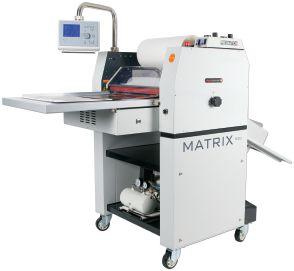
JetMounter Fuzion XD is available in a 63-inch laminating width.
Screen Truepress Jet W3200UV HS
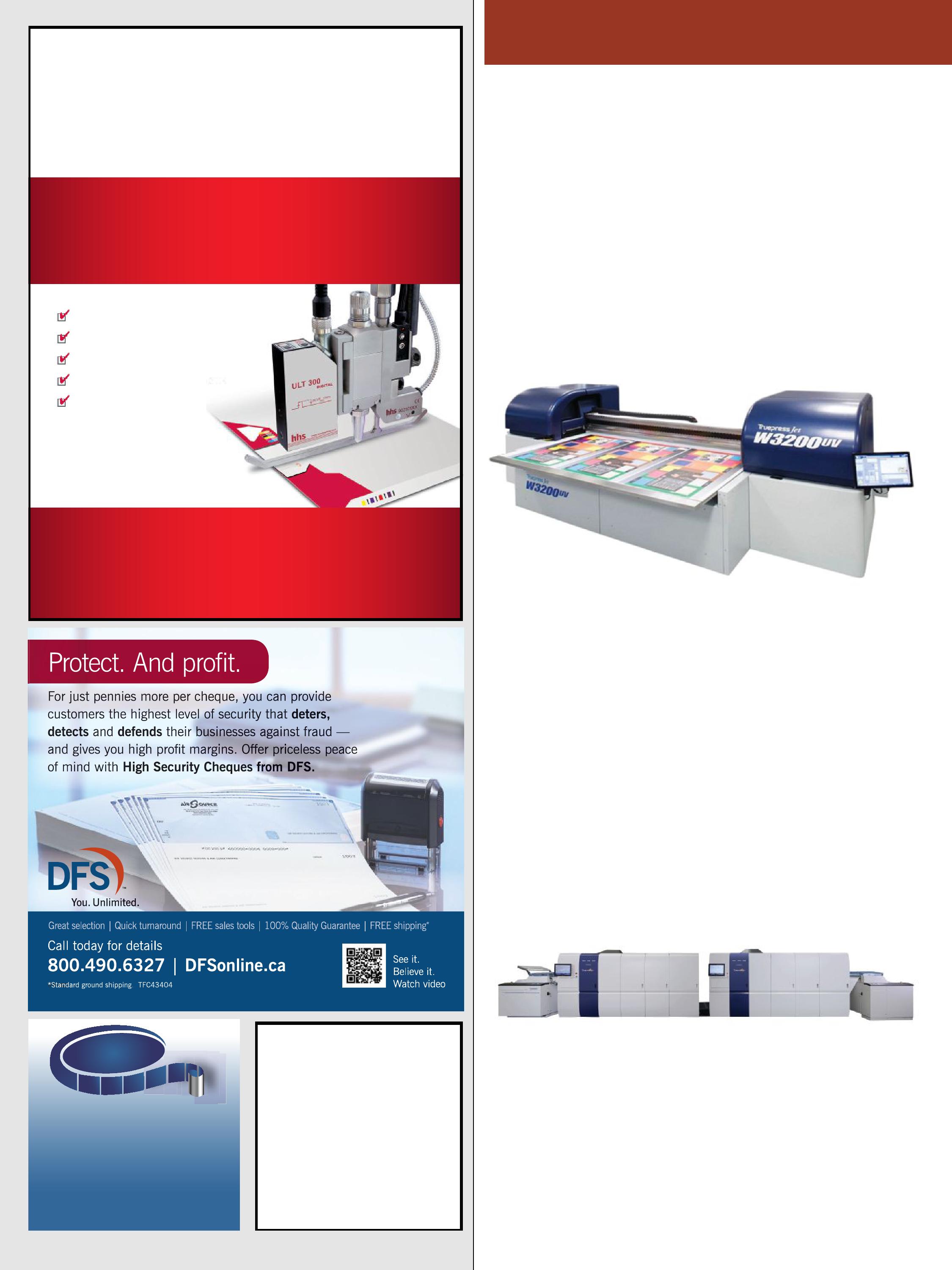
In October, Screen made the North American launch of its Truepress Jet W3200UV HS (standing for High Speed), which nearly doubles the throughput of the company’s existing W3200UV flatbed inkjet machine. The moving-table printer reaches a top speed of 1,614 square feet per hour. Launched in 2013, the Truepress Jet W3200UV hit a top speed of 914 square feet per hour. Users of the older system can upgrade to the HS model in the field. The 14-picoliter print heads on the HS model feature silicon nozzle plates that are liquid cooled.
The new machine, like its predecessor, features pop-up register pins, autocleaning heads, and a head-crash detection system. The 62.9 x 125.9-inch-wide flatbed table is driven by magnetically encoded linear motors and, according to Screen, is capable of printing directly to lenticular lenses. The Truepress Jet W3200UV HS features six colours (cyan, magenta, yellow, black, light cyan and light magenta) plus two white-ink channels. It has 48 colour heads and 16 white heads. Image quality and colour management are controlled via the Wasatch SoftRIP.
Screen TruePress Jet 520 HD
In September, Screen announced the arrival of a new generation TruePress Jet 520 HD sheetfed inkjet press for transactional, direct mail and book printing markets. The redesigned Truepress Jet520HD features a new paper transport, new drying techniques, new print heads and new screening technologies that make the most of new wide-gamut inks. Truepress Jet520HD reaches speeds of up to 50 metres per minute with a resolution of 1,200 x 1,200 dpi, while the fastest speed is 120 metres per minute at a resolution of 600 x 600 dpi. The system’s new Ricoh print heads provide variable-size droplets. It also uses new high-density ink that, according to Screen, is very close to the standards used in offset printing.
The new Truepress Jet520HD can print on material from 40 GSM to 250 GSM. Truepress Jet520HD can also include an optional inspection unit based on Screen’s JetInspection system that checks the entire page and compares the printed result to the RIP data. The new press is driven by a new version of Equios software with new features like In-RIP Smart Imposition, ICC Profile Editor and Spot Colour Editor.
MAPP tesa Softprint Secure
Mark Andy Print Products (MAPP), the supplies and consumables division of Mark Andy Inc., has added distribution of tesa Softprint Secure plate mounting tapes. According to MAPP, these tapes are designed to handle two major challenges for narrow web printers: plate lift and long run lengths. With the newly developed adhesives on both the plate roll/sleeve and plate side of the double-
Truepress Jet520HD reaches speeds of up to 50 metres per minute at a resolution of 1,200 x 1,200 dpi or 120 metres per minute at a resolution of 600 x
The new Screen W3200UV HS hits a top speed of 1,614 square feet per hour, nearly doubling the top range of its predecessor launched in 2013.
sided foam tape series, it prevents plate lift on small repeat cylinders and sleeves while maintaining a secure bond.
Softprint Secure plate mounting tapes, according to MAPP, are suited for faster printing speeds and longer print jobs as well as when plates are mounted with minimal seams. A SNAP-ON adhesive used on tesa Softprint Secure is patented by tesa for plate mounting and demounting.
AVT Gallus Inspection
In September, Advanced Vision Technology (AVT) introduced a new press control and quality assurance solution for inkjet presses. The AVT solution was installed on the new Gallus DCS 340 digital label printing press, which was jointly built by printing press manufacturers Heidelberg and Gallus. AVT’s new solution includes continuous print quality monitoring, real-time feedbacks and ongoing detection of missing, deviating or weak printing nozzles.
The AVT solution can be expanded to include colour control, verification of geometric parameters (like colour-to-colour registration), image placement and a reporting system. It has the ability to monitor data integrity of static and variable content, classify possible print defects and initiate corrective actions. AVT also showcased its new Helios S, which is a new vision system that can handle thick embossed metalized substrates, as well as reflective holographic foils and laminates.
Management Software
Fujifilm Acuity F
In October, Fujifilm made the North American launch of its Acuity F, a UV flatbed printer series that runs a maximum media size of 120 x 98.4 inches. The top machine speed is rated to run at 1,668 square feet per hour. Acuity F features dual print zones, each with its own vacuum system which can be used independently to allow printing on substrates of up to 3.05 x 2.5 metres (120 x 98.5 inches) and 50.8 mm (two inches) thick. Non-stop production is possible as one board can be staged while the other is being printed. Acuity F prints with Fujifilm’s Uvijet inks.
Fujifilm also recently introduced its Uvistar Pro-8W roll-to-roll inkjet system with new capability to print with light inks (Lk, Lm, Lc) and white. The company explains the printer, available with 4 x 8- and 5 x 10-foot tables, can be converted back to four-colour work by pushing one button.
AVT control technology can now be integrated on the new Gallus DCS 340 jointly built by Heidelberg and Gallus.
Continued from page 9
of law books. If not annually mandatory, dozens of new thick books spoke to a law office’s prestige Automotive manuals and parts books were a staple of a few of our customers, too. In the turn of just a few years, almost all are now out of print entirely.
In the early 1990s, my company Howard Graphic Equipment purchased a Miller perfector from a printing company in the east of England. This firm had a long history. They were ensconced in what had been a carriage house, even had an 1800s workable water closet. The biggest piece of business for this printer was railway timetables. Almost all of it is now redundant. A smartphone can look-up the schedule and buy a ticket to ride without any paper being expended.
Wondering where all of the presses have gone is an intriguing question. In a commendable open manner, KBA in its latest annual financial statements for 2013 approached this difficult subject. KBA commented that group sales had slumped 35 percent since 2006. Since KBA is heavily involved in both sheetfed, web and special presses (currency and metal decorating), it has an almost split revenue business at €571.9 million for sheetfed and €527.8 million for web and special presses. KBA also acknowledges that since 2006 its Web sales have fallen 70 percent and sheetfed almost 50 percent. The statements also comment that the Web business will continue seeing retraction in the coming years. Should we assume KBA, although heavily diversified, is an example of what all major press makers are going through? The answer is yes.
Competitors to KBA may argue that the business of newspaper printing (long a staple of KBA) exacerbates the drop in sales. They may also suggest that perhaps KBA had a smaller commercial and publication customer base, or that what KBA produced was not as suitable? But KBA is a major supplier in both fields. On the sheetfed side, KBA owns a major position in packaging and Very Large Format sheetfed printing. New in-roads in technology have been poured into the Rapida 106 and 145 platforms. One surmises with its packaging strength KBA’s only real rivals are Heidelberg when it comes to imaginative, multi-purpose machinery for the carton industry. Komori and Manroland also compete in this segment with Manroland running a close third to KBA and Heidelberg in press variants.
We as a machinery segment are a reflection of you the printer just as you are a reflection of your clients. Therefore. we must assume printers cannot make the math work when calculating return costs for a large piece of machinery. Presses that cost a million dollars plus are no longer the prime piece of manufacturing gear
in a printing business. They may never be again. There are exceptions of course. Trade printers who do it cheaper, not better, may consider new machines. Packaging printers will because the business is stable. Smaller commercial printers, however, will not. They may buy used, but its doubtful that a majority of shops can draw enough profitable work to pay for today’s engineered marvels.
Data was once the exclusive domain of the printer and publisher. The only way any kind of data could be distributed was through a printing press. Google et al changed all that.
David Carr, writer for The New York Times, does a masterful job explaining how the trend from a physical method (newspapers) to online is humbling. During a recent speech in Vancouver, Carr eluded to this fact when explaining the state of his employing newspaper. It was as much funny as it was sad for those of us in the business. He explained newspapers are offices where everyday information comes in and is collected. Then a bell goes off and everyone stops collecting news and starts to write down what came in that day. They send the copy to a giant press where it’s printed, rolled up and eventually thrown onto your front lawn.
Carr accepts the inadequacies of news distribution via print while at the same time considering that large dailies like The New York Times seem to be weathering the storm and seeing growth via online pay-walls. Carr hastens to add that it’s the medium-size papers suffering the worst, while small local papers, for the most part, continue to do well in the communities they serve. News is data and so is almost every piece of information we need, which used to be mailed to us. First Gutenberg and now the colloquial Google has changed our world again.
Despite the odd period of increased new machinery order intake that prevailed in late 2013, the industry at large will not go shopping for new litho machines again. While I have a vested interest, few press makers would argue the second-hand press business becomes more important to lessen a printer’s investment risk. It is not coincidence that used machines now are a much bigger piece of the machinery trading pie than ever before in the history of printing or that most press makers now have full-scale used press operations.
The 50 percent machinery sales shrinkage in seven years, as reported by KBA, is reality for every litho press maker. Postal rates and other fixed costs are impediments that cannot be overridden with faster machinery costing millions of dollars. Where have all the presses gone? Nowhere it seems.
FOR SALE
Small, long-established printing company for sale in central Nova Scotia. No debt, marginally profitable with “walk in” business only. Owners live in Ontario and the company needs “boots on the ground” to manage, make sales calls and follow up, to be more profitable. Includes; Land and 3,360 sq. ft. building valued at $114,000 with two-bedroom apartment above that may be used for rental income or living quarters. $250,000 Call 613.527.5840
FOR SALE
MBO T49 Folder with Right Angle, 20” x 29”, 1990s. In Great Condition — $5,000.
1990 Heidleberg Quickmaster 46-2, $5,000
Baum Ultrafold 714 table top folder, Tabber Challenge single head drill — $500
24” Royal Shrink wrapper - eliminates the need for traditional “L” sealer and tunnel shrink wrap machine formations for manual operations by encasing the heating zone under a transparent hood. Save space by dropping that old dryer tunnel and switching to a nexgen machine.
Light table - 30 x 40 inches — $10 Duster 1800 Island Air - filtration system, best offer. The Duster 1800 removes dust, odors, smoke, voc’s, mists, spray powder, toxic fumes, pollen and bacteria, and a lot more. This unit is perfect for industrial or print shops where fumes and particles are present in the air. Used to clean 2200 sq. ft. building — $400 Call 416-222-4021 with best offer.
WAntEd
Heidelberg Diecutter S or SBG and interested to buy your surplus printing equipment
Established since 1990, Scarborough ink manufacturing, washes, and press supply company for sale. Owners retiring. 416-751-3489
EMPLOYMEnt OPPORtUnItY
Dry mounting, dibond mounting, wide format, lamination operator required. Toronto area, DVP and Lawrence. Full or part time position. Must have experience. Please call: Steve 416-445-5559
FOR SALE
Profitable print shop
Low rent, under $850. High profit with long term big industrial clientele in heart of Alberta’s booming industrial heartland. Also guaranteed monthly revenue of at least $8,000 from community weekly publications. Established since 1995 with very reliable and knowledgeable press foreman willing to stay on with new owner. $175,000 780-720-2898, Excellent opportunity with low risk. Fort Saskatchewan
PLAnt OPERAtIOnS MAnAgER, MISSISSAUgA
• 10 years experience in Printing Plant Operations management
• Strong leadership, interpersonal and communication skills
• Ability to prioritize, and oversee the scheduling and delegation of work
• Maintain budgetary controls
• Working with a team, determine new capital equipment requirements
• Ensure all corporate and govern mental laws are in place and followed
• Self motivated and capable of working with a high degree of autonomy
• Strong customer service focus
Email classifieds@printaction.com with “Box 1363” in subject line
COLd WEB OFFSEt
PRESS OPERAtOR
Permanent, full time NIGHT position for very fast-paced printing facility in the west end. MUST have MINIMUM 3 - 5 years experience in Cold Web Offset press, including mounting plates and cylinders. All others need NOT apply. Monitor press run for quality, remove & clean plates and cylinders at end of press run. Fill ink fountains, control colour and viscosity. MUST be able to work under pressure and pay attention to detail. Hourly rate TBD with experience. Medical/Dental benefits.
EXCELLENT command of English language is a MUST!!
Email classifieds@printaction.com with “Box 1001” in subject line
gUILLOtInE OPERAtOR
Experienced Guillotine Operator (Primary Duty) required for Print Finishing Company in Markham. Additional duties required based on output demands: stripping, hand work, shipping, etc.
Position available immediately. Send Resume to: veda@lamacutting.com
WAntEd
MPI Print Inc is looking for Full Time Stitcher, Folder & Cutter Operators for the new Mississauga plant & Our Concord Head office. Applicants must have experience and be used to working in a fast paced environment. We are also seeking full time Pre-Press staff. Applicants must be knowledgeable in Adobe Creative Suite, Have a very good understanding of Imposition and have experience in Pre-Press. Email your resume to rob@mpiprint. com or contact (416) 877-1417
BIndERY hELP nEEdEd
Stitcher operator with 5 years’ experience, feeding cutting system, general help packing. Phone 416-701-1512
BIndERY OPERAtOR
Bindery operator required for digital printing company in Vaughan. Cutting, folding and stitching experience necessary. Able to oversee hand production workers. Apply digitalinvaughan@outlook.com
IndUStRIAL MEChAnIC:
3 years’ experience Manufacturing or Printing industry with lathe, milling machine, grinder, welding. Read blueprints, and schematic drawings. Install, dismantle repair or replace machinery. Visit www.lmgroup.com to apply.
WEB PRESS FEEdER 1 year experience with large format sheet fed printers. Ability to lift 50lbs Assisting with wash-ups, makereadies, throwing stock, getting supplies. $16.50/hr. Visit www.lmgroup.com to apply.
MBO FOLdER OPERAtOR PARt tIME, AFtERnOOn And WEEkEndS Scarborough location. Please call Phil 416-561-4304
PRESSMAn WAntEd, kOMORI 4/C, PARt tIME AFtERnOOn And WEEkEndS
Scarborough location. Please call Phil 416-561-4304
ExPERIEnCEd BIndERY hELPERS REqUIREd, PARt tIME, AFtERnOOn And WEEkEndS
Scarborough location. Please call Phil 416-561-4304
FOR SALE
Heidelberg Windmill Redball one head paper drill, AB Dick 350 single colour, cutter Challenger size 305, MBO right angle folder T49/44 #c0408, AB Dick 2/C with T head, Toko 4750 2/C, Multi 1250 w. Price $20,000. (09/14)
For more info call (416) 992-1661 or email doabaprinting@gmail.com
We Buy
Heidelberg: K-Line/S-Line/ Speedmaster/GTO/MO
Komori: 1,2,4 or 5 colours & an Adast : 714/715/724/725
Mitsubishi: Any model
Ryobi: : 2800CD/3200CD Itek: 960/975/985
Hamada: 500/600/700/800
Polar: 72/82/90/92/107/115 CM
Horizon-BQ: 220/240/260/440/460
model surplus printing machines, paper
November 1989
The Berlin Wall is breached by celebrating Berliners, unifying a city divided for over 30 years; Canadian Olympic swimmer Victor Davis is killed in a hit and run at age 25; Disney’s The Little Mermaid is released in theaters; and CKO, a Canadian national all-news radio network, suddenly terminates all broadcasting during the newscast at noon due to financial losses.
agency Press awarded Contract to Print New Globe & Mail western Publication
The Globe & Mail’s recently launched 300,000-circulation magazine WEST will be printed by Agency Press of Vancouver. “Agency Press was chosen because of their extensive experience in magazine printing and their recognized standard of quality,” reports WEST Publisher Frank Teskey.
WEST is aimed at an upscale audience in Canada’s four western provinces. The first issue was distributed September 29 in The Global & Mail newspaper to all subscribers, as well as by single copy sales and limited controlled circulation.
“Of course we’re very excited to be the printer of this innovative magazine,” says Jack Ellison, Agency’s VP of Sales and Marketing. “There is a great deal of interest in WEST and I’m sure it will be a tremendous success.”
Pictured right: Jack Ellison of Agency Press (left to right) and Frank Teskey, WEST’s Publisher, sign a 300,000 monthly print-run deal, with press operators Rick Hundle and Brent Vance.
Canadian ingenuity Licks the Postage stamp Problem
After years of licking postage stamps, consumers have been given a new choice by Canada Post Corporation. A new firstclass stamp is available to give the convenience of self-adhesive postage. Printed on self-adhesive stock made by Fasson Canada, it is said to be the first pressure-sensitive stamp ever issued in North America.
Referred to by Canada Post as the Canadian Flag “Quick Sticks” stamp pack, a booklet of 12 38-cent stamps sells for $5 at post offices. Consumer focus group research indicated a large portion of the population would be willing to pay extra for the convenience of a self-adhesive stamp.
The stamp is actually a composite of two photos – one of the Canadian Flag and the other of a forest. The photos are electronically merged during the colour separation process to create the image of a flag flying above a Canadian forest.
apple seeks Canadian technology suppliers
Apply Canada has opened up a Strategic Procurement Office to source Canadian-made products and technologies for the worldwide operations of Apple Computer Inc. Procurement requirements will be coordinated through Apple’s offices in Cupertino, California, to support the manufacture of an estimated $5 billion of microcomputers and peripherals that Apple is expected to produce this year.
SH I FT TO OPPORTUNITY
Kodak Sonora XP Process Free
Plates
Kodak Sonora XP Process Free Plates deliver the print capabilities and productivity of mainstream plates, without the processing and chemistry.
Kodak Flexcel NX Plates
An important part of the Kodak Flexcel NX System, Flexcel NX Plates are reliable, high quality flexographic plates designed to print on a wide variety of substrates.
Kodak Prinergy Workflow Version 6
Trusted worldwide for its leading-edge prepress capabilities, customizable automation, third-party integration, and advanced colour and screening proficiencies. Version 6 extends automation and increases workflow efficiency even further.
As our industry has evolved, so have we. Together, Spicers and Kodak provide strong industry expertise, best in class technology and innovative solutions to maximize efficiency, quality and productivity for your imaging business.
877 790 2335
• Excellent rub resistance
• Particularly suitable for printing on critical paper grade