


The ultimate disruptor: What happened on August 7, 1956? P.8
3D printing
How one company turned to 3D printing to keep workers safe P.16
The ultimate disruptor: What happened on August 7, 1956? P.8
How one company turned to 3D printing to keep workers safe P.16
Two women in the print industry detail their experiences moving up the ladder P.10













For years, Mitsubishi set the superior technology standard for Canadian printers. Today, RM Machinery returns that innovation to Canada, but with an even higher standard: Ryobi Mitsubishi Graphic Technology (RMGT).














Serving the US market for nearly a decade, RM Machinery (RMM) proudly brings our expertise to Canada’s printing industry. We deliver the highest quality sheetfed o set, digital inkjet, and flexo printing presses by partnering with the finest manufacturers in the industry.
RMM is the premier distributor in Canada for Mitsubishi, RMGT, and Miyakoshi printing presses; Bottcher rollers, blankets, and chemistry; Standard Horizon finishing systems; and GEW UV curing systems.









We are stable, local, and o er the best-in-class technology. We maintain an ample supply of parts, and for as long as you own one of our supported presses, you are guaranteed ongoing service and support programs that are among the best in the industry.


RM Machinery Inc.
905-238-9797 • 1-855-RMGT-123 5250 Satellite Drive, Unit 9 Mississauga, ON l4W 5G5 www.rmmc.ca
Equipping North America to print.



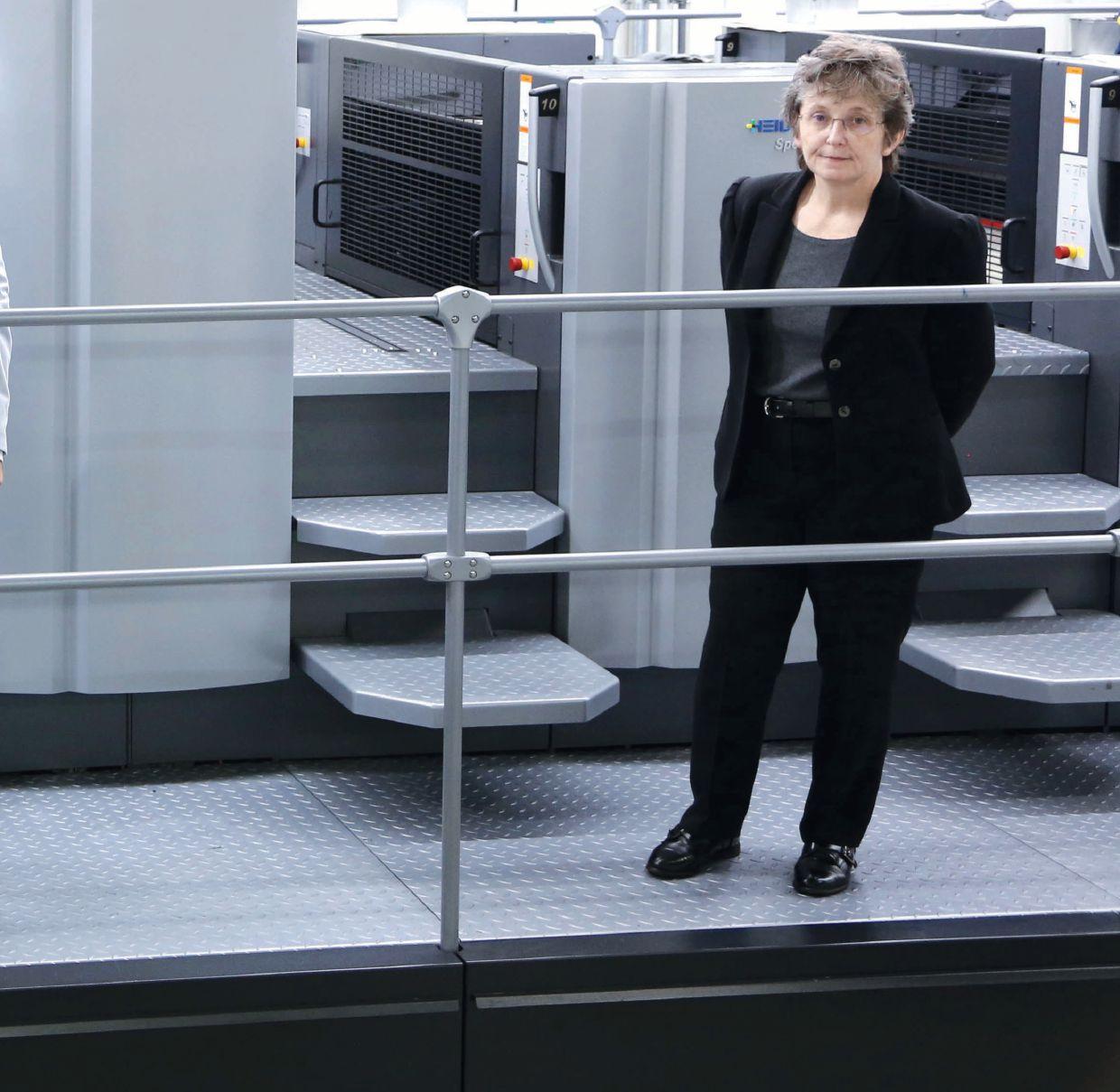
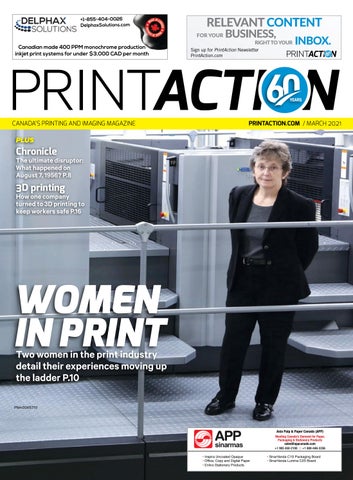
Two women in the print industry detail their experiences moving up the ladder
Ten golden marketing rules to follow in 2021
How one company turned to 3D printing to keep workers safe
GAMUT
5 News, Calendar, People, Installs
TECH REPORT
18 Introducing new technologies in the label-printing segment
NEW PRODUCTS
20 Detailing new products from Toshiba Tec, Mimaki USA and Roland DGA
SPOTLIGHT
22 Nicole Morrison, Communications & Marketing Consultant at Connecting for Results
FROM THE EDITOR
4 Kavita Sabharwal-Chomiuk
Celebrating women in print
CHRONICLE
8 Nick Howard
The ultimate disruptor: What happened on August 7, 1956?
INSIDER
14 Bob Dale and Gordon Griffiths Forming an exit strategy: Are these winds of change, or is a storm coming? 10 16 22 12
ISSN 1481 9287. PrintAction is published 10 times per year by Annex Business Media. Canada Post Publications Mail Agreement No. 40065710. Return undeliverable Canadian addresses to: Circulation Department, 111 Gordon Baker Rd., Suite 400, Toronto, ON M2H 3R1. No part of the editorial content in this publication may be reprinted without the publisher’s written permission. © 2021 Annex Publishing & Printing Inc. All rights reserved. Opinions expressed in this magazine are not necessarily those of the editor or publisher. No liability is assumed for errors or omissions. All advertising is subject to the publisher’s approval. Such approval does not imply any endorsement of the products or services advertised. Publisher reserves the right to refuse advertising that does not meet the standards of this publication. Printed in Canada.
As this is PrintAction’s 60th anniversary year, I think it’s only fitting that we highlight and celebrate a major part of the workforce in the industry: women. However, as many of us know, the representation of women in print is not exactly equal, and unfortunately, I’ve heard stories from women in a variety of male-dominated industries that illustrate how much farther we as a society have to go.
Of women have been in the industry for over 20 years, while 25.2% have been with the same company for over 15 years, according to the 2017 survey.
But in this issue, we’re here to lift up women in print. I had the pleasure of interviewing two highly ranked women in the Canadian print industry, Tracey Preston and April Burke, for our cover story. We discussed the struggles many women face when looking to join a male-dominated industry such as this one, as well as how to attract more female talent to the industry, going forward (p. 10).
Although labour statistics for women in the Canadian print industry aren’t widely available, a 2017 report from the SGIA’s Women in Print Alliance contained some interesting statistics. The results of the report were compiled from a survey taken in June 2017 and were based on over 350 responses from women in the print industry from Canada and the U.S.
cent), because of their education (11.5 per cent) or a passion for the subject (16.6 per cent). Meanwhile 35.7 per cent cited random circumstances bringing them to the industry, while 8.3 per cent noted other reasons.
More than half of the women who started their own printing business started it with less than a year of related experience, but possessed the talent and desire to succeed. Over two-thirds of women in the industry have a Bachelor’s degree or higher level of education, and more than half feel that their education is related to their job.
The survey found that to attract women to the industry, respondents suggested good financial compensation, professional growth opportunities, flexible schedules and good benefits. In order to retain women in print, respondents suggested all the same factors, and included providing a sense of job satisfaction. In order to promote women in the industry, respondents also added that duties should be challenging to encourage more women to want to be promoted. In general, the survey found the most common pathway to management was promotion, and the median number of years to get promoted was 4.5.
Reader Service
Print and digital subscription inquires or changes, please contact
Barbara Adelt, Audience Development Manager
Tel: 416-510-5184
Fax: 416-510-6875
Email: badelt@annexbusinessmedia.com
Mail: 111 Gordon Baker Rd., Suite 400, Toronto, ON M2H 3R1
Editor
Kavita Sabharwal-Chomiuk kchomiuk@annexbusinessmedia.com 437-220-3039
Contributing writers
Bob Dale, Gordon Griffiths, Nick Howard, Minuteman Press International
Media Sales Manager
Kim Barton kbarton@annexbusinessmedia.com 416-510-5246
Media Designer Lisa Zambri lzambri@annexbusinessmedia.com
Account Coordinator Alice Chen achen@annexbusinessmedia.com 416-510-5217
Group Publisher Diane Kleer dkleer@annexbusinessmedia.com
COO Scott Jamieson sjamieson@annexbusinessmedia.com
Subscription rates
Of women in the North American print industry are in management roles, according to the 2017 survey.
The survey found that the majority of women polled work in the graphics and sign producer sector (30.2 per cent), while 29.9 per cent identify their position as manufacturer/distributor/supplier to the specialty graphics industry. Other sectors include garment decorator (12.8 per cent), industrial printer (8.8 per cent), commercial printer/publication (7.8 per cent) and other (10.5 per cent). Over half of respondents noted that the sector with the most underrepresentation was IT and R&D/engineering.
Overall, the survey found that women in the industry had a high degree of job satisfaction due to the job being rewarding or exciting, the company being flexible, opportunities for professional growth, and clear company-employee communication. However, respondents noted stressful jobs and a lot of overtime work as some negative job factors.
Women are joining the industry for a number of reasons, including being part of a business start-up (17.4 per cent) or family business (10.5 per
In addition to this special issue dedicated to women in print, we profiled Ropes Edge, a Calgary-based rope safety company that turned to 3D printing to safely create equipment on demand (p. 16). This issue also features a list of 10 marketing rules to follow this year (p. 12) and a Q&A with Nicole Morrison, communications & marketing consultant at Connecting for Results, on the parallels between communications and print, and some of the biggest opportunities in the print industry (p. 22).
Finally, it’s time for me to say goodbye for now. This is my final issue before I take some time off for maternity leave. It was a pleasure working on PrintAction, meeting (over phone, email or virtually) and speaking with many of you, and learning about this wonderful, creative industry that never ceases to amaze and inspire.
Until next time, stay well.

KAVITA SABHARWAL-CHOMIUK Editor kchomiuk@annexbusinessmedia.com
For a 1 year subscription (10 issues): Canada — $43.00 +Tax Canada 2 year — $70.50 +Tax United States —$98.00 Other foreign —$191.00 All prices in CAD funds
Mailing address
Annex Business Media 111 Gordon Baker Rd., Suite 400, Toronto, ON M2H 3R1 printaction.com Tel: 416-442-5600 Fax: 416-442-2230
Annex Privacy Officer Privacy@annexbusinessmedia.com 800-668-2384
PrintAction is printed by Annex Printing on Creator Gloss 80lb text and Creator Silk 70lb text available from Spicers Canada.
ISSN 1481 9287 Mail Agreement No. 40065710




Huge Paper has been named the exclusive distributor of Legion Paper products in Eastern Canada. This will allow the company to distribute Legion’s lineup of premium metallic papers, including Sirio Pearl, Cocktail, Mirri Card and Mirri Sparkle, to be used in high-end print, packaging and signage projects.
Beyond Legion’s metallic line, Huge Paper now has access to the Sirio Ultrablack paper, composed of alpha cellulose pulp without carbon black dyes to prevent oxidation and reduce scuffing.
Connecting for Results Inc. has launched Print Wisdom, a career mentorship program, in partnership with Ryerson University. Working with Ryerson’s Graphic Communications Management pro-
gram, Print Wisdom provides third- and fourth-year students with the opportunity to seek advice from seasoned professionals in the industry.
The mentorship initiative will provide students with career advice, guidance and motivation, and resources and networking opportunities ahead of their entrance into the industry. The experience aims to help guide the students onto the right track as they start their careers, in particular female students, who are currently the majority of those entering the field, according to Connecting for Results.
The mentorship program will run from Feb. 8 to Aug. 31, 2021, and will provide students with the opportunity to sample a variety of areas of the industry, also giving potential employers the opportunity to meet new talent. Students are able to meet with their mentors one-on-one virtually, or in person, on an on-going basis. Alternatively, they can participate in a one-time Flash Mentoring session to receive quick advice.
Ricoh Canada Inc. has extended its partnership with Women of Influence for the second year in a row by becoming the presenting sponsor of the 2021 Top 25 Women of Influence Awards. The annual awards celebrate the accomplishments of Canada’s female role models throughout the past year by
recognizing their efforts towards influencing and driving positive change.
This year’s awards will be virtual, and will include fireside chats with 2021 Lifetime Achievement Award winner Camille Orridge (Senior Fellow at Wellesley Institute and former CEO of the Toronto Central Local Health Integration Network) and Top 25 Award recipient Larissa Crawford (Founder and Managing Director of Future Ancestors Services).
“As this year’s presenting sponsor, celebrating diversity and inclusion acts on our promise of the Ricoh Way – to embrace and respect the collective and unique talents, experiences, and perspectives of everyone,” said Eric Fletcher, vice president of marketing at Ricoh Canada. “We’re proud to continue our partnership with Women of Influence in highlighting significant accomplishments achieved through female empowerment and leadership.”

The Board of Trustees at Canadian Print Scholarships was saddened to hear of the passing of industry veteran Don Gain at the end of December. To honour Don’s industry leadership, including the 15 years he spent volunteering with Canadian Print Scholarships, the organization is establishing a fundraising campaign to create a scholarship named for him.
Don was president and owner of Harmony Printing for 28 years, until his retirement in 2016. A passionate supporter of the printing industry in Canada, he served in many volunteer positions, including his time with Canadian Print Scholarships. He became involved as a Trustee in 2002, and within three years, became Chair of
the Board. He received a number of awards for his service to the industry, was Chair of the Canadian Printing Industries Association, served on the Advisory Board at Ryerson University and was instrumental in developing the Heidelberg Centre for the Graphic Communications Management program at Ryerson.
Canadian Print Scholarships has already received contributions to the campaign from Willow Printing Group, CJ Graphics, Advocate Printing and Publishing, Connecting for Results Inc., and Frank’s Maintenance Products. The fundraising goal is $30,000.
Two Sides has released a new fact sheet on the Canadian paper and paper-based packaging industry, addressing public perceptions and facts when it comes to related environmental topics, such as forestry, greenhouse gas emissions and recycling.
The fact sheet follows a recent Two Sides survey, which found that Canadian consumers rank pulp and paper products as a leading cause of deforestation. However, the Canadian paper and paper-based packaging industry is one of the most sustainable industries in the world, notes Two Sides.
In the new fact sheet, Two Sides provides several facts from credible third-party sources that inform consumers. Some facts include:
Deforestation refers to the conversion of forest to other land uses, and does not include areas where trees have been removed due to harvesting or logging, and where the forest is expected to regenerate (UN Food and Agriculture Organization, 2020).
Canada recycles nearly 70 per cent of its paper and cardboard, making it one of the top paper-recycling countries in the world (Forest Products Association of Canada, 2020).

The Canadian Printing Industries Association (CPIA) has announced the appointment of Gerard (Gerry) Lacombe to the newly created position of association manager. Gerry brings over 34 years of industry experience to the role, 28 of those years with the Domtar organization. His career has seen him excel in both operational and sales management roles.
As association manager for the CPIA, Gerry will help the association provide a national voice for the graphic arts industry and serve as a connecting point for regional print associations, sector associations and print-focused post-secondary educational programs.

The Paper and Paperboard Packaging Environmental Council (PPEC) has announced the appointment of Rachel Kagan as its new executive director, effective Feb. 1, 2021. Rachel will take over the position from John Mullinder, who has been the council’s executive director since its inception 30 years ago. Rachel has an extensive background working with industry trade associations in sustainability and recycling policy development and government and stakeholder relations.

TI Group has promoted Renee Walsh to president of the Commercial Print Group. In this role, Renee will lead this group’s sales and operations, as well as the Creative and Photo Studios.
Renee has been with the company since 2016 and has led its sales and business development efforts, as well as supported its sales reps in growing the business.
The company has also named Peter Spring president of the Retail Business Group. In this role, Peter will lead this group, which includes sales, operations, merchandising, campaign management and customer interface technology initiatives. Peter has been with the company since 1999, and has helped grow its retail and merchandising products and services.

Tom Fitzgerald has been promoted to the position of director of post-press products at Koenig & Bauer (US/CA). He has also been appointed to the board of directors of the International Association of Diecutting and Diemaking (IADD) as director of member retention.
Over the last three years, Fitzgerald has played a large part in successfully developing and growing the company’s post-press brand including its Iberica die cutters and Duran folder/gluers.
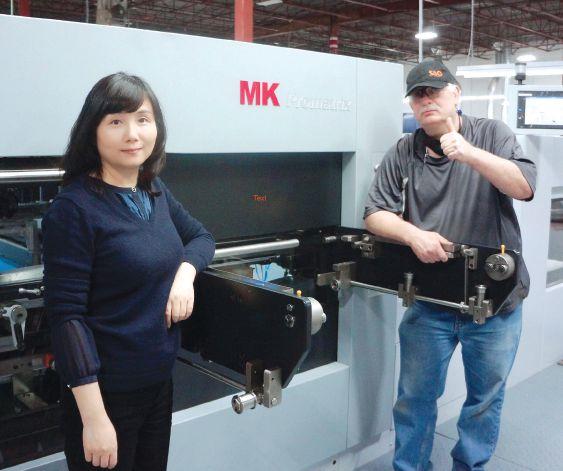
SooPak.com/ Beneco Custom Packaging has installed a new Heidelberg Promatrix 106 CSB die-cutter with blanking at its Toronto facility, with the goal to boost its post-press output. The Promatrix 106 CSB was selected to allow the companies to do all their diecutting and packaging jobs quickly and efficiently, for both short and long runs.
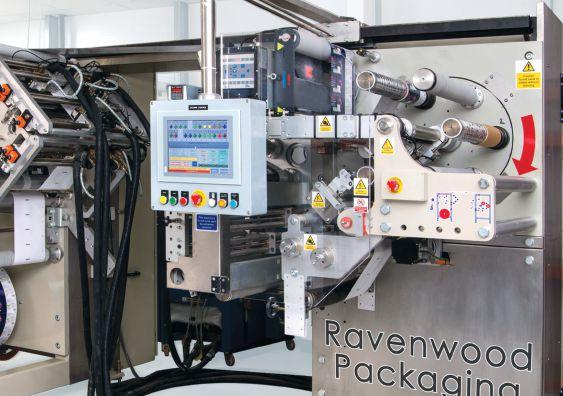
Imprimerie Ste-Julie has purchased a Ravenwood Com500 coater to provide an alternative to self-adhesive labelling. The Coater has been installed at the company’s 30,000 sq. ft. facility, which is due to be extended further this year due to increased demand.
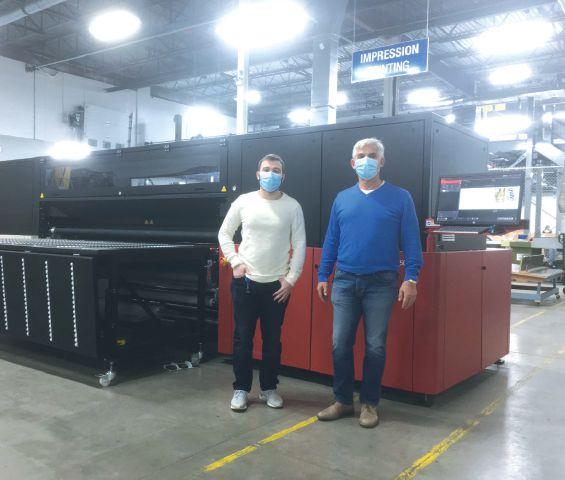
Montreal-based Point 1 Displays recently completed the installation of an Agfa Jeti Tauro large-format digital press. The installation of the Jeti Tauro will expand the company’s range of services and offer even more added value products to its customers.
March 11, 2021
GCM Colloquium Online
April 20-23, 2021
virtual.drupa 2021 Online
June 8-10, 2021
Labelexpo Americas 2021 Chicago, Ill.
June 8-10, 2021
Brand Print Americas 2021 Chicago, Ill.
June 10, 2021
DIA Annual Golf Tournament Aurora, Ont.
August 12, 2021
OPIA Toronto Golf Classic Brampton, Ont.
October 12-15, 2021
FESPA Global Print Expo Amsterdam, The Netherlands
Gegen-
By Nick Howard
Between 1906 and 1918, in Long Island, N.Y., William Gegenheimer set out for work expecting to spend his days installing and repairing Harris Automatic offset presses. During this time, William not only worked for Harris, but also ran a press in a local printshop. Gegenheimer was at the genesis of offset press development as Harris only started shipping their first offsets in 1906. But the physical side of printing wasn’t going to do much more than put food on the table. Gegenheimer saw himself as an inventor, and as the First World War was coming to an end, the printing industry needed new ideas!
In 1918, William set out on his own to form William Gegenheimer Offset Press Engineering, later changed to Baldwin-Gegenheimer Corporation, adding his home-town name to the company masthead. William would enter a potentially lucrative business of designing offset press enhancements, and in 1927 a novel inker wash-up device was patented. Initially the press washer was slow to sell, but as word spread, everybody wanted one. Early attempts at forging alliances with
His openness made me muse on the full extent of his genius, not only as an inventor, but as a corporate leader.
mechanical
perfector,
a perfecting device in
press manufacturers soon paid off and virtually all new U.S. presses were equipped with a Baldwin wash-up device. William had a son who would eventually overshadow the old man. Harold Gegenheimer worked part-time in the Brooklyn shop, and while still barely a teenager it became evident that he was destined to be a mechanical engineer. Off he went to Georgia Tech, where he graduated in 1933.
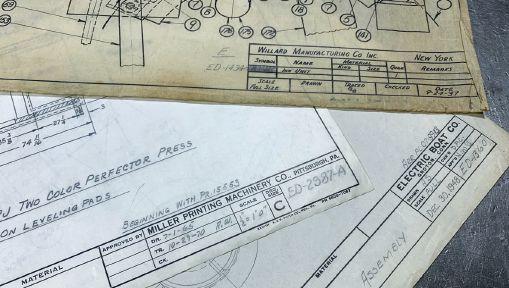
On Harold’s return to New York City, he found his father designing and constructing a new offset press. The single-colour offset took a sheet size of 22” x 34” and offered two types of infeed: feed-roll or
three-point register (transfer grip from lay to impression). Two years later, in 1935, the new Willard prototype press would be completed and a new company, The Willard Manufacturing Corporation , was formed in New York City. Harold had jumped right into working on the Willard after college and there was great hope that the press would catch favour. However, while previously the Gegenheimers had symbiotic relationships with the big press manufacturers, the Willard press now made them competitors and therefore outcasts.With the U.S. and most of the world still in the grips of the Great Depression, 1935 was also the worst time to be spending money, let alone offer something new to an in-
dustry struggling to keep its doors open.
As war approached, the prognosis for survival seemed bleak, and there is no record of anyone purchasing a Willard. But as the war ended, many defense industries started to look around for new opportunities in a more peaceful world.
In 1946, the Willard Manufacturing Corporation would be sold to Electric Boat (today General Dynamics Electric Boat), which seemed to now be in the printing press business. The Willard name would be retained, now referred to as the EB Co - Willard. Probably due to lack of business, Harold Gegenheimer had already left his father several years before the Willard sale; first working for ATF-Webendorfer, and then Rutherford Machinery.With capital now behind the new press, Harold Gegenheimer would return and be appointed division manager of the Printing Press division at Electric Boat. That same year (1947), Electric Boat announced its first sale to Ardlee Service Inc. It took 12 years after the Willard was designed to finally find a buyer. As it turned out, plenty more EB Cos would follow, well into the mid 1950s.
Harold was a gifted engineer, and it wasn’t long until he designed a larger two-colour press. However only a few years went by until the new atomic threat from Soviet Russia fell over the west. Electric Boat went looking for a buyer for their printing division. In 1952, EB Co found an ideal suitor.
The Miller Printing Machinery Co. was primarily a cylinder letterpress builder. Miller once manufactured gravure web presses and owned a specialist valve manufacturer. But print’s future would be offset and the chance to purchase the EB Co press provided Miller with a readyto-sell platform. In 1952, Miller officially joined the offset business.
Harold Gegenheimer was still working on his two-colour when a year prior (1951) he decided to return to Brooklyn and his father’s fledgling wash-up and now
water-leveler and water-stops business. He had not only been designing a new offset press but a radical new mechanism to turn over or tumble a sheet of paper while it sped between two printing units.
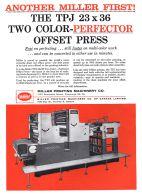
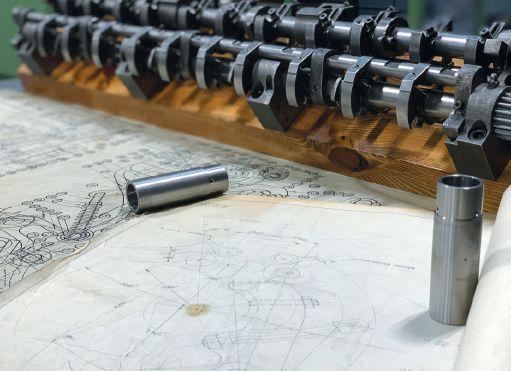
The Miller Company and Harold Gegenheimer soon spent a great deal of time together. With the assistance of EB Co’s engineer, Carl Siebke, Gegenheimer hand-drew a concept that was assumed impossible at the time: a convertible perfector. In 1950, the only possibility of printing both sides of a sheet was upper and lower units with a common gripper in a blanket-to-blanket arrangement. This type of press was only a perfector and not nearly as versatile for penny-pinching printers. Of course, Miller would also enjoy exclusive use of the technology for years, maybe decades!
Gegenheimer’s perfector broke just about every rule of printing press design. It’s important to mention that a 1952 offset press already had plenty of adventurous register and chemistry problems. Gegenheimer and Siebke’s design had an uphill battle getting refined and completed, especially after failed tests, which were numerous.

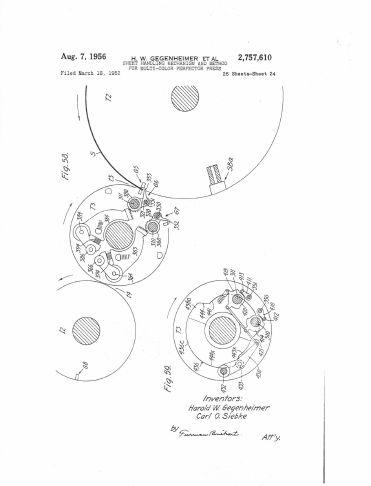
For the perfector to be completed there had to be a second cylinder to adjust for various sheet sizes, with vacuum suction holding the tail of the sheet. The vacuum would act as a mechanical gripper when transferring the tail to the third perfecting cylinder. But most importantly, the entire job had to hold hair-line register. The same year Miller took possession of the press, a patent application bearing both Gegenheimer and Siebke’s names was filed in the U.S. Four years later, on August 7, 1956, the printing industry changed forever. A U.S. patent was granted and assigned to Miller. Siebke would go to work for Miller and, over the next decades, continued his print-related inventions.
Harold Gegenheimer remained with the Baldwin-Gegenheimer Corp and led the business while inventing new tools for sheetfed presses and the roaring web offset sector. I was fortunate to meet Gegenheimer in 1982. I recall him as a soft-spoken, warm man who
seemed to have time for everyone. His openness made me muse on the full extent of his genius, not only as an inventor, but as a corporate leader. Gegenheimer died in 2006 at the age of 95, having led Baldwin’s products into virtually every printing company around the globe.
Miller at first struggled with the Gegenheimer perfector. They didn’t have a completed workable two-colour and no major improvements to the EB Co, either. In 1955, Miller became the U.S. and Canadian distributor for MAN Sheetfed.
The difficulties finally ended when in 1958, Miller introduced the world’s first convertible offset press in the TPJ. This new design, including Gegenheimer’s revolutionary perfector, was offered up as a two-colour 23 x 36-inch. In early 1962, Miller announced the 25 x 38-inch TP-38. The TP-38, enhanced over time, would become the mainstay of the Miller lineup for the next 28 years and ultimately bring about the TP-104 platform; the last press design before Manroland purchased all Miller U.S. and German interests in 1990.
For 17 years, Miller held the convertible-perfector advantage, but in 1975, once Heidelberg’s perfector hit the market, Miller’s days of dominance were numbered.
Today the press of choice in the commercial print sector is an eight-colour perfector. Every manufacturer licensed or have reverse-engineered some portion of Gegenheimer’s 1956 patent. Certainly, vast improvements have been made during the last 64 years, but the essential fundamentals remain unchanged from 1956.
Convertible-perfecting is possibly the most important development ever invented in the offset printing industry.The Gegenheimer invention further epitomizes America at its finest. The next time you walk near that new or old perfector, take a moment to salute two guys and a nuclear submarine manufacturer who defied logic.

NICK HOWARD, a partner in Howard Graphic Equipment and Howard Iron Works, is a printing historian, consultant and Certified Appraiser of capital equipment.
nick@howardgraphicequipment.com
By Kavita Sabharwal-Chomiuk


These days, it is not uncommon to see women in management or C-suite positions in the print industry, but that hasn’t always been the case. In honour of International Women’s Day, March 8, we’re placing a spotlight on two women who have both spent over two decades in print to discuss how they came to join this industry and their experiences moving up the corporate ladder.
Tracey Preston, president of the Ontario Printing and Imaging Association (OPIA), came to the industry by chance as a government lobbyist for the construction and other (often male-dominant) industries. But as luck would have it, she had her own personal connection to print, as her father was a printer, and her grandfather worked at a paper company for over 40 years.
As president of the OPIA, Preston serves the board of directors and the membership to help reach the OPIA’s goals as an industry association, including government affairs work at all three levels to ensure that the voice of the industry is heard.
On the flip side, April Burke, vice president of operations at Bellwyck, got her start in the industry through Ryerson’s Graphic Communications Management program, when the
At the time, there were three other women managing provincial associations here in Canada, and in the U.S., the split was more even, close to 50/50.
school was still classified as a polytechnic institute. After a highly successful internship at McLaren Morris and Todd Limited (MM&T), which led to her spending 18 years at the company in progressively more advanced and high-profile roles, and then positions at Lowe-Martin and now Bellwyck, Burke knows a lot about printing.
As the company’s vice president of operations, Burke leads the team on a daily basis, and is responsible for multiple sites. She helps develop talent, reviews financial results and operating metrics and more. Burke is very passionate about packaging and the creativity that it affords those in this field.
“I’ve always liked the manufacturing side, because it’s where I feel that I’m the most confident in the sense that its hands-on. I’m not a desk person,” she says. “What I like about packaging the most is you create something in someone’s vision, and then it becomes a structure, and then it becomes a functional piece. It attaches to tactile sensitivities along the way.”
The industry is presenting itself as entrepreneurial. You have to be an entrepreneur, and you have to really want to play.
Preston came to print from the construction lobby, which didn’t have any other female representation, so joining the print industry seemed a lot more balanced to her, even though it still had a lot of work to do in that regard. However, Preston noticed that at the time, there were three other women managing provincial associations here in Canada, and in the U.S., the split was more even, close to 50/50.
“There are women now in executive functions of this industry that are very elevated, and I don’t think it’s as shocking as it was, I don’t know how many years ago,” she says.
“Certainly, when I came [to the OPIA] 20 years ago, there were women in predominant places and printing companies that it really wasn’t as foreign as we would have thought.”
For Burke, starting at her internship at MM&T, there wasn’t a whole lot of female representation, but she never felt that that fact held her back.
“It didn’t really matter that I was a female and that it was a union shop,” she says. “Most of the plant was male-dominant, but over time, we had some female operators come into the plant as well.”
However, Burke acknowledges that her experience can be out of the ordinary, compared to what is experienced by many others.
“I never really had any [of the same
issues] compared to some of my female counterparts, who have had some more challenges. I’ve been really fortunate to be with some great companies; it has really never been an issue for me,” says Burke. “I do see challenges in the industry, and I’ve talked to people who have had challenges because they are female, or they’re young. I think sometimes it’s hard to create inclusivity in organizations, and not every company can do it well. I’ve just been afforded the opportunity to pick the right ones.”
In order to attract more young women to the industry, Burke suggests advertising this career path to younger women.
“I think we have to start earlier on; I think we have to get out to the high school level!” she says. “We have to be better advocates for our industry.We still are not strong enough, promoting our industry as a whole. We’re very environmentally conscious, and we’re doing all the right things as an industry to play a role in the protection of the planet. I think we have to start being better advocates for our industry as a whole, and I think it starts at the high school level; promoting our industry, not just in the management side, but also on the skilled trade side. It’s very technically strong, we’ve got some of the best technology in our industry than any other industry in the things that we can do today.”
Preston agrees, noting: “If we can explain the opportunities that are better in print and the kind of work that it is, I think more young people, including young women, would be interested.”
However, Preston adds that gender aside, it’s really a specific type of person that is needed for print. “I look at the contributions of all of the people that
I have met over the past two decades in the printing industry, and I can’t help but be impressed by the men and women that I have met who contribute to this industry and reinvent themselves daily,” says Preston.
“It really isn’t about gender. It’s about a kind of person; someone that is innovative and creative and entrepreneurial and very high-tech and really goes above all else to try to meet the needs of their clients. And I think that’s an impressive type of person.”
Looking ahead, Preston believes change is inevitable as society recovers from the past year. “I think after COVID, we’ll see a metamorphosis of how [printers] have decided that they are still necessary for their clients. They will reinvent themselves again in a new way, because that’s what they do. They’re very resilient,” she says.
“The best part about the printing industry is the way it reinvents itself. I like the entrepreneurial mindset that it has in order to survive, and to be agile. It has undergone so many changes that have affected the face of the industry, and it still finds a way to succeed.”
As for making sure more women achieve their goals in this industry, Burke suggests encouragement. “We have to continue to encourage women to know that they can do it. We just have to make sure that women have the courage to recognize that they have the confidence and the ability to compete with their male counterparts,” she says. “There used to be a pathway for females and what you could do and what you should be doing. I think it comes down to us as leadership, as mentors, to encourage people to follow the light and know that they can be successful.”
By Minuteman Press International
We’re now well into the new year, but there’s still time to set your marketing strategy for 2021. While there might not be “official” rules to magically make your marketing materials a success, below are some tried and true tactics to help you get the results you’re seeking. While every business is different, there are some strategies that work for everybody. So,
remind yourself to follow these 10 golden rules for marketing success in the coming year.
Your customers are the reason you’re in business. But do you know who it is that you’re truly serving? Try this exercise to see how much you know about your typical customer. Sit down with your team to develop persona types. Define their age, gender, interests, hobbies and anything else you can dream up. This will help as you write marketing materials. Personas can determine the tone of voice, language you use and so much more.
2. Use what you know
Branching out is a great idea, but you should never forget the product or service that has gotten you to this point. Ask yourself what’s worked well in the past. Then take it a step
further and ask yourself why marketing was particularly successful for a product or service. Do more of the things you’re good at in 2021 for continued success.
3. Invest in your website
A website could make or break your business. That may sound extreme, but it’s entirely true. A website in the 21st century is a source of credibility. If you make it easy to purchase or take next steps, your chances of success skyrocket. Invest in a clean, functional design that leaves no roadblocks to convert a brand-new customer. Make the checkout experience seamless, or the process of contacting you easy.
4. Always use a CTA
CTA stands for “call to action.” There are various types of actions you could want your end-users to take, from “Shop Now” to a simple “Learn
More.” Think of your CTA as next steps. While you might think it’s obvious what your audience should do after interacting with your marketing materials, that’s not always the case. Be clear and state exactly what you want them to do.
5. Reevaluate your plans
There’s no shame in changing your game. In order for your business to succeed, you must constantly reevaluate what is working and what is not. Take failed campaigns in stride and try to get to the bottom of the failure. Don’t be afraid to poll your audience to see what they liked and what they didn’t.
6. Simplify your message
Your business has a lot to say, but be careful not to let your excitement take over.Your audience needs a clear, concise message. Choose the most compelling tidbits of information to capture their attention, and consider saving the rest for another campaign. In this case, less is more.
A
This one sounds like a no-brainer, yet tons of brands make this mistake year after year. The best way to avoid PR mistakes is to err on the side of caution. The person or people in charge of your social media presence should be those with good judgement. Your marketing materials should go through a vetting process. If something doesn’t seem right, it probably isn’t.
8. Try something new
You’ll never know unless you try. While you should stick to the tried and true tactics that got you to where you are today, trying something new could be a gamechanger. Consider a new website design, a new social media platform or a completely new marketing strategy.
9. Ask the right questions
Lifelong learners are often great entrepreneurs. That’s because they know that learning is never done, and there are always improvements
to be made. Question whether your marketing tactics are truly working. Ask your customers how you’re doing. Gather feedback every chance you can, and then use the feedback to get better.
10. Go with the flow
What works for one business may not work for another. Plans change; take this pandemic, for example. There is no possible way to plan for what the future holds, so the best your business can do is remember to be flexible and agile. When life throws a curveball at you, remember to pivot when needed.
While we can’t guarantee a home run with every marketing campaign, sticking to these golden rules is sure to help you improve your odds of success. By developing clear, concise and creative campaigns, 2021 is sure to be your year. Get out there and put these golden rules into action!
This article was originally published on the Minuteman Press International blog.
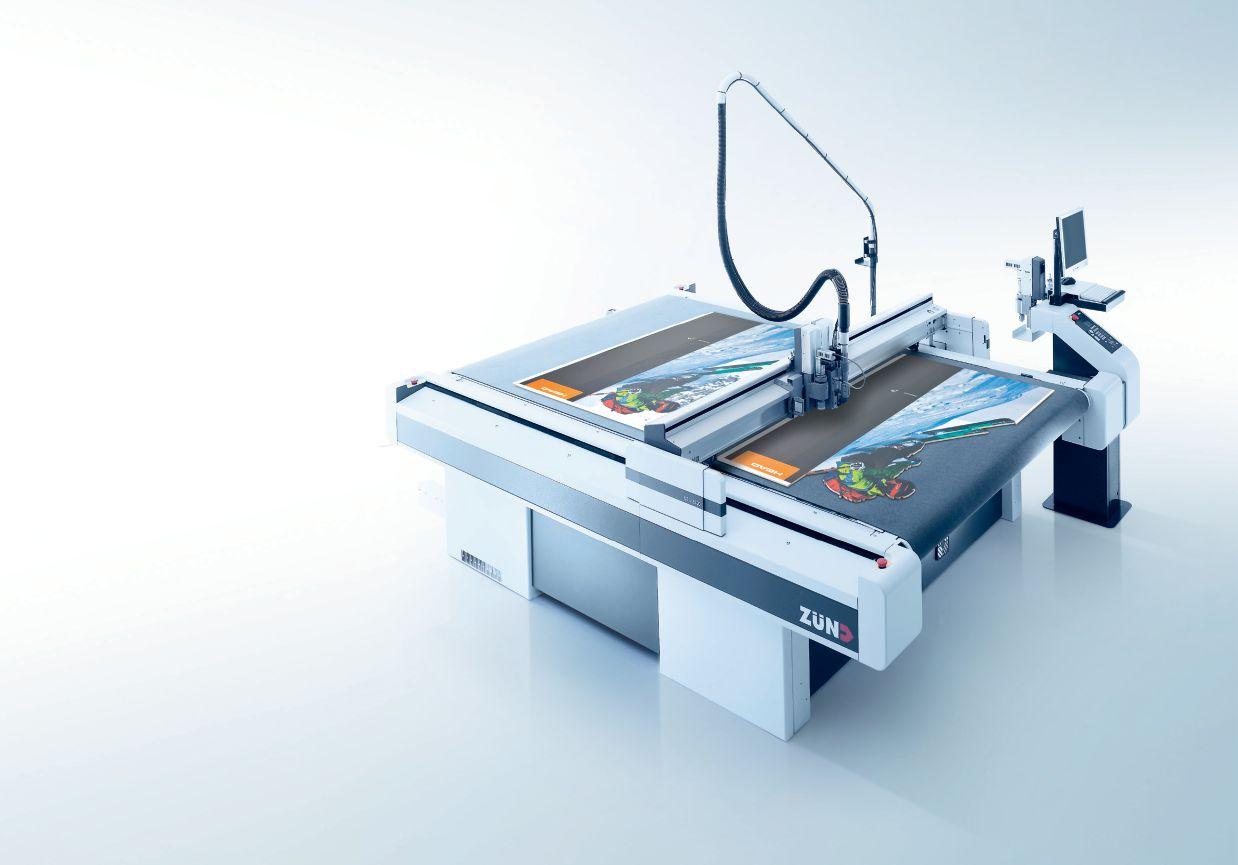
Package deals currently available based on the most popular cutter models
Tailored to graphics, packaging, and textile applications
Upgrade and trade-in options available anytime
By Bob Dale and Gordon Griffiths
When is the right time to sell, merge or exit the printing business?
The adage ‘buy low and sell high’ may be the ideal, but in today’s volatile economy, that lofty goal may not be possible for many. M+A activity and Canadian business insolvencies fell 24 per cent annually in 2020. The majority of the credit is due to government subsidy programs, which have helped those with weaker balance sheets weather the storm. This means that 2021 will see a significant increase in activity and for those contemplating a change in ownership, detailed planning and preparation is required now.
The biggest challenge is likely the emotional preparation. Many owners have spent decades building a business with the goal of reaping the rewards in retirement. Not all realize that selling a business often takes years.
Quick sales are often the result of a watershed event and rarely achieve the financial goals of the seller.
It’s not uncommon for owners to wait until it is almost too late. We’ve met a number of owners in their 70s and 80s struggling for an exit plan, and with the impact of the pandemic, their choices to exit the business are more limited and closure is more likely than a sale of the business with a smooth transition for staff and customers.
Normal business valuations are based on an average of financial performance of the most recent three years. Recent studies indicate that revenue decline for commercial print in 2020 reduced by 17 per cent but in

reality, we speak to many who experience a 20 to 45 per cent decline. Some will hold on and think they can turn this around, but here are two factors to consider:
1. Financial performance of 2020 will impact the company’s valuation for the next three years.
How much M+A activity and Canadian business insolvencies fell year-over-year in 2020. 24%
2. Some studies indicate the “next normal” will not likely see work return to the 2019 level of demand for printed products in the next five years. (Commercial print is forecast to grow at 1 per cent annually until 2025). This means that new work you win will face fierce competition and therefore lower margins.
• Fresh eyes – use a friend or an impartial advisor to help.
• Don’t rely on selling or merging with a friendly competitor – would you sell your house with only one offer?
• There are typically a few options to explore: sale, merger, closure, tuck-ins and tuckouts (divest non-strategic assets).
• With merger and closure, there are many considerations to maximize value for all parties and ensure that
staff, customers, creditors and the government are dealt with fairly.
• Excluding the real estate, your key assets include facilities, equipment, staff, location, IP and goodwill – if you can monetize the value of your customer base.
• Advanced planning is required to reduce the personal risk associated with a closure.
• Don’t wait until it’s too late. If you are forced into bankruptcy, the banks will take over.
• Trustees can dispose of facilities and equipment, however typically are not good at dealing with your customer base.
• Once a bank comes in, your focus will shift from your customers to meeting the bank’s demands.
• By the time you monetize the value of your customer base, your salespeople and customers have found new suppliers and there is little chance that someone will be able to incorporate the sales. Remember, change is difficult, but it can be handled if it’s planned.
Bob Dale and Gordon Griffiths are partners in Connecting for Results Inc. They can be contacted at info@ connectingforresults.com.

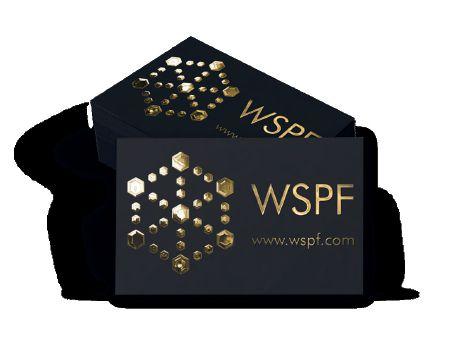

Luxury Business Cards
16 pt - Soft Touch Laminated 4/4 CMYK + Raised Spot UV or Raised Foil (Gold or Silver) 4/4
Luxury Presentation Folders - 9x12
16 pt - Matte Laminated 9x12 4/0 CMYK + Raised Spot UV or Raised Foil (Gold or Silver)


How one company turned to 3D printing to keep workers safe
By Kavita Sabharwal-Chomiuk
Dirk Dorenbos, the founder of Calgary, Alta.’s Ropes Edge and its parent company, Access Anywhere, first became interested in rope access work in 1999, while living in Sheffield, U.K. for two years. This is where his career in the field began, and he met others in the rope trade.
While on a job, Dorenbos, now an Industrial Rope Access Trade Association (IRATA) certified Instructor, Assessor and Level 3, and SPRAT Level 3 and Instructor, decided to look for a better way to safeguard rope access riggings.
“As a veteran in the rope access
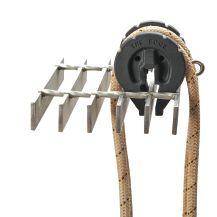
The Vortex is designed for ropes that are rigged through walkway grating and grid mesh.
industry, I understand the importance and the need of trusting your equipment. The greatest hazard in the industry is the constant strain of ropes under tension against sharp or abrasive edges – frayed ropes, in time, can be cut very quickly,” Dorenbos explains. “My 20-plus years spent on commercial ropes ultimately revealed the need for a better way to safeguard the riggings that support our ropes.”
Dorenbos took to his garage and used a whiteboard to refine his idea, drawing the overall dimensions of the products, and then used clay to shape several iterations of each product. He took his sketches and models to a design firm in Calgary,
and together, they spent the next year prototyping, testing and finalizing the devices.
Dorenbos’ products, The Edge, Edge 90° and The Vortex, were 3D-printed using PA 12, a nylon, are lightweight and durable, and are in use by rope access technicians around the world.
“The Edge, Edge 90° and The Vortex are rope access edge management systems designed for the rope access and rope rescue industry to protect the ropes and increase the safety of rope access professionals,” says Dorenbos. “In industrial rope access, its important ropes are rigged in such a way to avoid contact with potential hot, sharp or abrasive surfaces that threaten the integrity of the life supporting rope access system.”
The products were designed to protect a technician’s ropes that would otherwise become worn when stretched over sharp and abrasive surfaces, peaks and crowns of structures by workers performing repairs and installations, which
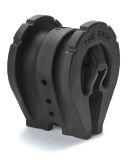
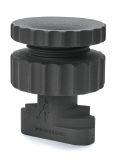
accessories made from PA 12, designed by Ropes
could lead to them snapping.
The Edge sharp edge management system is designed for use on varying sizes and depths of “kickplate” found on industrial and commercial work sites. The Edge has been designed for use with wire rope rigging slings, nylon and natural fiber ropes as a physical barrier to assist in the protection of the slings or rope from coming into contact with the sharp edges of the kick-plate during normal use. When rigging steel rope slings over kickplate, they are often damaged due to acute “kinking”. The Edge mitigates this problem by offering a rounded surface to rest upon. The Vortex is designed for ropes that are rigged through walkway grating and grid mesh. The Vortex was designed for use with nylon and natural fiber ropes as a physical barrier to assist in the protection of the rope system from coming into contact with the sharp edges of steel and composite walkway grating during normal use.
“When starting my business, 3D printing afforded me more oppor-
tunities to create reliable products more efficiently,” says Dorenbos. “3D printing enabled me to save hundreds of thousands of dollars in overhead costs compared to traditional methods. It also allows us to operate more sustainably and efficiently, only producing products as they are purchased.”
Ropes Edge uses HP’s Digital Manufacturing Network, a system of HP-endorsed digital manufacturers, to produce and deliver the products. Currently, Ropes Edge products are printed in the U.S., Australia and the U.K., and are shipped to rope access companies and professionals around the world.
“Although there is some work to get a vendor set up to print my products, the partners have been evaluated and qualified based on their end-to-end 3D printing capabilities for production at scale, as well as their manufacturing and quality processes,” says Dorenbos. “This means I have assurance on the quality of the products I’m selling.”
PrintAction is having a birthday!
We are celebrating 60 years as Canada’s resource for the printing and imaging industries. As we prepare for the anniversary issue in September, we are looking back over the past 60 years. Join us in this reflection. What changes or memorable moments do you remember over the past 60 years?
Please share your memories by emailing 60years@printaction.com
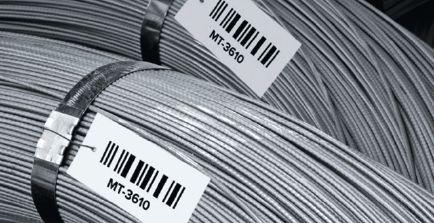
Polyonics HIGHdegree is a new line of label materials designed to withstand the demands of metal processing and ensure the accurate tracking and identification of hot metals through the manufacturing process.
The new line is rated up to 1,292 degrees Fahrenheit, or 700 degrees Celsius. Labels and tags can be applied directly to or hung from coils, rolls, bars, sheets, rebar, tubes or wire bundles.
Polyimide and aluminum label material feature non-yellowing polymer or silicone print surfaces suitable for thermal transfer printing. They also feature high-temperature acrylic or ultra-high temperature silicone pressure-sensitive adhesives (PSAs) so they stay affixed from the furnace through the delivery of completed goods to customers.
The tag materials can be used as alternatives to riveted plats, chalk or crayons for tracking hot metals in foundries. They provide high tear resistance, so there is not expected to be unintended removal during storage or delivery.
Domino has launched the K600i digital inkjet printer, which prints
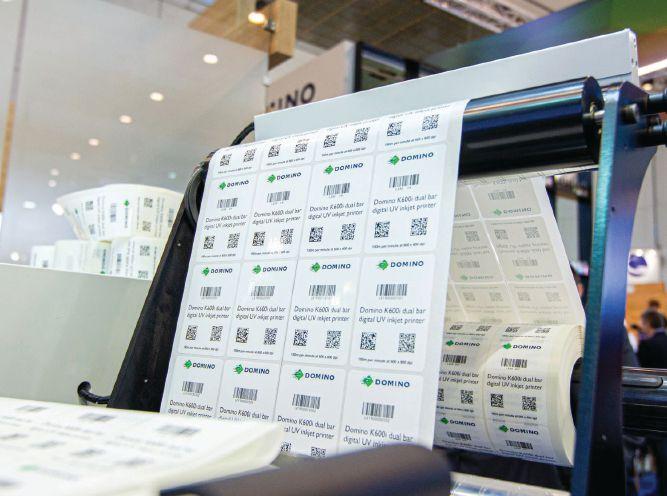
variable data onto labels, each with a unique linear barcode, QR code and data matrix code, at 150 metres per minute, or 9,000 linear metres with 350,000 labels per hour.These codes are used for logistics and reverse logistics in e-commerce and online retail, for ‘track and trace’ applications in food and beverage sectors, and for security applications, including brand protection, in the pharmaceutical and tobacco sectors.
The Domino K600i is a monochrome UV inkjet printer available in seven different print width formats, ranging from 108mm to 782mm, in either a standard single print bar or high-speed dual bar configuration.

Faller Packaging’s freeze-friendly labels were designed for use in the pharmaceutical and healthcare industries.
tion during storage and transportation.
The HIGHdegree line was designed to withstand the demands of metal processing.
It can be retrofitted onto most conventional printing presses and finishing lines. It can also be used with Domino’s UV-curable, LED-curable and aqueous pigmented ink sets, with high-opacity white ink, fluorescent ink and clear varnish.
The single print bar prints 75 metres per minute at 600dpi resolution with optimum print density, but can print at speeds up to 150 metres per minute. The dual bar unit prints 150 metres per minute at optimum print density, and can still print at 600dpi at up to 200 metres per minute.
Faller Packaging has developed freeze-friendly labels for the pharmaceutical and healthcare industries that are suitable for use in low temperatures to ensure legible informa-
The labels are made from polypropylene (PP) film that can withstand temperatures ranging from -196° C to +120° C (-320 to 250 F). The adhesive on the labels is designed to be applied at room temperature, but will continue to adhere in extremely cold conditions.
The labels were tested in accordance with DIN ISO 3826 and approved for indirect contact with foodstuffs, as per FDA 175.105. The labels adhere to glass containers, plastic containers, steel plates and plastic plates, and can also be applied to narrow vials. They can be used in standard labeling machines, but can also be applied by hand.
Accraply has introduced the Sirius 100, a cost-effective pressure-sensitive labelling machine for fast-paced,
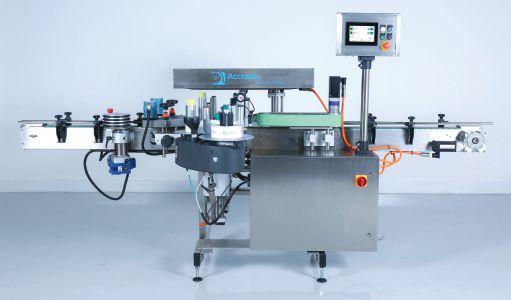
Accraply’s Sirius 100 is a cost-effective pressure-sensitive labelling machine
highly flexible production lines. Designed to minimize downtime with tool-free changeovers, the Sirius 100 brings linear labelling into a single- and twinhead labelling solution. Combined with Accraply’s 2xx Series label applicator, the Sirius 100 provides precise label placement accuracy for front, back and wrap applications in the personal care, household, food and pharmaceutical industries.
The company’s smart HMI can be added to the Sirius 100, providing easy access to efficiency reporting, preventative maintenance alerts, self-diagnosing software, video tutorials and on-board consumable parts ordering. This interface also offers guidance for setup and scheduling maintenance tasks.
Over the last three years, Bobst has moved into the digital printing segment with its Mouvent Cluster, which has now been deployed in three commercially available digital label presses –the Mouvent LB701-UV, Mouvent LB702-UV and Bobst Master DM5.
The printers’ Mouvent Cluster technology features
four Fuji Samba printheads capable of printing 1200x1200 dpi up to 100 metres per minute. It has a state-of-the-art electronic layer driving the million drops per second, an ink conditioning layer where each individual printhead ink supply is close to the printhead, fully automated flow regulation control for each printhead and mechanical layer and individual control of each printhead for the best alignment.
In order to assure colour consistency, Bobst uses oneECG technology, which utilizes advanced colorimetry technics to analyze and digitize colour information. This information is stored as reference and recalled during production. Digital colour information makes repeat jobs easy to manage and colour consistency across job production is guaranteed with manual colour sampling or a fully automated visual inspection system for advanced production lines.
The Bobst Master DM5 combines flexo units and the Digital Mouvent technology print engine can deliver all types of labels, from PDF to final rolls. One machine can prime, print, embellish and cut.
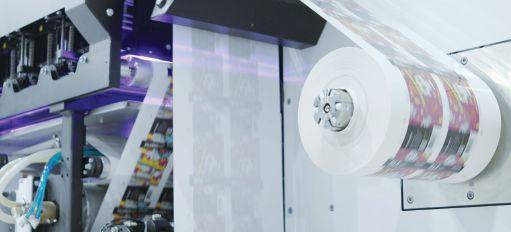
Your Superior choice for Print Finishing and Lettershop Ser vices
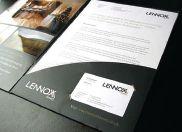
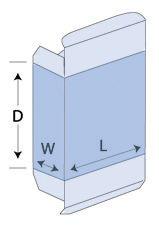
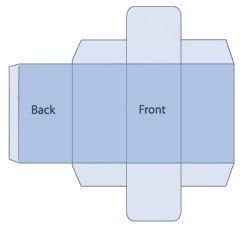
1. ONE-STOP SHOP — Die Cutting, Bindery, Data & Lettershop.
2. SUPERIOR TECHNOLOGY — Die crease without a die, then fold and even glue all on the same machine, up to 30 pt.
3. INTEGRATED MODULAR UNITS — Combined in-line finishing: crease, fold, glue, tipping, envelope inserting, ink jetting (Duplex), clip seal (3 sides), mail prep.
4. SAVE ON POSTAGE COSTS As a Certified Canada Post Direct Marketing Specialist, we get contract pricing reductions.

5. RETURN MAIL PRODUCTS — Customized “Return Mailers” created in-line with “U” or “BOX-shape” remoistenable glue, time perfed applications and envelope formation.
6. MINI-BOOKLETS — Saddle-stitch and trim 2-up booklets in-line to the size of a business card. No need to trim off-line, or do 2 passes. 7. HIGH SPEED EQUIPMENT — High speed Tipping, Folding, Saddle-stitching and soft folding ensuring on time delivery.
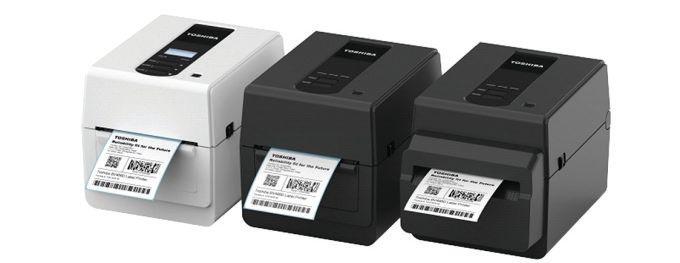
The BV400D thermal barcode printer series include features typically found on mid-range or industrial printers.
Toshiba Tec has launched its new BV400D thermal barcode printer series of desktop printers. The BV400D series features smart LCD and print speeds up to seven inches per second. The printers offer high print quality and performance, which the company says can
“rival most mid-ranged printers.”
The BV400D series integrates into a variety of IT environments through its multiple connection options. The printers are MFi certified and work with iOS devices, which makes them suitable for use in the e-commerce sector.
The new operating system in the BV400D series enables
the printers to be entirely controlled from handheld devices that run Toshiba apps in iOS, Android or Windows. Toshiba supports a variety of SDKs to develop unique workflow applications on various systems. Additional functions, including the simple receipt mode, enable automatic saving of paper when using continuous material.
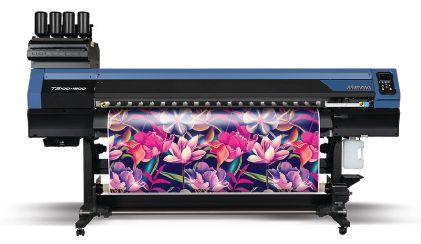
Mimaki USA has launched two inkjet printers for textile and apparel applications, the
Mimaki USA’s new TS1001600 and Tiger-1800 Mk III are new inkjet printers for textile and apparel applications.

TS100-1600 sublimation transfer inkjet printer, and Tiger-1800B Mk III, a highspeed textile inkjet printer with belt conveying system. Both new printers are available this spring.
The TS100-1600 is a sublimation printer that provides operators with the ability to produce photographic quality prints with a wide array of colours, gradient capabilities and tonal quality with print speeds up to 753 feet per hour.
The TS100-1600 comes with the Dot Adjustment System (DAS) feature, which of-


fers automatic alignments to ensure consistent quality. The DAS also frees up time by performing common adjustments automatically.
The Tiger-1800B Mk III is a high-speed textile production printer featuring the new Mimaki Printer Controller (MPC), a touch-screen operation software that allows faster operation and tighter control of production and quality.
This printer includes the Nozzle Recovery System (NRS) and MAPS4 to ensure consistent, stable and quality printing. 10GB-T Ethernet is also supported for efficiently loading large production jobs.
The Tiger-1800B Mk III combines high productivity
with a maximum print speed of 4,144 feet per hour and long operating stability.
Roland DGA Corporation has launched its new VersaUV LEC2-640 and LEC2-330 next-generation UV printer/ cutters designed for label, packaging, sign, display and interior décor production. The 64-inch LEC2-640 and 30inch LEC2-330 maximize image quality, increase print speeds, decrease ink usage and simplify user operation and maintenance.
Roland DG is also introducing new Greenguard Gold certified EUV5 ink available in
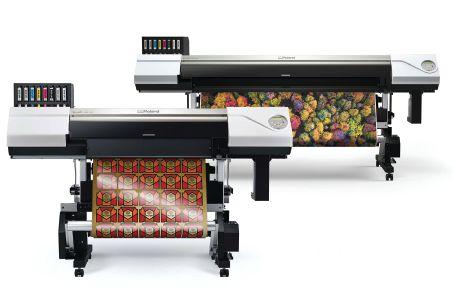
CMYK, clear, white and primer. Along with the new True Rich Color II print setting, the inks paired with the new printer/cutters widen the colour gamut and deliver vibrant graphics and natural skin tones. In addition, the new EUV5 White ink is higher opacity, which allows it to be effective as a base coat or when printing on transparent film or dark paper.
The LEC2-640 and LEC2-
Roland DGA’s new VersaUV LEC2-640 and LEC2-330 were designed for label, packaging, sign, display and interior décor production
330 feature advanced print head technology, larger, more powerful LED lamps and new optimized cleaning and maintenance sequences that help keep the print heads clean.
The 64-inch LEC2-640 is ideal for creating larger signage, displays and interior décor, while the 30-inch LEC2-330 works well for label and packaging applications. Both models can print on actual press substrates.

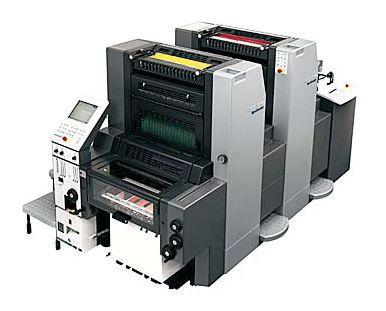
Heidelberg: K-Line/S-Line/Speedmaster/GTO/MO/KORD64
Komori: 1, 2, 4 or 5 colours & any size
Adast: 714/715/724/725
Mitsubishi: Any model
Ryobi: 2800CD/3200CD-MCD/640K
Itek: 960/975/985
Hamada: 600/700/800/E47/RS34
Shinohara/Fuji: 66/65 1,2 or 4 colours
Sakurai: 1, 2 or 4 colours and any size (newer model)
Polar: any size/older or newer models (66/72/76/78/82/90/92/107/115)
Horizon-BQ: 220/240/260/440/460



Communications professional Nicole Morrison recently joined the team at Connecting for Results as communications & marketing consultant. She has over a decade of experience in public relations, but her own familial connection to the print industry sparked an interest in the field long ago.
What attracted you to the print industry?
I come from a family of printers. My dad was in the industry for over 40 years and my grandfather had a long career in print before him. I guess there is ink in my veins, as they say. Gord Griffiths was a name I heard around the house growing up, so when I had an opportunity to work with Gord, and his partner Bob Dale, I jumped on it! When I first met Gord, we had a really insightful conversation where I realized there are a number of commonalities in graphic arts and the world of marketing and communications. They really are two sides of the same coin. When I made that link, it opened me up to a whole new world of possibilities in the industry.
How can the industry attract more young people?
I think young people really gravitate towards finding purpose in the work that they do. I’m a millennial, and what I see with people my age is a desire to feel a connection to their careers in a way that matches their values. It’s the idea of wanting work to feel like more than just a paycheque because it’s an area of life where we spend so much time. Part of what stood out to me about Connecting for Results is the company’s Corporate Social Responsibility initiatives. The organization prioritizes giving back to the industry and community - both through philanthropy and mentoring, which are important values for me. Another priority is recognizing all voices and supporting diversity. We are seeing these shifts on a global scale right now, and I think organizations that can adopt these principles will be successful in attracting young people.
In such a competitive landscape, how can printers win more sales?
For me, success comes from taking the

There are a number of commonalities in graphic arts and the world of marketing and communications. They really are two sides of the same coin.
right approach. When we become experts, we can sometimes feel like we have all of the answers and don’t need to listen, but I think businesses can stand out by really listening to their customers. It’s so key to hear, in a customer’s own words, what their pain points are, because they could be surprising! I think the next step is taking that information and focusing on creative problem solving to come up with customized solutions, which can make all of the difference to our customers.
What is the state of the print industry today, in your opinion?
Full of growth and opportunities! At a time in history where the majority of us are living our lives from home and online, print has the opportunity to stand out and offer variety. I never realized how much I valued physical books and magazines, or the vibrant packaging of a parcel when it arrives at my door. In a world that feels like it’s filled with screens and isolation, a hard copy can really help to create connection and leave a lasting impression. When I talk about consumption, it’s important for me to note all of the ways in which the industry has embraced sustainability, in both consumer products and
large-scale printing. Whether it’s recycling physical materials to make new printers, or developing environmentally friendly inks, or embracing cloud printing technology, the industry’s ability to grow and adapt speaks volumes in terms of social and environmental responsibility.
What are some of the biggest opportunities you see in the print industry?
I think embracing diversity and innovation can create opportunities. We hear this all the time, especially with COVID-19, companies that adapt will thrive. Sometimes we have the opportunity to make a decision, and other times change is thrust upon us whether we like it or not. But being open to change, and new ways of doing things, can lead to longevity. Part of having a growth mindset is embracing different perspectives across an organization, or looking for new perspectives. I think if there’s anything this pandemic has taught us in business, it’s that adaptability is essential.
Nicole’s responses were edited for length. For more Q&A Spotlight interviews, please visit www.printaction.com/profiles.



n
n
n
n