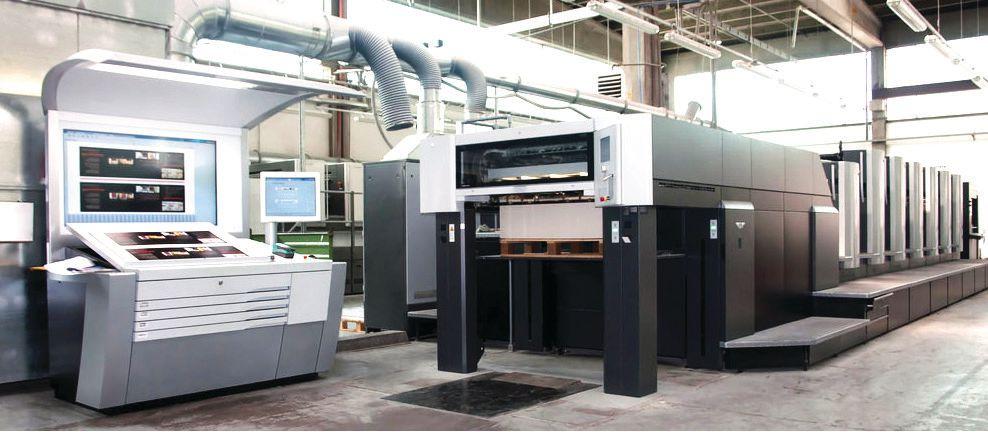
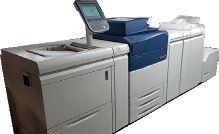
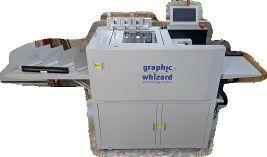
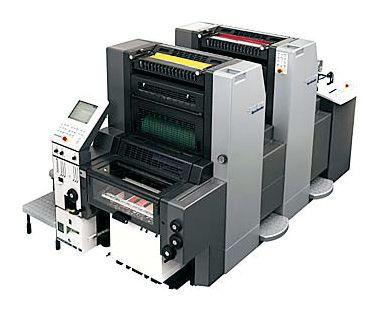
We hear perspectives from four print experts about the opportunities and challenges for cutsheet production inkjet
14 Museum quality
Montreal-based MP Repro uses wideformat digital printing to recreate church frescos of museum quality
18 In the market
The firm that handled the TC Transcontinental/Holland & Crosby deal shares key considerations for successful mergers and acquisitions
20 Three ways to lower your cybersecurity risk
It’s time for Canadian printers to step back and assess their cybersecurity priorities
DEPARTMENTS
GAMUT
5 News, People, Installs, Calendar
NEW PRODUCTS
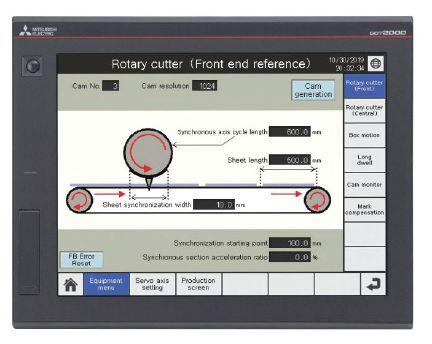
22 Detailing new offerings from Agfa, Asahi Photoproducts, Highcon, Koenig & Bauer, Konica Minolta MGI, Mitsubishi Electric, Onyx and Xanté
SPOTLIGHT
26 Peter Aston, Executive Vice President, Battlefield Press
COLUMNS
FROM THE EDITOR
4 Alyssa Dalton
Consumers prefer brands that demonstrate their ‘green’ commitment
CHRONICLE
8 Nick Howard
A look at the importance of uniform world standards
Consumers want the ‘green’ commitment
UConsumers around the world are willing to pay extra for sustainability, as a report by measurement and data analytics company Nielsen finds 66 percent of global consumers say they will spend more for sustainable goods. This number jumps to 73 percent when polling millennials (Nielsen defines millennials as those born from 1977 to 1995).
nilever brand Love Beauty and Planet on December 8 unveiled a special double-page spread advertisement in The New York Times that could be reused as holiday wrapping paper. Described as a responsible beauty brand, Love Beauty and Planet is a line of plantbased home care products that boasts recyclable packaging made from 100-percent recyclable materials, right down to the labels.The gift wrap ad is just one of the many components in the brand’s ongoing Small Acts of Love campaign, designed to demonstrate how small cumulative acts can lead to a major impact on the planet’s resources.
“If every American household upcycled this page as gift wrap, we would save enough paper to cover NYC’s Central Park 15 times,” @beautyandplanet tweeted. The floral ad featured different messages that encouraged consumers to reuse during the holidays, including: “Start with gifts that give a little love to the planet” and “25 million metric tons of waste is created during the holiday season but together we can drive towards a solution.”
As consumers repeatedly voice their support for businesses that are committed to social responsibility, sophisticated brands are taking note and responding to the ‘green’ momentum by integrating unique, eco-friendly paper innovations into their marketing strategies.
Sustainable packaging innovations have been quite popular the past few years, particularly in the alcoholic beverage market. Last fall, Carlsberg unveiled designs for what it says is the world’s first paper beer bottle made with sustainable and recyclable wood fibres, the latest in its commitment to environmentally sustainable packaging R&D. The brand also introduced a number of packaging alternatives the previous year, including recycled shrink film, greener label ink and the Snap Pack, which replaces the plastic wrapping around its six-packs with a solution that glues the cans together. In December 2018, Corona announced plans to pilot plastic-free sixpack rings in select markets. Meanwhile in April 2019, Diageo, British spirits company and owner of Guinness, pledged a total of £16 million (C$28 million) to remove plastic from its beer packaging.
Consumers are increasingly putting pressure on manufacturers to improve the impact that packaging has on the
environment, with ethical packaging now becoming a ‘must have’ quality when purchasing a product, according to GlobalData, a data and analytics company based in the U.K.
“This sudden interest in sustainability has been driven by more open discussion via social media, and increased government lobbying resulting in action against plastics,” Mayu Teeven, Consumer Analyst at GlobalData says, pointing to discussions held around the world on the elimination of single-use plastic as an example. “Using sustainable packaging to reflect cleaner and healthier living has become a priority for many consumers. As demand for organic and natural products grows, and the clean label trend continues to increase in popularity, having non-recyclable plastic packaging will start to limit the success of products which rate highly on ethics and sustainability in other parts of the supply chain.”
The results of Asia Pulp & Paper (APP) Canada’s most recent sustainability report echo this sentiment. Released November 2019, APP Canada’s third annual Attitudes Towards Sustainability report found that sustainably sourced package material is becoming increasingly important in the purchasing decisions of Canadians, as 62 percent of Canadian consumers say they are willing to pay more for such products.
Seventy-four percent of Canadians consider sustainability an important factor when making purchases. This trend was particularly evident in food packaging where a majority of Canadian adults (62 percent) are willing to spend more for products packaged in sustainable materials, with 40 percent saying they would be open to paying up to an additional 10 percent.
“Canadians, especially adults between the age of 18 and 34, clearly value brands that are invested in sustainability and it is encouraging to see the demand for high-quality eco-friendly products and packaging,” Ian Lifshitz, Vice President of Sustainability and Stakeholder Relations at APP Canada, says. “This is what pushes the industry to stay focused on innovation and develop new merchandise supported by fully sustainable supply chains.”
Given this demand, it’s only a matter of time until brand owners across the board embed sustainability into their DNA.
Mail: 111 Gordon Baker Rd., Suite 400, Toronto, ON M2H 3R1
Group Publisher
Diane Kleer dkleer@annexbusinessmedia.com
COO Scott Jamieson sjamieson@annexbusinessmedia.com
Subscription rates
For a 1 year
subscription (10 issues): Canada — $43.00 +Tax Canada 2 year — $70.50 +Tax United States —$98.00
Other foreign —$191.00
All prices in CAD funds
Mailing address
Annex Business Media
111 Gordon Baker Rd., Suite 400, Toronto, ON M2H 3R1
printaction.com
Tel: 416-442-5600
Fax: 416-442-2230
Annex Privacy Officer
Privacy@annexbusinessmedia.com
800-668-2384
PrintAction is printed by Annex Printing on Creator Gloss 80lb text and Creator Silk 70lb text available from Spicers Canada.
ISSN 1481 9287 Mail Agreement No. 40065710
dependent division of Spicers Canada, working closely with Spicers’ existing operations and distribution network in Canada.
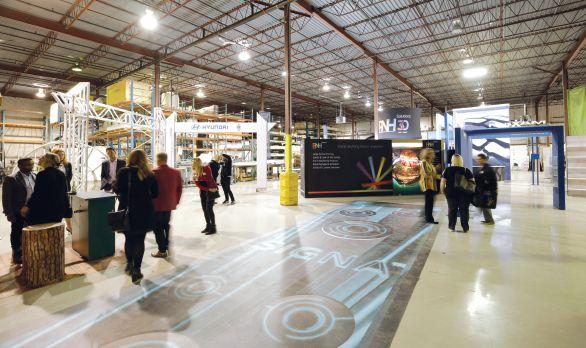
PNH Solutions recently celebrated its 30th anniversary with clients in its sales and production facility in Montreal, Que. Over the threehour event, guests were able to visit 30 different stations to learn more about the company’s products and services. While some stations featured PNH’s more traditional products (media backdrops, flags, banner stands, Nova Hex Canada series tent frames, SEG fabric frames and lightboxes), others were dedicated to fully custom tradeshow exhibits, new products (3D ObjeX, motion lightboxes, and transparent and scalable LED screens) and new services (AR/VR renderings, projection mapping and photogrommetry). President and Managing Director Francois Hudon credits the success of the company to its multidisciplinary team members – some of who have been with the company for over 20 years – and its clients that have over the years inspired the company to develop more unique and innovative products, while improving service levels and standards. Beyond celebrating the company’s milestone, PNH wanted to put the spotlight on some of its newer developments to show the direction in which it is heading. Following an expansion in both its Montreal and Toronto facilities in 2017, PNH now has the expanded ability to design and build in-house marketing solutions that blend large-format printing, as well as LED, mill and metalwork technologies.
Roland DGA Corporation, a provider of wide-format inkjet printers and digital imaging devices, has signed Kelowna, British Columbia-based
CanCADD Imaging Solutions as its newest Canadian authorized reseller. A one-stop, full-service dealer focused entirely on the computer-aided design (CAD), geographic information system (GIS) and design/graphics printing industries, CanCADD will offer the complete line of Roland colour products, including the company’s TrueVIS VG2 and SG2 series printer/cutters, to customers throughout British Columbia.
Spicers Canada
President Cory Turner
Spicers Canada has acquired the assets and business of All Graphic Supplies, expanding its position in the distribution of wide-format and digital equipment, supplies and ink. Privately owned and headquartered in Mississauga, Ont., All Graphic Supplies operates seven locations across Canada and the Caribbean, and since 1992 has served as a distributor of solutions that supply multiple printing segments, including sign graphics, textiles, digital label and industrial ultraviolet (UV). Spicers Canada President Cory Turner says the acquisition of All Graphic Supplies fits with the organization’s strategy to leverage its significant distribution capabilities in new ways. “Acquiring All Graphic Supplies adds capabilities, experience and partnerships that are invaluable in meeting our company’s market strategy,” says Turner. All Graphic Supplies is expected to operate as an in-
Jones Packaging has unveiled a new corporate identity as the company celebrates 100 years serving the health and wellness markets. At the centre of the new identity is a change of the company name to Jones Healthcare Group and an updated corporate logo. As Jones Healthcare Group, the company says it is positioning itself against an aggressive growth strategy with plans to invest $20 million into the business over the next two years. Through its three business units and two European subsidiaries, Venalink UK and Venalink Spain, the company’s new identity is designed to align closely with its continued vision to advance healthcare with “progressive packaging platforms that put consumer well-being first and respond to evolving market needs.”
Delphax Solutions Inc., a digital inkjet press designer and manufacturer, has signed a reseller agreement with MD International Inc. (MDI) of Quebec. MDI is the latest company to sign up to DSI’s Sales Partnership Program announced in 2019, and as a result will represent DSI’s Elan family of colour and monochrome inkjet presses in the Quebec marketplace. Driven by Memjet’s VersaPass technology with 1600 x 1375 DPI CMYK printing, sheet sizes from 8 x 8 inches to 18 x 26 inches on a range of weights, with throughput of up to 500 letter impressions per minute, the Elan HD is suitable for both variable and short-run publishing applications.
In business since 1928, Mitchell Press is an award-winning familyowned, environmentally-conscious print communication partner located in Burnaby, B.C.
Quebec’s new visual graphics communications association has announced the inaugural Visual Graphics Rendezvous for Quebec signmakers and printers, scheduled for April 15-16, 2020. The new exhibition aims to bring together all printing, packaging and sign industry segments together under one roof. Organized by newly merged industry association AQIE, AQII and ATFFEQ, the event features a large exhibition floor and conference theatre for presentations, and educational workshops and seminars designed to promote equipment, technology, education and strategies in support of a stronger industry.
Cascades is among the top 100 most sustainable corporations globally, an annual ranking that recognizes companies for their commitment to environmental, social and governance issues. Corporate Knights, an organization that promotes “clean capitalism,” compiles the annual list, following an in-depth analysis of over 7,000 international companies with revenues exceeding $1 billion. Cascades ranked #49 and is one of 12 Canadian businesses on the list. It is the only entry out of 100 in the Containers & Packaging category.
Zund America recently celebrated the grand opening of its new headquarters in Oak Creek, Wisc. Established in 2004 as a sister company to Zünd Systemtechnik AG in Switzerland, Zund America has grown from a handful of employees to more than 80, and has now tripled the total square footage of its facilities to nearly 60,000. The new facility combines expanded demonstration and training facilities, customer service and support, parts and consumables warehousing and logistics, as well as administrative offices under one roof.
Mitchell Press has acquired the assets of custom bindery North West Book Operating Company of Bellingham, Wash. Founded in 1960 and operated by Master Book Binder Tom Strohhacker, North West Book specialized in high-end, case-binding and custom box-making for decades until Strohhacker’s untimely passing from ALS led the company to close its doors in December 2018. The deal allows Mitchell Press to immediately bring perfect binding services in-house, expanding its book-making and custom fabric-wrapped box fabrication value-added capabilities. Master Book Binder Claus Larsen recently joined Mitchell to expand the in-house custom-finishing services. The new Zund building boasts a range of environmental features.
PNH Solutions recently celebrated its 30th anniversary with clients in its sales and production facility in Montreal, Que.
PEOPLE
Adobe has appointed Anil Chakravarthy Executive Vice President and General Manager, Digital Experience, where he will report to Adobe President and CEO Shantanu Narayen. Chakravarthy joins Adobe from Informatica, a leader in enterprise cloud data management, where he served as CEO since January 2016. He joined Informatica in September 2013 as Executive Vice President and Chief Product Officer, responsible for product development, product management and product marketing. Under Chakravarthy’s leadership, Informatica transitioned to a private company following a US$5.3-billion buyout and delivered innovative product releases to its customers across the globe.
INSTALLS
Cameron Mady, a first-year Ryerson University student, has been selected by Canadian Print Scholarships to receive the Warren Wilkins Memorial Scholarship for the 2019/2020 academic year. The prestigious $5,000 scholarship was established to honour the late Warren Wilkins, who worked to foster and support new talent for the industry. It is given to a student starting their post-secondary studies toward a career in the graphic communications industry. “I love every aspect of the industry and am truly fascinated by the entire process, from the conception of design to receiving the finished product,” says Mady.
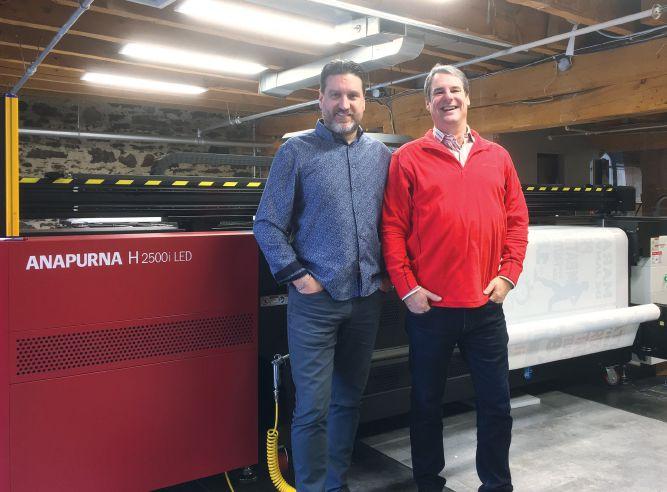
Production JG of Montreal, Que., recently added a new Agfa Anapurna H2500i LED printer to its large-format department. “We were looking for a versatile solution [that would allow] us to double our production capacity and this new equipment gives us even more than we thought,” said Stéphane Gervais, President.
Domino continues to grow its digital printing workforce with the appointment of Steve Daily as Technical Support Manager, Digital Printing North America. His responsibilities include managing the help desk/ phone support, escalation, and training departments. Daily has an “extensive background” in the printing industry and comes to Domino from Colordyne, where he spent seven years as Product Manager responsible for product design, technical support and training. Prior to that, he was Principal Engineer at QuadTech where he was involved with design and analysis of technology solutions associated with colour control and process optimization. His resume also includes 14 years at R.R. Donnelley as Project Manager in R&D on the implementation of manufacturing technologies and innovations for reducing costs, improving efficiencies and enhancing quality.
Electronics For Imaging has named veteran print technology executive Dr. Douglas Edwards its Chief Technology Officer (CTO). Edwards replaces longtime technology leader Ghilad Dziesietnik, who recently retired after nearly 25 years with EFI – the last 14 were spent as CTO. Edwards, who has already assumed his new duties, has had an extensive career as a senior print executive and R&D technologist. Prior to this appointment, Edwards was CEO of Cambridge, England-based Xaar plc, a developer of inkjet printhead technologies, and Chairman of Xaar 3D. Before joining Xaar in 2015, Edwards was President of Kodak’s Digital Printing and Enterprise Business responsible for flexo packaging, functional printing, electrophotographic solutions, as well as commercial and consumer inkjet solutions with combined revenues of around US$800 million.
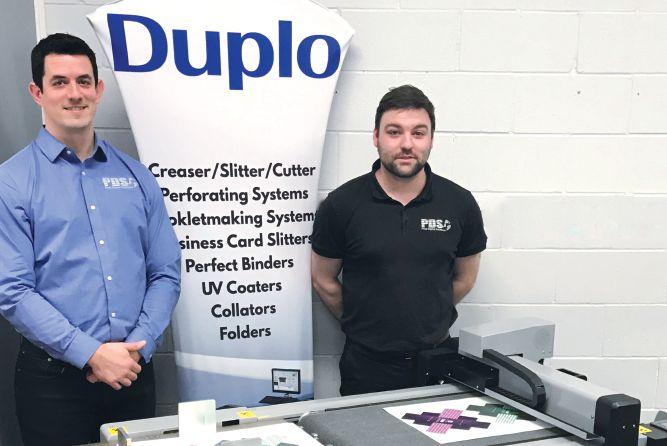
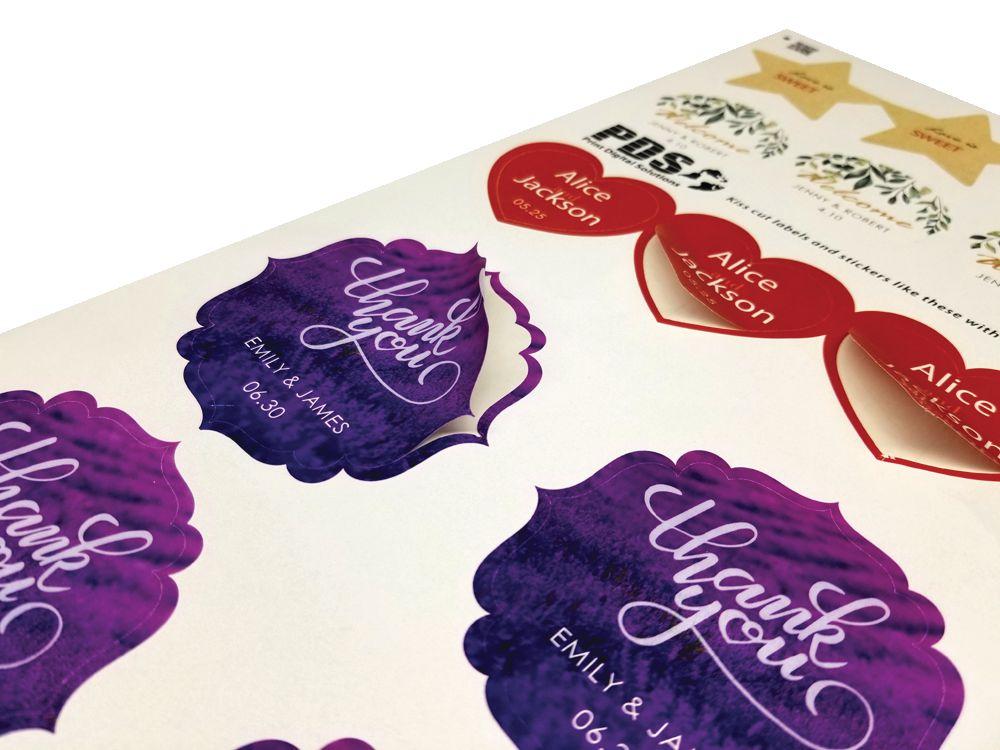
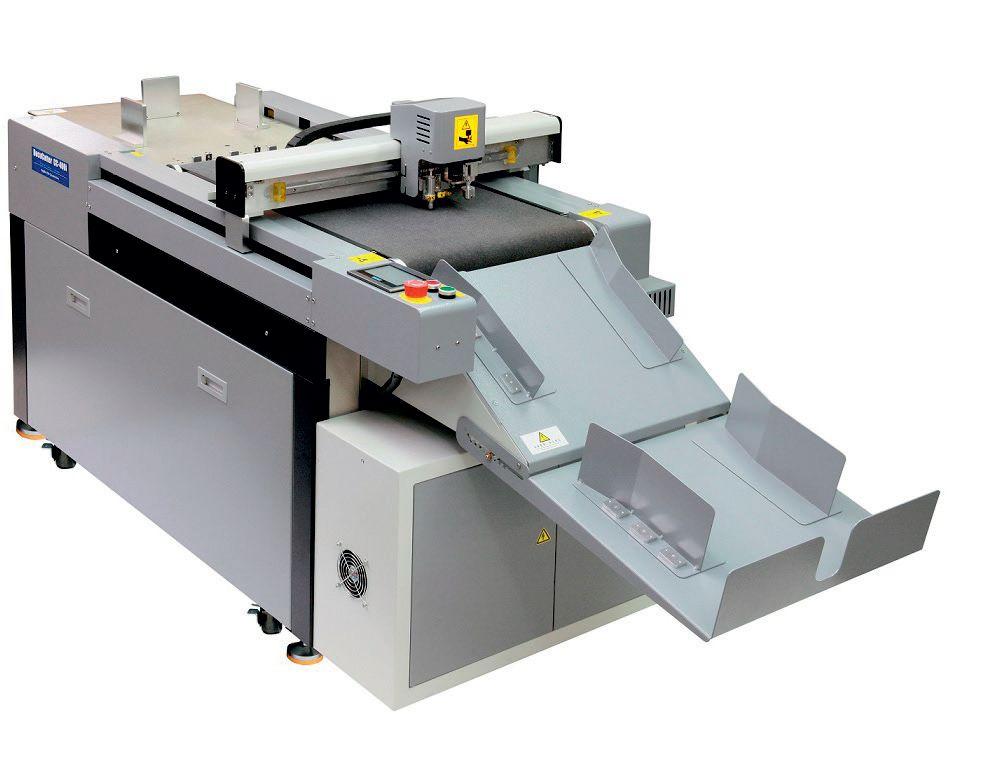
The first Duplo DocuCutter DPC-400 flatbed cutter in Canada has been sold to Sheng Gan, Director of Initial Print, in Vancouver, B.C., by PDS. The system will help the PSP produce custom boxes, kiss-cut labels, magnets and more.
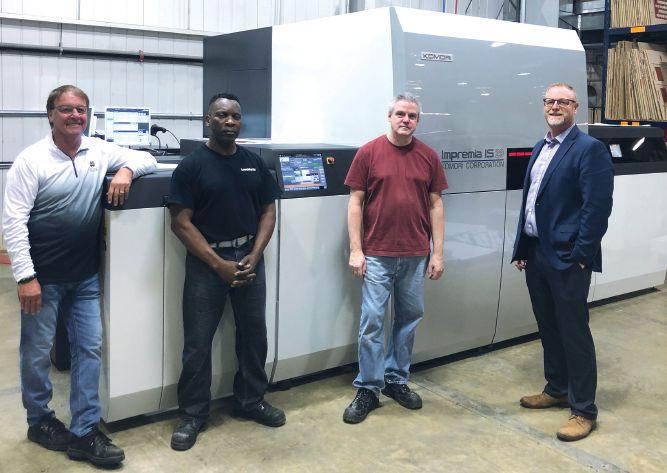
The LoweMartin Group in Mississauga, Ont., has installed a high-speed, cutsheet digital inkjet Komori Impremia IS29, the first of its kind in Canada, purchased through Komcan Inc. This is the third Komori installation in Lowe-Martin’s Mississauga facility, and joins two Komori GL640 coaters, both with HUV curing
March 24-27
FESPA Global Print Expo 2020 Madrid, Spain
March 26
Ryerson GCM Job Fair 2020 Toronto, Ont.
April 15
Visual Graphics Rendezvous 2020, presented by AQIE, AQII and ATFFEQ Laval, Que.
Canadian Printing Awards 2020 Palais Royale, Toronto, Ont.
All for the sake of a screw The importance of uniform world standards
By Nick Howard
Uniform world standards matter. Partisan and national pride, when blocking the path of progress, stifle efficiencies which in turn eat away at free enterprise’s role as innovators that can lead to constantly lowered costs.
Back in 1986, I was in the midst of another Heidelberg offset installation, way out west in the pretty little town of Woodinville, Washington State. As every mechanic will tell you, challenges are just part of the job when you’re out of town. Woodinville was no different. No, it wasn’t the surprise of seeing the wall feet from the press receive a massive hole; the next door occupants were in the broadloom business and to move large rolls of carpet, they used a forklift with a specially mounted steel pole, something similar to a jousting lance. The operator misjudged the distance and all of a sudden, the drywall exploded with this pointed pole inches from where I was working.
I had another problem — one that was rather frequent in a country that still refused to go metric. I needed a few 6-mm hex bolts. Such a simple request could have been as easy as running down to a local hardware store if I was anywhere other than the United States. In 1986, unless businesses ordered fasteners from a specialist metric supplier, there were none. In larger printing plants, the maintenance departments usually had assortment kits but generally guarded these as if they were Lady Aster’s jewels. Since the area was new to me, I did the next best thing and went to a Volkswagen dealership, paid a princely sum and solved the problem.
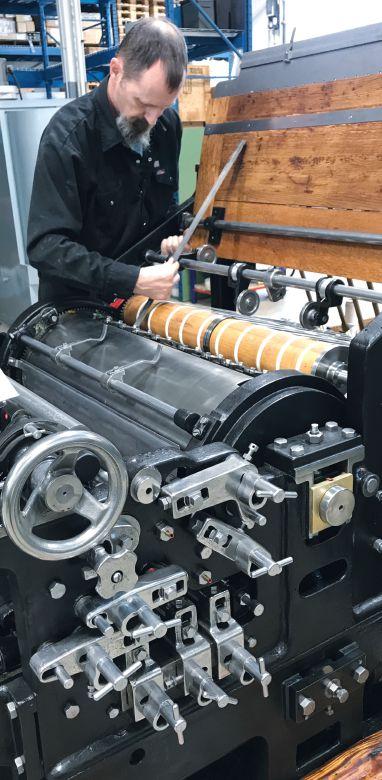
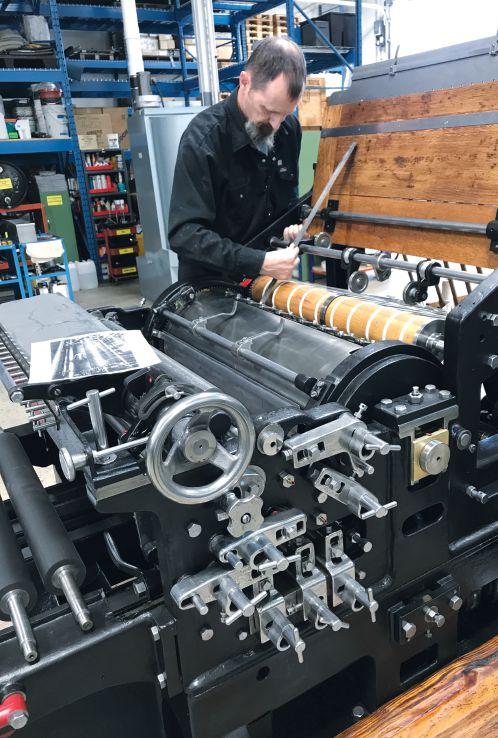
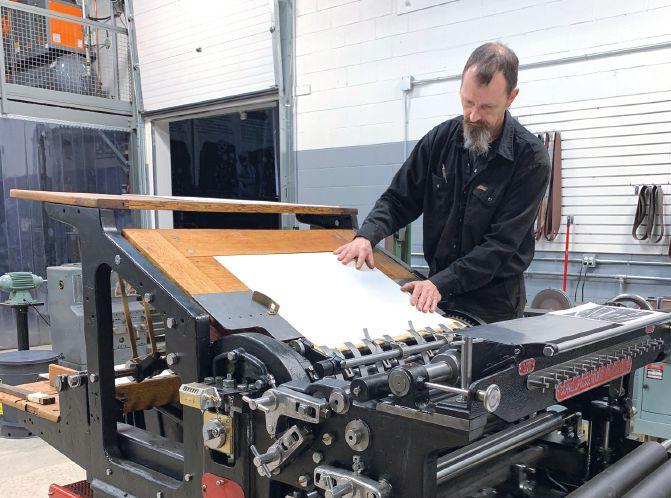
Our museum has just completed a restoration of a Heidelberg stop-cylinder press which was manufactured in 1920. The press is known as the Schnelläufer-Exquisit (fast press) and is handfed in a 70cm sheet size. But if you need any hardware, be in for a surprise. All threads and
Above and opposite page bottom: Photos of the 1920 Heidelberg Exquisit that Howard Iron Works imported from Hamburg, Germany, and recently rebuilt.
nut/bolt faces are English Whitworth, not metric. This proved to be a bit of a puzzle since the DIN metric profile, developed in Germany in 1919, came about well before 1920 when the German, Swiss and French established the Système Internationale (SI) in 1898.
Imagine that! The Germans used British screws
In 1841 Joseph Whitworth, the legendary English toolmaker suggested standardizing threads. Since the invention of the screw, hundreds of profiles have existed and were often made in-house by machine factories. We constantly run across some very odd sizes and pitches in our restoration of pre-1850 machinery. Whitworth chose an angle of 55 degrees and standardized the number of threads per inch, fixed for various diameters. It is considered a credible fact that Frederich Koenig, upon leaving England for Germany in 1817, took with him English tooling and at least one Whitworth lathe. Such was the quality and acceptance of the Whitworth name. However, Whitworth threads were difficult to cut as they featured a flat milled surface at the top of the thread. In 1864 an American, William Sellers, came up with what would become the American-Uni-
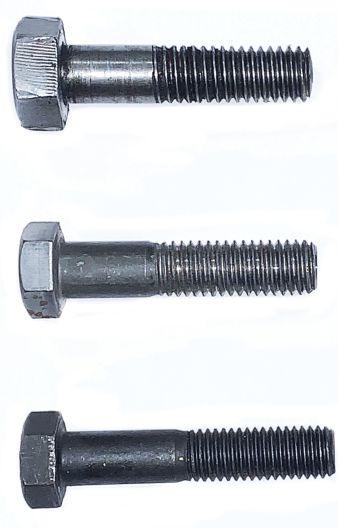
Whitworth, made in Germany 1920
UNC, USA/Canada, modern
Metric, modern German
fied-Course Series (USS). This thread had a 60-degree angle, similar threads per inch as Whitworth but a sharply pointed thread that was much faster to manufacture. In 1948, Britain, the U.S. and Canada agreed on a new standardization for threads using the Imperial measurement Unified-National-Standard or UNC. The reason UNC surfaced was due to major “tower of babel” bottlenecks during the Second World War. Machinery, armaments, and vehicles manufactured in these three countries would run into trouble when repairs had to be made. For example, a British tank with Whitworth threads breaks down at a Canadian frontline and all the Canadian bolts don’t fit!
Although the metric system of sheet size and thickness was prevalent before 1919 Europe, changing tooling and specifications just to suit the new system was incredibly expensive. Whitworth’s specifications had spread throughout Europe, and Germany was becoming the juggernaut of machine building. Tooling cost money which few companies, including Heidelberg, had available just after the First World War. Every printing press we have worked on, some built as late as 1930, used imperial hardware and that includes Koenig & Bauer, Johannisberg, Mailänder and Planeta. These printing presses used British threads, but our museum also has a 1927 Heidelberg Platen, and we do know that between 1920 and 1926, Heidelberg did adapt to the metric system.
Why are toolboxes so heavy?
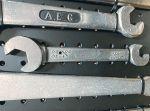
To mask the fact Europe was still maintaining an imperial unit for hex bolt and nut faces, odd sized wrenches appeared with a metric identification, and sometimes with applicable fractions, to accommodate the use of the Whitworth size. Metric hex bolt face sizes of 14, 16, 18, 20, 25 millimetres (now obsolete), were conversions from Whitworth. For example, early German wrenches would sometimes be stamped 25 mm and 9/16 inches. If by chance a fine thread was used (BSF) that same bolt would have a completely different wrench marked 5/8 inches — Whitworth, for some reason altered the faces from course (BSW) to fine (BSF). To make matters worse, various European countries, as well as the United States, developed their head sizes which meant mechanics needed more tools to lug around.
In Japan, the situation wasn’t much different. A 1928 Komori press in our museum is not only manufactured to Imperial measurements but all the fasteners are Whitworth.When Germany and its neighbours, tired of the heavy English threads and bolt faces, eliminated the irritant and then went completely metric. Metric bolts maintained the American 60-degree angle but altered the thread pattern towards a slightly finer pitch. Unusual thread patterns only added to
the grief in the United States. Smyth bindery equipment didn’t use any typical threads and simple things, like screws, bolts and nuts, were all listed in their parts catalogue as unsuspecting mechanics would soon find out they were non-stock at most suppliers. I spent hours re-threading a hole to accept a standard thread for a Smyth case maker — frustrating and wasteful but potentially profitable for the manufacturer.
First image: A German Whitworth Wrench.
Second image: A British Whitworth Wrench.
DIN’s other wide-reaching standards also had a profound effect on virtually everything else. Paint colour a good example. The RAL standard also came with a number. In the United States, they were still using catchword monikers such as “battleship Grey”; The Germans: RAL7003. Every shop in Germany made that colour the same.
Sorry...
we can’t supply that!
“Non-standard” wasn’t isolated to just hardware, it included ball bearings as well. New Departure (now Hyatt-New Departure), was once owned by General Motors. During World War Two, ND manufactured 287 million bearings for the war effort and they went into everything from aircraft to tanks. As the war ended, New Departure came up with a novel annuity revenue stream. Various odd dimensions were designed into some New Departure bearings and if a manufacturer specified these bearings when it came time for a replacement, the customer could only purchase it through the same manufacturer as bearing suppliers couldn’t sell it. Our British friends are quite familiar with this money-maker as they had various firms, such as Hoffmann, knocking off unusual products only they could supply. Just as with a simple concept of standardizing a bolt, history shows what a waste in capital differentiation can mean.
Today, access to metric fasteners in North America has greatly improved.
Hardware stores usually supply the most common items. Whitworth is still alive, mostly centred in the U.K. but specified for various items such as cameras. The threads make spinning on a nut much easier than metric or UNC. The marine and shipping industry often specifies Whitworth. Japanese metal shipping crates use Whitworth 1/2-12 hex bolts for some unexplainable reason. BSPT (British Standard Pipe Thread-Tapered) is also used extensively around the world, although Europe generally accepted the American NPT (National-Pipe Thread). Probably many of you have struggled to match electrical connectors with European hardware. That’s because of the PG standard created within the German DIN system. Panzergewinde is the name of these tapered threads and requires yet another set of taps few in North America even know about.
Ultimately if every bolt and bearing is simply defined by a single standard, “billions” of dollars could be saved along with endless hours of searching. There would be no need for multiple sets of taps and dies, drawers of wrenches, Allen keys and eye-watering SKUs of dissimilar stock. Ponder the benefits for paper and even lumber specifications — massive savings. Canada officially adopted the Metric system in 1970, but most Canadians my age weigh themselves in pounds and measure their height in feet and inches. Thousands of my fellow print industry mechanics have suffered from non-standardization for decades, perhaps our governments will finally do something about it.
NICK HOWARD, a partner in Howard Graphic Equipment and Howard Iron Works, is a printing historian, consultant and Certified Appraiser of capital equipment.
nick@howardgraphicequipment.com
INKJET OPPORTUNITIES
In this second instalment in a twopart series on production inkjet, we hear from four experts on the advances and challenges of cutsheet production inkjet systems
Compiled by Alyssa Dalton
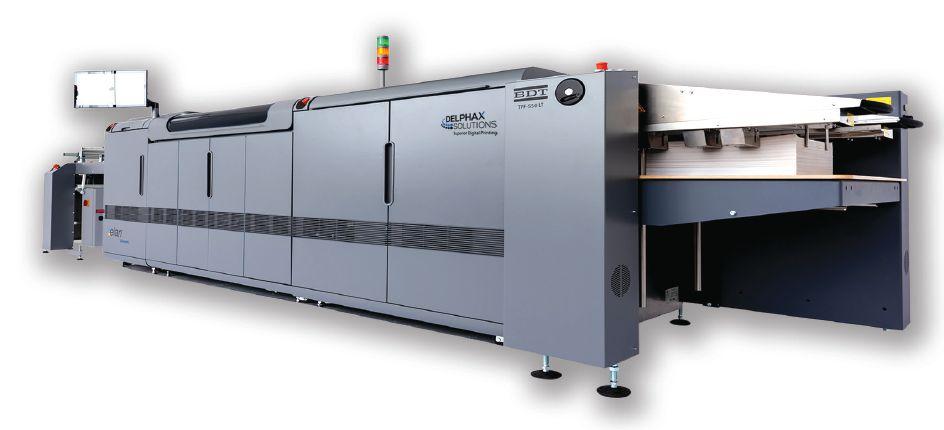
The Delphax Elan 500 HD colour inkjet press produces up to 500 letter images per minute, with 1600 x 1375 dpi at 700 mm/sec.
Richard Lee, CEO, Delphax Solutions
It is fair to say that production inkjet has finally come of age. Media suitable for the platform is now a staple offering from all suppliers. Production users and end-user customers see the benefit of faster turnaround, greater flexibility, higher quality and print-to-print consistency and lower cost output. Users of our Elan series devices, such as the Elan 500 HD, benefit from lower upfront and ongoing operating costs with these high-speed inkjet platforms. The nature of inkjet technology means there is no direct contact between the marking technology and the media, and inkjets have fewer components in the image pipeline when compared to legacy contemporaries. This simplicity in design allows our customers the option to self-maintain the devices (with our support if needed), which is something that cannot be offered with most toner devices. The result for Delphax Solutions’ custom-
ers is system uptimes in the mid-90-percent range, increased productivity, and cost savings, all the while providing production users with the confidence to move away from their toner devices.
Cost-effective, shorter production runs with variable print remain a challenge for traditional methods of production, such as offset shells with personalization. Fast turnaround expectations are becoming the norm for many production printers and their clients. Having high-speed, high-quality devices that are always available to run is critical for success, and this is where inkjet becomes the obvious choice.
The biggest challenge for inkjet is overcoming the perceived quality or “feel” when compared to toner or offset. Each successive generation continues to address these concerns and as development continues, the combination of technology, media and customer education will fulfill the potential of inkjet technologies to become the single solution for all production.
PRINTING PRODUCTION
EXPAND YOUR HORIZONS
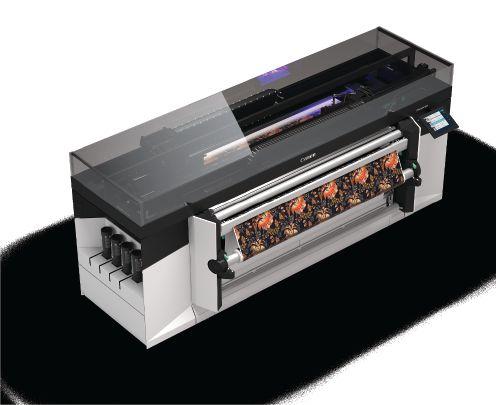
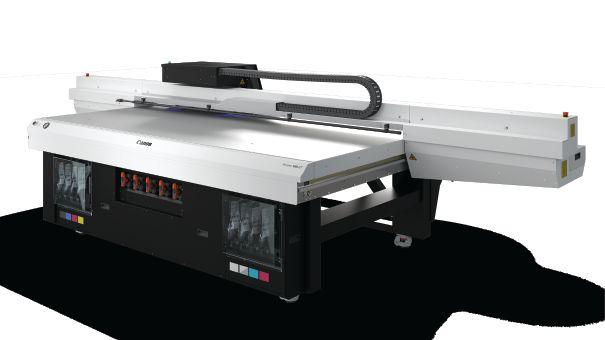
Take advantage of the di erent types of print applications that are possible when using one of Canon’s Production Printing products. Learn more about our lineup of wide format flatbed printers and roll-to-roll printers; each utilizing unique print technologies to cater to all types of customers in the display graphics field for their growing business needs!
COLORADO 1650
Matte or gloss finish with FLXfinish
Continuous nozzle monitoring with PAINT
Print double-sided easily and without hassle
Switch media rolls automatically
APPLICATIONS:
Designer wallpaper, decals, soft signage, frontlits, backlits, floor graphics, indoor & outdoor banners, fleet & car graphics, perforated film and more.
Print on flexible and rigid media
Outstanding print quality with VariaDot
Leverage your expertise with Arizona Xpert
Print textured designs with Touchstone
APPLICATIONS:
Wood, glass/mirrors, unusual, precut or odd-shaped media, dimensional prints, POP displays, mats, bench signage, chalkboards, pencils, awards, phone cases, and more.
Philip Hampson, Senior Director, Print Production and Display Graphic Systems, Canon Canada
To remain competitive, printers should look to invest in inkjet technology as it offers a low operation cost, greater quality that is comparable to offset. Because the technology continues to evolve, it’s here to stay. Shorter runs have become the norm, and many printers have invested in inkjet presses as they are more efficient for runs under 2,500 impressions. Additionally, there is no makeready time and resources required (no plates needed), which contributes to greater uptime and productivity for printers. Printers can have confidence when they partner with Canon. Not only do our inkjet printheads last long, but we consistently achieve a 95-percent uptime with our customers.We also have a predictive maintenance program that further supports our customers and keeps their businesses moving. In addition to long-lasting printheads, our inkjet presses provide a simple paper path and various quality counter-measures to ensure press uptime and consistency. Canon offers two great solutions for the “typical” commercial printer: The Canon VarioPrint i300+ and the Canon ProStream 1000. For cutsheet media, the VarioPrint i300+ is great for marketing applications, short-run manuals, books, etc. For continuous feed, the ProStream 1000 delivers high quality for book and publication applications, as it provides media flexibility and quick drying times. Additionally, for the transactional printer, the Canon ColorStream 6000 series provides extra security with the incorporation of MICR and security inks, all backed by a lower running cost on uncoated stocks. From book publishers to marketing agencies, we are seeing a migration to inkjet from offset. Printers today can meet the quick turnaround requested by the market with an inkjet press. The quality of inkjet allows printers to achieve offset-like quality, while gaining healthy margins with lower print runs.
The ProStream 1000 is designed for applications printing at 1200 x 1200 dpi running at a speed of 262 feet per minute (80 m/ min) at 22.25 inches (565 mm) web width.
Marybeth Gilbert, VP Production Business, Xerox
This is the second instalment in a two-part series on cutsheet production inkjet. Read part one in the Jan/Feb 2020 issue of PrintAction.
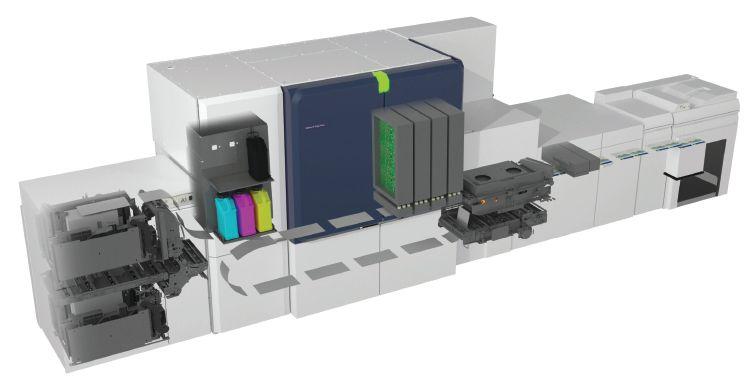
New advancements in data-processing, workflow automation and white-paper-in processes combined with the flexibility of short-run digital printing make this the perfect time to invest in inkjet. The Xerox Baltoro High Fusion inkjet press has been a gamechanger for many printers who are using this system to grow, extend and transform their businesses; inkjet printing has never been more reliable and user-friendly. Automation reduces operator intervention, eliminates prepress guess work, and ensures image quality from the first to the last page of every run. Plenty of industry analysts have been watching this trend, especially as inkjet technology has evolved to print at near-offset productivity. Now with a single press, printers can achieve high-volume transactional work and high-quality direct mail and catalogues with superior image quality and productivity. Finding the right solution goes beyond the press itself. We individualize solutions based on workflow, floor space, application mix, price point and growth strategy. Printers can be hesitant to invest in new technology that may impact workflow, pre- and post-print needs, as well as physical space on the production floor.We took this into consideration when designing Baltoro HF and have eliminated these barriers, making it easy for printers to go from xerography to inkjet.
Dan Maurer, Vice President Digital Print, Heidelberg USA
The Xerox Baltoro HF uses automated intelligence to optimize and maintain colour and image quality, and self-corrects in real time.
In our Industry 4.0 world where print is a manufacturing process, shops need to think about utilizing a combination of print platform technologies to produce jobs in the most cost-effective way with quality matching, regardless of what it is printed on. Cutsheet production inkjet presses are now able to provide the quality and colour match to offset, allowing real-time decisions of where to produce jobs, making businesses more competitive on short-run work which captures more cus-
tomers overall. Lastly, investment in digital platforms, like inkjet presses, allow printers to interact with their print-buying customers in a more collaborative way as a marketing solutions provider. Personalization, versioning, anti-counterfeiting and other “wow” factor effects can be integrated into print designs with inkjet, enhancing a product’s market response.
Today’s inkjet presses have multiple control systems to make sure this is done automatically. This includes climate control around the inkjet heads; monitoring the nozzles and proactively firing drops to a waste area or a sheet to make sure they don’t clog; automatic moisturizing and cleaning of the inkjet head systems; systems that monitor sheet travel so that defective sheets or jams don’t come into contact with the heads; and uninterrupted power supply systems that avoid damages to the machine in the event of a power failure. With all of these systems, combined with robust Fujifilm Samba printheads, the Heidelberg Primefire achieves greater than 80 percent uptime. This number is very important, even more than the raw engine speed, in how much monthly production can actually be produced on these digital presses. Other factors in daily production can also be important in cutsheet inkjet presses. Some require downtime after a change in stock type is made (such as coated to uncoated); the Heidelberg Primefire does not require any changeover downtime between stocks. We offer both analogue and digital platforms that integrate together so our customers can produce high-quality work cost-effectively. Our digital print portfolio continues to expand tremendously in both inkjet and toner platforms. For smaller commercial printers that have applications in A3+ sizes, toner-based platforms, like our Versafire EV and EP engines, still represent the best “bang for your buck” in high quality across the widest variety of applications. But inkjet presses, like the Heidelberg Primefire B1 format engine are getting serious attention from some of our top commercial printers, especially in book production, and commercial printers that do folding carton work.The reason for this, beyond the print quality and industrial-based platform of the Primefire, is the compatibility of finishing processes in the 29 x 40-inch format. For the mainstream production work found in commercial printers and packaging converters, production inkjet has achieved the point where it should be seriously considered commercially viable.
Responses have been edited and condensed for length.
RETHINK WHAT’S POSSIBLE
COAST TO COAST SERVICE & SUPPORT
• Konica Minolta is a Global Leader in Inkjet Printhead Technology.
• We offer Canada’s Largest Selection of Wide Format Printers and Finishers including HP DesignJet and HP PageWide Models.
• We are an Exclusive Distributor of EFI Wide Format Printers in Canada.
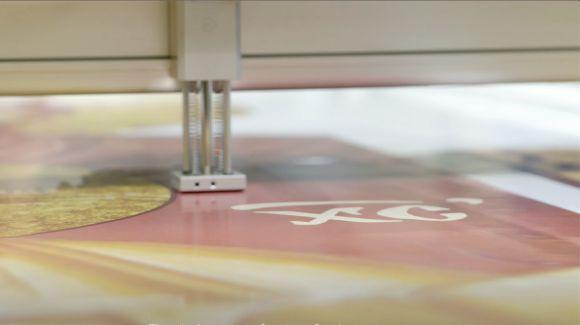
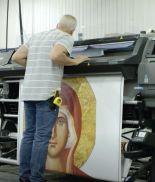
MP Repro used an HP Latex 365 printer to recreate church frescos, turning a project that would have taken 18 months to complete down to a matter of weeks.
MUSEUM QUALITY
MP Repro uses wide-format digital printing to recreate church frescos of museum quality for the Archangels Michael and Gabriel Greek Orthodox Church in Montreal
By Victoria Gaitskell
When Carmela Martinez, President of MP Repro of Montreal, Que., was asked to use digital printing to decorate the interior walls of Archangels Michael and Gabriel Greek Orthodox Church with largescale sacred images, she quickly realized that the job would present hefty challenges.
“The goal was to reproduce the appearance of beautiful full-sized traditional hand-painted wall murals using modern materials,” Martinez says. “The work had to be permanent, washable, scratch-resistant, and not fade over time. It also had to be installed on a variety of different surfaces, including vinyl, wood and walls — not only vertical walls but also curved and concave spaces, such as arches, arcades, and an interior dome.”
Fortunately, Martinez had the right assets to tackle the job — her 62-person staff had the passion and high levels of technical competence it required. As well, MP Repro was armed with an HP Latex 365 printer, a machine that works on a range of flexible and rigid substrates using HP Latex Inks, designed to be durable and highly suited to permanent installations. The printer can also be adjusted to print at different speeds, a feature that enabled operators to slow it down to produce the art-museum-quality prints needed for the church. Sonia Grobanopoulos, Country Marketing Manager – Graphics Solutions Business, HP Canada, adds in an e-mail that this printer helps expedite fast turnaround because the prints come off dry, so installation can begin immediately. Additionally, she says the HP Latex’s superior interior image quality, odourless instant-drying ink, and printheads that allow
BALANCE
ON
PROPRINT
AVAILABLE EXCLUSIVELY FROM VERITIV
L’ÉQUILIBRE AVEC PROPRINT OFFERT EXCLUSIVEMENT PAR VERITIV
PROVIDING A PERFECT BALANCE OF PERFORMANCE AND AFFORDABILITY
Features include:
• Gloss and Silk finishes in a wide range of standard weights and sizes
• Available in matching digital basis weights and sizes
• Smooth, even print surface for excellent print results
• High opacity for superior image sharpness
• Excellent print contrast leads to crisp imagery
• PEFC Certified
60, 70, 80, 100 and 115 lb. Text 80, 100, 111 and 130 lb. Cover
To learn more and see the full offset and digital range, please visit: Pour en savoir plus et pour voir tout l’éventail de papiers offset et numériques, rendez-vous sur : veritivcorp.com/proprint
L’ÉQUILIBRE PARFAIT ENTRE LA PERFORMANCE ET L’ABORDABILITÉ
Principales caractéristiques :
• Finis brillant et satiné, large éventail de formats standard, versions édition et couverture assorties
• Poids de base et formats digital assortis
• Surface d’impression lisse et uniforme pour d’excellents résultats
• Opacité élevée pour une netteté supérieure des images
• Excellent contraste pour des images précises
• Certifié PEFC
120, 140, 160, 200 et 230 M Édition 160, 200, 222 et 200 M Couverture
you to see fine details made it a good fit for the project.
A further advantage for Martinez was that she had already established a collaborative, mutually-trusting relationship with Cristina Sanda, a volunteer who served as MP’s liaison with the church, since MP had previously provided print services for Sanda in her day job. Another church volunteer, Justin Cotarla, provided MP with digital files of all the sacred images to be used to decorate the church’s interior. These images, called icons, depicted holy figures or biblical events in a traditional style, are typically found in Romanian and other Eastern Orthodox churches (and churches of other denominations as well). Preserved famous historic church murals of icons are painted in an exacting technique called fresco, in which artists apply pigments onto fresh plaster. Today, artists still continue to hand-paint such murals with fresco and other media in churches around the world.
Church mural execution
Before starting to print the icons, MP had to calibrate and modify the images provided by the client to produce uniform results on different substrates and to harmonize with the dimensions and shapes of the church architecture. Their preliminary work also involved testing different types of ink on several types of adhesive vinyl and rigid substrates, including wood and PVC panels, to produce the results they needed. For example, many traditional icons appear luminous because of their gold background, so MP tested to find a vinyl that would exhibit a similar amount of light reflectance.
To facilitate the installation, MP printed adhesive vinyls using the so-called wallpaper technique in which the substrate is printed in long, overlapping vertical strips with a maximum width of 48 inches and
one inch of headroom. All printed pieces were laminated with matte UV protection to make them more durable. To make the entire process more manageable and cost-effective for the church, the project was divided into three parts where MP printed and installed one-third of the graphics at a time. During the installation, two MP installers used scaffolding to help them position the graphics at heights of up to 20 feet off the ground.
Church mural results
In her e-mail, Grobanopoulos describes the church murals as “an interior application of fine art.” She writes that a parish following the alternative traditional route would send a request to the head of their church, the Archbishop, and once approved, an artist would be commissioned to execute the project. This would take an estimated 18 months to complete. By contrast, although printing and installing the digitally-printed church graphics was stretched out into three separate parts, the actual work took only a matter of weeks.
“Having a professional painter approved by the bishop is a very long process, so we turned our backs on traditional methods which were very time-consuming and very expensive,” says Reverend Father Constantin Ciubotariu, Priest of Archangels Michael and Gabriel Greek Orthodox Church, in a YouTube video about the church murals. “People who have come to us haven’t been able to believe their eyes and have thought that the icons are actually painted, and unless someone wants it to be labelled painted versus printed, then I don’t see a problem. I am very happy.”
Hotel mural
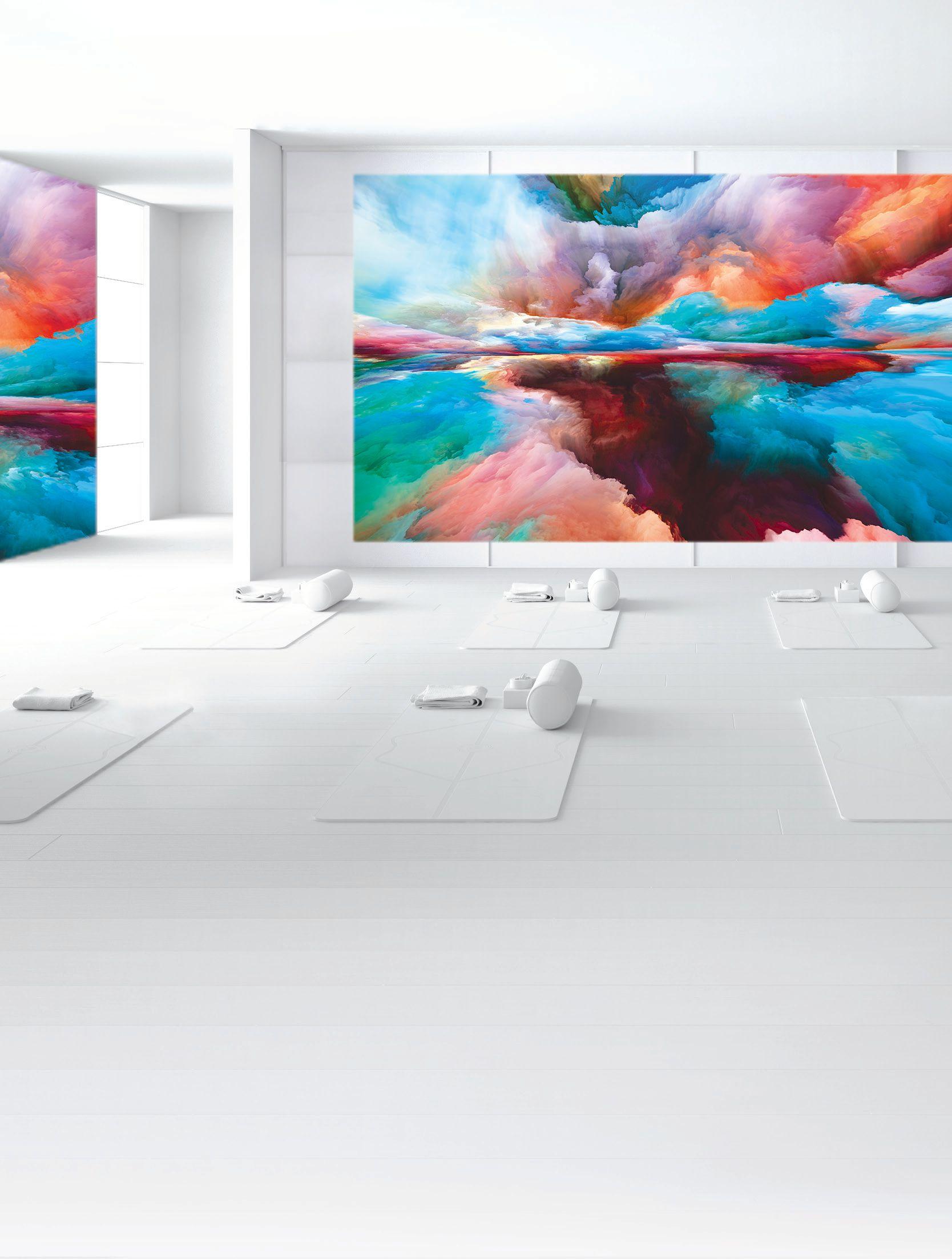
The success of the church murals brought MP Repro a subsequent commission to print and install a black-and-white photographic mural by artist Valérie Jodoin Keaton in the Hôtel Monville, a recently constructed Montreal luxury hotel. The mural covers approximately 4,300 square feet of walls, ceilings and selected furnishings in the hotel’s hall, mezzanine and gymnasium. Martinez says one of the hotel project’s major challenges was to ensure the graphics were perfectly fitted and aligned in specific zones in the building. Again, MP opted for the wallpaper technique to print and install the mural in vertical sections. The church and hotel murals earned MP Repro a Gutenberg Award – Quebec’s highest printing honour – in the Display Category in 2018 and 2019 respectively.
“In the past, North America has been slower to adopt digital wallpaper and interior décor applications. However, today we’re seeing this trend begin to take off, especially in the hospitality sector,” Grobanopoulos writes. “More and more, PSPs are looking for ways in which they can expand their offerings to customers and we think MP Repro has illustrated beautifully
how with a little imagination and the right tools, you can say yes to your customers’ needs and position a unique offering to them that they might not have considered before.”
She continues that, as illustrated by the hotel mural, the beauty of digital print in décor applications is its endless personalization possibilities. “You are able to print a wide range of applications, from pillows to window coverings, curtains, and even lamp shades. This trend denotes a custom experience compared to going to the store and picking out something that others may have. We all want something that is unique to us, and most of the time, that’s not something you’re finding on the shelf. Digital printing offers us the chance to make a statement,” she writes.
Accessible art
Martinez inherited her artistic sensibility from her father, Gaetano Martinez, who was born in the city of Noto, a UNESCO World Heritage Site in Sicily, famed for its masterpieces of baroque architecture. Gaetano immigrated to Canada at age 16 and in 1964, founded the business as MP Photo Reproductions. Martinez says when it came to new technology, her father was an early adopter. “He always had this vision and this curiosity about the next cool thing we can offer our clients.” He worked with Martinez in the business until 2013. Martinez’s sister Vincenza also works in the company as a designer and project manager.
Besides the HP Latex 365, MP’s current arsenal of all-digital equipment comprises three wide-format UV colour printers (Océ Arizona 250, Océ Arizona 550 GT, and EFI VUTEk GS2000LX Pro), an HP Latex 570 printer, an HP Z6800 wide-format inkjet colour printer, an HP Pagewide XL8000 colour/blackand-white printer/scanner, and a KIP KC80 wide-format colour laser printer. Besides general commercial printing, fine art reproductions, and décor, MP’s services also include signage, posters, displays, POP, textiles, vehicle graphics, window decals, labels and product identification, 3D printing, document management, printing and scanning technical drawings, and manufacturing CD, DVD and USB media packages. The company mainly serves the Quebec market.
Gaetano passed away in January 2017 at the age of 78, and the Archangels church murals were unveiled that fall. Martinez thinks the project stands as a fitting tribute to her father’s enthusiasm for creative innovation. “It’s changed my opinion of the capabilities of digital printing,” she says. “This project was very unique and special,” Grobanopoulos writes. “We were thrilled that MP Repro accomplished this with the local church and think the final product shows how digital printing can be used in unique ways to make art more accessible than we thought possible.”
MP tested various substrates to find a vinyl that would give off the same luminosity as traditionally painted icons.
The Archangels church murals were unveiled in the fall of 2017.
• Hard Copy Proof included (Courier of proof is additional)
• All booklets prices are 4/4 cmyk
• Collating, 3 sided trimming & folding included in price
PUR Perfect Binding
IN THE MARKET
New Direction Partners, the firm that handled the TC Transcontinental/Holland & Crosby deal, shares top tips for successful mergers and acquisitions
By Paul Reilly
The mergers and acquisitions environment in the printing and packaging industries is still strong, and if you are thinking about selling your business or expanding through acquisition, now is the time to prepare. In this article, we’ll look at what is driving buyers to acquire as well as what is driving sellers to consider putting their businesses on the market. We’ll also discuss how to ensure optimum valuation for a printing or packaging business. Keep in mind you don’t just flip a switch and have buyers handing over cash; even finding the right acquisition target can be a challenge. Getting your business ready for sale, and actually selling it, can take up to three years. As a seller, you may need to stay engaged for another three to five years as part of a buyout plan, so planning ahead, either as a buyer or a seller, is critical.
As a seller, you want to get as much as you can out of what is likely your biggest financial asset — one that you have dedicated a good part of your life to. As a buyer, you need to find acquisition targets that are well-positioned to add to your bottom line.
What drives buyers to seek an acquisition?
One driver is the need to expand their geographic footprint.This could be due to saturation in their existing geographic
market, which can limit growth, or it could be a key customer who wants them to operate in more than one location.
Another driver is diversification. One transaction we were recently involved in actually addressed both. TC Transcontinental acquired Holland & Crosby, a manufacturing company specializing in in-store marketing product printing for North American retailers. The acquisition expands TC Transcontinental Printing’s presence in the in-store marketing product market and broadens its manufacturing capabilities with a state-of-the-art platform, gaining it entry into the in-store décor and permanent visual display vertical. It also boosted the company’s geographic reach, adding Holland & Crosby’s dispersed client base to its own.
Diversification often involves acquiring companies in less mature market segments to add to product offerings. As a company becomes more diversified, it is ever more critical to adopt a solution-selling approach rather than a product-focused approach, so salespeople can accurately and effectively represent the company by spending time to thoroughly understand their customers’ business needs and challenges. This allows them to select the right set of offerings from a diversified portfolio to address those needs and challenges. If one of the goals is to acquire both customers and expertise – as was the case in the TC Transcontinental/Holland & Crosby
deal – it is important to acquire successful companies that can help integrate the new offerings into an overall strategy.
A popular acquisition method is the tuck-in. This approach, which involves acquiring the seller’s “book of business” and some assets, can offset slow sales growth and the need to be more efficient. When you add sales from a tuck-in to existing sales, costs go down. You are typically reducing operating costs and adding sales. In our industry, businesses have such high fixed costs that for every dollar of sales you add through a tuck-in, about 20 to 30 cents falls directly to your bottom line. It’s a great way to grow and be more profitable. With a tuck-in, you can even purchase a distressed company since the dynamics can be so compelling.
Key drivers for sellers
There is a high percentage of familyowned businesses in the print and packaging industries, and often times the next generation is not interested in taking over the business. Another reason is the need to diversify. In the case of TC Transcontinental/Hol-
land & Crosby, the acquired business now has access to the entire Transcontinental portfolio and the financial backing it might not have been able to access on its own.
Sometimes sellers are looking to invest the net worth of a family in more than one company and industry, or perhaps the owner is simply ready to retire and can’t afford to do so without selling the business. We have also seen cases where people just want to do something different — maybe they found the business challenging and exciting, and now they want to move on to another enterprise. Others might want to devote time to mission work. There are lots of reasons people choose to sell their businesses. The savvy buyer will take the time to understand those drivers.
Ensuring optimum valuation
Whatever the reason for selling, sellers want to ensure they can get the best possible price for their businesses. Because most sellers have invested financially and emotionally in their businesses, they can have unreasonable expectations about the actual value of the company. That’s
one reason it is important to engage a third party to assess its value and if necessary, suggest actions that can increase that valuation.
The value of the business is calculated by multiplying profits by a multiple, less debt. One way of increasing value is to reduce debt, but you don’t want to do that at the expense of having an effective technology infrastructure. Sellers should plan to sell their businesses midway through the investment cycle of large investments. If your equipment is obsolete and the buyer will need to invest, that amount will be deducted from the sale price. You want to show that you have paid down as much of the cost as possible and that the asset is generating profitability and growth.
In addition, sellers should spend time examining and addressing the aspects of the business that cause it not to be as profitable as it could be. As previously noted, companies often spend as long as three years getting them into shape for a sale. Shoot for at least 10 percent EBITDA. Multiples are driven by a combination of how fast you are growing and how sustainable the
growth is. A business with flat growth might achieve a multiple of four, while 10- to 20-percent growth could get you as much as 6 to 7 percent. This makes a huge difference in the price you can expect to reasonably ask for.
Even if you are not a buyer or a seller today, you might be tomorrow. Following the guidelines above can also deliver real-time benefits in terms of your profitability, even if you don’t plan to sell.
Paul Reilly, Founding Partner at New Direction Partners, has been in the industry for over 40 years and for the last 12 years has been providing investment banking and financial advisory services for sellers and buyers, valuation services, financing and refinancing efforts, strategic planning, turnaround and restructuring services, and temporary/interim management consulting. Previously, he was CEO, President and Chairman of Cenveo, one of North America’s leading graphic communications firms. During his 10 years at Cenveo, the firm grew from US$17 million to over US$2 billion in sales while completing some 60 acquisitions.
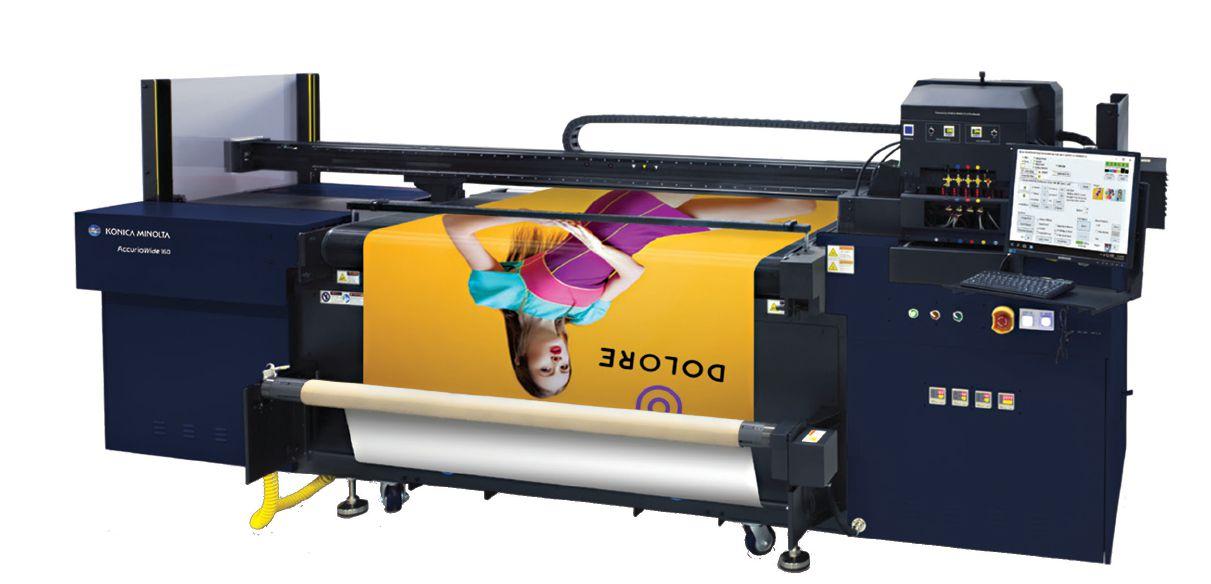
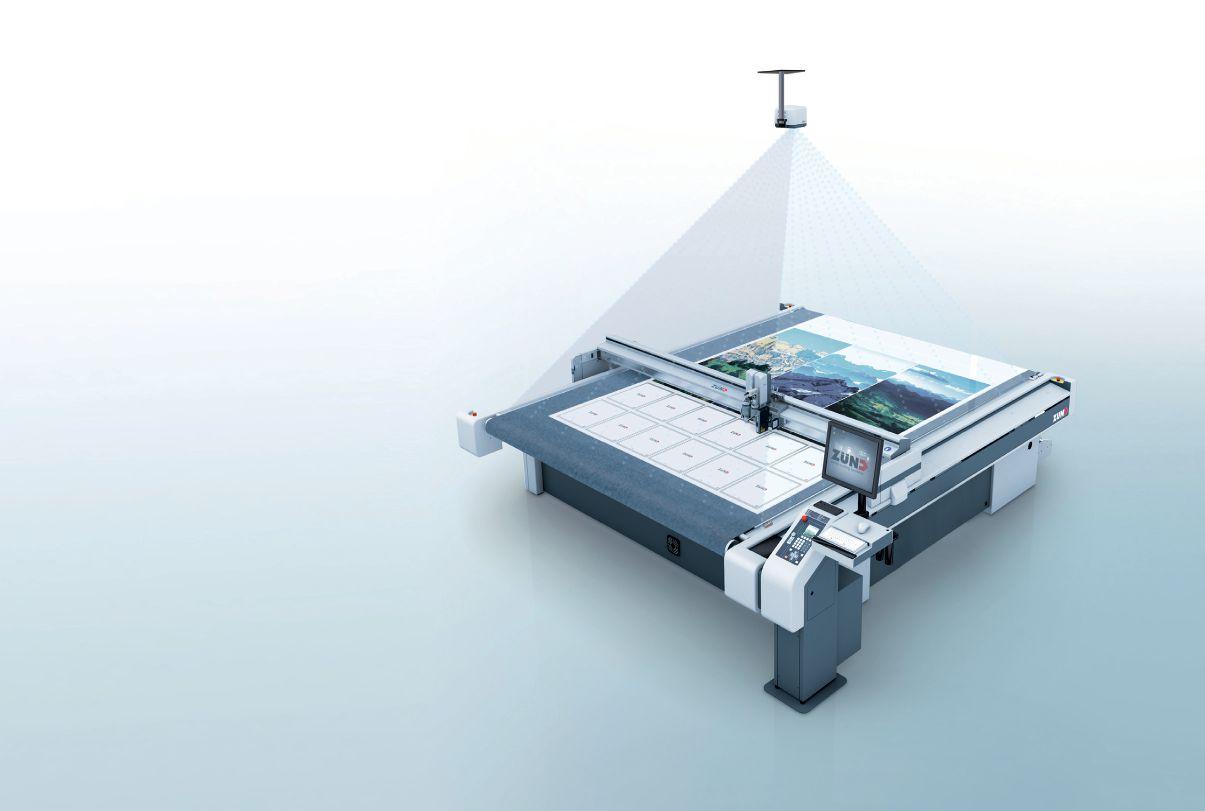
– Over Cutter Camera OCC system for high-speed registration
Dual-beam D3 series for twice the throughput and productivity – Cut & Seal LM-100W Laser module for one-step fabric finishing
Three ways to lower your cybersecurity risk in 2020
Canadian printers should step back and assess their cybersecurity priorities
By Graham Bushkes
If a piece of machinery were to break on the factory floor – how long would it take to fix? Or if a door to the head office were left open and someone wandered in and began flicking through your plans and customer details – what would your reaction be?
Both of these examples would likely result in fast, decisive action. In fact, a manufacturer would rarely if ever find themselves in that situation, given that physical maintenance, security, and safety systems are a top priority.
Ironically, this same heightened sense of security often doesn’t extend to cybersecurity, even though the potential for serious financial and even physical consequences – especially in OT networks – is the same or higher.
The reality is, despite the fact that 88 percent of manufacturing operational assets are now connected to a converged IT/OT network – leaving traditionally isolated and highly vulnerable systems exposed to external resources, devices, and networks – cybersecurity remains an under-resourced and isolated area of the manufacturing business.
In fact, one recent study commissioned by the Canadian Advanced Technology Alliance shows that only 57 percent of surveyed manufacturing companies had appointed a cybersecurity official, and 65 percent had spent less than $100,000 a year on cybersecurity.
While there are many reasons for this, including the need for organizations to reprioritize cybersecurity, one of the biggest gating factors is the currently limited resourcing landscape. Canada alone will need to fill 8,000 additional cybersecurity positions this year, and a global survey of CISOs earlier this year found that a lack of budget was interfering with planning and rollouts.
Coupled with the global shortage of skilled cybersecurity professionals, over-
taxed IT teams are struggling to keep pace with new digital innovation efforts and dealing with sophisticated threats on their increasingly complex networks. As a result, it’s not only likely but inevitable that there will be a serious breach. In fact, a recent study found that 74 percent of OT organizations experienced a data breach in 2018.
The time has come, therefore, as we enter a new year, for Canadian manufacturing organizations to step back and reset their cybersecurity priorities and structures.
The three steps outlined below will empower organizations to see their entire distributed and expanding networks clearly and transparently, enabling them to fully integrate a holistic security system that addresses the evolving threat landscape, while also continuing to meet their business objectives.
Step 1: Set integrated cybersecurity objectives
For most manufacturing businesses, it’s not just the IT and OT environments that are segmented. The teams that run them are as well.What’s more, they usually operate under entirely different objectives, with IT teams prioritizing the confidentiality of critical data while OT teams look to provide safe and continuous operations above all – meaning that resources are never intended to go offline, even for a much needed software or hardware update.
While on the surface these appear to be conflicting priorities, the fact is that in order to maintain safe and continuous operations, all cybersecurity threats still need to be managed. That means that updates, planned downtime, or even new redundant systems to support maintenance should be integrated into the overall business strategy in order to avoid the potential of unplanned system failures or security events that can ultimately cost millions. Bringing the IT and OT teams together – or deepening their existing connection points – so they can better understand each others’ business requirements and associated security implications, should be step one for any manufacturing business in the new year.
Step 2: Create a clear picture
Another side-effect of the IT/OT divide is that, like with many IT networks, the security of an OT network is too often only considered at the end of a roll-out plan. But given the sensitive nature of OT systems and the potential impact of a serious cyber event, that approach carries serious repercussions.
As a result, it’s reported that 78 percent of OT organizations only have partial visibility into what devices are connected to their network and where they are connected. With the need for companies to stay on the cutting-edge to maintain their competitive advantage, and the fact that
new roll-outs can often happen fairly quickly, a pause to talk cybersecurity is not usually on an OT team’s to-do list.
Further, with anything between 50 and 500 devices on an OT network, many from different vendors, even if they are given a full picture, most teams would be stretched to capacity to tailor security solutions and customize requirements to each device. The end result is that if a corrupted device enters the network or a malware-infected email is opened, the OT and IT teams might not have the means for detecting and responding to that threat.
It also means that some of the most basic cybersecurity threats – like phishing, malware and ransomware, and mobile security breaches – could be some of the most crippling for the manufacturing industry.
For that reason, step two for Canadian manufacturing businesses should be to get their frontline OT personnel to walk their cybersecurity team through the manufacturing floor, figuratively if not in actuality, and identify the organization’s most critical assets.
This will empower the cybersecurity team to see the full picture, and then enable them to design a tailored cybersecurity program that works for the business while also preparing them for the ever-advancing
and complex threats being rolled out by cybercriminals.
Step three: Find an integrated solution
System updates and scheduled downtime will continue to be a source of tension and a weak spot in any company’s cybersecurity hygiene if the IT and OT teams continue to operate in silos. However, there will need to be compromise on both sides, adapting and adjusting processes to ensure production and security needs in equal measure.
Overall, that requires both IT and OT teams to use their greatest asset, data and information, to their advantage. This means selecting security solutions that are flexible and that can be scaled, adapted, and managed as part of a converged IT and OT security system that spans the entire network.
To achieve this, you need to look for tools that extend from the data centre to the cloud to the network perimeter, that include protocols and functions specifically designed to provide visibility, control, and automated detection within an OT environment, and that also include built-in support for industry standards.
It’s also essential that any solution minimizes complexity and reduces the operat-
“Some of the most basic cybersecurity threats – like phishing, malware and ransomware, and mobile security breaches – could be some of the most crippling for the industry.”
Extensive line of products
We offer solutions ranging from coated and uncoated text and cover papers; custom boards for standard and specialty printing; product packaging for a variety of applications, including food and pharmaceuticals; to high quality bonds and digital paper products for commercial and personal printing jobs.
Sustainably Sourced
ing expense of OT security management to ensure that the benefits of your new integrated plan are recognized and can be incorporated into a comprehensive strategy that extends across the business.
Manufacturers that integrate their cybersecurity strategies into the very core of their business model will be better positioned to handle the ever complex and growing security threats that 2020 will bring.
Individual systems need to be managed and integrated into a single management system, including SIEM (Security Information and Event Management) and SOAR (Security Orchestration, Automation, and Response) tools, and comprehensive SOC (Security Operations Center) systems that provide comprehensive visibility, control, and response across all IT and OT environments.
That’s something all teams should be able to get behind.
GRAHAM BUSHKES has been the Country Manager for Fortinet Canada since 2002. He is a direct and channel sales veteran with more than 32 years of experience in the IT industry. This article was originally published in Manufacturing AUTOMATION (automationmag.com), a sister publication of PrintAction at Annex Business Media.
Extensive line of products
Extensive line of products
APP sources its fiber from plantations and not from high conservations or high carbon stock areas, ensuring a sustainably sourced product. Further, the Company offers a full complement of PEFC certified papers.
Nationwide
One of Canada's largest providers of paper, board and packaging products since 1998. APP Canada is part of one of the world's largest integrated pulp and paper manufacturers with operations in over 65 countries.
Extensive line of products
We offer solutions ranging from coated and uncoated text and cover papers; custom boards for standard and specialty printing; product packaging for a variety of applications, including food and pharmaceuticals; to high quality bonds and digital paper products for commercial and personal printing jobs.
We offer solutions ranging from coated and uncoated text and cover papers; custom boards for standard and specialty printing; product packaging for a variety of applications, including food and pharmaceuticals; to high quality bonds and digital paper products for commercial personal printing jobs.
We offer solutions ranging from coated and uncoated text and cover papers; custom boards for standard and specialty printing; product packaging for a variety of applications, including food and pharmaceuticals; to high quality bonds and digital paper products for commercial and personal printing jobs.
Sustainably Sourced
Sustainably Sourced
Sustainably Sourced
APP sources its fiber from plantations and not from high conservations or high carbon stock areas, ensuring a sustainably sourced product. Further, the Company offers a full complement of PEFC certified papers.
APP sources its fiber from plantations and not from high conservations or high carbon stock areas, ensuring a sustainably sourced product. Further, the Company offers a full complement of PEFC certified papers.
APP has strategically located national presence - Toronto, Montreal, Vancouver, Calgary, Winnipeg, Edmonton - with the ability to meet your 'Just-in-time" needs from our large warehouse inventories.
For more information, please contact your local merchant or visit us at www.appcanada.com
APP sources its fiber from plantations and not from high conservations or high carbon stock areas, ensuring a sustainably sourced product. Further, the Company offers a full complement of PEFC certified papers.
Nationwide
Nationwide
Nationwide
APP has strategically located national presence - Toronto, Montreal, Vancouver, Calgary, Winnipeg, Edmonton - with the ability to meet your 'Just-in-time" needs from our large warehouse inventories.
APP has strategically located national presence - Toronto, Montreal, Vancouver, Calgary, Winnipeg, Edmonton - with the ability to meet your 'Just-in-time" needs from our large warehouse inventories.
APP has strategically located national presence - Toronto, Montreal, Vancouver, Calgary, Winnipeg, Edmonton - with the ability to meet your 'Just-in-time" needs from our large warehouse inventories.
For more information, please contact your local merchant or visit us at www.appcanada.com
For more information, please contact your local merchant or visit us at www.appcanada.com
For more information, please contact your local merchant or visit us at www.appcanada.com
Detailing new offerings from Agfa, Asahi Photoproducts, Highcon, Koenig & Bauer, Konica Minolta MGI, Mitsubishi Electric, Onyx and Xanté
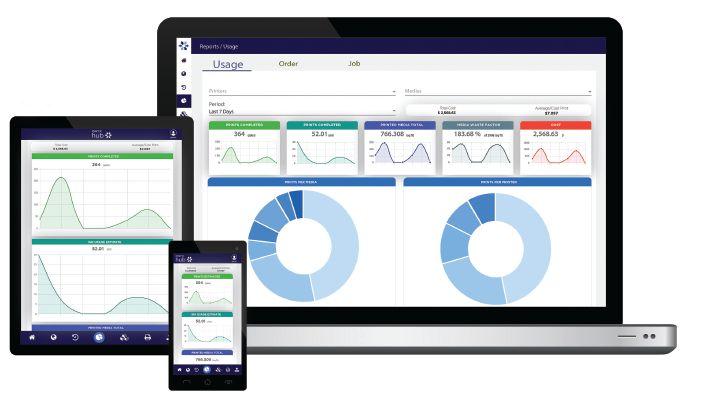
Onyx Hub 2.0
Onyx Graphics in February announced the global availability of Onyx Hub 2.0, the newest version release of the company’s business intelligence software. Onyx Hub is designed to help users answer questions, such as “how profitable am I?” or “what’s my actual waste?” and aims to bring production data into a print shop to make better business decisions. Onyx Hub 2.0 introduces data protection with new secure server encryption and active user management controls to protect sensitive print production data and secure customer information. Onyx Hub 2.0 also introduces a new site-wide job submission capability from one central location. Complete with Onyx Hub 2.0 is a redesigned user interface that is optimized for use on any device. The new responsive framework provides real-time access to print production data from any network desktop, tablet or mobile device to enable time-sensitive business decisions based on actual data. Other highlights of the enhanced software include: HTTPS browsing to keep customer information secure and protects sensitive print production data; new user management controls for custom views of printer utilization, ink and media waste reporting, or costs for any user; and new job submission capability to improve print processes from prepress to production.
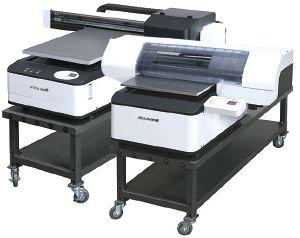
Sydney Stone carries Xanté X-16, X-33 flatbeds
Sydney Stone, the exclusive Canadian distributor of Xanté Equipment, is bringing two new Xanté flatbed UV printers to Canada. The printers were launched at Print 19 in Chicago to thousands of attendees in November 2019 and are now making their debut in Canada. Xanté explains that the X-16 and X-33 UV printers are designed to meet the needs of commercial and in-plant operations seeking economical and compact solutions for printing on the widest range of substrates possible. The X’s include simultaneous printing with white ink and CMYK inks allowing the ability to print on various substrates including acrylic, metal, glass, ceramics and more. Adjustable height print heads for both models accommodate substrates up to 6 inches
tall, delivering full-colour printing at up to 1440 dpi resolution. The X-33 printer features a 24 x 36-inch bed with vacuum suction to hold substrates stable during printing, while the X-16 features an 18 x 24-inch bed.
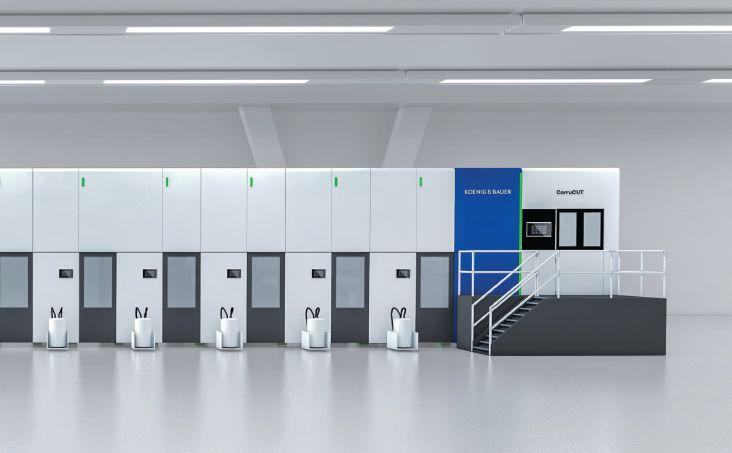
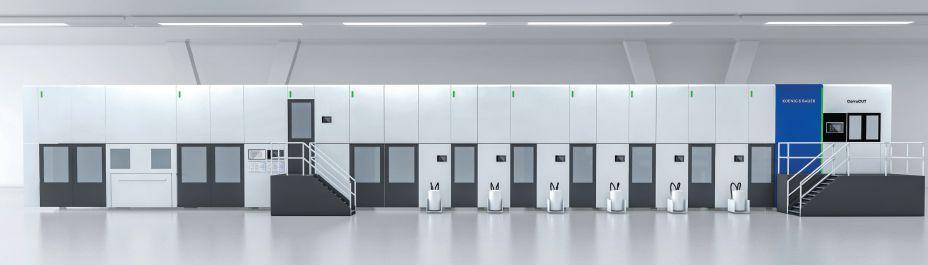
Koenig & Bauer CorruCUT
Koenig & Bauer says it is addressing the growing global corrugated board market with the launch of CorruCUT, a new sheetfed flexo press designed to print on corrugated board. Boasting “extremely robust mechanical engineering,” the press features durable side frames made from cast iron poured to shape at 1300°C at the foundry, which display almost no vibrations. The CorruCUT incorporates a number of features such as a vacuum-belt feeder without an infeed roller, a new solution for anilox roller exchange, and an overhead vacuum delivery. It handles corrugated sheets with a width of up to 110 inches and a thickness of 0.354 inches, running at speeds up to 12,000 sheets per hour. Koenig & Bauer engineers have designed it with DriveTronic shaftless drives for multicolour flexo post-printing to be achieved. It allows
Onyx Hub 2.0 introduces a new site-wide job submission capability from one central location, designed to help improve print processes and save production time to print more jobs per day.
operators to set up while production is running and affords fast job change and low maintenance, according to the company. As well, it provides operators with integrated error diagnostics and online remote maintenance. Users control the machine with a flexible Profibus system and an ergonomic touchscreen, and its open-architecture design permits access to the printing units for setup while the current production continues. Its production management system permits the saving of repeat jobs and the automatic presetting of job parameters. The integrated error diagnostics and online remote maintenance also surpass general standards. As Koenig & Bauer explains, sheets are carried in exact register from the feeder, via the printing units to the rotary die-cutter by way of a continuous overhead vacuum transport system. The direct drive technology also allows the use of different printing plate thicknesses by compensating the circumferential speed of the cylinder. The CorruCUT printing units are fitted with the quick-clamp chamber blade system made from carbon fiber composite. The ink supply and the automatic washing system are designed to achieve the best possible results with low water consumption and fast washing times.
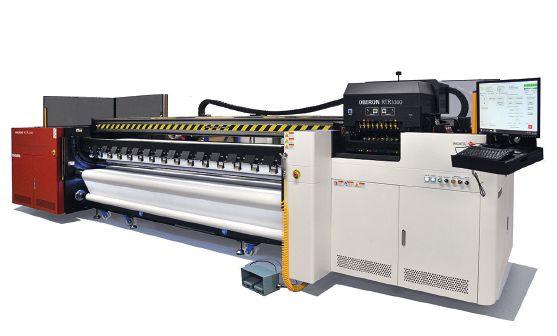
Agfa Oberon RTR3300
is a sheetfed flexo press with an integrated high board line rotary die-cutter.
Agfa in early February announced a new addition to its large-format inkjet printer assortment. The Oberon RTR3300 is a dedicated 3.3-m roll-to-roll machine that combines “extreme productivity and quality with an extensive media scope and a unique ease of use.” The new RTR3300 comes in four-colour plus white and six-colour versions. In Express mode, the
Koenig & Bauer
CorruCUT
The systems are powered by iQueue, Xanté’s Adobe PostScript 3 workflow software.
Oberon RTR3300 hits 150 m²/h, while in Production mode, the Oberon reaches 85 m²/hour. The dual-roll option is capable of handling two rolls each up to 1.6 metres wide, doubling the total output. The UV LED inks on the Oberon RTR3300 were optimized for flexible media and printing of solid colours. They obtained the highest category of Greenguard Gold certification, Agfa explains, and can be used in sensitive indoor environments, such as schools or healthcare facilities. In addition to its air-cooled LED curing lamps, the Oberon RTR3300 features a water-cooled table designed to keep the printing zone at room temperature. Thanks to a unique media loading setup, a single operator can quickly load the media, Agfa explains, adding that the smart multi-queue functionality guarantees “effortless” job planning in view of the available materials. The free fall option, which may be used to print on demand, is designed to reduce media waste. A light box next to the printing area allows for on-the-spot quality inspection of backlit prints, while a double light curtain works to ensure that jobs don’t get interrupted and media wasted, even when an operator accidentally moves into the safety zone.
Highcon highlights digital finishing at drupa 2020
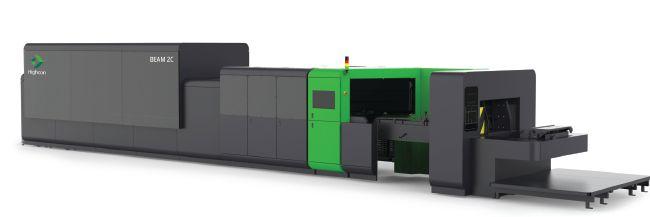
At drupa 2020, Highcon will demonstrate the latest versions of the enhanced Highcon Euclid and Beam platforms, named the High-
con Euclid 5 and Highcon Beam 2. The star of the Highcon booth at drupa, the company explains, will be the Highcon Beam 2C machine targeting the corrugated board market. With Highcon Euclid and Beam digital cutting and creasing machines installed worldwide, digital finishing is gradually becoming truly accepted in the marketplace, Highcon explains. Several Highcon customers have already acquired second machines to cope with supply chain challenges when utilizing conventional die cutting, increased demand by brand owners for rapid turnaround for campaigns and promotions and reduced working capital requirements that only digital finishing enables. Customer feedback has resulted in significant advancements in the technology, in terms of efficiency, reliability, quality and predictability. Highcon also continues to invest in its Euclid product platform. One of the most visible developments of the new series of Euclid machines is the User Interface adopted from the Beam machines. After seven years in the field, the company explains Highcon technology has gone through “substantial improvements” as reflected in the increase in the number of jobs per machine by 35 percent year over year from 2016 to 2019. On the drupa 2020 show floor in Hall 9, Booth C50, visitors will be able to see Highcon machines working at full production capacity, as well as witness firsthand testimonials from customers around the world.
1. ONE-STOP SHOP — Die Cutting, Bindery, Data & Lettershop.
2. SUPERIOR TECHNOLOGY — Die crease without a die, then fold and even glue all on the same machine, up to 30 pt.
3. INTEGRATED MODULAR UNITS — Combined in-line finishing: crease, fold, glue, tipping, envelope inserting, ink jetting (Duplex), clip seal (3 sides), mail prep.
4. SAVE ON POSTAGE COSTS
—As a Certified Canada Post Direct Marketing Specialist, we get contract pricing reductions.
5. RETURN MAIL PRODUCTS — Customized “Return Mailers” created in-line with “U” or “BOX-shape” remoistenable glue, time perfed applications and envelope formation.
6. MINI-BOOKLETS — Saddle-stitch and trim 2-up booklets in-line to the size of a business card. No need to trim off-line, or do 2 passes.
7. HIGH SPEED EQUIPMENT — High speed Tipping, Folding, Saddle-stitching and soft folding ensuring on time delivery.
The Oberon RTR3300 comes in four-colour+white and six-colour versions.
The Highcon Beam 2C Nonstop Configuration.
Asahi Photoproducts Water Recycling Unit
Asahi Photoproducts has announced the latest development in its CleanPrint strategy, a water recycling unit incorporated in new Asahi platemaking systems as a standard feature. The recycling unit uses 2 litres of water per square meter as compared to 10 litres in units without the recycling unit, a reduction in platemaking waste water of 80 percent, it explains. In addition, minimal waste from the system, in the form of dry cakes and a highly concentrated liquid extract, can be incinerated, with the liquid contributing to the cooling of the incineration plant, Asahi explains, resulting in additional water savings. Existing Asahi platemaking systems can be retrofitted with the recycling unit. Asahi CleanPrint flexographic plates are also designed for fixed colour palette printing, a method that strives to save time and money, according to the company. Visitors to the Asahi stand at drupa 2020 will be able to get a first look at the new recycling unit.
Mitsubishi software suite
Mitsubishi Electric Automation has broadened its portfolio of iQ Monozukuri series engineering tools to include offerings for control designers working on machines in the packaging, converting, and print industries. iQ Monozukuri Packaging and iQ Monozukuri Converting are targeted to programmers, OEMs and end users that are working with Mitsubishi Electric’s compact or modular PLC offerings. iQ Monozukuri Packaging and Converting join iQ Monozukuri Andon to create a comprehensive engineering tool portfolio. The Packaging version is available for iQ-F and iQ-R Series hardware. The Converting version is available for iQ-R Series hardware only. The Printing and Converting packages provide a way to create projects using preconfigured cam profile
function blocks, sample programs and sample GOT screens. They are designed to save hours in not only programming, but also simulation. Both products have been available for years in Japan before coming to North and South America, providing confidence in code integrity. Mitsubishi Electric has made a free 60-day trial version available for download. The trial software can be downloaded to iQ-F or iQ-R Series control platforms and Simple Motion Modules.
Konica Minolta MGI JETvarnish 3D One
Konica Minolta Business Solutions (Canada) in February announced the official launch of the MGI JETvarnish 3D One, describing it as a “simple, compact and affordable” digital embellishment press that provides sensory print applications for printers of every size. The press was first unveiled during Printing United 2019, alongside four other new products including a high-volume, toner-based production press, digital label press, desktop multi-purpose embellishment solution and a corrugated box printer. The MGI JETvarnish 3D One digital print embellishment press utilizes key components of JETvarnish technology, including the intelligent and adaptive AIS SmartScanner registration system. As the company explains, the small operational footprint of the JETvarnish 3D One is designed to allow printers, finishers and converters to have an in-house full production and prototyping print embellishment system without screens, dies or plates. The patented varnish formula allows for flat 2D Spot UV highlighting and sculptured 3D raised special effects on different substrate stocks and up to 450 gsm, from offset and digital inks to lamination films and aqueous coatings. Sheet sizes range from 14 x 29.5 inches and the LED 2D/3D effects reach 116 microns in a single pass.
Mitsubishi has broadened its portfolio of iQ Monozukuri series engineering tools to include offerings for control designers working on machines in the packaging, converting, and print industries.
Peter Aston / Executive Vice President / Battlefield Press
Peter Aston is the Executive Vice President at Battlefield Press Inc., where he facilitates process improvement, change management and effective implementation of new technology. A 25-plus-year veteran of the graphic arts industry, Aston is most recognized for his 17 years with Heidelberg Canada, where he headed up the business consulting, workflow and toner-based businesses. He is a Master Black Belt in Lean Six Sigma and has been instrumental in improving the manufacturing processes and overall profitability of the clients he has worked with.
What are some of the biggest opportunities you see in the industry?
PA: At the end of the day, a sales organization’s livelihood depends on its ability to attract customers.The biggest opportunity anyone in the industry has is to understand the expectation of its customers, deliver a better than desired product on time, and produce it with a profitable return. In order to do that, one of the best starting places is to combine knowledge with technology. It is incredibly important to invest in both your people and equipment. By doing that, you are inevitably given the competitive benefit to take advantage of technological advancements and combine them with an intelligent creative team that gives the organization the capability and confidence to fill the needs of your customers. Additionally, I think it is important to define yourself as an organization. Many organizations are focused on diversification but this can easily lead you to be a ‘master of none’; there is also the group that pushes towards working in the arena that they are only good at, leaving the door closed to change or evolution. As printers, I find that our craftsmanship is something that is too often lost. If you can find the healthy balance of performance excellence and artistry, you will have endless opportunity in the industry.
What would you say are the top challenges the industry faces?
PA: I’d break it down into a few segments: Managing expectations – as many of the buyers are looking for help from the industry when purchasing, they rely on us to guide them on what they should do to produce the product they need to buy. Within that, there are ‘just a few variables’ that we can and cannot control. Communicating and executing all of that while maintaining a valuable buying experience with the customer can be quite challenging. Competition – the way that the market is buying print is changing. As a result, desperate times turn to desperate measures and in the case of printing, it has resulted in a race to the bottom with respect to pricing. Deciding when to join the race
or sell the value for the dollar is increasingly challenging. Operational excellence – in an industry where many organizations are vulnerable to acquisition or insolvency, if you’re not trying to achieve the highest possible net output with the best quality and consistency per cost centre, you will most likely be led to the latter. Executing and maintaining an overall equipment effectiveness that is above average is the goal, and one that we take great pride in at Battlefield Press.
How can printers be stronger print advocates?
1964
Founded in 1964, Battlefield Press was among the first in Ontario to offer 4-colour printing.
PA: I think it starts with respect. If printers respect their work and their competitors, then they would likely not feel the need to erode the market pricing the way it has been. We need to be confident suppliers to the market and sell the value of print. I am fortunate to work with a group that is incredibly passionate about this industry. I believe if we focus our outgoing message around the products, workmanship and end-user experience, it will go a long way.
Why did you move back to the printer side of the business?
PA: When I was evaluating the next steps of my career I asked myself, “What aspects of my career are most rewarding?” There is no doubt that the most rewarding time of my career was when I was creating
and producing work, so going back to the printer side wasn’t that big of a stretch for me. The opportunity to take what I’ve learned from the manufacturing side and elevate that into practice seems like the next most rewarding challenge I could face yet.
What excites you about print today?
PA: Print to most people is simply ‘ink on paper,’ but it is so much more. Print can have all kinds of embellishments that enhance its overall aesthetics, including different substrates, consumables, coatings and surface treatments, to name a few. The product is not just a flyer, book or box, it is an end-user experience with respect to how it is finished. Folding and structural design have just as much creative influence on the products that are made today. To me, one of the most exciting things happening now is the digitization — the ability to easily measure, analyze and control efficiencies throughout the process is truly incredible. This way we can continue to try to achieve operational excellence while producing intricate pieces of work.
Aston’s responses were edited for length. For more Q&A Spotlight interviews, please visit www.printaction.com/profiles.
Utilizing a flatbed table and digital cutting technology, the DocuCutter DPC-400 Digital Die cutter produces short-run packaging, customshaped cards and labels without physical dies required. The DPC-400 cuts, kiss cuts and scores a range of substrates including paper, laminates, adhesives and synthetic stocks up to 14” x 20” in size and up to 400 gsm. It’s an affordable and versatile solution for prototyping designs and sample productions.
Unlike anything currently available, the Acuity Ultra produces almost photographic quality at unprecedented speeds of up to 236 sq. m. per hour, ideal for high-end interior graphics. And with a new low film weight and highdensity UV ink, running costs are impressively low. Capable of printing on up to three 160 cm rolls simultaneously, as well as graphics up to 500cm wide, the Acuity Ultra is set to become the new superwide standard.