Opportunities of the Advanced Manufacturing Supercluster
DEVELOPMENT
10 Udo Panenka
Adoption of intelligent packaging
Five mistakes that keep brands from adopting intelligent packaging
SALES
12 Dave Fellman
The enemy of efficiency
How Stephen Covey can help create a more efficient approach in print sales
CHRONICLE
14 Nick Howard
Back to the future
Why you should invest in the present instead of worrying too much about tomorrow
Meet the Superclusters
In mid-2017, the Government of Canada challenged Canadian businesses to collaborate with post-secondary and research institutions to propose what it described as bold and ambitious strategies that would transform regional economies and develop job-creating Supeclusters of innovation. The charge was to be led by Navdeep Bains, Minister of Innovation, Science and Economic Development.
ada in Mississauga, Ont., is one of the key drivers of the Supercluster program, primarily around the Advanced Manufacturing Supercluster. At the very least, Canada’s leading research centre with ties to print will serve as a window into this billion-dollar program, which presumably will provide results and action plans to engaged private companies.
Editor Jon Robinson jrobinson@annexbusinessmedia.com
Contributing writers
Zac Bolan, Wayne Collins, David Fellman, Victoria Gaitskell, Martin Habekost, Nick Howard, Neva Murtha, Abhay Sharma
Publisher
Amid the 50,000 jobs and $50 billion in GDP expected to be generated over 10 years through the Innovation Supercluster Initiative, the Advanced Manufacturing Supercluster alone is expected to have a GDP impact of more than $13.5 billion and more than 13,500 new jobs.
In March of this year, Bains announced five major projects, from more than 100 proposals, under the Innovation Superclusters Initiative, into which the government is investing up to $950 million. The investment, which will be matched dollar for dollar by the private sector, is expected to create more than 50,000 jobs and grow Canada’s economy by $50 billion over the next 10 years.
The printing industry in not represented in a specific way within the five projects, which are relatively broad in scope and designed to touch a range of industries. At least three of the Superclusters, however, do present opportunities to Canadian printing if action is taken to leverage the activities that will be formed through what must be considered one of the country’s most ambitious plans to spread innovation across its economy – to remain competitive within an increasingly complex business world.
The five projects include: The Ocean Supercluster, based in Atlantic Canada, focusing on industries like fisheries, oil and gas, and clean energy; the SCALE. AI Supercluster based in Quebec, focusing on building intelligent supply chains through artificial intelligence and robotics; the Advanced Manufacturing Supercluster based in Ontario, focusing on connecting technology to manufacturing; the Protein Industries Supercluster based in the Prairies, focusing on plant proteins and worldwide food shortages; and the Digital Technology Supercluster based in British Columbia, focusing on Big Data and digital technologies in key sectors like healthcare, forestry and manufacturing.
Clearly, the SCALE.AI, Advanced Manufacturing Supercluster, and Digital Technology Supercluster are best positioned to help the drive the printing industry. The industry itself, however, must push its way into these initiatives or simply be left to its own devices. The Superclusters already represent more than 450 businesses, 60 post-secondary institutions and 180 other participants in sectors covering what the government describes as 78 percent of Canada’s economy.
The Xerox Research Centre of Can-
The proposal of the Advanced Manufacturing Supercluster was led by Linamar Corp. on behalf of a coalition of more than 140 partners. Linda Hasenfratz, CEO of Linamar, was named Chair of newly incorporated Next Generation Manufacturing Canada (NGM Canada), which will drive this specific Supercluster.
Jayson Myers, former head of Canadian Manufacturers and Exporters, is the new CEO of NGM Canada. “Using a hub and spoke model, our strategy aims to ensure manufacturers and technology firms have access to all of the resources they need to be successful,” said Myers. “Whether firms need help with technical assessments, pilot and testing facilities, sales and marketing strategies, talent acquisition, skills development, or go-to-market advice, the Advanced Manufacturing Supercluster ecosystem will provide a network of support and services to accelerate technology adoption in manufacturing firms and generate new customers and scale-up opportunities for technology firms.”
NGM Canada will most certainly leverage what is being trumpeted as the Toronto-Waterloo Region Corridor. This 112km-long stretch is home to 15,000 tech companies, 200,000 tech workers and 5,200 tech startups, according to Thecorridor.ca, as well as 16 universities and colleges, 6-million people and 150 languages spoken – and hundreds of printers.
Thecorridor.ca is a presence of Communitech, founded in 1997 by a group of entrepreneurs committed to making Waterloo Region a global innovation leader. Its Communitech Hub is 80,000-squarefoot infrastructure dedicated to collaboration and innovation among startups, global brands, government agencies, academic institutions, tech incubators and accelerators.
The technology focus of the Advanced Manufacturing Supercluster will include the Internet of Things, machine learning, cybersecurity, and additive manufacturing (3D printing). This cluster alone is expected to have a GDP impact over 10 years of more than $13.5 billion and more than 13,500 new jobs.
JON
ROBINSON, editor jrobinson@annexbusinessmedia.com
Paul Grossinger pgrossinger@annexbusinessmedia.com 416-510-5240
Associate Publisher Stephen Longmire slongmire@annexbusinessmedia.com 416-510-5246
Media Designer Lisa Zambri
lzambri@annexbusinessmedia.com
Circulation Manager
Barbara Adelt badelt@annexbusinessmedia.com 416-442-5600 ext. 3546
PrintAction is printed by Annex Printing on Creator Gloss 80lb text and Creator Silk 70lb text available from Spicers Canada. ISSN 1481 9287 Mail Agreement No. 40065710
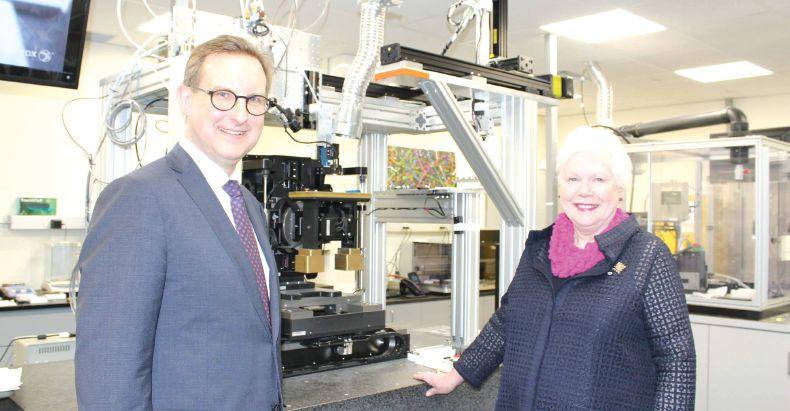
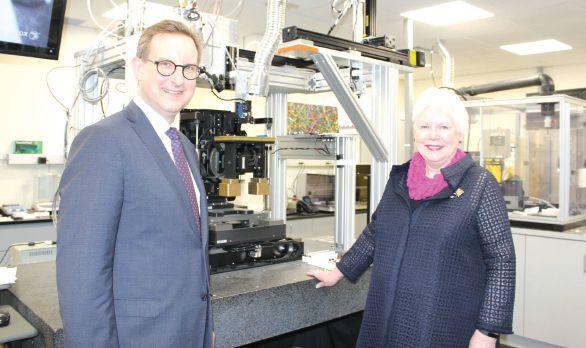
Xerox Research Centre of Canada, based in Mississauga, Ont., hosted Ontario Lieutenant Governor Elizabeth Dowdeswell in early May, as she visited its innovation hub. Since 2013, XRCC has been providing research, development and engineering services to third parties through its innovation hub. This gives start-ups and incubators access to co-located lab space and a 27,000-square-foot engineering pilot plant where they can invent and commercialize new materials.
ler-Dunnebier, KAS Paper Systems, Petratto, SCS Automaberg, Riso, Astro, Therm-O-Type, Profold and MB Bauerle systems.
FedEx Office found 70 percent of survey respondents had professionally printed the same amount or more than in the previous year. Nine in 10 respondents said they “like to have the option to have printed materials” and prefer reading materials on paper – most notably official documents and contracts – versus on a digital screen. Forty-nine percent of those surveyed said a world without paper would make them feel stressed or annoyed.
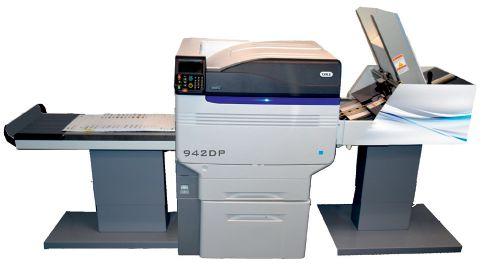
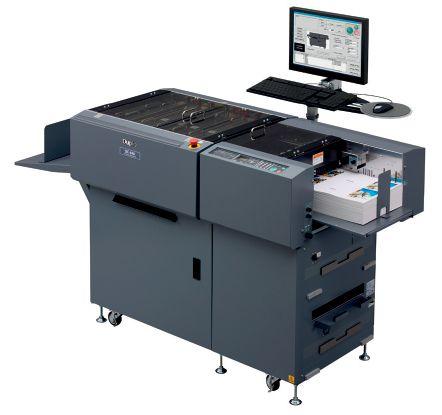
Print Digital Solutions held on open house in May at its Scarborough location to showcase new printing systems, with representatives from Mutoh, Multigraf, Duplo and Okidata. The event featured systems like the Duplo DFL-500 and 5-colour OKI 942. PDS also highlighted new digital garment printers from OKI, model 8432 CMY + White, and model 6410 with neon.
continue to serve our valuable clients.” Contingency plans have been initiated, and MET anticipates there will be minimal disruption to business, noting that “all of [its] backup servers are intact and all data is safe and undamaged.”
Supremex concluded its $11.3 million acquisition of Groupe Deux Printing (G2) and its related company Pharmaflex Labels of Laval, Que. Employing 60 people, G2 is a manufacturer of folding cartons with annual revenues of approximately $12 million over its most recent 12-month period, including its related labels business, Pharmaflex.
The Printing House was recognized as one of Canada’s Greenest Employers for 2018, based on the criteria of Mediacorp Canada, which manages employment programs and events. TPH explains that 93.7 percent of the
Platinum Equity agreed to acquire Pitney Bowes’ Document Messaging Technologies production mail business for US$361 million, subject to adjustments. The transaction also includes Pitney’s enterprise mail, print and data management software business that integrates data with print for high-volume production mailers. A global private equity firm, Platinum Equity focuses on businesses that have been part of corporate entities.
Kodak is creating a volunteer printer network through its Print for Good program that will produce thousands of children’s books and school supplies in 2018 for some of the world’s most disadvantaged populations. Last year, Print for Good placed more than 30,000 books and printed materials into the hands of thousands of children in communities throughout Europe, the
United States, Latin America, Asia and the Middle East. The program also donated funds to help build a library in an all-girls Haitian orphanage. This year, Kodak will focus on supporting Room to Read’s literacy program at a primary school in Rajasthan, India, among other initiatives.
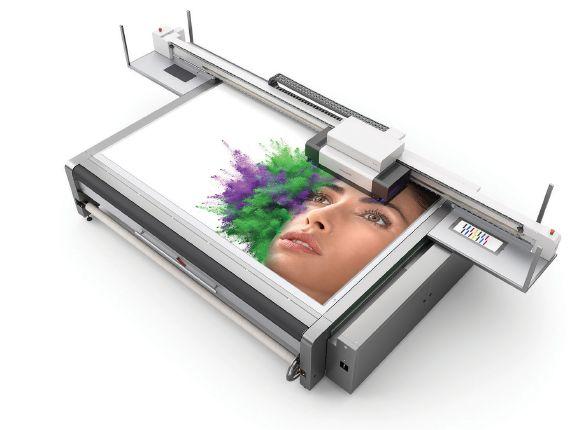
SwissQprint, a developer of large-format inkjet printers, shipped its 1,000th unit when a Nyala UV system left its factory in Kriessern, Switzerland, on May 11, 2018. The three engineers who founded swissQprint in 2007 are still active in the business, which now employs more than 120 people, including Japan, U.S. and German subsidiaries.
of Business Development,
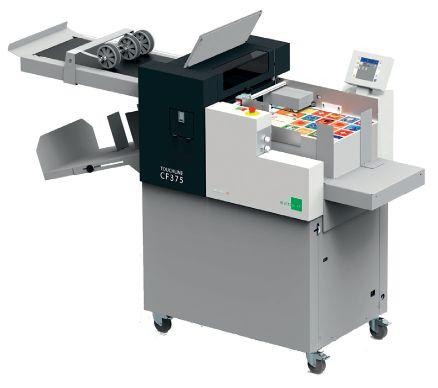
Insource held its Insource Expo at its head office and showroom in Markham, Ont. A range of equipment was showcased, including the Riso ComColor FW5230 and ComColor GD 9630. With operations in Ontario, Quebec and BC, Insource distributes Kirk Rudy, Wink-
CEO, DATA Communications Management.
DATA Communications Management agreed to acquire privately-held The Perennial Group for approximately $12 million. With offices in Toronto and Bolton, Ont., The Perennial Group’s services includes business and brand strategy, consumer insights, graphic design, and retail operations design and strategy. The acquisition includes Perennial Inc., a design firm focused on retail brands, and The Finished Line Studios, a production art studio.
Metropolitan Fine Printers of Vancouver, BC, had its pressroom destroyed by a fire in late April. MET was working with the Vancouver Fire & Rescue to determine the cause of the fire and no employees were hurt or injured. “We are very thankful that all of our employees are safe, and that no-one was hurt during this fire,” said MET President Nikos Kallas. “We appreciate the support we are receiving from our industry colleagues, and are exploring all options to ensure that we can
paper it purchased in 2017 was environmentally certified, with 91.5 percent of the paper designated as FSC-certified.
Transcontinental’s TC Media division, in late April, completed the sale of 30 publications to Transmet Logistics & Metropolitan Media, led by President and Montréal businessmen Michael Raffoul. This includes 21 weeklies in the Montréal area, the Métro Montréal weekday newspaper, as well as eight publications in the Québec City area. Transcontinental launched a process to sell its Québec and Ontario newspapers one year ago, and today only five of those 93 titles remain under the company’s control. In total, 119 employees of these publications and 20 employees from TC Media’s production team are transferred to the purchaser. Transcontinental also reached a multi-year agreement to print all of these recently sold titles.
Dr. Paul Smith, VP with Xerox Research Centre of Canada, shows Ontario Lieutenant Governor Elizabeth Dowdeswell the innovation hub.
Kareem Sesook, Director
Insource.
Michael Sifton,
Marc Lautenbach, CEO, Pitney Bowes.
Kodak’s Print for Good program.
TPH participates in Earth Day 2018.
Helene Blanchette joins Xerox as VP of Marketing for its Graphic Communications division on a worldwide basis. Blanchette is returning to Xerox where she worked in executive roles from 1997 to 2014. In 1997, Blanchette was named National Marketing Manager for Xerox Canada. In 2007, she then took on executive marketing roles for Fuji Xerox Asia Pacific based out of Singapore Blanchette joined GlobalFluency in 2016 as a Senior Management Consultant.
Bozana Markovic joins Insource Corp. as a Senior Consultant, Integration Expert, to provide technology and process improvements within printing operations across Canada. With more than 15 years of industry experience, Markovic is grounded in Lean Six Sigma principles. She spent the past 10 years supporting mail-and-distribution service offerings for all Canadian Xerox service sites, as well as consulting services to Non-Xerox clients. Before joining Xerox in 2007, Markovic also spent five years with Pitney Bowes as an Account Manager.
INSTALLS
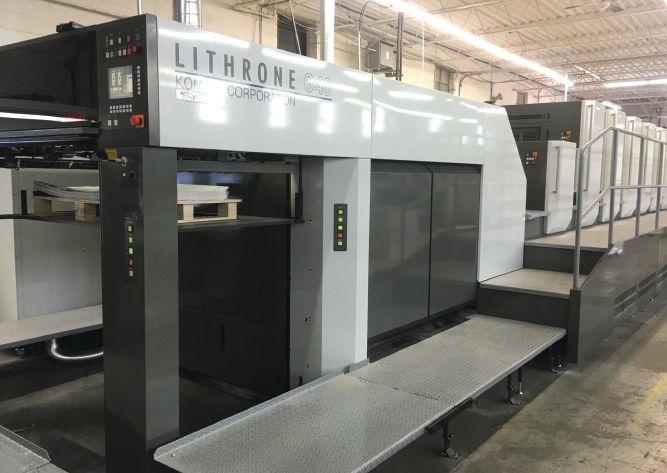
Whitehouse Graphics, of Vaughan, Ont., purchased a Komori GL640C. Focused on packaging within in Whitehouse’s 32,000-square -foot plant, the press is equipped with fully automatic plate changers, PDC-SX colour control, and Komori’s KHS-AI system, which optimizes press presets by self-learning.
Mark Milbourn becomes VP of Sales for Komori America, where he will lead and support the district sales managers for offset and digital press sales and solutions. Milbourn has spent the last 26 years working in printing and sales. Previously, he served as District Sales Manager for Komori America. In this position, Milbourn was responsible for the company’s sales initiatives in his territories. Prior to joining Komori, he spent 13 years at Milbourn Pressworks, an organization he co-founded.
Andrew Gunn becomes Director of Production Marketing for Xerox’ North American Operations. His team will support the go-to-market strategy for all of Xerox sales channels for North America in the production print space. Before joining Xerox in 2011 to help lead the company’s product marketing in Canada, Gunn worked with Eastman Kodak and he also previously worked with IKON Office Solutions and Hewlett-Packard in marketing and business development roles.
Guy Prenevost becomes CFO of Supremex based in Montreal, Que. He most recently served as CFO of Rolland Enterprises and previously held finance positions at Cascades’ Tissue Paper Products Division.
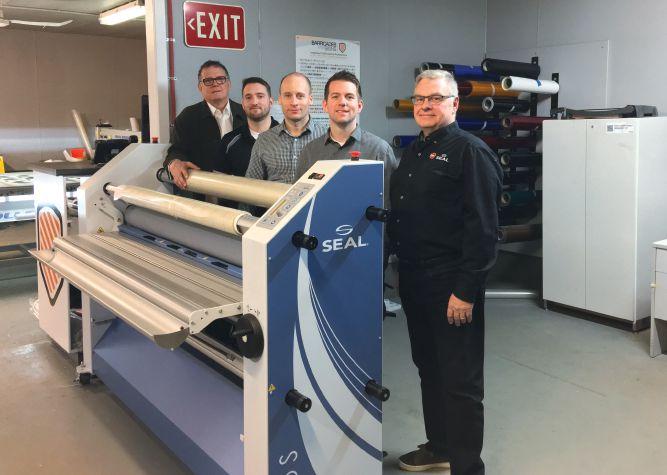
Barricades and Signs, a family company led by CEO Jan Van Bruggen, with multiple locations in Alberta, installed a SEAL 62 Pro S laminator through GBC Canada. The SEAL system was purchased to keep up with the company’s new wide-format UV printer, while also providing the right features and capabilities for growth.
Kevin Sykes becomes President of North American operations for Massivit 3D, a provider of 3D printing technologies. Sykes has more than three decades of sales and management experience in the graphic arts industry. He joins Massivit from HP where he served as Country General Manager in Canada. Sykes will be building and leading Massivit 3D’s North American subsidiary, to be headquartered in Alpharetta, Georgia.
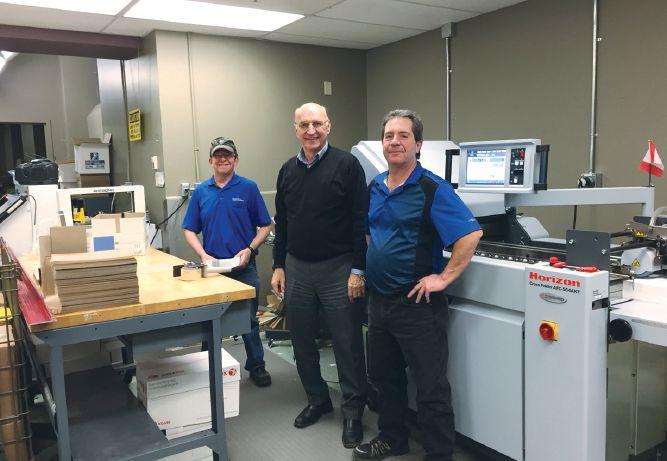
Statistics Canada installed a Standard/ Horizon automated AFC-564A folding system in its print department, pictured with Karl Belafi Sr. of KBR Graphics (centre) and StatCans’ Bernard Leclair (left) and Sylvain Hamelin. The AFC-564A can select from 14 preset folds or set up to 200 custom folds.
Taopix print marketing in Seoul
Yonart Corp. invested in Taopix photo commerce technology to expand into the personalized photo market. The Seoul business, founded in 1982, is made up of two main divisions; Yon Art Printing, that provides both offset and digital print, and Yon Face that was established five years ago to offer a range of marketing services. The company has a portfolio of clients that includes Samsung, Hyundai and some of the country’s leading banking institutions.
“We have some exciting ideas around personalized photo and are working on a new range of printed products that we will introduce to our customers. We’re particularly enthusiastic about the Taopix Calendar Designer and the way our customers could use it to connect with their customers,” said YK S Kim, COO of Yonart. “We believe that branded, but truly personal, products such as calendars could become very powerful marketing collateral for our clients.”
Kim explains the company plans to create branded Web storefronts for its customers to use the white-label capabilities of Taopix for them to sell and promote personalized products, including calendars, to their own customers. “We have invested in both the desktop and online versions of Taopix as we feel that there are certain products that will be suitable for a Mac or Windows app and others, such as gifts, that will be designed as a quick purchase from a smartphone or larger screen device.”
He continues to explain that the fast Internet and mobile networks in South Korea, combined with the widespread use of smartphones, will enable customers to sell a broad range of printed photo products designed through the Taopix template designer.
Dusobox buys first HP C500 press in U.S.
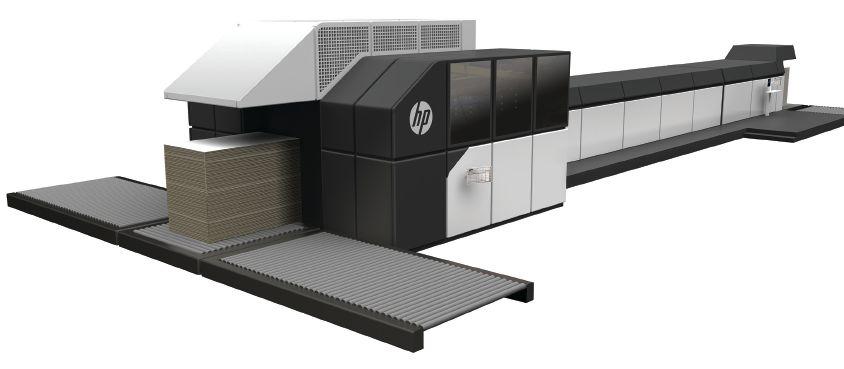
Dusobox Corp. of Orlando, Florida, purchased an HP PageWide C500 press for the production of post-print corrugated packaging. Scheduled for delivery this summer, the press will be the first PageWide C500 installed in the United States. The new single-pass, directto-board PageWide C500 uses thermal inkjet and water-based inks, combined with HP’s media motion and corrugated grip technology. Dusobox has been family owned and operated since 1951.
“This high-volume capacity combined with digital efficiency further establishes an unprecedented speedto-market in the corrugated industry,” said John Kelley, President of Dusobox. “We continue to challenge and surpass the standard six-week delivery to now under two weeks. It’s one of the ways we have earned our esteemed level of 98 percent customer satisfaction.”
This PageWide C500 investment follows just two years after Dusobox’s purchase of an HP Scitex 15500 corrugated press for short-run retail packaging and displays. Dusobox will utilize the PageWide C500 to print a range of applications like nutritional products, health and beauty, and what the company describes as fast-moving consumer goods (FMCG) sold through large national and regional retailers. Among these new digitally addressable applications is food and beverage packaging, both primary and secondary. Food safety in the PageWide C500 is supported by HP CV150 waterbased CMYK inks and water-based HP bonding agents. These fluids are suitable for both coated and uncoated media and contain no UV-reactive chemistries and require no additional barriers.
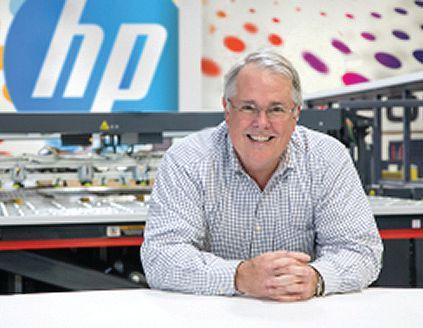
John Kelley, President of Dusobox Corp. in
Orlando.
12 up
H.O.T. Graphics in Northwood, Ohio, installed a Jetstream XY bi directional finishing system from Rollem International, which provides high volume, automated trimming, slitting, scoring and perforating. During installation, H.O.T. Graphics printed 12-up 6 x 11-inch postcards printed on a Komori press with overall gloss H-UV coating plus spot reticulating varnish.
PMS Offsetdruck starts up new Rapida in Wendelstein
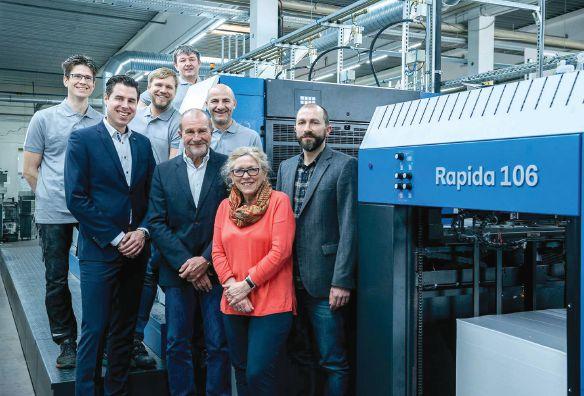
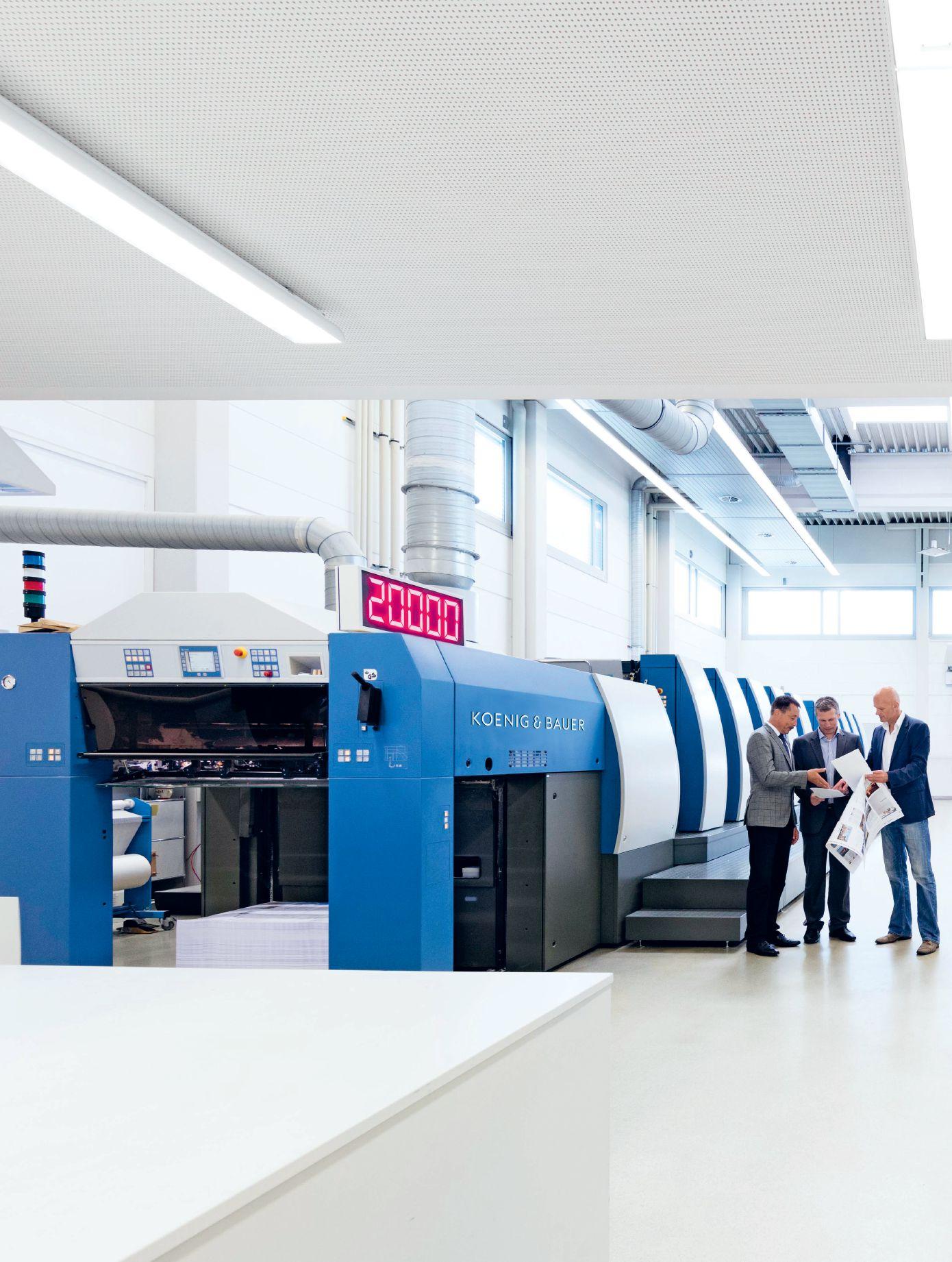
A new Rapida 106 has been in operation at PMS Offsetdruck in Wendelstein near Nürnberg since the beginning of March. The five-colour coater press is the company’s first machine from Koenig & Bauer.
Apart from the usual criteria such as production speed, job changeovers and quality, Koenig & Bauer explains PMS based its purchase decision on the ability of the new press to die-cut complicated forms inline. This requires fast conversion of the coater between die-cutting and coating setups. Forty percent of the company’s jobs involve die-cutting, while 60 percent are coated. PMS explains it was also enticed by the press’ DriveTronic SIS sidelay-free infeed.
The company now operates a two-shift system, dropping a third or weekend shifts because of the new press. Job turnaround is also accelerated to the benefit of the customers. PMS explains the delivery time for 21,000 perfect-bound brochures, with over 400 pages of content and a cellophane cover, is less than a week. PMS has also invested in a new trimming line (Polar 137 XT Autotrim) and an MBO T800 folder with fully automatic Palamides delivery system.
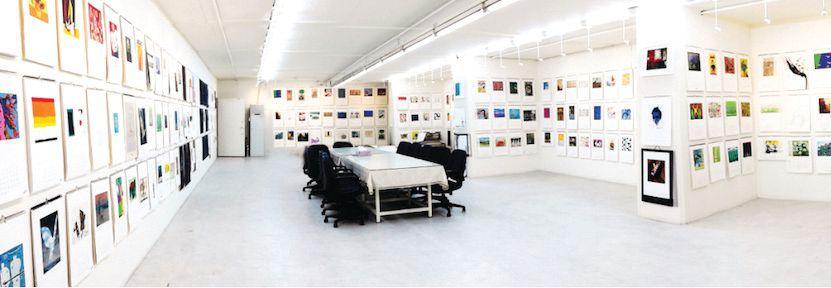
Yonart’s decorative office in Seoul, South Korea, showcases its photo printing prowess.
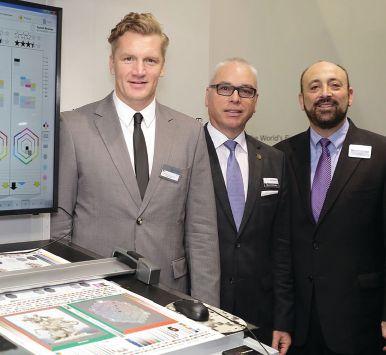
(Left to right): Armin Schwarz, PMS Offsetdruck; Christofer Hugel, Koenig & Bauer; and Philipp Rachel, Thomas Walzer, Wilfried Buhr, Ahmet Kocak, Ulrike and Christopher Buhr of PMS Offsetdruck.
ARCHIVE
25 years ago
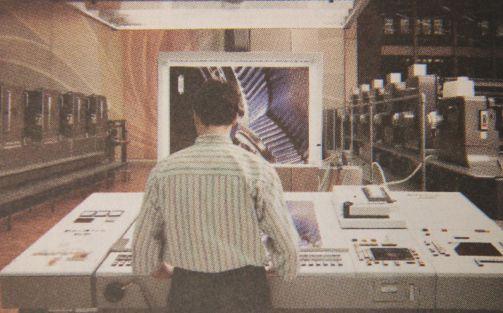
Electronic circuitry is changing the role of press operators: The Heidelberg CPTronic press control, monitoring and diagnostic system is a clear indication of the extent to which previously manually oriented functions can now be handled automatically. With a two-way signal moving back and forth between the CPTronic control console and the press, as many as 1,800 press functions can be continuously monitored at a rate of 11 times per second.
Other companies offering computerized press controls include: Mitsubishi with its Printing Quality Monitoring System, which performs in-line inspection of each signature for colour variations, doubling, register errors, paper defects, oil spots and hickies; and Komori with its Print Automatic Integration (PAI), which combines the features of its Print Quality Control (PQC) system with its Automatic Plate Changer (APC), and Automatic Make Ready (AMR) systems.
25K
For Sale (1993): GTO 46. 12 /58 x 18 inch size. Dahlgren dampening. New rollers. Early 1970s model. $25,000. Mascot Graphics Ltd.
15 years ago
$45K
For sale (1998): Scitex Dolev 200 high speed film platter with Scitex fine screening on board. Resolutions up to 3556 DPI. Includes Pentium PS2-95 multi-tasking, dual queueing RIP hardware with 64MB Ram to RIP files and photos simultaneously. 3GB high speed disk storage latest RIP software, Scitex Full Auto Frames on-line trapping software, Display PostScript, Fibre Optic link to plotter. Excellent condition. Preventative maintenance done regularly by Scitex. $45,000 or best offer.
20 years ago
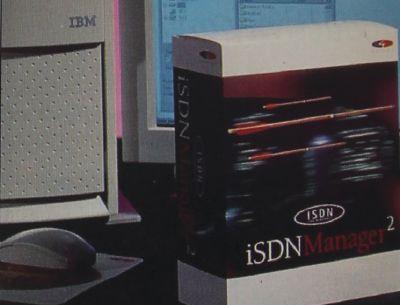
Communications software released for Windows NT: 4-Sight has launched iSDN Manager v.2 for Windows NT. This new Windows version of 4-Sight’s flagship product supports a range of ISDN devices and enables users to facilitate transfer rates from 1MB per minute up to 10MB per minute, comparable to TI speeds. iSDN Manager allows jobs to be accounted for in a number of ways, including time, duration and size.
The log file is a simple ASCII text file which can be imported into a spreadsheet. Additional features of iSDN Manager for Windows include: Job queueing, queue monitoring, rescheduling (allowing for deleting a job from the queue), delayed sending, and a housekeeping feature to prevent the hard disk from filling up with unwanted copies of old files.
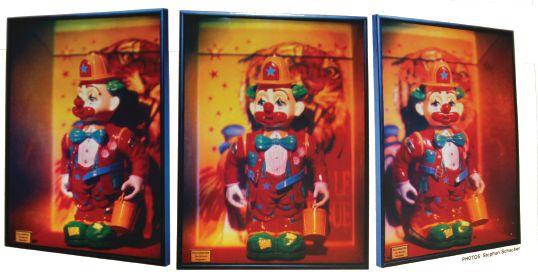
Optical engineering: More than a decade ago, engineer Yves Gentet, after developing a portable holographic portrait camera, picked up a book on film chemistry and spent the next few years experimenting with – among other things – animal gelatin, lasers and silver bromide. These ingredients, and light, formed the basis of what was to become an emulsion called Ultimate. Together with a wildly complex technique, Gentet’s emulsion eventually gave birth to The Clown. This summer, Gentet will finish moving his operation from France to downtown Toronto to look for more investors.
He has already found a partner in the U.S. able to copy Ultimate onto a polymer made by Dupont, so it can be produced on a larger scale. Ultimate is unlike most emulsions because of its incredibly fine silver bromide grains (around 10 nanometres and up to 1/100 the size of grains in ordinary films). Shooting light onto the grains turns them into silver halide, which then act as mirrors for further reflection and extremely fine details. The grains in Ultimate also allow for the simultaneous recording of red, green and blue in a single emulsion layer.
Manufacturers Association’s conference.
15K
For sale (2003): Fiery XP12 RIP unit 500 MB RAM 10 GIG HD with all software and cables, $15,000 CDN, OBO. Riso 5700 excellent condition with 4 different inks with RIP for AC/PC, stand & supplies.
Heidelberg’s CPTronic press control, monitoring and diagnostic system.
4-Sight’s iSDN Manager v.2 has transfer rates of up to 10MB per minute.
The Clown, film output that almost looks like a ceramic doll, won Best of the Year Award at the International Hologram
CALENDAR
DOTS
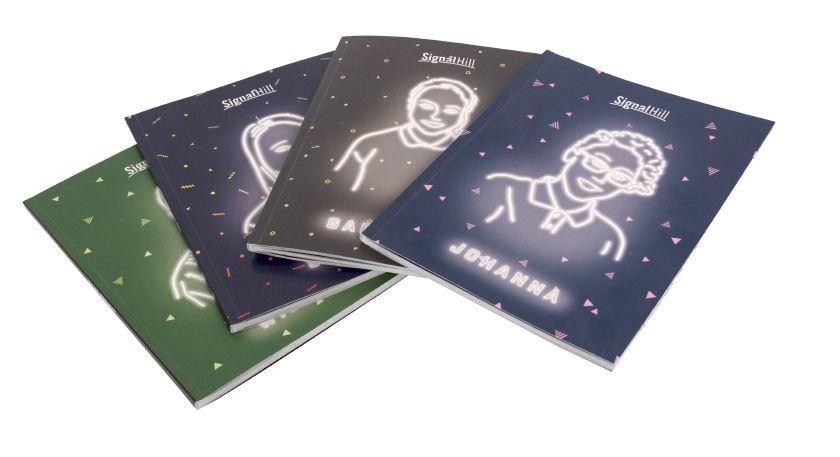
Hemlock’s award-wining project was printed on an HP Indigo 7900 with 66 variable SKUs, running 100# McCoy Silk Cover + 100# McCoy Silk Text and Indigo ElectroInk Invisible Red.
Hemlock Inkspiration
For the past three years, HP and Dscoop have partnered to run a printing contest called the HP Inkspiration Americas Awards to celebrate excellence in design and print using HP Indigo, PageWide web press or Scitex technologies. In March 2018, 16 awards were presented to 13 customers and designers in multiple categories across General Commercial Printing, Labels and Packaging categories. Nearly 200 entries from more than 75 HP customers and designers were submitted to the competition.
The award winners were announced at Dscoop Dallas in March 2018 to recognize the most innovative brand experience produced with HP printing technology. Hemlock Printers of Burnaby, BC, received an award for the use of personalization with invisible ink on notebooks produced for a youth conference.
Leveraging an HP Indigo 7900 press with personalization and Indigo ElectroInk Invisible Red, Hemlock printed 100 notebooks for Glass Canvas Media. The client explains the students scoured the notebooks personalized with their names, pouring over every page with UV flashlights looking for hidden messages and images, and sharing with their peers. The notebooks won the HP 2018 Inkspiration award for General Commercial Printing collateral.
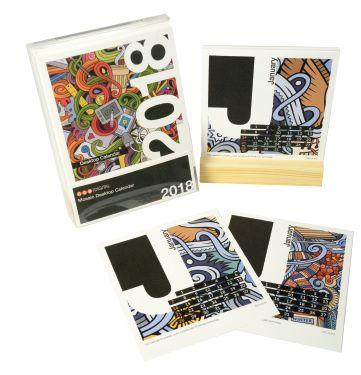
Some of the other award-wining projects include: A) Mosaic 2018 Calendars by GSB Digital of New York, B) Leuven IPA Dragon Beer by Indemental Graficos of Brazil, C) KIO Networks by Red Pepper Comunicación of Mexico, D) Alligator Ale by Digital Label Solutions of California, E) A Gentlemen’s Guide to Classic Cocktails by Anstadt Communications of Pennsylvania, and F) SenseAtional Tool Kit by Bennett Graphics of Georgia.
July 12, 2018
Xerox Colour Reignited Event Toronto, ON
July 13, 2018
IFS PACsecure, Version 1 Training Montreal, QC
August 9, 2018
OPIA Toronto Golf Classic Tournament
Angus Glen Golf Club, Markham, ON
September 11, 2018 PAC Fall Golf Tournament Carlisle, ON
September 14, 2018 PAC Atlantic Golf Tournament Moncton, NB
September 26-27, 2018
Label Expo
Donald E Stephens Convention Center, Chicago, IL
September 26-27, 2018
PAC to the Future II, Retail Montreal, QC
September 30-October 3, 2018 PRINT 18
McCormick Place South, Chicago, IL
October 8-10, 2018 &Then, a DMA event MGM Grand, Las Vegas, NV
October 18-20, 2018
SGIA Expo
Las Vegas Convention Center, Las Vegas, NV
October 24-28, 2018 All in Print China Shanghai, China
November 5-7, 2018
Digital Packaging Summit Ponte Vedra Beach, FL
November 8, 2018
Canadian Printing Awards Palais Royale, Toronto, ON
November 12-16, 2018
IS&T Color and Imaging Conference Vancouver, BC
April 11-13, 2019
Graphics Canada
The International Centre, Mississauga, ON
June 16-26, 2020 drupa 2020 Dusseldorf, Germany
Adopting intelligent packaging
Five mistakes that keep brands from adopting intelligent packaging illustrate how printing can help
By Udo Panenka
As CES wrapped up in Las Vegas at the start of 2018, and visions of all sorts of intelligent products swim in the heads of marketers and consumers, I feel the need to reflect. Packaging needs to catch up to the rest of the 21st century and undergo its own digital transformation. But is brand packaging really ready to leverage the capabilities of a smartphone?
Consumer packaged goods (CPG) companies are aware of the need to close the gap between physical and digital marketing channels, aiming to countermeasure slow product growth through a better, more engaging consumer experience. They are starting to align their marketing efforts, tying together physical packaging and digital marketing, all while working to implement new technologies like intelligent packaging and a million other bits into their overall strategy.
Back in November, I discussed how CPG brands can digitize, automate, and connect their packaging at the Active and Intelligent Packaging conference in Amsterdam. While the conference was inspirational, I can’t help but challenge its positioning. We sit there and talk about producing packaging that motivates consumers beyond the point of purchase to achieve brand loyalty, yet many companies struggle to accurately and efficiently produce simple, analogue, unintelligent packaging?
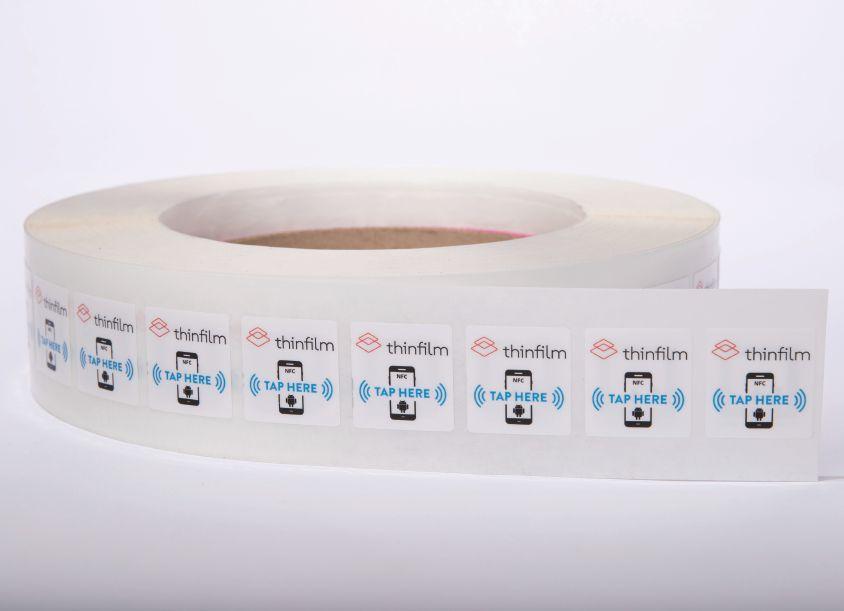
For context: intelligent packaging uses electronic and digital capabilities like near field communication (NFC) or radio-frequency identification (RFID) chips to engage the consumer through their smartphone. Through this connectivity, the packaging may provide a micro-service such as authenticating the product or showing the product’s journey to the retailer.
But we still see analogue packaging errors in colour consistency, content labeling, and print quality on store shelves. Beyond that, marketing continues to create new content and ignore the work already produced during the packaging process, including high-quality, regulated content and photo-realistic, comput -
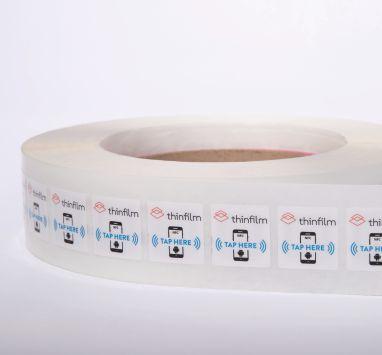
Jones Packaging of London, Ont., is one of Canada’s intelligent-packaging leaders, currently bolstering client carton security with NFC tags engineered by ThinfilmMemory called OpenSense.
26M
With more than 320 total patents and patent applications, Thinfilm is becoming one of the most powerful NFC providers, with more than 26 million of its EAS and NFC tags delivered in its most recent fiscal year.
er-generated images. These are seldom reused for marketing purposes when they easily could be. In fact, not using them is wasteful.
In order to take advantage of intelligent packaging, brands need to remember that consumers’ physical interaction with packaged products is still very important, especially for fast-moving consumer goods.
If brands struggle to master the packaging basics, then how can they honestly expect to move into the advanced packaging realm?
It’s like attempting to slam-dunk when you can’t dribble. Running a marathon when you can’t complete a 5k. Writing a sonnet when you can’t write a sentence. I think you get the picture.
By now you may be thinking, “But why can’t we just skip analogue basics and move straight into the bigger, fancier stuff – it will keep us cutting-edge and on top of consumer trends!” To which I argue that building process muscle isn’t the same as adopting new technology.
Every brand I speak with reiterates in slightly different ways the same five mistakes:
1. They forget that packaging is literally at the centre of their consumer packaged goods industry;
2. They don’t measure their product packaging responsiveness. Most do not know how long it takes to execute a packaging change and the impact it has on their path to market;
3. They exclude packaging from innovation projects and then have feasibility or
budget surprises in execution;
4. Their marketing departments relay poor briefs to their packaging agencies (one brand went as far as to say that 98 percent of the information in their briefs is incorrect); and
5. They hardly use any of the components of packaging (content, artwork, shape, colour) to feed their marketing channels, even though many of these are digital already.
Design, marketing, and packaging need to organize product data, colour and imagery. It’s time for brands to get their packaging functions digitized and streamlined so they can drive consistency and quality for a better consumer experience, which is delivered at the highly responsive speed consumers expect and at a cost that keeps the brand profitable. That way we can confidently move from simple to “intelligent” packaging, making what seem to be far-reaching dreams a more secure reality.
This article was originally featured in BrandingMag in February 2018.
Udo Panenka is President of Esko, which he joined in 2014 as Senior VP of Sales, Marketing and Service. Prior to Esko, he served as VP and GM of Europe & India for the industrial automation business at Kollmorgen, which like Esko is part of Danaher.
The enemy of efficiency
How the model of Stephen Covey can help you create a more efficient print sales approach
By David Fellman
Stephen Covey was an American educator and author, probably best known for his book, The Seven Habits of Highly Effective People. This book has sold more than 25 million copies worldwide since its first publication in 1989. The audio version became the first non-fiction audio-book in U.S. publishing history to sell more than one million copies. Covey’s 2004 book The 8th Habit: From Effectiveness to Greatness was published as a sequel and suggests, that in a world of growing complexity, readers should find their voice and inspire others to find theirs.
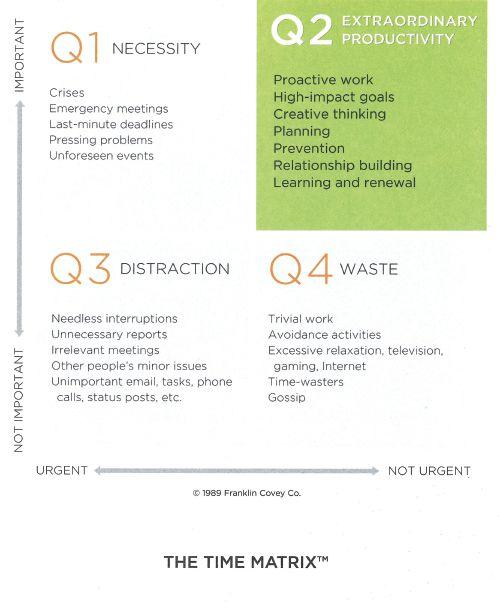
He covered a lot of ground in The 7 Habits book, but there’s one element that I think is more important than any other. Covey wrote about urgency and importance, and specifically about how any task on your plate can be both of those things, just one of them, or neither of them. If you have more tasks on your plate than you have time in your day, it’s really important to know exactly where each one fits in terms of importance and urgency.
Four Covey possibilities
The combination of urgency and importance yields four possibilities. Something can be (1) urgent and important, (2) important but not urgent, (3) urgent but not important, or (4) neither urgent nor important (as conveyed in the chart above). It’s pretty obvious, I think, that anything that’s urgent and important should sit at the top of your priority list. But what about something that’s important but not urgent?
I hope you’ll see that any task in this category should sit lower on your priority list. It needs to be done, but it doesn’t need to be done now. And I’m sure you see why something that’s neither urgent nor important should sit at the very bottom of your priority list. (I’m sure you see it, but I’m not sure you embrace it.)
The real killer for most printing salespeople are those things that are urgent but not important. Although in this case, urgent may not be quite the right word. Let’s substitute a word one of my clients likes to use, shiny – as in easily distracted
by shiny things.
That would be considered a mild insult here in North America, but it’s a serious problem, especially in any circumstance where time is money – like printing sales, or probably any other aspect of managing a printing company. Too many salespeople are guilty of putting time into activities that aren’t going to generate revenue, profits or commissions.
Here’s a classic example: The salesperson’s plan for the day includes a block of time for making prospecting calls. Just after the start of that block, an email arrives from a lower-tier customer – low volume, low profit, low potential and high maintenance. It expresses some level of urgency on the part of the customer, but it’s not really important in terms of the salesperson increasing sales, profits and/ or commissions. But it’s there – bright and shiny – and the salesperson abandons their prospecting and tends to the request. By the time it’s completed, that block set aside for prospecting has passed, and the salesperson has to move on.
Let me be clear on something: If this same request had come from a top-tier customer, it might have been urgent and important. But coming from the low-tier customer as I described, it was not. And the time spent tending to the request didn’t turn into nearly as much money as it might have. Let’s make it a simple question: Which is better for you, spending your time on maintenance activities for low-value customers or spending that same time trying to maintain or develop high-value customers? Time is money.
In 2004, Stephen Covey released a sequel, called The 8th Habit: From Effectiveness to Greatness, after first publishing his best selling book in 1989.
THE SEVEN HABITS OF HIGHLY EFFECTIVE PEOPLE
Habit 1: Be proactive
Habit 2: Begin with the end in mind
Habit 3: Put first things first
Habit 4: Think win-win
Habit 5: Seek first understand, then to be understood
Habit 6: Synergize
Habit 7: Sharpen the saw
Stephen Covey, who passed away in 2012, was once recognized as one of Time magazine’s 25 most influential Americans, primarily based on his work called The Seven Habits of Highly Effective People.
Here’s something I’ve been teaching in my seminars for close to 10 years. Make yourself a little card that can fit in your pocket. On that card, draw a four-quadrant matrix, and in each of the quadrants, write in one of Covey’s four categories. Pull it out as you plan your day, and evaluate each task on your plate to assign it the correct amount of urgency and importance. In other words, plan your day around your priorities.
Pull the card out again whenever anything shiny comes into view. I’m talking about phone calls, emails or any other interruption. There are two fundamental concepts here: (1) Plan your day, based on your priorities at the start of the day, and (2) don’t let it be easy to push you off that plan. It’s been said that interruptions are the enemy of efficiency. So I’m challenging you to embrace Covey’s principles. If you will, the chances are good that you can make yourself into a highly effective print salesperson.
DAVE FELLMAN is the president of David Fellman & Associates, a graphic arts industry consulting firm based in Raleigh, NC, USA. He is a popular speaker who has delivered keynotes and seminars at industry events across the United States, Canada, England, Ireland and Australia. He is the author of “Sell More Printing” and “Listen To The Dinosaur.” Visit his website at www. davefellman.com.
Release your packaging from the ordinary with brighter ideas from Sun Chemical. Get your customers’ attention quickly and outshine the competition with packaging that bursts with potential. Sun Chemical is a true packaging solutions partner who can innovate and inspire your brand from concept to consumer. Download your Brighter Ideas for Packaging Guides at www.sunchemical.com/brighterideas or contact us at 1-708-236-3798
Back to the future
Why it is important for printers to invest in the present instead of worrying too much about tomorrow
By Nick Howard
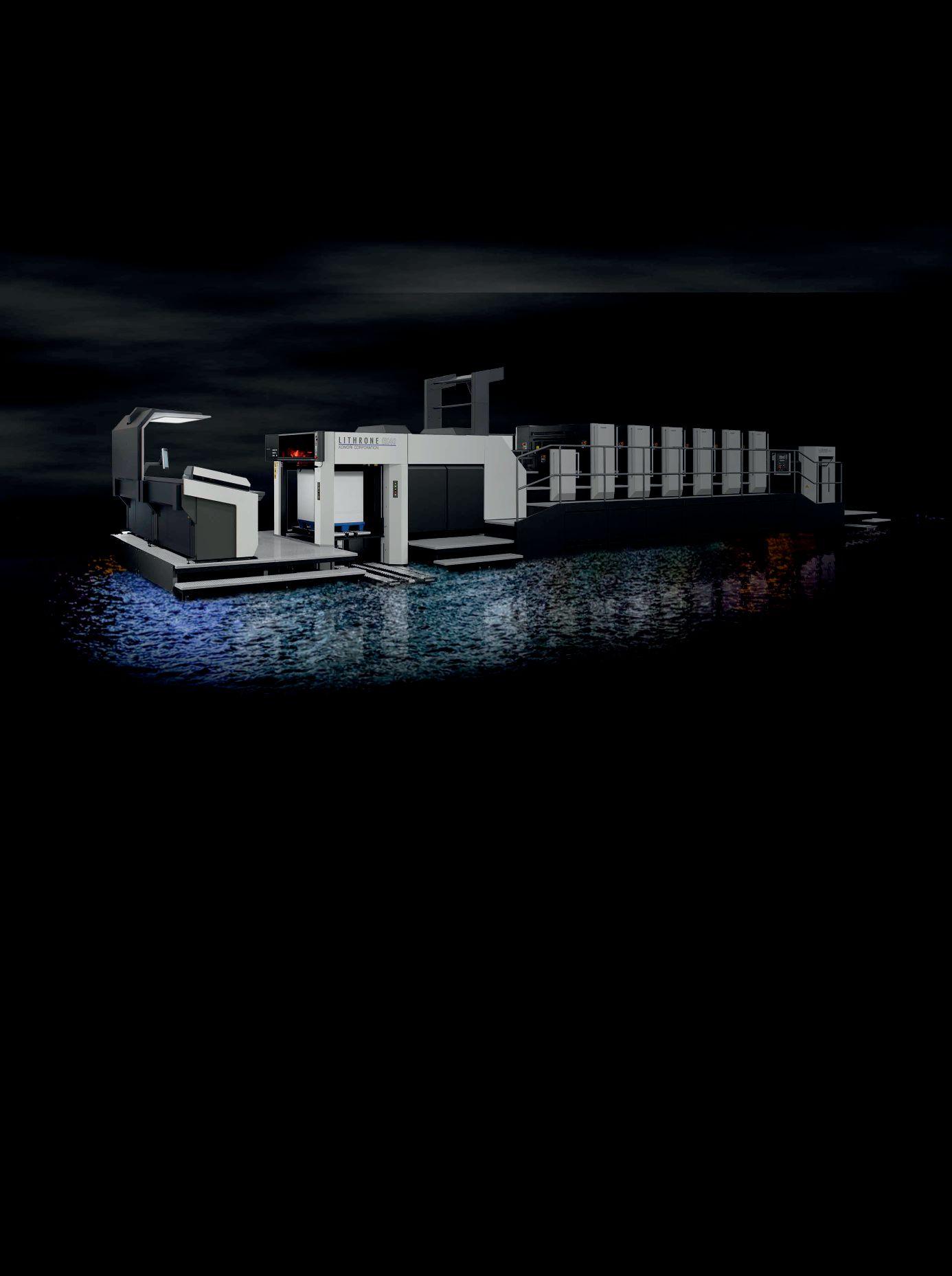
The drupa 2000 trade fair was electric. World economies were coming through five years of growth and the dotcom surge was just forming a bubble. At drupa 2000, Komori showcased a press called Lithrone S40 Project D. Earlier, Heidelberg introduced a similar hybrid offset-digital press in the 29-inch SM74-DI. By the end of 2001, a six-colour Project D was sold in Canada, but the company struggled with it. In part because its general operating procedures were so different, newly tethering two technologies in Creo’s SquareSpot direct imaging heads on an offset press. Heidelberg’s SM74-DI ran into the same problems and eventually most of the expensive Creo heads were removed. The SM74 turned back to be a regular offset press.
In 2000, everyone in the printing industry was abuzz over CTP imaging, but installing this type of imaging on a 6-colour press meant you had, in effect, six CTP devices. What looked like a logical next step in press efficiency turned out to be a bust. Add in the dotcom recession of 2000/2001 and it all conspired against what seemed like a great idea.
I’m always fascinated by how we make decisions. Reaching into the past offers us a sense of how the future turned out and the ability understand our mistakes.
In 1926, Vogtlaendische Maschinenfabrik A.G. in Plauen, Germany, produced what it said was the world’s first 4-colour offset press. Running at an astounding 2,200 sheets per hour, this seemed revolutionary in the moment. Soon the market was full of press builder’s offering similar technologies, but we already had 2-colour presses and a 4-colour was simply evolutionary.
In 1778, Georg Christoph Lichtenberg, a German scientist, came upon a technology that would eventually be known as electrostatic printing. Coating paper with zinc oxide and applying an electrostatic charge could create an image. By 1961, A.B. Dick Co. of Chicago had built an
HP’s new C500 inkjet press is an example of new digital technology that could make a significant impact on the offset corrugated market.
addressing machine for Time Inc. that could lay down 20,000 characters per second on narrow rolls of specially coated paper. That’s only 183 years later! Lichtenberg was also considered the father of what would become ISO 216, standardized paper sizes, which most of the world outside of Canada and America use today.
In 1964, America’s Harris Intertype and Mead went further and designed a larger roll-fed press that could print military maps at the rate of 2,000 5-colour images per hour. The printing industry was hungry to implement new technology and electrostatic printing looked like a Golden Goose. It was simply too early.
and fire x-rays through the film to transfer the images through the whole skid. There was the idea to eliminate perfect binding by placing glue along the gutters of a signature during folding. Once folded into a signature the section is already bound. What about the whole book?
Showcasing the increasing speed and quality of digital technology, HP’s PageWide C500 inkjet press can run at 246 linear feet per minute, while the new Xerox Iridesse can run CMYK plus two extras like metallic gold and silver at 120 pages per minute.
Chester Carlson’s experimentation with Xerography was still in its infancy and would finally prevail with symbiotic applications. Harris moved on from electrostatic because offset was its bread and butter. And Harris had just recently received its largest deal ever in a US$3.4 million press order from Western Publishing in Wisconsin. That’s US$28.5 million in today’s money and a heck of a lot of Golden Books. Keep in mind those presses had no consoles, electronics, plate-loading or other labour-saving devices. They probably were only supplied with ink agitators as an option.
The National Lithographer’s January 1964 article called Looking ahead in the Graphic Arts industry, estimated what the print world would like in the future. Its ideas stemmed from a new sector, labeled as electronics. Spurred on by new mass production of the transistor, the magazine explained how great minds were daydreaming about how these new tools would produce more print at less cost and higher quality.
Talk of an exposed plate from film without using a camera was but a dream. Neither the concept of reducing film flats to 2-inch microfilm rolls, nor then imaging (projecting) directly to a special plate on the press, went anywhere. I remember hearing a lot about the so-called one-shot skid printing concept: Take a flat (film), place it on top of a skid of paper
Some ideas did materialize. Automated proof-reading for one. Optical scanning of MICR codes another. Single-pass belt printing did make in-roads. An early Canadian printer, Stroud, Bridgeman Press of Toronto, helped develop this idea whereby plates are mounted on an endless belt and could conceivably print an entire book in one revolution. The Cameron Belt Press came out of this and for a short time advanced.
Even though technology is constantly changing, one thing never alters: Our inability to see the future. We look at tomorrow’s challenges and try to improve on them with today’s prejudicial technology.
Truly amazing leaps in digital platforms are upon us right now. HP’s new PageWide C500 corrugated inkjet press, which can produce a massive 246 linear ft/min (75 linear m/min), will drive more business away from offset. Xerox’ six-colour Iridesse, including CMYK and two extras like metallic gold and silver, will reach further into the short-run market with a reasonable 120 pages per minute output. Let’s not forget the Landa system, which similar to HP’s Virtual Belt Technology (VBT), is coming. Every inkjet or toner manufacturer is actively launching faster and better platforms right now.
With the rapid change from offset to digital, it is best to not make hard decisions about tomorrow, but instead take advantage of what’s on offer today.
NICK HOWARD, a partner in Howard Graphic Equipment and Howard Iron Works, is a printing historian, consultant and Certified Appraiser of capital equipment.
nick@howardgraphicequipment.com
Technology and process trends in Canadian printing
By Jon Robinson
The following snapshot of The Iron Index 2018 survey produced by PrintAction compares current production trends to a historical benchmark of capital investments made by Canadian printers. The facts presented throughout the article relate 2018 numbers to 2016 and 2017 survey results, providing a look at a two-year cycle of investment and shifting production between toner, inkjet and offset printing processes.
The Iron Index survey began 21 years ago when PrintAction moved to track the arrival of computer-to-plate-imaging systems in Canada. What started as PrintAction’s short, but important, list of innovative commercial printers in 1996 to first install CTP technology, grew expo-
nentially after the turn of the millennium, as sheetfed and web offset printers across the world began to abandon film-based workflows. Today, CTP systems, while still a priority and important for throughput, are now barely an investment concern for commercial printers who are instead focused on the evolution of toner and emergence of inkjet.
PrintAction began tracking the installation of toner presses by printers 12 years ago. For the first time this year, we asked commercial printers about their production-strength inkjet press investments, as such systems are now ready to impact the market. It is important to understand this production-strength category is differentiated from large-format inkjet, largely based on application and potential offset and toner printing disruption.
Based on 2018 statistics provided by 65
responding companies (detailed in the following charts), it is clear to see large-format inkjet is having a major impact on the revenue stream of commercial printers, while production-strength inkjet has not yet made significant inroads.
Interestingly, 40-inch shops saw a dramatic increase in revenue generation from large-format inkjet relative to 29inch shops. This is likely because smaller-format printers do not access the larger client bases enjoyed by a 40-inch printer, which would arguably also work closer with ad agencies to source such inkjet work. Based on survey responses, only 6.2 percent of commercial printers, all in the 40-inch segment, are running what can be described as a production-strength inkjet press to generate revenue.
Another interesting statistic drawn from the 2018 survey shows that all 29-
Just when you thought top end productivity was out of reach...
“The purchase of the GL40 was one of the best decisions we ever made”
Ian Burke, The Burke Group
“Witnessing the exceptional results achieved by our sister plant, including reduction in make-ready times and waste...we had to follow suit”
John Clarke, Ellis Packaging West
“I’m especially thrilled about the advanced technology of the Lithrone GX40”
Cathie Ellis, Ellis Packaging
“Simply put we needed to be able to offer our clients the highest quality at faster speeds,”
Ron Verbaas, Astley Gilbert
“This press will address the demand for quicker turnarounds without sacrificing quality”
Benson Hong - Best Deal Graphics
inch offset shops are generating at least 10 percent of their revenue from toner production. That is not to say every half-size printer is at this level of digital production, but it indicates a key change in the technology being used for print output. At the same time, the addition of more toner presses on the pressroom floors was not significant. Therefore, the increase in revenue generated through toner production indicates commercial printers are replacing older digital presses with more robust machines. Perhaps the most interesting statistics gleaned from the 2018 survey indicate Canadian commercial printers, regardless of size or prominent printing process, are truly becoming one-stop shops leveraging offset, toner and inkjet technologies.
STATISTICS FROM THE IRON INDEX 2018
100%
For the first time in the history of The Iron Index survey, all 29-inch (or smaller) respondents indicated at least 10% of their work was being produced with toner presses.
79% 70% 92%
Percentage of 29-inch printers surveyed in 2018 producing work with all three processes (offset, toner, inkjet), up from 82% last year.
Percentage of 40-inch printers surveyed in 2018 producing work with all three processes (offset, toner, inkjet), up from 40% last year.
The Iron Index methodology
For more than 16 years, PrintAction has surveyed commercial printing companies across the country to track their production-technology investment and trends. Below is a sample of the survey questions they are asked to answer to produce our results. This primarily includes tracking the offset (by model, number of units, and format size), toner and inkjet press specifications of participants, as well as employee levels, revenue, front-end technologies, MIS and certifications.
Year company founded:
Number of employees:
Offset Presses:
Include up to four primary offset presses. Include press brand, press format size in inches, and number of press units.
Toner/Digital Presses:
List up to three primary toner/digital presses. Include press brand and model number. Brand & Model
Production inkjet:
List up to two primary production inkjet machines. Include press brand and model number.
Wide-format inkjet:
List up to two primary wide-format inkjet machines. Include press brand and model number.
Production Ratio:
Provide approximate percentage of work done, in terms of total revenue generation, with Offset : Toner : Inkjet.
Primary Offset Plate Brand:
Provide brand and type if available.
Primary Platesetter:
Percentage of all printers (29- and 40-inch) surveyed in 2018 producing work with all three processes (offset, toner, inkjet), up from 58% in 2017.
Provide brand and type if available.
Primary Frontend (Prepress) Software:
Provide brand, type, and version if available.
Management Information System:
Provide brand, type, and version if available.
Annual Revenue:
Certifications:
List up to three of your most important certifications.
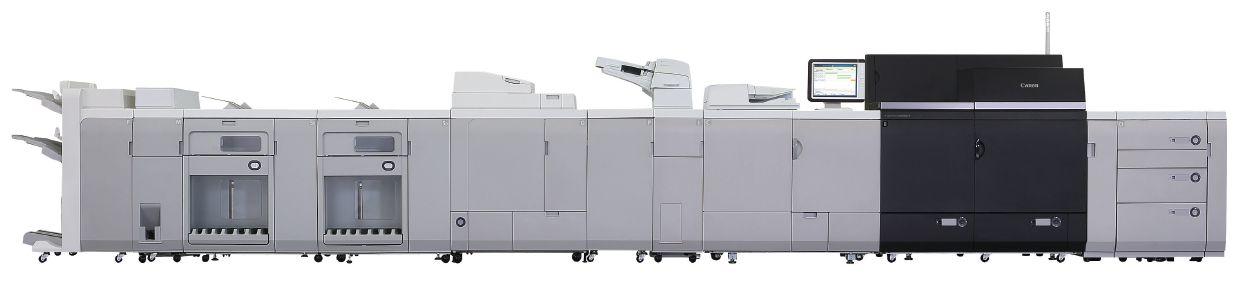
The Canon imagePRESS C10000VP Series
40-INCH PRINTERS
The following statistics apply to Canadian printing companies with at least one 40-inch sheetfed press, based on their participation in The Iron Index surveys.
Key 40-inch printer findings in 2018: The Iron Index indicates there are fewer commercial printers with full-size sheetfed presses focusing solely on offset work. This is seen by the decline in printers producing 90 percent or more of their work with offset. However, an increase in the process ratio statistic of 70 percent or more also indicates there is a rebound in the use of offset to generate revenue even as more printers become one-stop shops. Inkjet is also seen as a clear revenue driver over the past year.
29-INCH PRINTERS
The following statistics apply to Canadian printing companies with at least one 29-inch offset press (or of smaller format) and no 40-inch presses, based on The Iron Index surveys.
Key 29-inch printer findings in 2018: The Iron Index survey indicates offset continues to lose momentum in the 29-inch market, largely seen by only a couple of surveyed printers producing more than 90 percent of their revenue with this process, while all respondents are producing at least 10 of revenue with toner presses. The addition of more toner presses on their pressroom floors was not significant, but the increase in revenue generated through toner production indicates smaller-format printers are replacing older digital presses with more robust new generation machines.
83%
Percentage of 40-inch printers surveyed in 2018 producing at least 70% of their work with offset, up from 79% last year, suggesting a rebound in full-size offset.
79%
Percentage of all printers (29- and 40-inch) surveyed in 2018 producing at least 10% of their work with toner, up from 76% last year.
40%
Percentage of 29-inch printers surveyed in 2018 producing at least 30% of their work with toner, up from close to 30% in 2017.
Percentage of 29-inch printers producing less than 50% of their work with offset, which remains important.
86%
Percentage of all printers (29- and 40-inch) surveyed in 2018 with at least one toner press, versus 63 percent just three years ago in 2015.
22% 6%
Percentage of 29-inch printers surveyed in 2018 producing at least 80% of their work with offset, down significantly from 42% in 2017.
Percentage of 40-inch printers surveyed in 2017 producing at least some of their work with production strength inkjet.
60%
Percentage of 40-inch printers surveyed in 2017 with at least two toner printing systems, up from 55% last year and 47% in 2015.
84%
Percentage of 29-inch printers surveyed in 2018 generating at least 20% of revenue from toner, a healthy increase from 71% in 2017.
79% 6%
Percentage of 40-inch printers surveyed in 2018 with at least one toner printing system, a level comparable to 2015, suggesting machine replacement.
Global Understanding Global Solutions
for your packaging inks and coatings requirements
Quality
We supply consistent and highly performant inks and coatings, for all kinds of packaging printing applications.
Sustainability
We offer a large basket of inks and coatings with “green” properties, for e.g. Cradle-2-Cradle certifiable packaging print products.
Value
Our inks and coatings provide excellent mileage for maximizing the input / output yield.
Global Supply
For the expanding packaging industry we hold pervasive presence for a worldwide available basket.
Service
The fastest response for technical challenges is just good enough to support our business partners.
Food Safety
As a pioneer of low-migration print consumables, we offer the broadest range of safe inks and coatings to the packaging printing industry.
Excellence
Your Goals
Objective driven alliances are our role model for doing business. Your goals matter and we are used to deliver more than just ink!
We provide our products with broad documentation and additional valuable information, thanks to our industry experts.
USA: Visit our website for the full range of commercial printing inks and coatings info.us@hubergroup.com • Phone: 877-642-7640 Toll-Free Customer Service CANADA: ca.info@hubergroup.com • Phone: 905-671-0750 (Main Office)
hubergroup USA Inc., 2850 Festival Drive, Kankakee, IL 60901
hubergroup Canada Limited, 2150A Drew Road, Mississauga, ON L5S 1B1 Your printing ink partner www.hubergroup.net
COMPLETE IRON INDEX PARTICIPANTS BY YEAR
The following percentages are derived from 65 Canadian printing companies that have
consecutive one year of reporting statistics.
Sébastien Chartrand Co-Owner and President
Frederic Gauthier-Dion Supervisor
Percentage of 40-inch printers surveyed in 2018 producing at least 10% of their work with large-format inkjet, a healthy increase from 26% in 2017.
54 33% 13%
Percentage of 40-inch printers surveyed in 2018 generating at least 30% of their revenues from toner, up from 10% in 2017.
Percentage of the lowest amount of revenue generated by toner by any surveyed 29-inch printer.
40% 13% 23%
Percentage of 40-inch printers surveyed in 2018 producing at least 20% of their work with inkjet, reinforcing the fact that large-format inkjet is making an impact in this segment.
12% 15%
Percentage of all printers (29- and 40-inch) surveyed in 2018 generating at least 30% of revenue from toner, versus 13 in 2017.
Percentage of 29-inch printers surveyed in 2018 producing at least 10% of their work with large-format inkjet, unchanged from 2017..
Number of printers surveyed over the past five years that were founded 50 or more years ago..
Largest percent of revenue increase by any surveyed printer, via large-format inkjet, which took place at both a 29- and 40-inch shop.
PrintAction would like to thank all of the companies that have participated in The Iron Index over its 21-year history, and in particular those who responded to our 2018 edition, enabling these statistics to be generated. PrintAction plans to continue to provide further analysis of this data in the coming months.
Imprimerie L’Empreinte began operations in Montreal in 1986, and today are one of Quebec’s largest privately owned printing companies.
To quote from their website: “From the start, our reputation has been based on our ability to respond to all of our clients’ needs. This is why in the early 2000s we joined forces with the German company Heidelberg, a world leader in the printing industry. Through this close partnership, L’Empreinte is able to draw on Heidelberg’s expertise in advanced equipment and printing processes.
Today, operating from a new and very modern facility in Montreal, boasting 63,000sq ft. and employing 127 people, L’Empreinte are equipped to take the printing company into the “new era” of industry 4.0 and “Smart” manufacturing.
The latest edition to the plant is a Heidelberg Speedmaster XL 106-8P+L with “Push to Stop” technology. This means that the press is capable of conducting job changes virtually autonomously, clearing the press operator from “starting” tasks to managing the manufacturing of print. Tools such as the Prinect PressCenter XL 2 operation console, fully automated plate changing, simultaneous wash-up systems, Inpress Control - inline colour and register and prepress connectivity make for the industry’s fastest possible job changes. The new “Quality Assist” software autonomously determines
start-up to production processes, meaning that the “decision” of what constitutes a “sellable sheet” can be automated. (However, strict colour management processes are required for this technology, a service Heidelberg provides)
Adding to the press capabilities is a multipurpose LE-UV drying and IR-Hot Air drying system, meaning the press is able to run both UV and conventional inks and coatings. This new press joins the already installed Heidelberg Speedmaster CD 102-6+L and XL 75-6+LUV presses making for a very versatile and impressive press park.
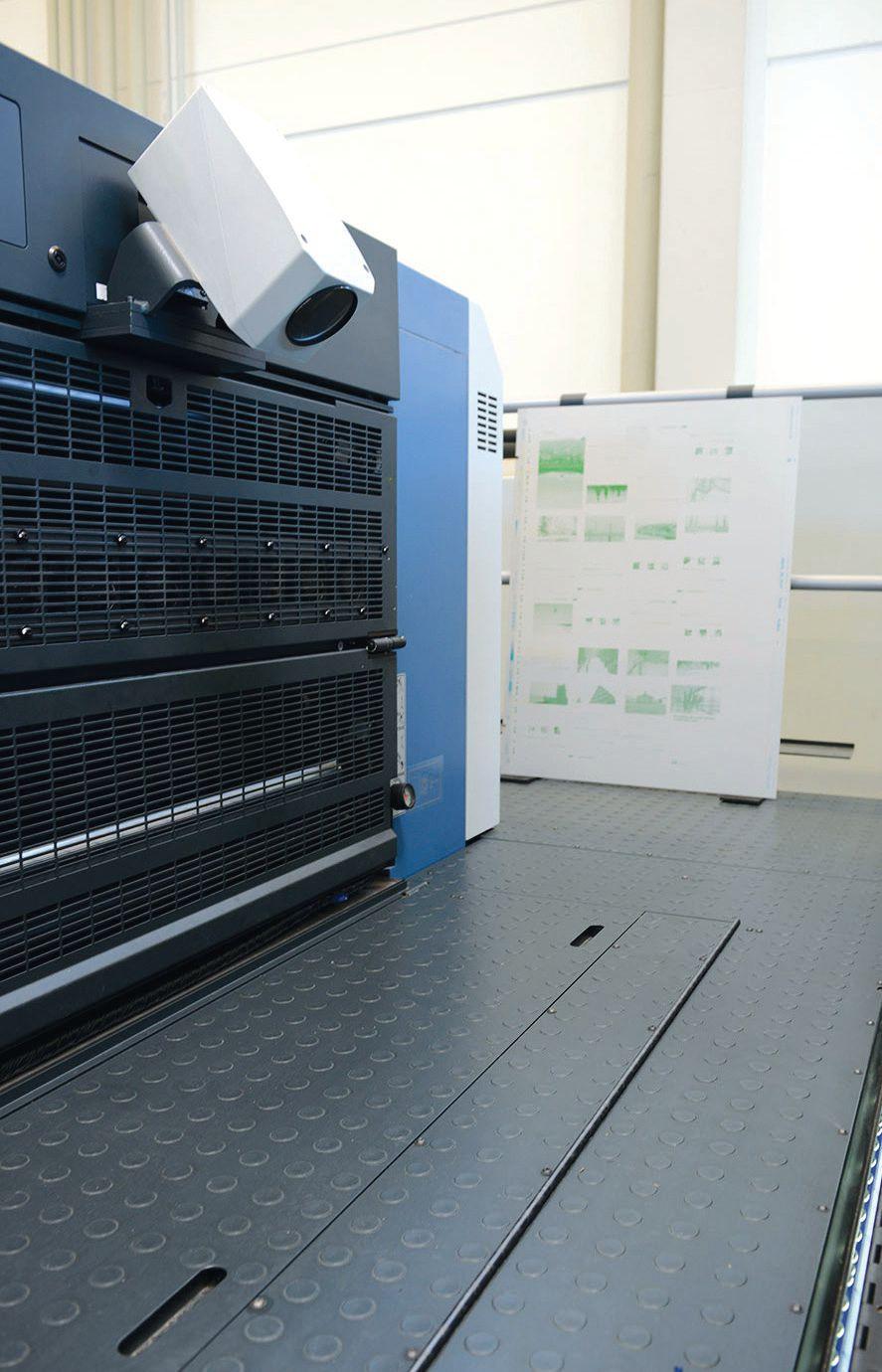
Surrounding the automated pressroom is equally impressive prepress and postpress departments. A newly added Heidelberg Easymatrix 106 CS has been installed replacing several older legacy products.
L’Empreinte services the high-end agencies in the commercial segment, using a full team of Account Managers and CSR’s. “Our clients prefer the consultative process” says Sébastien Chartrand, director-co-owner. “Our equipment is designed to meet their needs, and allow us to produce difficult jobs in the same timeframe as commodity work”. This is proven when you look at the productivity numbers produced by
the plant, some of the highest results in the Country. “We push Heidelberg, because our Customer’s push us” states Sébastien, “We know that we will get the response, cooperation and ultimately the results when we are engaged in a partnership approach as Heidelberg offers. Everyone benefits”
L’Empreinte continues to grow in a difficult market segment. “The PressCenter XL 2 provides amazing data from every movement of the press, allowing us to analyze data at a level unavailable before.” states Sébastien “Now we can really work on productivity improvement, thanks to the Heidelberg big data platform”.
Clear evidence that producing print, utilizing automated processes and working with Heidelberg, who has committed to the evolution of the industry and providing holistic solutions is the recipe for success.
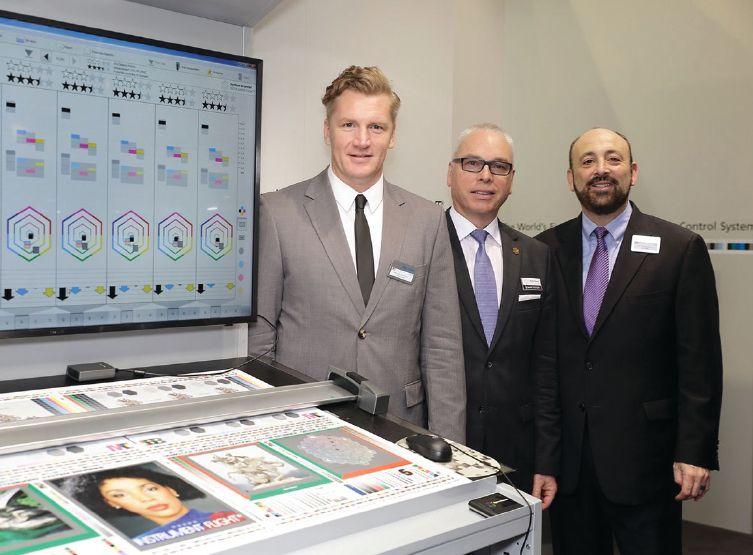
Clockwise: The QualiTronic NextGeneration camera. Koenig & Bauer’s console is also now used for the screen displays of the measuring and control systems. Chris Travis, Daniel Würgler of System Brunner, and Eric Frank, celebrate two G7 certifications.
NEXT GENERATION MEASURES
With the arrival of more tools for autonomous printing ecosystems like ErgoTronic AutoRun and Push
To Stop, sheetfed press makers continue to push Big Data control and pure print manufacturing
By Jon Robinson
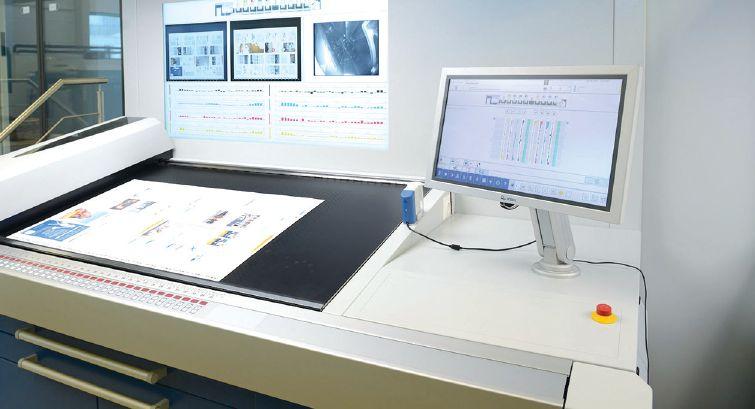
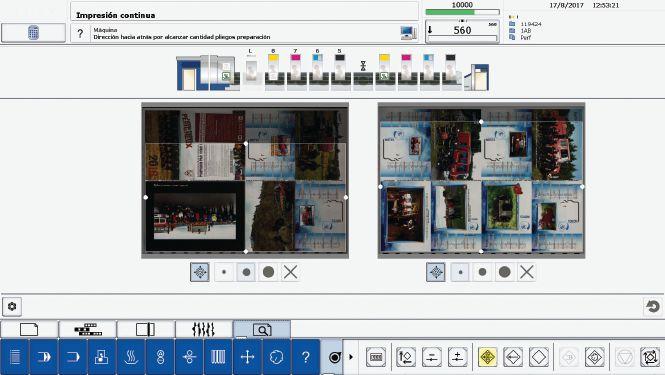
In May 2018, Koenig & Bauer introduced its new QualiTronic NextGeneration measurement and control technology, described by press maker as one basic system for multiple quality control functions of its sheetfed offset presses. QualiTronic NextGeneration (QNG) is designed as a package of tools for restructuring all inline measuring functions on Rapida sheetfed offset presses and to serve as a platform for future developments. Already implemented with regard to mechanical press components and software, Koenig & Bauer explains this QNG modular principle allows identical system hardware to be used for a variety of applications. For example, users can now combine QualiTronic ColorControl (inline colour measurement and control) with QualiTronic PrintCheck (production monitoring) or QualiTronic PDF-
Check (sheet inspection and PDF comparison) without needing to worry about the hardware configuration.
The QNG introduction signals an important push forward in press control from Koenig & Bauer, which earlier in 2018 also received two G7 System Certifications for its colour management systems.This attention to managing sheetfed offset colour reproduction in real time, ideally through completely touch-less inline controls, is the most obvious push toward autonomous printing.
Colour management is only a piece of the autonomous printing puzzle, but it is one recognized in every pressroom since those presses they hold first started up. The other four major sheetfed offset press makers active in North America, Heidelberg, Komori, Manroland and the emerging RMGT, today all emphasize their colour management technology, because
RYETAGA INK GENERATION
The following research excerpts focusing on the use of inks and medias are from the award-winning RyeTAGA 2018 Journal, produced and published by students of Ryerson University’s Graphic Communications Management program. A full description of the results, sources, and methodologies used in this research can be found at ryetaga.com.
Rub resistance of conductive inks
Research by Alisha Campitelli, Jamie Holman, Jewel Bolasco
When analyzing the results produced using the Sutherland Ink Rub Tester, a large variance was seen when comparing the abrasion resistance of conductive ink when printed on coated versus uncoated paper... As expected the substrate with the highest level of coating, which in this case was the Epson Inkjet Premium Photo paper, had the lowest resistance to abrasion. The photo paper used is considered to be microporous, which is a requirement of successful conductive ink printing. “The microporous layer is the superior coating used for inkjet photo papers. The coating has micropores or nanopores (smaller pores than micro) which are silica or alumina based.”
RyeTAGA’s 2018
Journal won The Helmut Kipphan Cup, awarded to the best student produced and written journal. This is the sixth time that Ryerson University’s Graphic Communications Management program has won the award, presented annually at TAGA’s research focused conference on the direction of printing.
This substrate is suitable for producing printed circuit boards using conductive ink, as it allows for “fast drying of the deposited ink due to the microporous ink-receiving layer which allows fast removal of the solvent.” The ink reaches the microporous layer of the substrate; however, the coating maintains ink conductivity as it does not absorb any further into the paper.
Thermochromic ink properties on various substrates
Research by Aleisha Hodri, Xin Lin Li, Brian Sour, Kara Wesny Key Findings: The reaction of the blue ink on acetate was quite instant. The ability for the ink to stay changed on the acetate was dependant on the ink film thickness... The heavy ink film maintained its colour change for twice as long as the thin ink film. The ability for the ink film to be able to hold its colour change is dependant on the temperature of the substrate in which it is printed on. Therefore, acetate is able to hold the cold temperature at about an average rate. The acetate is also very susceptible to temperature influence as it will change the temperature really quickly when in contact with human skin, whereas different substrates will take a bit more time.
The time for which the ink held its colour change on coated paper was shorter than the time for which it held its colour change on uncoated paper. This shows that coated paper is able to hold its temperature longer than uncoated paper. This may be due to the fact that the fibres of uncoated paper can absorb more of the heat or cold and hold on to it for longer. The heavy ink film on both coated and uncoated paper holds up to at least half a minute, which was not as long as the acetate. The time for the uncoated paper matches the acetate exactly. This means that although they are made of different materials, they both have the same properties when it comes to retaining cold temperatures.
The corrugated board held the temperature the longest, and, in turn, held the ink colour change longer. This can be due to many factors, such as the material and the calliper of the substrate. The calliper of the corrugated board printed on during this test is 0.1365 microns. The calliper of the coated and uncoated paper is 0.0100 microns, and the calliper of the acetate is 0.0045 microns. Thus, the calliper of the corrugated board is 13.65 times as thick as the paper and 33.34 times as thick as the acetate. The material of the cardboard is fibrous and is similar to paper.
Expanded gamut printing
Research by Paula Roque, Thuy Nguyen, Jasmine Ragial, Karan Patel
Printability depends on the effectiveness of ink trap where one ink prints on top of another, to simulate the final desired colour during the offset printing process. With this, printers should consider factors of ink tack and paper characteristics; specifically, how paper surfaces directly impact the capabilities of ink tack during the ink trap phenomena... The additional factors of ink opacity and transparency, coverage, and the printing process being used are all considerations in determining the best lay down and sequence of ink. Ultimately, ink trap is important because it influences a loss or gain of reproducible colour volume in a gamut. In extended gamut (XG) printing, seven inks are being printed rather than four. Therefore, the sequence of inks printed becomes more complex and varies between printing processes. To optimize XG abilities, printers need to be able to determine the transparency of ink in relation to overprints, in order to determine how colours are reproduced and the most effective printing sequence.
Lastly, in offset lithography, dry and wet ink trapping methods also affect final output; how well inks are able to adhere to one another and how light or dark colours will turn out. Overall, XG is beneficial for printers as it provides a more inexpensive and quality solution for the replication of accurate colours. XG is an excellent system because it allows printers to reproduce spot colours better than the CMYK process with no changeover of inks.
it is key attribute to developing a more pure print manufacturing model for the future.
Autonomous printing
Consider Heidelberg’s Push To Stop operating philosophy, which certainly will not fit every printing operation, as it is a methodology likely requiring a revamped business plan. Push to Stop allows a press to initiate a series of print jobs that are properly queued by Prinect software, which also relies on the new Press Center XL 2 console, Intellistart 2 and assistance systems like Intelliguide. Depending on ink lay-down and imposition, print jobs can run consistently without operator intervention. The technology platform can leverage colour management tools to reach specified Delta levels and tagging systems in the press delivery.
The idea of autonomous printing in sheetfed printing is to go from makeready to good sheet without having any interference, ideally to queue up multiple, complex and varied – commercial – jobs from the prepress department into the queue of the press. Autonomous printing is all about productivity and throughput.
With ErgoTronic AutoRun automation, Koenig & Bauer explains a job change starts automatically as soon as the production of the previous print job is completed – and then production is resumed automatically once the necessary makeready steps are completed. This cycle is repeated over and over until either the operator cancels the auto-run function or all of the jobs on the prepared job list have been printed. Start of makeready, job changeover, start of production, colour and register control – Koenig & Bauer explains all the individual steps are fully integrated and everything is triggered automatically at the appropriate moment. Press crews simply monitor the process sequence.
Koenig & Bauer explains the principal field of application for its autonomous printing plan in the commercial sector focuses on short-run jobs or multiple sections for products with high page counts, as well as language variants. Autonomous printing also benefits online printers, explains Koenig & Bauer, because they rely on highly standardized and automated processes. Clearly, these same concepts can be applied to longer-run packaging work, which is unlikely to change complexity – up or down – relative to the demands in commercial printing. Koenig & Bauer explains in packaging, this can be useful to start makeready automatically when the predefined run length is reached, or to return to production without further intervention upon completion of a complex job change.
Advanced offset printers today can make their presses run in this way, but they still face more holistic automation
challenges before the job even reaches the press. In other words, the press often ends up waiting for a job to move through estimating and costing, prepress and plating. This automation challenge is probably best described by Heidelberg’s idea to create the Smart Print Shop, whereas Push to Stop is just the print processing element within it.
This is why the industry is now seeing major sheetfed press makers focusing so intently on operating efficiency and Big Data analysis to help customers move toward an OEE number that might meas-
ure in the 30 percent range instead of the 20 percent or below range. Until a print shop’s OEE is in a suitable place, there is not as much ability to gain economic advantage through an autonomous printing business model.
The printing industry, however, is very much working in the world of Big Data analysis, primarily through its historic colour management prowess. Consider how technology like QualiTronic NextGeneration introduces a completely new operating concept. As Koenig & Bauer explains, the majority of the input forms
and displays can be found in the same place as for all other functions of the press – directly on the touchscreen monitor of the ErgoTronic console. Through optimizing the layout of the operating elements and significantly reducing the number of steps required to achieve a given task, work on the press has become more intuitive.
Koenig & Bauer explains positive effects reported by users include reduced training and familiarization periods, fewer operating errors, and the user-friendly visualization of measured values. Important functions and displays, explains the company, can be called up with just two taps on the touchscreen monitor.
Modern press ecosystems collect countless pieces of information from hundreds of discrete manufacturing runs. When this information is applied to other pieces of data collected before and after the press run, suddenly printers can leverage their data-control legacy. Tomorrow’s printing industry can evolve based on decades of experience gained from years of discrete data manipulation. And the ecosystems available today are allowing printers to properly collect, better understand and then leverage data to become profitable.
Print software
Amid the Industry 4.0 manufacturing buzz, print continues to push its ability to leverage MIS and software to drive capital equipment
Kodak InSite Prepress Portal 9.0
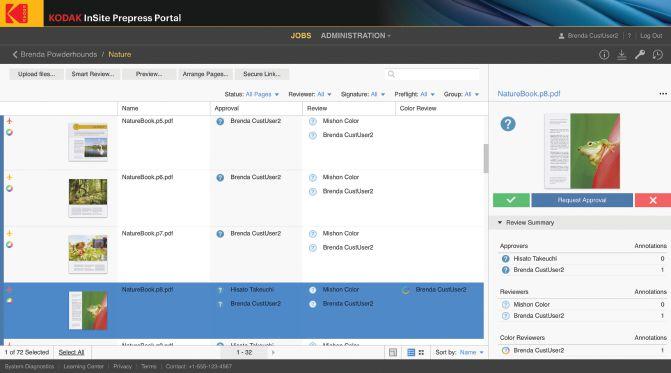
Introduced in May 2018, Kodak’s new InSite Prepress Portal 9.0 (IPP) features a new user interface that delivers a “simplified, intuitive and real-time proofing experience.” Designed to reduce cycle time, IPP offers 24/7 access to communication and job status, which Kodak says minimizes traditional proofing requirements while decreasing costs. Other features of IPP 9.0 include: streamlined navigation through important sections, allowing users to see a job summary while viewing specific details without leaving the Webpage; enhanced Preview Preferences allow for customized capability functions; and the ability to brand and personalize Webpages along with individual customer pages.
Additionally, the company released updates to the Prinergy On-Premise Software platform, featuring Prinergy Workflow 8.2 with expanded digital connectivity with Kodak Creo servers which includes the Konica Minolta IC-314 driven devices, as well as greater support for Ricoh Pro C7200 series digital presses. Kodak describes other software highlights as including: Prinergy Device Track complete with Job Ticket Editor for Bi-Directional JDF communication with XPO Software Print Console and CTP devices; improved packaging capabilities including Maxtone SX Screening for four-colour applications; PREPS imposition software allowing users to edit in template mode; and Pandora step-and-repeat software with Packaging Layout Automation (PLA) now offering multi-CAD file sup-
port for combination runs. As a result packaging printers and converters, Kodak explains, will be able to shorten cycle times for multiple jobs by combining items on a single sheet layout and maximizing sheet usage.
Avanti Slingshot integration
Avanti Computer Systems of Toronto in May 2018 introduced the integration of its Slingshot’s Print MIS software to BCC Software’s BCC Mail Manager postal software, a USPS CASS/PAVE certified platform. Avanti explains the integration will provide print and mail shops with “seamless communication” of the mailing and production requirements for a job and is designed to eliminate risk and errors that typically result when mailing lists are processed. Postage, reports and production mail files will now be added directly to an Avanti Slingshot Order so that mission critical information will be centrally located. Business requirements that impact mail sorting rules will be communicated automatically to Avanti Slingshot to create correct mail drop and postage information, it explains.
In March 2018, Avanti also integrated its Slingshot Print MIS solution with the Catfish Web-to-print platform from Infigo Software. By integrating Catfish with Slingshot, Avanti explains it is possible to automate every aspect of the print job into a single workflow, eliminating the need for human intervention. This includes functions like job specification and submission, reporting, estimating, imposition,
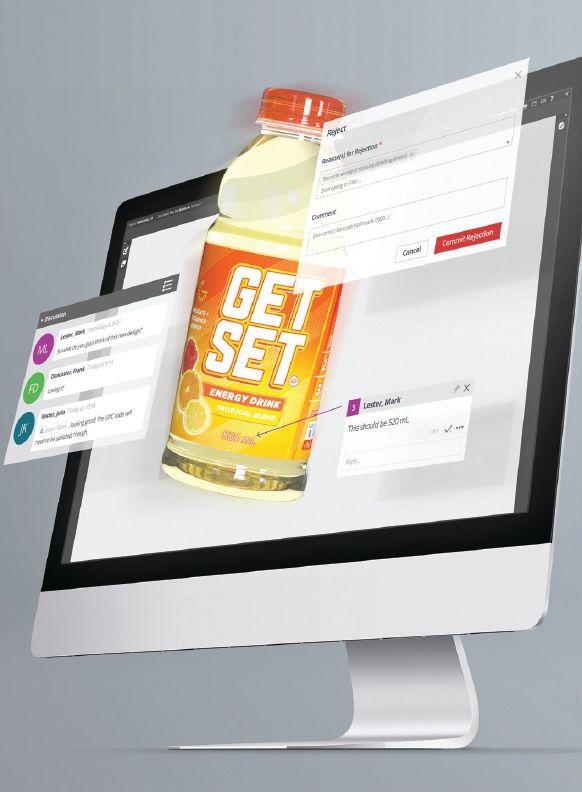
WebCenter 18.0 content management now includes built-in and custom templates.
inventory management, scheduling, shipping and billing.
Esko WebCenter 18
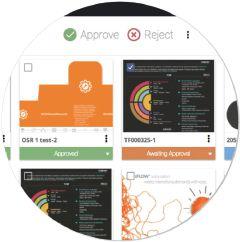
In April 2018, Esko introduced what it describes as a major new release of its packaging management solution, WebCenter 18, designed to help brand owners manage packaging pre-production specifications and project life cycles.The review and approval process with WebCenter has been improved, enabling more visibility into project status and reviewer input. With WebCenter 18, brand owners now understand the root causes of any bottlenecks, as it now captures the reasons for rejection and the number of approval iterations. It can also automatically involve the right stakeholder after a rejection, speeding up the revision process.
5.4K
HP PrintOS has 5,400 printing providers subscribed to the system, who will begin accessing the new app Marketplace.
WebCenter 18.0 content management now includes built-in and custom templates, so users comply with regulations such as Nutrition Fact Tables and Over the Counter Drug Facts. The Graphic Content Management functionality allows brand owners to centralize artwork data, and to merge it into templates, including the logging of symbols, logos and barcodes, as well as packaging copy and graphics. Translations within and outside of the system can be managed systematically as well.
Ultimate Enfocus Switch app
Ultimate TechnoGraphics in April 2018 introduced the new Ultimate Impostrip configurator for Enfocus Switch, developed in collaboration with Impressed Germany. The company describes Ultimate Impostrip as optimizing every aspect of the prepress imposition workflow with
“easy-to-use yet extremely versatile” tools, suitable for very short turnaround delivery on marketing campaigns, transactional and short run of books. The configurator is now available for download from Enfocus Switch. Also available on the Enfocus App Store are various apps designed to drive Ultimate Impostrip functionality, such as XML for redirection extended values and the Ultimate Imposition Control Language.
Aleyant tFLOW 9
In April 2018, Aleyant introduced its tFLOW 9 software for automation and customer service for commercial, large format, label, and specialty graphics. Version 9 of tFLOW now includes the ability to send customizable welcome emails to view and approve jobs within tFLOW. In addition, Version 9 features tab-managed links that give users access with public and private login links. tFLOW automatically recognizes which users have private and public access and allows them to use tFLOW accordingly.
The new version also includes Approval Reminders with a “send reminder” option for users in the job screen to more easily follow up on required job tasks. It has a more flexible API, according to Aleyant, and its user-defined SmartPrep variables can be sent directly through an API to other applications with no development needed. In addition to the number of standard variables included in tFLOW, users can also create their own custom variables. With the tBOT auto file downloader, tFLOW now has the ability to separate cutpaths from artwork and send them to different systems for further processing. tBOT is the tFLOW downloading application that connects to RIPs, cutters and imposition systems.
Agfa Fortuna 11
A look at Enfocus Switch’s operation tree for PDF review.
tFLOW v9 includes Approval Reminders for users in the job screen to more easily follow up on required job tasks.
to view changes in their security designs in real time instead of checking it in a separate preview window. It works hand in hand with the new Smart Stepper functionality, which allows users to try out different settings and easily revert to previous ones.
EFI MarketDirect
In early 2018, EFI debuted its new MarketDirect platform as software to help printing companies and marketing service providers drive integrated customer engagement. The software integrates with EFI’s suite of MIS products. Described as a Customer Engagement Platform, MarketDirect gives users the ability to develop, distribute and track customer communications for loyalty programs, offers, newsletters, surveys and communications. The software includes the next-generation of cross-media/ multi-channel technologies available from EFI, building on the company’s DirectSmile platform for lead generation, new customer acquisition, prospecting and more.
Global Graphics Mako
Global Graphics in April 2018 introduced a new software development kit for preparing documents for print. Mako is a multi-platform technology for prepress, document conversion and manipulation. Designed for developers and system integrators, the company says it can be used upstream of the Harlequin RIP to prepare documents for printing or on its own to create custom print workflow components, such as imposing pages or combining documents into one job. It is compatible with Windows, Linux, Mac OS, iOS, Android and Windows 10 IoT (Internet of Things), meaning that documents destined for print can be processed and previewed on any device.
Developers can use Mako to split or combine files, convert colours, and add new content such as 2D barcodes. As well, Mako incorporates a colour management engine for colour integrity by referencing input and output ICC profiles that are embedded into a document, supplied locally, or built into Mako itself. Mako can also discover the spot colour channels present in the job, or perform more detailed analysis to find which spot colours are used and by how much, explains the company.
HP PrintOS Marketplace
In April, HP unveiled its PrintOS Marketplace, described by the company as a new solutions community for the HP PrintOS cloud-based print production operating system. Designed to provide tools for printers using HP technologies, Marketplace will offer production and design tools and services from both HP and third parties.
In February 2018, Agfa Graphics released Fortuna 11 as an update of its design and assembly software for high-security printing. This version focuses on enhanced user-friendliness, productivity and creative freedom. Fortuna 11 takes a modular approach to high-security design and printing: users can choose from different modules and features to assemble their product to match their needs. In creating unique designs to protect their sensitive documents – checks, lottery tickets, driver’s licenses, ID cards, tax stamps, passports, birth certificates, diplomas, breeder documents, etc. – they can rely on a graphical base editor that reconciles aesthetics with security.
Fortuna 11 comes with two new functionalities that enhance interactivity and productivity. Live Preview enables users
Agfa Fortuna 11 provides enhanced productivity and creative freedom.
The software is available as a standalone or alongside EFI’s Web-to-print software employed in the company’s Productivity Suites. It provides users visibility, data tracking and management capabilities for marketing campaign and customer engagement activities within the Suites’ MIS/ERP frameworks. MarketDirect includes EFI SmartCampaign, a new HTML5-based cross-media design tool. With a new storyboards automated campaign-creation feature, EFI explains, customers can build and visualize a campaign in a matter of minutes using drag-and-drop tools.
Opening this summer, Marketplace will be open to any vendor to offer subscription-based apps for PrintOS members that help HP customers automate production, expand offerings and grow business. Today, PrintOS has 5,400 printing providers subscribed to the system, including owners of HP Indigo, HP PageWide Industrial and HP Scitex presses.
OneVision version 18.1
In April 2018, OneVision introduced version 18.1 of its workflow management software Workspace, the prepress suite Asura, the PDF editing software Solvero and the automated image enhancement software Amendo.
Through the extended statistics section in the new version of its flagship product, the company explains detailed reports can now be inspected and created. In the new statistics module users can not only recognize exactly how many jobs were processed by Workspace per day, week or month, but also how many jobs were handled by the individual assembly lines and modules, such as preflight or flatten transparencies.
September 30 - October 2, 2018
PRINT 18—The Future of Printing in Vibrant, Living Color
Emerging technology. Business strategy. The connections to grow your business. Experience it all firsthand at the event for revenue-generating innovations and solutions-focused education. You will get exclusive access to everything you need to Grow YOUR Business.
• NEW! Keynote, Marketing and Publishing Guru Seth Godin
• NEW! Hot Technology Guide to the Exhibit Floor
• NEW! Virtual Reality Experience
• NEW! Learning Experience Topics Focused on Business Growth Bigger and better things await you, your business and your profit margins at PRINT 18. Join us to drive the entire industry on the path to success.
In 2017, more than 22,000 visitors came together in Chicago—making it one of the top 25 fastest-growing shows in attendance by Trade Show News Network.
RS SuperiorSuperior Binder y Ser vices Inc.
Detailing new technologies from Crawford, Creative Edge, Drytac, EFI, Esko, Fujifilm, HP, INX, Kongsberg, swissQprint and Xerox
Fujifilm Acuity LED 1600R
TECHNOLOGY — Die crease without a die, then fold and even glue all on the same machine, up to 30 pt.
3. INTEGRATED MODULAR UNITS — Combined in-line finishing: crease, fold, glue, tipping, envelope inserting, ink jetting (Duplex), clip seal (3 sides), mail prep.
4. SAVE ON POSTAGE COSTS —As a Certified Canada Post Direct Marketing Specialist, we get contract pricing reductions. 5. RETURN MAIL PRODUCTS — Customized “Return Mailers” created in-line with “U” or “BOX-shape” remoistenable glue, time perfed applications and envelope formation. 6. MINI-BOOKLETS — Saddle-stitch and trim 2-up booklets in-line to the size of a business card. No need to trim off-line, or do 2 passes. 7. HIGH SPEED EQUIPMENT — High speed Tipping, Folding, Saddle-stitching and soft folding ensuring on time delivery.
Fujifilm in June 2018 was scheduled to launch its new Acuity LED 1600R as a 64-inch roll-to-roll press, offering four colour channels, with the option of a modular upgrade in the field to run up to seven colours. It is designed as a lower-cost alternative to the existing Acuity LED 1600 II hybrid press that recently achieved its 1,000th global install. Featuring Q-Class print heads, the LED 1600R includes a high-density mode capable of handling heat-sensitive roll media – making it suitable for backlit and window applications. Like the Acuity LED 1600 II, it offers productivity of up to 355 square feet per hour. Fujifilm explains the Acuity LED 1600R has instant start-up, long-life LED UV lamps, no ozone or VOC emissions and only one consumable – the ink.
Fujifilm also introduced a new Uvijet RL ink range, which is available in CMYK and CMYK plus light cyan and light magenta; along with a modular upgrade option to include White. Picoliter drop sizes range from 10 to 30, allowing for
smooth tonal ranges, fine text, and solid colours. Designed for flexible media, Uvijet RL is manufactured by Fujifilm Specialty Ink Systems, and combined with the Acuity LED 1600R’s patented LED curing system and Dimatix printheads. Fujifilm explains this combination delivers near-photographic print quality at high speeds.
Xerox Iridesse
In May 2018, Xerox introduced its new Iridesse press is described as a high-speed, six-station colour press that combines four-colour printing with up to two specialty dry inks in one printing pass. This includes the ability to print metallic gold or silver dry ink, CMYK, and clear dry ink in a single pass. Iridesse order taking for the new system was expected to start in June 2018.
With two inline specialty dry ink stations, gold and silver dry metallic inks can be used on their own or layered under or over CMYK to create unique palettes, explains Xerox, noting that a layer of clear dry ink can be added for extra dimension or texture. Printing at
Fujifilm’s Acuity LED 1600R is a 64-inch dedicated roll-to-roll press.
Xerox Iridesse can print six colours in a single pass, CMYK plus metaliic gold and silver, as well as a clear ink.
HP’s PageWide T1190 press offers 67 percent more throughput compared with the current T1100S.
speeds of up to 120 pages per minute, the press can run stocks from 52 to 400 gsm. Additional press features include: the High Definition Emulsion Aggregate (HD EA) Toner process, designed to deliver lower gloss, smooth tints and fine detail more consistently; the Xerox EX-P 6 Print Server by Fiery; and two dual advanced high capacity feeders, bypass and inserter options.
HP PageWide T1190/T1170
In May 2018, HP introduced two
new six-colour PageWide ultra high-volume inkjet web presses for pre-print corrugated packaging, the HP PageWide T1190 and HP PageWide T1170. The new flagship PageWide T1190 press offers 67 percent more throughput productivity compared with the current PageWide T1100S, delivering up to 1,000 linear feet per minute (305 metres/minute) in six colours at full press speed. The addition of six-colour printing (CMYKOV) also expands the gamut for matching colours, opening new digital
possibilities for brands.
These ultra-wide 110-inch (2.8m) thermal inkjet web presses use HP A30 water-based inks, containing no UV-reactive chemistries, and requiring no additional barriers for food packaging applications. The PageWide T1170 prints 600 linear feet per minute (183 metres per minute) in six colours, compared with four-colour printing at the same speed on the PageWide T1100S. Both the T1170 and T1190 presses are suitable for coated and uncoated medias, from 80 gsm to 350 gsm. Additionally, HP Multilane Print Architecture (MLPA) boosts productivity by splitting the web into multiple print lanes, so different jobs, with different box sizes and run lengths, can be printed in the individual lanes.
HP DesignJet Z
Unveiled in May 2018, HP’s new DesignJet Z6 and Z9+ Printer series are both available in 24-inch and 44-inch formats. HP explains a new vertical trimmer is featured on select models to optimize output in addition to other technologies, supporting applications ranging
from professional photo-quality prints to retailer signage, which the company says will result in 2.5 times faster printing and 20 percent faster post-production.
The series also features new colour technology, HP Pixel Control, which HP says is designed to achieve true-to-colour prints and an expanded colour gamut with RGB HP Vivid Photo Inks, featuring chromatic red, chromatic green, and chromatic blue, the i1 embedded spectrophotometer and HP Pixel Control. The company explains combining HP HDNA with HP Pixel Control enables users to get high image quality with nine inks versus 12 compared to the previous generation HP DesignJet. The new printers also offer HP Professional Pantone Emulation to match brand identity colours.
HP is also announcing enhanced HP DesignJet Z6x10 printers for a better user and output experience, it says. Boasting a new fresh design, the new printers have labelling indicating the printer colours for simplified ease-of-use. The printers have new printheads and Chromatic Red Ink formulation, which HP
says will deliver sharp detail and precise line quality. As well, the new printers will have 500 GB HDD with more virtual memory to process complex and graphic intensive prints.
swissQprint generation 3
swissQprint in May 2018 presented the latest generation of its LED inkjet printers, described as delivering more precise and stable printing results for an extended variety of applications and maximum productivity at 370 m2/h. This includes the Nyala 3, Impala 3 and Oryx 3, together with the speed models Nyala 3S and Impala 3S. Each of the LED flatbed printers offers add-on features, which now include an extended roll-to-roll option that was also introduced in May. A new control system, swissQprint explains, contributes to the printers’ increased user-friendliness.
According to the company, Nyala 3S and Impala 3S are designed for
high-output operations: Nyala 3S delivers up to 370 m2/h and Impala 3S up to 317 m2/h. swissQprint explains high-quality POS items, displays, posters, banners, backlit and other similarly demanding media are all suitable applications for the printers. Meanwhile, the maximum productivity level extends to print products intended for viewing at a distance, such as mega posters, banners and wraps for buildings under conversion, it explains.
swissQprint is introducing a new spreading roller designed to smooth material before it reaches the print bed in order to prevent wrinkles that can result in crashes. Carbon brushes on the spreading roller dissipate static charge from the material, aiding precise droplet placement. In combination with LED curing, the new roll-to-roll option increases the variety of materials by enabling printing companies to process delicate and heat-sensitive medias.
The 44-inch HP DesignJet Z6 and Z9+ with dual roll and vertical trimmer are expected to be available on July 1, 2018.
swissQprint’s generation 3 models will be available from August 2018 through its distribution network.
Creative Edge Ray Tracing
Creative Edge Software in May 2018 introduced the new iC3D Real-Time Ray Tracer for instantaneous rendering of high-quality images for immediate visualization of even the most complex designs onthe-fly. The Real-Time Ray Tracer will be available as a free, automatic upgrade (version 5.2), for users with an iC3D software maintenance agreement (SMA) and builds on key rendering advancements and distributed rendering capabilities enabled in the current iC3D version 5.1 release.The technology works on almost any off-the-shelf Mac or PC in conjunction with an appropriate NVidia or AMD Graphics card. Alternatively, Real-Time Ray Tracer performance can also be achieved on older computers using commonly available external graphics card (eGPU) to extend graphics capability.
Using the new iC3D Real-Time Ray Tracer technology, high-resolution design renders can now be delivered at high speeds. For example, a high-quality (1,024 pxi) ray-traced
line of paper fleeced embossed wallcoverings with a choice of ivory, canvas, sycamore and leather finishes. It includes a range of embossed PVC wallcoverings, which includes the ReTac Textures line up of canvas, linen, sand and wood textures.
In addition, there is a line of woven polyester wallcoverings, which features FabrikTac woven fabric film and a line of non-woven polyester wallcoverings featuring SynTexture synthetic textured wallcovering. Additionally, ColorCapture offers four adhesive options that have been engineered to be paired with each face film, including water activated adhesive, permanent adhesive, removable adhesive and ReTac, the ultra-removable and repositionable adhesive.
INX AquaTech ION-X
In May 2018, INX introduced the new AquaTech ION-X series inks as a crossover flexo system. ION-X runs on paper and most film stocks. It is specifically designed to boost print, film and thermal label printing on anilox rolls up to 1,500 lines
image, 6,000 x 3,500 pixels in size, which would previously have taken three to four hours to render, can now be achieved to photorealistic quality in one minute, 49 seconds using an off-the-shelf PC with Nvidia 1080 Ti graphics card.
Drytac ColorCapture
Drytac in May 2018 introduced its ColorCapture range of wallcovering products, plus additions to the SpotOn and Polar media portfolios. Drytac’s new ColorCapture range has been designed to allow customers to create the wall décor media to best suit their specific requirements. ColorCapture matches the ideal adhesive solution with various textured wallcoverings to create a solution for virtually any application. ColorCapture offers multiple wall graphics options, including a
per inch by using the 23 Plus Series water-based dispersions. This includes AquaTech ION C Adhesive Kill and INXhrc.
EFI VUTEk h
In May 2018, Electronics For Imaging unveiled its next-generation hybrid flatbed/roll platform technology called the VUTEk h series printers. Designed for high-volume production of premium signage and graphics, the VUTEk h series of 3.2-metre wide hybrid LED printers feature new, high-velocity 7-picolitre UltraDrop Technology greyscale print heads. The printers offer four- and eight-colour printing modes plus white, as well as five-layer print capability in a single pass. The new VUTEk h3 model has a maximum throughput of up to 74 boards per hour, while the h5 mod-
INSOURCE CORPORATION (Markham, Ontario), a technology supplier and service and solutions provider within the mailing, fulfillment, printing, bindery and packaging markets, has entered an agreement with Palamides USA to become a national distributor of their products.
Kareem Sesook, Director of Business Development for Insource, is excited to add Palamides to their portfolio of custom and unique solutions. “This strategic reseller distributorship complements our desire to continually offer the best automation solutions across the markets we serve. As the landscape of print finishing changes and the need for controlling manufacturing costs grows, Palamides’ products brings forth a unique solution to handling everyday printed products coming off folders, stitchers, mailing lines or digital presses.”
Products like the Delta from Palamides offer higher productivity with lower personnel costs.These systems streamline 2 or 3-up production, can be used to create perfect variable digitally printed stacks and sets up in a few minutes. Palamides has won awards for its newest product, the Smartliner240. With the Smartliner perfect binder, Palamides has introduced a completely new method of perfect binding. Smartflat means environmentally-friendly perfect binding with perfectly flat (layflat) characteristics.
“Insource Corporation has an impressive position among Canada’s printing companies. Their intimate knowledge, passion and relationships combined with a deep understanding of technology and trends within the print communication marketplace is what sets them apart. With their ability to inspire organizations across Canada and provide coast-to-coast service, we are looking forward in building a long lasting relationship with Insource,” said Bob Conboy, President of Palamides USA.
Palamides was founded in 1972 in Stuttgart, Germany, as a paper folding company. The headquarters were moved to Renningen in 1985. Shaped by the practical experience of the daily changing needs in the family business, Stefano Palamides developed the first automatic delivery to streamline operations at the folding machine and saddle stitcher. Palamides deliveries have become indispensable behind many saddle stitchers, folders, mailers and digital presses amongst other things. The most diverse products are fully automatically controlled, pressed, collected, jogged, counted and stored. What was previously achieved by 2 – 3 people is now easily managed by one person and all this with higher performance levels.
For more information please call Insource at 1-888-709-3345 or visit www.insourcecorp.ca
The iC3D Real Time Ray Tracer will be available as a free, automatic upgrade.
EFI’s VUTEk h series printers offer four- and eight-colour printing modes, plus white.
el, which is available direct from EFI or as field upgrade to the h3 model, can produce up to 109 boards per hour.
EFI also launched a new industrial textile pigment ink technology for direct-to-textile production. The new EFI Reggiani pigment ink technology gives users a faster, environmentally friendly production process with inline polymerization that requires less water, less energy and less processing time, with no washing or steaming needed. In addition, the ink’s fastness properties and high printability sharpness will allow printing on a range of fabrics with the fine-detail designs. The new pigment textile technology completes the range of EFI Reggiani products presented over the past year, including the FLEXY digital printer and the brand-new EFI Reggiani COLORS printer launched two months ago.
Kongsberg Flip-Side Camera
In May 2018, Esko introduced a new Flip-Side Camera for Kongsberg cutting tables equipped with a feeder and stacker. The company explains this saves 20 to 30 minutes of manual set-up time typically required to ensure accurate cutting of corrugated board for in-store displays, as well as other applications. When using the Kongsberg Feeder and Stacker, the camera scans the underside of the sheet to locate registration marks, barcodes containing set-up instructions, and the corner of the sheet. It is then able to cut and crease accurately by calculating where the registration marks are in reference to the corner, with limited or no operator intervention.
Crawford AccessibilityNow
In April 2018, Crawford Technologies launched AccessibilityNow. com, a new e-commerce site that makes it possible to quickly and cost-effectively convert PDFs into accessible documents. AccessibilityNow.com makes it possible for users to upload PDF files, immediately receive a price quote, and quickly get their files back in the new format. AccessibilityNow.com leverages Crawford Technologies’ software Auto Tagger for Accessibility
to simplify the process of converting PDF files into compliant Accessible PDFs (PDF/UA and WCAG).
AccessibilityNow.com offers the ability for converted documents to be tested and certified to meet the standards and guidelines specified in the American with Disabilities Act (ADA), WCAG 2.0, Section 508, Section 255, Section 504, EN 301 549, Accessibility for Ontarians with Disabilities Act (AODA), and other global regulations.
Esko Text Recognition
Esko in April 2018 extended its software portfolio with Text Recognition, a new plug-in for Adobe Illustrator that aims to make lastminute copy changes to outlined text. The company says the Esko-unique OCR plug-in for Adobe Illustrator helps packaging professionals produce packaging in an optimal way, explaining that it eliminates cumbersome workarounds.
Text Recognition, Esko explains, is the only OCR tool on the market that converts outlined text in artwork to live, editable text directly in Illustrator. When a copy change needs to be made, the software compares the character in the artwork to the fonts on the user’s computer, choosing the best matching active font. Esko explains this eliminates the need to manually evaluate every font and retype entire paragraphs to find the correct text layout. It works with foreign languages too, even with completely different glyphs like Chinese, Japanese or Korean; and the Compare function highlights copy changes in a ‘before and after’ view.
Domtar has been present in the Canadian pulp-and-paper market for more than 150 years, producing such iconic brands as Windsor Offset, Plainfield Opaque, Cornwall Coated Card, and Luna Coated and in more recent years Cougar, Lynx, Husky and EarthChoice. Today, Domtar is the largest producer of uncoated paper in North America, operating 13 pulp-and-paper mills.
Four of these mills are located in Canada, including operations in Kamloops, BC, Espanola and Dryden in Ontario, and in Windsor, Quebec. Domtar employs almost 9,000 people in North America, 2,000 in Canada and approximately 1,200 of these Canadian jobs are in the Province of Quebec. PrintAction asked Stéphane Dagenais, Domtar’s Region Manager for printing and publishing papers in Canada, what makes the company unique.
Where does Domtar stand in terms of its pulp manufacturing capabilities?
SD: Several varieties of pulp are made in the Domtar mills and can be used in products as varied as copy and printing papers, specialty packaging papers, toilet tissue and disposable diapers. About 1.8 million tons are sold on the open market.
How did Domtar build its strong position in uncoated freesheet?
SD: Domtar has maintained continuity in our market presence over the years... In addition to our manufacturing presence, Domtar keeps inventory in a unique network of Regional Distribution Centres to make sure printers have rapid access to their Domtar paper through the merchant of their choice. The Canadian market is serviced by four [centres] in Seattle, Winnipeg, Mississauga and Richmond, Quebec.
As an environmental paper pioneer, what is Domtar doing to push this agenda?
SD: Domtar continues to work with ENGOs like Rainforest Alliance and World Wildlife Fund to think creatively and keep forests, forest. You can’t make a notable difference in a vacuum, but collectively we can tackle important issues like the lack of certified fiber in some of our fiber basket regions. We have created small landowner workshops highlighting the importance of certified fiber throughout the supply chain.
How important is packaging to Domtar?
SD: The packaging market is a growing segment of the industry. In 2017, the specialty papers and packaging segment represented 17 percent of Domtar’s paper shipments. These grades of papers require a certain amount of innovation and agility in
Domtar operates 13 pulp-and-paper mills, including four in Canada, where it employs some 2,000 people alone: Kamloops, BC, Espanola and Dryden in Ontario, and in Windsor, Quebec.
the manufacturing system, which is in direct alignment with Domtar’s core values.
What newer capital investment initiatives are underway at Domtar?
SD: Our flexible assets allow us to balance our supply with customer demand and an announcement of further capital investment is expected in 2018. We are also investing in R&D in fields as varied as Biofuels or Green Energy Generation. We remain committed to paper, however – as a percentage of business, we are by far more focused on paper, compared to our competitors.
17%
In 2017, the specialty papers and packaging segment represented 17 percent of Domtar’s paper shipments.
How is Domtar working with printers?
SD: It is our mission to be a resource to the commercial print community... As print technology continues to evolve, our partnerships with OEMs remains more important than ever. Our goal is to develop papers that will be market ready when new technologies are launched. This product innovation could be new weights and sheet sizes or special treatments to meet the new innovations in ink and printer capabilities.
What print markets are gaining traction?
SD: As the market trend continues to shift toward extreme personalization and
variable data, the growth of digital and inkjet printing will continue. High-speed Inkjet is growing rapidly and appears to be the print technology of the future. Because of the small population in Canada and the high acquisition costs of these types of equipment, the growth rate will be a lot slower in Canada than in the USA... Of course anything to do with packaging is a growth opportunity. The increase in online shopping impacts the need for shipping materials and requires a lot of components that can be fiber-based.
Why is print still a critical part of the communications world?
SD: The studies are clear. The brain learns and retains better from reading on paper over a screen. If this is true for educators it is certainly also true for marketers. The physicality and tactile side of print will always be attractive. This trend will only grow as companies continue to differentiate themselves in their respective markets... New print technologies and data analytics allow a level of personalization in print like never before. Personalization makes people feel special and we now have all the tools in hand to make this experience even more targeted and intimate.