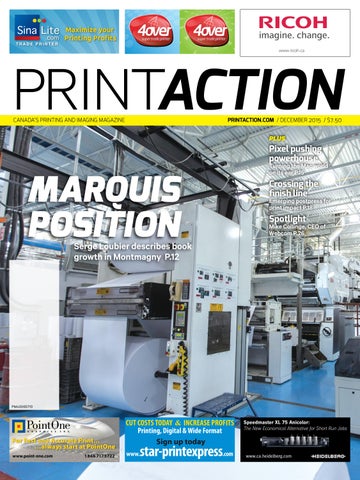
Serge Loubier, President of Marquis Book Printing, discusses the growth of what has become one of Canada’s most-dominant printers
15 Pixel pushing powerhouse
Zac Bolan tests out Affinity Photo v1.3.5 to see if UK-based Serif Software can continue turning the Mac graphics software market on its ear
18 Crossing the finish line
How emerging postpress technologies are impacting direct mail, packaging, books, and a growing range of specialty print projects
Departments
GamUt
5 News, People, Calendar, Installs, Globe, Archive
neW prODUCts
21 Detailing the newest technologies from Fujifilm, Adobe, Agfa, EFI, Inca, Heidelberg, Drytac, Xaar, Veritiv, Goss, Ultimate TechnoGraphics and more
marKetpLaCe
25 Industry classifieds
spOtLIGHt
26 Mike Collinge, President and CEO of Webcom Inc., discusses the future of publishing
COLUmns
FrOm tHe eDItOr
4 Jon robinson
Global application insight
A survey of 750 printers from around the world finds important trends for implementing new print applications
CHrOnICLe
10 nick Howard
Winds of change in packaging
Press makers are helping to drive modern manufacturing in one of the industry’s fastest evolving sectors
enVIrOnment
11 neva murtha
Addressing climate change
Ways to put climate change, an issue so large in scale and impact, into context for your long-term success 12 15 18 7
Global application insight
messe Düsseldorf in November released preliminary results of its drupa Global Insights Report called Touch the Future, Applications that can Create Growth. The report is based on a worldwide survey in which approximately 750 printers participated; answering questions about what new print applications they implemented and their experiences.
the packaging world. Even if it can be argued that most commercial printers are far more advanced in several technical issues like colour management and makeready (See Nick Howard’s December Chronicle column, Winds of change in packaging, page 10).
$70,000
Average amount of extra dollars spent by drupa-surveyed printers who successfully implemented new applications, which resulted in a compounded annual extra profit of $63,000.
The goal of the report was to discover the best ways to regain growth in the demand for print, because the results of implementing such applications are often disappointing without the availability of best practices. The drupa Global Insights Report, explains Messe Düsseldorf, shows that good management practice in planning, integration and marketing delivers on average an additional $175,000 of annual turnover and $63,000 of additional profit compared to poor practices.
The 750 printers surveyed results in the report focusing on 26 different applications, with an average of 2.8 new applications introduced per printer. The results show that those applications offering a quicker payback on average were not depended on the size of the original investment. In the publishing market, for example, short-run batch book production took on average more than double the time to payback than on-demand book production. In the commercial market, the drupa Global Insights Report found that business stationery applications took twice as long to payback compared to multichannel marketing investments.
When looking at the planning, integration and marketing of new applications, Messe Düsseldorf explains it became clear that good management practices meant that printers invested on average $70,000 more, which resulted in the aforementioned $175,000 extra annual turnover and $63,000 in additional profit. Interestingly, the report found these numbers held true in all markets and applications except packaging, where in some cases those adopting good management practices gained less than those who did not. Naturally, this result suggests that it is much more challenging to apply new applications in the packaging market than in other sectors.
The clear challenge of adding new applications in packaging is likely due to a much more complex supply chain, which is a significant factor commercial printers should consider as they continue to show greater interest in the sector. Modern sheetfed printing presses might indeed be able to handle a wider, thicker range of substrates, at faster speeds, but none of these factors can compensate for the structural knowledge needed to succeed in
The drupa Global Insights Report lives up to its billing by considering major economic factors for printers to consider, such as the rising living standards in several areas of the world, particularly Asia and Africa, where print is not as mature as a communications medium. The demand for print will indeed continue to experience positive development in regions where a growing middle-class increases the consumption of goods. Most Canadian printers ultimately will not access such markets, but it is important to watch these economic developments because of potential competition – or indeed opportunity –provided by access to a fast-growing global Internet infrastructure.
Messe Düsseldorf’s report actually sets its findings against the background of how print must exploit the very digital technologies that are driving the way people, brands, corporations and governments communicate. The overall global demand for print has decreased, according to the report, in part due to sluggish economic conditions, but largely because of the rapid rise of digital communications. The growth of the Internet is staggering, finds Messe Düsseldorf, now reaching 42 percent of the world population last year, with the ability of mobile phones (51 percent) and social media (29 percent) to provide new information access to the world’s population.
“There are fundamental shifts in the way consumers communicate with each other and expect brands, corporations and governments to communicate with them,” states Messe Düsseldorf. “Print can be a key part in those multichannel communications, but only if print takes advantage of the very technologies that are driving change.”
The drupa Global Insights Report estimates print advertising has fallen over the last five years at a six percent compound annual rate, but consumer spending on print has declined by only 1.5 percent compounded annually. These numbers suggest there is still opportunity for leading printers to capture more revenue through the introduction of new applications integrated in some manner with digital communications technologies.
Editor Jon Robinson jrobinson@annexweb.com 905-713-4302
Contributing writers
Zac Bolan, Wayne Collins, Peter Ebner, Victoria Gaitskell, Martin Habekost, Nick Howard, Angus Pady, Nicole Rycroft, Abhay Sharma, Trish Witkowski
Publisher Paul Grossinger pgrossinger@annexweb.com 905-713-4387
Associate Publisher Stephen Longmire slongmire@annexweb.com 905-713-4300
Director of Soul/COO Sue Fredericks
National Advertising Manager Danielle Labrie dlabrie@annexweb.com 888-599-2228 ext 245
Media Designer Lisa Zambri lzambri@annexbizmedia.com
For a 1 year monthly subscription (12 issues): Canada — $39.99 ($35.39 + $4.60 HST) United States — CN$65.99 Other foreign — CN$85.99
Mailing address
Annex Business Media 222 Edward Street Aurora, ON, L4G 1W6 printaction.com Tel: 905-727-0077 Fax: 905-727-0017
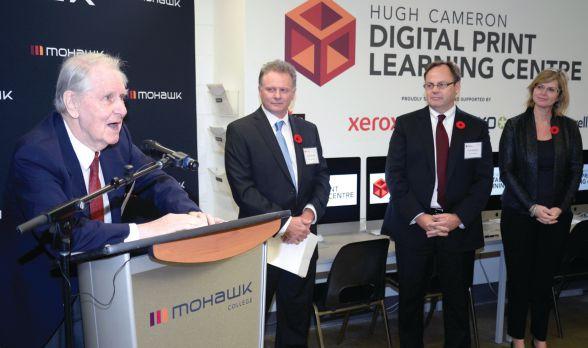
mohawk College named its three-year-old digital printing lab after Hugh Cameron, Chairman of Retail Ready Packages Inc. and President of the International Corrugated Packaging Foundation of Canada. He has secured more than $750,000 worth of equipment and funding for student scholarships and bursaries. More than 200 students in the three-year Advanced Diploma Graphic Design program use the newly named Hugh Cameron Digital Print Learning Centre, which includes a Kongsberg XL22 table, 64-inch Roland large-format printer, Xerox 800 press, UV coater and die cutter. Mohawk’s printing lab officially opened in February 2012 with support from Xerox Canada, Bell & Howell, Esko Graphics and the International Corrugated Packaging Foundation of Canada.
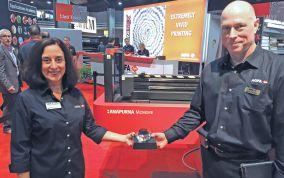
agfa Graphics won all three Product of the Year Awards in the UV category at the SGIA Expo recently held in Atlanta, including for two systems built in Mississauga, Ont. A total of 141 entries in 38 product categories were submitted for this competition.
Prints were judged on overall colour appeal, tonality, image detail, objective colour matching
and greyscale colour cast. The new Anapurna M2540i won in the UV Flatbed ($100-200k) category, while the Canadian-built Jeti Mira won in the UV Flatbed ($200500k) category and Jeti Tauro won top honours in the UV Hybrid/ Flatbed High Volume Production Class category.
the times press Limited of Calgary purchased the customer files and related assets of Apache Superior Printing Ltd., also of Calgary, after the latter filed for bankruptcy though the Canadian Bankruptcy and Insolvency Act. The remaining Apache Superior Printing assets were to be sold through an auction in early December.
nD Graphics entered a new distribution partnership to introduce Spike, described as a laser measurement solution for site surveys and estimations that can be used for installing large-format printing, to the Canadian market. Under terms of the agreement, ND Graphics is the exclusive reseller of Spike, developed by ikeGPS. Spike, explains ND Graphics, allows sign and graphics professionals to capture accurate measurements of the width, height and area of signage locations from a smartphone or tablet picture. Measurements of the signage location are saved with the Spike photo and can be shared to create job estimates and design proofs, assess installation and complete permit applications.
paperWorks Industries plans to consolidate all of its Canadian folding-carton production into its recently acquired Boehmer Box manufacturing facility in Kitchener, Ont. The company, with
integrated mill operations, expects to consolidate all print production in Kitchener by May 2016. This consolidation includes closing its Hamilton, Ont., plant by July 2016. In June 2015, PaperWorks agreed to acquire CanAmPac of Napanee. The acquisition included coated recycled board producer Strathcona Paper, folding-carton manufacturer Boehmer Box, and LYFT Visual graphic services. As a result of the CanAmPac acquisition, PaperWorks’ projected manufacturing output for the combined companies is approximately 400,000 tons of 100 percent recycled paperboard, annually.
Dirk Kaliebe, CFO and Deputy CEO of Heidelberg, stated the press maker is on course after the first half of its financial year 2015/2016 with increased sales over the previous year’s corresponding period. Group sales after six months increased to €1.162 billion compared to the previous period at €996 million. Heidelberg reports sales were up in all regions except Eastern Europe, where they remained stable. Incoming orders in the period under review improved to €1.323 billion (previous year: €1.167 billion). At €–30 million, Heidelberg’s free cash flow in the period under review remained at the same level as in the previous year. The company’s net financial debt at September 30 increased slightly to €284 million (March 31, 2015: €256 million). As at September 30, 2015, the Heidelberg Group had a global workforce of 11,753 plus 473 trainees (previous year: 12,393 plus 550 trainees).
printing Industries of america election results place Bradley Thompson of Detroit’s Inland Press as Chairman of the Board. Canadians joining the 2016 Board of Directors include Richard Kouwenhoven of Hemlock Printers (representing BCPIA), and David Potje of Twin City Dwyer (representing OPIA). PIA’s 2016 directors also include Curt Kreisler of Gold Star Printers; Bryan Hall of Graphic Visual Solutions; Michael Wurst of Henry Wurst in Kansas City; and David Olberding of Phototype.
January 6-9, 2016
Consumer electronics show 2016 Multiple hotels, Las Vegas, NV
January 19-22, 2016
eFI Connect Users’ Conference Wynn Las Vegas, NV
February 3-4, 2016
Cma, the Gathering Multiple locations, Banff, AB
February 18-20, 2016
Graphics of the americas Convention Center, Miami, FL
March 8-11, 2016
Fespa Digital RAI Exhibition Center, Amsterdam
March 20-23, 2016
taGa technical Conference Sheraton Downtown, Memphis, TN
April 14-16, 2016
Dscoop11
San Antonio, TX
April 20, 2016 roland imaginatIOn 2016 Orange County Convention Center Orlando, FL
April 20-23, 2016 Isa sign expo Orange County Convention Center Orlando, FL
May 31-June 10, 2016 drupa Düsseldorf Fairgrounds, Germany
June 22, 2016 printaction print Forum Mississauga Convention Centre, ON
September 14-16, 2016 sGIa expo Las Vegas Convention Center, NV
September 23-24, 2016
COnsaC International Centre, Mississauga, ON
September 25-28, 2016 Graph expo 2016 Orange County Center, Orlando, FL
October 18-22, 2016 all in print China
Shanghai New International Expo Center, Shanghai
November 19-21, 2016 print World Direct Energy Centre, Toronto, ON
April 7-8, 2017
Grafik’ art Place Bonaventure, Montreal, QC
Hugh Cameron is recognized for his long-time support of Mohawk College.
Agfa’s Deborah Hutcheson and Larry D’Amico with SGIA’s Product of the Year Award for the new Anapurna M2540i.
Dirk Kaliebe, Deputy CEO, Heidelberg.
InstaLLs
Hayden Kelley becomes CEO for the global business of Drytac, a manufacturer of adhesive-coated products based in Bristol, United Kingdom. Kelley is a graduate of Halifax’ Dalhousie University with a BA in Economics and an MBA in International Business. His previous roles include Regional Sales Manager for Drytac’s Western United States territory and VP of Sales and Marketing for Drytac Canada. Kelley, who currently serves and will retain his role as Managing Director of Drytac Europe, succeeds his father Richard Kelley, the company’s founding Chairman and former CEO.
Gunther m ertens succeeds Peter Wilkens as Agfa Graphics’ Regional President for North America and he also becomes a member of the company’s Global Graphics Management Committee. Mertens, who became an American citizen in 2011, joined Agfa in 1999 and has held various positions in M&A and Finance. Since 2006, he has been Vice President and Chief Financial Officer of Agfa Graphics’ subsidiaries in the United States and Canada. Michael Ciaramella also joins Agfa Graphics as its VP President of Sales for the United States. He previously served in management positions with HP, Eastman Kodak and Microsoft.
mohit Uberoi becomes President and CEO of Goss International Corp., which develops and manufacturers web-offset and packaging presses. Uberoi most recently worked at MEGTEC, which he joined in 1997, and led the business as President and CEO from 2003 to 2015. Goss explains he has significant experience overseeing the transformation of global industrial mid-market companies, with multiple product lines and global locations, with both private equity and public shareholders.
michael Corbett becomes Director of Operations for Toronto-based book manufacturer Webcom Inc., whose immediate focus will be on the installation of an HP Indigo 10000 press. His experience in the printing industry includes past leadership positions with companies like DATA Group of Companies, Symcor, Avant Imaging and Information Management, and TC Transcontinental.
patrick morrissey has been appointed as Vice President, Americas Sales, for Electronics For Imaging (EFI), responsible for growing regional direct sales and channel partnerships across the company’s Productivity Software, Industrial Inkjet and Fiery digital print production businesses. Morrissey joined EFI in 2007 and most recently served as Senior Director of Worldwide Inkjet Sales. Morrissey received EFI’s Elite Award every year since 2010 for exceeding his annual revenue goal. Prior to joining EFI, Morrissey was Vice President of Sales, North America, at Creo, a software and prepress provider purchased by Kodak.
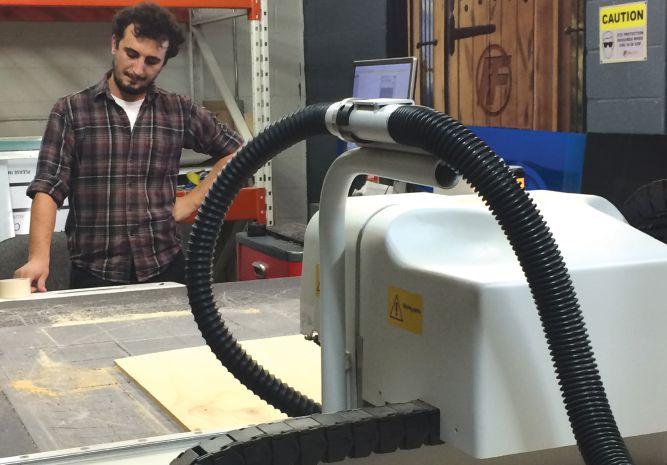
Full Frame signs and scenic art installed the first Kongsberg V (pictured with Project Manager Derek Ferrusi) in Ontario to create items appearing on screen for its film-industry clients. Collocated with sister company The Custom Apparel Shoppe, in Paris, Ont., Full Frame is now located in two of Cinespace Film’s Toronto properties.
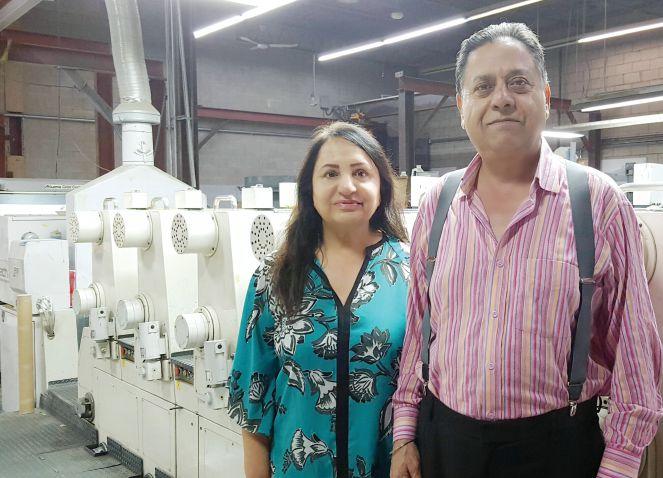
atlantic printers added a 28-inch, six-colour Akiyama Bestech press (pictured with Baljit and Avtar Bedi), including an inline AQ coater. The company, based in Mississauga, Ont., was founded in 2002 primarily for publication work. Atlantic also added a Stahl finishing system and Pro Cut cutter.
summit print of Port Coquitlam, BC, recently celebrated its 10-year anniversary moving into a 15,000-squarefoot facility, which now runs Esko Automation Engine software for controlling prepress. Summit, which focuses on printing labels, operates an HP Indigo WS6000 and a more recently installed Indigo WS6600 press.
Imagine! adds ninth KBA Rapida in Shakopee
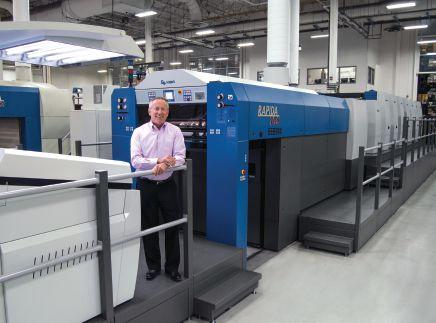
Imagine! Print Solutions, located just outside of Minneapolis, an independent commercial and packaging printing company, completed its installation of a new 41-inch, seven-colour KBA Rapida 105 press with fully automated inline quality control and inspection systems. This is the ninth KBA press installed at an Imagine! Print Solutions facility in Shakopee, Minnesota.
The new KBA Rapida 105 joins eight more Rapida presses, including a massive 81-inch Rapida 205, two 64-inch Rapida 162 presses, and four 41-inch Rapida presses. Imagine! Print purchased the first Rapida 205 in North America back in 2005. The company has more than 1,300 employees and celebrated its 25th anniversary in April 2013. Imagine! Print has grown to be a US$305 million operation serving seven national print segments: point-of-purchase, packaging, UV print, commercial, flexography, digital and screen print.
The company’s capabilities and services include: temporary and permanent display design; folding carton design; prepress; one- to seven-colour sheetfed and UV printing; one- to 10-colour flexography; finishing and carton converting; kitting and fulfillment; and integrated eCommerce services like online product ordering, inventory reporting and job tracking.
with the new 41-inch KBA
Chinese trade shop runs NExT in Kunshan
Average number of daily orders produced by Panel Solutions’ new six-colour SPGPrints DSI UV-inkjet press (pictured with Edward Scheppink, managing director of SPGPrints America, and Tom Zurek, President of Panel Solutions). The company in Boxmeer, Netherlands, makes synthetic tiles. 2
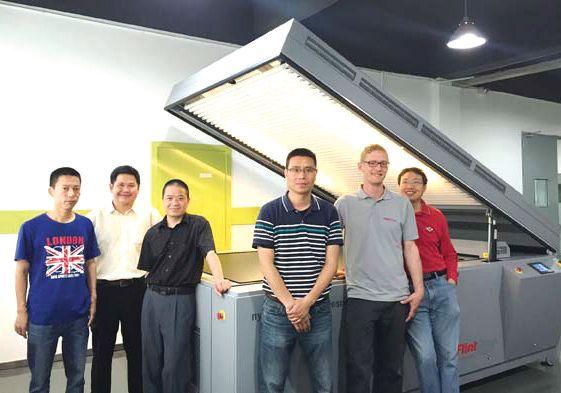
Founded in 1995, Kunshan Fuhua Printing Co. Ltd. is located in Kunshan in the Southern Chinese province of Jiangsu, where some 700,000 people live on 930 square kilometres in this district-free city in the Yangtze delta. Kunshan Fuhua is a Chinese flexo trade shop with more than 200 trained technicians servicing customers, with the stated intention to become the most-powerful flexo plate making company in Asia. In April 2015, Kunshan Fuhua installed a nyloflex NExT Exposure FV unit from Flint Group, which utilizes a high intensity UV-A LED light source to conduct rapid crosslinking of the photopolymer surface.
The high UV-A output results in a virtual 1:1 image reproduction, according to Flint, from the digital file to the finished plate.
Kunshan Fuhua’s management then decided to buy a nyloflex Digital Washer FV, which went into operation early this summer. Two solvent cycles reduce the contamination of the washer and enable clean processing of the printing plates. The viscosity and temperature control device ensure consistent processing conditions and optimized solvent consumption.
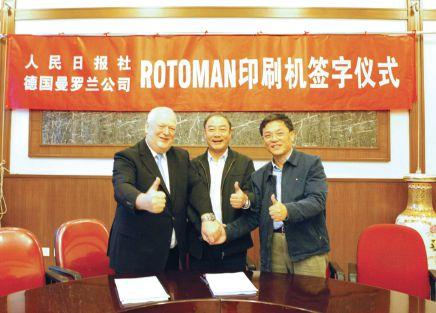
Described as China’s most-influential newspaper, People’s Daily has ordered a new 16-page ROTOMAN HiPrint from manroland web systems, which will help the company extend its existing insert and magazine production in-house. People’s Daily produces more than 70 different editions with approximately five-million broadsheet copies each day, which means 1.825 billion copies a year.
A major portion of these copies is usually provided with commercial print inserts. The People’s Daily printing centre is also running a growing number of weekly lifestyle, sports, TV, and advertising magazines. The present production is based on a manroland web systems POLYMAN commercial press that was delivered 15 years ago.
The company runs a GEOMAN and eight UNISET newspaper press lines from manroland web to print its daily. The new ROTOMAN HiPrint, to be installed in the second half of 2016, has a cylinder circumference of 546 mm and a maximum web width of 965 mm.
Number of brand new DG Thallo web offset printing presses that are now in production at launching customers sites including a seven-colour press at Vuye Flexible Packaging in Belgium. The other Thallo is installed in Belgium. DG press started in 2009 servicing Drent Goebel machines. Today, the company builds new sleeve-based web offset printing presses with a team of over 70 employees.
Bob Lothenbach, President of Imagine! Print,
Rapida 105.
Left to right: Dr. Frank Tietsche, Vice President of Sales, manroland web systems; Wang Jinhu, Director Peoples Daily Printing Center; and Yang Xinghua, General Manager, Beijing People Printing Business Center.
From left to right: Huang Chaobo (Kunshan Fuhua), Supachai Theravithayangkura (Flint Group), Li Lin (Kunshan Fuhua), Yushan Lee, Thomas Weik, and Sim Cai (Flint Group).
1980
Printer and
client
cooperation ensures right press
McLaren, Morris & Todd (M.M. & T.) of Toronto recently installed an Aurelia 700 6-colour, 28 x 40-inch, offset press, following close and searching consultations with one of their major customers, Coutts Hallmark Cards, which has been printing with M.M. & T. for more than 25 years. “If we were going to spend $1 million on a new press, we wanted to be absolutely certain that it met our rigid specifications before it left the plant… and the only way to ensure that was to go to Milan and conducts the tests ourselves.”
M.M. & T. insisted on a full production run at the factory, using Canadian materials and pressmen.
$12,000
Price to purchase a two-year-old Autologic Micro 5 phototypesetter, according to a 1985 PrintAction classified ad, featuring 57 pica and 10MB hard disc.
1985
Potential of holography untapped
Credit card fraud has become a growing concern by the beginning of this decade. Then suddenly in a 12-month period, covering all of 1981, card fraud jumped from $740,000 to $11 million. The credit card companies became desperate to develop a tamper-proof product. They hit upon the solution of using holographic images to make it impossible to tamper with the numbers on the card. The account numbers printed on the card run into the image area of the hologram and if any tampering is attempted the hologram is ruined, invalidating the card. It is too early to know if the idea is successful, as the holographic cards have only been in circulation for the past year.
1995
Adobe offloading prepress unit
Adobe Systems is unloading its prepress division in order to focus on electronic delivery, PostScript RIPs and other areas of greater interest. A report by the Seybold Bulletin on Computer Publishing suggests a new company is being formed to take over the prepress unit, to be led by Jim Betlyon. The report adds that the product lines involved could include PressWise, TrapWise and all server products. Acrobat version 1 first shipped almost two years earlier, in mid-2013, while in 1995 Adobe Illustrator was on version 5, Pagemaker was on version 6, and Sun Microsystems had just developed Java.
2000
Makin to leave CPIA
Michael Makin, the association President who helped to save the Canadian Printing Industries Association (CPIA) as it teetered on the brink of bankruptcy, before transforming it into a major political force on Parliament Hill, has announced that he will be leaving CPIA to join the Printing Industries of America. “Michael’s leaving is a great loss for the CPIA – he is a one-in-a-million individual with great managerial strength, knowledge, incredible energy, and superb communications skills, making him a perfect fit for the association,” says Don Gain, CPIA Chair. “But new opportunities present themselves and I can do nothing but wish him well.”
Makin, a Montreal native, holds an Honours Degree in journalism from Carleton University in Ottawa. He was appointed President of the CPIA in 1995. Makin eventually became CEO of the Printing Industries of America in 2002.
McLaren, Morris & Todd’s (left to right) Al Phillips, John Morris, President, and Alan George, VP of Production, and Maurice Folan of Folan Graphic Equipment check out a press sheet printed on the Aurelia 700 press.
Michael Makin (L to R), Don Gain and Progressive Conservative leader, Joe Clark.
John Warnock, CEO, Adobe Systems.
Looking good on paper matters. ColorLok® Technology gives paper more vivid colors, bolder blacks, and faster drying times.* Learn more at colorlok.com VIVID COLORS BOLDER BLACKS FASTER DRYING
Domtar EarthChoice® Office Paper is a great-looking, everyday paper that represents your commitment to environmental responsibility. Featuring ColorLok ® Technology, it is designed to provide optimal printing results. To learn more visit www.egpaper.com or domtar.com.
Winds of change in packaging
press makers are helping packaging printers to break free from the idea that they operate in a comfortable market
By Nick Howard
the end of the traditional printing company probably can be pegged around the year 2000.
Much has changed since then, particularly for those printing companies that have excelled in a much tighter market. In the preceding years, printers were just that: Printers. Drawing a comparison is easy: At mealtime, print was the main course and ancillary condiments and side dishes like distribution and design were there to liven up the main dish. Distribution and design were important, of course, but before the new millennium only jumped only as high as the printing would permit.
Now of course the tables are completely turned and, in some cases, falling off the menu. Print today often finds itself serving as the ketchup for online steak, even if there is little sizzle. This fact is obvious to most everyone trying to push more margins into their printing business as they evolve from focusing solely on the rudimentary production of all things printed on paper.
Gang-run printers take a big chunk of sales today. Smaller, more flexible firms search and often find exciting niches and customers who define their needs much differently. Few clients are that excited about colour or our abilities to produce high quality work in such short time frames. Most print is now a commodity, important and useful, and ultimately taken for granted that it will be available at a common, inexpensive price.
Packaging past
Most of the printing industry, meanwhile, looks at those lucky enough to print boxes to be operating in a segment that has escaped this shift, because, after all, most things needed for a meal need to be in a package – ideally a differentiating package, with unique coatings, true brand colours, and eye-catching structures. Some people might think these lucky packaging companies, because they escaped the shift, still run their businesses
Carton printers have more options as major press makers now offer three varieties of Ultra Violet printing, including conventional, a hybrid approach using less lamps and power, and full LED, which still needs coating companies to come on board.
90%
Approximate percentage of sheetfed presses leaving the factory that are set up to eventually integrate UV printing technology
like it was 1955; that their operations are almost driven like an annuity businesses with long contracts, very little changes in run lengths and an inconceivable endless amount of product to print.
The packaging industry, especially folding box, however, is changing a great deal. Major consolidations are occurring with smaller firms being gobbled up by larger ones. This often relates to major carton mills acquiring presses to feed their machines from both ends. There is not much organic growth available in the folding box business. Most companies have to buy others or end up being bought themselves.
Gone are the days of guaranteed returns for carton – Why? To begin with, most of Canada’s carton printers have not kept pace with the changes made in the commercial printing sector. They tend to have archaic management teams with a silo approach. This overhead has all but disappeared in commercial. Plants run by too many middle-level managers often have less than stellar shop practices in maintenance and streamlining, but have continued due to the constant print demand of what are still longer run demands – certainly relative to the commercial world.Yes, there are strict boundaries for product production, especially in healthcare and foodstuffs, but even here inefficiencies are common.
Packaging future
In previous years, all a packaging plant had to do was up-size their presses and die cutters when they were being squeezed
on price. That seemed like the right idea until Heidelberg, KBA and manroland all started making 56- and 64-inch presses that performed just as fast in make-ready as a standard 40-inch machine. So we now see consolidation of print sites. The smaller 40-inch packaging shops, which remain as the majority of the market, will now be under continued pressure as competition intensifies.
Long-run work has traditionally provided very low margin. But again new inroads in flexo and the much more efficient 64-inch sheetfed presses will gobble up more work and still have spare time to go after shorter run work, because of their make-ready abilities.
Consider, for example, the recent installation of a 57-inch, 6-colour Heidelberg Speedmaster XL 145 – with aqueous coater and extended delivery – at folding-carton printer Prystup Packaging Products. The Atlanta company had always been a 40-inch shop, but still only requires a crew of three per shift to run the massive VLF press. The company handles both short- and long-run jobs ranging from 500 sheets up to more than 100,000 sheets. Its press includes a single-suction belt feeder for reliable sheet feeding by an inline sheet and stream control; simultaneous wash-up of the blanket and impression cylinders; and AutoPlate XL for fully automatic plate changes in all units in less than 2 1/2 minutes.
Flexo in particular is so much better today, in terms of both quality control and inline processes, it could have a major effect on costing. Most modern machines will be able to run off a roll and print as well as die-cut in one process. More and more products are eliminating boxes all together and opting for flexible packages, which puts further pressure on box printers – at least those not integrated with a giant box mill.
As humans, we tend to move forward by relying on what we know today as the basis for determining what tomorrow might look like. Without learning from the past, this is often a mistake in any industry. Tomorrow’s box printer should be prepared to tighten up their organizations and weed out 1955-era structures if they are to protect their businesses.What the commercial printer has had to go through over the past 15 years will inevitably be laid at the feet of every carton-printing plant that ignores what’s coming.
nICK HOWarD, a partner in Howard Graphic Equipment and Howard Iron Works, is a printing historian, consultant and Certified Appraiser of capital equipment.
nick@howardgraphicequipment.com
Addressing climate change
Understanding how climate change can impact your small business and what you can do about it
By Neva Murtha
the biggest El Nino ever recorded is building strength, bringing projections of wild and unpredictable weather for the winter ahead.
This follows a year when Eastern Canada endured a brutal, seemingly endless winter, then forest fires ravaged the West this summer, leading to multiple millions of dollars in costs and losses. Texas emerged from four years of drought to torrential rains and flash flooding.
As the climate changes all around us and we wonder “what’s next?” World leaders, scientists, NGOs and concerned citizens gathered in Paris in late November for COP 21 – the Conference of the Parties on the global climate. Canopy is hopeful that these leaders will be as bold and unabashed as the weather around us in setting actions and taking concrete next steps.
Facing the issues
The issue of climate change is so incredible in scale and impact that most of us often feel it is completely beyond our control or influence. But we have more power than we might think. Especially when we work in industries that use trees and forest products as a foundation of business.
The choices you make on what to purchase, where it is sourced and how you assess the practices of those harvesting the forests can make a meaningful contribution to helping stabilize the climate – for now and for your children’s children.
As we all know, trees absorb carbon. As do the undisturbed soils that nurture intact forests ecosystems. The more scientists study the climate-regulating ability of forests, the more data confirms their critical role. Trees remove carbon from the atmosphere as they grow, storing it in leaves, woody tissue, roots and organic matter in soil. The older the tree, the more carbon it not only holds, but continues to absorb. Once an ancient tree is felled and the soil disturbed, a massive amount of carbon is released, adding to the global atmospheric burden at a time
Woody
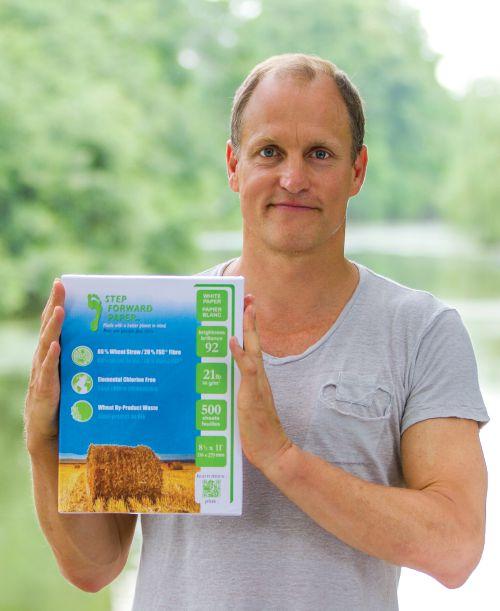
serves as a public face to champion the use of papers produced from agriculture residue, including Step Forward Paper made by Prairie Pulp and Paper, containing 80 percent wheat straw.
when we desperately need to keep new carbon out of the atmosphere.
Right here at home, more than 201 billion tonnes of carbon are stored in the trees, soils, water and peat of North America’s Boreal Forest – equivalent to 26 years of the world’s emissions from fossil fuel burning. Furthermore, naturally occurring ecosystem services provided by the Boreal, such as carbon storage and water filtration, are worth 2.5 times more than the value of extracting resources such as minerals and timber.
Releasing the carbon
The loss of the world’s forests releases about two billion tonnes of carbon per year. Tropical deforestation accounts for about 25 percent of anthropogenic emissions of carbon dioxide (CO2) and 12 percent of total greenhouse gases (GHG). This year’s forest and peat fires in Indonesia have been releasing more GHGs than the daily emissions of the U.S. economy and has Indonesia on track to be one of the largest GHG emitters of 2015.
Figures from the UN Food and Agriculture Organization (2010) show there are signs that deforestation numbers are decreasing in several countries, but nonetheless continue to grow at an alarmingly high rate in others.
and species vibrant.
Of course we will continue to use forests – for fuel and food, paper and lumber. What matters is which forest products we choose. These choices will make a huge difference to both our businesses and society.
Find out where your paper comes from. Choose not to buy from threatened and endangered ancient forests that are high carbon value. Choose second growth or pre-1994 plantation, FSC-certified forests. Choose to support the development of lower carbon options like strawbased papers and recycled fibre papers. Lend your support to the community of business leaders who advocate for the protection of high conservation value forest ecosystems.
Then let your customers know you are taking steps to address these critical issues. Update the sustainability content on your Website. As Canopy has discovered over the past decade, transparency is a critical step for printing companies moving forward and will only become more important for securing your status with large clients. Canopy has now collaborated with more than 750 companies involved with the printing supply chain and, during our discussions to establish environmentally sound purchasing policies, their committees always express a desire – and ever more regularly an RFQ requirement – to source forest fibre from non-controversial sources. Our corporate partners prefer that their printed products be produced on recycled and FSC paper and, importantly, that their printer has a finger on the pulse of sustainability issues.
Given that up to 80 percent of a printers’ carbon footprint is attributable to the papers they use, Canopy recommends that companies require their printers and paper suppliers to report transparently on key indicators like pre- and post-consumer recycled content, use of non-wood and straw content in papers, virgin wood fibre from non-controversial forest regions, among others. Public reporting of sustainability efforts is the first indicator of corporate integrity.
For the best paper choices, see Canopy’s Ecopaper Database.
Read the new cutting edge Life Cycle Analysis from New Leaf Paper for more compelling reasons to choose recycled. Choose wisely – for the global climate, for your business and for our common future.
percent.
Given the importance of intact forest landscapes in regulating our climate, it turns out there is much we can do at a local and national level, as businesses and citizens. Keeping high carbon forests intact is one of the most immediate and cost effective ways to keep our climate stable
neVa mUrtHa works with Canada’s magazine publishers and printers to develop visionary procurement policies. neva@canopyplanet.org
Actor
Harrelson
Marquis position
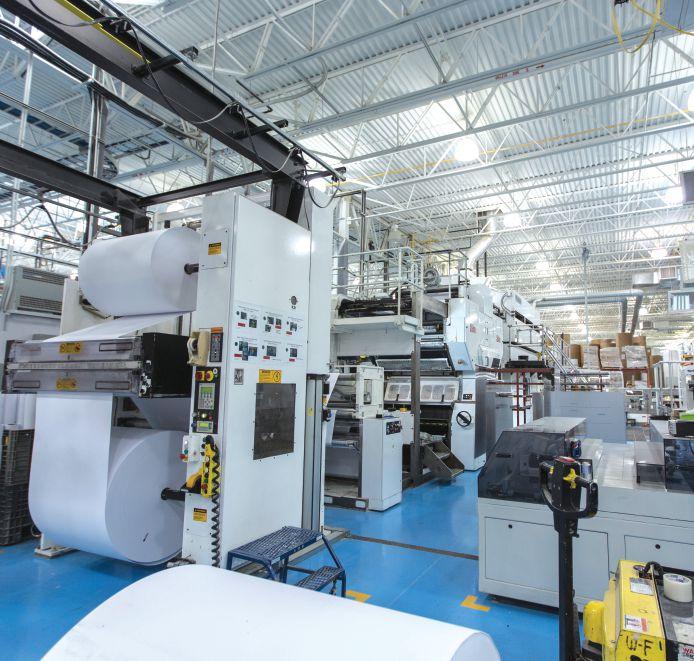
after new ownership was established in 2006, marquis book printing of montmagny has invested millions in acquisitions and new technologies to become one of canada’s largest printers
By Jon Robinson
marquis Book Printing over the past three years has more than doubled its annual revenue through consolidation, beginning in mid-2012 when the company, headquartered in Montmagny, Quebec, acquired two manufacturing plants from TC Transcontinental. The purchase of Transcontinental Gagné in Louiseville and Transcontinental Métrolitho in Sherbrooke added just over $35 million to Marquis’ revenue base, which was around $20 million before the purchase. The company’s employee count went from approximately 125 to 350 people.
Just over a year later, in late-2014, Marquis’ management team reaffirmed its confidence in the book-printing sector by acquiring certain assets of Imprimeur Lebonfon, a former Quebecor plant in northern Quebec, which included bringing over members of Lebonfon’s sales team who were generating about $10 million in business. Today, Marquis Book Printing is generating more than $60 million in annual revenue as one of Canada’s largest independent printing operations.
As Canada’s biggest monochrome printer, running six massive, highly automated Timson web presses in Louiseville, Marquis is also beginning to shift into more colour work to move with the book market. In October, the company’s future outlook for book manufacturing also materialized in an exclusive partnership
$15+ million
The amount of investment by Marquis during the past three years of its consolidation plan.
$61 million
Estimated annual revenue of Marquis Book Printing as it approaches the end of its current fiscal year..
with SoBooks of France to create a transatlantic technology bridge for on-demand book publishing. The most unique strategy currently being employed by Marquis, however, revolves around a yearlong project to build its own UV-enabled web-offset press, scheduled to start-up this December.
Printing platform
Maurice Marquis founded Marquis Imprimeur in 1937 and quickly began to focus on book-printing capacity after acquiring some rights from European publishers, because books were no longer being shipped overseas during World War II. He even built what was called the Bibliobus, travelling from town to town to sell books printed by Marquis. The company never lost sight of its core competency to manufacture books, a position that was embraced in 2006 through a management buyout by Serge Loubier, who now serves as President of Marquis, Pierre Fréchette, Vice President of Sales, and Marc Delisle, who remains involved as an advisor.
“Five years after the management buyout, we were where we said we were going to be,” says Loubier. “ Then we went all in with the [TC Transcontinental] deal. We pushed all of the chips into the middle.” At the time, Transcontinental, which was moving toward a marketing-services platform, was Marquis’ largest competitor in monochrome and two-colour book printing, which remains as the heart of its operation with newer investments like Canada’s first Variquick PC 15 press and an Oce’ Varioprint 6250.The Marquis platform has also been enhanced with a 10-colour Heidelberg (adding to four- and two-col0ur litho presses), a XeroxVersant and iGen150.
Over the past several years, Loubier has focused on annual capital expenditures of around $2.5 million to purposely build the platform and to support the more than $15 million invested in Marquis’ market consolidation strategy. Initially, Loubier explains the plan – as presented to the banks – was to shutdown the Louiseville plant acquired from TC, now called Marquis Gagné, and move assets to Montmagny to realize savings, but minds were quickly changed after spending time in the facility.
“The employees were like the gold out of the transaction that we made – a really good crew over there,” says Loubier, noting the plant is led by a relatively young workforce that was surprisingly bilingual, being based in a francophone region of Quebec. “The heart couldn’t live with the idea of closing [Louiseville] and we had also miscalculated the space needed to produce big runs of books… we didn’t have enough floor space, in my mind, in Montmagny.”
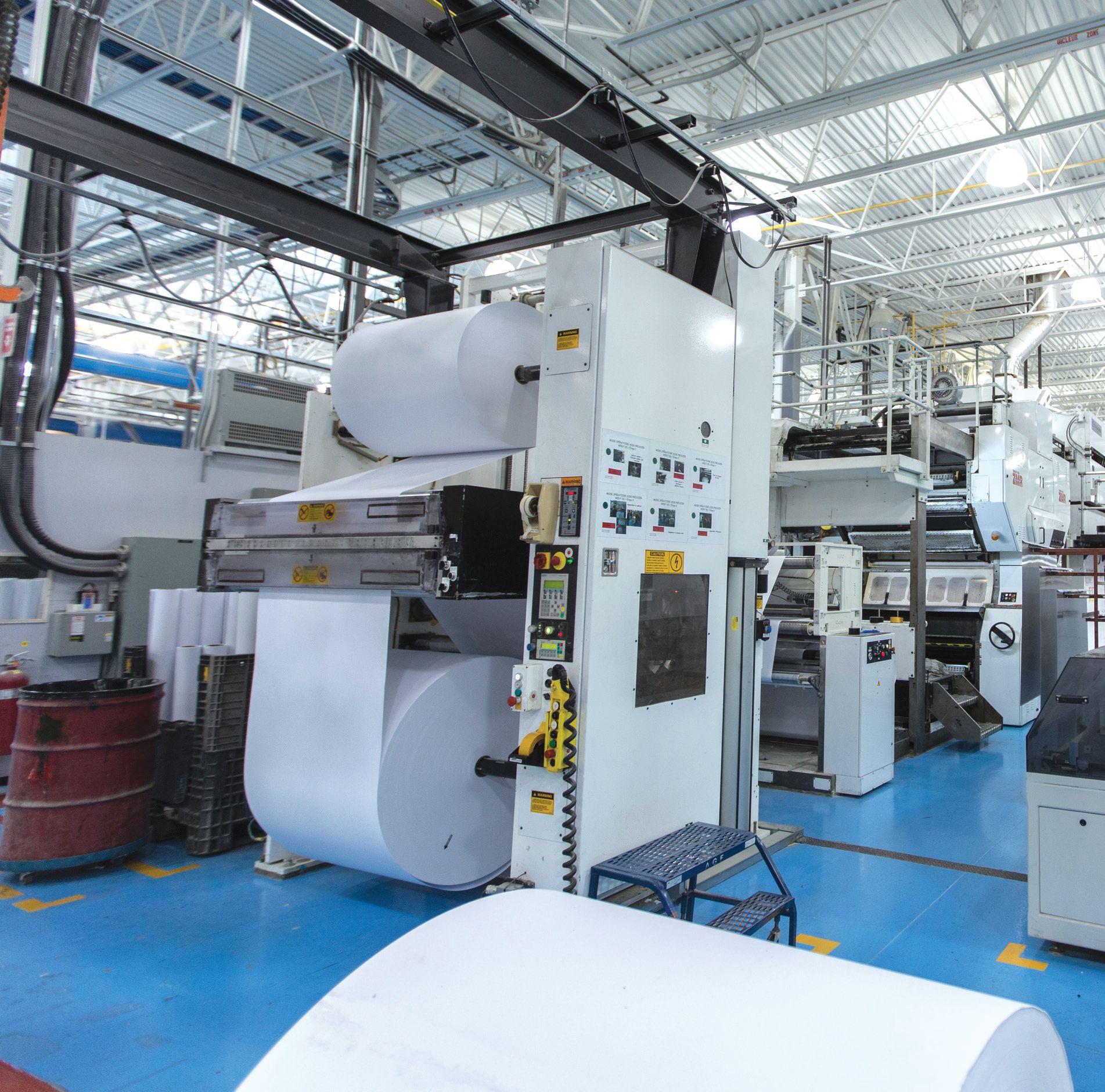
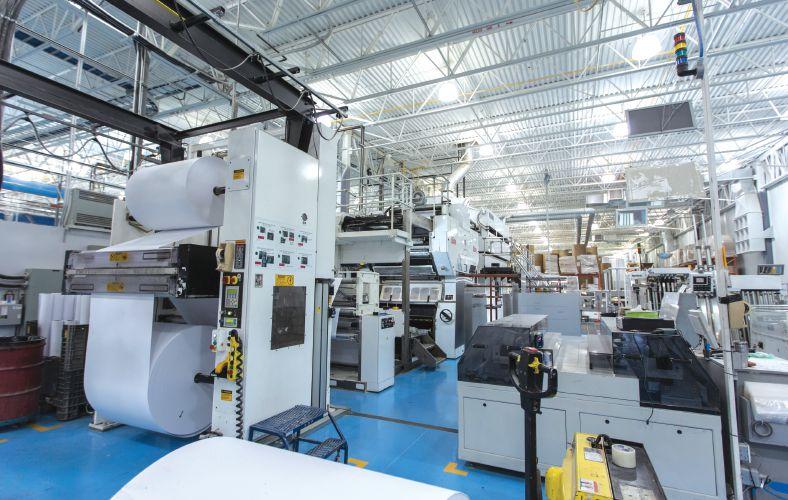
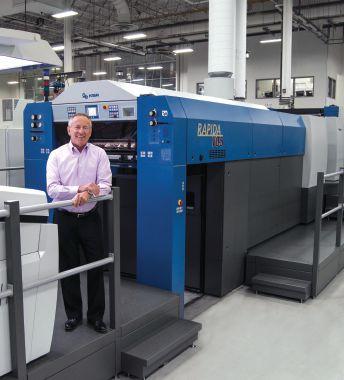
(Clockwise from top) Serge Loubier, President of Marquis (photo by Anny Lecault); a Timson ZMR in Louiseville; and a Kolbus KM 600 in Montmagny.
With a potential relocation to Montmagny, Loubier was concerned the skilled Timson operators and well-trained salespeople and CSRs from Louiseville might not join Marquis. This was the case when the Sherbrooke plant purchased from Transcontinental was closed, which also showed Marquis was ultimately going to do what was necessary to succeed in its consolidation plan. He worked with Louiseville’s union to settle on a 15 percent cut and a fiveyear contract, saving about $1 million per year in costs, and targeted opening up more business in the United States to support the plant.
At the time, Marquis was generating about $400,000 in business from the U.S. and the management team set an ambitious growth target to reach $4 million. “In the first year, we managed to bring in $5 million from the U.S.,” recalls Loubier, noting this was at a time when the Canadian dollar was at par with the U.S. greenback. “It has been three years since the deal and we are going to finish this year over $15 million [generated out of the U.S.].”
Loubier is now comfortable in stating that the consolidation plan
When every impression counts, you can count on Ricoh.
has worked out well. In explaining its success, he points to the stability provided by the Montmagny plant and its unique Marquis Laurentien division based in Quebec City. Purchased about a year prior to the Transcontinental deal, Laurentien was the province’s largest producer of school agendas and number two (behind Marquis) in yearbooks. With the TC Metrolitho deal, Laurentien became number one in both categories.
The Laurentien division has about 40 employees focusing on the typesetting and graphic design of books, particularly in the educational sector, including working with more than 1,000 schools. Marquis is now growing its work with schools in other Canadian provinces and again focusing on expansion in the United States.
New opportunities
Largely based on the dollar advantage for Canadian exporters, and a stabilized book-printing market, following a few years of uncertainly around the potential impact of electronic publishing, Marquis is now shifting toward more organic
growth for its printing platform. “For the next three to five years, our plan is to double that capital investment,” says Loubier, hinting this will likely point toward putting more sheetfed power into the platform, integrated finishing, and also new inkjet web press technology currently being investigated.
“We need [inkjet] technology that will accommodate monochrome with a click charge that we can then switch to a colour click charge,” says Loubier, noting Marquis’ unique need to maintain high-volume monochrome production as it looks to the future with colour. “I also want to be able to choose my paper, to change it, and I want to print like offset… I thought [press makers] would never achieve it, but they are starting to show me things.”
Loubier also remains intent on running what Marquis knows best – “a big press is hard to beat” – and the company’s vital litho systems are highly automated. “My average run at Marquis has to be 3,800 to 4,000, so my big concern is not the speed of the press when it is running. It is how long it is stopped for,” he says,
describing a recent run of 1,500 books with 144 6 x 9-inch pages that took just under 15 minutes to print. “We have Timsons in Louiseville with zero makeready.We do not stop to change the plates.”
In the more immediate future, however, Loubier is eager to start up the web press invented by Marquis. The eight-month project has been led by Alain Roberge, former owner and Director of Lebonfon, because of his engineering background and years of experience in web-offset production. An outside firm provided schematics for the 16-page press as Marquis planned out its interior, including the integration of a brand new closed-loop colour control system. In November, the company was adding folders and preparing to take the press apart for moving and reinstalling in Louiseville.
“We wanted a press that would do four-colour without heatset. The ink will be dried by UV lamps, so there will be no emanation and no gas involved in the process. It is going to be the greenest colour web in Canada,” says Loubier. “I like machines, so building my own press was always a dream.”
Invigorate your print operations with Ricoh’s ultra-reliable production printing systems and market leading service & support. Our cutting edge technology delivers outstanding colour consistency, quality and speed so you can handle the big jobs and quick turnarounds with precision. And with a wide range of size, media as well as our market leading service and support team, Ricoh has the machine you need to meet your printing demands – and grow your business.
For more information, talk to a Ricoh printing systems representative today. Expand your production printing horizons.
ricoh.ca/production
productivity and image quality
application support
in Class Media Handling
colour station for Clear & White Toner
pixel pushing powerhouse
providing an in-depth test review of affinity photo v1.3.5, available from the mac store for $57.99 or as a free trial, to see if serif software can continue to shake up the graphics software market with its inexpensive applications
By Zac Bolan
Within a span of 12 short months, UKbased Serif Software has turned the Mac graphics software market on its ear! Its first salvo – Affinity Designer – was released in October 2014 (reviewed in PrintAction February 2015) and cut a broad swath into the design, pre-media and prepress software market with powerful and useful features aimed squarely at graphic arts professionals. And instead of exacting a monthly toll from its users, Serif chose to sell perpetual licenses of Affinity Designer through Apple’s online store for a fraction the cost of competing applications. Now Serif is poised to disrupt the image-editing and photography market with its next product for graphics professionals and amateurs alike – Affinity Photo. As with Designer, Serif has engineered Affinity Photo as a Mac application from the first line of code instead of porting their popular PhotoPlus application from the Windows side of its business. And based on my initial impressions and early industry buzz, Affinity Photo is a strong sophomore effort for the company as it courts the Mac design, photo and graphics pro.
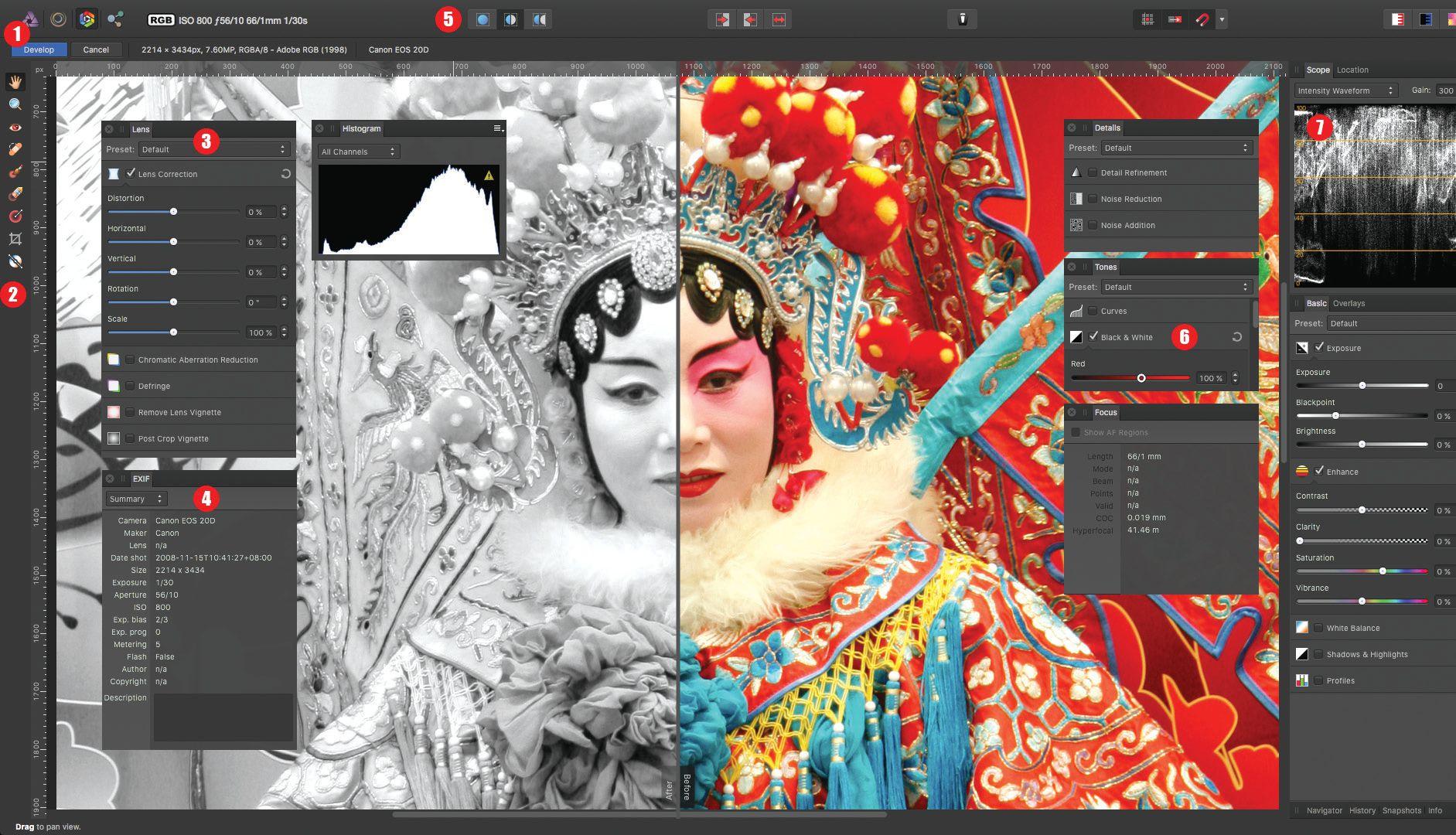
1 Users switch between Personas for varied image editing tasks; 2 A full tool dock chock full of goodies relevant to the selected Persona;
3 Develop Persona provides powerful lens correction capabilities, but no pre-installed lens profiles; 4 Full EXIF information;
5 Three view options including single window, split screen (shown), and dual images showing before and after; 6 Adjustment panels for Develop Persona functions; and 7 Scope panel shows distribution of chrominance and luminance.
Personas for the people
When first launching Affinity Photo (AP) the default user interface opens in an application window and presents a familiar looking array of image-editing tools and panels that are relatively easy to navigate for both experienced image pros and amateurs. As with Designer, Affinity Photo groups tools and functions into task specific workspaces called Personas – good for those keen to organize their workflow. Initially, Photo opens with the Photo Persona active, presenting a familiar looking Tool Dock on the left chock full of the usual (image-editing) suspects including: Move Tool; Selection Brush; Cropping; various paint brush and fill tools; dodging and cloning tools; as well as a few mystery tools.
Mystery tool #1: The AP Flood Select tool enables users to select pixels by colour similarity. As you drag the tool across a range of pixels, the selection size grows to encompass a wider range of colour. Flood Select is especially useful in isolating shadow areas in high contrast images. Mystery tool #2 is the Inpainting Brush, another tool unique to AP that can be used to identify damaged areas within an image, and then used to paint over the missing data with new pixels reconstructed based on image information from the surrounding pixels. It sounds complex, but is really just a new and innovative approach to content-aware restoration.
The toolbar running horizontally along top of the Photo Persona application window houses auto levels, contrast, colour and white balance buttons in addition to selection and quick mask tools. In particular, AP’s Quick Mask feature enables users to easily build masks to isolate key elements within their images, then toggle how the selection is displayed. Other toolbar inhabitants include a nifty Force Pixel Alignment tool that will snap vector objects or pixel selections to full pixels – very useful for Web graphics – as well as a full range of arrange, insert and alignment functions.
A full range of filters can be found in the Photo Persona menubar, including the varied flavours of Blur; Sharpen; Distort; Noise; Edge Detection; Shadows/Highlights and so on. When launched each Filter pops up in its own window with all the appropriate controls and parameters for the user to adjust. Split Screen, a feature borrowed from Designer, is built into the filter window and enables users to view images in full screen, split screen or mirrored screen to preview the effect
This image of a porcelain statue, used to test out Affinity Photo, was taken by the article’s author at China Print 2008 in Shanghai.
Approximate smaller size of a saved and edited test photo in Affinity software when compared to the same image, in terms of pixel density, saved through Photoshop. 70%
al-time
As you might expect, the right side of the default AP workspace contains a familiar set of panels relevant to the Persona that the user is working in. For example, the Photo Persona includes essential panels such as Layers; Effects; Swatches; Brushes; Histogram; Navigator; and so on. All panels can be rearranged to suit individual preferences within the application window to create a customized workspace. The chaotically minded can opt to do away with the window altogether by choosing to work in Separated Mode, which breaks all the aforementioned toolbars and panels into free-floating elements that can be placed anywhere on your screen
Using Layers, AP provides a comprehensive non-destructive editing workflow allowing users to apply any adjustment or effect to underlying Layers. Colour images can be converted to greyscale using a B+W adjustment layer similar to a channel mixer you might find in other photo-editing applications. Unique to Affinity Photo, Live Filter Layers can be applied to any layer and modified in real-time.
Portrait photographers and prepress techs dealing with a lot of
headshots will appreciate AP’s Frequency Separation filter which enables users to correct texture and colour independently – great for blemish removal and smoothing coarse skin textures without affecting skin tone.
Liquify & Develop
Affinity Photo includes three additional Personas for users: Liquify; Develop; and Export. As the name implies, Liquify Persona is the workspace for distorting pixels in images. When switching to the Liquify workspace, a grid is immediately applied to your image showing brush size and distortion effect. The Toolbar displays a selection of distortion tools, such as Twirl; Pinch; Liquify Turbulence Tool; as well as a Freeze Tool that creates a mask to protect an area in your image from distortion, and a Thaw Tool to remove it.
Opening a Camera RAW file in Affinity Photo automatically defaults to the Develop Persona – AP’s robust RAW editing workspace. In addition to RAW, the Develop Persona works with other standard image formats and Photo’s tabbed UI means that users can work with RAW images alongside other files. Develop enables users to apply multiple adjustments to images encompassing exposure; white balance; and black point along with a variety of other professional-grade adjustments. The AP Scope panel shows users the distribution of chrominance and luminance within their image – a capability I have not previously seen in an image-editing application.
I was particularly impressed with the powerful lens correction features in the AP Develop Persona, including notable noise reduction for high ISO images. That said: Affinity Photo has the ability to create and save presets for rectifying lens distortion, but this version does not appear to include profiles for specific lenses. Hopefully, some popular lens profiles will show up in a future version. When finished perfecting your RAW image, Affinity Photo prompts you to ‘Develop’ before changing Personas in a nod to the analog roots of darkroom wizardry. The Export Persona affords users very precise control over getting an image out of Affinity Photo in a variety of formats. At this point, I should mention that AP has its own propriety file structure for saving files you are actively working with. The .afphoto file type contains all layer, filter, mask and effect information in addition to the pixels in your image. Although this format is
alongside the original image in re-
both efficient and convenient, users will still need to export more common image formats for prepress use. Fortunately, the Export Persona makes short work of this task with all the options necessary to export SVG, JPEG, TIFF, PNG, GIF, EPS and PDF available in one convenient workspace. Interestingly, I saved the same test image in Photoshop and Affinity Photo – the Affinity Photo file was about 70 percent smaller while maintaining the same pixel density.
Under the hood
It is easy to get wrapped up in all the bells and whistles Affinity Photo provides for image-editing pros and overlook a few other pretty remarkable attributes. Under the hood, AP uses a 64-bit architecture and harnesses every graphics advantage the Mac ecosystem has to offer, such as: Support for Open GL; Grand Central Dispatch; Core Graphics; and the Retina display UI. In plain English this translates to fast, live processing and instantaneous previews of a huge range of high-end filters and effects; masking effects and advanced adjustment layers as
Wednesday, June 22, 2016
Mississauga Convention Centre
well as live blending modes. Affinity Photo is very fast, even on modestly configured equipment such as my aging 2012 Macbook Air.
Prepress pros will be glad to hear that in addition to support for RGB, Greyscale and LAB colour spaces (both 8- and 16-bit), AP provides users with a start-to-finish CMYK workflow, something of a rarity in image-editing applications within this price range. Add to that a multi-document tabbed interface, support for unlimited layers and impressive live preview performance even when applying effects to massive layered images and its pretty tough to see a downside to working in Affinity Photo!
That’s not to suggest Affinity Photo provides everything a photographer, designer or prepress pro wants or needs. A few useful production capabilities are missing in action with this version, including support for scripts, HDR image compositing and panorama stitching. Also, minor conveniences such as the application recognizing the pixel dimensions of an image in the clipboard when creating a new file have been overlooked – in this ver-
sion at least. The good in Affinity Photo’s imperfections is that Serif has fodder for future updates –something they have established a good reputation for with Affinity Designer.
Elephant in the prepress department
“Gee, Affinity Photo sounds an awful lot like Photoshop! How does it compare?” Google “Affinity Photo” and you will see “Photoshop Alternative” or “Photoshop Challenger” as the headline or opening stanza in dozens of articles. When assessing Affinity Photo, I tried to put more than two decades of Photoshop experience on the back burner and take an unbiased look at this new application instead comparing the two programs feature-by-feature. As a result, I have concluded that Affinity Photo is the first image-editing application I’ve worked with that can meet the dayto-day production needs of most designers, photographers and image-editing specialists that didn’t have an Adobe logo on its welcome screen. This application provides all tools needed to work with CMYK
images with full Photoshop import (.PSD and .PSB) and export capability (.PSD) while maintaining layers and effects. Does Affinity Photo do everything Photoshop does? Of course not! Photoshop benefits from more than 25 years of development and includes arcane features such adhoc video editing and 3D model rendering and printing – neither which might be relevant to many designers, premedia and prepress specialists.
And if, like myself, you have been working with Photoshop on a professional level for more than 20 years you have also likely memorized plenty of key commands and know where to access every single function with a flick of the wrist. With that level of muscle memory dedicated to working in Photoshop, you will have some re-learning to do before becoming as effective in Affinity Photo. The key takeaway here is that in most cases you can eventually be as effective once you are on the downhill side of the Affinity Photo learning curve… a pretty big accomplishment for Serif’s new kid on the image-editing block.
PrintForum, presented by PrintAction magazine, is a national conference for printing and imaging professionals from across Canada. Designed to build thought leadership in business strategy and technological innovation, PrintForum is a one-day event featuring educational sessions, networking and exhibits of new industry technology
For sponsorship and exhibitor information, please contact Danielle Labrie, National Advertising Manager, 1-888-599-2228 ext 245 Stephen Longmire, Associate Publisher, 905-713-4300
Crossing the finish line
postpress binding and finishing for commercial print, packaging, direct mail, and display graphics will be key attractions in germany at drupa 2016
By Cary Sherburne
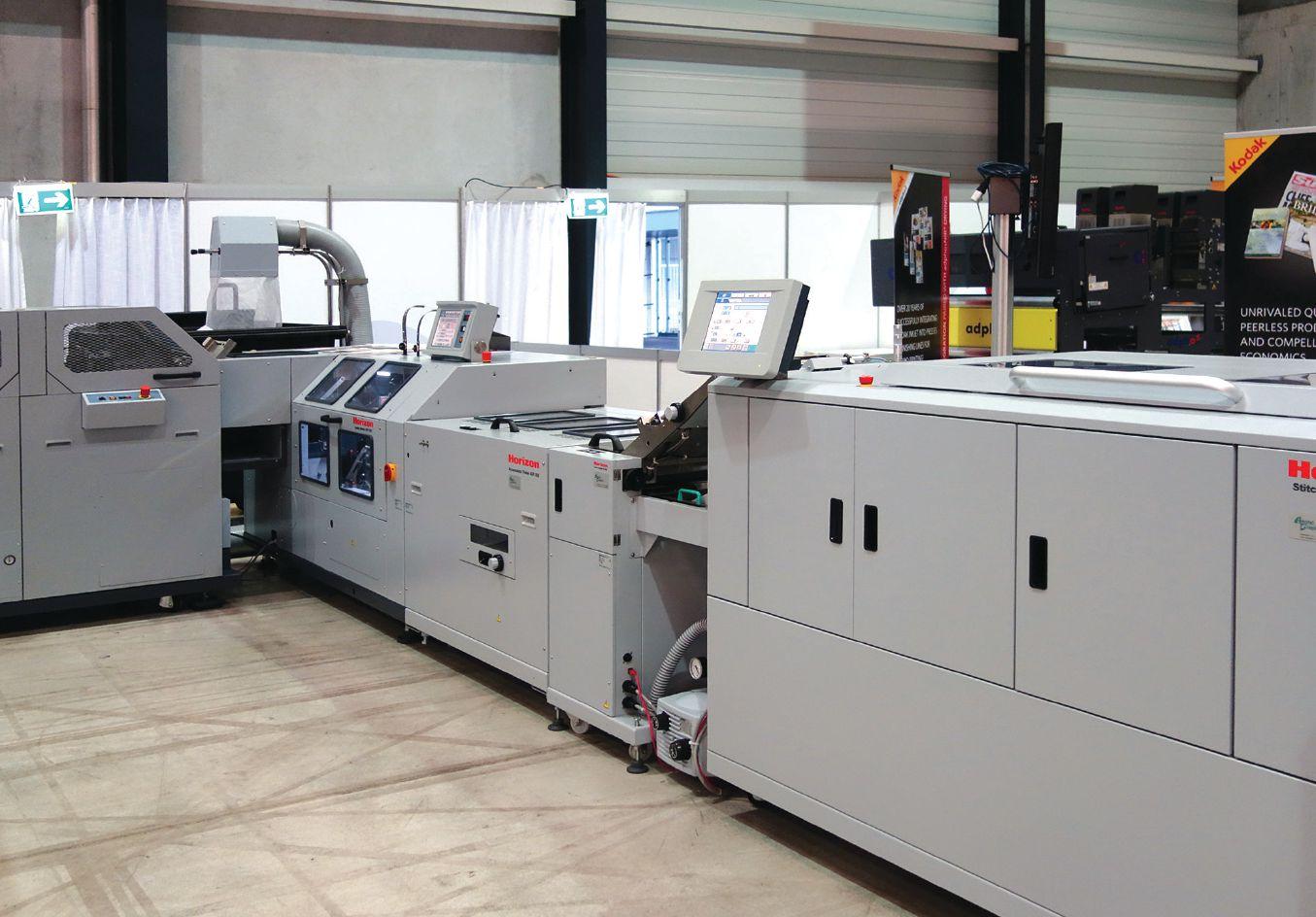
For many companies, postpress processes are still a bottleneck, perhaps the last hold-out in the analogue-to-digital transformation. Yoshihiro Oe, General Manager Export, Europe and Africa Business Alliance at Horizon, explains, “Many customers are still primarily focusing on investment in the prepress and press areas and less on finishing; this is a challenge we face.”
We believe that is rapidly changing, however, and we will see many advances at drupa 2016 toward making postpress processes as efficient as the rest of the production workflow, as well as a stronger interest in these developments on the part of end users.
“Historically postpress was always seen as the industry’s Cinderella technol-
ogy, taken for granted, undervalued and overlooked. But as run lengths fall and turnaround times come under more pressure, advances in postpress automation and integration are becoming increasingly important as printers realize that the latest finishing technologies can not only ease production bottlenecks, but actually generate new opportunities,” says Darryl Danielli, Chief Editor UKbased PrintWeek
How a job will be finished must be taken into consideration from the very beginning of the design and production process. Impositions that are most efficient for the printed sheet may not be the same impositions that are efficient in postpress as each piece of finishing equipment requires a unique imposition; and these two efficiencies must be well balanced for a smooth workflow with minimal waste.
Manufacturers of digital finishing equipment are pushing the production of book blocks with minimal touch points.
And finally, automation is key. For many companies, there is already significant automation in the prepress-to-print process, but less so in the bindery. Manual machine set-up can be time consuming and error prone, often requiring highly skilled workers and production of overs to allow for anticipated waste. To the extent machine setup can be automated based on job ticketing information, bar codes, marks and the like, errors are less likely to occur, the number of overs required can often be significantly reduced, and less skilled workers can be utilized in the postpress area.
“You don’t want to be a commodity printer these days, even in short run, and value-added postpress solutions are a good way to move out of the commodity zone,” says Jerry Sturnick, Xerox Finishing Business Manager.
Xerox has played a leadership role in finishing automation since the launch of its ground-breaking DocuTech Production Press in 1990 and the development of its Digital Finishing Architecture (DFA) that now includes unique dual mode configurations which allows the same finishing solution to support both inline and offline workflows. Sturnick reports that Xerox has assembled a diverse portfolio of finishing partners over the last 30 years. “We are seeing that about one-third of digital page volume is finished inline with the other two-thirds offline,” he adds. “That’s why we introduced a dual mode feeder at drupa 2012 that uses the same DFA interface to direct sheets to inline or offline finishing with no change in software required.”
Xerox is extending its finishing partnerships and automation initiatives beyond its traditional sheet-fed environment into production inkjet and packaging.
Another great example of workflow automation at work postpress is Georgia (U.S.) based Benson Integrated Marketing Solutions who processes 200+ jobs per day. Peter Xierten, Director of Systems and Information Technology, says, “Saving three to five minutes per job on cutting set-up adds up to two or three hours per day saved in cutting time. We now have one operator working one shift [since implementing a finishing automation solution from HP], whereas before we needed two cutters working all day, two shifts and overtime.”
of separate but compatible modules that are mobile and interchangeable, creating a mix-and-match finishing department. The company also describes a Parking Lot Concept, with an unwinder and sheeter at its core. Lance Martin, MBO’s Director of Sales, North America, says, “With this core in place a printer needs only to purchase the modules necessary for a given job. It is also an ideal model for printers who expect growth since adding modules to the Parking Lot is more cost effective than purchasing entirely new solutions.”
Masters of mail
Despite all the hype surrounding digital marketing – and the investments brands are making in digital media – even among younger consumers 92 percent say they prefer direct mail for making purchasing decisions, with 67 percent of consumers overall expressing this preference. And, according to a Pitney Bowes survey, 76 percent of small businesses say their ideal marketing strategy encompasses a combination of both print and digital communication.
In the direct mail segment, automation is key, both from a cost perspective and to prevent errors. In addition to automated inserter setup, look for inspection and real-time reporting systems such as those from Ironsides Technology, Videk and others, to play a growing role.
Both transaction and direct mail have already seen significant automation but there is room for more. A good role model is UK-based Capita Document & Information Services, who has implemented a fully automated, as-nearlights-out-as-you-can-get mail operation. Capita chose to work with Ironsides Technology to implement automated production tracking with an umbrella solution that integrates the end-to-end workflow across the production platform as well as enabling quality control and real-time reporting. This unifying solution enabled Capita to meet its goal of complete traceability from composition through final preparation for entry into the mail stream.
High-value finishing
Percentage of small businesses, according to a Pitney Bowes survey, indicating that their ideal marketing strategy encompasses a combination of both print and digital communication.
Modularity for flexibility
It is also important to note that many finishing vendors, especially in the transactional, direct mail and commercial print spaces, including MBO, Mueller Martini and Horizon, offer modular finishing solutions that can be configured on the fly as production needs change. This approach results in more flexibility and better utilization of and ROI for postpress investments.
MBO is a great example of modularity at work.The company offers a wide variety
cutting machine for converting paper, labels, folding carton and microflute, which was introduced at drupa 2012. Boutwell Owens was the first North American packaging converter to implement the Highcon solution. In addition to enabling cost effective production of small runs and speeding time to market, these types of digital solutions open new doors for brand owners, designers, printers and converters alike.
“When you have a structural designer that has been told for so many years that you can’t do certain things, today it is all feasible and the handcuffs are off. The world is open; we are no longer restricted by tooling and cost. People can do things they never before imagined!” Ward McLaughlin, CEO Boutwell Owens.
Other suppliers that offer digitally-enabled high value finishing solutions include the Scodix family of digital enhancement presses that offer post-print addition of variable density embossing and gloss and now digital foiling; and MGI with coating and foiling options. Others, like Kama, Therm-o-Type, Hunkeler and Standard Finishing, offer die cutting and perforating solutions optimized for short runs. Kama also offers hot foil, embossing and in-register holograms for even more added value.
Digital press manufacturers such as Canon, EFI, HP Indigo, Kodak, Ricoh, Xeikon and Xerox are partnering with these postpress suppliers to offer in-line and near-line laser die cutting, coating and other advanced postpress capabilities designed for short-run and one-off efficiencies as well as medium run length production quantities. In addition, digital presses from these companies also offer clear toners that act as a coating agent as well as adding pop to images.
Where print itself can often be a commodity, adding these types of specialty finishing increases the value of print, does a better job of catching the attention of recipients, and can help marketers get their messages out in a way that is difficult to do with digital communications.
Packaging perfection
Regardless of the print technology being used, there are a growing number of digital finishing solutions that add value to the final printed product along with reduced time to market, reduced waste and cost-effective finishing of short to medium runs. And their value is being recognized by buyers and industry associations alike. High value finishing is one way to decommoditize print, mitigating price-based buying decisions.
Israel-based Highcon was just named a recipient of the prestigious Printing Industries of America 2015 InterTech Award for Technology Innovation for its digital cutting, creasing and laser die
Packaging converters are also benefiting from digital workflows. The digital die cutting and finishing techniques discussed above, combined with digital printing, are making it easier for converters to offer not only small lot finished packages but also faster, more cost effective mock-ups and samples often produced using the same substrates and printing processes that will used for the final product.
There are also a growing number of cutting tables from vendors such as Esko, Mimaki and Zund that are designed to quickly deliver shorter runs of finished goods for use as final product or for samples/mock-ups in the packaging, commercial print and display graphics markets.
Ink companies are producing more products for high-quality adhesion for toner and inkjet production.
These companies also offer sophisticated software, such as Esko’s i-Cut Suite, as well as tool sets that speed setup and make these devices easier and more efficient to use.
Some packaging solutions providers such as Bobst are turning their attention to increased efficiency and reduced make-ready times for labels, flexible materials, folding carton and corrugated applications as well as the ability to
integrate with other systems converters have in place. Bobst’s recent acquisition of a majority stake in Nuova GIDUE, a company that began introducing digitally-enabled solutions for the labels and packaging market in 2000, sends a signal about its future intent. Expect to see this trend continue and accelerate. Look to see these companies move upstream as well. For example, the 2014 Bobst annual report contains this statement that provides additional insight into future strategies:
“On the Digital Packaging Solutions side, in 2015 we will be installing pre series machines for digital printing at corrugated board sites.”
Books and beyond
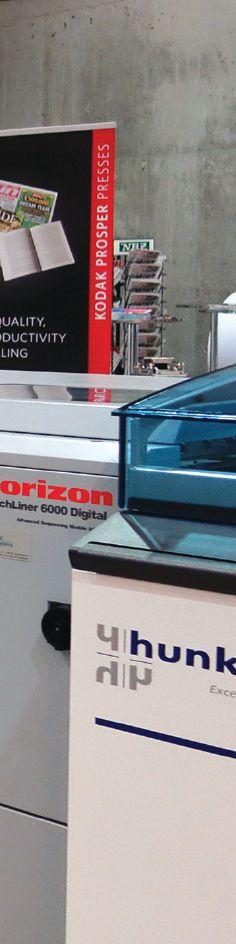
Many book printers have implemented production inkjet technology that is replacing offset volumes. Digital lines for book binding have also made huge strides. For example, earlier this year at Hunkeler Innovationdays, Hunkeler unveiled its smart book solution for short run book production. It starts with cold glue pre-gluing of the book block to prevent slippage as the block proceeds through the rest of the binding
process. Book sizes are dynamically adjusted, so that each book that comes off the line can be a different size and thickness. Glued book blocks are then handed off to an inline perfect binder, which can be sourced from a variety of different manufacturers. This is just one example of the advanced binding solutions now available to book printers.
Another is Horizon’s stacking solution for B2 digital presses which converts digitally printed B2 sheets into any required sheet size down to A6, collating them in page order to form book blocks, resulting in print to book block with minimal touch points. MBO also offers a fully variable book block production solution capable of variable format, page count, signatures and more. And Horizon, Kolbus and others offer automated digital-conventional-hybrid book finishing lines that can be configured to meet each plant’s specific manufacturing needs, efficiently producing both perfect bound and case bound books.
Israeli book printing company Cordoba added the Hunkeler mod-
ular book block solution to its Kodak production inkjet press earlier this year in a nearline configuration in order to address decreasing run lengths as a result of changes in the law in Israel that prevent heavy discounting that was a standard practice in the country. The installation was timely, as the company has seen a 60 to 70 percent reduction in volume for black-and-white book printing, making it inefficient for some titles to be produced using offset printing.
And, of course, especially for perfect-bound books, lamination is important to product printed covers. Providers of laminating solutions such as Neschen and Sihl are working hard to optimize those for an ever-growing variety of digital toner and ink types to ensure high-quality adhesion.
Keep in mind that in postpress, it is especially important to ensure flexibility in your configuration –the ability to add and subtract modules, reconfigure on the fly and more – especially as new customer requirements emerge or new technologies come to market that can improve postpress productivity.
of
as it
avoiding cover curl on your Perfect/ PUR Bound Book Covers.
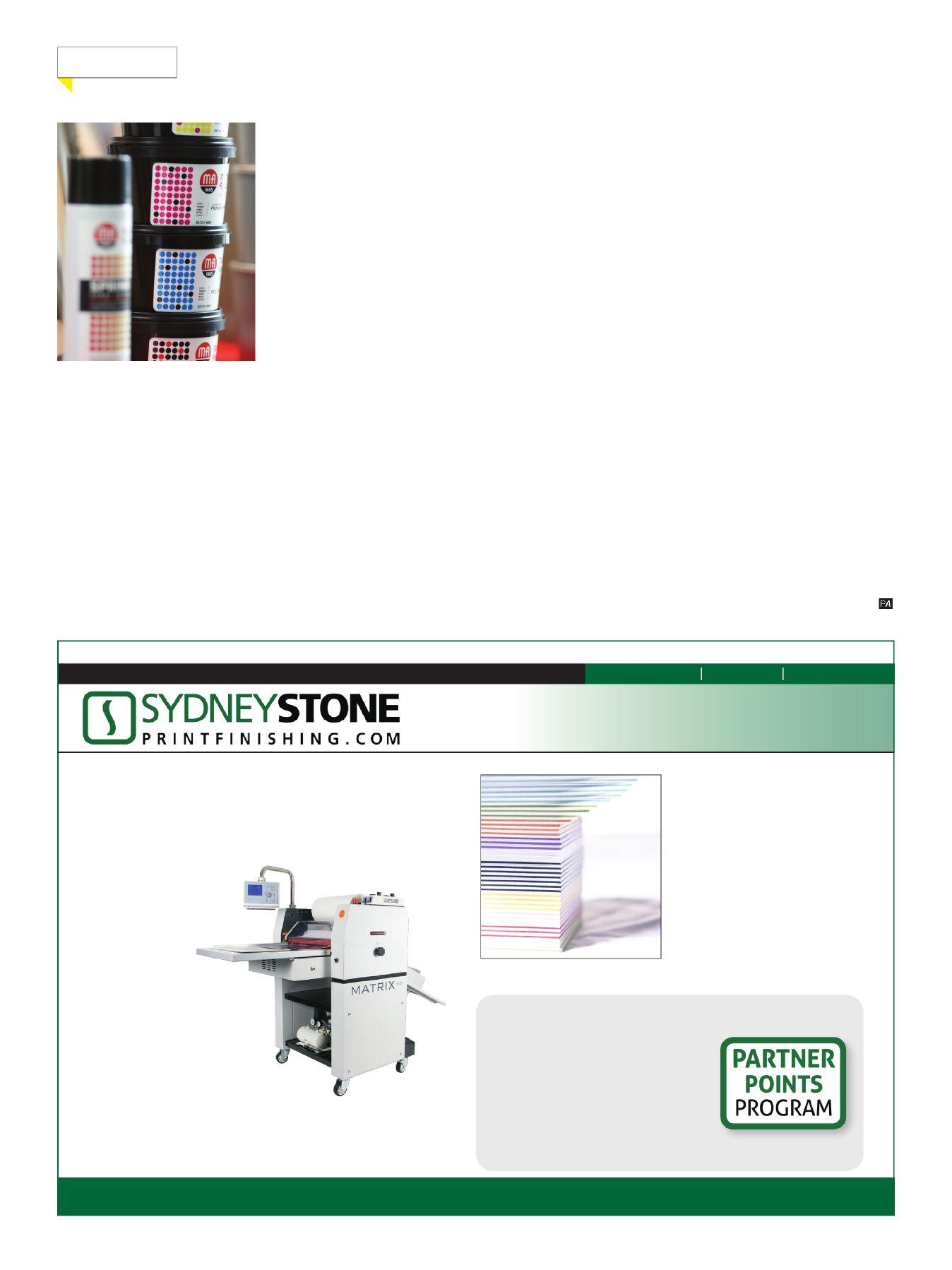
The Matrix can also be used to foil and create Spot UV-style effects with the use of our range of Finishing Films Great for bespoke print jobs. The Matrix really is a truly modular laminating system.
Detailing the newest technologies from Fujifilm, Adobe, EFI Reggiani, Agfa, Heidelberg, Drytac, Xaar, Sydney Stone, Veritiv, Ultimate TechnoGraphics, Goss, Inca Digital, and more
Your Superior choice for Print Finishing and Lettershop Ser vices
Heavy boards, plastics, laminations or digitally printed works up to 30 pt can now die crease, fold and even glue in-line.
Inca Onset X Series
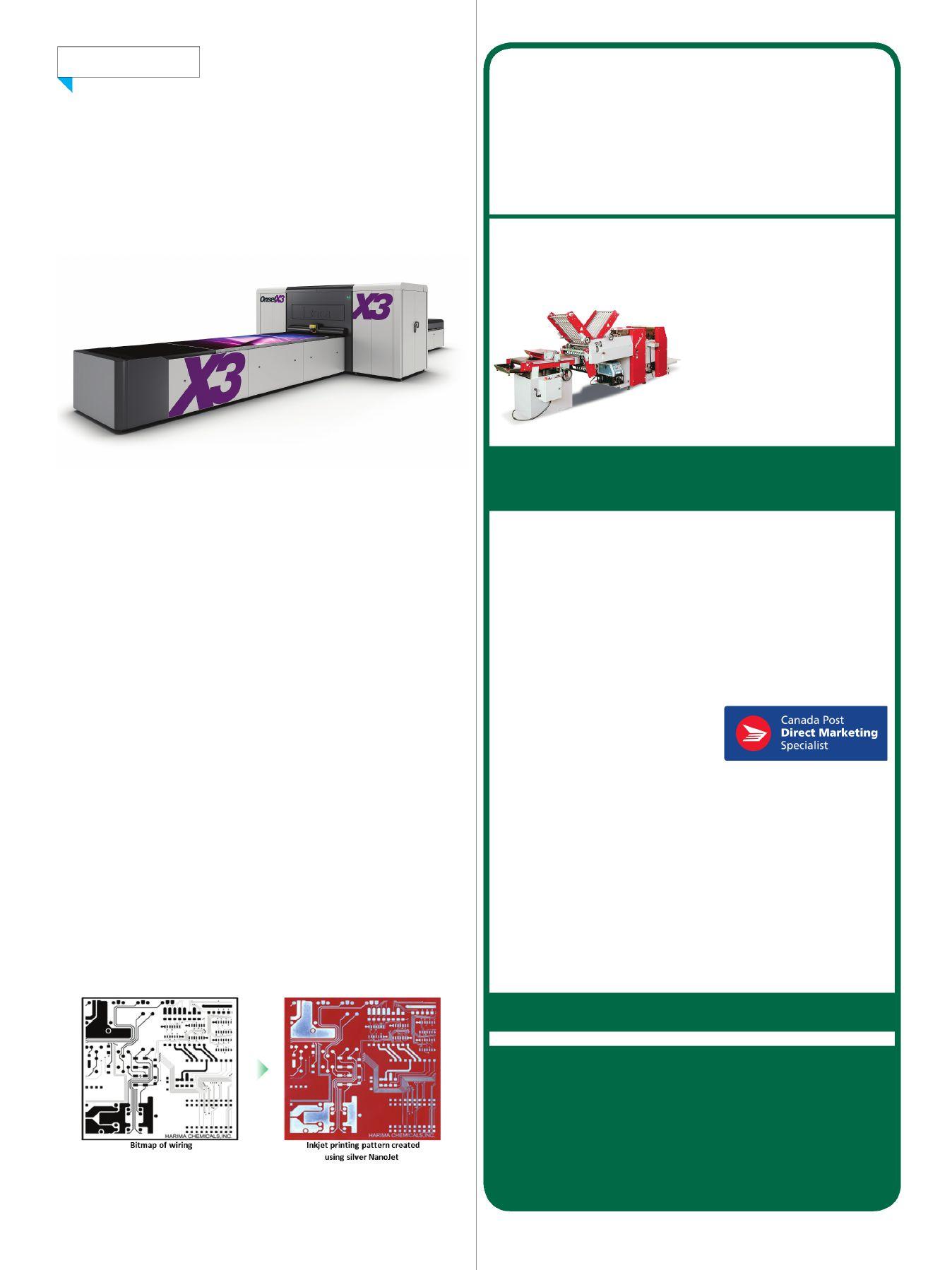
In October, Inca Digital unveiled the new Onset X Series of large-format flatbed inkjet printing systems, which the UK-based company describes as providing future-proof scalability. Sold exclusively by Fujifilm, the Onset X Series is described by Inca as its fastest-ever printer, reaching speeds of up to 900 square metres per hour. The systems also leverage a 25-zone vacuum table and UV control system to help eliminate masking, and a carriage that can incorporate up to 14 ink channels. This scalability, explains Inca, allows printers to configure an Onset X system for the combination of productivity, colour and quality that best matches their production requirements.
Users can start out with the Onset X1, which runs at up to 560 m2/hr or 6,027 f2/hr, producing 112 full-bed sheets per hour. The Onset X2 runs at 725 m2/hr or 7,803 f2/hr producing 145 beds per hour. The new Onset X3 at 900 m2/hr produces up to 180 beds per hour. The Onset X Series printers use a range of Fujifilm Dimatix print heads,
while handling substrates in sizes of up to 3.22 metres (126 inches) x 1.6 metres (63 inches) and thicknesses of up to 50 mm.
Xaar and Lawter Conductive Inks
In November, Xaar plc, which makes industrial inkjet technology, and Lawter, along with its parent company Harima Chemicals Group (HCG), announced a new collaboration to optimize a line of nanosilver conductive inks for use in Xaar 1002 inkjet print heads. The technology will be of interest to manufacturers of consumer electronics goods looking to print antennas and sensors with silver nanoparticle ink.
Xaar explains inkjet is a cleaner process than other methods of printing silver inks, which is especially relevant when printing onto a substrate, such as a display, in which any yield loss is expensive. With inkjet, manufacturers can precisely control the amount of ink dispensed in certain areas of a pattern, continues Xaar, so that the ink or fluid deposited can be thicker in some areas. Inkjet is also one of the few
1. ONE-STOP SHOP — Die Cutting, Bindery, Data & Lettershop.
2. SUPERIOR TECHNOLOGY — Die crease without a die, then fold and even glue all on the same machine, up to 30 pt.
3. INTEGRATED MODULAR UNITS — Combined in-line finishing: crease, fold, glue, tipping, envelope inserting, ink jetting (Duplex), clip seal (3 sides), mail prep.
4. SAVE ON POSTAGE COSTS
—As a Certified Canada Post Direct Marketing Specialist, we get contract pricing reductions.
5. RETURN MAIL PRODUCTS — Customized “Return Mailers” created in-line with “U” or “BOX-shape” remoistenable glue, time perfed applications and envelope formation.
6. MINI-BOOKLETS — Saddle-stitch and trim 2-up booklets in-line to the size of a business card. No need to trim off-line, or do 2 passes.
7. HIGH SPEED EQUIPMENT — High speed Tipping, Folding, Saddle-stitching and soft folding ensuring on time delivery.
Onset X3 runs at up to 900 square metres per hour.
Narrow particle-size distribution makes Lawter’s new line of nanosilver conductive inks well suited for complex print patterns.
technologies
Veritiv Endurance
In October, Unisource Canada, a Veritiv company, launched Endurance, a private brand of paper products, for the Eastern Canadian market. The paper line was previously used in the U.S. commercial print market. Positioned as a premium, relatively low-cost product (for performance, quality and reliability), Endurance is a coated paper and also available for digital categories with matching text and cover and basis weights ranging from 60.8 lb text to 120 lb cover. The Endurance line is Forest Stewardship Council (FSC) Chain of Custody certified.
Ultimate TechnoGraphics and EPMS
In October, Enterprise Print Management Solutions (EPMS), a developer of print MIS, and Montreal’s Ultimate TechnoGraphics Inc., a developer of imposition and finishing software, reached a technology integration partnership. EPMS’ Gang Run Wizard will now be integrated with Ultimate’s AutoFlow Estimator to plan and produce gang runs, allowing users to access key information when submitting a production work order.
The Gang Run Wizard developed by EPMS helps find common jobs that can potentially run together. The software allows the user to engage definable filters like substrates, inks, finishing requirements, sizes and product type when looking for gang-run work. This module can be extended to also use Ultimate’s AutoFlow Estimator as an added option to determine the Gang Run layout for each group of jobs and lay out different scenarios.
Goss contiweb
In October, Goss launched six new, modular unwinder/splicers and rewinders for its Contiweb product lines to be used with inkjet web presses. Developed at the Contiweb facility in The Netherlands, Goss states the new product lines have been designed to equal its Contiweb splice performance of 99.7 percent but now for digital webs.
Available in two web widths, 770 mm (30 inches) and 1,100 mm (42 inches), the CD range of splicer/ unwinders and the CR range of rewinders share feature floor-level loading and unloading of paper reels; unwinding/rewinding in either direction; and motorized reel side-
The CR range of rewinders is available in 770 and 1,110 mm widths.
lay adjustment; all of which can be monitored throughout via an HMI screen on the unit. Each model is shaftless and uses pneumatically expanding core chucks driven by low-noise electric motors.
The Goss Contiweb CD series of unwinder/splicers are available with additional levels of infeed control, web guidance, remote operation through the central control system, and remote diagnosis via VPN. The Goss Contiweb CR Series of rewinders allow for transfer between reels of different width and paper thickness.
Sydney Stone, moHr distribution
In October, Sydney Stone announced plans begin distributing and servicing MOHR paper cutters (made in Germany by Adolf Mohr Maschinenfabrik GmbH) in Canada. The models carried by Sydney Stone include the MOHR 56, MOHR 66 and MOHR 80 cutters with all units available in the ECO and NET models. Sydney Stone will also be distributing the MOHR BC-330 three-side trimmer, as well as the new DigiCut laser cutter introduced by MOHR earlier this year. Sydney Stone is also carrying MOHR parts and supporting the equipment through its technical services team.
German-made MOHR cutters are available in both ECO and Net models.
Fujifilm Uvistar Hybrid 320 UV
In November, Fujifilm debuted Uvistar Hybrid 320 UV as a 3.2-metre, combination flatbed and roll printer, capable of producing output at speeds of up to 2,100 square feet per hour.The inkjet system uses Fujifilm Dimatix Q-Class print heads and Fujifilm Uvijet inks to produce full greyscale. The press is available in an eight-channel configuration delivering CMYK, Lc, Lm, Lk and Orange inks. A nine-channel configuration is available to include white.
The Versa-Drop technology of the Dimatix Q-Class print heads allow the press to image in greyscale with droplet sizes ranging from 10 to 30 picoliters. The Uvistar Hybrid 320 also leverages what Fujifilm describes as a patented tri-lobal belt and six-zone vacuum system to handle roll or rigid substrates. Additionally, Fujifilm explains a dancer bar with spreaders keeps difficult roll media from wrinkling before it enters the print area. Rear pinch rollers engage as rigid material transitions from the print area on to the exit tables. The Uvistar Hybrid 320 also features continuous board capability that increases productivity when feeding multiple sheets of the same stock during production.
EFI Reggiani ReNOIR NEXT
In November, EFI, at the first dedicated textile exhibition since its mid-2015 acquisition to form EFI Reggiani, showcased systems for what the company describes as the new era of green textile production, with reduced energy and water consumption. The new entry-level ReNOIR NEXT printer is described as a versatile product that prints onto fabrics and papers using the same ink set with a 1.8-metre beltless printing system.
The TOP printer, available in both 1.8- and 2.88-metre widths, runs with reactive dyes and can print direct to cottons. The machine can also be used with acid, disperse, sublimation and pigmented inks. The Essetex 2-metre-wide washing box is a system suited for knitted and light fabrics, explains EFI, particularly where print washing is beneficial for delicate textiles and for post-dyeing of printed cloth. Also, new Artistri PK2600 inks developed by DuPont are now available for cotton textile roll-to-roll printing on EFI Reggiani printers.
Heidelberg Promatrix 106 CS
In September, Heidelberg made the North American debut of its Pro-
Uvistar Hybrid 320 features continuous board capabilities.
Promatrix 106 CS is the first Heidelberg die cutter built by Masterwork.
matrix 106 CS die cutter, which is the first Heidelberg product manufactured by Masterwork Machinery Co. headquartered in Tianjin, China.
The Promatrix 106 CS is designed to handle substrates from 65-pound text to 48-point board. It outputs 8,000 sheets per hour, and has a maximum sheet size of 29.92 x 41.7 inches, matching the format of Heidelberg’s flagship Speedmaster XL 106 press. The Promatrix CS 106 is a further development of an existing Masterwork platform, along with additional improvements and certifications (such as “GS,” a German seal denoting safe operation).
Adobe and Dropbox Integration
In October, two of the world’s most-dominant document players, Adobe and Dropbox, entered a technological partnership to integrate their PDF-based applications and services on mobile devices and the desktop. Claiming to have more than 400-million users, Dropbox is Adobe’s first file sync and share partner. With this partnership, customers of Adobe Acrobat DC and Acrobat Reader, which is used on more than one billion mobile devices and desktop computers worldwide, can now work through Dropbox to open, edit, and save changes to PDF documents in the Adobe apps directly from the Dropbox Website, iOS app, or Android app. Currently, users can add their Dropbox account in Acrobat DC or Acrobat Reader on desktop, but iOS integrations between Acrobat Reader and Dropbox will be available in the coming months, with Android and web integrations to follow in 2016. The integration addresses a strong need, according to the two companies, as PDF is the most common type of business file used in Dropbox.
Drytac ViziPrint
In November, Drytac introduced its new ViziPrint Illuminate printable window media. The 4-mm translucent matte PET film uses a mechanical bond to adhere images to glass and other smooth, flat surfaces. Drytac states this proprietary adhesion technology does not leave an adhesive residue during graphic removal.
ViziPrint Illuminate has a bright white base colour and is able to diffuse light, which Drytac explains to create more brilliant window graphics with a wider colour gamut. The film is also reverse printable, allowing window advertisements to be viewed during the day in direct sunlight or at night when illuminated by store lighting. ViziPrint Illuminate is compatible with UV and latex printing technologies and is available in roll widths of up to 60 inches.
Agfa Anapurna M2540i FB
In September, Agfa Graphics showcased its new Anapurna M2540i FB printing system as a 6-colour plus white UV-curable flatbed system, which reaches printing speeds of up to up to 93 m2/hr (1,001 f2/hr).With a multilayer printing feature the Anapurna M2540i FB prints several colour and white ink layers in one run, using 13-picoliter print heads. Agfa explains the M2540i, with its moving gantry flatbed, is well suited for both step-and-repeat work and for printing on a range of medias. It is based on a welded steel beam with aligned rails, encoder strip, linear motors and hydraulic dampers. Agfa explains the flatbed system can run a range of indoor and outdoor medias, as well as on uncoated rigid media like corrugated boards, rigid plastics, plexiglass, mirrors, exhibition panels, wood, aluminum, MDF, stage graphics, and advertising panels.
ViziPrint Illuminate works with UV and Latex printers.
DIGItaL sOLUtIOns speCIaLIst
Responsible for growing profitable equipment sales and ensuring business plan targets are achieved, for their region, by providing strategic sales support and establishing effective sales strategies based on corporate objectives.
sales activities & Objectives:
• Responsible for meeting established sales, margin, and profit objectives for equipment sales in region.
• Coordinate and provide leadership on the selling of all equipment solutions to appropriate regional customers, including negotiating sales to existing and newly identified customers; develop prospective customer lists.
• Conduct sales calls to new and existing customers to promote Fuji’s equipment solutions and grow profitable business.
• Respond to customer enquiries, ensuring timely communication of product and technical knowledge.
• Prepare and deliver sales presentations, quotations, and proposals to new and existing customers to generate new equipment business.
• Evaluate competitive sales activities in region for equipment solutions and products and prepare strategies and tactics to counter the effectiveness of present and emerging competitors.
• Participate and lead sales activity in equipment product demonstrations.
• Develop new Digital Inkjet leads and sales cycles and provide ongoing local support to HO staff for same.
• Manage expenses to meet budget.
• Maintain Sales Force on daily basis.
• Responsible for working with WSS Specialist for assigned region.
Manage Customer Relationship
• Develop in-depth knowledge of industry and regional customer base.
• Interact regularly with customers to establish a clear understanding of their business needs and to maintain strong relationships.
• Participate in trade shows, seminars, demonstrations, open houses, etc.
skills/education:
• Commercial Print Industry and Display Graphics experience required.
• PC, Microsoft, Mac OS proficient.
• Excellent communication and leadership skills (verbal, written, and pres-
entation) as well as well developed interpersonal skills.
• Detail oriented and an effective problem solver.
Interested candidates can apply for this position by visiting www.fujifilm.ca and clicking on “Careers”.
mOVInG saLe
Trojan programmable hydraulic paper cutter 28.25 inches, includes three blades. Perfect for graphic and print shop. Excellent working condition. Uses little hydro. $5,000. Contact Mary at 416-504-2387 or mary@centurygraphics.net.
saLes representatIVe, bInDerY anD FInIsHInG
PP&E is looking for a dynamic, goal-oriented sales representative for its bindery/finishing and supplies products. The successful candidate will have some industry experience, knowledge of MS Office and electronic communications (email, sms, etc.). Knowledge of bindery and finishing will be an asset. Candidate must have
own vehicle. Competitive compensation package with benefits available. Email résumé to: info@printersparts. com.
Heidelberg: K-Line/S-Line/Speedmaster/GTO/MO
Komori: 1, 2, 4 or 5 colours & any size
Adast: 714/715/724/725
Mitsubishi: Any model
Ryobi: 2800CD/3200CD-MCD/640K
Itek: 960/975/985
Hamada: 600/700/800/E47/RS34
Shinohara/Fuji: 66/65 1,2 or 4 colours
Sakurai: 1, 2 or 4 colours and any size (newer model)
Polar: any size/older or newer models (66/72/76/78/82/90/92/107/115)
Horizon-BQ: 220/240/260/440/460
Mike Collinge / President & CEO / Webcom Inc. / Toronto, Ont.
Five years ago, Webcom Inc., one of Canada’s preeminent book manufacturers for three decades, began building a true evolutionary printing platform around HP’s new T300 Inkjet Web Press. Webcom’s paradigm shift, a fundamental change in the basic concept of book printing, now represents an investment of $30 million and a 2.1-billion pagesper-year digital inkjet manufacturing capacity the Toronto company.
In October 2015, Webcom continued to illustrate its intent on shaking up the book-publishing world by installing a new HP Indigo 10000 press. PrintAction spoke with Mike Collinge to learn more about the direction of a Canada-first platform.
What key advantages does the Indigo 10000’s 29-inch format size provide?
MC: It allows us to do larger-format products that you cannot do on smaller systems, whether it is a [traditional] Indigo, NexPress or iGen, basically they all are suited to 11 x 17-type products and, in books, that limits you with spines on books and jackets and oversize book products. It also allows us to double our throughput, so we are able to respond much quicker in peak periods, which publishing has. Third, it allows us to cut a lot of the processing and labour expenses in half because we are producing at least twice as much as we could before every hour.
How does the 10000 fit with Webcom’s existing HP Inkjet Web Presses?
MC: With digital inkjet and an HP Indigo 10000, we are able to offer our customers cost-efficient, offset-quality, short book runs of tens, hundreds or a few thousand books at North American – if not globally – competitive rates… all very, very efficiently. How does this platform best help clients?
MC: The unique solutions we offer help a publisher pull their capital investment out of keeping inventories and redeploy that [capital] so it is not stagnant in a warehouse… It also helps them customize books for small markets… or, with a backlist title on the end of its lifecycle, our technology allows a publisher to keep products alive. What growth is available for web inkjet?
MC: Inkjet still has a really positive outlook for the next five years. The industry studies say over 20 percent CAGR in digital inkjet and one of the top two drivers of that growth rate is targeted to be books. So it is a high growth part of the book manufacturing business. It is not all necessarily new business for a manufacturer or publisher… but it is definitely a fast-paced, high-growth segment for the publishing industry. How difficult is it realize enough margin for large digital-printing investments?
MC: It is not just about printing a physical book and shipping it to the door. We are addressing supply-chain and inven-
$30 million
Capital investment in industry-unique digital manufacturing technologies made by Webcom since 2010 to drive publishing into the future.
tory-management needs and customer integration. We have a lot of investment in systems, people and process… rationalizing and automating our customers’ order entry processes is part of our solution.
Has Webcom moved from unit-cost print?
MC: It is a total cost of ownership model that we take to our publishers and they need to look at more than just a print and bind… we are not quote-and-produce vendors for them. We are business partners. How does Webcom leverage inkjet colour?
MC: Inkjet technology is so flexible that you can put colour on two pages in a 400-page book and not have to make sure that it is on a certain form or signature… When a publisher is looking at how to differentiate their product in a very competitive marketplace, whether an educational publisher or trade, colour is an underutilized capability because the print community has made it expensive and awkward. Inkjet really addresses that for short run products. What is the outlook for printed books?
MC: [At November’s BMI conference] Markus Dohle, CEO of Penguin Random House, said, “Our basic strategic assumption is that print will always be important, always – not in 50 years or 100 years – always.” So the Amazon forecast of the demise of the printed book was, and I still
believe is, premature and inaccurate. Digital headlines do not match the reality of the publishing world or what their consumers are choosing for preferred book format.
I am happy that our publishers are still successful and sustaining their businesses, but I think Webcom’s solutions are much better valued if there is urgency on them not to patronize old publishing models. How does Webcom provide sustainability?
MC: Depending on the product, somewhere between 25 and 50 percent of books printed in the past have gone to obsolescence or recycling. Our technology makes it reasonable for a publisher to print only what they need, only what they have back ordered, without significant premiums… We are buying world-class technologies that have sustainability underpinning them. How do you qualify the risk of being first with new technologies?
We have a very succinct vision of what we can deliver for book publishers in North America. We have fantastic ownership and a strong financial position to be able to make these investments. I would call them investments, as opposed to risks. Whether it is in technology, process or people, these investments are the building blocks to help us deliver us on that vision for our book-publishing customers.