8:00 amRegistration, Coffee and Booth Visits / Inscription, café-accueil et visite des kiosques
nov. 2013
9:30 am Connecting Your Farm – The Difference Between Preventing and Curing / Ferme branchée – La différence entre prévenir et guérir
Claude Bouchard, ing., Centre des technologies appliquées du Québec/Intelia
10:15 amR etail Industry: Predicting Consumer Demands / L’industrie du commerce de détail : prévoir les exigences des consommateurs
Me Nathalie Saint-Pierre, Retail council of Canada / Conseil canadien des commerces de détail
11:00 am Demystifying Water Analyses / Analyses de l’eau : comment s’y retrouver?
Christian Klopfenstein, DMV, Ph. D., Centre de développement du porc du Québec inc.
WORKSHOPS / ATELIERS
Broiler / Poulet de chair
Turkey / Dindon
Breeder / Œufs d’incubation
Table Egg / Œufs de consommation
1:10 pmBroilers Raised Without Antibiotic: Scientific Aspects and Economic Consequences / Poulets de chair élevés sans antibiotiques : aspects scientifiques et conséquences économiques
Marie-Lou Gaucher, DMV, M. Sc, Ph. D. Candidate / candidate au Ph. D., Faculté de méd. vétérinaire; Yvan Brodeur, CPA, MBA, Olymel SEC
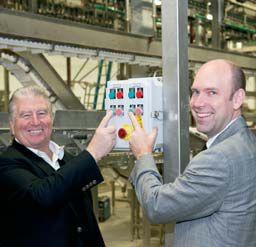
1:55 pmReovirus Tenosynovitis: Causes and Consequences / Pattes vertes à l’abattoir : causes et conséquences
Jean-Pierre Vaillancourt, DMV, M. Sc., Ph. D., Faculté de méd. vétérinaire
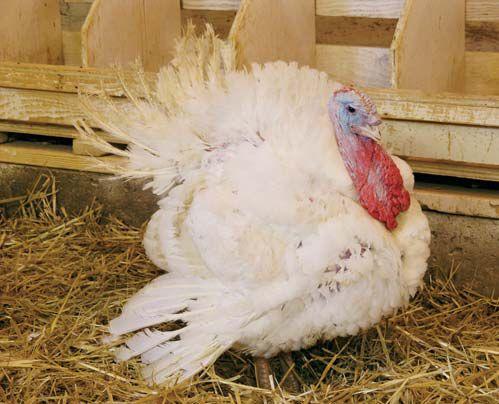
1:10 pmTurkey Toe Trimming, an Essential Management Tool or a Welfare Concern / Le dégriffage des dindons : essentiel à la régie, ou préoccupation de bien-être animal?
Henry L. Classen, Ph. D., University of Saskatchewan / Université de Saskatchewan
1:55 pmVentilation and Heating Options for Commercial Turkey Barns / Démystifier les options en ventilation et chauffage pour les bâtiments de dindons
Gary Hall, Hybrid Turkeys
1:10 pmFuture of Poultry Genetics: Perspectives for the Breeder Production / Sélection génétique : perspectives en reproduction
Mitchell Abrahamsen, Ph. D., Cobb Vantress inc.
1:55 pm“Genetic Progress” A Battle with Breeder Performance / Les progrès en génétique : un combat pour la performance des reproducteurs
Mark Belanger, Aviagen
1:10 pmGenetic Advances to Feed the World / Nourrir le monde grâce aux progrès de la génétique
Dave Libertini, CPA, CA, Hendrix Genetics Ltd
1:55 pmMaking a Smooth Transition to Enriched Cages / Une transition en douceur vers les cages aménagées
Tina Widowski, M. Sc., Ph. D., University of Guelph / Université de Guelph
3:00 pmTaming the Stress Forces / Apprivoiser les forces du stress
Serge Marquis, MD, Professional Speaker at ParlonSanté inc. / Conférencier chez ParlonSanté inc.
4:00 pmCocktail & Booth Visits / Cocktail et visite des kiosques
INDUSTRY: Sunnymel Plant Begins Operations Olymel and Groupe Westco collaboration
Dan Woolley
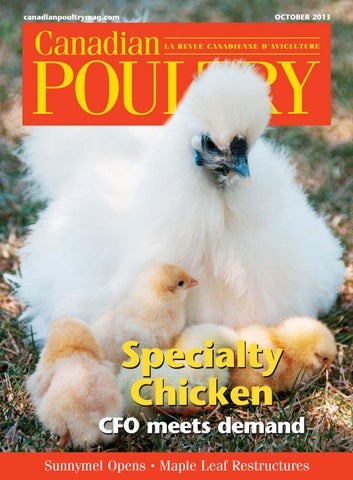
INDUSTRY: Specialty Products CFO working to meet diverse consumer demands
Treena Hein
Maple
Kim Waalderbos
INDUSTRY: Clearbrook
of serving and giving
Treena Hein
FROM THE EDITOR
BY LIANNE APPLEBY
Survival Is Optional
It was Charles Darwin who said that those who endure are the ones most adaptable to change. Directly speaking, his insight referred to the proliferation of any given species, but indirectly, one can apply the acumen to many other scenarios. No longer is “survival of the fittest” applicable only to flesh and blood. It can now be extrapolated to products –and even entire companies.
Take Kodak, for an extreme example. Once a giant in the camera industry, someone in the company made the decision early on that digital photography was not the way to go. Thus, in an era when digital is king, Eastman Kodak Co. announced in August that it had “won court approval of a plan to exit bankruptcy as a commercial printing company that sells nothing to consumers.”
In short, Kodak is moving away from cameras, film sales and developing – the very products and services that originally made it a household name. With 47,000 employees shed since 2003, the closure of 13 film, paper and chemical factories, and 130 photo laboratories, Kodak is a victim of its own failure to adapt.
Also in August, but on a positive note, the North American Manure Expo came north of the border for the first time. This event is a manifestation of the need to change. Manure application is no longer a risk-free, simple process that can be done when it is and in a way that is most convenient for the farmer: regulations must be followed, and neighbours need to be considered. The very fact that the Expo exists shows the need for ongoing education, the development of new technology and the constant need to adapt – and to do what is right, what is now expected
Poultry producers must keep their ear to the ground not just with respect to manure
management, but also with respect to production. It is no longer enough to grow chickens as they have been grown by the generations before us. Market needs must be met, and as a land with many diverse cultures making up our population, we are now seeing the need to serve those cultures by revisiting the chicken breeds that we grow. We can meet emerging demand by modifying production and raising “specialty” birds for the cultures that seek them.
Kodak lawyer Andrew Dietderich said, “While the new Kodak won’t be the company of popular imagination, it will be a leader in its chosen field.” For Kodak, however, there was never a choice. Through lack of forward thinking, the company missed the digital revolution, and by the time management realized it was a technology that would stick around, it was too late to adapt and become competitive.
For survival, the key is to be forwardthinking enough to know when change is necessary – and to be one of the early adopters. But then, as W. Edwards Deming, the U.S. professor and author, once said, with tongue firmly planted in cheek, “It is not necessary to change. Survival is not mandatory.”
We are fortunate enough to have the supply management system in Canada, which stacks the odds in favour of a viable poultry sector. But, as individual farmers and as an industry in general, we must remember that in the bid to not only survive but thrive, a visionary mind is priceless.
OCTOBER 2013
Vol. 100, No. 9
Editor
Lianne Appleby – lappleby@annexweb.com
888-599-2228 ext. 266
Associate Editor
David Manly – dmanly@annexweb.com 888-599-2228 ext. 261
Publisher/Sales Manager
Marilyn White – mwhite@annexweb.com 519-400-2424
Sales Assistant
Mary Burnie – mburnie@annexweb.com
Media Designer
Gerry Wiebe
Group Publisher
Diane Kleer – dkleer@annexweb.com
President
Mailing Address
P.O. Box 530, 105 Donly Dr. S., Simcoe, ON N3Y 4N5
Publication Mail Agreement #40065710
RETURN UNDELIVERABLE CANADIAN ADDRESSES TO CIRCULATION DEPT., P.O. BOX 530, SIMCOE, ON N3Y 4N5.
Printed in Canada ISSN 1703-2911
Circulation
Subscription Rates
Canada – 1 Year $30.00 per year (with GST $31.50, with HST/QST $33.90)
GST – #867172652RT0001
USA – 1 Year $ 66.00 USD
Foreign – $75.00 per year
All advertising is subject to the publisher’s approval.
specktacular.
[ spek-tak-yuh-ler ] Of the nature of a spectacle; impressive or sensational.
Scan code for details
Glass-Pac Canada
St. Jacobs, Ontario
Tel: (519) 664.3811
Fax: (519) 664.3003
Carstairs, Alberta
Tel: (403) 337-3767
Fax: (403) 337-3590
Lubing’s all-new Opti GROW Nipple is designed to work in today’s challenging broiler environment. Because the nipple has been optimized for growth, you will be amazed by the first-week performance and explosive bird growth. OptiGROW offers:
Large body and pin
Acid resistant design
Easy triggering for day-old birds
Low mortality
Increased side-action flow
Larger flow range for jumbo birds
Increased weight gains
Improved feed conversions
To find out more about this specktacular new product, please contact your local Lubing Representative.
J. Dean Williamson Ltd.
London, Ontario
Tel: (519) 657.5231
Fax: (519) 657.4092
Les Equipments Avipor
Cowansville, Quebec
Tel: (450) 263.6222
Fax: (450) 263.9021
Specht-Canada Inc.
Stony Plain, Alberta
Tel: (780) 963.4795
Fax: (780) 963.5034
New Cobb awards for Canada WhAT’S HATCHING HATCHING
S
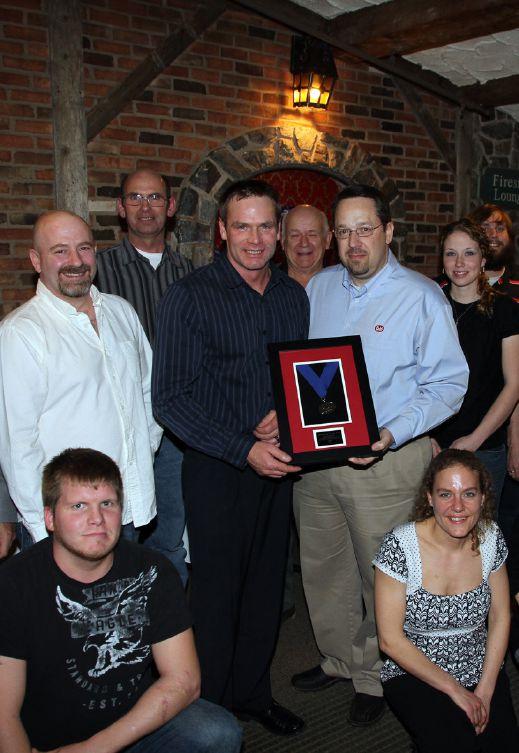
Synergy production manager Gary McAleer, left, and staff accept the Cobb500 performance in Canada award from David Engel, Cobb technical service manager for Eastern Canada.
Gary McAleer also thanked the many people involved in gaining the award.
ynergy Agri Group of Nova Scotia is the first winner of the new award for the top Cobb500 breeder performance in Canada.
Cobb-Vantress technical service manager for Eastern Canada, David Engel, and Canada sales manager Philippe Dufour presented the award to Synergy Agri production manager Gary McAleer and the production team.
Ranked on adjusted chicks per hen to 65 weeks of age, the company averaged 144.21 chicks per hen housed.
“Gary and the team at Synergy have consistently produced great results,” said Engel.
“With the number of Cobb parent flocks in Canada steadily increasing, we’re very happy to recognize this tremendous achievement.”
“From the employees who clean barns, egg collectors, caretakers, our transportation team, feed mill employees, office staff to our management team and owners . . . each one of our Synergy team played an important role in realizing our goals which led, in turn, to this award.
“I’d also like to acknowledge the sales and tech team from Cobb-Vantress for their support and guidance over the past several years.
To quote Henry Ford: ‘Coming together is a beginning. Keeping together is progress. Working together is success.’ Thanks to everyone who came together to help us attain our goals.”
In this inaugural year for Cobb performance awards in Canada, there was also recognition for the best performing individual flocks for the Cobb
500FF and Cobb 500SF lines, based on ranking using chicks per hen adjusted to 65 weeks of age.
Groupe Westco of St. Francois, New Brunswick, was the winner for the best Cobb 500FF flock.
The flock from Barn 303, produced 157.7 chicks/hen housed.
Poirier-Berard of St. Felixde-Valois, Quebec, was the winner for the best Cobb 500SF flock.
The flock from Ferme Martineau — Barn #5, produced 147.55 chicks/hen housed.
Cobb-Vantress, Inc. is a poultry research and development company engaged in the production, improvement and sale of broiler breeders. In operation since 1916, it is also the world’s oldest pedigree broiler breeding company
For more on CobbVantress, please visit www.cobb-vantress.com.
PSIW registration now open
Registration TypeRate
Registration for the 38th annual Poultry Service Industry Workshop (PSIW), which will take place from Oct. 1-3, 2013, is now open.
Registration Package$475
Discounted Sponsor Registration$400
Student Registration Package$250
Banquet Tickets$60
The two-day will feature a variety of sessions including disease updates for both eastern and western Canada, case studies and highlights on numerous illnesses, as well as discussions on welfare, breed-
Manure Expo stirs up Canada
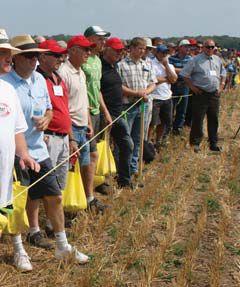
More than 650 farmers and industry people from across Canada and the world took part in the 2013 North American Manure Expo, held Aug. 21 near Guelph, Ont., Canada.
Hundreds of people lined the field to watch as both solid and liquid manure spreaders were demonstrated throughout the
Farm & Food Care Ontario has gifted its popular FarmzOnWheelz exhibit to the Ontario Science Centre (OSC) where it will have a place in the permanent rotation of the OSC’s exhibits. Farm & Food Care estimates the value of the exhibit’s donation at $200,000.
Designed and built by the
Guest Meal Package$250
To register for the PSIW, visit https://www.signup4.net/Public/
ing, ventilation and health management.
day. Attendees also packed the classrooms or crowded around outdoor education sessions, learning the latest on everything from precision manure application to tire pressure and compaction.
OSC, FarmzOnWheelz made its debut at the Canadian National Exhibition in 2009.
Construction of the 600 square foot exhibit was supported by many Ontario farm organizations and agri businesses and features a number of interactive components that explain to visitors how science and technology impacts agriculture.
Since its launch, Farmz has appeared at 25 venues in Ontario including schools, museums and fairs over a total of 1,000 display days. It
On Aug. 20, more than 120 people also took part in a pre-expo bus tour of a local dairy farm operating an anaerobic digester plus visited two other dairy operations to watch the latest technologies available for manure pit agitation.
The North American Manure Expo moves to Springfield, Mo., in 2014. The event is scheduled for July 9, 2014.
For more information, including photos, videos and more, please visit http://www. agannex.com/administrative/ manure-expo/news.
is estimated that three million Ontario residents have toured the exhibit.
Mary Jane Conboy, the director of science content and design for Ontario Science Centre said, “FarmzOnWheelz was a project that we enjoyed developing. The content is very relevant to our focus on environmental issues and we’re now scouting locations within our facility where we will be able to feature it for the one million visitors that spend time at the OSC annually.”
COMING EVENTS
OCTOBER
October 1-3, 2013
XXXVIII Poultry Service Industry Workshop, The Banff Centre, Banff, Alta. For more information, visit: poultryworkshop. com/index.php
NOVEMBER
November 1-10, 2013
Royal Agricultural Winter Fair, Exhibition Place, Toronto, Ont. For more information, visit: www.royalfair.org
November 7-8, 2013 Poultry Innovation Conference, Best Western Lamplighter Inn, London, Ont. For more information, visit: www.poultryindustrycouncil.ca/trainingand-events/innovationsconference/
November 20, 2013
Rendez-vous avicole AQINAC 2013, Best Western Plus Hotel Universal (Drummondville), Que. For more information, visit: www.rv-aqinac.com
JANUARY 2014
January 14-16, 2014 Salon de l’agriculture, Saint Hyacinthe, Que.. For more information, visit: www.salondelagriculture. com
January 28-30, 2014
International Production and Processing Expo (IPPE) 2014, Georgia World Congress Center, Atlanta, Ga. For more information, visit: www. ippe14.org
WHAT’S HATCHING HATCHING
COMING EVENTS Maple Leaf sells biodiesel business
MARCH 2014
March 19-20, 2014
Maple Leaf Foods has announced that it has entered into a definitive agreement to sell Rothsay, its rendering and biodiesel business, to Darling International Inc. of Irving, Texas by the end of 2013.
“The sale of our rendering and biodiesel business supports our strategy to focus on effective capital deployment and profitable growth in the con-
sumer packaged foods market,” said Michael McCain, President and CEO. “The sale will support future investments in our consumer facing businesses and allow Darling to build on Rothsay’s strong capabilities and deep customer relationships.”
The transaction is expected to bring in approximately $645 million, which will initially be used to pay down debt.
H7N9 in Chinese poultry workers A
Researchers say it is possible that the antibodies might imply exposure to similar H7 avian influenza viruses.
serology study in a Chinese province hit hardest by novel H7N9 influenza found evidence of asymptomatic or mild infections in poultry workers, further strengthening suspicions that poultry are the source of the outbreak.
The study focused on members of the general public, poultry workers, and patients with lab-confirmed H7N9 infections.
Their findings were published in the Journal of Infectious Diseases. They collected and analyzed serum samples, along
with epidemiologic data, from 1,129 people from three cities in the province that had human H7N9 cases.
Among poultry workers, 6.3 per cent had antibodies against the new H7N9 virus. In contrast, the investigators found no evidence of antibodies in the general population..
“Our data support the conclusion that H7N9 virus or a closely related virus is circulating in live poultry markets and that infected poultry is the principal sources for human infections,” they wrote.
Midwest Poultry Convention, Saint Paul RiverCentre, Saint Paul, MN. For more information, visit: http://midwestpoultry.com/
APRIL 2014
April 9-10, 2014
London Poultry Show, Progress Building, Western Fair District, London, Ont. For more information, visit: www.westernfairdistrict.com
JUNE 2014
June 18-20, 2014
Canada’s Farm Progress Show, Evraz Place, Regina, Sask. For more information, visit: www.myfarmshow.com
OCTOBER 2014
October 1-3, 2014
XXXIX Poultry Service Industry Workshop, The Banff Centre, Banff, Alta. For more information, visit: www.poultryworkshop.com
We welcome additions to our Coming Events section. To ensure publication at least one month prior to the event, please send your event information at least eight to 12 weeks in advance to: Canadian Poultry, Annex Business Media, P.O. Box 530, 105 Donly Dr. S., Simcoe, ON N3Y 4N5; e-mail lappleby@annexweb.com; or fax 519-429-3094. Please write ‘Event Submission’ in the subject line.
Photo courtesy of James Gathany
CPRC Update CPRC Scholarship Program
Arobust research program is key to the future of the poultry industry, and the Canadian industry is fortunate to have access to a wide range of research expertise that can help us meet new challenges and find solutions to the problems we face. However, maintaining that pool of expertise requires an injection of new scientists that pick up where retirees leave off.
The Canadian Poultry Research Council (CPRC) promotes succession in the poultry research community by offering a scholarship program to help attract and retain students.
The objectives of the program are as follows: to encourage and support graduate students to carry out poultry science research to build Canada’s intellectual capacity in poultry science to promote graduate research in poultry science at Canadian universities
ELIGIBILITY
To be eligible for a CPRC scholarship award, a student must be studying (or planning to study) an aspect of poultry science. Applicants are assessed on a number of criteria, including academic performance, research aptitude, career goals and a demonstrated interest in poultry research.
A postgraduate scholarship supplement is available to students who hold a Natural Sciences and Engineering Research Council (NSERC) scholarship. Several excellent students have received supplements to their scholarships through this program since its inception in 2006, and as of 2011, the CPRC scholarship is also available to non-NSERC
scholars. This change broadened the availability of the scholarship program to accommodate more students with an interest in poultry science.
TO APPLY
Applications to either the scholarship or supplement are due May 1 of each year. Only one award of $7,500 is given out per year and it is available to master’s (eligible for one year) or doctoral level (eligible for up to two years) students.
Details of the program, including the application requirements and the past winners, are available on the “Scholarship” section of the CPRC website (www.cp-rc.ca).
AND THE WINNER IS…
The 2013 CPRC scholarship was awarded to Kayla Price, a PhD student studying under John Barta at the University of Guelph. She is studying Eimeria, the causative organism of coccidiosis in poultry, and looking at practical ways to improve its control in commercial pullets reared on wire floors.
Price’s research has demonstrated the effectiveness of a self-immunization strategy that improves the performance of live cocci vaccines and may reduce the need for coccidiostats, about which there is growing concern over resistance and residues. She has also expanded her original research program to better understand the dynamics of coccidial populations in the bird and in the barn, and to optimize live vaccine doses.
Price has had a very successful academic career thus far, having already published several papers in peer-reviewed journal articles and presented her results at a number of scientific and industry
meetings in Canada and abroad. She has received several awards in recognition of her outstanding academic performance.
Beyond academics, Price is highly involved in several activities, both in and outside the university community, aimed at transferring knowledge to potential users of research outcomes, encouraging others to become involved in poultry science and promoting the poultry industry in general.
Price has already made significant contributions to her research program and displays great potential to mature into a scientist of excellent calibre – the kind of scientist we need to help ensure the future success of our industry.
For more details on CPRC activities, please contact the Canadian Poultry Research Council, 350 Sparks St., Suite 1007, Ottawa, ON, K1R 7S8, phone: 613566-5916, fax: 613-241-5999, e-mail: info@ cp-rc.ca, or visit us at www.cp-rc.ca.
The membership of the CPRC consists of Chicken Farmers of Canada, Canadian Hatching Egg Producers, Turkey Farmers of Canada, Egg Farmers of Canada and the Canadian Poultry and Egg Processors’ Council. CPRC’s mission is to address its members’ needs through dynamic leadership in the creation and implementation of programs for poultry research in Canada, which may also include societal concerns.
Productive Birds Need Performance You Can Count On
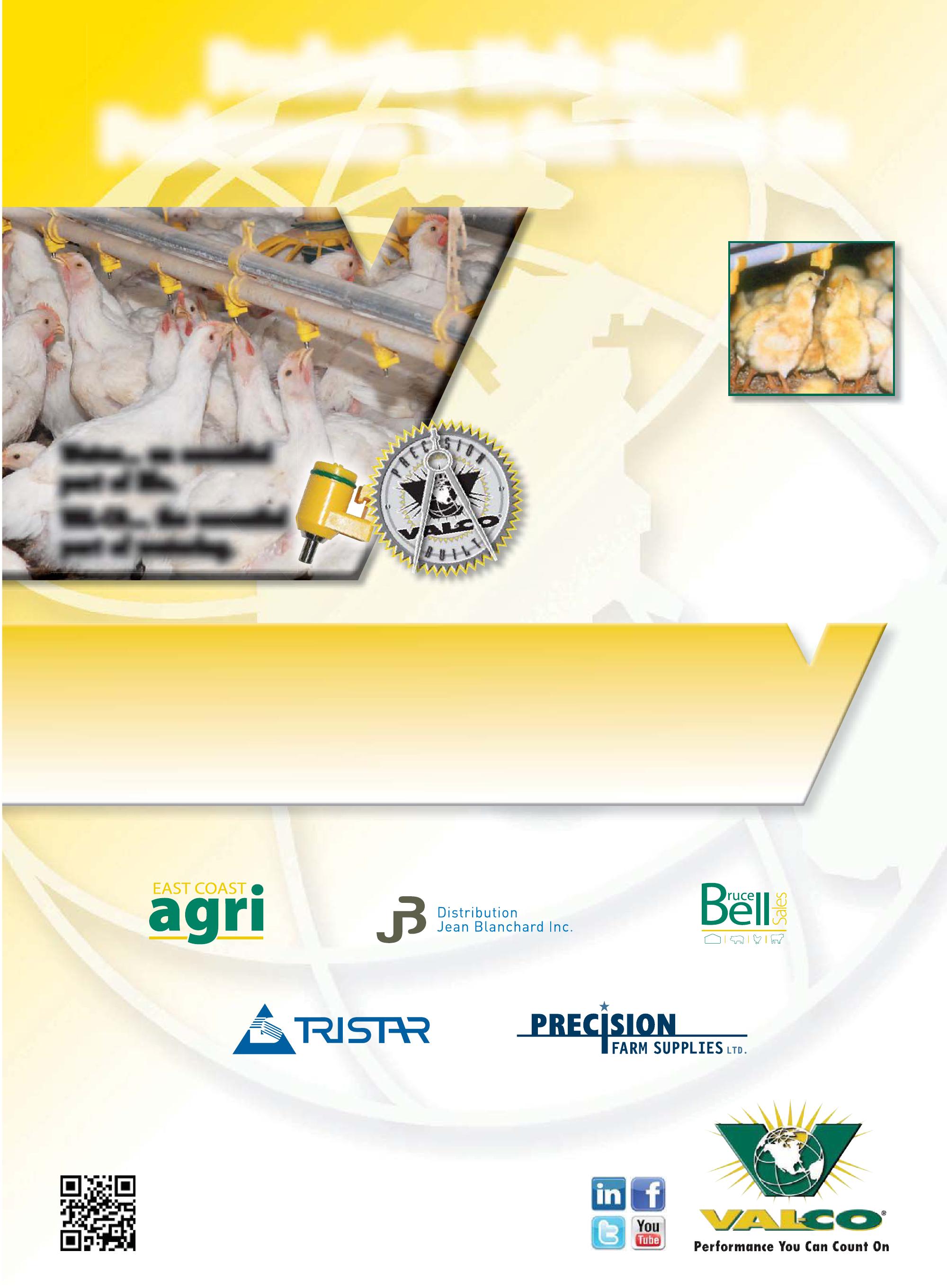
VAL-CO® Watering Systems
Water... an essential part of life.
VAL-CO... the essential part of watering.
VAL-CO manufactures complete watering systems for broilers, roasters, breeders, and turkeys of any age. Only genuine VAL-CO drinkers are made with precision from stainless steel parts manufactured on Swiss screw machines. We only use the best quality materials, offering an excellent balance of mechanical strength and chemical resistance. VAL-CO drinkers are often imitated, but our genuine precision quality can never be duplicated. Trust only VAL-CO drinkers for performance you can count on.
VAL-CO® is a leading manufacturer of high-quality systems for commercial poultry and egg production, creating new and exciting products based on innovative thinking, technical research, and field experience. By controlling the manufacture of all the components, VAL-CO engineers its products to work together as complete systems, each expertly designed and produced with a distinct focus on the customer. Our worldwide presence and commitment to providing leading products and technical service make VAL-CO your key business partner whose performance you can count on
Industry Sunnymel Plant Begins Operations
After a prolonged five-year gestation, the new poultry processing plant in Clair, N.B., opens its doors
BY DAN WOOLLEY
The newly opened Sunnymel plant, which cost nearly $55 million, has already experienced its fair share of difficulties during the five-year process. The plant will have a weekly slaughter capacity of 450,000 chickens, processed by around 200 workers at an hourly rate of 12,000 birds – and its products will be distributed by Sunnymel across the Maritimes and other Canadian markets.
The plant began start-up operations in November 2012, under federal jurisdiction and the supervision of the Canadian Food Inspection Agency, as well as subject to the application of the Food Safety Enhancement Program (FSEP) and Hazard Analysis Critical Control Point (HACCP) protocols.
Sunnymel is a 50/50 partnership of Groupe Westco, a New Brunswick company headquartered in Saint-François-deMadawaska, N.B., and Olymel, a leader in Canada for the processing and distribution of pork and poultry products. Even the name, Sunnymel, is a collaboration between the two companies – the name combines Sunny Glen, a brand name from Groupe Westco’s egg division, and Olymel.
Groupe Westco grew out of a common vision in the early 1980s of several
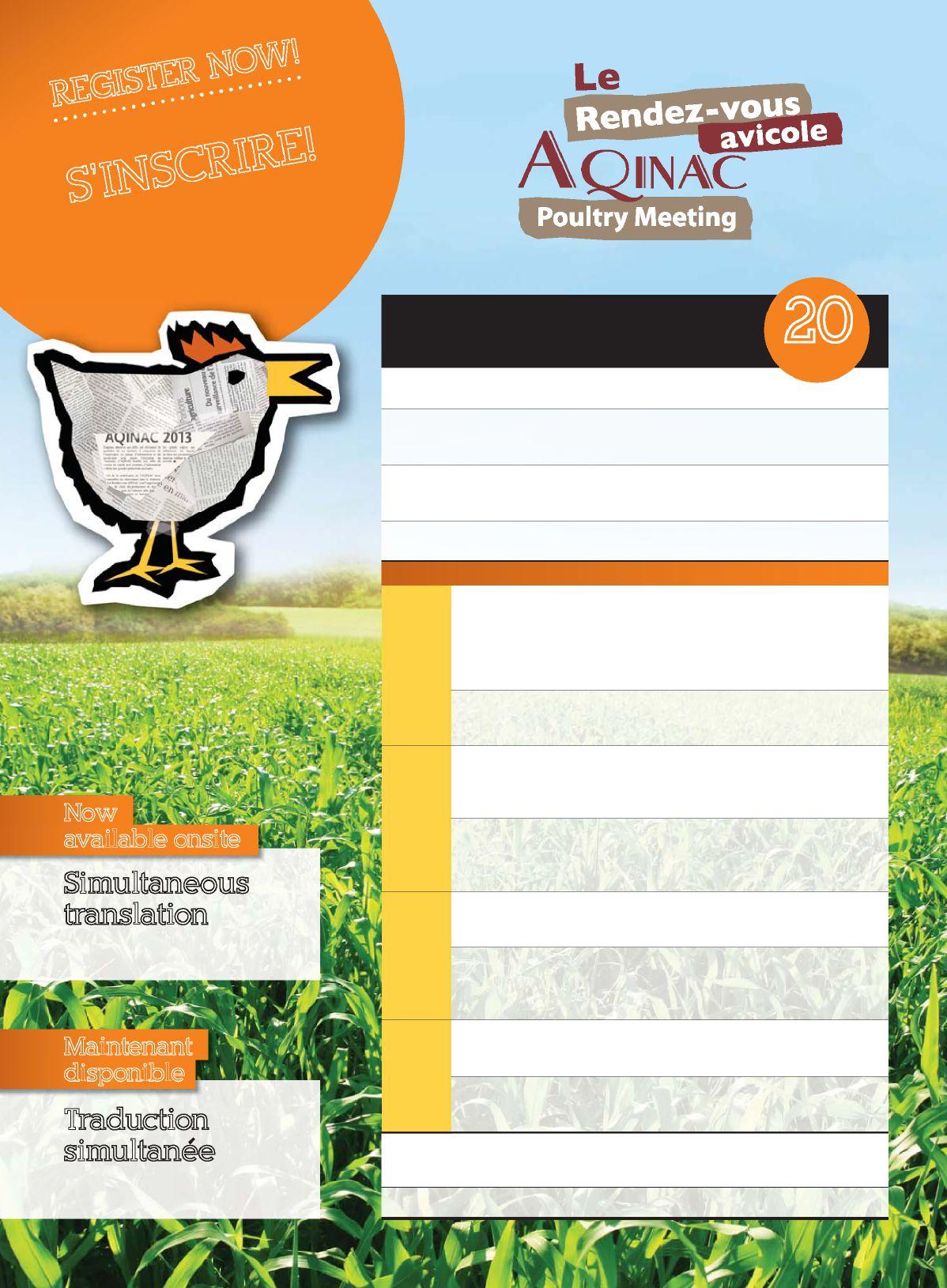
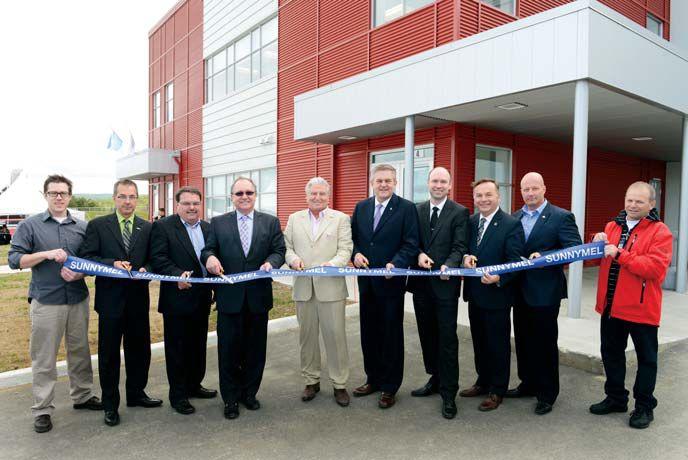
From left to right, Marco Morneault, employee, Sunnymel; Claude Chapdelaine, manager of the Sunnymel plant; Pierre Michaud, mayor of the Village of Clair; Bernard Valcourt, minister of aboriginal affairs and northern development; Réjean Nadeau, president and CEO of Olymel; David Alward, premier of New Brunswick; Thomas Soucy, president and CEO of Westco; Yvon Bonenfant, member of legislative assembly for Madawaska-les-Lacs; Martin Rondeau, vice-president of operations, poultry, Olymel; and Jacques Ouellette, employee, Sunnymel.
northern New Brunswick poultry producers for expanded production growth and profitability through joint collaboration. Six of these producers later incorporated their mutual enterprise in 2002 as Groupe Westco, today one of Canada’s largest poultry producing organizations, owning hatcheries, breeding farms, egg grading stations and trucking firms, plus producing turkeys and table eggs.
Quebec-based Olymel employs nearly 10,000 people at its facilities in Quebec, Ontario, New Brunswick, Saskatchewan and Alberta, and exports half of its production to the United States, Australia, Japan and 60 other countries. In 2012,
its sales were over $2.3 billion based on a slaughtering capacity of 160,000 hogs and 1.7 million birds weekly.
Sunnymel boasts that its new plant uses “next generation equipment and manufacturing processes,” with processing efficiency unique in the New Brunswick food processing industry, as well as “the most modern facilities, in order to meet the highest environmental standards, especially as regards wastewater treatment.”
A repayable loan from the federal government’s Business Development Program enabled Sunnymel to take advantage of the design and construction of automated systems in order to improve its
RIBBON CUTTING
productivity, said Claude Chapdelaine, director of Sunnymel’s slaughterhouse and cutting facility.
“The federal government’s support has also helped us to enhance our quality assurance program,” said Chapdelaine. The federal government contributed a total of $438,000, matched by an investment of $404,667 by Sunnymel in quality assurance and automated production systems.
The seeds that germinated into Sunnymel were planted in the 1980s and ’90s, after the only other poultry processing plant in New Brunswick, in Sussex, shut down. Many southern New Brunswick poultry farmers chose to retire, rather than truck their chickens to over 400 km to Nadeau Poultry in St. François. Following that, northern poultry farmers began buying up their quota, so chicken production became even more concentrated around St. François in the Madawaska. They also invested millions of dollars in new poultry industry infrastructure, hatcheries and trucking.
The principal partners in Westco, however, believed they were exposed to an undue business risk, as they had only one processor customer, Nadeau Poultry. They feared that if Ontario-based Maple Lodge Farms Ltd. (who owned Nadeau) eventually closed the plant, their local investments would be in jeopardy.
Thomas Soucy, Groupe Westco CEO, explains that, more importantly, Group Westco partners believed their chicken operations should be totally integrated like their egg production.
“It was also the belief of our shareholders that we needed to be in all aspects of our chicken production to serve fully our customers in order to meet what the market wants. So, they offered to buy or invest in shares in the Nadeau plant in January 2007, but they could not reach agreement with Nadeau’s owners.”
Therefore, in March 2007, Westco proposed a joint venture with Olymel L.P., Nadeau’s main competitor in Quebec and the eastern provinces, to either buy the Nadeau plant or build a new processing facility nearby. In August of that same year Westco told Maple Lodge that if it was not
willing to sell the Nadeau plant, Westco would begin building its own processing plant in partnership with Olymel, and during construction, would shift all its chicken for processing to Olymel in Quebec until the new plant was completed.
However, negotiations for the sale of
the Nadeau plant failed. So, in January 2008, Westco notified Nadeau Poultry Farms Ltd. that it would stop supplying chickens, effective July 20, 2008.
Subsequently, Nadeau saw 80 per cent of its previous chicken supply head to Quebec as Westco partners held 51 per cent of the New Brunswick chicken
Call us today at 1-877-625-4400 and speak to one of our Poultry Specialists and find out how you can add to your bottom line.
production quota and their producer allies a further 29 per cent.
Nadeau responded in 2008 by seeking leave from the federal Competition Tribunal to apply for an order under Section 75 of the Competition Act, alleging a “refusal to deal” infraction by Groupe Westco under the legislation.
That application, if successful, would have compelled Groupe Westco to continue selling all of its live chickens to Nadeau.
The tribunal subsequently dismissed the application in June 2009, which the Federal Court of Appeal later upheld on June 2, 2011, after hearing an appeal by Nadeau Poultry of the tribunal’s decision. Ultimately, in December 2011, the Supreme Court of Canada refused to hear an appeal by Nadeau challenging the Federal Court of Appeal’s decision.
In 2008, Nadeau also filed a complaint with the marketing board, the Chicken Farmers of New Brunswick (CFNB), insist-
Industry
ing that the CFNB should create a guaranteed supply system that would require Westco to supply 50 per cent of its production quota of live chickens, to Nadeau’s plant.
The CFNB dismissed the complaint and the New Brunswick Farm Products Commission and the provincial Court of Appeal both approved the dismissal.
Nadeau had employed more than 350 at its peak, but in late August 2009, it announced it would have to lay off 175 workers if it could not get Groupe Westco birds. The Liberal provincial government reacted with a ministerial order in January 2010 designating Nadeau as the only federally inspected plant for processing New Brunswick-produced chickens, in order to stop Westco from shipping its poultry to Quebec while its new joint-venture plant with Olymel was under construction.
The court eventually struck down the ministerial order, as New Brunswick had
never claimed the power to regulate processing, a power it could have had under the federal-provincial agreement on supply management.
Recently, Nadeau proposed a New Brunswick Chicken Marketing Agency that would deal solely with the marketing of broiler chickens past the farm gate, while allocating live chicken supply to processors inside and outside of the province. The Progressive Conservative government (which defeated the Liberals in September 2010) rejected the proposal.
The current government also rejected Nadeau’s request to review the CFNB’s 2005 removal of the cap on the level of quota ownership. Nadeau argued the cap removal allowed Westco producers to concentrate too much quota in their hands. The provincial government countered with a number of legal decisions, by various courts and the Federal Competition
Continued on page 29
“Serving Alberta and Saskatchewan”
THE BEAKER
BY KAREN DALLIMORE
To Trim or Not to Trim? That is the Question!
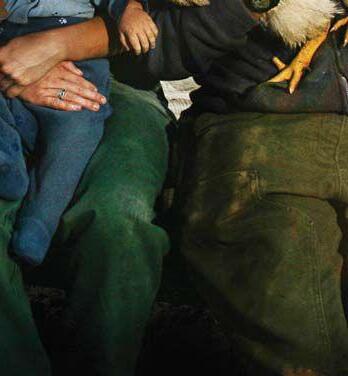
The University of Saskatchewan has been examining the impact of microwave toe trimming on the productivity and welfare of commercial turkeys – both in hens (Experiment 1) and in toms (Experiment 2). As part of her M.Sc. candidacy, Jocelyn Fournier led the turkey tom research.
In Fournier’s work, nine replicate pens of 17 commercial Hybrid Converter toms were grown to 20 weeks of age. Onehalf of these toms were trimmed (T) using the Nova-Tech Microwave Claw Processor at a commercial hatchery on day of hatch, while the other half were untrimmed (UT), but sham treated on the same equipment.
To facilitate a comprehensive understanding of the toe treatment, a wide range of response variables were measured, including those related to production (body weight, feed intake, feed efficiency), health (mortality and morbidity, histological healing), mobility (through gait score), balance parameters (toe length, posture assessment) and behaviour.
As well, the birds were followed to the commercial slaughterhouse, where their carcasses were examined for scratching and lesions.
Body weight did not differ between the birds until 91 days of age, at which point the UT toms were heavier than the T (12.23 versus 11.93 kg). This trend continued to the final weights at 20 weeks, which were 21.70 for the UT birds and 21.15 kg for the T toms.
Feed consumption differed during the first seven days, with the T birds consuming less feed (0.117 kg) than the UT birds (0.133) – which may be indicative of pain or an unknown sensation in the toes. However, the seven-to-14-day period showed no difference in feed consumption, indicating that the earlier effect was short lasting.
Feed consumption was reduced again for the T birds late in the experiment and could be related to their reduced growth rate at this time. No differences in feed efficiency were noted throughout the trial.
Behavioural monitoring indicated that UT birds were more lethargic on day one and spent less time inactively resting, but more time feeding, standing and walking. Similar results were shown at three and five days of age, which were proven to be significant or approaching significance.
This change in behaviour corresponds to the reduced feed intake of the T birds noted above, with a similar interpretation of pain or abnormal sensations in treated toes. Behavioural observations at 133 days found no differences, except that
Researchers at the University of Saskatchewan are studying the effects of toe trimming on turkey welfare and productivity.
T birds stood more (27.1 per cent) and walked less (4.6 per cent) than UT turkeys (24.1 and 5.6 per cent, respectively).
However, gait score measured at seven, 11, 16 and 20 weeks of age did not differ between the treatments.
As turkeys age and their size increases, shorter toes on T birds may result in an inability to maintain balance. In order to assess balance, Fournier measured the angle between a horizontal line through the point where the breast meets the leg, and a line from that point following the line of the breast.
No differences were noted between toms of the two treatments in this study; however, a significant change occurred as the birds aged, regardless of treatment.
Finally, the level of scratching on the carcasses did not differ between treatments. This is in contrast to the data found in the hen flock, where UT carcasses had significantly more severe scratches than the T carcasses.
Fournier concludes that, based on this study focusing on productivity and welfare, toe trimming of heavy turkey toms may not be necessary.
This new regular series of articles is part of the communications plan of the Poultry Welfare Centre. For more information, visit the Canadian Virtual Centre for Poultry Welfare at http://poultrywelfarecentre.ca.
Industry Specialty Products
New Chicken Farmers of Ontario program will help meet the changing demands of Ontario’s diverse consumers
BY TREENA HEIN
The need is urgent and the timing for this program was right,” says Michael Edmonds, Chicken Farmers of Ontario (CFO) director of communications and government relations. Applicants to a new (CFO) program launched in mid-March “are responding to the new realities of the Ontario market and the new opportunities these markets present for growth,” he explains.
The province is increasingly multicultural and diverse in its demands for new products, Edmonds notes.
“In fact, 53 per cent of all newcomers to Canada settle in this province. And whether it is for cultural, religious or other reasons, these changes to Ontario’s consumer base mean there are significant markets that are not being fulfilled by the current product offerings.”
Applications to the CFO Specialty Program had to meet three criteria –they needed to create a distinct product, in a distinct market, with the aim of creating market growth.
PROGRAM DEVELOPMENT
Developed by a team that includes both farmers and processors, the aim of the program was to ensure adequate supplies for consumers who prefer that their chicken be raised and/or processed in a unique or specialized way.
CULTURAL DIVERSITY
Chicken Farmers of Ontario realizes that a diverse population is changing the production demands for chicken meat.
The team is chaired by a member of the Ontario Farm Products Marketing Commission and features representatives from the Association of Ontario Chicken Processors, the Ontario Independent Poultry Processors and Chicken Farmers of Ontario.
Each application had to include an Ontario farmer-processor partnership, and present a factual, evidence-based, market-driven business plan. An independent panel, appointed by CFO and co-ordinated by Bob Burden of
Serecon Consulting, evaluated all applications received in March, and brought recommendations on those applications to the CFO Board in late April.
The program had a target implementation date of August, with the next round of applications being due on Oct. 31, 2013.
“CFO has committed to having the Speciality Program available for the next five years, after which it will be reviewed to determine whether it was being effective in serving its target
markets,” Edmonds explains.
“Some provinces, most notably B.C., supports production and Quebec, support specialty chicken production, with each province defining specialty chicken differently and dealing with specialty markets differently. The common goal of all provinces is to meet consumer demand.”
IN OTHER PROVINCES AND AT THE NATIONAL LEVEL
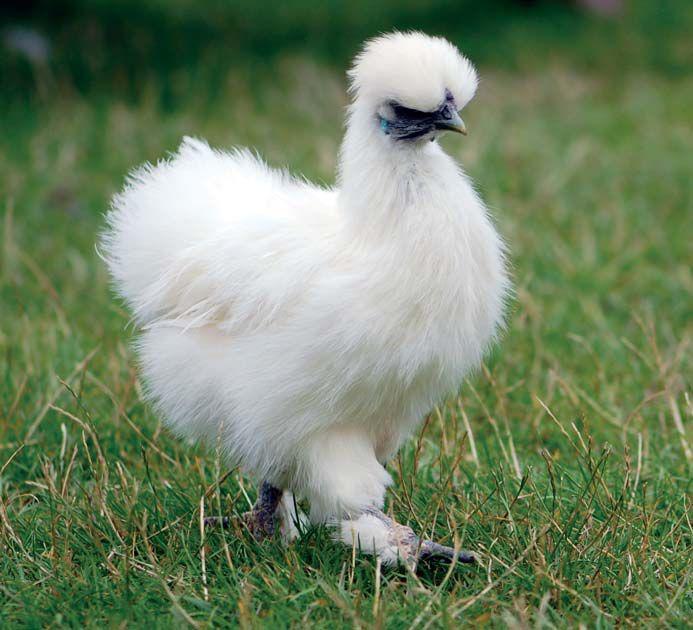
In terms of creation of specialty chicken products, there is a long production history in B.C. of silkie chicken and Taiwanese chicken for at least 20 years.
“Prior to 2002, this production was unregulated,” says Bill Vanderspek, general manager of the British Columbia Chicken Marketing Board (BCCMB). “In 2002, our board was instructed to begin regulation of this sector. Growers were issued quotas, and fully participate in all of our programs including animal care, biosecurity, and on-farm food safety assurance.” The BCCMB sets a minimum live price for each category.
Vanderspek says these two specialty breeds currently represent two per cent of total production, with 211 million live kilograms produced in 2011.
“[They] are used almost exclusively by our large Oriental population in Vancouver and Richmond as well as exported to other provinces,” he notes.
“We have a large, growing and vibrant Asian community in B.C. that demands these special products. We see it as an opportunity for growth in our industry, as the demand is very strong and has been growing at a much faster rate than that of mainstream broiler chicken over the past five years.”
The BCCMB does not track halal or kosher slaughter as it considers that to be mainstream chicken. Certified organic chicken is now one per cent of the province’s total production, having expanded from 0.25 per cent a few years ago.
“We also have a new entrant grower program which provides the opportunity
“Long hours. It’s what we do.”
It’s what we do that makes it more profitable.
As a poultry farmer, you know that hard work and care for the farm today will ensure that it will be there for tomorrow. You also know that a helping hand can make it more profitable.
The Alltech on farm program is designed to help you along the way. Contact us and see what we can do…. together.
for new growers to supply specific products to our small, regional and niche processors,” Vanderspek adds.
“Since 2005, over 50 new growers have been added to our system at an initial level of 50,154 kilograms per year of allocation. Five of [the involved] pro-
Industry
cessors have been guaranteed supply.”
No specific motivational entrant program for specialty product producers is currently offered in Saskatchewan, but it does have a “Specialty Class and Specialty Class Registration” policy.
The Alberta Chicken Producers
Just see a manager? We see more.
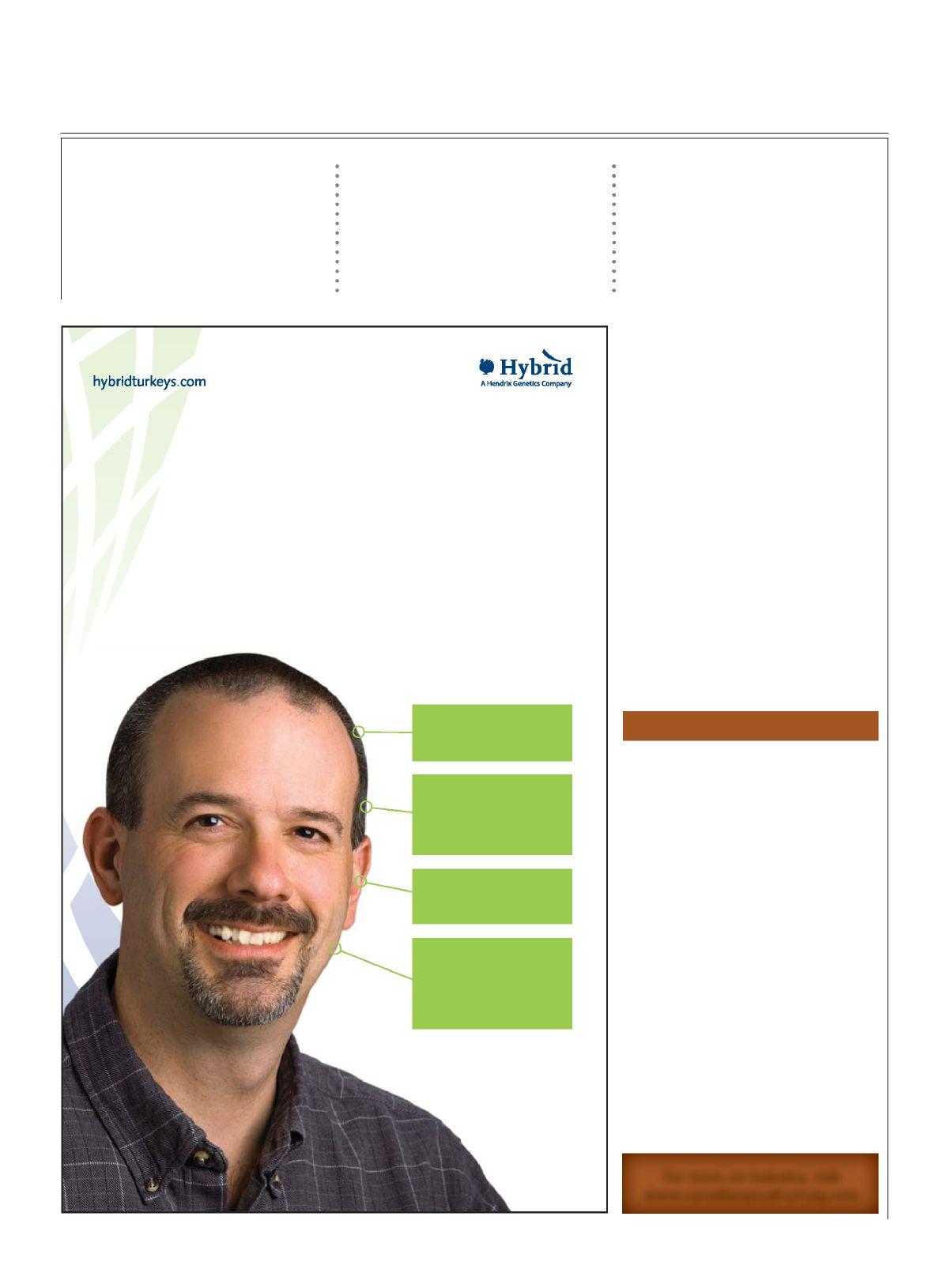
We see the numbers that connect us. We see the number of birds our physical selection manager, John McCurdy, selects to improve your flock performance. We see the countless hours of training and experience that come with John wherever he goes.
Together by understanding the numbers, we understand the industry.
Strength in Numbers. in Numbers.
1 756 640 legs selected
9 005 500 kilograms of turkeys lifted
26 years with Hybrid
16.6 billion kilograms of turkeys influenced at the commercial level
(ACP) established a Specialty Production Committee in 2011. It reviewed the current Organic Lease Program and other existing opportunities within its current regulations, identified challenges and explored solutions for producers engaged in direct marketing activities, and reviewed requests for specialty chicken production.
This work has so far resulted in the Direct Marketing Lease Program launched in 2012, says ACP executive director Karen Kirkwood.
The initiative offers individual quotaowning producers who sell their product directly to the consumer the opportunity to lease additional quota.
The Manitoba Chicken Producers has facilitated specialty chicken production in the past, but currently supports the Chicken Farmers of Canada (CFC) decision to review the specialty market at committee level.
“[We] look forward to providing input and debating the recommendations that will come from the committee,” notes general manager Wayne Hiltz.
THE GOAL
The CFC Policy Committee is also looking into recommending a national framework that will define specialty production and that can be agreed to by all provinces, notes senior communications officer Marty Brett.
He says this is occurring because there have been calls for a countrywide initiative.
“The goal is to incorporate specialty production into the national allocation system,” he explains.
Committee members hope to submit a recommendation to the CFC Board before the end of the year.
For more information, please visit http://www.ontariochicken.ca/documents/SpecialtyChickenBackgrounderFebruary152013.pdf.
In growout after growout, results prove that Ziggity Systems with Max3 drinkers consistently produce not just great but exceptional performance in every category. That’s because Max3 delivers all the hygienic water birds need to thrive and stay healthy without oversupply that causes wet litter and all of its related problems.
More ways to improve performance
Reduce management time and make correct pressure adjustment easy with PressurePro.
The affordable way to upgrade your existing system to Ziggity performance.
Visit www.ziggity.com www.ziggity.com/pressurepro
Upgrade J-Lock drinkers
Antibiotic Strategies PIC Update
BY KIMBERLEY SHEPPARD AND DR. MARTIN ZUIDHOF
Antimicrobials are used in the broiler industry routinely. Not only do they improve performance (growth, feed conversion and meat yield), but they also reduce the risk of consumers being exposed to food-borne pathogens. Food safety is a significant and growing issue for consumers internationally, and food-related illnesses or deaths often have devastating impacts on entire food supply chains.
Despite the benefits that antibiotics provide, there are also potential drawbacks, and their use in animal feeds is under fire. Due to consumer concern, the pressure to ban antibiotic use in poultry feed continues to increase. The primary concerns of the poultry industry for a ban on antibiotic use are potential reductions in production performance and bird welfare.
To address these concerns, Dr. Martin Zuidhof and his research team at the University of Alberta have been investigating ways to reduce the prophylactic use of antibiotics in poultry feed. Their aim is to enhance consumer confidence through discovery of effective alternative approaches such as nutritional interventions that can prevent the onset of disease in a novel, non-pharmaceutical manner.
The research team approached the problem using two separate research trials. The first trial investigated the use of antibiotics on broiler chicken production. They fed groups two strains of broiler chicks one of four antibiotic treatments (no antibiotic, Bacitracin Methylene Disalicylate (BMD), Roxarsone and Virginiamycin) during the starter and grower periods. They measured feed conversion ratio, mortality, and weights of carcass, breast, leg and wing.
The second trial studied the effect of
dietary changes that could prepare the immune system to respond quickly and effectively to disease challenges. They investigated the use of nutrient density intervention during the first two weeks, with the addition of either: HyD (a readily available form of vitamin D), and BMD, on growth performance, carcass parameters, intestinal morphology and immune function. Chickens were fed either high- or low-density diets with and without HyD, and with and without BMD, all at recommended levels. Carcass and meat yield, the capacity of blood cells to kill bacteria and other immune responses were measured.
During both trials, a necrotic enteritis outbreak occurred. In trial 1, BMD and Virginiamycin reduced mortality from necrotic enteritis. While strain A birds on the no-antibiotic treatment had higher mortality from necrotic enteritis compared to strain B birds, the addition of BMD and Virginiamycin negated that difference. As well, birds fed diets with antibiotics had lower feed conversion ratio than birds fed no antibiotics. Meanwhile, strain B birds had higher feed conversion ratio at day 35. Neither strain nor antibiotic treatments had an effect on breast muscle weight. Lastly, the overall economic impact
of antibiotic feeding was a cost reduction of around $0.10/kilogram. This trial confirmed the complexity of understanding the issue of banning prophylactic antibiotics, due to the multi-factorial influences of strain and antibiotic type on economics, health and welfare.
In trial 2, the high-density diet increased body weight and meat yield, and decreased feed conversion ratio. High nutrient density resulted in higher net returns, and a nearly significant increase in bacteria killing capacity. BMD reduced mortality compared to birds fed no antibiotics, while HyD increased factors related to the immune response without causing a decrease in performance.
Overall, the replacement of antibiotics is a complex challenge because of multi-factorial influences on health and the immune system. Dr. Zuidhof feels that the most likely pathway to successful antibiotic-free poultry production will be the development of an interdependent-systems approach involving both management and nutrition, potentially including the two methods investigated here, but much broader. Sustainability of the poultry industry will require investment in whole-systems approaches to promote and enhance poultry health.
Antibiotics in feed are under fire due to consumer concerns.
Researchers at the University of Saskatchewan are looking into toe
Business Maple Leaf Restructures
Maple Leaf Foods sells turkey farms and hatchery operations to focus on processing and marketing
BY TREENA HEIN
In early August, Maple Leaf Foods announced it was selling its commercial turkey farms, breeder farms and hatcheries to two different companies. Representatives say that most of the 100 employees involved are moving with the sale.
“Maple Leaf made this strategic move so that we would be able to focus on growth and innovation within our valueadded turkey processing business,” says Maple Leaf spokesperson Dave Bauer. “We have seen a lot of growth in the value-added turkey product market, we’re committed to capitalize on it, and we have exciting plans to launch even more innovative options that our consumers can enjoy.”
Maple Leaf’s commercial turkey farms were sold to Kitchener-based Ernald Enterprises Ltd., which will make it Maple Leaf’s biggest turkey supplier. Ernald president James Schlegel notes that although the deal seems to have developed quickly over the last few months, it’s based on a relationship between Ernald and Maple Leaf that goes back about 50 years.
“This long history and solid partnership formed the foundational basis for the transaction,” he says. “Everything was able to move forward relatively swiftly because we know each other and trust each other.”
The turkey farms involved in the
UNDER NEW MANAGEMENT
Ernald currently produces 2.3 million pounds of chicken and 8.8 million pounds of turkey each year.
deal originally belonged to Cold Springs Farms, which were sold to Schneider. Then Maple Leaf acquired Schneider, along with the barns located, says Schlegel, in the Woodstock and Thamesford area.
Ernald holds more than 1,200 acres of cropland in the vicinity of Ailsa Craig, Nairn, Komoka and New Dundee. Before the transaction, it already operated five
turkey and chicken farms near those communities, with about 470,000 chickens and 340,000 turkeys (production of 2.3 million pounds of chicken and 8.8 million pounds of turkey each year).
“This move organizes the supply chain in a more effective way so that Ernald will handle primary production, and Maple Leaf will focus on their
considerable experience and expertise in processing and marketing,” Schlegel explains. “In terms of genetics, we have mostly used birds from [one particular company] and it’s been favoured. We will likely continue to favour those birds, but will also use some [competitior genetics].”
Maple Leaf sold its breeder farms and hatchery operation to Cuddy Farms Ltd., which is based in Strathroy, Ont. The acquired operations are located near Thamesford, Mossley, Aylmer, Putnam, Ingersoll and Woodstock. Cuddy Farms is the leading supplier of turkey poults and hatching eggs in the world. The company exports its products to more than 20 countries around the globe, including Germany, Mexico, Italy, Turkey, Poland, Austria, Holland, Hungary and the Baltic States.
“This acquisition demonstrates our commitment to the worldwide turkey industry,” says Cuddy Farms vice-president of sales and marketing, Scott Chambers. “We are encouraged that our long-standing employee groups in both the Thamesford, Ont., and Strathroy, Ont., operations will enable us to further develop the best genetics that the primary breeders have to offer.”
Chambers says the Cuddy Farms management team is dedicated to long-term business success, and will continue to grow the business throughout its worldwide customer and distribution base.
“We are grateful to be able to offer continued employment to all our current employees as well as those associated with the acquisition,” he notes. “As a result of the acquisition, we have increased the scale of our operation significantly, which puts us in a better position to supply high quality turkey eggs and poults in a timely manner to our customers, both in Canada and around the world.”
Maple Leaf Foods is selling its commercial turkey farms, breeder farms and hatcheries to Ernald Enterprises and Cuddy Farms, respectively.
Research Understanding Broiler Transport Mortalities
Many causes can affect transport losses
BY KIM WAALDERBOS
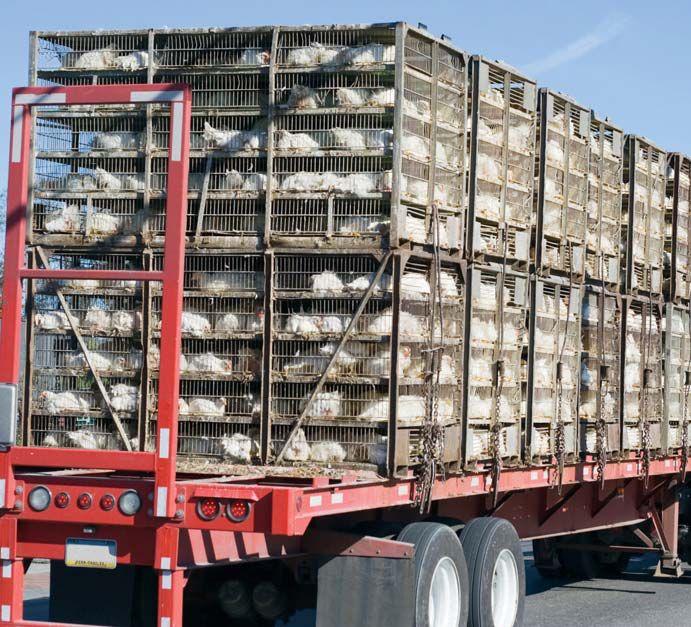
There are multiple risk factors that can affect the mortality rates in loads of broilers transported to slaughter. That’s the word from PhD candidate Niamh Caffrey, who presented her research findings at the Sir James Dunn Animal Welfare Centre Poultry Welfare conference in Charlottetown, P.E.I., earlier in the year.
Caffrey, in collaboration with Drs. Michael Cockram and Ian Dohoo at the University of Prince Edward Island, studied the risk factors affecting mortality rates in loads of broilers transported for slaughter.
With support from the Animal Welfare Foundation of Canada and the Sir James Dunn Animal Welfare Centre at the University of Prince Edward Island, she found that a number of key factors could significantly influence mortality rates.
“When transporting broilers, the duration of various stages during transport and environmental conditionals can have a major effect on mortality rates,” she said.
For the study, the researchers analyzed slaughter-plant records on loads of broilers travelling from barns in the Atlantic Provinces and Quebec to a major slaughter plant in the Maritimes.
At each stage of the journey, different sets of data were collected, including flock characteristics, loading information, time periods for each stage of the journey, external temperatures, weather conditions, trailer temperatures and ventilation.
In total, 5,184 loads of broilers between January 2009 and August 2010 were studied by PhD candidate Niamh Caffrey from the University of Prince Edward Island.
In total, records on 5,184 loads of broilers between January 2009 and August 2010 were in the study.
Broilers ranged in age from 33 to 45 days (average 38 days of age) and 1.6 to 2.9 kilograms in weight. The median mortality rate (per cent of those dead on arrival) for all loads was calculated to be 0.29 per cent.
Of the total loads tracked, 90 loads had mortality rates of zero per cent, and 168 loads reported mortality rates greater
than two per cent.
Using a statistical program, Caffrey was able to determine what constituted an “average journey” for a load of broilers, and presented models to predict how changes in each factor affected the mortality rate of an average journey.
She said mortality rates increased significantly when both duration times and environmental conditions were different from the “average journey.”
“As the duration of time spent loading,
RISK FACTORS
Research
or in transit, or in the holding barn, increased, then mortality rates also increased,” said Caffrey. Couple this with humidity changes such as wet, snowy weather, she said, and it’s a recipe for increased mortality.
As an example of the effect of colder temperatures, Caffrey said that when the external temperature was 0 C there was 0.37 per cent mortality, at -15 C there was 0.69 per cent, and at -35 C there was 2.19 per cent of birds dead on arrival.
Caffrey said it could be challenging to control a number of these factors due to the design of trucks, as ventilation methods are typically achieved through manual adjustments of panels and tarpaulins.
She added that paying careful attention to ventilation and adjusting stocking density as required can help to make broilers more comfortable in their journey and reduce the risk of mortality.
As well, during transport in extreme cold conditions, she said that management of ventilation and stocking density is crucial – too much ventilation can cause the birds to become cold, but when the ventilation is closed, heat and humidity can build up in the trailer and the birds can become too hot.
“There’s a wide potential of external temperatures that birds can be exposed to during transport,” she said, adding that as the journey progresses, loads already in “danger” are particularly sensitive to waiting times and environments.
Caffrey also added that there was not a statistical significant difference in mortality rates based on the barn of origin, producer or truck driver.
“There was a bigger influence of individual loads versus those from certain barns or producers,” she said.
Caffrey said watching ventilation and stock density can help make broilers more comfortable and reduce risk of mortality.
Continued from page 14
Tribunal that, under existing regulations, Groupe Westco could legally build its own processing plants while shipping its chickens to Quebec in the interim.
Earlier this year, Thomas Soucy declared, “It is high time to recognize that there will be competition in chicken processing in the Maritimes. Nadeau and Maple Lodge can no longer control the processing of chickens in Eastern Canada.”
At Sunnymel’s official opening on May 17, Soucy stated, “This plant represents five years of solid effort and hard work to bring our products from poultry producers to market. It is a dream we saw on paper for five years that is now real and provides employment to some 200 people and creates many economic benefits for suppliers and services in the region.”
NUTRITIONAL AND DIGESTIVE DISORDERS OF POULTRY
This text has been prepared to guide veterinarians, laboratory diagnosticians, nutritionists, and students in their professional activities relating to diseases, parasites, and malfunction of the digestive tract of commercial poultry.
Industry
In September 2009, the Sunnymel joint-venture partners signed a labour agreement with the United Food and Commercial Workers Local 1288, whose president, Jean Guimond, pledged the union would do everything it could to ensure that the Nadeau workers who lost their jobs would be hired by Sunnymel.
Soucy saw Sunnymel as a guarantee that producers like Westco could become a part of the value chain. “This is a great day for the poultry industry in New Brunswick.”
Olymel CEO Rejean Nadeau added, “Olymel’s presence in New Brunswick, through our partnership with Westco, one of the most dynamic poultry producers in the country, is a success factor. In the Madawaska region we have found a great home, a committed, dedicated work force, quality products and an undeniable desire for development.”
New Brunswick Premier David Alward viewed completion of the Sunnymel plant as an “achievement fully in line with our plan to create jobs and grow the economy by working with innovative partners like Westco and Olymel.”
Federal Aboriginal Affairs and Northern Development Minister and Madawaska-Restigouche MP Bernard Valcourt observed: “Our government is committed to creating jobs, growth and long-term prosperity in our communities across Canada. That is why we are proud to support the upgrade to the Sunnymel facility. These investments will help the company to become more efficient, productive, which, will in turn contribute to the economic growth of this region.”
Industry Clearbrook Anniversary Celebration
Clearbrook Grain & Milling celebrates 60 years of
serving the B.C. community
BY TREENA HEIN
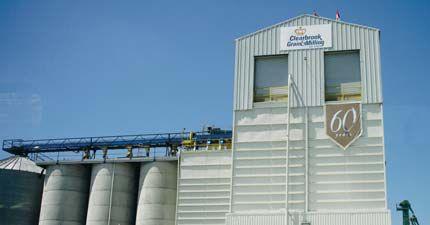
The 60th anniversary of Clearbrook Grain & Milling in Abbotsford, B.C., took place on July 23, 2013. Clients, suppliers, friends and staff gathered for the afternoon to celebrate the milestone, with activities, a barbecue, live entertainment and prize giveaways, as well as a tour of the mill. The company is also currently working on a tribute book to commemorate the event, which will include contributions from customers, suppliers, staff and more.
Clearbrook Grain & Milling, along with Nature’s Pride Nutrition, Pacific Pride Chicks and Friesen Farms, are part of the Friesen family’s operations. The family-owned and -operated business now extend to the second generation –together with production, finance and administration, the management team includes siblings Richard, Marvin and Melinda Friesen.
John Friesen, grandfather of the siblings, started the family on their poultry industry journey with his first job in Abbotsford as a night watchman at a chick hatchery in the 1930s and ‘40s.
John later helped his son Jake, one of 12 children, purchase some laying hens. In 1953, with a loan from his father, Jake then purchased a vacant farm on Clearbrook Road and began a commercial-sized layer operation.
At the same time, an opportunity opened up for Jake to get involved in a
CELEBRATING A MILESTONE
Clearbrook celebrated 60 years with live entertainment, a barbecue and a mill tour.
small feed company, delivering bagged poultry feed to local farms. He married Erna, who not only raised their five children but also helped run the farm, doing daily chores and collecting eggs. She also found time to participate in many community organizations and industry associations such as the B.C. Egg Producers.
In 1964, a fire devastated the mill. But resources were pooled and a new plant was
built, one that featured a modern design and more central location. The decades that followed were exciting times for the family-owned company, as they diversified into new industries including broiler and turkey hatching egg production.
In the 1990s, the mill (which had been designated only for poultry feed) was expanded to include dairy feed manufacturing. And in 2007, the Friesens
made the decision to purchase another feed mill, which became the company’s designated dairy feed manufacturing facility.
Over the decades, Jake served on many industry boards, and some of his most important work was with the B.C. Egg Producers Association, where he directed efforts to create the B.C. Egg Marketing Board.
“I am proud to say that some of our poultry customers have been committed to our business for over 30 years, due to my dad’s dedication and assistance with getting them involved in the industry,” says Melinda. “Over the years, we’ve expanded from a handful of employees to a multi-operation company with a crew that’s over 125 strong today.”
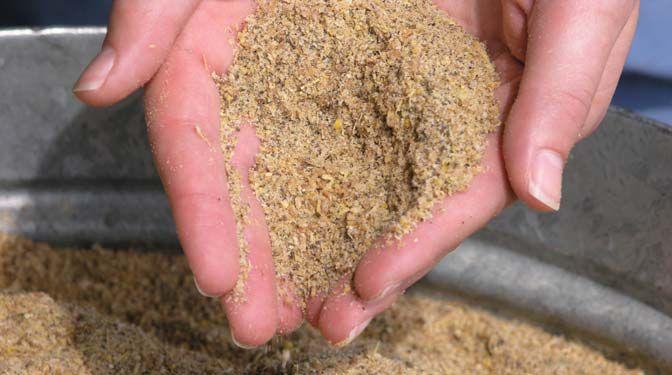
The separate feed facilities ensure the prevention of cross-contamination and complete consistency. Feed ingredients are tested with an in-house NIR (NearInfrared Spectroscopy) machine to meet strict specifications and guarantee that only feeds of the highest quality composition are offered.
The Friesen Group believes in supporting the many community foundations that serve the industries in which its companies do business. Sponsorships, donations and bursaries are just a few of the ways that they reinvest within their community and the feed and farming industry.
“As a family, we feel a strong sense of accomplishment in celebrating Clearbrook Grain & Milling’s 60 years in business,” Melinda says. “The experience has truly been an honour. It’s a team effort, and we recognize the contributions, efforts and dedication of each staff and family member to reach this milestone.
“Whether it was through guest attendance at the event or in one of the many personal messages we have received over this past month, we have been overwhelmed by the support from our industry contacts and our community.”
HELP WANTED
Poultr
THE BACK PAGE
GUEST COLUMN BY RONNIE CONS
The Poultry Farmer-Processor Relationship
As we are well aware, Canada’s chicken industry is regulated by a supply management system. It was established in Canada through federal and provincial legislation to make sure that farmers produce the right amount of safe, quality chicken meat to satisfy consumer demand.
It’s simple supply and demand: without supply management, when supply exceeds demand, the price drops to encourage the increased sale of chicken, which hurts the farmer as well as brings uncertainty to the marketplace.
On the other hand, when supply is too low, processors compete for supply, bringing prices up for the consumer. Thus supply management was implemented to help guarantee processors a consistent supply of chicken at stable prices – and protect the farmer.
Farmers, processors, and restaurant trade members from across Canada meet regularly in order to forecast market demand and set production levels, and each province receives a percentage of the total estimated production. Finally, the marketing board in every province distributes the quota among farmers and processors.
What this means is that the poultry processor needs and is dependent upon an expected quantity of chicken from their contracted poultry farmer suppliers, as well as a certain quality of chicken from the farm. Thus the processor expects and often demands that the farmer abide by certain consistent standards and practices so that the quality and the specifications of the delivered chickens meet their and the end consumers’ expectations. The processor does not want, nor can they afford, any surprises, as they are driven by their distributor accounts and the supply management system. Thus the distributor expects that certain standards and government regulations are followed concerning such issues as hatching of eggs, humane treatment of the chicks, feed quality and quantity, disease control, living environment of the chicks and transportation of the chickens to the processor. The more consistent the production methods used, the more consistent the quality and quantity supplied to the processor.
maintain the quality of the product. But fear of losing business or a distributor is not the only means of maintaining quality. There are “soft” behavioural strategies that can be implemented to increase the consistency of the quality and quantity of the supply to the processor.
Channels of communication should be opened and maintained between the farmer and the processor. The farmer should be made to feel free to call and report any surprises or problems that may affect future quality or quantity. The processor should let the farmer know that he will not be penalized for doing so but will actually be rewarded with appreciation and possibly help to solve the problem.
Hence, any problems reported early to the processor will potentially help them to avoid costly supply or quality problems.
Hosting social events and contributing to similar charities and local needs will lead to a closer and more trusting partnership-oriented relationship that will encourage the supplier to maintain higher quality.
There are “soft” behavioural strategies that can be implemented to increase the consistency of the quality and quantity of the supply to the processor.
Finally, trust and appreciation must be enhanced. Farmers must be made to feel that the processor trusts them and appreciates their work in raising the chicks. By doing so, they will feel more like partners with the processor and be encouraged in their work. Positive reinforcement encourages better results for a whole farming operation, as no chicken farmer likes to feel like just one of 50 suppliers to a large processor. They want to feel important and considered.
In Canada, we see that thousands of family-run farms have supplier relationships with processors. This partly reflects the reality that a certain satisfactory level of trust and dependability of supply exists between the two sides. Yet, all is not perfect; thus, steps can and should be taken when possible to increase the level of trust, communication and respect between the supplier and the processor.
Of course, inspection of the supplied product will help
Ronnie P. Cons is executive VP of C&C Packing Inc., a leading Canadian meat and poultry distributor. He can be reached at rcons@ccpacking.com.
CONGRATULATIONS
CHRIS AND LAURA MULLET KOOP OF ELMWOOD FARMS! AWARD WINNING COMBI PULLET SYSTEM
CLARK OBC 36
“As a new pullet grower, I was interested in a system that would provide the opportunity to grow birds for a variety of layer housing systems, from enriched cages to organic free range. I was also drawn to the new innovative interior LED dimmable tube lighting system as it provides efficiency and equal lux to all levels of feed and water.”
“In my limited space (an existing barn), the combi pullet utilizes both vertical (perches and terraces) and horizontal (floor) movement throughout the barn to maximize capacity and minimize footprint.”