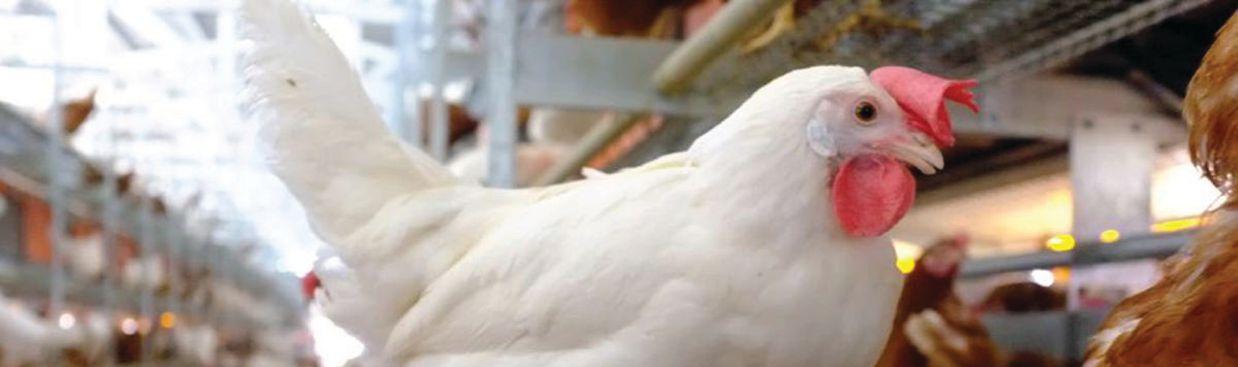
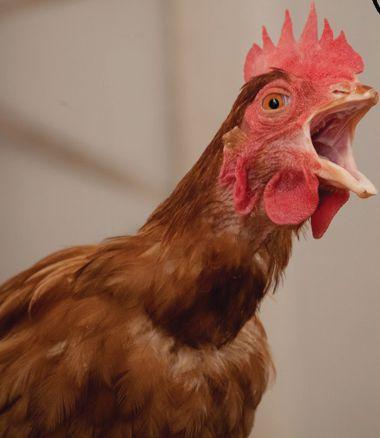
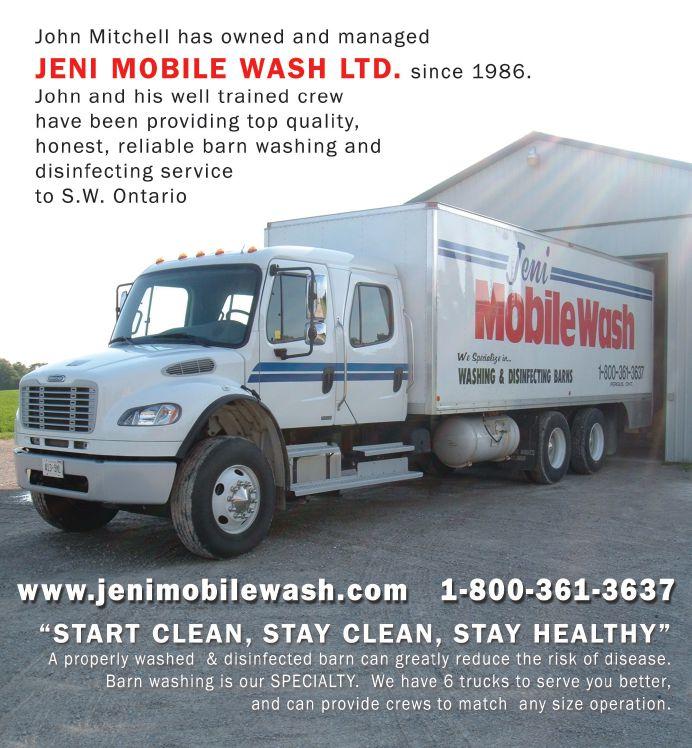
These are some of the products eligible for the Vetoquinol Club points program. Sign up today at vetoquinolclub.ca and reap the benefits. club
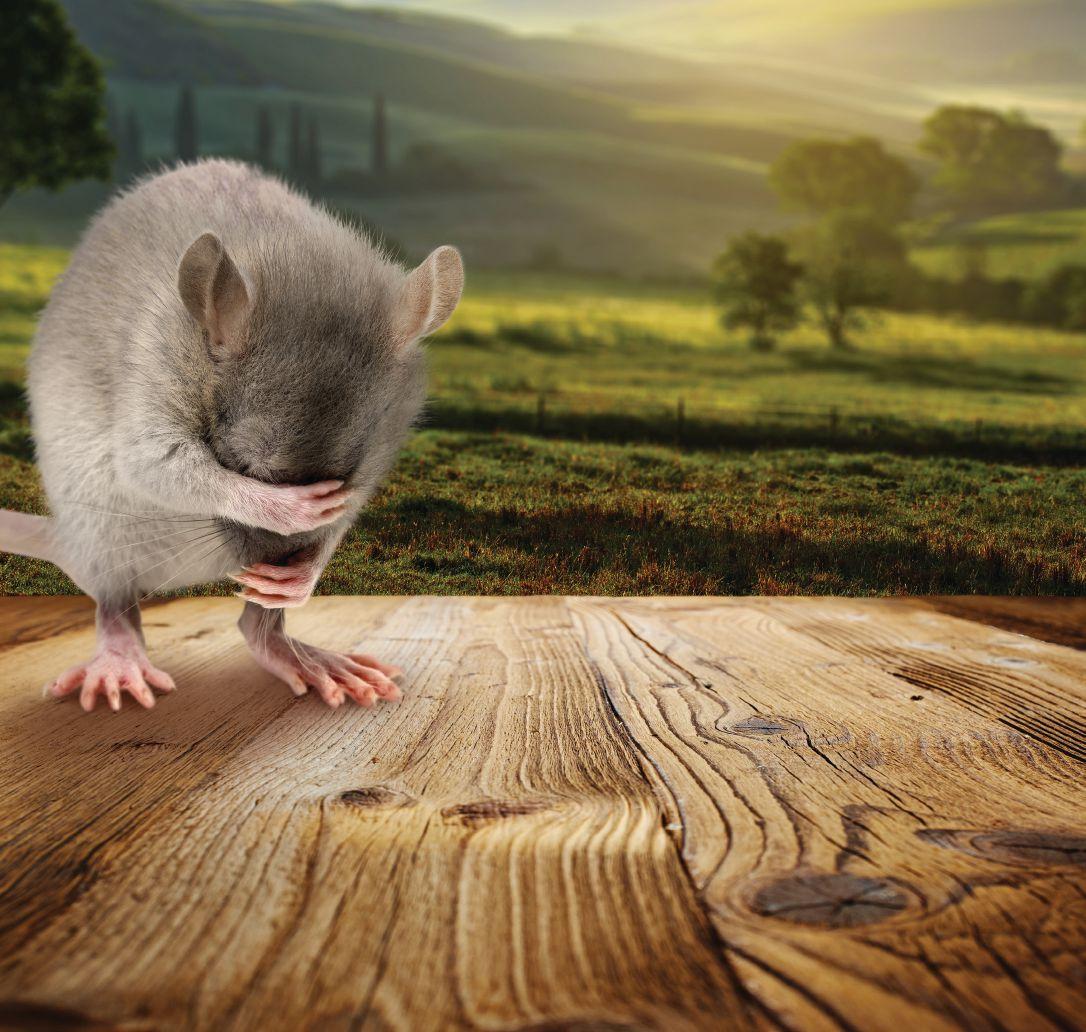
GREAT PALATABILITY BAITS
• Low or no wax formulations
• Grains and food grade oils ingredients
• Greater acceptance for better results
• Different actives for rotation
GIVE THEM BAITS THAT THEY WILL LIKE!
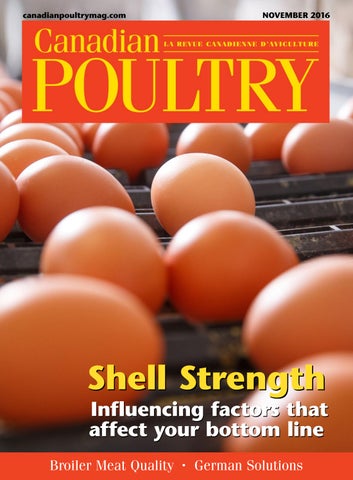
COVER STORY: Shell Strength
Influencing factors that affect your bottom line
By Megan Ross, Monogastric Nutrition Associate at New-Life Mills, a Division of Parrish & Heimbecker, Limited
RESEARCH: Optimal Feed Structure for Pullets
By Nerine T. Johseph, Ph.D., on behalf of Livestock Research Innovation Corporation
16
BUSINESS: Growing Bottom Lines with Social Impact By
Melanie Epp
21
GENETICS: Preserving the Future Canadian technique is considered by many to be the most promising poultry genetics preservation method in the world
By Treena Hein
TECHNOLOGY: The Hypereye: A Game Changer Canadian technology identifies bird gender in-ovo By Melanie Epp 28
OUTREACH: Nobody Does it Better
Stefan Teeper thinks farmers are the best people to consumers in Germany where there food comes from By Lilian Schaer
By
Lilian Schaer
Four Cents for
FROM THE EDITOR
BY KRISTY NUDDS
A Fond Farewell
After 10 years as editor of Canadian Poultry magazine, I have decided it's time for me to move on to a new adventure. This decision has been bittersweet; I will greatly miss my colleagues and everyone that I have met in this great industry during my tenure.
When I started with Annex Business Media, publisher of Canadian Poultry, I was new to the poultry industry and the learning curve was steep. I'm thankful to the company for providing me with a fantastic opportunity to learn, but it's the people of the Canadian poultry industry from which I have learned the most and I am forever grateful.
In the past ten years, I’ve witnessed the industry grapple with many challenges, from trade to animal welfare. Without a doubt it has been the latter, as well as the issue of “social license” that has had the greatest impact, and the two issues I
have found myself covering the most in the magazine in recent years.
The Canadian and U.S. poultry industries have been under a rapid transition away from what has always been donewhat’s been “industry standard” – and are navigating a new world of housing birds and rearing them without drugs.
But I am confident that the industry has the knowledge and support it needs to traverse this new reality. Canada in particular has a strong poultry research base and innovative companies that are dedicated to helping poultry producers.
One thing that has always stood out for me, and that I will remember fondly, is the passion of the people in this industry.
Thanks for allowing me to be part of your world for the past ten years. I leave the magazine in great hands, and wish Lianne Appleby success as the new editor. n
Lianne Appleby returns as editor
Lianne Appleby is excited to return as editor of Canadian Poultry, beginning immediately. Having studied animal science at the University of Guelph, Lianne completed a Master of Science degree in broiler nutrition. Combining a passion for writing and science, her first “editor” assignments were with the University of Guelph/OMAFRA publication “Nuggets” and the Poultry Industry Council’s “Fact Sheets” during her student career. From there, she worked in communications and government relations with Chicken Farmers of Ontario, before moving to Beef Farmers of Ontario as communica-
tions manager and editor of Ontario Beef magazine.
Prior to joining Annex Business Media, Lianne served as marketing and communications manager with Hybrid Turkeys. In 2013, her first assignment with Annex was editor of Canadian Poultry magazine during Kristy Nudds’ maternity leave.
Most recently, Lianne has been the Digital Editor for all of Annex Business Media’s agriculture publications (Manure Manager, Top Crop Manager, Potatoes in Canada, Canadian Poultry and Fruit and Vegetable magazine). Lianne looks forward to once again working with her poultry industry peers. n
Subscription Rates Canada - 1 Year $ 30.95 (plus applicable taxes) U.S.A. - 1 Year $ 66.95 USD Foreign - 1 Year $ 70.95 USD
GST - #867172652RT0001
Occasionally, Canadian Poultry Magazine will mail information on behalf of industry-related groups whose products and services we believe may be of interest to you. If you prefer not to receive this information, please contact our circulation department in any of the four ways listed above.
As the egg laying industry continues to evolve, equipment manufacturing companies must do the same. At LUBING we are fully aware of our need to progress with the changing industry and that is why our culture of innovation is the reason for our success. LUBING is leading the way by offering a wide variety of products for today’s Cage-Free housing demands as well as bio-security concerns.
Glass-Pac Canada
St. Jacobs, Ontario
Tel: (519) 664.3811
Fax: (519) 664.3003
Carstairs, Alberta
Tel: (403) 337-3767
Fax: (403) 337-3590
Nipple Drinking Systems
Pullets / Layers with and without LitterGuard Cups
Egg Conveying Systems
Curve conveyors customizable to nearly any application Belt Conveyors ranging from 18, 24, 36, and 48 inches (capable of delivering up 600 cases/hr)
Accumulator Tables
Custom-made, all-stainless tables for all situations
Perch Systems
Ergonomic design allows birds to perch comfortably Reduces stress and helps create a calm environment
Les Equipments Avipor
Cowansville, Quebec
Tel: (450) 263.6222
Fax: (450) 263.9021
Specht-Canada Inc.
Stony Plain, Alberta
Tel: (780) 963.4795
Fax: (780) 963.5034
Food From Thought WHAT’S HATCHING HATCHING
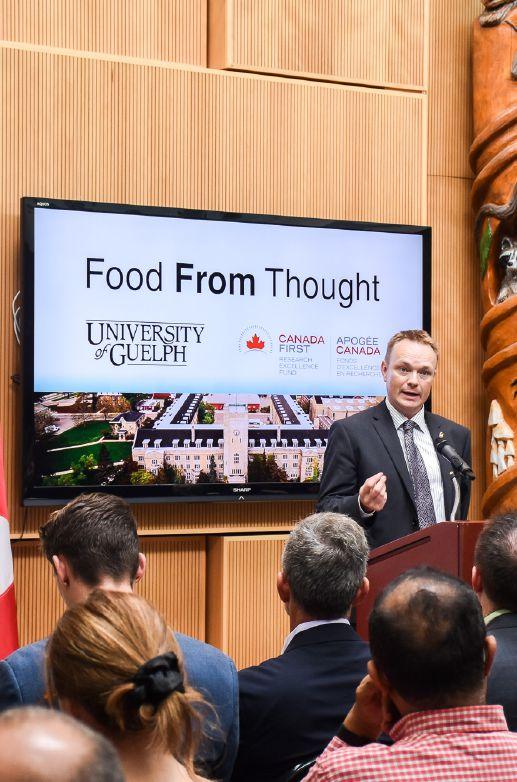
The University of Guelph (U of G) has received $76.6 million from the federal government to start a “digital revolution” in food and agriculture.
The government is investing in U of G’s Food From Thought research project, which will use hightech information systems to help produce enough food for a growing human population while sustaining the Earth’s ecosystems.
The funding will come from the Canada First Research Excellence Fund (CFREF), which supports world-leading research at universities and colleges.
It’s the largest single federal research investment in U of G history.
“This will position Canada as a leader in sustainable food production,” said U of G president Franco Vaccarino, adding the project will help
farmers produce more food on less land using fewer inputs.
Food From Thought will create novel tools for producing more and safer food while also protecting the environment.
“It is not just how much food we produce but also the way we produce it that will be key in the next century,” said Prof. Malcolm Campbell, vicepresident (research), who is the institutional lead for Food From Thought and a plant genomicist in the Department of Molecular and Cellular Biology.
New technology and agricultural practices must enhance biodiversity, produce safe, nutritious food, and improve animal welfare and human health, he said.
“This is essential if we are to realize the potential offered by our emerging ability to collect vast amounts of data and to develop information management systems,” he said.
Food From Thought will bring together experts to generate and commercialize knowledge, and to inform agri-food policy-makers and practices from farm management to global conservation planning.
The initiative will offer new teaching and research opportunities, and will focus on training the next generation of agri-food leaders through fellowships and graduate student positions.
More than $1 million will be available for annual research awards and competitions intended to develop innovations for sustainable food systems.
Food From Thought will be one of U of G’s largest and most inclusive research projects, spanning all seven colleges. It will be led by 10 principal investigators from across campus. Animal welfare researcher Dr. Tina Widowski will be one of these investigators.
ONTARIO
Agriculture and Agri-Food Canada (AAFC) has announced an investment of $690,000 to Éleveurs de volailles du Québec (ÉVQ) to help the Quebec poultry
Research Funding Mandatory Training Extended
ONTARIO
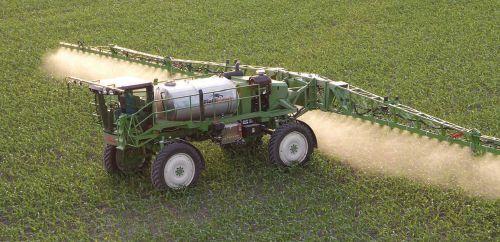
The province of Ontario is helping farmers comply with recent rules that protect insect pollinators by extending the time that the free mandatory training will be available. Farmers need the training if they wish to purchase and use neonicotinoid-treated corn and/or soybean seeds. Free training is available until April 30, 2017.
The half-day course is available in English or French, online or in class in towns across Ontario and at
industry reduce the preventive use of antibiotics.
Under this project, the Poultry Research Chair at the University of Montreal’s Faculty of Veterinary Medicine will assess various alternative strategies and their effects on
flock performance. The latest research into anti-microbial resistance (AMR) builds on a previous project, also funded by Agriculture and AgriFood Canada, and will seek solutions that can be applied across the entire poultry industry.
the University of Guelph’s Ridgetown campus. To register, call 1-866-225-9020, or visit: www.IPMcertified.ca.
Training and helping farmers to recognize and determine the field presence of insect pests is part of the Pollinator Health Action Plan. The plan also helps farmers learn best
Producers Advised to Safeguard Feed
WESTERN CANADA
With early harvest feed grain samples confirming a high risk year for potential feed quality issues, livestock operations and feed mills are advised to take cautionary steps to safeguard feed quality and livestock performance.
The growing season on the Prairies was varied and some locations were very wet saw some locations with high disease pressure and high risk
of mycotoxins, mold and other issues.
Rob Patterson, Technical Director for Canadian BioSystems Inc. (CBS Inc.) said in a release “it’s a year when livestock operations and feed mills will want to be even more diligent than normal in taking the right steps to safeguard the quality of feed and the performance of livestock consuming the feed.”
A good starting point is to send in feed grain samples for analysis, says Patterson. “This
management practices for dealing with Neonicotinoids. NNIs are targeted to kill pests, but they are also toxic to beneficial insects like bees and other pollinators. The plan is part of the Province’s larger strategy to reduce neonicotinoid use and improve pollinator health.
can identify the presence and level of mycotoxins and other contaminants. Once you know what you’re dealing with you can take the steps needed avoid any issues.”
More information on grain sample analysis options, potential quality issues and options for safeguarding feed and livestock is available by contacting CBS Inc. directly (800-561-2474). CBS Inc. offers additional FeedCheck analysis tools. The company also conducts an annual Wheat Survey in cooperation with industry and the University of Manitoba.
COMING EVENTS
NOVEMBER 2016
November 9-12, 2016
Agri-Trade Equipment Expo, Westerner Park, Red Deer, Alta. For more information, visit: www.agri-trade.com
DECEMBER 2016
December 1, 2016 Eastern Ontario Poultry Conference, St. Isidore, Ont. For more information, visit: www.poultryindustrycouncil.ca
December 14, 2016 Prairie Livestock Expo 2016, Victoria Inn Hotel & Convention Centre, Winnipeg, Man. For more information, visit: www. prairielivestockexpo.com
JANUARY 2017
January 30-31, 2017 International Poultry Scientific Forum, Georgia World Congress Center, Atlanta, Ga. For more information, visit: www.ippexpo.org
January 31-February 2, 2017 International Production and Processing Expo, Georgia World Congress Center, Atlanta, Ga. For more information, visit: www.ippexpo.org
FEBRUARY 2017
February 14-16, 2017 Atlantic Poultry Conference, Old Orchard Inn, Wolfille, N.S. For more information, visit: www. atlanticpoultryconference. com
WHAT’S
HATCHING HATCHING
Sasso to Expand Coloured Breeding
Sasso and Hendrix Genetics have signed a Memorandum of Understanding (MOU) to strategically connect the coloured breeding (slow-growing broiler) activities of Sasso with the worldwide network and R&D center of Hendrix Genetics. To accommodate the transaction, Sasso will strengthen is equity structure via emission
of new shares to Hendrix Genetics. It is anticipated that the final transaction will be completed in the autumn of this year.
With access to the latest breeding technology and specialized breeding IT of Hendrix Genetics, Sasso’s breeding program will be intensified to accelerate overall product development.
Cara Completes Acquisition
Cara Operations Limited announced that it has successfully completed the St-Hubert acquisition. The company announced on March 31, 2016, that it entered into a definitive agreement to acquire 100 per cent of Group St-Hubert, Quebec’s leading full-service restaurant operator as well as a fully-integrated food manufacturer for $537 million.
Jean-Pierre Léger, the outgoing Chairman and CEO of St-Hubert commented, “I’m proud of the St-Hubert legacy and confident that this new alliance with Cara
will open up opportunities for St-Hubert associates as well as new possibilities, both inside and outside of Quebec, for the St-Hubert business”.
Cara’s Chief Executive Officer, Bill Gregson, commented, “This acquisition represents a historic alliance and an excellent strategic fit for both companies. It gives St-Hubert the opportunity to expand its restaurant network as well as to drive a national retail food program on behalf of Cara, leveraging St-Hubert’s existing management, Quebec manufacturing facilities and supplier network”.
COMING EVENTS
February 27, 2017
Western Poultry Conference, Sheraton Red Deer, Red Deer, Alberta. For more information, visit: www.westernpoultryconference.ca
MARCH 2017
March 1-3, 2017
B.C. Poultry Conference 2016, Sheraton Wall Centre Hotel, Vancouver, B.C. The four feather boards in B.C. are hosting a joint conference that will feature breakout sessions, trade exhibits, each commodity’s annual meeting and keynote speakers. For more information, e-mail: bcpcinfo@mcigroup.com
March 20-22, 2017
Western Poultry Disease Conference, Holiday Inn Capitol Plaza, Sacramento, Calif. For more information, visit: http://www.cevs.ucdavis.edu/confreg
APRIL 2017
April 5-6, 2017
London Poultry Show, Metroland Media Complex, Western Fairgrounds, London, Ont. For more information, visit: http:// www.westernfairdistrict. com/london-poultry-show
We welcome additions to our Coming Events section. To ensure publication at least one month prior to the event, please send your event information at least eight to 12 weeks in advance to: Canadian Poultry, Annex Business Media, P.O. Box 530, 105 Donly Dr. S., Simcoe, ON N3Y 4N5; email lappleby@ annexweb.com; or fax 519429-3094. Please write ‘Event Submission’ in the subject line.
Cover Story Shell Strength Influencing factors that affect your bottom line
Megan Ross, Monogastric Nutrition Associate at New-Life Mills, a Division of Parrish & Heimbecker, Limited
Egg shell quality is extremely important to table egg producers. Egg shell quality has a direct impact on profitability because any broken, cracked, or misshapen eggs will result in a loss to the producer. Some of the factors that influence egg shell quality include: nutrition, feed management, stress, the age of the hens, and mechanical equipment. Understanding these factors that affect shell quality will have a positive impact on your bottom line.
NUTRITION
IMPACT ON PROFITABILITY
Nutrition plays a significant role in minimizing cracks within the flock. A properly balanced feed will give the laying hen the nutrients she requires to produce an egg a day, along with the shell needed to protect that egg. The three main nutrients that nutritionists typically take into consideration when shell quality problems arise are calcium, phosphorus, and vitamin D3. These three nutrients each play a crucial role in shell formation. The calcium status of a laying hen is very important because the hen must consume enough calcium to lay down an egg shell each day, as well as supporting her health and wellbeing. In addition to this, she must replenish the calcium stores within the body so calcium is available for use the next day. The calcium required to create the shell is obtained from two different forms, the medullary bone reserves and directly from the feed she consumes. Medullary bone reserves of calcium are located within the long bones of the body and the hen is able to mobilize these reserves to supply part of the calcium required to produce the egg shell every day. The remaining calcium required for the egg shell is obtained from dietary calcium comes from the digestive tract and is
Megan Ross says combining good management practices with respect to barn environment, and management as well as building a strong relationship with a nutritionist will optimize your chances of decreasing the number of damaged eggs being produced, which means a healthier flock and more money in your pocket
directly absorbed into the bloodstream. A deficiency in calcium will cause an immediate decrease in shell quality and if prolonged, the medullary bone reserves can become depleted. A hen in this state will begin to suffer a deterioration in egg shell quality, mobility problems, and soft bones. Phosphorus is also important as it plays a key role in the storage of calcium in the medullary bone reserves. Calcium is stored in these reserves as calcium phosphate, and for that reason phosphorus must be available in order for these reserves to be replenished. Finally, vitamin D3 plays an important role in egg shell quality because it promotes calcium absorption from the digestive tract into the blood stream of the bird. Once absorbed, the calcium is available to become part of medullary bone reserves to be laid down as part of the shell or for maintenance calcium requirements used to maintain the existing skeletal frame of the hen. Additional calcium, phosphorus, and vitamin D3. can be added to the diet when egg shell quality issues arise on farm, however this should be done in close consultation with your nutritionist as any imbalances in these nutrients can cause further deterioration to egg shell quality. While additional nutrients may help solve the problem, nutrition cannot be looked at in isolation as many factors contribute to these situations. For example, if the hen is not consuming enough feed, changes need to be made in the barn to encourage this consumption. Because shell quality issues are typically complex and have many contributing factors, nutritionists will focus on balancing the nutrition, while also considering environmental issues that may be contributing to the problem.
It takes approximately twenty-one hours for the shell to be laid on the egg and a significant portion of this high calcium
demand takes place when the lights are off. Consequently, feed management plays a key role in maintaining shell quality. It is important to make sure that the feeders are being run close to when the lights go off in the barn to ensure the hen is able to consume adequate calcium to support egg shell formation through the dark period. In addition to the importance of feed timing, the form of calcium being provided in that feed can impact the ability of the hen to create a high quality egg shell. Providing large particle calcium as a portion of the calcium in the feed will give the hen a source of calcium that is retained for a longer period of time. This is because large particle calcium is less soluble than fine particle and will remain in the gizzard longer, making it available during the dark period when the bird is not consuming feed. Research has proven that the hen also has a specific appetite for calcium and her appetite changes throughout the day. By providing a portion of calcium as large particle calcium, the hen is able to selectively regulate her calcium intake throughout the day as her appetite for calcium changes. In the late afternoon, when the demand for calcium is highest in the hen, having large particle calcium available allows her to choose to increase calcium consumption to meet her needs.
STRESS
Stress is known to cause disruption to the egg formation process which can lead to misshapen eggs, wrinkled and thin shells, as well as discoloured shells in brown egg strains. Stresses in the barn can come in many forms, including disease, heat stress, excessive and sudden noises, mismanagement or failure of lighting programs, poor barn environment, and aggression
from other birds. These types of stresses can cause a disruption to the egg formation process because they will cause the hen to either hold on to her egg or lay the egg too soon. Because stress influences the timing of the egg being laid, there can be an ongoing effect in the following days as the sequence of eggs has been disrupted and it takes time to get this corrected within the hen’s body. Taking the time to observe what is happening in your barn will help you in the long run. This includes ensuring the inlets and fans are providing adequate air flow, double checking that the lights are going on and off at the times they are set for, and observing bird behavior to look for signs of disease or aggression. Solving these problems as soon as possible by changing fan settings, adjusting lighting schedules, dimming lights to control aggression, and contacting a vet if a disease is suspected will minimize stressors in your barn and have a positive impact on egg shell quality.
BIRD AGE
The incidence of cracks is also affected by the age of the bird. When the hens are young and first coming into production, there can be some thin or shell-less eggs. This could be caused by the immaturity of the reproductive tract. Typically this only happens to one or two eggs before the reproductive tract begins to function correctly. The incidence of thin shells can increase as birds get older because the eggs become larger. As eggs get larger, the amount of shell material being contributed to each egg remains virtually the same. Consequently, the shell has more surface area to cover, which may lead to thinner shells that are more prone to cracks. Using
Egg collecting equipment such as egg belts, transfer points, escalators, packers, and egg saver wires can also contribute to cracks.
Cover Story
management and nutrition tools to manage the egg size within the flock will help minimize the increase in cracks as the flock ages. This includes working with nutritionists to review the diets to ensure that the nutrients are being fed at the appropriate levels for the age of hen, stage of production, and egg size. This will help prolong eggs in the large category, rather than encouraging an increase in egg size.
EQUIPMENT
Egg collecting equipment such as egg belts, transfer points, escalators, packers, and egg saver wires can also contribute to cracks in the barn. Any aspect of these systems that contributes to the rough handling of eggs as they move through the system can increase the incidence of cracks. Being diligent in inspecting and reviewing the equipment, as well as the frequency of egg collection, on a regular basis will help to minimize cracks being caused by mechanical damage. A regular routine can be established by ensuring maintenance logs are kept with details of problems found and how they were fixed, as well as posting a regular maintenance schedule that all employees have access to.
While it is impossible to completely eliminate all egg shell quality issues within a laying hen flock, a reduction in the numbers of eggs lost over time is possible. Working closely with your nutritionist to use nutritional strategies is one option to maintaining optimum shell quality. Managing the many factors within your barn that can contribute to decreased shell quality, such as feed management, stress, and egg collection equipment, will also have a positive influence on shell quality. Combining good management practices with respect to barn environment, and management as well as building a strong relationship with a nutritionist will optimize your chances of decreasing the number of damaged eggs being produced, which means a healthier flock and more money in your pocket. n
New Technology Optimal Feed Structure for Pullets
University of Guelph research will explore nutritional means to improve gut health and function, skeletal integrity and feed utilization in pullets and layers
B Y NERINE T. JOSEPH PH.D., LIVESTOCK RESEARCH INNOVATION CORPORATION
Dr. Elijah Kiarie is a newly appointed Assistant Professor in the Department of Animal Bio–sciences at the University of Guelph. Dr. Kiarie has recently secured partial funding for two research projects and will be investigating the optimal feed structure for pullets. His research will be designed to investigate optimal feed structure (by using oat hulls and limestone particle size) for enhanced gut and skeletal development in pullets and subsequent effects on egg production, hen bone health and integrity and livability.
OAT HULLS
Modern layer diets have been refined to improve intake and efficiency. The implications of these strategies are diets with low fiber and overall structure. Poultry require a certain amount of fiber for optimal development and physiology of the gastrointestinal tract. Low fiber diets have negative consequences on the development and functioning of the gut, particularly the gizzard. Addition of insoluble fiber could be a practical solution of increasing diet structure.
INCREASED REQUIREMENTS
Stimulating gut development may be particularly strategic for alternative housing where the birds may have increased nutrient requirements over and above normal maintenance
In an interview, Dr. Kiarie explained the problem at hand. “It remains unknown whether it is beneficial to introduce fiber at the rearing phase or laying phase, or indeed both phases,” he said.
“Modern pullets have a propensity to reduce intake at the onset of lay. Stimulation of gut development at the pullet phase may lead to birds with improved appetite for satisfactory laying phase performance,” he said. “This may be particularly strategic for alternative housing where the birds may have
increased nutrient requirements over and above normal maintenance and still meeting the requirements for egg production.”
Diets will be designed with oat hulls to create feed structure and fed to pullets throughout the grow-out period. During the laying phase, birds will be maintained on diets with or without the addition of oat hull. Gut and skeletal development will be evaluated during the grow-out phase and egg production and quality will be measured during the laying phase.
Photo courtesy of New-Life Mills
LIMESTONE PARTICLE SIZE
Proper skeletal development is essential for high levels of egg production in all poultry housing systems.
“Studies to improve skeletal health often focus on manipulating the birds’ environment and nutrition during the layer phase. Unfortunately, at this phase it might already be too late to improve bone quality,” Dr. Kiarie explained. “Earlier interventions by stimulating bone development at pullet stage could lead to a bird with sound skeletal structure for satisfactory laying phase performance in alternative housing.”
“Pullets undergo fast bone formation during rearing, and nutritional strategies during this phase could have a major impact on bone quality and skeletal integrity of hens,” he added.
The proposed research will evaluate the effect of limestone particle size on pullet skeletal development and subsequent effects on layer performance, bone health and integrity in hens housed in conventional and furnished cages.
Dr. Kiarie said the limestone particle size will be used as a method of manipulating the calcium supply form to create feed structure. Diets differing in limestone particle sizes will be formulated and fed to pullets throughout the grow-out period. During the laying phase, bird diets will be maintained in conventional and furnished cage housing systems. Skeletal development will be evaluated during the grow-out phase. Egg production and quality and bone health and integrity will be measured during the laying phase.
“The long term objective is to explore nutritional means to improve gut health and function, skeletal integrity and feed utilization in pullets and layers,” said Dr. Kiarie in describing the anticipated outcomes of these studies. “Research results will be directly transferred into practice through partnerships with feed manufacturers and allied industries that serve the Canadian egg producers.”
Components of this research will be funded by the Egg Farmers of Ontario, Egg Farmers of Canada, and the Canadian Poultry Research Council. n
CLEAN
CLEAN • CLEAN
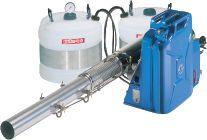
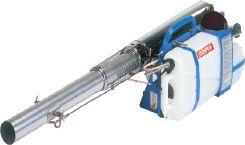
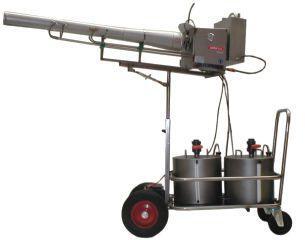
PulsFOG® disinfecting and pest control
The fog generated by a PulsFOG will cover all hard to reach areas. Assor tment of PulsFOG models to choose from.
Business Growing Bottom Lines with Social Impact
Inclusive businesses in the food sector
BY MELANIE EPP
According to The World Bank the roughly 4.5 billion low-income people in developing countries spend more than $5 trillion a year collectively. Of that, they spend $2.3 trillion a year on food and beverages alone. It stands to reason then that businesses that target those consumers and establish local sources of supply will be able to take advantage of this incredible growth. Furthermore, by connecting segments of those populations with viable markets, businesses have the ability to bring people out of poverty. This is what is referred to as an “inclusive business.” Markus Dietrich, co-founder and director of ASEI Inc., spoke on inclusive business models at this year’s International Egg Conference in Warsaw, Poland.
WHAT IS AN INCLUSIVE BUSINESS?
According to the G20 Inclusive Business Framework, inclusive business approaches go beyond corporate social responsibility and philanthropy, and impact investment by connecting poor people to markets. “[Inclusive business approaches] encompass business approaches that directly improve the lives of the poor by making them part of the value chain of companies’ core business as suppliers, distributors, retailers, or customers,” said a report from the G20 meeting in Istanbul in 2015. According to Dietrich inclusive businesses have the opportunity to
Inclusive business approaches directly improve the lives of the poor by making them part of the value chain of a companies' core business
capture corporate growth and market opportunities while enhancing brand value with key stakeholders. In building an inclusive model, businesses also reap added rewards: gaining social license to operate, future proofing the supply chain and attracting and retaining talent.
Dietrich knows all about designing an inclusive business model. He is, after all, an inclusive business specialist with extensive experience in research,
consulting and project development. He is regularly recruited by leading corporations to develop inclusive business models aimed at corporate growth and social impact. Dietrich is also cofounder and CEO of Hilltribe Organics, a social enterprise producing free-range and organic eggs with hill tribe communities in Northern Thailand. Hilltribe Organics is the first certified organic chicken farm in Thailand; its products are available in all major supermarkets.
INCLUSIVE BUSINESS
A lot of what we’ve achieved in the past 100 years wouldn’t have happened without you. That’s why your success is important to us and why we will never stop providing the best advice and support to maximize product performance. For working with us and driving us forward, thank you.
EXISTING INCLUSIVE BUSINESSES
There are many corporations who have already put their sustainability plans into action. Unilever, for instance, launched its Sustainable Living Plan in 2010. The plan is a blueprint for the company’s sustainable growth.
Business
Similarly, Mars established the Cocoa Sustainability Initiative and committed to being sustainable in a generation. To support a long-term goal of Creating Shared Value, Nestlé made 38 commitments that it aims to be by 2020 or earlier. Here in North America, McDonald’s Corporation has decided to
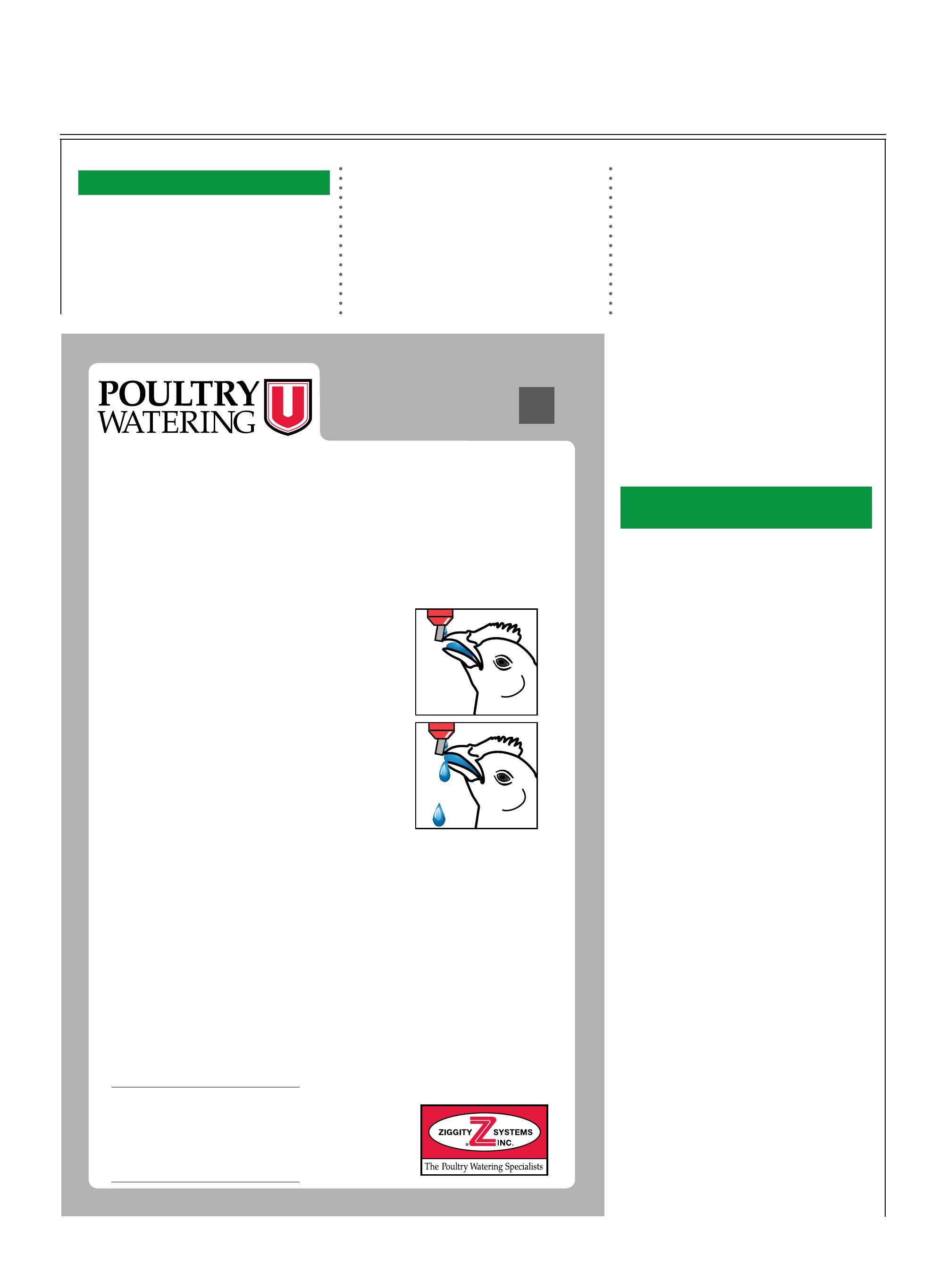
Watering Wisdom
Water ingested during the drinking process is limited by beak size.
Key Principle:
Water spillage happens when more water is discharged from the drinker than can be retained in the bird’s beak. Lower column pressure means less water discharged from the drinker with each activation; higher pressure means more water discharged. Therefore, use low column pressure for birds with small beaks and increase pressure as birds (and beaks) grow. Applying this management principle will prevent excessive water spillage, thus avoiding wet litter conditions. Dry litter promotes healthier birds, increases growth rate and reduces pododermatitis.
Key Directive: Keep beak size in mind and adjust column pressure accordingly to minimize spillage. Find best management practices and much more at Ziggity’s Poultry Watering U website.
www.PoultryWatering.com
• How-to videos
• Poultry Watering U news
• Management downloads
Adjust water column pressure based on beak size. Supply no more than the bird’s beak can retain during the drinking process.
stop using eggs from chickens raised in cages over the next decade.
But it’s not just food service and processers that are creating inclusive business models. Businesses involved in primary production are challenging older models with the goal of lifting communities out of poverty. The 3 million farmers who work for Amul Dairy Cooperative in India, for instance, all benefit directly from the company’s success. The cooperative is so inclusive that even a farmer with a single cow can join. Locally, a group manages milk collection and pays farmers on the spot.
INCLUSIVE BUSINESSES IN THE EGG INDUSTRY VALUE CHAIN
There are examples of inclusive businesses around the world, including in the breeding, machinery and primary production sectors, said Dietrich, who highlighted several examples where business opportunities created better lives for those involved. In Ethiopia, for example, diets are deficient in protein. Indigenous chicken breeds have a survival rate of 50 percent. Birds produce fewer eggs, mature later and are prone to disease.
Mekelle Farms saw an opportunity to increase egg production by 500 per cent, thereby increasing smallholder farmer incomes. Higher egg production will both increase the supply of protein to rural and urban households, said Dietrich, as well as lower the cost of protein, making it more accessible.
Similarly, in India, poultry farmers have millions of low-productivity birds in back yards. Their flocks aren’t generating enough income, nor are they providing enough food. There, Keggfarms helped make low-income families more food secure by addressing the egg and meat issue, as well as providing opportunities for farmers, explained Dietrich. Keggfarms also create a micro entrepreneur network selling day-old chicks that have a longer life expectancy.
Keggfarms has received high praise for its business model. It is even a case
study on Social Enterprise at Harvard Business School, said Vipin Malhotra, CEO at Keggfarms.
Realizing that per-person poultry meat consumption will rise faster than it will for pork and beef, especially in Africa, machinery company Surehatch saw an opportunity to build connections in South Africa. Surehatch, said Dietrich, focuses on Kenya’s smallholder market, emphasizing the idea of chicken production as a business opportunity. The company trains farmers – more than half of them are women – and helps them to create profitable businesses that provide a steady annual income.
Dietrich’s own inclusive business, Hilltribe Organics in Thailand, triples farm incomes, helping to bring families out of poverty. Regular and predictable income, he said, helps improve their quality of life.
DEVELOPING YOUR OWN INCLUSIVE BUSINESS
Thinking about developing your own inclusive business model? In a recent report, the Food and Agriculture Organization of the United Nations (FAO) noted that there are some 475 million small farmers globally, creating a huge potential supply chain for future inclusive business owners. A good start, said Dietrich, is making the move from corporate social responsibility to inclusive business models. This can be done by partnering with social enterprises and seeking support and financing from an inclusive business ecosystem.
Can eggs make a difference? Dietrich thinks they can. At the United Nations Sustainable Development Summit of September of 2015, world leaders agreed to adopt the 2030 agenda for Sustainable Development. The agenda
Business
includes 17 Sustainable Development Goals, including eliminating poverty and hunger, and improving health, education and gender equality. Of the 17 goals, Dietrich said that egg production addresses at least eight: no poverty; no hunger; good health; gender equality; good jobs and economic growth;
responsible consumption; life on land; and creating partnerships for the goals.
“We have proved the point that eggs have the potential to create substantial social impact,” concluded Dietrich. “Having a predictable and regular income has completely changed their lives.” n
Genetics Preserving the Future
Canadian technique is considered by many to be the most promising poultry genetics preservation method in the world
BY TREENA HEIN
Any method to preserve a species’ genetics is complex and costly. For poultry, raising generation after generation of a certain group of birds is one method, but because those who have been doing this don’t really receive any benefits that outweigh the costs, many are not continuing with it. In addition, relying on live flocks as a way to preserve genetics is also quite risky because something like a disease outbreak or a fire could always come along and cause the DNA to be lost forever.
A solution is therefore needed, preferably one that allows for the preservation of as much avian genetic diversity as possible. This will allow for genes from heritage breeds to be fully examined and characterized – genes which may hold great future promise in commercial breeding in terms of important traits like resistance to disease. American geneticist Dr. Janet Fulton has already demonstrated that there are some genes present in heritage poultry breeds that are not present in commercial breeds, and some of this heritage DNA (very much at risk of being lost at this point in time) may become crucial in future commercial poultry breeding enhancements.
But how is a central, efficient and secure way to preserve poultry genes to
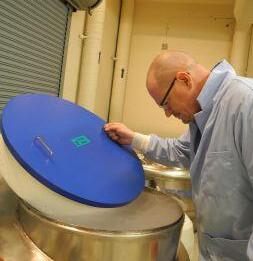
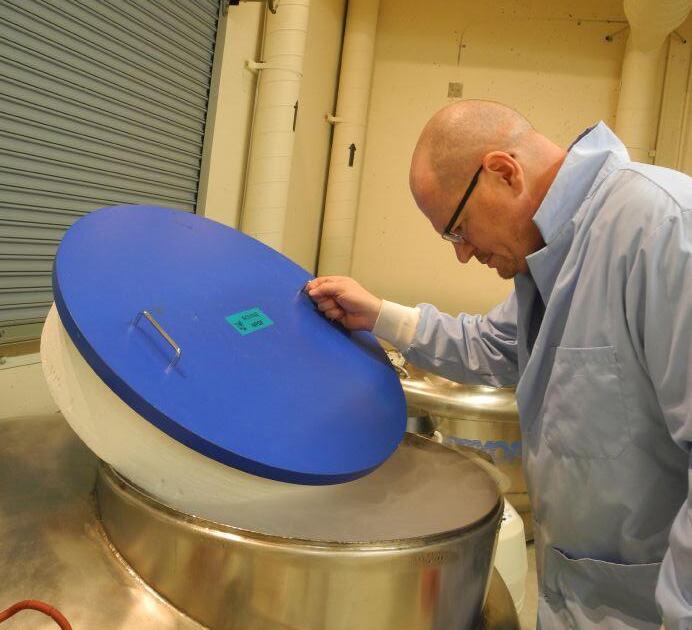
Dr. Carl Lessard, curator of CAGR at the University of Saskatoon showing the liquid nitrogen that is used in the vitrification process
be developed? Cryopreservation (slow freezing) was tried because it works for mammalian sperm, eggs, embryos and more. But it turned out that cryopreservation of avian sperm significantly lowers its ability to fertilize eggs, and avian sperm doesn’t contain the entire bird genome anyway. While avian embryonic cells do, cryopreservation doesn’t work with them either.
Finding a reliable way to preserve poultry genetics is also challenging because of the trickiness involved with manipulating bird eggs and sperm, explains Dr. Carl Lessard, curator of
the Canadian Animal Genetic Resources program (CAGR) at the University of Saskatoon in Saskatchewan. “What’s required is to open a small spot in an egg shell and deposit desired embryonic cells into the host embryo without killing it,” he notes. “That’s very difficult. So, while freezing embryonic blastodermal cells is a good way to preserve the entire genome of a species, it just doesn’t allow for easy usability of that genome in poultry.”
In 2006, Dr. Fred Silversides (now retired from Agriculture and Agri-Food Canada) tried some new thinking. What
Photo courtesy of AAFC
Genetics
about preserving the gonadal tissue (testicular and ovarian tissue) where sperm and eggs are created and stored? Might it be possible to develop a relatively efficient way to remove gonads, chill and store them, and then thaw and transfer them, resulting in the hatching of a chick with the desired genetics and not any from the surrogate mother hen?
Instead of the slow freezing involved with cryopreservation, Silversides tried vitrification, where a gonad is removed from a day-old chick, treated with lots of cryoprotectant and chilled rapidly through a plunge in liquid nitrogen. The gonad is never technically frozen (there’s no ice crystal formation) but maintained in a glass-like (vitreous) state at a very low temperature. Once thawed, the gonad is surgically transferred to a day-old chick recipient that has had its gonad totally or partially removed.
At the same time, Silversides and his team developed ways to preserve the viability of the tissues during and after thawing and transplantation, such as treating the recipient chick with immunosuppressants to avoid rejection of the graft.
Success was achieved! Over time, the work of Silversides and his colleagues at AFFC was transferred to CAGR, where Lessard became curator in 2014. Since that point, Lessard and his team have been working hard to move all aspects of poultry genetics preservation forward.
WHAT’S HAPPENING NOW
The technique for chicken testicular tissue is now well-established, and Lessard and colleagues are currently optimizing Silversides’ technique for ovarian tissue. “The ovarian grafts are not growing the way we need them to, so we are now trying to find a new chicken line recipient,” Lessard explains. “The bird line we were using likely has an immune response that’s too high. We didn’t see this with the testicular tissue grafts in that line.”
With turkeys, Lessard has established a reliable protocol for freezing gonads from newly-hatched chicks, with the next step to optimize the surgical procedures and immunosuppressive treatment to obtain successful growth of the grafts. In terms of the team’s preliminary genetic analysis, they’ve found turkey breeds have a lot of genome ‘admixture’ (many shared genes alleles between breeds), but more samples are needed to confirm this finding. Shared alleles, says Lessard, make it harder to characterize the entire genetic diversity of turkeys and establish what is, and what is not, pure turkey genetics.
Once vitrification of male and female gonadal tissue for chicken and turkeys is complete, the team will launch a national call in 2017 to request genetic samples of fertilized eggs from commercial and heritage breeds. They will also move on to other poultry breeds such as ducks.
Lessard and his colleagues are also creating a germplasm repository (sperm, eggs, gonads, embryos) for other types of livestock from all across Canada. “We are looking for donations from purebred animals in all areas of the country,” he says, “including bison, cattle, sheep, goat, horse, pig, deer, elk and more. It’s going well, and we’re getting more and more participation from livestock associations and individual producers. Right now (in September and October 2016), we are in Ontario and Quebec gathering samples from sheep, goat and beef cattle.” A website letting the public know what has been contributed is being developed and Lessard is looking for more Canadian and international graduate students to tackle all the work.
“We need many samples for poultry and everything else produced in Canada,” he explains. “Genetic characterization of commercial and heritage poultry breeds is extremely important and we need to establish the true diversity of the different poultry breeds produced here. The number of heritage breed birds is shrinking every year, and it’s very important to capture genetics as soon as possible.”
Silversides’ vitrification preservation technique has so far been adopted by the United States Department of Agriculture ‘Agricultural Research Service’ Germplasm Resources Information Network (GRIN). Lessard says individuals at that organization have already used the technique to preserve the genetics of several U.S. commercial and heritage breeds. In terms of other groups beyond CAGR working on gonadal transfer, a team in Hungary is currently working to master it.
To make is easier for them and other researchers around the world learn how to successfully complete surgical transfer of vitrified gonads, Lessard has been working on a free tutorial e-book featuring detailed video and audio descriptions of each step. “This strategy (vitrification and gonadal transfer technique) has great potential to preserve the entire genome of a poultry breed and also use that genome fairly easily,” he explains. “We want it to be available to everyone.” n
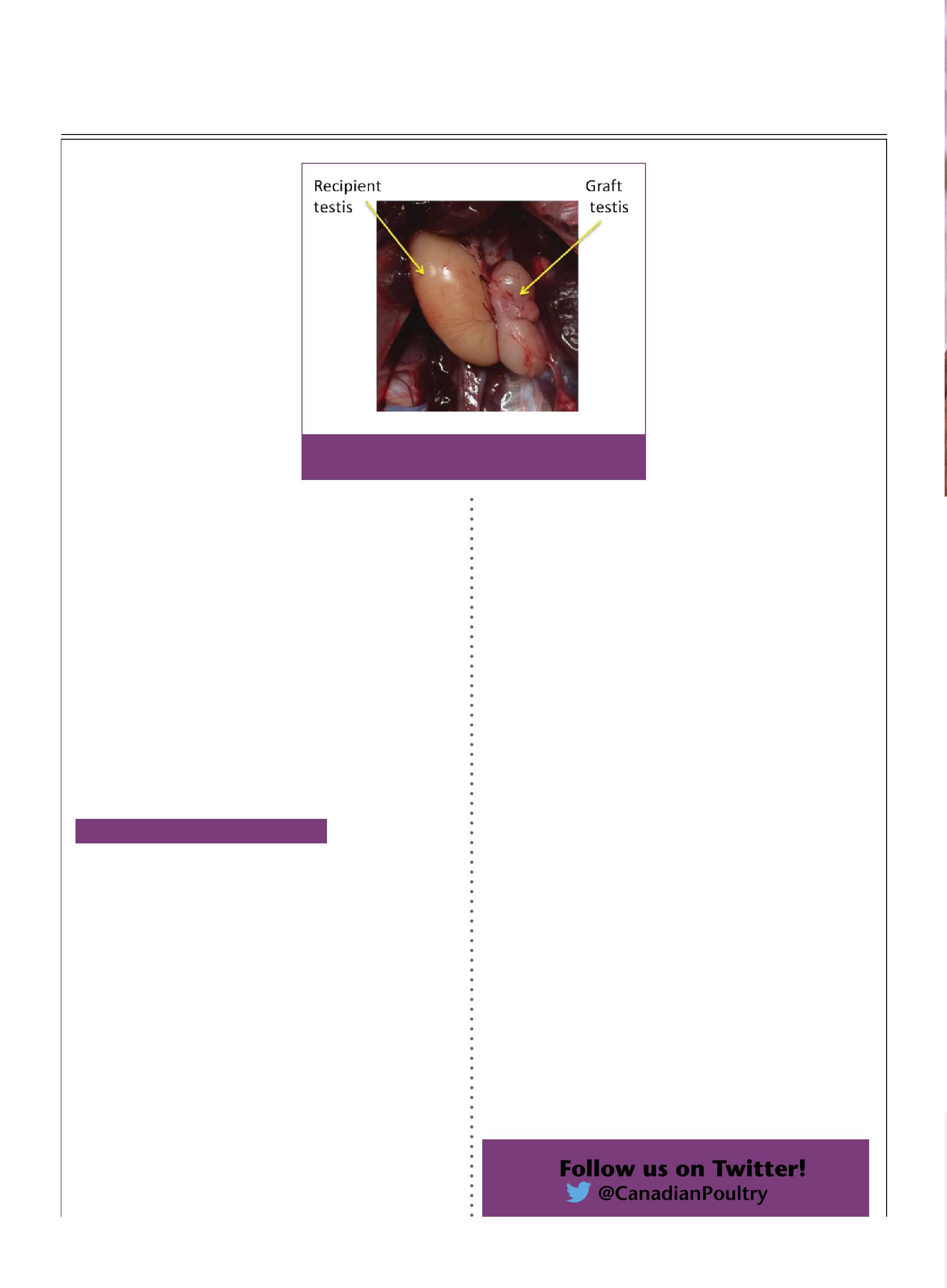
Comparison of a recipient and graft testis at maturity
Photo courtesy of Carl Lessard, CARG
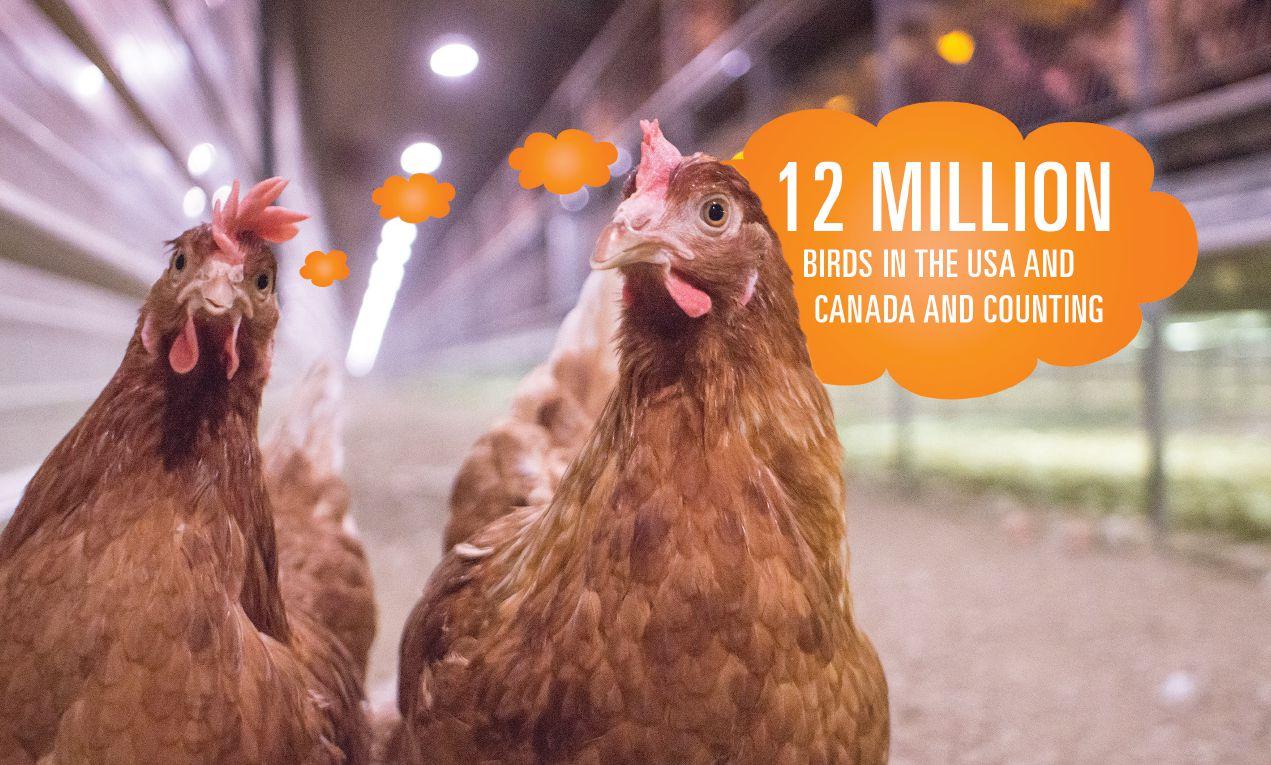
There’s a good reason so many farms trust us with their flocks. With over 12 MILLION birds in the U.S. and Canada living and thriving in our NATURA AVIARY cage-free environments, you can know that Big Dutchman has proven experience and systems which deliver positive results to your bottom line.
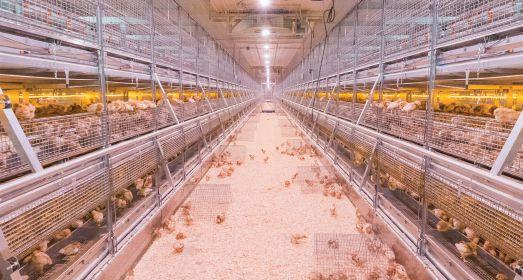
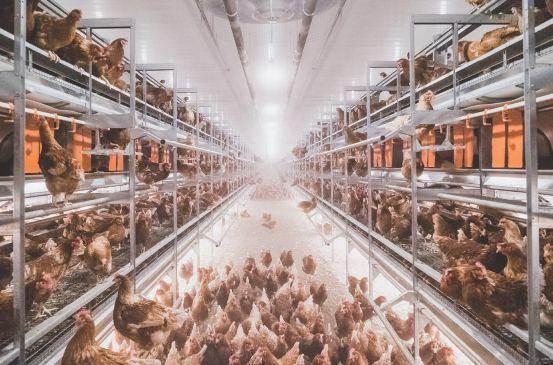
When you invest in a Big Dutchman cage-free system you get a broad selection of options, and an experienced, dedicated cage-free team to help you to maximize your investment.
From rearing to layer, we have the most complete and versatile lineup of cage-free options, and more experience to help you than any other company.
Technology Hypereye: A Game Changer
Canadian technology that identifies bird gender in-ovo could be the answer to one very big issue in egg production
BY MELANIE EPP
Every day nearly 62,000 cockerels are culled in Canada. That’s 22.5 million birds each year. While the number sounds shocking, it is the harsh and unavoidable reality of Canada’s egg industry. In the developed world, that number reaches over a billion chicks. The birds that commercial egg farms purchase are bred specifically for egg, not meat, production, which means that while the females are highly coveted, male chicks have absolutely no value. This is not only a serious animal welfare issue, but also an issue of waste. But technology developed by the Egg Research Development Foundation (ERDF) could change all that.
Hatcheries in Canada run a tough business. According to Tim Nelson, Chief Executive Officer of the Livestock Research Innovation Corporation (LRIC), when you take into consideration their losses, they run at 50 per cent efficiency. For one, some 10–15 per cent of all eggs are infertile, and hatcheries are forced to dispose of them as waste. Of those that do hatch, cockerels make up 50 per cent. The chick must then be identified, culled and disposed of by the hatchery. On top of the waste and animal welfare issues this raises, the hatchery must foot
The “Hypereye” will reduce waste by identifying which eggs are male and infertile, allowing only fertile female eggs to be incubated
the bill for their incubation, as well as the labour and energy associated with raising them.
In 2007, the industry started working towards a solution. Egg Farmers of Ontario (EFO) has been funding research for a new technology, tentatively called “Hypereye,” that uses hyperspectral imaging to identify infertility and gender in day-of-lay eggs. If successful, Hypereye could be a game changer for Canada’s egg industry.
Hypereye uses spectroscopy, which
is technology that allows hatchery personnel to identify eggs that are infertile. More importantly, though, it allows them to determine gender of the day of lay. Since day-of-lay eggs are essentially the same as regular table eggs, early identification could mean a new source of eggs. The potential, said Nelson, is huge.
Dr. Michael Ngadi, a food and bioprocess engineer at McGill University, is the head researcher on the project. In a recent interview, he explained how the Canadian technology differs from
REDUCED WASTE
Technology
similar technology being developed around the world. A team in Germany, he said, is also using spectroscopy, although their approach is much different.
“We combine spectro-image data, so that’s why we call it the hyperspectral imaging,” explained Ngadi. “It’s a combination of broad spectral image signatures that we get from the egg. Then we put that through a fairly complex mathematical analysis where we are using some deep learning techniques to identify or relate those spectral and image data to the specific attributes that we are looking at – in this case, whether it is fertile or not and whether it is male or female.”
Dr. Ngadi said that they have chosen not to go into the infrared range for a number of reasons, mostly because he doesn’t see it as commercially feasible to operate at that wavelength. “Also because you will not be able to get an image at that wavelength,” he added.
Hypereye is almost ready for market. In fact, Nelson said that it could be ready as early as mid-2017. At present, the bench-scale model operates at an accuracy of 99 per cent. On a commercial scale, Hypereye must be able to process 30,000–50,000 eggs per hour. Currently, it’s nowhere near that speed, said Nelson, although he’s confident that speed won’t be an issue. “It’s just a case of ramping up the software,” he said. “Speed is important,
but accuracy is more important. Right now we’re not worried about speed.”
The Poultry Industry Council in Ontario first provided funding for the project in 2007. Preliminary results were so successful that EFO decided to invest in further research, which is now being conducted through the McGill University in Montreal.
Currently, ERDF is looking for a qualified commercial partner who will assist taking the technology into production, and then market and service it around the world. ERDF believes that there will be considerable interest in the technology, especially since the approach they take keeps the eggs intact. Other systems, explained Nelson, involve invasive DNA testing. Not only is DNA testing time consuming, but it also requires putting a hole in the egg. There is greater risk of contaminating the eggs with bacteria and transmitting disease between eggs, and partially incubated male eggs and incubated infertile eggs have to be destroyed.
Since Hypereye will enable hatcheries to determine gender and infertility on the day of lay, eggs need not be wasted. Theoretically, said Nelson, the egg industry could take a large number of hens out of production. This is unlikely, though, especially as new egg markets are opening up. One such market, said Nelson, is the pharmaceutical industry. In recent years, EFO committed $1 million to Relidep, an antidepressant drug that requires thousands of fertile eggs each day. Nelson said the food processing market will take them as well.
Harry Pelissero, EFO’s general manager, says Canadian egg producers need not worry about production loss. “The nonfemale eggs could be used either for other uses such as table or breaker markets, vaccine egg production or for production of anti-depressants,” he said. “Given the ever-increasing use of eggs as a source of protein, existing egg farmers should not be worried about any reduction of egg production as a result of the implementation of this process.”
While the announcement is an exciting one for the industry, it could be a while before Hypereye is available commercially for large-scale operations.
LAYING HENS: A PRACTICAL GUIDE FOR LAYER FOCUSED MANAGEMENT
Not all poultry farmers maximise the full potential of their birds. Both kept in cage or floor systems, for a good performance during the production period, the management should be correct and efficient. But how do you know that what you are doing is right? Your chickens continuously send out signals: about their health, how well they know their way around their surroundings and whether they feel happy and comfortable.
If you recognise the signs that point to potential problems, then make sure you are armed with information to take the appropriate steps to get your flock back on track. But to do so, you must know all the ins and outs of your own farm and be able to assess the impact these changes will have on your animals.
“There are a whole lot of variables in the industry that we need to account for when we are actually putting this thing out there,” said Nelson. “Age of flock may make a difference, what the flock’s being fed may make a difference, and genetics of the flock may make a difference. So there’s a whole lot of things we have to take into account.”
The long and the short of it, though, is that the technology is there. “And because this is day-one and because it’s non-intrusive, it’s really important technology,” said Nelson.
Pelissero agreed. “We are getting closer to building a prototype, testing and will be in a position begin to take orders within the next two years,” he concluded. n
UPDATED YOUR BIOSECURITY PLANS LATELY?
As part of the Chicken Farmers of Canada’s On-Farm Food Safety Assurance Program (OFFSAP) it is recommended that all standard operating procedures (SOPs) be reviewed on an annual basis.
Migrating birds are attracted to farm fields to feed on their route south, and may shed avian influenza virus in the fields while visiting.
Outreach Nobody Does it Better
Stefan Teepker thinks farmers are the best people to show consumers in Germany where there food comes from
BY LILIAN SCHAER
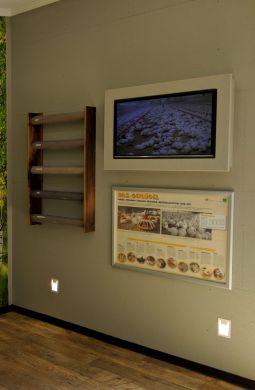
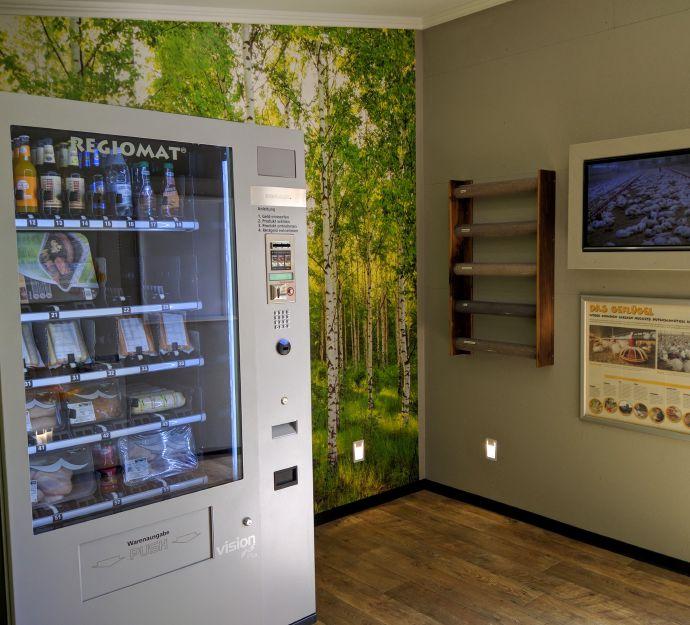
In Lower Saxony, Germany, Stefan Teepker has just spent 25,000 € (approximately $36,500 CAD) on a new on-farm visitor gallery complete with food vending machine, video system and 24-hour viewing area on one of his poultry farms.
It’s not that he’s expecting the vending machine to be a big money maker – he needs 15 € a day in sales to make the venture work – but he’s hoping it will attract the non-farming public to his farm to learn more about how broiler chickens are raised, housed and treated in Germany.
Teepker unveiled his concept to a group of visiting international agricultural journalists who were touring northern and eastern Germany this past July.
It’s not easy being a farmer in Lower Saxony, where agriculture minister Christian Meyer represents the Green Party. Strict animal welfare rules, limitations on new barn constructions and looming new clean air laws mean farmers have a lot more to worry about than just raising healthy, quality livestock and poultry.
To Teepker’s way of thinking, that’s precisely why someone has to show people where their food comes from, and there’s nobody better to do that than farmers themselves.
VISITOR
GALLERY
Stefan Teepker’s farm has a visitor’s gallery that features a viewing window, information on barn equipment and a vending machine
“We have to show how we produce the meat people eat and with this new viewing area, people can come here any time to watch our birds,” he explained while looking into his bright, modern barn filled with healthy, contented birds. “Some farmers say we can’t do this job, someone else should – but who else would that be?”
Doing nothing is not an option as the pressure from those opposed to livestock farming is already making itself felt.
For example, even enriched poultry cages will be phased out entirely in favour of all cage-free production by 2025, beak trimming will be banned by the end of 2016, and culling of male
chicks will no longer be permitted in Lower Saxony by the end of 2017.
The state has also committed to reducing antibiotic use in agriculture by 50 per cent in five years, resulting in farmers having to notify the government each time they purchase antibiotics for livestock use.
And according to Teepker, Lower Saxony is no longer issuing building permits for new livestock barns, citing environmental concerns, and that it is very difficult to even secure permission to renew existing facilities. Farmers who wish to expand their production have no choice but to buy existing farms or relocate to other parts of Germany, he said.
“We built our first barn in 2009, where we got a permit in 12 months and built in six – it was two years in total from thought to bird. Now it is up to six years,” he said.
New clean air laws from the European Union designed to reduce emissions from intensive livestock operations will mean new costs too, he added.
Teepker farms together with his younger brother Matthias near Handrup, Lower Saxony, about 360 km north of Frankfurt. He’s in charge of the broiler side of their operation, which also includes pigs, biogas production and 350 hectares (approximately 865 acres) of crops.
In 2013 he purchased the farm where he has added the viewing gallery and renovated the 10-year old facilities. And although he considered expansion into Eastern Germany several years ago, he ultimately decided against it due to the high cost of farms.
Teepker is not alone among farmers in Germany adding viewing galleries into their livestock barns, but notes that his goes above and beyond the simple window and information card that most provide.
Videos available on demand, for example, demonstrate other aspects of his farm and the life cycle of his birds. Feed samples show what birds eat and feeders and waterers are on display to demonstrate how they eat and drink.
Outreach
And the vending machine, which Teepker has stocked with chicken products, can sell anything from a single egg to a five kilogram bag of potatoes. This particular farm happens to be on a busy public cycling trail, so Teepker hopes his location – and the cold drinks he is including in the vending machine – will help draw people in.
If the viewing room and vending machine are successful on the broiler barn, there are plans for a similar installation on one of their pig barns too.
Facebook is his biggest audience, where “Landwirtschaft Teepker” and regular posts of photos and updates about farm activities have garnered more than 2,100 likes, but he’s also a keen supporter of video. His most popular online video, called a look into chicken production, has logged more than 78,000 views to date.
“YouTube is the new Google so you need to have video even if it isn’t the best,” he believes.
But nothing beats a face to face
connection, which is why the Teepkers have also reached out to local schools, starting about five years ago with inviting kindergarten classes out to the farm and expanding to include twice yearly classroom visits with small birds. They also sponsor children’s soccer jerseys in the community.
And those public education efforts seem to be paying off.
“We are noticing changes in attitudes with parents and teachers –“where are the cages” is now the most asked question,” Teepker said, adding the most people don’t know that German broilers are not raised in cages. “I think and hope that we are doing a good job.”
Yet despite some success, Teepker is also a realist about the public pressures facing farmers and the challenges of reaching out to consumers who are increasingly distanced from farming and food production.
“This is a first step, but the discussion will never finish,” he believes. n
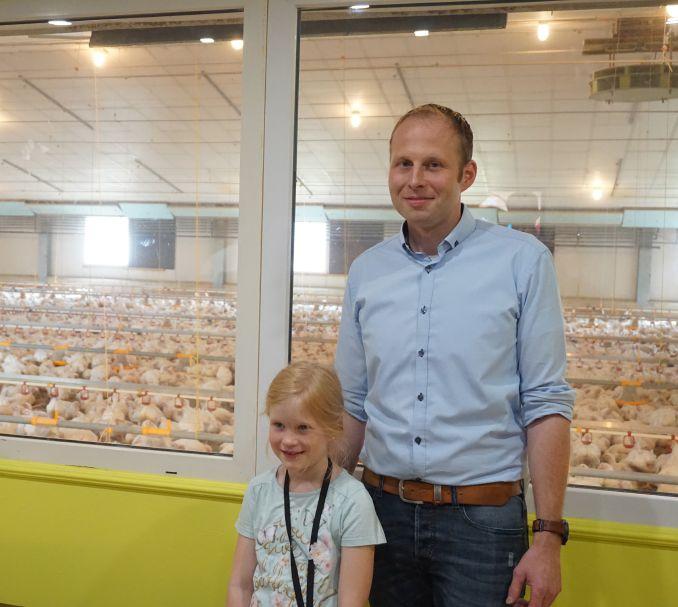
Stefan Teepker and his daughter Margaret stand in front of the viewing window in the visitor’s gallery
Production Four Cents for Ethics
German farmers find alternative market for male chicks
BY LILIAN SCHAER
What to do with the males of a species when the females are all that are needed is an issue various agricultural sectors grapple with.
In poultry, the question of what happens to male chicks when only females lay eggs continues to beg a satisfactory answer. Although cull is the current widespread solution, research is underway into alternatives, such as work by Dr. Michael Ngadi at McGill University (see page 24 this issue) Egg sexing research is also underway in Germany, supported by a national animal welfare initiative that aims to ultimately phase out culling of male chicks altogether. In the German state of Lower Saxony, a trailblazer in animal welfare regulation in that country, the practice is slated to be banned by the end of 2017.
Some farmers in Germany have built an alternative market for their male chicks, under the banner of the “Bruderhahn Initiative” – which literally translates into English as “the brother rooster initiative”.
The concept, explained Christine Bremer of Bauck-Hof Klein Suestedt, located in the Lunenburg Heath about 100 kilometres south of the city of Hamburg, involves raising the male chicks 18 to 22 weeks of age and selling them for meat the way broilers are.
Because their genetics are focused on egg and not meat production, raising the males for consumption is an expensive venture. “The males are very active and we need 5.5 kilograms of feed for one kilogram of gain, which is not a good conversion,”
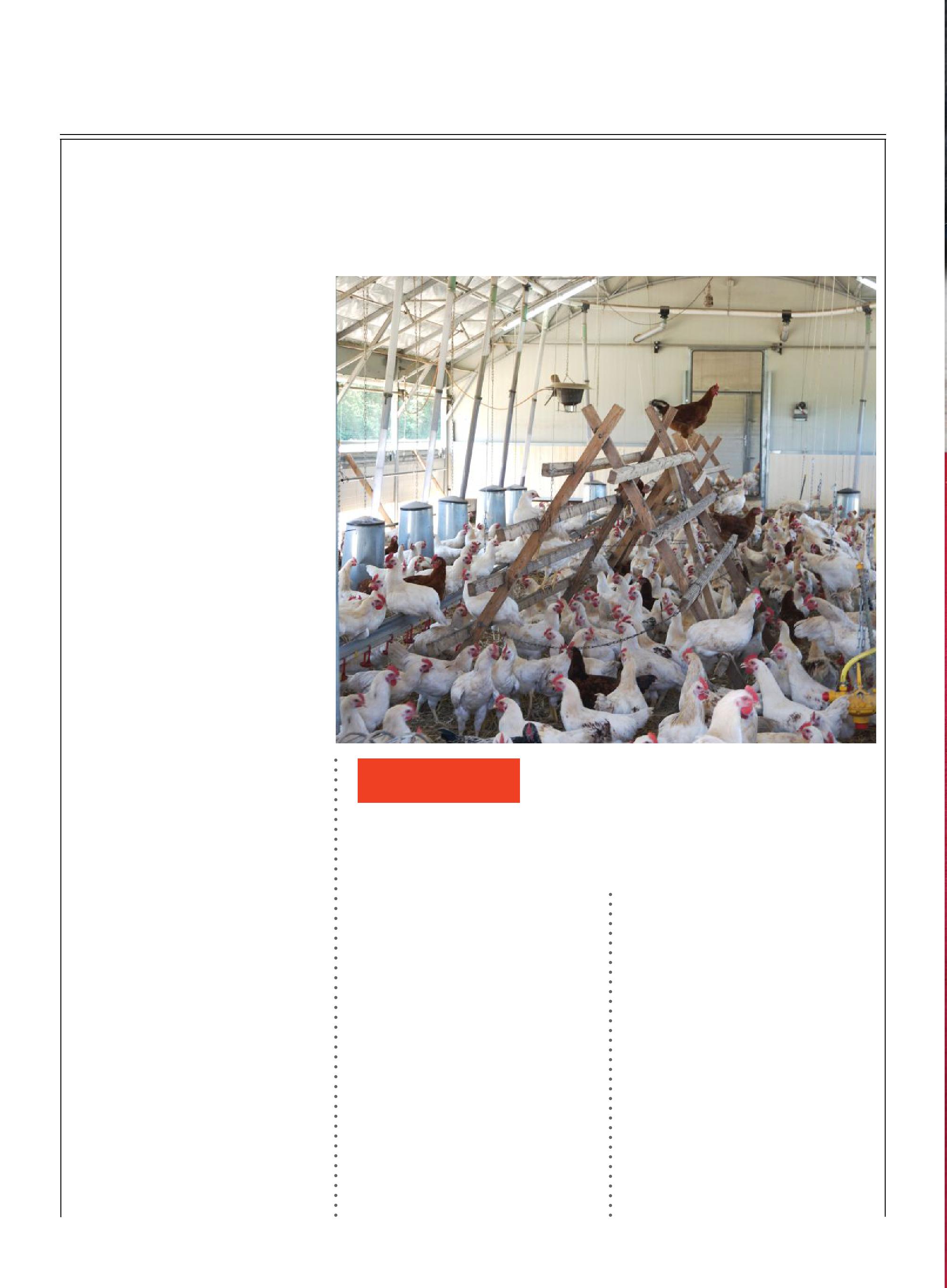
Some farmers in Germany have built an alternative market for male chicks known as the Bruderhahn Initiative. One farmer, Christine Bremer, uses mobile broiler barns to raise the males
Bremer told international agricultural journalists touring her farm this past summer, adding this means her farm needs a subsidy of 7.50 to 10 Euros per “brother” to make the economics work.
Unlike most farms, though, Bauck-Hof Klein Suestedt was able to get that money from the market place – but through egg sales instead of a premium on the meat, which is dark and has a taste similar to pheasant.
Every egg sold from Bremer’s hens sells for four cents more than other eggs, and those funds, collected through the “Bruderhahn Initiative”, go back to the participating farmers to pay for the costs of raising and marketing the males for meat.
“If a hen lays 250 eggs and we get four cents more per egg, we can pay for the “brother”,” she said. “Our trader who buys our eggs communicated this to the organic shops where our eggs are sold. In 2013, all eggs were increased by four cents and a label was added to explain why – and we had no loss of customers.”
Unsure of whether consumers would be interested in the darker, more flavourful meat, Bremer’s first customer was actually a baby food processor. “We weren’t sure people would buy this meat but gradually people start asking for it,” she said, adding that due to her farm’s rural location and resulting unreliable internet infrastructure, their marketing is done at point of sale as
opposed to through social media.
“As farmers, we need the help of traders and retailers to sell our products, and if our trader had said no, we couldn’t have done this,” Bremer said. “What customers are paying for is to not kill the bird at birth and that this animal is worth keeping alive longer.”
The male layer for meat program is part of Bauck-Hof Klein Suestedt’s overall approach to agriculture. The operation is the second oldest organic farm in Germany, having farmed in this manner since 1932. More specifically, it’s one of Germany’s 2,000 certified Demeter farms.
Demeter is the brand for products stemming from biodynamic agriculture and is well recognized by German consumers, which Bremer says has been helpful in supporting the marketing efforts around meat from the male layers.
Bremer installed her first mobile poultry housing 13 years ago, and now has six
Production
mobile layer barns and four mobile broiler barns on her farm that are regularly moved to new locations on the fields and permit birds to roam and express natural behaviours.
“We use genetics that grow slower and the birds can choose whether they want to be inside or out,” she says, adding that farmers who build mobile poultry housing can have 40 per cent of their costs covered by the European Union.
Under the leadership of state Minister of Agriculture Christian Meyer, Lower Saxony has doubled state support for organic production from 137 Euros per hectare in 2013 to 273 Euros by the end of 2016. Subsidies for converting conventional farms into organic production have also increased, from 262 Euros to 403 Euros per hectare during that same time.
Meyer, who represents the Green Party, is a proponent of organic agriculture and has also introduced some of the strictest
animal welfare regulations in the country since he took office in 2013, including banning beak trimming of laying hens by the end of 2016, and phasing out caged egg production completely by 2025.
“The supermarkets dictate and they are very strong. For example, although Lower Saxony is ending beak trimming, we can’t stop imports unless the retailers are supportive,” Meyer said, adding that retailers are supporting cage-free egg production by not selling eggs from hens in cages in countries like Poland and the Ukraine.
The state has also committed to reducing antibiotic use in agriculture by 50 per cent in five years, resulting in farmers having to notify the government each time they purchase antibiotics for livestock use.
Lower Saxony is one of Germany’s livestock powerhouses, home to 18 million laying hens that produce about half of the country’s eggs. n
Research Thinking Outside the Shell
How livestock species are the same may just hold the key to the future of research
BY KAREN DALLIMORE
Next time you go into a livestock barn, stop, look, listen and smell. How is one species of livestock different from another? Or better yet, how are all livestock species the same?
The answer to that question may just hold the key to the future of research. The days of independent, species-specific research may be changing to a new model, bringing together not only different livestock species but also different sectors of research and industry.
“It’s time to start thinking outside the shell,” said Tim Nelson, “and think very big.” Nelson is the CEO of the Livestock Research Innovation Corporation (LRIC) – a new hive of cross-disciplinary research based in Guelph, Ont.
The new network is an assembly of Ontario Livestock and Poultry Organizations that are betting the future of agriculture on well designed and directed research. Their mission is to provide, “a single portal through which collective investment in livestock and poultry research conducted in Ontario, is able to generate the best possible outcomes and return on investment for our sector and the Province.”
Times are changing, explained Nelson. Funding from the Ontario Ministry of Agriculture and Food is holding steady but overall investment in poultry research is declining and industry funding is flat.
Tim Nelson, CEO of the Livestock Research Innovation Corporation, says it’s time to start thinking outside the shell with respect to research
Government funding is pulling back at a time when their target outcomes are moving to a focus of creating jobs, although Nelson has high hopes with a new government that believes in science.
That’s not the only change. The agriculture and food industry is changing too, looking for economies of scale. Industry is relying less on publicly funded research to pursue their goals of efficiency, while large corporations in areas such as genetics and pharmaceuticals continue to consolidate and do their own research.
Meanwhile research priorities are also changing. “We’ve gotten good at producing eggs,” said Nelson. In 1951 a hen would give us 150 eggs; in 2006 that number had risen to 325 eggs, using only 1.4 kg of feed compared to 3.4 kg. The feed to gain ratio in broilers has dropped from 6:1 to 1.6:1. “Do we still need to be doing this,” he asked?
Society is changing too, said Nelson, and their push for change is powerful. Many suggested production practices have no science to guide them. It’s one thing
THINK BIG
to ask to ban cages but what do the birds need in alternate production systems such as aviaries to ensure they’re getting a better deal?
At the researcher level, one measure of success is the number of patents issued, which potentially may delay transfer of technical information, adding to cost and reducing the desire of the industry to invest in late-stage research.
What opportunities can cross-disciplinary research create in this changing environment?
Nelson makes a strong case for collaboration.
When it comes to addressing societal needs, for example, Nelson suggests that the ‘silo’ model just doesn’t work. Social and ecological problems are far too complex. In response, research ‘clusters’ are becoming more common, allowing for the spreading of costs and creating a synergy to address common interests. Nelson cau-
Research
tions though that they need to be more than a grouping of researchers in one building, each working on their own projects. Just calling a grouping of researchers a ‘cluster’ doesn’t necessarily follow his definition of cross-disciplinary research.
So what does? Let’s consider what topics are important to poultry research right now. Nelson has condensed them to three areas: animal welfare, antibiotics in feed and food safety. None of these are what he calls “single discipline issues”. Each has components that could be cross-funded by more than one sector, working in collaboration.
Could solutions to treat salmonella in pigs, for example, also be applied to poultry? Why not to dairy and beef as well? The advantages of shared research are clear: costs can be spread, bigger industry funding can be leveraged to better government funding, more tech transfer will be encouraged and private investment will be
exposed to more opportunity.
But what about the language? Will researchers talking in ‘pig language’ be able to communicate with those talking ‘chicken’? Nelson says yes, once an early solution gets to the point where it needs to diverge it will need individual attention. “This is a paradigm shift,” said Nelson, which may not apply to all research but it is a way forward that will help the agriculture industry.
Nelson wants to target the resources of LRIC at what he calls the ‘Blue Sky/ Discovery stage’: “Start thinking about opportunities early.” LRIC is there to find commonalities in research, searching proposals and issues to find common ground.
“Cross-disciplinary research is already a reality; cross-sectorial research will become a reality,” said Nelson. “It will become a necessity.” Don’t be shy, he says, talk to LRIC and find out who else would benefit from or fund your work. n
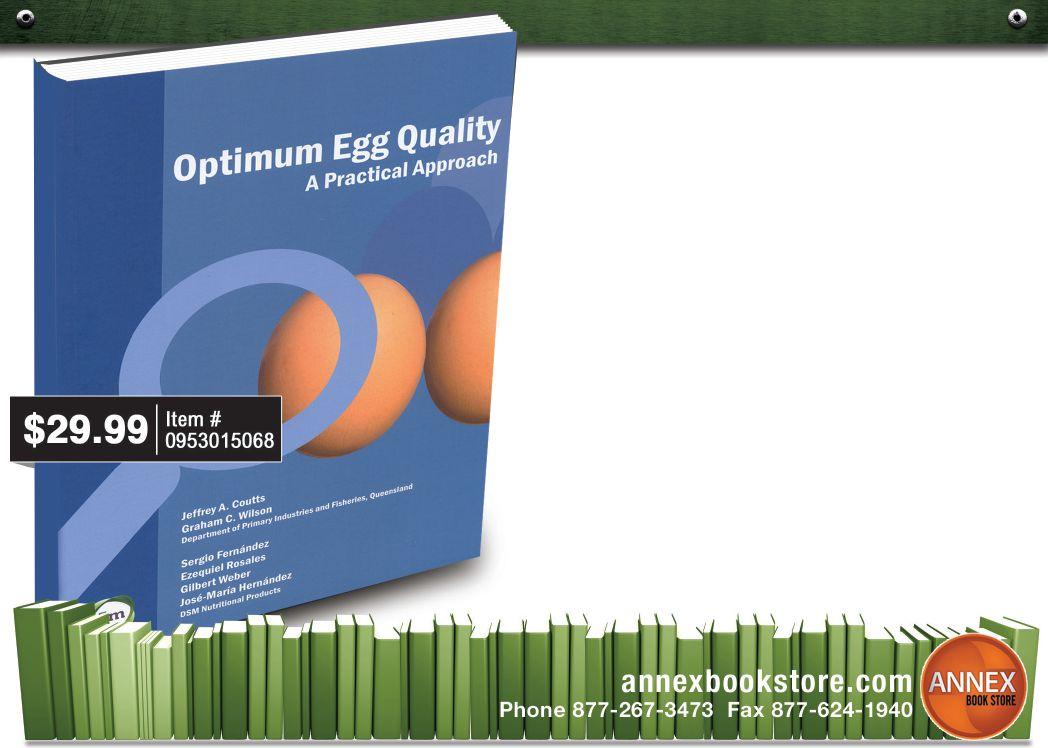
OPTIMUM EGG QUALITY
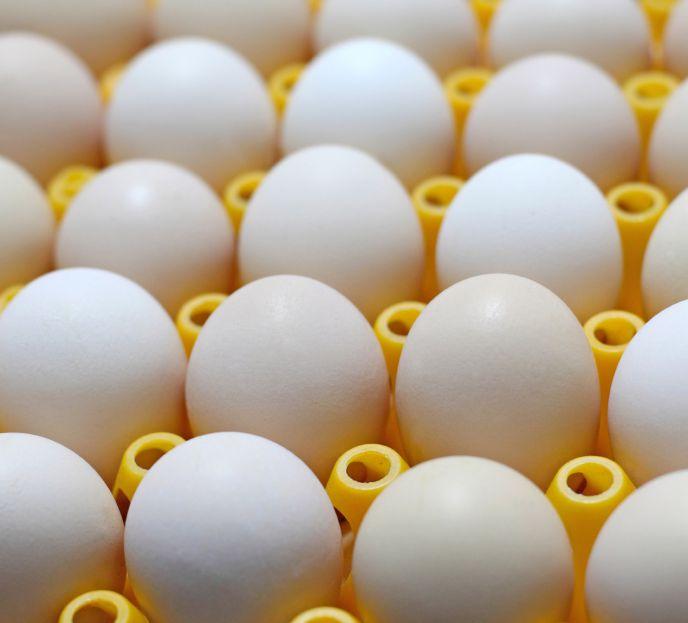
The Optimum Egg Quality Handbook describes in detail all the main egg defects, internal and external, and looks at the possible causes and corresponding control measures. A comprehensive practical guide to improving egg quality.
A fresh egg, with a clean, smooth, brown or white shell, a pure, deepyellow yolk and a translucent, firm white — this is the ideal of the egg producer and the consumer. How can producers make sure that hens lay more eggs like this, and fewer with shell or internal defects?
The Optimum Egg Quality Handbook describes 15 shell defects and 9 internal defects, each illustrated with a colour photograph. It explains the possible causes and corresponding control measures for each defect. Egg producers and anyone else interested in poultry management will find this book a comprehensive, yet clear, simple and practical guide to improving egg quality.
PERSPECTIVES
BY THE CENTER FOR FOOD INTEGRITY
Transparency Revolution
Numbers found on cans of tuna provide the combination to unlock a wealth of information. It’s yet another example of the food system recognizing consumer demand for information and embracing transparency.
Chicken of the Sea’s traceability website allows consumers to enter a 10-to-15 digit number found on the bottom of certain tuna products. In return, the consumer can read a description of the species; where the seafood was caught, including a map and a species-specific stock status report from the International Seafood Sustainability Foundation; the fishing method used; the fishing vessel; where the seafood was processed; where the seafood was canned; and general information on the company’s sustainability initiatives. The company says it will eventually expand the program to its entire shelf-stable line.
“It is important for our customers to have an opportunity to know the story behind their fish,” said Chicken of the Sea’s director of sustainability. “Traceability is an essential step.”
Former New York Times food columnist Mark Bittman recently suggested that the long and contentious GMO labeling law debate could force a transparency revolution. There’s no doubt that farmers and food makers need to be aggressive in opening their doors and letting consumers see how food is produced, but in reality, a transparency revolution is already underway.
tions, advisories and safe handling instructions at consumers’ fingertips in a standardized format.
At California’s JS West and Companies, a leading egg producer, cameras in the barns allow online visitors to see what the hens are doing 24 hours a day. Visitors to the site are welcome to leave comments about what they see.
New Jersey-based Catelli Brothers has installed a 12-camera system at its veal plant that monitors the facility in real time. A third-party generates a daily report on animal treatment.
At Indiana’s Fair Oaks Farms, the doors are open for thousands of visitors every year to look through glass walls to see how real dairies produce milk and how pigs are born and cared for. The founders of the company say they have nothing to hide and want the public to see how their animals are treated.
CFI research proves that increased transparency is a powerful tool to earn consumer trust. People today expect transparency and want to see how food is produced. Consumers want the ability to engage and get questions answered promptly and in easy-to-understand language. They want to see how food is produced, who’s producing it, what’s in it and how it impacts their health.
CFI research proves that increased transparency is a powerful tool to earn consumer trust
Chicken of the Sea’s new program is a good example, but only one of many.
Hershey’s commitment to increased transparency and move to simpler ingredients goes back to 2015. The company’s website now provides an A-to-Z glossary of all its ingredients with easy-to-understand descriptions.
Leading food, beverage and consumer products companies last December unveiled SmartLabel to empower consumers to access a myriad of information with a simple bar code scan or click of a website. The technology puts nutritional information, ingredients, allergens, third-party verifications, social compliance programs, usage instruc-
A growing number of farms and food companies are engaged in the transparency revolution and pulling back the curtain, which should be applauded. Critics who intentionally disregard the progress toward greater transparency only serve to discourage it by refusing to give credit where credit is due. So, food system critics are encouraged to be transparent about genuine progress among food producers just as producers who have yet to embrace transparency need to be encouraged to build on the positive momentum. There is no denying the ability of transparency to increase consumer trust. n
Reprinted with permission from the Center for Food Integrity (CFI). CFI’s vision is to lead the public discussion to build trust in today’s food system and facilitate dialog with the food system to create better alignment with consumer expectations. For more information, visit: www.foodintegrity.org
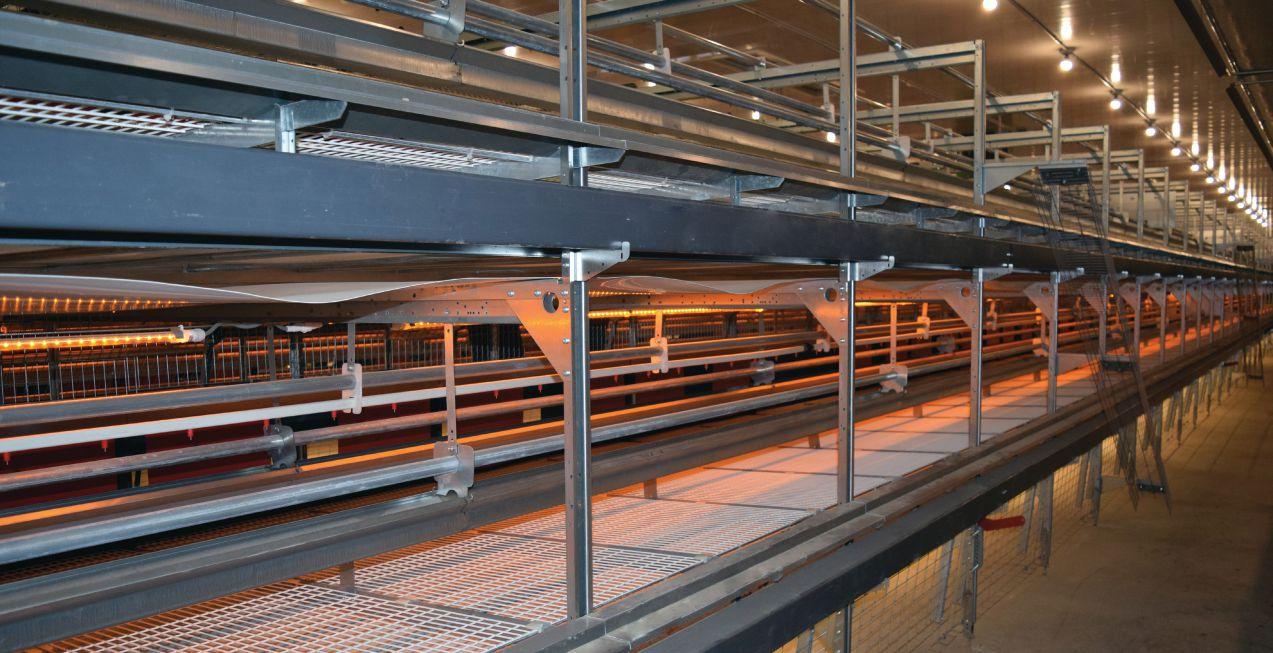
LOGGIA Advanced design to maximize production, egg quality and ease of management. Each tier is equipped with nest, feed, water and perch.
ALTERNA Design ensures efficient operations and optimum use of floor space, maximizes bird numbers. Customizable features include automatic system egg collection and ground level manure belt.
• Efficient use of building space
• Intelligent designs achieve excellent egg quality • System lighting
• Heavy duty feed chain • Manure belt rollers • ZINAL 5 or plastic coated floor grates