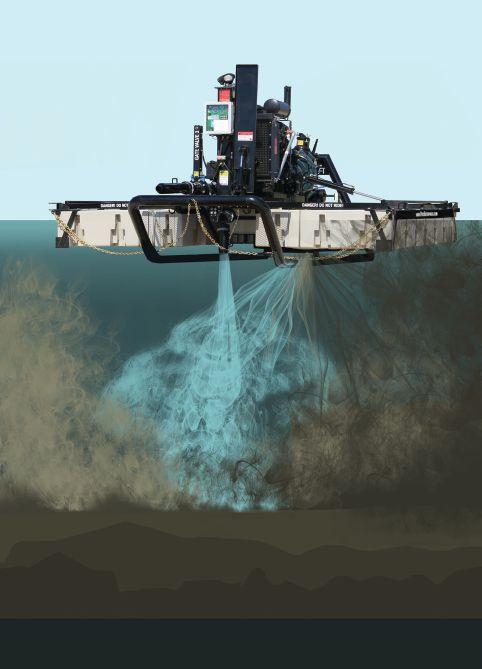
About 1,300 people attend the North American Manure Expo | 14
Beano for cows?
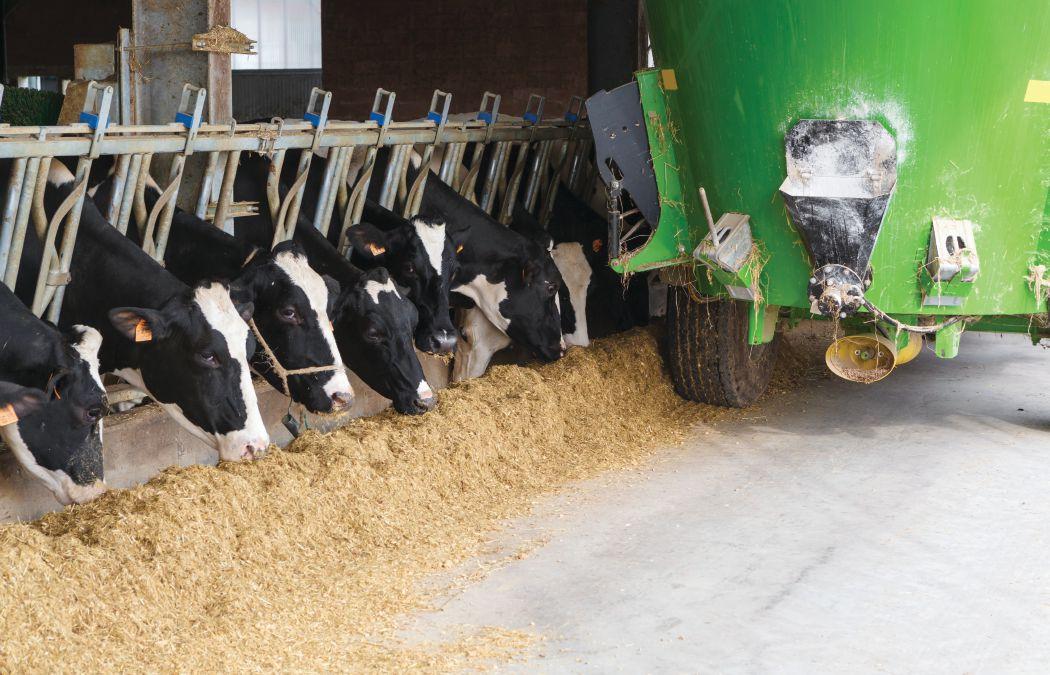
Cattle feed supplement has methane falling and optimism rising | 26
Is iron oxide the answer?
Research aims to prevent deaths related to gypsum-laced manure emissions | 34
September/October 2018
Using worms to manage dairy manure
Using worms to manage dairy manure
Snacking earthworms offer viable treatment option for high-nutrient wastewater.
About
BY MARGARET LAND
BY DIANE METTLER
BY AMY DUKE
A snapshot of dairy nutrient management
In August, the U.S. Department of Agriculture’s National Animal Health Monitoring System [NAHMS] released its most recent report, Nutrient Management Practices on U.S. Dairy Operations, 2014. The study provides a snapshot of manure management and storage practices on dairy operations across the country. While the data is four years out of date – such is the nature of census information – it does make for interesting reading.
The core data comes from 1,261 operations in 17 states – California, Washington, Idaho, Minnesota, Iowa, Missouri, Wisconsin, Michigan, Indiana, Ohio, Kentucky, Texas, Virginia, Pennsylvania, New York, Vermont, and Colorado. These states are home to 80.5 percent of U.S. dairy operations and 81.3 percent of the U.S. population of dairy cows. The farms were divided based on size – very small [<30 cows], small [30-99 cows], medium [100-499 cows], large [500+ cows] – and whether they were located in the East or West half of the U.S.
The following is just a small portion of the information shared in the report.
A higher percentage of small operations [95.3 percent] stored and/ or treated solid manure compared with large operations [87.8 percent]. The use of a manure spreader decreased as herd size increased. Manure packs were used by a higher percentage of small [25 percent] and medium operations [30.9 percent] compared with large operations [14.1 percent].
A higher percentage of operations in the East used a manure spreader or manure pack to handle the majority of solid manure. In general, the percentages of operations that used outside storage for solid manure increased as herd size increased.
Liquid manure was stored or treated on 59.3 percent of operations. The percentage of operations that stored or treated liquid manure increased with herd size. A lower percentage of small operations [15.4 percent] stored liquid manure in an untreated earthen basin compared with medium [34.1 percent] and large operations [40.1 percent].
The average number of days an operation could store manure
“There was a small contingent [11.9 %] that gave manure away.”
As could be expected, manure handling and storage methods varied based on the size and location of the operation. More than 50 percent of very small, small and medium farms [combined] kept cows out on pasture while more than 50 percent of medium and large operations [combined] scraped manure from an open/dry lot.
More operations in the West than the East scraped an open/dry lot or used an alley flush as their primary means of handling manure. No operations in the West used a gutter cleaning system or slotted flooring.
Solid manure was stored and/or treated on 92.8 percent of operations.
increased as herd size increased. On average, all operations could store manure for 161.2 days. Operations in the West could store manure for more days [399.3 days] than operations in the East [138.3 days]. Less than 15 percent of operations of any herd size or from any region could store manure for 365 days or more.
More than 90 percent of all operations applied solid or liquid manure to land either owned or rented. Surprisingly, there was a small contingent [11.9 percent] that gave manure away.
To view the report in its entirety, visit aphis.usda.gov/nahms.•
Editor MARGARET LAND (519) 429-5190, (888) 599-2228, ext 269 mland@annexbusinessmedia.com
Associate Editor JENNIFER PAIGE 416-305-4840 jpaige@annexbusinessmedia.com
Mail: 111 Gordon Baker Rd., Suite 400, Toronto, ON M2H 3R1
Occasionally, Manure Manager will mail information on behalf of industry-related groups whose products and services we believe may be of interest to you. If you prefer not to receive this information, please contact our circulation department in any of the four ways listed above.
All advertising is subject to the publisher’s approval. Such approval does not imply any endorsement of the products or services advertisted. Publisher reserves the right to refuse advertising that does not meet the standards of the publication.
Impact of Manure Management and
on Drainage Water Quality and Yields. Authors: Matt Helmers, Brian Dougherty, Carl Pederson, Michelle Soupir and Dan Andersen, Dept. of Agricultural & Biosystems Engineering, and Antonio Mallarino and John Sawyer, Dept. of Agronomy, Iowa State University College of Agriculture and Life Sciences.
NC court lifts gag order in swine trial
Federal Judge Earl Britt has lifted a gag order, imposed in late June, on communications related to nuisance lawsuits filed against more than two dozen North Carolina hog farms.
Judge Britt, of the U.S. District Court for the Eastern District of North Carolina, had imposed the gag order on the parties, lawyers and potential witnesses in lawsuits brought against Murphy-Brown. At the time, the judge said a “significant increase in trial publicity” and the “volume and scope of prejudicial publicity” about the first two cases could taint future jurors.
The National Pork Producers Council and the North Carolina Pork Council recently filed a court brief in support of lifting the judge’s gag order, arguing there was no compelling need for it.
“A hearing had been scheduled in the appeals court for
late September to hear arguments about the validity of the gag,” said Andy Curliss, CEO of the NCPC, in an on-line blog posting. “The plaintiffs had sought to keep the gag in place or have it somewhat modified.
That now seems moot.”
Despite the gag, there had been extensive coverage of the lawsuits from media outlets in the state and around the country and from advocacy groups and people outside the scope of the gag order.
“The greatest risk of [jury] prejudice,” NPPC and NCPC argued, “isn’t the existence of publicity; it is the existence of one-sided publicity that has resulted from the gag order. …”
“This gag order has had a chilling effect on all hog farmers in North Carolina,” said NPPC President Jim Heimerl, a pork producer from Ohio.
GA POULTRY NUTRIENT MANAGEMENT PLAN
The U.S. Department of Agriculture’s (USDA) Natural Resources Conservation Service (NRCS) and the Limestone Valley Resource Conservation and Development (RC&D) Council in Georgia have launched the North Georgia
Poultry Energy Efficiency and Nutrient Management Planning Initiative. This north Georgiaspecific project is one of 88 projects across the U.S. selected for funding through the Regional Conservation Partnership Program (RCPP). The
It is open to poultry producers looking to improve on-farm energy efficiency as well as water and soil quality through nutrient management. More information on NRCS conservation programs can be found at http://www.ga.nrcs. usda.gov under the programs tab.
10 lbs weight of castings produced by one earthworm per year
6,000 number of species of earthworms known
370 MILLION number of earthworms exported from Canada in 1980
14 inches length of typical earthworm
4-8 years typical lifespan of an earthworm
3 cm depth of soil earthworms add per acre every 10 years amount of body weight an earthworm can lose and still survive 70%
6.5 feet maximum depth earthworm can burrow
1.75 MILLION estimated earthworm population in one acre of soil
Sources: Wikipedia, University of British Columbia, National Geographic
Steer Clear of Articulated Alternatives.
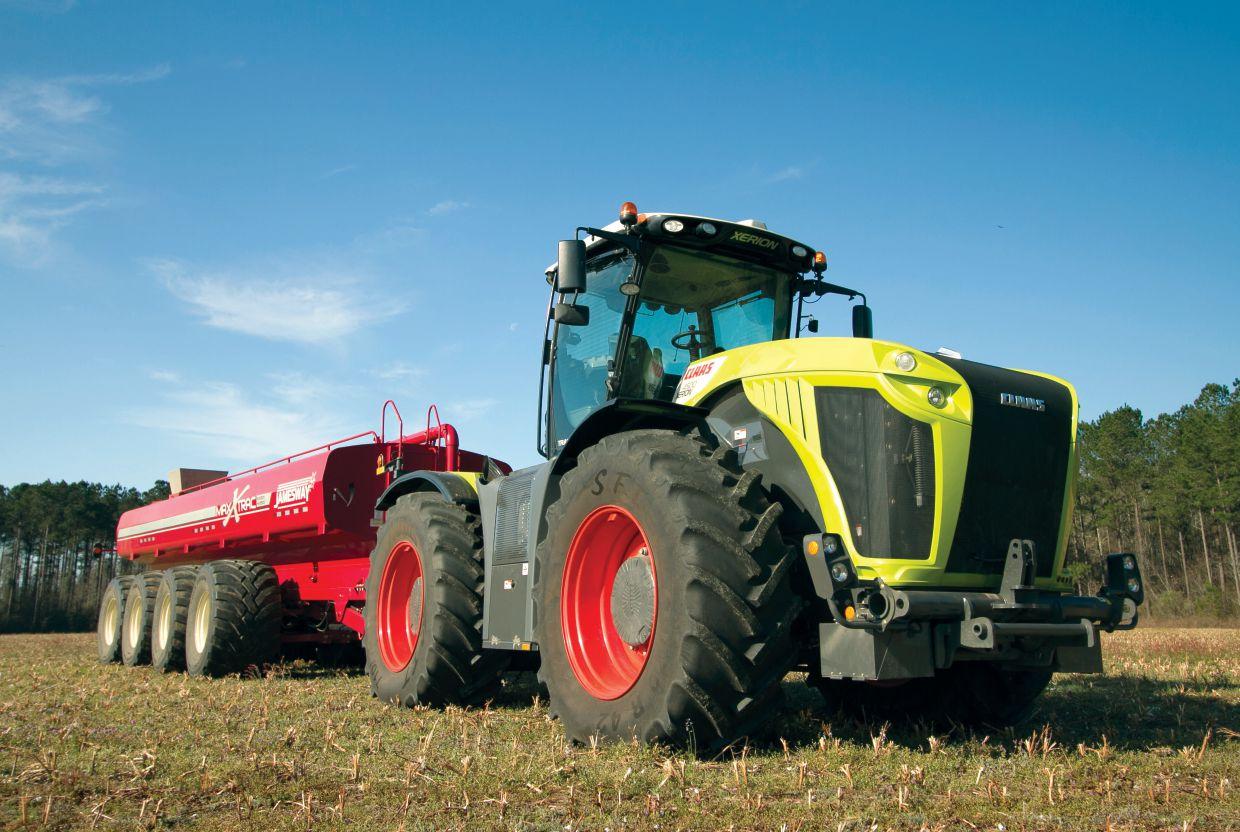
For all of your manure handling needs, trust in a tractor that’s built to deliver a higher level of comfort and control. Unlike typical articulated models, the rigid frame XERION tractor from CLAAS features multiple steering modes for tighter turns, better floatation, and rock-solid handling – even under the heaviest loads. Equipped with a CVT transmission, the XERION tractor offers an exceptionally fast 31 mph (50 km/h) road speed, saving you both time and fuel costs for the long hauls. Plus, XERION tractors feature intuitive, ergonomic controls in a whisper quiet cab.
Meet your manure handling demands head on, with a tractor built from the frame up with your needs in mind.
Holos software educates on effects of new farming practices
Greenhouse gas is a significant player in climate change and Agricultural and Agri-Food Canada (AAFC) scientists have developed a tool that helps mitigate agriculture’s contribution. Dr. Roland Kroebel, an AAFC ecosystem modeller in Lethbridge, Alta, has played a key role in developing the Holos software model from the beginning to its current version. Holos helps producers green their agriculture operations by monitoring and adjusting farming practices to lessen greenhouse gases. “The idea of the model is to allow producers to play around with their management strategies and to see how that could lead to a reduction of greenhouse gas emissions,” Kroebe said.
Holos is “an exploratory tool” and that “it’s meant as a gaming approach where a producer can try out different management practices that don’t necessarily have to be realistic,” he added. The goal of the model is to gain understanding of the way the system reacts to management practices and is considered more of an educational tool than a decision maker. Holos 3.0 came out in 2017. The updated version includes a partial economics component allowing farmers to monitor costs of different management practices. Kroebel said the model is still at a basic level of complexity and his team will continue working on improvements as they receive feedback from other research groups and stakeholders.
Impact of changing feedlot pen surfaces
Research is underway in southern Alberta to assess how housing feedlot cattle in roller compacted concrete (RCC) floor pens compares to traditional clay floor pens. Traditionally, feedlot pen floors are constructed of compacted clay. Annual feedlot pen maintenance requires clay to repair damaged pen floors, which can significantly add to input costs and the environmental footprint of feedlots.
Constructing feedlot pen floors with RCC is one possible sustainable solution for stabilizing the pen floors, subsequently improving efficiencies
of feedlot operations and animal performance, among other potential benefits.
This research project aims to assess the social, environmental, technological and economic performance – positive, negative or neutral – associated with housing feedlot cattle in RCC floor pens versus traditional clay floor pens. Examples of a few objectives being examined are animal welfare, water runoff, emissions, manure volume, durability and strength of pen floor, as well as average daily gain. The project is expected to be completed by February 2019.
Timing
manure application to avoid neighbor nuisances
Roughly half of all neighbor complaints of livestock odors originate from land application of manure. A weather forecast and a little knowledge of odor dilution can be a powerful tool for keeping neighbors happy, or at least avoiding irate phone calls.
When manure cannot be incorporated, the next 36hour period after land applying is the most critical. Good drying conditions over the next two days can significantly reduce the release of odors. In addition, the next two evenings are the most likely time when neighbors will experience manure’s odors. It’s important to pay close attention to the next 36-hour weather forecast.
Wind direction is the single most critical information for selecting fields. Odor plumes travel in the same direction as wind and spread out laterally very little. By identifying the edges of the field perpendicular to the wind and the wind’s direction, one can quickly identify the neighbors at greatest risk and those unlikely to be impacted. Paying attention to the wind directional forecast for a 36-hour period after applying manure allows a person to gauge the risk of odor affecting neighbors.
Can you recall a time when you observed smoke cloud hanging near the ground? Often this is observed as air temperatures are cooling and when winds are light, which most commonly occurs during evening and nighttime hours. Under these conditions, the smoke is not being diluted and is being held near the ground for all to experience. The exact same atmospheric conditions create the greatest risk for neighbors experiencing odors.
Under daytime conditions, odor plumes are generally rising, being diluted with fresh air to where odors are unlikely to be noticed by your neighbors. Bright sunshine and warming air is best for dispersing odors. Higher wind speeds (especially at night) also encourage greater mixing of fresh and odorous air, and reducing the odor risk. Nighttime hours with low wind speeds are the conditions most likely to expose neighbors to odors from land application. Weather forecasts that provide wind direction and speed; sky conditions, and temperature can be extremely valuable in deciding when and where to apply manure. Many weather services provide this information in their forecasts.
Courtesy of Rick Koelsch, University of Nebraska –Lincoln
USING WORMS to manage dairy manure
Snacking earthworms offer viable treatment option for high-nutrient wastewater.
BY TONY KRYZANOWSKI
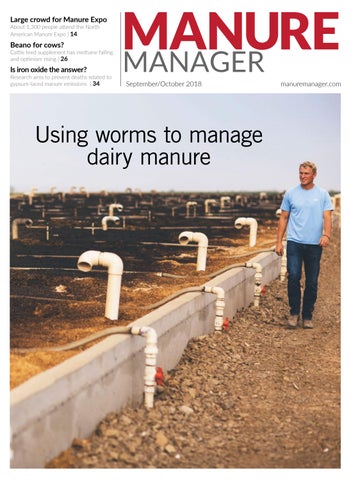
Washington dairy owner, Austin Allred, operated a pilot version of the BioFiltro wastewater treatment system for two years before investing a couple million dollars to construct an industrial-sized version that is meeting his expectations.
Earthworms eat biological material in the soil to survive. Now, their abilities are being put to work by a company called BioFiltro. They are used in a controlled environment to clean liquid manure waste streams in a matter of hours where it would otherwise have taken weeks.
The result is not only faster water treatment but also significantly reduced concentrations of nutrients like nitrogen, phosphorus and potassium, meaning that farmers using the system need a lot less farmland to dispose of their treated liquid waste. The rapid treatment process also mitigates emissions of problematic greenhouse gases (GHGs) like methane.
This wastewater treatment method offers a massive opportunity for large farms facing onerous transportation costs to transport nutrient-rich effluent from their lagoons for land application. It also opens the door to potential major expansion in milk production if farms can apply a lot more water on the same land base without worrying about over applying nutrients.
With this removal method, there is also a significant GHG emissions benefit, as it not only takes trucks off the road, but also treats water as soon as it flows out of the barn, thereby avoiding methane emissions from untreated water standing in facultative lagoons.
It has worked in Washington State’s cold temperature environments because the high density of worms per cubic yard keeps the temperature in the system elevated. It has worked effectively
down to -10 Celsius (15 Fahrenheit). BioFiltro is able to avoid standing water freezing in cold temperature by increasing how often the system operates.
The bottom line is that many farms generating liquid manure now have another option to dispose of their liquid waste besides land application and anaerobic digestion. Biofiltration has arrived in North America.
LEFT
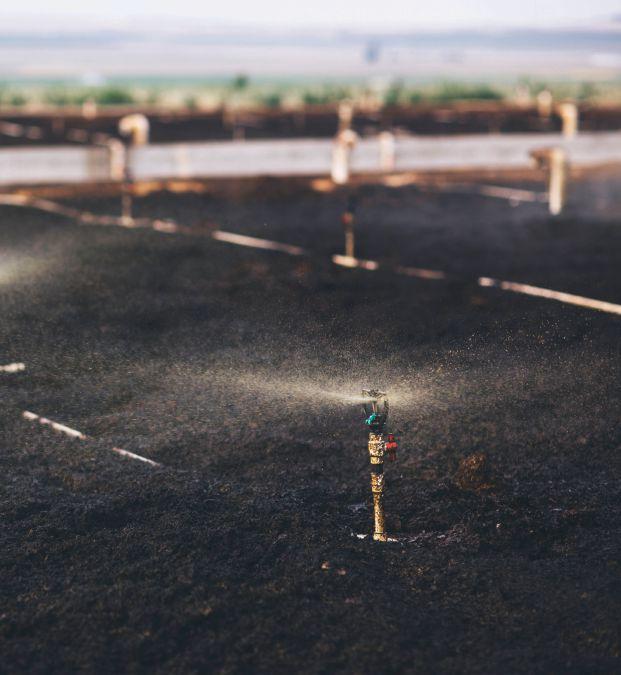
The BioFiltro wastewater treatment system can treat waste streams that include liquid manure from dairies in four hours versus weeks in a lagoon. It also significantly reduces the amount of nutrients in the water and the treated water can be recycled through the dairy for reuse as flush water.
embodies the importance of going back to our roots and discovering a pre-existing solution.
“People often say that we are kind of a new company and we answer, yes, that’s true, but we are using a technology that is billions of years old that is tried and proven by Mother Nature,” she says. “At the end of the day, all BioFiltro did was look at the ground and ask what Mother Nature has perfected and how can we make it just a little bit better.”
The system is an easier sell to farmers, she says, because they understand the value and use of earthworms and microbes in soil.
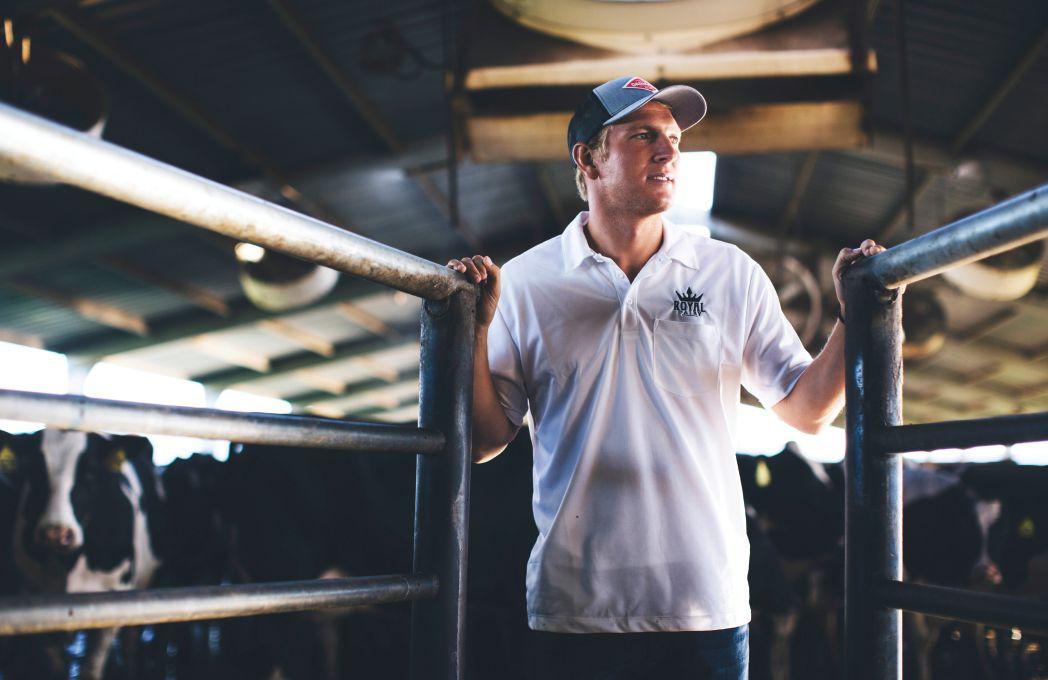
Washington State’s Royal Dairy installed North America’s first, commercial-scale, BIDA system in 2017. Their latest results produced 86 percent nitrogen removal, 84 percent phosphorus removal and 94 percent removal of total suspended solids. Owner, Austin Allred, says that they now only need about 300 acres to dispose of their effluent water instead of 4,000 acres.
Really what they claimed to be able to do seemed almost too good to be true. The amount of nitrogen that they claimed to be able to remove didn’t seem realistic.” – Austin Allred
BioFiltro’s system, called BIDA for biodynamic aerobic system, was originally developed by researchers in Chile and has been sold commercially for a couple of decades throughout the world in a variety of applications. The technology was incorporated under the company name, BioFiltro, in 2009.
“The best thing about our system is that it is natural,” says Mai Ann Healy, business development manager for BioFiltro, which was established in North America in 2013 with offices in Davis and Fresno, California. “It’s not finicky and it loves dairy nutrients. At the end of the day, we are using these nutrients, generated by cows, to feed more animals, in this case, microbes and bacteria to earthworms. It’s that simple.”
She adds that the BioFiltro system
While operating a pilot 5,000-gallon per day BIDA system for two years, Austin was able to consistently achieve 93 percent nitrogen removal, 90 percent phosphorus removal, and 97 percent removal of total suspended solids. In implementing the full-scale system, Royal Dairy has had to undergo improvement to their solid separation process upstream of the BIDA system to optimize the whole water treatment solution and its performance. Allred expects that with some planned solid separation improvements, the BIDA system will achieve better results closer to the pilot system, although he is happy with the commercial system as it stands. He recommends it for other farms that generate nutrientrich liquid effluent waste streams and are challenged by costs and space for liquid waste disposal.
Allred says the dairy is currently saving at least $300,000 annually on trucking costs alone because of their BIDA system. With a couple of million dollars invested into it, he expects the system will pay for itself in about five years.
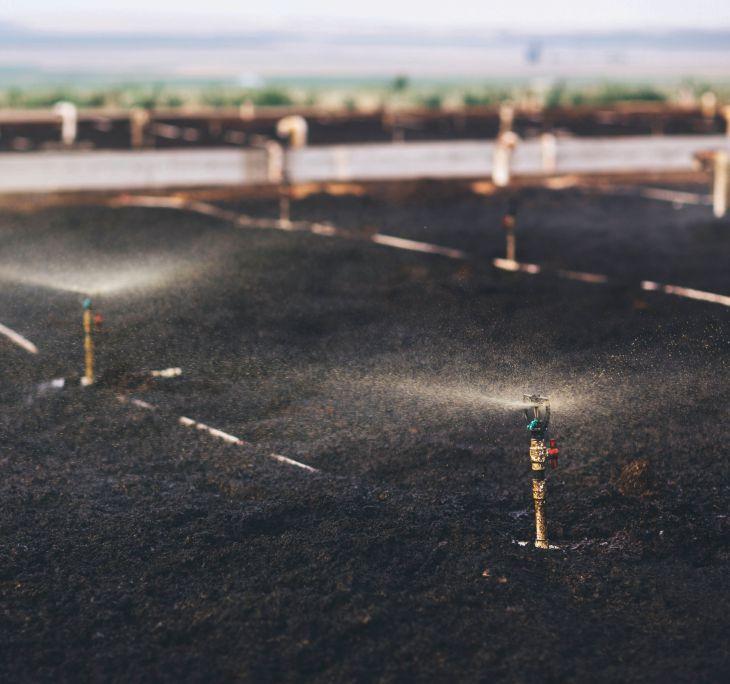
Also, because so much of the nutrients and suspended solids have been removed, they are able to divert and recycle a portion of their treated water back into their dairy flush system, with the rest continuing on to their lagoon storage facility. The lagoon is now emptied using a sprinkler irrigation system instead of trucks.
Royal Dairy was established in 2001 and is located in the middle of Washington, about two hours from Spokane. It is among the largest dairies in Washington. Allred says that he is considering further expansion.
“There are a lot of different doors that are open now for us that weren’t open before this installation,” he says.
Faced with a liquid waste disposal issue, he considered anaerobic digestion to treat his raw effluent, but it didn’t solve his problem, which was to reduce the amount of nutrients in the waste stream so that he could apply more treated waste water on less farmland. Also, the cost of power in his area of Washington is cheap, so generating biogas from a digester and using it as fuel to produce power didn’t make economic sense.
Allred learned about BioFiltro’s BIDA system while attending the World Ag Expo in California. It piqued his interest but he was concerned about being the first dairy installation in North America. That is why he first agreed to the two-year pilot project to become familiar with the system and to ensure that it would work as advertised.
“Really, what they claimed to be able to do seemed almost too good to be true.
LEFT
As many as 12,000 earthworms per cubic yard are propagated in the BioFiltro wastewater treatment system.
The amount of nitrogen that they claimed to be able to remove didn’t seem realistic,” Austin says. Both he and BioFiltro ‘learned a tonne’ from the pilot project, but it performed to his satisfaction and he proceeded with a commercial-size project last year.
The size of each commercial-scale BIDA system is determined by the size of the dairy herd, daily wastewater discharge volume, and the amount of nutrient that needs to be removed from the effluent stream. In the case of Royal Dairy, which has a herd of 5,000 milk cows and daily discharge of about 200,000 gallons of waste water, the BIDA system covers 81,000 square feet, or a couple of acres.
Here is how the BIDA system works.
The entire installation is enclosed within a containment structure, which can consist of concrete or steel. In one of its current projects, BioFiltro is investigating the possibility of converting a lined storage lagoon into a BIDA system, which could substantially reduce installation costs. As part of the operations process, a network of sensors and control panels are installed so BioFiltro can remotely track the system’s performance and water quality parameters. The company can make adjustments to system loadings over the Internet to guarantee optimum performance.
The liquid effluent stream is first treated through a solid separator to bring total suspended solid content to the target level of 2,000 milligrams per liter. Royal Dairy is composting the solids generated at this point and reusing it as bedding or selling it. BioFiltro tries to work with the preexisting solid separation system at dairies, so long as it can consistently deliver effluent outflow to the level required for the BIDA system to work properly, or they will recommend an upgrade.
After separation, the nutrient-rich waste stream is then conveyed to an equalization tank where sensors monitor constituents such as pH and flow. An automated irrigation system disperses wastewater across the entire surface of the BIDA system. Gravity pulls the water through layers of wood shavings, river cobble and drainage basins before the final discharge. BioFiltro says that during the rapid four-hour process, the bioreactor is virtually odorless and requires minimum storage capacity.
As part of the installation, an industryspecific mix of worms and bacteria are added to the wood shavings media. These are naturally-occurring, local species of earthworms. The burrowing worms create air channels, digest suspended solids and achieve densities of 12,000 worms per cubic yard while working symbiotically with bacteria to create a biofilm. This biofilm is what captures and digests the contaminants from the liquid waste.
Over time, the earthworms produce castings that they then push to the surface. The top foot of the installation is excavated about every year and a half for a dairy to harvest these high-value castings, which are sold as a soil amendment. Royal Dairy intends to do just that as an income generator.
BioFiltro offers three levels of system installation, management and maintenance options. With the first option, they provide the engineering, design, project management, biological material and monitoring equipment while the dairy does the actual construction. After construction, they provide a basic maintenance package. This is the option that Royal Dairy chose. They are paying BioFiltro an annual maintenance fee for the next few years where BioFiltro provides remote monitoring, water testing, onsite maintenance and repair, and other items.
The second option is what BioFiltro calls build, operate and transfer, where BioFiltro builds it, makes sure it is running properly, then transfers it to the farmer with a basic maintenance package included.
The third option, which might be described as the Cadillac option, is where BioFiltro offers wastewater treatment as a service. In this instance, the client pays nothing up front, BioFiltro will install and operate the system, and the farm will simply pay a monthly fee, like a utility bill, based on rate per gallon treated, with performance guarantees, equipment repairs and replacement, etc. This includes a maintenance person on site.
Biofiltro has completed another dairy installation in California and has another two projects planned in both Washington and California. Worldwide, they have installed eight dairy farm systems and more than 140 systems for industries such as wineries, food processors, slaughterhouses and rural communities.
Healey emphasizes that the system not only works for dairy, but for any farm or business generating a biological liquid waste stream. •
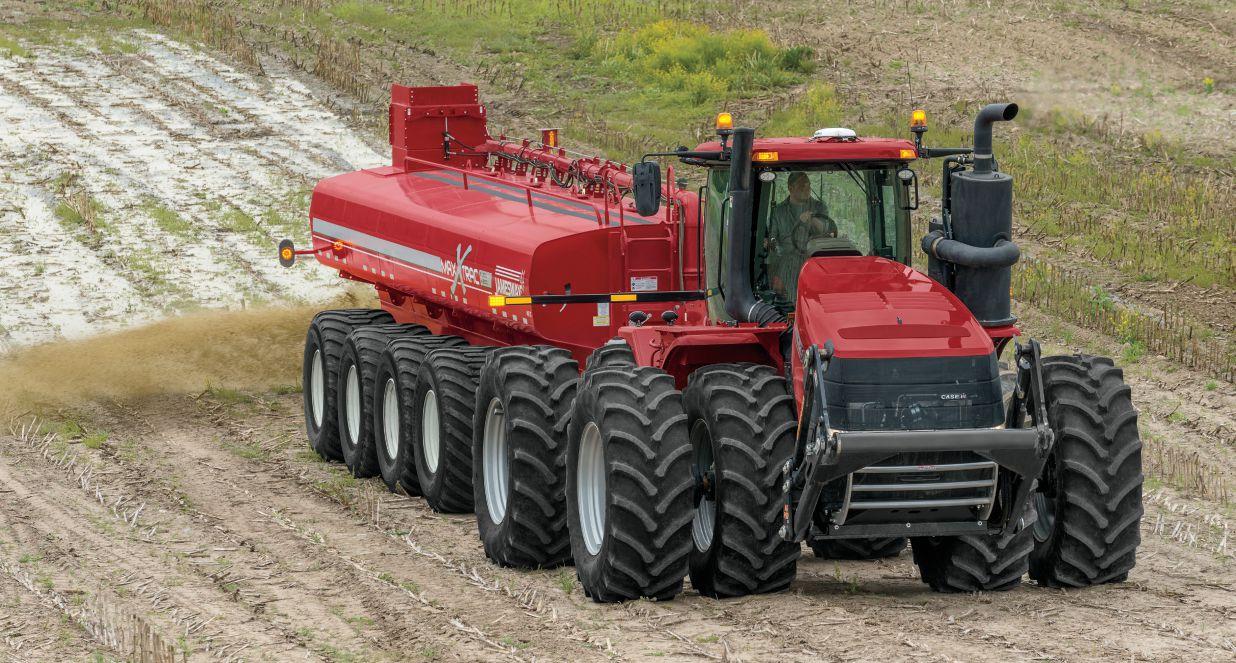
Case IH tractors with CVXDrive™ are an ideal choice for pulling slurry tankers, forage wagons, trailers and any other loads that depend on high speed road travel for productivity. The CVXDrive allows you to easily preset desired travel speeds and active stop lets you start and stop the tractor just like an automatic transmission. With CVXDrive ease-of-use is at your ngertips. Simply push the speed control lever forward and GO! CVXDrive does the rest – matching transmission response and engine power – minimizing fuel consumption and optimizing performance. For more information, visit your Case IH dealer or www.caseih.com/slurry
LARGE CROWD for 2018 Manure Expo
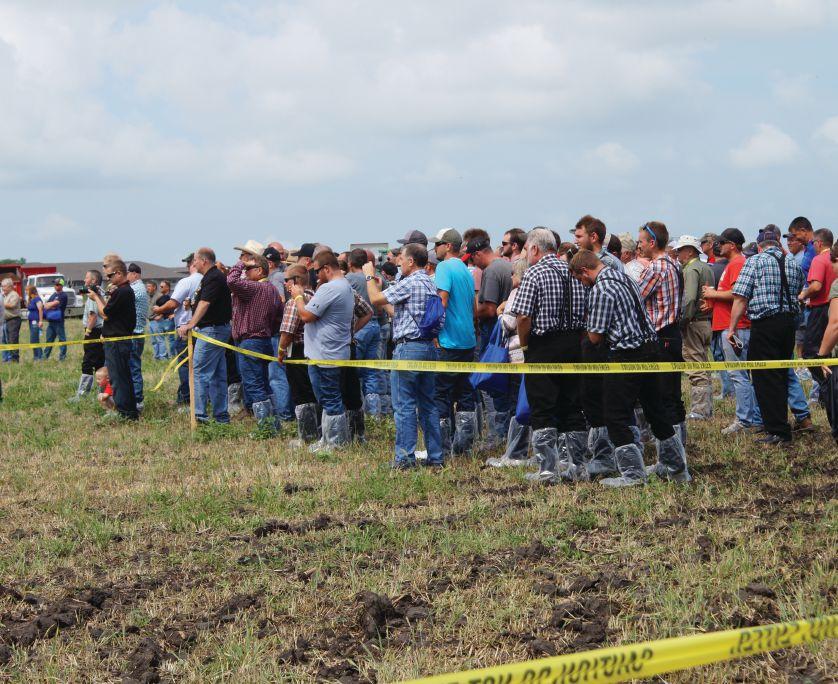
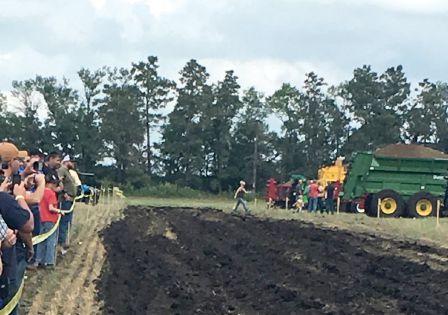
Approximately 1,300 people attended the two-day North American Manure Expo in Brookings, SD.
BY MARGARET LAND
There was a mixture of hot temperatures, high humidity plus driving rain and wind. But the weather did little to dampen the enthusiasm of attendees at the 2018 North American Manure Expo.
About 1,300 people visited the Swiftel Center in Brookings, SD, over the two-day show in mid-August to see and learn the latest about manure management and application. Attendees from 25 U.S. states, four Canadian provinces plus Germany, the United Kingdom, Ireland, Australia and Russia took part.
The event got underway with a morning of bus tours featuring three themes – beef, dairy and swine. More than 200 people took part in the educational opportunity with visits featuring Tekrony Dairy near
Castlewood, the newly constructed South Dakota State University’s Swine Education and Research Facility near Brookings, and South Dakota State University’s Cow-Calf Education and Research Facility.
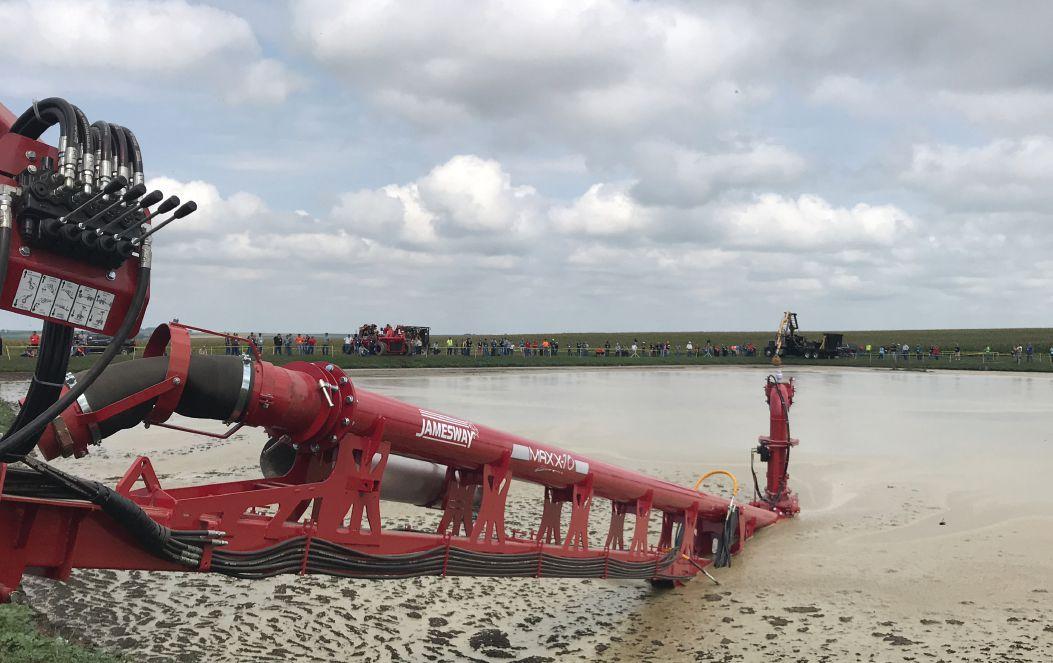
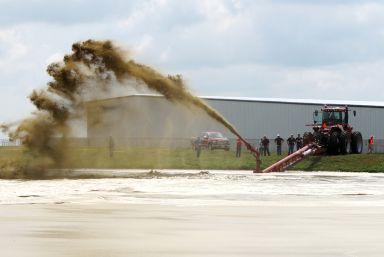
In early afternoon, about 400 people gathered at Global Dairy, located near Estelline, to watch the agitation demonstration, featuring a boom truck, lagoon boats, and pumps from several equipment manufacturers. Jamesway, JT Boats, Puck Custom Enterprises [PCE], Nuhn and Bazooka Farmstar all had equipment on hand to observe in action. American Resources was also at the agitation demo showcasing its solid-liquid separation equipment while Pond Lift featured its lagoon aeration system at the Tekrony Dairy. Several volunteers around the
PHOTO BY
ABOVE
About 400 people gathered at Global Dairy, located near Estelline, SD, to watch the agitation demonstration, which included a lagoon pump from Jamesway Equipment.
lagoon used gas monitors supplied by Industrial Scientific to make sure the area stayed safe for attendees.
“We’d like to thank all the demonstrators, for sure, that were here today,” said Kevin Banken, who served as one of the master of ceremonies for the agitation demonstration. “Obviously this wouldn’t have been possible without them.”
Later in the afternoon, industry education sessions were held at the Swiftel Center, featuring PCE’s pump school, manure composting information from Vermeer, instructions on using nitrogen maximizers from Corteva Agriscience and a talk on how to turn manure into fertilizer, presented by Oxbo International.
The second day of the show started with a morning of 24 separate education sessions, divided into four different topics –manure basics, manure and the environment, manure on the job site, and manure and soil health. Each of the four conference rooms was at full capacity with 80 or more people attending each session.
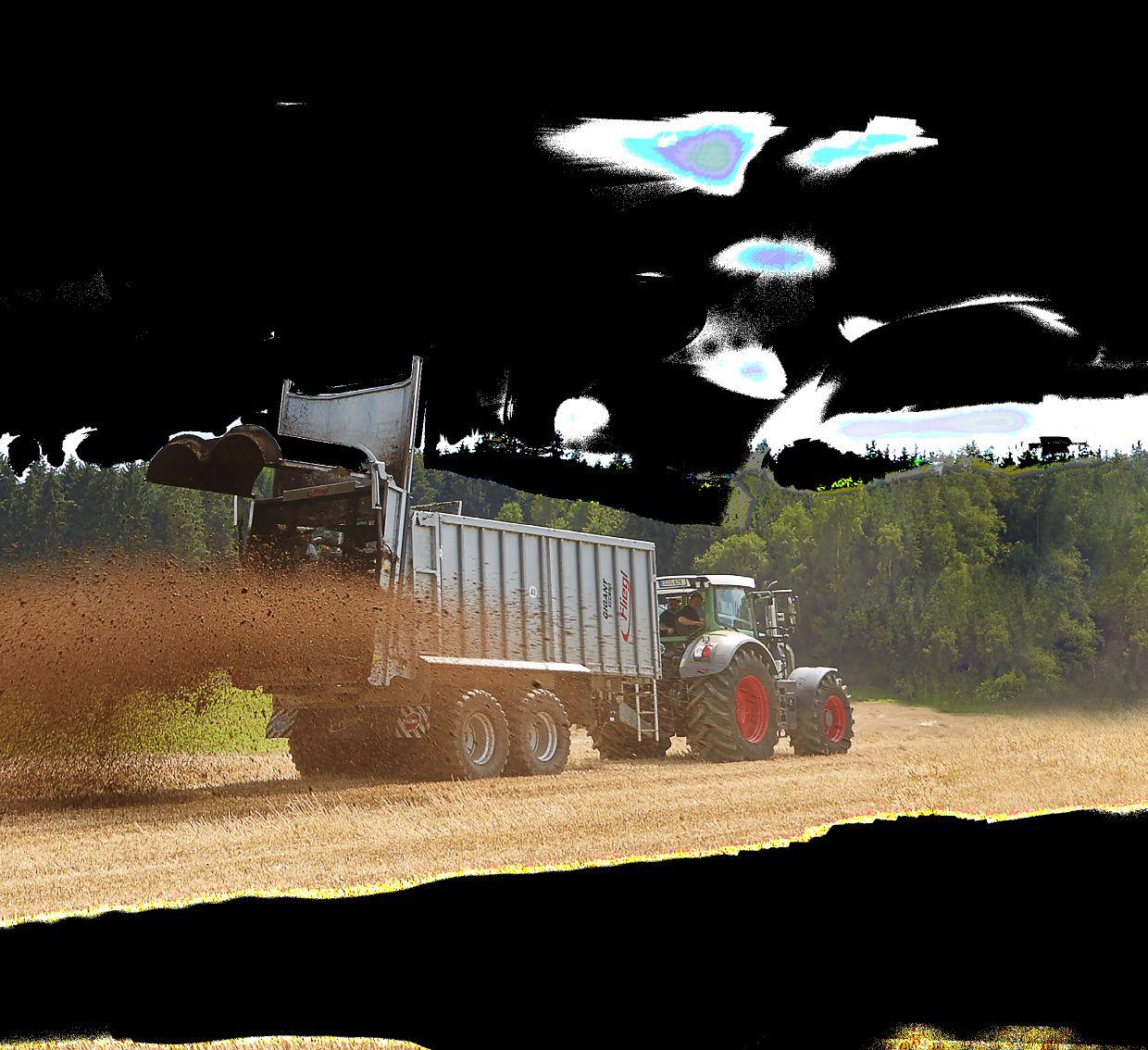
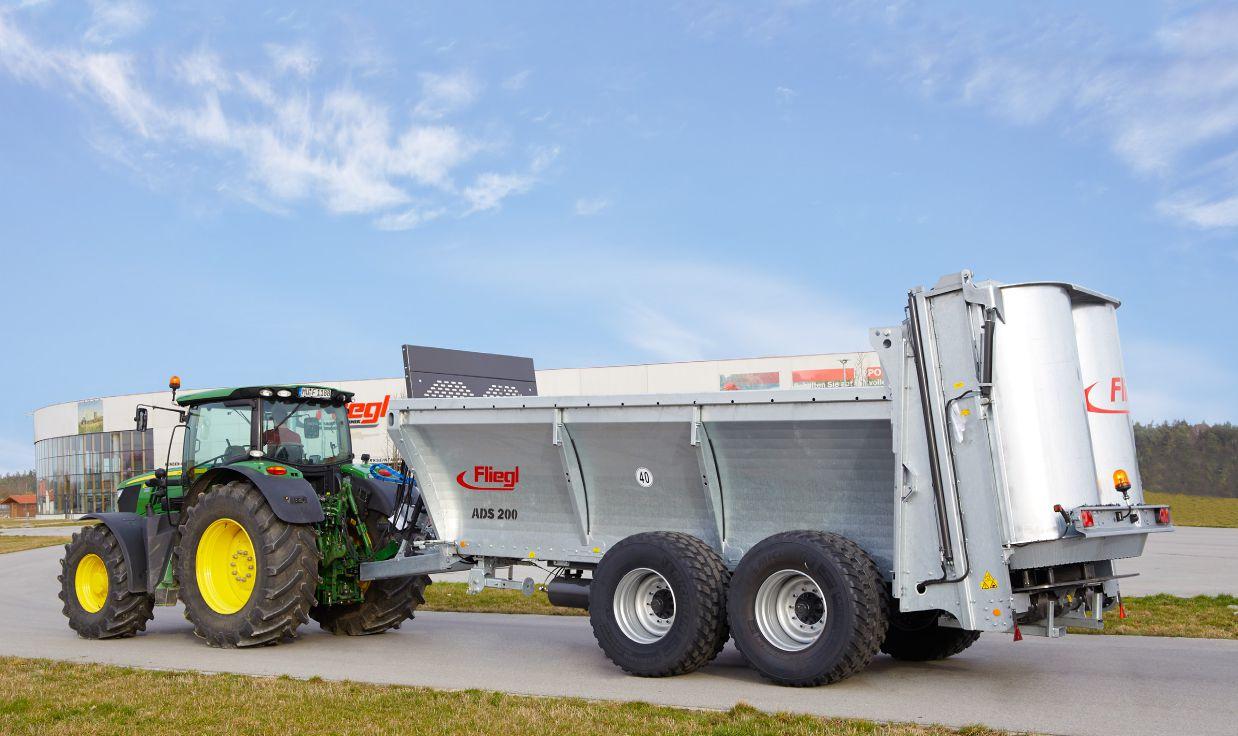
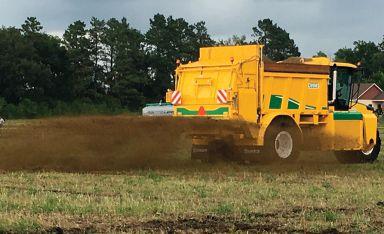
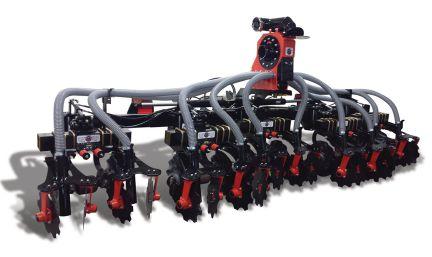
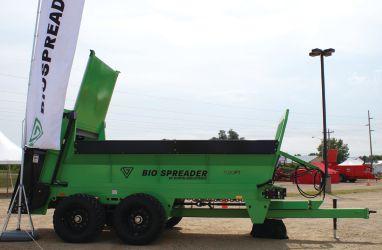
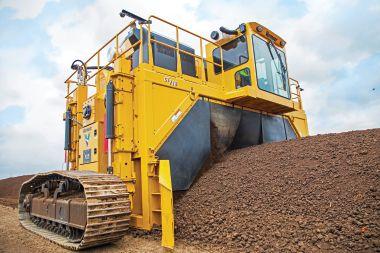
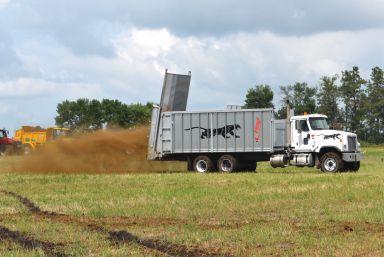
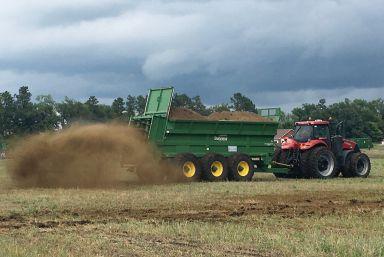
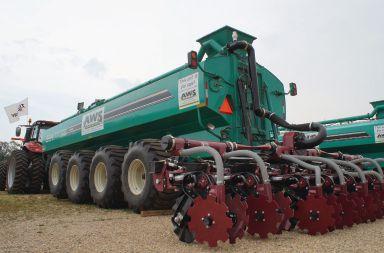
With stormy weather on the horizon, expo planners pushed in-field demonstrations ahead 30 minutes for the afternoon. Solid spreaders from Bunning, Artex, Dutch Industries, Fliegl, Greenfield Spreading, Jaylor, Oxbo, Kuhn and Penta were all showcased. VTI, Zimmerman, Balzer and Dietrich demonstrated liquid toolbars while Bazooka Farmstar had its Titan Toolbar available for viewing in the field. Vermeer and Kooima Company were also on hand to demonstrate compost turners. Alliance Tire also had a display showing how tires can effect soil compaction.
The rain managed to hold off until most of the demonstrations were completed but many in the crowd broke out their ponchos, supplied by expo sponsors just in case.
More than 70 exhibitors took part in the trade show, which
included equipment geared to both small and large manure management and application issues.
Also on display in the trade show this year was the Lil Stinker, a rat rod constructed by Bruce Bauer of Hastings, MN, using an antique solid manure spreader – a 1947 David Bradley – as a base. The attention-getting vehicle is also decorated with dozens of re-purposed antiques, including toilet seats, a cattle dehorner, a sewing machine treadle, chicken feeders, and horseshoes, just to name a few.
The 2019 North American Manure Expo is being held in Fair Oaks, Indiana, from July 31 to August 1.
“Indiana is one of the two states in the Midwest that hasn’t yet hosted the North American Manure Expo,” said Jiqin [JQ] Ni, a member of the 2019 planning committee and an associate professor of agricultural and biological engineering at Purdue University. “An expo in Indiana can fill one of the ‘gaps’ for the show and have an impact on thousands of livestock producers in Indiana and neighboring states.”
The 2019 expo will be based at Fair Oaks Farms, which is comprised of 11 family-owned dairy farms and one family-owned pig farm. The farms are located on 33,000 acres and have about 37,000 dairy cows and 2,700 pigs. The operation recycles all of its manure to produce biogas to power the farm and its fleet of milk delivery trucks.
“Manure management, application and utilization is among top environmental issues in Indiana, which produces large quantities of livestock and poultry manure,” said Ni. “This equals approximately 9.5 million tons each year, the equivalent to about 1.5 tons per Indiana resident per year.” •
PHOTO BY JENNIFER PAIGE
EFFICIENT SOLIDS
LIQUID SEPARATION
ORGANIC FEED SYSTEMS BIOSELECT
+ Solid Liquid Separation
+ With Structure
+ Without Chemicals POWERFEED
+ Feeding and Transfer of Organic Waste
+ Closed Loop System
+ Process Control
+ Energy Efficient
THIS YEAR’S MANURE EXPO
– he h ld in Brooki k nggs, s South h Dakota – prrovvidided d demmon o st straators rs the opportunity to have their equipment recoordrded ed in n acctition on Th Thiis foota t ge e is avvailable to vieiew w on Manurre e Manager’s website (mannuremanager.com) Somme e of the commpanies and eququipmement n tha h t deemo m ns n tr t ated d at this year’s expo caan be e found d in th the e fo foll l owing paagges
Manure Manager is thankful the 2018 s show w was as a saf a e annd d suuccces e sf sful one n .
We W ennjoy y working with all of the exhxhibbittor o s annd d attenddeeees s an and d loook o fo f rward to next year’s shoow w in Fair Oaks, Indiana.
Jamesway – Maxx 10 – 52’
Benefits:
• Built for sand with cast Ni-Hard housing
• 10-inch discharge with 9,200 GPM loadout
• Powerful 8” cannon mixes quickly
• 18’ wide wheel kit is stable in sand pits, folds to 8 ft for transport
• Choose standard, or in-cabin, or wireless hydraulic controls
More information contact your local dealer or jameswayfarmeq.com
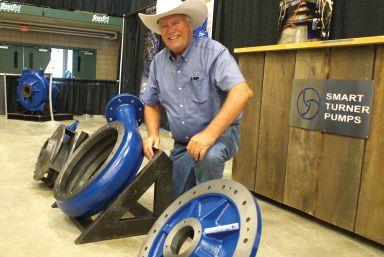
Smart Turner Pumps – Drag Hose Pumps
Benefits:
• Pumps engineered to match BEP with diesel engine
• Generates higher pressure, more gallons at a slower RPM
• More reliable with new seal technology
• 3 sizes available 618, 623 and 823
For more information contact: Ag Direct (647) 962-0379 or www.smartturner.ca
Benefits:
• 3-Wheel design reduces soil compaction
• All wheel drive
• Adjustable, powered front wheel with 70 degree turning virtually eliminates berming with exceptional maneuverability
• 4-point air and hydraulic cab suspension
• ZF CVT transmission
• 400 HP Tier 4 engine
• High capacity, side-by-side cooling with reserving fan
• Full range of factory installed precision options
• Tebbe spreader provides accurate, controlled spread rates with a wide range of materials
For more information: Call 800-628-6196 or visit www.oxbocorp.com
VTI – Hydra-Flex Injection
Benefits:
• VTI builds equipment themselves
• Changed to hub style assembly to accommodate row spacing, easy blade change with retro kit update to existing bar
• 10” Hydra-flex able to move both right and left
• Discs do not clog up with mud
• Inject 4-8” deep to prevent any run off
• Manifold 3,000 gallons per minute
For more information contact Phil Reed (319) 591-2222 or vtillc.com
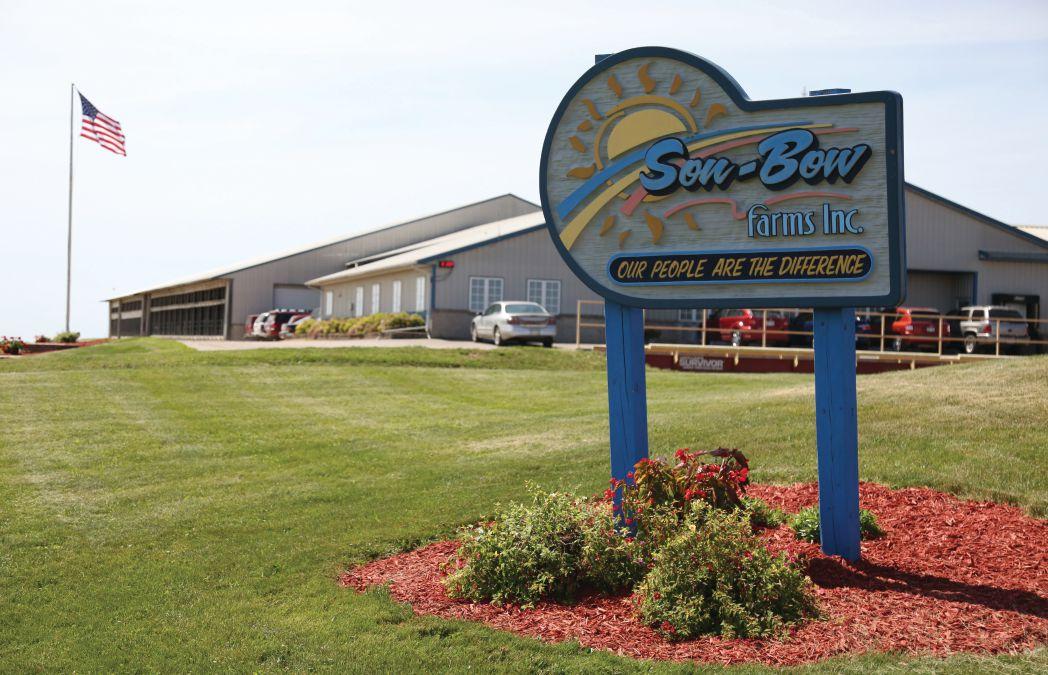
Son-Bow Farms installs AQUA Innovations system to bring down costs of production and keep the Wisconsin dairy in business for years to come.
BY DIANE METTLER
Four years ago, dairy farmer Jay Richardson and his wife, Kristi – owners of Son-Bow Farms in Northwest Wisconsin – sat down for a heart-toheart to discuss the future of their business.
“My wife and I are first and last generation dairy farmers,” Richardson says. “We started our business in 1994, with milking 50 cows and we just steadily grew it. Today, we’re at around 1,400 cows, with about 35 full-time employees. We were at a crossroads. We had to decide whether we were going to stay in the business and reinvent ourselves to stay competitive, or if we were going to exit the business. Fast-forward, we obviously decided to stay in the business.”
After that meeting, the Richardsons set out to find a way to decrease costs. “The top third of the producers in the dairy industry do about the same thing,” Richardson says. “Everybody does
ABOVE
a really good job of getting cows pregnant. They do a good job of getting milk out of cows. They do a really good job of keeping cows in the herd. But the one challenge that still remains – how to handle nutrients in a cost-effective manner. And so, we started to look, and we came upon AQUA Innovations out of Sharon, Wisconsin, and their NuWay Nutrient Concentration System.”
The chance meeting with AQUA Innovations is a story in itself. In his quest to find solutions to decrease their manure-handling costs, Richardson and one of his managers went to a manure management conference in eastern Wisconsin. After going through the food line at the break, Richardson did what he usually does.
“I go find a table that’s empty and I sit down, and then, I wait and see who comes and sits by me.”
And the people that came to sit by him were
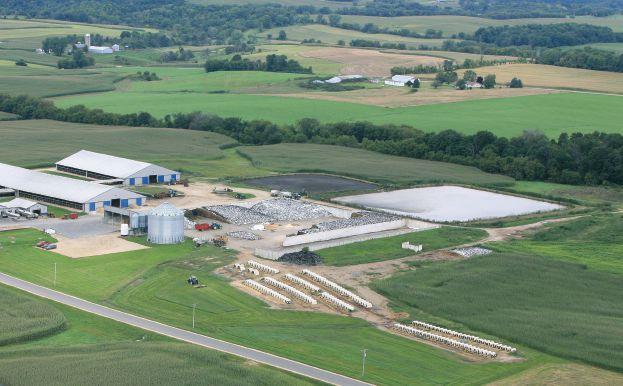
Son-Bow Farms is comprised of freestall barns, which have a flush flume that runs down the middle of the barns. Prior to the installation of the AQUA Innovations system, the manure and sand-laden manure were flushed into manure tanks and manure storage.
Mike Gries from Foxland Harvestore, also Wisconsin-based, and, on the other side of the table, sat Tom Hrinowich, the president of AQUA Innovations at the time.
“We started talking and the rest, as they say, is history.”
From that conversation four years ago, Son-Bow Farms became the first dairy to merge the cleaning and recycling of bedding with converting manure into distilled water and nutrient rich fertilizer.
Other systems the Richardsons had previously looked at didn’t meet their needs, which were continuing to bed with sand, but also be able to reuse sand instead of hauling it to the field.
“We really wanted to maintain quality bedding product, but every time we looked at a system that could get our sand clean enough to reuse, it used a lot of water, which just continued to exacerbate our problem by adding more water to a system that already had too much water in it,” Richardson says.
The AQUA Innovation’s technology was an ideal choice because it used ultra-filtration (UF) and reverse osmosis (RO) and did not use any polymers, which was very important to Son-Bow.
“It was also flexible enough that it can be on the backend,” he adds. “It can be used with or without a digester, and we don’t have a manure digester.”
The dairy is comprised of freestall barns, which have a flush flume that runs down the middle of the barns. Prior to the installation of the AQUA Innovations and DariTech equipment, the manure and sand-laden manure were flushed into manure tanks and manure storage.
As part of the project, the Richardsons built two buildings – one for solids and one for water.
“The solids building is 80 by 200. It holds all of the solids equipment, where the manure and sand-laden manure is flumed from our freestall barns,” Richardson says. “It also holds our cleaned sand and re-bedding equipment. The second building is the water building, houses all of the AQUA Innovations equipment.”
Mike Gries from Foxland Harvestore, who was at the initial table meeting, was contracted by the Richardsons to help design both the pre-treatment system, to extract the manure solids out from the barns, and the system for cleaning the sand.
The design used all DariTech equipment. Richardson says the larger solids are extracted, ahead of running their flume. This way the water is cleaner and does a much better job of cleaning the sand in pre-treatment.
“With this method, we’re getting excellent quality recycled sand, because it was pre-cleaned up front,” he says.
In the solids building, the sand is recycled by running it through a DariTech One Shot bedding recovery system that lifts, rinses and stacks the sand as well as a DTX and a three-roll press to extract as much water from the solids as possible.
“With our new system, [in the water building] we’re able to concentrate those nutrients and discharge water. It takes a lot less storage space. We used to have about six months worth of storage. Now, we’re going to have closer to 24 months worth of storage, without adding additional storage space.”
While the sand is being cleaned, Son-Bow simultaneously takes all of the larger extracted solids and runs them
through a composter.
“We’re using a DariTech centrifuge to get us down to, approximately, 1 to 1.2 percent total suspended solids,” Richardson says. “Off of the centrifuge then, we’re sending that water over to the water building. It first goes through the ultra filtration (UF,) and then, the reverse osmosis (RO,) which results in two environmentally safe byproducts: distilled water and nutrient-rich compost.”
The byproduct that comes out goes into a common auger, which feeds two DariTech Bedding Master machines. However, Richardson states, “we are not using the compost for bedding. We’re using those to speed up the natural compost process.
“In the compost process we’re killing the bad bugs, and we’re kickstarting and growing all of the good bugs or bacteria for helping the soil,” Richardson says. “There is a huge movement in agriculture in biologics. And so, instead of feeding the corn crop the nitrogen, phosphorus and potassium (NPK) chemistry, we’re feeding the bugs and letting the bugs feed the corn crop the NPK.
Richardson adds: “We still have to feed the crop some NPK, but it is significantly reduced.”
The resulting compost Richardson would liken to a soil inoculant.
“And we have a market for selling it. Not in the retail market, but 90 percent is sold to other farmers.”
What has been exciting for Son-Bow, are the synergies and benefits that the AQUA Innovations system has created. For example, by just reducing the amount of the volume that Son-Bow has to handle, the dairy now has the
freedom to choose those times or days of the year when conditions are most conducive for fertilization.
“In the past, we get done chopping corn in the fall, and it’s like, ‘Okay. It’s a race to freeze up,’” Richardson says. “And you got a gun to your head and you have got to go every day.”
The AQUA Innovations NuWay nutrient concentration system is also an all-mechanical separation process. It reclaims, as Richardson mentioned earlier, more than 50 percent of manure as distilled water without the use of chemicals. The other by-product of the process is the organic super nutrient fertilizer with virtually no phosphorus or pathogens.
“We really wanted to maintain quality bedding product, but every time we looked at a system that could get our sand clean enough to reuse, it used a lot of water, which just continued to exacerbate our problem.”
– Jay Richardson
LEFT
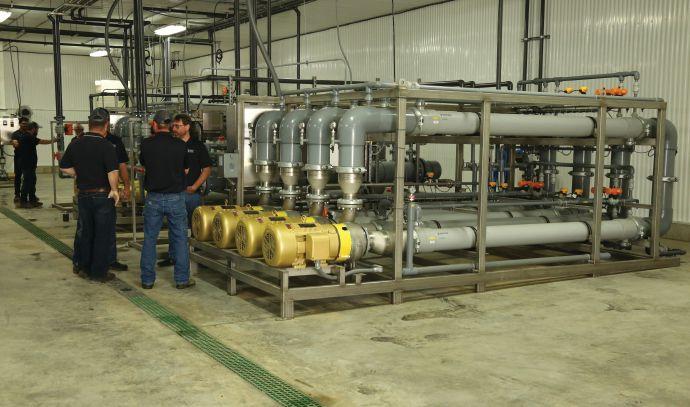
In the water building, Son-Bow is now able to concentrate nutrients and discharge water, which takes a lot less storage space. The farm used to have about six months worth of storage but now has closer to 24 months worth of storage.
“I also appreciate the scalability,” Richardson says. “You can scale the system from as small a herd as, I believe, 600 head. Our system is currently sized up for about 2,000 cows. But the real beauty of the system is that the Aqua Innovations UF takes out about 95 percent of the phosphorous. We have a highly concentrated NP&K coming off the UF. And then, we have a highly concentrated N with a little, tiny bit of P, and lots of K, off Aqua Innovations RO. We keep those products separate in our two-stage lagoon and can easily give our individual fields the mix they require.”
The nutrient-rich by-product gives Richardson a 4 to 1 concentration, which means Richardson can haul one truckload instead of four.
“It costs the same amount of money to haul a semi-load of this product up and down the road, but since the concentration is four times higher, we’ve cut our per-acre costs by three quarters.
“With recycling the sand,” Richardson continues, “We’re saving even more.”
And, with all these benefits, SonBow expects to decrease its cost of milk production by approximately $1.80 per 100-weight.
“In other words, we expect the system to completely pay for itself in about five or six years.”
As far as milk quality, Richardsons have been pleased.
“We’re still running about an 80,000 cell-count. We’ve seen that creep up just a little bit, but it’s not quite a fair test because we’re in the summer months now, and we typically go up in summer. We were at about a 60,000 cell-count prior to that in March on virgin sand. However, we’re not treating any more cows currently and that’s a good sign.”
“The NuWay system is environmentally compliant, customizable to any dairy operation and provides 24/7 remote monitoring and support from AQUA Innovations,” says Chris Lenzendorf, president of AQUA Innovations.
The system has only been operational a few months and Richardsons is still adjusting it, but so far everyone is extremely satisfied with the results. It looks like it’s going to allow the couple to continue to maintain a cost-effective dairy in a competitive market. •
Beano for cows may cut emissions
A new cattle feed supplement created by researchers in Canada and Australia has methane falling and optimism rising.
Beef and dairy farmers around the world are looking for ways to reduce methane emissions in their herds and cut greenhouse gas emissions – a global priority. To help meet this goal, researchers from Canada and Australia teamed-up for a three-year study to find the best feeding practices that reduce methane emissions while supporting profitable dairy and beef cattle production.
“We need to know how feed affects methane production, but we also need to know how it affects other aspects of the farm operation, like daily gains in animals, milk production, and feed efficiency,” said Dr. Karen Beauchemin, a beef researcher from Agriculture and Agri-Food Canada [AAFC]. “Farmers want to help the environment, and need to know what the trade-offs will be.”
Researchers and system modellers from AAFC, Agriculture Victoria [Australia], and the University of Melbourne worked together to examine three feed supplements, including 3-nitrooxypropanol (3NOP).
3NOP is a promising commercial feed supplement that can be given to cattle to inhibit
ABOVE
the enzyme methyl coenzyme M reductase – an enzyme responsible for creating methane in the animal’s rumen. After blocking the enzyme, 3NOP quickly breaks down in the animal’s rumen to simple compounds already present in nature.
Dr. Beauchemin studied the short- and longterm impacts of feeding 3NOP to beef cattle and shared her findings within the broader study.
“We now have clear evidence that 3NOP can have a long-term positive effect on reducing methane emissions and improving animal performance,” she said. “We saw a 30 to 50 percent reduction in methane over a long period of time and a three to five percent improvement in feed efficiency.”
Producing milk, gaining weight, and creating methane all take energy that a cow fuels by eating. Cattle eating a diet that contained the 3NOP supplement produced less methane. Because there was less methane, more energy could be used by the animal for growth. When using this supplement, cattle consumed less feed to gain a pound of body weight compared to the control.
Researchers from Agriculture and Agri-Food Canada, Agriculture Victoria (Australia), and the University of Melbourne, worked together to examine three feed supplements.
“What is also great is that the inhibitor worked just as effectively no matter what type of feed the cattle were eating,” said Dr. Beauchemin. “We don’t know the actual market price of the supplement yet because it is still going through approvals for registration in Canada and the U.S. That will be important for farmers who want to calculate the cost-benefit of using 3NOP.”
Microorganisms in the cattle’s rumen need nitrogen to be able to efficiently break down food for the animal to absorb. Nitrate is a form of non-protein nitrogen similar to that found in urea. When nitrate is fed to cattle, it is converted to ammonia that is then used by the micro-organisms. During this process, nitrogen in the nitrate works like a powerful magnet that is able to hold and attract hydrogen. This leaves less hydrogen available in the rumen to attach to carbon to make methane.
Researchers in Canada found that adding nitrate to the diet of beef cattle reduces methane production by 20 percent in the short-term (up to 3 weeks), and after 16 weeks, it still reduced methane up to 12 percent. In addition, feeding nitrate improved the gain-to-feed ratio. However, administering the correct dosage is extremely important, as too much nitrate can make an animal ill. So it is recommended this method should be used with care and caution.
“I understand that in Canada, most forages are not that low in protein,” said Dr. Richard Eckard, a researcher from the University of Melbourne. “But in the rangelands of northern Australia, the protein content in the forage is extremely low. It is possible that adding nitrate to Australian cattle feed may be able to improve the feeding regime from the current use of urea, but it depends on the price.”
In the short term, wheat effectively reduced methane production by 35 percent compared with corn or barley grain; but, over time, cattle were able to adapt to the change in feed and the methane inhibitory effect disappeared. Essentially, after 10 weeks, methane production was the same for corn, barley, and wheat.
The study also showed genetic variation in cows where about 50 percent of the cows that were fed wheat remained low in their methane emissions, even for as long as 16 weeks. However, the other cows adapted to the wheat diet and had methane emissions similar to, or even greater than those fed diets containing either corn or barley. Based on genetics, some cows are more adaptable than others and, in the long-term, it is more difficult to reduce the amount of methane they produce.
For dairy cows, Dr. Peter Moate, a dairy researcher with Agriculture Victoria, was particularly intrigued about the link between milk fat, yield and methane emissions.
“We found that feeding cows wheat increased milk yield but fat levels decreased,” he said.
“Our better understanding of feeding regimes will make a difference for farmers but, more importantly, this research has helped us understand more precisely the volume of greenhouse gases (GHGs) the industry is producing under different feed regimes,” said Dr. Beauchemin.
While this project has wrapped-up, the work has not ended. Researchers in both countries unanimously agree that they will continue to help farmers and the industry find solutions to reducing their carbon footprint. •
REGULATE NUTRIENT
WINTERKILL FROM Manure Application
Manure application on frozen ground should be avoided but sometimes weather happens. Even in an emergency application situation, producers should be aware of possible winterkill.
BY CHRISTINE BROWN
Manure applied to wheat crops or to forage crops can be an excellent option, but not in winter on frozen soils.
Manure application in winter should never be part of a manure management plan. Rather, it should be part of a contingency plan, because we all know that weather happens. Frequent rain and a late corn harvest are taxing manure storage capacities on many farms. Contingency plans are essential for manure that must be applied in less than ideal conditions. A forage or wheat field can be an ideal
ABOVE
site for contingency plan manure application, because compaction should not be an issue, and the soil cover would help prevent nutrient runoff and erosion. Forage or wheat fields are ideal for those reasons. However, winterkill becomes a much greater risk, especially with application of liquid manure. Why? Beside the common risks – which include compaction from wheel traffic and crown damage – manure contains salts.
Salinization, the concentration of salt in the root zone, is not an issue in Ontario. Ample
When the soil is frozen, infiltration of the manure into the soil can’t occur. Salts in manure can then turn deadly for the crop.
precipitation and drainage leaches the salts through the soil profile. However, when the soil is frozen, infiltration can’t occur. Salts in manure can then turn deadly. High sodium also has a negative effect on soil structure; making the soil more susceptible to crusting, and further decreasing the capacity for infiltration.
Livestock manure contains many salts, including ammonium, calcium, magnesium, potassium and sodium. When accrued, they can be significant. Salt content varies from farm to farm based on livestock species, diet formulation and even the salt in the drinking water. Many manure analyses report “Total Salts” or electrical conductivity (EC) to reflect the accumulated salts. A typical hog manure (as applied basis) can have about 20 mS/cm (milliSemens/cm) or about 125 lbs of total salts per 1,000 gallons. Dairy manure average is 14 mS/cm or about 90 lbs/1000 gallons. Sodium and magnesium chloride have a working temperatures to about -15° C; potassium chloride to -4° C, while calcium chloride can work to about -23° C.
“When the soil is frozen, infiltration can’t occur. Salts in manure can then turn deadly.”
When manure is applied on frozen or snow-covered soils, the salts melt the snow and ice at the soil surface. The layer below may still be frozen, preventing infiltration. The melted, saturated layer is high in salts, toxic to roots, and more prone to erosion and runoff, and more susceptible to frost heaving. All these risks are increased where manure with high EC or total salt contents has been applied.
When contingency plan applications become necessary during the winter season, options include:
• Late summer application to forage crops after the final cut or at the beginning of the critical harvest period,
• Temporary storage at a neighbouring storage that has extra capacity,
• Application to forage fields or cover crops that will be tilled or killed,
• Application to the most level harvested fields, preferably with residue still present, furthest away from surface water, where application does not occur through water runs or “flow paths.”
Sampling manure at the time of application should be standard practice. A manure analysis that includes total
salts will help to determine the level of risk if contingency application in winter is a last resort.
Christine Brown is a field crops sustainability specialist with the Ontario Ministry of Agriculture, Food and Rural Affairs.
MAKE YOUR DAIRY EXTRAORDINARY
FEATURES AND BENEFITS:
• Oil bath bearings - self cooled and lubricated, needs no water flush
• Disintegrator tool - for hoof blocks and other solids
• Heavy duty seal and bearing systemlonger life in severe service
• Ductile iron casing and bearing housingheavy castings for long life
• Heat treated cast steel wear parts - for longer life in abrasive grit service
• Most parts readily available from stock for expedited delivery
APPLICATIONS INCLUDE:
• Digester Feed
• Digester Mixing
• Small Pit Recirculation
• Tanker Loading
• Flush Water
• Feeding Heat Exchangers
• Manure Transfer
• Separator Feed
ON TRACK
Alliance 398 MPT
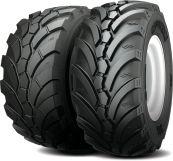
The Alliance 398 MPT (multi-purpose tire) radial flotation tire was recently released in North America. Built for manure carts, tanks and feed trucks that require a combination of high flotation and high-speed road performance, the 398 MPT carries a DOT speed rating of J – 62 mph or 100 km/h – making it an outstanding replacement for standard dual truck tires. The tire features all-steel radial construction for durability in the field and maximum heat dissipation on the road. Aggressive lugs with sharp shoulders enhance traction in mud and soft soil conditions, while a dense center rib block pattern adds stability for enhanced road performance and steering. Alliance has released a 445/65R22.5 MPT for steering axles and 600/50R22.5 MPT for drive positions, making it simple to replace most dual truck tires. Other sizes are in development and will be released soon. atgtire.com
Danuser Mega Mixer
With adjustable mounting brackets and pallet fork tine slots on both sides, the Danuser Mega Mixer can dispense left or right. Built-in cutting edges and a robust design make it well suited for scooping from piles. There are two models: the rubber-flighted auger (R75) or the all-steel auger (S75). Each Mega Mixer includes two 2-foot multi-link chutes that store on the bucket. A lockable discharge flap limits spilling and allows for faster material mixing. With an 8-inch diameter auger, the Mega Mixer is capable of dispensing 3/4 yard of material in 35 seconds. danuser.com
McLanahan Modular SMS12
The SMS12 is a compact sand separation system for dairy herds smaller than 700 cows. By reducing the size of some equipment and reconfiguring the layout, the size of the overall system is reduced. Capitalizing on the closed-loop concept, the system creates and uses its own process water for diluting and separating sand. It uses gravity settling plus centrifugal separation to remove and wash bedding sand for reuse. Water and sand are pumped to the hydrocyclone where it separates the sand and drops it into the sand washer for cleaning. Clean sand then discharges onto an optional dewatering screen. mclanahan.com
IS IRON OXIDE the answer for manure gas safety?
Researchers at Penn State’s College of Agricultural Sciences are examining the use of additives to prevent deaths related to manure emissions from gypsum bedding.
BY AMY DUKE
Gypsum recycled from manufacturing and construction waste has gained popularity as a bedding source for the dairy industry. Its proponents cite affordability, increased moisture absorption, low bacteria growth and soil benefits as reasons for its use.
However, when gypsum – a source of sulfate – finds its way into low-oxygen manure-storage facilities via removal as soiled bedding, this innocuous product can turn into a deadly gas with a few moves of an agitation device, a dangerous threat that researchers in Penn State’s College of Agricultural Sciences believe can be counteracted with an additive.
“In agricultural production, gases near manure storages can pose severe health problems and even be lethal due to toxicity or displacing oxygen,” said Eileen Fabian, professor of agricultural engineering. “Tragically, the potential for gypsum bedding to have lethal consequences was not known until it was too late.”
Fabian and Michael Hile, a postdoctoral scholar in agricultural and biological engineering, were among a team of investigators – which included experts from Penn State Extension’s agricultural safety program, manure haulers, farmers and industry professionals – that collected data linking gypsum-laced manure and toxic hydrogen sulfide gas levels during manure agitation in the wake of several human and cattle deaths in 2012.
potentially toxic environment.
Hile noted that hydrogen sulfide gas “is quite toxic, even at low levels, and can quickly overtake a person or animal, leading to unconsciousness and even death in a matter of minutes.”
Fabian and Hile set out to prevent more tragedies by finding a way to stop the gas release. Their research involved three laboratory trials involving dairy manure additives that the duo believed potentially could counteract the effects of hydrogen sulfide – the primary additive being iron oxide. Their experiments looked at various ratios of gypsum-laced manure mixed with iron oxide, over several months of storage time.
Hydrogen sulfide concentrations were measured at agitation and between agitation events. The tests showed that adding iron oxide to gypsum-laden manure at an equivalent chemical ratio with gypsum reduced production of the gas during manure mixing to a relatively safe level.
“Tragically, the potential for gypsum bedding to have lethal consequences was not known until it was too late.” – Eileen Fabian
A follow-up demonstration project documented conditions on 10 dairy farms after these incidents, leading to laboratory investigations of promising manure additives that might reduce dangerous gas levels.
As for what causes the deadly gas, Fabian said that sulfate in manure, when placed in a virtually oxygen-free environment, can convert to hydrogen sulfide. When dairy manure in storage is agitated to mix it prior to its use as a fertilizer, the surface crust that normally forms breaks down, allowing any hydrogen sulfide gas to be released, creating a
“In most cases, the level of hydrogen sulfide releases was diminished to as low as the manure without gypsum,” Fabian said. “We continue to study this effect and share the information to prevent further tragedies to humans and livestock.”
As promising as their research is, Fabian and Hile emphasized that workers in the vicinity of manure storage facilities always should put safety first, additives or not.
“The bottom line is that the benefit of gypsum cow bedding and agronomic values must be balanced against the potential gas hazard,” Fabian said. “If gypsum is used, safeguards must be put in place to prevent the potential harm it might cause.”
The research was published recently in Transactions of the ASABE [American Society of Agricultural and Biological Engineers].
For detailed information about safety considerations with gypsum bedding, visit Penn State Extension’s website at https://extension.psu.edu/manure-storage-design-and-safetyconsiderations-with-gypsum-bedding. •
Widen Your Horizons
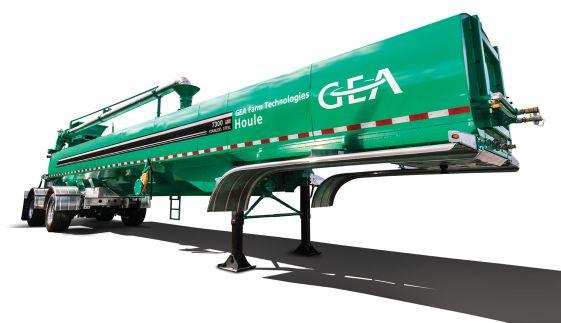
GEA’s STR Series Manure Semi-Tanker streamlines manure transportation for faster, farther hauling. From farm to field, this first-class manure hauling system saves time, fuel and equipment wear and tear. The STR Series SemiTanker can also haul and apply slurry directly on hard soils after h giving you flexibility in hauling times.
The GEA STR Series Semi-Tank meets all traffic safety regulations for vehicle weight and width for increased safety for you and everyone on the roads.
Don’t let distance slow you down Hit the road with GEA’s STR Series Manure Semi-Tanker.