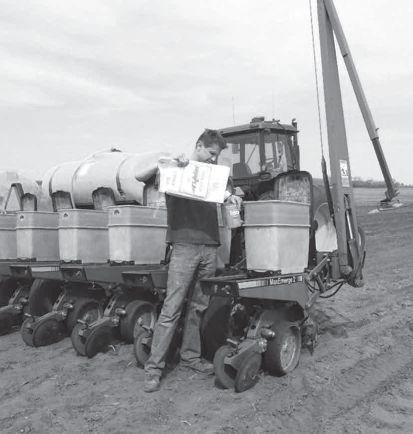
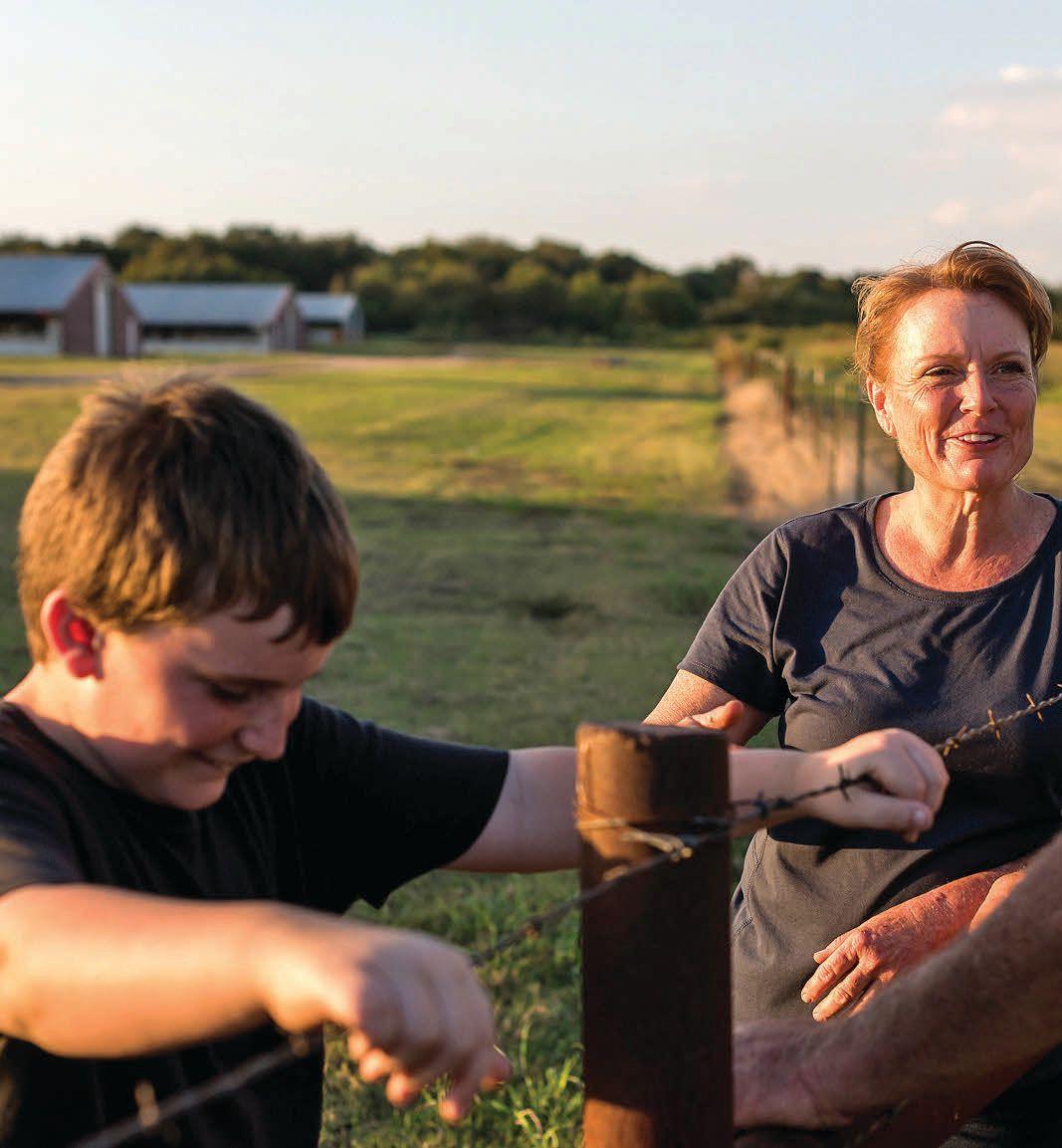
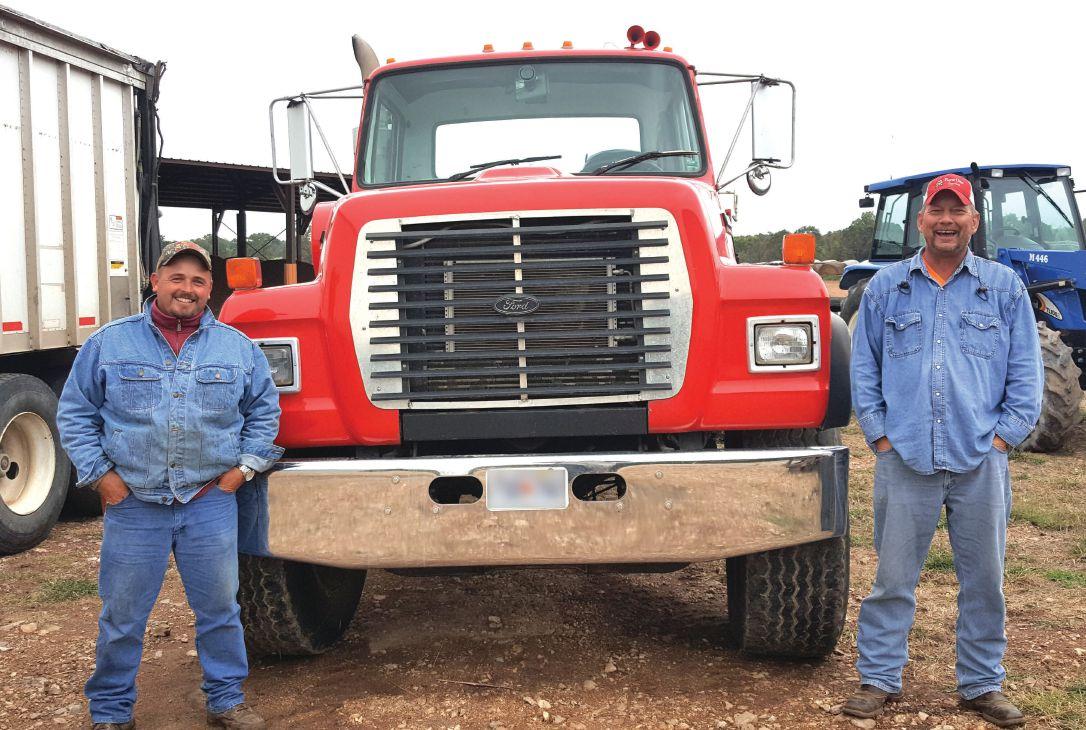
The Smotherman family works diligently to ensure the manure generated from their turkey operation has minimal impact on their surroundings.
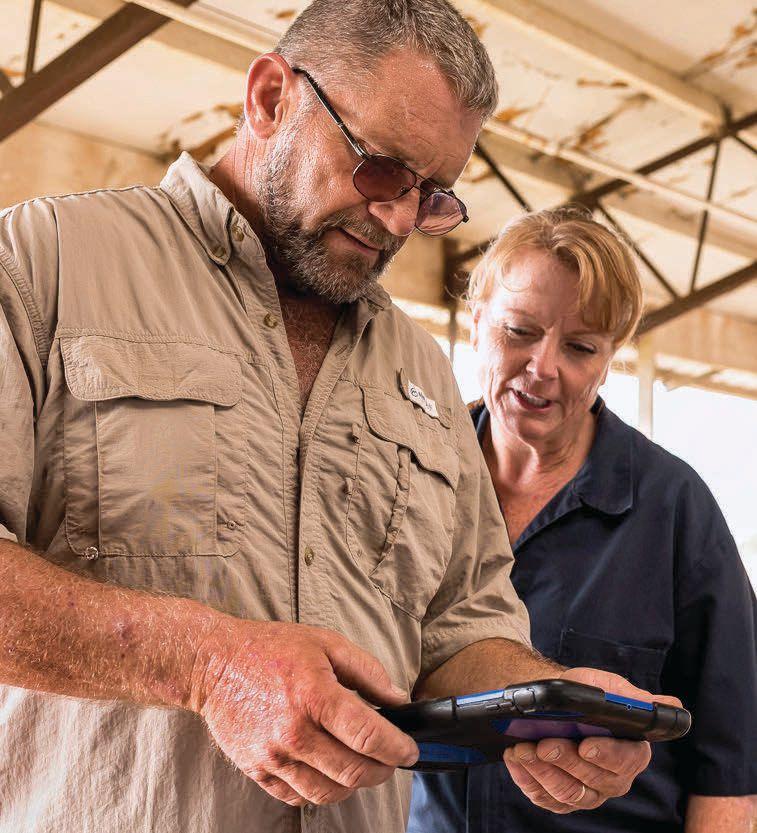
Ken Smotherman Jr., wife, Dana, and son, Beau, are thankful for their opportunity to raise turkeys for Cargill, and show their appreciation by ensuring that they leave a small environmental footprint on the land around their turkey barns as possible. For more see page 10.
Transforming litter to clean energy
A Turkey-based company is transforming poultry litter into clean energy.
BY DIANE METTLER
Not all poultry litter is the same
Poultry
BY TONY KRYZANOWSKI
Checking out chickens
A recent study examines how poultry farms are affecting the Chesapeake Bay Watershed.
BY DIANE METTLER
Far more than a byproduct
Early on in my career as a journalist I was graciously given the opportunity to write for an agricultural publication. It was a new adventure for me after covering community news for a number of years.
In my first year I attended a livestock conference in Alberta that discussed various cattle grazing systems. My editor at the time posed me with the challenge of returning to Manitoba to find out what kinds of grazing systems producers in the province were adopting and how they were impacting beef production.
After a little bit of research, I linked up with the Manitoba Forage and Grasslands Association. For two summers I attended and reported on a number of their field days and workshops held on cattle operations across southwestern Manitoba and southeastern Saskatchewan, learning about planned grazing systems, rotational management, soil health, microbes, ruminants, poly cropping and pasture management.
More often than not, in the summer months you could find me
taking on the role of editor. And, I look forward to continuing to stand in pastures and stare at poop.
All kidding aside, where I really find my passion in this sector is in the areas of environmental management. As you will see from the numbers on America’s chicken consumption (see page 6), livestock production is an inevitable part of our society, and with it comes a number of environmental risks. Mitigating these risks is an enormous responsibility that so many farmers take upon themselves.
In this, Manure Manager’s poultrythemed issue, there are a number of great examples of of how farmers are innovating to reduce their impact on the environment. For instance, our cover story, the Smotherman family, which you can find on page 10.
Not only has Ken Smotherman been able to streamline manure management on his turkey farm outside of Waco, Tex. (and earn a few industry awards while doing so), he has also developed a nutrient management tracking computer program that has enabled him to track
Mitigating these risks is an enormous responsibility.
in the middle of a Saskatchewan pasture in the scorching July sun staring at, and listening to a fellow talk about cow poop and the bugs that were living in his cow’s poop. These field days were my introduction to the manure industry. They provide me the opportunity to connect with cattle producers and develop an understanding and appreciation for the value of an often-underappreciated byproduct.
Fast forward a few years and now, after a year as associate editor of Manure Manager magazine, I am
all manure-laden litter that is gathered and transported for land application. Thus, ensuring that the right nutrients are put in the right field, while minimizing potentially harmful run off.
Moving forward in my new role as editor, I hope to fill these pages with even more profiles of innovative producers and operations that are pushing the limits to find a better way of doing things, as well as informative research, industry insights and practical takeaways for today’s livestock producer and custom applicators.
domore.ag
Online management plan project earns recognition
A project out of Iowa that allows farmers to submit manure management plans online recently won an award at the 2018 Government Experience Awards. The award was presented by the Center for Digital Government, a national research and advisory institute focused on information technology policy and best practices in state and local government. The project was recognized in the Government-toBusiness Experience category, one of six categories acknowledging how all levels of government are working to improve citizens’ interactions with their government.
Historically, about 7,000 Iowa farmers had to fill out paper forms, drive miles to get them signed and leave a copy of the manure management plan at the county courthouse, and then submit the signed forms to Department of Natural Resources (DNR).
“Our goal was to cut the time and effort it takes for farmers to submit annual plans, while maintaining the information we need,” said Bill Ehm, head of DNR’s environmental division. “Now instead of days, they can use their smartphone to file the plan and pay fees online in minutes. That’s a tremendous savings for all involved.”
Following requests to develop an electronic submittal process for manure management plans, the DNR hosted a week-long event in December 2016 and asked for input from those who create, submit and process about 7,000 plans annually, including animal producers, consultants and technical service providers, county staff and DNR staff. Participants provided their perspectives, including advice on how to build an electronic submittal option for the annual short form and how to pay fees electronically.
REDUCING AMMONIA THROUGH FEED
The U.S. Food and Drug Administration (FDA) recently announced the approval of Experior, a drug that when fed to beef cattle under specific conditions results in less ammonia gas released as a
byproduct of their waste. Although studies have not examined the new drug on a herd or farm scale, initial studies of Experior have shown that the product reduces ammonia gas emissions from manure
from an individual animal or a pen of animals in semicontrolled conditions in enclosed housing. In a simultaneous yet separate review, the Veterinary Drugs Directorate (VDD) of Health Canada has also
BY THE NUMBERS - U.S. BROILER PRODUCTION
The United States has the largest broiler chicken industry in the world.
25,000 family farms across America hold production contracts with companies.
95% of broiler production comes from these family farms.
The top 5 broiler producing states are: Georgia, Arkansas, Alabama, North Carolina and Mississippi.
reviewed Experior. This underscores the continued collaboration between the FDA’s Center for Veterinary Medicine and VDD, aimed at facilitating access to veterinary drugs across both countries.
In 2017, almost 9 billion broiler chickens, weighing over 55 billion pounds, live weight, were produced.
More than 1.2 billion bushels of corn was used for broiler and breeder feed in 2017.
Americans consume more chicken than anyone else in the world – more than 92 pounds per capita in 2017.
Source: The National Chicken Council
TECH SPREAD
Bluetector builds first manure treatment plant in Germany
A farm in Lower Saxony, Germany with sow breeding, floor-feeding laying hens and a biogas plant is installing some new technology for the treatment of manure. Developed by the Swiss agri-tech company Bluetector, the BlueBox Ultra is capable of turning manure into water and can treat up to 26,000 gallons of manure per day.
The BlueBox Ultra has been specially developed for the biological treatment of manure and fermentation residues and works the same way as a municipal wastewater treatment plant. In the bioreactor, the manure is converted into water, which contains only traces of nitrogen and phosphorus and is therefore ideally suited for irrigation. Since nitrogen and phosphorus are almost completely removed, only very small surfaces are required for application. This technology eliminates the need for expensive manure transports, where manure sometimes has to be transported over hundreds of miles. “I no longer want to have to carry out expensive manure transports,” explains farmer Jörn Ahlers, who runs a farm with a biogas plant in Lower Saxony. “I am convinced of the technology and user-friendliness of
Digital platform aims to help farmers with stewardship goals
Land O’Lakes SUSTAIN recently announced its plan to roll out the Truterra Insights Engine, an interactive on-farm digital platform that will help farmers advance their stewardship goals and return-on-investment in real time, acre-by-acre and help food companies measure sustainability progress.
The platform will be available as the core tool under the new Truterra brand. The full suite of offering aims to advance the agricultural industry’s ability to enable conservation at scale across a variety of crops, commodities and commitments.
the BlueBox and I am confident that the system will go into operation on my farm this year.”
“In recent months, we have presented our ground-breaking manure solution to many farmers and operators of biogas plants in Germany, especially in the manure hot spots of North Rhine-Westphalia, Lower Saxony and Bavaria. The sale of the first manure treatment plant in Germany is of course an important milestone for us,” says David Din, CEO of Bluetector. “Our BlueBox enables farmers to convert their manure into water with a low-cost bioreactor without the need for costly and maintenance-intensive equipment such as reverse osmosis or centrifuges.”
New runoff risk tool determines ideal application timing
The Minnesota Department of Agriculture, in partnership with the National Weather Service has designed a new tool for those applying manure called the Minnesota Runoff Risk Advisory Forecast. The interactive map is designed to help farmers and custom manure applicators decide on the optimal time to apply manure by predicting or modeling when runoff events are likely to happen. As a bonus, the tool also provides forecasted precipitation amounts, as well as soil temperatures at two and six inches of depth to help with manure application decisions. How does the runoff risk model work? It takes into consideration soil moisture content, temperatures, and
if applicable, snow accumulation and melt. With this information, it predicts the chance of runoff in the next one, two, or three days, when the ground is not frozen or snow-covered. Once the model moves into “winter mode,” it calculates the runoff risk potential for up to 10 days. Any time the model shows a moderate or severe risk, regardless of season, farmers and manure applicators should evaluate the situation and decide if there are other locations, like flatter areas that are less likely to have runoff, or other dates to apply the manure.
For more information, visit: mda.state. mn.us/protecting/cleanwaterfund/ toolstechnology/runoffrisk
“Truterra holds tremendous potential to harness stewardship to drive value by providing data-driven insights from farm-to-fork,” said Matt Carstens, senior vice president of Land O’Lakes SUSTAIN.
“Using the Truterra Insights Engine, farmers and food companies will have the ability to establish and report clear metrics, create customized stewardship strategies that meet farmers where they are in their sustainability journey, and use a common language for on-farm stewardship that holds meaning and value. It’s a major step forward in supporting food system sustainability that starts on the farm.”
One of the biggest challenges in understanding and enhancing the sustainability of our food system remains a lack of comprehensive tools that can quantify economic and environmental benefits for farmers to identify farm management options.
The Truterra Insights Engine leverages agronomic expertise and technical capabilities from a variety of contributors to enhance the value of stewardship across the supply chain. Such collaborations include United States Department of Agriculture’s Natural Resources Conservation Service and integration of the sustainability metrics of Field to Market’s Fieldprint Platform.
For farmers and agricultural retailers, the Truterra Insights Engine will utilize soil, weather, economic, and farm management data to create customized reports showcasing the potential impacts of various stewardship practices – providing field-by-field insights, tracking against both economic performance and conservation practices. Together, the economic and environmental results will facilitate the long-term productivity and success of our farmers and food system.
A key differentiator for this platform from other data tools is that it is designed to be of value for farmers first and foremost. It was created by a farmer-owned cooperative, to be used by farmers, agricultural retailers, and agricultural experts to improve on-farm economic and natural resource stewardship.
Importantly, the Truterra Insights Engine will measure and track stewardship progress over time. In addition to helping farmers make the right choices for their business, these expanded metrics will help food companies achieve their sustainability goals – leading the industry toward a more sustainable food system.
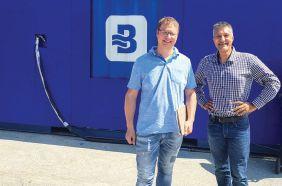
Jörn Ahlers (left) and David Din (right) in front of a BlueBox demonstration plant in Switzerland.
TURKEY FARMING WITH SUSTAINABILITY
LEFT
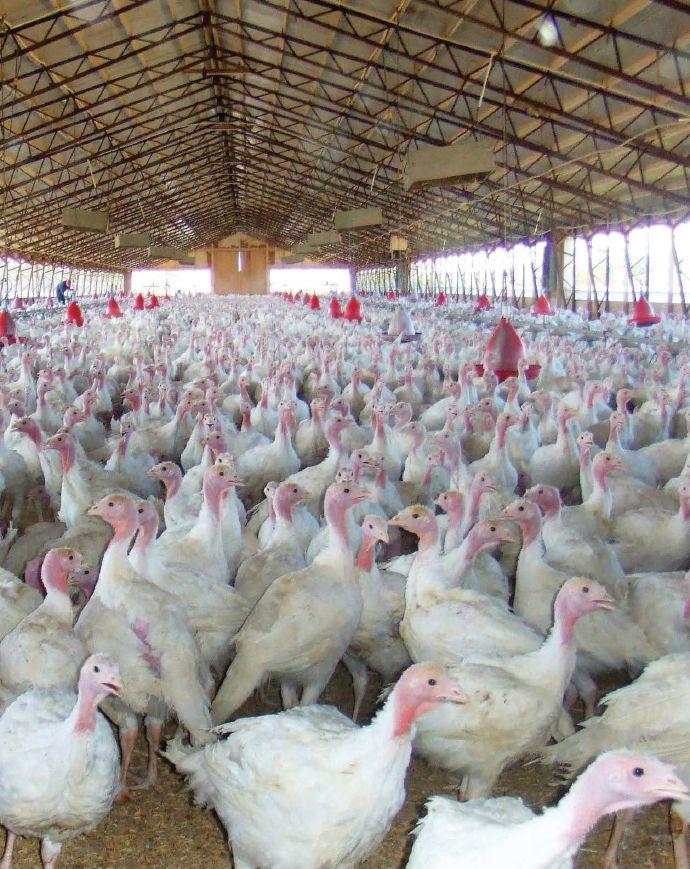
The Smotherman family produces approximately 750,000 or eight million pounds of turkey annually on their operation outside of Waco, Texas.
The Smotherman family began farming in 2002 as admitted rookies to agriculture and raising turkeys. But 16 years later Texas-based Ken and Dana Smotherman, may now be considered industry veterans who are having hall of fame careers, according to their peers.
Many elite athletes say that the biggest challenge isn’t winning something once. It’s doing it a second time. That’s exactly what the Smothermans have done. They have been nominated twice by the U.S. Poultry & Egg Association for the Family Farm Environmental Excellence Program in two different decades for two different farms.
The Smothermans raise Honeysuckle White turkeys on contract for Cargill and work to minimize their environmental impact, maintain and enhance their natural environment, while encouraging the growth of prime wildlife habitat. Many of their barns are surrounded by forested land consisting of mature oak trees, which are harvested on a sustainable basis to ensure that the forest stays intact.
To earn the recognition of the Family Farm Environmental Excellence Program, a farm must also demonstrate industry leadership, and that is exactly what Ken Smotherman has done - parlaying his information management skills to develop a
computer application to record and maintain manure and application records to support the farm’s Water Quality Management Plan (WQMP) with the Texas State Soil and Water Conservation Board.
Classified as a confined animal feeding operation (CAFO) by the Environmental Protection Agency (EPA), the Smotherman operation is not only permitted through an obligation agreement with the Texas State Soil and Water Conservation Board, but also the Texas Commission on Water Quality and the EPA.
“With the ever-increasing regulatory requirements, it isn’t enough to just comply with government regulations,” Ken says. “It’s become very important that our industry maintain records that clearly record our compliance with those regulations and provide a traceable disposal record of our biowaste.”
Within his data management application, records are entered for each production flock that reconciles the tonnage and type of poultry waste removed from each operation by identifying the on-farm source, waste type, and person or company that received the waste. Each record contains the date removed and flock number that generated it, along with contact information on the individual
The Smotherman family works diligently to ensure that the manure generated from their turkey operation in Texas has minimal impact on their surroundings.
BY TONY KRYZANOWSKI
or permitted company that assumed responsibility.
Additionally, when samples are submitted to laboratory for analysis, the resulting reports may be embedded within the database and attached and linked to the sample record from where it was taken. This allows sample analysis reports to be retrieved quickly when required by governing authorities during auditing.
“The system facilitates our annual auditing process and is compliant with regulatory requirements for keeping and maintaining waste records,” Ken says.
Just like their participation in a Cargill program, which tracks individual turkeys from their farm to the consumer’s plate, it’s obvious that the Smothermans take tracking the final destination of their waste products just as seriously.
“It has always been our dedication to wisely utilize our natural resources to produce the highest quality turkeys possible,” Ken says. “To us, this means applying natural resources in a responsible manner, preventing unnecessary waste and favoring the use of sustainable resources wherever possible.”
Ken adds that these days being a successful farmer and an environmental steward should go hand in hand, because farmers that ignore the impact that they may be having on their surroundings may soon find themselves out of business.
A FAMILY AFFAIR
As general manager, Ken manages the grow out facilities and looks after cattle and hay production. In addition to turkeys, they also have a 125-head cow/ calf operation. Dana, fondly known as the ‘turkey momma’, looks after turkey brooding operations. Their 11-year-old son, Beau, is also eager to help.
Their farms are located about 20 kilometers (14 miles) outside of Waco, Tex. producing about 750,000 birds or eight million pounds of turkey annually, raised from chicks to market-ready hens.
According to Ken, raising turkeys is a fairly big agricultural sector in that part of Texas, with about 40 barns growing turkeys on contract for Cargill. The chicken production industry, however, has a much larger presence. To this day, both he and Dana consider themselves very fortunate to be in the business they are in, but it wasn’t always their chosen career path.
They were raised in the Waco area, but
took a circuitous route back home and to turkey farming. Prior to this endeavor, they and their family called Phoenix, Ariz. home. Ken was working as an information management consultant and Dana was working as a registered nurse. While visiting home one Christmas, Ken ended up chauffeuring around a friend of his parents who had been injured in an accident and had mobility issues. He owned five turkey barns. It was during that time that he and Dana discovered that they might also have a future in raising turkeys. It would provide them with the opportunity to return home and work from home. Both were tired of commuting back and forth to work.
In 2002, in partnership with Ken’s
BELOW
father, Ken Sr., they established a brood farm with separate finishing houses located on adjacent tracts of land totaling about 60 hectares (148 acres). It consisted of the Sedberry Farm, with two 500 foot by 50 foot brood barns, and the nearby Sulak Farm, consisting of four, 600 foot by 50 foot grow out barns.
In 2013, Ken and Dana became full owners of the business and in 2016 acquired a new farm that they were leasing from Cargill. Renamed the Woape Farm, meaning, ‘a place of hope’ among the local Caddo-Pawnee natives, it is located about 12 kilometres (eight miles) from the other farms. Originally a grow-only farm, the Smothermans made an investment to convert it into a whole lifecycle farm. It has 120,000-square
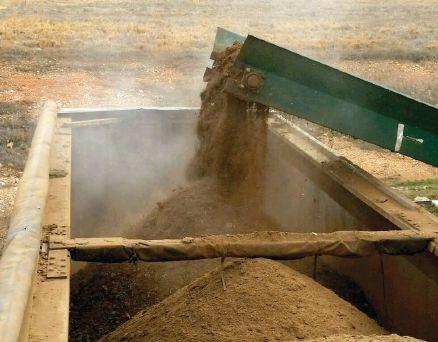
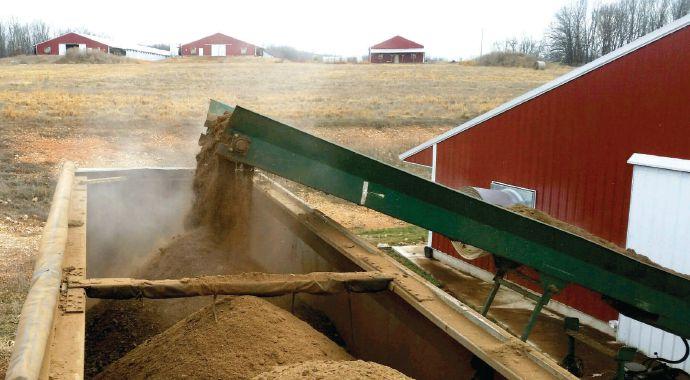
The manure-laden litter generated by the Smotherman turkey farm in West Texas is land applied on hay crops as organic fertilizer or composted for use as a soil amendment.
feet of barn space. Each barn has 12,000-square feet of brooding that opens up into 30,000-square feet for finishing.
A FOCUS ON INFORMATION MANAGEMENT
Ken says that keeping track of their manure-laden litter comes rather naturally to him because of his background in information management.
The litter management approach on their turkey farms is to de-cake between each flock, which is a process of removing the top layer of manure-laden litter, removing approximately 450-cubic yards of material per flock. Each barn is completely cleaned out at the end of the tenth flock. This yields 4,500-yards of de-cake material and about 5,000-cubic yards of clean-out material. The litter is a mixture of wood chips and poultry manure and after each de-cake removal or complete removal, there is a fresh layer of wood chips applied in the barn.
Smotherman Farms has a barter or trade agreement with a local rancher to handle and spread the de-cake litter, where the turkey operation provides him with organic nutrients in exchange for baling the hay for their cattle. Ken says that having this relationship is a hugely important part of their business, although he believes that it wouldn’t be too hard to find other markets for the poultry litter. There is big demand for it as an alternative to commercial fertilizer.
The local rancher is David Ballew, who operates over 400 hectares (1000 acres) of grazing land, hay production and small grain production. He applies the de-cake litter primarily to his irrigated pastures where he produces three to four cutting each year of improved coastal Bermuda grasses.
“David and I closely monitor the application of the litter through soil sampling and testing,” Ken says. There is a concern in the area about phosphorus build up in the soils. However, the Ballew lands seem to absorb wherever nutrients are in the Smotherman de-cake material well. Testing shows that the soil type on the Ballew property, which Ken describes as ‘sugar sands’, does a good job of absorbing the de-cake material and contributing to hay production without overloading the soil with phosphorus. But, they keep close tabs on application rates and location.
Ballew has purchased and maintains
ABOVE
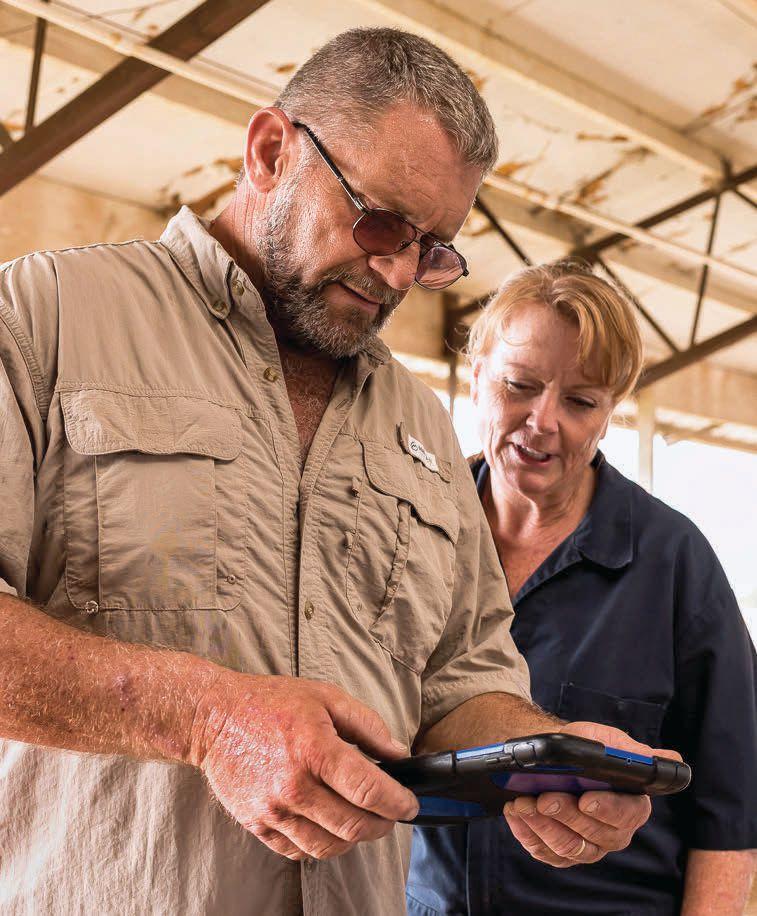
As a former information management consultant, Ken uses his skills to track all manure-laden litter that is gathered and transported for land application on a computer app he developed.
the equipment necessary for hauling and spreading the de-cake material and Ken says that despite high demand for the barn litter, Ballew was the only one willing to make that investment. Others wanted him to purchase the equipment as well as do the hauling and spreading, which is a time commitment he couldn’t afford.
“The material is removed from the farm site at virtually the same time it is being removed from the poultry houses,” Ken says.
Every two years, each barn is completely cleaned out. The manureladen litter is removed and sold to a company called Dr. Gobbler Inc., with between 80 and 120 truckloads removed from each barn. Dr. Gobbler, with a location in Waco, is a third-party vendor of Cargill, and is permitted by the Texas Commission on Environmental Quality
to store and process biowaste from the turkey production industry. Ken says that the material is typically composted and sold commercially as an organic fertilizer or soil amendment.
The Smothermans have gained an appreciation for the role that farmers play in feeding, clothing, and even fueling humanity, and the need to maintain a healthy environment to support these activities. Whether it is row crop, meat protein or biofuel, they say that the farmer must be the best steward and guardian of the Earth’s natural resources. It’s the farmer that truly understands that resources can be used in a responsible manner that does not deplete, but sustains.
“We, mankind, can’t run to Jupiter to grab a bag of potting soil. So we’d better care for the resources we have,” Ken adds.
Transforming litter to clean energy
Güres Group, based in Turkey, uses a Turboden ORC turbine to transform 500-tons of poultry litter a day into clean energy.
BY DIANE METTLER
The Güres Group, a poultry farm in Manisa, Turkey, has been experiencing a growth spurt for over five decades. Ahmet Remzi Güres, one of the founder deputies of the Republic of Turkey, started out with only 600 hens in 1963. Today, the farm produces one billion eggs a year. That’s right. One billion. According to the company, that comes to three million eggs per day. Today the operation covers 700,000 square meters (7.5 million-square feet) with a closed area of 250,000-square meters (2.7 million-square feet) housing four million laying hens in 35 henhouses and employs 700 people. Even after the tremendous transformation, it’s still a family business, run by Ahmet’s sons.
ABOVE
The growth and transformation of the business took place in stages. The company added feed facilities in 1985, feeding their own poultry and selling their feed to other farms. In 1989, Güres built organic fertiliazer plants to manage, and profit from, the waste collecting from the growing number of hens.
Following the organic fertilizer plants, Güres built a breeding and hatchery plant in 1997, supplying themselves and others with hens and chicks. Next, in 2000, it expanded by building a cage production plant and then, two years later, built an egg tray factory. As recently as 2012, the Güres Group built both a pasteurized liquid egg plant, and a quail egg production plant.
The Güres Group has developed a new-generation manure dryer to run with a low-temperature heat source, such as 70-degree water.
MANAGING 500 TONS OF LITTER A DAY
Along with growth comes challenges, specifically how to handle the litter. Currently the farm produces 500 tons of poultry litter per day. The chicken litter was historically collected on polyurethane conveyor belts underneath the chickens, conveying the waste to anaerobic fermentation reactors where the manure was to be converted to organic fertilizer. After a few days the moisture content would drop 35 percent and the litter was then transported by truck to a fertilizer manufacturing facility where a coal-fired boiler fueled a rotary drier to reduce the moisture to 20 to 25 percent for pelleting.
Once the pellets were sanitized at 80 degrees Celsius for an hour, and cooled, they were ready for packaging. The system, although effective, took a great deal of time, energy and manpower to produce the organic fertilizer.
The Güres Group thoroughly researched other, more cost-effective methods of manure management. After five years of research and development (R&D) they had their answer — a new system that included a Turboden Organic
Güres Technology has developed manure dryers capable of drying 54 tons of manure in 24 hours.
Rankine Cycle (ORC) generator.
Turboden is an Italian firm and a European leader in the design and production of ORC systems. Since 2013, it’s been a part of Mitsubishi Heavy Industries. The company came with a great deal of experience, having built more than 355 plants in 38 countries.
Turboden’s technology works by producing hot gases, and the heat contained in the gases is transferred to the ORC system by using a closed thermal oil loop. The ORC system is used in place of water and transforms the input heat into electrical power.
EFFICIENT SOLIDS LIQUID SEPARATION
ORGANIC FEED SYSTEMS BIOSELECT
+ Solid Liquid Separation
+ With Structure
+ Without Chemicals POWERFEED
+ Feeding and Transfer of Organic Waste
+ Closed Loop System
+ Process Control
+ Energy Efficient
THE NEW PROCESS
The Güres Group says today the litter is collected from the hen houses every two days, through specially designed manure conveyors produced by Güres Technology, an offshoot of the Güres Group and founded in 2000. These conveyors take manure to 10 new fertilizer drying systems, also manufactured by Güres Technology. The technology dries 54 tons of manure in 24 hours. After the manure is dried, manure conveyors take the manure to the energy facility for burning.
The Güres Group has a lot of experience in drying litter and they have learned that “especially layer manure” requires pre-drying for optimum combustion efficiency. For that reason, the company developed a new-generation manure dryer to run with a low-temperature heat source, such as 70-degree water.
The dryer can dry any manure from 75 percent moisture content to 25 percent in 24 hours, exclusively with a low-temperature heat source, which comes from the wastewater heat from the ORC.
The Güres Group, a poultry farm in
produces one billion eggs a year.
This system means the company does not have to store wet litter and Güres tries to avoid stocking wet manure for a variety of reasons — odor, biosecurity risks, and if transported on a truck, it can lose its particle structure. Once the structure is compromised it takes more time and energy to dry.
ENERGY FACILITY
The energy facility that houses the ORC is 1,800-square meters (19,375-square feet). The company says that the design is actually three separate systems that feed into each other — a manure drying system, a manure combustion system and the electricity producing ORC system. The ORC and combustion systems work together and are connected by thermal oil pipes. And, the ORC’s hot wastewater is connected by pipes to the manure dryers.
The dried manure is then transferred to the manure combustion system used to generate the heat to run the Turboden
ORC turbine. The byproduct of the combustion system is ash, which is then used in the manufacturing of an organomineral fertilizer to aid in soil development.
In short, the ORC has two main tasks, says the company — to transform the heat generated by the combustion into electrical power, and collect the excess heat after the ORC turbine in a watercooled condenser to generate 70-degree water that will feed the dryer system.
Manisa Turkey,
THE CHALLENGES
Making a change of this scale is complex and full of challenges. The company says that the combustion system was, however, the most challenging aspect of this whole three-in-one cogeneration design. The reason was that when chicken litter burns, it burns extremely hot and corrosively. Güres needed to design a system that would include a secondary airflow to minimize the effects of the corrosion caused by the high temperatures.
The high ash byproduct — 20 percent ash and 80 percent heat — was another issue. The ash covered the heat exchange surface and blocked the heat transfer. To solve both these issues, the Güres’ R&D team, using ANSYS CFD software, analyzed the fuel feed heights, cross-sectional areas, primary and secondary air low rates and reactor height.
UP AND RUNNING
Construction was completed in
September. In October, the team tested the system — transferred the first litter into the system, burning it and producing electricity. If the test run goes as planned, the company expected to be running at normal to full capacity by the end of October. The facility will run approximately 20 hours a day, with 12 people monitoring it over three shifts. If running well, the system will generate 12 megawatts per hour (MWh) of energy to heat the oil within the ORC generator’s closed system to 300 degrees Celsius, enough to create the steam, which will turn the turbine, generating 2.3 MWh of electricity. The electricity produced will then be sold to the grid, by Güres, at a special feed-in tariff specific for bioenergy. The company gets a special rate because the energy was created by biomass and because the technology was manufactured in Turkey. Although the company is not releasing the cost of the project, once it is fully functional, the Güres Group expects to see a return on their investment in five-
The facility will run approximately 20 hours a day, with 12 people monitoring it over three shifts.
The system isn’t just for chicken litter. Gürus Group says it’s an ideal system for large farms, but also, because of its compact design, it’s feasible for medium-sized and possibly even smaller farms. In fact, if successful, the company sees systems similar to this being used throughout many countries.
The future looks bright not only for the farm and its new ORC system. The company has been a leader in turnkey cage projects, and now, with the launch of this project, the company will be selling its new, innovative manure drying system. The first was sold to South Korea and has just been installed.
Not all poultry litter is the same
Poultry litter contractor takes pride in giving farm customers the straight poop on nutrients.
BY TONY KRYZANOWSKI
Custom nutrient management contractor, Pierce Litter, understands that not all poultry litter is the same. The moisture content and nutrient content can vary widely depending on whether the poultry producer is raising boilers, hens, pullets, hens for table eggs, or turkeys.
The company, owned by Mark and Dianne Pierce and headquartered in La Russell, Miss. about 50 miles west of Springfield, offers poultry house clean out, litter removal, hauling, and land application.
“We’re sort of a turnkey operation here,” Mark says. “To my knowledge, we’re the only ones in this tri-state area that do the entire thing.”
Dealing honestly with nutrient content has built a lot of trust between Pierce Litter and their customers. They understand what crop is likely to benefit the most depending where the poultry litter was gathered, and how to market their pure or blended poultry litter as an organic fertilizer alternative to commercial fertilizer accordingly.
“There are so many different kinds of litter
ABOVE
and that is where experience comes in,” Mark says. “People have no clue . . . there’s a lot of different applications for the litter for different farmers.”
Their knowledge, combined with the ability to seamlessly connect the dots between manure producers and manure consumers, with an equipment fleet that gives them the ability to clean poultry barns on the one end and land apply the manure on the other end, has resulted in an unqualified business success.
The company has a prime location in southwest Missouri, situated in the middle of one of the most active poultry and crop production areas of the United States. It is at a geographical crossroads, with most of Missouri behind them and Kansas, Oklahoma, and Arkansas, just a short distance from home. Location has proven to be an important business advantage. They conduct business within about a 150-mile radius from home.
Mark says that about half of their litter
Pierce Litter co-owner, Mark Pierce (right), and operations manager, Colby Writer, ensure that enough pure and blended poultry litter is stockpiled in their staging yard to meet the needs of their highly diverse farm customer base.
ABOVE
Aulick
ABOVE
purchases come from Missouri, with about 45 percent from Arkansas and five percent from Oklahoma. In terms of sales, 60 percent heads to Kansas and 40 percent stays in Missouri.
Prior to entering the custom nutrient management business, Mark and Dianne owned and managed three 600-foot hen houses. It required a lot of long hours to operate the business successfully and the barns also generated a lot of manure-laden litter. So, they bought a few pieces of equipment to help them manage that part of the operation on their own, spreading it on their own land. Neighbors started showing a lot of interest in how they managed their manure.
They started out like many other nutrient management companies, piecing out some of the work, but then decided to finance and take on the entire clean out and land application functions themselves as a turnkey operation. That also involved building many customer relationships among litter producers and litter consumers, which is the backbone of their business today.
In addition to operating a professional nutrient management business, Mark and Dianne also own a herd of 200 beef cattle. That’s because right close to home, there aren’t a lot of poultry barns, with their local county having the largest number of cow-calf producers in the state. But there is a massive amount of poultry litter produced by some of the largest company farms and poultry producers in the U.S. just south of home in both Missouri and Arkansas.
“They have absolutely saturated northwest Arkansas and southwest Missouri with poultry,” Mark says. “They are just everywhere.”
Lately, however, companies are working toward less concentration as a biosecurity measure, meaning more poultry barns spread out over a larger geographic area.
Complementing that large poultry industry footprint are plenty of organic fertilizer buyers among the large farming community in both Missouri and immediately west among Kansas corn producers. Over the past five years, Pierce Litter’s nutrient application business has more than doubled in Kansas alone.
“That area out there is just starved
The combination of barn cleaning and delivery to customers required Pierce Litter to transport 70,000 tons of poultry manure last year, with a high percentage of broiler barn litter shipped to corn producers in Kansas.
ABOVE
Pierce Litter is a turnkey poultry barn clean out and litter land application business, located in one of the most active poultry and crop production areas of the United States.
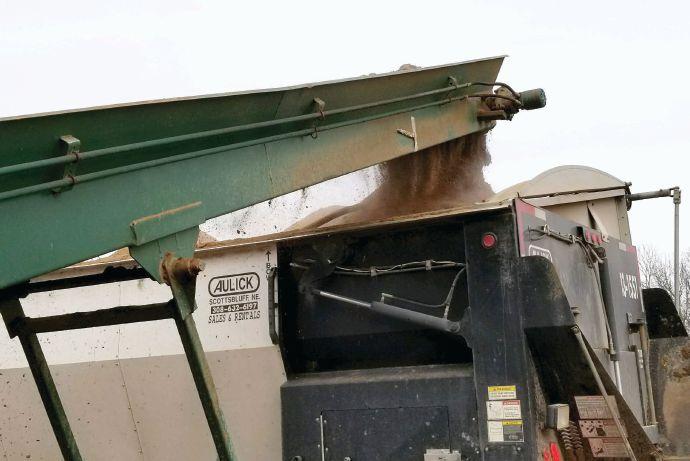
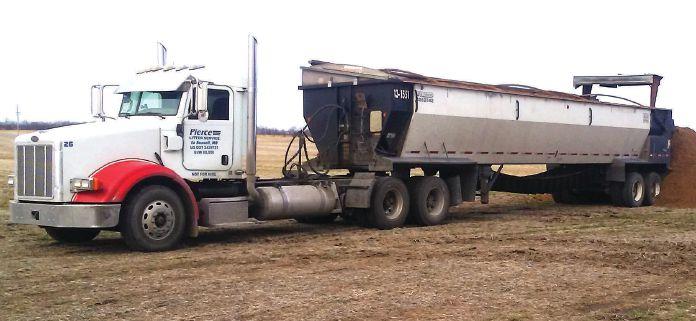
brand, moving floor trailers are an important part of the Pierce Litter fleet.
for litter and they have a little bit better crop ground,” Mark says.
Part of the reason they are starved is that there are only a few companies, like Pierce Litter, willing to acquire the transportation permits to supply that area, which has really paid off for the company. Those orders for poultry litter tend to be much larger than closer to home, with some customers taking as much as 7,000 tons annually, making the effort worthwhile, although Pierce Litter still makes an effort to supply local 100-ton orders.
Pierce Litter Service experienced a fairly rapid rise in growth to meet demand.
“When the litter business really went crazy was when corn prices went through the roof, when they were getting $8 a bushel,” Mark says. “The row croppers here and in Kansas took every bit of litter that they could get. I had 14 trucks running at one time then.”
Lately, however, commercial fertilizer and fuel prices have come down and this has dampened litter prices. When corn was at its peak, the company moved 40,000 tons annually with four million in sales. The business climate changed drastically two years ago when the company moved 70,000 tons with only two million in sales. That required a business adjustment. Recently, Mark and Dianne also reckoned that taking care of their nutrient management business was taking up enough of their time, so after 11 years in the poultry business, they sold their hen houses and some land to focus squarely on nutrient management.
Poultry litter from broiler barns in that part of the U.S. typically have rice hulls or kiln-dried pine shavings mixed in with the manure, which gives it a drier consistency and high NPK content, whereas the manure from egg laying operations tends to be wetter and stickier and have a lower NPK content. Unlike broiler barns, the manure is typically scraped from below the caged egg laying birds and collected in large storage piles. The moisture content alone, depending on the source of the poultry manure, can vary anywhere from 18 to 70 percent and there is also a significant odor difference depending where the litter comes from. There is not only a large variance in litter quality depending on the poultry operation, but from a business perspective, NPK and
moisture content also determines the value of that raw commodity.
In some cases, because the poultry producer understands the strong demand for their broiler barn litter, Pierce Litter pays for that litter. In other cases, the manure producer is just happy for the company to cart it all away for free because the nutrient content within that litter is poor, leaving it up to Pierce Litter to find a market for it as organic fertilizer. It is the nutrient management company’s job to
play matchmaker, finding a connection between the manure producer on one end and the right manure consumer on the other end, depending on what crop is being grown.
Sometimes, depending on the litter quality, it is not gathered and stockpiled or transported directly to the end user as a pure product. It is transported to the large staging area within the Pierce Litter yard where it can undergo a blending process, which based on their experience, will create the nutrient mix
required by their farm customers. For example, they have a customer who purchases 5,000 tons annually that requires a higher phosphorus content. They are able to provide him with that product based on where their litter is sourced and their knowledge of its nutrient content.
They also have a poultry manure product called Decake that is very high in nitrogen, but low on potassium and phosphorus. This product is marketed primarily to pasture owners.
Mark says their experience learning to blend the litter came about sort of as a consequence of so much broiler litter being exported to Kansas. It was all being transported out of state, so this left local farmers out in the cold. The idea of blending alternative sources of poultry litter into a reasonable NPK product came about, and has developed into a reasonably priced product for local farmers.
“I bought a farm and built a big barn on 10 acres and it became sort of a staging area,” Mark says. “We started blending turkey litter, broiler litter, hen litter and pullet litter, and we were able to create our own recipe, and get our NPK not as good as broiler litter, but an alternative for these other farmers who
ABOVE
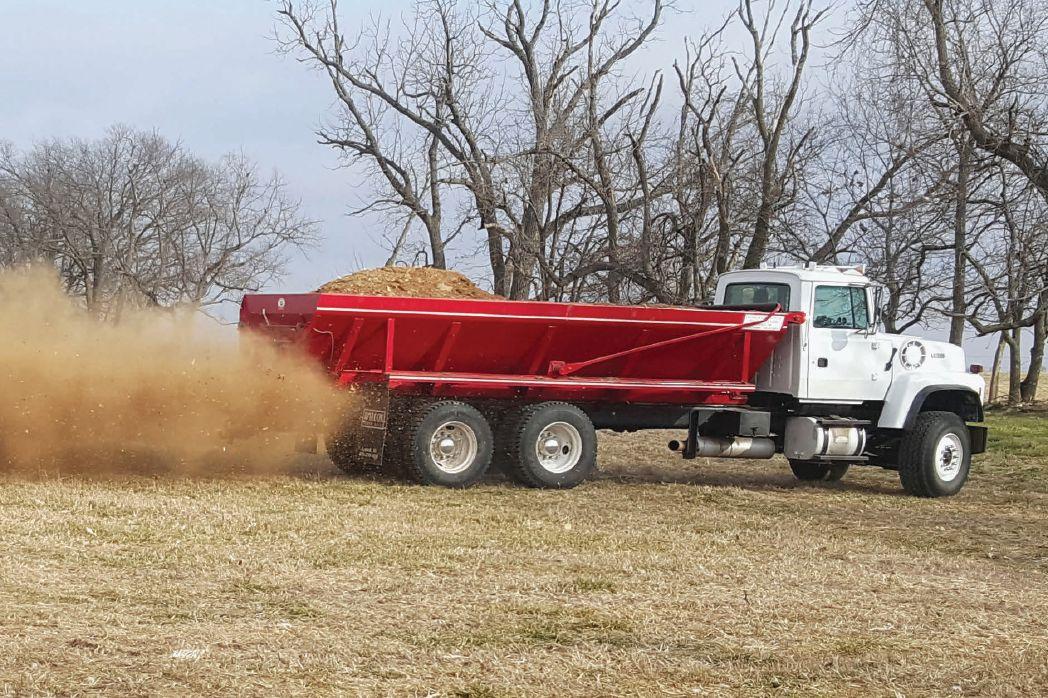
Pierce Litter uses Chandler broadcast style manure spreaders in their poultry litter operation, mounted on older model cement truck chassises to minimize wear and tear.
could not afford the broiler litter.”
Last year, they marketed more than 40,000 tons of this product.
“It’s 40 percent of our business now,” Mark says, and although it doesn’t have the high NPK content of the broiler litter, the company also sells it at a cheaper rate. They also stockpile litter product to meet demand once the phone starts to ring off the hook in June each year.
Today, the company’s fleet consists
“People have no clue... there’s a lot different applications for the litter for different farmers.”
of four semi-trucks with Aulick-brand walking floor trailers, a telehandler to load the trucks, three spreader trucks, and three skid steer loaders.
They use Chandler electric over hydraulic, chain-driven, broadcast manure spreaders. Chandler is headquartered in Gainsville, Georgia, and the local dealer is Wilcox Truck Sales located in Lowell, Arkansas.
Mark says that he has used a variety of manure spreader brands but appreciates the Chandler brand because of the excellent parts and service support provided locally. To carry the manure spreaders, Pierce Litter mounts them on older model cement trucks and chassises, “because the suspensions are so stiff. They hold up so much better.”
Their manure spreader trucks are equipped with GPS tracking systems. The tons per acre application rate is generally directed by the landowner based on his soil sampling and controlled by the chain speed, gate opening at the back of the manure spreader, and the truck speed.
MANURE SLIPPING through (soil) cracks
A new study reports water infiltrates deeper into cracking clay or vertisolic soils when liquid hog manure is applied.
BY AMERICAN SOCIETY OF AGRONOMY
The flow of water through soil is a “highly dynamic process,” says Genevieve Ali, associate professor and researcher at the University of Manitoba. “It can vary from year-to-year, season-to-season, or even rainstormto-rainstorm.”
It can also fluctuate depending on soil type and even if organic additions, like manure, are applied.
Ali is lead author of a new study that shows water infiltrates deeper into cracking clay (vertisolic soils) when liquid hog manure is applied.
The study also showed that even though water infiltration went deeper in the presence of manure, it did not reach depths of 39 inches (100 cm). That’s how deep tile drains – designed to remove excess subsurface water – are typically installed in the study region.
“This observation challenges previous studies, which showed that cracks in clay soils can promote the travel of water and associated contaminants from the soil surface into tile drains,” Ali says. “Our study suggests that not all clay-rich soils behave the same.”
The researchers focused on vertisols because they are present in large regions of North America. “They are common in agricultural plains, where excess nutrients may be common due to intensive farming,” Ali says. But knowledge gaps remain about soil water flow in vertisols, especially with organic additions. Water can flow through soil in different ways. ‘Matrix flow’ occurs when water moves slowly through tiny spaces between soil grains. ‘Preferential flow’ takes place when water travels relatively quickly through bigger channels, called macropores, such as cracks and earthworm burrows.
one another.
“They act like a network of pipes, and they can be created or exacerbated by human activities. Knowing when and where there is preferential flow and how to manage land in those areas is critical to preserving groundwater quality.”
Clay-rich soils – such as vertisols – tend to crack, which creates macropores. “That makes these soils natural candidates to study the relative importance of matrix and preferential flow.”
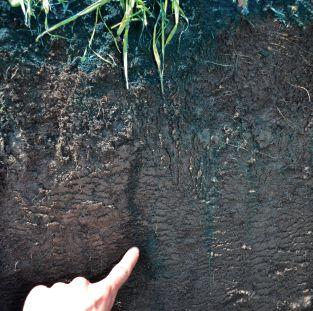
This study was conducted in research plots in Manitoba, Canada. Researchers added liquid hog manure to one plot but not the other. They sprinkled water mixed with blue dye on both plots to determine how water moved through the soil. In the plot where manure was applied, water reached up to 25 inches (64 cm) into the soil. In contrast, water reached up to 18 inches (45 cm) in the plot where manure was not applied. Both plots showed evidence of matrix and preferential water flow.
“Imagine a bucket of sand with plastic straws inserted throughout,” Ali says. “If you dumped water on this sand bucket, the water traveling through the straws would reach the bottom first.”
Similarly, preferential water flow through soil macropores can carry contaminants quickly from the surface down to groundwater reservoirs. Macropores are often connected to
The researchers also found that the water moving through the macropores was not completely separated from the rest of the soil.
“If you think back to the analogy of the sand bucket with the straws in it, the straws have a bunch of small little holes in them,” says Ali. “Water can be exchanged laterally between the macropores and the surrounding soil.”
Lateral exchange has been reported frequently for smaller macropores in forested soils, says Ali. “But it is less common in agricultural soils where cracks tend to be larger.”
This study focused on a single site, so Ali says that further research is needed before generalizations can be made. She is also studying the role of soil cracks in spring (created by the soil freezing and thawing multiple times) versus the role of cracks in summer (created when soils become especially dry).
ABOVE
This picture was taken while excavating a soil profile, three days after blue-dye water had been sprinkled onto that soil profile.
PHOTO CREDIT: GENEVIEVE ALI
Checking out chickens
A recent study was conducted to examine the manure nutrient production in Pennsylvania poultry farms directly affecting the Chesapeake Bay Watershed.
BY DIANE METTLER
Pennsylvania Department of Environmental Protection recently funded a research study to examine the manure and litter nutrient production in Pennsylvania poultry farms that may be directly affecting the Chesapeake Bay Watershed.
Pennsylvania State University graduate assistant Erica Rogers conducted the study in 2016/2017.
The first part of the study was a census in Pennsylvania performed by PennAg Industries, and the second portion focused on the collection of manure. And, what Rogers discovered is good news for poultry farmers.
On December 29, 2010, the Environmental Protection Agency (EPA) imposed the Chesapeake Bay’s Total Maximum Daily Load (TMDL).
“We kind of refer to the TMDL as a nutrient diet for the Chesapeake Bay,” Rogers explains.
“There are annual allotments of nitrogen, phosphorous, and sediment that are allowed into the Bay each year in order to decrease those excess nutrients that are present. That is what spurred my work. We weren’t sure exactly what the data
ABOVE
was that was being used to make the regulations, specifically for poultry, within the Chesapeake Bay TMDL.”
The excess nitrogen, phosphorous and sediments found in the Bay’s water system come from the fertilizers contained in surface water runoff. In order to control these excess nutrients, it’s imperative to have accurate data to draw from. The concern sparking this research project was that the data being used in the Chesapeake Bay TMDL’s models has become outdated.
Rogers and her research team found today’s models were using data gathered from studies done from both the 1980s and 2005 by the American Society of Agricultural and Biological Engineers. The information – some of it more than 30 years old – didn’t reflect the many new farming methods introduced, such as organic and raised without antibiotic (RWA) poultry farming.
Rogers felt, without conducting a new study, there was no way of knowing how new farming methods impacted the validity of the models. With
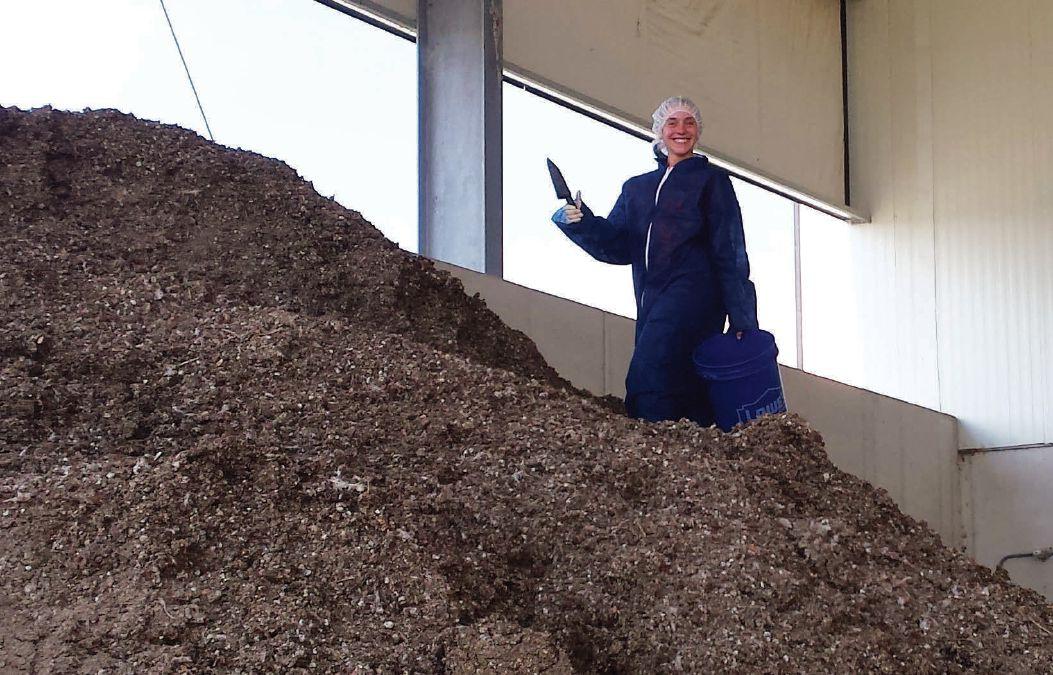
Erica Rogers visited dozens of farms to collect data to find the baseline numbers for the Chesapeake Bay’s Total Maximum Daily Load.
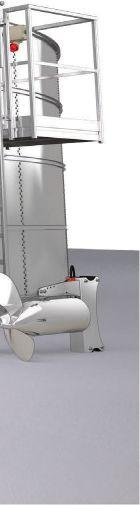
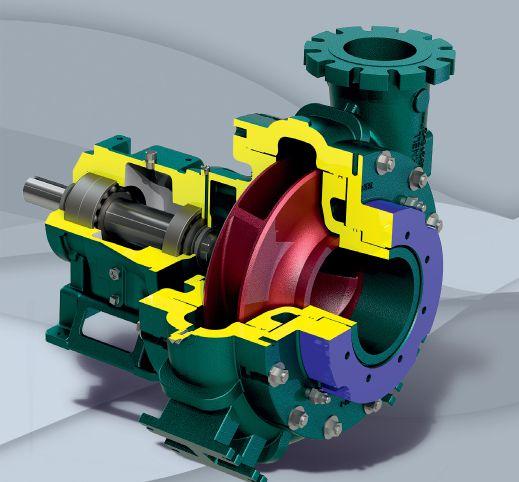
6819MPC PUMP
BEST SELLER WITH MANURE PUMPERS.
HANDLES UP TO 3”
EXCELLENT EFFICIENCY AND CYCLOSEAL®
CYCLOSEAL® SYSTEM
STANDARD FLOWS TO 4,250 GPM / HEADS TO 600’
HEAVY-DUTY CONSTRUCTION
THICK CROSS-SECTIONS FOR ABRASIVE WEAR AND HIGH OPERATING PRESSURES
ENCLOSED WHITE IRON IMPELLER
REPLACEABLE WHITE IRON WEAR PLATE
HIGH-CHROME WHITE IRON OR HYBRID DUCTILE IRON PUMP-END
all the improvements within the farming industry, the criterions set by the American Society of Agricultural and Biological Engineers could be skewed.
Rogers wanted to provide poultry baseline numbers for not only the Chesapeake Bay’s TMDL, but also for the Penn State Agronomy Guide, as farmers that do not have their manure tested often turn to the Penn State Agronomy Guide to manage
REGULATE NUTRIENT APPLICATION
ABOVE
manure application rates. If the numbers aren’t accurate their manure application rates are also inaccurate.
“I went to probably 60 or 70 different poultry farms over the course of about a year-and-a-half to collect manure samples to have them analyzed to see what their nutrient values were.”
The research team looked at the different species within poultry (layers, layer and broiler breeders, broilers, pullets used for egg layers, and turkeys) and sampled litter from the four most common management styles within each species and then sampled three different flocks within each of those four styles.
•
•
•
Within the egg layers management system, Rogers drew samples from both the high-rise pit and belted cage systems.
“First we started with getting some historical layer data from 2012-2015 from high-rise pit houses and then belted houses. We wanted to see if there was a difference between the two. Because the way the manure is stored is different, and that can affect your nutrient values.”
The cages in a high-rise pit house are set up in an A-frame system, says Rogers.
“When the hens excrete the manure, it dropped directly below (not onto the birds below them) but it dropped into a pit and typically stays there for the lifecycle of the flock.”
The manure was cleaned out in the fall and in the spring when the crops need fertilizing. In the belted system, the cages were stacked on top of one another with conveyer belts underneath each cage where the manure is collected and stored either in the back of the house, or in a separate building.
The nutrients looked at for the historical portion of the study were nitrogen, phosphate and potash. With nitrogen, there wasn’t much difference between the high-rise pit and the belted management styles. However, when comparing manure nutrients per bird, both the phosphate and the potash nutrient values were higher in the high-rise pit system.
Rogers also sampled cage-free floor layers, as well as cagefree aviary layers. For each management styles within the egg
layer management system, she found the manure was stored differently and affected the nutrient values of the litter.
From the broilers, Rogers gathered samples from the single cycle conventional, single-cycle organic birds and single-cycle antibiotic-free birds.
The fourth broiler management style sampled was the built-up litter style, where litter was not removed between flocks, except where the drinkers and feeders were located, but layered and replaced biannually, similarly to the highrise pit management style.
The pullets used the same management styles as the egg layers. However, with the turkey, Rogers sampled a fifth management style – the two-stage style, where the poults were brooded for about six weeks in one end of the house, and then moved to another end of the house to finish their grow out period.
For the breeders, either broiler or layer breeders, there were two different styles. They were both raised on slats and there is also a scratch area for the birds to go to roam and bathe. With one style, the manure fell through slats either onto a belt to be stored elsewhere. With the other style, the manure fell through the slats. At the end of the flock, the manure cleaned out.
After analyzing the immense amount of information, Rogers and her team drew three conclusions. First, today’s poultry are more efficient as feed and nutrient utilizers.
“We have more tools in our tool kit that help us to help these birds to be more efficient,” Rogers says. “Because, essentially, the meat bird [farmers] were able to grow a bigger bird with less feed and less time, and they utilized a lot of those nutrients better, which means less of that is going into the manure that would normally be wasted.”
The second conclusion – farmers are doing a better job of managing the manure than had been anticipated.
“I think this study is really going to echo to the TMDL – and to those who are in charge of the TMDL – that farmers are doing a better job of managing these nutrients and managing these birds overall. That’s not being accounted for at this point, which is unfortunate. I think it will put farmers in a better spotlight for those, especially consumers, who are not necessarily in-tune with how the industry works as a whole. It will
help them see that farmers are not just willy-nilly throwing a bunch of manure on the field. They’re actually doing a good job of making sure they’re being environmentally safe with it, too.”
The third and final conclusion – the new findings need to be immediately updated into the current TMDL’s models, as far as the nutrient concentrations and the actual manure production is concerned.
According to Rogers, the study also demonstrated the need for continually
updating the data in order to account for the constant shifting of consumer preferences, changing management styles, technological advancements, and the evolving genetics of the birds.
“I think a lot of generalizations are being made within the Chesapeake Bay TMDL that, unfortunately, do not accurately represent what the true story is. This study is a good start, but there’s a lot more to do with it. At this point, we’ve just got to get [the information] out for everyone else to see.”
MAKE YOUR DAIRY EXTRAORDINARY
FEATURES AND BENEFITS:
• Oil bath bearings - self cooled and lubricated, needs no water flush
• Disintegrator tool - for hoof blocks and other solids
• Heavy duty seal and bearing systemlonger life in severe service
• Ductile iron casing and bearing housingheavy castings for long life
• Heat treated cast steel wear parts - for longer life in abrasive grit service
• Most parts readily available from stock for expedited delivery APPLICATIONS INCLUDE:
• Digester Feed
• Digester Mixing
• Small Pit Recirculation
• Tanker Loading
• Flush Water
• Feeding Heat Exchangers • Manure Transfer • Separator Feed Learn More at
ON TRACK
Fantura air inlet system: Ceiling and sliding
DACS MagDoor
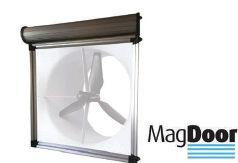
The MagDoor from DACS is a fast-operating roller door. It is built from aluminum and highgrade polymer plastics with its insulated segments seals tightly against high static pressures. On a wall fan, the MagDoor substitutes conventional shutter or damper systems and ensures completely unrestricted airflow and efficiency. Mounted on the MagFan wall fan with a fan cover, the combination offers high-level thermal insulation. DACS is a family owned company that specializes in developing, producing and servicing climate and ventilation control systems for livestock production. dacs.dk/home
Bazooka introduces four new core products
Fancom’s successful air inlet system has been expanded with the addition of a ceiling inlet and a sliding inlet. When a conventional air inlet is set to the minimum ventilation position, a long, narrow opening is created. The cold, incoming air has too little mass, and its flow speed decreases too rapidly so it drops onto the animals. The special jet stream formed by the Fantura air inlet valve bundles the incoming air and creates a better throw. The air is directed to the ridge of the house where it can mix with the warm air inside the house. The distinctive feature of the air inlet system is the special shape of the unit. The inlet bundles the incoming air to ensure a constant, uniform supply of fresh air in the house under all conditions. It effectively eliminates a cold air drop onto your animals so they stay in good health and grow better. In addition, the consistent and even growth conditions improve uniformity.
The ceiling inlet has been specially designed for wider houses with lowered ceilings. It enables pre-treatment of the incoming air.
The Fantura sliding inlet has been specially designed for houses with nesting boxes, cages or other obstacles than can disrupt the flow of air. The direction of the incoming air can be influenced using a number of sliding louvres that can be independently set to different positions. fancom.com
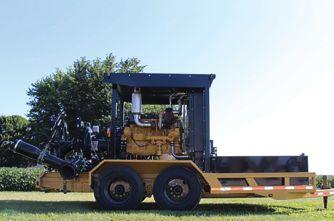
Bazooka Farmstar recently released four new core products, including: The Full Throttle Series 1,000 Gallon Trailer, the Full Throttle High Reach Outlaw, the 80’ Infinity Series Boom Truck, and the NEXUS Control System.
The 1,000 Gallon Full Throttle Series has the fuel capacity to run for 24+ hours straight. This trailer has been created to accommodate the largest engine, pump, and plumbing combinations, including the 700+ HP engines. These large engines drive a Cornell 81022MP pump with 10” intake and eight-inch discharge, making it capable of handling solids up to four inches.
The Full Throttle High Reach Outlaw includes all of the features of the original force-feeding trailer, and more. An extra six feet has been added to the center section of the triple fold boom, allowing it to reach over an 18’ high slurry storage and reach the bottom of the slurry unit. This trailer can achieve 19’ below grade depth, which is ideal for those “hard to reach” confinement pits and lagoons.
The 80’ Infinity Series Boom Truck leads the market in reach, ease of travel,
pumping capacity, and performance. Easily achieve 3,000 – 3,500 GPM with a 15” or 17” Nuhn submersible header pump. Stainless steel and high-density polythene (HDPE) materials used in the external piping of the 80’ boom, eases maintenance and prevents premature wear and corrosion, resulting in a truck you can rely on.
NEXUS is the electronic control system that allows crews to manage their pumps remotely from a cell phone or tablet. Some notable features of this new system include, but are not limited to: Automatic pressure throttling, line break warnings and safeguards, pit depth and fuel level sensors, and control of all account information in one location. bazookafarmstar.com
Case IH Maxxum Multicontroller
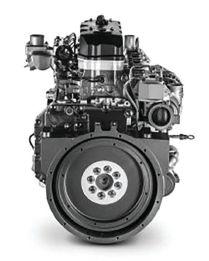
The 2019 Tractor of the Year (TOTY) was recently awarded to the Case IH Maxxum 145 Multicontroller tractor, commanding both “its engine power as well as its efficient fuel consumption,” guaranteed by FPT Industrial’s N45 engine. Established in 1998 by Italian magazine Trattori, the TOTY awards recognize European innovations in the tractor market segment. The Case IH Maxxum Multicontroller is powered by an FPT Industrial N45 engine, from NEF range. Compliant with Tier4B Stage IV emissions regulations, the N45 is a 4.5 litre, fourcylinder unit, featuring Hi-eSCR only after-treatment solution for maximum combustion efficiency. N45 Stage IV Specifications for Maxxum 145 include a common rail 1,600 bar injection system, 700Nm maximum torque and a max power of 129/175 (kW/hp). For more, visit: fptindustrial.com
Full Throttle Series 1,000 Gallon Trailer
Patented Chopper Pumps
Dual chopping system to prevent clogging
Open design high speed impeller with adjustable pressure plate for unsurpassed performance with mechanical seals
Manure Separators
NEW Stainless casted augers with super hard coating for 40% dry bedding
NEW DODA self-adjusting weights
Heavy duty planetary gearbox with 15HP
USA electric motor
Electric/PTO models, 4ft to 20ft Sales - Service - Install
www.dodausa.com
MANURE MANAGER
2019 BUYERS GUIDE
5ELEM USA INC.
10060 W. Sam Houston Parkway S., Suite 100, Houston, TX 77099 USA
1949 5th St., Suite 101 Davis, CA 95616 USA Tel: 530-564-4260 www.biofiltro.com/en
BIOSPREADER BY DUTCH INDUSTRIES
Box 568, 500 Portico Dr. Pilot Butte, SK S0G 3Z0 Canada Tel: 306-781-4820 Fax: 306-781-4877 Toll Free: 1-800-663-8824 sales@dutchopeners.com www.biospreader.com
BOERGER, LLC
2860 Water Tower Place Chanhassen, MN 55317 USA Tel: 612-435-7300 Fax: 612-435-7301 america@boerger.com www.boerger.com
BRAUN ELECTRIC, INC.
PO Box 177, 209 N. 4th Ave. St. Nazianz, WI 54232 USA Tel: 920-773-2143 Fax: 920-773-2724 Toll Free: 1-800-876-2234 info@braunelectricinc.com www.braunelectricinc.com
BROWN BEAR CORPORATION
PO Box 29, 2248 Ave. of Industries Corning, IA 50841 USA Tel: 641-322-4220 Fax: 641-322-3527
19252 300th Rd. Cantril, IA 52542 USA Tel: 641-799-8667 zimmfg@gmail.com
EQUIPMENT, SUPPLIES & SERVICES
ADDITIVES
FEED ADDITIVES
Green Earth Naturally/EarthCleanz
Penergetic Canada
ProfitPro, LLC
MANURE ADDITIVES
Agriment Services Inc.
Automated Waste Systems LLC
Green Earth Naturally/EarthCleanz
Homestead Nutrition
Mighty Grow Organics
Penergetic Canada
PPI Equipment
Pro-Act Biotech
ProfitPro, LLC
USA Gypsum
VTI LLC Vertical Till Injector
AGITATION EQUIPMENT
Automated Waste Systems LLC
Balzer, Inc.
Bambauer Equipment LLC
Bauer North America
DODA USA Inc.
FAN Separator
GEA North America
Hydro Ag Supply
Jamesway Farm Equipment
JT Boats, LLC Manure Agitators
MGD Process Technology Inc.
PPI Equipment
Slurrystore
Spanjer Machines
SUMA America Inc.
Triple K Irrigation Inc.
Vaughan Co., Inc.
VTI LLC Vertical Till Injector
ANAEROBIC DIGESTERS
ATD Waste Systems Inc.
Bauer North America
Boerger, LLC
DODA USA Inc.
FAN Separator
MGD Process Technology Inc.
Vaughan Co., Inc.
ASSOCIATIONS
U.S. Poultry & Egg Association
BUILDING/BARN CONSTRUCTION
ClearSpan Fabric Structures
GEA North America
Hawkeye Steel Products Inc.
CLEANING & SANITIZING EQUIPMENT
Hydro Ag Supply
Industrial Wire Cloth - Wire Cloth
Manufacturers Inc.
Jeni Mobile Wash Ltd.
Karcher Professional Wash Systems, div of D&S Downham Equipment
Udder Tech, Inc.
COMMERCIAL MANURE APPLICATION
Allegheny Ag LLC
ATD Waste Systems Inc.
Bambauer Equipment LLC
Bauer North America
BioSpreader By Dutch Industries
DODA USA Inc.
Greenfield Spreading & Sales Inc.
Hydro Ag Supply
Metal 360 Inc.
Mohrlang Fabrication
PPI Equipment
Redhand Ltd.
Sunova WorX Inc.
Triple K Irrigation Inc.
VTI LLC Vertical Till Injector
COMPOSTING
Bauer North America
Brown Bear Corporation
ClearSpan Fabric Structures
FAN Separator
HCL Machine Works
Komptech Americas LLC
Kooima Company
Mighty Grow Organics
Penergetic Canada
Press Technology & Mfg., Inc.
ProfitPro, LLC
CONSULTANTS
DESIGN CONSULTANTS
Agprofessionals, LLC
GHD
Triple K Irrigation Inc.
ENGINEERING CONSULTANTS
Agprofessionals, LLC
Agriment Services Inc.
Degelman Industries
GHD
MANAGEMENT CONSULTANTS
Agprofessionals, LLC
ATD Waste Systems Inc.
ProfitPro, LLC
VTI LLC Vertical Till Injector
CONTROL SYSTEMS
Balzer, Inc.
Braun Electric, Inc.
Hydro Ag Supply
Sunova WorX Inc.
CUSTOM MANUFACTURING/ FABRICATING
ClearSpan Fabric Structures
Mohrlang Fabrication
Phil’s Pumping and Fabrication
Spanjer Machines
Triple K Irrigation Inc.
U.S. Coupling
Zimmerman Manufacturing LLC
DRAINAGE MANAGEMENT SYSTEMS
Agprofessionals, LLC
DRYING SYSTEMS
Fliegl U.S., Inc.
DUMP BOXES
Mohrlang Fabrication
EDUCATION
ProfitPro, LLC
ENVIRONMENTAL CREDITS
GHD
GOVERNMENT REGULATIONS
Agprofessionals, LLC
INJECTION EQUIPMENT
Allegheny Ag LLC
Automated Waste Systems LLC
Balzer, Inc.
Bambauer Equipment LLC
Bazooka Farmstar
GEA North America
Husky Farm Equipment Ltd.
Hydro Ag Supply
Hydro Engineering
Jamesway Farm Equipment
Midwest Manure Equipment
Nuhn Industries Ltd.
Phil’s Pumping and Fabrication
PPI Equipment
Redhand Ltd.
Triple K Irrigation Inc.
Veenhuis Machines
VTI LLC Vertical Till Injector
WER Group
Zimmerman Manufacturing LLC
IRRIGATION EQUIPMENT
HOSE REELS & CADDIES
Automated Waste Systems LLC
Balzer, Inc.
Bambauer Equipment LLC
Bauer North America
Bazooka Farmstar
Cadman Power Equipment Ltd.
Husky Farm Equipment Ltd.
Hydro Ag Supply
Hydro Engineering
PPI Equipment
Triple K Irrigation Inc.
WER Group
HOSES
5ELEM USA Inc.
All-American Hose LLC
Automated Waste Systems LLC
Balzer, Inc.
Bauer North America
Bazooka Farmstar
Cadman Power Equipment Ltd.
Hydro Ag Supply
Hydro Engineering
Midwest Manure Equipment
New Tec Environmental, A Division of Dairyland Agro Supply Ltd.
PPI Equipment
Triple K Irrigation Inc.
WER Group
PIVOT IRRIGATION
Automated Waste Systems LLC
Bauer North America
Cadman Power Equipment Ltd.
Hydro Ag Supply
Hydro Engineering
LAGOONS
LAGOON COVERS
Agprofessionals, LLC
Agriment Services Inc.
LAGOON LINERS
Agprofessionals, LLC
Agriment Services Inc.
LOADERS
& ACCESSORIES
Allegheny Ag LLC
Degelman Industries
JCB Inc.
Sunova WorX Inc.
LUBRICANTS
& FUEL
ADDITIVES
Hydro Ag Supply
MANAGEMENT
MUNICIPAL WASTE MANAGEMENT
Agriment Services Inc.
Artex Manufacturing
Bambauer Equipment LLC
Bazooka Farmstar
Cadman Power Equipment Ltd.
ClearSpan Fabric Structures
DODA USA Inc.
GHD
Hydro Engineering
ProfitPro, LLC
VTI LLC Vertical Till Injector
NUTRIENT MANAGEMENT
Agprofessionals, LLC
Agriment Services Inc.
ATD Waste Systems Inc.
Bambauer Equipment LLC
Bazooka Farmstar
Cadman Power Equipment Ltd.
GEA North America
GHD
Homestead Nutrition
Mighty Grow Organics
Pro-Act Biotech
ProfitPro, LLC
Slurrystore
Topcon Positioning Systems, Inc.
VTI LLC Vertical Till Injector
Ward Laboratories, Inc.
MANURE CONVEYOR SYSTEMS
BioSpreader By Dutch Industries
Jamesway Farm Equipment
Press Technology & Mfg., Inc.
MANURE TANKERS
Allegheny Ag LLC
Balzer, Inc.
Bambauer Equipment LLC
Bauer North America
Fliegl U.S., Inc.
Husky Farm Equipment Ltd.
Hydro Ag Supply
Jamesway Farm Equipment
Nuhn Industries Ltd.
PPI Equipment
Sunova WorX Inc.
Veenhuis Machines
VTI LLC Vertical Till Injector
MEASUREMENT SYSTEMS
Agprofessionals, LLC
Topcon Positioning Systems, Inc.
Veenhuis Machines
WER Group
POLYMERS
Agriment Services Inc.
Boerger, LLC
PPI Equipment
PUMPS
Allegheny Ag LLC
Automated Waste Systems LLC
Balzer, Inc.
Bambauer Equipment LLC
Bauer North America
Bazooka Farmstar
Boerger, LLC
Cadman Power Equipment Ltd.
Cornell Pump Company
DODA USA Inc.
FAN Separator
GEA North America
Husky Farm Equipment Ltd.
Hydro Ag Supply
Hydro Engineering
Jamesway Farm Equipment
Metal 360 Inc.
Midwest Manure Equipment
New Tec Environmental, A Division of Dairyland Agro Supply Ltd.
Nuhn Industries Ltd.
PPI Equipment
Smart Turner Pumps Inc.
Sunova WorX Inc.
Triple K Irrigation Inc.
U.S. Coupling
Vaughan Co., Inc.
Veenhuis Machines
RESEARCHERS
Degelman Industries
SAFETY EQUIPMENT
ClearSpan Fabric Structures
SCRAPERS
Allegheny Ag LLC
Bambauer Equipment LLC
Dairymaster USA Inc.
GEA North America
Jamesway Farm Equipment
PPI Equipment
Veenhuis Machines
SEPARATORS
Agriment Services Inc.
ATD Waste Systems Inc.
Bauer North America
Boerger, LLC
DODA USA Inc.
FAN Separator
GEA North America
Industrial Wire Cloth - Wire Cloth
Manufacturers Inc.
Komptech Americas LLC
Midwest Manure Equipment
PPI Equipment
Press Technology & Mfg., Inc.
Trident Processes LLC
SPREADERS
LIQUID
Agriment Services Inc.
Allegheny Ag LLC
Automated Waste Systems LLC
Bambauer Equipment LLC
Bazooka Farmstar
Cadman Power Equipment Ltd.
GEA North America
Husky Farm Equipment Ltd.
Hydro Ag Supply
Jamesway Farm Equipment
PPI Equipment
Veenhuis Machines
VTI LLC Vertical Till Injector
WER Group
SOLID
Agriment Services Inc.
Allegheny Ag LLC
Alpha Equipment Ltd.
Art’s Way Manufacturing Co., Inc.
Artex Manufacturing
Automated Waste Systems LLC
BioSpreader By Dutch Industries
Greenfield Spreading & Sales Inc.
Hydro Ag Supply
Jaylor
Kuhn North America Inc.
Mohrlang Fabrication
Pik Rite, Inc.
PPI Equipment
TubeLine Manufacturing
STORAGE
PORTABLE/TEMPORARY MANURE
STORAGE
Bazooka Farmstar
Cadman Power Equipment Ltd.
ClearSpan Fabric Structures
Midwest Bio-Systems
STORAGE LAGOONS
Agprofessionals, LLC
Agriment Services Inc.
Green Earth Naturally/EarthCleanz
TANK SYSTEMS
Balzer, Inc.
Bazooka Farmstar
Nuhn Industries Ltd.
Pro-Act Biotech
Slurrystore
TILLAGE
Allegheny Ag LLC
JCB Inc.
VTI LLC Vertical Till Injector
TIRES
Allegheny Ag LLC
Alliance Tire Americas, Inc.
TRACTORS
Case IH Agricultural Business
CLAAS of America Inc.
John Deere Ag Marketing Center
TRAILERS
Allegheny Ag LLC
Artex Manufacturing
Fliegl U.S., Inc.
Husky Farm Equipment Ltd.
Mohrlang Fabrication
Nuhn Industries Ltd.
Vermeer Corporation
WATER TREATMENT
WASTE WATER TREATMENT
Agprofessionals, LLC
Agriment Services Inc.
ATD Waste Systems Inc.
Bauer North America
Biofiltro Revitalize Water
Boerger, LLC
ClearSpan Fabric Structures
FAN Separator
GHD
Green Earth Naturally/EarthCleanz
K-line Irrigation North America
MGD Process Technology Inc.
Penergetic Canada
Press Technology & Mfg., Inc.
Pro-Act Biotech
ProfitPro, LLC
Trident Processes LLC
WATER TREATMENT
Boerger, LLC
GHD
Penergetic Canada
Press Technology & Mfg., Inc.
ProfitPro, LLC
Avoiding phosphorus buildup
Turkey manure is a great source of nutrients for crops. Farmers understand that turkey waste is not waste at all, but a valuable (though smelly) resource. As a nitrogen and phosphorus source, it outpaces nearly every other livestock type. And aside from nutrients, it adds organic matter to the soil which, over time, improves water holding capacity and infiltration. You might say it’s some good … “stuff”.
However, applying manure is not all rainbows and butterflies, and there are some limitations that make manure complicated. One of which is that the nutrient ratios are fixed. Unlike commercial fertilizers that can be mixed and adjusted to fit crop nutrient needs, manure is what it is. This is a problem because applying the necessary amount of one nutrient with manure inevitably over- or underapplies another nutrient; and over-application of nutrients can lead to runoff and nutrient pollution of waterways.
When turkey manure is applied at a rate to supply necessary nitrogen, phosphorus is overapplied. For example, turkey manure applied to meet the nitrogen needs of corn supplies over five times the phosphate needed; and fields that receive turkey litter each year often show high levels of phosphorus buildup.
besides agriculture, manure managers still need to do their part.
Follow these tips to minimize excess phosphorus buildup in soil:
Apply manure at a phosphorus-based rate. To prevent phosphorus buildup in soil, apply manure at a rate that fits the phosphorus needs of the crop. Of course, this will under-apply nitrogen, so supplemental commercial nitrogen will be needed to fulfill the crop’s nitrogen needs.
Apply manure less-than-annually at a nitrogen-based rate. Another method to prevent phosphorus buildup is to apply at a rate that meets the nitrogen needs of the crop, and then refrain from manure applications in following years until the excess phosphorus has been depleted by crop uptake. This method works best with rotations that include crops with adequate phosphorus uptake. Otherwise, it might take many years before manure could be applied again. For example, in some pasture systems, turkey manure applied using this method would receive 15 years worth of phosphorus. And some regions have regulations stating that no more than five years worth of phosphorus can be applied at a time from manure.
“Manure from phytase-fed turkeys will contain less phosphorus”
You might be thinking, “Why is phosphorus buildup such a big deal? It’s not very mobile in the soil like nitrate, so why is it a problem if my soils have extra phosphorus?” Well, you are correct in that phosphorus is fairly immobile compared to nitrate, but the idea of “banking” extra phosphorus is problematic when it never gets used. Continuously adding more phosphorus to soil will eventually lead to phosphorus runoff in either a dissolved or particulate form, which is not only an environmental threat, but a waste of valuable nutrient.
Excess phosphorus of just 20 to 50 ppb (that’s parts per billion, not million) in freshwater, such as a lake, can set off a chain of events that lead to low oxygen states, fish kills, and loss of habitat for aquatic life. And even though there are many other contributors to phosphorus pollution
Use feed containing phytase. Grains and oil seeds contain a type of phosphorus called phytate that must be broken down by the enzyme phytase to be digested by livestock. Poultry and swine typically have low levels of natural phytase, so the enzyme is often added to their feed. Since phytase makes the phytate in turkey feed digestible, supplemental phosphorus is often unnecessary to meet turkey nutrition needs. That means that turkey manure from phytase-fed turkeys will contain less phosphorus than manure from turkeys that received no phytase and, therefore, needed supplemental phosphorus.
Managing manure can be tricky from both the livestock and crop side, and preventing phosphorus buildup in soils from turkey manure is no exception. By using the above information and tips, you will be better prepared to minimize phosphorus buildup while retaining the benefits of turkey manure. Happy spreading!
Widen Your Horizons
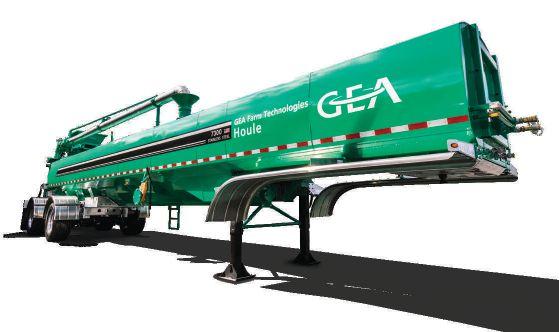
The road to more efficient manure transport is now wide open with the STR Series Manure Semi-Tanker from GEA.
GEA’s STR Series Manure Semi-Tanker streamlines manure transportation for faster, farther hauling. From farm to field, this first-class manure hauling system saves time, fuel and equipment wear and tear. The STR Series SemiTanker can also haul and apply slurry directly on hard soils after harvesting, giving you flexibility in hauling times.
The GEA STR Series Semi-Tank meets all traffic safety regulations for vehicle weight and width for increased safety for you and everyone on the roads.
Don’t let distance slow you down. Hit the road with GEA’s STR Series Manure Semi-Tanker.