providers and applicators share their views on the business
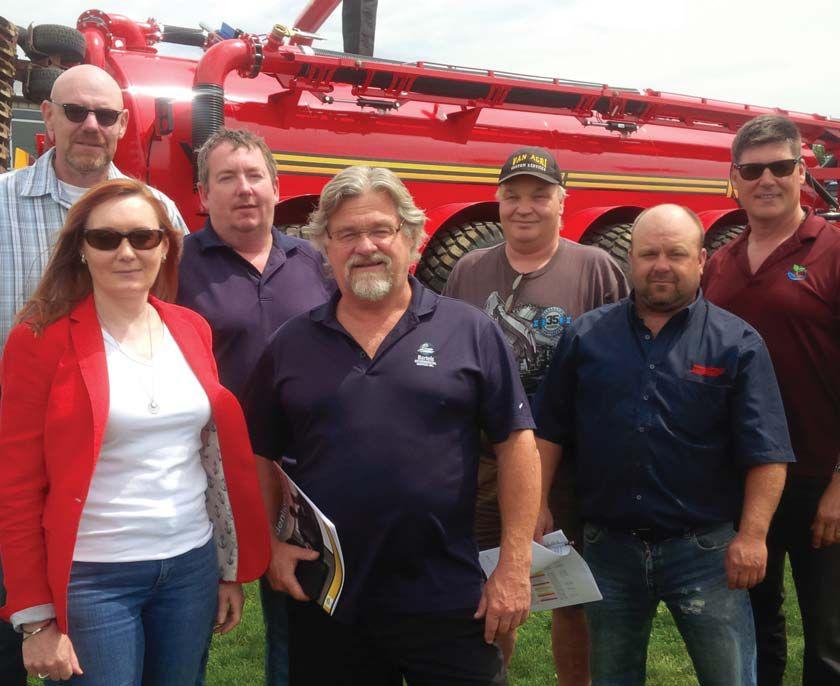
The Ontario Professional Agri-Contractors
formed to accomplish a myriad of important goals
Researchers develop system to convert methane microbes Wisconsin’s “legacy” of soil phosphorus has had an impact on water quality
Research is reshaping what is known about ammonia and other feedlot emissions
The rush to report emissions
As I write this, only a few days are left before livestock operations need to submit their air emissions data to the federal government under the Comprehensive Environmental Response, Compensation, and Liability Act (CERCLA). All poultry and livestock facilities that are likely to emit more than 100 pounds of ammonia or hydrogen sulfide in a 24-hour period are required to report their initial continuous release notification to the National Response Center.
As most of you know, back in 2008, the U.S. Environmental Protection Agency published a final rule exempting all agricultural operations from reporting air releases from animal waste under CERCLA. But, as always seems to happen these days, the exemption was challenged in the U.S. Court of Appeals and was struck down in April 2017.
So, how do you know if you need to report? How do you know if your operation is releasing 100 pounds or more of ammonia and hydrogen sulfide in a 24-hour period?
livestock engineers decided to tackle the problem and determined, in most cases, it would be ammonia emissions rather than hydrogen sulfide that would trigger the 100-pound per day threshold. They put together a handy table, which shows different manure management situations and how many animals or birds an operation could have before it needed to report. It is available at web.extension.illinois.edu/lfmm/ downloads/72587.pdf.
Let’s say you’ve established you need to report. How do you do so?
Luckily, the requirements are simple. You make a phone call and send a written follow-up report within 30 days. After that, reports are required on an annual basis. And you don’t even need to be too exact about the location of the farm.
“The NRC does not require personally identifiable information, such as an address for a private residence,” states the EPA. “As an alternative, a generic location [such as name of city/town and state] may be sufficient.”
“How do you know if your operation is releasing 100 pounds?”
While EPA officials have provided guidance on the agency’s website, including a list of resources for estimating emissions and some complicated-looking worksheets, even they’re not too sure.
“EPA recognizes that it will be challenging for farmers to report releases from animal wastes because there is no generally accepted methodology for estimating emission quantities,” states the agency’s guidance document. “EPA understands farmers may need to report their releases in broad ranges.”
Well, that was … unhelpful.
University of Illinois Extension
Normal applications of fertilizer, manure or pesticide products don’t need to be reported. But any spills or accidents involving them must be if they exceed the reportable quantity. And, if you participated in the EPA’s Animal Feeding Operation Air Compliance Agreement in 2008, you don’t have to report.
Clear as mud, right?
Of course, you should expect all of this to change in the future.
“Livestock and poultry farmers should know this issue is evolving daily,” says Richard Gates, an Extension livestock engineer with the University of Illinois.
TIME
Hy
CRUST
Choose
SIZE
Larg
COST
Jamesway
SAND
Hardoox
Global methane emissions from agriculture are larger than estimated due to the previous use of out-of-date data on carbon emissions generated by livestock, according to a study published in the open access journal Carbon Balance and Management. In a project sponsored by the U.S. National Aeronautics and Space Administration’s (NASA) Carbon Monitoring System research initiative, researchers found that global livestock methane
emissions for 2011 are 11 percent higher than the estimates based on guidelines provided in 2006. This encompasses an 8.4 percent increase in methane from enteric fermentation (digestion) in dairy cows and other cattle and a 36.7 percent increase in manure management methane. Revised manure management methane emissions estimates for 2011 in the U.S. from this study were 71.8 percent higher than the 2006 estimates.
HORSE MANURE GENERATES ELECTRICITY AT HELSINKI INTERNATIONAL HORSE SHOW
The electricity used at this year’s Helsinki International Horse Show was produced entirely with horse manure at Fortum’s Järvenpää power plant. The electricity consumption of the event was about 140 MWh. Producing the energy needed for the event required the annual manure output of 14 horses. This is the first time in the world
that the electricity for a major horse show will be produced entirely with horse manure. During the event, Fortum HorsePower delivered wood-based bedding for the 250 or so horses that stayed in temporary stalls at the Helsinki Ice Hall. The manure-bedding mixture generated was transported to Fortum’s Järvenpää power plant where it was utilized in
energy production. An estimated 135 tonnes of manure-bedding mixture was generated during the event. Fortum HorsePower is a bedding and manure management service for stables, with the manure generated at the stables transported for use in energy production. The service has been operating in the Uusimaa region for a couple of years,
and the service area is expanding all the time. In addition to the Helsinki metropolitan area, it now covers much of southern and western Finland. The Fortum HorsePower service was also launched this autumn in Sweden, where there are already close to 3,000 horses leaving green hoof prints and producing energy through the service.
BY THE NUMBERS - GENERATING 1 MW USING POULTRY LITTER
SOURCE: DR. JOHN P. CHASTAIN, CLEMSON UNIVERSITY COOPERATIVE EXTENSION
number of broiler houses needed to run electrical plant
amount of poultry amount of of electricity
TECH SPREAD
Agricultural waste company Regenis recently installed the first phosphorous recovery system west of the Cascades at Edaleen Dairy in Lynden, WA.
The fine solids separation system – called a Dissolved Air Floatation (DAF) unit – removes solids in manure wastewater through a system that injects the tank with air bubbles and organic polymer, causing the solids to float to the surface where they can be skimmed off, dewatered, and stored. Meanwhile, the remaining wastewater can more efficiently be applied to crops, allowing
dairies to better manage their nutrient levels as they irrigate their fields.
With the DAF, a dairy can remove 80 to 90 percent of the phosphorous and 30 percent of the nitrogen in the wastewater, according to Dr. Craig Frear, Regenis’ director of research.
The DAF unit was funded in part by a matching grant from Washington
state’s Clean Energy Fund in 2016 as part of an emphasis on creating a more vibrant clean energy economy and a healthy environment throughout the state. It’s the second fine solids phosphorous separating system in Washington State (both installed by Regenis) and is one of only a handful in North America.
Regenis has now installed four nutrient recovery systems on dairy farms, including the two phosphorous systems and two others designed to strip nitrogen in the form of ammonia from animal wastewater.
In early October, Wisconsin recognized the state’s most innovative products and services from nine industry categories. The 2017 winners were selected from a panel of 23 experts from around Wisconsin, and spanned all business sectors – technology, food, healthcare, agriculture, nonprofits, education, government, and the like – throughout the state.
Among the winners was Midwestern BioAg, which won for innovation in agriculture. Based in Madison,
the company was recognized for its TerraNu Nutrient Technology, a manufacturing process that gives crop producers easy access to manuresourced nutrients from livestock farms
The Wisconsin Innovation Awards are led by a steering committee of business, community and entrepreneurial leaders. It hopes to encourage an even greater environment of innovation by bringing innovators together from various business sectors and from throughout the state of Wisconsin.
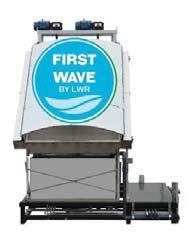
In early October, LWR’s First Wave System was among the Top 10 Products recognized during the 2017 Dairy Herd Management Innovation Awards.
J.R. Brooks, director of operations at LWR, said the launch of the First Wave System was in direct response to the feedback the company received from the dairy industry.
“We are constantly listening to producers and we recognized that to fully service the dairy industry, we needed to offer the same quality of manure treatment that you get with the LWR System, in a package that drastically reduces operating costs not only for smaller operations, but to an entire industry that has been battling low milk prices,” he said.
“The First Wave System offers the same precise nutrient control as the full LWR system, and the beauty is that you can add the Second Wave Module at any time to start making clean water when the time is right.”
The Dairy Herd Management Innovation Awards recognize the best of the best in new products that will be game changers for dairy producers in the areas of efficiency, functionality and technology.
manure crisis of 1894 has returned in the backyards of Wellington, West Palm Beach and Palm Beach County, Florida.
West Palm Beach is among many locations – like Calgary, Alberta, and Norco, California – where a significant amount of horses and riders cohabitate for competition and sport. The resulting waste bedding creates hundreds of thousands of tons of manure per region.
Enter HiPoint Agro
Bedding Corp (HPAB), who has developed a process that takes waste shavings, cleans them, pasteurizes them and repackages them for resale and reuse. The removed horse manure can then be aerobically composted or used to produce energy in an anaerobic digester.
HPAB is currently completing site validations across North America aimed at recycling waste bedding shavings in areas of high horse and rider populations. In many cases, inadequate stockpiling of manure has caught the attention of the U.S. Environmental Protection Agency and the public, causing significant environmental concerns with the use and improper disposal of equine bedding material.
The
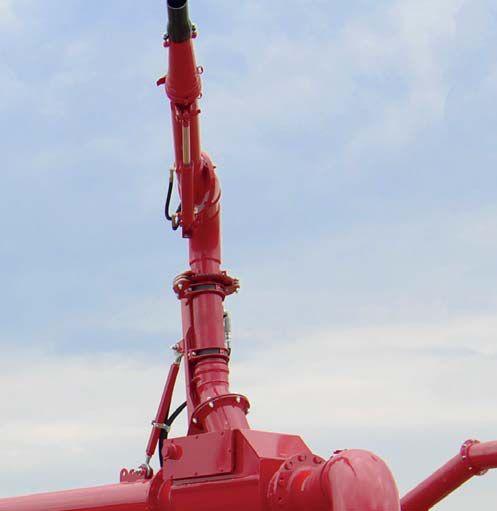
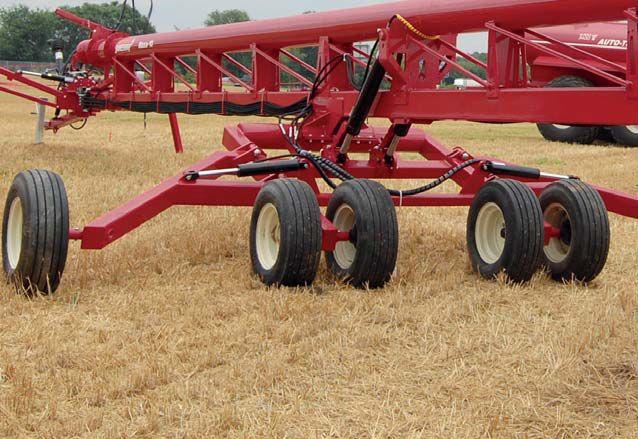
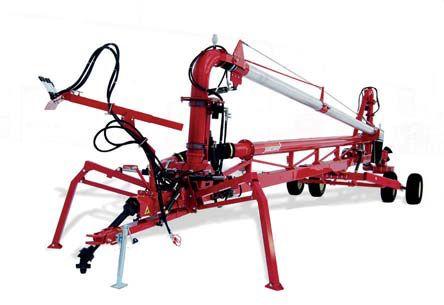
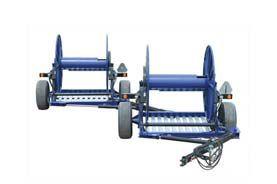
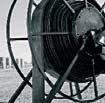
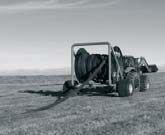
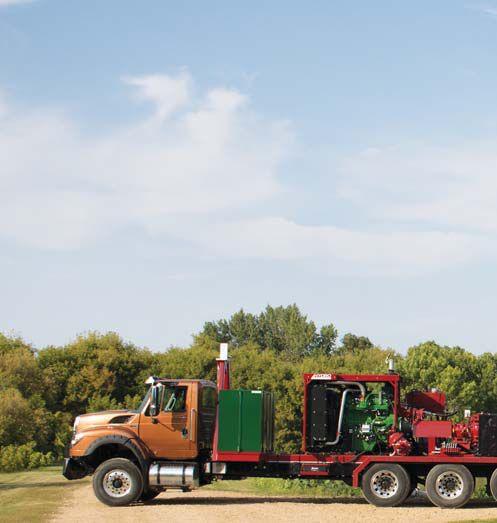
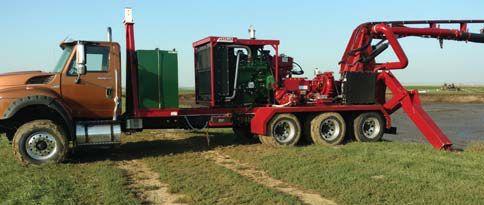
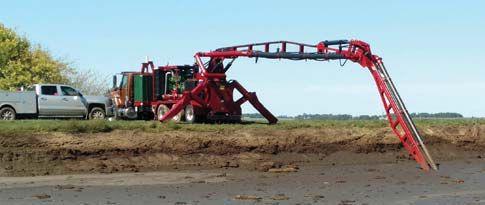
COILER SYSTEM
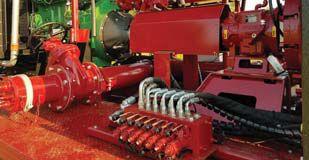
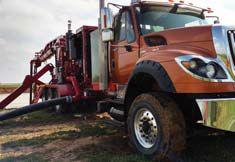
INLINE CHOPPER
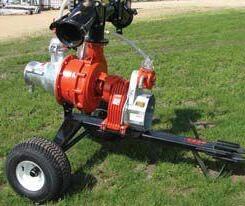
Improve productivity by reducing blockages in the drag line system and reduce pump repairs.
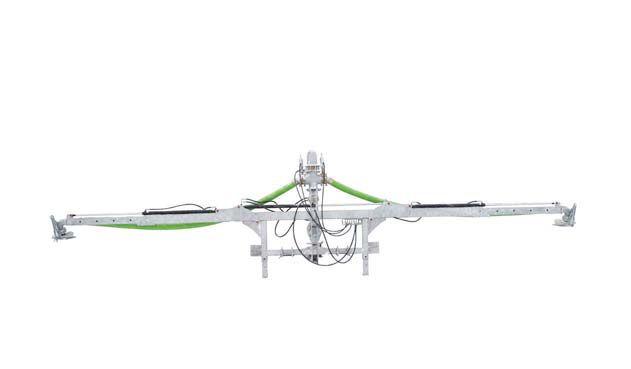
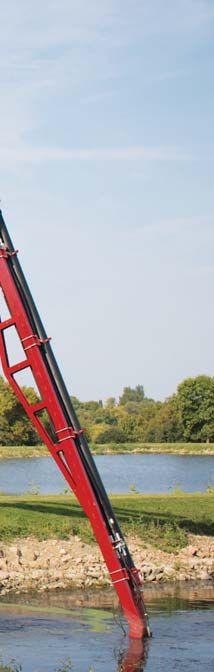
SPREAD BOOM
Maximize Efficiency with better spread. Heavy duty construction & galvanized frame.
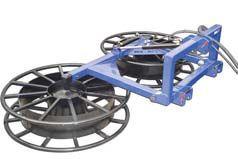
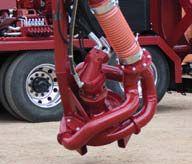
HOSE MOVER
Drag-Line Systems & Accessories
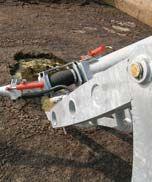
The telescopic hyd width adjustment provides a large surface radius when moving hose.
POULTRY POW IN AMERICA’S BROILE
North Carolina is described as the heart of the “American Broiler Belt.” With the poultry industry still expanding to some extent in the state and less land being available for manure application due to population growth and urban sprawl, alternative uses for poultry litter are being urgently explored.
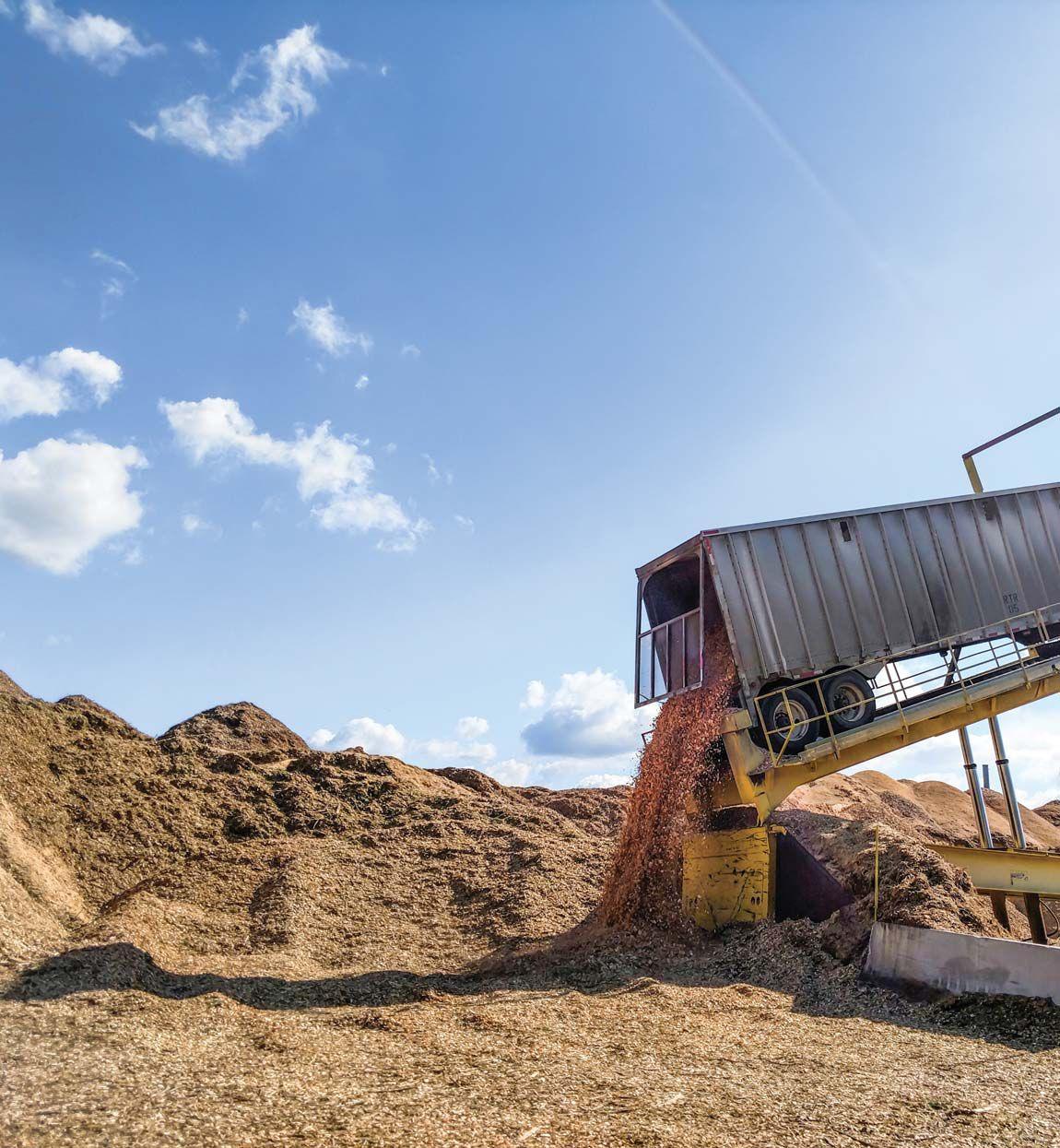
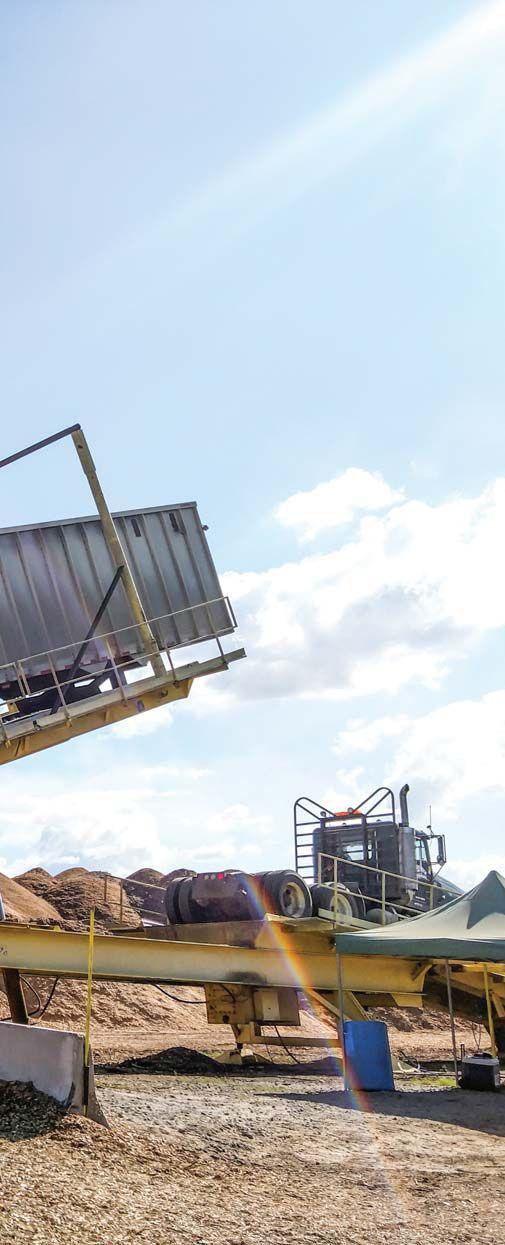
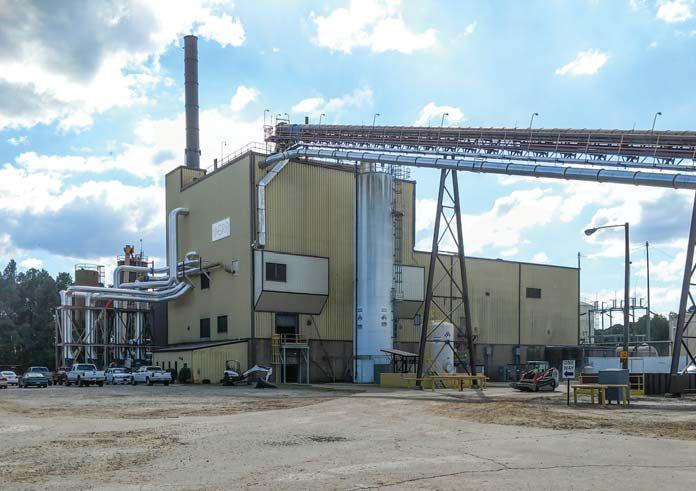
North Carolina Renewable Power (NCRP), a subsidiary of Georgia Renewable Power, has taken up the challenge and is running with its hardearned success. The company brought in experts from around the globe and converted a dormant coal-fired power plant in Lumberton, NC, to a co-gen plant that uses both poultry waste and wood as fuels. This combined heat and power facility now generates 25 MW of electricity (most of the profits) with excess heat used to dry wood chips sold for poultry barn bedding and the nutrient-rich ash sold for crop fertilizer, bringing the poultry production cycle full circle.
Construction of the plant, which began in early 2016, provided about 300 building jobs and the plant’s ongoing operation requires 133 fulltime employees. The above-average wages and full benefit packages that come with these jobs are very welcome in Robeson County, which has the highest poverty rate in the state. NCRP estimates that 90 percent of the jobs at
the plant were local hires.
This poultry litter co-gen plant is not the first in the United States, nor the world, but it’s one of the few (see sidebar).
“There is one in Benson, Minnesota, and several plants in Europe,” said David Shaffer, president of Georgia Renewable Power. “This plan is unique as it’s a repurposed coal plant that can burn up to 50 percent litter. We buy litter from poultry barn clean-out companies for $17 to $19 [USD] a ton and it does not have to be dried for use in the plant, but it’s highly corrosive due to its high chloride (salts) content and we had to make many modifications to the plant’s original Foster-Wheeler furnace coal furnace.”
Shaffer uses a comparison to describe just how corrosive poultry litter is.
“We know how road salt corrodes metal over time in winter temperatures. Well, just imagine how much corrosion occurs in a boiler at 2000 degrees,” he said. “It happens very, very fast. In addition to creating a new fuel feeding system, we added more cleaning equipment inside the furnace and modified the air quality control systems to meet federal standards.”
There is also a very large amount of ash that is produced.
“Poultry litter is a rewarding fuel
Poultry litter is being diverted to produce renewable energy at innovative co-gen plant in North Carolina
BY TREENA HEIN
in that it gives you lots of ash, but getting the entire system to run reliably was challenging,” Shaffer said. “A lot of it was learning as we went.”
He noted that because there is no one engineering company in the world that could do the modifications required, NCRP brought in the best specialists in the world, from metallurgy to air quality.
“The investment was $100 million for plant purchase, remediation and modifications, and to get the supply chain for by-products set up.”
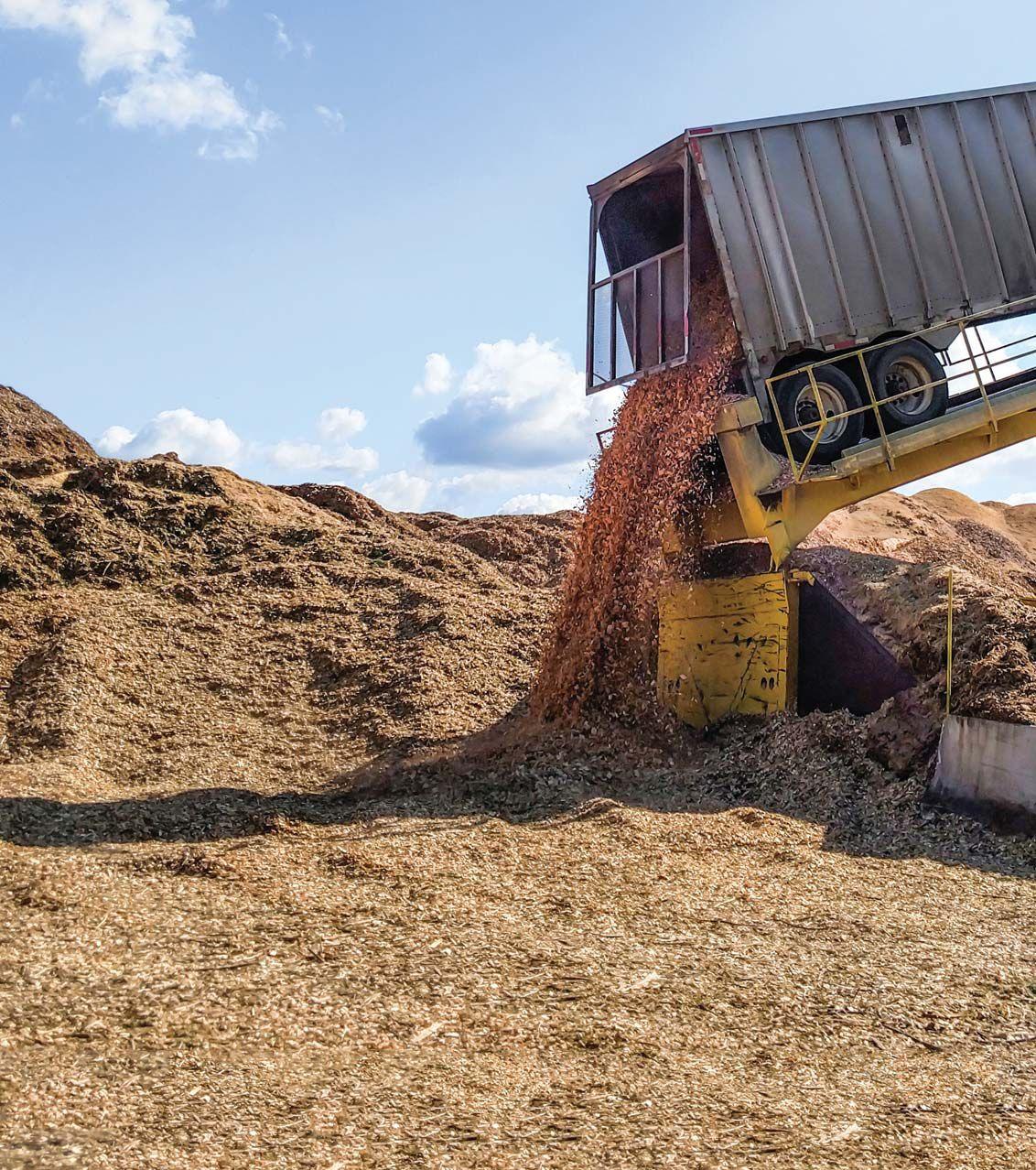
The ash travels through the furnace and goes out with the hot air stream, where it is continuously collected in cyclones (60 percent) and large fabric bag filters (40 percent) and stored in a silo until delivery to a fertilizer manufacturer. The wood chips (from virgin wood debris) are put through belt dryers and sold as bedding back to poultry houses. Shaffer said they’ve had a good response to the product locally and all their chips are sold within North Carolina right now.
The plant began operation in August 2015 and some modifications were finished after that, with full operation beginning in October 2016.
“We are processing about 185,000 tons of poultry waste a year, mostly turkey as it’s not as corrosive,” Shaffer said. “But our new boiler will take much more, about half a million tons and all chicken litter, because it will be able to accept 100 percent poultry litter with no wood required.”
Yes, NCRP is about to start building an
Andritz boiler, similar to one in Rotterdam in the Netherlands, a project that will be finished by 2020 and will pay for itself within five to seven years of operation.
“Once the Andritz is up and running, we’ll use dried and pre-conditioned swine manure and burn it with natural gas,” Shaffer explained. “Some modifications will have to be made but not many.”
Veolia Energy Operating Services is managing the plant and has also been helping evaluate potential upgrades that will significantly increase the amount of poultry litter that can be processed, while improving efficiency and reliability.
For its innovative and unique Lumberton plant, NCRP won a 2016 Community Development QLICIs (qualified low-income community investments) of the Year Award, given out by the Novogradac Journal of Tax Credits to recognize excellence in affordable housing, community development, historic preservation and renewable energy.
“It was very nice to hear about the award,” Shaffer said. “We work closely with the community of Lumberton. Robison is the poorest county in NC, and we are now one of the largest employers here. And last October, our community connection was made stronger.”
Hurricane Mathew quieted down from Category 5 to Category 1 before it hit North Carolina in October 2016, but the entire Lumberton area was subjected to torrential rains and extremely flooding.
“It shut down the community and shut
down the plant completely for 21 days,” Shaffer said. “With the water around the plant, we were going to work in boats, then we could use tractors and then trucks. One of our employees, his church was serving 8,000 meals a day and the company helped with that, and it also contributed to help rebuild some of our employees’ houses.”
Shaffer has decades of experience working in the power plant industry, from nuclear to solid waste to biomass, but Lumberton is a unique challenge and he’s pleased that he is involved with a renewable project on a large scale.
“My partner is Raymon Bean, and he’s a great partner to work with,” he said. “We’ve have challenges with the hurricane and lending capital. Traditional lenders are wary of lending to new types of ventures such as this, and we are blazing new ground, but more lenders are coming on board and we will be in high gear soon with construction of the new boiler.”
OTHER POULTRY LITTER ENERGY DEVELOPMENTS
In 2007, the world’s largest power plant utilizing poultry litter got up and running in Benson, Minnesota. Farms across the ‘Land of 10,000 Lakes’ region produce more than 45 million turkeys a year and a million tons of litter a year, some of which is used each year at the FibroMinn power plant (in addition to wood waste) to produce 65 MW of electricity. The plant is now owned by RNG Energy Solutions.
The technologies used in the plant were developed over 15 years, and involved Fibrowatt, an American firm founded by the British management team that built the first three poultry litter-fueled power stations in the world (located in the United Kingdom).
Fibrowatt, in partnership with Perdue Farms, submitted a proposal in 2011 to build a co-gen biomass boiler operation (fed in part by poultry manure) in Maryland, but the proposal was rejected.
However, several manure-to-energy projects are now proceeding in Maryland. One is a co-gen system in which an Irelandbased firm called BHSL has invested $3 million [see article in this issue of Manure Manager]. The system, installed in 2016, involves burning poultry litter to heat the poultry barns at Double Trouble Farm in Rhodesdale, which reduces odor, saves heating costs and allows for sale of some electricity to the grid. Maryland’s Department of Agriculture has committed $1 million to the project and funded other manure-to-energy projects as well.
CONTRIBUTED PHOTO
EFFICIENT SOLIDS LIQUID SEPARATION
ORGANIC FEED SYSTEMS
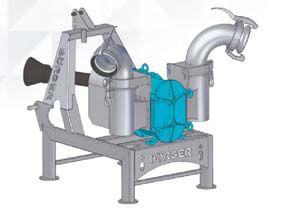
3-POINT HITCH PUMPS
BIOSELECT TECHNOLOGY
+ Solids Liquid Separation
+ With Structure
+ Without Chemicals
POWERFEED TECHNOLOGY
+ Feeding and Transfer of Organic Waste
r din g a nd Transfer
r g anic Wast e
+ Process Control
+ Energy Efficient
s ed
+ Closed Loop System
DEMONSTRATION Project Experiencing Growing Pains
The $3 million poultry manure-toenergy demonstration project recently installed in Maryland by Irish-based Biomass Heating Solutions Limited (BHSL) shows that its technology can produce heat and electricity from poultry litter generated by local farms, just not as easily, consistently, and costeffectively as in Europe – yet.
completion of the demonstration project so that we can adjust the machinery and engineering necessary to combust the litter coming from U.S. farms,” said Ken Le Faive, BSHL president for North America.
BY TONY KRYZANOWSKI
What BHSL has discovered in its participation in the demonstration project – based on a broiler operation near Rhodesdale, Md., owned and operated by Double Trouble Farm – is that the consistency and quality of the raw poultry litter typically generated by Maryland poultry producers requires additional management of the raw manure feeding its fluidized bed combustion technology.
“The first step is the successful
“Once that is done, then we can realize the environmental and production improvements to the flock,” he added. “Once we have those baselines established, then we can establish how we will commercialize it, although I believe that we are well on our way.”
The biggest challenge BHSL has experienced using the litter generated by Double Trouble Farm is the vast amount of foreign objects found in the crusted poultry manure. This has had a significant impact on how consistently the system has worked so far.
“We’re talking chains, screws, vice grips, and rocks the size of your hand found in the litter,” Le Faive said. “So, when that material was processed, it is not something that our machinery was designed to handled. We’ve had to make some modifications on how we feed the litter into the unit, and we need to account for a high number of stones.”
To address this issue, BHSL has installed an 800-pound magnet on one portion of the conveyor system to catch metal debris, as well as various types of screens to capture rocks. While they have managed to capture most of the debris, some still manages to get through.
This manure-to-energy system was developed about 15 years ago in Ireland by the O’Connor family, poultry producers faced with the identical challenge as some U.S. poultry producers – they were no longer allowed to land apply poultry litter. They developed and verified the technology, and created BHSL to market the system. Currently, there are 11 BHSL systems installed on poultry farms in the United Kingdom and Ireland.
The Double Trouble Farm demonstration project is BHSL’s first foray into North America and is one of six projects partially funded by Maryland’s Animal Waste Technology Fund. BHSL has received $970,000 from the fund toward the construction of the Double Trouble Farm project as well as $139,000 to monitor the operation for one year. The project’s goals are to demonstrate this combustion technology, test its applicability to North American conditions, and heat two poultry barns with a projected output of 526 megawatts of power annually.
Maryland is the ninth largest poultry producer in the U.S., with the industry providing 41 percent of all farm income in the
state. While a major contributor to the state’s economy, seepage of nutrients and build-up of phosphorus in soils when poultry litter is land applied is presenting the state and poultry producers with major challenges. That’s why the state wants to fund projects that demonstrate alternative disposal methods.
For both Double Trouble Farm and BHSL, this demonstration project has been a learning experience. Because of the raw poultry litter consistency issue, the Double Trouble Farm project has so far struggled to generate both heat and power consistently.
Le Faive said he is optimistic the system has now been sufficiently tweaked so that it will provide the required heat for the two test barns and eventually will be capable of providing heat on a consistent basis to all four poultry barns where the project is located. Prior to this installation, the barns were heated with propane. The BHSL system provides barn heat from hot water.
While the system can produce both heat and power, Le Faive added there is no doubt that for an installation of this size, the benefits are significantly reduced barn heating costs and improved ventilation, resulting in healthier birds that convert feed more efficiently.
“If the birds are in a better environment, they are going to convert the feed better and that puts more money into the farmer’s pocket directly,” he said.
The system does have a diesel-fueled backup boiler to supplement peak heat demand and as a safety measure.
Double Trouble Farm is owned by Bob Murphy and his sons, Brad and JB. After working more than 30 years for the local power company, Bob started the poultry operation in 1999 with two barns. With his sons showing an interest in the business, the
operation has now grown to 16 poultry barns, with each barn capable of housing up to 43,000 roaster chickens raised under contract for Montaire. The flocks are rotated out of each barn every nine weeks.
Recognizing how professionally the Murphys operate their business, the state and the Chesapeake Bay Foundation met with them to encourage the farm to participate in a manure-to-energy project.
The Murphys said they eventually agreed to the project as long as it had the potential to generate both heat and electricity. They were also interested in the ash produced as a by-product of the combustion process since the small volume produced could potentially be land applied.
The main challenge has been the different quality of raw poultry litter between Europe and North America. In Europe, poultry barns have cement floors and are cleaned out completely between each flock rotation. In Maryland, barns have dirt or clay floors with a build-up of poultry litter on top. Crusting takes place between each nine-week rotation, where only the top layer of the poultry litter is removed. Murphy said they remove about 50 tonnes of manure from each house during the crusting process. They wait nine years for a complete barn clean-out.
The BHSL manure-to-energy system starts with removal of the mature flock, the crusting process, and the crusted litter
placed into storage. An automated rake pulls the raw material from storage and onto a conveyor.
“Ideally, the moisture content is going to be anywhere between 35 percent and 50 percent, which is fairly typical of what we are seeing here, now that we have run our system for a few flocks,” La Faive said.
The material is conveyed into the fluidized bed combustion chamber, which is a self-sustaining combustion process that does not require an additional energy source once the process has started.
Murphy said one of the challenges he has witnessed is that the farm’s manure is wetter and heavier than what BHSL would typically encounter in Europe. This has resulted in some combustion issues as the project has ramped up. He warned BHSL this would be an issue, based on his tour of a BHSL installation in Ireland.
“The deal was that we would be able to burn eight to ten tons of manure per day with this unit to heat four houses and generate electricity that would go back on the grid,” Murphy said. “But we are having trouble doing that. I think the unit is capable of doing that, but I just don’t think they have the engineering people here to have it fired up right.”
While he understands it is a demonstration project, he still wants it to work properly, adding when the system works properly, the benefits are obvious.
“When you walk in there, you get no whiff of ammonia. The birds are a lot more comfortable. You don’t have the carbon dioxide from the propane heaters. It’s a totally different atmosphere for the birds.”
That’s why he is eager for BHSL to succeed with its project so the system works consistently as advertised.
The system heats hot water through a series of heat exchangers, which is transported to provide heat to the barns. Excess energy is used to generate power using the system’s Organic Rankin Cycle (ORC) technology. The ash by-product, which is about one-tenth the volume of the raw material, contains a high concentration of potassium and phosphorus. It is collected in bags and marketed as a soil amendment.
BHSL has also learned that, because European poultry producers remove the litter every flock rotation, it does have higher energy value in the manure-toenergy conversion process.
La Faive said BHSL understands this is a demonstration project and work still needs to be done to develop the economic model of how the technology could be used on small, North American poultry farms.
What BHSL has determined is that a better, straight-across application of its technology in the U.S. is in layer barns, where manure is collected and conveyed directly into storage sheds, eliminating the floor litter consistency issue. The company hasn’t given up on poultry production application of this technology at the same scale as the Double Trouble Farm demonstration project. But it wants to carefully analyze the data gathered from this project to provide U.S. poultry producers with a realistic business proposition based on how litter management is typically conducted this side of the Atlantic.
Murphy said simply adopting the European poultry production model in future barns is not economically feasible as it would more than double the cost of the buildings. It would also be difficult to find a sawdust supply for 16 barns every nineweek rotation.
He’s eager to witness the system operating consistently throughout a nineweek rotation, consuming eight to ten tonnes of manure per day, and providing a better environment for the roasters. BHSL believes it has now addressed the litter consistency issues so that the system will operate to Murphy’s satisfaction.
“I think there would be a big market for BHSL if they could get this technology to work properly,” said Murphy.
CONTRIBUTED PHOTO
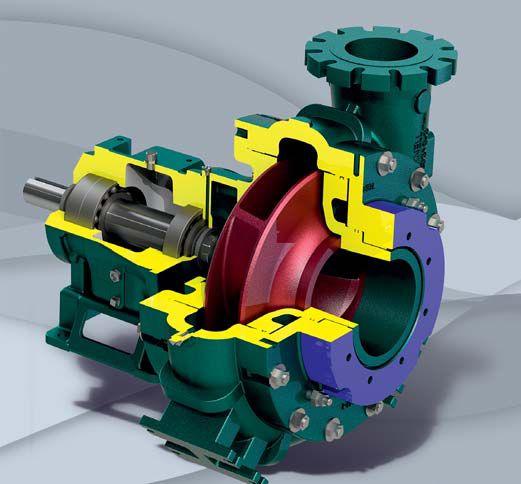
6819MPC PUMP
BEST
HANDLES
CYCLOSEAL® SYSTEM
STANDARD FLOWS TO 4,250 GPM / HEADS
HEAVY-DUTY CONSTRUCTION
THICK CROSS-SECTIONS FOR ABRASIVE WEAR AND HIGH OPERATING PRESSURES
ENCLOSED WHITE IRON IMPELLER
REPLACEABLE WHITE IRON WEAR PLATE
HIGH-CHROME WHITE IRON OR HYBRID DUCTILE IRON PUMP-END
Chicken litter is natural fit for field fertility
Panel of poultry litter providers and applicators share their views on the business and how they manage regulations and their operations.
BY HUGH MCELHONE
People in the poultry industry have been on the fast-track to learning how to better deal with manure in the face of changing application rules and environmental concerns.
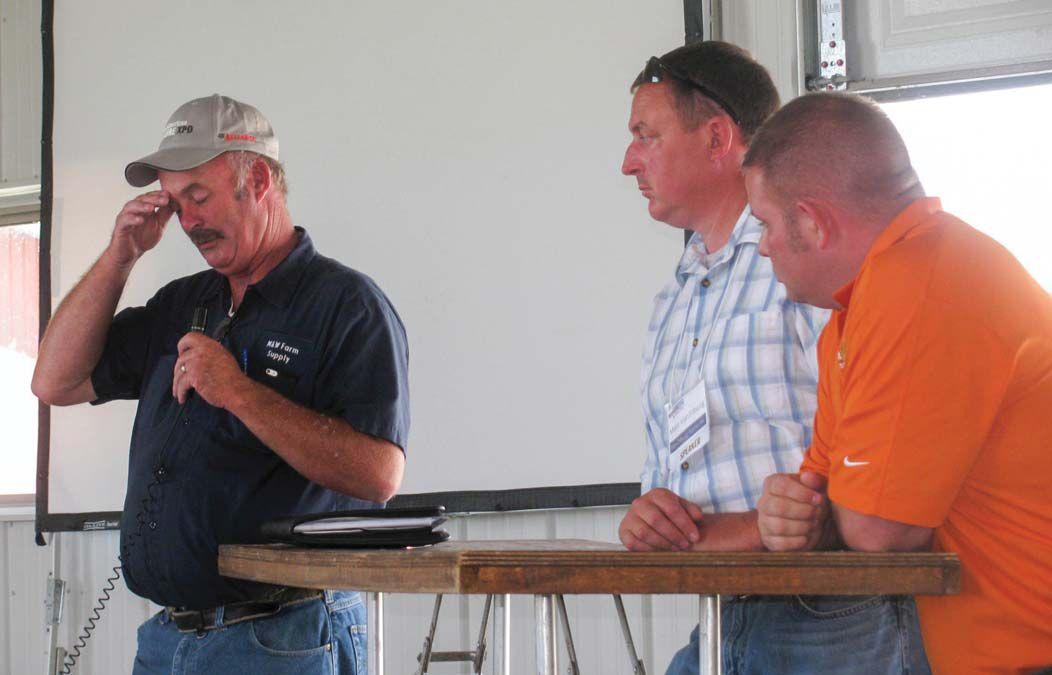
Three leaders of Ohio’s manure spreading industry got together with poultry producers to offer background information on some of the regulations they deal with and offered their own business perspectives.
Matt VanTilburg, a grain producer and Ohio’s 2016 Certified Crop Advisor of the Year, lead the panel followed by Tim Wood, manager of M&W Farm Supply, and then Mitch Bambauer, location manager and agronomy representative for Bambauer Feed & Seed Inc.
MATT VANTILBURG
“Back in 1999, there were a lot of issues with water quality,” said VanTilburg, who’s from Celina, Ohio. “We were also running out of land.”
The amount of manure poultry farmers had available, outstripped the amount of land for applying. VanTilburg’s farm already offered retail products such as fertilizer, as well as services such as soil testing, so adding poultry litter to their list of commodities seemed a natural way to enrich the soil while improving water quality.
“We started spreading it (poultry manure) on our farm and we liked what we saw,” he said. “So did our fertilizer customers. It was just a natural fit that we began selling poultry litter.
“For the first couple of years, we learned real quick that not all spreaders are equipped to handle the quantities. If you have a couple hundred tons, it’s one thing. But, if you have tens of thousands of tons, it takes a different system and a bit of management to make it work.”
There are also new rules and regulations governing the spreading of litter, he said.
BY
PHOTO
HUGH MCELHONE
“They are more stringent, and cover what you apply, how, and where you apply it.”
In his area, farmers must be aware of both Indiana and Ohio State rules regarding manure spreading, plus the Grand Lake Watershed and the Western-basin Lake Erie Watershed.
“If I’m asked if I’m spreading manure that day, I have to think of where I’m located. It literally comes down to what side of the road am I on. It is quite a job to keep track of all the rules and regulations,” VanTilburg said.
As a soil amendment, poultry litter is a good source of phosphate, potassium and micronutrients compared to dry fertilizer.
“A lot of people don’t realize that commercial fertilizer is more water soluble than poultry litter and will end up in the water quicker,” he said.
VanTilburg recommends three tons per acre applied every other year. At this rate, you will build up phosphate and maintain potassium. There should be enough nutrients in the soil to last a corn and soybean crop about three years, he said.
On VanTilburg’s farm, poultry litter is stockpiled in the summer for spreading in the fall. They also use that time to clean out the barn and reduce the risk of disease while it is dry.
“That’s the key to the process, getting the manure there before the beans are cut because you don’t have enough trucks after harvest,” he said.
“Everything has to be soil tested. I like to see a spring soil test before corn or beans are planted, then you know where you can put the manure or not put the manure and away you go.”
TIM WOOD
“I’ve spent my entire career, since the age of 17, in the fertilizer business and chicken manure is the natural version of fertilizer that every farmer needs. Typically, if we get into trouble with homeowners, we tell them it’s organic fertilizer and that makes them happy and the smell only lasts a day or two,” said Tim Wood, manager of M&W Farm Supply.
“We began chicken manure operations in 2013 with Ohio’s largest producer with about 13 million
chickens in 85 barns, some of which are battery and some are still high house,” he recalled.
As Ohio’s largest custom applicator of poultry manure, they moved some 140,000 tons in 2015.
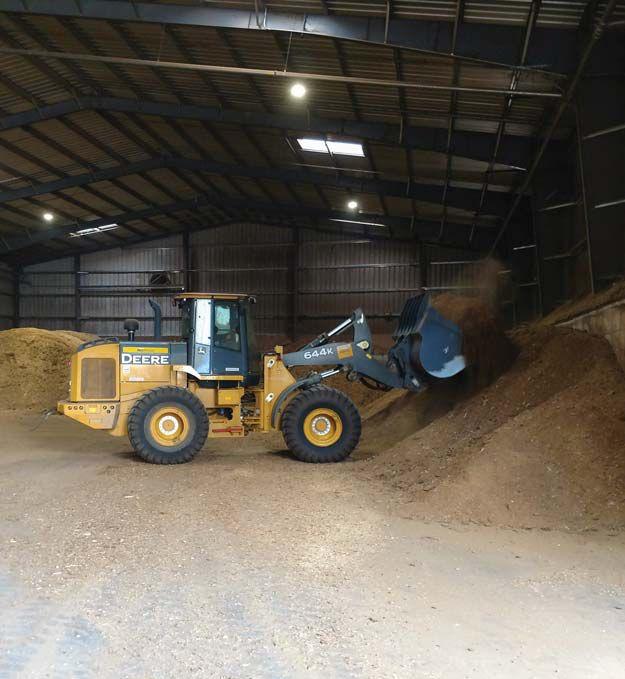
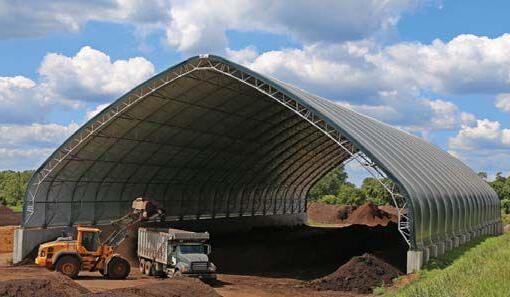
A separate crew brings the manure out of the high-house barns on trailers. They are 650-feet long and there’s only one way in and one way out, so removing the manure is a slow process. At their main facility, they built a large shed measuring 120 by 448-feet with a 67-foot peak that holds around 50,000 tons of manure. They spend summer and winter filling it, and use three pulltype spreaders to empty it.
“The problem with the high-rise houses is that the manure is extremely dry,” he said. “We’re talking 10 to 11 percent moisture. It’s a dust pile. So, in the winter time, we bring in manure from the compost barns in the south and we blend those two together to make a product that doesn’t drive the neighborhood crazy.”
Wood said they have one person who does all their soil tests.
“Then we put our heads together to
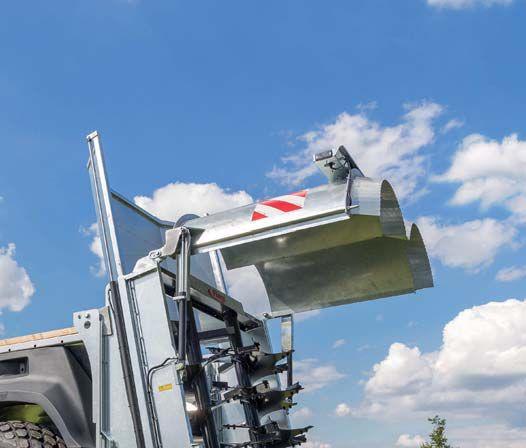
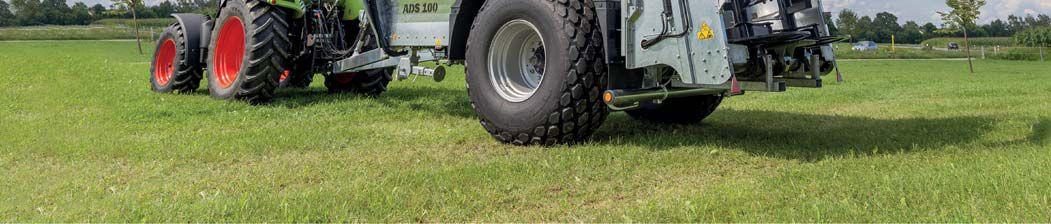
The single-axle push-of f manure spreader ADS from Fliegl
make recommendations. If you tell me what your budget is for manure, then we’ll figure out where to best put those tons. It’s not that it’s going to cost you more or less than the two ton rate, it’s that we have to go to work and put that manure where it best suits the field,” he said.
“We like to believe that 40 percent of the organic nitrogen will come loose in the first crop, and quite a bit more in the second. Beans have done amazing things with the organic nitrogen. A 70-bushel bean crop takes 500 pounds of N, which is two and a half times more than a corn crop. It responds well. We really like what we see coming out of the chicken coops.”
If you want to truly see the value of chicken manure, put it on a crop of alfalfa, said Wood.
“We had so many calls this year from farmers saying: ‘You didn’t tell me I was going to be baling hay all summer,’ because it really causes alfalfa to go nuts, and recovery time is better.”
Wood’s operation has 50,000 tons
“If I’m asked if I’m spreading manure that day, I have to think of where I’m located. It literally comes down to what side of the road am I on. It is quite a job to keep track of all the rules and regulations.” –Matt VanTilburg
stored away and there’s a waiting list for the product.
“We get enquiries every day, even on Christmas Day,” he said. “The farm we’re working with, they are in the process of expanding their operation by a third into the 200,000 ton range, which is 100,000 acres basically.”
The litter is sold by the ton. Wood’s spreaders are equipped with scales plus the barn also has electronic scales.
“[We] cross check those two weights all the time,” he said.
Wood also charges for trucking the manure, about $13 to $14 per load on top of the cost of the manure.
“That rate is basically the same, regardless if the source is pullet or layer manure,” he said. “The nitrogen level and organic matter are higher in pullet manure, while the calcium level in layer manure is generally 175 to 250 pounds of calcium per ton versus 165 in pullet. Nutrient-wise, they are very similar. There isn’t a lot of difference.”
MITCH BAMBAUER
Mitch Bambauer’s company sits geographically in the center between Wood’s and VanTilburg’s operations.
“The biggest difference between our companies is the type of facilities our manure originates from are very different,” he said. “Two-thirds of the manure we spread comes from one
large operation, and the other third from several smaller operations.
“Dealing with smaller farms, and guys with only 10 to 20 truck loads coming out of their barns, you really have to work with those guys to make sure they keep the quality of the manure up if they want to sell a quality manure product. So, when you ask if there are different prices for the ton, a lot of it is based on the quality, if there’s an abundance of moisture in it, the farmer is paying for more water and less nutrients and it doesn’t have the value of drier manure.”
Bambauer uses two Meyer spreader boxes that he considers to be very efficient spreaders, capable of spreading any type of litter, wet or dry.
“We compared machines and chose the spreaders that could spread a variety of manures, and we modified them to get the best spread pattern.,” he said. “The horizontal beaters break up the manure and it is thrown by spinners. If you can get the manure flowing through there correctly, you can get a really good pattern going.”
He also operates two 5034 New Leader spinner boxes that work well with the drier manure.
Bambauer charges by the ton, taking into consideration the distance from the source of manure.
“If the customer wants to put on low rates, the price will be higher to justify your equipment, and time spreading. On the other hand, if there are higher rates needed, you can be more efficient while in the field and can justify a lower price. You have to consider the rates of application and the logistics needed to get the manure to the field, and the application timing.”
He makes sure everything has electronic scales on it so he can calibrate each load of manure.
“If the applicator calibrates the first load correctly, he can pretty much dial it accurately from the very first load of manure,” he said. “Experience gives the operator a great starting point as manure quality does vary, but the scales make sure it’s as exact as possible. Much of the manure we apply is done with varying rates according to soil samples, so that
initial calibration is key.”
Before applications happen, Bambauer wants to see soil tests and have a plan put in place to correctly apply the manure in the best areas to ensure crop performance and water quality. Ideally, soil samples are pulled in fall cornstalks to develop a plan for the following fall in the soybean stubble going to corn.
“Spring would be the ideal time for soil tests but it’s such a chaotic time of year for us, and planning ahead allows the farmer to budget, create the best plan, and stockpile so it can be applied and incorporated in a timely fashion the following fall,” he said.
“We encourage guys to work [the litter] in. We also use efficiency products such as More Than Manure from Verdesian Life Sciences to preserve nitrogen and protect phosphorus. They actually work really well and we encourage our customers to use the same products because it protects from loss, ensures water quality, and also diminishes the ammonia and smell from the manure application.”
Scientists develop system aimed at changing moo to goo
Researchers develop new system to convert methane to alternative fuel source using cooperating microbes.
BY TOM RICKEY
Oil and gas wells and even cattle release methane gas into the atmosphere, and researchers are working on ways to not only capture this gas but also convert it into something useful and less polluting.
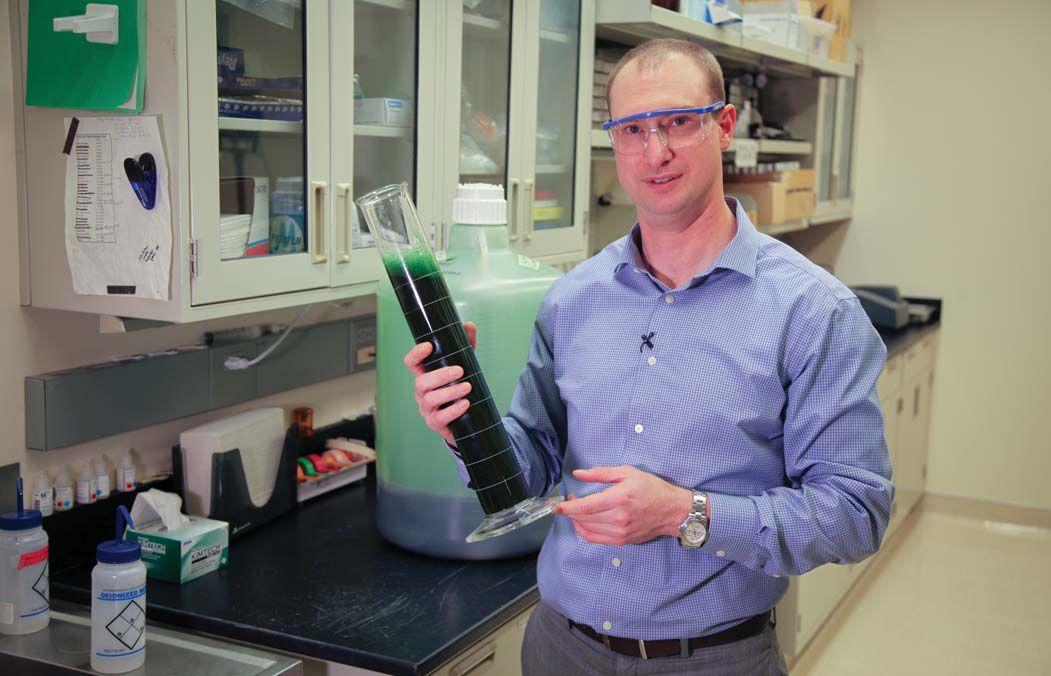
Now scientists at the Department of Energy’s (DOE) Pacific Northwest National Laboratory (PNNL) have developed a new system to convert methane into a deep green, energy-rich, gelatinlike substance that can be used as the basis for biofuels and other bioproducts, specialty chemicals – and even feed for cows that create the gas in the first place.
“We take a waste product that is normally an expense and upgrade it to microbial biomass which can be used to make fuel, fertilizer, animal feed, chemicals and other products,” said Hans Bernstein, corresponding author of a recent paper in Bioresource Technology.
Methane is an unavoidable byproduct of
our lifestyle. Manure from dairy cows, cattle and other livestock that provide us food often breaks down into methane. Drilling processes used to obtain the oil and natural gas we use to drive our cars and trucks or heat our homes often vent or burn off excess methane to the atmosphere, wasting an important energy resource.
PNNL scientists approached the problem by getting two very different microorganisms to live together in harmony.
One is a methane-loving methanotroph, found underground near rice paddies and landfills – where natural methane production typically occurs. The other is a photosynthetic cyanobacterium that resembles algae. Originally cultured from a lake in Siberia, it uses light along with carbon dioxide to produce oxygen.
The two aren’t usually found together, but the two co-exist in harmony in a bioreactor at
PHOTO BY ERIC FRANCAVILLA, PACIFIC
PNNL – thanks to a co-culture system created by Leo Kucek, Grigoriy E. Pinchuk, and Sergey Stolyar as well as Eric Hill and Alex Beliaev, who are two authors of the current paper.
PNNL scientist Hans Bernstein collected methane gas from a Washington dairy farm and Colorado oil fields and fed it to the microbes in the bioreactor.
One bacterium, Methylomicrobium alcaliphilum 20Z, ate the methane and produced carbon dioxide and energyrich biomass made up largely of a form of carbon that can be used to produce energy.
But Methylomicrobium alcaliphilum 20Z can’t do it alone. It needs the other microorganism, Synechococcus species 7002, which uses light to produce the steady stream of oxygen its counterpart needs to carry out the methaneconsuming reaction.
Each one accomplishes an important task while supplying the other with a substance it needs to survive. They keep each other happy and well fed – as Bernstein puts it, they’re engaging in a “productive metabolic coupling.”
“The two organisms complement each other, support each other,” said Bernstein. “We have created an adaptable biotechnology platform with microbes that are genetically tractable for the synthesis of biofuels and biochemicals.”
“We take a waste product … and upgrade it to microbial biomass which can be used to make fuel, fertilizer, animal feed, chemicals and other products.”
– Hans Bernstein
Agricultural and industrial biogas is typically used to generate electricity but engineers have developed ways of upgrading biogas to compressed or liquefied natural gas. But the biogas is
typically filled with corrosive impurities like hydrogen sulfide that must be removed before it can be used.
The PNNL process produces a much cleaner product, either liquid or solid, with simply the flick of a light switch or exposure to sunlight. When there’s methane to convert, the cyanobacteria absorb light and use carbon dioxide as fuel to produce oxygen, fueling the methane-munching bacteria. When there is not much methane, researchers dim the lights, reducing the oxygen, which slows the action of the methanotrophs. In recent tests the PNNL team ran the system continuously for about two months.
“The beauty of this system is that it doesn’t matter where the methane comes from,” said Ron Thomas, deputy director of technology deployment and outreach at PNNL. “It could be agricultural waste; it could be methane from oil wells. The system can take waste from multiple waste streams and create a useful product.”
Tom Rickey is the senior advisor for news and media relations at the Pacific Northwest National Laboratory.
Study quantifies role of legacy phosphorus
Southern Wisconsin’s “legacy” of abundant soil phosphorus has had a large, direct and long-lasting impact on the state’s water quality.
BY JENNY SEIFERT
For decades, phosphorous has accumulated in Wisconsin soils. Though farmers have taken steps to reduce the quantity of the agricultural nutrient applied to and running off their fields, a new study from the University of Wisconsin-Madison reveals that a “legacy” of abundant soil phosphorus in the Yahara watershed of Southern Wisconsin has a large, direct and long-lasting impact on water quality.
Published March 13 in the journal Ecosystems, the study may be the first to provide quantifiable evidence that eliminating the overabundance of phosphorus will be critical for improving the quality of Wisconsin’s lakes and rivers.
For example, the results indicate that a 50 percent reduction in soil phosphorus in the Yahara watershed’s croplands would improve water quality by reducing the summertime concentration of phosphorus in Lake Mendota, the region’s flagship lake, by 25 percent.
“If we continue to apply phosphorus at a
greater rate than we remove it, then phosphorus accumulates over time and that’s what’s been happening over many decades in the Yahara watershed,” says Melissa Motew, the study’s lead author and a Ph.D. candidate in the UW-Madison Nelson Institute for Environmental Studies.
Phosphorus seeps into soils primarily by way of fertilizer and manure, and what crops and other plants don’t use to grow then leaks into waterways with rain and snowmelt runoff. Scientists have long believed that excess soil phosphorus is a culprit behind the murky waters and smelly algal blooms in some of Wisconsin’s lakes and rivers.
Conventional efforts, like no-till farming and cover crops, have tried to address nutrient runoff by slowing its movement from soils to waterways. However, the study shows that simply preventing runoff and erosion does not address the core problem of abundant soil phosphorus, and this overabundance could override conservation efforts.
“Solutions should be focused on stopping phosphorus from going onto the landscape or mining the excess amount that is already built up,” says co-author Christopher Kucharik, a professor of agronomy and environmental studies at UW-Madison.
Using newly advanced computer models, the study shows that the watershed has about four times more phosphorus in its soil than is recommended by UW-Extension, which writes the state’s nutrient management recommendations based on what crops need and a landscape’s potential for nutrient runoff.
Moreover, the study indicates that if soil phosphorus levels continue to increase as the climate also changes and becomes wetter, there will be more runoff and further decline in water quality. Reducing the surplus could mitigate this risk, Motew says.
Currently, the only method known to draw down soil phosphorus is harvesting crops, but Kucharik explains that plants take up only a small amount of the surplus each year.
“It is unlikely that any cropping system
will quickly draw down the excess,” he says.
It will require working with farmers to practice better nutrient accounting and counter the tendency of some to apply more fertilizer, as an insurance measure, than is needed.
“Farmers have many different decisions to make and priorities that they have to juggle. If we want to address the legacy phosphorus problem, nutrient and manure management will need to become a higher priority,” says Motew, who adds that the pressures of farming and demand for products like meat and milk underlie the problem.
But food production need not be compromised by potential solutions, Kucharik says. There is enough excess phosphorus in our soils “to support plant nutrient needs for a long time.”
Innovation in manure disposal would also help. Throughout Wisconsin, farmers have more manure than they know what to do with, and the primary way to get rid of it is to spread it on their land, where its phosphorus just adds to the surplus.
“Support for manure digesters, the removal of phosphorus from lake and
Unique Technologies for the Separation and Treatment of Manure
stream sediment, and other actions to recycle the phosphorus that are already in place would be beneficial for reducing the concentrations in our soils over the long term,” says Kucharik.
Also key to finding solutions is the use of state-of-the-art computer models, like those developed by the research team for the study, which allowed them to identify direct relationships between soil phosphorus and water quality — a feat virtually impossible using scientific observations alone.
“While we’ve long known that too much phosphorus is bad, the models allow us to quantify just what ‘bad’ means,” says Motew. While the study method doesn’t provide a blueprint for achieving clean lakes, putting numbers behind a common-sense understanding of a complex system is a step in the right direction, she says.
The research is part of UW–Madison’s Water Sustainability and Climate project and is funded by the National Science Foundation.
Jenny Seifert is a science writer/outreach coordinator with the University of WisconsinMadison
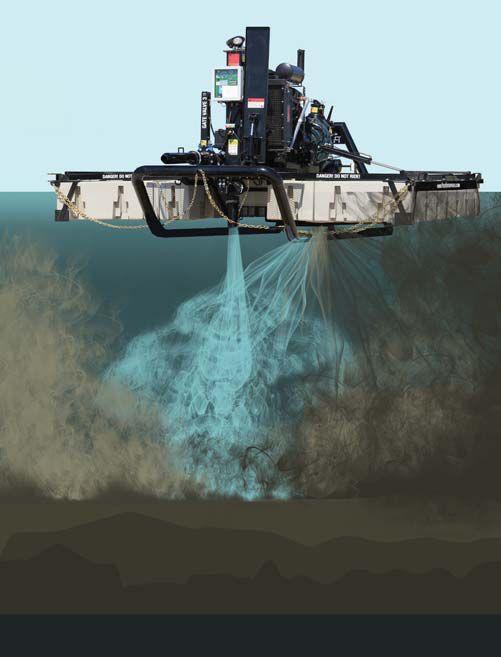
Patented Chopper Pumps
Dual chopping system to prevent clogging
Open design high speed impeller with adjustable pressure plate for unsurpassed performance with mechanical seals
Electric/PTO models, 4ft to 20ft
Manure Separators
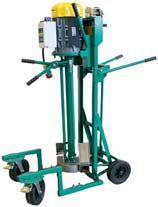
NEW Stainless casted augers with super hard coating for 40% dry bedding
NEW DODA self-adjusting weights
Heavy duty planetary gearbox with 15HP USA electric motor
- Service - Install
THE BIRTH OF AN Ontario Custom Applicator Group
It was during the peak of the porcine diarrhea epidemic in the winter of 2014-2015 that the need for the Ontario Professional Agri Contractors Association (OPACA) became clear to what would become its group of founding members.
“At that time, the government had provided some funding for equipment improvements to help contain the outbreak,” explains OPACA founder Sonke Claussen of Claussen Farms Custom Farming
in Brucefield, Ont. “However, that funding was only available to farmers and not the contractors who were applying approximately 50 percent of Ontario’s manure and biosolids.”
This made contractors like Claussen realize that they needed to be officially recognized.
“A group of us met to discuss the fact that agricultural contracting had become a serious business in the province and that we needed to
BY TREENA HEIN
unite to represent our interests.”
They would form an association and although the original founding group held numerous face-to-face meetings and conference calls over the next two and a half years, everyone’s busy workloads precluded OPACA from becoming registered as a nonprofit incorporated association until this summer. Along the way, it was decided that the organization shouldn’t only include manure haulers, but all land-based farm contractors, including balers, harvesters, seeders and spray applicators. “In addition to representation and allowing much better communication among contractors about all the common problems and issues we face daily, the association has many other important goals,” Claussen explains. “These include collaboration with regulatory agencies and other farming and ag contractor associations, providing education to members, customers and the general public, engaging in research partnerships and developing and implementing BMP’s (Best Management Practices) relating to the promotion of sustainable nutrient application and responsible use of crop management technology.”
Staff from the Ontario Ministry of Agriculture, Food and Rural Affairs (OMAFRA) have been enthusiastically involved in getting OPACA off the ground from the very beginning.
“We need to name and thank especially Christine Brown (sustainability specialist for Field Crops) and Jacqui Empson Laporte (environmental specialist) and their supervisors for their support and encouragement to proceed with the formation of our group,” Claussen says. “OMAFRA shared our vision right from the get-go that a custom contractors’ association would be a benefit for all people of the province of Ontario.”
As time passed, the founding group members also found inspiration in many examples of active agricultural contractor associations around the world, working to the benefit of their members as well as their clients and the public.
“The Canadian Custom Harvesters Association, for example, has a big convention every year in winter, very well attended and respected,” Claussen notes. “Wisconsin has a very active manure haulers’ association, organizing meetings and manure application
demonstrations.”
There is also Germany’s BLU (Bundesverband der Lohnunternehmer), which Claussen says started a contractors’ business certification program about 30 years ago and now offers a special training program with a certification for farm contractor employees.
“The BLU also has staff set aside just for economical advisory services, benchmarking, legal support, mentoring and mediation support for their
members,” he says. “It also organizes a FarmShow called DELUTA every two years just for members, very focused on farm contractor and equipment manufacturer needs.”
Indeed, all European countries have a farm contractors’ association and that they all are united under the European Farm Contractors Association (CEETTAR). Claussen says many of the things these associations are doing are also things OPACA may take on in the coming years.
Communication is hoped to be an important function of the association. Claussen has seen lots of new ag contracting firms start up in Ontario over the last few years, and while they are all working hard in his view, he does not think they are not communicating well enough amongst each other about common issues. There were concerns for some manure haulers this spring, for example, in getting timely NASM (Non-Agricultural Source Materials) certification and also issues surrounding consistency in layout of lab reports.
“These are areas where OPACA could work with the institutions to discuss possible support, solutions or just by raising the awareness of a possible problem,” Claussen notes. “We are all facing similar problems and we must start viewing ourselves as like-minded professionals and not necessarily just as competitors. If everyone looks around, they can see there is enough work for all of us and that fair and respectful competition can be beneficial, as long as we are open-minded and willing to learn and adapt as we move forward.”
Legislation is another area OPACA will likely be active. The Nutrient Management Act is constantly updated, Claussen says, and road legislation changes are on the way to address certification, dimensions, speed limits, weight limits and more.
“It just makes sense that we could be part of the discussion,” Claussen says. “We see our association as competent to offer advice and help with the discussion of changes so that new legislation is beneficial and works for all groups – citizens, farmers and contractors.”
He says actions like speed reduction in urban areas and
limiting field work during nights and/or weekends could be promoted by OPACA to its members as voluntary measures before legislation is forced upon them. Insurance rates are another challenge, with strong interest already from existing OPACA members for the organization to help negotiate better rates for manure haulers at the same time it educates insurance companies on their professionalism with regard to the knowledge, equipment and technologies they use every day.
In 2017, as well as registering as a non-profit association, OPACA has hired an executive director. Acting board members have been working to finalize the constitution. OPACA is also growing its membership, and has sent out a questionnaire to over 30 potential members asking about their expectations. It held its first AGM on September 13 in Woodstock, Ont.
“We also need to reach out to other farm groups and associations and introduce ourselves so that we can start working with them,” Claussen says. “We also want to contact equipment manufacturers, dealers, and suppliers and ask them for support and collaboration because we all rely on each other and we need to work together.”
He believes that as it has elsewhere, custom farming and ag contracting will continue to gain importance here in Ontario.
“It has become a business with big commitments by company owners that expose them to financial and liability risks,” he says. “Huge pieces of specialized equipment need to be paid for and generate a return, and the use of new technologies, especially relating to precision farming, will grow.”
Legislation, especially in the field of biomass application, will get more specific and restrictive, circling back to the need for more and more specialised equipment.
Agricultural contracting in Ontario is not going anywhere in Claussen’s view, and a strong association representing the interest of all its members is very important.
“The most important goal is building the membership, with regular, associate and affiliate members,” he says. “Without members, we are not an association!”
To join the OPACA or find out more information, call 519-233-3198 or email claussen@tcc.on.ca.
JD Gator HPX
MANURE MANAGER
800 E. 7th St.
255 16th St. South
106 N. Cecil St.
920 Plum St.
10855 Dover St., Suite 100
18990 CR 29
1110 100th St.
EQUIPMENT, SUPPLIES & SERVICES
CONTROL SYSTEMS
CUSTOM MANUFACTURING/ FABRICATING
DRYING SYSTEMS
DUMP BOXES
LAGOONS
EDUCATION
GAS PURIFICATION SYSTEMS
INJECTION EQUIPMENT
LOADERS & ACCESSORIES
MANURE CONVEYOR SYSTEMS
MANURE TANKERS
IRRIGATION EQUIPMENT
LUBRICANTS & FUEL ADDITIVES
MANAGEMENT
MEASUREMENT SYSTEMS
METHANE COLLECTION
POLYMERS
PUMPS
DODA USA
DODA USA
RESEARCHERS
SAFETY EQUIPMENT
SCRAPERS
TILLAGE
TIRES
TRACTORS
TRAILERS
WATER TREATMENT
SEPARATORS
Pik Rite
STORAGE
DODA USA
SPREADERS
TANK SYSTEMS
I
C
F
Rotary Separators Roller Separators
Screw Separators Slurry Mixers Digester Mixers
Centrifugal Chopper Pumps Irrigation Pumps (AFI) PTO Super Pumps Electric Motor Pumps
RESEARCH LEADING to new info on feedlot emissions
Innovative research is reshaping what is known about ammonia and related emissions from feedlots. And that new knowledge may help the industry to adjust its management, shape and react to public policy more effectively.
“Livestock are significant emission contributors,” says Dr. Sean McGinn of Agriculture and Agri-Food Canada, a long-time researcher in the emissions area. “That’s quite clear and generally recognized by the agricultural research community.”
Fifty to 60 percent of feed nitrogen is lost as ammonia at the feedlot. Eight to 10 percent of Canada’s greenhouse gas emissions are from agriculture and 90 percent of the atmospheric ammonia comes from cattle manure. Ammonia in the atmosphere is an economic loss because the nitrogen fertilizer potential of manure is lowered. And it’s a health hazard. Ammonia mixes with acid to form fine aerosols, the white haze seen in confined airsheds.
“We know beef feedlots are ‘hot spots’ of ammonia emissions on the landscape, but we didn’t know as much about the dynamics of ammonia emissions from feedlots. For example we didn’t have real numbers from actual feedlots on how much is emitted, how much is deposited on nearby soil and how much re-emission occurs when that happens.”
That’s what McGinn and Dr. Tom Flesch (University of Alberta) set out to understand. Backed by funding from the Alberta Livestock and Meat Agency (ALMA), a two-year project investigated the fate of nitrogen in feedlots, what amount is deposited on land downwind and how much is carried long distances.
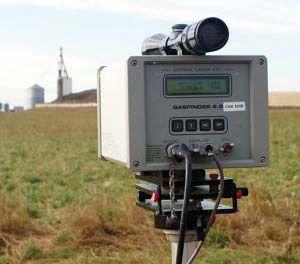
Using open path lasers that move over the feedlot and calculate concentration and wind characteristics, the system is able to measure emissions regardless of wind direction.
Measuring in real world situations offers some advantages to the more standard research protocols of using animals in individual chambers to measure emissions, says McGinn.
This new technique evaluates the feedlot as a whole, which means it can consider whole-unit management aspects that impact emissions. Also, by keeping animals in their natural environment and not interfering with them in any way, the laser approach promises more accurate, commercial scale results.
This means actual feedlot emission numbers can be used in greenhouse gas assessments, an improvement from past practices of using estimates from global sources.
One of the surprises learned from this study was the fact that a significant fraction of ammonia was deposited on land adjacent to the feedlot and, once deposited, how much was reemitted into the atmosphere.
The other part of their research involves measuring methane and nitrous oxide, two prominent greenhouse gasses. Methane is produced by cattle due to the anaerobic digestion of feed in the cow’s rumen and both nitrous oxide and methane come from stored manure in the pens.
The research produced significant results on several fronts from techniques to measure on a commercial scale, to new information on transfer, deposits and re-emission to nearby lands, to related opportunities for mitigation and management.
One positive outcome was the development of new measuring technology adapted from what has been used successfully for measuring flare emissions in the oil and gas industry.
“Our results illustrate the dynamics of reactive ammonia in the vicinity of a beef cattle feedlot,” says McGinn. “It confirmed that a large portion of the nitrogen fed as crude protein is volatized from the feedlot’s cattle manure. In the local vicinity of a feedlot, both ammonia deposition (14 percent of the emitted ammonia) and reemission occurred. That 14 percent is a large amount considering a typical feedlot emits 1-2 tonnes of ammonia per day.”
There was a change in the soil-captured ammonia that decreased with distance from the feedlot (50 percent over 200 m).
Logically it follows that quantifying the local dry ammonia deposition to surrounding fields is required when applying feedlot-based emissions to a large-scale emissions inventory, says McGinn. Failure to do that could mean badly misrepresenting the situation.
“We need better emissions numbers to anchor effective public policy and fairly represent the feedlot industry in that data pool,” says McGinn. “It’s important to have research done before policy is set. The U.S. cattle feeding industry already has specific ammonia emission targets in place.”